Category: Africa

  • MIL-OSI China: River Plate cruise, Dortmund and Inter draw at Club World Cup

    Source: People’s Republic of China – State Council News

    European sides were left frustrated at the FIFA Club World Cup on Tuesday as Borussia Dortmund and Inter Milan shared the points with Fluminense and Monterrey, respectively.

    South America’s River Plate claimed the day’s most emphatic victory with a 3-1 defeat of Urawa Red Diamonds while Mamelodi Sundowns edged Ulsan 1-0.

    Marcel Sabitzer (R) of Borussia Dortmund vies for the ball during the Group F match between Fluminense FC of Brazil and Borussia Dortmund of Germany at the FIFA Club World Cup 2025 in New Jersey, the United States, June 17, 2025. (Xinhua/Wu Xiaoling)

    In New Jersey, Brazil’s Fluminense was left to rue its profligacy in a goalless draw with Germany’s Borussia Dortmund.

    The Rio de Janeiro outfit looked more likely to score at MetLife Stadium but could not find a way past Swiss goalkeeper Gregor Kobel, who made a series of fine saves.

    “We showed that we are a great club and that we are going to be difficult opponents for anyone,” Fluminense’s Colombian midfielder Jhon Arias told reporters.

    “We were aware of Borussia’s quality and the level of European football, but we were superior for most of the match. That gives us peace of mind and confidence to continue playing like we did today.”

    Argentina’s River Plate began its Group E campaign with a 3-1 victory over Japan’s Urawa Red Diamonds in Seattle.

    The Buenos Aires club opened the scoring when Facundo Colidio timed his run to perfection to meet Marcos Acuna’s cross with a thumping header from the edge of the six-yard box.

    Sebastian Driussi doubled the advantage shortly after, nodding home following a defensive miscue.

    Urawa pulled a goal back through Yusuke Matsuo, who converted from the penalty spot after Takuro Kaneko was brought down by Acuna.

    Substitute Maximiliano Meza restored the two-goal cushion, rising to meet Acuna’s corner with a bullet header that beat goalkeeper Shusaku Nishikawa at his near post.

    “The most important thing was to win, but we know we have to improve,” River Plate manager Marcelo Gallardo said.

    “We suffered from nerves, which is understandable. But our upcoming matches are going to be more demanding and we have to be ready.”

    In Orlando, a first-half goal from Iqraam Rayners gave South Africa’s Mamelodi Sundowns a 1-0 win over South Korean side Ulsan.

    Rayners ran onto Lucas Ribeiro’s inch-perfect pass before calmly toe-poking a right-footed shot into the far corner.

    “In this competition, it’s not easy to achieve victories,” Sundowns manager Miguel Cardoso said. “Today, I think we released a lot of energy in the right way.”

    In the day’s late match at the Rose Bowl in Pasadena, Inter Milan was held to a 1-1 draw by Monterrey after Lautaro Martinez cancelled out an early Sergio Ramos goal.

    The Mexican side struck first when former Real Madrid defender Ramos rose highest to send a header past Argentine goalkeeper Esteban Andrada after Oliver Torres’ corner.

    Martinez leveled just before halftime, combining with Carlos Augusto to slot home from point-blank range.

    The Italian Serie A giants dominated possession after the break but were denied by Monterrey’s disciplined defensive block. 

    MIL OSI China News

  • MIL-OSI NGOs: Environmental justice Fashion waste from top UK brands found polluting endangered turtles’ habitat in Ghana Discarded clothes from Next, Asda and M&S found in protected wetlands threatened by fast-growing waste dumps Clothes discarded by UK consumers and exported to Ghana have been found in a… by Stefano Gelmini June 18, 2025

    Source: Greenpeace Statement –

    Discarded clothes from Next, Asda and M&S found in protected wetlands threatened by fast-growing waste dumps

    Clothes discarded by UK consumers and exported to Ghana have been found in a huge new dumpsite growing inside internationally protected wetlands, an Unearthed and Greenpeace Africa investigation reveals. 

    Stills and footage of the waste dumps and the UK-branded clothing available here.

    Unearthed reporters have found garments from UK high-street brands Next, George at Asda, and Marks & Spencer inside the protected nature site home to rare birds and three species of turtles.

    The clothes were located at or close to two open-air waste dumps that have recently appeared inside the wetlands. Clothing items from M&S, Zara, H&M, and Primark were also found at a sprawling third dump just on a riverbank just outside the nature reserve, from where fashion waste often floats downstream, polluting the wetlands.

    Scientists are concerned about the impact on local wildlife of the microplastics and chemicals released from textile waste. Locals complain that their fishing nets, waterways and beaches are clogged with synthetic fast fashion exported to Ghana from the UK and Europe.

    Ghana is the world’s largest importer of used clothing, with 15 million items of discarded garments arriving each week [1]. The UK sent more fashion waste to Ghana last year – 57,000 tonnes according to UN trade data – than to any other country except the UAE [2]. But local officials estimate about 40% of each bale is unusable – torn, stained, or unsuitable for the climate. 

    This overspill has overwhelmed Accra, resulting in new waste dumps appearing just outside the capital. Unearthed reporters found two fast-growing tips inside a critical biodiversity area, the Densu Delta, designated a “Ramsar site”: a wetland of “international importance” under the Convention on Wetlands. One of the dumps, Glefe, has been established for just four years, according to Google Earth historical images, and it already looms taller than a two-storey building in places. The second, Akkaway, is less than a year old but rapidly expanding.

    The protected nature site provides a habitat for birds such as rare roseate terns, which migrate from the UK, and curlew sandpipers, which visit from the Arctic tundra. The endangered leatherback and green turtles lay their eggs on the conservation area’s beach, as does the Olive Ridley turtle, known for nesting en masse on the same beach where it hatched [3]. 

    Local people rely on the ecosystem for fishing and salt production. Unearthed has spoken to local fishermen who describe hauling in textile waste in their nets and blame it for a decline in fish stocks.

    Commenting on the findings, Greenpeace UK’s plastic campaigner Laura Burley said:

    “It’s heartbreaking to see a protected nature site turning into a waste dump because of our addiction to fast fashion. A dress designed to be worn just once or twice before being thrown away could pose a threat to rare birds and marine turtles in these protected wetlands for decades to come, while also harming people’s livelihoods. And with the majority of these garments made of plastic fibres, our throwaway clothes are adding to the plastic pollution choking our oceans. The UK government should force fashion retailers to take some responsibility for the waste they create while backing strong targets to cut plastic production in the UN Global Plastics Treaty.”

    Dr Jones Quartey, a wetland ecologist at the University of Ghana, told Unearthed that disposing of textiles in wetlands could cause irreparable harm. “This is dangerous – more so when we don’t know what chemicals are in the textile waste,” he said. “The bioaccumulation and biomagnification of microplastics in aquatic organisms and humans could pose risks such as physical damage, chemical exposure and disruption of biological processes.”

    When contacted by Unearthed, the fashion labels acknowledged that the industry faces challenges around processing textile waste. M&S, George, and Primark said they run “take-back” schemes to help address the issue. H&M, Zara, and George said they would support an extended producer responsibility framework to hold labels accountable for their products’ end-of-life impact.  

    Read the full investigation here.

    ENDS

    Contact: Greenpeace UK news team at press.uk@greenpeace.org and on 020 7865 8255

    Stills and footage of the waste dumps and UK-branded clothes, as well as interviews with local people, can be downloaded here.

    Notes

    1. From a Greenpeace Africa report: https://www.greenpeace.org/africa/en/press/56381/fast-fashion-slow-poison-new-report-exposes-toxic-impact-of-global-textile-waste-in-ghana/
    2. UN trade data:
      https://comtradeplus.un.org/TradeFlow?Frequency=A&Flows=X&CommodityCodes=6309&Partners=all&Reporters=826&period=2024&AggregateBy=none&BreakdownMode=plu
    3. https://ghanawildlife.org/densu.html

    MIL OSI NGO

  • MIL-OSI Africa: Hilton to Triple its Presence in Africa to More Than 160 Hotels

    • Hilton expects to open more than 100 hotels in the coming years in markets including Ghana, Benin, Nigeria, Angola and Madagascar
    • Most recent hotel openings include Canopy by Hilton Cape Town Longkloof, Hampton by Hilton Sandton Grayston and DoubleTree by Hilton Addis Ababa Airport
    • Hilton to make its Ghana debut later this year with the opening of Hilton Accra Cantonments
    • Hilton is currently hiring for 600 new hospitality jobs in Africa and expects to create 18,000 new positions as it expands its portfolio.

    Coinciding with Future Hospitality Summit Africa 2025, Hilton (NYSE: HLT) today announced plans to almost triple its presence in Africa to more than 160 hotels trading in the coming years. Across its portfolio of market-leading brands, Hilton expects to open more than 100 hotels on the continent, supporting Africa’s burgeoning hospitality sector and creating approximately 18,000 jobs for local people.

    Carlos Khneisser, chief development officer, Middle East & Africa, Hilton, said, “We are thrilled to announce several new hotel agreements which significantly expand our footprint in Africa, a continent brimming with potential and opportunity. Our development strategy underscores our commitment to supporting Africa’s hospitality sector as we partner with owners to grow our footprint, deliver exceptional stays for our customers and create jobs for local people. Africa offers incredible opportunity, from thriving business hubs to vibrant cultures, wildlife, and natural landscapes. We are excited to unveil a host of new destinations building on Hilton’s legacy of hospitality across Africa for over 65 years.”  

    Hilton Debuts in Angola

    Hilton has made its Angolan debut with the signing of three properties – two in the capital city of Luanda under its flagship Hilton Hotels & Resorts brand and affordable and upscale Hilton Garden Inn brand, as well as one in Cabinda with a property under its award-winning DoubleTree by Hilton brand.

    Hilton Luanda Hotel Godinho

    Hilton has signed Hilton Luanda Hotel Godinho in partnership with Servicab S.A. The hotel is expected to open in 2027 and will feature 220 guest rooms and suites. Stretched along an 11,250-square-metre beachfront with unobstructed views of the ocean, the property will feature multiple dining options and over 1,000 square metres of event space.

    Hilton Garden Inn Luanda Airport

    Hilton has signed Hilton Garden Inn Luanda Airport in partnership with Crestigo. Set to open in 2028, Hilton Garden Inn Luanda Airport will feature 200 guest rooms, an all-day dining restaurant and terrace, flexible meeting rooms, a fitness centre, a pool, and a rooftop bar. The hotel’s proximity to Antonio Agostinho Neto International Airport and corporate business hubs makes it an ideal choice for business travellers.

    DoubleTree by Hilton Cabinda Futila Residences

    Hilton has also signed an agreement with Prodoil S.A. to debut its DoubleTree by Hilton brand in Angola. The property is expected to open in 2026 and will provide 290 contemporary apartments, including studio rooms, two and three-bedroom suites, as well as 10 three-bedroom oceanfront villas. It will also feature a restaurant, a swimming pool, and a natural lake.

    Additional Hilton Market Debuts

    Hilton Cotonou

    In Benin, Hilton has signed an agreement to open Hilton Cotonou in partnership with the Republic of Benin, through the Société de Développement Hôtelier du Bénin (SDHB). This landmark project marks Hilton’s official entry into the Beninese market.

    Scheduled to open in 2028, Hilton Cotonou will be strategically located on the Boulevard de la Marina, next to the Congress Palace, key government offices, and several international embassies. The hotel will feature 233 contemporary guest rooms and suites, an all-day dining restaurant, a signature destination bar and terrace, a pool bar, a spa, an outdoor pool, and flexible meeting spaces designed for both business and social events.

    The project is expected to generate several hundred direct and indirect jobs across hospitality and related sectors. It will also enhance Benin’s capacity to host international conferences and events, reinforcing the country’s ambition to become an African hub for business and high-end tourism.

    Hilton & Hilton Garden Inn Antananarivo 

    Hilton has signed agreements to open two properties in Madagascar, marking Hilton’s re-entry into the country. Located in the heart of Madagascar’s capital and expected to open in 2028, Hilton Antananarivo will feature 170 guest rooms, multiple dining options, a ballroom, six meeting rooms, a fitness centre, spa and outdoor pool. Further South, Hilton Garden Inn Antananarivo will be part of a mixed-use development with retail and office spaces, making it ideal for business and leisure travellers. Set to open in 2027, the 120-guest room hotel will offer a restaurant, bar, flexible meeting rooms, a fitness centre, and an outdoor pool.

    Hilton’s Nigeria Expansion

    The Wave Hotel Abuja Jabi, Curio Collection by Hilton

    Located in Jabi, one of the capital’s most popular districts, The Wave Hotel Abuja Jabi, Curio Collection by Hilton, will feature 93 stylishly appointed guest rooms, upscale dining venues, an outdoor pool, and a wellness centre. Developed in partnership with The Wave Hotel Limited (OpCo), the hotel is set to open in 2026 and benefits from being a short 10-minute drive from Abuja’s Commercial Business District. Each hotel in Curio Collection is hand-picked to immerse guests in one-of-a-kind moments in the world’s most sought-after destinations, evoking a bespoke story through distinctive architecture and design, world-class food and beverage, and curated experiences. 

    Hilton Lagos Ikeja

    Hilton has signed Hilton Lagos Ikeja in partnership with Cornfield Group. Located in Ikeja’s government and residential hub, the hotel is strategically situated near corporate and governmental offices and in proximity to the Murtala Muhammed International Airport. Slated to open in 2029, the hotel will feature 200 modern guest rooms and suites – and offers elevated dining options such as an all-day dining restaurant, a signature restaurant, a lobby bar, a pool bar & grill, and a destination bar. The hotel will also include a spacious ballroom, four meeting rooms, and a fully equipped fitness centre.

    Hilton Garden Inn in Kano

    Marking Kano’s first internationally branded hotel, Hilton Garden Inn in Kano is being developed in partnership with Akhim Plus Limited. The hotel will offer 100 guest rooms, flexible meeting rooms, an outdoor pool, and a fitness centre. Expected to open in 2029, the hotel’s location near key sites including the Government House, Emir’s Palace, National Museum, Kano Race Course, Kano Golf Club, and Meena Event Centre makes it an ideal choice for business and leisure travellers alike.

    West Africa and East Africa

    Hampton by Hilton Accra Airport

    Hilton has signed Hampton by Hilton Accra Airport with Amani International Hospitality Limited – bringing Hampton by Hilton’s award-winning hospitality to Ghana’s Kotoka International Airport. Opening in 2026, Hampton by Hilton Accra Airport will include 170 guest rooms, a fully equipped fitness centre, an outdoor pool, and meeting spaces. The hotel will also offer a dynamic open-concept social space and a round-the-clock snacks shop. It will be a part of Airport Area Accra, a mixed-use development featuring malls and corporate offices.

    In Ethiopia, Hilton recently announced agreements with Brighton Hotels and Business Plc. to open two properties – DoubleTree by Hilton Adama and DoubleTree by Hilton Dire Dawa (http://apo-opa.co/4lbtHv2) – marking the first internationally branded hotels in the cities. Opening in 2028, these hotels further reaffirm Hilton’s commitment to expanding its presence in Ethiopia, with plans to reach eight trading properties across the country in the coming years.

    Hilton has also announced its Tanzanian re-entry with the signing of Canopy by Hilton Zanzibar The Burj (http://apo-opa.co/3ST8aeB), in partnership with CPS Live Limited. Expected to open in 2027, the lifestyle hotel will feature 162 inviting and sophisticated guest rooms and suites, elevated dining spaces, and a wide array of facilities. Located in the heart of Fumba Town and part of a mixed-use development, ‘BURJ Zanzibar,’ the property will offer unique experiences tailored to guests seeking authentic local experiences.

    North Africa

    Hilton continues to grow across North Africa, with plans to triple its portfolio in Egypt (http://apo-opa.co/4l58VNw) to more than 40 trading hotels across the country in the coming years. In Morocco, Hilton is set to more than double its portfolio (http://apo-opa.co/3G2a75u), with plans to bolster its luxury presence and introduce new brands. Hilton also recently signed a new DoubleTree by Hilton property in Fes, an ancient city whose medina is a UNESCO World Heritage Site.

    DoubleTree by Hilton Fes Golf

    In partnership with Le Clos de l’Atlas, Hilton is set to open DoubleTree by Hilton Fes Golf in 2028. The 109-guest room property will be located next to a golf course and will offer easy access to Fes’s many cultural attractions. The hotel will also be in close proximity to Fes’s industrial quarter and an upcoming convention centre, making it ideal for business travellers as well.

    Recent & Upcoming Openings

    In South Africa, Hilton recently opened Canopy by Hilton Cape Town Longkloof (http://apo-opa.co/4l4zrXe) in partnership with Growthpoint Properties, marking the lifestyle brand’s debut in South Africa. Located in the vibrant Longkloof precinct, the hotel features 154 spacious and modern guest rooms. Each hotel room reflects the country’s cultural richness through bold local art and design and colourful prints throughout its interiors. Ideally situated in Cape Town’s City Bowl, the property offers easy access to Table Mountain, Camps Bay, and the V&A Waterfront. Guests can also enjoy the hotel’s signature restaurant, Ongetem, led by renowned chef Bertus Basson, celebrating South African culinary heritage with bold, contemporary flair.

    Hilton also recently opened DoubleTree by Hilton Addis Ababa Airport (http://apo-opa.co/44lFtgD) in Ethiopia. Located just minutes from Bole Addis Ababa International Airport, the property offers a complimentary airport shuttle, a rooftop restaurant, and proximity to the various events at Millenium Hall. Last year, Hilton opened the first Hampton by Hilton in Africa in South Africa with Hampton by Hilton Sandton Grayston (http://apo-opa.co/4lfuafR), bringing the brand’s friendly and authentic service to Johannesburg’s financial and shopping district.

    Later this year, Hilton expects to open its first hotel in Ghana with Hilton Accra Cantonments in partnership with High Street Development Company. Located in Cantonments, an upscale suburb which is home to multiple embassies and high commissions, the hotel will feature 145 guest rooms and a range of dining options including an all-day dining restaurant, a lobby lounge and pool bar. The hotel will offer a gym, spa, and outdoor swimming pool, as well as more than 900 square metres of event space including a ballroom, seven meeting rooms and an executive boardroom.

    Hilton currently operates 63 hotels in Africa, with more than 100 under development. All hotels will be part of Hilton Honors, Hilton’s award-winning loyalty programme with over 218 million members globally. 

    Distributed by APO Group on behalf of The Bench.

    Contact:
    Maya Chacko
    Hilton
    maya.chacko@hilton.com

    Connect with Hilton on: 
    Facebook: http://apo-opa.co/4lhOgGl
    X: http://apo-opa.co/40b5fSe
    LinkedIn: http://apo-opa.co/4lbh2Ij
    Instagram: http://apo-opa.co/40bQpeh  
    YouTube: http://apo-opa.co/3Ti1Uxf

    About Hilton:
    Hilton (NYSE: HLT) is a leading global hospitality company with a portfolio (http://apo-opa.co/3G4U0nJ) of 24 world-class brands comprising more than 8,600 properties and nearly 1.3 million rooms, in 139 countries and territories. Dedicated to fulfilling its founding vision to fill the earth with the light and warmth of hospitality, Hilton has welcomed over 3 billion guests in its more than 100-year history, was named the No. 1 World’s Best Workplace by Great Place to Work and Fortune and has been recognized as a global leader on the Dow Jones Sustainability Indices. Hilton has introduced industry-leading technology enhancements to improve the guest experience, including Digital Key Share, automated complimentary room upgrades and the ability to book confirmed connecting rooms. Through the award-winning guest loyalty program Hilton Honors, the more than 218 million Hilton Honors (http://apo-opa.co/3Ti1Q0t) members who book directly with Hilton can earn Points for hotel stays and experiences money can’t buy. With the free Hilton Honors app (http://apo-opa.co/4lf8yjz), guests can book their stay, select their room, check in, unlock their door with a Digital Key and check out, all from their smartphone. Visit http://stories.Hilton.com for more information.

    MIL OSI Africa

  • MIL-OSI Africa: The Copper Scramble: African Mining Week to Examine Merger & Acquisition (M&A) Deals


    Download logo

    The upcoming African Mining Week (AMW) conference (http://apo-opa.co/3I0IzOl) – scheduled for October 1–3, 2025, in Cape Town – will spotlight how Merger & Acquisition (M&A) deals are propelling the continent’s copper industry forward. A power chat will take place, titled The Copper Scramble: How Mergers are Reshaping the Global Supply Chain. The session is expected to unpack the impact M&A deals have had and will continue to play on Africa’s copper industry, highlighting recent deals and investment opportunities across the market.

    Driven by the global energy transition and the demands of the Fourth Industrial Revolution, African countries are leveraging the surge in copper demand to boost investments across the value chain. Strengthened policies, underexplored mining acreage and emerging investment opportunities have enticed a string of M&A activity, particularly across major copper producers in Africa. The AMW 2025 session on copper will explore how recent mergers are driving production across select markets.

    African Mining Week serves as a premier platform for exploring the full spectrum of mining opportunities across Africa. The event is held alongside the African Energy Week: Invest in African Energies 2025 conference from October 1-3 in Cape Town. Sponsors, exhibitors and delegates can learn more by contacting sales@energycapitalpower.com.

    Striving to produce three million tons of copper per annum by 2031, Zambia – the continent’s second-largest copper producer – has witnessed several impactful M&A deals recently. These include the $1.1 billion acquisition of the Mopani Mine in 2024 made by UAE-based International Resource Holdings (http://apo-opa.co/4jZBWJN), set to increase copper production to 300,000 tons within three years, and China’s JCHX Mining Management (http://apo-opa.co/3Ttgthj) acquisition of the Lubambe Mine, which will see $300 million injected to increase production. U.S.-based startup KoBold Metals has also committed over $2 billion following its acquisition of the Dumbwa and Konkola West projects, further accelerating Zambia’s copper output ambitions. Other international players, including Mercuria and Patriot Lithium, have also entered the Zambian market via M&A deals, aiming to tap into the mineral-rich Central African Copperbelt.

     In Botswana, recent M&A deals aim to unlock the potential of the Kalahari Copper Belt, which stretches into Namibia. Mining firm BHP secured stakes in Cobre Limited in March 2025, gaining access to Tier 1 copper assets in Botswana. The company plans to invest $25 million in exploration, including seismic surveys and deep diamond drilling, to assess resource potential. Additionally, China’s MMG Limited (http://apo-opa.co/4jYVNIZ) has announced a $700 million investment to double output at the Khoemacau Mine after acquiring it from Canada’s Cuprous Capital in 2024.

    As Africa continues to attract global investment and deepen strategic partnerships, AMW 2025 will serve as a vital platform to connect international investors with high-value M&A opportunities, reinforcing Africa’s position as a critical player in the global copper supply chain.

    Distributed by APO Group on behalf of Energy Capital & Power.

    MIL OSI Africa

  • MIL-OSI Africa: Marriott International announces plans to add more than 50 properties and over 9,000 rooms to its Africa portfolio by the end of 2027

    From the Future Hospitality Summit Africa in Cape Town, South Africa, Marriott International, Inc. (Nasdaq: MAR) today announced plans to expand its operations in Africa with the anticipated addition of over 50 properties and more than 9,000 rooms by the end of 2027.  The company’s growth strategy includes the expected entry into five markets – Cape Verde, Cote d’Ivoire, The Democratic Republic of Congo, Madagascar and Mauritania. The planned expansion aims to further strengthen the company’s footprint across the continent where its current operating portfolio encompasses nearly 150 properties and 26,000 rooms across 20 countries and 22 brands.

    “We are witnessing a transformation of Africa’s tourism sector driven by visionary government agendas, substantial infrastructure development, enhanced regional and international connectivity and diversified travel experiences, all of which are laying the foundation for a thriving hospitality sector,” said Jerome Briet, Chief Development Officer, Europe, Middle East & Africa, Marriott International. “With our renowned portfolio of brands, world-class distribution platform and award-winning travel programme, Marriott Bonvoy, we continue to drive robust expansion opportunities with owners and franchisees across Africa and remain committed to supporting the growth of its tourism sector.”

    Marriott’s planned expansion aims to enhance the strategic development of the company’s luxury, premium and select-service portfolio across key and emerging destinations in Africa. The company’s growth across the continent is expected to be largely driven by its select-service brands, including Protea Hotels by Marriott and Four Points by Sheraton, and a strong consumer demand for distinctive, high-quality hospitality experiences. Tanzania, Egypt, Morocco, Kenya and Nigeria are the highest growth markets for the company in the continent, making up more than half of the projects slated to open in the next two years. Conversions and adaptive reuse opportunities are also anticipated to continue to drive meaningful growth for the company, representing more than 30 percent of the anticipated African additions by the end of 2027.  The company is also seeing an increased appetite for branded residential projects across the continent.

    Karim Cheltout, Senior Vice President – Development, Middle East & Africa, Marriott International added, “Africa is home to emerging marketplaces that offer significant growth opportunities across major gateway cities, commercial centres, safari circuits and resort destinations. Through our diverse range of extraordinary brands, we are in a position to work with developers to offer high quality accommodations along with distinct and innovative travel experiences that resonate with today’s rapidly evolving consumer.”

    North and East Africa Fuel Expansion Plans for the Continent

    Marriott is witnessing strong growth momentum in the North and East Africa regions, which together account for more than 60 percent of the company’s planned additions in Africa by the end of 2027.  Egypt and Morocco are expected to lead the expansion for Marriott in North Africa. Plans in Egypt include the anticipated debut of Aloft Hotels in the continent, with the opening of Aloft Ghazala Bay situated in the North Coast of the country expected in 2027.  More than 50 percent of the company’s expected additions in Egypt by the end of 2027 are conversion or adaptive reuse projects. Expansion highlights for Morocco include the anticipated market debut of AC Hotels by Marriott with a scheduled opening in Casablanca in 2027.

    In East Africa, the company continues to see growth momentum with safari lodges and camps spurred by a growing appeal for adventure and outdoor travel. Following the successful opening of JW Marriott Masai Mara Lodge in 2023, the company is slated to open six safari properties across the region by the end of 2027, including The Ritz-Carlton, Masai Mara Safari Camp (Kenya), and Mapito Safari Camp, Serengeti, Autograph Collection (Tanzania) – both of which are scheduled to open this year.

    Marriott’s portfolio in Tanzania is anticipated to more than double by the end of 2027 while in Kenya the company plans to open five properties including the debut of Courtyard by Marriott with two expected openings in Nairobi in 2027. Growth plans in Uganda include the country’s first Marriott Hotel and Marriott Executive Apartments with scheduled openings in Kampala by the end of this year.

    Demand for Premium and Select Accommodation Remains Strong in West Africa

    By the end of 2027, the company expects to add six properties in Nigeria, its largest growth market in the West Africa region. Plans include the introduction of Courtyard by Marriott in the country with anticipated openings in Abuja within the next two years, and the continued expansion of Protea Hotels by Marriott and Marriott Hotels.

    Marriott is also slated to enter three new markets in West Africa in the next two years. Four Points by Sheraton Sao Vicente Resort is anticipated to open this year, marking the company’s debut in Cape Verde. Marriott is also expected to enter Côte d’Ivoire in 2027, with an Autograph Collection Hotel located in Assinie-Mafia, and Mauritania with a Sheraton Hotel situated in Nouakchott, which is expected to open later this year.

    Growth across Southern and Central Africa Remains Steady

    The company’s largest market in Africa, South Africa, is expected to see an expansion of the Autograph Collection Hotels brand portfolio with the opening of Morea House in Cape Town this year, followed by the anticipated addition of a property within Kruger National Park in 2026.  Marriott also plans to enter The Democratic Republic of Congo by the end of this year with a Protea Hotel by Marriott and Four Points by Sheraton in Kinshasa. The company is also expected to make its debut in Madagascar with the opening of a Delta Hotels by Marriott this year and a Protea Hotel by Marriott anticipated in 2026 in Antananarivo. The company’s planned expansion also includes the anticipated debut of Le Méridien in Cameroon in 2027.

    Distributed by APO Group on behalf of The Bench.

    Note on Forward-Looking Statements:
    This press release contains “forward-looking statements” within the meaning of United States federal securities laws, including statements related to expected property openings, additions and portfolio growth; entry into new markets and brand debuts in certain markets; our expectations regarding growth opportunities; demand trends and expectations, including demand for certain offering types; and similar statements concerning anticipated future events and expectations that are not historical facts. We caution you that these statements are not guarantees of future performance and are subject to numerous evolving risks and uncertainties that we may not be able to accurately predict or assess, including the risk factors that we identify in our U.S. Securities and Exchange Commission filings, including our most recent Annual Report on Form 10-K or Quarterly Report on Form 10-Q. Any of these factors could cause actual results to differ materially from the expectations we express or imply in this press release. We make these forward-looking statements as of the date of this press release and undertake no obligation to publicly update or revise these statements, whether as a result of new information, future events or otherwise.

    Media contacts:
    Chandan Belani
    Senior Director of Communications
    MEA & Development PR, EMEA
    Marriott International
    Chanan.Belani@marriott.com

    Birgit Deibele
    Senior Director of Communications
    Sub-Saharan Africa
    Marriott International
    Birgit.Deibele@marriott.com

    Connect with us on:
    Facebook: (https://apo-opa.co/4n4mOxc)
    X: (https://apo-opa.co/4ebSpcr)
    Instagram: (https://apo-opa.co/43O8p0J)

    About Marriott International:
    Marriott International, Inc. (Nasdaq: MAR) is based in Bethesda, Maryland, USA, and encompasses a portfolio of nearly 9,500 properties across more than 30 leading brands in 144 countries and territories. Marriott operates, franchises, and licenses hotel, residential, timeshare, and other lodging properties all around the world. The company offers Marriott Bonvoy®, its highly awarded travel platform. For more information, please visit our website at www.Marriott.com, and for the latest company news, visit www.MarriottNewsCenter.com

    Marriott encourages investors, the media, and others interested in the company to review and subscribe to the information Marriott posts on its investor relations website at www.Marriott.com/investor or Marriott’s news center website at www.MarriottNewsCenter.com, which may be material. The contents of these websites are not incorporated by reference into this press release or any report or document Marriott files with the U.S. Securities and Exchange Commission, and any references to the websites are intended to be inactive textual references only.

    MIL OSI Africa

  • MIL-OSI Russia: Egypt’s Foreign Minister Calls for Stopping Military Escalation Between Israel and Iran

    Translation. Region: Russian Federal

    Source: People’s Republic of China in Russian – People’s Republic of China in Russian –

    Source: People’s Republic of China – State Council News

    CAIRO, June 18 (Xinhua) — Egyptian Foreign Minister Badr Abdel Atty on Tuesday called for an end to the ongoing military escalation between Israel and Iran in two separate phone calls with U.S. Special Presidential Envoy for the Middle East Steven Witkoff and Iranian Foreign Minister Abbas Araghchi.

    During the telephone conversation, B. Abdel Aty stressed the need to work towards de-escalation in the region and to seek diplomatic and political solutions that help contain the escalation of the situation and prevent the risk of a large-scale conflict in the Middle East, the Egyptian Foreign Ministry said in a statement.

    He stressed the need for an immediate ceasefire and a return to negotiations as the only means of achieving a sustainable agreement on the Iranian nuclear program.

    B. Abdel Aty further reiterated the need to prevent the conflict from spreading and plunging the region into all-encompassing chaos that would harm all parties.

    The ongoing Israeli-Iranian conflict began on June 13, when Israel launched large-scale airstrikes on Iranian nuclear and military sites, killing several senior Iranian commanders and nuclear scientists. Iran then retaliated with missiles and drones into Israeli territory. The five-day conflict has left at least 244 people dead in Iran and 24 in Israel. –0–

    MIL OSI Russia News

  • MIL-OSI Russia: Trade and Economic Expo Shows High Interest in China-Africa Cooperation

    Translation. Region: Russian Federal

    Source: People’s Republic of China in Russian – People’s Republic of China in Russian –

    Source: People’s Republic of China – State Council News

    CHANGSHA, June 17 (Xinhua) — The 4th China-Africa Economic and Trade Expo held in Changsha, capital of central China’s Hunan Province, over the weekend showed high interest in cooperation from both sides. In this picture, the Minister Counselor of the Ethiopian Embassy conducts a live stream during the expo (June 14).

    CHANGSHA, June 17 (Xinhua) — The 4th China-Africa Economic and Trade Expo held in Changsha, capital of central China’s Hunan Province, over the weekend showed high interest in cooperation from both sides.

    CHANGSHA, June 17 (Xinhua) — The 4th China-Africa Economic and Trade Expo held in Changsha, capital of central China’s Hunan Province, over the weekend showed high interest in cooperation from both sides.

    MIL OSI Russia News

  • MIL-Evening Report: Iran’s long history of revolution, defiance and outside interference – and why its future so uncertain

    Source: The Conversation (Au and NZ) – By Amin Saikal, Emeritus Professor of Middle Eastern and Central Asian Studies, Australian National University; and Vice Chancellor’s Strategic Fellow, Victoria University

    Israeli Prime Minister Benjamin Netanyahu has gone beyond his initial aim of destroying Iran’s ability to produce nuclear weapons. He has called on the Iranian people to rise up against their dictatorial Islamic regime and ostensibly transform Iran along the lines of Israeli interests.

    United States President Donald Trump is now weighing possible military action in support of Netanyahu’s goal and asked for Iran’s total surrender.

    If the US does get involved, it wouldn’t be the first time it’s tried to instigate regime change by military means in the Middle East. The US invaded Iraq in 2003 and backed a NATO operation in Libya in 2011, toppling the regimes of Saddam Hussein and Muammar Gaddafi, respectively.

    In both cases, the interventions backfired, causing long-term instability in both countries and in the broader region.

    Could the same thing happen in Iran if the regime is overthrown?

    As I describe in my book, Iran Rising: The Survival and Future of the Islamic Republic, Iran is a pluralist society with a complex history of rival groups trying to assert their authority. A democratic transition would be difficult to achieve.

    The overthrow of the shah

    The Iranian Islamic regime assumed power in the wake of the pro-democracy popular uprising of 1978–79, which toppled Mohammad Reza Shah Pahlavi’s pro-Western monarchy.

    Until this moment, Iran had a long history of monarchical rule dating back 2,500 years. Mohammad Reza, the last shah, was the head of the Pahlavi dynasty, which came to power in 1925.

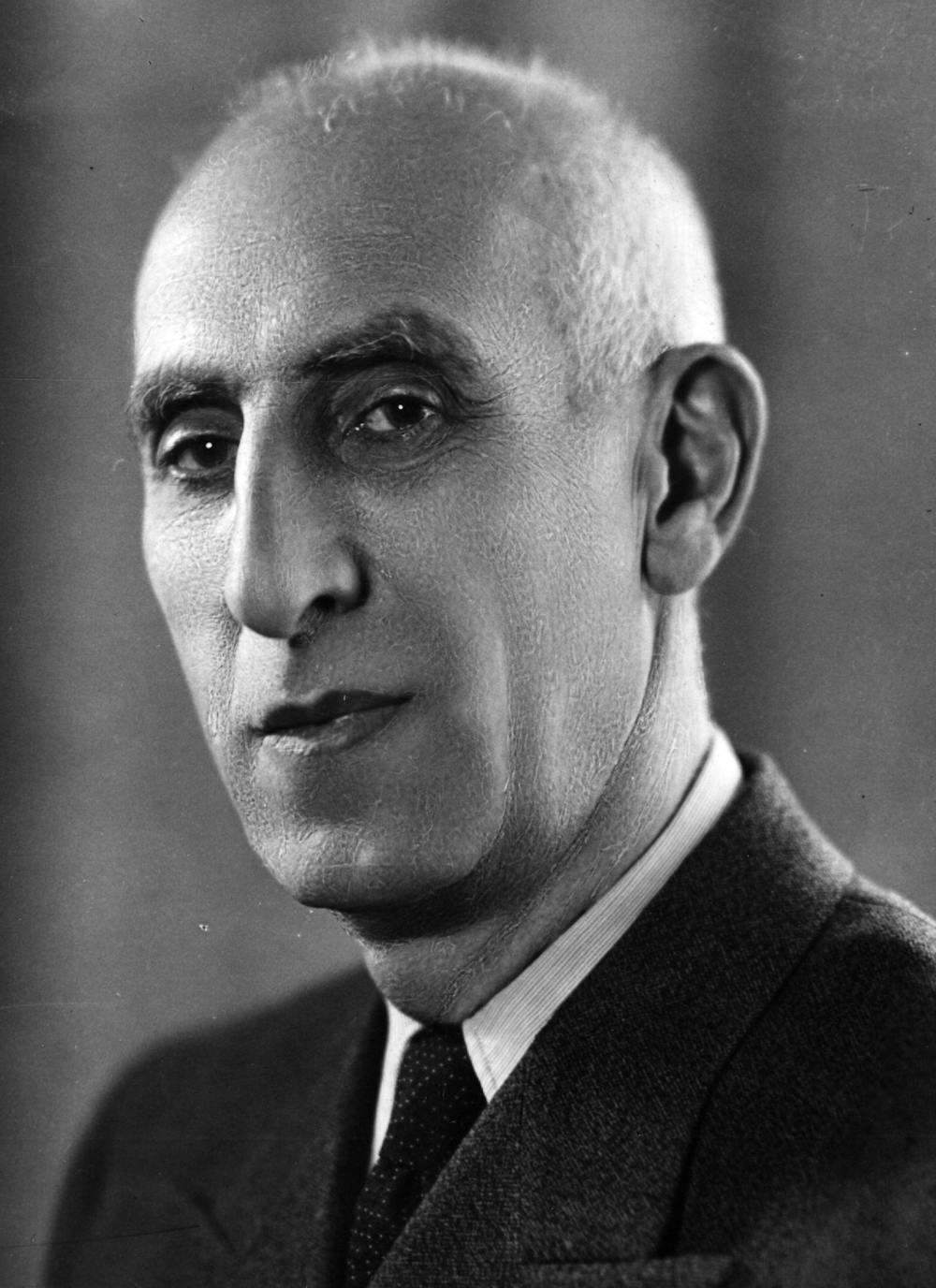
    In 1953, the shah was forced into exile under the radical nationalist and reformist impulse of the democratically elected Prime Minister Mohammad Mosaddegh. He was shortly returned to his throne through a CIA-orchestrated coup.

    Despite all his nationalist, pro-Western, modernising efforts, the shah could not shake off the indignity of having been re-throned with the help of a foreign power.

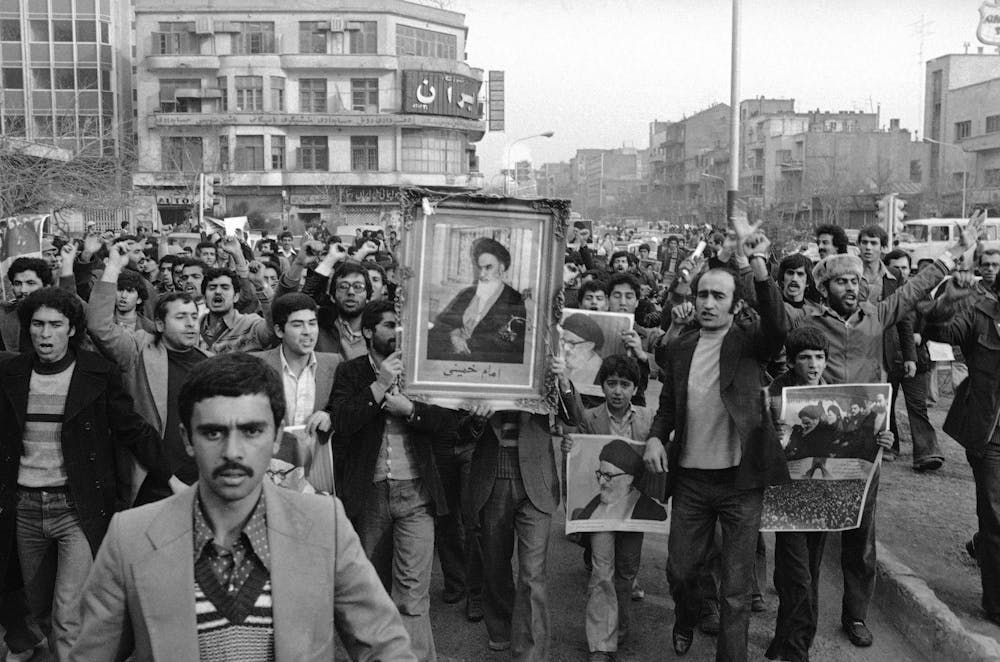
    The revolution against him 25 years later was spearheaded by pro-democracy elements. But it was made up of many groups, including liberalists, communists and Islamists, with no uniting leader.

    The Shia clerical group (ruhaniyat), led by the Shah’s religious and political opponent, Ayatollah Ruhollah Khomeini, proved to be best organised and capable of providing leadership to the revolution. Khomeini had been in exile from the early 1960s (at first in Iraq and later in France), yet he and his followers held considerable sway over the population, especially in traditional rural areas.

    When US President Jimmy Carter’s administration found it could no longer support the shah, he left the country and went into exile in January 1979. This enabled Khomeini to return to Iran to a tumultuous welcome.

    Birth of the Islamic Republic

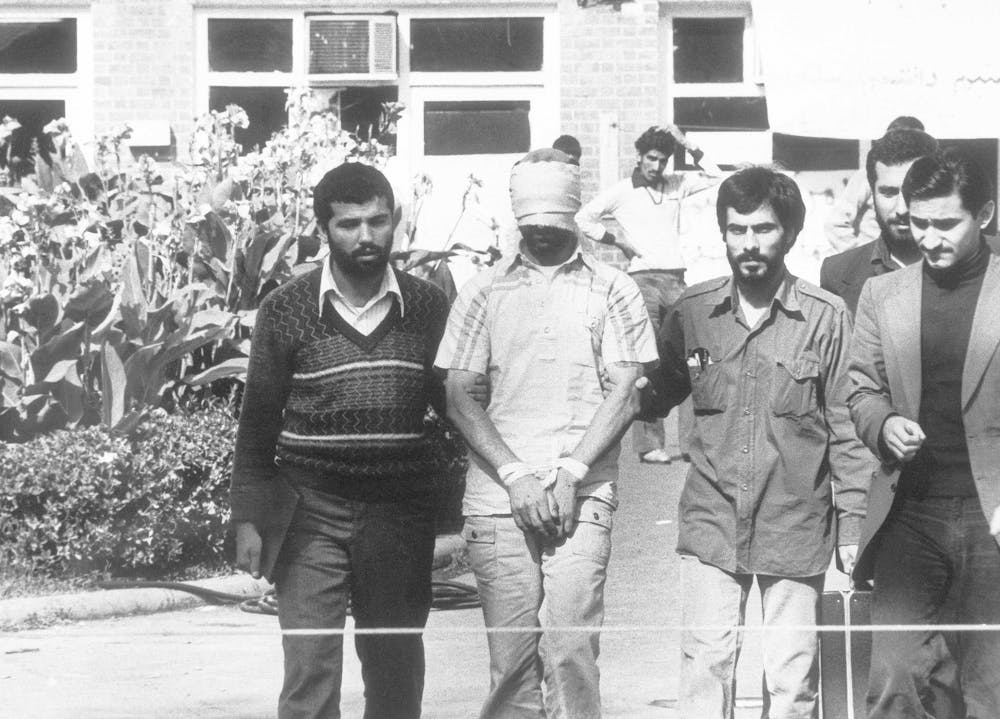
    In the wake of the uprising, Khomeini and his supporters, including the current supreme leader Ayatollah Ali Khamenei, abolished the monarchy and transformed Iran to a cleric-dominated Islamic Republic, with anti-US and anti-Israel postures. He ruled the country according to his unique vision of Islam.

    Khomeini denounced the US as a “Great Satan” and Israel as an illegal usurper of the Palestinian lands – Jerusalem, in particular. He also declared a foreign policy of “neither east, nor west” but pro-Islamic, and called for the spread of the Iranian revolution in the region.

    Khomeini not only changed Iran, but also challenged the US as the dominant force in shaping the regional order. And the US lost one of the most important pillars of its influence in the oil-rich and strategically important Persian Gulf region.

    Fear of hostile American or Israeli (or combined) actions against the Islamic Republic became the focus of Iran’s domestic and foreign policy behaviour.

    A new supreme leader takes power

    Khomeini died in 1989. His successor, Ayatollah Ali Khamenei, has ruled Iran largely in the same jihadi (combative) and ijtihadi (pragmatic) ways, steering the country through many domestic and foreign policy challenges.

    Khamenei fortified the regime with an emphasis on self-sufficiency, a stronger defence capability and a tilt towards the east – Russia and China – to counter the US and its allies. He has stood firm in opposition to the US and its allies – Israel, in particular. And he has shown flexibility when necessary to ensure the survival and continuity of the regime.

    Khamenei wields enormous constitutional power and spiritual authority.

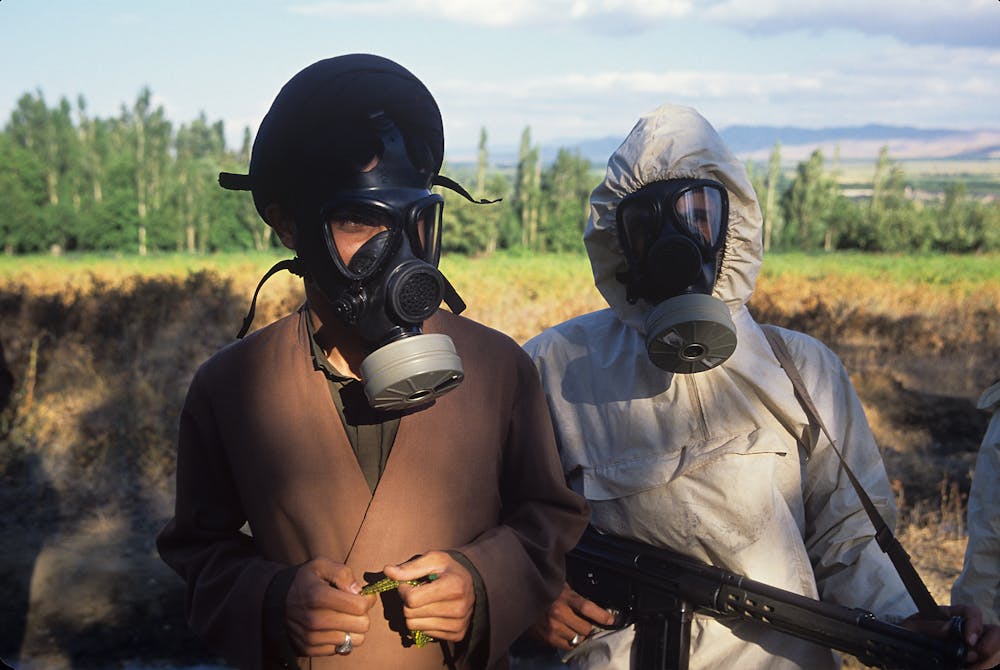
    He has presided over the building of many rule-enforcing instruments of state power, including the expansion of the Islamic Revolutionary Guard Corps and its paramilitary wing, the Basij, revolutionary committees, and Shia religious networks.

    The Shia concept of martyrdom and loyalty to Iran as a continuous sovereign country for centuries goes to the heart of his actions, as well as his followers.

    Khamenei and his rule enforcers, along with an elected president and National Assembly, are fully cognisant that if the regime goes down, they will face the same fate. As such, they cannot be expected to hoist the white flag and surrender to Israel and the US easily.

    However, in the event of the regime falling under the weight of a combined internal uprising and external pressure, it raises the question: what is the alternative?

    The return of the shah?

    Many Iranians are discontented with the regime, but there is no organised opposition under a nationally unifying leader.

    The son of the former shah, the crown prince Reza Pahlavi, has been gaining some popularity. He has been speaking out on X in the last few days, telling his fellow Iranians:

    The end of the Islamic Republic is the end of its 46-year war against the Iranian nation. The regime’s apparatus of repression is falling apart. All it takes now is a nationwide uprising to put an end to this nightmare once and for all.

    Since the deposition of his father, he has lived in exile in the US. As such, he has been tainted by his close association with Washington and Jerusalem, especially Netanyahu.

    If he were to return to power – likely through the assistance of the US – he would face the same problem of political legitimacy as his father did.

    What does the future hold?

    Iran has never had a long tradition of democracy. It experienced brief instances of liberalism in the first half of the 20th century, but every attempt at making it durable resulted in disarray and a return to authoritarian rule.

    Also, the country has rarely been free of outside interventionism, given its vast hydrocarbon riches and strategic location. It’s also been prone to internal fragmentation, given its ethnic and religious mix.

    The Shia Persians make up more than half of the population, but the country has a number of Sunni ethnic minorities, such as Kurds, Azaris, Balochis and Arabs. They have all had separatist tendencies.

    Iran has historically been held together by centralisation rather than diffusion of power.

    Should the Islamic regime disintegrate in one form or another, it would be an mistake to expect a smooth transfer of power or transition to democratisation within a unified national framework.

    At the same time, the Iranian people are highly cultured and creative, with a very rich and proud history of achievements and civilisation.

    They are perfectly capable of charting their own destiny as long as there aren’t self-seeking foreign hands in the process – something they have rarely experienced.

    Amin Saikal does not work for, consult, own shares in or receive funding from any company or organisation that would benefit from this article, and has disclosed no relevant affiliations beyond their academic appointment.

    ref. Iran’s long history of revolution, defiance and outside interference – and why its future so uncertain – https://theconversation.com/irans-long-history-of-revolution-defiance-and-outside-interference-and-why-its-future-so-uncertain-259270

    MIL OSI AnalysisEveningReport.nz

  • MIL-OSI: Novian’s consolidated revenue increased 2.4% in 2024 to EUR 38.9 million

    Source: GlobeNewswire (MIL-OSI)

    The Novian IT group’s consolidated revenue in 2024 amounted to EUR 38.9 million and grew 2.4% compared to 2023. The group’s EBITDA for the 12-month period was EUR 2.57 million and was 2.1 times the previous year’s figure. The operating profit for last year was EUR 1.5 million, or 14.3 times the amount in 2023.

    Novian last year earned most of its revenue – 59% – from activities related to IT solutions, with another 24% coming from software development and 17% from IT services. Its companies conducted operations in 37 countries, earning 77% of their revenue in Lithuania, 12% elsewhere in Europe, and 11% in other countries of the world.

    “We are pleased with last year’s results, which again show that the success of an IT business depends not just on experience and the application of relevant innovations but also work together with clients to create innovations. I am grateful to the team, which has contributed to this,” says Tomas Vitkus, the CEO of the Novian group.

    He says that, looking forward, the priority areas for Novian’s work include not only projects for national institutions and businesses, but also defence projects, artificial intelligence and high-performance computing solutions to address the challenges of climate change, and potential applications of quantum technologies.

    “In the context of the digital era, with Lithuania and Europe actively considering ways to strengthen their defences, advanced technological and programming solutions that leverage artificial intelligence and other innovations should be among the top priorities for the country and the region. We are confident that Novian’s experience and know-how can be useful, and we are ready to contribute to projects in this area,” Vitkus says.

    In the area of software services, the past year stood out not only for the creation of modern national-level information systems, but also for advanced defence, aviation and space projects carried out together with European partners.

    Novian has undertaken a wide range of defence projects since as far back as 2004. In 2024 alone, Novian took part in a total of seven defence projects funded by the European Commission. This year it is continuing four such projects: PEONEER (implementing Activity Based Intelligence to complement geo-spatial activities), SESIOP (enhancing the interoperability of military Air C2 systems and integrating Single European Sky rules), FIRES 2 (developing next generation ammunition), and ODINS’ EYE 2 (developing a European space-based missile early warning system).

    Another project currently underway is HIPSTER, which is developing an innovative software solution for effectively identifying, analysing and resolving hybrid threats. Using advanced OSINT, SocMINT, NLP, and AI technologies, HIPSTER will automatically detect threats and deploy countermeasures to prevent potential damage. The project is linked to EU initiatives.

    “In the area of IT solutions and services, last year stood out for new public sector cloud computing architecture and procurement consulting projects in African countries. We also expanded our business client portfolio by offering IT infrastructure services and introduced high-performance computing solutions for weather forecasting and climate change modelling,” notes Gytis Umantas, the CEO of Novian Technologies. He says the company has played an active role too in creating a quantum technology ecosystem in Lithuania. Early this year, guidelines for the development of quantum technologies in Lithuania were presented, setting out the priorities and opportunities in that field.

    Also noteworthy with regard to innovations is Novian’s membership of a consortium for implementing the Massachusetts Institute of Technology (MIT) International Science and Technology Initiatives Programme (MISTI) in Lithuania. The consortium signed a cooperation agreement with MIT in early 2025. In the course of this project, Novian aims to expand the uses of AI-related innovations, to create technologies for increasing public safety and resilience and for using high-performance computing to combat climate change, and to develop quantum technologies.

    According to an independent valuation carried out by the financial consultancy Deloitte Verslo Konsultacijos, the fair value of the Novian group at the end of 2024 was almost EUR 22 million and was 11.7% higher than at the end of 2023. This figure reflects not only the financial performance of the group’s companies, but also the estimated one-off impact that could arise if there is an adverse court decision regarding the contract for a project undertaken by the group company Novian Systems to provide modernisation services for the Central Public Procurement Information System.

    The Novian group consists of Novian Technologies, Novian Systems and Novian Pro in Lithuania, Novian Eesti of Estonia, Andmevara of Moldova, Zissor of Norway, and Novian Rwanda of Rwanda. The Novian group’s results for 2024 are based on the audited results of Novian Technologies, Novian Systems, Novian Pro, and Zissor, and the unaudited results of the group’s other companies. The Novian group is owned by INVL Technology, a company that invests in IT businesses.

    The person authorized to provide additional information:
    Kazimieras Tonkūnas
    INVL Technology Managing Partner
    E-mail k.tonkunas@invltechnology.lt

    Attachment

    The MIL Network

  • MIL-Evening Report: Israel-Iran war ‘more dangerous than we imagine’, says Middle East Eye editor

    Pacific Media Watch

    The Big Picture Podcast host, New Zealand-Egyptian journalist and author Mohamed Hassan, interviews Middle East Eye editor-in-chief David Hearst about the rapidly unfolding war between Israel and Iran, why the West supports it, and what it threatens to unleash on the global order.

    What does Israel really want to achieve, what options does Iran have to deescalate, and will the United States stop the war, or join it as is being hinted?

    Hearst says the war is “more dangerous than we imagine” and notes that while most Western leadership still backs Israel, there has been a strong shift in world public opinion against Tel Aviv.

    He says Israel has lost most of the world’s support, most of the Global South, most African states, Brazil, South Africa, China and Russia.

    Hearst says the world is witnessing the “cynical tailend of the colonial era” among Western states.


    The era of peace is over.             Video: Middle East Eye

    Iran ‘unlikely to surrender’
    Ali Vaez, the Iran project director at the International Crisis Group, says Iran is unlikely to “surrender to American terms” and that there is a risk the war on Iran could “bring the entire region down”.

    Vaez told Al Jazeera in an interview that US President Donald Trump “provided the green light for Israel to attack Iran” just two days before the president’s special envoy, Steve Witkoff, was due to meet with the Iranians in the Oman capital of Muscat.

    Imagine viewing, from the Iranian perspective, Trump giving the go-ahead for the attack while at the same time saying that diplomacy with Tehran was still ongoing, Vaez said.

    Now Trump “is asking for Iranian surrender” on his Truth Social platform, he said.

    “I think the only thing that is more dangerous than suffering from Israeli and American bombs is actually surrendering to American terms,” Vaez said.

    “Because if Iran surrenders on the nuclear issue and on the demands of President Trump, there is no end to the slippery slope, which would eventually result in regime collapse and capitulation anyway.”

    Most Americans oppose US involvement
    Meanwhile, a new survey has reported that most Americans oppose US military involvement in the conflict.

    The survey by YouGov showed that some 60 percent of Americans surveyed thought the US military should not get involved in the ongoing hostilities between Israel and Iran.

    Only 16 percent favoured US involvement, while 24 percent said they were not sure.

    Among the Democrats, those who opposed US intervention were at 65 percent, and among the Republicans, it was 53 percent. Some 61 percent of independents opposed the move.

    The survey also showed that half of Americans viewed Iran as an enemy of the US, while 25 percent said it was “unfriendly”.

    MIL OSI AnalysisEveningReport.nz

  • MIL-Evening Report: Israel-Iran war ‘more dangerous than we imagine’, says Middle East Eye editor

    Pacific Media Watch

    The Big Picture Podcast host, New Zealand-Egyptian journalist and author Mohamed Hassan, interviews Middle East Eye editor-in-chief David Hearst about the rapidly unfolding war between Israel and Iran, why the West supports it, and what it threatens to unleash on the global order.

    What does Israel really want to achieve, what options does Iran have to deescalate, and will the United States stop the war, or join it as is being hinted?

    Hearst says the war is “more dangerous than we imagine” and notes that while most Western leadership still backs Israel, there has been a strong shift in world public opinion against Tel Aviv.

    He says Israel has lost most of the world’s support, most of the Global South, most African states, Brazil, South Africa, China and Russia.

    Hearst says the world is witnessing the “cynical tailend of the colonial era” among Western states.


    The era of peace is over.             Video: Middle East Eye

    Iran ‘unlikely to surrender’
    Ali Vaez, the Iran project director at the International Crisis Group, says Iran is unlikely to “surrender to American terms” and that there is a risk the war on Iran could “bring the entire region down”.

    Vaez told Al Jazeera in an interview that US President Donald Trump “provided the green light for Israel to attack Iran” just two days before the president’s special envoy, Steve Witkoff, was due to meet with the Iranians in the Oman capital of Muscat.

    Imagine viewing, from the Iranian perspective, Trump giving the go-ahead for the attack while at the same time saying that diplomacy with Tehran was still ongoing, Vaez said.

    Now Trump “is asking for Iranian surrender” on his Truth Social platform, he said.

    “I think the only thing that is more dangerous than suffering from Israeli and American bombs is actually surrendering to American terms,” Vaez said.

    “Because if Iran surrenders on the nuclear issue and on the demands of President Trump, there is no end to the slippery slope, which would eventually result in regime collapse and capitulation anyway.”

    Most Americans oppose US involvement
    Meanwhile, a new survey has reported that most Americans oppose US military involvement in the conflict.

    The survey by YouGov showed that some 60 percent of Americans surveyed thought the US military should not get involved in the ongoing hostilities between Israel and Iran.

    Only 16 percent favoured US involvement, while 24 percent said they were not sure.

    Among the Democrats, those who opposed US intervention were at 65 percent, and among the Republicans, it was 53 percent. Some 61 percent of independents opposed the move.

    The survey also showed that half of Americans viewed Iran as an enemy of the US, while 25 percent said it was “unfriendly”.

    MIL OSI AnalysisEveningReport.nz

  • MIL-Evening Report: Are Israel’s actions in Iran illegal? Could it be called self-defence? An international law expert explains

    Source: The Conversation (Au and NZ) – By Shannon Bosch, Associate Professor (Law), Edith Cowan University

    Israel’s major military operation against Iran has targeted its nuclear program, including its facilities and scientists, as well as its military leadership.

    In response, the United Nations Security Council has quickly convened an emergency sitting. There, the Israeli ambassador to the UN Danny Danon defended Israel’s actions as a “preventative strike” carried out with “precision, purpose, and the most advanced intelligence”. It aimed, he said, to:

    dismantle Iran’s nuclear programme, eliminate the architects of its terror and aggression and neutralise the regime’s ability to follow through on its repeated public promise to destroy the state of Israel.

    So, what does international law say about self-defence? And were Israel’s actions illegal under international law?

    When is self-defence allowed?

    Article 2.4 of the UN charter states:

    All members shall refrain in their international relations from the threat or use of force against the territorial integrity or political independence of any state, or in any other manner inconsistent with the Purposes of the United Nations.

    There are only two exceptions:

    1. when the UN Security Council authorises force, and
    2. when a state acts in self-defence.

    This “inherent right of individual or collective self-defence”, as article 51 of the UN charter puts it, persists until the Security Council acts to restore international peace and security.

    So what’s ‘self-defence’ actually mean?

    The International Court of Justice (ICJ) has consistently interpreted self-defence narrowly.

    In many cases, it has rejected arguments from states such as the United States, Uganda and Israel that have sought to promote a more expansive interpretation of self-defence.

    The 9/11 attacks marked a turning point. The UN Security Council affirmed in resolutions 1368 and 1373 that the right to self-defence extends to defending against attacks by non-state actors, such as terrorist groups. The US, invoking this right, launched its military action in Afghanistan.

    The classic understanding of self-defence – that it’s justified when a state responds reactively to an actual, armed attack – was regarded as being too restrictive in the age of missiles, cyberattacks and terrorism.

    This helped give rise to the idea of using force before an imminent attack, in anticipatory self-defence.

    The threshold for anticipatory self-defence is widely seen by scholars as high. It requires what’s known as “imminence”. In other words, this is the “last possible window of opportunity” to act to stop an unavoidable attack.

    As set out by then-UN Secretary-General Kofi Annan in 2005:

    as long as the threatened attack is imminent, no other means would deflect it and the action is proportionate, this would meet the accepted interpretation of self defence under article 51.

    As international law expert Donald Rothwell points out, the legitimacy of anticipatory self-defence hinges on factual scrutiny and strict criteria, balancing urgency, legality and accountability.

    However, the lines quickly blurred

    In 2002, the US introduced a “pre-emptive doctrine” in its national security strategy.

    This argued new threats – such as terrorism and weapons of mass destruction – justified using force to forestall attacks before they occurred.

    Critics, including Annan, warned that if the notion of preventive self-defence was widely accepted, it would undermine the prohibition on the use of force. It would basically allow states to act unilaterally on speculative intelligence.

    Annan acknowledged:

    if there are good arguments for preventive military action, with good evidence to support them, they should be put to the Security Council, which can authorise such action if it chooses to.

    If it does not so choose, there will be, by definition, time to pursue other strategies, including persuasion, negotiation, deterrence and containment – and to visit again the military option.

    This is exactly what Israel has failed to do before attacking Iran.

    Lessons from history

    Israel’s stated goal was to damage Iran’s nuclear program and prevent it from developing a nuclear weapon that could be used against it.

    This is explicitly about preventing an alleged, threatened, future attack by Iran with a nuclear weapon that, according to all publicly available information, Iran does not currently possess.

    This is not the first time Israel has advanced a broad interpretation of self-defence.

    In 1981, Israel bombed Iraq’s Osirak nuclear reactor, which was under construction on the outskirts of Baghdad. It claimed a nuclear-armed Iraq would pose an unacceptable threat. The UN Security Council condemned the attack.

    As international law stands, unless an armed attack is imminent and unavoidable, such strikes are likely to be considered unlawful uses of force.

    While there is still time and opportunity to use non-forcible means to prevent the threatened attack, there’s no necessity to act now in self defence.

    Diplomatic engagement, sanction, and international monitoring of Iran’s nuclear program — such as through the International Atomic Energy Agency — remain the lawful means of addressing the emerging threat posed by Tehran.

    Preserving the rule of law

    The right to self-defence is not a blank cheque.

    Anticipatory self-defence remains legally unsettled and highly contested.

    So were Israel’s attacks on Iran a legitimate use of “self-defence”? I would argue no.

    I concur with international law expert Marko Milanovic that Israel’s claim to be acting in preventive self-defence must be rejected on the facts available to us.

    In a volatile world, preserving these legal limits is essential to avoiding unchecked aggression and preserving the rule of law.

    Shannon Bosch does not work for, consult, own shares in or receive funding from any company or organisation that would benefit from this article, and has disclosed no relevant affiliations beyond their academic appointment.

    ref. Are Israel’s actions in Iran illegal? Could it be called self-defence? An international law expert explains – https://theconversation.com/are-israels-actions-in-iran-illegal-could-it-be-called-self-defence-an-international-law-expert-explains-259259

    MIL OSI AnalysisEveningReport.nz

  • MIL-OSI: BW Energy: Company presentation Fearnley Securities Africa Focused E&P seminar  

    Source: GlobeNewswire (MIL-OSI)

    Company presentation Fearnley Securities Africa Focused E&P seminar  

    BW Energy is today presenting at the Fearnley Securities Africa Focused E&P seminar in Madrid, Spain. Please see the attached presentation. 

    For further information, please contact: 
     
    Brice Morlot, CFO BW Energy
    +33.7.81.11.41.16
    ir@bwenergy.no

    ABOUT BW ENERGY: 

    BW Energy is a growth E&P company with a differentiated strategy targeting proven offshore oil and gas reservoirs through low risk phased developments. The Company has access to existing production facilities to reduce time to first oil and cashflow with lower investments than traditional offshore developments. The Company’s assets are 73.5% of the producing Dussafu Marine licence offshore Gabon, 100% interest in the Golfinho and Camarupim fields, a 76.5% interest in the BM-ES-23 block, a 95% interest in the Maromba field in Brazil, a 95% interest in the Kudu field in Namibia, all operated by BW Energy. In addition, BW Energy holds approximately 6.6% of the common shares in Reconnaissance Energy Africa Ltd. and a 20% non-operating interest in the onshore Petroleum Exploration License 73 (“PEL 73”) in Namibia. Total net 2P+2C reserves and resources were 599 million barrels of oil equivalent at the start of 2025. 

    This information is subject to the disclosure requirements pursuant to section 5-12 of the Norwegian Securities Trading Act 

    Attachment

    The MIL Network

  • MIL-OSI: BW Energy: Company presentation Fearnley Securities Africa Focused E&P seminar  

    Source: GlobeNewswire (MIL-OSI)

    Company presentation Fearnley Securities Africa Focused E&P seminar  

    BW Energy is today presenting at the Fearnley Securities Africa Focused E&P seminar in Madrid, Spain. Please see the attached presentation. 

    For further information, please contact: 
     
    Brice Morlot, CFO BW Energy
    +33.7.81.11.41.16
    ir@bwenergy.no

    ABOUT BW ENERGY: 

    BW Energy is a growth E&P company with a differentiated strategy targeting proven offshore oil and gas reservoirs through low risk phased developments. The Company has access to existing production facilities to reduce time to first oil and cashflow with lower investments than traditional offshore developments. The Company’s assets are 73.5% of the producing Dussafu Marine licence offshore Gabon, 100% interest in the Golfinho and Camarupim fields, a 76.5% interest in the BM-ES-23 block, a 95% interest in the Maromba field in Brazil, a 95% interest in the Kudu field in Namibia, all operated by BW Energy. In addition, BW Energy holds approximately 6.6% of the common shares in Reconnaissance Energy Africa Ltd. and a 20% non-operating interest in the onshore Petroleum Exploration License 73 (“PEL 73”) in Namibia. Total net 2P+2C reserves and resources were 599 million barrels of oil equivalent at the start of 2025. 

    This information is subject to the disclosure requirements pursuant to section 5-12 of the Norwegian Securities Trading Act 

    Attachment

    The MIL Network

  • MIL-OSI: BW Energy: Company presentation Fearnley Securities Africa Focused E&P seminar  

    Source: GlobeNewswire (MIL-OSI)

    Company presentation Fearnley Securities Africa Focused E&P seminar  

    BW Energy is today presenting at the Fearnley Securities Africa Focused E&P seminar in Madrid, Spain. Please see the attached presentation. 

    For further information, please contact: 
     
    Brice Morlot, CFO BW Energy
    +33.7.81.11.41.16
    ir@bwenergy.no

    ABOUT BW ENERGY: 

    BW Energy is a growth E&P company with a differentiated strategy targeting proven offshore oil and gas reservoirs through low risk phased developments. The Company has access to existing production facilities to reduce time to first oil and cashflow with lower investments than traditional offshore developments. The Company’s assets are 73.5% of the producing Dussafu Marine licence offshore Gabon, 100% interest in the Golfinho and Camarupim fields, a 76.5% interest in the BM-ES-23 block, a 95% interest in the Maromba field in Brazil, a 95% interest in the Kudu field in Namibia, all operated by BW Energy. In addition, BW Energy holds approximately 6.6% of the common shares in Reconnaissance Energy Africa Ltd. and a 20% non-operating interest in the onshore Petroleum Exploration License 73 (“PEL 73”) in Namibia. Total net 2P+2C reserves and resources were 599 million barrels of oil equivalent at the start of 2025. 

    This information is subject to the disclosure requirements pursuant to section 5-12 of the Norwegian Securities Trading Act 

    Attachment

    The MIL Network

  • MIL-OSI: BW Energy: Company presentation Fearnley Securities Africa Focused E&P seminar  

    Source: GlobeNewswire (MIL-OSI)

    Company presentation Fearnley Securities Africa Focused E&P seminar  

    BW Energy is today presenting at the Fearnley Securities Africa Focused E&P seminar in Madrid, Spain. Please see the attached presentation. 

    For further information, please contact: 
     
    Brice Morlot, CFO BW Energy
    +33.7.81.11.41.16
    ir@bwenergy.no

    ABOUT BW ENERGY: 

    BW Energy is a growth E&P company with a differentiated strategy targeting proven offshore oil and gas reservoirs through low risk phased developments. The Company has access to existing production facilities to reduce time to first oil and cashflow with lower investments than traditional offshore developments. The Company’s assets are 73.5% of the producing Dussafu Marine licence offshore Gabon, 100% interest in the Golfinho and Camarupim fields, a 76.5% interest in the BM-ES-23 block, a 95% interest in the Maromba field in Brazil, a 95% interest in the Kudu field in Namibia, all operated by BW Energy. In addition, BW Energy holds approximately 6.6% of the common shares in Reconnaissance Energy Africa Ltd. and a 20% non-operating interest in the onshore Petroleum Exploration License 73 (“PEL 73”) in Namibia. Total net 2P+2C reserves and resources were 599 million barrels of oil equivalent at the start of 2025. 

    This information is subject to the disclosure requirements pursuant to section 5-12 of the Norwegian Securities Trading Act 

    Attachment

    The MIL Network

  • MIL-OSI New Zealand: Animal Welfare – WORLD’S BIGGEST INVESTIGATION INTO EGG FACTORY FARMING. NEW ZEALAND CAGES SCRUTINISED

    Source: Animals Aotearoa

    In the largest global investigation ever, The Open Wing Alliance reveals never-before-seen footage of systemic animal abuse and public health risks in cage egg factory farming. Alongside footage from 36 other countries, the exposé includes footage from a colony cage factory farm in New Zealand.

    New Zealand – June 17 2025 –  “The sound of thousands of trapped chickens, the industrial fans cranking and the stench of waste is beyond words”, says a volunteer investigator from Grassroots Campaigns NZ. “It’s hell inside.”

    This is the description animal welfare investigators gave about what they captured at an Auckland colony cage factory farm. Their footage was given to the Open Wing Alliance, a global coalition of nearly 100 organisations established by The Humane League, in collaboration with We Animals and Reporters for Animals International. Together with Animals Aotearoa, the united group has just released the largest ever investigation into industrialised egg farms in 37 countries. In never-before-seen footage, including from New Zealand, supported by an open letter backed by 100 celebrities.

    “The shocking footage exposes widespread abuse of egg-laying hens trapped in filthy, overcrowded cages, with evidence of injured birds, rotting carcasses, disease-ridden conditions, and more. This investigation comes as bird flu sweeps across every continent, jumping from farmed birds to wild animals and even humans”, says Jennifer Dutton, Corporate Relations Specialist at Animals Aotearoa.

    Footage from 37 countries, including:

    Argentina, Australia, Brazil, Bulgaria, Canada, Chile, Colombia, Estonia, Finland, France, Georgia, Hong Kong, India, Indonesia, Israel, Italy, Japan, Malaysia, Mexico, New Zealand, Nigeria, Norway, Peru, Philippines, Poland, Portugal, Romania, Russia, Slovenia, South Africa, Spain, Taiwan, Thailand, Turkey, United States, Vietnam and Zimbabwe.

    Key findings from the global exposé include:

    Hens confined in battery and enriched/colony cages, giving each chicken only the space of an iPad, or less, to live their entire life;

    Automated systems leave dead bird carcasses trapped in cages with living hens;

    Live hens abandoned in manure and waste pits, and eggs found in manure before sent to shelves;

    Birds unable to stand upright or spread their wings;

    Unsanitary conditions that promote disease spread, like avian influenza.

    This massive coordinated worldwide campaign is focused on spotlighting multinational brands dragging their heels on fulfilling corporate policy to transition away from cage eggs in their supply chains. The vast majority of food corporations around the world publicly committed, a decade ago, to remove cages from their egg supply chains, with global companies like The Hershey Company, Hormel Foods, Famous Brands, and Barilla already fully cage-free. However, food companies like Walmart, Zensho Holdings and Inspire Brands (parent company of Dunkin’ and Baskin-Robbins) continue to profit from sourcing eggs from hens raised in outdated, cruel cages. In New Zealand, hospitality giant Best Western Hotel chain was recently targeted by protestors highlighting the multinational’s lack of transparent reporting on its global cage-free progress, supported by a petition.

    Since 2023, when battery cages were outlawed in Aotearoa, there has been a disinformation campaign by the factory farm lobby to mislead caring New Zealanders about the continued domestic production of cage eggs. While battery cages are no longer in use, colony cages are. Eggs sold at retail level from these colony cage systems don’t contain the word ‘cage’ anywhere on the packaging. Following a number of complaints, the Commerce Commission is currently conducting a compliance project to assess whether colony eggs are a breach of the Fair Trading Act.

    In addition to cage eggs being sold under misleading labelling, the import of liquid eggs from battery cages is a significant problem. Over 80% of New Zealand’s liquid eggs, used largely in food manufacture, are imported from China and Australia where egg-laying hens are kept in battery cages. Produced using methods illegal here, they are added into Kiwi foods and quietly sold to the caring public who are unaware.

    Consumers around the world are increasingly demanding transparency and ethical treatment of animals in food production, and they won’t stand for further risks to our global public health. Over 100 celebrity figures signed an open letter urging food corporations to end the use of cages in their global supply chains. This investigation s

    MIL OSI New Zealand News

  • MIL-OSI New Zealand: New IPU report highlights good parliamentary practices on religion and belief

    Source: Inter-Parliamentary Union (IPU)

    The IPU has released the second part of its groundbreaking Parliamentary report on religion and belief.

    Part 2 of the report, Engagement with religion and belief by parliamentarians underscores the vital role of MPs in fostering peaceful, just and inclusive societies. It explores how engagement with religion and belief can strengthen the rule of law, uphold human rights, and promote sustainable development for all.

    It complements Part 1 of the report Institutional engagement with religion and belief by parliaments, which was published in May 2023 ahead of the inaugural IPU Parliamentary Conference on Interfaith Dialogue in Marrakesh, Morocco. This first part examined how religion and belief are institutionally present in parliamentary life by looking at constitutional provisions, parliamentary committees, consultation mechanisms and traditions reflecting religious or belief identities.

    The new report is timely, with escalating conflicts around the world which, although primarily political, are also marked by the weaponization of religion to sow divisions among different communities living side by side.

    Good parliamentary practices from around the world

    Part 2 delves into the ways parliamentarians interact with religion and belief to promote inclusivity and peace. Drawing on key informant interviews, submissions from parliaments and contributions from religious leaders and global experts, the report highlights good practices and lessons learned from parliaments around the world. It also examines select policy areas where religion and belief intersect with parliamentary functions, such as legislation, oversight, representation and, increasingly, parliamentary diplomacy.

    Key objectives of the report include:

    • Facilitating mutual learning among parliaments about diverse approaches to religion and belief.
    • Encouraging the adoption of good practices that foster inclusion and peaceful coexistence.
    • Promoting scrutiny of legislation to ensure alignment with international human rights commitments.
    • Strengthening inter-parliamentary and interfaith dialogue to better protect fundamental freedoms and the rule of law.

    Upholding rights and countering hate speech

    The report reaffirms the right to freedom of religion or belief as protected under international law, while acknowledging ongoing challenges in its realization. Parliaments are urged to play a proactive role in promoting and protecting this right, both formally through legislation and informally through cross-party or international networks.

    In response to rising hate speech and identity-based hatred, the report outlines human rights and soft law standards around freedom of expression, and shares practical tools for parliamentarians, such as codes of conduct, public advocacy, educational activities and dialogue initiatives.

    Special attention is given to the rights and inclusion of religious and belief minorities, with recommendations for legislative action, oversight and public engagement. The report also highlights the key role of parliaments in promoting gender equality and women’s rights, and where the full enjoyment of these rights intersects with religion or belief.

    All roads lead to Rome

    The report is released ahead of the Second Parliamentary Conference on Interfaith Dialogue, in which the IPU is leveraging its global convening power to bring together parliamentarians, religious leaders, international experts and civil society from 19 to 21 June 2025 in Rome, Italy.

    The Conference is being organized by the IPU and the Italian Parliament in cooperation with Religions for Peace under the theme Strengthening trust and embracing hope for our common future.

    The IPU is the global organization of national parliaments. It was founded in 1889 as the first multilateral political organization in the world, encouraging cooperation and dialogue between all nations. Today, the IPU comprises 181 national Member Parliaments and 14 regional parliamentary bodies. It promotes peace, democracy and sustainable development. It helps parliaments become stronger, younger, greener, more innovative and gender-balanced. It also def

    MIL OSI New Zealand News

  • PM Modi wraps up ‘productive’ Canada visit after G7 Summit, heads to Croatia

    Source: Government of India

    Source: Government of India (4)

    Prime Minister Narendra Modi on Tuesday concluded what he described as a “productive visit” to Canada, where he participated in the G7 Summit at Kananaskis and held several high-level bilateral meetings with global leaders. He has now departed for Croatia, the final stop of his three-nation tour.

    “Concluding a productive Canada visit. Thankful to the Canadian people and Government for hosting a successful G7 Summit, which witnessed fruitful discussions on diverse global issues. We remain committed to furthering global peace, prosperity and sustainability,” PM Modi posted on X.

    In a separate post on X, Ministry of External affairs (MEA) Spokesperson Randhir Jaiswal said:

    “PM @narendramodi concludes a very productive visit to Canada! Held fruitful dialogue on key issues in the global context on energy security, technology, and innovation at the @G7 Summit. Met with several leaders and discussed bilateral ties. Next stop — Croatia.”

    During the G7 outreach session on energy security, PM Modi underscored the need for universal access to clean and sustainable energy. 

    He also highlighted India’s global initiatives, including the International Solar Alliance, Coalition for Disaster Resilient Infrastructure (CDRI), and the Global Biofuels Alliance.

    PM Modi reiterated India’s zero-tolerance policy on terrorism, thanking leaders for their condemnation of the Pahalgam terror attack. He called for unified global action against terrorism and emphasized the need to hold those who support or sponsor terrorism accountable.

    Highlighting India’s digital transformation, the Prime Minister emphasised India’s success in democratizing technology and adopting a human-centric approach. 

    “PM Modi also highlighted India’s experience in democratising use of technology and its human-centric approach in deploying it. He called for addressing global governance issues to tackle concerns of AI and to promote innovation in the field. He called for addressing global governance issues to tackle concerns of AI and to promote innovation in the field,” Jaiswal said in a post on X

    On the sidelines of the summit, PM Modi held bilateral meetings with several global leaders, including Ursula von der Leyen, President of the European Commission; Charles Michel, President of the European Council; Canadian Prime Minister Mark Carney; South African President Cyril Ramaphosa; UK Prime Minister Keir Starmer; French President Emmanuel Macron; Brazilian President Luiz Inácio Lula da Silva; Australian Prime Minister Anthony Albanese.

    Before departing for the three-nation tour, PM Modi had said the visit aimed to thank key partner nations for their unwavering support in India’s fight against cross-border terrorism and to rally international consensus on combating terrorism in all its forms.

  • PM Modi wraps up ‘productive’ Canada visit after G7 Summit, heads to Croatia

    Source: Government of India

    Source: Government of India (4)

    Prime Minister Narendra Modi on Tuesday concluded what he described as a “productive visit” to Canada, where he participated in the G7 Summit at Kananaskis and held several high-level bilateral meetings with global leaders. He has now departed for Croatia, the final stop of his three-nation tour.

    “Concluding a productive Canada visit. Thankful to the Canadian people and Government for hosting a successful G7 Summit, which witnessed fruitful discussions on diverse global issues. We remain committed to furthering global peace, prosperity and sustainability,” PM Modi posted on X.

    In a separate post on X, Ministry of External affairs (MEA) Spokesperson Randhir Jaiswal said:

    “PM @narendramodi concludes a very productive visit to Canada! Held fruitful dialogue on key issues in the global context on energy security, technology, and innovation at the @G7 Summit. Met with several leaders and discussed bilateral ties. Next stop — Croatia.”

    During the G7 outreach session on energy security, PM Modi underscored the need for universal access to clean and sustainable energy. 

    He also highlighted India’s global initiatives, including the International Solar Alliance, Coalition for Disaster Resilient Infrastructure (CDRI), and the Global Biofuels Alliance.

    PM Modi reiterated India’s zero-tolerance policy on terrorism, thanking leaders for their condemnation of the Pahalgam terror attack. He called for unified global action against terrorism and emphasized the need to hold those who support or sponsor terrorism accountable.

    Highlighting India’s digital transformation, the Prime Minister emphasised India’s success in democratizing technology and adopting a human-centric approach. 

    “PM Modi also highlighted India’s experience in democratising use of technology and its human-centric approach in deploying it. He called for addressing global governance issues to tackle concerns of AI and to promote innovation in the field. He called for addressing global governance issues to tackle concerns of AI and to promote innovation in the field,” Jaiswal said in a post on X

    On the sidelines of the summit, PM Modi held bilateral meetings with several global leaders, including Ursula von der Leyen, President of the European Commission; Charles Michel, President of the European Council; Canadian Prime Minister Mark Carney; South African President Cyril Ramaphosa; UK Prime Minister Keir Starmer; French President Emmanuel Macron; Brazilian President Luiz Inácio Lula da Silva; Australian Prime Minister Anthony Albanese.

    Before departing for the three-nation tour, PM Modi had said the visit aimed to thank key partner nations for their unwavering support in India’s fight against cross-border terrorism and to rally international consensus on combating terrorism in all its forms.

  • MIL-OSI Submissions: Universities – Sustainability researcher wins $1.5m global award for visionary work tackling the climate crisis – UoS

    Source: University of Sydney (UoS)

    Largest individual monetary prize for research in the University’s history – 18 June 2025 – The Frontiers Planet Prize, a global initiative of the Frontiers Research Foundation in Switzerland, has announced Associate Professor Arunima Malik as one of its three 2025 International Champions, awarding her US$1 million (A$1.54 million) to advance her and her research team’s pioneering work in sustainability science.

    By providing innovative, scalable solutions to help keep humanity within planetary sustainability boundaries, Associate Professor Malik received the award for, ‘Polarising and equalising tr

    MIL OSI – Submitted News

  • MIL-OSI Submissions: World’s Top Science Competition Awards $1M to Australia’s Visionary Scientist Tackling Global Climate Crisis

    Source:  Frontiers Planet Prize

    • The Frontiers Planet Prize has named its three 2024/25 International Champions, including Australia’s Dr Arunima Malik. The winners are scientists offering innovative, scalable solutions to help keep humanity safely within planetary boundaries.
    • Dr Arunima Malik will receive a prize of one million dollars (USD) to further her research and impact.
    • The winning research focuses on the environmental and social impacts of international trade and its effect on meeting the UN’s Sustainable Development Goals (SDGs).
    • Following an independent scientific assessment involving 100 experts, chaired by Professor Johan Rockström, the developer of the Planetary Boundaries framework, the prize ensures faster global scientific consensus around the innovative ideas with greatest potential to drive change. 


    On 17 June, the Frontiers Planet Prize announced Dr Arunima Malik, from The University of Sydney, as one of its 2025 International Champions, awarding her $1 million to advance her and her research team’s pioneering work in sustainability science. Providing groundbreaking, scalable solutions to help keep humanity within planetary boundaries, Dr Malik received the award for the publication, Polarizing and equalizing tr

    MIL OSI – Submitted News

  • Tehran Command Hit, Shadmani Killed: Iran-Israel War Enters Sixth Day

    Source: Government of India

    Source: Government of India (4)

    Israel’s military has confirmed the killing of Ali Shadmani, Iran’s wartime Chief of Staff and a close adviser to Supreme Leader Ayatollah Ali Khamenei, in an airstrike on a command center in Tehran. Shadmani had recently assumed leadership of Iran’s Khatam-al Anbiya Central Headquarters following the death of his predecessor during Israel’s initial offensive on Friday.

    Iran’s Cyber Security Command has accused Israel of launching a widespread cyber war targeting its digital infrastructure, reportedly disrupting essential services, according to the state-run IRIB news agency.

    Israel’s air force has struck deep within Tehran, killing one of Iran’s top military officers, Ali Shadmani — a high-ranking adviser to Supreme Leader Ayatollah Khamenei.

    Continuous and intense explosions are being heard in west Tehran, according to Iranian state news agency IRNA, as the conflict enters its sixth day with no signs of abating.

    Iran’s newly appointed army chief has issued a stark warning, saying the strikes carried out against Israel so far were merely a deterrent message.

    In a televised address, the new army chief General Abdolrahim Mousavi declared that punitive action will be carried out soon, signaling further escalation.

    Meanwhile, United States President Donald Trump made a social media call for Iran to surrender unconditionally.

    As tensions rise, the Pentagon announced it is speeding up the deployment of the USS Nimitz and other naval hardware to the Middle East, the second carrier strike group to be deployed to the area.

    Calls for restraint are growing louder. Egypt has urged both Iran and Israel to pull back, warning that continued escalation could destabilize the entire region.

    Speaking in Brussels, Jordan’s King Abdullah II addressed the European Parliament, cautioning that Israeli strikes on Iran risk igniting a far wider war.

    The G7 summit in Canada issued a collective call for a de-escalation of hostilities across the Middle East, including a ceasefire in Gaza. However, the group stopped short of directly calling for a ceasefire between Israel and Iran.

    Egyptian Foreign Minister Badr Abdelatty urged an immediate cessation of hostilities in phone calls with Iranian Foreign Minister Abbas Araghchi and US Middle East envoy Steve Witkoff. Egypt warned the conflict risked igniting broader regional upheaval, a message echoed by Jordan’s King Abdullah II, who, in an address to the European Parliament, stressed the potential for wider instability triggered by continued Israeli strikes on Iran.

    French President Emmanuel Macron revealed that a US-backed ceasefire proposal is on the table, though its contents remain undisclosed. Tehran, however, has reportedly maintained a hardline stance on nuclear negotiations, with some sources indicating Iran may only consider compromise after retaliatory action against Israel is complete.

    Israeli Prime Minister Benjamin Netanyahu claimed that ongoing operations have dealt a major blow to Iran’s nuclear program, saying, “I estimate we are sending them back a very, very long time.” Israel has reportedly targeted multiple nuclear facilities and eliminated several senior Iranian military commanders in a tightly coordinated campaign.

  • MIL-Evening Report: ER Report: A Roundup of Significant Articles on EveningReport.nz for June 18, 2025

    ER Report: Here is a summary of significant articles published on EveningReport.nz on June 18, 2025.

    Saving species starts at home: how you can help Australia’s 1,000 threatened invertebrates
    Source: The Conversation (Au and NZ) – By Kate Umbers, Associate Professor in Zoology, Western Sydney University Atlas Moth (_Attacus wardi_) Garry Sankowsky/flickr, CC BY When we think about animals, we tend to think of furry four-legged mammals. But 95% of all animal species are invertebrates – bees, butterflies, beetles, snails, worms, octopuses, starfish, corals,

    Matariki and our diminishing night sky: light pollution from cities and satellites is making stars harder to see
    Source: The Conversation (Au and NZ) – By Shea Esterling, Senior Lecturer Above the Bar, University of Canterbury Zhang Jianyong/Xinhua via Getty Images This week, Aotearoa New Zealand officially celebrates Matariki for the fourth time, marked by the reappearance in the night sky of the star cluster also known as the Pleiades. Yet, ironically, the

    Why a US court allowed a dead man to deliver his own victim impact statement – via an AI avatar
    Source: The Conversation (Au and NZ) – By James D Metzger, Senior Lecturer in Law & Justice, UNSW Sydney Composite image: Arrington Watkins Architects / AI avatar: YouTube/StaceyWales, CC BY In November 2021, in the city of Chandler, Arizona, Chris Pelkey was shot and killed by Gabriel Horcasitas in a road rage altercation. Horcasitas was

    What’s the difference between food poisoning and gastro? A gut expert explains
    Source: The Conversation (Au and NZ) – By Vincent Ho, Associate Professor and Clinical Academic Gastroenterologist, Western Sydney University Andrey_Popov/Shutterstock If you’ve got a dodgy tummy, diarrhoea and have been vomiting, it’s easy to blame a “tummy bug” or “off food”. But which is it? Gastro or food poisoning? What’s the difference anyway? What’s gastroenteritis?

    Sharks come in many different shapes and sizes. But they all follow a centuries-old mathematical rule
    Source: The Conversation (Au and NZ) – By Jodie L. Rummer, Professor of Marine Biology, James Cook University Rachel Moore From hand-sized lantern sharks that glow in the deep sea to bus-sized whale sharks gliding through tropical waters, sharks come in all shapes and sizes. Despite these differences, they all face the same fundamental challenge:

    Iran war: from the Middle East to America, history shows you cannot assassinate your way to peace
    ANALYSIS: By Matt Fitzpatrick, Flinders University In the late 1960s, the prevailing opinion among Israeli Shin Bet intelligence officers was that the key to defeating the Palestinian Liberation Organisation was to assassinate its then-leader Yasser Arafat. The elimination of Arafat, the Shin Bet commander Yehuda Arbel wrote in his diary, was “a precondition to finding

    Solomon Islanders safe but unable to leave Israel amid war on Iran
    RNZ Pacific The Solomon Islands Foreign Ministry says five people who completed agriculture training in Israel are safe but unable to come home amid the ongoing war between Israel and Iran. The ministry said in a statement that the Solomon Islands Embassy in Abu Dhabi, United Arab Emirates, was closely monitoring the situation and maintaining

    We tracked Aussie teens’ mental health. The news isn’t good – and problems are worse for girls
    Source: The Conversation (Au and NZ) – By Scarlett Smout, Postdoctoral Research Fellow at The Matilda Centre for Research in Mental Health and Substance Use and Australia’s Mental Health Think Tank, University of Sydney skynesher/Getty Images We know young people in Australia and worldwide are experiencing growing mental health challenges. The most recent national survey

    Australia could become the world’s first net-zero exporter of fossil fuels – here’s how
    Source: The Conversation (Au and NZ) – By Frank Jotzo, Professor, Crawford School of Public Policy and Director, Centre for Climate and Energy Policy, Australian National University Photo by Jie Zhao/Corbis via Getty Images Australia is the world’s third largest exporter of gas and second largest exporter of coal. When burned overseas, these exports result

    Would a corporate tax cut boost productivity in Australia? So far, the evidence is unclear
    Source: The Conversation (Au and NZ) – By Isaac Gross, Lecturer in Economics, Monash University The Conversation, CC BY-NC The first term of the Albanese government was defined by its fight against inflation, but the second looks like it will be defined by a need to kick start Australia’s sluggish productivity growth. Productivity is essentially

    How high can US debt go before it triggers a financial crisis?
    Source: The Conversation (Au and NZ) – By Luke Hartigan, Lecturer in Economics, University of Sydney rarrarorro/Shutterstock The tax cuts bill currently being debated by the US Senate will add another US$3 trillion (A$4.6 trillion) to US debt. President Donald Trump calls it the “big, beautiful bill”; his erstwhile policy adviser Elon Musk called it

    Jaws at 50: how two musical notes terrified an entire generation
    Source: The Conversation (Au and NZ) – By Alison Cole, Composer and Lecturer in Screen Composition, Sydney Conservatorium of Music, University of Sydney Universal Pictures Our experience of the world often involves hearing our environment before seeing it. Whether it’s the sound of something moving through nearby water, or the rustling of vegetation, our fear

    As Luxon heads to China, his government’s pivot toward the US is a stumbling block
    Source: The Conversation (Au and NZ) – By Robert G. Patman, Professor of International Relations, University of Otago Ahead of his first visit to China, Prime Minister Christopher Luxon has been at pains to present meetings with Chinese premier Xi Jinping and other leaders as advancing New Zealand’s best interests. But there is arguably a

    The story of the journalist on the Rainbow Warrior’s last voyage, David Robie
    Report by Dr David Robie – Café Pacific. – In April 2025, several of the Greenpeace crew visited Matauri Bay, Northland, the final resting place of the original flagship, the Rainbow Warrior. This article was one of the reflections pieces written by an oceans communications crew member. COMMENTARY: By Emma Page I was on the

    As Israeli attacks draw tit-for-tat missile responses from Iran and shuts Haifa refinery, Gaza genocide continues
    Israeli media report that Iranian missile strikes on Haifa oil refinery yesterday killed 3 people and closed down the installation. The Israeli death toll has risen to 24, with 400 injured and more than 2700 people displaced. Israeli authorities report 370 missiles fired by Iran in total, 30 reaching their targets. Iranian military report they

    View from the Hill: Cancelled Albanese-Trump meeting a setback on tariffs, AUKUS
    Source: The Conversation (Au and NZ) – By Michelle Grattan, Professorial Fellow, University of Canberra Anthony Albanese’s failure to get his much-anticipated meeting with US President Donald Trump is not the prime minister’s fault, nor should it be characterised as a “snub” by the president. There was always a risk of derailment by outside events,

    Decoding PNG leader Marape’s talks with French President Macron
    ANALYSIS: By Scott Waide, RNZ Pacific PNG correspondent The recent series of high-level agreements between Papua New Guinea and France marks a significant development in PNG’s geopolitical relationships, driven by what appears to be a convergence of national interests. The “deepening relationship” is less about a single personality and more about a calculated alignment of

    There’s a new ban on vaping in childcare centres, but what else do we need to keep kids safe?
    Source: The Conversation (Au and NZ) – By Erin Harper, Lecturer, School of Education and Social Work, University of Sydney On Monday, the federal government announced new rules to boost safety in the early childhood sector. From September there will be mandatory reporting of any allegations or incidents of child physical or sexual abuse within

    Regime change wouldn’t likely bring democracy to Iran. A more threatening force could fill the vacuum
    Source: The Conversation (Au and NZ) – By Andrew Thomas, Lecturer in Middle East Studies, Deakin University The timing and targets of Israel’s attacks on Iran tell us that Prime Minister Benjamin Netanyahu’s short-term goal is to damage Iran’s nuclear facilities in order to severely diminish its weapons program. But Netanyahu has made clear another

    Why is there so much concern over Iran’s nuclear program? And where could it go from here?
    Source: The Conversation (Au and NZ) – By Benjamin Zala, Senior Lecturer, Politics & International Relations, Monash University Maxar satellite imagery overview of the Fordow enrichment facility located southwest of Tehran. Maxar/Contributor/Getty Images Conflict between Israel and Iran is intensifying, after Israeli airstrikes on key nuclear sites and targeted assassinations last week were followed by

    MIL OSI AnalysisEveningReport.nz

  • MIL-Evening Report: ER Report: A Roundup of Significant Articles on EveningReport.nz for June 18, 2025

    ER Report: Here is a summary of significant articles published on EveningReport.nz on June 18, 2025.

    Saving species starts at home: how you can help Australia’s 1,000 threatened invertebrates
    Source: The Conversation (Au and NZ) – By Kate Umbers, Associate Professor in Zoology, Western Sydney University Atlas Moth (_Attacus wardi_) Garry Sankowsky/flickr, CC BY When we think about animals, we tend to think of furry four-legged mammals. But 95% of all animal species are invertebrates – bees, butterflies, beetles, snails, worms, octopuses, starfish, corals,

    Matariki and our diminishing night sky: light pollution from cities and satellites is making stars harder to see
    Source: The Conversation (Au and NZ) – By Shea Esterling, Senior Lecturer Above the Bar, University of Canterbury Zhang Jianyong/Xinhua via Getty Images This week, Aotearoa New Zealand officially celebrates Matariki for the fourth time, marked by the reappearance in the night sky of the star cluster also known as the Pleiades. Yet, ironically, the

    Why a US court allowed a dead man to deliver his own victim impact statement – via an AI avatar
    Source: The Conversation (Au and NZ) – By James D Metzger, Senior Lecturer in Law & Justice, UNSW Sydney Composite image: Arrington Watkins Architects / AI avatar: YouTube/StaceyWales, CC BY In November 2021, in the city of Chandler, Arizona, Chris Pelkey was shot and killed by Gabriel Horcasitas in a road rage altercation. Horcasitas was

    What’s the difference between food poisoning and gastro? A gut expert explains
    Source: The Conversation (Au and NZ) – By Vincent Ho, Associate Professor and Clinical Academic Gastroenterologist, Western Sydney University Andrey_Popov/Shutterstock If you’ve got a dodgy tummy, diarrhoea and have been vomiting, it’s easy to blame a “tummy bug” or “off food”. But which is it? Gastro or food poisoning? What’s the difference anyway? What’s gastroenteritis?

    Sharks come in many different shapes and sizes. But they all follow a centuries-old mathematical rule
    Source: The Conversation (Au and NZ) – By Jodie L. Rummer, Professor of Marine Biology, James Cook University Rachel Moore From hand-sized lantern sharks that glow in the deep sea to bus-sized whale sharks gliding through tropical waters, sharks come in all shapes and sizes. Despite these differences, they all face the same fundamental challenge:

    Iran war: from the Middle East to America, history shows you cannot assassinate your way to peace
    ANALYSIS: By Matt Fitzpatrick, Flinders University In the late 1960s, the prevailing opinion among Israeli Shin Bet intelligence officers was that the key to defeating the Palestinian Liberation Organisation was to assassinate its then-leader Yasser Arafat. The elimination of Arafat, the Shin Bet commander Yehuda Arbel wrote in his diary, was “a precondition to finding

    Solomon Islanders safe but unable to leave Israel amid war on Iran
    RNZ Pacific The Solomon Islands Foreign Ministry says five people who completed agriculture training in Israel are safe but unable to come home amid the ongoing war between Israel and Iran. The ministry said in a statement that the Solomon Islands Embassy in Abu Dhabi, United Arab Emirates, was closely monitoring the situation and maintaining

    We tracked Aussie teens’ mental health. The news isn’t good – and problems are worse for girls
    Source: The Conversation (Au and NZ) – By Scarlett Smout, Postdoctoral Research Fellow at The Matilda Centre for Research in Mental Health and Substance Use and Australia’s Mental Health Think Tank, University of Sydney skynesher/Getty Images We know young people in Australia and worldwide are experiencing growing mental health challenges. The most recent national survey

    Australia could become the world’s first net-zero exporter of fossil fuels – here’s how
    Source: The Conversation (Au and NZ) – By Frank Jotzo, Professor, Crawford School of Public Policy and Director, Centre for Climate and Energy Policy, Australian National University Photo by Jie Zhao/Corbis via Getty Images Australia is the world’s third largest exporter of gas and second largest exporter of coal. When burned overseas, these exports result

    Would a corporate tax cut boost productivity in Australia? So far, the evidence is unclear
    Source: The Conversation (Au and NZ) – By Isaac Gross, Lecturer in Economics, Monash University The Conversation, CC BY-NC The first term of the Albanese government was defined by its fight against inflation, but the second looks like it will be defined by a need to kick start Australia’s sluggish productivity growth. Productivity is essentially

    How high can US debt go before it triggers a financial crisis?
    Source: The Conversation (Au and NZ) – By Luke Hartigan, Lecturer in Economics, University of Sydney rarrarorro/Shutterstock The tax cuts bill currently being debated by the US Senate will add another US$3 trillion (A$4.6 trillion) to US debt. President Donald Trump calls it the “big, beautiful bill”; his erstwhile policy adviser Elon Musk called it

    Jaws at 50: how two musical notes terrified an entire generation
    Source: The Conversation (Au and NZ) – By Alison Cole, Composer and Lecturer in Screen Composition, Sydney Conservatorium of Music, University of Sydney Universal Pictures Our experience of the world often involves hearing our environment before seeing it. Whether it’s the sound of something moving through nearby water, or the rustling of vegetation, our fear

    As Luxon heads to China, his government’s pivot toward the US is a stumbling block
    Source: The Conversation (Au and NZ) – By Robert G. Patman, Professor of International Relations, University of Otago Ahead of his first visit to China, Prime Minister Christopher Luxon has been at pains to present meetings with Chinese premier Xi Jinping and other leaders as advancing New Zealand’s best interests. But there is arguably a

    The story of the journalist on the Rainbow Warrior’s last voyage, David Robie
    Report by Dr David Robie – Café Pacific. – In April 2025, several of the Greenpeace crew visited Matauri Bay, Northland, the final resting place of the original flagship, the Rainbow Warrior. This article was one of the reflections pieces written by an oceans communications crew member. COMMENTARY: By Emma Page I was on the

    As Israeli attacks draw tit-for-tat missile responses from Iran and shuts Haifa refinery, Gaza genocide continues
    Israeli media report that Iranian missile strikes on Haifa oil refinery yesterday killed 3 people and closed down the installation. The Israeli death toll has risen to 24, with 400 injured and more than 2700 people displaced. Israeli authorities report 370 missiles fired by Iran in total, 30 reaching their targets. Iranian military report they

    View from the Hill: Cancelled Albanese-Trump meeting a setback on tariffs, AUKUS
    Source: The Conversation (Au and NZ) – By Michelle Grattan, Professorial Fellow, University of Canberra Anthony Albanese’s failure to get his much-anticipated meeting with US President Donald Trump is not the prime minister’s fault, nor should it be characterised as a “snub” by the president. There was always a risk of derailment by outside events,

    Decoding PNG leader Marape’s talks with French President Macron
    ANALYSIS: By Scott Waide, RNZ Pacific PNG correspondent The recent series of high-level agreements between Papua New Guinea and France marks a significant development in PNG’s geopolitical relationships, driven by what appears to be a convergence of national interests. The “deepening relationship” is less about a single personality and more about a calculated alignment of

    There’s a new ban on vaping in childcare centres, but what else do we need to keep kids safe?
    Source: The Conversation (Au and NZ) – By Erin Harper, Lecturer, School of Education and Social Work, University of Sydney On Monday, the federal government announced new rules to boost safety in the early childhood sector. From September there will be mandatory reporting of any allegations or incidents of child physical or sexual abuse within

    Regime change wouldn’t likely bring democracy to Iran. A more threatening force could fill the vacuum
    Source: The Conversation (Au and NZ) – By Andrew Thomas, Lecturer in Middle East Studies, Deakin University The timing and targets of Israel’s attacks on Iran tell us that Prime Minister Benjamin Netanyahu’s short-term goal is to damage Iran’s nuclear facilities in order to severely diminish its weapons program. But Netanyahu has made clear another

    Why is there so much concern over Iran’s nuclear program? And where could it go from here?
    Source: The Conversation (Au and NZ) – By Benjamin Zala, Senior Lecturer, Politics & International Relations, Monash University Maxar satellite imagery overview of the Fordow enrichment facility located southwest of Tehran. Maxar/Contributor/Getty Images Conflict between Israel and Iran is intensifying, after Israeli airstrikes on key nuclear sites and targeted assassinations last week were followed by

    MIL OSI AnalysisEveningReport.nz

  • MIL-OSI: High Arctic Overseas Announces Normal Course Issuer Bid

    Source: GlobeNewswire (MIL-OSI)

    NOT FOR DISTRIBUTION TO U.S. NEWSWIRE SERVICES OR FOR DISSEMINATION IN THE UNITED STATES. ANY FAILURE TO COMPLY WITH THIS RESTRICTION MAY CONSTITUTE A VIOLATION OF U.S. SECURITIES LAW

    CALGARY, Alberta, June 17, 2025 (GLOBE NEWSWIRE) — High Arctic Overseas Holdings Corp. (TSXV: HOH) (“High Arctic Overseas” or the “Corporation”) announced today that the TSX Venture Exchange (the “Exchange”) has accepted a notice filed by the Corporation of its intention to make a Normal Course Issuer Bid (the “Bid”) to be transacted through the facilities of the Exchange.

    The notice provides that the Corporation may, during the 12-month period commencing June 20, 2025 and ending June 19, 2026 purchase up to 622,408 Common Shares (“Shares”) in total, being approximately 5% of the total number of Shares outstanding as at June 17, 2025. The price which the Corporation will pay for any such Shares will be the prevailing market price at the time of acquisition. The actual number of Shares which may be purchased pursuant to the Bid and the timing of any such purchases will be determined by management of the Corporation. Purchases under the Bid will be made from time to time by ATB Capital Markets on behalf of the Corporation. The Corporation may enter into a pre-defined automatic securities purchase plan with ATB Financial to allow for the repurchase of Shares at times when the Corporation ordinarily would not be active in the market due to its own internal trading blackout periods, insider trading rules or otherwise. Any such plans entered into will be adopted in accordance with applicable Canadian securities laws. Outside of the restricted periods, the timing of purchases will be determined by management of the Corporation.

    All Share purchases will be made on the open market through the facilities of the Exchange and will be purchased for cancellation. The funding for any purchase pursuant to the Bid will be financed out of the working capital of the Corporation.

    The Board of Directors believes the underlying value of the Corporation may not be reflected in the current market price of its Shares. As a result, depending upon future price movements and other factors, the Board believes that the purchase of the Shares would be an appropriate use of corporate funds and in the best interests of the Corporation and its shareholders. Furthermore, the purchases are expected to benefit all persons who continue to hold Shares by increasing their equity interest in the Corporation if the repurchased Shares are cancelled.

    A copy of the Corporation’s notice filed with the Exchange may be obtained, by any shareholder without charge, by contacting the Corporation’s Chief Executive Officer.

    About High Arctic Overseas Holdings Corp.

    High Arctic Overseas is a market leader in Papua New Guinea providing drilling and specialized well completion services, manpower solutions and supplies rental equipment including rig matting, camps, material handling and drilling support equipment.

    For further information, please contact:

    Mike Maguire
    Chief Executive Officer
    1.587.320.1301

    High Arctic Overseas Holdings Corp.
    Suite 2350, 330–5th Avenue SW
    Calgary, Alberta, Canada T2P 0L4
    www.higharctic.com
    Email: info@higharctic.com

    Cautionary Note and Forward-Looking Information

    This press release contains forward-looking information within the meaning of Canadian securities legislation. Forward-looking information relates to future events or the anticipated performance of the Corporation and reflects management’s expectations or beliefs regarding such future events. In certain cases, statements that contain forward-looking information can be identified by the use of words such as “plans”, “expects”, “is expected”, “budget”, “scheduled”, “estimates”, “forecasts”, “intends”, “anticipates”, “believes” or variations of such words and phrases or statements that certain actions, events or results “may”, “could”, “would”, “might”, or “will be taken”, “occur” or “be achieved” or the negative of these words or comparable terminology. Forward-looking information in this press release includes statements with respect to the anticipated benefits of the Bid, the entering into of an automatic securities purchase plan,‎ and the number of Shares that may be purchased under the Bid. By its very nature forward-looking information involves known and unknown risks, uncertainties and other factors that may cause actual performance of the Corporation to be materially different from any anticipated performance expressed or implied by such forward-looking information.

    Forward-looking information is subject to a variety of risks and uncertainties, which could cause actual events or results to differ from those reflected in the forward-looking information, including, without limitation, the risks described in the Corporation’s public disclosure documents which are filed on the Corporation’s profile on SEDAR+ at www.sedarplus.ca.

    The risk factors referred to above are not an exhaustive list of the factors that may affect any of the Corporation’s forward-looking information. Forward-looking information includes statements about the future and is inherently uncertain, and the Corporation’s actual achievements or other future events or conditions may differ materially from those reflected in the forward-looking information due to a variety of risks, uncertainties and other factors. The Corporation’s statements containing forward-looking information are based on the beliefs, expectations, and opinions of management on the date the statements are made, and the Corporation does not assume any obligation to update such forward-looking information if circumstances or management’s beliefs, expectations or opinions should change, other than as required by applicable law. For the reasons set forth above, one should not place undue reliance on forward-looking information.

    Neither the TSX Venture Exchange nor its Regulation Services Provider (as that term is defined in the policies of the TSX Venture Exchange) accepts responsibility for the adequacy or accuracy of this release.

    The MIL Network

  • MIL-OSI: High Arctic Overseas Announces Normal Course Issuer Bid

    Source: GlobeNewswire (MIL-OSI)

    NOT FOR DISTRIBUTION TO U.S. NEWSWIRE SERVICES OR FOR DISSEMINATION IN THE UNITED STATES. ANY FAILURE TO COMPLY WITH THIS RESTRICTION MAY CONSTITUTE A VIOLATION OF U.S. SECURITIES LAW

    CALGARY, Alberta, June 17, 2025 (GLOBE NEWSWIRE) — High Arctic Overseas Holdings Corp. (TSXV: HOH) (“High Arctic Overseas” or the “Corporation”) announced today that the TSX Venture Exchange (the “Exchange”) has accepted a notice filed by the Corporation of its intention to make a Normal Course Issuer Bid (the “Bid”) to be transacted through the facilities of the Exchange.

    The notice provides that the Corporation may, during the 12-month period commencing June 20, 2025 and ending June 19, 2026 purchase up to 622,408 Common Shares (“Shares”) in total, being approximately 5% of the total number of Shares outstanding as at June 17, 2025. The price which the Corporation will pay for any such Shares will be the prevailing market price at the time of acquisition. The actual number of Shares which may be purchased pursuant to the Bid and the timing of any such purchases will be determined by management of the Corporation. Purchases under the Bid will be made from time to time by ATB Capital Markets on behalf of the Corporation. The Corporation may enter into a pre-defined automatic securities purchase plan with ATB Financial to allow for the repurchase of Shares at times when the Corporation ordinarily would not be active in the market due to its own internal trading blackout periods, insider trading rules or otherwise. Any such plans entered into will be adopted in accordance with applicable Canadian securities laws. Outside of the restricted periods, the timing of purchases will be determined by management of the Corporation.

    All Share purchases will be made on the open market through the facilities of the Exchange and will be purchased for cancellation. The funding for any purchase pursuant to the Bid will be financed out of the working capital of the Corporation.

    The Board of Directors believes the underlying value of the Corporation may not be reflected in the current market price of its Shares. As a result, depending upon future price movements and other factors, the Board believes that the purchase of the Shares would be an appropriate use of corporate funds and in the best interests of the Corporation and its shareholders. Furthermore, the purchases are expected to benefit all persons who continue to hold Shares by increasing their equity interest in the Corporation if the repurchased Shares are cancelled.

    A copy of the Corporation’s notice filed with the Exchange may be obtained, by any shareholder without charge, by contacting the Corporation’s Chief Executive Officer.

    About High Arctic Overseas Holdings Corp.

    High Arctic Overseas is a market leader in Papua New Guinea providing drilling and specialized well completion services, manpower solutions and supplies rental equipment including rig matting, camps, material handling and drilling support equipment.

    For further information, please contact:

    Mike Maguire
    Chief Executive Officer
    1.587.320.1301

    High Arctic Overseas Holdings Corp.
    Suite 2350, 330–5th Avenue SW
    Calgary, Alberta, Canada T2P 0L4
    www.higharctic.com
    Email: info@higharctic.com

    Cautionary Note and Forward-Looking Information

    This press release contains forward-looking information within the meaning of Canadian securities legislation. Forward-looking information relates to future events or the anticipated performance of the Corporation and reflects management’s expectations or beliefs regarding such future events. In certain cases, statements that contain forward-looking information can be identified by the use of words such as “plans”, “expects”, “is expected”, “budget”, “scheduled”, “estimates”, “forecasts”, “intends”, “anticipates”, “believes” or variations of such words and phrases or statements that certain actions, events or results “may”, “could”, “would”, “might”, or “will be taken”, “occur” or “be achieved” or the negative of these words or comparable terminology. Forward-looking information in this press release includes statements with respect to the anticipated benefits of the Bid, the entering into of an automatic securities purchase plan,‎ and the number of Shares that may be purchased under the Bid. By its very nature forward-looking information involves known and unknown risks, uncertainties and other factors that may cause actual performance of the Corporation to be materially different from any anticipated performance expressed or implied by such forward-looking information.

    Forward-looking information is subject to a variety of risks and uncertainties, which could cause actual events or results to differ from those reflected in the forward-looking information, including, without limitation, the risks described in the Corporation’s public disclosure documents which are filed on the Corporation’s profile on SEDAR+ at www.sedarplus.ca.

    The risk factors referred to above are not an exhaustive list of the factors that may affect any of the Corporation’s forward-looking information. Forward-looking information includes statements about the future and is inherently uncertain, and the Corporation’s actual achievements or other future events or conditions may differ materially from those reflected in the forward-looking information due to a variety of risks, uncertainties and other factors. The Corporation’s statements containing forward-looking information are based on the beliefs, expectations, and opinions of management on the date the statements are made, and the Corporation does not assume any obligation to update such forward-looking information if circumstances or management’s beliefs, expectations or opinions should change, other than as required by applicable law. For the reasons set forth above, one should not place undue reliance on forward-looking information.

    Neither the TSX Venture Exchange nor its Regulation Services Provider (as that term is defined in the policies of the TSX Venture Exchange) accepts responsibility for the adequacy or accuracy of this release.

    The MIL Network

  • MIL-OSI Global: US and Iran have a long, complicated history, spanning far beyond Israel’s strikes on Tehran

    Source: The Conversation – USA – By Jeffrey Fields, Professor of the Practice of International Relations, USC Dornsife College of Letters, Arts and Sciences

    People observe fire and smoke from an Israeli airstrike on an oil depot in Tehran, Iran, on June 15, 2025. Stringer/Getty Images

    Relations between the United States and Iran have been fraught for decades – at least since the U.S. helped overthrow a democracy-minded prime minister, Mohammed Mossadegh, in August 1953. The U.S. then supported the long, repressive reign of the Shah of Iran, whose security services brutalized Iranian citizens for decades.

    The two countries have been particularly hostile to each other since Iranian students took over the U.S. Embassy in Tehran in November 1979, resulting in economic sanctions and the severing of formal diplomatic relations between the nations.

    Since 1984, the U.S. State Department has listed Iran as a “state sponsor of terrorism,” alleging the Iranian government provides terrorists with training, money and weapons.

    Some of the major events in U.S.-Iran relations highlight the differences between the nations’ views, but others arguably presented real opportunities for reconciliation.

    1953: US overthrows Mossadegh

    Mohammed Mossadegh.
    Wikimedia Commons

    In 1951, the Iranian Parliament chose a new prime minister, Mossadegh, who then led lawmakers to vote in favor of taking over the Anglo-Iranian Oil Company, expelling the company’s British owners and saying they wanted to turn oil profits into investments in the Iranian people. The U.S. feared disruption in the global oil supply and worried about Iran falling prey to Soviet influence. The British feared the loss of cheap Iranian oil.

    President Dwight Eisenhower decided it was best for the U.S. and the U.K. to get rid of Mossadegh. Operation Ajax, a joint CIA-British operation, convinced the Shah of Iran, the country’s monarch, to dismiss Mossadegh and drive him from office by force. Mossadegh was replaced by a much more Western-friendly prime minister, handpicked by the CIA.

    Demonstrators in Tehran demand the establishment of an Islamic republic.
    AP Photo/Saris

    1979: Revolutionaries oust the shah, take hostages

    After more than 25 years of relative stability in U.S.-Iran relations, the Iranian public had grown unhappy with the social and economic conditions that developed under the dictatorial rule of Shah Mohammad Reza Pahlavi.

    Pahlavi enriched himself and used American aid to fund the military while many Iranians lived in poverty. Dissent was often violently quashed by SAVAK, the shah’s security service. In January 1979, the shah left Iran, ostensibly to seek cancer treatment. Two weeks later, Ayatollah Ruhollah Khomeini returned from exile in Iraq and led a drive to abolish the monarchy and proclaim an Islamic government.

    Iranian students at the U.S. Embassy in Tehran show a blindfolded American hostage to the crowd in November 1979.
    AP Photo

    In October 1979, President Jimmy Carter agreed to allow the shah to come to the U.S. to seek advanced medical treatment. Outraged Iranian students stormed the U.S. Embassy in Tehran on Nov. 4, taking 52 Americans hostage. That convinced Carter to sever U.S. diplomatic relations with Iran on April 7, 1980.

    Two weeks later, the U.S. military launched a mission to rescue the hostages, but it failed, with aircraft crashes killing eight U.S. servicemembers.

    The shah died in Egypt in July 1980, but the hostages weren’t released until Jan. 20, 1981, after 444 days of captivity.

    An Iranian cleric, left, and an Iranian soldier wear gas masks to protect themselves against Iraqi chemical-weapons attacks in May 1988.
    Kaveh Kazemi/Getty Images

    1980-1988: US tacitly sides with Iraq

    In September 1980, Iraq invaded Iran, an escalation of the two countries’ regional rivalry and religious differences: Iraq was governed by Sunni Muslims but had a Shia Muslim majority population; Iran was led and populated mostly by Shiites.

    The U.S. was concerned that the conflict would limit the flow of Middle Eastern oil and wanted to ensure the conflict didn’t affect its close ally, Saudi Arabia.

    The U.S. supported Iraqi leader Saddam Hussein in his fight against the anti-American Iranian regime. As a result, the U.S. mostly turned a blind eye toward Iraq’s use of chemical weapons against Iran.

    U.S. officials moderated their usual opposition to those illegal and inhumane weapons because the U.S. State Department did not “wish to play into Iran’s hands by fueling its propaganda against Iraq.” In 1988, the war ended in a stalemate. More than 500,000 military and 100,000 civilians died.

    1981-1986: US secretly sells weapons to Iran

    The U.S. imposed an arms embargo after Iran was designated a state sponsor of terrorism in 1984. That left the Iranian military, in the middle of its war with Iraq, desperate for weapons and aircraft and vehicle parts to keep fighting.

    The Reagan administration decided that the embargo would likely push Iran to seek support from the Soviet Union, the U.S.’s Cold War rival. Rather than formally end the embargo, U.S. officials agreed to secretly sell weapons to Iran starting in 1981.

    The last shipment, of anti-tank missiles, was in October 1986. In November 1986, a Lebanese magazine exposed the deal. That revelation sparked the Iran-Contra scandal in the U.S., with Reagan’s officials found to have collected money from Iran for the weapons and illegally sent those funds to anti-socialist rebels – the Contras – in Nicaragua.

    At a mass funeral for 76 of the 290 people killed in the shootdown of Iran Air 655, mourners hold up a sign depicting the incident.
    AP Photo/CP/Mohammad Sayyad

    1988: US Navy shoots down Iran Air flight 655

    On the morning of July 8, 1988, the USS Vincennes, a guided missile cruiser patrolling in the international waters of the Persian Gulf, entered Iranian territorial waters while in a skirmish with Iranian gunboats.

    Either during or just after that exchange of gunfire, the Vincennes crew mistook a passing civilian Airbus passenger jet for an Iranian F-14 fighter. They shot it down, killing all 290 people aboard.

    The U.S. called it a “tragic and regrettable accident,” but Iran believed the plane’s downing was intentional. In 1996, the U.S. agreed to pay US$131.8 million in compensation to Iran.

    1997-1998: The US seeks contact

    In August 1997, a moderate reformer, Mohammad Khatami, won Iran’s presidential election.

    U.S. President Bill Clinton sensed an opportunity. He sent a message to Tehran through the Swiss ambassador there, proposing direct government-to-government talks.

    Shortly thereafter, in early January 1998, Khatami gave an interview to CNN in which he expressed “respect for the great American people,” denounced terrorism and recommended an “exchange of professors, writers, scholars, artists, journalists and tourists” between the United States and Iran.

    However, Supreme Leader Ayatollah Ali Khamenei didn’t agree, so not much came of the mutual overtures as Clinton’s time in office came to an end.

    In his 2002 State of the Union address, President George W. Bush characterized Iran, Iraq and North Korea as constituting an “Axis of Evil” supporting terrorism and pursuing weapons of mass destruction, straining relations even further.

    Inside these buildings at the Natanz nuclear facility in Iran, technicians enrich uranium.
    AP Photo/Vahid Salemi

    2002: Iran’s nuclear program raises alarm

    In August 2002, an exiled rebel group announced that Iran had been secretly working on nuclear weapons at two installations that had not previously been publicly revealed.

    That was a violation of the terms of the Nuclear Nonproliferation Treaty, which Iran had signed, requiring countries to disclose their nuclear-related facilities to international inspectors.

    One of those formerly secret locations, Natanz, housed centrifuges for enriching uranium, which could be used in civilian nuclear reactors or enriched further for weapons.

    Starting in roughly 2005, U.S. and Israeli government cyberattackers together reportedly targeted the Natanz centrifuges with a custom-made piece of malicious software that became known as Stuxnet.

    That effort, which slowed down Iran’s nuclear program was one of many U.S. and international attempts – mostly unsuccessful – to curtail Iran’s progress toward building a nuclear bomb.

    2003: Iran writes to Bush administration

    An excerpt of the document sent from Iran, via the Swiss government, to the U.S. State Department in 2003, appears to seek talks between the U.S. and Iran.
    Washington Post via Scribd

    In May 2003, senior Iranian officials quietly contacted the State Department through the Swiss embassy in Iran, seeking “a dialogue ‘in mutual respect,’” addressing four big issues: nuclear weapons, terrorism, Palestinian resistance and stability in Iraq.

    Hardliners in the Bush administration weren’t interested in any major reconciliation, though Secretary of State Colin Powell favored dialogue and other officials had met with Iran about al-Qaida.

    When Iranian hardliner Mahmoud Ahmadinejad was elected president of Iran in 2005, the opportunity died. The following year, Ahmadinejad made his own overture to Washington in an 18-page letter to President Bush. The letter was widely dismissed; a senior State Department official told me in profane terms that it amounted to nothing.

    Representatives of several nations met in Vienna in July 2015 to finalize the Iran nuclear deal.
    Austrian Federal Ministry for Europe, Integration and Foreign Affairs/Flickr

    2015: Iran nuclear deal signed

    After a decade of unsuccessful attempts to rein in Iran’s nuclear ambitions, the Obama administration undertook a direct diplomatic approach beginning in 2013.

    Two years of secret, direct negotiations initially bilaterally between the U.S. and Iran and later with other nuclear powers culminated in the Joint Comprehensive Plan of Action, often called the Iran nuclear deal.

    Two years of secret, direct negotiations conducted bilaterally at first between the U.S. and Iran and later with other nuclear powers culminated in the Joint Comprehensive Plan of Action, often called the Iran nuclear deal.

    Iran, the U.S., China, France, Germany, Russia and the United Kingdom signed the deal in 2015. It severely limited Iran’s capacity to enrich uranium and mandated that international inspectors monitor and enforce Iran’s compliance with the agreement.

    In return, Iran was granted relief from international and U.S. economic sanctions. Though the inspectors regularly certified that Iran was abiding by the agreement’s terms, President Donald Trump withdrew from the agreement in May 2018.

    2020: US drones kill Iranian Maj. Gen. Qassem Soleimani

    An official photo from the Iranian government shows Maj. Gen. Qassem Soleimani, who was killed in a Jan. 3 drone strike ordered by President Donald Trump.
    Iranian Supreme Leader Press Office/Anadolu Agency via Getty Images

    On Jan. 3, 2020, an American drone fired a missile that killed Maj. Gen. Qassem Soleimani, the leader of Iran’s elite Quds Force. Analysts considered Soleimani the second most powerful man in Iran, after Supreme Leader Ayatollah Khamenei.

    At the time, the Trump administration asserted that Soleimani was directing an imminent attack against U.S. assets in the region, but officials have not provided clear evidence to support that claim.

    Iran responded by launching ballistic missiles that hit two American bases in Iraq.

    2023: The Oct. 7 attacks on Israel

    Hamas’ brazen attack on Israel on Oct. 7, 2023, provoked a fearsome militarized response from Israel that continues today and served to severely weaken Iran’s proxies in the region, especially Hamas – the perpetrator of the attacks – and Hezbollah in Lebanon.

    2025: Trump 2.0 and Iran

    Trump saw an opportunity to forge a new nuclear deal with Iran and to pursue other business deals with Tehran. Once inaugurated for his second term, Trump appointed Steve Witkoff, a real estate investor who is the president’s friend, to serve as special envoy for the Middle East and to lead negotiations.

    Negotiations for a nuclear deal between Washington and Tehran began in April, but the countries did not reach a deal. They were planning a new round of talks when Israel struck Iran with a series of airstrikes on June 13, forcing the White House to reconsider is position.

    Jeffrey Fields receives funding from the Carnegie Corporation of New York and Schmidt Futures.

    ref. US and Iran have a long, complicated history, spanning far beyond Israel’s strikes on Tehran – https://theconversation.com/us-and-iran-have-a-long-complicated-history-spanning-far-beyond-israels-strikes-on-tehran-259240

    MIL OSI – Global Reports

  • MIL-OSI: Carbon Streaming Announces Corporate Update and Legend Removal Process for All U.S. Investors From the 2021 Financings

    Source: GlobeNewswire (MIL-OSI)

    TORONTO, June 17, 2025 (GLOBE NEWSWIRE) — Carbon Streaming Corporation (Cboe CA: NETZ) (OTCQB: OFSTF) (FSE: M2Q) (“Carbon Streaming” or the “Company”) today provides a corporate update and announces legend removal process for all U.S. investors from the 2021 Financings (as defined below).

    Highlights:

    • Restrictive Legend Removal: The Company has finalized the process to offer qualifying U.S. investors who participated in the 2021 Financings (as defined below) the opportunity to remove the restrictive legend on share certificates at no cost to the investor. This legend on the share certificates renders the securities “restricted securities” as defined in Rule 144 of the Securities Act of 1933 and restricts these investors from selling stock.
    • Cash Conservation Update: In February 2025, the Company converted US$18.0 million to Canadian dollars at an exchange rate of 1.42. Since then, the US dollar to Canadian dollar exchange rate has decreased to 1.36 as of June 16, 2025, resulting in a foreign exchange gain of approximately US$0.8 million on that portion of the cash. The Company currently holds US$37.0 million (C$50.3 million) in cash, remains debt-free, and has no outstanding legal payables.
    • Credit Portfolio Update: The Company currently holds 532,720 carbon credits from cookstove projects and 18,990 carbon credits from water purification projects under the Community Carbon Stream. A breakdown of credit vintage, project ID and registry information is provided below.
    • Notice of Arbitration: The Company has filed a Notice of Arbitration in Ontario against Will Solutions Inc.
    • AGM Reminder: The Company’s Annual General Meeting (the “AGM”) of holders of common shares of the Company (“Common Shares”) will be held on June 18th, 2025, at 9:30 a.m. (Vancouver time), at the offices of Farris LLP, 25th Floor, 700 W Georgia Street, Vancouver, British Columbia, Canada.

    Restrictive Legend Removal:

    The Company has finalized the process to offer qualifying U.S. investors who participated in the 2021 Financings (defined below) the opportunity to remove the restrictive legend from their share certificates—or from book-entry shares, as applicable—without the need for the shareholder to pay for a legal opinion, regardless of whether a particular shareholder intends to sell or actually sells the shares into the public market. This service is being provided at no cost to all qualifying investors. This legend on the share certificates renders the securities “restricted securities” as defined in Rule 144 of the Securities Act of 1933 and restricts these investors from selling stock.

    The blanket opinion provides that the removal of the restrictive legend is now permissible under Section 4(a)(1) of the Securities Act of 1933.

    While removing the legend is permissible, it is not required. Shareholders are not required to take any action if they prefer to keep the restrictive legend in place.

    Marin Katusa, CEO of the Company, stated “The vast majority of the capital raised for Carbon Streaming came from the financings throughout the 2021 calendar year. Since those financings in 2021, over 700 U.S. residents who invested in those financings have been unable to deposit their shares into a brokerage firm or freely sell those shares because of the restrictive legend that is applied to U.S. investors investing in private placements.

    The typical process to remove a restrictive legend is done on a one-off basis, meaning each U.S resident must complete the removal of the restrictive legend on their own. This is the first time a publicly listed Canadian company, such that we are aware, has offered the removal of the restrictive legend through a digitalized process applicable to a large group of U.S. investors (over 700 shareholders at the same time) to simplify and expediate the process of removing the restrictive U.S. legend.

    We approached DealMaker in early 2025 with the concept to digitalize the legend removal process for the U.S. investors. The Company worked with DealMaker on the 2021 Financings where all subscription forms were digitalized and the funding process was completed.

    I am especially proud of the innovation of this potential solution to U.S. legend removals, as it will ultimately cost less than 5% of the quotes the Company initially received to obtain a global opinion letter for the removal the U.S. restrictive legend through the traditional process. In addition, DealMaker has agreed to not charge for their services.”

    Eligibility for Blanket Removal

    Holders of Common Shares are eligible if they are US residents, non affiliates and acquired the Common Shares pursuant to:

    • that certain private placement of special warrants issued on July 20, 2021,
    • that certain private placement of Common Shares issued on March 11, 2021,
    • that certain private placement of Common Shares issued on May 12, 2021,
    • that certain private placement of Common Share issued on January 27, 2021,
    • that certain private placement of units, with each unit consisting of one Common Share and one share purchase warrant to purchase one Common Share, issued on December 22, 2020, and
    • that certain private placement of units, with each unit consisting of one Common Share and one share purchase warrant to purchase one Common Share, issued on December 16, 2020.

    (collectively, the “2021 Financings”)

    Timing and Process to Participate in Blanket Removal

    Holders who are eligible will receive an email from DealMaker on or about June 23, 2025 with instructions on how to participate.

    If you are a U.S. investor and do not want to register your shares into a brokerage account or sell your shares, then no action is required. This service is being offered by the Company to U.S. investors who acquired their shares in the 2021 Financings, are not affiliates and who have the restrictive legend on their share certificates—or book-entry shares, as applicable and wish to deposit them in a brokerage account or sell their shares in the public market.

    Marin Katusa, CEO, further added: “DealMaker handled the 2021 Financings for the Company which included the digitalizing subscription forms and managing the subscription wires from the investors in a professional, efficient and low-cost manner. We strongly believe that this innovative solution we have created with DealMaker to remove the U.S. restrictive legends will be equally successful. We are grateful for DealMaker’s innovative approach and commitment to excellence, which continues to streamline our investor communications and elevate the overall experience for our shareholders.”

    Cash Conservation

    As of June 16, 2025, the Company has US$37.0 million in cash (C$50.3 million), remains debt-free, and has no outstanding legal payables. With cash generated from the sale of carbon credits held by the Company, interest earned on the Company’s cash balance, and substantial reductions in operating expenses to date, the Company expects a significant improvement in operating cash flow in 2025 when compared to previous years. The Company currently has three full-time employees and a part-time CFO, with a combined annual base compensation of approximately US$0.5 million, while the CEO and Board of Directors are not collecting any salaries, fees, nor equity-based compensation of any kind.

    Carbon credits held by the Company as of June 16, 2025

               
    Project Registry Project ID Vintage Credits available for sale  
    Uganda cookstove project Gold Standard GS12119 2022 53,801  
        GS10967 2023 129,383  
        GS12119 2023 199,340  
        GS12120 2023 41,514  
        GS12120 2024 15,432  
            439,470  
    Uganda household safe water project Gold Standard GS10968 2022 38  
        GS10968 2023 14,373  
            14,411  
    Tanzania cookstove project Verra VCS2676 2022 27,492  
        VCS2676 2023 60,788  
            88,280  
    Mozambique cookstove project Gold Standard GS11211 2022 1,401  
      Gold Standard GS12638 2023 3  
      Gold Standard GS12638 2024 296  
      Gold Standard GS11211 2024 3,270  
            4,970  
    Malawi household safe water project Gold Standard GS11245 2022 988  
      Gold Standard GS11245 2023 3,310  
      Gold Standard GS11245 2024 281  
            4,579  
               

    The Company has been in discussions with several different parties regarding the sale of its existing carbon credits. While current market pricing for cookstoves remains weak, the Company continues to advance its marketing efforts. A new initiative by the Company leverages AI-driven analysis of public disclosures to identify active buyers of environmental attributes. This effort is helping the Company more effectively target potential buyers for its current credit inventory, without incurring additional cost.

    Notice of Arbitration – Will Solutions.

    On June 16, 2025, the Company delivered a written Notice of Arbitration in Ontario to Will Solutions Inc. and the ADR Chambers. As previously disclosed, in the third quarter of 2024, the Company exercised its contractual rights to terminate the purchase sale agreement dated June 20, 2022 with Will Solutions Inc. (the “Sustainable Community Stream”) as a result of, among other things, the failure of Will Solutions Inc. to meet its milestone related to the registration of its Ontario project and its failure to develop and implement the project in accordance with the project plan (including continued delays in project development activities and lower-than-expected project enrollments). The Company has advanced $4.0 million of the upfront deposit to Will Solutions Inc. under the Sustainable Community Stream. The Company will continue to pursue all of its rights and interests.

    2025 Annual General Meeting

    The Company’s AGM will be held on June 18th, 2025, at 9:30 a.m. (Vancouver time), at the offices of Farris LLP, 25th Floor, 700 W Georgia Street, Vancouver, British Columbia, Canada.

    About Carbon Streaming

    Carbon Streaming’s focus is on projects that generate high-quality carbon credits and have a positive impact on the environment, local communities, and biodiversity, in addition to their carbon reduction or removal potential.

    ON BEHALF OF THE COMPANY:
    Marin Katusa, Chief Executive Officer
    Tel: 365.607.6095
    info@carbonstreaming.com
    www.carbonstreaming.com

    Investor Relations
    investors@carbonstreaming.com

    Media
    media@carbonstreaming.com

    Cautionary Statement Regarding Forward-Looking Information
    This news release contains certain forward-looking statements and forward-looking information (collectively, “forward-looking information”) within the meaning of applicable securities laws. All statements, other than statements of historical fact, that address activities, events or developments that the Company believes, expects or anticipates will or may occur in the future, are forward-looking information, including, without limitation, the impact of the Company’s restructuring strategies, including evaluation of strategic alternatives; the ability of the Company to execute on expense reductions and savings from operating cost reduction measures; statements with respect to cash conservation; its sales strategy; supporting the Company’s carbon streaming and royalty partners; statements with respect to the eligibility, timing, process and completion of restrictive legend removal; statements with respect to the expected improvement in operating cash flow in 2025 when compared to previous years; statements with respect to the effectiveness and cost of AI-driven analysis of public disclosures to identify active buyers of environmental attributes; statements regarding the Company’s intention to pursue all of its rights and interests under the Sustainable Community Stream; and statements with respect to the timing of the Company’s AGM.

    When used in this news release, words such as “estimates”, “expects”, “plans”, “anticipates”, “will”, “believes”, “intends” “should”, “could”, “may” and other similar terminology are intended to identify such forward-looking information. This forward-looking information is based on the current expectations or beliefs of the Company based on information currently available to the Company. Forward-looking information is subject to a number of risks and uncertainties that may cause the actual results of the Company to differ materially from those discussed in the forward-looking information, and even if such actual results are realized or substantially realized, there can be no assurance that they will have the expected consequences to, or effects on, the Company. They should not be read as a guarantee of future performance or results and will not necessarily be an accurate indication of whether or not such results will be achieved. Factors that could cause actual results or events to differ materially from current expectations include, among other things: general economic, market and business conditions and global financial conditions, including fluctuations in interest rates, foreign exchange rates and stock market volatility; volatility in prices of carbon credits and demand for carbon credits; change in social or political views towards climate change, carbon credits and environmental, social and governance initiatives and subsequent changes in corporate or government policies or regulations and associated changes in demand for carbon credits; the Company’s expectations and plans with respect to current litigation, arbitration and regulatory proceedings; limited operating history for the Company’s current strategy; concentration risk; inaccurate estimates of project value, which may impact the ability of the Company to execute on its growth and diversification strategy; dependence upon key management; impact of corporate restructurings; the inability of the Company to optimize cash flows or sufficiently reduce operating expenses; reputational risk; risks arising from competition and future acquisition activities failure or timing delays for projects to be registered, validated and ultimately developed and for emission reductions or removals to be verified and carbon credits issued (and other risks associated with carbon credits standards and registries); foreign operations and political risks including actions by governmental authorities, including changes in or to government regulation, taxation and carbon pricing initiatives; uncertainties and ongoing market developments surrounding the validation and verification requirements of the voluntary and/or compliance markets; due diligence risks, including failure of third parties’ reviews, reports and projections to be accurate; dependence on project partners, operators and owners, including failure by such counterparties to make payments or perform their operational or other obligations to the Company in compliance with the terms of contractual arrangements between the Company and such counterparties; failure of projects to generate carbon credits, or natural disasters such as flood or fire which could have a material adverse effect on the ability of any project to generate carbon credits; volatility in the market price of the Company’s common shares or warrants; the effect that the issuance of additional securities by the Company could have on the market price of the Company’s common shares or warrants; global health crises, such as pandemics and epidemics; and the other risks disclosed under the heading “Risk Factors” and elsewhere in the Company’s Annual Information Form dated as of March 31, 2025 filed on SEDAR+ at www.sedarplus.ca.

    Any forward-looking information speaks only as of the date of this news release. Although the Company believes that the assumptions inherent in the forward-looking information are reasonable, forward-looking information is not a guarantee of future performance and accordingly undue reliance should not be put on such statements due to the inherent uncertainty therein. Except as may be required by applicable securities laws, the Company disclaims any intent or obligation to update any forward-looking information, whether as a result of new information, future events or results or otherwise.

    The MIL Network

  • MIL-OSI Canada: Chair’s Summary

    Source: Government of Canada – Prime Minister

    The Leaders of the Group of Seven (G7) gathered in Kananaskis, Alberta, from June 15-17, 2025, with the objective of building stronger economies by making communities safer and the world more secure, promoting energy security and accelerating the digital transition, as well as fostering partnerships of the future.  

    Five decades after its founding in 1975, the G7 continues to demonstrate its value as a platform for advanced economies to coordinate financial and economic policy, address issues of peace and security, and cooperate with international partners in response to global challenges.  

    G7 Leaders focused on economic developments. In a context of rising market volatility and shocks to international trade, as well as longer-term trends toward fragmentation and global imbalances, they discussed the need for greater economic and financial stability, technological innovation, and an open and predictable trading regime to drive investment and growth. They considered ways to collaborate on global trade to boost productivity and grow their economies, emphasizing energy security and the digital transition. They acknowledged that both are underpinned by secure and responsible critical mineral supply chains and that more collaboration is required, within and beyond the G7. Leaders undertook to safeguard their economies from unfair non-market policies and practices that distort markets and drive overcapacity in ways that are harmful to workers and businesses. This includes de-risking through diversification and reduction of critical dependencies. Leaders welcomed the new Canada-led G7 initiative – the Critical Minerals Production Alliance – working with trusted international partners to guarantee supply for advanced manufacturing and defence.

    G7 Leaders expressed support for President Trump’s efforts to achieve a just and lasting peace in Ukraine. They recognized that Ukraine has committed to an unconditional ceasefire, and they agreed that Russia must do the same. G7 Leaders are resolute in exploring all options to maximize pressure on Russia, including financial sanctions. The G7 met with President of Ukraine, Volodymyr Zelenskyy, and Secretary General of the North Atlantic Treaty Organization, Mark Rutte to discuss their support for a strong and sovereign Ukraine, including budgetary defence and recovery and reconstruction support.

    G7 Leaders reiterated their commitment to peace and stability in the Middle East. They exchanged on the evolving situation, following Hamas’s terrorist attacks against Israel on October 7, 2023, and the active conflict between Israel and Iran. Leaders discussed the importance of unhindered humanitarian aid to Gaza, the release of all hostages and an immediate and permanent ceasefire. Leaders also talked about the need for a negotiated political solution to the Israeli-Palestinian conflict that achieves lasting peace. Leaders affirmed Israel’s right to defend itself, and were clear that Iran can never have a nuclear weapon. They underlined the importance of protecting civilians. They expressed their readiness to coordinate to safeguard the stability of international energy markets. They urged that the resolution of this crisis leads to a broader de-escalation of hostilities in the Middle East, including a ceasefire in Gaza. G7 Leaders released a statement on recent developments between Israel and Iran.

    Leaders highlighted the importance of a free, open, prosperous and secure Indo-Pacific, based on the rule of law, and discussed growing economic cooperation with the region. They stressed the importance of constructive and stable relations with China, while calling on China to refrain from market distortions and harmful overcapacity, tackle global challenges and promote international peace and security. Leaders discussed their ongoing serious concerns about China’s destabilizing activities in the East and South China Seas and the importance of maintaining peace and stability across the Taiwan Strait. They expressed concern about DPRK’s nuclear weapons and ballistic missile programs and the need to jointly address DPRK cryptocurrency thefts fueling these programs. The need to resolve the abductions issue was also raised. Leaders acknowledged the links between crisis theatres in Ukraine, the Middle East and Indo-Pacific. Leaders discussed other instances of crisis and conflict, including in Africa and Haiti. 

    The G7 Leaders underscored their resolve to ensure the safety and security of communities. They condemned foreign interference, underlining the unacceptable threat of transnational repression to rights and freedoms, national security and state sovereignty. Leaders highlighted the importance of ongoing collaboration to promote border security and counter migrant smuggling and illicit synthetic drug trafficking, noting recent successes. They stressed the need to work with countries of origin and transit countries. Leaders discussed the impacts of increasingly extreme weather events around the world. They highlighted the need for more international collaboration to prevent, fight and respond to wildfires, which are destroying homes and ecosystems, and driving pollution and emissions. 

    The G7 welcomed participation in the Summit by the President of South Africa, Matamela Cyril Ramaphosa, President of Brazil, Luiz Inácio Lula da Silva, President of Mexico, Claudia Sheinbaum, President of the Republic Korea, Lee Jae-myung, Prime Minister of India, Narendra Modi, and Prime Minister of Australia, Anthony Albanese, as well as UN Secretary General, António Guterres, and President of the World Bank, Ajaypal Singh Banga. Together, they identified ways to collaborate on energy security in a changing world, with a focus on advancing technology and innovation, diversifying and strengthening critical mineral supply chains, building infrastructure, and mobilizing investment. They discussed just energy transitions as well as sustainable and innovative solutions to boost energy access and affordability, while mitigating the impact on climate and the environment. They talked about the consequences of growing conflicts for shared prosperity, including energy security, and the need to work towards a shared peace. 

    Leaders and guests had a productive discussion on the importance of building coalitions with reliable partners – existing and new – that include the private sector, development finance institutions and multilateral development banks, to drive inclusive economic growth and advance sustainable development. The upcoming United Nations’ Fourth International Conference on Financing for Development was raised as an opportunity to continue these discussions, including on private capital mobilization. 

    G7 Leaders agreed to collaborate with partners on concrete outcomes that deliver for everyone. To this end, they agreed to six joint statements. Their commitments included: 

    • Securing high-standard critical mineral supply chains that power the economies of the future.
    • Driving secure, responsible and trustworthy AI adoption across public and private sectors, powering AI now and into the future, and closing digital divides.
    • Boosting cooperation to unlock the full potential of quantum technology to grow economies, solve global challenges and keep communities secure.
    • Mounting a multilateral effort to better prevent, fight and recover from wildfires, which are on the rise around the world.
    • Protecting the rights of everyone in society, and the fundamental principle of state sovereignty, by continuing to combat foreign interference, with a focus on transnational repression.
    • Countering migrant smuggling by dismantling transnational organized crime groups. 

    G7 Leaders welcomed the endorsement by many outreach partners of the Critical Minerals Action Plan and the Kananaskis Wildfire Charter. 

    Discussions at the Kananaskis Summit were informed by the recommendations of the G7 Gender Equality Advisory Council (GEAC), which stressed the social and economic benefits of gender equality, and of all G7 engagement groups. 

    The G7 remains committed to working with domestic and international stakeholders and partners, including local governments, Indigenous Peoples, civil society, industry and international organizations, to advance shared priorities. 

    The G7 will continue its work under Canada’s presidency throughout 2025, and looks forward to France’s leadership in 2026.

    MIL OSI Canada News