Category: Africa

  • MIL-OSI: WOO X and OpenTrade enhance yield on RWA vaults through Avalanche integration

    Source: GlobeNewswire (MIL-OSI)

    VICTORIA, Seychelles, Oct. 21, 2024 (GLOBE NEWSWIRE) — WOO X, a leading centralized crypto futures and spot trading platform, has upgraded its RWA flexible term vaults in collaboration with OpenTrade, leveraging OpenTrade’s deployment on Avalanche to enhance its offerings. By utilizing OpenTrade’s platform, WOO X seamlessly integrates and manages RWA-backed yield within its financial products, benefiting from robust off-chain infrastructure and legal expertise.

    The upgraded RWA Flexible Term Vault of WOO X and OpenTrade utilizes Avalanche’s innovative L1s to enhance liquidity and lower transaction costs. This customizable and secure platform streamlines automated processes and reduces operational inefficiencies in traditional asset management, enabling users to manage their investments more effectively. With features like instant redemption and daily compounding, WOO X RWA Flexible Term Vault addresses the growing demand for flexible and stable financial solutions, as tokenized assets are projected to reach $16.1 trillion by 2030.

    “As traditional finance increasingly enters the crypto space, our upgraded RWA flexible term vault on Avalanche is a significant advancement for WOO X. By offering opportunities backed by real-world assets like tokenized Treasury Bills, we enhance liquidity and lower transaction costs, positioning ourselves at the forefront of a trillion-dollar market projected by 2030,” said Willy Chuang, COO of WOO X.

    “The upgraded RWA flexible term vault on Avalanche exemplifies how OpenTrade enables companies like WOO X to offer seamless access to low-risk yields backed by U.S. Treasury Bills, enhancing liquidity and showcasing the utility of RWA solutions in the evolving digital finance landscape,” said David Sutter, CEO of OpenTrade.

    “WOO X and OpenTrade’s initiative underscores Avalanche’s dedication to revolutionizing digital finance. This development empowers users to access innovative financial products and services, taking advantage of the efficiencies and reduced costs enabled by our blockchain technology,” said Eric Kang, BD Manager at Avalanche.

    Unlock Exclusive Rewards with up to 13.75% APR on RWA Products!

    To celebrate this collaboration, WOO X, OpenTrade, and Avalanche are excited to launch a campaign highlighting RWA products! Users can earn a boosted yield of approximately 13.75% APR on our RWA subscription product, offering a secure and user-friendly way to achieve higher returns. This activity will run from October 21, 2024, to January 19, 2025. Click here for more details.

    To learn more about WOO X, download our app or visit WOO X

    Contact us: media@woo.network

    About WOO X

    WOO X is a global centralized crypto futures and spot trading platform offering the best-in-class liquidity and price execution. WOO X has an average daily volume exceeding $600 million and is home to hundreds of thousands of traders worldwide. WOO X traders benefit from radical transparency through our industry-first live Proof of Reserves & liabilities dashboard and the company’s mission to maintain the trust of its growing community of professional traders.

    About OpenTrade

    OpenTrade is an institutional-grade platform for RWA-backed lending and stablecoin yield products. The OpenTrade platform provides FinTechs with a white-label solution that allows them to power USDC and EURC yield products for their users, who can access them with the click of a button, and the security guarantee of a bankruptcy-remote, time-tested legal framework.

    About Avalanche Blockchain Network

    Avalanche is a high-performance blockchain platform designed for builders who need to scale. Engineered with a revolutionary three-part Layer 1 (L1) architecture, Avalanche is anchored by its Avalanche Consensus Mechanism, ensuring near-instant finality for transactions. The platform also features an open-source Layer 0 (L0) framework, enabling the seamless creation of interoperable Layer 1 blockchain with high throughput on both public and private networks.

    Supported by a global community of developers and validators, Avalanche offers a fast, low-cost environment for building the next generation of decentralized applications (dApps). With its unique blend of speed, flexibility, and scalability, Avalanche is the preferred choice for innovators pushing the boundaries of blockchain technology.

    For more information, visit avax.network

    The content above is neither a recommendation for investment and trading strategies nor does it constitute an investment offer, solicitation, or recommendation of any product or service. The content is for informational sharing purposes only. Anyone who makes or changes the investment decision based on the content shall undertake the result or loss by himself/herself.

    The content of this document has been translated into different languages and shared throughout different platforms. In case of any discrepancy or inconsistency between different posts caused by mistranslations, the English version on our official website shall prevail.

    A photo accompanying this announcement is available at https://www.globenewswire.com/NewsRoom/AttachmentNg/a342476e-8b1f-4a2c-a8bb-aa60980d487a

    The MIL Network

  • MIL-OSI Africa: Nigeria: African Development Bank Approves $100 Million to Support Youth and Women-led Micro, Small and Medium Enterprises (MSME)

    Source: Africa Press Organisation – English (2) – Report:

    ABIDJAN, Ivory Coast, October 21, 2024/APO Group/ —

    The African Development Bank (www.AfDB.org) has approved a $100 million loan to increase access to finance for youth and women-led small and medium enterprises, under the Nigeria Youth Entrepreneurship Investment Bank (YEIB) initiative.

    The Nigeria YEIB is a pioneering institution designed to foster economic growth and job creation in the country by acting as an ecosystem anchor and convener, bringing together relevant financial and non-financial stakeholders to collaborate more effectively in support of youth entrepreneurs.

    The Bank is leading the coordination among key Nigeria YEIB anchor investors and partners, including the Federal Government of Nigeria through the Ministry of Finance Incorporated, the Nigeria Sovereign Investment Authority (NSIA), and the Development Bank of Nigeria (DBN). The Bank Group’s $100 million investment will be bolstered by an additional $25 million from DBN and $5 million from NSIA.

    The project has two main pillars: establishing the YEIB Investment Management Company to oversee three special purpose vehicles – an Equity Investment Fund (EIF), an Ecosystem Development Fund (EDF), and a Credit Guarantee Facility (CGF) – and creating these vehicles to support youth and women-led businesses. The EIF will invest in early-stage and high-growth enterprises, while the EDF will provide grants for business development service providers and reimbursable grants to youth-led businesses. The CGF will offer risk mitigation to improve access to credit for SMEs, managed by the Development Bank of Nigeria’s subsidiary, Impact Credit Guarantee Limited.

    By de-risking young entrepreneurs and fostering talent, the Bank’s YEIB initiative aims to provide the patient capital and ecosystem support needed to turn ideas into sustainable businesses, offering a long-term solution to Africa’s youth unemployment crisis.

    The Nigeria YEIB project aims to create over 161,000 direct jobs, 40% of which will be for women, and 1.4 million indirect jobs, with 35% allocated to women. It will also support more than 38,000 youth-led enterprises through financial services, and an additional 38,000 through non-financial services, with at least 40 percent of beneficiaries being women.

    Following the approval, the Bank’s Director General for Nigeria, Dr Abdul Kamara, emphasised the transformative nature of the project. “This initiative will be a game-changer for Nigeria’s economy, addressing youth unemployment and closing gender gaps through targeted entrepreneurship support,” Kamara said.

    The Director of the Bank’s Financial Sector Development Department, Mr Ahmed Attout said, “The YEIB is a transformative initiative that moves beyond project-based approaches to systemic, institutional solutions for entrepreneurship development across all sectors. By positioning Nigerian youth entrepreneurs as a high-potential investment asset class, it brings together key stakeholders to unlock financial opportunities, open new avenues for public and private sector investors, and tackle the structural challenges facing young entrepreneurs.”

    The Nigeria YEIB project is the third to be approved, with efforts ongoing to establish YEIBs in several African countries. In July 2023, the Bank approved $16 million (http://apo-opa.co/3NEU25L) for the establishment of a YEIB in Liberia, and in May 2024, approved $43 million for a project in Ethiopia (http://apo-opa.co/3Ytx8Vg) that includes the design and establishment of the country’s YEIB.

    MIL OSI Africa

  • MIL-OSI Africa: Japan: African Development Bank Celebrates Three Decades of Japan-Backed Trust Fund

    Source: Africa Press Organisation – English (2) – Report:

    TOKYO, Japan, October 21, 2024/APO Group/ —

    The African Development Bank Group (www.AfDB.org) has celebrated the 30th anniversary of  the Policy and Human Resource Development Grant (PHRDG), a bilateral trust fund created by Japan  in 1994.The initiative has contributed significantly to the development of Africa’s human capital, supporting over 100 transformational projects across various sectors.

    Presenting a commemorative publication on the trust fund at the Ministry of Finance in Tokyo on Wednesday, 16 October, Dr Akinwumi Adesina Adesina, African Development Bank Group President said the publication highlights three decades of successful collaboration and the impactful projects funded by the Policy and Human Resource Development Grant, as well as the critical role the grant has played in Africa’s socioeconomic development.

    Over the past three decades, Japan has contributed JPY 5.3 billion ($ 37.4 million) to the PHRDG, supporting 107 projects, with 96 completed and 11 ongoing as of September 2024. In recent years, the trust fund has seen a notable increase in contributions, underscoring Japan’s renewed commitment to fostering a climate-smart, resilient, inclusive, and integrated Africa.

    Japan’s Vice Minister of Finance for International Affairs, Atsushi Mimura, said he was pleased the country’s partnership with the African Development Bank Group was going well. He pledged continued support, particularly for the African Development Fund, the private sector, and Japanese and African start-ups

    “We look forward to deepening Japan’s relationship with the African Development Bank,” he said.

    Mimura described the African Development Bank Group’s partnership with the World Bank’s plan to bring electricity to 300 million Africans (Mission 300) as a powerful narrative that draws attention to the continent’s energy needs.

    Adesina commended Japan for its strong support of the African Dev?

    elopment Fund, noting that the Fund has delivered impressive results. He sought the country’s support on a wide range of issues, including the 17th general replenishment of the African Development Fund, Mission 300 (http://apo-opa.co/3YcTfy2), Special Drawing Rights, the private sector, and start-ups, among others.

     “We thank the people of Japan for standing in solidarity with the people of Africa,” Adesina said.

    Since its establishment, the PHRDG has been a vehicle for Japan to share its expertise and experience in human resource development, empowering Africans to lead the transformation of their societies and economies. The grant has supported a wide range of projects aligned with Japan and the African Development Bank Group’s shared objective of human capital development. Officials said the projects have laid the groundwork for accelerated economic growth in Africa.

    In a foreword to the Policy and Human Resource Development Grant at 30 publication, Deputy Vice Minister of Finance for International Affairs Daiho Fujii, expressed Japan’s pride in celebrating the 30th anniversary of the PHRDG.

    “Japan is leading the international community’s efforts to overcome global challenges, particularly those affecting vulnerable populations. Through the PHRDG, we provide technical cooperation to develop the human resources that will drive Africa’s socioeconomic transformation. Our partnership with the African Development Bank Group is key to realizing a more resilient and prosperous Africa.”

    As the Policy and Human Resource Development Grant enters its fourth decade, the African Development Bank Group and Japan have expressed eagerness to expand their partnership. With six new projects in the 2024–2025 pipeline, including initiatives in higher education, debt management, and climate-smart agriculture, the trust fund remains a critical tool for delivering impact across Africa, officials said.

    Both parties pledged to continue to work hand in hand to unlock the potential of Africa’s human capital, fostering innovation and economic development for generations to come.

    Japan–Africa Dream Scholarship Program: Investing in the Future

    Among the most impactful PHRDG-funded initiatives is the Japan-Africa Dream Scholarship Program (JADS), launched in 2017. This program aims to develop Africa’s human capital by offering scholarships to high-achieving African students for master’s studies in fields such as agriculture, development economics, energy, and public health. To date, the program has awarded scholarships to 23 students from 10 African countries, two-thirds of whom are women.

    Graduates of the JADS program have gone on to make significant contributions to their home countries.  Alumni include Mary Yeboah Asantewaa from Ghana, who now works at SORA Technology in Accra, leveraging drone technology to control infectious diseases, and Glory Sibale from Malawi, who joined Tokyo’s Taiyo-Yuka recycling company, focusing on sustainable agricultural project management.

    As part of his mission to Japan, Adesina also met with Nobumitsu Hayashi, the Governor of the Japan Bank for International Cooperation, to expand collaboration in key areas, including agriculture, healthcare, energy access, support for youth entrepreneurs, critical minerals, and regional corridors.

    Later Wednesday, Adesina met with the leadership of the Association of African Economic and Development Japan, where both parties discussed potential collaborations for impactful projects. He continued with meetings with Kanetsugu Mike, Chairman of Mitsubishi UFJ Financial Group, and Ken Shibuya, Co-Chairman of the Global South Africa Committee of Keizai Doyukai (Japan Association of Corporate Executives).

    The African Development Bank president invited  business leaders to the 2024 Africa Investment Forum to be held in Rabat in December. Adesina also hosted representatives of the African diplomatic corps, development partners, and the private and public sectors, where they discussed leveraging co-creative relationships with Japanese companies and institutions.

    MIL OSI Africa

  • MIL-OSI China: Brick by Brick, Xi Jinping drives BRICS cooperation

    Source: China State Council Information Office

    As Chinese President Xi Jinping and a host of other leaders gather in Kazan, Russia, for the 16th BRICS summit, the world is once again turning its limelight on the burgeoning international mechanism for how it will push forward self-development and respond to global woes.

    A steadfast champion of BRICS cooperation, Xi once compared its five members back then to the five fingers of one hand: They are short and long if extended, but form a powerful fist if clenched together. Now that hand has grown bigger and stronger, as its membership expanded last year, yet the essence of Xi’s metaphor is just becoming more relevant.

    With the world trudging on in a new period of turbulence and transformation, the leader of the largest developing country is poised to help guide BRICS, the leading echelon of the Global South, to play a bigger role in building a better shared future for humanity.

    Chinese President Xi Jinping poses for a group photo with other leaders attending the BRICS-Africa Outreach and BRICS Plus Dialogue in Johannesburg, South Africa, Aug. 24, 2023. [Photo/Xinhua]

    Golden value

    BRICS, an acronym for Brazil, Russia, India, China, and South Africa, is literally called “gold bricks” in Chinese, indicating optimism for its great potential and shining future.

    The sanguine view features prominently in Xi’s engagement with the group. He has consistently placed BRICS high on China’s foreign policy agenda. His first appearance on the multilateral stage as China’s head of state was at the 2013 BRICS summit in Durban, South Africa, and he visited all other four BRICS countries during the first two years of his presidency.

    “China led by President Xi Jinping has contributed significantly to the success of BRICS,” noted Bunn Nagara, a senior China researcher in Malaysia.

    Thanks to the joint efforts of its members, the golden value of BRICS has kept rising. World Bank data show that the share of BRICS in global GDP grew from 18 percent in 2010 to about 26 percent in 2021, with increases in all years during the period.

    Among the drivers of its remarkable growth is a strong orientation toward real results. “BRICS is not a talking shop, but a task force that gets things done,” Xi once stressed.

    Following this spirit, practical cooperation has always been the foundation of the BRICS mechanism, a good example of which is the launch of the New Development Bank (NDB). Headquartered in Shanghai, the multilateral institution had approved 105 projects in all member countries for approximately 35 billion U.S. dollars by the end of 2023.

    In view of BRICS’ evolving development needs, Xi, at the 2017 summit in China’s coastal city of Xiamen, joined other member leaders in formally incorporating cultural and people-to-people exchanges into the engines of BRICS cooperation, in order to further enhance the bond between these nations and reinforce the foundation of BRICS interaction.

    Powered by the three engines, namely political and security, economic and financial, as well as cultural and people-to-people exchanges, the BRICS cooperation has witnessed even more substantial progress and growing popular support.

    The unique value of the BRICS cooperation goes beyond economic terms, and the mechanism is an innovation of international cooperation, which is in marked contrast to some protectionist, exclusive political, military or economic alliances in the West, said Wang Lei, director of the BRICS Cooperation Research Center at Beijing Normal University.

    In Xi’s words, the BRICS cooperation transcends the old formula of political and military alliances, the old mindset of drawing lines on the basis of ideology as well as the obsolete notion of “you-win-I-lose” and “winner-takes-all.”

    The golden track record, as many observers have pointed out, has not only amply busted various gloom-and-doom claims such as that BRICS is nothing but “a motley crew,” but also significantly increased its appeal to the rest of the world.

    This aerial photo taken on Sept. 28, 2021 shows the headquarters building of New Development Bank (NDB) in east China’s Shanghai. [Photo/Xinhua]

    Greater BRICS

    On Aug. 24 morning last year, the Sandton Convention Center in Johannesburg erupted with applause upon the announcement of BRICS’ historic expansion. That, Xi said at the press conference, demonstrates “the determination of BRICS countries and developing nations to unite.”

    Since the inception of the BRICS mechanism, openness and inclusiveness have remained its members’ abiding commitment. Xi has repeatedly emphasized that BRICS countries gather not in a closed club or an exclusive circle. “A tree cannot make a forest,” he said as early as at his BRICS summit debut in Durban in 2013. A year later at the Fortaleza summit in Brazil, he proposed the “BRICS spirit” of openness, inclusiveness, and win-win cooperation.

    With such an open mind, the group developed a tradition of inviting leaders of other countries to its summits. Then at the 2017 gathering in Xiamen, an ancient port city that has evolved into a dynamic hub in China’s opening-up and reform, Xi built on that outreach practice and put forward the “BRICS Plus” program, encouraging more participation of other emerging markets and developing nations.

    In fact, this southern Chinese city of Xiamen happened to be where Xi came to work as deputy mayor in 1985 at 32. Now, under Xi’s initiative, an innovation base for the BRICS partnership on the new industrial revolution has taken root there.

    Over the years, with profound changes reshaping the world at a degree rarely seen in history, the Chinese president has unwaveringly championed openness and cooperation. “Under the new circumstances, it is all the more important for BRICS countries to pursue development with open doors and boost cooperation with open arms,” Xi said at the 14th BRICS summit in 2022.

    A year later, more than 60 countries gathered in Johannesburg for the BRICS summit. The gathering “is not an exercise of asking countries to take sides, nor an exercise of creating bloc confrontation,” Xi said. “Rather, it is an endeavor to expand the architecture of peace and development.”

    Other than the countries that became new full members on Jan. 1, 2024, more than 30 nations have also formally applied to join BRICS, while many other developing countries are seeking deeper cooperation with the group.

    “There is a reason why these countries choose to join BRICS,” said Mekhri Aliev, a board director of the BRICS innovation base in Xiamen. “Because they see future, they see potentials and opportunities within the BRICS.”

    A visitor views a model of Xiamen Metro train at the exhibition of BRICS New Industrial Revolution 2024 in Xiamen, southeast China’s Fujian Province, Sept. 10, 2024. [Photo/Xinhua]

    Bigger voice

    Three months after its expansion decision, BRICS convened an extraordinary joint summit on the Gaza situation with leaders of invited members, as well as UN Secretary-General Antonio Guterres. That was a first-of-its-kind meeting for the group. The meeting, as Xi said, marks “a good start” for greater BRICS cooperation following its enlargement.

    Commenting on this summit, Al Jazeera said that leading countries of the Global South are looking for “a greater say in a global order dominated by the West.” Steven Gruzd, an analyst at the South African Institute of International Affairs, said: “It does reflect on the growing assertiveness and confidence of the BRICS grouping, not waiting for the West.”

    BRICS is an important force in shaping the international landscape. Advancing a more just and equitable international order has been a consistent theme in Xi’s remarks on BRICS cooperation.

    Effective coordination between BRICS members and other Global South countries is “adding more bricks to the global governance architecture,” said Wang Lei, the Chinese expert with Beijing Normal University.

    The New Development Bank (NDB) exemplifies this effort. “The establishment of the bank serves as a beneficial supplement and improvement to the existing financial system,” Xi said, “which can encourage deeper reflection and more active reforms in the global financial system.”

    During a meeting with Dilma Rousseff, former Brazilian President and incumbent NDB chief, in Beijing in 2023, Xi called on the NDB to help with the modernization of more developing countries. Rousseff shares Xi’s vision. “It is a vision that we don’t want BRICS to speak just for a few countries. What we want is for most countries to be part of BRICS,” she told Xinhua.

    As Xi has observed, strengthening global governance is the right choice if the international community intends to share development opportunities and tackle global challenges.

    “Economically, non-Western nations — with BRICS at the vanguard — are pushing the globe into a new reality: An emerging economic, social, and monetary status quo that is upending what the world has accepted as normal for nearly eight decades,” Jeff D. Opdyke, a global investment expert, has observed.

    To Guan Zhaoyu, a research fellow with the Eurasian Studies Institute at Renmin University of China, BRICS cooperation “is neither anti-Western nor aimed at overthrowing the existing global order, but rather constructively reforming its unfair aspects to give more opportunities to the developing world.”

    Xi maintains that development is an inalienable right of all countries, not a privilege of a few countries. Under his grand vision to build a community with a shared future for mankind, China has been joining hands with other developing countries in advancing their respective modernization.

    China will always be a member of the Global South and the developing world, Xi has said on various occasions.

    “President Xi has sent out a very clear message: China will unite with other emerging markets and developing countries in the process of global modernization and make sure no one is left behind,” said Guan.

    MIL OSI China News

  • MIL-OSI: Bitget Announces Pre-Market Trading for Cros Token (CROS) AI Platform for In-Game Advertising

    Source: GlobeNewswire (MIL-OSI)

    VICTORIA, Seychelles, Oct. 21, 2024 (GLOBE NEWSWIRE) — Bitget, the leading cryptocurrency exchange and Web3 company, has announced the listing of Cros Token (CROS) in pre-market trading, allowing users to trade the token ahead of its official spot trading debut. The pre-market period will run from October 17, 2024, 10:00 (UTC), to October 23, 2024, 10:30 (UTC), with spot trading beginning shortly after on October 23, 2024, at 11:00 (UTC). This early trading option is designed to give users a unique opportunity to participate in the CROS market prior to its full availability.

    Bitget’s pre-market trading platform allows users to engage in over-the-counter transactions of new tokens before their official listing. This feature offers a peer-to-peer marketplace where buyers and sellers can negotiate prices, facilitating advanced liquidity and strategic investment opportunities. Participants can secure coins at favorable prices, allowing for optimized investments without the immediate need for sellers to possess the coins.

    Cros Token (CROS) is an Ethereum Layer 2 token with an advanced AI platform designed for in-game advertising. This platform connects advertisers, developers, and a global audience of over 3 billion players, providing developers with tools to monetize games and enabling advertisers to reach a vast, diverse gaming ecosystem. With non-disruptive, immersive ads integrated directly into gameplay, the platform offers advertisers the ability to engage users across mobile, PC, console, and gaming metaverses.

    CROS has a total supply of 1,000,000,000 tokens, positioning itself as a forward-looking project in the intersection of blockchain, gaming, and advertising sectors. Its unique approach to in-game advertising and developer collaboration aims to enhance player experiences while generating revenue streams within the growing digital entertainment industry.

    Bitget’s introduction of CROS through its pre-market mechanism shows the platform’s strategy to provide users early access to emerging blockchain projects. This early engagement benefits both the token’s market exposure and user participation, making it an integral part of Bitget’s expanding crypto ecosystem.

    Bitget has established itself as one of the leading crypto spot trading platforms, offering a diverse selection of over 800 coins and more than 900 trading pairs across various ecosystems, including Ethereum, Solana, Base, and recently, TON. The pre-market platform, launched in April 2024, has facilitated early access to over 150 high-profile projects such as EigenLayer (EIGEN), Zerolend (ZERO), Notcoin (NOT), and ZkSync (ZKSYNC), providing a unique opportunity for investors to engage with emerging tokens at an early stage. The addition of CROS to this lineup further enhances Bitget’s commitment to offering users access to promising Web3 projects.

    CROS’s introduction on Bitget’s platform signifies a growing interest in AI-gaming projects that incorporate both gaming mechanics and financial elements, creating a symbiotic relationship between entertainment and decentralized finance. This listing is expected to attract a diverse range of participants, from avid gamers to crypto enthusiasts, who are eager to explore and invest in the evolving landscape of blockchain.

    For more information on CROS, please visit here.

    About Bitget

    Established in 2018, Bitget is the world’s leading cryptocurrency exchange and Web3 company. Serving over 45 million users in 150+ countries and regions, the Bitget exchange is committed to helping users trade smarter with its pioneering copy trading, AI bot and other trading solutions. Bitget Wallet is a world-class multi-chain crypto wallet that offers an array of comprehensive Web3 solutions and features including wallet functionality, swap, NFT Marketplace, DApp browser, and more. Bitget inspires individuals to embrace crypto through collaborations with credible partners, including being the Official Crypto Partner of the World’s Top Professional Football League, LALIGA, in EASTERN, SEA and LATAM, as well as a global partner of Olympic Athletes Buse Tosun Çavuşoğlu (Wrestling world champion), Samet Gümüş (Boxing gold medalist) and İlkin Aydın (Volleyball national team).

    For more information, visit: WebsiteTwitterTelegramLinkedInDiscordBitget Wallet
    For media inquiries, please contact: media@bitget.com

    Risk Warning: Digital asset prices may fluctuate and experience price volatility. Only invest what you can afford to lose. The value of your investment may be impacted and it is possible that you may not achieve your financial goals or be able to recover your principal investment. You should always seek independent financial advice and consider your own financial experience and financial standing. Past performance is not a reliable measure of future performance. Bitget shall not be liable for any losses you may incur. Nothing here shall be construed as financial advice.

    A photo accompanying this announcement is available at https://www.globenewswire.com/NewsRoom/AttachmentNg/1aef26a1-22b6-43d4-adf2-d838cba25432

    The MIL Network

  • MIL-OSI Russia: Students from 22 countries and 24 universities united at the “Golden Autumn”

    MILES AXLE Translation. Region: Russian Federation –

    Source: Peter the Great St Petersburg Polytechnic University – Peter the Great St Petersburg Polytechnic University –

    On October 17, the final of the interethnic student festival “Golden Autumn – 2024” took place. The culture of 22 countries and republics was represented by 24 higher and secondary specialized educational institutions of St. Petersburg. The festival of creativity and diversity of cultures, organized by the Committee on Science and Higher Education of the city government, was hosted by Peter the Great St. Petersburg Polytechnic University.

    27 years ago, “Golden Autumn” was born in the Polytechnic University, the largest university in the city in terms of the number of foreign students. This year, the festival opened its doors to talented children from Russia, China, Angola, Indonesia, Belarus, Latvia, Gabon, Tanzania, Serbia, Slovakia, Vietnam, Zimbabwe, Lebanon, Kazakhstan, Uzbekistan, Kyrgyzstan, Abkhazia, Mongolia, Moldova.

    “Every year new and varied competitions appear, they are born and disappear, and the festival “Golden Autumn” with its 27-year history already has a quality mark! Our task, as a university of the wonderful city of St. Petersburg, is to preserve traditions and continuity through such competitions,” said Maxim Pasholikov, Vice-Rector for Youth Policy and Communication Technologies at SPbPU, at the opening. “”Golden Autumn” is a vivid confirmation of the fact that culture and creativity will always unite people, helping them find a common language and build harmonious relationships.”

    Children from all over the world presented their talents on the stage of the White Hall of SPbPU, gave the audience the opportunity to immerse themselves in the world of traditions and customs of different nations, introduced them to the amazing beauty and diversity of the cultural heritage of their countries. The jury members were representatives of national public organizations of St. Petersburg and higher educational institutions. They assessed the performances from the point of view of bright national color, originality of performance and artistry.

    A song in the language of the African Shona people was performed by ITMO student from Zimbabwe Sauramba Yvonne Pamela, the national anthem of Angola was performed by Jose Santo Antonio Manuel, a student of the N. G. Kuznetsov Naval Academy. The fiery lezginka of the North Caucasus region was presented by the Drive ensemble from the St. Petersburg University of the Ministry of Foreign Affairs, and a male group of students from the Russian Customs Academy performed a Kyrgyz folk dance. Performers on the piano, clarinet, and accordion presented the musical culture of their countries in the Instrumental Music nomination. The jury highly appreciated the performance of the participant from Moldova, a student of the N. A. Rimsky-Korsakov St. Petersburg State Conservatory Lev Solomonovich.

    “Thank you to the jury for the high rating! I received a sea of pleasure and emotions on the stage of the White Hall of the Polytechnic, performing the native music of my beloved Moldova,” Lev shared.

    The best in the “Dance nomination” was recognized as the “Backshotcrew” team from the St. Petersburg State University of Architecture and Civil Engineering. The guys presented modern choreography with folk and ethnic motifs. First place in the vocal nomination, which has the largest number of participants, was taken by Artem Stoyanov, a student of the P. F. Lesgaft National State University of Physical Education, Sports and Health. His baritone and the song “How Young We Were” captivated the jury.

    “I have the most sincere words of gratitude to the organizers of “Golden Autumn” for the wonderful creative atmosphere. I am amazed by the level and scale of the festival, I am grateful for the opportunity to take part in the event, and thank you to the jury for the high rating,” said Artem.

    The Polytechnic was represented by vocalist Ilham Maulana from Indonesia, as well as a group of students from Vietnam, who received the audience award for their dance. The multinational rock group “Secret Scarlet” opened the non-competitive program of the festival.

    The winners and prize-winners of the “Golden Autumn” were presented with memorable gifts from the Committee on Science and Higher Education of the Government of St. Petersburg. These were statuettes in the form of gold, silver and bronze maple leaves and certificates for visiting cultural events. The festival finale ended with a joint performance of the song “Closing the Circle”. All participants once again proved that music is a universal language that transcends borders and national barriers, making the world brighter and kinder.

    Please note: This information is raw content directly from the source of the information. It is exactly what the source states and does not reflect the position of MIL-OSI or its clients.

    Please note; This information is raw content directly from the information source. It is accurate to what the source is stating and does not reflect the position of MIL-OSI or its clients.

    http://www.spbstu.ru/media/nevs/culture/students-22-countries-from-24-universities-united-golden-autumn/

    MIL OSI Russia News

  • MIL-OSI Global: Turkey attempts to broker power between east and west as it bids to join Brics

    Source: The Conversation – UK – By Bulent Gökay, Professor of International Relations, Keele University

    In a significant diplomatic manoeuvre that may have far-reaching implications for the international system of alliances, Turkey has submitted a formal request to join Brics, the group of emerging-market economies, signalling its intent to diversify its partnerships beyond the west.

    The Brics grouping, named after Brazil, Russia, India, China, and South Africa, comprises some of the world’s largest economies. Earlier this year, it welcomed four new members: Iran, the United Arab Emirates, Ethiopia and Egypt. Although Saudi Arabia has been invited to join, the official process is yet to take place. Often viewed as an alternative to western-led organisations such as the EU, G7 and Nato, Brics signifies a significant shift in global power dynamics.

    Ankara’s decision could be a strategy to strengthen relations with non-western powers as the global economy’s centre continues to shift away from the west, but is also about chasing more trade with Brics members.

    Announced ahead of the Brics summit starting on October 22, Turkey’s application has raised questions about the broader implications for its role within Nato. If accepted, Turkey would be the first Nato member of Brics. However, this is not to say that Turkey is entirely turning away from the west. Turkey’s institutional ties with the western world run deep. At most, this move signals Turkey’s president Recep Tayyip Erdoğan’s intention to increase the government’s flexibility in its foreign relations.

    Erdoğan said on September 1 that this move shows Ankara’s aims to cultivate ties with all sides simultaneously to “become a strong, prosperous, prestigious and effective country if it improves its relations with the east and the west simultaneously”.

    Turkey’s acceptance into the group could be discussed during the upcoming 16th Brics summit, in Kazan, Russia. Malaysia, Thailand and Azerbaijan are among other countries expecting to join.

    Between east and west

    Turkey’s balancing act between east and west is not a recent phenomenon but a continuation of its policies since the end of the cold war, and is in line with its geographical position at the edge of Europe and Asia.

    This strategy has been central to Turkey’s intricate, at times conflicting, approach to international relations and remains pertinent in an increasingly complex world. The shift from a unipolar world – the idea that the world is dominated by one super power – to one with more global powers has led all governments to reassess their foreign policies, and Ankara is no different.

    Turkey’s longstanding commitment to Nato makes it highly unlikely that its willingness to join the Brics group signifies a move away from its western allies. Since 2016, Turkey has strengthened its economic, political, and military ties with Russia and China, and its recent application to the Brics group reflects this trend. According to some experts in Turkish foreign policy, while this development may raise concerns in western capitals, there is no pressing reason for the west to be alarmed about Turkey making concessions to Russia or acting independently of Nato.

    Map of the Black Sea region.
    Shutterstock

    There are two incentives driving Turkey’s application. According to Sinan Ülgen, director of the Istanbul-based Centre for Economic and Foreign Policy Studies: “The first is Turkey’s aspiration to enhance its strategic autonomy in foreign policy which essentially involves improving ties with non-western powers like Russia and China in a way to balance the relationship with the west. The second is the accumulated frustrations over the relationship with the west. For example, the EU has not even been able to decide on the start of negotiations on the updating of the customs union, its trade deal with Turkey that dates back to 1996.”


    Read more:
    Bottled up in the Black Sea: Russia is having a dreadful naval war, hindering its great power ambitions


    Control of the Black Sea

    Turkey has been keen on joining the Brics group since 2018. Putin, during a meeting with Turkish foreign minister Hakan Fidan in Moscow in June this year, welcomed Ankara’s interest and promised that Moscow “will support this desire to be together with the countries of this alliance [Brics], to be together, closer, to solve common problems”.

    Since the war in Ukraine, Russia has been making extra efforts to gain the support of more countries. Turkey holds a particular significance in this effort due to its strategic location, and its control of the Black Sea straits, an essential trade route for both Ukraine and Russia. The Black Sea has played an important part in the Ukraine war, and Turkey has been part of an alliance that has stymied Russia’s attempts to fully control the waters, and allowed Ukraine to continue to use the waters.

    The Montreux Convention regulates maritime traffic through the Turkish Straits. The convention distinguishes between Black Sea and non-Black Sea powers, acknowledging specific advantages for the former, which includes Ukraine and Russia.

    In March 2022, Erdoğan indicated that the convention allows Turkey to restrict the passage of naval vessels belonging to warring parties. Putin may be hoping that with Turkey on board as a Brics ally he may be able to persuade Ankara to give him more leeway. Currently Russia’s inability to control the Black Sea and cargo ships within it are seriously weakening its ability to constrain Ukraine’s economy.

    Turkey anticipates that Brics membership will enhance its geopolitical standing and expand its economic influence, especially in non-western markets. Most importantly, leveraging its geopolitical position to influence global affairs and pursuing a more balanced and diversified foreign policy.

    It is evident that Turkey aims to maintain its connections with the west while also desiring the flexibility to engage with other regions. It is highly improbable that this would lead to a significant overhaul of Turkey’s ties with western countries. It may, however, cause concern among fellow Nato members about how much they can rely on Turkey in the future.

    Bulent Gökay does not work for, consult, own shares in or receive funding from any company or organisation that would benefit from this article, and has disclosed no relevant affiliations beyond their academic appointment.

    ref. Turkey attempts to broker power between east and west as it bids to join Brics – https://theconversation.com/turkey-attempts-to-broker-power-between-east-and-west-as-it-bids-to-join-brics-238383

    MIL OSI – Global Reports

  • MIL-OSI Africa: Afreximbank enters deal for EUR 245 million facility with New World Television (NWTV) for African sports broadcast rights acquisition

    Source: Africa Press Organisation – English (2) – Report:

    ALGIERS, Algeria, October 22, 2024/APO Group/ —

    African Export-Import Bank (Afreximbank) (www.Afreximbank.com) has announced the signing of a EUR 245-million global facility with the New World Television (NWTV) network. The funding will part finance the network’s acquisition of media licensing rights for selected broadcasting sport copyrights from global media rights holders to permit broadcast across Africa.

    The facility agreement, signed on October 17, 2024, on the sidelines of the just concluded CANEX WKND 2024, covers broadcasting sport copyrights from the International Federation of Football Association (FIFA), Union of European Football Associations (UEFA), Confederation Africaine de Football (CAF), French Ligue and Spanish LaLiga.

    Granted within Afreximbank’s CANEX Financing Programme, under the Sports Development Framework of its Creative Economy Strategy which seeks to mitigate constraints to creative enterprise development and to stimulate intra- and extra-African export of creative products, the facility is expected to support the development of Africa’s sports value chain by placing the ownership of African sports content firmly in African hands.

    The deal signing was overseen by Mrs. Kanayo Awani, Executive Vice President, Intra-African Trade and Export Development, Afreximbank and Mr. Louis Biyao, representative of the Chairman and Chief Executive Officer of NWTV.

    Speaking on the facility, Mrs. Awani said: “The import of this facility lies in the significant impact it will make in empowering African enterprises, particularly in the creative sector, to assume control of African sports. By taking control of these broadcasting rights, we will see the fostering of local content production, creation of job opportunities and strengthening of the continent’s competitive edge in the global market while promoting cultural identity and economic growth. Afreximbank is strongly committed to supporting African enterprises driving progress in the creative sector and this transaction is a testament to that commitment.” 

    On his part, Mr. Biyao commented: “It is a great honour for NWTV to benefit from such support, which allows it to streamline its transactions without the constraints related to currency exchanges. This agreement opens new opportunities for NWTV, guided by the motto ‘produced by Africans, for Africans in Africa,’ to offer premium content to a larger number of Africans. This is content that is accessible and closely aligned with their reality, at a very affordable cost.”

    He added: “NWTV aims to provide an innovative and accessible alternative in the African audiovisual landscape, broadcasting high-quality content in local languages, tailored to the expectations of African populations. This approach is fully in line with NWTV’s commitment to bringing audiovisual content closer to every African household.”

    The facility is expected to address the challenge of African sports being largely controlled by non-African networks and broadcasting houses, marking a strategic shift towards empowering African entities to take control of the broadcasts, celebrate local sports talent and showcase the richness of the continent’s sporting culture.

    It will also boost the development of the African television industry ecosystem by growing revenue opportunities for television stations that would now be able to add more content into their rotations and that would be able to sell more advertisement spaces, in addition to enabling NWTV to promote the diffusion of sports content in local languages. NWTV, which is currently able to develop broadcast content in seven local languages in 24 countries, is working on three additional languages to be deployed in 2024.

    The four-day CANEX WKND 2024, organised by Afreximbank was held from 16 – 19 October, under the theme “One People, United in Culture, Creating for the World” and was attended by almost 4,000 delegates representing a diversity of creative sectors from across Africa and the diaspora.

    CANEX WKND 2024 featured live performances, speeches by industry leaders and experts, masterclass sessions, sporting events, fashion shows, high energy music concerts and gastronomical showcases alongside a vibrant market and exhibition all aimed at advancing and expanding Africa’s unrivalled creative and cultural industries, with the aim of implementing pan-African measures that support the continent’s cultural sectors.

    MIL OSI Africa

  • MIL-OSI Economics: IMF Staff Reached Staff-level Agreement on the Reviews of the Rwanda’s Policy Coordination Instrument and Arrangement under Resilience and Sustainability Facility, and the Stand-by Credit Facility Arrangement

    Source: International Monetary Fund

    October 22, 2024

    End-of-Mission press releases include statements of IMF staff teams that convey preliminary findings after a visit to a country. The views expressed in this statement are those of the IMF staff and do not necessarily represent the views of the IMF’s Executive Board. Based on the preliminary findings of this mission, staff will prepare a report that, subject to management approval, will be presented to the IMF’s Executive Board for discussion and decision.

    • IMF staff and the Rwandan authorities reached staff-level agreement on policies needed to complete the fourth reviews of Rwanda’s Policy Coordination Instrument and program under the Resilience and Sustainability Facility, and the second review of the Stand-by Credit Facility arrangement.
    • Rwanda’s economic growth continues to be among the strongest in the Sub-Saharan African region, but fiscal and external vulnerabilities remain high. Recurrent shocks in recent years exacerbated internal and external imbalances, making it more challenging for the authorities to rebuild policy buffers.
    • To reduce vulnerabilities, contain inflation, and ensure debt sustainability, Rwanda needs strong fiscal consolidation, better domestic revenue mobilization, continued data-driven monetary policy, and exchange rate adjustments. Additionally, maintaining climate resilience and intensifying efforts to develop bankable climate projects are crucial.

    Washington, DC: From October 7 to October 20, 2024, an International Monetary Fund (IMF) team, led by Ruben Atoyan, discussed with the authorities’ policy priorities and progress on reforms within the context of the fourth reviews of Rwanda’s Policy Coordination Instrument (PCI) and Resilience and Sustainability Facility (RSF), and the second review of the Stand-by Credit Facility (SCF) arrangement. Consideration by the Board is tentatively scheduled for December 2024. Upon completion of the review by the Executive Board, Rwanda would have access to SDR 71.8 million (equivalent to about US$ 95.9 million) under the RSF and SDR 66.75 million (equivalent to about US$ 89.0 million) under the SCF.

    At the conclusion of the mission, Mr. Atoyan issued the following statement:

    “Rwanda’s growth momentum remained strong, notwithstanding the challenging external environment. Real GDP is projected to grow by 8.3 percent in 2024, driven by strong performance of the services, and construction sectors, and recovery in food crop production. Inflation stabilized within the central bank’s target range, owing to appropriately tight monetary policy and favorable developments in food prices. The current account deficit widened due to high capital goods imports and low coffee exports. The Rwandan franc depreciated by 6.6 percent against the US dollar in January-October, a necessary step towards facilitating the much-needed external adjustment. International reserves stood at 4.5 months of prospective imports at mid-2024, providing a buffer against external shocks.

    “Despite the challenging environment, macroeconomic policy performance through end-June 2024 remained in line with program objectives under the PCI/SCF arrangement. All quantitative targets were met, and reforms to enhance the transparency of public investments and strengthen FX market functioning are progressing well. The authorities’ commitment to implement climate-related reforms under the RSF arrangement remained strong, with measures to implement climate budget tagging, improve the climate resilience of public investment, adopt sustainability disclosure standards, and develop a green taxonomy being on track to be completed in the coming weeks.   

    “While Rwanda’s economic outlook continues to be positive, risks remain tilted to the downside. Deepening of geopolitical fragmentation, another spike in global energy and food prices, or slowdown in trading partners’ growth would weigh on the outlook and adversely affect the availability of external financing. As demonstrated by the poor harvests and floods last year, Rwanda’s dominantly rain-fed agriculture is highly exposed to climate shocks. The recent Marburg virus disease outbreak showed Rwanda’s vulnerability to infectious disease risks, but also the country’s strong capacity to respond to such events.

    “Recurrent shocks in recent years complicated the authorities’ objective to rebuild policy buffers. Fiscal consolidation has been slower than envisaged under the program, failing to halt the continued increase in the public debt-to-GDP ratio, which is expected to reach 80 percent of GDP in 2025. Increased access to concessional financing is welcomed as it creates an opportunity to implement critical reforms but does not substitute for domestic revenue mobilization. Accelerating domestic revenue mobilization, expenditure rationalization, and mitigating fiscal risks from state-owned enterprises will be critical to preserve Rwanda’s policy space to react to shocks and achieve its development objectives.

    “Monetary policy should anchor inflation around the center of the target band, while continued exchange rate flexibility will help absorb external shocks and support current account adjustment. Strengthening the FX intervention framework is needed to help develop the FX market and improve the effectiveness of monetary policy transmission. Monetary policy needs to remain forward looking and data-driven with a clear communication to anchor expectations.

    “The authorities have made significant progress in integrating climate considerations into macroeconomic policies. Rwanda is set to complete all RSF commitments six months ahead of schedule. However, the development of green projects and lending operations needs to be accelerated. With institutional reforms and a strong project pipeline, additional climate financing can be catalyzed, enhancing the RSF’s impact.

    “The mission is grateful for the authorities’ excellent cooperation, and candid and constructive discussions, and reaffirms the IMF’s support for the government’s efforts to implement its economic reform program.”

    Links:

    The Resilience and Sustainability Facility (RSF)

    The Policy Coordination Instrument (PCI)

    The Stand-by Credit Facility (SCF)

    Rwanda and IMF

    IMF Communications Department
    MEDIA RELATIONS

    PRESS OFFICER: Tatiana Mossot

    Phone: +1 202 623-7100Email: MEDIA@IMF.org

    @IMFSpokesperson

    MIL OSI Economics

  • MIL-OSI Security: Former CEO of Abercrombie & Fitch and Two Other Individuals Charged with Sex Trafficking and Interstate Prostitution

    Source: United States Department of Justice (Human Trafficking)

    Defendants Allegedly Arranged for Dozens of Men to Travel to New York and Hotels Around the World for Sex Events

    A 16-count indictment was unsealed today in federal court in Central Islip charging former Abercrombie & Fitch Co. (Abercrombie) Chief Executive Officer Michael Jeffries, along with Matthew Smith and James Jacobson, with sex trafficking and engaging in interstate prostitution.  The indictment alleges that between December 2008 and March 2015, Jeffries, Smith and Jacobson used a combination of force, fraud and coercion to traffic men while operating a prostitution enterprise.  All three defendants were arrested this morning. Jeffries and Smith are scheduled to make their initial appearances this afternoon in federal court in the Southern District of Florida, and Jacobson is scheduled to make his initial appearance this afternoon in federal court in St. Paul, Minnesota. They will be arraigned in the Eastern District of New York at a later date.

    Breon Peace, United States Attorney for the Eastern District of New York, James E. Dennehy, Assistant Director in Charge, New York Field Office (FBI) and Thomas G. Donlon, Interim Commissioner, New York City Police Department (NYPD), announced the arrests and charges.

    “As alleged in the indictment, former CEO of Abercrombie Michael Jeffries, his partner Matthew Smith and their recruiter James Jacobson used their money and influence to prey on vulnerable men for their own sexual gratification,” stated United States Attorney Peace.  “Today’s arrests show that my Office and our law enforcement partners will not rest until anyone who engages in sex trafficking or interstate prostitution, regardless of their wealth or power, is brought to justice.”

    Mr. Peace expressed his thanks to the FBI Miami Field Office, West Palm Beach Resident Agency; the FBI Milwaukee Field Office, Eau Clair Resident Agency; the Barron County, Wisconsin, Sheriff’s Office; and the United States Attorney’s Offices for the Southern District of Florida and the District of Minnesota, for their assistance with the case.

    “Today’s indictment highlights the alleged abhorrent behavior of Michael Jeffries, Matthew Smith, and James Jacobson.  The defendants allegedly preyed on the hopes and dreams of their victims by exploiting, abusing, and silencing them to fulfill their own desires, with insidious secret intentions.  This case is yet another example of individuals using their wealth, power, or reputation to manipulate and control others for their personal gratification.   The FBI and our partners won’t allow these criminal acts to go unchecked, we remain committed to investigating and bringing these cases forward to prosecution,” stated FBI Assistant Director in Charge Dennehy.

    “Sex trafficking remains a pressing issue nationwide and New York City is no exception,” stated NYPD Interim Commissioner Donlon. “Through our continued partnership with the FBI and the U.S. Attorney for the Eastern District of New York, the NYPD is able to enhance our investigations and secure convictions. Importantly, our close collaboration also allows us to connect survivors of this abhorrent crime with the necessary support and services they deserve.”

    From approximately 1992 to 2014, Jeffries was the CEO of Abercrombie, a fashion clothing retailer that owned and operated retail stores around the world.  Smith was Jeffries’ life partner.  The indictment alleges that Jacobson was employed by Jeffries and Smith to recruit, interview and hire men to perform commercial sex acts for Jeffries and Smith.

    As set forth in the indictment, from approximately 2008 to 2015, Jeffries, Smith and Jacobson, together with others, operated an international sex trafficking and prostitution enterprise.  Jeffries and Smith not only relied on their financial resources and Jeffries’ power as the CEO of Abercrombie, but also on numerous others, including Jacobson and a network of employees, contractors and security professionals, to operate this venture, which was dedicated to fulfilling their sexual desires.

    As further alleged in the indictment, Jeffries and Smith paid for dozens of men to travel within the United States and internationally to various locations, including the Hamptons on Long Island, New York City and hotels in England, France, Italy, Morocco and Saint Barthélémy, for the purpose of engaging in commercial sex acts with Jeffries, Smith and others (the “Sex Events”). Jacobson allegedly traveled throughout the United States and internationally to recruit and interview men for the Sex Events.  During “tryouts” of potential candidates, Jacobson typically required that the candidates first engage in commercial sex acts with him.

    The indictment alleges that Jeffries, Smith and Jacobson used coercive, fraudulent and deceptive tactics in connection with their sex trafficking and prostitution venture. For example, among other things, Jeffries, Smith, Jacobson and others acting at their direction:

    • Employed a referral system and interview process that did not inform men of the details of the Sex Events before they attended, including the full extent and nature of the sexual activity that would be required of the men at the Sex Events;
    • Caused men to believe that attending the Sex Events could yield modeling opportunities with Abercrombie or otherwise benefit their careers;
    • Caused men to believe that not complying with requests for certain acts during the Sex Events could harm their careers;
    • Required men to relinquish their personal items, including clothing, wallets and cellular phones, and store them in an inaccessible location during the Sex Events;
    • Required men to sign non-disclosure agreements;
    • On more than one occasion when men did not or could not consent, Jeffries and Smith violated the bodily integrity of the men by subjecting them, or continuing to subject them, to invasive sexual and violent contact by body parts and other objects;
    • On more than one occasion, Jeffries and Smith directed others to inject, or personally injected, men with an erection-inducing substance for the purpose of causing the men to engage in sex acts the men were incapable or unwilling to engage in.

    Many of the victims, at least one of whom was as young as 19 years old, were financially vulnerable and aspired to become models in the fashion industry.  Some victims recruited by the defendants had previously worked at Abercrombie stores or had modeled for Abercrombie.

    If convicted of the sex trafficking charge, the defendants each face a maximum sentence of life imprisonment and a mandatory minimum sentence of 15 years’ imprisonment.  If convicted of the interstate prostitution charges, the defendants face a maximum sentence of 20 years’ imprisonment.

    The charges in the indictment are allegations, and the defendants are presumed innocent unless and until proven guilty.

    If you believe you are victim of a crime perpetrated by Michael Jeffries, Matthew Smith or James Jacobson, please contact the FBI at 1-800-CALL-FBI.

    The government’s case is being handled by the Office’s Civil Rights Section and the Criminal Section of the Office’s Long Island Division.  Assistant United States Attorneys Megan Farrell, Erin Reid and Philip Pilmar are in charge of the prosecution with the assistance of Bilingual Victim Witness Specialist Stephanie Marroquin and Fact Witness Services Unit Supervisor/Victim Witness Coordinator Huda Abouchaer.

    The Defendants:

    MICHAEL JEFFRIES
    Age: 80
    West Palm Beach, FL

    MATTHEW SMITH
    Age: 61
    West Palm Beach, FL

    JAMES JACOBSON
    Age:  71
    Rice Lake, WI

    E.D.N.Y. Docket No. 24-CR-423 (NJC)

    MIL Security OSI

  • MIL-OSI Africa: Statement attributable to the Spokesperson for the Secretary-General – on the Kurdistan Region of Iraq’s Parliamentary elections

    Source: United Nations – English

    he Secretary-General congratulates the Kurdistan Region of Iraq and its people on the holding of parliamentary elections on 20 October, which took place in a calm and peaceful manner. He further commends the efforts of the Independent High Electoral Commission (IHEC), supported by the United Nations Assistance Mission for Iraq (UNAMI), in the preparations and conduct of these elections.

    As the Kurdistan Region of Iraq awaits the final results, the Secretary-General encourages all political leaders and segments of society to continue to maintain a peaceful atmosphere and urges political actors to resolve any electoral disputes through established legal channels and to complete the electoral process by forming an inclusive government as soon as possible. He reiterates the commitment of the United Nations to support Iraq’s efforts to consolidate democratic gains and build a prosperous future for the people of Iraq.

    MIL OSI Africa

  • MIL-OSI USA: USGS discusses water security challenges with Namibia and Botswana agencies

    Source: US Geological Survey

    The USGS Office of International Programs’ Science Advisor for International Water John Lane and USGS Water Mission Area Hydrologic Networks Branch Chief Molly Wood visited Namibia and Botswana on an assignment of the U.S. Ambassador’s Water Experts Program (AWEP). AWEP is administered by the Department of Interior International Technical Assistance Program (DOI ITAP) with funding from the U.S. State Department, Bureau of Oceans and International Environment and Scientific Affairs. 

    USGS scientists met with representatives of the water sector in both countries, including government ministries, bulk water suppliers, municipal utilities operators, multinational water commissions, private consultants, and U.S. Embassy staff. 

    Namibia and Botswana have semi-arid to arid climates and are undergoing severe drought. Water resources for drinking water supply, livestock watering, mining, and industry are stretched thin. The Namibia and Botswana governments are seeking technical support for improved understanding and use of available water resources.

    Discussions centered on potential USGS support to Namibia and Botswana agencies to

    • Leverage remote sensing datasets to improve understanding of water availability,
    • Improve hydrologic monitoring networks to increase access to hydrologic data to inform water resource management decisions, and
    • Collaboratively develop scientific solutions to better manage groundwater and surface water resources to address the ongoing drought.

    DOI ITAP posted on Facebook about the visit.

    USGS employees Molly Wood (3rd from left) and John Lane (3rd from right) with staff from the Namibia Ministry of Mines and Energy and the Ministry of Agriculture, Water, and Land Reform, after a workshop on geophysics data collection.

    MIL OSI USA News

  • MIL-OSI: Hata, a dual-licensed digital asset exchange in Asia raises $4.2 million to make digital assets more accessible

    Source: GlobeNewswire (MIL-OSI)

    KUALA LUMPUR, Malaysia, Oct. 22, 2024 (GLOBE NEWSWIRE) — Hata.io, one of the trailblazing digital asset brokerage and exchange in Asia Pacific, has announced $4.2 million in seed fundraise. The company will use the capital to expand into new products and acquire users in the Asia region.

    Hata is regulated by both the Securities Commission Malaysia and the Labuan Financial Services Authority, making it the only dual-licensed digital asset exchange in Malaysia that serves both Malaysians and global digital asset investors. Malaysia is reported to have more than 840,000 digital asset investors with more than RM21 billion of trading volume traded annually on local exchanges.

    Hata is founded by an experienced team of exchange operators and compliance experts, including David Low as CEO (a qualified lawyer and formerly the General Manager of Luno’s Asia Pacific businesses), KK Chong as CTO (a former university lecturer and cofounder of a blockchain solutions company) and Darien Ng as CRO (cofounder of a blockchain solutions company with 15 years of experience in the tech industry). Hata aims to serve the retail and institutional users in Asia who prefer to trade in fiat currencies such as the MYR and USD.

    The seed fundraise is led by prominent US-based institutional investors. Castle Island Ventures and Cadenza Ventures led the fundraise as lead investors, alongside other participating investors such as Bybit, AP Capital, Plug and Play Tech Centre, and Alliance.xyz

    “We are thrilled to have the backing of such esteemed institutional investors,” said David Low, CEO of Hata. “With their support and our innovative offerings, we are committed to creating a robust platform that empowers users in Malaysia and in the Asia region to navigate the digital asset market with confidence.”

    Both lead investors Castle Island Ventures and Cadenza Ventures bring a wealth of expertise to the table and will join Hata’s Board as Directors.

    Castle Island Ventures is a digital asset firm that was founded by Fidelity alums Nic Carter and Matt Walsh. Castle Island Ventures primarily invests in startups in the monetary network, financial services and internet architecture spaces including Web 3. The firm’s portfolio includes a number of infrastructure businesses, including Yellowcard, BlockFi, Matrixport, River Financial, Talos, Bitwise and Casa. Notably, Castle Island Ventures is also an early investor in Pintu, Indonesia’s third largest digital asset exchange.

    Nic Carter, Founding Partner of Castle Island Ventures, expressed enthusiasm about the investment. Nick Carter said: “Malaysia and the broader SE Asia region is the global epicenter of blockchain adoption and we are excited to support the talented team at Hata in their support of this market. We believe Hata is well-positioned to win due to their differentiated product focus and regulatory approach.”

    Meanwhile, Cadenza Ventures is led by managing partners Kumar Dandapani, who was formerly the data science head at Norwest Venture Partners, and Max Shapiro, a veteran of Blue Line Advisors. With a focus on transformative and decentralised technologies, Cadenza has raised a $50 million blockchain and fintech focused venture fund to invest in early-stage digital finance and blockchain technology companies. Van Eck Associates anchored the fund with participation from Solana, Dapper Labs and WorldQuant Ventures, among others. Cadenza has recently launched its third early stage blockchain fund where it has a focus on emerging markets.

    Cadenza has previously invested in seed and Series A funding rounds of fintech companies including CoinDCX (India’s largest digital asset exchange), VALR (South Africa’s leading digital asset exchange), Rain (leading exchange in Middle East), FalconX, and Lemon (leading exchange in Latin America).

    Max Shapiro, Managing Partner at Cadenza Ventures, added, “We believe that Hata’s innovative approach and commitment to user engagement will drive the next wave of growth in Malaysia’s digital asset market. We are looking forward to working closely with the team as they navigate this evolving landscape.”

    Hata previously secured MYR 3 million in pre-seed funding from a group of reputable angel investors in the fintech community, including 1337 Ventures and Raja Hamzah.

    About Hata

    Hata seamlessly connects the traditional financial system with the evolving world of digital assets, enabling anyone to easily buy, sell, and access digital assets using fiat currencies like the US Dollar and Malaysian Ringgit.

    Hata is regulated by both the Securities Commission Malaysia and the Labuan Financial Services Authority, making it the only dual-licensed exchange in Malaysia which ensures the highest standards of safety and oversight. As the exchange with the lowest trading fees and most number of digital assets offerings in Malaysia, Hata aims to make digital assets trading accessible and cost-effective for all users.

    In a move to further enhance user engagement, Hata has introduced a unique affiliate program that rewards users with a 30% share of the trading fees generated from their referrals. This initiative not only incentivizes community participation but also fosters a collaborative trading environment.

    For press inquiries, contact Hata at press@hata.io

    Contact:
    David Low,
    press@hata.io

    Disclaimer: This content is provided by Hata. The statements, views and opinions expressed in this column are solely those of the content provider. The information provided in this press release is not a solicitation for investment, nor is it intended as investment advice, financial advice, or trading advice. It is strongly recommended you practice due diligence, including consultation with a professional financial advisor, before investing in or trading cryptocurrency and securities. Please conduct your own research and invest at your own risk.

    A photo accompanying this announcement is available at https://www.globenewswire.com/NewsRoom/AttachmentNg/9f67c33a-db10-4a02-ad77-ebb86f421bba

    A photo accompanying this announcement is available at https://www.globenewswire.com/NewsRoom/AttachmentNg/7503c9fc-47d6-4d8b-bb4a-b62ade32aa53

    The MIL Network

  • MIL-OSI Economics: African Development Bank’s $100 million for Nigeria’s young entrepreneurs, as Adesina warns country is losing its talent

    Source: African Development Bank Group
    The African Development Bank Group President and Chairman of the Boards of Directors Dr Akinwumi Adesina has warned that young Nigerians were voting with their feet and leaving the country in droves due to economic hardships and called for major investments to reverse the accelerating youth brain drain.

    MIL OSI Economics

  • MIL-OSI Banking: Grandoreiro, the global trojan with grandiose ambitions

    Source: Securelist – Kaspersky

    Headline: Grandoreiro, the global trojan with grandiose ambitions

    Grandoreiro is a well-known Brazilian banking trojan — part of the Tetrade umbrella — that enables threat actors to perform fraudulent banking operations by using the victim’s computer to bypass the security measures of banking institutions. It’s been active since at least 2016 and is now one of the most widespread banking trojans globally.

    INTERPOL and law enforcement agencies across the globe are fighting against Grandoreiro, and Kaspersky is cooperating with them, sharing TTPs and IoCs. However, despite the disruption of some local operators of this trojan in 2021 and 2024, and the arrest of gang members in Spain, Brazil, and Argentina, they’re still active. We now know for sure that only part of this gang was arrested: the remaining operators behind Grandoreiro continue attacking users all over the world, further developing new malware and establishing new infrastructure.

    Every year we observe new Grandoreiro campaigns targeting financial entities, using new tricks in samples with low detection rates by security solutions. The group has evolved over the years, expanding the number of targets in every new campaign we tracked. In 2023, the banking trojan targeted 900 banks in 40 countries — in 2024, the newest versions of the trojan targeted 1,700 banks and 276 crypto wallets in 45 countries and territories, located on all continents of the world. Asia and Africa have finally joined the list of its targets, making it a truly global financial threat. In Spain alone, Grandoreiro has been responsible for fraudulent activities amounting to 3.5 million euros in profits, according to conservative estimates — several failed attempts could have yielded beyond 110 million euros for the criminal organization.

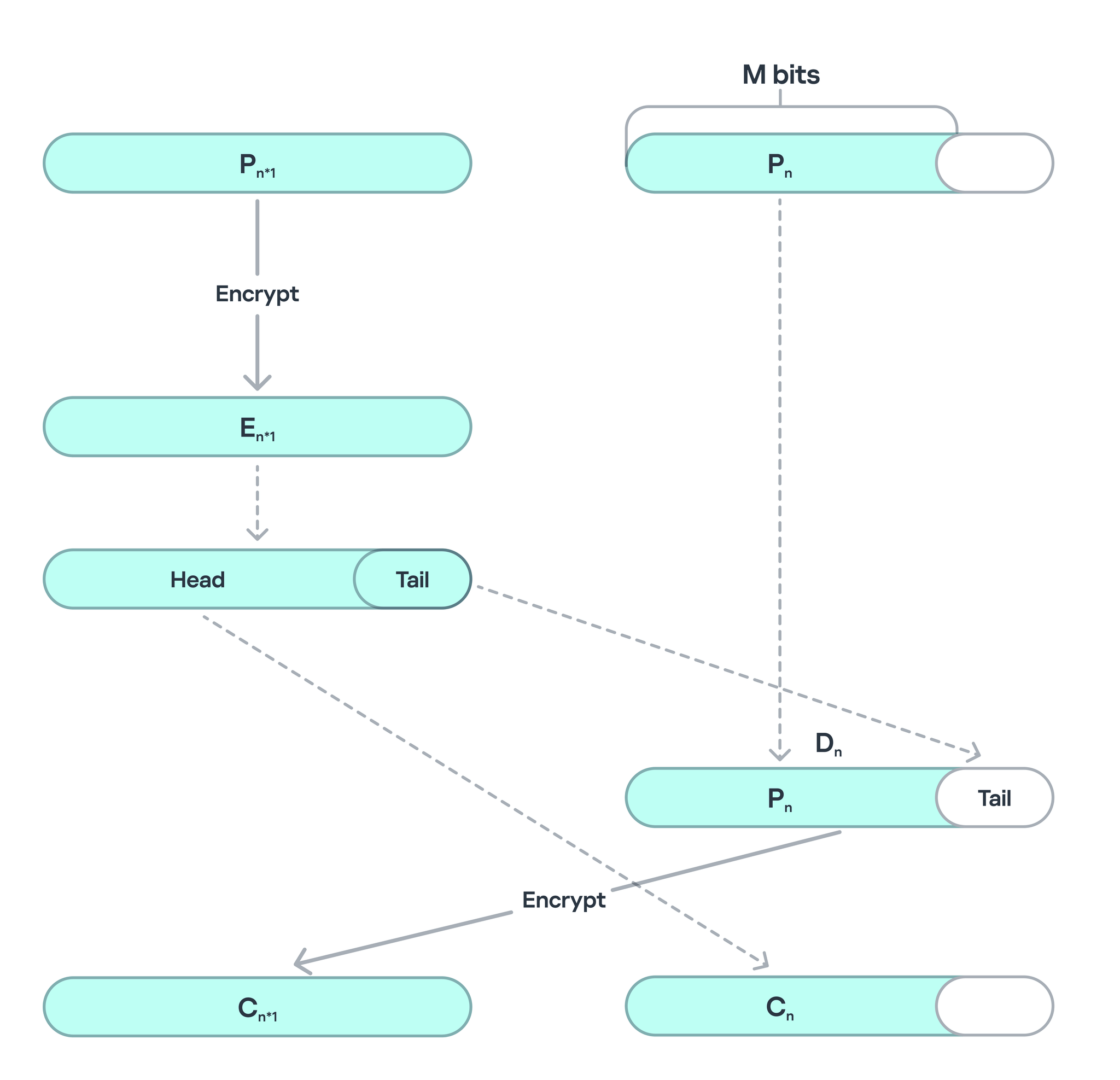
    In this article, we will detail how Grandoreiro operates, its evolution over time, and the new tricks adopted by the malware, such as the usage of 3 DGAs (domain generation algorithm) in its C2 communications, the adoption of ciphertext stealing encryption (CTS), and mouse behavior tracking, aiming to bypass anti-fraud solutions. This evolution culminates with the appearance of lighter, local versions, now focused on Mexico, positioning the group as a challenge for the financial sector, law enforcement agencies and security solutions worldwide.

    Grandoreiro: One malware, many operators, fragmented versions

    Grandoreiro is a banking trojan of Brazilian origin that has been active since at least 2016. Grandoreiro is written in the Delphi programming language, and there are many versions, indicating that different operators are involved in developing the malware.

    Since 2016, we have seen the threat actors behind Grandoreiro operations regularly improving their techniques to stay unmonitored and active for a longer time. In 2020, Grandoreiro started to expand its attacks in Latin America and later in Europe with great success, focusing its efforts on evading detection using modular installers.

    Grandoreiro generally operates as Malware-as-a-Service, although it’s slightly different from other banking trojan families. You won’t find an announcement on underground forums selling the Grandoreiro package — it seems that access to the source-code or builders of the trojan is very limited, only for trusted partners.

    After the arrests of some operators, Grandoreiro split its codebase into lighter versions, with fewer targets. These fragmented versions of the trojan are a reaction to the recent law enforcement operations. This discovery is supported by the existence of two distinct codebases in simultaneous campaigns: newer samples featuring updated code, and older samples which rely on the legacy codebase, now targeting only users in Mexico — customers of around 30 banks.

    2022 and 2023 campaigns

    Grandoreiro campaigns commonly start with a phishing email written in the target country language. For example, the emails distributed in most of Latin America are in Spanish. However, we also saw the use of Google Ads (malvertising) in some Grandoreiro campaigns to drive users to download the initial stage of infection.

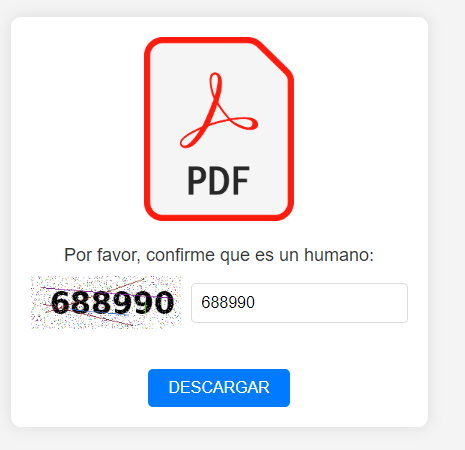
    Phishing emails use different lures to make the victim interact with the message and download the malware. Some messages refer to a pending phone bill, others mimic a tax notification, and son. In early 2022 campaigns, the malicious email included an attached PDF. As soon as the PDF is opened, the victim is prompted with a blurred image except for a part containing “Visualizar Documento” (“View Document” in Spanish). When the victim clicks the button, they are redirected to a malicious web page which prompts them to download a ZIP file. Since May 2022, Grandoreiro campaigns include a malicious link inside the email body that redirects the victim to a website that then downloads a malicious ZIP archive on the victim’s machine. These ZIP archives commonly contain two files: a legitimate file and a Grandoreiro loader, which is responsible for downloading, extracting and executing the final Grandoreiro payload.

    The Grandoreiro loader is delivered in the form of a Windows Installer (MSI) file that extracts a dynamic link library (DLL) file and executes a function embedded in the DLL. The function will do nothing if the system language is English, but otherwise the final payload is downloaded. Most likely, this means that the analyzed versions didn’t target English-speaking countries. There have also been other cases where a VBS file is used instead of the DLL to execute the final payload.

    Grandoreiro recent infection flow

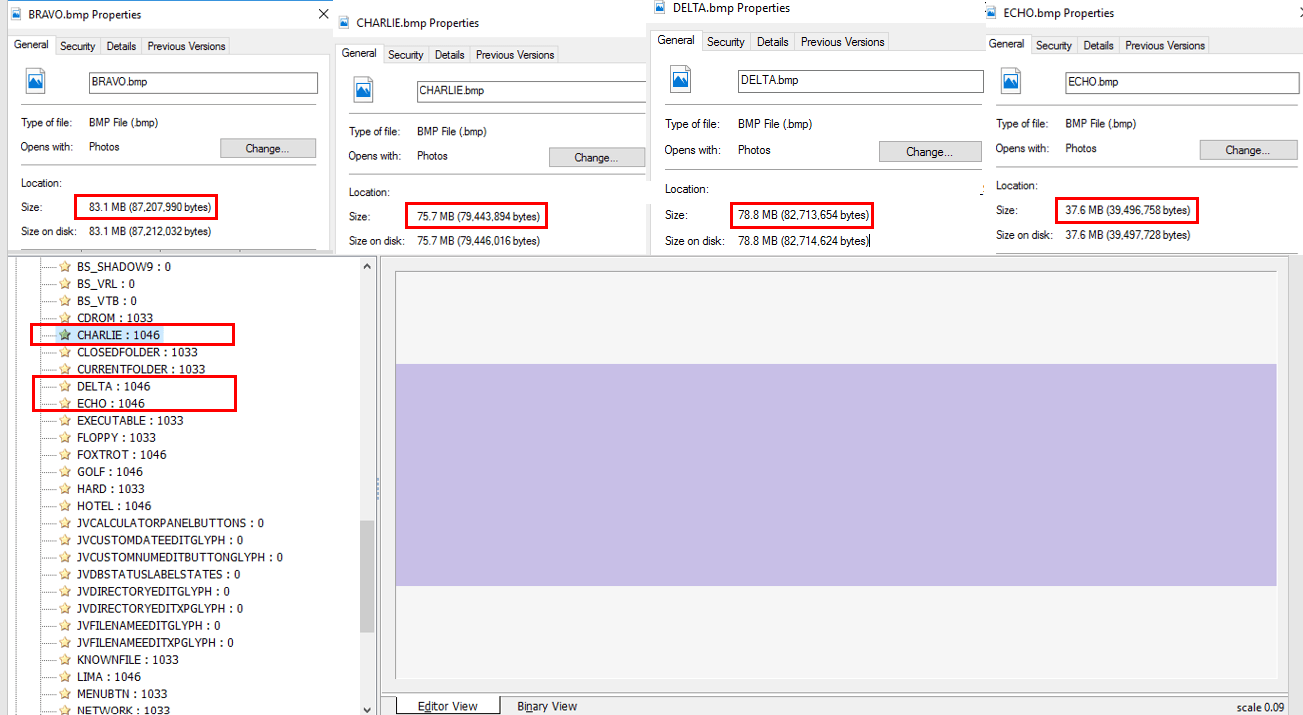
    As for the malware itself, in August 2022 campaigns, the final payload was an incredibly big 414 MB portable executable file disguised with a PNG extension (which is later renamed to EXE dynamically by the loader). It masked itself as an ASUS driver using the ASUS icon and was signed with an “ASUSTEK DRIVER ASSISTANTE” digital certificate.

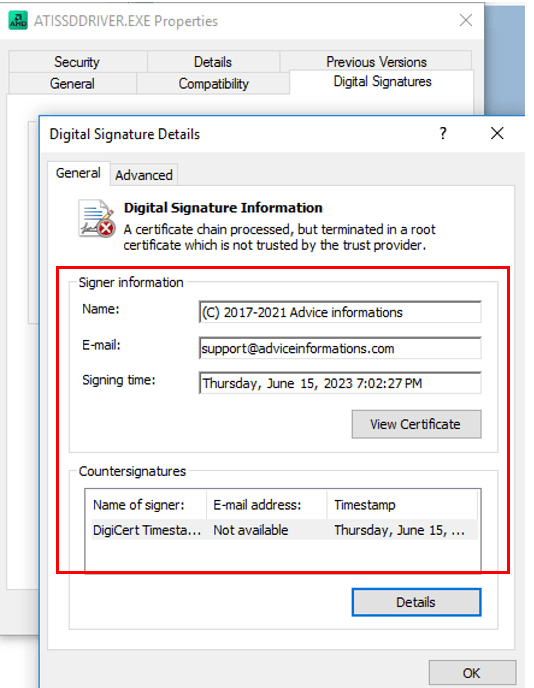
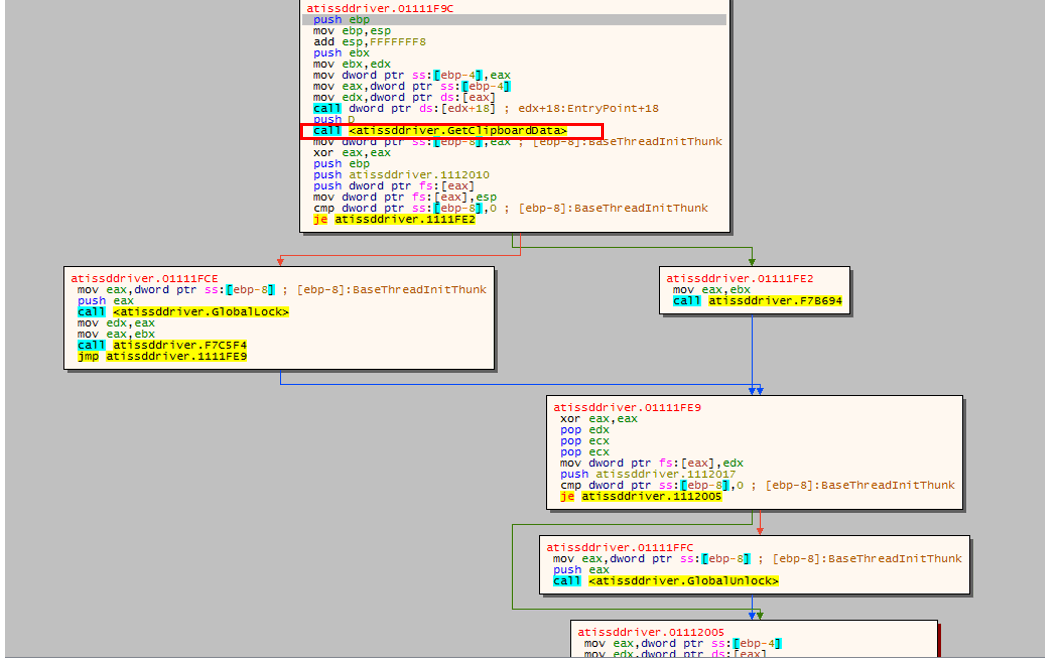
    In 2023 campaigns, Grandoreiro used samples with rather low detection rates. Initially, we identified three samples related to these campaigns, compiled in June 2023. All of them were portable executables, 390 MB big, with the original name “ATISSDDRIVER.EXE” and internal name “ATIECLXX.EXE”. The main purpose of these samples is to monitor the victims’ visits to financial institution websites and steal their credentials. The malware also allows threat actors to remotely control the victim machines and perform fraudulent transactions within them.

    In the campaign involving the discussed samples, the malware tries to impersonate an AMD External Data SSD driver and is signed with an “Advice informations” digital certificate in order to appear legitimate and evade detection.

    Implant impersonating AMD driver

    Digital certificate used by Grandoreiro malware

    In both cases, the malware is an executable that registers itself to be launched with Windows. However, it is worth noting that in the majority of Grandoreiro attacks, a DLL sideloading technique is employed, using legitimate binaries that are digitally signed to run the malware.

    The considerable size of the executables can be explained by the fact that Grandoreiro utilizes a binary padding technique to inflate the size of the malicious files as a way to evade sandboxes. To achieve this, the attackers add multiple BMP images to the resource section of the binary. In the example below, the sample included several big images. The sizes of the highlighted images are around 83.1 MB, 78.8 MB, 75.7 and 37.6 MB. However, there are more of them in the binary, and together all the images add ~376 MB to the file.

    Binary padding used by Grandoreiro

    In both 2022 and 2023 campaigns, Grandoreiro used a well-known XOR-based string encryption algorithm that is shared with other Brazilian malware families. The difference is the encryption key. For Grandoreiro, some magic values were the following:

    Date Encryption key
    March 2022 F5454DNBVXCCEFD3EFMNBVDCMNXCEVXD3CMBKJHGFM
    March 2022 XD3CMBKJCEFD3EFMF5454NBVDNBVXCCMNXCEVDHGFM
    August 2022 BVCKLMBNUIOJKDOSOKOMOI5M4OKYMKLFODIO
    June 2023 B00X02039AVBJICXNBJOIKCVXMKOMASUJIERNJIQWNLKFMDOPVXCMUIJBNOXCKMVIOKXCJ
    UIHNSDIUJNRHUQWEBGYTVasuydhosgkjopdf

    The various checks and validations aimed at avoiding detection and complicating malware analysis were also changed in the 2022 and 2023 versions. In contrast with the older Grandoreiro campaigns, we found that some of the tasks that were previously executed by the final payload are now implemented in the first stage loader. These tasks include security checks, anti-debugging techniques, and more. This represents a significant change from previous campaigns.

    One of these tasks is the use of the geolocation service http://ip-api.com/json to gather the target’s IP address location data. In a campaign reported in May 2023 by Trustwave, this task is performed by a JScript code embedded in an MSI installer before the delivery of the final payload.

    There are numerous other checks that have been transferred into the loader, although some of them are still present in the banking trojan itself. Grandoreiro gathers host information such as operating system version, hostname, display monitor information, keyboard layout, current time and date, time zone, default language and mouse type. Then the malware retrieves the computer name and compares it against the following strings that correspond to known sandboxes:

    • WIN-VUA6POUV5UP;
    • Win-StephyPC3;
    • difusor;
    • DESTOP2457;
    • JOHN-PC.

    Computer name validation

    It also collects the username and verifies if it matches with the “John” or “WORK” strings. If any of these validations match, the malware stops its execution.

    Grandoreiro includes detection of tools commonly used by security analysts, such as regmon.exe, procmon.exe, Wireshark, and so on. The process list varies across the malware versions, and it was significantly expanded in 2024, so we’ll share the full list later in this post. The malware takes a snapshot of currently executing processes in the system using the CreateToolhelp32Snapshot() Windows API and goes through the process list using Process32FirstW() and Process32NextW(). If any of the analysis tools exists in the system, the malware execution is terminated.

    Grandoreiro also checks the directory in which it is being executed. If the execution paths are D:programming or D:script, it terminates itself.

    Another anti-debugging technique implemented in the trojan involves checking for the presence of a virtual environment by reading data from the I/O Port “0x5658h” (VX) and looking for the VMWare magic number 0x564D5868. The malware also uses the IsDebuggerPresent() function to determine whether the current process is being executed in the context of a debugger.

    Last but not least, Grandoreiro searches for anti-malware solutions such as AVAST, Bitdefender, Nod32, Kaspersky, McAfee, Windows Defender, Sophos, Virus Free, Adaware, Symantec, Tencent, Avira, ActiveScan and CrowdStrike. It also looks for banking security software, such as Topaz OFD and Trusteer.

    In terms of the core functionality, some Grandoreiro samples check whether the following programs are installed:

    • CHROME.EXE;
    • MSEDGE.EXE;
    • FIREFOX.EXE;
    • IEXPLORE.EXE;
    • OUTLOOK.EXE;
    • OPERA.EXE;
    • BRAVE.EXE;
    • CHROMIUM.EXE;
    • AVASTBROWSER.EXE;
    • VeraCrypt;
    • Nortonvpn;
    • Adobe;
    • OneDrive;
    • Dropbox.

    If any of these is present on the system, the malware stores their names to further monitor user activity in them.

    Grandoreiro also checks for crypto wallets installed on the infected machine. The malware includes a clipboard replacer for crypto wallets, monitoring the user’s clipboard activity and replacing the clipboard data with the threat actor keys.

    Clipboard replacer

    2024 campaigns

    During a certain period of time in February 2024, a few days after the announcement of the arrest of some of the gang’s operators in Brazil, we observed a significant increase in emails detected by spam traps. There was a notable prevalence of Grandoreiro-themed messages masquerading as Mexican CFDI communications. Mexican CFDI, short for “Comprobante Fiscal Digital por Internet” is an electronic invoicing system administered by the Mexican Tax Authority (SAT — Servicio de Administración Tributaria). It facilitates the creation, transmission, and storage of digital tax documents, mandatory for businesses in Mexico to record transactions for tax purposes.

    In our investigation, we have acquired 48 samples associated not only with this instance but also with various other campaigns.

    Notably, this new campaign added a new sandbox detection mechanism, namely a CAPTCHA before the execution of the main payload, as a way to avoid the automatic analysis used by some companies:

    Grandoreiro anti-sandbox CAPTCHA

    It is worth noting that in the 2024 Grandoreiro campaigns, the new sandbox evasion code has been implemented in the downloader. Although the main sample still has anti-sandbox functionality too, if a sandbox is detected, it is simply not downloaded. Besides that, the new version also added detection of many tools to its arsenal, aiming to avoid analysis. Here is whole list of analysis tools detected by the newest versions:

    regmon.exe hopper.exe nessusd.exe OmniPeek.exe
    procmon.exe jd-gui.exe PacketSled.exe netmon.exe
    filemon.exe canvas.exe prtg.exe colasoft.exe
    Wireshark.exe pebrowsepro.exe cain.exe netwitness.exe
    ProcessHacker.exe gdb.exe NetworkAnalyzerPro.exe netscanpro.exe
    PCHunter64.exe scylla.exe OmniPeek.exe packetanalyzer.exe
    PCHunter32.exe volatility.exe netmon.exe packettotal.exe
    JoeTrace.exe cffexplorer.exe colasoft.exe tshark.exe
    ollydbg.exe angr.exe netwitness.exe windump.exe
    ida.exe pestudio.exe netscanpro.exe PRTG Probe.exe
    x64dbg.exe die.exe packetanalyzer.exe NetFlowAnalyzer.exe
    cheatengine.exe ethereal.exe packettotal.exe SWJobEngineWorker2x64.exe
    ollyice.exe Capsa.exe tshark.exe NetPerfMonService.exe
    fiddler.exe tcpdump.exe windump.exe SolarWinds.DataProcessor.exe
    devenv.exe NetworkMiner.exe PRTG Probe.exe ettercap.exe
    radare2.exe smartsniff.exe NetFlowAnalyzer.exe apimonitor.exe
    ghidra.exe snort.exe SWJobEngineWorker2x64.exe apimonitor-x64.exe
    frida.exe pcap.exe NetPerfMonService.exe apimonitor-x32.exe
    binaryninja.exe SolarWinds.NetPerfMon.exe SolarWinds.DataProcessor.exe x32dbg.exe
    cutter.exe nmap.exe ettercap.exe x64dbg.exe
    scylla.exe apimonitor.exe PCHunter64.exe x96dbg.exe
    volatility.exe apimonitor-x64.exe PCHunter32.exe fakenet.exe
    cffexplorer.exe apimonitor-x32.exe JoeTrace.exe hexworkshop.exe
    angr.exe x32dbg.exe ollydbg.exe Dbgview.exe
    pestudio.exe x64dbg.exe ida.exe sysexp.exe
    die.exe x96dbg.exe x64dbg.exe vmtoolsd.exe
    ethereal.exe fakenet.exe cheatengine.exe dotPeek.exe
    Capsa.exe hexworkshop.exe ollyice.exe procexp64.exe
    tcpdump.exe Dbgview.exe fiddler.exe procexp64a.exe
    NetworkMiner.exe sysexp.exe devenv.exe procexp.exe
    smartsniff.exe vmtoolsd.exe radare2.exe cheatengine.exe
    snort.exe dotPeek.exe ghidra.exe ollyice.exe
    pcap.exe procexp64.exe frida.exe pebrowsepro.exe
    cain.exe procexp64a.exe binaryninja.exe gdb.exe
    nmap.exe procexp.exe cutter.exe Wireshark.exe
    nessusd.exe regmon.exe hopper.exe ProcessHacker.exe
    PacketSled.exe procmon.exe jd-gui.exe SolarWinds.NetPerfMon.exe
    prtg.exe filemon.exe canvas.exe NetworkAnalyzerPro.exe

    These are some RAT features that we found in this version:

    • Auto-update feature allows newer versions of the malware to be deployed to the victim’s machine;
    • Sandbox/AV detection, still present in the main module, which includes more tools than previous versions;
    • Keylogger feature;
    • Ability to select country for listing victims;
    • Banking security solutions detection;
    • Checking geolocation information to ensure it runs in the target country;
    • Monitoring Outlook emails for specific keywords;
    • Ability to use Outlook to send spam emails.

    In terms of static analysis protection, in 2024 versions, Grandoreiro has implemented enhanced encryption measures. Departing from its previous reliance on commonly shared encryption algorithms found in other malware, Grandoreiro has now adopted a multi-layered encryption approach. The decryption process in the newer versions is the following. Initially, the string undergoes deobfuscation through a simple replacement algorithm. Following this, Grandoreiro employs the encryption algorithm based on XOR and conditional subtraction typically utilized by Brazilian malware; however, it differs from them by incorporating a lengthy, 140759-byte string instead of smaller magic strings we saw in 2022 and 2023 samples. Subsequently, the decrypted string undergoes base64 decoding before being subjected to decryption via the AES-256 algorithm. Notably, the AES key and IV are encrypted within Grandoreiro’s code. Upon completion of all these steps, the decrypted string is successfully recovered.

    Grandoreiro AES key and IV

    In newer samples, Grandoreiro upgraded yet again the encryption algorithm using AES with CTS, or Ciphertext Stealing, a specialized encryption mode used when the plaintext is not a multiple of the block size, which in this case is the 128-bit (16-byte) block size used by AES. Unlike more common padding schemes, such as PKCS#7, where the final block is padded with extra bytes to ensure it fits a full block, CTS operates without padding. Instead, it manipulates the final partial block of data by encrypting the last full block and XORing its output with the partial block. This allows encryption of any arbitrary-length input without adding extra padding bytes, preserving the original size of the data.

    ECB Encryption Steps for CTS

    In the case of Grandoreiro, the malware’s encryption routine does not add standard padding to incomplete blocks of data. Their main goal is to complicate analysis: it takes time to figure out that CTS was used, and then more time to implement decryption in this mode, which makes the extraction and obfuscation of strings more complicated. This marks the first time this particular method has been observed in a malware sample.

    As the threat actors continue to evolve their techniques, changing the encryption in every iteration of the malware, the use of CTS in malware may signal a shift toward more advanced encryption practices.

    Local versions: old meets new

    In a recent campaign, our analysis has revealed the existence of an older variant of the malware that utilizes legacy encryption keys, outdated algorithms, and a simplified structure, but which runs in parallel to the campaign using the new code. This variant targets fewer banks — about 30 financial institutions, mainly from Mexico. This analysis clearly indicates that another developer, likely with access to older source code, is conducting new campaigns using the legacy version of the malware.

    How they steal your money

    Operators behind Grandoreiro are equipped with a wide variety of remote commands, including an option to lock the user screen and present a custom image (overlay) to ask the victim for extra information. These are usually OTPs (one-time passwords), transaction passwords or tokens received by SMS, sent by financial institutions.

    A new tactic that we have discovered in the most recent versions found in July 2024 and later suggests that the malware is capturing user input patterns, particularly mouse movements, to bypass machine learning-based security systems. Two specific strings found in the malware — “GRAVAR_POR_5S_VELOCIDADE_MOUSE_CLIENTE_MEDIA” (“Record for 5 seconds the client’s average mouse speed”) and “Medição iniciada, aguarde 5 segundos!” (“Measurement started, please wait 5 seconds!”) — indicate that Grandoreiro is monitoring and recording the user’s mouse activity over a short period. This behavior appears to be an attempt to mimic legitimate user interactions in order to evade detection by anti-fraud systems and security solutions that rely on behavioral analytics. Modern cybersecurity tools, especially those powered by machine learning algorithms, analyze user’s behavior to distinguish between human users and bots or automated malware scripts. By capturing and possibly replaying these natural mouse movement patterns, Grandoreiro could trick these systems into identifying the activity as legitimate, thus bypassing certain security controls.

    This discovery highlights the continuous evolution of malware like Grandoreiro, where attackers are increasingly incorporating tactics designed to counter modern security solutions that rely on behavioral biometrics and machine learning.

    To perform the cash-out in the victim’s account, Grandoreiro operators’ options are to transfer money to the account of local money mules, using transfer apps, buy cryptocurrency or gift cards, or even going to an ATM. Usually, they search for money mules in Telegram channels, paying $200 to $500 USD per day:

    Grandoreiro operator looking for money mules

    Infrastructure

    The newest Grandoreiro version uses 3 Domain Generation Algorithms (DGAs), generating valid domains for command and control (C2) communications. The algorithm uses the current daytime to select strings of predefined lists and concatenates them with a magic key to create the final domain.

    By dynamically generating unique domain names based on various input data, the algorithm complicates traditional domain-based blocking strategies. This adaptability allows the malicious actors to maintain persistent command-and-control communications, even when specific domains are identified and blacklisted, requiring security solutions to base their protection not on a fixed list of domains, but on an algorithm for generating them.

    Since early 2022, Grandoreiro leverages a known Delphi component shared among different malware families named RealThinClient SDK to remotely access victim machines and perform fraudulent actions. This SDK is a flexible and modular framework for building reliable and scalable Windows HTTP/HTTPS applications with Delphi. By using RealThinClient SDK, the program can handle thousands of active connections in an efficient multithreaded manner.

    Grandoreiro C2 Communication

    Operator tool

    Grandoreiro’s Operator is the tool that allows the cybercriminal to remotely access and control the victim’s machine. It’s a Delphi-based software that lists its victims whenever they start browsing a targeted financial institution website.

    Grandoreiro’s Operator tool

    Once the cybercriminal chooses a victim to operate on, they will be presented with the following screen, seen in the image below, which allows many commands to be executed and visualizes the victim’s desktop.

    Grandoreiro’s Operator commands

    Cloud VPS

    One overlooked feature of the Grandoreiro malware is what is called “Cloud VPS” by the attackers — it allows cybercriminals to set up a gateway computer between the victim’s machine and the malware operator, thus hiding the cybercriminal’s real IP address.

    This is also used by them to make investigation harder, as the first thing noted is the gateway’s IP address. When requesting a seizure, an investigator just finds the gateway module. Meanwhile, the criminal has already set up a new gateway somewhere else and new victims connect to the new one through its DGA.

    Grandoreiro Cloud VPS

    Victims and targets

    The Grandoreiro banking trojan is primed to steal the credentials accounts for 1,700 financial institutions, located in 45 countries and territories. After decrypting the strings of the malware, we can see the targeted banks listed separated by countries/territories. This doesn’t mean that Grandoreiro will target a specific bank from the list; it means it is ready to steal credentials and act, if there is a local partner or money mule who can operationalize and complete the action. The banks targeted by Grandoreiro are located in Algeria, Angola, Antigua and Barbuda, Argentina, Australia, Bahamas, Barbados, Belgium, Belize, Brazil, Canada, Cayman Islands, Chile, Colombia, Costa Rica, Dominican Republic, Ecuador, Ethiopia, France, Ghana, Haiti, Honduras, India, Ivory Coast, Kenya, Malta, Mexico, Mozambique, New Zealand, Nigeria, Panama, Paraguay, Peru, Philippines, Poland, Portugal, South Africa, Spain, Switzerland, Tanzania, Uganda, United Kingdom, Uruguay, USA, and Venezuela. It’s important to note that the list of targeted banks and institutions tend to slightly change from one version to another.

    From January to October 2024, our solutions blocked more than 150,000 infections impacting more than 30,000 users worldwide, a clear sign the group is still very active. According to our telemetry, the countries most affected by Grandoreiro infections are Mexico, Brazil, Spain, and Argentina, among many others.

    Conclusion

    We understand how difficult it is to eradicate a malware family, but it is possible to impede their operation with the cooperation of law enforcement agencies and the private sector — modern financial cybercrime can and must be fought.

    Brazilian banking trojans are already an international threat; they’re filling the gaps left by Eastern European gangs who have migrated into ransomware. We know that in some countries, internet banking is declining on desktops, forcing Grandoreiro to target companies and government entities who are still using operating in that way.

    The threat actors behind the Grandoreiro banking malware are continuously evolving their tactics and malware to successfully carry out attacks against their targets and evade security solutions. Kaspersky continues to cooperate with INTERPOL and other agencies around the world to fight the Grandoreiro threat among internet banking users.

    This threat is detected by Kaspersky products as HEUR:Trojan-Banker.Win32.Grandoreiro, Trojan-Downloader.OLE2.Grandoreiro, Trojan.PDF.Grandoreiro and Trojan-Downloader.Win32.Grandoreiro.

    For more information, please contact: crimewareintel@kaspersky.com

    Indicators of Compromise

    Host based
    f0243296c6988a3bce24f95035ab4885
    dd2ea25752751c8fb44da2b23daf24a4
    555856076fad10b2c0c155161fb9384b
    49355fd0d152862e9c8e3ca3bbc55eb0
    43eec7f0fecf58c71a9446f56def0240
    150de04cb34fdc5fd131e342fe4df638
    b979d79be32d99824ee31a43deccdb18

    MIL OSI Global Banks

  • MIL-Evening Report: ‘They do not respect our land. They do not respect our people’. Brazil’s traditional people take on BHP in one of the world’s biggest class actions

    Source: The Conversation (Au and NZ) – By Ebony Birchall, Lecturer, Law School, Macquarie University

    Australian mining giant BHP is at the centre of one of the world’s largest class actions, the trial for which started this week in London.

    The Fundão Dam in Mariana, Brazil, co-owned by BHP, collapsed in 2015 spilling a gigantic wave of toxic mud across 700 kilometres of land. Nineteen people were killed, villages and livestock wiped out, vast areas of land rendered uninhabitable and rivers and water supplies contaminated.

    Corporate accountability

    The class action has renewed questions about the responsibilities multibillion-dollar corporations have to local communities.

    Leaders of the traditional people groups impacted by the disaster visited Australia with their lawyer Tom Goodhead from international legal firm Pogust Goodhead to raise awareness of the case two weeks ago.

    Goodhead told a public forum at Macquarie University this was a case of corporate negligence and putting profit before safety. He said the operators were warned of the risk of dam collapse and continued to push operations beyond what was safe.

    The class action is brought on behalf of more than 600,000 claimants. The trial is expected to run for 12 weeks and will be heard in the UK, because this is where BHP was headquartered at the time of the disaster.

    The UK courts will apply the Brazilian laws, which say environmental polluters must pay for the damage they cause.

    Can BHP fix this?

    The claimants’ lawyers say the case is valued at more than A$68.8 billion. The figure is based on an estimation of the impact of the disaster on land, culture and sacred places, as well as some form of recompense for the lost lives.

    Maycon Krenak, one of the Krenak chiefs, explained:

    [the] river has always been there for us to guarantee our livelihoods. It is a sacred space for us. The river is where we carry out our sacred practices. That’s where we sing, where we dance, where we gather. The new leaders, [our] children, have to learn how to swim in a water tank of a thousand litres.

    BHP is reported as saying its Renova Foundation, established in 2016, has spent more than A$11.5 billion to compensate victims and remediate the environment.

    But Thatiele Monic, president of the Vila Santa Efigênia and Adjacências Quilombola Association said the victims don’t trust the foundation.

    In the same way that the mining company invades our land, the Renova Foundation also is invading our space and our territories. They do not respect our land. They do not respect our people, and they are creating more and more conflict. So that people are essentially giving up pursuing this.

    Poor human rights record

    Australian corporations operating overseas have a poor record on human rights.

    Two weeks ago, a preliminary report of the Panguna Mine Legacy Impact Assessment uncovered human rights violations, including risks to life, at Rio Tinto’s abandoned Panguna mine in Bougainville, Papua New Guinea.

    The gold and copper mine triggered a brutal civil war between 1988 and 1998. Despite decades passing since the mine was decommissioned, the recent report confirms the mine continues to pose risks to life and safety due to the collapsing mine and ongoing contamination down rivers and into new areas.

    Australian mining corporations have also been linked to death and destruction in their operations in Africa.

    Corporate activities within Australia have impacted our own Aboriginal and Torres Strait Islander Peoples. For example, Rio Tinto’s explosion at Juukan Gorge destroyed sites of cultural significance dating more than 46,000 years.

    Where Australia stands

    The Australian government has endorsed the UN Guiding Principles on Business and Human Rights and the OECD Guidelines for Multinational Enterprises both of which outline corporations’ human rights obligations.

    The UNGPs say states should set out clearly the expectation that corporations in their jurisdiction respect human rights in all their operations – even those occurring overseas.

    The Human Rights Law Centre found in a 2018 report on this topic that the Australian government was not doing enough to hold corporations to account.

    It found Australian corporations operating overseas did so with impunity. Efforts to seek justice locally is often thwarted by corruption, lack of resources or ineffective legal process. At the same time, attempts by overseas communities to take legal action in Australian courts face enormous hurdles and rarely succeed.

    This is why cases like the class action for claimants in Mariana are crucial for corporate accountability.

    In my 2023 report with colleagues Surya Deva and Justine Nolan, we found this kind of litigation can raise awareness, facilitate broader industry developments and shape laws and policy.

    Our report also found litigation needs to be supported by strong regulatory responses from governments, and complementary advocacy like shareholder or consumer engagement.

    Cost of litigation

    Litigation comes with significant risks to victims and their allies.

    In a controversial development for corporate accountability in Australia, oil and gas giant Santos is using legal processes to challenge environmental groups who supported traditional owners opposing their Barossa gas project. Santos’ tactics, if allowed to continue, could limit public interest litigation in the future.

    Thatiele Monic ended her speech at the Macquarie University event with a question worth repeating

    This has happened in Brazil, but it has happened in many other places, and if we don’t do anything about it, and we don’t talk about it, it will continue to happen in many more other places. This is not the future I want for myself and for my people. I’d like to know. What future do you want for yourselves?

    Ebony Birchall is affiliated with Macquarie University’s B&HR Access to Justice Lab.

    ref. ‘They do not respect our land. They do not respect our people’. Brazil’s traditional people take on BHP in one of the world’s biggest class actions – https://theconversation.com/they-do-not-respect-our-land-they-do-not-respect-our-people-brazils-traditional-people-take-on-bhp-in-one-of-the-worlds-biggest-class-actions-241777

    MIL OSI AnalysisEveningReport.nz

  • MIL-OSI Europe: Written question – Boko Haram as an extremist terrorist organisation – E-002047/2024

    Source: European Parliament

    14.10.2024

    Question for written answer  E-002047/2024
    to the Commission
    Rule 144
    Nikolaos Anadiotis (NI)

    Every year, the Islamist group Boko Haram systematically kills, abducts, rapes and persecutes thousands of Christians in Nigeria. Eight resolutions of the European Parliament have been adopted concerning the group[1] and 11 written questions have been submitted by MEPs on the same subject. Since 2021 the EU Agency for Asylum has referred to its two affiliates[2]. On 14 November 2024 it was classified by the US as a terrorist organisation[3]. In 2017 it was condemned by the UN Security Council, in its resolution 2349 (2017)[4]. Finally, according to the international academic literature, the EU is seeking its classification[5] as a terrorist organisation.

    In 2022 the organisation in question chose its new leader, Abu Umaimata, and continues to act, undeterred[6]. Full dossier[7] published on 18 September 2024 by the United Nations Institute for Disarmament Research (UNIDIR). The EU decided to add Boko Haram to the list of legal organisations subject to economic sanctions (Decision 483/2014).

    Even though this is a positive decision, it is not sufficient.

    In view of this:

    Does the Commission intend to classify Boko Haram as an (extremist) terrorist organisation?

    Submitted: 14.10.2024

    • [1] 2012/2550, 2013/2691, 2014/2729, 2015/2876, 2015/2520, 2016/2649, 2018/2513, and 2020/2503
    • [2] https://euaa.europa.eu/country-guidance-nigeria-2021/131-boko-haram-including-jas-iswap-and-ansaru
    • [3] https://www.state.gov/foreign-terrorist-organizations/
    • [4] https://press.un.org/en/2017/sc12773.doc.htm
    • [5] https://www.tandfonline.com/doi/pdf/10.1080/10246029.2013.879909
    • [6] https://theconversation.com/uk/topics/boko-haram-10177
    • [7] https://unidir.org/publication/boko-haram-mapping-an-evolving-armed-constellation/
    Last updated: 22 October 2024

    MIL OSI Europe News

  • MIL-OSI Russia: Transcript of World Economic Outlook October 2024 Press Briefing

    Source: IMF – News in Russian

    October 22, 2024

    Speakers:
    Pierre‑Olivier Gourinchas, Director, Research Department, IMF
    Petya Koeva Brooks, Deputy Director, Research Department, IMF
    Jean‑Marc Natal, Division Chief, Research Department, IMF

    Moderator:
    Jose Luis De Haro, Communications Officer, IMF

    Mr. De Haro: OK. I think we can start. First of all, welcome, everyone. Good morning for those who are joining, as online. I am Jose Luis De Haro with the Communications Department here at the IMF. And once again, we are gathered here today for the release of our new World Economic Outlook, titled Policy Pivot Raising Threats. I hope that by this time, all of you have had access to a copy of the flagship. If not, I would encourage you to go to IMF.org. There, you’re going to find the document, but also, you’re going to find Pierre‑Olivier’s blog, the underlying data for the charts, videos, and other assets that I think are going to be very, very helpful for your reporting. And what’s best, that to discuss all the details of the World Economic Outlook that, to be joined here today by Pierre‑Olivier Gourinchas, the Economic Counsellor Chief Economist and the Director of the Research Department. Next to him are Petya Koeva Brooks. She is the Deputy Director of the Research Department. And also with us, Jean‑Marc Natal, the Division Chief at the Research Department. We are going to start with some opening remarks from Pierre‑Olivier, and then we will proceed to take your questions. I want to remind everyone that this press conference is on the record and that we will also be taking questions online.

    With no further ado, Pierre‑Olivier, the floor is yours.

    Mr. Gourinchas: Thank you, Jose, and good morning, everyone. Let me start with the good news. The battle against inflation is almost won. After peaking at 9.4 percent year on year in the third quarter of 2022, we now project headline inflation will fall to 3.5 percent by the end of next year, and in most countries, inflation is now hovering close to central bank targets.

    Now, inflation came down while the global economy remained resilient. Growth is projected to hold steady at 3.2 percent in 2024 and 2025. The United States is expected to cool down, while other advanced economies will rebound. Performance in emerging Asia remains robust, despite the slight downward revision for China to 4.8 percent in 2024. Low‑income countries have seen their growth revised downwards, some of it because of conflicts and climate shocks.

    Now, the decline in inflation without a global recession is a major achievement. Much of that disinflation can be attributed to the unwinding of the unique combination of supply and demand shocks that caused the inflation in the first place, together with improvements in labor supply due to immigration in many advanced countries. But monetary policy played a decisive role, keeping inflation expectations anchored.

    Now, despite the good news, on inflation, risks are now tilted to the downside. This downside risks include an escalation in regional conflicts, especially in the Middle East, which could cause serious risks for commodity markets. Policy shifts toward undesirable trade and industrial policies could also significantly lower output, a sharp reduction in migration into advanced economies, which can unwind some of the supply gains that helped ease inflation in recent quarters. This could trigger an abrupt tightening of global financial conditions that would further depress output. And together, these represent about a 1.6 percent of global output in 2026.

    Now, to mitigate these downside risks and to strengthen growth, policymakers now need to shift gears and implement a policy triple pivot.

    The first pivot on monetary policy is already underway. The decline in inflation paved the way for monetary easing across major central banks. This will support activity at a time when labor markets are showing signs of cooling, with rising unemployment rates. So far, however, this rise has been gradual and does not point to an imminent slowdown. Lower interest rates in major economies will also ease the pressure on emerging market economies. However, vigilance remains key. Inflation in services remains too elevated, almost double prepandemic levels, and a few emerging market economies are seeing rising price pressures, calling for higher policy rates. Furthermore, we have now entered a world dominated by supply shocks, from climate, health, and geopolitical tensions. And this makes the job of central banks harder.

    The second pivot is on fiscal policy. It is urgent to stabilize debt dynamics and rebuild much‑needed fiscal buffers. For the United States and China, current fiscal plans do not stabilize debt dynamics. For other countries, despite early improvements, there are increasing signs of slippage. The path is narrow. Delaying consolidation increases the risk of disorderly adjustments, while an excessively abrupt turn toward fiscal tightening could hurt economic activity. Success requires implementing, where necessary, and without delay, a sustained and credible multi‑year fiscal adjustment.

    The third pivot and the hardest is toward growth‑enhancing reform. This is the only way we can address many of the challenges we face. Many countries are implementing industrial and trade policy measures to protect domestic workers and industries. These measures can sometimes boost investment and activity in the short run, but they often lead to retaliation and ultimately fail to deliver sustained improvements in standards of living. They should be avoided when not carefully addressing well‑identified market failures or narrowly defined national security concerns.

    Economic growth must come, instead, from ambitious domestic reforms that boost innovation, increase human capital, improve competition and resource allocation. Growth‑enhancing reforms often face significant social resistance. Our report shows that information strategies can help improve support, but they only go so far. Building trust between governments and citizens and inclusion of proper compensation measures are essential features.

    Building trust is an important lesson that should also resonate when thinking about ways to further improve international cooperation to address common challenges in the year that we celebrate the 80th anniversary of the Bretton Woods Institutions. Thank you.

    Mr. De Haro: Thank you, Pierre‑Olivier. Before we open the floor for your questions, let’s remind some ground rules. First of all, if you have any question that it is related to a country program or a country negotiation, I would recommend not to formulate that question here. Basically, those questions can be formulated in the different regional press briefings that are going to happen later this week.

    Also, if you want to ask a question, just raise your hand, wait until I call you. Identify yourself and the outlet that you represent. And let’s try to keep it to just one question. I know that there are going to be many, many questions. We might not be able to take all of you. So please be patient. There are going to be many other opportunities to ask questions throughout the week.

    Let me start—how I am going to start. I am going to start in the center. A couple of questions here. Then I am going to go to my right, and then I am going to go there. I am going to start in the first row, the lady with the white jacket, thank you.

    QUESTION: Thank you, Jose, for taking my question. I am Moaling Xiong from Xinhua News Agency. I want to ask about the geopolitical tensions that was mentioned in the report. It says there are rising geopolitical tensions. So far, the impact has been limited. But further intensification of geopolitical rifts could weigh on trade, investment, and beyond. I wonder whether Pierre‑Olivier, could you talk a little bit about what are the economic impacts of growing geopolitical tensions? Thank you.

    Mr. Gourinchas: Thank you. This is, of course, a very important question. This is something that we are very concerned about, the rising geoeconomic fragmentation, trade tensions between countries, measures that are disrupting trade, disrupting cross‑border investment. This is something that we have looked at in our World Economic Outlook report. In Chapter 1, we have a box that evaluates the impact of various adverse measures, measures that could be taken by policymakers or various of shocks that would impact output. And when we look at the impact that rising trade tensions could have, there are two dimensions of this. One is, of course, you are increasing tariffs, for instance, between different blocs. That would disrupt trade. That will misallocate resources. That will weigh down on economic activity. But there is also an associated layer that comes from the uncertainty that increases related to future trade policy. And that will also depress investment, depress economic activity and consumption. When we put these two together, what we find is, we find an impact on world output that is on the order of about 0.5 percent of output levels in 2026. So it’s a quite sizable effect of both an increase in tariffs between different countries and an increase in trade policy uncertainty.

    Mr. De Haro: OK. I’m going to continue here in the center. We’re going to go to the gentleman on the third row. Yep. There. There, third row, there. Third row. Thank you.

    QUESTION: Hi. Thanks very much for taking my question. I just want to ask about the inflation side of the WEO. You mentioned just now inflation, you know, the battle is almost won. I am just wondering, there’s sort of a divergence between the advanced economies and emerging markets and developing economies. When do you expect inflation to sort of fall toward that 2 percent target in emerging markets and developing economies? Thanks.

    Mr. Gourinchas: Yes. So inflation, the progress on inflation has been more pronounced for advanced economies, and now we expect advanced economies to be back to their target sometime in 2025 for most of them. For emerging markets and developing economies, there is more variation, and we see an increase in dispersion of inflation, so a lot of countries have made a lot of progress. You look, for instance, at emerging Asia. There are inflation levels very similar to advanced economies for a number of them. You look at other regions—in the Middle East, for instance, or sub‑Saharan Africa—and you have countries that still have double‑digital inflation rates and will maybe take more time to converge back. So we see an increased divergence that reflects some of the shocks that are specific to some of these regions. Of course, conflict or climate‑related shocks can have an impact on inflation, and that’s what we’re seeing in these two regions I mentioned.

    Mr. De Haro: OK. Now I’m going to move to my right. The first row here, the lady with the red suit.

    QUESTION: Hello. This is Norah from Asharq Business with Bloomberg from Dubai.

    Pierre, you mentioned that the geopolitical tensions could account for 0.5 percent of output if things kind of get out of hand. To what extent is this a very optimistic number here? Because we’re talking about tensions not only in the Middle East. You have things going down in the Taiwan Strait. We have the Russian‑Ukraine war still ongoing. And there is a very big risk that shipping lines, straits might get disrupted. And this would affect very substantially the price of oil and other commodities. To what extent this would affect output—again, global output and inflation levels? Would inflation be a big risk again if major commodities prices increased substantially?

    Mr. Gourinchas: Yes. So you are absolutely right. The scenario I was referring to earlier is a scenario where we have increased trade disruptions, tariffs, and trade policy uncertainty. But one can think also about geopolitical tensions impacting commodity market or shipping. Now, this is not something that we looked at in this report. That’s something that we had looked at in our April report. And in April, when we looked at the potential for escalation in conflicts in the Middle East, the impact it could have on oil prices or on shipping costs, we found that this would very much be in the nature of adverse supply shock. It would negatively impact output, and it would increase inflation pressures. Now, the numbers we had when we did that exercise back in April, they’re still very relevant for the environment we’re in now. And that was one of the layers I showed today, is that it would reduce output by another about 0.4 percent by 2026 and would increase inflation by something on the order of 0.7 percent higher inflation in 2025. So this is something that is very much on top of the other tensions that I mentioned. This is why we are living in this world where there are multiple layers of risk that could be compounding each other.

    Mr. De Haro: I’m going to stay here. First row, here. Thank you.

    QUESTION: Thank you. My name is Simon Ateba. I am with Today News Africa Washington, D.C. I would like you to talk a little bit more about the situation in Africa. I know two years ago it was about COVID and then Ukraine. What do you see now? And what are some of the recommendations for sub‑Saharan Africa? Thank you.

    Mr. Gourinchas: So sub‑Saharan African region is one that is seeing growth rates that are fairly steady this year, compared to last year, at about 3.6 percent, and then expected to increase to about 4.2 percent next year. So we’re seeing some pickup in growth from this year to next year. But now, this is certainly a region that’s been adversely impacted by weather shocks and, in some cases, conflict. So the growth remains subdued and somewhat uneven, and that’s certainly something that we are concerned about.

    Let me turn it over to my colleague Jean‑Marc Natal to add some color.

    Mr. Natal: I would be happy to. Do you hear me? OK.

    So yes, so there has been over the last year, year and a half, there has been some progress in the region. You saw, you know, inflation stabilizing in some countries going down even. And reaching close—level close to the target. But half of them is still at distance, large distance from the target. And a third of them are still having double‑digital inflation.

    In terms of growth, as Pierre‑Olivier mentioned, it’s quite uneven, but it remains too low. The other issue is debt in the region. Obviously, it is still high. It has not increased. It has stopped increasing, and in some countries already starting to consolidate. But it’s still too high. And the debt service is correspondingly still high in the region. So the challenges are still there. There has been some progress. So in terms of the recommendation, in countries where inflation is very high, you would recommend, you know, tight monetary policy and in some cases, when possible, helped by consolidation on the fiscal side.

    It’s complicated. In many countries, you know, there are trade‑offs, and, you know, consolidating fiscal is difficult when you also have to provide for relief, like in Nigeria, for example, due to the flooding. So targeting the support to the poor and the vulnerable is part of the package when you consolidate. I will stop here.

    Mr. De Haro: OK. I am moving to my left. I am going to go to the gentleman in the first row.

    QUESTION: Thank you very much. Joel Hills from ITV News. We know that the chancellor in the United Kingdom is planning on changing the fiscal rule on debt to allow for—to borrow more for investment. Pierre‑Olivier, do you support this idea? And what, in your view, are the risks? And should the U.K. government continue to target a fall in debt of some description or a rise in public sector net worth?

    Mr. De Haro: Pierre‑Olivier, before you answer, are there any other questions on the U.K. in the room? I am going to take just two more from this group of U.K. reporters on my right that they are very eager. Just two questions more. We do not want to overwhelm—

    QUESTION: Alex Brummer from the Daily Mail in London. Again, around the chancellor’s upcoming budget. In your opening remarks, you referred to the possibility of abrupt changes in fiscal policy, disrupting what might happen to economies. U.K., according to your forecast, is in a quite good place in terms of growth heading upward. Do you fear that too strong a change in direction in fiscal policy in the U.K. could affect future growth?

    Mr. De Haro: Just one more question.

    QUESTION: Mehreen Khan from The Times. You mentioned that there are some countries at risk of fiscal slippage because governments have promised to do their consolidation have struggled to execute. Is the U.K. in that group? Also, the IMF has previously recommended that countries are under fiscal strain should—can keep sort of investment flowing if they do shift to measures like public sector net worth. Is that still a recommendation that you stand by in particular relevance for the U.K.?

    Mr. De Haro: And to give Pierre‑Olivier a little bit of time, I just want to remind everyone that we will have regional press briefings later this week, and some of these questions can be brought to all heads of departments that are going to be talking later on in the week. Pierre‑Olivier?

    Mr. Gourinchas: First, I will make three quick remarks. We are going to wait and see at the end of this month, on October 30, the details of the budget that will be announced by the U.K. government. And at that point, we’ll be able to evaluate and see the detail of the measures and how they will impact the U.K. economy.

    The broader question, I think, is relevant for many countries, not just the U.K. And it goes to the second pivot I mentioned, this narrow path in terms of fiscal consolidation. I think when countries have elevated debt levels, when interest rates are high, when growth is OK but not great, there is a risk that things could escalate or get out of control quickly. And so there is a need to bring debt levels down, stabilize them when they are not stabilized and rebuild fiscal buffers. That is true for many countries around the world. And if you are not doing that—and that is getting to the question that was asked by the gentleman on the right here—if you’re not doing that, that’s when you find yourself potentially later on at the mercy of market pressures that will force an adjustment that is uncontrolled to a large extent. At which point you have very few degrees of freedom, so you do not want to get in that position. And I think the effort to stabilize public debt has to be seen in that context.

    Now, the other side of the narrow path is, of course, if you try to do too much too quickly, you might have an adverse impact on growth. And you have to be careful there because we do have important—most countries have important needs when it comes to spending, whether it’s about central services, what we think about healthcare, or if we think about public investment and climate transition. So we need to protect also the type of spending that can be good for growth. So finding ways—and this is something that our colleagues in the Fiscal Monitor report emphasize, finding ways to consolidate by reducing expenditures where it’s needed. Maybe raising revenues. Often, it’s a combination of both but doing so in a way that is least impactful on growth. It’s country by country. There is no general formula. But that’s kind of the nature of the exercise.

    That pivot, that second pivot is absolutely essential. At the point we’re at again precisely because we’re in a world in which there will be more shocks and countries need to be prepared and need to have some room on the fiscal side to be able to build that.

    Mr. De Haro: OK. Last question on this side. Then I will go online, and then I will go around the room again. The gentleman in the second row.

    QUESTION: Thanks, Jose. Pierre‑Olivier, a question on Argentina. The IMF is maintaining its projections for the country for next year, improving GDP and inflation, 45 percent at the end of the year. Oh, yes. Sorry. Alam Md Hasanul from International.

    A question on Argentina. The IMF is maintaining its projections for next year, but I wanted to see if you could give us a little bit more detail on, where do you see the economy going. And if it’s accurate to say at this point that the worst of the crisis is in the past? Thanks.

    Mr. De Haro: We have received other questions regarding Argentina online from Lilliana Franco. Basically, she wants to know what’s behind our expectations for inflation for 2025. And I think that there are other Argentine reporters in the room. I see them in the back. Please, if somebody can get them the mic and we can get all the questions on Argentina and then move on to other regions. There. There. Those two, please. Try to keep it short.

    QUESTION: Hi. Patricia Valli from El Cronista. You mentioned the need to keep going with the reforms. And the government in Argentina is implementing a series of reforms. What’s the take of the IMF in terms of these? And if they are perhaps hurting the most vulnerable due to the increase of poverty numbers in Argentina in the past report?

    QUESTION: Hello. Juan Manuel Barca from Clarín Newspaper. I want to know if you raised your employment projection compared to the April—compared to the July forecast.

    Mr. Gourinchas: Yes. So let me first state at the outset that our projections for Argentina have not been updated since July, and the reason for this is because there are ongoing program discussions between the authorities and the Fund. And so while that process is going on, we did not update the projections for the October round.

    Now, to come to the question that was asked on the left. There are two things that are relevant for Argentina, two main things. One is what’s happening on the inflation side. Here, I think the progress has been very substantial. We are now seeing month‑on‑month inflation in Argentina close to 3.5 percent, and this is down from about 25 percent month on month back in December of last year. So very, very significant decline in the inflation rate. So that’s something to acknowledge. And the hope is, of course, that the measures in place will continue to improve the situation on that front.

    On the growth front, what we are saying is that activity has contracted substantially in the first half of the year, but there are signs that it’s starting to gradually recover. Now how much again, I cannot give you an update because we do not have it as of now. But there are signs that there is a recovery in real wages and in private credit and activity.

    Now, of course, this has been difficult for the Argentine economy, the decline in growth of that nature. And that’s something that, again, we are engaged in discussions with the authorities on the best way forward. I cannot comment more than that.

    Mr. De Haro: OK. Now I am going to get a question from our colleagues on WebEx. I think that Weier is there.

    QUESTION: I have a question on China. Given China’s recent implementation of various stimulus measures, such as support for the real estate—real sector and interest rate reductions and other economic incentives, we’ve already seen a major boost in its capital market. So how do you assess the potential impact of these developments on China’s economic recovery and growth perspective?

    Also, how the external effects, such as the Federal Reserve’s easing monetary path, will play a role here. Thank you.

    Mr. De Haro: Before you answer on the Federal Reserve, there’s other questions on China of a similar nature. Recent stimulus announced by the Governor and its effects.

    Mr. Gourinchas: OK. So China, as I mentioned in my opening remarks, we have a slight downward revision for its 2024 growth, compared to our July projections to 4.8 percent. And that’s a revision that’s coming largely due to a weaker second quarter of the year. And that weaker second quarter of the year is reflecting continued decline in confidence in the household and corporate sector and also the continued problems in the property sector in China.

    Now, this is something that, of course, is a top priority to address for the Chinese authorities. And we’ve seen a number of measures that have been announced since the end of last month. First measures, monetary and financial measures announced by the People’s Bank of China, and then some fiscal measures that were announced a few weeks ago.

    These measures in general go in the right direction, from our perspective. They are trying to improve the situation in the property sector. They’re trying to, for instance, lowering borrowing rates or trying to improve the balance sheet of the property developers.

    In our view, in our assessment, the measures announced at the end of last month by the PBOC, although they go in the right direction, are not sufficient to lift growth in a substantially material way. And that’s why our forecast is still at about 4.8 percent for 2024 and is unchanged for next year, at 4.5 percent.

    The new, more recent measures announced a few weeks ago by the Ministry of Finance are not incorporated in our forecast. We are waiting to see the details. I should mention, however, that since then, there has also been a release of the Q3 growth for China, and this has also been a little bit on the disappointing side. So I would say that what we’re seeing in terms of where the Chinese economy might be going is a little bit of a downward revision coming from the Q3 forecast and then potentially some measures that will help lift the economy going forward.

    Mr. De Haro: OK. So we have an additional question online. Basically, it comes from a reporter in Israel who wants to know how the current conflict is affecting the region and the global economy. Also, if there’s any other questions regarding the ongoing conflict, we can go here in the first row, please.

    QUESTION: Hi. Amir Goumma from Asharq with Bloomberg. With the GCC countries increasingly focusing and diversifying their economies away from oil now, how the IMF sees the progress and how you assess that with geopolitical tensions that may affect the attraction of the investment?

    Mr. Gourinchas: OK. So on the impact of the conflict in the Middle East on the countries in the region, and more broadly, let me ask my colleague Petya Koeva Brooks to come in.

    Ms. Koeva Brooks: Sure. Indeed, the conflict has inflicted a heavy toll on the region, and our hearts go to all who have been affected by it. We are monitoring the situation very closely. And what we could say at this stage is apart from the enormous uncertainty that we see is that the fallout has been the hardest in the countries in the region, at the epicenter of the conflict. We’ve seen significant declines in output in West Bank, in Gaza. Lebanon has also been hard hit. Now, we’ve also seen impact in the—on the economy in Israel, although there, I think the—so far at least, the impact has been smaller.

    Now, beyond that, there has also been an impact on commodity prices, on oil prices. We’ve seen quite a lot of volatility, though, as other factors have also come in, such as the concerns about global demand kind of have pushed prices in the opposite direction.

    Now, beyond that, when it comes to specific countries in the GCC region, when it comes to, for instance, Saudi Arabia, we’ve seen there, actually the non‑oil output has done very well, and we do have a small downward revision in the overall growth rate, but that is pretty much because of the voluntary oil cuts that have now been extended through November. Let me stop here. Thank you.

    Mr. De Haro: OK. We are coming here to the center of the room. I’m going to go way back. The gentleman in the blue shirt that I think is the third row from the back. Yep. There. He has—there, there, there. A little bit. Can you stand up? Yep. Perfect. And then I will go with you, with the lady.

    QUESTION: Thank you for doing this. Your alternative scenario about the trade war does not seem so far from reality. Indeed, especially if Trump wins the elections. So could you augment about that? Thank you.

    Mr. De Haro: We have a couple of questions similar to that nature.

    Mr. Gourinchas: Yes. So, I mean, of course, I will first preface by saying we are not commenting on elections or potential platforms here at the IMF. What we are seeing and when we’re looking at the world economy goes beyond what might be happening in a single country. This is why the scenario that we are looking at in Box 1.2 of our World Economic Outlook is one that focuses on, if you want, an escalation of trade tensions between different regions—whether the U.S., the European Union, or China. And the numbers I quoted earlier are reflecting our model estimates of the cumulative impact of this increase in tensions. So I think that this is something that we are very concerned about. We’ve seen a very sharp increase in a number of trade‑distorting measures implemented by countries since 2019, roughly. They’ve gone from 1,000 to 3,000, so tripling of trade‑distorting measures implemented by countries, and 2019 was not a low point. That was already something that was above what we were seeing in the 2010s. So there is definitely, you know, a direction of travel here that we are very concerned about because a lot of these trade‑distorting measures could reflect decisions by countries that are self‑centered but could be ultimately harmful not just to the global economy, but this is the benefits of doing a scenario analysis like the one we did. They are also hurtful for the countries that want to implement them, as well, because the impact on global trade also makes the residents of a country poorer.

    Mr. De Haro: OK. I’m going to take a question from WebEx and then I’m going to go to you. I think that we have a question on the U.S. Please go ahead.

    QUESTION: My question would be regarding the U.S. resilience toward inflation shock. I remember talks about this during the April meetings and the April report. And I wanted to ask you whether you’re still committed to this forecast of the U.S. resiliency, and whether we can still see the risk of recession in the U.S. since recent talks about the unemployment data, it has not always come to the expectations of what the bond market or the stock exchange thinks.

    So is the U.S. still as resilient as you saw it in April this year?

    Mr. Gourinchas: Yes. So, I mean, the news on the U.S. is good in a sense. We have had an upgrade in growth forecasts for 2024 and 2025. The historical numbers have also been revised, so even upgraded 2023, that is already sort of behind us. But the numbers came in, and they were stronger than what was realized. And that strong growth performance has been happening in a context of a continued disinflation. There have been some bumps in the road. The disinflation may not have been proceeding, especially earlier in the year, as quickly as was projected, but lately it has been quite substantial.

    So what accounts for this is two things that are really important there. One is, there is strong productivity growth that we see when we look at the U.S. That’s somewhat unlike other advanced economies, in fact. When we look around the world. And the second is also a very significant role that immigration has played, the increase in foreign‑born workers in the U.S. that have been integrated fairly quickly into the labor force. Now, the increase in unemployment that we’ve seen recently—I just showed it in my opening remarks—reflects to a large extent the fact that you have this increase in foreign‑born workers. And it takes—they have been integrated quickly in the labor force, but still there was an influx of them or there was an influx of them, and it’s taken a little bit of time to absorb them. And that’s what is reflected in the increased unemployment rate. So the labor market picture remains one that is fairly, fairly robust, even though it has cooled off but from very, very tight levels. Growth is solid. So I think the answer to the question that was posed, I think a risk of a recession in the U.S. in the absence of a very sharp shock would be somewhat diminished.

    Now, that is really what paved the way when you think about what the Federal Reserve is doing, seeing this inflation coming down a lot but noticing the increase in unemployment, pivoting away from just fighting inflation, that fight is almost done, and now being more concerned about, maybe what might be happening going forward with the labor market and wanting to make sure that that cooling off of the labor market does not turn into something that is more negative.

    Mr. De Haro: OK. The clock here says that I have seven minutes that I can push a little bit, but we go there. Then we will go to this side. And come back here and maybe end around here.

    QUESTION: Thank you very much. My name is Hope Moses‑Ashike from Business Day Nigeria. So I am right here in this room, in April, you projected the Nigeria economy to grow by 3.3 percent, and you cited improved oil sector, security, and then agriculture. So I want to understand, what has changed since then in terms of Nigeria’s growth and the factors you mentioned? Thank you.

    Mr. Gourinchas: Thank you. Jean‑Marc, do you want to comment on Nigeria?

    Mr. Natal: Yes. Rightly so. We revised growth for Nigeria in 2024 by .2 down. And, you know, things are volatile, I suppose, because the reason for the revision is precisely issues in agriculture related to flooding. And also issues in the production of oil related to security issues, and also maintenance issues that have pushed down the production of oil. So these two factors have played a role.

    Mr. De Haro: OK. We go to this side. I’m going to go to the front row, the lady with the white jacket. Thank you.

    QUESTION: Thank you. So this is still a follow‑up question since you just answered on Nigeria. What’s the IMF’s projection for the social impacts on full subsidy removal, especially when you—full subsidy removal and forex unification in terms of poverty, inequality, and food insecurity? And also, can give us your medium‑term projections for Nigeria’s growth? Thank you.

    Mr. Gourinchas: So I am afraid on this one I will have to go back and check because I do not have the number ready on the impact of the removal of the fuel subsidies specifically that you asked about. I do not know if my colleagues—

    Mr. De Haro: And I would encourage you to formulate this question in the press briefing for the regional outlook for the African Department. Probably there, you will get your answer, but reach out to us bilaterally and then we will get you the question.

    We are going to stay—we’re going to go to the gentleman in the back. Yep.

    QUESTION: Thanks very much. Andy Robinson of La Vanguardia, Barcelona, Spain. There seems to be a strange sort of divergence in the euro zone economy in which Spain—you have revised upwards Spain’s GDP growth forecast a whole point, percentage point, whilst Germany is languishing. Could I ask you, is Spain’s performance sustainable? And Germany’s in a recession?

    Also, one other question. You seem in your box on inflation and wage share and profit share, wage share you seem to be suggesting if there’s any danger of increasing inflation in the future, it’s more an excessive profit share than exactly wage? Could you tell me if that’s a correct interpretation? Thanks.

    Mr. Gourinchas: Yes. So just a few words on the euro area in general. And then I will let my colleague Petya come in on Spain. We do see some divergence across the different countries of the euro area. And one of the drivers is how reliant they are on manufacturing, as one of the key sectors in domestic production. And what you are seeing is, there is a general weakness in manufacturing and that’s heating countries like Germany. While countries that are maybe a bit more reliant on services, including tourism—and Spain is one of them—are seeing a better performance.

    Now, on the second part of your question, and I will turn it over to Petya, on the profit share and wages. We’re seeing now wage growth that is in excess of inflation. And sometimes people say, well, that’s a problem because that means, you know, maybe that cannot be sustained and therefore there will be more inflation. Well, not quite. That’s not the view we have here at the Fund. A lot of the increase in wages in excess of inflation right now—so that’s an improvement in real wages in standards of living—is reflecting a catchup phenomenon. It’s after years during which inflation was higher than wage inflation, wage increase. So real wages are catching up. They are covering lost ground.

    Now, during those years when inflation was higher than wages, profit margins somewhere were higher in the economy. And that is the profit margin that is being eroded back. So it’s not that we’re squeezing profits inordinately right now. It’s just they’re coming back more toward their historical level as real wages are catching up, and that’s not necessarily a concern in terms of inflation dynamics going forward. With this, let me turn it over to Petya.

    Ms. Koeva Brooks: Thank you. Indeed Spain does stand out as one of the countries with a substantial upward revision for this year. We’re now projecting growth to be 2.9, after last year, when it was 2.7. So what’s behind this revision is the positive surprises that we’ve already seen, especially in the second quarter, as well as some of the revisions to the back data.

    And then when we look at the composition of these surprises, again, it was net exports and the receipts from tourism that were a substantial contributor. But also, private consumption and investment also played a role, which may imply that some of the impact of the national recovery plan and the EU funds that are being used could—we could already be seeing the impact of that. And then when we move forward, we are expecting a slowdown in growth next year, but, again, if these—if this investment continues, of course, that would be a very positive factor behind the recovery. Thanks.

    Mr. De Haro: OK. I have time for just one question because literally, we have 15 seconds. So I’m going to go with the gentleman here.

    QUESTION: Thank you. Barry Wood, Hong Kong Radio. Mr. Gourinchas, in April you said likely we will see one rate cut in the United States. We’ve seen it. The data, as you just said, is very good. Would further rate cuts be counterproductive?

    Mr. Gourinchas: Well, in our projections, of course, we need to make some assumptions about what central banks, and this round of projection is no exception. So in our projections just released today, we’re assuming that there will be two more rate cuts by the Fed in 2024 and then four additional rate cuts in 2025. And that would bring the policy rate towards the terminal rate that is around 2.75, 3. Why do we see the additional rate cuts? Well, in part it’s the progress on inflation. And then as I mentioned earlier, as an answer to an earlier question, the fact that we’re seeing the labor markets cooling and therefore the concern for the Fed is now to make sure that that last part of the disinflation process is not one that is going to hit activity. In the Chapter 2 of our report, we describe how that last mile could be somewhat more costly because, as the supply constraints have eased and moved away, it becomes harder to bring down inflation in that last mile without hurting economic activity, so it’s important to also adjust the policy rate path in a direction of a little bit more easing, as the economy is smooth landing.

    Mr. De Haro: OK. As in life, all good things have to come to an end. But before that, I want to thank you all, on behalf of Pierre‑Olivier, Petya, and Jean‑Marc. Also, on behalf of the Communications Department and a couple of reminders for all of you, the Global Financial Stability Report press briefing is going to happen in this same room at around 10:15 a.m. Tomorrow morning, you have the press briefing for the Fiscal Monitor, and later on in the week, you will have the Managing Director’s press briefing and all the regional press briefings that we’ve been talking about. I want to encourage you to go to IMF.org, download the flagships, the World Economic Outlook, and if you have any questions, comments, feedback, everything to media at IMF.org. So have a great day.

    IMF Communications Department
    MEDIA RELATIONS

    PRESS OFFICER:

    Phone: +1 202 623-7100Email: MEDIA@IMF.org

    @IMFSpokesperson

    https://www.imf.org/en/News/Articles/2024/10/22/tr102224-weo-transcript

    MIL OSI

    MIL OSI Russia News

  • MIL-OSI Video: Reporters Without Borders Voices heard but repressed: #MeToo: What impact on journalism?

    Source: Reporters Without Borders (RSF) (Video Release)

    #MeToo, #EuTambém, #EnaZeda, #Cuéntalo.. “Voices heard but repressed: #MeToo: What impact on journalism?” An exclusive report and documentary with Lénaïg Bredoux (@Mediapart), Laurène Daycard (freelance journalist and author of this report) and Jovanna García (freelance journalist).

    It cannot be denied: this worldwide movement to liberate women’s voices has significantly impacted the media landscape. Even if the #MeToo wave only had a weak echo in some countries, it has led to the emergence of new stories and new media outlets worldwide. While some pioneers had already paved the way — including Awa in Senegal in the 1970s, Sharika Wa Laken in Lebanon since 2012, and Axelle magazine, created in Belgium in 1998 — they have, in turn, benefited from this new exposure. Yet investigating women’s rights remains dangerous.

    To accompany the report, RSF has published recommendations to support journalists working on women’s rights and gender violence.
    We have issued recommendations for governments, police, judicial authorities, social media platforms and newsrooms, to ensure the right to information on women’s rights and gender violence is truly guaranteed.

    Read the report on rsf.org

    https://www.youtube.com/watch?v=z-6EjSBchy8

    MIL OSI Video

  • MIL-OSI Security: Fentanyl Trafficker and DC Rapper Sentenced for Bringing Thousands of Counterfeit Oxycodone Pills into the District

    Source: United States Bureau of Alcohol Tobacco Firearms and Explosives (ATF)

                WASHINGTON – Columbian Thomas, 26, of Washington D.C., was sentenced today in U.S. District Court to 160 months in federal prison for participating in a massive fentanyl trafficking conspiracy that distributed hundreds of thousands of fentanyl-laced counterfeit oxycodone pills from Southern California to destinations throughout the United States, including the District. Thomas, aka “Cruddy Murda,” was one of more than two dozen co-defendants arrested over the course of 2023 in D.C., Virginia, Maryland, San Diego, and Los Angeles and charged in the conspiracy.

                The sentence was announced by U.S. Attorney Matthew M. Graves, DEA Special Agent in Charge Jarod Forget of the Washington Division, Inspector in Charge Damon E. Wood of the U.S. Postal Inspection Service Washington Division, and Chief Pamela A. Smith of the Metropolitan Police Department.

                Thomas pleaded guilty on May 30 to conspiring to distribute 400 grams or more of fentanyl. In addition to the 160-month prison term, U.S. District Judge Colleen Kollar-Kotelly ordered Thomas to serve five years of supervised release.

                The impetus for this investigation was the overdose death of Diamond Lynch, a young mother in Southeast D.C. In addition to investigating and prosecuting the death-resulting case [1] , law enforcement followed the evidence and uncovered a vast network of traffickers who transported fentanyl from Mexico to Los Angeles to the District of Columbia. Since then, investigators have seized more than 450,000 fentanyl pills, 1.5 kilograms of fentanyl powder, and 30 firearms.        

    According to court documents, Thomas entered into the conspiracy after he was introduced to a Los Angeles-based drug trafficker, who was a distributor of fentanyl-laced counterfeit oxycodone pills. Thomas would travel to Southern California to purchase the fake oxycodone from the L.A. supplier and return to the District with the drugs. 

               Thomas and his co-conspirators employed two primary methods to transport the pills to the District: they smuggled them in luggage or carry-on items on airline flights, or they shipped the pills using commercial mail carriers.

               Thomas often bragged on social media about the lucrative business of fentanyl trafficking and proudly showcased the spoils of his drug trafficking. The below-pictured social media post shows Thomas holding a large stack of U.S. currency, exclaiming “I [love] Cali!!!!”

               On June 2, 2023, the date of his arrest, law enforcement found Thomas in the bedroom of his home and recovered a baggie containing about 100 blue M-30 fentanyl-laced counterfeit oxycodone pills, along with a loaded Glock 21 Gen4 pistol that had been equipped with a “giggle switch,” which converted the firearm into a fully automatic machine gun.

               In addition to possessing a machine gun and conspiring to distribute more than 400 grams of fentanyl, Thomas, whose rap stage name is “Cruddy Murda,” often boasted about firearms and acts of violence in his songs. Below is a chart outlining the status and charges of other defendants in the case:

    DEFENDANT

    AGE

    LOCATION

    CHARGES/SENTENCE  

    Hector David Valdez,

    aka “Curl”


    26

    Santa Fe Springs, California

    Conspiracy to distribute 400 grams or more of fentanyl;

    Conspiracy to commit international money laundering.

    Craig Eastman


    20

    Washington, D.C.

    Pleaded guilty July 25, 2024, to conspiracy to distribute more than 400 grams of fentanyl.

    Sentencing: January 7, 2025.

    Charles Jeffrey Taylor

    20

    Washington, D.C.

    Conspiracy to distribute 400 grams or more of fentanyl;

    Possession with intent to distribute fentanyl.

    Raymond Nava, Jr.

    20

    Bell Gardens,

    California

    Sentenced Sept. 17, 2024, to 14 years for conspiracy to distribute 400 grams or more of fentanyl.
    Ulises Aldaz

    28

    Bell Gardens,

    California

    Sentenced June 28, 2024, to 95 months in prison for conspiracy to distribute 400 grams or more of fentanyl.
    Max Alexander Carias Torres

    26

    Bell Gardens,

    California

    Conspiracy to distribute 400 grams or more of fentanyl;

    Conspiracy to commit international money laundering

    Teron Deandre McNeil, aka “Wild Boy”

    34

    Washington, D.C. Conspiracy to distribute 400 grams or more of fentanyl.

    Marvin Anthony Bussie,

    aka “Money Marr”

    21

    Washington, D.C. Sentenced June 28, 2024, to 120 months in prison for conspiracy to distribute 400 grams or more of fentanyl.
    Marcus Orlando Brown

    28

    Washington, D.C. Sentenced on October 9, 2024, to 108 months in prison for conspiracy to distribute 40 grams or more of fentanyl.

    Columbian Thomas, aka

    “Cruddy Murda”

    26

    Washington, D.C. Sentenced October 22, 2024, to 160 months in prison for conspiracy to distribute 400 grams or more of fentanyl.
    Wayne Rodell Carr-Maiden

    29

    Washington, D.C. Sentenced April 29, 2024, to 45 months in prison for conspiracy to distribute 40 grams or more of fentanyl.

    Andre Malik Edmond,

    aka “Draco”

    23

    Temple Hills, Maryland Sentenced July 22, 2024, to 130 months in prison for conspiracy to distribute 400 grams or more of fentanyl.

    Treyveon James Johnson,

    aka “Treyski”

    20

    Alexandria, Virginia Sentenced Sept. 5, 2024, to 108 months in prison for conspiracy to distribute 40 grams or more of fentanyl.

    Karon Olufemi Blalock,

    aka “Fat Bags”

    30

    Alexandria, Virginia Conspiracy to distribute 400 grams or more of fentanyl.

    Ronte Ricardo Greene,

    aka “Cardiddy”

    28

    Washington, D.C.

    Conspiracy to distribute 400 grams or more of fentanyl;

    Possession with intent to distribute fentanyl.

    Melvin Edward Allen, Jr., aka “21”

    38

    Washington, D.C. Conspiracy to distribute 400 grams or more of fentanyl.

    Darius Quincy Hodges,

    aka “Brick”

    34

    Glen Allen, Virginia Conspiracy to distribute 400 grams or more of fentanyl.

    Lamin Sesay,

    aka “Rock Star”

    27

    Alexandria, Virginia Conspiracy to distribute 400 grams or more of fentanyl.
    Paul Alejandro Felix

    25

    Glendale,

    California

    Pleaded guilty July 1, 2024, to conspiracy to distribute 400 grams or more of fentanyl.

    Sentencing: November 6, 2024

    Omar Arana,

    aka “Frogs”

    27

    Cudahy,

    California

    Conspiracy to distribute 400 grams or more of fentanyl.
    Edgar Balderas, Jr., aka “Nano”

    26

    San Diego,

    California

    Conspiracy to distribute 400 grams or more of fentanyl.
    Raul Pacheco Ramirez

    30

    Long Beach,

    California

    Pleaded guilty July 19, 2024, to conspiracy to distribute 400 grams or more of fentanyl.

    Sentencing: November 26, 2024.

    Giovani Alejandro Briones

    30

    Victorville, California

    Conspiracy to distribute 400 grams or more of fentanyl;

    Conspiracy to commit international money laundering.

    Alfredo Rodriguez Gonzalez

    26

    Rosarito, Mexico

    Conspiracy to distribute 400 grams or more of fentanyl;

    Conspiracy to commit international money laundering.

               The prosecutions followed a joint investigation by the DEA Washington Division and the U.S. Postal Inspection Service Washington Division, in partnership with the Metropolitan Police Department and the Bureau of Alcohol, Tobacco, Firearms and Explosives (ATF), with additional support from the DEA Los Angeles, San Diego, and Riverside Field Offices, the Federal Bureau of Investigation’s Washington Field Office, and the Charles County, Maryland Sheriff’s Office. Valuable assistance was provided by the U.S. Attorney’s Offices in the Central and Southern Districts of California, the Eastern District of Virginia, and the District of Maryland.

               The case is being prosecuted by Assistant U.S. Attorneys Matthew W. Kinskey, Solomon S. Eppel, and Iris McCranie of the Violence Reduction and Trafficking Offenses (VRTO) Section.

    23cr73

    MIL Security OSI

  • MIL-OSI Europe: Briefing – Outcome of the European Council meeting of 17 October 2024 – 22-10-2024

    Source: European Parliament

    The last formal European Council meeting under the presidency of Charles Michel had an exceptionally full agenda, covered in only a day. The most prominent topic was migration, with EU leaders agreeing on comprehensive conclusions, marking a shift in the European Council’s approach to the issue. Strong emphasis was put on fighting the instrumentalisation of migrants and on increasing returns. Other core agenda points were Ukraine, with President Volodymyr Zelenskyy presenting his ‘victory plan’, and the Middle East, with EU leaders expressing their deep concern about the military escalation in the region and calling on all actors to show restraint and abide by international law. The meeting’s conclusions also address competitiveness, the rules based-international order, hybrid threats, energy prices, COP29 and COP16, fighting discrimination, and the situations in Moldova, Georgia, Sudan, Venezuela, Morocco and Haiti.

    MIL OSI Europe News

  • MIL-OSI China: China, Zambia develop matrix for implementing FOCAC agreements

    Source: People’s Republic of China – State Council News

    LUSAKA, Oct. 18 — The Chinese Embassy in Zambia said Friday that the two countries have developed a matrix for the implementation of agreements reached at the 2024 Summit of the Forum on China-Africa Cooperation (FOCAC).

    “All relevant Zambian authorities, including the Cabinet Office, and the Ministry of Foreign Affairs and International Cooperation, are working closely with the embassy to make sure that this matrix be translated into real changes on the ground at the end of the day,” Chinese Ambassador to Zambia Han Jing made this statement during a roundtable meeting aimed at assessing the opportunities presented by the FOCAC summit for enhancing China-Zambia relations.

    He emphasized that China values concrete action over empty rhetoric and is committed to collaborating with Zambian authorities to ensure the implementation of the FOCAC outcomes.

    The meeting, organized by the International Relations Association of Zambia, brought together experts from academia and think tanks to discuss and exchange views on the opportunities presented by the FOCAC summit.

    The Chinese ambassador noted that since its establishment in 2000, the FOCAC has become a primary platform for Sino-Africa cooperation and a symbol of South-South cooperation, adding that there was a lot of evidence to testify that Zambia has benefited from the FOCAC.

    He expressed confidence that the 2024 FOCAC summit will help boost Zambia’s development, noting that China was determined to support Zambia’s benefit from the FOCAC outcomes such as supporting the southern African nation to improve its business environment, cement its industrial foundation, and upgrade its industries.

    In the realm of infrastructure, the Chinese envoy said the revitalization of the Tanzania-Zambia Railway (TAZARA) will serve as a game changer for promoting regional connectivity, positioning Zambia as a land-linked and industrial hub. He further noted that many other infrastructure projects are in the pipeline to facilitate the unimpeded movement of goods and services.

    He further said that China would support Zambia in achieving green development following the signing of several cooperation documents during the FOCAC, aimed at ensuring a stable power supply and diversifying the energy mix in the country.

    China, he added, is working to bring more capacity building and vocational training in Zambia as part of efforts to promote innovation, which is the best way to achieve sustainable development towards modernization.

    Etambuyu Gundersen, permanent secretary for International Cooperation and Relations in Zambia’s Ministry of Foreign Affairs, said the FOCAC has become an important mechanism for cooperation between China and Africa and a significant framework for South-South cooperation.

    Gundersen, who congratulated China for successfully hosting the summit, said China’s assistance under the FOCAC, spans a wide range of areas. She highlighted that Zambia’s priority within FOCAC has centered on economic cooperation, aligning with the country’s focus on projects designed to create jobs and sustain economic growth.

    Gundersen commended China for its longstanding support to Zambia, emphasizing that the nation remains indebted for this assistance. She also remarked that the two countries have enjoyed warm and cordial relations since establishing diplomatic ties, with their partnership continuing to strengthen over time.

    MIL OSI China News

  • MIL-OSI Banking: Lecture By Dr. Akinwumi A. Adesina, President, African Development Bank Group On the occasion of the 90th Birthday of H.E. General Yakubu Gowon (rtd…

    Source: African Development Bank Group
    Your Excellency Bola Ahmed Tinubu, GCFR, President of the Federal Republic
    of Nigeria, ably represented by Senator George Akume, CON, Secretary of the Government of the Federation.
    Your Excellency, General Yakubu Gowon, GCFR, former Head of State of the Federal Republic of Nigeria – the celebrant.

    MIL OSI Global Banks

  • MIL-OSI Global: Yoruba vs Igbo: how a 1977 football cup caused ethnic tensions to boil over in Nigeria

    Source: The Conversation – Africa – By Chuka Onwumechili, Professor of Communications, Howard University

    Football is a game of passion, and passions can become particularly inflamed when the sport represents larger political struggles. In Nigeria in 1977, an Africa-wide football contest fuelled the ethnic rivalry between the Yoruba and the Igbo people to the point that the military had to intervene. The game was to be played as a semi-final in the Africa Cup Winners’ Cup, the club football tournament that would go on to become the Caf Confederation Cup.

    As scholars of sports communication, we recently published a research paper about that 1977 confrontation between Shooting Stars of Ibadan (Ibadan is home to a Yoruba majority in the south-west) and Enugu Rangers (Enugu is an Igbo state).


    Read more:
    Hamas-Israel conflict: Algeria offers to host Palestine’s football matches – the bigger history


    Our study adds to a history of football and politics that is not well documented in Africa. In the process it shows that football represents more than just sport, but can also be a way of understanding cultural and political issues.

    Yoruba vs Igbo

    The rivalry between the Igbos and Yorubas is almost as old as the formation of Nigeria in 1914. Both groups vie politically and for jobs. Each forms roughly a fifth of the Nigerian population. The Igbo had lost political power after the Nigerian Civil War of 1967-1970.

    This rivalry became particularly visible in Nigerian football from the 1950s when ethnic groups contested annually for the Alex Oni Cup. The Yorubas often won, the Igbos a close second but the tournament was eventually discontinued because of fights between players and spectators.

    After this, Igbos did not have a representative club team in national competitions until after the war ended in 1970. Top Igbo footballers were employed at various clubs across the country, particularly in Lagos. Yorubas played for various clubs in their home region. One such club was the Shooting Stars. They made up the bulk of the Ibadan Lions team that won the national Challenge Cup four times from 1959 to 1969.


    Read more:
    Football and politics in Kinshasa: how DRC’s elite use sport to build their reputations and hold on to power


    After the civil war, most Igbo footballers – who had fought unsuccessfully for the secession of Biafra state – were afraid to live in other parts of the country. Enugu Rangers was formed and the club dominated Nigerian football in the 1970s and 1980s.

    Shooting Stars had become the beacon club of the Yorubas and quickly developed a rivalry with Enugu Rangers.

    The semi-final that caused all the trouble

    This ongoing rivalry escalated when the two clubs beat off opposition from across the continent to meet in the two legs of the semi-final of the Africa Cup Winners Cup in 1977. Shooting Stars were defending the title. Rangers chose not to take part in the more prestigious Africa Champions Club’s Cup – instead they sought to equal Shooting Stars’ feat of winning the Cup Winners Cup.

    To add to the tension, Nigeria’s national team was made up of mainly by players from these two clubs – and the national team was competing in the last stage of the qualifiers for the 1978 men’s football World Cup. It was feared that the rivalry would affect its chances. Almost daily, the newspapers reported on accusations levelled by officials of the two teams at each other and the Nigerian Football Association (today the Nigeria Football Federation).

    The association had to find solutions – fast. Both teams had played their home matches in their own cities so far. The association decided that their two semi-final games should be played in a “neutral” location: Lagos.


    Read more:
    Egypt’s powerful football fans and politics: a toxic mix that could combust during Afcon


    But after the first leg, a designated “home game” for Shooting Stars, ended 0-0, controversy erupted. Lagos is in the west of the country, home of the Yorubas. This was seen to give the Shooting Stars an advantage. There was also controversy about whether the teams could call up some or all of their players in the national team. The association’s authority to re-schedule the second leg was then called into question. These issues were argued at fever pitch and publicly by fans and in the media, with threats and ethnic undertones.

    The association wanted to bar both Rangers and Shooting Stars from using their national team players, but was eventually forced to agree on the release of all players to play in the final leg of the Africa Cup Winners’ Cup semi-final. But not before making a very late request that the Confederation of African Football put off the game until after the national team’s World Cup qualifying games.

    Shooting Stars, frustrated by the postponement, lashed out publicly and in the media. They accused Nigeria’s federal sports commissioner, Dandeson Isokrari, of ethnocentrism and favouritism. Isokrari was an easterner, from Enugu Rangers territory.

    With tension boiling over and threats issued from both sides, the second-in-command of the Nigeria state, Major General Musa Yar’ Adua, stepped in to avoid ethnic strife and possible violence. He instructed the match to move to Kaduna, a northern city, away from the homes of the clubs. This decision by the country’s military leadership calmed nerves.


    Read more:
    Morocco will co-host the 2030 World Cup – Palestine and Western Sahara will be burning issues


    An overflowing crowd packed the Kaduna venue from the early morning. In the early minutes of the game, Shooting Stars mounted a siege in the Rangers’ goal area. It was so tense that journalists and photographers converged behind the Rangers goal. Angry Rangers supporters claimed they were not journalists and photographers, but disguised juju men concocting mystical incantations that kept the ball rooted in the Rangers goal area.

    The match ended in another 0-0 tie but Rangers advanced when goalkeeper Emmanuel Okala helped to turn the penalty kick tiebreaker in the club’s favour, 4-2. Despite the tensions, there were no reported incidents of violence during the match.

    This epic contest between two clubs during a continental cup contest in 1977 reminds us of the rivalry that persists even today among ethnic groups across the continent. Football often represents such ethnic rivalries beyond the field of play – and in the case of Enugu Rangers and Shooting Stars it reached a dangerous level that forced the state to step in.

    The authors do not work for, consult, own shares in or receive funding from any company or organisation that would benefit from this article, and have disclosed no relevant affiliations beyond their academic appointment.

    ref. Yoruba vs Igbo: how a 1977 football cup caused ethnic tensions to boil over in Nigeria – https://theconversation.com/yoruba-vs-igbo-how-a-1977-football-cup-caused-ethnic-tensions-to-boil-over-in-nigeria-239128

    MIL OSI – Global Reports

  • MIL-OSI Africa: Yoruba vs Igbo: how a 1977 football cup caused ethnic tensions to boil over in Nigeria

    Source: The Conversation – Africa – By Chuka Onwumechili, Professor of Communications, Howard University

    Football is a game of passion, and passions can become particularly inflamed when the sport represents larger political struggles. In Nigeria in 1977, an Africa-wide football contest fuelled the ethnic rivalry between the Yoruba and the Igbo people to the point that the military had to intervene. The game was to be played as a semi-final in the Africa Cup Winners’ Cup, the club football tournament that would go on to become the Caf Confederation Cup.

    As scholars of sports communication, we recently published a research paper about that 1977 confrontation between Shooting Stars of Ibadan (Ibadan is home to a Yoruba majority in the south-west) and Enugu Rangers (Enugu is an Igbo state).


    Read more: Hamas-Israel conflict: Algeria offers to host Palestine’s football matches – the bigger history


    Our study adds to a history of football and politics that is not well documented in Africa. In the process it shows that football represents more than just sport, but can also be a way of understanding cultural and political issues.

    Yoruba vs Igbo

    The rivalry between the Igbos and Yorubas is almost as old as the formation of Nigeria in 1914. Both groups vie politically and for jobs. Each forms roughly a fifth of the Nigerian population. The Igbo had lost political power after the Nigerian Civil War of 1967-1970.

    This rivalry became particularly visible in Nigerian football from the 1950s when ethnic groups contested annually for the Alex Oni Cup. The Yorubas often won, the Igbos a close second but the tournament was eventually discontinued because of fights between players and spectators.

    After this, Igbos did not have a representative club team in national competitions until after the war ended in 1970. Top Igbo footballers were employed at various clubs across the country, particularly in Lagos. Yorubas played for various clubs in their home region. One such club was the Shooting Stars. They made up the bulk of the Ibadan Lions team that won the national Challenge Cup four times from 1959 to 1969.


    Read more: Football and politics in Kinshasa: how DRC’s elite use sport to build their reputations and hold on to power


    After the civil war, most Igbo footballers – who had fought unsuccessfully for the secession of Biafra state – were afraid to live in other parts of the country. Enugu Rangers was formed and the club dominated Nigerian football in the 1970s and 1980s.

    Shooting Stars had become the beacon club of the Yorubas and quickly developed a rivalry with Enugu Rangers.

    The semi-final that caused all the trouble

    This ongoing rivalry escalated when the two clubs beat off opposition from across the continent to meet in the two legs of the semi-final of the Africa Cup Winners Cup in 1977. Shooting Stars were defending the title. Rangers chose not to take part in the more prestigious Africa Champions Club’s Cup – instead they sought to equal Shooting Stars’ feat of winning the Cup Winners Cup.

    To add to the tension, Nigeria’s national team was made up of mainly by players from these two clubs – and the national team was competing in the last stage of the qualifiers for the 1978 men’s football World Cup. It was feared that the rivalry would affect its chances. Almost daily, the newspapers reported on accusations levelled by officials of the two teams at each other and the Nigerian Football Association (today the Nigeria Football Federation).

    The association had to find solutions – fast. Both teams had played their home matches in their own cities so far. The association decided that their two semi-final games should be played in a “neutral” location: Lagos.


    Read more: Egypt’s powerful football fans and politics: a toxic mix that could combust during Afcon


    But after the first leg, a designated “home game” for Shooting Stars, ended 0-0, controversy erupted. Lagos is in the west of the country, home of the Yorubas. This was seen to give the Shooting Stars an advantage. There was also controversy about whether the teams could call up some or all of their players in the national team. The association’s authority to re-schedule the second leg was then called into question. These issues were argued at fever pitch and publicly by fans and in the media, with threats and ethnic undertones.

    The association wanted to bar both Rangers and Shooting Stars from using their national team players, but was eventually forced to agree on the release of all players to play in the final leg of the Africa Cup Winners’ Cup semi-final. But not before making a very late request that the Confederation of African Football put off the game until after the national team’s World Cup qualifying games.

    Shooting Stars, frustrated by the postponement, lashed out publicly and in the media. They accused Nigeria’s federal sports commissioner, Dandeson Isokrari, of ethnocentrism and favouritism. Isokrari was an easterner, from Enugu Rangers territory.

    With tension boiling over and threats issued from both sides, the second-in-command of the Nigeria state, Major General Musa Yar’ Adua, stepped in to avoid ethnic strife and possible violence. He instructed the match to move to Kaduna, a northern city, away from the homes of the clubs. This decision by the country’s military leadership calmed nerves.


    Read more: Morocco will co-host the 2030 World Cup – Palestine and Western Sahara will be burning issues


    An overflowing crowd packed the Kaduna venue from the early morning. In the early minutes of the game, Shooting Stars mounted a siege in the Rangers’ goal area. It was so tense that journalists and photographers converged behind the Rangers goal. Angry Rangers supporters claimed they were not journalists and photographers, but disguised juju men concocting mystical incantations that kept the ball rooted in the Rangers goal area.

    The match ended in another 0-0 tie but Rangers advanced when goalkeeper Emmanuel Okala helped to turn the penalty kick tiebreaker in the club’s favour, 4-2. Despite the tensions, there were no reported incidents of violence during the match.

    This epic contest between two clubs during a continental cup contest in 1977 reminds us of the rivalry that persists even today among ethnic groups across the continent. Football often represents such ethnic rivalries beyond the field of play – and in the case of Enugu Rangers and Shooting Stars it reached a dangerous level that forced the state to step in.

    – Yoruba vs Igbo: how a 1977 football cup caused ethnic tensions to boil over in Nigeria
    https://theconversation.com/yoruba-vs-igbo-how-a-1977-football-cup-caused-ethnic-tensions-to-boil-over-in-nigeria-239128

    MIL OSI Africa

  • MIL-OSI Video: Abandon Ship! The importance of being prepared.

    Source: US Coast Guard (video statements)

    In early August, crewmembers of the USCGC William Chadwick (WPC-1150) responded to the distress call of the Fishing Vessel Three Girls. The crew of the Three Girls abandoned ship after a fire broke out in the engine room and were prepared by deploying a life raft, wearing survival suits, deploying an Emergency Position Indicating Radio Beacon (EPIRB), and firing off flares while waiting to be rescued by the Chadwick.

    Interviews conducted Sept. 26, 2024.

    (U.S. Coast Guard video by Petty Officer 2nd Class Diolanda Caballero)

    https://www.youtube.com/watch?v=23YQwCoBTUk

    MIL OSI Video

  • MIL-OSI New Zealand: New Zealand celebrates epic sporting weekend

    Source: New Zealand Government

    New Zealanders have a huge amount to be proud about after five national sporting teams celebrated historic wins over the weekend, Sport & Recreation Minister Chris Bishop says.

    “In New Zealand’s history there haven’t been too many sporting weekends like the one we’ve just seen, with epic wins from Team New Zealand, the White Ferns, the Black Caps, the Silver Ferns and the Paddle Ferns,” Mr Bishop says.

    “I know lots of Kiwis will be bleary-eyed today after a couple of long nights watching our teams go up against the best, but I bet they’re as stoked at the results and as proud of our teams as I am.

    “The excitement started around 1am Sunday morning when Emirates Team New Zealand, who were on match point, took to the water off Barcelona with INEOS Britannia. Kiwi sailing fans with long memories were probably pretty nervous at this point, and they probably chewed through their fingernails as the Brittania clawed their way back to dead even around the midway mark – but Team New Zealand’s Taihoro was dominant in the end, finishing 37 seconds ahead. This three-peat victory by Team New Zealand was the first time any team has won the Cup three times in more than 30 years – a brilliant achievement by the team.

    “The next sporting victory was on Sunday evening from the Black Caps who took out the first test in the series against India. This was just New Zealand’s third win against India in India ever, and our first since 1988. The Hutt Valley’s own Rachin Ravindra (deservedly Man of the Match) made a century in the first innings and helped chase down the target in the second innings, finishing unbeaten. 

    “There was also sporting action in Wellington on Sunday evening with the Silver Ferns taking on the world champion Diamonds in the Constellation Cup. The Ferns were dominant from the start, playing a bold attacking game which showed in the final score of 64-50 – the highest the Silver Ferns have ever scored against the Diamonds in regular time. The Ferns and the Diamonds have been pretty even in recent years so a 14 goal victory is an awesome achievement. While there are still three games to go, this is a brilliant start.

    “That wasn’t all for Sunday evening though: over in China the Paddle Ferns, our women’s national Canoe Polo team, took on Italy in the final of the Canoe Polo World Cup and stormed home with the silverware. The final score of 6:1 shows how strong the Paddle Ferns were – continuing a long and proud history of excellence in the sport. 

    “And then to round out a truly amazing sporting weekend, at 3am Monday morning the White Ferns, led by Sophie Devine, stepped up to face South Africa in the women’s T20 World Cup final in Dubai and absolutely smashed it, bringing home their first World Cup since the One Day International in 2000. Amelia Kerr’s 43 runs off 38 balls, and then taking 3 wickets for 24 set our team up for their magnificent performance. 

    “All in all, I think this was a weekend that will go down in New Zealand’s sporting annals. All five teams should know that their country is enormously proud of them. 

    “And I think Kiwi sports fans can be forgiven if they’re caught yawning at work today, after so much sporting excitement packed into one weekend!”

    MIL OSI New Zealand News

  • MIL-OSI Video: New Report on Circumstances Resulting in UN Secretary-General Dag Hammarskjöld’s Death in 1961

    Source: United Nations (Video News)

    A new report concerning the investigation into the conditions and circumstances resulting in fatal crash in 1961that killed then-United Nations Secretary-General Dag Hammarskjöld assesses it to remain plausible that an external attack or threat was a cause, a United Nations spokesman said today. The report, written by the designated Eminent Person, Mohamed Chande Othman, notes that the alternative hypotheses that appear to remain available are that the crash resulted from sabotage, or unintentional human error. Spokesman Farhan Haq said the Secretary-General calls for renewed resolve and commitment to pursue the full truth of what happened on that fateful night in 1961.

    ————————–

    One of the most enduring mysteries in United Nations history – the 1961 plane crash that killed Secretary-General Dag Hammarskjöld and all on board as he sought to broker peace in the Congo – will linger on, with a new assessment announced today (18 Oct) suggesting that “specific and crucial” information continues to be withheld by a handful of Member States.

    According to the UN’s Deputy Spokesperson Farhan Haq, “significant new information” has been submitted to the inquiry for this latest update.

    This included probable intercepts by Member States of communications related to the crash, the capacity of Katanga’s armed forces, or others, to mount an attack on SE-BDY and the involvement of foreign paramilitary or intelligence personnel in the area at the time.

    It also included additional new information relevant to the context and surrounding events of 1961.

    Over the years, the UN General Assembly has mandated a series of inquiries into the death of Hammarskjöld and those of his party. The most recent, in December 2022, was led by Mohamed Chande Othman, former Chief Justice of Tanzania, with the formal title of “Eminent Person.”

    Othman, Haq said, “assesses it to remain plausible that an external attack or threat was a cause of the crash,” and “notes that the alternative hypotheses that appear to remain available are that the crash resulted from sabotage or unintentional human error.”

    However, Haq continued, Othman assessed so far that it is “almost certain” specific, crucial and so far undisclosed information exists in the archives of Member States.

    He noted that Othman has not received, to date, specific responses to his queries from some Member States believed to be holding useful information.

    Haq said, “the Secretary-General has personally followed up on [Mr. Othman’s] outstanding requests for information and calls upon Member States to release any relevant records in their possession,” and added that “with significant progress having been made, the Secretary-General calls on all of us to renew our resolve and commitment to pursue the full truth of what happened on that fateful night in 1961.”

    Appointed at just 47 years old, Hammarskjöld of Sweden remains the youngest UN Secretary-General.

    Widely regarded as a visionary diplomat and reformer, Hammarskjöld is credited with strengthening the role of the newly established UN during a period of intense global tensions, including the drive to decolonise Africa and Asia.

    His leadership was pivotal during the tumultuous events of 1956. He led a ceasefire mission to the Middle East and continued through the Suez crisis, where he helped negotiate the withdrawal of foreign forces from Egypt and oversaw the deployment of the Organization’s first emergency peacekeeping mission, the UN Emergency Force.

    Hammarskjöld was known for his integrity and dedication to public service, earning the Nobel Peace Prize for developing the UN into an effective and constructive international organization capable of giving life to the principles and aims expressed in the UN Charter.

    Hammarskjöld served as Secretary-General from April 1953 until his death aged 56, when the chartered Douglas DC6 aircraft he was travelling in with others, registered as SE-BDY, crashed shortly after midnight on 17-18 September 1961, near Ndola, then in Northern Rhodesia (now Zambia).

    He was en route to negotiate a ceasefire between UN peacekeepers and separatists from the breakaway Congolese region of Katanga, and possibly even a peace agreement encompassing the whole of newly independent Congo.

    Fourteen of the 15 passengers died on impact, and the sole survivor succumbed to their injuries a few days later.

    An initial inquiry by Rhodesian authorities reportedly attributed the crash to pilot error but the finding was disputed.

    On Friday, UN Secretary-General António Guterres transmitted Othman’s latest report to the Assembly.

    https://www.youtube.com/watch?v=vqA7GqfAIPY

    MIL OSI Video

  • MIL-OSI Europe: Written question – Compensation for President von der Leyen’s special adviser – E-001991/2024

    Source: European Parliament

    Question for written answer  E-001991/2024
    to the Commission
    Rule 144
    Afroditi Latinopoulou (PfE), Gerolf Annemans (PfE), Barbara Bonte (PfE), Anna Bryłka (PfE), Tomasz Buczek (PfE), Jorge Buxadé Villalba (PfE), Ton Diepeveen (PfE), Roman Haider (PfE), Malika Sorel (PfE), Virginie Joron (PfE), Julien Leonardelli (PfE), Jorge Martín Frías (PfE), Gilles Pennelle (PfE), Hermann Tertsch (PfE), Tom Vandendriessche (PfE), António Tânger Corrêa (PfE)

    According to a recent report[1], President von der Leyen offered German academic Peter Strohschneider a fee of EUR 150 000 for six months’ work as a special adviser for the strategic dialogue on the future of agriculture. This compensation is 64 % higher than the standard daily rate for Commissioners’ special advisers.

    This decision raises serious questions about the management of public resources and transparency in the selection and compensation processes for the Commission’s special advisers. It is particularly concerning that Mr Strohschneider is not an expert on agricultural issues or foresight, but in medieval history.

    Could the Commission please clarify:

    • 1.What qualifications does Mr Strohschneider possess that make him an expert suited to coordinating the strategic dialogue on the future of agriculture and justify a fee that exceeds the normal daily rate paid to European Commissioners’ special advisers by 64 %?
    • 2.What criteria will be used to evaluate Mr Strohschneider’s performance and ensure value for money from this particular appointment?
    • 3.How is transparency and meritocracy ensured in the selection and compensation of the Commission’s special advisers?

    Submitted: 8.10.2024

    • [1] https://www.politico.eu/newsletter/brussels-playbook/von-der-leyens-very-special-e150k-adviser/.
    Last updated: 21 October 2024

    MIL OSI Europe News

  • MIL-OSI Video: The WTO is born: memories from Marrakech 1994

    Source: World Trade Organization – WTO (video statements)

    To mark the 30th anniversary of the Marrakesh Agreement, we sat down with Said El Hachimi, a former Moroccan trade negotiator and former WTO staff member. He shared his personal insights into the historic 1994 conference that led to the formation of the World Trade Organization.
    From the vibrant backdrop of Marrakesh to the challenges of organizing such an event, Said reflects on the lasting impact of the event and its role in reshaping global trade, especially for developing economies like Morocco.

    https://www.youtube.com/watch?v=XGfqrSKfzl0

    MIL OSI Video