NewzIntel.com

    • Checkout Page
    • Contact Us
    • Default Redirect Page
    • Frontpage
    • Home-2
    • Home-3
    • Lost Password
    • Member Login
    • Member LogOut
    • Member TOS Page
    • My Account
    • NewzIntel Alert Control-Panel
    • NewzIntel Latest Reports
    • Post Views Counter
    • Privacy Policy
    • Public Individual Page
    • Register
    • Subscription Plan
    • Thank You Page

Category: AM-NC

  • MIL-OSI Security: Eastern Passage — RCMP warning of cryptocurrency investment scam

    Source: Royal Canadian Mounted Police

    RCMP Halifax Regional Detachment is warning the public about a cryptocurrency investment scam reported in Eastern Passage.

    On June 13, RCMP officers responded to a report of fraud. Investigators learned that a man was contacted through email and then via a social media app to invest in cryptocurrency. The victim was defrauded more than $150,000.

    Cryptocurrency scams are becoming more common and often appear to be legitimate investment platforms. RCMP officers stress the importance of due diligence when considering investment opportunities.

    Avoid becoming a victim:

    • Be cautious: Be wary of anyone offering high-reward, low-risk investment opportunities. If it sounds too good to be true, it’s probably a scam.
    • Do your research: Take the time to investigate an investment opportunity. Anyone who trades or advises on securities in Nova Scotia must be registered with the Nova Scotia Securities Commission (NSSC). If someone isn’t registered with the NSSC or another Canadian securities regulator, it’s likely they’re a scammer.
    • Get advice: Remember that in Canada, cryptocurrencies are currently unregulated and aren’t covered by the Canada Deposit Insurance Corp. When in doubt, seek advice from a reputable financial institution.

    If you or someone you know is a victim of investment fraud, report it to your local police and the Canadian Anti-Fraud Centre.

    File #: 25-83549

    MIL Security OSI –

    June 18, 2025
  • MIL-OSI Global: Why is there so much concern over Iran’s nuclear program? And where could it go from here?

    Source: The Conversation – Global Perspectives – By Benjamin Zala, Senior Lecturer, Politics & International Relations, Monash University

    Maxar satellite imagery overview of the Fordow enrichment facility located southwest of Tehran. Maxar/Contributor/Getty Images

    Conflict between Israel and Iran is intensifying, after Israeli airstrikes on key nuclear sites and targeted assassinations last week were followed by counter-strikes by Iran on Israel.

    These attacks have come at a moment of growing concern over Iran’s nuclear program, and have prompted larger questions over what this means for the global non-proliferation regime.

    The short answer: it’s not good.

    Where was uranium being enriched in Iran?

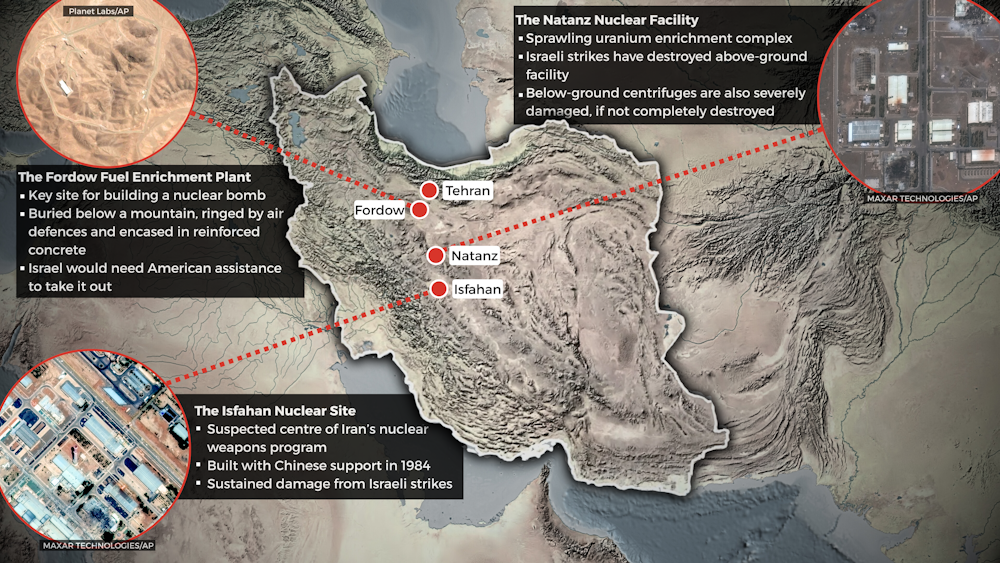
    There are two main enrichment sites: one at Natanz and one at Fordow. There’s also a facility at Isfahan, which, among other things, is focused on producing important materials for the enrichment process.

    Natanz has a hall of centrifuges, which are cylindrical devices that spin incredibly quickly to enrich uranium for creating either the fuel for a nuclear power program or the key ingredient for a nuclear weapon.

    Much the same is happening at Fordow, as far as we know. It is a smaller facility than Natanz but much of it is buried deep under a mountain.

    To make it weapons grade, uranium ought to be close to 90% purity. It is possible to create a bomb with uranium enriched to a lower level, but it is a much less efficient method. So around 90% is the target.

    The key nuclear sites being targeted by Israel.
    Maxxar Technologies/AP, Planet Labs/AP, The Conversation, CC BY-NC

    The Obama-era Joint Comprehensive Plan of Action Iran signed in 2015 (in exchange for the US lifting sanctions) limited Iran’s enrichment capacities and its stockpile of enriched uranium. But Trump ripped up that deal in 2018.

    Iran remained in compliance for a while, even while the US resumed its economic sanctions, but in recent years, has started to enrich to higher levels – up to about 60%. We know Iran still hasn’t got weapons-grade enriched uranium, but it’s a lot closer than it was to being able to build a bomb.

    And worse, much of their stockpile of enriched uranium will now be effectively unaccounted for because of the strikes by Israel. There are no inspections by the International Atomic Energy Agency (IAEA) happening there now and probably won’t be for some time.

    Iran could also say some of its stockpile was destroyed in the strikes – and we’ve got no way of knowing if that’s true or not.

    Both Natanz and Fordow have extensive, hardened, underground facilties. The above-ground facility at Natanz, at least, appears to have been badly damaged, based on satellite photos.

    Rafael Grossi, the head of the IAEA, said the centrifuges at Natanz were likely to have been “severely damaged if not destroyed altogether”. This was likely caused by power cuts, despite the fact the underground facility was not directly hit.

    Grossi said there was no visible damage to the underground facilities at Fordow, which is hidden some 80–90 metres beneath a mountain.

    Unlike the United States, Israel doesn’t have the very deep penetrating ordinance that can totally destroy such deeply buried structures.

    So a key question is: has Israel done enough damage to the centrifuges inside? Or have Iran’s efforts at fortifying these facilities been successful? We may not know for some time.

    Was Iran trying to hide its activities?

    In the past, Iran had a clandestine nuclear weapons program laying out the foundation of how it would build a bomb.

    We know that because, as part of the diplomatic process associated with the previous nuclear deal that Trump killed off, the IAEA had issued an assessment confirming that Iran previously had this plan in breach of the Treaty on the Non-Proliferation of Nuclear Weapons (NPT).

    Iran hadn’t actually built weapons or done a test, but it had a plan. And that plan, Project AMAD, was shelved in 2003. We also know that thanks to Israel. In 2018, Israeli special forces undertook a raid in downtown Tehran and stole secret documents revealing this.

    When the Obama administration managed to negotiate the Joint Comprehensive Plan of Action in 2015, part of the deal was Iran had to accept greater oversight of its nuclear facilities. It had to accept restrictions, limit the number of centrifuges and couldn’t maintain large stockpiles of enriched uranium. This was in exchange for the US lifting sanctions.

    These restrictions didn’t make it impossible for Iran to build a weapon. But it made it extremely difficult, particularly without being detected.

    What did the IAEA announce last week and why was it concerning?

    Last week, the IAEA Board of Governors passed a resolution saying that Iran was in breach of its obligations under the NPT.

    This related to Iran being unable to answer questions from inspectors about nuclear activities being undertaken at undeclared sites.

    That’s the first time in 20 years the IAEA has come to this finding. This is not why Israel attacked Iran. But it helps explain the exact timing. It gives Israel a degree of cover, perhaps even legitimacy. That legitimacy is surely limited however, given that Israel itself is not a signatory of the NPT and has maintained its own nuclear arsenal for more than half a century.

    In response to the IAEA announcement last week, Iran announced it would plan to build a third enrichment site in addition to Fordow and Natanz.

    Can a militarised approach to counter-proliferation backfire?

    Yes.

    When Israel hit the Osirak nuclear reactor in Iraq in 1981, it put Iraq’s nuclear program back by a few years. But the Iraqis redoubled their efforts. By the end of that decade, Iraq was very close to a fully-fledged nuclear weapons program.

    Presumably, Israel’s thinking is it will have to redo these strikes – “mowing the grass”, as they say – in an effort to hinder Iran’s attempts to reconstitute the program.

    Overnight, Iranian lawmakers also drafted a bill urging Iran to withdraw from the NPT. That is entirely legal under the treaty. Article X of the treaty allows that if “extraordinary events” jeopardise a state party’s “supreme interests” then there’s a legal process for withdrawal.

    Only one state has done that since the NPT was opened for signature in 1968: North Korea. Now, North Korea is a nuclear-armed state.

    Iran seems likely to withdraw from the treaty under this article. It has experienced a full-scale attack from another country, including strikes on key infrastructure and targeted assassinations of its top leaders and nuclear scientists. If that doesn’t count as a risk to your supreme interests, then I don’t know what does.

    Iran’s withdrawal would pose a significant challenge to the wider non-proliferation regime. It may even trigger more withdrawals from other countries.

    If Iran withdraws from the NPT, the next big questions are how much damage has Israel done to the centrifuge facilities? How quickly can Iran enrich its uranium stockpile up to weapons grade?

    And, ultimately, how much damage has been done to the ever-fragile nuclear non-proliferation regime based around the NPT?

    Benjamin Zala has received funding from the Stanton Foundation, a US philanthropic group that funds nuclear research. He is an honorary fellow at the University of Leicester on a project that is funded by the European Research Council.

    – ref. Why is there so much concern over Iran’s nuclear program? And where could it go from here? – https://theconversation.com/why-is-there-so-much-concern-over-irans-nuclear-program-and-where-could-it-go-from-here-259052

    MIL OSI – Global Reports –

    June 18, 2025
  • MIL-OSI Global: Regime change wouldn’t likely bring democracy to Iran. A more threatening force could fill the vacuum

    Source: The Conversation – Global Perspectives – By Andrew Thomas, Lecturer in Middle East Studies, Deakin University

    The timing and targets of Israel’s attacks on Iran tell us that Prime Minister Benjamin Netanyahu’s short-term goal is to damage Iran’s nuclear facilities in order to severely diminish its weapons program.

    But Netanyahu has made clear another goal: he said the war with Iran “could certainly” lead to regime change in the Islamic republic.

    These comments came after an Israeli plan to assassinate the supreme leader of Iran, Ayatollah Ali Khamenei, was reportedly rebuffed by United States President Donald Trump.

    It’s no secret Israel has wanted to see the current government of Iran fall for some time, as have many government officials in the US.

    But what would things look like if the government did topple?

    How is power wielded in today’s Iran?

    Founded in 1979 after the Iranian Revolution, the Islamic Republic of Iran has democratic, theocratic and authoritarian elements to its governing structure.

    The founding figure of the Islamic republic, Ayatollah Ruhollah Khomeini, envisioned a state run by Islamic clerics and jurists who ensured all policies adhered to Islamic law.

    As Iran was a constitutional monarchy before the revolution, theocratic elements were effectively grafted on top of the existing republican ones, such as the parliament, executive and judiciary.

    Iran has a unicameral legislature (one house of parliament), called the Majles, and a president (currently Masoud Pezeshkian). There are regular elections for both.

    But while there are democratic elements within this system, in practice it is a “closed loop” that keeps the clerical elite in power and prevents challenges to the supreme leader. There is a clear hierarchy, with the supreme leader at the top.

    Khamenei has been in power for more than 35 years, taking office following Khomeini’s death in 1989. The former president of Iran, he was chosen to become supreme leader by the Assembly of Experts, an 88-member body of Islamic jurists.

    While members of the assembly are elected by the public, candidates must be vetted by the powerful 12-member Guardian Council (also known as the Constitutional Council). Half of this body is selected by the supreme leader, while the other half is approved by the Majles.

    The council also has the power to vet all candidates for president and the parliament.

    In last year’s elections, the Guardian Council disqualified many candidates from running for president, as well as the Majles and Assembly of Experts, including the moderate former president Hassan Rouhani.

    As such, the supreme leader is increasingly facing a crisis of legitimacy with the public. Elections routinely have low turnout. Even with a reformist presidential candidate in last year’s field – the eventual winner, Masoud Pezeshkian – turnout was below 40% in the first round.

    Freedom House gives Iran a global freedom score of just 11 out of 100.

    The supreme leader also directly appoints the leaders in key governance structures, such as the judiciary, the armed forces and Islamic Revolutionary Guard Corps (IRGC).

    The all-powerful IRGC

    So, Iran is far from a democracy. But the idea that regime change would lead to a full democracy that is aligned with Israel and the US is very unlikely.

    Iranian politics is extremely factional. Ideological factions, such as the reformists, moderates and conservatives, often disagree vehemently on key policy areas. They also jockey for influence with the supreme leader and the rest of the clerical elite. None of these factions is particularly friendly with the US, and especially not Israel.

    There are also institutional factions. The most powerful group in the country is the clerical elite, led by the supreme leader. The next most powerful faction would be the IRGC.

    Originally formed as a kind of personal guard for the supreme leader, the IRGC’s fighting strength now rivals that of the regular army.

    The IRGC is extremely hardline politically. At times, the IRGC’s influence domestically has outstripped that of presidents, exerting significant pressure on their policies. The guard only vocally supports presidents in lockstep with Islamic revolutionary doctrine.

    In addition to its control over military hardware and its political influence, the guard is also entwined with the Iranian economy.

    The IRGC is heavily enriched by the status quo, with some describing it as a “kleptocratic” institution. IRGC officials are often awarded state contracts, and are allegedly involved in managing the “black economy” used to evade sanctions.

    Given all of this, the IRGC would be the most likely political institution to take control of Iran if the clerical elite were removed from power.

    In peacetime, the general consensus is the IRGC would not have the resources to orchestrate a coup if the supreme leader died. But in a time of war against a clear enemy, things could be different.

    Possible scenarios post-Khamenei

    So, what might happen if Israel were to assassinate the supreme leader?

    One scenario would be a martial law state led by the IRGC, formed at least in the short term for the purposes of protecting the revolution.

    In the unlikely event the entire clerical leadership is decimated, the IRGC could attempt to reform the Assembly of Experts and choose a new supreme leader itself, perhaps even supporting Khamenei’s son’s candidacy.

    Needless to say, this outcome would not lead to a state more friendly to Israel or the US. In fact, it could potentially empower a faction that has long argued for a more militant response to both.

    Another scenario is a popular uprising. Netanyahu certainly seems to think this is possible, saying in an interview in recent days:

    The decision to act, to rise up this time, is the decision of the Iranian people.

    Indeed, many Iranians have long been disillusioned with their government – even with more moderate and reformist elements within it. Mass protests have broken out several times in recent decades – most recently in 2022 – despite heavy retaliation from law enforcement.

    We’ve seen enough revolutions to know this is possible – after all, modern Iran was formed out of one. But once again, new political leadership being more friendly to Israel and the West is not a foregone conclusion.

    It is possible for Iranians to hold contempt in their hearts for both their leaders and the foreign powers that would upend their lives.

    Andrew Thomas does not work for, consult, own shares in or receive funding from any company or organisation that would benefit from this article, and has disclosed no relevant affiliations beyond their academic appointment.

    – ref. Regime change wouldn’t likely bring democracy to Iran. A more threatening force could fill the vacuum – https://theconversation.com/regime-change-wouldnt-likely-bring-democracy-to-iran-a-more-threatening-force-could-fill-the-vacuum-259042

    MIL OSI – Global Reports –

    June 18, 2025
  • MIL-OSI China: Chinese vice premier to attend 28th St. Petersburg International Economic Forum

    Source: People’s Republic of China – State Council News

    Chinese vice premier to attend 28th St. Petersburg International Economic Forum

    BEIJING, June 17 — Chinese Vice Premier Ding Xuexiang will attend the 28th St. Petersburg International Economic Forum in Russia from June 19 to 21, a Chinese foreign ministry spokesperson announced on Tuesday.

    Ding, also a member of the Standing Committee of the Political Bureau of the Communist Party of China Central Committee, was invited by the government of the Russian Federation, spokesperson Guo Jiakun said at a daily news briefing.

    The St. Petersburg International Economic Forum is an important platform for discussing global economic governance and fostering international consensus on cooperation, Guo said.

    This year’s forum, themed “Shared Values: The Foundation of Growth in a Multipolar World,” will explore effective approaches to addressing global challenges, Guo noted, adding that Ding will attend forum activities and meet with relevant Russian leaders.

    China looks forward to strengthening communication and exchanges with all parties, consolidating consensus on cooperation, promoting the common values of humanity, and advancing an equal and orderly world multipolarization and a universally beneficial and inclusive economic globalization, so as to inject strong impetus into improving global governance and promoting world development and prosperity, Guo said.

    China is also willing to work with Russia to effectively implement the important consensus reached by the two heads of state, deepen comprehensive practical cooperation, and continuously advance the China-Russia comprehensive strategic partnership of coordination for the new era, Guo added.

    MIL OSI China News –

    June 18, 2025
  • MIL-OSI China: China and EU agree to deepen environmental cooperation at ministerial dialogue

    Source: People’s Republic of China – State Council News

    BEIJING, June 17 — China and the European Union (EU) renewed their commitment to environmental cooperation during the 10th environment policy ministerial dialogue held last Friday in Brussels, the Chinese Ministry of Ecology and Environment said Tuesday.

    The dialogue, co-chaired by Chinese Minister of Ecology and Environment Huang Runqiu and Jessika Roswall, Commissioner for Environment, Water Resilience and a Competitive Circular Economy of the European Commission, focused on key areas such as biodiversity conservation, implementation of the Kunming-Montreal Global Biodiversity Framework, negotiations for an international plastic pollution agreement, environmental pollution control, and multilateral environmental governance.

    Both sides applauded the tangible results that have been achieved under the guidance of the High-level Environment and Climate Dialogue between China and the EU.

    This year marks the 50th anniversary of the establishment of diplomatic relations between China and the EU. Huang called for greater unity and joint action against the backdrop of mounting global environmental and climate challenges.

    Huang urged both sides to better leverage the mechanism to fulfill the objectives set by the high-level dialogue, expand pragmatic cooperation in key areas, promote multilateral environmental governance, and build exchange platforms in a bid to bolster the foundation for China-EU environmental collaboration.

    Roswall recognized China’s leading role in securing the historic Kunming-Montreal Global Biodiversity Framework and stressed the need for increased financial support to ensure the framework’s implementation.

    Roswall also emphasized further cooperation with China in the areas such as negotiations for an international plastic pollution agreement, air and chemical pollution control, water resource protection, and deforestation-free supply chains to advance global efforts in environmental and climate governance.

    MIL OSI China News –

    June 18, 2025
  • Indian, French Armies to conduct joint military drill in Southern France

    Source: Government of India

    Source: Government of India (2)

    contingent of the Indian Army departed on Monday to participate in the eighth edition of the Indo-French joint military exercise, Shakti, set to be held from June 18 to July 1, at Camp Larzac, La Cavalerie, in southern France.

    The Indian team comprises 90 personnel, with the Jammu and Kashmir Rifles leading the representation, supported by troops from various arms and services. The French Army contingent, also numbering 90 personnel, will include soldiers from the 13th Foreign Legion Half-Brigade (13th DBLE), a renowned unit of the French Foreign Legion.

    Exercise Shakti, a biennial engagement between the Indian and French armies, is designed to deepen interoperability and operational cooperation, with this edition focusing on joint operations in a sub-conventional environment in accordance with Chapter VII of the United Nations Charter. Training will take place in semi-urban terrain, reflecting the complexities of modern conflict scenarios.

    The joint exercise is expected to enhance coordination between the two armies through shared tactical drills and exchanges on Tactics, Techniques and Procedures (TTPs). Troops will also train on contemporary military technologies and equipment while undertaking physically demanding activities aimed at building endurance and cohesion.

    Beyond operational objectives, the exercise is expected to strengthen military-to-military ties, promote mutual understanding, and foster camaraderie between the personnel of the two nations.

    Exercise Shakti-VIII is emblematic of the growing strategic partnership between India and France. Defence cooperation remains a key pillar of bilateral relations, with both countries regularly engaging in military exchanges, joint exercises, and high-level visits.

    June 18, 2025
  • Iran leader Khamenei sees his inner circle hollowed out by Israel

    Source: Government of India

    Source: Government of India (4)

    Iran’s 86-year-old Supreme Leader Ayatollah Ali Khamenei cuts an increasingly lonely figure.

    Khamenei has seen his main military and security advisers killed by Israeli air strikes, leaving major holes in his inner circle and raising the risk of strategic errors, according to five people familiar with his decision-making process.

    One of those sources, who regularly attends meetings with Khamenei, described the risk of miscalculation to Iran on issues of defence and internal stability as “extremely dangerous”.

    Several senior military commanders have been killed since Friday including Khamenei’s main advisers from the Revolutionary Guards, Iran’s elite military force: the Guards’ overall commander Hossein Salami, its aerospace chief Amir Ali Hajizadeh who headed Iran’s ballistic missile program and spymaster Mohammad Kazemi.

    These men were part of the supreme leader’s inner circle of roughly 15-20 advisers comprising Guards commanders, clerics, and politicians, according to the sources who include three people who attend or have attended meetings with the leader on major issues and two close to officials who regularly attend.

    The loose group meets on an ad-hoc basis, when Khamenei’s office reaches out to relevant advisers to gather at his compound in Tehran to discuss an important decision, all the people said. Members are characterised by unwavering loyalty to him and the ideology of the Islamic Republic, they added.

    Khamenei, who was imprisoned before the 1979 revolution and maimed by a bomb attack before becoming leader in 1989, is profoundly committed to maintaining Iran’s Islamic system of government and deeply mistrustful of the West.

    Under Iran’s system of government he has supreme command of the armed forces, the power to declare war, and can appoint or dismiss senior figures including military commanders and judges.

    Khamenei makes the final decision on important matters, though he values advice, listens attentively to diverse viewpoints, and often seeks additional information from his counsellors, according to one source who attends meetings.

    “Two things you can say about Khamenei: he is extremely stubborn but also extremely cautious. He is very cautious. That is why he has been in power for as long as he has,” said Alex Vatanka, director of the Iran Program at the Middle East Institute think-tank in Washington.

    “Khamenei is pretty well placed to do the basic cost-benefit analysis which really fundamentally gets to one issue more important than anything else: regime survival.”


    KHAMENEI’S SON AT THE FORE

    The focus on survival has repeatedly been put to the test. Khamenei has deployed the Revolutionary Guards and its affiliated Basij militia to quell national protests in 1999, 2009 and 2022.

    While the security forces have always been able to outlast demonstrators and restore state rule, years of Western sanctions have caused widespread economic misery that analysts say could ultimately threaten internal unrest.

    The stakes could barely be higher for Khamenei who faces an escalating war with Israel, which has targeted nuclear and military sites and personnel with air attacks, drawing retaliatory Iranian missile fire.

    The five people familiar with Khamenei’s decision-making process stressed that other insiders who have not been targeted by Israel’s strikes remain important and influential, including top advisers on political, economic and diplomatic issues.

    Khamenei designates such advisers to handle issues as they arise, extending his reach directly into a wide array of institutions spanning military, security, cultural, political and economic domains, two of the sources said.

    Operating this way, including in bodies nominally under the elected president, means Khamenei’s office is often involved not only in the biggest questions of state but in executing even minor initiatives, according to the people with knowledge.

    His son Mojtaba has grown ever more central to this process over the past 20 years, the sources said, building a role that cuts between the personalities, factions and organisations involved to coordinate on specific issues, the sources said.

    A mid-ranking cleric seen by some insiders as a potential successor to his ageing father, Mojtaba has built close ties with the Guards, giving him added leverage across Iran’s political and security apparatus, the people added.

    Ali Asghar Hejazi, the deputy of political security affairs at Khamenei’s office, has been involved in sensitive security decisions and is often described as the most powerful intelligence official in Iran, according to the sources said.

    Meanwhile, the head of Khamenei’s office, Mohammad Golpayegani, as well as former foreign ministers Ali Akbar Velayati and Kamal Kharazi, and ex-parliament speaker Ali Larijani, remain trusted confidants on diplomatic and domestic policies issues such as the nuclear dispute, the people said.

    The loss of the Revolutionary Guards commanders nonetheless decimates the top ranks of a military organisation that Khamenei has put at the centre of power since becoming supreme leader in 1989, relying on it for both internal security and regional strategy.

    While the regular army chain of command runs through the defence ministry under the elected president, the Guards answer personally to Khamenei, securing the best military equipment for their land, air and sea branches and giving their commanders a major state role.

    As he faces one of the most dangerous moments in the Islamic Republic’s history, Khamenei finds himself further isolated by the recent losses other key advisers in the region as Iran’s “Axis of Resistance” coalition has been hammered by Israel.

    Hezbollah chief Hassan Nasrallah, who was personally close to the Iranian leader, was killed by an Israeli airstrike in September last year and Syrian President Bashar al-Assad was overthrown by rebels in December.

    (Reuters) 

    June 18, 2025
  • Researchers creates new robotic “skin” that feels heat, pain, pressure

    Source: Government of India

    Source: Government of India (4)

    Researchers have developed a revolutionary robotic skin that brings machines closer to achieving a human-like sense of touch.

    Made from a flexible, low-cost gel material, the skin transforms the entire surface of a robotic hand into a sensitive and intelligent sensor.

    Unlike traditional robotic skins that rely on a patchwork of different sensors, this material can detect pressure, temperature, pain, and even distinguish multiple contact points simultaneously.

    Developed by researchers from the University of Cambridge and University College London (UCL), the flexible, conductive skin is easy to fabricate and can be melted down and moulded into a wide range of complex shapes.

    The technology allows robots to sense and process a variety of physical inputs, enabling more meaningful interactions with the physical world.

    Unlike other robotic touch solutions—which typically use embedded sensors limited to small areas and require different sensors for different stimuli—the entirety of this new electronic skin functions as a sensor. This makes it more similar to the human skin, where sensory information is distributed across the surface.

    While the robotic skin is not yet as sensitive as human skin, it can detect signals from over 860,000 tiny pathways within the material. This allows it to recognise different types of touch and pressure—such as a finger tap, hot or cold surfaces, damage from cutting or stabbing, or multiple simultaneous contact points—all within a single material.

    The researchers used a combination of physical tests and machine learning techniques to help the skin ‘learn’ which of these pathways are most important, enabling it to sense different types of contact more efficiently.

    In addition to potential applications in humanoid robots and prosthetics—where a sense of touch is vital—the researchers suggest the robotic skin could be useful in industries such as automotive manufacturing and disaster relief.

    The results have been published in the journal Science Robotics.

    Electronic skins work by converting physical information—like pressure or temperature—into electronic signals. Traditionally, different types of sensors are needed for different kinds of touch. These sensors are embedded into soft, flexible materials, but they can interfere with one another and are prone to damage.

    “Having different sensors for different types of touch leads to materials that are complex to make,” said lead author Dr David Hardman from Cambridge’s Department of Engineering.

    “We wanted to develop a solution that can detect multiple types of touch at once, but within a single material,” he added.

    “At the same time, we need something that’s cheap and durable, so it’s suitable for widespread use,” said co-author Dr Thomas George Thuruthel from UCL.

    In future, the researchers aim to enhance the durability of the electronic skin and conduct further tests in real-world robotic applications.

    (ANI)

    June 18, 2025
  • Labour welfare schemes empower over 50 lakh unorganised workers: Govt

    Source: Government of India

    Source: Government of India (4)

    Over 50 lakh workers and their families have benefitted from welfare schemes implemented by the Union Ministry of Labour & Employment, which continues to deliver critical support to India’s unorganised workforce through the Directorate General of Labour Welfare (DGLW), particularly in the Beedi, Cine, and Mining sectors.

    The flagship Education Assistance Scheme for instance offers annual scholarships ranging from ₹1,000 to ₹25,000 to the children of eligible workers. Managed through the National Scholarship Portal (NSP), the scheme receives over one lakh applications annually, with benefits disbursed via Direct Benefit Transfer (DBT) for transparency and efficiency.

    The Ministry also provides vital healthcare support, including outpatient services and financial aid for critical illnesses such as cancer, heart disease, and kidney transplants. Assistance under the scheme ranges from ₹30,000 for minor surgeries to up to ₹7.5 lakh for cancer treatment, offering a safety net for low-income families.

    Though the Revised Integrated Housing Scheme (RIHS) was merged with the Pradhan Mantri Awas Yojana (PMAY) in 2016, the Ministry continued disbursing pending installments to eligible beneficiaries until March 31, 2024, fulfilling its commitment to dignified housing.

    The welfare schemes are implemented nationwide by the Labour Welfare Organisation (LWO), operating under DGLW, through a robust network of 18 Welfare Commissioners. These initiatives focus on social protection, healthcare, education assistance, and housing support, especially in remote and underserved areas, and reflect the government’s commitment to inclusive welfare under the vision of Sabka Saath, Sabka Vikas.

    June 18, 2025
  • MIL-OSI Russia: Action plan of SCO member states in the field of digital transformation adopted at a meeting in China’s Xinjiang

    Translation. Region: Russian Federal

    Source: People’s Republic of China in Russian – People’s Republic of China in Russian –

    Source: People’s Republic of China – State Council News

    URUMQI, June 17 (Xinhua) — The action plan of the Shanghai Cooperation Organization (SCO) member states in the field of digital transformation was reviewed and adopted at the 4th meeting of heads of ministries and departments of the SCO member states responsible for the development of information and communication technologies (ICT), which was held in Karamay city of northwest China’s Xinjiang Uygur Autonomous Region on Tuesday.

    The plan aims to deepen exchanges and cooperation among SCO member states in the fields of developing digital transformation policies, building digital infrastructure, digital government, cloud computing, digitalization of small and medium enterprises, developing and applying digital technologies, exchanging digital technology experts, etc., with the aim of bridging the digital divide between member countries and enhancing regional digital competitiveness.

    Deputy Minister of Industry and Information Technology of the People’s Republic of China Xiong Jijun called promoting sustainable development and accelerating modernization common goals of the SCO member countries.

    According to him, China is ready to work with all parties to improve the quality and level of cooperation among the member states of the organization by improving institutional mechanisms, strengthening political dialogue, deepening practical cooperation in the field of digital technologies and ICT, promoting the transformation and modernization of industries, building a more just, accessible and inclusive digital world, thereby contributing to the formation of a community of shared destiny of the SCO.

    In their speeches, the participants of the meeting unanimously noted that digital transformation is an important engine for global economic development and comprehensive social progress, and declared their readiness, adhering to the “Shanghai Spirit”, to promote continuous achievement of new achievements in cooperation in the field of digital technologies and ICT.

    The parties agreed that the next meeting will be held in Kyrgyzstan in 2026. -0-

    MIL OSI Russia News –

    June 18, 2025
  • MIL-OSI Russia: China welcomes joint statement by 21 Arab and Islamic countries on Israel-Iran conflict

    Translation. Region: Russian Federal

    Source: People’s Republic of China in Russian – People’s Republic of China in Russian –

    Source: People’s Republic of China – State Council News

    BEIJING, June 17 (Xinhua) — China welcomes the joint statement by 21 Arab and Islamic countries on the Israel-Iran conflict and is willing to work with relevant parties to help ease the situation, Foreign Ministry spokesperson Guo Jiakun said on Tuesday.

    A joint statement issued by the foreign ministers of 21 countries called for respect for the national sovereignty and territorial integrity of other countries, upholding the principle of good-neighbourliness and friendship, and resolving disputes peacefully.

    In response to a reporter’s question at a regular departmental press conference, Guo Jiakun said that Israel’s attack on Iran provoked a sudden escalation of the situation in the region, which attracted increased attention from the international community.

    According to him, the main priority is to end the fire and the war, take effective measures to prevent the conflict from escalating, prevent the region from plunging into even greater unrest, and return to the path of political resolution of problems through dialogue and negotiations.

    China welcomes the joint statement and highly appreciates the efforts made by relevant countries to ease tensions, Guo Jiakun said, adding that China is willing to maintain communication with all parties concerned and play a constructive role in helping to ease the situation. -0-

    MIL OSI Russia News –

    June 18, 2025
  • MIL-OSI Russia: Russians’ interest in the Chinese city of Shanghai is steadily growing

    Translation. Region: Russian Federal

    Source: People’s Republic of China in Russian – People’s Republic of China in Russian –

    Source: People’s Republic of China – State Council News

    BEIJING, June 17 (Xinhua) — Russians’ interest in the Chinese city of Shanghai is steadily growing, according to data from the city’s immigration service.

    In the period from the beginning of January to June 12, 2025, Russia took 6th place in the tourist flow to Shanghai in terms of the number of tourists, writes the newspaper Xinmin Wanbao.

    According to this indicator, the top 10 countries include the Republic of Korea, Japan, the USA, Thailand, Malaysia, Russia, Singapore, Germany, Vietnam and Australia.

    According to official data, Shanghai received a total of over 2.3 million foreign tourists during the period, an increase of 45.6 percent year-on-year.

    Shanghai’s tourism boom is believed to be due to the ongoing optimization of its visa-free policy. China has introduced a visa-free regime for citizens of 47 countries and extended the permitted stay under visa-free transit to 240 hours for citizens of 55 countries.

    Statistics show that during the reporting period, about 1.27 million foreigners made visa-free tourist trips to Shanghai. Their share exceeded 50 percent.

    To make it more convenient for foreigners to travel to the city, the local immigration service hotline 12367 has introduced service functions in Russian and other languages. In addition, police officers who speak foreign languages, including Russian, English, Japanese, Korean and Arabic, are on duty at passport control points. -0-

    MIL OSI Russia News –

    June 18, 2025
  • MIL-OSI Russia: Rosneft Improves Anti-Corrosion Technologies

    Translation. Region: Russian Federal

    Source: Rosneft – Rosneft – An important disclaimer is at the bottom of this article.

    Specialists from the Rosneft Scientific Institute in Izhevsk have developed and tested an innovative method for assessing the corrosion rate of oil well equipment. The economic effect of using the innovation will average 1.4 million rubles per well over 5 years.

    The essence of the new approach is to measure the corrosion rate using steel plates directly in the thermobaric conditions of wells. The process is carried out using special immersion probes, also developed by the institute’s specialists. Previously existing practices involve measuring the corrosion rate inside the cavity of ground infrastructure pipelines.

    The developed method allows for precise determination of the minimum effective dosages of corrosion inhibitors, ensuring the target level of well protection*, increasing the period of trouble-free operation, and avoiding costly operations of lifting and dismantling well equipment.

    The positive result of this work will reduce the overall costs of protecting the underground equipment of Udmurtneft named after V.I. Kudinov (the Company’s production asset). Work is currently underway to replicate the technology at other Rosneft facilities.

    * according to the Interstate Standard “Corrosion of Metals and Alloys” ISO 9224-2022, the rate of general corrosion of equipment should not exceed 0.1 mm/year.

    Department of Information and Advertising of PJSC NK Rosneft June 17, 2025

    Please note: This information is raw content directly from the source of the information. It is exactly what the source states and does not reflect the position of MIL-OSI or its clients.

    MIL OSI Russia News –

    June 18, 2025
  • MIL-OSI United Kingdom: ‘Hotdesk St Malo’ available for Channel Islands organisations to build links with Brittany stakeholders17 June 2025 Channel Islands businesses and industry groups looking to build links in Brittany are being reminded that they have free access to two meeting rooms in St Malo. The Bureau des Iles Anglo-Normandes, which… Read more

    Source: Channel Islands – Jersey

    17 June 2025

    Channel Islands businesses and industry groups looking to build links in Brittany are being reminded that they have free access to two meeting rooms in St Malo. 

    The Bureau des Iles Anglo-Normandes, which represents the governments of Guernsey and Jersey in France, has secured two meeting spaces for any organisation in Jersey, Guernsey, Alderney and Sark, looking to develop economic, cultural or educational links with French stakeholders. 

    Stéphane Perrin-Sarzier, Vice-President of the Brittany region, in charge of international development, said: “We are delighted to offer government officials and businesses from Jersey and Guernsey the opportunity to use the Brittany Region’s premises at the port of Saint-Malo to develop ties with Brittany. This provision fully embodies our commitment to strengthening economic, cultural, and institutional cooperation between our territories.”

    The ‘Hotdesk St Malo’​ offers a choice of two meeting rooms in the centre of St Malo, which can accommodate up to 12 or 30 people.

    MIL OSI United Kingdom –

    June 17, 2025
  • MIL-OSI United Kingdom: Iran-Israel conflict: Foreign Secretary’s statement

    Source: United Kingdom – Executive Government & Departments 3

    Oral statement to Parliament

    Iran-Israel conflict: Foreign Secretary’s statement

    The Foreign Secretary made a statement to the House of Commons on 16 June 2025, updating on the Israel-Iran conflict.

    With permission, Mr Speaker, I will remind the House that the Foreign Office has been responding to 2 crises this past week.

    My Honourable Friend, Minister Falconer, will update on the Government’s extensive efforts to assist those who lost loved ones in Thursday’s devastating Air India plane crash.

    Just 9 days ago, I was in Delhi, strengthening our friendship. Our nations are mourning together. My thoughts are with all those suffering such terrible loss.

    With permission, Madam Deputy Speaker, I will now turn to the Middle East. Early last Friday morning, Israel launched extensive strikes across Iran. Targets including military sites, including the Iranian enrichment facility at Natanz, and key commanders and nuclear scientists.

    The last 72 hours has seen Iranian ballistic missile and drone strikes across Israel, killing at least 21 Israelis and injuring hundreds more. And Israeli strikes have continued, including on targets in Tehran, with the Iranian authorities reporting scores of civilian casualties. 

    Prime Minister Netanyahu has said his operations will “continue for as many days as it takes to remove the threat”. Supreme Leader Khameini has said Israel “must expect severe punishment”.

    Madam Deputy Speaker, in such crisis our first priority is of course the welfare of British nationals. On Friday, we swiftly stood up a crisis team in London and the region, and yesterday I announced that we now advise against all travel to Israel as well as our long-standing travel of not travelling to Iran.

    Madam Deputy Speaker, today I can update the House that we are asking all British nationals in Israel to register their presence with the FCDO, so that we can share important information on the situation and leaving the country.

    And I can announce today that we are further updating our Travel Advice to signpost border crossing points, and sending Rapid Deployment Teams to Egypt and Jordan to bolster our consular presence near the border with Israel, which has already been supporting British nationals on the ground.

    Israel and Iran have closed their airspace until further notice, and our ability therefore to provide support in Iran is extremely limited. British nationals in the region should closely monitor our Travel Advice for further updates.

    Madam Deputy Speaker, the situation remains fast-moving. We expect more strikes in the days to come. This is a moment of grave danger for the region.

    I want to be clear, the United Kingdom was not involved in the strikes against Iran. This is a military action conducted by Israel.

    It should come as no surprise that Israel considers the Iranian nuclear programme an existential threat. Khameini said in 2018 that Israel was a “cancerous tumour” that should be “removed and eradicated”.

    We have always supported Israeli security – that’s why Britain has sought to prevent Iran obtaining a nuclear weapon through extensive diplomacy. We agree with President Trump when he says negotiations are necessary and must lead to a deal.

    That has long been the view, Mr Speaker, of the so-called ‘E3’ – Britain, France and Germany – with whom we have worked so closely on this issue. The view of all of the G7 who have backed the efforts of President Trump’s envoy, Steve Witkoff. And for more than 2 decades, the cross-party view in this House.

    Lord Cameron of Chipping Norton and Lord Hague of Richmond led diplomatic efforts on the issue. Baroness May of Maidenhead and the former Right Honourable Member for Uxbridge did too, and this Government has continued to pursue negotiations, joining France and Germany in 5 rounds of talks with Iran this year alone.

    Ours is a hard-headed realist assessment of how best to tackle this grave threat. Fundamentally, no military action can put and end to Iran’s nuclear capabilities.

    Madam Deputy Speaker, just last week, the International Atomic Energy Agency Board of Governors passed a non-compliance resolution against Iran, the first such IAEA finding in 14 years.

    The Director-General’s Comprehensive Report details Iran’s failure to declare nuclear materials. Iran remains the only state without nuclear weapons accumulating uranium at such dangerously high levels. Its total enriched stockpile is now 40 times the limit in the JCPoA, and their nuclear programme is part of a wider pattern of destabilising activity.

    The Government has taken firm action in response. When they transferred ballistic missiles for use in Russia’s illegal war in Ukraine, we imposed extensive sanctions including against Iran Air, and cancelled our bilateral air services agreement.

    In the face of unacceptable IRGC threats here in the UK – with some 20 foiled plots since 2022 – the CPS has for the first time charged Iranian nationals under the National Security Act, and we have placed the Iranian state, including the IRGC, on the enhanced tier of the new Foreign Influence Registration Scheme.

    Madam Deputy Speaker, a widening war would have grave and unpredictable consequences, including for our partners in Jordan and the Gulf. The horrors of Gaza worsening, tensions in Lebanon, Syria and Iraq rising, the Houthi threat continuing.

    That’s why the Government’s firm view, as it was last October in the ballistic missile attack on Israel, is that further escalation in the Middle East is not in Britain’s interests, nor the interests of Israel, Iran or the region.

    There are hundreds of thousands of British nationals living in the region. And with Iran a major oil producer, and one fifth of total world oil consumption flowing through the Straits of Hormuz, escalating conflict poses real risks for the global economy.

    As missiles rain down, Israel has a right to defend itself and its citizens. But our priority now is de-escalation.

    Our message to both Israel and Iran is clear. Step back. Show restraint. Don’t get pulled ever deeper into a catastrophic conflict, whose consequences nobody can control.

    Madam Deputy Speaker, the Prime Minister chaired COBR on the situation last Friday and spoke to PM Netanyahu, President Trump and Saudi Crown Prince Mohammed bin Salman. He is now at the G7 Summit in Canada, discussing with our closest allies how to ease tensions.

    And the Government has deployed additional assets to the region, including jets for contingency support to UK forces and potentially our regional allies concerned about the escalating conflict.

    In the last 72 hours, my Honourable Friend the Minister for the Middle East and I have been flat out trying to carve out space for diplomacy. I have spoken to both Israeli Foreign Minister Sa’ar and Iranian Foreign Minister Araghchi, underlining Britain’s focus on de-escalation.

    I have also met Saudi Foreign Minister Prince Faisal. I’ve had calls with US Secretary Rubio, EU High Representative Kallas and my counterparts from France and Germany, the United Arab Emirates, Qatar, Oman, Jordan, Turkey and Iraq. These conversations are part of a collective drive to prevent a spiralling conflict.

    Madam Deputy Speaker, this new crisis has arisen as the appalling situation in Gaza continues. This weekend, hospitals in Gaza reported over 50 people were killed and more than 500 injured while trying to access food.

    This Government will not take our eye off the humanitarian catastrophe in Gaza. We will not stop calling for aid restrictions to be lifted and an immediate ceasefire. We will not forget about the hostages.

    This morning, I met Yocheved Lifschitz and her family, whose courage and dignity in the face of Hamas’ barbarism was a reminder of the plight of those still cruelly held in Gaza. We will not stop striving to free the hostages and end that war.

    Madam Deputy Speaker, our vision remains unchanged. An end to Iran’s nuclear programme and destabilising regional activity. Israel, secure in its borders and at peace with its neighbours. A sovereign Palestinian state, as part of the two-state solution.

    Diplomacy is indispensable to each of these goals. Britain will keep pressing all sides to choose a diplomatic path out of this crisis.

    I commend this statement to the House.
    Updates to this page

    Published 16 June 2025

    MIL OSI United Kingdom –

    June 17, 2025
  • MIL-OSI Russia: “Telling the Story of the Arctic”: New Photo Exhibition at HSE

    Translation. Region: Russian Federal

    Source: State University Higher School of Economics – State University Higher School of Economics –

    The opening of the exhibition “Khatanga. Heritage” took place in the atrium of the HSE building on Pokrovsky Boulevard, organized with the support of the Russian Geographical Society (RGS). As part of the educational project, photo materials with interactive excursions are presented, as well as a series of videos and a podcast, drawing attention to the cultural and environmental aspects of the region.

    The project became a logical continuation of a large-scale environmental campaign “Arctic. General cleaning”, during which work was carried out over two years to clean the banks of the village of Khatanga in the Krasnoyarsk Territory from accumulated metal waste. Volunteers from different parts of Russia took part in the expeditions, they carried out research, media and environmental activities. In three shifts, volunteers managed to remove more than 700 tons of industrial waste, which significantly improved the ecological situation in the area and made it possible to create an extensive archive of photo and video materials.

    As Andrey Lavrov, Senior Director of the National Research University Higher School of Economics, noted, the Russian Geographical Society has been a partner of the Higher School of Economics since 2022. He recalled that Faculty of Geography and Geoinformation Technologies HSE actively cooperates with the Russian Geographical Society, and the university students work a lot on Arctic topics, including within the framework of the project “Rediscovering Russia”. “It was important for us to tell the story of the Arctic, a strategically important territory for Russia, through such an exhibition,” said Andrei Lavrov.

    Russia is a huge country, it is almost impossible to see everything in it, says Professor Fuad Aleskerov, head of Department of Mathematics FEN HSE. “Such exhibitions give an understanding of where and what we have in our homeland. In addition, the photographs describe what our volunteers saw when they came to the Arctic to clean up trash. I myself participate in environmental projects, and support them financially. In this case, we need working hands, and if I were a student now, of course, I would go too,” he emphasized.

    Dmitry Kobets, a representative of the Russian Geographical Society and a visiting lecturer at the HSE Department of Mathematics, did not know in his student years that one could spend one’s vacation on an expedition and benefit entire regions. He believes that it is important to tell students about this opportunity by organizing such exhibitions.

    “I thought that an expedition was a matter for big scientists, but it turns out that it is not. The Russian Geographical Society (and not only it) provides an opportunity for young specialists who have just started their journey to go on an expedition. And there is no need to do complex scientific work. Maybe you just want to relax and change the intellectual vector of activity that prevailed from September to June. And after the expedition, you also create a good community,” added Dmitry Kobets.

    In total, four thematic virtual tours were prepared for the exhibition.

    1. “Khatanga. Three suns for luck”, which takes you into the world of creativity, where each photographic work carries its own unique emotion and story.

    2. “The cold raised me”, dedicated to the harsh Arctic region, which is currently home to less than 6,000 people: the history of Khatanga, its people, and its natural conditions.

    3. “Khatanga – this is us”, which tells about the members of the expedition: young photographers, scientists, journalists, athletes and managers.

    4. “A snowflake won’t melt” — a quiz journey for the exhibition’s youngest spectators.

    Please note: This information is raw content directly from the source of the information. It is exactly what the source states and does not reflect the position of MIL-OSI or its clients.

    MIL OSI Russia News –

    June 17, 2025
  • MIL-OSI United Nations: International Journal of Applied and Advanced Scientific Research

    Source: UNISDR Disaster Risk Reduction

    Mission

    International Journal of Applied and Advanced Scientific Research (IJAASR) is a bi-annual, open access, peer reviewed and fully refereed international journal with minimal processing charge. It broadly covers research work on next generation cutting edge technologies and effective marketing strategies.

    MIL OSI United Nations News –

    June 17, 2025
  • MIL-OSI Economics: W&T Announces Settlement Agreement with Majority of Surety Providers

    Source: W & T Offshore Inc

    Headline: W&T Announces Settlement Agreement with Majority of Surety Providers

    HOUSTON, June 17, 2025 (GLOBE NEWSWIRE) — W&T Offshore, Inc. (NYSE: WTI) (“W&T” or the “Company”) today announced that it has come to a settlement agreement with two of its largest surety providers which calls for the dismissal of a previously filed lawsuit. The settlement agreement requires the surety providers to withdraw their current collateral demands, and further provides that the surety providers may not make additional collateral demands or increase premiums through December 31, 2026.

    Key highlights for the settlement agreement include:

    • Dismissal of all claims by the applicable party in the lawsuit, without prejudice;
    • Two participating surety providers, together with W&T’s other major surety provider who did not attempt to increase premiums or call for collateral, represent nearly 70% of W&T’s surety bond portfolio;
    • Premium rates for all existing bonds provided by the two surety providers will be locked in at W&T’s historical rates without increase through December 31, 2026, representing a prolonged rate lock in excess of “ordinary course” rate negotiations, thereby providing consistency and predictability in W&T’s premium expense;
    • W&T is not required to provide any collateral to the applicable sureties, and the applicable surety providers will immediately withdraw all demands for collateral;
    • Surety providers may not make demands for collateral through December 31, 2026, outside certain limited circumstances involving unlikely events of default; and
    • Parties retain the right to negotiate and establish new surety bonds at rates to be determined in the ordinary course.

    Tracy W. Krohn, W&T’s Chairman and Chief Executive Officer stated, “We are pleased with the agreement that we have reached with two of our largest surety providers, and we believe that the objectives achieved in this outcome illustrate the strength of the legal position that W&T has aggressively advanced since the beginning of these unnecessary surety lawsuits. This outcome is very positive for W&T overall, as we will not acquiesce to unjustified collateral demands made by the applicable sureties and we have locked in our historical premium rates through the end of 2026. We believe the entry into these settlement agreements vindicates our resolve to stand up to surety providers’ unjustified demands on independent oil and gas operators, such as W&T. For the past 40 plus years, W&T has reliably plugged and abandoned assets, paid its negotiated premiums and operated responsibly in the Gulf of America. We demand fairness and transparency for all oil and natural gas producers in the Gulf of America and will continue to pursue the pending litigation against our other surety providers that have unlawfully colluded and decided to not deal fairly with W&T and other independent oil and gas producers.”

    “This agreement, coupled with the promising developments in the regulatory environment driven by the White House’s directives, alleviates some of the uncertainty that has unnecessarily and artificially suppressed our stock price and we expect that this will allow us to deliver more value to our shareholders. Since the start of the year, we have strengthened our balance sheet, and we have a solid cash position with sufficient liquidity to enable us to continue to evaluate growth opportunities, both organically and inorganically. Operationally and financially, our start to 2025 has been strong, and we expect production to continue to increase thus driving more value creation. We are well-positioned to succeed and believe that the future is bright for W&T.”

    About W&T Offshore

    W&T Offshore, Inc. is an independent oil and natural gas producer with operations offshore in the Gulf of America and has grown through acquisitions, exploration and development. As of March 31, 2025, the Company had working interests in 52 fields in federal and state waters (which include 45 fields in federal waters and seven in state waters). The Company has under lease approximately 634,700 gross acres (496,900 net acres) spanning across the outer continental shelf off the coasts of Louisiana, Texas, Mississippi and Alabama, with approximately 487,200 gross acres on the conventional shelf, approximately 141,900 gross acres in the deepwater and 5,600 gross acres in Alabama state waters. A majority of the Company’s daily production is derived from wells it operates. For more information on W&T, please visit the Company’s website at www.wtoffshore.com.

    Forward-Looking and Cautionary Statements

    This press release contains forward-looking statements within the meaning of Section 27A of the Securities Act of 1933, as amended, and Section 21E of the Securities Exchange Act of 1934, as amended. All statements other than statements of historical facts included in this release, including those regarding the potential outcome of the litigation, the impact of the settlement on the Company, potential growth opportunities, and the Company’s future production are forward-looking statements. When used in this release, forward-looking statements are generally accompanied by terms or phrases such as “estimate,” “project,” “predict,” “believe,” “expect,” “continue,” “anticipate,” “target,” “could,” “plan,” “intend,” “seek,” “goal,” “will,” “should,” “may” or other words and similar expressions that convey the uncertainty of future events or outcomes, although not all forward-looking statements contain such identifying words. Items contemplating or making assumptions about actual or potential future production and sales, prices, market size, and trends or operating results also constitute such forward-looking statements.

    These forward-looking statements are based on the Company’s current expectations and assumptions about future events and speak only as of the date of this release. While management considers these expectations and assumptions to be reasonable, they are inherently subject to significant business, economic, competitive, regulatory and other risks, contingencies and uncertainties, most of which are difficult to predict and many of which are beyond the Company’s control. Accordingly, you are cautioned not to place undue reliance on these forward-looking statements, as results actually achieved may differ materially from expected results described in these statements. The Company does not undertake, and specifically disclaims, any obligation to update any forward-looking statements to reflect events or circumstances occurring after the date of such statements, unless required by law.

    Forward-looking statements are subject to risks and uncertainties that could cause actual results to differ including, among other things, the regulatory environment, including availability or timing of, and conditions imposed on, obtaining and/or maintaining permits and approvals, including those necessary for drilling and/or development projects; the impact of current, pending and/or future laws and regulations, and of legislative and regulatory changes and other government activities, including those related to permitting, drilling, completion, well stimulation, operation, maintenance or abandonment of wells or facilities, managing energy, water, land, greenhouse gases or other emissions, protection of health, safety and the environment, or transportation, marketing and sale of the Company’s products; inflation levels; global economic trends, geopolitical risks and general economic and industry conditions, such as the global supply chain disruptions and the government interventions into the financial markets and economy in response to inflation levels and world health events; volatility of oil, NGL and natural gas prices; the global energy future, including the factors and trends that are expected to shape it, such as concerns about climate change and other air quality issues, the transition to a low-emission economy and the expected role of different energy sources; supply of and demand for oil, NGLs and natural gas, including due to the actions of foreign producers, importantly including OPEC and other major oil producing companies (“OPEC+”) and change in OPEC+’s production levels; disruptions to, capacity constraints in, or other limitations on the pipeline systems that deliver the Company’s oil and natural gas and other processing and transportation considerations; inability to generate sufficient cash flow from operations or to obtain adequate financing to fund capital expenditures, meet the Company’s working capital requirements or fund planned investments; price fluctuations and availability of natural gas and electricity; the Company’s ability to use derivative instruments to manage commodity price risk; the Company’s ability to meet the Company’s planned drilling schedule, including due to the Company’s ability to obtain permits on a timely basis or at all, and to successfully drill wells that produce oil and natural gas in commercially viable quantities; uncertainties associated with estimating proved reserves and related future cash flows; the Company’s ability to replace the Company’s reserves through exploration and development activities; drilling and production results, lower–than–expected production, reserves or resources from development projects or higher–than–expected decline rates; the Company’s ability to obtain timely and available drilling and completion equipment and crew availability and access to necessary resources for drilling, completing and operating wells; changes in tax laws; effects of competition; uncertainties and liabilities associated with acquired and divested assets; the Company’s ability to make acquisitions and successfully integrate any acquired businesses; asset impairments from commodity price declines; large or multiple customer defaults on contractual obligations, including defaults resulting from actual or potential insolvencies; geographical concentration of the Company’s operations; the creditworthiness and performance of the Company’s counterparties with respect to its hedges; impact of derivatives legislation affecting the Company’s ability to hedge; failure of risk management and ineffectiveness of internal controls; catastrophic events, including tropical storms, hurricanes, earthquakes, pandemics and other world health events; environmental risks and liabilities under U.S. federal, state, tribal and local laws and regulations (including remedial actions); potential liability resulting from pending or future litigation; the Company’s ability to recruit and/or retain key members of the Company’s senior management and key technical employees; information technology failures or cyberattacks; and governmental actions and political conditions, as well as the actions by other third parties that are beyond the Company’s control, and other factors discussed in W&T Offshore’s most recent Annual Report on Form 10-K and subsequent Quarterly Reports on Form 10-Q found at www.sec.gov or at the Company’s website at www.wtoffshore.com under the Investor Relations section.

         
    CONTACT: Al Petrie Sameer Parasnis
      Investor Relations Coordinator Executive VP and CFO
      investorrelations@wtoffshore.com sparasnis@wtoffshore.com
      713-297-8024 713-513-8654

    Source: W&T Offshore, Inc.

    Released June 17, 2025

    MIL OSI Economics –

    June 17, 2025
  • MIL-OSI Asia-Pac: FEHD earnestly follows up on court ruling against eight former Principal Hawker Control Officers

    Source: Hong Kong Government special administrative region

    FEHD earnestly follows up on court ruling against eight former Principal Hawker Control Officers  
    The FEHD will seek advice from the Civil Service Bureau to determine appropriate follow-up actions following the court judgment, including whether to consider cancelling, suspending, or reducing the pension benefits of the officers concerned under Section 29 of the Pension Benefits Ordinance (Cap. 99). 
      
    Following the incident, the FEHD has reviewed the recruitment procedures for Assistant Hawker Control Officers and introduced refinements to the modus operandi and the monitoring mechanism. Such enhancements include emphasising to recruitment board chairpersons and members that failure to uphold the principles of fairness, impartiality, and confidentiality during the selection process may result in disciplinary action or even criminal liability; adjusting the composition of recruitment boards to ensure a more balanced representation of relevant grades and enhance objectivity and diversity in the selection process; providing additional guidance to board secretaries to strengthen their role in supporting procedural fairness; and arranging for supervisory staff to observe interviews on an irregular basis and offer feedback on overall selection arrangements with a view to further ascertaining the propriety of the process. 
      
    In addition, the FEHD has strengthened integrity training for enforcement and supervisory officers at all levels, including inviting officers of the Independent Commission Against Corruption to conduct seminars on anti-corruption laws and related administrative codes to heighten staff awareness of corruption risks and the offence of misconduct in public office. The department also continues to use various channels to remind staff at all levels of the importance of upholding core civil service values and conduct at all times. 
    Issued at HKT 19:00

    NNNN

    CategoriesMIL-OSI

    MIL OSI Asia Pacific News –

    June 17, 2025
  • MIL-OSI Asia-Pac: Tech research projects announced

    Source: Hong Kong Information Services

    The Innovation & Technology Commission today announced the second batch of 25 projects to be given funding via the Research, Academic & Industry Sectors One-plus (RAISe+) Scheme.

    These projects were recommended by the scheme’s steering committee. The total funding awarded amounts to over $1 billion.

    The projects cover health and medical sciences, new materials and new energy, artificial intelligence (AI) and robotics, electrical and electronic engineering, advanced manufacturing, Chinese medicine, and computer science/information technology.

    Secretary for Innovation, Technology & Industry Prof Sun Dong welcomed the second batch of projects to be supported by the scheme.

    He said: “The successful approval of the second batch of projects marks the Government’s continued commitment to promote commercialisation of local research and development outcomes through the RAISe+ Scheme.

    “The scheme fosters effective collaboration among the Government, industry, academia and research sectors, injecting new momentum into local innovation and technology development, which in turn expedites the development of Hong Kong into an international I&T centre.”

    The commission, aiming to nurture more I&T projects and startups with potential, will continue to work closely with universities and industry for the projects’ smooth implementation.

    MIL OSI Asia Pacific News –

    June 17, 2025
  • MIL-OSI USA: Driven by a Dream: Farah Al Fulfulee’s Quest to Reach the Stars

    Source: NASA

    Farah Al Fulfulee was just four years old when she started climbing onto the roof of her family’s house in Iraq to gaze at the stars.
    “It scared me how vast and quiet the sky was, but it made me very curious. I grew a deep passion for the stars and constellations and what they might represent,” she said.
    Her father noticed her interest and began bringing home books and magazines about space. Al Fulfulee first read about NASA in those pages and was fascinated by the agency’s mission to explore the cosmos for the benefit of all humanity.
    “Right then I knew I had to be an astronaut! I must go to space myself and get a closer look,” she said. “I knew I must find a way to go and work for NASA and fulfill my dream, working with other people like me who had a passion to explore the universe.”

    As a girl growing up in the Middle East, Al Fulfulee had few opportunities to pursue this dream, but she refused to give up. Her dedication to schoolwork and excellence in science and math earned her a spot at the University of Baghdad College of Engineering. She completed a degree in electronic and communication engineering — similar to American electrical and computer engineering programs — and graduated as one of the top 10 students in her class. “We had a graduation party where you dress up as what you want to be in the future,” she recalled. “I wore a spacesuit.”

    Al Fulfulee was ready to launch her career, but Iraq did not have a developed space industry and finding work as a female engineer was a challenge. She accepted a project engineer position with a prominent Iraqi engineering firm in the information technology sector and spent four years working for the company in Iraq, Turkey, and Jordan, but she was disappointed to discover that her role involved very little engineering. “I was the only female on the team,” she said. “It was not common for a woman to work in the field or with customers, so I was always left behind to do office work. The job was not fulfilling.”
    Still determined to join NASA, Al Fulfulee kept looking for her chance to come to the United States and finally found one in 2016, when she moved to Oklahoma to be near her sister. A new challenge soon rose: Without a degree from an American school or previous work experience in the United States, engineering opportunities were hard to come by. Al Fulfulee spent the next six years working in quality assurance for a human resources software company while she completed a MicroMasters program in software verification and management from the University of Maryland and honed her English and leadership skills.
    Her big break came in 2022, when she landed a job with Boeing Defense, Space, and Security as a software quality engineer. “I was so excited,” she said. “I knew I was much closer to my dream since Boeing worked in the space industry and I would be able to apply internally to work on a space program.”

    Less than one year later, Al Fulfulee became a system design and analysis engineer for the International Space Station Program and joined the Station Management and Control Team at NASA’s Johnson Space Center in Houston. She helps develop requirements, monitors performance, and validates testing for electrical systems and software supporting space station payloads. She also designs hardware, software, and interface specifications for those systems. Al Fulfulee has served as the team’s point of contact, delivering verification assessment and data assessment reports for NASA’s SpaceX Crew-9 and Crew-10 missions, as well as the upcoming Axiom Mission 4 flight. She is currently working to support testing and verification for NASA’s SpaceX Crew-11.
    “I could not be happier,” she declared.
    She is also not stopping. “I won’t quit until I wear the blue suit.”

    Al Fulfulee has been an enthusiastic volunteer for various NASA studies, including the Exploration Atmosphere Studies that tested spacewalk safety protocols in an analog environment. She is pursuing a master’s degree in Space Operations Engineering from the University of Colorado, Colorado Springs. She is an avid gardener and learning how to grow produce indoors as a volunteer experimental botanist with the Backyard Produce Project, noting that such knowledge might come in handy on Mars.
    She is also helping to inspire the next generation. Earlier this year, Al Fulfulee was a guest speaker at the Women in Tech & Business Summit in Iraq – an event designed to encourage Iraqi women to pursue technology careers. “I was the only person representing women in space,” she said. “It was a really moving experience.” Al Fulfulee provided practical advice on breaking barriers in aerospace and shared her story with the crowd.
    “I know my path is long and across the continents,” she said, “but I am enjoying my journey.”

    MIL OSI USA News –

    June 17, 2025
  • MIL-OSI USA: Explore Our Dynamic Sun!

    Source: NASA

    from NASA’s Heliophysics Education Activation Team (NASA HEAT) and the Astronomical Society of the Pacific/Night Sky Network
    Have you ever wondered about what the Sun is made of? Or why do you get sunburned on even cloudy days? NASA’s new Explore the Sun toolkit brings the wonders of solar science to you, offering answers to these questions and more!

    A collaboration between NASA’s Heliophysics Education Activation Team (NASA HEAT) and the Astronomical Society of the Pacific’s Night Sky Network program, this resource was developed for informal educators, amateur astronomers, and astronomy enthusiasts alike, providing engaging activities for anyone eager to learn more about our nearest star.
    Whether you’re hosting a solar viewing event or an indoor presentation, the Our Dynamic Sun toolkit provides easy-to-use materials designed to spark curiosity. Each card in the set pairs NASA images with clear explanations for each topic:

    “What color is the Sun?” (hint: it’s not yellow!)
    “How does the Sun affect us here on Earth?”
    “When will the Sun die?”

    These cards not only answer common questions the public may have, but also highlight how NASA’s solar research helps us understand space weather, solar storms, and their impacts on our daily lives.
    Bring the Sun’s story to your community and inspire the next generation of explorers. You can download this free Our Dynamic Sun toolkit here: https://bit.ly/suntoolkit

    MIL OSI USA News –

    June 17, 2025
  • MIL-OSI USA: NASA Employees Named 2025 Service to America Medals Honorees

    Source: NASA

    Two NASA employees are being  honored as part of the Samuel J. Heyman Service to America Medals, also known as the Sammies, recognizing outstanding federal employees who are addressing many of our country’s greatest challenges.
    Rich Burns of NASA’s Goddard Space Flight Center in Greenbelt, Maryland, and John Blevins of Marshall Space Flight Center in Huntsville, Alabama, were selected out of 350 nominees and are among 23 individuals and teams honored for their achievements as federal employees. They will be recognized at a ceremony in Washington on Tuesday, June 17, that also will be live streamed on the Sammies website. The honorees will be commended via videos and presenter remarks and receive medals for their achievements.
    Named after the founder of the Partnership for Public Service, the 2025 Service to America Medals awards celebrate federal employees who provided critical public services and made outstanding contributions to the health, safety, and national security of our country.
    “Rich and John exemplify the spirit of exploration and service that defines NASA and our nation’s civil servants,” said acting NASA Administrator Janet Petro. “Their leadership, ingenuity, and dedication have not only advanced America’s space program but also inspired the next generation of innovators. We are proud to see their achievements recognized among the very best of federal service.”

    Burns was the project manager of the Origins, Spectral Interpretation, Resource Identification, and Security – Regolith Explorer (OSIRIS-REx) mission to collect a sample from an asteroid and oversaw operations from the developmental stage to the successful landing of the spacecraft’s Sample Return Capsule.
    The mission launched on Sept. 18, 2016, and after a nearly four-year journey, the OSIRIS-REx spacecraft successfully collected a sample from the asteroid Bennu on Oct. 20, 2020, which returned to Earth on Sept. 24, 2023, providing scientists with 120 grams of pristine material to study, the largest amount ever collected from an asteroid. Working to solidify OSIRIS-REx as a success, Burns set up multiple partnerships and communicated frequently with scientists, large and small businesses, NASA centers, and others to ensure the mission’s vision was carried out though each phase.
    During the mission, Burns had to handle unique challenges that required adapting to new situations. These included improving flight software to help the spacecraft avoid hazardous parts of Bennu’s rocky surface and working with NASA leaders to find a way to best protect the sample collected from Bennu after a large stone propped the collection canister open. Finally, when the sample was set to return to Earth, Burns worked extensively with NASA and military partners to prepare for the landing, focusing on the safety of the public along with the integrity of the sample to ensure the final part of the mission was a success.
    Burns helped OSIRIS-REx exceed its objectives all while under the original budget, allowing  NASA to share a portion of the sample with more than 80 research projects and make new discoveries about the possible origins of life on our planet. The spacecraft, now known as Origins, Spectral Interpretation, Resource Identification and Security – Apophis Explorer, is scheduled to rendezvous with the asteroid Apophis in 2029.
    “It’s humbling to accept an award based on the achievements of the amazingly talented, dedicated, and innovative OSIRIS-REx team,” Burns said. “I consider myself privileged to be counted among a team of true explorers who let no obstacle stand in the way of discovery.”

    Blevins is the chief engineer for the Space Launch System (SLS) rocket and is responsible for the various technical decisions that need to be made to ensure each mission is successful. This included calculating structural needs, thermal analyses of the effects, and studies of vibrations, acoustics, propulsion integration, among other work.
    Artemis I, the first test flight of the SLS rocket, successfully launched from NASA’s Kennedy Space Center in Florida on Nov. 16, 2022. In the time leading up to and during launch, Blevins led the team integrating the hardware for the mission working  to address unexpected events while SLS was on the pad prior to launch. This included significant lightning storms and two hurricanes impacting Kennedy Space Center in Florida.
    Blevins built a working coalition of engineering teams across the agency that previously did not exist. His ability to forge strong relationships on the various teams across the agency allowed for the successful launch of Artemis I. He continues to lead the engineering team behind SLS as they prepare for Artemis II, the second flight of SLS and the first crewed lunar mission of the 21st century.
    “This is a reflection on the hard work and dedication of the entire Artemis Team,” Blevins said. “I am working with an incredibly competent, dedicated team agencywide that goes above and beyond to promote the space exploration goals of our nation. I am honored to accept the award on their behalf.”

    MIL OSI USA News –

    June 17, 2025
  • MIL-OSI USA: Oklahoma Survivors Can Apply for SBA Loans

    Source: US Federal Emergency Management Agency

    Headline: Oklahoma Survivors Can Apply for SBA Loans

    Oklahoma Survivors Can Apply for SBA Loans

    OKLAHOMA CITY – Businesses and residents in seven Oklahoma counties impacted by the March 14-21 wildfires and straight-line winds are eligible to apply for low-interest disaster assistance loans from the U

    S

    Small Business Administration (SBA)

    FEMA partners with other agencies to meet the needs of survivors after a disaster, and SBA loans are the largest source of federal recovery funds

    Residents and businesses in Cleveland, Creek, Lincoln, Logan, Oklahoma, Pawnee and Payne counties can apply for these loans if they sustained property damage

    Affected homeowners, renters and businesses do not need to wait for an insurance settlement before submitting an SBA loan application – and are under no obligation to accept an SBA loan if an application is approved

    Residents can still apply for an SBA loan if they received assistance from FEMA

    Interest rates can be as low as 4 percent for businesses, 3

    25 percent for private nonprofit organizations and 2

    688 percent for homeowners and renters with terms up to 30 years

    Loan amounts and terms are set by SBA and are based on each applicant’s financial condition

    Interest does not begin to accrue until 12 months from the date of the first disaster loan disbursement

    SBA disaster loan repayment begins 12 months from the date of the first disbursement

    Homeowners may be eligible for a disaster loan of up to $500,000 for primary residence repairs or rebuilding

    The SBA may also be able to help homeowners and renters with up to $100,000 to replace important personal property, such as damaged automobiles

    Businesses and private nonprofit organizations can borrow up to $2 million to repair or replace damaged property, destroyed real estate, inventory, machinery and equipment, and other essential assets

    The SBA can lend additional funds for measures that help protect, prevent or minimize disaster damage from occurring in the future

     SBA also offers Economic Injury Disaster Loans (EIDL) for small businesses, small agricultural cooperatives, nurseries, and private nonprofits to help recover from economic damage caused by a declared disaster

     The SBA’s Economic Injury Disaster Loan (EIDL) program may be used to cover operating expenses, including fixed debts, payroll, rent, and other bills not paid due to the disaster

    EIDLs are available even if the business or private nonprofit did not suffer any physical damage

    The SBA is unable to provide disaster loans to agricultural producers, farmers, or ranchers, except for small aquaculture enterprises

    Oklahoma residents can apply for a disaster loan online at SBA

    gov/disaster or by calling 800-659-2955

     For the latest information about Oklahoma’s recovery, visit fema

    gov/disaster/4866

     Follow FEMA Region 6 on social media at x

    com/FEMARegion6 and at facebook

    com/FEMARegion6/
    thomas

    wise
    Mon, 06/16/2025 – 20:03

    MIL OSI USA News –

    June 17, 2025
  • MIL-OSI USA: Meijer Issues Recall on Frederik’s Dark Chocolate Almonds Due to Presence of Undeclared Cashews

    Source: US Food and Drug Administration

    Summary

    Company Announcement Date:
    June 13, 2025
    FDA Publish Date:
    June 16, 2025
    Product Type:
    Food & BeveragesAllergens
    Reason for Announcement:

    Recall Reason Description
    Undeclared cashews

    Company Name:
    Meijer
    Brand Name:

    Brand Name(s)
    Frederick’s by Meijer

    Product Description:

    Product Description
    Dark Chocolate Almonds

    Company Announcement
    GRAND RAPIDS, Mich., June 13, 2025 – Meijer is announcing a recall of certain packages of Frederik’s Dark Chocolate Almonds because they may also contain dark chocolate-covered cashews, which are not declared on the label. People who have an allergy or severe sensitivity to cashews run the risk of a serious or life-threatening allergic reaction if they consume the product.
    The recall includes Frederik’s Dark Chocolate Almonds in black stand-up pouches sold at Meijer stores in Michigan, Indiana, Illinois, Ohio, Kentucky, and Wisconsin with a sell-by date of 05/07/2026 or 05/28/2026, and 8-count, 1.5-ounce multi-pack boxes with a sell-by date of 05/05/2026. Meijer has not received any claims of illness associated with this recall to date.
    The following products are included in the recall:

    UPC 

    Recalled Product Name 

    Sell By Date(s) 

    7-08820-68730-1

    Frederik’s by Meijer Dark Chocolate Almonds (12 oz.)

    05/07/2026,05/28/2026

    7-19283-11923-0

    Frederik’s Dark Chocolate Almonds 8-count 1.5 oz.

    05/05/2026

    This recall was initiated after Meijer was informed of the issue by a customer who received the product.
    Customers with allergies or sensitivities to cashews should discontinue use and return the product to the customer service desk at any Meijer store for a full refund. Customers with questions regarding this recall can contact Meijer at 800-543-3704 from 7 a.m.-1 a.m. EDT daily. Customers with questions or concerns about their health are encouraged to contact their primary care provider.
    About Meijer: Meijer is a privately owned, family-operated retailer that serves customers at more than 500 supercenters, grocery stores, neighborhood markets, and express locations throughout the Midwest. As the pioneer of the one-stop shopping concept, more than 70,000 Meijer team members work hard to deliver a friendly, seamless in-store and online shopping experience featuring an assortment of fresh foods, high-quality apparel, household essentials, and health and wellness products and services. Meijer is consistently recognized as a Great Place to Work and annually donates at least 6 percent of its profit to strengthen its communities. Additional information on the company can be found by visiting newsroom.meijer.com.

    Company Contact Information

    Consumers:
    Meijer
    800-543-3704

    Product Photos

    Content current as of:
    06/16/2025

    Regulated Product(s)

    Topic(s)

    Follow FDA

    MIL OSI USA News –

    June 17, 2025
  • MIL-OSI USA: DHS Bolsters America’s Supply Chains, Critical Infrastructure, and Domestic Industry Through Arctic ICE Pact

    Source: US Federal Emergency Management Agency

    Headline: DHS Bolsters America’s Supply Chains, Critical Infrastructure, and Domestic Industry Through Arctic ICE Pact

    epresentatives from the Department of Homeland Security (DHS) met with Canadian and Finnish counterparts as part of a two-day summit for the ongoing Icebreaker Collaboration Effort (ICE Pact), a trilateral agreement to strengthen United States supply chains, increase domestic jobs, and improve U

    S

    shipbuilding capabilities to defend the American people

    “ICE Pact is a key component of America’s economic future

    President Donald Trump and U

    S

    Homeland Security Secretary Kristi Noem understand that economic security is national security,” said Assistant Secretary Tricia McLaughlin

    “By revitalizing U

    S

    shipyards, creating jobs, strengthening industrial capabilities, and opening up the Arctic’s vast potential to American businesses, the Trump administration is putting America’s prosperity and security first

    ” 
    During the two-day event, government leaders discussed with public and private stakeholders plans to advance four key areas: technical expertise and information exchange; workforce development; relations with allies and industry; and research and development

    The three partner countries concluded this successful meeting with a commitment to reconvene in person by the end of the year for a meeting hosted by the U

    S

    government

    Icebreakers are vital for America’s presence in the Arctic, a region increasingly contested by Russia and China due to its growing potential for oil and gas exploration, critical minerals, trade route traffic, fishing, and tourism

    Russia maintains the largest icebreaker fleet in the world with 40-plus icebreakers and has made the Arctic its top naval priority; China is rapidly expanding its presence in this field as well and is collaborating with Russia on Arctic expansion efforts

    In contrast, until last month, the United States Coast Guard operated just two icebreakers

    In late May, the U

    S

    Coast Guard Cutter Storis began its maiden voyage to the Arctic

    ICE Pact will steer more investment into U

    S

    industry to boost our icebreaker fleet

    Plans developed during ICE Pact meetings will allow the U

    S

    , Canada, and Finland to build American-made Arctic and polar icebreakers

    ###

    MIL OSI USA News –

    June 17, 2025
  • MIL-OSI Europe: Answer to a written question – Securing new financial resources for EU and Member States’ budgets to support strategic priorities and economic resilience – E-001743/2025(ASW)

    Source: European Parliament

    A global solution to address the tax challenges arising from the digitalisation of the economy remains the Commission’s preferred option.

    A proliferation of national or regional measures would generate fragmentation of the international tax landscape and may create double taxation issues.

    The Commission has taken note of the content of the Executive Order on the Organisation for Economic Cooperation and Development (OECD) global tax deal issued by the President of the United States.

    In the statement issued during the 17th plenary meeting of the OECD/G20 Inclusive Framework on base erosion and profit shifting (BEPS) held in April 2025,[1] members reiterated their commitment to the two-Pillar solution and pursue the discussions on both Pillar 1 and Pillar 2.

    The Commission will continue to engage with the United States in this respect and w ill liaise with Member States on the best way forward in case a global solution cannot be agreed.

    Lastly, discussions concerning potential new EU own resources within the upcoming Multiannual Financial Framework are ongoing. These deliberations will unfold in due course.

    • [1] https://www.oecd.org/content/dam/oecd/en/topics/policy-issues/beps/statement-oecd-g20-inclusive-framework-on-beps-april-2025.pdf.
    Last updated: 17 June 2025

    MIL OSI Europe News –

    June 17, 2025
  • MIL-OSI Europe: Answer to a written question – Securing new financial resources for EU and Member States’ budgets to support strategic priorities and economic resilience – E-001743/2025(ASW)

    Source: European Parliament

    A global solution to address the tax challenges arising from the digitalisation of the economy remains the Commission’s preferred option.

    A proliferation of national or regional measures would generate fragmentation of the international tax landscape and may create double taxation issues.

    The Commission has taken note of the content of the Executive Order on the Organisation for Economic Cooperation and Development (OECD) global tax deal issued by the President of the United States.

    In the statement issued during the 17th plenary meeting of the OECD/G20 Inclusive Framework on base erosion and profit shifting (BEPS) held in April 2025,[1] members reiterated their commitment to the two-Pillar solution and pursue the discussions on both Pillar 1 and Pillar 2.

    The Commission will continue to engage with the United States in this respect and w ill liaise with Member States on the best way forward in case a global solution cannot be agreed.

    Lastly, discussions concerning potential new EU own resources within the upcoming Multiannual Financial Framework are ongoing. These deliberations will unfold in due course.

    • [1] https://www.oecd.org/content/dam/oecd/en/topics/policy-issues/beps/statement-oecd-g20-inclusive-framework-on-beps-april-2025.pdf.
    Last updated: 17 June 2025

    MIL OSI Europe News –

    June 17, 2025
  • MIL-OSI Europe: Answer to a written question – Preservation of Indo-Greek sites in Pakistan – E-001581/2025(ASW)

    Source: European Parliament

    The High Representative/Vice-President appreciates the interest of the Honourable Member in this important matter and acknowledges the cultural significance of these historical sites.

    The EU is aware of the challenges faced by Pakistan in protecting its cultural heritage, including the Indo-Greek sites, and the efforts made by the international community to support their preservation.

    The EU is committed to promoting the protection of cultural heritage in the context of the Generalised Scheme of Preferences Plus (GSP+) monitoring under the GSP[1].

    The EU is aware of an ongoing project aiming at preserving the Bazira site (reports of the project can be found in the news outlet quoted by the Honourable Member)[2].

    Nevertheless, if additional evidence appears, the EU will be ready to further inquire and to discuss this issue with the Pakistani authorities in the appropriate fora.

    • [1] https://eur-lex.europa.eu/eli/reg/2012/978/oj/eng, https://gsphub.eu/conventions/International%20Covenant%20on%20Economic,%20Social%20and%20Cultural%20Rights%20(1976), https://www.ohchr.org/sites/default/files/cescr.pdf.
    • [2] https://www.dawn.com/news/1869913, https://www.dawn.com/news/1725863.
    Last updated: 17 June 2025

    MIL OSI Europe News –

    June 17, 2025
  • MIL-OSI Europe: Answer to a written question – Preservation of Indo-Greek sites in Pakistan – E-001581/2025(ASW)

    Source: European Parliament

    The High Representative/Vice-President appreciates the interest of the Honourable Member in this important matter and acknowledges the cultural significance of these historical sites.

    The EU is aware of the challenges faced by Pakistan in protecting its cultural heritage, including the Indo-Greek sites, and the efforts made by the international community to support their preservation.

    The EU is committed to promoting the protection of cultural heritage in the context of the Generalised Scheme of Preferences Plus (GSP+) monitoring under the GSP[1].

    The EU is aware of an ongoing project aiming at preserving the Bazira site (reports of the project can be found in the news outlet quoted by the Honourable Member)[2].

    Nevertheless, if additional evidence appears, the EU will be ready to further inquire and to discuss this issue with the Pakistani authorities in the appropriate fora.

    • [1] https://eur-lex.europa.eu/eli/reg/2012/978/oj/eng, https://gsphub.eu/conventions/International%20Covenant%20on%20Economic,%20Social%20and%20Cultural%20Rights%20(1976), https://www.ohchr.org/sites/default/files/cescr.pdf.
    • [2] https://www.dawn.com/news/1869913, https://www.dawn.com/news/1725863.
    Last updated: 17 June 2025

    MIL OSI Europe News –

    June 17, 2025
←Previous Page
1 … 1,153 1,154 1,155 1,156 1,157 … 5,172
Next Page→
NewzIntel.com

NewzIntel.com

MIL Open Source Intelligence

  • Blog
  • About
  • FAQs
  • Authors
  • Events
  • Shop
  • Patterns
  • Themes

Twenty Twenty-Five

Designed with WordPress