According to the statistics, 819 foreign direct investment (FDI) projects with a total amount of US$5,482,475,000 were approved from January to May 2024. This indicates a decrease of 9.8% in the number of cases, but an increase of 76.64% in FDI amount compared to the same period of 2024.
With regard to inward investment from Mainland China, 8 cases were approved with an amount of US$96,616,000 from January to May 2025. This indicates a decrease of 50% in the number of cases, but an increase of 515.9% in the FDI amount compared to the same period of 2024.
In terms of Taiwan’s outbound investment (excluding Mainland China), 335 projects were registered from January to May 2025 with a total amount of US$15,222,183,000, indicating an increase of 10.93% in the number of cases, and an increase of 13.82% in the amount, as compared to the same period of 2024.
As for Taiwan’s outward investment to Mainland China, 75 applications have been approved from January to May 2025, indicating a decrease of 40% compared to the same period of 2024. The approved investment amount is US$458,348,000, 63.93% less than the same period in 2024.
A woman has been arrested following a robbery at Port Adelaide.
Just before 3pm on Monday 16 June, a woman armed with a machete entered the service station on Grand Junction Road and demanded money from staff.
The woman stole food items and left the store. Thankfully no one was physically injured.
Police quickly responded and arrested a 31-year-old woman from Munno Para who was still in the area. The machete was safely recovered.
Officers searched the woman and also found a taser in her bag.
The woman was arrested and is expected to be charged with aggravated robbery and weapons offences later today.
Anyone with information that may assist with investigation is asked to contact Crime Stoppers. You can anonymously provide information to Crime Stoppers online at https://crimestopperssa.com.au or free call 1800 333 000
Telegram of the Holy Father, signed by the Cardinal Secretary of State, on the occasion of the celebrations for the Day of Life of the Episcopal Conferences of England and Wales, Scotland and Ireland, 15.06.2025
The following is the telegram sent by Cardinal Secretary of State Pietro Parolin, on behalf of the Holy Father Leo XIV, to His Excellency Archbishop John Sherrington of Liverpool, on the occasion of the celebrations for the Day for Life of the Episcopal Conferences of England and Wales, Scotland and Ireland:
Telegram
THE MOST REVEREND JOHN SHERRINGTONARCHBISHOP OF LIVERPOOL
HIS HOLINESS POPE LEO XIV SENDS THE ASSURANCE OF HIS SPIRITUAL CLOSENESS TO THOSE PARTICIPATING IN THE 2025 “DAY FOR LIFE” BEING CELEBRATED JOINTLY BY THE BISHOPS’ CONFERENCES OF ENGLAND AND WALES, SCOTLAND, AND IRELAND. IN THIS JUBILEE YEAR FOCUSSED ON THE THEOLOGICAL VIRTUE OF HOPE, IT IS FITTING THAT YOUR THEME, “HOPE DOES NOT DISAPPOINT – FINDING MEANING IN SUFFERING”, SEEKS TO DRAW PEOPLE’S ATTENTION TO HOW THE MYSTERY OF SUFFERING, SO PREVALENT IN THE HUMAN CONDITION, CAN BE TRANSFORMED BY GRACE INTO AN EXPERIENCE OF THE LORD’S PRESENCE, FOR GOD IS ALWAYS CLOSE TO THOSE WHO ARE SUFFERING AND GUIDES US TO APPRECIATE THE DEEPER MEANING OF LIFE, IN LOVE AND CLOSENESS (CF. MESSAGE OF HIS HOLINESS POPE FRANCIS, XXXIII WORLD DAY OF THE SICK). HIS HOLINESS PRAYS THAT, THROUGH YOUR COMMON WITNESS TO THE GOD-GIVEN DIGNITY OF EVERY PERSON, WITHOUT EXCEPTION, AND TO THE TENDER CHRIST-LIKE ACCOMPANIMENT OF THE SERIOUSLY ILL, ALL IN SOCIETY WILL BE ENCOURAGED TO DEFEND RATHER THAN UNDERMINE A CIVILIZATION FOUNDED ON AUTHENTIC LOVE AND GENUINE COMPASSION. THE HOLY FATHER ENTRUSTS YOUR EFFORTS TO THE INTERCESSION OF OUR LADY OF GOOD COUNSEL, AND TO ALL SUPPORTING THIS “DAY FOR LIFE”, HE CORDIALLY IMPARTS HIS APOSTOLIC BLESSING AS A PLEDGE OF FORTITUDE, JOY AND PEACE IN THE RISEN LORD.
CARDINAL PIETRO PAROLINSECRETARY OF STATE
Source: Peter the Great St Petersburg Polytechnic University – Peter the Great St Petersburg Polytechnic University –
A meeting of the Expert Council on Science and Education under the Interparliamentary Assembly of the CIS countries was held in the Tauride Palace under the leadership of Academician of the Russian Academy of Sciences, Rector of the Peter the Great St. Petersburg Polytechnic University Andrey Rudskoy.
Opening the meeting, Secretary General of the IPA CIS Council Dmitry Kobitsky noted that the busy agenda shows the importance of the council’s work and the participants’ great contribution to the development of science and education in the CIS. The experts discussed the draft recommendations on the regulatory framework for academic mobility, and also reviewed the draft concept of recommendations on the professional orientation of children and youth.
“Our youth are our value and pride,” Andrey Rudskoy emphasized. “That is why it is so important to devote maximum time to working with them.”
The document pays special attention to supporting schoolchildren and students through the introduction of modern career guidance systems, including online platforms such as the Russian “Ticket to the Future” system and the Kazakhstani EduNavigator service. Practical methods that will help young people better navigate their career choices were also discussed.
“Today, an important aspect is the development of cooperation between the CIS countries,” commented Dmitry Mokhorov, Director of the Higher School of Law and Forensic Science, expert of the EC at the IPA CIS. “And this cooperation is at all levels. Issues of academic mobility, career guidance activities, best educational practices are the areas where our consolidated experience is invaluable.”
By unifying approaches, states will be able to exchange successful practices. These include the Belarusian digital service “Step into the Profession”, Azerbaijani classes with a professional focus, Russian “Profile Techno Teams”, and a Kyrgyz program with Beeline. The meeting discussed the development of cooperation in the field of fundamental science, proposals for the long-term plan of model lawmaking for 2026-2028, aspects of regulatory regulation of tutoring activities, and pressing issues of combating bullying against children in the educational process.
The participants heard information about the preparation for the international conference “Russian Language – the Basis of Integration Dialogue in the CIS Region”, and the responsible secretary of the Expert Council, head of the department for ensuring model lawmaking of the expert and analytical department of the Secretariat of the IPA CIS Council Tatyana Baranova announced the international scientific and educational congress “Intellectual Code of the Commonwealth”. It will be held this fall in St. Petersburg. The congress will become an open discussion platform for discussing and disseminating best practices in science and education to improve the competitiveness of the CIS economies.
Please note: This information is raw content directly from the source of the information. It is exactly what the source states and does not reflect the position of MIL-OSI or its clients.
Major Sports Events Committee Chairman Wilfred Ng said the competition has moved to Kai Tak Arena and will be the first international volleyball event held at Kai Tak Sports Park.
“The VNL Hong Kong features elite teams from around the world. It not only promotes the development of volleyball in Hong Kong but also attracts overseas visitors to come to Hong Kong and stimulates the development of the hospitality, retail, and catering sectors, thereby further solidifying Hong Kong’s status as a centre for major international sports events.”
Nvidia NVDA.O CEO Jensen Huang has been pitching the idea of “sovereign AI” since 2023. Europe is now starting to listen and act.
The concept is based on the idea that the language, knowledge, history and culture of each region are different, and every nation needs to develop and own its AI.
Last week, the CEO of the artificial-intelligence chipmaker toured Europe’s major capitals – London, Paris and Berlin – announcing a slew of projects and partnerships, while highlighting the lack of AI infrastructure in the region.
In a place where leaders are increasingly wary of the continent’s dependency on a handful of U.S. tech companies and after drawing ire from the U.S. President Donald Trump, his vision has started to gain traction.
“We are going to invest billions in here … but Europe needs to move into AI quickly,” Huang said on Wednesday in Paris.
On Monday of last week, British Prime Minister Keir Starmer announced 1 billion pounds ($1.35 billion) in funding to scale up computing power in a global race “to be an AI maker and not an AI taker.”
French President Emmanuel Macron called building AI infrastructure “our fight for sovereignty” at VivaTech, one of the largest global tech conferences.
After Nvidia laid out plans to build an AI cloud platform in Germany with Deutsche Telekom DTEGn.DE, German Chancellor Friedrich Merz called it an “important step” for the digital sovereignty and economic future of Europe’s top economy.
Europe lags behind both the U.S. and China as its cloud infrastructure is mostly run by Microsoft MSFT.O, Amazon AMZN.O and Alphabet’s GOOGL.O Google, and it has only a few smaller AI companies such as Mistral to rival the U.S. ones.
“There’s no reason why Europe shouldn’t have tech champions,” said 31-year-old Mistral CEO Arthur Mensch, sitting beside Huang, who has led Nvidia for more than three decades, at a panel at VivaTech.
“This is a gigantic dream.”
GIGAFACTORY PLANS UNLEASHED
In France, Mistral has partnered with Nvidia to build a data centre to power the AI needs of European companies with a homegrown alternative.
It will use 18,000 of the latest Nvidia AI chips in the first phase, with plans to expand across multiple sites in 2026.
In February, the European Union announced plans to build four “AI gigafactories” at a cost of $20 billion to lower dependence on U.S. firms.
The European Commission has been in touch with Huang and he had told the EU executive that he was going to allocate some chip production to Europe for these factories, an EU official told Reuters.
Nvidia’s chips known as Graphics Processing Units or GPUs are crucial for building AI data centres from the U.S. to Japan and India to the Middle East.
In Europe, a push for sovereign AI could reshape the tech landscape with domestic cloud providers, AI startups, and chipmakers standing to gain from new government funding and a shift toward in-region data infrastructure.
Nvidia also wants to cement demand for its AI chips, ensuring that even as countries seek independence, they still rely on its technology to get there.
POWER COSTS
The push is not without challenges.
High electricity costs and rising demand could strain sourcing of electricity for data centres. Data centres account for 3% of EU electricity demand, but their consumption is expected to increase rapidly this decade due to AI.
Mistral, which has raised just over $1 billion, is trying to become a European homegrown champion with a fraction of the money U.S. hyperscalers or large data-centre operators spend in a month.
“Hyperscalers are spending $10 billion to $15 billion per quarter in their infrastructure. Who in Europe can afford that exactly?” said Pascal Brier, chief innovation officer at Capgemini CAPP.PA, a partner of both Nvidia and Mistral.
“It doesn’t mean we shouldn’t do anything, but we have to be cognizant about the fact that there will always be a gap.”
Mistral has launched several AI models which are used by businesses but companies tend to mix them with models from other companies such as OpenAI, Anthropic and Meta Platforms META.O.
“Most of the time it’s not Mistral or the rest, it’s Mistral and the rest,” Brier said.
A riveting World Test Championship final between Australia and South Africa went a long way to boost the sagging credentials of the five-day game, but the format of the competition is in need of a revamp, according to many of the game’s top observers.
South Africa beat Australia by five wickets at lunch on the fourth day of a fluctuating contest at Lord’s in which the bowlers dominated the opening two days. A total of 24 wickets were taken, but the tables were turned as wickets turned benign and the batsmen changed the course of the match.
It was classic test cricket, as good as the excitement from any limited overs contest, but the overall WTC is a bewildering competition, devoid of uniformity and an unbalanced points system.
There was much criticism of how South Africa managed to reach the final without playing either Australia and England in the two-year qualifying period.
“It’s very hard for the average cricket fan to understand who’s the best team in the world and how exactly the top two teams make it to the final,” said former England captain Michael Vaughan, now a television pundit.
The two finalists are decided by a table of test results, with points awarded for wins and draws. The pair with the highest percentage of points available to them advance to the final, which in 2027 could again be at Lord’s or in India, according to International Cricket Council officials.
But there was a major discrepancy in South Africa playing only 12 tests compared to 19 for Australia and India, and even more by England (22).
“I can’t remember if I’ve ever even given any real time to be specifically thinking about the World Test Championship to be honest because it’s utterly confusing,” added England captain Ben Stokes.
Countries are free to decide how many tests they want to play, and in South Africa’s case, there is much less of an appetite for test cricket because they lose money.
In the next cycle, which starts on Tuesday when Bangladesh begin a two-test series in Sri Lanka, the new champions will play 14 tests, this time including three test series against each of Australia and England but only two against India.
Five test series are now only the preserve of contests between Australia, England, and India.
“The fixture list is uneven; not everyone plays everyone else, and some have an easier ride than others,” wrote Michael Atherton last week.
“Everyone knows the WTC in its present guise is flawed, and that solutions, with so many competing interests, are fiendishly difficult,” added the former England skipper.
Headline inflation decreased from 2.3 percent in April to 1.9 percent in May 2025, remaining below the lower bound of the medium-term objective range of 3 – 6 percent, and was lower than the 3 percent recorded in May 2024. The decrease in inflation between April and May 2025 was mainly on account of the reduction in water tariffs (30 percent for 0 – 5 kilolitres and 15 percent for >5 – 10 kilolitres) effected in April 2025, which reduced headline inflation by 0.23 percentage points. Furthermore, inflation decreased on account of the deceleration in the rate of annual price changes of some categories of goods and services, notably Alcoholic Beverages & Tobacco and Transport. Similarly, the 16 percent trimmed mean inflation and inflation excluding administered prices decreased from 2.3 percent and 4.1 percent to 1.8 percent and 3.7 percent respectively, between April and May 2025.
Inflation for domestic tradeables decreased from 4.9 percent to 4.5 percent between April and May 2025, mainly on account of a decrease in some food prices. Similarly, inflation for imported tradeables decreased from 1.2 percent to 0.8 percent over the same period, mainly on account of the decrease in the price of fruits and vegetables, including oranges, pineapples, fresh cucumber and fresh green pepper. Consequently, all tradeables inflation fell from 2.2 percent to 1.8 percent between April and May 2025. Inflation for non-tradeables also decreased from 2.5 percent to 2 percent in the same period, mainly on account of the reduction in water tariffs.
Samsung Electronics today announced the European launch of its latest Onyx (ICD model) cinema LED screen at CineEurope 2025. Building on its debut at CinemaCon 2025 in the U.S. this past April, the new Onyx brings Samsung’s acclaimed legacy of visual excellence and industry-leading performance to European cinemas, empowering exhibitors and creative partners with new possibilities for HDR content and immersive storytelling.
“Europe is a vital market for cinema innovation, and the launch of Onyx marks a new chapter in our commitment to premium movie experiences,” said Hoon Chung, Executive Vice President of the Visual Display (VD) Business at Samsung Electronics. “By partnering with leading cinema chains like Pathé Cinémas and creative pioneers like Pixar, we are empowering the industry to deliver a truly immersive and visually stunning cinematic journey for audiences everywhere.”
Delivering a Proven Solution With Visuals, Scalability and Reliability
Samsung Onyx, the world’s first DCI-certified1 cinema LED display, is engineered for premium cinema experiences and supports frame rates of up to 120Hz2 at 4K resolution, for an ultra-smooth picture. The screen delivers brilliant HDR visuals with peak brightness levels of 300 nits (87.6fL),3 true black levels and precise color accuracy.
The new Onyx offers four standard screen sizes — 5, 10, 14 and 20 meters — along with additional flexible scaling options.4 This remarkable adaptability allows theaters to maximize their available spaces and present films in the largest possible format without compromising image quality.
Designed for long-term performance, Onyx sets a new standard in cinema display technology with the industry’s first and longest 10-year warranty for cinema LED screens.5 This extended warranty helps lower the total cost of ownership and ensures that theater owners make a future-proof investment.
Deepening HDR Workflow With Pixar Animation Studios
Samsung’s longstanding relationship with Pixar Animation Studios continues to drive new standards for HDR cinema content. Pixar has continuously mastered its films to offer unparalleled visual quality to viewers and has done so again for its new animated film “Elio” — set to premiere globally starting from June 18 — making it available in 4K theatrical HDR format compatible with Samsung Onyx.
In line with ongoing efforts to expand the theatrical exhibition of HDR films, Pixar will continue mastering future films in DCI HDR that is supported on Onyx screens, ensuring audiences experience the films in the highest brightness and fidelity currently achievable.
In its pursuit of excellence in HDR-mastered films, Pixar aims to install the new Onyx display at its Emeryville, California campus. This screen will be used during production to evaluate HDR color and brightness, conduct content quality tests and host demonstration screenings for filmmakers. By providing a dedicated space for these activities, the Onyx screen will further support creative collaboration and innovation in HDR filmmaking — ensuring that audiences can enjoy the full impact of Pixar’s high-quality HDR films showcased in theaters equipped with Onyx technology.
“Samsung’s Onyx screens allow our Pixar artists to present their stories exactly as they envisioned them — vivid, dynamic and true to life,” said Jessie Schroeder, VP Post Production, Pixar Animation Studios. “By mastering our films in HDR with Onyx, we continue to unlock a new level of visual storytelling for filmmakers and deliver the next generation of cinematic experiences for our audiences.”
CineEurope attendees are invited to experience the new Onyx in person at Samsung’s booth, where the company will highlight its latest innovations in cinema display technology. Taking place June 16–19 in Barcelona, CineEurope is the premier convention for the European cinema industry, uniting theater operators, film studios and industry leaders from across the region and beyond.
For more details, visit samsung.com.
1 Digital Cinema Initiatives (DCI) is a consortium of major studios formed to establish specifications for an open architecture for digital cinema systems.
2 Based on the screen’s internal data bandwidth. Actual frame rates may vary depending on the connected IMB.
3 Peak brightness supported when using DCI-HDR supported IMB.
4 All measurements in meters and feet refer to screen width, while all measurements in inches denote diagonal length. The 10-meter Onyx screen is now available for order, with other models arriving in a phased rollout.
5 Based on internal research and publicly available information. Onyx includes a standard three-year warranty, with options to extend coverage to up to 10 years.
On 15 May 2025, the World Health Organization (WHO) launched the Global Research Agenda on Knowledge Translation and Evidence-informed Policy-making. The virtual event brought together over 800 participants from 100 countries, highlighting global commitment to strengthening the use of evidence in health policy and systems decision-making.
The webinar included expert contributions on strategies for operationalizing the agenda across diverse contexts:
The webinar featured a keynote address by Jeremy Farrar, Chief Scientist at WHO, who emphasized the importance of embedding research into policymaking processes. Farrar stated, “I can only see [Knowledge Translation] as becoming more central and more critical to WHO’s function, not just in the role as Chief Scientist, but because this is something I have so passionately believed in and supporting of the team that have driven this forward, and I will continue that.”
The event also included a panel discussion with distinguished speakers who shared their insights on implementing the Global Research Agenda. Tikki Pang, Visiting Professor at the National University of Singapore, highlighted the role of Asian philanthropy in supporting research initiatives. Pang noted, “I think the funding stream that’s looking promising […] is the potential role of Asian philanthropies, […] especially through an organization called the APC, the Asian Philanthropy Circle. And what they try to do is to link researchers with potential funders amongst Asia’s leading philanthropies.”
Angela Bednarek, Director of Scientific Advancement at the Pew Charitable Trust, underscored the significance of investing sustainably in research that informs policy and practice. Bednarek remarked, “I’m hopeful that with a really comprehensive and accessible agenda like this one we’ll see even more funders recognize these as valuable areas of investment […]. For those seeking funding, I encourage embracing unusual partnerships. These questions transcend geography and issue areas.”
Walid Ammar, Director at the Université St Joseph in Lebanon and former Director General of the Lebanese Ministry of Public Health, discussed the need for active engagement of stakeholders in adapting the Global Research Agenda to regional contexts. Ammar stated, “A critical first step in adapting the Global Research Agenda to regional and national context would be the active engagement of research institutions, government bodies and other relevant stakeholders in the adaptation process.”
Rose Oronje, Director of Public Policy and Knowledge Translation at the African Institute for Development Policy, stressed the importance of involving groups already engaged in knowledge translation. Oronje stated, “An important part is bringing on board groups that are already very much involved in knowledge translation, […] groups that would steer the contextualization of this global agenda to the region.”
Donald Simeon, Director of the Caribbean Centre for Health Systems Research and Development, emphasized the importance of widespread acceptance and buy-in from regional stakeholders. Simeon commented, “The first step must be to ensure that there is widespread acceptance of the agenda among national and regional stakeholders, that is, they must be convinced of the value of the agenda before there is really true buy-in.”
Kathryn Oliver, Professor of Evidence and Policy at the London School of Hygiene and Tropical Medicine, highlighted the need to share existing knowledge and lessons learned. Oliver remarked, “Although we have identified a number of evidence gaps through this research, we know a huge amount already, and one of the key lessons for researchers in this field is, we need to learn better how to share the lessons that we have already generated.”
During the event, the Special Programme for Research and Training in Tropical Diseases (TDR) announced a call for research proposals aligned with the Global Research Agenda.
The call targets researchers from low- and middle-income countries working in public health institutions under ministries of health, universities, research institutes or nongovernmental organizations. Applications are open via the eTDR platform until 3 July 2025. Selected projects will receive phased funding beginning in 2025, with completion expected by January 2027.
WHO encourages all stakeholders to align national and regional research agendas with the Global Research Agenda and to foster collaboration across sectors. This alignment aims to enhance the efficiency and relevance of health research and reduce duplication and research waste.
Further information, including the webinar recording and related resources, is available on the Global Research Agenda website.
Headline: Panasonic Connect Announces Personnel Changes of Leadership Team Members
The content in this website is accurate at the time of publication but may be subject to change without notice.Please note therefore that these documents may not always contain the most up-to-date information.Please note that German, French and Chinese versions are machine translations, so the quality and accuracy may vary.
Palestinian advocate Issa Amro has been nominated for the Nobel Peace Prize this year for his decades of work advocating for peaceful resistance against Israel’s illegal settlements in the occupied West Bank.
The settlements are illegal under international law — and a record 45 were established last year under cover of the war on Gaza,
Advocacy against the settlements has seen Amro become a target.
He is based in the occupied West Bank, in Hebron — a city of about 250,000 mostly Palestinian people. He founded Youth Against Settlements.
He paints a picture about what daily life is like.
“Our life in West Bank was very hard and difficult before October 7 [2023 – the date of the Hamas resistance movement attack on southern Israel]. And after October 7, life became much harder. . . .
‘Daily harassment, violence’ “So there are hard conditions. No jobs. No work. No movement in the West Bank. Schools are affected . . . There is daily harassment and violence — they attack the Palestinian villages, they attack the Palestinian cities, they attack the Palestinian roads.
“In my city Hebron, it has got much, much harder. People are not able to leave their homes because of the closure of the checkpoints. The [Israeli] soldiers are very mean and adversarial . . .
“The soldiers close the checkpoints whenever they want. In fact, the soldiers act like militia, not like a regular army.
“My house was attacked in the last 20 months . . . ”
At least 55,104 people, including at least 17,400 children, have been killed in Israel’s war on Gaza. At least 943 Palestinians, more than 200 of them minors, have been killed in the occupied West Bank.
This article is republished under a community partnership agreement with RNZ.
Youth represent 38 per cent of the population (NESDB statistics) in Libya and their voices must be included in the political process. To support this, in addition to its regular meetings with youth (aged 18-35), the United Nations Support Mission in Libya is launching a wider programme with the aim to engage 500 young men and women across Libya in the coming months.
As part of its broader efforts to engage the community on the Advisory Committee’s recommendations on how to take Libya to elections and unify institutions, UNSMIL is conducting dedicated meetings with youth representatives, both online and in-person. More information about how young men and women can get involved can be found here.
In addition, UNSMIL has also launched an online poll to ensure that a wider audience can be reached.
“As we develop the next steps of the political process, we want to hear everyone’s views,” said Special Representative of the Secretary General for Libya, Hanna Tetteh. “Youth are a driving force that can help shape the future of this country. They have specific needs and concerns, and they bring different perspectives that can inform decision-making. We want to hear directly from them because a process that is meant for the Libyan people needs the meaningful participation of all Libyan people.”
UNSMIL has already met with youth in Zintan, Misrata, Benghazi and Nalut to discuss the Advisory Committee recommendations. Participants called for better access to economic and employment opportunities, unified government institutions, more representation and inclusion in decision-making processes, access to services, fair and equitable resource distribution. They also shared their ideas around decentralisation and political inclusion.
Through these consultations and online polling, the Mission will capture youth recommendations and ideas and ensure they are fed into the decision-making process on next steps.
Conducting presidential and legislative elections simultaneously;
Conducting parliamentary elections first, followed by the adoption of a permanent constitution;
Adopting a permanent constitution before elections; or
Establishing a political dialogue committee, based on the Libyan Political Agreement to finalize electoral laws, executive authority and permanent constitution.
More information on the youth consultations and how to get involved can be found here.
Distributed by APO Group on behalf of United Nations Support Mission in Libya (UNSMIL).
Most African governments have consistently failed to meet global and regional education funding targets to ensure quality public education, Human Rights Watch said today on the African Union’s Day of the African Child.
The 2025 theme for the day is “planning and budgeting for children’s rights: progress since 2010.” However, based on national data reported to the United Nations Educational, Scientific and Cultural Organization (UNESCO), only one-third of African countries met globally endorsed education funding benchmarks for annual average spending over the decade 2013 to 2023. The figure declined to just one quarter of countries by 2022 and 2023. Fourteen African countries did not meet any of the benchmarks a single year over the past decade.
“African heads of state and governments and the African Union have all made bold commitments for national investment in education,” said Mausi Segun, Africa director at Human Rights Watch. “But governments are not translating those commitments into sustained funding, and many have actually reduced spending levels in recent years.”
Insufficient public spending on education undermines African governments’ legal obligations to guarantee free and compulsory quality primary education and make secondary education available, accessible, and free for every child. It also undermines their political commitments to AU and international development goals and benchmarks. Under the UN Sustainable Development Goals, in addition to providing at least one year of pre-primary education, African governments are required to ensure that all children complete free secondary education by 2030.
In 2015, UNESCO member states, including all 54 African states, agreed to increase education spending to at least 4 to 6 percent of gross domestic product (GDP) and/or at least 15 to 20 percent of total public expenditure. These internationally agreed funding benchmarks for education have been included in at least five global or AU-led declarations or action plans, including the 2015 Incheon Declaration, endorsed by all UNESCO member states; the Heads of State (“Kenyatta”) Declaration on Education Financing, endorsed by 17 African heads of state and governments and ministers; the 2021 Paris Declaration and “Global Call for Investing in the Futures of Education”; and the 2024 Fortaleza Declaration. In December 2024, the AU and African heads of state and governments expanded the upper end of the GDP benchmark from six to seven percent through the Nouakchott Declaration.
UNESCO member states have made additional commitments to invest at least 10 percent of education expenditures to guarantee at least one year of free and compulsory pre-primary education by 2030. In 2024, African countries agreed to ensure that an increased share of public funding is allocated to early childhood education.
Despite these obligations and global commitments, governments have failed to remove tuition and other school fees, particularly at the pre-primary and secondary level, leading to unequal access, retention, and poor quality in schools, with disproportionate impact on children from the poorest households. Families across Africa continue to shoulder an enormous burden in funding education, absorbing 27 percent of total education spending, according to World Bank 2021 data.
Africa has the highest out-of-school rates in the world, with over 100 million children and adolescents estimated to be out of school across all sub-regions except North Africa. Out-of-school rates have increased since 2015 for reasons including population increases, persistent gender gaps, the cumulative effects of Covid-19 school closures, climate emergencies, and conflicts.
Only 14 countries guarantee free access to education, from at least one year of pre-primary through secondary education, based on available UNESCO data and Human Rights Watch research. Only 21 guarantee free access to 12 years of primary and secondary education, while 6 legally guarantee access to at least one year of free pre-primary education.
Human Rights Watch found that Morocco, excluding Western Sahara territory that it occupies, Namibia, and Sierra Leone are the only three African countries that both legally guarantee universally free access to primary and secondary education and at least one year of free pre-primary, and that have met both international education funding benchmarks in the last decade.
Many African countries continue to underinvest in public education to manage climate-related emergencies and conflict-related crises, but this is also due to political decisions and economic policies. Numerous African governments are applying regressive austerity measures to service debt interests and repayments. Fifteen are spending more on debt servicing than on education, leading to drastic cuts to teachers’ incomes, shortages of learning materials, and overcrowded classrooms. Creditor governments and institutions should consider debt restructuring or relief to ensure that debtor governments can adequately protect rights, including the right to education.
In a positive development, Sierra Leone currently co-leads an initiative at the UN Human Rights Council to develop a new optional protocol to the Convention on the Rights of the Child, with the aim of recognizing that every child has a right to early childhood care and education and guaranteeing that states make public pre-primary education and secondary education available and free to all. Botswana, Burundi, Gambia, Ghana, Malawi, South Africa, and South Sudan have publicly expressed support for this process.
“African governments should urgently fulfill their pledges to guarantee universal access to free quality primary and secondary education,” Segun said. “Governments should focus on protecting public spending for education from regressive measures and cuts and allocate resources commensurate with their obligations to guarantee access to quality public education.”
Distributed by APO Group on behalf of Human Rights Watch (HRW).
On 15 June, the European Union and the Government of Egypt will launch the EU-Egypt Investment Guarantee for Development Mechanism. This platform will attract investments to high impact projects in areas such as clean energy, water and wastewater management and sustainable agriculture. It will also support digital transformation, and the development of small and medium-sized enterprises (SMEs). The platform aims to mobilise up to €5 billion in investments by 2027.
This includes €1.8 billion announced as part of the EU-Egypt Strategic and Comprehensive Partnership. To achieve this, the platform will leverage EU resources from the European Fund for Sustainable Development Plus (EFSD+). It will also draw resources from European and International Financial Institutions (IFIs) that implement EU guarantees in close coordination with Member States and the private sector. It marks a key milestone under the EU-Egypt Strategic and Comprehensive Partnership and contributes to the EU’s Global Gateway strategy.
Distributed by APO Group on behalf of Delegation of the European Union to Egypt.
African Export-Import Bank (Afreximbank) (www.Afreximbank.com) has signed an agreement to provide the Banque de Développement des États de l’Afrique Centrale (BDEAC) with EUR 100-million trade finance facility to support critical regional integration projects in the Central African Economic and Monetary Community (CEMAC). The facility would also support the upgrading of trade-enabling infrastructure in the CEMAC region.
The agreement was signed in Abuja, Nigeria, on June 5, 2025 on the sidelines of the official launch of the African Medical Centre of Excellence (AMCE). Prof. Benedict Oramah, Afreximbank’s President and Chairman of the Board of Directors, signed for the Bank, while Dieudonné Evou Mekou, President of BDEAC, signed for his organization.
Speaking after the signing, Prof. Oramah highlighted the significance of the facility in strengthening regional integration, saying, “This facility marks another significant milestone in Afreximbank’s efforts to deepen trade and investment, as well as close the trade-enabling infrastructure gap in the CEMAC region. With this line of credit, Afreximbank and BDEAC are sending a strong message to our people that it is through strong partnerships and by pooling our resources that we can collectively transform the economic fortunes of our people.”
On his part, BDEAC President, Dieudonné Evou Mekou welcomed the signing of the new facility, noting that: “It confirms the excellent quality of the partnership between BDEAC and Afreximbank – two institutions at the forefront of financing African economies. The establishment of this credit line will enable BDEAC to strengthen and diversify its interventions in the CEMAC zone, thereby contributing more significantly to regional economic integration, sustainable development, and the improvement of living conditions for the populations, in accordance with Strategic Orientation N°1 of the AZOBE 2023-2027 Strategic Plan.”
The advent of this new facility confirms the excellent quality of the partnership relations that exist between the two financial institutions dedicated to African economies.”
BDEAC is the regional development finance institution for the CEMAC regional block and has had a long-standing partnership with Afreximbank.
Distributed by APO Group on behalf of Afreximbank.
Media Contact: Vincent Musumba Communications and Events Manager (Media Relations) Email: press@afreximbank.com
About Afreximbank: African Export-Import Bank (Afreximbank) is a Pan-African multilateral financial institution mandated to finance and promote intra- and extra-African trade. For over 30 years, the Bank has been deploying innovative structures to deliver financing solutions that support the transformation of the structure of Africa’s trade, accelerating industrialisation and intra-regional trade, thereby boosting economic expansion in Africa. A stalwart supporter of the African Continental Free Trade Agreement (AfCFTA), Afreximbank has launched a Pan-African Payment and Settlement System (PAPSS) that was adopted by the African Union (AU) as the payment and settlement platform to underpin the implementation of the AfCFTA. Working with the AfCFTA Secretariat and the AU, the Bank has set up a US$10 billion Adjustment Fund to support countries effectively participating in the AfCFTA. At the end of December 2024, Afreximbank’s total assets and contingencies stood at over US$40.1 billion, and its shareholder funds amounted to US$7.2 billion. Afreximbank has investment grade ratings assigned by GCR (international scale) (A), Moody’s (Baa1), China Chengxin International Credit Rating Co., Ltd (CCXI) (AAA), Japan Credit Rating Agency (JCR) (A-) and Fitch (BBB-). Afreximbank has evolved into a group entity comprising the Bank, its equity impact fund subsidiary called the Fund for Export Development Africa (FEDA), and its insurance management subsidiary, AfrexInsure (together, “the Group”). The Bank is headquartered in Cairo, Egypt.
The President of the Republic of Liberia, His Excellency Joseph Nyuma Boakai, Sr., has by Proclamation declared Monday, June 16, 2025 as the “Day of the African Childand the World Day Against Child Labor”, to be observed throughout the Republic as a Working Holiday. According to a Foreign Ministry release, the Government of Liberia will join the African Union Commission (AUC) and other international partners in collaboration with the Liberia’s Children’s Representative Forum featuring the participation of over 1,000 children representing all fifteen counties of Liberia and children across the African under the Global theme: “Planning and Budgeting For Children’s Right: Progress Since 2010 and the National theme: “From Planning to Impact: Securing Resources For Every Liberia Child” And “Lets Act On Our Commitments: End Child Labor”.
On that day, history recorded the brutal massacre in Soweto, the Republic of South Africa, of protesting black school students against Apartheid, while advocating for equal rights and opportunities. According to the Proclamation, the core significance of the observance of the Day of the African Child is firstly in memory of hundreds of black school children who participated in the Soweto uprising in 1976. An assembly of Heads of State and Government of the Organization of African Unity (OAU), now African Union Commission (AUC), in keeping with Resolution CM/RES.1290 XL, declared 16th of June each year as the “Day of the African Child” which will be jointly celebrated with the World Day Against Child Labor (June 12), an International Labor Organization (ILO)-sanctioned holiday first launched in 2002, aiming to raise awareness and activism to prevent child labor.
The Proclamation further indicated that in adherence to the Convention of the Right of the Child, the Government of the Republic of Liberia ratified the Convention by an Act of Legislature in 1992, which guarantees the full protection of children from all forms of depravation and abuse. The Proclamation also disclosed that on Monday, June 16, 2025, the Ministry of Gender, Children and Social Protection, in collaboration with the Ministry of Labor and international partners will join in the celebration of the Day of the African Childand the World Day Against Child Labor, an event that will include the County and National Elections of the Liberia National Children’s Representative Forum, educational activities, and a campaign to raise awareness about the rights and welfare of children in Liberia. The Proclamation therefore calls upon all citizens and foreign residents, national and international youth organizations as well as government agencies concerned to join the Ministry of Gender, Children and Social Protection and the Ministry of Labor to plan and implement appropriate programs befitting the occasion.
Distributed by APO Group on behalf of Ministry of Foreign Affairs of Liberia.
Batter Marnus Labuschagne is still a key part of Australia’s future in test cricket despite failing to impress in their five-wicket defeat to South Africa in the World Test Championship final, coach Andrew McDonald said.
Labuschagne opened alongside Khawaja, scoring 17 runs off 56 balls in the first innings and 22 off 64 in the second, with South Africa completing a remarkable turnaround on Saturday after successfully chasing down an imposing 282-run target.
The 30-year-old has scored one hundred in his last 28 tests and has come away with single-digit tallies in four of his last 11 matches.
“He’s a big part of the future of the team. Anyone that averages 45, 46 in test cricket at that age is important. We’ve got older players there that are closer to the end than the start,” McDonald told reporters.
“We’ve got some younger players that are coming in. If he can get his game in good order for the next four or five years, he can underpin that batting order. But at the moment, he’d be disappointed with the returns. He’s missed out on big scores.
“But we’re confident that he could return to his best and hence why we keep picking him. And at what point do we stop picking him? I think most players across their journey get dropped at some point in time…”
Khawaja also struggled against South Africa, departing for a duck in the first innings and scoring just six runs in his second, but McDonald said the 38-year-old veteran’s presence in the team was invaluable.
“He’s on contract, he’s an important player. He gives us stability at his best at the top. And we like to look at our players at their best,” McDonald said.
“No doubt, a couple of failures here and people then start to talk about maybe it’s the end. I don’t see an end date with the way he’s training, the way he’s preparing, the way he’s moving.”
Australia next travel to the Caribbean for a three-test series against West Indies beginning on June 25.
Steve Smith will miss Australia’s first test against the West Indies in Barbados later this month and could sit out the entire three-test series with a finger injury, captain Pat Cummins said.
Smith, one of the mainstays of the Australian team, suffered a compound dislocation of his right little finger fielding on the third day of the World Test Championship final against South Africa at Lord’s on Friday, missing the rest of the match.
He was taken to hospital for x-rays but no surgery was required. However, he faces some time on the sidelines.
“I’d say first test maybe unlikely, and then go from there, but it’s a bit early to tell,” Cummins said after Australia’s surprise defeat against a South Africa team that wrapped up their five-wicket victory on Saturday.
The 36-year-old Smith was standing far closer to the stumps than normal when he dropped South Africa captain Temba Bavuma, who had scored two runs but went on to hit 66 in a significant contribution to his team’s success.
Australia begin their three-test series in the Caribbean in Bridgetown over June 25-29 and play the other two tests in Grenada and Jamaica.
Source: People’s Republic of China in Russian – People’s Republic of China in Russian –
Source: People’s Republic of China – State Council News
BEIJING, June 16 (Xinhua) — Chinese President Xi Jinping left Beijing on a special plane for Astana on Monday to attend the 2nd China-Central Asia Summit. Xi’s trip will take place at the invitation of Kazakh President Kassym-Jomart Tokayev.
Among those accompanying Xi Jinping are Cai Qi, member of the Standing Committee of the Politburo of the CPC Central Committee and Director of the General Office of the CPC Central Committee, and Wang Yi, member of the Politburo of the CPC Central Committee and Minister of Foreign Affairs of the People’s Republic of China. -0-
Source: People’s Republic of China – State Council News
SHIJIAZHUANG, June 16 (Xinhua) — The Great Wall Museum in Shanhaiguan District of Qinhuangdao City, north China’s Hebei Province, opened to the public on Sunday.
The first state class museum, which occupies an area of 7 hectares and has an area of buildings constructed on its territory of 30 thousand square meters, has 5 permanent exhibition halls and 3 temporary ones.
This museum exhibits over 11 thousand units/sets/ of cultural monuments. The museum is a modern, multifunctional center where events are held to protect and exhibit cultural heritage, conduct training and research in this area, and conduct leisure and immersive programs.
Exhibitions currently held on the museum grounds focus on the history and culture of the Great Wall of China, Shanhaiguan’s role as a section of the Great Wall, and armor and weapons from various ancient periods.
Deputy Director of the museum Guo Ying noted that the museum, which sees its mission as preserving and promoting the rich history and culture of the Great Wall of China, aims to make the legacy of the Great Wall accessible to people in China and beyond through cultural programs, academic cooperation and digital exhibitions.
The Great Wall of China, which stretches from west to east along the winding mountain ranges of Northern China, was continuously built for more than 2,000 years – from the Spring and Autumn period /770-221 BC/ to the reign of the Ming Dynasty /1368-1644/. The sections of this wonder of the world that have survived to this day have a total length of more than 21 thousand km.
China’s Ministry of Culture and Tourism has ordered authorities in 15 regions through which the Great Wall passes to draw up specific plans for the construction of a national cultural and recreation park themed after the Great Wall, in accordance with local conditions.
Hebei Province plans to build the future park based on four sections of the Great Wall of China, including the Shanhaiguan Pass.
Source: People’s Republic of China in Russian – People’s Republic of China in Russian –
Source: People’s Republic of China – State Council News
BISHKEK, June 16 (Xinhua) — The China-Central Asia cooperation mechanism has demonstrated its high potential. And the upcoming summit to be held in Astana, Kazakhstan, will give new impetus to achieving practical results, political scientist and director of the Institute of World Politics of Kyrgyzstan Sheradil Baktygulov said in an exclusive interview with Xinhua.
Sh. Baktygulov noted that the political will of the leaders of China and the Central Asian countries plays a key role in the sustainable development and continuous strengthening of the China-Central Asia cooperation mechanism. And the personal participation of the leaders of the countries underlines the mutual respect and desire to deepen the partnership between the countries participating in this mechanism.
According to him, this approach allows for the coordination of countries’ positions on key contemporary issues, strengthening trust between them, and also forming a unified approach to regional security and development.
In May 2023, the first China-Central Asia summit was held in the Chinese city of Xi’an. The political scientist noted that since then, the platform has demonstrated its high potential. For example, it has managed to strengthen ties in the economic, political and security spheres, creating the basis for deeper integration in the future. China’s investment in the digital economy and logistics of the region has expanded.
“The China-Central Asia platform demonstrates the ability of Central Asian states to pursue a consolidated policy, and also shows the major role of China as a key development partner in Eurasia,” the expert believes.
Speaking about the achievements of the mechanism, Sh. Baktygulov noted the deepening of political trust and dialogue between the countries, the holding of high-level meetings, and the intensification of coordination on issues of ensuring security and regional stability.
In addition, according to him, there is an increase in trade between Central Asian countries and China, the construction of the China-Kyrgyzstan-Uzbekistan railway is accelerating, transport corridors are actively developing, the number of scholarships for students studying at Chinese universities is increasing, and exchanges in tourism, science and technology are expanding.
“Therefore, there is growing confidence that the China-Central Asia summit in Astana will expand the horizons of cooperation between our countries and give new impetus to achieving practical results for the benefit of the region’s population,” the political scientist said.
Touching upon the topic of cooperation between China and Central Asian countries, he noted that in recent years there has been a sharp increase in the number of joint projects, and, most importantly, there has been a qualitative leap in business cooperation in the economy, trade and energy. New transport and logistics corridors, infrastructure projects have also appeared, and visa-free regimes are being introduced.
“Such interconnectedness is an excellent illustration of the fact that our countries strive to complement each other in order to obtain the greatest practical benefit from cooperation,” emphasized Sh. Baktygulov, believing that the “China-Central Asia” mechanism promotes mutual learning and strengthening of ties between peoples, and also shows an example of how it is possible and necessary to develop humanitarian and cultural cooperation in the context of a diversity of cultures and civilizations.
Sh. Baktygulov also praised China’s significant progress in recent years, in particular, economic growth, infrastructure development and improvement of the population’s standard of living. In his opinion, behind these and other achievements are the painstaking work of millions of people, wise decisions and their consistent implementation, the country’s inexhaustible potential and the far-sighted leadership of the Communist Party of China.
“The main contours of China’s national development have already been outlined. This is deepening reforms and opening up. Much attention is also paid to the active development of high-quality productive forces, strengthening innovative capabilities in science and technology, promoting green development and building a harmonious society,” the expert concluded. –0–
Source: Hong Kong Government special administrative region
The Secretary for Culture, Sports and Tourism, Miss Rosanna Law, will depart for Shanghai tomorrow morning (June 17), where she has been invited by the West Kowloon Cultural District Authority to officiate at the opening ceremony and dinner of WestK Shanghai Week 2025.
During her stay in Shanghai, Miss Law will also visit local tourism and cultural facilities and meet with relevant officials.
Miss Law will return to Hong Kong at night on June 18 (Wednesday). During her absence, the Under Secretary for Culture, Sports and Tourism, Mr Raistlin Lau, will be the Acting Secretary for Culture, Sports and Tourism.
Source: United Kingdom – Executive Government & Departments
News story
Dstl announces Orpheus satellite mission contract
The Orpheus satellite mission will carry a suite of payloads to measure the effects of space weather.
The Defence Science and Technology Laboratory (Dstl) has awarded the £5.15 million satellite contract for the Orpheus space domain awareness mission to Astroscale UK.
This will be a successor to the Prometheus-2 and CIRCE missions that were lost aboard the Virgin Orbit launch in 2023. Orpheus is a collaborative effort between UK industry, government and academia–as well as international government partners in Canada and the US. Launch is anticipated to be in 2027.
Astroscale UK is working with subcontractor Open Cosmos Limited who will design and build 2 near identical cubesats that Astroscale UK will operate for the mission. The satellites will fly in formation in Low Earth, Sun Synchronous Orbit to observe and collect critical data using in-situ and remote sensing techniques.
Dstl Chief Executive, Dr Paul Hollinshead, said:
“Changes in space weather can have a critical impact on satellites which provide navigation aids, telecommunications and data transmission. Sustained investment in space research in collaboration with our international partners strengthens the security of UK interests in space.”
Orpheus will host a suite of Space Domain Awareness (SDA) payloads. These payloads will include a Hyperspectral Imaging (HSI) payload on each spacecraft and an array of payloads to characterise the ionosphere (the ionised portion of Earth’s upper atmosphere) from several UK and international partners.
HSI payload
The 2 HSI payloads, supplied by Dragonfly Aerospace, will capture image data to support SDA and Intelligence, Surveillance and Reconnaissance (ISR) scientific experiments and measurements of land-based, littoral and ice over water targets.
Used in a lead-trail configuration in a near-polar earth sun-synchronous orbit, the 2 HSI payloads will allow for the detection and identification of materials and targets of interest based on their spectral signatures.
Dragonfly Aerospace, South Africa and Defence Research and Development Canada (DRDC), Canada.
The satellites will carry the following payloads to measure the effects of space weather:
Triple Tiny Ionospheric Photometers (Tri-TIP)
Characterises the ionosphere through observation of UV wavelengths on the night-side of the Earth, using two payloads with multiple different view angles to allow multi-point sampling. US Naval Research Laboratory, US.
Derives total electron content of the propagation medium from differential phase of received GPS signals. University of Bath, UK.
Wind Ion Neutral Composition Suite (WINCS)
Provide in-situ observations of ions and neutrals (density, temperature and winds/drifts). US Naval Research Laboratory, US.
Radiation Monitor (RadMon)
Comprised of a particle detector, dose rate monitor and total dose monitor. Surrey Satellite Technology Ltd, UK.
The suite of payloads carried on Orpheus will generate observations enabling a greater understanding of the driving processes of geophysical phenomena in the ionosphere-thermosphere system, distributed across a wide range of latitudes.
Understanding the characteristics of the dynamic ionosphere is vital for a range of both civil and defence applications such as:
GNSS
communications
sensing technology
space sustainability
This fully funded project will run for 3 years and will conclude in 2028. It will cover the complete lifecycle of the mission, from design through to launch, operations and disposal.
Orpheus is Astroscale UK’s first defence mission and demonstrates how the defence industry is a conduit for small and medium enterprises to super charge their growth through defence activities.
In the short-term, Orpheus will enable Astroscale to retain 10 direct jobs, in addition to a further 17 jobs for platform partner Open Cosmos and the wider UK supply chain.
Tasmania Police is mourning the tragic loss of one of its own following a critical incident in North Motton earlier today. Commissioner Donna Adams said a police officer was allegedly shot by a member of the public when attending a private residence on frontline duties. “Shortly after 11am, police officers attended a residential property on Allison Road, North Motton to execute a court-issued warrant to repossess the residence,” she said, “As police approached the house, our officer was allegedly shot by the resident.” “He was critically injured in the incident and died at the scene.” “This is absolutely devastating, and we are doing everything we can to support those involved and affected.” The fallen officer’s family has asked that he is not yet identified publicly. “He was a respected and committed officer who has served the community with dedication for 25 years, and his loss will be deeply felt across our policing family and the wider community.” “My heart goes out to his wife and family today. We will be supporting them in every way we can during this incredibly difficult time.” A crime scene has been established and Allison Road remains closed between Walkers Road, Preston Road, and Saltmarshs Road while investigations continue. There is no ongoing threat to the public, but community members are asked to avoid the area. Commissioner Adams confirmed that the incident is being thoroughly investigated. “Officer safety is my highest priority, and this incident is a stark reminder of the risks our officers face every day,” she said. “We will review every aspect of this response, and if changes need to be made, they will be made.” Wellbeing support is being provided to all officers and individuals affected by the incident. “We are doing everything we can to support our officer’s colleagues and family, who are understandably devastated.” “While no other police were physically injured, the emotional impact is profound.” The alleged offender is in custody and has not yet been formally charged. Further updates will be provided when appropriate. Tasmania Police urges anyone with information that may assist the investigation to come forward.
In the late 1960s, the prevailing opinion among Israeli Shin Bet intelligence officers was that the key to defeating the Palestinian Liberation Organisation was to assassinate its then-leader Yasser Arafat.
The elimination of Arafat, the Shin Bet commander Yehuda Arbel wrote in his diary, was “a precondition to finding a solution to the Palestinian problem.”
For other, even more radical Israelis – such as the ultra-nationalist assassin Yigal Amir – the answer lay elsewhere. They sought the assassination of Israeli leaders such as Yitzak Rabin who wanted peace with the Palestinians.
Despite Rabin’s long personal history as a famed and often ruthless military commander in the 1948 and 1967 Arab-Israeli Wars, Amir stalked and shot Rabin dead in 1995. He believed Rabin had betrayed Israel by signing the Oslo Accords peace deal with Arafat.
It’s been 20 years since Arafat died as possibly the victim of polonium poisoning, and 30 years after the shooting of Rabin. Peace between Israelis and the Palestinians has never been further away.
Since its attacks on Iran began on Friday, Israel has killed numerous military and intelligence leaders, including Iran’s intelligence chief, Mohammad Kazemi; the chief of the armed forces, Mohammad Bagheri; and the commander of the Islamic Revolutionary Guard Corps, Hossein Salami. At least nine Iranian nuclear scientists have also been killed.
Israel’s Prime Minister Benjamin Netanyahu reportedly said:
We got their chief intelligence officer and his deputy in Tehran.
Iran, predictably, has responded with deadly missile attacks on Israel.
Far from having solved the issue of Middle East peace, assassinations continue to pour oil on the flames.
A long history of extra-judicial killings
Israeli journalist Ronen Bergman’s book Rise and Kill First argues assassinations have long sat at the heart of Israeli politics.
In the past 75 years, there have been more than 2,700 assassination operations undertaken by Israel. These have, in Bergman’s words, attempted to “stop history” and bypass “statesmanship and political discourse”.
This normalisation of assassinations has been codified in the Israeli expression of “mowing the grass”. This is, as historian Nadim Rouhana has shown, a metaphor for a politics of constant assassination. Enemy “leadership and military facilities must regularly be hit in order to keep them weak.”
The point is not to solve the underlying political questions at issue. Instead, this approach aims to sow fear, dissent and confusion among enemies.
Thousands of assassination operations have not, however, proved sufficient to resolve the long-running conflict between Israel, its neighbours and the Palestinians. The tactic itself is surely overdue for retirement.
Targeted assassinations elsewhere
Israel has been far from alone in this strategy of assassination and killing.
Former US President Barack Obama oversaw the extra-judicial killing of Osama Bin Laden, for instance.
After what Amnesty International and Human Rights Watch denounced as a flawed trial, former US President George W. Bush welcomed the hanging of Iraqi leader Saddam Hussein as “an important milestone on Iraq’s course to becoming a democracy”.
Current US President Donald Trump oversaw the assassination of Iran’s leader of clandestine military operations, Qassem Soleimani, in 2020.
More recently, however, Trump appears to have baulked at granting Netanyahu permission to kill Iran’s Supreme Leader Ayatollah Ali Khamenei.
And it’s worth noting the US Department of Justice last year brought charges against an Iranian man who said he’d been tasked with killing Trump.
Elsewhere, in Vladimir Putin’s Russia, it’s common for senior political and media opponents to be shot in the streets. Frequently they also “fall” out of high windows, are killed in plane crashes or succumb to mystery “illnesses”.
A poor record
Extra-judicial killings, however, have a poor record as a mechanism for solving political problems.
Cutting off the hydra’s head has generally led to its often immediate replacement by another equally or more ideologically committed person, as has already happened in Iran. Perhaps they too await the next round of “mowing the grass”.
But as the latest Israeli strikes in Iran and elsewhere show, solving the underlying issue is rarely the point.
In situations where finding a lasting negotiated settlement would mean painful concessions or strategic risks, assassinations prove simply too tempting. They circumvent the difficulties and complexities of diplomacy while avoiding the need to concede power or territory.
As many have concluded, however, assassinations have never killed resistance. They have never killed the ideas and experiences that give birth to resistance in the first place.
Nor have they offered lasting security to those who have ordered the lethal strike.
Enduring security requires that, at some point, someone grasp the nettle and look to the underlying issues.
The alternative is the continuation of the brutal pattern of strike and counter-strike for generations to come.
Matt Fitzpatrick receives funding from the Australian Research Council.
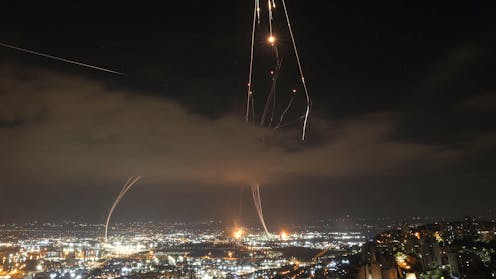
Israeli defence systems intercept Iranian missiles over the city of HaifaAhmad Gharabli / AFP via Getty Images
Late last week, Israel began a wave of attacks on Iran under the banner of Operation Rising Lion, with the stated goal of crippling the Islamic republic’s nuclear program and long-range strike capabilities. At the outset, Israel claimed Iran would soon be able to build nine nuclear weapons, a situation Israel regarded as completely unacceptable.
Following Israeli strikes against Iranian nuclear facilities, and targeted assassinations of Iranian nuclear scientists and key members of the Iranian armed forces, Iran retaliated with a large barrage of ballistic missiles and drones against Tel Aviv and Jerusalem. The first wave consisted of some 200 ballistic missiles and 200 drones.
The conflict continues to escalate, with population centres increasingly being targeted. Israel’s missile defence systems (including the vaunted Iron Dome) have so far staved off most of Iran’s attacks, but the future is uncertain.
Ballistic missiles and how to stop them
Iran possesses a large arsenal of ballistic missiles and long-range drones, alongside other long-range weapons such as cruise missiles. Ballistic missiles travel on a largely fixed path steered by gravity, while cruise missiles can adjust their course as they fly.
Iran is approximately 1,000km from Israel, so the current strikes mostly involve what are classified as medium-range ballistic missiles, alongside long-range drones. It is not clear exactly what type of missile Iran has used in its latest strikes, but the country has several including the Fattah-1 and Emad.
It is very difficult to defend against ballistic missiles. There is not much time between launch and impact, and they come down at very high speed. The longer the missile’s range, the faster and higher it flies.
An incoming missile presents a small, fast-moving target – and defenders may have little time to react.
Israel’s missile defence and the Iron Dome
Israel possesses arguably one of the most effective, battle-tested air defence systems in service today. The system is often described in the media as the “Iron Dome”, but this is not quite correct.
Israel’s defences have several layers, each designed to address threats coming from different ranges.
In essence, Iron Dome consists of a network of radar emitters, command and control facilities, and the interceptors (special surface-to-air missiles). The radar quickly detects incoming threats, the command and control elements decide which are most pressing, and the interceptors are sent to destroy the incoming shells or rockets.
Ballistic defence systems
The other layers of Israel’s defence system include David’s Sling, and the Arrow 2 and Arrow 3 interceptors. These are specifically designed to engage longer-range ballistic missiles, both within the atmosphere and at very high altitudes above it (known as exoatmospheric interception).
Spectacular footage has been captured of what are likely exoatmospheric interceptions taking place during this latest conflict, demonstrating Israel’s capacity to engage longer-range missiles.
The US military has comparable missile defence systems. The US Army has the Patriot PAC-3 (comparable to David’s Sling) and THAAD (comparable to Arrow 2), while the US Navy has the Aegis and the SM-3 (comparable to Arrow 3) and the SM-6 (comparable again to Arrow 2).
Iran possesses some air defence systems such as the Russian S300 which has some (very limited) ballistic missile defence capabilities, but only against shorter range (and thus slower) ballistic missiles. Further, Israel has been focusing on degrading Iran’s air defences, so it is not clear how many are still operational.
Iran has been focusing on developing technology such as maneuverable warheads, which are harder to defend against. However, it is not clear whether these are yet operational and in Iranian service.
Can missile defences last forever?
Missile defences are finite. The defender is always limited by the number of interceptors it possesses.
The attacker is also limited by the number of missiles it possesses. However, the defender must often assign multiple interceptors to each attacking missile, in case the first misses or otherwise fails.
The attacker will plan for some losses to interceptors (or mechanical failures) and send what it determines to be enough missiles for at least some to penetrate the defences.
When it comes to ballistic missiles, the advantage lies with the attacker. Ballistic missiles can carry large explosive payloads (or even nuclear warheads), so even a handful of missiles “leaking” past defensive systems can still wreak significant damage.
What now?
Israel’s missile defences are unlikely to stop working completely. However, as attacks deplete its stocks of interceptors, the system may become less effective.
As the conflict continues, it may become a race to see who runs out of weapons first. Will it be Iran’s stocks of ballistic missiles and drones, or the interceptors and anti-air munitions of Israel, the US and any other supporters?
It is impossible to say who would prevail in such a race of stockpile attrition. Some reports suggest Iran has fired approximately 1,000 ballistic missiles of an estimated 3,000. However, this still leaves it with an enormous stockpile to use, and it is unclear how fast Iran can make new missiles to replenish its resources.
But we should hope it doesn’t come to that. Beyond the tit-for-tat exchange of missiles, the latest conflict between Israel and Iran risks escalating. If it is not resolved soon, and if the US is drawn into the conflict more directly, we may see broader conflict in the Middle East.
James Dwyer does not work for, consult, own shares in or receive funding from any company or organisation that would benefit from this article, and has disclosed no relevant affiliations beyond their academic appointment.
Chinese President Xi Jinping left Beijing on Monday for the second China-Central Asia Summit in Astana at the invitation of President of the Republic of Kazakhstan Kassym-Jomart Tokayev.
Xi’s entourage includes Cai Qi, a member of the Standing Committee of the Political Bureau of the Communist Party of China (CPC) Central Committee and director of the General Office of the CPC Central Committee, and Wang Yi, a member of the Political Bureau of the CPC Central Committee and foreign minister.
Source: People’s Republic of China – State Council News
China’s home prices in 70 large and medium-sized cities continued the downward trend in May, though the pace of decline slowed, the National Bureau of Statistics (NBS) said Monday.
“In May, home prices in 70 major cities continued to fall on a yearly basis, but the pace of decline further eased,” said NBS statistician Wang Zhonghua.
Source: People’s Republic of China – State Council News
China’s value-added industrial output expanded 5.8 percent year on year in May, official data showed on Monday.
The manufacturing sector saw its value-added output climb 6.2 percent year on year last month, with that of equipment manufacturing and high-tech manufacturing up by 9 percent and 8.6 percent, respectively, according to the National Bureau of Statistics.
In the first five months of this year, the country’s industrial output gained 6.3 percent compared to a year ago, the data showed.
The industrial output is used to measure the activity of large enterprises each with an annual main business turnover of at least 20 million yuan (about 2.79 million U.S. dollars).