As the monsoon has become active, the India Meteorological Department (IMD) said the intensity of rains will increase throughout the day on Monday and issued alerts for various regions of Maharashtra.
IMD has issued a red alert in Raigad district, orange alert in Ratnagiri, Sindhudurg, Pune ghat section, Satara ghat section, Kolhapur ghat section and yellow alert in Mumbai, Palghar, Thane, Nashik ghat section, Nagpur, Bhandara, Gondia, Gadchiroli.
The weather bureau has predicted thunderstorms with lightning likely in Buldhana, Akola, Amravati, Washim, Yavatmal, Wardha, Nagpur, Bhandara, Gondia, Chandrapur and Gadchiroli districts.
The Brihanmumbai Municipal Corporation (BMC) said on X, “The Indian Meteorological Department has issued a warning of heavy rains in Mumbai Metropolitan Region (Mumbai city and suburbs) for next three hours. For help in an emergency or for official, contact the BMC’s main control room helpline number 1916.”
Due to the rain, the Central, Western and Harbour Railways in Mumbai are running late by 5 to 10 minutes. Heavy rainfall has been continuing in the Vasai-Virar area since Sunday evening, and many low-lying areas of the city have been submerged. As a result, traffic and normal life have been disrupted.
Mumbai and Pune cities have been receiving continuous rain since the night. Heavy rain has been recorded in the Pune area since night, 113 mm of rain has been recorded in the Varandha Ghat Shirgaon area, while there has been a drizzle in the Mutha Ghat leading to Lavasa.
The weather bureau has predicted that the intensity of rain will decrease in Mumbai and Thane on Tuesday and Wednesday, and the cities will witness moderate rain.
Delhiites breathed cleaner air after showers on early Sunday prompting the Commission for Air Quality Management (CAQM) Sub-Committee on Graded Response Action Plan (GRAP) to revoke actions under Stage-I.
“Today, Delhi’s Air Quality Index (AQI) of the day clocked 140 as per the daily AQI Bulletin provided by the Central Pollution Control Board (CPCB),” said Ministry of Environment, Forest and Climate Change.
While comprehensively reviewing the overall air quality parameters in the region and other aspects, the Sub-Committee said, “AQI of Delhi has shown consistent improvement due to favourable meteorological conditions and the AQI of Delhi has been recorded as 140 for June 15 (in ‘Moderate’ category). Further, the forecast by IMD/IITM also predicts AQI to mainly remain in ‘Moderate’ category in coming days.”
“Therefore, keeping in view this trend of improvement in the AQI of Delhi and also the forecasts by IMD/ IITM predicting the average air quality of Delhi to stay in ‘Moderate’ category in the coming days (for which forecast is available), the CAQM Sub-Committee on GRAP unanimously decided to revoke Stage-I of the extant schedule of GRAP in the entire NCR, with immediate effect,” the statement said.
It was also stressed that all the agencies of the state governments/GNCTD in the NCR, need to ensure that all statutory directions, advisories and orders issued by the Commission are followed and implemented in right earnest to prevent the air quality from slipping to the ‘Poor’ category.
The sub-committee said that all the agencies concerned are also required to take note of various actions and the targeted timelines as envisaged in the comprehensive policy issued by the Commission to curb air pollution in the NCR and take appropriate actions accordingly in the field, particularly the dust mitigation measures, the statement said.
“The Sub-Committee, shall be keeping a close watch on the air quality scenario and review the situation from time to time for further appropriate decision depending upon the air quality in Delhi and forecast made available by IMD/ IITM,” it said.
African Export-Import Bank (Afreximbank) (www.Afreximbank.com) has acted as global coordinator and joint mandated lead arranger for a senior secured term loan facility amounting to US$1.6 billion, in favour of Staatsolie Maatschappij Suriname N.V. (Staatsolie), Suriname’s state-owned energy company, in a major boost to the country’s GranMorgu upstream offshore oil project.
Afreximbank, Banco Latinoamericano de Comercio Exterior, S.A. (Bladex), along with another major international bank and Staatsolie signed the agreement on the 14th of May 2025. Perella Weinberg acted as an advisor to Staatsolie on the transaction.
According to the terms of the agreement, the proceeds of the facility will support Staatsolie in partially refinancing existing debt and funding its 20 per cent working interest in the GranMorgu upstream offshore oil project.
The transaction, the first syndicated loan for which Afreximbank has been mandated on in the Caribbean region, also represents the largest project financing transaction in Suriname’s history and paves the way for the country’s initial offshore oil production by mid-2028.
Capital investments in the project are expected to exceed US$12 billion, with Staatsolie contributing 20 per cent, or US$2.4 billion. The expected revenue generation, depending on oil price, is projected at over US$26 billion for Staatsolie and the Government of Suriname over the operational life, significantly boosting economic development.
The project, which stands out for its low-carbon design, featuring a fully electric floating production, storage, and offloading unit with a production capacity of 220,000 barrels per day, will more than double Staatsolie´s production, providing Suriname with royalties and dividends.
Commenting on the transaction, Prof. Benedict Oramah, President and Chairman of the Board of Directors of Afreximbank, said that it will significantly transform the Surinamese economy. “Afreximbank is most pleased to have played a pivotal role in arranging this financing for Suriname’s Staatsolie. It marks a significant milestone in the Bank’s interventions in the Caribbean and a firm statement of intent by the Bank to support investments in strategic programmes/projects that are consequential to the transformation of the Surinamese economy. Beyond this investment, the Bank is supporting initiatives that will catalyse local participation in the country’s oil and gas sector with the aim of ensuring maximum benefits from the natural resource accrue to the indigenes of Suriname and the larger Caribbean.”
Staatsolie is engaged in exploration, production, refining, retail fuel distribution and power generation. Staatsolie also has a working interest in two gold projects in Suriname. It seeks to develop energy resources to maximise the long-term value for Staatsolie and Suriname, energizing a bright future for Suriname
Annand Jagesar, Managing Director of Staatsolie said: “We have built a solid foundation for Staatsolie to participate in GranMorgu and possible future projects and are embarking on a new phase of transformational growth for the company and the country.”
BLADEX, a multinational bank founded in 1979, provides financial solutions to companies and investors doing business in Latin America. It is headquartered in Panama City and has five offices in Latin America and the United States.
Distributed by APO Group on behalf of Afreximbank.
Media Contact: Vincent Musumba Communications and Events Manager (Media Relations) Email: press@afreximbank.com
About Afreximbank: African Export-Import Bank (Afreximbank) is a Pan-African multilateral financial institution mandated to finance and promote intra- and extra-African trade. For over 30 years, the Bank has been deploying innovative structures to deliver financing solutions that support the transformation of the structure of Africa’s trade, accelerating industrialisation and intra-regional trade, thereby boosting economic expansion in Africa. A stalwart supporter of the African Continental Free Trade Agreement (AfCFTA), Afreximbank has launched a Pan-African Payment and Settlement System (PAPSS) that was adopted by the African Union (AU) as the payment and settlement platform to underpin the implementation of the AfCFTA. Working with the AfCFTA Secretariat and the AU, the Bank has set up a US$10 billion Adjustment Fund to support countries effectively participating in the AfCFTA. At the end of December 2024, Afreximbank’s total assets and contingencies stood at over US$40.1 billion, and its shareholder funds amounted to US$7.2 billion. Afreximbank has investment grade ratings assigned by GCR (international scale) (A), Moody’s (Baa1), China Chengxin International Credit Rating Co., Ltd (CCXI) (AAA), Japan Credit Rating Agency (JCR) (A-) and Fitch (BBB). Afreximbank has evolved into a group entity comprising the Bank, its equity impact fund subsidiary called the Fund for Export Development Africa (FEDA), and its insurance management subsidiary, AfrexInsure (together, “the Group”). The Bank is headquartered in Cairo, Egypt.
India and the Republic of Cyprus (RoC) have sustained and deepened their bilateral relations through a series of high-level political engagements, Ministerial meetings, and institutional consultations in recent years. A statement issued by the Ministry of External Affairs (MEA) said that both countries have consistently reaffirmed their commitment to enhancing cooperation across a wide spectrum of areas including trade, innovation, defence, maritime, legal exchange, and digital transformation.
The foundation of this longstanding relationship has been reinforced through key high-level visits. President Nicos Anastasiades of RoC paid a State visit to India from 24–29 April 2017, while the then President of India, Ram Nath Kovind, visited Cyprus from 2–4 September 2018. In subsequent years, bilateral ties have continued to progress through meetings between top leadership and diplomatic representatives.
Prime Minister Narendra Modi met President Anastasiades during the United Nations General Assembly (UNGA) in New York on 26 September 2019 and earlier during the Commonwealth Heads of Government Meeting (CHOGM) in London on 20 April 2018.
External Affairs Minister Dr. S. Jaishankar has had multiple engagements with his Cypriot counterparts in recent years. In a virtual meeting with then Foreign Minister Nikos Christodoulides on 16 February 2021, both sides expressed satisfaction over the growing trajectory of bilateral ties and agreed to maintain momentum across high-level exchanges, economic partnership, and people-to-people ties. EAM Jaishankar held further discussions with Foreign Minister Ioannis Kasoulides on the sidelines of CHOGM 2022 in Kigali and again at the 77th UNGA in New York in September 2022.
EAM Dr. Jaishankar visited Cyprus from 29–31 December 2022. During the visit, he held meetings with Acting President and Speaker of the House of Representatives Annita Demetriou, and Foreign Minister Ioannis Kasoulides. Two key agreements were signed: a Memorandum of Understanding (MoU) on Defence and Military Cooperation and a Declaration of Intent on a Migration and Mobility Partnership Agreement (MMPA). Additionally, RoC joined the International Solar Alliance during this visit. EAM and his counterpart also addressed an Economic and Business Forum in Limassol on 30 December 2022.
Engagements between the two countries have continued at multilateral fora. EAM met with RoC Foreign Minister Dr. Constantinos Kombos on the sidelines of the EU-Indo Pacific Forum in Stockholm on 13 May 2023, and again during the 78th UNGA in New York on 23 September 2023, followed by another meeting during the 79th UNGA on 25 September 2024, and later during the Doha Forum on 7 December 2024.
Minister of State for Ports, Shipping and Waterways Shantanu Thakur visited Cyprus from 8–11 October 2023 to attend the “Cyprus Maritime 2023 Conference” in Limassol. The event, inaugurated by President Nikos Christodoulides, served as a platform to discuss maritime cooperation and future shipping partnerships. On the sidelines, MoS held a bilateral meeting with the Shipping Deputy Minister Marina Hadjimanolis and also engaged with the Indian shipping community and professionals based in Cyprus.
Dr. Nicodemos Damianou, Deputy Minister of Research, Innovation and Digital Policy of RoC, led a delegation to New Delhi from 5–6 September 2024 to participate in the “CII India Mediterranean Business Conclave.” He joined Commerce Minister Piyush Goyal and EAM Jaishankar during a ministerial session on trade and investment.
Judicial and legal cooperation also received a boost when a high-level delegation from India, led by Justice Surya Kant and Attorney General R. Venkataramani, visited RoC to attend the Commonwealth Legal Education Association (CLEA) International Conference held at UCLan Cyprus from 7–8 October 2024.
To institutionalize the strategic dialogue, the sixth round of Foreign Office Consultations (FOC) was held on 26 November 2024 in Nicosia.
India and the Republic of Cyprus (RoC) have sustained and deepened their bilateral relations through a series of high-level political engagements, Ministerial meetings, and institutional consultations in recent years. A statement issued by the Ministry of External Affairs (MEA) said that both countries have consistently reaffirmed their commitment to enhancing cooperation across a wide spectrum of areas including trade, innovation, defence, maritime, legal exchange, and digital transformation.
The foundation of this longstanding relationship has been reinforced through key high-level visits. President Nicos Anastasiades of RoC paid a State visit to India from 24–29 April 2017, while the then President of India, Ram Nath Kovind, visited Cyprus from 2–4 September 2018. In subsequent years, bilateral ties have continued to progress through meetings between top leadership and diplomatic representatives.
Prime Minister Narendra Modi met President Anastasiades during the United Nations General Assembly (UNGA) in New York on 26 September 2019 and earlier during the Commonwealth Heads of Government Meeting (CHOGM) in London on 20 April 2018.
External Affairs Minister Dr. S. Jaishankar has had multiple engagements with his Cypriot counterparts in recent years. In a virtual meeting with then Foreign Minister Nikos Christodoulides on 16 February 2021, both sides expressed satisfaction over the growing trajectory of bilateral ties and agreed to maintain momentum across high-level exchanges, economic partnership, and people-to-people ties. EAM Jaishankar held further discussions with Foreign Minister Ioannis Kasoulides on the sidelines of CHOGM 2022 in Kigali and again at the 77th UNGA in New York in September 2022.
EAM Dr. Jaishankar visited Cyprus from 29–31 December 2022. During the visit, he held meetings with Acting President and Speaker of the House of Representatives Annita Demetriou, and Foreign Minister Ioannis Kasoulides. Two key agreements were signed: a Memorandum of Understanding (MoU) on Defence and Military Cooperation and a Declaration of Intent on a Migration and Mobility Partnership Agreement (MMPA). Additionally, RoC joined the International Solar Alliance during this visit. EAM and his counterpart also addressed an Economic and Business Forum in Limassol on 30 December 2022.
Engagements between the two countries have continued at multilateral fora. EAM met with RoC Foreign Minister Dr. Constantinos Kombos on the sidelines of the EU-Indo Pacific Forum in Stockholm on 13 May 2023, and again during the 78th UNGA in New York on 23 September 2023, followed by another meeting during the 79th UNGA on 25 September 2024, and later during the Doha Forum on 7 December 2024.
Minister of State for Ports, Shipping and Waterways Shantanu Thakur visited Cyprus from 8–11 October 2023 to attend the “Cyprus Maritime 2023 Conference” in Limassol. The event, inaugurated by President Nikos Christodoulides, served as a platform to discuss maritime cooperation and future shipping partnerships. On the sidelines, MoS held a bilateral meeting with the Shipping Deputy Minister Marina Hadjimanolis and also engaged with the Indian shipping community and professionals based in Cyprus.
Dr. Nicodemos Damianou, Deputy Minister of Research, Innovation and Digital Policy of RoC, led a delegation to New Delhi from 5–6 September 2024 to participate in the “CII India Mediterranean Business Conclave.” He joined Commerce Minister Piyush Goyal and EAM Jaishankar during a ministerial session on trade and investment.
Judicial and legal cooperation also received a boost when a high-level delegation from India, led by Justice Surya Kant and Attorney General R. Venkataramani, visited RoC to attend the Commonwealth Legal Education Association (CLEA) International Conference held at UCLan Cyprus from 7–8 October 2024.
To institutionalize the strategic dialogue, the sixth round of Foreign Office Consultations (FOC) was held on 26 November 2024 in Nicosia.
The inaugural season of the Rugby Premier League (RPL) got underway on Sunday with a grand opening ceremony at the Shahaji Raje Bhosale Sports Complex (Andheri Sports Complex), Mumbai, marking a significant moment for the sport in India.
The event saw attendance from a mix of sports officials, Bollywood celebrities, and business leaders. Abhishek Bachchan, who serves as the Sports Ambassador and Friend of Rugby, joined GBS Raju, Business Chairman – Airports, GMR Group, and Rahul Bose, President of Rugby India, in unveiling the tournament’s trophy.
The 22-inch tall trophy, as described by the organisers, features a black nickel-plated hand holding a gold-plated rugby ball, symbolising teamwork, strength, and collective effort — the core tenets of the sport. The use of fused metals was said to represent India’s blend of tradition and modernity.
The opening evening also included a musical performance by composer-singer Shankar Mahadevan, who presented the official Rugby Anthem, energising the crowd. The event drew several film personalities including Shabana Azmi, Siddharth Roy Kapur, Vidya Balan, Aparshakti Khurana, and Ishwak Singh.
The league will feature six franchises competing over 34 matches across two weeks. Thirty Indian players, selected from a pool of 71 during the league’s player auction, will play alongside international names, offering a global flavour to the contest.
The final is slated for June 29, concluding what promises to be a fortnight of high-intensity action and a major push for rugby’s popularity in India.
The Season 1 finale is set for June 29, capping two weeks of high-octane rugby as teams battle for the coveted title.
The inaugural season of the Rugby Premier League (RPL) got underway on Sunday with a grand opening ceremony at the Shahaji Raje Bhosale Sports Complex (Andheri Sports Complex), Mumbai, marking a significant moment for the sport in India.
The event saw attendance from a mix of sports officials, Bollywood celebrities, and business leaders. Abhishek Bachchan, who serves as the Sports Ambassador and Friend of Rugby, joined GBS Raju, Business Chairman – Airports, GMR Group, and Rahul Bose, President of Rugby India, in unveiling the tournament’s trophy.
The 22-inch tall trophy, as described by the organisers, features a black nickel-plated hand holding a gold-plated rugby ball, symbolising teamwork, strength, and collective effort — the core tenets of the sport. The use of fused metals was said to represent India’s blend of tradition and modernity.
The opening evening also included a musical performance by composer-singer Shankar Mahadevan, who presented the official Rugby Anthem, energising the crowd. The event drew several film personalities including Shabana Azmi, Siddharth Roy Kapur, Vidya Balan, Aparshakti Khurana, and Ishwak Singh.
The league will feature six franchises competing over 34 matches across two weeks. Thirty Indian players, selected from a pool of 71 during the league’s player auction, will play alongside international names, offering a global flavour to the contest.
The final is slated for June 29, concluding what promises to be a fortnight of high-intensity action and a major push for rugby’s popularity in India.
The Season 1 finale is set for June 29, capping two weeks of high-octane rugby as teams battle for the coveted title.
A combination of freezing temperatures, fog, hoar frosts and black ice means challenging conditions for travel on State Highways 8 and 80 over the next few days, with the biggest concern being drivers not adapting to the conditions.
“On SH8 in particular, there are many sheltered areas where build-up of ice is a major concern,” says NZTA System Manager Mark Pinner.
“Bridge surfaces can cool quickly, and re-freezing can even occur in the late morning.”
“We‘ve already had reports of people driving too fast for the conditions and truck and trailer units fishtailing. We also know it’s going to get busier later in the week as we get closer to the long holiday weekend for Matariki. Reducing speed is the biggest thing drivers can do to keep themselves safe and to help keep the highways open.”
“One of the measures we are employing to slow traffic down are Temporary Speed Limits which can be employed on parts of the highway network that are most at risk.”
The Temporary Speed Limit of 50km/h has been put into effect on State Highway 8 at sites such as either side of Lake Tekapo township, and near the Tekapo Military Camp, the Tekapo Flyover (over the Tekapo Canal) and Simons Pass.
“This is not our usual approach, but the nature of the conditions forecast for this week means we need to use every tool we can to keep people safe on the roads,” Mr Pinner says.
“Our typical de-icing agents are at the extreme range of where they aren’t as effective, and whilst we are gritting the roads, driving to conditions is a key part of keeping road access safe also.”
“If the conditions warrant it, we will close the highway, most likely overnight and through the high-risk early morning period. People need to plan ahead if they are travelling in the area – keep an eye on our Journey Planner site.”
In the first twelve months of the Government’s flagship Priority One policy, nearly 1000 families with more than 2,124 children have been moved from dank emergency housing motel rooms to secure, stable homes.
“The largescale use of emergency housing was one of the biggest public policy failures in New Zealand history. Under the previous government’s watch, thousands of children were consigned to grow up in cramped, dingy motel rooms at a cost to taxpayers of $1 million every day at its peak,” Housing Minister Chris Bishop says.
“The cost to taxpayers was a scandal, but the social cost for families trying to raise their kids from a motel room for months or even years on end was an absolute tragedy.
“We campaigned on introducing a Priority One category to help these kids and their families move into social homes, and getting it up and running was a key priority for us as an incoming Government.
“Priority One, which has now been in place for a year, bumps families with dependent children to the very top of the social housing waitlist if they have been in emergency housing for 12 weeks or more.
“Thanks to Priority One and the hard work of many frontline staff across multiple government agencies, thousands of children now live in a warm, dry social home instead of a crowded motel room.”
Minister Potaka said the Government had already achieved its target of reducing the number of households in Emergency Housing by 75 per cent by 2030 and now needed to maintain progress. Since November 2023 to April 2025, households in emergency housing have dropped from 3,342 to 516– that’s a drop of 84.5 percent.
“And importantly, there are now significantly fewer children in emergency housing. In April 2024, there were 3,339 children in emergency housing, and a year later we’re down to 519.
“The focus on supporting whānau with tamariki into better stable homes could mean a world of difference for their health, school attendance, and regular employment.
“One of the whānau we’re talking about today is a family of six whose eldest child has serious health concerns needing specialist care, but who had been struggling while stuck living in emergency accommodation for six months.
“Our Priority One focus helped get this whānau into a stable Kāinga Ora home and helped enable them to get the wider support they needed.
“We will continue to improve the housing system because there are thousands of deserving people out there just like this whānau, many of them on the social housing list just waiting to take proper care and enjoy a better home.
“MSD has also improved how it tracks emergency housing outcomes. We now know where around 85 percent of those leaving emergency housing go – be it social housing, transitional housing, or a private rental.
“Of the households that exited emergency housing (excluding contracted emergency housing) during December 2024:
37 percent left emergency housing to go into social housing (4 percent through CHPs, 33 percent through Kāinga Ora)
29 percent had moved into transitional housing
19 percent were receiving the accommodation supplement for a private rental
14 percent did not access any of this housing-related assistance.”
Hard on the heels of the cancellation of pay equity claims for thousands of hospital, health and community support workers, the Government’s announcement today that they’re dropping the Te Mauri o Rongo Health Charter is another callous twist of the knife, the PSA says.
Minister Simeon Brown’s suite of changes to the Pae Ora Act will see, among other things, a repeal of the Te Mauri o Rongo Health Charter.
“The Health Charter set out shared values and principles to shape behaviours for how Te Whatu Ora will support and promote a safe working culture across health, including the funded community sector. Now it’s gone, with seemingly nothing to replace it,” Public Service Association Te Pūkenga Here Tikanga Mahi national secretary, Fleur Fitzsimons, says.
“Hospital, health, and community support workers are already under immense strain. They’re constantly asked to do more with less. And the high frequency of assaults by patients – particularly for mental health workers – is increasingly, frighteningly normalised.”
The PSA played a critical role in developing the charter, standing up a working group of health and community support workers shortly after Te Whatu Ora was established. It was developed by the health workforce for the health sector, and is a positive framework to lead and support the health system to develop relationships to achieve pae ora (healthy futures).
“A functioning health system must commit to supporting their workforce and empowering them to speak out when their safety is compromised. Otherwise we’ll just do what New Zealand has done for years, and drive out our highly trained health workforce to sunnier pastures overseas.
“The commitment to a well-trained workforce with access to appropriate resources to develop their skills, as well as workers to provide person and whānau-centred services, are a challenge to this Government.
“The coalition continues to show us who and what they value. It’s very clear that they’re continuing to completely under-value the workers, and especially the women workers, who prop up the system to serve New Zealand whānau when they need it most.”
The Public Service Association Te Pūkenga Here Tikanga Mahiis Aotearoa New Zealand’s largest trade union, representing and supporting more than 95,000 workers across central government, state-owned enterprises, local councils, health boards and community groups.
When Kiss Me Kate hits the stage at Papa Hou Theatre in the heart of Christchurch next week, audiences will experience a show polished by an internationally acclaimed director-choreographer duo.
Ara Institute of Canterbury’s National Academy of Singing and Dramatic Arts (NASDA) has brought in US-based stage superstars Diane Laurenson and Bob Richard to work with ākonga (students) for the much-loved musical production.
The pair’s combined careers span Broadway, the West End and beyond with international tours, television and film credits to their names. While they bring a wealth of expertise to NASDA, they’re also in their element as devoted educators.
“We’ve worked with professionals for almost 40 years but it’s a dream to be among new talent who are growing as actors and to help build a foundation for the world they’re going into,” Laurenson said.
“It’s kind of like being a rock in the stream,” Richard added. “As professional directors we can help them steer a course and identify what they want to focus on as emerging artists.”
Laurenson is a celebrated Fosse veteran, working directly with Broadway leg
New benefit means cheaper commutes, cleaner cities, and more money in workers’ pockets, says Extraordinary
Kiwi fintech maverick, Extraordinary, has seized a rare opportunity to align the stars — combining a recent Fringe Benefit Tax (FBT) change with a first-of-its-kind salary sacrifice solution. As a result, Kiwi commuters now have a powerful reason to leave the car at home. Public transport can finally be paid for using pre-tax income, made possible by Extraordinary’s Card and platform.
New research by Extraordinary shows strong appetite for the change:
21% of Kiwis who currently commute by car say they would consider switching to public transport if their employer offered a tax-free travel benefit – rising to 40% among younger workers aged 18–34.
19% of remote workers say they’d commute into the office more often if they received a public transport allowance.
With younger employees especially responsive to incentives, the new option gives employers a powerful tool to support greener, more vibrant cities – while helping workers keep more of their pay.
These findings come at the perfect time: employers can now provide public transport allowances without incurring Fringe Benefit Tax (FBT) – saving both employers and employees money, and making cleaner, more affordable commuting a reality.
To mark the milestone, Extraordinary CEO Steven Zinsli joined Mayor of Auckland Wayne Brown for a media moment on Auckland’s Britomart, one of the city’s busiest business and transport hubs.
“This is a game-changer for how people travel to work,” said Steven Zinsli. “It’s now easier and cheaper for employers to support public transport, and workers can keep more of what they earn.”
Until now, FBT rules meant employer-subsidised transport came with tax penalties, limiting uptake. That’s now changed – with Extraordinary’s innovative solution, employees will have the ability to top up existing transport cards using pre-tax income, reducing travel costs and encouraging more sustainable transport options.
The shift arrives at a crucial moment, as cities like Auckland seek ways to reduce congestion and emissions, while also reviving CBD activity. Recent research shows that office occupancy remains below 70% in some major centres, well below pre-pandemic levels.
Mayor Wayne Brown said: “One of my key priorities when I was elected as Mayor was to get Auckland moving, and initiatives like this will make it easier for people to get to work by bus or train and help reduce congestion on our roads. This is good for the environment, good for our cities and good for our economy.”
Why this matters:
More money in workers’ pockets: public transport benefits are now tax-free
No extra cost to employers: avoid FBT while supporting sustainability
Convenience: Top up existing transport cards using pre-tax income
Cleaner cities: fewer cars = reduced emissions and congestion
City revival: supports return-to-office and urban vibrancy.
Extraordinary is already partnering with major employers across New Zealand and expects demand to accelerate as more businesses take advantage of the updated FBT rules.
Extraordinary is a New Zealand-based fintech platform revolutionising how employers manage non-payroll benefits. Its smart employee card supports Gifting, Public Transport, Rewards, and other allowances – replacing reimbursements and manual admin with real-time, flexible payments. Founded in 2021 and based in Auckland, Extraordinary is trusted by forward-thinking companies to boost retention, compliance, and employee satisfaction.
On September 28, 2020, Victor Vargotskii was arrested in Argentina on an international arrest warrant. Francisco Javier Jimenez Guerrero was arrested on October 24, 2019 in Spain.
Yesterday, RCMP police officers arrested 17 individuals involved in a vast international money laundering network. This major investigation targeted a criminal organization in Montréal and Toronto. The raid mobilized more than 300 police officers and partners.
The investigation was led by the Integrated Proceeds of Crime unit, in cooperation with RCMP investigators from Ontario and the Canada Revenue Agency (CRA). The investigation was conducted from 2016 to 2018 following information received from the Drug Enforcement Administration (DEA).
An elaborate money‑laundering scheme
The network’s members facilitated the collection of money from criminal groups in Montréal and then laundered the results of their illegal business. In particular, the network offered a money transfer service to drug exporting countries.
The network moved money that was collected in Montréal through various individuals and currency exchange offices in Toronto. The network used an informal value transfer system (IVTS) with connections in Lebanon, the United Arab Emirates, Iran, the United States and China. The funds were then returned to drug exporting countries, such as Colombia and Mexico.
This procedure allowed for the laundering of significant amounts of money originating from illegal activities, including drug trafficking. The criminal organizations could thus import drugs through this network.
The scheme set up by the network for criminal purposes was identified and dismantled.
Proceeds of crime seized
During the investigation and the searches, police officers seized significant quantities of drugs, such as cannabis, cocaine, hashish and methamphetamine, for a market value of close to $2.2 million. Bank accounts and money in Canadian and foreign currencies was also seized, for a value of $8.7 million. The CRA also proceeded with the restraint of six properties, of an estimated value of $15 million. The RCMP also seized a considered offence-related property of an estimated value of $7 million. To date, the estimated value of the assets that were seized or restrained is more than $32.8 million.
Individuals accused
Charges were laid against 17 individuals, including the two individuals who are the network’s alleged leaders, Nader Gramian-Nik, 56 years old, from Vaughan (Ontario cell) and Mohamad Jaber, 51 years old, from Laval (Quebec cell).
Quebec cell
Mohamad Jaber, 51 years old, Laval
Kamel Ghaddar, 39 years old, Laval
Eric Bradette, 36 years old, L’Assomption
Sergio Violetta Galvez, 43 years old, Laval
Alexei Parasenco, 26 years old, Montréal
Victor Vargotskii, 56 years old, Montréal
Mario Maratta 64, years old, Sainte-Sophie
Sorin Ehrlich, 62 years old, Montréal
Gary Maybee, 57 years old, Austin
Francisco Javier Jimenez Guerrero, 35 years old, address unknown
Ontario cell
Nader Gramian-Nik, 56 years old, Vaughan
Tania Geramian-Nik, 28 years old, Vaughan
Frederick Rayman, 71 years old, Unionville
Sahar Shojaei, 45 years old, Thornhill
Thomas Hsueh, 47 years old, Thornhill
Mohammadreza Sheikhhassani, 55 years old, Richmond Hill
Shabnam Mansouri, 38 years old, Maple
These individuals are facing a number of charges:
conspiracy
possession of drugs for the purpose of trafficking
instructing the commission of an offence for a criminal organization
commission of offence for criminal organization
trafficking in property obtained by crime
laundering proceeds of crime
Three individuals arrested during yesterday’s operations were also interrogated and released without charges.
Fighting organized crime
This operation conducted by the RCMP and its partners disrupted the activities of criminal organizations that import drugs. It cut them off their money transferring network and allowed for the confiscation of significant sums.
Public appeal
Do you have information about the illegal activities of individuals or groups of individuals? Contact the RCMP at 514-939-8300 / 1-800-771-5401 or your local police department.
Over the last two weeks, our officers have worked tirelessly to find the suspects wanted in connection to the homicides in British Columbia.
While there were no confirmed sightings since July 22nd, our officers never gave up in their search efforts – following-up on every lead, considering all options, and using every available resource.
Our officers knew that we just needed to find that one piece of evidence that could move this search forward.
On Friday, August 2nd, that one critical piece of evidence was found – items directly linked to the suspects were located on the shoreline of the Nelson River.
Following this discovery, we were, at last, able to narrow down the search.
We immediately sent in specialized RCMP teams to begin searching nearby high-probability areas.
This morning, at approximately 10:00 am, RCMP officers located two male bodies, in the dense brush, within 1 kilometer from where the items were found. This is approximately 8 km from where the burnt vehicle was located.
At this time, we are confident that these are the bodies of the two suspects wanted in connection with the homicides in British Columbia. An autopsy is being scheduled in Winnipeg to confirm their identities and to determine their cause of death.
To the families of everyone affected by the series of events over the last few weeks, I know it has been so very difficult and I hope today’s announcement can begin to bring some closure.
I want to thank the communities and the leadership of Gillam, Fox Lake Cree Nation, Ilford War Lake First Nation and York Landing.
Your lives have been disrupted, many of you lived with uncertainty and fear, but throughout, you were resilient, you came together as communities and you helped our officers get the job done.
To the officers involved in the search efforts; I commend you for your determination, for your innovation, for never giving up, and for working night and day to bring this search to a conclusion.
This was a search that could not have been successfully achieved without the help from our partners at the Canadian Armed Forces, from RCMP employees who came in from across the country and from multiple private partners.
Above all however, it was a search that could only be successful if we had strong public engagement and support.
Thank you to all Canadians for remaining vigilant, for calling us with information and most importantly, for being our partners.
The Butterfly Who Flew Into The Rave.Lucy Parakhina/Rising
I first came across the work of Argentinian underground enfant terrible Marina Otero in 2022, seeing her work Fuck Me in Paris. Fuck Me starts with shaky videos of Otero speaking from a hospital bed while awaiting spinal surgery, explaining her initial absence from the stage.
When she did appear, she was frail and could barely move. Six strapping naked dancers helped her demonstrate what the dance would have been, now that she could no longer dance. Propping and carrying her, her petite body seemed even more fragile in their hands.
We were all commiserating over her misfortune as she was telling us, in random order, about her injury, her loneliness, her sexless life, her grandfather and the military dictatorship in Argentina.
At the end, when she came to bow, she moved so precariously that a gust of wind would have blown her away. And then, as we were getting ready to leave, she stormed back onto the stage and started running in circles, faster and faster, going and going, finally stopping when the last person left the theatre.
I was told it went on for almost an hour.
Never have I felt more emotionally manipulated as an audience member. I appreciated the astuteness of the trickery but was furious at my naivety. For a long time, I thought it was all fiction.
Later, I learnt it was all true; it was indeed Otero’s life, living with pain, joyless and desireless. This is what pain does.
At this year’s Rising festival, Otero’s Kill Me – the last in the trilogy which started with Fuck Me – is also about her life. She gives us the story of a painful breakup with a narcissistic man, the resulting revengeful desire to become an invincible Sarah Connor and Otero’s subsequent diagnosis with borderline personality disorder (BPD).
Kill Me is a dance work about living with borderline personality disorder. Mariano Barrientos/Rising
The rest of the cast have been chosen by Otero because they all live with this condition. Five naked women wear little else than knee-pads, black gloves, white boots and orange wigs, and carry revolvers. They enter the stage majestically and promise to be credible Sarah Connors.
Instead, they turn out to be self-declared Marilyns and Lady Dis, as they each tell us about their life with mental illness.
The piece becomes a catalogue of vignettes and vivid illustrations. Their stories are messy and painful to hear. Yet the unsettling always veers into the hilarious, peppered with flamboyant songs and cheesy Lacan quotes.
And then, there is the great male ballet dancer Vaslav Nijinsky, reborn, performed by the only male dancer, as stoutly robust as Nijinsky was flowingly tall. He is the clown, the cheerful unballetic partner to attempted pirouettes with improbable endings.
The lone male dancer is the clown, the cheerful unballetic partner. Mariano Barrientos/Rising
As Otero’s final monologue arrives, an account of the plight of living with BPD, and of her intention to end the piece with a gun to her head, I remember Nijinsky’s diary entry:
The audience came to be amused. They thought that I was dancing to amuse them. I danced frightening things.
Otero and her dancers dance frightening things, from the artist’s necessity to create to keep sane, to self harming to feel one has a self, to exhibiting one’s life to feel alive.
This is the story of those too unstable for the “ordered” world, of the many “misfits”, the “insane” and the “hysteric” – all those who need to take a pill to fit into the world, as she says.
This time, Otero’s staged life is not a manipulation of our emotions, rather a diffraction of our own. These sexy avengers and reborn Nijinskys are us, and their fears, ours: fears of being unloved, abandoned, forgotten. Some of us manage to make it “fit” better. Others take it to the stage as both salvation and redemption.
The depression of BLKDOG
BLKDOG, from British choreographer Botis Seva, is also about mental health, suggested by the title, referencing Winston Churchill’s metaphor of the black dogpopularised in referring to depression.
This is a dark piece, contrasting heavily with Kill Me. Seven hooded, genderless bodies emerge from obscurity, move and morph together, a tenuous presence at first, and then more threatening, as the group gangs up on one of them, suddenly, somehow isolated.
It does not become any lighter. The dancers don hoodies for a more urban apparel and, later, dragon onesies.
BLKDOG is a dark and unsettling work. Tom Visser/Rising
This unsettling closing in remains a pattern. A lonely body breaks out from the group, to simulate suicide, or self-harm, or murder. The others approaching to attack, rape, beat or kill. The unnerving dancing reveals the dancers’ skills, all impeccably trained in street dance, as the choreography relies heavily on the virtuosic vocabulary of popping and krumping.
Everything is dark and rough in this joyless piece. The lighting that plunges the stage into oppressive mists or aggressively isolates bodies with cutting brightness, the relentless pounding of Torben Lars’ soundtrack, the dancers’ faces always in the dark.
The choreography is a suite of vignettes of simulated violence, but they are so theatricalised it dilutes them into caricature. When tenderness arrives, unexpectedly, with one body consoling another, a gentle movement here and there, a pause softened by children’s voices, it makes us see the depth of the turmoil, the thoughts thumping trapped in one’s head.
It is inescapable and we are glad when the piece is over. Tom Visser/Rising
It is inescapable and we are glad when the piece is over. Seva created this piece in 2018 after the birth of his first child. He doesn’t want to perform it anymore as it takes him to dark places. Like Otero, he says he had to make the piece. Unlike Otero, he no longer wants his life to be the work.
Oozing with joy
In The Butterfly that Flew into the Rave, from New Zealand Aotearoa choreographer Oli Mathiesen, Mathiesen and his two acolytes, Celia Hext and Tayla Gartner, dance non-stop for nearly two hours on the Buxton Contemporary concrete floor.
There is nothing here of the dancing-till-you-forget-yourself typical of raves; always the same saccadic movements, always the slight sadness, of those who want to keep going in sweaty clubbing rooms when lights go up or, in the early dusty mornings of an ending festival.
Their joy is infectious as they dance together in sync. Mark Gambino/Rising
There is joy oozing out of this trio’s dancing, facing us, smiling at us, as they swim from one routine into the other, not the tedious spasmodic rave clubbing vocabulary but the more joyful aerobic-whacking-contemporary jazz sort of thing one can learn from YouTube tutorials.
Their joy is infectious as they dance together in sync. When they are not synced, it is in jest. They smile at us as they dance for us. The joy infects the audience: those standing and pulsing to the beat of the music, those who resist it but not for long, those so taken with the dancers that they forget to breathe because they are so attuned.
We are implicated as witnesses to their generous joy, palpable and pulsing like a beating heart. We remember we have one: one that can give in to joy.
In all three works, their protagonists throw their bodies into the fight. They dance with depth and urgency, because they have to, and while the fight may seem different, it may be the same, that of finding (and keeping) the joy.
If this article has raised issues for you, or if you’re concerned about someone you know, call Lifeline on 13 11 14.
As a dance professional, Angela Conquet has received funding from Creative Australia. She is the co-chair of the Green Room Awards Dance panel.
Amid the escalating conflict between Iran and Israel, the Ministry of External Affairs (MEA) on Monday said India is closely monitoring the situation to ensure the safety and welfare of its nationals in both countries.
In a statement posted on X, MEA spokesperson Randhir Jaiswal said: “The Indian Embassy in Tehran is continuously monitoring the security situation and engaging Indian students in Iran to ensure their safety. In some cases, students are being relocated with the Embassy’s facilitation to safer places within Iran. Other feasible options are also under examination.”
The MEA added that the Indian Embassy is also in contact with community leaders across Iran to assess and support the welfare of Indian citizens.
Over 1,500 Indian students—mostly from Jammu and Kashmir—are currently stranded in Iran. Many are pursuing professional degrees such as MBBS in cities including Tehran, Shiraz, and Qom.
On Sunday, Jammu and Kashmir’s former Chief Minister Omar Abdullah said he had spoken with External Affairs Minister S. Jaishankar regarding the safety of these students.
Several parents have also appealed to Prime Minister Narendra Modi and Jaishankar to intervene and arrange for their children’s safe return to India.
Earlier, the Indian Embassy in Iran issued an advisory urging all Indian nationals and Persons of Indian Origin to remain vigilant. The advisory, shared on its X account, included a Google form for individuals to register their details.
“Please remember, it is important not to panic, exercise due caution and maintain contact with the Embassy of India in Tehran,” the embassy said.
It also shared a Telegram link, asking Indian citizens to join the channel for real-time updates.
The number of confirmed DNA matches in the Ahmedabad plane crash has reached 80, including that of former Gujarat Chief Minister Vijay Rupani. Of these, 33 bodies have been handed over to their families, Dr Rajneesh Patel, Additional Superintendent of Ahmedabad Civil Hospital, said on Sunday.
The Boeing 787-8 Dreamliner, headed for London, crashed into a hostel complex shortly after taking off from the Sardar Vallabhbhai Patel International Airport. The crash claimed 241 lives, including 229 passengers and 12 crew members. Among those killed was Vijay Rupani, who served as Gujarat’s Chief Minister between 2016 and 2021.
Dr Patel said that families of two more victims were expected to arrive by Monday night, while 13 families had scheduled to collect the remains on Tuesday. In 21 cases, the handover of bodies will take place after further consultations with next of kin.
In the case of 11 victims, their relatives were also among the deceased. These bodies will be released once the remaining DNA matches are completed.
So far, the bodies handed over have been from various parts of Gujarat and Rajasthan: 12 from Ahmedabad, five from Baroda, four each from Mehsana and Anand, two each from Kheda and Bharuch, and one each from Udaipur, Jodhpur, Botad, and Aravalli.
To assist families during the identification and repatriation process, the state government has formed dedicated support teams. Each team comprises a senior administrative officer, a police official, and a professional counsellor. These teams are tasked with offering emotional and logistical support to the grieving families.
Authorities have assured that each body will be handed over with full dignity.
Out of 242 people on board the aircraft, only one — Vishwashkumar Ramesh, a British national of Indian origin — survived the crash. He is currently undergoing treatment at a private hospital.
In addition to those on board, at least 33 individuals — including MBBS students and local residents — died when the aircraft crashed into the doctors’ hostel building.
The Government launched a public consultation ahead of the 2025 Policy Address today.
Chief Executive John Lee will deliver his fourth Policy Address this September.
“I have endeavoured to transform the culture of the Government into one that is result-oriented, works at a faster pace, and is proactive,” he said.
“My team and I have been listening to the views of the public and focusing on serving the community. We are committed to developing the economy and improving people’s livelihoods to ensure our initiatives effectively respond to the needs of members of the public.
“Hong Kong continues to forge ahead with its unique advantages under the principle of ‘one country, two systems’, benefitting from the strong support of the motherland and remaining closely connected to the world.
“Hong Kong is currently facing economic restructuring. The Government will continue to lead all sectors of society in consolidating and enhancing the factors for Hong Kong’s success while upholding our principles and being innovative in advancing reforms.
“We will endeavour to explore new growth areas, trade markets and frontiers, deepen international exchanges and co-operation, and enhance regional collaboration to foster economic growth and development.”
More than 40 consultation sessions will be held with the aim of gathering views and suggestions from Legislative Council members, representatives of various sectors, and members of the public. Mr Lee and his governing team will also conduct district visits to listen to a variety of views.
“I invite you all to give your views on the 2025 Policy Address,” he added. “My team and I will listen to and consider your views carefully, and we look forward to receiving your input to build a better Hong Kong together.”
People can submit their views via the Policy Address website, the dedicated Facebook page, by email, by phone on 2432 1899 or by fax on 2537 9083.
Source: People’s Republic of China in Russian – People’s Republic of China in Russian –
Source: People’s Republic of China – State Council News
BEIJING, June 16 (Xinhua) — Commercial housing prices in 70 large and medium-sized cities in China continued to fall in May, although the pace of decline slowed, data released by the National Bureau of Statistics showed Monday.
“House prices in 70 large and medium-sized cities across the country continued to fall year-on-year in May, but the pace of decline slowed,” said Wang Zhonghua, a spokesman for the department. -0-
Source: People’s Republic of China – State Council News
The 2025 Beijing Figure Skating and Synchronized Skating League opened on June 13 at the National Aquatics Center in Beijing. The three-day competition brought together a record of over 400 athletes from 31 clubs and schools across the city, highlighting the sport’s growing popularity in Beijing.
A skater compete in the 2025 Beijing Figure Skating and Synchronized Skating League at the National Aquatics Center in Beijing, June 13-15, 2025. [Photo provided to China.org.cn]
Recognized as a key annual event on Beijing’s ice sports calendar, the league features a variety of disciplines including singles, pairs, ice dance and synchronized skating, with categories ranging from youth to adult levels.
A skater compete in the 2025 Beijing Figure Skating and Synchronized Skating League at the National Aquatics Center in Beijing, June 13-15, 2025. [Photo provided to China.org.cn]
Designed as both a competitive platform and a developmental opportunity, the league offers young skaters the chance to hone their skills and gain valuable experience. It also plays a vital role in cultivating future talent and promoting the long-term development of ice sports in Beijing.
Skaters chat rink-side during the 2025 Beijing Figure Skating and Synchronized Skating League at the National Aquatics Center in Beijing, June 13-15, 2025. [Photo provided to China.org.cn]
This year’s edition was hosted at the venue’s underground Ice Sports Center, a state-of-the-art facility equipped with Olympic-standard ice rinks, high-level event logistics and professional management teams.
A skater and her coach wait for the scores in the “kiss-and-cry area” after her performance in the 2025 Beijing Figure Skating and Synchronized Skating League at the National Aquatics Center in Beijing, June 13-15, 2025. [Photo provided to China.org.cn]
In keeping with its dual-Olympic legacy, the center introduced a multi-tiered viewing experience for this year’s league. Fans were able to watch the action rink-side, from a mezzanine viewing space or at an outdoor fan zone on the venue’s south square, where live screenings, seating and food vendors offered a more relaxed environment for spectators to enjoy.
The event also reflects the center’s broader shift from being a specialized competition venue to becoming a year-round destination for sport, culture and recreation. This summer, the venue is launching a series of programs combining ice and water sports, aimed at giving young people an engaging and active alternative for their holidays.
With an eye toward hosting more top-tier events in the coming years, the center continues to expand its role in promoting winter sports and fostering a lasting skating culture in the capital.
Michael Olise scored two goals with two assists, all in the first half, and Germany’s Bayern Munich was off and running toward a 10-0 victory over New Zealand’s Auckland City in a Group C opener of the FIFA Club World Cup at Cincinnati.
Kinglesly Coman also scored a pair of first-half goals for Bayern Munich, including the opening goal of the tournament in the sixth minute, after Saturday’s game between Egypt’s Al Ahly and Inter Miami FC ended in a scoreless draw.
Olise scored goals in the 20th minute and the third minute of first-half stoppage time. His early assists came on Coman’s second goal, for a 4-0 lead in the 22nd minute and his second came on a score from veteran Thomas Muller for a 5-0 lead in the 45th minute.
Bayern Munich further distanced itself in the second half, with midfielder Jamal Musiala scoring three goals in a 16-minute stretch. Muller capped the scoring with a goal in the 89th minute and also had an assist on Musiala’s first goal in the 68th minute.
The champions of the just-completed Bundesliga in Germany, Bayern Munich had possession for 71 percent of the match and had 17 shots on target to just one for Auckland City. Bayern Munich goalkeeper Manuel Neuer made one save.
Auckland City goalkeeper Conor Tracey made seven saves.
Bayern Munich next faces Argentina’s Boca Juniors in Group C play at Miami on Friday. Auckland City is set to face Portugal’s SL Benifica at Orlando, also on Friday.
New Zealand’s Chief of Army, Major General Rose King, and Australia’s Chief of Army, Lieutenant General Simon Stuart, combined for a joint visit to Timor-Leste last week.
The two chiefs met with senior Ministry of Defence and Falintil-Forcas de Defesa de Timor-Leste (F-FDTL) members to discuss shared security priorities and long-standing partnership and cooperation programmes. These included ways to continue to support and strengthen F-FDTL, which in turn provides valuable insight and lessons for both the Australian and New Zealand armies.
The delegation also met with Australian Defence Cooperation Program (ADCP) and New Zealand Mutual Assistance Programme (MAP) personnel, which have been long-standing commitments in the country.
“Timor-Leste is an important security partner to both Australia and New Zealand. Our shared history and commitment to a peaceful, stable region is at the core of our growing fri
Source: US National Oceanic and Atmospheric Administration
Note: The expiration time in the watch graphic is amended if the watch is replaced, cancelled or extended.Note: Click for Watch Status Reports. SEL2
URGENT – IMMEDIATE BROADCAST REQUESTED Severe Thunderstorm Watch Number 422 NWS Storm Prediction Center Norman OK 955 PM MDT Sun Jun 15 2025
The NWS Storm Prediction Center has issued a
* Severe Thunderstorm Watch for portions of Western into Central North Dakota
* Effective this Sunday night and Monday morning from 955 PM until 400 AM MDT.
* Primary threats include… Scattered damaging winds and isolated significant gusts to 85 mph likely Isolated large hail events to 1.5 inches in diameter possible
SUMMARY…Clusters of severe thunderstorms are forecast to move east into the Watch tonight from eastern Montana. A couple of supercells may pose a threat for large hail, but the primary hazard will be severe gusts with linear bands and clusters of thunderstorms. Severe gusts peaking into the 75-85 mph range are possible with the more intense outflow surges and thunderstorm downdrafts.
The severe thunderstorm watch area is approximately along and 75 statute miles east and west of a line from 65 miles northwest of Minot ND to 10 miles east southeast of Lemmon SD. For a complete depiction of the watch see the associated watch outline update (WOUS64 KWNS WOU2).
PRECAUTIONARY/PREPAREDNESS ACTIONS…
REMEMBER…A Severe Thunderstorm Watch means conditions are favorable for severe thunderstorms in and close to the watch area. Persons in these areas should be on the lookout for threatening weather conditions and listen for later statements and possible warnings. Severe thunderstorms can and occasionally do produce tornadoes.
&&
OTHER WATCH INFORMATION…CONTINUE…WW 418…WW 419…WW 420…WW 421…
AVIATION…A few severe thunderstorms with hail surface and aloft to 1.5 inches. Extreme turbulence and surface wind gusts to 75 knots. A few cumulonimbi with maximum tops to 500. Mean storm motion vector 27045.
…Smith
SEL2
URGENT – IMMEDIATE BROADCAST REQUESTED Severe Thunderstorm Watch Number 422 NWS Storm Prediction Center Norman OK 955 PM MDT Sun Jun 15 2025
The NWS Storm Prediction Center has issued a
* Severe Thunderstorm Watch for portions of Western into Central North Dakota
* Effective this Sunday night and Monday morning from 955 PM until 400 AM MDT.
* Primary threats include… Scattered damaging winds and isolated significant gusts to 85 mph likely Isolated large hail events to 1.5 inches in diameter possible
SUMMARY…Clusters of severe thunderstorms are forecast to move east into the Watch tonight from eastern Montana. A couple of supercells may pose a threat for large hail, but the primary hazard will be severe gusts with linear bands and clusters of thunderstorms. Severe gusts peaking into the 75-85 mph range are possible with the more intense outflow surges and thunderstorm downdrafts.
The severe thunderstorm watch area is approximately along and 75 statute miles east and west of a line from 65 miles northwest of Minot ND to 10 miles east southeast of Lemmon SD. For a complete depiction of the watch see the associated watch outline update (WOUS64 KWNS WOU2).
PRECAUTIONARY/PREPAREDNESS ACTIONS…
REMEMBER…A Severe Thunderstorm Watch means conditions are favorable for severe thunderstorms in and close to the watch area. Persons in these areas should be on the lookout for threatening weather conditions and listen for later statements and possible warnings. Severe thunderstorms can and occasionally do produce tornadoes.
&&
OTHER WATCH INFORMATION…CONTINUE…WW 418…WW 419…WW 420…WW 421…
AVIATION…A few severe thunderstorms with hail surface and aloft to 1.5 inches. Extreme turbulence and surface wind gusts to 75 knots. A few cumulonimbi with maximum tops to 500. Mean storm motion vector 27045.
…Smith
Note: The Aviation Watch (SAW) product is an approximation to the watch area. The actual watch is depicted by the shaded areas. SAW2 WW 422 SEVERE TSTM ND 160355Z – 161000Z AXIS..75 STATUTE MILES EAST AND WEST OF LINE.. 65NW MOT/MINOT ND/ – 10ESE Y22/LEMMON SD/ ..AVIATION COORDS.. 65NM E/W /57NW MOT – 49NNW DPR/ HAIL SURFACE AND ALOFT..1.5 INCHES. WIND GUSTS..75 KNOTS. MAX TOPS TO 500. MEAN STORM MOTION VECTOR 27045.
LAT…LON 48920064 45860042 45860354 48920394
THIS IS AN APPROXIMATION TO THE WATCH AREA. FOR A COMPLETE DEPICTION OF THE WATCH SEE WOUS64 KWNS FOR WOU2.
Watch 422 Status Report Message has not been issued yet.
Note: Click for Complete Product Text.Tornadoes
Probability of 2 or more tornadoes
Low (10%)
Probability of 1 or more strong (EF2-EF5) tornadoes
Low ( 65 knots
Mod (60%)
Hail
Probability of 10 or more severe hail events
Low (20%)
Probability of 1 or more hailstones > 2 inches
Low (20%)
Combined Severe Hail/Wind
Probability of 6 or more combined severe hail/wind events
High (90%)
For each watch, probabilities for particular events inside the watch (listed above in each table) are determined by the issuing forecaster. The “Low” category contains probability values ranging from less than 2% to 20% (EF2-EF5 tornadoes), less than 5% to 20% (all other probabilities), “Moderate” from 30% to 60%, and “High” from 70% to greater than 95%. High values are bolded and lighter in color to provide awareness of an increased threat for a particular event.
The weekend attacks on Iran’s oil facilities – widely seen as part of escalating hostilities between Israel and Iran – represent a dangerous moment for global energy security.
While the physical damage to Iran’s production facilities is still being assessed, the broader strategic implications are already rippling through global oil markets. There is widespread concern about supply security and the inflationary consequences for both advanced and emerging economies.
The global impact
Iran, which holds about 9% of the world’s proven oil reserves, currently exports between 1.5 and 2 million barrels per day, primarily to China, despite long-standing United States sanctions.
While its oil output is not as globally integrated as that of Saudi Arabia or the United Arab Emirates, any disruption to Iranian production or export routes – especially the Strait of Hormuz, through which about 20% of the world’s oil supply flows – poses a systemic risk.
Markets have already reacted. Brent crude prices rose more than US 6%, while West Texas Intermediate price increased by over US 5% immediately after the attacks.
These price movements reflect not only short-term supply concerns but also the addition of a geopolitical risk premium due to fears of broader regional conflict.
International oil prices may increase further as the conflict continues. Analysts expect that Australian petrol prices will increase in the next few weeks, as domestic fuel costs respond to international benchmarks with a lag.
Escalation and strategic intentions
There is growing concern this conflict could escalate further. In particular, Israel may intensify its targeting of Iranian oil facilities, as part of a broader strategy to weaken Iran’s economic capacity and deter further proxy activities.
Should this occur, it would put even more upward pressure on global oil prices. Unlike isolated sabotage events, a sustained campaign against Iranian energy infrastructure would likely lead to tighter global supply conditions. This would be a near certainty if Iranian retaliatory actions disrupt shipping routes or neighbouring producers.
Countries most affected
Countries reliant on oil imports – especially in Asia – are the most exposed to such shocks in the short term.
India, Pakistan, Indonesia and Bangladesh rely heavily on Middle Eastern oil and are particularly vulnerable to both supply interruptions and price increases. These economies typically have limited strategic petroleum reserves and face external balance pressures when oil prices rise.
China, despite being Iran’s largest oil customer, has greater insulation due to its diversified suppliers and substantial reserves.
However, sustained instability in the Persian Gulf would raise freight and insurance costs even for Chinese refiners, especially if the Strait of Hormuz becomes a contested zone. The strait, between the Persian Gulf and the Gulf of Oman, provides the only sea access from the Persian Gulf to the open ocean.
Australia’s exposure
Australia does not import oil directly from Iran. Most of its crude and refined products are sourced from countries including South Korea, Malaysia, the United Arab Emirates and Singapore.
However, because Australian fuel prices are pegged to international benchmarks such as Brent and Singapore Mogas, domestic prices will rise in response to the global increase in oil prices, regardless of whether Australian refineries process Iranian oil.
These price increases will have flow-on effects, raising transport and freight costs across the economy. Industries such as agriculture, logistics, aviation and construction will feel the pinch, and higher operating costs are likely to be passed on to consumers.
Broader economic impacts
The conflict could also disrupt global shipping routes, particularly if Iran retaliates through its proxies by targeting vessels in the Red Sea, Arabian Sea, or Hormuz Strait.
Any such disruption could drive up shipping insurance, delay delivery times, and compound existing global supply chain vulnerabilities. More broadly, this supply shock could rekindle inflationary pressures in many countries.
For Australia, it could delay monetary easing by the Reserve Bank of Australia and reduce consumer confidence if household fuel costs rise significantly. Globally, central banks may adopt a more cautious approach to rate cuts if oil-driven inflation proves persistent.
The attacks on Iran’s oil fields, and the likelihood of further escalation, present a renewed threat to global energy stability. Even though Australia does not import Iranian oil, it remains exposed through price transmission, supply chain effects and inflationary pressures.
A sustained campaign targeting Iran’s energy infrastructure by Israel could amplify these risks, leading to a broader energy shock that would affect oil-importing economies worldwide.
Strategic reserve management and diplomatic engagement will be essential to contain the fallout.
Joaquin Vespignani is affiliated with the Centre for Australian Macroeconomic Analysis, Australian National University.
The scale of Israel’s strikes on multiple, sensitive Iranian military and nuclear sites on Friday was unprecedented. It was the biggest attack on Iran since the Iran–Iraq War in the 1980s.
As expected, Iran responded swiftly, even as Israeli attacks on its territory continued. The unfolding conflict is reshaping regional dynamics, and Iran now finds itself with no easy path forward.
Strikes come at a delicate time
The timing of the Israeli strikes was highly significant. They came at a critical point in the high-stakes negotiations between Iran and the United States over Tehran’s nuclear program that began earlier this year.
Last week, the International Atomic Energy Agency (IAEA) issued a report accusing Tehran of stockpiling highly enriched uranium at levels dangerously close to weaponisation.
According to the report, Iran has accumulated around 400 kilograms of uranium enriched to 60% purity. If this uranium is further enriched to 90% purity, it would be enough to build nine to ten bombs.
The day before Israel’s attack, the IAEA board of governors also declared Iran to be in breach of its non-proliferation obligations for the first time in two decades.
The nuclear talks recently hit a stumbling block over a major issue – the US refusal to allow Iran to enrich any uranium at all for a civilian nuclear program.
Iran has previously agreed to cap its enrichment at 3.67% under the Joint Comprehensive Plan of Action, a nuclear deal between Iran, the US and other global powers agreed to in 2015 (and abandoned by the first Trump administration in 2018). But it has refused to relinquish its right to enrichment altogether.
US President Donald Trump reportedly urged Israeli Prime Minister Benjamin Netanyahu not to attack Iran last week, believing he was close to a deal.
But after the attack, Trump ramped up his threats on Iran again, urging it to agree to a deal “before there is nothing left”. He called the Israeli strikes “excellent” and suggested there was “more to come”.
Given this context, it is understandable why Iran does not view the US as an impartial mediator. In response, Iran suspended its negotiations with the US, announcing it would skip the sixth round of talks scheduled for Sunday.
Rather than compelling Iran to agree to a deal, the excessive pressure could risk pushing Iran towards a more extreme stance instead.
While Iranian officials have denied any intention to develop a military nuclear program, they have warned that continued Israeli attacks and US pressure might force Tehran to reconsider as a deterrence mechanism.
On several occasions, Trump has insisted he is not seeking “regime change” in Iran. He has repeatedly claimed he wants to see Iran be “successful” – the only requirement is for it to accept a US deal.
However, in Iran’s view, the US proposal is not viewed as a peace offer, but as a blueprint for surrender. And the fear is this would ultimately pave the way for regime change under the guise of diplomacy.
Supreme Leader Ali Khamenei responded to the latest US proposal by insisting that uranium enrichment remains a “red line” for Iran. Abandoning this right from the Iranian perspective would only embolden its adversaries to escalate their pressure on the regime and make further demands – such as dismantling Iran’s missile program.
The fear in Tehran is this could push the country into a defenceless state without a way to deter future Israeli strikes.
Furthermore, capitulating to the US terms could ignite domestic backlash on two fronts: from an already growing opposition movement, and from the regime’s base of loyal supporters, who would see any retreat as a betrayal.
In this context, many in Iran’s leadership believe that giving in to Trump’s terms would not avert regime change – it would hasten it.
What options remain for Iran now?
Caught between escalating pressure and existential threats, Iran finds itself with few viable options other than to project strength. It has already begun to pursue this strategy by launching retaliatory missile strikes at Israeli cities.
This response has been much stronger than the relatively contained tit-for-tat strikes Israel and Iran engaged in last year. Iran’s strikes have caused considerable damage to government and residential areas in Tel Aviv and Jerusalem.
Iran sees no alternative but to push forward, having already been drawn into open confrontation. Any sign of weakness would severely undermine the regime’s legitimacy at home and embolden its adversaries abroad.
Moreover, Tehran is betting on Trump’s aversion to foreign wars. Iranian leaders believe the US is neither prepared nor willing to enter another costly conflict in the region – one that could disrupt global trade and jeopardise Trump’s recent economic partnerships with Persian Gulf states.
Therefore, Iran’s leadership likely believes that by standing firm now, the conflict will be limited, so long as the US stays on the sidelines. And then, Iran’s leaders would try to return to the negotiating table, in their view, from a position of strength.
Ali Mamouri does not work for, consult, own shares in or receive funding from any company or organisation that would benefit from this article, and has disclosed no relevant affiliations beyond their academic appointment.
Protesters across the United States have brandished placards declaring “no kings!” in recent days, keen to send a message one-man rule is not acceptable.
The defeat of the forces of King George III in the United States’ revolutionary war of 1775–83 saw the end of royal rule in the US. Touting itself as the world’s leading democracy, kings have not been welcome in America for 250 years. But for many, Donald Trump is increasingly behaving as one and now is the time to stop him.
Having studied ancient Roman politics for years, America’s rejection of kingship reminds me vividly of the strong aversion to it in the Roman republic.
Early Romans too, sought a society with “no kings!” – up until, that is, the period following the assassination of Julius Caesar, when everything changed.
The seven kings of Rome
Seven kings ruled Rome, one after the other, after the city was founded in 753 BCE. The first was Romulus who, according to some legends, gave the city its name.
When the last of the kings of Rome was driven from the city in 509 BCE, his key opponent, Lucius Junius Brutus, vowed:
I will pursue Lucius Tarquinius Superbus and his wicked wife and all his children, with sword, with fire, with whatever violence I may; and I will suffer neither him nor anyone else to be king in Rome!
Tarquinius Superbus (meaning “the proud”) had ruled Rome for 25 years. He began his reign by executing uncooperative Senators.
When Tarquinius’ son raped a noblewoman named Lucretia, the Roman population rebelled against the king’s long-running tyranny. The hubris of the king and his family was finally too much. They were driven from Rome and never allowed to return.
A new system of government was ushered in: the republic.
The rise of the Roman republic
In the new system, power was shared among elected officials – including two consuls, who were elected annually.
The consuls were the most powerful officials in the republic and were given power to wage war.
The Senate, which represented the wealthiest sections of society (initially the patrician class), held power in some key areas, including foreign policy.
Less affluent citizens elected tribunes of the plebs who had various powers, including the right to veto laws.
In the republican system, the term king (rex in Latin) quickly became anathema.
“No kings” would effectively remain the watchword through the Roman republic’s entire history. “Rex” was a word the Romans hated. It was short-hand for “tyranny”.
The rise and fall of Julius Caesar
Over time, powerful figures emerged who threatened the republic’s tight power-sharing rules.
Figures such as the general Pompey (106–48 BCE) broke all the rules and behaved in suspiciously kingly ways. With military success and vast wealth, he was a populist who broke the mould. Pompey even staged a three-day military parade, known as a triumph, to coincide with his birthday in 61 BCE.
But the ultimate populist was Julius Caesar.
Born to a noble family claiming lineage from the goddess Venus, Caesar became fabulously wealthy.
He also scored major military victories, including subduing the Gauls (across modern France and Belgium) from 58–50 BCE.
In the 40s BCE, Caesar began taking offices over extended time frames – much longer periods than the rules technically allowed.
Early in 44 BCE he gave himself the formal title “dictator for life” (Dictator Perpetuo), having been appointed dictator two years earlier. The dictatorship was only meant to be held in times of emergency for a period of six months.
When Caesar was preparing a war against Parthia (in modern day Iran), some tried to hail him as king.
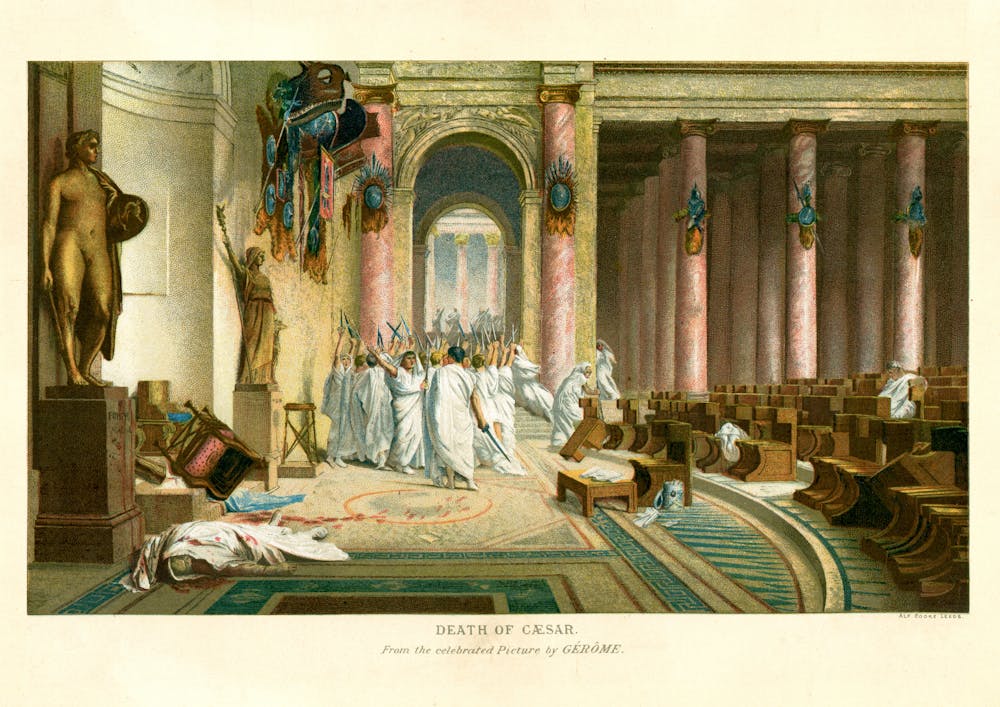
Soon after, an angry group of 23 senators stabbed him to death in a vain attempt to save the republic. They were led by Marcus Junius Brutus, a descendant of the Brutus who killed the last Roman king, Tarquinius Superbus.
However, the Roman republic was beyond saving despite Caesar’s death. His great nephew Octavian eventually emerged as leader and became known as Augustus (27 BCE – 14 CE). With Augustus, an age of emperors was born.
Emperors were kings in all but name. The strong aversion to kingship in Rome ensured their complete avoidance of the term rex.
‘No kings!’
American protesters waving placards shouting “no kings!” are expressing clear concerns that their beloved democracy is under threat.
Donald Trump has already declared eight national emergencies and issued 161 executive orders in his second term.
When asked if he needs to uphold the Constitution, Trump declares “I don’t know.” He has joked about running for a third term as president, in breach of the longstanding limit of two terms.
Like Caesar, is Donald Trump becoming a king in all but name? Is he setting a precedent for his successors to behave increasingly like emperors?
The American aversion to “king” likely ensures the term will never return. But when protesters and others shout “no kings!”, they know the very meaning of the term “president” is changing before their eyes.
Peter Edwell receives funding from the Australian Research Council.
If you start reading the labels of the various milks at the supermarket, you’ll quickly find different fat levels, added nutrients like calcium, lactose-free options, milk from goats or sheep, and ones made from plants.
Both at the supermarket and at your local café you’ve probably also seen cartons labelled “barista milk”. These can be dairy or plant milks marketed for making specialist coffee drinks such as flat whites, lattes and others.
But what exactly makes a product a barista milk, and how does it differ from regular milk?
What is ‘milk’, anyway?
“Milk” is a regulated term. Food Standards Australia New Zealand sets requirements on fat and protein contents for dairy milk, and it has to come from “milking animals”. These standards also state what can be added or modified; only plant sterols (a supplement to reduce blood cholesterol) are allowed.
Despite the name, plant-based milks aren’t bound by a specific “milk” standard. Instead, they fall under broader beverage regulations, which is why you’ll see a wide variety of ingredients, protein levels, sugars and fats from one brand to the next.
Because of this regulation, manufacturers are careful to make it absolutely clear what is in the carton or bottle so there’s no confusion between cow’s milk and soy milk, for example.
What is barista milk, then?
Barista milks, whether dairy or plant-based, are specifically formulated to foam more reliably, with a finer texture and longer-lasting bubbles.
For cow’s milk, this almost always means higher protein content: about 4–5% in barista milk compared to the 3.3–3.5% in regular milk. You’ll often see “milk solids” listed in the ingredients; this is another name for dried skim milk, added to boost the protein content.
Plant-based barista milks (such as soy, oat or almond) will vary a lot more, depending on the manufacturer and the plant base.
The most common additives in plant-based barista milks are:
In cow’s milk, proteins such as casein and whey form ball-like structures that easily rearrange to stabilise foam. These proteins help the milk fat and water stay held together, which is why dairy-based barista milks foam easily and the foam lasts longer.
Fat plays a more complex role depending on temperature – there’s a sweet spot for a good foam.
In cold cow’s milk, the fats are semi-solid and will make the foam collapse by breaking the bubble walls. But when heated above 40°C, these fats melt, spread better throughout the milk and easily interact with proteins to help form and stabilise the bubbles.
Plants make vastly different proteins compared to cows. However, the physical shape of proteins found in soy and oat milks is also ball-like, making them good for foaming just like cow’s milk.
That’s generally why you see soy and oat milks used in cafes. Barista versions of plant milks often have added vegetable oils to help mimic the fat–protein interaction in dairy. It’s what makes the milk foam stable and the liquid feel creamy.
Some – but not all – barista plant milks will also have thickeners because they help the foam last longer.
Compared to soy and oat, almond milk is naturally low in protein. So almond barista milks will almost always contain gums, starches and emulsifiers along with added vegetable oil.
Many plant milks also contain added sugars for flavour, since they lack the natural lactose found in dairy.
Is barista milk worth it?
Many plant-based milk formulations, especially barista ones, contain added gums, manufactured starches and emulsifiers. This qualifies them as “ultra-processed foods”, according to the United Nations’ classification system.
While the plant-based milk might not be inherently overly harmful, this classification invites reflection on how far these products have moved from their original, natural source.
On the environmental side, plant-based milks typically have a lower impact than cow’s milk. They use less land and water and produce fewer greenhouse gases.
Barista milks usually cost significantly more than their regular counterpart. This premium reflects the added ingredients and research and development cost of optimising foaming and drinking characteristics.
For cafés, the cost is often justified because barista milks produce a more predictable and consistent end product, leading to better customer satisfaction.
For home use, it depends on your own level of foaming skill and how much you value a perfect flat white every time.
David Chua’s work is partly supported by the National Health and Medical Research Council, Mater Research Foundation, and the Heart Foundation. He is employed by Inala Primary Care (a not-for-profit general practice clinic) and Metro South Health, where his role is supported by a Metro South Health Researcher Support Grant. His PhD (2010–2014) received partial funding from Dairy Australia Limited, though he currently has no industry affiliations. In 2009, he was awarded the Royal National Agricultural and Industrial Association of Queensland undergraduate student prize.
Lauren Ball receives funding from the National Health and Medical Research Council, Queensland Health, Heart Foundation and Mater Misericordia. She is a Director of Dietitians Australia, a Director of the Darling Downs and West Moreton Primary Health Network, a Director of Food Standards Australia and New Zealand and an Associate Member of the Australian Academy of Health and Medical Sciences.
Seabed mining could become one of the defining environmental battles of 2025. Around the world, governments are weighing up whether to allow mining of the ocean floor for metal ores and minerals. New Zealand is among them.
The stakes are high. Deep-sea mining is highly controversial, with evidence showing mining activity can cause lasting damage to fragile marine ecosystems. One area off the east coast of the United States, mined as an experiment 50 years ago, still bears scars and shows little sign of recovery.
With the world facing competing pressures – climate action and conservation versus demand for resources – New Zealand must now decide whether to fast-track mining, regulate it tightly, or pause it entirely.
Who controls international seabed mining?
A major flashpoint is governance in international waters. Under international law, seabed mining beyond national jurisdiction is managed by the International Seabed Authority (ISA), created by the United Nations Convention on the Law of the Sea (UNCLOS).
But the US has never ratified UNCLOS. In April this year, President Donald Trump issued an executive order to bypass the ISA and allow companies to begin mining in international waters.
The ISA has pushed back, warning unilateral action breaches international law. However, the declaration from the recently concluded UN Ocean Conference in France does not urge countries to adopt a precautionary approach, nor does it ban deep seabed mining.
The declaration does “reiterate the need to increase scientific knowledge on deep sea ecosystems” and recognises the role of the ISA in setting “robust rules, regulations and procedures for exploitation of resources” in international waters.
So, while the international community supports multilateralism and international law, deep-sea mining in the near future remains a real possibility.
Fast-track approvals
In the Pacific, some countries have already made up their minds about which way they will go. Nauru recently updated its agreement with Canadian-based The Metals Company to begin mining in the nearby Clarion Clipperton Zone. The deal favours the US’s go-it-alone approach over the ISA model.
By contrast, in 2022, New Zealand’s Labour government backed the ISA’s moratorium and committed to a holistic ocean management strategy. Whether that position still holds is unclear, given the current government’s policies.
Trans-Tasman Resources’ proposal to extract up to 50 million tonnes of Taranaki seabed material annually to recover heavy mineral sands that contain iron ore as well as rare metal elements titanium and vanadium.
McCallum Brothers Ltd’s Bream Bay proposal to dredge up to 150,000 cubic metres of sand yearly for three years, and up to 250,000 cubic metres after that.
Legal landscape changing
Māori and environmental groups have opposed the fast-track policy, and the Treaty of Waitangi has so far been a powerful safeguard in seabed mining cases.
Provisions referencing Treaty principles appear in key laws, including the Crown Minerals Act and the Exclusive Economic Zone and Continental Shelf (Environmental Effects) Act.
In 2021, the Supreme Court cited these obligations when it rejected a 2016 marine discharge application by Trans-Tasman Resources to mine the seabed in the Taranaki Bight. The court ruled Treaty clauses must be interpreted in a “broad and generous” way, recognising tikanga Māori and customary marine rights.
But that legal landscape could soon change. The Regulatory Standards Bill, now before parliament, would give priority to property rights over environmental or Indigenous protections in the formulation of new laws and regulations.
The bill also allows for the review of existing legislation. In theory, if the Regulatory Standards Bill becomes law, it could result in the removal of Treaty principles clauses from legislation.
This in turn could deny courts the tools they’ve previously used to uphold environmental and Treaty-based protections to block seabed mining applications. That would make it easier to approve fast-tracked projects such as the Bream Bay and Taranaki projects.
Setting a precedent
Meanwhile, Hawai’i has gone in a different direction. In 2024, the US state passed a law banning seabed mining in state waters – joining California (2022), Washington (2021) and Oregon (1991).
Under the Hawai’i Seabed Mining Prevention Act, mining is banned except in rare cases such as beach restoration. The law cites the public’s right to a clean and healthy environment.
As global conflict brews over seabed governance, New Zealand’s eventual position could set a precedent.
Choosing to prohibit seabed mining in New Zealand waters, as Hawai’i has done, would send a strong message that environmental stewardship and Indigenous rights matter more than short-term resource extraction interests.
If New Zealand does decide to go ahead with seabed mining, however, it could trigger a cascade of mining efforts across New Zealand and the Pacific. A crucial decision is fast approaching.
Myra Williamson does not work for, consult, own shares in or receive funding from any company or organisation that would benefit from this article, and has disclosed no relevant affiliations beyond their academic appointment.
The weather is getting cooler and many of us are turning to hot showers and baths to warm up and wind down.
But what actually happens to your skin when you have really hot showers or baths?
Your largest organ
Your skin is your largest organ, and has two distinct parts: the epidermis on the outside, and the dermis on the inside.
The epidermis is made up of billions of cells that lay in four layers in thin skin (such as on your eyelids) and five layers in thick skin (such as the on sole of your foot).
The cells (keratinocytes) in the deeper layers are held together by tight junctions. These cellular bridges make waterproof joins between neighbouring cells.
The cells on the outside of the epidermis have lost these cellular bridges and slough off at a rate of about 1,000 cells per one centimetre squared of skin per hour. For an average adult, that’s 17 million cells per hour, every day.
Under the epidermis is the dermis, where we have blood vessels, nerves, hair follicles, pain receptors, pressure receptors and sweat glands.
Together, the epidermis and dermis (the skin):
protect you from ultraviolet radiation from the Sun
synthesise vitamin D3, which helps your intestines absorb calcium
protect you against bacteria, parasites, fungi and viruses
regulate your body temperature via the dilation of blood vessels and sweat glands releasing sweat
help display how we’re feeling (think, for example, of blushing or goosebumps)
allow us to feel sensations such as touch, pressure, pain and temperature.
So, your skin is important and worth looking after.
Washing daily can help prevent disease, and really hot baths often feel lovely and can help you relax. That said, there are some potential downsides.
Normally we have lots of healthy organisms called Staphyloccocus epidermis on the skin. These help increase the integrity of our skin layers (they make the bonds between cells stronger) and stimulate production of anti-microbial proteins.
These little critters like an acidic environment, such as the skin’s normal pH of between 4-6.
If the skin pH increases to around 7 (neutral), Staphyloccocus epidermis’ nasty cousin Staphyloccocus aureus – also known as golden staph – will try to take over and cause infections.
Having a hot shower or bath can increase your skin’s pH, which may ultimately benefit golden staph.
Being immersed in really hot water also pulls a lot of moisture from your dermis, and makes you lose water via sweat.
This makes your skin drier, and causes your kidneys to excrete more water, making more urine.
Heat from the shower or bath can activate the release of cytokines (inflammatory molecules), histamines (which are involved in allergic reactions), and increase the number of sensory nerves. All of this can lead to itchiness after a very hot shower or bath.
Some people can get hives (itchy raised bumps that look red on lighter skin and brown or purple on darker skin) after hot showers or baths, which is a form of chronic inducible urticaria. It’s fairly rare and is usually managed with antihistamines.
People with sensitive skin or chronic skin conditions such as urticaria, dermatitis, eczema, rosacea, psoriasis or acne should avoid really hot showers or baths. They dry out the skin and leave these people more prone to flare ups.
The skin on your hands or feet is least sensitive to hot and cold, so always use your wrist, not your hands, to test water temperature if you’re bathing a child, older person, or a disabled person.
The skin on your buttocks is the most sensitive to hot and cold. This is why sometimes you think the bath is OK when you first step in, but once you sit down it burns your bum.
You might have heard women like hotter water temperature than men but that’s not really supported by the research evidence. However, across your own body you have highly variable areas of thermal sensitivity, and everyone is highly variable, regardless of sex.
Moisturising after a hot bath or shower can help, but check if your moisturiser is up to the task.
To improve the skin barrier, your moisturiser needs to contain a mix of:
an emollient such as ceramides, squalanes or dimethicone (emollients incorporate themselves into the lipid barrier in the epidermis to reduce water loss)
a humectant such as glycerin or hyaluronic acid (humectants draw moisture from the dermis into the epidermis)
an occlusive such as petroleum jelly or Vaseline, mineral oil, or cocoa butter (occlusives reduce water loss through the skin and increase the production of anti-microbial peptides).
Not all moisturisers are actually good at reducing the moisture loss from your skin. You still might experience dryness and itchiness as your skin recovers if you’ve been having a lot of really hot showers and baths.
I’m itchy again, what should I do?
If you’re itching after a hot shower or bath, try taking cooler, shorter showers and avoid reusing sponges, loofahs, or washcloths (which may harbour bacteria).
You can also try patting your skin dry, instead of rubbing it with a towel. Applying a hypoallergenic moisturising cream, like sorbolene, to damp skin can also help.
If your symptoms don’t improve, see your doctor.
Amanda Meyer is affiliated with the Australian and New Zealand Association of Clinical Anatomists, the American Association for Anatomy, and the Global Neuroanatomy Network.
Monika Zimanyi is affiliated with Global Neuroanatomy Network.
Source: People’s Republic of China in Russian – People’s Republic of China in Russian –
Source: People’s Republic of China – State Council News
From June 12 to 15, the Moscow Seasons were held in Beijing. This comprehensive event became one of the key projects implemented within the framework of the cross-cultural Years of China and Russia, and also dedicated to the 30th anniversary of the establishment of sister-city relations between Beijing and Moscow.
On June 13, as part of the business part of the festival program, a plenary session on the topic of “Cities of the Future. Synergy of the Strategic Partnership of Moscow and Beijing” was held at the Grand Hyatt Hotel in Beijing, dedicated to issues of tourism, culture, transport, innovation and industrial development.
Speaking in a section dedicated to the work of museums, the head of the Russian Cultural Center in Beijing, Tatyana Urzhumtseva, emphasized that the RCC acts as a connecting platform between Russian and Chinese museums, art galleries, theaters, art groups and other participants in the Russian-Chinese cultural dialogue.
According to her, the RCC also supports the exhibition activities of Russian museums not only by being present at the venues and participating in the opening ceremony of their exhibitions, but also by preparing and conducting a large information campaign that attracts Chinese visitors to the museum halls. The RCC also participates in recording video content on the social networks of Chinese partners.
In addition, Tatyana Urzhumtseva added that in the anniversary year for China and Russia – the year of the 80th anniversary of the victory in the Great Patriotic War and the war against Japanese aggression – the RCC, together with the Beijing Society of Russian-Chinese Friendship, will hold an exhibition of paintings in August dedicated to the victory of the peoples of the two countries and Russian-Chinese friendship.
Zhang Jing, Director of the Resources Section of the Beijing Culture and Tourism Administration, also spoke in this section. He introduced ten new tourist routes launched by the Administration this year, including those related to museums: the “This is Shang Yin” exhibition, Beijing Central Axis Tour, Dunhuang Famous Art Schools Tour, Ancient and Modern Olympic Park Tour, Three Hills and Five Gardens Park Complex Tour, 798 Art Zone Contemporary Art Exhibition Tour, Zhoukoudian Human Site Walking Tour, and others.
Representatives of the Museum of Moscow, the Museum of Cosmonautics (Moscow), the State Historical Museum (Russia), the Capital Museum (Beijing), the Beijing Automobile Museum, the Museum of World Music Culture (Dalian) and others made presentations of their institutions.
Following the meeting, cooperation agreements were signed between several museums, which actively contributed to the development of Chinese-Russian inter-museum exchanges and humanitarian bilateral cooperation in general.