Category: Americas

  • MIL-OSI Global: Texas records first US measles death in 10 years – a medical epidemiologist explains how to protect yourself and your community from this deadly, preventable disease

    Source: The Conversation – USA – By Daniel Pastula, Professor of Neurology, Medicine (Infectious Diseases), and Epidemiology, University of Colorado Anschutz Medical Campus

    Young children are especially vulnerable to measles. Bilanol via Getty Images

    On Feb. 26, 2025, Texas health officials announced the death of a child in a measles outbreak – the first measles death in the United States since 2015. The outbreak was first identified in early February in Gaines County, Texas, where just 82% of kindergartners are vaccinated against measles, compared with 93% on average across the country. As of Feb. 27, there were at least 124 confirmed cases in Texas and nearby towns in New Mexico.

    In an interview with The Conversation U.S. associate health editor Alla Katsnelson, neurologist and medical epidemiologist Daniel Pastula explains why measles is so dangerous and how people and communities can protect themselves from the virus.

    What is measles, and where does it come from?

    Measles is an ancient disease caused by a virus that probably evolved in cattle and jumped into humans around 500 B.C. One of the first written accounts of it comes from a Persian physician named Rhazes in the ninth century C.E., and measles epidemics were described in medieval Europe and western Asia regularly beginning around 1100-1200. The virus got brought over to the Americas in the 1500s, and it wiped out large populations of native people as Europeans colonized the continent.

    By the 1950s in the United States, there were 500,000 reported cases of measles each year – though the true number was probably closer to 4 million . It was so contagious, every kid was thought to have gotten measles by age 15. At that time, measles caused close to 50,000 hospitalizations annually and about 500 deaths, usually in children. It also caused over 1,000 cases of severe brain inflammation every year.

    The first measles vaccine became available in 1963, and scientists improved it over the following decades, causing the number of cases to plummet. In 2000, measles was declared eliminated from the U.S.

    Since then, there have been occasional minor flare-ups, usually brought in by international travelers, but by and large, measles outbreaks have been rare. No one had died of it in the United States in nearly a decade.

    Today, measles infections in the U.S. are almost completely preventable with vaccination.

    For most people, two doses of the MMR vaccine protects against measles for life.
    Sergii Iaremenko/Science Photo Library via Getty Images

    What are the typical symptoms of measles?

    About 10 to 14 days after infection, people suffering from measles experience a very high fever, cold-like symptoms including a runny nose and sneezing, and eye inflammation called conjunctivitis.

    Next, they may develop white spots called Koplik spots inside their mouth and a diffuse, spotty, red rash that starts at the head and neck, then descends across the entire body. This rash is where the disease gets its name – the word “measles” is thought to come from a medieval Dutch word for “little blemishes.”

    Symptoms of measles infection take about three weeks to resolve. People are contagious from about four days before symptoms emerge to four days after the rash starts.

    What are the possible severe outcomes of measles?

    Epidemiologists estimate that 1 in 5 people who are infected with measles get sick enough to be hospitalized. About 1 in 10 develop ear infections, some of which may result in permanent deafness.

    About 1 in 20 people develop severe measles pneumonia, which causes trouble breathing. Reports from west Texas this month suggest that many infected children there have measles pneumonia.

    About 1 in 1,000 people develop severe brain swelling. Both measles pneumonia and brain swelling can be fatal. About 3 in 1,000 people die after contracting measles.

    In about 1 in 10,000 who get sick with measles and recover from it, the virus lies dormant in the brain for about a decade. It then can reactivate, causing a severe, progressive dementia called subacute sclerosing panencephalitis, which is fatal within one to three years. There is no treatment or cure for the disease. I have seen a couple of suspected cases of subacute sclerosing panencephalitis, and none of these patients survived, despite our best efforts.

    Given how contagious measles is and how severe the outcomes can be, physicians and public health experts are gravely concerned right now.

    How does measles spread?

    Measles is one of the most contagious infectious diseases on the planet. The virus is so infectious that if you are in a room with an infected person and you are not vaccinated and have never had measles before, you have a 90% chance of becoming infected.

    The measles virus is transmitted by droplets released into the air by infected people when they cough, sneeze or simply breathe. Virus particles can survive suspended in the air or on indoor surfaces for up to two hours, so people can get infected by touching a surface carrying virus particles and then touching their face.

    Who should get the measles vaccine, and how effective is it?

    The vaccine for measles has historically been called the MMR vaccine because it has been bundled with vaccines for two other diseases – mumps and rubella. Most children in the U.S. receive it as a two-dose regimen, which is 97% effective against measles.

    Children generally get the first dose of the vaccine at 12-15 months old and the second dose when they are 4-6 years old. Infants who haven’t reached their first birthday generally do not receive it since their immune system is not yet fully developed and they do not develop quite as robust of an immune response. In an emergency, though, babies as young as 6 to 9 months old can be vaccinated. If an infant’s mother previously received the MMR vaccine or had been infected herself as a child, her transferred antibodies probably offer some protection, but this wanes in the months after birth.

    People born before 1957 are considered immune without getting the vaccine because measles was so widespread at that time that everyone was presumed to have been infected. However, certain people in this age group, such as some health care workers, may wish to discuss vaccination with their providers. And some people who had the original version of the vaccine in the 1960s may need to get revaccinated, as the original vaccine was not as effective as the later versions.

    In recent years, vaccination rates for measles and other diseases have fallen.

    Based on available evidence, the vaccine is effective for life, so people who received two doses are most likely protected.

    A single dose of the vaccine is 93% effective. Most people vaccinated before 1989 got just one dose. That year, an outbreak in vaccinated children with one dose spurred public health officials to begin recommending two doses.

    People with certain risk factors who received only one dose, and everyone who has never received a dose, should talk to their health care providers about getting vaccinated. Because the vaccine is a live but weakened version of the virus, those who are severely immunocompromised or are currently pregnant cannot get it.

    People who are immunocompromised, which includes those who have chronic conditions such as autoimmune disorders, are undergoing certain cancer treatments or have received an organ transplant, are more susceptible to measles even if they have been vaccinated.

    In the current measles epidemic in Texas, the vast majority of people falling ill are unvaccinated. Public health officials there are urging unvaccinated people in affected areas to get vaccinated.

    What measures can protect communities from measles outbreaks?

    Vaccination is the best way to protect individuals and communities from measles. It’s also the most effective way to curb an ongoing outbreak.

    High rates of vaccination are important because of a phenomenon called herd immunity. When people who are vaccinated do not get infected, it essentially stops the spread of the virus, thereby protecting those who are most susceptible to getting sick. When herd immunity wanes, the risk of infection rises for everyone – and especially for the most vulnerable, such as young children and people who are immunocompromised.

    Because measles is so contagious, estimates suggest that 95% of the population must be vaccinated to achieve herd immunity. Once vaccine coverage falls below that percentage, outbreaks are possible.

    Having robust public health systems also provides protection from outbreaks and limits their spread. Public health workers can detect cases before an outbreak occurs and take preventive steps. During a measles outbreak, they provide updates and information, administer vaccines, track cases and oversee quarantine for people who have been exposed and isolation for people who are contagious.

    Daniel Pastula does not work for, consult, own shares in or receive funding from any company or organization that would benefit from this article, and has disclosed no relevant affiliations beyond their academic appointment.

    ref. Texas records first US measles death in 10 years – a medical epidemiologist explains how to protect yourself and your community from this deadly, preventable disease – https://theconversation.com/texas-records-first-us-measles-death-in-10-years-a-medical-epidemiologist-explains-how-to-protect-yourself-and-your-community-from-this-deadly-preventable-disease-251004

    MIL OSI – Global Reports

  • MIL-OSI Global: What’s a constitutional crisis? Here’s how Trump’s recent moves are challenging the Constitution’s separation of powers

    Source: The Conversation – USA – By Jeffrey Schmitt, Professor of Law, University of Dayton

    President Donald Trump’s various actions that appear to overstep the power of the executive office are creating what many legal scholars call a constitutional crisis. VladSt/DigitalVision Vectors via Getty Images

    In a short few weeks, President Donald Trump has upended many core parts and functions of the U.S. government. He dismantled the U.S. Agency for International Development and fired thousands of government employees. He has also fired several inspectors general and board members of independent agencies.

    Additionally, Trump’s administration has violated court orders to unfreeze federal funding. And Trump has issued an unprecedented number of executive orders, including one that aims to end the practice of birthright citizenship, something that is guaranteed by the plain text of the U.S. Constitution.

    Legal experts have said that all of these actions and more are leading up to, or have already sparked, a constitutional crisis.

    There is not one clear definition of what a constitutional crisis actually is. And, as constitutional law scholar Jeffrey Schmitt explains in an interview with Amy Lieberman, politics and society editor at The Conversation U.S., there is also no comparable historical example for Trump’s exercise of executive power.

    Former USAID employees terminated after the Trump administration dismantled the agency collect their personal belongings at the USAID headquarters on Feb. 27, 2025, in Washington, D.C.
    Chip Somodevilla/Getty Images

    Why are some people calling what is currently underway a constitutional crisis?

    I think legal experts are concerned that Trump is expanding executive power beyond anything we have known in American history. And as executive power continues to expand, we may eventually hit a tipping point that threatens the structure of the government, as laid out in the Constitution.

    If the Constitution has one central feature, it is the separation of powers. The Constitution divides power between the states and the federal government, and federal power is divided between the three branches of government – the executive, judicial and legislative.

    Now, Trump appears to be taking over Congress’ core powers, including taxing and spending. Typically, Congress passes a budget, and the president can sign or veto the bill. Once the budget is passed into law, the president cannot refuse to spend the allocated money.

    There is some history to this. President Richard Nixon refused in the 1970s to spend money Congress had appropriated, and the U.S. Supreme Court then ordered the federal government to spend the money. Federal law now prohibits what’s called “impoundment.”

    How is Trump challenging these laws now?

    Trump is freezing spending on things he does not support politically, like foreign aid. He also is trying to place new conditions on the disbursement of federal funds as a way to control state and private institutions. For example, a recent letter from his administration threatens to withhold federal funding from schools that do not abandon DEI programs.

    Trump has also fired top officials at independent agencies such as a member of the independent National Labor Relations Board, when federal law and Supreme Court precedent indicate that he has no constitutional authority to do so. He has also fired agency watchdogs without following legal requirements to give Congress 30 days notice. When he fired most USAID employees and froze the agency’s foreign aid payments, he shuttered an entire agency established by Congress.

    And his firing of thousands of federal workers isn’t just about who works in government – cuts like this make an agency unable to perform its mission.

    The federal courts are intervening in some cases, but they are blocking only a small fraction of the president’s actions.

    Are there other times in history the country has come close to a constitutional crisis?

    President Abraham Lincoln and President Franklin Delano Roosevelt both led the country during periods of constitutional change, and they both clashed with the Supreme Court.

    Slavery in the federal territories was the constitutional crisis that precipitated the Civil War. This issue dominated politics throughout the 1850s because people thought it would determine the future of slavery as new states were admitted to the Union. When Congress was unable to reach an agreement, the Supreme Court held that it was unconstitutional for Congress to prohibit slavery in the territories in the infamous case of Dred Scott v. Sandford.

    But opposition to the expansion of slavery was the unifying principle of the young Republican Party. So, during the election of 1860, Lincoln argued that Dred Scott was not binding on the country because it was not settled precedent. He acknowledged, though, that the court’s decisions are binding in the case before it.

    When Lincoln campaigned for president in 1860, he promised to appoint judges who would overrule Dred Scott and to work with Congress to ban slavery in the territories. When Lincoln realized that constitutional change was necessary, he worked tirelessly to get the Thirteenth Amendment, which abolished slavery, ratified in 1865.

    Franklin Roosevelt also worked within the constitutional system to expand the role of the federal government in the New Deal, a series of domestic public works programs in the 1930s. When the Supreme Court ruled against early New Deal programs, FDR complained that the justices were old and out of touch.

    So Roosevelt in 1937 proposed packing the Supreme Court with new justices in a transparent attempt to push the court into accepting his broad reading of federal power. This proposed change never became law, but the Supreme Court changed its views on federal power at roughly the same time, ending the crisis. The country overwhelmingly supported the New Deal’s expansion of federal power in several national elections.

    President Donald Trump and Speaker of the House Mike Johnson appear at an event in Miami on Jan. 27, 2025.
    Mandel Ngan/AFP via Getty Images

    How does today’s situation involving Trump differ?

    Unlike Lincoln or Roosevelt, Trump is trying to seize the powers of Congress and unilaterally transform the federal government. Roosevelt worked with Congress to pass legislation and eventually convince the Supreme Court to accept his views. And while Lincoln rejected the court’s proslavery reading of the Constitution, Trump may be rejecting its central feature – the structural balance of power.

    Can the country resolve this crisis?

    Aside from Trump deciding to change course, there is not much that can be done. Courts can issue orders, but they do not have a military and cannot easily enforce them.

    Congress has the power to remove the president, via impeachment. As we learned during Trump’s first term, however, impeachment is not easy.

    If the president decides to ignore the courts – and Congress continues to do nothing – the final constitutional check on Trump’s power will be the next federal election.

    Jeffrey Schmitt does not work for, consult, own shares in or receive funding from any company or organization that would benefit from this article, and has disclosed no relevant affiliations beyond their academic appointment.

    ref. What’s a constitutional crisis? Here’s how Trump’s recent moves are challenging the Constitution’s separation of powers – https://theconversation.com/whats-a-constitutional-crisis-heres-how-trumps-recent-moves-are-challenging-the-constitutions-separation-of-powers-250706

    MIL OSI – Global Reports

  • MIL-OSI Global: As the Kremlin eyes a thaw with the White House, Russia’s pro-war hawks aren’t too happy

    Source: The Conversation – USA – By Adam Lenton, Assistant Professor of Politics & International Affairs, Wake Forest University

    Russian President Vladimir Putin attends a wreath-laying ceremony at the Tomb of the Unknown Soldier in Moscow on Feb. 23, 2025. Sergei Bobylyov/AFP via Getty Images

    At face value, the Kremlin has plenty to celebrate after U.S. and Russian officials held high-level bilateral talks on the war in Ukraine for the first time since the full-scale conflict began in 2022.

    Russian delegates at the meeting, which took place on Feb. 18 in Saudi Arabia, struck an ebullient tone. Foreign Minister Sergey Lavrov concluded that “the American side has begun to better understand our position,” while Kirill Dmitriev, the head of Russia’s sovereign wealth fund and an envoy for Moscow, noted that the delegates managed to loosen up enough to laugh and joke. President Vladimir Putin did not attend the meeting, but he characterized it the following day as “very friendly,” going as far as to describe the American delegation as “completely different people” who were “ready to negotiate with an open mind and without any judgment over what was done in the past.”

    And the talks are far from the only reason for optimism in Moscow. In statements that echoed Kremlin propaganda, U.S. President Donald Trump blamed Ukraine for being invaded and described Ukrainian President Volodymyr Zelenskyy as a “dictator.” The U.S. then sided with Russia in two United Nations votes on the conflict and opposed language describing Russia as the aggressor in a draft G7 statement marking the anniversary of the war.

    This perceived rapprochement between Washington and Moscow has many critics on both sides of the Atlantic.

    Within Russia the reaction has been mixed. And not everybody in Moscow is celebrating the apparent shift in U.S. policy.

    Favoring pragmatism

    Of course, many Russians would welcome a thaw in relations. In January, Russia’s leading independent polling group found that 61% of Russians favored peace talks over continuing the war in Ukraine – the highest level yet. Meanwhile, the number of web searches for “When will the ‘Special Military Operation’ end?” on Yandex, a Russian tech firm, reached its highest-ever weekly total in the wake of the U.S.-Russia talks.

    While public opinion is unlikely to shape the Kremlin’s approach given Putin’s sole control over major foreign policy decisions, evidence suggests that a rapprochement with the United States could also be a boon for Putin at home.

    In a recently published article in the peer-reviewed journal International Security, my co-author Henry Hale and I found that while most Russians view the U.S. and NATO as threats, they largely prefer a pragmatic, measured response from the Kremlin – an approach they believed Putin delivered prior to the war in 2022.

    High-level summits between Russia and the U.S. have tended to be well received, we found. This is because they tap into a widely held preference for cooperation as well as depicting Russia as a geopolitical “equal” to the U.S.

    Pro-war hardliners speak out

    Yet not everyone is pleased with the prospect of closer U.S. ties. Russia’s vocal minority of tub-thumping war supporters is already angry.

    This loose community of so-called “Z-patriots” – a reference to the large “Z” letters marking Russian military equipment at the beginning of the war – has been a double-edged sword for the Kremlin.

    While they have been helpful in mobilizing grassroots support for the war, they have also lambasted Moscow’s execution and made pointed criticisms of top military brass. Such attacks are, in effect, a way of making veiled attacks on Putin himself.

    And we are talking about a sizable minority. Estimates indicate that Z-patriots – the more hawkish and ideologically committed segment of war supporters – represent 13% to 27% of the Russian population.

    One of this group’s most prominent ideologues, Zakhar Prilepin, didn’t pull any punches in a recent interview. He described as “humiliating” the fact that “the Russian media community, political scientists and politicians are dancing with joy and telling us how wonderful everything is (now that) Trump has arrived.”

    There are reasons to take this group seriously. According to Marlène Laruelle, an expert on nationalism and ideology in Russia, the Z-patriots are emerging as key opinion leaders.

    Unlike other ideological camps in Russia, the Z-patriots are very much a product of the war, having emerged from the popular military blogging community and with deep connections to paramilitary and veterans organizations. Indeed, many sympathized with former mercenary Wagner Group chief Yevgeny Prigozhin’s anti-elite rants, while Igor Girkin, a former Donbas warlord who claimed to have sparked the initial war in eastern Ukraine in 2014, openly mocked Putin to his almost million-strong Telegram followers.

    The Kremlin partially cracked down on some of the Z-patriots in 2023. Prigozhin’s ill-fated mutiny in June was followed by his suspicious death in a plane crash later that summer, while Girkin was jailed and handed a four-year prison sentence for “inciting extremism.”

    Yet the Z-patriots remain a force. Girkin, commenting on the U.S.-Russia talks from prison, lamented the “egregious managerial and command failure” over the past three years and sarcastically concluded that Moscow’s political elites, aware of their own weakness, are likely to “‘drag their heels’ in their inimitable style – and with their well-known genius.”

    Other pro-war voices expressed skepticism about the information communicated by the Russian delegation and ironically said they expected the Kremlin would pass a law against “discrediting Russia-American relations,” a play on the March 2022 law against “discrediting” Russia’s military.

    Sanctions relief a concern

    Some of the sharpest criticisms of the Kremlin have been about the economy.

    Recent weeks have seen renewed optimism among many in Russia that sanctions relief is on the horizon and that sought-after Western brands may return. Russia – since 2022 the most sanctioned country in the world – had previously appeared to accept that sanctions would remain for decades to come.

    The Russian delegation at the recent talks emphasized the prospect of economic cooperation with the United States, no doubt believing Trump to be receptive to such mercantile framings.

    A few days later, Putin announced a willingness to develop Russia’s rare earth minerals with foreign partners, including the United States, in what appeared to be an attempt to outbid Zelenskyy.

    This, too, provoked a populist backlash among Z-patriots.

    “Grampa’s lost it,” one wrote in a thinly veiled swipe at Putin.

    Another displayed dismay that “stealing Russia’s natural resources once again became a prospect for mutually beneficial cooperation with American partners.”

    “We’ve barely begun to develop small and medium businesses,” Prilepin noted, deriding the “unbearable” excitement around the possibility of Western brands returning.

    These sentiments have struck a chord with other parts of society. After all, some Russian businesses have benefited from Western brands’ exit from the Russian market. The government is attempting to fend off these criticisms with a new bill proposed to Russia’s parliament on Feb. 27 calling to ban Western companies that had financially supported Ukraine.

    What to do about veterans?

    Perhaps most consequential will be what happens to the hundreds of thousands of Russian soldiers currently on the front lines.

    While runaway military spending and lavish payouts to soldiers continue to strain the Russian economy, demobilization also poses risks.

    A report from the Institute for the Study of War recently concluded that demobilization would be politically risky for the Kremlin, fearful that masses of disgruntled veterans might constitute a potential challenge.

    That said, many of the estimated 700,000 Russian troops in Ukraine will eventually return to civilian life and likely become an important constituency in Russian politics moving forward.

    The Z-patriots may be a product of war, but they will have an afterlife beyond it. Meanwhile, regardless of any Russian rapprochement with the White House – or perhaps because of it – Russia’s hawks won’t be turning into doves anytime soon.

    Adam Lenton does not work for, consult, own shares in or receive funding from any company or organization that would benefit from this article, and has disclosed no relevant affiliations beyond their academic appointment.

    ref. As the Kremlin eyes a thaw with the White House, Russia’s pro-war hawks aren’t too happy – https://theconversation.com/as-the-kremlin-eyes-a-thaw-with-the-white-house-russias-pro-war-hawks-arent-too-happy-250716

    MIL OSI – Global Reports

  • MIL-OSI Global: The science behind airplane deicing – a mechanical engineer explains how chemistry and physics make flying a more uplifting experience

    Source: The Conversation – USA – By Andrew Sommers, Professor of Mechanical and Manufacturing Engineering, Miami University

    A worker deices an airplane at the airport in Brussels. AP Photo/Virginia Mayo

    If you are a frequent flyer, you’ve probably been at the airport waiting to jet somewhere on a winter trip when the voice of an airline employee announces over the intercom that there will be a slight delay while the plane gets deiced. But how does this process actually work, and why is it needed?

    As a mechanical engineer who studies frost growth and water droplets on surfaces, I have come to appreciate the importance of deicing planes. Indeed, deicing is an important safety step performed by the airlines on wintry days because of how snow and ice can affect the physics of flying.

    Why deice?

    In short, deicing is necessary because snow and ice on airplane wings can decrease lift by as much as 30%. Lift is the vertical upward force that keeps a plane in the sky. It is generated when air flows over the wings of a plane.

    Ice and snow can alter how air flows over the wings, which can affect a pilot’s ability to maneuver and control the aircraft. It can also increase the stall speed, which is not good either. Stall speed is the minimum speed needed by an aircraft to generate enough lift to keep it aloft.

    Additionally, ice on the wings can break off in flight, potentially damaging one or more of the flaps on the wings or an engine. Needless to say, deicing has become an indispensable part of flying, especially in the winter months.

    Operators apply green anti-icing fluid to the wing of a plane. The green hue, which indicates a Type IV fluid, helps the operators see which parts they might have missed.
    Orchidpoet/E+ via Getty Images

    Deicing chemicals

    Most people are familiar with the chemical deicers that are used on roads during the winter months. However, the salts in these products can be corrosive, so they’re not used on aircraft.

    Aircraft deicers consist of a water-based solution of glycol – a colorless, odorless organic liquid – mixed with various additives. These additives might include a thickening agent; a substance that prevents corrosion; a surfactant, which decreases the surface tension; a flame retardant, and a dye.

    Glycols are very good at lowering the freezing point of water, which makes it harder for water to freeze or stay frozen on surfaces. Propylene glycol and ethylene glycol are the two most common types used, typically making up 30% to 70% of the deicing solution.

    Glycols are made up of carbon, hydrogen and oxygen atoms. Pictured here is the chemical structure of ethlyene glycol.
    Cacycle/Wikimedia Commons, CC BY-SA

    For years, only ethylene glycol was used in deicers because of its low cost. However, because propylene glycol is less toxic to wildlife and humans, its adoption by commercial airlines has grown steadily since the 1980s.

    How does the deicing process work?

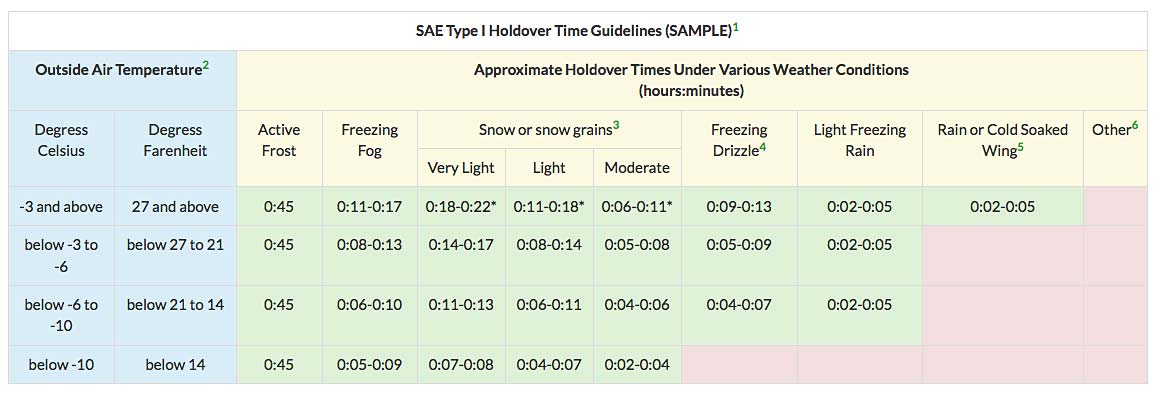
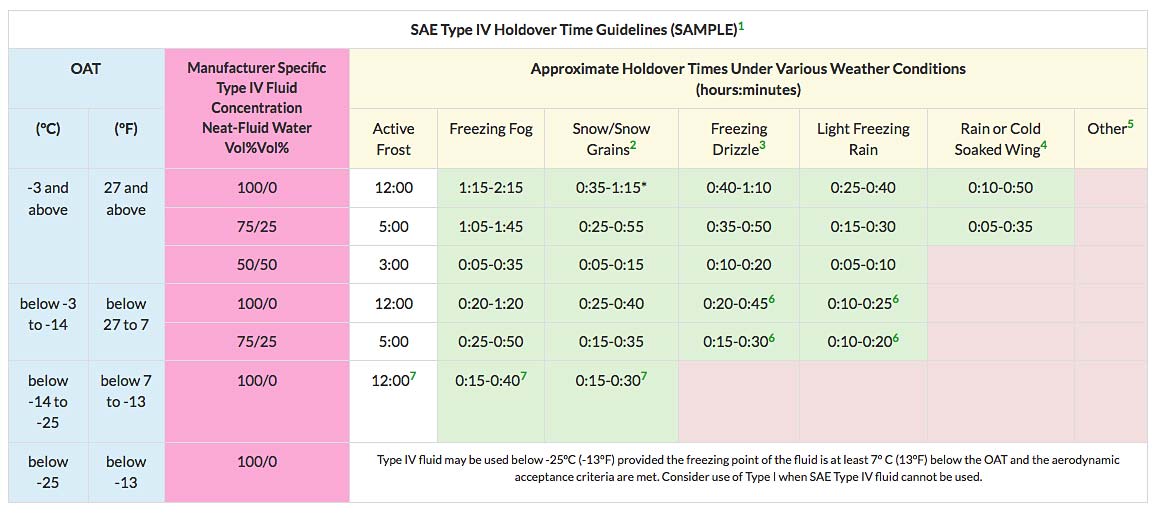
    Airlines use four standard fluid types when deicing aircraft. These fluids have different viscosities – viscosity is a measure of a fluid’s resistance to flow – and holdover times, which is the length of time the fluids are expected to protect the plane during snow or icing conditions.

    The deicing process includes both complex crew logistics and interesting science.

    In the United States, airlines typically use a two-step process before flying. First, they perform deicing using either a heated Type I fluid or a heated solution of Type I fluid and water.

    Deicing removes existing ice and snow from the wings of the plane, which is why airlines often heat the deicing fluid to around 140 to 150 degrees Fahrenheit (60 to 66 degrees Celsius) before application.

    Type I fluids are the thinnest of the deicing fluids, and they’re often red or orange. They spread the easiest on a plane’s surface because they have the lowest viscosity. Since they’re thin enough to flow off a plane when it’s not moving – or moving slowly – they can be applied to any aircraft.

    But as a result, they also have the shortest holdover times, often less than 20 minutes depending on the weather conditions. These holdover times vary, though, and can be less than five minutes for snow if the outside air temperature is below 14 F (minus 10 C).

    Next, the ground crews will typically apply an anti-icing fluid to the aircraft – often Type II or Type IV. Anti-icing solutions are used to help prevent the future accumulation of snow and ice on the wings of planes.

    Type II and Type IV fluids contain thickening agents that increase their viscosity. These thickeners allow the fluid to remain on the aircraft longer to help melt newly forming frost or ice. This translates to longer holdover times – often more than 30 minutes for snow – but it also means the plane needs to reach a higher speed to shear, or blow off, the fluid.

    Once applied, Type II and IV fluids will generally stay on the aircraft until the plane is taxiing down the runaway during takeoff. By then, it has gained enough speed to produce the shear force necessary to remove the fluid from the plane. Type II fluids are a clear or pale straw color, while Type IV fluids are generally green. Including a colored dye helps the ground crew clearly see what parts of the plane have been coated and which areas still need application.

    Type III fluids are not as common anymore. They are formulated to shear off at lower speeds and thus are sometimes used on small commuter aircraft since these planes typically don’t go as fast as commercial jetliners.

    Environmental impact of deicing

    Environmental considerations are also an important part of deicing. Glycols require a lot of oxygen to biodegrade, which can deplete dissolved oxygen in streams or lakes. This, in turn, can threaten aquatic life, like fish and other organisms, that need dissolved oxygen to breathe.

    In addition, ethylene glycol is toxic to wildlife, so the Environmental Protection Agency requires airports to monitor their stormwater runoff. For this reason, most airports collect and treat stormwater runoff on-site or send it to a municipal wastewater treatment facility.

    Airports are also increasingly starting to use fluid recovery systems to recycle the glycols and capture the additives in these fluids, which are often toxic, too. They’ll often use designated areas outside for deicing planes so they can collect and store the fluids after they run off the plane in holding tanks underground until they can be recycled.

    Atmospheric icing

    During flight, planes use other technologies to mitigate the icing risks. For example, most modern aircraft use bleed air systems, which channel hot air from the engine’s compressor through interior ducts to the leading edges of the wings and other critical areas to help prevent ice buildup while the plane is in the sky.

    Some planes also use electrically heated panels embedded in the aircraft’s wings to generate heat. These control systems typically cannot be used while the plane is on the ground, since they rely on cold air flowing across the wing’s surface. This airflow is usually achieved at cruising altitude and is necessary to prevent the plane’s surface from getting too hot.

    Airlines may sometimes also use icephobic coatings to help keep new ice from forming and sticking on the outside surfaces of planes. These coatings delay how soon new ice can form. They can also reduce how strongly the ice adheres to the surface.

    Icephobic polymer coatings can mitigate ice buildup and help reduce ice adhesion on surfaces.
    Hernández Rodríguez et al., 2024., CC BY-SA

    Smaller planes may also use inflatable rubber strips called pneumatic boots on the wings that can be inflated as needed to break off accumulated ice on the leading edge of the wings.

    Flying is truly a modern scientific marvel. A lot of engineering goes into not only getting planes off the ground but also keeping them ice-free during flight. So the next time you experience a weather-related delay at the airport, just remember that deicing is needed to ensure both a safe flight and a truly uplifting one.

    Andrew Sommers does not work for, consult, own shares in or receive funding from any company or organization that would benefit from this article, and has disclosed no relevant affiliations beyond their academic appointment.

    ref. The science behind airplane deicing – a mechanical engineer explains how chemistry and physics make flying a more uplifting experience – https://theconversation.com/the-science-behind-airplane-deicing-a-mechanical-engineer-explains-how-chemistry-and-physics-make-flying-a-more-uplifting-experience-248732

    MIL OSI – Global Reports

  • MIL-OSI Global: Maple seeds’ unique spinning motion allows them to travel far even in the rain, a new study shows

    Source: The Conversation – USA – By Andrew Dickerson, Associate Professor of Mechanical, Aerospace and Biomedical Engineering, University of Tennessee

    Winged seeds called samaras grow on maple trees. These are seeds from the Japanese maple, _Acer palmatum_. AlessandroZocc/iStock via Getty Images Plus

    When wind or other disturbances detach winged maple seeds called samaras from their parent tree, they spin through the air – and can even spin when it’s raining. Impacts by high-speed raindrops only briefly interrupt the seed’s spinning because the seed can shed the drop rapidly and restart its spinning in less time than it takes to blink.

    If you live somewhere with maple trees, you’ve probably seen their striking helicopter seeds – made up of a seed pod attached to a delicate wing. Maple samaras’ unique design and spinning movement can teach physicists like me about seed dispersal patterns and even engineering new types of flying vehicles.

    The samaras’ spinning movement, called autorotation, keeps them in the air for longer so they travel farther.

    The spinning flight of a maple samara.

    In a February 2025 study, my colleagues and I filmed raindrops as they crashed into autorotating samaras. The samaras shed drops by shattering them, flinging the drops off, or rolling out of the way – like they’re turning away from a punch. If a drop falls in just the right place, the spinning seed can cut it in half.

    The movement of a samara as it spins through the air. Our new study captured this pattern using a high-speed camera.
    Breanna Shaeffer and Andrew Dickerson, University of Tennessee-Knoxville

    In order to keep flying, the samaras must shed the entire drop. Samaras shed drops fastest when the drops hit the heavier, round nutlet part of the seed, rather than the wing. Shedding is made easier by the samaras’ mildly water-repellent surface. We estimated that raindrop collisions reduce a samara’s time in flight and the distance it travels while spinning, but by less than 10%.

    Why it matters

    Maples are an important species to the Eastern United States. They provide syrup and timber, making them economically and commercially significant.

    To proliferate in a rapidly changing climate, maples and other samara-bearing species need to disperse their seeds as far as possible.

    My team’s results provide context for other studies focused on how wind transports rotating and nonrotating seeds alike. Some seeds can even travel hundreds of miles.

    From an engineering perspective, the insights gained from our study could inform the design of new types of aerial vehicles that use autorotation to ride the wind without a motor. Mimicking the shapes of these seeds could help such vehicles quickly recover from disruptions to flight.

    Samaras are also visually intriguing. Discovering more about how small, beautiful parts of nature thrive could help scientists get people interested in the environment.

    What still isn’t known

    Maple samaras represent just one way that seeds use the wind to disperse farther. A dandelion’s parachute-like float relies on the seed’s light weight and high drag. A hop tree seed uses a single, wafer-shaped seed to flutter, while triplaris seeds have three wings that achieve a helicopter-like spin. Researchers still aren’t sure how raindrops can affect the flight of these seeds.

    What’s next

    Next, my colleagues and I hope to unravel the flight mechanics of the “rolling samaras” found on tulip poplar and ash trees. These seeds rotate like maple samaras, but the wing also rolls around the axis that runs across its wingspan as it does so.

    Not only do we plan to compare their flight performance against the more recognizable maple samara, but we will also study how these seeds respond to perturbations such as wing damage and crosswinds.

    How I do my work

    I like to uncover the complexity in seemingly simple systems. So many of the brief, small and common interactions in our world are wonderfully beautiful. I seek to tell those stories through a camera lens and with mathematical flair.

    Andrew Dickerson receives funding from the National Science Foundation.

    ref. Maple seeds’ unique spinning motion allows them to travel far even in the rain, a new study shows – https://theconversation.com/maple-seeds-unique-spinning-motion-allows-them-to-travel-far-even-in-the-rain-a-new-study-shows-250341

    MIL OSI – Global Reports

  • MIL-OSI Video: Why Is the United States the Most Homicidal Nation in the Affluent World

    Source: US National Institute of Justice (video statements)

    Ohio State University Since World War II, the homicide rate in the U.S. has been three to ten times higher than in Canada, Western Europe, and Japan. This, however, has not always been the case. What caused the dramatic change? Dr. Roth discussed how and why rates of different kinds of homicide have varied across time and space over the past 450 years, including an examination of the murder of children by parents or caregivers, intimate partner violence, and homicides among unrelated adults.

    (Opinions or points of view expressed represent the speaker and do not necessarily represent the official position or policies of the U.S. Department of Justice. Any product or manufacturer discussed is presented for informational purposes only and do not constitute product approval or endorsement by the U.S. Department of Justice.)

    https://www.youtube.com/watch?v=SwwtDNNpNRc

    MIL OSI Video

  • MIL-OSI USA: As Trump Announces Tariffs Will Begin March 4th, Welch Cosponsors Bill to Shield Consumers and Businesses from Tariffs; Votes Against Trump’s USTR Nominee

    US Senate News:

    Source: United States Senator Peter Welch (D-Vermont)

    Bill led by Sen. Shaheen would block the President’s authority to impose duties or tariff-rate quotas on imports to the U.S.
    WASHINGTON, D.C. – As President Trump reversed course and announced his proposed tariffs on Canada and Mexico will begin March 4th, U.S. Senator Peter Welch (D-Vt.), a member of the Senate Finance Committee, joined Senator Jeanne Shaheen’s (D-N.H.) Protecting Americans from Tax Hikes on Imported Goods Act, which would shield American businesses and consumers from rising prices imposed by tariffs on imported goods into the United States. The bill would keep costs down for imported goods by limiting the authority of the International Emergency Economic Powers Act (IEEPA)—which allows a President to immediately place unlimited tariffs after declaring a national emergency—while preserving IEEPA’s use for sanctions and other tools.  
    This week, Senator Welch also voted against Jamieson Greer, Trump’s pick to serve as U.S. Trade Representative (USTR), about whom he expressed reservations during the nominee’s confirmation hearing before the Senate Finance Committee. Senator Welch released the following statement:
    “We need trade policies that are rooted in a ‘Do No Harm’ approach, not ones that make things harder for Vermont businesses and consumers. I’ve heard from hardworking Vermonters who have told me that Trump’s tariffs and Trade War would only harm our businesses, farmers, and families. Trump’s tariffs on Canada, Vermont’s largest trading partner, will hammer small and rural businesses that depend on trade with our neighbor. 
    “We need to fight against these tariffs in every way that we can, and that includes having a U.S. Trade Representative who will stand up for American consumers and small businesses. Jamieson Greer made it clear that he lacks courage or capacity to stand up to President Trump and will be a rubber stamp for the President’s chaotic economic policies. It’s why I voted against him and why I will push back against any and all trade policies he puts forth that would harm Vermonters. 
    “Over the last few weeks, the President has made it clear that he’s ready to leverage the economic wellbeing of everyday Americans to pursue misguided foreign policy goals. It’s crucial that we shield Americans from the consequences of Trump’s reckless actions. That’s why I’m proud to support the Protecting Americans from Tax Hikes on Imported Goods Act, which will limit how the White House can impose these tax increases and protect Vermonters from price hikes.” 
    Learn more about the Protecting Americans from Tax Hikes on Imported Goods Act. 
    Read the full text of the bill. 

    MIL OSI USA News

  • MIL-OSI USA: Response to Staff Statement on Meme Coins: What Does it Meme?

    Source: Securities and Exchange Commission

    [1] The purpose of written guidance from SEC staff is to promote understanding of, and compliance with, the federal securities laws.[2] Today’s guidance from the Division of Corporation Finance turns that concept on its head. It advances an incomplete, unsupported view of the law to suggest that an entire product category is outside the bounds of SEC jurisdiction.[3]

    And exactly what is a meme coin, the category to which this guidance is directed? Other than how a promoter chooses to label it, what basis do we have to determine whether something is a meme coin? The guidance offers no clear definition from law or even a basic dictionary. It generally describes a meme coin as an asset reflective of online or social trends, of speculative value, that tends to experience high volatility. But these are near universal hallmarks of crypto assets. The lack of a useful definition alone makes the value of this guidance questionable, except perhaps as a roadmap for crypto enterprises looking to evade oversight by labeling themselves as a meme coin.

    Whatever one might understand a meme coin to be, the label is largely irrelevant to whether something is offered and sold as a “security” under the SEC’s remit. Throughout the federal securities laws, Congress defined a “security” to include an “investment contract,” a term that “embodies a flexible rather than a static principle,” and “is capable of adaptation to meet [ ] countless and variable schemes.”[4] The Supreme Court established the Howey test nearly 80 years ago to determine whether something is an investment contract. The crux of Howey is the reasonable expectation of profits based on the efforts of others.[5] But rather than analyze the reasonable expectations of meme coin purchasers, today’s guidance suggests promoters can get around Howey with disclaimers or other window dressing designed to downplay the significance of managerial efforts.

    Decades of controlling authority does not permit such easy avoidance of the federal securities laws.[6] Howey demands a facts and circumstances analysis of the “economic realities” of an offer or sale. Today’s statement paints meme coins as cultural projects whose purpose is entertainment and social engagement. The reality is that meme coins, like any financial product, are issued to make money. Promoters make money from selling the coin, and often also from retaining and holding a significant portion of the token supply as its value increases. The linked fortunes of purchasers and promoters – who will both make money as the coin value goes up – may itself satisfy Howey’s requirement of a “common enterprise.”[7] 

    Separately, this guidance further posits that meme coin purchasers’ expectations of profits are not based on the efforts of others, because the coin’s value is derived from “speculative trading and the collective sentiment of the market.” But the reality is that trading and demand for meme coins do not exist in a vacuum. Promoters commonly structure offerings and impact market demand over time by limiting supply or ensuring scarcity through buybacks, “burning,” or similar activities.[8] Fraudulent schemes to manipulate demand through pump-and-dumps or rug pulls are not uncommon.[9] Many promoters also sell meme coins based on express promises of what courts have described as managerial efforts, such as getting a coin listed on crypto exchanges.[10] Other meme coins attract purchasers with promises of a “long-term vision that extends far beyond the hype,” including things like a “massive ecosystem,” technology improvements, or AI elements, just to name a few.[11]

    Among the hundreds of self-proclaimed meme coins in the market, there is no doubt a continuum of offers and sales, some of which may be offers and sales of securities and some of which may not. But it seems far from clear that sophisticated efforts such as those described above, which may give rise to reasonable expectations of profits, are outside the norm. One wonders how many such coins were examined in order to draft the generalized descriptions of meme coins set out in the guidance. 

    Regardless, the individualized inquiry Howey requires simply cannot be reconciled with the staff’s conclusion that offers and sales of a vaguely defined category, consisting of hundreds of unique crypto assets, are generally not securities. This guidance is not a reasoned interpretation of existing law. It raises more questions than it answers about what a meme coin is and whether that is a definable or useful categorization for purposes of the existing securities laws. It boils down to a broad statement of general principles that provide little clarity or predictability to as to any given coin.


    [4] See SEC v. W.J. Howey Co., 328 U.S. 293, 299 (1946) (citing legislative history).

    [6] See, e.g., SEC v. Telegram Group Inc., 448 F. Supp. 3d 352, 365 (S.D.N.Y. 2020) (“Disclaimers, if contrary to the apparent economic reality of a transaction, may be considered by the Court but are not dispositive.” (citing SEC v. SG Ltd., 265 F.3d 42, 54 (1st Cir. 2001)).

    [7] To establish a common enterprise, “[i]t is not necessary that the funds of investors are pooled; what must be shown is that the fortunes of the investors are linked with those of the promoters, thereby establishing the requisite element of vertical commonality.”  SEC v. Eurobond Exch., 13 F.3d 1334, 1339 (9th Cir. 1994).

    [8] See SEC Division of Corporation Finance, Framework for ‘Investment Contract’ Analysis of Digital Assets (last updated July 5, 2024) (describing how creation, issuance, and other actions taken to “support [ ] market price” are relevant to a purchaser’s reasonable expectation of profit under Howey); Rashi Maheshwari, Why is PEPE Coin Rising? (Nov. 5, 2024) (“PEPE Coin uses a deflationary mechanism in which a small percentage of tokens gets burnt with each transaction. This mechanism helps to create scarcity and also increase the value of the left tokens over a period of time. Moreover, it uses a redistribution system in which a portion of every transaction is shared amongst the existing token holders which helps them to gather user engagement and long-term investments.”).

    [10] See, e.g., Balestra v. ATBCOIN LLC, 380 F. Supp. 3d 340, 356 n.14 (S.D.N.Y. 2019) (“Purchasers’ ability to resell [coins] on other exchanges also supports the conclusion that the coins are securities.”); SEC v. Grybniak, 2024 WL 4287222, at *9 (S.D.N.Y. Sept. 24, 2024) (“Defendants’ promises to list OPP Tokens on secondary trading platforms, ensuring liquidity” supported purchasers’ reasonable expectations of profits based on the efforts of others).

    MIL OSI USA News

  • MIL-OSI: Financial 15 Split Corp. Extends Termination Date

    Source: GlobeNewswire (MIL-OSI)

    TORONTO, Feb. 28, 2025 (GLOBE NEWSWIRE) — Financial 15 Split Corp. (the “Company”) is pleased to announce it will extend the termination date of the Company a further five year period from December 1, 2025 to December 1, 2030.

    The term extension allows holders of FTN Class A Shares (“Class A Shares”) to continue to receive ongoing leveraged exposure to a portfolio consisting of high-quality financial services companies made up of Canadian and U.S. issuers, as well as receiving targeted monthly distributions. Since inception of the Company, Class A shareholders have received monthly distributions totaling $26.69 per share.

    Holders of the FTN.PR.A Preferred Shares (“Preferred Shares”) are expected to continue to benefit from cumulative preferential monthly distributions. The Preferred shareholders have received a total of $12.19 per share since inception.

    The extension of the term of the Company is not expected to be a taxable event and should enable shareholders to defer potential capital gains tax liability that would have otherwise been realized on the redemption of the Class A Shares or Preferred Shares at the end of the term, until such time as such shares are disposed of by shareholders.

    In connection with the extension, the Company will have the right to amend the minimum rate of cumulative preferential monthly dividends to be paid to the Preferred Shares for the five year renewal period, commencing December 1, 2025. Any change to the Preferred Share minimum dividend rate for the extended term will be based on market yields for preferred shares with similar terms at such time and will be announced no later than September 30, 2025. The Company has the right to establish the rate of cumulative preferential monthly dividends to be paid to the Preferred Shares on an annual basis, subject to the five year minimum rate.

    The Company invests in a high quality portfolio consisting of 15 financial services companies made up of Canadian and U.S. issuers as follows: Bank of Montreal, The Bank of Nova Scotia, Canadian Imperial Bank of Commerce, Royal Bank of Canada, Toronto-Dominion Bank, National Bank of Canada, Manulife Financial Corporation, Sun Life Financial, Great-West Lifeco, CI Financial Corp, Bank of America, Citigroup Inc., Goldman Sachs Group, JP Morgan Chase & Co. and Wells Fargo & Co.

    Certain statements included in this news release constitute forward-looking statements, including, but not limited to, those identified by the expressions “expect”, “intend”, “will” and similar expressions to the extent they relate to the Company. The forward-looking statements are not historical facts but reflect the Company’s current expectations regarding future results or events. These forward-looking statements are subject to a number of risks and uncertainties that could cause actual results or events to differ materially from current expectations. Although the Company believes that the assumptions inherent in the forward-looking statements are reasonable, forward-looking statements are not guarantees of future performance and, accordingly, readers are cautioned not to place undue reliance on such statements due to the inherent uncertainty therein. The Company undertakes no obligation to update publicly or otherwise revise any forward-looking statement or information whether as a result of new information, future events or other such factors which affect this information, except as required by law. Commissions, trailing commissions, management fees and expenses all may be associated with mutual fund investments. Investors should read the prospectus before investing. Mutual funds are not guaranteed, their values change frequently, and past performance may not be repeated. Please read the Company’s publicly filed documents which are available at www.sedarplus.com.

             
    Investor Relations: 1-877-478-2372 Local: 416-304-4443 www.financial15.com info@quadravest.com

    The MIL Network

  • MIL-OSI: Stifel Celebrates Mikaela Shiffrin’s Historic 100th Win With Donation to Her “MIK100” Initiative

    Source: GlobeNewswire (MIL-OSI)

    ST. LOUIS, Feb. 28, 2025 (GLOBE NEWSWIRE) — Stifel (NYSE: SF), the official team naming partner of the Stifel U.S. Alpine Ski Team, is proud to celebrate the 100th career World Cup victory for Mikaela Shiffrin this past weekend as she captured first place in slalom in Sestriere, Italy, by supporting her efforts to raise $100,000 for the Share Winter Foundation.

    Shiffrin broke the all-time record for World Cup wins (86) back in March 2023 and has continued to build on that incredible record before notching her historic 100th win on Sunday in Italy. This season, she picked up wins 98 and 99 in late fall, before an abdominal injury at the Stifel Killington Cup in Vermont sidelined her for nearly two months.

    The historic 100th win came as she led by just 0.09 seconds after the first run. But a clean and relaxed second run allowed Shiffrin to claim victory by .61 seconds over Croatia’s Zrinka Ljutic with Stifel U.S. Alpine Ski teammate Paula Moltzan placing third.

    In honor of the milestone, Stifel will contribute a $10,000 donation to Shiffrin’s “MIK100: Reset the Sport” initiative to support learn-to-ski programs for youths in partnership with the Share Winter Foundation.

    “Mikaela continues to raise the bar and set new standards, not just in skiing but in the history of sport,” said Stifel Chairman and CEO Ronald J. Kruszewski, who was in attendance in Killington when Shiffrin last had the 100 milestone in her sights. “To have her win number 100 by coming back from injury like she has with resilience and determination this winter is amazing to watch. And for Mikaela to use the milestone to raise money for learn-to-ski initiatives through the Share Winter Foundation is a testament to who she is as a person and athlete, looking to spread the passion and access to skiing to more people.”

    In recognition of her accomplishment, Stifel created a new broadcast spot celebrating the historic moment that will run nationally, highlighting the uniqueness of Shiffrin’s outsized talent yet humble character. There are also online digital and social executions with Stifel print ads celebrating Shiffrin set to run in select markets over the coming weeks as the World Cup circuit returns to North America in late March. Creative production was handled by Known, Stifel’s agency on the Stifel U.S. Ski Team partnership.

    “We are proud of our multiyear association with such an amazing athlete and global ambassador,” added Kruszewski. “Mikaela has changed the game and is building a legacy that goes beyond her results as she looks for ways to use this platform of 100 wins and create opportunities for others to engage in the sport.”

    Shiffrin and the rest of the women of the Stifel U.S. Alpine Ski Team have upcoming races in Norway, Sweden, and Italy before returning to the U.S. for the Stifel Sun Valley Finals in Sun Valley, Idaho, March 22-27, to finish the World Cup calendar for this season.

    Stifel Company Information
    Stifel Financial Corp. (NYSE: SF) is a financial services holding company headquartered in St. Louis, Missouri, that conducts its banking, securities, and financial services business through several wholly owned subsidiaries. Stifel’s broker-dealer clients are served in the United States through Stifel, Nicolaus & Company, Incorporated, including its Eaton Partners and Miller Buckfire business divisions; Keefe, Bruyette & Woods, Inc.; and Stifel Independent Advisors, LLC; in Canada through Stifel Nicolaus Canada Inc.; and in the United Kingdom and Europe through Stifel Nicolaus Europe Limited. The Company’s broker-dealer affiliates provide securities brokerage, investment banking, trading, investment advisory, and related financial services to individual investors, professional money managers, businesses, and municipalities. Stifel Bank and Stifel Bank & Trust offer a full range of consumer and commercial lending solutions. Stifel Trust Company, N.A. and Stifel Trust Company Delaware, N.A. offer trust and related services. To learn more about Stifel, please visit the Company’s website at www.stifel.com. For global disclosures, please visit https://www.stifel.com/investor-relations/press-releases.

    For further information,
    contact Brian Spellecy
    (314) 342-2000        

    The MIL Network

  • MIL-OSI Global: White House spat with AP over ‘Gulf of America’ ignites fears for press freedom in second Trump era

    Source: The Conversation – UK – By Colleen Murrell, Full Professor in Journalism, Dublin City University

    A federal judge in the District Court of Columbia will shortly decide if the US president, Donald Trump, is allowed to dictate the terms of service of the Associated Press (AP), the US wire agency that proudly proclaims it is read by 4 billion people every day.

    In a (typically for this administration) knee-jerk decision on February 11, White House officials informed AP that its journalists would be barred from entering restricted areas such as the Oval Office and Air Force One until it stops using the geographic term “Gulf of Mexico” – in contravention of an executive order renaming it the “Gulf of America”.

    AP’s style guide explains that the Gulf of Mexico has carried this name for more than 400 years, and that Trump’s order only holds authority within the US. It notes that as a global news agency, it “must ensure that place names and geography are easily recognizable to all audiences”.

    But the style guide adds that, while AP will continue to refer to the body of water by its original name, it will do so “while acknowledging the new name Trump has chosen”.

    According to AP’s executive editor, Julie Pace: “Limiting our access to the Oval Office based on the content of AP’s speech not only severely impedes the public’s access to independent news, it plainly violates the first amendment” – which covers freedom of speech and the press.

    In seeking to overturn the ban, AP brought a lawsuit (AP-v-Budowich-Complaint) against the White House chief of staff, Susan Wiles, the deputy chief of staff, Taylor Budowich, and its press secretary, Karoline Leavitt, in their official capacities.

    After a short hearing, Judge Trevor N. McFadden – who was appointed by Trump – declined to restore AP’s access immediately, and instead set another hearing date for March 20. According to the Washington Post, the judge was “not sufficiently convinced the situation was ‘dire’ enough to warrant such an intervention” – and therefore was “not inclined to act precipitously on the executive office of the president”.

    Following this decision, the White House denied access to Trump’s first cabinet meeting on February 26 to an AP photographer, as well as reporters from Reuters, HuffPost and German newspaper Der Tagesspiegel. Instead, officials allowed in cameras from ABC and Newsmax, plus reporters from Axios, the Blaze, Bloomberg and NPR.

    Pick and mix

    But can the president be allowed this pick-and-mix approach to access to the seat of power?

    The White House press pool has been in place for more than a century, with the seating allocation in the press briefing room decided by the board of the White House Correspondents’ Association. As the major American news agency, AP has traditionally held the coveted middle front-row seat, which it still retains – even though senior officials have tweeted veiled threats to rescind AP’s entire White House credentials.

    The press briefing room holds 49 seats, with some seats shared between two companies on rotation, and a few journalists or photographers permitted to stand in the aisles when there is room. Meanwhile, Air Force One (in reality, two Boeing 747s used on rotation) only has room for 13 people to represent the entire White House press corps. The pool on the plane is ordinarily made up of three agency reporters (AP, Reuters and Bloomberg), four photographers (including from AP), three network TV journalists, a radio reporter and two print reporters.

    Trump has an ongoing fight against “legacy” news outlets that dominated coverage before the advent of the internet. These media often have strict editorial guidelines, but the president has regularly dismissed them as “fake news”. During the election campaign, he ignored well-known programmes such as CBS’s Sixty Minutes in favour of Joe Rogan’s podcast.

    At the Pentagon, Trump’s new military brooms have also been sweeping legacy media companies out of their briefing rooms. This list includes NBC, the New York Times, Politico, CNN and The Washington Post. In their place will go Trump-friendly outlets such as Newsmax and the Washington Examiner.

    ‘Privilege, not a right’

    Meanwhile, a petition by media companies is calling on the US government to “honor its commitment to freedom of expression” by upholding “a nonpartisan defense of a free press”. Included on this petition are the Committee to Protect Journalists, the International Press Institute, and the Society of Professional Journalists.

    Members of the press pool are usually the only reporters that get to throw questions at senior members of the administration. Its members follow the president on important trips both nationally and internationally. AP is a widely trusted non-profit news organisation, and its reports get syndicated to media organisations throughout the world, with any profits used to pay for its staff and its newsgathering.

    CNN reporter Kaitlan Collins questions the White House press secretary Karoline Leavitt over the banning of AP from White House briefings.

    The White House released a statement on February 24: “As we have said from the beginning, asking the president of the United States questions in the Oval Office and aboard Air Force One is a privilege granted to journalists, not a legal right.”

    However, having an independent arbiter making decisions about press pool representation is surely preferable in maintaining a free press and accountability than allowing each administration to pick its own reporters – or even its own facts.

    Colleen Murrell received funding from Irish regulator Coimisiún na Meán (2021-4) for research for the annual Reuters Digital News Report Ireland.

    ref. White House spat with AP over ‘Gulf of America’ ignites fears for press freedom in second Trump era – https://theconversation.com/white-house-spat-with-ap-over-gulf-of-america-ignites-fears-for-press-freedom-in-second-trump-era-251163

    MIL OSI – Global Reports

  • MIL-OSI USA: ICE HSI Washington, D.C. investigation lands illegal Dominican alien more than 15 years in prison

    Source: US Immigration and Customs Enforcement

    RICHMOND, Va. — An investigation conducted by U.S. Immigration and Customs Enforcement Homeland Security Investigations Washington, D.C led to an illegal Dominican national receiving 15 years and eight months in federal prison for possession with intent to distribute fentanyl and heroin and illegally reentering the United States after a felony conviction. Gregorio Gustavo DeJesus-Santos, 59, received the lengthy prison sentence Feb. 27 at the U.S. District Court for the Eastern District of Virginia in Richmond.

    “Not only did Gregorio Gustavo DeJesus-Santos blatantly ignore U.S. immigration laws, he also attempted to distribute poison in our Virginia neighborhoods,” said ICE HSI Washington, D.C. acting Special Agent in Charge Christopher Heck. “This investigation and subsequent sentencing speak volumes of the cooperation between ICE HSI and our law enforcement partners at the Virginia State Police and the U.S. Attorney’s Office. ICE HSI Washington, D.C. will continue to collaborate with our federal, state, and local law enforcement cohorts to prioritize the safety of our communities.”

    According to the ICE HSI Washington, D.C. investigation, on Jan. 18, 2024, a trooper with VSP pulled over DeJesus-Santos on I-85 in Mecklenburg County. During the traffic stop, a police canine alerted to the odor of narcotics in Dejesus’ vehicle. VSP searched the car and found a hidden compartment under the passenger seat that extended into the back seat area. The compartment was empty, so VSP released DeJesus-Santos, who traveled to North Carolina.

    DeJesus Santos returned to Virginia a short time later, where law enforcement authorities stopped the vehicle for a traffic infraction and, again, a narcotics canine alerted to the presence of narcotics in the vehicle. While searching the vehicle, law enforcement located two packages in the hidden compartment. One of the packages contained 200 grams of fentanyl and the other contained 293 grams of a mixture of fentanyl and heroin.

    DeJesus Santos acknowledged as part of his guilty plea that he obtained and redistributed at least three additional kilograms of fentanyl.

    DeJesus Santos had been found to be illegally in the United States and removed on six previous occasions, beginning in 1996 and most recently on Oct. 18, 2022, after his release from prison on a felony drug charge in New York.

    Members of the public can report crimes and suspicious activity by dialing 866-DHS-2-ICE (866-347-2423) or completing the online tip form.

    Learn more about ICE’s mission to increase public safety in our communities on X: @HSI_DC.

    MIL OSI USA News

  • MIL-OSI: LIS Technologies Inc. Appoints Distinguished Professor J. Gary Eden, Ph.D., as its Chairman of the Advisory Board for Laser Engineering and Innovation

    Source: GlobeNewswire (MIL-OSI)

    Oak Ridge, Tennessee, Feb. 28, 2025 (GLOBE NEWSWIRE) — LIS Technologies Inc. (“LIST” or “the Company”), a proprietary developer of advanced laser technology and the only USA-origin and patented laser uranium enrichment company, today announced that it has appointed Professor J. Gary Eden, Ph.D., as its Chairman of the Advisory Board for Laser Engineering and Innovation.

    “It is a pleasure to be involved with such an innovative and highly impactful technology,” said Professor J. Gary Eden, Chairman of the Advisory Board for Laser Engineering and Innovation of LIS Technologies Inc. “I am excited to apply my expertise and in-depth knowledge of advanced laser technologies to help advance LIST’s proprietary, patented technology to its next stage of development and eventual commercialization. The technology holds numerous advantages over other enrichment schemes and will be crucial in ensuring that the roll-out of advanced nuclear technologies, such as Generation IV reactors, is successful.”

    Professor Eden has authored more than 370 referred, archival publications and 106 awarded patents, is a member of multiple honorary organizations, and is a Fellow of the IEEE, Optica, the American Physical Society, the American Association for the Advancement of Science (AAAS), and SPIE. In 1975, he was appointed a National Research Council Postdoctoral Research Associate at the U.S. Naval Research Laboratory (Washington, DC). Professor Eden has demonstrated several powerful laser spectroscopic techniques that have resulted in the discovery of (for example) Rydberg series in the rare gas dimer molecules, the first observation of excitation spectra for the photoassociation of thermal atom pairs, and three body photoassociation.

    As a research physicist in the Laser Physics Branch (Optical Sciences Division) of NRL from 1976 to 1979, he made several contributions to the area of visible and ultraviolet lasers and laser spectroscopy, including the co-discovery of the KrCl rare gas-halide excimer laser, and received a Research Publication Award (1979) for his work at NRL in which he co-discovered the proton beam pumped laser (Ar-N2, XeF). Since joining the faculty of the University of Illinois in 1979, he has been engaged in research in atomic, molecular, and optical physics, laser spectroscopy, and the discovery and development of ultraviolet and vacuum-ultraviolet lasers and lamps for applications in atomic clocks, laser fusion energy, and photochemical processing.

    Figure 1 – LIS Technologies Inc. Appoints J. Gary Eden as its Chairman of the Advisory Board for Laser Engineering and Innovation.

    He has served as Editor-in-Chief of the IEEE Journal of Quantum Electronics, and Editor-in-Chief of Progress in Quantum Electronics. In 1998, Professor Eden served as President of the IEEE Lasers and Electro-Optics Society (LEOS), following earlier service as a member of the LEOS Board of Governors. Professor Eden received the LEOS Distinguished Service Award in 1996, was awarded the IEEE Third Millennium Medal in 2000 and was named a LEOS Distinguished Lecturer for 2003-2005. Between 2015 and 2017, he also served as a Distinguished Lecturer for the American Physical Society Division of Plasma Physics.

    He was awarded the C.E.K. Mees Medal of the Optical Society of America in 2007 and was the recipient of the Fulbright-Israel Distinguished Chair in the Natural Sciences and Engineering for 2007-2008. J. Gary Eden received the Ph.D. degree in Electrical Engineering from the University of Illinois, Urbana. He is a co-founder of Eden Park Illumination and EP Purification.

    “LIS Technologies has assembled an outstanding team of researchers and leaders to spearhead the revival of our proprietary technology,” said Jay Yu, Executive Chairman and President of LIS Technologies Inc. “Professor Eden is an ideal addition to this group, and I am delighted to welcome him to the team. His distinguished career sets a benchmark in the laser spectroscopy field, and I am confident that his role on our Advisory Board will allow us to harness his unique expertise. This will be instrumental in driving innovation and positioning the Company to accelerate the deployment of our technology.”

    Professor Eden joins LIS Technologies as the Company builds on the growing momentum within the United States nuclear energy industry, having been selected on December 2024 as one of six companies to participate in the Low-Enriched Uranium (LEU) Enrichment Acquisition Program. This initiative allocates up to $3.4 billion overall, with contracts lasting for up to 10 years. LIST intends to leverage Professor Eden’s unique expertise to further refine and develop its proprietary laser-based technology. Optimized for both Low-Enriched Uranium (LEU) and High-Assay Low-Enriched Uranium (HALEU), it overcomes the limitations of traditional pulsed 16µm CO2 lasers, featuring a streamlined design due to its lower absorption and shorter wavelength at 5.3µm. Demonstrated in the 1980s and 90s, this technology is protected by a patent from the United States Patent and Trademark Office (USPTO).

    “Professor Eden is one of the leading experts in molecular laser spectroscopy, dedicating his life to advancing innovative technologies across multiple disciplines,” said Christo Liebenberg, CEO of LIS Technologies Inc. “His addition is a significant endorsement of our ambitions and long-term strategy, and his decades of experience and extensive network will be invaluable as we continue developing our proprietary technologies. A reliable and abundant supply of enriched uranium is essential to the United States’ nuclear energy objectives, and I am confident Professor Eden will be instrumental in positioning the Company at the forefront of the industry.”

    About LIS Technologies Inc.

    LIS Technologies Inc. (LIST) is a USA based, proprietary developer of a patented advanced laser technology, making use of infrared lasers to selectively excite the molecules of desired isotopes to separate them from other isotopes. The Laser Isotope Separation Technology (L.I.S.T) has a huge range of applications, including being the only USA-origin (and patented) laser uranium enrichment company, and several major advantages over traditional methods such as gas diffusion, centrifuges, and prior art laser enrichment. The LIST proprietary laser-based process is more energy-efficient and has the potential to be deployed with highly competitive capital and operational costs. L.I.S.T is optimized for LEU (Low Enriched Uranium) for existing civilian nuclear power plants, High-Assay LEU (HALEU) for the next generation of Small Modular Reactors (SMR) and Microreactors, the production of stable isotopes for medical and scientific research, and applications in quantum computing manufacturing for semiconductor technologies. The Company employs a world class nuclear technical team working alongside leading nuclear entrepreneurs and industry professionals, possessing strong relationships with government and private nuclear industries.

    In 2024, LIS Technologies Inc. was selected as one of six domestic companies to participate in the Low-Enriched Uranium (LEU) Enrichment Acquisition Program. This initiative allocates up to $3.4 billion overall, with contracts lasting for up to 10 years. Each awardee is slated to receive a minimum contract of $2 million.

    For more information please visit: LaserIsTech.com
    For further information, please contact:
    Email: info@laseristech.com
    Telephone: 800-388-5492
    Follow us on X Platform
    Follow us on LinkedIn

    Forward Looking Statements

    This news release contains “forward-looking statements” within the meaning of Section 21E of the Securities Exchange Act of 1934, as amended, and the Private Securities Litigation Reform Act of 1995. In this context, forward-looking statements mean statements related to future events, which may impact our expected future business and financial performance, and often contain words such as “expects”, “anticipates”, “intends”, “plans”, “believes”, “will”, “should”, “could”, “would” or “may” and other words of similar meaning. These forward-looking statements are based on information available to us as of the date of this news release and represent management’s current views and assumptions. Forward-looking statements are not guarantees of future performance, events or results and involve known and unknown risks, uncertainties and other factors, which may be beyond our control. For LIS Technologies Inc., particular risks and uncertainties that could cause our actual future results to differ materially from those expressed in our forward-looking statements include but are not limited to the following which are, and will be, exacerbated by any worsening of global business and economic environment: (i) risks related to the development of new or advanced technology, including difficulties with design and testing, cost overruns, development of competitive technology, loss of key individuals and uncertainty of success of patent filing, (ii) our ability to obtain contracts and funding to be able to continue operations and (iii) risks related to uncertainty regarding our ability to commercially deploy a competitive laser enrichment technology, (iv) risks related to the impact of government regulation and policies including by the DOE and the U.S. Nuclear Regulatory Commission; and other risks and uncertainties discussed in this and our other filings with the SEC. Only after successful completion of our Phase 2 Pilot Plant demonstration will LIS Technologies be able to make realistic economic predictions for a Commercial Facility. Readers are cautioned not to place undue reliance on these forward-looking statements, which apply only as of the date of this news release. These factors may not constitute all factors that could cause actual results to differ from those discussed in any forward-looking statement. Accordingly, forward-looking statements should not be relied upon as a predictor of actual results. We do not undertake to update our forward-looking statements to reflect events or circumstances that may arise after the date of this news release, except as required by law.

    Attachment

    The MIL Network

  • MIL-OSI Canada: Province Seeks Feedback on New Online Mapping Tool for Developing Aquaculture

    Source: Government of Canada regional news

    The Province wants feedback on the design of a new online mapping tool that will help identify areas for possible aquaculture development.

    The new coastal classification mapping tool will screen coastal waters to determine where aquaculture could be possible, based on conditions and needs of farmed salmon, trout, oysters and mussels. The results can then be used to guide and inform the selection of specific areas for further investigation, which would include public input.

    “There is a tremendous opportunity for growth for aquaculture that will help meet the increasing demand for seafood, and we are going to do this responsibly,” said Kent Smith, Minister of Fisheries and Aquaculture. “The mapping tool will help provide a better understanding of where aquaculture could potentially happen in Nova Scotia – and where it likely will not happen.”

    The Centre for Marine Applied Research, a division of Perennia, is providing scientific support for the development of the aquaculture coastal classification system.

    More information and the online survey are at: https://novascotia.ca/coastal-classification-system-engagement/. The consultation ends March 15.

    Aquaculture – the farming of fish, shellfish and aquatic plants – is the fastest-growing food production method in the world and is essential for meeting a growing demand for seafood. It is a key growth opportunity for Nova Scotia.


    Quotes:

    “Aquaculture coastal classification serves as a crucial first step to understanding various influences on future aquaculture projects. The process can help identify areas needing more study and areas that could benefit from additional monitoring and data collection. By integrating spatial data into an online map, it becomes a comprehensive tool for understanding where sustainable aquaculture is possible and helping industry, stakeholders, government officials, scientists and the public access detailed information about aquaculture in Nova Scotia.”
    Jenny Weitzman, research scientist, Centre for Marine Applied Research

    “We see the coastal classification system as a good tool for people looking to get into Nova Scotia’s aquaculture sector or expanding their farms into new areas. Folks can learn about our dynamic coastline and get base level data to better understand how their farm plans might work in one area over another. Any resource that provides solid data and promotes growth is positive for the sector.”
    Jeff Bishop, Executive Director, Aquaculture Association of Nova Scotia


    Quick Facts:

    • the aquaculture industry employs almost 800 people and generates about $120 million every year for Nova Scotia’s economy
    • selecting a location for aquaculture development requires a comprehensive review
    • coastal areas will be assessed using set criteria such as water depth and temperature to determine possible suitability for growing salmon, trout, oysters and mussels
    • the coastal classification system is not a decision-making tool; its purpose is to share information that will be useful to industry, communities and others

    Additional Resources:

    Information about aquaculture and marine plants: https://novascotia.ca/fish/aquaculture/

    Centre for Marine Applied Research: https://cmar.ca


    Other than cropping, Province of Nova Scotia photos are not to be altered in any way.

    MIL OSI Canada News

  • MIL-OSI USA: Personal Income and Outlays, January 2025

    Source: US Bureau of Economic Analysis

    Personal income increased $221.9 billion (0.9 percent at a monthly rate) in January, according to estimates released today by the U.S. Bureau of Economic Analysis. Disposable personal income (DPI)—personal income less personal current taxes—increased $194.3 billion (0.9 percent) and personal consumption expenditures (PCE) decreased $30.7 billion (0.2 percent).

    Personal outlays—the sum of PCE, personal interest payments, and personal current transfer payments—decreased $52.7 billion in January. Personal saving was $1.01 trillion in January and the personal saving rate—personal saving as a percentage of disposable personal income—was 4.6 percent.

    The increase in current-dollar personal income in January primarily reflected increases in personal current transfer receipts, compensation, and personal income receipts on assets.

    The $30.7 billion decrease in current-dollar PCE in January reflected a decrease of $76.7 billion in spending for goods and an increase of $46.0 billion in spending for services.

    From the preceding month, the PCE price index for January increased 0.3 percent. Excluding food and energy, the PCE price index increased 0.3 percent.

    From the same month one year ago, the PCE price index January increased 2.5 percent. Excluding food and energy, the PCE price index increased 2.6 percent from one year ago.

    *          *          *

    Next release:  March 28, 2025, at 8:30 a.m. EDT
    Personal Income and Outlays, February 2025

    For definitions, statistical conventions, updates to PIO, and more, visit “Additional Information.”

    Technical Notes

    Changes in Personal Income and Outlays for January

    The increase in personal income in January primarily reflected increases in personal current transfer receipts, compensation, and personal income receipts on assets.

    • The increase in personal current transfer receipts was led by social security benefits, reflecting a January cost-of-living adjustment based on data from the Social Security Administration.
    • The increase in compensation was led by private wages and salaries, based on data from the Bureau of Labor Statistics (BLS) Current Employment Statistics (CES). Wages and salaries in services-producing industries increased $38.0 billion. Wages and salaries in goods producing industries increased $1.9 billion.
    • Within personal income receipts on assets, the increase was led by personal dividend income, based on data from publicly traded companies.

    Within personal outlays, personal current transfer payments to rest-of-world (net) decreased $26.4 billion, reflecting a settlement from a foreign pharmaceutical company that was paid to U.S. households.

    Revisions to Personal Income

    Estimates have been updated for July through December. The estimates for July through September for compensation, personal taxes, and contributions for government social insurance reflect the incorporation of third-quarter wage and salary data from the BLS Quarterly Census of Employment and Wages program. The estimates for October through December reflect updated BLS CES data.

    MIL OSI USA News

  • MIL-OSI Video: Alwyn C. Cashe: HERO OF THE ARMY!

    Source: US Army (video statements)

    : DMD

    About the U.S. Army:
    The Army Mission – our purpose – remains constant: To deploy, fight and win our nation’s wars by providing ready, prompt & sustained land dominance by Army forces across the full spectrum of conflict as part of the joint force.

    https://www.ausa.org/medal-honor-graphic-novels

    https://www.army.mil/medalofhonor/cashe/

    Interested in joining the U.S. Army?
    Visit: spr.ly/6001igl5L

    Connect with the U.S. Army online:
    Web: https://www.army.mil
    Facebook: https://www.facebook.com/USarmy/
    X: https://www.twitter.com/USArmy
    Instagram: https://www.instagram.com/usarmy/
    LinkedIn: https://www.linkedin.com/company/us-army
    #USArmy #Soldiers #Military @ausaorg

    https://www.youtube.com/watch?v=wgYPJ5w3uFQ

    MIL OSI Video

  • MIL-OSI Canada: Climate Change Funding for Seafood Companies; Another Call for Applications

    Source: Government of Canada regional news

    NOTE: The list of funding recipients and projects follows this release.

    Fourteen seafood companies and related organizations across the province are receiving funding to help reduce their carbon footprint.

    The projects, supported through the Fisheries and Aquaculture Energy Efficiency Innovation Fund, range from the first zero-emission electric lobster boat in Canada to solar power at lobster and bait facilities.

    “Addressing climate change continues to be a priority for our government,” said Kent Smith, Minister of Fisheries and Aquaculture. “Funding for these seafood organizations will help support our efforts to respond to climate change, reducing fossil fuel use and greenhouse gas emissions, as well as reduce costs for industry.”

    The fund is a $6.5-million, three-year program that supports new projects that reduce greenhouse gas emissions produced by boats, buildings and other commercial fisheries and aquaculture operations.

    The Province is now accepting applications for the fund’s second round. Examples of eligible projects include:

    • adapting emerging electric and hybrid technology for fishing vessels and fleets
    • installing renewable energy systems
    • reducing emissions through equipment upgrades and new technology
    • conducting research to enable future emission-reduction projects.

    The deadline for applications is April 11.


    Quotes:

    “The fisheries and aquaculture industry plays a vital role in Nova Scotia, generating significant economic benefits and employment opportunities across the province. Energy efficiency improves these economic benefits through cost reductions, helping organizations enhance long-term productivity and competitiveness. When organizations invest in energy efficiency, they can improve equipment lifespans, increase operational resilience and solidify their position as a global leader in the industry.”
    Stephen MacDonald, President and CEO, EfficiencyOne

    “This fund represents a direct investment into members of the Nova Scotia Seafood Alliance and the seafood sector to reduce their bottom line by increasing efficiency, mitigating greenhouse gas emissions and reducing the biggest costs they have for operation – energy. At the same time, the reputational benefits of moving the industry to a low-emission model will elevate Nova Scotia seafood products above their competitors on the shelves in premium markets worldwide. This is a win-win for everyone involved.”
    Kris Vascotto, Executive Director, Nova Scotia Seafood Alliance

    “The Province’s support to build and demonstrate the first all-electric lobster boat is an important step in developing Membertou’s sustainable fishery for future generations. The electric boat will play an important role in building trust in battery-electric propulsion as a viable solution for decarbonizing Canada’s commercial fishery.”
    Chief Terry Paul, CEO, Membertou


    Quick Facts:

    • the Nova Scotia Fisheries and Aquaculture Loan Board will make available $10 million over three years in dedicated lending to support eligible applicants
    • the fund is a commitment in Our Climate, Our Future: Nova Scotia’s Climate Change Plan for Clean Growth
    • the Department of Energy provided $2 million to the fund

    Additional Resources:

    More information on the Fisheries and Aquaculture Energy Efficiency Innovation Fund is available at: https://www.efficiencyns.ca/business/business-types/agriculture/fisheries-and-aquaculture-energy-efficiency-innovation-fund/

    Fisheries and Aquaculture Loan Board lending program: https://nsfishloan.ca/energy-efficiency

    Our Climate, Our Future: Nova Scotia’s Climate Change Plan for Clean Growth: https://climatechange.novascotia.ca/sites/default/files/uploads/ns-climate-change-plan.pdf


    Approved projects:

    • Bill and Stanley Oyster Company Ltd. – $250,000 to implement an electric work boat and electric forklift at a shellfish farm
    • BMC Seafoods Limited – $100,000 to implement an energy-efficient heat exchanger that will reduce electricity costs at a live lobster holding facility
    • Brazil Rock Lobster Association – $100,000 to install solar and wind-power on 18-member lobster vessels
    • Glas Ocean Electric – $198,225 towards a data logging study on five harbours/wharves which will involve 20 vessels
    • Havre Boucher Seafoods Inc. – $250,000 to implement a fully electric aluminum work boat with vessel-to-grid charging capability at a shellfish farm
    • Ignite (Atlantic) – $150,000 toward a study to develop a marine electrification roadmap for the communities of Digby and Sheet Harbour
    • L. Walker Seafoods – $30,000 toward an energy efficient condenser with floating head pressure control at a live lobster holding facility
    • Little Harbour Fisheries – $9,848 to install solar panels and convert energy usage to a renewable source at a bait storage facility
    • Membertou Fisheries Inc. – $250,000 toward the first zero-emission electric lobster fishing boat in Canada
    • NovaShell Fisheries – $70,000 toward an energy-efficient heat exchanger with floating head pressure control at a new live lobster holding facility
    • R. Baker Fisheries Limited – $86,500 to install advanced refrigeration units that will reduce energy consumption at a seafood processing facility
    • Red Fish Blue Fish Incorporated – $14,871 to install a solar photovoltaic system with battery storage at a commercial bait storage facility
    • Strait of Canso Superport Corporation – $250,000 toward a charging station for electric vessels
    • Yarmouth Bar Fisheries – $50,000 toward solar installation that will result in a net-zero seafood processing/live holding facility

    Other than cropping, Province of Nova Scotia photos are not to be altered in any way

    MIL OSI Canada News

  • MIL-OSI USA: Crypto 2.0: Regulatory Whiplash

    Source: Securities and Exchange Commission

    [1]Today the Commission moved the Court to dismiss its enforcement action against Coinbase, a crypto trading platform. This reverse-course midstream – coupled with recent high-profile stays of other litigations – is not only unprecedented, it ignores 80 years of well-established law.  We say we are dismissing the action because of future recommendations that may be made by the “crypto task force dedicated to helping the Commission develop the regulatory framework for crypto assets.”[2] But, whatever the law may be tomorrow, market participants should not be able to avoid the law as it stands today. 

    The Commission has brought numerous actions to enforce the securities laws with respect to crypto assets since their advent, during both Republican and Democratic administrations.[3] And, court after court has upheld the Commission’s jurisdiction in this space.[4] In fact, in the Coinbase matter the Commission moved to dismiss today, the court had found that the Commission adequately pleaded violations of the securities laws. The court explained that: “[t]he SEC has a long history of proceeding through [enforcement] actions to regulate emerging technologies and financial instruments within the ambit of its authority as defined by cases like Howey[.] Using enforcement actions to address crypto-assets is simply the latest chapter in the long history of giving meaning to the securities laws through iterative application to new situations.”[5] The court also held that “the challenged transactions fall comfortably within the framework that courts have used to identify securities for nearly eighty years.”[6] The Commission’s action today blithely tosses aside that body of precedent. 

    I have heard many say that the industry craves legal clarity. Today’s action results in less clarity. I have and will continue to work with participants who seek to operate within the securities laws. Or, should the Commission enact new regulations or Congress change the law, we can progress down a different path. But until that time, we have a framework in place and that framework should be applied and enforced equally as to all participants. 

    Far from clarity, today’s action creates more uncertainty. What exactly is the law as it applies to crypto assets? How can we pursue fraudulent conduct in this space while casting doubt on our regulatory jurisdiction? Are we eroding our ability to police fraudulent Ponzi[7] schemes? Are we poised to give special treatment to crypto assets over traditional assets, or even other emerging assets? What effects will this have on our traditional markets and financial instruments? The newly created crypto task force may intend to make recommendations to answer some of these questions, but we do not have any legally enforceable answers yet. In fact, the most salient change to date has been this retreat from enforcement of the securities laws with respect to crypto.[8] Or, “regulation by non-enforcement.”

    It may well be that “environments in which the law is unclear are havens for bad actors,”[9] but wholesale failure to enforce the law seems worse. There are well known risks in this industry ̶  fraud and manipulation, money laundering, national security concerns, volatility, and retail investor losses  ̶  just to name a few.[10] 

    Lastly, today’s action undermines the credibility of our Division of Enforcement. It creates the specter that the agency will deploy its enforcement resources in conjunction with election cycles or in favor of those with means. This invites criticism that our agency is politicized and sows distrust in government. Our agency’s job is to do what is right for investors, issuers, and capital markets. This is not it. 


    [1] The views that I express are my own as a Commissioner and not necessarily those of the SEC or staff (and are decidedly not those of my current fellow Commissioners). 

    [4] See e.g., SEC v. Binance, Plaintiff Securities and Exchange Commission’s Memorandum of Law in Opposition to Defendants’ Motion to Dismiss the Amended Complaint, 23-cv-01599-ABJ-ZMF, ECF No. 290, at 9-10 (D.D.C. Dec. 4, 2024) (discussing Commission claims “premised solely on secondary market transactions in crypto assets” and that “many courts have allowed a variety of securities laws claims to proceed on such claims,” and citing SEC v. Coinbase,726 F. Supp. 3d 260 (S.D.N.Y. 2024); SEC v. Payward Ventures, Inc., 2024 WL 4511499 (N.D. Cal. Aug. 23, 2024); SEC v. Wahi, 2024 WL 896148 (W.D. Wash. Mar. 1, 2024); Harper v. O’Neal, 2024 WL 3845444, (S.D.Fla. Aug. 16, 2024); Dufoe v. DraftKings Inc., 2024 WL 3278637 (D.Mass. July 2, 2024); In re Ripple Labs Inc., 2024 WL 3074379 (N.D. Cal. Jun. 20, 2024); Patterson v. Jump Trading, 710 F. Supp. 3d 692 (N.D. Cal. 2024); Barron v. Helbiz Inc., 2021 WL 229609 (S.D.N.Y. Jan. 22, 2021), vacated on other grounds, 2021 WL 4519887 (2d Cir. Oct. 4, 2021); Samuels v. Lido DAO, 2024 WL 4815022 (N.D. Cal. Nov. 18, 2024); Hardin v. Tron Found., 2024 WL 4555629 (S.D.N.Y. Oct. 23, 2024); Houghton v. Leshner, 2023 WL 6826814 (N.D. Cal. Sept. 20, 2023); Owen v. Elastos Found., 2021 WL 5868171 (S.D.N.Y. Dec. 9, 2021)). See also Gurbir Grewal, What’s Past is Prologue: Enforcing the Federal Securities Laws in the Age of Crypto (July 2, 2024) (stating “in every case, where federal courts have had to determine whether there were “securities” at issue, the courts have applied the Howey test—looked at the economic realities of the offerings, and, even though the offerings at issue involved supposedly novel technologies, rejected defense arguments that they were not securities” and citing multiple cases in footnotes 26 and 66, including SEC v. LBRY, 639 F. Supp. 3d 211 (D.N.H. 2022); SEC v. Kik Interactive Inc., 492 F. Supp. 3d 169 (S.D.N.Y. 2020); SEC v. Telegram Group Inc., 448 F. Supp. 3d 352 (S.D.N.Y. 2020); SEC v. Blockvest, LLC, 18-CV-2287-GPB(BLM), 2019 WL 625163 (S.D. Cal. Feb. 14, 2019); SEC v. Terraform Labs, No. 23-cv-1346-JSR, 2023 U.S. Dist. LEXIS 230518 (S.D.N.Y. Dec. 28, 2023)).

    [5] SEC v. Coinbase, Opinion and Order, 23-cv-4738, ECF No. 105, at p. 34.

    [6] Id. at p. 2.

    [7] U.S. Securities and Exchange Commission, Investor.gov, Ponzi Scheme (explaining that “[a] Ponzi scheme is an investment fraud that pays existing investors with funds collected from new investors… With little or no legitimate earnings, Ponzi schemes require a constant flow of new money to survive. When it becomes hard to recruit new investors, or when large numbers of existing investors cash out, these schemes tend to collapse.”) (last visited Feb. 27, 2025).

    [8] It seems likely that we will continue down this path. See Commissioner Hester M. Peirce, The Journey Begins (Feb. 4, 2025) (launching a “journey” that will result in the Crypto Task Force “determining how to best disentangle all these strands, including ongoing litigation.”). 

    [10] In fact, on the same day that Coinbase filed a Form 8-K announcing that it had reached an agreement in principle with Commission staff to dismiss the litigation against it, another crypto exchange announced a hack with losses estimated at nearly $1.5 billion, reportedly the largest in crypto history. See David Yaffe-Bellany, Banner Day For Crypto Takes a Turn, N.Y. Times, Feb. 24, 2025; see also Chainalysis, The 2025 Crypto Crime Report (Feb. 2025) (reporting on the “rising role of cryptocurrency in all forms of crime” and noting that “[a]lthough illicit activity on-chain previously revolved heavily around cybercrime, cryptocurrency is now also being used to fund and facilitate all kinds of threats, ranging from national security to consumer protection. As cryptocurrency has gained greater acceptance, illicit on-chain activity, too, has become more varied. For example, some illicit actors primarily operate off-chain, but move funds on-chain for laundering.”); Federal Bureau of Investigation, 2023 Cryptocurrency Fraud Report Released (Sept. 10, 2024) (reporting that “[l]osses related to cryptocurrency fraud totaled over $5.6 billion in 2023, a 45% increase in losses since 2022” and that “[t]he number of complaints from the public regarding cryptocurrency fraud continues to steadily increase, reaching 69,000 in 2023.”); Gurbir Grewal, What’s Past is Prologue: Enforcing the Federal Securities Laws in the Age of Crypto (July 2, 2024) (describing how investors in crypto are being harmed); SEC Office of Investor Education and Advocacy, 5 Ways Fraudsters May Lure Victims Into Scams Involving Crypto-Asset Securities – Investor Alert (Feb. 29, 2024) (issuing an alert “because fraudsters continue to exploit the popularity of crypto assets to lure retail investors into scams”); U.S. Securities and Exchange Commission, Office of Investor Education and Advocacy, Exercise Caution with Crypto Asset Securities: Investor Alert (Mar. 23, 2023) (urging investors to be cautious if investing in crypto asset securities because, among other things, they “can be exceptionally volatile and speculative” and “the risk of loss for individual investors…remains high.”). 

    MIL OSI USA News

  • MIL-OSI USA: UConn’s Institute of Materials Science Celebrates 60 Years of Innovation

    Source: US State of Connecticut

    The Institute of Materials Science (IMS) at the University of Connecticut will celebrate its 60th anniversary throughout 2025, beginning with a special seminar series featuring alumni from the IMS Polymer Program, the IMS Materials Science Program, and the Department of Materials Science and Engineering.

    One of the oldest materials science programs in the nation, IMS was established in 1965 by an act of the Connecticut Legislature with a threefold mission to foster education, research, and outreach in the field of materials science. Since its inception, four directors have led IMS. Leonid V. Azaroff was the Institute’s first director and led IMS from 1966 to 1991. Anthony T. DiBenedetto served as director from 1991 to 1995. Harris L. Marcus served from 1995 to 2013. Today, Steven L. Suib serves as director of the Institute and has seen IMS through 12 years of growth.

    Steven Suib, director of the Institute of Materials Science, leads elected officials and University leaders on a tour of the Science 1 Research Center on June 15, 2023. (Peter Morenus/UConn Photo)

    In fulfillment of its mission to provide educational opportunities in materials science, IMS offers superior graduate research education in the interdisciplinary fields of materials science, polymer science, materials science and engineering, and a certificate program in advanced materials characterization. Its graduates have gone on to become professors, researchers, business owners, and innovators.

    With 36 resident faculty members and 95 affiliate members from 20 departments and UConn Health, the Institute represents the spectrum of STEM disciplines. Suib notes that “the interdisciplinary and highly collaborative traits of faculty throughout IMS are big drivers in terms of new research projects. Our excellent administrative and technical staff work very hard to support our faculty members.”

    Also under the umbrella of IMS are several centers of excellence and specialized laboratories including the Electrical Insulation Research Center (EIRC), the UConn Thermo Fisher Scientific Center for Advanced Microscopy and Materials Analysis (CAMMA), Collins Aerospace Center for Advanced Materials, the Pratt & Whitney Additive Manufacturing Center (PW AMC), the Reverse Engineering Fabrication & Non-Destructive Evaluation (REFINE) lab, and the X-ray Lab. IMS enjoys a partnership with Anton-Paar, a leader in laboratory equipment manufacturing, which brought one of the company’s most high-end rheometers to IMS.

    Through its industry outreach program (the Industrial Affiliates Program or IAP), the Institute offers materials characterization and analysis services to industries throughout the state of Connecticut and beyond. From major corporations to startup operations, the IAP provides many benefits for member and non-member companies, including access to facilities and faculty at UConn, technical programming, and other resources to assist industry partners in resolving materials challenges.

    “Several new outstanding leaders from industry, state agencies, law firms, and other entities have joined our External Advisory Board. We have received excellent advice and support from this group,” Suib says.

    Originally housed in the Edward V. Gant Science Complex, the Institute eventually outgrew that space and in 2023, moved to the newly built Science 1 Research Center, which had been designed specifically for IMS and the Materials Science and Engineering Department (MSE). The move to Science 1 provided for updated laboratory spaces for faculty labs, eight IMS core labs, a state-of-the-art cleanroom, and four undergraduate teaching labs for MSE student instruction.

    “Where you work can make a big difference and this new facility has helped boost the morale of staff, faculty, students, and visitors,” Suib says.  “There are new initiatives and available facilities that have enhanced the educational, research, and outreach activities of IMS.”

    The 60th anniversary celebration began on Friday, Feb. 21, with a seminar featuring Arun Mannodi Kanakkithodi ’17 Ph.D., a Materials Science and Engineering Department graduate who is currently an assistant professor of materials engineering at Purdue University.

    On Friday, March 14, IMS will welcome Jonathan Doll ’11 Ph.D., a graduate of the IMS Polymer Science Program. Doll currently serves as technology manager for materials physics and chemistry at GE Aerospace Research.

    The series will conclude with a seminar on Friday, April 25, featuring Weina Li ’07 Ph.D., a graduate of the IMS Materials Science Program who is currently a technical fellow of non-metallic materials and chemistry at Carrier Global Corporation.  She is also a member of the IMS External Advisory Board.

    MIL OSI USA News

  • MIL-OSI USA: UConn Magazine Chronicles 24 Hours on Campus

    Source: US State of Connecticut

    he new spring issue of UConn Magazine is one of the most unique in the publication’s history. The entire issue is a photo essay that chronicles 24 consecutive hours in the life of the Storrs campus.

    A team of photographers and editors worked from 6 a.m. Oct. 24, 2024, through 7 a.m. on Oct. 25, collecting photographs from around UConn that capture every aspect of the campus experience, from academics to athletics and student life.

    Some of the images are familiar, like scenes at the Student Union, fantastic views of Horsebarn Hill, and daily academic life in classrooms and laboratories.

    But photographs of underground water tunnels and middle-of-the-night pastry chefs will be new for even the most frequent campus visitor.

    “We were determined to let this be what you’d experience on any given day so, while we asked permission to be certain places, we made sure no one set anything up for us,” says Lisa Stiepock, editor of UConn Magazine.  “We wanted readers to feel in the moment with us. We wanted to show what you’d find amid the bustle of campus midday, but also what you find behind doors you don’t typically go through — to see the basketball teams practicing, puppet arts students making masks, DJs broadcasting late at night.”

    A bevy of photographers contributed to the issue, led by University photographer Peter Morenus, who has been at UConn for nearly 30 years. That experience was invaluable as decisions were made on who and what to photograph.

    “We always talk about the way students can really make UConn their own because of the sheer number of things happening here,” says associate editor Julie (Stagis) Bartucca ’10 (BUS, CLAS), ’19 MBA.  “It was so cool to see that in action when planning out the day, with so many classes and clubs happening simultaneously that spanned any potential interest.

    “The day of shooting was the most nostalgic I have felt for my student experience in over a decade as an employee. UConn as my workplace has always felt just slightly different from UConn as my school, but being side by side with students as they went through a typical college day really hit me and put me back in the mindset of being a student,” Bartucca adds.

    Andrew Janavey ’15 (SFA) is the art director of this project and says he “saw more in 24 hours than he did in four years as an undergrad — from the loudness and intensity of the men’s basketball practice to the incredible silence in the sign language classroom to everything in between.”

    The online version of the Magazine is available now and hard copies have been arriving in the mailboxes of thousands of UConn alumni and friends.

    MIL OSI USA News

  • MIL-OSI: AGM Group Holdings Inc. Announces Strategic Partnership with HashBeaver to Drive Blockchain and AI Innovation

    Source: GlobeNewswire (MIL-OSI)

    Beijing, Feb. 28, 2025 (GLOBE NEWSWIRE) — AGM Group Holdings Inc. (“AGM Holdings” or the “Company”) (NASDAQ: AGMH), an integrated technology company specializing in the assembling and sales of high-performance hardware and computing equipment, announced today a strategic partnership agreement (the “Agreement”) with HashBeaver, a cloud mining platform in the digital currency financial sector. This collaboration aims to join AGM Holdings’ mining resources in Canada alongside HashBeaver’s expertise in computing power services to advance innovations in Bitcoin mining and artificial intelligence (“AI”) services.

    The partnership marks a pivotal step in AGM Holdings’ strategy for sustainable growth and technological leadership. By integrating AGM Holdings’ robust infrastructure with HashBeaver’s innovative cloud mining solutions, the collaboration will focus on 1) increasing the scale and efficiency of Bitcoin mining operations; 2) developing AI-driven blockchain solutions; and 3) promoting sustainable and transparent practices within the industry.

    Pursuant to the Agreement, AGM Holdings and HashBeaver agree to harness AGM Holdings’ abundant mining resources in Canada to support large-scale Bitcoin mining initiatives. The partnership also plans to expand HashBeaver’s cloud computing capabilities to meet growing demand for sustainable and efficient solutions. Furthermore, the two companies aim to develop innovative AI and blockchain applications for diverse industries.

    Preliminary estimates suggest that the partnership could generate over 2 Exahash (EH)/s of additional computing power, significantly boosting both companies’ operational capacity.

    Dr. Zhu Bo, CEO of AGM Holdings, commented, “This partnership represents a significant milestone in AGM’s journey towards sustainable growth and innovation. By collaborating with HashBeaver, we believe we are well poised to deliver groundbreaking solutions in blockchain and AI, creating substantial value for both our shareholders and clients.”

    Harry Li, CEO of HashBeaver, added, “We are excited to join forces with AGM Holdings to enhance our cloud mining offerings and drive technological advancements in the blockchain space. This partnership will unlock new opportunities and fuel exceptional growth in the digital asset industry.”

    About HashBeaver

    HashBeaver is engaged in cloud mining services, dedicated to revolutionizing the digital currency landscape. The company provides solutions for digital asset management, catering to both individual and institutional clients. As a recipient of strategic investment from MinerVa Semiconductor, a cryptocurrency mining hardware manufacturer, HashBeaver continues to push the boundaries of innovation in computing power services. HashBeaver’s mission is to build secure, transparent, and compliant blockchain infrastructures. Through its global operations and strong emphasis on sustainability, HashBeaver empowers clients to achieve efficient and profitable digital asset management.

    About AGM Group Holdings Inc.

    AGM Group Holdings Inc. (NASDAQ: AGMH) is an integrated technology company specializing in the assembling and sales of high-performance hardware and computing equipment. With a mission to become a key participant and contributor in the global blockchain ecosystem, AGMH focuses on the research and development of blockchain-oriented Application-Specific Integrated Circuit (ASIC) chips, the assembling and sales of high-end crypto miners for Bitcoin and other cryptocurrencies. For more information, please visit www.agmprime.com.

    Forward-Looking Statements

    Certain statements in this announcement are forward-looking statements. These forward-looking statements involve known and unknown risks and uncertainties and are based on the Company’s current expectations and projections about future events that the Company believes may affect its financial condition, results of operations, business strategy and financial needs. Investors can identify these forward-looking statements by words or phrases such as “approximates,” “assesses,” “believes,” “hopes,” “expects,” “anticipates,” “estimates,” “projects,” “intends,” “plans,” “will,” “would,” “should,” “could,” “may” or similar expressions. The Company undertakes no obligation to update or revise publicly any forward-looking statements to reflect subsequent occurring events or circumstances, or changes in its expectations, except as may be required by law. Although the Company believes that the expectations expressed in these forward-looking statements are reasonable, it cannot assure you that such expectations will turn out to be correct, and the Company cautions investors that actual results may differ materially from the anticipated results and encourages investors to review other factors that may affect its future results in the Company’s registration statement and other filings with the U.S. Securities and Exchange Commission.

    For more information, please contact:

    AGM Group Holdings Inc.
    Email: ir@agmprime.com
    Website: http://www.agmprime.com

    Ascent Investor Relations LLC
    Tina Xiao
    President
    Phone: +1-646-932-7242
    Email: investors@ascent-ir.com

    The MIL Network

  • MIL-OSI: AGF Investments Launches AGF Enhanced U.S. Income Plus Fund

    Source: GlobeNewswire (MIL-OSI)

    TORONTO, Feb. 28, 2025 (GLOBE NEWSWIRE) — AGF Investments Inc. (AGF Investments) (TSX:AGF.B) today announced the launch of AGF Enhanced U.S. Income Plus Fund, an alternative mutual fund that seeks to provide long-term capital appreciation and generate a high level of consistent income by investing in U.S. equity securities and employing dynamic options strategies such as put writing and covered call writing. The Fund may also use leverage, primarily through the use of derivatives.

    “Investors are seeking products that have the potential to provide higher income with lower volatility,” said Meaghan Kelly, Chief Marketing & Product Officer. “We believe alternative strategies, including flexible option writing strategies, are well-suited to meet this need.”

    AGF Enhanced U.S. Income Plus Fund offers:

    • Enhanced Monthly Income: Aims to pay a high fixed monthly target distribution.*
    • Alternative Strategy: Seeks to enhance yield while mitigating volatility using a flexible option writing strategy and the ability to incorporate leverage.
    • Portfolio Diversification: Potential to deliver a lower correlation to traditional asset classes through a differentiated strategy.

    * The target distribution is not guaranteed, may be adjusted from time to time at the discretion of the fund manager and may vary from payment to payment.

    Fund Details

    Fund Name Fundserv Code Currency Series Load Type
    AGF Enhanced U.S. Income Plus Fund AGF739 CAD MF FE
    AGF Enhanced U.S. Income Plus Fund AGF539 USD MF FE
    AGF Enhanced U.S. Income Plus Fund AGF5046 CAD F NL
    AGF Enhanced U.S. Income Plus Fund AGF5146 USD F NL
             

    About AGF Management Limited

    Founded in 1957, AGF Management Limited (AGF) is an independent and globally diverse asset management firm. Our companies deliver excellence in investing in the public and private markets through three business lines: AGF Investments, AGF Capital Partners and AGF Private Wealth.

    AGF brings a disciplined approach, focused on incorporating sound, responsible and sustainable corporate practices. The firm’s collective investment expertise, driven by its fundamental, quantitative and private investing capabilities, extends globally to a wide range of clients, from financial advisors and their clients to high-net worth and institutional investors including pension plans, corporate plans, sovereign wealth funds, endowments and foundations.

    Headquartered in Toronto, Canada, AGF has investment operations and client servicing teams on the ground in North America and Europe. With over $54 billion in total assets under management and fee-earning assets, AGF serves more than 815,000 investors. AGF trades on the Toronto Stock Exchange under the symbol AGF.B.

    About AGF Investments

    AGF Investments is a group of wholly owned subsidiaries of AGF Management Limited, a Canadian reporting issuer. The subsidiaries included in AGF Investments are AGF Investments Inc. (AGFI), AGF Investments America Inc. (AGFA), AGF Investments LLC (AGFUS) and AGF International Advisors Company Limited (AGFIA). The term AGF Investments may refer to one or more of these subsidiaries or to all of them jointly. This term is used for convenience and does not precisely describe any of the separate companies, each of which manages its own affairs.

    AGF Investments entities only provide investment advisory services or offers investment funds in the jurisdiction where such firm and/or product is registered or authorized to provide such services.

    AGF Investments Inc. is a wholly-owned subsidiary of AGF Management Limited and conducts the management and advisory of mutual funds in Canada.

    This information is not intended to provide legal, accounting, tax, investment, financial, or other advice, and should not be relied upon for providing such advice. Commissions, trailing commissions, management fees and expenses all may be associated with investment fund investments. Please read the prospectus before investing. Investment funds are not guaranteed, their values change frequently and past performance may not be repeated.

    Media Contact

    Amanda Marchment
    Director, Corporate Communications
    416-865-4160
    amanda.marchment@agf.com  

    The MIL Network

  • MIL-OSI: Banco Santander Chile Announces the Filing of Its Annual Report on Form 20-F With the United States Securities and Exchange Commission for Fiscal Year 2024

    Source: GlobeNewswire (MIL-OSI)

    SANTIAGO, Chile, Feb. 28, 2025 (GLOBE NEWSWIRE) — Banco Santander Chile (“Santander Chile” or the “Company”) (NYSE: BSAC; SSE: Bsantander) announced today that its Annual Report on Form 20-F for the fiscal year ended December 31, 2024 (the “2024 Annual Report”) has been filed with the U.S. Securities and Exchange Commission (the “SEC”).

    The 2024 Annual Report can be accessed either by visiting the SEC’s website at www.sec.gov or Santander Chile’s corporate website at www.santander.cl. In addition, shareholders may receive a hard copy of the 2024 Annual Report, which includes the Company’s complete audited financial statements, free of charge by requesting a copy from Santander Chile’s Investor Relations Office at + 56 2 26483583 or by email at: irelations@santander.cl.

    CONTACT INFORMATION
    Investor Relations
    Banco Santander Chile
    Bandera 140, Floor 20
    Santiago, Chile
    (562) 26483583
    Email: irelations@santander.cl
    Website: www.santander.cl

    The MIL Network

  • MIL-OSI USA: MEDIA ADVISORY: 20th ANNUAL NATIONAL CONSUMER PROTECTION WEEK FAIR

    Source: US State of Hawaii

    MEDIA ADVISORY: 20th ANNUAL NATIONAL CONSUMER PROTECTION WEEK FAIR

    Posted on Feb 27, 2025 in Latest Department News, Newsroom

    STATE OF HAWAIʻI

    KA MOKU ʻĀINA O HAWAIʻI

    DEPARTMENT OF COMMERCE AND CONSUMER AFFAIRS

    KA ʻOIHANA PILI KĀLEPA

    JOSH GREEN, M.D.

    GOVERNOR

    KE KIAʻĀINA


    NADINE Y. ANDO

    DIRECTOR

    KA LUNA HOʻOKELE

    20th ANNUAL NATIONAL CONSUMER PROTECTION WEEK FAIR

    MEDIA ADVISORY

    What: National Consumer Protection Week Fair

    When: Thursday, March 7, 11:00 a.m. – 1:30 p.m.

    Where: Fourth Floor of the Hawai‘i State Capitol

    Details: National Consumer Protection Week (NCPW) will take place March 3 – 9, 2024 and serves as a significant annual event dedicated to raising awareness about consumer rights and educating the public on avoiding frauds and scams. NCPW is a time when government agencies, consumer protection groups and organizations work together to share information on these important issues. The Department of Commerce and Consumer Affairs (DCCA) is sponsoring the 20th Annual NCPW Fair in Hawai‘i.

    Attendees will have the chance to connect with more than two dozen vendors offering practical solutions and resources for protecting consumer rights. This fair is a unique opportunity for citizens to equip themselves with the knowledge and tools necessary to make informed decisions, safeguard their finances and protect their families online. By attending, individuals contribute to the collective effort toward building a more informed and resilient community. For more details on what to expect and footage from previous years, please watch this video: https://www.youtube.com/watch?v=qyHhCnpYHb0.

    Entry to the state Capitol: The state Capitol has implemented increased security measures. All visitors entering the Capitol are required to go through metal detection screening from 8:00 a.m. to 5:00 p.m. Monday through Friday. All visitors may enter the Capitol through three entry points: Two at street level (elevator Cores 1 and 3) which are located at the Diamond Head makai and ʻEwa mauka corners of the Capitol Rotunda, and through the main basement entrance. Please arrive early to allow extra time to go through the security checkpoints.

    # # #


    Media Contact:

    Communications Office
    Department of Commerce and Consumer Affairs

    Phone: 808-586-2760
    Email: [email protected]


    MIL OSI USA News

  • MIL-OSI USA: Governor Newsom announces appointments 2.27.25

    Source: US State of California 2

    Feb 27, 2025

    SACRAMENTO – Governor Gavin Newsom today announced the following appointments:

    Aaron Maguire, of Roseville, has been appointed Executive Officer of the Board of State and Community Corrections, where he has been Acting Executive Officer at the Board of State and Community Corrections since 2024, and was previously Chief Deputy Director and General Counsel from 2022 to 2024, and General Counsel from 2016 to 2022. Maguire was Owner and Managing Partner at Maguire & Pank from 2014 to 2016. He was General Counsel and Legislative Representative at Warner & Pank, LLC from 2012 to 2016. Maguire was Assistant Secretary of Legislation at the California Department of Corrections and Rehabilitation in 2012. He was a Deputy Legislative Affairs Secretary in the Office of Governor Brown from 2011 to 2012. Maguire was a Deputy Legislative Affairs Secretary in the Office of Governor Schwarzenegger from 2009 to 2010. He was Deputy Attorney General in the Office of the California Attorney General from 2001 to 2009. Maguire earned a Juris Doctor degree from the University of California, Davis and a Bachelor of Arts in Literature from the University of California, San Diego. This position requires Senate confirmation, and the compensation is $219,156. Maguire is a Democrat. 

    Abby Edwards, of Sacramento, has been appointed Senior Deputy Director of State Planning and Policy at the Governor’s Office of Land Use and Climate Innovation. Edwards has held multiples roles at the Governor’s Office of Land Use and Climate Innovation since 2022, including Acting Senior Deputy Director, Deputy Director of Climate and Planning Programs, and Adaption Planning Program Manager. She was Program Development and Operations Manager at CivicWell from 2019 to 2022. Edwards was a Manager for Twisted Fields from 2018 to 2019. She was a Sustainable Agricultural Specialist at the Peace Corps from 2016 to 2018. Edwards was a Course Manager at the University of California, Santa Cruz from 2014 to 2016. She earned a Master of Public Administration degree in Environmental Policy and Management from University of Colorado, Denver and a Bachelor of Arts degree in Environmental Science from University of California, Santa Cruz. This position does not require Senate confirmation, and the compensation is $170,004. Edwards is a Democrat.

    Gareth Elliott, of Sacramento, has been reappointed to the University of California Board of Regents, where he has served since 2015. Elliott has been Partner at Sacramento Advocates, Inc. since 2015. He was Legislative Affairs Secretary in the Office of Governor Edmund Brown Jr. from 2011 to 2015. Elliott was Policy Director at the Office of State Senator Alex Padilla in the California State Senate from 2008 to 2011. He held multiple roles in the Office of State Senate President Pro Tempore Don Perata from 2004 to 2008, including Deputy Chief of Staff and Legislative Director. Elliott held multiple roles in the Office of State Senate Don Perata in the California State Senate from 1996 to 2004, including Legislative Director and Legislative Aide. He earned a Bachelor of Arts degree in Political Science from California State University, Humbolt. This position requires Senate confirmation, and there is no compensation. Elliott is a Democrat. 

    Darnell C. Grisby, of Oakland, has been reappointed to the California Transportation Commission, where he has served since 2021. Grisby has been Senior Vice President of Beneficial State Foundation since 2022. He was Executive Director of TransForm from 2020 to 2021. Grisby was Director of Policy Development and Research at the American Public Transportation Association from 2011 to 2020. He was Deputy Policy Director at Reconnecting America from 2010 to 2011. Grisby was Government Affairs Representative at Farmers Insurance from 2007 to 2010. He was Legislative Director in the Office of Assemblymember Mike Davis from 2006 to 2007. Grisby was a Budget and Policy Analyst at the New York Independent Budget Office from 2003 to 2006. He was Legislative Assistant in the Office of Assemblymember Jenny Oropeza from 2000 to 2001. He earned a Master of Public Policy degree from Harvard University, and a Bachelor of Arts degree in Political Science from the University of California, Los Angeles. This position requires Senate confirmation, and the compensation is $100 per diem. Grisby is a Democrat. 

    Press Releases, Recent News

    Recent news

    News SACRAMENTO – California and a consortium of 21 Brazilian states are partnering together to combat pollution and foster sustainable economic growth. Governor Gavin Newsom and Governor Renato Casagrande of the Brazilian state of Espírito Santo signed a Memorandum…

    News SACRAMENTO – Governor Gavin Newsom today announced multiple clemency actions. He granted pardons in three cases. He also sent multiple clemency cases to the Board of Parole Hearings, initiating the process for granting clemency in fifteen cases. He also sent two…

    News What you need to know: Governor Newsom today released a new economic vision for California’s future with a bold plan, realized locally. The unveiling comes alongside the announcement of more than $245 million in investments to help support workers statewide,…

    MIL OSI USA News

  • MIL-OSI USA: Governor Newsom partners with 21 Brazilian state governors to protect the environment, cut harmful pollution

    Source: US State of California 2

    Feb 27, 2025

    SACRAMENTO – California and a consortium of 21 Brazilian states are partnering together to combat pollution and foster sustainable economic growth. 

    Governor Gavin Newsom and Governor Renato Casagrande of the Brazilian state of Espírito Santo signed a Memorandum of Understanding (MOU) today that establishes a four-year partnership between California and the Brazilian consortium of states leading on environmental protections, Consórcio Brasil Verde (CBV).

    Together with these 21 Brazilian states, California is committed to advancing a bold, collaborative action plan that tackles pollution, protects public health and safety, and creates good-paying jobs.

    Governor Gavin Newsom

    This collaboration encompasses clean air, transportation and energy; adaptation; forest management; and more. The full text of the MOU is available here. R20 Regions of Climate Action – an organization founded by former Governor Arnold Schwarzenegger to support subnational climate work – played a key role in supporting this MOU.

    “This is a historic opportunity to join efforts and share knowledge between Brazilian states and California, which is a reference in combating climate change,” said Governor Renato Casagrande. “The partnership not only reaffirms our commitment to sustainability but also highlights the importance of active participation from everyone in building solutions that benefit our planet.”

    How we got here: California met its 2020 climate target six years ahead of schedule thanks to world-leading climate policies and partnerships across the U.S. and around the world, created to share best practices and support cooperation on climate work.

    • Last year, Governor Newsom welcomed a new international partnership with South Korea’s Gyeonggi Province to collaborate on climate and economic efforts. Also last year, Governor Newsom welcomed delegations from Sweden and Norway and signed renewed climate partnerships with the two governments.
    • In 2023, Governor Newsom led a California delegation to China, where California signed five MOUs – with China’s National Development and Reform Commission, the provinces of Guangdong and Jiangsu, and the municipalities of Beijing, and Shanghai. The trip also resulted in a first-of-its-kind declaration by China and California to cooperate on climate action like aggressively cutting greenhouse gas emissions, transitioning away from fossil fuels, and developing clean energy.
    • Also in 2023, California signed a MOU with the Chinese province of Hainan, as well as with Australia.
    • In 2022, California signed Memorandums of Cooperation with Canada, New Zealand and Japan, as well as Memorandums of Understanding with China and the Netherlands, to tackle the climate crisis. The Governor also joined with Washington, Oregon, and British Columbia to recommit the region to climate action.

    Press Releases, Recent News

    Recent news

    News SACRAMENTO – Governor Gavin Newsom today announced multiple clemency actions. He granted pardons in three cases. He also sent multiple clemency cases to the Board of Parole Hearings, initiating the process for granting clemency in fifteen cases. He also sent two…

    News What you need to know: Governor Newsom today released a new economic vision for California’s future with a bold plan, realized locally. The unveiling comes alongside the announcement of more than $245 million in investments to help support workers statewide,…

    News What you need to know: Governor Newsom today issued a statement in response to the Trump administration’s announcement that it had released more than $315 million of obligated money to create new water storage at the future Sites Reservoir and at the existing San…

    MIL OSI USA News

  • MIL-OSI NGOs: Global: Failure to consult Indigenous Peoples on future pandemics will further harm children’s education

    Source: Amnesty International –

    The failure of governments around the world to consult Indigenous Peoples on Covid-19 school closures and other emergency pandemic responses violated their rights, as children continue to feel the effects five years after the first global lockdown, Amnesty International said in a new report today.

    Indigenous leaders interviewed by Amnesty International for its report What If Indigenous Consent Is Not Respected?, testified to sharp and sustained increases in post-pandemic absenteeism and school dropout rates, of more than 80 per cent in some cases, among Indigenous children in more than 10 countries. Indigenous leaders and activists also voiced concerns that the often discriminatory, desultory or non-existent response by authorities to the educational needs of Indigenous children during the pandemic worsened long-standing inequities faced by Indigenous communities – with Indigenous girls and children with disabilities particularly disadvantaged. Going forward, the organization is calling for Indigenous Peoples to be consulted during future pandemics.  

    The Indigenous leaders and activists we spoke to felt completely ignored by governments during the pandemic.

    Chris Chapman, Amnesty’s researcher on Indigenous rights

    “The Indigenous leaders and activists we spoke to felt completely ignored by governments during the pandemic, which had an enduring and damaging impact on their rights and prospects,” said Chris Chapman, Amnesty International’s Researcher on Indigenous Rights.

    “They said that remote learning solutions were often unavailable to Indigenous children. Those in rural areas, where Indigenous communities often lacked devices, internet connections, electricity and the technological knowledge or capacity to participate in virtual classes or remote learning, were worst affected.”

    When lower-tech solutions such as printed materials were distributed to other groups, Indigenous communities in several different countries said they were passed over, ignored, or asked to pay for them.

    Indigenous campaigner Sylvia Kokunda said: “For the most part these materials were distributed by the local government, since it can be easier for the village chairperson to identify the people in this community. However, local officials would not give the materials to these Batwa people, they would give only to their people.”

    Radio or television-based educational broadcasting during the pandemic was often unavailable in Indigenous languages. An Ogiek activist said that although Sogoot FM 97.1, an Ogiek language radio station, was used to reach the community to inform them about Covid-19 and its impacts, it was not used for school coursework.  

    The report is based on data and more than 80 interviews or collected responses that Amnesty International gathered to explore how Indigenous students around the world were impacted by pandemic-related school closures, including in Democratic Republic of Congo, India, Kenya, Mexico, Nepal, Russia, Taiwan and Uganda. There are 476 million Indigenous people worldwide in more than 90 countries, belonging to 5,000 different Indigenous groups and speaking more than 4,000 languages.

    Technology, discrimination and dropout rates

    Where Indigenous families had limited access to technology for remote learning during the pandemic, boys were often prioritized.

    According to Indigenous women activists from Nepal,“If some families have a mobile, then only one or two will use it. And if there are more children in the house, one has to sacrifice their education. When it comes to the sacrifice, the girls are sacrificed more.”

    Even if Indigenous students had devices capable of being used for remote learning, their families were sometimes unable to afford sufficient data. In addition, remote teaching was rarely provided in Indigenous languages.

    Children with learning difficulties or disabilities which required specialist teaching, for instance through use of sign language or braille, were often excluded, including among Indigenous communities.

    Interviewees in many states said there was often little or no government monitoring, or consideration of the effectiveness of alternative learning initiatives for Indigenous communities. Information on how to access education when schools closed – and they stayed shut for more than 18 months in some countries – was rarely provided in Indigenous languages.

    “Boys who had begun working as motorcycle taxi drivers to earn money for their families also dropped out.

    Indigenous activist from Kenya

    Students with little or no access to education during the pandemic often worked instead, and never returned to schools when they reopened. Those who did return when schools reopened, often found that they had fallen behind their classmates. If they were unwilling to retake a year, or could not be supported financially, they too dropped out.

    In Kenya, the majority of dropouts of Ogiek students were girls, especially girls who got pregnant during Covid-19 or were subjected to early marriage. However, it affected boys too. An Indigenous activist from Kenya said: “Boys between the ages of 12 and 18 who had begun working in jobs such as motorcycle taxi drivers or farm workers to earn money for themselves and their families also dropped out.”

    Some schools across many states never reopened, further reducing access to education for Indigenous children, Indigenous activists reported.

    Asked to reply to Amnesty’s findings, the Mexican government stated that it responded to the “unprecedented challenge of Covid-19″ by working with Indigenous schools and teachers to roll out a set of measures including distributing materials in five Indigenous languages, sometimes in printed formats where access to internet or devices was restricted, developing new digital educational materials, and capacity-building for schools and parents to use digital platforms.

    Recommendations

    “Significantly more resources are now required to safeguard, restore and improve the educational opportunities and rights of Indigenous communities,” Chris Chapman said.

    “States must work with Indigenous communities to immediately restore and enhance the right to education for all Indigenous children including a focus on re-enrolling Indigenous girls, and Indigenous students with disabilities.”  

    Alongside the report, Amnesty International has shared a guide for researchers who wish to investigate the extent to which the human right to participate effectively in decision-making has been violated, especially when it comes to Indigenous communities.  

    “Governments must consult with Indigenous Peoples on Covid-19 response measures and other pandemic and emergency response measures, otherwise they risk violating their right to consultation, and their right to give or withhold their consent to decisions affecting them. Our study highlights the risks of failing to take into account the realities, cultures and rights of Indigenous Peoples,” said Chris Chapman.

    “While our report sets out the devastating impact of this lack of inclusion, it’s hoped that Amnesty’s guide will ensure Indigenous people are included in discussions that affect them in the future. Every child has the right to free, high-quality primary education. States must therefore ensure that no child is left behind.”

    MIL OSI NGO

  • MIL-OSI NGOs: El Salvador: Criminal law reforms exacerbate human rights violations against children and adolescents

    Source: Amnesty International –

    Serious violations of human rights in El Salvador in the context of the state of emergency have reached alarming levels, with over 84 000 detentions, many of them arbitrary, and hundreds of reports of torture, forced disappearances and deaths in state custody.

    On 12 February 2025, the Legislative Assembly approved reforms that exacerbate and facilitate continued human rights abuses, particularly against persons not yet of legal age (18 years), as documented by civil society organizations and regional and international human rights bodies.

    Amendments to the Prisons Law, the Juvenile Criminal Law and the Law against Organized Crime worsen the conditions of persons deprived of their liberty and establish a disproportionate and punitive prison treatment, particularly for children and adolescents. These reforms consolidate mass repression without adequate safeguards, which could lead to further human rights violations.

    In this regard, Ana Piquer, Americas director at Amnesty International, stated:

    The reforms that came into effect on 22 February institutionalize deprivation of liberty as the state’s only response, including for children, in clear violation of international human rights standards

    -Ana Piquer, Americas director at Amnesty International

    “Since the declaration of the state of emergency in March 2022, the government of El Salvador has dismantled due process guarantees and normalized mass detentions with insufficient evidence. The reforms that came into effect on 22 February institutionalize deprivation of liberty as the state’s only response, including for children, in clear violation of international human rights standards.”

    “Using the legislative branch to consolidate a model of unchecked repression shows that emergency rule is no longer a temporary measure, but a permanent government strategy.”

    Children treated as adults in a punitive system

    Since the declaration of the state of emergency in El Salvador, a significant number of detentions of children and adolescents have been reported. Human rights organizations indicate that more than 1000 children and adolescents have been convicted, mainly on charges of unlawful association, in proceedings characterized by a lack of sufficient evidence, pressure to plead guilty, and inhumane conditions of imprisonment.

    Reforms to the Juvenile Criminal Law will now allow the transfer of adolescents convicted of organized crime offences to adult prisons, under the administration of the General Directorate of Penal Centres, in direct violation of international standards. Both the Convention on the Rights of the Child (CRC) and the Beijing Rules state that children in conflict with the law should receive differentiated treatment aimed at rehabilitation, rather than simply punitive imprisonment.

    Moreover, the Prisons Law will allow the creation of special sections within prisons for children under 18 and adults up to 21 years of age, without guaranteeing an adequate system of protection and reintegration. Simply separating by age groups does not protect against violence or abuse, nor does it guarantee access to education or rehabilitation programmes.

    “With these reforms, the Salvadoran state is sentencing adolescents to a prison system designed for adults, where torture, extreme overcrowding, and the deaths in custody of more than 300 people have already been documented. Instead of ensuring their protection and reintegration, the authorities are exposing children and adolescents to inhumane conditions that may constitute torture and other cruel, inhuman and degrading treatment.”

    Instead of ensuring their protection and reintegration, the authorities are exposing children and adolescents to inhumane conditions that may constitute torture and other cruel, inhuman and degrading treatment

    -Ana Piquer, Americas director at Amnesty International

    The deprivation of liberty should be a measure of last resort applied only in exceptional circumstances, as established by international standards. These reforms are in direct breach of this principle, putting the safety of thousands of young people in the country at risk.

    Harsher sentences

    Furthermore, the reforms to the Law on Organized Crime eliminate access to prison benefits, such as conditional release, for persons convicted of offences specified in the law, whether they are under 18 years of age or adults. This undermines the possibility of social reintegration, in contravention of the Mandela Rules and the American Convention on Human Rights.

    “These changes to prisons legislation consolidate a model of incarceration based on punishment and repression, with no effective judicial oversight mechanisms. Rather than guaranteeing justice, the reforms reinforce existing violations of due process and increase the risk of torture and inhumane treatment in detention centres.”

    Urgent appeal to the international community

    Amnesty International again calls on the Salvadoran authorities to allow international human rights bodies access to prison centres, and on the international community to drive independent monitoring mechanisms to document the country’s prison crisis.

    El Salvador must urgently reverse these reforms and ensure that its prison system meets international human rights standards. The country’s security policy cannot be based on mass incarceration and the weakening of legislation that guarantees the protection of people’s rights.

    MIL OSI NGO

  • MIL-OSI NGOs: An interview with Chris Chapman

    Source: Amnesty International –

    Chris Chapman is Amnesty International’s Advisor on Indigenous Peoples’ Rights. Working with communities around the world, he has seen how states continue to violate the rights of Indigenous Peoples, failing to involve them in decisions that affect them, most recently during the Covid-19 pandemic.

    Inspired by the incredible people he’s met and interviewed, and his years working in human rights, Chris has now penned a research guide on how to assess whether people have been effectively involved in decisions that affect them and been able to influence them.

    Can you tell me about your role at Amnesty and what it involves?

    I am a researcher and advisor for Indigenous Peoples’ rights. I’m currently focusing on conservation and protected areas and how they impact Indigenous Peoples. Quite often, protected areas are established on lands claimed by Indigenous Peoples. For example, on the borders of Paraguay and Brazil, an Indigenous People has been evicted to make way for a hydroelectric dam. The company has created protected nature reserves around the new borders of the river, yet the displaced Indigenous People have no right to go into those nature reserves, due to lack of consultation by governments.

    I also support people at Amnesty who are doing research on the situations of Indigenous Peoples and provide advice.

    Is there a piece of research that has had a lasting impact on you?

    I was inspired by a joint project between Amnesty’s human rights education team and our Philippines office. They worked with communities all over the Philippines, shared lots of resources on running human rights campaigns, and now they apply these to the most important and pressing issues in their communities. It’s a great example of how Amnesty can share skills and experience and empowers others.

    Another inspiring experience was working with Elias Kimaiyo, an activist and leader for the Sengwer Indigenous People in Kenya. We worked together on a report that came out in 2018. Elias never had the opportunities many of us have had but it’s not held him back. He tells the truth about what is happening to the Sengwer whether it’s to his local MP, in Nairobi, or in Geneva or Brussels. He’s also an amazing photographer and video maker. While I was writing up the research, I learnt he had been out in the field filming the Kenya Forest Service who were evicting his people from their forest. He was shot at by one of the rangers and it permanently damaged his arm. But he continues the work.

    When governments take decisions that might impact on people’s human rights, there is an obligation to consult those people and involve them meaningfully in decision-making.

    Chris Chapman

    What’s the aim of Amnesty’s new research guidelines, Public participation in decision-making ?

    Amnesty’s new guide is for researchers on how to research processes of public participation in decision-making. When governments take decisions or implement projects that might impact on people’s human rights, there is usually an obligation to consult those people and involve them meaningfully in decision-making.

    This guide provides guidance to researchers who want to research such processes to make sure the government has fully complied with its obligations. The researchers could be from NGOs like Amnesty, or academics, or people from the affected communities themselves. It’s about seeing if things are being done as they should – whether that involves consulting the public on projects such as clearing informal settlement housing, building a dam, or passing a new law which will affect a particular group of people.

    The research guide is incredibly engaging – it’s beautifully presented and packed with photographs, so hopefully it’s appealing and useful to those who want to use it. Within it, there’s a series of practical tools for researchers, such as example lists of questions which you need to ask in a particular situation. For example, if a mine or a dam is being built, there is a checklist for what information communities should receive. I really hope researchers will pick it up and use it.

    Why is the guide needed?

    When the public aren’t consulted by the government on issues that affect them, it can affect their human rights negatively. In some cases, governments just tell people what they’re going to do without listening to them. In addition, Indigenous Peoples have the right to free, prior and informed consent, which means that they should be not only consulted, but that the proposal should not go ahead against their will.

    During the pandemic, governments were scrambling to take emergency action very quickly – they closed schools and learning went online. Many Indigenous communities who live in rural areas didn’t have sufficient access to the Internet. In some cases, there weren’t enough devices for a remote connection for schooling and materials weren’t provided in specific languages.  

    Aymara indigenous women walk their children to the Ladislao Cabrera school during their first week of face to face classes, amid the COVID-19 pandemic. The children of the Machacamarca highlands town in Bolivia started face to face classes, due to the lack of means to access virtual education.

    Governments took steps to close down schools without taking into account the issues Indigenous peoples would face. They weren’t ready for these challenges and failed to adapt their policies, which led to a detrimental impact on children’s education. Their schooling effectively ended, causing a long-lasting impact.

    How does it feel to hear these stories?

    It’s really sad. Sometimes we talk about how human rights researchers get a bit blasé because they hear so many accounts and you’re exposed to human rights violations every day. But when you hear first-hand accounts, it’s obviously going to affect you and if it doesn’t, maybe it’s time to reach out for support, as it could be a sign that you’ve reached burn out.

    How could Indigenous Peoples be included in their government responses to emergencies?

    Indigenous Peoples in the Philippines have put an emergency response protocol in place, covering what the government should do when there’s an emergency. Initially designed for floods and hurricanes, it could easily be adapted for pandemics.

    The plan details what the government should do immediately after a disaster, as well as numerous initiatives that can be done immediately or staggered over time. It’s a great idea and if Indigenous Peoples have such a protocol, governments should comply with them, it would provide a starting point for knowing how to consult on pandemic responses.

    Finally, how did you get into this area of work?

    I was always interested in human rights. I was a member of a local Amnesty group in my twenties and passionate about dealing with injustices in the world. I travelled around and worked in Guatemala just as the peace accords had been signed, ending decades of civil conflict. There were people who had gone into exile and who wanted to return, or they had gone into hiding in remote places in Guatemala. They wanted to return to normal life, but they wanted international observers in their communities because they still didn’t trust the army. So I worked in a rainforest community for five months, teaching maths, and getting involved in the community’s activities – it was an incredible experience where people told me about what happened during the civil war. It was powerful and inspired me to work within the human rights field.

    MIL OSI NGO