South Africa views the Group of Seven (G7) as a strategic partner in its efforts to drive climate resilience, promote a just energy transition, and secure value-added investment in its rich mineral resources.
This is according to President Cyril Ramaphosa who was speaking following the conclusion of his working visit to Canada where he participated in the G7 Summit Outreach Session. The session took place on the margins of the G7 Leaders’ Summit, held in Kananaskis, Alberta.
“South Africa views the G7 as a strategic partner. We seek greater cooperation in areas such as investment, financing for development, international crime, climate change and just transitions, as well as inclusive global growth and development,” the President said on Tuesday.
The G7 consists of the largest advanced economies namely: Canada, France, Germany, Italy, Japan, the United Kingdom and the United States.
The European Union also participates in G7 Summits, although it is not a member.
The Outreach Session aimed “to explore leadership and collaboration in driving a comprehensive approach to energy security with a focus on technology and innovation; diversification and strengthening critical mineral supply chains; and infrastructure and investment”.
The outreach theme resonated with South Africa’s national interests and priorities of South Africa’s G20 Presidency.
The Outreach Sessions of the G7 have been a feature of the Group over the years with the aim being to strengthen unity among G7 members and like-minded countries to deliberate on and address some of the world’s most pressing issues.
President Ramaphosa described the summit as “most meaningful” particularly in the context of South Africa’s role as the G20 President.
“We’ve just concluded our visit to Canada to attend the G7 Summit. It has been most meaningful for us, particularly as we are the President of the G20. We’ve had the opportunity to interact with a number of heads of state and government of various countries,” he said.
Climate change
President Ramaphosa placed climate change and its devastating effects at the centre of South Africa’s message to the G7 leaders, highlighting the destruction brought by floods in KwaZulu-Natal and the Eastern Cape, as well as the ongoing droughts in parts of the Western Cape.
“We put that firmly on the global agenda, that there should be sufficient funding for incidents such as those, as they happen on a repeated basis, particularly in our sub region – in [the] SADC [Southern African Development Community], but more importantly, in two of our provinces, KwaZulu Natal and the Eastern Cape [which] over the past few years have suffered repeated incidents of destruction from floods and also droughts in parts of the Western Cape,” the President explained.
Beneficiation
On the economic front, President Ramaphosa also pushed for a shift in the global approach to Africa’s critical minerals, emphasising the need for beneficiation and inclusive value chains.
“We discussed the importance of how our critical minerals should be treated, particularly in view of the fact that they play such an important role in energy security and that the extraction of minerals from African countries and our own country, particularly, should be made more to be not only extractive, but also to have value add, where beneficiation becomes the order of the day,” he said.
He said investors must be made aware upfront that South Africa seeks to move beyond raw exports to value-added production, in line with its long-held vision of selling finished goods rather than raw materials.
“Those who want to invest in our minerals, should know up front that we are not only looking forward to them extracting minerals, but also to value chain additions or advancements in the form of beneficiation, so that in the end, we live up to what we’ve been saying, that we want to sell value added products to the rest of the world,” the President stressed.
Bilateral meetings
The first citizen also held bilateral meetings with several leaders on the sidelines of the summit, which he described as “most beneficial” for South Africa’s diplomatic and economic engagements.
He held bilateral meetings with Heads of State and Government from Canada, France, Germany and the Republic of Korea. The meetings centered on fostering greater cooperation on issues of mutual interest.
President Ramaphosa welcomed the strengthening of cooperation between South Africa and Canada as it relates to the G20 and the G7.
“Canada’s Africa strategy is comprehensive and there is potential for cooperation in areas where there is alignment with the African Agenda.”
Several engagements have taken place between South Africa and Canada at various levels, including at Sherpa and Ministerial levels. – SAnews.gov.za
Source: United Kingdom – Executive Government & Departments
Press release
Joint UK-Cayman Islands Statement
Joint statement from Minister of State for the Overseas Territories Stephen Doughty and Cayman Islands Premier André Ebanks, following a meeting in London on 17 June 2025
Minister of State for the Overseas Territories Stephen Doughty and Cayman Islands Premier André Ebanks met in London yesterday to discuss key areas of partnership and UK support for the Cayman Islands Government’s priorities following their recent elections.
The wide-ranging discussion covered areas of mutual collaboration, including the environment, security, financial services and sanctions. Minister Doughty welcomed the Cayman Islands’ commitment to preserving its pristine marine environment and thanked Premier Ebanks for Cayman’s support to other Overseas Territories in times of need, most recently in Anguilla. Recognising the importance of UK funded programmes, including the Darwin Initiative, the UK and Cayman Islands governments will continue their partnership on environmental protection, including their work together in the Blue Belt Programme.
Premier Ebanks and Minister Doughty also re-affirmed their shared desire to tackling illicit finance and sanctions evasion. Minister Doughty recognised that the Cayman Islands are a world leader in high quality, modern and resilient financial services. Minister Doughty praised the Cayman Islands’ leading regional role in implementing UK sanctions, including freezing over $9 billion of Russia-linked assets.
Minister Doughty welcomed the important steps taken by the Cayman Islands to promote greater corporate transparency, including launching a register of beneficial ownership information in February 2025 accessible to those with legitimate interest such as accredited journalists, academic researchers, and members of certain civil society organisations. Minister Doughty also welcomed Premier Ebanks’ commitment to make further enhancements to their beneficial ownership register – on a legitimate interest basis – with more streamlined processes for multiple search requests, including on fees. They agreed to continue work to enhance greater cooperation through reciprocal information sharing by competent authorities (including law enforcement). We will review these changes together in the coming weeks, in line with the parameters for registers of beneficial ownership agreed between Overseas Territory leaders and the UK Government at the Joint Ministerial Council in November 2024.
Premier Ebanks and Minister Doughty confirmed their desire to further deepen the modern UK-Cayman Islands partnership and looked forward to Minister Doughty’s upcoming visit to the Cayman Islands in September 2025. Minister Doughty reiterated the firm commitment of his government to the sovereignty, security and defence of the Overseas Territories.
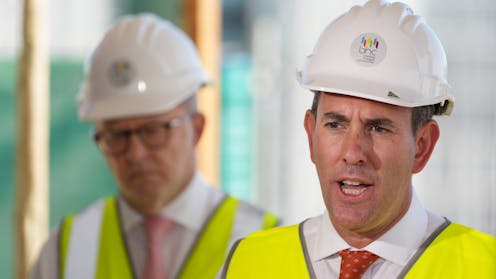
While the world’s media is largely focused on conflict in the Middle East, the focus for many Australians remains at home, with the government preparing the long task ahead of trying to lift Australia’s productivity.
Last week, Prime Minister Anthony Albanese announced a productivity roundtable, which will be held in mid-August. Now Treasurer Jim Chalmers has flagged the roundtable will be part of a much more ambitious debate, indicating he’s open to a broad discussion of major tax reform.
In this podcast, Chalmers is frank about his own belief in the importance of seizing the moment – even if “there’s an element of political risk” whenever governments talk about tax reform.
The way I see this is that I become very wary of people who say, because of the magnitude of our majority, that we will get another term. There are, as you know, few such assurances in politics, particularly in modern politics.
I can kind of hear that [office] clock ticking behind us, and I want to get on with it. You know, we’ve got a big job to do to deliver the big, substantial, ambitious agenda that we’ve already determined and taken to an election. But I am, by nature, impatient. I think the country has an opportunity to be ambitious here. And so if you’re detecting that in my language, that’s probably not accidental.
[…] There’s no absence of courage. There is an absence of consensus, and it’s consensus that we need to move forward. And that’s what I’m seeking, not just in the roundtable, but in the second term of our government.
Chalmers says one of his takeouts from reading Abundance, a new book currently fashionable with progressives, was the need to “get out of our own away” to build more homes and renewable energy, while maintaining high standards.
A lot of regulation is necessary. So we talk about better regulation. But where we can reduce compliance costs and where we can wind back some of this red tape in ways that doesn’t compromise standards, of course we should seek to do that.
One of the things I’m really pleased I got the cabinet to agree to earlier this week is we’re going to approach all of the regulators and we’re going to say, ‘please tell us where you think we can cut back on regulation and compliance costs in a way that doesn’t jeopardise your work’ […] We’re not talking about eliminating regulation. We’re talking about making sure that it’s better.
[…] I think renewable energy projects is part of the story here. I speak to a lot of international investors, there’s a big global contest and scramble for capital in the world […] One of the things that international investors say to us about Australia is ‘we don’t want to spend too long burning cash while we wait for approvals from multiple levels of government and other sorts of approvals’.
So if we can speed some of that up, if we can make sure it makes sense, if our regulation is better, then I think we give ourselves more of a chance of achieving our economic goals, but also our social and environmental goals.
On the productivity roundtable, Chalmers wants bold ideas.
We have an open door and an open mind. This is a genuine attempt to see where we can find some common ground. In some areas that won’t be possible, in other areas, I think it will. And I think we owe it to ourselves to try.
This is a very different discussion to the [2022] Jobs and Skills Summit. Much smaller, much more targeted, a bigger onus on people in the room to build consensus outside of the room.
We’re specifically asking people to consider the trade-offs, including the fiscal trade-off when it comes to what they’re proposing. We’re asking them to take a nationwide, economy-wide view, not a sectoral view about their own interests.
On whether any new major changes – including greater tax reform – would require a fresh mandate, Chalmers wants to wait and see.
I think it depends on the nature of the change. I’m sort of reluctant to think about sequencing and timing and mandates before we’ve got everybody’s ideas on the table and worked out where the consensus and common ground exists […] I think that remains to be seen.
E&OE Transcript
MICHELLE GRATTAN, HOST: Treasurer Jim Chalmers has declared improving Australia’s dismal progress on productivity is at the top of his priorities for Labor’s second term, but addressing the National Press Club on Wednesday, it was clear that his ambitions for economic reform are wide, much wider than we’ve heard from him or from the Prime Minister in the previous term or in the election campaign.
From August 19 to 21, the Government will hold a roundtable to seek ideas for reform from business, unions, civil society and experts. This will be a small gathering held in Parliament House’s Cabinet room.
Notably, Chalmers has invited participants to put forward ideas on tax reform.
The Treasurer is our guest today. Jim Chalmers, before we get to the roundtable, let’s start with the escalating Middle East war. What are the economic implications of this so far, and on one specific issue, what are the implications going to be for oil prices?
JIM CHALMERS, TREASURER: Thanks, Michelle. This is obviously a very perilous part of the world right now, it’s a perilous moment, perilous for the global economy as well.
We’re primarily focused on the human consequences of what’s going on, including around 2,000 people who’ve registered with DFAT to try and get out of the particularly dangerous areas right now, so that’s our focus, but there will be big economic consequences as well, and we’ve already seen in the volatility in the oil price – the barrel price for oil went up between 10 and 11 per cent last Friday when a lot of this flared up, and I think that is an indication of the volatility that this escalating situation in the Middle East is creating in the economy.
I get briefed every day on movements in relevant commodity prices and the like, and there’s a lot of concern, again primarily about the human cost, but there’s a lot of concern around the world about what this means for petrol price inflation and what it means for global growth as well.
GRATTAN: Also on the international scene, are we making any progress on getting concessions on the US tariffs, or will that have to wait for a rescheduled meeting between Donald Trump and Anthony Albanese? There’s now talk, incidentally, of a meeting possibly at NATO next week, although we don’t know whether that will happen or not.
CHALMERS: The Prime Minister’s made it clear that he is considering going to the NATO meeting. By the time people listen to this podcast, it may be that that’s been determined, but whether or not he goes to Europe, we’ve got a lot of different ways and a lot of different opportunities to engage with the Americans on these key questions, and the Prime Minister met with some of the most senior people in the economic institutions of the US overseas – and he met with leaders from Japan and the UK and Germany and Canada and others, so a very worthwhile trip.
We’ll continue to engage wherever we can and whenever we can, because our national economic interest is at stake here. We’ll continue to speak up and stand up for our workers and our businesses to try and make progress on this really key question.
GRATTAN: But no progress yet.
CHALMERS: We’re continuing to engage. We have had discussions at every level, including at my level, and the Prime Minister’s had discussions. Like the whole world right now, people are trying to get a better deal in the aftermath of the announcement of these tariffs; we’re no exception.
We’re better placed and better prepared than most countries to deal with the fallout of what’s happening with these escalating trade tensions, but we are seeking a better deal for our workers and businesses and industries. The Prime Minister’s engagement reflects that, and so does the rest of ours.
GRATTAN: Now, to turn to your productivity roundtable, give us some more details about it, including whether the sessions will be public and will the Premiers be there?
CHALMERS: There are some of those details that we’re still working out. I can’t imagine it will be public in the sense that we’ll have permanent cameras in the Cabinet room, but we don’t intend to be heavy‑handed about it, we’re not seeking people to sign non‑disclosure agreements ‑ I can’t anticipate that we’ll make it kind of Chatham House rules or confidential discussions, but we’re working through all of those issues. When it comes to the states, obviously we want the states involved in one way or another, and we’re working out the best way to do that.
I already engage with the state and territory treasurers at the moment on some of these key questions. I’ll continue to do that, I’ll step that up, and we’ll work out the best way to make sure that the states’ views are represented in the room.
You know how big the Cabinet room is, Michelle, it’s about 25 seats around an oblong table, so we can’t have everybody there, but we will do everything we can to make sure that the relevant views are represented, including the views of the States and Territories.
GRATTAN: When you say you wouldn’t see you having cameras in the Cabinet room, wouldn’t you want some of it to be public, because if it wasn’t, then whoever was telling the story would be putting their slant on it?
CHALMERS: Well, we’ll try and strike the best balance. I think what will happen is, inevitably, people who are participating in the roundtable, indeed people who are providing views but not necessarily in the room, there will be a big flourishing of national policy discussion and debate; that’s a good thing. We’ll try not to restrict that excessively. I just think practically having a kind of live feed out of the Cabinet room is probably not the best way to go about things.
But I’m broadly confident ‑ comfortable, broadly comfortable with people expressing a view outside the room and characterising the discussions inside the room. There may be a convincing reason not to go about it that way, but I’m pretty relaxed about people talking about the discussions.
GRATTAN: In your Press Club speech, you spoke about seeking submissions. Now, would those be submissions before the roundtable?
CHALMERS: Absolutely, but also, we’re trying to work out, in addition to structuring this roundtable – which will be a really important way for us to seek consensus – in addition to that, we’re trying to work out how do we become really good at collecting and taking seriously the views that are put to us by people who are experts in their fields.
Not everybody can be around the Cabinet table. People have well-informed views, and we want to tap them. So we’re working out the best way to open a dedicated Treasury channel, primarily and initially, about feeding views in for the consideration of the roundtable. But if there are ways that we can do that better on an ongoing basis, we’re going to look at that too.
GRATTAN: What do you say to those in business who came out of the 2022 Jobs and Skills Summit rather cynical thinking, really, they’d been had, frankly, that this was basically a meeting to legitimise the Government giving what it wanted to to the unions?
CHALMERS: I’ve heard that view, but I don’t share it. I’ve taken the opportunity in recent days to look again at the sorts of things we progressed out of the Jobs and Skills Summit, it was much, much broader than a narrow focus on industrial relations. So I take that view seriously, but I don’t share it.
And my commitment, I gave this at the Press Club, and I will give this commitment every day between now and the roundtable if that’s necessary, we have an open door and an open mind, this is a genuine attempt to see where we can find some common ground. In some areas, that won’t be possible, in other areas I think it will, and I think we owe it to ourselves to try.
This is a very different discussion to the Jobs and Skills Summit, much smaller, much more targeted, a bigger onus on people in the room to build consensus outside of the room. We’re specifically asking people to consider the trade-offs, including the fiscal trade-offs. When it comes to what they’re proposing, we’re asking them to take a nationwide, economy-wide view, not a sectoral view about their own interests.
Let’s see how we go. We are approaching it in that fashion, a different discussion to Jobs and Skills, and we want to give ourselves every chance to progress out of that discussion with something meaningful.
GRATTAN: You say you accept the need for tax reform. This is really a big statement from you, and it is a change of emphasis from last term. Up to now, you’ve resisted any suggestion of undertaking comprehensive reform of the taxation system. So, where do you actually stand now? Are you looking for ideas for incremental change, or are you looking for something that’s really bold?
CHALMERS: First of all, I do accept that the economic reform, and particularly the tax reform we’ve engaged in so far, it has been sequenced, it has been methodical – but it’s also been, I think, more substantial than a lot of the commentary allows, about half a dozen ways we’re reforming the tax system, and I’m proud of the progress that we’ve made.
When it comes to the roundtable, the point I’ve made about tax, the thing I welcome about the roundtable is it’s not possible to think about and talk about productivity, budget sustainability and resilience amidst global volatility without allowing or encouraging, welcoming a conversation about tax. So that’s the approach I’m taking to it.
What I’m trying to do, and we’ll see how successful we can be at doing this over the course of the next couple of months, but what I’m trying to do is to not pre‑empt that discussion, I’m trying not to artificially limit that discussion about tax, and that’s because I know that people have well‑intentioned, well‑informed views about tax reform; let’s hear them.
GRATTAN: But you do seem open, from what you said, to a possible switch in the tax mix between direct and indirect.
CHALMERS: I think that will be one of the considerations that people raise at the roundtable, and I think it would be unusual to discourage that two months out. Let’s see what people want to propose. You know, I think that’s an indication of my willingness, the Prime Minister’s willingness, the Government’s, to hear people out.
And we broadly, whether it’s in tax and budget, whether it’s in productivity, resilience – I don’t want to spend too much at this roundtable with problem ID, I want to go from problem ID to ideas. That’s because we’ve had really for a long time now – probably as long as you and I have known each other, Michelle – we’ve had a lot of reports about tax, and important ones. I think the time now is to work out where are their common interests, where does the common ground exist, if it exists, on tax, and to see what we can progress together, and that requires on my part an open mind, and that’s what I’ve tried to bring to it.
GRATTAN: Of course, your former Treasury Secretary, who’s now the Prime Minister’s right-hand man as head of the Prime Minister’s department, I think has made speeches pointing out that you really do need such a switch.
CHALMERS: Yeah, and Steven Kennedy’s a very influential person in the Government. I’m delighted – we’ve been joking behind closed doors about Steven being demoted to PM&C from Treasury, but the reality is it’s amazing, it’s the best of all worlds from our point of view to have Kennedy at PM&C and Wilkinson at Treasury. That’s an amazing outcome for anyone who cares about economic reform and responsible economic management, a wonderful outcome.
Steven has made a number of comments in the past about the tax system, probably Jenny has as well. They are very informed, very considered, big thinkers when it comes to economic reform, and we’re going to tap their experience, their interest and their intellect.
GRATTAN: Well, he can now get into the Prime Minister’s ear on this matter. The other thing on tax, you did seem to wobble a bit on changing the GST; you’ve been pretty against that. I guess you left the impression at the Press Club that basically you were still probably against, but you did seem a bit more open-minded than usual.
CHALMERS: What I’m trying to do there, Michelle, and I’m pleased you asked me, because I think that was a bit of a test, a bit of an example of what I talk about in the speech, which is that obviously there are some things that governments, sensible, middle of the road, centrist governments like ours don’t consider – we don’t consider inheritance taxes, we don’t consider changing the arrangements for the family home, those sorts of things.
But what I’ve tried to do and what I tried to say in the speech is if we spend all of our time ruling things in or ruling things out, I think that has a corrosive impact on the nature of our national policy debate, and I don’t want to artificially limit the things that people bring to the roundtable discussion.
I was asked about the GST – you know that I’ve, for a decade or more, had a view about the GST. I repeated that view at the Press Club because I thought that was the honest thing to do, but what I’m going to genuinely try and do, whether it’s in this policy area or in other policy areas, is to not limit what people might bring to the table.
And so that’s what you described as a wobble, I think that really just reflects what I’m trying to do here is to not deny what I have said about these things in the past, but to try and give people the ability to raise whatever they would like at the roundtable. I suspect there will be other occasions like that, other opportunities like that between now and the roundtable where I’ll do the same thing. I’ll repeat what I’ve said, I won’t walk away from it, I haven’t changed my view on the GST. I suspect people will bring views to the roundtable about the GST. Let’s hear them.
GRATTAN: Well, of course, the GST can be a bit like a wild dog when it’s let off the leash. You’ll remember when Malcolm Turnbull let Scott Morrison as Treasurer float the idea of changing the GST, and that didn’t end well.
CHALMERS: No, I think I can recall a fascinating part of Malcolm’s book about that, if memory serves, or perhaps something else that he said or wrote subsequently. I’m obviously aware of that history, you know, and there’s ‑ let’s be upfront with each other, Michelle, when you do what I did at the Press Club today and say bring us your ideas and let’s see where there’s some common ground, there’s an element of political risk to that.
There’s a lot of history tied up in a lot of these questions, as you rightly point out in this instance, and I guess I’m demonstrating, or I’m trying to demonstrate, a willingness to hear people out, and there will be people who write about that in a way that tries to diminish this conversation that we’re setting up. That will happen. I’m open to that, relaxed about that, but let’s see what people think about our economy, about productivity, sustainability, tax, resilience, and let’s see if we can’t get around some good ideas that come out of that discussion.
GRATTAN: Which tempts me to ask, will Ken Henry be on your guest list of the famous Henry review?
CHALMERS: I think some people were surprised to see Ken there today at the National Press Club. Ken was there at the Press Club, and I think I said in the question and answer, if memory serves, and I hope it’s okay with Ken that I said this, but we’ve been engaging on drafts of the speech – we talk about some of the big issues in the Press Club speech I gave today.
I’m not sure about the final invite list. Once you start putting together a list of about 25 people, you’ve got some ministerial colleagues, you’ve got peak organisations, including the ACTU, Sally McManus will be there, maybe a community organisation, someone representing the community, some experts. Before long, it’s very easy to hit 25 people.
You’ve planned a few dinner parties in your time, Michelle, and an invite list of 25 people fills up pretty quick. We haven’t finalised that yet, but whether we invite Ken or Ken’s outside the room, he’s one of a number of people that I speak to about these big policy challenges, and regardless, I hope that he’s okay with us continuing to tap his brain.
GRATTAN: Maybe you need to adopt a sort of restaurant approach of rotational sittings.
CHALMERS: Yeah, well! –
GRATTAN: Now, I know you said today that you don’t like gotcha questions and gave us a bit of a lecture ‑‑
CHALMERS: This doesn’t sound like a good introduction, Michelle.
GRATTAN: ‑‑ about that, but your controversial tax on capital gains on superannuation balances that are very big, critics worry that this could in fact be the thin end of the wedge extending to other areas of the tax system. Would you care to rule that out?
CHALMERS: I think I said today, and I’m happy to repeat with you, Michelle, that we haven’t changed our approach here. We’ve got a policy that we announced almost two and a half years ago now, and we intend to proceed with it.
What we’re looking for here is not an opportunity at the roundtable to cancel policies that we’ve got a mandate for; we’re looking for the next round of ideas.
Now again, a bit like some of the other things we’ve been talking about, I suspect people will come either to the roundtable itself or to the big discussion that surrounds it with very strong views, and not unanimous views about superannuation. We read in a couple of our newspapers on an almost daily basis that people have got strong views about the superannuation changes, and not the identical same views, and so I suspect that will continue.
But our priority is to pass the changes that we announced, really some time ago, that we’ve taken to an election now, and that’s how we intend to proceed.
GRATTAN: So, you’re open to considering other views?
CHALMERS: On that particular issue, I think we have a pretty good sense of people’s views. I mean there’s ‑ I don’t pretend for a second that there’s unanimous support for it.
GRATTAN: I mean, extending it to other areas.
CHALMERS: No, I mean that’s not something we’ve been contemplating even for a second, and we haven’t done any work on that, we haven’t had a discussion about that, that’s not our intention.
But more broadly, when it comes to the system, I suspect people will have views about that at the roundtable – but thanks for the opportunity to clarify, we’re not planning for or strategising for extending that in additional ways.
GRATTAN: Now, artificial intelligence is obviously being seen as the next big productivity enhancer when you’re talking about the big things, but it’s also going to cost jobs, and that will exercise the unions.
Your Industry Minister Tim Ayres, has emphasised the unions have a role in this transition, must be consulted, brought into it, but you’ve said that while regulation will matter, and I quote, “We are overwhelmingly focused on capabilities and opportunities, not just guardrails. The emphasis here is different”. Do you see this as being a bit like the tariff reforms in the Hawke/Keating time, when there were big gains to be made but there were also very significant losers, and how do you deal with that situation?
CHALMERS: First of all, I think unions do have a place and a role to play in this. I can’t imagine meaningful progress on AI or technology more broadly where we wouldn’t include unions and workers in that conversation. That wouldn’t be consistent with our approach, and it wouldn’t make a lot of sense, so I share Tim’s view on that. I work closely with Tim Ayres and also Andrew Charlton, who will have a key role in some of these policy questions.
The point that I was making was it’s not a choice between regulation or capability, it’s not an either/or. Obviously we need guardrails, obviously we need regulation, but from my point of view, I see this as a game‑changer in our economy, I see it as one of the big ways that will make our economy more productive and lift living standards.
It’s not all downside for workers either – we’re talking about augmenting jobs, we’re talking about some of the routine tasks that are not the most satisfying parts of people’s work, so of course we want to include the union movement, of course we want to make sure that we’ve got appropriate guardrails.
The point that I was making in that interview with the Financial Review which you’re quoting from is that we need to get our capabilities right, we need the right skills base, I think we’ve got a huge opportunity with data centres and the infrastructure that supports artificial intelligence, and so that is a big part of the focus of our work. When it comes to productivity, when it comes to growth more broadly, industry policy, our work with the Productivity Commission, data and digital, AI, data centres, all of that I think are going to be key parts of the future economy in Australia.
GRATTAN: The last time we spoke on this podcast, you said you’d been reading the book Abundance by Ezra Klein and Derek Thompson, and you described it as a ripper. Now I think you’re making all your Cabinet colleagues read it too, and I’m not sure whether they thank you for that, but there it goes.
What are some of the ideas in the book that attracted you, and in particular, do you agree with the thesis that red tape is holding us back, particularly when it comes to housing and renewable energy and the transition to renewables?
CHALMERS: First of all ‑ we should be on a commission for this book, I think, from Andrew Leigh through a whole bunch of colleagues ‑ a lot of us have either read it or are in the process of reading it.
The reason that we are attracted to it is because it really is about working out as progressive people who care deeply about building more homes, rolling out more renewable energy, to make sure that the way we regulate that and approach that doesn’t get in our own way, that we don’t make it harder for us to achieve our big economic goals in the energy transformation; in housing and technology and all of these sorts of things.
What the Abundance book reminds us to do, and I think in a really timely and really punchy way, is it says, “As progressive people, let’s get out of our own way”. A lot of regulation is necessary, so we talk about better regulation, but where we can reduce compliance costs and where we can wind back some of this red tape in ways that doesn’t compromise standards, of course, we should seek to do that.
One of the things I’m really pleased I got the Cabinet to agree to earlier this week is we’re going to approach all of the regulators, and we’re going to say, “Please tell us where you think we can cut back on regulation and compliance costs in a way that doesn’t jeopardise your work”. I suspect from that, maybe not from every regulator, but from some of the regulators, I think if we are genuine about it, I think we can make some progress there to get compliance costs down, to speed up approvals so that we can deliver the things that we truly value as an economy but also as a society, and that’s what the Abundance book’s about.
GRATTAN: Of course, one of the problems is, while this sounds very good, a lot of stakeholders say we need more regulation of this or that, we need to protect flora, fauna, climate, whatever.
CHALMERS: Yeah, of course we do.
GRATTAN: And that all gets in the way of clearing away red tape, doesn’t it?
CHALMERS: We’re not talking about eliminating regulation, we are talking about making sure that it’s better, that we can use regulation in the service of our social and environmental and economic goals, but to make sure that we’re not overdoing it, that it’s not unnecessary, that it doesn’t prevent us achieving our aspirations and our objectives, including in the environment.
I think renewable energy projects are part of the story here, and I speak to a lot of international investors, there’s a big global contest and scramble for capital in the world. People are rethinking their investments, and there’s a lot of interest in Australia, and one of the things that international investors say to us about Australia is we don’t want to spend too long burning cash while we wait for approvals from multiple levels of government and other sorts of approvals.
If we can speed some of that up, if we can make sure it makes sense, if our regulation is better, then I think we give ourselves more of a chance of achieving our economic goals, but also our social and environmental goals as well.
GRATTAN: Another of your priorities is budget sustainability, and you say the Government’s made progress, but there’s a way to go. So, where are you going now? Do you need to make big savings in what areas, or are you really having to look at the revenue side more?
CHALMERS: I think there’s this kind of strange binary analysis of the budget situation. Some people say it doesn’t matter, some people say it’s beyond repair, and obviously, like a lot of things in politics and policy, the truth lies somewhere in between.
We’ve made a heap of progress on the budget; two surpluses, biggest ever nominal turnaround in the budget, we got the debt down, got the interest costs down. But what I acknowledge and what I will continue to acknowledge is there’s always more work to do to make it more sustainable.
For us, we made a heap of progress on aged care, the NDIS and interest costs, but we need to make sure that even when we think about the policy ideas that people bring to us at the roundtable, budget sustainability really matters. Where we do find something that we want to invest more in, we’ve got to consider the trade-offs, we’ve got to work out how to pay for things.
There’s probably not a day, certainly not a week that goes by where Katy Gallagher and I aren’t in one way or another engaging with colleagues on some of these structural pressures on the budget, because they do matter.
GRATTAN: Well, one, of course, is defence spending, and I was interested that you did in your remarks to the Press Club seem, while cautious, while saying, “We’re spending a lot on defence”, you seemed open to the idea that over the next decade governments will have to increase defence spending.
CHALMERS: I think the point I was trying to make there, Michelle, was it would be strange over a period of 10 years if there were no changes to any policy or levels of spending. But the thing that’s not, I think, sufficiently acknowledged is we’ve already quite dramatically increased defence spending, and you know, it’s not easy to find the extra $11 billion we found over the forward estimates, or the almost $58 billion I think we found over the decade.
We are dramatically increasing our defence spending. I acknowledge and accept and respect that some people, including some of our partners, want us to spend more on defence, but we are already spending a heap more on defence, and we’ve had to find room for that in the budget, and that’s what we’ve done.
GRATTAN: So we should be up for that conversation, as Richard Marles would say?
CHALMERS: I think what Richard’s saying, to be fair to him, is that we are more or less continuously engaging with our partners about things like defence spending, and when it comes to the Americans, they’ve made it clear around the world that they want people to spend more on defence. That’s not an unreasonable position for the Americans to put to us. We decide our level of defence spending, and we have decided collectively as a government to dramatically increase it.
GRATTAN: As Treasurer, you’re the gatekeeper for foreign investment decisions, big decisions, and there’s a takeover bid at the moment from Abu Dhabi’s national oil company for Santos. Can you give us some idea of the process, the timetable, when you would make a decision if the matter comes to you?
CHALMERS: This is a really big transaction potentially, and it raises – there are a lot of considerations around the national interest, it’s in a sensitive part of our economy for all of the obvious reasons.
What usually happens with a transaction of this magnitude, tens of billions of dollars, is it goes through a number of stages. One of those stages is a Foreign Investment Review Board process where I’ve got a heap of terrific colleagues in the Treasury who advise me on these things. What I try to do is to make sure that I refrain from commenting on these sorts of deals before I’ve got that Foreign Investment Review Board advice. I take that advice very seriously, and that means not pre‑empting it.
I know that there will be a heap of views, a heap of interest, I do acknowledge it’s a very big transaction which involves a really key sensitive part of our economy, and I’ll do what I always do with these big FIRB approval processes, which is to engage in it in a really methodical and considered way.
That will roll out over the course of the next few months. The last time I asked, which I think was yesterday, we hadn’t ‑ the FIRB hadn’t had a chance to go through or hadn’t received yet the Foreign Investment Review Board proposal. That may have changed since then, but regardless, these things take a little bit of time.
GRATTAN: Before we finish, let’s come back to productivity. You’ve said the work will take more than a term. So just give us a snapshot of where you would want to be at the end of say three years, six years.
CHALMERS: Yeah. The point I’m making there, when it comes to productivity is, unlike some of the other really important measures in our economy, there’s no instant gratification. It’s very hard to flick a switch and get an immediate, substantial, meaningful shift in the data.
The point that I’ve made is that we’re enthusiastic and very committed, very dedicated to doing meaningful things on productivity, but even those things can sometimes take a while to play out in the data, so I’m just really trying to say to people, this is important, it will pay off, some of it will pay off in the medium term and the longer term, but that shouldn’t deter us, the fact that some of these challenges take a little bit longer to fix.
Now, if there was a switch that you could flick to make our economy instantly more productive, somebody would have flicked it already. Unfortunately, there’s not, and so we’re left in a world where we have to do a lot of things at once, and some of those things will take a little while to pay off.
GRATTAN: Can you set any sort of target in terms of growth, annual growth? –
CHALMERS: I’m reluctant to do that.
GRATTAN: – productivity growth.
CHALMERS: I’m reluctant to do that. The budget assumes a level of productivity growth, which is higher than what we are currently seeing, so it wouldn’t be a bad start to try and get closer to the forecast. But I’m reluctant to put a target on it.
GRATTAN: And that forecast is?
CHALMERS: The Treasury changed it to 1.2 per cent, and we’re currently tracking a bit lower than that on the current 20-year average, and so we need to do better. I tried to be quite blunt about that at the Press Club. Our economy is growing, but it’s not productive enough, our budget is stronger, but it’s not sustainable enough, our economy is resilient, but not resilient enough. And this is my way of saying to people, we’ve made a lot of progress together, but we’ve got a further ‑ we’ve got more to do, and productivity is our primary focus in that regard, but not our only focus.
GRATTAN: For really big changes, say for tax changes, do you think you need another mandate or not?
CHALMERS: I think it depends on the nature of the change. I’m reluctant to think about sequencing and timing and mandates before we’ve got everybody’s ideas on the table and worked out where the consensus and common ground exists, and so I don’t like to be evasive with a good question like that, Michelle, but I think that remains to be seen. It will be to be determined once we get a firmer sense of the way forward.
GRATTAN: Just finally, you sounded in your speech rather like a man who’s been liberated since the election. Has your attitude changed? Do you think it’s just time to go for it?
CHALMERS: The way I see this, Michelle, is that I become very wary of people who say, because of the magnitude of our majority, that we will get another term. There are, as you know, few such assurances in politics, particularly in modern politics, and so I can kind of hear that clock ticking behind us, and I want to get on with it.
We’ve got a big job to do to deliver the big, substantial, ambitious agenda that we’ve already determined and taken to an election. But I am by nature impatient, I think the country has an opportunity to be ambitious here, and so if you’re detecting that in my language, that’s probably not accidental. I think we know what the challenges are, we know what people’s views are broadly, there’s no absence of courage, there is an absence of consensus, and it’s consensus that we need to move forward, and that’s what I’m seeking not just in the roundtable, but in this second term of our Government.
GRATTAN: Jim Chalmers, it’s going to be an interesting few months, and thank you for talking with us today. That’s all for today’s podcast. Thank you to my producer, Ben Roper. We’ll be back with another interview soon, but good‑bye for now.
Michelle Grattan does not work for, consult, own shares in or receive funding from any company or organisation that would benefit from this article, and has disclosed no relevant affiliations beyond their academic appointment.
Source: International Atomic Energy Agency (IAEA) –
The IAEA Board of Governors will convene its regular September meeting at the Agency’s headquarters starting at 10:30 CEST on Monday, 9 September, in Board Room C, Building C, 4th floor, in the Vienna International Centre (VIC).
Board discussions are expected to include, among others: nuclear and radiation safety; nuclear security; strengthening the Agency’s activities related to nuclear science, technology and applications; verification and monitoring in the Islamic Republic of Iran in light of United Nations Security Council resolution 2231 (2015); application of safeguards in the Democratic People’s Republic of Korea; implementation of the NPT safeguards agreement in the Syrian Arab Republic; NPT Safeguards Agreement with the Islamic Republic of Iran; nuclear safety, security and safeguards in Ukraine; transfer of the nuclear materials in the context of AUKUS and its safeguards in all aspects under the NPT; application of IAEA safeguards in the Middle East; and the restoration of sovereign equality of Member States in the IAEA.
The Board of Governors meeting is closed to the press.
Director General Rafael Mariano Grossi will open the meeting with an introductory statement which will be released to journalists after delivery and posted on the IAEA website. The IAEA will provide video footage here and will make photos available on Flickr.
Press Conference:
Director General Grossi is expected to hold a press conference at 13:00 CEST on Monday, 9 September, in the Press Room of the M building.
A live video stream of the press conference will be available. The IAEA will provide video footage here and will make photos available on Flickr.
Photo Opportunity:
There will be a photo opportunity with the IAEA Director General and the Chair of the Board, Ambassador Holger Federico Martinsen of Argentina, before the start of the Board meeting, on 9 September at 10:30 CEST in Board Room C, in the C building in the VIC.
Press Working Area:
The Press Room on the M-Building’s ground floor will be available as a press working area starting from 9:00 CEST on 9 September.
Accreditation:
All journalists interested in covering the meeting in person must register with the Press Office by 16:00 CEST on Thursday, 5 September. Please email press@iaea.org. We encourage those journalists who do not yet have permanent accreditation to request it at UNIS Vienna.
Please plan your arrival to allow sufficient time to pass through the VIC security check.
Source: International Atomic Energy Agency (IAEA) –
Scientists and experts from around the world will meet at the IAEA Scientific Forum this week to discuss how nuclear science and technology innovations under the framework of Atoms4Food can contribute to enhancing sustainable agrifood systems, improving food security and addressing climate challenges.
IAEA Director General Rafael Mariano Grossi will open the forum on Tuesday alongside HE Musalia Mudavadi, Prime Cabinet Secretary of Kenya, Mr Abdulhamid Alkhalifa, President of the OPEC Fund, MrLiu Jing, Vice Chairman, China Atomic Energy Authority, China, HE MrSidi Tiémoko Touré, Minister of Animal and Fisheries Resources, Cote d’Ivoire, HE MsLeila Benali, Minister of Energy Transition and Sustainable Development, Kingdom of Morocco, HE MrFernando Mattos, Minister of Livestock, Uruguay, and Mr Giorgio Silli, Undersecretary of Foreign Affairs and International Cooperation, Italy. Director General Grossi will conclude the Forum on Wednesday alongside HE MrAnxious Jongwe Masuka, Minister of Lands, Agriculture, Fisheries, Water and Rural Development from Zimbabwe, HE MrAmadou Dicko, Deputy Minister, Ministry of Agriculture, Animal Resources and Fisheries, Burkina Faso and other distinguished representatives from Member States and International Organizations.
The event under the title Atoms4Food – Better Agriculture for Better Life, takes place from Tuesday, 17 September, 9:30 CEST to Wednesday, 18 September 2024, 13:00 CEST in Board Room D on the 4th floor of the C-Building of the Vienna International Centre (VIC). Open to the media and streamed live, the event will showcase how nuclear science can drive agricultural advancements and support global efforts to combat food insecurity.
The forum will feature three technical sessions, where international experts will explore the critical role of nuclear science and technology in advancing sustainable agriculture, food production and nutrition. Speakers will discuss innovations using nuclear and isotopic techniques in agriculture and food production, the interconnectedness of agricultural practices with environmental conservation and socioeconomic equity, and the importance of partnering with stakeholders to scale up results and ensure sustainability. More details about the Scientific Forum can be found on the IAEA website and social media (Facebook, Instagram, LinkedIn, X, Weibo). Photos of the Forum will also be available on Flickr.
The detailed programme and full list of speakers can be found here. For those interested in interviewing speakers, please contact the IAEA Press Office, and we will assist with interview arrangements.
Accreditation
Journalists with permanent credentials to the VIC or journalists who have already obtained accreditation for the IAEA’s General Conference need no additional credentials. We encourage those journalists who do not yet have permanent accreditation to request it at UNIS Vienna.
Others should contact the IAEA Press Office for accreditation.
Source: United Kingdom – Executive Government & Departments
A systematic review published in the Journal for the American Heart Association looks at ocean microplastic pollution and the risk of cardiometabolic disease in US coastline counties.
Prof Oliver Jones, Professor of Chemistry, RMIT University, said:
“I fear this paper will lead to more “plastics cause scary disease X” headlines, but, to my mind, the evidence in this paper is quite weak.
“Firstly, the authors don’t claim that microplastics cause disease, but rather that they found an association between microplastic exposure and type 2 diabetes (T2D), coronary artery disease (CAD), and stroke. An association between two things does not necessarily mean that one caused the other; it is simply an observation. There is also a large amount of overlap in the datasets, even between the very low and very high exposure scenarios, and the authors clearly state in the paper that their “results do not imply causation”.
“Perhaps more importantly, the authors didn’t measure either microplastic exposure or the health factors they studied directly; both were estimates. Microplastic concentrations were estimated from ocean measurements, some of which were taken up to 230 miles offshore and thus may not accurately represent what coastal communities are exposed to. The rates of disease occurrence were estimated from county-level survey data, which does not provide data on individuals. Potential cofounders were limited to those listed in the survey data, meaning some potentially confounding factors could not be controlled for.
“The authors all appear to be medics, rather than chemists or environmental scientists. The paper makes a lot of incorrect generalisations about microplastics, for example, referring to “microplastic compounds like phthalates”. Phthalates are not microplastics, and not all phthalates are the same. They claim that bisphenol A and phthalates promote adverse health outcomes through their endocrine-disrupting properties, which is incorrect. The paper also refers to toxicity studies on polystyrene particles, neglecting the fact that polystyrene is far from the most common type of plastic in the environment.
“So, while the work raises interesting research questions, I do not think the evidence of harm is strong, and people living near the coast don’t need to panic”
Dr Ria Devereux, Environmental Research Fellow, the Sustainable Research Institute, the University of East London, said:
Does the press release accurately reflect the science?
“It is important to note that this research focuses solely on the United States, particularly its coastal counties, and specifically examines marine microplastics. It does not consider other types of microplastics, such as those found in marine sediment, beach sediment, atmospheric microplastics, or microplastics in soil. The title, “Living near an ocean polluted by microplastics may increase cardiometabolic disease risk,” could give the incorrect impression that these findings apply globally, which is not justified by this data.
“Both sizes of plastic particles come from the chemical breakdown (decomposition) of larger plastic waste, including food packaging (like single-use water bottles), synthetic fabrics and personal care products.” This statement is also slightly incorrect. Microplastics can also be found in the form primary microplastics (nurdles) which are made to be a particular size and are not the result of degradation. Plastics are also subjected to mechanical, biological degradation as well as chemical.
Is this good quality research? Are the conclusions backed up by solid data?
“It is very interesting research which does need further research to investigate some of the limitations of the study conducted. One major limitation that is not addressed is that microplastics contain chemicals which have been found to be harmful to human health. There is no mention in this study regarding data on water quality. For example, is there a higher abundance of chemicals found within plastics in the water surrounding these coastal communities which may be a contributing factor.
How does this work fit with the existing evidence?
“The production of plastic and its associated pollution are increasingly recognized for their potential implications on human health. Research conducted on wildlife has demonstrated severe consequences, including choking hazards and hormonal disruptions.
“Recent studies have identified plastics in various human tissues, including the placenta [1],breastmilk [2] and stool [3].
“In addition to the presence of microplastics in the human body, chemicals commonly used in plastic production have been found to pose health risks. Research indicates that exposure to these chemicals can lead to various health issues, including skin irritation, respiratory diseases, hormonal disruptions, and certain cancers [4].
Have the authors accounted for confounders? Are there important limitations to be aware of?
“The dataset from NOAA presents several limitations. It does not account for when the samples were collected—such as during storms—or the duration of the sampling periods. Additionally, there may be a lack of studies in many coastal counties. For instance, most samples from the Gulf of Mexico are concentrated around Tampa and the southern region of Florida, with only two data points near New Orleans. While the authors briefly mention this issue in relation to the Atlantic and Pacific coasts, they do not address it for the Gulf of Mexico. They note that “study design, spatial coverage, and oceanic transport dynamics” may contribute to differences observed in previous studies.
“The authors also acknowledge that theabsence of data on the types of microplastics—such as fragments and fibers—constitutes a limitation. However, this statement should also include the lack of information regarding polymer types and plastic sizes.
“Additionally, it would be relevant to consider how many people in these coastal areas consume seafood and whether it is locally sourced or imported.
“As for the timeframe investigated, How long must someone live near the coast for it potentially to impact their health?
“Regarding groundwater, the authors mention that only “35% of drinking water in the United States is supplied by groundwater.” Is the proportion of coastal residents who drink groundwater higher than that of individuals living in other parts of America?
“Perhaps the most critical issue that the authors have not fully addressed is that almost all plastic production plants in the United States, which are involved in petrochemical and petroleum manufacturing, are located either in coastal counties along the Gulf of Mexico or on the Atlantic Ocean side (according to the Plastics Inventory Map [5]). This study indicates that cases of heart disease and similar health issues are higher in these areas. Many chemicals used in plastic production, such as BPA and phthalates, have been previously linked to these health problems [6]
What are the implications in the real world? Is there any over-speculation?
“This study highlights the need for further investigation into the health impacts of plastics on human well-being throughout their entire lifecycle. While this research primarily focuses on marine microplastics, it is essential to recognize that microplastics are also present in soil, air, and water. Additionally, it is important to understand that the risks associated with plastic do not stop at ingestion or inhalation, the entire lifecycle of plastic poses threats to public health. This includes hazards linked to petroleum extraction, the use of chemicals in production, and the leaching of these substances into our environment during manufacturing and disposal.
“It is important to note that this study cannot establish a cause-and-effect relationship between ocean microplastic levels (which were assessed only in water, not in sediment or fish) and the development of certain diseases due to its limitations in data and design. Further research is needed to determine whether microplastics and associated chemicals are present in higher concentrations near coastlines in soil, water, and air, as well as within the human body, to fully evaluate the potential health implications of living closer to the coast. Additionally, this study should be expanded to explore whether this trend is observed worldwide.
“Unfortunately, many individuals around the globe view plastic pollution solely as an environmental issue, overlooking its potential implications for human health. Studies like this one play a crucial role in raising awareness of these risks.
Extra commentary from Dr Ria Devereux on wider context
“The adverse effects of chemicals used in plastic production are particularly pronounced in the Gulf of Mexico, an area often referred to as “Cancer Alley.” This region experiences a higher-than-average incidence of cancer, diabetes, and respiratory diseases, which are concentrated in particular areas. The reason behind this is the concentration of petrochemical, petroleum and production plants involved in plastic production and an increase in the presence of chemicals used within the plastic production such as BPA and Phthalates [7,8].
“Although the Plastics Treaty acknowledges that human health is a critical factor in regulating plastic production and the associated chemicals, reports indicate that “chemicals of concern in plastic products” are at threat of being excluded from the current treaty text [9,10,11].
“In regards to America, we may find in the future that this types of disparity in human health and microplastics become worse due to Trumps “America first” narrative on top of increasing tariffs which will cause an increase in the plastics industry to align with the needs of the consumer and manufacturers. On top of this Trump has bought plastic straws back to America [12] and has started to dismantle key government institutions such as NOAA ( The National Oceanic and Atmospheric Administration)[13] and the Environmental Protection Agency [14] which will push back Americas efforts to reduce plastic waste.”
‘Marine Microplastic Levels and the Prevalence of Cardiometabolic Diseases in US Coastline Counties’byMakwanaet al.will be published in Journal for the American Heart Association at 10:00UK time on Wednesday 18th June.
DOI:10.1161/JAHA.124.039891
Declared interests
Dr Ria Devereux None
Prof Oliver Jones “I am a Professor of Chemistry at RMIT University in Melbourne, Australia. I conduct research into environmental pollution and its effects on biological systems. I don’t have any conflicts of interest to declare.”
Source: International Atomic Energy Agency (IAEA) –
Nobel’s spotlight on our perilous path and how we change course
I want to start by congratulating Nihon Hidankyō and the hibakusha for their Nobel Peace Prize.
As a young diplomat almost 40 years ago, I was fortunate to be part of a UN disarmament fellowship programme and to visit Hiroshima. There, fellows had an opportunity to meet the hibakusha and I had a conversation with an ailing victim. I have carried to every meeting, to every negotiation, and to every posting, the memory this woman’s silent testimony. When I asked her about that morning in 1945, she struggled to express the horror in words. She tried to articulate some words but stayed silent. Looking at me, right into my eyes. The look in her eyes has stayed with me ever since, like a powerful reminder, a secret mandate, to work so that her suffering is never repeated.
For decades after the Second World War, the international community has been dealing with this unique dilemma: we built robust norms and passed nonproliferation and disarmament treaties. Instead of dozens of countries armed with nuclear weapons, as was the concern in the 1960s, there are less than ten. Stockpiles of nuclear weapons have shrunk from tens of thousands to thousands.
But on its journey through the perils of the atomic age, the world has come to a crucial crossroads. Our deep psychological connection caused by collectively seeing the horror of the consequences of nuclear war seems to be evaporating, taking with it our joint resolve to do everything possible to prevent a repetition.
Like a giant spotlight, this year’s Nobel Peace Prize has lit up our path ahead. It has done it, by reminding us of the past, and of the consequences of ignoring the perils of nuclear weapons use.
Context of conflicts
To understand the important challenges we face, we must look at the global context, at what is happening around the world.
War has returned to Europe, and it directly involves a nuclear weapon state. The conflict in Ukraine is also an indirect confrontation between the world’s biggest nuclear weapon states, the first since the end of the Cold War. But nuclear exercises and open references to the use of nuclear weapons in the theatre of this war are increasing the risks and can not be ignored.
In the Middle East, the conflict of the past year has ignited smoldering tensions between Israel and Iran and led to the unprecedented step of direct exchanges and attacks between the two. Here there is also a nuclear weapons dimension. On one side, the assumed presence of nuclear weapons looms in the background. On the other, the very real potential of nuclear proliferation is raising the stakes.
We find ourselves in a harmful loop: the erosion of the restraints around nuclear weapons is making these conflicts more dangerous. Meanwhile, these conflicts are contributing to the erosion of the restraints. The vicious circle dynamic is in motion.
An unfortunate change of direction
Doctrines regarding the use of nuclear weapons are being revised or reinterpreted. The quantity and quality of nuclear weapon stockpiles are being increased.
And in some non-nuclear weapon states – states that are important in their region – leaders are asking “why not us?”. And they are asking this openly!
At the start of the nuclear arms race, J Robert Oppenheimer described the USSR and the US as “two scorpions in a bottle” each capable of killing the other, but only by risking their own life.
Oppenheimer’s blunt statement would later be developed and elaborated under the roof of deterrence and the more sophisticated concept of “Mutual Assured Destruction,” or MAD.
Today, independent of the vantage point of the observer, there is widespread concern that the risk of mutual destruction through nuclear war is higher than it has been for more than a generation.
Lessons from history
But it does not have to be this way. We can do better. History has shown that effective dialogue among superpowers has, more often than not, led to confidence and, as a result, also to arms limitation and even disarmament. At certain moments in history, world leaders took the right decisions, to tone down, or, to use today’s parlance, to de-escalate. Let’s see:
The end of the Cuban Missile Crisis happened thanks to the direct engagement of Soviet leader Nikita Khrushchev and US President John F Kennedy. Decades later, at the Geneva Summit of 1985, Mikhail Gorbachev and President Ronald Reagan agreed a crucial axiom: “Nuclear war cannot be won and should never be fought.” They met again the next year in Reykjavik and significant reductions in nuclear arsenals followed. Nuclear weapon reductions and the elimination of a whole category of weapon, through the Intermediate-Range Nuclear Forces, or INF, Treaty, were agreed. These steps towards rapprochement took leadership and courage. They often happened despite skepticism and voices against them.
Diplomacy and dialogue (and the duty of nuclear weapon states)
A return to diplomacy and dialogue is urgently needed, and this, not only in things nuclear. Shutting the other side out has never solved a problem and almost certainly aggravates it. Top leadership involvement is simply indispensable when nuclear weapons are involved. President Trump took the initiative and talked to Kim Jong Un. More of this is needed. Some have said these talks were ill prepared. I say, this is important. Nuclear weapon policy and limitations does not work bottom up. It is of course the other way around.
We must be proactive in building the trust and protections that lower the risk of close calls and of brinkmanship, especially during today’s tensions. Not taking active steps means we rely on luck – or the assumption that the other side will show restraint – to save us from nuclear war. The longer you rely on luck, the more likely it is to run out.
Conflict and tensions compel nations to arm themselves. Diplomacy and compromise create conditions in which they can disarm.
The road to a nuclear weapon-free world is long and winding. The disarmament landscape is complex, and it’s worth acknowledging that. This does not diminish the responsibility nuclear weapons states have to make progress. After all, they committed themselves to this goal back in 1968, through the Non-Proliferation Treaty.
Steps can be taken to decrease the reliance on nuclear weapons, both in their production and the scenarios for their use.
Nuclear weapon states, through their actions at home and on the world stage, have a responsibility to avoid a scenario in which more countries seek nuclear weapons. Pushing ahead with increases in arsenals leads to despair, cynicism, and a growing skepticism about the value of past commitments. Disengagement and unilateralism fuel sentiments of vulnerability in other countries, and with that, the notion nuclear weapons could be the ultimate protection against outside threats.
Engagement among the five permanent members of the Security Council is indispensable. Such engagement can take many different shapes, starting with direct contact among themselves, bilaterally or as a group. This dialogue, which still exists, has been reduced to a very low level, virtually without real impact. Perhaps its revival could be assisted by an international organization, or facilitated with the support of a respected, impartial leader. Therefore, it’s essential that the United Nations, other international organizations, and their leaders work effectively to ensure their continued relevance amid the changing needs of their stakeholders.
Do not make things worse (by falling for the siren call of proliferation)
The IAEA has played its indispensable technical role during past attempts of nuclear proliferation, particularly in the Middle East. As the difficult experiences in Iraq, Libya and Syria remind us, the draw of nuclear weapons is real and so is the geopolitical and military response.
Today’s tensions are prompting even leaders of important counties that, so far, are in good standing with the NPT to ask: “Why shouldn’t we have a nuclear weapon too?”
To this, I would say, “Do not make things worse.” Acquiring a nuclear weapon will not increase national security, it will do the opposite. Other countries will follow. And this will contribute to the unravelling of a nonproliferation regime that has had its ups and downs – and it still has its limitations – but none-the-less it has served humanity extraordinarily well. The problem and challenge to the NPT regime may come from those nuclear armed but also those who, while not having nuclear weapons, may feel the NPT has failed as a catalyst to disarmament.
Weakening the non-proliferation treaty under the argument that progress on nuclear disarmament has been slow and more drastic approaches are required, would be totally misguided and may make us throw away existing international measures committing nuclear weapon states and non-nuclear weapon states in this field.
I come from a non-nuclear weapon state. I understand the frustration that some people feel about the “haves” and “have-nots” of nuclear weapons. But I have also seen the legacy of peace and prosperity left by leaders who resisted that siren call. In the 1980s, vision, resolve and dialogue meant Brazil and Argentina changed course and did not go down the path to nuclear arms. Today, Latin America is a nuclear weapon free zone.
Multilateral leaders: step up by stepping in
Many wonder whether there’s still a role for multilateralism in guiding us through this maze of conflicting interests. Yes, there is. During difficult times in the past, international organizations have had a big impact on peace and security. But it only happens when leaders of these organizations get off the side lines and use their mandate and their own good offices effectively.
We prove our relevance in extraordinary times.
Each organization has different tools, a different mandate, a different membership, and each of their leaders will determine how to act. I can speak for the IAEA. We have nuclear science at our core, and we are the world’s nuclear weapons watchdog. Let me give you an example:
For almost three years, Ukraine, the world and the IAEA have been confronted with a completely unprecedented situation – never before has a military conflict involved the seizure of a nuclear power plant and been fought among the facilities of a major nuclear power programme.
At the beginning of the war, Ukraine’s biggest nuclear power plant – the biggest nuclear power plant in Europe, with nearly 6 gigawatts of installed capacity – was taken by Russia. This established a hotspot in the middle of a combat zone. The chance of an incident – or accident – causing terrible radiological consequences became real.
Observing this from the outside was never, in my mind, an option. Staying on the sidelines and later reflecting on “lessons learned” may have been the more traditional – or expected – path for an international organization. But to me this would have been a dereliction of duty. So, we leaned into our core mission, crossed the front lines of war, and established a permanent presence of IAEA experts at all Ukraine’s nuclear power plants. That makes us the only international organization operating independently in occupied territory. We are informing the world of what’s going on and reducing the chance that a radiological incident enflames the conflict and causes even more devastation.
We did the same by going to Kursk when a Russian nuclear reactor was at risk of coming into the line of fire. I am in constant communication with both sides.
I have been meeting with President Zelenskyy, and President Putin regularly. Nuclear safety and security during this conflict must have the buy-in and continued involvement of both leaders. Talking to only one of them would not achieve this important goal. At the same time, I am keeping an open dialogue with leaders on all continents and briefing the UN Security Council. When it comes to nuclear safety in Ukraine it has been possible to build a level of agreement that is rare during the divisions of this conflict. Where there is agreement, there is hope for more agreement.
Ukraine is not our only hotspot.
In Iran, the IAEA’s job is to verify the exclusively peaceful nature of a growing nuclear programme. Iran has now enriched uranium to a level that is hard to justify. It has not yet answered the IAEA’s questions completely and it has made our work more difficult by taking away some of our cameras and blocking some of our most experienced safeguards inspectors from going into the country. This has caused concern and led to a pattern of mistrust and recriminations. In diplomacy, progress often requires prompting, catalyzing, and suggesting ways forward. This presents a role for an impartial, honest and effective broker. It is a role I, in my capacity as the IAEA’s Director General, have been playing. In fact, I returned from my latest visit to Tehran just a few weeks ago where I presented alternatives and ideas to reduce the growing tensions, and hopefully to retain Iran within the NPT and the non-proliferation norms.
The danger of playing it safe
When it comes to working on behalf of peace and security, playing it safe is dangerous.
Silence and indifference can be deadly.
Dag Hammerskjold, the second Secretary General of the United Nations, said: “It is when we all play safe that we create a world of utmost insecurity.”
A new path
This week, the Norwegian Nobel Committee looked beyond today’s conflicts. In its own way, it did not play it safe. Instead, it shined a light on the horrors of nuclear war and the people who have been warning us about them for many decades.
In doing that, the Nobel Committee, Nihon Hidankyō and the hibakusha have illuminated the danger of the path we are now on.
We have to make a new path.
First, the leaders of the nuclear weapon states must recognize the need for a responsible management of their nuclear arsenals. Experiences from the past confirm that even at times of crisis and conflict it has been possible to recognize the unique terminal power of these weapons and the responsibility that comes with it. What Kennedy, Khrushchev, Reagan, Gorbachev, or Trump did by reaching out to a nuclear-armed adversary, sets a precedent, a useful one. Such contacts, either bilateral or at the P5 level could possibly be facilitated by a competent broker. These are the first steps to bringing down the tone so that nuclear sabre rattling recedes and the commitments to the unequivocal undertakings to move towards a nuclear free world can be fulfilled.
Secondly, an iron-clad resolve to observe and strengthen the global non-proliferation regime needs to be adopted. Nuclear weapon and nuclear non-weapon states must work together to ensure the non-proliferation of nuclear weapons.
Ladies and gentlemen,
We need to walk through perilous times by recognizing limitations and keeping our eyes on our common objectives.
Nuclear disarmament cannot be imposed on the nuclear armed.
Realism is not defeatism. Diplomacy is not weakness.
Difficult times call for enlightened leadership, at the national level, and at the international level as well.
Putting the international system back on track is within our reach. World leaders, including those at the top of the multilateral system, have a duty and an irrevocable responsibility to work towards this.
Personally, I am convinced. Perhaps, because the secret mandate I received that day in Hiroshima from a hibakusha burns in me, stronger than ever. Thank you.
Source: International Atomic Energy Agency (IAEA) –
The IAEA Board of Governors will convene its regular November meeting at the Agency’s headquarters starting at 10:30 CET on Wednesday, 20 November, in Board Room C, Building C, 4th floor, in the Vienna International Centre (VIC).
Board discussions are expected to include, among others: applications for membership of the Agency; report of the Technical Assistance and Cooperation Committee; verification and monitoring in the Islamic Republic of Iran in light of United Nations Security Council resolution 2231 (2015); nuclear verification: the conclusion of safeguards agreements and of additional protocols (if any), staff of the Department of Safeguards to be used as Agency inspectors, application of safeguards in the Democratic People’s Republic of Korea, implementation of the NPT safeguards agreement in the Syrian Arab Republic, naval nuclear propulsion: Australia and naval nuclear propulsion: Brazil, and NPT safeguards agreement with the Islamic Republic of Iran; nuclear safety, security and safeguards in Ukraine; transfer of the nuclear materials in the context of AUKUS and its safeguards in all aspects under the NPT; and restoration of the Sovereign Equality of Member States in the IAEA.
The Board of Governors meeting is closed to the press.
Director General Rafael Mariano Grossi will open the meeting with an introductory statement, which will be released to journalists after delivery and posted on the IAEA website.
Press Conference
Director General Grossi is expected to hold a press conference at 13:00 CET on Wednesday, 20 November, in the Press Room of the M building.
A live video stream of the press conference will be available. The IAEA will provide video footage of the press conference and the Director General’s opening statement here and will make photos available on Flickr.
Photo Opportunity
There will be a photo opportunity with the IAEA Director General and the Chair of the Board, Ambassador Philbert Abaka Johnson of Ghana, before the start of the Board meeting, on 20 November at 10:30 CET in Board Room C, in the C building in the VIC.
Press Working Area
The Press Room on the M-Building’s ground floor will be available as a press working area, starting from 9:00 CET on 20 November.
Accreditation
All journalists interested in covering the meeting in person – including those with permanent accreditation – are requested to inform the IAEA Press Office of their plans. Journalists without permanent accreditation must send copies of their passport and press ID to the IAEA Press Office by 14:00 CET on Tuesday, 19 November.
We encourage those journalists who do not yet have permanent accreditation to request it at UNIS Vienna.
Please plan your arrival to allow sufficient time to pass through the VIC security check.
Source: United States House of Representatives – Representative Delia Ramirez – Illinois (3rd District)
The selected projects respond to years of local advocacy to address safety concerns in the region, expand affordable housing, and improve infrastructure in our communities.
Chicago, IL—Today,Congresswoman Delia C. Ramirez (IL-03), local leaders, and regional organizationsannounced they are advocating to bring more than $31.1 millionfor the development of 15 community projects in IL-03. When allocated in the FY26 appropriations, the dedicated funding would increase the number of affordable housing units, expand safe outdoor spaces for students and communities, enhance infrastructure and road safety, and support workforce development in IL-03.
“I’m excited to announce that our community came together to identify and submit the maximum number of projects allowed in the FY26 appropriations process. Thanks to the support of community leaders and local officials, we are ready to champion $31.1 million for critical, transformative projects across IL-03,” said Congresswoman Ramirez.“From Wayne Township to Wheaton to Albany Park, these funds will guarantee that we are investing in critical projects in our district and improving the conditions that keep our communities healthy and thriving.”
“Now, we need to get this urgent funding and protect the programs and services our communities and working people rely on! We cannot allow the same partisan politics that delayed the appropriations process last year and held up the funds for our communities to continue. I will continue to fight for critical safety net programs that help working families across the country and to bring resources back to IL-03,” added Rep. Ramirez.
During the public announcement, Congresswoman Ramirez said she was “particularly proud” of the projects selected because they respond to the immediate needs of the communities and years of advocacy.
“The Chicago Department of Housing is honored to have been submitted by Congresswoman Delia C. Ramirez for funding consideration by the House Committee on Appropriations. At a time when our nation is facing an unprecedented housing crisis, the need for bold, community-driven solutions has never been greater. Funding for Encuentro Phase II is not just an investment in safe, stable housing for working families in Chicago—it’s an investment in economic opportunity. This project will empower families to thrive, support local businesses, and remain in their communities without being burdened by skyrocketing rents. Building on the success of Phase I, Encuentro Phase II is a critical step toward making Logan Square a more equitable and inclusive neighborhood. We are deeply grateful for Congresswoman Ramirez’s commitment to housing justice and her support of this transformative project,” said Chicago Department of Housing Managing Deputy Commissioner Tamra Collins, requesting $10,000,000 for the construction of a new 98-unit housing development.
“DuPage and Chicago South Suburbs Habitat for Humanity is honored to have been selected alongside the DuPage Housing Authority, who is a proud partner in this endeavor, for Community Project Funding through our partners in the fight for affordable housing in the IL-03, Congresswoman Ramirez’s office. This infusion of federally directed dollars is a testament of what can happen when we all come together to address a critical need in our local community. A 12-unit townhome development in West Chicago will help in continuing our success of addressing the lack of housing stock within the neighborhoods we serve,” said DuPage Housing Authority Interim CEO Dorian Jenkins, requesting $2,200,000 to facilitate the pre-development of a 12-unit single-family townhome community.
“This bridge improvement study will identify key infrastructure needs to support potential Metra O’Hare Express service, serving a growing future market for air travelers and other trips,” said Metra CEO/Executive Director Jim Derwinski, requesting $1,500,000 to study viability of infrastructure improvements along the Milwaukee District North and North Central Service Metra lines.
“As Northeastern Illinois University embarks upon our next strategic plan, the Board of Trustees and I believe that the MSNEP program confers broad societal benefit, which is both economic and social, and is therefore positioned as one of our highest priorities,” said the President of Northeastern Illinois University, Katrina E. Bell-Jordan, Ph.D, requesting $1,283,976 to develop modern classrooms and a dedicated Simulation Lab at the campus.
“We are incredibly grateful for the support of U.S. Congresswoman Delia Ramirez as we work to modernize manufacturing education for students in DuPage County. With more than 1,200 manufacturing companies and over 80,000 job opportunities, DuPage plays a vital role in supporting our local workforce and opening doors for students to pursue high-demand, high-skill, and high-wage careers. Partnering with state legislators helps us create a clear, coordinated path from the classroom to the workplace—ensuring students are well-prepared to succeed in our region’s thriving manufacturing sector,” said DuPage Regional Advanced Manufacturing HubExecutive Director, Michael Fumagalli, requesting $500,000 to upgrade equipment at the Manufacturing Lab and drive economic growth.
“With this critical funding secured, Goethe Elementary School will finally complete its long-awaited outdoor renovation project – transforming the space into a safe, durable, and enriching environment for students and families alike. These improvements will not only enhance daily learning and play for Goethe students but also create a vibrant community resource accessible to all residents in the neighborhood. This investment ensures that every child in and around the Goethe community has access to an outdoor space that encourages physical well-being, supports healthy development, and promotes overall well-being,” said Goethe Elementary School Principal, Nader Elmasri, requesting $1,100,000 for enhancement against flooding of the outdoor playspace at Goethe Elementary School.
“On behalf of the Park District and the residents of the Montclare community, I’d like to extend my sincerest appreciation to Congresswoman Delia Ramirez for working to secure $3 million in funding for a new fieldhouse at Bell Park. A new fieldhouse at Bell Park to replace the existing facility would bring transformative change to the neighboring children and families by expanding recreational offerings that contribute to overall health and quality of life,” said Chicago Park District General Superintendent & CEO, Ramirez-Rosa, requesting $3,000,000 for the construction of a community field house.
“This project is necessary to provide flood relief in this area of the County, it will also improve water quality and replace aging infrastructure,” said DuPage County Board Chair, Deb Conroy, requesting $4,125,000 for the upgrade of outdated storm sewer systems.
“Every one of our school communities deserves a safe and enriching space for activities such as sporting events and gatherings. The new turf surface at Hanson Park Stadium is environmentally-sound and accessible while benefiting the larger school community. Thanks to Congresswoman Delia Ramirez and our community partners for making this amazing space a reality,” said CPS Chief Operating Officer Charles Mayfield, requesting $1,000,000 for the rehabilitation of the Hanson Park Stadium.
“This project was student voice in action. Our students have worked tirelessly for years presenting to Chicago Public Schools officials, elected officials, and other members of the community to advocate for this turf field,” said Dever Elementary SchoolPrincipal Jason Major, requesting $1,100,000 to rehabilitate Dever Elementary School’s field.
“We are deeply grateful for this investment in our students’ future. This funding marks an exciting step forward, enabling us to modernize our athletic facilities for a safer and more functional environment while simultaneously creating a dynamic new STEM lab in previously underutilized space. This dual investment underscores our commitment to the holistic development of our students, fostering both their physical well-being and their readiness for STEM fields,” said Von Steuben High School Principal Jennifer M. Sutton, requesting $1,000,000 to renovate outdated locker room facilities.
“Patrick Henry Elementary School is a neighborhood school in the Albany Park area that is a central location for families within the community. We do not have a green space within a 1 mile radius of the school and we are in need of major renovations within the playground and the surrounding area. I am thankful for the opportunity for our school and the community to have a space for families and students to enjoy,” said Patrick Henry Elementary School Principal, Mary Ann Reynolds, requesting $1,250,00 to enhance Patrick Henry Elementary School’s playground and outdoor facilities
“This high-impact project represents a significant milestone in our efforts to address flood-related challenges in our community. Not only will it directly prevent overland flooding into 27 homes, but by lowering the street, an additional 10 homes will be able to reduce the occurrences of flooding. Over the course of 30 years, this initiative is projected to save homeowners an estimated $19 million in damages currently incurred due to flooding. The project will make a tangible difference in the lives of residents impacted by flooding events, enhance the resilience of our neighborhoods and protect our residents’ properties,” said Wheaton City Manager, Mike Dzugan, requesting $1,200,000 for improvements on a flood-prone area.
“We are excited about the project as it will make an immediate and lasting impact on our students and communities. This initiative will provide increased opportunities for physical activity, fostering a stronger focus on the whole child’s development and well being. Ultimately, we believe this project will create a more connected and active place for our entire community to engage,” said Marvin Camras Children’s Engineering Elementary School Principal, Clariza Dominici, requesting $1,000,000 to improve safety at the outdoor space.
“Wayne Township is grateful to Congresswoman Ramirez for helping reduce the tax burden on our community by securing funding for much-needed safety improvements to Powis Rd. Partnerships like this show what’s possible when government agencies work together to improve infrastructure and quality of life for all residents,” said Wayne Township Highway Commissioner Martin McManamon, requesting $854 to repair the main entry road at Pratt Wayne Woods Forest Preserve.
For the recording of the public announcement, CLICK HERE.
For photos and videos, CLICK HERE.
BACKGROUND
In her first term, Congresswoman Ramirez secured $14.1 MILLION in Community Project Funding for the Illinois Third Congressional District. The funding for 15 local community projects helped secure safe, affordable housing, expand food security efforts, and make important infrastructure improvements.
During the FY25 Appropriation Process, Congresswoman Ramirez fought for $34.5 million in federal funding for 15 community projects. The funding would have increased affordable housing units, expanded safe green spaces for students and communities, strengthened climate change resilience infrastructure and road safety, and supported workforce development in IL-03. Unfortunately, the Continuing Resolution passed by Congress did not include Community Project Funding for FY25.
Following the 1st National Consultative Workshop on Early Warnings for All (EW4All) for Guyana on June 24-26, 2025, in Georgetown, a virtual workshop on Inclusive Early Warning Early Action for Belize will be held on July 16, 2025. This event aim to ensure that Guyana’s early warning systems are people-centered and tailored to the specific needs of various groups. This will be done through a collaborative multistakeholder session implementing the Inclusive early warning early action: checklist and implementation guide. The purpose of the checklist and implementation guide is to ensure that the key elements of early warning systems (governance; disaster risk knowledge; detection, monitoring, analysis, and forecasting; dissemination and communication; and preparedness to respond) are gender-responsive and disability-inclusive.
What to expect?
Strengthened governance mechanisms and environments enabled for enacting and monitoring gender and disability inclusivity in warnings.
Enhanced capacity of the audience groups to ensure gender-responsive and disability-inclusive warnings.
Enhanced preparedness, readiness and responses for everyone to act effectively on warning and risk information.
Adverse impacts of hazards and disasters minimised through warnings while reducing vulnerabilities by creating and maintaining gender-responsive and disability-inclusive warnings.
Time: 1:00 PM to 4:00 PM daily (Guyana Time| UTC-4)
Date: 16 July 2025
Where: Virtual (Online)
Related events:
1st National Consultative Workshop on Early Warnings for All for Guyana
This event will assess critical gaps in Guyana’s early warning infrastructure with the aim to enhance Multi-Hazard Early Warning Systems (MHEWS) to safeguard lives and livelihoods in Guyana.
To build on the momentum of the Early Warnings for All (EW4All) in Antigua & Barbuda, a virtual launch of the Inclusive Early Warning Early Action Workshop will be held on July 9, 2025, 9:00 AM – 12:00 PM (Antigua and Barbuda Time, UTC−4). This will serve as an introduction to a face-to-face Risk Knowledge Workshop to be held the following week, on July 16-17, 2025.
Co-organized by the National Office for Disaster Services, the designated focal point for the Initiative in Antigua and Barbuda, UNDRR, WMO, ITU, and IFRC, this multi-stakeholder series of events aims to ensure that Antigua and Barbuda’s early warning systems are people-centred and tailored to the specific needs of various groups. This collaborative effort will pave the way for a safer and more resilient Antigua and Barbuda, equipped to face future challenges.
What to expect?
Virtual Launch – Inclusive Early Warning Early Action Workshop (July 9):
Strengthened governance mechanisms and environments enabled for enacting and monitoring gender and disability inclusivity in warnings.
Enhanced capacity of the audience groups to ensure gender-responsive and disability-inclusive warnings.
Enhanced preparedness, readiness and responses for everyone to act effectively on warning and risk information.
Adverse impacts of hazards and disasters minimised through warnings while reducing vulnerabilities by creating and maintaining gender-responsive and disability-inclusive warnings.
Demonstrate proven methodologies for developing and strengthening risk knowledge through probabilistic risk assessments.
Establish the basis for risk knowledge related to the activities necessary to develop/strengthen risk assessments, risk inform planning and investments, Multi-Hazard Early Warning Systems and Impact Based Forecasting, with examples of existing applications.
Assess national governance mechanisms which regulate the development, accessibility and availability of data relevant to the strengthening of risk knowledge.
Identify key resources and partners at all levels for the development of risk knowledge programmes and activities in the region.
Date & Times:
Inclusive Early Warning Early Action Virtual Launch
Time: 9:00 AM to 12:00 PM daily (Antigua & Barbuda Time| UTC-4)
Othmane Benafan is a NASA engineer whose work is literally reshaping how we use aerospace materials — he creates metals that can shape shift. Benafan, a materials research engineer at NASA’s Glenn Research Center in Cleveland, creates metals called shape memory alloys that are custom-made to solve some of the most pressing challenges of space exploration and aviation. “A shape memory alloy starts off just like any other metal, except it has this wonderful property: it can remember shapes,” Benafan says. “You can bend it, you can deform it out of shape, and once you heat it, it returns to its shape.”
[embedded content]
An alloy is a metal that’s created by combining two or more metallic elements. Shape memory alloys are functional metals. Unlike structural metals, which are fixed metal shapes used for construction or holding heavy objects, functional metals are valued for unique properties that enable them to carry out specific actions. NASA often needs materials with special capabilities for use in aircraft and spacecraft components, spacesuits, and hardware designed for low-Earth orbit, the Moon, or Mars. But sometimes, the ideal material doesn’t exist. That’s where engineers like Benafan come in. “We have requirements, and we come up with new materials to fulfill that function,” he said. The whole process begins with pen and paper, theories, and research to determine exactly what properties are needed and how those properties might be created. Then he and his teammates are ready to start making a new metal. “It’s like a cooking show,” Benafan says. “We collect all the ingredients — in my case, the metals would be elements from the periodic table, like nickel, titanium, gold, copper, etc. — and we mix them together in quantities that satisfy the formula we came up with. And then we cook it.”
These elemental ingredients are melted in a container called a crucible, then poured into the required shape, such as a cylinder, plate, or tube. From there, it’s subjected to temperatures and pressures that shape and train the metal to change the way its atoms are arranged every time it’s heated or cooled. Shape memory alloys created by Benafan and his colleagues have already proven useful in several applications. For example, the Shape Memory Alloy Reconfigurable Technology Vortex Generator (SMART VG) being tested on Boeing aircraft uses the torque generated by a heat-induced twisting motion to raise and lower a small, narrow piece of hardware installed on aircraft wings, resulting in reduced drag during cruise conditions. In space, the 2018 Advanced eLectrical Bus (ALBus) CubeSat technology demonstration mission included the use of a shape memory alloy to deploy the small satellite’s solar arrays and antennas. And Glenn’s Shape Memory Alloy Rock Splitters technology benefits mining and geothermal applications on Earth by breaking apart rocks without harming the surrounding environment. The shape memory alloy device is wrapped in a heater and inserted into a predrilled hole in the rock, and when the heater is activated, the alloy expands, creating intense pressure that drives the rock apart. Benafan’s fascination with shape memory alloys started after he immigrated to the United States from Morocco at age 19. He began attending night classes at the Valencia Community College (now Valencia College), then went on to graduate from the University of Central Florida in Orlando. A professor did a demonstration on shape memory alloys and that changed Benafan’s life forever. Now, Benafan enjoys helping others understand related topics. “Outside of work, one of the things I like to do most is make technology approachable to someone who may be interested but may not be experienced with it just yet. I do a lot of community outreach through camps or lectures in schools,” he said. He believes a mentality of curiosity and a willingness to fail and learn are essential for aspiring engineers and encourages others to pursue their ideas and keep trying. “You know, we grow up with that mindset of falling and standing up and trying again, and that same thing applies here,” Benafan said. “The idea is to be a problem solver. What are you trying to contribute? What problem do you want to solve to help humanity, to help Earth?”
To learn more about the wide variety of exciting and unexpected jobs at NASA, check out the Surprisingly STEM video series.
NASA’s Marshall Space Flight Center invites the community to help celebrate the center’s 65th anniversary during a free public event noon to 5 p.m. CDT Saturday, July 19, at The Orion Amphitheater in Huntsville, Alabama.
Marshall, along with its partners and collaborators, will fill the amphitheater with space exhibits, music, food vendors, and hands-on activities for all ages. The summer celebration will mark 65 years of innovation and exploration, not only for Marshall, but for Huntsville and other North Alabama communities. “Our success has been enabled by the continuous support we receive from Huntsville and the North Alabama communities, and this is an opportunity to thank community members and share some of our exciting mission activities,” Joseph Pelfrey, director of NASA Marshall, said. Some NASA astronauts from Expedition 72 who recently returned from missions aboard the ISS (International Space Station) will participate in the celebratory event. The Expedition 72 crew dedicated more than 1,000 combined hours to scientific research and technology demonstrations aboard the space station and crew members in attendance will share their experiences in space.
“Every day, our Marshall team works to advance human spaceflight and discovery, such as working with our astronauts on the space station.” Pelfrey said. “We are honored Expedition 72 crew members will join us to help commemorate our 65-year celebration.” The anniversary event will also include remarks from Pelfrey, other special presentations, and fun for the whole family. Learn more about this free community event at: https://www.nasa.gov/marshall65 Lance D. DavisMarshall Space Flight Center, Huntsville, Ala. 256-640-9065 lance.d.davis@nasa.gov
NASA uses satellite lidar technology to study Earth’s forests, key carbon sinks.
[embedded content]
NASA uses satellite lidar technology to study Earth’s forests, key carbon sinks. The GEDI mission maps forest height and biomass from the International Space Station, while ICESat-2 fills polar data gaps. Together, they enable a first-of-its-kind global biomass map, guiding smarter forest conservation and carbon tracking.
READY KEIKI TO OPEN 50 PRESCHOOL CLASSROOMS OVER THE NEXT TWO YEARS
25 Opening This August, Marking Hawai‘i’s 100th Public Pre-K Classroom
HONOLULU — Lieutenant Governor Sylvia Luke today announced the next phase of preschool classroom openings under the Executive Office on Early Learning’s (EOEL) Public Pre-Kindergarten Program, a key part of the Ready Keiki initiative — the state’s plan to provide universal access to pre-kindergarten for all Hawaiʻi families by 2032.
The announcement was made at Kalihi Elementary School alongside EOEL, the Department of Education, and Ready Keiki partners.
Over the next two years, 50 additional public pre-K classrooms will open statewide. Of those, 25 are scheduled to open for the 2025–26 school year, adding approximately 1,000 new seats and bringing the statewide total to more than 2,700 by August 2026.
“Ready Keiki continues to commit to Hawaiʻi’s youngest learners and their families,” said Lt. Gov. Luke. “Expanding public pre-K is a key part of that vision. By opening more free preschool classrooms across our islands, we’re giving families greater access and more options while ensuring every child has the opportunity to start school ready to learn and thrive.”
This next phase prioritizes areas with high workforce demand and rural communities on Oʻahu, helping more working families access free, high-quality preschool close to home.
Among the new classrooms is EOEL’s 100th public pre-K classroom, a major milestone in the state’s early learning efforts. “With 117 classrooms across 89 locations statewide, this is a transformative moment for early learning in Hawaiʻi,” stated Yuuko Arikawa-Cross, Director of the Executive Office on Early Learning. “We’re especially pleased that this expansion will ensure more equitable access to quality preschool for families in rural Oʻahu and our neighbor islands.”
Expansion Highlights:
21 of the 25 new classrooms will open at Title I schools.
Two Hawaiian language public pre-K classrooms will open at Hāna High & Elementary on Maui and Hauʻula Elementary on Oʻahu.
Kapolei will welcome its first public preschool classroom at Barbers Point Elementary.
Seven sites— Hāhaʻione, Hāna, Kaʻala, Kāhala, Keaʻau, Linapuni, and Solomon — will add additional classrooms due to continued interest from families.
With the addition of Kaumualiʻi Elementary, more than half of Kauaʻi’s elementary campuses will now host a public pre-K classroom.
Each classroom renovation was completed under budget, with costs averaging between $291,000 and $320,000 — well below the budgeted $1 million per site, reflecting the state’s commitment to a cost-effective early learning expansion.
Each classroom will serve up to 20 students ages 3 and 4, with priority given to children in the following categories:
Children in foster care
Children experiencing homelessness or unstable housing
Children from families earning no more than 300% of the federal poverty level
Children in other at-risk situations that may impact development and learning
Children eligible for special education services under the Individuals with Disabilities Education Act (IDEA), whose least restrictive environment is general education
Dual or multi-language learners
Applications for EOEL’s Public Pre-Kindergarten Program are open and accepted on a rolling basis at earlylearning.ehawaii.gov.
For more information, families can contact EOEL at (808) 784-5350.
25 New Public Pre-K Classrooms Opening in August 2025:
Hawaiʻi Island
Kalaniʻanaʻole Elementary & Intermediate
Keaʻau Elementary
Keaukaha Elementary
Kauaʻi Kaumualiʻi Elementary
Maui Hāna High and Elementary *
Oʻahu
Barbers Point Elementary
Hāhaʻione Elementary
Hauʻula Elementary * **
Heʻeia Elementary
Helemano Elementary
Kaʻala Elementary
Kāhala Elementary **
Kaʻiulani Elementary
Kalihi Elementary
Linapuni Elementary
Lehua Elementary
Lunalilo Elementary **
Maʻili Elementary
Mākaha Elementary
Maunawili Elementary
Royal Elementary
Solomon Elementary
*Hawaiian language classroom **Multiple classrooms opening
SACRAMENTO – Governor Gavin Newsom recently wrote an op-ed on the dangers of President Trump’s reach at authoritarianism, as well as the solution to that lies within the power of each citizen to hold their electeds accountable to the Constitution they have sworn to.
As the state’s challenge to the federalization of California’s National Guard plays out in the courts, Californians need no reminder of the dangers of Trump’s overreach. The National Guard officers still on the ground in Los Angeles are trained in foreign combat, not domestic law enforcement. Ramped up ICE raids are targeting immigrant communities across our state indiscriminately, prioritizing an interest in meeting arbitrary arrest quotas over a focus on arresting individuals with prior criminal charges or convictions.
“If some of us can be snatched off the streets without a warrant, based only on suspicion or skin color, then none of us are safe.”
Governor Gavin Newsom
The op-ed is excerpted and expanded from Governor Newsom’s “Democracy at a Crossroads” address on June 10. Lea el artículo de opinión aquí en español.
Press releases, Recent news
Recent news
Jun 17, 2025
News Sacramento, California – El Gobernador Gavin Newsom escribió recientemente un artículo de opinión sobre los peligros del autoritarismo del Presidente Trump, así como la solución que reside en el poder de cada ciudadano de exigir a sus elegidos que rindan cuentas…
Jun 17, 2025
News What you need to know: Governor Newsom announced that this year, the state recovered 113,245 stolen items worth nearly $6.5 million. In May alone, arrests were up almost 130%, stolen assets recovered were up 65%, and the value of the items recovered was up nearly…
Jun 17, 2025
News SACRAMENTO – Ahead of today’s court hearing in the Ninth Circuit Court of Appeals to stop Trump’s unlawful militarization of Los Angeles, learn more about what Governor Gavin Newsom has done to protect Californians. I’m confident in the rule of law. I’m confident…
2. Combating the sexual abuse and sexual exploitation of children and child sexual abuse material and replacing Council Framework Decision 2004/68/JHA (recast) ***I (debate)
Report on the proposal for a directive of the European Parliament and of the Council on combating the sexual abuse and sexual exploitation of children and child sexual abuse material and replacing Council Framework Decision 2004/68/JHA (recast) [COM(2024)0060 – C9-0028/2024 – 2024/0035(COD)] – Committee on Civil Liberties, Justice and Home Affairs. Rapporteur: Jeroen Lenaers (A10-0097/2025)
Jeroen Lenaers introduced the report.
The following spoke: Magnus Brunner (Member of the Commission).
The following spoke: Heléne Fritzon (rapporteur for the opinion of the FEMM Committee), Javier Zarzalejos, on behalf of the PPE Group, Marina Kaljurand, on behalf of the S&D Group, Susanna Ceccardi, on behalf of the PfE Group, Assita Kanko, on behalf of the ECR Group, Veronika Cifrová Ostrihoňová, on behalf of the Renew Group, Saskia Bricmont, on behalf of the Verts/ALE Group, Irene Montero, on behalf of The Left Group, Mary Khan, on behalf of the ESN Group, Michał Wawrykiewicz, Alex Agius Saliba, Anders Vistisen, who also answered a blue-card question from Jeroen Lenaers, Paolo Inselvini, Laurence Farreng, Alice Kuhnke, Nikos Pappas, Zsuzsanna Borvendég, Monika Beňová, Lukas Sieper, on comments made by some of the previous speakers (the President took note), Ewa Kopacz, Maria Guzenina, Margarita de la Pisa Carrión, Georgiana Teodorescu, Moritz Körner, Nicolae Ştefănuță, Anja Arndt, who also declined to take a blue-card question from Moritz Körner, Malika Sorel, Elissavet Vozemberg-Vrionidi, Juan Fernando López Aguilar, Mathilde Androuët, Gheorghe Piperea, Ana Miguel Pedro, who also answered a blue-card question from João Oliveira, Laura Ballarín Cereza, Elisabeth Dieringer, Chiara Gemma, Péter Magyar, who also answered a blue-card question from Jorge Buxadé Villalba, Jaak Madison, Isabel Wiseler-Lima, Lara Magoni and François-Xavier Bellamy, who also answered a blue-card question from Petras Gražulis.
The following spoke under the catch-the-eye procedure: Eleonora Meleti, Maria Grapini, Viktória Ferenc, Sebastian Tynkkynen, Nina Carberry, Vytenis Povilas Andriukaitis, Annamária Vicsek, João Oliveira and Alessandra Moretti.
IN THE CHAIR: Pina PICIERNO Vice-President
The following spoke under the catch-the-eye procedure: Sunčana Glavak and Lukas Sieper.
The following spoke: Magnus Brunner and Jeroen Lenaers.
The debate closed.
Vote: 17 June 2025.
3. European Ocean Pact (debate)
Commission statement: European Ocean Pact (2025/2744(RSP))
Costas Kadis (Member of the Commission) made the statement.
The following spoke: Isabelle Le Callennec, on behalf of the PPE Group, Christophe Clergeau, on behalf of the S&D Group, Silvia Sardone, on behalf of the PfE Group, Bert-Jan Ruissen, on behalf of the ECR Group, Stéphanie Yon-Courtin, on behalf of the Renew Group, Isabella Lövin, on behalf of the Verts/ALE Group, Emma Fourreau, on behalf of The Left Group, Siegbert Frank Droese, on behalf of the ESN Group, Carmen Crespo Díaz, André Rodrigues, António Tânger Corrêa, Nora Junco García, Ana Vasconcelos, Rasmus Nordqvist, Nikolas Farantouris, Paulo Do Nascimento Cabral, who also answered a blue-card question from João Oliveira, Antonio Decaro, André Rougé, who also answered a blue-card question from Christophe Clergeau, Michal Wiezik, Mélissa Camara, Catarina Martins, Željana Zovko, Sofie Eriksson, France Jamet, Gerben-Jan Gerbrandy, Sebastian Everding, Francisco José Millán Mon, Thomas Bajada, who also answered a blue-card question from Lukas Sieper, Yvan Verougstraete, Luke Ming Flanagan, Sander Smit, Nicolás González Casares, Billy Kelleher, Fredis Beleris, Sakis Arnaoutoglou, Salvatore De Meo, Giuseppe Lupo, César Luena and Idoia Mendia.
The following spoke under the catch-the-eye procedure: Ingeborg Ter Laak, Sebastian Tynkkynen and João Oliveira.
The following spoke: Costas Kadis.
The debate closed.
(The sitting was suspended at 11:57.)
IN THE CHAIR: Roberta METSOLA President
4. Resumption of the sitting
The sitting resumed at 12:06.
5. Formal sitting – Address by His Majesty King Abdullah II, King of the Hashemite Kingdom of Jordan
The President made an address to welcome His Majesty Abdullah II, King of the Hashemite Kingdom of Jordan.
King Abdullah II addressed the House.
(The sitting was suspended for a few moments.)
IN THE CHAIR: Antonella SBERNA Vice-President
6. Resumption of the sitting
The sitting resumed at 12:33.
***
The following spoke: Fernand Kartheiser on the response time for written questions (the President provided some clarifications) and Alexander Jungbluth (the President cut him off as remarks did not constitute a point of order).
7. Voting time
For detailed results of the votes, see also ‘Results of votes’ and ‘Results of roll-call votes’.
7.1. Amending Regulation (EU) No 228/2013 as regards additional assistance and further flexibility to outermost regions affected by severe natural disasters and in the context of cyclone Chido devastating Mayotte ***I (vote)
Proposal for a regulation of the European Parliament and of the Council amending Regulation (EU) No 228/2013 as regards additional assistance and further flexibility to outermost regions affected by severe natural disasters and in the context of cyclone Chido devastating Mayotte (COM(2025)0190 – C10-0071/2025 – 2025/0104(COD)) –Committee on Agriculture and Rural Development
(Majority of the votes cast)
COMMISSION PROPOSAL
Approved(P10_TA(2025)0115)
Detailed voting results
7.2. Combating the sexual abuse and sexual exploitation of children and child sexual abuse material and replacing Council Framework Decision 2004/68/JHA (recast)***I(vote)
Report on the proposal for a directive of the European Parliament and of the Council on combating the sexual abuse and sexual exploitation of children and child sexual abuse material and replacing Council Framework Decision 2004/68/JHA (recast) [COM(2024)0060 – C9-0028/2024 – 2024/0035(COD)] – Committee on Civil Liberties, Justice and Home Affairs. Rapporteur: Jeroen Lenaers (A10-0097/2025)
(Majority of the votes cast)
COMMISSION PROPOSAL and AMENDMENTS
Approved (P10_TA(2025)0116)
REQUEST FOR REFERRAL BACK TO COMMITTEE
Approved
The following had spoken:
Jeroen Lenaers (rapporteur), after the vote on the Commission proposal, to request that the matter be referred back to the committee responsible, for interinstitutional negotiations in accordance with Rule 60(4).
Detailed voting results
7.3. Agreement between the European Union and Ukraine amending the Agreement between the European Union and Ukraine on the carriage of freight by road of 29 June 2022***(vote)
Recommendation on the draft Council decision on the conclusion, on behalf of the Union, of the Agreement between the European Union and Ukraine amending the Agreement between the European Union and Ukraine on the carriage of freight by road of 29 June 2022 [16072/2024 – C10-0226/2024 – 2024/0290(NLE)] – Committee on Transport and Tourism. Rapporteur: Elissavet Vozemberg-Vrionidi (A10-0102/2025)
(Majority of the votes cast)
DRAFT COUNCIL DECISION
Approved (P10_TA(2025)0117)
Parliament consented to the conclusion of the agreement.
Detailed voting results
7.4. Termination of the Voluntary Partnership Agreement between the European Union and the Republic of Cameroon on forest law enforcement governance and trade in timber and derived products to the Union***(vote)
Recommendation on the draft Council decision on the termination of the Voluntary Partnership Agreement between the European Union and the Republic of Cameroon on forest law enforcement, governance and trade in timber and derived products to the Union [05673/2025 – C10-0012/2025 – 2024/0245(NLE)] – Committee on International Trade. Rapporteur: Karin Karlsbro (A10-0089/2025)
(Majority of the votes cast)
DRAFT COUNCIL DECISION
Approved (P10_TA(2025)0118)
Parliament consented to the termination of the agreement.
Detailed voting results
7.5. Termination of the Voluntary Partnership Agreement between the European Union and the Republic of Cameroon on forest law enforcement governance and trade in timber and derived products to the Union (Resolution) (vote)
Report containing a motion for a non-legislative resolution on the proposal for a Council decision on the termination of the Voluntary Partnership Agreement between the European Union and the Republic of Cameroon on forest law enforcement, governance and trade in timber and derived products to the Union [2024/0245M(NLE)] – Committee on International Trade. Rapporteur: Karin Karlsbro (A10-0094/2025)
(Majority of the votes cast)
MOTION FOR A RESOLUTION
Adopted by single vote (P10_TA(2025)0119)
Detailed voting results
7.6. Electoral rights of mobile Union citizens in European Parliament elections * (vote)
Report on the proposal for a Council directive laying down detailed arrangements for the exercise of the right to vote and stand as a candidate in elections to the European Parliament for Union citizens residing in a Member State of which they are not nationals (recast) [09789/2024 – C10-0001/2024 – 2021/0372(CNS)] – Committee on Constitutional Affairs. Rapporteur: Sven Simon (A10-0090/2025)
(Majority of the votes cast)
COUNCIL DRAFT
Approved(P10_TA(2025)0120)
Detailed voting results
7.7. Amendments to Parliament’s Rules of Procedure concerning the declaration of input (Article 8 of Annex I to the Rules of Procedure) (vote)
Report on amendments to Parliament’s Rules of Procedure concerning the declaration of input (Article 8 of Annex I to the Rules of Procedure) [2025/2067(REG)] – Committee on Constitutional Affairs. Rapporteur: Sven Simon (A10-0086/2025)
(Majority of Parliament’s component Members required)
PROPOSAL FOR A DECISION
Adopted (P10_TA(2025)0121)
This amendment would enter into force on the first day of the following part-session.
The following had spoken:
Sven Simon (rapporteur), before the vote, to make a statement on the basis of Rule 165(1).
Detailed voting results
7.8. Strengthening rural areas in the EU through cohesion policy (vote)
Report on strengthening rural areas in the EU through cohesion policy [2024/2105(INI)] – Committee on Regional Development. Rapporteur: Denis Nesci (A10-0092/2025)
The debate had taken place on 16 June 2025 (minutes of 16.6.2025, item 22).
(Majority of the votes cast)
MOTION FOR A RESOLUTION
Adopted by single vote (P10_TA(2025)0122)
Detailed voting results
7.9. Financing for development – ahead of the Fourth International Conference on Financing for Development in Seville (vote)
Report on financing for development – ahead of the Fourth International Conference on Financing for Development in Seville [2025/2004(INI)] – Committee on Development. Rapporteur: Charles Goerens (A10-0101/2025)
(Majority of the votes cast)
MOTION FOR A RESOLUTION
Rejected
The following had spoken:
Charles Goerens (rapporteur), before the vote, to make a statement under Rule 165(4), and after the vote on the resolution as a whole.
Detailed voting results
9
(The sitting was suspended for a few moments.)
8. Resumption of the sitting
The sitting resumed at 12:57.
9. Approval of the minutes of the previous sitting
The following spoke: Marion Maréchal, to make a personal statement in the light of the comments made by Benedetta Scuderi during the previous day’s sitting, before the adoption of the agenda (minutes of 16.6.2025, item 16).
The minutes of the previous sitting were approved.
10. Implementation report on the Recovery and Resilience Facility (debate)
Report on the implementation of the Recovery and Resilience Facility [2024/2085(INI)] – Committee on Budgets – Committee on Economic and Monetary Affairs. Rapporteurs: Victor Negrescu and Siegfried Mureşan (A10-0098/2025)
Victor Negrescu and Siegfried Mureşan introduced the report.
The following spoke: Raffaele Fitto (Executive Vice-President of the Commission).
The following spoke: Carla Tavares (rapporteur for the opinion of the BUDG Committee), Marie-Pierre Vedrenne (rapporteur for the opinion of the EMPL Committee), Jonas Sjöstedt (rapporteur for the opinion of the ENVI Committee), Giuseppe Lupo (rapporteur for the opinion of the TRAN Committee), Markus Ferber, on behalf of the PPE Group, Jean-Marc Germain, on behalf of the S&D Group, Enikő Győri, on behalf of the PfE Group, Denis Nesci, on behalf of the ECR Group, and Ľudovít Ódor, on behalf of the Renew Group.
IN THE CHAIR: Sabine VERHEYEN Vice-President
The following spoke: Nikolas Farantouris on behalf of The Left Group, Rada Laykova, on behalf of the ESN Group, Karlo Ressler, who also answered a blue-card question from João Oliveira, Jonás Fernández, Julien Sanchez, who also answered a blue-card question from Lukas Sieper, Ruggero Razza, Rasmus Andresen, Jussi Saramo, Alexander Jungbluth, who also answered a blue-card question from Radan Kanev, Thomas Geisel, Dirk Gotink, Costas Mavrides, Klara Dostalova, Bogdan Rzońca, Gordan Bosanac, who also answered a blue-card question from Sunčana Glavak, Milan Mazurek, Danuše Nerudová, Pierre Pimpie, Aurelijus Veryga, Radan Kanev, Alex Agius Saliba, Tomasz Buczek, Dick Erixon, Gheorghe Falcă, Idoia Mendia, Angéline Furet, Giovanni Crosetto, Georgios Aftias, Nils Ušakovs, Marlena Maląg, Kinga Kollár, who also answered a blue-card question from Enikő Győri, Evelyn Regner, Marion Maréchal, Angelika Winzig, Eero Heinäluoma, Adrian-George Axinia, Hanna Gronkiewicz-Waltz, Sandra Gómez López, Jacek Ozdoba, Adnan Dibrani, César Luena and Damian Boeselager.
The following spoke under the catch-the-eye procedure: Nikolina Brnjac, Maria Grapini, Sebastian Tynkkynen, Diana Iovanovici Şoşoacă and Hélder Sousa Silva.
The following spoke: Raffaele Fitto, Victor Negrescu and Siegfried Mureşan.
The debate closed.
Vote: 18 June 2025.
11. The Commission’s 2024 Rule of Law report (debate)
Report on The Commission’s 2024 Rule of Law report [2024/2078(INI)] – Committee on Civil Liberties, Justice and Home Affairs. Rapporteur: Ana Catarina Mendes (A10-0100/2025)
Ana Catarina Mendes introduced the report.
The following spoke: Michael McGrath (Member of the Commission).
IN THE CHAIR: Christel SCHALDEMOSE Vice-President
The following spoke: Isabel Wiseler-Lima (rapporteur for the opinion of the AFET Committee), Ilhan Kyuchyuk (rapporteur for the opinion of the JURI Committee), Michał Wawrykiewicz, on behalf of the PPE Group, Birgit Sippel, on behalf of the S&D Group, Jorge Buxadé Villalba, on behalf of the PfE Group, Alessandro Ciriani, on behalf of the ECR Group, Moritz Körner, on behalf of the Renew Group, Daniel Freund, on behalf of the Verts/ALE Group, Gaetano Pedulla’, on behalf of The Left Group, Milan Uhrík, on behalf of the ESN Group, Dolors Montserrat, who also declined to take a blue-card question from Juan Fernando López Aguilar, Marco Tarquinio, Fabrice Leggeri, Mariusz Kamiński, Veronika Cifrová Ostrihoňová, Mary Khan, Ondřej Dostál, Javier Zarzalejos, Chloé Ridel, András László, who also answered a blue-card question from Gabriella Gerzsenyi, Patryk Jaki (the President reminded the House of the rules on conduct), Irena Joveva, Marcin Sypniewski, who also answered a blue-card question from Arkadiusz Mularczyk, Zoltán Tarr, Alessandro Zan, Marieke Ehlers, Nicolas Bay, Nikola Minchev, Sven Simon, Marc Angel, Gilles Pennelle, Dainius Žalimas, Paulo Cunha, who also answered a blue-card question from João Oliveira, Matjaž Nemec, Csaba Dömötör, David Casa, Katarina Barley, who also answered a blue-card question from Patryk Jaki, and Loucas Fourlas.
The following spoke under the catch-the-eye procedure: Gabriella Gerzsenyi, Juan Fernando López Aguilar, Arkadiusz Mularczyk, Katrin Langensiepen, Petras Gražulis and Maria Zacharia.
The following spoke: Michael McGrath and Ana Catarina Mendes.
The debate closed.
Vote: 18 June 2025.
12. 2023 and 2024 reports on Montenegro (debate)
Report on the 2023 and 2024 Commission reports on Montenegro [2025/2020(INI)] – Committee on Foreign Affairs. Rapporteur: Marjan Šarec (A10-0093/2025)
Marjan Šarec introduced the report.
The following spoke: Marta Kos (Member of the Commission).
The following spoke: Reinhold Lopatka, on behalf of the PPE Group, Costas Mavrides, on behalf of the S&D Group, Jaroslav Bžoch, on behalf of the PfE Group, and Şerban Dimitrie Sturdza, on behalf of the ECR Group.
IN THE CHAIR: Nicolae ŞTEFĂNUȚĂ Vice-President
The following spoke: Vladimir Prebilič, on behalf of the Verts/ALE Group, Giorgos Georgiou, on behalf of The Left Group, Davor Ivo Stier, Matjaž Nemec, Matthieu Valet, Carlo Ciccioli, Thomas Waitz, who also answered a blue-card question from Tomislav Sokol, Katarína Roth Neveďalová, Željana Zovko, Tonino Picula, Annamária Vicsek, Stephen Nikola Bartulica, Sunčana Glavak, Carla Tavares, Liudas Mažylis and Tomislav Sokol.
The following spoke under the catch-the-eye procedure: Vytenis Povilas Andriukaitis and Lukas Sieper.
The following spoke: Marta Kos and Marjan Šarec.
The debate closed.
Vote: 18 June 2025.
13. 2023 and 2024 reports on Moldova (debate)
Report on 2023 and 2024 Commission reports on Moldova [2025/2025(INI)] – Committee on Foreign Affairs. Rapporteur: Sven Mikser (A10-0096/2025)
Sven Mikser introduced the report.
The following spoke: Marta Kos (Member of the Commission).
The following spoke: Andrzej Halicki, on behalf of the PPE Group, Marta Temido, on behalf of the S&D Group, Cristian Terheş, on behalf of the ECR Group, Dan Barna, on behalf of the Renew Group, Virginijus Sinkevičius, on behalf of the Verts/ALE Group, Jonas Sjöstedt, on behalf of The Left Group, Alexander Sell, on behalf of the ESN Group, Andrey Kovatchev, Victor Negrescu, Eugen Tomac, Davor Ivo Stier, Marcos Ros Sempere, Karin Karlsbro, Mika Aaltola, Kristian Vigenin and Krzysztof Brejza.
The following spoke under the catch-the-eye procedure: Maria Grapini, Vytenis Povilas Andriukaitis and Lukas Sieper.
The following spoke: Marta Kos and Sven Mikser.
The debate closed.
Vote: 18 June 2025.
14. Two years since the devastating Tempi rail accident (debate)
Commission statement: Two years since the devastating Tempi rail accident (2025/2698(RSP))
The President provided some procedural clarifications.
Apostolos Tzitzikostas (Member of the Commission) made the statement.
IN THE CHAIR: Esteban GONZÁLEZ PONS Vice-President
The following spoke: Elissavet Vozemberg-Vrionidi, on behalf of the PPE Group, Yannis Maniatis, on behalf of the S&D Group, Afroditi Latinopoulou, on behalf of the PfE Group, Emmanouil Fragkos, on behalf of the ECR Group, Sandro Gozi, on behalf of the Renew Group, Virginijus Sinkevičius, on behalf of the Verts/ALE Group, Konstantinos Arvanitis, on behalf of The Left Group, and Siegbert Frank Droese, on behalf of the ESN Group.
The following spoke: Apostolos Tzitzikostas.
The debate closed.
15. Corrigenda (Rule 251) (action taken)
Corrigendum P9_TA(2024)0348(COR02) had been announced on 16 June 2025 (minutes of 16.6.2025, item 15).
As no requests for a vote had been made in accordance with Rule 251(4), the corrigendum was deemed approved.
16. Delegated acts (Rule 114(6)) (action taken)
The recommendation from the AGRI Committee to raise no objections to a delegated act had been announced in plenary on 16 June 2025(minutes of 16.6.2025, item 14).
As no objections to the recommendation had been raised in accordance with Rule 114(6), the recommendation was deemed approved.
17. Interpretations of the Rules of Procedure (action taken)
The AFCO Committee had provided interpretations of Article 3(5), first subparagraph, of Annex I and Article 8 of Annex I to the Rules of Procedure. The interpretations had been announced in plenary on 16 June 2025(minutes of 16.6.2025, item 11).
As they had not been contested by a political group or Members reaching at least the low threshold in accordance with Rule 242(4), the interpretations were appended to the Rules (P10_TA(2025)0123).
18. EU framework conditions for competitive, efficient and sustainable public transport services at all levels (debate)
Commission statement: EU framework conditions for competitive, efficient and sustainable public transport services at all levels (2025/2742(RSP))
Apostolos Tzitzikostas (Member of the Commission) made the statement.
The following spoke: Dariusz Joński, on behalf of the PPE Group, Johan Danielsson, on behalf of the S&D Group, Roman Haider, on behalf of the PfE Group, Antonella Sberna, on behalf of the ECR Group, Jan-Christoph Oetjen, on behalf of the Renew Group, Lena Schilling, on behalf of the Verts/ALE Group, Elena Kountoura, on behalf of The Left Group, Milan Uhrík, on behalf of the ESN Group, Nina Carberry, François Kalfon, Annamária Vicsek, Kosma Złotowski, Cynthia Ní Mhurchú, Kai Tegethoff, Kostas Papadakis, Elena Nevado del Campo, Rosa Serrano Sierra, Julien Leonardelli, Péter Magyar, who also answered a blue-card question from Annamária Vicsek, Sérgio Gonçalves, who also answered a blue-card question from João Oliveira, Sérgio Humberto, who also answered a blue-card question from João Oliveira, Matteo Ricci, Nikolina Brnjac and Regina Doherty.
The following spoke under the catch-the-eye procedure: Sebastian Tynkkynen, Lefteris Nikolaou-Alavanos, Maria Zacharia and Lukas Sieper.
The following spoke: Apostolos Tzitzikostas.
The debate closed.
(The sitting was suspended for a few moments.)
IN THE CHAIR: Sabine VERHEYEN Vice-President
19. Resumption of the sitting
The sitting resumed at 19:33.
20. Latest developments on the revision of the air passenger rights and airline liability regulations (debate)
Council and Commission statements: Latest developments on the revision of the air passenger rights and airline liability regulations (2025/2743(RSP))
Adam Szłapka (President-in-Office of the Council) and Apostolos Tzitzikostas (Member of the Commission) made the statements.
The following spoke: Andrey Novakov, on behalf of the PPE Group, Matteo Ricci, on behalf of the S&D Group, Roman Haider, on behalf of the PfE Group, Kosma Złotowski, on behalf of the ECR Group, Jan-Christoph Oetjen, on behalf of the Renew Group, Vicent Marzà Ibáñez, on behalf of the Verts/ALE Group, Arash Saeidi, on behalf of The Left Group, Stanislav Stoyanov, on behalf of the ESN Group, Jens Gieseke, Johan Danielsson, Julien Leonardelli, Michele Picaro, Oihane Agirregoitia Martínez, Nina Carberry, Rosa Serrano Sierra, Annamária Vicsek, Cynthia Ní Mhurchú, Borja Giménez Larraz, François Kalfon, Ernő Schaller-Baross, Nikolina Brnjac, Sérgio Gonçalves, Barbara Bonte, Sophia Kircher, Isabella Tovaglieri, Markus Ferber and Elżbieta Katarzyna Łukacijewska.
The following spoke under the catch-the-eye procedure: Sérgio Humberto, Ana Miranda Paz, Elena Kountoura and Magdalena Adamowicz.
The following spoke: Apostolos Tzitzikostas and Adam Szłapka.
The debate closed.
21. Situation in the Middle East (joint debate)
Statement by the Vice-President of the Commission / High Representative of the Union for Foreign Affairs and Security Policy: Risk of further instability in the Middle East following the Israel-Iran military escalation (2025/2770(RSP))
Statement by the Vice-President of the Commission / High Representative of the Union for Foreign Affairs and Security Policy: Review of the EU-Israel Association Agreement and the ongoing humanitarian crisis in Gaza (2025/2747(RSP))
Kaja Kallas (Vice President of the Commission / High Representative of the Union for Foreign Affairs and Security Policy) made the statements.
The following spoke: Michael Gahler, on behalf of the PPE Group, Iratxe García Pérez, on behalf of the S&D Group, Sebastiaan Stöteler, on behalf of the PfE Group, Bert-Jan Ruissen, on behalf of the ECR Group, Bart Groothuis, on behalf of the Renew Group, Hannah Neumann, on behalf of the Verts/ALE Group, Rima Hassan, on behalf of The Left Group, Antonio López-Istúriz White, Yannis Maniatis and Elena Donazzan.
IN THE CHAIR: Younous OMARJEE Vice-President
The following spoke: Bernard Guetta, Mounir Satouri, Marc Botenga, Lefteris Nikolaou-Alavanos, Hildegard Bentele, Kathleen Van Brempt, Rihards Kols, Barry Andrews, Villy Søvndal, Kathleen Funchion, Ruth Firmenich, Reinhold Lopatka, Ana Catarina Mendes, Alexandr Vondra, Irena Joveva, Catarina Vieira, Catarina Martins, Erik Kaliňák, Wouter Beke, Leire Pajín, Alberico Gambino, Abir Al-Sahlani, Saskia Bricmont, João Oliveira, Maria Zacharia, Nicolás Pascual de la Parte, who also answered a blue-card question from Ana Miranda Paz, Marta Temido, Geadis Geadi, Leoluca Orlando, Luke Ming Flanagan, Fidias Panayiotou, Maria Walsh, Thijs Reuten, Cynthia Ní Mhurchú, Alice Kuhnke, Danilo Della Valle, David Casa, Chloé Ridel, Gerben-Jan Gerbrandy, Majdouline Sbai, Céline Imart, Vasile Dîncu, Michael McNamara, Anna Strolenberg, Michał Szczerba, Aodhán Ó Ríordáin, Evin Incir and Regina Doherty.
The following spoke under the catch-the-eye procedure: Vytenis Povilas Andriukaitis, Sebastian Tynkkynen, Ana Miranda Paz, Jaume Asens Llodrà, Lukas Sieper and Katarína Roth Neveďalová.
The following spoke: Kaja Kallas.
The debate closed.
22. Assassination attempt on Senator Miguel Uribe and the threat to the democratic process and peace in Colombia (debate)
Statement by the Vice-President of the Commission/High Representative of the Union for Foreign Affairs and Security Policy: Assassination attempt on Senator Miguel Uribe and the threat to the democratic process and peace in Colombia (2025/2749(RSP))
Kaja Kallas (Vice President of the Commission / High Representative of the Union for Foreign Affairs and Security Policy) made the statement.
The following spoke: Davor Ivo Stier, on behalf of the PPE Group, Leire Pajín, on behalf of the S&D Group, Sebastian Kruis, on behalf of the PfE Group, Carlo Fidanza, on behalf of the ECR Group, Cristina Guarda, on behalf of the Verts/ALE Group, Anthony Smith, on behalf of The Left Group, Francisco José Millán Mon, Javi López, Jorge Martín Frías, Reinhold Lopatka, Julien Sanchez and Rody Tolassy.
The following spoke under the catch-the-eye procedure: Sebastian Tynkkynen.
The following spoke: Kaja Kallas.
The debate closed.
23. Oral explanations of votes (Rule 201)
23.1. Combating the sexual abuse and sexual exploitation of children and child sexual abuse material and replacing Council Framework Decision 2004/68/JHA (recast) (A10-0097/2025) Cristian Terheş
23.2. Strengthening rural areas in the EU through cohesion policy (A10-0092/2025) Cristian Terheş,Kathleen Funchion
24. Explanations of votes in writing (Rule 201)
Explanations of votes given in writing would appear on the Members’ pages on Parliament’s website
25. Agenda of the next sitting
The next sitting would be held the following day, 18 June 2025, starting at 09:00. The agenda was available on Parliament’s website.
26. Approval of the minutes of the sitting
In accordance with Rule 208(3), the minutes of the sitting would be put to the House for approval at the beginning of the afternoon of the next sitting.
27. Closure of the sitting
The sitting closed at 22:52.
LIST OF DOCUMENTS SERVING AS A BASIS FOR THE DEBATES AND DECISIONS OF PARLIAMENT
I. Documents received
The following documents had been received from committees:
– ***I Report on the proposal for a regulation of the European Parliament and of the Council on the welfare of dogs and cats and their traceability (COM(2023)0769 – C9-0443/2023 – 2023/0447(COD)) – AGRI Committee – Rapporteur: Veronika Vrecionová (A10-0104/2025)
When 35-year-old Oscar Escobar completed his term as the youngest elected mayor in his Colombian hometown in 2023, he was accepted into a program at Harvard University’s John F. Kennedy School of Government tailored to aspiring global leaders like him.
If the Trump administration gets its way, Escobar may be among the last foreign students for the foreseeable future to attend the Kennedy School, widely considered one of the world’s best schools for preparing future policymakers.
Last month, the Department of Homeland Security sought to revoke Harvard’s ability to enroll international students and force those who are there to transfer or lose their legal status. It accused the university of “fostering violence, antisemitism, and coordinating with the Chinese Communist Party.”
In early June, President Donald Trump doubled-down by issuing a proclamation to bar U.S. entry for foreign nationals planning to study at Harvard and directed the State Department to consider revoking visas for those already enrolled. Trump argued that Harvard has tolerated crime on campus and that its relationships with China threatened national security.
Harvard said the orders – which affect thousands of students – were illegal and amounted to retaliation for rejecting government’s demands to control its governance and curriculum among other things. It said it was addressing concerns about antisemitism and campus threats.
A federal judge has temporarily blocked both orders while the courts review legal challenges, but if allowed to stand, they would represent a huge blow to Harvard, and the Kennedy School in particular.
Over the past five years, 52% of Kennedy students have come from outside the United States, the school’s media office said. With students from more than 100 countries, it is “the most global” school at Harvard.
The large foreign contingent is a big part of why the school has been so successful as a training ground for future leaders, including Americans, said Nicholas Burns, a Kennedy School professor and a former U.S. diplomat.
“It’s by design,” Burns said in an interview, referring to the number of international students. “It’s a decision that the Kennedy School leadership made because it replicates the world as it is.”
Kennedy counts an impressive list of foreign leaders among its alumni, including former Mexican President Felipe Calderon and former Canadian Prime Minister Pierre Trudeau.
Another is Maia Sandu, who was elected president of Moldova in 2020 after she graduated. She has since emerged as an important regional voice against Russian influence, spearheading the country’s drive to join the European Union and taking a stand against Russia’s invasion of Ukraine.
“At Harvard I met interesting people from all over the world, everyone with his or her own story,” Sandu said in a 2022 address to Kennedy School graduates. “And, very quickly, I realized that my country was not the only one which had been struggling for decades. I realized that development takes time.”
‘SOFT POWER’
For the school’s defenders, foreign students bring more benefits than risks. They say educating future world leaders means boosting U.S. “soft power,” a concept coined in the 1980s by Harvard political scientist Joseph Nye, later a Kennedy School dean, to refer to non-coercive ways to promote U.S. values such as democracy and human rights.
Singapore Prime Minister Lawrence Wong, a Kennedy School graduate who must now navigate the rivalry between the United States and China in Southeast Asia, has acknowledged the influence of American culture on him.
He says he decided to study in the U.S. in part because his favorite musicians were Americans. Last year, Wong posted a TikTok video of himself playing Taylor Swift’s “Love Song” on acoustic guitar, dedicating the performance to teachers.
To be sure, the Kennedy School has courted its share of controversies – including criticism over who it accepts into its programs and who it invites to teach and speak to its students.
A notable example came in 2022 when Kennedy’s Carr Center for Human Rights Policy offered a fellowship to Kenneth Roth, former executive director of Human Rights Watch, and then rescinded it. Roth said at the time he believed the school caved to pressure from supporters of Israel who believed HRW had an anti-Israel bias. Kennedy denied that, but eventually reversed course amid widespread criticism that it was limiting debate.
Smiling as he posed for graduation photos with his family in May, Escobar said it was a bittersweet moment to complete his studies at Kennedy.
“If this university cannot receive international students anymore, of course we are missing an opportunity,” said Escobar, who has since returned to Colombia to work on the presidential campaign of leftist politician Claudia Lopez, also a former Harvard fellow.
“If what President Donald Trump wants is to make America great again, it will be a mistake.”
SAN SALVADOR, El Salvador, June 18, 2025 (GLOBE NEWSWIRE) — Bitget Wallet, the leading non-custodial crypto wallet, is rolling out a new weekly program called Fomo Thursdays, offering users recurring access to early-stage token projects through a low-cost, gamified staking mechanism. It reflects the company’s broader push to simplify token participation by embedding launch activities directly within the wallet interface.
Each Thursday, users can stake $10 worth of tokens to receive a randomized allocation of project tokens. The format removes high entry thresholds, trading requirements, and point-based systems common in traditional launch models. Rewards are distributed on-chain, and users can reclaim their full stake after each round. Unlike models that rely on sustained trading or large holdings, Fomo Thursdays offers a fixed-entry experience with transparent allocation logic and no principal risk.
“Fomo Thursdays is a shift in how product launches can engage users directly,” said Jamie Elkaleh, CMO of Bitget Wallet. “By lowering barriers and introducing a weekly rhythm, we’re turning passive announcements into active, repeatable participation.”
The first event features Bombie, a LINE-based mini-game developed by the team behind Catizen. As the first LINE Mini DApp to conduct a token launch, Bombie will allocate over 40 million BOMB tokens through Bitget Wallet’s exclusive TGE (token generation event) claim interface. Participants will have a chance to receive rewards, with the top prize set at $888 equivalent in BOMB tokens. With over 12 million users across LINE and Telegram, Bombie reflects a growing trend toward integrating casual messaging-based apps with tokenized infrastructure.
The first staking window opens June 18 at 8:00 UTC and closes June 19 at 8:00 UTC, with token claims available starting June 19 at 10:00 UTC. Winners will receive BOMB tokens directly in-wallet, while all users may reclaim their staked USDT.
About Bitget Wallet Bitget Wallet is a non-custodial crypto wallet designed to make crypto simple and secure for everyone. With over 80 million users, it brings together a full suite of crypto services, including swaps, market insights, staking, rewards, DApp exploration, and payment solutions. Supporting 130+ blockchains and millions of tokens, Bitget Wallet enables seamless multi-chain trading across hundreds of DEXs and cross-chain bridges. Backed by a $300+ million user protection fund, it ensures the highest level of security for users’ assets. Its vision is Crypto for Everyone — to make crypto simpler, safer, and part of everyday life for a billion people. For more information, visit: X | Telegram | Instagram | YouTube | LinkedIn | TikTok | Discord | Facebook For media inquiries, contact media.web3@bitget.com
Source: International Atomic Energy Agency (IAEA) –
(As prepared for delivery)
As the armed conflict in Ukraine enters its fourth year, the nuclear safety and security situation throughout the country continues to be highly precarious. The presence of the IAEA at all Ukrainian nuclear facilities has been and continues to be an invaluable asset to the international community and must be preserved.
The IAEA remains present at Ukraine’s nuclear power plant facilities. Difficult conditions have in the past month complicated and delayed one rotation of experts, which was safely completed in recent days. Back in December, a drone hit and severely damaged an IAEA official vehicle during a rotation. As I reported to you in the special Board meeting shortly afterward, staff survived this unacceptable attack unharmed, but the rear of the vehicle was destroyed. Other episodes followed, confirming the dangerous situation.
Around Ukraine, the Khmelnitsky NPP, the Rivne NPP and the South Ukraine NPP, continue to operate amid serious challenges, including on the electricity infrastructure, a major risk to the reliable and stable supply of power crucial for the safe operation of NPPs. The electrical grid’s ability to provide a reliable off-site power supply to Ukrainian NPPs was further reduced by damage sustained following military attacks in November and December 2024, a mission of IAEA experts that visited and assessed seven critical electrical substations concluded late last year. Considering the seriousness of the situation, I visited the Kyivska electrical substation last month to observe the damage sustained first hand. On what was my 11th visit to Ukraine since the start of the war, I also met with President Volodymyr Zelenskyy, reiterating the IAEA’s commitment to supporting nuclear safety and security in Ukraine and our readiness to support the country’s plans to expand nuclear power at Khmelnytskyy NPP. Consultations with Moscow have also taken place and will continue, in the interest of nuclear safety and security at Zaporizhzhya Nuclear Power Plant.
At Ukraine’s Zaporizhzhya Nuclear Power Plant (ZNPP), where the 6 reactor units are in cold shutdown, the status of the off-site power supply remains extremely vulnerable. For about one week ZNPP had to rely on a single off-site power line following the loss of its only remaining back-up line, confirming the extremely fragile situation.
Last month at the Chornobyl site a drone caused significant damage to the structure built to prevent any radioactive release from the reactor damaged in the 1986 accident and to protect it from external hazards. Although this attack did not result in any radioactive release, it nevertheless underlines the persistent risk to nuclear safety during this military conflict.
Since the Board gathered for its last regular meeting in November 2024, the Agency has arranged 31 deliveries of nuclear safety, security and medical equipment and supplies to Ukraine, bringing the total so far to 108 deliveries valued at more than EUR 15.6 million. The Agency also has initiated the first phase of its support on safety and security of radioactive sources in Ukraine.
We are grateful to all 30 donor states and the European Union for their extrabudgetary contributions, and I encourage those who can, to support the delivery of the comprehensive assistance programme, for which EUR 22 million are necessary.
As reflected in my latest report to the Board on Nuclear Safety, Security and Safeguards in Ukraine, I would like to reiterate that all the IAEA’s activities in Ukraine are being conducted in line with relevant resolutions of the UN General Assembly and of the IAEA policy-making organs.
Madame Chairperson,
In February, I travelled to Fukushima to participate in collecting water samples off the coast of the Fukushima Daiichi Nuclear Power Station. I did this together with scientists from China, Korea and Switzerland as part of additional measures to promote transparency and build trust in the region during the ongoing release of ALPS-treated water from the plant. Additional measures focus on expanding international participation and transparency, allowing hands-on independent measurements of the concentration level of the water. This work is conducted within agreed parameters set by the IAEA in its role as an independent, impartial and technical organization. IAEA officials and experts from laboratories from China, France, the Republic of Korea, and Switzerland also sampled ALPS -treated water – prior to dilution – from measurement/confirmation tanks on the premises at the site. The IAEA has maintained its independent monitoring and analysis efforts, confirming that tritium concentrations in the discharged batches remain far below operational limits.
In December 2024, an IAEA Task Force concluded that the approach TEPCO, and the Government of Japan are taking continues to align with international safety standards.
While in Japan, I also visited facilities where soil removed after the Fukushima Daiichi Nuclear Power Station accident is safely stored, managed, and recycled, an effort the IAEA has been supporting by working to ensure it meets international safety standards.
You have before you the Nuclear Safety Review 2025 and the Nuclear Security Review 2025. Both documents present, in their respective areas, an analytical overview, the global trends, and the Agency’s main activities in 2024. They also identify the top priorities for the years ahead.
This month the inaugural meeting of the Nuclear Security Working Group established under the Nuclear Harmonization and Standardization Initiative’s Regulatory Track will identify nuclear security topics of common interest amongst participating States and share regulatory approaches, good practices and lessons learned in ensuring the security of SMRs.
Our preparatory work in advance of the launch of Atomic Technology Licensed for Applications at Sea (ATLAS) later this year is progressing. ATLAS will provide a framework to enable the peaceful maritime uses of nuclear technology, a prospect that is generating significant interest.
Contracting Parties to the Joint Convention on the Safety of Spent Fuel Management and on the Safety of Radioactive Waste Management (Joint Convention) later this month will participate in the 8th Review Meeting to study National Reports with the aim of improving safety in radioactive waste and spent fuel management.
December saw the start of a new project supporting the establishment of sustainable regulatory infrastructure for radiation safety and the security of radioactive material in Central East Asia and the Pacific Islands.
In June, Romania will host ConvEx-3, the IAEA’s highest level and most complex emergency exercise. In the event of an incident with transboundary implications, Member States will be called upon to implement a harmonized response and therefore this exercise will have a particular focus on regional collaboration.
The International Conference on Nuclear and Radiological Emergency Preparedness and Response will be held in December in Riyadh in the Kingdom of Saudi Arabia.
Madame Chairperson,
Today, 417 nuclear power reactors operating in 31 countries make up almost 377 gigawatts of installed capacity, providing just under 10 per cent of the world’s total electricity and a quarter of its low-carbon supply.
It is clear that countries are turning more and more to nuclear energy. In the IAEA’s high case scenario, global nuclear electricity generating capacity is seen increasing two and a half times by 2050. Delivering on that promise will require public support. That is why the first IAEA International Conference on Stakeholder Engagement for Nuclear Power Programmes will gather governments, industry and practitioners from around the world in the final week of May. Mayors of municipalities with nuclear power facilities from around the world will share their experiences. No one is better placed to assess the impact and contribution to the community of nuclear facilities than those living there.
Following our first Nuclear Stakeholder Engagement School, hosted by the Abdus Salam International Centre for Theoretical Physics in Trieste, Italy last November, we are now planning two more later this year. In addition, we have also established a new Stakeholder Engagement Advisory Service, which will help countries assess and strengthen their stakeholder engagement programmes.
The use of Artificial Intelligence (AI) is rapidly evolving and growing in all spheres of life, including in nuclear science and technology. AI data centres require a lot of energy and nuclear reactors provide clean, reliable, and adaptable options, including in the form of SMRs and micro reactors. Meanwhile, the integration of AI into the nuclear sector offers the chance to streamline operations across the nuclear power project life cycle. In this context the IAEA will host the International Symposium on Artificial Intelligence and Nuclear Energy this December. We look forward to welcoming as many of you as possible to this important and first-of-a-kind event here at the Agency’s headquarters.
Within the Secretariat we are also intent on making the most of AI while mitigating its risks, therefore we have established official guidelines, a portal and a community of practice.
Our work on fusion continues apace with the publication of Experiences for Consideration in Fusion Plant Design Safety and Safety Assessment.
Madame Chairperson,
The Nuclear Technology Review before you highlights key advancements in nuclear applications that support Member States in addressing critical priorities. This year’s review places particular emphasis on innovations in food safety and authenticity, energy security, early disease detection and cancer treatment, environmental sustainability, and advanced manufacturing.
In November, the IAEA hosted the Ministerial Conference on Nuclear Science, Technology and Applications and the Technical Cooperation Programme. The Ministerial Declaration recognized both the critical role of nuclear science, technology, and applications in tackling global challenges, and the important role of the Technical Cooperation programme as a key mechanism in transferring, expanding and further accelerating Member State access to nuclear technology, materials, equipment and expertise for peaceful purposes.
I am pleased to report the IAEA’s technical cooperation programme achieved an implementation rate of 86% in 2024. We provided our emergency assistance to Türkiye and Syria, assessing damage to civil structures following the earthquakes and building the capacities of Turkish and Syrian experts in non-destructive testing. We initiated procurement to reinstate X-ray and laboratory services in Grenada and Honduras in the aftermath of Hurricane Beryl and Tropical Storm Sara, and we aided oil-spill clean-up efforts in Trinidad and Tobago.
In 2024, the Rate of Attainment for contributions to the TC Fund was 95%, underscoring Member States’ commitment to our work. To ensure resources for the TC programme are sufficient, assured and predicable, I urge Member States to contribute on time, and in full, to the TC Fund.
Our flagship initiatives are making progress across the globe. Under Atoms4Food, about 27 countries from all regions have officially requested support. Member States have pledged almost EUR 9 million, two thirds of which was contributed by Japan to support livestock production in Côte d’Ivoire, food safety in Mauritania, and molecular laboratories in Vietnam, among other projects.
Our network of international partnerships has grown with Memoranda of Understanding having been signed with Anglo American, CGIAR, and the Inter-American Institute of Cooperation in Agriculture (IICA). The partnership with Anglo American focuses on combating soil salinization through climate-smart agricultural practices.
While I was in Japan last month, I signed a partnership with Sumitomo Corporation, one of the world’s largest integrated trading companies, to cooperate particularly in the area of sustainable uses of nuclear related technologies for multiple areas, including healthcare, shipping, fusion and capacity building efforts.
Under Rays of Hope, the Anchor Centre in Argentina held its first capacity-building event to strengthen paediatric radiotherapy services in Latin America and the Caribbean, creating a regional network for knowledge exchange and support.
In January 2025, the IAEA conducted its first national-level quality assurance audit in diagnostic radiology, reviewing 16 hospitals in Qatar.
The International Conference on Advances in Radiation Oncology (ICARO-4) will take place in the first week of June, focusing on emerging radiotherapy techniques to address global health challenges.
Under the Zoonotic Disease Integrated Action (ZODIAC), a novel surveillance technology for high-risk pathogens was transferred to the IAEA’s Animal Production and Health Laboratory in November and will soon be passed on to Member States. New funding pledges from the Republic of Korea, Portugal, and Japan are supporting ZODIAC’s coordinated research projects in Asia and Africa, as well as the development of AI-driven platforms for zoonotic disease monitoring.
Under NUTEC Plastics 104 Member States are engaged in microplastic monitoring, with 42 developing recycling technologies. Four countries in Asia-Pacific and Latin America have validated radiation-based upcycling technology at lab scale, with private sector collaboration helping to build up operations. China is developing a pilot-scale facility, bringing the total number of countries promoting the technology to nine.
In November this year, the International High-Level Forum on NUclear TEChnology for Controlling Plastic Pollution (NUTEC-Plastics): Scaling Solutions and Partnerships for Global Impact will take place in the Philippines. I thank the Philippines Government for hosting this important milestone.
The Global Water Analysis Laboratory Network (GloWAL) baseline survey has received 85 responses from 65 countries, informing future activities. Its first coordination meeting for the Spanish-speaking Latin America and the Caribbean is underway.
Under ReNuAL 2, the construction of new greenhouses in Seibersdorf is nearing completion and the modernized laboratories will be ready to welcome staff soon.
Madame Chairperson,
Regarding the issue of Iran’s nuclear programme, you have before you my latest report on verification and monitoring in the Islamic Republic of Iran in light of United Nations Security Council Resolution 2231 (2015).
Following my last report, Iran’s stockpile of uranium enriched up to 60% U‑235 has increased to 275 kg, up from 182 kg in the past quarter. Iran is the only non-nuclear weapon State enriching to this level, causing me serious concern.
It has been four years since Iran stopped implementing its nuclear-related commitments under the Joint Comprehensive Plan of Action (JCPOA), including provisionally applying its Additional Protocol and therefore it is also four years since the Agency was able to conduct complementary access in Iran.
You also have before you my report on the NPT Safeguards Agreement with the Islamic Republic of Iran. Iran says it has declared all nuclear material, activities and locations required under its NPT Safeguards Agreement. However, this statement is inconsistent with the Agency’s findings of uranium particles of anthropogenic origin at undeclared locations in Iran. The Agency needs to know the current location(s) of the nuclear material and/or of contaminated equipment involved.
There is also a discrepancy in the material balance of uranium involved in uranium metal production experiments conducted at Jaber Ibn Hayan Mutlipurpose Laboratory, for which Iran has not accounted.
Having stated it had suspended such implementation, Iran still is not implementing modified Code 3.1, which is a legal obligation for Iran.
I am seriously concerned that the outstanding safeguards issues remain unresolved. They stem from Iran’s obligations under its Comprehensive Safeguards Agreement and need to be resolved for the Agency to be in a position to provide assurance that Iran’s nuclear programme is exclusively peaceful.
I deeply regret that Iran, despite having indicated a willingness to consider accepting the designation of four additional experienced Agency inspectors, did not accept their designation.
There has been no significant progress towards implementing the Joint Statement of 4 March 2023. I call upon Iran urgently to implement the Joint Statement through serious engagement.
In response to the Board’s request in its resolution of November 2024, I will produce a comprehensive and updated assessment on the presence and use of undeclared nuclear material in connection with past and present outstanding issues regarding Iran’s nuclear programme.
High-level engagement is indispensable to making real progress. My visit to Tehran last November, and meetings with President Masoud Pezeshkian and Foreign Minister Abbas Araghchi indicate that there may be room for constructive compromises. I hope to see them again soon and pursue effective dialogue and tangible results.
The Board has before it for approval a draft Additional Protocol for Saint Vincent and the Grenadines.
I have made it a priority to strengthen the legal framework for safeguards. Since the last Board meeting in November, Oman, Mongolia, Cyprus, Saint Vincent and the Grenadines and Zambia have amended their original Small Quantities Protocols and Saudi Arabia has rescinded its original SQP. The number of States with safeguards agreements in force remains 191, and 143 of these States have additional protocols in force. I call upon the remaining three States Parties to the Treaty on the Non-Proliferation of Nuclear Weapons without comprehensive safeguards agreements to bring such agreements into force without delay. I also encourage States that have not yet concluded additional protocols to do so as soon as possible, and I reiterate my repeated calls for the remaining 14 States with SQPs based on the original standard text to amend or rescind them as soon as possible. Let me assure you that I will continue to use my good offices to strengthen the indispensable legal framework on which the continued peaceful uses of nuclear science and technology rest.
The IAEA continues to monitor the Democratic People’s Republic of Korea’s nuclear programme.
The Agency has observed that the 5MW(e) reactor at Yongbyon resumed operation in mid-October 2024, following a shutdown period of approximately 60 days. This shutdown is assessed to be of sufficient length to refuel the reactor and start its seventh operational cycle. Strong indicators of preparations for a new reprocessing campaign, including the operation of the steam plant serving the Radiochemical Laboratory, have been observed.
In late-January 2025, the DPRK released photographs of General Secretary Kim Jong Un visiting “the nuclear material production base and the Nuclear Weapons Institute”. The depicted centrifuge cascades and infrastructure are consistent with the layout of a centrifuge enrichment facility and with the structure of the Yongbyon Uranium Enrichment Plant. This development follows the DPRK’s publication in September 2024 of photographs of an undeclared enrichment facility at the Kangson Complex. The undeclared enrichment facilities at both Kangson and Yongbyon, combined with General Secretary Kim’s call for “overfulfilling the plan for producing weapons-grade nuclear materials,” are of serious concern. There are indications that the uranium enrichment plants at Kangson and Yongbyon continue to operate, and there are indications that the light water reactor (LWR) at Yongbyon continues to operate. Additions to the support infrastructure have been observed adjacent to the LWR.
There were no indications of significant changes at the Nuclear Test Site at Punggye-ri, which remains prepared to support a nuclear test.
The continuation and further development of the DPRK’s nuclear programme are clear violations of relevant UN Security Council resolutions and are deeply regrettable. I call upon the DPRK to comply fully with its obligations under relevant UN Security Council resolutions, to cooperate promptly with the Agency in the full and effective implementation of its NPT Safeguards Agreement and to resolve all outstanding issues, especially those that have arisen during the absence of Agency inspectors from the country. The Agency continues to maintain its enhanced readiness to play its essential role in verifying the DPRK’s nuclear programme.
Concerning the safety of the LWR, we lack the necessary information to make an assessment. Safety should always be a paramount consideration when operating a reactor. Nuclear safety is a sovereign responsibility of the State and the IAEA supports the States in this area.
Following the change of Government in the Syrian Arab Republic towards the end of 2024, I have written to the new Minister of Foreign Affairs and Expatriates. I requested cooperation with the Agency to enable us to fulfill our obligation to verify nuclear material and facilities under Syria’s safeguards agreement. I conveyed the importance of continuing and reinforcing cooperation between Syria and the Agency to address unresolved issues. Clarifying these issues remains essential to Syria demonstrating its commitment to nuclear non-proliferation and international peace and security.
I hope to be able to engage with the new government soon. Bringing total clarity to the situation regarding past activities in this field in Syria is indispensable to the realization of current efforts to modernize the country and put it on a firm path to peace and development.
In April and May, the IAEA will participate in the Third Preparatory Meeting for the 2026 Review Conference of the Nuclear Non-Proliferation Treaty (NPT) in New York.
Madame Chairperson,
The IAEA’s Marie Sklodowska‑Curie Fellowship Programme has been expanding the talent base for the nuclear field since 2020 with 760 female students and graduates from 121 Member States so far having been supported in studying in 72 countries. In the current, fifth cycle, we selected 200 candidates from 109 countries. I would like to thank Member States that have contributed so far. For this programme to continue accepting new fellowship candidates it urgently needs further support. I ask those who can, to support this endeavor.
This year, we have planned three Lise Meitner Programme cohorts, in Argentina, Canada and Japan. They are focused on nuclear power, advanced nuclear technologies and research reactors.
I am happy to report that we have reached parity, women now make up half the staff in the professional and higher categories. This is up from about 30% when I took office in 2019.
I thank Member States who have paid their regular budget contributions, including some who paid in advance. It is important that all Member States pay their contributions in a timely manner. This will ensure liquidity of the regular budget throughout the year, allowing the Agency to carry out its activities effectively.
You recently received for your consideration my proposed programme and budget for the 2026-2027 biennium.
It has been prepared with due consideration of the constraints of the prevailing financial environment. Despite increasing demands and higher operational costs, I have decided for the third time in a row to propose a zero real growth budget. The proposal maintains balance among the different programmes and emphasises my commitment to ensuring our resources are managed with discipline, efficiency and restraint so that we maximize the impact of the Agency’s work.
This being our first Board meeting of 2025, I want to conclude by saying that I look forward to making 2025 a successful year in which the IAEA benefits all Member States as we advance our common goals of peace and development.
Source: International Atomic Energy Agency (IAEA) –
The joint IAEA and FAO Assessment Mission team examine new rice varieties during the first Atoms4Food Initiative Assessment Mission in Burkina Faso. (Photo: Victor Owino/IAEA)
In a critical step toward addressing food insecurity in West Africa, the International Atomic Energy Agency (IAEA) and the Food and Agriculture Organization (FAO) of the United Nations have launched their first joint Atoms4Food Initiative Assessment Mission in Burkina Faso.
This mission aims to identify key gaps and opportunities for delivering targeted technical support to Burkina Faso for food and agriculture in a country where an estimated 3.5 million people—nearly 20% of the population—are facing food insecurity. By leveraging nuclear science and technology, Atoms4Food seeks to bolster agricultural resilience and agrifood systems in one of the region’s most vulnerable nations.
The mission, conducted from 26 May to 1 June, assessed how nuclear and related technologies are being used in Burkina Faso to address challenges in enhancing crop production, improving soil quality and in animal production and health, as well as human nutrition.
The Atoms4Food Initiative was launched jointly by IAEA and FAO in 2023 to help boost food security and tackle growing hunger around the world. Atoms4Food will support countries to use innovative nuclear techniques such as sterile insect technique and plant mutation breeding to enhance agricultural productivity, ensure food safety, improve nutrition and adapt agrifood systems to the challenges of climate change. Almost €9 million has been pledged by IAEA donor countries and private companies to the initiative so far.
As part of the Atoms4Food initiative, Assessment Missions are used to evaluate the specific needs and priorities of participating countries and identify critical gaps and opportunities where nuclear science and technology can offer impactful solutions. Based on the findings, tailored and country-specific solutions will be offered.
Burkina Faso is one of 29 countries who have so far requested to receive support under Atoms4Food, with more expected this year. Alongside Benin, Pakistan, Peru and Türkiye, Burkina Faso was among the first countries to request an Atoms4Food Assessment Mission in 2025.
A large proportion of Burkina Faso’s population still live in poverty and inequality. Food insecurity has been compounded by rapid population growth, gender inequality and low levels of educational attainment. In addition, currently, 50% of rice consumed in Burkina Faso is imported. The government aims to achieve food sovereignty by producing sufficient rice domestically to reduce reliance on imports.
“Hunger and malnutrition are on the rise globally, and Burkina Faso is particularly vulnerable to this growing challenge,” said IAEA Director General Rafael Mariano Grossi. “This first Atoms4Food assessment mission marks a significant milestone in our collective efforts to harness the power of nuclear science to enhance food security. As the Atoms4Food Initiative expands worldwide, we are committed to delivering tangible, sustainable solutions to reduce hunger and malnutrition.”
The mission was conducted by a team of ten international experts in the areas of crop production, soil and water management, animal production and health and human nutrition. During the mission, the team held high-level meetings with the Burkina Faso Ministries of Agriculture, Health and Environment and conducted site visits to laboratories including the animal health laboratory and crop breeding facility at the Institute of Environment and Agricultural Research, the crop genetics and nutrition laboratories at the University Joseph Ki-Zerbo, and the bull station of the Ministry of Agriculture in Loumbila.
“The Government of Burkina Faso is striving to achieve food security and sovereignty, to supply the country’s population with sufficient, affordable, nutritious and safe food, while strengthening the sustainability of the agrifood systems value-chain,” said Dongxin Feng, Director of the Joint FAO/IAEA Centre for Nuclear Techniques in Food and Agriculture and head of the mission to Burkina Faso. “Though much needs to be done, our mission found strong dedication and commitment from the Government in developing climate-resilient strategies for crops, such as rice, potato, sorghum and mango, strengthening sustainable livestock production of cattle, small ruminants and local poultry, as well as reducing malnutrition among infants and children, while considering the linkages with food safety.”
The Assessment Mission will deliver an integrated Assessment Report with concrete recommendations on areas for intervention under the Atoms4Food Initiative. This will help develop a National Action Plan in order to scale up the joint efforts made by the two organizations in the past decades, which will include expanding partnership and resource mobilization. “Our priority now is to deliver a concrete mission report with actionable recommendations that will support the development of the National Action Plan aimed at improving the country’s long term food security,” Feng added.
Source: International Atomic Energy Agency (IAEA) –
IAEA Director General Rafael Grossi during the high-level event on combatting marine pollution at the United Nations Conference in Nice, France (Photo: E. McDonald/IAEA)
The IAEA highlighted the role of nuclear science in protecting our oceans at the 2025 United Nations Oceans Conference held last week in Nice, France.
Co-hosted by France and Costa Rica, the conference convened over 10,000 participants, including scientists, diplomats and politicians, to address the triple planetary crisis of climate change, biodiversity loss and pollution. It aimed to accelerate progress towards SDG14, Life Below Water, through innovative technologies and action. The IAEA took center stage at the event to share how nuclear technology is boosting ocean health and tackling critical threats such as marine plastic pollution.
The IAEA organized and participated in more than a dozen events at the conference, and on research vessels in the Port of Nice. Experts from the IAEA’s Marine Environment Laboratories in Monaco highlighted how isotopic tools can help monitor and reduce plastic pollution in the ocean.
Plastic waste is not only infiltrating our oceans, but also the human body in the form of microplastics. Without urgent action, the amount of plastic entering the ocean each year could reach 37 million metric tons by 2040, according to UN estimates, becoming a threat to marine and human life.
Plastic pollution featured prominently throughout the conference, with a focus on the ongoing negotiations for the development of an internationally legally binding instrument to end plastic pollution, including in the marine environment. The negotiations for the United Nations Environment Programme (UNEP)-led treaty are expected to conclude later this year in Geneva, following five previous sessions.
At the conference, IAEA Director General Rafael Grossi spoke about the IAEA’s work to combat plastic pollution and emphasized the need to share data data between scientists, policymakers and environmental agencies.
“Four years ago, at the last UN Ocean Conference, I announced NUTEC Plastics, an initiative that gives countries the tools they need to address the issue of marine microplastic pollution. Today, I am delighted to report that we have made significant progress with 99 countries involved, and we have been equipping more than 100 Member State laboratories all over the world. We are building the capacity that countries need to translate data into policies and action.”
NUTEC Plastics is an IAEA flagship initiative that supports countries in researching microplastics and using nuclear techniques to improve recycling techniques.
Director of the IAEA Marine Environment Laboratories Florence Descroix-Comanducci (left), highlighted the work of the IAEA’s Marine environment laboratories at the 2025 UN Ocean Conference in France (Photo: E.McDonald/IAEA)
“Nuclear and isotopic techniques add incredible value to boost ocean health,” said Florence Descroix-Comanducci, Director of the IAEA Marine Environment Laboratories. “Our laboratories in Monaco support Member States in the implementation and use of these techniques, and to develop harmonized methods to generate globally comparable data, especially in light of the forthcoming plastics treaty.”
At events organized by the IAEA, panelists highlighted the need to address the top of the plastic life cycle to prevent further pollution, employing a “source to sea approach” to reduce marine litter and, by extension, marine plastic pollution. “Our metrics on marine litter are moving in the right direction,” said Martin Adams, Head of the Environment Department at the European Environment Agency. “Timely and relevant data are increasingly important, but we don’t need to know everything. We just need to know enough to act.” Other events organized by the IAEA focused on ocean-based carbon dioxide removal, ocean acidification, IAEA support for Small Island Developing States (SIDS), and nuclear energy and ocean health.
The IAEA’s unique expertise in nuclear applications is contributing to both mitigations, by using radiation technology for waste recycling, and monitoring, by using isotopic techniques to monitor and assess impacts of microplastic pollution. Through the NUTEC Plastics initiative, 99 countries are participating in marine monitoring of microplastics, and 52 around the world are developing innovative recycling technology.
The International High-Level Forum on NUTEC Plastics, organized by the IAEA on 25–26 November 2025, in Manila, Philippines, will highlight the progress achieved to date, address current challenges, and chart course to strengthen regional and international cooperation in the sustainable management of plastic waste through innovative nuclear technologies.
The latest cohort of new joiners includes professionals from across geographies, each with diverse industry backgrounds
At Samsung, the journey of building the future begins the moment you walk through our doors. Each new team member who joins us brings with them a story of where they’ve been, what they’ve achieved, and the aspirations they carry forward. The New Hires Course (NHC) isn’t just an onboarding program, it’s a window into Samsung’s unique culture, values, and purpose. It sets the tone for a career that’s not just about work, but about shaping what’s next in technology and human progress.
The latest cohort of new joiners includes professionals from across India and Nepal, each with diverse industry backgrounds — from finance and procurement to sales, supply chain, and brand building. As they step into Samsung, they find a place where their experiences are not only welcomed but woven into the larger tapestry of innovation.
The New Hires Course isn’t just an onboarding program, it’s a window into Samsung’s unique, vibrant and inclusive culture
A Culture That Feels Like Home
Soyeon Joo, who recently joined the Sales and SCM Logistics team in Nepal, reflects on her first few days:
“From the very first day, Samsung struck me as both energetic and welcoming. My colleagues were incredibly supportive — walking me through each process, answering questions, and making me feel at home. Their warmth helped me become productive faster than I expected.”
She believes her multicultural perspective — shaped across Mexico, South Korea, and Nepal — will help bridge linguistic and cultural gaps between HQ and local operations. “I want to drive fresh ideas that resonate with diverse markets,” she said.
This sense of inclusivity and global connection is what many new employees notice early on — a clear emphasis on people, growth, and purpose. For Roshan Acharya, who joins the SCM operations team from a business analysis background, Samsung’s culture of discipline and innovation stood out. “It’s a company with a top global presence — well-organized, efficient, and dynamic.”
Bringing Experience to a Global Platform
Many of the new hires come with over a decade of experience in leadership roles, and they see Samsung as a platform to make an even bigger impact. Manisha Luitel, who recently joined the finance function, speaks of the company as a “system-driven multinational with clear execution standards,” yet open to innovation.
“I hope to add value by bringing in a strong accounting and manufacturing outlook,” she says. “With the right processes and controls, we can elevate the way we work.”
For Shishir Aryal, who’s spent 10 years in procurement for Nepal’s manufacturing sector, Samsung is an opportunity to bring tested skills to a new, dynamic landscape. “I come from a completely different setup, and I’m excited to apply my learnings in line with Samsung’s global principles,” he says. “Being welcomed so warmly by HR and the team has made this transition smooth and exciting.”
Aspirations That Align with Samsung’s Vision
Samsung has always been driven by the ambition to lead — in technology, sustainability, and in how we build our teams. That means hiring individuals who are not only experts in their domain but also eager to learn and evolve.
Take Ranjit Khadka, whose role in Finance includes Compliance, Treasury, and IT. He brings a deep understanding of SKU costing and wants to dive deeper into treasury functions. “I believe Samsung is the right place to innovate while being rooted in sound financial systems,” he said.
Or Soyeon, who looks forward to being the cultural bridge in a multilingual, cross-functional team. Or Roshan, who wants to explore AI-driven data analysis tools and help drive planning-execution integration through data.
And then there’s a spark of passion that ties all of them together — whether it’s Roshan playing table tennis, Manisha reading quietly, or Shishir engaging in adventure sports with his child. At Samsung, we believe in the whole person — not just the employee.
Where Growth Meets Purpose
Samsung’s New Hires Course doesn’t just teach the rules of the game — it helps new team members feel seen, supported, and part of something larger. It’s where cross-functional collaboration begins. It’s where ideas start to move, not in silos, but in sync.
As one of the new joinees put it:
“Joining Samsung felt dynamic and challenging, with a strong focus on innovation. The work environment is fast-paced and collaborative, with clear emphasis on employee development. You truly feel like part of something visionary.”
At Samsung, every story matters. And with each new hire, that story only gets richer.
18 June 2025 – Reference is made to the press release dated 12 May 2025, Prosafe has now been informed that Petróleo Brasileiro SA (‘Petrobras’) have ratified the result of the bidding process for the provision of the Safe Notos semi-submersible vessel for safety and maintenance support offshore Brazil. As a result, the contract with a total value of approximately USD 204 million and four year duration commencing in September 2026 will be entered into without delay.
Prosafe is a leading owner and operator of semi-submersible accommodation vessels. The company is listed on the Oslo Stock Exchange with ticker code PRS. For more information, please refer to www.prosafe.com.
For further information, please contact:
Terje Askvig, CEO Phone: +47 952 03 886
Reese McNeel, CFO Phone: +47 415 08 186
This information is considered to be inside information pursuant to the EU Market Abuse Regulation and is subject to the disclosure requirements pursuant to Section 5-12 the Norwegian Securities Trading Act. This stock exchange announcement was published by Line Bliksmark, Marketing and Communications Manager, on 18 June 2025, at approx. 10:35 CEST.
TORONTO, June 18, 2025 (GLOBE NEWSWIRE) — BlackRock Asset Management Canada Limited (“BlackRock Canada”), an indirect, wholly-owned subsidiary of BlackRock, Inc. (NYSE: BLK), today announced the June 2025 cash distributions for the iShares ETFs listed on the TSX or Cboe Canada which pay on a monthly, quarterly, or semi-annual basis. Unitholders of record of the applicable iShares ETF on June 25, 2025 will receive cash distributions payable in respect of that iShares ETF on June 30, 2025.
Details regarding the “per unit” distribution amounts are as follows:
Fund Name
Fund Ticker
Cash Distribution Per Unit
iShares 1-10 Year Laddered Corporate Bond Index ETF
CBH
$0.049
iShares 1-5 Year Laddered Corporate Bond Index ETF
CBO
$0.051
iShares S&P/TSX Canadian Dividend Aristocrats Index ETF
CDZ
$0.128
iShares Equal Weight Banc & Lifeco ETF
CEW
$0.066
iShares Global Real Estate Index ETF
CGR
$0.293
iShares International Fundamental Index ETF
CIE
$0.462
iShares Global Infrastructure Index ETF
CIF
$0.592
iShares Japan Fundamental Index ETF (CAD-Hedged)
CJP
$0.294
iShares 1-5 Year Laddered Government Bond Index ETF
CLF
$0.032
iShares 1-10 Year Laddered Government Bond Index ETF
CLG
$0.036
iShares US Fundamental Index ETF
CLU
$0.181
iShares US Fundamental Index ETF
CLU.C
$0.238
iShares Global Agriculture Index ETF
COW
$0.922
iShares S&P/TSX Canadian Preferred Share Index ETF
CPD
$0.058
iShares Canadian Fundamental Index ETF
CRQ
$0.198
iShares US Dividend Growers Index ETF (CAD-Hedged)
CUD
$0.102
iShares Convertible Bond Index ETF
CVD
$0.072
iShares Emerging Markets Fundamental Index ETF
CWO
$0.623
iShares Global Water Index ETF
CWW
$0.442
iShares Global Monthly Dividend Index ETF (CAD-Hedged)
CYH
$0.078
iShares Canadian Financial Monthly Income ETF
FIE
$0.040
iShares ESG Balanced ETF Portfolio
GBAL
$0.334
iShares ESG Conservative Balanced ETF Portfolio
GCNS
$0.304
iShares ESG Equity ETF Portfolio
GEQT
$0.397
iShares ESG Growth ETF Portfolio
GGRO
$0.356
iShares U.S. Aerospace & Defense Index ETF
XAD
$0.107
iShares U.S. Aggregate Bond Index ETF
XAGG
$0.105
iShares U.S. Aggregate Bond Index ETF(1)
XAGG.U
$0.076
iShares U.S. Aggregate Bond Index ETF (CAD-Hedged)
XAGH
$0.096
iShares Core MSCI All Country World ex Canada Index ETF
XAW
$0.362
iShares Core MSCI All Country World ex Canada Index ETF(1)
XAW.U
$0.266
iShares Core Balanced ETF Portfolio
XBAL
$0.239
iShares Core Canadian Universe Bond Index ETF
XBB
$0.079
iShares S&P/TSX Global Base Metals Index ETF
XBM
$0.150
iShares Core Canadian Corporate Bond Index ETF
XCB
$0.069
iShares ESG Advanced Canadian Corporate Bond Index ETF
XCBG
$0.121
iShares U.S. IG Corporate Bond Index ETF
XCBU
$0.122
iShares U.S. IG Corporate Bond Index ETF(1)
XCBU.U
$0.088
iShares S&P Global Consumer Discretionary Index ETF (CAD-Hedged)
XCD
$0.305
iShares Canadian Growth Index ETF
XCG
$0.122
iShares China Index ETF
XCH
$0.258
iShares Semiconductor Index ETF
XCHP
$0.164
iShares Global Clean Energy Index ETF
XCLN
$0.327
iShares Core Conservative Balanced ETF Portfolio
XCNS
$0.186
iShares S&P/TSX SmallCap Index ETF
XCS
$0.156
iShares ESG Advanced MSCI Canada Index ETF
XCSR
$0.464
iShares Canadian Value Index ETF
XCV
$0.390
iShares Core MSCI Global Quality Dividend Index ETF
XDG
$0.074
iShares Core MSCI Global Quality Dividend Index ETF(1)
XDG.U
$0.044
iShares Core MSCI Global Quality Dividend Index ETF (CAD-Hedged)
XDGH
$0.057
iShares Core MSCI Canadian Quality Dividend Index ETF
XDIV
$0.115
iShares Genomics Immunology and Healthcare Index ETF
XDNA
$0.159
iShares Global Electric and Autonomous Vehicles Index ETF
XDRV
$0.180
iShares ESG Advanced MSCI EAFE Index ETF
XDSR
$0.926
iShares Core MSCI US Quality Dividend Index ETF
XDU
$0.064
iShares Core MSCI US Quality Dividend Index ETF(1)
XDU.U
$0.046
iShares Core MSCI US Quality Dividend Index ETF (CAD-Hedged)
XDUH
$0.055
iShares Canadian Select Dividend Index ETF
XDV
$0.108
iShares J.P. Morgan USD Emerging Markets Bond Index ETF (CAD-Hedged)
XEB
$0.059
iShares Core MSCI Emerging Markets IMI Index ETF
XEC
$0.334
iShares Core MSCI Emerging Markets IMI Index ETF(1)
XEC.U
$0.245
iShares Core MSCI EAFE IMI Index ETF
XEF
$0.712
iShares Core MSCI EAFE IMI Index ETF(1)
XEF.U
$0.523
iShares S&P/TSX Capped Energy Index ETF
XEG
$0.182
iShares MSCI Europe IMI Index ETF (CAD-Hedged)
XEH
$0.633
iShares S&P/TSX Composite High Dividend Index ETF
XEI
$0.136
iShares MSCI Emerging Markets Index ETF
XEM
$0.272
iShares MSCI Emerging Markets ex China Index ETF
XEMC
$0.476
iShares Jantzi Social Index ETF
XEN
$0.239
iShares Core Equity ETF Portfolio
XEQT
$0.267
iShares ESG Aware MSCI Canada Index ETF
XESG
$0.224
iShares S&P/TSX Energy Transition Materials Index ETF
XETM
$0.464
iShares MSCI Europe IMI Index ETF
XEU
$0.611
iShares Exponential Technologies Index ETF
XEXP
$0.147
iShares Core MSCI EAFE IMI Index ETF (CAD-Hedged)
XFH
$0.578
iShares Core Canadian 15+ Year Federal Bond Index ETF
XFLB
$0.112
iShares Flexible Monthly Income ETF
XFLI
$0.190
iShares Flexible Monthly Income ETF(1)
XFLI.U
$0.140
iShares Flexible Monthly Income ETF (CAD-Hedged)
XFLX
$0.184
iShares S&P/TSX Capped Financials Index ETF
XFN
$0.169
iShares Floating Rate Index ETF
XFR
$0.050
iShares Core Canadian Government Bond Index ETF
XGB
$0.050
iShares S&P/TSX Global Gold Index ETF
XGD
$0.143
iShares Global Government Bond Index ETF (CAD-Hedged)
XGGB
$0.041
iShares S&P Global Industrials Index ETF (CAD-Hedged)
XGI
$0.372
iShares Core Growth ETF Portfolio
XGRO
$0.235
iShares Cybersecurity and Tech Index ETF
XHAK
$0.011
iShares Canadian HYBrid Corporate Bond Index ETF
XHB
$0.075
iShares Global Healthcare Index ETF (CAD-Hedged)
XHC
$0.396
iShares U.S. High Dividend Equity Index ETF (CAD-Hedged)
XHD
$0.077
iShares U.S. High Dividend Equity Index ETF
XHU
$0.074
iShares U.S. High Yield Bond Index ETF (CAD-Hedged)
XHY
$0.084
iShares Core S&P/TSX Capped Composite Index ETF
XIC
$0.292
iShares India Index ETF
XID
$0.000
iShares U.S. IG Corporate Bond Index ETF (CAD-Hedged)
XIG
$0.075
iShares 1-5 Year U.S. IG Corporate Bond Index ETF (CAD-Hedged)
XIGS
$0.106
iShares MSCI EAFE® Index ETF (CAD-Hedged)
XIN
$0.523
iShares Core Income Balanced ETF Portfolio
XINC
$0.165
iShares S&P/TSX Capped Information Technology Index ETF
XIT
$0.000
iShares Core Canadian Long Term Bond Index ETF
XLB
$0.062
iShares S&P/TSX Capped Materials Index ETF
XMA
$0.072
iShares S&P U.S. Mid-Cap Index ETF
XMC
$0.144
iShares S&P U.S. Mid-Cap Index ETF(1)
XMC.U
$0.106
iShares S&P/TSX Completion Index ETF
XMD
$0.159
iShares S&P U.S. Mid-Cap Index ETF (CAD-Hedged)
XMH
$0.117
iShares MSCI Min Vol EAFE Index ETF
XMI
$0.667
iShares MSCI Min Vol EAFE Index ETF (CAD-Hedged)
XML
$0.472
iShares MSCI Min Vol Emerging Markets Index ETF
XMM
$0.273
iShares MSCI Min Vol USA Index ETF (CAD-Hedged)
XMS
$0.106
iShares MSCI USA Momentum Factor Index ETF
XMTM
$0.054
iShares MSCI Min Vol USA Index ETF
XMU
$0.238
iShares MSCI Min Vol USA Index ETF(1)
XMU.U
$0.175
iShares MSCI Min Vol Canada Index ETF
XMV
$0.317
iShares MSCI Min Vol Global Index ETF
XMW
$0.416
iShares MSCI Min Vol Global Index ETF (CAD-Hedged)
XMY
$0.255
iShares S&P/TSX North American Preferred Stock Index ETF (CAD-Hedged)
XPF
$0.065
iShares High Quality Canadian Bond Index ETF
XQB
$0.054
iShares MSCI USA Quality Factor Index ETF
XQLT
$0.060
iShares NASDAQ 100 Index ETF (CAD-Hedged)
XQQ
$0.073
iShares NASDAQ 100 Index ETF
XQQU
$0.090
iShares NASDAQ 100 Index ETF(1)
XQQU.U
$0.066
iShares S&P/TSX Capped REIT Index ETF
XRE
$0.062
iShares ESG Aware Canadian Aggregate Bond Index ETF
XSAB
$0.048
iShares Core Canadian Short Term Bond Index ETF
XSB
$0.071
iShares Conservative Short Term Strategic Fixed Income ETF
XSC
$0.054
iShares Conservative Strategic Fixed Income ETF
XSE
$0.046
iShares ESG Aware MSCI EAFE Index ETF
XSEA
$0.473
iShares ESG Aware MSCI Emerging Markets Index ETF
XSEM
$0.216
iShares Core Canadian Short Term Corporate Bond Index ETF
XSH
$0.061
iShares ESG Advanced 1-5 Year Canadian Corporate Bond Index ETF
XSHG
$0.120
iShares 1-5 Year U.S. IG Corporate Bond Index ETF
XSHU
$0.137
iShares 1-5 Year U.S. IG Corporate Bond Index ETF(1)
XSHU.U
$0.099
iShares Short Term Strategic Fixed Income ETF
XSI
$0.056
iShares Core Canadian Short-Mid Term Universe Bond Index ETF
XSMB
$0.101
iShares S&P U.S. Small-Cap Index ETF
XSMC
$0.152
iShares S&P U.S. Small-Cap Index ETF (CAD-Hedged)
XSMH
$0.127
iShares Core S&P 500 Index ETF (CAD-Hedged)
XSP
$0.300
iShares S&P 500 3% Capped Index ETF (CAD-Hedged)
XSPC
$0.173
iShares S&P/TSX Capped Consumer Staples Index ETF
XST
$0.119
iShares ESG Aware Canadian Short Term Bond Index ETF
XSTB
$0.048
iShares 0-5 Year TIPS Bond Index ETF (CAD-Hedged)
XSTH
$0.103
iShares 0-5 Year TIPS Bond Index ETF
XSTP
$0.121
iShares 0-5 Year TIPS Bond Index ETF(1)
XSTP.U
$0.089
iShares U.S. Small Cap Index ETF (CAD-Hedged)
XSU
$0.155
iShares ESG Aware MSCI USA Index ETF
XSUS
$0.109
iShares 20+ Year U.S. Treasury Bond Index ETF (CAD-Hedged)
XTLH
$0.113
iShares 20+ Year U.S. Treasury Bond Index ETF
XTLT
$0.131
iShares 20+ Year U.S. Treasury Bond Index ETF(1)
XTLT.U
$0.102
iShares Diversified Monthly Income ETF
XTR
$0.040
iShares Core S&P U.S. Total Market Index ETF (CAD-Hedged)
XUH
$0.117
iShares Core S&P 500 Index ETF
XUS
$0.243
iShares Core S&P 500 Index ETF(1)
XUS.U
$0.178
iShares S&P 500 3% Capped Index ETF
XUSC
$0.216
iShares S&P 500 3% Capped Index ETF(1)
XUSC.U
$0.159
iShares S&P U.S. Financials Index ETF
XUSF
$0.173
iShares ESG Advanced MSCI USA Index ETF
XUSR
$0.175
iShares S&P/TSX Capped Utilities Index ETF
XUT
$0.110
iShares Core S&P U.S. Total Market Index ETF
XUU
$0.147
iShares Core S&P U.S. Total Market Index ETF(1)
XUU.U
$0.108
iShares MSCI USA Value Factor Index ETF
XVLU
$0.151
iShares MSCI World Index ETF
XWD
$0.603
(1) Distribution per unit amounts are in U.S. dollars for XAGG.U, XAW.U, XCBU.U, XDG.U, XDU.U, XEC.U, XEF.U. XFLI.U, XMC.U, XMU.U, XQQU.U, XSHU.U, XSTP.U, XTLT.U, XUS.U, XUSC.U, XUU.U
Estimated June Cash Distributions for the iShares Premium Money Market ETF
The June cash distributions per unit for the iShares Premium Money Market ETF are estimated to be as follows:
Fund Name
Fund Ticker
Estimated Cash Distribution Per Unit
iShares Premium Money Market ETF
CMR
$0.129
BlackRock Canada expects to issue a press release on or about June 24, 2025, which will provide the final amounts for the iShares Premium Money Market ETF.
About BlackRock BlackRock’s purpose is to help more and more people experience financial well-being. As a fiduciary to investors and a leading provider of financial technology, we help millions of people build savings that serve them throughout their lives by making investing easier and more affordable. For additional information on BlackRock, please visit www.blackrock.com/corporate | Twitter: @BlackRockCA
About iShares ETFs iShares unlocks opportunity across markets to meet the evolving needs of investors. With more than twenty years of experience, a global line-up of 1500+ exchange traded funds (ETFs) and US$4.3 trillion in assets under management as of March 31, 2025, iShares continues to drive progress for the financial industry. iShares funds are powered by the expert portfolio and risk management of BlackRock.
iShares® ETFs are managed by BlackRock Canada.
Commissions, trailing commissions, management fees and expenses all may be associated with investing in iShares ETFs. Please read the relevant prospectus before investing. The funds are not guaranteed, their values change frequently and past performance may not be repeated. Tax, investment and all other decisions should be made, as appropriate, only with guidance from a qualified professional.
Standard & Poor’s® and S&P® are registered trademarks of Standard & Poor’s Financial Services LLC (“S&P”). Dow Jones is a registered trademark of Dow Jones Trademark Holdings LLC (“Dow Jones”). TSX is a registered trademark of TSX Inc. (“TSX”). All of the foregoing trademarks have been licensed to S&P Dow Jones Indices LLC and sublicensed for certain purposes to BlackRock Fund Advisors (“BFA”), which in turn has sub-licensed these marks to its affiliate, BlackRock Asset Management Canada Limited (“BlackRock Canada”), on behalf of the applicable fund(s). The index is a product of S&P Dow Jones Indices LLC, and has been licensed for use by BFA and by extension, BlackRock Canada and the applicable fund(s). The funds are not sponsored, endorsed, sold or promoted by S&P Dow Jones Indices LLC, Dow Jones, S&P, any of their respective affiliates (collectively known as “S&P Dow Jones Indices”) or TSX, or any of their respective affiliates. Neither S&P Dow Jones Indices nor TSX make any representations regarding the advisability of investing in such funds.
MSCI is a trademark of MSCI, Inc. (“MSCI”). The ETF is permitted to use the MSCI mark pursuant to a license agreement between MSCI and BlackRock Institutional Trust Company, N.A., relating to, among other things, the license granted to BlackRock Institutional Trust Company, N.A. to use the Index. BlackRock Institutional Trust Company, N.A. has sublicensed the use of this trademark to BlackRock. The ETF is not sponsored, endorsed, sold or promoted by MSCI and MSCI makes no representation, condition or warranty regarding the advisability of investing in the ETF.
Aid cuts could cost millions of lives and leave girls, boys, women and men without access to enough food, water, education, health treatment
G7 countries are making deliberate and deadly choices by cutting life-saving aid, enabling atrocities, and reneging on their international commitments
Low and middle-income countries face reduced aid, rising debt, and trade barriers — a perfect storm that threatens development and recovery.
The Group of Seven (G7) countries, which together account for around three-quarters of all official development assistance (ODA), are set to slash their aid spending by 28 percent for 2026 compared to 2024 levels.
It would be the biggest cut in aid since the G7 was established in 1975, and indeed in aid records going back to 1960, reveals a new analysis by Oxfam ahead of the G7 Summit in Kananaskis, Canada.
“The G7’s retreat from the world is unprecedented and couldn’t come at a worse time, with hunger, poverty, and climate harm intensifying. The G7 cannot claim to build bridges on one hand while tearing them down with the other. It sends a shameful message to the Global South, that G7 ideals of collaboration mean nothing,” said Oxfam International Executive Director Amitabh Behar.
2026 will mark the third consecutive year of decline in G7 aid spending – a trend not seen since the 1990s. If these cuts go ahead, G7 aid levels in 2026 will crash by $44 billion to just $112 billion. The cuts are being driven primarily by the US (down $33 billion), Germany (down $3.5 billion), the UK (down $5 billion) and France (down $3 billion).
“Rather than breaking from the Trump administration’s cruel dismantling of USAID and other US foreign assistance, G7 countries like the UK, Germany, and France are instead following the same path, slashing aid with brutal measures that will cost millions of lives,” said Behar.
“These cuts will starve the hungry, deny medicine to the sick, and block education for a generation of girls and boys. This is a catastrophic betrayal of the world’s most vulnerable and crippling to the G7’s credibility,” said Behar.
Economic projections show that aid cuts will mean 5.7 million more people across Africa will fall below extreme poverty levels in the coming year, a number expected to rocket to 19 million by 2030.
Cuts to aid are putting vital public services at risk in some of the world’s poorest countries. In countries like Liberia, Haiti, Malawi, and South Sudan, US aid had made up over 40 percent of health and education budgets, leaving them especially exposed. Combined with a growing debt crisis, this is undermining governments’ ability to care for their people.
Global aid for nutrition will fall by 44 percent in 2025 compared to 2022:
The end of just $128 million worth of US-funded child nutrition programs for a million children will result in an extra 163,500 child deaths a year.
At the same time, 2.3 million children suffering from severe acute malnutrition – the most lethal form of undernutrition – are now at risk of losing their life-saving treatments.
One in five dollars of aid to poor countries’ health budgets are cut or under threat:
WHO reports that in almost three-quarters of its country offices are seeing serious disruptions to health services, and in about a quarter of the countries where it operates some health facilities have already been forced to shut down completely.
US aid cuts could lead to up to 3 million preventable deaths every year, with 95 million people losing access to healthcare. This includes children dying from vaccine-preventable diseases, pregnant women losing access to care, and rising deaths from malaria, TB, and HIV.
G7 countries are not just reneging on commitments to global aid and solidarity, they are fuelling conflicts by allowing grave violations of international law, like in Gaza where people are facing starvation. Whether in Ukraine, the occupied Palestinian territory, the Democratic Republic of the Congo or elsewhere, civilians must always be protected, and aid is often the first line of protection they get. G7 countries are illuminating a double standard that risks more global instability, conflict and atrocities.
While G7 countries cut aid, their citizen billionaires continue to see their wealth surge. Since the beginning of 2025, the G7 ultra-rich have made $126 billion, almost the same amount as the group’s 2025 aid commitment of $132 billion.
At this pace, it would take the world’s billionaires less than a month to generate the equivalent of the G7’s 2025 aid budget.
By taxing the super-rich, the G7 could easily meet their financial commitments to end poverty and climate breakdown, whilst also having billions in new revenue to fight inequality in their own countries.
“The world is not short of money. The problem is that it is in the hands of the super-rich instead of the public. Rather than fairly taxing billionaires to feed the hungry, we see billionaires joining government to slash aid to the poorest in order to fund tax cuts for themselves,” said Behar.
Oxfam is calling on the G7 to urgently reverse aid cuts and restore funding to address today’s global challenges. More than 50 years after the United Nations set the target of 0.7 percent for aid spending, most G7 countries remain well below this.
Oxfam is also urging the G7 to support global efforts led by Brazil and Spain to raise taxes on the super-rich, and to back the call from the African Union and The Vatican for a new UN body to help manage countries’ debt problems.
According to OECD Data Explorer, the combined annual aid expenditure of the G7 in 2024 was $156.694 billion. Canada spent $7.323 billion, the United States $61.821 billion, Japan $17.583 billion, France $15.047 billion, Germany $31.382 billion, Italy $6.534 billion, and the United Kingdom $17.005 billion.
Donor Tracker estimates that the decline in combined annual aid spending of the G7 countries for the period 2024 to 2026 will be -$44,488 billion.
In 2024, aid from G7 countries declined by 8 percent, and projections for 2025 point to a sharper drop of 19 percent.
Modelling using finds that 5.7 million more Africans would fall below the US$2.15 extreme poverty income level in the next year if Trump’s administration succeeds in its aid-reduction ambition. This assumes a 20 percent reduction of aid to Africa, considering that some US aid would be maintained as the US alone accounted for 26 percent of aid to Africa before the cuts.
The dismantling of USAID and major aid reductions announced by Western donors threaten to undo decades of progress on malnutrition. A 44 percent drop in funding from 2022 levels could lead to widespread hardship and death.
Up to 2.3 million children with severe acute malnutrition risk losing life-saving treatment, warns the Standing Together for Nutrition Consortium.
There are 2,968 billionaires in the world, and 1,346 live in G7 countries (45 percent).
One of the world’s most critical oil chokepoints, the Strait of Hormuz is central to discussions and analyses focused on the ongoing Iran-Israel conflict. Located between Oman and Iran, the strait connects the Persian Gulf with the Gulf of Oman and the Arabian Sea. It is deep and wide enough to accommodate the world’s largest crude oil tankers, making it a vital artery at risk of disruption as tensions between Iran and Israel escalate. Although Iran has threatened to close the strait in the past, it has never followed through. The heightened conflict has reignited fears of such a closure. The strait is just 20 nautical miles wide at its narrowest point, with a significant portion falling within Iran’s territorial waters.
Details of the strait
The Strait of Hormuz derives its name from the ancient Persian city of Hormuz, located on an island in the strait. The island was a major trading hub for centuries, controlling maritime routes in the Persian Gulf. Historically, the strait was a key part of the Silk Road’s maritime extensions, facilitating trade between Asia, the Middle East, and Europe. The U.S. Navy’s Fifth Fleet, based in Bahrain, regularly patrols the Strait of Hormuz to ensure safe passage of commercial vessels. Also, Iran maintains a network of small, fast-attack boats and anti-ship missiles along its coastline, designed to disrupt strait traffic in a potential conflict. The strait has been associated with various conflicts in past, For example, during the Iran-Iraq War (1980–1988), the so-called “Tanker War” saw both sides attacking oil tankers in the strait, leading to U.S. naval intervention to protect Kuwaiti vessels.
Why Is the World Concerned About its closure?
The Strait of Hormuz is a critical oil chokepoint. These narrow channels along widely used global sea routes are essential to global energy security. Any disruption to oil transit through a major chokepoint, even temporarily, can cause significant supply delays and raise shipping costs, potentially driving up global energy prices. While some chokepoints have alternative routes, these often add significant transit time. For the Strait of Hormuz, pipeline alternatives exist but are comparatively inefficient. Approximately one-fifth of the world’s total oil consumption passes through this strait. In 2024, oil flow through the strait averaged 20 million barrels per day (b/d), equivalent to about 20% of global petroleum liquids consumption. OPEC members Saudi Arabia, Iran, the United Arab Emirates, Kuwait, and Iraq export most of their crude via the strait, primarily to Asia. Qatar, one of the largest exporters of liquefied natural gas (LNG), sends nearly all its LNG through the strait. In 2024, 84% of the crude oil and condensate and 83% of the LNG that moved through the Strait of Hormuz went to Asian markets. The International Energy Agency (IEA) has warned, “Iran has repeatedly threatened to close the key Strait of Hormuz if attacked. Closure of the strait, even for a limited period, would have a major impact on global oil and gas markets.”
What Happens if Iran Closes the Strait of Hormuz?
Iran views the Strait of Hormuz as a strategic pressure point in conflicts. However, Iran does not exclusively control the strait. While it borders the northern side and controls some islands within it, the strait is also bordered by Oman and the United Arab Emirates. Since a significant portion of the strait falls within Iran’s territorial waters, its actions could disrupt oil markets. Over 3,000 commercial ships use the strait monthly to transport oil, natural gas, and goods from Gulf countries to global markets. Oil prices surged on Tuesday as the conflict intensified and U.S. President Donald Trump reiterated his support for Israel. A blockade could trigger energy disruptions, inflation, and trade delays, potentially sending stock markets into a tailspin, especially in oil-sensitive sectors. Ironically, Israel would face no direct consequences from a Strait of Hormuz blockade. Its estimated consumption of 220,000 barrels of crude per day comes via the Mediterranean from countries like Azerbaijan (via the Baku–Tbilisi–Ceyhan pipeline through Türkiye), the U.S., Brazil, Gabon, and Nigeria.
As the Iran-Israel conflict simmers, the Strait of Hormuz could become a flashpoint reshaping global energy dynamics. If Iran escalates by disrupting the strait’s 20 million barrels daily flow, oil prices might soar, potentially triggering a recession in some key economies. Asian markets, heavily reliant on Gulf exports, could pivot to costlier alternatives, while Europe’s LNG supply faces strain. Israel’s Mediterranean oil routes insulate it, but global inflation could still sting. Diplomacy remains critical to prevent this narrow waterway from dictating the world’s economic future.
(Pooja Mishra is a Content Researcher at DD India)
Source: Australian Parliamentary Secretary to the Minister for Industry
Tom Connell:
Thank you, Treasurer. I’m going to keep this broad, lest I be accused of ruling in, ruling out. So, if you think of how bold you’re willing to be. When we think of economic reform, the truly transformative reform is always, at the time at least, somewhat controversial. If you think of floating the dollar and the accord, if you think of the GST. Are you thinking of that level of boldness when you’re talking about the reform the economy needs around, whether it be productivity or tax or whatever it might be?
Jim Chalmers:
There’s an appetite to be bold and ambitious. What I tried to do in my contribution before is to run through all of the ways that we feel there is already an ambitious productivity agenda underway. We’ve already made a lot of progress on the budget. We’ve made progress in making our economy more resilient. But this is all about testing the country’s reform appetite.
And I don’t see it in personal terms, but I am personally willing to grasp the nettle to use an old saying. I am prepared to do my bit. The government is prepared to do its bit. And what we’ll find out in the course of the next few months is whether everyone is prepared to do their bit as well.
Connell:
I’ve started efficiently. One question and done. We’ll see if my colleagues can follow. We’ve got a long batting order. Tom Crowley from the ABC is first.
Tom Crowley:
Thanks, Treasurer, Tom Crowley from the ABC. Thank you for your speech. And I’ll also ask about tax reform and try to avoid the rule in rule out game.
Chalmers:
I appreciate it, Tom. Thank you.
Crowley:
There is a tension there between ambition and consensus. It goes to the question that Tom’s asking. And consensus is a comforting word for politicians, but maybe one that makes economists a bit wary, because the truth is, as well as constituencies for change in the media and among experts, it’s just a reality that if you want to reduce the reliance on income tax and at the same time you want to be budget neutral or positive, you’re going to have to increase the reliance on some other type of tax and you create losers in the tax system, losers in the electorate.
Do you see that this election gives you the political space to create losers and make an argument to them, even if perhaps you lose their votes, about why they should pay more to repair the budget?
Chalmers:
Thanks, Tom. A couple of, I think, important things about that.
First of all, I think in the aftermath of the election, and not because of the width of the margin, the magnitude of the majority that Anthony and the team won on election day, I think there has been a welcome and encouraging discussion about the level of ambition that Australia has – I’ll come to the Australian Government in a moment – that Australia has to recognise that this is genuinely a defining decade.
The decisions we make in the 2020s will determine the sort of living standards and intergenerational justice that we have in the decades to come. I think there is a broad recognition of that. That doesn’t always exist, but I think right now I feel encouraged and confident that there is an element of that in the broader community, and including in some of the commentary that people in the room here write.
So that’s welcome. That’s necessary, it’s welcome. I think there is some appetite there. The rest of your question, I think, goes also to an important point and it’s about trade‑offs. I think if you take a big step back and think about, take all of the political labels and all of the day‑to‑day commentary out for a moment, and if you tried to work out why a country like ours might spin its wheels on reform, I think one of the reasons for that is because governments have to consider trade‑offs and other participants in the national reform consideration might not need to. That’s why I’ve been very, very specific with the conditions that we put on people’s involvement, because there are trade‑offs, and often difficult trade‑offs.
If you think about in tax, you think about broadening the base and lowering the rate and some of these sorts of areas, which is an important element of tax reform theory, as Ken and others will tell you. There are always difficult trade‑offs associated with that. So what we’re trying to do with this roundtable, but more broadly as well, even absent the roundtable, is to be upfront with all of you and the country beyond, about the trade‑offs. To recognise that the easiest thing in the world is for people to come to us and say, we want you to dramatically cut the taxes in our part of the economy and spend dramatically more on our industry without recognising that there are necessary trade‑offs associated with that.
So let’s see how far we can go together, recognising those trade‑offs, having an appropriate high level of ambition, being upfront with people along the way, and explaining why those trade‑offs are important and why they might be necessary.
Connell:
Peter Hobson from Reuters.
Peter Hobson:
Thanks, Treasurer, I’ve got a question on housing. So Ezra Klein and Derek Thompson’s book ‘Abundance’ has been doing the rounds, and it argues that regulatory barriers –
Chalmers:
We should be on a commission with these guys.
Hobson:
Regulatory barriers and bureaucratic inertia are stifling the construction of new housing, and you want to build 1.2 million new homes by 2029. So how many have you built so far? And to achieve the goal, don’t you have to be more radical? Are you considering bigger changes to regulation, perhaps stripping more power from local authorities and, or, bigger incentives from federal government.
Chalmers:
Even if Clare O’Neil wasn’t in the room, I’d be careful not to front run the sorts of things that she would be considering. But I know that Clare won’t mind me saying that probably the most numerous conversations I’ve had in the last 6 weeks have been with Clare about housing, because we recognise that we need to build more homes sooner.
We’ve got tens of billions of dollars of Commonwealth investment. The states and local governments are very focused on the challenge. Institutional and other investors are working out what meaningful role that they can play. And so all of the ingredients are more or less there, but we need to do better and sooner in order to build those homes.
We have always acknowledged, Clare, her predecessor, certainly from my point of view, that the 1.2 million homes is a very ambitious target, deliberately so. And it will be hard to get there, but it’s not impossible to get there but everyone needs to do their bit. And I know that Clare is thinking about what else might be necessary in order for us to build the homes that our country desperately needs.
Connell:
Matthew Cranston from The Australian.
Chalmers:
I didn’t get a little nod from Clare at the end there so I’m worried that I didn’t nail it. Clare will be available for a press conference immediately following the –
Connell:
We can give her a question if you want?
Matthew Cranston:
Treasurer in your first term you had a desire for low, low inflation. And you pretty much got that. Productivity is a lot harder, and you’ve outlined very clearly, very transparently, that tax reform will be a big part of productivity. I wonder, does that mean, and you’ve said also today you welcome it and expect it. Does that mean you’re pressing the pause button at the moment on tax reform ideas such as unrealised capital gains tax. And do you think that this could open up a bigger conversation on tax reform that will help repair the relationship between tax, productivity and what you say, unsustainable budget deficit?
Chalmers:
First of all, we’re not changing the policies we took to the election. We’ve got a mandate for that change that you mentioned and that you write about most days. What we’re looking for here is an opportunity to build on the progress that we’ve made, including in the economy as you point out. We’re looking for, not opportunities to go back on the things that we have got a mandate for, we’re looking for new ideas.
Now when it comes to the role of tax reform in productivity, I very deliberately said that productivity is our primary focus but not our sole focus, budget sustainability, resilience in the face of global volatility, these are 3 very tightly related concerns, and tax reform is important to budget sustainability, but also to productivity. And so we do see those things as related. We’re delighted with the progress that we’ve made collectively on inflation, we do agree and accept your analysis that says productivity can be harder and less instant in the progress that we make, and tax has got a role to play there.
I think it would be unusual if I said to the country, we’re going to have this big national reform conversation about productivity, sustainability and resilience, but nobody’s allowed to talk about tax. That would be strange, and it wouldn’t be especially helpful to us. And so I anticipate, I welcome the fact that people will come to the roundtable, outside the roundtable, people will pitch up ideas about tax. We don’t see that as an opportunity to walk back on some of the things that we’re already committed to, in this case, some years ago. We see it as an opportunity to work out what the next steps might be.
Connell:
Millie Muroi from the SMH and The Age.
Millie Muroi:
Hi Treasurer, Millie Muroi from the Sydney Morning Herald and The Age.
Chalmers:
Hi, Millie.
Muroi:
Obviously you said ruling in and out is not very productive –
Chalmers:
But –
Muroi:
But you’ve set some ground rules. You’ve set some ground rules for this upcoming roundtable, including that ideas, or packages of ideas, should be budget neutral at minimum, but preferably budget positive. Would you be open to ideas that cost the budget in the short term, especially if they’re expected to improve growth and revenue in the medium or longer term.
Chalmers:
Look, if we’re sure about. We make investments all the time in our budget that have longer term payoffs and longer term dividends, but we don’t want to see that used as an excuse to pitch up a whole bunch of spending that nobody ever pays for. The thing that invites your good question Millie, with Tom’s at the start – and there’ll be people in this room who will be at the round table, there’ll be people in this room who will pitch up ideas before, during and after the round table.
Really, we’re just trying to respectfully encourage people to try and engage in the kind of work that we engage in around the Cabinet table. At the Expenditure Review Committee and the broader Cabinet as well, which is to understand that there are a lot of great ideas, often expensive ideas, and we have to make it all add up. And so the only way this is going to work is if everybody understands that. Not if it’s just left to Katy and I or the ERC or the Cabinet to engage in all of those trade‑offs. I want everyone engaged in that.
And inevitably, there will be a case made in some instances, and sometimes it will be a compelling case that investment up front will deliver a longer term dividend. But that doesn’t excuse us or extract us from some of these longer term structural budget pressures that we’re trying to deal with.
Connell:
The small room you alluded to, does that mean no room for the opposition?
Chalmers:
We’re finalising the invitation list. I say that very genuinely. We’ve done a bit of work on that, but we haven’t finished the work on that. I’ve been a little surprised, to be honest to hear that there’s been some interest from the Opposition, in some quarters. Sometimes you catch a part of an interview where people are running down the idea of a roundtable, other times you hear people saying that they’d like to be constructive. I hope it’s the latter. There will be opportunities for the Opposition to be constructive, whether they’re inside the room or not inside the room.
I think regardless of the final invitation list, it would be a very good thing for Australia if we all did take a constructive approach to it. What I’m going to try and do is where I think the Opposition or the crossbench or the other colleagues in the Senate are being genuinely constructive, I’m going to try and respond in kind, I mean that.
So let’s see how they go. Whether inside the room or outside the room, I think there’s an important role for the Opposition. And not just in the Senate, but in terms of the direction of the country.
We don’t pretend that we’ll be in government forever. Some of these issues will be long standing issues. I don’t even accept the argument that says another term of this government is assured. I think few things in politics are assured. So the more buy in that we can get across the parliament, the better. And so if they are genuine about being constructive, I will be too.
Connell:
John Kehoe from the AFR.
John Kehoe:
Thanks Treasurer for your speech. Spending as a share of the economy, according to Treasury’s own budget forecast for the next financial year is going to be the highest since 1986. Is it inevitable that the tax to GDP level needs to rise, as you’ve alluded to with by saying any tax changes need to be preferably budget positive. And within that, is it possible? Do you envisage that actually you could have a package of tax changes where some taxes go up, some taxes go down? And are you a believer of a package like that could actually deliver higher growth and prosperity for the Australian people?
Chalmers:
If I could just kind of respectfully make 2 points at the start, John. It’s not the highest spending since the 80s. I know that you mean absent COVID, but I think it’s unusual that we absent COVID.
Kehoe:
Excluding the pandemic. Yes, that’s true.
Chalmers:
So I don’t mean to have a shot at you, John, I say that very respectfully. But quite frequently I’ll hear we’ve got the weakest growth in 40 years, or we’ve got the highest spending. That’s not true. And I know that there are reasons why you want to extract that from your analysis, I get that. But let’s not forget that we had spending as a share of the economy almost a third. And some of those things that we didn’t extend when we came to office, they were difficult at the time, some of that spending. We had a lot of people calling for us to extend the fuel excise change, the LMITO was extended by our predecessors but we got called on to extend it. And so that spending that was almost a third of the economy during COVID, we got it down to less than a quarter of the economy in 2022–23
So, I’ll engage with the substance of your question but let’s not lightly dismiss that.
Secondly, when it comes to people coming with packages of ideas which are budget neutral, I hope that people come to this discussion and I know Katy hopes that people come to this discussion, not just with ideas about improving the revenue base, but also about where government spending is not giving us the dividends or the returns that we need.
And so it’s possible that people will come to the discussion with an idea to invest more over here, or to provide tax relief over here, which is not necessarily paid for by higher taxes, but might be paid for by less spending.
So we’ve got an open mind to that. All of those combinations, I think are reasonable. And I hope that people consider all of those different kinds of trade‑offs when they come into discussion.
Connell:
Next question, Trudy McIntosh from Sky News.
Trudy Mcintosh:
Treasurer, on tax reform, any proposal that comes out of this roundtable, will you look to legislate that as soon as possible? Or do you need to secure a mandate?
Chalmers:
First of all, it’s difficult to pre‑empt the steps that go beyond the ideas that people bring to the round table. I think the timing of any changes that we’re able to afford and pick up and run with, I think that’s to be determined.
It depends on the nature of the ideas. Some things where there might be broad consensus at the roundtable, it might not be feasible or wise to wait another 2 or 3 years to pick up and run with them. So let’s see what people propose. Let’s see what the nature of the changes are before we make some of those decisions around timing.
Andrew Probyn:
Treasurer, on the revenue side, what attitude would you bring to this roundtable when it comes to extending the breadth of the GST and the rate of the GST?
Chalmers:
Andrew, I’m not sure if you have, but others over the years have asked me, from that microphone, with me at this lectern, about that. And you know that historically I’ve had a view about the GST. I think it’s hard to adequately compensate people. I think often an increase in the GST is spent 3 or 4 times over by the time people are finished with all of the things that they want to do with it. But what I’m going to try to do, because I know the states will have a view on it, I’m going to try not to dismiss every idea that I know that people will bring to the roundtable.
I suspect the states will have a view about the GST. It’s not a view that I’ve been attracted to historically. But I’m going to try not to get in the process of shooting ideas between now and the Roundtable.
Probyn:
But when you consider that some of the carve outs were from 25 years ago, and a political deal between John Howard’s government and the Democrats, isn’t that something to at least consider?
Chalmers:
I think I’ve answered that, Andrew.
Probyn:
I don’t think you have.
Chalmers:
My view hasn’t changed on all of the other times that I’ve been asked it, but I think one of the ways I’m going to be inclusive and respectful in the lead up to this roundtable is I suspect people will raise that question.
Probyn:
So you’re not ruling it out?
Chalmers:
I haven’t changed my view on it, and again, it’s a nice little cheeky attempt to get a rule in, rule out in.
Probyn:
It sounded to me like you were ruling it out.
Chalmers:
I’m just reminding you of all of the other times you’ve asked me this question and what I’ve said, I’m not walking away from those views.
I think the best way to think about this roundtable is that we’re not using it because we’ve got a predetermined view that we want to change. We genuinely want to hear people’s ideas. I suspect people, particularly people who represent the interests of the states, might raise this with us. I want to be respectful about that, but my view personally hasn’t changed.
Connell:
Next question, Patrick Commins from Guardian Australia.
Patrick Commins:
Treasurer, you talked about the changing tax base, the structural changes in the tax base. And you also said that the net zero transition will reshape our revenue from resources. Is part of that a recognition that the next time we have the next resource export boom, maybe critical minerals, that we need to do better to capture more of the value of our natural minerals when we design a tax policy?
Chalmers:
First of all, I think it’s self evident that as the world’s appetite for different kinds of resources changes over the decades that our offering of the world will change as well. I know that the resources sector sees things in similar ways, and I don’t think that’s especially controversial.
What we’re focused on, as you know, when it comes to resources, the changes that we brokered on the PRRT so that there’s billions of dollars paid sooner to help fund our other priorities. It may be that people bring those sorts of ideas to the round table, a bit like the question that Andrew asked before you. I don’t really want to get into indicating or announcing government policy or rejecting ideas that people might put forward to us. That’s a pretty common view put by people that we can change the way that we tax our resources. It’s not something that we’ve been contemplating or considering or putting work into, apart from the PRRT change, but I suspect people will have views about that in the coming months and years.
Connell:
Nicola Smith from the Nightly.
Nicola Smith:
Thanks for your address, Treasurer, my question is on economic resilience and security. The independent Intelligence Review earlier this year recommended that the Treasury lead its own review of the structure and effectiveness of economic security functions across government, and for a distinct economic security unit to be set up in Treasury, including secondees from national intelligence agencies. What are your plans for these recommendations in the second term? And related to that, given the level of concern about economic fallout from the Middle East crisis, is the Treasury modeling the possible economic impact of conflict or blockades closer to home, including in the Taiwan Strait or South China Sea, and what you’re doing now to build resilience in supply chains?
Chalmers:
Thanks, Nicola. There’s a lot of your question. I’ll try and be efficient with it. First of all, on the structural changes proposed in the Intelligence Review.
I thank Richard and Heather for the characteristically insightful work that they put into that.
We’ve been discussing it over recent months to work out the best institutional arrangements which recognise that the national security interests and our economic security interests, which have always been linked, they’re now more closely intertwined than ever, and we want our systems of advice, we want our institutional arrangements to reflect that.
I’m not here to say that we finalised the work that we might have to do in Treasury under Jenny’s new leadership, new management, to give effect to some of those recommendations. But it is an ongoing conversation. We are taking the recommendations seriously, and we have a very, very high regard for our agencies and our other institutions involved in national security and because of the quality of their work, quality of the Treasury’s work, I’m briefed fairly regularly, or at the moment, daily, on the economic implications of what we’re seeing in the Middle East, and obviously sea lanes are very important to those considerations, the oil price very important to those considerations. I’m briefed daily on that. Some of the broader strategic considerations, the risk of conflict in our own region and closer to home, that’s really a central feature of so much of the advice that I get, so much of the thinking that we do when it comes to our resilience agenda.
I think there are good reasons not to go into a lot of detail about that advice that I receive and the thinking that we do, but to assure you that it’s substantial, it’s high quality, it’s across government, and it recognises that a big part of our economic challenges right now are security related.
Connell:
You want to make the budget sustainable enough, is that possible to do whilst increasing defence spending 3.5 per cent
Chalmers:
What I tried to say with those 6 major structural budget pressures is that there are good reasons in health and hospitals, for example, defence, for example, early childhood education and care, where we are increasing our spending in those areas for good reasons. They are very, very worthy investments that we’re making, and it forces us, encourages us to make room elsewhere in the budget.
So I’m an enthusiastic supporter of more defence spending. I don’t want to speak for all of the other colleagues, but the government is as one when it comes to increasing defence spending, an extra almost $11 billion over forward estimates, almost $58 billion extra over the 10 year, medium term projections.
So we’re making new, substantial and much bigger investments in defence, and that’s a good thing. It does put structural pressure on the budget. It does mean that we have to find room in other areas. But it’s not unique. We have to find room for early childhood. We have to find room for defence. We have to find room for health and hospitals. We’ve made good progress on interest costs, aged care and the NDIS, but Katy and I have never seen this work that we do with other ministers on structural pressures as a kind of a one and done, it’s ongoing.
Probably wouldn’t be a day, Katy and I don’t have a discussion with one or another colleague, out of those 6 main areas where the structural pressures are most acute, where we’re trying to work out, how can we get maximum value for money and make sure that we are satisfying our strategic purposes and our purposes elsewhere in our economy and in our society in a way that we can afford.
Connell:
Tim Lester from the Seven Network.
Tim Lester:
Treasurer, just to pick up on your comments there, you’re quite blunt about strategic threats, acknowledging a more dangerous world and more perilous times for the global economy arising out of the Middle East. Though, on saying that your government is increasing the budget for defence, do you believe that the track to roughly 2.3 per cent of GDP by the early, mid 2030s is still fit for purpose in the current environment. And if you do believe that, what are you saying about the United States’ demand for 3.5 per cent, surely that is stupid if you hold to the current Budget.
Chalmers:
I’d say, Tim, that to go from 2 per cent of the economy to 2.3 per cent of the economy by the early 2030s represents a very substantial increase in our budget for defence spending.
I try to read as much as I can of all of the commentary about national security and defence funding, and I think that’s one of the things that’s often missed, is that we are already making what would be seen in any other time a really substantial increase in investment in defence. Personally, I do that enthusiastically. I understand the risks and the threats.
It’s a really important, warranted thing that we are doing as a government, and it’s substantial. Now, of course, our partners would like us to spend more on defence. It’s not unusual, even people I have a lot of time for, the whole time I’ve known Kim Beazley, decades now, he’s said that we should spend more on defence. And so it’s not uncommon or unusual for there to be a constituency for more defence spending. It’s not unusual for there to be a constituency for less defence spending at the same time.
When it comes to our American partners, again, that’s the message they’re taking to all of their friends in the world, not just us. They’re saying that in Europe. They’re saying that in our own region, they’re saying that in our instance as well. Over the life of the next 10 years, it may be that governments are not necessarily just about political persuasion. It may be the governments make different decisions about defence spending, but let’s not dismiss the very substantial increase that we’re already making.
Connell:
Katina Curtis from the West Australian.
Curtis:
Thanks, Treasurer, just picking up on that defence theme, what you said just before about getting maximum value for money, and at the start of your speech, about your obsession with delivery. If there’s a submission comes to the NSC later this year that says, for example, we want to buy these frigates, we can get them for cheaper and faster if we buy one off the shelf being made overseas, or we can get them a bit more expensive, take a bit longer if we built them in Australia. What is your thinking in approaching those kind of trade‑offs as you talked about, and how much perhaps, has this been shaped by discussions, previous discussions with Steven Kennedy?
Chalmers:
First of all, I try and avoid hypotheticals at the best of times, but I think especially when it’s about defence spending and national security and issues which are obviously very sensitive. I think more broadly, what the government has shown a willingness to do and an ability to do is to engage in some of those difficult decisions about sequencing. I pay tribute to Richard Marles for the way that he’s come to us collectively, and Pat Conroy as well, to make sure that we can sequence this defence spending in a way where we do get maximum value. Richard does way more work at that than I think he is acknowledged for. I acknowledge him for that. Katy and I have worked with him very closely on that, and Pat Conroy as well. And I forget the last part of the question.
Curtis:
Just, how is your thinking being shaped?
Chalmers:
Well, Steven is an influential fellow, and I loved working with him, and I’m excited about working with Jenny, and we get the best of both worlds because Steven and Jenny, their colleagues, they think deeply about the economy, but also about the national security environment. It’s no coincidence that I’ve tried to tell you that the next 3 years of my life are going to be about 3 things – productivity, budget, sustainability and resilience.
In the face of global uncertainty, not every Treasurer over the last recent decades would have brought something which has a national security element to it on their list of 3 highest priorities, I think that reflects the world that we’re in. I hope Ken doesn’t mind me saying that when we were talking about a draft of the speech earlier in the week, we were really talking about this kind of permanent state of churn and change in the world. The fact that it would be a heroic assumption to pretend that 4 big economic shocks in less than 2 decades with national security elements to them that this is just some kind of bizarre period that we’re living in, and that we’re going to go back to this period where we have decade long periods of calm like we had after the end of the Cold War, and that would be a heroic assumption to make, almost certainly wrong and not especially wise when it comes to thinking through our options.
And so you asked me about Steven and Jenny and the advice that we get, really the whole government, I think, thinks very deeply about the fact that we’re in this period of extraordinary churn and change. From my point of view, my reason for being is to make sure that our country is a beneficiary of that churn and change, not a victim of that churn and change. We were huge beneficiaries of that great moderation that followed the end of the Cold War between then and whether you mark the end of it as the beginning of the war on terror or the GFC, Australia did so well out of that period of moderation and calm. And now we need to work out a way to do really well out of this world of permanent churn and change. And the advice that we get from very smart people who we respect greatly in a public service which is very well led, reflects, I think, the nature and the magnitude of that challenge.
Connell:
It’s only a month and a half after the election. You’re talking big changes in reform. Would talking about that during the election scare voters off.
Chalmers:
Well, I think we took a substantial agenda to the election.
Connell:
We’re talking new changes today.
Chalmers:
Well, what I tried to say today is that, from the Prime Minister down and again, talking out of school a bit, but all of the kind of collective conversations that we have as a government led by Anthony are about making sure that we deliver the things that we took to the election. And most of my time has been spent working with Clare and her staff, Chris Bowen’s got a big challenge to roll out the things we took to the election, Mark Butler’s got a huge portfolio and a huge opportunity, and so our obsession is with delivery, but we’ve also got, in addition to that responsibility to deliver, we’ve got an obligation to include people in a proper national conversation about what comes after that, and I think that’s consistent with the way that we talked to during the first term of our government.
One of the things that has kind of surprised me on the upside is that, when I rolled in bleary eyed to the Insiders studio the day after the election and David Speers said to me, what’s the priority? And I said, well, we spent a big chunk of the first 3 years trying to beat inflation, and now we’ve got to spend the next 3 years trying to get on top of this productivity challenge, I’m absolutely delighted with the way that the place responded to that, and that, I think reflects, again, going back to Tom’s I think first question, other Tom’s first question, it goes to the level of ambition that people have. It’s consistent with the way that we govern, which is to say, here is how the world is changing, these are the things that we need to do to be beneficiaries, not victims, of all of that change. We’ve got an agenda that we took to the people, we will deliver that agenda in the most efficient way that we can. We’re obsessed about delivering that, but we also need to work out what’s next, that’s what my speech was about, that’s what the roundtable is about, and it’s what the second term will be about.
Connell:
Just about time, are you happy for a couple more?
Chalmers:
Yes.
Connell:
All right, Michael de Percy from the Spectator Australia.
Michael De Percy:
Michael de Percy, Spectator Australia. Treasurer, the UK was decisive in increasing the defence budget. They did this in a budget neutral way by reducing or cutting the foreign aid expenditure. So it’s pretty obvious on what’s happened in Canada in the last few days, if Australia wants a seat at the table, we’re going to have to ramp up our defence spending. If we don’t, we won’t have access to the US. If we don’t, we’ll need to ramp up our expenditure. So if that’s the case, will you cut spending, increase taxes, accumulate more debt, or are you going to leave defence spending as it is right now?
Chalmers:
Thanks Michael. I think my answer to your question is a bit like the answers to some of the other defence‑related questions. I think Nicola and Katina and others. We are already substantially increasing our defence investment, and we’re talking about tens of billions of dollars in extra investment in the coming years because we recognise how important it is, we work with our partners to invest in our own security, and so those extra billions of dollars reflect that we’ve made room in the budget for that.
When it comes to foreign aid, I know that this is sometimes a contentious issue, but we don’t see it that way. The way that we invest in our region in particular is an important investment in our national security and I think in some ways it would be to cut off our nose to spite our face if we were to go after aid funding in the interest of making ourselves more secure, I think the outcome of that we would be less secure, and so I have always been within reason – my colleagues have backed me up – an enthusiastic supporter of investment in our region, particularly our Pacific neighbourhood, because if you genuinely understand the risks in the 2020s and the 2030s, a lot of those risks can be best addressed by genuine engagement and the aid budget’s part of it.
Connell:
Final question, Jacob Shteyman from AAP.
Jacob Shteyman:
My question is about the carbon tax, but not whether you’re going to rule it in or out. You had a front row seat the last time Labor tried to implement it and my question is, what have you learned from that experience about how to implement contentious tax reform and to make it stick?
Chalmers:
I think whether it’s that episode or – I have been around for a little while, not very long as Treasurer, but I’ve been knocking around with a lot of you for a very long time. So Misha Schubert, , now I’ve known Misha for probably 20, 25 years and so have been associated with a lot of the policy deliberations that we’ve gone through. I think, like anyone you learn from all of them, not just that one. I’m sort of reluctant to pull out a specific lesson from that period, but I think whether it’s in climate, whether it’s in tax, some of the other areas that we’ve grappled with as a country, not just as governments, I think inevitably, you learn from all of that.
What we’re trying to do here is we’re trying to say we have a big, ambitious agenda. We’re going to roll that out as we said we would, but we’re going to test the country’s appetite for more than that. And reform succeeds when you can bring people with you. It requires courage, but it requires consensus as well. And if you go through the reform experience of this country over a long period of time, you can isolate the lessons, but I think that’s one of them. Having a government prepared to make the necessary trade‑offs is really important. We will provide the leadership, Anthony will provide the leadership, and we will provide the opportunity and we need everyone to play their part.
And there will be some things that people can’t agree on. Of course, it would be a strange country if there was unanimity about some of these big challenges or what we need to do to address them, that would be a strange place but what we’re trying to do here is to learn from Australia’s reform experience, overwhelmingly, a proud experience of change and reform that delivers dividends, often decades down the track. And so let’s see what we can achieve together if we genuinely listen to each other, we genuinely try and find the common ground, we genuinely try and engage in some of these difficult trade‑offs. I’m realistic about that, but I’m optimistic about it too. I think there is the right amount of appetite. I think the problems are well understood and identified, and I feel confident, cautiously confident, that we can make some progress together.
Connell:
Treasurer, you’ve been generous with your time today.
‘Yoga’ is now widely considered as one of India’s most profound gifts to the world. This enlightening practice embodies a timeless Indian tradition of physical, psychological and spiritual well-being. Embedded in ancient Indian philosophy, now majority of the people globally accept that it is much more than just physical postures- termed as ‘asanas’ in great Hindu religious traditions and scriptures.
This holistic practice integrates breath control, meditation and a moral principle for a harmonious life, which is the ultimate goal of the ‘Hindu Sanatam Tradition’, which is the world’s oldest living spiritual and philosophical way of life. It is worth-mentioning here that unlike other religions of the world, Hinduism or Sanatam Dharma is not based on a single founder or scripture, rather it’s a cosmic and ever-evolving way of life rooted in the eternal truths of life.
Yoga’s immense value to life, can be traced back in great Hindu scriptures like the Bhagavad Gita, which is revered as one of the most influential spiritual books globally. Gita says- ‘Yoga is the journey of the self, through the self, to the self,’ which explains how holistic it is for our life irrespective of one’s roots, ideological affiliations or leanings.
The Vedas- the oldest and most sacred scriptures of Hinduism, composed between 1500–500 BCE, contain the earliest references to Yoga, though not in the systematized form seen in later great texts like the Yoga Sutras of Patanjali. Vedic Yoga is more about mental discipline, meditation and the union of the individual soul with the cosmic reality. It is worth-mentioning that Vedas also form the foundation of Hindu philosophy, rituals and spirituality.
Earlier, scholars dated the origins of Yoga to around 500 BCE, coinciding with the rise of Buddhism. However, archaeological discoveries from the Indus-Saraswati Valley Civilization suggest that yogic practices existed much earlier. Excavations have revealed seals depicting figures seated in meditative postures, strongly resembling yogic asanas. Additionally, artifacts such as the Mother Goddess idols indicate ritualistic and spiritual traditions that may have been precursors to Yoga. These findings push back the timeline of Yoga’s origins, linking it to one of the world’s oldest urban cultures.
However, Patanjali’s Yoga Sutras, which is a foundational text of classical yoga and composed around 400 BCE, gave Yoga a greater meaning and wider relevance, re-establishing that Yoga is not just about physical postures but a complete science of mind control and self-realization. Yoga Sutras also systematically outlines the philosophy and practice of Rajya Yoga. It moves from ethical discipline to meditation and finally liberation, emphasizing direct experience over theoretical knowledge.
The practice of Yoga also finds expression across a diverse range of ancient Indian texts and traditions including the Upanishads, Smritis, Puranas, Buddhist and Jain scriptures and the epics Mahabharata and Ramayana. Theistic traditions such as Shaivism, Vaishnavism and Tantra further preserved and refined yogic wisdom, emphasizing mystical experiences and meditative disciplines. This widespread presence suggests the existence of a pure form of Yoga that deeply influenced the spiritual landscape of South Asia long before its formal systematization.
The modern evolution and global dissemination of Yoga owe much to the profound contributions of revered spiritual masters like Ramana Maharshi, Ramakrishna Paramahamsa, Paramahansa Yogananda, Swami Vivekananda and a few others. Among these spiritual Gurus, Swami Vivekananda played a pivotal role by introducing Yoga and Vedanta philosophy to international audiences through his historic address at the 1893 Parliament of Religions in Chicago. His groundbreaking efforts not only revived ancient yogic wisdom but also established Indian spiritual traditions as a significant force in the global discourse on consciousness and self-realization.
These visionary saints collectively bridged the gap between traditional yogic practices and contemporary spiritual seeking, ensuring Yoga’s enduring relevance across cultures and geographical boundaries. In last few decades, Yoga gained further momentum through the contributions of Swami Sivananda, T. Krishnamacharya, Swami Kuvalayananda, Sri Aurobindo, B.K.S. Iyengar and Pattabhi Jois, who explored Yoga’s healing, psychological and spiritual dimensions.
There came a marked change when on 27th September 2014, Indian Prime Minister Narendra Modi’s UNGA address highlighted Yoga’s holistic benefits, leading to the UN’s unanimous declaration of 21st June as International Yoga Day. This Indian spiritual practice now draws participation from world leaders and celebrities in its annual global celebrations.
Now, when world is facing a number of wars, conflicts and confrontations, Yoga being more than just physical exercises, acquires greater relevance as it offers people timeless values of harmony and well-being, transcending all boundaries and offering everyone a path to balanced living and inner peace, which is fast depleting.
On the one hand, the asanas enhance flexibility and strength, while pranayama regulates vital energy and calms the nervous system. Meditation cultivates mental clarity and emotional balance, creating inner stillness amidst life’s challenges. Together, these elements form an integrated approach to health that addresses modern lifestyle diseases also at their core. In today’s fast-paced world, yoga provides an antidote to fragmented and conflict-ridden living.
The practice of Yoga teaches balance between activity and rest, effort and surrender, individuality and interconnectedness. By integrating yoga into daily life, practitioners develop resilience, compassion and a deeper understanding of life’s unity. This complete system of self-care continues to gain global recognition as an essential tool for comprehensive wellness in our modern era.
This global phenomenon is now practiced in nearly every country worldwide. The United States leads with over 36 million practitioners, followed by European nations like Germany, France and the UK, where yoga studios flourish. Australia and Canada have embraced yoga as part of mainstream wellness culture. In Asia, China, Japan and Singapore have seen exponential growth in yoga adoption, while traditional practices continue in Nepal and Sri Lanka. Middle Eastern countries like UAE and Israel host thriving yoga communities. Even conflict zones like Syria and Ukraine use yoga for trauma relief. African countries like South Africa, Kenya and Nigeria show growing interest.
From megacities to remote villages, yoga’s universal appeal transcends borders, cultures and religions, making it truly global while maintaining its Indian spiritual roots. The UN’s recognition through International Yoga Day, has further cemented its worldwide acceptance as a great tool for holistic health.
Ever since the first fragments of pterosaur bone surfaced nearly 250 years ago, palaeontologists have puzzled over one question: how did these close cousins of land-bound dinosaurs take to the air and evolve powered flight? The first flying vertebrates seemed to appear on the geological stage fully formed, leaving almost no trace of their first tentative steps into the air.
Taken at face value, the fossil record implies that pterosaurs suddenly originated in the later part of the Triassic period (around 215 million years ago), close to the equator on the northern super-continent Pangaea. They then spread quickly between the Triassic and the Jurassic periods, about 10 million years later, in the wake of a mass extinction that was most likely caused by massive volcanic activity.
Most of the handful of Triassic specimens come from narrow seams of dark shale in Italy and Austria, with other fragments discovered in Greenland, Argentina and the southwestern US. These skeletons appear fully adapted for flight, with a hyper-elongated fourth finger supporting membrane-wings. Yet older rocks show no trace of intermediate gliders or other transitional forms that you might expect as evidence of pterosaurs’ evolution over time.
There are two classic competing explanations for this. The literal reading says pterosaurs evolved elsewhere and did not reach those regions where most have been discovered until very late in the Triassic period, by which time they were already adept flyers. The sceptical reading notes that pterosaurs’ wafer-thin, hollow bones could easily vanish from the fossil record, dissolve, get crushed or simply be overlooked, creating this false gap.
Eudimorphodon ranzii fossil from Bergamo in 1973 is one of many pterosaur discoveries from southern Europe. Wikimedia, CC BY-SA
For decades, the debate stalled as a result of too few fossils or too many missing rocks. This impasse began to change in 2020, when scientists identified the closest relatives of pterosaurs in a group of smallish upright reptiles called lagerpetids.
From comparing many anatomical traits across different species, the researchers established that pterosaurs and lagerpetids shared many similarities including their skulls, skeletons and inner ears. While this discovery did not bring any “missing link” to the table, it showed what the ancestor of pterosaurs would have looked like: a rat-to-dog-sized creature that lived on land and in trees.
This brought new evidence about when pterosaurs may have originated. Pterosaurs and lagerpetids like Scleromochlus, a small land-dwelling reptile, diverged at some point after the end-Permian mass extinction. It occurred some 250 million years ago, 35 million years before the first pterosaur appearance in the fossil record.
Scleromochlus is one of the lagerpetids, the closest known relatives to the pterosaurs. Gabriel Ugueto
Pterosaurs and their closest kin did not share the same habitats, however. Our new study, featuring new fossil maps, shows that soon after lagerpetids appeared (in southern Pangaea), they spread across wide areas, including harsh deserts, that many other groups were unable to get past. Lagerpetids lived both in these deserts and in humid floodplains.
They tolerated hotter, drier settings better than any early pterosaur, implying that they had evolved to cope with extreme temperatures. Pterosaurs, by contrast, were more restricted. Their earliest fossils cluster in the river and lake beds of the Chinle and Dockum basins (southwest US) and in moist coastal belts fringing the northern arm of the Tethys Sea, a huge area that occupied today’s Alps.
Scientists have inferred from analysing a combination of fossil distributions, rock features and climate simulations that pterosaurs lived in areas that were warm but not scorching. The rainfall would have been comparable to today’s tropical forests rather than inland deserts.
This suggests that the earliest flying dinosaurs may have lived in tree canopies, using foliage both for take-off and to protect themselves from predators and heat. As a result of this confined habitat, the distances that they flew may have been quite limited.
Changing climates
We were then able to add a fresh dimension to the story using a method called ecological niche modelling. This is routinely used in modern conservation to project where endangered animals and plants might live as the climate gets hotter. By applying this approach to later Triassic temperatures, rainfall and coastlines, we asked where early pterosaurs lived, regardless of whether they’ve shown up there in the fossil record.
Many celebrated fossil sites in Europe emerge as poor pterosaur habitat until very late in the Triassic period: they were simply too hot, too dry or otherwise inhospitable before the Carnian age, around 235 million years ago. The fact that no specimens have been discovered there that are more than about 215 million years old may be because the climate conditions were still unsuitable or simply because we don’t have the right type of rocks preserved of that age.
In contrast, parts of the south-western US, Morocco, India, Brazil, Tanzania and southern China seem to have offered welcoming environments several million years earlier than the age of our oldest discoveries. This rewrites the search map. If pterosaurs could have thrived in those regions much more than 215 million years ago, but we have not found them there, the problem may again lie not with biology but with geology: the right rocks have not been explored, or they preserve fragile fossils only under exceptional conditions.
Our study flags a dozen geological formations, from rivers with fine sediment deposits to lake beds, as potential prime targets for the next breakthrough discovery. They include the Timezgadiouine beds of Morocco, the Guanling Formation of south-west China and, in South America, several layers of rock from the Carnian age, such as the Santa Maria Formation, Chañares Formation and Ischigualasto Formation.
Pterosaurs were initially confined to tropical treetops near the equator. When global climates shifted and forested corridors opened, pterosaurs’ wings catapulted them into every corner of the planet and ultimately carried them through one of Earth’s greatest extinctions. What began as a tale of missing fossils has become a textbook example of how climate, ecology and evolutionary science have come together to illuminate a fragmentary history that has intrigued paleontologists for over two centuries.
Davide Foffa is funded by Marie Skłodowska-Curie Actions: Individual (Global) Fellowship (H2020-MSCA-IF-2020; No.101022550), and by the Royal Commission for the Exhibition of 1851–Science Fellowship
Alfio Alessandro Chiarenza receives funding from The Royal Society (Newton International Fellowship NIFR1231802)
Emma Dunne does not work for, consult, own shares in or receive funding from any company or organisation that would benefit from this article, and has disclosed no relevant affiliations beyond their academic appointment.