Category: Analysis

  • MIL-OSI Global: Joe Biden has prostate cancer with bone spread – an oncologist explains what you need to know

    Source: The Conversation – UK – By Justin Stebbing, Professor of Biomedical Sciences, Anglia Ruskin University

    ArChe1993/Shutterstock

    Former US President Joe Biden, aged 82, has been diagnosed with an aggressive form of prostate cancer that has spread to his bones, marking a serious escalation in the disease.

    The diagnosis was made after he sought medical help for worsening urinary symptoms – a decision that likely saved his life. A small nodule on his prostate led to further investigation, revealing a high-grade cancer with a Gleason score of nine out of ten. This score indicates one of the most aggressive and fast-growing types of prostate cancer.

    Prostate cancer is the second most common cancer in men worldwide, especially affecting those over the age of 50. The prostate is a walnut-sized gland located just below the bladder, responsible for producing seminal fluid. While many prostate cancers grow slowly and may never cause serious harm, some – like Biden’s – are far more dangerous, capable of spreading quickly, often before symptoms are even noticed.

    The Gleason score is a critical tool used to grade prostate cancer based on how abnormal the cancer cells appear under a microscope. It ranges from six to ten, with higher scores indicating more aggressive disease.

    A score of nine suggests that the cancer cells are highly abnormal and likely to spread rapidly, requiring immediate and intensive treatment.

    In Biden’s case, the cancer has already metastasized – or spread – beyond the prostate, to the bones. This places him in stage four, the most advanced stage of prostate cancer. While not curable at this point, it is still treatable and can be managed with a combination of therapies aimed at slowing the disease’s progression and alleviating symptoms.

    A significant detail in Biden’s diagnosis is that the cancer is hormone-sensitive. Prostate cancer cells typically rely on male hormones such as testosterone to grow. Hormone-sensitive cancers can respond well to treatments that block or lower hormone levels – a common first step in managing the disease. This therapy may be combined with chemotherapy, targeted medications, and drugs that help reduce the risk of complications from bone metastases, such as fractures or severe pain.

    Early prostate cancer often has no symptoms, which is why regular screening is crucial, especially for older men or those with a family history of the disease.

    When symptoms do appear, they might include frequent urination (especially at night), difficulty starting or maintaining urine flow, or a feeling that the bladder hasn’t fully emptied. More advanced cancer may manifest as pain in the hips, back, or pelvis, as well as fatigue or unexplained weight loss – all of which contributed to Biden’s decision to seek medical attention.

    While the news of Biden’s diagnosis has been met with concern, it has also sparked a wave of bipartisan support. Messages have poured in from political allies and opponents alike, including President Donald Trump. Beyond the personal response, Biden’s condition has reignited public discussions about prostate cancer – particularly around access to screening, the importance of early detection, and disparities in treatment outcomes.

    The reality is stark: one in eight men will be diagnosed with prostate cancer in their lifetime. For many, it may never become life-threatening. But for others, it can be aggressive and fast-moving, underscoring the importance of vigilance and regular check-ups.

    Biden’s case is a sobering reminder that cancer doesn’t discriminate based on fame or status. It also serves as a testament to the power of listening to your body and seeking help when something feels wrong. Thanks to advancements in medical research, treatment options today are more effective than ever, offering patients a better quality of life – even in the face of a serious diagnosis.

    As Biden begins treatment, his journey may inspire more men to talk to their doctors, get tested and take their health seriously. With the right care and support, life with prostate cancer – even at stage four – is still worth living, and still full of moments that matter.

    Justin Stebbing does not work for, consult, own shares in or receive funding from any company or organisation that would benefit from this article, and has disclosed no relevant affiliations beyond their academic appointment.

    ref. Joe Biden has prostate cancer with bone spread – an oncologist explains what you need to know – https://theconversation.com/joe-biden-has-prostate-cancer-with-bone-spread-an-oncologist-explains-what-you-need-to-know-257037
    MIL OSI – Global Reports

  • MIL-OSI Global: The new Carney government must tackle Canada’s outdated system of intergovernmental relations

    Source: The Conversation – Canada – By Jennifer Wallner, Associate Professor, School of Political Studies, L’Université d’Ottawa/University of Ottawa

    Throughout the recent federal election campaign, political leaders outlined their vision for Canada’s future. Responding to a dramatically changing geopolitical climate, party platforms contained ambitious policy proposals about how to reposition the country for the challenges that lie ahead.


    Read more:
    Getting ready for what’s next: 4 scenarios for Canada’s future in a Trumpian world


    But the leaders were silent about how a new federal government would navigate the division of powers among various levels of government in order to bring their proposals to life.

    Canada’s Constitution separates powers between Ottawa and the provinces based on the principle of divided sovereignty. No order of government is subordinate to the other and, in principle, all governments can act autonomously in their respective areas of jurisdiction.

    Life would be easy if the problems we faced adhered to the 1867 Constitution Act. Most challenges, however, transcend the individual categories of jurisdiction. Collaboration among jurisdictions is therefore essential to meet the individual and collective needs of Canadians.

    From apprenticeships to energy corridors, childcare to caregiving, most policy areas require sustained and substantive co-ordination to succeed. Often, like in case of housing and climate change, this must also include municipalities.

    In addition, intergovernmental co-ordination must finally reflect a nation-to-nation relationship with Indigenous peoples.

    How exactly to work together?

    Nonetheless, the significance of intergovernmental relations in implementing policy continues to be overlooked, including by the victorious Liberals.

    The Liberal Party’s Canada Strong platform refers eight times to nation-building projects. But it fails to acknowledge the need to transform intergovernmental relations for 21st century challenges.

    Instead, the Constitution is seemingly perceived as a minor inconvenience, not as a key governance challenge: “We will work with the provinces and territories,” the policy says, seemingly hoping that somehow things will work out.

    Federal leaders seem oblivious to the fact that Canada is one of the most decentralized federations worldwide. The provinces exercise fiscal and jurisdictional autonomy exceeding those of other countries. In the meantime, the decisions of individual provinces and territories have implications that stretch far beyond their own borders.

    Take natural resources.

    Natural resources fall under the exclusive jurisdiction of provinces and, increasingly, the territories. But their development profoundly affects economic and environmental policy.

    If one province or territory unilaterally decimates the natural resources of their region, it’s not just that specific province or territory that bears the consequences. This is just one of many sectors in need of collective consideration so that all of Canada benefits.


    Read more:
    ‘Elbows up’ in Canada means sustainable resource development


    Ottawa isn’t really the ‘leader’

    There is a simple truth here: orders of government in Canada are not completely autonomous over their areas of jurisdiction. The federal government does not have the legitimate authority to compel provincial-territorial action; in the meantime, provinces and territories have little means to influence federal policy according to the needs and wants of their constituents.

    Rather than tackling this institutional problem, the federal government often asserts itself as the leader
    Alternatively, the federal government evokes an ad hoc “Team Canada” approach in response to imminent crises, like the re-negotiation of the former NAFTA agreement in 2017 and today’s threats and tariffs by U.S. President Donald Trump.


    Read more:
    Why Alberta’s Danielle Smith is rejecting the Team Canada approach to Trump’s tariff threats


    Neither option, however, addresses the deeper problem: intergovernmental relations in Canadian federalism are notoriously weak and lack the legitimacy and transparency to bring about effective collective action.

    Canadian and international research shows that a robust institutional framework is critical for nurturing the key ingredient for effective and legitimate intergovernmental relations: Reciprocity.

    Regular policy meetings among governments and senior level public servants, especially when backed by sufficient administrative and political support, promotes shared norms and understandings, enhancing the potential for long-term policy solutions.

    Royal commission?

    If this type of regular collaboration is entrenched, it would be more difficult to obstruct meaningful collective action that respects Canada’s political integrity.

    Reciprocity is at odds with Alberta Premier Danielle Smith’s threats to create a national unity crisis if a list of demands isn’t met. It is also at odds with Ottawa’s penchant under former prime minister Justin Trudeau to use federal tax dollars to pursue policy objectives that were within provincial jurisdiction.

    As Mark Carney’s new government gets to work, Canadians must question not only the fiscal soundness of its proposals, but also their feasibility considering the deep divisions in Canadian federalism.

    Without taking tangible steps to reimagine Canada’s outdated system of intergovernmental relations or developing a road map for institutional reform, the lasting policy changes that are needed to reposition Canada in an increasingly hostile environment are unlikely to materialize.

    About 100 Canadian academics recently argued in an open letter, Canada needs to establish a royal commission for securing Canada’s future. As past experience has shown, this approach has great potential, but it must be developed in partnership among federal, provincial and territorial governments, including those of First Nations, Métis and Inuit peoples.

    Jörg Broschek receives funding from the Social Sciences and Humanities Research Council (SSHRC)

    Jennifer Wallner does not work for, consult, own shares in or receive funding from any company or organisation that would benefit from this article, and has disclosed no relevant affiliations beyond their academic appointment.

    ref. The new Carney government must tackle Canada’s outdated system of intergovernmental relations – https://theconversation.com/the-new-carney-government-must-tackle-canadas-outdated-system-of-intergovernmental-relations-256432

    MIL OSI – Global Reports

  • MIL-OSI Global: Sex and disability: Nigerian women share their stories

    Source: The Conversation – Africa – By Obasanjo Bolarinwa, Senior lecturer, York St John University

    Imagine feeling invisible simply because of your body. Now imagine that invisibility extends into how society treats your desires, your safety, and your rights.

    That is the everyday reality for many women with disabilities in developing countries, where 80% of people with disabilities live. And it’s an issue the policymakers must address to promote inclusive policies that reach the most marginalised.

    We are global health researchers and authors of a recent qualitative study that explores the sexual experiences of women with disabilities in Lagos, Nigeria.

    Despite growing global interest in sexual and reproductive health, the voices of women with disabilities have remained largely unheard, especially in low- and middle-income countries such as Nigeria.

    Our research aims to break this silence.

    The women in our study told us they had sexual needs and desires like any other women, but they faced particular challenges such as societal stigma, inadequate access to reproductive health services, widespread misconceptions about contraception and sexual harassment. They suggested how more accessible health services and better legal protection could help them.

    How we did our study

    We spoke to 24 women in Lagos between the ages of 20 and 45. Sixty-seven percent of participants had physical disabilities, while 33% had visual impairments.

    Participants were recruited through local networks and came from a range of educational, employment and marital backgrounds. They were asked open-ended questions in interviews conducted in English, Yoruba or Pidgin.

    We focused on how disability influenced their sexual activity, autonomy, contraceptive use, engagement in risky sexual behaviours, and experiences of sexual violence.

    What we learnt

    Our research found that the women were mostly sexually active and understood their sexual rights.

    However, they faced major barriers:

    • physical limitations

    • poor access to affordable contraceptives

    • misinformation

    • vulnerability to sexual violence, with limited support available

    • widespread stigma that made it difficult for them to express their sexuality freely and safely.

    ‘We are not asexual’

    Many participants rejected the stereotype that they were “asexual” or uninterested in sex. They emphasised they had sexual needs and desires just like any other woman.

    Some participants expressed that being disabled made certain sex positions painful or physically impossible.

    A woman who was in her thirties told us that her husband complained that she couldn’t “do different styles”.

    Other women expressed sadness, frustration, or even guilt for not being able to satisfy their partners, leading to feelings of rejection and abandonment.

    Accessing modern contraceptives was another major issue.

    Some of the women said they were afraid of using contraceptives because of health myths – like the fear that birth control might worsen their disability or cause infertility.

    Others struggled to go to pharmacies because of their limited mobility and obstacles such as being unable to use stairs.

    Several women said they had experienced harassment, assault or rape, often linked to their vulnerability and social isolation.

    One woman described her sexual assault.

    If I were not disabled and nothing was wrong with me, the one that happened to me would not happen. Because of my leg, I didn’t have any energy to shout, and the people that were supposed to assist me did not show up. If I had legs and was complete, the thing that happened to me will not happen.

    A visually impaired woman said she couldn’t defend herself or even recognise her attacker when she was abused.

    Another said:

    If I had legs, that thing would not have happened to me.

    A number of women also spoke about the fear of being blamed or shamed about their sexual harassment experience. Others said people in their communities believed they had no right to complain.

    It’s not all bad

    Still, it wasn’t all despair. The women in the study had clear and actionable suggestions.

    They called for accessible health facilities, better education for men about disability and sex, and more media campaigns to challenge stigma.

    They wanted laws that specifically protected them against sexual harassment and health systems that included them in terms of physical accessibility and financial subsidy.

    Some called for free or subsidised contraceptives or door-to-door services for those unable to travel.

    One participant simply asked for a walking aid so she could visit the hospital when she needed to.

    We are not invisible

    The findings highlight the need for accessible, affordable sexual and reproductive health services tailored to women with disabilities.

    This includes disability-friendly healthcare, public education to challenge stereotypes, stronger legal protections, and initiatives that empower women to assert their rights.

    Society needs to stop pretending that women with disabilities are invisible.
    They are here. They are sexually active. And they have a right to love, pleasure, safety and choice.

    Obasanjo Bolarinwa works for York St. John University, United Kingdom.

    Blessing Babalola works for Federal University Oye-Ekiti.

    CLIFFORD O ODIMEGWU works for the University of the Witwatersrand.

    Aliu Mohammed does not work for, consult, own shares in or receive funding from any company or organisation that would benefit from this article, and has disclosed no relevant affiliations beyond their academic appointment.

    ref. Sex and disability: Nigerian women share their stories – https://theconversation.com/sex-and-disability-nigerian-women-share-their-stories-254405

    MIL OSI – Global Reports

  • MIL-OSI Global: For a Canadian in London, King Charles’ Royal Garden Party inspires sustainability education

    Source: The Conversation – Canada – By Janice Denoncourt, Associate Professor in Intellectual Property and Innovation Law, Nottingham Trent University

    On a glorious afternoon recently, I had the good fortune to attend a specially themed Education and Skills Garden Party hosted at Buckingham Palace in London to celebrate the contributions of educators in the United Kingdom and beyond.

    As a Canadian citizen living and working in education in the United Kingdom, I was invited to attend by the High Commission of Canada in London.

    The occasion provided a relaxing yet exciting opportunity to reflect on my involvement embedding sustainability into education related to innovation and intellectual property (IP) rights law.

    Royal Gardens as oasis

    King Charles has been a lifelong supporter of sustainability education, which is a new addition to the curricula. For me, the Royal garden and lake beautifully highlighted concerns with sustainability.

    The King’s Royal garden at the Palace is an oasis in the city of London, alive with foliage and wildlife that guests may stroll around and explore. According to the event leaflet: “A survey of the Garden by the London Natural History Society revealed a wealth of flora and fauna, some quite rare species.”

    Garden parties are a special way for members of the Royal Family to speak to a broad range of people, all of whom have made a positive impact on their community. Today these events are a way to recognize and reward public service.

    A network of sponsors is used to invite guests, including lord-lieutenants, societies and associations, government departments and local government, as well as representatives of various churches and other faiths.

    Charles first marked the issue of pollution in 1970 when he was a 21-year-old student. The King continues to champion his lifelong passion regarding the importance of the health of the environment and living sustainably.

    ‘The garden party at Buckingham Palace for Queen Victoria’s Golden Jubilee,’ painting by Frederick Sargent, 1887.
    (Royal Collection (U.K.) 407255/Wikipedia)

    Why intellectual property and sustainability?

    Since 2004, I have been an innovation, intellectual property rights and business law educator. My research group contributed to a publication called The Guide to The Sustainable Development Goals (SDGs), developed to explore the connections between the United Nation’s 17 SDGs, sustainable development and IP.

    Intellectual property is of concern because we need to envision and build a common future with innovation and creativity. How sustainability challenges are overcome depends on the commercialization of new green technology catalysts.

    However, this process is complex. Choosing between solar versus wind, or hydro, geothermal or tidal energy technologies involves making difficult choices. IP rights, such as patents, provide practical scientific information about new green technologies. This information helps society to prioritize public, private and alternative financing to support climate change mitigation and adaptation.

    Canadian firms have patented numerous climate change mitigation technologies.

    For example, the Toronto-based WhalePower has significantly advanced fluid dynamics and has filed Canadian, European Union, United States, Chinese and Indian patents to protect its new technology. Their award-winning invention, inspired by the bumpy flippers of humpback whales, results in more efficient and reliable wind turbine blades.


    Read more:
    Here’s why UK tides are soon going to play a much bigger part in powering your home


    This “tubercle” technology, named for a rounded point of a bone, also has applications for hydroelectric turbines and for revolutionizing fan design. These blades, featuring tubercles (bumps) on the leading edge, reduce aerodynamic drag and improve performance. WhalePower also generates revenue by licensing its patented technology to other companies to use in wind turbines.

    Patents encourage knowledge sharing

    Patents encourage knowledge sharing, because the way the invention works must be disclosed, rather than kept secret.

    For example, new tidal energy inventors can read Whalepower’s patents and be inspired to further advance the new technology with additional incremental innovations.

    A granted patent is published for free online and digitally tagged using globally recognized classification codes to facilitate easy searching by scientists, investors and financiers. The data collected on the patent register is also used to design new climate innovation research studies and inform policy-making.

    In this manner, IP often stimulates investment by providing the legal rights needed to justify longer-term investment in a changing landscape of innovation.

    Long-term investment into green technology is a form of environmental stewardship that I discuss in more detail in my article “Companies and UN 2030 Sustainable Development Goal 9 Industry, Innovation and Infrastructure.” IP rights support firms like Whalepower by enabling knowledge tools that can bring sustainable development goals closer to fruition.

    Patent attorneys and Earthshot Prize

    The significant role of IP rights in promoting sustainability gained a higher profile when the United Kingdom’s Chartered Institute of Patent Attorneys (CIPA) became an Official Nominator for the annual Earthshot Prize launched by Prince William’s Royal Foundation in 2020.

    CIPA helps to identify and nominate solutions for the environmental challenges that the prize aims to address. One nominated solution that uses DNA sequencing and nature’s own colours to create sustainable dyes to reduce the use of water and harmful chemicals in the fashion industry, Colorifix, was a runner-up in the 2023 edition.


    Read more:
    Can marketing classes teach sustainability? 4 key insights


    CIPA provides crucial IP rights checks to finalists, ensuring that their innovations have no outstanding IP issues. This partnership is an example of how the Royal Family works together with CIPA to use the power of IP to help solve sustainability challenges.

    As the King stated when he was Prince of Wales in 2017: “Mine is not a new commitment, but perhaps you will allow me to restate my determination to join you in continuing to do whatever I can, for as long as I can, to maintain not only the health and vitality of the ocean and all that depends upon it, but also the viability of that greatest and most unique of living organisms — nature herself.”

    Janice Denoncourt is affiliated with the British Association for Canadian Studies (BACS)..

    ref. For a Canadian in London, King Charles’ Royal Garden Party inspires sustainability education – https://theconversation.com/for-a-canadian-in-london-king-charles-royal-garden-party-inspires-sustainability-education-256869

    MIL OSI – Global Reports

  • MIL-OSI Global: The rise of psychedelic capitalism: Work harder and be happy about it?

    Source: The Conversation – Canada – By Kevin Walby, Associate Professor of Criminal Justice, University of Winnipeg

    Once stigmatized and outlawed, psychedelics are moving from the counterculture to the mainstream. From Prince Harry’s use of psilocybin to National Football League quarterback Aaron Rodgers’ adventures with ayahuasca, our media is awash with accounts of their professed benefits.

    Hundreds of universities around the world are now engaging in psychedelic research. And psychedelic legalization initiatives are taking hold.

    Psychedelics are becoming big business. Just as private capital flooded the cannabis sector years ago, a psychedelic gold rush is underway.

    Wealthy entrepreneurs are investing in the psychedelic industry while biotechnology start-ups are raising capital and running clinical trials on novel psychedelic molecules. Venture capitalists are eyeing the prospects of a new lucrative mass market.

    The authors of this article have a new book out: ‘Psychedelic Capitalism’ published by Fernwood.
    (Fernwood)

    Three causes for concern

    To date, most debates about psychedelics have offered little critical analysis of their relationship to the political economy of modern capitalism and broader power structures. In our new book Psychedelic Capitalism, we make three central claims about the so-called psychedelic renaissance.

    First, the medicalization of psychedelics is likely to restrict access and reinforce existing health and social inequalities.

    Second, the corporatization of psychedelics will enable economic elites to dominate the market while appropriating the vast reservoir of knowledge built up by Indigenous communities, public institutions and underground researchers.

    And third, rather than representing progressive drug reform, the limited legalization of select psychedelics for medical use will help to entrench and sustain the drug war and the criminalization of most drug use.

    Ignoring community knowledge

    Across North America, we’re seeing a medicalization of psychedelics, where a range of problems are presented as treatable by these substances. This is happening in a way that boosts corporate control of the process and pushes aside community and Indigenous knowledge.

    We have seen this scenario play out in Australia. Substances such as psilocybin and MDMA are legally available, but only through a doctor’s prescription and at great financial cost — raising questions about equity, access and who these therapies are for.

    Framing psychedelics as pharmaceutical commodities and individualized health-care solutions reinforces the prohibitionist narrative that these substances are unsuitable for use outside of the medical context. This narrative shifts attention away from how medicalized use might perpetuate a neoliberal ideology — locating mental “disorder” within an individual, rather than addressing more systemic causes such as poverty, inequality and social exclusion.

    It also disregards centuries of traditions created by Indigenous community use, as well as the values of the psychedelic underground.

    A system built on expensive individual therapy, medically trained gatekeepers and hyper-controlled clinical access is not the model that most advocates have envisioned.

    A pill-only model for productivity and happiness

    The foundations of psychedelic capitalism were largely created by public innovation at the public’s expense and are now in the process of being taken over by private capital.

    Psychedelic conferences increasingly resemble corporate trade shows. The psychedelic tourism industry continues to expand and cater to elite clients. For-profit companies like Mind Medicine and Compass Pathways are eliminating psychotherapy from their treatment protocols and embracing a “pill-only” model favoured by Big Pharma.

    Psychedelics, including microdosing and psychedelic-assisted therapy, are marketed as a way for the general population to extract more work out of their already overworked lives, and to be happy about it in the process.

    Companies are competing to capture intellectual property to harness profits from existing compounds and erect legal barriers around new chemicals and their applications.

    The for-profit ketamine industry already offers a glimpse into the future of corporatized psychedelic therapy. This includes a lack of attention to risks, deceitful marketing and little consideration to therapeutic care.

    There has been a surge of new patent applications (and granted patents) in the U.S. on substances such as psilocybin, LSD, DMT, 5-MeO DMT and mescaline that seek to secure exclusivity, monopolize supply chains and privatize knowledge that already exists in the public domain.

    Psychedelics have been swept up into the well-rehearsed capitalist playbook where private players are fabricating exclusionary rights over what are ultimately the products of collective human struggle and intellectual achievement.

    Medical legalization of psychedelics

    The medicalized approach to psychedelic mainstreaming also connects to drug law and policy.

    Across North America, the biomedical approach is the main influence on drug law and the primary avenue for psychedelic access in most jurisdictions. This approach is widely supported by psychedelic capitalists who have a financial stake in medical legalization and want to limit legal access to anything outside of the medical-pharma frame.

    In the United States, places like Oregon and Colorado have more holistic legal models that include elements of community control to prevent corporate capture. But most state initiatives remain limited in scope and are centred around medicalized therapy, particularly for military veterans. Even in Oregon, which has been lauded for its progressive drug policies, there has been an unmistakable drift toward medicalization.

    Canada’s cannabis industry exemplifies how processes of legalization can become intertwined with the interests of corporate-dominated industries.

    As Michael Devillaer, professor of psychiatry and behavioural neurosciences and author of Buzz Kill (2024), has explained, the cannabis industry has prioritized profit maximization, product promotion and increased consumption at the expense of public health concerns.

    What is best for public interest?

    As the medical legalization of psychedelics deepens, we are likely to see the intensification of criminal penalties for recreational and other uses.

    In fact, police seizures of psychedelics like psilocybin in the U.S. have increased in recent years. Global arrests for the transportation of compounds such as ayahuasca, iboga and peyote have also increased.

    These problems are likely to be exacerbated by systems of bifurcated scheduling, where a drug product is placed in a different class from the active ingredient or substance.

    For example, if the U.S. Food and Drug Administration (FDA) were to approve psilocybin for depression or MDMA for PTSD, it is likely that only FDA-approved medicinal psilocybin and MDMA products would be rescheduled, while the substances themselves would continue to be prosecuted as restricted narcotics.

    It is in the public interest to move beyond a myopic focus on medical legalization to a more open, decriminalized model of public access. An approach like this would not only mitigate the threats associated with corporate capture, it would also reduce the harms associated with criminalization and the war on drugs.

    Community-controlled decriminalization is a better path to mainstreaming psychedelics than relinquishing power to the medical industry and pharmaceutical cartels that provide monopolized services to primarily affluent customers.

    And treating drug use and dependence as a public health issue and incentivizing harm reduction and support services for at-risk populations would go a long way to mitigating the tragedies of the drug war.

    Kevin Walby receives funding from the Social Sciences and Humanities Research Council of Canada.

    Jamie Brownlee does not work for, consult, own shares in or receive funding from any company or organisation that would benefit from this article, and has disclosed no relevant affiliations beyond their academic appointment.

    ref. The rise of psychedelic capitalism: Work harder and be happy about it? – https://theconversation.com/the-rise-of-psychedelic-capitalism-work-harder-and-be-happy-about-it-253003

    MIL OSI – Global Reports

  • MIL-OSI Global: When friendship is treated as essential, what happens to young adults who don’t have any?

    Source: The Conversation – Canada – By Laura Eramian, Associate Professor, Department of Sociology and Social Anthropology, Dalhousie University

    All participant names in this story are pseudonyms.

    What does it mean to have few or no friends in a time when social connection is seen as key to a healthy and fulfilling life? This is the question at the centre of our recent research study on modern friendship in an Atlantic Canadian city.

    Friendship is having a cultural moment. From journalists to physicians, a wide range of experts have pointed to friendship and social connection as being vital for people to live good and healthy lives and as a way to combat a growing “loneliness epidemic.”

    But not everyone experiences friendship in the same way. Andrew, a student in his mid-20s who took part in our study, identified as having no friends. He told us:

    “I do feel sad and lonely a lot. But I also feel kind of at peace, because I’m pretty introverted. I do want my alone time. So I kind of struggle going back and forth between liking not having friends and then also hating it. It’s just those two are always in conflict.”

    Andrew’s experience reflects the broader tensions many people feel about modern friendship. While friendship is widely valued, western culture also prizes self-sufficiency and sees virtues in introversion.

    These ideals can affirm a desire for solitude, but they don’t stop people from worrying about the negative effects of living friendless lives. These conflicting messages can leave people unsure of how to feel about living without friends.


    Ready to make a change? The Quarter Life Glow-up is a new, six-week newsletter course from The Conversation’s UK and Canada editions. Every week, we’ll bring you research-backed advice and tools to help improve your relationships, your career, your free time and your mental health – no supplements or skincare required. Sign up here to start your glow-up at any time.


    Exploring friendlessness in adulthood

    In our study, we interviewed 21 men and women to understand experiences of friendlessness. Over half were in the “quarter life” phase, meaning they were in their 20s or 30s. They ranged from young professionals, to students, to minimum wage workers.

    Some participants had rich family lives, professional lives or spousal relationships. Others were almost entirely socially isolated. Still, all participants saw lacking friends as something they struggled with, thought about or needed to justify to others.

    Some participants had strong family ties, but still struggled with friendships. Young parents spend time with their daughter on Family Day in Vancouver in 2018.
    (Shutterstock)

    Research has shown that being alone doesn’t always mean people are lonely and that people may give different meanings to their solitude.

    Since we recruited “friendless” rather than “lonely” people for our study, we didn’t assume that people without friends were lonely. Instead, we aimed to understand how they experienced life without friends.

    Why people struggle to make friends

    Participants in our study reported a range of challenges to making friends, as well as insights into what it’s like not to have them.

    Challenges included lacking regular encounters with others due to the structures of school or work or having quit social media and lost touch with friends. Some were disappointed by friendships in the past, or reported other priorities over making friends.

    For example, Tim, a lawyer in his 30s, explained there are many “metrics” of a good life, and that he had no friends because he had chosen to put his time into his career and family.

    Melissa, an administrative assistant in her 20s, felt she always ended up in “lopsided” friendships where she gave more than she received.

    Andrew explained that he no longer had friends at university after moving out of residence, a problem compounded by the public health restrictions of the COVID-19 pandemic.

    However, the pandemic didn’t necessarily cause new friendship challenges. Most of our participants said they already had no friends, so lockdown orders didn’t change anything.

    Friendless but not always lonely

    Our study revealed two key narratives people told about the relation of friendlessness to loneliness. On the one hand, they reported intense loneliness and said they suffered without friends. On the other hand, people said having no friends afforded opportunities for self-sufficiency and independence.

    Crucially, there was no clear distinction between participants who claimed to be lonely or not lonely. Rather, participants often told conflicting stories of feeling lonely without friends or feeling good about being alone or self-reliant.

    Participants reported a range of challenges to making friends, as well as insights into what it’s like not to have them.
    (Shutterstock)

    Melissa, for example, talked about her profound loneliness, yet also spoke with pride about how she has learned to get herself out of any situation because she had no one to rely on.


    Read more:
    Lonely extroverts, happy hermits: why being alone isn’t the same as being lonely – and why it matters


    Regardless of the degree of loneliness they reported, our quarter-life participants often felt shame or stigma for being friendless. Some of our participants imagined others thought there was something wrong with them.

    If you have experienced these feelings, you aren’t alone. While people may blame themselves or feel shame, as social scientists, we believe the causes of friendlessness or loneliness are bigger than individuals and their choices.

    Making friends isn’t just a personal challenge

    To formulate solutions to social disconnection, it’s not enough to simply ask, “why don’t people just go and make friends?” While friendship often appears to be a matter of personal choice and mutual liking, like all social relationships, it can be enabled or constrained by the broader ways our societies are organized.

    If there is a loneliness epidemic, it can’t be understood solely as a matter of individual choice or the pitfalls of social media or other technology. It also needs to be seen as a structural condition born of infrastructural and policy failures that require collective solutions to address.

    A better question might be: is friendship accessible to people? Are there enough free, inclusive public spaces where people can gather to meet or make friends? How do the rigid, often unpredictable work schedules faced by many young adults make it difficult to cultivate friendships?

    You may recognize these barriers in your own life and feel disconnected not because you aren’t trying, but because the conditions for connection are so often missing.

    If our society values friendship as much as it claims in the quest to combat loneliness, then collectively we could be doing much more to create social spaces and policies that enable social connection.

    Laura Eramian receives funding from the Social Sciences and Humanities Research Council of Canada.

    Peter Mallory receives funding from the Social Sciences and Humanities Research Council of Canada.

    ref. When friendship is treated as essential, what happens to young adults who don’t have any? – https://theconversation.com/when-friendship-is-treated-as-essential-what-happens-to-young-adults-who-dont-have-any-253814

    MIL OSI – Global Reports

  • MIL-OSI Global: Believe it or not, there was a time when the US government built beautiful homes for working-class Americans to deal with a housing crisis

    Source: The Conversation – USA – By Eran Ben-Joseph, Professor of Landscape Architecture and Urban Planning, Massachusetts Institute of Technology (MIT)

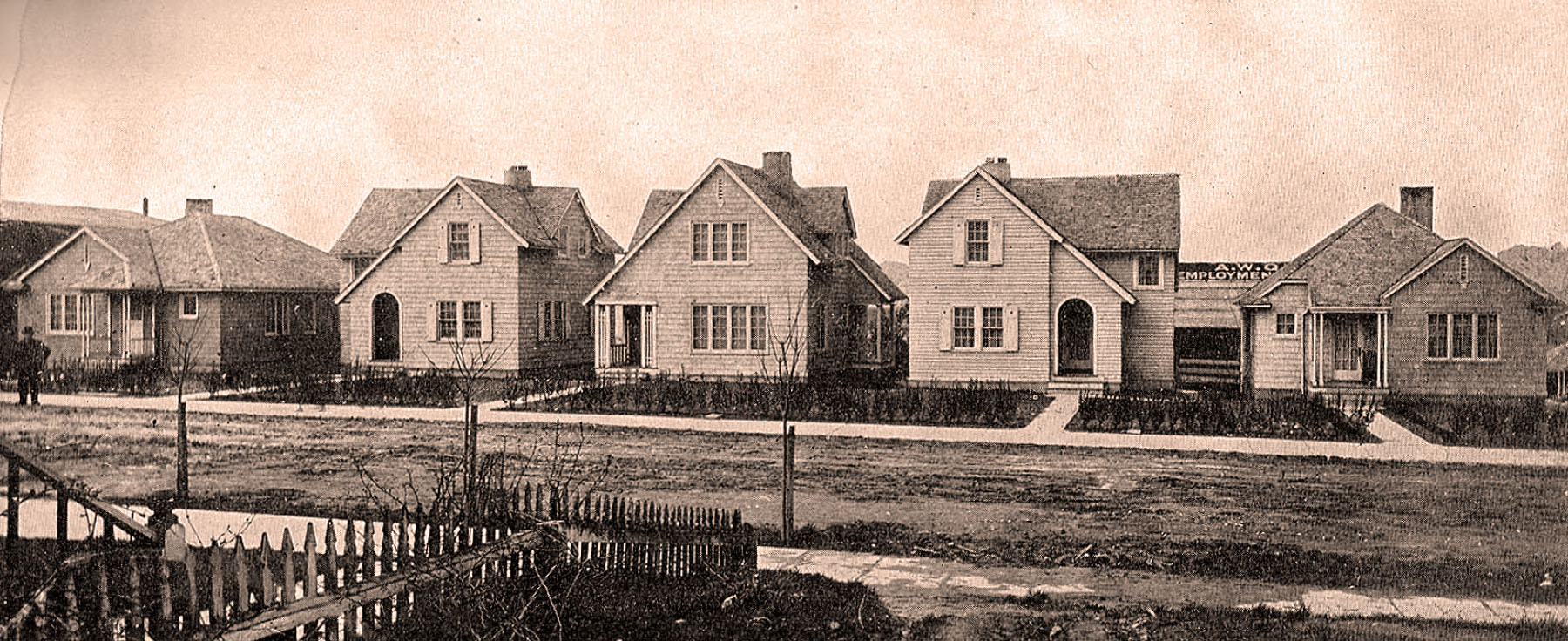
    The U.S. Housing Corporation built nearly 300 homes in Bremerton, Wash., during World War I. National Archives

    In 1918, as World War I intensified overseas, the U.S. government embarked on a radical experiment: It quietly became the nation’s largest housing developer, designing and constructing more than 80 new communities across 26 states in just two years.

    These weren’t hastily erected barracks or rows of identical homes. They were thoughtfully designed neighborhoods, complete with parks, schools, shops and sewer systems.

    In just two years, this federal initiative provided housing for almost 100,000 people.

    Few Americans are aware that such an ambitious and comprehensive public housing effort ever took place. Many of the homes are still standing today.

    But as an urban planning scholar, I believe that this brief historic moment – spearheaded by a shuttered agency called the United States Housing Corporation – offers a revealing lesson on what government-led planning can achieve during a time of national need.

    Government mobilization

    When the U.S. declared war against Germany in April 1917, federal authorities immediately realized that ship, vehicle and arms manufacturing would be at the heart of the war effort. To meet demand, there needed to be sufficient worker housing near shipyards, munitions plants and steel factories.

    So on May 16, 1918, Congress authorized President Woodrow Wilson to provide housing and infrastructure for industrial workers vital to national defense. By July, it had appropriated US$100 million – approximately $2.3 billion today – for the effort, with Secretary of Labor William B. Wilson tasked with overseeing it via the U.S. Housing Corporation.

    Over the course of two years, the agency designed and planned over 80 housing projects. Some developments were small, consisting of a few dozen dwellings. Others approached the size of entire new towns.

    For example, Cradock, near Norfolk, Virginia, was planned on a 310-acre site, with more than 800 detached homes developed on just 100 of those acres. In Dayton, Ohio, the agency created a 107-acre community that included 175 detached homes and a mix of over 600 semidetached homes and row houses, along with schools, shops, a community center and a park.

    Designing ideal communities

    Notably, the Housing Corporation was not simply committed to offering shelter.

    Its architects, planners and engineers aimed to create communities that were not only functional but also livable and beautiful. They drew heavily from Britain’s late-19th century Garden City movement, a planning philosophy that emphasized low-density housing, the integration of open spaces and a balance between built and natural environments.

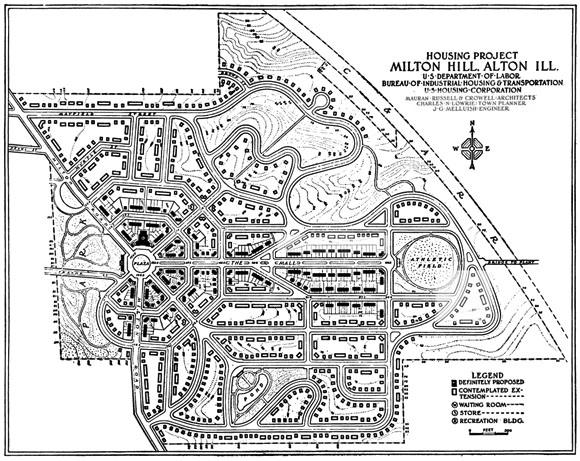
    Milton Hill, a neighborhood designed and developed by the United States Housing Corporation in Alton, Ill.
    National Archives

    Importantly, instead of simply creating complexes of apartment units, akin to the public housing projects that most Americans associate with government-funded housing, the agency focused on the construction of single-family and small multifamily residential buildings that workers and their families could eventually own.

    This approach reflected a belief by the policymakers that property ownership could strengthen community responsibility and social stability. During the war, the federal government rented these homes to workers at regulated rates designed to be fair, while covering maintenance costs. After the war, the government began selling the homes – often to the tenants living in them – through affordable installment plans that provided a practical path to ownership.

    A single-family home in Davenport, Iowa, built by the U.S. Housing Corporation.
    National Archives

    Though the scope of the Housing Corporation’s work was national, each planned community took into account regional growth and local architectural styles. Engineers often built streets that adapted to the natural landscape. They spaced houses apart to maximize light, air and privacy, with landscaped yards. No resident lived far from greenery.

    In Quincy, Massachusetts, for example, the agency built a 22-acre neighborhood with 236 homes designed mostly in a Colonial Revival style to serve the nearby Fore River Shipyard. The development was laid out to maximize views, green space and access to the waterfront, while maintaining density through compact street and lot design.

    At Mare Island, California, developers located the housing site on a steep hillside near a naval base. Rather than flatten the land, designers worked with the slope, creating winding roads and terraced lots that preserved views and minimized erosion. The result was a 52-acre community with over 200 homes, many of which were designed in the Craftsman style. There was also a school, stores, parks and community centers.

    Infrastructure and innovation

    Alongside housing construction, the Housing Corporation invested in critical infrastructure. Engineers installed over 649,000 feet of modern sewer and water systems, ensuring that these new communities set a high standard for sanitation and public health.

    Attention to detail extended inside the homes. Architects experimented with efficient interior layouts and space-saving furnishings, including foldaway beds and built-in kitchenettes. Some of these innovations came from private companies that saw the program as a platform to demonstrate new housing technologies.

    One company, for example, designed fully furnished studio apartments with furniture that could be rotated or hidden, transforming a space from living room to bedroom to dining room throughout the day.

    To manage the large scale of this effort, the agency developed and published a set of planning and design standards − the first of their kind in the United States. These manuals covered everything from block configurations and road widths to lighting fixtures and tree-planting guidelines.

    A single-family home in Bremerton, Wash., built by the U.S. Housing Corporation.
    National Archives

    The standards emphasized functionality, aesthetics and long-term livability.

    Architects and planners who worked for the Housing Corporation carried these ideas into private practice, academia and housing initiatives. Many of the planning norms still used today, such as street hierarchies, lot setbacks and mixed-use zoning, were first tested in these wartime communities.

    And many of the planners involved in experimental New Deal community projects, such as Greenbelt, Maryland, had worked for or alongside Housing Corporation designers and planners. Their influence is apparent in the layout and design of these communities.

    A brief but lasting legacy

    With the end of World War I, the political support for federal housing initiatives quickly waned. The Housing Corporation was dissolved by Congress, and many planned projects were never completed. Others were incorporated into existing towns and cities.

    Yet, many of the neighborhoods built during this period still exist today, integrated in the fabric of the country’s cities and suburbs. Residents in places such as Aberdeen, Maryland; Bremerton, Washington; Bethlehem, Pennsylvania; Watertown, New York; and New Orleans may not even realize that many of the homes in their communities originated from a bold federal housing experiment.

    These homes on Lawn Avenue in Quincy, Mass., in 2019 were built by the U.S. Housing Corporation.
    Google Street View

    The Housing Corporation’s efforts, though brief, showed that large-scale public housing could be thoughtfully designed, community oriented and quickly executed. For a short time, in response to extraordinary circumstances, the U.S. government succeeded in building more than just houses. It constructed entire communities, demonstrating that government has a major role and can lead in finding appropriate, innovative solutions to complex challenges.

    At a moment when the U.S. once again faces a housing crisis, the legacy of the U.S. Housing Corporation serves as a reminder that bold public action can meet urgent needs.

    Eran Ben-Joseph does not work for, consult, own shares in or receive funding from any company or organization that would benefit from this article, and has disclosed no relevant affiliations beyond their academic appointment.

    ref. Believe it or not, there was a time when the US government built beautiful homes for working-class Americans to deal with a housing crisis – https://theconversation.com/believe-it-or-not-there-was-a-time-when-the-us-government-built-beautiful-homes-for-working-class-americans-to-deal-with-a-housing-crisis-253512

    MIL OSI – Global Reports

  • MIL-OSI Global: Tomato trade dispute between the US and Mexico is boiling over again – with 21% tariffs due in July

    Source: The Conversation – USA – By Andrew Muhammad, Professor of Agriculture and Resource Economics, University of Tennessee

    The country of origin – Mexico – is noted on the label of a package of Campari tomatoes for sale in the produce section of a Safeway grocery store on March 4, 2025, in Denver. AP Photo/David Zalubowski

    Although technically they’re a fruit, tomatoes are one of the most-consumed vegetables, according to the U.S. Department of Agriculture. Among the fresh produce the nation buys from foreign countries, tomatoes often rank first or second, behind avocados.

    This trade is now jeopardized because the Trump administration has revived a three-decade-old effort to limit imports.

    As economists who study global trade issues affecting agricultural commodities and processed food products, we have assessed the benefits of imported tomatoes and other products on consumers and businesses. Fresh tomato imports ensure year-round availability for consumers, contribute significantly to the U.S. economy by generating billions in sales and supporting thousands of jobs, and promote competitive pricing that benefits both consumers and businesses.

    New import restrictions could put all that at risk because domestic production cannot satisfy national demand. For tomatoes, like steel and other products, efforts to reverse trade imbalances can decrease consumer satisfaction and potentially destroy more jobs and economic activity than they create.

    Initiating a dumping investigation

    This tussle over tomatoes began in the 1990s.

    At that time, unprecedented growth in tomato imports from Mexico prompted U.S. producers to ask the Clinton administration to investigate whether they were being sold at unfairly low prices. If that were the case, it would violate both World Trade Organization rules and U.S. trade policy.

    The U.S. responded with an antidumping investigation, conducted by the Department of Commerce and U.S. International Trade Commission. The agencies were tasked with seeing if imports are being sold in the U.S. at less than fair market value – the definition of dumping.

    Dumping can harm domestic producers by depressing local prices to compete with imports, causing financial distress. An antidumping duty is essentially a tariff.

    The Commerce Department ruled against Mexican producers, finding that they had engaged in dumping, but reached an agreement with them. Mexican tomato exporters agreed to set minimum prices, leading the U.S. to call off its investigation. The U.S. and Mexico have subsequently entered into a string of suspension agreements over the years.

    The first was implemented in 1996, and the most recent took effect in 2019 during President Donald Trump’s prior term after his administration had threatened to impose a 17.5% tomato tariff.

    Squashing the tomato suspension agreement

    But in April 2025, the Commerce Department announced that it would withdraw from the latest tomato suspension agreement. The Trump administration plans to begin to impose, starting in July, antidumping duties of 21% on fresh tomatoes imported from Mexico.

    It is not obvious at this stage if American importers and consumers will bear the full burden of this tariff, or if Mexican tomato exporters will absorb this cost.

    This move is supposed to benefit fresh tomato producers in the U.S. – most of which are in Florida, with a significantly smaller number located in California. The tariffs could, however, hurt produce distributors, wholesalers and retailers, as well as American consumers.

    People in the U.S. have become accustomed to buying fresh tomatoes to toss into their salads and stuff into their sandwiches year-round, even though in most of the country you can only harvest field-grown tomatoes in the warmest months of the year.

    Focusing only on fresh tomatoes

    This dispute doesn’t involve all the tomatoes and tomato products Americans eat.

    U.S. tomato production is split into two main categories. Fresh tomatoes are usually purchased in a supermarket’s fresh produce section, to be consumed whole, chopped or sliced. This dispute is about those tomatoes.

    The other kind is processing tomatoes, which companies use for making tomato paste, canned or stewed tomatoes and tomato sauce. California leads the nation in processing tomato production. Unlike fresh tomatoes, where the U.S. imports far more than it produces or exports, the U.S. is actually running a trade surplus in processed tomato products.

    When the North American Free Trade Agreement was implemented in January 1994, U.S. fresh tomato production was more than four times the quantity of imported fresh tomatoes: 3.7 billion pounds (1.7 million metric tons) produced versus only 870 million pounds (400,000 metric tons) imported.

    Domestic production has steadily declined since then, while imports have increased. Imported fresh tomatoes are now twice as plentiful: 2.2 billion pounds (1 million metric tons) were grown in the U.S. in 2023, compared with 4.4 billion pounds (2 million metric tons)“ imported .

    This happened as Americans were eating more fresh tomatoes than ever: almost 20 pounds (9 kilograms) per capita in 2023.

    Mexico supplies most of the fresh tomatoes Americans buy in supermarkets.
    Justin Sullivan/Getty Images

    Influx didn’t clearly affect prices

    In 2024, fresh tomato imports totaled US$3.6 billion, with $3.1 billion coming from Mexico. This was a 367% increase since NAFTA took effect, adjusted for inflation.

    Given that costs of production are lower in Mexico for many products, especially in the fresh produce sector where labor costs are less than half U.S. levels, you might figure that this arrangement has kept prices for fresh tomatoes in the U.S. low. But there’s little evidence to support that. Instead, the opposite seems true.

    In 1995, the price that U.S. importers paid of Mexican tomatoes was 31 cents per pound. Since then, import prices have steadily increased to 74 cents per pound in 2024. They have often exceeded prices paid to American farmers and kept pace with the overall rise in food prices the past three decades.

    While restricting imported Mexican tomatoes might benefit U.S. tomato producers by making it easier for them to raise their prices, there are other factors to consider. Imports play a crucial role in boosting economic activity and creating jobs. According to a recent study, these imports generated a total economic impact of more than $8 billion.

    The extra $5 billion comes from all the value-added activities associated with getting that produce from the border to consumers. That total economic impact supports approximately 47,000 U.S. jobs tied to tomato storage, distribution, wholesaling and retailing.

    We would expect antidumping duties on imported fresh tomatoes to increase prices, and reduce the amount of fresh tomatoes Americans can buy. That would also shrink some of the economic impact and eliminate some of the jobs spurred by the imported tomato boom.

    The authors do not work for, consult, own shares in or receive funding from any company or organization that would benefit from this article, and have disclosed no relevant affiliations beyond their academic appointment.

    ref. Tomato trade dispute between the US and Mexico is boiling over again – with 21% tariffs due in July – https://theconversation.com/tomato-trade-dispute-between-the-us-and-mexico-is-boiling-over-again-with-21-tariffs-due-in-july-255813

    MIL OSI – Global Reports

  • MIL-OSI Global: Leaders can promote gender equity without deepening polarization − here’s how

    Source: The Conversation – USA – By Colleen Tolan, Postdoctoral Researcher for the Center for Women in Business, Rutgers University

    Dialogue can make a difference. Pixelfit/E+/Getty Images

    Americans largely agree that women have made significant gains in the workplace over the past two decades. But what about men? While many Americans believe women are thriving, over half believe men’s progress has stalled or even reversed.

    To make matters more complex, recent research has revealed a massive divide along gender and partisan lines. The majority of Republican men think full gender equity in America has been achieved, while the majority of Democratic women think there’s still work to be done.

    As researchers at the Rutgers Center for Women in Business, we think this divide matters a lot. And for business leaders, this gap isn’t just a social or political issue. It’s a leadership challenge with direct implications for team cohesion and morale. If gender equity efforts are seen by some employees as a loss rather than a collective gain, leaders risk inadvertently entrenching division.

    When equity feels like a loss

    Efforts to advance gender equity often come with the reassurance that equality isn’t a zero-sum game – that women’s advancement need not come at men’s expense. Data backs this up, showing, for example, that having gender-diverse executive teams can boost company profits by as much as 21%.

    Yet workers’ perceptions of gender equity efforts tell another story.

    For example, 61% of Americans believe changing gender norms have made it easier for women to be successful at work, but only 36% say the same for men. What’s more, 61% of men think women have equal job opportunities, but only 33% of women believe the same thing.

    These differences reveal an important truth: Perception, not policy alone, shapes how equity efforts are received.

    Involving men in the equity conversation

    Research suggests men and women associate power with different psychological outcomes. Men are more likely to associate power with control, while for women, power is more often linked to a feeling of freedom. As a result, efforts to share power may feel more liberating to women but destabilizing to men – particularly to those already in power.

    But this doesn’t mean one’s gain needs to come at another’s expense – just that people make sense of change through the lens of their own identities and experiences.

    When men perceive progress for women as a threat to their status or opportunity, resistance grows, even in the face of data suggesting otherwise. This cycle becomes especially difficult to break because it requires challenging one’s own beliefs, which isn’t always easy.

    This is why learning about others’ experiences is so useful. For example, a man and a woman might be equally ambitious and capable, but perhaps only one of them experiences being routinely interrupted in meetings. These differences in personal history and lived experience shape how work environments are interpreted and therefore navigated.

    Understanding this diversity of perspectives and discussing lived experiences can help gender equity efforts become more effective. Building a truly equitable future requires acknowledging that feelings about efforts required to reach that future may differ widely.

    With that in mind, here are some best practices for leaders to consider as they navigate the changing landscape.

    Preparing for differences in perspective

    Avoid zero-sum thinking. If men think gender equity efforts will erode their opportunities or diminish their own power, they’ll disengage. Leaders should instead frame equity as essential to team and business success – and ground conversations in metrics that show how inclusion drives outcomes.

    Know that the stakes may vary. Women may see gender equity as a matter of justice or even survival, and when stakes are existential, compromise can be difficult. At the same time, they may experience organizational progress toward gender equity as a personal win. Publicizing these changes and their mutually beneficial gains can help to create a more cohesive team where everyone can thrive.

    Be aware that different clocks are ticking. Some men may view change as happening too quickly, destabilizing established norms. Women, on the other hand, may feel progress is too slow, given centuries of systemic inequity. Holding both views as worthy of respect requires teamwork. Encourage dialogue where the goal is mutual understanding rather than unity.

    Building coalitions around shared experiences

    Promote policies that benefit everyone. By promoting policies such as hybrid work and parental leave that benefit everyone, workplaces will attract and retain a more diverse workforce, which leads to greater innovation. Encourage men to take advantage of these policies and ensure your company culture makes it acceptable to do so. This enables men to actually experience the benefit of these initiatives. Align efforts around shared values – such as the desire for healthier families, better education or stronger economies.

    Use both/and thinking. Supporting men who express fears about status loss can open space for dialogue. Provide that space. At the same time, acknowledge the ongoing struggles women continue to face and their fears about workplaces returning to “the way they used to be.” One viewpoint does not need to negate the other.

    Prioritize lived experience. Rather than insisting that everyone see gender equity the same way, find ways for men to experience mutually beneficial initiatives. Then, encourage dialogue about experiences rather than ideas.

    Bridge divides with dialogue

    Mixed mentorship matters. Pairing employees with mentors of different backgrounds – across gender, race, age, department or seniority level – can help them cultivate curiosity and learn from one another.

    Activate resource groups. Groups focused on cross-cultural engagement provide employees with a platform to discuss challenges, share experiences and collaborate on inclusion initiatives. Additionally, encouraging allies to participate in employee resource groups and business resource groups fosters increased openness and understanding. Leaders can support groups by providing resources, visibility and executive sponsorship.

    Embrace discomfort. In general, people work to avoid feeling uncomfortable. However, discomfort is often necessary for growth. Starting with this premise and encouraging thoughtful, open and honest discussions about sensitive topics and potential fears can help foster transparency and build trust. Leaders can facilitate these conversations through town halls, roundtable discussions or dedicated dialogue sessions.

    Progress depends not just on metrics and policies but on trust, communication and humility. When people feel seen and heard – whether they’re feeling empowered or uncertain – they’re more likely to engage.

    In other words, the real opportunity isn’t to win an argument about whether gender equity is “done,” but to build organizations where everyone can see a future for themselves in the workplace – and feel as if they have a role in shaping it.

    The authors do not work for, consult, own shares in or receive funding from any company or organization that would benefit from this article, and have disclosed no relevant affiliations beyond their academic appointment.

    ref. Leaders can promote gender equity without deepening polarization − here’s how – https://theconversation.com/leaders-can-promote-gender-equity-without-deepening-polarization-heres-how-254921

    MIL OSI – Global Reports

  • MIL-OSI Global: Cutting HIV aid means undercutting US foreign and economic interests − Nigeria shows the human costs

    Source: The Conversation – USA – By Kathryn Rhine, Associate Professor of General Internal Medicine, University of Colorado Anschutz Medical Campus

    A large number of children are born with HIV in Nigeria. Kristian Buus/Corbis News via Getty Images

    A little over two decades ago, addressing Nigeria’s HIV crisis topped U.S. President George W. Bush’s priorities. Africa’s most populous nation had 3.5 million HIV cases, and the disease threatened to destabilize the region and ultimately compromise U.S. interests. These interests included securing access to Nigeria’s substantial oil reserves, maintaining regional military stability and protecting trade partnerships worth billions.

    Following years of agitation from AIDS activists, Bush launched the President’s Emergency Plan for AIDS Relief, or PEPFAR, in 2003. This U.S.-led HIV treatment program has since saved tens of millions of lives around the globe.

    While living in Nigeria for my work as a medical anthropologist, I witnessed PEPFAR’s rollout and saw firsthand how the powerful therapies it provided transformed Nigerian lives. The women I worked with told me they could finally put aside the fears of death or abandonment that had consumed their days. Instead, they could focus on a newly expanded horizon of possibilities: building careers, finding love, having healthy children.

    Now, however, a serious threat to preventing and treating HIV worldwide looms. The Trump administration’s decision to substantially restrict access to a vital HIV prevention tool – PEPFAR-funded preexposure prophylaxis, or PrEP – would cut off ongoing treatment for millions of people and block future access for countless others who need this protection.

    The Trump administration aims to cut HIV prevention funding.

    The timing is devastating: Scientists recently made a major advance in HIV prevention. Named the 2024 Breakthrough of the Year by the journal Science, the drug lenacapavir offers six months of HIV protection with one injection. Unlike previous PrEP options that required daily pills, which created significant barriers to consistent access and adherence, this twice-yearly injection dramatically simplifies prevention.

    By undermining access to a treatment that has been essential to reducing HIV rates, the Trump administration’s new restrictions threaten to derail two decades of bipartisan investment in eliminating HIV globally. The consequences extend well beyond individual lives.

    Afterlife of aid

    “Some people that have it, they choose to be wicked and just spread it all around,” confided Elizabeth, a woman I interviewed during my time in Nigeria. I am using a pseudonym to protect her privacy. “They say, ‘Somebody gave it to me, so I am going to spread it too.’ But if they know that they can live positively with the virus, it would reduce their evil thoughts.”

    Elizabeth’s words reveal a concerning dynamic: When hope for treatment disappears, a dangerous desperation can take its place. Patients who feel abandoned by health care systems might lose motivation to protect others from HIV. They may also stop seeking medical care, abandon prevention measures and turn away from future aid.

    Cultural anthropologists use the phrase “the afterlife of aid” to describe what happens after global aid programs are withdrawn or drastically reduced. Communities are left not just without resources but with a lasting sense of betrayal that undermines their willingness to seek help, creating cycles of skepticism that can persist for generations.

    Treatment as hope

    In my fieldwork, I’ve witnessed how managing life with the virus involves far more than taking medications. It requires carefully navigating personal relationships, family obligations, cultural expectations and hopes for the future.

    Many of the women I worked with had contracted HIV from their husbands or boyfriends. Some even suspected their partners’ positive status but were unable to protect themselves. Before these medications, women – both HIV positive and HIV negative – had to choose between risking rejection or risking transmission.

    The welfare of entire families depends on access to HIV medication. Here, a woman who is the sole provider of several children takes antiretroviral treatment.
    Saurabh Das/AP Photo

    Elizabeth and David’s story illustrates these challenges. They had been together for more than a year when David proposed. “When I sensed he was serious about marriage, I knew I had to tell him my status,” Elizabeth told me during one of our many conversations. Though initially shocked, he remained committed to their relationship.

    Elizabeth had maintained a decade of careful adherence to her HIV treatment, but the couple still struggled with consistent condom use. David described using condoms as akin to “eating candy with the wrapper still on it.” He also was eager to have a baby. While PrEP had greatly reduced transmission risk, it placed the full burden of protecting her husband on Elizabeth.

    The path Elizabeth navigated highlights how Nigerian cultural expectations complicated their situation. When proving one’s fertility is often considered essential to establishing gender identity, the pressure to have sex without protection created additional tension. Moreover, Elizabeth’s need to balance her own health needs with her husband’s desires reflected the delicate negotiation many Nigerian women face between personal well-being and marriage.

    As Elizabeth prepared for the birth of their child, she expressed both joy and anxiety: “I have to stay healthy for both of them now.”

    Politicizing global health

    Previous interruptions in aid foreshadow what’s at stake when shifts in U.S. political priorities compromise global health funding.

    Consider the global spike in maternal and child mortality when President Ronald Reagan instituted the Mexico City Policy, often referred to as the “global gag rule.” It blocked U.S. funding to all international nongovernmental organizations that provided or even referred abortion services.

    This policy has been repeatedly implemented by Republican administrations – including those of George H.W. Bush, George W. Bush and Donald Trump during his first term – and subsequently rescinded by Democratic presidents, creating a disruptive cycle of funding uncertainty. Among these affected organizations are recipients of PEPFAR funds.

    The human cost of this policy pendulum is measurable and significant. Researchers have found that when this law is enacted, nations across the globe suffer increased death rates for newborns and mothers as well as jumps in HIV cases. In countries heavily dependent on U.S. aid, the Mexico City Policy has resulted in approximately 80 additional child deaths and nine additional maternal deaths per 100,000 live births annually and about one additional HIV infection per 10,000 uninfected people.

    The Trump administration reinstated the global gag rule in 2017.
    Erik McGregor/LightRocket via Getty Images

    My research in Nigeria also reveals the fragile progress that now hangs in the balance. Before treatments arrived, HIV ravaged Nigerian communities. In 2001, nearly 6% of the population had HIV, totaling around 3.5 million people. The Hausa language reflected this trauma: Terms for AIDS also meant “lifeless body” and “nearby grave.”

    Following the rollout of HIV treatments, Nigeria’s cases dropped dramatically – by 2010, prevalence had fallen to 4.1%. Declines continued steadily as treatment access expanded from 360,000 people in 2010 to over 1 million by 2018. This progress was heavily dependent on international support, with PEPFAR and other global donors providing over 80% of the US$6.2 billion spent fighting HIV in Nigeria between 2005 to 2018.

    In 2019, around 1.3% of the population had HIV, or 1.9 million people.

    From personal choice to global security

    What’s at stake isn’t just increasing HIV rates. The Trump administration’s reductions in foreign aid threaten to unravel over two decades of U.S. investment in global security and economic growth.

    Public health crises rarely stay contained within national boundaries. When health systems fail in West Africa, diseases can quickly spread overseas and require costly emergency responses. The 2014 Ebola outbreak demonstrated this reality, when cases reached America and prompted a $5.4 billion emergency response. Similarly, the 2009 H1N1 influenza pandemic, which infected around 60 million Americans, showed how quickly infectious diseases circle the globe when surveillance and containment systems are inadequate.

    Inconsistent aid, in turn, undermines American global leadership and creates openings for competing powers to establish their influence. China has actively exploited these gaps, establishing bilateral trade with Africa reaching $295 billion in 2024. While the U.S. reduced its global health engagement during previous administrations, China expanded its global health diplomacy, partnering on issues ranging from infectious disease prevention and control to health emergency response and health technology innovation.

    Meanwhile, restrictions in PrEP access risk recreating the same impossible choices women faced at the advent of the epidemic: choosing between disclosing their status and risking abandonment; accepting unprotected sex and risking transmission, or refusing unprotected sex and risking violence or loss of economic support.

    I believe the result is a far less safe world where preventable suffering continues, hard-won progress unravels and the promise of an AIDS-free generation remains unfulfilled.

    Kathryn Rhine has received funding from the National Endowment for the Humanities, the Andrew W. Mellon Foundation, the Wenner Gren Foundation, the American Philosophical Society, the West African Research Association, the American Council of Learned Societies, Fulbright programs, the National Science Foundation, and the National Security Education Program. These views are her own and not those of her institution.

    ref. Cutting HIV aid means undercutting US foreign and economic interests − Nigeria shows the human costs – https://theconversation.com/cutting-hiv-aid-means-undercutting-us-foreign-and-economic-interests-nigeria-shows-the-human-costs-253705

    MIL OSI – Global Reports

  • MIL-OSI Global: In what order did the planets in our solar system form?

    Source: The Conversation – USA – By Christopher Palma, Teaching Professor of Astronomy & Astrophysics, Penn State

    An artistic rendition of our solar system, including the Sun and eight planets. vjanez/iStock via Getty Images

    Curious Kids is a series for children of all ages. If you have a question you’d like an expert to answer, send it to CuriousKidsUS@theconversation.com.


    Are planets in the solar system that are closer to the Sun older than the ones further away? – Gavriel, age 10, Paducah, Kentucky


    A cloud of collapsing gas created our Sun, the first thing to form in our solar system. This happened about 4½ billion years ago.

    Then the planets began to emerge, as the billions of particles of gas and dust left over from the Sun’s formation became a flattened disk.

    Known as a protoplanetary disk, it was enormous and surrounded the Sun for billions of miles. Within the disk, the gas and dust particles started to collide, solidify and stick together, like snowflakes clumping together to form snowballs.

    As the particles clung together, the microscopic grains became pebble-size objects and then grew and grew. Some became rocks the size of baseballs, others the size of a house, and a few as big as a planet.

    This process, called accretion, is how everything in the solar system – planets, moons, comets and asteroids – came into being.

    Telescopes can see young solar systems being born. This image is a protoplanetary disk from a distant star in the Milky Way galaxy.
    NASA/ALMA/ESO/NAOJ/NRAO/A.Isella;/B.Saxton/NRAO/AUI/NSF

    The ice line

    By studying computer models and observing the creation of other star systems, astronomers like us have learned a lot about the early days of our solar system.

    When the Sun was still forming and the protoplanetary disk was making planets, there was a distance from the Sun where it was cold enough for ice to gather. That place, the ice line – sometimes called the snow line – was in what’s now the asteroid belt, which is between Mars and Jupiter.

    Today, of course, ice is found on almost every planet, even on Mercury. But back then, only the young protoplanets beyond the ice line were cold enough to have it. The ice, gas and dust, slamming into each other for millions of years, accumulated into enormous bodies that ultimately became giant planets – Jupiter, Saturn, Uranus and Neptune.

    While all this was happening, the smaller planets inside the ice line were forming too. But with less raw material to work with, Mercury, Venus, Earth and Mars took much longer.

    Today, it’s believed that Jupiter and Saturn, the largest planets, were the first to fully form, both within a few million years. Uranus and Neptune were next, within 10 million years. The inner planets, including Earth, took at least 100 million years, maybe more.

    To put it another way, the four planets closest to the Sun are the youngest; the two planets farthest out, the next youngest; and the two in between, the oldest. The difference in age between the youngest and oldest planets is perhaps 90 million years.

    That sounds like an enormous age difference, but in space, 90 million years isn’t really that long – less than 1% of the total time the universe has been around. One way to consider it: Think of Earth as a little sister with a big brother, Jupiter, who’s 2 or 3 years older.

    Taken by the Hubble Space Telescope in 2019, this is a photo of Jupiter, the fifth planet out from the Sun.
    NASA/JPL-Caltech/SwRI/MSSS/Kevin M. Gill (CC-BY)

    Location, location, location

    Soon after formation the giant worlds began to migrate, moving inward toward the Sun or outward away from the Sun, before finally settling into their final orbits.

    For instance, Neptune migrated outward, switching places with Uranus, and pushed a lot of the small, icy bodies into the Kuiper Belt, a place in the outer solar system that’s home to dwarf planets Pluto, Eris and Makemake and millions of comets.

    Meanwhile, Jupiter moved inward, and its massive gravity forced some forming planets into the Sun, where they disintegrated. Along the way, Jupiter flung some smaller rocks out of the solar system altogether; the rest went to the asteroid belt.

    But most critically, as Jupiter settled into its own orbit, it moved all of the forming objects and likely finalized the location of the remaining inner planets, including Earth.

    All of Jupiter’s tugging helped put our planet in the so-called “Goldilocks zone,” a place just the right distance from the Sun, where Earth could have liquid water on its surface and the right temperature for life to evolve. If Jupiter hadn’t formed the way it did, it’s entirely possible life would not have ignited on Earth – and we would not be here today.


    Hello, curious kids! Do you have a question you’d like an expert to answer? Ask an adult to send your question to CuriousKidsUS@theconversation.com. Please tell us your name, age and the city where you live.

    And since curiosity has no age limit – adults, let us know what you’re wondering, too. We won’t be able to answer every question, but we will do our best.

    Lucas Brefka receives funding from a NASA Exoplanet Research Program grant.

    Christopher Palma does not work for, consult, own shares in or receive funding from any company or organization that would benefit from this article, and has disclosed no relevant affiliations beyond their academic appointment.

    ref. In what order did the planets in our solar system form? – https://theconversation.com/in-what-order-did-the-planets-in-our-solar-system-form-252262

    MIL OSI – Global Reports

  • MIL-OSI Global: Space tourism’s growth blurs the line between scientific and symbolic achievement – a tourism scholar explains how

    Source: The Conversation – USA – By Betsy Pudliner, Associate Professor of Hospitality and Technology Innovation, University of Wisconsin-Stout

    Blue Origin’s NS-31 flight lifted off on April 14, 2025. Justin Hamel/Getty Images

    On April 14, 2025, Blue Origin launched six women – Aisha Bowe, Amanda Nguyễn, Gayle King, Katy Perry, Kerianne Flynn and Lauren Sánchez – on a suborbital journey to the edge of space.

    The headlines called it a historic moment for women in space. But as a tourism educator, I paused – not because I questioned their experience, but because I questioned the language. Were they astronauts or space tourists? The distinction matters – not just for accuracy, but for understanding how experience, symbolism and motivation shape travel today.

    In tourism studies, my colleagues and I often ask what motivates travel and makes it a meaningful experience. These women crossed a boundary by leaving Earth’s surface. But they also stepped into a controversy about a symbolic one: the blurred line between astronaut and tourist, between scientific achievement and curated experience.

    This flight wasn’t just about the altitude they flew to – it was about what it meant. As commercial space travel becomes more accessible to civilians, more people are joining spaceflights not as scientists or mission specialists, but as invited guests or paying participants. The line between astronaut and space tourist is becoming increasingly blurred.

    Blue Origin’s NS-31 flight brought six women to the edge of space.

    In my own work, I explore how travelers find meaning in the way their journeys are framed. A tourism studies perspective can help unpack how experiences like the Blue Origin flight are designed, marketed and ultimately understood by travelers and the tourism industry.

    So, were these passengers astronauts? Not in the traditional sense. They weren’t selected through NASA’s rigorous training protocols, nor were they conducting research or exploration in orbit.

    Instead, they belong to a new category: space tourists. These are participants in a crafted, symbolic journey that reflects how commercial spaceflight is redefining what it means to go to space.

    Space tourism as a niche market

    Space tourism has its origins in 1986 with the launch of the Mir space station, which later became the first orbital platform to host nonprofessional astronauts. In the 1990s and early 2000s, Mir and its successor, the International Space Station, welcomed a handful of privately funded civilian guests – most notably U.S. businessman Dennis Tito in 2001, often cited as the first space tourist.

    Space tourism has since evolved into a niche market selling brief encounters to the edge of Earth’s atmosphere. While passengers on the NS-31 flight did not purchase their seats, the experience mirrors those sold by commercial space tourism providers such as Virgin Galactic.

    Like other forms of niche tourism – wellness retreats, heritage trails or extreme adventures – space travel appeals to those drawn to novelty, exclusivity and status, regardless of whether they purchased the ticket.

    These suborbital flights may last just minutes, but they offer something far more lasting: prestige, personal storytelling and the feeling of participating in something rare. Space tourism sells the experience of being somewhere few have visited, not the destination itself. For many, even a 10-minute flight can fulfill a deeply personal milestone.

    Tourist motivation and space tourism’s evolution

    The push-and-pull theory in tourism studies helps explain why people might want to pursue space travel. Push factors – internal desires such as curiosity, an urge to escape or an eagerness to gain fame – spark interest. Pull factors – external elements such as wishing to see the view of Earth from above or experience the sensation of weightlessness – enhance the appeal.

    Space tourism taps into both. It’s fueled by the internal drive to do something extraordinary and the external attraction of a highly choreographed, emotional experience.

    Participants in space tourism wear branded jumpsuits with the company’s logo, pose for photos and talk to the media about their experience.
    AP Photo/Tony Gutierrez

    These flights are often branded – not necessarily with flashy logos, but through storytelling and design choices that make the experience feel iconic. For example, while the New Shepard rocket the women traveled in doesn’t carry a separate emblem, it features the company’s name, Blue Origin, in bold letters along the side. Passengers wear personalized flight suits, pose for preflight photos and receive mission patches or certificates, all designed to echo the rituals of professional space missions.

    What’s being sold is an “astronaut-for-a-day” experience: emotionally powerful, visually compelling and rich with symbolism. But under tourism classifications, these travelers are space tourists – participants in a curated, short-duration excursion.

    Representation and marketing experience

    The image from the Blue Origin flight of six women boarding a rocket was framed as a symbolic victory – a girl-power moment designed for visibility and celebration – but it was also carefully curated.

    This wasn’t the first time women entered space. Since its inception, NASA has selected 61 women as astronaut candidates, many of them making groundbreaking contributions to space science and exploration. Sally Ride, Mae Jemison, Christina Koch and Jessica Meir not only entered space – they trained as astronauts and contributed significantly to science, engineering and long-duration missions. Their journeys marked historic achievements in space exploration rather than curated moments in tourism.

    Recognizing their legacy is important as commercial spaceflight creates new kinds of unique, tailored experiences, ones shaped more by media performance than by scientific milestones.

    The Blue Origin flight was not a scientific mission but rather was framed as a symbolic event. In tourism, companies, marketers and media outlets often create these performances to maximize their visibility. SpaceX has taken a similar approach with its Inspiration4 mission, turning a private orbital flight into a global media event complete with a Netflix documentary and emotional storytelling.

    The Blue Origin flight sold a feeling of progress while blending the roles between astronaut and guest. For Blue Origin, the symbolic value was significant. By launching the first all-female crew into suborbital space, the company was able to claim a historic milestone – one that aligned them with inclusion – without the cost, complexity or risk associated with a scientific mission. In doing so, they generated enormous media attention.

    Tourism education and media literacy

    In today’s world, space travel is all about the story that gets told about the flight. From curated visuals to social media posts and press coverage, much of the experience’s meaning is shaped by marketing and media.

    Understanding that process matters – not just for scholars or industry insiders, but for members of the public, who follow these trips through the narratives produced by the companies’ marketing teams and media outlets.

    Another theory in tourism studies describes how destinations evolve over time – from exploration, to development, to mass adoption. Many forms of tourism begin in an exploration phase, accessible only to the wealthy or well connected. For example, the Grand Tour of Europe was once a rite of passage for aristocrats. Its legacy helped shape and develop modern travel.

    As more people travel to a destination over time, it moves through the tourism area life cycle. During the early exploration phase, the destination has only a few tourists.
    Coba56/Wikimedia Commons

    Right now, space tourism is in the exploration stage. It’s expensive, exclusive and available only to a few. There’s limited infrastructure to support it, and companies are still experimenting with what the experience should look like. This isn’t mass tourism yet, it’s more like a high-profile playground for early adopters, drawing media attention and curiosity with every launch.

    Advances in technology, economic shifts and changing cultural norms can increase access to unique destinations that start as out of bounds to a majority of tourists. Space tourism could be the next to evolve this way in the tourism industry. How it’s framed now – who gets to go, how the participants are labeled and how their stories are told – will set the tone moving forward. Understanding these trips helps people see how society packages and sells an inspirational experience long before most people can afford to join the journey.

    Betsy Pudliner is affiliated with International Council of Hotel, Restaurant and Institutional Educators.

    ref. Space tourism’s growth blurs the line between scientific and symbolic achievement – a tourism scholar explains how – https://theconversation.com/space-tourisms-growth-blurs-the-line-between-scientific-and-symbolic-achievement-a-tourism-scholar-explains-how-255284

    MIL OSI – Global Reports

  • MIL-OSI Global: Seven countries in Latin America where human rights are taking the biggest hit

    Source: The Conversation – UK – By Nicolas Forsans, Professor of Management and Co-director of the Centre for Latin American & Caribbean Studies, University of Essex

    Latin America is undergoing one of its most profound human rights crises in decades. The region’s civic space is shrinking rapidly, from mass surveillance and arbitrary arrests to political repression, enforced disappearances and impunity for state violence.

    The 2025 State of the World’s Human Rights report, released by Amnesty International, lays bare the magnitude of the challenge. Seven countries – Haiti, Nicaragua, Venezuela, Mexico, Colombia, Cuba and El Salvador – are at the epicentre of this authoritarian surge.

    Donald Trump’s return to the White House in January has only deepened the problem. In a separate report published in the same week, Amnesty argues that Trump’s nationalist rhetoric and policy reversals have emboldened strongman leaders. These have undercut international accountability and accelerated rights violations across the hemisphere.

    Here are the countries where the assault on human rights is being felt most acutely.


    Get your news from actual experts, straight to your inbox. Sign up to our daily newsletter to receive all The Conversation UK’s latest coverage of news and research, from politics and business to the arts and sciences. Join The Conversation for free today.


    1. Haiti

    Nowhere has the collapse in human rights been more visible than in Haiti. By the end of 2024, more than 700,000 people – half of them children – had been internally displaced due to spiralling gang violence and state failure.

    Criminal organisations routinely engaged in killings, sexual violence and attacks on hospitals and schools. A December 2024 massacre in Cité Soleil, a densely populated part of the Haitian capital Port-au-Prince, saw at least 207 people executed by the Wharf Jérémie gang.

    The justice system has all but ceased to function. Meanwhile, deportations of Haitians from the US and neighbouring Dominican Republic has surged.

    According to Amnesty, nearly 200,000 people were returned without due process in 2024 alone. Trump’s crackdown on migration, framed as necessary for border security, has accelerated these mass removals.

    2. Nicaragua

    Nicaragua’s president, Daniel Ortega, has refined authoritarianism into an efficient machine of repression. More than 5,000 civil society groups, private universities and media outlets have been closed since 2018. This included 1,500 from January to September 2024 alone.

    Over 400 critics have been stripped of nationality since 2023 and dozens of journalists have been forcibly disappeared or jailed. The legal status of hundreds of evangelical groups has also been revoked.

    In 2024, the government criminalised dissent to the point where entire sectors of civil society have vanished. Indigenous communities, meanwhile, faced displacement and armed attacks from pro-government militias, with little international response.

    3. Venezuela

    Venezuela remains mired in repression. A presidential election in July 2024, which was stolen by Nicolás Maduro, was followed by the arbitrary detention and torture of protesters – including children. Independent journalists were arrested and NGOs threatened with closure.

    Many Venezuelans subsequently fled the country. Persecutions and despair at the election results saw 20,000 people migrate northwards through the jungle of the Darién Gap in September 2024 alone, a 70% increase on the previous month.


    Read more:
    Venezuela: Maduro’s declaration of victory isn’t fooling anyone


    In reality, the numbers are probably much higher. A poll following the election indicated that 43% of those remaining in the country were considering emigrating, but official data has not been made available. More than 7.8 million citizens have left Venezuela over the past ten years, with around 28 million people still residing there.

    In June 2023, the International Criminal Court resumed its investigation into the Maduro regime for alleged crimes against humanity. But Venezuela’s government continues to obstruct justice. With Trump’s administration disinterested in multilateral mechanisms, efforts to restore democracy face steeper odds.

    4. Mexico

    Mexico’s public security has become dangerously militarised. A constitutional amendment in September 2024, a few days before the end of the Andrés Manuel López Obrador administration, placed the National Guard under military control. This has enabled widespread abuses including extrajudicial killings. Nine human rights defenders and four journalists were killed in 2024 alone.

    López Obrador’s administration undermined press freedom at home. It also failed to protect those seeking asylum. And with Trump back in office, deportations from the US to Mexico have increased. Returnees are often placed at risk of cartel violence and exploitation.

    5. Colombia

    Colombia suffered Latin America’s longest running insurgency, lasting over 50 years. Despite the country’s robust institutional frameworks, peace remains elusive. In 2024, over 195,000 people were forcibly confined by armed groups, and landmines continue to endanger more than 600,000 civilians.

    Child recruitment, sexual violence and targeted killings of former combatants from the Revolutionary Armed Forces of Colombia (Farc) rebel group have surged. Meanwhile, progress on implementing the 2016 peace accord remains slow.

    Investigations into military-perpetrated extrajudicial killings are ongoing, but face budgetary constraints and political pushback. Trump’s withdrawal of US support for transitional justice mechanisms has further weakened international backing for Colombia’s fragile reconciliation efforts.


    Read more:
    Colombia’s fragile peace process in danger as guerrilla violence rises


    6. Cuba

    The Cuban authorities are continuing to suppress dissent through arbitrary arrests, enforced disappearances and censorship. Over 100 people were arrested for protesting in 2024, with many forced into self-incriminating video confessions. Independent media and activists were subject to constant surveillance and harassment.

    Amid economic collapse, more than 18% of the population has fled the island in two years. These mass migrations often result in perilous journeys and widespread family separations. The economic crisis has been exacerbated by US sanctions reimposed and intensified under Trump.

    7. El Salvador

    President Nayib Bukele’s model of mass incarceration continues to attract global attention. Nearly 84,000 people have been arrested since 2022 under a state of emergency that suspends basic rights and legal guarantees.

    Surveillance, arbitrary detentions and public humiliation of detainees have become routine. Trump’s vocal admiration of Bukele’s “tough on crime” stance has lent international legitimacy to this dangerous approach.


    Read more:
    Nayib Bukele: El Salvador’s strongman leader doing Donald Trump’s legwork abroad


    Trump’s return to the White House has intensified human rights setbacks across Latin America. His withdrawal from human rights and climate agreements has emboldened authoritarian regimes to suppress dissent and accelerate policies to exploit resources without fear of US pressure or accountability.

    Latin American migrants in the US have also faced a resurgence of mass deportations. Rhetoric portraying migrants as criminals has fuelled xenophobia and enabled sweeping immigration raids and policy rollbacks. Sanctuary cities like Chicago have been targeted and legal protections for undocumented residents eroded.

    Latin America’s current trajectory suggests a drift not just toward repression, but a normalisation of state violence. While local resistance remains strong, particularly among grassroots activists and civil society, international solidarity has been weakened by geopolitical shifts.

    The region risks cementing a new era of authoritarian resilience – one in which the defence of human rights is not just dangerous but futile.

    Nicolas Forsans does not work for, consult, own shares in or receive funding from any company or organisation that would benefit from this article, and has disclosed no relevant affiliations beyond their academic appointment.

    ref. Seven countries in Latin America where human rights are taking the biggest hit – https://theconversation.com/seven-countries-in-latin-america-where-human-rights-are-taking-the-biggest-hit-255782

    MIL OSI – Global Reports

  • MIL-OSI Global: Tories get ghosted: new study shows dating app users are more likely to swipe right on Reform voters

    Source: The Conversation – UK – By Stuart J. Turnbull-Dugarte, Associate Professor in Quantitative Political Science, University of Southampton

    The Conservative party is in existential crisis over the electoral threat posed by Reform UK. But a recent experiment shows that not only is the new rightwing party usurping the old guard in the polls – it’s also eclipsing the Tories on the dating market.

    In recent local elections, Reform took control of ten councils in England, adding 677 councillors. The Conservatives, meanwhile, lost 674 councillors and control of 16 councils.

    Over on the love market, a recent study I co-authored shows people were more likely to swipe right (“like” or indicate interest) for a Reform voter than a Tory. While Reform voters had a 39% chance of a match, Conservatives had 35%.

    The parties of the left and centre had the highest match rates overall, with Labour supporters having a 52% chance of a match, Greens on 51% and Liberal Democrats on 49%.


    Get your news from actual experts, straight to your inbox. Sign up to our daily newsletter to receive all The Conversation UK’s latest coverage of news and research, from politics and business to the arts and sciences.


    These results come from a behavioural experiment involving 2,000 people in Britain. We asked participants to evaluate online dating profiles to see how politics shapes a person’s chances of getting a match.

    Participants were shown AI-generated dating profiles — over 20,000 in total — and asked to swipe left (“dislike”) or right (“like”). The profiles varied randomly across characteristics like looks, ethnicity, job, hobbies and, most importantly, political affiliation.

    Some profiles expressed support for mainstream parties — Labour, Conservatives, Greens, Lib Dems as well as rightwing newcomer, Reform UK.

    What really stood out in the experiment was how much dating preferences followed political lines. People weren’t necessarily put off by more extreme views – but they were more likely to reject someone from the opposite side of the political spectrum.

    The politics of dating polarises. Conservative voters would rather date someone further to their right (Reform) and Labour voters would rather date someone further to their left (the Greens) than cross the Labour-Conservative divide in the centre.

    While people tend to prefer partners who vote for the same party as them, they also prefer partners who belong to the same left and right “camp”.

    You up? You Lib Dem?
    Shutterstock/r.classen

    Dating preferences were heavily split along the left-right divide, with leftwing voters 37% more likely to reject someone on the right than vice-versa. This explains, in part, why rightwing people are less popular on dating apps overall, compared with leftwing people.

    Given that the population of dating app users tends to be younger (and therefore less rightwing), the politics penalty is skewed against rightwing folks. In effect, the “number of fish in the sea” willing to date them is smaller than the number they themselves are willing to date.

    Men and women reacted largely in a similar way. There’s often talk of a gender divide in rightwing support – particularly among younger people. But we found no evidence that women were any more or less likely than men to swipe left on Reform UK supporters.

    So, the Conservatives are not only at risk of electoral annihilation thanks to the Reform threat. They’re also denying their supporters dates. In a dating world shaped more by political alignment than ideological distance, the chances of success depend less on what someone believes — and more on which side they’re on.

    Stuart J. Turnbull-Dugarte receives funding from the British Academy.

    ref. Tories get ghosted: new study shows dating app users are more likely to swipe right on Reform voters – https://theconversation.com/tories-get-ghosted-new-study-shows-dating-app-users-are-more-likely-to-swipe-right-on-reform-voters-256824

    MIL OSI – Global Reports

  • MIL-OSI Global: How aid cuts could make vulnerable communities even less resilient to climate change

    Source: The Conversation – UK – By Kalle Hirvonen, Senior Research Fellow, International Food Policy Research Insitute; Research Fellow, UNU-WIDER, United Nations University

    An irrigation project in Mozambique. Marcos Villalta / Save the Children, CC BY-NC-ND

    As global temperatures rise and climate-related disasters become more frequent, the need to adapt is rapidly increasing. That need for adaptation – from adjusting farming practices to diversifying livelihoods and strengthening infrastructure – is most acute in vulnerable low- and middle-income countries such as Bangladesh, Ethiopia, Haiti and Vietnam.

    Despite contributing a negligible share of historical global greenhouse gas emissions, these countries are facing the brunt of climate change. Yet as the demand for long-term resilience grows, international aid priorities are shifting in the opposite direction.

    Over the past three years, several major rich countries have substantially cut their development aid budgets. Remaining funds have been redirected towards emergency relief.

    This shift could undermine the climate finance commitments made by wealthy countries to mobilise US$300 billion (£228 billion) a year for climate action in the most vulnerable low- and middle-income countries by 2035.


    Get your news from actual experts, straight to your inbox. Sign up to our daily newsletter to receive all The Conversation UK’s latest coverage of news and research, from politics and business to the arts and sciences.


    Emergency aid, while vital for saving lives during crises such as droughts and floods, is reactive by nature. It arrives only after disaster has struck, often with a substantial delay.

    By contrast, climate adaptation is proactive. It focuses on anticipating future risks and helping communities prepare for changing environments.

    A key part of this is supporting transitions away from sectors like crop agriculture that are particularly vulnerable to climate-related shocks. In some cases, adapting to a changing climate may also require helping families move safely — turning relocation into a choice rather than a last resort.

    In Ethiopia, one of the world’s most drought-prone countries, a US government-funded food security programme aimed to strengthen resilience by offering livelihood training, organising savings groups and providing a US$200 lump sum to poor rural households. Research shows that this programme improved food security and protected assets during periods of drought.

    Livestock farming in the Somali region of Ethiopia which was severely affected by droughts in 2011.
    Malini Morzaria/EUECHO, CC BY-NC-ND

    In Nicaragua, families who received cash transfers alongside vocational training or investment grants were better protected against drought shocks than those relying on cash alone. These households could supplement farming with other income sources. This made them less vulnerable to drought-related losses and helped stabilise their earnings throughout the year.

    These schemes are known as “cash-plus programmes”. They help create the conditions for households to adapt and thrive. But when climate and environmental shocks overwhelm the resilience of local communities, relocation may still become the only viable option.

    That’s why proactive adaptation efforts need to be scaled up and broadened — not only to meet immediate needs but to support longer-term transitions. This includes investing in sustainable livelihoods through diversified income sources, skills training and, when necessary, enabling safe and voluntary relocation.

    Some pilot interventions that supported seasonal rural-to-urban migration have shown what’s possible. In Bangladesh, a small migration subsidy of just US$8.50 helped the participating poor farm households affected by seasonal famine cover travel costs.

    Migration for temporary work increased by 22%, and families back home experienced improvements in food security. With even modest support, people were able to access job opportunities in cities and strengthen their resilience.

    Programmes that make it easier for people to choose to move from rural areas to cities could help families move with dignity rather than in desperation. However, scaling up such initiatives successfully remains a challenge, requiring strong political commitment and effective governance.

    Climate relocation

    Without proactive planning and support, migration often happens out of necessity rather than choice. This kind of displacement typically occurs within national borders rather than across continents — contrary to popular narratives.

    In fact, 59% of the world’s forcibly displaced population live within their own country. By the end of 2023, a record 75.9 million people across 116 countries were internally displaced — a 51% increase over the previous five years, driven in part by climate change.

    A family leave their home in Oklahoma, US, as a result of the 1930s dust bowl disaster.
    Dorothea Lange/Library of Congress, Farm Security Administration/Office of War Information.

    History provides sobering lessons about relocation triggered by environmental collapse. In the 1930s, a severe drought and dust storms struck the Great Plains in the US, creating the “dust bowl”. This devastated farmland and forced millions of people to leave their homes, as economic hardship became widespread and the land so degraded that crops wouldn’t grow.

    Today, similar patterns loom as droughts, floods and rising seas threaten livelihoods around the world. Small island states such as Tuvalu face existential threats from rising sea levels, with entire communities at risk of being displaced.

    These mounting threats underscore a hard truth: the window for effective climate adaptation is rapidly closing. As climate disruptions intensify, the case for long-term investment in resilience has never been clearer. Without proactive adaptation, the cycle of crisis and response will only deepen.

    Societies can adapt, but doing so takes foresight, investment and courage. In the face of escalating climate risks, bold, forward-looking policies are not a luxury — they are a necessity. By supporting longer-term strategies, rich-country governments and aid charities can enable vulnerable communities to withstand, adapt and, when necessary, move with dignity.


    Don’t have time to read about climate change as much as you’d like?

    Get a weekly roundup in your inbox instead. Every Wednesday, The Conversation’s environment editor writes Imagine, a short email that goes a little deeper into just one climate issue. Join the 45,000+ readers who’ve subscribed so far.


    Kalle Hirvonen’s recent and ongoing research has been funded by the CGIAR Trust Fund (https://www.cgiar.org/funders/), the United States Agency for International Development (USAID), the U.S. National Institutes of Health (NIH) and the Ministry for Foreign Affairs of Finland.

    Olli-Pekka Kuusela does not work for, consult, own shares in or receive funding from any company or organisation that would benefit from this article, and has disclosed no relevant affiliations beyond their academic appointment.

    ref. How aid cuts could make vulnerable communities even less resilient to climate change – https://theconversation.com/how-aid-cuts-could-make-vulnerable-communities-even-less-resilient-to-climate-change-255358

    MIL OSI – Global Reports

  • MIL-OSI Global: Moomin merchandise and fashion: 80 years of ultra-savvy marketing that taps into childhood nostalgia

    Source: The Conversation – UK – By Kiera Vaclavik, Professor of Children’s Literature & Childhood Culture, Queen Mary University of London

    On a visit to the British Library in London to research this piece, I was preceded by a woman with a lilac-coloured tote featuring a mischievous-looking girl with a severe top knot and black dress. I instantly recognised the distinctive outline of Tove Jansson’s Little My, one of the many brilliant characters of the Moominverse.

    A committed researcher, I summoned up the courage to ask about the bag and the woman carrying it. Anna – visiting the library to work on her fairy tale novel – immediately told all about her hold-all. About how she felt a connection with “fiery and independent” Little My specifically and Moomins generally. About how they took her back to her Swedish childhood, when she would hand-knit the distinctive rotund creatures. I had clearly hit the jackpot with Anna – Moomin owner, wearer and maker, all in one.

    Anna had bought the bag in Sweden, but you don’t have to go to the Scandinavian birthplace of the Moomins to buy into their world. Anna could have gone to the Moomin emporium 30 minutes’ walk away in Covent Garden, or just shopped online.


    This is part of a series of articles celebrating the 80th anniversary of the Moomins. Want to celebrate their birthday with us? Join The Conversation and a group of experts on May 23 in Bradford for a screening of Moomins on the Riviera and a discussion of the refugee experience in Tove Jansson’s work. Click here for more information and tickets.


    Today’s Moomin empire is vast and varied. The Moomins is a brand worth multi-millions, with 800 licencees worldwide. This 80th anniversary year will see capsule collections galore from the likes of Comme des Garçons, Acne Studios and Polarn O. Pyret.

    The products span interior décor, clothing and accessories, ceramics and much, much more. Driven in part by the extension into media that includes video games and TV, Moomins can be found on everything from planes to pencils. It’s very possible to eat, sleep, wear, play Moomin – to immerse yourself entirely in the Moomin world.

    It’s all very typical of the 21st-century media and entertainment asset landscape. And yet, as Moomin aficionados know full well, none of it is new. There has been Moomin merch for as long as there have been Moomins.

    Their creator Tove Jansson took an active role in the development of the Moomin industry. Part of her training had been in illustrations for advertising and when the books and comic strips took off, she herself provided images for a drinks manufacturer selling themed whortleberry juice and other libations. Jansson also designed a board game and supported and oversaw the development of several products and lines, taking immense care over their quality and details.

    The scale of the operation soon became overwhelming and Jansson became increasingly frustrated and resentful of the demands on her creative time. One of her characters, Snufkin, is bemused by why people “liked to have things” (Finn Family Moomintroll, 1948) and the books have a certain anti-consumerist bent. From this perspective, the vast Moomin industry today goes against the spirit of the works.

    And yet. The same book in which Snufkin spoke this way is also a book (whose Finnish original title is The Hobgoblin’s Hat) full to the brim with … things. And those things are invested with immense fascination and power. As the Snork character points out “a top hat is always somewhat extraordinary, of course”.

    Jansson herself had a strong impulse to work with others to extend and flesh out her creations, releasing them from the confines of the books. She was actively involved in early stage adaptations, crafting sets and costumes, and later became absorbed in the long-term creation of a Moominhouse diorama (and series of associated tableaux) with partner Tuulikki Pietilä and physician friend Pentti Eistola.

    Making her creations tangible and tactile was clearly a huge draw for this sculptor’s daughter. One of the most striking features of the Moomins on paper is their smooth rotundity – they’re almost begging to be made into three dimensions.

    So much for the creator. But what of Moomin consumers? People around the world have clearly long wanted to feel closer to the Moomin world, and to buy into it. But why? The reasons are both aesthetic and affective. As for the Swedish-born writer I encountered at the British Library, the Moomins are often keyed into the nostalgia and innocence of childhood. And, as with Anna’s sense of kinship with Little My, people often feel an instinctive affiliation with one or more of the Moomin’s vast and varied cast.

    The books also encapsulate and convey a whole host of associations (or “values” in brand speak) which people identify with, want to share and display. Some of these are relatively banal (though fundamental) and apparent elsewhere – things like friendship, warmth, family and acceptance.

    But there are also features quite specific to Moomins and to Jansson herself: a relish of life and sensuous experience, gender fluidity, space for both light and dark, for wanderlust and the joy of cocooning at home. All of this is conveyed in words and images of exceptional quality and distinction.

    The whimsy is delivered with distinctive Scandinavian style and flair: a clean, pared-back aesthetic and sharp lines accompanied by a rich and bold colour palette. Who wouldn’t want to wear a hand-painted silk AALTO dress by Finnish designer Tuomas Merikoski that transposes the lush greens of one of the later Moomin books, The Dangerous Journey?

    Eight decades after their first publication, Moomins continue to be highly covetable and to catalyse creativity. As with Anna’s Little My tote, they are set to accompany and assist many more generations of writers and creatives in their imaginative endeavours.

    Kiera Vaclavik does not work for, consult, own shares in or receive funding from any company or organisation that would benefit from this article, and has disclosed no relevant affiliations beyond their academic appointment.

    ref. Moomin merchandise and fashion: 80 years of ultra-savvy marketing that taps into childhood nostalgia – https://theconversation.com/moomin-merchandise-and-fashion-80-years-of-ultra-savvy-marketing-that-taps-into-childhood-nostalgia-256168

    MIL OSI – Global Reports

  • MIL-Evening Report: Former Canberra diplomat Ali Kuzak dies on the way to Palestine

    Ali Kazak: born Haifa, 1947; died May 17 2025, Thailand

    By Helen Musa in Canberra

    Former Palestinian diplomat and long-time Canberra identity Ali Kazak died on Saturday en route to Palestine.

    Sources at the Canberra Islamic Centre report that he was recovering from heart surgery and died during a stopover in Thailand.

    Kazak was born in Haifa in 1947 and grew up in Syria as a Palestinian refugee. He and his mother were separated from his father when Israel was created in 1948 and Kazak was only reunited with his father in 1993.

    In 1968, while at Damascus University, Kazak had been invited to join the Palestine National Liberation Movement (Fateh) and joined its political wing.

    He migrated to Australia in 1970 where he became the founder, publisher and co-editor of the Australian newspaper, Free Palestine, also authoring among many books, The Jerusalem Question and Australia and the Arabs.

    Kazak was the driving force behind the establishment in 1981 of the Palestine Human Rights Campaign and was appointed by the PLO executive committee as the PLO’s representative to Australia, NZ and the Pacific region.

    In 1982, he established the Palestine Information Office, which was recognised by the Australian government in 1989 as the office of the Palestine Liberation Organisation, and then further recognised in 1994 as the General Palestinian Delegation.

    As Palestinian Ambassador, Kazak initiated the establishment of the NSW State and Australian Federal Parliamentary Friends of Palestine, as well as the Victorian, South Australian and NZ Parliamentary Friends of Palestine.

    Always a passionate advocate, in 1986 he became the first person to call for adjudication by the Australian Press Council of stereotyped reporting of Palestinians.

    After retiring from diplomacy, he became the managing director of the consultancy company Southern Link International, but continued to comment on Palestinian affairs and Gaza.

    His most recent article was published in the Pearls and Irritations: John Menadue’s Public Policy journal on May 16, titled The third Nakba in Israel’s war of genocide: Why does the Albanese government shirk its responsibility?

    Arrangements are being made to return his body from Thailand to Australia for internment.

    Helen Musa is the Canberra City News arts editor. This article was first published by City News.

    MIL OSI AnalysisEveningReport.nz

  • MIL-OSI Global: Introducing The Conversation and the BBC’s Secrets of the Sea – my journey to meet six marine scientists pioneering ocean solutions

    Source: The Conversation – UK – By Anna Turns, Senior Environment Editor

    Senior environment editor Anna Turns with BBC radio producer Jo Loosemore CC BY-NC-ND

    After a long drive to Godrevy lighthouse near St Ives in Cornwall, the wind is blowing and the waves are crashing. I’m here with BBC radio producer Jo Loosemore, on a roadtrip to meet some of the marine scientists researching how ocean health is vital to our future.

    As we squeeze between crevices in the cliffs to shelter from the elements at Godrevy beach, I interview Ed Gasson, a glaciologist at the University of Exeter. His story is full of surprises.

    Jo Loosemore with Anna Turns on Godrevy beach.
    Ed Gasson, CC BY-NC-ND

    This corner of north Cornwall is one I have visited many times, usually on bright, sunny days during weekend getaways or family holidays. I’ve gazed at the lighthouse, enjoyed spotting seals on the rocks beneath, and sat with both icecream and binoculars in hand on the benches by the coast path.

    But I had never looked closely at these cliffs below, until now. And I could never have guessed that this coastline had any connections to the ice age, the Antarctic or sea-level rise.

    In a collaboration between The Conversation and BBC South West, Secrets of the Sea is a new series that showcases local stories with global significance. World experts based across Devon and Cornwall are at the forefront of marine research into seaweeds and seagrass, seabed restoration and offshore shellfish farming.

    Prepping to record inside the National Maritime Museum of Cornwall.
    Jo Loosemore, CC BY-NC-ND

    From the rocky foreshore in Torquay to the mussel-covered pontoons of Plymouth harbour, I’ve been speaking to scientists about their work, their passions and the potential for our oceans to hold the key to climate resilience. Healthier seas mean our planet will be much better able to weather the stormy seas of the climate crisis.

    Each of the six radio programmes and accompanying articles delves into a different aspect of our oceans. Through 19th-century archives, in tiny test tubes on a lab bench, or inside a walk-in fridge full of marine fungi, this series explores creative ways to study ocean health. So, join me on BBC Sounds and here at The Conversation to go beneath the waves with a sense of wonder – and optimism.

    Listen to a mini-series of four short episodes on BBC Radio Devon from May 20-23 here. The full six-part series will air weekly from May 23 at 8.30pm on BBC Radio Devon and BBC Radio Cornwall.


    Local science, global stories.

    In collaboration with the BBC, Anna Turns travels around the West Country coastline to meet ocean experts making exciting discoveries beneath the waves.

    This article is part of a series, Secrets of the Sea, exploring how marine scientists are developing climate solutions.


    ref. Introducing The Conversation and the BBC’s Secrets of the Sea – my journey to meet six marine scientists pioneering ocean solutions – https://theconversation.com/introducing-the-conversation-and-the-bbcs-secrets-of-the-sea-my-journey-to-meet-six-marine-scientists-pioneering-ocean-solutions-249981

    MIL OSI – Global Reports

  • MIL-Evening Report: Environmentalists question Henry Puna’s role in deep sea mining firm

    By Caleb Fotheringham, RNZ Pacific journalist

    Environmentalists in the Cook Islands have criticised former Prime Minister and Pacific Islands Forum (PIF) head Henry Puna for joining the board of a deep sea mining company.

    Puna, who finished his term as PIF secretary-general in May last year, played a pivotal part in the creation of multi-use marine park, Marae Moana, in 2017.

    The marine protected area extends over the entire country’s exclusive economic zone (EEZ), covering an area roughly the size of Mexico.

    It prohibits large-scale commercial fishing and seabed mining within 50 nautical miles of each of the 15 islands.

    Puna has now joined the board of deep sea mining company Cobalt Seabed Resources (CSR) — a joint venture between the Cook Islands government and the Belgian company Global Sea Mineral Resources.

    CSR is currently undertaking exploration in the Cook Islands EEZ, along with two other companies. It also has an exploration licence in the Clarion-Clipperton Zone, located in the high seas in the central Pacific Ocean.

    Environmental advocates say Puna’s new role conflicts with his conservation work.

    Simultaneously pushing for Marae Moana
    The Te Ipukarea Society said Puna was interested in the deep sea mining industry while simultaneously pushing for the creation of Marae Moana during his time as Prime Minister.

    “It is something to be wary about with his new role and maybe how he will go about green washing how the deep sea mining company operates within our waters and their actions,” the environmental charity’s director Alana Smith said.

    While in Parliament, Puna was an MP for the Northern Group atoll Manihiki.

    Manihiki resident Jean-Marie Williams said Puna was a good man

    However, Williams believes the benefits of deep sea mining will not be seen on his island.

    “We could make money out of it,” he said. “But who’s going to make money out of it? Definitely not the people of Manihiki.

    “The corporat[ions] will make money out of it.”

    ‘First to know’
    However, William Numanga, who previously worked for Puna as a policy analyst, does not view it like that.

    “Remember, Henry lives on an atoll, up north, so if there is any effect on the environment, he would be first to know,” Numanga said.

    “I do not think he will be putting aside a lot of the environmental concerns or challenges. He will be making sure that those environmental concerns are factored into this development process,” he added.

    Henry Puna ended his term as the PIF secretary general in May 2024 . . . a “passion for environmental protection”. Image: RNZ Pacific/Eleisha Foon

    He believes Puna’s “passion for environmental protection”, coupled with his desire for economic development, makes him a good fit for the role.

    Auckland doctoral student Liam Koka’ua said the company, which has the aim of extracting valuable minerals from the seabed, went against the purpose of Marae Moana.

    “If you truly believe Marae Moana is a place that must be protected at all costs and protected for our sustained livelihood and future and be protected for generations to come, then I don’t think rushing into an experimental industry that could potentially have huge impacts is aligned with those intentions,” Koka’ua said.

    RNZ Pacific has made multiple attempts to reach Puna for comment, but has yet to receive a response.

    However, in a statement, he said CSR was “uniquely placed to make advances for the people of the Cook Islands”.

    This article is republished under a community partnership agreement with RNZ.

    MIL OSI AnalysisEveningReport.nz

  • MIL-OSI Global: Britain’s net zero construction workforce is already at risk of burn out

    Source: The Conversation – UK – By Simon Addyman, Associate Professor in Project Management, UCL

    Kittirat Roekburi/Shutterstock

    The pressure of decarbonising industrial sectors is weighing on workers.

    The UK’s Labour government seeks a low-carbon and homegrown energy supply by 2030. The scale and pace of this transformation is unprecedented in the country’s power sector, and will involve building twice as much transmission infrastructure (pylons, cables, substations) in the next five years as was built over the last decade.

    Much of the workforce will be drawn from the construction sector, which employs 2.3 million people. Construction forms the dominant supply chain to the 17 major infrastructure projects involved in an overhaul of the electricity grid that will connect new wind farms in the North Sea and northern Scotland to homes and businesses across Great Britain.

    The workers “on the tools” who will carry out much of this transformation are struggling. The latest analysis from the Office for National Statistics suggests that the suicide risk of construction workers is three times higher than the male national average. Scholars of construction project management have identified a toxic workplace culture in the industry, citing aggressive market competition and demanding performance metrics.


    Get your news from actual experts, straight to your inbox. Sign up to our daily newsletter to receive all The Conversation UK’s latest coverage of news and research, from politics and business to the arts and sciences.


    This is a problem that is largely being ignored. When planners at the National Energy System Operator assessed the UK’s capacity to build a clean power sector by 2030, they considered the absolute number of workers needed, the skills required and how employment is changing in the sector.

    Their assessment failed to consider the broader implications for workforce mental health and wellbeing of such a quick and comprehensive upgrade – but it is people who are going through a rapid transition, not just infrastructure.

    Expect more of these in years to come.
    J R Patterson/Shutterstock

    Going green, feeling blue

    Construction workers already endure long hours and stress due to tight deadlines. A rapid transition to green power will substantially increase their workload, unless managed carefully.

    Our report, published July 2024, looked into wellbeing and suicide in the construction industry. We concluded that the UK government, major infrastructure owners such as National Grid and their supply chain partners who provide specialist design and construction services, must work together to solve this problem.

    Major infrastructure owners offer mental health services, such as confidential counselling, legal advice and financial guidance, to help their own employees manage personal or work-related issues. But most workers on the tools are not directly employed by these owners. Most are self-employed, or hired by construction firms, of which 99% are small- and medium-sized enterprises.

    More than 96% of construction firms have fewer than 15 employees. Smaller suppliers of specialist trade skills, like electrical and mechanical installation, have fewer employment protections and more compressed schedules, and are even less likely to have the capacity to provide these services.

    Some infrastructure owners and big construction companies extend their health and wellbeing services to these smaller suppliers. However, in an industry that is dominated by competitive tendering, which favours suppliers that keep costs low, it is no surprise that uptake has been low.

    Owners of infrastructure assets like electricity pylons and substations can drive workplace improvements by adopting procurement models that prioritise suppliers that are offering measures to improve worker wellbeing.

    Research from one of us (Jing Xu) and fellow project management expert Yanga Wu, has shown that the top-down prescriptive approach traditionally applied to health and safety in construction does not work for wellbeing. This requires a bottom-up approach, that makes it easy for workers to tell managers what they are struggling with and what they think would help.

    The construction sector also faces a shortage of workers and skills required for the green transition. The industry training board forecasts that the industry must attract the equivalent of 50,300 extra workers a year to meet expected levels of work over the next five years.

    The UK is not training enough workers to achieve net zero.
    Paya Mona/Shutterstock

    In the power sector, however, there is the additional complication of an ageing workforce, as well as differences in employment conditions between permanent and contract staff. Key expertise is at risk of being lost with retirements. Older workers often face additional pressure, not only to meet performance targets but also to compensate for gaps in expertise, and all within a fast-paced environment.

    To improve mental health and wellbeing among a diverse workforce requires engaging with workers directly and ensuring their voices are heard. This involves more than upgrading technical skills. Research to better understand how organisations can care for their workforce in the context of increasing pressures due to achieving net zero is also vital.

    Further research and collaboration with infrastructure owners and major construction contractors could help manage the risks and provide valuable insights for other sectors that will need to follow suit, such as heating, transport and agriculture.

    It is imperative to consider what a transition means: the technical transition of replacing outmoded technology, as well as the social transition, which prioritises not only skills but workplace mental health. Without a focus on both policy and people, clean power will not be delivered.


    Don’t have time to read about climate change as much as you’d like?

    Get a weekly roundup in your inbox instead. Every Wednesday, The Conversation’s environment editor writes Imagine, a short email that goes a little deeper into just one climate issue. Join the 45,000+ readers who’ve subscribed so far.


    Simon Addyman receives funding from University College London.

    Jing Xu receives funding from University College London.

    ref. Britain’s net zero construction workforce is already at risk of burn out – https://theconversation.com/britains-net-zero-construction-workforce-is-already-at-risk-of-burn-out-249328

    MIL OSI – Global Reports

  • MIL-OSI Global: Joe Biden has advanced prostate cancer with a Gleason score of 9. What does this mean?

    Source: The Conversation – Global Perspectives – By Sarah Diepstraten, Senior Research Officer, Blood Cells and Blood Cancer Division, WEHI (Walter and Eliza Hall Institute of Medical Research)

    Former US President Joe Biden has been diagnosed with an aggressive form of prostate cancer that has already spread to his bones.

    A statement Biden’s office issued on Sunday revealed Biden was diagnosed after experiencing urinary issues.

    Biden’s office said his cancer has a Gleason score of nine out of ten. It also said his cancer “appears to be hormone-sensitive, which allows for effective management”.

    So what is a Gleason score? And what does it mean for a cancer to be hormone-sensitive?

    What is prostate cancer?

    Prostate cancer is any cancer that begins in the prostate, part of the male reproductive system. This small golf ball-sized gland is located below the bladder.

    The prostate is below the bladder.
    izunna/Shutterstock

    Prostate cancer is the second most common cancer in men worldwide. In Australia, one in six men will be diagnosed with prostate cancer by the age of 85.

    Some types of prostate cancer are low risk, grow very slowly, and may not require immediate treatment. Others are highly aggressive and can spread to other tissues and organs.

    What are the symptoms of prostate cancer?

    Early prostate cancers do not usually cause symptoms, and therefore can be difficult to detect.

    At later stages, prostate cancer symptoms can include frequent urination, pain and/or a weak stream while urinating, blood in urine/semen, back/pelvic pain, and weakness in the legs or feet.

    Advanced prostate cancer which has spread to bones can cause pain, fatigue and weight loss.


    Read more:
    How does cancer spread to other parts of the body?


    What is the Gleason score?

    The Gleason score is one way of measuring the aggressiveness of prostate cancers. It assists doctors in categorising prostate cancers into different groups and in selecting appropriate treatments for patients.

    To calculate the Gleason score, clinicians take multiple samples of the tumour, called biopsies. To obtain each sample, a small needle is inserted into the tumour and a sliver of tissue (usually around 12 millimetres long) is extracted for testing.

    Because the different regions of the tumour can have different cancer cells present, pathologists then pick two different sections of the tumour biopsy they think best represent the whole tumour.

    Then, they grade each of the two sections with a score from 1 to 5. Grade 1 means the cancer cells present look a lot like normal, healthy cells. Grade 5 means the cancer cells look very abnormal. To get a patient’s Gleason score, the two grades are added together.

    Patients with a Gleason score of 6 or less are considered low risk and may not require immediate treatment.

    A Gleason score of 8–10 indicates a highly aggressive prostate cancer that will likely grow quickly.

    In Australia, 67.9% of men at diagnosis have a Gleason score of 7 or less.

    It’s not the only tool

    The Gleason score is only one tool health-care professionals use to guide the diagnosis and treatment of patients.

    Other tools include blood tests for prostate-specific antigen (PSA, which is often elevated in prostate cancer patients), physical examinations (such as a digital rectal examination), and imaging of the tumour (such as via CT scans, MRI, or ultrasounds).

    While we don’t have all of the information about Biden’s diagnosis, a Gleason score of 9 indicates that his cancer is very aggressive.

    What is hormone-sensitive prostate cancer?

    Hormones are chemical signals made by various glands in our bodies. They are released into the bloodstream and can activate different processes in different cells and tissues.

    Hormones are very important for the normal functioning of our bodies, but some types of cancers also need hormones in order to grow.

    Prostate cancers that are “hormone-sensitive” need male sex hormones (also called androgens) to grow. Testosterone, which is primarily produced in the testicles, is an example of an androgen.

    How are hormone-sensitive cancers treated?

    Hormone therapies work either by reducing androgen levels, or by blocking the function of androgens. This can slow down or even kill hormone-sensitive prostate cancers, since they depend on androgens for their continued growth and survival.

    Androgen-deprivation therapy is usually the first hormone therapy those with prostate cancer will receive. It aims to reduce the levels of androgen produced by the testicles, either through surgical or chemical castration.

    Other types of hormone therapy, which can also be used in combination with androgen-deprivation therapy, include androgen-receptor blockers. These drugs bind to cell receptors, blocking the interaction between the androgens and the cancer cells. This means the cancer cells can’t access the androgens they need to grow.


    Read more:
    Every cancer is unique – why different cancers require different treatments, and how evolution drives drug resistance


    Of course, hormones are also necessary for normal bodily functions, meaning blocking them has side effects. Hormone therapies for prostate cancer commonly have side effects such as erectile dysfunction, weight gain, fatigue and osteoporosis, which causes bones to become weak and brittle.

    While hormone therapy may not be pleasant, it is an effective treatment option. Prostate cancers which become insensitive to hormone therapies are much more difficult to treat and generally considered incurable.

    Besides hormone therapy, prostate cancer may also be treated with surgery, radiotherapy and chemotherapy – it depends on the patient.

    In addition, many new treatments for prostate cancers are currently under investigation, including laser procedures to remove cancer cells and CAR T therapy, which involves transforming a patient’s own immune cells into cancer-fighting cells.

    For patients whose prostate cancer has spread to their bones, treatments are usually aimed at stopping the cancer from spreading further and reducing symptoms.

    Biden and his family are now said to be reviewing treatment options.

    Sarah Diepstraten receives funding from Cure Cancer Australia and My Room Children’s Cancer Charity.

    John (Eddie) La Marca receives funding from Cancer Council Victoria. He is affiliated with the Olivia Newton-John Cancer Research Institute and the Walter and Eliza Hall Institute of Medical Research.

    ref. Joe Biden has advanced prostate cancer with a Gleason score of 9. What does this mean? – https://theconversation.com/joe-biden-has-advanced-prostate-cancer-with-a-gleason-score-of-9-what-does-this-mean-256998

    MIL OSI – Global Reports

  • MIL-OSI Global: Climate scientists are trusted globally, just not as much as other scientists – here’s why

    Source: The Conversation – Global Perspectives – By Omid Ghasemi, Research Associate in Behavioural Science at the Institute for Climate Risk & Response, UNSW Sydney

    I. Noyan Yilmaz, Shutterstock

    Societies increasingly rely on scientists to guide decisions in times of uncertainty, from pandemic outbreaks to the rise of artificial intelligence.

    Addressing climate change is no different. For governments wanting to introduce ambitious climate policies, public trust in climate scientists is pivotal, because it can determine whether voters support or resist those efforts.

    So do people trust climate scientists, and what affects levels of trust? Our new study shows climate scientists are less trusted than other types of scientists globally. But there are profound variations in this trust gap between countries, and within them.

    Finding ways to increase trust in climate scientists is crucial if the world is to implement effective policies to avert dangerous global warming.

    Low trust in climate scientists may hinder effective climate science communication and reduce public engagement with climate solutions.
    Mozgova, Shutterstock.

    Examining trust in science

    We collaborated with an international team of researchers to analyse data from one of the largest cross-national surveys of public attitudes toward science. The dataset includes responses from nearly 70,000 people across 68 countries. It offers a rare global snapshot of how people perceive scientists in general, and climate scientists in particular.

    Each of these people rated their trust in climate scientists on a five-point scale, with a five indicating very high trust and a one being not trusted at all.

    Trust in scientists more generally was assessed using a 12-item questionnaire that measured perceptions of expertise, integrity, benevolence and openness. The responses were averaged to create a composite trust score. Higher scores reflected higher levels of trust.

    We found trust in scientists was moderately strong worldwide, as it was above the midpoint of the scale (averaging 3.6 out of 5). But trust in climate scientists was slightly lower (averaging 3.5). The difference between the two scores is what we call the “trust gap”.

    In 43 of the 68 countries, the trust gap was statistically significant, with people reporting lower trust in climate scientists than in scientists in general.

    The size of the trust gap varied between countries. In Europe, Oceania (including Australia and New Zealand) and North America the gap tended to be smaller. Larger gaps emerged in parts of Latin America and Africa.

    The Democratic Republic of the Congo had the widest gap, with climate scientists trusted less than in any other country. This may reflect local concerns that global climate agendas — often supported by international scientists — prioritise resource extraction for foreign renewable energy demands over local interests. Such feelings may be particularly acute in regions where mining has brought limited community benefit.

    Six countries bucked the trend. Climate scientists were more trusted than scientists overall in China, Taiwan, South Korea, Egypt, Israel and Germany.

    In China and Germany, this may reflect strong investment in green energy, high levels of public support for climate action, and the visible role climate scientists play in shaping policy.

    What’s going on here?

    Not surprisingly, people with more positive views of science tended to express higher trust in scientists and even more so, climate scientists. But people with dim views of scientists were less trusting of climate scientists.

    Age also played a role. Older people tended to trust scientists more than younger people. But younger people were more likely to trust climate scientists.

    Climate scientists were generally less trusted than scientists regardless of gender. While men reported slightly lower trust in scientists than women did, the difference was not statistically significant.

    Among all the variables we examined, political orientation emerged as one of the strongest factors associated with trust in climate scientists. People with right-leaning or conservative views reported lower trust in climate scientists compared with those with more left-leaning or liberal views.

    However, the meaning of terms such as “liberal” and “conservative” can vary considerably between countries. For example, in Australia, the Liberal Party is politically right-leaning. But in the United States, “liberal” typically refers to left-leaning or progressive views. This variation makes cross-national comparisons complex and requires careful interpretation of results.

    As a particular person’s political orientation shifted further to the right, the trust gap between climate scientists and scientists widened.

    In 28 countries across the Americas, Europe and Oceania, right-leaning orientation was associated not only with lower trust in climate scientists than people who leaned to the left, but also with a larger gap between trust for scientists generally and trust for climate scientists.

    In a smaller subset of countries, particularly in parts of Asia, Africa and Eastern Europe, the pattern reversed – right-leaning individuals expressed greater trust in climate scientists than their left-leaning counterparts.

    These findings suggest it is not political orientation alone that drives public trust, but how climate issues are framed in political discourse. In many Western countries, public messaging around climate change — particularly from conservative parties and media — has cast doubt on the credibility of climate science. This politicisation, often amplified by vested interests such as fossil fuel lobbies, may help explain the erosion of trust among some conservative groups.

    Closing the trust gap

    Trust alone will not solve the climate crisis, but it plays a crucial role in shaping how societies respond to scientific guidance.

    Ambitious, evidence-based policies require public support to succeed. A persistent trust gap — no matter how small — can undermine that support and help explain why many governments continue to fall short of their climate targets.

    Closing the trust gap through transparent communication, inclusive public engagement, and consistent political leadership is essential for turning awareness into action.

    Omid Ghasemi receives funding from the Australian Academy of Science.

    Ben Newell receives funding from The Australian Research Council.

    ref. Climate scientists are trusted globally, just not as much as other scientists – here’s why – https://theconversation.com/climate-scientists-are-trusted-globally-just-not-as-much-as-other-scientists-heres-why-256441

    MIL OSI – Global Reports

  • MIL-Evening Report: Climate scientists are trusted globally, just not as much as other scientists – here’s why

    Source: The Conversation (Au and NZ) – By Omid Ghasemi, Research Associate in Behavioural Science at the Institute for Climate Risk & Response, UNSW Sydney

    I. Noyan Yilmaz, Shutterstock

    Societies increasingly rely on scientists to guide decisions in times of uncertainty, from pandemic outbreaks to the rise of artificial intelligence.

    Addressing climate change is no different. For governments wanting to introduce ambitious climate policies, public trust in climate scientists is pivotal, because it can determine whether voters support or resist those efforts.

    So do people trust climate scientists, and what affects levels of trust? Our new study shows climate scientists are less trusted than other types of scientists globally. But there are profound variations in this trust gap between countries, and within them.

    Finding ways to increase trust in climate scientists is crucial if the world is to implement effective policies to avert dangerous global warming.

    Low trust in climate scientists may hinder effective climate science communication and reduce public engagement with climate solutions.
    Mozgova, Shutterstock.

    Examining trust in science

    We collaborated with an international team of researchers to analyse data from one of the largest cross-national surveys of public attitudes toward science. The dataset includes responses from nearly 70,000 people across 68 countries. It offers a rare global snapshot of how people perceive scientists in general, and climate scientists in particular.

    Each of these people rated their trust in climate scientists on a five-point scale, with a five indicating very high trust and a one being not trusted at all.

    Trust in scientists more generally was assessed using a 12-item questionnaire that measured perceptions of expertise, integrity, benevolence and openness. The responses were averaged to create a composite trust score. Higher scores reflected higher levels of trust.

    We found trust in scientists was moderately strong worldwide, as it was above the midpoint of the scale (averaging 3.6 out of 5). But trust in climate scientists was slightly lower (averaging 3.5). The difference between the two scores is what we call the “trust gap”.

    In 43 of the 68 countries, the trust gap was statistically significant, with people reporting lower trust in climate scientists than in scientists in general.

    The size of the trust gap varied between countries. In Europe, Oceania (including Australia and New Zealand) and North America the gap tended to be smaller. Larger gaps emerged in parts of Latin America and Africa.

    The Democratic Republic of the Congo had the widest gap, with climate scientists trusted less than in any other country. This may reflect local concerns that global climate agendas — often supported by international scientists — prioritise resource extraction for foreign renewable energy demands over local interests. Such feelings may be particularly acute in regions where mining has brought limited community benefit.

    Six countries bucked the trend. Climate scientists were more trusted than scientists overall in China, Taiwan, South Korea, Egypt, Israel and Germany.

    In China and Germany, this may reflect strong investment in green energy, high levels of public support for climate action, and the visible role climate scientists play in shaping policy.

    What’s going on here?

    Not surprisingly, people with more positive views of science tended to express higher trust in scientists and even more so, climate scientists. But people with dim views of scientists were less trusting of climate scientists.

    Age also played a role. Older people tended to trust scientists more than younger people. But younger people were more likely to trust climate scientists.

    Climate scientists were generally less trusted than scientists regardless of gender. While men reported slightly lower trust in scientists than women did, the difference was not statistically significant.

    Among all the variables we examined, political orientation emerged as one of the strongest factors associated with trust in climate scientists. People with right-leaning or conservative views reported lower trust in climate scientists compared with those with more left-leaning or liberal views.

    However, the meaning of terms such as “liberal” and “conservative” can vary considerably between countries. For example, in Australia, the Liberal Party is politically right-leaning. But in the United States, “liberal” typically refers to left-leaning or progressive views. This variation makes cross-national comparisons complex and requires careful interpretation of results.

    As a particular person’s political orientation shifted further to the right, the trust gap between climate scientists and scientists widened.

    In 28 countries across the Americas, Europe and Oceania, right-leaning orientation was associated not only with lower trust in climate scientists than people who leaned to the left, but also with a larger gap between trust for scientists generally and trust for climate scientists.

    In a smaller subset of countries, particularly in parts of Asia, Africa and Eastern Europe, the pattern reversed – right-leaning individuals expressed greater trust in climate scientists than their left-leaning counterparts.

    These findings suggest it is not political orientation alone that drives public trust, but how climate issues are framed in political discourse. In many Western countries, public messaging around climate change — particularly from conservative parties and media — has cast doubt on the credibility of climate science. This politicisation, often amplified by vested interests such as fossil fuel lobbies, may help explain the erosion of trust among some conservative groups.

    Closing the trust gap

    Trust alone will not solve the climate crisis, but it plays a crucial role in shaping how societies respond to scientific guidance.

    Ambitious, evidence-based policies require public support to succeed. A persistent trust gap — no matter how small — can undermine that support and help explain why many governments continue to fall short of their climate targets.

    Closing the trust gap through transparent communication, inclusive public engagement, and consistent political leadership is essential for turning awareness into action.

    Omid Ghasemi receives funding from the Australian Academy of Science.

    Ben Newell receives funding from The Australian Research Council.

    ref. Climate scientists are trusted globally, just not as much as other scientists – here’s why – https://theconversation.com/climate-scientists-are-trusted-globally-just-not-as-much-as-other-scientists-heres-why-256441

    MIL OSI AnalysisEveningReport.nz

  • MIL-Evening Report: Open letter from John Cusack: ‘The children of Gaza need your outrage – end the siege’

    Pacific Media Watch

    American film star celebrity John Cusack, who describes himself on his x-page bio as an “apocalyptic shit-disturber”, has posted an open letter to the world denouncing the Israeli “mass murder” in Gaza and calling for “your outrage”.

    While warning the public to “don’t stop talking about Palestine/Gaza”, he says that the “hollow ‘both sides’ rhetoric is complicity with power”.

    “This is not a debate with two sides that can be normalised — and all the hired bullshit in print and on tv will never change the narrative,” he said.

    Palestinian freelance photojournalist Fatma Hassouna . . . murdered in an Israeli air strike on after it was announced about her film on Gaza being screened at the Cannes Film Festival. Image: Fatma Hassouna

    His statement comes as hundreds of directors, writers, actors have denounced Israeli genocide in Gaza and the film industry’s “silence,” “indifference” and “passivity” coinciding with the Cannes Film Festival.

    More than 350 prominent directors, writers and actors signed an open letter condemning the genocide and the “official inaction” of the film industry in regard to the mass suffering.

    The industry open letter was published on the first day of the Cannes festival. It began by calling attention to the fate of 25-year-old Fatma Hassouna, a Palestinian freelance photojournalist, who was murdered in an Israeli air strike on April 16.

    She was assassinated after it was announced that Iranian director Sepideh Farsi’s film Put Your Soul on Your Hand and Walk, in which she Hassouna was the star, had been selected in the ACID parallel, independent film section of the festival.

    She was about to get married.

    Cusack’s own open letter, offered as a template at X@JohnCusack last week, said:

    “To Whom it May Still Concern

    “There is a genocide unfolding before our eyes in Gaza. Not a metaphor, not a tragedy in the abstract — a genocide. Carried out in real time, in front of satellites, smartphones, and sanitized press conferences. And what has the so-called “land of the free” done? Applauded. Armed. Rationalised. Looked away.


    London protest: ‘No to another Nakba”    Video: Al Jazeera

    “The blood in Gaza does not just stain the hands of those launching the missiles. It stains every hand that signs off on the bombs, every hand that wrings itself in liberal anguish but does nothing, and every hand that beats its chest in right-wing bloodlust cheering it all on.

    “The American far right sees in this mass killing a projection of its own fantasies — walls, camps, and the unrelenting dehumanisation of the “other.” No surprise there. And where are the liberals? Their silence is violence. Their hollow “both sides” rhetoric is complicity with power. And mass murder. And the machine of empire—greased with our taxes, shielded by our media, and excused by our moral debauchery .
    How’s everybody at the Met gala doing tonight ?

    American actor John Cusack . . . “If you claim to care about justice – if you ever marched, ever lit a candle for any cause – then your voice should be raised now.” Image: Wikipedia

    “If you claim to care about justice — if you ever marched, ever lit a candle for any cause — then your voice should be raised now. Or it means nothing. The children of Gaza do not need your sorrow. They need your outrage. Your pressure. Your courage.

    “End the siege. End the weapons shipments. End the lies. Call this what it is: a genocide.

    “And if your politics cannot confront that—then your politics are worthless.

    “In furious solidarity

    “John Cusack”

    MIL OSI AnalysisEveningReport.nz

  • MIL-Evening Report: Joe Biden has advanced prostate cancer with a Gleason score of 9. What does this mean?

    Source: The Conversation (Au and NZ) – By Sarah Diepstraten, Senior Research Officer, Blood Cells and Blood Cancer Division, WEHI (Walter and Eliza Hall Institute of Medical Research)

    Former US President Joe Biden has been diagnosed with an aggressive form of prostate cancer that has already spread to his bones.

    A statement Biden’s office issued on Sunday revealed Biden was diagnosed after experiencing urinary issues.

    Biden’s office said his cancer has a Gleason score of nine out of ten. It also said his cancer “appears to be hormone-sensitive, which allows for effective management”.

    So what is a Gleason score? And what does it mean for a cancer to be hormone-sensitive?

    What is prostate cancer?

    Prostate cancer is any cancer that begins in the prostate, part of the male reproductive system. This small golf ball-sized gland is located below the bladder.

    The prostate is below the bladder.
    izunna/Shutterstock

    Prostate cancer is the second most common cancer in men worldwide. In Australia, one in six men will be diagnosed with prostate cancer by the age of 85.

    Some types of prostate cancer are low risk, grow very slowly, and may not require immediate treatment. Others are highly aggressive and can spread to other tissues and organs.

    What are the symptoms of prostate cancer?

    Early prostate cancers do not usually cause symptoms, and therefore can be difficult to detect.

    At later stages, prostate cancer symptoms can include frequent urination, pain and/or a weak stream while urinating, blood in urine/semen, back/pelvic pain, and weakness in the legs or feet.

    Advanced prostate cancer which has spread to bones can cause pain, fatigue and weight loss.


    Read more:
    How does cancer spread to other parts of the body?


    What is the Gleason score?

    The Gleason score is one way of measuring the aggressiveness of prostate cancers. It assists doctors in categorising prostate cancers into different groups and in selecting appropriate treatments for patients.

    To calculate the Gleason score, clinicians take multiple samples of the tumour, called biopsies. To obtain each sample, a small needle is inserted into the tumour and a sliver of tissue (usually around 12 millimetres long) is extracted for testing.

    Because the different regions of the tumour can have different cancer cells present, pathologists then pick two different sections of the tumour biopsy they think best represent the whole tumour.

    Then, they grade each of the two sections with a score from 1 to 5. Grade 1 means the cancer cells present look a lot like normal, healthy cells. Grade 5 means the cancer cells look very abnormal. To get a patient’s Gleason score, the two grades are added together.

    Patients with a Gleason score of 6 or less are considered low risk and may not require immediate treatment.

    A Gleason score of 8–10 indicates a highly aggressive prostate cancer that will likely grow quickly.

    In Australia, 67.9% of men at diagnosis have a Gleason score of 7 or less.

    It’s not the only tool

    The Gleason score is only one tool health-care professionals use to guide the diagnosis and treatment of patients.

    Other tools include blood tests for prostate-specific antigen (PSA, which is often elevated in prostate cancer patients), physical examinations (such as a digital rectal examination), and imaging of the tumour (such as via CT scans, MRI, or ultrasounds).

    While we don’t have all of the information about Biden’s diagnosis, a Gleason score of 9 indicates that his cancer is very aggressive.

    What is hormone-sensitive prostate cancer?

    Hormones are chemical signals made by various glands in our bodies. They are released into the bloodstream and can activate different processes in different cells and tissues.

    Hormones are very important for the normal functioning of our bodies, but some types of cancers also need hormones in order to grow.

    Prostate cancers that are “hormone-sensitive” need male sex hormones (also called androgens) to grow. Testosterone, which is primarily produced in the testicles, is an example of an androgen.

    How are hormone-sensitive cancers treated?

    Hormone therapies work either by reducing androgen levels, or by blocking the function of androgens. This can slow down or even kill hormone-sensitive prostate cancers, since they depend on androgens for their continued growth and survival.

    Androgen-deprivation therapy is usually the first hormone therapy those with prostate cancer will receive. It aims to reduce the levels of androgen produced by the testicles, either through surgical or chemical castration.

    Other types of hormone therapy, which can also be used in combination with androgen-deprivation therapy, include androgen-receptor blockers. These drugs bind to cell receptors, blocking the interaction between the androgens and the cancer cells. This means the cancer cells can’t access the androgens they need to grow.


    Read more:
    Every cancer is unique – why different cancers require different treatments, and how evolution drives drug resistance


    Of course, hormones are also necessary for normal bodily functions, meaning blocking them has side effects. Hormone therapies for prostate cancer commonly have side effects such as erectile dysfunction, weight gain, fatigue and osteoporosis, which causes bones to become weak and brittle.

    While hormone therapy may not be pleasant, it is an effective treatment option. Prostate cancers which become insensitive to hormone therapies are much more difficult to treat and generally considered incurable.

    Besides hormone therapy, prostate cancer may also be treated with surgery, radiotherapy and chemotherapy – it depends on the patient.

    In addition, many new treatments for prostate cancers are currently under investigation, including laser procedures to remove cancer cells and CAR T therapy, which involves transforming a patient’s own immune cells into cancer-fighting cells.

    For patients whose prostate cancer has spread to their bones, treatments are usually aimed at stopping the cancer from spreading further and reducing symptoms.

    Biden and his family are now said to be reviewing treatment options.

    Sarah Diepstraten receives funding from Cure Cancer Australia and My Room Children’s Cancer Charity.

    John (Eddie) La Marca receives funding from Cancer Council Victoria. He is affiliated with the Olivia Newton-John Cancer Research Institute and the Walter and Eliza Hall Institute of Medical Research.

    ref. Joe Biden has advanced prostate cancer with a Gleason score of 9. What does this mean? – https://theconversation.com/joe-biden-has-advanced-prostate-cancer-with-a-gleason-score-of-9-what-does-this-mean-256998

    MIL OSI AnalysisEveningReport.nz

  • MIL-Evening Report: Russia is labelling Oscar Jenkins a ‘mercenary’, not a prisoner of war. What’s the difference – and why does this matter?

    Source: The Conversation (Au and NZ) – By Shannon Bosch, Associate Professor (Law), Edith Cowan University

    Oscar Jenkins, a 33-year-old former teacher from Melbourne, was one of many foreigners who responded to Ukrainian President Volodymyr Zelensky’s call in 2022 for volunteers to join Ukraine’s armed forces to help repel Russia’s invasion.

    In early 2024, Jenkins joined Ukraine’s International Legion of Territorial Defence, which has attracted some 20,000 fighters from 50 countries since the war began. He had no previous military experience, but this wasn’t a requirement to join.

    In December, Jenkins was captured by Russian forces in Russian-occupied eastern Ukraine and accused of serving as a “mercenary” in Ukraine’s 66th Mechanised Brigade’s 402nd Rifle Battalion. He was tried in a Russian court and sentenced on May 16 to 13 years imprisonment in a maximum-security penal colony.

    When a foreigner volunteers to fight in a war, their legal status under international law can be complicated.

    Are they a soldier with the full authorisation of one of the warring parties to engage in hostilities? Or are they an illegal mercenary?

    And what happens if they are captured?

    Why legal status matters

    The answers to these questions have very real importance to the thousands of foreigners who have joined Ukraine’s International Legion since 2022.

    Russian authorities have classified all of Ukraine’s foreigner fighters as “mercenaries”. They’ve used this label to deny foreign fighters the status of “prisoner of war” (POW), with the requisite protections that come along with that under international humanitarian law.

    While foreigners are permitted under international law to enlist in the armed forces of a state for political or moral reasons, mercenaries have historically been outlawed due to their sole motivation being financial gain.

    International humanitarian law (the rules that govern war) define mercenaries as individuals who are not nationals or residents of a state engaged in war and are recruited to fight outside that state’s official armed forces.

    They are motivated solely by private gain (like money or promises of reward), often well in excess of what the traditional armed forces are paid. Mercenaries are essentially professional soldiers who sell their services to a state without any real ties to that country.

    Once a fighter is classified as a “mercenary”, they lose all the legal protections that are traditionally afforded lawful combatants.

    This includes prisoner of war status if they are captured and immunity from prosecution for fighting in a conflict. Prisoners of war are also entitled to humane treatment and access to food and medical care. And they cannot be subjected to sham trials or torture.

    According to my research, many of the foreign nationals who joined the International Legion were motivated by a desire to defend Ukraine against Russia’s aggression. They were sworn into Ukraine’s armed forces and paid the same as a Ukrainian soldier of equal rank.

    Once enlisted in the armed forces, they were immediately exempt from “mercenary” status, irrespective of their motivation for joining.

    As such, these foreign fighters should be entitled to the full range of protections guaranteed to members of Ukraine’s armed forces under the Geneva Conventions.

    Labelling lawful foreign members of the Ukrainian armed forces as “mercenaries”, and denying them their protections, is an abuse of international law.

    How can Australia protect its nationals?

    If an Australian enlists in Ukraine’s armed forces and is captured by Russian forces, there is a limited toolkit the Australian government can use to help him or her. However, it is not powerless.

    Through its embassy in Moscow, Australia can request access to detainees to assess their welfare while in prison. Russia can, however, decline this access. Details of a detainee’s capture may also be withheld.

    Australia can also apply diplomatic pressure to ensure humane treatment of prisoners and their full POW rights.

    This can be done by working with international bodies, such as the UN Working Group on Arbitrary Detention or organisations like the International Committee for the Red Cross (ICRC), which can request access to detainees.

    It appears the government is already doing some of these things. According to Foreign Minister Penny Wong, the government has been working with Ukraine and the ICRC to advocate for Jenkins’ welfare and release, and providing consular support to Jenkins’ family.

    Australia also has an obligation to warn its citizens they will likely face severe consequences if they travel to Ukraine to fight and are captured by Russian forces, given Russia’s misuse of the “mercenary” label.

    Through back-channel negotiations, Australia could also push Ukraine or its allies to include Australians being held by Russia in future prisoner swaps.

    In January of this year, Ukraine and Russia carried out such an exchange of 470 prisoners from both nations. And in talks last week in Turkey, both sides agreed to release another 1,000 prisoners on each side.

    Such exchanges have involved foreign fighters in the past. In 2022, 10 foreign citizens were included in a prisoner swap, including five Britons, two Americans, a Croatian, a Swede and a Moroccan. Several of them had been convicted of being mercenaries and sentenced to death after a Russian sham trial.

    There is no guarantee Jenkins would qualify for such an exchange, however, if Russia continues to classify him as a mercenary.

    Shannon Bosch does not work for, consult, own shares in or receive funding from any company or organisation that would benefit from this article, and has disclosed no relevant affiliations beyond their academic appointment.

    ref. Russia is labelling Oscar Jenkins a ‘mercenary’, not a prisoner of war. What’s the difference – and why does this matter? – https://theconversation.com/russia-is-labelling-oscar-jenkins-a-mercenary-not-a-prisoner-of-war-whats-the-difference-and-why-does-this-matter-256996

    MIL OSI AnalysisEveningReport.nz

  • MIL-OSI Global: The re-emergence of polio in Papua New Guinea shows global eradication remains elusive

    Source: The Conversation – Global Perspectives – By Michael Toole, Associate Principal Research Fellow, Burnet Institute

    Last week the World Health Organisation (WHO) declared a polio outbreak in Papua New Guinea (PNG).

    The highly infectious virus was found in two healthy, polio-vaccinated children who were screened following detection of the virus during routine wastewater sampling in Lae, PNG’s second largest city. Wastewater samples are also positive in the capital Port Moresby, indicating the potential of spread around the country.

    The strain has been identified as circulating vaccine-derived poliovirus type 2, similar genetically to a strain circulating in Indonesia.

    So what does this mean? And what will happen now in PNG?

    First, what is polio?

    Polio, or poliomyelitis, is a highly contagious disease caused by the poliovirus. It primarily affects children.

    Most infections don’t cause significant symptoms and go largely unnoticed. But less than 1% of infections result in paralysis.

    Poliovirus is spread by person-to-person contact or the ingestion of contaminated virus from faeces. The virus multiplies in the gut of people who are infected, and they shed the virus in their stool for several weeks. In this way it can spread through a community, especially in areas with poor sanitation.

    A recent review also suggested a greater role for transmission via respiratory particles than we previously thought.

    Wild poliovirus (as distinct from vaccine-derived poliovirus, which we’ll discuss shortly) was a major public health issue prior to the rollout of vaccination in 1950s. This campaign led to the virtual elimination of the disease in rich countries such as Australia.

    Since the Global Polio Eradication Initiative was launched in 1988, cases have decreased by 99% globally. Wild poliovirus remains endemic only in Pakistan and Afghanistan.

    Polio is caused by the poliovirus.
    Kateryna Kon/Shutterstock

    Polio vaccines

    There are two types of vaccines – the oral polio vaccine and the inactivated polio vaccine.

    Delivered as two drops in the mouth at least four times in early childhood, the oral vaccine contains a live-attenuated (weakened) form of the poliovirus. It triggers a strong immune reaction in the gut that slows the replication of wild poliovirus, and reduces shedding in the stool, limiting transmission.

    The oral vaccine does carry a small risk of the weakened vaccine strain causing paralysis. This occurs in
    roughly one in 2.7 million doses of the oral vaccine administered, usually at the first dose.

    The inactivated polio vaccine (part of the routine immunisation program in Australia) contains an inactivated or dead form of the poliovirus, which is unable to cause polio in the recipient.

    Given as an injection, this vaccine stimulates the immune system to produce protective antibodies in the blood against poliovirus. Three doses of the inactivated vaccine are highly protective against developing symptoms and paralysis from polio.

    However, this vaccine is thought not to be as effective as the oral vaccine at preventing infection and shedding in the gut. Therefore, it doesn’t prevent transmission.

    What is vaccine-derived poliovirus?

    As the weakened poliovirus in the oral vaccine is still shed in the stool, it can spread in communities with poor sanitation. The vaccine strain can mutate to a form that can cause paralysis, like wild poliovirus. The result, circulating vaccine-derived poliovirus, is a problem particularly when polio immunisation rates are low.

    The risk of international spread of vaccine-derived poliovirus has been assessed as high by the WHO and United States Centers for Disease Control and Prevention. There were outbreaks in 39 countries in 2023–24.

    A novel oral polio vaccine, nOPV2, which is less likely to mutate, has been used in outbreaks of vaccine-derived poliovirus since 2021.

    Routine vaccination with the inactivated polio vaccine is key to preventing vaccine-derived poliovirus, and is recommended by WHO. The polio endgame will involve this transition from the oral vaccine to the inactivated vaccine.

    In 2019, all countries had introduced the inactivated vaccine. However uptake remains low because of a lack of resources and inadequate access to health services in poor countries.

    What happens now in PNG?

    The PNG government has responded swiftly to activate its polio emergency response plan, supported by partners including WHO, UNICEF and the Australian government.

    Notably, PNG’s vaccination rate is among the lowest in the world, with only about 50% of children born each year receiving the recommended childhood vaccines, including the oral polio vaccine. To induce herd immunity and prevent outbreaks of disease, coverage should be at least 95%.

    PNG was declared polio free in 2000. But there was an outbreak in 2018 of vaccine-derived polio type 1 with 26 cases across nine provinces. The outbreak was brought under control through supplementary rounds of vaccination, enhanced surveillance, and expanded communication and community engagement.

    There are many lessons to be learned from the successful response to the 2018 polio outbreak. These three pillars of the response remain relevant:

    • mass vaccination (using nOPV2)
    • enhanced surveillance for cases and wastewater sampling
    • communication (through traditional and social media) and localised community engagement.

    Further research will be crucial to understand where transmission is occurring and target the response accordingly. This includes the question of potential for spread between Indonesia and PNG – a neglected health security issue.

    How about the risk in Australia?

    While the risk of spread of polio in Australia is low, the virus does not respect borders, and we cannot become complacent.

    Australia’s overall coverage with the inactivated vaccine is close to 95% but there has been a concerning decline in childhood immunisation since the COVID pandemic. Australia must address this and maintain its polio wastewater monitoring system.

    Supporting PNG and working with other countries towards global polio eradication is the best way Australia can protect itself.

    This outbreak is a timely reminder that the last mile in the global eradication of polio remains elusive. As we emerge from a pandemic, the need for international cooperation, strengthening health systems and responding swiftly to health emergencies such as polio couldn’t be stronger.

    Michael Toole has received funding from the National Health and Medical Research Council.

    Suman Majumdar, through the Burnet Institute receives grant funding from the Victorian Government and the Australian Government via the National Health & Medical Research Council of Australia, the Medical Research Future Fund and the Department of Foreign Affairs and Trade.

    Fredrick Charles does not work for, consult, own shares in or receive funding from any company or organisation that would benefit from this article, and has disclosed no relevant affiliations beyond their academic appointment.

    ref. The re-emergence of polio in Papua New Guinea shows global eradication remains elusive – https://theconversation.com/the-re-emergence-of-polio-in-papua-new-guinea-shows-global-eradication-remains-elusive-256899

    MIL OSI – Global Reports

  • MIL-Evening Report: Politics, protest and some seriously inappropriate songs: who gets censored at Eurovision, and who doesn’t?

    Source: The Conversation (Au and NZ) – By Catherine Strong, Associate Professor, Music Industry, RMIT University

    As always, Eurovision 2025 was full of glitter, costume reveals, divas, spectacle and, of course, controversy. From ongoing calls to ban Israel from participating, to one song that had to be edited since it was too inappropriate, here’s what you may have missed from this year’s contest.

    A milkshake meltdown

    For Australian viewers, the final may have been a bit of a letdown because, for the second year in a row, our contestant failed to get past the semis.

    Go-Jo’s Milkshake Man seemed like a strong offering, with its daft and suggestive lyrics, huge energy and oversized blender prop – but some weak vocals on the night left us in the cold.

    Other wacky entries of the uniquely Eurovision variety fared better, though. Sweden’s ode to saunas, Bara Bada Bastu, started the night as the favourite to win and ended high with a fourth placing, just behind Estonia’s rubbery-legged Tommy Cash, whose love song to coffee may have just been more relatable to voters.

    Serving what?

    More controversial was Miriana Conte’s song for Malta, originally titled Serving Kant, with kant being the Maltese word for singing. But this thinly disguised attempt to celebrate “serving cunt” was deemed inappropriate by the European Broadcasting Union, and reworked as simply Serving.

    This performance is part of a long Eurovision tradition of celebrating queer culture. Each year, multiple entries use LGBTQIA+ imagery, tropes and lyrics to celebrate the theme of being who you are.

    Last year’s event marked the first time two non-binary performers were featured in the contest. One of them, Switzerlans’s Nemo, won. As a side note, Nemo’s return performance this year may be one of the best things to ever grace the Eurovision stage.

    But it seems Malta’s cheeky play on the theme didn’t pay off, as it landed them in 17th place by the end of the voting.

    Other stand-out performances included Finland’s Erika Vikman, who outperformed a whole crop of big-voiced divas in sparkly body suits by riding a giant flaming microphone to the roof of the stadium during the, ahem, climax to Ich Komme (which translates to “I’m coming”).

    Less in your face, yet strangely compelling, were the women of Latvia’s folk band Tautumeitas. In their forest-nymph-axolotl (?) costumes, they delivered a flawless and gentle performance.

    A heated, close race to the top

    The winner was, as is often the case at Eurovision, a more serious song that showcased a high level of musicianship and vocal ability. Austria’s JJ performance of Wasted Love was stripped-back compared to most of the rivals.

    JJ took to the stage alone, using a completely black and white palette that stood out against the reds that dominated the rest of the night. The way he used his body onstage, and the dynamism of his soprano voice – moving from a conventional pop vocal style to a more operatic delivery – was compellingly dramatic, and was rewarded by the juries and public voters.

    It was a close race for the top spot however. I imagine the broadcasting union breathed a sigh of relief when Austria knocked Israel into second place at the last moment.

    Israel’s presence in the contest has been a source of division and conflict since the events of October 7. For two years there have been highly publicised calls to expel Israel from the competition, in light of the extreme atrocities and human rights abuses taking place on the ground in Gaza.


    Read more:
    1 in 5 Gazans face starvation. Can the law force Israel to act?


    Multiple pro-Palestinian rallies took to the streets in the host city, Basel, and protesters trying to disrupt the Israeli performance found their way into the arena during the rehearsals and final. While they did not make it into the broadcast, there were reports of audience members being removed, staff being hit with paint, and violent clashes with security and police.

    Beyond this, 70 ex-competitors and, separately, more than 4,000 Nordic music workers put their names on open letters protesting Israel’s inclusion in the contest. But these attempts failed, partly because the countries involved did not threaten to withdraw themselves if Israel participated (which was how Russia was expelled from the 2022 contest, in the wake of its invasion of Ukraine).

    What can we expect moving forward

    It’s worth considering what Israel’s inclusion in the contest does allow. In recently published work, my coauthors and I consider what it means to face up to some of the uglier aspects of music and music-making – and to sit with the discomfort, rather than ignore it.

    If Israel had been excluded, those calling for its exclusion may have achieved a sense that a certain wrong had been righted, and the Eurovision party could go on, free from worry.

    Yet the realities of events in Gaza would not have disappeared. Viewers at home would simply not have to think about them.

    Israel’s inclusion – and the opposition to it – forces us to ask what role, if any, cultural institutions can play in helping put a stop to what the International Court of Justice has said can plausibly be called a genocide.

    While the broadcasting union could perhaps put pressure on Israel with a ban, the fissures of Israel’s continued inclusion have shone a spotlight on other types of pressure and resistance – and the power music has in bringing people together for the explicit purpose of being political.

    Catherine Strong does not work for, consult, own shares in or receive funding from any company or organisation that would benefit from this article, and has disclosed no relevant affiliations beyond their academic appointment.

    ref. Politics, protest and some seriously inappropriate songs: who gets censored at Eurovision, and who doesn’t? – https://theconversation.com/politics-protest-and-some-seriously-inappropriate-songs-who-gets-censored-at-eurovision-and-who-doesnt-256447

    MIL OSI AnalysisEveningReport.nz

  • MIL-Evening Report: The re-emergence of polio in Papua New Guinea shows global eradication remains elusive

    Source: The Conversation (Au and NZ) – By Michael Toole, Associate Principal Research Fellow, Burnet Institute

    Last week the World Health Organisation (WHO) declared a polio outbreak in Papua New Guinea (PNG).

    The highly infectious virus was found in two healthy, polio-vaccinated children who were screened following detection of the virus during routine wastewater sampling in Lae, PNG’s second largest city. Wastewater samples are also positive in the capital Port Moresby, indicating the potential of spread around the country.

    The strain has been identified as circulating vaccine-derived poliovirus type 2, similar genetically to a strain circulating in Indonesia.

    So what does this mean? And what will happen now in PNG?

    First, what is polio?

    Polio, or poliomyelitis, is a highly contagious disease caused by the poliovirus. It primarily affects children.

    Most infections don’t cause significant symptoms and go largely unnoticed. But less than 1% of infections result in paralysis.

    Poliovirus is spread by person-to-person contact or the ingestion of contaminated virus from faeces. The virus multiplies in the gut of people who are infected, and they shed the virus in their stool for several weeks. In this way it can spread through a community, especially in areas with poor sanitation.

    A recent review also suggested a greater role for transmission via respiratory particles than we previously thought.

    Wild poliovirus (as distinct from vaccine-derived poliovirus, which we’ll discuss shortly) was a major public health issue prior to the rollout of vaccination in 1950s. This campaign led to the virtual elimination of the disease in rich countries such as Australia.

    Since the Global Polio Eradication Initiative was launched in 1988, cases have decreased by 99% globally. Wild poliovirus remains endemic only in Pakistan and Afghanistan.

    Polio is caused by the poliovirus.
    Kateryna Kon/Shutterstock

    Polio vaccines

    There are two types of vaccines – the oral polio vaccine and the inactivated polio vaccine.

    Delivered as two drops in the mouth at least four times in early childhood, the oral vaccine contains a live-attenuated (weakened) form of the poliovirus. It triggers a strong immune reaction in the gut that slows the replication of wild poliovirus, and reduces shedding in the stool, limiting transmission.

    The oral vaccine does carry a small risk of the weakened vaccine strain causing paralysis. This occurs in
    roughly one in 2.7 million doses of the oral vaccine administered, usually at the first dose.

    The inactivated polio vaccine (part of the routine immunisation program in Australia) contains an inactivated or dead form of the poliovirus, which is unable to cause polio in the recipient.

    Given as an injection, this vaccine stimulates the immune system to produce protective antibodies in the blood against poliovirus. Three doses of the inactivated vaccine are highly protective against developing symptoms and paralysis from polio.

    However, this vaccine is thought not to be as effective as the oral vaccine at preventing infection and shedding in the gut. Therefore, it doesn’t prevent transmission.

    What is vaccine-derived poliovirus?

    As the weakened poliovirus in the oral vaccine is still shed in the stool, it can spread in communities with poor sanitation. The vaccine strain can mutate to a form that can cause paralysis, like wild poliovirus. The result, circulating vaccine-derived poliovirus, is a problem particularly when polio immunisation rates are low.

    The risk of international spread of vaccine-derived poliovirus has been assessed as high by the WHO and United States Centers for Disease Control and Prevention. There were outbreaks in 39 countries in 2023–24.

    A novel oral polio vaccine, nOPV2, which is less likely to mutate, has been used in outbreaks of vaccine-derived poliovirus since 2021.

    Routine vaccination with the inactivated polio vaccine is key to preventing vaccine-derived poliovirus, and is recommended by WHO. The polio endgame will involve this transition from the oral vaccine to the inactivated vaccine.

    In 2019, all countries had introduced the inactivated vaccine. However uptake remains low because of a lack of resources and inadequate access to health services in poor countries.

    What happens now in PNG?

    The PNG government has responded swiftly to activate its polio emergency response plan, supported by partners including WHO, UNICEF and the Australian government.

    Notably, PNG’s vaccination rate is among the lowest in the world, with only about 50% of children born each year receiving the recommended childhood vaccines, including the oral polio vaccine. To induce herd immunity and prevent outbreaks of disease, coverage should be at least 95%.

    PNG was declared polio free in 2000. But there was an outbreak in 2018 of vaccine-derived polio type 1 with 26 cases across nine provinces. The outbreak was brought under control through supplementary rounds of vaccination, enhanced surveillance, and expanded communication and community engagement.

    There are many lessons to be learned from the successful response to the 2018 polio outbreak. These three pillars of the response remain relevant:

    • mass vaccination (using nOPV2)
    • enhanced surveillance for cases and wastewater sampling
    • communication (through traditional and social media) and localised community engagement.

    Further research will be crucial to understand where transmission is occurring and target the response accordingly. This includes the question of potential for spread between Indonesia and PNG – a neglected health security issue.

    How about the risk in Australia?

    While the risk of spread of polio in Australia is low, the virus does not respect borders, and we cannot become complacent.

    Australia’s overall coverage with the inactivated vaccine is close to 95% but there has been a concerning decline in childhood immunisation since the COVID pandemic. Australia must address this and maintain its polio wastewater monitoring system.

    Supporting PNG and working with other countries towards global polio eradication is the best way Australia can protect itself.

    This outbreak is a timely reminder that the last mile in the global eradication of polio remains elusive. As we emerge from a pandemic, the need for international cooperation, strengthening health systems and responding swiftly to health emergencies such as polio couldn’t be stronger.

    Michael Toole has received funding from the National Health and Medical Research Council.

    Suman Majumdar, through the Burnet Institute receives grant funding from the Victorian Government and the Australian Government via the National Health & Medical Research Council of Australia, the Medical Research Future Fund and the Department of Foreign Affairs and Trade.

    Fredrick Charles does not work for, consult, own shares in or receive funding from any company or organisation that would benefit from this article, and has disclosed no relevant affiliations beyond their academic appointment.

    ref. The re-emergence of polio in Papua New Guinea shows global eradication remains elusive – https://theconversation.com/the-re-emergence-of-polio-in-papua-new-guinea-shows-global-eradication-remains-elusive-256899

    MIL OSI AnalysisEveningReport.nz