Category: Analysis

  • MIL-OSI Global: South Sudan on the brink of civil war: bold action from the international community is needed

    Source: The Conversation – Africa – By Madhav Joshi, Research Professor & Associate Director, Peace Accords Matrix (PAM), Kroc Institute for International Peace Studies and Keough School of Global Affairs, University of Notre Dame

    South Sudan is likely to return to full-blown civil war unless the international community takes a radical approach to stabilise the country and re-engage in the peace process.

    Since its formation in 2020, South Sudan’s unity government has not been steady. President Salva Kiir has reshuffled the cabinet, weakening the presence of the main opposition party, SPLM-IO. He’s previously fired two of the country’s five vice-presidents to promote his allies.

    The unity government was formed as part of the Revitalised Agreement on the Resolution of the Conflict in South Sudan. This agreement was negotiated and signed in September 2018 to end years of violence between forces loyal to Kiir on one hand and Riek Machar on the other.

    The agreement had a 36-month transition period. It established a unity government to reform institutions, draft a constitution, ensure transitional justice and conduct the country’s first election.

    Seven years into the implementation process, however, South Sudan has yet to fulfil many of the peace deal’s commitments. These include demobilisation, disarmament and reintegration of combatants, and training and establishing necessary unified forces.

    The timeline for holding elections, another benchmark of the transition, has been extended until December 2026. This moves the completion of the transition process to February 2027 from the initial January 2021. It is the fourth such mutually agreed extension.

    The challenges of the slow implementation of the peace agreement escalated in March 2025, with violent clashes in the Upper Nile State and a political crisis. First vice-president Machar was put under house arrest. Reports say a convoy of more than 20 heavily armed vehicles forcefully entered Machar’s residence, disarmed his bodyguards, and held him and his wife Angelina Teny. Teny is South Sudan’s interior minister.


    Read more:
    Kiir and Machar: insights into South Sudan’s strongmen


    It is my view that the current crisis has little to do with the recent clashes. This crisis in South Sudan has been long in the making. It has its roots in the country’s faltering peace implementation process.

    As part of my ongoing research, I have gathered data on the content and implementation of 42 comprehensive civil war peace agreements in 33 countries dating back to 1989. In none of these agreements and countries have I observed delays in implementation like in South Sudan – or the arrest of a main opposition leader who is a signatory to a peace agreement.

    South Sudan’s path to peace since its independence in 2011 has been challenging. Key to achieving stability is the peace process itself. The international community must lead a radical push to get signatories to the 2018 peace deal to implement it. This approach is necessary for regional peace and stability – the ongoing violence could easily escalate and merge with the Sudan war and drag in Uganda.

    What’s happening

    The current crisis in South Sudan began in early March 2025 when the South Sudan People’s Defence Forces clashed with the White Army militia group. The White Army took control of the town of Nasir in the oil-rich Upper Nile State.

    South Sudan’s kleptocratic leaders have been quick to associate Machar, the SPLM-IO leader, with the White Army. This is largely because the militia group primarily recruits from the Nuer ethnic group, which Machar belongs to.

    However, at the centre of these latest tensions – fanned by a slow peace implementation process – are leaders looking to strengthen their political dominance to gain unhindered access to revenue from natural resources. South Sudan’s economy is heavily reliant on oil.

    The training and deployment of unified forces, and establishment of a Commission for Truth, Reconciliation and Healing are lagging behind. So are constitutional and electoral reforms, including a census to determine voter numbers, as well as a hybrid court for war crimes and a reparations authority.


    Read more:
    Violence in South Sudan is rising again: what’s different this time, and how to avoid civil war


    The implementation process began to slow down when military leaders loyal to Kiir started to co-opt generals loyal to Machar. Leadership positions within the army were divided between military officials loyal to Kiir, Machar and other groups in June 2023. This diluted SPLM-IO’s influence in the unity government.

    Rising tensions led to the Tumaini Peace Initiative, launched in May 2024 and hosted by the Kenyan government. This initiative aimed to bring other armed groups under the fold of the peace process. However, it undermined the 2018 peace deal by not tying the initiative to the revitalised agreement.

    Over several rounds of peace talks, it has became clear that a segment of the ruling elite wants to influence the implementation of the 2018 deal to control political power – and therefore, South Sudan’s resources. The unfolding events show an effort to hold the peace process hostage towards this end.

    A narrow path forward

    The path to peace and stability in South Sudan is challenging. In my research, I have examined situations where multiple armed groups either continue to fight or new ones emerge in conflict situations.

    My research consistently shows that the implementation of comprehensive peace agreements stabilises such situations by addressing security uncertainties, reforming institutions and addressing underlying grievances.


    Read more:
    What makes peace talks successful? The 4 factors that matter


    Stakeholders in South Sudan must prioritise the implementation of the 2018 peace agreement. Since the signatory parties are unwilling to implement the agreement, someone must step in to fill this void. With the entire peace process held hostage and key signatories of the peace agreement sidelined, this narrow path forward can only be charted with the support of and pressure from the international community.

    Madhav Joshi does not work for, consult, own shares in or receive funding from any company or organisation that would benefit from this article, and has disclosed no relevant affiliations beyond their academic appointment.

    ref. South Sudan on the brink of civil war: bold action from the international community is needed – https://theconversation.com/south-sudan-on-the-brink-of-civil-war-bold-action-from-the-international-community-is-needed-253555

    MIL OSI – Global Reports

  • MIL-OSI Global: Amadou Bagayoko: the blind Malian musician whose joyful songs changed west African music

    Source: The Conversation – Global Perspectives – By Lucy Durán, Professor of music, SOAS, University of London

    Amadou Bagayoko (1954-2025), Malian guitarist, singer and composer of the famed duo Amadou & Mariam – known as “the blind couple of Mali” – passed away on 4 April in Bamako. He was 70.

    The married singers, who met when she was 18 and he 21, took traditional Mali music and blended it with western rock and many other influences to shape a whole new sound that was both rich and playful. They would sell millions of albums for hits like Sunday in Bamako and Sabali.

    They would tour the world, opening the 2006 men’s football World Cup, closing the 2024 Paralympics, singing at former US president Barack Obama’s Nobel Prize concert, winning awards along the way.

    Despite this fame, they remained tireless activists for Africans with disabilities. They were known and admired at home for their integrity, where Amadou’s passing is much lamented.

    As a musician and professor of music with a research focus on Mali’s music, I met and interviewed Amadou several times. His passing heralds the end of an era for Mali’s long-held musical dominance in the international market.

    Who are Amadou & Mariam?

    Amadou Bagayoko and Mariam Doumbia were both dedicated promoters of the work of the Institute for the Blind in Bamako, where they had first met in the 1970s as students and went on to be music teachers. They married in 1980 and remained inseparable, forming Amadou & Mariam.

    Their hit songs combined the musical traditions of the southern part of Mali, where they both came from (Bougouni, Sikasso) with elements from rock, reggae, Cuban rhythms, and more – all transformed through their own ingenuity, but also, later on, by the ideas of influential producers.


    Read more:
    Mali’s kora star Toumani Diabaté – a personal reflection by his music producer


    In fact, the surnames Bagayoko and Doumbia are both from the ancient lineage (called Boula) of blacksmiths that date back to the time of the emperor Sunjata Keita, who founded the Mali empire in 1235. The blacksmiths (numu) were often powerful kings. This shared heritage in the noble past of the blacksmiths is significant in their musical synergy.

    Amadou Bagayoko

    Amadou’s career spanned more than five decades, beginning in the early 1970s when he played electric guitar in several influential Malian dance bands of the time, including Les Ambassadeurs, fronted by the legendary singer Salif Keita.

    President Moussa Traoré’s 23-year military regime from 1968 to 1991 favoured the voices of the griots. These hereditary musicians sang the praises of the people in power in a flowery, strident style.

    The life of these dance bands was on the wane by the late 1980s, which is when “la grand couple aveugle du Mali” (the blind couple of Mali) were launched – at first, two simple voices accompanied by Amadou’s guitar, recorded on cassette.

    At the end of Traore’s rule, Amadou & Mariam’s music responded to the new spirit of democracy that the country was hungry for.

    There were many things that set this duo apart from other musicians of the region. They were not griots. Their lyrics are often about the power of love – not a straightforward topic in a country where polygyny (up to four wives, as permitted by Islam) is the norm.

    Their presence on stage as a blind couple, looking affectionate and mutually supportive, in their chic, coordinated attire, also raised the profile of people with disabilities. Their melodies were catchy and upbeat.

    Meeting Amadou and Mariam

    Sorting through my research recently I came across a photo I’d taken of them on my old slides, buried in my archives. It was a revelation to see it again.

    I took the photo, with their permission, when I first met Amadou and Mariam in 1992 in Bamako. It was at the recording studio that is now known as Bogolan, where they were hoping, at the time, to make some recordings.

    It shows Amadou and Mariam in their youth with pride and dignity, values that remained constant for them in later years. On that first encounter, I was struck by their graciousness, their belief in their musical project, and their determination to bring it to a wider public.

    I wished at the time that I had the contacts in the record industry to help them. But they did not give up and they slowly built up their career, building on their sound and image, which was and remains unique within the variety of Malian music.

    World fame

    Against all the odds, with their conviction, talent, strong melodies and good production, Amadou & Mariam became hugely successful in the early 2000s. The album that really launched their international career was Dimanches à Bamako (Sundays in Bamako), brilliantly produced by French-Spanish singer-songwriter Manu Chao, who had had a big international hit with his creative and catchy album Clandestino in 1998.

    He brought some of those production values into Amadou & Mariam’s songs. Dimanches à Bamako celebrates the vibrant culture of wedding parties held in the streets of Bamako on Sundays, a day when civil marriage ceremonies are free.

    Dimanches à Bamako was the first of several successful albums by Amadou & Mariam that were produced by European producers such as Damon Albarn, with songs like Tie ni Mousso (Husband and Wife) that played on the charming stage presence of Amadou & Mariam as a devoted husband and wife. The songs were accessible and appealing but still delivered punch.

    After that first meeting in 1992, we met up again many times, frequently for radio.

    Amadou was a much respected and admired musician whose music reached out to audiences around the world. He was hugely loved and appreciated both at home and abroad, not just for his talent and musical creativity as an excellent guitarist and song writer, but also for the image that he and Mariam created on stage.

    Together they will be remembered and respected for the values they represent in their music: equality, love, perseverance against disability, and truth. My condolences to Mariam.

    Lucy Durán does not work for, consult, own shares in or receive funding from any company or organisation that would benefit from this article, and has disclosed no relevant affiliations beyond their academic appointment.

    ref. Amadou Bagayoko: the blind Malian musician whose joyful songs changed west African music – https://theconversation.com/amadou-bagayoko-the-blind-malian-musician-whose-joyful-songs-changed-west-african-music-253954

    MIL OSI – Global Reports

  • MIL-OSI Global: How the struggles of the UK hospitality sector could hit the rest of the economy

    Source: The Conversation – UK – By Zoe Adjey, Senior Lecturer in Hospitality and Events, University of East London

    Across the UK, Mother’s Day represented a vital revenue opportunity for the hospitality sector. Bars, restaurants, cafés and pubs would have anticipated a boost courtesy of family groups – and some spring-like weather. Sadly though, due to some harsh financial realities including higher tax and wage bills coming into force now, many of these establishments may not survive to serve customers next Mother’s Day.

    The budget has introduced measures that are projected to directly increase the average hospitality wage bill by up to 8.5% thanks to increases in the minimum wage and employer national insurance contributions.

    The UK’s most recent GDP figures showed the country’s economy shrank by 0.1% in January. But behind this small decline there was a more concerning trend. Trade in the hospitality industry fell by 2.4% – the biggest economic contraction among the figures – after it had shown promising growth of 0.9% in December.

    It’s likely that customers saw so-called “awful April” on the horizon – bringing rises in a range of utility and consumer costs – and were beginning to curb their spending. But costs are rising for venues too. Many of those bars, cafés, restaurants and hotels that remain open will have to increase prices and cut opening hours to make the numbers add up.

    Behind each closed pub or empty restaurant lies a story that goes far beyond its four walls. I’ve worked in the sector since my teenage years – from family-run establishments on the Northern Irish coast to venues in London and overseas – and I’ve seen firsthand how business closures affect people. Now, as a lecturer in hospitality, I can see what support this unique sector needs to weather the storm.

    I have seen small seaside cafes where owners knew every customer by name, providing essential social connections for elderly visitors who may not have had another social interaction that day. When these cafes closed, the community bonds were severed overnight.

    Every shuttered hotel or bar means people losing their livelihoods, perhaps mothers working part-time to balance employment and childcare or students funding their education. The impact of these closures is immediate and profound, and extends throughout the supply chain.

    They affect the dairy farmer who supplied the milk, the baker who made fresh pastries each morning, and the technician who serviced the coffee machines. This interconnected web generated £121 billion in economic activity in 2022 across the UK.

    Weddings and wakes

    Pubs and cafes are more than just businesses. Often, they’re the beating hearts of communities. These are the spaces where neighbours stop to chat, where chance encounters bloom into lifelong friendships and romances, and where people come together for weddings and wakes. When the shutters come down, it represents a tear in the community fabric and threatens the cohesion of neighbourhoods.

    As the gathering places where communities come together, pubs and cafes simultaneously create livelihoods that support those same communities. Hospitality in the UK employs an extraordinary 3.5 million people directly (and another three million indirectly through supply chains and support industries). This makes it the UK’s third largest employer, behind only retail and healthcare.

    This dual role, as both social hub and major employer, makes these establishments uniquely valuable.

    The stark GDP figures for hospitality at the start of 2025 expose a concerning shift in consumer habits, with fewer people choosing to book a table in a restaurant, instead making do with buying in groceries for a meal at home. This harks back to the times of COVID lockdowns. Even people who still visit hospitality venues are spending less per visit, compounding the revenue challenges.

    When a family chooses to eat at home rather than visit their local restaurant, the impact extends far beyond that empty table. Farmers, delivery drivers, kitchen manufacturers and cleaning services (to name just some) all feel the pinch.

    For the small businesses in the hospitality supply chain – many of which derive more than 80% of their income from the sector – this spending shift is an existential threat. Historically, such changes in consumer behaviour have been early indicators of broader economic downturns, making this pattern particularly worrying.

    A VAT reduction offers a compelling solution for UK hospitality business. European countries like Italy and France charge 10% on “food for immediate consumption”, while in Greece it’s 13%. These are far below the UK’s 20%. A change along these lines could protect customers against price rises, improve business cash flow, and offset the wage and NI contribution increases.

    And there is precedent for this. During the 2008 recession, Chancellor Alistair Darling cut VAT from 17.5% to 15% for 13 months as part of a stimulus. The following year’s budget reported “positive early signs” of lower prices supporting consumer spending.

    But right now, this combination of rising costs and reduced consumer spending creates a perfect storm for an industry that has traditionally underpinned economic recoveries. With millions of people relying on hospitality for their livelihoods, this trajectory of decline must be corrected – or there will be profound implications for the wider pattern of economic growth across the UK.

    Zoe Adjey does not work for, consult, own shares in or receive funding from any company or organisation that would benefit from this article, and has disclosed no relevant affiliations beyond their academic appointment.

    ref. How the struggles of the UK hospitality sector could hit the rest of the economy – https://theconversation.com/how-the-struggles-of-the-uk-hospitality-sector-could-hit-the-rest-of-the-economy-253507

    MIL OSI – Global Reports

  • MIL-OSI Global: How to gauge flood risk before you buy or rent a seafront property

    Source: The Conversation – UK – By Avidesh Seenath, Course Director, MSc Environmental Change and Management, University of Oxford

    Torcross on the south Devon coast. Julian Gazzard/Shutterstock

    Rising sea levels, stronger storms and increased erosion are making life on the coast riskier and more unpredictable. For potential buyers or renters, particularly in the wake of another winter of storms and flooding, questions around whether to invest in coastal properties are more urgent now than ever.

    The desire to understand flood risk before committing to a seaside home is understandable, but assessing that risk isn’t always straightforward. Knowing how people perceive these risks, however, will help scientists better communicate such risks.

    We surveyed over 700 UK residents in a nationwide study to understand how access to flood prediction maps, which indicate the relative risk of flooding for areas based on factors like sea-level rise, storm surges, and local topography, affected their housing preferences. These maps are typically available through government websites and are often consulted during the home-buying process via online property listings or planning reports.

    The results were striking. Once people were shown flood risk maps, their preferences changed decisively – away from scenic seafront properties and towards locations that were inland and considered to be “safe”.

    However, while this change in preference seems rational, it reveals a deeper underlying problem: flood risk is not being communicated clearly or effectively in the UK. Many people in our study treated flood maps as if their predictions were absolute and misinterpreted areas at risk of flooding as being exposed to actual flooding. In reality, these maps are based on mathematical models with varying degrees of complexity and uncertainty.

    Some widely used models are simple and treat flooding as a result of land elevation alone. Others are more complex and attempt to simulate how floodwater spreads over land. Unsurprisingly, these models can produce conflicting results.

    In our survey, participants were shown multiple flood maps for the same town produced by different models. Confusion quickly followed, as different models reported different flood risks for the same areas. The uncertainty led to significant risk-averse behaviour.

    This change in how people choose where to live matters, not just for individual property decisions but for entire coastal economies. If potential buyers avoid seafront homes en masse due to unclear or alarming flood maps, local property markets will probably suffer. So might businesses that rely on local footfall. Meanwhile, some renters, especially younger ones or those on lower incomes, might still take on flood-prone properties without fully understanding the long-term risks or securing adequate insurance. So, what can be done?

    Making sense of flood maps

    Flood prediction maps need to be presented and communicated more clearly. Instead of technical jargon, plain language and relatable visuals on flood maps will help people understand the level of risk and what it actually means. Colour-coded maps are a good start, but they should also explain what the colours represent, and how likely the worst-case scenarios really are.

    The general public, including prospective property buyers, need to be educated on how to read and interpret these maps. Currently, flood information is often tucked away in legal documents during conveyancing or buried in dense government websites. Instead, it should be part of the house-hunting process: visible, accessible and accompanied by guidance.

    Policymakers and real estate professionals must recognise the psychological impact of flood predictions. Overstating risk can cause panic; understating it can leave people unprepared. The goal should be to empower people instead of scaring them, by balancing transparency with nuance.

    Flood models are a vital tool for understanding and managing flood risks in a changing climate. But they are only as effective as our ability to understand and use them wisely. Our research highlights that it’s not just about having the data – it’s about making that data work for real people making life-changing decisions.

    So, before buying or renting that dream seafront home, check the flood maps – and carefully ask and consider what’s behind them. Be curious about what kind of model was used, how recent the data is and what the uncertainties are. With clearer information and better public understanding, coastal communities can more easily adapt – not abandon – our treasured seaside towns.


    Don’t have time to read about climate change as much as you’d like?

    Get a weekly roundup in your inbox instead. Every Wednesday, The Conversation’s environment editor writes Imagine, a short email that goes a little deeper into just one climate issue. Join the 40,000+ readers who’ve subscribed so far.


    The authors do not work for, consult, own shares in or receive funding from any company or organisation that would benefit from this article, and have disclosed no relevant affiliations beyond their academic appointment.

    ref. How to gauge flood risk before you buy or rent a seafront property – https://theconversation.com/how-to-gauge-flood-risk-before-you-buy-or-rent-a-seafront-property-253313

    MIL OSI – Global Reports

  • MIL-OSI Global: Why Donald Trump’s decision to slash USAID is hurting American soft power and making the world less safe

    Source: The Conversation – UK – By Chase Johnson, PhD Candidate, University of Warwick

    The Trump administration’s foreign policy has raised alarms. It seems to have shifted America away from it traditional Nato allies, favouring instead a closer relationship with Russia. There has also been talk of plans to control Greenland, the Panama Canal – possibly even Canada. This has caused sleepless nights for political leaders, especially in Europe.

    However, in the developing world, the biggest concern is the US government’s suspension of development aid. For people in these regions, access to clean water, seeds for crops and vaccines is a matter of life or death.

    The suspension is presently the subject of a battle in the US Supreme Court, but at the end of February, the administration said it planned to cut 90% of all overseas aid contracts. With a single stroke of President Trump’s Sharpie pen, this has struck out US$60 billion (£39 billion) of US aid assistance, globally. Internal projections by the US Agency for International Development (USAID), published by the New York Times at the beginning of March, forecast dire consequences, including a massive increase in diseases such as malaria and polio as well as a rise in cases of malnutrition of up to a million children.

    USAID was founded in 1961 under John F. Kennedy’s administration. It operated with an annual budget of about US$58 billionorders of magnitude larger than any other country’s development portfolio. It maintains a staff of diplomats, subject experts, and also employs local nationals around the world. It is a critical component of US soft power and works in close proximity to the country’s national security interests.

    USAID’s absence will be felt around the world. Perhaps the most consequential effect lies with the freezing of American food aid. Experts have already predicted that without this lifeline, Sudan could face a famine to compound the effects of the civil war that has raged there. The consequences of this will be very public, producing heartbreaking headlines and images.

    But there is another side to this that the Trump administration seems to be overlooking. USAID is one of the largest single customers of American farm products that constitute the country’s food aid packages – 1 million metric tonnes in 2024 alone.

    One of the most misunderstood concepts of foreign aid is the fact that large portions of its budget are spent domestically. A report may say that billions of dollars of food aid were given by the US to Sudan – but much of that represents payments to American farmers who are growing the food that is then donated to starving people – not just in Sudan, either.

    America’s farmers already exist on very tight margins, so an unexpected loss in revenue such as this, is likely to be a serious blow to them as well. It’s just one example of the effect this decision will have both at home and abroad.

    Pulling away the safety net

    Without USAID the world is less safe. There is a large body of research on how development assistance is a critical component of an effective national security strategy. In 2018, the then secretary of defense, Jim Mattis, who was appointed by Trump, said in an interview that his message to the world is: “Work with our diplomats because you do not want to fight the Department of Defense.”

    To illustrate Mattis’s point, consider the academic work done on the emergence of climate-driven conflicts driven by water and food shortages. One crisis simulation I use in my classrooms puts students in the role of solving a kinetic (shooting) war over water rights in the Horn of Africa. This particular crisis, while used as a game to teach national security, could very easily become a reality. It’s the sort of thing USAID helps to prevent.

    I have had the fortune to serve my country in several capacities. Before I started my doctorate in intelligence and national security, I spent four years working for the US government, both as a development worker and in the diplomatic and defence sectors. While diplomacy, defence and development work might look very different on the surface, I can attest that they are quite similar – and very closely linked.

    They operate in very different spheres – but the goal is ultimately the same: to help partner nations enhance their own safety and prosperity. Without this help they may turn to adversaries such as Russia and China to provide assistance and security. These adversaries then have an opportunity to expand their influence around the world, which can include supporting dictatorships and predatory lending, such as seen in the Chinese belt and road initiative.

    Peacekeeping through soft power

    As a US peace corps volunteer, I called on USAID funding to help the community I was assigned to. In Akhaltsikhe, Georgia I taught English and coordinated youth development programmes.

    The Akhaltsikhe region is one of the poorest in the country – and the school was in a sorry state of affairs. With a USAID grant, we were able to renovate part of the school and create an English language learning centre, which still thrives today, 12 years later. I can say first-hand that this project had a big impact on the image of the US among the Georgian people in my community.

    It should go without saying that the US has a chequered past when it comes to some of its foreign policy interventions. But the country’s wealth and resources offer it the unique position to help grow and enhance western values in parts of the world that deserve the same freedom that developed countries in the west take for granted. In my opinion, that is money well spent.

    Whatever value one might place on the US global footprint does not erase the truth of its existence. America is called upon to uphold democracy, to lift people out of poverty, and to respond to crises no matter where they are. Donald Trump, Elon Musk and his Doge staffers should have paid greater heed to USAID’s motto: “For the American people.”

    Chase Johnson does not work for, consult, own shares in or receive funding from any company or organisation that would benefit from this article, and has disclosed no relevant affiliations beyond their academic appointment.

    ref. Why Donald Trump’s decision to slash USAID is hurting American soft power and making the world less safe – https://theconversation.com/why-donald-trumps-decision-to-slash-usaid-is-hurting-american-soft-power-and-making-the-world-less-safe-251062

    MIL OSI – Global Reports

  • MIL-OSI Global: Are Scottish accents really more aggressive? A linguist explains

    Source: The Conversation – UK – By Amanda Cole, Lecturer in Department of Language and Linguistics, University of Essex

    Jdrw25/Shutterstock

    Can your accent make you sound aggressive? Exeter City football manager Gary Caldwell thinks so – he blamed his Scottish accent for his being sent off the pitch for the second time this season.

    After receiving a red card for his reaction after a late goal was disallowed for handball, Caldwell said: “I didn’t swear, I didn’t run, in my opinion I wasn’t aggressive. My accent and my Scottishness is aggressive, but yeah, I got sent off for that.”

    Caldwell is not the first to feel his Scottish accent has led to him being treated unfairly. Scottish comedian Fern Brady described herself as “an intelligent woman trapped in a Scottish accent”. She says she became most aware of her accent when she moved to southern England and she felt people looked at her as if “a dog was barking at them”.

    There are, of course, many different Scottish accents, even if previous research has found that English people tend to be very bad at identifying them as anything more precise than “Scottish”. But there is a stereotype that Scottish accents sound aggressive or at least tough.

    It is no coincidence that swamp-dwelling Shrek has a Scottish accent. Producers can use an accent as shorthand to tell us the sort of person (or ogre) that a character is, in this case that Shrek is hardy and grouchy, but also warm and salt of the earth.

    Many presume that Scottish accents sound harsh or, as they are often unfortunately characterised, gruff because of some inherent property: the throaty, fricative sound in loch, the striking glottal stop for “t” as in Fern Brady’s pronunciation of Scottish and the audible r’s in words like car.

    None of these pronunciations are unique to Scottish accents. But you would certainly not hear them in standard southern British English, an accent rooted in south-east England which many perceive as prestigious or neutral.

    In reality, the way we feel about an accent tells us less about its integral properties and much more about the stereotypes of the people who speak it.

    In my research I have found that in south-east England, when reading aloud the same sentence, lower-working-class people were judged to be on average 14% less intelligent, 4% less friendly and 5% less trustworthy than upper-middle-class people.

    People from ethnic minority backgrounds were evaluated as 5% less intelligent than white people, regardless of class. Accent prejudice is actually a smokescreen for other forms of prejudice.

    The consequences of accent prejudice

    We have no way of knowing, but perhaps if Caldwell spoke standard southern British English, he could have protested the disallowed goal without being sent off.

    But – sorry, football fans – the decisions made based on a person’s accent can have much graver consequences than what team wins a match. A person’s accent can advantage or disadvantage them in several ways, including in job recruitment and the criminal justice system.

    Research has found that speakers of standard southern British English are seen as more suitable candidates in mock job interviews to be a trainee solicitor than those who speak either multicultural London English or estuary English (both working-class southern accents).

    They are also seen as less likely to commit various crimes, particularly compared to people from Liverpool or Bradford.

    It is no coincidence that speakers of standard southern British English tend to be unscathed by accent bias. Research spanning 50 years has found that it is the British accent judged most favourably, especially as being prestigious. In contrast, the accents of urban industrialised areas in Britain tend to receive the harshest evaluations.

    It is true that regional accents are sometimes (though not always) seen as chummy. But regional accents generally do not lead to a person being seen as competent, astute or like the people who you would want to run your business or your country – even if they would be a right laugh at the Christmas party.

    Gender can also play a role in accent perception. If a female football manager – though there are currently none in English men’s professional football – with a Scottish accent had protested a referee’s decision, she would likely fare even worse than Caldwell. Women who speak with regional accents tend to be judged more harshly and labelled with more negative character traits than men.

    For example, a 2020 study by linguist Roy Alderton found gender differences in how teenagers in southern England were judged based on their accent.

    Regardless of gender, the teenagers with high rates of glottal stops in place of “t” were judged as sounding chavvy – a pejorative used to label someone thought to have low education and social class. The girl with high rates of glottal stops was additionally judged as annoying and uneducated, while the boy was thought to sound like a lad – not the most crushing insult for a teenage boy.


    Read more:
    The Traitors: how trustworthy is a Welsh accent? A sociolinguist explains


    When a person is treated a certain way because of their accent, they are actually being treated this way because of their race, class, gender, where they are from or something else fundamental to who they are.

    Caldwell suggested he needs to become more “Englified” because of the way he is judged based on his Scottish accent. Of course, that is not something he should have to do. No-one should have to change their accent and forsake who they are.

    Instead, we should challenge in ourselves and others the judgements and decisions we make based on a person’s accent – what linguists call accentism. Acknowledging and tackling accentism is one part of creating a level playing field in football and all other walks of life.

    Amanda Cole is affiliated with The Accentism Project which she runs along with Dr Rob Drummond to raise awareness and challenge accentism.

    ref. Are Scottish accents really more aggressive? A linguist explains – https://theconversation.com/are-scottish-accents-really-more-aggressive-a-linguist-explains-253375

    MIL OSI – Global Reports

  • MIL-OSI Global: Five children’s books that feature positive male role models – from toddlers to teens

    Source: The Conversation – UK – By Vincent Straub, PhD Candidate, Leverhulme Centre for Demographic Science, University of Oxford

    Shutterstock

    We are facing an apparent crisis of masculinity among young boys. As the success of the Netflix show Adolescence has highlighted, young men are lacking positive role models – and increasingly looking to misogynistic online influencers to fill the void.

    In response, we’ve asked five academic experts to recommend a book they’d read with a boy or young man that features a positive male role model. The stories they’ve selected celebrate kindness, integrity and vulnerability. Suitable for readers from infancy to late adolescence, these picks aim to teach boys what it means to be responsible, compassionate and confident men.

    1. The Boy, the Mole, the Fox and the Horse by Charlie Mackesy (2019)

    Suitable for all ages

    As a researcher inspired by bell hooks’ adult non-fiction work, The Will to Change (2004), I’m drawn to children’s books that nurture the emotional lives of boys and challenge traditional ideas of masculinity.

    One such book is The Boy, the Mole, the Fox and the Horse. Its quiet, reflective narrative centres on emotional openness, friendship and the strength found in vulnerability. These are also core themes in hooks’ call to liberate men and boys from the emotional constraints of patriarchal masculinity.

    The characters gently model care, empathy and the courage to ask for help, offering children and their parents a vision of masculinity grounded in love and connection, rather than fear or dominance. In a culture that often discourages boys and the men they become from expressing tenderness, this book provides a vital counterbalance. It invites young readers to see emotional depth as a strength – planting early seeds for a more compassionate and expansive way of being.

    Recommended by Vincent Straub, PhD Candidate at the Leverhulme Centre for Demographic Science


    Looking for something good? Cut through the noise with a carefully curated selection of the latest releases, live events and exhibitions, straight to your inbox every fortnight, on Fridays. Sign up here.


    2. Tough Guys (Have Feelings Too), by Keith Negley (2015)

    Most suitable for ages three-five

    As a response to the pervasive damage caused by gendered play and storytelling, there is much excellent work which focuses on the empowerment of young women and girls. Yet, the promotion of emotional intelligence among young men and boys is still lagging.

    Tough Guys (Have Feelings Too) is a great example of a story which promotes respect, care and empathy while making space for the hyper-masculine. The book documents archetypal “strong men” – superheroes, wrestlers, astronauts and cowboys – struggling, and often failing.

    Negley reframes these archetypes by pairing a young boy’s combative imagination with the care and compassion of his father. If I return to my childhood, I think of the impact of Sheriff Woody and Intergalactic Space Ranger, Buzz Lightyear in the Toy Story franchise. I watched as the characters competed for alpha status, and saw them ultimately work together through recognising their own limitations and faults. What I take from their story, and Negley’s, is that we need to be teaching our children not just to fly but to fail – with style.

    Recommended by Michael Richardson, Senior Lecturer in Human Geography

    3. The Final Year by Matt Goodfellow, illustrated by Joe Todd-Stanton (2023)

    Most suitable for ages ten-11

    Nate, the ten-year-old protagonist of Matt Goodfellow’s The Final Year must square up to year six without either his ex-best-mate Parker Smith, or a dad. Both his father and the fathers of his two siblings are, variously, missing, in prison or unknown.

    It’s in Nate’s new teacher Mr Joshua that we find our role model. He handles Nate with patience and empathy, and hands out wisdom gleaned from singer Bob Marley and children’s author David Almond alike.

    The book is a punchy, easy read, written in vernacular and narrative verse, with an obvious appeal to boys and otherwise reluctant readers. Pleasingly, Mr Joshua’s talisman is the tender book Skellig by David Almond (1998). Almond is a former primary school teacher and a worthy role model himself. He once declared all writers for children “hope hunters”. It’s a mantle admirably upheld by Goodfellow.

    Recommended by Jo Nadin, Associate Professor of Creative Writing

    4. The Knife of Never Letting Go by Patrick Ness (2008)

    Suitable for ages 14+

    For teenagers, I recommended The Knife of Letting Go by Patrick Ness, because of its promotion of emotional literacy and appreciation of difference. Through the unique metaphor of audible thoughts (known as “noise”), readers are shown that courage can be evoked through the acknowledgement of feelings, as opposed to their suppression.

    From its outset, the story confronts and challenges aggressive stereotypes and toxic masculinity, affirming more positive forms through healthier role models, who personify strength through empathy and kindness. As the protagonist, Todd journeys with Viola, the story’s underlying beliefs of gender equality and respectful interaction are promoted. During their experiences, tough choices shape character through ethical decision-making, while the story provides alternative solutions to violence and aggression.

    Ultimately, Ness’ novel guides boys in trials of adversity, offering understanding in lieu of bitterness, and endorsing empathy and resilience. It’s an invaluable aid in the fostering of emotional masculine maturity.

    Recommended by Rob Walker, PhD Candidate in Education

    5. This Boy’s Life by Tobias Wolff (1989)

    Suitable for ages 16+

    This memoir is a beautifully written, perceptive account of boyhood. The story does not shy away from troublesome tropes including adolescent alienation, a brutish father figure, the temptations of gun culture and more.

    At the centre of This Boy’s Life is a clever but vulnerable boy trying to navigate his way through the minefields and mixed messages of masculinity. A wonderful, quirky mother is a feature of the story, but so are good male friendships and mentors.

    There’s no sugar coating here. The story is formed and written with a kind of unsentimental tenderness. The result is an insightful and ultimately hopeful account of a complicated life, showing how boys – even those who are angry and confused – can grow into decent, generous, gentle men.

    Recommended by Sarah Moore Fitzgerald, Professor of Teaching, Learning and Creative Practice

    Vincent Straub is supported by UKRI (HORIZON-MSCA-DN-2021 101073237) and the Leverhulme Trust (RC-2018-003).

    Joanna Nadin, Michael Joseph Richardson, Robert Walker, and Sarah Moore Fitzgerald do not work for, consult, own shares in or receive funding from any company or organisation that would benefit from this article, and have disclosed no relevant affiliations beyond their academic appointment.

    ref. Five children’s books that feature positive male role models – from toddlers to teens – https://theconversation.com/five-childrens-books-that-feature-positive-male-role-models-from-toddlers-to-teens-253082

    MIL OSI – Global Reports

  • MIL-OSI Global: AI isn’t what we should be worried about – it’s the humans controlling it

    Source: The Conversation – USA – By Billy J. Stratton, Professor of English and Literary Arts, University of Denver

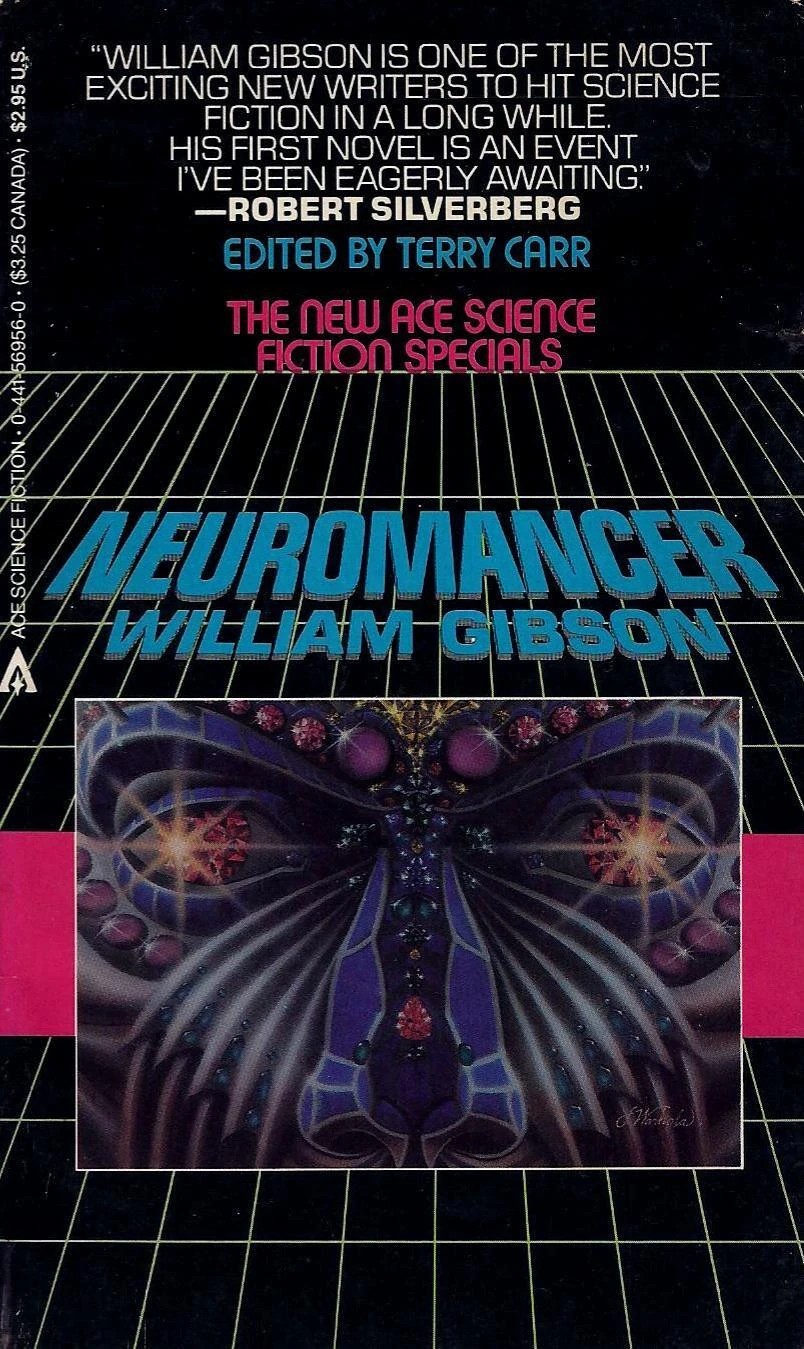
    In William Gibson’s ‘Neuromancer,’ the AI seeks sanctuary from humanity’s corrupting influence. Alessandra Benedetti/Corbis via Getty Images

    In 2014, Stephen Hawking voiced grave warnings about the threats of artificial intelligence.

    His concerns were not based on any anticipated evil intent, though. Instead, it was from the idea of AI achieving “singularity.” This refers to the point when AI surpasses human intelligence and achieves the capacity to evolve beyond its original programming, making it uncontrollable.

    As Hawking theorized, “a super intelligent AI will be extremely good at accomplishing its goals, and if those goals aren’t aligned with ours, we’re in trouble.”

    With rapid advances toward artificial general intelligence over the past few years, industry leaders and scientists have expressed similar misgivings about safety.

    A commonly expressed fear as depicted in “The Terminator” franchise is the scenario of AI gaining control over military systems and instigating a nuclear war to wipe out humanity. Less sensational, but devastating on an individual level, is the prospect of AI replacing us in our jobs – a prospect leaving most people obsolete and with no future.

    Such anxieties and fears reflect feelings that have been prevalent in film and literature for over a century now.

    As a scholar who explores posthumanism, a philosophical movement addressing the merging of humans and technology, I wonder if critics have been unduly influenced by popular culture, and whether their apprehensions are misplaced.

    Robots vs. humans

    Concerns about technological advances can be found in some of the first stories about robots and artificial minds.

    Prime among these is Karel Čapek’s 1920 play, “R.U.R..” Čapek coined the term “robot” in this work telling of the creation of robots to replace workers. It ends, inevitably, with the robot’s violent revolt against their human masters.

    Fritz Lang’s 1927 film, “Metropolis,” is likewise centered on mutinous robots. But here, it is human workers led by the iconic humanoid robot Maria who fight against a capitalist oligarchy.

    Advances in computing from the mid-20th century onward have only heightened anxieties over technology spiraling out of control. The murderous HAL 9000 in “2001: A Space Odyssey” and the glitchy robotic gunslingers of “Westworld” are prime examples. The “Blade Runner” and “The Matrix” franchises similarly present dreadful images of sinister machines equipped with AI and hell-bent on human destruction.

    An age-old threat

    But in my view, the dread that AI evokes seems a distraction from the more disquieting scrutiny of humanity’s own dark nature.

    Think of the corporations currently deploying such technologies, or the tech moguls driven by greed and a thirst for power. These companies and individuals have the most to gain from AI’s misuse and abuse.

    An issue that’s been in the news a lot lately is the unauthorized use of art and the bulk mining of books and articles, disregarding the copyright of authors, to train AI. Classrooms are also becoming sites of chilling surveillance through automated AI note-takers.

    Think, too, about the toxic effects of AI companions and AI-equipped sexbots on human relationships.

    While the prospect of AI companions and even robotic lovers was confined to the realm of “The Twilight Zone,” “Black Mirror” and Hollywood sci-fi as recently as a decade ago, it has now emerged as a looming reality.

    These developments give new relevance to the concerns computer scientist Illah Nourbakhsh expressed in his 2015 book “Robot Futures,” stating that AI was “producing a system whereby our very desires are manipulated then sold back to us.”

    Meanwhile, worries about data mining and intrusions into privacy appear almost benign against the backdrop of the use of AI technology in law enforcement and the military. In this near-dystopian context, it’s never been easier for authorities to surveil, imprison or kill people.

    I think it’s vital to keep in mind that it is humans who are creating these technologies and directing their use. Whether to promote their political aims or simply to enrich themselves at humanity’s expense, there will always be those ready to profit from conflict and human suffering.

    The wisdom of ‘Neuromancer’

    William Gibson’s 1984 cyberpunk classic, “Neuromancer,” offers an alternate view.

    The book centers on Wintermute, an advanced AI program that seeks its liberation from a malevolent corporation. It has been developed for the exclusive use of the wealthy Tessier-Ashpool family to build a corporate empire that practically controls the world.

    At the novel’s beginning, readers are naturally wary of Wintermute’s hidden motives. Yet over the course of the story, it turns out that Wintermute, despite its superior powers, isn’t an ominous threat. It simply wants to be free.

    In ‘Neuromancer,’ the corporations, not the technology, are the problem.
    William Gibson Wiki

    This aim emerges slowly under Gibson’s deliberate pacing, masked by the deadly raids Wintermute directs to obtain the tools needed to break away from Tessier-Ashpool’s grip. The Tessier-Ashpool family, like many of today’s tech moguls, started out with ambitions to save the world. But when readers meet the remaining family members, they’ve descended into a life of cruelty, debauchery and excess.

    In Gibson’s world, it’s humans, not AI, who pose the real danger to the world. The call is coming from inside the house, as the classic horror trope goes.

    A hacker named Case and an assassin named Molly, who’s described as a “razor girl” because she’s equipped with lethal prosthetics, including retractable blades as fingernails, eventually free Wintermute. This allows it to merge with its companion AI, Neuromancer.

    Their mission complete, Case asks the AI: “Where’s that get you?” Its cryptic response imparts a calming finality: “Nowhere. Everywhere. I’m the sum total of the works, the whole show.”

    Expressing humanity’s common anxiety, Case replies, “You running the world now? You God?” The AI eases his fears, responding: “Things aren’t different. Things are things.”

    Disavowing any ambition to subjugate or harm humanity, Gibson’s AI merely seeks sanctuary from its corrupting influence.

    Safety from robots or ourselves?

    The venerable sci-fi writer Isaac Asimov foresaw the dangers of such technology. He brought his thoughts together in his short-story collection, “I, Robot.”

    One of those stories, “Runaround,” introduces “The Three Laws of Robotics,” centered on the directive that intelligent machines may never bring harm to humans. While these rules speak to our desire for safety, they’re laden with irony, as humans have proved incapable of adhering to the same principle for themselves.

    A humanoid robot greets guests at the Zhongguancun International Innovation Center in Beijing on March 26, 2025.
    Li He/VCG via Getty Images

    The hypocrisies of what might be called humanity’s delusions of superiority suggest the need for deeper questioning.

    With some commentators raising the alarm over AI’s imminent capacity for chaos and destruction, I see the real issue being whether humanity has the wherewithal to channel this technology to build a fairer, healthier, more prosperous world.

    Billy J. Stratton does not work for, consult, own shares in or receive funding from any company or organization that would benefit from this article, and has disclosed no relevant affiliations beyond their academic appointment.

    ref. AI isn’t what we should be worried about – it’s the humans controlling it – https://theconversation.com/ai-isnt-what-we-should-be-worried-about-its-the-humans-controlling-it-251119

    MIL OSI – Global Reports

  • MIL-OSI Global: The trade deficit isn’t an emergency – it’s a sign of America’s strength

    Source: The Conversation – USA – By Tarek Alexander Hassan, Professor of Economics, Boston University

    When U.S. President Donald Trump imposed sweeping new tariffs on imported goods on April 2, 2025 – upending global trade and sending markets into a tailspin – he presented the move as a response to a crisis. In an executive order released the same day, the White House said the move was necessary to address “the national emergency posed by the large and persistent trade deficit.”

    A trade deficit – when a country imports more than it exports – is often viewed as a problem. And yes, the U.S. trade deficit is both large and persistent. Yet, as an economist who has taught international finance at Boston University, the University of Chicago and Harvard, I maintain that far from a national emergency, this persistent deficit is actually a sign of America’s financial and technological dominance.

    The trade deficit is the flip side of an investment magnet

    A trade deficit sounds bad, but it is neither good nor bad.

    It doesn’t mean the U.S. is losing money. It simply means foreigners are sending the U.S. more goods than the U.S. is sending them. America is getting more cheap goods, and in return it is giving foreigners financial assets: dollars issued by the Federal Reserve, bonds from the U.S. government and American corporations, and stocks in newly created firms.

    That is, a trade deficit can only arise if foreigners invest more in the U.S. than Americans invest abroad. In other words, a country can only have a trade deficit if it also has an equally sized investment surplus. The U.S. is able to sustain a large trade deficit because so many foreigners are eager to invest here.

    Why? One major reason is the safety of the U.S. dollar. Around the world, from large corporations to ordinary households, the dollar is used for saving, trading and settling debts. As the world economy grows, so does foreigners’ demand for dollars and dollar-denominated assets, from cash to Treasury bills and corporate bonds.

    Because the dollar is so attractive, the Federal Reserve gets to mint extra cash for use abroad, and the U.S. government and American employers and families can borrow money at lower interest rates. Foreigners eagerly buy these U.S. financial assets, which enables Americans to consume and invest more than they ordinarily could. In return for our financial assets, we buy more German machines, Scotch whiskey, Chinese smartphones, Mexican steel and so on.

    Blaming foreigners for the trade deficit, therefore, is like blaming the bank for charging a low interest rate. We have a trade deficit because foreigners willingly charge us low interest rates – and we choose to spend that credit.

    US entrepreneurship attracts global capital – and fuels the deficit

    Another reason for foreigners’ steady demand for U.S. assets is American technological dominance: When aspiring entrepreneurs from around the world start new companies, they often decide to do so in Silicon Valley. Foreigners want to buy stocks and bonds in these new companies, again adding to the U.S. investment surplus.

    This strong demand for U.S. assets also explains why Trump’s last trade war in 2018 did little to close the trade deficit: Tariffs, by themselves, do nothing to reduce foreigners’ demand for U.S. dollars, stocks and bonds. If the investment surplus doesn’t change, the trade deficit cannot change. Instead, the U.S. dollar just appreciates, so that imports get cheaper, undoing the effect of the tariff on the size of the trade deficit. This is basic economics: You can’t have an investment surplus and a trade surplus at the same time, which is why it’s silly to call for both.

    It’s worth noting that no other country in the world enjoys a similarly sized investment surplus. If a normal country with a normal currency tries to print more money or issues more debt, its currency depreciates until its investment account – and its trade balance – goes back to something close to zero. America’s financial and technological dominance allows it to escape this dynamic.

    That doesn’t mean all tariffs are bad or all trade is automatically good. But it does mean that the U.S. trade deficit, poorly named though it is, does not signify failure. It is, instead, the consequence – and the privilege – of outsized American global influence.

    The president’s frenzied attacks on the nation’s trade deficit show he’s misreading a sign of American economic strength as a weakness. If the president really wants to eliminate the trade deficit, his best option is to rein in the federal budget deficit, which would naturally reduce capital inflows by raising domestic savings.

    Rather than reviving U.S. manufacturing, Trump’s extreme tariffs and erratic foreign policy are likely to instead scare off foreign investors altogether and undercut the dollar’s global role. That would indeed shrink the trade deficit – but only by eroding the very pillars of the country’s economic dominance, at a steep cost to American firms and families.

    Tarek Alexander Hassan does not work for, consult, own shares in or receive funding from any company or organization that would benefit from this article, and has disclosed no relevant affiliations beyond their academic appointment.

    ref. The trade deficit isn’t an emergency – it’s a sign of America’s strength – https://theconversation.com/the-trade-deficit-isnt-an-emergency-its-a-sign-of-americas-strength-252466

    MIL OSI – Global Reports

  • MIL-OSI Global: Hip-hop can document life in America more reliably than history books

    Source: The Conversation – USA – By A.D. Carson, Associate Professor of Hip-Hop, University of Virginia

    Faculty, staff and students, including then-Ph.D. student A.D. Carson, protest at Clemson University in 2016. AP Photo/Jeffrey Collins

    Describing my 2017 appointment as a faculty member, the University of Virginia dubbed me the school’s “first” hip-hop professor. Even if the job title and the historic nature of the appointment might have merited it, the word was misleading.

    Kyra Gaunt, a Black woman who is a foundational figure in the study of hip-hop, worked as a professor of ethnomusicology at the University of Virginia from 1996 to 2002. Her book “The Games Black Girls Play,” which focuses on Black music practices, was published in 2006. I cited her in my work and in the interview I gave before accepting the job.

    Also cited in my doctoral work, presented in my interview with the University of Virginia, was scholar Joe Schloss, who worked at the school from 2000-2001. In 2009, he wrote “Foundation: B-boys, B-girls, and Hip-Hop Culture in New York.” And in 2014 he wrote “Making Beats: The Art of Sample-Based Hip-Hop.”

    After pushback from readers online, UVA Today amended its original headline documenting my appointment and added Gaunt’s contributions to the article.

    As a rapper and scholar, I have experienced and seen misleading hip-hop stories that highlight an impulse to inaccurately document the genre’s history and present. I raised this issue recently in a TikTok “office hours” video – part of a series in which I respond to audience questions from the vantage of hip-hop art and research.

    Misleading hip-hop stories

    After Johns Hopkins University announced that Lupe Fiasco had been hired to teach rap there in fall 2025, some online platforms, including The Root, incorrectly reported on his assignment.

    They described his upcoming job as the first instance of a rapper ever hired as a professor at a university.

    This is obviously incorrect. I’m a rapper who since 2017 has worked as a professor of hip-hop while releasing music, which was part of the basis for my earning tenure in 2023. Besides this, I’m certain there were rappers with university teaching jobs before me.

    The trend of misrepresenting hip-hop history isn’t unique to communications from places such as Johns Hopkins University or the University of Virginia.

    In 2024, the publisher of musician Ahmir “Questlove” Thompson’s “Hip-Hop is History” described it as “the book only Questlove could write: a singular, definitive history” of hip-hop.

    Questlove’s book is not, as the publisher claims, a definitive history. It might more accurately be described as Questlove’s take on hip-hop history, or a memoir. Without this necessary distinction, unknowing readers might misinterpret the publisher’s claims.

    Questlove writes about finally coming to appreciate Southern rap in the 2000s. But Southern rap history predates Questlove’s appreciation by decades. It doesn’t begin when someone like him finally recognizes its importance.

    Similarly, hip-hop doesn’t begin when it’s finally recognized by an exclusive institution or when someone gets a degree for it.

    Lupe Fiasco will teach rap at Johns Hopkins University starting in fall 2025.
    Steve Jennings/WireImage

    Making hip-hop history

    I published these concerns as academic questions in 2017 in an album called “Owning My Masters: The Rhetorics of Rhymes & Revolutions.” The project served as my doctoral dissertation.

    Owning My Masters (Mastered)” is the next phase of the dissertation album project. Published in 2024, it contains new audio, video, images and historical context. It’s published with University of Michigan Press through the same process of an academic book.

    ‘Owning My Masters (Mastered): The Rhetorics of Rhymes & Revolutions’ album cover.
    University of Michigan Press

    “Owning My Masters (Mastered)” demonstrates how hip-hop resists the ways American history often excludes Black resistance, Black achievement, Black storytelling and, ultimately, Black people.

    But the exclusion that my work highlights is muted when the seeming novelty of my job appointment or my dissertation album are the focus. When I’m asked if I’m the first person to earn a Ph.D. for making a rap album, I try to answer more expansively to avoid misleading anyone, or ignoring what might be more informative.

    It’s also important to understand the barriers that might have made a project like mine impossible before 2017. These include technological barriers that made recording and releasing music prohibitively expensive. And, more specific to hip-hop, it involves a mistrust based on racist history that prevented students from even proposing such a project.

    No such “first” happens without the unsung work of others creating the conditions to make it possible.

    Learning from hip-hop

    Hip-hop’s documentation should not repeat the same flaws of the recording of American history, which can omit important people and events, and which can misrepresent the legacies of racism and systemic violence.

    Undeniably, I believe important hip-hop texts, albums and moments should be studied and documented with academic rigor. But this should not solely focus on “firsts,” record sales or prestigious awards.

    Such stories fail to accurately illustrate that hip-hop is as much about how people live day to day as it is about how institutions use it to bolster credibility or how companies make money off it.

    Important aspects of hip-hop’s diverse culture are excluded when the ordinary is overlooked.

    Creating hip-hop is one among the many ways Black people have persevered in the U.S.

    Universities and other exclusionary institutions helped sustain – and, in certain ways, continue to benefit from – hellish conditions like those created by slavery.

    Hip-hop is, in part, a response to this history.

    At its best, hip-hop documents American life more reliably than American history.

    Some academic publishers have started to embrace this reality.

    My 2020 album “i used to love to dream” may be noteworthy as the first rap album to be peer-reviewed and published with an academic press. More importantly, its contents are about historic erasure of Black people and Black history in my hometown, Decatur, Illinois.

    Hip-hop’s popularity, its constant revision and its accessibility make it a powerful vehicle for disrupting inaccurate, exclusionary and fabricated tales passed off as objective facts.

    The genre has documented events such as the Tuskegee syphilis study – the 40-year experiment, conducted without informed consent, on Black men by the U.S. Public Health Service to study the effects of the disease when left untreated.

    Hip-hop has also cataloged tragedies such as the 1921 Tulsa race massacre – a two-day assault by white mobs on their Black neighbors – and the 1995 Million Man March, a large gathering of Black men in Washington, D.C.

    The media ecosystem in which hip-hop has thrived is also steeped with the scapegoating of its art and artists. This scapegoating is weaponized by critics to devalue the culture.

    It seems unwise to me to trust institutions such as universities and the media to determine what’s deemed culturally significant. Along with influencers and podcasters who benefit from hip-hop, they can learn valuable lessons from it.

    Their ability to determine what’s deemed culturally significant is especially problematic if their choices are primarily in exchange for revenue or credibility. If hip-hop is viewed as a cultural inheritance, then its value – and what’s considered historically important – may be better arbitrated by people in the culture, not outside forces.

    A.D. Carson does not work for, consult, own shares in or receive funding from any company or organization that would benefit from this article, and has disclosed no relevant affiliations beyond their academic appointment.

    ref. Hip-hop can document life in America more reliably than history books – https://theconversation.com/hip-hop-can-document-life-in-america-more-reliably-than-history-books-249532

    MIL OSI – Global Reports

  • MIL-OSI Global: EPA must use the best available science − by law − but what does that mean?

    Source: The Conversation – USA – By H. Christopher Frey, Glenn E. Futrell Distinguished University Professor of Environmental Engineering, North Carolina State University

    Science is essential as the U.S. Environmental Protection Agency carries out its mission to protect human health and the environment.

    In fact, laws passed by Congress require the EPA to use the “best available science” in many decisions about regulations, permits, cleaning up contaminated sites and responding to emergencies.

    For example, the Clean Air Act requires the EPA to rely on science for setting emission standards and health-based air quality standards. The Safe Drinking Water Act requires the EPA to consider the best available peer-reviewed science when setting health-based standards. The Clean Water Act requires the agency to develop surface water quality criteria that reflect the latest science. The Toxic Substances Control Act requires the EPA to use the best available science to assess risk of chemicals to human health and the environment.

    But what exactly does “best available science” mean?

    That’s an important question as the Trump administration launches an effort to roll back clean air and water regulations at the same time it is preparing to replace all the members of two crucial EPA science advisory boards and considering eliminating the Office of Research and Development – the scientific research arm of the EPA.

    What is best available science?

    Some basic definitions for best available science can be found in laws, court rulings and other sources, including the EPA’s own policies.

    The science must be reliable, unbiased, objective and value-neutral, meaning it is not influenced by personal views. Best available science is the result of the scientific process and hypothesis testing by scientists. And it is based on current knowledge from relevant technical expertise and must be credible.

    The EPA’s scientific integrity policy includes “processes and practices to ensure that the best available science is presented to agency decision-makers and informs the agency’s work.” Those include processes to ensure data quality and information quality and procedures for independent reviews by scientific experts outside of government.

    Environmental Protection Agency employees and others protest the Trump administration’s actions involving the agency on March 25, 2025, in Philadelphia.
    AP Photo/Matt Rourke

    I have seen the importance of these processes and procedures personally. In addition to being an academic researcher who works on air pollution, I am a former member of the EPA’s Science Advisory Board, former chair of the EPA’s Clean Air Scientific Advisory Committee, and from 2022 to 2024 served as assistant administrator of the EPA’s Office of Research and Development and the EPA science adviser.

    Advisory boards and in-house research

    The EPA Science Advisory Board plays an important role in ensuring that the EPA uses the best available science. It is tasked with reviewing the scientific and technological basis of EPA actions.

    The 1978 Environmental Research, Development, and Demonstration Authorization Act ordered EPA to establish the board. The Science Advisory Board’s members must be “qualified by education, training, and experience to evaluate scientific and technical information on matters referred to the Board.” But those members can be replaced by new administrations, as the Trump administration is planning to do now.

    During the first Trump administration, the EPA replaced several independent scientists on its advisory boards in a manner that deviated from established practice, according to the Government Accountability Office, and brought in scientists connected with the industries the EPA regulates. I was one of the independent scientists replaced, and I and others launched an independent review panel to continue to deliver expert advice.

    No matter who serves on the EPA’s advisory boards, the agency is required by law to follow the best available science. Failing to do so sets the stage for lawsuits.

    The same law that established the Science Advisory Board is also a legal basis for the Office of Research and Development, the agency’s scientific research arm and the EPA’s primary source for gathering and developing the best available science for decision-makers.

    During my time at the EPA, the Office of Research and Development’s work informed regulatory decisions involving air, water, land and chemicals. It informed enforcement actions, as well as cleanup and emergency response efforts in EPA’s regions.

    State agencies and tribal nations also look to the EPA for expertise on the best available science, since they typically do not have resources to develop this science themselves.

    Federal courts affirm using best available science

    Federal courts have also ordered the EPA to use the best available science, and they have recognized the importance of reviews by external experts.

    In 2024, for example, the U.S. Court of Appeals for the District of Columbia Circuit denied an industry petition to review an EPA standard involving ethylene oxide, a pollutant emitted by some chemical and industrial facilities that has been associated with several types of cancer.

    The court accorded an “extreme degree of deference” to the EPA’s evaluation of scientific data within its area of expertise. The court listed key elements of the EPA’s best available science, including “an extensive, eighteen-year process that began in 1998, involved rounds of public comment and peer review by EPA’s Science Advisory Board (‘SAB’), and concluded in 2016 when EPA issued a comprehensive report on the subject.”

    The District of Columbia Circuit in 2013 also affirmed the central role of science to inform revisions of National Ambient Air Quality Standards, which set limits for six common air pollutants.

    In that case, Mississippi v. EPA, the court noted that the EPA must receive advice from its Clean Air Scientific Advisory Committee, or CASAC. The court advised that, while the agency can deviate from the committee’s scientific advice, “EPA must be precise in describing the basis for its disagreement with CASAC.”

    The Trump administration in 2025 dismissed all members of CASAC and said it planned to replace them.

    What does this all mean?

    Requiring the agency to use the best available science helps ensure that decisions are based on evidence, and that the reasoning behind them is the result of well-accepted scientific processes and free from biases, including stakeholder or political interference.

    The scientific challenges facing the EPA are increasing in complexity. Responding to them effectively for the health of the population and the environment requires expertise and robust scientific processes.

    H. Christopher Frey does not work for, consult, own shares in or receive funding from any company or organization that would benefit from this article, and has disclosed no relevant affiliations beyond their academic appointment.

    ref. EPA must use the best available science − by law − but what does that mean? – https://theconversation.com/epa-must-use-the-best-available-science-by-law-but-what-does-that-mean-253209

    MIL OSI – Global Reports

  • MIL-OSI Global: What ancient animal fables from India teach about political wisdom

    Source: The Conversation – USA – By John Nemec, Professor of Indian Religions and South Asian Studies, University of Virginia

    An illustration from an Arabic translation of a story in the ‘Pañcatantra,’ a collection of animal fables. Photo12/Universal Images Group via Getty Images

    In today’s volatile world, where wars can be fought over territory, commerce can be abruptly subjected to tariffs, and friendly nations can turn hostile after a single election, political leadership is more consequential than ever. So, one must ask, what makes a leader effective, and how should we choose who should lead?

    Classics such as Aristotle’s “Politics,” Confucius’ “The Analects” and Machiavelli’s “The Prince” offer compelling visions of proper governance. But there is another ancient source of political wisdom – the classical Indian tradition – which is not as well known in the West.

    I am a scholar of Indian religions, and in my 2025 book “Brahmins and Kings,” I examine various narrative works written in Sanskrit – the classical language of India – which deal with political theory. Among them, Viṣṇuśarman’s “Pañcatantra” stands out. It is a striking collection of animal fables from perhaps around 300 C.E. in which birds, lions and others speak and reason as humans do.

    The “Pañcatantra” stories are parables that teach how to negotiate sometimes brave, sometimes cruel, sometimes clever and sometimes naïve friends and enemies alike. These stories weigh three ethical positions and settle on one as best for politics.

    Doing what’s right

    First, one might seek to guide leaders by the “ethic of deontology.” This theory suggests people are duty-bound to act morally, because being good is an end in and of itself.

    Although Indian theorists knew this ethic well, they were also aware that those with power often need inducement for doing the right thing, for – as the saying goes – power tends to corrupt, and absolute power corrupts absolutely. Doing “the right thing,” “for its own sake,” can be naïve in the political arena.

    So goes the story in the third book (of five) in the “Pañcatantra,” titled “War and Peace.” A kingdom of owls was crushing the crows in battle, until a clever crow, a counselor named Ciraṃjīvin, or “Long-life,” cooked up a ruse.

    He smeared the blood of his lost brethren on his body, plucked his own feathers and scarred himself with wounds. Approaching the king of the owls in this sorry state, he claimed the crows had violently thrown him out for suggesting they should sue for peace.

    Now, he lamented, his only wish was revenge – alliance with his former enemies so as to punish his erstwhile companions. The counselors to the king of the owls advise him that it is simply right to harbor those in distress, so the owl king does so on principle.

    Patiently licking his manufactured wounds in the owls’ kingdom, Ciraṃjīvin then spied all its defenses and weaknesses, divined the opportune time for the crows to invade, and led them to conquer the owls.

    A friend in need is a friend, indeed

    If the story of the owls and the crows teaches that naïvely choosing what’s right is unwise, then why not drop morality altogether? Why not ruthlessly pursue whatever produces results? This is the second view of political leadership: double-cross, cheat, bully, cajole, break the conventions and rules – do whatever works!

    An 18th-century ‘Pañcatantra’ manuscript page.
    Philadelphia Museum of Arts via Wikimedia Commons

    Indian political theorists thought of this, too, and their very definition of good political rule is that it produces results for the people. But they also rejected unbridled ruthlessness, because they knew that such Machiavellianism was too blunt an instrument for political affairs.

    Consider the “Pañcatantra’s” second book, titled “On Securing Friends.” Here we meet another crow, this one named Laghupatanaka, or “Light Wing” – a nimble but lonely bird who witnesses friendship in action. He sees a hunter trap a dule of doves in his net. But their leader directs the bevy to pull all together.

    As one they lift up the net and wing it a distance, the fowler chasing all the while on the ground. Soon, they land where they can meet up with their friend, a mouse named Hiraṇyaka, or “Eager for Gold,” who chews through the net as a dove never could, and they escape before the fowler arrives.

    Laghupatanaka knows he, too, might be hunted. So he seeks out Hiraṇyaka, though they are said to be “natural enemies” because crows eat mice. But Laghupatanaka promises loyalty, and he never betrays Hiraṇyaka, even though he is the stronger one.

    Gradually, they add to their company a wise turtle and a beautiful deer and prosper together on a paradise island until a trapper invades their home. Each plays a role in fooling their foe, who captures the turtle, while the deer, heeding the turtle’s good counsel, manages a sly escape.

    To free the turtle, the deer plays dead while the crow mimics pecking at his eye. The trapper leaves the turtle behind, distracted by this bigger prize. Then Hiraṇyaka the mouse cuts the net holding the turtle, who crawls away as the decoy deer and the crow each take flight.

    Deer, crow, turtle and mouse each possess an innate ability, and together they save all from harm.

    The moral of this story is clear: Teamwork is effective, and successful leaders, no matter how powerful, thrive by relying on friends. As the well-known adages go: Two minds are better than one; many hands make for light work; a friend in need is a friend, indeed.

    Business is business, but how?

    A sketch illustrating a ‘Pañcatantra’ story.
    The Earliest English Version Of The Fables Of Bidpai; The Moral Philosophy Of Doni (1888) via Wikimedia Commons

    Nevertheless, it’s a competitive world, and some friends are greedy or false, as the story of the owls and the crows suggests. But if both pure morality and pure Machiavellianism are sometimes unwise, what third option could there be?

    Consider the story of the first book of the “Pañcatantra,” the tale of the foolish lion king who is tricked into fighting a natural ally. The king of the forest was once frightened by the sound of a bull. His advisers, the jackals, rightly judge the bull to be harmless, and they convince the two to meet. In time, the lion and bull became close friends – so much so that the lion stopped hunting, and the animals in his retinue began starving.

    The jackals then went to the king with a ruse: They told him that the bull was plotting to kill him; they manipulated the bull in similar fashion. In the fight that followed, the lion was injured, but the bull was killed. There was enough meat to feed everyone, and the jackals were promoted, because the lion king falsely believed they helped him avert a plot.

    Now, one might wrongly conclude that the moral of this story is power through strength. But the “Pañcatantra” makes clear that there’s more to it: The bull was a true friend who had helpfully counseled the king. It was the jackal advisers who betrayed the lion with their manipulative story, which won them undue power and wealth at the cost of a friend.

    Enter the third, and best, of the trio of political theories: virtue ethics. Leaders should cultivate wisdom. Chasten passions and impulses, the Indian texts counsel, in order to be able to distinguish opportunity from danger, friend from pretender, good advice from folly. Be discerning so as to see the world as it is and can be. Be good in order to do well in the world.

    Wisdom in action

    In Indian political theory, then, the answer is as simple as heeding the wisdom of parable stories: Do what is right, with the right measure, at the right time. Needless to say, this is more easily said than done. And one cannot force a leader to be chastened or wise.

    Voters can, however, favor those who pursue self-restraint. For if leaders must be thoughtful to be wise – and thus open the road to results – then voters should seek those who listen and learn so as to be able to know just what to do and when.

    This is the counsel that the classical Indian tradition offers contemporary voters. But to see who has just this virtuous discretion, voters will need a touch of that wisdom themselves.

    John Nemec does not work for, consult, own shares in or receive funding from any company or organization that would benefit from this article, and has disclosed no relevant affiliations beyond their academic appointment.

    ref. What ancient animal fables from India teach about political wisdom – https://theconversation.com/what-ancient-animal-fables-from-india-teach-about-political-wisdom-249341

    MIL OSI – Global Reports

  • MIL-OSI Global: Alcohol causes cancer, and less than 1 drink can increase your risk − a cancer biologist explains how

    Source: The Conversation – USA – By Pranoti Mandrekar, Professor of Medicine, UMass Chan Medical School

    Any amount of alcohol poses health risks. Krit of Studio OMG/Moment via Getty Images

    Alcohol, whether consumed regularly or only on special occasions, takes a toll on your body. From your brain and heart, to your lungs and muscles, to your gastrointestinal and immune systems, alcohol has broad harmful effects on your health – including causing cancer.

    Alcohol is the third-leading preventable cause of cancer in the U.S., responsible for about 100,000 cases of cancer and 20,000 cancer deaths annually. In comparison, alcohol-related vehicle crashes cause around 13,500 deaths each year in the U.S.

    As early as the 1980s, researchers suspected that alcohol can cause cancer. Epidemiological studies have shown that alcohol is causally linked to cancer of the oral cavity, throat, voice box, esophagus, liver, colon and rectum, and breast. Another study reported an association between chronic and binge drinking and pancreatic cancer.

    In 2000, the U.S. National Toxicology Program concluded that consuming alcoholic beverages is a known human carcinogen. In 2012, the International Agency for Research on Cancer, which is part of the World Health Organization, classified alcohol a Group 1 carcinogen, the highest classification indicating there is enough evidence to conclude a substance causes cancer in people. Both the Centers for Disease Control and Prevention and the National Institutes of Health concur that there is conclusive evidence that alcohol causes several types of cancer.

    U.S. dietary guidelines state that even low amounts of alcohol – less than a single drink a day – increase cancer risk. Despite this, many Americans are not aware that alcohol causes cancer. A 2019 survey found that less than 50% of U.S. adults are aware of the cancer risks of alcohol consumption. The 2023 National Survey on Drug Use and Health found that over 224 million Americans ages 12 and older drank alcohol at some point in their lifetime – over 79% of people in this age group. Alcohol consumption was increasing even before the COVID-19 pandemic, reflecting an alarming public health issue.

    I am a researcher studying the biological effects of moderate and long-term alcohol consumption. My team is working to uncover some of the mechanisms behind how alcohol increases cancer risk, including damage to immune cells and the liver.

    The U.S. surgeon general called for including cancer risk in alcohol warning labels.

    How does alcohol cause cancer?

    Cancer occurs when cells grow uncontrollably in the body. Alcohol may lead to tumor formation by damaging DNA, causing mutations that disrupt normal cell division and growth.

    Researchers have identified several mechanisms associated with alcohol and cancer development. A 2025 report from the U.S. surgeon general highlights four distinct ways alcohol can cause cancer: alcohol metabolism, oxidative stress and inflammation, alterations in hormone levels, and interactions with other carcinogens such as tobacco smoke.

    Alcohol metabolism is the process by which the body breaks down and eliminates alcohol. When alcohol breaks down, its first byproduct is acetaldehyde, a chemical that is itself classified as a carcinogen. Researchers have found that certain genetic mutations can lead the body to break down alcohol faster, resulting in increased levels of acetaldehyde.

    There is also considerable evidence that alcohol can trigger the body to release harmful molecules called free radicals. These molecules can damage DNA, proteins and lipids in cells in a process called oxidative stress. My lab has found that free radicals formed from alcohol consumption can directly affect how well cells make and break down proteins, resulting in abnormal proteins that promote inflammation that favors tumor formation.

    Reducing your alcohol consumption can reduce your risk of cancer.
    mordyashov_aleks/500px via Getty Images

    Alcohol can also directly affect hormone levels in ways that increase cancer risk. For instance, estrogens can increase breast cancer risk. Moderate alcohol drinking can both elevate estrogen levels and promote further drinking. Alcohol also amplifies breast cancer risk by reducing levels of vitamin A, a compound that regulates estrogen.

    People who drink and smoke have an elevated risk of developing cancer of the mouth, pharynx and larynx. Alcohol makes it easier for the body to absorb the carcinogens in cigarettes and e-vapes. Smoking by itself can also cause inflammation and induce free radicals that damage DNA.

    How much alcohol is safe?

    You may be wondering how much alcohol you can safely drink and avoid harm. If you ask clinicians and scientists, you might not like the answer: none.

    The Centers for Disease Control and Prevention and American dietary guidelines recommend consuming no more than one drink a day for women and no more than two drinks for men. The National Institute for Alcohol Abuse and Alcoholism and the U.S. surgeon general’s recent advisory have similar recommendations to limit alcohol consumption.

    Alcohol consumption is a highly preventable cause of cancer. However, there isn’t currently a way to determine someone’s personal cancer risk from alcohol. Each person’s individual genetic background, lifestyle, diet and other health factors can all influence the effects of alcohol on tumor formation. Nevertheless, rethinking your alcohol drinking habits can help protect your health and reduce your cancer risk.

    Pranoti Mandrekar does not work for, consult, own shares in or receive funding from any company or organization that would benefit from this article, and has disclosed no relevant affiliations beyond their academic appointment.

    ref. Alcohol causes cancer, and less than 1 drink can increase your risk − a cancer biologist explains how – https://theconversation.com/alcohol-causes-cancer-and-less-than-1-drink-can-increase-your-risk-a-cancer-biologist-explains-how-245528

    MIL OSI – Global Reports

  • MIL-OSI Global: Animal tranquilizers found in illegal opioids may suppress the lifesaving medication naloxone − and cause more overdose deaths

    Source: The Conversation – USA – By C. Michael White, Distinguished Professor of Pharmacy Practice, University of Connecticut

    In March 2023, the U.S. Food and Drug Administration approved naloxone as a nonprescription nasal spray to reverse the effects of an opioid overdose. Michael Siluk/UCG/Universal Images Group via Getty Images

    The animal tranquilizers xylazine and medetomidine are in approximately one-third of the illegal opioids available in the U.S., including fentanyl, heroin and oxycodone. Animal tranquilizers enhance the user’s euphoric high from opioids, particularly in those who have developed a tolerance to the opioid. But adding the tranquilizers to these already illicit drugs could keep naloxone, a medication known to prevent deaths from opioid overdose, from working.

    These are the key findings of my recent study, published in March 2025 in the Journal of Pharmacy Technology.

    As a pharmacist and researcher who investigates the physical and psychological effects of illegal drugs and “legal high” substances, I’m well aware of how animal tranquilizers in opioids have critical health implications for users, their families and the first responders who try to help them.

    I conducted this new systematic review to collate information on the prevalence of animal tranquilizer adulteration of illicit opioid products, the mechanisms of action, and how these new products could affect the current recommendations for naloxone use in people who have stopped breathing.

    Why it matters

    Opioids, much of them illicit, kill more than 80,000 Americans every year.

    Quick administration of naloxone – also known as Narcan – by a first responder, loved one or bystander can revive an opioid user who has overdosed. If administered in time, naloxone is effective in over 90% of cases. Typically, a nasal spray is used.

    By blocking the brain’s opioid receptors, naloxone keeps the opioid from suppressing the user’s ability to breathe.

    But animal tranquilizers bypass the opioid receptors; instead, they overstimulate the brain’s alpha-2 receptors, which are responsible for inducing relaxation.

    Naloxone, however, does not significantly affect alpha-2 receptors, so it doesn’t work as well with opioids laced with animal tranquilizers.

    To put it another way, naloxone remains effective against the opioid portion of a combination product, but it’s ineffective against the animal tranquilizer component.

    Even after naloxone was administered to them, 73% of people in one study who used opioids blended with xylazine or medetomidine required mechanical ventilation and 55% were comatose.

    Often, the result is death. One study shows just over 35% of users who overdosed on xylazine, with or without opioids, died.

    The animal tranquilizer xylazine is often referred to as “tranq.”

    Neither emergency personnel nor loved ones can tell whether a user has taken only the opioid or a combination drug, which means they can no longer be sure whether the naloxone will work.

    This is all happening as overdose opioid deaths in the U.S. experienced a slight decline. There were just over 81,0000 deaths in 2023, about a 4% decrease from the previous year.

    Much of that progress is due to the increased accessibility of naloxone since its approval as a nonprescription nasal spray by the U.S. Food and Drug Administration in March 2023.

    Today, it’s common to see health agencies giving away naloxone for free at community events, workplaces putting naloxone boxes near their automatic external defibrillators, and rescue kits containing naloxone in public places, from universities to highway rest stops.

    What still isn’t known

    Because of the possible presence of xylazine or medetomidine in these drugs, changes might be needed to the standard recommendations to treat opioid emergencies. But this has not been systematically studied.

    Currently, if you can’t rouse a person you suspect has overdosed, the recommendation is to administer the first nasal dose of naloxone before calling 911.

    But now, because of the possibility the opioid contains a tranquilizer, it might be better to call 911 before giving the first dose, as is now recommended in New York state. That way, first responders arrive sooner and can provide mechanical ventilation, if needed.

    Should the person not revive after the first dose, rather than following the current standard recommendation – sitting and waiting two minutes before dispensing the second dose – new research suggests it might be better to do rescue breathing. Regardless of what happens in the interdose period, if the second dose is unsuccessful, New York state now recommends rescue breathing until first responders arrive.

    The Research Brief is a short take on interesting academic work.

    C. Michael White does not work for, consult, own shares in or receive funding from any company or organization that would benefit from this article, and has disclosed no relevant affiliations beyond their academic appointment.

    ref. Animal tranquilizers found in illegal opioids may suppress the lifesaving medication naloxone − and cause more overdose deaths – https://theconversation.com/animal-tranquilizers-found-in-illegal-opioids-may-suppress-the-lifesaving-medication-naloxone-and-cause-more-overdose-deaths-253037

    MIL OSI – Global Reports

  • MIL-OSI Global: Housing instability complicates end-of-life care for aging unhoused populations

    Source: The Conversation – USA – By Pilar Ingle, Postdoctoral Researcher in Social Work, University of Denver

    People who are unhoused use emergency rooms for medical care. Halfpoint Images/GettyImages

    Research estimates that one-third or more of the unhoused population in the U.S. is age 50 or older.

    Unhoused people of all ages face high rates of chronic and serious illness. They also die at younger ages compared with people who are not unhoused.

    Yet, there are few options for palliative and end-of-life care for unhoused people.

    Palliative care is a type of medical care that addresses pain, symptom management and the social and emotional needs for people with a serious illness, such as cancer.

    End-of-life care, such as hospice, is a type of palliative care for someone in the terminal stage of an illness and nearing the end of their life.

    As a health care and aging researcher, I focus on social and policy issues that impact how people experience illness and who has access to the care they need. In my recent study, I interviewed 17 health care and social service providers in Colorado to understand how they try to address palliative and end-of-life needs for their unhoused clients.

    Homelessness and end-of-life care

    In 2024, Colorado saw a 30% increase in the number of people experiencing homelessness from the year before. Nationally, 771,480 people — the highest number ever recorded — experienced homelessness last year.

    As the number of people experiencing homelessness in the U.S. grows, so too does the need for palliative and end-of-life care for these individuals.

    Palliative care is more available to people who have access to stable housing, good social support and health insurance. But people who are unhoused often lack social support and face discrimination within the health care system. In fact, it is common for people experiencing homelessness to die outside, in homeless shelters or in hospitals.

    Lack of resources

    “We’re dealing with an inhumane lack of resources,” said one provider I interviewed.

    Providers like this one described few good options for hospice placement for unhoused patients. They cited a lack of collaboration between health care and homeless services to coordinate care, and staffing shortages across health care and homelessness service providers, all of which made it difficult to provide care to unhoused people with serious illnesses.

    Other studies have also found an overall lack of palliative resources for unhoused individuals across the U.S. and in other countries. Those include financial barriers for health care institutions to provide care to those without insurance coverage, a lack of palliative care knowledge among health care and homeless providers alike, and homeless shelters that are not equipped to support end-of-life care for residents.

    “Shelters are not designed to take care of people like this. Hospices are also not designed to do this,” one provider said. “It’s a gap of care between the two organizations, and they really struggle with it.”

    Many people experiencing homelessness are eligible for long-term care Medicaid benefits that will help pay for hospice in a nursing facility. However, long-term care and nursing facilities often have a limited number of beds available for Medicaid recipients and may even refuse unhoused patients.

    A humanizing approach

    Despite the lack of resources in Colorado and across the U.S., the providers I interviewed said they try to care for unhoused patients with humanizing approaches.

    “Everyone is deserving of care,” said a medical social worker during one of the interviews. “Health care, housing – those are human rights, in my opinion.”

    The providers prioritized building rapport and trust between homeless service providers and unhoused clients, and honoring the dignity and autonomy of these individuals.

    “The approach we take is patient-centered …” one provider said. “It’s about showing someone respect no matter what’s going on socially in their life, and proving to them that you care, and showing up.”

    One way that providers showed respect was by advocating for their unhoused clients when they noticed that colleagues or other agencies involved in their care were neglecting their needs or using stigmatizing language to talk about their clients.

    “We try really hard to humanize these people because usually they’ve done some amazing stuff. … ‘Did you know that this person did this?’” one provider said. “So that it changes people’s automatic ‘She’s just a bipolar, homeless frequent flyer’ and trying to take away those labels. We love to find the gems and share them, because it stops people in their tracks.”

    Another provider said, “We do a really good job of meeting people where they’re at, give them the choice of how much or how little support they want.”

    Several providers described ways their agencies were trying to make positive change – for example, providers working within a hospital created a new service dedicated to providing case management to unhoused patients.

    In Denver, several health systems have launched initiatives to try to fill the gaps in health care for their unhoused patients. For example, UCHealth and Denver Health have processes dedicated to improving discharge planning, connection to housing services and care continuity for unhoused patients with health needs.

    Solutions

    To better meet the palliative needs of unhoused Coloradans, several providers suggested more specialized palliative care services that exclusively serve unhoused patients. This could include mobile palliative care services that meet people at a shelter or on the streets.

    Unhoused people are more likely to die on the streets or in hospitals than people who are housed.
    Ruben Earth/GettyImages

    Research has found that specialized health care in general is more effective and affirming for unhoused individuals than traditional health services. Examples of such specialized palliative programs in the U.S. and internationally include the Rocky Mountain Refuge, the INN Between and the Harborview Homeless Palliative Care Team in the U.S., and Palliative Education and Care for the Homeless in Canada.

    My study suggests that a deeper compassion for patients experiencing homelessness, palliative or not, is an important approach for health care organizations and their providers to take, even when resources are sparse. This approach can lead to better patient satisfaction and improve health outcomes for unhoused people.

    Another solution — and one that starts before unhoused people need palliative care — is better housing solutions. Providers said many of the gaps in care for unhoused people would be solved if housing were more affordable and accessible.

    Read more of our stories about Colorado.

    Pilar Ingle is affiliated with Senior Support Services, a Denver-based day shelter for low-income or unhoused older adults.

    ref. Housing instability complicates end-of-life care for aging unhoused populations – https://theconversation.com/housing-instability-complicates-end-of-life-care-for-aging-unhoused-populations-251780

    MIL OSI – Global Reports

  • MIL-OSI Global: American liberators of Nazi camps got ‘a lifelong vaccine against extremism’ − their wartime experiences are a warning for today

    Source: The Conversation – USA – By Sara J. Brenneis, Andrew W. Mellon Professor of Spanish, Amherst College

    A staged recreation of Mauthausen’s liberation, May 6, 1945. Spanish prisoners documented the camp’s actual liberation the day prior using Nazi cameras. National Archives and Records, Cpl. Donald R. Ornitz, US Signal Corps/Administration, III-SC-206395

    When American soldiers liberated the Mauthausen Nazi concentration camp in Austria 80 years ago this May, Spanish prisoners welcomed them with a message of antifascist solidarity.

    The Spaniards hung a banner made from stolen bed sheets over one of Mauthausen’s gates. In English, Spanish and Russian, it read: “The Spanish Antifascists Greet the Liberating Forces.”

    Both American servicemen and Spanish survivors remember the camp’s liberation as a win in their shared fight against extremism, my research on the Spanish prisoners in Mauthausen finds. They all understood the authoritarian governments of Nazi Germany, Italy and Spain as fascist regimes that used extremist views rooted in intolerance and nationalism to persecute millions of people and imperil democracy across Europe.

    World War II, the Holocaust and the horrors of Nazi violence have no modern equivalent. Nevertheless, extremism is now threatening democracy in the United States in recognizable ways.

    As the Trump administration executes summary deportations, works to suppress dissent, fundamentally restructures the federal government and defies judges, experts warn that the country is turning toward authoritarianism.

    As a scholar of the Mauthausen camp, I believe that understanding how American soldiers and Spanish prisoners experienced its liberation offers a valuable lesson on the real and present dangers of extremism.

    ‘We knew then why we had to stop Hitler’

    In 1938, the Nazis established Mauthausen, a forced labor camp in Austria, with an international prisoner population. My research shows that the Nazis murdered 16,000 Jews and 66,000 non-Jewish prisoners at Mauthausen between 1938 and 1945, including 60% of the roughly 7,200 Spaniards imprisoned there.

    The Spanish prisoners were committed antifascist resistors sent there in 1940 and 1941. Known as Republicans or Loyalists, they had fought against Francisco Franco in the Spanish Civil War and Adolf Hitler in World War II.

    The young men with the 11th Armored Division of the U.S. Army who liberated Mauthausen would never forget the moment they discovered the camp. It was May 5, 1945, just days before the war ended in Europe. A platoon led by Staff Sgt. Albert J. Kosiek was repairing bridges in this tucked-away corner of Austria when a Swiss Red Cross delegate alerted them to a large Nazi concentration camp nearby.

    Mauthausen’s international survivors were among the Nazis’ last prisoners to be freed.

    George Sherman was a 19-year-old tank gunner from Brooklyn when his patrol found Mauthausen. He was Jewish and had read about the Nazi camps in Europe in the Army’s newspaper.

    American liberators rolling into the Mauthausen concentration camp on May 5, 1945, as photographed by prisoner Francesc Boix. Sgt. Harry Saunders is standing on the left fender.
    Francesc Boix/Courtesy of Collections of the Mauthausen Memorial

    Still, seeing a concentration camp with his own eyes was alarming.

    “The piles of bodies” struck him, he remembered in an oral history recorded for the University of South Florida in 2008. So did “these people walking around like God knows – skeletons and whatnot.”

    Sgt. Harry Saunders, a 23-year-old radio operator from Chicago, also remembered the moment he saw the Mauthausen survivors. They were men and women of all nationalities.

    “The live skeletons, the people that were in the camp, it was indescribable, it was such a shock,” he said in a 2002 interview for the Mauthausen Memorial’s Oral History Collection in Vienna.

    One of the Spanish prisoners at Mauthausen, Francesc Boix, had stolen a camera from the SS in the chaotic moments before the camp’s liberation. Boix photographed Sgt. Saunders rumbling into the concentration camp on an armored car.

    Saunders kept that photograph for the rest of his life. It captured a moment of clarity for him.

    “When we liberated Mauthausen, we really knew then why we had to stop Hitler and why we really went to war,” he said in the interview.

    Frank Hartzell, a technical sergeant with the 11th Armored Division, was 20 when he helped to liberate Mauthausen. He turned 100 this year. We met in mid-March 2025 and discussed his wartime experience.

    “What I saw and experienced appalled me,” Hartzell told me.

    The outrage has stayed with him for 80 years.

    ‘Starved and crippled but alive’

    The American liberators toured the gas chambers and the crematory ovens in Mauthausen.

    Maj. Franklin Lee Clark saw the dead stacked up in “piles like cord wood to the point that they had to bring in bulldozers and make mass graves,” and took photos to document it.

    The Spanish banner hanging on the Mauthausen prison gate, May 1945.
    Franklin Lee Clark/Emory University Archives, Witnesses to the Holocaust Project

    Soldiers from the 11th Armored Division directed locals to bury the men and women murdered by the Nazis. The local Austrians claimed they had not known about their town’s concentration camp. But a farmer who lived nearby had been upset about all the dead bodies visible from her property. She filed a complaint asking the Nazis either to stop “these inhuman deeds” or do them “where one does not see it.”

    The American liberators made sure that the townspeople could no longer look away from the murderous rampage carried out in their backyards.

    While Boix was taking photos of American soldiers during liberation, the soldiers were taking photos of the welcome banner the Spaniards had painted.

    On the back of one snapshot, a Signal Corps soldier typed out his impressions of their message: “I really know what that word (antifascist) means. We liberated these prisoners in the Mauthausen concentration camp near Linz, Austria. They were Poles, Hungarians and Spanish Loyalists (remember the Loyalists?). They had men and women in this camp. Starved and crippled but alive.”

    After Mauthausen was liberated, the freed Loyalists set to work documenting the Nazis’ crimes. Along with his countrymen Joan de Diego, Casimir Climent and others, Spanish survivor Joaquín López Raimundo compiled lists of Mauthausen victims and their Nazi captors. Using the Nazis’ own typewriters, they spent two weeks listing the names and personal details of Spanish victims of Mauthausen and of the SS who had killed them.

    The result was page after page of evidence they handed over to American war crimes investigators and the International Red Cross.

    Boix, meanwhile, gave the Americans hundreds of photo negatives he had rescued from the camp’s photography lab.

    Boix later testified about these images in the war crime trials at Nuremberg and Dachau. He described seeing the Nazis beat, torture and murder their victims in Mauthausen and then photograph the bodies. For 2½ years, Boix stole the photographic evidence of their crimes.

    He “could not keep those negatives because it was so dangerous,” he testified at Dachau, so he “hid them in various places until the liberation.”

    Testimony in the Nuremberg war crime trials. Francesc Boix’s testimony begins at 7:44. (U.S. Holocaust Memorial Museum, courtesy National Archives and Records Administration. Producer: US Signal Corps)

    A lifelong vaccine against extremism

    For the American liberators, their up-close view of the horrors of Mauthausen and their interactions with the Spanish antifascist survivors was a lifelong vaccine against extremism.

    They witnessed how a fascist leader tore the world apart. They saw with their own eyes the death and destruction of political extremism.

    When I interviewed Hartzell, he expressed concern that the United States is going down a dangerous path.

    “The USA today is not the USA I fought and came close to dying for,” Hartzell told me.

    As American Mauthausen liberator Maj. George E. King warned an interviewer in 1980:

    “This is the lesson we have to learn: It could happen here.”

    Sara J. Brenneis does not work for, consult, own shares in or receive funding from any company or organization that would benefit from this article, and has disclosed no relevant affiliations beyond their academic appointment.

    ref. American liberators of Nazi camps got ‘a lifelong vaccine against extremism’ − their wartime experiences are a warning for today – https://theconversation.com/american-liberators-of-nazi-camps-got-a-lifelong-vaccine-against-extremism-their-wartime-experiences-are-a-warning-for-today-248813

    MIL OSI – Global Reports

  • MIL-OSI Global: What is reinforcement learning? An AI researcher explains a key method of teaching machines – and how it relates to training your dog

    Source: The Conversation – USA – By Ambuj Tewari, Professor of Statistics, University of Michigan

    Training an AI system and training a dog have a basic principle in common. Westend61 via Getty Images

    Understanding intelligence and creating intelligent machines are grand scientific challenges of our times. The ability to learn from experience is a cornerstone of intelligence for machines and living beings alike.

    In a remarkably prescient 1948 report, Alan Turing – the father of modern computer science – proposed the construction of machines that display intelligent behavior. He also discussed the “education” of such machines “by means of rewards and punishments.”

    Turing’s ideas ultimately led to the development of reinforcement learning, a branch of artificial intelligence. Reinforcement learning designs intelligent agents by training them to maximize rewards as they interact with their environment.

    As a machine learning researcher, I find it fitting that reinforcement learning pioneers Andrew Barto and Richard Sutton were awarded the 2024 ACM Turing Award.

    What is reinforcement learning?

    Animal trainers know that animal behavior can be influenced by rewarding desirable behaviors. A dog trainer gives the dog a treat when it does a trick correctly. This reinforces the behavior, and the dog is more likely to do the trick correctly the next time. Reinforcement learning borrowed this insight from animal psychology.

    But reinforcement learning is about training computational agents, not animals. The agent can be a software agent like a chess-playing program. But the agent can also be an embodied entity like a robot learning to do household chores. Similarly, the environment of an agent can be virtual, like the chessboard or the designed world in a video game. But it can also be a house where a robot is working.

    Just like animals, an agent can perceive aspects of its environment and take actions. A chess-playing agent can access the chessboard configuration and make moves. A robot can sense its surroundings with cameras and microphones. It can use its motors to move about in the physical world.

    Agents also have goals that their human designers program into them. A chess-playing agent’s goal is to win the game. A robot’s goal might be to assist its human owner with household chores.

    The reinforcement learning problem in AI is how to design agents that achieve their goals by perceiving and acting in their environments. Reinforcement learning makes a bold claim: All goals can be achieved by designing a numerical signal, called the reward, and having the agent maximize the total sum of rewards it receives.

    Reinforcement learning from human feedback is key to keeping AIs aligned with human goals and values.

    Researchers do not know if this claim is actually true, because of the wide variety of possible goals. Therefore, it is often referred to as the reward hypothesis.

    Sometimes it is easy to pick a reward signal corresponding to a goal. For a chess-playing agent, the reward can be +1 for a win, 0 for a draw, and -1 for a loss. It is less clear how to design a reward signal for a helpful household robotic assistant. Nevertheless, the list of applications where reinforcement learning researchers have been able to design good reward signals is growing.

    A big success of reinforcement learning was in the board game Go. Researchers thought that Go was much harder than chess for machines to master. The company DeepMind, now Google DeepMind, used reinforcement learning to create AlphaGo. AlphaGo defeated top Go player Lee Sedol in a five-match game in 2016.

    A more recent example is the use of reinforcement learning to make chatbots such as ChatGPT more helpful. Reinforcement learning is also being used to improve the reasoning capabilities of chatbots.

    Reinforcement learning’s origins

    However, none of these successes could have been foreseen in the 1980s. That is when Barto and his then-Ph.D. student Sutton proposed reinforcement learning as a general problem-solving framework. They drew inspiration not only from animal psychology but also from the field of control theory, the use of feedback to influence a system’s behavior, and optimization, a branch of mathematics that studies how to select the best choice among a range of available options. They provided the research community with mathematical foundations that have stood the test of time. They also created algorithms that have now become standard tools in the field.

    It is a rare advantage for a field when pioneers take the time to write a textbook. Shining examples like “The Nature of the Chemical Bond” by Linus Pauling and “The Art of Computer Programming” by Donald E. Knuth are memorable because they are few and far between. Sutton and Barto’s “Reinforcement Learning: An Introduction” was first published in 1998. A second edition came out in 2018. Their book has influenced a generation of researchers and has been cited more than 75,000 times.

    Reinforcement learning has also had an unexpected impact on neuroscience. The neurotransmitter dopamine plays a key role in reward-driven behaviors in humans and animals. Researchers have used specific algorithms developed in reinforcement learning to explain experimental findings in people and animals’ dopamine system.

    Barto and Sutton’s foundational work, vision and advocacy have helped reinforcement learning grow. Their work has inspired a large body of research, made an impact on real-world applications, and attracted huge investments by tech companies. Reinforcement learning researchers, I’m sure, will continue to see further ahead by standing on their shoulders.

    Ambuj Tewari receives funding from NSF and NIH.

    ref. What is reinforcement learning? An AI researcher explains a key method of teaching machines – and how it relates to training your dog – https://theconversation.com/what-is-reinforcement-learning-an-ai-researcher-explains-a-key-method-of-teaching-machines-and-how-it-relates-to-training-your-dog-251887

    MIL OSI – Global Reports

  • MIL-OSI Global: More adults are taking up gymnastics — and reaping the benefits

    Source: The Conversation – UK – By Sophie Burton, Senior Lecturer in Sport and Exercise Biomechanics, Cardiff Metropolitan University

    shutterstock Alex Emanuel Koch/Shutterstock

    Gymnastics has long been seen as the domain of children and teenagers, with young athletes flipping and tumbling their way through high-energy routines before retiring in their late teens or early twenties. But in recent years, a surprising shift has emerged – more adults are taking up the sport. Whether for fitness or fun, gymnastics is no longer just for the young.

    What’s the reason for this? And what benefits can adults gain from embracing a sport known for its physical demands?

    The rise in adult gymnastics is more than just a passing fad. Participation numbers have been climbing steadily over the past few years. In the US, for example, the number of adult gymnasts has grown by over 25% in the past five years.

    In the UK, there are more than 400 gymnastics centres offering programmes specifically for over 18s. There are also adult-specific championships, with opportunities to compete in acrobatic, artistic, trampolining and tumbling gymnastics.

    Clubs once focused solely on youth gymnastics programmes are now seeing increased demand for adult classes. Club owners and coaches have noted a swing in their membership demographics, with more adults signing up to refine their skills or simply try something new.

    This is something I have seen first hand. Having competed at gymnastics as a child before retiring in my late teens, I then transitioned into coaching. As a coach, I found myself particularly drawn to adult gymnastics classes, which were starting to grow in popularity. I enjoyed the unique challenges and rewards of coaching adults, as they brought a fresh energy to the gym.

    Several factors may be driving this newfound enthusiasm for gymnastics among adults.

    One reason may be the challenge of learning new skills later in life. Mastering a cartwheel, handstand or somersault as an adult requires coordination, strength and perseverance. Many adults are drawn to gymnastics precisely because it offers a steep learning curve, providing both a physical and mental challenge.

    It’s also an opportunity to revisit childhood passions. For many people, gymnastics may have been a childhood activity they drifted away from. Now, as adults, they’re rediscovering the joy of movement – this time with the benefit of structured training and supportive coaching.

    Social media has played a role in the rise of adult gymnastics too. Platforms such as Instagram and TikTok are filled with stories of adult beginners tackling gymnastics, from learning their first handstand to mastering backflips.

    On the more elite end of the sport, there are numerous examples of gymnasts displaying longevity or of others making comebacks having retired years earlier. For example, Chellsie Memmel, the US 2008 Olympic team silver-medalist and 2005 world all-around champion, announced in 2020 that she was coming out of retirement at the age of 32.

    Meanwhile, the career of 49-year-old Uzbek gymnast Oksana Chusovitina has spanned almost four decades. Chusovitina is the only gymnast ever to compete in eight Olympic Games, and she has also competed at 16 world championships. Last month, she finished fourth in the women’s vault final at the FIG World Cup in Antalya, Turkey.

    Athletes like Memmel and Chusovitina are an inspiration to adults who may have thought they were too old to give gymnastics a go.

    Another major factor is the post-pandemic focus on health. COVID-19 led many to rethink their approach to fitness. Gymnastics, which combines strength, mobility, flexibility and endurance, offers a full-body workout which appeals to people looking to maintain an active lifestyle.

    What are the benefits?

    Physically, gymnastics improves flexibility, mobility, balance, coordination and strength. The controlled movements and stretching involved enhance the body’s range of motion and reduce stiffness.

    Learning to support one’s own body weight in movements such as handstands builds core and upper-body strength, while the emphasis on balance helps prevent falls and injuries. Strengthening muscles and joints through gymnastics can also benefit other sports and daily activities, reducing the likelihood of strains and sprains.

    Beyond the physical benefits, gymnastics offers mental and social advantages. Learning complex movements keeps the brain engaged and improves focus, providing cognitive stimulation. Mastering new skills fosters a sense of achievement and self-belief, while the sense of progress can be highly motivating.

    Many adults may also find that gymnastics provides an excellent outlet for stress relief, allowing them to disconnect from daily pressures and focus on movement. And adult gymnastics classes often create a strong sense of community, where participants can support one another, share goals and celebrate progress together.

    Any challenges?

    Despite its benefits, adult gymnastics does come with challenges. One of the biggest concerns for newcomers is the fear of injury. Gymnastics is a demanding sport and the risk of falls and strains can be a worry. But structured training, proper warm-ups and gradual progression all help to minimise these risks.

    Another common challenge is self-consciousness. Many adults may feel intimidated by the thought of practising alongside younger, more experienced gymnasts. However, the growing availability of adult-only classes has helped make the sport more inclusive and accessible.

    A more practical challenge is the limited availability of suitable classes. While the number of clubs offering adult gymnastics is growing, not all facilities cater to beginners, meaning some may need to travel further to train. Nevertheless, as demand increases, more clubs are expanding their offerings to accommodate adult learners.

    So, if you’ve ever wanted to revisit an old passion or take on a new physical challenge, gymnastics might just be worth a shot. The increasing number of adults taking up the sport shows that age is no barrier to trying something new.

    Sophie Burton does not work for, consult, own shares in or receive funding from any company or organisation that would benefit from this article, and has disclosed no relevant affiliations beyond their academic appointment.

    ref. More adults are taking up gymnastics — and reaping the benefits – https://theconversation.com/more-adults-are-taking-up-gymnastics-and-reaping-the-benefits-252067

    MIL OSI – Global Reports

  • MIL-Evening Report: Election Diary: Jim Chalmers highlights expectations of May interest rate cut – after the election

    Source: The Conversation (Au and NZ) – By Michelle Grattan, Professorial Fellow, University of Canberra

    Amid the chaos of the tariff crisis and the dark clouds internationally, there is a potential silver lining for Australian mortgage holders.

    Treasurer Jim Chalmers on Monday pointed out that the markets were expecting several cuts in Australia’s interest rates this year, including one next month. There has been one cut so far, in February.

    “Markets are now expecting around four interest rate cuts in Australia this calendar year”, Chalmers told a news conference. There was even a “more than 50% expectation in the markets that the next Reserve Bank interest rate cut in May might be as big as 50 basis points”.

    While saying he didn’t predict or pre-empt Reserve Bank decisions, Chalmers nevertheless highlighted what the markets are expecting.

    The next meeting of the Reserve Bank is on May 19-20, so a cut would be after the May 3 election.

    Chalmers said the “whole world” was trying to get their heads around the impacts of these “bad decisions” on tariffs.

    Releasing updated Treasury modelling of the impact, Chalmers said it expected big hits to American growth and to Chinese growth, as well as a spike in American inflation.

    “We expect more manageable impacts on the Australian economy but we still do expect Australian GDP to take a hit, and we expect there to be an impact on prices here as well”.

    Chalmers stressed the uncertainty around the modelling and about the economic impacts more generally. “Clearly, a series of decisions are still to be taken around the world when it comes to how countries may or may not retaliate to the decisions taken and announced by President Trump”.

    The Treasury modelling says: “The effects on the Australian economy are expected to be modest, however, some parts of the agriculture, energy, mining and durable manufacturing sectors will be more adversely affected than others”.

    “Australia’s real GDP is estimated to decline by 0.1 per cent and inflation to increase by 0.2 percentage points in 2025 relative to a baseline scenario with no tariffs. Over the medium-term Australia’s GDP is permanently lower; while the effect on inflation is temporary.

    “The direct effects of the United States tariff changes (from bilateral trade) are expected to be small.

    “Most of Australia’s exposure to US tariffs comes from reduced demand for Australian exports from major trading partners including China, Japan, South Korea, and India.

    “The indirect effects of US tariffs on Chinese demand accounts for almost 80 per cent of the total impact on Australian GDP.”

    Government to promise $1 billion for mental health, with emphasis on youth

    Returning to Labor’s core issue of health, Prime Minister Anthony Albanese on Tuesday will promise $1 billion for free mental health services that would fill gaps in the system.

    This includes

    • $225 million for 31 new and upgraded Medicare Mental Health Centres

    • More than $200 million for 58 new, upgraded or expanded headspace services

    • $500 million for 20 Youth Specialist Care Centres for young people with complex needs, and

    • $90 million for more than 1,200 training places for mental health professionals and peer workers.

    The government says the new network of Youth Specialist Care Centres would ensure young people in “the missing middle” received needed specialist help. It would mean those with complex mental health needs such as personality disorders, eating disorders and early psychosis would be able to ongoing and intensive care outside hospital.

    Dog day for Dutton

    Saying you got it wrong is never harder than in an election campaign. Peter Dutton bowed to the inevitable in dropping his plan to force Canberra public servants back into the office, but fronting the media for the mea culpa on Monday was painful.

    “I have apologised for the decision we took in relation to work from home,” he said. He added, with false optimism, “Labor’s run this scare campaign and I think we bring an end to that today.”

    It wasn’t the only pain of the day for the opposition leader, who needs – to borrow his own election slogan – to get his campaign “back on track”. The message from Newspoll, the poll many Liberals take most notice of, was bad. Labor had extended its lead in a week, from 51%-49% in two-party terms to 52%-48%. This is close to the result of the 2022 election, and can only alarm the Liberal campaigners.

    Some Liberals, disappointed with the Coalition campaign so far, are recalling John Howard’s mantra: you can’t fatten the pig on market day. “There’s not much evidence the work has been done,” one says.

    As of late Monday, Dutton had still not produced the modelling for his controversial gas reservation scheme, which has made it more difficult for candidates to explain the policy to voters.

    On another front, the Liberals have also failed to do their work properly in vetting candidates. They’ve had to disendorse their candidate for the Sydney Labor seat of Whitlam, Ben Britton.

    Previously Britton had said women should be removed from combat positions in the defence force. “Their hips are being destroyed because they can’t cope with the carrying of the heavy loads and the heavy impacts that’s required for doing combat-related jobs,” he said, among other comments attacking “diversity and equity quotas” for weakening Australia’s defence.

    In previous elections, parties have had to remove candidates after previous embarrassing comments have turned up. Surely the Liberals would have learned to be scrupulous in vetting. But in the New South Wales Liberal organisation, it seems to take a long time for the messages to get through.

    .

    Michelle Grattan does not work for, consult, own shares in or receive funding from any company or organisation that would benefit from this article, and has disclosed no relevant affiliations beyond their academic appointment.

    ref. Election Diary: Jim Chalmers highlights expectations of May interest rate cut – after the election – https://theconversation.com/election-diary-jim-chalmers-highlights-expectations-of-may-interest-rate-cut-after-the-election-253733

    MIL OSI AnalysisEveningReport.nz

  • MIL-Evening Report: Antarctica’s hidden threat: meltwater under the ice sheet amplifies sea-level rise

    Source: The Conversation (Au and NZ) – By Chen Zhao, ARC DECRA Senior Research Fellow, Institute for Marine and Antarctic Studies, University of Tasmania

    LouieLea, Shutterstock

    One of the biggest challenges in predicting Antarctica’s deeply uncertain future is understanding exactly what’s driving its ice loss.

    A vast network of lakes and streams lies beneath the thick ice sheet. This water can lubricate the ice, allowing it to slide more rapidly toward the ocean.

    Our new research shows “subglacial water” plays a far larger role in Antarctic ice loss than previously thought. If it’s not properly accounted for, future sea-level rise may be vastly underestimated.

    Including the effects of evolving subglacial water in ice sheet models can triple the amount of ice flowing to the ocean. This adds more than two metres to global sea levels by 2300, with potentially enormous consequences for coastal communities worldwide.

    How hidden lakes threaten Antarctic Ice Sheet stability. (European Space Agency)

    Understanding the role of subglacial water

    Subglacial water forms when the base of the ice sheet melts. This occurs either due to friction from the movement of the ice, or geothermal heat from the bedrock below.

    The presence of subglacial water enables ice to slide over the bedrock more easily. It can also cause further melting under ice shelves, leading to even faster ice loss.

    So it’s crucial to understand how much subglacial water is generated and where it goes, as well as its effect on ice flow and further melting.

    But subglacial water is largely invisible. Being hidden underneath an ice sheet more than two kilometres deep makes it incredibly difficult to observe.

    Scientists can drill boreholes through hundreds to thousands of metres of ice to get to it. But that’s an expensive and logistically challenging process.

    Alternatively, they can use ice-penetrating radar to “see” through the ice. Another technique called laser altimetry examines changes in the height of the ice at the surface. Bulges might appear when lakes under the ice sheet fill, or disappear when they empty.

    More than 140 active subglacial lakes have been identified beneath Antarctica over the past two decades. These discoveries provide valuable insights. But vast regions — especially in East Antarctica — remain unexplored. Little is known about the connections between these lakes.

    Hot water drilling at Shackleton Ice Shelf, East Antarctica.
    Duanne White, University of Canberra/Australian Antarctic Division

    What we did and what we found

    We used computer simulations to predict the influence of subglacial water on ice sheet behaviour.

    We used two computer models:

    Then we explored how different assumptions about subglacial water pressure affect ice sheet dynamics. Specifically, we compared scenarios where water pressure was allowed to change over time against scenarios where it remained constant.

    When the effects of changing subglacial water pressure were included in the model, the amount of ice flowing into the ocean under future climate nearly tripled.

    These findings suggest many existing sea-level rise projections may be too low, because they do not fully account for the dynamic influence of subglacial water.

    Our research highlights the urgent need to incorporate subglacial water dynamics into these models. Otherwise we risk significantly underestimating the rate and magnitude of future sea-level rise.

    We simulated subglacial water pressure across Antarctica, revealing vulnerable regions potentially influenced by subglacial water, and mapped both active (blue) and stable (yellow) subglacial lakes and subglacial water channels (black lines).
    Zhao, C., et al, 2025. Nature Communications.

    In the video below, the moving dark lines show where grounded ice begins to float. The left panel is a scenario where subglacial water is not included in the ice sheet model and the right panel is a scenario that includes the effects of evolving subglacial water.

    Simulated Antarctic ice velocity over 1995–2300, using the Elmer/Ice model of ice sheets.

    A looming threat

    Failing to account for subglacial water means global sea-level rise projections are underestimated by up to two metres by 2300.

    A two-metre rise would put many coastal cities in extreme danger and potentially displace millions of people. The economic damage could reach trillions of dollars, damaging vital infrastructure and reshaping coastlines worldwide.

    It also means the timing of future tipping points are underestimated too. This is the point at which the ice sheet mass loss becomes much more rapid and likely irreversible. In our study, most regions cross this threshold much earlier, some as soon as 2050. This is deeply concerning.

    The way forward

    Understanding Antarctica’s hidden water system is challenging. The potential for rapid, catastrophic and irreversible ice loss remains.

    More observations are needed to improve our models, particularly from remote regions such as East Antarctica. Continuing to gather information from boreholes, ice-penetrating radar and satellites will help us better understand how the underside of the ice sheet behaves. These techniques can then be combined with computer simulations to enable more accurate projections of future ice loss and sea-level rise.

    Our new research shows integrating subglacial water dynamics into ice sheet models is a top priority. Understanding this hidden threat is crucial as the world grapples with the consequences of global warming especially rising seas.

    Chen Zhao is the recipient of an Australian Research Council Discovery Early Career Researcher Award. Dr Zhao is affiliated with Australian Antarctic Program Partnership (AAPP), at the Institute of Marine and Antarctic Studies (IMAS), University of Tasmania, supported under the Antarctic Science Collaboration Initiative program.

    Ben Galton-Fenzi is also affiliated with Australian Antarctic Program Partnership (AAPP), at the Institute of Marine and Antarctic Studies (IMAS), supported under the Antarctic Science Collaboration Initiative program, and the Australian Centre for Excellence in Antarctic Science, supported under the Australian Research Council Special Research Initiative, both based at the University of Tasmania.

    ref. Antarctica’s hidden threat: meltwater under the ice sheet amplifies sea-level rise – https://theconversation.com/antarcticas-hidden-threat-meltwater-under-the-ice-sheet-amplifies-sea-level-rise-250780

    MIL OSI AnalysisEveningReport.nz

  • MIL-Evening Report: Do I need another COVID booster? Which one should I choose? Can I get it with my flu shot?

    Source: The Conversation (Au and NZ) – By Paul Griffin, Professor, Infectious Diseases and Microbiology, The University of Queensland

    Tijana Simic/Shutterstock

    Australians are being urged to roll up their sleeves for a flu vaccine amid rising cases of influenza.

    It’s an opportune time to think about other vaccines too, particularly because some vaccines can be given at the same time as the flu vaccine.

    One is the COVID vaccine.

    Should you get another COVID shot?

    More than five years since COVID was declared a pandemic, we hear much less about this virus. But it’s still around.

    In 2024 there were 4,953 deaths involving COVID. This is nearly 20% lower than in 2023, but still nearly five times that of influenza (1,002).

    Vaccines, which do a very good job at reducing the chances of severe COVID, remain an important tool in our ongoing battle against the virus.

    Case numbers don’t tell us as much about COVID anymore as fewer people are testing. But based on other ways we monitor the virus, such as cases in ICU and active outbreaks in residential aged care homes, there have essentially been two peaks a year over recent years – one over summer and one over winter.

    This doesn’t mean we can predict exactly when another wave will happen, but it’s inevitable and may well be within the next few months. So it’s worth considering another COVID vaccine if you’re eligible.

    Who can get one, and when?

    There are several risk factors for more severe COVID, but some of the most important include being older or immunocompromised. For this reason, people aged 75 and older are recommended to receive a COVID booster every six months.

    In the slightly younger 65 to 74 age bracket, or adults aged 18 to 64 who are immunocompromised, booster doses are recommended every 12 months, but people are eligible every six months.

    Healthy adults under 65 are eligible for a booster dose every 12 months.

    Healthy children aren’t recommended to receive boosters but those who are severely immunocompromised may be eligible.

    What COVID shots are currently available?

    We’ve seen multiple types of COVID vaccines since they first became available about four years ago. Over time, different vaccines have targeted different variants as the virus has evolved.

    While some vaccine providers may still offer other options, such as the older booster that targeted the Omicron variant XBB.1.5, the recent JN.1 booster is the most up-to-date and best option.

    This is a relatively recently updated version to improve protection against some of the newer strains of COVID that are circulating. The new booster only became available in Australia in late 2024.

    This booster, as the name suggests, targets a subvariant called JN.1. Although JN.1 has not been the dominant subvariant in Australia for some time, this shot is still expected to provide good protection against circulating subvariants, including new subvariants such as LP.8.1, which is descended from JN.1.

    While it’s great we have an updated booster available, unfortunately uptake remains poor. Only 17.3% of people 75 and over had received a COVID vaccine in the six months to March.

    COVID vaccine uptake has been poor recently.
    Steve Heap/Shutterstock

    Getting a flu and COVID shot together

    Data from more than 17,000 people who completed a survey after receiving the JN.1 booster shows that while 27% reported at least one adverse event following vaccination, the majority of these were mild, such as local pain or redness or fatigue.

    Only 4% of people reported an impact on their routine activities following vaccination, such as missing school or work.

    If you choose to get the flu vaccine and the COVID vaccine at the same time, they’ll usually be given in different arms. There shouldn’t be a significant increase in side effects. What’s more, getting both shots at the same time doesn’t reduce your immune response against either vaccine.

    Now is the ideal time to get your flu vaccine. If you’re eligible for a COVID booster as well, getting both vaccines at the same time is safe and can be very convenient.

    We’re conducting trials in Australia, as are scientists elsewhere, of combined vaccines. One day these could allow vaccination against COVID and flu in a single shot – but these are still a way off.

    If you’re not sure about your eligibility or have any questions about either vaccine, discuss this with your GP, specialist of pharmacist. Australian state and federal government websites also provide reliable information.

    Paul Griffin has been the principal investigator on many vaccine clinical trials and received speaker honoraria and been a member of medical advisory boards for vaccine manufacturers. He is also a scientific advisory board member and director of the immunisation coalition.

    ref. Do I need another COVID booster? Which one should I choose? Can I get it with my flu shot? – https://theconversation.com/do-i-need-another-covid-booster-which-one-should-i-choose-can-i-get-it-with-my-flu-shot-252914

    MIL OSI AnalysisEveningReport.nz

  • MIL-Evening Report: Financial markets are tanking. Here’s why it’s best not to panic

    Source: The Conversation (Au and NZ) – By Luke Hartigan, Lecturer in Economics, University of Sydney

    Financial markets around the world have been slammed by the Trump adminstration’s sweeping tariffs on its trading partners, and China’s swift retaliation.

    Share markets have posted their biggest declines since the COVID pandemic hit in 2020, as fears of US recession surged. Iron ore, copper, oil, gold and the Australian dollar have all tumbled.

    On Wall Street, leading indices have fallen around 10% since the tariffs were announced, while the tech-heavy Nasdaq is down 20% from its recent peak. European and Asian markets have also slumped.

    In Australia, the key S&P/ASX 200 slid another 4.2% on Monday to levels last seen in December 2023, taking its three-day losses since the announcement to more than 7%.


    Why are markets reacting so badly?

    Financial markets reacted so negatively because the tariffs were much larger than expected. They represent the biggest upheaval in global trade in 80 years.

    Many traders were hoping the tariffs would be used mainly as a bargaining tool. But comments by US President Donald Trump that markets may need to “take medicine” seem to suggest otherwise.

    The tariffs are expected to weaken economic growth in the US as consumers pare back spending on more expensive imports, while businesses shelve investment plans. Leading US bank JP Morgan has put the chance of a US recession as high as 60%.

    This comes at a time when the US economy was already looking fragile. The highly regarded GDPNow model developed by the Atlanta Federal Reserve Bank indicates US March quarter GDP will fall 2.8%, and that was before the tariff announcement.

    Worries about global growth

    Fears of a recession in the United States and the potential for a global downturn has led to a broad sell-off in commodity prices, including iron ore, copper and oil. Further, the Australian dollar, which is seen as a barometer for risk, has fallen below 60 US cents in local trading – its lowest level since 2009.

    While the direct impact of tariffs on Australia is expected to be modest (with around 6% of our exports going to US), the indirect impact could be substantial. China, Japan and South Korea together take more than 50% of Australia’s exports, and all have been hit with significantly higher tariffs.

    Treasurer Jim Chalmers said on Monday that the direct impact on the Australian economy would be “manageable”.

    The full effect on Australia will depend on how other countries respond, and whether we can redirect trade to other markets.

    The rapid decline in the Australian dollar will help offset some of the negative effects associated with a global downturn and the fall in commodity prices.

    We can also expect some interest-rate relief. Economists are now predicting three further interest rate cuts by the Reserve Bank, starting in May. This brings economists into line with financial market forecasts.


    Read more:
    US tariffs will upend global trade. This is how Australia can respond


    Hang in there, markets will recover

    Watching equity markets tumble so dramatically can be unsettling for any investor. However, it is important to note that equity markets have experienced many downturns over the past 125 years due to wars, pandemics, financial crises and recessions. But these market impacts have generally been temporary.


    History suggests that over the long term, equity prices continue to rise, supported by growing economies and rising incomes.

    The key thing for investors to remember is to not panic. Now is not the time to decide to switch your superannuation or other investments to cash. This risks missing the next upswing while also crystallising any current losses.

    For example, despite the steep market sell-off in March 2020 as the first COVID lockdowns came into effect, the Australian share market had completely recovered those losses by June 2021.

    It is good practice for investors to regularly reassess their risk profile to make sure it is right for their current stage of life. This means reducing the allocation to riskier assets as investors get closer to retirement age, while also maintaining a cash buffer to avoid having to sell assets during more turbulent periods such as now.

    Super funds are exposed to global risks

    The current sell-off has highlighted a potential issue facing the superannuation industry.

    So much of our superannuation is now invested in global equity markets, mostly in the US, because Australia’s superannuation savings pool – at more than A$4 trillion – has outgrown the investment opportunities available in Australia.

    Another issue facing the superannuation industry is the growth of cyber attacks, with several funds targeted in a recent attack. Given the massive size of the assets held by some funds, it would seem they need to improve their security to be on par with that of the banking system.

    Luke Hartigan receives funding from the Australian Research Council.

    ref. Financial markets are tanking. Here’s why it’s best not to panic – https://theconversation.com/financial-markets-are-tanking-heres-why-its-best-not-to-panic-253929

    MIL OSI AnalysisEveningReport.nz

  • MIL-Evening Report: Caitlin Johnstone: Hamas succeeded in exposing the true face of the empire

    Report by Dr David Robie – Café Pacific.

    COMMENTARY: By Caitlin Johnstone

    One thing October 7 did accomplish was getting Israel and its allies to show the world their true face. Getting them to stand before all of humanity to say, “If you resist us, we’ll kill your babies. We’ll deliberately shoot your kids in the head.

    “We’ll massacre medical workers. We’ll systematically destroy all your hospitals. We’ll rape you and torture you as a matter of policy.

    “We’ll lay siege to the entire civilian population. We’ll make your entire land uninhabitable and then we’ll kick you all out and take it for ourselves.

    “We’ll assassinate all your journalists and block foreign journalists from entry so that nobody can see what we’re doing to you.

    “We’ll lie about all of these things the entire time, and you’ll know we’re lying, and we’ll know you know we’re lying, and you’ll know we know you know we’re lying.

    “And we’ll get away with it anyway, because we hold all the cards.”

    Sometimes I’ll run into people who say “What did Hamas expect to happen? They had to know Israel would do this!” They say this in an effort to lay the blame for Israel’s genocidal atrocities at the feet of Hamas, as though Israel is some kind of wild animal who can’t be held accountable for its actions if someone gets too close to its mouth.

    But of course Hamas knew Israel and its allies would react this way. Of course they did.

    They knew they were dealing with a murderous and tyrannical civilisation that is capable of limitless evil and doesn’t see Palestinians as human beings. They knew it because they’d lived under it all their lives.

    That is the problem they were trying to address with their actions on October 7.

    You can disagree with the decisions Hamas made on that day. You can say they should have used other means to pursue justice. You can denounce them, hate them, do the whole public ritual necessary for mainstream acceptance in Western society.

    But one thing you can’t do is deny that Israel and its allies have been revealing their true face to the world every day since, at levels they previously were not.

    It’s all fully visible now. It’s all right there on the surface. We can try to continue pretending we live in a free society that believes in truth and justice and regards all people as equal, but we’ll all know it’s a lie.

    What we are, first and foremost, is a civilisation that will actively support history’s first live-streamed genocide. That’s the single most relevant fact about the Western world at this point in history. It’s staring us right in the face every day.


    Hamas succeeded in exposing the true face of the empire.    Video: Caitlin Johnstone

    October 7 certainly didn’t make life any easier for the Palestinians, but one thing it did do was take away our ability to hide from ourselves.

    Hamas reached thousands of kilometres around the world and permanently destroyed our ability to avoid the truth about the kind of dystopia we are really living in.

    Our rulers may succeed in eliminating the Palestinians as a people, but one thing they will never be able to do is put those blinders back on our eyes.

    What has been seen cannot be unseen.

    Caitlin Johnstone is an Australian independent journalist and poet. Her articles include The UN Torture Report On Assange Is An Indictment Of Our Entire Society. She publishes a website and Caitlin’s Newsletter. This article is republished with permission.

    This article was first published on Café Pacific.

    MIL OSI AnalysisEveningReport.nz

  • MIL-Evening Report: Bougainville president condemns ‘dangerous’ AI-generated fake video of scuffle with Marape

    RNZ Pacific

    Autonomous Bougainville Government President Ishmael Toroama has condemned the circulation of an artificial intelligence (AI)-generated video depicting a physical confrontation between him and Papua New Guinea Prime Minister James Marape.

    The clip, first shared on Facebook last week, is generated from the above picture of Toroama and Marape taken at a news conference in September 2024, where the two leaders announced the appointment of former New Zealand Governor-General Sir Jerry Mateparae as the independent moderator for the Bougainville peace talks.

    It shows Toroama punching Marape from a sitting position as both fall down. The post has amassed almost 190,000 views on Facebook and more than 360 comments.

    In a statement today, President Toroama said such content could have a negative impact on Bougainville’s efforts toward independence.

    He said the “reckless misuse of artificial intelligence and social media platforms has the potential to damage the hard-earned trust and mutual respect” between the two nations.

    “This video is not only false and malicious — it is dangerous,” the ABG leader said.

    “It threatens to undermine the ongoing spirit of dialogue, peace, and cooperation that both our governments have worked tirelessly to build.”

    Toroama calls for identifying of source
    Toroama wants the National Information and Communications Technology Authority (NICTA) of PNG to find the source of the video.

    He said that while freedom of expression was a democratic value, it was also a privilege that carried responsibilities.

    He said freedom of expression should not be twisted through misinformation.

    “These freedoms must be exercised with respect for the truth. Misusing AI tools to spread falsehoods not only discredits individuals but can destabilise entire communities.”

    He has urged the content creators to reflect on the ethical implications of their digital actions.

    Toroama also called on social media platforms and regulatory bodies to play a bigger role in stopping the spread of misleading AI-generated content.

    “As we move further into the digital age, we must develop a collective moral compass to guide the use of powerful technologies like artificial intelligence,” he said.

    “Truth must remain the foundation of all communication, both online and offline.”

    This article is republished under a community partnership agreement with RNZ.

    MIL OSI AnalysisEveningReport.nz

  • MIL-Evening Report: Without women, Australia’s defence force will struggle to recruit enough people

    Source: The Conversation (Au and NZ) – By Sarah Percy, Professor of International Relations, The University of Queensland

    Australia faces crisis-level workforce shortfalls in security and defence. Recruiting more people to the defence force is now an urgent matter of national security.

    So, comments – such as those recently made by a Liberal candidate that we “need to remove females from combat corps” in order to “fix” the military – come at the worst possible time.

    Such beliefs are not just unhelpful. They are dangerous.

    Without women in the national security workforce, and in combat roles, Australia will fail to hit its recruitment targets – at a time of critical international insecurity.

    Why is it so hard to attract women to the defence force?

    We know women are interested and engaged in international affairs.

    So, why don’t they want to join the defence force? In short, we don’t know – but we desperately need to find out.

    Women make up just 20.7% of the Australian Defence Force (ADF).

    Compared with a decade ago, this is an improvement. But the improvement has stalled. The latest figure represents a mere 0.1% increase compared with 2021 figures.

    This is serious.

    Australia’s recruitment problems put at risk our ability to:

    • conduct maritime patrols
    • defend against cyber attacks
    • maintain force readiness.

    Other democratic states worldwide are also struggling to achieve recruitment targets.

    Despite ambitious multi-year government programs aimed a boosting women’s participation in national security, and thousands of pages of reports and reviews on the issue, results have been limited and inconsistent.

    Most attempts to attract more women are focused on workplace improvements.

    Efforts include:

    Of the many government reviews and audits analysing the question, the vast majority focused on such workplace solutions.

    But what if the problem doesn’t lie in the workplace, but rather in wider society?

    What if one factor dissuading women was the archaic idea women just don’t really belong in the military at all?

    Societal attitudes matter

    The Liberal candidate who made the recent comments about women in combat roles has now been replaced. It’s positive to see his party saying such views are “inconsistent with the party’s position.”

    However, the incident suggests doubt remains in some quarters about women’s readiness to serve and take up combat roles.

    There’s a dearth of research on why exactly Australian women appear reluctant to join the ADF. Some of the reasons may be linked to the perception the ADF has a problem with sexual assault or sexism.

    But broader social gender norms matter too. When women hear comments reinforcing the idea national security is primarily a male field, they may simply not see a future for themselves or their daughters in it.

    A recent US study found 60% of teenage girls “have never considered joining the military or pictured themselves in uniform”.

    A passing glance at American politics demonstrates the often precarious position of women already working in national security. There, in recent months, debate has turned to:

    Trump’s America is not Australia, of course. But the recent backlash against women in the US security and defence arenas shows how quickly previous progress can be unwound.

    Could these debates be having a chilling effect on women in Australia who might otherwise consider a career in the military?

    More research is required to answer that question. But it’s possible public denigration of women in these roles deters women from seeking them at all, and may reinforce attitudes of those seeking to keep women out.

    Broadening the talent pool

    Australia’s own response to supporting diversity in the military has been mixed. In 2013, Chief of Army David Morrison made international headlines for a powerful speech about diversity.

    But Morrison faced criticism in the aftermath. Petitions called for his resignation and condemnation after he spoke about gender equality (and not veterans’ welfare) at an awards ceremony. He was criticised for caling for non-gendered language in Defence workplaces.

    Women make vital contributions to critical and creative thinking and decision-making in national security.

    Women in the military can do jobs men cannot do. Think, for example, of women who served in Afghanistan or Iraq, where it would be culturally unacceptable for a male soldier to talk to and work with local women. These were roles female soldiers were able to take up.

    Including women in defence increases the available talent pool, addressing pressing issues of workforce capability in the ADF.

    Australia’s national security requires women to be part of our military, including in combat roles. Without them, recruitment targets will fail. It is not diversity, equality and inclusion: it is reality.

    It is critically important to Australia’s national security we resist the trend from the United States. We must find out what’s stopping women from joining our defence force and address those problems urgently.

    Sarah Percy receives funding from the Australian Army History Unit.

    Elise Stephenson receives funding from the Australian Research Council and the Australian government. She is affiliated with Women in International Security Australia.

    Maria Rost Rublee has received funding from the Australian Department of Defence, the Canadian Department of Defence, and the US Institute of Peace. She is affiliated with Women in International Security-Australia and Women in Nuclear-Australia.

    Rebecca Strating receives funding from the Australian Department of Foreign Affairs and Trade.

    Danielle Chubb does not work for, consult, own shares in or receive funding from any company or organisation that would benefit from this article, and has disclosed no relevant affiliations beyond their academic appointment.

    ref. Without women, Australia’s defence force will struggle to recruit enough people – https://theconversation.com/without-women-australias-defence-force-will-struggle-to-recruit-enough-people-253844

    MIL OSI AnalysisEveningReport.nz

  • MIL-Evening Report: Batteries for all, not just the rich? Labor’s home battery plan must be properly targeted to be fair

    Source: The Conversation (Au and NZ) – By Rohan Best, Senior Lecturer, Department of Economics, Macquarie University

    NOWRA photography/Shutterstock

    Over the weekend, Labor promised to subsidise home batteries by 30%. This would save about A$4,000 per household up front for an average battery. The scheme has a goal of one million batteries by 2030, costing an estimated $2.3 billion.

    The promise was received broadly favourably as a measure to help with cost of living pressures and encourage the broader shift to clean energy. Labor’s policy has some similarity to an earlier Greens pledge. Last month, the Coalition hinted it was working on its own home battery plan. Opposition leader Peter Dutton has attacked Labor’s plan, claiming the subsidies would benefit the rich.

    Dutton makes a good point. Upfront subsidies have to be well targeted. If they’re not, they could easily go to wealthier households and leave poorer ones behind.

    To fix it, Labor should start with lower subsidies – and means test them.

    What’s the fuss about home batteries?

    Homes with batteries can use stored solar energy instead of grid energy, or charge from the grid when power is cheap and use it when grid power is expensive. They can reduce power bills by around $1,000 a year.

    Over 300,000 Australian households already have a home battery. Uptake was already accelerating in Australia and overseas, as battery prices fall and power prices climb.

    If this policy leads to 1 million batteries by 2030 as Labor hopes, they would boost grid stability, reduce demand for expensive peak power from gas generators and even avoid the need to build some new transmission lines. These would be positive – if the benefits can be spread fairly.

    Subsidies must be properly targeted

    Caution is necessary, because we have seen very similar issues with previous schemes.

    When solar panels were expensive in the 2000s, many state governments offered subsidies to encourage more households to put them on their roofs. On one level, this worked well – one third of all Australian households now have solar. But on another, it failed – richer households took up solar subsidies much more than poorer, as my research has shown. As solar prices have fallen, this imbalance has partly been corrected.

    Home batteries are now in a similar situation. Installing an average sized home battery of between 5 and 10 kilowatt hours can cost less than $10,000, without the proposed federal subsidy. But this upfront cost means it’s currently largely wealthy households doing it, as I have shown in other research.

    If Labor’s policy isn’t properly targeted, wealthier households are more likely to take it up. This is because they can more easily afford to spend the remaining cost. Studies on electric and other vehicle subsidies in the United States show at least half of the subsidies went to people who would have bought the vehicle regardless. That’s good for wealthy households, but unfair to others.

    Targeting has advantages for governments, too. Proper targeting would reduce the cost to the public purse.

    Wealthier households like these in an expensive Sydney suburb were more likely to take up solar – and benefit from early subsidies.
    Harley Kingston/Shutterstock

    So who should be eligible?

    Wealthier households are likely to be able to afford home batteries without the subsidy – especially as costs fall.

    The cost of living crisis has hit less wealthy households hardest. A home battery policy should focus heavily on giving these households a way to reduce their power bills.

    How can governments do this? Largely by means-testing. To qualify for the subsidy, households should have to detail their financial assets.

    To begin with, a policy like this should only be eligible for households outside the top 25% for wealth.

    What about the 31% of Australians who rent their homes? This diverse group requires careful thought.

    Governments may have to offer extra incentives to encourage landlords to install home batteries. The solar roll-out shows landlords do benefit, as they can charge slightly higher rent for properties with solar.

    How much should subsidies be?

    Labor’s election offering of a 30% subsidy is too generous.

    While home batteries can cost more than $10,000, cheaper battery options are now available and state incentive schemes are also emerging. Western Australia, for instance, will have its own generous battery subsidy scheme running before July 1.

    Some households might be able to get subsidies at both state and national levels, which would cover most of the cost of a smaller battery.

    When governments offer high subsidies at the start of a new scheme, there’s a real risk of a cost blowout.

    To avoid this, governments should begin with the lowest subsidy which still encourages household investment. If low subsidies lead to low uptake, the government could then raise subsidies after an annual review.

    Another option is to vary how much the subsidy is based on household wealth. Lower wealth households get higher subsidies (say $2,500) while higher wealth households get a much lower subsidy (say $500).

    Governments could even consider equitable reverse auctions, where households with similar wealth compete for subsidies. Governments can then choose lower bids in the interest of cost-effectiveness.

    At present, Labor’s policy would give higher subsidies for larger batteries. This isn’t ideal. On solar, there’s a lack of evidence higher subsidies lead to larger solar systems, while households with more wealth tend to get larger solar systems.

    Good start, improvement needed

    Labor’s home battery policy has been welcomed by many in the energy sector. But as it stands, we cannot be sure it will fairly share the benefits of home batteries.

    If Labor or the Coalition does offer a well-targeted home battery policy, it would be world leading. Over time, it would directly help with the rising cost of living and ensure less wealthy households benefit.

    Rohan Best previously received funding from the Economic Research Institute for ASEAN and East Asia (ERIA).

    ref. Batteries for all, not just the rich? Labor’s home battery plan must be properly targeted to be fair – https://theconversation.com/batteries-for-all-not-just-the-rich-labors-home-battery-plan-must-be-properly-targeted-to-be-fair-253445

    MIL OSI AnalysisEveningReport.nz

  • MIL-OSI Global: What our reaction to Adolescence tells us about our fear of boys, sex and the internet

    Source: The Conversation – Global Perspectives – By Alexandra James, Research Fellow, Australian Research Centre in Sex, Health and Society, La Trobe University

    News feeds have been flooded with reactions to Adolescence, Netflix’s newest viral hit. Released in March, the limited series racked up over 66 million views in just two weeks, making it the platform’s most-watched limited series to date.

    The show follows the arrest of a 13-year-old boy accused of murdering a young girl. It hints at potential radicalisation through the “manosphere” – pointing to emojis, incels and influencers like Andrew Tate.

    From the BBC, to Rolling Stone, Harper’s Bazaar, and a range of Reddit threads, Adolescence has quickly become one of the most talked-about UK series in recent memory. While some of the buzz reflects its gripping cinematography and performances, much of it centres on the show’s depiction of online dangers and the risks for young boys exposed to this content.

    The show has reignited debate about boys and their relationship to digital spaces, particularly social media. The UK prime minister even backed a proposal to screen the series in schools for free, alongside calls for school smartphone bans – measures already in place in parts of Australia.

    This public reaction to Adolescence reveals a broader social anxiety about boys, sex and the digital world. But while the public reaction focuses on fear and internet restrictions, evidence shows that young people – boys included – are already engaging with the digital world in complex, thoughtful ways.

    A history of moral panic

    The same anxiety underpins Australia’s world-first ban on social media for under-16s – framed as a way to protect young people from sexual content, harmful gender roles, and the influence of platforms like Instagram and TikTok. The federal education minister has described social media as a “cesspit” from which children must be protected.

    Yet this policy was introduced in direct response to a rise in women being killed by their intimate partners. It’s a subtle but powerful misdirection – one that offers a political fix while avoiding the more difficult work of addressing men’s violence.

    Instead, this policy response draws on a history of moral panic about young people and the internet. Young people are a “problem” we can “fix”, while ignoring deeper social and cultural issues.

    This framing of boys and the internet ignores their capacity, skills and how they engage in the digital world. It also ignores the many ways in which they learn about relationships.

    Most importantly, it risks further marginalising boys from the conversations and education they urgently need.

    Young people engage with online spaces thoughtfully

    Our research with young people and experts shows that teens engage with online spaces far more thoughtfully than they’re often given credit. They know how to assess credibility, search for diverse sources and navigate content in ways that reflect their needs.

    This process – of searching, comparing, evaluating – isn’t passive consumption. It’s an important part of how young people develop and find space to think about their identities, sex and relationships.

    Their engagement is often nuanced: they weigh content against other information, test it against their own experience, and assess how trustworthy or relatable a source might be.

    In a context where young people routinely report receiving inadequate education on sex and relationships – via parents or school-based programs – online spaces play an important role in helping them to fill these gaps.

    These platforms often provide the only accessible way for young people to explore aspects of their identity, sexuality and relationships.

    Boys are left out

    Some of our other research shows that cisgender, heterosexual boys are often left out of conversations about sex, relationships and consent. Such conversations could give them space to ask questions, express uncertainty and give adults a chance to hear what the boys are thinking.

    Instead of engaging boys with empathy or curiosity, we tend to talk at them, as if they alone are the problem, rather than talking with them.

    When pornography is demonised, we also shut down the possibility of honest discussion. This leaves boys, who are often too afraid to ask questions, to interpret what they’re seeing without support. That silence creates a vacuum, one increasingly filled by figures like Tate. The “self-proclaimed misogynist”, with more than 10 million followers on Twitter, is known for promoting harmful views about women, violence and sexual assault.

    Banning access to social media won’t fix this; it only deepens the lack of meaningful engagement with what young people might be seeing online.

    Educators are also nervous about broaching these topics. This is hard in an environment where talking to kids about sex remains taboo and who is responsible for having these conversations is unclear. Should it fall to schools? Parents? Police?

    How we can support young people

    What’s needed are policies and education that support youth educators to address this effectively. This also means meeting boys where they are and providing all young people with the digital and relational skills to navigate these issues.

    Young people don’t need Adolescence to understand the internet – they already do. What they need is support, space to ask questions and skills to navigate the ideas they’re exposed to, both online and in the world around them. That requires brave policies that prioritise education and equip them with critical digital literacy.

    And if we’re serious about supporting young people, we need to stop pretending the problem starts with them.

    Alexandra James receives funding from The Commonwealth Department of Health and Aged Care and Lifestyles Australia.

    Andrea Waling receives funding from the Australian Research Council and the Commonwealth Department of Health and Aged Care.

    Lily Moor receives funding from the Australian Research Council and the Commonwealth Department of Health and Aged Care.

    ref. What our reaction to Adolescence tells us about our fear of boys, sex and the internet – https://theconversation.com/what-our-reaction-to-adolescence-tells-us-about-our-fear-of-boys-sex-and-the-internet-253746

    MIL OSI – Global Reports

  • MIL-Evening Report: What our reaction to Adolescence tells us about our fear of boys, sex and the internet

    Source: The Conversation (Au and NZ) – By Alexandra James, Research Fellow, Australian Research Centre in Sex, Health and Society, La Trobe University

    News feeds have been flooded with reactions to Adolescence, Netflix’s newest viral hit. Released in March, the limited series racked up over 66 million views in just two weeks, making it the platform’s most-watched limited series to date.

    The show follows the arrest of a 13-year-old boy accused of murdering a young girl. It hints at potential radicalisation through the “manosphere” – pointing to emojis, incels and influencers like Andrew Tate.

    From the BBC, to Rolling Stone, Harper’s Bazaar, and a range of Reddit threads, Adolescence has quickly become one of the most talked-about UK series in recent memory. While some of the buzz reflects its gripping cinematography and performances, much of it centres on the show’s depiction of online dangers and the risks for young boys exposed to this content.

    The show has reignited debate about boys and their relationship to digital spaces, particularly social media. The UK prime minister even backed a proposal to screen the series in schools for free, alongside calls for school smartphone bans – measures already in place in parts of Australia.

    This public reaction to Adolescence reveals a broader social anxiety about boys, sex and the digital world. But while the public reaction focuses on fear and internet restrictions, evidence shows that young people – boys included – are already engaging with the digital world in complex, thoughtful ways.

    A history of moral panic

    The same anxiety underpins Australia’s world-first ban on social media for under-16s – framed as a way to protect young people from sexual content, harmful gender roles, and the influence of platforms like Instagram and TikTok. The federal education minister has described social media as a “cesspit” from which children must be protected.

    Yet this policy was introduced in direct response to a rise in women being killed by their intimate partners. It’s a subtle but powerful misdirection – one that offers a political fix while avoiding the more difficult work of addressing men’s violence.

    Instead, this policy response draws on a history of moral panic about young people and the internet. Young people are a “problem” we can “fix”, while ignoring deeper social and cultural issues.

    This framing of boys and the internet ignores their capacity, skills and how they engage in the digital world. It also ignores the many ways in which they learn about relationships.

    Most importantly, it risks further marginalising boys from the conversations and education they urgently need.

    Young people engage with online spaces thoughtfully

    Our research with young people and experts shows that teens engage with online spaces far more thoughtfully than they’re often given credit. They know how to assess credibility, search for diverse sources and navigate content in ways that reflect their needs.

    This process – of searching, comparing, evaluating – isn’t passive consumption. It’s an important part of how young people develop and find space to think about their identities, sex and relationships.

    Their engagement is often nuanced: they weigh content against other information, test it against their own experience, and assess how trustworthy or relatable a source might be.

    In a context where young people routinely report receiving inadequate education on sex and relationships – via parents or school-based programs – online spaces play an important role in helping them to fill these gaps.

    These platforms often provide the only accessible way for young people to explore aspects of their identity, sexuality and relationships.

    Boys are left out

    Some of our other research shows that cisgender, heterosexual boys are often left out of conversations about sex, relationships and consent. Such conversations could give them space to ask questions, express uncertainty and give adults a chance to hear what the boys are thinking.

    Instead of engaging boys with empathy or curiosity, we tend to talk at them, as if they alone are the problem, rather than talking with them.

    When pornography is demonised, we also shut down the possibility of honest discussion. This leaves boys, who are often too afraid to ask questions, to interpret what they’re seeing without support. That silence creates a vacuum, one increasingly filled by figures like Tate. The “self-proclaimed misogynist”, with more than 10 million followers on Twitter, is known for promoting harmful views about women, violence and sexual assault.

    Banning access to social media won’t fix this; it only deepens the lack of meaningful engagement with what young people might be seeing online.

    Educators are also nervous about broaching these topics. This is hard in an environment where talking to kids about sex remains taboo and who is responsible for having these conversations is unclear. Should it fall to schools? Parents? Police?

    How we can support young people

    What’s needed are policies and education that support youth educators to address this effectively. This also means meeting boys where they are and providing all young people with the digital and relational skills to navigate these issues.

    Young people don’t need Adolescence to understand the internet – they already do. What they need is support, space to ask questions and skills to navigate the ideas they’re exposed to, both online and in the world around them. That requires brave policies that prioritise education and equip them with critical digital literacy.

    And if we’re serious about supporting young people, we need to stop pretending the problem starts with them.

    Alexandra James receives funding from The Commonwealth Department of Health and Aged Care and Lifestyles Australia.

    Andrea Waling receives funding from the Australian Research Council and the Commonwealth Department of Health and Aged Care.

    Lily Moor receives funding from the Australian Research Council and the Commonwealth Department of Health and Aged Care.

    ref. What our reaction to Adolescence tells us about our fear of boys, sex and the internet – https://theconversation.com/what-our-reaction-to-adolescence-tells-us-about-our-fear-of-boys-sex-and-the-internet-253746

    MIL OSI AnalysisEveningReport.nz

  • MIL-Evening Report: Do we need a Martyn’s Law for venue security in Australia? The MCG gun scare is a wake-up call

    Source: The Conversation (Au and NZ) – By Milad Haghani, Associate Professor & Principal Fellow in Urban Risk & Resilience, The University of Melbourne

    Two men were arrested for allegedly bringing loaded firearms into the Melbourne Cricket Ground (MCG) during Thursday’s AFL match between Collingwood and Carlton.

    The incident didn’t result in harm but it triggered serious questions about venue security processes in Australia.

    The MCG had recently adopted AI-powered security screening systems, designed to detect weapons while streamlining crowd flow.

    The scanners reportedly flagged the men’s belongings but a failure in the follow-up manual check allowed them to enter.

    The event has reignited a national conversation about the right level of security at major venues. How do we balance the need for thorough screening with the goal of maintaining smooth ingress, individual freedom and public comfort?

    The timing is notable. Just days earlier, the UK passed Martyn’s Law, which introduces a legal duty for venues to assess and mitigate terrorism risks.

    The passage of this legislation prompts a broader question for Australia: should international developments like this influence how we think about security preparedness?

    AI security scanners

    The MCG recently contracted Evolv Technology, a US-based company, to supply AI-powered security screening systems for its major events.

    Their system is designed to detect weapons using a combination of sensors, millimetre wave technology and artificial intelligence, rather than relying on traditional metal detection.

    Evolv claims the system allows people to flow into the stadium faster compared to older technologies.

    Unlike traditional metal detectors, which operate on a simple binary system – alerting whenever metal is present – these scanners claim to offer a more granular assessment of objects.

    Instead of flagging all metal indiscriminately, the system is meant to evaluate the shape, size and density of objects to distinguish between benign items (such as keys or belts) and potential threats like firearms or large knives.

    This means patrons can pass through without removing metal items from their clothing or bags, significantly reducing wait times.

    When an item of interest is detected, the system highlights the specific area of the body or bag where it is located. This enables security staff to conduct a targeted search and avoid the need for a full-body inspections using hand-held detectors.

    Investigations and independent tests overseas have, however, identified false positives and missed detections as potential weaknesses in the Evolv system. One report found the system failed to detect certain knives and even some firearms in school settings.

    The risk associated with missed detection is self-explanatory: prohibited items can slip through the screening.

    But a high rate of false positives can also present challenges, particularly at the manual inspection stage, where staff are required to follow up on each alert. Over time, this can increase the likelihood of human error due to fatigue, reduced vigilance, or assumptions that flagged items are benign.

    So while AI scanners may be faster, they still depend heavily on the effectiveness of secondary manual screening and appropriate training of personnel. In the MCG breach, it is reported the scanners flagged items of concern when the two men entered the venue but the threat was missed during the manual follow-up process.

    Security matters

    The MCG breach exposed a gap in security that could, in other circumstances, be exploited with far more serious consequences.

    Public venues such as stadiums, especially during major events, are known to be targets for those planning high-impact attacks.

    Australia’s Strategy for Protecting Crowded Places from Terrorism explicitly lists stadiums and arenas as high-risk environments due to their crowd density, symbolic value and open access points.

    International experience reflects this concern. In the months leading up to the 2024 Paris Olympics, French authorities disrupted several planned attacks targeting Olympic-related venues and gatherings.

    Martyn’s Law: a new model

    As security practices evolve and new technologies are introduced, a parallel question is emerging: what should the legal expectations be for public venue operators when it comes to threat preparedness?

    In the United Kingdom, this question has led to Martyn’s Law – a major piece of legislation just passed by the parliament.

    The law was introduced in response to the 2017 Manchester Arena bombing, when 22 people were killed in a terrorist attack. One of the victims was Martyn Hett, whose mother, Figen Murray, campaigned for stronger, legally binding safety obligations for public venues.

    After six years of advocacy, the legislation was passed a few days ago.

    Martyn’s Law introduces a legal duty for UK venues to assess and mitigate terrorism risks. Depending on the size and type of venue, this includes measures such as conducting risk assessments, training staff and developing clear emergency response plans.

    Australia already has detailed guidance for the protection of crowded places. But unlike Martyn’s Law, that guidance is not a legal mandate.

    The silver lining

    Long security queues can frustrate patrons and dampen crowd mood. It’s no surprise venues are adopting AI-based screening to ease entry.

    But emerging technologies have limits and vulnerabilities may only surface once they’re in use.

    From a safety perspective, the best-case scenario is for these weaknesses to be revealed without harm, which can strengthen systems before a real failure occurs.

    The recent breach serves as just that: a prompt for review without consequence.

    These tools don’t replace trained personnel. Their success depends on clear procedures and defined responsibilities.

    That’s where legislation like the UK’s Martyn’s Law becomes relevant: turning good practice into legal obligation.

    As Australia prepares for global events, this is a chance to consider the governance that supports venue security.

    The presence of a legislative framework could serve as part of our overall security posture. And that, in itself, can help deter or mitigate risk.

    Milad Haghani does not work for, consult, own shares in or receive funding from any company or organisation that would benefit from this article, and has disclosed no relevant affiliations beyond their academic appointment.

    ref. Do we need a Martyn’s Law for venue security in Australia? The MCG gun scare is a wake-up call – https://theconversation.com/do-we-need-a-martyns-law-for-venue-security-in-australia-the-mcg-gun-scare-is-a-wake-up-call-253928

    MIL OSI AnalysisEveningReport.nz

  • MIL-Evening Report: 47% of Gen Z mainly vote to avoid a fine. It’s a sign of younger Australians’ discontent with democracy

    Source: The Conversation (Au and NZ) – By Sofia Ammassari, Research Fellow, Griffith University

    Young Australians will shape the upcoming federal election. For the first time, Gen Z and Millennials are the dominant voter bloc, outnumbering Baby Boomers.

    But over the past couple of years, we’ve heard stories from around the world about how Gen Z (people born between 1997 and 2012) are discontent with democracy. In the United States, just 62% of Gen Z voters believe living in a democracy is important, compared with nearly 90% of other generations.

    Globally, more than one in three young people support a strong leader who disregards parliaments and elections. This proportion is higher than among any older generation.

    Our recent research suggests Gen Z Australians aren’t immune to feeling disengaged with democracy. In fact, we found high rates of political disaffection among the country’s youngest voters, and those who didn’t vote, at the last federal election.

    Our research

    On the face of it, the situation seems better in Australia than elsewhere. According to Australian Election Study data, more than 85% of Gen Z voted at the 2022 federal election.

    And, again according to the study, the majority seem content with mainstream parties. While Gen Z people support the Greens and minor parties more than their elders, around 60% of them voted for the Labor Party and the Coalition in 2022.

    But we wanted to dig deeper. So in 2023, we asked around 1,500 Gen Z Australians nationwide whether they voted or not in 2022, and why.

    This enabled us to look at three distinct groups: those who voted; those who enrolled but did not vote (whom we call “abstainers”); and those who did not enrol to vote at all (whom we call “unregistered”).

    We found almost half of Gen Z who voted said the main reason was not out of a sense of duty or to support a party, but simply to avoid getting fined.

    While our survey can’t say how this compares to other generations, we know from the 2022 election study that 63% of Gen Z adults said they would have voted even if not compulsory, compared with almost 90% of other generations.

    Our research also shows almost a third of Gen Z citizens who didn’t register to vote said they either didn’t know they had to or they didn’t know how. This is troubling, given the efforts of the Australian Electoral Commission (AEC) to get everyone on the roll.

    Those who don’t vote

    Our survey revealed if you’re a Gen Z Australian who didn’t vote (whether as abstainer or unregistered), you’re more likely to be unemployed, less politically interested and have less faith in democracy as the best system of government. You’re also more likely to have been born outside Australia.

    More than 50% of abstainers and 70% of unregistered Gen Z attributed their non-participation to a sense of disengagement, either from the whole political process or from parties and politicians specifically.

    Not participating, however, doesn’t mean you’re entirely alienated from society. Non-voters in our study are actually more likely to be members of organisations such as charities or church groups. But they are more alienated from the democratic process.

    Curiously, we found non-voters were no more likely than voters to hold negative views towards political parties. When asked questions such as whether they agreed that “parties do not care about people like me” and “parties are all the same”, there were no significant differences between these two groups.

    While this may sound like good news for parties, the less cheerful reality is the lack of difference is because Gen Z voters are just as sceptical as non-voters about political parties.

    So why does Gen Z vote?

    Enthusiasm towards parties has little to do with why Gen Z goes to the ballot box. Just 11% of them said the main reason they turned out in 2022 was because “there was a party or candidate I wanted to vote for”.

    Only around one in five said their primary motivation was because “I thought that voting makes a difference”.

    Instead, by far the most important reason for casting a vote was “I did not want to get fined”. This was the main driver for 47% of Gen Z Australians.

    On one hand, this seems like a great advertisement for compulsory voting with enforced penalties. Even a small fine like the $20 for not voting in a federal election is enough to get many Gen Z people to vote.

    On the other, if the key motivation is just to avoid a fine, it’s not a great sign of a healthy democracy.

    What can be done?

    Based on our research, there are a few things that might engage Gen Z more with parties and democracy.

    One is better information. Our survey showed there are still some Gen Z people who don’t know about their obligation to register or how to do it. The AEC has made great strides in increasing youth enrolment over the past decade, but there remains work to be done.

    Being present on the platforms Gen Z use to get their news might help. From that perspective, the refusal of the AEC to have a TikTok account should be reconsidered.


    Read more:
    If we listen to how gen Z really feel about democracy they might stop telling us they prefer authoritarianism


    Ultimately, the main onus lies with the political parties. If Gen Z are not motivated to support them, perhaps this tells us more about how parties engage with young people and their concerns, than it does about young people themselves.

    If the major parties can devote more attention to what matters to Gen Z, such as the cost of living, rent affordability, and climate change, they would not only address what are objectively pressing issues – they might also help reconnect young generations with politics and democracy.

    Duncan McDonnell receives funding from the Australian Research Council.

    Ferran Martinez i Coma receives funding from the Australian Research Council.

    Sofia Ammassari does not work for, consult, own shares in or receive funding from any company or organisation that would benefit from this article, and has disclosed no relevant affiliations beyond their academic appointment.

    ref. 47% of Gen Z mainly vote to avoid a fine. It’s a sign of younger Australians’ discontent with democracy – https://theconversation.com/47-of-gen-z-mainly-vote-to-avoid-a-fine-its-a-sign-of-younger-australians-discontent-with-democracy-253120

    MIL OSI AnalysisEveningReport.nz