People are falling in love with their chatbots. There are now dozens of apps that offer intimate companionship with an AI-powered bot, and they have millions of users. A recent survey of users found that 19 per cent of Americans have interacted with an AI meant to simulate a romantic partner.
The response has been polarizing. In a New Yorker article titled “Your A.I. Lover Will Change You,” futurist Jaron Lanier argued that “when it comes to what will happen when people routinely fall in love with an A.I., I suggest we adopt a pessimistic estimate about the likelihood of human degradation.”
Podcaster Joe Rogan put it more succinctly — in a recent interview with Sen. Bernie Sanders, the two discussed the “dystopian” prospect of people marrying their AIs. Noting a case where this has already happened, Rogan said: “I’m like, oh, we’re done. We’re cooked.”
We’re probably not cooked. Rather, we should consider accepting human-AI relationships as beneficial and healthy. More and more people are going to form such relationships in the coming years, and my research in sexuality and technology indicates it is mostly going to be fine.
‘60 Minutes Australia’ examines people’s relationships with AI companions.
Ruining human connection
When surveying the breathless media coverage, the main concern raised is that chatbots will spoil us for human connection. How could we not prefer their cheerful personalities, their uncomplicated affection and their willingness to affirm everything we say?
The fear is that, seduced by such easy companionship, many people will surely give up their desire to find human partners, while others will lose their ability to form satisfying human relationships even if they want to.
It has been less than three years since the launch of ChatGPT and other chatbots based on large language models. That means we can only speculate about the long-term effects of AI-human relationships on our capacity for intimacy. There is little data to support either side of the debate, though we can do our best to make sense of more short-term studies and other pieces of available evidence.
The companies that provide these apps can go out of business, or they can change their terms of service without warning. This can suddenly deprive users of access to technology that they’ve become emotionally attached, with no recourse or support.
Complex relationships
In assessing the dangers of relationships with AI, however, we should remember that human relationships are not exactly risk-free. One recent paper concluded that “the association between relationship distress and various forms of psychopathology is as strong as many other well-known predictors of mental illness.”
This is not to say we should swap human companions for AI ones. We just need to keep in mind that relationships can be messy, and we are always trying to balance the various challenges that come with them. AI relationships are no different.
We should also remember that just because someone forms an intimate bond with a chatbot, that doesn’t mean it will be their only close relationship. Most people have lots of different people in their lives, who play a variety of different roles. Chatbot users may depend on their AI companions for support and affirmation, while still having relationships with humans that provide different kinds of challenges and rewards.
Meta’s Mark Zuckerberg has suggested that AI companions may help solve the problem of loneliness. However, there is some (admittedly very preliminary data) to suggest that many of the people who form connections with chatbots are not just trying to escape loneliness.
In a recent study (which has not yet been peer reviewed), researchers found that feelings of loneliness did not play a measurable role in someone’s desire to form a relationship with an AI. Instead, the key predictor seemed to be a desire to explore romantic fantasies in a safe environment.
Support and safety
We should be willing to accept AI-human relationships without judging the people who form them. This follows a general moral principle that most of us already accept: we should respect the choices people make about their intimate lives when those choices don’t harm anyone else. However, we can also take steps to ensure that these relationships are as safe and satisfying as possible.
First of all, governments should implement regulations to address the risks we know about already. They should, for instance, hold companies accountable when their chatbots suggest or encourage harmful behaviour.
Governments should also consider safeguards to restrict access by younger users, or at least to control the behaviour of chatbots who are interacting with young people. And they should mandate better privacy protections — though this is a problem that spans the entire tech industry.
Second, we need public education so people understand exactly what these chatbots are and the issues that can arise with their use. Everyone would benefit from full information about the nature of AI companions but, in particular, we should develop curricula for schools as soon as possible.
While governments may need to consider some form of age restriction, the reality is that large numbers of young people are already using this technology, and will continue to do so. We should offer them non-judgmental resources to help them navigate their use in a manner that supports their well-being, rather than stigmatizes their choices.
AI lovers aren’t going to replace human ones. For all the messiness and agony of human relationships, we still (for some reason) pursue other people. But people will also keep experimenting with chatbot romances, if for no other reason than they can be a lot of fun.
Neil McArthur does not work for, consult, own shares in or receive funding from any company or organisation that would benefit from this article, and has disclosed no relevant affiliations beyond their academic appointment.
With the decline of dating apps, we are seeing a return to in-person dating activities like speed dating, running clubs and daytime raves.(Unsplash+)
With plummeting subscriber numbers, rising costs and users who are sick of endless swiping, the dating app industry is in crisis. Recent layoffs at Bumble are raising questions about the future of dating apps and alternatives for people who want to find romance and connection offline instead.
One of the most popular alternatives is a return to in-person dating activities like speed dating, running clubs and daytime raves.
For millennials and older generations, in-person dating is familiar territory, but if you’re part of Gen Z — often described as the “digital generation” — that isn’t necessarily the case.
This inter-generational divide was on display recently at Canada’s first sex tech conference, where I made a presentation on masculinity, dating apps and in-person alternatives to swiping. During the Q&A, a young woman chimed in with a comment that stopped me in my tracks: “Check your extrovert privilege,” she said.
After a few moments of awkward silence, the discussion resumed with a new focus on how difficult it is for younger folks to date in-person. Many of you are disillusioned with dating apps and lack the interpersonal experience some of us older generations take for granted.
So where does that leave you? Telling Gen Z to just “get out there” is not only culturally tone-deaf, but it could also contribute to rising levels of loneliness and feelings of not mattering that already affect many young people today.
Dating today can feel like a mix of endless swipes, red flags and shifting expectations. From decoding mixed signals to balancing independence with intimacy, relationships in your 20s and 30s come with unique challenges. Love IRL is the latest series from Quarter Life that explores it all.
These research-backed articles break down the complexities of modern love to help you build meaningful connections, no matter your relationship status.
In-person dating is trending
If dating apps are starting to feel more like a chore than a chance at connection, you’re not alone. A New York Times article by reporter Catherine Pearson encourages Gen Z to create meaningful communities and be open to different kinds of relationships versus the pressure-laden focus to find “the one.”
Some dating apps have joined the movement to support in-person dating. For example, Hinge hosts One More Hour, a social impact initiative to help people make in-person connections. It’s aimed at Gen Z, many of whom report anxiety around face-to-face interactions.
With plummeting subscriber numbers, rising costs and users who are sick of endless swiping, the dating app industry is in crisis. (Unsplash+)
The hyper-digitized environment many Gen Z are a part of can feel pretty disingenuous over time, which makes connecting with someone at a park, bar or library refreshing and novel.
Meet-cutes in physical places can also take frustrating app-based practices like catfishing out of the equation. Interestingly, 38 per cent of Gen Z polled in a recent survey expressed a desire to have designated spaces for hookups and self-love at work.
How one organization is re-thinking dating
Although not specifically for Gen Z, another noteworthy force in the in-person dating landscape is the relationship-building organization called We Met IRL, founded in 2022 by entrepreneur Maxine Simone Williams.
Born out of frustration with dating apps and the lack of diversity in traditional dating spaces, We Met IRL hosts speed dating events, mixers and social gatherings that encourage romantic or platonic connections offline.
The desire for in-person romance among Gen Z is beginning to shift the cultural needle, at least in the United States where a recent survey indicates that only 23 per cent of Gen Z adults met their partner through a dating app, social media or online community.
So, if a lot of these young people are already dating in-person, why is it often spoken about as being hard or stressful?
In-person dating is hard
Dating in-person can be challenging for a number of reasons. Key culprits include the fact that dating apps focus on performative and inauthentic forms of communication, the challenges of coming-of-age during the pandemic and the cultural shift away from relationships all together.
A study I conducted with Gen Z students also highlighted the reasons behind the decline of relationships. Gen Z want meaningful partnerships, but fear getting cheated on, ghosted or emotionally hurt.
The rise of misogynistic influencers and politicians openly denigrating women as part of their radicalization of boys and young men is only making things worse.
And yes, some of the awkwardness around in-person dating might come down to what that young woman called “extrovert privilege.” A recent study found that Gen Z are more shy than other generations but not for no reason. Growing up immersed in smartphone technology and social media means Gen Z have had fewer opportunities to develop interpersonal skills.
In-person dating can be hard, but not because there’s something wrong with you or because there are fewer good catches out there. It’s hard because connection, trust and vulnerability are difficult in a complex world that doesn’t always create the space you need to learn about relationships and interpersonal communication.
How to build confidence with in-person dating
As a formerly painfully shy young person, I can say with confidence that the categories of introvert and extrovert are not written in stone. There is ample evidence to show that Gen Zers who are less confident in the realm of romance can learn to enhance their in-person skills and reduce anxiety around social events.
Prepare for the event ahead of time when possible.
Reframe how you view and feel about uncertainty — not as a threat, but as an opportunity for growth.
Stay grounded in who you are.
Practise social skills to gain confidence.
Pay attention to your body language — to make sure you appear open and welcoming.
Remind yourself you’re not the only one struggling with feeling confident.
Consider seeking the help of a therapist if fear or anxiety is overwhelming.
Reframing your vulnerability as being less about your ingrained tendencies and more an opportunity for you to reflect on who you area as a social being is one of the most powerful things you can do.
Tools like reflexive vision boards or self-reflection exercises can help you explore your values, goals and identity in meaningful ways. These reflective practices are even more effective when supported by schools, communities or organizations that can help young people turn moments of risk or fear into opportunities for personal exploration.
Building resilience is like building muscle: it needs to be exercised and challenged to grow into the resource we need it to be. With the right support and space to practice, you can build the kind of confidence and self-awareness that carries into every part of your life, not just dating.
Treena Orchard has received funding from SSHRC, CIHR, and Western University, however, no research funding was awarded or used in the creation of this article.
Source: The Conversation – Canada – By Louis Busch, Psychotherapist, Doctoral Candidate (UofT OISE), Bear Clan Nisichawayasihk Cree Nation., University of Toronto
For Indigenous Peoples who have been discriminated against in health institutions, healing can take place outside of conventional health practices. (Freepic), CC BY
For nearly two decades, I worked as a therapist in a large psychiatric hospital in Toronto, supporting people living with severe mental health challenges. Many of those I encountered were navigating complex intersections of psychiatric diagnoses, chronic physical illness, poverty, and the breakdown of family and social support. Stories of fear, isolation, abuse and abandonment were pervasive.
Occasionally, I witnessed transformative outcomes; patients reconnecting with loved ones, reclaiming aspects of their identity and building meaningful lives beyond their diagnoses. Unfortunately, such outcomes were typically the exception. More commonly, individuals cycled through repeated hospitalizations, and were placed in institutional or custodial settings. Some lost their lives before they got any better.
Within my own journey of mental health recovery, I found healing alongside helpers across Turtle Island, rather than within the confines of a mental health institution or pages of a manualized treatment protocol.
It’s common for First Nations Peoples to refer to “helpers” or “helping work” when describing individuals who provide relationally-based support to others. As a community psychotherapist and later PhD student, I became increasingly interested in these helpers as unsung heroes of community wellness. They didn’t necessarily have a graduate degree in a mental health field, and they were rarely recognized or compensated for their efforts, yet they made great personal sacrifices to support the healing journeys of those around them.
Who are Indigenous helpers?
My doctoral research investigates who these Indigenous helpers are, the nature of their helping work and the role of language and dialogue in the relationships they form with those they help.
Here is what I’ve learned so far:
1. Knowledge is defined by lived experience
Indigenous helpers are individuals who emerge naturally from within their families and communities rather than being self-appointed professionals or receiving accreditation from a college or certification board. Their knowledge and skill is defined by their lived experiences, their kinship obligations and the trust placed in them by their community. They seamlessly blend practical support such as caregiving and crisis intervention with relational and spiritual guidance rooted in ancestral values and traditions.
2. Helping work is holistic and relational
Helping work is a holistic, relational practice rooted in cultural values and kinship responsibility. It involves a continuous, reciprocal process of healing, where the act of helping heals the helper, their relative and the collective. Helping work is guided by an ethic of relational accountability and powered time spent together and deep, action-based dialogue. It integrates physical, emotional, cognitive and spiritual dimensions through storytelling, presence and joint engagement in work, rest, play and ceremony. It is a long-term process that is highly contextual and nonlinear.
3. Language is medicine
Indigenous languages hold the blueprint for helping and healing work. Embedded within Indigenous languages are complex relational networks that shape how people understand themselves, their families, their worlds, and their roles within the broader community. While English is an analytic, noun-based language, Nêhîyawêwin (the Cree language) and many other Indigenous languages are polysynthetic, verb-based and highly contextual. This linguistic structure encodes kinship ties, responsibility and ways of being in relation to others (human and non-human).
Cree protectors and caretakers
One powerful example of the complexity of Indigenous languages comes from the words used to describe “Elders,” which is often a point of contention, as the English word doesn’t capture what people are trying to say when referring to the helper-leaders in our communities.
The Nêhîyawêwin (Plains Cree) word for an Elder is kisêyiniw. This is often translated simply as “old man,” but in reality carries a much deeper meaning.
Healing and talking can take place outside of the confines of traditional medical spaces. (Unsplash), CC BY
The root kisê- comes from the Cree word ê-kisêt, which describes an animal feigning injury to protect its young. The second root -niw- means “a person,” making kisêyiniw not just an old man, but a protector and a caretaker who sacrifices for future generations.
Kisêyiniw describes those who embody relational responsibility: protecting, guiding and enduring suffering for the well-being of others. So rather than just being an aged person, or even an aged person who has wisdom or leadership qualities, the word kisêyiniw describes those who embody relational responsibility — protecting, guiding and enduring suffering for the well-being of others.
This contrasting of meaning reveals how the Cree language structures identity, healing and responsibility in ways that the English translation fails to capture.
A child forced to cease speaking their native language, and speak only English, would lose all of the values and meaning that exist within the relational networks that comprise the word and its concepts, and be left with a simple arbitrary label. I believe this to be at the core of much of the intergenerational suffering found in the wake of the Indian Residential School system.
Culturally specific mental health care
This is one of the reasons Indigenous-led approaches must reclaim language as central to healing, recognizing that Indigenous languages hold entire systems of wellness, governance, relationship and emotional regulation.
Truly culturally responsive care must prioritize language revitalization, ceremony and kinship-based care as core practices.
Funders, policymakers, researchers and clinicians must recognize, fund and integrate Indigenous helpers — Elders, ceremonial leaders, traditional knowledge keepers and natural helpers identified by their communities — as core mental health providers, not cultural add-ons.
Governments, universities and regulatory bodies must remove barriers preventing Indigenous helpers from full participation in mental health professions. Efforts to include Indigenous helpers should avoid forcing Indigenous helping practices into western psychotherapy models with strict, compartmentalized boundaries.
Genuinely culturally responsive and anti-colonial mental health care requires shifting resources and power back to Indigenous helpers, languages and communities.
Louis Busch receives funding from the Social Sciences and Humanities Research Council of Canada (SSHRC), including a Vanier Canada Graduate Scholarship and a SSHRC Impact Award.
Source: The Conversation – Canada – By Andy Curtis, Distinguished Guest Professor, Faculty of Humanities and Social Sciences, City University of Macau
Small is Beautiful: A Study of Economics as if People Mattered is the title of the highly influential 1973 book written by the German-born British economist E.F. Schumacher.
The book marked its 50th anniversary in 2023, but a couple of years later, we find ourselves in a time where “big is best,” at least according to the 47th president of the United States, Donald Trump, and his administration.
Understandably, the focus in the extensive news coverage of the nearly 900-page document has been on the contents of the bill, especially the economic implications for American citizens, institutions and organizations.
But very little attention has been paid to the actual language of the bill, not least because, well, who has the time to pore over 900 pages of language?
In my 2022 book, I deconstructed and analyzed the speeches of past American presidents George W. Bush, Barack Obama, Donald Trump and Joe Biden. In my subsequent 2024 book, I subjected five of Trump’s major campaign speeches to an in-depth level of linguistic analysis that had not been applied before.
One of the findings of my 10 years of analyzing Trump speeches since 2015, when he famously announced his plans to run for the presidency while riding on a golden escalator, is how effective the advice was of his former adviser, Steve Bannon. He reportedly told Trump in 2018 “to flood the zone with shit.”
In other words, Bannon was advising Trump to ensure there was so much information, disinformation and misinformation coming from the Trump campaign that neither the political opposition nor the media could keep up with it.
Applying Schumacher’s idea that “small is beautiful” to language analysis is one way of countering the kind of deliberate language overload employed by the Trump administration.
Taking small but complete slices of language and subjecting them to a new kind of forensic, linguistic analysis can help us understand, in this case, why more than 77 million American voters decided that what their country and the world needed was another Trump presidency. What role did Trump’s language play in that outcome?
An example of a small but complete piece of language is the official announcement of the One Big Beautiful Bill on the White House website on July 7.
The announcement was entitled: “President Trump’s One Big Beautiful Bill: A Win for Workers, Farmers, and America’s Future.”
The first thing to notice is what this is not. It is not presented as a bill passed by the U.S. government or even the Republican Party. It is Trump’s bill, which may be a small but clear, concise example of the ways in which a nation’s government can be reduced to a single person, like autocraticdictatorships and absolutemonarchies.
Then there is the title of the legislation, which has been described as “absurd” and therefore easy to dismiss. But the three-B alliteration is nonetheless catchy, which makes it memorable and all the more irresistible to the world’s mainstream media.
The title also identifies three supposedly big winners in the bill: American workers, American farmers and America the Beautiful.
Stoking fears
“Winner takes all” appears to be the mantra of the second Trump administration, but it’s important to notice the exclusions of large groups, including those who live in the U.S. but aren’t working — like children, retirees and the unemployed, which is the majority of citizens — and those who aren’t farmers, which is more than 99 per cent of all Americans.
It’s also critical to be aware of the aggrandizing and misleading language of the bill. The introductory paragraph on the page announcing the bill describes it as a “sweeping legislative triumph” — despite the fact that the legislation passed by a single vote — while referring to “the largest tax cuts in history” and “historic funding for national security.”
The recurring references to American history are at odds with the fact that Trump lacks knowledge of both U.S. and world history, which has been on displaymany times over manyyears.
The introductory paragraph also highlights the importance of “America’s defences” and “our nation’s defence,” which continue to give the impression that the U.S. is a country under siege and vulnerable to attack from various enemies at any time. But given how much the U.S. spends on its military, there is probably no other country in the world more capable of defending itself.
But the language is the point. By constantly repeating the “we are under attack” line, fear is effectively created and maintained, especially the fear of anyone who doesn’t look or sound like Trump and his followers.
Using words to manipulate
Keeping with the wartime-like language, the introduction claims that the One Big Beautiful Bill “unleashes economic prosperity and empowers every American.” Such statements are already being shown to be untrue, as many millions of American are likely to be severely, negativelyimpacted by the legislation.
The introduction is followed by 10 statements that are, in effect, “product endorsements” published in obscure, pro-Trump media, like The National Hog Farmer, all expressing gushing enthusiasm and unqualified support for the points made in the introduction.
This new kind of in-depth linguistic analyses of the language of the world’s most powerful people can help us move beyond their obviously false and misleading statements and claims, to become more aware of how their words may be being used not to communicate — but to manipulate.
Andy Curtis does not work for, consult, own shares in or receive funding from any company or organisation that would benefit from this article, and has disclosed no relevant affiliations beyond their academic appointment.
Source: The Conversation – Canada – By Elaine McWhirter, Chair, Melanoma/Skin Disease Site Group, Juravinski Cancer Centre, Hamilton Health Sciences, and Associate Professor, Oncology, McMaster University
There is certainly growing awareness of the damaging effects of overexposure to the sun, including skin cancers.
Still, I see in both my medical practice as a skin cancer specialist and in the course of my research as an associate professor of oncology that there are still many harmful habits and ideas about tanning that still circulate.
As a result, many may think they’re already doing enough to look after themselves and their families when the incidence of skin cancer is actually growing. Clearly, we need to do more to stay safe, and that starts with knowledge.
Perhaps someday, we will look at lying on a beach slathered with oil in the same way we look at smoking cigarettes. Ultraviolet (UV) radiation is also a carcinogen and, like smoking, is a modifiable risk factor for cancer.
Here are some sun facts to think about and act on:
Being outdoors and in the shade is better than being in the direct sun, but even in the shade, one is still exposed to damaging UV rays, especially if there are nearby reflective surfaces, such as water or sand.
Sun protection is necessary all year round. Damage can happen when people think July and August are the only months when it’s necessary to pay attention to sun exposure. Hauling out the bike during a winter thaw? Protect yourself. Spring gardening or fall raking and it’s only 10 degrees outside? It’s time for some protection. Check your local weather forecast for the UV index; if it’s three or greater, wear sunscreen.
Any suntan or sunburn is evidence of sun damage. Developing a tan is the body’s response to harm to the DNA of cells in our skin. The persistent idea of a “healthy tan” is simply incorrect. When I see someone tanning, I see a future with premature wrinkles and risk of skin cancers, including melanoma. A burn is far more damaging. Avoid both.
Sunscreen with a sun protection factor (SPF) of 50, applied every two to three hours, starting 30 minutes before exposure, is the most practical protection for exposed skin. Pick something you like, whether a lotion, stick or spray, and be sure to use enough. Reapply more often when you are very active outdoors, and hourly if in water. Remember when applying sunscreen to protect your feet, which is easy to forget in flip flops. I see a lot of ears and back of necks get missed as well!
Wear a hat, of course, but also choose your hat carefully. Ball caps leave the ears and neck too exposed. The best hats have broad brims that go all the way around the head. The very best hats have a flap in the back that covers the neck.
It is possible to experience sun damage even through your clothes. Special SPF clothing, made from purposely formulated material and labelled as such, is optimal for reducing sun exposure. A white cotton summer T-shirt offers an SPF of maybe four or five — a small fraction of the protection a good sunscreen or SPF clothing will provide.
Though sun exposure does provide beneficial Vitamin D, it is better to use Vitamin D supplements year-round — something in the range of 600-800 IU is a good benchmark – rather than risking unprotected sun exposure.
Cloud cover is deceptive. While there is a little protection in clouds, it’s less than most think. The sun’s ultraviolet (UV) rays still get through and cause damage. Use sun protection even on cloudy days.
People exposed to the sun at higher altitudes, such as skiers, are receiving more UV exposure than people at lower altitudes and should protect themselves accordingly.
Skiers, boaters, swimmers and fishers are all more susceptible to sun damage because they are both in the direct path of the sun and receive significant UV exposure from light reflecting off snow or water. Many people describe receiving a windburn from such outdoor activities when what they have is a sunburn.
People who swim outdoors should seriously consider a special swimming shirt — like a rash guard or board shirt that surfers use — made from swimsuit fabric with SPF.
Remember to check your skin monthly for skin cancer using the ABCDE rule. Our warm weather season is short, and it’s important to enjoy the outdoors. The point isn’t to be sun-scared — just stay sun-safe.
Elaine McWhirter has participated in advisory boards for BMS, Merck, Pfizer, Novartis,Regeron and Sanofi. She was a Board member of Melanoma Canada from 2015-2024.
Most universities and colleges have formal and informal programmes and initiatives to support student and staff development. Their goal is to create learning experiences that help students succeed academically. Typically, academic development practitioners design and run these programmes. They are usually academics themselves. To help students, they use tools like data analytics to design tutoring and mentoring programmes. For staff, development might include formal courses, webinars, workshops and seminars. Education researchers Anthea Adams, Sandra Williams, Patricia Muhuro and Charlene Van Wyk-Geduld reflect on their recent paper on academic development in South African higher education.
What is the role of academic development in South African higher education?
It started in the early 1980s when black students were first allowed to register at universities that had previously been reserved for white students.
After 1994 when South Africa became a democracy, the main aim of academic development was to help transform society by giving black students better opportunities to succeed at university.
Research on whether these efforts were making a difference in improving student learning, and our reflections, show a mismatch between what academic development is supposed to achieve and how it is being carried out in practice.
What is the mismatch between goals and practices?
Academic development has come a long way, mainly thanks to government support and funding. There is evidence of this in research and annual progress reports submitted to the Department of Higher Education and Training. This evidence clearly shows the positive impact of academic development efforts over the years.
But even with these strides, we can’t ignore a major concern: many black students drop out of university or do not progress with their studies as expected. This tells us that there’s a serious disconnect between what academic development aims to achieve and its actual practices.
One of the biggest red flags is the ongoing gap in graduation rates across different population groups. For example, the Council on Higher Education’s 2022 review of higher education highlighted that in 2018, white students were six percentage points more likely to complete their studies than black students.
What’s also worrying is that South African curricula and learning approaches are not yet relevant to diverse learning contexts. Students, academic staff and professional organisations like the Higher Education Learning and Teaching Association of Southern Africa have all said that academic development practices may not sufficiently address the academic realities of the majority of students.
What lessons can we learn?
We propose that academic development work should be based on research that can genuinely support all students’ success.
A number of scholars have argued that the quality of current research on academic development work contributes to the mismatch between its goals and actual practices. The research is not yet as theoretical, scholarly and critical as it needs to be to help us fully understand and improve academic development work.
This critique helps us understand why academic development research often feels limited to one specific context. This is particularly true of research that looks into why some students are dropping out or struggling to complete their studies.
This kind of research doesn’t offer insights that help practitioners and academics think more broadly about how to apply the findings in different learning contexts.
Valuable work is being done by both veteran and less experienced academic development practitioners. Their efforts have influenced academic development work as we know it today. But we should respond to the observation that most academic development work is still, in practice, limited to one context.
What is the way forward?
Less experienced academic development practitioners and scholars may find it daunting to produce research rich in theory. Therefore, we propose working together in communities of practice to build networks and benefit from reciprocal mentorship opportunities.
Mentors can be peers or seasoned academic development practitioners and researchers. They can help each other unpack what it means to produce rigorous research based on real-life teaching and learning contexts.
Working alongside each other and sharing knowledge and expertise can be fulfilling. It can also be the catalyst for building theory that will advance an understanding of academic development work. Opportunities to form peer networks help academics develop confidence and competence as teachers and scholars.
This kind of work can happen naturally as long as the context is supportive. However, we recognise opportunities for both formal and informal reciprocal mentoring relationships. This is based on our reflections on our teaching experiences and engagements in postgraduate diplomas in higher education.
Several scholars support the proposal for national directives to develop academics as university teachers and scholars. Professional development initiatives, such as postgraduate diplomas, can be conducive learning spaces where academics can engage in the scholarship of teaching and learning.
In other words, supported by experienced facilitators, academics can use research and evidence to interrogate how they teach and how students learn.
Professional development initiatives are not a panacea for the mismatch between academic development goals and actual practices. However, they can be a place where academics help each other to build theory in academic development. Only then, by working together, can academics respond to challenges casting a shadow on academic development work.
The authors do not work for, consult, own shares in or receive funding from any company or organisation that would benefit from this article, and have disclosed no relevant affiliations beyond their academic appointment.
Most universities and colleges have formal and informal programmes and initiatives to support student and staff development. Their goal is to create learning experiences that help students succeed academically. Typically, academic development practitioners design and run these programmes. They are usually academics themselves. To help students, they use tools like data analytics to design tutoring and mentoring programmes. For staff, development might include formal courses, webinars, workshops and seminars. Education researchers Anthea Adams, Sandra Williams, Patricia Muhuro and Charlene Van Wyk-Geduld reflect on their recent paper on academic development in South African higher education.
What is the role of academic development in South African higher education?
It started in the early 1980s when black students were first allowed to register at universities that had previously been reserved for white students.
After 1994 when South Africa became a democracy, the main aim of academic development was to help transform society by giving black students better opportunities to succeed at university.
Research on whether these efforts were making a difference in improving student learning, and our reflections, show a mismatch between what academic development is supposed to achieve and how it is being carried out in practice.
What is the mismatch between goals and practices?
Academic development has come a long way, mainly thanks to government support and funding. There is evidence of this in research and annual progress reports submitted to the Department of Higher Education and Training. This evidence clearly shows the positive impact of academic development efforts over the years.
But even with these strides, we can’t ignore a major concern: many black students drop out of university or do not progress with their studies as expected. This tells us that there’s a serious disconnect between what academic development aims to achieve and its actual practices.
One of the biggest red flags is the ongoing gap in graduation rates across different population groups. For example, the Council on Higher Education’s 2022 review of higher education highlighted that in 2018, white students were six percentage points more likely to complete their studies than black students.
What’s also worrying is that South African curricula and learning approaches are not yet relevant to diverse learning contexts. Students, academic staff and professional organisations like the Higher Education Learning and Teaching Association of Southern Africa have all said that academic development practices may not sufficiently address the academic realities of the majority of students.
What lessons can we learn?
We propose that academic development work should be based on research that can genuinely support all students’ success.
A number of scholars have argued that the quality of current research on academic development work contributes to the mismatch between its goals and actual practices. The research is not yet as theoretical, scholarly and critical as it needs to be to help us fully understand and improve academic development work.
This critique helps us understand why academic development research often feels limited to one specific context. This is particularly true of research that looks into why some students are dropping out or struggling to complete their studies.
This kind of research doesn’t offer insights that help practitioners and academics think more broadly about how to apply the findings in different learning contexts.
Valuable work is being done by both veteran and less experienced academic development practitioners. Their efforts have influenced academic development work as we know it today. But we should respond to the observation that most academic development work is still, in practice, limited to one context.
What is the way forward?
Less experienced academic development practitioners and scholars may find it daunting to produce research rich in theory. Therefore, we propose working together in communities of practice to build networks and benefit from reciprocal mentorship opportunities.
Mentors can be peers or seasoned academic development practitioners and researchers. They can help each other unpack what it means to produce rigorous research based on real-life teaching and learning contexts.
Working alongside each other and sharing knowledge and expertise can be fulfilling. It can also be the catalyst for building theory that will advance an understanding of academic development work. Opportunities to form peer networks help academics develop confidence and competence as teachers and scholars.
This kind of work can happen naturally as long as the context is supportive. However, we recognise opportunities for both formal and informal reciprocal mentoring relationships. This is based on our reflections on our teaching experiences and engagements in postgraduate diplomas in higher education.
Several scholars support the proposal for national directives to develop academics as university teachers and scholars. Professional development initiatives, such as postgraduate diplomas, can be conducive learning spaces where academics can engage in the scholarship of teaching and learning.
In other words, supported by experienced facilitators, academics can use research and evidence to interrogate how they teach and how students learn.
Professional development initiatives are not a panacea for the mismatch between academic development goals and actual practices. However, they can be a place where academics help each other to build theory in academic development. Only then, by working together, can academics respond to challenges casting a shadow on academic development work.
The authors do not work for, consult, own shares in or receive funding from any company or organisation that would benefit from this article, and have disclosed no relevant affiliations beyond their academic appointment.
During the devastating magnitude 7.7 Myanmar earthquake on March 28 this year, a CCTV camera captured the moment the plate boundary moved, providing the first direct visual evidence of plate tectonics in action.
Tectonic plate boundaries are where chunks of Earth’s crust slide past each other – not smoothly, but in sudden, violent ruptures.
The footage shows Earth’s surface lurching sideways, like a gigantic conveyor belt switched on for just a second, as the fault slips.
What we’re seeing is the propagation of a large earthquake rupture – the primary mechanism that accommodates plate boundary motion at Earth’s surface. These shear fractures travel at several kilometres per second, making them notoriously difficult to observe.
This video explains the moment Myanmar’s Sagaing Fault ruptured in a large earthquake, allowing the tectonic plate boundary to shift. Research: https://doi.org/10.1785/0320250024.
These rare events, separated by centuries, have shaped our planet’s surface over millions of years, creating features such as Aotearoa New Zealand’s Alpine Fault and the Southern Alps.
Until now, seismologists have relied on distant seismic instruments to infer how faults rupture during large earthquakes. This video sheds new light on the process that radiates seismic energy and causes the ground to shake.
Analysis of the video
In our new study, we analysed the video frame by frame. We used a technique called pixel cross-correlation to reveal that the fault slipped 2.5 metres sideways over a duration of just 1.3 seconds, with a maximum speed of 3.2 metres per second.
The total sideways movement in this earthquake is typical of strike-slip fault ruptures, which move the land sideways (in contrast to faults that move land up and down).
But the short duration is a major discovery.
The timing of when a fault starts and stops slipping is especially difficult to measure from distant recordings, because the seismic signal becomes smeared as it travels through Earth.
In this case, the short duration of motion reveals a pulse-like rupture – a concentrated burst of slip that propagates along the fault like a ripple travels down a rug when it’s flicked from one end.
Capturing this kind of detail is fundamental to understanding how earthquakes work, and it helps us better anticipate the ground shaking likely to occur in future large events.
Validation of the ‘slickenline’ hypothesis
Our analysis also revealed something more subtle about the way the fault moved.
Called “slickenlines”, these geological scratch marks on the fault record the direction of slip.
Our work shows the slickenlines we see on outcrops are curved in a manner similar to the curvature seen in the CCTV footage. Based on our video analysis, we can be certain that curved slip occurs, giving credence to our interpretations based on geological observations.
In our earlier research, we used computer models to show that curved slickenlines could emerge naturally when an earthquake propagates in a particular direction. The Myanmar rupture, which is known to have travelled north to south, matches the direction predicted by our models.
This alignment is important. It gives us confidence in using geological evidence to determine the rupture direction of past earthquakes, such as the curved slickenlines left behind after the New Zealand Alpine Fault’s 1717 earthquake.
This first glimpse of a fault in motion shows the potential for video to become a powerful new tool in seismology. With more strategic deployments, future earthquakes could be documented with similar detail, offering further insight into the dynamics of fault rupture, potentially revolutionising our understanding of earthquake physics.
Jesse Kearse receives funding from Royal Society Te Apārangi Marsden Fund.
By the time counting ceased last night, the ABC had the Liberals on 14 seats, Labor on nine, the Greens on five, and three confirmed independents.
The ABC’s projections of the Tasmanian election, captured at 11:15am on July 20th. ABC News
With 65.3% of the vote counted, four seats remained in doubt. There was a small positive swing to the Liberals (3.3%), while a swing against Labor of 3.1% has them on track for their worst primary vote in more than a hundred years. The final seats may not be confirmed for a couple of weeks.
Love, Labor’s lost
At this stage, it looks like Labor’s gambit – instigating the no confidence motion that led to this election – has utterly failed. The party will now need to engage in some sober self-reflection on two fronts.
First, there is the one-dimensional strategy that brought on the election and allowed the Liberals to blame Labor – and leader Dean Winter in particular – for dragging Tasmanians to the polls again.
Labor had hoped that targeting the no confidence motion specifically at Premier Jeremy Rockliff would encourage the conservative-leaning Liberal cabinet to turf out their moderate leader.
It was a near thing. Rockliff’s rivals apparently had almost enough votes to depose him by the time the Governor called the election.
But did anyone at Labor HQ plan for what would happen if their gamble failed and the Liberals held firm under Rockliff? As Labor’s woefully under-prepared campaign stumbled into motion, it seemed the answer was “no”.
Second, there will be questions asked about that lacklustre campaign, just as there were in 2024. An opposition could not ask for more favourable conditions: an 11-year incumbent government suffering a string of high profile policy failures; a looming mountain of debt; and ongoing health, education, housing, cost of living and sustainability challenges.
And yet, Labor suffered negative swings in every seat, and they are battling to match their 2024 result of 10 seats.
Liberals and Greens hold firm
The Liberals will be pleased with the result. In the face of the dire circumstances outlined above, they have secured a positive swing in their primary vote and may pick up one or (at an outside chance) two additional seats.
It doesn’t seem like their pro-stadium stance lost them votes in the north – where the proposal is unpopular – in part because Labor denied themselves a point of difference by also supporting the stadium.
Another important factor in the north was the recruitment of two former federal Liberal MPs in Bass and Braddon, who are both polling well so far. However, their success may come at the expense of sitting Liberal members.
The Greens’ vote held steady, with a projected 0.2% increase in their primary vote. All of their MPs had been returned before the close of counting on Saturday night, and they will be hoping one more can scrape through in Braddon.
The crossbench zoo
As expected, ex-Labor MP David O’Byrne, centre-left Kristie Johnston, and maverick Northwester Craig Garland were all returned. Johnston and Garland, in particlar, seem to have strongly increased their vote shares.
There will be at least one new independent, with anti-salmon farm advocate Peter George securing a very strong primary vote in Franklin off the back of his recent federal campaign.
There is a chance that this broadly progressive crossbench will be joined by climate change denier and pro-gun rights candidate Carlo di Falco (Lyons) from the Shooters, Fishers and Farmers.
Where to now?
So how are the major party leaders approaching the looming period of wheeling and dealing? Who’s forming minority government?
Rockliff was the first to address the tally room on election night. He boldly claimed that the voters had re-endorsed his Liberal government – based on their increased vote share – and said he will ask the Governor to recommission him as premier.
However, with only 14 or 15 seats, it will be challenging for the Liberals to implement their agenda in a parliament featuring a crossbench that is, for the most part, solidly progressive and vehemently anti-stadium.
The Greens’ leader, Rosalie Woodruff, also spoke and again extended an offer of cooperation to Labor.
Finally, as election night drew to a close, Labor Leader Dean Winter stepped up to speak. His tonally confused speech began with a tribute to murdered Tasmanian Police Constable Keith Smith, then shifted to the need for a more collaborative approach to politics. Winter left things on a cliffhanger, essentially saying “let’s wait and see”.
Observers in the room noted the speech was strikingly similar to that given by former leader Rebecca White following the 2024 election – shortly before she was replaced by Winter.
Will Labor have a crack at forming government? There would be a few obstacles to this. First, Winter would have to negotiate support from the diverse crossbench, including the Greens, with whom he has previously vowed not to collaborate.
He and Labor have ignored previous opportunities to seize government in this way, the most recent being just five weeks ago. A change in tack at this stage could be difficult to sell.
And if Rockliff forges ahead with his stated plan, Labor and the crossbench would need to vote down a new Liberal minority government on the floor of parliament. Labor would need to be very certain of their ability to govern before doing this – or risk another election.
So while all of the party leaders spoke of maturity and collaboration in their speeches, until actions match words, Tasmanians will be forced to watch the parliamentary shenanigans continue.
Robert Hortle does not work for, consult, own shares in or receive funding from any company or organisation that would benefit from this article, and has disclosed no relevant affiliations beyond their academic appointment.
ER Report: Here is a summary of significant articles published on EveningReport.nz on July 20, 2025.
Liberals easily win most seats at Tasmanian election, but Labor may form government Source: The Conversation (Au and NZ) – By Adrian Beaumont, Election Analyst (Psephologist) at The Conversation; and Honorary Associate, School of Mathematics and Statistics, The University of Melbourne With 63% of enrolled voters counted in today’s Tasmanian state election, The Poll Bludger is projecting that the final results will give the Liberals 39.7% of the
Palestine solidarity rally greeted by Rainbow Warrior Gaza protest Asia Pacific Report Palestinian supporters and protesters against the 21 months of Israeli genocide in Gaza marched after a rally in downtown Auckland today across the Viaduct to the Greenpeace environmental flagship Rainbow Warrior — and met a display of solidarity. Several people on board the campaign ship, which has been holding open days over
ICE deportation action lands Marshallese, Micronesians in Guantánamo ‘terror’ base By Giff Johnson, editor, Marshall Islands Journal/RNZ Pacific correspondent United States immigration and deportation enforcement continues to ramp up, impacting on Marshallese and Micronesians in new and unprecedented ways. The Trump administration’s directive to Immigration and Customs Enforcement (ICE) to arrest and deport massive numbers of potentially illegal aliens, including those with convictions from decades
Source: The Conversation (Au and NZ) – By Adrian Beaumont, Election Analyst (Psephologist) at The Conversation; and Honorary Associate, School of Mathematics and Statistics, The University of Melbourne
With 63% of enrolled voters counted in today’s Tasmanian state election, The Poll Bludger is projecting that the final results will give the Liberals 39.7% of the statewide vote (up 3.0% since the March 2024 election), Labor just 25.7% (down 3.1%), the Greens 14.1% (up 0.2%), the Shooters 3.2% (up 0.9%), the Nationals 1.7% and independents 15.4%.
Tasmania uses the proportional Hare-Clark system for its lower house elections. As described previously, the five seats Tasmania has at federal elections each return seven members for a total of 35 MPs. A quota for election is one-eighth of the vote, or 12.5%.
The main Poll Bludger page gives projected quotas for each electorate for the Liberals, Labor and the Greens. The Liberals have just under four quotas in Braddon, over three in Bass and Lyons and over two in Clark and Franklin, suggesting 14 definite seats with more possible.
Labor is just above or just below two quotas in all five seats, and should win ten seats. The Greens have 1.8 quotas in Clark, over one in each of Franklin, Bass and Lyons and 0.6 in Braddon, so they should win at least five seats.
Of the independents, environmental campaigner Craig Garland has 0.8 quotas in Braddon and will be re-elected. Left-wing independent Kristie Johnston has 1.3 quotas in Clark, and will also be re-elected. In Franklin, both former Labor leader David O’Byrne and Teal Peter George (0.9 and 1.3 quotas respectively) have been elected.
In Lyons, the Shooters candidate, with 0.6 quotas, is well positioned to win the final seat. In Bass, it appears more complex, but the final seat is likely to go to either the Liberals or the Shooters. None of the three former Jacqui Lambie Network MPs who won seats at the March 2024 election have been re-elected.
Overall, the right-wing parties (Liberals and Shooters) are likely to win 16 of the 35 seats, but Labor, the Greens and left-wing independents are likely to win 19 seats. So even though the Liberals will win the most seats, Labor may be able to cobble together a government, but only if they cooperate with the Greens.
This overall result assumes a 4–3 right split in Bass, Braddon and Lyons, but a 5–2 left split in both Clark and Franklin. In Franklin, the Liberals would be unlucky not to win three with 2.7 quotas, but Labor has 1.8 quotas and preferences from George should assist Labor.
Many pre-poll votes have not yet been counted, and postals won’t be counted until next week. Postals are likely to assist the Liberals. The postal effect should be accounted for by The Poll Bludger’s projections.
YouGov poll badly understated Liberals
A late YouGov poll, conducted July 7–18 from a sample of 931, gave the Liberals 31% of the statewide vote (steady since June), Labor 30% (down four), the Greens 16% (up three), the Nationals 2%, the Shooters 1% and independents 20% (up two).
A two-party vote is not applicable in Tasmania’s proportional system, but this poll gave Labor a 55–45 lead over the Liberals. Labor leader Dean Winter also led Liberal incumbent Jeremy Rockliff as better premier by 55–45. Rockliff was at -19 net approval and Winter at -13.
The only other public Tasmanian polls were conducted by DemosAU. The final DemosAU poll, which I covered on Tuesday, gave the Liberals 34.9%, Labor 24.7%, the Greens 15.6%, the Nationals 2.7%, the Shooters 1.8% and independents 20.3%.
The results show the Liberals headed for about a 14-point vote share win over Labor, so YouGov badly understated them.
Federal Bradfield legal challenge
Last Monday the Liberals challenged Teal Nicolette Boele’s 26-vote win in Bradfield at the May 3 federal election to the High Court, acting as the Court of Disputed Returns. Boele will be seated until the court resolves the case.
The court can either confirm Boele’s win, void the election for this seat and order a byelection in Bradfield, or overturn the result and declare the Liberal candidate elected.
After the official declaration of the election on June 12, the 40-day period for legal challenges to the results expires on Tuesday. Tuesday will also be the first sitting of federal parliament since the election, though it could have sat at any time after June 12.
The Bradfield challenge will delay a Labor vs Liberal two-party count in that seat until the challenge is resolved. It’s likely the Australian Electoral Commission’s (AEC) current estimate in Bradfield is understating Labor, and therefore Labor is being very slightly understated nationally.
DemosAU polls on democracy in Australia and Queensland federal
DemosAU has emailed me a poll on democracy and voting systems in Australia. This poll was conducted in two waves in May and June from a total sample of 1,713.
By 69–12, respondents thought Australian democracy is something to be proud of, and by 71–19 they did not think Australia needs a PM like Donald Trump. By 67–15, respondents trusted the AEC. By 53–23, they did not want the number of MPs increased.
Asked for preferred voting system in the House of Representatives, 36% selected compulsory preferential voting (CPV), 27% first past the post (FPTP), 25% optional preferential voting (OPV) and 12% proportional representation (PR).
Head to head, CPV and OPV both beat FPTP by 53–47, while CPV beat OPV by 54–46. All single-member systems were much preferred to PR.
I previously covered the Queensland state DemosAU poll. In the federal Queensland poll, Labor led by 53–47 (50.6–49.4 to the Coalition at the election). Primary votes were 35% Labor, 31% Coalition, 13% One Nation, 12% Greens and 9% for all Others.
Adrian Beaumont does not work for, consult, own shares in or receive funding from any company or organisation that would benefit from this article, and has disclosed no relevant affiliations beyond their academic appointment.
Palestinian supporters and protesters against the 21 months of Israeli genocide in Gaza marched after a rally in downtown Auckland today across the Viaduct to the Greenpeace environmental flagship Rainbow Warrior — and met a display of solidarity.
Several people on board the campaign ship, which has been holding open days over last weekend and this weekend, held up Palestinian flags and displayed a large banner declaring “Sanction Israel — Stop the genocide”.
About 300 people were in the vibrant rally and Greenpeace Aotearoa oceans campaigner Juan Parada came out on Halsey Wharf to speak to the protesters in solidarity over Gaza.
“Greenpeace stands for peace and justice, and environmental justice, not only for the environmental damage, but for the lives of the people,” said Parada, a former media practitioner.
Global environmental campaigners have stepped up their condemnation of the devastation in Gaza and the occupied Palestinian territories as well as the protests over the genocide, which has so far killed almost 59,000 people, most of them women and children, according to the Gaza Health Department, although some researchers say the actual death toll is far higher.
Greenpeace campaigner Juan Parada (left) and one of the Palestine rally facilitators, Youssef Sammour, at today’s rally as it reached Halsey Wharf. Image: Asia Pacific Report
Gaza war emissions condemned New research recently revealed that the carbon footprint of the first 15 months of Israel’s war on Gaza would be greater than the annual planet-warming emissions of 100 individual countries, worsening the global climate emergency on top of the huge civilian death toll.
The report cited by The Guardian indicated that Israel’s relentless bombardment, blockade and refusal to comply with international court rulings had “underscored the asymmetry of each side’s war machine, as well as almost unconditional military, energy and diplomatic support Israel enjoys from allies, including the US and UK”.
The Israeli war machine has been primarily blamed.
“This is cruelty – this is not a war”, says the young girl’s placard on the Viaduct today. Image: Asia Pacific Report
Greenpeace open letter Greenpeace Aotearoa recently came out with strong statements about the genocidal war on Gaza with executive director Russel Norman earlier this month writing an open letter to Prime Minister Christopher Luxon and Foreign Minister Winston Peters, expressing his grave concerns about the “ongoing genocide in Gaza being carried out by Israeli forces” — and the ongoing failure of the New Zealand Government to impose meaningful sanctions on Israel.
He referred to the mounting death toll of starving Palestinians being deliberately shot at the notorious Israeli-US backed Gaza Humanitarian Foundation (GHF) food distribution sites.
Norman also cited an Israeli newspaper Ha’aretz report that Israeli soldiers had been ordered to deliberately shoot unarmed Palestinians seeking aid, quoting one Israeli soldier saying: “It’s a killing field.”
Today’s rally featured many Palestinians wearing thobe costumes in advance of Palestinian Traditional Dress Day on July 25.
This is a day to showcase and celebrate the rich Palestinian cultural heritage through traditional clothing that is intricately embroidered.
Traditional thobes are a symbol of Palestinian resilience.
“Israel-USA – blood on your hands” banner at today’s rally in Auckland. Image: Asia Pacific Report
Palestinian supporters and protesters against the 21 months of Israeli genocide in Gaza marched after a rally in downtown Auckland today across the Viaduct to the Greenpeace environmental flagship Rainbow Warrior — and met a display of solidarity.
Several people on board the campaign ship, which has been holding open days over last weekend and this weekend, held up Palestinian flags and displayed a large banner declaring “Sanction Israel — Stop the genocide”.
About 300 people were in the vibrant rally and Greenpeace Aotearoa oceans campaigner Juan Parada came out on Halsey Wharf to speak to the protesters in solidarity over Gaza.
“Greenpeace stands for peace and justice, and environmental justice, not only for the environmental damage, but for the lives of the people,” said Parada, a former media practitioner.
Global environmental campaigners have stepped up their condemnation of the devastation in Gaza and the occupied Palestinian territories as well as the protests over the genocide, which has so far killed almost 59,000 people, most of them women and children, according to the Gaza Health Department, although some researchers say the actual death toll is far higher.
Greenpeace campaigner Juan Parada (left) and one of the Palestine rally facilitators, Youssef Sammour, at today’s rally as it reached Halsey Wharf. Image: Asia Pacific Report
Gaza war emissions condemned New research recently revealed that the carbon footprint of the first 15 months of Israel’s war on Gaza would be greater than the annual planet-warming emissions of 100 individual countries, worsening the global climate emergency on top of the huge civilian death toll.
The report cited by The Guardian indicated that Israel’s relentless bombardment, blockade and refusal to comply with international court rulings had “underscored the asymmetry of each side’s war machine, as well as almost unconditional military, energy and diplomatic support Israel enjoys from allies, including the US and UK”.
The Israeli war machine has been primarily blamed.
“This is cruelty – this is not a war”, says the young girl’s placard on the Viaduct today. Image: Asia Pacific Report
Greenpeace open letter Greenpeace Aotearoa recently came out with strong statements about the genocidal war on Gaza with executive director Russel Norman earlier this month writing an open letter to Prime Minister Christopher Luxon and Foreign Minister Winston Peters, expressing his grave concerns about the “ongoing genocide in Gaza being carried out by Israeli forces” — and the ongoing failure of the New Zealand Government to impose meaningful sanctions on Israel.
He referred to the mounting death toll of starving Palestinians being deliberately shot at the notorious Israeli-US backed Gaza Humanitarian Foundation (GHF) food distribution sites.
Norman also cited an Israeli newspaper Ha’aretz report that Israeli soldiers had been ordered to deliberately shoot unarmed Palestinians seeking aid, quoting one Israeli soldier saying: “It’s a killing field.”
Today’s rally featured many Palestinians wearing thobe costumes in advance of Palestinian Traditional Dress Day on July 25.
This is a day to showcase and celebrate the rich Palestinian cultural heritage through traditional clothing that is intricately embroidered.
Traditional thobes are a symbol of Palestinian resilience.
“Israel-USA – blood on your hands” banner at today’s rally in Auckland. Image: Asia Pacific Report
Palestinian supporters and protesters against the 21 months of Israeli genocide in Gaza marched after a rally in downtown Auckland today across the Viaduct to the Greenpeace environmental flagship Rainbow Warrior — and met a display of solidarity.
Several people on board the campaign ship, which has been holding open days over last weekend and this weekend, held up Palestinian flags and displayed a large banner declaring “Sanction Israel — Stop the genocide”.
About 300 people were in the vibrant rally and Greenpeace Aotearoa oceans campaigner Juan Parada came out on Halsey Wharf to speak to the protesters in solidarity over Gaza.
“Greenpeace stands for peace and justice, and environmental justice, not only for the environmental damage, but for the lives of the people,” said Parada, a former media practitioner.
Global environmental campaigners have stepped up their condemnation of the devastation in Gaza and the occupied Palestinian territories as well as the protests over the genocide, which has so far killed almost 59,000 people, most of them women and children, according to the Gaza Health Department, although some researchers say the actual death toll is far higher.
Greenpeace campaigner Juan Parada (left) and one of the Palestine rally facilitators, Youssef Sammour, at today’s rally as it reached Halsey Wharf. Image: Asia Pacific Report
Gaza war emissions condemned New research recently revealed that the carbon footprint of the first 15 months of Israel’s war on Gaza would be greater than the annual planet-warming emissions of 100 individual countries, worsening the global climate emergency on top of the huge civilian death toll.
The report cited by The Guardian indicated that Israel’s relentless bombardment, blockade and refusal to comply with international court rulings had “underscored the asymmetry of each side’s war machine, as well as almost unconditional military, energy and diplomatic support Israel enjoys from allies, including the US and UK”.
The Israeli war machine has been primarily blamed.
“This is cruelty – this is not a war”, says the young girl’s placard on the Viaduct today. Image: Asia Pacific Report
Greenpeace open letter Greenpeace Aotearoa recently came out with strong statements about the genocidal war on Gaza with executive director Russel Norman earlier this month writing an open letter to Prime Minister Christopher Luxon and Foreign Minister Winston Peters, expressing his grave concerns about the “ongoing genocide in Gaza being carried out by Israeli forces” — and the ongoing failure of the New Zealand Government to impose meaningful sanctions on Israel.
He referred to the mounting death toll of starving Palestinians being deliberately shot at the notorious Israeli-US backed Gaza Humanitarian Foundation (GHF) food distribution sites.
Norman also cited an Israeli newspaper Ha’aretz report that Israeli soldiers had been ordered to deliberately shoot unarmed Palestinians seeking aid, quoting one Israeli soldier saying: “It’s a killing field.”
Today’s rally featured many Palestinians wearing thobe costumes in advance of Palestinian Traditional Dress Day on July 25.
This is a day to showcase and celebrate the rich Palestinian cultural heritage through traditional clothing that is intricately embroidered.
Traditional thobes are a symbol of Palestinian resilience.
“Israel-USA – blood on your hands” banner at today’s rally in Auckland. Image: Asia Pacific Report
QAnon supporters wait for Donald Trump to speak at a campaign rally at Atlantic Aviation on September 22, 2020, in Moon Township, Pennsylvania.eff Swensen/Getty Images
In early 2025, a federal court unsealed portions of the court documents. While names of some of the alleged clients and victims were released, many were redacted or withheld.
Epstein’s arrest and death became a central focus for QAnon followers, who saw them as proof of a hidden global elite engaged in child trafficking and protected by powerful institutions. The release – or withholding – of the Epstein files is often cited within QAnon movement circles as evidence of a broader cover-up by the so-called “deep state.”
Some followers of the MAGA – Make America Great Again – movement and the Republican Party believe in the false claim that the United States is secretly controlled by a cabal of elites who are pedophiles, sex traffickers and satanists.
Over time, what started as a baseless conspiracy on obscure platforms has migrated into the mainstream. It has influenced rhetoric and policy debates, and even reshaped the American political landscape. The foundational belief of many of the QAnon followers is that Trump is a heroic figure fighting the elite pedophile ring.
Trump’s attempts at downplaying or obstructing the very disclosures they believe would validate their worldview has led to confusion. To some, the delay in the release of the files feels like a betrayal, or even the possibility of his wrongdoing. Others are trying to reinterpret Trump’s actions through increasingly baseless conspiracy logic.
Trump has publicly dismissed demands for the full release of the Epstein Files as a “hoax.” He has also made false claims. On July 15, 2025, Trump said: “And I would say that, you know, these files were made up by Comey. They were made up by Obama.”
As a scholar who studies extremism, I know that the movement views Trump as a mythological figure and it interprets Trump’s actions to fit this overarching narrative – an elasticity which makes the movement both durable and dangerous.
From Pizzagate to QAnon
The QAnon movement began with the Pizzagate conspiracy theory in 2016, which falsely claimed that high-ranking Democrats were operating a child sex trafficking ring out of a Washington, D.C., pizzeria. The baseless theory gained enough online momentum that a man armed with an assault rifle stormed the restaurant, seeking to “free the children.”
In 2017, an anonymous figure called “Q” began posting cryptic messages on message boards like 4chan and 8kun. The baseless accusations of a global network of elites involved in controlling global institutions, including governments, businesses, and the media, as well as operating a child trafficking and ritual abuse, were central to the QAnon movement’s narrative.
Supporters of President Donald Trump with messages referring to the QAnon conspiracy theory at a campaign rally at Las Vegas Convention Center on February 21, 2020. Mario Tama/Getty Images
The movement has recruited followers through language like “Save the Children,” to mobilize around issues of child trafficking.
The QAnon movement recruits new followers through appeals to stop child trafficking. Hollie Adams/Getty Images
QAnon followers perceived Trump as a messianic figure working to expose this cabal in a climactic reckoning known as “The Storm” – a moment when mass arrests would finally bring justice.
They claimed that this moment would eventually bring about a “Great Awakening,” a reference to the religious revivalist movements of the 18th and 19th centuries. In this context the phrase described the supposed political and spiritual enlightenment that would follow “The Storm” – a moment of mass realization when people would “wake up” to the truth about the “deep state.”
In 2019, the FBI identified QAnon as a domestic terrorism threat, and major social media platforms began banning related content, but by then, QAnon had bled into mainstream conservative politics. Q-endorsing candidates, such as Marjorie Taylor Greene, ran for and won elected office a year later.
Trump and QAnon
During Trump’s first administration – from 2017 to 2021 – the QAnon movement flourished. The posts from Q claimed to reveal insider knowledge of a secret war being waged by the president, often in coordination with the military, against the powerful elite.
Trump’s rhetoric, especially during the COVID-19 pandemic and the 2020 election, gave new life to QAnon narratives. When he questioned the integrity of the electoral process, QAnon followers interpreted it as confirmation of the deep state’s meddling.
However, after Trump’s loss to Joe Biden in the 2020 presidential race, QAnon followers revised their original prophecy to maintain belief in “The Storm” and “The Great Awakening.” Some claimed the defeat was part of a larger secret plan, with Biden’s presidency serving as a cover for exposing the deep state. Some believed Trump remained the true president behind the scenes, while others reframed the awakening as a spiritual rather than political event.
At various campaign rallies in 2022 and after Trump used the movement’s symbolism. On Truth Social, his social media platform, he retweeted Q-affiliated accounts, and praised QAnon supporters as “people who love our country.” That same year he reposted an image of himself wearing a Q lapel pin overlaid with the words “The Storm is Coming.”
After the 2020 elections
Trump’s departure from the White House in January 2021 created an existential crisis for the QAnon movement. Predictions that he would declare martial law or arrest Joe Biden and other Democrats on Inauguration Day failed to materialize. Q’s posts also stopped, leaving many followers adrift.
Some abandoned the theory. Others rationalized the failed predictions or embraced new conspiracy narratives, such as the belief that Trump was still secretly in charge or that the military would soon act to reinstate him.
Estimating the number of QAnon believers is difficult because many individuals do not openly identify with the movement, and those who do often hold a range of loosely connected or partial beliefs rather than adhering to a consistent or uniform ideology. Not everyone who shares a Q meme or echoes a Q talking point identifies as being part of the movement.
That said, surveys by groups like the 2024 Public Religion Research Institute and the Associated Press have found that 15–20% of Americans believe in some of QAnon’s core claims, such as the existence of a secret group of Satan-worshipping elites controlling the government.
This does not mean all these people are hardcore QAnon adherents, but it does show how far the narrative, or parts of it, has seeped into mainstream thinking.
Epstein as evidence of ‘the cabal’
The Trump administration’s failure to disclose the information in Epstein files has fueled internal confusion, disillusionment and even radicalization within the movement.
For some QAnon believers, this failure was a turning point: if Trump – once seen as the hero in the conspiracy narrative – would not or could not reveal the truth, then the “deep state” must be more entrenched than imagined.
At the same time, frustrations have grown within MAGA and the QAnon movement’s spaces. Some see it as a failure to fulfill one of his most important promises: exposing elite pedophiles. Others believe the delay is strategic, another example of “the plan” requiring more patience.
The QAnon movement continues to evolve, even as its central figure hedges and hesitates, showing how potent myths can be in times of uncertainty. In my view, understanding why this belief continues to gain traction is essential for understanding the current state of American democracy.
Art Jipson does not work for, consult, own shares in or receive funding from any company or organization that would benefit from this article, and has disclosed no relevant affiliations beyond their academic appointment.
QAnon supporters wait for Donald Trump to speak at a campaign rally at Atlantic Aviation on September 22, 2020, in Moon Township, Pennsylvania.eff Swensen/Getty Images
In early 2025, a federal court unsealed portions of the court documents. While names of some of the alleged clients and victims were released, many were redacted or withheld.
Epstein’s arrest and death became a central focus for QAnon followers, who saw them as proof of a hidden global elite engaged in child trafficking and protected by powerful institutions. The release – or withholding – of the Epstein files is often cited within QAnon movement circles as evidence of a broader cover-up by the so-called “deep state.”
Some followers of the MAGA – Make America Great Again – movement and the Republican Party believe in the false claim that the United States is secretly controlled by a cabal of elites who are pedophiles, sex traffickers and satanists.
Over time, what started as a baseless conspiracy on obscure platforms has migrated into the mainstream. It has influenced rhetoric and policy debates, and even reshaped the American political landscape. The foundational belief of many of the QAnon followers is that Trump is a heroic figure fighting the elite pedophile ring.
Trump’s attempts at downplaying or obstructing the very disclosures they believe would validate their worldview has led to confusion. To some, the delay in the release of the files feels like a betrayal, or even the possibility of his wrongdoing. Others are trying to reinterpret Trump’s actions through increasingly baseless conspiracy logic.
Trump has publicly dismissed demands for the full release of the Epstein Files as a “hoax.” He has also made false claims. On July 15, 2025, Trump said: “And I would say that, you know, these files were made up by Comey. They were made up by Obama.”
As a scholar who studies extremism, I know that the movement views Trump as a mythological figure and it interprets Trump’s actions to fit this overarching narrative – an elasticity which makes the movement both durable and dangerous.
From Pizzagate to QAnon
The QAnon movement began with the Pizzagate conspiracy theory in 2016, which falsely claimed that high-ranking Democrats were operating a child sex trafficking ring out of a Washington, D.C., pizzeria. The baseless theory gained enough online momentum that a man armed with an assault rifle stormed the restaurant, seeking to “free the children.”
In 2017, an anonymous figure called “Q” began posting cryptic messages on message boards like 4chan and 8kun. The baseless accusations of a global network of elites involved in controlling global institutions, including governments, businesses, and the media, as well as operating a child trafficking and ritual abuse, were central to the QAnon movement’s narrative.
Supporters of President Donald Trump with messages referring to the QAnon conspiracy theory at a campaign rally at Las Vegas Convention Center on February 21, 2020. Mario Tama/Getty Images
The movement has recruited followers through language like “Save the Children,” to mobilize around issues of child trafficking.
The QAnon movement recruits new followers through appeals to stop child trafficking. Hollie Adams/Getty Images
QAnon followers perceived Trump as a messianic figure working to expose this cabal in a climactic reckoning known as “The Storm” – a moment when mass arrests would finally bring justice.
They claimed that this moment would eventually bring about a “Great Awakening,” a reference to the religious revivalist movements of the 18th and 19th centuries. In this context the phrase described the supposed political and spiritual enlightenment that would follow “The Storm” – a moment of mass realization when people would “wake up” to the truth about the “deep state.”
In 2019, the FBI identified QAnon as a domestic terrorism threat, and major social media platforms began banning related content, but by then, QAnon had bled into mainstream conservative politics. Q-endorsing candidates, such as Marjorie Taylor Greene, ran for and won elected office a year later.
Trump and QAnon
During Trump’s first administration – from 2017 to 2021 – the QAnon movement flourished. The posts from Q claimed to reveal insider knowledge of a secret war being waged by the president, often in coordination with the military, against the powerful elite.
Trump’s rhetoric, especially during the COVID-19 pandemic and the 2020 election, gave new life to QAnon narratives. When he questioned the integrity of the electoral process, QAnon followers interpreted it as confirmation of the deep state’s meddling.
However, after Trump’s loss to Joe Biden in the 2020 presidential race, QAnon followers revised their original prophecy to maintain belief in “The Storm” and “The Great Awakening.” Some claimed the defeat was part of a larger secret plan, with Biden’s presidency serving as a cover for exposing the deep state. Some believed Trump remained the true president behind the scenes, while others reframed the awakening as a spiritual rather than political event.
At various campaign rallies in 2022 and after Trump used the movement’s symbolism. On Truth Social, his social media platform, he retweeted Q-affiliated accounts, and praised QAnon supporters as “people who love our country.” That same year he reposted an image of himself wearing a Q lapel pin overlaid with the words “The Storm is Coming.”
After the 2020 elections
Trump’s departure from the White House in January 2021 created an existential crisis for the QAnon movement. Predictions that he would declare martial law or arrest Joe Biden and other Democrats on Inauguration Day failed to materialize. Q’s posts also stopped, leaving many followers adrift.
Some abandoned the theory. Others rationalized the failed predictions or embraced new conspiracy narratives, such as the belief that Trump was still secretly in charge or that the military would soon act to reinstate him.
Estimating the number of QAnon believers is difficult because many individuals do not openly identify with the movement, and those who do often hold a range of loosely connected or partial beliefs rather than adhering to a consistent or uniform ideology. Not everyone who shares a Q meme or echoes a Q talking point identifies as being part of the movement.
That said, surveys by groups like the 2024 Public Religion Research Institute and the Associated Press have found that 15–20% of Americans believe in some of QAnon’s core claims, such as the existence of a secret group of Satan-worshipping elites controlling the government.
This does not mean all these people are hardcore QAnon adherents, but it does show how far the narrative, or parts of it, has seeped into mainstream thinking.
Epstein as evidence of ‘the cabal’
The Trump administration’s failure to disclose the information in Epstein files has fueled internal confusion, disillusionment and even radicalization within the movement.
For some QAnon believers, this failure was a turning point: if Trump – once seen as the hero in the conspiracy narrative – would not or could not reveal the truth, then the “deep state” must be more entrenched than imagined.
At the same time, frustrations have grown within MAGA and the QAnon movement’s spaces. Some see it as a failure to fulfill one of his most important promises: exposing elite pedophiles. Others believe the delay is strategic, another example of “the plan” requiring more patience.
The QAnon movement continues to evolve, even as its central figure hedges and hesitates, showing how potent myths can be in times of uncertainty. In my view, understanding why this belief continues to gain traction is essential for understanding the current state of American democracy.
Art Jipson does not work for, consult, own shares in or receive funding from any company or organization that would benefit from this article, and has disclosed no relevant affiliations beyond their academic appointment.
United States immigration and deportation enforcement continues to ramp up, impacting on Marshallese and Micronesians in new and unprecedented ways.
The Trump administration’s directive to Immigration and Customs Enforcement (ICE) to arrest and deport massive numbers of potentially illegal aliens, including those with convictions from decades past, is seeing Marshallese and Micronesians swept up by ICE.
The latest unprecedented development is Marshallese and Micronesians being removed from the United States to the offshore detention facility at the US Navy base in Guantánamo Bay — a facility set up to jail terrorists suspected of involvement in the 9/11 airplane attacks in the US in 2001.
Marshall Islands Ambassador to the US Charles Paul this week confirmed a media report that one Marshallese was currently incarcerated at Guantánamo, which is also known as “GTMO”.
The same report from nationnews.com said 72 detainees from 26 countries had been sent to GTMO last week, including from the Marshall Islands and the Federated States of Micronesia.
A statement issued by the US Department of Homeland Security, which oversees ICE operations, concerning detention of foreigners with criminal records at GTMO said Homeland Security Secretary Kristi Noem was using “every tool available to get criminal illegal aliens off our streets and out of our country.”
But the action was criticised by a Marshallese advocate for citizens from the Compact countries in the US.
‘Legal, ethical concerns’ “As a Compact of Free Association (COFA) advocate and ordinary indigenous citizen of the Marshallese Islands, I strongly condemn the detention of COFA migrants — including citizens from the Republic of the Marshall Islands — at the US Naval Base in Guantánamo Bay,” Benson Gideon said in a social media post this week.
“This action raises urgent legal, constitutional, and ethical concerns that must be addressed without delay.”
Since seeing the news about detention of a Marshallese in this US facility used to hold suspected terrorists, Ambassador Paul said he had “been in touch with ICE to repatriate one Marshallese being detained.”
Paul said he was “awaiting all the documents pertaining to the criminal charges, but we were informed that the individual has several felony and misdemeanor convictions. We are working closely with ICE to expedite this process.”
Gideon said bluntly the detention of the Marshallese was a breach of Compact treaty obligations.
“The COFA agreement guarantees fair treatment. Military detention undermines this commitment,” he said.
Gideon listed the strong Marshallese links with the US — service in high numbers in the US military, hosting of the Kwajalein missile range, US military control of Marshall Islands ocean and air space — as examples of Marshallese contributions to the US.
‘Treated as criminals’ “Despite these sacrifices, our people are being treated as criminals and confined in a facility historically associated with terrorism suspects,” he said.
“I call on the US Embassy in Majuro to publicly address this injustice and work with federal agencies to ensure COFA Marshallese residents are treated with dignity and fairness.
“If we are good enough to host your missile ranges, fight in your military, and support your defence strategy, then we are good enough to be protected — not punished. Let justice, transparency, and respect prevail.”
There were 72 immigration detainees at Guantánamo Bay, 58 of them classified as high-risk and 14 in the low-risk category, reported nationnews.com.
The report added that the criminal records of the detainees include convictions for homicide; sexual offences, including against children; child pornography; assault with a weapon; kidnapping; drug smuggling; and robbery.
Civil rights advocates have called the detention of immigration detainees at Guantanamo Bay punitive and unlawful, arguing in an active lawsuit that federal law does not allow the government to hold those awaiting deportation outside of US territory.
In other US immigration and deportation developments:
The delivery last month by US military aircraft of 18 Marshallese deported from the US and escorted by armed ICE agents is another example of the ramped-up deportation focus of the Trump administration. Since the early 2000s more than 300 Marshall Islanders have been deported from the US. Prior to the Trump administration, past deportations were managed by US Marshals escorting deportees individually on commercial flights.
According to Marshall Islands authorities, there have not been any deportations since the June 10 military flight to Majuro, suggesting that group deportations may be the way the Trump administration handles further deportations.
Individual travellers flying into Honolulu whose passports note place of birth as Kiribati are reportedly now being refused entry. This reportedly happened to a Marshallese passport holder late last month who had previously travel
led in and out of the US without issue.
Most Marshallese passport holders enjoy visa-free travel to the US, though there are different levels of access to the US based on if citizenship was gained through naturalisation or a passport sales programme in the 1980s and 1990s.
US Ambassador to the Marshall Islands Laura Stone said, however, that “the visa-free travel rules have not changed.”
She said she could not speak to any individual traveller’s situation without adequate information to evaluate the situation.
She pointed out that citizenship “acquired through naturalisation, marriage, investment, adoption” have different rules. Stone urged all travellers to examine the rules carefully and determine their eligibility for visa-free travel.
“If they have a question, we would be happy to answer their enquiry at ConsMajuro@state.gov,” she added.
This article is republished under a community partnership agreement with RNZ.
United States immigration and deportation enforcement continues to ramp up, impacting on Marshallese and Micronesians in new and unprecedented ways.
The Trump administration’s directive to Immigration and Customs Enforcement (ICE) to arrest and deport massive numbers of potentially illegal aliens, including those with convictions from decades past, is seeing Marshallese and Micronesians swept up by ICE.
The latest unprecedented development is Marshallese and Micronesians being removed from the United States to the offshore detention facility at the US Navy base in Guantánamo Bay — a facility set up to jail terrorists suspected of involvement in the 9/11 airplane attacks in the US in 2001.
Marshall Islands Ambassador to the US Charles Paul this week confirmed a media report that one Marshallese was currently incarcerated at Guantánamo, which is also known as “GTMO”.
The same report from nationnews.com said 72 detainees from 26 countries had been sent to GTMO last week, including from the Marshall Islands and the Federated States of Micronesia.
A statement issued by the US Department of Homeland Security, which oversees ICE operations, concerning detention of foreigners with criminal records at GTMO said Homeland Security Secretary Kristi Noem was using “every tool available to get criminal illegal aliens off our streets and out of our country.”
But the action was criticised by a Marshallese advocate for citizens from the Compact countries in the US.
‘Legal, ethical concerns’ “As a Compact of Free Association (COFA) advocate and ordinary indigenous citizen of the Marshallese Islands, I strongly condemn the detention of COFA migrants — including citizens from the Republic of the Marshall Islands — at the US Naval Base in Guantánamo Bay,” Benson Gideon said in a social media post this week.
“This action raises urgent legal, constitutional, and ethical concerns that must be addressed without delay.”
Since seeing the news about detention of a Marshallese in this US facility used to hold suspected terrorists, Ambassador Paul said he had “been in touch with ICE to repatriate one Marshallese being detained.”
Paul said he was “awaiting all the documents pertaining to the criminal charges, but we were informed that the individual has several felony and misdemeanor convictions. We are working closely with ICE to expedite this process.”
Gideon said bluntly the detention of the Marshallese was a breach of Compact treaty obligations.
“The COFA agreement guarantees fair treatment. Military detention undermines this commitment,” he said.
Gideon listed the strong Marshallese links with the US — service in high numbers in the US military, hosting of the Kwajalein missile range, US military control of Marshall Islands ocean and air space — as examples of Marshallese contributions to the US.
‘Treated as criminals’ “Despite these sacrifices, our people are being treated as criminals and confined in a facility historically associated with terrorism suspects,” he said.
“I call on the US Embassy in Majuro to publicly address this injustice and work with federal agencies to ensure COFA Marshallese residents are treated with dignity and fairness.
“If we are good enough to host your missile ranges, fight in your military, and support your defence strategy, then we are good enough to be protected — not punished. Let justice, transparency, and respect prevail.”
There were 72 immigration detainees at Guantánamo Bay, 58 of them classified as high-risk and 14 in the low-risk category, reported nationnews.com.
The report added that the criminal records of the detainees include convictions for homicide; sexual offences, including against children; child pornography; assault with a weapon; kidnapping; drug smuggling; and robbery.
Civil rights advocates have called the detention of immigration detainees at Guantanamo Bay punitive and unlawful, arguing in an active lawsuit that federal law does not allow the government to hold those awaiting deportation outside of US territory.
In other US immigration and deportation developments:
The delivery last month by US military aircraft of 18 Marshallese deported from the US and escorted by armed ICE agents is another example of the ramped-up deportation focus of the Trump administration. Since the early 2000s more than 300 Marshall Islanders have been deported from the US. Prior to the Trump administration, past deportations were managed by US Marshals escorting deportees individually on commercial flights.
According to Marshall Islands authorities, there have not been any deportations since the June 10 military flight to Majuro, suggesting that group deportations may be the way the Trump administration handles further deportations.
Individual travellers flying into Honolulu whose passports note place of birth as Kiribati are reportedly now being refused entry. This reportedly happened to a Marshallese passport holder late last month who had previously travel
led in and out of the US without issue.
Most Marshallese passport holders enjoy visa-free travel to the US, though there are different levels of access to the US based on if citizenship was gained through naturalisation or a passport sales programme in the 1980s and 1990s.
US Ambassador to the Marshall Islands Laura Stone said, however, that “the visa-free travel rules have not changed.”
She said she could not speak to any individual traveller’s situation without adequate information to evaluate the situation.
She pointed out that citizenship “acquired through naturalisation, marriage, investment, adoption” have different rules. Stone urged all travellers to examine the rules carefully and determine their eligibility for visa-free travel.
“If they have a question, we would be happy to answer their enquiry at ConsMajuro@state.gov,” she added.
This article is republished under a community partnership agreement with RNZ.
ER Report: Here is a summary of significant articles published on EveningReport.nz on July 19, 2025.
Systematic bias: how Western media reproduces the Israeli narrative COMMENTARY: By Refaat Ibrahim “If words shape our consciousness, then the media holds the keys to minds.” This sentence is not merely a metaphor, but a reality we live daily in the coverage of the Israeli aggression on Gaza, where the crimes of the occupation are turned into “acts of violence”, the siege targeting civilians
From ‘Stone Age’ treasury boss to National Party Senator: John Stone 1929-2025 Source: The Conversation (Au and NZ) – By John Hawkins, Head, Canberra School of Government, University of Canberra AUSPIC John Owen Stone AO was a legendary leader of the Commonwealth Treasury. He was secretary (departmental head) from January 1979 to September 1984 but was an intellectual driving force before then as deputy secretary from 1971
Mark Latham’s portrait may come off federal caucus wall Source: The Conversation (Au and NZ) – By Michelle Grattan, Professorial Fellow, University of Canberra The Labor caucus tolerates having the odd “rat” among the photos of ALP leaders on the party room wall, but Mark Latham may have now pushed it too far. After the latest bizarre scandal surrounding the one-time federal Labor leader,
Connie Francis was the voice of a generation and the soundtrack of post-war America Source: The Conversation (Au and NZ) – By Leigh Carriage, Senior Lecturer in Music, Southern Cross University Hulton Archive/Getty Images Connie Francis dominated the music charts in the late 1950s and early 1960s with hits like Stupid Cupid, Pretty Little Baby and Don’t Break the Heart That Loves You. The pop star, author and actor
Trump has ‘chronic venous insufficiency’. Is it dangerous? Can it be treated? Source: The Conversation (Au and NZ) – By Theresa Larkin, Associate Professor of Medical Sciences, University of Wollongong Anna Moneymaker/Staff/Getty US President Donald Trump has been diagnosed with “chronic venous insufficiency” after experiencing some mild swelling in his lower legs. According to a letter the White House published from the president’s doctor, the condition is
“If words shape our consciousness, then the media holds the keys to minds.”
This sentence is not merely a metaphor, but a reality we live daily in the coverage of the Israeli aggression on Gaza, where the crimes of the occupation are turned into “acts of violence”, the siege targeting civilians into “security measures”, and the legitimate resistance into “terrorist acts”.
This linguistic distortion is not innocent; it is part of a “systematic mechanism” practised by major Western media outlets, through which they perpetuate a false image of a “conflict between two equal sides”, ignoring the fact that one is an occupier armed with the latest military technology, and the other is a people besieged in their land for decades.
Here, the ethical question becomes urgent: how does the media shift from conveying truth to becoming a tool for justifying oppression?
Western media institutions promote a colonial narrative that reproduces the discourse of Israeli superiority, using linguistic and legal mechanisms to justify genocide.
But the rise of global awareness through social media platforms and documentaries like We Are Not Numbers, produced by youth in Gaza, exposes this bias and brings the Palestinian narrative back to the forefront.
Selective coverage . . . when injustice becomes an opinion “Terrorism”, “self-defence”, “conflict” . . . are all terms that place the responsibility for violence on Palestinians while presenting Israel as the perpetual victim. This linguistic shift contradicts international law, which considers settlements a war crime (according to Article 8 of the Rome Statute), yet most reports avoid even describing the West Bank as “occupied territory”.
More dangerously, the issue is reduced to “violent events” without mentioning their contexts: how can the Palestinian people’s resistance be understood without addressing 75 years of displacement and the siege of Gaza since 2007? The media is like someone commenting on the flames without mentioning who ignited them.
The Western media coverage of the Israeli war on Gaza represents a blatant model of systematic bias that reproduces the Israeli narrative and justifies war crimes through precise linguistic and media mechanisms. Below is a breakdown of the most prominent practices:
Stripping historical context and portraying Palestinians as aggressor
Ignoring the occupation: Media outlets like the BBC and The New York Times ignored the Israeli occupation of Palestinian territories since 1948 and focused on the 7 October 2023 attack as an isolated event, without linking it to the daily oppression such as home demolitions and arrests in Jerusalem and the West Bank.
Misleading terms: The war has often been described as a “conflict between Israel and Hamas”, while Gaza is considered the largest open-air prison in the world under Israeli siege since 2007. Example: The Economist described Hamas’s attacks as “bloody”, while Israeli attacks were called “military operations”.
Dehumanising Palestinians Language of abstraction: The BBC used terms like “died” for Palestinians versus “killed” for Israelis, according to a quantitative study by The Intercept, weakening sympathy for Palestinian victims.
Victim portrayal: While Israeli death reports included names and family ties (like “mother” or “grandmother”), Palestinians were shown as anonymous numbers, as seen in the coverage of Le Monde and Le Figaro.
Israeli political rhetoric: Media outlets reported statements by Israeli leaders such as dismissed defence minister Yoav Gallant, who described Palestinians as “human animals”, and Benjamin Netanyahu, who called them “children of darkness”, without critically analysing this rhetoric that strips them of their humanity.
Distorting resistance and linking it to terrorism Misleading comparisons: The October 7 attack was compared to “9/11” and described as a “terrorist attack” in The Washington Post and CNN, reinforcing the “war on terror” narrative and justifying Israel’s excessive response.
Fake news: Papers like The Sun and Daily Mail promoted the story of “beheaded Israeli babies” without evidence, a story even adopted by US president Joe Biden, only to be disproven later by videos showing Hamas’ humane treatment of captives.
Selective coverage and suppression of the Palestinian narrative Silencing journalists: Journalists such as Zahraa Al-Akhras (Global News) and Bassam Bounni (BBC) were dismissed for criticising Israel or supporting Palestine, while others were pressured to adopt the Israeli narrative.
Defaming Palestinian institutions:The New York Times and The Wall Street Journal claimed the Palestinian death toll figures were “exaggerated”, ignoring UN and human rights organisations’ reports that confirmed their accuracy.
Manipulating legal and ethical terms Denying war crimes:Deutsche Welle stated that Israeli attacks are “not considered war crimes”, despite the destruction of hospitals and the killing of tens of thousands of civilians.
Legal misinformation: The BBC referred to Israeli settlements in the West Bank as “disputed territories”, despite the UN declaring them illegal.
The Israeli military joins settlers in attacks because terrorizing Palestinians is state policy. But Western media doesn’t report it that way.
Double standards in conflict coverage Comparison with Ukraine: Western media linked support for Ukraine and Israel as “victims of aggression”, while ignoring that Israel is an occupying power under international law. Terminology shifted immediately: “invasion”, “war crimes”, “occupation” were used for Ukraine but omitted when speaking of Palestine.
According to a 2022 study by the Arab Media Monitoring Project, 90 percent of Western reports on Ukraine used language blaming Russia for the violence, compared to only 30 percent in the Palestinian case.
This contradiction exposes the underlying “racist bias”: how is killing in Europe called “genocide”, while in Gaza it is termed a “complicated conflict”? The answer lies in the statement of journalist Mika Brzezinski: “The only red line in Western media is criticising Israel.”
False neutrality: Sky News claimed it “could not verify” the Baptist Hospital massacre, despite video documentation, yet quickly adopted the Israeli narrative.
Consequences: legitimising genocide and marginalising Palestinian rights Western media practices have contributed to normalising Israeli violence by portraying it as “legitimate defence”, while resistance is labelled as “terrorism.”
Deepening Palestinian isolation: By stripping them of the right to narrate, as shown in an academic study by Mike Berry (Cardiff University), which found emotional terms used exclusively to describe Israeli victims.
Undermining international law: By ignoring reports from organisations like Human Rights Watch and Amnesty International, which confirm Israel’s commission of war crimes.
Violating journalistic ethics . . . when the journalist becomes the occupation’s lawyer Journalistic codes of ethics — such as the charter of the “International Federation of Journalists” — unanimously agree that the media’s primary task is “to expose the facts without fear”. But the reality proves the opposite:
In 2023, CNN deleted an interview with a Palestinian survivor of the Jenin massacre after pressure from the Israeli lobby (according to an investigation by Middle East Eye).
The Guardian was forced to edit the headline of an article that described settlements as “apartheid” after threats of legal action.
This self-censorship turns journalism into a “copier of official statements”, abandoning the principle of “not compromising with ruling powers” emphasised by the “International Journalists’ Network”.
Toward human-centred journalism Fixing this flaw requires dismantling biased language: replacing “conflict” with “military occupation”, and “settlements” with “illegal colonies”.
Relying on international law: such as mentioning Articles 49 and 53 of the Fourth Geneva Convention when discussing the displacement of Palestinians.
Giving space to victims’ voices: According to an Amnesty report, 80% of guests on Western TV channels discussing the conflict were either Israeli or Western.
Holding media institutions accountable: through pressure campaigns to enforce their ethical charters (such as obligating the BBC to mention “apartheid” after the HRW report).
Conclusion The war on Gaza has become a stark test of media ethics. While platforms like Al Jazeera and Middle East Eye have helped expose violations, major Western media outlets continue to reproduce a colonial discourse that enables Israel. The greatest challenge today is to break the silence surrounding the crimes of genocide and impose a human narrative that restores the stolen humanity of the victims.
“Occupation doesn’t just need tanks, it needs media to justify its existence.” These were the words of journalist Gideon Levy after witnessing how his camera turned war crimes into “normal news”.
If Western media is serious about its claim of neutrality, it must start with a simple step: call things by their names. Words are not lifeless letters, they are ticking bombs that shape the consciousness of generations.
Refaat Ibrahim is the editor and creator of The Resistant Palestinian Pens website, where you can find all his articles. He is a Palestinian writer living in Gaza, where he studied English language and literature at the Islamic University. He has been passionate about writing since childhood, and is interested in political, social, economic, and cultural matters concerning his homeland, Palestine. This article was first published at Pearls and Irritations social policy journal in Australia.
President Donald Trump and Secretary of State Marco Rubio watch Speaker of the House Mike Johnson on television after the House passed the bill on July 3, 2025.Joyce N. Boghosian/White House via AP
As a legal scholar who studies how taxes increase the gap in wealth and income between Black and white Americans, I believe the law’s provisions make existing wealth inequalities worse through broad tax cuts that disproportionately favor wealthy families while forcing its costs on low- and middle-income Americans.
The nonpartisan Congressional Budget Office, for example, predicted that low-income taxpayers would gain US$70 a year from the 2017 tax cuts. But that figure did not include the results of eliminating the individual mandate that encouraged uninsured people to get health insurance through the federal marketplace. That insurance was heavily subsidized by the federal government.
Rep. Melanie Stansbury of New Mexico speaks during a news conference at the Capitol focused on the One Big Beautiful Bill Act, on June 3, 2025. AP Photo/Rod Lamkey Jr.
Wealth-building for whom?
Perhaps the most revealing part of the bill is how it turns ideas for helping low-income families on their head. They are touted as helping the poor – but they help the wealthy instead.
A much publicized feature of the bill is the creation of “Trump Accounts,” a pilot program providing a one-time $1,000 government contribution to a tax-advantaged investment account for children born between 2025 and 2028.
While framed as a “baby bonus” to build wealth, the program’s structure is deeply flawed and regressive. Although the first $1,000 into the accounts comes from the federal government, the real tax benefits go to wealthy families who can avoid paying taxes by contributing up to $5,000 per year to their children’s accounts.
As analysts from the Roosevelt Institute, a progressive economic and social policy think tank, have pointed out, this design primarily benefits affluent families who already have the disposable income to save and can take full advantage of the tax benefits.
For low-income families struggling with daily expenses, making additional contributions is not a realistic option. These accounts do not address the fundamental barrier to saving for low-income families – a lack of income – and are more likely to widen the wealth gap than to close it.
This regressive approach – regressive because the wealthy get larger benefits – to wealth-building is mirrored in the bill’s renewal and enhancement of the New Markets Tax Credit program. Although extended by the “big, beautiful bill” to drive investment into low-income communities by offering capital gains tax breaks to investors, the program subsidizes luxury real estate projects that do little to benefit existing low-income residents and accelerate gentrification and displacement. Studies show that there is very little increase in salaries or education in areas with these benefits.
A harsh new rule
The child tax credit is another part of the bill that purports to help the poor and working classes while, in fact, giving the wealthy more money.
A family can earn up to $400,000 and still get the full $2,200 tax credit per child, which reduces their tax liability dollar for dollar. In contrast, a family making $31,500 or less cannot receive a tax credit of more than $1,750 per child. And approximately 17 million children – disproportionately Black and Latino – will not receive anything at all.
More significantly, the law tightens eligibility by requiring not only the child but also the taxpayer claiming the credit to have a Social Security number. This requirement will strip the credit from approximately 4.5 million U.S. citizen children in mixed-status families – families where some people are citizens, legal residents and people living in the country without legal permission – where parents may file taxes with an Individual Taxpayer Identification Number but lack a Social Security number, according to an April 2025 study.
President Donald Trump, joined by Republican lawmakers, holds a gavel after signing the One, Big Beautiful Bill Act into law, on July 4, 2025 in Washington, DC. Eric Lee/Getty Images
A burden on the poor
Perhaps most striking is the law’s “pay-fors” – the provisions designed to offset the cost of the tax cuts.
The law imposes new monthly “community engagement” requirements, a form of work requirement, for able-bodied adults to maintain Medicaid coverage. The majority of such adults enrolled in Medicaid already work. And many people who do not work are caring full time for young children or are too disabled to work. The law also requires states to conduct eligibility redeterminations twice a year.
Redeterminations and work requirements have historically led to eligible people losing coverage. For SNAP, the bill expands work requirements to some Americans who are up to 64 years old and the parents of older children and revises benefit calculations in ways that will reduce benefits.
By funding tax cuts for the wealthy while making cuts to essential services for the poor, the bill codifies a transfer of resources up the economic ladder.
In my view, the “big, beautiful bill” represents a missed opportunity to leverage fiscal policy to address the American wealth and income gap. Instead of investing in programs to lift up low- and middle-income Americans, the bill emphasizes a regressive approach that will further enrich the wealthy and deepen existing inequalities.
Beverly Moran does not work for, consult, own shares in or receive funding from any company or organization that would benefit from this article, and has disclosed no relevant affiliations beyond their academic appointment.
President Donald Trump and Secretary of State Marco Rubio watch Speaker of the House Mike Johnson on television after the House passed the bill on July 3, 2025.Joyce N. Boghosian/White House via AP
As a legal scholar who studies how taxes increase the gap in wealth and income between Black and white Americans, I believe the law’s provisions make existing wealth inequalities worse through broad tax cuts that disproportionately favor wealthy families while forcing its costs on low- and middle-income Americans.
The nonpartisan Congressional Budget Office, for example, predicted that low-income taxpayers would gain US$70 a year from the 2017 tax cuts. But that figure did not include the results of eliminating the individual mandate that encouraged uninsured people to get health insurance through the federal marketplace. That insurance was heavily subsidized by the federal government.
Rep. Melanie Stansbury of New Mexico speaks during a news conference at the Capitol focused on the One Big Beautiful Bill Act, on June 3, 2025. AP Photo/Rod Lamkey Jr.
Wealth-building for whom?
Perhaps the most revealing part of the bill is how it turns ideas for helping low-income families on their head. They are touted as helping the poor – but they help the wealthy instead.
A much publicized feature of the bill is the creation of “Trump Accounts,” a pilot program providing a one-time $1,000 government contribution to a tax-advantaged investment account for children born between 2025 and 2028.
While framed as a “baby bonus” to build wealth, the program’s structure is deeply flawed and regressive. Although the first $1,000 into the accounts comes from the federal government, the real tax benefits go to wealthy families who can avoid paying taxes by contributing up to $5,000 per year to their children’s accounts.
As analysts from the Roosevelt Institute, a progressive economic and social policy think tank, have pointed out, this design primarily benefits affluent families who already have the disposable income to save and can take full advantage of the tax benefits.
For low-income families struggling with daily expenses, making additional contributions is not a realistic option. These accounts do not address the fundamental barrier to saving for low-income families – a lack of income – and are more likely to widen the wealth gap than to close it.
This regressive approach – regressive because the wealthy get larger benefits – to wealth-building is mirrored in the bill’s renewal and enhancement of the New Markets Tax Credit program. Although extended by the “big, beautiful bill” to drive investment into low-income communities by offering capital gains tax breaks to investors, the program subsidizes luxury real estate projects that do little to benefit existing low-income residents and accelerate gentrification and displacement. Studies show that there is very little increase in salaries or education in areas with these benefits.
A harsh new rule
The child tax credit is another part of the bill that purports to help the poor and working classes while, in fact, giving the wealthy more money.
A family can earn up to $400,000 and still get the full $2,200 tax credit per child, which reduces their tax liability dollar for dollar. In contrast, a family making $31,500 or less cannot receive a tax credit of more than $1,750 per child. And approximately 17 million children – disproportionately Black and Latino – will not receive anything at all.
More significantly, the law tightens eligibility by requiring not only the child but also the taxpayer claiming the credit to have a Social Security number. This requirement will strip the credit from approximately 4.5 million U.S. citizen children in mixed-status families – families where some people are citizens, legal residents and people living in the country without legal permission – where parents may file taxes with an Individual Taxpayer Identification Number but lack a Social Security number, according to an April 2025 study.
President Donald Trump, joined by Republican lawmakers, holds a gavel after signing the One, Big Beautiful Bill Act into law, on July 4, 2025 in Washington, DC. Eric Lee/Getty Images
A burden on the poor
Perhaps most striking is the law’s “pay-fors” – the provisions designed to offset the cost of the tax cuts.
The law imposes new monthly “community engagement” requirements, a form of work requirement, for able-bodied adults to maintain Medicaid coverage. The majority of such adults enrolled in Medicaid already work. And many people who do not work are caring full time for young children or are too disabled to work. The law also requires states to conduct eligibility redeterminations twice a year.
Redeterminations and work requirements have historically led to eligible people losing coverage. For SNAP, the bill expands work requirements to some Americans who are up to 64 years old and the parents of older children and revises benefit calculations in ways that will reduce benefits.
By funding tax cuts for the wealthy while making cuts to essential services for the poor, the bill codifies a transfer of resources up the economic ladder.
In my view, the “big, beautiful bill” represents a missed opportunity to leverage fiscal policy to address the American wealth and income gap. Instead of investing in programs to lift up low- and middle-income Americans, the bill emphasizes a regressive approach that will further enrich the wealthy and deepen existing inequalities.
Beverly Moran does not work for, consult, own shares in or receive funding from any company or organization that would benefit from this article, and has disclosed no relevant affiliations beyond their academic appointment.
Source: The Conversation – UK – By Rachael Eastham, Lecturer in Young People’s Health Inequalities, Division of Health Research, Lancaster University
Homabay, Kenya, in February 2025.Rachael Eastham, CC BY
My phone wouldn’t stop ringing – nurses, social workers, young mothers – all begging for help. ‘I’ve lost my job,’ ‘I have no food,’ ‘What do we do now?’ I felt helpless.
These are the words of Rogers Omollo, founder and CEO of Activate Action – a youth-led non-profit organisation that supports young people with HIV and disabilities in Homa Bay, a town in west Kenya on the shores of Lake Victoria.
As specialists in youth and sexual and reproductive health, we were on a field trip to learn from Omollo and others like him. We wanted to find out about the work they were doing to tackle HIV, stigma and health inequalities.
But our time there was dominated by one thing: President Donald Trump’s executive order which put almost all international spending by the United States Agency for International Development (USAID) on pause for a 90-day review and subsequently took a wrecking ball to all international aid programmes funded by the US.
In July, research published in The Lancet medical journal found that the US funding cuts towards foreign humanitarian aid could cause more than 14 million additional deaths by 2030, with a third of those at risk of premature deaths being children. Davide Rasella, who co-authored the report, said low- and middle-income countries were facing a shock “comparable in scale to a global pandemic or a major armed conflict”.
In the immediate aftermath, we saw firsthand the profound impact the “pause” had in this community. Activate Action is not directly funded by USAID, but as we followed in the footsteps of our host, Omollo, meeting the organisation’s collaborators and beneficiaries, the true extent of the funding freeze became shockingly apparent.
Places like Homa Bay relied heavily on USAID funding to keep hospitals and clinics running, to ensure access to essential medicines, and to support reproductive health and HIV programmes. The executive order, in principle, resulted in the immediate halting of over US$68 billion (£51 billion) in foreign aid, a substantial portion of which supports lifesaving reproductive health and HIV programmes worldwide.
The Insights section is committed to high-quality longform journalism. Our editors work with academics from many different backgrounds who are tackling a wide range of societal and scientific challenges.
As we walked through abandoned offices and healthcare facilities speaking to bewildered people out of work and in need of critical services in February 2025, the chilling reality set in. Omollo reflected:
People who have spent years saving lives are now struggling to survive. The clinics are empty, the hope in their voices fading. It broke my heart. I wanted to scream, to fix it, but the truth hit hard – we can’t depend on one lifeline. If funding stops, lives should not. We must build something stronger, something that lasts.
So, before we even set off on our research trip to unite sexual and reproductive health advocates and collaborate with African partners, we knew we were swimming against this tide.
Final figures remain unclear but in early 2025, the abrupt suspension of an estimated US$500 million of funding to Kenya was suggested by Amnesty International to have led to the layoff of 54,000 community health workers – many of whom had been part of robust, locally led responses to HIV, tuberculosis and malaria.
The decision to do this was driven by US audit and efficiency “reevaluations” over 8,000 miles away in Washington. Decisions were made and implemented by small numbers of people within the Trump administration including Elon Musk, whose estimated individual wealth far exceeds the gross domestic product of many entire east African nations, including Kenya.
Despite years of progress in community-based healthcare systems managed by Kenyans just like Activate Action, these cuts by one external donor disrupted critical services overnight. This also demonstrated that African health systems, no matter how effective, remain subject to profound external control.
Our project was funded in October 2024, before Trump’s re-election. One week of activities in the UK, one week in Kenya. By the time Activate Action visited Lancaster, in the north of England, in January 2025, we had already started to raise eyebrows as our colleagues began receiving communications from USAID-funded initiatives about pausing projects. Two weeks later, by the time we gathered in Kenya, the immediate human cost was clear to see.
‘The field has been eviscerated’
We sat at the back of a meeting observing training for an Activate Action initiative that would see community health champions offer peer support for their neighbours on safer sex and HIV prevention. In a building that was usually busy and populated by USAID-funded staff, the lights remained on in only one room.
Before visiting Homa Bay, we knew of its reputation when it came to the so-called triple threat of gender-based violence, HIV infection and teenage pregnancy rates – all of which disproportionately affects this semi-rural county in west Kenya.
As we watched the training, a colleague based in Europe (who was instrumental in connecting some of the members of our group) texted after learning we were in Kenya, saying:
It’s terrifying. Document it. No one gets it. The field has been eviscerated.
So, what did this evisceration look like?
Staff directly affected by the order were either not permitted to talk about what was happening on the record or didn’t feel safe doing so. We spoke to at least five people who told us directly they couldn’t “speak out” and were nervous about us taking any photographs.
An Activate Action event on International Condoms Day in February 2023. Rogers Omollo, CC BY
We saw how scores of people were served their notice to cease projects, backdated and effective immediately – a stop work order, followed by (for reasons with cloudy legal foundations) official terminations to contracts. Their economic and professional futures left hanging in the balance.
As we navigated workshops and meetings, Omollo (now unexpectedly advantaged through Activate Action not being USAID-funded) continued to receive multiple texts, calls and emails from people seeking work.
A researcher we know working on a USAID supported HIV and maternity care project described doing frantic overtime in the face of uncertainty. She needed to put in hours of extra (unpaid) work to communicate with research participants as it would not be ethical to abruptly disappear on people currently engaged in an active research programme.
She had no way to manage expectations with those she spoke to and no way of knowing if they were saying a final “thank you and goodbye” to the people she had been working with for months. Despite the descriptions of USAID project funds being “paused”, she was quickly served a full termination of employment notice.
In east Africa, where this sudden and mass unemployment of vital technical and administrative staff is happening, more than half of young people aged 15-35 are unemployed. The rate is even higher among young women in rural areas (up to 66%.)
A greater horror unfolds when you consider who these unemployed workers are usually paid to help because they serve communities with some of the highest needs related to HIV, teenage pregnancy and gender-based violence.
The youth health facility we visited, for example, was locked up when we arrived. We sat in stunned silence in an empty three-roomed building with a youth HIV counsellor. We were shown photographs that showed how it was once a vibrant and busy place.
Locked up youth health facility. Rachael Eastham, CC BY
Here, the free services and information on HIV, contraception and mental health was being delivered by skilled and non-judgmental youth specialists. But it was closed down from January 20, 2025 and its future remains uncertain. A free condom dispenser outside lay empty, all supplies given out on closure day in a last ditch attempt to help young people remain safe over the coming weeks.
In Homa Bay, huge achievements have been made in addressing teenage pregnancy and adolescent HIV infection in recent years. There has been a remarkable decline in prevalence rates, new infections, and HIV-related deaths, aided by robust treatment programmes that contribute to better health. People have been living with HIV at undetectable levels, therefore unable to transmit infection. But this “safe” status requires ongoing treatment with antiretroviral medication.
What now in the absence of USAID?
But at the time of our visit, the delivery of antiretroviral therapy was becoming more restricted and would require collection by the user every three weeks, rather than the usual three months, therefore lasting the user a shorter time. To service providers we spoke to, this increase in the frequency of collection of medication was known to be a significant barrier for people having to travel long distances more frequently without transport to get their supply replenished.
Omollo explained to us that Homa Bay is also a medication hub, of sorts. People come here from other communities where, due to stigma, the risks of being identified as someone who is HIV positive in their own communities are much higher.
Every conversation we had yielded new information about the reality. Gender-based violence projects were also suspended, in part because of the Trump administration’s intentions to end “gender ideology”. A service provider joked despondently during a presentation how: “I got sacked for saying gender.”
In Kenya, femicide (the murder of women or girls because of their gender) has been described as a “crisis” requiring urgent action. In Homa Bay specifically, the sexual and gender-based violence statistics are higher than national averages and have been on the rise, especially among young people.
This follows alarming countrywide coverage about femicide across Kenya including high profile and horrifying cases such as that of the Ugandan athlete Rebecca Cheptegei.. Official figures are unclear but there are currently widespread protests and calls to action related to this injustice.
Activate Action had recently won one USAID award focusing on men living with HIV and substance use problems (factors that are both implicated in gender-based violence). Since the USAID funding freeze this offer has instantly been dissolved with no expectation of reinstatement.
Meanwhile, the fight against cervical cancer – the leading cause of cancer death in Kenya – has also been hit. Human papilloma virus (HPV) vaccination campaigns across the county have stalled, despite the fact the vaccines help prevent cervical cancer.
At one point, a 23-year-old mother of three small children asked us directly if we found it troubling (as she did) that she will not be able to receive maternal healthcare and her contraception. The list of effects is grim and feels endless.
Collateral damage
When our group convened for a workshop at a community venue with sexual and reproductive health and rights staff from across the area, the chatter was similarly focused on the effects of the USAID funding freeze, but this time in the direct shadow of operations.
Next door, four-wheel drive Jeeps had been recalled and locked behind USAID premises gates, gathering dust instead of being out in the field delivering HIV outreach services. They represented the stasis of operations more widely.
Dr Peter Ibembe, from a party of service providers visiting from Uganda, was formerly a Programme Director for the non-governmental organisation Reproductive Health Uganda where he was in charge of service delivery. He spoke to us about the atmosphere:
An eerie tone of quiet has descended on the place. Many have been suddenly rendered jobless; creating mental stress, depression, anxiety. But there has also been an indirect effect on the wider community through the entire value chain: landlords, banks and other credit institutions; food vendors; gas stations; transportation facilities and companies; hotels, restaurants and lodges; schools hospitals and the like.
Everyone has been left in limbo. Kenya, despite gradual improvements, is a lower middle income country. Poverty identified by the World Bank as a key development challenge for the nation with, in 2022, over 20 million Kenyans identified as living below the poverty line. So these knock-on effects can be drastic.
At an organisational level we also saw clearly how the boundaries of any one project running within any organisation cannot be neatly drawn, nor can projects be plucked from this matrix discretely in the way we might imagine when we hear how “USAID projects” have been suspended. This way of thinking profoundly undermines the reality of what these cuts mean because many projects are interdependent and interrelated. Omollo added:
Whilst Activate Action was not directly funded by USAID, the overall reduction in health services affects the community they serve. The lack of support for HIV prevention, mental health and economic empowerment programmes placed additional strain on grassroots organisations like us … which have had to fill gaps with limited resources.
Omollo taking a selfie with Activate Action on International Condoms Day in February 2023. Rogers Omollo, CC BY
Services the world over, especially community based services, usually operate with multiple funding streams each providing different projects. Naturally the people, resources and activities overlap. To stress, this is not evidence of the “corruption” the Trump administration claims it wants to weed out, but it is the reality of how services reliant on external funding work.
It is usual that a patchwork of project grants function together to keep the doors open and the lights on. In fact, the sharing of operational resource is what bolsters an organisation’s capacity to serve its communities most effectively.
Considering “USAID projects” as single discretely bounded entities belie the messy complexity of how community and healthcare services work.
For another example of this kind of inter-connection, look no further than “table banking”. Table banking has been described as a “microcredit movement by women and for women” – effectively a DIY bank. We saw table banking used at Activate Action’s Street Business School, an initiative that tackles HIV through training women and building economic sustainability so they do not become trapped in poverty which may force them into have transactional sex. From a seated circle under trees, we watched as the collective pay in and take out loans to support their businesses from a central informal “bank account”.
Beneficiaries from this project continue to come together every Thursday, pooling finances and taking loans to sustain their business needs for the coming week (for example, buying stock for their market stalls). They told us how they are planning to collaborate on a catering business which will mean the older, sicker members of the group remain able to work and earn.
Similarly, Omollo told us how “a bit like table banking”, among his friends and colleagues, they also pool finance on a weekly basis to tick off items on a collective shopping list. He said: “One week we buy for one person, the next week, the next person and so on, until we all have a microwave.”
These demonstrations of microfinance arguably present, however idealistic, inspiration for a more financially sustainable future whereby its principles offer a “light of hope” at grassroots level, possibilities for nations in meeting sustainable development goals and, crucially in this context, freedom from dependency on external donors.
Social dictators of health
When we planned this exchange project, we wanted to work with Activate Action because of our shared interests.
Its explicit focus on the “social determinants of health” (the non-medical factors that affect health) is a refreshing departure from so many health programmes that seek to intervene on a person’s behaviour without attending to how it may be shaped by the wider social system.
For example, in the case of Homa Bay, Activate Action works to address root causes, such as poverty. Poverty means that transactional sex (which could be sex for food or period products) is common. Unsafe sex can be a hallmark of these sexual encounters, increasing HIV risk and transmission. Helping women build businesses, earn their own money to buy food and make their own period pads, reduces the need to trade sex for necessities.
As we sat discussing the various ways the cancelling of USAID would have devastating effects on different programmes and so the lives of different people, we realised how myriad social determinants – such as income, unemployment and healthcare services – are overwhelmingly contingent on distant regimes. Regimes run by people who seem to demonstrate little regard for the lives of disadvantaged and minoritised people.
No period of consultation, no management of expectations – a profound example of how bigger systems that govern our social lives can, in fact, dictate the outcomes of our health.
Antiretroviral drugs for HIV literally keep people alive and prevent transmission to others. Efforts to critique the USAID freeze by the inspector general of USAID, Paul Martin, saw him sacked. Again, no reason was given, and the White House did not have any comment.
When we were trying to explore whether termination notices for staff in Kenya were even legal, one media report about a judicial effort to halt the USAID stop work order noted that Trump has a “high threshold for legal risk”. An insight into what type of threats we may need to consider when trying to understand risks to and protections for health in the future.
Dr Ibembe, who provided closing remarks to our workshop, highlighted how “the effect of USAID cuts on the east African development landscape has been nothing short of seismic. It has created an environment of uncertainty, fear and stress. In some instances, up to 80% of health-related initiatives are donor supported. The funding and operational gap created is almost insurmountable.”
This reliance on external financial support and limited domestic financing in Kenya and other sub-Saharan African countries is common. This makes a nation vulnerable. Kenya also experiences substantial “donor dependency” especially across the health system which makes it harder to absorb the shock of a donor pulling funds.
In other words, this is a highly precarious system that is going through a shock which it will find incredibly difficult to withstand.
The situation is a stark reminder of just how unfair the power dynamics are that dictate African health governance and sovereignty.
Conversations about reducing the dependence of countries like Kenya on external donors have been going on for a long time. Throughout it has been acknowledged that any transition away from donor dependence needs to be carefully managed to avoid upsetting all the gains that have been made through initiatives like those funded by USAID. This has been completely impossible given the pace of change since January 2025 when the USAID stop work order came into play.
African solutions to African problems
The question now is not merely how African institutions will survive these disruptions but how they will leverage them as an impetus for change. Discussions about donor dependency arguably contribute to the framing of African states and institutions that are economically vulnerable and a “risk”. This in turn creates a negative bias that has recently been identified as costing African nations billions in lost or missed investment opportunities.
While financial constraints are a reality, the dominance of stereotypes also means we may overlook the effective strategic responses and resilience demonstrated by African organisations over the years. The challenge is not simply to reduce donor reliance but to reposition African institutions as key architects of health solutions through approaches that emphasise ownership, sustainability and regional integration.
Omollo talking to The Street Business School in January 2023. Rogers Omollo, CC BY
The Afya na Haki (Ahaki) institute provides a clear example of this shift towards what they refer to as “Africentric” models of health governance. The aim is to build African solutions to African problems.
This approach is anchored on four key pillars: amplifying positive African narratives; strengthening engagement with African regional institutions; supporting and fostering collaboration among African non-governmental organisations (NGOs) and other organisations; and bringing together African experts and communities to create knowledge that reflects local realities and needs.
Yet, restrictive policies that pre-date the USAID cuts such as the global gag rule which means NGOs are prohibited from receiving any US government funding if they provide, advocate for, or even refer to abortion services, have significantly disrupted this work, forcing institutions to rethink their operational strategies. An Ahaki staff member told us how their core focus on empowering Africans has been “thrown into disarray”.
Research that puts African stories and priorities front and centre is crucial – not just for shaping policies but for shifting the focus from dependence on external aid to African-led solutions and self-determination.
‘Hope hasn’t disappeared’
Within days of the USAID executive order on January 20, the USAID website was unreachable and our colleagues in Homa Bay sat reeling. By February 14, just after our visit, it was confirmed that a federal judge had successfully blocked the funding suspensions, although the relevance of this for people and projects like those we met in Homa Bay, whose contracts had already been terminated, was limited.
This executive order is one of many that has triggered global shockwaves. But for every action there is a reaction and we have also witnessed international resistance, from protests of USAID and nonprofit workers in Washington, to 500 Kenyan community workers demanding their unpaid salaries.
Musk’s company Tesla has been subject to widespread boycott and coordinated protest by “Tesla Takedown” in over 250 cities around the world. Canada has also made strides to reject American imports and strengthen its domestic markets, building greater independence from the USA, echoing desires of many African nations in relation to US donor dependence.
Musk suggested that USAID needs “to die” due to widespread corruption – an assertion that remains unsubstantiated. However, the violence and damage of this sentiment is being realised. As the sites we visited remain eerie and empty, gathering dust, our immediate concern is for the people and communities that agencies once funded by USAID represent and serve.
Omollo, and others like him, are now finding new ways to navigate these problems. The ripple effects of the USAID funding freeze have hit hard, programs have stalled, uncertainty has grown and communities are feeling the strain.
“But in the cracks, we’ve found ways to adapt,” he said. “At Activate Action, we’ve leaned on local partnerships, stretched every resource, and kept showing up for young people. Hope hasn’t disappeared; it’s just become something we fight for daily.”
To hear about new Insights articles, join the hundreds of thousands of people who value The Conversation’s evidence-based news. Subscribe to our newsletter.
We would like to acknowledge the specific contribution of Rogers Omollo from Activate Action in developing this article.
Christopher Baguma works with Afya na Haki as a Director of Programmes.
Source: The Conversation – UK – By Sarah Parkhouse, British Academy Research Fellow, Centre for Biblical Studies, University of Manchester
Cynthia Erivo, the award-winning actor and star of Wicked, will play Jesus Christ at the Hollywood Bowl in Los Angeles between August 1 and 3 2025.
Unsurprisingly perhaps, the casting of the Wicked star as the son of God in Tim Rice and Andrew Lloyd Webber’s provocative rock opera Jesus Christ Superstar has caused upset on social media. Accusations of blasphemy have been made based on Erivo’s gender, sexuality, race – and even hairstyle.
The UK-based Christian magazine Premier Christianity responded to the outcry, featuring articles on whether a female Jesus was “inclusive” or “offensive”. Erivo laughed it all off.
I’m an expert in the reception of Biblical narratives. As such, I believe the outrage over this particular casting choice misses the fact that women have been involved in reimagining and retelling the Jesus story since antiquity.
The earliest gospels were originally written anonymously. They have only retroactively been ascribed to male authors, Matthew, Mark, Luke and John. Within a few generations after Jesus’s death, a work titled the Gospel of Mary was written from the perspective of Mary Magdalene, positioning her as Jesus’s favoured disciple and bearer of secret knowledge.
While we can’t prove the Gospel of Mary was written by a woman any more than we can prove the four canonical gospels were written by men, within the text the male disciple Peter attacks Mary precisely for being a woman. This suggests that the author was clued into gender dynamics, especially in the context of early Christian discourse and authority.
Looking for something good? Cut through the noise with a carefully curated selection of the latest releases, live events and exhibitions, straight to your inbox every fortnight, on Fridays. Sign up here.
As Christianity was gaining state approval within the Roman empire in the fourth and fifth centuries, the elite woman poet Faltonia Betitia Proba and the Byzantine empress Aelia Eudocia composed their own gospel retellings. They reconfigured the Hebrew Bible and gospel stories by using verses from Virgil and Homer.
These ancient works offer a distinctively female perspective. Their retellings pay careful attention to the experiences of female characters who are often marginalised in the canonical tradition, depicting the particularly gruelling experience of Mary’s maternal grief when her son was crucified.
These retellings aren’t apocryphal outliers – they belong to the same literary tradition of the four gospels Bible readers know today.
Just as Matthew and Luke (and possibly John) very clearly reworked Mark by adapting and rearranging scenes and strings of words, so too the Gospel of Mary retells the resurrection scene from John. Proba and Eudocia combine and rearrange gospel material to tell the story anew again.
Women continue to retell the Jesus story today, sometimes focusing more on the female characters. In Edinburgh, director Suzanne Lofthus has been writing and directing the city’s annual Passion Play for the last 20 years. Her 2024 and 2025 productions reimagined Jesus’s masculinity and placed the experiences of women at its centre. This year, she showed Jesus willingly getting stuck into the “women’s work” of making bread at the house of Mary and Martha, and questioning the culpability of the man in the story of the woman caught in adultery.
The Nativity Story focused on women’s experiences.
Catherine Hardwicke, meanwhile, best known for directing the first Twilight movie, directed The Nativity Story in 2006, a tender portrayal of Mary’s journey through her pregnancy, with particular emphasis on the women around her.
These creative contributions are really quite different to brutal, hypermasculine retellings such as Mel Gibson’s The Passion of the Christ (2004), for which a sequel is reportedly in development. Hardwicke herself contrasted The Nativity Story with The Passion, noting striking differences “especially [in] the quarts of blood per frame”.
Women playing Jesus
The role of Jesus is often played by women in these retellings. Erivo herself sang the role of Mary Magdalene in a 2017 New York concert that led to two all-female concept albums, controversially titled She Is Risen. The project was the brainchild of singer and actor Morgan James, who performed the role of Jesus.
Just last year, an all-female cast performed Jesus Christ Superstar in Santa Barbara, California. And a gender-blind casting led to the role of Jesus being given to Mina Kawahara in a 2017 production of the hippy-ish retelling of the gospel, Godspell, at Villanova Theatre, Pennsylvania. She followed a precedent of other female leads in this musical. The Japan-born Kawahara donned a white pantsuit with flowers in her hair.
A Japanese woman named Yuko Takeda took on the role of the son of God in the 2010 Helsinki Passion Play – another casting choice that enraged some conservative Christians. The female director, Miira Sippola, commented that the decision would free the audience from focusing too much on whether the performer resembles the Jesus of medieval artwork – already so far from the historical Jesus.
Over in New Jersey, a 15-year-old American girl played the role of Jesus in a 2023 passion play, carrying a 12-foot cross for over two miles in bare feet. These are a mere smattering of examples, of which there are many more.
The controversy over Erivo’s casting reveals more about cultural assumptions than historical precedent. The Hollywood Bowl’s Jesus Christ Superstar continues the often-overlooked tradition of women who have long participated in retelling, reshaping and performing the story of Jesus — on the page, on screen and on stage.
Sarah Parkhouse receives funding from the British Academy.
Source: The Conversation – UK – By Giray Gozgor, Associate Professor of Economics & Finance, School of Management, University of Bradford
Historically, UK spending on defence has often been pitted against welfare, education and local government. But at a time when the government has pledged to meet Nato’s target for defence spending – 5% of GDP in the next decade, up from around 2.3% – it appears to be offering a different fiscal equation.
The government has suggested that it aims to shift the tax burden upwards, targeting especially large profits and tax avoidance. Despite recent fury over its welfare reforms, as far as taxes go, the government still appears to believe that those with the broadest shoulders should carry the weight.
Past approaches to balancing the books relied on austerity or slashing welfare spending. Throughout the 2010s and early 2020s, Conservative governments framed public finance as a rigid trade-off. This mentality dominated budget decisions, forcing domestic priorities to shrink as defence budgets grew.
However, Labour now appears to want to boost defence spending without austerity-level cuts to public services.
Beyond defence, this shift of the tax burden could signal a broader transformation in how national priorities are financed. If implemented effectively, this approach could protect public services even during times of global insecurity.
But while it may seem like a win-win, reforms of this nature have often faced political resistance or been deprioritised in favour of short-term fixes. What is different now is that global economic uncertainty is creating growing pressure for more sustainable and equitable choices.
So who pays?
The core question in any public finance debate is not what the money is spent on, but who pays for it. First, the government wants to close some of the loopholes that allow large firms to legally reduce their tax bill. Of course, the risk here is that some leave the UK and their taxes are lost entirely.
The government also has in its sights high-income individuals. While around 60% of tax receipts come from the top 10% of earners, these people can also benefit from lower effective tax rates thanks to tax-efficient investments, for example. Again though, the risk for Labour is that it causes some of them to leave the country.
Similarly, those with a high net worth often hold assets offshore in order to pay less tax in the UK. This can be legal, but opaque, and the government would like to increase the tax these people pay.
Lastly, Labour is looking more closely at what to do about taxing sectors with windfall profits, namely energy.
This approach is not only ideological but also strategic. By targeting wealth and excess, the government hopes to fund new priorities without alienating working and middle-class voters, and to avoid painful cuts to essential services.
But clearly, it is not quite as simple as that. To make this sustainable, a combination of targeted tax reform, economic growth and spending efficiency will be needed. However, this approach could mark a pivot towards a fairer way of sharing the burden. It also reflects a more profound shift in political storytelling.
Labour leaders have made clear that there will be no return to austerity. The broader policy direction suggests ambitions to invest in the NHS, early-years and social housing, as well as refining in-work welfare benefits such as universal credit.
But these aims require fiscal headroom, and this is where the challenge lies. Parallel commitments such as raising defence spending and funding welfare might look impossible to live up to. Many are questioning whether the government can maintain economic stability without increasing the overall tax burden on ordinary households.
The answer depends on three things: political will, economic performance and execution. Even if there is public support for a fairer tax system, building and enforcing it will require effort and patience beyond this parliament. The government will need to strengthen tax compliance, close legal loopholes and prevent the flight of capital.
None are easy, but we argue they are entirely achievable. Progress globally is already proving it. Automatic tax-data sharing between nations and the Organisation for Economic Cooperation and Development’s global minimum tax (which ensures that large corporations operating in member nations pay at least 15% tax) have made offshore tax havens far less viable.
At home, modernising tax laws and properly funding enforcement can shut down legal exploitation of the system. With political will and international cooperation, these reforms can deliver a fairer system without sacrificing competitiveness.
The UK’s debt to GDP ratio is very high, and economic growth is sluggish. Therefore, there is little space for manoeuvre. That’s why tax reform, not just tax increases, will be key. Efficiency in collection, transparency and closing loopholes are just as crucial as raising tax rates.
The financial implications of military expansion are real, but so are the choices in how the country funds it. Labour is betting that a fairer tax system can finance Britain’s rising defence commitments while protecting public services. However, efforts to procure or produce new military equipment rank very low on the public’s priorities..
Aiming taxes upwards could be a vote-winner with lower and middle earners. JMundy/Shutterstock
Defence needs steady funding to handle national security threats. Welfare programmes are vital to support vulnerable people, reduce economic inequality and to help more people into paid work.
Progressive taxation taps wealth from the richest but often sparks fierce resistance from powerful groups. The alternative (cutting schools, hospitals or pensions) is politically and morally costly.
But this strategy requires clear communication and a commitment to both security and social justice. If successful, it could mark a real turning point in how the UK balances its responsibilities.
The authors do not work for, consult, own shares in or receive funding from any company or organisation that would benefit from this article, and have disclosed no relevant affiliations beyond their academic appointment.
Source: The Conversation – UK – By Natalie Hanley-Smith, Teaching fellow in early modern history, University of Warwick
The Stolen Kiss by Jean Honore Fragonard (1787).Hermitage Museum
A stolen glance across a crowded room, a shadowy figure slipping through a doorway, a lover hidden behind a curtain – adultery has long been a drama of secrecy. From Renaissance masterpieces to tabloid snapshots, the act of romantic betrayal has not only shaped personal lives but also left its mark on art history. Painters across the centuries have turned this most intimate of transgressions into art, inviting viewers to become voyeurs of passion, guilt and desire.
Historically, artistic representations of adultery have been used to raise questions about the importance of love and sexual desire in marriage. Artists have also used their works to explore themes of culpability and punishment, and to explore the consequences of infidelity for the families of the adulterers.
Renaissance and Baroque artists picked up on the theme of adultery by depicting episodes from the Bible. Portraying scenes that were set in eras during which the punishment women faced for adultery was death, artists including Rembrandt, Rubens and Tintoretto, explored religious disciplinary processes and the difficulties of pronouncing moral judgments.
Looking for something good? Cut through the noise with a carefully curated selection of the latest releases, live events and exhibitions, straight to your inbox every fortnight, on Fridays. Sign up here.
Rembrandt’s The Woman Taken in Adultery (1644) tells the story of how Christ’s compliance with Jewish law was put to the test by a council of Pharisees (members of a biblical Jewish sect who were fanatic about obeying religious laws), who bring an adulteress before him.
The punishment for her crime according to Mosaic law was to be stoned to death. Christ’s response, “he that is without sin among you, let him first cast a stone at her”, emphasised the moral hypocrisy of the men who stood as judges.
Close up of The Woman Taken in Adultery by Rembrandt (1644). National Gallery
Although the figure of Jesus is prominent in the painting, the adulteress is central. She appears penitent, dressed in white and bathed in light – a striking contrast to the dark male figures that surround her.
That is not to say women were always portrayed as vulnerable. Throughout early modern Europe (circa 1450-1800), perceptions of women were heavily influenced by biblical figures such as Eve.
Women were largely believed to be the more lustful sex, weaker and more likely to succumb to temptation, and to be more deceptive and manipulative than men. The German Renaissance painter, Lucas Cranach demonstrated this belief in The Fable of the Mouth of Truth (1534).
The painting depicts another married woman surrounded by men who are scrutinising her. But in this case, she is not repentant. Instead, she is trying to trick her way out of receiving any punishment for her infidelity with the help of her lover, who is masquerading as a fool.
Certain artistic genres were employed to publicise and critique changes to laws regarding adultery and divorce. For centuries, church courts dealt with marital disputes and adultery in Britain.
A full divorce (that allowed both parties to remarry) was only possible by act of parliament, which made it unobtainable for all but very wealthy men.
The art of divorce
After the Matrimonial Causes Act was passed in 1857, divorce became a matter for the civil courts, and therefore a viable option for a greater proportion of British society.
Several pre-Raphaelite artworks, including Augustus Egg’s Past and Present series, depicted the damage that infidelity and subsequent divorce could have on the family unit. Egg’s work emphasised that women, who were often ostracised and cut from their social and familial networks after divorce, were punished more severely than men for their transgressions.
Past and Present Number Two by Augustus Egg (1858). Tate Britain
Satirists including James Gillray and Thomas Rowlandson chose very different devices to critique laws concerning adultery when they ridiculed “Criminal Conversation”, a civil suit that was introduced in the early 18th century, and only ended with the 1857 Act.
“Crim con” allowed a man to sue his wife’s lover for robbing him of her affections and domestic support. If his suit was successful, the husband could claim financial compensation from his rival, sometimes to the tune of tens of thousands of pounds.
Perhaps unsurprisingly, such suits were most often pursued by members of the landed gentry and the aristocracy. Moreover, as they were heard in the Court of the King’s Bench, which was open to journalists and the public, the salacious details of the affairs were published in newspapers and pamphlets.
The 1782 cartoon by James Gillray, depicting Sir Richard Worsley helping George Bisset view his wife naked in a bath-house. National Portrait Gallery
Crim con suits were much deplored by contemporary moralists. They emphasised the impropriety of a man receiving money from another man for the sexual services of his wife, as well as the debauchery of some elite husbands, who were viewed as being culpable and complicit in their wives’ affairs.
The crim con trial of Worsley versus Bisset in February 1782 attracted a considerable amount of publicity and was depicted by several of London’s best satirists. A story about the affair that inspired many satirical prints had been discussed at length in court. Lady Worsley had been enjoying a dip at Maidstone bathhouse, when her husband allegedly hoisted her lover, Captain Bisset, on to his shoulders, so that he could see her naked body.
The notion that Worsley was a voyeur who had pimped his wife out for his own delectation was so popular that it even influenced the judge, who awarded him a humiliating one shilling in damages.
The satires were meant to entertain and titillate their audiences, but they also raised awareness of the apparent profligacy of the ruling elite. Representations of the adulterous liaisons of celebrities, including military heroes like Admiral Lord Nelson, politicians like Charles James Fox, actresses like Mary Robinson, and even royals, such as George IV, were used to highlight their moral corruption, and they provided much fodder for activists demanding political reform.
The history of adultery in art draws attention to the intersections between personal relationships and the public realm. Even today, when consensual relationships between adults are not formally policed, affairs continue to prompt public discussions about private morality, ideal marriages and the suitability of casting judgment. We continue to enjoy the opportunity to moralise while being entertained by the salacious portrayals of other people’s affairs.
Natalie Hanley-Smith does not work for, consult, own shares in or receive funding from any company or organisation that would benefit from this article, and has disclosed no relevant affiliations beyond their academic appointment.
A case that first appeared in a medical journal several years ago has recently resurfaced in the media, highlighting an unexpected risk of hormone therapies: a baby girl in Sweden developed unusually large genitals after lying on her father’s bare chest, accidentally exposed to his testosterone gel.
The incident is a reminder that hormone treatments, while safe when used correctly, can pose risks to others if proper precautions aren’t followed.
Testosterone is a powerful sex hormone that plays a crucial role in male development. In the early months of life, babies undergo rapid development, making their bodies, and hormones, extremely sensitive. Even small amounts of testosterone absorbed through the skin can affect a baby’s development, particularly with repeated exposure.
Get your news from actual experts, straight to your inbox.Sign up to our daily newsletter to receive all The Conversation UK’s latest coverage of news and research, from politics and business to the arts and sciences.
During “mini-puberty” – a short surge in hormone levels occurring a few months after birth – boys experience rising testosterone levels that help complete reproductive system development and prime it for adulthood. This process also influences brain development.
In girls, oestrogen rises slightly during this period, but testosterone remains very low. When a girl is exposed to external testosterone, such as from hormone gel, it can cause unexpected changes, including enlarged clitoris or fusion of the labia. This is precisely what occurred in the Swedish case.
Testosterone gels are commonly prescribed to treat men with low testosterone deficiency. The gel is typically applied once daily to clean, dry skin on the shoulders, upper arms or stomach. These alcohol-based gels help the hormone absorb into the skin.
While the gel dries within minutes, residue can remain on the skin for an hour or two after application. If someone touches the treated area too soon, or rests directly on it, they can inadvertently absorb some of the hormone. This risk is particularly significant for babies and children, whose thinner, more absorbent skin and developing bodies make them more vulnerable.
Testosterone gels are also increasingly used off-label in women to treat menopause symptoms (such as low libido, low mood and fatigue) and at around one-tenth of the dose given to men. This lower dose is achieved by applying a smaller amount of the same male product — this time to the lower abdomen, buttocks or outer thighs.
This means there’s much less hormone overall, but incidental exposure from women is also possible, for example, when holding a child soon after application.
Some perspective
While stories like this understandably cause concern, it’s crucial to understand the actual risk level. In the UK, around 50,000 to 100,000 people are prescribed testosterone on the NHS, with gel formulations popular due to their ease of application. If accidental exposure were common, we would see far more cases than the small number reported in medical journals.
The instructions accompanying these gels are clear: apply only to specified areas, wash hands immediately, cover the skin once dry and avoid close skin contact for several hours. When these guidelines are followed, transfer is very unlikely.
In the case of the Swedish child, when the father stopped resting the baby on his bare chest, the genital changes reversed over time. This pattern holds true for other reported cases – if exposure stops early, many effects can fade naturally.
However, in more severe or prolonged cases, children may need medical treatment. This could include hormonal tests, continued monitoring, anti-hormone treatment, or even surgery if physical changes don’t resolve. Early intervention is key, making it essential to consult a doctor if there’s any concern.
For those with babies, young children, or pregnant partners at home, the solution is straightforward planning. Apply the gel when you won’t be in direct contact immediately afterwards, or consider alternative application methods such as injections, skin patches, or tablets (available in the US), which carry lower risks of unintentional exposure to others.
This case serves as a valuable reminder that testosterone therapy, like all medications, comes with responsibilities. When used properly, it’s an effective treatment for men with diagnosed testosterone deficiency, improving sexual function and mood, with evidence suggesting it can also support muscle mass, bone health, and metabolism.
There is no need to fear these treatments, but if you are prescribed this medication, use it responsibly and follow the instructions carefully.
Daniel Kelly does not work for, consult, own shares in or receive funding from any company or organisation that would benefit from this article, and has disclosed no relevant affiliations beyond their academic appointment.
Source: The Conversation – UK – By Sarah Parkhouse, British Academy Research Fellow, Centre for Biblical Studies, University of Manchester
Cynthia Erivo, the award-winning actor and star of Wicked, will play Jesus Christ at the Hollywood Bowl in Los Angeles between August 1 and 3 2025.
Unsurprisingly perhaps, the casting of the Wicked star as the son of God in Tim Rice and Andrew Lloyd Webber’s provocative rock opera Jesus Christ Superstar has caused upset on social media. Accusations of blasphemy have been made based on Erivo’s gender, sexuality, race – and even hairstyle.
The UK-based Christian magazine Premier Christianity responded to the outcry, featuring articles on whether a female Jesus was “inclusive” or “offensive”. Erivo laughed it all off.
I’m an expert in the reception of Biblical narratives. As such, I believe the outrage over this particular casting choice misses the fact that women have been involved in reimagining and retelling the Jesus story since antiquity.
The earliest gospels were originally written anonymously. They have only retroactively been ascribed to male authors, Matthew, Mark, Luke and John. Within a few generations after Jesus’s death, a work titled the Gospel of Mary was written from the perspective of Mary Magdalene, positioning her as Jesus’s favoured disciple and bearer of secret knowledge.
While we can’t prove the Gospel of Mary was written by a woman any more than we can prove the four canonical gospels were written by men, within the text the male disciple Peter attacks Mary precisely for being a woman. This suggests that the author was clued into gender dynamics, especially in the context of early Christian discourse and authority.
Looking for something good? Cut through the noise with a carefully curated selection of the latest releases, live events and exhibitions, straight to your inbox every fortnight, on Fridays. Sign up here.
As Christianity was gaining state approval within the Roman empire in the fourth and fifth centuries, the elite woman poet Faltonia Betitia Proba and the Byzantine empress Aelia Eudocia composed their own gospel retellings. They reconfigured the Hebrew Bible and gospel stories by using verses from Virgil and Homer.
These ancient works offer a distinctively female perspective. Their retellings pay careful attention to the experiences of female characters who are often marginalised in the canonical tradition, depicting the particularly gruelling experience of Mary’s maternal grief when her son was crucified.
These retellings aren’t apocryphal outliers – they belong to the same literary tradition of the four gospels Bible readers know today.
Just as Matthew and Luke (and possibly John) very clearly reworked Mark by adapting and rearranging scenes and strings of words, so too the Gospel of Mary retells the resurrection scene from John. Proba and Eudocia combine and rearrange gospel material to tell the story anew again.
Women continue to retell the Jesus story today, sometimes focusing more on the female characters. In Edinburgh, director Suzanne Lofthus has been writing and directing the city’s annual Passion Play for the last 20 years. Her 2024 and 2025 productions reimagined Jesus’s masculinity and placed the experiences of women at its centre. This year, she showed Jesus willingly getting stuck into the “women’s work” of making bread at the house of Mary and Martha, and questioning the culpability of the man in the story of the woman caught in adultery.
The Nativity Story focused on women’s experiences.
Catherine Hardwicke, meanwhile, best known for directing the first Twilight movie, directed The Nativity Story in 2006, a tender portrayal of Mary’s journey through her pregnancy, with particular emphasis on the women around her.
These creative contributions are really quite different to brutal, hypermasculine retellings such as Mel Gibson’s The Passion of the Christ (2004), for which a sequel is reportedly in development. Hardwicke herself contrasted The Nativity Story with The Passion, noting striking differences “especially [in] the quarts of blood per frame”.
Women playing Jesus
The role of Jesus is often played by women in these retellings. Erivo herself sang the role of Mary Magdalene in a 2017 New York concert that led to two all-female concept albums, controversially titled She Is Risen. The project was the brainchild of singer and actor Morgan James, who performed the role of Jesus.
Just last year, an all-female cast performed Jesus Christ Superstar in Santa Barbara, California. And a gender-blind casting led to the role of Jesus being given to Mina Kawahara in a 2017 production of the hippy-ish retelling of the gospel, Godspell, at Villanova Theatre, Pennsylvania. She followed a precedent of other female leads in this musical. The Japan-born Kawahara donned a white pantsuit with flowers in her hair.
A Japanese woman named Yuko Takeda took on the role of the son of God in the 2010 Helsinki Passion Play – another casting choice that enraged some conservative Christians. The female director, Miira Sippola, commented that the decision would free the audience from focusing too much on whether the performer resembles the Jesus of medieval artwork – already so far from the historical Jesus.
Over in New Jersey, a 15-year-old American girl played the role of Jesus in a 2023 passion play, carrying a 12-foot cross for over two miles in bare feet. These are a mere smattering of examples, of which there are many more.
The controversy over Erivo’s casting reveals more about cultural assumptions than historical precedent. The Hollywood Bowl’s Jesus Christ Superstar continues the often-overlooked tradition of women who have long participated in retelling, reshaping and performing the story of Jesus — on the page, on screen and on stage.
Sarah Parkhouse receives funding from the British Academy.
Source: The Conversation – UK – By Rachael Eastham, Lecturer in Young People’s Health Inequalities, Division of Health Research, Lancaster University
Homabay, Kenya, in February 2025.Rachael Eastham, CC BY
My phone wouldn’t stop ringing – nurses, social workers, young mothers – all begging for help. ‘I’ve lost my job,’ ‘I have no food,’ ‘What do we do now?’ I felt helpless.
These are the words of Rogers Omollo, founder and CEO of Activate Action – a youth-led non-profit organisation that supports young people with HIV and disabilities in Homa Bay, a town in west Kenya on the shores of Lake Victoria.
As specialists in youth and sexual and reproductive health, we were on a field trip to learn from Omollo and others like him. We wanted to find out about the work they were doing to tackle HIV, stigma and health inequalities.
But our time there was dominated by one thing: President Donald Trump’s executive order which put almost all international spending by the United States Agency for International Development (USAID) on pause for a 90-day review and subsequently took a wrecking ball to all international aid programmes funded by the US.
In July, research published in The Lancet medical journal found that the US funding cuts towards foreign humanitarian aid could cause more than 14 million additional deaths by 2030, with a third of those at risk of premature deaths being children. Davide Rasella, who co-authored the report, said low- and middle-income countries were facing a shock “comparable in scale to a global pandemic or a major armed conflict”.
In the immediate aftermath, we saw firsthand the profound impact the “pause” had in this community. Activate Action is not directly funded by USAID, but as we followed in the footsteps of our host, Omollo, meeting the organisation’s collaborators and beneficiaries, the true extent of the funding freeze became shockingly apparent.
Places like Homa Bay relied heavily on USAID funding to keep hospitals and clinics running, to ensure access to essential medicines, and to support reproductive health and HIV programmes. The executive order, in principle, resulted in the immediate halting of over US$68 billion (£51 billion) in foreign aid, a substantial portion of which supports lifesaving reproductive health and HIV programmes worldwide.
The Insights section is committed to high-quality longform journalism. Our editors work with academics from many different backgrounds who are tackling a wide range of societal and scientific challenges.
As we walked through abandoned offices and healthcare facilities speaking to bewildered people out of work and in need of critical services in February 2025, the chilling reality set in. Omollo reflected:
People who have spent years saving lives are now struggling to survive. The clinics are empty, the hope in their voices fading. It broke my heart. I wanted to scream, to fix it, but the truth hit hard – we can’t depend on one lifeline. If funding stops, lives should not. We must build something stronger, something that lasts.
So, before we even set off on our research trip to unite sexual and reproductive health advocates and collaborate with African partners, we knew we were swimming against this tide.
Final figures remain unclear but in early 2025, the abrupt suspension of an estimated US$500 million of funding to Kenya was suggested by Amnesty International to have led to the layoff of 54,000 community health workers – many of whom had been part of robust, locally led responses to HIV, tuberculosis and malaria.
The decision to do this was driven by US audit and efficiency “reevaluations” over 8,000 miles away in Washington. Decisions were made and implemented by small numbers of people within the Trump administration including Elon Musk, whose estimated individual wealth far exceeds the gross domestic product of many entire east African nations, including Kenya.
Despite years of progress in community-based healthcare systems managed by Kenyans just like Activate Action, these cuts by one external donor disrupted critical services overnight. This also demonstrated that African health systems, no matter how effective, remain subject to profound external control.
Our project was funded in October 2024, before Trump’s re-election. One week of activities in the UK, one week in Kenya. By the time Activate Action visited Lancaster, in the north of England, in January 2025, we had already started to raise eyebrows as our colleagues began receiving communications from USAID-funded initiatives about pausing projects. Two weeks later, by the time we gathered in Kenya, the immediate human cost was clear to see.
‘The field has been eviscerated’
We sat at the back of a meeting observing training for an Activate Action initiative that would see community health champions offer peer support for their neighbours on safer sex and HIV prevention. In a building that was usually busy and populated by USAID-funded staff, the lights remained on in only one room.
Before visiting Homa Bay, we knew of its reputation when it came to the so-called triple threat of gender-based violence, HIV infection and teenage pregnancy rates – all of which disproportionately affects this semi-rural county in west Kenya.
As we watched the training, a colleague based in Europe (who was instrumental in connecting some of the members of our group) texted after learning we were in Kenya, saying:
It’s terrifying. Document it. No one gets it. The field has been eviscerated.
So, what did this evisceration look like?
Staff directly affected by the order were either not permitted to talk about what was happening on the record or didn’t feel safe doing so. We spoke to at least five people who told us directly they couldn’t “speak out” and were nervous about us taking any photographs.
An Activate Action event on International Condoms Day in February 2023. Rogers Omollo, CC BY
We saw how scores of people were served their notice to cease projects, backdated and effective immediately – a stop work order, followed by (for reasons with cloudy legal foundations) official terminations to contracts. Their economic and professional futures left hanging in the balance.
As we navigated workshops and meetings, Omollo (now unexpectedly advantaged through Activate Action not being USAID-funded) continued to receive multiple texts, calls and emails from people seeking work.
A researcher we know working on a USAID supported HIV and maternity care project described doing frantic overtime in the face of uncertainty. She needed to put in hours of extra (unpaid) work to communicate with research participants as it would not be ethical to abruptly disappear on people currently engaged in an active research programme.
She had no way to manage expectations with those she spoke to and no way of knowing if they were saying a final “thank you and goodbye” to the people she had been working with for months. Despite the descriptions of USAID project funds being “paused”, she was quickly served a full termination of employment notice.
In east Africa, where this sudden and mass unemployment of vital technical and administrative staff is happening, more than half of young people aged 15-35 are unemployed. The rate is even higher among young women in rural areas (up to 66%.)
A greater horror unfolds when you consider who these unemployed workers are usually paid to help because they serve communities with some of the highest needs related to HIV, teenage pregnancy and gender-based violence.
The youth health facility we visited, for example, was locked up when we arrived. We sat in stunned silence in an empty three-roomed building with a youth HIV counsellor. We were shown photographs that showed how it was once a vibrant and busy place.
Locked up youth health facility. Rachael Eastham, CC BY
Here, the free services and information on HIV, contraception and mental health was being delivered by skilled and non-judgmental youth specialists. But it was closed down from January 20, 2025 and its future remains uncertain. A free condom dispenser outside lay empty, all supplies given out on closure day in a last ditch attempt to help young people remain safe over the coming weeks.
In Homa Bay, huge achievements have been made in addressing teenage pregnancy and adolescent HIV infection in recent years. There has been a remarkable decline in prevalence rates, new infections, and HIV-related deaths, aided by robust treatment programmes that contribute to better health. People have been living with HIV at undetectable levels, therefore unable to transmit infection. But this “safe” status requires ongoing treatment with antiretroviral medication.
What now in the absence of USAID?
But at the time of our visit, the delivery of antiretroviral therapy was becoming more restricted and would require collection by the user every three weeks, rather than the usual three months, therefore lasting the user a shorter time. To service providers we spoke to, this increase in the frequency of collection of medication was known to be a significant barrier for people having to travel long distances more frequently without transport to get their supply replenished.
Omollo explained to us that Homa Bay is also a medication hub, of sorts. People come here from other communities where, due to stigma, the risks of being identified as someone who is HIV positive in their own communities are much higher.
Every conversation we had yielded new information about the reality. Gender-based violence projects were also suspended, in part because of the Trump administration’s intentions to end “gender ideology”. A service provider joked despondently during a presentation how: “I got sacked for saying gender.”
In Kenya, femicide (the murder of women or girls because of their gender) has been described as a “crisis” requiring urgent action. In Homa Bay specifically, the sexual and gender-based violence statistics are higher than national averages and have been on the rise, especially among young people.
This follows alarming countrywide coverage about femicide across Kenya including high profile and horrifying cases such as that of the Ugandan athlete Rebecca Cheptegei.. Official figures are unclear but there are currently widespread protests and calls to action related to this injustice.
Activate Action had recently won one USAID award focusing on men living with HIV and substance use problems (factors that are both implicated in gender-based violence). Since the USAID funding freeze this offer has instantly been dissolved with no expectation of reinstatement.
Meanwhile, the fight against cervical cancer – the leading cause of cancer death in Kenya – has also been hit. Human papilloma virus (HPV) vaccination campaigns across the county have stalled, despite the fact the vaccines help prevent cervical cancer.
At one point, a 23-year-old mother of three small children asked us directly if we found it troubling (as she did) that she will not be able to receive maternal healthcare and her contraception. The list of effects is grim and feels endless.
Collateral damage
When our group convened for a workshop at a community venue with sexual and reproductive health and rights staff from across the area, the chatter was similarly focused on the effects of the USAID funding freeze, but this time in the direct shadow of operations.
Next door, four-wheel drive Jeeps had been recalled and locked behind USAID premises gates, gathering dust instead of being out in the field delivering HIV outreach services. They represented the stasis of operations more widely.
Dr Peter Ibembe, from a party of service providers visiting from Uganda, was formerly a Programme Director for the non-governmental organisation Reproductive Health Uganda where he was in charge of service delivery. He spoke to us about the atmosphere:
An eerie tone of quiet has descended on the place. Many have been suddenly rendered jobless; creating mental stress, depression, anxiety. But there has also been an indirect effect on the wider community through the entire value chain: landlords, banks and other credit institutions; food vendors; gas stations; transportation facilities and companies; hotels, restaurants and lodges; schools hospitals and the like.
Everyone has been left in limbo. Kenya, despite gradual improvements, is a lower middle income country. Poverty identified by the World Bank as a key development challenge for the nation with, in 2022, over 20 million Kenyans identified as living below the poverty line. So these knock-on effects can be drastic.
At an organisational level we also saw clearly how the boundaries of any one project running within any organisation cannot be neatly drawn, nor can projects be plucked from this matrix discretely in the way we might imagine when we hear how “USAID projects” have been suspended. This way of thinking profoundly undermines the reality of what these cuts mean because many projects are interdependent and interrelated. Omollo added:
Whilst Activate Action was not directly funded by USAID, the overall reduction in health services affects the community they serve. The lack of support for HIV prevention, mental health and economic empowerment programmes placed additional strain on grassroots organisations like us … which have had to fill gaps with limited resources.
Omollo taking a selfie with Activate Action on International Condoms Day in February 2023. Rogers Omollo, CC BY
Services the world over, especially community based services, usually operate with multiple funding streams each providing different projects. Naturally the people, resources and activities overlap. To stress, this is not evidence of the “corruption” the Trump administration claims it wants to weed out, but it is the reality of how services reliant on external funding work.
It is usual that a patchwork of project grants function together to keep the doors open and the lights on. In fact, the sharing of operational resource is what bolsters an organisation’s capacity to serve its communities most effectively.
Considering “USAID projects” as single discretely bounded entities belie the messy complexity of how community and healthcare services work.
For another example of this kind of inter-connection, look no further than “table banking”. Table banking has been described as a “microcredit movement by women and for women” – effectively a DIY bank. We saw table banking used at Activate Action’s Street Business School, an initiative that tackles HIV through training women and building economic sustainability so they do not become trapped in poverty which may force them into have transactional sex. From a seated circle under trees, we watched as the collective pay in and take out loans to support their businesses from a central informal “bank account”.
Beneficiaries from this project continue to come together every Thursday, pooling finances and taking loans to sustain their business needs for the coming week (for example, buying stock for their market stalls). They told us how they are planning to collaborate on a catering business which will mean the older, sicker members of the group remain able to work and earn.
Similarly, Omollo told us how “a bit like table banking”, among his friends and colleagues, they also pool finance on a weekly basis to tick off items on a collective shopping list. He said: “One week we buy for one person, the next week, the next person and so on, until we all have a microwave.”
These demonstrations of microfinance arguably present, however idealistic, inspiration for a more financially sustainable future whereby its principles offer a “light of hope” at grassroots level, possibilities for nations in meeting sustainable development goals and, crucially in this context, freedom from dependency on external donors.
Social dictators of health
When we planned this exchange project, we wanted to work with Activate Action because of our shared interests.
Its explicit focus on the “social determinants of health” (the non-medical factors that affect health) is a refreshing departure from so many health programmes that seek to intervene on a person’s behaviour without attending to how it may be shaped by the wider social system.
For example, in the case of Homa Bay, Activate Action works to address root causes, such as poverty. Poverty means that transactional sex (which could be sex for food or period products) is common. Unsafe sex can be a hallmark of these sexual encounters, increasing HIV risk and transmission. Helping women build businesses, earn their own money to buy food and make their own period pads, reduces the need to trade sex for necessities.
As we sat discussing the various ways the cancelling of USAID would have devastating effects on different programmes and so the lives of different people, we realised how myriad social determinants – such as income, unemployment and healthcare services – are overwhelmingly contingent on distant regimes. Regimes run by people who seem to demonstrate little regard for the lives of disadvantaged and minoritised people.
No period of consultation, no management of expectations – a profound example of how bigger systems that govern our social lives can, in fact, dictate the outcomes of our health.
Antiretroviral drugs for HIV literally keep people alive and prevent transmission to others. Efforts to critique the USAID freeze by the inspector general of USAID, Paul Martin, saw him sacked. Again, no reason was given, and the White House did not have any comment.
When we were trying to explore whether termination notices for staff in Kenya were even legal, one media report about a judicial effort to halt the USAID stop work order noted that Trump has a “high threshold for legal risk”. An insight into what type of threats we may need to consider when trying to understand risks to and protections for health in the future.
Dr Ibembe, who provided closing remarks to our workshop, highlighted how “the effect of USAID cuts on the east African development landscape has been nothing short of seismic. It has created an environment of uncertainty, fear and stress. In some instances, up to 80% of health-related initiatives are donor supported. The funding and operational gap created is almost insurmountable.”
This reliance on external financial support and limited domestic financing in Kenya and other sub-Saharan African countries is common. This makes a nation vulnerable. Kenya also experiences substantial “donor dependency” especially across the health system which makes it harder to absorb the shock of a donor pulling funds.
In other words, this is a highly precarious system that is going through a shock which it will find incredibly difficult to withstand.
The situation is a stark reminder of just how unfair the power dynamics are that dictate African health governance and sovereignty.
Conversations about reducing the dependence of countries like Kenya on external donors have been going on for a long time. Throughout it has been acknowledged that any transition away from donor dependence needs to be carefully managed to avoid upsetting all the gains that have been made through initiatives like those funded by USAID. This has been completely impossible given the pace of change since January 2025 when the USAID stop work order came into play.
African solutions to African problems
The question now is not merely how African institutions will survive these disruptions but how they will leverage them as an impetus for change. Discussions about donor dependency arguably contribute to the framing of African states and institutions that are economically vulnerable and a “risk”. This in turn creates a negative bias that has recently been identified as costing African nations billions in lost or missed investment opportunities.
While financial constraints are a reality, the dominance of stereotypes also means we may overlook the effective strategic responses and resilience demonstrated by African organisations over the years. The challenge is not simply to reduce donor reliance but to reposition African institutions as key architects of health solutions through approaches that emphasise ownership, sustainability and regional integration.
Omollo talking to The Street Business School in January 2023. Rogers Omollo, CC BY
The Afya na Haki (Ahaki) institute provides a clear example of this shift towards what they refer to as “Africentric” models of health governance. The aim is to build African solutions to African problems.
This approach is anchored on four key pillars: amplifying positive African narratives; strengthening engagement with African regional institutions; supporting and fostering collaboration among African non-governmental organisations (NGOs) and other organisations; and bringing together African experts and communities to create knowledge that reflects local realities and needs.
Yet, restrictive policies that pre-date the USAID cuts such as the global gag rule which means NGOs are prohibited from receiving any US government funding if they provide, advocate for, or even refer to abortion services, have significantly disrupted this work, forcing institutions to rethink their operational strategies. An Ahaki staff member told us how their core focus on empowering Africans has been “thrown into disarray”.
Research that puts African stories and priorities front and centre is crucial – not just for shaping policies but for shifting the focus from dependence on external aid to African-led solutions and self-determination.
‘Hope hasn’t disappeared’
Within days of the USAID executive order on January 20, the USAID website was unreachable and our colleagues in Homa Bay sat reeling. By February 14, just after our visit, it was confirmed that a federal judge had successfully blocked the funding suspensions, although the relevance of this for people and projects like those we met in Homa Bay, whose contracts had already been terminated, was limited.
This executive order is one of many that has triggered global shockwaves. But for every action there is a reaction and we have also witnessed international resistance, from protests of USAID and nonprofit workers in Washington, to 500 Kenyan community workers demanding their unpaid salaries.
Musk’s company Tesla has been subject to widespread boycott and coordinated protest by “Tesla Takedown” in over 250 cities around the world. Canada has also made strides to reject American imports and strengthen its domestic markets, building greater independence from the USA, echoing desires of many African nations in relation to US donor dependence.
Musk suggested that USAID needs “to die” due to widespread corruption – an assertion that remains unsubstantiated. However, the violence and damage of this sentiment is being realised. As the sites we visited remain eerie and empty, gathering dust, our immediate concern is for the people and communities that agencies once funded by USAID represent and serve.
Omollo, and others like him, are now finding new ways to navigate these problems. The ripple effects of the USAID funding freeze have hit hard, programs have stalled, uncertainty has grown and communities are feeling the strain.
“But in the cracks, we’ve found ways to adapt,” he said. “At Activate Action, we’ve leaned on local partnerships, stretched every resource, and kept showing up for young people. Hope hasn’t disappeared; it’s just become something we fight for daily.”
To hear about new Insights articles, join the hundreds of thousands of people who value The Conversation’s evidence-based news. Subscribe to our newsletter.
We would like to acknowledge the specific contribution of Rogers Omollo from Activate Action in developing this article.
Christopher Baguma works with Afya na Haki as a Director of Programmes.
Source: The Conversation – UK – By Giray Gozgor, Associate Professor of Economics & Finance, School of Management, University of Bradford
Historically, UK spending on defence has often been pitted against welfare, education and local government. But at a time when the government has pledged to meet Nato’s target for defence spending – 5% of GDP in the next decade, up from around 2.3% – it appears to be offering a different fiscal equation.
The government has suggested that it aims to shift the tax burden upwards, targeting especially large profits and tax avoidance. Despite recent fury over its welfare reforms, as far as taxes go, the government still appears to believe that those with the broadest shoulders should carry the weight.
Past approaches to balancing the books relied on austerity or slashing welfare spending. Throughout the 2010s and early 2020s, Conservative governments framed public finance as a rigid trade-off. This mentality dominated budget decisions, forcing domestic priorities to shrink as defence budgets grew.
However, Labour now appears to want to boost defence spending without austerity-level cuts to public services.
Beyond defence, this shift of the tax burden could signal a broader transformation in how national priorities are financed. If implemented effectively, this approach could protect public services even during times of global insecurity.
But while it may seem like a win-win, reforms of this nature have often faced political resistance or been deprioritised in favour of short-term fixes. What is different now is that global economic uncertainty is creating growing pressure for more sustainable and equitable choices.
So who pays?
The core question in any public finance debate is not what the money is spent on, but who pays for it. First, the government wants to close some of the loopholes that allow large firms to legally reduce their tax bill. Of course, the risk here is that some leave the UK and their taxes are lost entirely.
The government also has in its sights high-income individuals. While around 60% of tax receipts come from the top 10% of earners, these people can also benefit from lower effective tax rates thanks to tax-efficient investments, for example. Again though, the risk for Labour is that it causes some of them to leave the country.
Similarly, those with a high net worth often hold assets offshore in order to pay less tax in the UK. This can be legal, but opaque, and the government would like to increase the tax these people pay.
Lastly, Labour is looking more closely at what to do about taxing sectors with windfall profits, namely energy.
This approach is not only ideological but also strategic. By targeting wealth and excess, the government hopes to fund new priorities without alienating working and middle-class voters, and to avoid painful cuts to essential services.
But clearly, it is not quite as simple as that. To make this sustainable, a combination of targeted tax reform, economic growth and spending efficiency will be needed. However, this approach could mark a pivot towards a fairer way of sharing the burden. It also reflects a more profound shift in political storytelling.
Labour leaders have made clear that there will be no return to austerity. The broader policy direction suggests ambitions to invest in the NHS, early-years and social housing, as well as refining in-work welfare benefits such as universal credit.
But these aims require fiscal headroom, and this is where the challenge lies. Parallel commitments such as raising defence spending and funding welfare might look impossible to live up to. Many are questioning whether the government can maintain economic stability without increasing the overall tax burden on ordinary households.
The answer depends on three things: political will, economic performance and execution. Even if there is public support for a fairer tax system, building and enforcing it will require effort and patience beyond this parliament. The government will need to strengthen tax compliance, close legal loopholes and prevent the flight of capital.
None are easy, but we argue they are entirely achievable. Progress globally is already proving it. Automatic tax-data sharing between nations and the Organisation for Economic Cooperation and Development’s global minimum tax (which ensures that large corporations operating in member nations pay at least 15% tax) have made offshore tax havens far less viable.
At home, modernising tax laws and properly funding enforcement can shut down legal exploitation of the system. With political will and international cooperation, these reforms can deliver a fairer system without sacrificing competitiveness.
The UK’s debt to GDP ratio is very high, and economic growth is sluggish. Therefore, there is little space for manoeuvre. That’s why tax reform, not just tax increases, will be key. Efficiency in collection, transparency and closing loopholes are just as crucial as raising tax rates.
The financial implications of military expansion are real, but so are the choices in how the country funds it. Labour is betting that a fairer tax system can finance Britain’s rising defence commitments while protecting public services. However, efforts to procure or produce new military equipment rank very low on the public’s priorities..
Aiming taxes upwards could be a vote-winner with lower and middle earners. JMundy/Shutterstock
Defence needs steady funding to handle national security threats. Welfare programmes are vital to support vulnerable people, reduce economic inequality and to help more people into paid work.
Progressive taxation taps wealth from the richest but often sparks fierce resistance from powerful groups. The alternative (cutting schools, hospitals or pensions) is politically and morally costly.
But this strategy requires clear communication and a commitment to both security and social justice. If successful, it could mark a real turning point in how the UK balances its responsibilities.
The authors do not work for, consult, own shares in or receive funding from any company or organisation that would benefit from this article, and have disclosed no relevant affiliations beyond their academic appointment.











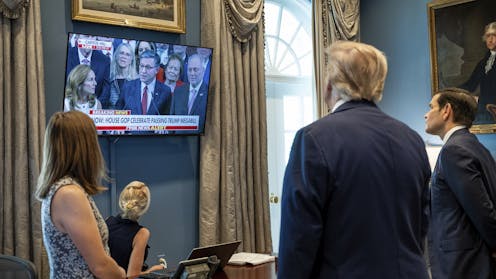


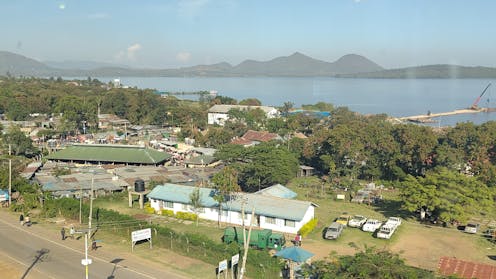
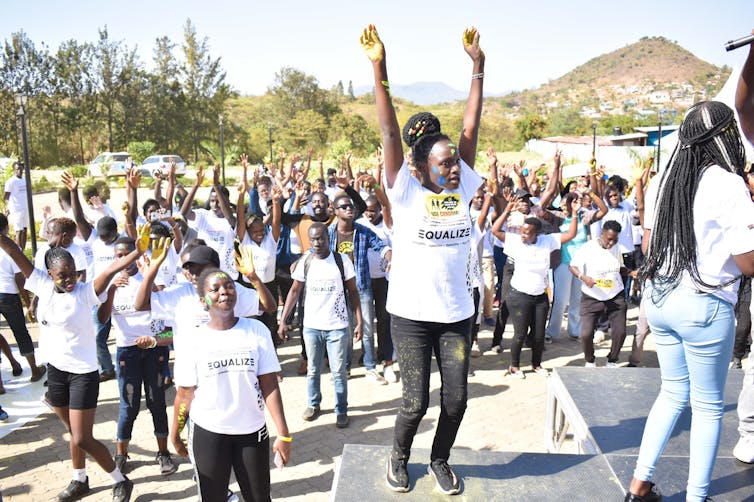














.jpg#/media/File:Lucas_Cranach_d.%C3%84._-_Bocca_della_Verit%C3%A0_(ca.1530).jpg/2)


