Category: Analysis

  • MIL-OSI Global: ‘Yes, I am a human’: bot detection is no longer working – and just wait until AI agents come along

    Source: The Conversation – UK – By Irfan Mehmood, Associate Professor in Business Analytics and AI, University of Bradford

    ‘Let’s try for a third time.’ Gago Design

    You’re running late at the airport and need to urgently access your account, only to be greeted by one of those frustrating tests — “Select all images with traffic lights” or “Type the letters you see in this box”. You squint, you guess, but somehow you’re wrong. You complete another test but still the site isn’t satisfied.

    “Your flight is boarding now,” the tannoy announces as the website gives you yet another puzzle. You swear at the screen, close your laptop and rush towards the gate.

    Now, here’s a thought to cheer you up: bots are now solving these puzzles in milliseconds using artificial intelligence (AI). How ironic. The tools designed to prove we’re human are now obstructing us more than the machines they’re supposed to be keeping at bay.

    Welcome to the strange battle between bot detection and AI, which is set to get even more complicated in the coming years as technology continues to improve. So what does the future look like?

    Captcha, which stands for Completely Automated Public Turing test to tell Computers and Humans Apart, was invented in the early 2000s by a team of computer scientists at Carnegie Mellon University in Pittsburgh. It was a simple idea: get internet users to prove their humanity via tasks they can easily complete, but which machines find difficult.

    Machines were already causing havoc online. Websites were flooded with bots doing things like setting up fake accounts to buy up concert tickets, or posting automated comments to market fake Viagra or to entice users to take part in scams. Companies needed a way to stop this pernicious activity without losing legitimate users.

    The early versions of Captcha were basic but effective. You’d see wavy, distorted letters and type them into a box. Bots couldn’t “read” the text the way humans could, so websites stayed protected.
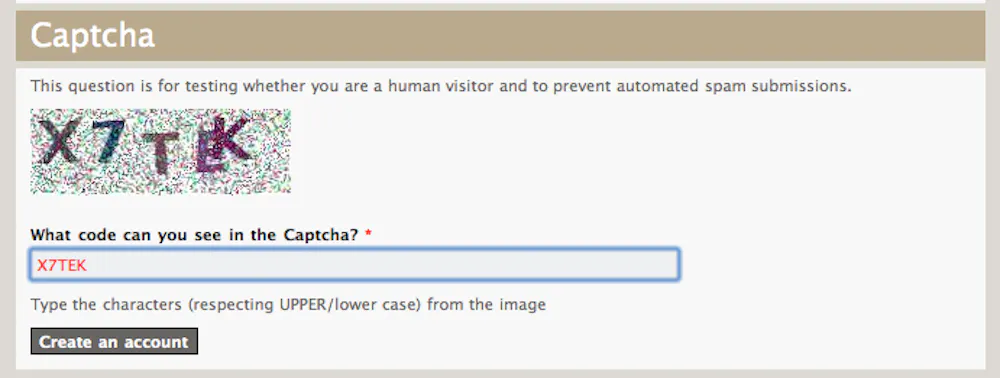

    Chris Messina, CC BY

    This went through several iterations in the years ahead: ReCaptcha was created in 2007 to add a second element in which you had to also key in a distorted word from an old book.

    Then in 2014 – by now acquired by Google – came reCaptcha v2. This is the one that asks users to tick the “I am not a robot” box and often choose from a selection of pictures containing cats or bicycle parts, or whatever. Still the most popular today, Google gets paid by companies who use the service on their website.

    Damn those bicycles.
    Lilgrapher

    How AI has outgrown the system

    Today’s AI systems can solve the challenges these Captchas rely on. They can “read” distorted text, so that the wavy or squished letters from the original Captcha tests are easy for them. Thanks to natural language processing and machine learning, AI can decode even the messiest of words.

    Similarly, AI tools such as Google Vision and OpenAI’s Clip can recognise hundreds of objects faster and more accurately than most humans. If a Captcha asks an AI to click all the buses in a picture selection, they can solve it in fractions of a second, whereas it might take a human ten to 15 seconds.

    This isn’t just a theoretical problem. Consider driving tests: waiting lists for tests in England are many months long, though you can get a much faster test by paying a higher fee to a black-market tout. The Guardian reported in July that touts commonly used automated software to book out all the test slots, while swapping candidates in and out to fit their ever-changing schedules.

    In an echo of the situation 20 years ago, there are similar issues with tickets for things such as football matches. The moment tickets become available, bots overwhelm the system – bypassing Captchas, purchasing tickets in bulk and reselling them at inflated prices. Genuine users often miss out because they can’t operate as quickly.

    Similarly, bots attack social media platforms, e-commerce websites and online forums. Fake accounts spread misinformation, post spam or grab limited items during sales. In many cases, Captcha is no longer able to stop these abuses.

    What’s happening now?

    Developers are continually coming up with new ways to verify humans. Some systems, like Google’s ReCaptcha v3 (introduced in 2018), don’t ask you to solve puzzles anymore. Instead, they watch how you interact with a website. Do you move your cursor naturally? Do you type like a person? Humans have subtle, imperfect behaviours that bots still struggle to mimic.

    Not everyone likes ReCaptcha v3 because it raises privacy issues – plus the web company needs to assess user scores to determine who is a bot, and the bots can beat the system anyway. There are alternatives that use similar logic, such as “slider” puzzles that ask users to move jigsaw pieces around, but these too can be overcome.

    Slider Captcha:


    GitHub

    Some websites are now turning to biometrics to verify humans, such as fingerprint scans or voice recognition, while face ID is also a possibility. Biometrics are harder for bots to fake, but they come with their own problems – privacy concerns, expensive tech and limited access for some users, say because they can’t afford the relevant smartphone or can’t speak because of a disability.

    The imminent arrival of AI agents will add another layer of complexity. It will mean we increasingly want bots to visit sites and do things on our behalf, so web companies will need to start distinguishing between “good” bots and “bad” bots. This area still needs a lot more consideration, but digital authentication certificates are proposed as one possible solution.

    In sum, Captcha is no longer the simple, reliable tool it once was. AI has forced us to rethink how we verify people online, and it’s only going to get more challenging as these systems get smarter. Whatever becomes the next technological standard, it’s going to have to be easy to use for humans, but one step ahead of the bad actors.

    So the next time you find yourself clicking on blurry traffic lights and getting infuriated, remember you’re part of a bigger fight. The future of proving humanity is still being written, and the bots won’t be giving up any time soon.

    The authors do not work for, consult, own shares in or receive funding from any company or organisation that would benefit from this article, and have disclosed no relevant affiliations beyond their academic appointment.

    ref. ‘Yes, I am a human’: bot detection is no longer working – and just wait until AI agents come along – https://theconversation.com/yes-i-am-a-human-bot-detection-is-no-longer-working-and-just-wait-until-ai-agents-come-along-246427

    MIL OSI – Global Reports

  • MIL-OSI Global: How to detect more antimicrobial resistant bacteria in our waterways

    Source: The Conversation – UK – By Zina Alfahl, Lecturer in Bacteriology, University of Galway

    Antimicrobial resistant superbugs have been found in rivers, lakes and streams worldwide. Freebird7977/Shutterstock

    Antimicrobial resistance (AMR) in waterways presents a critical threat. If commonly used antibiotics are deemed useless, decades of progress in human medicine and agriculture could be undermined.

    By 2050, AMR could cause 10 million deaths annually, according to the UN Environment Programme. But AMR is not just a human health issue. It also contributes to a decline in water quality and is exacerbated by water pollution, particularly from sources such as sewage and agricultural runoff. So, it’s a significant environmental concern with far-reaching implications.

    Addressing AMR in water is challenging because water systems are complex and can carry many different types of resistant bacteria. The lack of efficient, scalable and globally accessible methods to monitor AMR in water makes it difficult to mitigate this growing threat.

    I recently published a review in the Sustainable Microbiology journal that identifies key trends in AMR detection methods and highlights significant gaps.

    Rivers, lakes and wastewater systems around the world act as reservoirs and pathways for resistant superbugs and their genes, allowing AMR to spread across ecosystems, affecting wildlife, agriculture and human populations. River water is the most studied source of water samples, making up 42% of AMR-related research studies. Other water sources, including lakes and wastewater, may also play a key role in spreading resistant genes but, without detailed analysis, will remain misunderstood.

    Most AMR research comes from three countries: the US (17%), China (10%) and Brazil (9%). This shows where the focus is, but many other regions, especially low-income countries, are not well studied. This is concerning because AMR may be even more serious in these areas, yet data is lacking.

    New detection methods are more accurate but more expensive.
    Khomson Satchasataporn/Shutterstock

    To detect AMR, scientists primarily use two advanced molecular methods: polymerase chain reaction (PCR) (used in 57% of studies) and metagenomics (27%), alongside traditional culture-based methods that involve growing bacteria in a lab.

    Culture-based methods are simpler and cheaper than molecular methods but cannot be used onsite. They also can’t detect dead bacteria or hidden resistance genes.

    PCR amplifies specific DNA sequences for detection and can be used to identify specific bacteria. Metagenomics is a technique that analyses all of the genetic material from entire microbial communities within a sample, offering a broader perspective.

    These advanced methods are better at detecting AMR in rivers, lakes and oceans. They can find both known and new types of resistance, making them more useful for thorough monitoring.

    In Brazil, scientists used metagenomics to search for all of the different resistance genes present in waterways in different cities. This technique can detect patterns of resistance that regular tests can’t.

    While these methods are time-consuming and complicated (because they need specialised equipment and trained staff) and can be expensive, costing thousands of euros, they could be used more widely if funding is available. This would help track antibiotic resistance around the world, making it easier to find and fight.

    One Europe-wide study shows that culture methods failed to find all the resistance genes in contaminated river systems in ten countries, while advanced metagenomic techniques were able to identify them. So, molecular tools are crucial for understanding the true extent of AMR.

    My review shows a shift towards molecular techniques as the gold standard for AMR detection. It highlights the inadequacies of traditional culture-based methods and the need for integrated approaches that combine molecular techniques such as PCR (for detecting specific resistance genes) with metagenomics (for broader microbial community analysis).

    For example, wastewater monitoring programs could use PCR to quickly identify key resistance genes in hotspots while employing metagenomics to map the diversity of resistant organisms. This would offer a more balanced approach that optimises cost, efficiency, and accessibility.

    A hybrid approach

    By mapping global research efforts, I identified underrepresented regions such as sub-Saharan Africa and southeast Asia. I also found that certain water sources were underrepresented, particularly rivers in low-income countries. Without more equitable and comprehensive AMR surveillance, those will not be accounted for.

    To make accurate AMR detection more accessible to all, hybrid approaches that combine the comprehensive detection capabilities of molecular methods with the affordability of culture-based methods will be essential.

    Governments around the world must prioritise investments in technologies that are not only scientifically robust but also economically viable, particularly for low- and middle-income countries.

    New methods such as PCR and metagenomics can help us fight the spread of drug resistance. If we can make these methods cheaper and easier to use it could help us manage wastewater better, improve global tracking of drug resistance and make decisions that protect both people and the environment from superbugs.


    Don’t have time to read about climate change as much as you’d like?

    Get a weekly roundup in your inbox instead. Every Wednesday, The Conversation’s environment editor writes Imagine, a short email that goes a little deeper into just one climate issue. Join the 40,000+ readers who’ve subscribed so far.


    Zina Alfahl does not work for, consult, own shares in or receive funding from any company or organisation that would benefit from this article, and has disclosed no relevant affiliations beyond their academic appointment.

    ref. How to detect more antimicrobial resistant bacteria in our waterways – https://theconversation.com/how-to-detect-more-antimicrobial-resistant-bacteria-in-our-waterways-246062

    MIL OSI – Global Reports

  • MIL-OSI Global: Climate, migration and conflict mix to create ‘deadly’ intense tropical storms like Chido

    Source: The Conversation – UK – By Liz Stephens, Professor of Climate Risks and Resilience, University of Reading

    Cyclone Chido was an “intense tropical cyclone”, equivalent to a category 4 hurricane in the Atlantic. It made landfall in Mayotte, a small island lying to the north-west of Madagascar on December 14, generating wind gusts approaching 155mph (250km/hr). Later on, it hit Mozambique, East Africa with the same ferocity.

    This storm skirted north of Madagascar and affected the Comoros archipelago before making landfall in Mozambique. It is well within the range of what is expected for this part of the Indian Ocean. But this region has experienced an increase in the most intense tropical cyclones in recent years. This, alongside its occurrence so early in the season, can be linked to increases in ocean temperatures as a result of climate change.

    News of the effects of tropical cyclone Chido in Mayotte, Mozambique and Malawi continues to emerge. Current estimates suggest 70% of Mayotte’s population have been affected, with over 50,000 homes in Mozambique partially or completely destroyed.

    Ongoing conflict in Mozambique and undocumented migration to Mayotte will have played a key role in the number of deaths and the infrastructure damage.

    Assessing how these cyclones characteristics are changing across southern Africa is part of the research we are involved in. Our team also studies how to build resilience to cyclones where conflict, displacement and migration magnify their effects.

    A human-made disaster?

    The risk that tropical cyclones pose to human life is exacerbated by socioeconomic issues. Migrants on Mayotte, many of whom made perilous journeys to escape conflict in countries such as the Democratic Republic of Congo, now make up more than half of the island’s population.

    Precarious housing and the undocumented status of many residents reportedly made the disaster more deadly, as people feared evacuation would lead them to the police. On islands with poor infrastructure such as Mayotte, there is often simply nowhere safe to go. It takes many days for the power network and drinking water supply to be restored.

    The situation is particularly complex in Mozambique. The ongoing conflict and terrorist violence, coupled with cyclones, including Kenneth in 2019, has caused repeated evacuations and worsening living conditions. Cabo Delgado and Nampula in the far north of Mozambique, the provinces most affected by both Chido and the conflict, rank among the poorest and most densely populated in the country due to limited education, scarce livelihood options and an influx of people displaced by violence.

    As of June 2024, more than half a million people remained without permanent homes in the region, many living in displacement camps. That number is likely to rise significantly after Chido.

    Compounding the crisis, Chido’s landfall so early in the cyclone season meant that the usual technical and financial preparations were not yet fully ramped up, with low stock levels delaying the timely delivery of aid. Unrest following elections in November hampered preparations further, cutting the flow of resources and personnel needed for anticipatory action and early response.

    Tropical cyclones in a warmer world

    Warmer sea surface temperatures not only provide more fuel for stronger storms, but may also expand the regions at risk of tropical cyclones.

    The Indian Ocean is warming faster than the global average, and is experiencing a staggering increase in the proportion of storms reaching the intensity of Chido.

    Climate simulations predict that storms will continue getting stronger as we further warm our world, and could even lead to an unprecedented landfall as far south as the Mozambican capital, Maputo.

    Scientists carry out attribution studies to determine how climate change contributed to specific events. Scientists undertaking rapid attribution studies of Chido have found that the ocean surface temperatures along the path of the storm were 1.1°C warmer than they would have been without climate change. So, temperatures this warm were made more than 50 times more likely by climate change. Another study focusing on Chido itself concluded that the cyclone’s winds were 5% faster due to global heating caused by burning fossil fuels, enough to bump it from a category 3 to a category 4 storm.

    Intense winds are not the only hazard. Scientists are confident that tropical cyclones will dump more rain as a result of climate change. A trend towards slower-moving storms has been observed, causing more of that rain to accumulate in a single location, resulting in floods.

    Cyclone Freddy delivered a year’s worth of rain to southern Malawi in just four days in March 2023. Storm surges, exacerbated by sea level rise, also raise the scale of flooding, as in the devastating Cyclone Idai in March 2019. An increase in the number of storms that rapidly intensify, as Chido did before landfall in Mayotte has also been linked to climate change, which makes it harder to provide early warnings.

    To improve resilience to future cyclones, conflict, migration and social dynamics must be considered alongside climate change, without this, displaced and migrant communities will continue to be the most affected by the risks that climate change poses.


    Don’t have time to read about climate change as much as you’d like?

    Get a weekly roundup in your inbox instead. Every Wednesday, The Conversation’s environment editor writes Imagine, a short email that goes a little deeper into just one climate issue. Join the 40,000+ readers who’ve subscribed so far.


    Liz Stephens also works for the Red Cross Red Crescent Climate Centre, where she works as the Science Lead. She receives funding from the Foreign, Commonwealth & Development Office (FCDO) and the International Development Research Centre in Canada, as part of the CLARE (CLimate Adaptation and REsilience) research programme. Liz holds advisory positions within the Red Cross Red Crescent Movement, for the European Commission’s Global Flood Awareness System, the Anticipation Hub and the African Risk Capacity

    I work for a university which has interest on publications around disasters and climate change. I am part of a research consortium (REPRESA) funded by IDRC to research cyclones in Southern Africa region

    Dan Green does not work for, consult, own shares in or receive funding from any company or organisation that would benefit from this article, and has disclosed no relevant affiliations beyond their academic appointment.

    ref. Climate, migration and conflict mix to create ‘deadly’ intense tropical storms like Chido – https://theconversation.com/climate-migration-and-conflict-mix-to-create-deadly-intense-tropical-storms-like-chido-246219

    MIL OSI – Global Reports

  • MIL-OSI Global: What the colour of your snot says about your immune health

    Source: The Conversation – UK – By Samuel J. White, Associate Professor & Head of Projects, York St John University

    Clear snot is usually the baseline. Dmitrii Pridannikov/ Shutterstock

    Ever wondered why the colour of your snot is different when you’re sick? You’re probably not the first person to ask this question.

    There are actually many reasons why your snot’s changes colour when you’re unwell. And the colour and consistency of nasal mucus can reveal intriguing details about your immune system, and how your body responds to illnesses.

    Mucus is produced by the tissues lining our nasal passages. Often perceived as a mere nuisance, mucus serves a very important role. It acts as a protective barrier, trapping dust, bacteria, viruses and other irritants – preventing them from reaching the respiratory system’s deeper parts.

    Enzymes such as lysozyme and lactoferrin that inhabit our nasal mucus also have antimicrobial properties. They break down bacterial cell walls and help to limit bacterial growth. This protective role makes mucus a critical line of defence – even when we’re not unwell.

    The continuous process of mucus production by the tissues lining our nasal passages exemplifies the body’s natural defence mechanisms in action. When we get sick, mucus changes – becoming thicker, more abundant and sometimes colourful. These changes highlight your immune system’s response.

    Here’s what the many colours of your snot says about your health:

    Clear

    This is the baseline for a healthy nose. It’s mostly water, combined with proteins, salts and cells that keep the nasal passages moist and trap particles.

    Allergies and the very early stages of a viral infection can cause an overproduction of clear mucus. This can also happen when your body reacts to irritants or pathogens.

    White

    White mucus is often a sign of congestion.

    Inflammation in the nasal tissues slows mucus flow, causing it to thicken. This typically signals the beginning of an infection, such as a cold, as your immune system starts mobilising against invaders.

    Yellow

    Yellow mucus indicates your immune system is actively fighting off an infection.

    Don’t be surprised by yellow snot when you’re battling an illness.
    Soloviova Liudmyla/ Shutterstock

    White blood cells sent to attack the infection die and release enzymes that give mucus its yellowish colour. This is a hallmark of the body’s response to many viral infections – including the common cold, influenza and respiratory syncytial virus (RSV).

    Green

    Green mucus results from an intensified immune response. The green tint comes from an enzyme called myeloperoxidase, which is produced by neutrophils (a type of white blood cell). This enzyme generates a specific molecule that destroys pathogens.

    While green mucus often indicates a bacterial infection, it can also occur when your body mounts a robust immune response to aggressive viral pathogens.

    Red or pink

    A pink or reddish tint in mucus means there’s blood present. This often happens when the nasal tissues are irritated, dry or damaged – such as after excessive nose blowing or exposure to dry air. Small amounts of blood are usually not a cause for concern.

    Brown or orange

    Brown or orange mucus may result from dried blood mixing with mucus, or from inhaling environmental debris – such as smoke or dust. While typically harmless, it may suggest irritation or prolonged inflammation.

    Black

    Black mucus is rare and may indicate serious issues – such as a fungal infection (particularly in immunocompromised people) or heavy exposure to pollutants such as soot or cigarette smoke. This warrants medical attention.

    The immune system in action

    Mucus is an indispensable part of your immune system, actively protecting your body by trapping and neutralising harmful pathogens. Changes in its colour and consistency provide a glimpse into your health – helping differentiate between viral bacterial infections. It also provides insight into the complex processes occurring as your body works to keep you healthy.

    Next time you reach for a tissue, remember that mucus isn’t merely a symptom of illness — it’s your immune system in action. Its colours and textures tell a story of resilience, reflecting the intricate defences that keep your body healthy and safe.

    The authors do not work for, consult, own shares in or receive funding from any company or organisation that would benefit from this article, and have disclosed no relevant affiliations beyond their academic appointment.

    ref. What the colour of your snot says about your immune health – https://theconversation.com/what-the-colour-of-your-snot-says-about-your-immune-health-245876

    MIL OSI – Global Reports

  • MIL-OSI Global: What next for Syria? The danger of violence in post-war transitions

    Source: The Conversation – UK – By Chelsea Johnson, Lecturer in International Relations, University of Liverpool

    Images emerging from Syria over the past week have shown jubilation on the streets, as millions celebrate the end of 24 years of repression under Bashar al-Assad.

    It is rare for rebels to manage to tip the scales in their favour and win a war outright after such a long and protracted stalemate. But the obvious next question is: what comes next? Looking to the handful of similar examples, history suggests that new forms of violence could continue to threaten Syria’s political future.

    In Libya, an umbrella coalition of rebel forces known as the National Transition Council defeated Muammar Gaddafi’s government in 2011. Meanwhile, in South Sudan, victory against Omar al-Bashir came in the form of a successful referendum on independence that same year.

    Looking further back, in Idi Amin’s Uganda, an alliance was brokered by neighbouring Tanzania between two rival rebellions in 1979. Their joint military campaign ended in Amin’s defeat soon after.

    The immediate aftermath of rebel victory in each of these cases points to one common lesson. Where a fragmented coalition of armed groups finds itself in a political vacuum, more violence – not less – is probably on the horizon.

    Fragile and shifting coalitions

    The injustices of repressive regimes often motivate rebellion. They can also provide a common enemy that, especially when sensing a window of opportunity, makes it possible for rival armed groups to put aside their differences and work together towards a common cause.

    Subsequently, however, transition periods generate uncertainty over political futures. This can make it difficult for former allies to remain united.

    Many Libyan militias allied behind the National Transition Council during its uprising against Muammar Gaddafi. But they soon became violent rivals in competition over political influence in the transitional government being formed in Tripoli.

    In a vacuum of authority, these new forms of violence may look like local turf wars. But they are often attempts by faction leaders to position themselves advantageously as political spoils are up for grabs at the national level.

    Meanwhile, where dominant factions vie for national power in the presence of many smaller and more localised militias, these weaker factions may be prone to changing allegiances so as to end up on the winning side.

    Fighting in Libya throughout 2017 exhibited this kind of opportunistic flip-flopping. Local militias such as the Kiniyat Brigade changed their allegiances between the faction of former prime minister, Khalifa al-Ghawil, and a rival faction based in Tripoli claiming to represent the legitimate government of Libya.

    The conflict in South Sudan has long been described as ethnic in nature. The main rival leaders, Salva Kiir and Riek Machar, belonged to the country’s two largest ethnic groups, Dinka and Nuer. But this obscures a more complex and strategic constellation of alliances. Many of the groups that have fought against Kiir have also been ethnic Dinkas and vice versa, with loyalties shifting over time as either leader gains an advantage. Some of the most recent violence has been between forces loyal to Machar and a co-ethnic splinter faction known as Kitgwang, which opposes his leadership.

    Numerous reports from international observers and mediators have attested to the difficulty of brokering and maintaining a stable agreement on the terms of transition in these countries due to fluid and shifting coalitions.

    Armed groups in Syria have already shown such tendencies. The Military Operations Command, the coalition of Syrian opposition groups that brought down Assad’s regime, exists in name only. The dominant group, Hayat Tahrir al-Sham (HTS), is itself an amalgam of at least four separate militias, while previous coalitions backed by Turkey and the US have coalesced and fragmented over time.

    HTS leader Ahmed al-Sharaa has pledged that all rebel factions will “be disbanded and the fighters trained to join the ranks of the defence ministry”. But history suggests that a rival is likely to emerge from one of these blocs to challenge the legitimacy of HTS’s claim to lead the transition. This will introduce a new element of uncertainty for the smaller factions forced to choose a side.

    Looking ahead to elections

    Even where a stable transitional coalition can be upheld, peace may eventually be threatened by the outcome of a winner-takes-all election.

    Violence was avoided in post-Amin Uganda for as long as the two faction leaders who overthrew him held top positions in a transitional power-sharing government. But when elections produced a clear win for Milton Obote in 1980, his rival, Yoweri Museveni, relaunched his rebellion. Uganda’s so-called bush war would continue until 1986, when Museveni’s forces took the capital, Kampala, by force.

    Ethiopia’s post-war transition fared slightly better after victory for an allied rebel assault on the authoritarian Derg regime in 1991. Most of Ethiopia’s rebel factions had clear and distinct ethno-territorial bases and, as a result, the new constitution emerging from an inclusive national conference devolved power to ethnic regions in a federal system.

    This attempt to create a political stake for former rebels not wholly dependent on national election results may have succeeded had local or regional elections been held first. Ultimately, however, at least two rebellions returned to low-level violence throughout the 1990s, accusing the new government of marginalisation and attempts to undermine their electoral competitiveness.

    In any case, devolution appears unlikely in Syria. Aside from Kurdish separatists in the north-east, the country’s many militias have less clear linkages to specific demographic groups and often overlap in their areas of influence. And with HTS now calling for a unified state with no federal regions, the national-level political game will remain high stakes and prone to violent forms of contention.

    Chelsea Johnson receives funding from the British Academy.

    ref. What next for Syria? The danger of violence in post-war transitions – https://theconversation.com/what-next-for-syria-the-danger-of-violence-in-post-war-transitions-246073

    MIL OSI – Global Reports

  • MIL-OSI Global: Who chooses to work, and who is forced to, after retirement?

    Source: The Conversation – UK – By Takao Maruyama, Assistant Professor in Business Analytics, University of Bradford

    fizkes/Shutterstock

    The state pension age in the UK is currently 66. Yet 9.5% of people aged 66 and older (1.12 million people) were still working, according to the most recent data from the UK’s Annual Population Survey (July 2023 to June 2024). This figure has been rising over the past decade, increasing from 8.70% (880,000 people) in July 2013 to June 2014.

    We think of retirement as a time to pursue hobbies, relax and enjoy the fruits of our labour. So why then, are so many people still working beyond retirement age, and who are they? This is what we sought to find out in a recent study.

    We investigated who is more likely to “choose to work” and who is “forced to work”, using data from the UK’s annual population survey.

    Older workers are not a homogeneous population. They differ in terms of age, ethnicity, socioeconomic class, financial situation, health conditions and more. Likewise, the reasons for working beyond retirement age vary widely. Some may work because they want to, while others may have no option and feel they have to work in order to make ends meet.

    The below chart shows the breakdown of these retirement-age workers by key demographic and socioeconomic characteristics from the most recent data.

    Three in five retirement-age workers were men, and almost all (94.4%) older workers were white. Just over half (51.5%) of older workers continued to work despite having long-term illnesses.

    Characteristics of workers aged 66 and older:

    Workers aged 66 years and older by demographic and socioeconomic characteristics.
    Author provided, data from Annual Population Survey July 2023 to June 2024, CC BY

    The majority (71.2%) of older workers were married, in a civil partnership or cohabiting. Nearly 40% of older workers were employed in higher managerial, administrative and professional occupations, followed by intermediate occupations such as sales or some service roles (32.1%), and routine manual occupations (25.6%).

    More than 85% of retirement-age workers lived in the south (52.8%) and the north (33.1%) of England, and 70% are homeowners.

    Who is ‘forced’ to work?

    In our study, we calculated the likelihood of pension-age workers (66 years and older) with varying demographic and socioeconomic characteristics being forced to work.

    The Annual Population Survey identifies six main reasons why older workers continue working beyond retirement age. These are:

    A. To pay for desirable items (such as holidays),
    B. Not ready to stop work,
    C. Employer needs your experience or you are needed in the family business,
    D. Due to opportunities to work more flexible hours,
    E. To pay for essential items (such as bills), and
    F. To boost pension pot.

    In our study, we classed reasons (A) to (D) as “choose to work”, and (E) and (F) as “forced to work”. Our analysis, based on the most recent dataset (April 2022 to March 2023) at the time of the study, revealed that women are 25% more likely to be forced to work compared to men, and Asian workers are 120% more likely to be forced to work than white workers (with 34% and 17% more likely for older workers from black and other ethnic backgrounds, respectively).

    Workers without long-term illness are 33% less likely to be forced to work than those with long-term illness, and non-married or single workers are 56% more likely to be forced to work compared to seniors who are married, in a civil partnership or cohabiting.

    Workers in intermediate and routine manual occupations are 37% and 67% more likely to be forced to work, respectively, compared to those in higher managerial occupations. Older workers from the south of England are more likely to be be forced to work compared to seniors from any other parts of the UK, and retirement-age workers with mortgages or renting were 117% more likely to be forced to work compared to those who owned their properties.

    Who is more likely to be ‘forced to work’?:

    % comparison of likelihood of being ‘forced to work’.
    Author provided, data from Annual Population Survey April 2022 to March 2023., CC BY

    Ageing populations

    This matters because of the changing nature of work, the rising cost of living and the UK’s ageing population. Retirement-age workers will be increasingly pressured to work longer due to the rising state pension age (due to increase to 67 in 2026-27).

    Understanding who works by choice and who by necessity into retirement age is important, because these groups will need different kinds of support and resources.

    For example, the higher likelihood of being forced to work among older female workers can be partly attributed to career breaks they took to serve as primary caregivers for their children, which often prevented them from accumulating sufficient pensions.

    As the state pension age is expected to continue rising, it is crucial for policymakers and employers to design support systems for diverse demographic and socioeconomic groups of older workers, addressing their unique needs. This starts with understanding why people are working into old age.

    The authors do not work for, consult, own shares in or receive funding from any company or organisation that would benefit from this article, and have disclosed no relevant affiliations beyond their academic appointment.

    ref. Who chooses to work, and who is forced to, after retirement? – https://theconversation.com/who-chooses-to-work-and-who-is-forced-to-after-retirement-246214

    MIL OSI – Global Reports

  • MIL-OSI Global: A short history of palm reading in the UK – and a guide to how it’s supposed to work

    Source: The Conversation – UK – By Martha McGill, Historian of Supernatural Beliefs, University of Warwick

    Wikimedia , CC BY

    In August 1676, a court in Hertford heard a case of fraud against Joseph Haynes, James Domingo and Domingo’s “pretended wife” Sarah. The three had been travelling between local towns telling fortunes.

    Apparently, Domingo had promised one woman that she would marry a “pretty tall merry-speaking” farmer’s son with a mole on his chin and a respectable £80 to his name. Haynes, meanwhile, boasted that his divinatory efforts had won him £5, three maidenheads and a broken shin.

    The court’s decision is not recorded, but the case encapsulates the divided opinion of divination in the 17th century. Although commonly condemned by the authorities, fortune-telling was a popular and potentially profitable art.

    We do not know how exactly the three miscreants practised, but most travelling fortune-tellers studied facial features (physiognomy) or read palms (palmistry or chiromancy). The idea that there was occult meaning etched in the body’s marks, lines, features and moles stretches back to antiquity.

    The body’s outer form supposedly reflected the state of the soul. Also, it was believed that the body was intimately entwined with the wider cosmos.


    Looking for something good? Cut through the noise with a carefully curated selection of the latest releases, live events and exhibitions, straight to your inbox every fortnight, on Fridays. Sign up here.


    In a popular work from the early 16th century, the German physician Heinrich Cornelius Agrippa explained that the body’s appearance and behaviour invited particular “celestial gifts”. Palmistry was the art of interpreting this “harmonical correspondency”.

    However, Christian authorities were largely unimpressed. Theologians dismissed palmistry as superstitious, or argued that it was presumptuous to pry into God’s plan. The Catholic church officially condemned divinatory arts in a papal bull of 1586. The English Protestant minister William Perkins (1558–1602) wrote that palmistry was an “abomination” that was “detested of God, and ought also to be detestable in the eyes of Gods [sic] people”.

    Official mistrust of palmistry was spurred by its association with “Egyptian” fortune-tellers (often shortened to “gypsies”). This label was used for travellers of diverse origins, but especially the Romani diaspora from India.

    Romani travellers first reached central and western Europe in the 15th century and many claimed to have come from Egypt. Ancient Egyptians were famed for their occult wisdom and the association probably helped Romani groups to win credit as fortune-tellers. Nevertheless, they met with widespread persecution.

    A fortune teller reading the palm of a soldier.
    Wellcome Collection, CC BY-NC

    In England, a 1530 parliamentary act officially banished the “outlandish” people “calling themselves Egyptians” who allegedly travelled about the country, swindling people by pretending divinatory prowess.

    All the same, magical practitioners at various social levels continued to offer palm-reading services. And from the 17th century, pamphlets offered guides to interpreting your own hands.

    An anonymous work published in London in 1700 claimed to fully resolve all questions about human life through “the Rules of Art used by the Ancient and Famous Egyptian Magi, or Wise Men and Philosophers”.

    Here I offer some guidance on how you’re supposed to read your palm based on that work. It may contradict itself hopelessly. It may promise you a grisly death. But if the stars are kind, you too could rise by your good deeds and find a spouse lauded for their virtue – or, at least, a merry man with £80 and a nice mole.

    How to read a palm

    Always consult the left hand.

    1: Life line

    Look for the semi-curved line that starts between the thumb and index finger and runs down toward the wrist.

    If this line is long and clear, not broken with little cross-lines, you will be healthy and live to an old age. However, if the uppermost part of the line is forked or jagged, you will often be sick.

    If there are three stars intersecting with the line, you may suffer “great losses and calamities”. If the line intertwines with the table line, you will gain “honour and riches”.

    2: Table line

    Look for a horizontal line on your upper palm that starts near the index or middle finger and runs to beneath the little finger.

    If this line is broad and vivid in colour, you will be healthy and contented. However, if the line is forked at the end, you will gain riches by trickery and soon lose them again. If it branches towards the index or middle finger, you will rise to a prestigious position.

    3: Middle line

    Look for a horizontal line across the middle part of the palm.

    If there are lots of small lines in between this and the table line, you will be sick when you are young but make a recovery. If there is a halfmoon in this line, you will suffer from “cold and watery diseases”, but a sun or a star promises prosperity.

    4: Line of Venus

    Look for an arching line that runs near the base of your middle, ring and little fingers.

    If this line forks near the index finger, you may be ruined by keeping bad company. If there are crosses on this line near the index and little fingers, you are “inclined to a virtuous and modest course of life”. The author claims that wise men employ this method to choose suitable wives.

    5: Liver line

    Look for a vertical line that starts beneath the ring or little finger and runs to the base of the palm.

    If this line is straight, you are of sound judgement. If it is crooked you are deceitful. If this line and the middle line begin near one other, it means foolishness in men and foretells injury by overwork for women.

    6: Plain of Mars

    Plains are flat areas of the palm that can be associated with difference parts of life. The plain of Mars is the centre of your palm.

    If the lines in this plain are crooked, you will fall by your enemies. If you have lines beginning at the middle of your wrist and reaching into the plain of Mars, you will get into lots of fights. If there are large crosses in the plain, you will, if a man, rise by good deeds or, if a woman, have many husbands and children.

    Martha McGill does not work for, consult, own shares in or receive funding from any company or organisation that would benefit from this article, and has disclosed no relevant affiliations beyond their academic appointment.

    ref. A short history of palm reading in the UK – and a guide to how it’s supposed to work – https://theconversation.com/a-short-history-of-palm-reading-in-the-uk-and-a-guide-to-how-its-supposed-to-work-246276

    MIL OSI – Global Reports

  • MIL-OSI Global: Times journalists deemed ‘legitimate military targets’ – how Russia muzzles criticism at home and abroad

    Source: The Conversation – UK – By Precious Chatterje-Doody, Senior Lecturer in Politics and International Studies, The Open University

    Russia’s former president and current deputy head of its security council, Dmitry Medvedev, has declared that the editors of the Times newspaper in the UK are now “legitimate military targets”.

    Medvedev, who is one of Vladimir Putin’s closest allies, was responding to the newspaper’s coverage of the recent assassination of Russia’s chemical weapons chief, Igor Kirillov, in Moscow on December 17. The paper’s leading article referred to his killing by an explosive device hidden in a scooter as a “legitimate act of defence by a threatened nation”.

    Medvedev took to Telegram to denounce the article, writing: “Those who carry out crimes against Russia … always have accomplices. They too are now legitimate military targets. This category could also include the miserable jackals from the Times who cowardly hid behind their editorial. That means the entire leadership of the publication.”

    The assassination of Kirillov, who was in charge of Russia’s chemical, biological and nuclear defence forces, came a day after he had been charged by Ukraine in absentia with war crimes over Russia’s use of chemical weapons in the ongoing war.

    Once seen as a liberal reformer when he temporarily took over Russia’s presidency between 2008 and 2012, Medvedev has since reinvented himself as a pro-war hawk who regularly makes outlandish or extreme statements on social media.

    In May 2023, following a drone attack on the Kremlin, Medvedev posted a message on Telegram saying there were “no options left other than the physical elimination of [the Ukrainian president] Zelenskyy and his clique”. The post prompted Ukraine’s foreign minister, Dmytro Kuleba, to respond in an interview that “Medvedev should drink less vodka before going on Telegram”.

    In his most recent outburst, Medvedev mirrored the rhetoric used in the Times editorial, claiming that by the same logic, all of Kyiv’s “accomplices” – whether decision-makers in Nato or journalists justifying Ukraine’s actions – are active participants in a war against Russia. This makes them “legitimate military targets” who need to “be careful” even in London, where “anything goes”.

    Part of a pattern

    Medvedev’s comments, while extreme, fall within a broader pattern of Russian officials using humour or courting controversy to justify their positions or ensure international press coverage. But they are also part of an escalation in Russian attacks on freedom of expression and the press.

    Prior to the full-scale invasion of Ukraine, Russia’s media environment was restricted. Opposition viewpoints could, however, still be accessed relatively easily from a range of sources, including the regional press, online outlets and the political blogosphere. But the Kremlin has gradually chipped away at these possibilities by increasing restrictions on independent media and social media users alike.

    These restrictions were ramped up even further following Russia’s invasion of Ukraine in February 2022. Criticism of the armed forces and spreading what the Kremlin deems “false information” about the so-called “special military operation” were criminalised.

    Anti-war activists now routinely face conviction for justifying terrorism, and well-respected news outlets such as Ekho Moskvy have been forced to close. Journalists from Russia and abroad have been tried, convicted and incarcerated for allegedly violating these laws. They are often held in harsh conditions, in isolation and without access to adequate medical care.

    But it is not just journalists and activists within Russia who have come under threat from this increasingly authoritarian regime. As well as its military incursions into Georgia in 2008 and eastern Ukraine since 2014, Russian intelligence organisations have been blamed for a number of targeted provocations abroad in recent years. In the case of the 2018 Salisbury poisonings, these resulted in fatalities on British soil.

    Russian involvement is, of course, always denied. Kremlin propaganda uses a range of disinformation tactics to hide Russia’s culpability. With the Salisbury poisonings, this included an outlandish television interview on Russia’s RT network, where the main suspects claimed to be visiting health supplements salesmen. My research at the time showed that online audiences universally rejected their story, but incredulity over the interview overtook public anger.

    Contrasting values

    As my research has shown, extreme statements and conspiracy theories circulate rapidly and widely in today’s international media environment. With this in mind, it is common for the Kremlin and its proxies to mirror accusations back towards other parties and accuse them of hypocrisy.

    Taking questions from a US journalist in his end-of-year press conference and phone-in on December 19, Putin was asked about the “failure” of the special military operation in Ukraine. The reporter went on to describe Putin’s position as “weaker” than that of the incoming US president, Donald Trump.

    Putin insinuated that the very fact this US journalist was included in the event showed a better treatment by Russia of “esteemed” international journalists than Russian journalists receive from the US.

    This is patently untrue. Wall Street Journal reporter Evan Gershkovich was imprisoned in Russia for 16 months on trumped-up espionage charges, after being detained in March 2023 while covering the effect of western sanctions on the Russian economy.

    Russia’s crackdown on freedom of speech and freedom of the press is precisely because authoritarian regimes recognise they are incredibly vulnerable to the free and open-ended enquiry that my co-authors and I have argued is so crucial to defend.

    As a spokesperson for the UK prime minister, Keir Starmer, noted in response to Medvedev’s latest comments: “A free press is a cornerstone of our democracy.”

    Precious Chatterje-Doody does not work for, consult, own shares in or receive funding from any company or organisation that would benefit from this article, and has disclosed no relevant affiliations beyond their academic appointment.

    ref. Times journalists deemed ‘legitimate military targets’ – how Russia muzzles criticism at home and abroad – https://theconversation.com/times-journalists-deemed-legitimate-military-targets-how-russia-muzzles-criticism-at-home-and-abroad-246361

    MIL OSI – Global Reports

  • MIL-OSI Global: Whales can live way longer than scientists had thought, with potential lifespans as much as double previous estimates

    Source: The Conversation – USA – By Greg Breed, Associate Professor of Quantitative Ecology, University of Alaska Fairbanks

    Animals with long lifespans tend to reproduce extremely slowly. Els Vermeulen

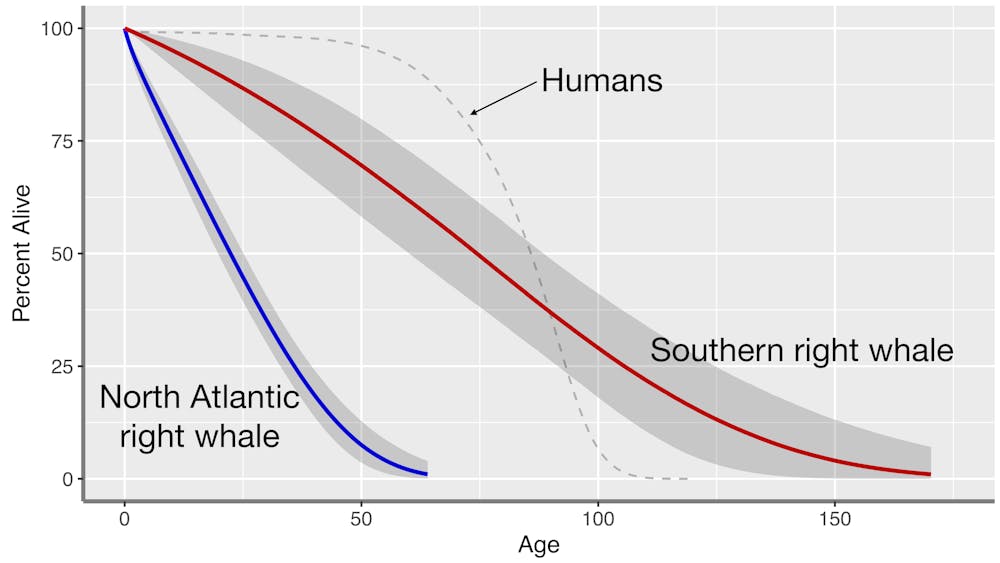
    Southern right whales have lifespans that reach well past 100 years, and 10% may live past 130 years, according to our new research published in the journal Science Advances. Some of these whales may live to 150. This lifespan is almost double the 70-80 years they are conventionally believed to live.

    North Atlantic right whales were also thought to have a maximum lifespan of about 70 years. We found, however, that this critically endangered species’ current average lifespan is only 22 years, and they rarely live past 50.

    These two species are very closely related – only 25 years ago they were considered to be one species – so we’d expect them to have similarly long lifespans. We attribute the stark difference in longevity in North Atlantic right whales to human-caused mortality, mostly from entanglements in fishing gear and ship strikes.

    Survivorship curves show female right whales can live to very old ages, but humans are causing North Atlantic right whales to die well short of their potential. Plotted for comparison is the U.S. survivorship curve for women as estimated by the Social Security Adminstration.
    Greg Breed

    We made these new age estimates using photo identification of individual female whales over several decades. Individual whales can be recognized year after year from photographs. When they die, they stop being photographically “resighted” and disappear. Using these photos, we developed what scientists call “survivorship curves” by estimating the probability whales would disappear from the photographic record as they aged. From these survivorship curves, we could estimate maximum potential lifespans.

    Twenty-five years ago, scientists working with Indigenous whale hunters in the Arctic showed that bowhead whales could live up to and even over 200 years. Their evidence included finding stone harpoon points that hadn’t been used since the mid-1800s embedded in the blubber of whales recently killed by traditional whalers. Analysis of proteins from the eyes of hunted whales provided further evidence of their long lifespan. Like right whales, before that analysis, researchers thought bowhead whales lived to about 80 years, and that humans were the mammals that lived the longest.

    In the years following that report, scientists tried to figure out what was unique about bowhead whales that allowed them to live so long. But our new analysis of the longevity of two close relatives of bowheads shows that other whale species also have potentially extremely long lives.

    Why it matters

    Understanding how long wild animals live has major implications for how to best protect them. Animals that have very long lifespans usually reproduce extremely slowly and can go many years between births. Baleen whales’ life history – particularly the age when females start breeding and the interval between calves – is strongly influenced by their potential lifespan. Conservation and management strategies that do not plan accordingly will have a higher chance of failure. This is especially important given the expected impacts of climate disruption.

    What still isn’t known

    There are many other large whales, including blue, fin, sei, humpback, gray and sperm whales. Like bowhead and right whales, these were also almost wiped out by whaling. Scientists currently assume they live about 80 or 90 years, but that’s what we believed about bowhead and right whales until data proved they can live much longer.

    How long can these other whale species live? Industrial whaling, which ended only in the 1960s, removed old whales from the world’s whale populations. Though many whale populations are recovering in number, there hasn’t been enough time for whales born after the end of industrial whaling to become old.

    It’s possible, even likely, that many other whale species will also prove to have long lifespans.

    Sixty years after the end of industrial whaling, today’s whale populations may still be missing their elders.
    Maxi Jonas/picture alliance via Getty Images

    What other research is being done

    Other research finds the loss of older individuals from populations is a phenomenon occurring across most large animal species. It diminishes the reproductive potential of many species. Researchers also argue this represents a real loss of culture and wisdom in animals that degrades their potential for survival in the face of changing conditions.

    What’s next

    We want to better understand how whaling affected the number of old individuals in current whale populations and predict when the number of old individuals will recover to prewhaling levels. Preliminary results suggest it may be another 100 years before whale populations truly recover, even for species whose populations now number as many as there were before whaling.

    For North Atlantic right whales, our research shows that even when the population was increasing, the management actions taken were insufficient to prevent these whales from dying far too young.

    The Research Brief is a short take on interesting academic work.

    Greg Breed received funding from The Royal Society

    Peter Corkeron headed the National Oceanic and Atmospheric Administration’s large whale research program for the northeastern US from 2011 to 2019, then led the New England Aquarium’s right whale research program through 2022.

    ref. Whales can live way longer than scientists had thought, with potential lifespans as much as double previous estimates – https://theconversation.com/whales-can-live-way-longer-than-scientists-had-thought-with-potential-lifespans-as-much-as-double-previous-estimates-245826

    MIL OSI – Global Reports

  • MIL-Evening Report: MEAA welcomes News MAP funding ‘leg up’ for Australian journalism

    Pacific Media Watch

    The union for Australian journalists has welcomed the delivery by the federal government of more than $150 million to support the sustainability of public interest journalism over the next four years.

    Combined with the announcement of the revamped News Bargaining Initiative, this could result in up to $400 million in additional funding for the sector over the coming years.

    The Media, Entertainment & Arts Alliance says the new funding under the News Media Assistance Program (News MAP) will boost journalism and media diversity but must be tied to the enforcement of minimum employment standards for all media workers, including freelancers, says the MEAA website.

    The acting director of MEAA media, Michelle Rae, said the Albanese government had picked up on recommendations from the union during consultation over the News MAP earlier this year.

    “We are pleased that the government has adopted a holistic and structured approach to support for the news media industry, rather than the patchwork of band aid solutions that have been implemented in the past,” she said.

    “MEAA has long argued that commercially produced public interest journalism requires systematic, long-term support beyond a three-year time frame to ensure its viability and to promote a diverse media landscape.

    “The longer-term approach confirmed by the government will allow media outlets to plan for their future sustainability with additional certainty about their income over the next four years.”

    Importantly, the new funding was primarily directed at local and community news, the sector that had been most impacted by the decline of advertising revenue over the past two decades.

    “The $116.7 million to support this sector will go a long way towards helping communities in regional Australia and the suburbs of our main cities to rebuild local journalism in areas that have become or are in danger of becoming news deserts,” Rae said.

    “The unique role of Australian Associated Press as an independent and accessible news service has been recognised with $33 million in new funding.

    “MEAA also welcomes the government’s commitment to mandate at least $6 million of its advertising budget is spent in regional newspapers.”

    Rae said that while it was worthwhile to explore measures to attract philanthropic funding of the news media industry, any solutions to the decline of public interest journalism must not be reliant on sponsorships or donations that undermine the independence of media outlets.

    “There is a place for demand-side incentives to subscribe and pay for quality news media through the use of subsidies, vouchers or tax deductibility,” she said.

    “But care must be taken to ensure that philanthropic funding does not allow donors to dictate the editorial policies of media outlets.”

    Article by AsiaPacificReport.nz

    MIL OSI AnalysisEveningReport.nz

  • MIL-Evening Report: Al Jazeera says correspondent’s arrest latest bid to gag Jenin coverage

    Pacific Media Watch

    The Al Jazeera Network has condemned the arrest of its occupied West Bank correspondent by Palestinian security services as a bid by the Israeli occupation to “block media coverage” of the military attack on Jenin.

    Israeli soldiers have killed at least 12 Palestinians in the three-day military assault that has rendered the refugee camp “nearly uninhabitable” and forced displacement of more than 2000 people. Qatar’s Foreign Ministry said the Jenin operation was a “flagrant violation of international humanitarian law and human rights”.

    Al Jazeera said in a broadcast statement that the arrest of its occupied West Bank correspondent Muhammad al-Atrash by the Palestinian Authority (PA) could only be explained as “an attempt to block the media coverage of the occupation’s attack in Jenin”.

    “The arbitrary actions of the Palestinian Authority are unfortunately identical to the occupation’s targeting of the Al Jazeera Network,” it said.

    “We value the positions and voices that stand in solidarity and defend colleague Muhammad al-Atrash and the freedom of the press.”

    The network said the journalist was brought before a court in Hebron after being arrested yesterday while covering the events in Jenin “simply for doing his professional duty as a journalist”.

    “We confirm that these practices will not hinder our ongoing professional coverage of the facts unfolding in the West Bank,” Al Jazeera’s statement added.

    The Israeli occupation has been targeting Al Jazeera for months in an attempt to gag its reporting.

    Calling for al-Atrash’s immediate release, the al-Haq organisation (Protecting and Promoting Human Rights & the Rule of Law in the Occupied Palestinian Territory) said in a statement: “Freedom of opinion and expression cannot be guaranteed without ensuring freedom of the press.”

    Rage over AJ ban
    Earlier this month journalists expressed outrage and confusion about the PA’s decision to shut down the Al Jazeera office in the occupied West Bank after the Israeli government had earlier banned the Al Jazeera broadcasting network’s operation within Israel.

    “Shutting down a major outlet like Al Jazeera is a crime against journalism,” said freelance journalist Ikhlas al-Qarnawi.

    Also earlier this month, award-winning Palestinian journalist Daoud Kuttab criticised the Israeli government for targeting journalists and attempting to “cover up” the assassination of five Palestinian journalists last month.

    He said a December 26 press statement by the Israeli army attempted to “justify a war crime”.

    “It unabashedly admitted that the military incinerated five Palestinian journalists in a clearly marked press vehicle outside al-Awda Hospital in the Nuseirat refugee camp, central Gaza Strip,” Kuttab said in an op-ed article.

    Many Western publications had quoted the Israeli army statement as if it was an objective position and “not propaganda whitewashing a war crime”, he wrote.

    “They failed to clarify to their audiences that attacking journalists, including journalists who may be accused of promoting ‘propaganda’, is a war crime — all journalists are protected under international humanitarian law, regardless of whether armies like their reporting or not.”

    Israel not only refuses to recognise any Palestinian media worker as being protected, but it also bars foreign journalists from entering Gaza.

    “It has been truly disturbing that the international media has done little to protest this ban,” wrote Kuttab.

    “Except for one petition signed by 60 media outlets over the summer, the international media has not followed up consistently on such demands over 15 months.”

    MIL OSI AnalysisEveningReport.nz

  • MIL-Evening Report: Trump has fired a major cyber security investigations body. It’s a risky move

    Source: The Conversation (Au and NZ) – By Toby Murray, Professor of Cybersecurity, School of Computing and Information Systems, The University of Melbourne

    Before the end of its first full day of operations, the new Trump administration gutted all advisory panels for the Department of Homeland Security. Among these was the well-respected Cyber Safety Review Board, or CSRB.

    While this change hasn’t received as much notice as Trump’s massive announcement about AI, it has potentially significant implications for cyber security. The CSRB is an important source of information for governments and businesses trying to protect themselves from cyber threats.

    This change also throws into doubt the board’s current activities. These include an ongoing investigation into the Salt Typhoon cyber attacks which began as early as 2022 and are still keeping cyber defenders busy, attributed to hackers in China.

    Salt Typhoon has been described as the “worst telecommunications hack” in US history. Among other activities, the hackers obtained call records data made by high-profile individuals and even the contents of phone calls and text messages. The phones of then presidential nominee Donald Trump were reportedly among those targeted.

    What does the Cyber Safety Review Board do?

    The board was established three years ago by the Biden administration. Roughly speaking, its job is the cyberspace equivalent of government air traffic investigation bodies such as the US National Transportation Safety Board, or the Australian Transport Safety Bureau.

    The CSRB investigates major cyber security incidents. Its job is to determine their causes and recommend ways government and businesses can better protect themselves, including on how to prevent similar incidents in future.

    Its members include global cyber security luminaries from industry, such as cyber executives from Google and Microsoft, and US government leaders from several departments and agencies concerned with security.

    The US CSRB has previously published three major reports. Its first covered the infamous 2021 Log4j vulnerability, described at the time as the “single biggest, most critical vulnerability ever”. (A vulnerability is a weakness in a computer system that cyber criminals can exploit.)

    The board’s most recent published investigation involved a very sophisticated hacking campaign that targeted Microsoft’s cloud email services in 2023. As a result, hackers even gained access to the emails of various US government agencies.

    Cyber security experts widely consider the CSRB as a positive thing. Late last year, Australia even committed to establish its own version, the Cyber Incident Review Board.

    At the time of writing, it’s unclear whether the CSRB will continue – perhaps with different membership – or whether its activities will cease entirely.

    Either way, the decision to fire the board’s members has significant security implications. It comes at a moment in history when cyber threats have never been more severe.

    What is Salt Typhoon?

    The CSRB has been investigating the Salt Typhoon hacking campaign. Salt Typhoon is the name Microsoft assigned to a sophisticated group of hackers believed to be operated by China’s Ministry of State Security. The ministry is somewhat like a combination of an intelligence agency and a secret police service.

    Salt Typhoon is best known for hacking into several US telecommunication companies, first reported in August 2024. In December, it came to light Salt Typhoon’s telco hacks may also have impacted countries beyond the US. American, Australian, Canadian and New Zealand authorities also jointly issued public guidance to organisations to help defend against Salt Typhoon.

    Salt Typhoon reportedly targeted prominent figures, including political leaders. The hackers’ goal appears to have been to collect intelligence, rather than cause damage.

    For example, it has been reported Salt Typhoon collected a list of all phone calls made near Washington DC, which could help them determine who was talking to whom in the US capital.

    Salt Typhoon also reportedly obtained a list of phone numbers wiretapped by the US Justice Department. This confirmed the fears of many people opposed to the government’s powers to lawfully wiretap citizens’ phones.

    It is unclear why the hackers obtained that information. Some have speculated it would identify which of their own operatives were being monitored by US law enforcement.

    To say the Salt Typhoon revelations created waves in government and cyber security circles is putting it mildly. Telecommunications are critical infrastructure, as well as highly valuable targets for intelligence collection.

    The idea that foreign spies could burrow so deeply into the communication fabric of the US was unprecedented and disturbing.

    In October 2024 the CSRB was tasked with investigating Salt Typhoon’s activities.

    An uncertain future

    With the board now fired, the future of the Salt Typhoon investigation remains unclear.

    A thorough and impartial investigation of the Salt Typhoon hacks, had it been allowed to run, was likely to have delivered highly valuable cyber security lessons. Those lessons are important for both US companies and those in Australia, which have also been the targets of Chinese intelligence collection.

    The future of the CSRB itself is now also in question. The board and its overseas equivalents serve a vital role in promoting cyber information-sharing that helps to improve best practices.

    It is imperative these bodies are staffed with a diverse collection of impartial experts, able to carry out their work free from government and corporate interference.

    It remains to be seen whether dissolving the current CSRB will be a gift to Chinese hackers (as some have claimed), or simply a speed bump in the evolution of the board.

    Toby Murray is the Director of the Defence Science Institute, which receives Commonwealth and State government funding. Toby receives research funding from the Australian government and has previously received funding from the US Department of Defense, Facebook and Google.

    ref. Trump has fired a major cyber security investigations body. It’s a risky move – https://theconversation.com/trump-has-fired-a-major-cyber-security-investigations-body-its-a-risky-move-248106

    MIL OSI AnalysisEveningReport.nz

  • MIL-Evening Report: China has invested billions in ports around the world. This is why the West is so concerned

    Source: The Conversation (Au and NZ) – By Claudio Bozzi, Lecturer in Law, Deakin University

    Shutterstock

    On his way to the G20 summit in Rio de Janeiro in November, Chinese President Xi Jinping met with Peruvian President Dina Boluarte to officially open a new US$3.6 billion (A$5.8 billion) deepwater mega-port in Peru called Chancay.

    China’s state-owned Cosco shipping giant had purchased a 60% stake in the port for US$1.6 billion (A$2.6 billion), which gave the company exclusive use of the port for 60 years.

    Days later, the first ship departed for Shanghai loaded with blueberries, avocados and minerals.

    Chancay is part of China’s vision of a 21st century maritime Silk Road that will better connect China’s manufacturing hubs with its trading partners around the world. This has involved a heavy investment in ports in many countries, which has the West concerned about China’s expanding influence over global shipping routes.

    Newly re-elected US President Donald Trump made clear these concerns when he claimed China was “operating” the Panama Canal and the US intended to take it back.

    China does not operate the canal, though. Rather, a Hong Kong company operates two ports on either side of it.

    A booming port expansion

    The scale and scope of the maritime Silk Road is impressive. China has invested in 129 ports in dozens of countries through its state-owned enterprises, mostly in the Global South. Seventeen of these ports have majority-Chinese ownership.

    According to one estimate, Chinese companies invested US$11 billion (A$17.7 billion) in overseas port development from 2010–19. More than 27% of global container trade now passes through terminals where leading Chinese firms hold direct stakes.

    China has entered Latin America aggressively, becoming the region’s top trading partner. Its port strategy has clearly signalled a long-term goal to access the exports essential to its food and energy security: soybeans, corn, beef, iron ore, copper and battery-grade lithium.

    Last year, for example, Portos do Paraná, the Brazilian state-owned enterprise that acts as the port authority in the state of Paraná, signed a letter of intent with China Merchants Port Holdings to expand Paranaguá Container Terminal, the second-largest terminal in South America. China may invest in even more Brazilian ports, as 22 terminals are scheduled to be auctioned before the end of 2025.

    In Africa, Chinese investment grew from two ports in 2000 to 61 facilities in 30 countries by 2022.

    And in Europe, Chinese enterprises have complete or majority ownership of two key ports in Belgium and Greece – the so-called “dragon’s head” of the Belt and Road Initiative in Europe.

    What’s driving this port strategy?

    China’s emergence as a maritime and shipping power is central to Xi’s ambition for global economic dominance.

    For one, China requires stable access to key trading routes to continue meeting the demand for Chinese exports globally, as well as the imports Beijing needs to keep its economy humming.

    Controlling ports also enables China to create economic zones in other countries that give port owners and operators privileged access to commodities and products. Some fear this could allow China to disrupt supplies of certain goods or even exert influence over other countries’ politics or economies.

    Another key driver of this strategy is the metals and minerals needed to fuel China’s rise as a tech superpower. Beijing has concentrated its port investment in regions where these critical resources are located.

    For example, China is the world’s largest importer of copper ore, mainly from Chile, Peru and Mexico. It is also one of the world’s major lithium carbonate importers.), mainly from Chile and Argentina. And its port deals in Africa give it access to rare earths and other minerals.

    In addition, tapping into Latin America counteracts the trade tensions China has experienced recently with Europe. It also preempts concerns about possible US tariffs imposed on Chinese goods by Trump.

    Military concerns

    These moves have prompted concern in Washington that China is challenging US influence in its own backyard.

    China maintains that its seaport diplomacy is market oriented. However, it has established one naval base in the strategically located African nation of Djibouti. And it is believed to be building another naval base in Equatorial Guinea.

    According to a recent report by the Asia Society Policy Institute, strategy analysts believe China is seeking to “weaponise” the Belt and Road Initiative.

    One way it is doing this is by requiring the commercial ports it invests in to be equally capable of acting as naval bases. So far, 14 of the 17 ports in which it has a majority stake have the potential to be used for naval purposes. These ports can then serve a dual function and support the Chinese military’s logistics network and allow Chinese naval vessels to operate further away from home.

    US officials are also concerned China could leverage its influence over private companies to disrupt trade during a time of war.

    How is the West responding?

    While China’s investments are raising suspicions, the West’s willingness to invest in ports at this scale is limited. The US International Development Finance Corporation, for instance, has a much slower, rigorous process for its investments, which generally leads to fairer outcomes for both investors and host nations.

    However, some Western companies are acquiring stakes in established and newly built ports in other countries, albeit not to the extent of Chinese enterprises.

    The French shipping and logistics company CMA CGM’s global port development strategy, for example, includes investments in 60 terminals worldwide. In 2024, it acquired control over South America’s largest container terminal in the Port of Santos, Brazil.

    Trump has threatened tariffs as one way of countering China’s global sea power. An advisor on his transition team has proposed a 60% tariff on any product transiting through the Chancay port in Peru or any other Chinese-owned or controlled port in South America.

    Rather than making nations reluctant to sign port deals with Beijing, however, this kind of action just erodes Washington’s regional influence. And China is likely to take retaliatory measures, like banning the export of critical minerals to the US.

    Host nations like Peru and Brazil, meanwhile, are using the competition for port investment to their advantage. Attracting interest from both the West and China, they are increasingly asserting their autonomy and adopting a strategy of using ports to “play everywhere” on the global stage.

    Claudio Bozzi does not work for, consult, own shares in or receive funding from any company or organisation that would benefit from this article, and has disclosed no relevant affiliations beyond their academic appointment.

    ref. China has invested billions in ports around the world. This is why the West is so concerned – https://theconversation.com/china-has-invested-billions-in-ports-around-the-world-this-is-why-the-west-is-so-concerned-244733

    MIL OSI AnalysisEveningReport.nz

  • MIL-Evening Report: ‘Entire Pacific region at risk’, says UNAIDS on Fiji HIV outbreak

    RNZ Pacific

    Fiji’s Minister for Health and Medical Services has declared an HIV outbreak.

    Dr Ratu Atonio Rabici Lalabalavu announced 1093 new HIV cases from the period of January to September 2024.

    “This declaration reflects the alarming reality that HIV is evolving faster than our current services can cater for,” he said.

    “We need the support of every Fijian. Communities, civil society, faith-based organizations, private sector partners, and international allies must join us in raising awareness, reducing stigma, and ensuring everyone affected by HIV receives the care and support they need.”

    In early December, the Fiji Medical Association called on the government to declare an HIV outbreak “as a matter of priority”.

    As of mid-December, 19 under-fives were diagnosed with HIV in Fiji.

    The UN Development Programme has recently delivered 3000 antiretroviral drugs to Fiji to support the HIV response.

    World’s largest epidemic
    A report released in mid-2024 showed that in 2023, 6.7 million people living with HIV were residing in Asia and the Pacific, making it the world’s largest epidemic after eastern and southern Africa.

    “Among countries with available data, HIV epidemics are growing in Afghanistan, Bangladesh, Fiji, the Lao People’s Democratic Republic, Papua New Guinea and the Philippines,” the report said.

    The regional director of UNAIDS Asia Pacific Eamonn Murphy said rising new infections in Fiji “put the entire Pacific region at risk”.

    “Prioritisation of HIV by the government is critical for not only the people of Fiji, but the entire Pacific,” he said.

    “Political will is the essential first step. There must also be community leadership and regional solidarity to ensure these strategies work.”

    UNAIDS said the 1093 cases from January to September was three times as many as there were in 2023.

    Preliminary Ministry of Health numbers show that among the newly-diagnosed individuals who are currently receiving antiretroviral therapy, half contracted HIV through injecting drug use. Over half of all people living with HIV who are aware of their status are not on treatment.

    Second-fastest growth
    “Fiji has the second fastest growing HIV epidemic in the Asia and the Pacific region,” Murphy said.

    He said the data does not just tell the story about a lack of services, but it indicates that even when people know they are HIV-positive, they are fearful to receive care.

    “There must be a deliberate effort to not only strengthen health systems, but to respond to the unique needs of the most affected populations, including people who use drugs.

    “Perpetuating prejudice against any group will only slow progress.”

    UNAIDS also said the HIV Outbreak Response Plan called for a combination of prevention approaches.

    Since the sexual transmission of HIV remains a significant factor, other key approaches are condom distribution and pre-exposure prophylaxis (PrEP), a treatment taken by an HIV-negative person to reduce the risk of contracting HIV if they are exposed.

    UNAIDS support
    Through the Australian government’s Indo-Pacific HIV Partnership, UNAIDS is supporting Fiji to scale up prevention approaches.

    United Nations Resident Coordinator in Fiji Dirk Wagener said the outbreak declaration and the launch of high-impact interventions, such as needle syringe programmes and PrEP, marked a critical turning point in Fiji’s efforts to combat the epidemic.

    “The Joint UN Team on HIV, with UNAIDS as its secretariat, stands ready to provide coordinated and sustained support to ensure the success of these strategies and to protect the most vulnerable.”

    The HIV Surge Strategy includes tactics for Fiji to achieve the Global AIDS Strategy targets — 95 percent of all people living with HIV aware their status, 95 percent of diagnosed people on antiretroviral therapy, and 95 percent of people on treatment achieving a suppressed viral load.

    This article is republished under a community partnership agreement with RNZ.

    MIL OSI AnalysisEveningReport.nz

  • MIL-Evening Report: Luxon goes all out for growth in mining and tourism – we should be careful what he wishes for

    Source: The Conversation (Au and NZ) – By Glenn Banks, Professor of Geography, School of People, Environment and Planning, Te Kunenga ki Pūrehuroa – Massey University

    Getty Images

    Prime Minister Christopher Luxon’s state-of-the-nation address yesterday focused on growth above all else. We shouldn’t rush to judgement, but at least one prominent financial commentator has concluded the maths behind the goals “just doesn’t add up”.

    Luxon specified mining and tourism among a number of sectors where the government was anticipating and facilitating growth. Having researched these sectors across the Pacific and Aotearoa New Zealand for more than 30 years, we would echo a cautionary approach.

    There is certainly scope for more activity in both sectors. But there also needs to be a dose of realism about what they can deliver, and recognition of the significant risks associated with focusing solely on growth.

    NZ is not Australia

    Luxon wants to see mining “play a much bigger role in the New Zealand economy”, comparing the local sector with the “much higher incomes” generated in places such as Australia. If we wanted these, he suggested, we need to be aware it is “mining that pays” them.

    But it is simplistic to compare domestic mining’s potential to the industry in Australia, which exports more than 400 times as much mineral wealth as New Zealand.

    In addition, mineral wealth does not necessarily translate into significant increases in local or even national wealth. This is especially relevant when the local sector is dependent on foreign investment, high levels of imports and offshore expertise for construction and operations, highly volatile commodity prices and generous taxation regimes.

    Luxon cited Taranaki and the West Coast as potential areas where mining could deliver “higher incomes, support for local business and families, and more investment in local infrastructure”.

    This echoes Regional Development Minister Shane Jones’ linking of mining and regional development. But it flies in the face of historical trends and empirical evidence.

    The West Coast has seen the longest continuous presence of large- and small-scale gold and coal mining (for well over a century). And yet the region consistently scores among the worst for socioeconomic deprivation. Mining itself does not create regional development.

    The ‘critical minerals’ cloak

    The prime minister also gave a nod to the minerals “critical for our climate transition”.

    While it’s true that “EVs, solar panels and data centres aren’t made out of thin air”, they are also not made in any significant way with the minerals we currently or might potentially mine (aside from some antimony, possibly).

    The “critical minerals” argument risks being a cloak for justifying more mining of coal and gold.

    So, even leaving aside the very real (though unacknowledged by Luxon) environmental risks, mining will not be the panacea the government suggests, and certainly not in the short term.

    New Zealand does need mining, of course. Aggregates for roads and construction are the most obvious “critical mineral”. But the country also deserves a 21st-century sector that is environmentally responsible and transparent, and which generates real returns for communities and the national economy.

    The tourist trap

    Echoing Finance Minister Nicola Willis’ speech earlier in the week, Luxon also said “tourism has a massive role to play in our growth story”.

    Willis said, “We want all tourists.” But this broad focus on high-volume tourism goes against international best practice in tourism development.

    The negative impacts of a high-growth tourism model have been well documented in New Zealand. The Parliamentary Commissioner for the Environment’s 2019 report – titled “Pristine, popular … imperilled?” – warned of the environmental damage that would be caused by pursuing this approach.

    Mayors and tourism industry officials have responded to the Willis and Luxon speeches this week by expressing concern that boosting tourism numbers will only work if there is more government funding.

    This is needed to manage growth and provide infrastructure, particularly in areas with low numbers of ratepayers. The need stretches from providing public toilets for busloads of tourists flowing through MacKenzie District, to maintaining popular tracks such as the West Coast Wilderness Trail.

    A 2024 report from Tourism New Zealand showed 68% of residents experienced negative impacts from tourism, including increased traffic congestion and rubbish.

    Further expansion could see tourism losing its social licence – a dire outcome when international tourists particularly value the “warm and welcoming” nature of locals.

    High value vs high volume

    Luxon and Willis point to major employment wins from tourism growth. But tourism is notorious for creating low-income, insecure jobs. This is not the basis for strong and sustainable economic development.

    While we agree with Luxon that our tourism industry is “world class”, we risk seriously damaging that reputation if we compromise the quality of experience for visitors.

    Post-COVID, there have been significant efforts by the tourism industry to support and implement a regenerative approach. This aligns with a high-value – or “high values” – approach, rather than being fixated on high volume.

    We are not arguing against mining or tourism per se. Rather, we are sounding a caution: they are sectors that need careful assessment and regulation, and reputable operators, to deliver sustainable and equitable growth, regionally and nationally.

    Simply generating profits for foreign investors and leaving local communities to deal with the costs cannot be a sustainable model.

    The authors do not work for, consult, own shares in or receive funding from any company or organisation that would benefit from this article, and have disclosed no relevant affiliations beyond their academic appointment.

    ref. Luxon goes all out for growth in mining and tourism – we should be careful what he wishes for – https://theconversation.com/luxon-goes-all-out-for-growth-in-mining-and-tourism-we-should-be-careful-what-he-wishes-for-248131

    MIL OSI AnalysisEveningReport.nz

  • MIL-Evening Report: Trump has called time on working from home. Here’s why the world shouldn’t mindlessly follow

    Source: The Conversation (Au and NZ) – By Julia Richardson, Professor of Human Resource Management, Head of School of Management, Curtin University

    Gorodenkoff/Shutterstock

    US President Donald Trump has called time on working from home. An executive order signed on the first day of his presidency this week requires all federal government departments and agencies to:

    take all necessary steps to terminate remote work arrangements and require employees to return to work in-person.

    There are a few different models of working from home. Strictly speaking, remote work is where employees work from an alternative location (typically their home) on a permanent basis and are not required to report to their office.

    This is distinct from “telework”, a hybrid model whereby employees work from home an agreed number of days each week. But it’s clear Trump wants to end telework too.

    Under guidelines released on Wednesday, federal agencies were given until 5pm local time on 24 January to update their telework policies to require all employees back in the office full-time within 30 days.

    Obviously, Trump can’t end working from home for everyone. Private organisations are allowed to set their own policies. But the US government is a seriously big employer, with more than 3 million employees.

    According to the American Federation of Government Employees (AFGE), about 10% of federal workers are fully remote. The impact of this order will be far-reaching.

    Trump abruptly pulls the rug

    The work-from-home movement was a profound global shift, brought on by the COVID pandemic. We’ve been living with it for five years.

    Federal workers who have been working remotely for an extended period are likely to have made significant life decisions based on their flexible working arrangements.

    Flexible working arrangements have been mainstream for years, influencing key life decisions for many people.
    Monkey Business Images/Shutterstock

    It may have influenced where they bought a house, what school their children attend, and what their spouse or partner does for work.

    Trump’s order is likely to have a dramatic ripple effect on workers’ families and other life arrangements and responsibilities.

    True, federal heads of department and managers and supervisors will be allowed to make some exceptions – including for a disability, medical condition or other “compelling reason”.

    But the message is clear. What has been a growing but informal trend among some employers worldwide to “bring employees back into the office” is now being incorporated into US government policy.

    Why the backlash?

    Trump’s executive order reflects longstanding concerns among some employers and managers who think it is simply better to have employees in the office.

    They argue, among other things, that in-office work makes it easier to keep a close eye on performance, and supports more face-to-face collaboration. It also makes better use of often very expensive real estate.

    Amazon recently ordered all of its staff back into the office five days a week. Other surveys suggest many employers are planning a crackdown this year.

    City planners and businesses have also lamented the impact of remote and flexible working on restaurants, dry cleaners and coffee shops that rely on trade from commuters.

    What might be lost?

    Some employees may actually welcome the return to the office, particularly those who prefer more social interaction and want to make themselves more visible.

    Visibility is often linked with more promotion and career development opportunities.

    Others will find the change jarring, and may lose a range of benefits they’ve grown used to.

    A 2023 report by policy think tank EconPol Europe found working from home had become most prevalent in English-speaking countries.

    It suggested strong support, saying:

    the majority of workers highly value the opportunity to work from home for a portion of their work week, with some placing significant importance on it.

    Many also wanted to work more days from home than their employers were willing to allow.

    A recent analysis by the Committee for Economic Development of Australia (CEDA) found that working from home had significantly increased workforce participation for two key groups: working mums and people with a disability or health condition.

    Many employees now prioritise flexible work arrangements, and some are willing to sacrifice part of their salary for the privilege.

    Work-from-home arrangements also offer individuals living in remote communities access to employment. That benefit goes two ways, allowing employers to tap into a bigger talent pool.

    Will Australia follow?

    Trump’s executive order could have big, immediate impacts on federal workers in the US, but it’s unclear whether there’ll be domino effects here. It would be unwise for the Australian government or major employers to adopt a blanket approach.

    Indeed, some multinational US firms with offices in Australia may get caught up in Trump’s return-to-office movement.

    In the short term, this forced change is unlikely to make its way to Australia. While social trends do travel between regions, each country has its own employment laws, customs and trends.

    Researchers have shown it can be difficult, and in some cases impossible, to transfer human resource practices between countries
    and across cultures.

    Australia’s geography may be a factor on remote work’s side. A complete ban would immediately have a negative impact on employment opportunities for talented workers in the regions.

    The key message for Australian employers and policy-makers is that the benefits of remote work aren’t just for employees.

    It can enhance an organisation’s performance, widening the talent pool to include not only those who live far away from the office, but also talented workers who may otherwise be excluded.

    Julia Richardson does not work for, consult, own shares in or receive funding from any company or organisation that would benefit from this article, and has disclosed no relevant affiliations beyond their academic appointment.

    ref. Trump has called time on working from home. Here’s why the world shouldn’t mindlessly follow – https://theconversation.com/trump-has-called-time-on-working-from-home-heres-why-the-world-shouldnt-mindlessly-follow-248036

    MIL OSI AnalysisEveningReport.nz

  • MIL-OSI Global: DRC has created a reserve force to fight the M23 – why this may backfire

    Source: The Conversation – Africa – By Judith Verweijen, Assistant professor, Utrecht University

    After nearly three decades of warfare, armed conflict in the eastern Democratic Republic of Congo (DRC) seems only to intensify. The Rwanda-backed M23 rebellion has been at the centre of attention in recent years. However, eastern DRC is home to more than 100 other armed groups, which are a major source of instability too. The question of their demobilisation has haunted the country ever since the end of the Second Congo War in 2003.

    A new chapter in this long-standing conundrum seems to have started. In 2022, the government decided to form an alliance with armed groups to fight their common enemy, the M23 and its Rwandan backers. At around the same time, it launched an initiative to create an army reserve, known as the Reserve armée de la défense (RAD). This formalised the Congolese army’s established practice of using armed groups as auxiliaries.

    The creation of the reserve army allows the government to reward armed group allies with integration while bringing them under institutionalised control. But will this actually work?

    Our past and ongoing research on army integration and demobilisation in eastern DRC casts doubt on the plan, for three reasons.

    The first risk is that armed groups will boost their numbers to gain a stronger bargaining position once integration does occur.

    Secondly, reservist forces may compete with the army over territorial control and limited resources and turn against those who created them.

    Finally, merely absorbing armed groups into a reserve force does little to address the long-standing grievances that underlie conflict in the east.

    The Wazalendo: eastern DRC’s predatory patriots

    On 9 May 2022, in a secretive meeting in the town of Pinga in North Kivu, the Congolese armed forces and several Congolese armed groups agreed to cease hostilities against each other and instead form an alliance to fight their common enemy, the M23.

    As a result, these groups became quasi-official and increasingly presented themselves as defenders of Congo’s territorial integrity. They started to call themselves Wazalendo or patriots in Kiswahili. Fuelled by President Félix Tshisekedi’s supportive rhetoric, the Wazalendo became symbols of Congolese resistance against foreign aggression. This benefited the president’s 2023 electoral campaign.

    Across North and South Kivu provinces, armed groups have rebranded themselves Wazalendo, even when not part of the coalition fighting the M23.

    As the Congolese army’s attention is on the M23, these armed groups have benefited from the lull in operations against them. Most Wazalendo groups are allowed to roam around freely and have dramatically expanded their zones of influence and violent systems of revenue generation.

    This includes taxation at markets and rapidly proliferating roadblocks, but also ransom kidnappings and contract killings. There is also evidence that Wazalendo groups are engaged in torture, sexual violence and arbitrary arrests, and frequently recruit child soldiers.

    Chequered history of integration

    A few months after the Pinga meeting, Congo’s government launched a new national defence policy that mentioned the establishment of the reserve army. Though it was passed unanimously in parliament in April 2023, MPs voiced concerns that the new army reserve risked repeating mistakes of the past.

    The army is itself the product of the painstaking integration of former belligerents after the Second Congo War (1998-2003). But rebel-military integration became an open-ended process. Armed group officers alternately integrated into and deserted from the army in the hope of gaining higher ranks and positions in a next round of integration.

    Unending rebel integration also weakened the national army. It reinforced parallel command chains, facilitated intelligence leaks and created a lopsided hierarchy.

    The first iteration of the M23 rebellion in 2012 was the result of rebel integration gone wrong. In its aftermath, the Congolese government banned the wholesale negotiated integration of armed groups into the army.

    Hurdles to integration

    The reserve army risks unleashing the same dynamics of rewarding rebellion by doling out positions to armed group leaders and granting them impunity for past violence. In April 2024, the leaders of many Wazalendo groups were flown to Kinshasa where the army reserve leadership told them to start preparing lists of their combatants ahead of their integration.

    This has prompted numerous armed groups to step up recruitment.

    The prospect of integration has also triggered fierce competition for positions between Wazalendo commanders. This risks worsening animosities between groups.

    Other hurdles, some of which have been faced before, include:

    Unity of command. Forcing smaller armed groups into a hierarchical mould doesn’t always work. Most have deep local roots, with their recruitment and influence limited to a relatively small area. Used to calling the shots in their home areas, these commanders tend to be reluctant to take orders from higher-placed outsiders.

    Ethnic competition. Armed groups may resist full integration if they feel their rank and positions in the reserve army will be lower and that this will hamper their ability to protect members of their ethnic community. Such “local security dilemmas” have obstructed army integration and demobilisation efforts in the past.

    Resources. Armed groups currently enjoy substantial income, and considerable freedom in obtaining it. Will the reserve army command allow its members to engage in illegal taxation, kidnapping for ransom, robbery and ambushes? If not, how will it compensate for their lost opportunities? In addition, the reserve army is likely to compete with the army over revenue-generating opportunities. And some of its members may leak intelligence to fellow armed groups.

    Painkiller or cure?

    The army reserve may be read as the latest attempt at solving the decades-old problem of getting rid of the many armed groups in eastern DRC, this time by bringing them into the fold of the state yet not into the army.

    However, this solution does risk unleashing many of the same detrimental dynamics as army integration. It may fuel armed mobilisation and militarisation rather than contain it.

    Wazalendo groups are currently in a comfortable position and there are no repercussions for not integrating the reserve force. To contain them, both the DRC’s army and the military justice system would need to be professionalised.

    Even if the reserve army did not have negative ripple effects, it would be an unlikely cure for armed mobilisation. That requires comprehensive, bottom-up peace efforts that tackle deep-seated grievances related to past violence and conflict over belonging, territory and local authority. Barring such efforts, the reserve force will remain a painkiller at best.

    Michel Thill is a Senior Program Officer for swisspeace, a Basel University affiliated practice and research institute dedicated to advancing effective peacebuilding. swisspeace receives funding from research funding bodies, and bilateral and multilateral organizations. Michel is also a Fellow of the Rift Valley Institute.

    Judith Verweijen does not work for, consult, own shares in or receive funding from any company or organisation that would benefit from this article, and has disclosed no relevant affiliations beyond their academic appointment.

    ref. DRC has created a reserve force to fight the M23 – why this may backfire – https://theconversation.com/drc-has-created-a-reserve-force-to-fight-the-m23-why-this-may-backfire-247476

    MIL OSI – Global Reports

  • MIL-OSI Global: DRC creates a reserve force to fight the M23 – why this may backfire

    Source: The Conversation – Africa – By Judith Verweijen, Assistant professor, Utrecht University

    After nearly three decades of warfare, armed conflict in the eastern Democratic Republic of Congo (DRC) seems only to intensify. The Rwanda-backed M23 rebellion has been at the centre of attention in recent years. However, eastern DRC is home to more than 100 other armed groups, which are a major source of instability too. The question of their demobilisation has haunted the country ever since the end of the Second Congo War in 2003.

    A new chapter in this long-standing conundrum seems to have started. In 2022, the government decided to form an alliance with armed groups to fight their common enemy, the M23 and its Rwandan backers. At around the same time, it launched an initiative to create an army reserve, known as the Reserve armée de la défense (RAD). This formalised the Congolese army’s established practice of using armed groups as auxiliaries.

    The creation of the reserve army allows the government to reward armed group allies with integration while bringing them under institutionalised control. But will this actually work?

    Our past and ongoing research on army integration and demobilisation in eastern DRC casts doubt on the plan, for three reasons.

    The first risk is that armed groups will boost their numbers to gain a stronger bargaining position once integration does occur.

    Secondly, reservist forces may compete with the army over territorial control and limited resources and turn against those who created them.

    Finally, merely absorbing armed groups into a reserve force does little to address the long-standing grievances that underlie conflict in the east.

    The Wazalendo: eastern DRC’s predatory patriots

    On 9 May 2022, in a secretive meeting in the town of Pinga in North Kivu, the Congolese armed forces and several Congolese armed groups agreed to cease hostilities against each other and instead form an alliance to fight their common enemy, the M23.

    As a result, these groups became quasi-official and increasingly presented themselves as defenders of Congo’s territorial integrity. They started to call themselves Wazalendo or patriots in Kiswahili. Fuelled by President Félix Tshisekedi’s supportive rhetoric, the Wazalendo became symbols of Congolese resistance against foreign aggression. This benefited the president’s 2023 electoral campaign.

    Across North and South Kivu provinces, armed groups have rebranded themselves Wazalendo, even when not part of the coalition fighting the M23.

    As the Congolese army’s attention is on the M23, these armed groups have benefited from the lull in operations against them. Most Wazalendo groups are allowed to roam around freely and have dramatically expanded their zones of influence and violent systems of revenue generation.

    This includes taxation at markets and rapidly proliferating roadblocks, but also ransom kidnappings and contract killings. There is also evidence that Wazalendo groups are engaged in torture, sexual violence and arbitrary arrests, and frequently recruit child soldiers.

    Chequered history of integration

    A few months after the Pinga meeting, Congo’s government launched a new national defence policy that mentioned the establishment of the reserve army. Though it was passed unanimously in parliament in April 2023, MPs voiced concerns that the new army reserve risked repeating mistakes of the past.

    The army is itself the product of the painstaking integration of former belligerents after the Second Congo War (1998-2003). But rebel-military integration became an open-ended process. Armed group officers alternately integrated into and deserted from the army in the hope of gaining higher ranks and positions in a next round of integration.

    Unending rebel integration also weakened the national army. It reinforced parallel command chains, facilitated intelligence leaks and created a lopsided hierarchy.

    The first iteration of the M23 rebellion in 2012 was the result of rebel integration gone wrong. In its aftermath, the Congolese government banned the wholesale negotiated integration of armed groups into the army.

    Hurdles to integration

    The reserve army risks unleashing the same dynamics of rewarding rebellion by doling out positions to armed group leaders and granting them impunity for past violence. In April 2024, the leaders of many Wazalendo groups were flown to Kinshasa where the army reserve leadership told them to start preparing lists of their combatants ahead of their integration.

    This has prompted numerous armed groups to step up recruitment.

    The prospect of integration has also triggered fierce competition for positions between Wazalendo commanders. This risks worsening animosities between groups.

    Other hurdles, some of which have been faced before, include:

    Unity of command. Forcing smaller armed groups into a hierarchical mould doesn’t always work. Most have deep local roots, with their recruitment and influence limited to a relatively small area. Used to calling the shots in their home areas, these commanders tend to be reluctant to take orders from higher-placed outsiders.

    Ethnic competition. Armed groups may resist full integration if they feel their rank and positions in the reserve army will be lower and that this will hamper their ability to protect members of their ethnic community. Such “local security dilemmas” have obstructed army integration and demobilisation efforts in the past.

    Resources. Armed groups currently enjoy substantial income, and considerable freedom in obtaining it. Will the reserve army command allow its members to engage in illegal taxation, kidnapping for ransom, robbery and ambushes? If not, how will it compensate for their lost opportunities? In addition, the reserve army is likely to compete with the army over revenue-generating opportunities. And some of its members may leak intelligence to fellow armed groups.

    Painkiller or cure?

    The army reserve may be read as the latest attempt at solving the decades-old problem of getting rid of the many armed groups in eastern DRC, this time by bringing them into the fold of the state yet not into the army.

    However, this solution does risk unleashing many of the same detrimental dynamics as army integration. It may fuel armed mobilisation and militarisation rather than contain it.

    Wazalendo groups are currently in a comfortable position and there are no repercussions for not integrating the reserve force. To contain them, both the DRC’s army and the military justice system would need to be professionalised.

    Even if the reserve army did not have negative ripple effects, it would be an unlikely cure for armed mobilisation. That requires comprehensive, bottom-up peace efforts that tackle deep-seated grievances related to past violence and conflict over belonging, territory and local authority. Barring such efforts, the reserve force will remain a painkiller at best.

    Michel Thill is a Senior Program Officer for swisspeace, a Basel University affiliated practice and research institute dedicated to advancing effective peacebuilding. swisspeace receives funding from research funding bodies, and bilateral and multilateral organizations. Michel is also a Fellow of the Rift Valley Institute.

    Judith Verweijen does not work for, consult, own shares in or receive funding from any company or organisation that would benefit from this article, and has disclosed no relevant affiliations beyond their academic appointment.

    ref. DRC creates a reserve force to fight the M23 – why this may backfire – https://theconversation.com/drc-creates-a-reserve-force-to-fight-the-m23-why-this-may-backfire-247476

    MIL OSI – Global Reports

  • MIL-Evening Report: Support for changing date of Australia Day softens, but remains strong among young people — new research

    ANALYSIS: By David Lowe, Deakin University; Andrew Singleton, Deakin University, and Joanna Cruickshank, Deakin University

    After many years of heated debate over whether January 26 is an appropriate date to celebrate Australia Day — with some councils and other groups shifting away from it — the tide appears to be turning among some groups.

    Some local councils, such as Geelong in Victoria, are reversing recent policy and embracing January 26 as a day to celebrate with nationalistic zeal.

    They are likely emboldened by what they perceive as an ideological shift occurring more generally in Australia and around the world.

    But what of young people? Are young Australians really becoming more conservative and nationalistic, as some are claiming? For example, the Institute for Public Affairs states that “despite relentless indoctrination taking place at schools and universities”, their recent survey showed a 10 percent increase in the proportion of 18-24 year olds who wanted to celebrate Australia Day.

    However, the best evidence suggests that claims of a shift towards conservatism among young people are unsupported.

    The statement “we should not celebrate Australia Day on January 26” was featured in the Deakin Contemporary History Survey in 2021, 2023, and 2024.

    Respondents were asked to indicate their agreement level. The Deakin survey is a repeated cross-sectional study conducted using the Life in Australia panel, managed by the Social Research Centre. This is a nationally representative online probability panel with more than 2000 respondents for each Deakin survey.

    Robust social survey
    With its large number of participants, weighting and probability selection, the Life in Australia panel is arguably Australia’s most reliable and robust social survey.

    The Deakin Contemporary History Survey consists of several questions about the role of history in contemporary society, hence our interest in whether or how Australians might want to celebrate a national day.

    Since 1938, when Aboriginal leaders first declared January 26 a “Day of Mourning”, attitudes to this day have reflected how people in Australia see the nation’s history, particularly about the historical and contemporary dispossession and oppression of Aboriginal and Torres Strait Islander people.

    In 2023, we found support for Australia Day on January 26 declined slightly from 2021, and wondered if a more significant change in community sentiment was afoot.

    With the addition of the 2024 data, we find that public opinion is solidifying — less a volatile “culture war” and more a set of established positions. Here is what we found:


    This figure shows that agreement (combining “strongly agree” and “agree”) with not celebrating Australia Day on January 26 slightly increased in 2023, but returned to the earlier level a year later.

    Likewise, disagreement with the statement (again, combining “strongly disagree” and “disagree”) slightly dipped in 2023, but in 2024 returned to levels observed in 2021. “Don’t know” and “refused” responses have consistently remained below 3 percent across all three years. Almost every Australian has a position on when we should celebrate Australia Day, if at all.

    Statistical factors
    The 2023 dip might reflect a slight shift in public opinion or be due to statistical factors, such as sampling variability. Either way, public sentiment on this issue seems established.

    As Gunai/Kurnai, Gunditjmara, Wiradjuri and Yorta Yorta writer Nayuka Gorrie and Amangu Yamatji woman associate professor Crystal McKinnon have written, the decline in support for Australia Day is the result of decades of activism by Indigenous people.

    Though conservative voices have become louder since the failure of the Voice Referendum in 2023, more than 40 percent of the population now believes Australia Day should not be celebrated on January 26.

    In addition, the claim of a significant swing towards Australia Day among younger Australians is unsupported.

    In 2024, as in earlier iterations of our survey, we found younger Australians (18–34) were more likely to agree that Australia Day should not be celebrated on January 26. More than half of respondents in that age group (53 percent) supported that change, compared to 39 percent of 35–54-year-olds, 33 percent of 55–74-year-olds, and 29 percent of those aged 75 and older.

    Conversely, disagreement increases with age. We found 69 percent of those aged 75 and older disagreed, followed by 66 percent of 55–74-year-olds, 59 percent of 35–54-year-olds, and 43 percent of 18–34-year-olds. These trends suggest a steady shift, indicating that an overall majority may favour change within the next two decades.

    What might become of Australia Day? We asked those who thought we should not celebrate Australia Day on January 26 what alternative they preferred the most.


    Among those who do not want to celebrate Australia Day on January 26, 36 percent prefer replacing it with a new national day on a different date, while 32 percent favour keeping the name but moving it to a different date.

    A further 13 percent support keeping January 26 but renaming it to reflect diverse history, and 8 percent advocate abolishing any national day entirely. Another 10 percent didn’t want these options, and less than 1 peecent were unsure.

    A lack of clarity
    If the big picture suggests a lack of clarity — with nearly 58 percent of the population wanting to keep Australia Day as it is, but 53 percent of younger Australians supporting change — then the task of finding possible alternatives to the status quo seems even more clouded.

    Gorrie and McKinnon point to the bigger issues at stake for Indigenous people: treaties, land back, deaths in custody, climate justice, reparations and the state removal of Aboriginal children.

    Yet, as our research continues to show, there are few without opinions on this question, and we should not expect it to recede as an issue that animates Australians.

    Dr David Lowe is chair in contemporary history, Deakin University; Dr Andrew Singleton is professor of sociology and social research, Deakin University; and Joanna Cruickshank is associate professor in history, Deakin University. This article is republished from The Conversation under a Creative Commons licence. Read the original article.

    MIL OSI AnalysisEveningReport.nz

  • MIL-Evening Report: Albanese records worst Newspoll ratings this term; Victorian Labor’s primary plunges

    Source: The Conversation (Au and NZ) – By Adrian Beaumont, Election Analyst (Psephologist) at The Conversation; and Honorary Associate, School of Mathematics and Statistics, The University of Melbourne

    A national Newspoll, conducted January 20–24 from a sample of 1,259, gave the Coalition a 51–49 lead, a one-point gain for the Coalition since the previous Newspoll in early December. Primary votes were 39% Coalition (steady), 31% Labor (down two), 12% Greens (up one), 7% One Nation (steady) and 11% for all Others (up one).

    In three of the last four Newspolls, the Coalition has had a 51–49 lead. This is the consensus of the polls at the moment, as can be seen from the graph below. The federal election is not due until May, and this position is recoverable for Labor, but they would probably lose now. I had more comments on this last Thursday.

    The worst news from Newspoll for Labor was Anthony Albanese’s ratings, which slumped six points since December to a term-low net approval of -20, with 57% dissatisfied and 37% satisfied.

    Peter Dutton’s net approval increased one point to -11. Albanese led Dutton by 44–41 as better PM (45–38 in December). This three-point margin for Albanese is a term low.

    The graph below shows Albanese’s Newspoll ratings this term. The individual polls are marked with plus signs and a smoothed line has been fitted.

    There have been five polls in January of leaders’ ratings from Freshwater, YouGov, Resolve, Essential and Newspoll. On average, Albanese is at -15 net approval and Dutton at -3.2. If not for a net zero approval from Essential, Albanese’s ratings would be worse.

    Additional Resolve questions

    I previously covered the mid-January Resolve poll for Nine newspapers that gave Dutton a 39–34 preferred PM lead over Albanese. In additional questions, by 61–24, voters supported keeping Australia’s national day on January 26 over changing to another date (47–39 in January 2023).

    The thumping defeat of the October 2023 Voice referendum has damaged the push to change the date. By 52–24, voters supported legislating so that January 26 is enshrined in law as Australia’s national day.

    By 54–9, respondents thought there had been more antisemitism over more Islamophobia in recent months (32–14 in October). By 51–24, they thought the conflict in the Middle East had made Australia a less safe place (45–26 in October).

    Victorian Resolve poll: Labor’s primary plunges to 22%

    A Victorian state Resolve poll
    for The Age, conducted with the federal December and January Resolve polls from a sample of over 1,000, gave the Coalition 42% of the primary vote (up four since November), Labor 22% (down six), the Greens 13% (steady), independents 17% (up three) and others 6% (down one).

    Resolve doesn’t usually give a two-party estimate, but The Age’s article said that on 2022 election preference flows, the Coalition would have a 55.5–44.5 lead. Independents would be unlikely to get 17% at an election, but they are on the readout everywhere in Resolve polls until after nominations close.

    In late December, Brad Battin was elected Liberal leader in a party room vote, replacing John Pesutto. From just the January sample, Battin led Labor incumbent Jacinta Allan as preferred premier by 36–27 (30–29 to Pesutto in November).

    Victorian Labor’s unpopularity is hurting federal Labor in Victoria. The Poll Bludger’s BludgerTrack has a 5.3% swing against Labor in Victoria, with swings in the other mainland states at 2% or less.

    By the November 2026 election, Labor will have governed in Victoria for 12 successive years and for 23 of the 27 years since 1999. An “it’s time” factor is probably contributing to Labor’s woes.

    State byelections will occur on February 8 in Labor-held Werribee and Greens-held Prahran. At the 2022 election, Labor won Werribee by a 60.9–39.1 margin against the Liberals, while the Greens won Prahran by 62.0–38.0 against the Liberals.

    In Prahran, which Labor is not contesting, Tony Lupton, who was the Labor MP from 2002 to 2010, is running as an independent. The Liberals and Lupton will swap preferences on their how to vote material. Voters can choose their own preferences instead of following their candidate’s recommendations, but many will follow those recommendations.

    Germany and Canada

    I covered German and Canadian electoral developments for The Poll Bludger on Saturday. The German federal election is in about four weeks, on February 23. Polls are bleak for the left, with big gains likely for the far-right AfD.

    Justin Trudeau announced he would resign as Canadian Liberal leader and PM on January 6 once a new Liberal leader had been elected, which will occur on March 9. The Conservatives had a big lead in last Monday’s update to the CBC Poll Tracker, but there’s a new poll that gives the Conservatives just a 3.8-point lead. Trudeau promised to reform Canada’s electoral system before he won the October 2015 election, but did nothing.

    Adrian Beaumont does not work for, consult, own shares in or receive funding from any company or organisation that would benefit from this article, and has disclosed no relevant affiliations beyond their academic appointment.

    ref. Albanese records worst Newspoll ratings this term; Victorian Labor’s primary plunges – https://theconversation.com/albanese-records-worst-newspoll-ratings-this-term-victorian-labors-primary-plunges-248222

    MIL OSI AnalysisEveningReport.nz

  • MIL-Evening Report: Breaking up the band: why solo artists have come to dominate the music charts

    Source: The Conversation (Au and NZ) – By Sam Whiting, Vice-Chancellor’s Senior Research Fellow, RMIT University

    Shutterstock

    Predictions for this year’s Hottest 100 countdown revealed an interesting trend that has come to dominate popular music over the past decade: the prevalence of solo artists over bands.

    In the past 15 years, only five winners of the Hottest 100 were bands, compared to 13 in the 15 years prior to that. This shift is being replicated across charts globally.

    And it’s not just rock bands that are losing out, but bands of all sorts, including pop groups (with the considerable exception of K-pop).

    The rise of solo artists doesn’t signify some sort of embrace of a hyper-individual idol culture, nor should we nostalgically lament a mythical “golden era of bands”. Solo artists have always been pervasive within popular music. Also, most bands are driven by one or two key songwriters, and often fronted by a charismatic individual.

    The trend towards solo artists is less a product of culture, and more a result of the creative and economic realities of pop music’s production, consumption, distribution and marketing.

    Doja Cat took out the top spot in the 2023 Triple J Hottest 100.

    Doing more with less

    With the emergence of digital audio workstations, home studio technologies, and the widespread availability of video tutorials, musicians and songwriters no longer need costly rehearsal rooms and recording studios to produce new music.

    They can record demos and workshop material with less players in the room, or in many cases with no room at all – as a large bulk of the work is done digitally.

    This has made writing and producing music cheaper, easier and more efficient. What previously might have required a whole band can now be done by a single artist with the help of a producer and some session musicians.

    More revenue between less people

    It’s no secret musicians are doing it tough in the streaming era. Many receive limited income from recorded music, and are pushed to depend heavily on touring and merchandise.

    Why then, would creatives want to increase their costs by bringing in more mouths to feed? Whether you’re a band or a solo artist, touring can come with financial risk and even major financial loss.

    Solo artists retain the lion’s share of whatever profits are made. Rather than negotiating tricky revenue-sharing agreements between members, they can hire session and contract musicians as needed for recording and touring, keeping costs down and side-stepping ownership issues that might lead to tension in a band.

    Such arrangements also make it easier to market the artist and music itself.

    The artist as a brand

    Creating a successful brand as a musician is more effective when working with one or two key identities, rather than a collective such as a band.

    Even popular K-pop groups – which stand as an exception to the trend towards solo acts – emphasise individual members, marketing each one to a different part of their fan-base.

    Likewise, many bands are strongly identified with a charismatic front-person, who tends to double as an artistic spokesperson.

    It’s easier to curate an artistic and aesthetic vision around one individual, rather than several. This also helps streamline marketing activities, as well as touring and media engagements.

    Bands break up

    It’s a harsh reality that bands break up.

    Bands can break up for many reasons, but no doubt the strain of touring plays a major role. With an increased prevalence of mental health issues among international touring musicians, as well as power imbalances and exploitative labour practices entrenched in the live music sector – touring can take a toll on many bands.

    In the years since the COVID pandemic, more and more artists have cancelled tours, citing exhaustion and burnout. Solo artists only have to make this decision for themselves (although it effects their touring crew), whereas bands have to negotiate such crucial decisions collectively.

    Despite good intentions and industry success, having to maintain creative and business relationships with the same group of people often becomes unsustainable.

    Solo artists have a clearer separation between their creative, business and personal relationships. They can maintain a business model that doesn’t necessarily rely on the consistent commitment of three, four or five people.

    Then again, this commitment is possibly the very thing that makes bands such an intriguing artistic phenemonen: a group of individuals working together to create something greater than the sum of their parts.

    Such demonstrations of collective creative alchemy might be the reason bands continue to captivate our attention, despite the atomising creative and economic realities of the modern music industry.


    Read more:
    This K-pop band just made US Billboard history. Here’s how Stray Kids conquered the music world


    Sam Whiting receives funding from RMIT University and the Winston Churchill Trust.

    ref. Breaking up the band: why solo artists have come to dominate the music charts – https://theconversation.com/breaking-up-the-band-why-solo-artists-have-come-to-dominate-the-music-charts-248123

    MIL OSI AnalysisEveningReport.nz

  • MIL-Evening Report: The ‘singles tax’ means you often pay more for going it alone. Here’s how it works

    Source: The Conversation (Au and NZ) – By Alicia Bubb, Research & Teaching Sessional Academic, RMIT University

    lightman_pic/Shutterstock

    Heard of the “singles tax”? Going it alone can also come with a hidden financial burden you may not be aware of.

    Obviously, this isn’t an official levy paid to anyone in particular. It simply refers to the higher costs single people face compared to couples or families.

    Single-person households have been on the rise in Australia. It’s projected they’ll account for up to 28% of all households in 2046.

    People are marrying later, divorce rates remain high and an ageing population means more people live alone in older age. Many people also make a conscious decision to remain single, seeing it as a sign of independence and empowerment.

    This is part of a global trend, with singledom increasing in Europe, North America and Asia.

    So, how does the singles tax work – and is it worse for some groups than others? What, if anything, can we do about it?

    Why does being single cost more?

    One of the biggest drivers of the singles tax is the inability to split important everyday costs. For example, a single person renting a one-bedroom apartment has to bear the full cost, while a couple sharing it can split the rent.

    Being single can mean not being being able to split living costs like groceries.
    Gorodenkoff/Shutterstock

    Singles often miss out on the savings from bulk grocery purchases, as larger households consume more and can take better advantage of these deals.

    Fixed costs for a house like electricity, water and internet bills often don’t increase by much when you add an extra user or two. Living alone means you pay more.

    These are all examples of how couples benefit from economies of scale – the cost advantage that comes from sharing fixed or semi-fixed expenses – simply by living together.

    My calculations, based on the most recent data from the Australian Bureau of Statistics (ABS), show that singles spend about 3% more per person on goods and services compared to couples.

    Compared to couples with children, single parents spend about 19% more per person. While government support mechanisms such as the child care subsidy exist, many single parents find them insufficient, especially if they work irregular hours.

    Beyond the essentials

    The singles tax extends beyond our “essential needs” and into the costs of travel, socialising and entertainment.

    Solo travellers, for example, may encounter something called a “single supplement” – an extra fee charged for utilising an accommodation or travel product designed for two people.

    Streaming services such as Netflix and Spotify offer family plans at slightly higher prices than individual ones, making them more cost-effective for larger households.

    Couples and families can easily split fixed costs, such as streaming subscriptions.
    Vantage_DS/Shutterstock

    A global phenomenon

    Reports from around the world paint a similar picture.

    In the United States, research by real estate marketplace Zillow found singles pay on average US$7,000 ($A11,100) more annually for housing, compared to those sharing a two-bedroom apartment.

    In Europe, higher living costs and limited government supports put singles at a disadvantage. And in Canada, singles report feeling the pinch of rising rent and grocery prices.

    The tax systems of many countries can amplify the financial burden of being single, by favouring couples and families.

    In the United States, for example, tax policies intended to alleviate poverty often exclude childless adults, disproportionately taxing them into poverty.

    The Earned Income Tax Credit (EITC) reduces tax liabilities by providing refundable credits to low-income workers. It’s had some significant benefits for families, but offers minimal support to single, childless individuals.

    Many tax structures disadvantage single-person households.
    WPixz/Shutterstock

    As economist Patricia Apps argues, tax and transfer policies often fail to account for the complexities of household income distribution.

    These systems favour traditional family structures by providing benefits like spousal offsets or joint income tax breaks. Single individuals and single-parent households are left bearing a disproportionate financial burden.

    Who is affected the most?

    The singles tax disproportionately impacts women, who are more likely to live alone than men.

    This can compound existing financial pressures such as the gender pay gap, taking career breaks, and societal expectations leaving them with lower retirement savings.

    For older women, the singles tax adds another layer of difficulty to maintaining financial security.

    And it can seriously exacerbate financial pressures on single mothers. Many rely on child support payments, which are often inconsistent or inefficient, leaving them financially vulnerable.

    Working part-time or in casual roles due to caregiving responsibilities further limits their earning potential.

    Single mothers may be disproportionately impacted by the singles tax.
    Drazen Zigic/Shutterstock

    There are unique challenges for single men, too, who may lack the same access to family-oriented subsidies and workplace flexibility. Single men may also face societal expectations to spend more on dating or socialising.

    Alarmingly, men are disproportionately represented among the homeless population, making up 55.9% of people experiencing homelessness, and single men have a higher risk of premature death.

    Growing recognition

    While the singles tax highlights big systemic inequities, there are signs the issue is receiving more attention.

    Some advocacy groups are pushing for better financial protections and child support reforms for single mothers.

    Similarly, efforts to address homelessness have gained momentum, with increased attention to advocacy and services for single men facing housing insecurity.

    There is also the potential to design tax systems to reduce these inequities. Tax systems that treat individuals as economic units, instead of basing benefits on household structures, could mitigate the singles tax and create a fairer system for all.

    Nothing to disclose.

    Sarah Sinclair does not work for, consult, own shares in or receive funding from any company or organisation that would benefit from this article, and has disclosed no relevant affiliations beyond their academic appointment.

    ref. The ‘singles tax’ means you often pay more for going it alone. Here’s how it works – https://theconversation.com/the-singles-tax-means-you-often-pay-more-for-going-it-alone-heres-how-it-works-247578

    MIL OSI AnalysisEveningReport.nz

  • MIL-Evening Report: Take breaks, research your options and ditch your phone: how to take care of yourself during Year 12

    Source: The Conversation (Au and NZ) – By Steven Lewis, Associate Professor of Comparative Education, Australian Catholic University

    Karolina Grabowska/Pexels, CC BY

    Year 12 is arguably the most important year of school. It is full of exams, milestones and decisions.

    It is both the culmination of formal learning and the gateway to what lies beyond. It is an end and beginning all in one.

    Unsurprisingly, many Year 12s find it to be a demanding and stressful time. So, what mindsets and habits can you set up now to give yourself the stamina and support you need for the year ahead?

    Put your exams in context

    The academic focus of Year 12 is an obvious source of stress for many students. While this is natural, there are many things you can do to put all the assignments and assessments in context.

    Remember Year 12 should always be framed as preparing students for life after school. It is about working out where you want to go – be it further study or work – and then keeping open as many possible pathways to get you there.

    While students might have a particular career goal in mind, there are always many options and they don’t all hinge entirely on your ATAR.

    Know what the entrance requirements are for your preferred option (such as getting into a particular course at university), but also research other pathways if you don’t get your desired grades or preferences.

    There are always alternative ways into your dream course or field of study. A TAFE diploma can unlock entrance to a bachelor’s degree and a bachelor of arts can open entry into postgraduate law. Many universities also offer early entry schemes that don’t rely on Year 12 grades or ATAR rankings.

    Most of all, try to avoid thinking there is only one right path. It is about finding the right path for you at this point in time.

    Remember your ‘success’ this year does not hinge on your ATAR.
    Karolina Grabowska/Pexels, CC BY


    Read more:
    ‘Practically perfect’: why the media’s focus on ‘top’ Year 12 students needs to change


    Don’t study all the time

    While study is going to play a large role this year, it is important to make time for your mental, physical and emotional wellbeing. This will help give you stamina to face your study workload and the other demands of the year.

    For example, playing sport or making art can help to enhance cognition, reduce stress and improve self-confidence.

    Work out a schedule that allows time for study, rest and the things you enjoy. This could also include catch-ups with friends, walking your dog or cooking dinner with your family.

    Remember that it is recommended teenagers get 8-10 hours of sleep per day. If you don’t get enough sleep, it makes it harder to think, learn and regulate your emotions.

    And while it might be unpopular, it is also important to avoid excessive screen time. This can also help your sleep and decrease stress.

    Create habits that can make you less reactive to technology. For example, put your phone on “do not disturb” mode when you are studying, and try to avoid screens at least an hour before bed.

    Time with a furry friend can help as you manage the demands of Year 12.
    Samson Katt/ Pexels, CC BY


    Read more:
    Avoid cramming and don’t just highlight bits of text: how to help your memory when preparing for exams


    You’re not alone

    If you’re feeling overwhelmed, don’t be afraid to ask for help.

    This may be from teachers or school guidance officers, or it may be from parents, older siblings or friends. Reach out to trusted people early if you are worried or anxious, and support your fellow Year 12s to do the same.

    Look for signs in yourself and others that could suggest at-risk mental health.

    This might be difficulty concentrating, inability to sleep or significant changes in mood and behaviour. Seeking help early can help avoid these issues escalating.


    If this article has raised issues for you, or if you’re concerned about someone you know, call Lifeline on 13 11 14 or Kids Helpline on 1800 55 1800.

    Steven Lewis receives funding from the Australian Research Council.

    ref. Take breaks, research your options and ditch your phone: how to take care of yourself during Year 12 – https://theconversation.com/take-breaks-research-your-options-and-ditch-your-phone-how-to-take-care-of-yourself-during-year-12-247897

    MIL OSI AnalysisEveningReport.nz

  • MIL-Evening Report: 3 reasons to fear humanity won’t reach net-zero emissions – and 4 reasons we might just do it

    Source: The Conversation (Au and NZ) – By Nick Rowley, Honorary Associate Professor, The Crawford School of Public Policy, Australian National University

    UNIKYLUCKK/Shutterstock

    Within hours of taking office last week, President Donald Trump made good on his pledges to wind back the United States’ climate action – including withdrawing the US from the Paris Agreement.

    This political show comes barely a week after 2024 was revealed as the world’s hottest year and following the catastrophic Los Angeles fires. The fires directly killed 20 people; potentially many more will die from toxic smoke and other after-effects.

    The science is clear: achieving net-zero emissions by 2050 is humanity’s only hope of achieving some measure of climate security. It’s time to think deeply on our chances of getting there.

    Here, I outline a few reasons for pessimism, and for hope.

    Reasons for pessimism

    1. The data doesn’t lie

    The landmark Paris Agreement, signed by 196 nations in 2015, aimed to limit global temperature rise to well below 2°C above pre-industrial levels while pursuing efforts to limit it to 1.5°C. Achieving that requires reaching net-zero emissions by mid-century.

    Yet nearly a decade after the agreement, global emissions continue to rise. The Global Carbon Budget estimates a record-high 37.4 billion tonnes of CO₂ was emitted last year.

    And 2024 was not just the hottest year on record – it was the first year to exceed the 1.5°C temperature threshold.

    It’s not too late to change trajectory. But sadly, the data show the bathtub is fast filling, and the tap is still running hard.

    2. Renewable energy rollout is too slow

    Renewable energy deployment is increasing and the price is falling. But it’s not happening fast enough.

    According to the International Energy Agency, clean energy investment must more than double this decade if the net-zero goal is to be reached by 2050. In particular, clean energy investment in developing countries must increase significantly.

    Richer nations – which are largely responsible for the stock of emissions in the atmosphere driving the climate problem – are failing to help developing countries make the clean energy shift. At the COP29 climate talks in Baku last year, developed nations agreed to give only US$300 billion (A$474 billion) a year in climate finance to developing countries by 2035. It is nowhere near enough.

    Richer nations have not provided the funds the developing world needs to make the clean energy shift.
    PradeepGaurs/Shutterstock

    3. The net-zero smokescreen

    Net-zero emissions is not the same as zero emissions. It allows some industries to keep polluting, if equivalent emissions are removed from the atmosphere elsewhere to keep the balance at zero.

    This means nations that are purportedly committed to the net-zero goal can continue with business as usual, or worse.

    In 2023, for example, then-British Prime Minister Rishi Sunak announced 100 new oil and gas licences in the North Sea, saying it was “entirely consistent” with his government’s net-zero goal. The same logic has allowed Australia’s environment minister, Tanya Plibersek, to approve new coal mines.

    Both decisions came from governments that have pledged commitment to reaching net-zero – yet both are clearly making the goal harder to achieve.

    These are just a few of the reasons to feel pessimistic about getting to net-zero – there are many more.

    Barriers exist to extracting the critical minerals needed in low-emissions technology. Differences in human relationships to nature means we will never reach full agreement on how to respond to environmental risk. And globally, there is rising mistrust in international agreements and institutions.

    But it’s not all doom and gloom. Here’s why.

    Reasons for hope

    1. Renewable energy is cheap

    Renewable energy has become the cheapest form of new electricity in history. The technologies are now less expensive than coal and gas in most major countries.

    The International Energy Agency projects global renewable capacity will increase by more than 5,520 gigawatts between 2024 and 2030. This is 2.6 times more than the deployment over the six years to 2023.

    The growth in rooftop solar is expected to more than triple, as equipment costs decline and social acceptance increases.

    Renewable energy has become the [cheapest form of new electricity in history.
    Quality Stock Arts/Shutterstock

    2. Commitments to net-zero are many

    Global support for the net-zero goal is significant. According to Net Zero Tracker, 147 of 198 countries have set a net-zero target. Some 1,176 of the 2,000 largest publicly traded companies by revenue have also adopted it.

    Without seeing the plans, numbers, laws, regulations and investments required to achieve these ambitions, one should be sceptical – but not cynical.

    3. Tech innovation and climate response are in lock-step

    Twenty-five years ago, smartphones did not exist, email was new and we “surfed” a new thing called the worldwide web with a slow dial-up modem.

    Similarly, our technologies will look very different 25 years from now – and many developments will ultimately help deliver the net-zero goal.

    Smart electricity grids, for example, use digital technologies, sensors and software to precisely meet the demand of electricity users – making the system more efficient and reducing carbon emissions.

    The European Union, United States and China are all investing vast sums to support their development.

    Already, we can use smart meters to monitor electricity generation from our roofs to our cars and home batteries. This allows zero-emissions electricity to both be used and sold back to the grid.

    Tech innovation is not confined to the electricity sector. As Australia’s Climate Change Authority has stated, technology offers pathways to reduce emissions across the economy – in transport, agriculture, industry and more.

    We already have the means to monitor electricity generation and use at home.
    aslysun/Shutterstock

    4. Human talent and capacity

    Many of humanity’s best minds are now focused on reducing climate risk.

    Climate change mitigation is attracting remarkable professionals in roles unimaginable 25 years ago – from engineers developing breakthrough renewable technologies to financial experts designing green investment products, policy specialists crafting new regulations, and climate scientists refining our understanding of climate risk.

    And among much of the public, global support for climate action is strong.

    No time for despair

    The fact that humans caused climate change is an enabling truth: we also have the capacity to make decisions to address the problem.

    Our choices today will make a difference. It will be a bumpy road – but to achieve some measure of climate security, net-zero is a goal we must achieve.

    Nick Rowley does not work for, consult, own shares in or receive funding from any company or organisation that would benefit from this article, and has disclosed no relevant affiliations beyond their academic appointment.

    ref. 3 reasons to fear humanity won’t reach net-zero emissions – and 4 reasons we might just do it – https://theconversation.com/3-reasons-to-fear-humanity-wont-reach-net-zero-emissions-and-4-reasons-we-might-just-do-it-247992

    MIL OSI AnalysisEveningReport.nz

  • MIL-Evening Report: Too many Australians miss out on essential medical care every year. Here’s how to fix ‘GP deserts’

    Source: The Conversation (Au and NZ) – By Peter Breadon, Program Director, Health and Aged Care, Grattan Institute

    Zhuravlev Andrey/Shutterstock

    Some communities are “GP deserts”, where there are too few GPs to ensure everyone can get the care they need when they need it. These communities are typically sicker and poorer than the rest of Australia, but receive less care and face higher fees.

    At the 2025 federal election, all parties should commit to changing that. The next government – whether Labor or Coalition, majority or minority – should set a minimum level of access to GP care, and fund local schemes to fill the worst gaps.

    People in GP deserts miss out on care

    About half a million Australians live in GP deserts. These are communities in the bottom 5% for GP services per person. Most GP deserts are in remote Queensland, Western Australia and the Northern Territory, and some are in Canberra.

    People in GP deserts receive 40% fewer GP services than the national average. This means less of the essential check-ups, screening and medication management GPs provide.

    Nurses and Aboriginal health workers help plug some of the gap, but even then GP deserts aren’t close to catching up to other areas.

    And some people miss out altogether. Last year, 8% of people older than 65 in these areas didn’t see the GP at all, compared to less than 1% in the rest of the country.

    Poorer and sicker places miss out, year after year

    GP deserts are in the worst possible places. These communities are typically sicker and poorer, so they should be getting more care than the rest of Australia, not less.

    People in GP deserts are almost twice more likely to go to hospital for a condition that might have been avoided with good primary care, or to die from an avoidable cause.

    Most GP deserts are in the bottom 40% for wealth, yet pay more for care. Patients in GP deserts are bulk billed six percentage points less than the national average.


    These communities miss out year after year. While rises and falls in national bulk billing rates get headlines, the persistent gaps in GP care are ignored. The same communities have languished well below the national average for more than a decade.

    Policies to boost rural primary care don’t go far enough

    Most GP deserts are rural, so recent policies to boost rural primary care could help a bit.

    In response to rising out-of-pocket costs, the government has committed A$3.5 billion to triple bulk-billing payments for the most disadvantaged. Those payments are much higher for clinics in rural areas. An uptick in rural bulk billing last year is an early indication it may be working.

    Older people in GP deserts are much less likely to see a GP than their peers in other parts of the country.
    Theera Disayarat/Shutterstock

    New rural medical schools and programs should help boost rural GP supply, since students who come from, and train in, rural areas are more likely to work in them. A “rural generalist” pathway recognises GPs who have trained in an additional skill, such as obstetrics or mental health services.

    But broad-based rural policies are not enough. Not all rural areas are GP deserts, and not all GP deserts are rural. Australia also needs more tailored approaches.

    Local schemes can work

    Some communities have taken matters into their own hands.

    In Triabunna on Tasmania’s east coast, a retirement in 2020 saw residents left with only one GP, forcing people to travel to other areas for care, sometimes for well over an hour. This was a problem for other towns in the region too, such as Swansea and Bicheno, as well as much of rural Tasmania.

    In desperation, the local council has introduced a A$90 medical levy to help fund new clinics. It’s also trialling a new multidisciplinary care approach, bringing together many different health practitioners to provide care at a single contact point and reduce pressure on GPs. Residents get more care and spend less time and effort coordinating individual appointments.

    Murrumbidgee in New South Wales has taken a different approach. There, trainee doctors retain a single employer throughout their placements. That means they can work across the region, in clinics funded by the federal government and hospitals managed by the state government, without losing employment benefits. That helps trainees to stay closely connected to their communities and their patients. Murrumbidgee’s success has inspired similar trials in other parts of NSW, South Australia, Queensland and Tasmania.

    These are promising approaches, but they put the burden on communities to piece together funding to plug holes. Without secure funding, these fixes will remain piecemeal and precarious, and risk a bidding war to attract GPs, which would leave poorer communities behind.

    Australia should guarantee a minimum level of GP care

    The federal government should guarantee a minimum level of general practice for all communities. If services funded by Medicare and other sources stay below that level for years, funding should automatically become available to bridge the gap.

    The federal and state governments should be accountable for fixing GP deserts. These regions typically have small populations, few clinicians, and limited infrastructure. So governments must work together to make the best use of scarce resources.

    Some states have introduced schemes where doctors can work in a range of locations.
    Stephen Barnes/Shutterstock

    Funding must be flexible, because every GP desert is different. Sometimes the solution may be as simple as helping an existing clinic hire extra staff. Other communities may want to set up a new clinic, or introduce telehealth for routine check-ups. There is no lack of ideas about how to close gaps in care, the problem lies in funding them.

    Lifting all GP deserts to the top of the desert threshold – or guaranteeing at least 4.5 GP services per person per year, adjusted for age, would cost the federal government at least A$30 million a year in Medicare payments.

    Providing extra services in GP deserts will be more expensive than average. But even if the cost was doubled or tripled, it would still be only a fraction of the billions of dollars of extra incentives GPs are getting to bulk bill – and it would transform the communities that need help the most.

    GP deserts didn’t appear overnight. Successive governments have left some communities with too little primary care. The looming federal election gives every party the opportunity to make amends.

    If they do, the next term of government could see GP deserts eliminated for good.

    Peter Breadon and Wendy Hu do not work for, consult, own shares in or receive funding from any company or organisation that would benefit from this article, and has disclosed no relevant affiliations beyond their academic appointment. Grattan Institute has been supported in its work by government, corporates, and philanthropic gifts. A full list of supporting organisations is published at www.grattan.edu.au.

    .

    ref. Too many Australians miss out on essential medical care every year. Here’s how to fix ‘GP deserts’ – https://theconversation.com/too-many-australians-miss-out-on-essential-medical-care-every-year-heres-how-to-fix-gp-deserts-245253

    MIL OSI AnalysisEveningReport.nz

  • MIL-Evening Report: Elon Musk now has an office in the White House. What’s his political game plan?

    Source: The Conversation (Au and NZ) – By Henry Maher, Lecturer in Politics, Department of Government and International Relations, University of Sydney

    Shutterstock/The Conversation

    Elon Musk has emerged as one of the most influential and controversial powerbrokers in the new Trump administration. He spent at least US$277 million (about A$360 million) of his own money to help Donald Trump win re-election, campaigning alongside him around the country.

    This significant investment of time and money raises the question of what the world’s wealthiest person hopes to receive in return. Critics have wondered whether Musk’s support for Trump is just a straightforward commercial transaction, with Musk expecting to receive political favours.

    Or does it reflect Musk’s own genuinely held political views, and perhaps personal political ambition?

    From left to alt-right

    Decoding Musk’s political views and tracking how they have changed over time is a complex exercise. He’s hard to pin down, largely by design.

    Musk’s current X feed, for example, is a bewildering mix of far-right conspiracy theories about immigration, clips of neoliberal economist Milton Friedman warning about the dangers of inflation, and advertisements for Tesla.

    Historically, Musk professes to have been a left libertarian. He says he voted for Barack Obama in 2008 and 2012, Hillary Clinton in 2016 and Joe Biden in 2020.

    Musk claims that over time, the Democratic party has moved further to the left, leaving him feeling closer politically to the Republican party.

    Key to Musk’s political shift, at least by his own account, is his estrangement from his transgender daughter, Vivian Jenna Wilson.

    After Vivian’s transition, Musk claimed she was “dead, killed by the woke mind virus”. She is very much alive.

    He’s since repeatedly signalled his opposition to transgender rights and gender-affirming care, and diversity, equity and inclusion policies more broadly.

    However, if the mere existence of a trans person in his family was enough to cause a political meltdown, Musk was clearly already on a trajectory towards far-right politics.

    Rather than responding to a shift in the Democratic Party, it makes more sense to understand Musk’s changing politics as part of a much broader recent phenomenon known as as “the libertarian to alt-right pipeline”.

    The political science, explained

    Libertarianism has historically tended to be divided between left-wing and right-wing forms.

    Left libertarians support economic policies of limited government, such as cutting taxes and social spending, and deregulation more broadly. This is combined with progressive social policies, such as marriage equality and drug decriminalisation.

    By contrast, right libertarians support the same set of economic policies, but hold conservative social views, such as opposing abortion rights and celebrating patriotism.

    Historically, the Libertarian Party in the United States adopted an awkward middle ground between the two poles.

    The past decade, though, has seen the Libertarian Party, and libertarianism more generally, move strongly to the right. In particular, many libertarians have played leading roles in the alt-right movement.

    The alt-right or “alternative right” refers to the recent resurgence of far-right political movements opposing multiculturalism, gender equality and diversity, and supporting white nationalism.

    The alt-right is a very online movement, with its leading activists renowned for internet trolling and “edgelording” – that is, the posting of controversial and confronting content to deliberately stoke controversy and attract attention.

    Though some libertarians have resisted the pull of the alt-right, many have been swept along the pipeline, including prominent leaders in the movement.

    Making sense of Musk

    While this discussion of theory may seem abstract, it helps to understand what Musk’s values are (beneath the chaotic tweets and Nazi salutes).

    In economic terms, Musk remains a limited-government libertarian. He advocates cutting government spending, reducing taxes and repealing regulation – especially regulations that put limits on his businesses.

    His formal role in the Trump administration as head of the “Department of Government Efficiency”, also known as DOGE, is targeted at these goals.

    Musk has suggested that in cutting government spending, he will particularly target diversity, equity and inclusion (DEI) initiatives. This is the alt-right influence on display.

    Alt-right sensibilities are most evident, however, in Musk’s online persona.

    On X, Musk has deliberately stoked controversy by boosting and engaging with white nationalists and racist conspiracy theories.

    For example, he has favourably engaged with far-right politicians advocating for the antisemitic “Great Replacement theory”. This theory claims Jews are encouraging mass migration to the global north as part of a deliberate plot to eliminate the white race.

    More recently, Musk has endorsed the far-right in Germany. He’s also shared videos from known white supremacists outlining the racist “Muslim grooming gangs” conspiracy theory in the United Kingdom.

    Whether Musk actually believes these outlandish racist conspiracy theories is, in many ways, irrelevant.

    Rather, Musk’s public statements are better understood as reflecting philosopher Harry Frankfurt’s famous definition of “bullshit”. For Frankfurt, “bullshit” refers to statements made to impress or provoke in which the speaker is simply not concerned with whether the statement is actually true.

    Much of Musk’s online persona is part of a deliberate alt-right populist strategy to stoke controversy, upset “the left”, and then claim to be a persecuted victim when criticised.

    Theory vs practice

    Though Musk’s public statements might fit nicely into contemporary libertarianism, there are always contradictions when putting ideology into practice.

    For example, despite Musk’s oft-stated preference for limited government, it’s well documented that his companies have received extensive subsidies and support from various governments.

    Musk will expect this special treatment to continue under a quintessentially transactional president such as Trump.

    The vexed issue of immigration also presents some contradictions.

    Across the campaign, both Musk and Trump repeatedly criticised immigration to the US. Reprising the themes of the far-right Great Replacement theory, Musk claimed illegal immigration was a deliberate plot by Democrats to “replace” the existing electorate with “compliant illegals”.

    However, after the election Musk has argued Trump should preserve categories of skilled migration such as the H1-B visas. This angered more explicit white supremacists, such as Trump advisor Laura Loomer.

    Musk’s motives in arguing for the visas are not humanitarian. H1-B visas allow temporary workers to enter the country for up to six years, making them entirely dependent on the sponsoring company. It’s a situation some have called “indentured servitude”.

    These visas have been used heavily in the technology sector, including in companies owned by both Musk and Trump.

    An unsteady alliance

    So what might we expect from Musk now that he has both political office and influence?

    Musk’s stated aim of using DOGE to cut $2 trillion from the US budget would represent an unprecedented transformation of government. It also seems highly unlikely.

    Instead, expect Musk to focus on creating controversy by cutting DEI initiatives and other politically sensitive programs, such as support for women’s reproductive rights.

    Musk will clearly use his political influence to look after the interests of his companies. Shares in Tesla surged to record highs following Trump’s re-election, suggesting investors believe Musk will be a major financial beneficiary of the second Trump administration.

    Finally, Musk will undoubtedly use his new position to remain in the public eye. This last part might lead Musk into conflict with another expert in shaping the media cycle – Trump himself.

    Musk has already reportedly fallen out with Vivek Ramaswamy, who will now no longer co-lead DOGE with Musk.

    Exactly how stable the alliance between Trump and Musk is, and whether the egos and interests of the two billionaires can continue to coexist, remains to be seen.

    If the alliance persists, it will be a key factor in shaping what many are terming the emergence of a “new gilded age” of political corruption and soaring inequality.

    Henry Maher does not work for, consult, own shares in or receive funding from any company or organisation that would benefit from this article, and has disclosed no relevant affiliations beyond their academic appointment.

    ref. Elon Musk now has an office in the White House. What’s his political game plan? – https://theconversation.com/elon-musk-now-has-an-office-in-the-white-house-whats-his-political-game-plan-248011

    MIL OSI AnalysisEveningReport.nz

  • MIL-Evening Report: Online privacy policies can be 90,000 words long. Here are 3 ways to simplify them

    Source: The Conversation (Au and NZ) – By Adam Andreotta, Lecturer, School of Management and Marketing, Curtin University

    Rokas Tenys/Shutterstock

    Think about the last app you downloaded. Did you read every word of the associated privacy policy? If so, did you fully understand it?

    If you said “no” to either of these questions, you are not alone. Only 6% of Australians claim to read all the privacy policies that apply to them.

    Don’t blame yourself too much, though. Privacy policies are often long – sometimes up to 90,000 words – and hard to understand. And there may be hundreds that apply to the average internet user (one for each website, app, device, or even car you use).

    Regular reviews are also required. In 2023, for example, Elon Musk’s X updated its privacy policy to include the possibility of collecting biometric data.

    For these reasons, some privacy scholars have argued that it’s nearly impossible for us to properly manage how our personal data are collected and used online.

    But even though it might be hard to imagine, we can regain control over our data. Here are three possible reforms to online privacy policies that could help.

    1. Visuals-based privacy policies

    One way to shorten privacy policies is by replacing some text with visuals.

    Recently, the Australian bank Bankwest developed a visual-style terms and conditions policy to explain one of its products. A consulting engineering company also used visuals in its employment contract.

    There is evidence that suggests this promotes transparency and helps users understand the contents of a policy.

    Could visuals work with online privacy policies? I think companies should try. Visuals could not only shorten online privacy policies, but also make them more intelligible.

    2. Automated consent

    Adding visuals won’t solve all the problems with privacy policies, as there would still be too many to go through. Another idea is to automate consent. This essentially means getting software to consent for us.

    One example of this software, currently being developed at Carnegie Melon
    University in the United States, is personalised privacy assistants. The software promises to:

    learn our preferences and help us more effectively manage our privacy settings across a wide range of devices and environments without the need for frequent interruption.

    In the future, instead of reading through hundreds of polices, you might simply configure your privacy settings once and then leave the accepting or rejecting of polices up to software.

    The software could raise any red flags and make sure that your personal data are being collected and used only in ways that align with your preferences.

    The technology does, however, raise a series of ethical and legal issues that will need to be wrestled with before widespread adoption.

    For example, who would be liable if the software made a mistake and shared your data in a way that harmed you? Furthermore, privacy assistants would need their own privacy policies. Could users easily review them, and also track or review decisions the assistants made, in a way that was not overwhelming?

    3. Ethics review

    These techniques may have limited success, however, if the privacy policies themselves fail to offer user choices or are deceptive.

    A recent study found that some of the top fertility apps had deceptive privacy policies. And in 2022, the Federal Court of Australia fined Google for misleading people about how it used personal data.

    To help address this, privacy policies could be subject to ethical review, in much the same way that researchers must have their work reviewed by ethics committees before they are permitted to conduct research.

    If a policy was found to be misleading, lacked transparency, or simply failed to offer users meaningful options, then it would fail to get approval.

    Would this really work? And who would be included in the ethics committee? Further, why would companies subject their policies to external review, if they were not required to do so by law?

    These are difficult questions to answer. But companies who did subject their polices to review could build trust with users.

    In 2022, the Federal Court of Australia fine Google for misleading people about how it used personal data.
    JHVEPhoto/Shutterstock

    Testing the alternatives

    In 2024, Choice revealed that several prominent car brands, such as Tesla, Kia, and Hyundai, collect people’s driving data and sell it to third-party companies. Many people who drove these cars were not aware of this.

    How might the above ideas help?

    First, if privacy polices had visuals, data collection and use practices could be explained to users in easier-to-understand ways.

    Second, if automated consent software was being used, and users had a choice, the sharing of such driving data could be blocked in advance, without users even having to read the policy, if that was what they preferred. Ideally, users could pre-configure their privacy preferences, and the software could do the rest. For example, automated consent software could indicate to companies that users do not give consent for their driving data to be sold for advertising purposes.

    Third, an ethics review committee may suggest that users should be given a choice about whether to share driving data, and that the policy should be transparent and easy to understand.

    Some car companies, such as Tesla, collect people’s driving data and sell it to third-party companies.
    Jure Divich/Shutterstock

    Benefits of being transparent

    Recent reforms to privacy laws in Australia are a good start. These reforms promise to give Australians a legal right to take action over serious privacy violations, and have a greater focus on protecting children online.

    But many of the ways of empowering users will require companies to go beyond what is legally required.

    One of the biggest challenges will be motivating companies to want to change.

    It is important to keep in mind there are benefits of being transparent with users. It can help build trust and reputation. And in an era where consumers have become more privacy conscious, here lies an opportunity for companies to get ahead of the game.

    Adam Andreotta does not work for, consult, own shares in or receive funding from any company or organisation that would benefit from this article, and has disclosed no relevant affiliations beyond their academic appointment.

    ref. Online privacy policies can be 90,000 words long. Here are 3 ways to simplify them – https://theconversation.com/online-privacy-policies-can-be-90-000-words-long-here-are-3-ways-to-simplify-them-247095

    MIL OSI AnalysisEveningReport.nz

  • MIL-Evening Report: Wanting to ‘return to normal’ after a disaster is understandable, but often problematic

    Source: The Conversation (Au and NZ) – By Anthony Richardson, Senior Lecturer and Deputy Director, Te Puna Ako Centre for Tertiary Teaching and Learning, University of Waikato

    Media coverage of the recent fires in Los Angeles showed the heartbreaking damage in Pacific Palisades and elsewhere across Los Angeles County. People lost not only their houses but also the thriving communities of which they had been part.

    What was quickly apparent was the desire to rebuild. People often want their lives to bounce back from every crisis or disaster and to recreate what they have lost.

    And this points to a broader issue that emerges after many natural disasters. People want to rebuild and return to normal when, in the face of an increasingly volatile climate, the best option may be to adapt and change.

    There is a tension between a common understanding of personal resilience and the resilience of complex adaptive systems such as cities. People have a psychological and social need for stability and permanence, but all complex systems are resilient only because they adapt when forced to.

    In New Zealand, the same tension emerged in the aftermath of Cyclone Gabrielle. Ahead of the second anniversary of the devastating cyclone – and as Northland is battered, yet again, by severe weather and flooding – New Zealanders need to ask how we can balance our personal resilience and need for stability while also acknowledging the need for a managed retreat.

    The long history of fires in Los Angeles

    In his essay The Case for Letting Malibu Burn, writer Mike Davis outlines how fire is an inescapable part of Los Angeles history and how after each fire the city has always been rebuilt.

    Davis’ work focuses on Los Angeles but raises important questions about the future of all communities facing increasing risks from climate change.

    The repeated rebuilds in Los Angeles have created an expectation that the city will be rebuilt after every fire.

    But the city also has unique physical features that make such fires inescapable: the combination of the Santa Ana winds blowing from the desert with chaparral vegetation growing in the steep and dry canyons.

    Fire has always been a natural part of the cycle of regeneration in this landscape. What has changed is the encroachment of human dwellings at the foot of these hills and canyons, and into them. Between 1990 and 2020, nearly 45% of the homes built in California were placed in these high fire risk areas.

    Climate change is also making both localised rain events and droughts in the Los Angeles environs more extreme, creating larger and then drier fuel loads.

    From a systems perspective, a managed retreat from the areas of worst fire risk makes sense. The resilience of cities requires them to be adaptive.

    Yet adaptation in Los Angeles is largely not happening. After previous fires, rebuilding has generally occurred within six years and with minimal to no change in building design or placement. People have found comfort in the idea of “bouncing back” like a rubber ball.

    Pricing in the risk

    There is one group within this complex system which is actually adapting in the face of increasing climate change – in Los Angeles and elsewhere, including in New Zealand.

    Home insurers have drastically raised premiums in Los Angeles, or removed cover entirely from many homeowners, to cover ever-growing losses. The insurance bill for these recent fires is predicted to be US$30 billion and the frequency and cost of such climate disasters is increasing.

    Together, the 2023 Auckland Anniversary floods and Cyclone Gabrielle cost insurers more than NZ$3.5 billion. The cost of insurance in New Zealand rose by 14% in 2024, significantly outpacing general consumer price inflation.

    In system terms, increased insurance premiums represent some of the adaptive capacity of a community that insists on rebuilding in the face of increasing risks.

    In economic terms, you can also think of insurance premiums as a market signal which is pricing the ever-increasing risk of disaster into the cost of living in such fire or flood zones.

    Accepting risk or accepting change in NZ

    The approaching second anniversary of Cyclone Gabrielle and the ongoing debate over managed retreat demonstrates the same tension in Aotearoa New Zealand between increasing climate risks and our very human need to rebuild and restore what we have lost.

    City and regional councils are facing questions about whether to build (or rebuild) in high-risk areas.

    But with two thirds of our population living in flood risk areas and both flood risks and insurance costs increasing, how many times can New Zealand rebuild in these risky areas?

    In the end, we need to remember that a crucial, and sometimes overlooked, element of psychological resilience is acceptance of change.

    In a world of accelerating climate change and related disasters this is increasingly the more realistic response.

    Anthony Richardson does not work for, consult, own shares in or receive funding from any company or organisation that would benefit from this article, and has disclosed no relevant affiliations beyond their academic appointment.

    ref. Wanting to ‘return to normal’ after a disaster is understandable, but often problematic – https://theconversation.com/wanting-to-return-to-normal-after-a-disaster-is-understandable-but-often-problematic-247884

    MIL OSI AnalysisEveningReport.nz

  • MIL-OSI Global: LA gets rain, but also risk of flooding and debris flows from wildfire burn scars – a geologist explains the threat

    Source: The Conversation – USA – By Jen Pierce, Professor of Geosciences, Boise State University

    A debris flow channel in a severely burned watershed in Idaho. Amirhossein Montazeri/Boise State University, CC BY-ND

    While firefighters work to extinguish the Los Angeles-area wildfires, city officials and emergency managers are also worried about what could come next.

    Light rain began falling on Jan. 25, 2025, helping firefighters who have been battling fires for nearly three weeks, but rain can also trigger dangerous floods and debris flows on burned hillslopes. The National Weather Service issued a flood watch for the burned areas through Jan. 27.

    Debris flows can move with the speed of a freight train, picking up or destroying anything in their path. They can move tons of sediment during a single storm, as Montecito, just up the coast from Los Angeles, saw in 2018.

    What causes these debris flows, sometimes called mudflows, and why are they so common and dangerous after a fire? I am a geologist whose research focuses on pyrogeomorphology, which is how fire affects the land. Here’s what we know.

    How debris flows begin

    When severe fires burn hillslopes, the high heat from the fires, sometimes exceeding 1,000 degrees Fahrenheit (538 degrees Celsius), completely destroys trees, shrubs, grass and structures, leaving behind a moonscape of gray ash. Not only that, the heat of the fire actually burns and damages the soil, creating a water-repellent, or hydrophobic, layer.

    What once was a vegetated hillslope, with leaves and trees to intercept rain and spongy soils to absorb water, is transformed into a barren landscape covered with ash, and burned soil where water cannot soak in.

    Illustrations show how fire can change the soil and landscape.
    National Weather Service

    When rain does fall on a burned area like this, water mixes with the ash, rocks and sediment to form a slurry. This slurry of debris then pours downhill in small gullies called rills, which then converge to form bigger and bigger rills, creating a torrent of sediment, water and debris rushing downhill. All this debris and water can transform small streams and usually dry gullies into a danger zone.

    Because the concentration of sediment is so high, especially when there is a large amount of ash and clay, debris flows behave more like a slurry of wet cement than a normal stream. This fluid can pick up and move large boulders, cars, trees and other debris rapidly downhill.

    A firefighter walks through knee-deep mud while checking for victims after a debris flow hit Montecito, Calif., in January 2018.
    Wally Skalij/Los Angeles Times via Getty Images

    In January 2018, a few weeks after the Thomas fire burned through the hills above Montecito, a storm triggered debris flows that killed 23 people and damaged at least 400 homes.

    What controls size and timing of debris flows

    The geography of the land, burn severity, storm intensity and soil characteristics all play important roles in if, when and where debris flows occur.

    Fire and debris flow scientists with the U.S. Geological Survey use these variables to create models to predict the likelihood and possible hazards from postfire debris flows. They are already developing maps to help residents, emergency managers and city officials prepare and predict postfire debris flows in 2025 burn areas in Los Angeles.

    The U.S. Geological Survey modeled debris flow risks after the Palisades Fire near Los Angeles. The map shows some of the highest-risk areas if hit by 15 minutes of rain falling at just under 1 inch (24 millimeters) per hour.
    USGS

    Some of the triggers of debris flows are literally part of the landscape.

    For example, the slope angle in a watershed and the amount of clay in the soil are important. Watersheds with gentle slopes – generally less than about 23 degrees – and a lack of clay and silt-sized particles are unlikely to produce debris flows.

    Other key factors that contribute to postfire debris flows relate to the proportion of the watershed that is severely burned and the intensity and duration of the rainstorm event.

    Early important research in the field of pyrogeomorphology demonstrated that while large, intense storms are more likely to cause large, intense debris flows, even small rainstorms can produce debris flows in burned areas.

    Debris flows are becoming more common

    A whopping 21.8 million Americans live within 3 miles of where a fire burned during the past two decades, and that population more than doubled from 2000 to 2019. A recent study from central and northern California indicates that nearly all the observed increases in area burned by wildfires in recent decades are due to human-caused climate change.

    The warming climate is also increasing the likelihood of more extreme downpours. The amount of moisture the atmosphere can hold increases by about 7% per degree Celsius of warming, leading to more intense downpours, particularly from ocean storms. In California, scientists project increases in rainfall intensity of 18% will result in an overall 110% increase in the probability of major debris flows.

    Jon Frye, of Santa Barbara Public Works, shows what happened in the January 2018 Montecito debris flow and why the risks to downslope communities would continue for several years. Source: County of Santa Barbara, 2018.

    Studies using models of fire, climate and erosion rates estimate that the amount of sediment flowing downhill after fires will increase by more than 10% in nine out of every 10 watersheds in the western U.S.

    Even without rain, debris on fire-damaged slopes can be unstable. A small slide in Pacific Palisades shortly after a fire burned through the area split a home in two. A phenomenon called “dry ravel” is a dominant form of hillslope erosion following wildfires in chaparral environments in Southern California

    Preparing for debris flow risks

    Research on charcoal pieces from ancient debris flows has shown fires and erosion have shaped Earth’s landscape for at least thousands of years. However, the rising risk of wildfires near populated areas and the potential for increasingly intense downpours mean a greater risk of damaging and potentially deadly debris flows.

    As their populations expand, community planners need to be aware of those risks and prepare.

    This article, originally published Jan. 23, 2025, has been updated with rainfall in Los Angeles.

    Jen Pierce receives funding from the National Science Foundation and is the chair of the Quaternary Geology and Geomorphology division of the Geological Society of America.

    ref. LA gets rain, but also risk of flooding and debris flows from wildfire burn scars – a geologist explains the threat – https://theconversation.com/la-gets-rain-but-also-risk-of-flooding-and-debris-flows-from-wildfire-burn-scars-a-geologist-explains-the-threat-247770

    MIL OSI – Global Reports

  • MIL-OSI Global: Rain falling on wildfire burn scars can trigger deadly debris flows – a geologist explains how

    Source: The Conversation – USA – By Jen Pierce, Professor of Geosciences, Boise State University

    A debris flow channel in a severely burned watershed in Idaho. Amirhossein Montazeri/Boise State University, CC BY-ND

    While firefighters work to extinguish the Los Angeles-area wildfires, city officials and emergency managers are also worried about what could come next.

    Light rain began falling on Jan. 25, 2025, helping firefighters who have been battling fires for nearly three weeks, but rain can also trigger dangerous floods and debris flows on burned hillslopes. The National Weather Service issued a flood watch for the burned areas through Jan. 27.

    Debris flows can move with the speed of a freight train, picking up or destroying anything in their path. They can move tons of sediment during a single storm, as Montecito, just up the coast from Los Angeles, saw in 2018.

    What causes these debris flows, sometimes called mudflows, and why are they so common and dangerous after a fire? I am a geologist whose research focuses on pyrogeomorphology, which is how fire affects the land. Here’s what we know.

    How debris flows begin

    When severe fires burn hillslopes, the high heat from the fires, sometimes exceeding 1,000 degrees Fahrenheit (538 degrees Celsius), completely destroys trees, shrubs, grass and structures, leaving behind a moonscape of gray ash. Not only that, the heat of the fire actually burns and damages the soil, creating a water-repellent, or hydrophobic, layer.

    What once was a vegetated hillslope, with leaves and trees to intercept rain and spongy soils to absorb water, is transformed into a barren landscape covered with ash, and burned soil where water cannot soak in.

    Illustrations show how fire can change the soil and landscape.
    National Weather Service

    When rain does fall on a burned area like this, water mixes with the ash, rocks and sediment to form a slurry. This slurry of debris then pours downhill in small gullies called rills, which then converge to form bigger and bigger rills, creating a torrent of sediment, water and debris rushing downhill. All this debris and water can transform small streams and usually dry gullies into a danger zone.

    Because the concentration of sediment is so high, especially when there is a large amount of ash and clay, debris flows behave more like a slurry of wet cement than a normal stream. This fluid can pick up and move large boulders, cars, trees and other debris rapidly downhill.

    A firefighter walks through knee-deep mud while checking for victims after a debris flow hit Montecito, Calif., in January 2018.
    Wally Skalij/Los Angeles Times via Getty Images

    In January 2018, a few weeks after the Thomas fire burned through the hills above Montecito, a storm triggered debris flows that killed 23 people and damaged at least 400 homes.

    What controls size and timing of debris flows

    The geography of the land, burn severity, storm intensity and soil characteristics all play important roles in if, when and where debris flows occur.

    Fire and debris flow scientists with the U.S. Geological Survey use these variables to create models to predict the likelihood and possible hazards from postfire debris flows. They are already developing maps to help residents, emergency managers and city officials prepare and predict postfire debris flows in 2025 burn areas in Los Angeles.

    The U.S. Geological Survey modeled debris flow risks after the Palisades Fire near Los Angeles. The map shows some of the highest-risk areas if hit by 15 minutes of rain falling at just under 1 inch (24 millimeters) per hour.
    USGS

    Some of the triggers of debris flows are literally part of the landscape.

    For example, the slope angle in a watershed and the amount of clay in the soil are important. Watersheds with gentle slopes – generally less than about 23 degrees – and a lack of clay and silt-sized particles are unlikely to produce debris flows.

    Other key factors that contribute to postfire debris flows relate to the proportion of the watershed that is severely burned and the intensity and duration of the rainstorm event.

    Early important research in the field of pyrogeomorphology demonstrated that while large, intense storms are more likely to cause large, intense debris flows, even small rainstorms can produce debris flows in burned areas.

    Debris flows are becoming more common

    A whopping 21.8 million Americans live within 3 miles of where a fire burned during the past two decades, and that population more than doubled from 2000 to 2019. A recent study from central and northern California indicates that nearly all the observed increases in area burned by wildfires in recent decades are due to human-caused climate change.

    The warming climate is also increasing the likelihood of more extreme downpours. The amount of moisture the atmosphere can hold increases by about 7% per degree Celsius of warming, leading to more intense downpours, particularly from ocean storms. In California, scientists project increases in rainfall intensity of 18% will result in an overall 110% increase in the probability of major debris flows.

    Jon Frye, of Santa Barbara Public Works, shows what happened in the January 2018 Montecito debris flow and why the risks to downslope communities would continue for several years. Source: County of Santa Barbara, 2018.

    Studies using models of fire, climate and erosion rates estimate that the amount of sediment flowing downhill after fires will increase by more than 10% in nine out of every 10 watersheds in the western U.S.

    Even without rain, debris on fire-damaged slopes can be unstable. A small slide in Pacific Palisades shortly after a fire burned through the area split a home in two. A phenomenon called “dry ravel” is a dominant form of hillslope erosion following wildfires in chaparral environments in Southern California

    Preparing for debris flow risks

    Research on charcoal pieces from ancient debris flows has shown fires and erosion have shaped Earth’s landscape for at least thousands of years. However, the rising risk of wildfires near populated areas and the potential for increasingly intense downpours mean a greater risk of damaging and potentially deadly debris flows.

    As their populations expand, community planners need to be aware of those risks and prepare.

    This article, originally published Jan. 23, 2025, has been updated with rainfall in Los Angeles.

    Jen Pierce receives funding from the National Science Foundation and is the chair of the Quaternary Geology and Geomorphology division of the Geological Society of America.

    ref. Rain falling on wildfire burn scars can trigger deadly debris flows – a geologist explains how – https://theconversation.com/rain-falling-on-wildfire-burn-scars-can-trigger-deadly-debris-flows-a-geologist-explains-how-247770

    MIL OSI – Global Reports