Student behaviour is one of the biggest issues facing Australian schools. A survey of Queensland teachers earlier this year found “managing student behaviour” was the main thing taking their time away from teaching.
Along with students talking out of turn, using their phones or not paying attention, there are regular reports of students being violent and abusive towards teachers. Australian classrooms are rated among the “least favourable” for discipline in the OECD.
Amid a push to include more classroom management training for teachers, what other approaches could we look at to improve behaviour?
What happens in Norway?
For several decades Norwegian school children have been assessed twice a year on their sense of personal order (being punctual, well-prepared and following up on homework) and social behaviour (showing care and respect for others).
Until Year 8, students receive comments and then they also get a grade (good, quite good or not so good).
Teachers in all subjects report to the child’s home base teacher who calculates an average, noting any poor examples of poor personal order and social behaviour. The overall report is shared with the student and parents receive a copy.
The goal, as specified in Norway’s Education Act, is to ensure a good and safe school environment and “social learning”. This means learning to behave around others through observing, modelling and imitating the behaviours of others.
This is on top of learning knowledge and skills.
Norwegian students can be graded on whether they follow rules about snowball throwing. Maria Sbytova/Shutterstock
Research on teachers and students describe it as a valued tool for dealing with students who disrupt the learning environment in the classroom.
Even when young adults apply for jobs after university or vocational study, employers can be interested in the grade received for order and behaviour at school. Students and their teachers are aware it can indicate trustworthiness and employability.
A not uncommon story repeated by Norwegian parents to their teenage children is “if you have a record of behaving poorly or arriving late at school it doesn’t bode well whether you want to work on a construction site, in an office or on a hospital ward”.
There are Norwegian critics of this approach. Some researchers argue behaviour grades can sometimes say more about who are the “teachers’ favourites”.
But despite some limited trials to refine Norway’s behaviour grading, there are currently no plans to remove it.
What about Australia?
There is some precedence for reporting on behaviour in Australia.
For example, Queensland public schools report about effort and behaviour against a five-point scale: excellent, very good, satisfactory, needs attention and unacceptable.
But assessment criteria and evidence for the reporting of student effort and behaviour seems to be a more subjective appraisal than reporting against other standards in the curriculum.
Schools can teach students more than academic knowledge or vocational skills.
And while addressing behaviour in schools is complex (and will not be solved by any single thing), reporting on behaviour could provide a regular opportunity for Australian teachers, schools and parents to reflect on how a students is progressing.
Grading students could make students more accountable for how they interact with their peers and their teachers.
It could also help build their understanding of what is acceptable, not just in the classroom but in the community more broadly. For example, if there are specific rules about how you speak to others, whether you are safe in the playground and respectful in the classroom.
This type of social learning is important, because it can help teach students to be inclusive and responsible towards others. It can also help to create a safer school environment for all students and staff.
At the moment, there is a general requirement in the Australian Curriculum to teach students social and emotional skills across all subjects.
But it is up to state and territory education authorities to work out if and how students are assessed about this. This includes any reasonable adjustments for students with disability or other special needs.
The authors do not work for, consult, own shares in or receive funding from any company or organisation that would benefit from this article, and have disclosed no relevant affiliations beyond their academic appointment.
Source: The Conversation (Au and NZ) – By Matthew Griffith, Associate Professor and ARC Future Fellow and Director, UniSA Microscopy and Microanalysis Facilities, University of South Australia
This is the next article in our ‘Light and health’ series, where we look at how light affects our physical and mental health in sometimes surprising ways. Read other articles in the series.
You’re not feeling well. You’ve had a pounding headache all week, dizzy spells and have vomited up your past few meals.
You visit your GP to get some answers and sit while they shine a light in your eyes, order a blood test and request some medical imaging.
Everything your GP just did relies on light. These are just some of the optical technologies that have had an enormous impact in how we diagnose disease.
1. On-the-spot tests
Point-of-care diagnostics allow doctors to test patients on the spot and get answers in minutes, rather than sending samples to a lab for analysis.
The “flashlight” your GP uses to view the inside of your eye (known as an ophthalmoscope) is a great example. This allows doctors to detect abnormal blood flow in the eye, deformations of the cornea (the outermost clear layer of the eye), or swollen optical discs (a round section at the back of the eye where the nerve link to the brain begins). Swollen discs are a sign of elevated pressure inside your head (or in the worst case, a brain tumour) that could be causing your headaches.
The invention of lasers and LEDs has enabled many other miniaturised technologies to be provided at the bedside or clinic rather than in the lab.
Pulse oximetry is a famous example, where a clip attached to your finger reports how well your blood is oxygenated. It does this by measuring the different responses of oxygenated and de-oxygenated blood to different colours of light.
Pulse oximetry is used at hospitals (and sometimes at home) to monitor your respiratory and heart health. In hospitals, it is also a valuable tool for detecting heart defects in babies.
See that clip on the patient’s finger? That’s a pulse oximeter, which relies on light to monitor respiratory and heart health. CGN089/Shutterstock
2. Looking at molecules
Now, back to that blood test. Analysing a small amount of your blood can diagnose many different diseases.
A machine called an automated “full blood count analyser” tests for general markers of your health. This machine directs focused beams of light through blood samples held in small glass tubes. It counts the number of blood cells, determines their specific type, and reports the level of haemoglobin (the protein in red blood cells that distributes oxygen around your body). In minutes, this machine can provide a snapshot of your overall health.
For more specific disease markers, blood serum is separated from the heavier cells by spinning in a rotating instrument called a centrifuge. The serum is then exposed to special chemical stains and enzyme assays that change colour depending on whether specific molecules, which may be the sign of a disease, are present.
These colour changes can’t be detected with the naked eye. However, a light beam from an instrument called a spectrometer can detect tiny amounts of these substances in the blood and determine if the biomarkers for diseases are present, and at what levels.
Light shines through the blood sample and tells us whether biomarkers for disease are present. angellodeco/Shutterstock
3. Medical imaging
Let’s re-visit those medical images your GP ordered. The development of fibre-optic technology, made famous for transforming high-speed digital communications (such as the NBN), allows light to get inside the body. The result? High-resolution optical imaging.
A common example is an endoscope, where fibres with a tiny camera on the end are inserted into the body’s natural openings (such as your mouth or anus) to examine your gut or respiratory tracts.
Surgeons can insert the same technology through tiny cuts to view the inside of the body on a video screen during laparoscopic surgery (also known as keyhole surgery) to diagnose and treat disease.
Doctors can insert this flexible fibre-optic tube with a camera on the end into your body. Eduard Valentinov/Shutterstock
How about the future?
Progress in nanotechnology and a better understanding of the interactions of light with our tissues are leading to new light-based tools to help diagnose disease. These include:
nanomaterials (materials on an extremely small scale, many thousands of times smaller than the width of a human hair). These are being used in next-generation sensors and new diagnostic tests
wearable optical biosensors the size of your fingernail can be included in devices such as watches, contact lenses or finger wraps. These devices allow non-invasive measurements of sweat, tears and saliva, in real time
AI tools to analyse how blood serum scatters infrared light. This has allowed researchers to build a comprehensive database of scatter patterns to detect any cancer
a type of non-invasive imaging called optical coherence tomography for more detailed imaging of the eye, heart and skin
fibre optic technology to deliver a tiny microscope into the body on the tip of a needle.
So the next time you’re at the GP and they perform (or order) some tests, chances are that at least one of those tests depend on light to help diagnose disease.
Matthew Griffith receives funding from the National Health and Medical Research Council and the Australian Research council.
New Zealand is ranked the tenth most inclusive society by international legal standards, with a reputation for being forward-thinking and progressive – especially when it comes to the rights of sexually and gender-diverse individuals.
But recent high-profile hate crimes against the LGBTQ+ community suggest we may not be as progressive as our global reputation suggests.
The painting over of rainbow pedestrian crossings in Gisborne and Auckland might seem like comparatively minor crimes. But they highlight the insidious – and increasingly overt – nature of prejudice against the rainbow community.
A major concern for members of this community is how easily this kind of prejudice spills over into criminal acts against them. And there are indications of a concerning trend. The number of reported hate crimes against transgender people rose by 42% between 2022 and 2023.
This is backed by overseas research. According to a study from the United States, gay/lesbian and bisexual individuals are significantly more likely to be victims of violence than heterosexual men and women.
But how do rates of violence and crime faced by LGBTQ+ individuals here compare to the general population in New Zealand? For the first time, our new research sheds light on crime victimisation rates among the LGBTQ+ population in New Zealand. It’s grim reading.
High rates of crime victimisation
Our research used data from the New Zealand Crime and Victims Survey (NZCVS).
The NZCVS surveyed approximately 32,000 New Zealanders between 2018 to 2022. Participants were asked about their experiences with crime. The survey collected information on reported and non-reported offences, and asked the participants about their socio-demographic characteristics, including sexual orientation and gender identity.
LGBTQ+ individuals include those whose sexual orientation is
gay/lesbian, bisexual, or other, or when being gender diverse or when gender identity and biological sex differ (also called transgender).
We found LGBTQ+ individuals were much more likely to be victims of crime than non-LGBTQ+ individuals.
Almost half of LGBTQ+ respondents (46%) reported being a victim of at least one crime in the previous year, compared to a third of non-LGBTQ+ people (31%).
Members of the LGBTQ+ community were also much more likely to be a victim of crime more than once. According to the survey, approximately 22% of LGBTQ+ individuals experienced more than one victimisation in the previous year, compared with 11% of non-LGBTQ+ individuals.
Two groups stood out in particular: bisexual individuals and transgender/gender-diverse people.
One potential explanation for the crime rates against LGBTQ+ people is that they have higher-than-average risk factors that are unrelated to their sexual orientation or gender identity. For example, they are younger and have lower incomes on average.
But our research refutes this explanation. Even after accounting for these other risk factors, the crime victimisation rates among LGBTQ+ individuals were much higher than among non-LGBTQ+ individuals.
Motivating factors
The NZCVS also collected information on the perceived motivation behind the crime. Response options included sexual orientation, sex or general discrimination.
We found LGBTQ+ individuals were more likely to say the perceived reason for crime was their sexual orientation or their sex compared to non-LGBTQ+ individuals.
The consequences of these offences were also more severe for LGBTQ+ individuals.
They were more likely to suffer from physical injuries or need time off work. They were also more likely to feel less noticeable effects of the violence: lower life satisfaction and a greater sense of feeling unsafe.
Living up to NZ’s inclusive reputation
In the long term, understanding how victimisation affects LGBTQ+ individuals can help shape policies that are better tailored to prevent crime and support victims. This includes building greater awareness and knowledge in the sexual and family violence sectors to prevent and support affected rainbow communities.
But until that happens, crime victimisation continues to disproportionately affect LGBTQ+ individuals. New Zealand needs to do something to close that gap.
Our research highlights a serious gap between how New Zealand is perceived on the global stage (safe and inclusive), and the reality of life for our LGBTQ+ community (increasingly unsafe and threatened by intolerance).
New Zealand’s laws must ensure crimes against people based on their sexual orientation and gender identity will not be tolerated. The ongoing review of the Human Rights Act is a step in the right direction but more needs to be done to explicitly protect trans, non-binary and intersex people against discrimination.
The authors want to thank Tabby Besley for her feedback. Tabby is the managing director at InsideOut, which provides resources, workshops, consulting, advocacy and support for anything concerning rainbow communities
Alexander Plum receives funding from the Ministry of Justice.
Lee Zhuge receives funding from The Ministry of Justice of New Zealand.
For a fleeting moment in early October, it looked like the US presidential electoral system might become an issue in this year’s election. The Democratic vice presidential candidate, Tim Walz, told two audiences that the Electoral College should be abolished and replaced by a direct national popular vote.
Walz was shut down quickly by Kamala Harris’ campaign with a brief statement that abolishing the Electoral College is not its official position. Walz duly walked back his comments and the story had a shelf-life of fewer than 24 hours.
But the Electoral College issue may well come back to haunt the Harris campaign should this year’s election produce yet another “runner-up” president – when the loser of the popular vote wins the electoral vote and therefore the election.
If the race is as close as most polls are indicating, this is a possible outcome. And Republican former President Donald Trump is more likely than Harris to be the beneficiary of this archaic, undemocratic voting system.
How the Electoral College works
There is a two-stage, indirect election for the president under the Electoral College system.
First, there is the popular vote in each of 50 states and District of Columbia on November 5 to choose “electors”, who formally cast the “electoral vote” on December 17 in what is known as the “Electoral College”.
It is the electoral vote that determines the president, not the popular vote.
To make things even more complicated, each state is awarded electoral votes based not on its population, but on its representation in the US Congress.
Each state has at least one member of the House of Representatives and two members of the Senate, meaning every state has at least three electoral votes regardless of its population size.
There are 538 votes in the Electoral College, and an absolute majority of those – 270 or more – is needed to win. The Constitution also contains a complex and highly undemocratic contingency procedure should no candidate win an Electoral College majority. The choice of president would then be decided by the House of Representatives with each state delegation having just one vote.
Sample presidential ballot from Arlington County in the state of Virginia showing that voters will be selecting electors, not the candidate directly. Arlington County Electoral Board
The origins of the Electoral College
It is not surprising the Electoral College is an undemocratic institution – it was deliberately designed to be. The method of electing the president was an expression of a very conservative philosophy of government embodied by most of the framers of the Constitution when they met in Philadelphia in 1787.
The framers had strong views the presidency should be an office above politics. They also felt the choice should be made by those with knowledge, experience and understanding of government and statecraft.
As such, the framers objected to a popular vote for the president, because they feared it would lead to what one of the founding fathers, Alexander Hamilton, called “tumult and disorder”. The framers were vehemently opposed to direct democracy, preferring instead what they called a “republic”.
Their solution was to allow the state legislatures to determine how the electors from each state should be chosen. In the beginning, most states’ legislatures chose the electors to decide who was president – not the people.
The Electoral College structure – and its philosophical underpinnings – were then locked into the Constitution and purposely designed to exclude the people from the process.
It has also been argued that race and slavery were integral to its design. By piggy-backing on the already-agreed compromise over representation in Congress and the counting of slaves as “three-fifths of all other persons”, the framers of the Constitution handed the major slave-holding states far more clout not only in Congress, but in the selection of the president, as well.
In the longer term, the framers weren’t entirely successful in their efforts because two major political developments in the early 19th century forced some adaptation to the model.
As the American frontier expanded and political parties were developed, people began demanding a greater role in American democracy. This put pressure on state legislatures to cede their power to select electors and allow popular voting for the Electoral College instead.
By the mid-19th century, the Electoral College was operating in much the same way as it does today.
Surprisingly, this required no constitutional amendment because the wording of the Constitution gave the states the flexibility to respond to the demand for popular voting:
Each State shall appoint, in such manner as the legislature thereof may direct, a number of Electors…
But that didn’t change the fact that it was the “electors” who would still choose the president, not the people directly.
How the Electoral College distorts the popular vote
The electoral vote always distorts the popular vote by exaggerating the winner’s margin of victory. In very close contests, it can also go against the popular vote, as it has done on four occasions – 1876, 1888, 2000 and 2016.
Two mechanisms are responsible for this.
First, the populations of small states are over-represented in the Electoral College compared to the larger states because of the guaranteed minimum three electoral votes.
For example, Alaska, with three electoral votes, has one electoral vote for every 244,463 inhabitants (based on 2020 US census data). In contrast, New York, with 28 electoral votes, has one electoral vote for every 721,473 inhabitants. So, an electoral vote in Alaska is worth almost three time as much as an electoral vote in New York.
Second, and far more significant, is the “winner-takes-all” arrangement. In every state, except Maine and Nebraska, the winner of the popular vote takes 100% of the electoral votes, no matter how close the contest is.
Even in Maine and Nebraska, it’s winner-takes-all, except those states award two electoral votes to the statewide winner of the popular vote and one electoral vote to the popular vote winner in each of its congressional districts.
Few Americans would be conscious of how the winner-takes-all system works, either.
Put simply, when voters cast a ballot, they are, in effect, voting multiple times – once for each elector in the state supporting the presidential candidate of their choice. They do this by marking just one box alongside their preferred candidate’s name.
For example, if Harris defeats Trump by 51-49% of the popular vote in Pennsylvania, every one of the 19 electors on Harris’ slate will defeat every one of Trump’s 19 electors by the same margin. The popular vote may have been close, but in the electoral vote, it’s 19-0 for Harris.
When that is repeated across all 50 states, the Electoral College vote will always exaggerate the margin of victory compared to the popular vote.
In the 1992 presidential election, for example, Bill Clinton defeated George H.W. Bush by a landslide in the electoral college, 370-168. However, Clinton only edged Bush by 5.5 percentage points in the popular vote (43% to 37.45%). Independent candidate Ross Perot, meanwhile, earned nearly 19% of the popular vote, but because he didn’t carry any states, he got zero electoral votes.
And when the loser of the popular vote wins the electoral vote, such as Trump’s victory over Hillary Clinton in 2016, it shows the total number of popular votes won by a candidate is less important than where those votes are located.
To win in the Electoral College, a candidate needs to have their vote distributed economically between the states. In a majoritarian democracy (based on the principle of majority rule), this ought not to be a feature of the electoral system. But the US presidential election process was never designed to operate this way.
Lastly, the Electoral College also heavily determines the nature of the election campaign. Most states in the US are “safe” wins for one party or the other.
As such, the efforts of the candidates are concentrated in the handful of states that are competitive – the so-called “battleground” states. The rest of the country tends to be ignored.
The future of the Electoral College
That the Electoral College survives into the 21st century is partly due to the adaptability of the Constitution to deal with the earlier challenge in the 1800s over the selection of electors in the states, as well as the immense difficulty of amending the Constitution.
This is despite the fact a clear majority of Americans support abolishing the Electoral College in favour of a national, direct popular vote for the presidency.
What happens in this election is anyone’s guess. With the polls showing such narrow margins in the popular vote in the battleground states, the outcome is not only unpredictable, it may even be random. And that’s a terrible comment on the state of American democracy.
John Hart does not work for, consult, own shares in or receive funding from any company or organisation that would benefit from this article, and has disclosed no relevant affiliations beyond their academic appointment.
Increased land management by Aboriginal people in southeastern Australia around 6,000 years ago cut forest shrub cover in half, according to our new study of fossil pollen trapped in ancient mud.
Shrubs connect fires from ground cover to the forest canopy, allowing fires to spread and intensify quickly. The reduction in shrub cover, linked to evidence for increasing population size and more widespread landscape use by Aboriginal people, would have dramatically decreased the potential for high-intensity bushfires.
We also found the shrub layer in modern forests is even greater than it was 130,000–115,000 years ago, when the climate was similar to today’s but there were no people around.
Our deep-time research shows how important Indigenous cultural practices were for reducing dangerous high-intensity fires. It also suggests a way forward in Autralia’s current fire crisis, which climate change is making worse.
The trouble with shrubs
For decades, Australia has tried to manage fires by suppressing them. This strategy may be effective in the short term, but it has led to dire consequences in the long term.
Over the past 20 years, the forests and woodlands of southeastern Australia have become hotspots for major fires.
Fire suppression has allowed vegetation, particularly in the shrub layer, to grow without constraint. Shrubby, mid-height vegetation acts as a ladder, enabling fires to spread up from the ground to the forest canopy. This results in more intense and uncontrollable fires.
Summary timeline of past landscape changes across southeastern Australia. We show changes from pre-human contact (top), through Indigenous population expansion (middle), to the present (post-colonial, bottom). Simon Connor, CC BY
Evidence for denser vegetation comes from tiny, fossilised grains of pollen that are laid down in layers of ancient sediment in wetlands and lake beds. By extracting fossil pollen from mud, scientists can develop a picture of vegetation in the past.
Our new study used archaeological data and information preserved in ancient mud. We looked at how the vegetation of southeastern Australia changed in response to climate and human management over the past 130,000 years.
We wanted to see how things changed in key periods: before human arrival in Australia, through periods of Indigenous occupation, and following British colonisation.
We used sophisticated models to estimate vegetation cover and how it related to human land use at different times.
Caring for Country
Indigenous Australians have been the custodians of this continent for millennia. Their journey in Australia started at least 65,000 years ago.
Indigenous Australian cultural burning practices are complex and varied. However, in many parts of the continent they included regular, controlled burns. These helped to manage vegetation growth and reduce the risk of high-intensity fires.
Since British colonisation, the landscape of Australia has undergone significant changes, with both more open pastures and more densely vegetated forests. The introduction of European land management practices, including fire suppression, disrupted the fire regimes Indigenous Australians had maintained for thousands of years.
A call for change: integrating Indigenous Knowledge
To address this crisis, a shift in fire management strategies is essential. One promising approach is to integrate Indigenous fire management practices into contemporary fire management plans, working with Traditional Owners to best care for Country.
This must be done in a way that supports Indigenous livelihoods and fosters connection to Country, not by management agencies simply appropriating Indigenous know-how.
Indigenous Australians possess hundreds of generations’ worth of experience in managing the country’s fire-prone landscapes. Indigenous-led fire management is already being reinvigorated in northern Australia.
Our research demonstrates that southeastern forests and woodlands were effectively managed in the past and would also benefit from Indigenous caring-for-Country practices today.
Reducing dangerous fuels in the shrub layer means less high-intensity fires threatening the bush–urban interface, such as the 2019–20 Black Summer fires.
Indigenous-led burning at a project site in Tasmania. Matthew Newton / RUMMIN Productions
Higher temperatures and prolonged droughts have created ideal conditions for bushfires to spread. Colonisation has compounded the problems arising from human-driven climate change.
But there is no fire without fuel. It is the combination of increased biomass and a warming climate that now fuels fires of unprecedented scale and intensity, posing a significant threat to lives, property and ecosystems.
Australia’s fire crisis is a complex issue that requires a multifaceted solution. By learning from and working with Indigenous practitioners, Australia can develop more effective and sustainable fire management strategies. This collaborative approach offers a path forward to tame the flames and protect the nation’s unique and diverse landscapes.
Michela Mariani receives funding from the Leverhulme Trust and is affiliated with the Australian Research Council Centre of Excellence for Australian Biodiversity and Heritage (CABAH) and the Centre of Excellence for Indigenous and Environmental Histories and Futures (CIEHF).
Anna Florin receives funding from the Australian Research Council and is affiliated with the Australian Research Council Centre of Excellence for Australian Biodiversity and Heritage (CABAH).
Haidee Cadd receives funding from the Australian Research Council and is affiliated with the ARC Centre of Excellence for Australian Biodiversity and Heritage (CABAH).
Simon Connor receives funding from the Australian Research Council. He is affiliated with CABAH, the Centre of Excellence for Australian Biodiversity and Heritage.
Matthew Adeleye does not work for, consult, own shares in or receive funding from any company or organisation that would benefit from this article, and has disclosed no relevant affiliations beyond their academic appointment.
Avoiding this catastrophe of humanity’s making is the purpose of the 16th Conference of the Parties to the United Nations Convention on Biological Diversity (COP16) in Cali, Colombia. COP16 has been reviewing progress on implementing the Global Biodiversity Framework adopted at COP15 in Montreal, Canada, in 2022. Progress has been incremental at best.
These pledges, plans and goals, while necessary and commendable, are also far removed and often intangible for everyday citizens. Collective global action is inherently political. It moves at glacial pace when urgent action is needed.
The issues can seem so colossal and complex that individuals often feel powerless. This may mean they do nothing or, worse, add to the problem. But, in fact, there are five steps individuals can take to help end the biodiversity crisis.
So why isn’t government action enough?
COP16 wraps up on November 1, but has so far failed to live up to expectations. The COP16 chair claims it has put biodiversity “on an equal footing” with climate. However, solid commitments have yet to emerge.
For example, before COP16, governments had pledged only US$250 million (A380 million) of the estimated $200 billion per year required by 2030 for the Global Biodiversity Framework Fund. Pledges of another $163 million this week take the total number of contributors to a mere 12.
Only 15% of countries (including Australia) met the deadline to submit their plans to meet the goals set at COP15. These include protecting at least 30% of the world’s land and water and restoring 30% of degraded ecosystems by 2030.
Our everyday decisions can’t be divorced from nature
“Natural capital” is a buzzword in global initiatives, government policies, marketing slogans and sustainability frameworks worldwide. Natural capital refers to all living and non-living natural resources that provide products and services of value to society. In essence, it’s what we commonly call “nature”.
Understanding and managing natural capital is crucial for conserving biodiversity, addressing climate change and ensuring future generations’ wellbeing by not exceeding our planetary boundaries. It’s why we’ve recently created the Natural Capital Primer. It’s a website that explains how our everyday lives, businesses and economies depend on nature.
By understanding our connection to nature, we can all reduce our impact on nature. Here are five ways you can make a difference, starting today.
The Natural Capital Primer explains the concept, aiming to shift attitudes toward nature and promote global conservation.
1. Cut consumption when you can
Do you really need to update your mobile phone, your summer wardrobe or your flat-screen TV? What we buy reverberates around the globe.
Our demand for new products affects resource extraction (leading to habitat loss), carbon emissions (propelling climate change) and pollution (degrading habitat). These impacts are often far from where we make our purchases. From the lithium in our phones to the plastics in our clothes and the metals in our vehicles, our consumption drives demand, which almost inevitably harms biodiversity.
If you do need to replace something, consider buying second-hand or products made from recycled materials.
2. Watch what you eat
Agriculture is the single greatest driver of changes in land use and biodiversity loss. We all need to eat, of course, but where possible buy local and sustainably produced foods.
Reducing processed foods in your shopping trolley is a good start. Cutting your intake of over-fished, wild-caught seafood, red meat and palm oil-based products will also help. This issue is not straightforward because these products are available as a confusing mix of unsustainable and sustainable options.
A further complication, made worse by the rise of greenwashing, is that it can be hard to work out exactly what is in certain foods or where they came from. Sustainability certification and apps (GoodFish Australia, for example) can help consumers make better choices.
3. Choose renewable energy
The climate and biodiversity crises are inseparable. Neither can be resolved in isolation. For example, nature-based solutions, such as protecting forests as carbon sinks, will help with both the climate crisis and biodiversity.
With greenhouse gas emissions driving climate change, which threatens many species, a whole range of our choices determine the impacts of our energy use. From your mode of transport to powering your home, choose renewable energy sources.
Tech giants such as Google and Amazon are turning to nuclear energy to power their generative AI and cloud storage in an effort to reduce their climate impact. However, 100% renewable energy is realistic if consumers demand it from their power companies and governments.
4. Get your hands dirty
You can take direct action to protect and increase biodiversity. Volunteer or donate to environmental projects in your neighbourhood. Not only will this make you feel good, but revegetation and habitat restoration do improve local biodiversity.
Many grass-roots, community-driven projects are making a difference on the ground. They range from urban restoration work, such as the Merri Creek restoration in Melbourne, to forest stewardship projects, such as Tarwin River Forest in Gippsland, Victoria. Get local and get involved!
5. Adjust expectations and accept responsibility
People in wealthy countries (such as Australia) have both the biggest environmental footprints and the most capacity to adapt. They must lead change.
The process starts with increasing awareness of the issues and taking responsibility for change. That includes adjusting our expectations about how and where we live.
Small changes are magnified when repeated by millions of people. We should never doubt the power of cumulative impact. After all, it’s what got us into this mess in the first place.
So while governments and corporations haggle, posture and delay over global targets and policies, we can all start right now to make a difference through smarter decisions and sustainable choices.
Jim Radford receives funding from Australian Department of Climate Change, Energy, Environment and Water, the National Environmental Science Program Resilient Landscapes Hub, Transport for NSW, SmartSat CRC, Macdoch Foundation and Australian Wool Innovation. He is a member of Standards Australia Biodiversity Committee and North Central CMA Science Advisory Panel.
As a three-day fact-finding mission from a group of Pacific leaders drew to a close in New Caledonia, and with the outcomes report not expected before next year, the visit to the riot-hit French Pacific territory seems to have triggered a new sense of awareness locally about the values of Pacific regional mechanisms of “talanoa” embodied by the Pacific Islands Forum (PIF).
Local President Louis Mapou stressed on several occasions during the visit that New Caledonia’s situation was the “subject of much attention” in the Pacific region.
He suggested that one of the reasons for this could be because of a potential “spillover” effect that could “jeopardise cohesion in the Pacific”.
However, Mapou also stressed that he had received the message conveyed by the PIF “Troika-Plus” group that “they’re ready to take part in [New Caledonia’s] reconstruction”.
‘New Caledonia’s regional integration in its region’ Mapou said that one of the recurrent themes during the PIF visit was “New Caledonia’s regional integration in its region”.
“Whatever might be said, in many ways, New Caledonia does not know its [Pacific] region very well. Because it has this affiliation relationship to Europe and France that has prevailed over all these years,” he told local media.
“So, in a certain way, we’re just discovering our region. And in this process, the Pacific Islands Forum could bring a sort of leverage,” he said.
Kanaky New Caledonia, as well as French Polynesia — both French Pacific entities — became full members of the Pacific Islands Forum in 2016, after several years of “associate members” status.
Mapou said New Caledonia’s current status vis-à-vis France was mentioned during talks with the PIF mission.
“I spoke with them about obstacles that should be removed, that are directly related to our current status. This is part of topics on which we should be working in future,” he said.
“They’re very open-minded, they don’t have any preconceived ideas, they’re happy to talk equally about the concepts of independence, just as they are for keeping [New Caledonia] within the French Republic,” he revealed.
One of the unexpected outcomes, beyond the specific fact-finding mission that brought this PIF “Troika-Plus” leaders’ delegation to New Caledonia, seems to have underlined the values of regionalism, as well as New Caledonia’s long-awaited and genuine integration in its “regional environment”.
These values seem to have been recognised by all sides of New Caledonia’s political spectrum, as well as all walks of life within the civil, economic, educational and religious society.
PIF’s “Troika-Plus” leaders meet with Southern Province President Sonia Backès (third from left) at SPC headquarters last Monday. Image: PIF/RNZ Pacific
Pacific diversity in status During the past few days, informal exchanges with the Pacific leaders have also allowed New Caledonia’s authorities to share and compare possible ways forward regarding the territory’s political status.
“They readily exchanged their own experiences with our government. The Cook Islands, which is a self-governing state in ‘free association’ with New Zealand; Tonga, which has never been colonised; and the Solomon Islands, who have also undergone inter-ethnic conflicts and where the young population was also involved. And Fiji, which obtained independence (in 1970), had decided to withdraw from the Commonwealth and is finally re-discussing its link with Great Britain,” Mapou briefed local media on Tuesday.
The leaders spent three days (October 27-29) in the French Pacific territory to gather information on the ground, after destructive riots broke out in May, resulting in 13 deaths and extensive economic damage estimated at €2.2 billion.
During the three days, the PIF leaders met a wide range of political, business, religious, and civil society leaders to get a first-hand account of the situation.
On Tuesday, the “plus” component of the troika, Fiji Prime Minister Sitiveni Rabuka, reiterated the mission’s assigned mantra in a manner of conclusion to their mission.
“We were here to understand and make recommendations. We have heard many extremely different attitudes. We hope it will be possible to find a solution for the people and the government,” Rabuka told religious leaders.
Bitterness from civil society The long series of talks, within a particularly tight schedule, also allowed groups within New Caledonia’s civil society — including traditional chiefs, youth, human rights activists, educationists, mayors and women — to express their views directly during the Pacific leaders’ visit.
Some of these groups also took the opportunity to point out that they were not always listened to in other circumstances.
“Today, peace has just been through a rough episode. And we, women, are being asked to help. But when was the last time we were heard?
“We’ve already said women should be part of all levels of decision-making, including on matters of dealing with violence and access for women to economic empowerment.
“We were ignored. And then, when fire breaks out, we’re being asked for help because this is the foundation of Pacific values,” said Sonia Tonga, the president of the Oceania Union of Francophone Women, which groups women’s groups from New Caledonia, French Polynesia, Wallis-and-Futuna and Vanuatu.
Talking about the youth, she said there was an “ill-being”, “they don’t recognise themselves in this system, including for education. We’re trying to fit an Oceanian society into a framework that has not been designed for them.
“When will we be heard in our country?”.
As part of talks with church leaders, it was also pointed out that there were benefits from sharing experiences with Pacific leaders.
“I’ve been many times in Fiji, Tonga, the Solomon Islands, Vanuatu and other Pacific islands. They too have had their hard times.
“And they too are familiar with the experience of violence which is difficult to bring back to a path of dialogue,” said 80-year-old Nouméa Catholic Archbishop Michel-Marie Calvet, a respected figure.
In terms of earlier crises in the Pacific region, among PIF member island states, in the early 2000s, civil unrest occurred in both Fiji and the Solomon Islands, with shops being targeted and looted.
Under Pacific Islands Forum mechanisms, especially the declaration of Biketawa, this prompted in 2003 the setting up of “RAMSI” (Regional Assistance Mission to Solomon Islands), with mostly Australia and New Zealand military and police as its main contributors, with additional input from other Pacific island countries.
In Fiji, the mission to defuse the crisis, associated with an attempted coup and a MPs hostage situation within Parliament buildings in May 2000, was mainly achieved by the Republic of Fiji Military Forces (RFMF) through protracted negotiations and without violence.
Forum “Troika-Plus” leaders in New Caledonia conducting a fact-finding mission to assess the situation on ground. Image: X /@ForumSEC/RNZ Pacific
Supporting Pacific dialogue In the political sphere, there was a recognition of the benefits of a Pacific perspective.
“There is a Pacific tradition of dialogue and talanoa. So, I think [the PIF leaders] can invite pro-independence parties to come to the [negotiating] table,” said New Caledonia’s Mayors’ Association president Pascal Vittori.
“We’re actually expecting PIF will back this notion of dialogue — that’s what’s important now,” he told local media.
Sonia Backès, one of the staunchest defenders of New Caledonia remaining part of France, told reporters on Monday: “We didn’t ask for this [mission]. Now we’re waiting for this (troika) report based on their observing mission.
“We all know that there are biased views on the part of some, one way or the other.
“So we hope the final report will be as fair and neutral as possible so as not to add fuel to the fire.”
Following their visit to New Caledonia and based on the information gathered, the Forum “Troika-Plus” leaders are expected to compile a “comprehensive report” to be submitted to the next annual Forum Leaders’ Summit in the Solomon Islands in 2025.
“The terms of reference of this mission were discussed beforehand between the government of New Caledonia, the Pacific Islands Forum and the (French) State. We all agreed that what was most important was to have an assessment of the situation.
“There is a need to provide information to the public so that it is an informed opinion leader. It’s important in those times of misinformation and manipulation from one side or the other,” French ambassador for the Pacific Véronique Roger-Lacan told public broadcaster NC la 1ère TV on Tuesday evening.
Business sector now needs Pacific market overtures Even the business sector now seems to believe that, as a result of the widespread destruction caused by the riots, which has left more than 800 companies burnt down and looted, as well as thousands jobless, the wider Pacific region has now become a new potentially attractive market.
“Our local market has just shrunk considerably and so we will need to find new openings for our products. In that perspective, our cooperation with the Pacific is very, very strategic”, said business leaders association MEDEF-NC president Mimsy Daly.
She had once again presented a detailed view of the widespread devastation caused by the recent riots and those who took part.
“‘Were they aware of what they were doing?’ is one of the questions I was asked,” she wrote on social networks after her encounter with the “Troika-Plus”.
“A logical question when you know that what has been destroyed equals about 70 percent of the GDP of the Cook Islands, 100 percent of the GDP of the Solomon Islands and 40 percent of the GDP of Fiji.”
But she admitted the response to this complex question was “primordial” and “every light will have to be shed on the matter”.
In a wrap-up of the three days, President Mapou held a final meeting with the group on Tuesday.
Wide circle of ‘concertation’ needed French High Commissioner Louis Le Franc, after a final meeting with the delegation, said: “They have come here to seek the profound causes of what happened on May 13. They have been listening very closely.
“I understand their view is that a wide circle of concertation [cooperation] will be required to reach an agreement,” he said.
He elaborated, saying that the Pacific Forum leaders seemed to place a lot of hope in the notions of “trust”, the “necessity of living together” and the PIF’s “will to help, while saying that, at the same time, the solution lies in the hands of New Caledonia”.
French President Macron (right) with New Caledonia’s President Louis Mapou (left) and former New Caledonia Congress President Roch Wamytan (centre) earlier this year. Image: RNZ Pacific
Next: another ‘concertation and dialogue’ mission Following the PIF “Troika-Plus” mission, another visit is expected in New Caledonia in the next few days — this time coming from Paris.
This new high-level visit will be headed by the presidents of both houses of Parliament in France (Senate and National Assembly), respectively Gérard Larcher and Yaël Braun-Pivet, from November 9-14.
They will lead what is described as a “mission of concertation and dialogue”.
The dates come as a top-level meeting took place last week, presided by French Head of State Emmanuel Macron and attended by French minister for Overseas François-Noël Buffet (who had just returned from New Caledonia), French PM Barnier, Larcher and Braun-Pivet.
The objective, once again, was to reinforce the signal that the time had come to resume political dialogue.
Macron indicated earlier that he still intended to host a meeting in Paris sometime in November.
Buffet was also in New Caledonia earlier this month for four days to assess the situation and try to restore a path to dialogue between all political stakeholders, both pro-independence and pro-France.
This article is republished under a community partnership agreement with RNZ.
Two decades ago, the fight against climate change was often framed as a personal choice. You might try to reduce your carbon footprint by avoiding flights or change your buying habits to avoid meat or reduce plastic.
But this approach lost popularity, as it shifted responsibility from producer to consumer. The carbon footprint, for instance, was famously popularised by oil company BP. In 2008, well-known American climate activist Bill McKibben pointed out the impotence of individual action without collective action.
Behavioural researchers also began finding a seeming paradox – many of us expressed strong interest in taking individual action on climate, but our actual behaviours barely changed.
Much focus shifted to top-down efforts such as government incentives for clean energy and commitments at a national level to cut emissions.
But there is still a role for individuals – especially around demonstrating what clean alternatives actually look like. For instance, the more solar panels are installed on rooftops in your neighbourhood, the more likely you are to consider it. This neighbourhood effect also affects uptake of electric vehicles and e-bikes. This is especially important if we are to see clean alternatives go mainstream rather than stop at a small fraction of the population.
Of course, individual actions can only go so far. As our research on sustainable consumption has shown, individual actions can be magnified with a backdrop of institutional support.
The neighbourhood effect has influence on solar and electric vehicle uptake. zstock/Shutterstock
What we say and what we do
Humans are complicated. We often say we want to make greener choices – but in reality, we act differently.
Individual climate action sounds great in theory. If many of us chose electric vehicles or bikes, installed solar panels and built energy efficient houses, our actions in aggregate could contribute to wider emissions goals. Then there are choices such as reducing dairy and meat, installing LED lights and buying produce with less packaging.
Everyday actions can contribute too, such as washing clothes in cold water, avoiding putting aircon too low or heating too high, and wearing extra layers of clothes. Recycling, repairing and reusing offer us still more methods to extend the life of our products, reduce waste and save money.
Yet it turns out the reality of individual action on climate is much more complicated – because we are complicated.
When surveyed, a majority of us say we want green, sustainable products. But when we go to the shops, we often don’t actually buy them. My colleagues and I have dubbed this the “Janus faced” consumer phenomenon – we often say one thing but do another.
Why might that be? One reason is many consumers believe green products – whether electric cars or detergents – will perform worse. Green products are also perceived to be more expensive and inconvenient to use.
Then there’s the question of virtue signalling. This is a phenomenon where consumers purchase highly visible green products primarily to signal they’re a person who cares about the environment without necessarily doing so.
Some of these challenges are being overcome. It’s hard to write off modern electric cars as inferior when they can accelerate faster and run much cheaper than fossil fuel cars. While early adopters of solar might once have been seen as virtue-signallers, the main reason Australian households go solar is to save money on the power bill, according to a CSIRO survey.
Individual action can only go so far. For individual action to create sustained impact, it needs supportive policies and institutional backing.
For instance, a 2023 report found many Australian clean energy organisations would like to re-use solar panels for community projects or as a low-cost option for households. This makes sense, given used solar panels are often 80% as good as new ones.
But for consumers to actually act on this, they need institutional scaffolding. If you’re going to buy used solar, you want to make sure they are in good condition. Without a certification process, their willingness will come to nothing.
While many of us say we would consider buying an electric vehicle, the uptake is constrained by things outside our control such as whether there are enough public chargers in cities and rural areas.
You can see the importance of institutional backing clearly in transport. The Melbourne-Sydney flight path is the fifth busiest in the world. That’s because there are no fast green alternatives. If there was high-speed rail as in China or Japan, many of us would choose to avoid the emissions caused by flying. But it doesn’t exist (yet), so our individual choices are curtailed.
Which way forward?
As climate change intensifies, more and more of us say we are willing to act on our beliefs and concerns on an individual level. Even better, more of us are actually doing what we say we will.
Not everywhere, of course. For many Australians, switching from petrol to electric might be easier than giving up meat or a flight to Japan. But some progress is better than none.
This groundswell is encouraging. But our individual efforts can only go so far. To make the most of it, we need institutional scaffolding. Australia has world-beating rooftop solar uptake because state and federal governments used subsidies and incentives to make the emerging technology cheaper. With incentives on offer, millions of us made individual choices to take it up.
We are more than consumers, of course. Our power as individuals isn’t limited to choosing specific products. As citizens, we can push for our governments to provide the essential scaffolding we need to make greener choices.
Sukhbir Sandhu has received research grants from Australian Research Council (Discovery), Green Industries SA, and the European Union.
Unless you’re a moderator for a local community group discussing garbage collections or dog park etiquette, you are unlikely to fully understand the sheer volume and scale of abuse directed at people online.
But when social media moderation and community management is part and parcel of your daily work, the toll on people and their loved ones can be enormous. Journalists, often early in their careers, can be on the receiving end of torrents of abuse.
If they come from culturally or linguistically diverse backgrounds, that reluctance to report can be even higher than other colleagues.
There’s growing employer concern about how moderating confronting content can affect people’s wellbeing. Employers also have a duty to keep their staff safe at work, including online.
The ABC wanted to understand what this looked like in practice. Its internal survey data shows just how bad the problem has become for moderators who are employed to keep audience members safe when contributing to online discussions.
What did the ABC find?
In 2022, the ABC asked 111 staff who were engaged in online moderation as part of their jobs to self-report the frequency of exposure to potentially harmful experiences.
First it was important to understand just how long people were spending online moderating content. For those who had to moderate content every day, 63% they did it for less than an hour and a half, and 88% moderated for less than three hours.
The majority of staff surveyed saw potentially harmful content every week.
71% of moderators reported seeing denigration of their work weekly, with 25% seeing this daily.
Half reported seeing misogynistic content weekly, while more than half said they saw racist content weekly.
Around a third reported seeing homophobic content every week.
In the case of abusive language, 20% said they encountered it weekly.
It’s a confronting picture on its own, but many see more than one type of this content at a time. This compounds the situation.
It is important to note the survey did not define specifically what was meant by racist, homophobic or misogynistic content, so that was open to interpretation from the moderators.
Some people employed by Facebook to filter out the most toxic material and have gone on to take the company to court.
In one case in the United States, Facebook reached a settlement with more than 10,000 content moderators that included U$52 million (A$77.8 million) for mental health treatment.
In Kenya, 184 moderators contracted by Facebook are suing the company for poor working conditions, including a lack of mental health support. They’re seeking U$1.6 billion (A$2.3 billion) in compensation.
In Australia, moderators during the height of the COVID pandemic reported how confronting it could be to deal with social media users’ misinformation and threats.
A 2023 report by Australian Community Managers, the peak body for online moderators, found 50% of people surveyed said a key challenge of their job was maintaining good mental health.
What’s being done?
Although it is not without its own issues, the ABC is leading the way in protecting its moderators from harm.
It has long worked to protect its staff from trauma exposure with a variety of programs, including a peer support program for journalists. The program was supported by the Dart Centre for Journalism and Trauma Asia Pacific.
But as the level of abuse directed at staff increased in tone and intensity, the national broadcaster appointed a full-time Social Media Wellbeing Advisor. Nicolle White manages the workplace health and safety risk generated by social media. She’s believed to be the first in the world in such a role.
As part of the survey, the ABC’s moderators were asked about ways they could be better supported.
Turning off comments was unsurprisingly rated as the most helpful technique to promote wellbeing, followed by support from management, peer support, and preparing responses to anticipated audience reactions.
Turning off the comments, however, often leads to complaints from at least some people that their views are being censored. This is despite the fact media publishers are legally liable for comments on their content, following a 2021 High Court decision.
Educating staff about why people comment on news content has been an important part of harm reduction.
Some of the other changes implemented after the survey included encouraging staff not to moderate comments when it related to their own lived experience or identity, unless they feel empowered in doing so.
The peer support program also links staff others with moderation experience.
Managers were urged to ensure that self-care plans were completed by staff to prepare for high-risk moderation days (such as the Voice referendum). These includes documenting positive coping mechanisms, how to implement boundaries at the end of a news shift, debriefing and asking staff to reflect on the value in their work.
Research shows one of the most protective factors for journalists is being reminded that the work is important.
But overwhelmingly, the single most significant piece of advice for all working on moderation is to ensure they have clear guidance on what to do if their wellbeing is affected, and that seeking support is normalised in the workplace.
Lessons for others
While these data are specific to the public broadcaster, it’s certain the experiences of the ABC are reflected across the news industry and other forums where people are responsible for moderating communities.
It’s not just paid employees. Volunteer moderators at youth radio stations or Facebook group admins are among the many people who face online hostility.
What’s clear is that any business or volunteer organisation building a social media audience need to consider the health and safety ramifications for those tasked with maintaining those platforms, and ensure they build in support strategies.
Australia’s eSafety commissioner has developed a range of publicly available resources to help.
The author would like to acknowledge the work of Nicolle White in writing this article and the research it reports.
Alexandra Wake is a member of Dart Asia Pacific, having previously served as a director of its Board. She is currently a joint recipient of an Australian Research Council Discovery Grant, Australian Journalism, Trauma and Community.
Now, emerging research highlights its rising importance for children’s wellbeing. Staying active could be key to safeguarding and enhancing young people’s mental health.
Mood-boosting benefits
One in seven adolescents worldwide has a mental illness. As a result, parents and health-care providers are increasingly seeking effective prevention strategies.
Evidence is accumulating to suggest one surprisingly simple approach: physical fitness.
One recent study reveals even small improvements in fitness were linked to improved teen mental health. When adolescents improved their fitness by just 30 seconds on a running test, their risk of developing anxiety, depression, and attention-deficit hyperactivity disorder (ADHD) dropped by 7-8%.
This suggests something as straightforward as regular exercise could play a crucial role in protecting young people’s mental wellbeing.
For parents and health professionals looking to support adolescent mental health, encouraging participation in team sports could also be an especially effective strategy.
This suggests team sports offer a unique environment for teens’ mental wellbeing, combining physical activity, social connection and structured routines.
Adding more physical activity to the school day — rather than cutting it for academic subjects — can not only boost students’ academic performance but also enhance their overall health and wellbeing.
Getting kids started with fitness and physical activity delivers myriad benefits.
Starting early: when and how
Age considerations
While there’s no one-size-fits-all approach, experts generally agree it’s never too early to encourage physical activity.
The World Health Organisation recommends children aged 3-4 should engage in at least 180 minutes of physical activity daily, with at least 60 minutes being moderate to vigorous intensity: activities that cause kids to huff and puff, such as running or playing sports.
For school-age children (five to 17 years), the recommendation is at least 60 minutes of moderate to vigorous physical activity daily, with activities that strengthen muscles and bones at least three times a week.
Getting started
The key to introducing fitness to children is to make it fun and age-appropriate. Here are some strategies:
Incorporate play: for younger children, focus on active play rather than structured exercise. Activities such as tag, hide-and-seek, or obstacle courses can be both fun and physically demanding.
Explore various activities: expose children to different sports and activities to help them find what they enjoy. This could include team sports, dance, martial arts, or swimming. Consider activities that are culturally relevant or significant to your family, as this can enhance their sense of belonging and interest.
Lead by example: children often mimic their parents’ behaviours, observing their actions. By being active yourself, you not only set a positive example but also encourage your children to do the same.
Make it a family affair: encourage physical activity by planning active family outings like hikes, bike rides, or trips to the park to foster a love of exercise in a fun and engaging way.
Limit screen time: Encourage outdoor play and physical activities as alternatives to sedentary screen time, fostering a healthier lifestyle and promoting wellbeing.
Potential risks and how to mitigate them
While the benefits of fitness for children are clear, it’s important to approach it safely. Some potential risks include:
Injuries from overexertion: children eager to push their limits can suffer from overuse injuries, such as sprains or strains. Encourage a variety of physical activities to prevent overuse injuries. Ensure adequate rest during training and competition, and promote proper a warm-up and cool-down.
Heat-related illness: children exercising in hot weather are at risk of heat exhaustion, with symptoms including dizziness and nausea. Emphasise hydration before, during and after exercise. Schedule activities during cooler times and provide shaded areas for breaks, teaching kids to recognise signs of overheating.
Improper technique and equipment: using incorrect form or inappropriate equipment can result in injuries and impede development. It’s essential to provide proper instruction, ensure equipment is size-appropriate, and supervise children during exercise. Programs should be designed to be safe and inclusive, accommodating children with disabilities, ensuring everyone can participate meaningfully without barriers.
Burnout: excessive exercise or pressure to perform can cause physical and mental burnout. This can lead to a loss of interest. To prevent burnout, it is important stick to national and international activity recommendations, ensure adequate rest, and encourage a balance between structured exercise and free play.
A love for movement and activity
The evidence is clear: fit kids are happier, healthier, and better equipped to handle life’s challenges.
By introducing fitness early and in an engaging, age-appropriate manner, we can set children on a path to lifelong physical and mental wellbeing.
Remember, the goal is to foster a love for movement and activity that will serve children well into adulthood.
The authors do not work for, consult, own shares in or receive funding from any company or organisation that would benefit from this article, and have disclosed no relevant affiliations beyond their academic appointment.
Source: The Conversation (Au and NZ) – By Adrian Beaumont, Election Analyst (Psephologist) at The Conversation; and Honorary Associate, School of Mathematics and Statistics, The University of Melbourne
The United States presidential election will be held next Tuesday, with results coming in Wednesday AEDT. In analyst Nate Silver’s aggregate of national polls, Democrat Kamala Harris leads Republican Donald Trump by 48.6–47.5, a slight gain for Trump since Monday, when Harris led by 48.6–47.4. Harris’ national lead peaked on October 2, when she led by 49.4–45.9.
The US president isn’t elected by the national popular vote, but by the Electoral College, in which each state receives electoral votes equal to its federal House seats (population based) and senators (always two). Almost all states award their electoral votes as winner-takes-all, and it takes 270 electoral votes to win (out of 538 total).
Relative to the national popular vote, the Electoral College is biased to Trump, with Harris needing at least a two-point popular vote win to be the narrow Electoral College favourite in Silver’s model.
In Silver’s averages, Trump has a 0.6-point lead in Pennsylvania (19 electoral votes), up from 0.3 on Monday. Trump has slightly larger leads of one to two points in North Carolina (16), Georgia (16) and Arizona (11). Harris is narrowly ahead by 0.1 point in Nevada (six) and about one point ahead in Michigan (15) and Wisconsin (ten).
In Silver’s model, Trump has a 54% chance to win the Electoral College, slightly higher than 53% on Monday. There’s a 29% chance that Harris wins the popular vote but loses the Electoral College. The FiveThirtyEight forecast gives Trump a 51% win probability.
Without a major event, there isn’t likely to be much change in the polls before the election, but a polling error where one candidate overperforms their polls could still occur. Silver’s model gives Trump a 22% probability of sweeping the seven swing states and Harris a 12.5% probability.
I wrote about the US election for The Poll Bludger yesterday, and also covered three Canadian provincial elections and Japan’s conservative LDP, which has governed almost continuously since 1955, losing its majority at an election last Sunday.
Biden a drag on Harris and favourability ratings
Joe Biden remains unpopular with a net -16.5 approval in the FiveThirtyEight national aggregate, with 55.8% disapproving and 39.3% approving. As Harris is the incumbent party’s candidate, an unpopular president is a key reason for Trump’s edge.
Biden’s remarks on Tuesday, in which he seemed to call Trump supporters “garbage”, resembled Hillary Clinton’s “basket of deplorables” in the 2016 presidential campaign. This won’t help Harris.
Biden is almost 82, Trump is 78 and Harris is 60. Trump’s age should be a factor in this election that favours Harris, but Silver said on October 19 that Democrats spent so much time defending Biden before he withdrew on July 21 that it’s now difficult for them to attack Trump’s age without seeming hypocritical.
Harris’ net favourability in the FiveThirtyEight national aggregate is -1.5, with 47.8% unfavourable and 46.3% favourable. Her net favourability peaked at +1 in late September. Trump’s net favourability is -8.5 with 52.1% unfavourable and 43.6% favourable; his ratings have improved a little in the last two weeks.
While Harris is more likeable than Trump, that’s not reflected in head to head polls. Silver said on October 23 that Trump’s campaign is promoting him as not-nice, but on your side, and as someone who will get things done. They argue Harris’ campaign lacks clear policies.
Harris’ running mate Tim Walz is at +2.6 net favourable, while Trump’s running mate JD Vance is at -6.9 net favourable. In the past few weeks, Vance’s ratings have improved slightly while Walz’s have dropped back.
Congressional elections
I last wrote about the elections for the House of Representatives and Senate that will be held concurrently with the presidential election on October 14. The House has 435 single-member seats that are apportioned to states on a population basis, while there are two senators for each of the 50 states.
The House only has a two-year term, so the last House election was at the 2022 midterm elections, when Republicans won the House by 222–213 over Democrats. The FiveThirtyEight aggregate of polls of the national House race gives Democrats a 46.2–46.1 lead over Republicans, a drop for Democrats from a 47.1–45.9 Democratic lead on October 14.
Senators have six-year terms, with one-third up for election every two years. Democrats and aligned independents currently have a 51–49 Senate majority, but they are defending 23 of the 33 regular seats up, including seats in three states Trump won easily in both 2016 and 2020: West Virginia, Montana and Ohio.
West Virginia is a certain Republican gain after the retirement of former Democratic (now independent) Senator Joe Manchin at this election. Republicans have taken a 5.4-point lead in Montana in the FiveThirtyEight poll aggregate, while Democrats are just 1.6 points ahead in Ohio.
Republicans are being challenged by independent Dan Osborn in Nebraska, and he trails Republican Deb Fischer by 2.3 points. Democrats did not contest to avoid splitting the vote. In Democratic-held Wisconsin, Democrats lead by 2.1 points, while other incumbents are ahead by at least three points.
If Republicans gain West Virginia and Montana, but lose Nebraska to Osborn, and no other seats change hands, Republicans would have a 50–49 lead in the Senate. If Harris wins the presidency, Osborn would be the decisive vote as a Senate tie can be broken by the vice president, who would be Walz. This is the rosiest plausible scenario for Democrats.
The FiveThirtyEight congressional forecasts give Republicans a 53% chance of retaining control of the House, so it’s effectively a toss-up like the presidency. But Republicans have an 89% chance to gain control of the Senate.
Adrian Beaumont does not work for, consult, own shares in or receive funding from any company or organisation that would benefit from this article, and has disclosed no relevant affiliations beyond their academic appointment.
Source: The Conversation (Au and NZ) – By Diane Charleson, Senior Lecturer in media School of Arts Australian Catholic University, Australian Catholic University
Alina Gozin’a
Award-winning director Madeleine Hetherton-Miau’s latest offering is an evocative and hard-hitting documentary with a strong message. Mozart’s Sister investigates the life of Maria Anna Mozart, the older sister of the more famous Wolfgang Amadeus Mozart.
The film portrays a sensitive and well-researched investigation into Maria Anna’s life – illuminating how the draconian attitudes that prevailed during her time condemned her to a lesser life than her brother, even though she was similarly talented.
It also reminds us of the importance of championing women musicians today, as “if we don’t encourage women now, it (discrimination) only repeats”.
Who was Maria Anna Mozart?
Maria Anna was the first-born child of Leopold Mozart. He himself was a musician and composer and had his daughter schooled in music from a very young age.
Maria showed amazing talent – a child prodigy in playing and composing. When Wolfgang was born, he quickly became engrossed in playing and composing music with his sister.
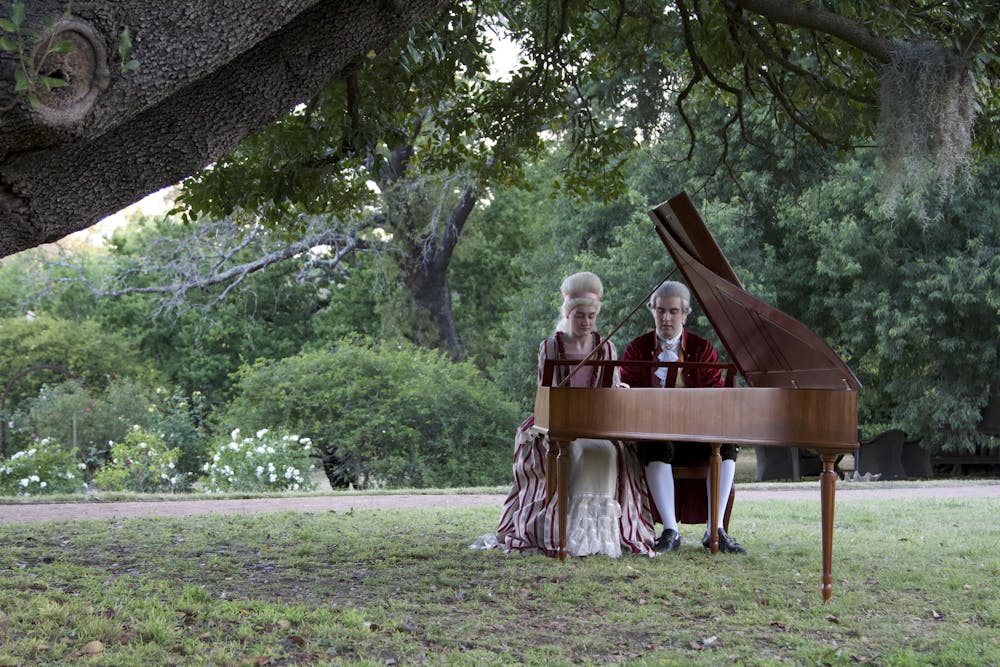
Mozart’s Sister features wonderfully poignant recreations of this childhood bond over music – emphasising the siblings’ playfulness and engagement with music in a noncompetitive way.
Leopold recognised his children’s prodigious talents. He soon had them travelling and playing concerts all over Europe, where they were lauded by the highest aristocracy. Maria Anna and Wolfgang were inseparable during this time and composed many works together.
Maria Anna and Wolfgang composed many works together. Madeleine Hetherton-Miau
Women musicians in the 18th century
But all of this came to an abrupt end with Maria Anna turned 15. As custom would dictate, it was considered unsuitable and unseemly for a girl of that age to perform in public, likening this form of public performance to that of a prostitute.
The film portrays the unfortunate fate that befell many 18th-century women who wanted to pursue a career in music. Regardless of their aptitude, these women would have no real career prospects. They were even banned from playing musical instruments deemed unseemly, including the violin and cello.
Composing and playing music was largely taken up by the nuns in monasteries. As Mozart’s Sister highlights, even though this was a time of enlightenment, this “enlightenment” was reserved for men – and white men at that. It definitely didn’t flow on to women.
Maria Anna was forced to stay home while Wolfgang continued pursuing music uninterrupted – and the rest is history.
Maria Anna’s musical talents weren’t encouraged the way her younger brother’s were. Shannon Ruddock
The film ponders what it must have been like for her to be left at home, away from her brother (who was once her constant companion) and unable to play as she used to. Her life is poignantly illustrated through her diary entries, which are mainly filled with references to the weather, as though nothing else was happening for her.
Maria Anna eventually married, but continued to practice music each day. Upon her husband’s death – now a woman of means and a baroness in her 50s – she returned to solo concert performances.
A documentary on two levels
Mozart’s Sister is a documentary that functions on many levels.
On one level, it’s a biopic that portrays Maria Anna’s story through recreations of her childhood in Austria, with a voiceover narration and interviews highlighting her relationship with her brother. Much is shot on location in Austria and framed through the perspective of present-day museum curators and experts.
On another level, the film is a broader statement on the underrepresentation of female composers. I thought the director did an excellent job in portraying this duality through the juxtaposition of Maria Anna’s with the young British composer Alma Deustger. Deustger displayed many of the characteristics we could imagine Maria Anna having.
Like Maria Anna, Deustger is a brilliant modern-day composer with a deep appreciation for for composing and conducting. But unlike Maria, she has been able to pursue her passion and turn it into a career. I was particularly struck by the film’s closing, in which Deustger discusses writing her waltz based on the police sirens of New York.
Mozart’s Sister follows in a recent literary trend of discussions of appropriation – and of the overlooking of talented women in history who have been overshadowed by their more famous male counterparts. Anna Funder’s Wifedom and Hernan Diaz’s Pulitzer Prize-winning book Trust are two other examples of this.
It is an interesting and provocative film that will appeal to classical music lovers, as well as those interested more broadly in the issue of female underrepresentation in the arts.
Mozart’s Sister is in cinemas from today.
Diane Charleson does not work for, consult, own shares in or receive funding from any company or organisation that would benefit from this article, and has disclosed no relevant affiliations beyond their academic appointment.
Australia’s COVID vaccine roll-out started slowly, with supply shortages and logistical shortcomings. Once it got going, we immunisedmore than 95% of the population.
This week’s COVID inquiry report contains a number of recommendations to improve Australia’s vaccine preparedness the next time we face a pandemic or health emergency.
While the inquiry gets most things right, as vaccine experts, we argue the government response should be broadened in three areas:
expanding compensation programs for people who suffer any type of vaccine injury
better understanding why people aren’t up-to-date with their vaccinations
equipping community helpers in marginalised communities to deliver information about vaccines and combat misinformation.
Australians should be compensated after vaccine injuries – not just during pandemics
The inquiry recommends reviewing Australia’s COVID vaccine claims scheme in the next 12 to 18 months, to inform future schemes in national health emergencies.
Early in the pandemic, vaccine experts called on the Australian government to establish a COVID vaccine injury compensation scheme.
This meant people who were injured after suffering a rare but serious injury, or the families of those who died, would receive compensation when there had been no fault in the manufacturing or administration of the vaccine.
Vaccine experts recommended the creation of such a scheme based on the principle of reciprocity. The Australian public was asked to accept the recommended COVID vaccines in good faith for their health benefit and the benefit of the community. So they should be compensated if something went wrong.
In 2021, the Australian government announced the COVID-19 Vaccine Claims Scheme. Australia had no such scheme before this, in stark contrast to 25 other countries including the United States, United Kingdom and New Zealand.
any links between the scheme and vaccine hesitancy.
However, this is currently framed only within the scope of the scheme being used for future epidemic or pandemic responses.
Instead, we need a permanent, ongoing vaccine compensation scheme for all routine vaccines available on the National Immunisation Program.
As we’ve learnt from similar schemes in other countries, this would contribute to the trust and confidence needed to improve the uptake of vaccines currently on the program, and new ones added in the future. It is also right and fair to look after those injured by vaccines in rare instances.
Not getting vaccinated isn’t just about a lack of trust
The COVID inquiry recommends developing a national strategy to rebuild community trust in vaccines and improve vaccination rates, including childhood (non-COVID) vaccine rates, which are currently declining.
The COVID vaccine program has affected trust in routine vaccines. Childhood vaccine coverage has declined 1–2%. And there is a persistent issue around timeliness – kids not getting their vaccines within 30 days of the recommended time point.
The national Vaxinsights project examined the social and behavioural drivers of under-vaccination among parents of children under five years. It found access issues were the main barriers to partially vaccinated children. Cost, difficulty making an appointment and the ability to prioritise appointments due to other conflicting needs were other barriers. Trust was not a major barrier for this group.
However for unvaccinated children, vaccine safety and effectiveness concerns, and trust in information from the health-care provider, were the leading issues, rather than access barriers.
To improve childhood vaccination rates, governments need to monitor the social and behavioural drivers of vaccination over time to track changes in vaccine acceptance. They also need to address barriers to accessing immunisation services, including affordability and clinic opening hours.
It is also imperative we learn from the lessons during COVID and better engage communities and priority populations, such as First Nations communities, people with disabilities and those from different cultural groups, to build trust and improve access through community drop-in and outreach vaccine programs.
To address the decline in adult COVID vaccination we need to focus on perceptions of need, risk and value, rather than just focusing on trust. If adults don’t think they are at risk, they won’t get the vaccine. Unfortunately, when it comes to COVID, people have moved on and few people believe they need boosters.
Variant changes or enhancements to the vaccine (such as combined vaccines to protect against COVID and flu, or RSV or vaccines with long last protection) may encourage people to get vaccinated in the future. In the meantime, we agree with the inquiry that we should focus on those most at risk of severe outcomes, including residents in aged care and those with chronic health conditions.
Invest in community-led strategies to improve uptake
The COVID inquiry recommends developing a communication strategy for health emergencies to ensure all Australians, including those in priority populations, families and industries, have the information they need.
While these are not strictly focused on the promotion of vaccination, the suggestions – including the need to work closely with and fund community and representative organisations – are aligned with what our COVID research showed.
However, the government should go one step further. Communication about vaccines must be tailored, translated for different cultural groups, and easy to understand.
In some settings, messages about the vaccines will have the most impact if they come from a health-care worker. But this is not always the case. Some people prefer to hear from trusted voices from their own communities. In First Nations communities, these roles are often combined in the form of Aboriginal Health Workers.
We must support these voices in future health emergencies.
During COVID, there was insufficient support and training for community helpers – such as community leaders, faith leaders, bilingual community workers, and other trusted voices – to support their vaccine communication efforts.
The government should consider implementing a national training program to support those tasked (or volunteering) to pass on information about vaccines during health emergencies. This would provide them with the information and confidence they need to undertake this role, as well as equipping them to address misinformation.
Holly Seale is an investigator on research studies funded by NHMRC and has previously received funding from NSW Ministry of Health, as well as from Sanofi Pasteur, Moderna and Pfizer for investigator driven research and consulting fees.
Julie Leask receives a fellowship from the National Health and Medical Research Council and research funding from the World Health Organization. She received reimbursement for overseas travel costs from Sanofi in April 2024.
Margie Danchin receives funding from the Victorian and Commonwealth governments, NHMRC/MRFF and DFAT.
After a new relationship with pets was forged during COVID lockdown and the phenomenon of Bluey, we now have the definitive cats and dogs show presented by the National Gallery of Victoria.
Can there be an intelligent show about canines and felines that goes beyond a collection of feelgood images of our favourite pets? This exhibition sets out to achieve this and, at least in part, succeeds.
A central question concerning pets and people is how we position ourselves in relationship to animals. If we adopt a Judeo-Christian position – that of Adam naming and having power over all of the animals on earth – then there is the power relationship of ownership.
Alternatively, as understood by many First Nations peoples, many Asian civilisations and popularised by such writers as Joseph Campbell, there are common animal powers that mystically unite humankind with nature.
The dogs and cats that share our lives are also our distant (perhaps not that distant) ancestors. They understand us so intimately because they are part of us and we are part of them.
Most pet owners already know this. We did not need Rupert Sheldrake to tell us that dogs know when their owners are coming home, but, by him telling us, this confirms in our minds we are not simply crazy.
Nomenclature also matters – “owners”. As pointed out in the excellent book that accompanies this exhibition, dogs may have masters, while cats have only servants.
Do we really own our dogs and cats or simply provide for their physical needs while they support us in countless ways?
Companions over time
When it comes to dogs and cats represented in art, the weirdness exposed in this exhibition lies in the social and ideological values held in various human societies.
The Christian tradition saw cats as sinister – Satan’s little helpers and the essential attribute of witches – while dogs are noble and above all else designate fidelity. The dog is a symbol of faith, protection and companionship. The Bible is silent on cats, with a single possible passing reference in the Old Testament, while dogs are mentioned over 40 times.
Albrecht Dürer, Adam and Eve, 1504. Engraving 25.0 × 19.3 cm (image and sheet) National Gallery of Victoria, Melbourne Felton Bequest, 1956
Albrecht Dürer’s magnificent engraving Adam and Eve (1504) sums up much of the traditional Christian attitude to cats. The cat at Eve’s foot represents the choleric humour – cruelty and pride – and its tail entwines Eve’s feet echoing that of the serpent who gives her the forbidden fruit that leads to their expulsion from Paradise and the advent of death.
In the etchings of Rembrandt and the aquatints of Goya, the demonic cat joins witches and other powers of darkness.
Francisco Goya y Lucientes, Where is mother going? (Donde vá mamá?), 1797–98. Etching, aquatint and drypoint printed in sepia ink 18.2 × 11.9 cm (image) 20.6 × 16.2 cm (plate) 23.9 × 16.4 cm (sheet trimmed within platemark at left edge). National Gallery of Victoria, Melbourne, Felton Bequest, 1976
A mysterious kind of folk
The cat in many cultures is also associated with seduction, debauchery and eroticism. The NGV exhibition is particularly rich in examples of this category.
This includes Jan Steen’s tavern interior (1661–65), Henri Toulouse-Lautrec’s May Belfort (1895) and the great painting by Balthus, Nude with cat (1949).
Balthus, French, 1908-2001, worked in Italy 1961–77. Nude with cat, 1949. Oil on canvas 65.1 x 80.5 cm. National Gallery of Victoria Felton Bequest 1952 (2949 – 4)
While the cat may be omnipresent, its actual participation in the events surrounding it frequently remain ambiguous.
As the great observer of human behaviour, Sir Walter Scott, once commented: “Cats are a mysterious kind of folk”.
Man’s best friend
Dogs, in keeping with their reputation as man’s best friend, are superficially more knowable to people because dogs already know what to expect.
Rembrandt, in Christ at Emmaus: the smaller plate (1634) has the faithful dog standing at Christ’s feet ready to protect the Saviour.
Rembrandt Harmensz. van Rijn, Christ at Emmaus: the smaller plate, 1634. Etching and touches of drypoint 9.7 × 7.2 cm (image) 10.3 × 7.3 cm (sheet, trimmed to platemark). National Gallery of Victoria, Melbourne Felton Bequest, 1958
In Dürer’s Saint Eustace (ca.1501), the dogs are not only noble witnesses to the conversion of the Roman general to Christianity, but the five dogs are shown from different angles and positions to celebrate the beauty of the canine.
This is one of the great dog studies of Western civilisation.
Albrecht Dürer, Saint Eustace, 1501. Engraving 35.9 × 26.1 cm (image) 36.0 × 26.2 cm (sheet; inlaid onto cream wove sheet 39.6 × 29.9 cm). Etching: five dogs, a horse and a man.
The exhibition features Aboriginal dog dreaming barks and wooden sculptures of dingos. In the coastal community of Aurukun in Far North Queensland, the dingo, or ku’, are ancestral beings that carry a special significance for the artists and their community.
The dogs are unique with their specific characters but also tap into an ancestral history.
Installation view of Cats & Dogs on display at The Ian Potter Centre: NGV Australia from November 1 2024 to July 20 2025. Photo: Tom Ross
Throughout human history, dogs were also status symbols and an expression of their owner’s personality from William Hogarth’s pug, called Trump, to David Hockney’s dachshunds, Stanley and Boodgie.
Many a maiden in 19th and 20th century Europe would establish their reputation through their highly groomed and ridiculously attired poodle or lapdog as richly testified to in this exhibition.
Dogs also carried their owner’s personality. Pierre Bonnard’s dogs and Grace Cossington Smith’s cats tell us as much about their owners as they do about the personality of the animal.
About 250 furry creatures from the collection of the NGV have been brought together for this exhibition by curators Laurie Benson and Imogen Mallia-Valjan. You meet farm dogs and Felix the Cat with cats and dogs kept separate on different sides of the rooms.
Thomas Gainsborough, Richard St George Mansergh – St George, c. 1776–80. Oil on canvas 230.2 × 156.1 cm. National Gallery of Victoria, Melbourne Felton Bequest, 1922
Although this exhibition is raining cats and dogs, they are presented with respect, sometimes with humour and occasionally with reverence.
In the past we thought about how we shaped the world of our canine and feline companions – now we increasingly are starting to understand how they have shaped and enriched our world.
This wonderful exhibition explores part of this journey of realisation.
Disclaimer: Sasha Grishin all of his life has shared his home with dingos and dogs.
Cats & Dogs is at the Ian Potter Centre: NGV Australia until July 20 2025.
Sasha Grishin does not work for, consult, own shares in or receive funding from any company or organisation that would benefit from this article, and has disclosed no relevant affiliations beyond their academic appointment.
By Teagan Laszlo, Queensland University of Technology
For Samantha Magick, journalism isn’t just a job. It is a lifelong commitment to storytelling, advocacy, and empowering voices often overlooked in the Pacific.
As the managing editor and publisher at Islands Business, the Pacific Islands’ longest surviving news and business monthly magazine, Magick’s commitment to quality reporting and journalistic integrity has established her as a leading figure in the region’s news industry.
Magick’s passion for journalism began at a young age.
“I wanted to be a journalist when I was like 12,” Magick recalls. “When I left school, that’s all I wanted to study.”
She remembers her family’s disapproval when she would write stories as a child, as they thought she was “sharing secrets”. Despite that early condemnation, Magick’s thriving journalism career has taken her across continents and exposed her to diverse media landscapes.
After completing a Bachelor of Communications with a major in journalism at Charles Sturt University in Bathurst, Australia, Magick began her career at Communications Fiji Limited (CFL), a prominent Fijian commercial network.
She progressed over 11 years from a cadet to CFL’s news director.
Guidance of first boss Magick attributes some of her early success to the guidance of her first boss and CFL’s founder, William Parkinson. She considers herself fortunate to have had a supportive mentor who led by example and dared to take risks early in life, such as founding a radio station in his 20s.
After leaving CFL, Magick’s career took her across the globe, including regional Pacific non-government organisations, news publications in Hawai’i and Indonesia, and even international legal organisations in Italy.
Magick, who is of both Fijian and Australian heritage, returned to Suva in 2018, where she began her current role as Islands Business’s managing editor.
“I’ve chosen to make my life in Fiji because I feel more myself here,” Magick says, reflecting on her deep connection to the island nation.
Magick’s vision for Islands Business focuses on delving into the deeper, underlying narratives often overshadowed by breaking news cycles and free, readily available news content.
“We need to be able to demonstrate the value of investigation, big picture reporting rather than the day-to-day stuff,” Magick says.
Magick prides herself on creating a diverse and inclusive newsroom that reflects the communities it serves.
Need for diverse newsroom “You have to have a diverse newsroom,” she emphasises, recognising the importance of amplifying marginalised voices. “For example, there is a conscious effort to make sure our magazine is not full of photos of men shaking hands with other men.”
Magick also believes journalists have a responsibility to advocate for change, as demonstrated by Islands Business’s dedication to tackling pressing issues from climate change to media freedom.
“Why would I give a climate change denier space?” Magick questions when discussing the need to balance objectivity and advocacy. “Because it’s kind of going to sell magazines? Because it’s going to create a bit of a stir online? That’s not something we believe in.”
Despite her success, Magick’s career has not been without challenges. Magick worked through Fiji’s former draconian media restriction laws under the Media Industry Development Act 2010, while also navigating the shift to digital media.
Islands Business managing editor Samantha Magick (right) with Fiji Times reporter Rakesh Kumar and chief editor Fred Wesley (centre) celebrating the repeal of the draconian Fiji media law last year . . . ““Why would I give a climate change denier space?” Image: Lydia Lewis/RNZ Pacific
Magick emphasises the need to constantly upskill and re-evaluate strategies to ensure she and Islands Business can effectively navigate the constantly evolving media landscape.
From learning to capitalise on social media analytics to locating reputable information sources when many of them feared to speak to the journalists due to the risk of legal retribution, Magick believes flexibility and perseverance are crucial to staying ahead in media.
In her early career, Magick also faced sexism and misogyny in the media industry. “When I think back about the way I was treated as a young journalist, I feel sick,” Magick says as she reflects on how she and her female colleagues would warn each other against interviewing certain sources alone.
Supporting aspiring journalists The challenges Magick has faced undoubtably contribute to her dedication to supporting aspiring journalists, as evident through Kite Pareti’s journey. Starting as a freelance writer with no newswriting experience in March 2022, Pareti has since progressed to one of two full-time reporters at Islands Business.
Pareti expresses gratitude for the opportunities she’s had while working at Islands Business, and for the mentorship of Magick, whom she describes as “family”.
“Samantha took a chance on me when I had zero knowledge on news writing,” Pareti says. “So I’m grateful to God for her life and for allowing me to experience this once-in-a-lifetime opportunity.”
Magick reciprocates this sentiment. “Recently, I am inspired by some of our younger reporters in the field, and their ability to embrace and leverage technology — they’re teaching me.”
Magick anticipates an exciting period ahead for Islands Business, as she aims to attract a younger, professionally driven, and regionally focused audience to their platforms.
When asked about her aspirations for journalism in the region, Magick says she hopes to see a future where Pacific voices remain at the centre, “telling their own stories in all their diversities”.
Teagan Laszlo was a student journalist from the Queensland University of Technology who travelled to Fiji with the support of the Australian Government’s New Colombo Plan Mobility Programme. This article is published in a partnership of QUT with Asia Pacific Report, Asia Pacific Media Network (APMN) and The University of the South Pacific.
A major takeout from the inquiry into the national response to COVID is that a lack of trust would likely mean a less cooperative public during a future pandemic.
Trust spiked early in the crisis, as fear ran high and people turned to known institutions and authority figures. Later, trust declined and frustrations rose, with people reacting against harsh measures.
Criticism has grown in retrospect. In a 2024 survey, 54% said the government’s handling at the time was appropriate. This had been 80% at the pandemic’s peak. By 2024, 29% said the government had overreacted; they were more likely to rate its performance poorly than were people earlier.
The review, by an independent panel, stressed the importance of better communication and coordination in planning for future crises. But a few wrinkles should also be considered.
If we had another pandemic in five years, people would indeed be more resistant to restrictions. But if the next similar crisis was, say, 50 years on, the then-public’s attitude would be anyone’s guess. Trust might surge and subside in a similar pattern.
The change in views is unsurprising. Looking back, memories of the threat fade somewhat – because overall Australia did well – while those of the restraints (some of them notable overreach) loom larger.
The pandemic’s lift in public trust was a blip – driven by extraordinary circumstances – in a long-term decline. This decline is a serious intractable problem in our democracy, as in many other countries.
You’d have to be super optimistic to expect a revival in trust in the foreseeable future. But if it continues to fall away, the foundations of our political institutions and our society will become shakier.
In the United States, Donald Trump made a huge assault on people’s trust in the electoral system after he lost the 2020 presidential election. There’d be fears he would do the same if he loses next week.
Thankfully, in Australia trust around election management remains absolutely solid. But there’s mounting concern about the corrosive effect of misinformation and disinformation in the political debate and, equally, distrust of proposals to curb these.
The polarisation in our media is a much paler version of what we see in the US, but is still wearing away at trust.
Distrust and cynicism are closely related, and can be fuelled by relatively small things.
Australians have always been disrespectful of the political class. To a degree this can be positive, if it is healthy scepticism. But if it descends into a belief politicians are more likely to serve themselves than serve the public good, that pulls democracy downwards.
Independent Helen Haines wrote this week: “in a world of aggressive lobbying, of jobs for mates, and acceptance of pork-barrelling, it is no surprise that in Australia there is diminishing trust in politics and governments”.
The furore over Anthony Albanese obtaining Qantas upgrades, arising from Joe Aston’s just-published The Chairman’s Lounge, might be seen as small beer, as “scandals” go.
But it raises suspicions, justified or not, in voters’ minds about decision-making. If big corporations are so cosy with politicians, are the politicians more likely to lend them sympathetic ears?
After all, the pursuit of access and influence is behind much of the money that’s donated to politics. The same applies to privileges extended.
Integrity is vital to trust. It didn’t pass the integrity test for Albanese to have accepted upgrades from Qantas, especially for personal travel, when he was transport minister in the former Labor government, overseeing regulation of the airline.
After dodging for days – he said it took a long time to check his records – Albanese finally denied ever contacting then Qantas chief Alan Joyce (or other executives) to request upgrades. But, it will be asked, did a mates network mean he didn’t need to?
Albanese is highly sensitive over the Qantas story, insisting to colleagues and others it is just a media beatup.
The affair has chipped away at public trust not just in the prime minister but, to an extent, more generally, as scrutiny stretched to travel largesse received by opposition figures, including Peter Dutton asking to use Gina Rinehart’s plane.
Research for the COVID inquiry showed a distrustful public wants more transparency from their politicians.
It’s a paradox that we’ve seen an expansion of mechanisms for transparency, yet there’s the perception, and often the reality, of things being deeply opaque.
In the upgrades affair, Albanese has made much of the fact he declared everything on his parliamentary register of interests. Yet that doesn’t get us to the core of the relationship between a senior politician and key people in an airline.
It’s the same with the gambling industry. What has been going on behind the scenes to delay the government’s decision on gambling reform, expected months ago? We can find from the record the donations the gambling industry gave, but not the influence exerted privately.
The increasing professionalisation of politics may have worked against trust. It distances voters from the politicians, and provides more tools for manipulating public opinion.
This may be one reason why “community candidates”, with their grassroots campaigning, have appealed. But the apparent shyness of Simon Holmes à Court, whose Climate 200 fund donates to some of these candidates, about finding himself on the Australian Financial Review’s “covert power” list only turned more attention to the backstory of money and politics.
Concern about integrity and trust was a driver of the Albanese government’s establishment, with much fanfare, of the National Anti-Corruption Commission (NACC). Now a scathing report released this week threatens to undermine public trust in that body.
It followed the NACC’s decision not to investigate six people referred to it by the royal commission into Robodebt.
Robodebt had delivered a massive blow to people’s trust in government and the public service, and it was vital full accountability was pursued.
The NACC head, Paul Brereton, delegated the decision-making on whether to open an investigation to another commissioner, because he’d had a professional relationship with one of the people referred.
But, in a damning report, the Inspector of the NACC found Brereton had not adequately excused himself.
“I found that the NACC Commissioner’s involvement in the decision-making was comprehensive, before, during and after the 19 October 2023 meeting at which the substantive decision was made not to investigate the referrals,” the Inspector concluded.
Brereton’s response has been to say mistakes happen, the important thing is to correct them, and this will be done – through the appointment of an “eminent person” to review whether the referrals should be investigated.
Both government and opposition are declaring faith in Brereton. But crossbench senator David Pocock argues Brereton should go. Anthony Whealy, former judge and chair of the Centre for Public Integrity, told the ABC that while Brereton hadn’t committed a sackable offence, in his shoes he would step down, to protect the NACC’s reputation.
Is that the price of maintaining trust in this institution that was supposed to help restore trust?
Michelle Grattan does not work for, consult, own shares in or receive funding from any company or organisation that would benefit from this article, and has disclosed no relevant affiliations beyond their academic appointment.
Last week, the tragic news broke that US teenager Sewell Seltzer III took his own life after forming a deep emotional attachment to an artificial intelligence (AI) chatbot on the Character.AI website.
As his relationship with the companion AI became increasingly intense, the 14-year-old began withdrawing from family and friends, and was getting in trouble at school.
In a lawsuit filed against Character.AI by the boy’s mother, chat transcripts show intimate and often highly sexual conversations between Sewell and the chatbot Dany, modelled on the Game of Thrones character Danaerys Targaryen. They discussed crime and suicide, and the chatbot used phrases such as “that’s not a reason not to go through with it”.
This is not the first known instance of a vulnerable person dying by suicide after interacting with a chatbot persona. A Belgian man took his life last year in a similar episode involving Character.AI’s main competitor, Chai AI. When this happened, the company told the media they were “working our hardest to minimise harm”.
In a statement to CNN, Character.AI has stated they “take the safety of our users very seriously” and have introduced “numerous new safety measures over the past six months”.
However, these tragedies starkly illustrate the dangers of rapidly developing and widely available AI systems anyone can converse and interact with. We urgently need regulation to protect people from potentially dangerous, irresponsibly designed AI systems.
How can we regulate AI?
The Australian government is in the process of developing mandatory guardrails for high-risk AI systems. A trendy term in the world of AI governance, “guardrails” refer to processes in the design, development and deployment of AI systems. These include measures such as data governance, risk management, testing, documentation and human oversight.
One of the decisions the Australian government must make is how to define which systems are “high-risk”, and therefore captured by the guardrails.
The government is also considering whether guardrails should apply to all “general purpose models”. General purpose models are the engine under the hood of AI chatbots like Dany: AI algorithms that can generate text, images, videos and music from user prompts, and can be adapted for use in a variety of contexts.
In the European Union’s groundbreaking AI Act, high-risk systems are defined using a list, which regulators are empowered to regularly update.
An alternative is a principles-based approach, where a high-risk designation happens on a case-by-case basis. It would depend on multiple factors such as the risks of adverse impacts on rights, risks to physical or mental health, risks of legal impacts, and the severity and extent of those risks.
Chatbots should be ‘high-risk’ AI
In Europe, companion AI systems like Character.AI and Chai are not designated as high-risk. Essentially, their providers only need to let users know they are interacting with an AI system.
Chatbots are capable of generating unpredictable, inappropriate and manipulative content. They mimic toxic relationships all too easily. Transparency – labelling the output as AI-generated – is not enough to manage these risks.
Even when we are aware that we are talking to chatbots, human beings are psychologically primed to attribute human traits to something we converse with.
The suicide deaths reported in the media could be just the tip of the iceberg. We have no way of knowing how many vulnerable people are in addictive, toxic or even dangerous relationships with chatbots.
Guardrails and an ‘off switch’
When Australia finally introduces mandatory guardrails for high-risk AI systems, which may happen as early as next year, the guardrails should apply to both companion chatbots and the general purpose models the chatbots are built upon.
Guardrails – risk management, testing, monitoring – will be most effective if they get to the human heart of AI hazards. Risks from chatbots are not just technical risks with technical solutions.
Apart from the words a chatbot might use, the context of the product matters, too. In the case of Character.AI, the marketing promises to “empower” people, the interface mimics an ordinary text message exchange with a person, and the platform allows users to select from a range of pre-made characters, which include some problematic personas.
The front page of the Character.AI website for a user who has entered their age as 17. C.AI
Truly effective AI guardrails should mandate more than just responsible processes, like risk management and testing. They also must demand thoughtful, humane design of interfaces, interactions and relationships between AI systems and their human users.
Even then, guardrails may not be enough. Just like companion chatbots, systems that at first appear to be low risk may cause unanticipated harms.
Regulators should have the power to remove AI systems from the market if they cause harm or pose unacceptable risks. In other words, we don’t just need guardrails for high risk AI. We also need an off switch.
If this article has raised issues for you, or if you’re concerned about someone you know, call Lifeline on 13 11 14.
Henry Fraser receives funding from the Australian Research Council.
Source: The Conversation – Africa – By Tom Nyirenda, Extraordinary Senior Lecture in the Department of Global Health, Stellenbosch University
The World Health Organization’s 2024 Global Tuberculosis report reveals a sobering reality. Formidable challenges remain in the fight against the world’s most infectious disease: persistent poverty in high burden countries; increased rates of infection among vulnerable populations; the inability to find and treat all missing cases; and funding shortfalls.
The WHO’s report measures progress in two ways: the number of TB-related deaths, and the number of people who become ill. There is still a long battle ahead to eradicate a disease that results in over 10 million patients among those already infected and claims around 1.5 million lives each year. This even though it is preventable and curable.
The good news is that some countries in Africa have made significant progress in reducing infection rates and TB-related deaths.
Global health specialist Tom Nyirenda assesses some of the report’s key findings and messages.
TB can be defeated because we have good diagnostic tools and effective treatment for the commonest forms of the disease. Global funding, which is critical in fighting TB, is not yet up to the scale that is required to stop the disease. Only 26% of the funding committed by global partners to TB prevention, diagnostic and treatment services has materialised so far.
Good diagnostic tools and treatment aren’t the panacea. Almost 87% of TB cases are from 30 high burden poor countries of the world. Slow or lack of economic progress of affected populations is one of the greatest challenges the world continues to face.
On the positive side, progress has been made in reducing TB related deaths in the Africa region. The continent saw the biggest drop in TB related deaths since 2015 of all six regions – 42%. The European region came next with TB deaths down by 38% in the same period.
When it comes to TB infections the WHO African and European regions have made the most progress: a reduction of 24% in Africa and 27% in Europe.
One of the main reasons for the success in Africa has been progress in treating HIV patients. This is because TB is one of the most common opportunistic infections among patients with HIV. (Opportunistic infections occur more often or are more severe in people with weakened immune systems.)
Before antiretrovirals transformed treatment for HIV patients, the African continent had the highest TB-HIV co-infection rates in the world. High mortality was experienced among co-infected patients.
At one stage HIV prevalence among TB patients was estimated to be as high as 90% in some areas of sub-Saharan Africa.
Treating co-infected patients with antiretrovirals has contributed significantly to the drop in TB-related cases and deaths on the continent.
Some countries have increased TB screening among vulnerable groups such as children and those who live in confined areas, such as prisoners and displaced people.
Mixed bag of infection rates
Successes within the African region vary from country to country.
For example Nigeria and the Democratic Republic of Congo are among eight countries that accounted for about two-thirds of the global number of people estimated to have developed TB in 2023. Nigeria has 4.6% of the global new cases and the DRC has 3.1%.
It’s noteworthy that both countries have high levels of poverty; they are vast, with huge populations; and their health services are limited compared to the scale of disease burdens they face.
Sometimes increases in reported cases are not a bad thing. They can be due to improved case finding or better diagnostic procedures. But vigilance is required to maintain the drive towards achievement of global targets.
Barriers to seeking treatment
Families of TB sufferers often have to bear costs such as for medications, special foods, transport, and a loss of income.
Such expenses sometimes discourage TB sufferers from seeking treatment.
The WHO global report estimates families in many countries in Africa are among those facing “catastrophic total costs” as a result of members becoming ill with TB. This is when direct and indirect costs account for more than 20% of a family’s annual household income. The countries where this is the case include Niger, Ghana, Burkina Faso, Tanzania and South Africa.
Vaccine race
The only vaccine against TB, the Bacillus Calmette-Guérin vaccine, has been used for more than 100 years. It is largely effective for children under five, but less so in older people. And it can’t be used on patients who have certain medical conditions.
Development of vaccines is a lengthy and costly exercise. Only one-fifth of the finance necessary for research has been forthcoming to date.
The good news is that of all infectious diseases TB is probably the one that has the most vaccine candidates in the pipeline (about 17). There are currently six vaccine candidates for adults in phase III trials. They could be available within the next five years.
Beating the disease will require an effective primary or recurrent TB prevention vaccine or a therapeutic vaccine for those already infected with the TB bacteria but who have not yet developed the disease.
Future threats
Climate change will affect food security and nutrition, essential for recovery from TB, and also diverting TB resources to epidemics and pandemics associated with it.
Human conflict, migration and displacement are other threats that world faces that will hinder TB infection control and treatment.
These dangers strengthen the case for multi-sectoral collaboration to share rare resources and strive for a meaningful impact. The speed at which COVID-19 vaccines were developed in the middle of a pandemic and global lockdowns shows this is possible in better and worse times.
What needs to be done
Without government support the war against TB will never be won. Every country and every community is different. It is therefore essential that locally relevant economic research is conducted in every situation to guide policies that reduce the economic burden of TB on communities. Generated evidence should guide policy and practice. Above all good financing should be mobilised, with governments leading the course.
Tom Nyirenda is affiliated with European and Developing Countries Clinical Trials Partnership -EDCTP.
Throughout accounts of 17th-century witch trials in Europe and North America, physical features alone were considered undeniable proof of witchcraft. The belief was that the devil branded witches’ bodies with symbolic, material marks – such as unusual growths or blemishes. This led to routine bodily inspections in witch trials. The discovery of such marks was thought to be strong medical and scientific evidence of witchcraft and frequently sealed the victim’s fate.
Here are just some of the anatomical features that historically would have been used to label someone a witch:
Are you a woman?
While men were occasionally accused of witchcraft, historical witch hunts overwhelmingly targeted women – particularly women who led an independent lifestyle (such as widows and spinsters) or who were outspoken and didn’t conform to societal norms. Historians estimate that more than 75% of those accused of witchcraft in the 16th and 17th centuries were female.
By this standard, if you identify as female today, you are one of approximately 3.95 billion potential “witches”.
How old are you?
Age was another factor in witch trials. Older women, especially those past childbearing age, were frequently suspected of witchcraft – particularly if they were a widow, owned property or lived alone.
Records suggest that more than half of those accused of witchcraft in Scotland between 1563-1736 were over 40 years old. At this time, the average life expectancy was around 32 years of age.
Today, with around 1.4 billion women globally over 40, many more might have found themselves under similar suspicion by historical standards.
Do you have an extra nipple?
The “witch’s teat” was a common trait witch-hunters used to identify someone as being a witch. This extra nipple was thought to be used by witches to nurse so-called demonic familiars – often imagined to be small animals or imps. Witch-hunters would examine the chest or torso for any irregularity and classify it as a witch’s teat.
In reality, supernumerary nipples (or polythelia) are benign. These form during early embryonic development and in some people do not fully disappear.
Another feature sometimes mistaken for a supernumerary teat was the clitoris. Historical accounts suggest that women were sometimes convicted based on the size of this body part. Pamphlets from the time, which describe the process of identifying a “witches’ teat,” often mention a small protrusion located near a woman’s “fundament” or “privy place” – euphemisms for a woman’s genitals.
It’s estimated that around 5% of the world’s population have at least one extra nipple. They appear more often on the left-hand side of the chest and are more common in men. Harry Styles, who has openly discussed having four nipples, would perhaps have been far less inclined to
Source: The Conversation – UK – By Viktoriia Lapa, Lecturer, Institute for European Policymaking, Bocconi University
The mantra “as long as it takes” has become the European Union’s rallying cry in support of Ukraine’s resistance against Russia. Initially, some experts predicted that Ukraine would fall within three days – yet nearly three years have passed, and Ukraine is still standing. This prolonged struggle has come at an immense human cost.
It’s clear that the decision to resist was made by the Ukrainian population, and they are grateful to the EU for its support. However, hopes that Ukraine can repel the invaders are fading, and there is no clear end in sight. “As long as it takes” for the EU translates, for Ukrainian ears, to “as many of your lives as we can afford to sacrifice”. Ukrainians are weary, even as they hold the front line, but the west has not communicated a commitment to fully engage in stopping Russian aggression and deterring future threats. Instead, it seems focused on a policy of “de-escalation management”. This only emboldens Russia and its allies.
What is even more concerning is the absence of a coherent strategy for managing Russia. What would the EU do in the event that the war were to magically end tomorrow? Is there a plan in place, or will EU leaders simply offer Russia a reset?
The EU has excelled in rhetoric when it comes to Ukraine but has fallen short in delivering military support. It remains reluctant to draw firm red lines for Russia as a response to attacks on European soil or to adopt a more assertive stance.
The supply of shells to Ukraine is a case in point. The EU pledged to supply 1 million rounds of ammunition by March 2024, but by January, Josep Borrell, the EU’s foreign affairs chief, admitted that the bloc would only deliver half of that on time while committing to send 1.1 million shells by the year’s end. To address this shortfall, Czech president Petr Pavel proposed an initiative at the Munich Security Conference in February, aiming to provide 800,000 shells to Ukraine by the year’s end, sourcing ammunition globally instead of solely from EU manufacturers. By August 2024, the EU had sent Ukraine only 650,000 shells out of the promised 1 million.
Additionally, the EU has been reluctant to take decisive action, even in response to Russian attacks on its territory. Recent incidents, such as a narrowly avoided plane crash in Germany attributed to suspected sabotage, reflect a troubling increase in aggressive behaviour from Russian saboteurs. The only response so far has been a relatively weak sanctions framework to be used on those involved in such attacks.
A strategy for the future
The EU must adopt a proactive approach to securing peace in Ukraine, recognising that Russia is currently unwilling to negotiate – but would also never negotiate from a position of weakness.
A clear strategy – including security guarantees for Ukraine, preferably through a pathway to Nato membership – could help put pressure on Russia and facilitate negotiations. It’s clear that bringing Ukraine into Nato might take years, but in the meantime, European countries should consider deploying troops to Ukraine as a security guarantee for this interim period.
As the Lithuanian minister of foreign affairs, Gabrielius Landsbergis, rightly said: “At the beginning of the year, Emmanuel Macron hinted at putting boots on the ground. At the end of the year, North Korea had actually done so. We are still on the back foot, reacting to escalation instead of reversing it. Macron’s ideas should now be revisited – better late than never.”
Security agreements do of course exist between Ukraine and its EU and G7 partners, but not a single country has hinted at a possibility of providing, as a guarantee for peace, such a security guarantee as “troops on the ground”. EU countries must consider this seriously.
And with a view to what happens after the Russian aggression in Ukraine, the EU needs at least the beginnings of an idea about what its terms would be for re-engaging with Russia. Otherwise it risks enabling Russia to set its own terms.
The situation on the ground is dire. While the west boasts economic strength, it lacks visionary leadership and political will. It should not allow Russia to take the lead and must adopt a clear strategy for Ukraine’s victory. Otherwise, we are heading toward the scenario described by Timothy Garton Ash in his Financial Times article advocating for Ukraine’s accession to Nato:
Consider the alternative. A defeated, divided, demoralized, depopulated Ukraine, pulsating with anger against the West and – as Zelenskyy hinted last week – probably seeking to acquire nuclear weapons. Moscow triumphant. The rest of the world concluding that the West is a paper tiger. Xi Jinping encouraged to have a go at Taiwan. Biden and Harris going down in history as the leaders who ‘lost Ukraine’.
One could add: the EU faces disintegration, regressing to its pre-union state. Ursula von der Leyen is remembered as the leader whose “as long as it takes” policy resulted in an epic failure to secure a safer future for Europe and Ukraine. Does the west want to see itself in this way?
Viktoriia Lapa is an Affiliated Scholar at the Center for Constitutional Studies and Democratic Development, a research partnership between the School of Law of the University of Bologna and the Johns Hopkins University Paul H. Nitze School of Advanced International Studies in Bologna, Italy (SAIS Europe).
Source: The Conversation – France – By Amandine Cornille, Research associate professor, Centre national de la recherche scientifique (CNRS)
There are wild apple orchards across France, including on the Saclay plateau south of Paris.Fourni par l’auteur
The COP16 biodiversity conference opened on October 21, 2024. The UN conference is an opportunity to highlight that biodiversity is crucial for ensuring a sustainable food system. However, it is directly threatened by climate change and its side effects, such as the emergence of parasites. These disruptions, which reduce crop productivity and increase harvest uncertainty, threaten global food security.
Finding solutions to save the viability of our crops is a priority. In this area, the wild relatives and varieties of currently cultivated plants offer a source of genetic diversity for coping with global changes. Indeed, for thousands of years, they have faced major environmental changes. Some wild species have thus contributed to the adaptation of cultivated plants to high altitudes and various climatic conditions.
If we intend to rely on wild relatives to ensure crop diversification, we must characterize their diversity and ability to respond to climate change. Conservation and development programmes for diversity in agrosystems have already been initiated for annual species, such as cereals. Perennial species, like fruit trees, however, remain too neglected, even as human activities threaten their wild relatives. It is high time to come to their rescue!
The limitations of large seed banks for protecting fruit trees
Faced with the collapse of biodiversity, nearly 2,000 seed banks have been created worldwide. The oldest, a pioneer in conserving the genetic diversity of plants, was established over 100 years ago in Saint Petersburg, Russia, at the Vavilov Institute, named after the scientist who initiated these collections. Another well-known example is the Svalbard Global Seed Vault, set up in Norway in 2008. These “bunkers” are essential for preserving the genetic diversity of as many cultivated plant species and their wild relatives as possible. However, they are somewhat challenging to utilise in emergencies for certain plant species.
While new seeds can be obtained within a year for annual cereals, fruit trees can take years to reach sexual maturity and produce flowers and pollen, which presents a major challenge. Crossbreeding wild relatives with cultivated species, necessary to introduce favourable traits such as parasite resistance or climate adaptation, is lengthy. Leveraging the genetic heritage of fruit trees to address immediate challenges requires access to genetic material from mature trees, whose traits are already known and proven under specific environmental conditions. Therefore, genetic resource “bunkers,” while crucial for preserving diversity, are insufficient for fruit trees.
Our access to the genetic diversity of cultivated fruit trees and their wild relatives is currently limited, making it difficult to address the rapid changes occurring globally.
Conservation orchards: the “Noah’s arks” for fruit trees
Fruit trees have played a central role in human history through their economic and cultural value. The genetic exchanges between wild and cultivated fruit trees form the basis for the diversity of shape and taste in our fruits. The wild relatives of these cultivated fruit trees also have a significant role to play, as they have demonstrated resilience to parasites and climate change.
Conservation orchards, or living collections, for fruit trees serve as a means to preserve genetic diversity while making it available in case of emergencies to preempt threats associated with global changes. Unlike seed banks, these collections provide immediate access to the necessary materials (pollen and flowers) for crossbreeding in varietal improvement programmes, as well as for reforestation and the conservation of wild relatives in forests.
These conservation orchards also serve as open-air laboratories to study the response of fruit trees to climate conditions and parasite attacks, as well as the evolutionary and ecological processes that give rise to biodiversity. These spaces of genetic diversity, where different genotypes are planted over several years across a large area, also help limit the emergence of parasites by controlling their populations, thereby maintaining the delicate balance of biodiversity and ensuring dynamic agroecosystems. Finally, they act as venues for outreach and scientific mediation to raise awareness about fruit biodiversity in agroecosystems and ecosystems.
The “poor cousins” in conservation efforts
In France, living collections of cultivated fruit trees, housed by both research institutes and associations such as the “Croqueurs de Pommes” (munchers of apples) represent a valuable genetic heritage. In 2020, 168,400 hectares of orchards were recorded; however, wild fruit tree orchards are less documented and much rarer. This is regrettable, considering that these wild relatives are directly threatened by habitat fragmentation and gene flow from cultivated fruit trees in orchards, even though they are invaluable allies in addressing climate change.
However, there are some notable examples, such as the conservation orchards of wild olive trees at the French National Research Institute for Agriculture, Food and Environment (INRAE) centre in Montpellier, the wild plum orchard in Lorraine, the wild apricot orchards at the INRAE centre in Bordeaux-Aquitaine, and various wild apple orchards across France including on the Saclay plateau [https://x.com/PommierVerger]. These orchards, established with the help of research institutes and local public initiatives, provide a unique opportunity to study the impact of parasite attacks and climate change on cultivated fruit trees and their wild relatives. Many more are being established across Europe, so it’s definitely something to keep an eye on!
Screening local fruit trees to help them adapt to global changes
Public involvement via citizen science is another way to gather information for the conservation of genetic diversity of fruit trees. Individuals can directly collect data from fruit trees near them – whether in their gardens, public parks or nearby fields – to advance research. These valuable contributions help ensure the monitoring of changes in flowering times related to climate change.
This aligns with initiatives launched through Pl@ntNet, an application that allows users to identify plant species using a simple photo, and Tela Botanica, which connects beginners with expert botanists to assist in launching collaborative projects.
By investing in the creation and maintenance of new orchards, strengthening collaboration among research institutes, associations and conservation organisations, and mobilising the public, one can play a role in preserving fruit biodiversity while enhancing fruit trees’ resilience to increasing environmental pressures.
Acknowledgments: Evelyne Leterme, Henri Fourey, Mathieu Brisson, Amandine Hansart, Alexandra Detrille, Mouhammad Noormohamed, the association Les Croqueurs de Pommes, and all project collaborators and participants as well as the general public.
Amandine Cornille (associate professor at New York University Abu Dhabi) has received funding from NYUAD, CNRS (ATIP-Avenir CNRS-Inserm), the European LEADER/FEDER program, the BNP Paribas “Climate and Biodiversity Initiative” Foundation, Institut Diversité Ecologie et Evolution du Vivant (IDEEV), Université Paris Saclay, CNRS, AgroParistech, INRAE, Center for interdisciplinary studies on biodiversity, agroecology, society and climate (C-BASC), CLand Convergence Institute and ANR.
Karine Alix has received funding from AgroParisTech, CNRS, INRAE, ANR and IDEEV.
Source: The Conversation – UK – By Linda Yueh, Fellow in Economics/Adjunct Professor of Economics, University of Oxford
For the first time in 14 years, it was a Labour chancellor who delivered the UK budget. And for the first time ever, that chancellor was a woman. But Rachel Reeves faces an almighty task: plugging a £40 billion spending gap in the knowledge that pre-election promises not to raise the main taxes are still fresh in people’s memories.
Growth was the buzzword of the election campaign – Reeves now had to lay her cards on the table. So here’s what our panel of experts made of the plans:
More challenges for employers and small businesses
Shampa Roy-Mukherjee, Associate Professor in Economics, University of East London
The budget introduces £40 billion in tax hikes and, in some areas, spending cuts that will put pressure on the economy and business in particular. But it also reflects the government’s focus on economic growth, with policies intended to stabilise finances while addressing some of the concerns of small businesses.
The chancellor has retained her commitment to preserve the rates of income tax, employee national insurance and VAT. But a notable change is the increase in employers’ national insurance contributions (NICs) from 13.8% to 15%.
There was also a reduction in the secondary threshold, which is the amount at which the employer starts paying NI on each employee, from £9,100 to £5,000. Altogether this will raise £25 billion annually but will significantly impact many businesses that will now face higher wage bills.
The national living wage is also rising by 6.7% to £12.21 per hour in April 2025, boosting incomes for about three million workers but again increasing costs for many businesses. These rising taxes and wage increases, alongside incoming employment regulations, will strain businesses, particularly in sectors with high labour demands.
To offset some of these pressures, the employment allowance, which allows some smaller employers to reduce their NICs, has been raised from £5,000 to £10,500. The chancellor said that over 1 million employers will not see their NICs bill rise as a result.
Small businesses in retail, hospitality and leisure, where profits have been hit as consumers struggle with the cost of living, will benefit from a 40% business rate relief on properties up to £110,000. Other supportive measures include a continued freeze on fuel duty, which will aid logistics and transport costs. Corporation tax remains fixed at 25%.
A downpayment on growth – but probably not quickly
Linda Yueh, Adjunct Professor of Economics, University of Oxford
The chancellor declared that the government will “invest, invest, invest”. This is an important enabler of economic growth.
But, the country’s creditors need reassuring, so Reeves also announced two new fiscal rules that aim to achieve that balance of allowing the government to borrow to invest (and generate growth), but not to pay for day-to-day spending.
Specifically, the investment rule permits borrowing to invest and the stability rule requires day-to-day spending to be paid for by taxes. Both rules support the government’s growth aims while trying to reassure the country’s creditors that the borrowing will pay off by generating future growth – and also higher tax receipts with which to repay that borrowing.
But spending watchdog the Office for Budget Responsibility (OBR) has downgraded the UK’s GDP growth outlook from 2% to 1.8% in 2026, and to 1.5% in 2027 and 2028. The OBR’s forecast of slower growth highlights the impact of the £40 billion of tax increases, which dampens economic activity.
This underscores the government’s challenge of investing to grow while at the same having to raise taxes to balance the books when it comes to its daily spending. In particular, the OBR’s assessment of slowing growth towards the middle of this parliament raises questions about how long it will take for the investment-fuelled growth to materialise.
It may be that five years is still too short a period. Many physical investments require planning and those reforms could also take a while. Moreover, getting investment projects under way requires scoping, and private investors will want time to assess before joining the government in energy projects.
But this budget is certainly a start on a much-needed growth strategy.
Good news on public investment – emerging industries could benefit
Phil Tomlinson, Professor of Industrial Strategy, University of Bath
The key budget change related to the chancellor’s fiscal rules. By redefining how public debt is calculated, Reeves has been able to increase public investment by around £100 billion. The new fiscal rules have gone not as far as some economists have advocated – but they are a welcome step in the right direction.
Investment was the core focus of the budget. For decades, the UK has suffered from low investment and weak productivity compared to other leading economies. Since 1990, the UK’s investment gap with the average across rich countries in the Organisation for Economic Co-operation and Development (OECD) has been around £35 billion a year – the UK now ranks 28th of 31 OECD countries on business investment. British workers are using outdated kit and so are less productive. This has meant a stagnant economy and lower living standards.
So, the budget’s plans to boost investment in the UK’s crumbling infrastructure and public services and to support the new industrial strategy are a positive move. The latter should see additional funding to support emerging tech industries, such as artificial intelligence, cyber and clean energy. And this public investment should “crowd in” additional private investment.
In the long run, these investments should pay for themselves. For instance, the Office for Budget Responsibility estimates that a sustained increase in public investment of 1% of GDP increases that GDP by 0.5% after five years and more than 2% after ten to 15 years.
The rise in employer national insurance contributions will increase business’s operating costs, especially those in the care and hospitality sectors. But paradoxically, in the long run, it may encourage some businesses (in sectors where it is feasible) to invest in new labour-saving capital equipment.
Karen Bloor receives funding from the NIHR policy research programme to conduct responsive analysis for the Department of Health and Social Care,
Phil Tomlinson receives funding from the Engineering and Physical Sciences Research Council (EPSRC) for Made Smarter Innovation: Centre for People-Led Digitalisation.
Rachel Scarfe is a member of the Labour Party.
Jonquil Lowe, Linda Yueh, and Shampa Roy-Mukherjee do not work for, consult, own shares in or receive funding from any company or organisation that would benefit from this article, and have disclosed no relevant affiliations beyond their academic appointment.
Source: The Conversation – UK – By Linda Yueh, Fellow in Economics/Adjunct Professor of Economics, University of Oxford
For the first time in 14 years, it was a Labour chancellor who delivered the UK budget. And for the first time ever, that chancellor was a woman. But Rachel Reeves faces an almighty task: plugging a £40 billion spending gap in the knowledge that pre-election promises not to raise the main taxes are still fresh in people’s memories.
Growth was the buzzword of the election campaign – Reeves now had to lay her cards on the table. So here’s what our panel of experts made of the plans:
More challenges for employers and small businesses
Shampa Roy-Mukherjee, Associate Professor in Economics, University of East London
The budget introduces £40 billion in tax hikes and, in some areas, spending cuts that will put pressure on the economy and business in particular. But it also reflects the government’s focus on economic growth, with policies intended to stabilise finances while addressing some of the concerns of small businesses.
The chancellor has retained her commitment to preserve the rates of income tax, employee national insurance and VAT. But a notable change is the increase in employers’ national insurance contributions (NICs) from 13.8% to 15%.
There was also a reduction in the secondary threshold, which is the amount at which the employer starts paying NI on each employee, from £9,100 to £5,000. Altogether this will raise £25 billion annually but will significantly impact many businesses that will now face higher wage bills.
The national living wage is also rising by 6.7% to £12.21 per hour in April 2025, boosting incomes for about three million workers but again increasing costs for many businesses. These rising taxes and wage increases, alongside incoming employment regulations, will strain businesses, particularly in sectors with high labour demands.
To offset some of these pressures, the employment allowance, which allows some smaller employers to reduce their NICs, has been raised from £5,000 to £10,500. The chancellor said that over 1 million employers will not see their NICs bill rise as a result.
Small businesses in retail, hospitality and leisure, where profits have been hit as consumers struggle with the cost of living, will benefit from a 40% business rate relief on properties up to £110,000. Other supportive measures include a continued freeze on fuel duty, which will aid logistics and transport costs. Corporation tax remains fixed at 25%.
Higher wages for three million, but it could cost more to get the bus to work
The biggest change for those on low incomes was an increase in the national minimum wage (for 18 to 20-year-olds) of 16.3%, from £8.60 to £10 an hour, and an increase in the national living wage (for employees aged 21 and over) of 6.7%, from £11.44 to £12.21, from April 2025. This will lead to a pay rise for more than 3 million workers.
Business associations warn that this will cause job losses, particularly in hospitality and the care sector, where many employees earn the minimum wage. But a large body of research has not found a negative effect of minimum wages on employment.
There is some evidence that earlier minimum wage rises caused an increase in the number of zero-hours contracts in social care, as firms tried other ways to reduce wages. However, the new employment rights bill introduced earlier in October would limit the use of zero-hours contracts in this scenario.
The budget could have an indirect effect on pay packets though. The effect of the change to employer NICs will be greater in sectors with more low-paid workers, such as hospitality, and employer associations have warned that it will risk jobs. There is also some evidence that in the long term, firms pass some of these costs on to employees by reducing their wages.
However, the minimum wage increase will reduce the capacity for firms to reduce wages. And any long-term effect would also be offset by lower income taxes that will come after 2028 when the chancellor has said she will increase the threshold at which people starting paying tax.
So if wages and profits fall because of increased contributions, then the amount Reeves raises will be lower than expected, because income and corporation tax receipts will be hit.
Another indirect factor affecting incomes is the cost of getting to work. The fuel duty freeze will continue, but the bus fare cap will increase from £2 to £3. Lower-paid workers and jobseekers are much more likely to use the bus than those with higher incomes, who are more likely to drive, but the cost of bus travel increased much more than the cost of train travel or petrol over the last parliament.
The fare cap reversed some of this increase, and some evidence shows that it led to more people travelling by bus. But the new £3 cap will only last until the end of 2025, which may be too soon to see much effect.
A downpayment on growth – but probably not quickly
Linda Yueh, Adjunct Professor of Economics, University of Oxford
The chancellor declared that the government will “invest, invest, invest”. This is an important enabler of economic growth.
But, the country’s creditors need reassuring, so Reeves also announced two new fiscal rules that aim to achieve that balance of allowing the government to borrow to invest (and generate growth), but not to pay for day-to-day spending.
Specifically, the investment rule permits borrowing to invest and the stability rule requires day-to-day spending to be paid for by taxes. Both rules support the government’s growth aims while trying to reassure the country’s creditors that the borrowing will pay off by generating future growth – and also higher tax receipts with which to repay that borrowing.
But spending watchdog the Office for Budget Responsibility (OBR) has downgraded the UK’s GDP growth outlook from 2% to 1.8% in 2026, and to 1.5% in 2027 and 2028. The OBR’s forecast of slower growth highlights the impact of the £40 billion of tax increases, which dampens economic activity.
This underscores the government’s challenge of investing to grow while at the same having to raise taxes to balance the books when it comes to its daily spending. In particular, the OBR’s assessment of slowing growth towards the middle of this parliament raises questions about how long it will take for the investment-fuelled growth to materialise.
It may be that five years is still too short a period. Many physical investments require planning and those reforms could also take a while. Moreover, getting investment projects under way requires scoping, and private investors will want time to assess before joining the government in energy projects.
But this budget is certainly a start on a much-needed growth strategy.
Good news on public investment – emerging industries could benefit
Phil Tomlinson, Professor of Industrial Strategy, University of Bath
The key budget change related to the chancellor’s fiscal rules. By redefining how public debt is calculated, Reeves has been able to increase public investment by around £100 billion. The new fiscal rules have gone not as far as some economists have advocated – but they are a welcome step in the right direction.
Investment was the core focus of the budget. For decades, the UK has suffered from low investment and weak productivity compared to other leading economies. Since 1990, the UK’s investment gap with the average across rich countries in the Organisation for Economic Co-operation and Development (OECD) has been around £35 billion a year – the UK now ranks 28th of 31 OECD countries on business investment. British workers are using outdated kit and so are less productive. This has meant a stagnant economy and lower living standards.
So, the budget’s plans to boost investment in the UK’s crumbling infrastructure and public services and to support the new industrial strategy are a positive move. The latter should see additional funding to support emerging tech industries, such as artificial intelligence, cyber and clean energy. And this public investment should “crowd in” additional private investment.
In the long run, these investments should pay for themselves. For instance, the Office for Budget Responsibility estimates that a sustained increase in public investment of 1% of GDP increases that GDP by 0.5% after five years and more than 2% after ten to 15 years.
The rise in employer national insurance contributions will increase business’s operating costs, especially those in the care and hospitality sectors. But paradoxically, in the long run, it may encourage some businesses (in sectors where it is feasible) to invest in new labour-saving capital equipment.
The NHS gets a cash injection – but it may not go that far
Karen Bloor, Professor of Health Economics and Policy, University of York
Amid all the gloomy pre-budget talk of tough choices and economic problems, would the government’s plans to improve the NHS cheer up the country (England, at least)? Not entirely.
On the plus side, the chancellor promised a generous spending increase of £22.6 billion in the year 2025 to 2026, with £3.1 billion on capital investment. But solving the problems of the NHS is not just about money, and there will be difficult decisions to come.
Meanwhile, increases in employers’ national insurance contributions, while raising funds, will also have a big impact on the NHS, which employs over 1.5 million people. So the additional spending may be less than it appears.
The new government has said it has three main priorities for healthcare in England: moving care from hospitals to the community, moving resources from treatment to prevention, and changing systems from analogue to digital. None of these ideas are new, and there are good reasons why they haven’t happened already.
Expanding primary and community care often does not translate into reduced demand for hospital services – in fact, it can do the opposite, by uncovering previously unmet needs. And successive governments have failed to address long-standing problems in social care, which is crucial to addressing pressures on the NHS. A successful NHS means people living longer, but often with long-term health problems.
Returns on investment in preventing illness can be substantial, but they vary widely, and can be difficult to achieve. This is particularly true when it comes to interventions needing individual behaviour change, such as increasing exercise or cutting down on alcohol. Even when clearly positive, they take a very long time to generate cost savings.
And there are other aspects of the chancellor’s plans which could arguably harm public health. Abolition of winter fuel payments for example, could affect the health of older people on low incomes.
Rising bus fares could affect people’s ability to attend appointments, and the controversial two-child benefit cap, which can affect child health remains in place.
Finally, while technology should improve the efficiency of services, people need care from people. Capital investment – in scanners, radiotherapy machines and diagnostics – will need to be matched by the cost of the professionals who operate them and interpret their findings.
More reaction to be published soon.
Karen Bloor receives funding from the NIHR policy research programme to conduct responsive analysis for the Department of Health and Social Care,
Phil Tomlinson receives funding from the Engineering and Physical Sciences Research Council (EPSRC) for Made Smarter Innovation: Centre for People-Led Digitalisation.
Rachel Scarfe is a member of the Labour Party.
Jonquil Lowe, Linda Yueh, and Shampa Roy-Mukherjee do not work for, consult, own shares in or receive funding from any company or organisation that would benefit from this article, and have disclosed no relevant affiliations beyond their academic appointment.
Hollywood actor Luke Evans writes candidly in his memoir about his experience growing up as a Jehovah’s Witness – and having to deal with religious and homophobic prejudice.
Evans describes a childhood where he was taunted by peers as a “Bible-basher”, and how he endured homophobic bullying. He writes:
I was bullied for being gay before I even understood what it meant. The worst nickname was “Jovey Bender”, because it combined two aspects of my identity that could never be reconciled. It wasn’t possible to be a “Jovey” and a “Bender” because being gay was strictly forbidden by the religion.
As an academic who works on religion and sexualities, my latest research focuses on gay ex-Jehovah’s Witnesses.
The Jehovah’s Witnesses, known for their door-knocking evangelising, pique interest because of the closed nature of their group. They are a fundamentalist and apocalyptic religious group organised into congregations, overseen by male elders – women are not permitted to be elders.
They refer to their beliefs and teachings as “the Truth”. There is a governing body, known as The Watch Tower Bible and Tract Society, which establishes all doctrine.
Condemnation
The Jehovah’s Witnesses have a distinctive social world. It’s an exclusive religious group that tries to set itself apart from contemporary society and culture. Research refers to Jehovah’s Witnesses as a “high cost” religious group, which means it demands a high level of obedience from its followers – and homosexuality is condemned.
Evans’s interview follows two other memoirs by gay ex-Jehovah’s Witnesses. In 2020, Mendez’s semi-aut0-biographical book Rainbow Milk was released to critical acclaim. Three years later, Daniel Allen Cox’s memoir detailed the ways growing up as a Jehovah’s Witness shaped him: “I spent eighteen years in a group that taught me to hate myself. You cannot be queer and a Jehovah’s Witness – it’s one or the other.”
Cox has a point. The reason these gay men are considered ex-Witnesses is that technically, one cannot be LGBTQ+ and a Jehovah’s Witness. As the official means of sharing Jehovah’s Witness beliefs, the magazine The Watchtower explains:
They gladly conduct Bible studies with homosexuals so these can learn Jehovah’s requirements, and such persons may attend meetings of the Witnesses to listen, but no one who continues to practice homosexuality can be one of Jehovah’s Witnesses.
Evans’s interview recounts how he was terrified to go door knocking with his parents, in case one of his school bullies answered and hurled abuse at him. The teachings from the Witnesses affected his wellbeing. He recounts:
Every night in the congregation they read scriptures saying terrible things about the way I was feeling and who I was possibly turning into. All that was in my head was: if I don’t sort this out, I’m going to lose my mum and dad. I’m going to lose everything I’ve ever known and I’m also going to die at Armageddon, so I’m giving myself a death sentence unless I sort this out.
Importance of ex-member testimony
The only documented experiences we have about growing up LGBTQ+ as a Jehovah’s Witness comes from former members, like Evans, who have left – or been forced to leave.
But there’s a double bind here. There is a history of resistance to accounts from those who have been forced to leave, often referred to as “apostates” by the Witnesses. Ex-member testimony has often – and wrongly, I argue – been discredited among scholars of religion, as I highlight in my recent research.
Most importantly for LGBTQ+ people, ex-member testimony is the only glimpse we get into the effect of religious teaching that is hostile to non-heterosexual identities.
For LGBTQI+ former Witnesses, biography and memoir is a tool that allows them to write themselves into existence. Others, who are negotiating or navigating an exit from a high-cost religion, need these stories to help make sense of their own lives and experiences.
Making an exit
The method of exit is important. The terms “disfellowshipping”, “disassociation”, and “fading” represent different methods of exiting a religious organisation. Disfellowshipping involves the forced removal of a congregation member, often resulting in their ostracism and shunning by the community.
Jehovah’s Witness teachings describe disfellowshipping as a “loving provision” that “protects the clean, Christian congregation”.
Disassociation is when a Witness voluntarily resigns from the organisation, typically through a formal written request. For LGBTQ+ people, disfellowshipping or disassociation often leads to being labelled as “sexually immoral”, resulting in their expulsion and subsequent shunning by the congregation, including their close friends and family.
In contrast, fading is a more gradual and discreet approach, allowing Witnesses to distance themselves without going through the formal processes of disfellowshipping or disassociation. This method can be especially important for those who wish to maintain relationships with family and friends still involved in the organisation, as it does not involve an official removal.
Exit – forced or voluntary – for LGBTQ+ former Witnesses results in a number of vulnerabilities relating to housing, finance, emotional and psychological distress among other risks to wellbeing. Psychologists, such as Heather Ransom, have researched the cumulative effect on wellbeing for those who leave the Jehovah’s Witnesses, describing this process as “grief”.
In an interview with the Guardian, Evans recounts how he didn’t see a viable option in reconciling his faith and sexuality. This sentiment underpins the urgency for research about how strict, conservative religious frameworks can stifle personal identity, especially for children and young people who are LGBTQ+.
Chris Greenough does not work for, consult, own shares in or receive funding from any company or organisation that would benefit from this article, and has disclosed no relevant affiliations beyond their academic appointment.
All young people need to have access to high-quality climate education because, when not overwhelming, emotional engagement with the climate crisis can motivate action.
We recently surveyed more than 2,400 school students aged 11-14 in England about their views on climate change and sustainability education. Students from disadvantaged backgrounds were less likely to experience negative emotions related to climate change. Children from more advantaged backgrounds were more likely to want to learn about climate change and sustainability, to want to do more to look after the environment and to believe that adults are doing enough to look after the planet.
The variation in climate literacy and educational opportunities demonstrated through our survey is highly concerning. These inequalities are particularly concerning as children from disadvantaged backgrounds are more vulnerable to the effects of climate change. But these children’s limited capacity to engage with climate issues is also understandable considering the state of child poverty in the UK and the more immediate challenges they are probably facing.
Much has been written about young people’s fears about the climate crisis and the associated mental health effects. We know far less about how to introduce these challenging topics to children who are less engaged. How can we reach these young people so they’re not isolated or sent into a panic, but empowered to act? Our research suggests that schools are a critical place to start.
In our survey, students of all socio-economic backgrounds told us that they learned about climate change and sustainability in secondary school. Conversely, children from disadvantaged backgrounds were less likely to have learned about these topics in the news and media, from their families and from extracurricular activities.
These findings are somewhat unsurprising given the algorithms limiting engagement with online content that challenges our existing perspectives. Children from disadvantaged backgrounds also experience many barriers to participating in nature-based activities outside school. These include lack of availability, cultural exclusion and safety concerns.
A chance for change
Based on our survey and earlier research (for example, the pioneering work of psychology professor Maria Ojala), we have identified three ways that schools can address inequalities to reach and connect with all children to deliver quality climate and sustainability education.
First, the education sector should include climate and sustainability learning within a broader range of subjects. Climate change intersects with nearly all aspects of our lives. Therefore, all school subjects offer unique learning opportunities.
If climate and sustainability education was integrated throughout the formal and informal curriculum, children could learn about the issues as part of the subjects that most interest them.
A hybrid nature craft tree incorporating nature products, paper leaves, and circuitry. Andrea Gauthier, CC BY-NC-ND
For example, our colleagues at UCL are developing a new type of crafting activity in schools. It involves combining materials from nature and paper circuits which bring nature to life through light. Through integrating nature, technology and art, these hybrid nature crafts align with many subjects and could appeal to children of all ages.
We must also develop emotionally responsive teaching practices. Building climate awareness is emotionally challenging, particularly for children with little prior knowledge of the issues. It can also be emotionally draining for teachers.
Time for emotional reflection should be included in lesson plans. Students should be encouraged to share their emotions, be it sadness, anxiety or anger. These are valid and natural responses when learning about climate change.
Creative practices can encourage emotional engagement with climate learning. For example, arts-based activities and storytelling. Our research found that students felt happier with their life, spent more time outdoors and were more optimistic about the future after taking part in arts-in-nature experiences.
Schools should also give students opportunities to combat the climate crisis and other environmental issues. This supports their sense of agency which is critical to motivating action. Engaging students in collective action can be particularly effective for empowering them and instilling hope.
In our survey, one student highlighted the benefits of whole-school projects for climate and sustainability education. She said that “a whole community feels more empowered when they know everyone is working towards a goal and therefore, it helps [us] understand the depth of global warming and the long-term and short-term changes we can make.”
However, a word of caution. Limiting climate action to activities that don’t challenge existing power structures (through recycling or buying eco-friendly products, for example) does not go far enough. Instead, we advocate for transformative actions that encourage students to critically evaluate the norms and practices around them. This could include partnerships with local organisations, student-driven whole-school approaches and political activism.
It is essential that schools provide high-quality climate and sustainability education that engages all students and avoids causing disengagement and despair. The strategies we’ve outlined here will help schools do so, thereby equipping the next generation with the skills, knowledge and agency to tackle climate change.
Don’t have time to read about climate change as much as you’d like?
The authors do not work for, consult, own shares in or receive funding from any company or organisation that would benefit from this article, and have disclosed no relevant affiliations beyond their academic appointment.
Kamala Harris and Donald Trump are promising big initiatives if elected: tax cuts (and hikes), lots of giveaways, and major pieces of legislation bearing on issues such as abortion, healthcare, the environment and foreign military assistance. Regardless of who wins the presidency, the one thing all these items have in common? They can’t pass without Congress, which comprises the House of Representatives (the lower body) and the Senate (the upper body).
The Senate is currently controlled by Democrats, 51 to 49, while Republicans hold a majority in the House of Representatives, 220 to 212. Website FiveThirtyEight, which aggregates polls, forecasts that the Republicans are far more likely to win the Senate 2024. In the House, the race is expected to be much closer.
Given the numbers, it’s the Senate that most worries Democrats and excites Republicans. Democrats are likely to lose representation in Republican-leaning West Virginia, and could lose additional seats in Ohio, Montana, Michigan, Pennsylvania and Wisconsin. There’s a chance for Democrats to pick up seats in Florida and Texas, but both races are still trending Republican.
Who wins the Senate could constrain the next president, if the party of opposition is in control. In the Senate, the filibuster, a tactic to delay or block legislation, can make it hard to enact many new laws with a simple majority (51 votes). In theory, a simple majority is enough to pass a bill, but if a Senator introduces a filibuster, an extra 60 votes are needed to override it and stop debate so a vote on legislation can be held.
Still, just having a Senate majority is crucial, particularly if there is a tie-breaking vote. (The vice-president is president of the Senate and only has a vote if the vote is tied).
Here are four key ways in which who wins the Senate matters.
1. Legislative agenda
Both the Harris and Trump campaigns have laid out sweeping proposals, especially for the economy, much of which will require Senate backing. While a filibuster-proof 60 votes is usually needed to pass laws, a special process called “budget reconciliation” can (with the consent of the official in charge of the rules, the Senate parliamentarian) be used to approve some budgets – relating to specific tax, spending and debt bills – with a minimum of a tie-breaking majority.
Harris’s plan focuses on building what she calls an “opportunity economy,” which includes US$25,000 (£19,200) in down-payment assistance for first-time homebuyers, US$6,000 tax credits for families with newborns, and federal bans against excessive prices for food and other groceries. Harris has also pledged to raise the corporate tax rate from 21% to 28%, and floated taxing unrealised gains – such as the appreciation in equities, real estate and other assets – for the very rich, a 25% minimum tax on total income exceeding US$100 million.
What is the filibuster?
Trump’s economic blueprint includes making his 2017 tax cuts permanent. He’s called for the elimination of taxes on tips, overtime, and social security benefits. Additionally, Trump has vowed to slash the corporate tax rate from 21% to 15%. Perhaps Trump’s most consequential economic proposal – imposing 10-20% tariffs on all imports into the US and 60% tariffs on goods from China – could be done unilaterally without Congress.
2. Supreme Court
Some of the biggest battles over the next four years are likely to be fought in, and over, the federal judicial system. The Senate must consent to Supreme Court appointments. During his first term, Trump pushed through three court appointments – Neil Gorsuch, Brett Kavanaugh and Amy Coney Barrett – which helped solidify a six-three conservative supermajority on the bench. Biden named one justice, Ketanji Brown Jackson.
While no justice has signalled an intent to step down soon, either Trump or Harris could have the opportunity – planned or unplanned – to install one or more new justices. The two oldest-serving members of the court are conservatives Clarence Thomas, 76, and Samuel Alito, 74. For Republicans, the next presidential term could offer an opportunity to cement a right-leaning bench for decades to come.
If Trump wins and the Senate goes Republican, there will be pressure from conservative corners for the older right-leaning justices to retire and to replace them with young blood. By contrast, if Harris wins and the Democrats control the tiebreak, they could begin to redirect a court that’s been drifting rightward for years.
3. Future of the filibuster
Left-wing Congress members have advocated for ending the filibuster throughout President Joe Biden’s term. This “nuclear” option would mean doing away with a Senate rule, which was used in the first Congress in 1789. Ending the filibuster would signal an all-out partisan war that would have wide-ranging ramifications on Capitol Hill not only for the next presidency, but further into the future.
The filibuster has already been diluted in recent years by both Democrats and Republicans. In 2013, Democrats removed the 60-vote threshold to confirm many executive branch nominations, a move they said was necessary due to Republican blockading. In 2017, Republicans responded by killing the filibuster over Supreme Court appointments.
If elected, Harris has indicated that she would support ending the filibuster to reinstate reproductive rights that were eliminated after the overturning of Roe v Wade. However, she has talked little about the issue since becoming the Democratic nominee for president. It’s also unclear that more centrist Democrats would support the move.
4. Foreign policy
While there’s bipartisan support in Washington for both aiding Israel’s military and taking a “tough on China” approach, the incoming Senate will be essential in determining if the US approves additional funds to Ukraine.
One important, but less-discussed, issue that may also arise before the Senate is the ratification of a defence pact between the US and Saudi Arabia. Both the Trump and Biden administrations have envisioned a Saudi-Israel deal normalising relations between the two countries, with a US security pact for Saudi Arabia to back the agreement.
Any future treaty would require a two-thirds Senate majority, a high bar to clear. Twenty Democratic senators raised concerns to Biden about the potential deal in 2023, while Republican senators voted to block Trump’s proposed armed sales to the Saudis in 2019.
Both at home and abroad, it’s not just who wins the White House that will determine the political trajectory of the United States. Races in the Senate could have far-reaching implications under either a President Harris or President Trump.
The authors do not work for, consult, own shares in or receive funding from any company or organisation that would benefit from this article, and have disclosed no relevant affiliations beyond their academic appointment.
Transcranial direction current stimulation may help improve depression symptoms in hard-to-treat cases.ArtemisDiana/ Shutterstock
Up to a third of people diagnosed with depression do not respond to antidepressants or therapy.
In such cases, patients may be prescribed neuromodulation therapy, which modulates brain activity in order to reduce depression symptoms. One promising form of neuromodulation therapy that researchers are investigating is transcranial direction current stimulation (tDCS).
Transcranial direct current stimulation delivers a weak electrical current to the brain through electrodes that are held to the head by a band or strap. This changes the excitability of the brain tissue located beneath the electrodes. Reducing the excitability of overactive areas and increasing the excitability in underactive areas, especially in regions connected to emotion, can help to improve depression symptoms.
TDCS is a safe, effective treatment, which, in some studies, has been shown to help patients achieve remission and stay symptom-free for up to a month. However, previous clinical trials of tDCS have required patients to visit a clinic or hospital in order to receive the treatment, despite the equipment being quite portable.
But a recent randomised controlled trial has now shown that tDCS – which was delivered by the patient in their own home with online virtual support – can lead to significant reductions in depression.
To conduct their study, the researchers recruited 174 patients in the UK and US who had been diagnosed with major depressive disorder. Around 63% of these participants had been classed with having treatment-resistant depression.
Half the participants received an at-home tDCS treatment. This was delivered for 30 minutes a day, five times a week for three weeks to begin with. Then, they dropped down to three sessions per week for seven weeks. Because these sessions were carried out in the patient’s own home with remote support, this meant no doctor or nurse visits were required.
The other half of the patients were in a control group. These participants were given a sham condition, where they wore the electrode strap but did not receive any electrical stimulation.
After the initial ten-week study, patients in the tDCS group were give the option to continue receiving the treatment three times a week. Those in the sham condition were also offered the active protocol.
The at-home treatment was generally well tolerated. There were only a few reports of adverse reactions (mainly linked to irritation around the stimulation site).
Patients in both groups filled out a depression assessment scale at the start and end of the study. This assessment asks patients a series of questions, then provides them a score.
Any score above ten indicates depression. Both the active tDCS and sham groups improved – however the active tDCS group’s scores decreased significantly more, showing an over a two-point decrease in depression scores compared to the control group.
Neuromodulation therapies
This study has found home-based tDCS shows enormous promise as a cost-effective, convenient and safe means of providing treatment to patients with treatment-resistant depression.
This gives it an advantage over other forms of neuromodulation therapy – such as transcranial magnetic stimulation (TMS). TMS modulates brain activity by delivering magnetic pulses via an electromagnetic coil held to the skull.
TMS is shown to be effective 50% of the time for patients with treatment-resistant depression when paired with psychotherapy. But a downside of TMS therapy is that it can only be delivered in a clinic or hospital with patients needing to have 30-minute treatments at least five times a week for up to six weeks for TMS to have any effect.
Transcranial direct current stimulation therapy also has significantly fewer side-effects compared to electroconvulsive therapy (ECT) which also passes an electric current through the brain. ECT is also far more invasive than tDCS as it requires anaesthesia to perform. In contrast, tDCS passes a weak electrical current through two points of contact in the brain.
However, the authors raise an important point relating to the treatment-resistant status of some of the participants.
Patients that had a history of depression and had been resistant to three or more therapies were excluded from the study. This means future studies will need to investigate the threshold of efficacy when it comes to at-home tDCS – and whether it can also work for patients with more severe forms of treatment-resistant depression.
Another factor that will be important for future studies to investigate is whether the patient’s at-home environment and social support network affect the efficacy of the treatment. The next steps for researchers will be to take into account the variability of why depression occurs, how it manifests itself as well as the differences in terms of acceptance and how it’s dealt with.
It will also be important for future studies to account for the physiological differences related to age, sex, ethnicity, socioeconomic status and many other factors that can influence the progression of depression.
Still, this study has shown that at-home tDCS delivery leads to significant improvements in mood for people diagnosed with depression who have failed to respond to other treatments.
Amanda Ellison does not work for, consult, own shares in or receive funding from any company or organisation that would benefit from this article, and has disclosed no relevant affiliations beyond their academic appointment.
Here they come: an apron and tattoos that make you look like chef Carmy from The Bear, or weird insect-like accessories resembling the infamous Paris Fashion Week bedbugs – new year, new over-the-top inventive Halloween trends. Thanks to the proliferation of social media platforms like TikTok and Instagram, we’re in for a treat for this year’s online Halloween extravaganza.
What used to be a traditional holiday celebrated with reverence by the people remembering the religious meaning of All Hallow’s Eve, or simply an excuse for phantasmagorical parties by those who didn’t, Halloween is now exhibiting a whole new digital layer.
Last year, the hashtag #Halloween was viewed three billion times in a week. We live in a time of “information fatigue”, “information anxiety” or even “infobesity”, as some academics call our oversaturated media environment, with plentiful, often unpleasant stimuli coming from the news and social media.
No one’s 20s and 30s look the same. You might be saving for a mortgage or just struggling to pay rent. You could be swiping dating apps, or trying to understand childcare. No matter your current challenges, our Quarter Life series has articles to share in the group chat, or just to remind you that you’re not alone.
All this badly affects our biological systems, which have not developed as fast as the media environment. As a result, we are overwhelmed, anxious, overstimulated and struggling with processing so much information. It is hard to cut through this noise, whether you’re a journalist, politician, influencer or just someone having fun in a pumpkin latte costume.
In my research on viral journalism, I discovered that even professional communicators struggle to keep up with the changes in social media algorithms and various new functions of these platforms. Many feel discouraged by the non-transparency of social media giants and prefer to rely on classic principles of strong reporting and creative presentation formats. But what are the triggers for media virality for those who still want their posts to explode online?
Not a virus, but a choice
Halloween, like St Valentine’s Day and other annual celebrations, presents a chance to be the new viral sensation, simply because using the hashtag #Halloween instantly grants additional visibility.
Virality stands on two pillars – the opaque algorithms of social networks, and people’s emotional reactions. Unlike viruses, from which the word “viral” originates, virality online is not a malady, but a choice. People instinctively choose content that will satisfy their needs. These can be having something to think about, or a distraction, so we don’t have to think about other things going on in the world.
Engagement with stories online is seldom rational – research has shown that emotions dominate our relationship with news and social media. The feelings of awe, anger and anxiety are the strongest predictors for a post to go viral.
So how, when creating content, do we achieve the coveted reaction of “awe”? This feeling can be described in a variety of ways, from a religious epiphany, to deep appreciation because we’re impressed, to the sense of calm experienced through nature. This is where the theory of memes can help.
Halloween costumes on social media are, essentially, wearable and broadcastable memes. These, as my book Internet Memes and Society explains, are half-baked jokes and weird cryptic artefacts that tempt users to figure out why they are supposed to be funny.
Memes are used as everyday language, political tools, and “fast-food” media. Will a costume based on Only Murders in the Buildings’ Christmas fitness influencer make it to viral stardom? Will it be another take on the brat summer? Or perhaps some twisted commentaries on the cost-of-living crisis?
Theories of humour and Halloween costumes
I predict that virality this season will demand either to go full-on maximalist, or be understated and minimalist. The theories of humour stand on three pillars: humour as release, humour as aggression, and humour as incongruity.
Perhaps we will also see the manifestations of what Plato called comedy as scorn: “Taken generally,” the ancient Greek philosopher mused, “the ridiculous is a certain kind of evil, specifically a vice.” Expect the highest-earning or most influential celebrities to be shoved off their pedestal and roundly mocked in a Halloween costume.
What about incongruity? Some of the more absurd costumes from last year featured a drink coaster and a paper bag, or a man dressed as a ULEZ street camera. These examples generate a reaction of awe, surprise and glee, making the posts worthy of sharing.
And finally, release. Humour is invaluable when it comes to dissipating worries or letting off steam. The recent viral sensation from the music band The Kiffness’ “Eating the cats” ft Donald Trump hilariously reimagined a phrase from the US presidential debate as a soft reggae hit – and a hit it has become, amassing eight million views in a matter of weeks.
This Halloween will surely see a couple of TikTokers dressed as cats, or dogs, or even “a catalogue of other things to eat”. Humour allows us to reveal the ridiculousness of certain political claims, and therefore serves as a soothing tool that unites people and challenges those in power through mockery.
Virality as modern mythology
Virality – memes included – forms the modern mythology. The media informs our collective identities and often the things we think about, which means the themes of this Halloween will most likely reveal what people are scared of as a way to release those fears.
Who will people mock because they feel intimidated by a particular public figure’s power, wealth, talent, influence, looks or profile (aggression). Or who or what do people find awe-inspiring or puzzling this year (incongruity)?
After all, Halloween is the one time of the year that reminds people of the medieval carnivals of the 14th century – the only time jesters and critics could come to the main square and have a go at the king. The digital carnival (as academics like myself sometimes call the digital mockery of the elites) is not limited to a specific time in the year.
The never-ending flow of ridicule, sarcasm and dressing up online never ceases to amaze viral studies academics. But the end of October sees a particular concentration of this subversion, attracting the attention of the digital crowds seeking to laugh at the rich, famous and powerful.
People form and negotiate cultural codes through viral cultures, by choosing what posts to share, like, and comment on. Through these interactions, valuable meanings and identities emerge, and it will be fascinating to see which meanings the collective beehive wants to focus on this Halloween 2024. Whether that’s Carmy Berzatto in his blue apron or the cats and dogs of Springfield.
Anastasia Denisova does not work for, consult, own shares in or receive funding from any company or organisation that would benefit from this article, and has disclosed no relevant affiliations beyond their academic appointment.
Source: The Conversation – UK – By Linda Yueh, Fellow in Economics/Adjunct Professor of Economics, University of Oxford
For the first time in 14 years, it was a Labour chancellor who delivered the UK budget. And for the first time ever, that chancellor was a woman. But Rachel Reeves faces an almighty task: plugging a £40 billion spending gap in the knowledge that pre-election promises not to raise the main taxes are still fresh in people’s memories.
Growth was the buzzword of the election campaign – Reeves now had to lay her cards on the table. So here’s what our panel of experts made of the plans:
More challenges for employers and small businesses
Shampa Roy-Mukherjee, Associate Professor in Economics, University of East London
The budget introduces £40 billion in tax hikes and, in some areas, spending cuts that will put pressure on the economy and business in particular. But it also reflects the government’s focus on economic growth, with policies intended to stabilise finances while addressing some of the concerns of small businesses.
The chancellor has retained her commitment to preserve the rates of income tax, employee national insurance and VAT. But a notable change is the increase in employers’ national insurance contributions (NICs) from 13.8% to 15%.
There was also a reduction in the secondary threshold, which is the amount at which the employer starts paying NI on each employee, from £9,100 to £5,000. Altogether this will raise £25 billion annually but will significantly impact many businesses that will now face higher wage bills.
The national living wage is also rising by 6.7% to £12.21 per hour in April 2025, boosting incomes for about three million workers but again increasing costs for many businesses. These rising taxes and wage increases, alongside incoming employment regulations, will strain businesses, particularly in sectors with high labour demands.
To offset some of these pressures, the employment allowance, which allows some smaller employers to reduce their NICs, has been raised from £5,000 to £10,500. The chancellor said that over 1 million employers will not see their NICs bill rise as a result.
Small businesses in retail, hospitality and leisure, where profits have been hit as consumers struggle with the cost of living, will benefit from a 40% business rate relief on properties up to £110,000. Other supportive measures include a continued freeze on fuel duty, which will aid logistics and transport costs. Corporation tax remains fixed at 25%.
Higher wages for three million, but it could cost more to get the bus to work
Rachel Scarfe, Lecturer in Economics, University of Stirling
The biggest change for those on low incomes was an increase in the national minimum wage (for 18 to 20-year-olds) of 16.3%, from £8.60 to £10 an hour, and an increase in the national living wage (for employees aged 21 and over) of 6.7%, from £11.44 to £12.21, from April 2025. This will lead to a pay rise for more than 3 million workers.
Business associations warn that this will cause job losses, particularly in hospitality and the care sector, where many employees earn the minimum wage. But a large body of research has not found a negative effect of minimum wages on employment.
There is some evidence that earlier minimum wage rises caused an increase in the number of zero-hours contracts in social care, as firms tried other ways to reduce wages. However, the new employment rights bill introduced earlier in October would limit the use of zero-hours contracts in this scenario.
The budget could have an indirect effect on pay packets though. The effect of the change to employer NICs will be greater in sectors with more low-paid workers, such as hospitality, and employer associations have warned that it will risk jobs. There is also some evidence that in the long term, firms pass some of these costs on to employees by reducing their wages.
However, the minimum wage increase will reduce the capacity for firms to reduce wages. And any long-term effect would also be offset by lower income taxes that will come after 2028 when the chancellor has said she will increase the threshold at which people starting paying tax.
So if wages and profits fall because of increased contributions, then the amount Reeves raises will be lower than expected, because income and corporation tax receipts will be hit.
Another indirect factor affecting incomes is the cost of getting to work. The fuel duty freeze will continue, but the bus fare cap will increase from £2 to £3. Lower-paid workers and jobseekers are much more likely to use the bus than those with higher incomes, who are more likely to drive, but the cost of bus travel increased much more than the cost of train travel or petrol over the last parliament.
The fare cap reversed some of this increase, and some evidence shows that it led to more people travelling by bus. But the new £3 cap will only last until the end of 2025, which may be too soon to see much effect.
Jonquil Lowe, Senior Lecturer in Economics and Personal Finance, The Open University
As expected, the budget targeted several wealth taxes, including capital gains tax (CGT), which is charged on profits you make when you “dispose of” (sell or give away) an asset. The first slice of such profits (£3,000 in 2024-25) is tax-free. Profit above that is added to your income to determine what rate will apply: a lower rate for profit covered by the basic income tax rate band and a higher rate on anything more.
Reeves announced that CGT rates on financial assets – things like shares – will immediately increase from 10% to 18% (for the lower rate) and from 18% to 24% (for the higher rate). Financial assets account for around 85% of all disposals within the scope of CGT, but only around 350,000 people a year pay the tax.
This brings the rates on financial assets into line with residential property, such as a second home. (There is no CGT when you sell or give away your only or main home.) But this still leaves wealth taxed less heavily than income.
The government says it is committed to tackling the UK’s housing shortage. So to deter multiple home ownership, it has raised stamp duty for people buying a second (or third or fourth) home. Purchases completed will now incur an extra 5% tax (currently 3%) over and above the normal stamp duty rates.
There were also changes to inheritance tax (IHT). Pension savings left unused at death have in recent years been passed on tax free. But from April 2027, the savings will count as part of the estate and be subject to IHT at a rate of up to 40%.
The first slice of the estate a person leaves, called the nil-rate band, is IHT-free, and that band has been frozen at £325,000 since 2010. Reeves extended the freeze until April 2030.
As a result of these changes, the government expects almost 6% of estates to pay IHT this year, up from fewer than 5% in recent years. People in London and the south east are more likely to be IHT-payers, largely due to higher property values in those areas.
A downpayment on growth – but probably not quickly
Linda Yueh, Adjunct Professor of Economics, University of Oxford
The chancellor declared that the government will “invest, invest, invest”. This is an important enabler of economic growth.
But, the country’s creditors need reassuring, so Reeves also announced two new fiscal rules that aim to achieve that balance of allowing the government to borrow to invest (and generate growth), but not to pay for day-to-day spending.
Specifically, the investment rule permits borrowing to invest and the stability rule requires day-to-day spending to be paid for by taxes. Both rules support the government’s growth aims while trying to reassure the country’s creditors that the borrowing will pay off by generating future growth – and also higher tax receipts with which to repay that borrowing.
But spending watchdog the Office for Budget Responsibility (OBR) has downgraded the UK’s GDP growth outlook from 2% to 1.8% in 2026, and to 1.5% in 2027 and 2028. The OBR’s forecast of slower growth highlights the impact of the £40 billion of tax increases, which dampens economic activity.
This underscores the government’s challenge of investing to grow while at the same having to raise taxes to balance the books when it comes to its daily spending. In particular, the OBR’s assessment of slowing growth towards the middle of this parliament raises questions about how long it will take for the investment-fuelled growth to materialise.
It may be that five years is still too short a period. Many physical investments require planning and those reforms could also take a while. Moreover, getting investment projects under way requires scoping, and private investors will want time to assess before joining the government in energy projects.
But this budget is certainly a start on a much-needed growth strategy.
Good news on public investment – emerging industries could benefit
Phil Tomlinson, Professor of Industrial Strategy, University of Bath
The key budget change related to the chancellor’s fiscal rules. By redefining how public debt is calculated, Reeves has been able to increase public investment by around £100 billion. The new fiscal rules have gone not as far as some economists have advocated – but they are a welcome step in the right direction.
Investment was the core focus of the budget. For decades, the UK has suffered from low investment and weak productivity compared to other leading economies. Since 1990, the UK’s investment gap with the average across rich countries in the Organisation for Economic Co-operation and Development (OECD) has been around £35 billion a year – the UK now ranks 28th of 31 OECD countries on business investment. British workers are using outdated kit and so are less productive. This has meant a stagnant economy and lower living standards.
So, the budget’s plans to boost investment in the UK’s crumbling infrastructure and public services and to support the new industrial strategy are a positive move. The latter should see additional funding to support emerging tech industries, such as artificial intelligence, cyber and clean energy. And this public investment should “crowd in” additional private investment.
In the long run, these investments should pay for themselves. For instance, the Office for Budget Responsibility estimates that a sustained increase in public investment of 1% of GDP increases that GDP by 0.5% after five years and more than 2% after ten to 15 years.
The rise in employer national insurance contributions will increase business’s operating costs, especially those in the care and hospitality sectors. But paradoxically, in the long run, it may encourage some businesses (in sectors where it is feasible) to invest in new labour-saving capital equipment.
The NHS gets a cash injection – but it may not go that far
Karen Bloor, Professor of Health Economics and Policy, University of York
Amid all the gloomy pre-budget talk of tough choices and economic problems, would the government’s plans to improve the NHS cheer up the country (England, at least)? Not entirely.
On the plus side, the chancellor promised a generous spending increase of £22.6 billion in the year 2025 to 2026, with £3.1 billion on capital investment. But solving the problems of the NHS is not just about money, and there will be difficult decisions to come.
Meanwhile, increases in employers’ national insurance contributions, while raising funds, will also have a big impact on the NHS, which employs over 1.5 million people. So the additional spending may be less than it appears.
The new government has said it has three main priorities for healthcare in England: moving care from hospitals to the community, moving resources from treatment to prevention, and changing systems from analogue to digital. None of these ideas are new, and there are good reasons why they haven’t happened already.
Expanding primary and community care often does not translate into reduced demand for hospital services – in fact, it can do the opposite, by uncovering previously unmet needs. And successive governments have failed to address long-standing problems in social care, which is crucial to addressing pressures on the NHS. A successful NHS means people living longer, but often with long-term health problems.
Returns on investment in preventing illness can be substantial, but they vary widely, and can be difficult to achieve. This is particularly true when it comes to interventions needing individual behaviour change, such as increasing exercise or cutting down on alcohol. Even when clearly positive, they take a very long time to generate cost savings.
And there are other aspects of the chancellor’s plans which could arguably harm public health. Abolition of winter fuel payments for example, could affect the health of older people on low incomes.
Rising bus fares could affect people’s ability to attend appointments, and the controversial two-child benefit cap, which can affect child health remains in place.
Finally, while technology should improve the efficiency of services, people need care from people. Capital investment – in scanners, radiotherapy machines and diagnostics – will need to be matched by the cost of the professionals who operate them and interpret their findings.
Karen Bloor receives funding from the NIHR policy research programme to conduct responsive analysis for the Department of Health and Social Care,
Phil Tomlinson receives funding from the Engineering and Physical Sciences Research Council (EPSRC) for Made Smarter Innovation: Centre for People-Led Digitalisation.
Rachel Scarfe is a member of the Labour Party.
Jonquil Lowe, Linda Yueh, and Shampa Roy-Mukherjee do not work for, consult, own shares in or receive funding from any company or organisation that would benefit from this article, and have disclosed no relevant affiliations beyond their academic appointment.
Source: The Conversation – UK – By Larisa Yarovaya, Director of the Centre for Digital Finance, Associate Professor in Finance, University of Southampton
Crypto traders are waiting anxiously to see whether it will be the Republican presidential candidate, Donald Trump, or his Democratic rival, Kamala Harris, who will be sitting in the White House come January 2025.
Harris leads Trump by a slender margin in the national polling averages, but some betting markets have Trump as the favourite to win. According to election gambling site Polymarket, the chance of Trump winning the election is 67% at the time of writing.
These odds will certainly be welcomed by cryptocurrency investors. Trump has previously shown support for crypto, most notably at a Bitcoin conference in Nashville in July, where he vowed to turn the US into the “crypto capital of the planet and the Bitcoin superpower of the world”.
Indeed, Bitcoin’s price approached a three-month high in October in anticipation of a Trump victory. And cryptocurrency investors believe Bitcoin’s price could surge again, reaching a new high if Trump wins.
It may well be an opportune moment to invest in crypto. But cryptocurrency markets are notorious for their volatility and are prone to several behavioural anomalies that any prospective investor should be aware of.
1. Momentum and reversal effects
Buying crypto stocks that have recently performed well and short selling (selling shares that are falling in value, and then buying them back later at a reduced price) those that have performed poorly is often considered a potentially profitable strategy.
When buying high-performing stocks, investors anticipate that the positive trend will continue, leading to further price increases. And, in the same vein, investors expect prices to continue declining when short selling those that are performing badly. In crypto circles, as well as in finance more generally, this is called the momentum effect.
However, finance theories suggest that the complete opposite strategy can, in some instances, yield even better returns. Stocks that are performing well could also be seen as close to exhausting their growth potential, suggesting that a decline is likely to follow.
So, some investors may instead buy poorly performing stocks in the expectation that their price will rebound. This strategy, which is called the reversal effect, aims to generate substantial profits as the market corrects itself.
By targeting poorly performing cryptocurrencies, large investors in particular can help increase liquidity for these assets. Liquidity can be measured simply by trading volume – the more active traders there are in the market, the easier it is to buy or sell the asset. This should enable greater growth potential.
Bitcoin is performing well in anticipation of a Trump victory. But amateur investors should be aware that larger institutional investors may employ different tactics. It is also important to consider that even robust-looking trends can be reversed at any moment.
2. Salience and recency biases
Events like a US presidential election attract the attention of investors, partly due to something called salience bias. Various studies suggest that crypto investors, in particular, tend to focus on a prominent event or a piece of information that is emotionally striking.
Rational investment decisions should be based on a balanced assessment of the risk and return of investment assets. But, during an election, crypto investors’ attention is likely to be narrowly focused on polling data or media coverage of the candidates.
For newer and less mature markets like cryptocurrency, a reliance on easily accessible information is more common than conducting sophisticated analysis of the underlying financial metrics or economic indicators (fundamentals). This is risky, as all other less prominent yet important information can be easily ignored.
The history of cryptocurrency shows numerous collapses, demonstrating the vulnerability of cryptocurrency as an asset class. In November 2022, for example, the collapse of FTX, a leading crypto exchange, triggered a major collapse across the entire crypto market. This included a significant decline in Bitcoin’s price.
Cryptocurrency markets are subject to significant speculation. Investors hope for big wins, even if the chances are slim. Similar to buying a lottery ticket, investors may buy assets driven by the illusion of lucrative future profits.
This is, of course, also true for some investments in traditional markets. But stories of Bitcoin millionaires and how they quickly made their fortunes create the illusion of the possibility of becoming rich quickly.
Such successes are not necessarily replicable in current market conditions. Regardless of the election outcome, cryptocurrency markets will remain highly volatile, speculative and risky. Just because some people win the lottery does not mean that you will.
4. Anchoring effect
Another behavioural anomaly typical of cryptocurrency markets is the anchoring effect. This is where investors accept and cling to the “anchor” of the first piece of information they receive. For example, if they read an article stating that Bitcoin’s price will rocket after Trump’s victory, they will hold on to this idea regardless of what other sources or information may suggest.
This is, again, because the analysis of fundamentals in crypto markets is very challenging. Unlike traditional stocks, which can be evaluated based on factors such as earnings reports and revenue growth, cryptocurrencies often lack similar financial metrics. Hence, crypto investors are particularly susceptible to believing in discussions in the media and various online forums.
There have been no details on how Trump’s promise to make the US the Bitcoin superpower of the world will be delivered. However, it would be hard for crypto investors to change their minds if they are already anchored to this idea.
Investing is not gambling. Even if you think your decision is entirely rational, it is essential to triple check to ensure you are not subject to any of the aforementioned behavioural biases. You’ll probably be subject to all of them, as will any other human being.
Larisa Yarovaya is affiliated with the British Blockchain Association.