Category: Analysis

  • 3 ways Canadians can take control of their finances in an age of economic uncertainty

    Source: ForeignAffairs4

    Source: The Conversation – Canada – By Omar H. Fares, Assistant Professor, Faculty of Business, University of New Brunswick

    Canadian consumers are beginning to move from short-term economic concerns to a more persistent mindset of financial precarity, and it’s starting to affect how they live.

    People are delaying major purchases and starting to show signs of subscription fatigue, according to recent findings. One recent survey found that 70 per cent of Canadians are deferring major life decisions, including home ownership and family planning, as a consequence of this sustained economic uncertainty.

    This anxiety is now reflected in broader sentiment. The Bank of Canada’s latest Consumer Expectations Survey found a sharp rise in economic pessimism. About two-thirds of Canadians now anticipate a recession within the year, up from 47 per cent in late 2024.

    Concerns about job security, debt repayment and access to credit are also mounting. For the first time since early 2024, more consumers report cutting back on spending. Home-buying intentions are declining, especially among those expecting a downturn, and an increasing share of mortgage holders plan to reduce expenses ahead of higher renewal payments.

    Consumers are no longer just reacting to inflation or interest rates, but adjusting to the idea that financial uncertainty may be here to stay.

    Why today’s economic anxiety feels different

    While the link between economic uncertainty and reduced spending is well established, what makes today’s situation different is the convergence of multiple pressures facing consumers.

    This includes a challenging job market — particularly for younger Canadians — concerns about the disruptive effects of AI-driven automation, the threat of tariffs from the United States, ongoing global conflicts and the growing cost of living.

    With economic uncertainty now a defining feature of everyday life for many Canadians, the sense of financial precarity is shaping how people think, plan and spend.

    Addressing this new reality will require equipping ourselves with tools and mental habits that can help develop financial stability, even in unpredictable times. Here are three research-backed ways to do this.

    A Global News segment about how half of Canadians are living bill-to-bill.

    1. Budget based on values

    With many people feeling the pinch or uncertainty around money, a more deliberate, values-based approach to personal finance is needed beyond traditional budgeting methods. If you’re looking for more control over your finances, it can help to shift your focus from just tracking where your money goes to making sure it goes where you actually want it to.

    Research in consumer behaviour supports this shift in mindset. Mental accounting, introduced by economist Richard Thaler, explains how people naturally divide their money into mental categories like stability, family or learning. Budgeting then becomes less about cutting back and more about making intentional choices.

    Studies have found that pairing this kind of values-based budgeting with simple practices, such as setting clear goals and automating transfers, can lead to lower spending and more consistent long-term behaviour. The goal is not to manage every dollar perfectly, but to make sure your money aligns with what matters most to you.

    Since values tend to guide sustainable decision-making, a practical starting point is to identify three to five core values, such as financial security, personal development or time with family. Next, review your recent transactions and group them by the value they support. This reframes budgeting as a way to assess whether your current spending aligns with what you consider most important.

    From there, assign a reasonable monthly amount to each category based on your income and fixed obligations. You don’t need to track every detail, but having value-based benchmarks will improve day-to-day choices.

    Renaming categories in your budgeting app or spreadsheet is another important approach. For example, changing “discretionary” to “family time” or “well-being” can reinforce the link between spending and values. Set up automated transfers that reflect your goals; this might include creating a savings buffer, funding education or contributing to a low-risk investment account. Automation helps reduce decision fatigue and supports consistency.

    2. Use pessimism to your advantage

    While recognizing economic risks is entirely rational, how people respond to that risk makes a significant difference. Psychologists have studied a mindset known as “defensive pessimism,” a strategy that involves anticipating potential problems in order to plan effectively, rather than being overwhelmed by uncertainty.

    Unlike chronic anxiety or fear, which can impair decision-making and lead to poorer financial and consumption choices, defensive pessimism encourages people to take a more measured, thoughtful approach. It combines realism with preparation and helps individuals stay focused and responsive in uncertain conditions.

    People are more resilient when they focus on what can be changed. In practical terms, this might include learning a new skill, starting a side project or strengthening personal or professional networks.

    To apply defensive pessimism, start by clearly identifying what could go wrong, then outline specific actions to address those possibilities. Break big tasks into smaller, manageable steps, create a backup plan and regularly reassess progress. This approach helps maintain focus, reduce surprises and turn worry into preparation.

    These small, proactive steps with detailed personal reflection can offer a sense of agency that counters feelings of helplessness. Rather than ignoring challenges, defensive pessimism coupled with consistent reflection is about figuring out how to work around them.

    3. Adopt a long-term outlook

    Despite ongoing uncertainty, maintaining a long-term financial perspective remains very important. Research consistently shows that people who engage in long-term planning tend to accumulate greater wealth over time.

    Long-term planning involves continuing to plan for future goals such as retirement or education, even when timelines need to shift due to changing circumstances.

    One of the greatest challenges with this approach is known as the “sour grape effect.” This refers to the tendency people have to downplay a future goal or reward after experiencing early setbacks or failures.

    A 2020 study with 1,304 participants in Norway and the U.S. found that setbacks can lead individuals to disengage from their goals. Participants were given either positive or negative feedback on an initial task and then asked to predict how much happiness they would feel if they succeeded in a later round.

    Those who experienced failure anticipated much less happiness from future success. When everyone actually did succeed, their levels of happiness were the same regardless of initial feedback. Setbacks can lead people to devalue their goals as a self-protective strategy. However, participants with high achievement motivation did not show this bias.

    In other words, when short-term disappointments are interpreted as failure, there is a risk that people may give up on long-term plans altogether. In these moments, the most effective course of action is staying consistent and committed, while still remaining agile enough to adapt as needed.

    The Conversation

    Omar H. Fares does not work for, consult, own shares in or receive funding from any company or organisation that would benefit from this article, and has disclosed no relevant affiliations beyond their academic appointment.

    ref. 3 ways Canadians can take control of their finances in an age of economic uncertainty – https://theconversation.com/3-ways-canadians-can-take-control-of-their-finances-in-an-age-of-economic-uncertainty-260785

  • What Canada could learn from the tragic consequences of the Texas flash flood

    Source: ForeignAffairs4

    Source: The Conversation – Canada – By Gordon McBean, Professor Emeritus, Department of Geography and Environment, Western University

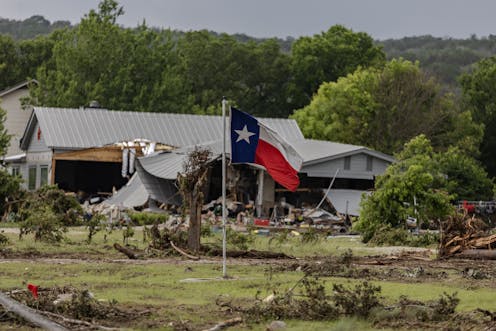
    On July 4, a horrific flash flood occurred in central Texas, mainly impacting Kerr County. The heavy rain started at about 3 a.m., resulting in rainwater surging down mountain slopes, causing the waters in the Guadalupe River to rise by eight metres very quickly.

    At least 132 people have been confirmed dead as of July 14; most of them were in Kerr County. The area is under renewed flood warnings as heavy rains threaten to continue.

    In recognition of the scope of this tragedy, it’s important to determine why it happened. Texas Gov. Greg Abbott stated that a special session of the state legislature will be held in late July to investigate the emergency response.

    Acting to reduce impacts

    Local Texas officials are facing questions over their actions in the hours — and years — before the flood. In recent years, multiple efforts in Kerr County to build a more substantial flood warning system have faltered or been abandoned due to budget concerns.

    In 2015, a deadly Memorial Day flood in Kerr County rekindled debate over whether to install a flood monitoring system and sirens that would alert the public to evacuate when the river rose to dangerous levels. Some officials, cognizant of a 1987 flood that killed eight people on a church camp bus, thought it should be done, but the idea ran into opposition.

    Some residents and elected officials opposed the installation of sirens, citing the cost and noise that they feared would result from repeated alarms. As a result, Kerr Country did not have emergency sirens that could have warned residents about the rising waters.

    Critical warnings

    The critical challenge for communicating flash floods is ensuring that early warnings reach vulnerable populations. Unlike slow-onset river floods, flash floods leave very limited time for reaction. This makes accurate short-term forecasting and community preparedness essential.

    The U.S. National Weather Service issued its first public warning about the flooding in Kerr County at 1:14 a.m. on July 4, warning of life-threatening flash flooding, with subsequent warnings triggering alerts.

    Floodwaters surged dramatically as the Guadalupe River rose nearly eight metres in about 45 minutes. The 4:03 a.m. warning instructed residents to “Move to higher ground now! This is an extremely dangerous and life-threatening situation.”

    The warnings were disseminated at night through emergency management systems and television and radio stations, but many people, including hundreds of children at summer camps, did not receive them.

    Government agencies at all levels need to work together to ensure that residents of impacted areas move effectively to outside of the flood area or at least to higher elevation areas or safe buildings.

    CBC News covers the flood warnings issued during the Texas floods.

    Societal impacts

    The World Economic Forum’s Global Risk Assessment for 10-year periods ranked extreme weather events as the highest global risk in both the 2024 and 2025 assessments. Floods are a very important extreme weather event.

    The U.S. National Centers for Environmental Information published its review of events for the period 1980-2024. Tropical cyclones were the costliest weather and climate disasters, followed by: droughts, wildfires and flooding, which had an average cost of US$4.5 billion per event. The number of billion-dollar inland flood events has increased in the U.S.

    Note that the dollar costs of these events in these assessments do not include the many societal impacts, including mental trauma and other health impacts.

    Terminations at U.S. agencies

    There have been major reductions in the staffing and budgetary support of the U.S. National Oceanic and Atmospheric Administration (NOAA) and the National Weather Services, which is part of NOAA.


    Read more:
    Terminations at U.S. government agencies that monitor extreme weather events will have negative effects


    The impacts of these reductions on the weather and flood forecasts that would have alerted Texans on July 4 are not yet clear. At the time of writing, the website for the National Weather Services office for Austin/San Antonio, which covers the region that includes hard-hit Kerr County, shows six of 27 positions are listed as vacant. One important vacancy is that of the key manager responsible for issuing warnings and co-ordinating with local emergency management officials.

    The U.S. government has also reduced the funding for research on weather systems, including floods. There have also been reductions in the funding support for scientific analyses of how climate change will affect the severity of storms.

    Deep funding cuts to NOAA may result in the termination of both the National Severe Storms Lab and the Cooperative Institute for Severe and High-Impact Weather Research and Operations at the University of Oklahoma, which will have a highly negative impact on the understanding of storms.


    Read more:
    Trump’s budget cuts are adding to risk in life-threatening floods and emergencies


    Canadian floods

    The Canadian Severe Storms Laboratory was established in 2024 at Western University to conduct leading research on severe weather in Canada.

    Flooding is the most common and costly disaster in Canada. In the past decade, floods have averaged nearly $800 million in insured losses annually.

    Over time, the potential for extreme rainfall events is increasing. Heavy rainfall events and their ensuing flood risks are increasing because of warmer temperatures.

    Canadian data shows that climate change is driving increasingly severe and frequent floods.

    Is Canada prepared?

    Flooding will only get worse in the future, and government action is needed to manage this growing risk. One of the ways in which Canada isn’t prepared is that most flood-risk maps are out of date, with some being decades old.

    While Environment and Climate Change Canada issues weather watches and warnings for things like tornadoes, severe thunderstorms and rainfall, it doesn’t provide flood forecasts.

    Most provinces argue that water resources are natural resources and are therefore under provincial jurisdiction. This means that weather forecasts across the country are provided by the Meteorological Service of Canada, while flood forecasts are produced by each of the provinces.

    It is important to take actions to address adaptation and climate resilience that consider future floods and their impacts. Federal, provincial and territorial governments will need to work together to avoid tragedies.

    The Conversation

    Gordon McBean has received funding from the Canadian funding agencies (SSHRC, NSERC) for academic research in the past. He has received funding for research from Western University including one grant that has not yet been completed and from the Institute for Catastrophic Loss Reduction to participate in scientific meetings and conferences.

    ref. What Canada could learn from the tragic consequences of the Texas flash flood – https://theconversation.com/what-canada-could-learn-from-the-tragic-consequences-of-the-texas-flash-flood-260755

  • How AI can help protect bees from dangerous parasites

    Source: ForeignAffairs4

    Source: The Conversation – Canada – By Farnaz Sheikhi, Postdoctoral Associate in Computer Vision, University of Calgary

    Tiny but mighty, honeybees play a crucial role in our ecosystems, pollinating various plants and crops. They also support the economy. These small producers contribute billions of dollars to Canada’s agriculture industry, making Canada a major honey producer.

    However, in the winter of 2024, Canada’s honey industry faced a severe collapse. Canada lost more than one-third of its beehives, primarily due to the widespread infestation of Varroa mites.

    Traditional methods for controlling these parasites now seem less effective, and the industry needs a transition to smart beekeeping if it is to survive.

    We are currently conducting research to develop a non-invasive and sustainable method for the early detection of Varroa mites. Our proposed approach uses artificial intelligence (AI) to analyze images from beehives, automatically classifying them based on the presence of Varroa mites and the level of infestation.

    Varroa infestations

    Varroa mites are tiny parasites that attach to honeybees, feed on their body tissue and transmit viruses throughout the colony. Over the years, these parasites have developed resistance to the traditional control methods, necessitating more aggressive treatments. However, these treatments can endanger the health of honeybees.

    The Prairie provinces — Alberta, Saskatchewan and Manitoba — are Canada’s top honey-producing regions, with Alberta alone contributing almost 40 per cent of the country’s total honey production.

    Canada lost an average of 34.6 per cent of its bee colonies in the winter of 2024 — 2.4 per cent more than the loss of the previous year. The winter losses across Canada ranged from 9.8 per cent in Newfoundland and Labrador to 61.3 per cent on Prince Edward Island. In the Prairie provinces, colony losses reached almost 40 per cent.

    Investigations reported that Varroa mite infestations were a key contributing factor causing the devastation.

    Economic impact on Canada

    Winter 2024 losses had a devastating effect on Canada’s beekeepers. The high cost of honeybees as well as the intensive labour and time needed to rebuild hives make them difficult to replace.

    Within a stable environment and a thriving industry, increased investment yields higher returns. In 2023, the number of beekeepers and bee colonies in Canada increased by 3.29 per cent and 2.4 per cent, respectively.

    Yet, in 2024, Canada experienced an 18.3 per cent decrease in honey production. The total national value of the harvest declined by 24.5 per cent, dropping from from $283 million in 2023 to $214 million. The Prairie provinces were hit hardest; the value of honey solely produced in Alberta fell from $100 million in 2023 to $75 million in 2024.

    Limitations of current monitoring methods

    Preventing mites requires frequent hive monitoring. Although timely detection is critical for treating hives, manual inspection is time-consuming and labour-intensive. Furthermore, frequent manual monitoring can pose risks to the health and well-being of honeybees.

    Alcohol washes, sugar shakes and using sticky boards are among the methods for Varroa mites monitoring. In a typical alcohol wash test, about 300 bees per colony are sampled. These bees are washed in rubbing alcohol. Then, they are shaken rigorously to check for Varroa mites. The problem with this method is that all the bees tested die in the process.

    While other methods, such as the sugar shake and using sticky boards, do not kill the bees tested, they deliver limited results and are not always as accurate.

    This makes none of the current methods ideal; each involves a trade-off between invasiveness and accuracy. And given that testing must be done frequently, they all pose risks to the health of honeybees themselves. So what’s the solution?

    Using AI to detect Varroa mites

    There is an urgent need for the beekeeping industry to evolve to help prevent further losses and support the resilience of bee populations. Climate change and resistance of mites to traditional treatments are environmental alarms demanding a change in our beekeeping approaches.

    This is where artificial intelligence comes in. Using imaging systems, sensors embedded in hives, image-processing techniques and AI, researchers are now able to continuously collect and analyze hive data to detect Varroa mites.

    In this approach, a camera is placed inside the beehive brood box to capture images of the honeybees. These images are then transmitted via Wi-Fi or Bluetooth for storage and analysis.

    A neural network can be trained on the collected images — first to detect bees using object-detection algorithms, and then to identify Varroa mites on the bees through colour transformation techniques. Once mites are detected, their number within the hive can be automatically counted.

    Using this technology, beekeepers can benefit from automatic monitoring of the hives. When the level of infestation is specified by the system, it can also recommend effective treatments for hives. This way, Varroa mites can be detected and treated at an early stage, allowing hives to survive the winter more smoothly.

    Transitioning to smart beekeeping is a strategic solution that is non-invasive and environmentally friendly, cost-effective and profitable in the long term. The good news is that researchers at the University of Calgary and beekeepers are already working together to make this happen and preserve the sweetness of honey across our land.

    The Conversation

    Farhad Maleki receives funding from the Natural Sciences and Engineering Research Council of Canada.
    Alberta Innovate. He is affiliated with McGill University, where he serves as an adjunct Assistant Professor.

    Farnaz Sheikhi does not work for, consult, own shares in or receive funding from any company or organisation that would benefit from this article, and has disclosed no relevant affiliations beyond their academic appointment.

    ref. How AI can help protect bees from dangerous parasites – https://theconversation.com/how-ai-can-help-protect-bees-from-dangerous-parasites-259495

  • Lagos is young and diverse, so what shapes ethnic and religious prejudice among teens? Our study tried to find out

    Source: ForeignAffairs4

    Source: The Conversation – Africa – By Leila Demarest, Associate Professor, Institute of Political Science, Leiden University

    Lagos State, with an estimated population of 20 million, is Africa’s largest metropolis. Home to Nigeria’s commercial capital, it is a magnet for internal migration, drawing in a mix of the country’s ethnic groups. Nigeria is estimated to have between 150 and 500 distinct ethnic groups, many of which are represented in Lagos.

    The original inhabitants of Lagos were Yoruba. As the colonial capital, the city experienced early migration from the Igbo group from the south-east. The Hausa-Fulani, from the north, are another important group to have been drawn to Lagos. More recent migration to the city has also been caused by insecurity in the north of Nigeria.

    The social interactions between people from diverse backgrounds have been studied extensively as dynamics of exclusion are often pervasive in developed and developing societies alike. In multi-ethnic societies in Africa where there has been violent conflict, the question of peaceful coexistence is all the more important.

    In Nigeria, past ethno-religious violence has led to massive casualties. The 1960s Biafra war and lethal riots in Kaduna and Jos in recent decades stand out. Lesser tensions are also present in Lagos state around competition for jobs and access to political power.

    Intergroup tensions in Lagos may give rise to concerns about the risk of more serious threats.

    But do we see this in adolescents, who haven’t yet started competing with each other for jobs and resources? In schools, young people generally have equal status, common goals, intergroup cooperation, and potential for friendship. Could new generations overcome the adversarial past?

    We have decades of research between us straddling group behaviour and identity formation, peace and conflict dynamics, and ethnicity and religion in sub-Saharan Africa. For our research we aimed to gain a picture of intergroup dynamics among Lagos adolescents.

    We concluded from surveying young people that higher diversity levels encourage more friendships and cross-group political discussions, which lead to positive relations between ethnic groups. But waiting for this to happen naturally may not be the best approach. It may leave smaller minority groups exposed to discrimination in the meantime. Policy interventions may encourage a quicker development of positive relations.

    Survey of Lagos adolescents

    Nigeria has a large youth population. Half of the people who live in Lagos state are younger than 25. That could have an important impact on future developments in the city, including intergroup relations.

    In 2019, we surveyed final year secondary school students in 36 schools across the state to find out how they viewed other societal groups and which factors affected their views. Most previous research on intergroup relations has focused on adults.

    We aimed to obtain a sample of Lagos adolescents who experienced diversity in their daily lives. To achieve this, we drew from both urban and rural districts. Our final sample contained 70 % Yoruba, 16 % Igbo, 2 % Hausa-Fulani, and 12 % other minority group adolescents.

    We found that:

    • adolescents who reported more cross-group friendships had more positive attitudes, including higher trust, towards other groups

    • those exposed to political discussions in diverse contexts were more likely to hold positive attitudes towards other ethnic and religious groups

    • when youths experienced more diversity in their schools and neighbourhoods they were less likely to stereotype members of groups

    • they were also less likely to report a preference for their own group when it comes to teachers, future bosses, marriage partners and electoral candidates.

    In contrast, youths exposed to political discussions in ethnic enclaves held negative views.

    Diversity and contact

    We used statistical analyses to investigate intergroup relations among our youth sample. We first asked whether there was a relationship between exposure to other groups and attitudes towards them. While urban areas, especially megacities like Lagos, are often characterised by diversity, many ethnic enclaves or homogeneous neighbourhoods exist.

    We found that higher exposure to diversity had mixed effects. It was associated with less stereotyping and in-group preference, but also related to lower trust in others in general.

    Mixed effects are not surprising, as scholars have long held that exposure to diversity does not really tell us how people actually relate to one another: what matters more is positive contact between individuals from different groups. Contact has been robustly associated with more positive intergroup attitudes in predominantly western-focused studies. In Africa-focused studies results have been mixed, with some finding positive and others no real impact of contact.

    Our findings provide evidence for positive contact theory as adolescents with more cross-group friendships held more positive attitudes towards other groups and also had higher trust. This demonstrates actual positive contact is more important than mere exposure to diversity.

    We also found that exposure to political narratives mattered. Youths who were exposed to political discussions in diverse contexts were more likely to hold positive attitudes towards other ethnic and religious groups.

    Policy implications

    Intergroup attitudes are formed at an early age. Once developed, prejudice or tolerance have a tendency to “stick” over time. Questions on the development of positive attitudes are in need of urgent attention in Africa because of the continent’s youthful populations and many African countries’ experiences with ethnic and religious conflict.

    This brings us to the question of whether tolerance of others can be fast-tracked, especially at an early age, and when youth can be targeted through school interventions. Evidence from other (western) studies suggests that multicultural education, in which pupils are exposed to different cultures in the curriculum, cross-group class discussions on political themes, and cross-group school projects, may encourage positive intergroup relations.

    These types of policies come with an important warning though. As we have seen during our field work, many schools, especially public schools, face large class sizes due to resource constraints and teacher training is minimal. Corporal punishment is still implemented. Group work and deliberation are difficult to manage with large numbers and a lack of training, and teachers also risk bringing their own prejudices to the classroom.

    So it’s important to design interventions carefully and more research is needed to do this effectively in African contexts.

    The Conversation

    Leila Demarest received funding from the Leiden University Fund (grant reference W19304-5-01)

    Arnim Langer receives funding from Research Foundation Flanders (FWO).

    ref. Lagos is young and diverse, so what shapes ethnic and religious prejudice among teens? Our study tried to find out – https://theconversation.com/lagos-is-young-and-diverse-so-what-shapes-ethnic-and-religious-prejudice-among-teens-our-study-tried-to-find-out-260720

  • MIL-OSI Analysis: What Canada could learn from the tragic consequences of the Texas flash flood

    Source: The Conversation – Canada – By Gordon McBean, Professor Emeritus, Department of Geography and Environment, Western University

    On July 4, a horrific flash flood occurred in central Texas, mainly impacting Kerr County. The heavy rain started at about 3 a.m., resulting in rainwater surging down mountain slopes, causing the waters in the Guadalupe River to rise by eight metres very quickly.

    At least 132 people have been confirmed dead as of July 14; most of them were in Kerr County. The area is under renewed flood warnings as heavy rains threaten to continue.

    In recognition of the scope of this tragedy, it’s important to determine why it happened. Texas Gov. Greg Abbott stated that a special session of the state legislature will be held in late July to investigate the emergency response.

    Acting to reduce impacts

    Local Texas officials are facing questions over their actions in the hours — and years — before the flood. In recent years, multiple efforts in Kerr County to build a more substantial flood warning system have faltered or been abandoned due to budget concerns.

    In 2015, a deadly Memorial Day flood in Kerr County rekindled debate over whether to install a flood monitoring system and sirens that would alert the public to evacuate when the river rose to dangerous levels. Some officials, cognizant of a 1987 flood that killed eight people on a church camp bus, thought it should be done, but the idea ran into opposition.

    Some residents and elected officials opposed the installation of sirens, citing the cost and noise that they feared would result from repeated alarms. As a result, Kerr Country did not have emergency sirens that could have warned residents about the rising waters.

    Critical warnings

    The critical challenge for communicating flash floods is ensuring that early warnings reach vulnerable populations. Unlike slow-onset river floods, flash floods leave very limited time for reaction. This makes accurate short-term forecasting and community preparedness essential.

    The U.S. National Weather Service issued its first public warning about the flooding in Kerr County at 1:14 a.m. on July 4, warning of life-threatening flash flooding, with subsequent warnings triggering alerts.

    Floodwaters surged dramatically as the Guadalupe River rose nearly eight metres in about 45 minutes. The 4:03 a.m. warning instructed residents to “Move to higher ground now! This is an extremely dangerous and life-threatening situation.”

    The warnings were disseminated at night through emergency management systems and television and radio stations, but many people, including hundreds of children at summer camps, did not receive them.

    Government agencies at all levels need to work together to ensure that residents of impacted areas move effectively to outside of the flood area or at least to higher elevation areas or safe buildings.

    CBC News covers the flood warnings issued during the Texas floods.

    Societal impacts

    The World Economic Forum’s Global Risk Assessment for 10-year periods ranked extreme weather events as the highest global risk in both the 2024 and 2025 assessments. Floods are a very important extreme weather event.

    The U.S. National Centers for Environmental Information published its review of events for the period 1980-2024. Tropical cyclones were the costliest weather and climate disasters, followed by: droughts, wildfires and flooding, which had an average cost of US$4.5 billion per event. The number of billion-dollar inland flood events has increased in the U.S.

    Note that the dollar costs of these events in these assessments do not include the many societal impacts, including mental trauma and other health impacts.

    Terminations at U.S. agencies

    There have been major reductions in the staffing and budgetary support of the U.S. National Oceanic and Atmospheric Administration (NOAA) and the National Weather Services, which is part of NOAA.


    Read more:
    Terminations at U.S. government agencies that monitor extreme weather events will have negative effects


    The impacts of these reductions on the weather and flood forecasts that would have alerted Texans on July 4 are not yet clear. At the time of writing, the website for the National Weather Services office for Austin/San Antonio, which covers the region that includes hard-hit Kerr County, shows six of 27 positions are listed as vacant. One important vacancy is that of the key manager responsible for issuing warnings and co-ordinating with local emergency management officials.

    The U.S. government has also reduced the funding for research on weather systems, including floods. There have also been reductions in the funding support for scientific analyses of how climate change will affect the severity of storms.

    Deep funding cuts to NOAA may result in the termination of both the National Severe Storms Lab and the Cooperative Institute for Severe and High-Impact Weather Research and Operations at the University of Oklahoma, which will have a highly negative impact on the understanding of storms.


    Read more:
    Trump’s budget cuts are adding to risk in life-threatening floods and emergencies


    Canadian floods

    The Canadian Severe Storms Laboratory was established in 2024 at Western University to conduct leading research on severe weather in Canada.

    Flooding is the most common and costly disaster in Canada. In the past decade, floods have averaged nearly $800 million in insured losses annually.

    Over time, the potential for extreme rainfall events is increasing. Heavy rainfall events and their ensuing flood risks are increasing because of warmer temperatures.

    Canadian data shows that climate change is driving increasingly severe and frequent floods.

    Is Canada prepared?

    Flooding will only get worse in the future, and government action is needed to manage this growing risk. One of the ways in which Canada isn’t prepared is that most flood-risk maps are out of date, with some being decades old.

    While Environment and Climate Change Canada issues weather watches and warnings for things like tornadoes, severe thunderstorms and rainfall, it doesn’t provide flood forecasts.

    Most provinces argue that water resources are natural resources and are therefore under provincial jurisdiction. This means that weather forecasts across the country are provided by the Meteorological Service of Canada, while flood forecasts are produced by each of the provinces.

    It is important to take actions to address adaptation and climate resilience that consider future floods and their impacts. Federal, provincial and territorial governments will need to work together to avoid tragedies.

    Gordon McBean has received funding from the Canadian funding agencies (SSHRC, NSERC) for academic research in the past. He has received funding for research from Western University including one grant that has not yet been completed and from the Institute for Catastrophic Loss Reduction to participate in scientific meetings and conferences.

    ref. What Canada could learn from the tragic consequences of the Texas flash flood – https://theconversation.com/what-canada-could-learn-from-the-tragic-consequences-of-the-texas-flash-flood-260755

    MIL OSI Analysis

  • MIL-OSI Analysis: How AI can help protect bees from dangerous parasites

    Source: The Conversation – Canada – By Farnaz Sheikhi, Postdoctoral Associate in Computer Vision, University of Calgary

    Tiny but mighty, honeybees play a crucial role in our ecosystems, pollinating various plants and crops. They also support the economy. These small producers contribute billions of dollars to Canada’s agriculture industry, making Canada a major honey producer.

    However, in the winter of 2024, Canada’s honey industry faced a severe collapse. Canada lost more than one-third of its beehives, primarily due to the widespread infestation of Varroa mites.

    Traditional methods for controlling these parasites now seem less effective, and the industry needs a transition to smart beekeeping if it is to survive.

    We are currently conducting research to develop a non-invasive and sustainable method for the early detection of Varroa mites. Our proposed approach uses artificial intelligence (AI) to analyze images from beehives, automatically classifying them based on the presence of Varroa mites and the level of infestation.

    Varroa infestations

    Varroa mites are tiny parasites that attach to honeybees, feed on their body tissue and transmit viruses throughout the colony. Over the years, these parasites have developed resistance to the traditional control methods, necessitating more aggressive treatments. However, these treatments can endanger the health of honeybees.

    The Prairie provinces — Alberta, Saskatchewan and Manitoba — are Canada’s top honey-producing regions, with Alberta alone contributing almost 40 per cent of the country’s total honey production.

    Canada lost an average of 34.6 per cent of its bee colonies in the winter of 2024 — 2.4 per cent more than the loss of the previous year. The winter losses across Canada ranged from 9.8 per cent in Newfoundland and Labrador to 61.3 per cent on Prince Edward Island. In the Prairie provinces, colony losses reached almost 40 per cent.

    Investigations reported that Varroa mite infestations were a key contributing factor causing the devastation.

    Economic impact on Canada

    Winter 2024 losses had a devastating effect on Canada’s beekeepers. The high cost of honeybees as well as the intensive labour and time needed to rebuild hives make them difficult to replace.

    Within a stable environment and a thriving industry, increased investment yields higher returns. In 2023, the number of beekeepers and bee colonies in Canada increased by 3.29 per cent and 2.4 per cent, respectively.

    Yet, in 2024, Canada experienced an 18.3 per cent decrease in honey production. The total national value of the harvest declined by 24.5 per cent, dropping from from $283 million in 2023 to $214 million. The Prairie provinces were hit hardest; the value of honey solely produced in Alberta fell from $100 million in 2023 to $75 million in 2024.

    Limitations of current monitoring methods

    Preventing mites requires frequent hive monitoring. Although timely detection is critical for treating hives, manual inspection is time-consuming and labour-intensive. Furthermore, frequent manual monitoring can pose risks to the health and well-being of honeybees.

    Alcohol washes, sugar shakes and using sticky boards are among the methods for Varroa mites monitoring. In a typical alcohol wash test, about 300 bees per colony are sampled. These bees are washed in rubbing alcohol. Then, they are shaken rigorously to check for Varroa mites. The problem with this method is that all the bees tested die in the process.

    While other methods, such as the sugar shake and using sticky boards, do not kill the bees tested, they deliver limited results and are not always as accurate.

    This makes none of the current methods ideal; each involves a trade-off between invasiveness and accuracy. And given that testing must be done frequently, they all pose risks to the health of honeybees themselves. So what’s the solution?

    Using AI to detect Varroa mites

    There is an urgent need for the beekeeping industry to evolve to help prevent further losses and support the resilience of bee populations. Climate change and resistance of mites to traditional treatments are environmental alarms demanding a change in our beekeeping approaches.

    This is where artificial intelligence comes in. Using imaging systems, sensors embedded in hives, image-processing techniques and AI, researchers are now able to continuously collect and analyze hive data to detect Varroa mites.

    In this approach, a camera is placed inside the beehive brood box to capture images of the honeybees. These images are then transmitted via Wi-Fi or Bluetooth for storage and analysis.

    A neural network can be trained on the collected images — first to detect bees using object-detection algorithms, and then to identify Varroa mites on the bees through colour transformation techniques. Once mites are detected, their number within the hive can be automatically counted.

    Using this technology, beekeepers can benefit from automatic monitoring of the hives. When the level of infestation is specified by the system, it can also recommend effective treatments for hives. This way, Varroa mites can be detected and treated at an early stage, allowing hives to survive the winter more smoothly.

    Transitioning to smart beekeeping is a strategic solution that is non-invasive and environmentally friendly, cost-effective and profitable in the long term. The good news is that researchers at the University of Calgary and beekeepers are already working together to make this happen and preserve the sweetness of honey across our land.

    Farhad Maleki receives funding from the Natural Sciences and Engineering Research Council of Canada.
    Alberta Innovate. He is affiliated with McGill University, where he serves as an adjunct Assistant Professor.

    Farnaz Sheikhi does not work for, consult, own shares in or receive funding from any company or organisation that would benefit from this article, and has disclosed no relevant affiliations beyond their academic appointment.

    ref. How AI can help protect bees from dangerous parasites – https://theconversation.com/how-ai-can-help-protect-bees-from-dangerous-parasites-259495

    MIL OSI Analysis

  • MIL-OSI Analysis: Lagos is young and diverse, so what shapes ethnic and religious prejudice among teens? Our study tried to find out

    Source: The Conversation – Africa – By Leila Demarest, Associate Professor, Institute of Political Science, Leiden University

    Lagos State, with an estimated population of 20 million, is Africa’s largest metropolis. Home to Nigeria’s commercial capital, it is a magnet for internal migration, drawing in a mix of the country’s ethnic groups. Nigeria is estimated to have between 150 and 500 distinct ethnic groups, many of which are represented in Lagos.

    The original inhabitants of Lagos were Yoruba. As the colonial capital, the city experienced early migration from the Igbo group from the south-east. The Hausa-Fulani, from the north, are another important group to have been drawn to Lagos. More recent migration to the city has also been caused by insecurity in the north of Nigeria.

    The social interactions between people from diverse backgrounds have been studied extensively as dynamics of exclusion are often pervasive in developed and developing societies alike. In multi-ethnic societies in Africa where there has been violent conflict, the question of peaceful coexistence is all the more important.

    In Nigeria, past ethno-religious violence has led to massive casualties. The 1960s Biafra war and lethal riots in Kaduna and Jos in recent decades stand out. Lesser tensions are also present in Lagos state around competition for jobs and access to political power.

    Intergroup tensions in Lagos may give rise to concerns about the risk of more serious threats.

    But do we see this in adolescents, who haven’t yet started competing with each other for jobs and resources? In schools, young people generally have equal status, common goals, intergroup cooperation, and potential for friendship. Could new generations overcome the adversarial past?

    We have decades of research between us straddling group behaviour and identity formation, peace and conflict dynamics, and ethnicity and religion in sub-Saharan Africa. For our research we aimed to gain a picture of intergroup dynamics among Lagos adolescents.

    We concluded from surveying young people that higher diversity levels encourage more friendships and cross-group political discussions, which lead to positive relations between ethnic groups. But waiting for this to happen naturally may not be the best approach. It may leave smaller minority groups exposed to discrimination in the meantime. Policy interventions may encourage a quicker development of positive relations.

    Survey of Lagos adolescents

    Nigeria has a large youth population. Half of the people who live in Lagos state are younger than 25. That could have an important impact on future developments in the city, including intergroup relations.

    In 2019, we surveyed final year secondary school students in 36 schools across the state to find out how they viewed other societal groups and which factors affected their views. Most previous research on intergroup relations has focused on adults.

    We aimed to obtain a sample of Lagos adolescents who experienced diversity in their daily lives. To achieve this, we drew from both urban and rural districts. Our final sample contained 70 % Yoruba, 16 % Igbo, 2 % Hausa-Fulani, and 12 % other minority group adolescents.

    We found that:

    • adolescents who reported more cross-group friendships had more positive attitudes, including higher trust, towards other groups

    • those exposed to political discussions in diverse contexts were more likely to hold positive attitudes towards other ethnic and religious groups

    • when youths experienced more diversity in their schools and neighbourhoods they were less likely to stereotype members of groups

    • they were also less likely to report a preference for their own group when it comes to teachers, future bosses, marriage partners and electoral candidates.

    In contrast, youths exposed to political discussions in ethnic enclaves held negative views.

    Diversity and contact

    We used statistical analyses to investigate intergroup relations among our youth sample. We first asked whether there was a relationship between exposure to other groups and attitudes towards them. While urban areas, especially megacities like Lagos, are often characterised by diversity, many ethnic enclaves or homogeneous neighbourhoods exist.

    We found that higher exposure to diversity had mixed effects. It was associated with less stereotyping and in-group preference, but also related to lower trust in others in general.

    Mixed effects are not surprising, as scholars have long held that exposure to diversity does not really tell us how people actually relate to one another: what matters more is positive contact between individuals from different groups. Contact has been robustly associated with more positive intergroup attitudes in predominantly western-focused studies. In Africa-focused studies results have been mixed, with some finding positive and others no real impact of contact.

    Our findings provide evidence for positive contact theory as adolescents with more cross-group friendships held more positive attitudes towards other groups and also had higher trust. This demonstrates actual positive contact is more important than mere exposure to diversity.

    We also found that exposure to political narratives mattered. Youths who were exposed to political discussions in diverse contexts were more likely to hold positive attitudes towards other ethnic and religious groups.

    Policy implications

    Intergroup attitudes are formed at an early age. Once developed, prejudice or tolerance have a tendency to “stick” over time. Questions on the development of positive attitudes are in need of urgent attention in Africa because of the continent’s youthful populations and many African countries’ experiences with ethnic and religious conflict.

    This brings us to the question of whether tolerance of others can be fast-tracked, especially at an early age, and when youth can be targeted through school interventions. Evidence from other (western) studies suggests that multicultural education, in which pupils are exposed to different cultures in the curriculum, cross-group class discussions on political themes, and cross-group school projects, may encourage positive intergroup relations.

    These types of policies come with an important warning though. As we have seen during our field work, many schools, especially public schools, face large class sizes due to resource constraints and teacher training is minimal. Corporal punishment is still implemented. Group work and deliberation are difficult to manage with large numbers and a lack of training, and teachers also risk bringing their own prejudices to the classroom.

    So it’s important to design interventions carefully and more research is needed to do this effectively in African contexts.

    Leila Demarest received funding from the Leiden University Fund (grant reference W19304-5-01)

    Arnim Langer receives funding from Research Foundation Flanders (FWO).

    ref. Lagos is young and diverse, so what shapes ethnic and religious prejudice among teens? Our study tried to find out – https://theconversation.com/lagos-is-young-and-diverse-so-what-shapes-ethnic-and-religious-prejudice-among-teens-our-study-tried-to-find-out-260720

    MIL OSI Analysis

  • MIL-OSI Submissions: Whose turn is it? The question is at the heart of language and chimpanzees ask it too

    Source: The Conversation – Africa (2) – By Kayla Kolff, Postdoctoral researcher, Osnabrück University

    When we think about what sets humans apart from other animals, language often comes to mind. Language is more than words – it also relies on the ability to build shared understanding through conversation.

    At the heart of conversation is turn-taking: the ability to coordinate interaction in time. This means alternating speaking roles, where one person speaks and the other listens, and responding in ways that keep the exchange moving forward.

    But is this uniquely human? Increasingly, scientists are finding signs of turn-taking beyond our species – in visual cues in Siamese fish, in meerkat calls, and, as our recent study suggests, also in the grooming behaviour of chimpanzees.

    As primatologists and biologists, we are interested in the evolutionary origins and driving forces behind human communication and cognition.

    One animal behaviour that’s been said to involve features resembling human communication is grooming – combing through or licking each other’s fur. It’s one of the ways that some animals connect and bond with one another.

    Grooming is a central part of the daily lives of chimpanzees, a species that together with bonobos represent humans’ closest living relatives. Chimpanzees engage in grooming to build relationships, reduce stress, and strengthen their friendships. While we know why they groom, and whom they prefer to groom, we do not know much about how it is organised. Does grooming happen randomly, or do chimpanzees take turns? And might things like age, their position in the group, family ties, or friendships influence the interaction? There may be another layer to grooming, shaped by social decisions made in the moment.

    To answer this, we looked at whether grooming interactions involve turn-taking. We found that chimpanzees living in their natural environments do take turns, using a range of signals and movements to engage each other within the interaction. We then went on to check whether age, social standing, family ties and friendships affected the exchange of turns.

    We found that especially age and social standing shaped how individuals accommodated their partners. This is in line with Communication Accommodation Theory, which is the idea that individuals adapt their communication according to the characteristics of recipients. Our findings open a new window on chimpanzee social cognition and provide perspectives on the evolutionary foundations of human communication.

    Grooming coordination in the wild

    To investigate how chimpanzees coordinate their grooming interactions, we studied male eastern chimpanzees at the Ngogo field site, in Uganda’s Kibale National Park. Over the course of ten months, we observed and filmed grooming interactions among 42 males in their natural environment using a digital camera.

    As chimpanzee grooming is not just a simple back-and-forth where one chimpanzee grooms and then gets groomed in return, we paid close attention to gestures and additional actions. Gestures are bodily movements used to get another chimpanzee’s attention or to ask for something, such as raising an arm to invite more grooming. Actions, on the other hand, are things one chimpanzee does to another, such as grooming, approaching or leaving.

    Based on these, we identified four types of turn exchanges:

    • action–action

    • action–gesture

    • gesture–action

    • gesture–gesture.

    We observed that chimpanzees actively managed the interaction, using actions and gestures to start, invite, or respond to their partner’s participation.

    What shapes participation in these exchanges?

    Some chimpanzees were more likely than others to take turns during grooming. A closer look revealed that age and social status played a key role. Older males, who in chimpanzee societies tend to hold more dominant positions, were more likely to get responses from others. Younger males, especially adolescents, were more likely to take a turn in response to others than to have others take a turn in response to them – suggesting they were more often responding than being responded to.

    That makes a lot of sense when you think about chimpanzee social life. Younger individuals are still figuring out their place in the group, and grooming can be a way to build and nurture relationships and to learn the social ropes and finesses. Older males already have stable and strong friendships; they often receive grooming from others and tend to give less in return.

    Surprisingly, friendships and family ties did not influence the chances of turn-taking, although these are important aspects of chimpanzee lives. What mattered more were age and social standing. Think of it like choosing a lunch seat at school: you might choose to sit near an older student or someone popular, even if it meant not sitting with your friends or family.

    Grooming interaction between Gus (a subadult male) and Jackson (an adult male and the alpha), both of whom also appear in the Netflix documentary Chimp Empire.

    When we looked more closely at different types of turn-taking, one stood out: gesture–gesture exchanges. These looked a lot like social negotiations, where both chimpanzees gestured to each other before any grooming happened. These kinds of exchanges were more common when a chimpanzee interacted with an older individual, who may be more experienced in handling social situations and better at getting what they want, whether that means “groom me” or “keep going in grooming me”.

    This study suggests that chimpanzees take turns as a strategic social tool to achieve goals like being groomed instead of doing the grooming themselves. Who you are, who you are interacting with, and what you might stand to gain from the exchange all shape how things unfold.

    What this tells us

    Our findings reveal that chimpanzee grooming is a complex behaviour, organised through structured exchanges of gestures and actions, shaped by strategies for engaging with others. It’s about more than the grooming itself.


    Read more:
    Inside the chimpanzee medicine cabinet: we’ve found a new way chimps treat wounds with plants


    This ability to coordinate action and respond to others suggests a basic foundation that may have helped lay the groundwork for the evolution of human communication.

    Kayla Kolff received funding from the DFG, German Research Foundation.

    This project is part of a project that was funded by an EUConsolidator
    grant (772000, TurnTaking) to SP of the European
    Research Council (ERC) under the European Union’s Horizon
    2020 research and innovation programme.

    ref. Whose turn is it? The question is at the heart of language and chimpanzees ask it too – https://theconversation.com/whose-turn-is-it-the-question-is-at-the-heart-of-language-and-chimpanzees-ask-it-too-258736

    MIL OSI

  • MIL-OSI Submissions: Africans survived 10,000 years of climate changes by adapting food systems – study offers lessons for modern times

    Source: The Conversation – Africa (2) – By Leanne N. Phelps, Associate research scientist, Columbia University

    Imagine living in a place where a single drought, hurricane, or mudslide can wipe out your food supply. Across Africa, many communities do exactly that – navigate climate shocks like floods, heatwaves, and failed harvests.

    What’s often overlooked in the development policies to tackle these threats is a powerful sources of insight: Africa’s own history.

    Around 14,700 to 5,500 years ago, much of Africa experienced wetter conditions – a time referred to as the African Humid Period. As wet conditions declined around 5,500 years ago, major social, cultural, and environmental changes ensued across the continent.

    We’re part of a multidisciplinary team of scientists who recently published a study about how diverse African communities adapted to climate variability over the past 10,000 years. This is the first study to explore thousands of years of change in people’s livelihoods across the continent using isotopic data.

    This continent-wide approach offers novel insights into how livelihoods formed and evolved across space and time.

    Prior theories often assumed that societies and their food systems evolved in a linear way. In other words they developed from simple hunting and gathering communities to politically and socially complex societies practising agriculture.

    Instead, what we see is a complex mosaic of adaptable strategies that helped people survive. For 10,000 years, African communities adapted by mixing herding, farming, fishing and foraging. They blended different practices based on what worked at different times in their specific environment. That diversity across communities and regions was key to human survival.

    That has real lessons for food systems today.

    Our research suggests that rigid, top-down development plans, including ones that privilege intensifying agriculture over diversified economies, are unlikely to succeed. Many modern policies promote narrow approaches, like focusing only on cash crops. But history tells a different story. Resilience isn’t about choosing the “best” or most “intensive” method and sticking with it. Rather it’s about staying flexible and blending different strategies to align with local conditions.

    The clues left behind

    We were able to develop our insights by looking at the clues left behind by the food people ate and the environments they lived in. We did this by analysing the chemical traces (isotopes) in ancient human and domestic animal bones from 187 archaeological sites across the African continent.

    We sorted the results into groups with similar features, or “isotopic niches”. Then we described the livelihood and ecological characteristics of these niches using archaeological and environmental information.


    Read more:
    Tooth enamel provides clues on tsetse flies and the spread of herding in ancient Africa


    Our methods illustrated a wide range of livelihood systems. For example, in what are now Botswana and Zimbabwe, some groups combined small-scale farming with wild food gathering and livestock herding after the African Humid Period. In Egypt and Sudan, communities mixed crop farming – focused on wheat, barley, and legumes – with fishing, dairy, and beer brewing.

    Herders, in particular, developed highly flexible strategies. They adapted to hot plains, dry highlands, and everything in between. Pastoral systems (farming with grazing animals) show up at more archaeological sites than any other food system. They also have the widest range of chemical signatures – evidence of their adaptability to shifting environments.

    Our study also used isotopic data to build up a picture of how people were using livestock. Most animal management systems were reliant on grasses (plants such as millet and tropical pasture), and adapted to diverse ecological conditions. Some systems were highly specialised to semi-arid and mountainous environments. Others included mixed herds adapted to wetter or lower elevation regions. In other cases, animals were kept as stock in small numbers to supplement other livelihoods – providing milk, dung, and insurance against crop failure.


    Read more:
    Pastoralists are an asset to the world – and we have a lot to learn from them


    This adaptability helps clarify why, over the past millennium, pastoral systems have remained so important, especially in areas with increasing aridity.

    Mixed livelihood strategies

    The study also provides strong evidence for interactions between food production and foraging, whether at community or regional level.

    Dynamic, mixed livelihood strategies, including interactions like trade within and between communities near and far, were especially apparent during periods of climatic stress. One of these periods was the end of the African Humid Period (from about 5,500 years ago), when a drier climate created new challenges.

    In south-eastern Africa, from 2,000 years ago, there was a rise of diverse livelihood systems blending herding, farming and foraging in complex ways. These systems likely emerged in response to complex environmental and social change. Complex changes in social networks – especially around sharing land, resources, and knowledge – likely underpinned the development of this resilience.


    Read more:
    Hunter-gatherer diets weren’t always heavy on meat: Morocco study reveals a plant-based diet


    How the past can inform the future

    Ancient livelihood strategies offer a playbook for surviving climate change today.

    Our analysis suggests that over thousands of years, communities that combined herding, farming, fishing and gathering were making context-specific choices that helped them weather unpredictable conditions. They built food systems that worked with the land and sea, not against them. And they leaned on strong social networks, sharing resources, knowledge and labour.

    Past responses to climate shifts can inform current and future strategies for building resilience in regions facing socio-environmental pressures.

    Leanne N. Phelps is affiliated with Columbia Climate School at Columbia University; Royal Botanic Garden Edinburgh, UK; and NGO Vaevae based in Andavadoake, Toliara, Madagascar

    Kristina Guild Douglass receives funding from The US National Science Foundation. She is affiliated with the NGO Vae Vae.

    ref. Africans survived 10,000 years of climate changes by adapting food systems – study offers lessons for modern times – https://theconversation.com/africans-survived-10-000-years-of-climate-changes-by-adapting-food-systems-study-offers-lessons-for-modern-times-260240

    MIL OSI

  • MIL-OSI Analysis: Africans survived 10,000 years of climate changes by adapting food systems – study offers lessons for modern times

    Source: The Conversation – Africa (2) – By Leanne N. Phelps, Associate research scientist, Columbia University

    Imagine living in a place where a single drought, hurricane, or mudslide can wipe out your food supply. Across Africa, many communities do exactly that – navigate climate shocks like floods, heatwaves, and failed harvests.

    What’s often overlooked in the development policies to tackle these threats is a powerful sources of insight: Africa’s own history.

    Around 14,700 to 5,500 years ago, much of Africa experienced wetter conditions – a time referred to as the African Humid Period. As wet conditions declined around 5,500 years ago, major social, cultural, and environmental changes ensued across the continent.

    We’re part of a multidisciplinary team of scientists who recently published a study about how diverse African communities adapted to climate variability over the past 10,000 years. This is the first study to explore thousands of years of change in people’s livelihoods across the continent using isotopic data.

    This continent-wide approach offers novel insights into how livelihoods formed and evolved across space and time.

    Prior theories often assumed that societies and their food systems evolved in a linear way. In other words they developed from simple hunting and gathering communities to politically and socially complex societies practising agriculture.

    Instead, what we see is a complex mosaic of adaptable strategies that helped people survive. For 10,000 years, African communities adapted by mixing herding, farming, fishing and foraging. They blended different practices based on what worked at different times in their specific environment. That diversity across communities and regions was key to human survival.

    That has real lessons for food systems today.

    Our research suggests that rigid, top-down development plans, including ones that privilege intensifying agriculture over diversified economies, are unlikely to succeed. Many modern policies promote narrow approaches, like focusing only on cash crops. But history tells a different story. Resilience isn’t about choosing the “best” or most “intensive” method and sticking with it. Rather it’s about staying flexible and blending different strategies to align with local conditions.

    The clues left behind

    We were able to develop our insights by looking at the clues left behind by the food people ate and the environments they lived in. We did this by analysing the chemical traces (isotopes) in ancient human and domestic animal bones from 187 archaeological sites across the African continent.

    We sorted the results into groups with similar features, or “isotopic niches”. Then we described the livelihood and ecological characteristics of these niches using archaeological and environmental information.


    Read more:
    Tooth enamel provides clues on tsetse flies and the spread of herding in ancient Africa


    Our methods illustrated a wide range of livelihood systems. For example, in what are now Botswana and Zimbabwe, some groups combined small-scale farming with wild food gathering and livestock herding after the African Humid Period. In Egypt and Sudan, communities mixed crop farming – focused on wheat, barley, and legumes – with fishing, dairy, and beer brewing.

    Herders, in particular, developed highly flexible strategies. They adapted to hot plains, dry highlands, and everything in between. Pastoral systems (farming with grazing animals) show up at more archaeological sites than any other food system. They also have the widest range of chemical signatures – evidence of their adaptability to shifting environments.

    Our study also used isotopic data to build up a picture of how people were using livestock. Most animal management systems were reliant on grasses (plants such as millet and tropical pasture), and adapted to diverse ecological conditions. Some systems were highly specialised to semi-arid and mountainous environments. Others included mixed herds adapted to wetter or lower elevation regions. In other cases, animals were kept as stock in small numbers to supplement other livelihoods – providing milk, dung, and insurance against crop failure.


    Read more:
    Pastoralists are an asset to the world – and we have a lot to learn from them


    This adaptability helps clarify why, over the past millennium, pastoral systems have remained so important, especially in areas with increasing aridity.

    Mixed livelihood strategies

    The study also provides strong evidence for interactions between food production and foraging, whether at community or regional level.

    Dynamic, mixed livelihood strategies, including interactions like trade within and between communities near and far, were especially apparent during periods of climatic stress. One of these periods was the end of the African Humid Period (from about 5,500 years ago), when a drier climate created new challenges.

    In south-eastern Africa, from 2,000 years ago, there was a rise of diverse livelihood systems blending herding, farming and foraging in complex ways. These systems likely emerged in response to complex environmental and social change. Complex changes in social networks – especially around sharing land, resources, and knowledge – likely underpinned the development of this resilience.


    Read more:
    Hunter-gatherer diets weren’t always heavy on meat: Morocco study reveals a plant-based diet


    How the past can inform the future

    Ancient livelihood strategies offer a playbook for surviving climate change today.

    Our analysis suggests that over thousands of years, communities that combined herding, farming, fishing and gathering were making context-specific choices that helped them weather unpredictable conditions. They built food systems that worked with the land and sea, not against them. And they leaned on strong social networks, sharing resources, knowledge and labour.

    Past responses to climate shifts can inform current and future strategies for building resilience in regions facing socio-environmental pressures.

    Leanne N. Phelps is affiliated with Columbia Climate School at Columbia University; Royal Botanic Garden Edinburgh, UK; and NGO Vaevae based in Andavadoake, Toliara, Madagascar

    Kristina Guild Douglass receives funding from The US National Science Foundation. She is affiliated with the NGO Vae Vae.

    ref. Africans survived 10,000 years of climate changes by adapting food systems – study offers lessons for modern times – https://theconversation.com/africans-survived-10-000-years-of-climate-changes-by-adapting-food-systems-study-offers-lessons-for-modern-times-260240

    MIL OSI Analysis

  • Whose turn is it? The question is at the heart of language and chimpanzees ask it too

    Source: ForeignAffairs4

    Source: The Conversation – Africa (2) – By Kayla Kolff, Postdoctoral researcher, Osnabrück University

    When we think about what sets humans apart from other animals, language often comes to mind. Language is more than words – it also relies on the ability to build shared understanding through conversation.

    At the heart of conversation is turn-taking: the ability to coordinate interaction in time. This means alternating speaking roles, where one person speaks and the other listens, and responding in ways that keep the exchange moving forward.

    But is this uniquely human? Increasingly, scientists are finding signs of turn-taking beyond our species – in visual cues in Siamese fish, in meerkat calls, and, as our recent study suggests, also in the grooming behaviour of chimpanzees.

    As primatologists and biologists, we are interested in the evolutionary origins and driving forces behind human communication and cognition.

    One animal behaviour that’s been said to involve features resembling human communication is grooming – combing through or licking each other’s fur. It’s one of the ways that some animals connect and bond with one another.

    Grooming is a central part of the daily lives of chimpanzees, a species that together with bonobos represent humans’ closest living relatives. Chimpanzees engage in grooming to build relationships, reduce stress, and strengthen their friendships. While we know why they groom, and whom they prefer to groom, we do not know much about how it is organised. Does grooming happen randomly, or do chimpanzees take turns? And might things like age, their position in the group, family ties, or friendships influence the interaction? There may be another layer to grooming, shaped by social decisions made in the moment.

    To answer this, we looked at whether grooming interactions involve turn-taking. We found that chimpanzees living in their natural environments do take turns, using a range of signals and movements to engage each other within the interaction. We then went on to check whether age, social standing, family ties and friendships affected the exchange of turns.

    We found that especially age and social standing shaped how individuals accommodated their partners. This is in line with Communication Accommodation Theory, which is the idea that individuals adapt their communication according to the characteristics of recipients. Our findings open a new window on chimpanzee social cognition and provide perspectives on the evolutionary foundations of human communication.

    Grooming coordination in the wild

    To investigate how chimpanzees coordinate their grooming interactions, we studied male eastern chimpanzees at the Ngogo field site, in Uganda’s Kibale National Park. Over the course of ten months, we observed and filmed grooming interactions among 42 males in their natural environment using a digital camera.

    As chimpanzee grooming is not just a simple back-and-forth where one chimpanzee grooms and then gets groomed in return, we paid close attention to gestures and additional actions. Gestures are bodily movements used to get another chimpanzee’s attention or to ask for something, such as raising an arm to invite more grooming. Actions, on the other hand, are things one chimpanzee does to another, such as grooming, approaching or leaving.

    Based on these, we identified four types of turn exchanges:

    • action–action

    • action–gesture

    • gesture–action

    • gesture–gesture.

    We observed that chimpanzees actively managed the interaction, using actions and gestures to start, invite, or respond to their partner’s participation.

    What shapes participation in these exchanges?

    Some chimpanzees were more likely than others to take turns during grooming. A closer look revealed that age and social status played a key role. Older males, who in chimpanzee societies tend to hold more dominant positions, were more likely to get responses from others. Younger males, especially adolescents, were more likely to take a turn in response to others than to have others take a turn in response to them – suggesting they were more often responding than being responded to.

    That makes a lot of sense when you think about chimpanzee social life. Younger individuals are still figuring out their place in the group, and grooming can be a way to build and nurture relationships and to learn the social ropes and finesses. Older males already have stable and strong friendships; they often receive grooming from others and tend to give less in return.

    Surprisingly, friendships and family ties did not influence the chances of turn-taking, although these are important aspects of chimpanzee lives. What mattered more were age and social standing. Think of it like choosing a lunch seat at school: you might choose to sit near an older student or someone popular, even if it meant not sitting with your friends or family.

    Grooming interaction between Gus (a subadult male) and Jackson (an adult male and the alpha), both of whom also appear in the Netflix documentary Chimp Empire.

    When we looked more closely at different types of turn-taking, one stood out: gesture–gesture exchanges. These looked a lot like social negotiations, where both chimpanzees gestured to each other before any grooming happened. These kinds of exchanges were more common when a chimpanzee interacted with an older individual, who may be more experienced in handling social situations and better at getting what they want, whether that means “groom me” or “keep going in grooming me”.

    This study suggests that chimpanzees take turns as a strategic social tool to achieve goals like being groomed instead of doing the grooming themselves. Who you are, who you are interacting with, and what you might stand to gain from the exchange all shape how things unfold.

    What this tells us

    Our findings reveal that chimpanzee grooming is a complex behaviour, organised through structured exchanges of gestures and actions, shaped by strategies for engaging with others. It’s about more than the grooming itself.


    Read more:
    Inside the chimpanzee medicine cabinet: we’ve found a new way chimps treat wounds with plants


    This ability to coordinate action and respond to others suggests a basic foundation that may have helped lay the groundwork for the evolution of human communication.

    The Conversation

    Kayla Kolff received funding from the DFG, German Research Foundation.

    This project is part of a project that was funded by an EUConsolidator
    grant (772000, TurnTaking) to SP of the European
    Research Council (ERC) under the European Union’s Horizon
    2020 research and innovation programme.

    ref. Whose turn is it? The question is at the heart of language and chimpanzees ask it too – https://theconversation.com/whose-turn-is-it-the-question-is-at-the-heart-of-language-and-chimpanzees-ask-it-too-258736

  • Africans survived 10,000 years of climate changes by adapting food systems – study offers lessons for modern times

    Source: ForeignAffairs4

    Source: The Conversation – Africa (2) – By Leanne N. Phelps, Associate research scientist, Columbia University

    Imagine living in a place where a single drought, hurricane, or mudslide can wipe out your food supply. Across Africa, many communities do exactly that – navigate climate shocks like floods, heatwaves, and failed harvests.

    What’s often overlooked in the development policies to tackle these threats is a powerful sources of insight: Africa’s own history.

    Around 14,700 to 5,500 years ago, much of Africa experienced wetter conditions – a time referred to as the African Humid Period. As wet conditions declined around 5,500 years ago, major social, cultural, and environmental changes ensued across the continent.

    We’re part of a multidisciplinary team of scientists who recently published a study about how diverse African communities adapted to climate variability over the past 10,000 years. This is the first study to explore thousands of years of change in people’s livelihoods across the continent using isotopic data.

    This continent-wide approach offers novel insights into how livelihoods formed and evolved across space and time.

    Prior theories often assumed that societies and their food systems evolved in a linear way. In other words they developed from simple hunting and gathering communities to politically and socially complex societies practising agriculture.

    Instead, what we see is a complex mosaic of adaptable strategies that helped people survive. For 10,000 years, African communities adapted by mixing herding, farming, fishing and foraging. They blended different practices based on what worked at different times in their specific environment. That diversity across communities and regions was key to human survival.

    That has real lessons for food systems today.

    Our research suggests that rigid, top-down development plans, including ones that privilege intensifying agriculture over diversified economies, are unlikely to succeed. Many modern policies promote narrow approaches, like focusing only on cash crops. But history tells a different story. Resilience isn’t about choosing the “best” or most “intensive” method and sticking with it. Rather it’s about staying flexible and blending different strategies to align with local conditions.

    The clues left behind

    We were able to develop our insights by looking at the clues left behind by the food people ate and the environments they lived in. We did this by analysing the chemical traces (isotopes) in ancient human and domestic animal bones from 187 archaeological sites across the African continent.

    We sorted the results into groups with similar features, or “isotopic niches”. Then we described the livelihood and ecological characteristics of these niches using archaeological and environmental information.


    Read more:
    Tooth enamel provides clues on tsetse flies and the spread of herding in ancient Africa


    Our methods illustrated a wide range of livelihood systems. For example, in what are now Botswana and Zimbabwe, some groups combined small-scale farming with wild food gathering and livestock herding after the African Humid Period. In Egypt and Sudan, communities mixed crop farming – focused on wheat, barley, and legumes – with fishing, dairy, and beer brewing.

    Herders, in particular, developed highly flexible strategies. They adapted to hot plains, dry highlands, and everything in between. Pastoral systems (farming with grazing animals) show up at more archaeological sites than any other food system. They also have the widest range of chemical signatures – evidence of their adaptability to shifting environments.

    Our study also used isotopic data to build up a picture of how people were using livestock. Most animal management systems were reliant on grasses (plants such as millet and tropical pasture), and adapted to diverse ecological conditions. Some systems were highly specialised to semi-arid and mountainous environments. Others included mixed herds adapted to wetter or lower elevation regions. In other cases, animals were kept as stock in small numbers to supplement other livelihoods – providing milk, dung, and insurance against crop failure.


    Read more:
    Pastoralists are an asset to the world – and we have a lot to learn from them


    This adaptability helps clarify why, over the past millennium, pastoral systems have remained so important, especially in areas with increasing aridity.

    Mixed livelihood strategies

    The study also provides strong evidence for interactions between food production and foraging, whether at community or regional level.

    Dynamic, mixed livelihood strategies, including interactions like trade within and between communities near and far, were especially apparent during periods of climatic stress. One of these periods was the end of the African Humid Period (from about 5,500 years ago), when a drier climate created new challenges.

    In south-eastern Africa, from 2,000 years ago, there was a rise of diverse livelihood systems blending herding, farming and foraging in complex ways. These systems likely emerged in response to complex environmental and social change. Complex changes in social networks – especially around sharing land, resources, and knowledge – likely underpinned the development of this resilience.


    Read more:
    Hunter-gatherer diets weren’t always heavy on meat: Morocco study reveals a plant-based diet


    How the past can inform the future

    Ancient livelihood strategies offer a playbook for surviving climate change today.

    Our analysis suggests that over thousands of years, communities that combined herding, farming, fishing and gathering were making context-specific choices that helped them weather unpredictable conditions. They built food systems that worked with the land and sea, not against them. And they leaned on strong social networks, sharing resources, knowledge and labour.

    Past responses to climate shifts can inform current and future strategies for building resilience in regions facing socio-environmental pressures.

    The Conversation

    Leanne N. Phelps is affiliated with Columbia Climate School at Columbia University; Royal Botanic Garden Edinburgh, UK; and NGO Vaevae based in Andavadoake, Toliara, Madagascar

    Kristina Guild Douglass receives funding from The US National Science Foundation. She is affiliated with the NGO Vae Vae.

    ref. Africans survived 10,000 years of climate changes by adapting food systems – study offers lessons for modern times – https://theconversation.com/africans-survived-10-000-years-of-climate-changes-by-adapting-food-systems-study-offers-lessons-for-modern-times-260240

  • MIL-OSI Submissions: How women are trapped in years of homelessness that often begin in their teens

    Source: The Conversation – Canada – By Mary Vaccaro, Lecturer in Social Work, McMaster University

    Many women without children in their care who become homeless in Canada remain homeless for many years. Yet their experiences remain misunderstood and largely ignored because of the ways we define and measure homelessness in Canada.

    I have worked in the women’s emergency shelter system in Hamilton, Ont., since 2012. I have met many women who have been navigating homelessness for years — with no permanent solution to their housing crisis. For my PhD in social work, I interviewed 21 women who had experienced homelessness for a year or longer in Hamilton. I asked them about their experiences, and through art-based activities, about their ideas for housing and support.

    What I learned in the interviews, combined with existing research, highlights a hidden crisis. Within our current system resides a profound human cost that manages, instead of resolves, homelessness.

    Many women who experience homelessness do so for far longer than the federal government’s definition of chronic homelessness, which is six consecutive months or 18 months over three years. Research from the United Kingdom that focuses on long-term and unresolved homelessness for women found that the ways women experience homelessness is to “go around in circles” without having their housing or support needs met.

    Among the women I spoke with, more than half had been experiencing homelessness for 10 years or longer. Six of the the women said they have never had a safe place of their own to live for the entirety of their adult lives.

    All of the women who participated in this project accessed the services offered by the homeless serving sector, including shelters and outreach workers, designed to resolve their homelessness. Yet none of these women were able to have their housing and support needs met.

    This means their experience of homelessness has persisted for years, and even decades.

    Homelessness often starts in their teens

    More than half of the participants I spoke with first experienced homelessness before they turned 18. Their primary route into youth homelessness was gender-based violence. They ran away from home when they were teenaged girls to escape violence and became caught in a cycle of events that include: hospitalization, incarceration, staying in youth shelters, living in group homes and unsafe places.

    The Pan-Canadian Women’s Housing and Homelessness Survey, as well as a study on Toronto youth, echo what the women I spoke with told me. Studies from the United States also confirm similar patterns — homelessness begins early in life for a majority of women, and is often followed by a chronic, chaotic churn of precarious housing and homelessness situations.

    The women in my study described a frustrating and exhausting cycle of going among institutions such as hospitals, jails, emergency shelters, drop-in programs and transitional housing programs. They had all spent periods of time living outdoors, in encampments, in motels, with unsafe people and in other precarious and temporary housing arrangements. This phenomena is well-documented in existing Canadian research.

    Better definitions, better data

    The Canadian government defines those who have been homeless and using shelters for more than 180 days a year as experiencing “acute chronicity.”

    Another term used by the federal government for individuals who have accessed shelters at least once in each of the last three years is “prolonged instability.”

    People who meet one or both of these criteria are considered to have the highest housing needs in the country.

    According to recent federal data, women and gender-diverse people across Canada experience slightly higher rates of acute chronicity than men (13.4 per cent for men, 15.4 per cent for women, and 13.9 per cent for gender-diverse people). But the real numbers for women are likely much higher due to under-reporting.

    Research shows women remain invisible to official systems during periods of homelessness. For example, the available data relies solely on information about emergency shelter usage. It does not capture experiences of homelessness that occur outside of the shelter system.

    Women are less likely than their male counterparts to access shelters and other formal supports. Instead, they rely on precarious, unsafe and temporary housing arrangements to navigate homelessness.

    In Canada, there are also fewer emergency women-specific shelter beds than for men

    Rethinking responses to long-term homelessness

    For the women I spoke with, the official 180 days or three years that makes someone officially chronically homeless in Canada does not even begin to describe the length and complexity of their experiences of homelessness.

    They described wanting to live in supportive, gender-specific housing programs that foster community and care. Highly supportive housing typically integrates health and social services and a range of other support services. This type of integrated housing does exist across Canada — examples are the Block Line Supportive Housing Program operated by YWCA Kitchener-Waterloo and the Women’s Building (Alpha House) in Calgary — but there is not enough of it.

    The current measurements from the government of Canada fall short of capturing the complexity of the homeless experience for many Canadian women.

    Government officials must therefore not only rethink their definitions of those in the most housing need, they must develop responsive housing solutions to meet the needs of women who have been homeless for many years.

    Mary Vaccaro consults for YWCA Hamilton. She receives funding from the Social Sciences and Humanities Research Council of Canada.

    ref. How women are trapped in years of homelessness that often begin in their teens – https://theconversation.com/how-women-are-trapped-in-years-of-homelessness-that-often-begin-in-their-teens-259239

    MIL OSI

  • MIL-OSI Analysis: How women are trapped in years of homelessness that often begin in their teens

    Source: The Conversation – Canada – By Mary Vaccaro, Lecturer in Social Work, McMaster University

    Many women without children in their care who become homeless in Canada remain homeless for many years. Yet their experiences remain misunderstood and largely ignored because of the ways we define and measure homelessness in Canada.

    I have worked in the women’s emergency shelter system in Hamilton, Ont., since 2012. I have met many women who have been navigating homelessness for years — with no permanent solution to their housing crisis. For my PhD in social work, I interviewed 21 women who had experienced homelessness for a year or longer in Hamilton. I asked them about their experiences, and through art-based activities, about their ideas for housing and support.

    What I learned in the interviews, combined with existing research, highlights a hidden crisis. Within our current system resides a profound human cost that manages, instead of resolves, homelessness.

    Many women who experience homelessness do so for far longer than the federal government’s definition of chronic homelessness, which is six consecutive months or 18 months over three years. Research from the United Kingdom that focuses on long-term and unresolved homelessness for women found that the ways women experience homelessness is to “go around in circles” without having their housing or support needs met.

    Among the women I spoke with, more than half had been experiencing homelessness for 10 years or longer. Six of the the women said they have never had a safe place of their own to live for the entirety of their adult lives.

    All of the women who participated in this project accessed the services offered by the homeless serving sector, including shelters and outreach workers, designed to resolve their homelessness. Yet none of these women were able to have their housing and support needs met.

    This means their experience of homelessness has persisted for years, and even decades.

    Homelessness often starts in their teens

    More than half of the participants I spoke with first experienced homelessness before they turned 18. Their primary route into youth homelessness was gender-based violence. They ran away from home when they were teenaged girls to escape violence and became caught in a cycle of events that include: hospitalization, incarceration, staying in youth shelters, living in group homes and unsafe places.

    The Pan-Canadian Women’s Housing and Homelessness Survey, as well as a study on Toronto youth, echo what the women I spoke with told me. Studies from the United States also confirm similar patterns — homelessness begins early in life for a majority of women, and is often followed by a chronic, chaotic churn of precarious housing and homelessness situations.

    The women in my study described a frustrating and exhausting cycle of going among institutions such as hospitals, jails, emergency shelters, drop-in programs and transitional housing programs. They had all spent periods of time living outdoors, in encampments, in motels, with unsafe people and in other precarious and temporary housing arrangements. This phenomena is well-documented in existing Canadian research.

    Better definitions, better data

    The Canadian government defines those who have been homeless and using shelters for more than 180 days a year as experiencing “acute chronicity.”

    Another term used by the federal government for individuals who have accessed shelters at least once in each of the last three years is “prolonged instability.”

    People who meet one or both of these criteria are considered to have the highest housing needs in the country.

    According to recent federal data, women and gender-diverse people across Canada experience slightly higher rates of acute chronicity than men (13.4 per cent for men, 15.4 per cent for women, and 13.9 per cent for gender-diverse people). But the real numbers for women are likely much higher due to under-reporting.

    Research shows women remain invisible to official systems during periods of homelessness. For example, the available data relies solely on information about emergency shelter usage. It does not capture experiences of homelessness that occur outside of the shelter system.

    Women are less likely than their male counterparts to access shelters and other formal supports. Instead, they rely on precarious, unsafe and temporary housing arrangements to navigate homelessness.

    In Canada, there are also fewer emergency women-specific shelter beds than for men

    Rethinking responses to long-term homelessness

    For the women I spoke with, the official 180 days or three years that makes someone officially chronically homeless in Canada does not even begin to describe the length and complexity of their experiences of homelessness.

    They described wanting to live in supportive, gender-specific housing programs that foster community and care. Highly supportive housing typically integrates health and social services and a range of other support services. This type of integrated housing does exist across Canada — examples are the Block Line Supportive Housing Program operated by YWCA Kitchener-Waterloo and the Women’s Building (Alpha House) in Calgary — but there is not enough of it.

    The current measurements from the government of Canada fall short of capturing the complexity of the homeless experience for many Canadian women.

    Government officials must therefore not only rethink their definitions of those in the most housing need, they must develop responsive housing solutions to meet the needs of women who have been homeless for many years.

    Mary Vaccaro consults for YWCA Hamilton. She receives funding from the Social Sciences and Humanities Research Council of Canada.

    ref. How women are trapped in years of homelessness that often begin in their teens – https://theconversation.com/how-women-are-trapped-in-years-of-homelessness-that-often-begin-in-their-teens-259239

    MIL OSI Analysis

  • How women are trapped in years of homelessness that often begin in their teens

    Source: ForeignAffairs4

    Source: The Conversation – Canada – By Mary Vaccaro, Lecturer in Social Work, McMaster University

    Many women without children in their care who become homeless in Canada remain homeless for many years. Yet their experiences remain misunderstood and largely ignored because of the ways we define and measure homelessness in Canada.

    I have worked in the women’s emergency shelter system in Hamilton, Ont., since 2012. I have met many women who have been navigating homelessness for years — with no permanent solution to their housing crisis. For my PhD in social work, I interviewed 21 women who had experienced homelessness for a year or longer in Hamilton. I asked them about their experiences, and through art-based activities, about their ideas for housing and support.

    What I learned in the interviews, combined with existing research, highlights a hidden crisis. Within our current system resides a profound human cost that manages, instead of resolves, homelessness.

    Many women who experience homelessness do so for far longer than the federal government’s definition of chronic homelessness, which is six consecutive months or 18 months over three years. Research from the United Kingdom that focuses on long-term and unresolved homelessness for women found that the ways women experience homelessness is to “go around in circles” without having their housing or support needs met.

    Among the women I spoke with, more than half had been experiencing homelessness for 10 years or longer. Six of the the women said they have never had a safe place of their own to live for the entirety of their adult lives.

    All of the women who participated in this project accessed the services offered by the homeless serving sector, including shelters and outreach workers, designed to resolve their homelessness. Yet none of these women were able to have their housing and support needs met.

    This means their experience of homelessness has persisted for years, and even decades.

    Homelessness often starts in their teens

    More than half of the participants I spoke with first experienced homelessness before they turned 18. Their primary route into youth homelessness was gender-based violence. They ran away from home when they were teenaged girls to escape violence and became caught in a cycle of events that include: hospitalization, incarceration, staying in youth shelters, living in group homes and unsafe places.

    The Pan-Canadian Women’s Housing and Homelessness Survey, as well as a study on Toronto youth, echo what the women I spoke with told me. Studies from the United States also confirm similar patterns — homelessness begins early in life for a majority of women, and is often followed by a chronic, chaotic churn of precarious housing and homelessness situations.

    The women in my study described a frustrating and exhausting cycle of going among institutions such as hospitals, jails, emergency shelters, drop-in programs and transitional housing programs. They had all spent periods of time living outdoors, in encampments, in motels, with unsafe people and in other precarious and temporary housing arrangements. This phenomena is well-documented in existing Canadian research.

    Better definitions, better data

    The Canadian government defines those who have been homeless and using shelters for more than 180 days a year as experiencing “acute chronicity.”

    Another term used by the federal government for individuals who have accessed shelters at least once in each of the last three years is “prolonged instability.”

    People who meet one or both of these criteria are considered to have the highest housing needs in the country.

    According to recent federal data, women and gender-diverse people across Canada experience slightly higher rates of acute chronicity than men (13.4 per cent for men, 15.4 per cent for women, and 13.9 per cent for gender-diverse people). But the real numbers for women are likely much higher due to under-reporting.

    Research shows women remain invisible to official systems during periods of homelessness. For example, the available data relies solely on information about emergency shelter usage. It does not capture experiences of homelessness that occur outside of the shelter system.

    Women are less likely than their male counterparts to access shelters and other formal supports. Instead, they rely on precarious, unsafe and temporary housing arrangements to navigate homelessness.

    In Canada, there are also fewer emergency women-specific shelter beds than for men

    Rethinking responses to long-term homelessness

    For the women I spoke with, the official 180 days or three years that makes someone officially chronically homeless in Canada does not even begin to describe the length and complexity of their experiences of homelessness.

    They described wanting to live in supportive, gender-specific housing programs that foster community and care. Highly supportive housing typically integrates health and social services and a range of other support services. This type of integrated housing does exist across Canada — examples are the Block Line Supportive Housing Program operated by YWCA Kitchener-Waterloo and the Women’s Building (Alpha House) in Calgary — but there is not enough of it.

    The current measurements from the government of Canada fall short of capturing the complexity of the homeless experience for many Canadian women.

    Government officials must therefore not only rethink their definitions of those in the most housing need, they must develop responsive housing solutions to meet the needs of women who have been homeless for many years.

    The Conversation

    Mary Vaccaro consults for YWCA Hamilton. She receives funding from the Social Sciences and Humanities Research Council of Canada.

    ref. How women are trapped in years of homelessness that often begin in their teens – https://theconversation.com/how-women-are-trapped-in-years-of-homelessness-that-often-begin-in-their-teens-259239

  • Many Texas communities are dangerously unprepared for floods − lack of funding plays a big role

    Source: ForeignAffairs4

    Source: The Conversation – USA (2) – By Ivis García, Associate Professor of Landscape Architecture and Urban Planning, Texas A&M University

    A deadly flash flood on July 4, 2025, destroyed homes near the Guadalupe River in Texas Hill Country. Jim Vondruska/Getty Images

    The devastating flash floods that swept through Texas Hill Country in July 2025 highlight a troubling reality: Despite years of warnings and recent improvements in flood planning, Texas communities remain dangerously vulnerable to flood damage.

    The tragedy wasn’t caused just by heavy rainfall. It was made worse by a lack of money for early warning systems, by drainage systems and emergency communication networks that haven’t been updated to handle more intense storms or growing populations, and by the many older buildings in harm’s way.

    A 2024 state report estimated the cost of flood mitigation and management projects needed statewide at US$54.5 billion. But in Texas, most of that work is left to local governments.

    We study disaster planning at Texas A&M University and see several ways the state and Texas communities can improve safety for everyone.

    Progress since Hurricane Harvey

    Since Hurricane Harvey devastated the Houston area in 2017, Texas has made strides in flood planning.

    The state in 2024 created its first comprehensive flood plan, which identifies flood risks statewide and recommends projects to reduce them. The state now requires all local governments to adopt and enforce flood plain regulations that meet federal standards, enabling residents to purchase federal flood insurance.

    The plan represented a major shift for a state government that historically left flood planning to local communities.

    However, it also revealed widespread risks in Texas: Approximately 5 million Texans live or work in flood-prone areas, and an estimated 1.5 million homes and other structures are in flood plains.

    Flood risks are intensifying as Texas experiences more extreme rainfall. State climatologist John Nielsen-Gammon and colleagues at Texas A&M University found that extreme one-day precipitation has increased by 5% to 15% in Texas since the late 20th century, and another 10% increase is expected by 2036.

    Rural communities lack resources

    The biggest problem for small towns and rural communities isn’t just weak regulations. Many of them can’t afford to hire specialized staff for technical work such as hazard assessment and regulatory enforcement.

    While the state provides planning frameworks, implementation and enforcement remain local responsibilities.

    Budget limitations can mean one emergency manager serves as fire marshal, building inspector, engineer and flood plain administrator for hundreds of square miles.

    These officials must still meet federal standards and develop detailed disaster plans. But cash-strapped communities often lack the funding to implement solutions.

    A short older man with glasses stands at podium. Three larger men in cowboy hats, two of them in uniforms, stand behind him.
    Kerrville Mayor Joe Herring, Jr. speaks at a news briefing about the July 4, 2025, flooding. Most towns in Texas Hill Country are small, and their government officials wear many hats.
    Jorge Salgado/Anadolu via Getty Images

    What they need is practical hazard mitigation plans. Those include specific evacuation routes for each neighborhood, identifying which buildings house vulnerable populations, such as older adults, and steps local officials can implement immediately during emergencies. It also means aligning of other local planning documents, such as comprehensive plans or land use plans. Access to flood gauge data, weather monitoring and social vulnerability mapping is also important for determining when to close roads or activate emergency shelters.

    That work takes time, expertise and funding.

    The challenge of older buildings

    Creating safer communities also requires investment to address challenges with both new development and vulnerable existing structures.

    For new construction, many communities require buildings to be built above flood level. The state could help small communities in this area by funding new local code enforcement jobs, similar to the way it provided training and guidance to local officials after Hurricane Harvey. However, that might not be possible in the Texas Legislature today.

    The bigger challenge is older buildings. According to federal requirements, unless a structure floods or gets “substantially damaged” – meaning damage exceeds 50% of its value – there’s no requirement to make it safer.

    Rescue workers are seen on land and on a boat as they search for missing people near Camp Mystic along the Guadalupe River after a flash flood swept through the area Sunday, July 6, 2025, in Hunt, Texas.
    The July 4, 2025, flash flood tore off the wall of this building in Camp Mystic. The Guadalupe River rose more than 20 feet in less than an hour and a half early that morning.
    AP Photo/Julio Cortez

    Research shows that retrofitting homes by improving drainage to avoid future flood damage and [voluntary buyout programs can be effective]. Buyout programs allow families to sell their homes at market rate and relocate to higher ground when the programs are properly designed and funded.

    Harris County’s buyout program after Hurricane Harvey acquired nearly 200 flood-damaged homes in the Houston area for a total of $20 million. That helped families escape repeated flooding. The homes were demolished, and the land became permanent open space. By preventing future development, the land can take on floodwater in the future without economic harm.

    Many counties can’t afford buyout programs, though. A statewide voluntary buyout program could help them by prioritizing the most vulnerable properties. But to have a wide reach, such a voluntary program would need dedicated funding in the hundreds of millions of dollars.

    How Harris County’s buyout program works.

    Beyond voluntary buyouts, the state could expand programs that help property owners retrofit existing houses and other buildings, such as elevating structures, installing flood vents that allow water to flow through, or using flood-resistant materials. Tax incentives and low-interest loans could make these improvements more affordable while respecting property owners’ right to choose to participate or not.

    Texas currently offers limited retrofit assistance through the General Land Office’s disaster recovery programs. But it lacks a comprehensive retrofit program with dedicated funding that would help homeowners prepare before the disaster strikes.

    Where communities are taking important steps

    Some innovative approaches are emerging in Texas cities and counties.

    Liberty and Comanche counties have partnered with Texas A&M University’s Texas Target Communities program to create comprehensive plans that help their communities grow but in safer ways. Research shows that when communities integrate land use planning, hazard mitigation, emergency response and economic development plans, they can better ensure that new development avoids high-risk areas and that existing vulnerable areas are targeted for improvement projects.

    Houston, despite lacking traditional zoning, has implemented strict flood plain regulations that require new construction to be elevated above flood levels and prohibit development in the most dangerous flood-risk areas. By maintaining a top rating in FEMA’s Community Rating System, the city helps residents qualify for discounts on flood insurance.

    The tragedy in Hill Country is a reminder that many Texas communities face flood risks yet lack the funding and technical capacity to implement comprehensive flood risk reduction on their own without state support. As extreme weather becomes more common, the question is whether communities will be able to protect themselves without more help.

    The Conversation

    Shannon Van Zandt is affiliated with Texas Housers, a non-profit advocating for affordable housing for low-income Texans.

    Ivis García and Jaimie Hicks Masterson do not work for, consult, own shares in or receive funding from any company or organization that would benefit from this article, and have disclosed no relevant affiliations beyond their academic appointment.

    ref. Many Texas communities are dangerously unprepared for floods − lack of funding plays a big role – https://theconversation.com/many-texas-communities-are-dangerously-unprepared-for-floods-lack-of-funding-plays-a-big-role-261090

  • MIL-Evening Report: Fiji govt offers NZ$1.5m settlement to former anti-corruption head for ruined career

    By Margot Staunton, RNZ Pacific senior reporter

    The Fiji government looks set to pay around NZ$1.5 million in damages to the disgraced former head of the country’s anti-corruption agency FICAC.

    The state is offering Barbara Malimali an out-of-court settlement after her lawyer lodged a judicial review of her sacking in the High Court in Suva.

    Prime Minister Sitiveni Rabuka suspended Malimali from her role on May 29, following a damning Commission of Inquiry into her appointment.

    Malimali was described as “universally corrupt” by Justice David Ashton-Lewis, the commissioner of the nine-week investigation, which involved 35 witnesses.

    “She was a pawn in the hands of devious members of government, who wanted any allegations against them or other government members thrown out,” Ashton-Lewis told RNZ Pacific Waves earlier this month.

    Tanya Waqanika, who acts for Malimali, told RNZ Pacific that her client was seeking a “substantial” payout for damages and unpaid dues.

    Waqanika met lawyers from the Attorney-General’s Office in the capital, Suva, on Tuesday after earlier negotiations failed.

    Expected to hear in writing
    She declined to say exactly what was discussed, but said she expected to hear back in writing from the other party the same day.

    A High Court judge has given the government until 3pm on Friday to reach a settlement, otherwise he will rule on the application on Monday.

    “We’ll see what they come up with, that’s the beauty of negotiations, but NZ$1.5 million would be a good amount to play with after your career has been ruined,” Waqanika said.

    “[Malimali’s] career spans over 27 years, but it is now down the drain thanks to Ashton-Lewis and the damage the inquiry report has done.”

    She said Malimali also wanted a public apology, as she was being defamed every day in social media.

    “I don’t expect we’ll get one out of Ashton-Lewis,” she said.

    Adjournment sought
    During a hearing in the High Court on Monday, lawyers for the state sought an adjournment to discuss a settlement with Waqanika.

    However, she opposed this, saying that the government’s legal team had vast resources and they should have been prepared for the hearing.

    Malimali filed a case against President Naiqama Lalabalavu, Rabuka and the Attorney-General on June 13 on the grounds that her suspension was unconstitutional.

    Waqanika said the President suspended her on the advice of the Prime Minister instead of consulting the Judicial Services Commission.

    Government lawyers approached Waqanika offering a compensation deal the same day she lodged a judicial review in the High Court.

    This article is republished under a community partnership agreement with RNZ.

    MIL OSI AnalysisEveningReport.nz

  • MIL-Evening Report: Fiji govt offers NZ$1.5m settlement to former anti-corruption head for ruined career

    By Margot Staunton, RNZ Pacific senior reporter

    The Fiji government looks set to pay around NZ$1.5 million in damages to the disgraced former head of the country’s anti-corruption agency FICAC.

    The state is offering Barbara Malimali an out-of-court settlement after her lawyer lodged a judicial review of her sacking in the High Court in Suva.

    Prime Minister Sitiveni Rabuka suspended Malimali from her role on May 29, following a damning Commission of Inquiry into her appointment.

    Malimali was described as “universally corrupt” by Justice David Ashton-Lewis, the commissioner of the nine-week investigation, which involved 35 witnesses.

    “She was a pawn in the hands of devious members of government, who wanted any allegations against them or other government members thrown out,” Ashton-Lewis told RNZ Pacific Waves earlier this month.

    Tanya Waqanika, who acts for Malimali, told RNZ Pacific that her client was seeking a “substantial” payout for damages and unpaid dues.

    Waqanika met lawyers from the Attorney-General’s Office in the capital, Suva, on Tuesday after earlier negotiations failed.

    Expected to hear in writing
    She declined to say exactly what was discussed, but said she expected to hear back in writing from the other party the same day.

    A High Court judge has given the government until 3pm on Friday to reach a settlement, otherwise he will rule on the application on Monday.

    “We’ll see what they come up with, that’s the beauty of negotiations, but NZ$1.5 million would be a good amount to play with after your career has been ruined,” Waqanika said.

    “[Malimali’s] career spans over 27 years, but it is now down the drain thanks to Ashton-Lewis and the damage the inquiry report has done.”

    She said Malimali also wanted a public apology, as she was being defamed every day in social media.

    “I don’t expect we’ll get one out of Ashton-Lewis,” she said.

    Adjournment sought
    During a hearing in the High Court on Monday, lawyers for the state sought an adjournment to discuss a settlement with Waqanika.

    However, she opposed this, saying that the government’s legal team had vast resources and they should have been prepared for the hearing.

    Malimali filed a case against President Naiqama Lalabalavu, Rabuka and the Attorney-General on June 13 on the grounds that her suspension was unconstitutional.

    Waqanika said the President suspended her on the advice of the Prime Minister instead of consulting the Judicial Services Commission.

    Government lawyers approached Waqanika offering a compensation deal the same day she lodged a judicial review in the High Court.

    This article is republished under a community partnership agreement with RNZ.

    MIL OSI AnalysisEveningReport.nz

  • MIL-Evening Report: Fiji govt offers NZ$1.5m settlement to former anti-corruption head for ruined career

    By Margot Staunton, RNZ Pacific senior reporter

    The Fiji government looks set to pay around NZ$1.5 million in damages to the disgraced former head of the country’s anti-corruption agency FICAC.

    The state is offering Barbara Malimali an out-of-court settlement after her lawyer lodged a judicial review of her sacking in the High Court in Suva.

    Prime Minister Sitiveni Rabuka suspended Malimali from her role on May 29, following a damning Commission of Inquiry into her appointment.

    Malimali was described as “universally corrupt” by Justice David Ashton-Lewis, the commissioner of the nine-week investigation, which involved 35 witnesses.

    “She was a pawn in the hands of devious members of government, who wanted any allegations against them or other government members thrown out,” Ashton-Lewis told RNZ Pacific Waves earlier this month.

    Tanya Waqanika, who acts for Malimali, told RNZ Pacific that her client was seeking a “substantial” payout for damages and unpaid dues.

    Waqanika met lawyers from the Attorney-General’s Office in the capital, Suva, on Tuesday after earlier negotiations failed.

    Expected to hear in writing
    She declined to say exactly what was discussed, but said she expected to hear back in writing from the other party the same day.

    A High Court judge has given the government until 3pm on Friday to reach a settlement, otherwise he will rule on the application on Monday.

    “We’ll see what they come up with, that’s the beauty of negotiations, but NZ$1.5 million would be a good amount to play with after your career has been ruined,” Waqanika said.

    “[Malimali’s] career spans over 27 years, but it is now down the drain thanks to Ashton-Lewis and the damage the inquiry report has done.”

    She said Malimali also wanted a public apology, as she was being defamed every day in social media.

    “I don’t expect we’ll get one out of Ashton-Lewis,” she said.

    Adjournment sought
    During a hearing in the High Court on Monday, lawyers for the state sought an adjournment to discuss a settlement with Waqanika.

    However, she opposed this, saying that the government’s legal team had vast resources and they should have been prepared for the hearing.

    Malimali filed a case against President Naiqama Lalabalavu, Rabuka and the Attorney-General on June 13 on the grounds that her suspension was unconstitutional.

    Waqanika said the President suspended her on the advice of the Prime Minister instead of consulting the Judicial Services Commission.

    Government lawyers approached Waqanika offering a compensation deal the same day she lodged a judicial review in the High Court.

    This article is republished under a community partnership agreement with RNZ.

    MIL OSI AnalysisEveningReport.nz

  • MIL-Evening Report: Fiji govt offers NZ$1.5m settlement to former anti-corruption head for ruined career

    By Margot Staunton, RNZ Pacific senior reporter

    The Fiji government looks set to pay around NZ$1.5 million in damages to the disgraced former head of the country’s anti-corruption agency FICAC.

    The state is offering Barbara Malimali an out-of-court settlement after her lawyer lodged a judicial review of her sacking in the High Court in Suva.

    Prime Minister Sitiveni Rabuka suspended Malimali from her role on May 29, following a damning Commission of Inquiry into her appointment.

    Malimali was described as “universally corrupt” by Justice David Ashton-Lewis, the commissioner of the nine-week investigation, which involved 35 witnesses.

    “She was a pawn in the hands of devious members of government, who wanted any allegations against them or other government members thrown out,” Ashton-Lewis told RNZ Pacific Waves earlier this month.

    Tanya Waqanika, who acts for Malimali, told RNZ Pacific that her client was seeking a “substantial” payout for damages and unpaid dues.

    Waqanika met lawyers from the Attorney-General’s Office in the capital, Suva, on Tuesday after earlier negotiations failed.

    Expected to hear in writing
    She declined to say exactly what was discussed, but said she expected to hear back in writing from the other party the same day.

    A High Court judge has given the government until 3pm on Friday to reach a settlement, otherwise he will rule on the application on Monday.

    “We’ll see what they come up with, that’s the beauty of negotiations, but NZ$1.5 million would be a good amount to play with after your career has been ruined,” Waqanika said.

    “[Malimali’s] career spans over 27 years, but it is now down the drain thanks to Ashton-Lewis and the damage the inquiry report has done.”

    She said Malimali also wanted a public apology, as she was being defamed every day in social media.

    “I don’t expect we’ll get one out of Ashton-Lewis,” she said.

    Adjournment sought
    During a hearing in the High Court on Monday, lawyers for the state sought an adjournment to discuss a settlement with Waqanika.

    However, she opposed this, saying that the government’s legal team had vast resources and they should have been prepared for the hearing.

    Malimali filed a case against President Naiqama Lalabalavu, Rabuka and the Attorney-General on June 13 on the grounds that her suspension was unconstitutional.

    Waqanika said the President suspended her on the advice of the Prime Minister instead of consulting the Judicial Services Commission.

    Government lawyers approached Waqanika offering a compensation deal the same day she lodged a judicial review in the High Court.

    This article is republished under a community partnership agreement with RNZ.

    MIL OSI AnalysisEveningReport.nz

  • MIL-OSI Analysis: Many Texas communities are dangerously unprepared for floods − lack of funding plays a big role

    Source: The Conversation – USA (2) – By Ivis García, Associate Professor of Landscape Architecture and Urban Planning, Texas A&M University

    A deadly flash flood on July 4, 2025, destroyed homes near the Guadalupe River in Texas Hill Country. Jim Vondruska/Getty Images

    The devastating flash floods that swept through Texas Hill Country in July 2025 highlight a troubling reality: Despite years of warnings and recent improvements in flood planning, Texas communities remain dangerously vulnerable to flood damage.

    The tragedy wasn’t caused just by heavy rainfall. It was made worse by a lack of money for early warning systems, by drainage systems and emergency communication networks that haven’t been updated to handle more intense storms or growing populations, and by the many older buildings in harm’s way.

    A 2024 state report estimated the cost of flood mitigation and management projects needed statewide at US$54.5 billion. But in Texas, most of that work is left to local governments.

    We study disaster planning at Texas A&M University and see several ways the state and Texas communities can improve safety for everyone.

    Progress since Hurricane Harvey

    Since Hurricane Harvey devastated the Houston area in 2017, Texas has made strides in flood planning.

    The state in 2024 created its first comprehensive flood plan, which identifies flood risks statewide and recommends projects to reduce them. The state now requires all local governments to adopt and enforce flood plain regulations that meet federal standards, enabling residents to purchase federal flood insurance.

    The plan represented a major shift for a state government that historically left flood planning to local communities.

    However, it also revealed widespread risks in Texas: Approximately 5 million Texans live or work in flood-prone areas, and an estimated 1.5 million homes and other structures are in flood plains.

    Flood risks are intensifying as Texas experiences more extreme rainfall. State climatologist John Nielsen-Gammon and colleagues at Texas A&M University found that extreme one-day precipitation has increased by 5% to 15% in Texas since the late 20th century, and another 10% increase is expected by 2036.

    Rural communities lack resources

    The biggest problem for small towns and rural communities isn’t just weak regulations. Many of them can’t afford to hire specialized staff for technical work such as hazard assessment and regulatory enforcement.

    While the state provides planning frameworks, implementation and enforcement remain local responsibilities.

    Budget limitations can mean one emergency manager serves as fire marshal, building inspector, engineer and flood plain administrator for hundreds of square miles.

    These officials must still meet federal standards and develop detailed disaster plans. But cash-strapped communities often lack the funding to implement solutions.

    Kerrville Mayor Joe Herring, Jr. speaks at a news briefing about the July 4, 2025, flooding. Most towns in Texas Hill Country are small, and their government officials wear many hats.
    Jorge Salgado/Anadolu via Getty Images

    What they need is practical hazard mitigation plans. Those include specific evacuation routes for each neighborhood, identifying which buildings house vulnerable populations, such as older adults, and steps local officials can implement immediately during emergencies. It also means aligning of other local planning documents, such as comprehensive plans or land use plans. Access to flood gauge data, weather monitoring and social vulnerability mapping is also important for determining when to close roads or activate emergency shelters.

    That work takes time, expertise and funding.

    The challenge of older buildings

    Creating safer communities also requires investment to address challenges with both new development and vulnerable existing structures.

    For new construction, many communities require buildings to be built above flood level. The state could help small communities in this area by funding new local code enforcement jobs, similar to the way it provided training and guidance to local officials after Hurricane Harvey. However, that might not be possible in the Texas Legislature today.

    The bigger challenge is older buildings. According to federal requirements, unless a structure floods or gets “substantially damaged” – meaning damage exceeds 50% of its value – there’s no requirement to make it safer.

    The July 4, 2025, flash flood tore off the wall of this building in Camp Mystic. The Guadalupe River rose more than 20 feet in less than an hour and a half early that morning.
    AP Photo/Julio Cortez

    Research shows that retrofitting homes by improving drainage to avoid future flood damage and [voluntary buyout programs can be effective]. Buyout programs allow families to sell their homes at market rate and relocate to higher ground when the programs are properly designed and funded.

    Harris County’s buyout program after Hurricane Harvey acquired nearly 200 flood-damaged homes in the Houston area for a total of $20 million. That helped families escape repeated flooding. The homes were demolished, and the land became permanent open space. By preventing future development, the land can take on floodwater in the future without economic harm.

    Many counties can’t afford buyout programs, though. A statewide voluntary buyout program could help them by prioritizing the most vulnerable properties. But to have a wide reach, such a voluntary program would need dedicated funding in the hundreds of millions of dollars.

    How Harris County’s buyout program works.

    Beyond voluntary buyouts, the state could expand programs that help property owners retrofit existing houses and other buildings, such as elevating structures, installing flood vents that allow water to flow through, or using flood-resistant materials. Tax incentives and low-interest loans could make these improvements more affordable while respecting property owners’ right to choose to participate or not.

    Texas currently offers limited retrofit assistance through the General Land Office’s disaster recovery programs. But it lacks a comprehensive retrofit program with dedicated funding that would help homeowners prepare before the disaster strikes.

    Where communities are taking important steps

    Some innovative approaches are emerging in Texas cities and counties.

    Liberty and Comanche counties have partnered with Texas A&M University’s Texas Target Communities program to create comprehensive plans that help their communities grow but in safer ways. Research shows that when communities integrate land use planning, hazard mitigation, emergency response and economic development plans, they can better ensure that new development avoids high-risk areas and that existing vulnerable areas are targeted for improvement projects.

    Houston, despite lacking traditional zoning, has implemented strict flood plain regulations that require new construction to be elevated above flood levels and prohibit development in the most dangerous flood-risk areas. By maintaining a top rating in FEMA’s Community Rating System, the city helps residents qualify for discounts on flood insurance.

    The tragedy in Hill Country is a reminder that many Texas communities face flood risks yet lack the funding and technical capacity to implement comprehensive flood risk reduction on their own without state support. As extreme weather becomes more common, the question is whether communities will be able to protect themselves without more help.

    Shannon Van Zandt is affiliated with Texas Housers, a non-profit advocating for affordable housing for low-income Texans.

    Ivis García and Jaimie Hicks Masterson do not work for, consult, own shares in or receive funding from any company or organization that would benefit from this article, and have disclosed no relevant affiliations beyond their academic appointment.

    ref. Many Texas communities are dangerously unprepared for floods − lack of funding plays a big role – https://theconversation.com/many-texas-communities-are-dangerously-unprepared-for-floods-lack-of-funding-plays-a-big-role-261090

    MIL OSI Analysis

  • MIL-OSI Analysis: Many Texas communities are dangerously unprepared for floods − lack of funding plays a big role

    Source: The Conversation – USA (2) – By Ivis García, Associate Professor of Landscape Architecture and Urban Planning, Texas A&M University

    A deadly flash flood on July 4, 2025, destroyed homes near the Guadalupe River in Texas Hill Country. Jim Vondruska/Getty Images

    The devastating flash floods that swept through Texas Hill Country in July 2025 highlight a troubling reality: Despite years of warnings and recent improvements in flood planning, Texas communities remain dangerously vulnerable to flood damage.

    The tragedy wasn’t caused just by heavy rainfall. It was made worse by a lack of money for early warning systems, by drainage systems and emergency communication networks that haven’t been updated to handle more intense storms or growing populations, and by the many older buildings in harm’s way.

    A 2024 state report estimated the cost of flood mitigation and management projects needed statewide at US$54.5 billion. But in Texas, most of that work is left to local governments.

    We study disaster planning at Texas A&M University and see several ways the state and Texas communities can improve safety for everyone.

    Progress since Hurricane Harvey

    Since Hurricane Harvey devastated the Houston area in 2017, Texas has made strides in flood planning.

    The state in 2024 created its first comprehensive flood plan, which identifies flood risks statewide and recommends projects to reduce them. The state now requires all local governments to adopt and enforce flood plain regulations that meet federal standards, enabling residents to purchase federal flood insurance.

    The plan represented a major shift for a state government that historically left flood planning to local communities.

    However, it also revealed widespread risks in Texas: Approximately 5 million Texans live or work in flood-prone areas, and an estimated 1.5 million homes and other structures are in flood plains.

    Flood risks are intensifying as Texas experiences more extreme rainfall. State climatologist John Nielsen-Gammon and colleagues at Texas A&M University found that extreme one-day precipitation has increased by 5% to 15% in Texas since the late 20th century, and another 10% increase is expected by 2036.

    Rural communities lack resources

    The biggest problem for small towns and rural communities isn’t just weak regulations. Many of them can’t afford to hire specialized staff for technical work such as hazard assessment and regulatory enforcement.

    While the state provides planning frameworks, implementation and enforcement remain local responsibilities.

    Budget limitations can mean one emergency manager serves as fire marshal, building inspector, engineer and flood plain administrator for hundreds of square miles.

    These officials must still meet federal standards and develop detailed disaster plans. But cash-strapped communities often lack the funding to implement solutions.

    Kerrville Mayor Joe Herring, Jr. speaks at a news briefing about the July 4, 2025, flooding. Most towns in Texas Hill Country are small, and their government officials wear many hats.
    Jorge Salgado/Anadolu via Getty Images

    What they need is practical hazard mitigation plans. Those include specific evacuation routes for each neighborhood, identifying which buildings house vulnerable populations, such as older adults, and steps local officials can implement immediately during emergencies. It also means aligning of other local planning documents, such as comprehensive plans or land use plans. Access to flood gauge data, weather monitoring and social vulnerability mapping is also important for determining when to close roads or activate emergency shelters.

    That work takes time, expertise and funding.

    The challenge of older buildings

    Creating safer communities also requires investment to address challenges with both new development and vulnerable existing structures.

    For new construction, many communities require buildings to be built above flood level. The state could help small communities in this area by funding new local code enforcement jobs, similar to the way it provided training and guidance to local officials after Hurricane Harvey. However, that might not be possible in the Texas Legislature today.

    The bigger challenge is older buildings. According to federal requirements, unless a structure floods or gets “substantially damaged” – meaning damage exceeds 50% of its value – there’s no requirement to make it safer.

    The July 4, 2025, flash flood tore off the wall of this building in Camp Mystic. The Guadalupe River rose more than 20 feet in less than an hour and a half early that morning.
    AP Photo/Julio Cortez

    Research shows that retrofitting homes by improving drainage to avoid future flood damage and [voluntary buyout programs can be effective]. Buyout programs allow families to sell their homes at market rate and relocate to higher ground when the programs are properly designed and funded.

    Harris County’s buyout program after Hurricane Harvey acquired nearly 200 flood-damaged homes in the Houston area for a total of $20 million. That helped families escape repeated flooding. The homes were demolished, and the land became permanent open space. By preventing future development, the land can take on floodwater in the future without economic harm.

    Many counties can’t afford buyout programs, though. A statewide voluntary buyout program could help them by prioritizing the most vulnerable properties. But to have a wide reach, such a voluntary program would need dedicated funding in the hundreds of millions of dollars.

    How Harris County’s buyout program works.

    Beyond voluntary buyouts, the state could expand programs that help property owners retrofit existing houses and other buildings, such as elevating structures, installing flood vents that allow water to flow through, or using flood-resistant materials. Tax incentives and low-interest loans could make these improvements more affordable while respecting property owners’ right to choose to participate or not.

    Texas currently offers limited retrofit assistance through the General Land Office’s disaster recovery programs. But it lacks a comprehensive retrofit program with dedicated funding that would help homeowners prepare before the disaster strikes.

    Where communities are taking important steps

    Some innovative approaches are emerging in Texas cities and counties.

    Liberty and Comanche counties have partnered with Texas A&M University’s Texas Target Communities program to create comprehensive plans that help their communities grow but in safer ways. Research shows that when communities integrate land use planning, hazard mitigation, emergency response and economic development plans, they can better ensure that new development avoids high-risk areas and that existing vulnerable areas are targeted for improvement projects.

    Houston, despite lacking traditional zoning, has implemented strict flood plain regulations that require new construction to be elevated above flood levels and prohibit development in the most dangerous flood-risk areas. By maintaining a top rating in FEMA’s Community Rating System, the city helps residents qualify for discounts on flood insurance.

    The tragedy in Hill Country is a reminder that many Texas communities face flood risks yet lack the funding and technical capacity to implement comprehensive flood risk reduction on their own without state support. As extreme weather becomes more common, the question is whether communities will be able to protect themselves without more help.

    Shannon Van Zandt is affiliated with Texas Housers, a non-profit advocating for affordable housing for low-income Texans.

    Ivis García and Jaimie Hicks Masterson do not work for, consult, own shares in or receive funding from any company or organization that would benefit from this article, and have disclosed no relevant affiliations beyond their academic appointment.

    ref. Many Texas communities are dangerously unprepared for floods − lack of funding plays a big role – https://theconversation.com/many-texas-communities-are-dangerously-unprepared-for-floods-lack-of-funding-plays-a-big-role-261090

    MIL OSI Analysis

  • MIL-OSI Analysis: Many Texas communities are dangerously unprepared for floods − lack of funding plays a big role

    Source: The Conversation – USA (2) – By Ivis García, Associate Professor of Landscape Architecture and Urban Planning, Texas A&M University

    A deadly flash flood on July 4, 2025, destroyed homes near the Guadalupe River in Texas Hill Country. Jim Vondruska/Getty Images

    The devastating flash floods that swept through Texas Hill Country in July 2025 highlight a troubling reality: Despite years of warnings and recent improvements in flood planning, Texas communities remain dangerously vulnerable to flood damage.

    The tragedy wasn’t caused just by heavy rainfall. It was made worse by a lack of money for early warning systems, by drainage systems and emergency communication networks that haven’t been updated to handle more intense storms or growing populations, and by the many older buildings in harm’s way.

    A 2024 state report estimated the cost of flood mitigation and management projects needed statewide at US$54.5 billion. But in Texas, most of that work is left to local governments.

    We study disaster planning at Texas A&M University and see several ways the state and Texas communities can improve safety for everyone.

    Progress since Hurricane Harvey

    Since Hurricane Harvey devastated the Houston area in 2017, Texas has made strides in flood planning.

    The state in 2024 created its first comprehensive flood plan, which identifies flood risks statewide and recommends projects to reduce them. The state now requires all local governments to adopt and enforce flood plain regulations that meet federal standards, enabling residents to purchase federal flood insurance.

    The plan represented a major shift for a state government that historically left flood planning to local communities.

    However, it also revealed widespread risks in Texas: Approximately 5 million Texans live or work in flood-prone areas, and an estimated 1.5 million homes and other structures are in flood plains.

    Flood risks are intensifying as Texas experiences more extreme rainfall. State climatologist John Nielsen-Gammon and colleagues at Texas A&M University found that extreme one-day precipitation has increased by 5% to 15% in Texas since the late 20th century, and another 10% increase is expected by 2036.

    Rural communities lack resources

    The biggest problem for small towns and rural communities isn’t just weak regulations. Many of them can’t afford to hire specialized staff for technical work such as hazard assessment and regulatory enforcement.

    While the state provides planning frameworks, implementation and enforcement remain local responsibilities.

    Budget limitations can mean one emergency manager serves as fire marshal, building inspector, engineer and flood plain administrator for hundreds of square miles.

    These officials must still meet federal standards and develop detailed disaster plans. But cash-strapped communities often lack the funding to implement solutions.

    Kerrville Mayor Joe Herring, Jr. speaks at a news briefing about the July 4, 2025, flooding. Most towns in Texas Hill Country are small, and their government officials wear many hats.
    Jorge Salgado/Anadolu via Getty Images

    What they need is practical hazard mitigation plans. Those include specific evacuation routes for each neighborhood, identifying which buildings house vulnerable populations, such as older adults, and steps local officials can implement immediately during emergencies. It also means aligning of other local planning documents, such as comprehensive plans or land use plans. Access to flood gauge data, weather monitoring and social vulnerability mapping is also important for determining when to close roads or activate emergency shelters.

    That work takes time, expertise and funding.

    The challenge of older buildings

    Creating safer communities also requires investment to address challenges with both new development and vulnerable existing structures.

    For new construction, many communities require buildings to be built above flood level. The state could help small communities in this area by funding new local code enforcement jobs, similar to the way it provided training and guidance to local officials after Hurricane Harvey. However, that might not be possible in the Texas Legislature today.

    The bigger challenge is older buildings. According to federal requirements, unless a structure floods or gets “substantially damaged” – meaning damage exceeds 50% of its value – there’s no requirement to make it safer.

    The July 4, 2025, flash flood tore off the wall of this building in Camp Mystic. The Guadalupe River rose more than 20 feet in less than an hour and a half early that morning.
    AP Photo/Julio Cortez

    Research shows that retrofitting homes by improving drainage to avoid future flood damage and [voluntary buyout programs can be effective]. Buyout programs allow families to sell their homes at market rate and relocate to higher ground when the programs are properly designed and funded.

    Harris County’s buyout program after Hurricane Harvey acquired nearly 200 flood-damaged homes in the Houston area for a total of $20 million. That helped families escape repeated flooding. The homes were demolished, and the land became permanent open space. By preventing future development, the land can take on floodwater in the future without economic harm.

    Many counties can’t afford buyout programs, though. A statewide voluntary buyout program could help them by prioritizing the most vulnerable properties. But to have a wide reach, such a voluntary program would need dedicated funding in the hundreds of millions of dollars.

    How Harris County’s buyout program works.

    Beyond voluntary buyouts, the state could expand programs that help property owners retrofit existing houses and other buildings, such as elevating structures, installing flood vents that allow water to flow through, or using flood-resistant materials. Tax incentives and low-interest loans could make these improvements more affordable while respecting property owners’ right to choose to participate or not.

    Texas currently offers limited retrofit assistance through the General Land Office’s disaster recovery programs. But it lacks a comprehensive retrofit program with dedicated funding that would help homeowners prepare before the disaster strikes.

    Where communities are taking important steps

    Some innovative approaches are emerging in Texas cities and counties.

    Liberty and Comanche counties have partnered with Texas A&M University’s Texas Target Communities program to create comprehensive plans that help their communities grow but in safer ways. Research shows that when communities integrate land use planning, hazard mitigation, emergency response and economic development plans, they can better ensure that new development avoids high-risk areas and that existing vulnerable areas are targeted for improvement projects.

    Houston, despite lacking traditional zoning, has implemented strict flood plain regulations that require new construction to be elevated above flood levels and prohibit development in the most dangerous flood-risk areas. By maintaining a top rating in FEMA’s Community Rating System, the city helps residents qualify for discounts on flood insurance.

    The tragedy in Hill Country is a reminder that many Texas communities face flood risks yet lack the funding and technical capacity to implement comprehensive flood risk reduction on their own without state support. As extreme weather becomes more common, the question is whether communities will be able to protect themselves without more help.

    Shannon Van Zandt is affiliated with Texas Housers, a non-profit advocating for affordable housing for low-income Texans.

    Ivis García and Jaimie Hicks Masterson do not work for, consult, own shares in or receive funding from any company or organization that would benefit from this article, and have disclosed no relevant affiliations beyond their academic appointment.

    ref. Many Texas communities are dangerously unprepared for floods − lack of funding plays a big role – https://theconversation.com/many-texas-communities-are-dangerously-unprepared-for-floods-lack-of-funding-plays-a-big-role-261090

    MIL OSI Analysis

  • MIL-OSI Analysis: Many Texas communities are dangerously unprepared for floods − lack of funding plays a big role

    Source: The Conversation – USA (2) – By Ivis García, Associate Professor of Landscape Architecture and Urban Planning, Texas A&M University

    A deadly flash flood on July 4, 2025, destroyed homes near the Guadalupe River in Texas Hill Country. Jim Vondruska/Getty Images

    The devastating flash floods that swept through Texas Hill Country in July 2025 highlight a troubling reality: Despite years of warnings and recent improvements in flood planning, Texas communities remain dangerously vulnerable to flood damage.

    The tragedy wasn’t caused just by heavy rainfall. It was made worse by a lack of money for early warning systems, by drainage systems and emergency communication networks that haven’t been updated to handle more intense storms or growing populations, and by the many older buildings in harm’s way.

    A 2024 state report estimated the cost of flood mitigation and management projects needed statewide at US$54.5 billion. But in Texas, most of that work is left to local governments.

    We study disaster planning at Texas A&M University and see several ways the state and Texas communities can improve safety for everyone.

    Progress since Hurricane Harvey

    Since Hurricane Harvey devastated the Houston area in 2017, Texas has made strides in flood planning.

    The state in 2024 created its first comprehensive flood plan, which identifies flood risks statewide and recommends projects to reduce them. The state now requires all local governments to adopt and enforce flood plain regulations that meet federal standards, enabling residents to purchase federal flood insurance.

    The plan represented a major shift for a state government that historically left flood planning to local communities.

    However, it also revealed widespread risks in Texas: Approximately 5 million Texans live or work in flood-prone areas, and an estimated 1.5 million homes and other structures are in flood plains.

    Flood risks are intensifying as Texas experiences more extreme rainfall. State climatologist John Nielsen-Gammon and colleagues at Texas A&M University found that extreme one-day precipitation has increased by 5% to 15% in Texas since the late 20th century, and another 10% increase is expected by 2036.

    Rural communities lack resources

    The biggest problem for small towns and rural communities isn’t just weak regulations. Many of them can’t afford to hire specialized staff for technical work such as hazard assessment and regulatory enforcement.

    While the state provides planning frameworks, implementation and enforcement remain local responsibilities.

    Budget limitations can mean one emergency manager serves as fire marshal, building inspector, engineer and flood plain administrator for hundreds of square miles.

    These officials must still meet federal standards and develop detailed disaster plans. But cash-strapped communities often lack the funding to implement solutions.

    Kerrville Mayor Joe Herring, Jr. speaks at a news briefing about the July 4, 2025, flooding. Most towns in Texas Hill Country are small, and their government officials wear many hats.
    Jorge Salgado/Anadolu via Getty Images

    What they need is practical hazard mitigation plans. Those include specific evacuation routes for each neighborhood, identifying which buildings house vulnerable populations, such as older adults, and steps local officials can implement immediately during emergencies. It also means aligning of other local planning documents, such as comprehensive plans or land use plans. Access to flood gauge data, weather monitoring and social vulnerability mapping is also important for determining when to close roads or activate emergency shelters.

    That work takes time, expertise and funding.

    The challenge of older buildings

    Creating safer communities also requires investment to address challenges with both new development and vulnerable existing structures.

    For new construction, many communities require buildings to be built above flood level. The state could help small communities in this area by funding new local code enforcement jobs, similar to the way it provided training and guidance to local officials after Hurricane Harvey. However, that might not be possible in the Texas Legislature today.

    The bigger challenge is older buildings. According to federal requirements, unless a structure floods or gets “substantially damaged” – meaning damage exceeds 50% of its value – there’s no requirement to make it safer.

    The July 4, 2025, flash flood tore off the wall of this building in Camp Mystic. The Guadalupe River rose more than 20 feet in less than an hour and a half early that morning.
    AP Photo/Julio Cortez

    Research shows that retrofitting homes by improving drainage to avoid future flood damage and [voluntary buyout programs can be effective]. Buyout programs allow families to sell their homes at market rate and relocate to higher ground when the programs are properly designed and funded.

    Harris County’s buyout program after Hurricane Harvey acquired nearly 200 flood-damaged homes in the Houston area for a total of $20 million. That helped families escape repeated flooding. The homes were demolished, and the land became permanent open space. By preventing future development, the land can take on floodwater in the future without economic harm.

    Many counties can’t afford buyout programs, though. A statewide voluntary buyout program could help them by prioritizing the most vulnerable properties. But to have a wide reach, such a voluntary program would need dedicated funding in the hundreds of millions of dollars.

    How Harris County’s buyout program works.

    Beyond voluntary buyouts, the state could expand programs that help property owners retrofit existing houses and other buildings, such as elevating structures, installing flood vents that allow water to flow through, or using flood-resistant materials. Tax incentives and low-interest loans could make these improvements more affordable while respecting property owners’ right to choose to participate or not.

    Texas currently offers limited retrofit assistance through the General Land Office’s disaster recovery programs. But it lacks a comprehensive retrofit program with dedicated funding that would help homeowners prepare before the disaster strikes.

    Where communities are taking important steps

    Some innovative approaches are emerging in Texas cities and counties.

    Liberty and Comanche counties have partnered with Texas A&M University’s Texas Target Communities program to create comprehensive plans that help their communities grow but in safer ways. Research shows that when communities integrate land use planning, hazard mitigation, emergency response and economic development plans, they can better ensure that new development avoids high-risk areas and that existing vulnerable areas are targeted for improvement projects.

    Houston, despite lacking traditional zoning, has implemented strict flood plain regulations that require new construction to be elevated above flood levels and prohibit development in the most dangerous flood-risk areas. By maintaining a top rating in FEMA’s Community Rating System, the city helps residents qualify for discounts on flood insurance.

    The tragedy in Hill Country is a reminder that many Texas communities face flood risks yet lack the funding and technical capacity to implement comprehensive flood risk reduction on their own without state support. As extreme weather becomes more common, the question is whether communities will be able to protect themselves without more help.

    Shannon Van Zandt is affiliated with Texas Housers, a non-profit advocating for affordable housing for low-income Texans.

    Ivis García and Jaimie Hicks Masterson do not work for, consult, own shares in or receive funding from any company or organization that would benefit from this article, and have disclosed no relevant affiliations beyond their academic appointment.

    ref. Many Texas communities are dangerously unprepared for floods − lack of funding plays a big role – https://theconversation.com/many-texas-communities-are-dangerously-unprepared-for-floods-lack-of-funding-plays-a-big-role-261090

    MIL OSI Analysis

  • MIL-OSI Submissions: Weird space weather seems to have influenced human behavior on Earth 41,000 years ago – our unusual scientific collaboration explores how

    Source: The Conversation – USA – By Raven Garvey, Associate Professor of Anthropology, University of Michigan

    Wandering magnetic fields would have had noticeable effects for humans. Maximilian Schanner (GFZ Helmholtz Centre for Geosciences, Potsdam, Germany)

    Our first meeting was a bit awkward. One of us is an archaeologist who studies how past peoples interacted with their environments. Two of us are geophysicists who investigate interactions between solar activity and Earth’s magnetic field.

    When we first got together, we wondered whether our unconventional project, linking space weather and human behavior, could actually bridge such a vast disciplinary divide. Now, two years on, we believe the payoffs – personal, professional and scientific – were well worth the initial discomfort.

    Our collaboration, which culminated in a recent paper in the journal Science Advances, began with a single question: What happened to life on Earth when the planet’s magnetic field nearly collapsed roughly 41,000 years ago?

    Weirdness when Earth’s magnetic shield falters

    This near-collapse is known as the Laschamps Excursion, a brief but extreme geomagnetic event named for the volcanic fields in France where it was first identified. At the time of the Laschamps Excursion, near the end of the Pleistocene epoch, Earth’s magnetic poles didn’t reverse as they do every few hundred thousand years. Instead, they wandered, erratically and rapidly, over thousands of miles. At the same time, the strength of the magnetic field dropped to less than 10% of its modern day intensity.

    So, instead of behaving like a stable bar magnet – a dipole – as it usually does, the Earth’s magnetic field fractured into multiple weak poles across the planet. As a result, the protective force field scientists call the magnetosphere became distorted and leaky.

    The magnetosphere normally deflects much of the solar wind and harmful ultraviolet radiation that would otherwise reach Earth’s surface.

    So, during the Laschamps Excursion when the magnetosphere broke down, our models suggest a number of near-Earth effects. While there is still work to be done to precisely characterize these effects, we do know they included auroras – normally seen only in skies near the poles as the Northern Lights or Southern Lights – wandering toward the equator, and significantly higher-than-present-day doses of harmful solar radiation.

    The skies 41,000 years ago may have been both spectacular and threatening. When we realized this, we two geophysicists wanted to know whether this could have affected people living at the time.

    The archaeologist’s answer was absolutely.

    Human responses to ancient space weather

    For people on the ground at that time, auroras may have been the most immediate and striking effect, perhaps inspiring awe, fear, ritual behavior or something else entirely. But the archaeological record is notoriously limited in its ability to capture these kinds of cognitive or emotional responses.

    Researchers are on firmer ground when it comes to the physiological impacts of increased UV radiation. With the weakened magnetic field, more harmful radiation would have reached Earth’s surface, elevating risk of sunburn, eye damage, birth defects, and other health issues.

    In response, people may have adopted practical measures: spending more time in caves, producing tailored clothing for better coverage, or applying mineral pigment “sunscreen” made of ochre to their skin. As we describe in our recent paper, the frequency of these behaviors indeed appears to have increased across parts of Europe, where effects of the Laschamps Excursion were pronounced and prolonged.

    Naturally occurring ochre can act as a protective sunscreen if applied to skin.
    Museo Egizio di Torino

    At this time, both Neanderthals and members of our species, Homo sapiens, were living in Europe, though their geographic distributions likely overlapped only in certain regions. The archaeological record suggests that different populations exhibited distinct approaches to environmental challenges, with some groups perhaps more reliant on shelter or material culture for protection.

    Importantly, we’re not suggesting that space weather alone caused an increase in these behaviors or, certainly, that the Laschamps caused Neanderthals to go extinct, which is one misinterpretation of our research. But it could have been a contributing factor – an invisible but powerful force that influenced innovation and adaptability.

    Cross-discipline collaboration

    Collaborating across such a disciplinary gap was, at first, daunting. But it turned out to be deeply rewarding.

    Archaeologists are used to reconstructing now-invisible phenomena like climate. We can’t measure past temperatures or precipitation directly, but they’ve left traces for us to interpret if we know where and how to look.

    An artistic rendering of how far into lower latitudes the aurora might have been visible during the Laschamps Excursion.
    Maximilian Schanner (GFZ Helmholtz Centre for Geosciences, Potsdam, Germany)

    But even archaeologists who’ve spent years studying the effects of climate on past behaviors and technologies may not have considered the effects of the geomagnetic field and space weather. These effects, too, are invisible, powerful and best understood through indirect evidence and modeling. Archaeologists can treat space weather as a vital component of Earth’s environmental history and future forecasting.

    Likewise, geophysicists, who typically work with large datasets, models and simulations, may not always engage with some of the stakes of space weather. Archaeology adds a human dimension to the science. It reminds us that the effects of space weather don’t stop at the ionosphere. They can ripple down into the lived experiences of people on the ground, influencing how they adapt, create and survive.

    The Laschamps Excursion wasn’t a fluke or a one-off. Similar disruptions of Earth’s magnetic field have happened before and will happen again. Understanding how ancient humans responded can provide insight into how future events might affect our world – and perhaps even help us prepare.

    Our unconventional collaboration has shown us how much we can learn, how our perspective changes, when we cross disciplinary boundaries. Space may be vast, but it connects us all. And sometimes, building a bridge between Earth and space starts with the smallest things, such as ochre, or a coat, or even sunscreen.

    Agnit Mukhopadhyay has received funding from NASA Science Mission Directorate and the University of Michigan Rackham Graduate School.

    Raven Garvey and Sanja Panovska do not work for, consult, own shares in or receive funding from any company or organization that would benefit from this article, and have disclosed no relevant affiliations beyond their academic appointment.

    ref. Weird space weather seems to have influenced human behavior on Earth 41,000 years ago – our unusual scientific collaboration explores how – https://theconversation.com/weird-space-weather-seems-to-have-influenced-human-behavior-on-earth-41-000-years-ago-our-unusual-scientific-collaboration-explores-how-257216

    MIL OSI

  • Rethinking the MBA: Character as the educational foundation for future business leaders

    Source: ForeignAffairs4

    Source: The Conversation – USA (2) – By Andrew J. Hoffman, Holcim (US) Professor of Sustainable Enterprise, Ross School of Business, School for Environment & Sustainability, University of Michigan

    Questions about the role of business education have led to introspection among business school leaders and researchers. Supatman/iStock via Getty Images

    Programs to help students discern their vocation or calling are gaining prominence in higher education.

    According to a 2019 Bates/Gallup poll, 80% of college graduates want a sense of purpose from their work. In addition, a 2023 survey found that 50% of Generation Z and millennial employees in the U.K. and U.S. have resigned from a job because the values of the company did not align with their own.

    These sentiments are also found in today’s business school students, as Gen Z is demanding that course content reflect the changes in society, from diversity and inclusion to sustainability and poverty. According to the Financial Times, “there may never have been a more demanding cohort.”

    And yet, business schools have been slower than other schools to respond, leading to calls ranging from transforming business education to demolishing it.

    What are business schools creating?

    Historically, studies have shown that business school applicants have scored higher than their peers on the “dark triad” traits of narcissism, psychopathy and Machiavellianism. These traits can manifest themselves in a tendency toward cunning, scheming and, at times, unscrupulous behavior.

    Over the course of their degree program, other studies have found that business school environments can amplify those preexisting tendencies while enhancing a concern for what others think of them.

    And these tendencies stick after graduation. One study examined 9,900 U.S. publicly listed firms and separated the sample by those run by managers who went to business school and those whose managers did not. While they found no discernible difference in sales or profits between the two samples, they found that labor wages were cut 6% over five years at companies run by managers who went to business school, while managers with no business degree shared profits with their workers. The study concludes that this is the result “of practices and values acquired in business education.”

    But there are signs that this may be changing.

    Questioning value

    A man speaks while holding a microphone.
    Business leaders play a significant role in society, but they aren’t always trusted.
    miniseries/E+ via Getty Images

    Today, many are questioning the value of the MBA.

    Those who have decided it is worth the high cost either complain of its lack of rigor, relevance and critical thinking or use it merely for access to networks for salary enhancement, treating classroom learning as less important than attending recruiting events and social activities.

    Layered onto this uncertain state of affairs, generative artificial intelligence is fundamentally altering the education landscape, threatening future career prospects and short-circuiting the student’s education by doing their research and writing for them.

    This is concerning because of the outsized role that business leaders play in today’s society: allocating capital, developing and deploying new technologies and influencing political and social debates.

    At times, this role is a positive one, but not always. Distrust follows that uncertainty.

    Only 16% of Americans had a “great deal” or “quite a lot” of confidence in corporations, while 51% of Americans between 18 and 29 hold a dim view of capitalism.

    Facing this reality, business educators are beginning to reexamine how to nurture business leaders who view business not only as a means to making money but also as a vehicle in service to society.

    Proponents such as Harry Lewis, former dean of Harvard College; Derek Bok, former president of Harvard University; Harold Shapiro, former president of Princeton University; and Anthony Kronman, former dean of the Yale Law School, describe this effort as a return to the original focus of a college education.

    Not ethics, but character formation

    A woman wearing glasses speaks to people in a sun-filled conference room
    Character education could challenge business students to consider what type of leaders they aspire to be.
    MoMo Productions/Digital Vision via Getty Images

    Business schools have often included ethics courses in their curriculum, often with limited success. What some schools are experimenting with is character formation.

    As part of this experimentation is the development of a coherent moral culture that lies within the course curriculum but also within the cocurricular programming, cultural events, seminars and independent studies that shape students’ worldviews; the selection, socialization, training and reward systems for students, staff and faculty; and other aspects that shape students’ formation.

    Stanford’s Bill Damon, one of the leading scholars on helping students develop a sense of purpose in life, describes a revised role for faculty in this effort, one of creating the fertile conditions for students to find meaning and purpose on their own.

    I use this approach in my course on vocation discernment in business, shifting from a more traditional academic style to one that is more developmental.

    This is relational teaching that artificial intelligence cannot do. It involves bringing the whole person into the education process, inspiring hearts as much as engaging heads to form competent leaders who possess character, judgment and wisdom.

    It allows an examination of both the how and the why of business, challenging students to consider what kind of business leader they aspire to be and what kind of legacy they wish to establish.

    It would mark a return to the original focus of early business schools, which, as Rakesh Khurana, a professor of sociology at Harvard, calls out in his book “From Higher Aims to Hired Hands: The Social Transformation of American Business Schools and the Unfulfilled Promise of Management as a Profession,” was to train managers in the same vocational way we train doctors “to seek the higher aims of commerce in service to society.”

    Reshaping business education

    A businesswoman holding a smartphone stands in front of a computer generated background
    Most business school curricula are similar, but there are examples that break the mold.
    Oscar Wong/Moment via Getty Images

    The good news is that there are emerging exemplars that are seeking to create this kind of curriculum through centers such as Notre Dame University’s Institute for Social Concerns and Bates College’s Center for Purposeful Work and courses such as Stanford University’s Designing Your Life and the University of Michigan’s Management as a Calling.

    These are but a few examples of a growing movement. So, the building blocks are there to draw from. The student demand is waiting to be met. All that is needed is for more business schools to respond.

    The Conversation

    Andrew J. Hoffman does not work for, consult, own shares in or receive funding from any company or organization that would benefit from this article, and has disclosed no relevant affiliations beyond their academic appointment.

    ref. Rethinking the MBA: Character as the educational foundation for future business leaders – https://theconversation.com/rethinking-the-mba-character-as-the-educational-foundation-for-future-business-leaders-259223

  • How universities can keep protests from turning violent: 3 lessons from the 2024 pro-Palestinian encampments

    Source: ForeignAffairs4

    Source: The Conversation – USA (2) – By Matthew J. Mayhew, Professor of Higher Education, The Ohio State University

    Pro-Palestinian supporters march outside Columbia University in September 2024. AP Photo/Yuki Iwamura

    In spring 2024, pro-Palestinian student encampments that began at Columbia and Harvard spread to university campuses throughout the U.S. as Israel invaded Gaza in response to Hamas’ Oct. 7, 2023, surprise attack. At least 100 campuses had encampments for at least a few days during this period.

    While some campuses erupted in violence, others remained peaceful and didn’t experience the open conflict that led to congressional hearings, university presidents losing their jobs and repercussions that are continuing to be felt today.

    What made the difference?

    In spring 2024, Ohio State University’s College Impact Laboratory, where we all work, surveyed universities to learn more about whether their campuses experienced protests, what happened and how they handled them. Part of our goal was to understand how spiritual leaders played a role, if any, in managing the protests. We’ve been analyzing the data ever since. The results from those who responded point to several lessons universities could learn from to avoid violence in future protests.

    Campuses are a critical arena for activism

    Campus protests have long been a defining feature of social and political change in the U.S. From the civil rights movements of the 1950s and 1960s to the student-led climate strikes of recent years, higher education institutions have served as a critical space for activism.

    Often, these protests reflect broader societal tensions, and how universities respond has played a significant role in shaping their outcomes.

    Historically, protests have been most likely to escalate when students feel unheard. In contrast, institutions that adopt proactive strategies, such as facilitating conversations or including students in decision-making, often experience better outcomes.

    a student holds a green red and white flag on pavement in front of tents on a college campus
    A George Washington University student carries a Palestinian flag at a student encampment protesting the Israel-Hamas war in May 2024.
    AP Photo/Jose Luis Magana

    Snapshot of the pro-Palestinian protests

    As our survey data shows, the pro-Palestinian protests illustrate this dynamic.

    To gather data, the College Impact Laboratory sent questionnaires to administrators at the 329 universities that participate in our Interfaith Spiritual, Religious and Secular Campus Climate Index, also known as the INSPIRES Index, as well as hundreds of colleges and universities in our recruitment database.

    In all, 35 schools responded to our 23-question survey. Of those, we found that most protests were led by students, half lasted less than a week, and the vast majority were nonviolent. Fifteen did not have protests, while the rest did. While the number of institutions that participated in this survey is relatively small, it does give us key insights into what schools were thinking.

    Half of the campuses with protests reported law enforcement involvement – either campus police or city officers – with 20% experiencing physical altercations between protesters and police. Other disruptive actions such as academic interruptions, vandalism, physical violence and doxxing were reported with varying frequencies.

    Protests at campuses that participated in our survey peaked during April and May 2024, with 70% of them experiencing demonstrations in these months.

    Here are three takeaways from the survey, suggesting steps universities can take before and during future protests to avoid escalation:

    1. Involve students in guidelines for engagement – early

    At every surveyed institution that reported protests, students were at the forefront of organizing and leading these efforts.

    Yet, despite this clear student leadership, about one-third of institutions said they didn’t consult with students to establish guidelines for engagement. Those that did invited representatives from student organizations or student government officers into the policymaking process to determine what protocols would be followed to manage protests and keep them peaceful.

    On campuses where administrators didn’t engage with student leaders, tensions tended to escalate, and protests disrupted the institutions for weeks, often after police were called in or curfews were imposed.

    While many of the protests lasted only one to seven days, we found that institutions that opened lines of communication early between administration and student protest leaders were more likely to deescalate tensions quickly. In contrast, campuses where administrators did not engage early on saw protests lasting weeks or involving greater disruptions.

    Also, institutions that engaged early with student leaders were less likely to face stronger demands, such as calls for administrators to be fired, divestment from Israeli companies or calls to defund the campus police.

    Our survey results suggest it’s important for administrators to engage with students early to establish clear guidelines to make it less likely future protests spiral into violence.

    2. Communicate openly, often and before protests

    Discussion of difficult topics, such as the conflict between Israel and Palestinians, shouldn’t wait until protests break out to begin. We found that every school in our survey that proactively supported dialogue between Jews and Muslims – before the war broke out – didn’t see violence result from the protests.

    Dialogue isn’t just a strategy for preventing protests from spiraling out of control; it is fundamental to intergroup learning in higher education. These events create safe spaces for students − whether Arab, Jewish, Palestinian or members of different ethnic or religious groups − to engage with classmates with different points of view.

    But even once protests begin, dialogue can help. When institutions engaged in dialogue, during or as a result of a protest, the protests were less likely to involve violence. At half of the campuses that participated in our survey and experienced protests, protests were ended peacefully through dialogue.

    Brown, for example, modeled the power of institutional listening in its response to its April 2024 encampment. Rather than escalating tensions, university leaders engaged directly with student activists, resulting in a peaceful resolution and a commitment to bring the students’ divestment proposal to a formal vote in October. It ultimately failed to pass the board of directors.

    two people hold a sign saying we will be back on a mostly empty college lawn
    Demonstrators unfurl a banner on a lawn after an encampment protesting the Israel-Hamas war was taken down at Brown University on April 30, 2024, in Providence, R.I.
    AP Photo/David Goldman

    3. Involve relevant groups in decision-making

    Most administrators in our survey, as they considered how to engage with protesters, reached out to relevant student groups such as those that focus on Jewish and Muslim students to better understand their perspectives.

    However, only 28% consulted a religious or spiritual life office staff member on campus.

    Religious or spiritual life staff are present on both private and public campuses and may include university-employed multifaith chaplains, interfaith coordinators or directors of spiritual life. Unlike student-led religious groups, these professionals often serve as liaisons to the religious and nonreligious communities represented on campus.

    The focus of such roles on serving students from all worldviews positions them as key resources for deescalation through community outreach, support and two-way communication. Additionally, these professionals have valuable expertise in religious pluralism and community relationships. This experience helps them to advise administrators on policy and potential courses of action in times of tension.

    Consulting with university staff with a focus on religion or spiritual life makes particular sense given the nature of the protests and how religion is intertwined, but our data suggests they may be underutilized more broadly for their expertise in navigating tensions related to competing worldviews.

    Proactive engagement with these leaders not only helps campuses navigate an immediate crisis but demonstrates a commitment to inclusivity and respect for different groups’ perspectives.

    Leading by example

    Put another way, our research suggests institutions can avoid the negative outcomes of protests by embodying the traits commonly associated with universities, such as showing mutual respect, fostering democratic debate and engaging in critical thinking even on divisive issues. Engaging from a mindset of goodwill with student leaders shows administrators value student voices and are willing to work collaboratively toward solutions.

    But when campuses ignore peaceful protests or refuse to engage with student leaders, they risk turning manageable situations into prolonged crises.

    At a time when divisions run deep, we believe campuses that lead by example by embracing dialogue and engaging student activists before, during and after protests take place are not only likely to see less violence, but are likely to help heal America’s great divides.

    The Conversation

    Matthew J. Mayhew receives grant funding for various research projects from the National Science Foundation, the ECMC Foundation, the Templeton Religion Trust, the Arthur Vining Davis Foundations, and Pew Charitable Trusts. Currently, Dr. Mayhew leads the College Impact Laboratory at The Ohio State University. He is the Principal Investigator for the INSPIRES Index project and is the current editor of the Digest of Recent Research.

    Renee L. Bowling works for the College Impact Lab at The Ohio State University that produces the INSPIRES Index and serves as Chair of NASPA’s Spirituality and Religion in Higher Education Knowledge Community.

    Hind Haddad does not work for, consult, own shares in or receive funding from any company or organization that would benefit from this article, and has disclosed no relevant affiliations beyond their academic appointment.

    ref. How universities can keep protests from turning violent: 3 lessons from the 2024 pro-Palestinian encampments – https://theconversation.com/how-universities-can-keep-protests-from-turning-violent-3-lessons-from-the-2024-pro-palestinian-encampments-252278

  • A law from the era of Red Scares is supercharging Trump administration’s power over immigrants and noncitizens

    Source: ForeignAffairs4

    Source: The Conversation – USA – By Daniel Tichenor, Professor of Political Science, University of Oregon

    The Trump administration detained former Columbia University student and pro-Palestinian protest leader Mahmoud Khalil, center, for more than two months and is seeking to revoke his lawful permanent resident status. Kena Betancur/AFP via Getty Images

    Nativism, the idea that government must guard native-born Americans from various threats posed by immigrants, has a long history in the United States.

    Today, the Trump administration is citing the Immigration and Nationality Act of 1952, a restrictive measure written by nativist members of Congress decades ago when fears of communism were rampant, to sharply restrict the rights of noncitizens.

    Under this law, also known as the McCarran-Walter Act, federal agencies have arrested and detained noncitizens associated with pro-Palestinian protests, reintroduced immigrant registration requirements, and imposed a new travel ban that affects 19 nations.

    Since the 1950s, Congress has removed some of this sprawling federal law’s most discriminatory features, such as racist national origins quotas. But other key provisions remain on the books. Now they are the primary legal basis for some of President Donald Trump’s most controversial immigration crackdowns.

    Author and reporter Clay Risen discusses parallels between anticommunist fears in the 1950s and the Trump administration’s anti-immigrant policies.

    Foreign policy trumps free speech

    In March 2025, the White House invoked the McCarran-Walter Act to justify arresting and deporting Mahmoud Khalil, a legal permanent resident who had participated in pro-Palestinian protests at Columbia University. Officials pointed to Section 237(a)(4)(C) of the law, which states that any “alien whose presence or activities in the United States the Secretary of State has reasonable ground to believe would have potentially serious adverse foreign policy consequences for the United States is deportable.”

    This has been tried only once before. In 1995, the Clinton administration unsuccessfully sought to use the provision to deport a former Mexican official, Mario Ruiz Massieu, to face charges in his homeland for extortion and obstructing a murder investigation. Ruiz Massieu was later indicted in the U.S. on money laundering charges and died by suicide shortly before his arraignment.

    The Trump administration cited the same provision to justify detaining Tufts University doctoral student Rumeysa Ozturk in March. Ozturk came under government scrutiny because she co-authored an op-ed in the Tufts student newspaper criticizing the university’s position on the Israel-Gaza war.

    Surveillance footage of a terrified Ozturk being arrested by masked Immigration Customs and Enforcement agents on a street in Somerville, Massachusetts, drew criticism from government officials and civil liberties advocates. In response, Secretary of State Marco Rubio alleged that Ozturk had harmed U.S. interests by supporting “movements that are involved in doing things like vandalizing universities, harassing students, taking over buildings, creating a ruckus.”

    Khalil and Ozturk both were released after weeks in detention, pending final resolution of their cases. Their lawyers argue that their clients’ treatment violates free speech protections and that the defendants were punished for expressing their political beliefs.

    Monitoring noncitizens

    The McCarran-Walter Act also authorizes intrusive registration and tracking requirements for noncitizens who remain in the U.S. for 30 days or longer.

    On Jan. 20, 2025, Trump issued an executive order directing the Department of Homeland Security to enforce an “alien registration requirement.” The agency issued a final rule in April requiring all noncitizens over the age of 14 to register and be fingerprinted. Parents or guardians must register noncitizen children under age 14. The rule also requires adult noncitizens to carry “evidence of registration” at all times.

    Such policies aren’t new. Noncitizen registration was codified in the Alien Registration Act of 1940, on the eve of U.S. entry into World War II. The law was designed to regulate the foreign-born population and encourage eligible noncitizens to join the U.S. armed forces. Its requirements were written into the McCarran-Walter Act.

    After the 9/11 terrorist attacks, the Bush administration created the National Security Entry-Exit Registration System, which targeted noncitizen males age 16 or older from 25 Muslim-majority countries. It required registrants to submit biometric information, check in regularly with immigration authorities and use specific ports of entry for travel.

    The Obama administration suspended this system in 2011 and permanently dismantled it in 2016.

    Today, Trump administration officials say they are simply enforcing long-standing legal authority. A federal judge agreed, ruling on April 10 that the Homeland Security Department could require noncitizens to register and carry documentation.

    The Trump administration says it will strictly enforce a long-standing requirement for immigrants in the country more than 30 days to register with the federal government.

    Travel bans redux

    On June 2, Trump announced a new travel ban on foreign nationals from 12 countries, mostly in Africa and the Middle East. The ban draws its authority from the McCarran-Walter Act. Two days later, Trump claimed the same legal discretion to exclude Harvard University’s international students from the U.S.

    During his first term, Trump invoked these sections of the law to justify a travel ban on seven predominantly Muslim countries. The U.S. Supreme Court ultimately upheld this action in 2018 by a 5-4 vote in Trump v. Hawaii. Writing for the majority, Chief Justice John Roberts stated that the travel ban was well within broad powers over immigration granted to the president under the McCarran-Walter Act. He added that the court had “no view on the soundness of the policy.”

    Trump’s new ban is more carefully crafted than earlier versions and more likely to withstand legal challenges. But his efforts to use the McCarren-Walter Act to ban international students from attending Harvard University face stiff legal headwinds.

    On May 22, Homeland Security Secretary Kristi Noem notified Harvard officials that the agency was revoking the school’s certification to participate in the Student and Exchange Visitor Program, which grants visas to international students to come to the U.S. In a June 4 proclamation, the White House claimed that foreign students at Harvard had behaved in ways that threatened U.S. national security.

    A federal judge in Boston quickly blocked the revocation, holding that it violated core constitutional free speech rights. “The government’s misplaced efforts to control a reputable academic institution and squelch diverse viewpoints seemingly because they are, in some instances, opposed to this administration’s own views, threaten these rights,” wrote Judge Allison D. Burroughs.

    The latest step came on July 9, when the Trump administration subpoenaed Harvard for information on its foreign students, including their disciplinary records and involvement in campus protests.

    Broad power over noncitizens

    Ironically, congressional sponsors of the McCarran-Walter Act were at odds with the White House when the law was enacted in 1952. They overrode a veto by President Harry S. Truman, who thought the law’s nativist ideas were unfitting for a nation of immigrants and global defender of democracy.

    However, the expansive executive powers created by this law have endured largely unaltered over time, through waves of immigration reform.

    Now they are a boon to the Trump administration’s ambitious immigration crackdown. It’s a telling reminder that repressive old laws can come back to life – even when they don’t reflect the current views of many Americans.

    The Conversation

    Daniel Tichenor does not work for, consult, own shares in or receive funding from any company or organization that would benefit from this article, and has disclosed no relevant affiliations beyond their academic appointment.

    ref. A law from the era of Red Scares is supercharging Trump administration’s power over immigrants and noncitizens – https://theconversation.com/a-law-from-the-era-of-red-scares-is-supercharging-trump-administrations-power-over-immigrants-and-noncitizens-255307

  • Weird space weather seems to have influenced human behavior on Earth 41,000 years ago – our unusual scientific collaboration explores how

    Source: ForeignAffairs4

    Source: The Conversation – USA – By Raven Garvey, Associate Professor of Anthropology, University of Michigan

    Wandering magnetic fields would have had noticeable effects for humans. Maximilian Schanner (GFZ Helmholtz Centre for Geosciences, Potsdam, Germany)

    Our first meeting was a bit awkward. One of us is an archaeologist who studies how past peoples interacted with their environments. Two of us are geophysicists who investigate interactions between solar activity and Earth’s magnetic field.

    When we first got together, we wondered whether our unconventional project, linking space weather and human behavior, could actually bridge such a vast disciplinary divide. Now, two years on, we believe the payoffs – personal, professional and scientific – were well worth the initial discomfort.

    Our collaboration, which culminated in a recent paper in the journal Science Advances, began with a single question: What happened to life on Earth when the planet’s magnetic field nearly collapsed roughly 41,000 years ago?

    Weirdness when Earth’s magnetic shield falters

    This near-collapse is known as the Laschamps Excursion, a brief but extreme geomagnetic event named for the volcanic fields in France where it was first identified. At the time of the Laschamps Excursion, near the end of the Pleistocene epoch, Earth’s magnetic poles didn’t reverse as they do every few hundred thousand years. Instead, they wandered, erratically and rapidly, over thousands of miles. At the same time, the strength of the magnetic field dropped to less than 10% of its modern day intensity.

    So, instead of behaving like a stable bar magnet – a dipole – as it usually does, the Earth’s magnetic field fractured into multiple weak poles across the planet. As a result, the protective force field scientists call the magnetosphere became distorted and leaky.

    The magnetosphere normally deflects much of the solar wind and harmful ultraviolet radiation that would otherwise reach Earth’s surface.

    So, during the Laschamps Excursion when the magnetosphere broke down, our models suggest a number of near-Earth effects. While there is still work to be done to precisely characterize these effects, we do know they included auroras – normally seen only in skies near the poles as the Northern Lights or Southern Lights – wandering toward the equator, and significantly higher-than-present-day doses of harmful solar radiation.

    The skies 41,000 years ago may have been both spectacular and threatening. When we realized this, we two geophysicists wanted to know whether this could have affected people living at the time.

    The archaeologist’s answer was absolutely.

    Human responses to ancient space weather

    For people on the ground at that time, auroras may have been the most immediate and striking effect, perhaps inspiring awe, fear, ritual behavior or something else entirely. But the archaeological record is notoriously limited in its ability to capture these kinds of cognitive or emotional responses.

    Researchers are on firmer ground when it comes to the physiological impacts of increased UV radiation. With the weakened magnetic field, more harmful radiation would have reached Earth’s surface, elevating risk of sunburn, eye damage, birth defects, and other health issues.

    In response, people may have adopted practical measures: spending more time in caves, producing tailored clothing for better coverage, or applying mineral pigment “sunscreen” made of ochre to their skin. As we describe in our recent paper, the frequency of these behaviors indeed appears to have increased across parts of Europe, where effects of the Laschamps Excursion were pronounced and prolonged.

    lump of reddish crumbly rock
    Naturally occurring ochre can act as a protective sunscreen if applied to skin.
    Museo Egizio di Torino

    At this time, both Neanderthals and members of our species, Homo sapiens, were living in Europe, though their geographic distributions likely overlapped only in certain regions. The archaeological record suggests that different populations exhibited distinct approaches to environmental challenges, with some groups perhaps more reliant on shelter or material culture for protection.

    Importantly, we’re not suggesting that space weather alone caused an increase in these behaviors or, certainly, that the Laschamps caused Neanderthals to go extinct, which is one misinterpretation of our research. But it could have been a contributing factor – an invisible but powerful force that influenced innovation and adaptability.

    Cross-discipline collaboration

    Collaborating across such a disciplinary gap was, at first, daunting. But it turned out to be deeply rewarding.

    Archaeologists are used to reconstructing now-invisible phenomena like climate. We can’t measure past temperatures or precipitation directly, but they’ve left traces for us to interpret if we know where and how to look.

    satellite image of Earth with a glowing green circle extending down across Europe
    An artistic rendering of how far into lower latitudes the aurora might have been visible during the Laschamps Excursion.
    Maximilian Schanner (GFZ Helmholtz Centre for Geosciences, Potsdam, Germany)

    But even archaeologists who’ve spent years studying the effects of climate on past behaviors and technologies may not have considered the effects of the geomagnetic field and space weather. These effects, too, are invisible, powerful and best understood through indirect evidence and modeling. Archaeologists can treat space weather as a vital component of Earth’s environmental history and future forecasting.

    Likewise, geophysicists, who typically work with large datasets, models and simulations, may not always engage with some of the stakes of space weather. Archaeology adds a human dimension to the science. It reminds us that the effects of space weather don’t stop at the ionosphere. They can ripple down into the lived experiences of people on the ground, influencing how they adapt, create and survive.

    The Laschamps Excursion wasn’t a fluke or a one-off. Similar disruptions of Earth’s magnetic field have happened before and will happen again. Understanding how ancient humans responded can provide insight into how future events might affect our world – and perhaps even help us prepare.

    Our unconventional collaboration has shown us how much we can learn, how our perspective changes, when we cross disciplinary boundaries. Space may be vast, but it connects us all. And sometimes, building a bridge between Earth and space starts with the smallest things, such as ochre, or a coat, or even sunscreen.

    The Conversation

    Agnit Mukhopadhyay has received funding from NASA Science Mission Directorate and the University of Michigan Rackham Graduate School.

    Raven Garvey and Sanja Panovska do not work for, consult, own shares in or receive funding from any company or organization that would benefit from this article, and have disclosed no relevant affiliations beyond their academic appointment.

    ref. Weird space weather seems to have influenced human behavior on Earth 41,000 years ago – our unusual scientific collaboration explores how – https://theconversation.com/weird-space-weather-seems-to-have-influenced-human-behavior-on-earth-41-000-years-ago-our-unusual-scientific-collaboration-explores-how-257216

  • Sculptor galaxy image provides brilliant details that will help astronomers study how stars form

    Source: ForeignAffairs4

    Source: The Conversation – USA – By Rebecca McClain, Ph.D. Student in Astronomy, The Ohio State University

    This image of the Sculptor galaxy will give astronomers detailed information on a variety of stars, nebulae and galactic regions. European Southern Observatory

    If you happen to find yourself in the Southern Hemisphere with binoculars and a good view of the night sky on a dark and clear summer night, you might just be able to spot the Sculptor galaxy. And if your eyes were prisms that could separate light into the thousands of colors making it up, then congratulations: After hours of staring, you could have recreated the newest image of one of the nearest neighbors to our Milky Way galaxy.

    This is not just another stunningly gorgeous picture of a nearby galaxy. Because it reveals the type of light coming from each location in the galaxy, this image of the Sculptor galaxy is a treasure trove of information that astronomers around the world cannot wait to pick apart.

    As an astronomy Ph.D. student at Ohio State University, I (Rebecca) am one of the lucky people who gets to stare at this image for hours every day, alongside my adviser (Adam), discovering meaning behind the beauty everyone can appreciate.

    Creating the image

    The Sculptor galaxy lies 11 million light-years from the Milky Way. This may sound unfathomably far, but it actually makes Sculptor one of the closest galaxies to Earth.

    For this reason, Sculptor has been the primary target for many observations. In 2022, an international team of scientists observed Sculptor with the Multi-Unit Spectroscopic Explorer, MUSE, on the European Southern Observatory’s Very Large Telescope in Chile, and publicly released the data this June.

    Most astronomical observations obtain either an image of a single color of light – for example, red or blue – or a spectrum, which splits the light coming from the whole galaxy into many different colors.

    MUSE, conveniently, does both, producing a spectrum at every location it observes. One observation creates thousands of images in thousands of colors, each tracing the critical components that make up the galaxy: stars, dust and gas.

    It may look like only one picture, but this image of Sculptor is actually over 100 individual observations and 8 million individual spectra, painstakingly stitched together to reveal millions of stars all in one cohesive galaxy.

    Scientific significance

    The light associated with the stars in Sculptor is colored white, and gas made up of charged particles is colored red. The largest concentration of both is found in the spiral arms. At the very center of the galaxy is a nuclear starburst: a region of extreme star formation that is blowing material out of the galaxy.

    There is even information in the absence of light. Dust obscures light emitted from behind it, creating a shadow effect called dust lanes. Tracing these dust lanes reveals the cold, dense material that exists between stars. Scientists believe this dark material is the fuel that will form the next generation of stars.

    Clouds of gas punctuated by bright dots which represent stars.
    Complex gaseous nebulae (red) surround young and massive stars (white) in this zoom-in of a cluster of star-forming regions.
    European Southern Observatory/VLT/MUSE

    There is a lot to look at in this image, but the subject of my work and what I find most interesting is the gas illuminated in red. In these star-forming regions, young and massive stars excite the gas around them, which then glows with a specific color to reveal the chemical makeup and physical conditions of the gas.

    This image represents one of the first times that astronomers have obtained images of thousands of star-forming regions at this impressive level of detail. A component of our team’s research uses the data from MUSE to understand how these regions are structured and how they interact with the surrounding galaxy.

    By meticulously piecing all of this information together, astronomers can use this image to learn more about the formation and evolution of stars across the universe.

    The Conversation

    Rebecca McClain receives funding from the National Science Foundation.

    Adam Leroy receives funding from NASA/Space Telescope Science Institute that supports research related to the survey of NGC 253 discussed in this article.

    ref. Sculptor galaxy image provides brilliant details that will help astronomers study how stars form – https://theconversation.com/sculptor-galaxy-image-provides-brilliant-details-that-will-help-astronomers-study-how-stars-form-259754