NewzIntel.com

    • Checkout Page
    • Contact Us
    • Default Redirect Page
    • Frontpage
    • Home-2
    • Home-3
    • Lost Password
    • Member Login
    • Member LogOut
    • Member TOS Page
    • My Account
    • NewzIntel Alert Control-Panel
    • NewzIntel Latest Reports
    • Post Views Counter
    • Privacy Policy
    • Public Individual Page
    • Register
    • Subscription Plan
    • Thank You Page

Category: Artificial Intelligence

  • MIL-OSI Global: As tuberculosis cases rise in the US and worldwide, health officials puzzle over the resurgence of a disease once in decline

    Source: The Conversation – USA – By Karen Dobos, Professor of Microbiology, Colorado State University

    A microscopic view of _Mycobacterium tuberculosis_, the bacteria that causes tuberculosis. koto_feja/E+ via Getty Images

    An outbreak of tuberculosis, or TB – a lung disease that is often accompanied by a hacking cough – began in January 2024 in Kansas City, Kansas, and two nearby counties and continues as of early March 2025. To date, 147 people have been reportedly diagnosed with TB in the outbreak, with 67 becoming ill. The remaining 80 people diagnosed with TB in Kansas contracted the illness but showed no symptoms, which is called a latent infection.

    TB is the leading infectious cause of death around the world, outpaced only by COVID-19 during the first three years of the pandemic.

    The Conversation asked microbiologists Karen Dobos and Marcela Henao-Tamayo, both from Colorado State University, to explain why this ancient disease seems to be making a comeback.

    What’s the history of TB?

    Mycobacterium tuberculosis is the organism that causes the disease tuberculosis in humans. The disease has been infecting humans for thousands of years. Researchers found evidence of the disease 9,000 years ago in the excavated remains of people who lived in the Eastern Mediterranean region during that time.

    Reports of TB date back to around 410-400 B.C.E., when the physician Hippocrates termed the disease phthisis, an archaic word that means a progressive “wasting away,” due to the way people with the disease become emaciated.

    TB was also known as consumption for the same reason. Similarly, it was called the white plague or white death – due to anemia from the disease, with people appearing pallid or chalky – leading to near-certain death. Untreated active TB, meaning cases that are symptomatic, is highly lethal.

    About half of all people with untreated active TB die from the disease, whereas treatment reduces the death rate to 12%.

    One of the more colorful phrases describing TB is “the king’s evil.” This is a form of TB that also causes neck swelling and lesions, a condition called scrofula. During the Middle Ages, people believed that the touch of a king could cure a person from this form of TB through miraculous intervention.

    TB infections, which are typically found in the lungs, have risen since the COVID-19 pandemic.
    Kateryna Kon/Science Photo Library via Getty Images

    Finally, TB was most ominously called the “robber of youth” due to its historical propensity to afflict people 15 to 30 years old.

    In 1865, Jean Antoine Villemin, an army physician in Paris, demonstrated that TB could be transmitted from infected animals to healthy ones through inoculation. Before these studies, the cause of TB was presumed to be primarily constitutional, by either an inherent predisposition or from unhealthy or immoral lifestyles.

    The microorganism causing TB was ultimately discovered in 1882 by the German physician Robert Koch. Koch announced his findings on March 24, 1882, a day globally recognized as World TB Day.

    How does TB spread?

    Tuberculosis is spread by small infectious droplets in the air. A TB patient may emit these droplets by coughing, singing and potentially from regular breathing that occurs during sleep or resting.

    One form of TB can be spread through unpasteurized dairy products. While rare, there have been reports of TB transmission through bone graphs, in which healthy, donated bone material is used to replace damaged bones.

    Close-up view of an infection by Mycobacterium tuberculosis.
    Kateryna Kon/Science Photo Library via Getty Images

    The origin of the TB outbreak in Kansas remains unknown as of early March 2025. The outbreak has disproportionately affected those in low-income communities, and two people have died from it.

    Importantly, a patient with untreated TB can infect 10 to 15 others.

    Could the COVID-19 pandemic be a factor?

    The COVID-19 pandemic has played a pivotal role in the resurgence of TB. Cases increased globally by 4.6% from 2020 to 2023, reversing decades of steady declines in the disease. In the U.S. alone, TB cases rose by more than 15% from 2022 to 2023.

    During mandatory shutdowns, people were less able to access health care centers for early diagnosis of TB or to fill prescriptions for treatment, perhaps due to the fear of contracting COVID-19 while visiting a medical care facility. COVID-19-related disruptions in care resulted in nearly 700,000 excess deaths from TB.

    Access to health care may not be the only factor behind this uptick. Medical supply shortages and delays in shipment may have also played a role. For example, the U.S. experienced shortages of one of the primary TB drugs between 2021 and 2023.

    As illustrated by this 1963 photo, TB is often detected by an X-ray of the chest.
    Smith Collection/Gado/Archive Photos via Getty Images

    What are the main treatments?

    Multidrug treatment is currently the only way to cure TB and stop its spread.

    Prior to the late 1930s, when the first antibiotic for TB treatment was developed, TB treatments included bloodletting and consumption of cod liver oil. The most popular treatment involved isolated sanatoriums in high-altitude areas such as the Adirondacks and the Rocky Mountains, where the cold, dry air was believed to be a cure. Scholars at the time suggested that the potential for cure was due to these environments being more invigorating for the body and providing more restful sleep. There is no evidence to support these beliefs.

    Streptomycin was the first antibiotic treatment to become available for TB, in the 1940s. However, the microorganism quickly became drug resistant. A second antibiotic, called isoniazid, was developed as a first-line treatment against TB in the 1950s. Again, the microorganism became drug resistant.

    Two- and four-drug combinations are now used to treat both latent infections and active disease. Treatment of active TB requires at least six months of uninterrupted therapy. Disruptions in treatment result in further spread of TB and the emergence of multidrug resistant TB, which requires additional drugs and more than nine months of treatment.

    All TB drugs are toxic; the quality of life for TB patients deteriorates during treatment and remains so throughout their lives. Finding cases and treating TB illness early, before symptoms begin, is important because it not only reduces the spread of disease but also greatly reduces drug toxicity.

    What should people be aware of?

    People should be aware that TB is still a public health problem across the globe. Education on the transmission, treatment and need for active work to eradicate TB is the best defense.

    One of the reasons why education and awareness about TB are so important is that a person with latent TB may be unknowingly harboring the microorganism for years. In the absence of symptoms, these people are unlikely to seek care and will not be diagnosed and treated unless identified as part of an outbreak, as was the case for more than half of the patients in Kansas.

    Karen Dobos receives funding from NIAID, NIH and the Bill and Melinda Gates Foundation.

    Marcela Henao-Tamayo receives funding from NIAID, NIH and OEDIT.

    – ref. As tuberculosis cases rise in the US and worldwide, health officials puzzle over the resurgence of a disease once in decline – https://theconversation.com/as-tuberculosis-cases-rise-in-the-us-and-worldwide-health-officials-puzzle-over-the-resurgence-of-a-disease-once-in-decline-249450

    MIL OSI – Global Reports –

    March 7, 2025
  • MIL-OSI Global: What’s that microplastic? Advances in machine learning are making identifying plastics in the environment more reliable

    Source: The Conversation – USA – By Ambuj Tewari, Professor of Statistics, University of Michigan

    Microplastics are tiny bits of plastic that show up in the environment. Svetlozar Hristov/iStock via Getty Images Plus

    Microplastics – the tiny particles of plastic shed when litter breaks down – are everywhere, from the deep sea to Mount Everest, and many researchers worry that they could harm human health.

    I am a machine learning researcher. With a team of scientists, I have developed a tool to make identification of microplastics using their unique chemical fingerprint more reliable. We hope that this work will help us learn about the types of microplastics floating through the air in our study area, Michigan.

    Microplastics – a global problem

    The term plastic refers to a wide variety of artificially created polymers. Polyethylene, or PET, is used for making bottles; polypropylene, or PP, is used in food containers; and polyvinyl chloride, or PVC, is used in pipes and tubes.

    Microplastics are small plastic particles that range in size from 1 micrometer to 5 millimeters. The width of a human hair, for comparison, ranges from 20 to 200 micrometers.

    Most scientific studies focus on microplastics in water. However, microplastics are also found in the air. Scientists know much less about microplastics in the atmosphere.

    When scientists collect samples from the environment to study microplastics, they usually want to know more about the chemical identities of the microplastic particles found in the samples.

    Plastic bottles are often made of polyethylene, while food containers usually containe polypropylene.
    Anton Petrus/Moment via Getty Images

    Fingerprinting microplastics

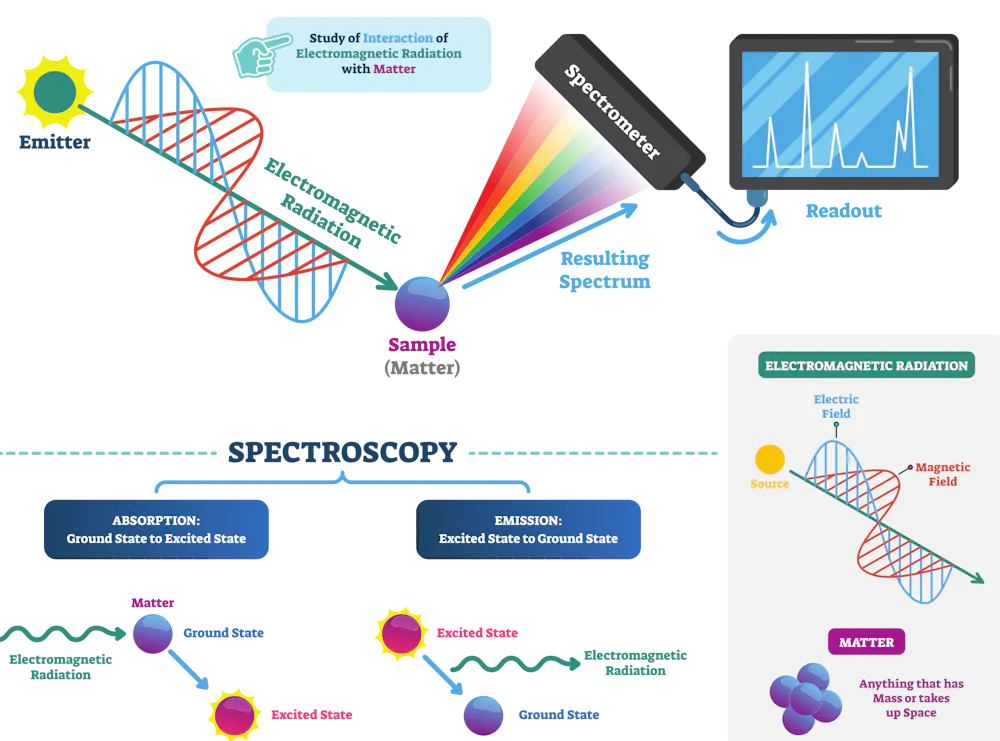
    Just as fingerprinting uniquely identifies a person, scientists use spectroscopy to determine the chemical identity of microplastics. In spectroscopy, a substance either absorbs or scatters light, depending on how its molecules vibrate. The absorbed or scattered light creates a unique pattern called the spectrum, which is effectively the substance’s fingerprint.

    Spectroscopy can match a substance with its unique fingerprint.
    VectorMine/iStock via Getty Images Plus

    Just like a forensic analyst can match an unknown fingerprint against a fingerprint database to identify the person, researchers can match the spectrum of an unknown microplastic particle against a database of known spectra.

    However, forensic analysts can get false matches in fingerprint matching. Similarly, spectral matching against a database isn’t foolproof. Many plastic polymers have similar structures, so two different polymers can have similar spectra. This overlap can lead to ambiguity in the identification process.

    So, an identification method for polymers should provide a measure of uncertainty in its output. That way, the user can know how much to trust the polymer fingerprint match. Unfortunately, current methods don’t usually provide an uncertainty measure.

    Data from microplastic analyses can inform health recommendations and policy decisions, so it’s important for the people making those calls to know how reliable the analysis is.

    Conformal prediction

    Machine learning is one tool researchers have started using for microplastic identification.

    First, researchers collect a large dataset of spectra whose identities are known. Then, they use this dataset to train a machine learning algorithm that learns to predict a substance’s chemical identity from its spectrum.

    Sophisticated algorithms whose inner workings can be opaque make these predictions, so the lack of an uncertainty measure becomes an even greater problem when machine learning is involved.

    Our recent work addresses this issue by creating a tool with an uncertainty quantification for microplastic identification. We use a machine learning technique called conformal prediction.

    Conformal prediction is like a wrapper around an existing, already trained machine learning algorithm that adds an uncertainty quantification. It does not require the user of the machine learning algorithm to have any detailed knowledge of the algorithm or its training data. The user just needs to be able to run the prediction algorithm on a new set of spectra.

    To set up conformal prediction, researchers collect a calibration set containing spectra and their true identities. The calibration set is often much smaller than the training data required for training machine learning algorithms. Usually just a few hundred spectra are enough for calibration.

    Then, conformal prediction analyzes the discrepancies between the predictions and correct answers in the calibration set. Using this analysis, it adds other plausible identities to the algorithm’s single output on a particular particle’s spectrum. Instead of outputting one, possibly incorrect, prediction like “this particle is polyethylene,” it now outputs a set of predictions – for example, “this particle could be polyethylene or polypropylene.”

    The prediction sets contain the true identity with a level of confidence that users can set themselves – say, 90%. Users can then rerun the conformal prediction with a higher confidence – say, 95%. But the higher the confidence level, the more polymer predictions given by the model in the output.

    It might seem that a method that outputs a set rather than a single identity isn’t as useful. But the size of the set serves as a way to assess uncertainty – a small set indicates less uncertainty.

    On the other hand, if the algorithm predicts that the sample could be many different polymers, there’s substantial uncertainty. In this case, you could bring in a human expert to examine the polymer closely.

    Testing the tool

    To run our conformal prediction, my team used libraries of microplastic spectra from the Rochman Lab at the University of Toronto as the calibration set.

    Once calibrated, we collected samples from a parking lot in Brighton, Michigan, obtained their spectra, and ran them through the algorithm. We also asked an expert to manually label the spectra with the correct polymer identities. We found that conformal prediction did produce sets that included the label the human expert gave it.

    Some spectra, such as polyethylene on the left and polypropylene on the right, look very similar and can easily be confused. That’s why having an uncertainty measure can be helpful.
    Ambuj Tewari

    Microplastics are an emerging concern worldwide. Some places such as California have begun to gather evidence for future legislation to help curb microplastic pollution.

    Evidence-based science can help researchers and policymakers fully understand the extent of microplastic pollution and the threats it poses to human welfare. Building and openly sharing machine learning-based tools is one way to help make that happen.

    Ambuj Tewari receives funding from NSF and NIH. The microplastics project is funded by the “Meet the Moment” initiative of the University of Michigan’s College of Literature, Science, and the Arts. This initiative focuses on impactful research on pressing societal issues.

    – ref. What’s that microplastic? Advances in machine learning are making identifying plastics in the environment more reliable – https://theconversation.com/whats-that-microplastic-advances-in-machine-learning-are-making-identifying-plastics-in-the-environment-more-reliable-249075

    MIL OSI – Global Reports –

    March 7, 2025
  • MIL-OSI Global: DOGE threat: How government data would give an AI company extraordinary power

    Source: The Conversation – USA – By Allison Stanger, Distinguished Endowed Professor, Middlebury

    Elon Musk has simultaneous control of DOGE and his AI company xAI. AP Photo/Jose Luis Magana

    The Department of Government Efficiency, or DOGE, has secured unprecedented access to at least seven sensitive federal databases, including those of the Internal Revenue Service and Social Security Administration. This access has sparked fears about cybersecurity vulnerabilities and privacy violations. Another concern has received far less attention: the potential use of the data to train a private company’s artificial intelligence systems.

    The White House press secretary said government data that DOGE has collected isn’t being used to train Musk’s AI models, despite Elon Musk’s control over DOGE. However, evidence has emerged that DOGE personnel simultaneously hold positions with at least one of Musk’s companies.

    At the Federal Aviation Administration, SpaceX employees have government email addresses. This dual employment creates a conduit for federal data to potentially be siphoned to Musk-owned enterprises, including xAI. The company’s latest Grok AI chatbot model conspicuously refuses to give a clear denial about using such data.

    As a political scientist and technologist who is intimately acquainted with public sources of government data, I believe this potential transmission of government data to private companies presents far greater privacy and power implications than most reporting identifies. A private entity with the capacity to develop artificial intelligence technologies could use government data to leapfrog its competitors and wield massive influence over society.

    Value of government data for AI

    For AI developers, government databases represent something akin to finding the Holy Grail. While companies such as OpenAI, Google and xAI currently rely on information scraped from the public internet, nonpublic government repositories offer something much more valuable: verified records of actual human behavior across entire populations.

    This isn’t merely more data – it’s fundamentally different data. Social media posts and web browsing histories show curated or intended behaviors, but government databases capture real decisions and their consequences. For example, Medicare records reveal health care choices and outcomes. IRS and Treasury data reveal financial decisions and long-term impacts. And federal employment and education statistics reveal education paths and career trajectories.

    What makes this data particularly valuable for AI training is its longitudinal nature and reliability. Unlike the disordered information available online, government records follow standardized protocols, undergo regular audits and must meet legal requirements for accuracy. Every Social Security payment, Medicare claim and federal grant creates a verified data point about real-world behavior. This data exists nowhere else with such breadth and authenticity in the U.S.

    Most critically, government databases track entire populations over time, not just digitally active users. They include people who never use social media, don’t shop online, or actively avoid digital services. For an AI company, this would mean training systems on the actual diversity of human experience rather than just the digital reflections people cast online.

    A security guard prevented U.S. Sen. Edward Markey, D-Mass., from entering an EPA building on Feb. 6, 2025, to see DOGE staff working there.
    Al Drago/Getty Images

    The technical advantage

    Current AI systems face fundamental limitations that no amount of data scraped from the internet can overcome. When ChatGPT or Google’s Gemini make mistakes, it’s often because they’ve been trained on information that might be popular but isn’t necessarily true. They can tell you what people say about a policy’s effects, but they can’t track those effects across populations and years.

    Government data could change this equation. Imagine training an AI system not just on opinions about health care but on actual treatment outcomes across millions of patients. Consider the difference between learning from social media discussions about economic policies and analyzing their real impacts across different communities and demographics over decades.

    A large, state-of-the-art, or frontier, model trained on comprehensive government data could understand the actual relationships between policies and outcomes. It could track unintended consequences across different population segments, model complex societal systems with real-world validation and predict the impacts of proposed changes based on historical evidence. For companies seeking to build next-generation AI systems, access to this data would create an almost insurmountable advantage.

    Control of critical systems

    A company like xAI could do far more with models trained on government data than building better chatbots or content generators. Such systems could fundamentally transform – and potentially control – how people understand and manage complex societal systems. While some of these capabilities could be beneficial under the control of accountable public agencies, I believe they pose a threat in the hands of a single private company.

    Medicare and Medicaid databases contain records of treatments, outcomes and costs across diverse populations over decades. A frontier model trained on new government data could identify treatment patterns that succeed where others fail, and so dominate the health care industry. Such a model could understand how different interventions affect various populations over time, accounting for factors such as geographic location, socioeconomic status and concurrent conditions.

    A company wielding the model could influence health care policy by demonstrating superior predictive capabilities and market population-level insights to pharmaceutical companies and insurers.

    Treasury data represents perhaps the most valuable prize. Government financial databases contain granular details about how money flows through the economy. This includes real-time transaction data across federal payment systems, complete records of tax payments and refunds, detailed patterns of benefit distributions, and government contractor payments with performance metrics.

    An AI company with access to this data could develop extraordinary capabilities for economic forecasting and market prediction. It could model the cascading effects of regulatory changes, predict economic vulnerabilities before they become crises, and optimize investment strategies with precision impossible through traditional methods.

    Elon Musk’s xAI company is well financed.

    Infrastructure and urban systems

    Government databases contain information about critical infrastructure usage patterns, maintenance histories, emergency response times and development impacts. Every federal grant, infrastructure inspection and emergency response creates a data point that could help train AI to better understand how cities and regions function.

    The power lies in the potential interconnectedness of this data. An AI system trained on government infrastructure records would understand how transportation patterns affect energy use, how housing policies affect emergency response times, and how infrastructure investments influence economic development across regions.

    A private company with exclusive access would gain unique insight into the physical and economic arteries of American society. This could allow the company to develop “smart city” systems that city governments would become dependent on, effectively privatizing aspects of urban governance. When combined with real-time data from private sources, the predictive capabilities would far exceed what any current system can achieve.

    Absolute data corrupts absolutely

    A company such as xAI, with Musk’s resources and preferential access through DOGE, could surmount technical and political obstacles far more easily than competitors. Recent advances in machine learning have also reduced the burdens of preparing data for the algorithms to process, making government data a veritable gold mine – one that rightfully belongs to the American people.

    The threat of a private company accessing government data transcends individual privacy concerns. Even with personal identifiers removed, an AI system that analyzes patterns across millions of government records could enable surprising capabilities for making predictions and influencing behavior at the population level. The threat is AI systems that leverage government data to influence society, including electoral outcomes.

    Since information is power, concentrating unprecedented data in the hands of a private entity with an explicit political agenda represents a profound challenge to the republic. I believe that the question is whether the American people can stand up to the potentially democracy-shattering corruption such a concentration would enable. If not, Americans should prepare to become digital subjects rather than human citizens.

    Allison Stanger receives funding from the Berkman Klein Center for Internet and Society, Harvard University.

    – ref. DOGE threat: How government data would give an AI company extraordinary power – https://theconversation.com/doge-threat-how-government-data-would-give-an-ai-company-extraordinary-power-250907

    MIL OSI – Global Reports –

    March 7, 2025
  • MIL-OSI Economics: Huawei Wins GSMA GLOMO ‘Best Mobile Network Infrastructure’ for GigaGreen Radio

    Source: Huawei

    Headline: Huawei Wins GSMA GLOMO ‘Best Mobile Network Infrastructure’ for GigaGreen Radio

    [Barcelona, Spain, March 6, 2025] At Mobile World Congress (MWC) 2025, Huawei’s GigaGreen Radio series products grabbed the GSMA Global Mobile (GLOMO) Award “Best Mobile Network Infrastructure”. This award recognizes Huawei’s innovation in ultra-wideband, multi-antenna, and energy-saving solutions that bring 5G to all bands. The series is simple to deploy and boasts superb performance and low power consumption, setting a new benchmark for operators looking to build 5.5G-oriented foundation networks as mobile AI is coming fast.
    Huawei’s GigaGreen Radio wins GSMA GLOMO “Best Mobile Network Infrastructure”

    Huawei GigaGreen Radio is a next-generation RF platform, encompassing a comprehensive lineup of product forms tailored to diverse network requirements for a full set of scenarios, such as indoor, outdoor, urban, and suburban areas. The platform features the industry’s only implementation of ultra-wideband beamforming for efficient scheduling of discrete 5G bands and cross-band beamforming, which have been an outstanding formidable challenge of the mobile industry. This places GigaGreen Radio in a good position to enable operators to build multi-band networks more efficiently to provide tenfold uplink capacity, tenfold speeds, and 10 dB better coverage. Furthermore, GigaGreen Radio boasts industry-leading ‘0 Bit 0 Watt 0 Loss’, supporting a 99% shutdown depth during off-peak hours and millisecond-level wakeup. This reduces power consumption without compromising experience, ensuring high energy efficiency at all times for low carbon emissions. With such leading performance, GigaGreen Radio signals the future of green mobile networks.
    Since its launch, GigaGreen Radio has become the preferred option for operators from many countries and regions. For the operators who are moving their networks to 5G, GigaGreen RRU integrates sub-3 GHz bands in one box, and significantly improves user experience and traffic without adding extra tower rental and electricity costs. This is a huge boost for operators’ revenue while helping maintain their operational expenditure (OPEX). For the operators who are building 5G-Advanced networks, GigaGreen AAU series products can efficiently consolidate multiple wideband spectrum into one module with their integrated deployment capabilities, enabling them maintain their leading brand presence. As mobile AI is approaching fast, GigaGreen Radio provides operators an ideal solution to building multi-band 5.5G networks that feature ultra-high uplink capacity, ultra-low latency, and ultra-wide coverage. They will supercharge a wide array of innovative mobile AI applications that highlight human-hu man, human-machine, and machine-machine interactions, pioneering industry transformation towards smart connectivity.
    Fang Xiang, Vice President of Huawei Wireless Solution said, “Thank you to GSMA, analysts, and global operator customers for your recognition and trust in Huawei. Pursuing ultimate performance, optimal energy efficiency, and simplified deployment is our shared goal. Huawei collaborates with customers to build the GigaGreen Radio series, driving global network upgrades. In the future, we will continue to innovate with our customers, advancing the telecommunications industry toward intelligent connectivity.”
    MWC Barcelona 2025 is held from March 3 to March 6 in Barcelona, Spain. During the event, Huawei will showcase its latest products and solutions at stand 1H50 in Fira Gran Via Hall 1. In 2025, commercial 5G-Advanced deployment will accelerate, and AI will help carriers reshape business, infrastructure, and O&M. Huawei is actively working with carriers and partners around the world to accelerate the transition towards an intelligent world. For more information, please visit: https://carrier.huawei.com/en/events/mwc2025

    MIL OSI Economics –

    March 7, 2025
  • MIL-OSI: Bybit Becomes the First Exchange to List USDtb, Bringing Institutional-Grade Stability to Crypto Traders

    Source: GlobeNewswire (MIL-OSI)

    DUBAI, United Arab Emirates, March 06, 2025 (GLOBE NEWSWIRE) — Bybit, the world’s second-largest cryptocurrency exchange by trading volume, becomes the first platform to include USDtb, a blockchain-based USD stablecoin created and managed by Ethena Labs, on its Spot exchange. USDtb combines the liquidity of stablecoins with the security and transparency of institutional-grade U.S. Treasury assets, marking a pivotal innovation in the evolution of digital dollars.

    USDtb is backed primarily by BlackRock’s USD Institutional Digital Liquidity Fund Token (BUIDL), which holds 100% of its assets in cash, U.S. Treasury Bills, and other short-term U.S. government obligations. This conservative and transparent backing makes USDtb a compelling option for investors seeking both stability and yield in the digital asset ecosystem.

    A New Chapter in Stablecoins
    Unlike traditional stablecoins, USDtb blends tokenized U.S. Treasury fund products with a stablecoin reserve, delivering a unique combination of stability, flexibility, and instant liquidity. This next-generation stablecoin enables faster, cheaper transactions compared to traditional banking systems, while offering users stable returns with principal protection — echoing the success of Ethena Labs’ USDe.

    Key Timeline

    • USDtb Listing on Spot Trading: Mar 4, 2025, 8AM UTC
    • USDtb Withdrawals Open: Mar 5, 2025, 8AM UTC
    • USDtb 5% Airdrop: 1st Snapshot on Mar 6, 2025
    • First Reward Distribution: Before Mar 7, 6AM UTC

    Deposits and withdrawals will be available via the ETH network. 

    Exclusive 5% APR Boost for Bybit Users
    To celebrate the listing, Bybit is offering 5% Annual Percentage Rate (APR) on USDtb holdings for new and existing eligible users with no lock-up requirements. From Mar. 6 to Apr. 4, eligible Bybit users may join the Bybit exclusive event to enjoy the limited-time 5% APR on USDtb holdings, starting at a minimum of 0.00005 USDtb. Holders will continue to enjoy 95% of the yield on Treasury Bills after the 1st month.

    Rewards will be distributed in USDtb on a first-come, first-served basis, and capped at a total of 200 million in USDtb tokens. The APR will be gradually decreasing after the cap is reached. However, all USDtb holders on Bybit will continue to earn rewards indefinitely after the promotional period ends.

    “By listing USDtb, Bybit is pioneering a new frontier for stablecoins — bridging traditional finance and digital assets with unprecedented transparency and institutional-grade security,” said Jerry Li, Head of Earn & Wealth Management at Bybit. “We are proud to be the first to introduce this innovative asset to our users, expanding their options for both secure savings and dynamic trading opportunities, all while maintaining the seamless experience Bybit is known for.”

    About Bybit
    Bybit is the world’s second-largest cryptocurrency exchange by trading volume, serving a global community of over 60 million users. Founded in 2018, Bybit is redefining openness in the decentralized world by creating a simpler, open and equal ecosystem for everyone. With a strong focus on Web3, Bybit partners strategically with leading blockchain protocols to provide robust infrastructure and drive on-chain innovation. Renowned for its secure custody, diverse marketplaces, intuitive user experience, and advanced blockchain tools, Bybit bridges the gap between TradFi and DeFi, empowering builders, creators, and enthusiasts to unlock the full potential of Web3. Discover the future of decentralized finance at Bybit.com.

    For more details about Bybit, please visit: Bybit Press
    For media inquiries, please contact: media@bybit.com 
    For updates, please follow: Bybit’s Communities and Social Media

    Discord | Facebook | Instagram | LinkedIn | Reddit | Telegram | TikTok | X | YouTube

    Contact

    Head of PR
    Tony Au
    Bybit
    tony.au@bybit.com

    A photo accompanying this announcement is available at:
    https://www.globenewswire.com/NewsRoom/AttachmentNg/cbe9d825-7bdc-4f56-90dd-e629f5a744c0

    The MIL Network –

    March 7, 2025
  • MIL-OSI: Turtle Beach Corporation to Report Fourth Quarter & Full Year 2024 Financial Results on Thursday, March 13, 2025

    Source: GlobeNewswire (MIL-OSI)

    WHITE PLAINS, N.Y., March 06, 2025 (GLOBE NEWSWIRE) — Turtle Beach Corporation (Nasdaq: TBCH) a leading gaming headset and accessories brand, today announced it will report financial results for the fourth quarter and full year 2024 on Thursday, March 13, 2025, after the close of trading on the Nasdaq Stock Market.

    The Company will also host a conference call and audio webcast at 5:00p.m. ET / 2:00p.m. PT that same day to review the results. The call will be hosted by Cris Keirn, Chief Executive Officer, and Mark Weinswig, Chief Financial Officer.

    Conference Call Information
    The live webcast of the call will be available on the “Events & Presentations” page of the Company’s website at www.turtlebeachcorp.com. Interested individuals may also join by dialing 1-877-407-0792 or 1-201-689-8263. To avoid delays, participants are encouraged to dial into the conference call 15-minutes ahead of the scheduled start time.

    A telephone replay of the call will be available through March 27, 2025, and can be accessed by dialing 1-844-512-2921 or 1-412-317-6671 and entering passcode 13751064. A replay of the webcast will also be available on the investor relations website for a limited time.

    About Turtle Beach Corporation

    Turtle Beach Corporation (the “Company”) (www.turtlebeachcorp.com) is one of the world’s leading gaming accessory providers. The Company’s namesake Turtle Beach brand (www.turtlebeach.com) is known for designing best-selling gaming headsets, top-rated game controllers, award-winning PC gaming peripherals, and groundbreaking gaming simulation accessories. Innovation, first-to-market features, a broad range of products for all types of gamers, and top-rated customer support have made Turtle Beach a fan-favorite brand and the market leader in console gaming audio for over a decade. Turtle Beach Corporation acquired Performance Designed Products (www.pdp.com) in 2024. Turtle Beach’s shares are traded on the Nasdaq Exchange under the symbol: TBCH.

    Cautionary Note on Forward-Looking Statements
    This press release includes forward-looking information and statements within the meaning of the federal securities laws. Except for historical information contained in this release, statements in this release may constitute forward-looking statements regarding assumptions, projections, expectations, targets, intentions, or beliefs about future events. Statements containing the words “may”, “could”, “would”, “should”, “believe”, “expect”, “anticipate”, “plan”, “estimate”, “target”, “goal”, “project”, “intend” and similar expressions, or the negatives thereof, constitute forward-looking statements. Forward-looking statements are only predictions and are not guarantees of performance. Forward-looking statements involve known and unknown risks and uncertainties, which could cause actual results to differ materially from those contained in any forward-looking statement. The inclusion of such information should not be regarded as a representation by the Company, or any person, that the objectives of the Company will be achieved. Forward-looking statements are based on management’s current beliefs and expectations, as well as assumptions made by, and information currently available to, management.

    While the Company believes that its expectations are based upon reasonable assumptions, there can be no assurances that its goals and strategy will be realized. Numerous factors, including risks and uncertainties, may affect actual results and may cause results to differ materially from those expressed in forward-looking statements made by the Company or on its behalf. Some of these factors include, but are not limited to, risks related to logistic and supply chain challenges and costs, the substantial uncertainties inherent in the acceptance of existing and future products, the difficulty of commercializing and protecting new technology, the impact of competitive products and pricing, general business and economic conditions, risks associated with the expansion of our business including the integration of any businesses we acquire and the integration of such businesses within our internal control over financial reporting and operations, our indebtedness, liquidity, and other factors discussed in our public filings, including the risk factors included in the Company’s most recent Annual Report on Form 10-K, Quarterly Report on Form 10-Q, and the Company’s other periodic reports filed with the Securities and Exchange Commission. Except as required by applicable law, including the securities laws of the United States and the rules and regulations of the Securities and Exchange Commission, the Company is under no obligation to publicly update or revise any forward-looking statement after the date of this release whether as a result of new information, future developments or otherwise.

    CONTACTS

    Investors:
    tbch@icrinc.com
    (646) 277-1285

    Public Relations & Media:
    MacLean Marshall
    Sr. Director, Global Communications
    Turtle Beach Corporation
    (858) 914-5093
    maclean.marshall@turtlebeach.com

    The MIL Network –

    March 7, 2025
  • MIL-OSI: ING publishes 2024 Annual Report on Form 20-F

    Source: GlobeNewswire (MIL-OSI)

    ING publishes 2024 Annual Report on Form 20-F

    ING filed today its Annual Report on Form 20-F for the year ended 31 December 2024 with the United States Securities and Exchange Commission (SEC). The 2024Form 20-F will be available on the ING website and can be downloaded from the SEC website (sec.gov) today. Shareholders or holders of ADRs can also request a hard copy of ING’s audited financial statements, free of charge, at www.ing.com/Investor-relations/Financial-performance/Annual-reports.htm.

    Note for editors

    For more on ING, please visit www.ing.com. Frequent news updates can be found in the Newsroom. Photos of ING operations, buildings and its executives are available for download at Flickr.

    ING PROFILE

    ING is a global financial institution with a strong European base, offering banking services through its operating company ING Bank. The purpose of ING Bank is: empowering people to stay a step ahead in life and in business. ING Bank’s more than 60,000 employees offer retail and wholesale banking services to customers in over 100 countries.

    ING Group shares are listed on the exchanges of Amsterdam (INGA NA, INGA.AS), Brussels and on the New York Stock Exchange (ADRs: ING US, ING.N).

    ING aims to put sustainability at the heart of what we do. Our policies and actions are assessed by independent research and ratings providers, which give updates on them annually. ING’s ESG rating by MSCI was reconfirmed by MSCI as ‘AA’ in August 2024 for the fifth year. As of December 2023, in Sustainalytics’ view, ING’s management of ESG material risk is ‘Strong’. Our current ESG Risk Rating, is 17.2 (Low Risk). ING Group shares are also included in major sustainability and ESG index products of leading providers. Here are some examples: Euronext, STOXX, Morningstar and FTSE Russell. Society is transitioning to a low-carbon economy. So are our clients, and so is ING. We finance a lot of sustainable activities, but we still finance more that’s not. Follow our progress on ing.com/climate.

    IMPORTANT LEGAL INFORMATION

    Elements of this press release contain or may contain information about ING Groep N.V. and/ or ING Bank N.V. within the meaning of Article 7(1) to (4) of EU Regulation No 596/2014 (‘Market Abuse Regulation’).

    ING Group’s annual accounts are prepared in accordance with International Financial Reporting Standards as adopted by the European Union (‘IFRS- EU’). In preparing the financial information in this document, except as described otherwise, the same accounting principles are applied as in the 2024 ING Group consolidated annual accounts. All figures in this document are unaudited. Small differences are possible in the tables due to rounding. Certain of the statements contained herein are not historical facts, including, without limitation, certain statements made of future expectations and other forward-looking statements that are based on management’s current views and assumptions and involve known and unknown risks and uncertainties that could cause actual results, performance or events to differ materially from those expressed or implied in such statements. Actual results, performance or events may differ materially from those in such statements due to a number of factors, including, without limitation: (1) changes in general economic conditions and customer behaviour, in particular economic conditions in ING’s core markets, including changes affecting currency exchange rates and the regional and global economic impact of the invasion of Russia into Ukraine and related international response measures (2) changes affecting interest rate levels (3) any default of a major market participant and related market disruption (4) changes in performance of financial markets, including in Europe and developing markets (5) fiscal uncertainty in Europe and the United States (6) discontinuation of or changes in ‘benchmark’ indices (7) inflation and deflation in our principal markets (8) changes in conditions in the credit and capital markets generally, including changes in borrower and counterparty creditworthiness (9) failures of banks falling under the scope of state compensation schemes (10) non- compliance with or changes in laws and regulations, including those concerning financial services, financial economic crimes and tax laws, and the interpretation and application thereof (11) geopolitical risks, political instabilities and policies and actions of governmental and regulatory authorities, including in connection with the invasion of Russia into Ukraine and the related international response measures (12) legal and regulatory risks in certain countries with less developed legal and regulatory frameworks (13) prudential supervision and regulations, including in relation to stress tests and regulatory restrictions on dividends and distributions (also among members of the group) (14) ING’s ability to meet minimum capital and other prudential regulatory requirements (15) changes in regulation of US commodities and derivatives businesses of ING and its customers (16) application of bank recovery and resolution regimes, including write down and conversion powers in relation to our securities (17) outcome of current and future litigation, enforcement proceedings, investigations or other regulatory actions, including claims by customers or stakeholders who feel misled or treated unfairly, and other conduct issues (18) changes in tax laws and regulations and risks of non-compliance or investigation in connection with tax laws, including FATCA (19) operational and IT risks, such as system disruptions or failures, breaches of security, cyber-attacks, human error, changes in operational practices or inadequate controls including in respect of third parties with which we do business and including any risks as a result of incomplete, inaccurate, or otherwise flawed outputs from the algorithms and data sets utilized in artificial intelligence (20) risks and challenges related to cybercrime including the effects of cyberattacks and changes in legislation and regulation related to cybersecurity and data privacy, including such risks and challenges as a consequence of the use of emerging technologies, such as advanced forms of artificial intelligence and quantum computing (21) changes in general competitive factors, including ability to increase or maintain market share (22) inability to protect our intellectual property and infringement claims by third parties (23) inability of counterparties to meet financial obligations or ability to enforce rights against such counterparties (24) changes in credit ratings (25) business, operational, regulatory, reputation, transition and other risks and challenges in connection with climate change, diversity, equity and inclusion and other ESG-related matters, including data gathering and reporting and also including managing the conflicting laws and requirements of governments, regulators and authorities with respect to these topics (26) inability to attract and retain key personnel (27) future liabilities under defined benefit retirement plans (28) failure to manage business risks, including in connection with use of models, use of derivatives, or maintaining appropriate policies and guidelines (29) changes in capital and credit markets, including interbank funding, as well as customer deposits, which provide the liquidity and capital required to fund our operations, and (30) the other risks and uncertainties detailed in the most recent annual report of ING Groep N.V. (including the Risk Factors contained therein) and ING’s more recent disclosures, including press releases, which are available on www.ING.com.

    This document may contain ESG-related material that has been prepared by ING on the basis of publicly available information, internally developed data and other third-party sources believed to be reliable. ING has not sought to independently verify information obtained from public and third-party sources and makes no representations or warranties as to accuracy, completeness, reasonableness or reliability of such information.

    Materiality, as used in the context of ESG, is distinct from, and should not be confused with, such term as defined in the Market Abuse Regulation or as defined for Securities and Exchange Commission (‘SEC’) reporting purposes. Any issues identified as material for purposes of ESG in this document are therefore not necessarily material as defined in the Market Abuse Regulation or for SEC reporting purposes. In addition, there is currently no single, globally recognized set of accepted definitions in assessing whether activities are “green” or “sustainable.” Without limiting any of the statements contained herein, we make no representation or warranty as to whether any of our securities constitutes a green or sustainable security or conforms to present or future investor expectations or objectives for green or sustainable investing. For information on characteristics of a security, use of proceeds, a description of applicable project(s) and/or any other relevant information, please reference the offering documents for such security.

    This document may contain inactive textual addresses to internet websites operated by us and third parties. Reference to such websites is made for information purposes only, and information found at such websites is not incorporated by reference into this document. ING does not make any representation or warranty with respect to the accuracy or completeness of, or take any responsibility for, any information found at any websites operated by third parties. ING specifically disclaims any liability with respect to any information found at websites operated by third parties. ING cannot guarantee that websites operated by third parties remain available following the publication of this document, or that any information found at such websites will not change following the filing of this document. Many of those factors are beyond ING’s control.

    Any forward-looking statements made by or on behalf of ING speak only as of the date they are made, and ING assumes no obligation to publicly update or revise any forward-looking statements, whether as a result of new information or for any other reason.

    This document does not constitute an offer to sell, or a solicitation of an offer to purchase, any securities in the United States or any other jurisdiction.

    Attachment

    • ING publishes 2024 Annual Report on 20F

    The MIL Network –

    March 7, 2025
  • MIL-OSI: Winvest Group’s IQI Media Gears Up for Q2 Beta Demos of AI & Blockchain-Powered Streaming Distribution Platform

    Source: GlobeNewswire (MIL-OSI)

    RENO, NV, March 06, 2025 (GLOBE NEWSWIRE) — Winvest Group Limited (OTCQB: WNLV) (“Winvest”), an investment holding company with diverse media, entertainment, and technology portfolios, is pleased to announce that its subsidiary IQI Media Inc. will be offering beta demos of Launchrr, its proprietary SaaS solution for the film and television industry, in the second quarter of 2025.

    “Hollywood is facing significant changes, with a notable contraction in production activities,” said Khiow Hui Lim, Founder of IQI Media and Chief Strategy Officer at Winvest. “Shifting consumer behaviors, technological advancements, and the rise of streaming platforms have all played a role. Whether it’s the best time to disrupt Hollywood with a new SaaS product depends on identifying a clear need, delivering a superior solution, and navigating the industry’s complexities. IQI has done just that with Launchrr, which fills a key niche by using AI to optimize content delivery, recommend distribution channels, and predict audience demand.”

    “As an AI-driven, cloud-based distribution platform designed to revolutionize the streaming ecosystem, Launchrr can help Hollywood innovate through the use of data analytics,” continued Lim. “Beyond that, it can provide secure and transparent residuals using blockchain technology and help both stakeholders and regulators track ownership and royalties. Finally, it can streamline the distribution process in a way that lowers costs and offers efficiencies for everyone involved, from filmmakers to studios.”

    Typically, the process of submitting content and negotiating deals with multiple streamers is both time-consuming and costly for filmmakers and content creators. An advanced aggregator, Launchrr simplifies the process into a single submission that covers all streamers, dramatically speeding up the time to market while meeting all encoding requirements. From there, Launchrr uses intelligent automation to provide real-time insights and earnings, interactive dashboards, predictive analytics, and blockchain-based security for all intellectual property.

    “Winvest will be heavily investing in Launchrr’s Phase 2 development,” said Jeffrey Wong, CEO of Winvest. “That’s because we see strong potential for Launchrr based on current industry trends and have several reasons for optimism. For one, Launchrr tackles the industry’s biggest pain point—the streaming wars. It does so by addressing numerous inefficiencies in the current system and shifting the focus to data-driven decision-making. We believe this will result in more informed distribution strategies, not to mention the potential for increased revenue and profitability.”

    Winvest’s Phase 2 investments in Launchrr will primarily revolve around its new API integration with AI, particularly Large Language Models (LLMs). While most streamers with the exception of a handful continue to use web-based development, Launchrr is preparing for the future by pre-emptively building in API access costs, which include the learning curve involved in utilizing AI models and tailoring the API to fit each streamer, which requires additional coding, testing, and debugging. Other planned expenses include development environments, version control systems, hosting, servers, and specialized AI development tools.

    “While doubling down on LLMs impacts our development costs, it’s crucial to enhancing Launchrr’s value,” said Lim. “We also feel it supports our desire to align with the Hollywood guilds around the goals of transparency and potentially fairer compensation for all union members associated with a streaming title. Our AI-driven APIs enable accurate and timely performance metrics, plus the ability to identify what audiences are responding to the content and reach them cost-effectively with targeted social advertising. With Launchrr, it’s no longer a guessing game how to find your ideal viewers—or make your content profitable.”

    About Winvest Group Limited:

    Headquartered in Reno, Nevada, Winvest is an investment holding company focused on media, entertainment, and technology. Shares in the company are currently traded on the OTC Markets (QB tier) under the stock ticker “WNLV,” with plans to upgrade to Nasdaq and pursue an IPO in the near future. For more information about Winvest and its business developments, please visit http://www.winvestgroup.co.

    Safe Harbor Statement

    This press release contains forward-looking statements as defined by the Private Securities Litigation Reform Act of 1995. These statements are based on current expectations, estimates, and projections about our industry and involve significant risks and uncertainties that may cause actual results to differ materially. We undertake no obligation to update or revise any forward-looking statements except as required by law.

    Product/Demos Contact

    Khiow Hui Lim, Founder of IQI Media & Chief Strategy Officer of Winvest

    1055 E. Colorado Blvd., Suite 500, Pasadena, CA 91106

    Email: khiowhui@iqimedia.com

    Phone: 626-240-4600

    https://iqimedia.com/

    For Media Inquiries

    Connie Ting

    Winvest Group Limited

    50 West Liberty Street, Suite 880, Reno NV 89501

    Email: connie.ting@winxglobal.com

    Phone: 775-996-0288

    The MIL Network –

    March 7, 2025
  • MIL-OSI United Nations: Artificial intelligence: rooting out bias and stereotypes

    Source: United Nations 4

    8 October 2024 Women

    As online tools using various forms of artificial intelligence become increasingly common, calls are growing for more action to ensure that they do not create or perpetuate stereotypes and gender bias.

    During High-Level Week of the UN General Assembly in September, the topic of AI was the focus of several side-events featuring industry experts and UN officials.

    In a session entitled “Paving new Pathways for Women in Tech”, Mita Hosali, the Deputy Director of the UN’s News and Media Division, spoke to Sarah Steinberg, Head of Global Public Policy Partnerships at LinkedIn, Tami Bhaumik, Vice President of Civility and Partnerships for Roblox, and Hélène Molinier, Senior Advisor on Digital Cooperation at UN Women.

    Soundcloud

    Ms. Hosali began by describing the lack of female representation in the tech world: overall, around a quarter of those working in the industry are women, dropping to about 11 per cent at the executive level. Women make up just 18 per cent of AI researchers.

    Data analysis by the LinkedIn platform, responded Ms. Steinberg, shows that women are not only under-represented, but their numbers are actually declining in terms of hiring rates.

    “When it comes to the industries and the fields that are really driving the future – STEM, the green economy, AI – we see women significantly underrepresented and not making sufficient progress in closing that gap”, she warned.

    Ms. Steinberg added that, in her view, AI will create new forms of employment, but “we have to be aware of the fact that it’s going to reshape the jobs and skills that we already have”: in the shorter term, she declared, “women are at a greater risk of losing their jobs than men, due to the introduction of AI tools in the wider economy”.

    © ADB/Ariel Javellana

    Girls attend a science class at a school in Indonesia.

    Giving a voice to the marginalized

    Roblox, an online platform for the creation of games and experiences, boasts almost 80 million daily active users. Ms. Bhaumik expressed optimism about the future, and the promise of generative AI in democratizing opportunities for women and girls, and marginalized individuals.

    Roblox, she said, can help to “level-set gender equality, making sure those voices who are very, very faint in the background really come to the forefront”.

    Hélène Molinier addressed the issue of bias in the development of AI systems, which can have serious real- world consequences. Many products, she said, contain bias, in areas ranging from image generation to chat bot moderation. She reminded the audience that the decision to put these products on the market despite their flaws, remains the responsibility of humans.

    Bridging the AI divide

    In another side-event, Ms. Hosali interviewed Amandeep Singh Gill, the UN Secretary-General’s Envoy on Technology, on the issue of effective guardrails for AI, and how to ensure that they strike the right balance between providing protection and allowing innovation to flourish.

    Existing UN norms, said Mr. Singh, such as international treaties and commitments including the Sustainable Development Goals, are useful guides. However, another concern is the lack of representation in the Global South, in terms of infrastructure and talent.

    Mr. Singh called for efforts to bridge the AI divide to be focused on three areas: ensuring that legislators and decision-makers understand the importance of the technology as a public good; providing local researchers and innovators with the necessary data to enable them to build homegrown solutions; and international cooperation in terms of sharing models that have worked in other places.

    MIL OSI United Nations News –

    March 7, 2025
  • MIL-OSI: authID Publishes New Whitepaper on Next-Generation Deepfake Detection Technology

    Source: GlobeNewswire (MIL-OSI)

    Explore what deepfake creators are doing to evade detection, the impact of generative AI on deepfakes, the escalating threats in cybersecurity, and mitigation tactics to combat AI-driven fraud

    DENVER, March 06, 2025 (GLOBE NEWSWIRE) — authID (Nasdaq: AUID), a leading provider of biometric identity verification and authentication solutions, today released a comprehensive whitepaper detailing innovative approaches to combat the rising threat of deepfake fraud in digital authentication systems. The whitepaper, titled “Deepfake Countermeasures,” provides crucial insights into deepfakes as the next generation in fraud attacks, as well as cutting-edge defensive strategies against presentation and injection attacks.

    The increasing sophistication of AI platforms means attackers can use a single photo to synthesize deepfake videos. authID’s report presents a critical framework for organizations to protect against a spike in identity fraud attempts and leverages authID’s proprietary multi-layered detection system, which achieves a billion-to-one false-match accuracy rate. authID’s platform detects the liveness of each authentication attempt, preventing the use of pictures, videos and deepfakes for spoofing identities, known as presentation attacks.

    “As deepfake technology continues to advance exponentially, traditional authentication methods are increasingly vulnerable,” said Rhon Daguro, CEO of authID. “Our report demonstrates that combining advanced AI with privacy-first, facial biometric authentication creates an unprecedented level of security while maintaining seamless user experience, including a market-leading matching speed of 35 milliseconds and unparalleled accuracy.”

    Integrating proven solutions to combat deepfake fraud is critical to the financial sector and other industries where inaccurate user authentication can lead to multi-million-dollar losses. Manual review of documents is believed to be successful at identifying sophisticated deepfakes less than 1% of the time and causes expensive and frustrating bottlenecks.

    With more than 2 in 5 fraud attempts in the financial sector currently fueled by AI, the industry has reached a tipping point in the fight against deepfakes. To stay well-positioned against the rising prevalence of AI-driven presentation and injection attacks, it is important that organizations implement proven authentication and verification platforms into existing or new workflows.

    Key highlights from the whitepaper include:

    • Analysis of emerging deepfake attack vectors, as well as the perceived accuracy and speed with which bad actors are creating these fraudulent assets
    • Overview of authID’s market-leading liveness detection technology, which uses a multilayered methodology to examine the visible and invisible artifacts present in an image, as well as the integrity of the camera itself
    • Implementation framework for enterprise-grade deepfake countermeasures, including efforts to safeguard the device of origin, to prevent insertion of fakes behind the camera in the form of an injection attack

    The whitepaper builds on authID’s recent launch of PrivacyKey™, the company’s revolutionary biometric solution that ensures secure authentication without storing sensitive facial data. This innovation, available in concert with the authID platforms Proof™ and Verified™, helps reduce fraud attempts while maintaining regulatory compliance and user privacy, as well as providing enterprises with critical key-rotation capabilities that ensure complete control of who can access sensitive data.

    “Deepfake fraud is no longer a theoretical risk—it’s a rapidly growing threat to businesses, financial institutions, and digital trust itself,” said Erick Soto, Chief Product Officer at authID. “Our latest whitepaper unpacks the evolving landscape of AI-driven fraud and the countermeasures needed to combat it. At authID, we are committed to staying ahead of these threats with our advanced biometric identity solutions, ensuring that enterprises can trust who’s behind the device in every interaction.”

    The complete whitepaper is available for download at https://authid.ai/dc.

    About authID

    authID (Nasdaq: AUID) ensures enterprises “Know Who’s Behind the Device™” for every customer or employee login and transaction through its easy-to-integrate, patented, biometric identity platform. authID quickly and accurately verifies a user’s identity and eliminates any assumption of ‘who’ is behind a device to prevent cybercriminals from compromising account openings or taking over accounts. Combining secure digital onboarding, biometric authentication, and account recovery with a fast, accurate, user-friendly experience, authID delivers biometric identity processing in 700ms. With our ground-breaking PrivacyKey Solution authID delivers all the benefits of biometric identity verification, with a 1-to-1-billion false match rate, while storing no biometric data. Binding a biometric root of trust for each user to their account, authID stops fraud at onboarding, detects and stops deepfakes, prevents account takeover, eliminates password risks and costs, and provides the fastest, most frictionless, and most accurate user identity experience demanded by today’s digital ecosystem. Contact us to discover how authID can help your organization secure your workforce or consumer applications against identity fraud, cyberattacks and account takeover.

    Media Contacts

    NextTech Communications
     Walter Fowler
    1-631-334-3864
    wfowler@nexttechcomms.com

    Investor Relations Contacts
    Investor-Relations@authid.ai

    Gateway Group, Inc.
    Cody Slach and Alex Thompson
    1-949-574-3860
    AUID@gateway-grp.com

    The MIL Network –

    March 7, 2025
  • MIL-OSI: Kaltura to Host 2025 Investor Event

    Source: GlobeNewswire (MIL-OSI)

    NEW YORK, March 06, 2025 (GLOBE NEWSWIRE) — Kaltura (Nasdaq: KLTR), the Video Experience Cloud, today announced that it will host its 2025 Investor Event on Wednesday, March 12, 2025. The event will feature executive presentations outlining the Company’s business, strategic vision, product innovation, and financial performance, and showcasing Kaltura’s AI-infused Video Experiences platform. 

    The day’s session will include presentations from key members of Kaltura’s leadership team including Co-Founder, Chairman, President and CEO Ron Yekutiel, Chief Product & Engineering Officer Einav Azaria, Chief Revenue Officer Liad Eshkar, Chief Customer Officer Natan Israeli, and Chief Financial Officer John Doherty. In addition to presentations from management, the event will feature a customer panel discussion and question-and-answer sessions.

    The Investor Event will commence at 9:30 am ET and conclude at approximately 12:30 pm ET. A live webcast of the presentations will be hosted on the Kaltura platform. To register please visit Kaltura’s investor relations website at https://investors.kaltura.com/news-and-events/events, In addition, a replay will be available following the event.

    About Kaltura
    Kaltura’s mission is to create and power AI-infused hyper-personalized video experiences that boost customer and employee engagement and success. Kaltura’s Video Experience Cloud includes a platform for enterprise and TV content management and a wide array of Gen AI-infused video-first products, including Video Portals, LMS and CMS Video Extensions, Virtual Events and Webinars, Virtual Classrooms, and TV Streaming Applications. Kaltura engages millions of end-users at home, at work, and at school, boosting both customer and employee experiences, including marketing, sales, and customer success; teaching, learning, training and certification; communication and collaboration; and entertainment, and monetization. For more information, visit www.corp.kaltura.com.

    Investor Contacts:
    Kaltura, Inc.
    John Doherty
    Chief Financial Officer
    IR@Kaltura.com

    Sapphire Investor Relations, LLC
    Erica Mannion and Michael Funari
    IR@Kaltura.com
    +1 617 542 6180

    Media Contacts:
    Kaltura, Inc.
    Nohar Zmora
    SVP, Head of Marketing
    pr.team@kaltura.com

    Headline Media
    Raanan Loew
    raanan@headline.media
    +1 347 897 9276

    The MIL Network –

    March 7, 2025
  • MIL-OSI: Regula Increases Its Global User Base by 52% Amid Rising Identity Verification Demands

    Source: GlobeNewswire (MIL-OSI)

    RESTON, Va., March 06, 2025 (GLOBE NEWSWIRE) — Regula, a global developer of forensic devices and identity verification (IDV) solutions, is now providing advanced IDV software technologies to 152 million online users worldwide. This new milestone marks an impressive growth of 52% compared to the previous year. Among the main drivers of wider IDV adoption, Regula points out the rising need for advanced anti-fraud solutions, regulatory shifts, and digital transformation initiatives.

    Countries with the most notable Regula’s client base increase, as up to the beginning of 2025

    The increasing adoption of Regula’s document and biometric verification solutions highlights a growing demand for secure and user-friendly IDV workflows in key sectors, including finance, e-commerce, government services, travel, and more. This strong year-to-year growth demonstrates that businesses are proactively adapting to the rapidly changing ID verification landscape with Regula’s complete IDV solution, which includes document authenticity checks, biometric verification, liveness detection, and deepfake prevention.

    Regional highlights

    From stricter KYC (Know Your Customer) and AML (Anti-Money Laundering) regulations in North America and Europe to erupting digital identity initiatives in Asia to booming fintech services in Latin America and the Middle East, identity verification is becoming an essential part of digital interactions. Here’s how different markets are driving Regula’s IDV adoption growth.

    North America

    • Key drivers: Rising fraud incidents and threats (according to Regula’s survey,* 96% of US businesses faced identity fraud in 2024) plus regulatory pressure.
    • Country highlight: The US (+55%) – Increased adoption of AI-driven fraud prevention and stronger authentication in financial services and e-commerce.

    Europe

    • Key drivers: Stricter regulations (GDPR, AMLD), the European Digital Identity Wallet initiative, and fintech expansion.
    • Country highlights:
      • The UK (+122%) – Post-Brexit compliance shifts and growth in digital banking.
      • Germany (+123%) – Strong data privacy laws and high demand for authenticity checks in digital scenarios.

    META (Middle East, Türkiye, and Africa)

    • Key drivers: Digital government initiatives, fintech growth, and a push for AI-driven security.
    • Country highlight: The UAE (+112%) – Rapid adoption of digital identity verification solutions due to its ambitions to become a leader in AI, fintech, and smart city innovations.

    APAC (Asia Pacific)

    • Key drivers: Booming digital payments, financial inclusion efforts, and strong government support for digital identity solutions.
    • Country highlights:
      • Singapore (+102%) – A financial hub with widespread digital banking and government-backed digital ID systems like Singpass.
      • Australia (+188%) – AML regulations and age verification initiatives.

    Latin America

    • Key drivers: Explosive fintech growth, mobile banking expansion, and high fraud rates requiring stronger ID verification techniques.
    • Country highlights:
      • Mexico (+156%) – Rapid adoption of digital payments and financial services.
      • Colombia (+241%) – The fastest-growing market, driven by fintech expansion and government-led digital ID initiatives.

    “The growth across these markets is a direct response to regulatory developments, digital transformation efforts, and the increasing sophistication of fraud – all the factors that make identity verification paramount. As businesses and governments worldwide accelerate their adoption of digital solutions, they face the complex challenge of ensuring security and compliance while maintaining a low-effort user experience. Additionally, the ever-rising cyber and identity fraud threats have made advanced IDV not just a regulatory requirement but a fundamental business necessity. By leveraging our decades-long expertise in forensic level document and biometric verification, we deliver comprehensive, future-proof solutions and help our customers build secure and user-friendly IDV workflows,” says Henry Patishman, Executive VP of Identity Verification Solutions at Regula.

    No compromise on security, efficiency, or compliance

    To help businesses and government institutions fight identity fraud effectively, Regula offers a complete IDV solution, comprising Regula Document Reader SDK and Regula Face SDK. This on-premise software performs extensive document and biometric authenticity checks, enables data cross-validation to spot discrepancies that might indicate fraud, and ensures sensitive personal data privacy.

    With more than 14,800 identity document templates from 251 countries and territories, Regula provides businesses with the industry’s most comprehensive ID template database. This asset allows for accurate identity verification regardless of the provided document, which is especially important for financial institutions, travel companies, and global businesses.

    Regula’s ID verification software is fully compatible with most third-party document readers, allowing organizations to adopt advanced offline ID verification without investing in new hardware.

    Also, Regula’s IDV technologies are inherently future-ready, supporting emerging standards such as ISO/IEC 39794-5 for biometric passport verification and Digital Travel Credentials (DTCs) aimed at streamlining travel and border crossing.

    Regula’s hardware and software solutions are trusted by more than 1,000 organizations all over the world. Among them:

    • UBS, the world’s largest private bank, has implemented a robust customer onboarding system powered by Regula’s comprehensive ID verification technologies.
    • Checkport, a Swiss aviation security provider, utilizes Regula’s identity verification solutions to enhance passenger screening and security protocols.
    • Pearson VUE, a global leader in online testing, relies on Regula to authenticate candidate identities for high-stakes remote exams.

    To learn more about Regula’s technologies and offerings, please visit Regula’s website.

    *The research was initiated by Regula and conducted by Sapio Research in August 2024 using an online survey of 575 business decision-makers across the Financial Services (including Traditional Banking and Fintech), Crypto, Technology, Telecommunications, Aviation, Healthcare, and Law Enforcement sectors. The respondent geography included Germany, Mexico, the UAE, the US, and Singapore. Find more insights on deepfake fraud in the survey report.

    About Regula

    Regula is a global developer of forensic devices and identity verification solutions. With our 30+ years of experience in forensic research and the most comprehensive library of document templates in the world, we create breakthrough technologies for document and biometric verification. Our hardware and software solutions allow over 1,000 organizations and 80 border control authorities globally to provide top-notch client service without compromising safety, security, or speed. Regula has been repeatedly named a Representative Vendor in the Gartner® Market Guide for Identity Verification.

    Learn more at www.regulaforensics.com.

    Contact:
    Kristina – ks@regulaforensics.com

    A photo accompanying this announcement is available at https://www.globenewswire.com/NewsRoom/AttachmentNg/47df2109-e416-4f49-a77f-7a950ba1d8c1

    The MIL Network –

    March 7, 2025
  • MIL-OSI: Stocktwits Announces 2025 Cashtag Awards Nominees and eToro as Title Partner

    Source: GlobeNewswire (MIL-OSI)

    NEW YORK, March 06, 2025 (GLOBE NEWSWIRE) —

    The Awards celebrate the best people and products shaping the future of trading and investing.
    Stocktwits, the leading social platform for investors and traders, is excited to announce the nominees for the highly anticipated 2025 Cashtag Awards and eToro, the trading and investing platform that empowers you to invest, share and learn, as the event’s inaugural Title Partner. The annual awards celebrate the individuals, products, and platforms shaping the future of digital finance and trading. 

    Award winners will be decided by the passionate Stocktwits community of 10 million registered users and a panel of industry leaders will serve as tiebreakers. Voting on category winners begins today at Stocktwits.com or on the Stocktwits app. Winners will be honored at the 2025 Cashtag Awards Presented by eToro event on April 30, 2025, at The Stand in New York City, with a live stream available for Stocktwits’ global audience. The event will honor the best in financial content, market analysis, and retail investing, reinforcing Stocktwits’ role as the premier platform for real-time financial conversations.

    “At Stocktwits, we’re proud to celebrate the visionaries and platforms shaping the future of finance,” said Howard Lindzon, Founder and CEO of Stocktwits. “With eToro as our globally respected Title Partner, we’re taking the Cashtag Awards to new heights by bringing together the investing community for an unforgettable celebration of innovation in the financial world.”

    Co-founder and CEO of eToro, Yoni Assia, commented: “eToro’s vision is a world where everyone can trade and invest. We believe there is power in shared knowledge and that we can become more successful by investing together. This latest collaboration with Stocktwits celebrates the growth of retail investing and the power of community.”

    eToro shares Stocktwits’ mission of empowering retail investors through community-driven insights and innovative tools. For more information, to purchase tickets, and to follow the event, users can visit https://cashtag.stocktwits.com.

    The award categories and nominees for the 2025 Cashtag Awards are as follows:

    • Cashtag of the Year

    Honoring the stock or ticker symbol that captivated the online investing community through unparalleled engagement, remarkable company performance, or both. As the signature award, it highlights the fusion of market impact and social media resonance, showcasing the power of digital discourse.

    • $NVDA
    • $PLTR
    • $TSLA
    • $MSTR
    • Cashtag Legend Award

    Awarded to an individual whose groundbreaking contributions have permanently shaped the investing landscape. This honoree embodies innovation, thought leadership, and the profound impact on how investors engage with the markets. Reserved for someone whose influence will be remembered for generations to come.

    • Vlad Tenev
    • Brian Armstrong
    • Stocktwits Community Member of the Year 

    Awarded to the member who exemplifies what it means to be a cornerstone of the Stocktwits community. This person fosters connection, shares invaluable insights, and elevates discussions to empower fellow traders and investors.

    • G Paisa
    • DonCorleone77 
    • Microm
    • Professor 
    • Financial Content Creator of the Year

    Honoring the individual, podcast, or live show that sets the gold standard for financial content. This award celebrates exceptional storytelling, insightful market analysis, and actionable advice delivered through engaging and accessible formats. The winner demonstrates an unparalleled ability to educate, entertain, and inspire investors while elevating the conversation around the financial world.

    • Josh Brown and Michael Batnick
    • Austin Hankwitz and Robert Croak
    • Shay Boloor
    • Charlie Bilello
    • Crypto Investor of the Year

    Awarded to the individual whose insights, strategies, and community engagement have made the most significant impact on the cryptocurrency space. This influencer represents the forefront of innovation, education, and leadership in the fast-evolving world of crypto.

    • Joe McCann
    • Raoul Pal
    • Michael Saylor
    • Chris Dixon
    • Investing Product of the Year 

    Recognizing the trading software that provides unparalleled tools, analytics, and user experience. This award highlights the platform that empowers traders to execute their strategies with precision, speed, and confidence.

    • TradingView
    • Quartr
    • Koyfin
    • MarketSurge
    • Best AI Financial Product

    This award recognizes the most innovative and impactful AI-driven financial product that is revolutionizing how investors, traders, and institutions navigate the markets. The winner leverages artificial intelligence to enhance decision-making, optimize trading strategies, improve risk management, or unlock new insights from financial data. Whether through predictive analytics, automation, or next-generation research tools, this award celebrates the product that best showcases AI’s potential to reshape the financial landscape.

    • Finchat
    • Perplexity
    • Fintool
    • ChatGPT
    • Best Retail Brokerage

    Awarded to the brokerage that provides the best overall experience for retail investors. The winner excels in offering a seamless trading platform and cutting-edge tools. Whether through innovative features, educational resources, or superior execution, this brokerage empowers traders of all levels to succeed in today’s markets.

    • Robinhood
    • eToro
    • WeBull
    • Moomoo
    • Market Newsletter of the Year

    This award recognizes the market newsletter that delivers the most insightful, timely, and engaging content to investors and traders. The winner demonstrates excellence in market analysis, actionable insights, and a unique perspective that helps readers navigate financial trends with confidence. Whether through deep dives into economic forces, stock market breakdowns, or expert commentary, this award honors the go-to newsletter that investors trust.

    • Bloomberg Money Stuff
    • Daily Rip
    • Opening Bell Daily
    • Kobeissi Letter
    • Chartist of the Year

    Honoring the technical analyst who demonstrated exceptional skill in reading and interpreting charts. The winner of this award uses their expertise to uncover trends, predict movements, and provide valuable insights that guide others in navigating the markets.

    • Helene Meisler
    • Dr. Stoxx
    • J.C. Parets 
    • Larry Thompson
    • Best Educational Content Creator

    Awarded to the individual or organization that has provided the most valuable, engaging, and accessible educational content for traders and investors. This winner demonstrates a commitment to demystifying the markets and empowering audiences with knowledge that drives better decision-making.

    • Brad Freeman
    • Bob Elliott
    • Wolf Financial
    • Brian Shannon
    • Best New ETF

    Awarding the ETF that made the most significant impact on the market or filled an innovative niche. The winner demonstrates exceptional performance, unique positioning, and alignment with current investor interests, representing the cutting edge of fund innovation.

    • iShares Bitcoin Trust – $IBIT 
    • T-Rex 2X Long MSTR Daily Target ETF – $MSTU 
    • YieldMax MSTR Option Income Strategy ETF – $MSTY 
    • Fundstrat Granny Shots US Large Cap ETF – $GRNY
    • Best Trade of the Year

    Recognizing the single most exceptional trade of the year, this award celebrates strategic brilliance, impeccable timing, and a bold vision that led to outstanding returns. The winner exemplifies mastery of market dynamics and risk-taking that redefines success.

    • ACInvestorBlog – PLTR Long since $20
    • Splicinglass – ASTS Bull, +800% since messages
    • TheHonestAbe – RKLB Bull since $5 average
    • GPaisa – APP Bull, up 400% in 8 months

    About Stocktwits
    Stocktwits is the premier social media platform dedicated to investors and traders. With an active community of over 10 million users, Stocktwits has established itself as a leading voice in the investing world. Driven by the mission to help investors enhance their returns, Stocktwits offers a rich ecosystem of community interaction, data, content, and tools that empower investors to connect, learn, and have fun in the process. For more information, users visit stocktwits.com.

    About eToro
    eToro is the trading and investing platform that empowers you to invest, share and learn. We were founded in 2007 with the vision of a world where everyone can trade and invest in a simple and transparent way. Today we have over 38 million registered users from 75 countries. We believe there is power in shared knowledge and that we can become more successful by investing together. So we’ve created a collaborative investment community designed to provide you with the tools you need to grow your knowledge and wealth. On eToro, you can hold a range of traditional and innovative assets and choose how you invest: trade directly, invest in a portfolio, or copy other investors. You can visit our media centre here for our latest news.

    Contact

    Michael O’Connor
    moconnor@stocktwits.com

    A photo accompanying this announcement is available at https://www.globenewswire.com/NewsRoom/AttachmentNg/4298eee2-6797-4fbf-b657-399ae3aca92e

    The MIL Network –

    March 7, 2025
  • MIL-OSI: Tindeco Financial Services AG Awarded “Best Wealth Management Automation Solution” by Global Private Banker

    Source: GlobeNewswire (MIL-OSI)

    ZUG, Switzerland, March 06, 2025 (GLOBE NEWSWIRE) — Tindeco Financial Services AG, located at Gotthardstrasse 20, 6300 Zug, Switzerland, is proud to announce that it has been honored with the “Best Wealth Management Automation Solution” award by Global Private Banker. This prestigious accolade recognizes Tindeco’s revolutionary end-to-end technology that is transforming the way asset and wealth managers operate.

    Tindeco’s innovative platform empowers wealth and asset managers to design, test, implement, and run systematic investment strategies on a highly automated basis. The solution delivers three key benefits:

    • Unparalleled Scalability: Scale businesses to previously unimaginable levels, eliminating costs and enabling growth without additional expenses.
    • Custom Investment Solutions at Scale: Automation delivers highly customizable, value-added strategies, democratizing access to bespoke portfolios.
    • Rapid Innovation with Tindeco Strategy Designer: A unique no-code, drag-and-drop interface integrates analytics, data, and calculation engines from Tindeco and its partner ecosystem, allowing swift development and deployment of systematic strategies that can be supported by our AI Co-pilot.

    Moreover, managers can choose which steps or workflows to automate while tailoring other processes for their custom requirements, maintaining hands-on control where oversight is desired.

    Tindeco’s platform also incorporates a robust compliance rules engine to ensure portfolios remain compliant, with automated rebalancing when rules are breached. Its Order Management System (OMS) can send orders to FIX venues or integrate with existing systems, providing connectivity without replacing current infrastructure.

    About Tindeco Financial Services AG

    Tindeco Financial Services AG is a technology firm offering disruptive technology to transform the asset and wealth management industries. Founded in 2010 by seasoned investment professionals from banks, asset managers, and quantitative trading firms, Tindeco has developed a cloud‑based platform that empowers managers to rapidly design, test, and deploy custom investment strategies at scale and manage them on a highly automated basis.

    Headquartered in Switzerland, Tindeco has been recognized as one of the world’s 100 most innovative WealthTech companies (FinTech Global, 2020-2024).

    Media Contact:
    Samuel Mueller
    Chief of Staff
    Tindeco Financial Services AG
    Gotthardstrasse 20, 6300 Zug, Switzerland
    info@tindecofs.com

    For more information, please visit www.tindecofs.com

    The MIL Network –

    March 7, 2025
  • MIL-OSI United Kingdom: Joint statement between Prime Minister Keir Starmer and Taoiseach Micheál Martin: 6 March 2025

    Source: United Kingdom – Executive Government & Departments

    Press release

    Joint statement between Prime Minister Keir Starmer and Taoiseach Micheál Martin: 6 March 2025

    Joint statement between Prime Minister Keir Starmer and Taoiseach Micheál Martin following UK-Ireland Summit.

    UK-Ireland 2030 Joint Statement

    1. This Joint Statement represents the starting point for a strengthened relationship between the UK and Ireland, informed by our co-guarantorship of the Good Friday Agreement, and to be taken forward through an ambitious programme of co-operation between our two countries through to 2030.

    2. The time has come to commit anew to delivering on the promise of our unique partnership to the benefit of current and future generations living across these islands. 

    3. Our renewed programme of co-operation will be taken forward in a spirit of respect and affinity, and by a shared ambition to reach the potential of our partnership across our islands, recognising that, in a changing world beyond our shores, the benefits and significance of a stronger and more settled relationship between our two countries have never been greater.

    The UK and Ireland working together at home and across the globe

    1. In a challenging geo-political and international security environment, Ireland and the UK confirm our commitment to the global multilateral system and international law as the foundations on which all our international engagement and partnerships are built.

    2. Building on these foundations, we will work together to strengthen international institutions for peace, promote conflict prevention, peace-building, sustainable development and climate action internationally.  Today, we have agreed in particular to collaborate on a strategic approach to the United Nations’ Peacebuilding Architecture Review and the World Bank’s Fragility, Conflict, Violence (FCV) Strategy. We also agree to collaborate on the Women, Peace and Security agenda and to pilot a joint lesson-sharing from the Northern Ireland peace process in an agreed priority country.

    3. We will support this intensification of our co-operation on foreign and security policy issues through annual political consultations.

    4. Continuing to ensure the safety and security of the people who live in Ireland and the United Kingdom is a priority we share.

    5. National resilience remains a priority for both of us.  We will strengthen co-operation and information sharing on emergency planning to best protect our peoples across these islands. 

    6. We will strengthen our co-operation in the area of maritime security, with a particular focus on critical undersea infrastructure, which will require greater international co-operation, including closer co-operation between Ireland and the UK.

    7. We value our good working relationship at an operational level on cyber security and will continue to co-operate to ensure that the sharing of information and best practices contribute to higher levels of cyber security across both countries. We will also work to develop approaches that benefit both countries particularly in the areas of skills development, cyber hygiene awareness and research projects.

    8. Since 2015, the UK and Ireland have cooperated on defence on the basis of a Memorandum of Understanding. We will pursue implementation of all aspects of that agreement, particularly in the areas of military training and education. To reflect the rebuilding and strengthening of our partnership, today we agree to review and update the Memorandum of Understanding on Defence by our next Summit in this series.

    9. We will continue to develop these areas of work, including through our structured security dialogue at senior official level.

    10. We will strengthen existing co-operation on criminal, civil and family law matters and exchange expertise on justice systems challenges, as well as collaborating on the rule of law and its promotion overseas. We will continue to work together to tackle threats to safety online.

    Ensuring a strategic and efficient approach to our shared maritime space to mobilise investment, support a healthy marine environment and provide clean energy for our islands

    1. We recognise the critical importance of the Celtic and Irish Seas and are committed to working together to harness their potential by deepening co-operation on offshore energy and interconnection, to help ensure our collective energy security as part of the green transition to net zero.

    2. Our countries are uniquely linked, not least through shared energy infrastructure and the Single Electricity Market (SEM) on the island of Ireland. This means we share common long-term challenges, including the need for secure, competitive, and sustainable sources of energy.

    3. We welcome recent progress on closer working between our countries in this regard, including through our two bilateral Memoranda of Understanding, and the opportunity for more formal co-operation between British and Irish system operators (EirGrid, Gas Networks Ireland, National Energy System Operator and National Gas).

    4. In order to meet our ambitious decarbonisation targets, we have agreed today to work together to mobilise investment into strategic infrastructure in the Irish and Celtic Seas by establishing frameworks to guide private investment and removing barriers to trade and investment.

    5. In this regard, we have agreed that our respective maritime policy, licensing and regulatory bodies will work together to establish co-operation in relation to data collection and usage, to continue to improve the management of the maritime area in the Irish and Celtic Seas through robust marine planning that includes a clear focus on our shared marine environment.

    6. We have also agreed to undertake new joint initiatives on mapping the sea basin to improve interoperability and resilience in UK and Irish waters, and to deepen existing co-operation on maritime decarbonisation, including on our joint efforts to establish green maritime corridors. 

    7. We will also broaden our existing Energy transition MoU to include industrial decarbonisation; knowledge sharing and exchanging best practices around retrofitting of homes and Community Benefit Funds; as well as formalising a staff exchange programme between UK and Ireland energy departments and agencies.

    8. Due to its geography, engineering expertise and interconnection to both Ireland and Great Britain, Northern Ireland can benefit from and be at the forefront of the clean energy transition. Co-operation between governments on infrastructure development will be key in both enabling Northern Ireland to have a renewable generation capacity of 3,550 MW by 2030 in order to deliver the target of 80% of electricity consumption from renewable sources, as well as supporting the Northern Ireland Executive’s ambition for 1GW of offshore wind from 2030 and Ireland’s ambition of at least 5GW of offshore wind by 2030, including through developing and supporting an all-island supply chain.

    9. Through our continuing co-operation we can act coherently and strategically, developing and sharing research and technical innovation to address our shared challenges, which in turn will deliver significant economic and social benefits to communities across our islands.

    Agile, open economies working together to attract investment, innovate from knowledge and accelerate growth

    1. The UK and Ireland are particularly close economic partners with a bilateral trade relationship worth approximately 100 billion euros annually. Ireland is the UK’s 6th largest trading partner and the UK is Ireland’s second largest trading partner and we are committed to building on these ties in order to attract new investment and accelerate economic growth across our two countries.

    2. Today we welcome substantial new investment announcements across a range of sectors including Digital, AI and Technology that are testimony to continued confidence in our economies and to the importance of our business and trading bilateral relationship. These commitments to invest will bring new jobs and opportunities to local communities and help drive up economic growth.

    3. The UK and Ireland have a longstanding partnership in sharing knowledge and experience in progressing infrastructure projects, and we share an ambition to accelerate the delivery of sustainable and resilient infrastructure to drive economic growth, enable new forms of economic activity, accelerate the transition to Net Zero by 2050, and support the delivery of housing and high-quality public services over the next decade.  Our countries and businesses are investing heavily in achieving this ambition but also face common challenges, including in relation to capacity and productivity. We have strong existing collaborations in the transport, housing and energy sectors, and today have agreed a new Framework for Co-operation to support infrastructure delivery to deepen these partnerships and extend them to further areas of mutual interest, including digital and modern methods of construction technologies.

    4. Today, we also reaffirm our support to small business in both countries and commit to working together to establish an SME Dialogue focused on sharing good practices in nurturing growth and productivity amongst SMEs to maximise commercial opportunities.

    5. We will also establish an Economic Security Exchange to share good practices and experiences, and develop common understandings in key areas for the economic security and prosperity of our two nations.

    6. The UK and Ireland share a close bilateral relationship in science, innovation and technology and commit to building on this through our collaboration within the current Horizon European Research and Innovation Framework Programme, including encouraging national contact points to work closely together. We agree to convene regular meetings between UKRI and Research Ireland to discuss issues of mutual interest and monitor and identify multilateral and bilateral opportunities.

    7. In early 2024, we launched the research Co-Centre for Climate, Biodiversity & Water, seeking to deliver solutions to the pressing challenges posed by climate change, biodiversity decline, and water degradation; and the Co-Centre for Sustainable Food Systems, seeking to drive societal and political change in food system transformation and transition to climate neutrality by 2050. Following the launch of these Co-Centres, UKRI and Research Ireland will work together and with the Northern Ireland Executive to monitor progress and identify future opportunities to bring together researchers and innovators across the UK and Ireland.

    Developing the deep ties between our people and cultures

    1. We recognise the unique ability of arts, culture and sport to forge and foster ties between people across these islands. 

    2. We value the extraordinary influence and contribution of British and Irish cultures and heritages to the artistic and cultural wealth of the public realm and creative industries and institutions in both our countries. In recognition of this, today, we agree to establish a strategic partnership to deepen and amplify co-operation between our leading cultural institutions and to support wider public engagement with the contemporary culture and heritage of both our countries. Over the coming five years, this will comprise a range of measures to support collaborations in programming, professional exchange, research and policy, and an annual joint meeting of our leading cultural institutions each autumn.

    3. We look forward to our joint hosting of the EURO2028 Men’s Football Championship and the 2030 T20 Men’s Cricket World Cup and will work to ensure that both tournaments are enjoyed across these islands. We will explore future co-hosting opportunities in the area of sports.

    4. We recognise that to reach the potential of our partnership across these islands, we need to understand and respond to the aspirations and views of young people. Today, we have agreed to establish an Ireland-UK Youth Forum to bring together young people across these islands on an annual basis to discuss issues of importance to them and to make recommendations about how they can be addressed for consideration by both our governments.

    5. In order to build stronger connectivity amongst our children and young people, we will also encourage greater co-operation and contact between our schools and education systems. This will include areas such as early years learning and provision, social mobility, opportunity and inclusion; special education provision; curriculum and assessment reform; teacher professional development; and integrated education.

    6. We will promote greater understanding of educational opportunities for full-time students through improved knowledge, guidance and information using higher education entrance systems.

    7. The uniquely rich and dynamic connections between people across these islands are supported and made possible by our long-standing Common Travel Area arrangement.  We remain firmly committed to working together to protect the integrity and security of the Common Travel Area. Recognising also the importance of the Common Travel Area in facilitating the daily lives of citizens across these islands, we will work together to minimise barriers to work or travel for those who benefit from it.

    8. Underpinning our co-operation is our shared ambition of a more reconciled, peaceful and prosperous Northern Ireland.  In progressing our co-operation across the board, we will ensure that our partnership includes and benefits Northern Ireland. We commit to ensure the successful delivery of the 2021-2027 PeacePlus programme and are agreed in principle to a successor programme.

    9. We agree to establish a UK-Ireland 2030 Steering Group led by the UK Cabinet Office and Department of the Taoiseach in order to take forward the range of commitments we are making today. Together we will ensure this complements the institutions of the Good Friday Agreement and their crucial role at the heart of our essential and unique relationship.

    Share this page

    The following links open in a new tab

    • Share on Facebook (opens in new tab)
    • Share on Twitter (opens in new tab)

    Updates to this page

    Published 6 March 2025

    MIL OSI United Kingdom –

    March 7, 2025
  • MIL-OSI: Smart Share Global Limited Announces Third Quarter 2024 Results

    Source: GlobeNewswire (MIL-OSI)

    POIs1operated through network partner model reached 96.8% as of the end of the third quarter of 2024
    Cumulative registered users2reached 430.2 million as of the end of the third quarter of 2024

    SHANGHAI, March 06, 2025 (GLOBE NEWSWIRE) — Smart Share Global Limited (Nasdaq: EM) (“Energy Monster” or the “Company”), a consumer tech company providing mobile device charging service, today announced its unaudited financial results for the quarter ended September 30, 2024.

    HIGHLIGHTS FOR THE THIRD QUARTER OF 2024

    • As of September 30, 2024, the Company’s services were available in 1,274 thousand POIs, compared with 1,267 thousand as of June 30, 2024.
    • As of September 30, 2024, the Company’s available-for-use power banks3 were 9.5 million.
    • As of September 30, 2024, cumulative registered users reached 430.2 million, with 13.1 million newly registered users acquired during the quarter.
    • Mobile device charging orders4 for the third quarter of 2024 was 148.1 million, compared with 176.5 million for the third quarter of 2023.
    • As of September 30, 2024, 96.8% of POIs were operated under our network partner model, compared with 89.2% as of June 30, 2024.
    • During the third quarter of 2024, the Company successfully completed its transition to the network partners model, accompanied by a retrospective review of the network partner model throughout the transition period.

    FINANCIAL RESULTS FOR THE THIRD QUARTER OF 2024
    Revenues were RMB490.8 million (US$69.9 million5) for the third quarter of 2024, representing a 20.0% decrease from the same period in 2023. The decrease was primarily due to the decrease in revenues generated under the direct model as part of the Company’s overall strategy of shifting towards the network partner model.

    • Mobile device charging revenues, which consist of revenues generated under both the direct and network partner models, decreased by 34.8% to RMB367.9 million (US$52.4 million) for the third quarter of 2024, from RMB564.2 million in the same period of 2023.
      • Revenues generated under the network partner model, comprising of (i) mobile device charging solution fees, which increased by 12.2% year-over-year to RMB65.9 million, and (ii) power bank, cabinet and other related sales, which increased by 10.3% year-over-year to RMB243.9 million, increased by 10.7% to RMB309.8 million for the third quarter of 2024, from RMB280.0 million in the same period of 2023. The increase was primarily due to the increase in the number of POIs operated under the network partner model as part of the Company’s overall strategy of shifting towards the network partner model.
      • Revenues generated under the direct model, comprising of mobile device charging service fees of RMB57.1 million and power bank sales of RMB0.9 million, decreased by 79.6% to RMB58.0 million for the third quarter of 2024, from RMB284.2 million in the same period of 2023. The decrease was primarily due to the decrease in the number of POIs operated under the direct model as part of the Company’s overall strategy of shifting towards the network partner model.
    • Other revenues, which primarily comprise of revenues from new business initiatives and advertising services, increased by 149.4% to RMB122.9 million (US$17.5 million) for the third quarter of 2024, from RMB49.3 million in the same period of 2023. The increase was primarily attributable to new business initiatives.

    Cost of revenues increased by 38.5% to RMB298.4 million (US$42.5 million) for the third quarter of 2024, from RMB215.5 million in the same period last year. The increase was primarily due to the increase in cost in association with the increase in new business initiatives and cost of cabinet sold.

    Research and development expenses decreased by 15.8% to RMB20.0 million (US$2.9 million) for the third quarter of 2024, from RMB23.8 million in the same period last year. The decrease was primarily due to the decrease in personnel related expenses.

    Sales and marketing expenses decreased by 51.8% to RMB142.6 million (US$20.3 million) for the third quarter of 2024 from RMB296.0 million in the same period last year. The decrease was primarily due to the decrease in incentive fees paid to location partners under the direct model and personnel related expenses.

    General and administrative expenses increased by 10.0% to RMB41.6 million (US$5.9 million) for the third quarter of 2024, compared to RMB37.8 million in the same period last year. The increase was primarily due to the increase in reserve for doubtful accounts in relation to the increasing contribution of the network partner model.

    Loss from operations for the third quarter of 2024 was RMB5.1 million (US$0.7 million), compared to an income from operations of RMB33.4 million in the same period last year.

    Net income for the third quarter of 2024 was RMB4.2 million (US$0.6 million), compared to a net income of RMB49.0 million in the same period last year.

    Non-GAAP adjusted net income for the third quarter of 2024 was RMB9.2 million (US$1.3 million), compared to a non-GAAP adjusted net income of RMB54.2 million in the same period last year.

    Net income attributable to ordinary shareholders for the third quarter of 2024 was RMB4.2 million (US$0.6 million), compared to a net income attributable to ordinary shareholders of RMB49.0 million in the same period last year.

    As of September 30, 2024, the Company had cash and cash equivalents, restricted cash and short-term investments of RMB3.0 billion (US$432.0 million). 

    SUPPLEMENTAL INFORMATION
    The table below sets forth the breakdown of mobile device charging revenue components based on the latest classification for the periods indicated:

      2023Q3   2024Q2   2024Q3
      thousands RMB   thousands RMB   thousands RMB
               
    Mobile device charging:          
    Network Partner Model 279,960   292,505   309,837
    Mobile device charging solution 58,759   61,508   65,935
    Power bank, cabinet and other related sales 221,201   230,997   243,902
    Direct Model 284,233   118,105   58,048
    Mobile device charging service 278,099   115,863   57,113
    Power bank sales 6,134   2,242   935
    Total mobile device charging 564,193   410,610   367,885
               

    CORRECTIONS OF PREVIOUSLY ANNOUNCED INTERIM FINANCIAL INFORMATION AND PREVIOUSLY ISSUED FINANCIAL STATEMENTS
    In connection with the preparation of its unaudited financial results for the three months ended September 30, 2024, the Company discovered prior period errors in the accrual for tax surcharges and related interest expenses, accruals for commissions to location partners and related balances, the impairment of prepayments to location partners and the expected credit losses on deposits to location partners and accounts receivable due from network partners. Accordingly, the Company determined to disclose the correction of previously announced interim financial information and previously issued financial statements for the related errors in this current report on Form 6-K. None of the errors had a material impact on previously issued annual financial statements filed on Form 20-F. The section “Corrections of Previously Announced Interim Financial Information and Previously Issued Financial Statements” sets forth the specific corrections made to previously announced interim financial information and previously issued financial statements.

    ABOUT SMART SHARE GLOBAL LIMITED
    Smart Share Global Limited (Nasdaq: EM), or Energy Monster, is a consumer tech company with the mission to energize everyday life. The Company is a leading provider of mobile device charging service in China with an extensive network of partners powered by its own advanced service platform. The Company provides mobile device charging service through its shared power banks, which are placed in POIs such as entertainment venues, restaurants, shopping centers, hotels, transportation hubs and public spaces. Users may access the service by scanning the QR codes on Energy Monster’s cabinets to release the power banks. As of September 30, 2024, the Company had 13,000 network partners and 9.5 million power banks in 1,274,000 POIs across more than 2,100 counties and county-level districts in China.

    CONTACT US
    Investor Relations
    Hansen Shi
    ir@enmonster.com

    SAFE HARBOR STATEMENT
    This press release contains forward-looking statements. These statements are made under the “safe harbor” provisions of the U.S. Private Securities Litigation Reform Act of 1995. In some cases, forward-looking statements can be identified by words or phrases such as “may,” “will,” “expect,” “anticipate,” “target,” “aim,” “estimate,” “intend,” “plan,” “believe,” “potential,” “continue,” “is/are likely to,” or other similar expressions. Among other things, the business outlook and quotations from management in this announcement, as well as the Company’s strategic and operational plans, contain forward-looking statements. The Company may also make written or oral forward-looking statements in its reports filed with, or furnished to, the U.S. Securities and Exchange Commission (“SEC”), in its annual reports to shareholders, in press releases and other written materials and in oral statements made by its officers, directors or employees to third parties. Statements that are not historical facts, including statements about the Company’s beliefs and expectations, are forward-looking statements. Forward-looking statements involve inherent risks and uncertainties, and a number of factors could cause actual results to differ materially from those contained in any forward-looking statement, including but not limited to the following: Energy Monster’s strategies; its future business development, financial condition and results of operations; the impact of technological advancements on the pricing of and demand for its services; competition in the mobile device charging service industry; Chinese governmental policies and regulations affecting the mobile device charging service industry; changes in its revenues, costs or expenditures; general economic and business conditions globally and in China and assumptions underlying or related to any of the foregoing. Further information regarding these and other risks, uncertainties or factors is included in the Company’s filings with the SEC. All information provided in this press release is as of the date of this press release, and the Company does not undertake any duty to update such information, except as required under applicable law.

    NON-GAAP FINANCIAL MEASURE
    In evaluating its business, the Company considers and uses non-GAAP adjusted net income in reviewing and assessing its operating performance. The presentation of this non-GAAP financial measure is not intended to be considered in isolation or as a substitute for the financial information prepared and presented in accordance with U.S. GAAP. The Company presents this non-GAAP financial measure because it is used by management to evaluate operating performance and formulate business plans. The Company believes that this non-GAAP financial measure helps identify underlying trends in its business, provide further information about its results of operations, and enhance the overall understanding of its past performance and future prospects.

    Non-GAAP financial measures are not defined under U.S. GAAP and are not presented in accordance with U.S. GAAP and have limitations as analytical tools. The Company’s non-GAAP financial measure does not reflect all items of expenses that affect its operations and does not represent the residual cash flow available for discretionary expenditures. Further, the Company’s non-GAAP measure may differ from the non-GAAP information used by other companies, including peer companies, and therefore its comparability may be limited. The Company compensates for these limitations by reconciling its non-GAAP financial measure to the nearest U.S. GAAP performance measure, which should be considered when evaluating performance. Investors and others are encouraged to review the Company’s financial information in its entirety and not rely on a single financial measure.

    The Company defines non-GAAP adjusted net income as net income excluding share-based compensation expenses. For more information on the non-GAAP financial measure, please see the table captioned “Unaudited Reconciliation of GAAP and Non-GAAP Results” set forth at the end of this press release.

    Smart Share Global Limited
    Unaudited Consolidated Balance Sheets
    (In thousands, except for share and per share data, unless otherwise noted)
                 
        December 31, 2023   September 30, 2024   September 30, 2024
    RMB RMB US$
         
    ASSETS            
    Current assets:            
    Cash and cash equivalents   588,644     256,963     36,617  
    Restricted cash   173,246     114,291     16,286  
    Short-term investments   2,541,889     2,640,281     376,237  
    Accounts receivable, net   268,743     338,646     48,257  
    Inventory   106,530     162,508     23,157  
    Prepayments and other current assets   339,251     401,626     57,232  
                 
    Total current assets   4,018,303     3,914,315     557,786  
                 
    Non-current assets:            
    Long-term restricted cash   20,000     20,000     2,850  
    Property, equipment and software, net   322,806     190,720     27,177  
    Right-of-use assets, net   16,353     9,010     1,284  
    Other non-current assets   20,469     6,759     963  
    Deferred tax assets, net   22,165     1,252     178  
                 
    Total non-current assets   401,793     227,741     32,452  
                 
    Total assets   4,420,096     4,142,056     590,238  
                 
    LIABILITIES AND SHAREHOLDERS’ EQUITY            
    Current liabilities:            
    Accounts and notes payable   767,669     577,508     82,295  
    Salary and welfare payable   143,653     133,204     18,981  
    Taxes payable   230,763     207,414     29,556  
    Current portion of lease liabilities   7,399     3,585     511  
    Accruals and other current liabilities   336,959     352,341     50,209  
                 
    Total current liabilities   1,486,443     1,274,052     181,552  
                 
    Non-current liabilities:            
    Non-current lease liabilities   7,641     5,090     725  
    Amounts due to related parties-non-current   1,000     1,000     142  
    Other non-current liabilities   195,585     215,780     30,748  
                 
    Total non-current liabilities   204,226     221,870     31,615  
                 
    Total liabilities   1,690,669     1,495,922     213,167  
                 
    SHAREHOLDERS’ EQUITY            
    Ordinary shares   347     347     49  
    Treasury stock   (5,549 )   (45,964 )   (6,549 )
    Additional paid-in capital   11,791,570     11,748,257     1,674,113  
    Statutory reserves   16,593     16,593     2,364  
    Accumulated other comprehensive income   182,824     168,951     24,075  
    Accumulated deficit   (9,256,358 )   (9,242,050 )   (1,316,981 )
                 
    Total shareholders’ equity   2,729,427     2,646,134     377,071  
                 
    Total liabilities and shareholders’ equity   4,420,096     4,142,056     590,238  
                 
    Smart Share Global Limited
    Unaudited Consolidated Statements of Comprehensive Income/ (Loss)
    (In thousands, except for share and per share data, unless otherwise noted)
                             
        Three months ended September 30,   Nine months ended September 30,
        2023   2024   2023   2024
        RMB   RMB   US$   RMB   RMB   US$
                    As corrected*        
    Revenues:                        
    Mobile device charging   564,193     367,885     52,423     2,403,516     1,156,571     164,810  
    Others   49,273     122,898     17,513     68,511     194,341     27,693  
                             
    Total revenues   613,466     490,783     69,936     2,472,027     1,350,912     192,503  
                             
    Cost of revenues   (215,461 )   (298,396 )   (42,521 )   (1,014,390 )   (685,733 )   (97,716 )
    Research and development expenses   (23,799 )   (20,042 )   (2,856 )   (63,894 )   (60,528 )   (8,625 )
    Sales and marketing expenses   (295,990 )   (142,614 )   (20,322 )   (1,258,883 )   (523,545 )   (74,605 )
    General and administrative expenses   (37,777 )   (41,563 )   (5,923 )   (96,535 )   (108,511 )   (15,463 )
    Other operating (loss)/income   (7,023 )   6,763     964     (17,033 )   (4,030 )   (574 )
                             
    Income/(loss) from operations   33,416     (5,069 )   (722 )   21,292     (31,435 )   (4,480 )
                             
    Interest and investment income   32,160     27,919     3,978     86,450     87,262     12,435  
    Interest expense to third parties   –     –     –     (4,228 )   –     –  
    Foreign exchange loss, net   4,299     5,700     812     (8,210 )   2,597     370  
    Other (loss)/income, net   (16 )   19     3     (27 )   87     12  
                             
    Income before income tax expense   69,859     28,569     4,071     95,277     58,511     8,337  
                             
    Income tax expense   (20,849 )   (24,323 )   (3,466 )   (20,231 )   (44,203 )   (6,299 )
                             
    Net income   49,010     4,246     605     75,046     14,308     2,038  
                             
    Net income attributable to ordinary shareholders of Smart Share Global Limited   49,010     4,246     605     75,046     14,308     2,038  
                             
    Other comprehensive (loss)/income                        
    Foreign currency translation adjustments, net of nil tax   (12,332 )   (22,136 )   (3,154 )   38,090     (13,873 )   (1,977 )
                             
    Total comprehensive income/(loss)   36,678     (17,890 )   (2,549 )   113,136     435     61  
                             
    Comprehensive income/(loss) attributable to ordinary shareholders of Smart Share Global Limited   36,678     (17,890 )   (2,549 )   113,136     435     61  
                             
    Weighted average number of ordinary shares used in computing net income per share                        
    – basic   520,075,932     507,084,501     507,084,501     519,795,778     512,825,904     512,825,904  
    – diluted   520,075,932     512,101,780     512,101,780     519,795,778     517,894,151     517,894,151  
                             
    Net income per share attributable to ordinary shareholders                        
    – basic   0.09     0.01     0.00     0.14     0.03     0.00  
    – diluted   0.09     0.01     0.00     0.14     0.03     0.00  
                             
    Net income per ADS attributable to ordinary shareholders                        
    – basic   0.19     0.02     0.00     0.29     0.06     0.01  
    – diluted   0.19     0.02     0.00     0.29     0.06     0.01  
                             
    *The corrections as detailed in the section “Corrections of Previously Announced Interim Financial Information and Previously Issued Financial Statements” were material to the previously announced unaudited consolidated financial information of the Company for the nine months ended September 30, 2023.
                                         

    Corrections of Previously Announced Interim Financial Information and Previously Issued Financial Statements

    In connection with the preparation of its unaudited financial results for the three months ended September 30, 2024, the Company discovered prior period errors in the accrual for tax surcharges and related interest expenses, accruals for commissions to location partners and related balances, the impairment of prepayments to location partners and the expected credit losses on deposits to location partners and accounts receivable due from network partners. Accordingly, the Company determined to disclose the correction of previously announced interim financial information and previously issued financial statements for the related errors in this current report on Form 6-K. None of the errors had a material impact on previously issued annual financial statements filed on Form 20-F.

    The Company is still in the process of assessing the control implications in connection with the identified errors. The Company has previously concluded that it had two material weaknesses in internal control over financial reporting, including (i) the Company’s lack of sufficient competent financial reporting and accounting personnel with appropriate understanding of accounting principles generally accepted in the United States of America, or U.S. GAAP, to address complex U.S. GAAP technical accounting issues and to prepare and review its consolidated financial statements, including disclosure notes, in accordance with U.S. GAAP and financial reporting requirements set forth by the SEC, and (ii) the Company’s lack of period end financial closing policies and procedures for preparation of consolidated financial statements, including disclosure notes, which are in compliance with U.S. GAAP and the SEC’s reporting and disclosure requirements. As a result of the errors identified, the Company could identify additional material weaknesses as part of finalizing its analysis related to its annual report process.

    The Company assessed the effects of the corrections in previously announced interim financial information and previously issued financial statements for the prior periods affected and determined that they were material to the unaudited consolidated balance sheets as of March 31, 2023, June 30, 2023, September 30, 2023, March 31, 2024 and June 30, 2024 and the unaudited consolidated statements of comprehensive income/(loss) for the three months ended March 31, 2023, June 30, 2023, December 31, 2023, March 31, 2024 and June 30, 2024, for the six months ended June 30, 2023 and June 30, 2024 and for the nine months ended September 30, 2023, where the corrected amounts are labelled as “As corrected” in the following tables, but are not material to any of the other prior interim financial information or annual financial statements of the Company, where the corrected amounts are labelled as “As revised” in the following tables.

    The following tables present the aggregated impact of the corrections to the financial information for the prior periods. The previously issued consolidated financial statements as of December 31, 2022 and 2023 and for the years then ended will be revised when they are presented in the Company’s Form 20-F for the year ended December 31, 2024.

      Year ended December 31, 2021    
      As Previously Reported   Corrections   As revised   Error #
          (Amounts in thousands of RMB)  
                   
    Sales and marketing expenses (2,950,972 )   (3,457 )   (2,954,429 )   2>, 3>
    General and administrative expenses (118,973 )   (1,847 )   (120,820 )   3>
    Loss from operations (108,999 )   (5,304 )   (114,303 )    
    Loss before income tax expense (124,615 )   (5,304 )   (129,919 )    
    Net loss (124,615 )   (5,304 )   (129,919 )    
    Net loss attributable to ordinary shareholders (4,958,370 )   (5,304 )   (4,963,674 )    
    Total comprehensive loss (274,882 )   (5,304 )   (280,186 )    
    Net loss per share attributable to ordinary shareholders              
    – basic and diluted (12.20 )   (0.01 )   (12.21 )    
    Net loss per ADS attributable to ordinary shareholders              
    – basic and diluted (24.40 )   (0.02 )   (24.42 )    
    Adjusted net loss (non-GAAP) (93,904 )   (5,304 )   (99,208 )    
                   
      Three months ended March 31, 2022   Three months ended June 30, 2022   Three months ended September 30, 2022   Three months ended December 31, 2022    
      As Previously Reported   Corrections   As revised   As Previously Reported   Corrections   As revised   As Previously Reported   Corrections   As revised   As Previously Reported   Corrections   As revised   Error #
      (Amounts in thousands of RMB)
    (Amounts in thousands of RMB)
    (Amounts in thousands of RMB)
    (Amounts in thousands of RMB)
     
                                                       
    Cost of revenues (127,553 )   (398 )   (127,951 )   (162,869 )   (3,885 )   (166,754 )   (125,548 )   (6,545 )   (132,093 )   (140,953 )   (5,484 )   (146,437 )   1>
    Sales and marketing expenses (659,679 )   (919 )   (660,598 )   (664,918 )   (2,318 )   (667,236 )   (752,534 )   (325 )   (752,859 )   (635,199 )   760     (634,439 )   2>, 3>
    General and administrative expenses (27,376 )   (145 )   (27,521 )   (28,458 )   (199 )   (28,657 )   (29,421 )   (212 )   (29,633 )   (27,148 )   (812 )   (27,960 )   3>
    Other operating income/(loss) 5,277     –     5,277     (1,565 )   (821 )   (2,386 )   19,846     (1,287 )   18,559     (10,682 )   (796 )   (11,478 )   1>
    Loss from operations (99,316 )   (1,462 )   (100,778 )   (191,028 )   (7,223 )   (198,251 )   (96,974 )   (8,369 )   (105,343 )   (233,927 )   (6,332 )   (240,259 )    
    Loss before income tax expense (96,411 )   (1,462 )   (97,873 )   (184,527 )   (7,223 )   (191,750 )   (95,754 )   (8,369 )   (104,123 )   (220,072 )   (6,332 )   (226,404 )    
    Income tax expense –     365     365     –     1,131     1,131     –     1,372     1,372     (114,476 )   1,005     (113,471 )   All
    Net loss (96,411 )   (1,097 )   (97,508 )   (184,527 )   (6,092 )   (190,619 )   (95,754 )   (6,997 )   (102,751 )   (334,548 )   (5,327 )   (339,875 )    
    Net loss attributable to ordinary shareholders (96,411 )   (1,097 )   (97,508 )   (184,527 )   (6,092 )   (190,619 )   (95,754 )   (6,997 )   (102,751 )   (334,548 )   (5,327 )   (339,875 )    
    Total comprehensive loss (102,246 )   (1,097 )   (103,343 )   (108,881 )   (6,092 )   (114,973 )   (21,459 )   (6,997 )   (28,456 )   (366,282 )   (5,327 )   (371,609 )    
    Net loss per share attributable to ordinary shareholders                                                  
    – basic and diluted (0.20 )   0.01     (0.19 )   (0.36 )   (0.01 )   (0.37 )   (0.18 )   (0.02 )   (0.20 )   (0.64 )   (0.02 )   (0.66 )    
    Net loss per ADS attributable to ordinary shareholders                                                  
    – basic and diluted (0.40 )   0.02     (0.38 )   (0.72 )   (0.02 )   (0.74 )   (0.36 )   (0.04 )   (0.40 )   (1.28 )   (0.03 )   (1.31 )    
    Adjusted net loss (non-GAAP) (89,695 )   (1,097 )   (90,792 )   (177,491 )   (6,092 )   (183,583 )   (88,638 )   (6,997 )   (95,635 )   (327,171 )   (5,327 )   (332,498 )    
                                                       
      Six months ended June 30, 2022   Nine months ended September 30, 2022   Year ended December 31, 2022    
      As Previously Reported   Corrections   As revised   As Previously Reported   Corrections   As revised   As Previously Reported   Corrections   As revised   Error #
      (Amounts in thousands of RMB)
    (Amounts in thousands of RMB)
    (Amounts in thousands of RMB)
     
                                           
    Cost of revenues (290,422 )   (4,283 )   (294,705 )   (415,970 )   (10,828 )   (426,798 )   (556,923 )   (16,312 )   (573,235 )   1>
    Sales and marketing expenses (1,324,597 )   (3,237 )   (1,327,834 )   (2,077,131 )   (3,562 )   (2,080,693 )   (2,712,330 )   (2,802 )   (2,715,132 )   2>,  3>
    General and administrative expenses (55,834 )   (344 )   (56,178 )   (85,255 )   (556 )   (85,811 )   (112,403 )   (1,368 )   (113,771 )   3>
    Other operating income 3,712     (821 )   2,891     23,558     (2,108 )   21,450     12,876     (2,904 )   9,972     1>
    Loss from operations (290,344 )   (8,685 )   (299,029 )   (387,318 )   (17,054 )   (404,372 )   (621,245 )   (23,386 )   (644,631 )    
    Loss before income tax expense (280,938 )   (8,685 )   (289,623 )   (376,692 )   (17,054 )   (393,746 )   (596,764 )   (23,386 )   (620,150 )    
    Income tax expense –     1,496     1,496     –     2,868     2,868     (114,476 )   3,873     (110,603 )   All
    Net loss (280,938 )   (7,189 )   (288,127 )   (376,692 )   (14,186 )   (390,878 )   (711,240 )   (19,513 )   (730,753 )    
    Net loss attributable to ordinary shareholders (280,938 )   (7,189 )   (288,127 )   (376,692 )   (14,186 )   (390,878 )   (711,240 )   (19,513 )   (730,753 )    
    Total comprehensive loss (211,127 )   (7,189 )   (218,316 )   (232,586 )   (14,186 )   (246,772 )   (598,868 )   (19,513 )   (618,381 )    
    Net loss per share attributable to ordinary shareholders                                      
    – basic and diluted (0.54 )   (0.02 )   (0.56 )   (0.73 )   (0.02 )   (0.75 )   (1.37 )   (0.04 )   (1.41 )    
    Net loss per ADS attributable to ordinary shareholders                                      
    – basic and diluted (1.08 )   (0.04 )   (1.12 )   (1.46 )   (0.04 )   (1.50 )   (2.74 )   (0.08 )   (2.82 )    
    Adjusted net loss (non-GAAP) (267,186 )   (7,189 )   (274,375 )   (355,824 )   (14,186 )   (370,010 )   (682,995 )   (19,513 )   (702,508 )    
                                           
        Three months ended March 31, 2023   Three months ended June 30, 2023   Three months ended September 30, 2023   Three months ended December 31, 2023    
        As Previously Reported   Corrections   As corrected*   As Previously Reported   Corrections   As corrected*   As Previously Reported   Corrections   As revised   As Previously Reported   Corrections   As corrected*   Error #
        (Amounts in thousands of RMB)
    (Amounts in thousands of RMB)
    (Amounts in thousands of RMB)
    (Amounts in thousands of RMB)
     
                                                         
    Cost of revenues   (127,389 )   (1,355 )   (128,744 )   (668,547 )   (1,638 )   (670,185 )   (214,817 )   (644 )   (215,461 )   (198,711 )   6,910     (191,801 )   1>
    Sales and marketing expenses   (665,274 )   (1,253 )   (666,527 )   (295,150 )   (1,216 )   (296,366 )   (298,216 )   2,226     (295,990 )   (248,792 )   1,075     (247,717 )   2>, 3>
    General and administrative expenses   (26,771 )   (450 )   (27,221 )   (31,117 )   (420 )   (31,537 )   (37,094 )   (683 )   (37,777 )   (30,546 )   (955 )   (31,501 )   3>
    Other operating income/(loss)   2,268     (2,305 )   (37 )   (8,703 )   (1,270 )   (9,973 )   (5,532 )   (1,491 )   (7,023 )   (13,860 )   4,985     (8,875 )   1>
    (Loss)/income from operations   (15,775 )   (5,363 )   (21,138 )   13,558     (4,544 )   9,014     34,008     (592 )   33,416     (32,856 )   12,015     (20,841 )    
    Income before income tax expense   10,810     (5,363 )   5,447     24,515     (4,544 )   19,971     70,451     (592 )   69,859     2,986     12,015     15,001      
    Income tax expense   –     227     227     –     391     391     (20,442 )   (407 )   (20,849 )   (579 )   (724 )   (1,303 )   All
    Net income   10,810     (5,136 )   5,674     24,515     (4,153 )   20,362     50,009     (999 )   49,010     2,407     11,291     13,698      
    Net income attributable to ordinary shareholders   10,810     (5,136 )   5,674     24,515     (4,153 )   20,362     50,009     (999 )   49,010     2,407     11,291     13,698      
    Total comprehensive (loss)/income   (7,257 )   (5,136 )   (12,393 )   93,004     (4,153 )   88,851     37,677     (999 )   36,678     (16,787 )   11,291     (5,496 )    
    Net income per share attributable to ordinary shareholders                                                    
    – basic and diluted   0.02     (0.01 )   0.01     0.05     (0.01 )   0.04     0.10     (0.01 )   0.09     0.00     0.03     0.03      
    Net income per ADS attributable to ordinary shareholders                                                    
    – basic and diluted   0.04     (0.02 )   0.02     0.10     (0.02 )   0.08     0.20     (0.01 )   0.19     0.00     0.05     0.05      
    Adjusted net income (non-GAAP)   17,095     (5,136 )   11,959     30,055     (4,153 )   25,902     55,214     (999 )   54,215     5,716     11,291     17,007      
      Six months ended June 30, 2023   Nine months ended September 30, 2023   Year ended December 31, 2023    
      As Previously Reported   Corrections   As corrected*   As Previously Reported   Corrections   As corrected*   As Previously Reported   Corrections   As revised   Error #
      (Amounts in thousands of RMB)
    (Amounts in thousands of RMB)
    (Amounts in thousands of RMB)
     
                                           
    Cost of revenues (795,936 )   (2,993 )   (798,929 )   (1,010,753 )   (3,637 )   (1,014,390 )   (1,209,464 )   3,273     (1,206,191 )   1>
    Sales and marketing expenses (960,424 )   (2,469 )   (962,893 )   (1,258,640 )   (243 )   (1,258,883 )   (1,507,432 )   832     (1,506,600 )   2>, 3>
    General and administrative expenses (57,888 )   (870 )   (58,758 )   (94,982 )   (1,553 )   (96,535 )   (125,528 )   (2,508 )   (128,036 )   3>
    Other operating loss (6,435 )   (3,575 )   (10,010 )   (11,967 )   (5,066 )   (17,033 )   (25,827 )   (81 )   (25,908 )   1>
    (Loss)/income from operations (2,217 )   (9,907 )   (12,124 )   31,791     (10,499 )   21,292     (1,065 )   1,516     451      
    Income before income tax expense 35,325     (9,907 )   25,418     105,776     (10,499 )   95,277     108,762     1,516     110,278      
    Income tax expense –     618     618     (20,442 )   211     (20,231 )   (21,021 )   (513 )   (21,534 )   All
    Net income 35,325     (9,289 )   26,036     85,334     (10,288 )   75,046     87,741     1,003     88,744      
    Net income attributable to ordinary shareholders 35,325     (9,289 )   26,036     85,334     (10,288 )   75,046     87,741     1,003     88,744      
    Total comprehensive income 85,747     (9,289 )   76,458     123,424     (10,288 )   113,136     106,637     1,003     107,640      
    Net income per share attributable to ordinary shareholders                                      
    – basic and diluted 0.07     (0.02 )   0.05     0.16     (0.02 )   0.14     0.17     0.00     0.17      
    Net income per ADS attributable to ordinary shareholders                                      
    – basic and diluted 0.14     (0.04 )   0.10     0.32     (0.03 )   0.29     0.34     0.00     0.34      
    Adjusted net income (non-GAAP) 47,150     (9,289 )   37,861     102,364     (10,288 )   92,076     108,080     1,003     109,083      
                                           
      Three months ended March 31, 2024   Three months ended June 30, 2024   Six months ended June 30, 2024    
      As Previously Reported   Corrections   As corrected*   As Previously Reported   Corrections   As corrected*   As Previously Reported   Corrections   As corrected*   Error #
      (Amounts in thousands of RMB)
    (Amounts in thousands of RMB)
    (Amounts in thousands of RMB)
     
                                           
    Cost of revenues (167,737 )   –     (167,737 )   (219,600 )   –     (219,600 )   (387,337 )   –     (387,337 )   1>
    Sales and marketing expenses (204,494 )   2,082     (202,412 )   (180,949 )   2,430     (178,519 )   (385,443 )   4,512     (380,931 )   2>, 3>
    General and administrative expenses (26,584 )   (986 )   (27,570 )   (39,450 )   72     (39,378 )   (66,034 )   (914 )   (66,948 )   3>
    Other operating loss (1,474 )   (593 )   (2,067 )   (8,133 )   (593 )   (8,726 )   (9,607 )   (1,186 )   (10,793 )   1>
    Loss from operations (22,757 )   503     (22,254 )   (6,021 )   1,909     (4,112 )   (28,778 )   2,412     (26,366 )    
    Income before income tax expense 7,339     503     7,842     20,191     1,909     22,100     27,530     2,412     29,942      
    Income tax expense (7,688 )   (354 )   (8,042 )   (11,013 )   (825 )   (11,838 )   (18,701 )   (1,179 )   (19,880 )   All
    Net (loss)/income (349 )   149     (200 )   9,178     1,084     10,262     8,829     1,233     10,062      
    Net (loss)/income attributable to ordinary shareholders (349 )   149     (200 )   9,178     1,084     10,262     8,829     1,233     10,062      
    Total comprehensive income 2,013     149     2,162     15,079     1,084     16,163     17,092     1,233     18,325      
    Net (loss)/ income per share attributable to ordinary shareholders                                      
    – basic and diluted (0.00 )   0.00     (0.00 )   0.02     0.00     0.02     0.02     0.00     0.02      
    Net (loss)/ income per ADS attributable to ordinary shareholders                                      
    – basic and diluted (0.00 )   0.00     (0.00 )   0.04     0.00     0.04     0.03     0.01     0.04      
    Adjusted net income (non-GAAP) 3,834     149     3,983     15,212     1,084     16,296     19,046     1,233     20,279      
                                           
      As of March 31, 2022   As of June 30, 2022   As of September 30, 2022    
      As Previously Reported   Corrections   As revised   As Previously Reported   Corrections   As revised   As Previously Reported   Corrections   As revised   Error #
      (Amounts in thousands of RMB)
    (Amounts in thousands of RMB)
    (Amounts in thousands of RMB)
     
                                           
    Accounts receivable, net 11,616     –     11,616     16,729     –     16,729     13,862     –     13,862     3>
    Prepayments and other current assets 396,431     5,399     401,830     408,906     2,406     411,312     365,891     (51 )   365,840     2>, 3>
    Total current assets 3,158,544     5,399     3,163,943     3,296,072     2,406     3,298,478     3,473,368     (51 )   3,473,317      
    Deferred tax assets –     –     –     –     –     –     –     –     –      
    Other non-current assets 143,384     (317 )   143,067     114,696     (317 )   114,379     75,356     (319 )   75,037     3>
    Total non-current assets 1,085,178     (317 )   1,084,861     1,011,567     (317 )   1,011,250     970,140     (319 )   969,821      
    Total assets 4,243,722     5,082     4,248,804     4,307,639     2,089     4,309,728     4,443,508     (370 )   4,443,138      
    Accounts and notes payable 533,924     11,866     545,790     691,115     11,391     702,506     796,380     9,469     805,849     2>
    Tax payable 8,373     33     8,406     33,048     3,607     36,655     93,077     10,067     103,144     All
    Current Liabilities 992,753     11,899     1,004,652     1,176,270     14,998     1,191,268     1,336,208     19,536     1,355,744      
    Total liabilities 1,120,470     11,899     1,132,369     1,290,251     14,998     1,305,249     1,441,126     19,536     1,460,662      
    Accumulated deficit (8,704,399 )   (6,817 )   (8,711,216 )   (8,888,927 )   (12,909 )   (8,901,836 )   (8,984,680 )   (19,906 )   (9,004,586 )   All
    Total shareholders’ equity 3,123,252     (6,817 )   3,116,435     3,017,388     (12,909 )   3,004,479     3,002,382     (19,906 )   2,982,476      
    Total liabilities and shareholders’ equity 4,243,722     5,082     4,248,804     4,307,639     2,089     4,309,728     4,443,508     (370 )   4,443,138      
                                           
                                           
      As of March 31, 2023   As of June 30, 2023   As of September 30, 2023    
      As Previously Reported   Corrections   As corrected*   As Previously Reported   Corrections   As corrected*   As Previously Reported   Corrections   As corrected*   Error #
      (Amounts in thousands of RMB)
    (Amounts in thousands of RMB)
    (Amounts in thousands of RMB)
     
                                           
    Accounts receivable, net 17,203     –     17,203     243,068     (29 )   243,039     243,771     (524 )   243,247     3>
    Prepayments and other current assets 302,793     (4,234 )   298,559     401,716     (6,548 )   395,168     349,793     (4,368 )   345,425     2>, 3>
    Total current assets 3,420,919     (4,234 )   3,416,685     3,916,080     (6,577 )   3,909,503     3,991,784     (4,892 )   3,986,892      
    Deferred tax assets 30,986     3,873     34,859     30,986     3,873     34,859     23,070     3,873     26,943     All
    Other non-current assets 28,683     (703 )   27,980     19,402     (1,058 )   18,344     19,630     (1,150 )   18,480     3>
    Total non-current assets 978,630     3,170     981,800     391,352     2,815     394,167     419,466     2,723     422,189      
    Total assets 4,399,549     (1,064 )   4,398,485     4,307,432     (3,762 )   4,303,670     4,411,250     (2,169 )   4,409,081      
    Accounts and notes payable 909,320     6,656     915,976     688,213     5,594     693,807     794,811     5,644     800,455     2>
    Tax payable 169,452     22,649     192,101     262,152     25,166     287,318     215,253     27,708     242,961     All
    Current Liabilities 1,543,809     29,305     1,573,114     1,382,863     30,760     1,413,623     1,444,630     33,352     1,477,982      
    Total liabilities 1,766,006     29,305     1,795,311     1,579,012     30,760     1,609,772     1,642,733     33,352     1,676,085      
    Accumulated deficit (9,309,059 )   (30,369 )   (9,339,428 )   (9,284,544 )   (34,522 )   (9,319,066 )   (9,234,535 )   (35,521 )   (9,270,056 )   All
    Total shareholders’ equity 2,633,543     (30,369 )   2,603,174     2,728,420     (34,522 )   2,693,898     2,768,517     (35,521 )   2,732,996      
    Total liabilities and shareholders’ equity 4,399,549     (1,064 )   4,398,485     4,307,432     (3,762 )   4,303,670     4,411,250     (2,169 )   4,409,081      
                                           
      As of December 31, 2021   As of December 31, 2022   As of December 31, 2023    
      As Previously Reported   Corrections   As revised   As Previously Reported   Corrections   As revised   As Previously Reported   Corrections   As revised   Error #
      (Amounts in thousands of RMB)
    (Amounts in thousands of RMB)
    (Amounts in thousands of RMB)
     
                                           
    Accounts receivable, net 14,881     –     14,881     16,482     –     16,482     269,736     (993 )   268,743     3>
    Prepayments and other current assets 487,540     11,180     498,720     228,672     (2,209 )   226,463     345,744     (6,493 )   339,251     2>, 3>
    Total current assets 3,247,732     11,180     3,258,912     3,300,784     (2,209 )   3,298,575     4,025,789     (7,486 )   4,018,303      
    Deferred tax assets –     –     –     30,986     3,873     34,859     18,804     3,361     22,165     All
    Other non-current assets 164,986     (317 )   164,669     35,898     (634 )   35,264     21,621     (1,152 )   20,469     3>
    Total non-current assets 1,150,249     (317 )   1,149,932     986,857     3,239     990,096     399,584     2,209     401,793      
    Total assets 4,397,981     10,863     4,408,844     4,287,641     1,030     4,288,671     4,425,373     (5,277 )   4,420,096      
    Accounts and notes payable 551,751     16,583     568,334     810,197     7,048     817,245     764,741     2,928     767,669     2>
    Tax payable 10,195     –     10,195     147,367     19,215     166,582     214,738     16,025     230,763     All
    Current Liabilities 1,028,365     16,583     1,044,948     1,422,878     26,263     1,449,141     1,467,490     18,953     1,486,443      
    Total liabilities 1,165,957     16,583     1,182,540     1,646,336     26,263     1,672,599     1,671,716     18,953     1,690,669      
    Accumulated deficit (8,607,989 )   (5,720 )   (8,613,709 )   (9,319,229 )   (25,233 )   (9,344,462 )   (9,232,128 )   (24,230 )   (9,256,358 )   All
    Total shareholders’ equity 3,232,024     (5,720 )   3,226,304     2,641,305     (25,233 )   2,616,072     2,753,657     (24,230 )   2,729,427      
    Total liabilities and shareholders’ equity 4,397,981     10,863     4,408,844     4,287,641     1,030     4,288,671     4,425,373     (5,277 )   4,420,096      
      As of March 31, 2024   As of June 30, 2024    
      As Previously Reported   Corrections   As corrected*   As Previously Reported   Corrections   As corrected*   Error #
      (Amounts in thousands of RMB)
    (Amounts in thousands of RMB)
     
                               
    Accounts receivable, net 278,690     (1,626 )   277,064     300,853     (1,292 )   299,561     3>
    Prepayments and other current assets 380,314     (8,120 )   372,194     327,539     (10,115 )   317,424     2>, 3>
    Total current assets 4,047,143     (9,746 )   4,037,397     3,968,175     (11,407 )   3,956,768      
    Deferred tax assets 18,804     3,360     22,164     18,804     3,360     22,164     All
    Other non-current assets 20,081     (1,368 )   18,713     16,592     (1,391 )   15,201     3>
    Total non-current assets 354,770     1,992     356,762     304,324     1,969     306,293      
    Total assets 4,401,913     (7,754 )   4,394,159     4,272,499     (9,438 )   4,263,061      
    Accounts and notes payable 726,011     (644 )   725,367     699,504     (4,830 )   694,674     2>
    Tax payable 213,999     16,971     230,970     213,000     18,389     231,389     All
    Current Liabilities 1,494,455     16,327     1,510,782     1,374,535     13,559     1,388,094      
    Total liabilities 1,702,971     16,327     1,719,298     1,588,426     13,559     1,601,985      
    Accumulated deficit (9,232,477 )   (24,081 )   (9,256,558 )   (9,223,299 )   (22,997 )   (9,246,296 )   All
    Total shareholders’ equity 2,698,942     (24,081 )   2,674,861     2,684,073     (22,997 )   2,661,076      
    Total liabilities and shareholders’ equity 4,401,913     (7,754 )   4,394,159     4,272,499     (9,438 )   4,263,061      
                               
    * The corrections were material to the unaudited consolidated balance sheets as of March 31, 2023, June 30, 2023, September 30, 2023, March 31, 2024 and June 30, 2024 and the unaudited consolidated statements of comprehensive income/(loss) for the three months ended March 31, 2023, June 30, 2023, December 31, 2023, March 31, 2024 and June 30, 2024, for the six months ended June 30, 2023 and June 30, 2024 and for the nine months ended September 30, 2023.
                               

    Note:

    1> Understatements of accrual for tax surcharges and related interest expenses

    Upon the final settlement of the Company’s underpaid VAT, which was recorded in prior periods, and surcharges, which was not recorded in prior periods, with the relevant tax authorities for its mobile device charging revenue in 2024, the Company determined that the unrecorded surcharges and interest expenses related to the surcharges should have been recorded in the same prior periods that the provision for underpaid VAT was recorded. As a result, the Company has determined to correct the accrual for tax surcharges and related interest expenses in prior periods such that cost of revenues, other operating loss, tax payable and accumulated deficit are corrected.

    2> Misstatements of accruals for commissions to location partners and related balances

    The accounts payable balances due to location partners under the direct model contained certain entries in relation to the commissions to location partners that were duplicative or incomplete in prior periods. Certain debit balances in accounts payable should have been reclassified to prepayments and subjected to impairment as of prior period ends. In connection therewith, the Company has determined to correct the commissions paid to locations partners and related balances for certain prior periods such that sales and marketing expenses, accounts and notes payable, prepayments and other current assets and accumulated deficit are corrected.

    3> Understatements of impairment of prepayments to location partners and expected credit losses of deposits to location partners and accounts receivable due from network partners

    The different risk characteristics of the prepayments to location partners with invalid or expired contracts, the deposits to location partners under the direct model with expired or invalid contracts and the accounts receivable due from network partners that were deregistered or dissolved were inadequately considered in the impairment assessments of such assets as of prior period ends. In connection therewith, the Company has determined to correct the impairment of prepayments to locations partners and the provision for the expected credit losses of deposits to location partners and accounts receivable due from network partners in prior periods such that sales and marketing expenses, general and administrative expenses, accounts receivable, net, prepayments and other current assets, other non-current assets and accumulated deficit are corrected.

    Smart Share Global Limited
    Unaudited Reconciliation of GAAP and Non-GAAP Results
    (In thousands, except for share and per share data, unless otherwise noted)
                           
      Three months ended September 30,   Nine months ended September 30,
      2023   2024   2023   2024
      RMB   RMB   US$   RMB   RMB   US$
                  As corrected*        
    Net income 49,010   4,246   605   75,046   14,308   2,038
    Add:                      
    Share-based compensation 5,205   4,979   710   17,030   15,196   2,165
    Less:                      
    Adjusted for tax effects –   –   –   –   –   –
                           
    Adjusted net income (non-GAAP) 54,215   9,225   1,315   92,076   29,504   4,203
                           

    _____________________________

    1 The Company defines number of points of interests, or POIs, as of a certain date as the total number of unique locations whose proprietors (location partners) have entered into contracts with the Company or its network partners on that date and have at least one cabinet assigned to the location.

    2 The Company defines cumulative registered users as the total number of users who have agreed to register their mobile phone numbers with the Company via its mini programs since inception, and the number of cumulative registered users of the Company on a certain date is the number of unique mobile phone numbers that have been registered with the Company since inception on that date.

    3 The Company defines available-for-use power banks as of a certain date as the number of power banks in circulation on that day.

    4 The Company defines mobile device charging orders for a given period as the total number of completed orders placed by registered users of the mobile device charging business under both the direct and network partner models in that given period, without any adjustment for orders that may qualify for discounts or incentives.

    5 The U.S. dollar (US$) amounts disclosed in this press release, except for those transaction amounts that were actually settled in U.S. dollars, are presented solely for the convenience of the readers. The conversion of Renminbi (RMB) into US$ in this press release is based on the exchange rate set forth in the H.10 statistical release of the Board of Governors of the Federal Reserve System as of September 30, 2024, which was RMB7.0176 to US$1.0000. The percentages stated in this press release are calculated based on the RMB amounts.

    The MIL Network –

    March 7, 2025
  • MIL-OSI: Act-On Software and Ascend2 Reveal Key Trends in “The State of B2B Marketing Automation 2025” Research Report

    Source: GlobeNewswire (MIL-OSI)

    Portland, Oregon, March 06, 2025 (GLOBE NEWSWIRE) — Act-On Software, a marketing automation leader, in partnership with Ascend2, releases “The State of B2B Marketing Automation 2025.” This survey report provides critical insights into the evolving landscape of B2B marketing automation, highlighting significant budget increases, utilization gaps, and the growing influence of AI. The report, based on a survey of B2B marketing professionals, reveals a strong consensus on the importance of marketing automation, with 96% of respondents reporting success. However, it also uncovers challenges in data quality, strategy implementation, and the full utilization of available features. 

    Key Findings from the Report Include

    • High Success Rates: 96% of respondents find their marketing automation efforts at least somewhat successful, with 34% considering their efforts “very successful” or “best-in-class.” 
    • Data Quality Challenges: 44% of marketers cite improving data quality as a top priority in 2025, highlighting the need for better integrations and advanced analytics. 
    • Strategy Implementation: 51% of marketers find creating an overall marketing automation strategy to be the most significant challenge.
    • AI Opportunities: Most marketers are using AI, and the most utilized AI feature is AI Audience Identification (43%). AI-driven reporting comes next (41%), and AI personalization is 3rd. (36%).
    • Core Feature Utilization: Email marketing (57%) is the most utilized feature, while other important features lag behind. 
    • Increased Budgets: 75% of B2B marketers plan to increase their marketing automation budgets in 2025, reflecting a growing understanding of its competitive advantage. 

    “This report serves as a roadmap for B2B marketers to leverage the power of marketing automation more effectively,” said Jeff Day, CMO at Act-On Software. “While budgets are increasing and success rates are high, there are clear opportunities to optimize strategies, improve data quality, and fully utilize available features, including AI. Act-On is committed to providing the tools and insights necessary to help marketers get the most out of their marketing automation software.” 

    The “State of B2B Marketing Automation 2024” report is available for download on the Act-On website here.

    About Act-On Software: 

    Act-On Software provides the innovative marketing automation platform for marketers who think big and act boldly. As the last independent MAP provider, Act-On focuses 100% on serving marketers. Act-On’s innovation focuses on marketing efficiency, powerful AI features built into the software, the promise of data freedom and integration, and personal dedication to your success through human support and professional services. We push the possibilities of marketing automation forward, with AI and machine learning solutions to advanced marketing problems. Act-On is marketing automation for the future. From Act-On’s headquarters in Portland, Oregon, Act-On Software serves enterprise customers such as, Best Buy, Flextronics, Red Lions Hotels, Sharp, and SKF Group. For more information, visit www.act-on.com.

    The MIL Network –

    March 7, 2025
  • MIL-OSI: Form 8.3 – [ALLIANCE PHARMA PLC – 05 03 2025] – (CGWL)

    Source: GlobeNewswire (MIL-OSI)

    FORM 8.3

    PUBLIC OPENING POSITION DISCLOSURE/DEALING DISCLOSURE BY
    A PERSON WITH INTERESTS IN RELEVANT SECURITIES REPRESENTING 1% OR MORE
    Rule 8.3 of the Takeover Code (the “Code”)

    1.        KEY INFORMATION

    (a)   Full name of discloser: CANACCORD GENUITY WEALTH LIMITED (for Discretionary clients)
    (b)   Owner or controller of interests and short positions disclosed, if different from 1(a):
            The naming of nominee or vehicle companies is insufficient. For a trust, the trustee(s), settlor and beneficiaries must be named.
    N/A
    (c)   Name of offeror/offeree in relation to whose relevant securities this form relates:
            Use a separate form for each offeror/offeree
    ALLIANCE PHARMA PLC
    (d)   If an exempt fund manager connected with an offeror/offeree, state this and specify identity of offeror/offeree: N/A
    (e)   Date position held/dealing undertaken:
            For an opening position disclosure, state the latest practicable date prior to the disclosure
    05 MARCH 2025
    (f)   In addition to the company in 1(c) above, is the discloser making disclosures in respect of any other party to the offer?
            If it is a cash offer or possible cash offer, state “N/A”
    N/A

    2.        POSITIONS OF THE PERSON MAKING THE DISCLOSURE

    If there are positions or rights to subscribe to disclose in more than one class of relevant securities of the offeror or offeree named in 1(c), copy table 2(a) or (b) (as appropriate) for each additional class of relevant security.

    (a)      Interests and short positions in the relevant securities of the offeror or offeree to which the disclosure relates following the dealing (if any)

    Class of relevant security: 1p ORDINARY
      Interests Short positions
    Number % Number %
    (1)   Relevant securities owned and/or controlled: 12,101,162 2.2386    
    (2)   Cash-settled derivatives:        
    (3)   Stock-settled derivatives (including options) and agreements to purchase/sell:        
    TOTAL: 12,101,162 2.2386    

    NOTE: A transfer out of 39,762 shares was made by a discretionary client on 05/03/2025.

    All interests and all short positions should be disclosed.

    Details of any open stock-settled derivative positions (including traded options), or agreements to purchase or sell relevant securities, should be given on a Supplemental Form 8 (Open Positions).

    (b)      Rights to subscribe for new securities (including directors’ and other employee options)

    Class of relevant security in relation to which subscription right exists:  
    Details, including nature of the rights concerned and relevant percentages:  

    3.        DEALINGS (IF ANY) BY THE PERSON MAKING THE DISCLOSURE

    Where there have been dealings in more than one class of relevant securities of the offeror or offeree named in 1(c), copy table 3(a), (b), (c) or (d) (as appropriate) for each additional class of relevant security dealt in.

    The currency of all prices and other monetary amounts should be stated.

    (a)        Purchases and sales

    Class of relevant security Purchase/sale Number of securities Price per unit
    1p ORDINARY SALE 8,150 62.24p

    (b)        Cash-settled derivative transactions

    Class of relevant security Product description
    e.g. CFD
    Nature of dealing
    e.g. opening/closing a long/short position, increasing/reducing a long/short position
    Number of reference securities Price per unit
    NONE        

    (c)        Stock-settled derivative transactions (including options)

    (i)        Writing, selling, purchasing or varying

    Class of relevant security Product description e.g. call option Writing, purchasing, selling, varying etc. Number of securities to which option relates Exercise price per unit Type
    e.g. American, European etc.
    Expiry date Option money paid/ received per unit
    NONE              

    (ii)        Exercise

    Class of relevant security Product description
    e.g. call option
    Exercising/ exercised against Number of securities Exercise price per unit

    (d)        Other dealings (including subscribing for new securities)

    Class of relevant security Nature of dealing
    e.g. subscription, conversion
    Details Price per unit (if applicable)
    NONE      

    4.        OTHER INFORMATION

    (a)        Indemnity and other dealing arrangements

    Details of any indemnity or option arrangement, or any agreement or understanding, formal or informal, relating to relevant securities which may be an inducement to deal or refrain from dealing entered into by the person making the disclosure and any party to the offer or any person acting in concert with a party to the offer:
    Irrevocable commitments and letters of intent should not be included. If there are no such agreements, arrangements or understandings, state “none”

    NONE

    (b)        Agreements, arrangements or understandings relating to options or derivatives

    Details of any agreement, arrangement or understanding, formal or informal, between the person making the disclosure and any other person relating to:
    (i)   the voting rights of any relevant securities under any option; or
    (ii)   the voting rights or future acquisition or disposal of any relevant securities to which any derivative is referenced:
    If there are no such agreements, arrangements or understandings, state “none”

    NONE

    (c)        Attachments

    Is a Supplemental Form 8 (Open Positions) attached? NO
    Date of disclosure: 06 MARCH 2025
    Contact name: MARK ELLIOTT
    Telephone number: 01253 376539

    Public disclosures under Rule 8 of the Code must be made to a Regulatory Information Service.

    The Panel’s Market Surveillance Unit is available for consultation in relation to the Code’s disclosure requirements on +44 (0)20 7638 0129.

    The Code can be viewed on the Panel’s website at www.thetakeoverpanel.org.uk.

    The MIL Network –

    March 7, 2025
  • MIL-OSI Economics: OEUK news Government dialogue vital for North Sea growth, UK jobs & energy security 5 March 2025

    Source: Offshore Energy UK

    Headline: OEUK news

    Government dialogue vital for North Sea growth, UK jobs & energy security

    5 March 2025

    Accessibility Statement

    • oeuk.org.uk
    • 6 March 2025

    Compliance status

    We firmly believe that the internet should be available and accessible to anyone, and are committed to providing a website that is accessible to the widest possible audience, regardless of circumstance and ability.

    To fulfill this, we aim to adhere as strictly as possible to the World Wide Web Consortium’s (W3C) Web Content Accessibility Guidelines 2.1 (WCAG 2.1) at the AA level. These guidelines explain how to make web content accessible to people with a wide array of disabilities. Complying with those guidelines helps us ensure that the website is accessible to all people: blind people, people with motor impairments, visual impairment, cognitive disabilities, and more.

    This website utilizes various technologies that are meant to make it as accessible as possible at all times. We utilize an accessibility interface that allows persons with specific disabilities to adjust the website’s UI (user interface) and design it to their personal needs.

    Additionally, the website utilizes an AI-based application that runs in the background and optimizes its accessibility level constantly. This application remediates the website’s HTML, adapts Its functionality and behavior for screen-readers used by the blind users, and for keyboard functions used by individuals with motor impairments.

    If you’ve found a malfunction or have ideas for improvement, we’ll be happy to hear from you. You can reach out to the website’s operators by using the following email [email protected]

    Screen-reader and keyboard navigation

    Our website implements the ARIA attributes (Accessible Rich Internet Applications) technique, alongside various different behavioral changes, to ensure blind users visiting with screen-readers are able to read, comprehend, and enjoy the website’s functions. As soon as a user with a screen-reader enters your site, they immediately receive a prompt to enter the Screen-Reader Profile so they can browse and operate your site effectively. Here’s how our website covers some of the most important screen-reader requirements, alongside console screenshots of code examples:

    1. Screen-reader optimization: we run a background process that learns the website’s components from top to bottom, to ensure ongoing compliance even when updating the website. In this process, we provide screen-readers with meaningful data using the ARIA set of attributes. For example, we provide accurate form labels; descriptions for actionable icons (social media icons, search icons, cart icons, etc.); validation guidance for form inputs; element roles such as buttons, menus, modal dialogues (popups), and others. Additionally, the background process scans all the website’s images and provides an accurate and meaningful image-object-recognition-based description as an ALT (alternate text) tag for images that are not described. It will also extract texts that are embedded within the image, using an OCR (optical character recognition) technology. To turn on screen-reader adjustments at any time, users need only to press the Alt+1 keyboard combination. Screen-reader users also get automatic announcements to turn the Screen-reader mode on as soon as they enter the website.

      These adjustments are compatible with all popular screen readers, including JAWS and NVDA.

    2. Keyboard navigation optimization: The background process also adjusts the website’s HTML, and adds various behaviors using JavaScript code to make the website operable by the keyboard. This includes the ability to navigate the website using the Tab and Shift+Tab keys, operate dropdowns with the arrow keys, close them with Esc, trigger buttons and links using the Enter key, navigate between radio and checkbox elements using the arrow keys, and fill them in with the Spacebar or Enter key.Additionally, keyboard users will find quick-navigation and content-skip menus, available at any time by clicking Alt+1, or as the first elements of the site while navigating with the keyboard. The background process also handles triggered popups by moving the keyboard focus towards them as soon as they appear, and not allow the focus drift outside it.

      Users can also use shortcuts such as “M” (menus), “H” (headings), “F” (forms), “B” (buttons), and “G” (graphics) to jump to specific elements.

    Disability profiles supported in our website

    • Epilepsy Safe Mode: this profile enables people with epilepsy to use the website safely by eliminating the risk of seizures that result from flashing or blinking animations and risky color combinations.
    • Visually Impaired Mode: this mode adjusts the website for the convenience of users with visual impairments such as Degrading Eyesight, Tunnel Vision, Cataract, Glaucoma, and others.
    • Cognitive Disability Mode: this mode provides different assistive options to help users with cognitive impairments such as Dyslexia, Autism, CVA, and others, to focus on the essential elements of the website more easily.
    • ADHD Friendly Mode: this mode helps users with ADHD and Neurodevelopmental disorders to read, browse, and focus on the main website elements more easily while significantly reducing distractions.
    • Blindness Mode: this mode configures the website to be compatible with screen-readers such as JAWS, NVDA, VoiceOver, and TalkBack. A screen-reader is software for blind users that is installed on a computer and smartphone, and websites must be compatible with it.
    • Keyboard Navigation Profile (Motor-Impaired): this profile enables motor-impaired persons to operate the website using the keyboard Tab, Shift+Tab, and the Enter keys. Users can also use shortcuts such as “M” (menus), “H” (headings), “F” (forms), “B” (buttons), and “G” (graphics) to jump to specific elements.

    Additional UI, design, and readability adjustments

    1. Font adjustments – users, can increase and decrease its size, change its family (type), adjust the spacing, alignment, line height, and more.
    2. Color adjustments – users can select various color contrast profiles such as light, dark, inverted, and monochrome. Additionally, users can swap color schemes of titles, texts, and backgrounds, with over seven different coloring options.
    3. Animations – person with epilepsy can stop all running animations with the click of a button. Animations controlled by the interface include videos, GIFs, and CSS flashing transitions.
    4. Content highlighting – users can choose to emphasize important elements such as links and titles. They can also choose to highlight focused or hovered elements only.
    5. Audio muting – users with hearing devices may experience headaches or other issues due to automatic audio playing. This option lets users mute the entire website instantly.
    6. Cognitive disorders – we utilize a search engine that is linked to Wikipedia and Wiktionary, allowing people with cognitive disorders to decipher meanings of phrases, initials, slang, and others.
    7. Additional functions – we provide users the option to change cursor color and size, use a printing mode, enable a virtual keyboard, and many other functions.

    Browser and assistive technology compatibility

    We aim to support the widest array of browsers and assistive technologies as possible, so our users can choose the best fitting tools for them, with as few limitations as possible. Therefore, we have worked very hard to be able to support all major systems that comprise over 95% of the user market share including Google Chrome, Mozilla Firefox, Apple Safari, Opera and Microsoft Edge, JAWS and NVDA (screen readers).

    Notes, comments, and feedback

    Despite our very best efforts to allow anybody to adjust the website to their needs. There may still be pages or sections that are not fully accessible, are in the process of becoming accessible, or are lacking an adequate technological solution to make them accessible. Still, we are continually improving our accessibility, adding, updating and improving its options and features, and developing and adopting new technologies. All this is meant to reach the optimal level of accessibility, following technological advancements. For any assistance, please reach out to [email protected]

    MIL OSI Economics –

    March 7, 2025
  • MIL-OSI: YieldMax™ Introduces New Weekly Pay R2000 0DTE Covered Call Strategy ETF

    Source: GlobeNewswire (MIL-OSI)

    CHICAGO and MILWAUKEE and NEW YORK, March 06, 2025 (GLOBE NEWSWIRE) — YieldMax™ announced the launch today of the following ETF:

    YieldMax™ R2000 0DTE Covered Call Strategy ETF (Nasdaq: RDTY)

    RDTY Overview
    RDTY follows an active management approach that utilizes a synthetic covered call strategy designed to generate weekly income while also providing exposure to the price return of an Index.

    • RDTY is designed to generate weekly income, while also providing exposure to the price return of the Russell 2000 Index (the “Index”).
    • RDTY seeks to generate income primarily by utilizing zero days to expiry (“0DTE”) options on the Index and/or passively managed ETFs that tracks the Index’s performance (the “Index ETFs”).

    Index

    The Russell 2000 Index is a widely recognized benchmark index that tracks the performance of approximately 2000 small-cap companies in the United States. These are the smallest companies listed in the Russell 3000 Index, representing about 10% of that index’s total market capitalization. The Russell 2000 Index is diversified and includes companies from various sectors such as financial services, healthcare, technology, consumer discretionary, industrials, and others.

    RDTY’s Option Strategy

    RDTY employs a synthetic covered call strategy by selling and purchasing call options on the Index or Index ETFs. Each business day, typically at market open, the Fund sells out-of-the-money (OTM) call options with zero days to expiration (“0DTE”), which expire the same day they are sold. OTM options have a strike price above the current Index value. RDTY’s synthetic covered call strategy is established by combining the call options sold to generate income with buying call options for exposure to the Index.

    RDTY’s Return Profile and Index Performance

    RDTY earns income by selling out-of-the-money 0DTE call options daily. The premiums from these options add to income but limit participation in Index gains. If the Index rises past the strike price, losses on sold options can offset gains. This strategy balances income generation with limited Index upside exposure while premiums can help mitigate losses if the Index declines.

    RDTY’s Distribution Schedule
    Like all YieldMax™ ETFs, RDTY aims to generate income for investors. With respect to distributions, RDTY aims to make distributions on a weekly basis, and its first weekly distribution is expected to be announced on March 19, 2025.
            
    Why Invest in RDTY?

    • RDTY seeks to generate weekly income, which is not dependent on the value of the Index (or the Index ETFs).
    • RDTY aims to participate in a portion of the Index gains, which may be capped.

    Please see the table below for distribution information for all outstanding YieldMax™ ETFs as of March 5, 2025.

    ETF
    Ticker
    1
    ETF Name Distribution
    Frequency
    Distribution
    per Share
    Distribution
    Rate
    2,4
    30-Day
    SEC Yield3
    ROC5
    TSLY YieldMax™ TSLA Option Income Strategy ETF Every 4 weeks $0.5793 80.76%   4.69%   93.03%  
    OARK YieldMax™ Innovation Option Income Strategy ETF Every 4 weeks $0.4269 62.70%   3.25%   93.84%  
    APLY YieldMax™ AAPL Option Income Strategy ETF Every 4 weeks $0.3625 28.83%   3.15%   88.56%  
    NVDY YieldMax™ NVDA Option Income Strategy ETF Every 4 weeks $1.6118 121.96%   4.02%   96.84%  
    AMZY YieldMax™ AMZN Option Income Strategy ETF Every 4 weeks $0.5480 40.96%   3.79%   0.00%  
    FBY YieldMax™ META Option Income Strategy ETF Every 4 weeks $0.4767 33.09%   3.47%   0.00%  
    GOOY YieldMax™ GOOGL Option Income Strategy ETF Every 4 weeks $0.3877 38.11%   4.12%   0.00%  
    NFLY YieldMax™ NFLX Option Income Strategy ETF Every 4 weeks $0.4008 28.95%   3.23%   0.00%  
    CONY YieldMax™ COIN Option Income Strategy ETF Every 4 weeks $0.5989 76.38%   4.56%   94.78%  
    MSFO YieldMax™ MSFT Option Income Strategy ETF Every 4 weeks $0.2845 22.22%   3.53%   83.81%  
    DISO YieldMax™ DIS Option Income Strategy ETF Every 4 weeks $0.4574 37.39%   4.48%   90.80%  
    XOMO YieldMax™ XOM Option Income Strategy ETF Every 4 weeks $0.2541 23.76%   3.38%   0.00%  
    JPMO YieldMax™ JPM Option Income Strategy ETF Every 4 weeks $0.2951 21.95%   3.40%   0.00%  
    AMDY YieldMax™ AMD Option Income Strategy ETF Every 4 weeks $0.2533 40.36%   4.02%   92.00%  
    PYPY YieldMax™ PYPL Option Income Strategy ETF Every 4 weeks $0.3773 34.96%   4.20%   90.73%  
    SQY YieldMax™XYZ Option Income Strategy ETF Every 4 weeks $0.5840 61.30%   5.21%   93.58%  
    MRNY YieldMax™ MRNA Option Income Strategy ETF Every 4 weeks $0.2308 87.29%   5.01%   95.55%  
    AIYY YieldMax™ AI Option Income Strategy ETF Every 4 weeks $0.3710 90.28%   4.64%   94.49%  
    YMAX YieldMax™ Universe Fund of Option Income ETFs Weekly $0.2405 83.31%   85.03%   48.89%  
    YMAG YieldMax™ Magnificent 7 Fund of Option Income ETFs Weekly $0.1514 47.70%   61.87%   55.46%  
    MSTY YieldMax™ MSTR Option Income Strategy ETF Every 4 weeks $2.0216 116.16%   0.21%   33.44%  
    ULTY* YieldMax™ Ultra Option Income Strategy ETF Every 4 weeks $0.4653 80.34%   0.00%   78.20%  
    YBIT YieldMax™ Bitcoin Option Income Strategy ETF Every 4 weeks $0.5506 66.36%   1.61%   0.00%  
    CRSH YieldMax™ Short TSLA Option Income Strategy ETF Every 4 weeks $0.3810 69.54%   3.00%   12.68%  
    GDXY YieldMax™ Gold Miners Option Income Strategy ETF Every 4 weeks $0.4424 37.46%   3.08%   92.35%  
    SNOY YieldMax™ SNOW Option Income Strategy ETF Every 4 weeks $0.9210 64.27%   2.45%   89.86%  
    ABNY YieldMax™ ABNB Option Income Strategy ETF Every 4 weeks $0.4805 41.86%   2.98%   92.39%  
    FIAT YieldMax™ Short COIN Option Income Strategy ETF Every 4 weeks $0.6834 105.59%   3.52%   96.91%  
    DIPS YieldMax™ Short NVDA Option Income Strategy ETF Every 4 weeks $0.5845 61.48%   2.90%   31.40%  
    BABO YieldMax™ BABA Option Income Strategy ETF Every 4 weeks $1.9190 116.35%   2.36%   0.00%  
    YQQQ YieldMax™ Short N100 Option Income Strategy ETF Every 4 weeks $0.2498 18.88%   3.79%   0.00%  
    TSMY YieldMax™ TSM Option Income Strategy ETF Every 4 weeks $0.6019 47.96%   3.59%   47.33%  
    SMCY YieldMax™ SMCI Option Income Strategy ETF Every 4 weeks $2.0901 110.65%   2.63%   97.65%  
    PLTY YieldMax™ PLTR Option Income Strategy ETF Every 4 weeks $5.9377 121.00%   2.63%   0.00%  
    BIGY YieldMax™ Target 12™ Big 50 Option Income ETF Monthly $0.5025 12.55%   0.03%   100.00%  
    SOXY YieldMax™ Target 12™ Semiconductor Option Income ETF Monthly $0.4883 12.77%   0.00%   46.21%  
    MARO YieldMax™ MARA Option Income Strategy ETF Every 4 weeks $1.5575 72.45%   4.21%   95.82%  
    FEAT YieldMax™ Dorsey Wright Featured 5 Income ETF Every 4 weeks $1.9096 63.70%   122.88%   0.00%  
    FIVY YieldMax™ Dorsey Wright Hybrid 5 Income ETF Every 4 weeks $1.1203 36.49%   67.34%   0.00%  
    LFGY YieldMax™ Crypto Industry & Tech Portfolio Option Income ETF Weekly $0.4637 58.67%   0.00%   0.00%  
    GPTY YieldMax™ AI & Tech Portfolio Option Income ETF Weekly $0.3094 37.23%   0.00%   0.00%  
    CVNY YieldMax™ CARVANA Option Income Strategy ETF Every 4 weeks $3.9149 –   –   96.80%  
    SDTY YieldMax™ S&P 500 0DTE Covered Call Strategy ETF Weekly $0.1709 –   –   100.00%  
    QDTY YieldMax™ Nasdaq 100 0DTE Covered Call Strategy ETF Weekly $0.1580 –   –   33.90%  


    Performance data quoted represents past performance and is no guarantee of future results. Investment return and principal value of an investment will fluctuate so that an investor’s shares, when sold or redeemed, may be worth more or less than their original cost and current performance may be lower or higher than the performance quoted above. Performance current to the most recent month-end can be obtained by calling 
    (833) 378-0717.

    Note: DIPS, FIAT, CRSH and YQQQ are hereinafter referred to as the “Short ETFs.”

    Distributions are not guaranteed.   The Distribution Rate and 30-Day SEC Yield are not indicative of future distributions, if any, on the ETFs. In particular, future distributions on any ETF may differ significantly from its Distribution Rate or 30-Day SEC Yield. You are not guaranteed a distribution under the ETFs. Distributions for the ETFs (if any) are variable and may vary significantly from period to period and may be zero. Accordingly, the Distribution Rate and 30-Day SEC Yield will change over time, and such change may be significant.

    Investors in the Funds will not have rights to receive dividends or other distributions with respect to the underlying reference asset(s).

    *Starting March 12, 2025, ULTY intends to distribute weekly income to shareholders. The dates for ULTY ’s future distributions will be those set forth in the YieldMax Distribution Schedule.

    1 All YieldMax™ ETFs shown in the table above (except YMAX, YMAG, FEAT, FIVY and ULTY) have a gross expense ratio of 0.99%. YMAX, YMAG and FEAT have a Management Fee of 0.29% and Acquired Fund Fees and Expenses of 0.99% for a gross expense ratio of 1.28%. FIVY has a Management Fee of 0.29% and Acquired Fund Fees and Expenses of 0.59% for a gross expense ratio of 0.88%. “Acquired Fund Fees and Expenses” are indirect fees and expenses that the Fund incurs from investing in the shares of other investment companies, namely other YieldMax™ ETFs. ULTY has a gross expense ratio after the fee waiver of 1.30%. The Advisor has agreed to a fee waiver of 0.10% through at least February 28, 2026.   

    2The Distribution Rate shown is as of close on March 5, 2025. The Distribution Rate is the annual distribution rate an investor would receive if the most recent distribution, which includes option income, remained the same going forward. The Distribution Rate is calculated by annualizing an ETF’s Distribution per Share and dividing such annualized amount by the ETF’s most recent NAV. The Distribution Rate represents a single distribution from the ETF and does not represent its total return. Distributions may also include a combination of ordinary dividends, capital gain, and return of investor capital, which may decrease an ETF’s NAV and trading price over time. As a result, an investor may suffer significant losses to their investment. These Distribution Rates may be caused by unusually favorable market conditions and may not be sustainable. Such conditions may not continue to exist and there should be no expectation that this performance may be repeated in the future.

    3 The 30-Day SEC Yield represents net investment income, which excludes option income, earned by such ETF over the 30-Day period ended February 28, 2025, expressed as an annual percentage rate based on such ETF’s share price at the end of the 30-Day period.

    4 Each ETF’s strategy (except those of the Short ETFs) will cap potential gains if its reference asset’s shares increase in value, yet subjects an investor to all potential losses if the reference asset’s shares decrease in value. Such potential losses may not be offset by income received by the ETF. Each Short ETF’s strategy will cap potential gains if its reference asset decreases in value, yet subjects an investor to all potential losses if the reference asset increases in value. Such potential losses may not be offset by income received by the ETF.

    5ROC refers to Return of Capital. The ROC percentage is the portion of the distribution that represents an investor’s original investment.

    Each Fund has a limited operating history and while each Fund’s objective is to provide current income, there is no guarantee the Fund will make a distribution. Distributions are likely to vary greatly in amount.

    Standardized Performance

    For YMAX, click here. For YMAG, click here. For TSLY, click here. For OARK, click here. For APLY, click here. For NVDY, click here. For AMZY, click here. For FBY, click here. For GOOY, click here. For NFLY, click here. For CONY, click here. For MSFO, click here. For DISO, click here. For XOMO, click here. For JPMO, click here. For AMDY, click here. For PYPY, click here. For SQY, click here. For MRNY, click here. For AIYY, click here. For MSTY, click here. For ULTY, click here. For YBIT, click here. For CRSH, click here. For GDXY, click here. For SNOY, click here. For ABNY, click here. For FIAT, click here. For DIPS, click here. For BABO, click here. For YQQQ, click here. For TSMY, click here. For SMCY, click here. For PLTY, click here. For BIGY, click here. For SOXY, click here. For MARO, click here. For FEAT, click here. For FIVY, click here. For LFGY, click here. For GPTY, click here. For CVNY, click here. For SDTY, click here. For QDTY, click here.

    Important Information

    This material must be preceded or accompanied by the prospectus. For all prospectuses, click here.

    Tidal Financial Group is the adviser for all YieldMax™ ETFs.

    THE FUND, TRUST, AND ADVISER ARE NOT AFFILIATED WITH ANY UNDERLYING REFERENCE ASSET.

    Risk Disclosures

    Investing involves risk. Principal loss is possible.

    Referenced Index Risk. The Fund invests in options contracts that are based on the value of the Index (or the Index ETFs). This subjects the Fund to certain of the same risks as if it owned shares of companies that comprised the Index or an ETF that tracks the Index, even though it does not.

    Indirect Investment Risk. The Index is not affiliated with the Trust, the Fund, the Adviser, or their respective affiliates and is not involved with this offering in any way. Investors in the Fund will not have the right to receive dividends or other distributions or any other rights with respect to the companies that comprise the Index but will be subject to declines in the performance of the Index.

    Russell 2000 Index Risks. The Index, which consists of small-cap U.S. companies, is particularly susceptible to economic changes, as these firms often have less financial resilience than larger companies. Market volatility can disproportionately affect these smaller businesses, leading to significant price swings. Additionally, these companies are often more exposed to specific industry risks and have less diverse revenue streams. They can also be more vulnerable to changes in domestic regulatory or policy environments.

    Call Writing Strategy Risk. The path dependency (i.e., the continued use) of the Fund’s call writing strategy will impact the extent that the Fund participates in the positive price returns of the underlying reference asset and, in turn, the Fund’s returns, both during the term of the sold call options and over longer periods.

    Counterparty Risk. The Fund is subject to counterparty risk by virtue of its investments in options contracts. Transactions in some types of derivatives, including options, are required to be centrally cleared (“cleared derivatives”). In a transaction involving cleared derivatives, the Fund’s counterparty is a clearing house rather than a bank or broker. Since the Fund is not a member of clearing houses and only members of a clearing house (“clearing members”) can participate directly in the clearing house, the Fund will hold cleared derivatives through accounts at clearing members.

    Derivatives Risk. Derivatives are financial instruments that derive value from the underlying reference asset or assets, such as stocks, bonds, or funds (including ETFs), interest rates or indexes. The Fund’s investments in derivatives may pose risks in addition to, and greater than, those associated with directly investing in securities or other ordinary investments, including risk related to the market, imperfect correlation with underlying investments or the Fund’s other Index (or ETFs that track the Index’s performance)holdings, higher price volatility, lack of availability, counterparty risk, liquidity, valuation and legal restrictions.

    Options Contracts. The use of options contracts involves investment strategies and risks different from those associated with ordinary Index (or ETFs that track the Index’s performance) securities transactions. The prices of options are volatile and are influenced by, among other things, actual and anticipated changes in the value of the underlying instrument, including the anticipated volatility, which are affected by fiscal and monetary policies and by national and international political, changes in the actual or implied volatility or the reference asset, the time remaining until the expiration of the option contract and economic events.

    Distribution Risk. As part of the Fund’s investment objective, the Fund seeks to provide current income. There is no assurance that the Fund will make a distribution in any given period. If the Fund does make distributions, the amounts of such distributions will likely vary greatly from one distribution to the next. Additionally, monthly distributions, if any, may consist of returns of capital, which would decrease the Fund’s NAV and trading price over time.

    High Index (or Index ETF) Turnover Risk. The Fund may actively and frequently trade all or a significant portion of the Fund’s holdings. A high Index (or Index ETF) turnover rate increases transaction costs, which may increase the Fund’s expenses.

    Liquidity Risk. Some securities held by the Fund, including options contracts, may be difficult to sell or be illiquid, particularly during times of market turmoil.

    Non-Diversification Risk. Because the Fund is “non-diversified,” it may invest a greater percentage of its assets in the securities of a single issuer or a smaller number of issuers than if it was a diversified fund.

    New Fund Risk. The Fund is a recently organized management investment company with no operating history. As a result, prospective investors do not have a track record or history on which to base their investment decisions.

    Price Participation Risk. The Fund employs an investment strategy that includes the sale of call option contracts, which limits the degree to which the Fund will participate in increases in value experienced by the underlying reference asset over the Call Period.

    Inflation Risk. Inflation risk is the risk that the value of assets or income from investments will be less in the future as inflation decreases the value of money. As inflation increases, the present value of the Fund’s assets and distributions, if any, may decline.

    Single Issuer Risk. Issuer-specific attributes may cause an investment in the Fund to be more volatile than a traditional pooled investment which diversifies risk or the market generally. The value of the Fund, which focuses on an individual security (ARKK, TSLA, AAPL, NVDA, AMZN, META, GOOGL, NFLX, COIN, MSFT, DIS, XOM, JPM, AMD, PYPL, SQ, MRNA, AI, MSTR, Bitcoin ETP, GDX®, SNOW, ABNB, BABA, TSM, SMCI, PLTR, MARA, CVNA), may be more volatile than a traditional pooled investment or the market as a whole and may perform differently from the value of a traditional pooled investment or the market as a whole.

    Risk Disclosures (applicable only to GPTY)

    Artificial Intelligence Risk. Issuers engaged in artificial intelligence typically have high research and capital expenditures and, as a result, their profitability can vary widely, if they are profitable at all. The space in which they are engaged is highly competitive and issuers’ products and services may become obsolete very quickly. These companies are heavily dependent on intellectual property rights and may be adversely affected by loss or impairment of those rights. The issuers are also subject to legal, regulatory and political changes that may have a large impact on their profitability. A failure in an issuer’s product or even questions about the safety of the product could be devastating to the issuer, especially if it is the marquee product of the issuer. It can be difficult to accurately capture what qualifies as an artificial intelligence company.

    Technology Sector Risk. The Fund will invest substantially in companies in the information technology sector, and therefore the performance of the Fund could be negatively impacted by events affecting this sector. Market or economic factors impacting technology companies and companies that rely heavily on technological advances could have a significant effect on the value of the Fund’s investments. The value of stocks of information technology companies and companies that rely heavily on technology is particularly vulnerable to rapid changes in technology product cycles, rapid product obsolescence, government regulation and competition, both domestically and internationally, including competition from foreign competitors with lower production costs. Stocks of information technology companies and companies that rely heavily on technology, especially those of smaller, less-seasoned companies, tend to be more volatile than the overall market. Information technology companies are heavily dependent on patent and intellectual property rights, the loss or impairment of which may adversely affect profitability.

    Risk Disclosure (applicable only to MARO)

    Digital Assets Risk: The Fund does not invest directly in Bitcoin or any other digital assets. The Fund does not invest directly in derivatives that track the performance of Bitcoin or any other digital assets. The Fund does not invest in or seek direct exposure to the current “spot” or cash price of Bitcoin. Investors seeking direct exposure to the price of Bitcoin should consider an investment other than the Fund. Digital assets like Bitcoin, designed as mediums of exchange, are still an emerging asset class. They operate independently of any central authority or government backing and are subject to regulatory changes and extreme price volatility.

    Risk Disclosures (applicable only to BABO and TSMY)

    Currency Risk: Indirect exposure to foreign currencies subjects the Fund to the risk that currencies will decline in value relative to the U.S. dollar. Currency rates in foreign countries may fluctuate significantly over short periods of time for a number of reasons, including changes in interest rates and the imposition of currency controls or other political developments in the U.S. or abroad.

    Depositary Receipts Risk: The securities underlying BABO and TSMY are American Depositary Receipts (“ADRs”). Investment in ADRs may be less liquid than the underlying shares in their primary trading market.

    Foreign Market and Trading Risk: The trading markets for many foreign securities are not as active as U.S. markets and may have less governmental regulation and oversight.

    Foreign Securities Risk: Investments in securities of non-U.S. issuers involve certain risks that may not be present with investments in securities of U.S. issuers, such as risk of loss due to foreign currency fluctuations or to political or economic instability, as well as varying regulatory requirements applicable to investments in non-U.S. issuers. There may be less information publicly available about a non-U.S. issuer than a U.S. issuer. Non-U.S. issuers may also be subject to different regulatory, accounting, auditing, financial reporting and investor protection standards than U.S. issuers.

    Risk Disclosures (applicable only to GDXY)

    Risk of Investing in Foreign Securities. The Fund is exposed indirectly to the securities of foreign issuers selected by GDX®’s investment adviser, which subjects the Fund to the risks associated with such companies. Investments in the securities of foreign issuers involve risks beyond those associated with investments in U.S. securities.

    Risk of Investing in Gold and Silver Mining Companies. The Fund is exposed indirectly to gold and silver mining companies selected by GDX®’s investment adviser, which subjects the Fund to the risks associated with such companies.

    The Fund invests in options contracts based on the value of the VanEck Gold Miners ETF (GDX®), which subjects the Fund to some of the same risks as if it owned GDX®, as well as the risks associated with Canadian, Australian and Emerging Market Issuers, and Small-and Medium-Capitalization companies.

    Risk Disclosures (applicable only to YBIT)

    YBIT does not invest directly in Bitcoin or any other digital assets. YBIT does not invest directly in derivatives that track the performance of Bitcoin or any other digital assets. YBIT does not invest in or seek direct exposure to the current “spot” or cash price of Bitcoin. Investors seeking direct exposure to the price of Bitcoin should consider an investment other than YBIT.

    Bitcoin Investment Risk: The Fund’s indirect investment in Bitcoin, through holdings in one or more Underlying ETPs, exposes it to the unique risks of this emerging innovation. Bitcoin’s price is highly volatile, and its market is influenced by the changing Bitcoin network, fluctuating acceptance levels, and unpredictable usage trends.

    Digital Assets Risk: Digital assets like Bitcoin, designed as mediums of exchange, are still an emerging asset class. They operate independently of any central authority or government backing and are subject to regulatory changes and extreme price volatility. Potentially No 1940 Act Protections. As of the date of this Prospectus, there is only a single eligible Underlying ETP, and it is an investment company subject to the 1940 Act.

    Bitcoin ETP Risk: The Fund invests in options contracts that are based on the value of the Bitcoin ETP. This subjects the Fund to certain of the same risks as if it owned shares of the Bitcoin ETP, even though it does not. Bitcoin ETPs are subject, but not limited, to significant risk and heightened volatility. An investor in a Bitcoin ETP may lose their entire investment. Bitcoin ETPs are not suitable for all investors. In addition, not all Bitcoin ETPs are registered under the Investment Company Act of 1940. Those Bitcoin ETPs that are not registered under such statute are therefore not subject to the same regulations as exchange traded products that are so registered.

    Risk Disclosures (applicable only to the Short ETFs)

    Investing involves risk. Principal loss is possible.

    Price Appreciation Risk. As part of the Fund’s synthetic covered put strategy, the Fund purchases and sells call and put option contracts that are based on the value of the underlying reference asset. This strategy subjects the Fund to certain of the same risks as if it shorted the underlying reference asset, even though it does not. By virtue of the Fund’s indirect inverse exposure to changes in the value of the underlying reference asset, the Fund is subject to the risk that the value of the underlying reference asset increases. If the value of the underlying reference asset increases, the Fund will likely lose value and, as a result, the Fund may suffer significant losses.

    Put Writing Strategy Risk. The path dependency (i.e., the continued use) of the Fund’s put writing (selling) strategy will impact the extent that the Fund participates in decreases in the value of the underlying reference asset and, in turn, the Fund’s returns, both during the term of the sold put options and over longer periods.

    Purchased OTM Call Options Risk. The Fund’s strategy is subject to potential losses if the underlying reference asset increases in value, which may not be offset by the purchase of out-of-the-money (OTM) call options. The Fund purchases OTM calls to seek to manage (cap) the Fund’s potential losses from the Fund’s short exposure to the underlying reference asset if it appreciates significantly in value. However, the OTM call options will cap the Fund’s losses only to the extent that the value of the underlying reference asset increases to a level that is at or above the strike level of the purchased OTM call options. Any increase in the value of the underlying reference asset to a level that is below the strike level of the purchased OTM call options will result in a corresponding loss for the Fund. For example, if the OTM call options have a strike level that is approximately 100% above the then-current value of the underlying reference asset at the time of the call option purchase, and the value of the underlying reference asset increases by at least 100% during the term of the purchased OTM call options, the Fund will lose all its value. Since the Fund bears the costs of purchasing the OTM calls, such costs will decrease the Fund’s value and/or any income otherwise generated by the Fund’s investment strategy.

    Counterparty Risk. The Fund is subject to counterparty risk by virtue of its investments in options contracts. Transactions in some types of derivatives, including options, are required to be centrally cleared (“cleared derivatives”). In a transaction involving cleared derivatives, the Fund’s counterparty is a clearing house rather than a bank or broker. Since the Fund is not a member of clearing houses and only members of a clearing house (“clearing members”) can participate directly in the clearing house, the Fund will hold cleared derivatives through accounts at clearing members.

    Derivatives Risk. Derivatives are financial instruments that derive value from the underlying reference asset or assets, such as stocks, bonds, or funds (including ETFs), interest rates or indexes. The Fund’s investments in derivatives may pose risks in addition to, and greater than, those associated with directly investing in securities or other ordinary investments, including risk related to the market, imperfect correlation with underlying investments or the Fund’s other portfolio holdings, higher price volatility, lack of availability, counterparty risk, liquidity, valuation and legal restrictions.

    Options Contracts. The use of options contracts involves investment strategies and risks different from those associated with ordinary portfolio securities transactions. The prices of options are volatile and are influenced by, among other things, actual and anticipated changes in the value of the underlying reference asset, including the anticipated volatility, which are affected by fiscal and monetary policies and by national and international political, changes in the actual or implied volatility or the reference asset, the time remaining until the expiration of the option contract and economic events.

    Distribution Risk. As part of the Fund’s investment objective, the Fund seeks to provide current income. There is no assurance that the Fund will make a distribution in any given period. If the Fund does make distributions, the amounts of such distributions will likely vary greatly from one distribution to the next.

    High Portfolio Turnover Risk. The Fund may actively and frequently trade all or a significant portion of the Fund’s holdings.

    Liquidity Risk. Some securities held by the Fund, including options contracts, may be difficult to sell or be illiquid, particularly during times of market turmoil.

    Non-Diversification Risk. Because the Fund is “non-diversified,” it may invest a greater percentage of its assets in the securities of a single issuer or a smaller number of issuers than if it was a diversified fund.

    New Fund Risk. The Fund is a recently organized management investment company with no operating history. As a result, prospective investors do not have a track record or history on which to base their investment decisions.

    Price Participation Risk. The Fund employs an investment strategy that includes the sale of put option contracts, which limits the degree to which the Fund will participate in decreases in value experienced by the underlying reference asset over the Put Period.

    Single Issuer Risk. Issuer-specific attributes may cause an investment in the Fund to be more volatile than a traditional pooled investment which diversifies risk or the market generally. The value of the Fund, for any Fund that focuses on an individual security (e.g., TSLA, COIN, NVDA), may be more volatile than a traditional pooled investment or the market as a whole and may perform differently from the value of a traditional pooled investment or the market as a whole.

    Inflation Risk. Inflation risk is the risk that the value of assets or income from investments will be less in the future as inflation decreases the value of money. As inflation increases, the present value of the Fund’s assets and distributions, if any, may decline.

    Risk Disclosures (applicable only to YQQQ)

    Index Overview. The Nasdaq 100 Index is a benchmark index that includes 100 of the largest non-financial companies listed on the Nasdaq Stock Market, based on market capitalization.

    Index Level Appreciation Risk. As part of the Fund’s synthetic covered put strategy, the Fund purchases and sells call and put option contracts that are based on the Index level. This strategy subjects the Fund to certain of the same risks as if it shorted the Index, even though it does not. By virtue of the Fund’s indirect inverse exposure to changes in the Index level, the Fund is subject to the risk that the Index level increases. If the Index level increases, the Fund will likely lose value and, as a result, the Fund may suffer significant losses. The Fund may also be subject to the following risks: innovation and technological advancement; strong market presence of Index constituent companies; adaptability to global market trends; and resilience and recovery potential.

    Index Level Participation Risk. The Fund employs an investment strategy that includes the sale of put option contracts, which limits the degree to which the Fund will benefit from decreases in the Index level experienced over the Put Period. This means that if the Index level experiences a decrease in value below the strike level of the sold put options during a Put Period, the Fund will likely not experience that increase to the same extent and any Fund gains may significantly differ from the level of the Index losses over the Put Period. Additionally, because the Fund is limited in the degree to which it will participate in decreases in value experienced by the Index level over each Put Period, but has significant negative exposure to any increases in value experienced by the Index level over the Put Period, the NAV of the Fund may decrease over any given period. The Fund’s NAV is dependent on the value of each options portfolio, which is based principally upon the inverse of the performance of the Index level. The Fund’s ability to benefit from the Index level decreases will depend on prevailing market conditions, especially market volatility, at the time the Fund enters into the sold put option contracts and will vary from Put Period to Put Period. The value of the options contracts is affected by changes in the value and dividend rates of component companies that comprise the Index, changes in interest rates, changes in the actual or perceived volatility of the Index and the remaining time to the options’ expiration, as well as trading conditions in the options market. As the Index level changes and time moves towards the expiration of each Put Period, the value of the options contracts, and therefore the Fund’s NAV, will change. However, it is not expected for the Fund’s NAV to directly inversely correlate on a day-to-day basis with the returns of the Index level. The amount of time remaining until the options contract’s expiration date affects the impact that the value of the options contracts has on the Fund’s NAV, which may not be in full effect until the expiration date of the Fund’s options contracts. Therefore, while changes in the Index level will result in changes to the Fund’s NAV, the Fund generally anticipates that the rate of change in the Fund’s NAV will be different than the inverse of the changes experienced by the Index level.

    YieldMax™ ETFs are distributed by Foreside Fund Services, LLC. Foreside is not affiliated with Tidal Financial Group, or YieldMax™ ETFs.

    © 2025 YieldMax™ ETFs

    The MIL Network –

    March 7, 2025
  • MIL-OSI Economics: Your Exclusive Open Invitation to Galaxy Studio at Gateway Awaits

    Source: Samsung

    Experience the cutting-edge power of mobile AI with the all-new Galaxy S25 Series. From 28 February – 16 March 2025, immerse yourself in an electrifying, interactive experience at Galaxy Studio at Gateway Theatre of Shopping, Umhlanga. This is your exclusive opportunity to get up close and personal with the ground-breaking Galaxy S25 Series and witness the future of mobile AI unfold before your eyes.
     
    Be among the first to experience the AI-powered Galaxy S25 Series, a game-changing mobile companion that adapts to you and your lifestyle. With the innovative One UI 7.0, your phone becomes smarter, smoother, and more extraordinary. At Galaxy Studio, see how Samsung’s next-gen technology can simplify tasks, spark creativity, and elevate your daily life.
     
    Here’s what you can expect at Galaxy Studio:
    Live Demos: Get hands-on and witness how the Galaxy S25 Series transforms the way you interact with technology. From personalisation to powerful task management, this phone does it all!
    AI-Powered Camera Features: Snap breathtaking photos that are ready to share, with a camera that adapts to any lighting or situation, capturing your best moments in style.
    Nightography Booth: Immerse yourself in a one-of-a-kind experience that brings your photos to life. Feel like a DJ at your own concert with the Galaxy S25’s stellar camera capabilities.
    Exclusive Hands-On Experience: Discover how Samsung’s AI can optimise everything from productivity to creativity – this isn’t just another phone, it’s an experience.
     
    Galaxy Studio is more than just a tech showcase; it’s a space where the magic of innovation comes to life, and you get to see and feel the future first-hand.


    Join us and experience the innovation of mobile AI:
    Dates: 28 February – 16 March 2025
    Location: Galaxy Studio, Gateway Theatre of Shopping, Umhlanga
    Admission: Free
     
    Special Guest Appearance: Meet Jojo Robison, the reality TV star, businesswoman, and media personality, who will be joining us on Saturday, 8 March to see the power of mobile AI in action!
     
    Don’t miss your chance to explore, play, and discover what’s next in mobile tech. This is your moment—avoid FOMO and join us at Galaxy Studio to experience the future, today.
     
    For updates and more info, follow us on social media at @SamsungmobileSA on X and Instagram, and Samsung South Africa on Facebook.

    MIL OSI Economics –

    March 7, 2025
  • MIL-OSI: Everything Blockchain Announces Plan to Tokenize Stock Following Coinbase’s Groundbreaking Move

    Source: GlobeNewswire (MIL-OSI)

    Jacksonville, FL, March 06, 2025 (GLOBE NEWSWIRE) — Everything Blockchain (OTC: $EBZT), a leader in the intersection of blockchain technology and traditional finance, today announced its intent to closely follow Coinbase’s pioneering decision to tokenize its stock. The company is positioning itself as one of the first publicly traded entities to take advantage of tokenized securities, marking a monumental step towards revolutionizing shareholder engagement and increasing market efficiency.

    As of today, Coinbase has reignited its plans to tokenize its COIN stock and other securities in the U.S., following the SEC’s formation of a new “crypto task force” aimed at fostering greater clarity and regulatory oversight for digital assets. Tokenized securities offer a wide range of benefits for investors, including but not limited to:

    1. Enhanced Liquidity: Tokenization enables the fractionalization of shares, allowing investors to buy and sell in smaller increments. This opens the door to a broader, more diverse investor base, facilitating higher levels of liquidity and market participation.
    2. Increased Transaction Efficiency: Blockchain technology significantly reduces the need for intermediaries, streamlining transactions and lowering costs associated with traditional methods of trading and settlement.
    3. Improved Transparency and Security: All transactions are recorded on a public ledger, ensuring complete transparency, auditability, and security for investors.
    4. Global Access and 24/7 Trading: Tokenized securities can be accessed from anywhere in the world, offering unparalleled flexibility and real-time market engagement. This accessibility is a significant improvement over traditional markets, which are often bound by time zone restrictions.
    5. Enhanced Voting Rights and Profit-Sharing: Investors in tokenized securities are able to exercise voting rights and participate in profit-sharing schemes through smart contracts, giving them a more direct influence on the company’s future decisions.

    By closely following Coinbase’s strategy, EBZT is positioning itself as a first-mover in this emerging space. The company’s commitment to tokenizing its stock will not only position it as a leader in the blockchain sector but will also drive deeper shareholder engagement, enabling direct participation in company governance.

    Arthur Rozenberg, CEO of Everything Blockchain, commented:
    “The move to tokenize our stock is a natural progression for Everything Blockchain. As the financial world continues to evolve, we believe tokenization represents the future of shareholder engagement, transparency, and market efficiency. By acting as one of the first publicly traded companies to embrace this technology, we are taking a bold step in redefining the future of investing and positioning EBZT at the forefront of the blockchain revolution.”

    First-Mover Advantage:
    With the SEC’s recent regulatory developments creating an ideal environment for tokenization, EBZT’s early adoption of this groundbreaking technology provides a unique opportunity to capitalize on the emerging market for digital securities. Tokenization of EBZT stock will offer numerous advantages, including the potential for increased shareholder participation, the ability to tap into a global investor base, and greater liquidity—all of which are poised to attract both traditional and crypto-savvy investors.

    About Everything Blockchain Inc.
    Everything Blockchain, Inc. (OTCMKTS: EBZT) focuses on identifying key challenges and opportunities in AI, blockchain, and cryptocurrency. The company is dedicated to investing in and innovating solutions that empower investors and advance global industries. For more information, visit https://www.ebzt.info/
    Forward-Looking Statements
    This news release contains “forward-looking statements” which are not purely historical and may include any statements regarding beliefs, plans, expectations, or intentions regarding the future. Such forward-looking statements include, among other things, the development, costs and results of new business opportunities and words such as “anticipate,” “seek,” intend,” “believe,” “estimate,” “expect,” “project,” “plan” or similar phrases may be deemed “forward-looking statements” within the meaning of the Private Securities Litigation Reform Act of 1995. Actual results could differ from those projected in any forward-looking statements due to numerous factors. Such factors include, among others, the inherent uncertainties associated with new projects, the future U.S. and global economies, the impact of competition, and the Company’s reliance on existing regulations regarding the use and development of blockchain based products. These forward-looking statements are made as of the date of this news release, and we assume no obligation to update the forward-looking statements, or to update the reasons why actual results could differ from those projected in the forward-looking statements. Although we believe that any beliefs, plans, expectations, and intentions contained in this press release are reasonable, there can be no assurance that any such beliefs, plans, expectations, or intentions will prove to be accurate. 
    Contact:
     Arthur Rozenberg
    CEO, Everything Blockchain, Inc.
    arthur.rozenberg@everythingblockchain.io

    The MIL Network –

    March 7, 2025
  • MIL-OSI Economics: EOLO chooses Thales to expand high-speed Internet access in Italy

    Source: Thales Group

    Headline: EOLO chooses Thales to expand high-speed Internet access in Italy

    06 Mar 2025

    Share this article

    • EOLO partners with Thales to bring ultrafast broadband to underserved Italian communities.
    • Thales’ eSIM solution enables seamless 5G connectivity for EOLO’s new Internet offerings, based on Fixed Wireless Access (FWA) technology.
    • This initiative supports the EU’s goal of ‘universal 1Gbps broadband by 2030’ as well as EOLO’s and Thales Commitment to Digital Inclusion and to Innovation.

    The European Union aims to ensure that all citizens have access to 1Gbps broadband by 2030 and EOLO selected Thales for its leading connectivity solutions. Achieving this vision requires innovative solutions like Fixed Wireless Access (FWA), which delivers high-speed internet to areas lacking traditional fiber or copper networks. FWA is crucial for connecting people in small towns and rural regions, supporting economic growth, and bridging the digital divide.

    EOLO’s Vision for Faster Connectivity

    As Italy’s leading FWA provider, EOLO has been pioneering radio technology to deliver affordable, high-speed internet. Currently, the company serves more than 700.000 households and FWA connectivity can reach speeds of up to 300 Mbps in download. To furtherly improve customer experience and reach Italian territories with a service able to bridge digital speed divide, EOLO is launching a 1Gbps FWA service in 2025, combining 5G and millimeter wave (mmWave) technology. This rollout will include a new 5G antenna network and thousands of eSIM-enabled devices installed at customer locations.

    Thales’ Expertise in Secure Connectivity

    Thales is playing a key role in this expansion by providing its eSIM Management platform, Thales On-Demand Subscription Manager (OSM). This technology allows EOLO’s 5G Routers to be pre-configured with mobile subscriptions, making installation faster and easier. Customers will benefit from instant activation as soon as they power on their devices, ensuring seamless connectivity.

    “The infrastructure that we are building together will play a pivotal role by complementing fiber coverage in our country. With a connectivity able to reach 1 Gbps, we will meet the ambitious goals of both European and Italian agendas, helping citizens and enterprises to overcome digital divide and digital speed divide”, commented Guido Garrone, CEO at EOLO.

    “Reliable, secure connectivity is essential for digital transformation,” said Eva Rudin, VP Mobile Connectivity Solutions at Thales. “By supporting EOLO with our advanced eSIM technology, we are enabling faster broadband deployment and helping to bridge the digital divide across Europe.”

    About Thales

    Thales (Euronext Paris: HO) is a global leader in advanced technologies specialized in three business domains: Defence, Aerospace and Cyber & Digital. It develops products and solutions that help make the world safer, greener and more inclusive.

    The Group invests close to €4 billion a year in Research & Development, particularly in key innovation areas such as AI, cybersecurity, quantum technologies, cloud technologies and 6G.

    Thales has nearly 83,000 employees in 68 countries. In 2024, the Group generated sales of €20.6 billion.

    MIL OSI Economics –

    March 7, 2025
  • MIL-OSI Asia-Pac: Breakthrough in Laser Welding Technology: Revolutionizing Half a Century of Traditional Structural Steel Manufacturing

    Source: Republic Of China Taiwan 2

    The Department of Industrial Technology of Ministry of Economic Affairs’ officially launched its Technology R&D Pavilion at TIMTOS 2025 (Taipei International Machine Tool Show) on March 3. The pavilion showcases 24 key high-end machine tool technologies from three research institutions, namely, the Industrial Technology Research Institute (ITRI), the Precision Machinery Research & Development Center (PMC), and the Metal Industries Research & Development Centre (MIRDC), which have already been successfully adopted by domestic machine tool manufacturers and end users. Among these innovations, ITRI and Taiwan Mask Corporation have jointly developed the world’s first H-Beam Laser Welding Technology, which employs digital twins and AI techniques to achieve desired weld qualities by using high-power laser. This groundbreaking technology has not only won the 2025 International Edison Awards but also started replacing the arc welding method used by the local industry for the past 50 years. The new process increases production capacity by fivefold while significantly reducing welding time and energy consumption. This success of the technology development has also resulted in the approval of a new national CNS standard for laser welding of structural steel manufacturing. Mass production of H-beams by the new technology has already commenced in the Science and Industrial Park in Tainan City. President Lai Ching-te praised the development and application of this pioneering technology during his tour of TIMTOS 2025.

    MIL OSI Asia Pacific News –

    March 7, 2025
  • MIL-OSI Asia-Pac: Best AI Awards Officially Launched: Accelerating AI Talent Development and Innovation to Propel Taiwan Towards an AI-driven

    Source: Republic Of China Taiwan 2

    On February 26, The Ministry of Economic Affairs (MOEA) held the Best AI Awards launch press conference, officially kicking off Taiwan’s premier AI software competition. The competition features two main categories: AI Applications and IC Design, and is divided into four groups: Student, Startup & SME, Corporate Open, and International. More than just a platform for showcasing cutting-edge AI applications, the event serves as a gateway for discovering Taiwan’s rising stars and attracting top global talent to the island. Through this competition, MOEA aims to accelerate AI-driven technological advancements and foster a thriving startup ecosystem, reinforcing Taiwan’s position as a competitive AI powerhouse. Registration is now open and will remain available until April 8. All interested participants are encouraged to apply.

    The Best AI Awards is envisioned as the “Oscars” of AI in Taiwan, emphasizing diversity, international collaboration, and future-oriented innovation. The competition seeks to inspire creativity among younger generations, encourage deeper industry-academic partnerships, and cultivate AI-savvy innovators and enterprises. Ultimately, the goal is to drive AI industrialization and the AI-driven transformation of industries, laying a stronger foundation for Taiwan’s AI sector. The grand prize for the Student group is NTD 300,000, while the top prize in the Corporate Open, Startup & SME, and International groups is NTD 1,000,000. The final round and awards ceremony are scheduled for May 3, 2025.

    For more details, visit the competition website: www.bestaiawards.com.tw. Interested teams are encouraged to register and compete for the highest honor in AI!

    MIL OSI Asia Pacific News –

    March 7, 2025
  • MIL-OSI Asia-Pac: SITI attends Mobile World Congress 2025 in Barcelona, Spain (with photos)

    Source: Hong Kong Government special administrative region

    SITI attends Mobile World Congress 2025 in Barcelona, Spain (with photos)
    *************************************************************************

    The Secretary for Innovation, Technology and Industry, Professor Sun Dong, leading a delegation of representatives from the innovation and technology (I&T) sector, continued his visit in Barcelona, Spain on March 5 (Barcelona time) and attended the Mobile World Congress (MWC) 2025.     Delivering a keynote speech at the Global System for Mobile Communications Association (GSMA) Ministerial Programme “2025+: A Tech Odyssey”, Professor Sun said Hong Kong is actively building a smart city and a digitally inclusive society to bridge digital divide. “One of the best testimonies to a city’s I&T achievement is the degree of digitalisation. In Hong Kong, all submissions and payments to the Government have electronic options. More than three millions of people are enjoying the convenience and efficiency of accessing government services and online identity verification through a mobile application called ‘iAM Smart’. A corporate version of ‘iAM Smart’, nick-named CorpID, is upcoming too.”     He noted that on digital inclusiveness, Hong Kong’s household broadband penetration rate and smartphone penetration rate are both approximately 97 per cent. The internet usage rate among Hong Kong citizens aged 65 and above rocketed, from 56 per cent in 2018 to 84 per cent in 2023, slightly ahead of the European rate of around 78 per cent.     He added, “As society becomes so digitally knitted and increasingly mobile, we recently launched the ‘Smart Silver’ Digital Inclusion Programme for Elders, to address the challenges of an increasingly aging society. This programme fortifies our digital inclusive efforts by providing elders with community-based training and on-the-spot helpdesks to enhance elders’ knowledge on new digital technologies and support their navigation by common mobile applications.”     During the Congress, Professor Sun met with the Head of Greater China of GSMA, Ms Sihan Bo Chen, to learn about the international mobile industry association’s work in developing the mobile communications industry and ecosystem as well as promoting industrial innovation in Asia.     Professor Sun visited various exhibition pavilions on-site, including the EU Quantum Flagship, to learn about the latest quantum technologies and initiatives of companies under the flagship.     Professor Sun and the delegation also visited the Barcelona Supercomputing Center. They were briefed on the technology of MareNostrum 5, one of the most powerful supercomputers in Spain, and quantum computers, the establishment of AI factories, and the innovative achievements in promoting the development of high-performance computing in Spain and the whole of Europe as well as applications.     Members of the delegation include heads from the Hong Kong Science and Technology Parks Corporation (HKSTPC), Cyberport, the Hong Kong Applied Science and Technology Research Institute and the Hong Kong Microelectronics Research and Development Institute, as well as representatives of 24 local I&T enterprises or institutions. The HKSTPC and the Hong Kong Trade Development Council co-ordinated the participation of the I&T representatives of the enterprises and institutions at the MWC 2025.     Professor Sun Dong will proceed to Lisbon, Portugal on March 6 (Lisbon time) to continue his visit.

    Ends/Thursday, March 6, 2025Issued at HKT 9:00

    NNNN

    MIL OSI Asia Pacific News –

    March 6, 2025
  • MIL-OSI: Best SEO Rank Tracker (2025): Moz Recognized Top Rank Tracker by Software Experts

    Source: GlobeNewswire (MIL-OSI)

    New York City, March 06, 2025 (GLOBE NEWSWIRE) — SEO strategies continue to evolve as search engine algorithms become more sophisticated, requiring businesses to refine their approaches to remain competitive. Monitoring keyword performance and search rankings is a critical component of digital success, making the choice of a reliable rank tracking tool essential.

    Top SEO Rank Tracker:

    • Moz – allows businesses to monitor their website’s performance across different search engines, ensuring they stay ahead of their competition.

    Software Experts has recognized Moz as a top-ranking SEO platform in its latest review, citing its robust rank tracking capabilities and extensive suite of SEO tools. As businesses place increased emphasis on data-driven marketing, Moz’s insights play a key role in shaping strategies that align with the latest search engine developments.

    SEO Rank Tracking as a Competitive Advantage

    Accurate rank tracking provides a direct view of SEO effectiveness. Digital marketers rely on precise ranking data to assess campaign performance, optimize content, and adjust keyword strategies. An advanced SEO rank tracker enhances decision-making by offering:

    • Comprehensive ranking reports across multiple search engines. 
    • Insights into keyword fluctuations and search trends.
    • Competitor analysis for benchmarking performance.
    • Mobile and desktop search comparisons to refine user experience strategies.
    • Historical data tracking to monitor long-term progress.

    Reliable rank tracking is an essential factor in determining return on investment (ROI) from SEO efforts. With real-time updates and detailed analytics, Moz’s tracking tool offers businesses the ability to adapt quickly to search algorithm changes and market shifts.

    Moz’s Position in the SEO Industry

    Moz has long been a trusted name in search engine optimization, providing digital marketers and businesses with data-driven tools to enhance online visibility. With a focus on research-backed SEO strategies, Moz has developed solutions that help companies optimize website performance and search engine rankings.

    Moz’s suite of tools includes solutions for keyword research, backlink analysis, and technical site auditing, making it a comprehensive platform for SEO professionals. The recognition by Software Experts highlights Moz’s commitment to providing accurate data and actionable insights for businesses looking to improve their search rankings.

    Key Features of Moz Rank Checker

    Moz Rank Checker delivers in-depth tracking metrics, equipping businesses with the tools to monitor SEO performance effectively. Notable features include:

    1. Keyword Rank Tracking: Allows businesses to track keyword positions on search engine results pages (SERPs) and measure SEO success over time.
    2. Competitor Benchmarking: Provides comparative data on keyword rankings to identify competitive strengths and weaknesses.
    3. SERP Feature Tracking: Monitors the presence of rich results, featured snippets, and other search engine enhancements.
    4. Mobile and Desktop Rankings: Offers a detailed view of rankings across different devices to align strategies with user search behavior.
    5. Automated Reports and Alerts: Enables businesses to stay informed of ranking changes and SEO performance shifts.

    By leveraging these features, organizations gain a comprehensive understanding of their search visibility, helping them refine SEO strategies for better reach and engagement.

    Moz’s Additional SEO Tools and Insights

    Beyond its Rank Checker, Moz provides a range of SEO tools that contribute to data-driven decision-making. These include:

    • Moz Keyword Explorer: Delivers in-depth keyword research and analysis, allowing users to uncover high-impact keywords and assess ranking difficulty.
    • Moz Link Explorer: Offers a detailed backlink analysis tool, helping businesses evaluate domain authority, identify link-building opportunities, and detect potentially harmful backlinks.
    • Moz Pro Site Crawl: Identifies technical SEO issues such as broken links, duplicate content, and missing metadata, ensuring a well-optimized site structure.
    • Moz Local: Enhances local search visibility by ensuring consistent business information across online directories and monitoring customer reviews.

    These tools work in tandem to create a full-scale SEO solution, enabling businesses to approach optimization strategically and effectively.

    Industry Trends Reinforcing the Need for Advanced SEO Tools

    As search engines refine their algorithms, the need for precise data and tracking mechanisms continues to grow. The increasing emphasis on user experience, mobile-first indexing, and AI-driven search results highlights the importance of leveraging advanced SEO tools.

    Google’s evolving ranking factors: Algorithm updates prioritize high-quality, relevant content, requiring businesses to continuously refine keyword strategies and content optimization.

    Mobile search dominance: With mobile searches surpassing desktop, rank tracking must differentiate between mobile and desktop results to maintain effective targeting.

    AI and search personalization: Search engines are increasingly delivering personalized results, making rank tracking more complex and necessitating advanced tools to track visibility across varied user experiences.

    Local SEO importance: As businesses compete in geographically targeted searches, local SEO tracking has become a crucial factor in gaining visibility.

    Moz’s technology aligns with these evolving trends, equipping businesses with the necessary data to adapt their SEO strategies effectively.

    Future Implications of SEO Tracking Technology

    With search engine algorithms continuously evolving, rank tracking will play an even greater role in shaping marketing decisions. Businesses that rely on real-time ranking insights, competitive analysis, and historical performance tracking will gain an advantage in optimizing their digital strategies.

    The future of SEO tracking will likely incorporate more AI-driven insights, automation, and integration with broader digital marketing analytics. Platforms that offer seamless connectivity between rank tracking, site auditing, and keyword research will become increasingly essential for maintaining search visibility and achieving sustained growth.

    Software Experts’ Evaluation and Final Takeaways

    Software Experts’ assessment of Moz underscores its capabilities as a comprehensive SEO rank tracker. With precise ranking data, actionable insights, and an extensive suite of SEO tools, Moz provides businesses with a data-driven approach to search optimization.

    By recognizing Moz’s capabilities, Software Experts highlights the increasing importance of rank tracking in today’s digital marketing landscape. For organizations looking to enhance their online visibility and search performance, Moz remains a valuable resource.

    The full review can be accessed at Software Experts’ website, offering additional insights into Moz’s features and functionalities.

    About Software Experts: Software Experts provides news and reviews of consumer products and services. As an affiliate, Software Experts may earn commissions from sales generated using links provided. 

    The MIL Network –

    March 6, 2025
  • MIL-OSI Europe: MOTION FOR A RESOLUTION on social and employment aspects of restructuring processes: the need to protect jobs and workers’ rights – B10-0152/2025

    Source: European Parliament

    Elena Donazzan
    on behalf of the ECR Group
    Mélanie Disdier, Nikola Bartůšek
    on behalf of the PfE Group

    B10‑0152/2025

    European Parliament resolution on social and employment aspects of restructuring processes: the need to protect jobs and workers’ rights

    (2024/2829(RSP))

    The European Parliament,

    – having regard to the Commission communication of 11 December 2019 on the European Green Deal (COM(2019)0640),

    – having regard to the European Commission President’s Political Guidelines for the next European Commission 2024-2029, the mission letters to the Commissioners-designate and their replies to the written questionnaires from Parliament, and the hearings conducted in Parliament,

    – having regard to the report by Mario Draghi entitled ‘The future of European competitiveness: A competitiveness strategy for Europe’ (the ‘Draghi report’),

    – having regard to Rule 136(2) of its Rules of Procedure,

    A. whereas industry currently employs around 35 million people in the EU, generates several million industry-linked jobs and accounts for over 80 % of exports and has a dominant role in attracting foreign direct investments; whereas Europe has strong, centuries-old industrial traditions which provide a firm foundation for the efficient development of the EU’s productive sectors, grounded in the social economy and EU values;

    B. whereas further investment in research and innovation is crucial to boost the productivity and development of European industry; whereas digitalisation and artificial intelligence are vital across all industry sectors, driving competitiveness, fostering job creation and contributing to economic prosperity;

    C. whereas a core objective of restructuring processes should be the preservation of jobs and productivity;

    D. whereas the automotive industry has traditionally been one of Europe’s vital industrial engines; whereas the automotive supply chain in the EU is currently facing competitive disadvantages compared to non-EU countries, particularly in terms of costs, technology and regulatory constraints;

    E. whereas the current crisis in the automotive industry is self-inflicted and is driven by restrictive EU policies that have failed to consider their social impact on SMEs and businesses;

    F. whereas the decline in EU competitiveness is largely driven by an excessive administrative and regulatory burden; whereas President von der Leyen announced that the Commission would simplify existing legislation and eliminate overlapping rules; whereas the Commission seems to be persisting with excessive administrative and regulatory burdens that are stifling European industries and driving investments out of the EU;

    G. whereas, as acknowledged in the Draghi report, the Commission has imposed excessively restrictive and unrealistic climate policies, which have directly contributed to the deindustrialisation of the EU, the loss of millions of jobs, and a decline in European competitiveness;

    H. whereas almost a quarter of Europe’s population lives in rural areas and is dependent on individual mobility; whereas affordable and accessible mobility for all EU citizens is a key prerequisite to maintaining social cohesion and freedom of movement, enabling access to jobs, education and healthcare, reducing regional disparities and preventing depopulation;

    1. Highlights that the EU’s competitiveness is primarily determined by its general business climate; calls therefore for the business environment for SMEs and strategic industries to be improved; calls on the Commission and the Member States to ensure the necessary investments are made in infrastructure to guarantee broad access in all European regions, in particular in rural areas and the regions covered by Article 174 of the Treaty on the Functioning of the European Union, as well as those investments necessary to encourage entrepreneurship, create new job opportunities and prevent regional depopulation;

    2. Calls on the Commission to make an urgent assessment of Green Deal policies, in order to determine the best solution for improving the competitiveness of European companies, namely either a revision or a suspension of these policies; underlines the need to prevent the deindustrialisation of the EU and to protect job opportunities within the Union; reiterates the importance of upholding the principle of technological neutrality;

    3. Calls on the Commission to provide an impact assessment of the social impact of Green Deal policies, in particular in industry, in cooperation with social partners; underlines that relocation and offshoring of companies, along with the associated involuntary migration of labour, can lead to irreversible changes and further exacerbate regional disparities; urges the Commission therefore to address the problem of industrial and social ‘desertification’ of certain areas of the Member States;

    4. Underlines that in order to limit and hopefully reverse the current occupational crisis – in terms of both the skills crisis and layoffs – which affects both big companies and the supply chain, the loss of jobs and skills should not be viewed as inevitable; calls for the EU and the Member States to implement supporting measures for companies, at both the EU and trade association levels, as well as initiatives aimed at enhancing cross-sectoral skills and improving expertise within various industrial sectors;

    5. Highlights the importance of keeping transformation costs for industry in the EU competitive, as well as the importance of short-term measures to reduce the regulatory burden and ensure consistency, predictability and appropriate timing and consultation for future legislation; calls on the Commission to follow the recommendations of the Draghi report in order to ensure that the EU remains a leader in the global automotive industry, and preserves jobs, R&D facilities and manufacturing within the EU; underlines that the radical shift of production away from the EU’s automotive sector, or the rapid takeover of EU plants and companies by state-subsidised competitors, should be avoided;

    6. Calls on the Commission to conduct competitiveness checks on every new legislative proposal, taking into account the overall impact of EU legislation on companies, as well as on other EU policies and programmes;

    7. Stresses that the ability to recruit and retain a skilled workforce is crucial for maintaining a competitive EU industrial sector; considers that education in future-oriented sectors, skills and competencies – particularly in vocational education and training, dual education systems, and digital skills – is essential to addressing current skills shortages; underlines that EU industry and enterprises should play a key role in planning and developing educational and training programmes in order to ease the transition to the labour market; believes that lifelong learning is essential to ensure the efficient and timely upskilling and reskilling of workers;

    8. Calls on the Commission to reverse the decision to ban combustion engine vehicles as of 2035;

    9. Calls on the Commission to anticipate a safeguard clause to revise the 2025 targets for CO2 emissions; underlines that many companies will not be able to meet the deadlines and that this might lead to another wave of layoffs;

    °

    ° °

    10. Instructs its President to forward this resolution to the Council and the Commission.


    MIL OSI Europe News –

    March 6, 2025
  • MIL-OSI Europe: MOTION FOR A RESOLUTION on the white paper on the future of European defence – B10-0151/2025

    Source: European Parliament

    B10‑0151/2025

    European Parliament resolution on the white paper on the future of European defence

    (2025/2565(RSP))

    The European Parliament,

    – having regard to the Treaty on the Functioning of the European Union,

    – having regard to Title V of the Treaty on European Union, in particular Chapter 2, Section 2 thereof, which includes provisions on the common security and defence policy,

    – having regard to the Helsinki Final Act of the Conference on Security and Co-operation in Europe of 1975,

    – having regard to the Founding Act on Mutual Relations, Cooperation and Security between the North Atlantic Treaty Organization and the Russian Federation of 1997,

    – having regard to the Code of Conduct on Politico-Military Aspects of Security of 1994,

    – having regard to the Charter for European Security of 1999,

    – having regard to the North Atlantic Treaty of 1949,

    – having regard to the Charter of the United Nations,

    – having regard to the EU Strategic Compass for Security and Defence of 2022,

    – having regard to the joint communication from the Commission and the High Representative of the Union for Foreign Affairs and Security Policy of 5 March 2024 entitled ‘A new European Defence Industrial Strategy: Achieving EU readiness through a responsive and resilient European Defence Industry’ (JOIN(2024)0010),

    – having regard to the report by Mario Draghi of 9 September 2024 on the future of European competitiveness, specifically Chapter 4 on increasing security and reducing dependencies,

    – having regard to the report of its Committee on Foreign Affairs of 10 February 2025 on the implementation of the common security and defence policy – annual report 2024,

    A. whereas the world is undergoing a significant transformation towards a multipolar order in which major powers such as the United States, Russia and China will play a decisive role;

    B. whereas the United States has signalled a strategic shift in focus towards its own continent and its immediate vicinity, with potential implications for its long-term commitment to European security and NATO;

    C. whereas for decades, the EU has unconditionally followed the United States in foreign and security policies, while the primary burden of defending the European continent has rested with the United States – an approach that is no longer sustainable given current geopolitical developments;

    D. whereas the EU and its Member States currently lack a coherent strategy and clear situational awareness in order to effectively shape their foreign and defence policy;

    E. whereas years of neglecting independent defence capabilities have created substantial gaps in the security and defence readiness of the EU and its Member States;

    F. whereas hybrid warfare remains one of the most significant threats to European defence, independence and sovereignty;

    G. whereas, in this regard, the US Government, through the US Agency for International Development (USAID) and the National Endowment for Democracy (NED), has for decades invested significant amounts in media organisations that engage in global influence, such as Internews Network and the Organized Crime and Corruption Reporting Project (OCCRP);

    H. whereas the European External Action Service currently collaborates with USAID on multiple projects;

    I. whereas Elon Musk and US President Donald Trump have taken steps to dismantle these deep-state operations in the US by defunding USAID, NED and OCCRP, leading to mass lay-offs within these organisations;

    1. Calls on the Member States to acknowledge the new geopolitical reality and take decisive steps towards ensuring their own security and defence capabilities independently of external actors;

    2. Stresses the need for an immediate and comprehensive security assessment, followed by the development of a robust strategy that clearly defines the EU’s independent foreign and defence policy objectives;

    3. Calls for the development of a new continental European defence concept focused solely on protecting the interests and territories of the EU Member States, without advancing further supranational oversight of defence policy;

    4. Proposes initial steps towards building a European Defence Alliance;

    5. Supports the strengthening of the European defence industry, research and funding mechanisms to enhance European autonomy in defence production; notes that all funding and cooperation mechanisms must remain intergovernmental and respect the sovereignty of each EU Member State;

    6. Welcomes the proposal to establish a new permanent decision-making body composed of the defence ministers of the Member States in order to consolidate European decision-making processes on security and defence matters; emphasises that this forum must not be vested with supranational decision-making powers;

    7. Emphasises that consolidating defence capabilities should not lead to the Europeanisation of national armed forces, but rather to streamlining and mutual support in areas where individual Member States cannot act effectively alone;

    8. Calls for an open debate on the recommendations of the Draghi report with regard to enhancing security and reducing dependencies, stressing the urgency of initiating this discussion at EU level;

    9. Stresses that negotiations on the future security architecture of Europe must involve all the relevant actors; calls for the EU to engage in constructive dialogue with all stakeholders to establish a realistic and sustainable European security framework;

    10. Reaffirms that all states have legitimate national security interests that must be respected; emphasises that no state should strengthen its security at the expense of another, in line with the principles of the Helsinki Final Act;

    11. Calls for strict adherence to the principle of non-interference and other universal norms of international law as a guiding principle for EU foreign and security policy;

    12. Expresses deep concern over the substantial financial influence exerted by USAID, NED and OCCRP over European media organisations; condemns, in this regard, the targeted media attacks orchestrated against multiple European politicians by these organisations in an apparent effort to manipulate electoral outcomes;

    13. Calls for an immediate and comprehensive investigation into the extent of the involvement of USAID, NED and OCCRP in EU Member States’ elections and policymaking processes; calls on the Commission to conduct a full audit of all financial transactions between the EU institutions and USAID, OCCRP, the Open Society Foundations and NED, and to make these findings public;

    14. Demands that the European External Action Service immediately terminate all collaboration with USAID and reassess any remaining cooperation agreements with foreign entities engaged in political influence operations;

    15. Stresses that financial influence exerted by foreign governments over EU Member States’ elections and media constitutes an act of hybrid warfare against European sovereignty;

    16. Instructs its President to forward this resolution to the European Council, the Council, the Vice-President of the Commission / High Representative of the Union for Foreign Affairs and Security Policy, the President of the Commission, the relevant members of the Commission, the Secretary-General of the United Nations, the Secretary General of NATO, the President of the NATO Parliamentary Assembly and the governments and parliaments of the Member States.


    MIL OSI Europe News –

    March 6, 2025
  • MIL-OSI Asia-Pac: Shri Pinarayi Vijayan, Hon. Chief Minister of Kerala Inaugurates Advanced Cybersecurity Operations Centre (SOC) of Kerala Police developed by C-DOT to safeguard Police Systems & Critical Infrastructure

    Source: Government of India

    Posted On: 06 MAR 2025 9:24AM by PIB Delhi

    Hon’ble Chief Minister of Kerala, Shri Pinarayi Vijayan, inaugurated “Advanced Cybersecurity Operations Centre” (SOC) of the Kerala Police Cyber Division to strengthen cybersecurity for police systems and critical infrastructure through video conferencing

    Centre for Development of Telematics (C-DOT), the premier R&D centre of the Department of Telecommunications (DoT), Ministry of Communications, Government of India, has designed and developed TRINETRA a cyber security operation centre for Kerala police.

    C-DOT’s TRINETRA solution is an AI-powered, indigenous, integrated cybersecurity platform, tailored to meet the cyber security defence of enterprises   and critical sectors. It facilitates the establishment of a comprehensive SOC within an enterprise to monitor endpoints, network traffic, and user behaviour, while proactively identifying vulnerabilities, detecting anomalies, and mitigating cyber

    The SOC will focus on securing computers and critical infrastructure at the police headquarters, city commissionerates, and affiliated police stations. This 24×7 SOC will play a crucial role in cyber threat monitoring, identifying vulnerabilities, and ensuring robust data protection. This initiative marks a major leap in safeguarding digital infrastructure of Kerala Police and enhancing cybersecurity resilience.

    The offline inaugural function was  attended over by Kadakampally Surendran Hon MLA ,  Dr. Pankaj Kumar Dalela, Executive Vice President C-DOT, Councilor Sridevi. A, Technopark CEO, Sanjeev Nair, G. Tech Secretary Sreekumar. V, Cyber Operation SP Ankit Ashokan, DySP Arunkumar. S, and Cyber Dome Inspector Krishnan Potty KG.

    Dr Rajkumar Upadhyay, CEO, C-DOT, expressed his sincere thanks and gratitude to Shri Pinarayi Vijayan Ji Hon’ble Chief Minister of Kerala, for motivating and inspiring C-DOT scientists. Dr Upadhyay also assured that C-DOT remains committed towards providing support for development and scalability of Indigenous telecom technologies

    Online Inauguration of Security Operations Centre (SOC) by Hon. Chief Minister of Kerala and physical inauguration by Shri. Kadakampally Surendran, Hon. MLA, Kazhakootam.

    *****

    SAMRAT

    (Release ID: 2108688) Visitor Counter : 59

    MIL OSI Asia Pacific News –

    March 6, 2025
←Previous Page
1 … 490 491 492 493 494 … 735
Next Page→
NewzIntel.com

NewzIntel.com

MIL Open Source Intelligence

  • Blog
  • About
  • FAQs
  • Authors
  • Events
  • Shop
  • Patterns
  • Themes

Twenty Twenty-Five

Designed with WordPress