Category: Asia Pacific

  • MIL-Evening Report: Severe thunderstorms are sweeping through southern Australia. But what makes a thunderstorm ‘severe’?

    Source: The Conversation (Au and NZ) – By Andrew Brown, Research Fellow in Climate Science, The University of Melbourne

    Jamestorm/Shutterstock

    Clusters of severe thunderstorms are expected to strike Australia’s southern regions over Thursday and Friday.

    The Bureau of Meteorology has issued severe weather warnings and forecasts related to these unusually widespread stormy conditions as they move through South Australia today and into Victoria.

    As of October 17th, there’s a risk of severe thunderstorms for parts of central and southern Australia.

    Some areas have already experienced golf ball-sized hail and intense winds.

    While we might not always think of thunderstorms as a threat, severe storms can be surprisingly damaging. The enormous Sydney thunderstorm of 1999 dropped an estimated 500,000 tonnes of hail, causing widespread damage to cars and roofs. At the time, it was the most expensive natural disaster on record, overtaken only by the unprecedented 2022 floods across eastern Australia – which were themselves partly caused by severe thunderstorms in addition to other weather systems.

    When severe thunderstorms bring torrential rain, they can often trigger flash flooding. This is because extreme rain from thunderstorms usually falls over a relatively short time – less than an hour or two in many cases. Lightning can also pose a threat.

    In recent years, severe thunderstorms have also shown they can damage the power grid. In 2016, huge rotating supercell storms brought intense winds and at least seven tornadoes to South Australia, toppling transmission towers and causing a statewide blackout. Smaller thunderstorms caused major outages in Victoria in February this year after taking down six towers.

    But what makes a thunderstorm “severe”?

    The ingredients for a storm

    What triggers thunderstorms? Climate scientists and meteorologists often talk about the ingredients necessary for thunderstorms.

    To make a normal thunderstorm, you need to have a lot of moisture in the air. Then you need vertical instability in the atmosphere, meaning relatively warm moist air near the surface and very cold air above. You also need a mechanism to lift warmer surface air up to a level where the atmospheric instability can be released.

    For a severe thunderstorm, you need all those ingredients and usually one more: vertical wind shear. This means that wind speeds and direction differ with height. For example, you might have strong northerly winds down low, and strong southerly winds up higher.

    Vertical wind shear can make a run-of-the-mill thunderstorm much more intense, in a range of ways. For instance, wind shear can help warm updrafts stay separate from cold downdrafts and rainfall, which can help make the storm last longer.

    If a thunderstorm has large hail, damaging wind gusts or could trigger a tornado or flash flooding, this makes it a severe thunderstorm, according to Bureau of Meteorology classification.

    You might have also heard of supercell storms. These are convective thunderstorms, characterised by strong, rotating updrafts that last for a long time.

    Forecasters can predict the potential for severe thunderstorms several days out by looking for moisture-laden air and winds. But predicting exactly where and when they might pop up is extremely challenging.

    Severe storms can bring lightning, hail, intense winds and rain. Pictured: a previous thunderstorm over Perth’s northern suburbs.
    cephotoclub/Shutterstock

    What’s unusual about these storms?

    The storms this week are unusually widespread, with thunderstorms possible from Kalbarri in central Western Australia down through Esperance, across into South Australia, into Victoria and up through New South Wales and southern Queensland.

    These conditions are due to a large-scale low pressure system moving west to east.
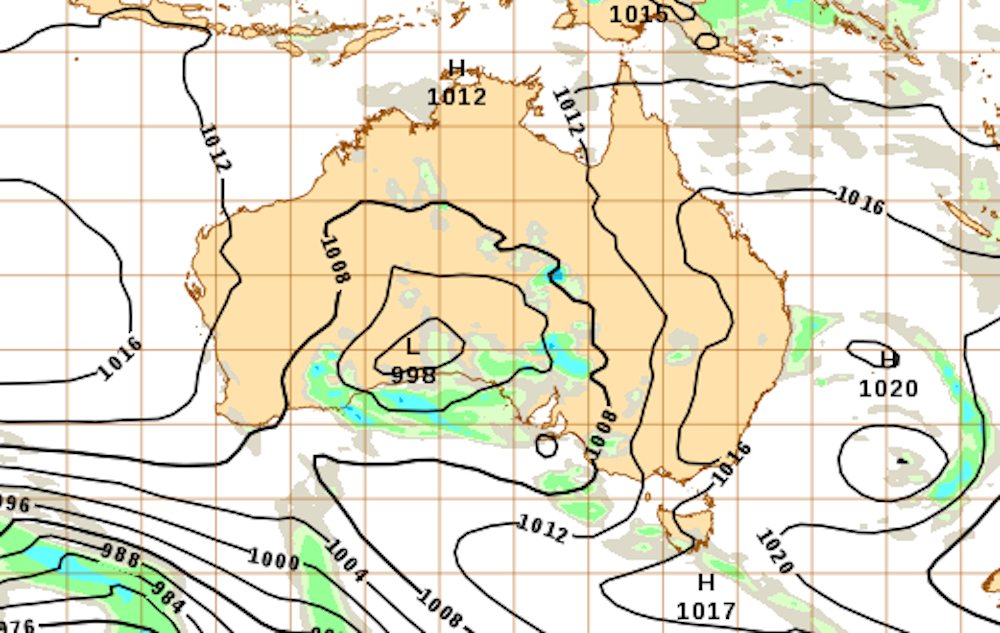
    As this large low pressure system moves east, it brings thunderstorms. This map shows the low pressure system on October 16th.
    Bureau of Meteorology, CC BY-NC-ND

    Ahead of the arrival of this low pressure system, winds from the north are bringing down moisture and instability and priming the system for thunderstorms. When air near the low pressure system begins to rise, energy from the warm, moisture-laden and unstable air can be released. This includes energy release due to condensation of water vapour. These rising air currents can travel several kilometres up into the atmosphere, even reaching the top of the troposphere, 10–15km up.

    Severe thunderstorms in southern Australia are more likely in spring and summer. That’s because there’s plenty of moisture available from the tropics and the warm oceans around Australia, while low pressure systems and cold fronts can still emerge from the cold oceans to our south.

    Thunderstorms, tornadoes and fire

    Severe thunderstorms can also pack a hidden punch. They can trigger tornadoes in extreme cases.

    In August, severe thunderstorms hit northern Victoria and triggered a tornado, a destructive whirling column of air that damaged houses and farms in the high country.

    This surprised many people. It’s generally known that Australia has tropical cyclones in the north, intense tropical storms coming in off the sea, but not as well known to have tornadoes.

    In fact, Australia does get tornadoes – an estimated 30–80 each year. In 2013, a total of 69 known tornadoes caused almost 150 injuries. Many of these tornadoes spin out of supercells.

    In Australia’s hotter months, many fires burn around the country. Thunderstorms can make fires worse by bringing strong, warm northerly winds, often with rapid variations in speed and direction that can increase the rate of spread of a fire.

    Firefighters and first responders dread these conditions. Australia’s most deadly bushfire was Black Saturday in 2009, which killed 173 people. One reason it was so dangerous was its suddenness. Intense northerly winds brought down powerlines and started fires, which were quickly whipped into intense firestorms, including thunderstorms generated in the fire plumes.

    Will climate change bring more severe storms?

    As the world heats up, more water is evaporating off warm sea surfaces and hanging in the air as water vapour. This means there’s more of this ingredient necessary to fuel severe thunderstorms and more intense rain from thunderstorms.

    What we don’t know for certain yet is how prevailing air currents over Australia are changing. This could shift moisture to different regions, or affect other thunderstorm ingredients like vertical wind shear, instability, and lifting mechanisms. If circulation patterns do change, we could see severe storms develop in new areas, or different times of the year.


    Read more:
    We can’t say yet if grid-breaking thunderstorms are getting worse – but we shouldn’t wait to find out


    Andrew Brown receives funding from the ARC Centre of Excellence for 21st Century Weather.

    Andrew Dowdy receives funding from University of Melbourne, including through the Centre of Excellence for Climate Extremes and the Melbourne Energy Institute.

    ref. Severe thunderstorms are sweeping through southern Australia. But what makes a thunderstorm ‘severe’? – https://theconversation.com/severe-thunderstorms-are-sweeping-through-southern-australia-but-what-makes-a-thunderstorm-severe-241555

    MIL OSI AnalysisEveningReport.nz

  • MIL-OSI Asia-Pac: President Lai meets delegation led by Reporters Without Borders Director General Thibaut Bruttin

    Source: Republic of China Taiwan

    President Lai meets delegation led by Reporters Without Borders Director General Thibaut Bruttin
    President Lai meets delegation led by Reporters Without Borders Director General Thibaut Bruttin
    2024-10-16

    On the afternoon of October 16, President Lai Ching-te met with a delegation led by Thibaut Bruttin, director general of Reporters Without Borders (RSF). In remarks, President Lai mentioned that today, Taiwan is not just a center for press freedom in Asia, but also a hub for international press throughout the Asia-Pacific region. The president said that Taiwan stands on the frontline of the defense of democracy, determined to do all we can to safeguard the values of freedom and democracy. He also said that Taiwan hopes to pursue an even more active role in the international community as we work alongside RSF and global democratic partners to champion press freedom and sustainable democracy.
    A translation of President Lai’s remarks follows:
    I warmly welcome RSF Director General Bruttin, who is visiting for the first time since taking on the role in July. Seven years ago, RSF established its first Asia bureau in Taipei. We have been honored to work with you all and contribute even more toward press freedom in Asia.
    Taiwan is a freedom-loving democratic country. The spirit of freedom and democracy is in our DNA. And in recent years, our efforts have been recognized by the international community. We have received top rankings for Asia in various democracy indexes and evaluations of freedom. This year, Taiwan ranked first in Asia and rose to 27th in the world in the RSF World Press Freedom Index. This was our best performance ever.
    Thanks to our liberal press environment, more and more international media outlets have been stationing personnel here in Taiwan each year. Today, Taiwan is not just a center for press freedom in Asia, but also a hub for international press throughout the Asia-Pacific region. Taiwan stands on the frontline of the defense of democracy, determined to do all we can to safeguard the values of freedom and democracy.
    Of all the world’s nations, Taiwan is the most seriously targeted by foreign disinformation. Over the past few years, our government has striven to develop a more robust cybersecurity network. Taiwanese NGOs have also worked on policies designed to combat disinformation. And now we have established the Whole-of-Society Defense Resilience Committee directly under the Office of the President. By combining the strengths of the government and civil society, we aim to bolster our nation’s resilience in response to such challenges as disinformation and cyberattacks.
    Facing a torrent of disinformation and the expansion of authoritarianism, Taiwan needs the world and the world needs Taiwan. We hope to strengthen cooperation and exchanges with other countries. Together, we can support the democratic umbrella and jointly safeguard our free and democratic way of life. Moving forward, Taiwan hopes to pursue an even more active role in the international community as we work alongside RSF and global democratic partners to champion press freedom and sustainable democracy.
    Director General Bruttin then delivered remarks, indicating that it has been seven years since RSF chose Taiwan as the place to build a presence in Asia, and saying that they were right to do so in that the information provided by media in Taiwan is among the freest and more pluralistic, and that RSF stands with the media communities that are free, independent, and pluralistic.
    Director General Bruttin noted that Taiwan is number one in terms of press freedom in Asia and 27th globally, saying this is an achievement that proves how important it is to sustain the efforts of civil society and encourage it through public policies that are in line with international principles.
    The director general went on to say that there are several dimensions we could underline as a way forward for collaboration. First, he said, it is important to continue sustaining and leading the effort to have an end to the digital chaos, as the information that is spread on social media and on tech platforms is not always trustworthy or reliable, and we need to engage strongly to have policies that protect the public. Director General Bruttin said this is not just for journalism, but also for the general public, because it’s their right to know. The second point, he said, is that we need to encourage self-regulation and also protect the public through regulations that enable the media to thrive and develop. He emphasized that they believe there are ways to reform the media landscape in order to strengthen its accuracy and its ability to report with the ethical and deontological guidelines we need. Therefore, he said, we also need to strengthen the public service media in order to have a media landscape that restores the trust of the public.
    The final point, Director General Bruttin stated, is about the need to expose propaganda and foreign interference in the media sphere, saying we need to not only chase and expose the disinformation campaigns that might be going on, but also understand the strategy and geopolitics of propaganda to understand the actors, budgets, and people behind it. It’s a phenomenon that can affect Taiwan, he indicated, but also a global phenomenon, and collectively, we need to do more altogether. Director General Bruttin closed his remarks by saying Taiwanese people can be really bold in fostering democracy, so he and the delegation are very confident about the seven years ahead.

    MIL OSI Asia Pacific News

  • MIL-Evening Report: Loss of an idol: response to Liam Payne’s death highlights the power of childhood and music

    Source: The Conversation (Au and NZ) – By Liz Giuffre, Senior Lecturer in Communication, University of Technology Sydney

    Former One Direction band member and solo artist Liam Payne has been found dead outside a hotel in Buenos Aires, media reports have confirmed. Payne was just 31 years old – a loved friend and father.

    Alongside his former One Direction band mates Niall Horan, Harry Styles, Louis Tomlinson and Zayn Malik, Payne had a huge influence on popular culture in his home country of the United Kingdom and internationally.

    The group formed in 2010 on the British talent show X Factor and stayed together for about five years before officially splitting in 2016. Throughout this time, Payne remained a valuable member of the band and a clear talent in his own right.

    Although each member auditioned seperately, they were eventually hand-picked by Simon Cowell to form a group.

    After the split (and a brief hiatus from music-making), Payne continued to release music periodically as both a songwriter and collaborator. He most recently released the single Teardrops in March, ahead of an anticipated second solo album.

    News of Payne’s death has led to an outpouring of tributes. Like many young people thrust into stardom seemingly overnight, his life wasn’t without controversy. But the response to his death by fans and industry colleagues alike is proof of the impact he had.

    The making of a pop supergroup

    While One Direction may have not been together for as long as other globally successful acts, their influence far exceeded bands that have been together for decades. They released five studio records – and broke many more, including six Guinness World Records. And even though they didn’t make it to their 10th anniversary together, they had still sold some 70 million records by 2020.

    In the years since the split, fans continued to gather, listen and celebrate – with the most recent anniversary (14 years) seeing fan-led events held in Australia and the rest of the world.

    It’s easy to dismiss pop music and its influence, especially in the face of what feel like increasingly dire global circumstances. But pop, like many other forms of entertainment, provides a practical way for people to gain momentary pleasure and comfort.

    It also provides connection with others – and relief from politics and other daily pressures. For example, one of One Direction’s biggest hits, That’s What Makes You Beautiful, sought to empower young people who might otherwise be overwhelmed by negative messaging.

    Within a year of their debut, the group was met with massive crowds of fans almost everywhere they want.

    One Direction has been compared to The Beatles in terms of their influence on young people – and female and queer fans in particular.

    The impact on fans when their idol dies

    The loss of life, especially a young person’s life, is always a tragedy.

    For some young fans, this might be the first person they “know” who has died. While it may not be the same as losing a family member or close friend, the feeling of loss is significant. Young fans will need support. And in 2024, many will find this support through social platforms and online forums.

    I still remember the impact the deaths of stars such as Kurt Cobain and Jeff Buckley had on people like me who were teenagers in the 1990s. These were artists I admired and listened to – and whose art I relied on during times of pleasure and pain.

    A similar pang was felt when artists such as George Michael, Aretha Franklin and David Bowie died, albeit later in my life and theirs.

    The experience of losing a music idol is in many ways a universal one. People whose art we attach to our own life experiences become inseparable from our lives. And when they die, it can feel like those experiences are over too.

    After news of Payne’s death broke, hundreds of fans took to the streets of Palermo in Buenos Aires, where Payne had been visiting. They held a vigil, cried and consoled one another in front of the Casa Sur hotel where Payne had been staying.

    One fan, 25-year-old Yamila Zacarias, probably spoke for many when she said:

    He meant a lot to me because the band came into my life at this time when you’re trying to be a part of something, and being a One Direction fan became that something for me.

    Lifelong fandom and memories

    There’s a stereotype of “fans” as hordes of screaming girls, which can really take away from the depth of fandom.

    Anyone at any stage of life can be a fan of just about anything. And the best thing about fandom is that it can, and often does, allow lots of different types of people an outlet for connection throughout their lives.

    Many fans have left comments on old music videos.
    YouTube/screenshot

    The death of US actress Betty White in 2021, as sad as it was, brought people across generations and walks of life together. And not just those who knew her personally, but those who had connected with each other through their love of her work. It reminded me of my own family, including my Nan and Dad, now gone, and the laughs we’d share as we watched her.

    As more details and tributes to Payne’s life and death emerge, the fans will have each other to lean on. If you yourself know someone who is a fan of Payne or One Direction, even reaching out to just acknowledge that person’s grief and experience is important. It says to them, “what you love is valid, and so are you”.

    If this article has raised issues for you, or if you’re concerned about someone you know, call Lifeline on 13 11 14.

    Liz Giuffre does not work for, consult, own shares in or receive funding from any company or organisation that would benefit from this article, and has disclosed no relevant affiliations beyond their academic appointment.

    ref. Loss of an idol: response to Liam Payne’s death highlights the power of childhood and music – https://theconversation.com/loss-of-an-idol-response-to-liam-paynes-death-highlights-the-power-of-childhood-and-music-241554

    MIL OSI AnalysisEveningReport.nz

  • MIL-OSI New Zealand: Release: Further uncertainty for Kiwirail as jobs set to go

    Source: New Zealand Labour Party

    KiwiRail offering voluntary redundancy to all its staff is hugely concerning given the future of New Zealand’s rail system is under threat.

    KiwiRail employs 4,500 people and has staff in more than 50 towns and cities across the country.

    “These are skilled workers who contribute a lot to the New Zealand economy and make sure freight and passengers move around safely,” Labour’s state-owned enterprises spokesperson Arena Williams said.

    “It was revealed last week that more than 50 roles at the Interislander ferries were going, and now we hear all staff are going to be offered redundancy as of Monday.

    “I am especially concerned about the timing of this. There is already huge uncertainty around the future of the essential rail connection across the Cook Strait, following Nicola Willis’ decision to cancel the rail-enabled ferries.

    “Labour had a plan for new ferries, because the current ones will need significant maintenance to serve their critical role in connecting the North and South Islands.  

    “Cutting maintenance and engineering jobs, when you have no plan for new ferries and are relying on the old ones, is adding fuel to the fire and will only mean ferries that break down more often and put passenger and crew safety at risk.

    “Freight companies are worried too. They are unsure if their journeys will go ahead, and there is growing concern about stock arriving on time, safely.

    “A year on, there is still no plan from the government to replace the ageing ferries and even less certainty for staff and the public,” Arena Williams said.


    Stay in the loop by signing up to our mailing list and following us on FacebookInstagram, and X.

    MIL OSI New Zealand News

  • MIL-OSI Economics: Asian Development Bank and Kazakhstan: Fact Sheet

    Source: Asia Development Bank

    As of 31 December 2023, ADB has committed 131 public sector loans, grants, and technical assistance totaling $6 billion to Kazakhstan. ADB’s current sovereign portfolio in Kazakhstan includes 3 loans worth $452.2 million. In addition, ADB has committed $865 million nonsovereign financing for 38 transactions.

    Updated yearly, this ADB Fact Sheet provides concise information on ADB’s operations in the country and contact information.

    MIL OSI Economics

  • MIL-OSI Economics: Panasonic HD secures SBTi verification for 2050 Net-Zero Emissions Target

    Source: Panasonic

    Headline: Panasonic HD secures SBTi verification for 2050 Net-Zero Emissions Target

    Osaka, Japan, October 17, 2024 – Panasonic Holdings Corporation (Panasonic HD) announced today that the Science Based Targets initiative(*1), a global body driving ambitious corporate climate action, has verified the company’s greenhouse gas (GHG) 2050 reduction target as a “Net-Zero Science-Based Target.”
    The SBTi promotes science-based GHG reduction targets for companies, aiming to limit global temperature rise to 1.5°C above pre-industrial levels. Its certification standards for short-term (2030) so-called “1.5°C Targets” and long-term (2050) “Net-Zero Targets” have become the global benchmark for corporate climate goals aligned with the Paris Agreement.
    In May 2023, Panasonic HD received SBTi approval for its 1.5°C Target. Now, the company has secured verification from the body for its Net-Zero Target after submitting detailed plans to achieve net-zero emissions by 2050, in line with SBTi guidelines.
    Panasonic HD’s Net-Zero Target commits to reducing GHG emissions across the company’s entire value chain. This includes scope 1 emissions from the company’s own activities, as well as scopes 2 and 3 emissions, from indirect activities, by at least 90% by FY2050 compared to FY2019 levels. The company pledges to neutralize the remaining 10% through proprietary carbon removal technologies.
    SBTi verification validates that a company’s GHG reduction targets are appropriately set, enhancing stakeholder trust in its climate action efforts. Globally, 1,138 companies have received Net-Zero Target certification, including 52 in Japan(*2).
    Panasonic HD remains committed to achieving net-zero emissions across its value chain and contributing to GHG reductions in society, driving impact toward achieving a decarbonized world.

    MIL OSI Economics

  • MIL-OSI Economics: RBI to conduct Overnight Variable Rate Reverse Repo (VRRR) auction under LAF on October 17, 2024

    Source: Reserve Bank of India

    On a review of the current and evolving liquidity conditions, it has been decided to conduct a Variable Rate Reverse Repo (VRRR) auction on October 17, 2024, Thursday, as under:

    Sl. No. Notified Amount
    (₹ crore)
    Tenor
    (day)
    Window Timing Date of Reversal
    1 75,000 1 12:00 Noon to 12:30 PM October 18, 2024
    (Friday)

    2. The operational guidelines for the auction as given in the Reserve Bank’s Press Release 2019-2020/1947 dated February 13, 2020 will remain the same.

    (Puneet Pancholy)  
    Chief General Manager

    Press Release: 2024-2025/1313

    MIL OSI Economics

  • MIL-OSI: Generative AI expected to accelerate entry-level career progress across industries

    Source: GlobeNewswire (MIL-OSI)

    Press contact:
    Mollie Mellows
    Tel.: + 44 (0) 7342 709384
    E-mail: mollie.mellows@capgemini.com

    Generative AI expected to accelerate entry-level career progress across industries

    • Employees believe generative AI will facilitate a third (32%) of entry level tasks over the next 12 months.
    • 6 in 10 managers and most employees (71%) expect entry-level roles across functions to evolve from creation to reviewing generative AI outputs, over the next 3 years.
    • Over three-quarters (78%) of leaders and managers predict generative AI will augment their problem-solving and decision-making in the next three years, and over half think manager-level positions will evolve towards specialization.

    Paris, October 17, 2024 – The Capgemini Research Institute’s new report on generative AI (Gen AI) in management, ‘Gen AI at work: Shaping the future of organizations’, published today, suggests that Gen AI could have a positive impact on early-stage careers. In the longer-term, the report finds that Gen AI has the potential to create new job roles, transform organizational structures, drive human-AI fusion teams, and make managerial roles more specialist. However, adoption remains low and nascent. The report finds most employees lack the training they need to develop Gen AI skills.

    Whilst the impact of Gen AI on careers has been hotly debated, this new research finds the majority of business leaders believe that entry level roles could become more autonomous and evolve into frontline managerial roles within the next three years. With this in mind, the proportion of managers in teams across functions could expand from 44% to 53% in the next three years; only 18% of leaders and managers believe that Gen AI will reduce middle management.

    Employees think that, over the next 12 months, generative AI tools could lead to an average time saving of 18% for entry-level workers, implying there could be significant productivity improvements for junior employees. However, the cost of the Gen AI tool must also be taken into account, cites the report. Furthermore, 81% of leaders and managers expect new roles such as data curators, AI ethics specialists and algorithm trainers to emerge at the entry level.

    “Generative AI tools are becoming more adept at assisting with complex managerial tasks, which could challenge the status quo of organizational structure and ways of working,” said Roshan Gya, CEO of Capgemini Invent and member of the Group Executive Committee. “Generative AI has the potential to shift from a co-pilot to a co-thinker, capable of strategic collaboration, adding new perspectives and challenging assumptions. This shift could unlock significant value when tailored to specific business use cases but is dependent on several factors, including organizations prioritizing building the skills and readiness of employees, taking proactive steps around talent acquisition and development.”

    Potential to redefine management but still a significant gap on actual usage
    The report finds that Gen AI is transitioning the view of future leadership and managerial roles toward becoming more strategic, focusing on decision making and fostering innovation. In fact, many managers and leaders currently believe that Gen AI tools could act as co-thinkers for them. 65% of the leaders and managers surveyed see high potential in Gen AI for complex strategic tasks, and more than half of leaders believe managers will play a critical role as catalysts of Gen AI-driven change. The technology could also save leaders and managers up to seven hours each week, with nearly 8 in 10 leaders believing that Gen AI will positively impact their productivity in the next 12 months.

    Gen AI has the potential to amplify the strategic scope of leaderships roles. Currently, managers spend more than one-third of their time on administrative tasks. However, AI’s ability to automate much of this work provides opportunities to focus on strategic-planning and problem-solving tasks. In the next three years, over three-quarters (78%) of leaders and managers expect Gen AI to augment their problem-solving and decision-making, and over half believe manager-level positions will evolve towards specialization. 57% of leaders at organizations advanced in their Gen AI implementation already see their roles becoming more strategic.

    While adoption of Gen AI in management has good potential, there is a significant gap between potential and actual usage. Although 97% of leaders and managers say that they have experimented with Gen AI tools, only 15% use Gen AI tools at least once a day in their work.

    Organizational structures need to transform to enable cohesive human-AI collaboration
    For nearly half (46%) of teams, AI is used simply as a tool to enhance existing capabilities and workflows. However, human-machine partnerships are starting to be embraced. One in three teams are currently using AI as a ‘team member’, for example by enhancing human performance or using AI agents to complete predefined tasks without human intervention. According to the research, today AI is used as a supervisor in only 1% of teams i.e., it is directing, allocating, or prioritizing work for humans. Yet, in the next 12 months, 13% of teams expect to use AI in this role. In an AI-led environment, human judgment is increasingly important, and the majority of leaders, managers and employees in the research acknowledge this.

    Training and managerial guidance required to secure the future of Gen AI at work

    Despite the potential of Gen AI to boost productivity across job functions, adoption remains nascent. While almost two-thirds (64%) of workers already use Gen AI tools for their work, only 20% of employees use Gen AI tools daily.

    Employees also lack proficiency in key skills, with only 16% believing they are getting the support they need to develop Gen AI skills. Only 13% of employees say they are well-versed in machine conversational skills; only a third say they can manage Gen AI systemic risks; and less than half claim to have prompt engineering skills. The report suggests that team members should be equipped with the right AI skills, defining rules and responsibilities for cohesive human and Gen AI collaboration, ensuring accountability when Gen AI systems make mistakes, and adapting workflows and processes for the new era of Gen AI.

    Report Methodology
    Capgemini Research Institute conducted a global quantitative executive survey in May 2024 across 15 different countries and 11 key industries, surveying 1,500 respondents from 500 organizations, with annual revenue of more than $1 billion. Each unique organization is represented by three executives, one each at leadership level, middle-management level, and front-line management level (the three respondents can be from different functions or locations). The report is also based on an entry-level employee survey to take their perspective on Gen AI adoption by their managers and leaders. The survey targeted 1,000 entry-level employees from the same 500 organizations as in the executive survey. Hence, overall, each organization, irrespective of location or function, is represented by five respondents – three executive-level (leaders and managers) and two entry-level employees. In addition to these executive and entry-level employee surveys, the report also draws on 15 in-depth interviews with independent experts from various industries across the globe to validate and substantiate findings. Please note, the study findings reflect the views of the respondents and are aimed at providing directional guidance.

    About Capgemini
    Capgemini is a global business and technology transformation partner, helping organizations to accelerate their dual transition to a digital and sustainable world, while creating tangible impact for enterprises and society. It is a responsible and diverse group of 340,000 team members in more than 50 countries. With its strong over 55-year heritage, Capgemini is trusted by its clients to unlock the value of technology to address the entire breadth of their business needs. It delivers end-to-end services and solutions leveraging strengths from strategy and design to engineering, all fueled by its market leading capabilities in AI, cloud and data, combined with its deep industry expertise and partner ecosystem. The Group reported 2023 global revenues of €22.5 billion.
    Get The Future You Want | http://www.capgemini.com

    About the Capgemini Research Institute
    The Capgemini Research Institute is Capgemini’s in-house think-tank on all things digital. The Institute publishes research on the impact of digital technologies on large traditional businesses. The team draws on the worldwide network of Capgemini experts and works closely with academic and technology partners. The Institute has dedicated research centers in India, Singapore, the United Kingdom and the United States. It was recently ranked #1 in the world for the quality of its research by independent analysts.
    Visit us at https://www.capgemini.com/researchinstitute/

    Attachment

    The MIL Network

  • MIL-OSI China: Xinjiang attracts visitors with cultural richness, natural splendor

    Source: China State Council Information Office 3

    An attendee of the 6th World Media Summit interacts with a dancer in Jiayi Village of Xinhe County, northwest China’s Xinjiang Uygur Autonomous Region, Oct. 15, 2024. The 6th World Media Summit opened on Monday in Urumqi, capital city of northwest China’s Xinjiang Uygur Autonomous Region. (Xinhua/Chen Shuo)

    Captivated by the beautiful melodies of traditional instruments and the vibrant Uygur dance performance, Joshua Isaac Jere from Zambia couldn’t resist the infectious rhythm and warm hospitality, and joined the dancers in their joyous celebration in Jiayi Village.

    Jiayi, located in Xinhe County, northwest China’s Xinjiang Uygur Autonomous Region, is renowned for its musical instrument production. Jere, an online news media manager of Zambia National Broadcasting Corporation, was part of an overseas media group visiting this small village. The trip followed the opening of the sixth World Media Summit in the regional capital of Urumqi.

    “It reminded me of home and I enjoyed it very much,” Jere said, noting that the musical instruments share many similarities with those back in his own country.

    Jiayi Village has over 300 years of history in Uygur ethnic musical instrument craftsmanship, which has been listed as a national intangible cultural heritage and features more than 10 types of meticulously handcrafted instruments, including Tambur and Dutar.

    “I have witnessed the villagers’ passion for preserving their traditional culture, especially in the crafts of handmade instruments, which have been passed down through generations,” said Kuik Cheng Kang, editor-in-chief of Malaysia’s Sin Chew Daily.

    Xinjiang’s distinct customs and lifestyle offer international visitors a glimpse into the rich diversity and inclusiveness of Chinese culture, a surprising and captivating experience for many, according to Kuik, who also believed that Xinjiang is showcasing its unique charm to the world with more confidence.

    This confidence stems from Xinjiang’s remarkable cultural and tourism resources, combined with the region’s unswerving efforts to forge itself into a more attractive, inclusive and accessible tourism hub.

    Covering one-sixth of China’s total land area, Xinjiang’s unique “three mountain ranges sandwiching two basins” terrain offers breathtaking natural scenery, from towering mountains and deep gorges to vast deserts and serene lakes.

    Xinjiang’s strategic location along the ancient Silk Road, combined with its diverse array of ethnic minorities, has forged rich cultural heritages. This is illustrated by the region’s multiple UNESCO world heritage sites, world intangible cultural heritages as well as national intangible cultural heritages.

    The unparalleled blend of natural beauty and historical significance makes Xinjiang a must-visit destination for those seeking both cultural and natural wonders, such as the Tianshan Mountains, Sayram Lake, Jiaohe Ruins and Kashgar Old Town.

    Beneath the soft glow of moonlight, another group of overseas travelers wandered into the 2,000-year-old ruins of Jiaohe. Once a key stop on the ancient Silk Road in Turpan, it now stands as the world’s largest and best-preserved clay-built ancient city. Accompanied by the sounds of flutes and strings, the visitors felt like they had been transported through time, immersing themselves in the ancient world through the performers’ chants.

    “The Jiaohe Ruins exemplify advanced concepts in cultural relic protection and cultural tourism development in China. They not only preserve the original appearance of the site but also enhance the experience with thoughtfully designed pathways, lighting, cave landscaping, background music and performances, creating a tranquil atmosphere that harmonizes with the ancient city,” said Marcelo Benez, chief commercial officer of Folha de S.Paulo.

    He said the trip to Turpan provided him with an unprecedented experience. “This remarkable place is incredibly diverse, where the past and future, history and modernity, technology and tradition intertwine in an almost unbelievable way. For first-time visitors, surprises seem to arise at every turn.”

    Delvin O’Neale Thoma, deputy minister of Media Department of Republic of Nauru, said he had only seen such cultural relics in documentaries before and being able to stand amidst such a historically significant site left a deep impression on him.

    In recent years, tourism in Xinjiang has surged in popularity, driven by a range of measures designed to enrich the travel experience, improve transportation options, and ensure the sustainable preservation of cultural resources.

    Between January and September 2024, Xinjiang received 245 million tourists from home and abroad. Tourism revenue for the first three quarters of 2024 and that of the entire 2023 reached 287.58 billion yuan (about 40.4 billion U.S. dollars) and 296.72 billion yuan, respectively.

    Xinjiang is also enhancing its tourism infrastructure by focusing on developing world-class tourist destinations, resorts, and cities over the next three years. Key scenic roads, such as the Duku Highway, will be upgraded into top self-driving routes.

    Improved transportation, including domestic and overseas flight routes and rural road projects, will further boost the region’s tourism growth, according to Sun Hongmei, vice chairperson of the regional government.

    By promoting internationalized tourism services, including accepting foreign bank cards, streamlining hotel check-in procedures to reduce wait times, and enabling foreign tourists to reserve tickets using passports and permanent residence IDs online, Xinjiang is also committed to enhancing convenience for overseas tourists. 

    MIL OSI China News

  • MIL-OSI United Kingdom: UK and Solomon Islands Environment Ministry support waste management education initiatives

    Source: United Kingdom – Executive Government & Departments

    The UK government’s Ocean Country Partnership Programme and the Solomon Islands government through its Ministry of Environment provide education packs to schools.

    Group photo with students at St Nicholas Anglican College displaying the education packs.

    The Kukum Seventh Day Adventist School, Florence Young Christian School and Saint Nicholas Anglican College in Honiara are the first beneficiaries of primary and secondary education packs to help students understand how to better manage waste and why this is so important for our oceans.

    These education packs are being provided to schools alongside recycling bins, as the Solomon Islands and UK look to tackle marine pollution.

    These have been possible through the UK Government’s Ocean Country Partnership Programme (OCPP) and the Solomon Islands Government through its Ministry of Environment, Climate Change, Disaster Management and Meteorology (MECDM).

    At the handing over of the education packs to each school on Tuesday 15 October, British High Commissioner to Solomon Islands and Nauru, His Excellency Thomas Coward said:

    Children are our country’s future and educating them about marine biodiversity, marine pollution and sustainable seafood is important. We are pleased to present these education packs to the students and teachers, and we are hopeful they will learn to protect marine pollution.

    The Literacy Association of Solomon Islands (LASI) was engaged by the Centre for Environment Fisheries and Aquaculture Science (Cefas) to translate the education packs into Solomon Islands pijin making them simple for both teachers and students at the schools.

    Senior Research Scientist at Cefas, Freya Goodsir said:

    Through the Ocean Country Partnership Programme, we are delighted to collaborate with the Solomon Islands and support initiatives to tackle marine pollution. These education packs and recycling bins will make a real difference to the school communities and inspire the next generation to be leaders in protecting their incredible marine environment.

    Chief Environment Officer, Environment and Conservation Division at the Solomon Islands Ministry of Environment, Climate Change, Disaster Management and Meteorology, Wendy Beti said:

    The ministry is thankful to the British High Commission through its OCPP for publishing the primary and secondary education packs we are giving you. The ministry is actively supporting this programme through various initiatives including the provision of recycling bins with some schools having received them and other schools that will be delivered later. OCPP also supports the ministry through coastal water quality monitoring, awareness campaigns and billboards and provincial workshops. We look forward to collaborating with schools and important stakeholders of the programme.

    The school leaders of Kukum SDA School, Florence Young School and St Nicholas School expressed their gratitude for the education packs saying children are at the core of such initiatives as they are the country’s future.

    Construction of eight recycling bins is progressing, and the three schools are expected to receive theirs this month.

    OCPP is funded by the UK Government International Development and delivered by the Centre for Environment, Fisheries and Aquaculture Science (Cefas), the Joint Nature Conservancy Committee (JNCC) and the Marine Management Organisation (MMO) on behalf of the UK Department for Environment, Food and Rural Affairs (Defra).

    Updates to this page

    Published 17 October 2024

    MIL OSI United Kingdom

  • MIL-OSI Economics: Deputy Secretary-General of ASEAN for Community and Corporate Affairs meets European Commissioner for Crisis Management

    Source: ASEAN

    Deputy Secretary-General of ASEAN for Community and Corporate Affairs, H.E. Nararya Sanggramawijaya Soeprapto, held a meeting with the European Commissioner for Crisis Management, H.E. Janez Lenarčič, at the ASEAN Headquarters today. They discussed the ongoing and future collaboration between ASEAN and the European Union, especially in the disaster management and humanitarian assistance sector. 

    Prior to the the meeting, DSG Nararya Soeprapto witnessed signing of the Administrative Arrangement between the ASEAN Coordinating Centre for Humanitarian Assistance on disaster management (AHA Centre) and Directorate-General for European Civil Protection and Humanitarian Aid Operations (DG ECHO). The Administrative Arrangement aims to further promote cooperation in disaster management and emergency response. 

    The post Deputy Secretary-General of ASEAN for Community and Corporate Affairs meets European Commissioner for Crisis Management appeared first on ASEAN Main Portal.

    MIL OSI Economics

  • MIL-OSI Asia-Pac: Import of poultry meat and products from areas in Italy suspended

    Source: Hong Kong Government special administrative region

         The Centre for Food Safety (CFS) of the Food and Environmental Hygiene Department announced today (October 17) that in view of a notification from the World Organisation for Animal Health (WOAH) about outbreaks of highly pathogenic H5N1 avian influenza in Brescia Province and Cremona Province of Lombardy Region in Italy, the CFS has instructed the trade to suspend the import of poultry meat and products (including poultry eggs) from the above-mentioned areas with immediate effect to protect public health in Hong Kong.

         A CFS spokesman said that according to the Census and Statistics Department, Hong Kong imported about 40 tonnes of frozen poultry meat and about 10 000 poultry eggs from Italy in the first six months of this year.

         “The CFS has contacted the Italian authority over the issue and will closely monitor information issued by the WOAH and the relevant authorities on the avian influenza outbreak. Appropriate action will be taken in response to the development of the situation,” the spokesman said.

    MIL OSI Asia Pacific News

  • MIL-OSI New Zealand: Weather News – Hints of summer over the weekend – MetService

    Source: MetService

    Covering period of Thursday 17th – Sunday 20th October – MetService is forecasting settled weather over the weekend – a dry spell which may be long awaited in those parts of the country who have already broken their monthly rainfall record for October, such as southern regions of the South Island.

    Hints of summer are in the air, with an area of high pressure over Aotearoa New Zealand. Warm afternoons and light northerly winds set the tone for a great weekend for most, but it should be noted that conditions are not entirely cloud-free.
     
    MetService meteorologist Clare O’Connor details, “The ridge of high pressure over the country does a great job of preventing – or blocking – the progression of an area of low pressure sitting in the Tasman Sea. However, as these areas gradually move eastwards, some tendrils of the low make it to our western shores as brief showers and cloudy periods although there will be plenty of blue skies in between.”

    Afternoon showers are also expected about inland areas over the weekend, another indicator of a shift towards summer weather patterns. Green thumbs will be able to swing into action with their spring planting this weekend, and early summer-like temperatures will be felt as the weekend comes to a close. Maximum temperatures are forecast to reach the low twenties about the lower South Island.

    O’Connor adds, “These warmer, drier conditions are also expected to continue into the week ahead, but it is still too early to offer a definitive outlook for the upcoming long weekend. However, there are indications for warm temperatures to kick off the (extra) long weekend about Hawke’s Bay”.

    MIL OSI New Zealand News

  • MIL-OSI New Zealand: Maritime News – Charter boat operator sentenced over fatal incident

    Source: Maritime New Zealand

    company’s failure to ensure health and safety policies and procedures were correctly followed played a key role in the tragic death of a passenger on a luxury charter vessel.
    Zefiro Charters Limited was today sentenced in the District Court at Auckland for a breach of the Health and Safety at Work Act 2015, in relation to the death of Danielle Tamarua on 1 April, 2021, after she fell overboard off the Zefiro . At the time Ms Tamarua was on the vessel with work colleagues on a trip around the Hauraki Gulf.
    Maritime NZ’s General Manager Investigations, Pete Dwen says the company had been operating the Zefiro for 17 years, and it had policies and procedures in place to keep passengers safe while it was underway.
    “Tragically these procedures were not followed on 1 April, 2021,” he says.
    In accordance with the Maritime Operator Safety System, Zefiro Charters’ was operating under a Maritime Transport Operator Plan (MTOP). This plan identified various health and safety risks, including the hazard of passengers being on the bow of the vessel while it is underway. Ultimatley, the company failed to ensure the systems and processes in the MTOP were properly implemented and enforced on board.
    “All crew members are meant to know, understand and enforce the health and safety procedures on the vessel.
    “The MTOP plan also covered a safety briefing which stated passengers were not allowed on the bow, side decks or the duckboard (the very rear of the boat) while it is underway.
    “Some crew were unaware it was a policy for the vessel,” Mr Dwen says.
    There was also a lack of a physical barrier for the passengers indicating the no-go areas.
    Prior to Ms Tamarua falling overboard, the vessel was returning to berth, and weather conditions had worsened. Ms Tamarua had gone up to the bow of the vessel with another passenger.
    “When returning to go back inside the vessel, Ms Tamarua slipped and fell overboard. She was struck by the vessel and died, despite the efforts to save her.
    “If the prescribed health and safety procedures were followed, this incident would have likely been avoided,” Pete Dwen says.
    “This should have been a fun day out on the water. This incident is a horrific example of what can go wrong when a company fails to ensure health and safety procedures are followed.
    “I want to offer our sincere condolences to the family and friends of Ms Tamarua, as well as those on-board the Zefiroon 1 April, 2021.
    “I also want to thank the emergency service personnel who responded quickly and professionally to a very difficult situation,” Pete Dwen says.
    Sentencing notes what happened in the District Court at Auckland
    – Following a plea by notice, Zefiro Charters Limited was convicted on one charge under s 36(2) of the Health and Safety at Work Act 2015.
    – Judge Thomas described the culpability as amounting to a significant breach and indicated he would have had no hesitation in imposing a significant fine in the hundreds of thousands of dollars.
    – However, due to the limited financial means of the company, Judge Thomas ordered emotional harm reparation of $140,000 (to be apportioned between the victims) only.

    MIL OSI New Zealand News

  • MIL-OSI New Zealand: Defence News – Containers to be removed from reef after HMNZS Manawanui sinking

    Source: New Zealand Defence Force
     
    Three shipping containers that came off the sunken Royal New Zealand Navy ship HMNZS Manawanui will be removed from the reef, with work starting on Friday.
     
    The New Zealand Defence Force (NZDF) is working with a local contractor, ARK Marine, to remove the three shipping containers from the reef off the south-west coast of Upolu.
     
    The three 10ft containers will be floated and then towed to shore. Weather permitting, it is expected to take at least three days to remove all three containers. Preparation by the contractor is underway including getting rigging gear ready for the removal.
     
    Two of the three containers are empty. The third container is carrying 3000kg of food.
     
    The containers are not watertight and have sustained some structural damage, and are being moved by tides and swell.
     
    Samoan Government officials have been involved throughout the process and have approved the removal plan.
     
    NZDF Senior National Representative Commodore Andrew Brown says this is still a complex operation.
     
    “We have carefully considered a number of options for removing the containers. Especially, we are working hard to minimise the impact on the marine environment,” he says.
     
    “Other considerations include the prevailing weather, weight of the containers, and potential biosecurity risks.
     
    “While it is expected it will take three days for the removal of the containers, it may be that weather and sea conditions, or other considerations, mean that the timetable is not met. However, we are hopeful that the conditions will be such that all containers will be removed from the reef over coming days.”

    MIL OSI New Zealand News

  • MIL-OSI Economics: Underwriting Auction for sale of Government Securities for ₹33,000 crore on October 18, 2024

    Source: Reserve Bank of India

    Government of India has announced the sale (re-issue) of Government Securities, as detailed below, through auctions to be held on October 18, 2024.

    As per the extant scheme of underwriting notified on November 14, 2007, the amounts of Minimum Underwriting Commitment (MUC) and the minimum bidding commitment under Additional Competitive Underwriting (ACU) for the underwriting auction, applicable to each Primary Dealer (PD), are as under:

    (₹ crore)
    Security Notified Amount Minimum Underwriting Commitment (MUC) amount per PD Minimum bidding commitment per PD under ACU auction
    7.02% GS 2031 10,000 239 239
    7.23% GS 2039 13,000 310 310
    7.09% GS 2054 10,000 239 239

    The underwriting auction will be conducted through multiple price-based method on October 18, 2024 (Friday). PDs may submit their bids for ACU auction electronically through Core Banking Solution (E-Kuber) System between 09:00 A.M. and 09:30 A.M. on the day of underwriting auction.

    The underwriting commission will be credited to the current account of the respective PDs with RBI on the day of issue of securities.

    Ajit Prasad          
    Deputy General Manager
    (Communications)    

    Press Release: 2024-2025/1315

    MIL OSI Economics

  • MIL-OSI New Zealand: Transport – Trucking operators support Government’s targeted actions on road safety

    Source: Ia Ara Aotearoa Transporting New Zealand

    Road freight peak body Ia Ara Aotearoa Transporting New Zealand has welcomed the Government’s release of targeted actions to improve road safety, focussing on road policing and enforcement and safer roading infrastructure. Minister Simeon Brown today announced four key actions to improve safety outcomes:
    – Increased alcohol breath testing and introducing roadside drug testing
    – Reviewing penalties for traffic offences
    – Identifying opportunities to improve the driver licensing system
    – Building and maintaining our road network to a safe standard
    Transporting New Zealand Board Member and freight company general manager Scott Johnstone says that the Government’s announcement shows it is prioritising action to improve the safety of New Zealanders.
    “Cracking down on alcohol and drug impairment on the roads is essential to reducing deaths and injuries on our roads. 48.4 percent of fatal crashes involving driver alcohol/drugs as a contributing factor in 2022.”
    “The road freight industry sees the terrible impact of these crashes up close, so we’re highly supportive of increasing the number of alcohol breath tests, enabling roadside drug testing, and higher visibility policing of all road users.”
    Johnstone is also particularly supportive of the Government’s commitment to building safer, modern roads, including through the Roads of National Significance and Roads of Regional Significance programmes.
    “We know that newer roads are safer for all motorists. A 2023 Study by the AA Research Foundation found that eight new stretches of highway or expressway around the country had resulted in a 37 percent reduction in deaths and serious injuries.
    “Projects like Ōtaki to north of Levin Highway in Greater Wellington, Manawatū Tararua Highway, and Belfast to Pegasus motorway in Canterbury will substantially improve safety, as well as efficiency.”
    “As a general manager, I will feel a lot better knowing that our drivers and their families are operating on safer, modern roads with effective policing of alcohol and drug impaired drivers.”
    For further information , contact Dom Kalasih, interim chief executive, Ia Ara Aotearoa Transporting New Zealand, 027 441 4309, who can refer inquiries to Board Member and Freight Company General Manager Scott Johnstone.
    About Ia Ara Aotearoa Transporting New Zealand
    Ia Ara Aotearoa Transporting New Zealand is the peak national membership association representing the road freight transport industry. Our members operate urban, rural and inter- regional commercial freight transport services throughout the country.
     New Zealand’s road freight transport industry employs 33,000 people (1.2% of the total workforce), and has a gross annual turnover in the order of $6 billion. This is part of a wider transport sector that employs 108,000 people and contributes 4.8 percent of New Zealand’s GDP.

    MIL OSI New Zealand News

  • MIL-OSI New Zealand: Slash Management – Aratu Forests plans high strength steel nets to manage woody debris

    Source: Aratu Forests Limited

    Aratu Forests Ltd (Aratu) today announced plans for the first of three Swiss-designed high strength steel debris nets which aim to reduce the amount of woody debris flowing into catchments following storm events.
    Aratu plans debris nets at private properties bordering Te Marunga, Waimanu and Wakaroa forests. These will be subject to a resource consent process. The first is planned to span a waterway near Wakaroa Forest on a site straddling two properties.
    These will complement a range of other measures within the forest that have already been implemented or are planned.
    “We’re committed to being a responsible custodian of the environments we operate in, so we’re pleased to be advancing our plans with today’s announcement,” said Neil Woods, Aratu Chief Executive.
    “Debris nets are one part of a toolbox of measures we are using and plan to use to minimise woody debris accumulating in plantations and migrating down waterways after storms.
    “The nets are an extra layer of protection that have been successfully used overseas and in New Zealand. They’ve proven to be very effective at saving lives, buildings and land from the impacts of woody debris and rock falls.
    “We’re proud to be partnering with Swiss-based Geobrugg, the pioneer of debris net technology. In the last 10 years Geobrugg has installed over 250 debris flow barriers of the kind proposed by Aratu in more than 25 countries including New Zealand.
    “The planned net will be the first of its kind in Tairāwhiti. One installed in 2021 in northern Hawke’s Bay has worked well to date to trap debris after storms.
    “The region paid a high price for the devastation caused by cyclones Hale and Gabrielle. Like all forestry companies in Tairāwhiti, we work in a very challenging environment with many trees planted on highly erodible soils on steep hill slopes.
    “We have learnt much from the cyclones and are determined to keep lifting our game to limit the impacts from our operations.”
    Since taking over the forests in 2019, Aratu has introduced a range of measures to improve the management of woody debris (see details in Q&A attached).
    “We look forward to progressing the resource consent process with the Gisborne District Council so we can get on with doing our bit to better manage woody debris in Tairāwhiti,” said Neil Woods.
    Aratu manages 35,000 hectares of forestry plantation land across Te Tairāwhiti. In July 2019, Hikurangi Forest Farms was purchased by New Forests, an Australian-based, international and sustainable forestry investment manager, on behalf of its institutional investment clients. The company was renamed Aratu Forests Ltd. Since taking over ownership, we have continued to develop low impact harvesting techniques to mitigate debris movements from the plantations to ensure its sustainable plantations deliver long term benefits for the local community. We support over 200 permanent jobs and each week our company invests more than $1 million into the local economy through payments to our employees and suppliers. Aratu is committed to being a responsible custodian of the environment it operates in. In learning from the 2023 cyclone events, we have continued to refine our forest management practices with the aim of mitigating any negative impacts on the wider environment.

    MIL OSI New Zealand News

  • MIL-OSI New Zealand: Greenpeace – Federated Farmers “throwing their toys out of the cot” over freshwater protections

    Source: Greenpeace

    Greenpeace Aotearoa is wading in on the beef between Fish & Game Southland and Federated Farmers. The organisation says that it is backing Fish & Game Southland, who successfully challenged farm pollution discharge rules in the courts, and are now the subject of a Federated Farmers smear campaign.
    Greenpeace Aotearoa spokesperson Will Appelbe says, “Freshwater in Aotearoa has been in decline for decades, and Fish & Game Southland has acted in the interest of all New Zealanders by challenging Environment Southland’s anti-nature legislation.
    “Federated Farmers seem to think they have a right to pollute the water, and now that it has been proven in the courts that they do not, they’re throwing their toys out of the cot.
    “The intensive dairy industry has been allowed to pollute people’s water for too long and we’re seeing the consequences of that with unswimmable lakes and rivers and elevated levels of nitrate in drinking water,” says Appelbe.
    “Christopher Luxon’s Government is pushing ahead with reckless plans to rollback freshwater protections and their list of damaging Fast Track Projects. We all need to resist Luxon’s war on nature, and Fish & Game Southland should be praised for doing so.”
    Already, many rural communities across the country, especially in Canterbury, are facing high levels of nitrate in their drinking water. A growing body of science shows that long-term exposure to levels of nitrate above 1 mg/L can lead to an increased risk of developing bowel cancer, and at levels above 5 mg/L, the New Zealand College of Midwives advises pregnant people to find an alternative water source due to an increased risk of preterm birth.
    “We will continue to back the communities most impacted by water pollution, which is why we’re hosting two free drinking water nitrate testing events in Canterbury this weekend. Everyone should be able to drink a glass of water from their kitchen tap without worrying about getting sick, or take a swim in the lakes and rivers in their region,” says Appelbe.
    Greenpeace is hosting a t own hall meeting this Saturday in Rangiora to discuss the water pollution crisis in Canterbury – the hotspot of freshwater pollution in Aotearoa – and to support local communities in taking action on the issue. Additionally, more than twenty thousand people have signed a Greenpeace petition calling on the Government to leave New Zealand’s freshwater protections alone.

    MIL OSI New Zealand News

  • MIL-OSI New Zealand: NZ Compare Awards 2024: Call for Entries Now Open

    Source: NZ Compare

    NZ Compare is excited to bring back the iconic and highly anticipated NZ Compare Awards for 2024 – an event dedicated to uplifting and commemorating excellence and innovation in Aotearoa. It’s the perfect time to celebrate the very best in Aotearoa’s internet, energy, and telecommunications industries. Hitting its 8th year, the NZ Compare Awards have bloomed into an annual event that recognises outstanding service to Kiwis, innovation, and customer satisfaction across a broad range of categories.
    NZ Compare invites businesses across the country to submit their nominations and showcase their excellence. With the entries now officially open for 2024, this is a unique opportunity to stand out in a competitive marketplace and gain recognition for your commitment to delivering services to Kiwis that keep us connected and powered!
    Whether you are a large company or a growing provider, NZ Compare welcomes your entry and encourages all eligible businesses to get involved.
    This year, NZ Compare Awards 2024 have been supported by some great sponsors, including Chorus, realestate.co.nz, Enable Networks, Northpower Fibre and Tuatahi First Fibre. The aim for 2024 is to shine a light on categories across key sectors such as Broadband, Power and Mobile. Categories will have a special emphasis on celebrating sustainability and customer experience. NZ Compare’s infamous ‘Making a Difference Award’ will also return this year. Open to all sectors, this special award recognises those companies making a significant difference to local communities through innovation, creativity, and technology, with Kiwis at the heart of their projects.
    This year, winners will be selected by a panel of industry expert judges and, in some categories, public voting. By empowering Kiwis to use their voice, companies that deliver excellent service and value can be platformed and celebrated.
    NZ Compare Founder and CEO Gavin Male said, “The NZ Compare Awards have become a benchmark for industry excellence in New Zealand, and we’re thrilled to be hosting the event again this year. We encourage all companies that are making a difference in the lives of Kiwis to enter and be part of this celebration.”
    Key Dates:
    Entries Open: 01/10/2024
    Entries Close: 06/11/2024
    Finalist Ceremony: 19/11/2024
    Winners Announced: 10/12/2024
    For more information on categories, entry criteria, and how to submit an entry, visit the NZ Compare Awards 2024 official website at awards.nzcompare.com.
    About NZ Compare
    NZ Compare is New Zealand’s leading comparison platform, helping consumers make informed choices about their broadband, mobile, and energy services. Through impartial reviews, price comparisons, and expert analysis, NZ Compare empowers Kiwis to find the best deals and services for their needs.

    MIL OSI New Zealand News

  • MIL-OSI New Zealand: Greenpeace – Federated Farmers “throwing their toys out of the cot” over freshwater protections

    Source: Greenpeace

    Greenpeace Aotearoa is wading in on the beef between Fish & Game Southland and Federated Farmers. The organisation says that it is backing Fish & Game Southland, who successfully challenged farm pollution discharge rules in the courts, and are now the subject of a Federated Farmers smear campaign.
    Greenpeace Aotearoa spokesperson Will Appelbe says, “Freshwater in Aotearoa has been in decline for decades, and Fish & Game Southland has acted in the interest of all New Zealanders by challenging Environment Southland’s anti-nature legislation.
    “Federated Farmers seem to think they have a right to pollute the water, and now that it has been proven in the courts that they do not, they’re throwing their toys out of the cot.
    “The intensive dairy industry has been allowed to pollute people’s water for too long and we’re seeing the consequences of that with unswimmable lakes and rivers and elevated levels of nitrate in drinking water,” says Appelbe.
    “Christopher Luxon’s Government is pushing ahead with reckless plans to rollback freshwater protections and their list of damaging Fast Track Projects. We all need to resist Luxon’s war on nature, and Fish & Game Southland should be praised for doing so.”
    Already, many rural communities across the country, especially in Canterbury, are facing high levels of nitrate in their drinking water. A growing body of science shows that long-term exposure to levels of nitrate above 1 mg/L can lead to an increased risk of developing bowel cancer, and at levels above 5 mg/L, the New Zealand College of Midwives advises pregnant people to find an alternative water source due to an increased risk of preterm birth.
    “We will continue to back the communities most impacted by water pollution, which is why we’re hosting two free drinking water nitrate testing events in Canterbury this weekend. Everyone should be able to drink a glass of water from their kitchen tap without worrying about getting sick, or take a swim in the lakes and rivers in their region,” says Appelbe.
    Greenpeace is hosting a t own hall meeting this Saturday in Rangiora to discuss the water pollution crisis in Canterbury – the hotspot of freshwater pollution in Aotearoa – and to support local communities in taking action on the issue. Additionally, more than twenty thousand people have signed a Greenpeace petition calling on the Government to leave New Zealand’s freshwater protections alone.

    MIL OSI New Zealand News

  • MIL-OSI: Lantronix Unveils SmartLV, the First AI-Enabled IoT Edge Compute Cellular Gateway, Powered by Qualcomm

    Source: GlobeNewswire (MIL-OSI)

    IRVINE, Calif., Oct. 17, 2024 (GLOBE NEWSWIRE) — Lantronix Inc. (NASDAQ: LTRX), a global leader of compute and connectivity IoT solutions, has launched SmartLV, powered by the Qualcomm® IQ-615 processor, the first AI-enabled IoT Edge Compute Cellular Gateway. This groundbreaking innovation, designed specifically for low-voltage substations and distribution automation applications in next-generation smart grids, utilities and industrial sectors, will debut at Enlit Europe, Oct. 22–24, 2024, in Milan, Italy.

    SmartLV is engineered to revolutionize real-time visibility, control and automation in the energy sector, providing Distribution System Operators (DSOs) with the ability to manage and steer energy precisely when and where it’s needed. Built with advanced cybersecurity protocols and AI capabilities, the SmartLV ensures robust, reliable and secure operations for mission-critical applications, offering unmatched control over low-voltage substations and Distributed Energy Resources (DERs).

    “The SmartLV Gateway is a leap forward in empowering utility operators with critical, real-time insights and control over their low-voltage substations,” said Mathi Gurusamy, Chief Strategy Officer at Lantronix. “By utilizing Qualcomm Technologies’ AI technology, this solution helps to address today’s most pressing challenges at the edge of the smart grid.”

    AI at the Edge: Transforming Energy Management

    With growing demand for smarter and greener energy grids, the SmartLV Gateway empowers DSOs to anticipate and respond to real-time grid conditions, optimizing energy flow and ensuring stability even during peak loads. This AI-driven platform doesn’t just monitor; it enables intelligent energy steering and dynamic decision-making at the edge.

    “SmartLV exemplifies the fusion of AI and connectivity in tackling critical challenges within smart grids. Qualcomm® and Lantronix are enabling DSOs to have enhanced control and insights into the distribution network, transforming how energy is delivered and consumed and accelerating the grid transformation in Europe,” added Sebastiano Di Filippo, Senior Director of Business Development at Qualcomm Europe Inc.

    SmartLV Gateway key features include:

    • Multi-protocol communication: Seamlessly integrates with existing infrastructure via Ethernet, Serial, I/O and Industrial Protocol conversion suites, offering flexibility across legacy and modern systems.
    • High-speed connectivity: Future-resilient with LTE and 5G-ready high-speed cellular communication for reliable, low-latency operations.
    • Edge computing for real-time decisions: AI-enabled edge computing that powers low-latency analysis, enabling split-second decision-making directly at the substation.
    • Advanced cybersecurity: Fortified with Lantronix’s InfiniShield™ security framework to defend against cyber threats, ensuring uninterrupted operations.
    • Simplified management with Lantronix’s Percepxion™ IoT Edge Platform: Offers seamless management with global cellular plans, VPN security and an easy-to-use cloud platform to monitor and control deployments.
    • Energy Steering Automation: Provides automated, real-time control of DERs based on actual grid conditions to ensure efficient energy flow.  

    Innovation Fueled by a Long-Standing Collaboration

    The SmartLV Gateway is the latest innovation in a 15-year relationship, combining Qualcomm Technologies’ industry-leading AI and connectivity with Lantronix’s expertise in IoT solutions for industrial and smart grid applications.

    Availability

    The SmartLV Gateway is scheduled to launch in CY 2025, with some trials beginning at the end of CY 2024 for selected DSOs. For more information or to schedule a demo, visit Hall 5, MR10.

    About Lantronix   

    Lantronix Inc. is a global leader of compute and connectivity IoT solutions that target high-growth industries including Smart Cities, Automotive and Enterprise. Lantronix’s products and services empower companies to succeed in the growing IoT markets by delivering customizable solutions that address each layer of the IoT Stack. Lantronix’s leading-edge solutions include Intelligent Substations infrastructure, Infotainment systems and Video Surveillance, supplemented with advanced Out-of-Band Management (OOB) for Cloud and Edge Computing. 

    For more information, visit the Lantronix website

    “Safe Harbor” Statement under the Private Securities Litigation Reform Act of 1995: This news release contains forward-looking statements within the meaning of federal securities laws, including, without limitation, statements related to the SmartLV AI-Enabled IoT Edge Compute Cellular Gateway for Qualcomm developers. These forward-looking statements are based on our current expectations and are subject to substantial risks and uncertainties that could cause our actual results, future business, financial condition, or performance to differ materially from our historical results or those expressed or implied in any forward-looking statement contained in this news release. The potential risks and uncertainties include, but are not limited to, such factors as the effects of negative or worsening regional and worldwide economic conditions or market instability on our business, including effects on purchasing decisions by our customers; our ability to mitigate any disruption in our and our suppliers’ and vendors’ supply chains due to the COVID-19 pandemic or other outbreaks, wars and recent tensions in Europe, Asia and the Middle East, or other factors; future responses to and effects of public health crises; cybersecurity risks; changes in applicable U.S. and foreign government laws, regulations, and tariffs; our ability to successfully implement our acquisitions strategy or integrate acquired companies; difficulties and costs of protecting patents and other proprietary rights; the level of our indebtedness, our ability to service our indebtedness and the restrictions in our debt agreements; and any additional factors included in our Annual Report on Form 10-K for the fiscal year ended June 30, 2024, filed with the Securities and Exchange Commission (the “SEC”) on Sept. 9, 2024; as well as in our other public filings with the SEC. Additional risk factors may be identified from time to time in our future filings. The forward-looking statements included in this release speak only as of the date hereof, and we do not undertake any obligation to update these forward-looking statements to reflect subsequent events or circumstances. 

    © 2024 Lantronix, Inc. All rights reserved. Lantronix is a registered trademark. Other trademarks and trade names are those of their respective owners. 

    Qualcomm branded products are products of Qualcomm Technologies, Inc. and/or its subsidiaries
    Qualcomm is a trademark or registered trademark of Qualcomm Incorporated 

    Lantronix Media Contact:         
    Gail Kathryn Miller 
    Corporate Marketing & 
    Communications Manager 
    media@lantronix.com 
    949-212-0960 

    Lantronix Analyst and Investor Contact:         
    investors@lantronix.com

    The MIL Network

  • MIL-OSI Asia-Pac: Government sets up Task Group on New Medical School

    Source: Hong Kong Government special administrative region

         The Government announced today (October 17) the establishment of the Task Group on New Medical School responsible for devising the direction and parameters for a new medical school. The Task Group intends to extend invitation of proposals within this year to local universities interested in establishing the new medical school, so as to select a suitable university for setting up the third medical school.
           
         The Chief Executive announced in his Policy Address 2024 that the Government supports the establishment of the third medical school by a local university, with a view to nurturing more talented medical practitioners in support of the local healthcare system to provide quality service, while at the same time driving Hong Kong’s development into an international medical training, research and innovation hub.

         The Secretary for Health, Professor Lo Chung-mau, said, “The establishment of the third medical school is an important project in developing medical education in Hong Kong to drive the pursuit of excellence in medical teaching and research in Hong Kong. Echoing the plan to develop Hong Kong into an international health and medical innovation hub, I hope that the new medical school could pursue an innovative strategic position complementarity with the two existing ones, in areas such as the medical curriculum, sources of students and research projects, with a view to promoting diversified development in local medical education and research as well as attracting more local, Mainland and overseas medical talent to take up teaching and research duties.

         “We attach significant importance to the establishment of the new medical school. To that end, we have in particular invited seasoned local, Mainland and overseas academics for medical teaching and university management, professionals, the President of the Hong Kong Academy of Medicine and the Chairman of the Medical Council of Hong Kong, together with relevant Directors of Bureaux and Heads of Departments of the Government, to form the Task Group on New Medical School. The Task Group will holistically examine various factors when considering proposals submitted by universities, including the strategic position of the medical school, curriculum design, student recruitment arrangement, demand and supply of teaching and training manpower, facilities, and financial resources required. I sincerely look forward to working closely with all members of the Task Group to start a new chapter for medical education in Hong Kong. Our first target is to extend invitation of proposals within this year to local universities interested in setting up the new medical school.”

         The terms of reference of the Task Group on New Medical School are as follows:
     

    To devise directions and parameters for the establishment of a new medical school with the aim of supporting the local healthcare system in providing quality medical services and fostering the development of Hong Kong as an international hub for medical training, research and innovation, and the criteria for assessing proposals for a new medical school from local universities.
    To liaise with interested local universities, invite and assess proposals from them for a new medical school, to handle related matters (including but not limited to funding arrangements, programme accreditation, teaching hospital and research support), and to formulate recommendations on the establishment of a new medical school and related arrangements for decision by the Chief Executive in Council; and
    To liaise with the university selected for the establishment of the new medical school on its implementation plan (including but not limited to funding arrangements, programme accreditation, teaching hospital and research support), and to provide facilitation on the interim and long-term arrangements for a designated school campus and teaching hospital in consultation with the relevant government bureaux/departments.

      
         The membership of the Task Group on New Medical School is as follows (see Annex for brief biographies of expert advisors of the Task Group):

    Co-chairmen
    ————
    Secretary for Education
    Secretary for Health

    Alternate Co-Chairmen
    ——————
    Permanent Secretary for Education / Under Secretary for Education
    Permanent Secretary for Health / Under Secretary for Health

    Expert Advisors
    ————
    Chairman of the Medical Council of Hong Kong
    President of the Hong Kong Academy of Medicine (or representative)
    Professor Nivritti Gajanan Patil
    Professor Joseph Sung Jao-yiu
    Professor Zhao Yupei
    Mr Philip Tsai Wing-chung

    Official Members
    ————
    Permanent Secretary for Development (Planning and Lands) (or representative)
    Permanent Secretary for Innovation, Technology and Industry (or representative)
    Secretary-General of the University Grants Committee (or representative)
    Director of Health (or representative)
    Chief Executive of the Hospital Authority (or representative)
    Deputy Secretary for Education (1)
    Deputy Secretary for Health 3
    Commissioner for Primary Healthcare (or representative)

    MIL OSI Asia Pacific News

  • MIL-OSI Submissions: WHO – Despite health gains, urgent action needed to meet health-related Sustainable Development Goals in the Western Pacific Region

    SOURCE: World Health Organization (WHO)

    Manila, Philippines, 17 October 2024 – According to a new report released today, countries in the World Health Organization (WHO) Western Pacific Region experienced the smallest decline in life expectancy during the COVID-19 pandemic compared to other WHO regions. Life expectancy in the Western Pacific fell by only 0.07 years during 2020-21, a minimal drop compared to the global average decline of 1.7 years. The Western Pacific now has the highest life expectancy among WHO’s six regions, rising from 72.0 years in 2000 to 77.4 years in 2021.

    However, despite this progress, the Region – comprising 37 countries and areas across Asia and the Pacific – is still grappling with critical challenges and is off-track in achieving the health-related Sustainable Development Goals (SDGs). The SDGs are the global goals adopted by world leaders to end poverty and inequality, protect the planet and ensure that all people enjoy health, justice and prosperity by 2030. The new WHO report, Health statistics in the Western Pacific Region 2023: Monitoring health for the SDGs, highlights advancements made across the Region while also emphasizing the urgent need for action. The report shows that while the COVID-19 pandemic may have done less damage to life expectancy in the Western Pacific than other regions, it nevertheless exacerbated health inequalities and disrupted progress in other areas.

    Noncommunicable diseases on the rise

    While infectious diseases and injuries were previously major causes of illness and death in the Western Pacific, the Region is undergoing a significant epidemiological shift. Noncommunicable diseases (NCDs) like heart disease, stroke, diabetes and cancer now account for nearly nine in 10 deaths. While the probability of premature death from NCDs has declined in the Region by over 25% since 2000, major challenges remain. Moreover, the Region is experiencing rapid population ageing. There are now more than 245 million people aged 65 and older in the Region – a number that is projected to double by 2050. And many older people are living with NCDs.

    A major risk factor for NCDs is alcohol and tobacco use. Consumption of alcohol in the Region has risen by 40% since 2000. Despite a decline from 7.2 litres per capita per year in 2015 to 6.1 litres in 2019, the overall increase highlights an ongoing concern for public health. Similarly, although tobacco use declined from 28.0% of adults smoking in 2000 to 22.5% in 2022, this was still above the global average of 20.9%.

    Mental health issues are also taking their toll on the population, with alarmingly high suicide rates in some countries of the Western Pacific Region, influenced by factors such as stigma, limited access to mental health services and socioeconomic challenges.

    Climate- and environment-related health concerns are yet another major challenge. While air pollution in urban areas of the Region was found to have decreased from 2010 to 2019, air quality levels are still much worse than the WHO-recommended levels. Populations living in urban areas are therefore continuing to breathe unhealthy air.

    Mixed progress towards universal health coverage

    Universal health coverage (UHC) is another important SDG target for which the Western Pacific Region has had mixed progress. The UHC service coverage index measures access to essential health services such as reproductive, maternal, newborn and child care, and prevention and treatment services for both NCDs and infectious diseases. Over the past 20 years, the overall UHC service coverage index in the Western Pacific increased impressively, from 49 to 79 points out of 100 between 2000 and 2021. However, people’s ability to access health-care services varies greatly across the Region. In some countries, the UHC service coverage index score is as low as 30, meaning many people struggle to access basic health care, while in others, it exceeds 80, indicating a much higher level of service availability and coverage. Despite these advancements, progress has slowed and stagnated since the adoption of the SDGs in 2015, and particularly since 2019.

    Despite the growing burden of noncommunicable diseases, access to essential health services for NCDs did not improve significantly, increasing only slightly from 52 points in 2000 to 58 points in 2010. Even more troubling, there has been no further progress since 2010, and access to services remains low, particularly in Pacific island countries and areas.

    In contrast, access to services for infectious diseases improved significantly, rising from just 18 points in 2000 to 82 points in 2021. Immunization coverage for the WHO-recommended three doses against diphtheria, tetanus and pertussis, or DTP3, showed mixed results from 2000 to 2023: coverage increased in 15 countries, while four countries experienced no change and eight saw a decrease.

    In the Western Pacific Region, average health spending has increased substantially, tripling from around US$ 383 per person in 2000 to US$ 1336 in 2021. On average, health spending accounted for 6.6% of gross domestic product (GDP) at country level in 2000, and rose to 8.2% by 2021. However, despite efforts to increase public spending for health, the proportion of people in the Western Pacific experiencing catastrophic health expenditure − defined as spending more than 10% of their income on health-care − has nevertheless doubled, rising from 9.9% in 2000 to 19.8% in 2019.

    Critical action needed to achieve SDGs

    “While we celebrate the significant health gains that the Western Pacific Region has achieved, we must also acknowledge urgent challenges in sustaining progress,” said Dr Saia Ma’u Piukala, WHO Regional Director for the Western Pacific. “We are living longer than ever, and more than any other region of the world, but this isn’t enough. We’re off-track to meet many of the SDG targets, and the COVID-19 pandemic exacerbated health disparities. Now is the time for concerted action to address these issues. We look forward to working with health leaders from across the Region next week to finalize our new vision to weave health for families, communities and societies.”

    New vision for health in the Region

    Ministers of health and other senior officials are preparing for discussions at the seventy-fifth session of the WHO Regional Committee for the Western Pacific in Manila on 21−25 October 2024. The meeting will focus on the most pressing health needs in the Region and chart a course to address them.

    Weaving health for families, communities and societies in the Western Pacific Region (2025-2029): Working together to improve health, well-being and save lives is the proposed new vision for the Region. The vision centres on the analogy of weaving a mat – a traditional activity across Asia and the Pacific – symbolizing the collaborative efforts required by WHO, governments and partners to improve population health and well-being. The vision centres on five vertical strands of action led by governments interwoven with three horizontal strands of action by WHO.

    The five vertical strands of action led by governments, working with WHO and other stakeholders include:

    Transformative primary health care for UHC
    Climate-resilient health systems
    Resilient communities, societies and systems for health security
    Healthier people throughout the life course
    Technology and innovation for future health equity.

    The three horizontal strands of action by WHO are:

    Country offices equipped with skills for scaling up and innovation
    Nimble support teams in the Regional Office
    Effective communication for public health.

    These strands reflect the reality that the Western Pacific Region faces complex health challenges that cannot be addressed by the health sector alone. Achieving the goals of SDG 3 − Good health and well-being – will require a concerted effort from multiple sectors. Social determinants of health, including education, housing, employment, social protection, gender equality and the environment, significantly impact health outcomes. Therefore, collaboration between the health, education, urban planning, agriculture and environmental sectors, to name but a few, is crucial. Collaboration can create synergies and co-benefits for all these sectors while accelerating progress towards achieving SDG 3.

    “The commitment of governments, WHO and partners to achieving the Sustainable Development Goals by 2030 is a commitment to health and well-being for all,” added Dr Piukala. “We must work together to ensure that no one is left behind as we weave a healthier future.”

    In addition to the vision, the Regional Committee will also consider new regional action frameworks on digital health and on health financing to achieve UHC and sustainable development. There will be panel discussions on climate-resilient health-care facilities, transformative primary health care and oral health, as well as a special event on the Investment Round to resource WHO’s work for 2025–2028.

    Notes:

    The seventy-fifth session of the Western Pacific Regional Committee will run from Monday, 21 October through Friday, 25 October, at the WHO Regional Office for the Western Pacific in Manila, Philippines. The Agenda and timetable are available online. A livestream of proceedings, all other official documents, as well as fact sheets and videos on the issues to be addressed can be accessed here. For real-time updates, follow @WHOWPRO on Facebook, X, Instagram and YouTube and the hashtag #RCM75.

    Working with 194 Member States across six regions, WHO is the United Nations specialized agency responsible for public health. Each WHO region has its regional committee – a governing body composed of ministers of health and senior officials from Member States. Each regional committee meets annually to agree on health actions and to chart priorities for WHO’s work.

    The WHO Western Pacific Region is home to more than 1.9 billion people across 37 countries and areas: American Samoa (United States of America), Australia, Brunei Darussalam, Cambodia, China, Cook Islands, Fiji, French Polynesia (France), Guam (United States of America), Hong Kong SAR (China), Japan, Kiribati, the Lao People’s Democratic Republic, Macao SAR (China), Malaysia, the Marshall Islands, the Federated States of Micronesia, Mongolia, Nauru, New Caledonia (France), New Zealand, Niue, the Commonwealth of the Northern Mariana Islands (United States of America), Palau, Papua New Guinea, the Philippines, Pitcairn Islands (United Kingdom of Great Britain and Northern Ireland), the Republic of Korea, Samoa, Singapore, Solomon Islands, Tokelau, Tonga, Tuvalu, Vanuatu and Viet Nam, Wallis and Futuna (France).

    Related links:

    Health statistics in the Western Pacific Region 2023: Monitoring health for the SDGs
    Draft vision Weaving health for families, communities and societies in the Western Pacific Region (2025−2029): Working together to improve health and well-being and save lives
    WHO data on progress towards universal health coverage (UHC)
    Other WHO data which can be searched by country.

    MIL OSI – Submitted News

  • MIL-OSI Asia-Pac: The Presidential Office will resume weekday and designated holiday open house tours beginning October 19, 2024. We welcome all visitors. For detailed information, please see the announcements on our official website.

    Source: Republic of China Taiwan

    The Presidential Office will resume weekday and designated holiday open house tours beginning October 19, 2024. We welcome all visitors. For detailed information, please see the announcements on our official website.

    To the central content area

    Code Ver.:201710241546 & 201710241546.cs

    MIL OSI Asia Pacific News

  • MIL-OSI Economics: Result of the Overnight Variable Rate Reverse Repo (VRRR) auction held on October 17, 2024

    Source: Reserve Bank of India

    Tenor 1-day
    Notified Amount (in ₹ crore) 75,000
    Total amount of offers received (in ₹ crore) 40,385
    Amount accepted (in ₹ crore) 40,385
    Cut off Rate (%) 6.49
    Weighted Average Rate (%) 6.49
    Partial Acceptance Percentage of offers received at cut off rate NA

    Ajit Prasad          
    Deputy General Manager
    (Communications)    

    Press Release: 2024-2025/1316

    MIL OSI Economics

  • MIL-OSI United Kingdom: Grave of lost World War Two soldier located in Italy

    Source: United Kingdom – Executive Government & Departments

    The grave of a Royal Tank Regiment soldier who lost his life in Italy during World War Two has been identified 81 years after his death.

    Padre David Anderson leads the service for Tpr Stobart (Crown Copyright)

    The rededication service for Trooper (Tpr) Frederick Stobart was organised by the MOD’s Joint Casualty and Compassionate Centre (JCCC), also known as the ‘War Detectives’. 

    The service was held at the Commonwealth War Graves Commission’s (CWGC) Bolsena War Cemetery in Italy this afternoon (16 October). 

    Frederick Stobart was born in Sunderland in 1916. He lived with his maternal grandparents for some of his childhood, but no records exist to tell us about his young life or schooling.  

    He joined the Army in 1935, listing his previous occupation as a steel grinder. He served at home, and in India during the years immediately before war broke out in 1939, and then joined the British Expeditionary Force in May 1940. By August 1940 he was in the Middle East, and he remained there until June 1943, when he was sent to take part in the invasion of Italy. He appears to have been captured around Tobruk in North Africa in late June 1943 and to have become a prisoner of the Italians at Camp 54 at Fara in Sabina, in the Lazio region of Italy.   

    In September 1943 when Italy capitulated, many prisoners found themselves without guards and took the opportunity to escape, Stobart was one of these. He travelled north, with fellow escapee, Pte Robert Quinn of the Durham Light Infantry, into the hills where they relied on local people for help. Unfortunately, their freedom was short-lived, and they were recaptured by the Germans within a few days.  According to contemporary reports, both men were shot whilst trying to escape from a transport taking them to a new camp. Quinn was hospitalised but Stobart died.  

    Stobart was buried in a civilian cemetery at Monte Libretto by two German soldiers, a local policeman and four other prisoners. The notes recorded on the grave register show that there were no documents or means of identifying the body, and that the other prisoners burying him did not seem to know him. After the war Stobart’s remains were recovered and moved to the war cemetery at Bolsena where he was buried as an unknown casualty of the 1939 – 45 war, with a date of death in September 1943. 

    Recently an independent researcher submitted evidence to the CWGC hoping to have located the final resting place of Tpr Stobart. The research included excerpts from a Red Cross interview with Stobart’s fellow escapee Pte Quinn which was conducted whilst he was a POW in hospital. Quinn had described the escape and what had happened to his Stobart, without naming him. It was his testimony along with other supporting documents which were crucial in proving this case. The researcher’s evidence was reviewed and extra work conducted by the National Army Museum and  JCCC which concluded that now, 80 years after his death, it is possible to clearly identify where Tpr Stobart is buried. 

    The military party, representatives of the CWGC, and the researcher who submitted the original identification case for Tpr Stobart, stand behind his headstone (Crown Copyright)

    JCCC Caseworker, Alexia Clark, said: 

    It has been a privilege for me to have been involved in restoring Tpr Stobart’s name to him,  and to have organised the service of rededication for him today. I am grateful to the researcher who submitted the original evidence and thus started this process off, and to Tpr Stobart’s military family for attending today to honour his sacrifice. 

    Director for Central and Southern Europe at the CWGC, Geert Bekaert, said:  

    We are honoured to now be able to commemorate, by name, Trooper Stobart. It is a privilege to care for his grave and all those that lie here at Bolsena War Cemetery, in perpetuity.

    Updates to this page

    Published 17 October 2024

    MIL OSI United Kingdom

  • MIL-OSI Africa: Cross-examining cybercrime: GITEX GLOBAL 2024 sheds light on the innovation-igniting conundrum challenging industries worldwide

    Source: Africa Press Organisation – English (2) – Report:

    DUBAI, United Arab Emirates, October 17, 2024/APO Group/ —

    • “Cybersecurity Day” marks GITEX GLOBAL’s halfway stage as enlightening agenda reveals the challenges, threats and opportunities for international tech community
    • “AI is changing the game” – H.E. Dr. Mohamed Al Kuwaiti, Head of Cybersecurity for the UAE Government

    After an action-packed two days where GITEX GLOBAL 2024 (www.GITEX.com) presented exhilarating events and exhibitions across technology’s new frontiers, Wednesday witnessed another incredible programme as audiences examined the existing and future cybersecurity landscapes with the world’s foremost experts. 

    Taking place from 14-18 October at Dubai World Trade Centre (DWTC), GITEX GLOBAL is the world’s largest and best-rated tech event. It presents a record-breaking 44th edition in 2024 – welcoming over 6,500 exhibitors, 1,800 startups, 1,200 investors alongside governments from more than 180 countries.

    As GITEX GLOBAL’s biggest-ever international edition reached the halfway stage, “Cybersecurity Day” headlined the Wednesday schedule. An enlightening series of keynote speeches, fireside chats, and specialist panels cast a unique spotlight on the urgent challenges, emerging threats, and innovative opportunities facing individuals, enterprises, industries, and nations worldwide.

    Cross-examining the cybercrime conundrum

    With global cybercrime damaged projected to reach $10.5 trillion annually by 2025, the international tech community is determined to ignite a paradigm shift through reinvigorated determination. This universal attitude was on full display at GITEX GLOBAL as top CISOs, CIOs, and GRC leaders converged with a unified mission: establish the foremost line of defence globally.

    In 2024, finance industry AI-driven fraud has surged by 40%, posing unprecedented challenges for incumbents. One of Wednesday’s must-attend conference sessions – ‘AI-Driven Digital Fraud: Safeguarding the Finance Industry’s Future’ – examined how emerging technologies are being harnessed to overcome the evolving threat.  

    H.E. Dr. Mohamed Al Kuwaiti, Head of Cybersecurity for the UAE Government, revealed that the country has dispelled millions of threats this year alone while endorsing AI as a “gamechanger” in leading the industry’s cyber resurgence. He said to GITEX Tech Waves Podcast (https://apo-opa.co/3Y8w33V): “Cyber awareness is crucial – and AI is changing the game. The UAE is a financial hub that faced 71 million attacks in Q1 2024. We are resilient and thwarted these with early threat detection through AI. It’s a hugely beneficial technology alongside our great partnerships with the world.”

    Todd Conklin also weighed in on the positive impact of AI. While acknowledging the potential repercussions of AI’s power when utilised by malicious actors, the Chief AI Officer & Deputy Assistant Secretary, Cybersecurity & Critical Infrastructure Protection at the US Department of the Treasury, added: “The US Treasury runs the largest payments ecosystem in the entire world. We’ve leveraged AI models to reduce fraud by almost $600 million in the last six months. It’s becoming increasingly critical in the counter-fraud space.”

    Unveiling a new world of limitless possibilities and potential

    In a week where 88% of exhibiting startups are GITEX GLOBAL debutants and no fewer than 230 new partnerships have been finalised between local, regional, and international entities and enterprises, the event is again fulfilling its pledge as a global cooperation and collaboration catalyst. Heading into Wednesday, over 13,000 pre-arranged concierge meetings had already taken place across GITEX GLOBAL and Expand North Star – the world’s largest startup and investment event – with many more a certainty as companies exhibit transformative solutions that could change the world.

    Huawei shed light on its critical infrastructure and cloud tech solutions with Dr. Aloysius Cheang, Chief Security Officer for the Middle East & Central Asia at Huawei, revealing the staggering rate of cyber attacks worldwide. While calling on enterprises to ensure stringent security postures, he said: “Huawei is attacked 12 billion times a day on average. This is why cybersecurity is positioned as a very strategic asset within our company. Organisations must build a cybersecurity culture through a security-first, privacy-first approach – and their solutions must serve their purpose of protecting digital assets.”

    Cybersecurity and anti-virus provider Kaspersky also showcased its pioneering Cyber Immunity approach and advanced threat intelligence solutions on Wednesday as US cyber firm Fortinet highlighted products and services part of its cybersecurity platform portfolio. solutions by stc also introduced visitors to the emerging technologies utilised to deliver new value to customers.

    Elsewhere on day three at GITEX Global 2024, a host of activations, showcases, and conferences took place at GITEX Cyber Valley (https://apo-opa.co/4eDbPq1), this year’s most anticipated cybersecurity exhibition and programme hosted by the UAE Cyber Security Council. An unmissable session saw audiences hear from Brett Johnson – once America’s Most Wanted, now a leading global cybercrime and identity theft expert. During ‘Scamming the scammer: Inside the Mind of a Cybercriminal’, he revealed the extent of the virtual underworld while sharing his life story.

    Live Hacks also headlined the GITEX Cyber Valley’s Dark Stage as ethical hackers showcased live demonstrations on AI-powered hacks. Visitors also got exclusive insights from Santiago Lopez, the world’s first million-dollar hacker, on how to turn hacking skills into a lucrative career during another special session – ‘Face to Face with 1# Million Dollar Hacker: Who wants to be a hacking millionaire?’.

    What next at GITEX GLOBAL 2024?

    GITEX GLOBAL 2024 continues Thursday as “Data Centres Universe” welcomes an ensemble cast of thought leaders and experts to discuss the future of data management and infrastructure. Sessions throughout the day’s schedule will explore the latest data technology and sustainable energy solutions alongside data centres’ pivotal role in supporting the exponential growth of digital services.

    Future Mobility (https://apo-opa.co/3Yctvlv) will explore the shifting paradigms of the global auto tech industry with the World Future Economy Digital Leaders Summit (https://apo-opa.co/3YcBoai) and Global DevSlam (https://GlobalDevSlam.com) among the many day four highlights.

    More information on GITEX GLOBAL, please visit http://www.GITEX.com

    MIL OSI Africa

  • MIL-OSI Europe: Pål Jonson attends NATO defence ministers meeting in Brussels

    Source: Government of Sweden

    Pål Jonson attends NATO defence ministers meeting in Brussels – Government.se

    Please enable javascript in your browser

    Press release from Ministry of Defence

    Published

    On 17–18 October, Sweden’s Minister for Defence Pål Jonson will meet with his colleagues from other NATO member countries in Brussels. Part of the meeting will also be attended for the first time by the defence ministers of Australia, Japan, South Korea and New Zealand – NATO’s partners known as the Indo-Pacific Four (IP4).

    The agenda includes discussions on continuing and deepening NATO’s cooperation with the IP4.

    At the meeting in Brussels, the NATO defence ministers will also discuss deeper cooperation between NATO and the EU, and reinforcements of NATO’s deterrence and defence capabilities.

    They will also discuss continued support to Ukraine and the support being provided to Russia by Iran, China and North Korea.

    This is the first NATO ministerial meeting led by new Secretary General Mark Rutte. 

    Press contact

    More about the Meeting of NATO Defence Ministers on 17–18 October

    More information about the Meeting of Defence Ministers on 17–18 October is available on the NATO website. Images and video material from the meeting will also be published on the website as they become available.

    About the North Atlantic Council (NAC)

    The North Atlantic Council (NAC) is the principal political decision-making body within NATO. For the NAC’s day-to-day work, member countries are represented by their NATO Ambassadors.

    The NAC meets a number of times a year at the levels of defence ministers, foreign ministers and heads of state and government. Normally, one NATO summit, two meetings of NATO Ministers of Foreign Affairs and three meetings of NATO Defence Ministers are held each year. The NATO Secretary General chairs the NAC.

    About Sweden in NATO

    MIL OSI Europe News

  • MIL-OSI China: Central China’s Henan to host Intl Shaolin Wushu Festival

    Source: China State Council Information Office 3

    The 13th Zhengzhou International Shaolin Wushu Festival will take place Oct. 17-22 in Zhengzhou, the capital of central China’s Henan province.

    Organized by the Henan provincial government and co-hosted by the province’s sports administration and Zhengzhou city government, the event aims to promote Shaolin Wushu culture and foster international exchanges.

    Opening ceremony of the previous Zhengzhou International Shaolin Wushu Festival. [File photo by Li Bo/ Xinhua News]

    The festival will feature traditional Shaolin Wushu competitions and the Wushu Duanwei Evaluation for Overseas Personnel, alongside new events, including a collective kung fu performance, an international fight competition, a U.S.-China youth training camp, a kung fu adventure, and a Cambodian-Chinese boxing showcase.

    Zhao Xuedong, deputy secretary-general of the Henan provincial government, said 2,560 athletes from 56 countries and regions have signed up for the festival. The event will host Wushu exchanges between China and the U.S., as well as China and Cambodia. Officials from the International Wushu Federation, the Intangible Cultural Heritage Fund, resident ambassadors and international guests will attend related activities.

    The festival will build a bridge for cultural integration and mutual learning between China and foreign countries, as well as strengthen exchanges and cooperation among Belt and Road countries, according to Zhao.

    The festival adheres to the principle of “meeting friends through Shaolin Wushu and progressing together.” Competitions will include designated routines, nationally recognized martial arts routines and various styles and forms.

    Organizers aim to nurture Shaolin Wushu and expand its cultural impact. They will arrange visits to cultural tourism projects during the festival to promote the integration of culture, tourism and sports in Henan.

    Zhao Hengkang, deputy secretary-general of the Henan provincial government, said the six-day festival includes five categories, six major events and 315 sub-events, with participants ranging from 4 to 82 years old.

    The opening ceremony will feature 30,000 young martial artists showcasing Shaolin Wushu along a 13-kilometer route from the Shaolin Temple on Mount Song to the opening venue. Audiences worldwide can enjoy this cultural feast through television and online broadcasts.

    MIL OSI China News