Category: Asia Pacific

  • Indian students being relocated to safer places in Iran amid escalating tensions: MEA

    Source: Government of India

    Source: Government of India (4)

    Amid the escalating conflict between Iran and Israel, the Ministry of External Affairs (MEA) on Monday said India is closely monitoring the situation to ensure the safety and welfare of its nationals in both countries.

    In a statement posted on X, MEA spokesperson Randhir Jaiswal said: “The Indian Embassy in Tehran is continuously monitoring the security situation and engaging Indian students in Iran to ensure their safety. In some cases, students are being relocated with the Embassy’s facilitation to safer places within Iran. Other feasible options are also under examination.”

    The MEA added that the Indian Embassy is also in contact with community leaders across Iran to assess and support the welfare of Indian citizens.

    Over 1,500 Indian students—mostly from Jammu and Kashmir—are currently stranded in Iran. Many are pursuing professional degrees such as MBBS in cities including Tehran, Shiraz, and Qom.

    On Sunday, Jammu and Kashmir’s former Chief Minister Omar Abdullah said he had spoken with External Affairs Minister S. Jaishankar regarding the safety of these students.

    Several parents have also appealed to Prime Minister Narendra Modi and Jaishankar to intervene and arrange for their children’s safe return to India.

    Earlier, the Indian Embassy in Iran issued an advisory urging all Indian nationals and Persons of Indian Origin to remain vigilant. The advisory, shared on its X account, included a Google form for individuals to register their details.

    “Please remember, it is important not to panic, exercise due caution and maintain contact with the Embassy of India in Tehran,” the embassy said.

    It also shared a Telegram link, asking Indian citizens to join the channel for real-time updates.

    (With inputs from IANS)

  • Ahmedabad plane crash: DNA samples of 80 victims matched, bodies of 33 handed over to kin

    Source: Government of India

    Source: Government of India (4)

    The number of confirmed DNA matches in the Ahmedabad plane crash has reached 80, including that of former Gujarat Chief Minister Vijay Rupani. Of these, 33 bodies have been handed over to their families, Dr Rajneesh Patel, Additional Superintendent of Ahmedabad Civil Hospital, said on Sunday.

    The Boeing 787-8 Dreamliner, headed for London, crashed into a hostel complex shortly after taking off from the Sardar Vallabhbhai Patel International Airport. The crash claimed 241 lives, including 229 passengers and 12 crew members. Among those killed was Vijay Rupani, who served as Gujarat’s Chief Minister between 2016 and 2021.

    Dr Patel said that families of two more victims were expected to arrive by Monday night, while 13 families had scheduled to collect the remains on Tuesday. In 21 cases, the handover of bodies will take place after further consultations with next of kin.

    In the case of 11 victims, their relatives were also among the deceased. These bodies will be released once the remaining DNA matches are completed.

    So far, the bodies handed over have been from various parts of Gujarat and Rajasthan: 12 from Ahmedabad, five from Baroda, four each from Mehsana and Anand, two each from Kheda and Bharuch, and one each from Udaipur, Jodhpur, Botad, and Aravalli.

    To assist families during the identification and repatriation process, the state government has formed dedicated support teams. Each team comprises a senior administrative officer, a police official, and a professional counsellor. These teams are tasked with offering emotional and logistical support to the grieving families.

    Authorities have assured that each body will be handed over with full dignity.

    Out of 242 people on board the aircraft, only one — Vishwashkumar Ramesh, a British national of Indian origin — survived the crash. He is currently undergoing treatment at a private hospital.

    In addition to those on board, at least 33 individuals — including MBBS students and local residents — died when the aircraft crashed into the doctors’ hostel building.

    ANI

  • MIL-OSI Asia-Pac: Policy Address consultation begins

    Source: Hong Kong Information Services

    The Government launched a public consultation ahead of the 2025 Policy Address today.

    Chief Executive John Lee will deliver his fourth Policy Address this September.

    “I have endeavoured to transform the culture of the Government into one that is result-oriented, works at a faster pace, and is proactive,” he said.

    “My team and I have been listening to the views of the public and focusing on serving the community. We are committed to developing the economy and improving people’s livelihoods to ensure our initiatives effectively respond to the needs of members of the public.

    “Hong Kong continues to forge ahead with its unique advantages under the principle of ‘one country, two systems’, benefitting from the strong support of the motherland and remaining closely connected to the world.

    “Hong Kong is currently facing economic restructuring. The Government will continue to lead all sectors of society in consolidating and enhancing the factors for Hong Kong’s success while upholding our principles and being innovative in advancing reforms.

    “We will endeavour to explore new growth areas, trade markets and frontiers, deepen international exchanges and co-operation, and enhance regional collaboration to foster economic growth and development.”

    More than 40 consultation sessions will be held with the aim of gathering views and suggestions from Legislative Council members, representatives of various sectors, and members of the public. Mr Lee and his governing team will also conduct district visits to listen to a variety of views.

    “I invite you all to give your views on the 2025 Policy Address,” he added. “My team and I will listen to and consider your views carefully, and we look forward to receiving your input to build a better Hong Kong together.”

    People can submit their views via the Policy Address website, the dedicated Facebook page, by email, by phone on 2432 1899 or by fax on 2537 9083.

    MIL OSI Asia Pacific News

  • Bayern Munich shows might, topples Auckland City 10-0

    Source: Government of India

    Source: Government of India (4)

    Michael Olise scored two goals with two assists, all in the first half, and Germany’s Bayern Munich was off and running toward a 10-0 victory over New Zealand’s Auckland City in a Group C opener of the FIFA Club World Cup at Cincinnati.

    Kinglesly Coman also scored a pair of first-half goals for Bayern Munich, including the opening goal of the tournament in the sixth minute, after Saturday’s game between Egypt’s Al Ahly and Inter Miami FC ended in a scoreless draw.

    Olise scored goals in the 20th minute and the third minute of first-half stoppage time. His early assists came on Coman’s second goal, for a 4-0 lead in the 22nd minute and his second came on a score from veteran Thomas Muller for a 5-0 lead in the 45th minute.

    Bayern Munich further distanced itself in the second half, with midfielder Jamal Musiala scoring three goals in a 16-minute stretch. Muller capped the scoring with a goal in the 89th minute and also had an assist on Musiala’s first goal in the 68th minute.

    The champions of the just-completed Bundesliga in Germany, Bayern Munich had possession for 71 percent of the match and had 17 shots on target to just one for Auckland City. Bayern Munich goalkeeper Manuel Neuer made one save.

    Auckland City goalkeeper Conor Tracey made seven saves.

    Bayern Munich next faces Argentina’s Boca Juniors in Group C play at Miami on Friday. Auckland City is set to face Portugal’s SL Benifica at Orlando, also on Friday.

    -Reuters

  • MIL-OSI New Zealand: Defence News – Anzac delegation rounds off Pacific tour with constructive Timor-Leste visit

    Source: New Zealand Defence Force

    New Zealand’s Chief of Army, Major General Rose King, and Australia’s Chief of Army, Lieutenant General Simon Stuart, combined for a joint visit to Timor-Leste last week.

    The two chiefs met with senior Ministry of Defence and Falintil-Forcas de Defesa de Timor-Leste (F-FDTL) members to discuss shared security priorities and long-standing partnership and cooperation programmes. These included ways to continue to support and strengthen F-FDTL, which in turn provides valuable insight and lessons for both the Australian and New Zealand armies.

    The delegation also met with Australian Defence Cooperation Program (ADCP) and New Zealand Mutual Assistance Programme (MAP) personnel, which have been long-standing commitments in the country.

    “Timor-Leste is an important security partner to both Australia and New Zealand. Our shared history and commitment to a peaceful, stable region is at the core of our growing fri

    MIL OSI New Zealand News

  • MIL-OSI Global: Israel’s attacks on Iran are already hurting global oil prices, and the impact is set to worsen

    Source: The Conversation – Global Perspectives – By Joaquin Vespignani, Associate Professor of Economics and Finance, University of Tasmania

    The weekend attacks on Iran’s oil facilities – widely seen as part of escalating hostilities between Israel and Iran – represent a dangerous moment for global energy security.

    While the physical damage to Iran’s production facilities is still being assessed, the broader strategic implications are already rippling through global oil markets. There is widespread concern about supply security and the inflationary consequences for both advanced and emerging economies.

    The global impact

    Iran, which holds about 9% of the world’s proven oil reserves, currently exports between 1.5 and 2 million barrels per day, primarily to China, despite long-standing United States sanctions.

    While its oil output is not as globally integrated as that of Saudi Arabia or the United Arab Emirates, any disruption to Iranian production or export routes – especially the Strait of Hormuz, through which about 20% of the world’s oil supply flows – poses a systemic risk.

    Markets have already reacted. Brent crude prices rose more than US 6%, while West Texas Intermediate price increased by over US 5% immediately after the attacks.

    These price movements reflect not only short-term supply concerns but also the addition of a geopolitical risk premium due to fears of broader regional conflict.

    International oil prices may increase further as the conflict continues. Analysts expect that Australian petrol prices will increase in the next few weeks, as domestic fuel costs respond to international benchmarks with a lag.

    Escalation and strategic intentions

    There is growing concern this conflict could escalate further. In particular, Israel may intensify its targeting of Iranian oil facilities, as part of a broader strategy to weaken Iran’s economic capacity and deter further proxy activities.

    Should this occur, it would put even more upward pressure on global oil prices. Unlike isolated sabotage events, a sustained campaign against Iranian energy infrastructure would likely lead to tighter global supply conditions. This would be a near certainty if Iranian retaliatory actions disrupt shipping routes or neighbouring producers.

    Countries most affected

    Countries reliant on oil imports – especially in Asia – are the most exposed to such shocks in the short term.

    India, Pakistan, Indonesia and Bangladesh rely heavily on Middle Eastern oil and are particularly vulnerable to both supply interruptions and price increases. These economies typically have limited strategic petroleum reserves and face external balance pressures when oil prices rise.

    China, despite being Iran’s largest oil customer, has greater insulation due to its diversified suppliers and substantial reserves.

    However, sustained instability in the Persian Gulf would raise freight and insurance costs even for Chinese refiners, especially if the Strait of Hormuz becomes a contested zone. The strait, between the Persian Gulf and the Gulf of Oman, provides the only sea access from the Persian Gulf to the open ocean.

    Australia’s exposure

    Australia does not import oil directly from Iran. Most of its crude and refined products are sourced from countries including South Korea, Malaysia, the United Arab Emirates and Singapore.

    However, because Australian fuel prices are pegged to international benchmarks such as Brent and Singapore Mogas, domestic prices will rise in response to the global increase in oil prices, regardless of whether Australian refineries process Iranian oil.

    These price increases will have flow-on effects, raising transport and freight costs across the economy. Industries such as agriculture, logistics, aviation and construction will feel the pinch, and higher operating costs are likely to be passed on to consumers.

    Broader economic impacts

    The conflict could also disrupt global shipping routes, particularly if Iran retaliates through its proxies by targeting vessels in the Red Sea, Arabian Sea, or Hormuz Strait.

    Any such disruption could drive up shipping insurance, delay delivery times, and compound existing global supply chain vulnerabilities. More broadly, this supply shock could rekindle inflationary pressures in many countries.

    For Australia, it could delay monetary easing by the Reserve Bank of Australia and reduce consumer confidence if household fuel costs rise significantly. Globally, central banks may adopt a more cautious approach to rate cuts if oil-driven inflation proves persistent.

    The attacks on Iran’s oil fields, and the likelihood of further escalation, present a renewed threat to global energy stability. Even though Australia does not import Iranian oil, it remains exposed through price transmission, supply chain effects and inflationary pressures.

    A sustained campaign targeting Iran’s energy infrastructure by Israel could amplify these risks, leading to a broader energy shock that would affect oil-importing economies worldwide.

    Strategic reserve management and diplomatic engagement will be essential to contain the fallout.

    Joaquin Vespignani is affiliated with the Centre for Australian Macroeconomic Analysis, Australian National University.

    ref. Israel’s attacks on Iran are already hurting global oil prices, and the impact is set to worsen – https://theconversation.com/israels-attacks-on-iran-are-already-hurting-global-oil-prices-and-the-impact-is-set-to-worsen-259013

    MIL OSI – Global Reports

  • MIL-OSI Global: ‘No kings!’: like the LA protesters, the early Romans hated kings, too

    Source: The Conversation – Global Perspectives – By Peter Edwell, Associate Professor in Ancient History, Macquarie University

    Protesters across the United States have brandished placards declaring “no kings!” in recent days, keen to send a message one-man rule is not acceptable.

    The defeat of the forces of King George III in the United States’ revolutionary war of 1775–83 saw the end of royal rule in the US. Touting itself as the world’s leading democracy, kings have not been welcome in America for 250 years. But for many, Donald Trump is increasingly behaving as one and now is the time to stop him.

    Having studied ancient Roman politics for years, America’s rejection of kingship reminds me vividly of the strong aversion to it in the Roman republic.

    Early Romans too, sought a society with “no kings!” – up until, that is, the period following the assassination of Julius Caesar, when everything changed.

    The seven kings of Rome

    Seven kings ruled Rome, one after the other, after the city was founded in 753 BCE. The first was Romulus who, according to some legends, gave the city its name.

    When the last of the kings of Rome was driven from the city in 509 BCE, his key opponent, Lucius Junius Brutus, vowed:

    I will pursue Lucius Tarquinius Superbus and his wicked wife and all his children, with sword, with fire, with whatever violence I may; and I will suffer neither him nor anyone else to be king in Rome!

    Tarquinius Superbus (meaning “the proud”) had ruled Rome for 25 years. He began his reign by executing uncooperative Senators.

    When Tarquinius’ son raped a noblewoman named Lucretia, the Roman population rebelled against the king’s long-running tyranny. The hubris of the king and his family was finally too much. They were driven from Rome and never allowed to return.

    A new system of government was ushered in: the republic.

    The rise of the Roman republic

    In the new system, power was shared among elected officials – including two consuls, who were elected annually.

    The consuls were the most powerful officials in the republic and were given power to wage war.

    The Senate, which represented the wealthiest sections of society (initially the patrician class), held power in some key areas, including foreign policy.

    Less affluent citizens elected tribunes of the plebs who had various powers, including the right to veto laws.

    In the republican system, the term king (rex in Latin) quickly became anathema.

    “No kings” would effectively remain the watchword through the Roman republic’s entire history. “Rex” was a word the Romans hated. It was short-hand for “tyranny”.

    The rise and fall of Julius Caesar

    Over time, powerful figures emerged who threatened the republic’s tight power-sharing rules.

    Figures such as the general Pompey (106–48 BCE) broke all the rules and behaved in suspiciously kingly ways. With military success and vast wealth, he was a populist who broke the mould. Pompey even staged a three-day military parade, known as a triumph, to coincide with his birthday in 61 BCE.

    But the ultimate populist was Julius Caesar.

    Born to a noble family claiming lineage from the goddess Venus, Caesar became fabulously wealthy.

    He also scored major military victories, including subduing the Gauls (across modern France and Belgium) from 58–50 BCE.

    In the 40s BCE, Caesar began taking offices over extended time frames – much longer periods than the rules technically allowed.

    Early in 44 BCE he gave himself the formal title “dictator for life” (Dictator Perpetuo), having been appointed dictator two years earlier. The dictatorship was only meant to be held in times of emergency for a period of six months.

    When Caesar was preparing a war against Parthia (in modern day Iran), some tried to hail him as king.

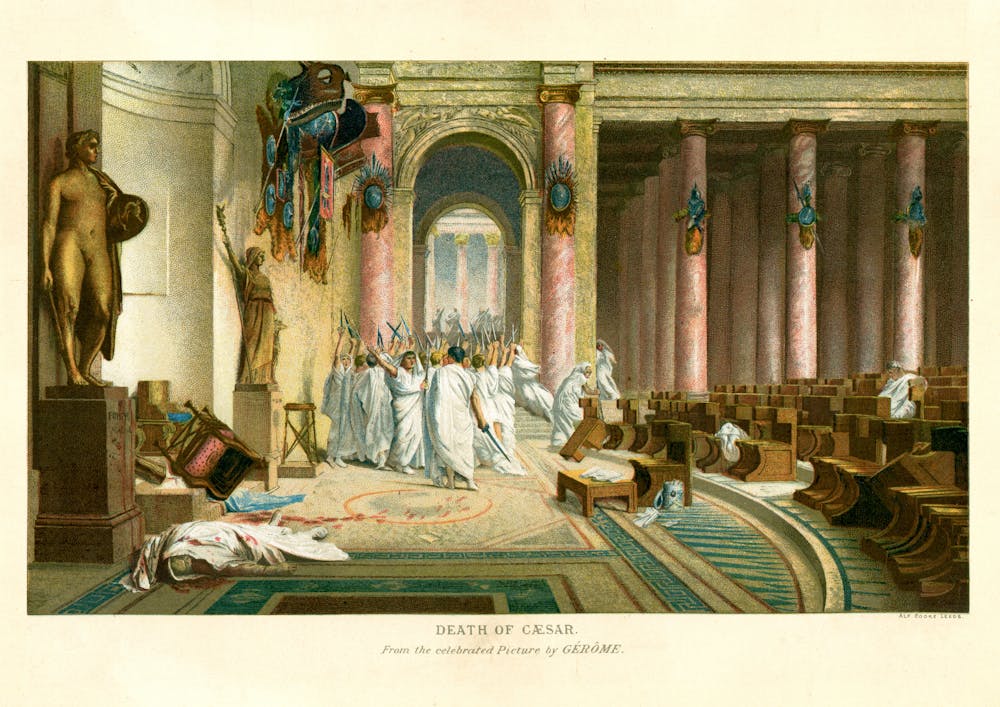
    Soon after, an angry group of 23 senators stabbed him to death in a vain attempt to save the republic. They were led by Marcus Junius Brutus, a descendant of the Brutus who killed the last Roman king, Tarquinius Superbus.

    The Roman republic was beyond saving despite Caesar’s death.
    duncan1890/Getty Images

    However, the Roman republic was beyond saving despite Caesar’s death. His great nephew Octavian eventually emerged as leader and became known as Augustus (27 BCE – 14 CE). With Augustus, an age of emperors was born.

    Emperors were kings in all but name. The strong aversion to kingship in Rome ensured their complete avoidance of the term rex.

    ‘No kings!’

    American protesters waving placards shouting “no kings!” are expressing clear concerns that their beloved democracy is under threat.

    Donald Trump has already declared eight national emergencies and issued 161 executive orders in his second term.

    When asked if he needs to uphold the Constitution, Trump declares “I don’t know.” He has joked about running for a third term as president, in breach of the longstanding limit of two terms.

    Like Caesar, is Donald Trump becoming a king in all but name? Is he setting a precedent for his successors to behave increasingly like emperors?

    The American aversion to “king” likely ensures the term will never return. But when protesters and others shout “no kings!”, they know the very meaning of the term “president” is changing before their eyes.

    Peter Edwell receives funding from the Australian Research Council.

    ref. ‘No kings!’: like the LA protesters, the early Romans hated kings, too – https://theconversation.com/no-kings-like-the-la-protesters-the-early-romans-hated-kings-too-259011

    MIL OSI – Global Reports

  • MIL-OSI Global: What’s the difference between barista milk and regular milk? It’s what gets added to it

    Source: The Conversation – Global Perspectives – By David Chua, Senior Research Projects Officer, Centre for Community Health and Wellbeing, The University of Queensland

    I love coffee/Shutterstock

    If you start reading the labels of the various milks at the supermarket, you’ll quickly find different fat levels, added nutrients like calcium, lactose-free options, milk from goats or sheep, and ones made from plants.

    Both at the supermarket and at your local café you’ve probably also seen cartons labelled “barista milk”. These can be dairy or plant milks marketed for making specialist coffee drinks such as flat whites, lattes and others.

    But what exactly makes a product a barista milk, and how does it differ from regular milk?

    What is ‘milk’, anyway?

    “Milk” is a regulated term. Food Standards Australia New Zealand sets requirements on fat and protein contents for dairy milk, and it has to come from “milking animals”. These standards also state what can be added or modified; only plant sterols (a supplement to reduce blood cholesterol) are allowed.

    Despite the name, plant-based milks aren’t bound by a specific “milk” standard. Instead, they fall under broader beverage regulations, which is why you’ll see a wide variety of ingredients, protein levels, sugars and fats from one brand to the next.

    Because of this regulation, manufacturers are careful to make it absolutely clear what is in the carton or bottle so there’s no confusion between cow’s milk and soy milk, for example.

    What is barista milk, then?

    Barista milks, whether dairy or plant-based, are specifically formulated to foam more reliably, with a finer texture and longer-lasting bubbles.

    For cow’s milk, this almost always means higher protein content: about 4–5% in barista milk compared to the 3.3–3.5% in regular milk. You’ll often see “milk solids” listed in the ingredients; this is another name for dried skim milk, added to boost the protein content.

    Plant-based barista milks (such as soy, oat or almond) will vary a lot more, depending on the manufacturer and the plant base.

    The most common additives in plant-based barista milks are:

    • vegetable oils for creaminess and thickness
    • gums (such as gellan or locust bean gum) to increase thickness
    • maltodextrin (a processed starch), also for thickness, and
    • emulsifiers such as lecithin – to help stop the fats and water from splitting apart.
    The foam in frothed milk happens through a complex interaction of ingredients and temperature.
    Dmytro Vietrov/Shutterstock

    The science of a good foam

    Foam is essentially gas bubbles suspended in a liquid. Its stability depends on a complex interaction of proteins, fats, sugars and other components, as well as the temperature at which the milk was foamed.

    In cow’s milk, proteins such as casein and whey form ball-like structures that easily rearrange to stabilise foam. These proteins help the milk fat and water stay held together, which is why dairy-based barista milks foam easily and the foam lasts longer.

    Fat plays a more complex role depending on temperature – there’s a sweet spot for a good foam.

    In cold cow’s milk, the fats are semi-solid and will make the foam collapse by breaking the bubble walls. But when heated above 40°C, these fats melt, spread better throughout the milk and easily interact with proteins to help form and stabilise the bubbles.

    However, overheating the milk (above 70°C) cooks and breaks the whey protein balls, making it harder to create foam.

    How barista plant milks work

    Plants make vastly different proteins compared to cows. However, the physical shape of proteins found in soy and oat milks is also ball-like, making them good for foaming just like cow’s milk.

    That’s generally why you see soy and oat milks used in cafes. Barista versions of plant milks often have added vegetable oils to help mimic the fat–protein interaction in dairy. It’s what makes the milk foam stable and the liquid feel creamy.

    Some – but not all – barista plant milks will also have thickeners because they help the foam last longer.

    Compared to soy and oat, almond milk is naturally low in protein. So almond barista milks will almost always contain gums, starches and emulsifiers along with added vegetable oil.

    Many plant milks also contain added sugars for flavour, since they lack the natural lactose found in dairy.

    Is barista milk worth it?

    Many plant-based milk formulations, especially barista ones, contain added gums, manufactured starches and emulsifiers. This qualifies them as “ultra-processed foods”, according to the United Nations’ classification system.

    While the plant-based milk might not be inherently overly harmful, this classification invites reflection on how far these products have moved from their original, natural source.

    On the environmental side, plant-based milks typically have a lower impact than cow’s milk. They use less land and water and produce fewer greenhouse gases.

    Barista milks usually cost significantly more than their regular counterpart. This premium reflects the added ingredients and research and development cost of optimising foaming and drinking characteristics.

    For cafés, the cost is often justified because barista milks produce a more predictable and consistent end product, leading to better customer satisfaction.

    For home use, it depends on your own level of foaming skill and how much you value a perfect flat white every time.

    David Chua’s work is partly supported by the National Health and Medical Research Council, Mater Research Foundation, and the Heart Foundation. He is employed by Inala Primary Care (a not-for-profit general practice clinic) and Metro South Health, where his role is supported by a Metro South Health Researcher Support Grant. His PhD (2010–2014) received partial funding from Dairy Australia Limited, though he currently has no industry affiliations. In 2009, he was awarded the Royal National Agricultural and Industrial Association of Queensland undergraduate student prize.

    Lauren Ball receives funding from the National Health and Medical Research Council, Queensland Health, Heart Foundation and Mater Misericordia. She is a Director of Dietitians Australia, a Director of the Darling Downs and West Moreton Primary Health Network, a Director of Food Standards Australia and New Zealand and an Associate Member of the Australian Academy of Health and Medical Sciences.

    ref. What’s the difference between barista milk and regular milk? It’s what gets added to it – https://theconversation.com/whats-the-difference-between-barista-milk-and-regular-milk-its-what-gets-added-to-it-258583

    MIL OSI – Global Reports

  • MIL-OSI Global: Seabed mining is becoming an environmental flashpoint – NZ will have to pick a side soon

    Source: The Conversation – Global Perspectives – By Myra Williamson, Senior Lecturer in Law, Auckland University of Technology

    Getty Images

    Seabed mining could become one of the defining environmental battles of 2025. Around the world, governments are weighing up whether to allow mining of the ocean floor for metal ores and minerals. New Zealand is among them.

    The stakes are high. Deep-sea mining is highly controversial, with evidence showing mining activity can cause lasting damage to fragile marine ecosystems. One area off the east coast of the United States, mined as an experiment 50 years ago, still bears scars and shows little sign of recovery.

    With the world facing competing pressures – climate action and conservation versus demand for resources – New Zealand must now decide whether to fast-track mining, regulate it tightly, or pause it entirely.

    Who controls international seabed mining?

    A major flashpoint is governance in international waters. Under international law, seabed mining beyond national jurisdiction is managed by the International Seabed Authority (ISA), created by the United Nations Convention on the Law of the Sea (UNCLOS).

    But the US has never ratified UNCLOS. In April this year, President Donald Trump issued an executive order to bypass the ISA and allow companies to begin mining in international waters.

    The ISA has pushed back, warning unilateral action breaches international law. However, the declaration from the recently concluded UN Ocean Conference in France does not urge countries to adopt a precautionary approach, nor does it ban deep seabed mining.

    The declaration does “reiterate the need to increase scientific knowledge on deep sea ecosystems” and recognises the role of the ISA in setting “robust rules, regulations and procedures for exploitation of resources” in international waters.

    So, while the international community supports multilateralism and international law, deep-sea mining in the near future remains a real possibility.

    Fast-track approvals

    In the Pacific, some countries have already made up their minds about which way they will go. Nauru recently updated its agreement with Canadian-based The Metals Company to begin mining in the nearby Clarion Clipperton Zone. The deal favours the US’s go-it-alone approach over the ISA model.

    By contrast, in 2022, New Zealand’s Labour government backed the ISA’s moratorium and committed to a holistic ocean management strategy. Whether that position still holds is unclear, given the current government’s policies.

    The list of applications under the Fast-track Approvals Act 2024described by Regional Development Minister Shane Jones as “arguably the most permissive regime” in Australasia – includes two controversial seabed mining proposals in Bream Bay and off the Taranaki coast:

    • Trans-Tasman Resources’ proposal to extract up to 50 million tonnes of Taranaki seabed material annually to recover heavy mineral sands that contain iron ore as well as rare metal elements titanium and vanadium.

    • McCallum Brothers Ltd’s Bream Bay proposal to dredge up to 150,000 cubic metres of sand yearly for three years, and up to 250,000 cubic metres after that.

    Legal landscape changing

    Māori and environmental groups have opposed the fast-track policy, and the Treaty of Waitangi has so far been a powerful safeguard in seabed mining cases.

    Provisions referencing Treaty principles appear in key laws, including the Crown Minerals Act and the Exclusive Economic Zone and Continental Shelf (Environmental Effects) Act.

    In 2021, the Supreme Court cited these obligations when it rejected a 2016 marine discharge application by Trans-Tasman Resources to mine the seabed in the Taranaki Bight. The court ruled Treaty clauses must be interpreted in a “broad and generous” way, recognising tikanga Māori and customary marine rights.

    But that legal landscape could soon change. The Regulatory Standards Bill, now before parliament, would give priority to property rights over environmental or Indigenous protections in the formulation of new laws and regulations.

    The bill also allows for the review of existing legislation. In theory, if the Regulatory Standards Bill becomes law, it could result in the removal of Treaty principles clauses from legislation.

    This in turn could deny courts the tools they’ve previously used to uphold environmental and Treaty-based protections to block seabed mining applications. That would make it easier to approve fast-tracked projects such as the Bream Bay and Taranaki projects.

    Setting a precedent

    Meanwhile, Hawai’i has gone in a different direction. In 2024, the US state passed a law banning seabed mining in state waters – joining California (2022), Washington (2021) and Oregon (1991).

    Under the Hawai’i Seabed Mining Prevention Act, mining is banned except in rare cases such as beach restoration. The law cites the public’s right to a clean and healthy environment.

    As global conflict brews over seabed governance, New Zealand’s eventual position could set a precedent.

    Choosing to prohibit seabed mining in New Zealand waters, as Hawai’i has done, would send a strong message that environmental stewardship and Indigenous rights matter more than short-term resource extraction interests.

    If New Zealand does decide to go ahead with seabed mining, however, it could trigger a cascade of mining efforts across New Zealand and the Pacific. A crucial decision is fast approaching.

    Myra Williamson does not work for, consult, own shares in or receive funding from any company or organisation that would benefit from this article, and has disclosed no relevant affiliations beyond their academic appointment.

    ref. Seabed mining is becoming an environmental flashpoint – NZ will have to pick a side soon – https://theconversation.com/seabed-mining-is-becoming-an-environmental-flashpoint-nz-will-have-to-pick-a-side-soon-258908

    MIL OSI – Global Reports

  • MIL-OSI Global: What actually happens to my skin when I have a really, really hot shower or bath?

    Source: The Conversation – Global Perspectives – By Amanda Meyer, Senior Lecturer, Anatomy and Pathology in the College of Medicine and Dentistry, James Cook University

    MART PRODUCTION/Pexels

    The weather is getting cooler and many of us are turning to hot showers and baths to warm up and wind down.

    But what actually happens to your skin when you have really hot showers or baths?

    Your largest organ

    Your skin is your largest organ, and has two distinct parts: the epidermis on the outside, and the dermis on the inside.

    The epidermis is made up of billions of cells that lay in four layers in thin skin (such as on your eyelids) and five layers in thick skin (such as the on sole of your foot).

    The cells (keratinocytes) in the deeper layers are held together by tight junctions. These cellular bridges make waterproof joins between neighbouring cells.

    The cells on the outside of the epidermis have lost these cellular bridges and slough off at a rate of about 1,000 cells per one centimetre squared of skin per hour. For an average adult, that’s 17 million cells per hour, every day.

    Under the epidermis is the dermis, where we have blood vessels, nerves, hair follicles, pain receptors, pressure receptors and sweat glands.

    Together, the epidermis and dermis (the skin):

    • protect you from ultraviolet radiation from the Sun
    • synthesise vitamin D3, which helps your intestines absorb calcium
    • protect you against bacteria, parasites, fungi and viruses
    • regulate your body temperature via the dilation of blood vessels and sweat glands releasing sweat
    • help display how we’re feeling (think, for example, of blushing or goosebumps)
    • allow us to feel sensations such as touch, pressure, pain and temperature.

    So, your skin is important and worth looking after.

    Washing daily can help prevent disease, and really hot baths often feel lovely and can help you relax. That said, there are some potential downsides.

    Gosh, it’s nice though.
    brazzo/Getty Images

    The skin microbiota

    Normally we have lots of healthy organisms called Staphyloccocus epidermis on the skin. These help increase the integrity of our skin layers (they make the bonds between cells stronger) and stimulate production of anti-microbial proteins.

    These little critters like an acidic environment, such as the skin’s normal pH of between 4-6.

    If the skin pH increases to around 7 (neutral), Staphyloccocus epidermis’ nasty cousin Staphyloccocus aureus – also known as golden staph – will try to take over and cause infections.

    Having a hot shower or bath can increase your skin’s pH, which may ultimately benefit golden staph.

    Being immersed in really hot water also pulls a lot of moisture from your dermis, and makes you lose water via sweat.

    This makes your skin drier, and causes your kidneys to excrete more water, making more urine.

    Staying in a hot bath for a long time can reduce your blood pressure, but increase your heart rate. People with low blood pressure or heart problems should speak to their doctor before having a long hot shower or bath.

    Heat from the shower or bath can activate the release of cytokines (inflammatory molecules), histamines (which are involved in allergic reactions), and increase the number of sensory nerves. All of this can lead to itchiness after a very hot shower or bath.

    Some people can get hives (itchy raised bumps that look red on lighter skin and brown or purple on darker skin) after hot showers or baths, which is a form of chronic inducible urticaria. It’s fairly rare and is usually managed with antihistamines.

    People with sensitive skin or chronic skin conditions such as urticaria, dermatitis, eczema, rosacea, psoriasis or acne should avoid really hot showers or baths. They dry out the skin and leave these people more prone to flare ups.

    The skin on your hands or feet is least sensitive to hot and cold, so always use your wrist, not your hands, to test water temperature if you’re bathing a child, older person, or a disabled person.

    The skin on your buttocks is the most sensitive to hot and cold. This is why sometimes you think the bath is OK when you first step in, but once you sit down it burns your bum.

    You might have heard women like hotter water temperature than men but that’s not really supported by the research evidence. However, across your own body you have highly variable areas of thermal sensitivity, and everyone is highly variable, regardless of sex.

    Many of us turn to hot showers and baths to warm up and wind down.
    PeopleImages.com – Yuri A/Shutterstock

    Making the most of moisturising

    Moisturising after a hot bath or shower can help, but check if your moisturiser is up to the task.

    To improve the skin barrier, your moisturiser needs to contain a mix of:

    • an emollient such as ceramides, squalanes or dimethicone (emollients incorporate themselves into the lipid barrier in the epidermis to reduce water loss)
    • a humectant such as glycerin or hyaluronic acid (humectants draw moisture from the dermis into the epidermis)
    • an occlusive such as petroleum jelly or Vaseline, mineral oil, or cocoa butter (occlusives reduce water loss through the skin and increase the production of anti-microbial peptides).

    Not all moisturisers are actually good at reducing the moisture loss from your skin. You still might experience dryness and itchiness as your skin recovers if you’ve been having a lot of really hot showers and baths.

    I’m itchy again, what should I do?

    If you’re itching after a hot shower or bath, try taking cooler, shorter showers and avoid reusing sponges, loofahs, or washcloths (which may harbour bacteria).

    You can also try patting your skin dry, instead of rubbing it with a towel. Applying a hypoallergenic moisturising cream, like sorbolene, to damp skin can also help.

    If your symptoms don’t improve, see your doctor.

    Amanda Meyer is affiliated with the Australian and New Zealand Association of Clinical Anatomists, the American Association for Anatomy, and the Global Neuroanatomy Network.

    Monika Zimanyi is affiliated with Global Neuroanatomy Network.

    ref. What actually happens to my skin when I have a really, really hot shower or bath? – https://theconversation.com/what-actually-happens-to-my-skin-when-i-have-a-really-really-hot-shower-or-bath-257900

    MIL OSI – Global Reports

  • MIL-OSI Russia: Chinese, Russian museums strengthen cooperation to promote bilateral cultural exchanges

    Translation. Region: Russian Federal

    Source: People’s Republic of China in Russian – People’s Republic of China in Russian –

    Source: People’s Republic of China – State Council News

    From June 12 to 15, the Moscow Seasons were held in Beijing. This comprehensive event became one of the key projects implemented within the framework of the cross-cultural Years of China and Russia, and also dedicated to the 30th anniversary of the establishment of sister-city relations between Beijing and Moscow.

    On June 13, as part of the business part of the festival program, a plenary session on the topic of “Cities of the Future. Synergy of the Strategic Partnership of Moscow and Beijing” was held at the Grand Hyatt Hotel in Beijing, dedicated to issues of tourism, culture, transport, innovation and industrial development.

    Speaking in a section dedicated to the work of museums, the head of the Russian Cultural Center in Beijing, Tatyana Urzhumtseva, emphasized that the RCC acts as a connecting platform between Russian and Chinese museums, art galleries, theaters, art groups and other participants in the Russian-Chinese cultural dialogue.

    According to her, the RCC also supports the exhibition activities of Russian museums not only by being present at the venues and participating in the opening ceremony of their exhibitions, but also by preparing and conducting a large information campaign that attracts Chinese visitors to the museum halls. The RCC also participates in recording video content on the social networks of Chinese partners.

    In addition, Tatyana Urzhumtseva added that in the anniversary year for China and Russia – the year of the 80th anniversary of the victory in the Great Patriotic War and the war against Japanese aggression – the RCC, together with the Beijing Society of Russian-Chinese Friendship, will hold an exhibition of paintings in August dedicated to the victory of the peoples of the two countries and Russian-Chinese friendship.

    Zhang Jing, Director of the Resources Section of the Beijing Culture and Tourism Administration, also spoke in this section. He introduced ten new tourist routes launched by the Administration this year, including those related to museums: the “This is Shang Yin” exhibition, Beijing Central Axis Tour, Dunhuang Famous Art Schools Tour, Ancient and Modern Olympic Park Tour, Three Hills and Five Gardens Park Complex Tour, 798 Art Zone Contemporary Art Exhibition Tour, Zhoukoudian Human Site Walking Tour, and others.

    Representatives of the Museum of Moscow, the Museum of Cosmonautics (Moscow), the State Historical Museum (Russia), the Capital Museum (Beijing), the Beijing Automobile Museum, the Museum of World Music Culture (Dalian) and others made presentations of their institutions.

    Following the meeting, cooperation agreements were signed between several museums, which actively contributed to the development of Chinese-Russian inter-museum exchanges and humanitarian bilateral cooperation in general.

    Text and photos: Tao Lijiao

    MIL OSI Russia News

  • MIL-OSI Russia: China-Central Asia tourism ties gain momentum

    Translation. Region: Russian Federal

    Source: People’s Republic of China in Russian – People’s Republic of China in Russian –

    Source: People’s Republic of China – State Council News

    The history of China’s interaction with Central Asian countries goes back thousands of years, and the friendship along the Silk Road, passed down from generation to generation, continues to this day. Since the first China-Central Asia Summit, tourism exchanges between the countries have become an important bridge for bringing peoples closer together. At present, there is mutual interest in tourism: China and Central Asian countries have become important tourist destinations for each other, and the number of mutual tourist visits has increased significantly. China and Central Asia are jointly promoting exchanges and cooperation, opening a new chapter in the dialogue of civilizations.

    A continuous flow of tourists in both directions

    On June 1, 2024, the visa-free regime between China and Uzbekistan came into effect. On the same day, more than 160 tourists from Tashkent arrived at Urumqi Airport. They became the first to enter China without a visa under the new agreement and began their journey around the country. On November 10, 2023, a similar agreement came into effect between China and Kazakhstan. These favorable policies have simplified mutual travel for citizens and effectively stimulated tourism exchanges.

    “The majestic landscapes of Xinjiang and the hospitality of the locals exceeded all expectations! The guide’s detailed explanations allowed me to better understand the culture and traditions of the region,” shared Natalia from Kazakhstan during her visit to Urumqi. Since the beginning of this year, a continuous stream of tourist groups from Central Asia have been heading to Xinjiang, and Urumqi’s attractiveness as a tourist destination continues to grow.

    According to the latest statistics from the Ctrip platform, the number of inbound tour bookings by users from Central Asian countries has grown by 106% year-on-year since the beginning of the year, with bookings from tourists from Uzbekistan increasing by 164%. The most popular destinations among Central Asian visitors were Guangzhou, Hangzhou, Beijing, Urumqi, Xi’an, Chengdu, Shanghai, Shenzhen, Yiwu and Qingdao. The number of bookings for tours to Central Asia by Chinese tourists showed a 74% increase, while demand for travel to Uzbekistan increased by 60%, with the main outbound cities for Chinese tourists being Urumqi, Beijing, Xi’an, Hangzhou, Chengdu, Shanghai and Guangzhou.

    U-tour data shows that the number of Chinese tourists visiting Central Asia doubled in the first half of the year compared to the same period last year. On the Fliggy platform, the number of bookings for flights to Kazakhstan and Uzbekistan increased by 60% and 47% respectively. Tashkent, Almaty, Shymkent and Bukhara were the most popular destinations.

    In early June, Beijing-based couple Li Tao and Xie Jinhua completed their unforgettable journey through Central Asia. “We have visited 40-50 countries and have always looked forward to seeing the mysterious Central Asia. During this trip, we experienced the warm-hearted kindness of the locals, saw majestic natural landscapes, and saw unique culture. Central Asia is truly a worthwhile travel destination,” they shared.

    A variety of new themed tours

    China and Central Asian countries have become important tourist destinations for each other. Tourists are no longer limited to just sightseeing – they are looking to delve deeper into the history, culture, traditions and daily life of local residents.

    Tourists from Central Asia visit the Xinjiang Uyghur Autonomous Region Museum, explore the Grand Bazaar in Urumqi, sample local cuisine, admire unique natural landscapes and immerse themselves in the region’s cultural heritage. Chinese tourists, in turn, discover ancient Central Asian cities on the Great Silk Road and taste local delicacies such as pilaf and horse meat dishes.

    Yang Shuguo, CEO of Xinjiang Xiyu International Travel Company, notes: “The deep interest of tourists from Central Asia in Chinese culture opens up new opportunities for the development of this destination. We plan to expand the range of tours to enhance the attractiveness of Urumqi in the market. Five new thematic routes have already been developed taking into account the preferences of guests, including health and business tourism.”

    Central Asia is a new popular destination for Chinese tourists. Han Jie, chairman of the board of tour operator AoYou, explains: “Kazakhstan attracts with its wealth of resources: Almaty and Astana are especially loved by Chinese guests. Uzbekistan with its unique historical and cultural heritage is also in high demand. For now, group tours for pensioners remain the main format, but as the infrastructure develops, new offers will attract young people as well.”

    Zhou Weihong, Deputy General Manager of SpringTour, announced: “This summer, we will launch two special tours: an extended tour of Kazakhstan and a combo tour of Kazakhstan and Uzbekistan. Travelers will try the famous Uzbek plov at the Besh Qozon Plov Center, see the light show at Registan Square in Samarkand, and appreciate the modern facilities of the local tourism center – this will be a real immersion into history, allowing them to rediscover the charm of the Silk Road.”

    New opportunities for expanding the tourism market

    Tourism between China and Central Asia has great potential. Xu Jia, CEO of Sichuan Youth Travel Service, said, “We started developing the Central Asia route in March 2023. It was just in May of that year that the China-Central Asia Summit was held, and the demand for the mysterious Central Asian countries increased sharply. Now, it is the fastest growing route in our agency. In order to attract more Chinese tourists to Central Asia and meet their diverse needs, we have developed several themed routes, including “Revisiting the Silk Road,” “Cultural Exchanges,” and “Natural Sightseeing Expeditions.”

    “We have been receiving more and more Chinese tourists in the last two years. They have high purchasing power and are interested in historical and cultural exchanges,” says Zhang Wei, the head of an Uzbek tourism service provider. “Central Asia’s tourism infrastructure is still underdeveloped. We plan to increase the number of Chinese-speaking guides for excursions, expand cooperation with Chinese restaurants, update our vehicle fleet, launch new themed tours, and look forward to an increase in the flow of guests from China.”

    The introduction of a visa-free regime has given a powerful impetus to humanitarian and tourist exchanges between China and Uzbekistan. This year, Uzbekistan held a series of presentations in Beijing, Changsha and other cities, during which it introduced Chinese tourists to local attractions in detail. The Uzbek side is implementing a set of measures to improve the quality of service to Chinese guests.

    China is one of the key sources of tourist flow for Kazakhstan. According to the Ministry of Tourism and Sports of the Republic of Kazakhstan, 655 thousand Chinese tourists visited the country in 2024, which is 78% more than in 2023. 2025 has been declared the “Year of China Tourism” in Kazakhstan. The plans include a series of promotional events in China: road shows have already been held in Guangzhou and other cities, and cooperation with Chinese tour operators has been established. Digital solutions are being introduced to increase the attractiveness of Kazakhstan: in early June, Almaty hosted the international tourism forum “Digital Silk Road – 2025”, organized by the Chinese digital platform Zowoyoo and the Tourism Industry Committee of Kazakhstan. The project is aimed at deepening the understanding of the Chinese market by Kazakhstani travel companies through digitalization, increasing the level of market development and taking bilateral cooperation to a new level.
    MIL OSI Russia News

  • MIL-OSI Russia: China and Central Asia are actively developing cooperation in the tourism industry

    Translation. Region: Russian Federal

    Source: People’s Republic of China in Russian – People’s Republic of China in Russian –

    Source: People’s Republic of China – State Council News

    The first China-Central Asia international tourist train from Xi’an to Almaty was launched recently, marking new progress in tourism exchanges and cooperation between China and Central Asia.

    At present, the global tourism industry is still affected by uncertainties such as protectionism and geopolitical conflicts, but tourism interactions between China and Central Asia are accelerating in “both directions”. A visa-free regime has been introduced between China and Kazakhstan and Uzbekistan. The number of direct flights between China and Central Asian countries is increasing, with direct flights opened from Beijing, Xi’an, Chengdu, Urumqi and other cities. Xi’an has become the city with the largest number of routes between China and Central Asia, with flights to seven cities in five countries in the region opened from the ancient Chinese capital. China and the Central Asian countries are getting closer to each other, which not only demonstrates a common understanding of development opportunities, but also serves as a living remark to the people-to-people connection under the Belt and Road Initiative.

    Through systematic policy coordination, comprehensive connectivity and large-scale industrial integration, China and Central Asia have established a new pattern of tourism exchanges and cooperation. The first China-Central Asia Summit was held in 2023. “The opening of the Central Asia Cultural Tourism Development Train” is an important achievement of the summit. In terms of connectivity, in addition to the growth of direct flights, the railway and road connections between China and Central Asia have become increasingly close. The China-Kyrgyzstan-Uzbekistan Railway Project has been officially launched, and the number of routes on the China-Europe Express Railway has also increased, opening up new opportunities for the development of more tourism destinations and products.

    Looking to the future, tourism exchanges and cooperation between China and Central Asia should continue to develop in three directions:

    First, it is necessary to highlight the exemplary significance and create a series of landmark projects. It is necessary to closely link and integrate tourism cooperation with the development strategies and relevant policies of Central Asian countries, so as to form a new multi-level cooperation structure with different dimensions and distinctive features. By combining the advantages and characteristics of different countries and regions, taking into account the development needs of different places and friendly cities, jointly creating a series of landmark projects with obvious exemplary and stimulating effects, exploring and forming a group of model cooperation indicators with deep complementarity, high mutual benefit and distinctive characteristics, China-Central Asia tourism cooperation will become a “best practice” for linking the Belt and Road Initiative with the development strategies of various regional countries.

    Second, we should stimulate “internal driving forces”. We should strengthen transportation links, promote the simplification of tourism procedures including visa regime and direct flights, improve the security systems of cross-border tourism, dispute mediation, insurance claims, etc. We should promote more mutual understandings, including tourism service standards. In addition, we should explore ways to promote tourism cooperation through the construction of cross-border tourism cooperation zones and cross-border tourism pilot zones. We should guide market players to jointly build tourism infrastructure, and explore policies such as cross-border investment insurance. We should integrate the cultural heritage of the Silk Road, natural landscapes, railways and cross-border self-drive routes, develop China-Central Asia tourist routes, and promote the launch of more cross-border tourist trains with cultural and regional characteristics. We should create more active tourism products, services and business models through forms such as “tourism”.

    Third, we need to enhance the visibility of cooperation results. We need to transform policies related to tourism exchanges and cooperation between China and Central Asia into opportunities that are accessible to the people. We need to build the brand image of the Cultural Silk Road plan, enhance public participation in the selection of the cultural and tourism capital of China and Central Asia, and improve people’s sense of satisfaction. We need to formulate a Central Asian blueprint for the Asian Tourism Promotion Plan as soon as possible, and promote tourism exchanges and cooperation between Xinjiang, Shaanxi, and places in Central Asian countries. We need to pay special attention to the joint promotion of Silk Road Heritage routes and tourism products. We need to promote the close integration of tourism cooperation with poverty alleviation, environmental protection and other livelihood issues, realize the transparency of results through digital platforms and information release, and promote the deepening of exchanges and cooperation.

    The author is a research fellow at the China Academy of Tourism.

    MIL OSI Russia News

  • MIL-OSI Russia: The First China-Central Asia Tourist Train Is the ‘Silk Road Express’ That Writes a New Chapter in Relations

    Translation. Region: Russian Federal

    Source: People’s Republic of China in Russian – People’s Republic of China in Russian –

    Source: People’s Republic of China – State Council News

    On May 29, the first international tourist train “China – Central Asia” with more than 200 passengers departed from the platform of the Xi’an railway station and headed west – to the Kazakh city of Almaty. Thus, a new channel of humanitarian exchanges linking China and Central Asia was opened.

    Traveling in “cultural salons on wheels”

    The train route includes a section in China and a section in Central Asia. For the convenience of passengers, the railway services of China and Kazakhstan have introduced a single procedure for border control. The full circular route takes 10 days.

    “It’s very exciting! It’s my first time traveling abroad by train!” said Yu Min from Xi’an, heading to Kazakhstan.

    The body of the tourist train is decorated with the theme of the “Golden Bridge of the Silk Road”, and the interior harmoniously interweaves elements of Xi’an architecture: the Big Wild Goose Pagoda, ancient city walls, the Bell Tower, as well as iconic landmarks of Kazakhstan. This creates a unique atmosphere of the charm of the Great Silk Road.

    During the train ride, various events were held daily according to the schedule: presentations and master classes on traditional Chinese medicine, lectures on cultural heritage, exhibitions and interactive activities with elements of intangible cultural heritage, as well as live performances by calligraphers and artists, and theatrical performances. The active interaction of passengers of different nationalities became the most vivid embodiment of the dialogue of civilizations.

    “The launch of the China-Central Asia International Tourist Train from Xi’an to Almaty is a clear example of how the railway promotes people-to-people exchanges under the Belt and Road Initiative,” said Hui Lixia, deputy director of the Xi’an Office of China State Railway Corporation. “We have created a cozy, comfortable and culturally rich environment for passengers. Our goal is to make this special train a showcase of Shaanxi Province’s openness and a ‘Silk Road Express’ that brings together the peoples of China and Central Asian countries.”

    Local residents are happy to participate in interactive activities

    On May 31, the tourist train arrived in Almaty. In Kazakhstan, the tourists were given a ceremonial welcome: hospitable locals in national costumes greeted the guests who arrived from China with songs and dances. A series of bright events immediately began.

    There were the expressive masks of the Qinqiang opera, the interior painting of “neihua”, the fine art of Xi’an paper cutting, the festive New Year popular prints of “nianhua”, and the iridescent colors of the Tang dyeing technique of “liucai”.

    The cultural fair featured 10 intangible cultural heritage items that delighted Almaty residents. They watched the craftsmanship with interest and participated in master classes themselves, learning about Chinese culture.

    The cultural exchange and archaeology program included three events: a photo exhibition, “The Breath of the Silk Road,” a visit to archaeological excavations, and thematic lectures that comprehensively revealed the cultural synthesis of eras and told the story of the dialogue of civilizations.

    Paving New Paths for Mutual Connections

    On June 7, the tourist train returned to Xi’an station, completing a 3,600-kilometer journey along the Silk Road, where steel rails became a bridge for cultural convergence.

    “Today’s food is absolutely delicious! My friends and I really enjoyed it,” Meruert from Kazakhstan said happily after trying Xi’an lamb soup with pieces of bread.

    2025 has been declared the “Year of China Tourism” in Kazakhstan, and the launch of the first international tourist train “China-Central Asia” from Xi’an to Almaty has not only opened a new channel for deepening mutual ties and people-to-people exchanges, but also pressed the “accelerate button” in China-Kazakhstan cooperation. This project will stimulate the development of tourism along the route, consumption growth and regional economic partnership, accelerate the integration of China and Central Asia in transportation, culture and other fields, and contribute to the creation of a closer community with a shared future.

    (Editor: Deng Jie, Yang Qian)

    Copyright belongs to People’s Daily Online. All rights reserved.

    MIL OSI Russia News

  • MIL-OSI New Zealand: New CT scanner to improve cancer services in Invercargill

    Source: New Zealand Government

    A new, state-of-the-art CT scanner is now operational at Southland Hospital, delivering a significant step forward for diagnostic services in the region, Health Minister Simeon Brown says.

    “This new CT scanner is a game-changer for Invercargill and surrounding areas. It will provide faster, more accurate diagnosis for a wide range of conditions, including cancer and heart disease – meaning patients can start treatment sooner and with greater confidence.

    “The enhanced imaging technology offers clearer, more detailed information to support doctors in making timely, well-informed decisions. That means better care for patients, fewer delays, and improved health outcomes.”

    The new scanner replaces equipment installed in 2012 and features advanced detector-based spectral technology, providing enhanced lesion detection and more detailed tumour assessments – particularly valuable in oncology care.

    “This technology allows clinicians to detect abnormalities earlier and with greater precision, which is critical in cancer care. The sooner a diagnosis can be made, the sooner treatment can begin.

    “Southland Hospital currently scans over 500 patients each month. This upgrade will increase the capacity for patients to receive advanced diagnostic services, reducing the anxiety that comes with waiting for answers and helping to ensure timely access to the right care.”

    In a first for the region, the scanner will also provide cardiac imaging, enabling local assessment for signs of heart disease – a service not previously available at Southland Hospital.

    “The addition of cardiac CT scanning means patients can get the care they need closer to home, without having to travel to other hospitals for these tests. The hospital’s diagnostic team will be undertaking specialised training so this new service can be up and running as soon as possible.

    “Access to modern diagnostic tools like this CT scanner is essential to improving outcomes for patients. By detecting disease earlier and with greater precision, we can help ensure people receive the right treatment at the right time,” Mr Brown says.

    MIL OSI New Zealand News

  • MIL-OSI New Zealand: Attendance rates rose in Term 1 2025

    Source: New Zealand Government

    Associate Education Minister David Seymour says this Government has prioritised student attendance and as a result we’ve seen every term since Term 1 2024 record higher attendance than the same term of the previous year.

    In Term 1 of 2025 65.9 per cent of students attended school regularly, an increase of 4.5 percentage points from 61.4 per cent in Term 1 of 2024 and 6.9 percentage points from 59.0 per cent in Term 1 of 2023. 

    “Every region has recorded an increase in attendance. I would like to give a special shoutout to the Nelson, Marlborough, West Coast region for recording the biggest improvement, of 6.6 per centage points,” says Mr Seymour

    “Chronic absence has declined from 7.3% of absences last year to 6.4% this year. Those are often children with complex needs and it’s great to see an impact.

    “While there’s more work to be done, these numbers are another step in the right direction to achieving the Government’s goal of ensuring 80 per cent of students are present more than 90 per cent of the term by 2030. 

    “I expect this momentum to continue as phases of our attendance action plan come into force. For example, it will be mandatory for schools to have their own attendance management plan, aligned with the Stepped Attendance Response (STAR) in place by Term 1 of 2026.

    “Prosecution is also a reality for parents who refuse to send their children to school and ignore supports to ensure their children are in class and learning. The Ministry of Education is proactively contacting attendance service providers and schools to ensure parents in this category are referred to the Ministry.

    Prosecution will only occur the most serious of cases, where all other options have been exhausted and parents / guardians are wilfully not engaging. Students and families’ personal circumstances will be taken into account when the prosecution decision is taken.

    “At the start of next year frontline attendance services will be more accountable, better at effectively managing cases, and data driven in their responses. To achieve this, they will soon have access to a new case management system and better data monitoring, and their contracts will be more closely monitored,” Mr Seymour says.

    Budget 2025 included a $140 million package to improve attendance over the next four years. 

    “Attending school is the first step towards achieving positive educational outcomes. Positive educational outcomes lead to better health, higher incomes, better job stability and greater participation within communities. These are opportunities that every student deserves,” Mr Seymour says.

    Attendance data can be found here Attendance | Education Counts

    MIL OSI New Zealand News

  • India positioned to become world’s third-largest economy, says PM Modi in Cyprus

    Source: Government of India

    Source: Government of India (4)

    Prime Minister Narendra Modi and the President of Cyprus, Nikos Christodoulides, held a high-level roundtable interaction with business leaders from both India and Cyprus in Limassol on Sunday. The engagement brought together stakeholders from a wide range of sectors including banking, financial institutions, manufacturing, defence, logistics, maritime, shipping, technology, digital innovation, artificial intelligence, IT services, tourism and mobility.

    During the interaction, Prime Minister Modi highlighted India’s robust economic transformation over the last eleven years, noting the country’s consistent growth driven by major reforms, policy stability, and improvements in the Ease of Doing Business.

    “India’s focus on innovation, digital revolution, start-up culture and future-ready infrastructure is positioning it firmly on the path to becoming the world’s third-largest economy,” the Prime Minister said. He noted that sectors such as civil aviation, port and shipbuilding, digital payments, and green development offer promising avenues for cooperation with Cyprus-based enterprises.

    The Prime Minister further pointed to the expansion of sectors such as civil aviation, shipbuilding, digital payments, and green development as avenues of cooperation for Cypriot businesses. He also underlined India’s growing capabilities in new-age industries like AI, Quantum technology, Semiconductors, and Critical Minerals.

    Describing Cyprus as an “important economic partner,” Prime Minister Modi welcomed the island nation’s interest in increasing investments into India, particularly in the Foreign Direct Investment (FDI) domain.

    The interaction also witnessed the announcement of several collaborative initiatives. A Memorandum of Understanding (MoU) was signed between the NSE International Exchange at GIFT City, Gujarat, and the Cyprus Stock Exchange to deepen cooperation in financial markets. In a key development for digital payments, NIPL (NPCI International Payments Limited) and Eurobank Cyprus reached an understanding to introduce Unified Payments Interface (UPI) for cross-border transactions. The move is expected to benefit both tourists and businesses by simplifying payments.

    Prime Minister Modi also welcomed the launch of the India–Greece–Cyprus (IGC) Business and Investment Council. The council is expected to strengthen trilateral cooperation in key sectors such as shipping, logistics, renewable energy, civil aviation and digital services.

    “Indian companies increasingly view Cyprus as a gateway to Europe and a hub for IT services, financial management, and tourism,” said the Prime Minister.

    As Cyprus prepares to assume the Presidency of the European Union Council next year, both leaders reaffirmed their commitment to strengthening the India-EU Strategic Partnership. They expressed optimism about concluding the long-pending India-EU Free Trade Agreement by the end of the year, which would provide a fresh impetus to trade and investment.

    Reflecting on the outcomes of the roundtable, Prime Minister Modi said, “The practical suggestions emerging from today’s discussion will help chart a structured roadmap for deepening cooperation in trade, innovation, and strategic sectors.”

  • India positioned to become world’s third-largest economy, says PM Modi in Cyprus

    Source: Government of India

    Source: Government of India (4)

    Prime Minister Narendra Modi and the President of Cyprus, Nikos Christodoulides, held a high-level roundtable interaction with business leaders from both India and Cyprus in Limassol on Sunday. The engagement brought together stakeholders from a wide range of sectors including banking, financial institutions, manufacturing, defence, logistics, maritime, shipping, technology, digital innovation, artificial intelligence, IT services, tourism and mobility.

    During the interaction, Prime Minister Modi highlighted India’s robust economic transformation over the last eleven years, noting the country’s consistent growth driven by major reforms, policy stability, and improvements in the Ease of Doing Business.

    “India’s focus on innovation, digital revolution, start-up culture and future-ready infrastructure is positioning it firmly on the path to becoming the world’s third-largest economy,” the Prime Minister said. He noted that sectors such as civil aviation, port and shipbuilding, digital payments, and green development offer promising avenues for cooperation with Cyprus-based enterprises.

    The Prime Minister further pointed to the expansion of sectors such as civil aviation, shipbuilding, digital payments, and green development as avenues of cooperation for Cypriot businesses. He also underlined India’s growing capabilities in new-age industries like AI, Quantum technology, Semiconductors, and Critical Minerals.

    Describing Cyprus as an “important economic partner,” Prime Minister Modi welcomed the island nation’s interest in increasing investments into India, particularly in the Foreign Direct Investment (FDI) domain.

    The interaction also witnessed the announcement of several collaborative initiatives. A Memorandum of Understanding (MoU) was signed between the NSE International Exchange at GIFT City, Gujarat, and the Cyprus Stock Exchange to deepen cooperation in financial markets. In a key development for digital payments, NIPL (NPCI International Payments Limited) and Eurobank Cyprus reached an understanding to introduce Unified Payments Interface (UPI) for cross-border transactions. The move is expected to benefit both tourists and businesses by simplifying payments.

    Prime Minister Modi also welcomed the launch of the India–Greece–Cyprus (IGC) Business and Investment Council. The council is expected to strengthen trilateral cooperation in key sectors such as shipping, logistics, renewable energy, civil aviation and digital services.

    “Indian companies increasingly view Cyprus as a gateway to Europe and a hub for IT services, financial management, and tourism,” said the Prime Minister.

    As Cyprus prepares to assume the Presidency of the European Union Council next year, both leaders reaffirmed their commitment to strengthening the India-EU Strategic Partnership. They expressed optimism about concluding the long-pending India-EU Free Trade Agreement by the end of the year, which would provide a fresh impetus to trade and investment.

    Reflecting on the outcomes of the roundtable, Prime Minister Modi said, “The practical suggestions emerging from today’s discussion will help chart a structured roadmap for deepening cooperation in trade, innovation, and strategic sectors.”

  • Iran and Israel Exchange Fresh Strikes as Global Leaders Push for Ceasefire

    Source: Government of India

    Source: Government of India (4)

    The war between Iran and Israel is in its fourth day of direct hostilities as international diplomatic activity is in full swing to prevent the conflict from engulfing broader West Asia. While ongoing military operations have killed dozens of people and caused widespread destruction, a complex matrix of behind-the-scenes negotiations is underway among world powers and regional actors desperately trying to contain the crisis.

    Iran launched missile strikes on Israeli cities , with rockets striking Haifa and injuring at least 15 in Israel’s National Emergency Service. The attacks were launched as residents in Tehran reported shaking explosions throughout the capital city, with Iranian officials confirming missile strikes in the Niavaran and Tajrish neighborhoods in the northern part of the city, as well as in and around central Valiasr and Hafte Tir squares.

    Israeli forces have expanded their campaign beyond Tehran to cities including Shiraz and Isfahan, where a Defense Ministry military base was hit. The Israeli military announced it had conducted its longest-range strike since the fighting began, striking an aerial refueling aircraft at Mashhad Airport in eastern Iran. Well over 250 Iranian targets have been hit in the expanding military campaign, including what Israel identifies as nuclear command and control centers and key energy targets. The situation is still complex and fraught with difficulties. Now, Iranian officials refer to negotiations with USA as unjustifiable amid current Israeli aggression, and Iran has stopped attending nuclear negotiations that were supposed to be carried out in Oman.

    Iran’s Foreign Minister Abbas Aragchi has indicated readiness for nuclear agreements that ensure Iran does not pursue weapons development, but insists the country will not accept any deal that deprives it of nuclear rights.

    Behind closed doors, Iran has approached Qatar and Oman requesting them to act as intermediaries with the United States to facilitate ceasefire negotiations, while Saudi Arabia is reportedly involved in diplomatic efforts to de-escalate the situation. US President Donald Trump has expressed optimism about peace prospects, stating he anticipates a deal soon through ongoing calls and meetings to broker an agreement. International diplomatic efforts have accelerated as global leaders warn of the urgent need to prevent the conflict from spilling over to the rest of the Middle East, with multiple regional powers working frantically to halt what they describe as a spiral of violence causing irreparable economic and civil damage to both sides.

    The United Nations Security Council convened an emergency session where both nations presented diametrically opposing positions. Iran labeled Israel’s strike a declaration of war, while Israel justified its attack as legitimate self-defense after failed diplomacy. The session failed to produce a binding resolution, which was indicative of the failure of the international community to agree on anything.

    European leaders have called for diplomatic solutions but appear to have limited influence in the conflict, with analysts saying Europe is on the sidelines. Cyprus has played a minor role, with its president reportedly having carried messages between Israel and Iran through indirect intermediaries.

    Israel remains extremely skeptical of Iranian intentions and has continued its military push despite diplomatic progress. Israeli leaders have warned Iran to vacate nuclear facilities while calling for the United States to assist efforts at abandoning Iran’s nuclear program entirely. The Israeli government has shown little desire to stop activities without concrete Iranian concessions.

    Stakes have also increased as Iran threatened that Western assistance to Israel in downing missiles can result in targeting US, UK, and French military assets throughout the region. The threat has complicated diplomacy as Washington has already provided defensive assistance to Israel while publicly urging restraint.

    In spite of active diplomatic contacts with various regional mediators and ongoing US engagement, prospects for an immediate ceasefire are uncertain.

  • Iran and Israel Exchange Fresh Strikes as Global Leaders Push for Ceasefire

    Source: Government of India

    Source: Government of India (4)

    The war between Iran and Israel is in its fourth day of direct hostilities as international diplomatic activity is in full swing to prevent the conflict from engulfing broader West Asia. While ongoing military operations have killed dozens of people and caused widespread destruction, a complex matrix of behind-the-scenes negotiations is underway among world powers and regional actors desperately trying to contain the crisis.

    Iran launched missile strikes on Israeli cities , with rockets striking Haifa and injuring at least 15 in Israel’s National Emergency Service. The attacks were launched as residents in Tehran reported shaking explosions throughout the capital city, with Iranian officials confirming missile strikes in the Niavaran and Tajrish neighborhoods in the northern part of the city, as well as in and around central Valiasr and Hafte Tir squares.

    Israeli forces have expanded their campaign beyond Tehran to cities including Shiraz and Isfahan, where a Defense Ministry military base was hit. The Israeli military announced it had conducted its longest-range strike since the fighting began, striking an aerial refueling aircraft at Mashhad Airport in eastern Iran. Well over 250 Iranian targets have been hit in the expanding military campaign, including what Israel identifies as nuclear command and control centers and key energy targets. The situation is still complex and fraught with difficulties. Now, Iranian officials refer to negotiations with USA as unjustifiable amid current Israeli aggression, and Iran has stopped attending nuclear negotiations that were supposed to be carried out in Oman.

    Iran’s Foreign Minister Abbas Aragchi has indicated readiness for nuclear agreements that ensure Iran does not pursue weapons development, but insists the country will not accept any deal that deprives it of nuclear rights.

    Behind closed doors, Iran has approached Qatar and Oman requesting them to act as intermediaries with the United States to facilitate ceasefire negotiations, while Saudi Arabia is reportedly involved in diplomatic efforts to de-escalate the situation. US President Donald Trump has expressed optimism about peace prospects, stating he anticipates a deal soon through ongoing calls and meetings to broker an agreement. International diplomatic efforts have accelerated as global leaders warn of the urgent need to prevent the conflict from spilling over to the rest of the Middle East, with multiple regional powers working frantically to halt what they describe as a spiral of violence causing irreparable economic and civil damage to both sides.

    The United Nations Security Council convened an emergency session where both nations presented diametrically opposing positions. Iran labeled Israel’s strike a declaration of war, while Israel justified its attack as legitimate self-defense after failed diplomacy. The session failed to produce a binding resolution, which was indicative of the failure of the international community to agree on anything.

    European leaders have called for diplomatic solutions but appear to have limited influence in the conflict, with analysts saying Europe is on the sidelines. Cyprus has played a minor role, with its president reportedly having carried messages between Israel and Iran through indirect intermediaries.

    Israel remains extremely skeptical of Iranian intentions and has continued its military push despite diplomatic progress. Israeli leaders have warned Iran to vacate nuclear facilities while calling for the United States to assist efforts at abandoning Iran’s nuclear program entirely. The Israeli government has shown little desire to stop activities without concrete Iranian concessions.

    Stakes have also increased as Iran threatened that Western assistance to Israel in downing missiles can result in targeting US, UK, and French military assets throughout the region. The threat has complicated diplomacy as Washington has already provided defensive assistance to Israel while publicly urging restraint.

    In spite of active diplomatic contacts with various regional mediators and ongoing US engagement, prospects for an immediate ceasefire are uncertain.

  • MIL-Evening Report: ‘They were justifying his actions’: what women say about men’s behaviour change programs

    Source: The Conversation (Au and NZ) – By Lauren Zeuschner, Lecturer in Social Work, Federation University Australia

    Marco VDM/Getty

    Thousands of men who use violence are referred every year to men’s behaviour change programs. Sometimes this attendance is ordered by a court, other times it is voluntary. The hope is this will result in program attendance (although that is not always guaranteed), promote perpetrator accountability and, ultimately, increase the safety of women and children.

    Unfortunately, program attendance is low and while researchers have tried again and again to answer the question of whether these programs work, it is still not clear.

    Referrals have continued anyway, so my colleagues and I decided to ask a new question. We invited nine Victorian women to talk in-depth about their experience of their partner being referred to a men’s behaviour change program.

    We wanted to know: what was that like for these women? What meaning did they make of it?

    This new study, published recently in the journal Violence Against Women, found the referral period can ignite for women an emotional firestorm characterised by hope, blame, being judged and, eventually, a sense of indignation.

    How did women initially react?

    Initially after their partner or ex-partner was referred to a men’s behaviour change program, the women were desperate to know if the type of family life they hoped for was something they would ever experience with their partner.

    As Fiona* recalled:

    I thought if it can help – this was when he sort of had me bluffed – if it’s going to work, go for it because the explosions were too big. And if he could control himself and think of what he says, pull his head in, if it can work then we can be a family. I was hoping.

    The women were initially generally intensely hopeful, even though they hadn’t seen any evidence before to suggest their partners would change.

    Janet said:

    When we were together and I used to say, “We need to go and get help; we need to go and talk to someone”, he would say, “No.” He would yell in my face and tell me to “eff off” and “mind my own business” and that he didn’t have a problem; I was the problem.

    This hopefulness motivated many women to stay in relationships with their partner or to support his access to their children.

    The attention men’s behaviour change programs have received over the years seems to have fuelled a belief the programs could bring meaningful change.

    As Rose put it:

    the men’s behavioural change program is big-noted so much, like it’s oh you know, “It’s a great way for the men to realise what they’ve done and move on.” And it doesn’t do that.

    Did their actual experiences match expectations?

    The short answer is no.

    The women we spoke to described being blamed by family, friends and workers for their partner or ex now having to attend the program. Meera recalled being told:

    You are just ruining your marriage because now you have involved the police, so whatever happens to you that is your consequence because you chose to do that.

    Many of the men resisted the suggestion they were “perpetrators” who needed to change. Some men contrasted themselves with others in the men’s behaviour change programs.

    As Erin put it:

    There’s always someone worse, and that’s how they are justifying themselves.

    Other men reportedly gained support for their behaviour from men in the program. Paige said:

    He would come home and tell me that the group agreed with him that the kids were at fault. That if the kids wouldn’t do what they did, then he wouldn’t lose his temper and he wouldn’t have to hit ’em […] So it was like they were justifying his actions.

    Some women also battled with uncertainty around whether what they had experienced actually was family violence.

    If their partner was a “perpetrator” did that make them a “victim survivor”? And if so, what did that mean for them and how they saw themselves?

    A sense of indignation

    For many of the women, the fact their partner or ex ended up being referred to a men’s behaviour change program helped inspire moments of validation.

    It helped them believe with confidence that their partners’ behaviour was actually family violence; that it was unacceptable and unwarranted, and it was he who needed to change.

    As the women came to terms with the reality of their partners’ behaviour and his resistance to change, the women began responding with indignation. Jane recalled that:

    I said: “You’ve hurt a lot of people” and I said: “You’re not taking ownership.”

    What’s next?

    In the end, encouraging women to simply respond with indignation is not the answer. This would just continue the age-old practice of placing sole responsibility on women for the violence they face.

    One action we can all take is supporting victim-survivors to identify that what they’re experiencing may actually constitute family violence, and question whether they believe those behaviours to be acceptable.

    This new study also stresses the need for family violence and domestic violence services in the community to consider the implications a men’s behaviour change program referral has for everyone.

    We must question who is intended to benefit when a man is referred to these programs, whether or not it actually eventuates into program attendance.

    *Names have been changed to protect identities.

    Lauren Zeuschner has received funding from an Australian government Research Training Program Fee-Offset Scholarship through Federation University Australia, and a Central Highlands Children and Youth Area partnership industry funded stipend through Child and Family Services Ballarat, which runs men’s behaviour change programs.

    ref. ‘They were justifying his actions’: what women say about men’s behaviour change programs – https://theconversation.com/they-were-justifying-his-actions-what-women-say-about-mens-behaviour-change-programs-259012

    MIL OSI AnalysisEveningReport.nz

  • MIL-Evening Report: ‘They were justifying his actions’: what women say about men’s behaviour change programs

    Source: The Conversation (Au and NZ) – By Lauren Zeuschner, Lecturer in Social Work, Federation University Australia

    Marco VDM/Getty

    Thousands of men who use violence are referred every year to men’s behaviour change programs. Sometimes this attendance is ordered by a court, other times it is voluntary. The hope is this will result in program attendance (although that is not always guaranteed), promote perpetrator accountability and, ultimately, increase the safety of women and children.

    Unfortunately, program attendance is low and while researchers have tried again and again to answer the question of whether these programs work, it is still not clear.

    Referrals have continued anyway, so my colleagues and I decided to ask a new question. We invited nine Victorian women to talk in-depth about their experience of their partner being referred to a men’s behaviour change program.

    We wanted to know: what was that like for these women? What meaning did they make of it?

    This new study, published recently in the journal Violence Against Women, found the referral period can ignite for women an emotional firestorm characterised by hope, blame, being judged and, eventually, a sense of indignation.

    How did women initially react?

    Initially after their partner or ex-partner was referred to a men’s behaviour change program, the women were desperate to know if the type of family life they hoped for was something they would ever experience with their partner.

    As Fiona* recalled:

    I thought if it can help – this was when he sort of had me bluffed – if it’s going to work, go for it because the explosions were too big. And if he could control himself and think of what he says, pull his head in, if it can work then we can be a family. I was hoping.

    The women were initially generally intensely hopeful, even though they hadn’t seen any evidence before to suggest their partners would change.

    Janet said:

    When we were together and I used to say, “We need to go and get help; we need to go and talk to someone”, he would say, “No.” He would yell in my face and tell me to “eff off” and “mind my own business” and that he didn’t have a problem; I was the problem.

    This hopefulness motivated many women to stay in relationships with their partner or to support his access to their children.

    The attention men’s behaviour change programs have received over the years seems to have fuelled a belief the programs could bring meaningful change.

    As Rose put it:

    the men’s behavioural change program is big-noted so much, like it’s oh you know, “It’s a great way for the men to realise what they’ve done and move on.” And it doesn’t do that.

    Did their actual experiences match expectations?

    The short answer is no.

    The women we spoke to described being blamed by family, friends and workers for their partner or ex now having to attend the program. Meera recalled being told:

    You are just ruining your marriage because now you have involved the police, so whatever happens to you that is your consequence because you chose to do that.

    Many of the men resisted the suggestion they were “perpetrators” who needed to change. Some men contrasted themselves with others in the men’s behaviour change programs.

    As Erin put it:

    There’s always someone worse, and that’s how they are justifying themselves.

    Other men reportedly gained support for their behaviour from men in the program. Paige said:

    He would come home and tell me that the group agreed with him that the kids were at fault. That if the kids wouldn’t do what they did, then he wouldn’t lose his temper and he wouldn’t have to hit ’em […] So it was like they were justifying his actions.

    Some women also battled with uncertainty around whether what they had experienced actually was family violence.

    If their partner was a “perpetrator” did that make them a “victim survivor”? And if so, what did that mean for them and how they saw themselves?

    A sense of indignation

    For many of the women, the fact their partner or ex ended up being referred to a men’s behaviour change program helped inspire moments of validation.

    It helped them believe with confidence that their partners’ behaviour was actually family violence; that it was unacceptable and unwarranted, and it was he who needed to change.

    As the women came to terms with the reality of their partners’ behaviour and his resistance to change, the women began responding with indignation. Jane recalled that:

    I said: “You’ve hurt a lot of people” and I said: “You’re not taking ownership.”

    What’s next?

    In the end, encouraging women to simply respond with indignation is not the answer. This would just continue the age-old practice of placing sole responsibility on women for the violence they face.

    One action we can all take is supporting victim-survivors to identify that what they’re experiencing may actually constitute family violence, and question whether they believe those behaviours to be acceptable.

    This new study also stresses the need for family violence and domestic violence services in the community to consider the implications a men’s behaviour change program referral has for everyone.

    We must question who is intended to benefit when a man is referred to these programs, whether or not it actually eventuates into program attendance.

    *Names have been changed to protect identities.

    Lauren Zeuschner has received funding from an Australian government Research Training Program Fee-Offset Scholarship through Federation University Australia, and a Central Highlands Children and Youth Area partnership industry funded stipend through Child and Family Services Ballarat, which runs men’s behaviour change programs.

    ref. ‘They were justifying his actions’: what women say about men’s behaviour change programs – https://theconversation.com/they-were-justifying-his-actions-what-women-say-about-mens-behaviour-change-programs-259012

    MIL OSI AnalysisEveningReport.nz

  • Israel-Iran battle escalates, set to dominate G7 talks

    Source: Government of India

    Source: Government of India (4)

    Israel and Iran kept up their attacks, killing and wounding civilians and raising concern among world leaders at a G7 meeting in Canada this week that the biggest battle between the two old enemies could lead to a broader regional conflict.

    The Iranian death toll in four days of Israeli strikes, carried out with the declared aim of wiping out Iran’s nuclear and ballistic missile programs, had reached at least 224, with 90% of the casualties reported to be civilians, an Iranian health ministry spokesperson said.

    Early on Monday, the Israeli military said it had detected more missiles launched from Iran towards Israel.

    “At this time, the (Israeli Air Force) is operating to intercept and strike where necessary to eliminate the threat,” the Israeli Defence Forces said. Live video footage showed several missiles over Tel Aviv and Reuters witnesses said explosions could be heard there and over Jerusalem.

    At least 10 people in Israel, including children, have been killed so far, according to authorities there.

    Group of Seven leaders began gathering in the Canadian Rockies on Sunday with the Israel-Iran conflict expected to be a top priority.

    German Chancellor Friedrich Merz said his goals for the summit include for Iran to not develop or possess nuclear weapons, ensuring Israel’s right to defend itself, avoiding escalation of the conflict and creating room for diplomacy.

    “This issue will be very high on the agenda of the G7 summit,” Merz told reporters.

    Before leaving for the summit on Sunday, U.S. President Donald Trump was asked what he was doing to de-escalate the situation. “I hope there’s going to be a deal. I think it’s time for a deal,” he told reporters. “Sometimes they have to fight it out.”

    Iran has told mediators Qatar and Oman that it is not open to negotiating a ceasefire while it is under Israeli attack, an official briefed on the communications told Reuters on Sunday.

    FIRST DAYLIGHT ATTACK ON ISRAEL

    Explosions shook Tel Aviv on Sunday during Iran’s first daylight missile attack since Israel’s strike on Friday. Shortly after nightfall, Iranian missiles hit a residential street in Haifa, a mixed Jewish-Arab city, and in Israel’s south.

    In Bat Yam, a city near Tel Aviv, residents braced on Sunday evening for another sleepless night after an overnight strike on an apartment tower.

    “It’s very dreadful. It’s not fun. People are losing their lives and their homes,” said Shem, 29.

    Images from Tehran showed the night sky lit up by a huge blaze at a fuel depot after Israel began strikes against Iran’s oil and gas sector – raising the stakes for the global economy and the functioning of the Iranian state.

    Brent crude futures were up $1.04, or 1.4%, to $75.39 a barrel by 0115 GMT, having jumped as much as $4 earlier in the session. While the spike in oil prices has investors on edge, stock and currency markets were little moved in early trading in Asia on Monday.

    “It’s more of an oil story than an equity story at this point,” said Jim Carroll, senior wealth adviser and portfolio manager at Ballast Rock Private Wealth. “Stocks right now seem to be hanging on.”

    TRUMP VETOES PLAN TO TARGET KHAMENEI, OFFICIALS SAY

    In Washington, two U.S. officials told Reuters that Trump had vetoed an Israeli plan in recent days to kill Iran’s Supreme Leader Ayatollah Ali Khamenei.

    When asked about the Reuters report, Netanyahu told Fox News on Sunday: “There’s so many false reports of conversations that never happened, and I’m not going to get into that.”

    “We do what we need to do,” he told Fox’s “Special Report With Bret Baier.”

    Israel began the assault with a surprise attack on Friday that wiped out the top echelon of Iran’s military command and damaged its nuclear sites, and says the campaign will escalate in the coming days.

    The intelligence chief of Iran’s Revolutionary Guards, Mohammad Kazemi, and his deputy were killed in attacks on Tehran on Sunday, Iran’s semi-official Tasnim news agency said.

    Iran has vowed to “open the gates of hell” in retaliation.

    TRUMP WARNS IRAN NOT TO ATTACK

    Trump has lauded Israel’s offensive while denying Iranian allegations that the U.S. has taken part and warning Tehran not to widen its retaliation to include U.S. targets.

    Two U.S. officials said on Friday the U.S. military had helped shoot down Iranian missiles that were headed toward Israel.

    The U.S. president has repeatedly said Iran could end the war by agreeing to tough restrictions on its nuclear program, which Iran says is for peaceful purposes but which Western countries and the IAEA nuclear watchdog say could be used to make an atomic bomb.

    The latest round of nuclear negotiations between Iran and the U.S., due on Sunday, was scrapped after Tehran said it would not negotiate while under Israeli attack.

    (Reuters)

  • PM Modi’s Visit to Strengthen India-EU Ties, says EAM Jaishankar on meeting Cyprus counterpart

    Source: Government of India

    Source: Government of India (4)

    External Affairs Minister (EAM) S. Jaishankar met the Cyprus Foreign Minister Constantinos Kombos on Sunday (local time) on his arrival at the Larnaca International Airport in Limassol and said that he was confident that that “Prime Minister Narendra Modi’s visit to the Mediterranean nation will deepen our longstanding bilateral ties and the partnership between India and the European Union.

    Taking to his official X account, EAM Jaishankar said: “Delighted to meet FM @ckombos of Cyprus on my arrival at Larnaca. Confident that PM @narendramodi’s visit to Cyprus will deepen our longstanding bilateral ties and the India-EU partnership.”

    Earlier on Sunday, Prime Minister Narendra Modi reached Cyprus, heralding the start of his three-nation tour, including Canada and Croatia. The pictures of his arrival in Cyprus were shared by Prime Minister Narendra Modi on his X account.

    PM Modi was received and given a warm welcome at the airport by the Cyprus President Nikos Christodoulides as well as Finance Minister Constantinos Kombos, reflecting the deep-rooted historic ties between the two nations.

    The Cyprus President also took to X to welcome PM Modi, as he wrote: “Welcome to Cyprus Prime Minister Narendra Modi! Here, at the EU’s southeastern frontier and gateway of the Mediteranean A historic visit A new chapter in a strategic partnership that knows no limits We make a promise to advance, transform, prosper more. Together.”

    PM Modi also note of the special gesture of Cyprus President and reciprocated on his social media handle, “Landed in Cyprus. My gratitude to the President of Cyprus, Mr. Nikos Christodoulides for the special gesture of welcoming me at the airport. This visit will add significant momentum to India-Cyprus relations, especially in areas like trade, investment and more.”

    Notably, this is the first visit by an Indian Prime Minister to Cyprus in over two decades. During the visit, the two leaders are set to take part in extensive discussions for deepening bilateral ties and also explore ways to strengthen cooperation in trade, investment, security, and technology.

    Prior to his departure for three-nation tour, PM Modi described Cyprus as “a close friend and an important partner in the Mediterranean region and the EU”.

    He added that the visit was an opportunity to build on the historical friendship between the two nations and promote people-to-people exchanges.

    Cyprus, a member of the European Union is set to assume the ‘rotating presidency’ of the EU, early next year. PM Modi’s visit is seen as part of India’s consistent diplomatic outreach to Europe.

    After Cyprus visit, PM Modi will head to Canada to attend the G7 Summit and will then travel to Croatia for meetings with President Zoran Milanovic and Prime Minister Andrej Plenkovic. (IANS)

  • PM Modi’s Visit to Strengthen India-EU Ties, says EAM Jaishankar on meeting Cyprus counterpart

    Source: Government of India

    Source: Government of India (4)

    External Affairs Minister (EAM) S. Jaishankar met the Cyprus Foreign Minister Constantinos Kombos on Sunday (local time) on his arrival at the Larnaca International Airport in Limassol and said that he was confident that that “Prime Minister Narendra Modi’s visit to the Mediterranean nation will deepen our longstanding bilateral ties and the partnership between India and the European Union.

    Taking to his official X account, EAM Jaishankar said: “Delighted to meet FM @ckombos of Cyprus on my arrival at Larnaca. Confident that PM @narendramodi’s visit to Cyprus will deepen our longstanding bilateral ties and the India-EU partnership.”

    Earlier on Sunday, Prime Minister Narendra Modi reached Cyprus, heralding the start of his three-nation tour, including Canada and Croatia. The pictures of his arrival in Cyprus were shared by Prime Minister Narendra Modi on his X account.

    PM Modi was received and given a warm welcome at the airport by the Cyprus President Nikos Christodoulides as well as Finance Minister Constantinos Kombos, reflecting the deep-rooted historic ties between the two nations.

    The Cyprus President also took to X to welcome PM Modi, as he wrote: “Welcome to Cyprus Prime Minister Narendra Modi! Here, at the EU’s southeastern frontier and gateway of the Mediteranean A historic visit A new chapter in a strategic partnership that knows no limits We make a promise to advance, transform, prosper more. Together.”

    PM Modi also note of the special gesture of Cyprus President and reciprocated on his social media handle, “Landed in Cyprus. My gratitude to the President of Cyprus, Mr. Nikos Christodoulides for the special gesture of welcoming me at the airport. This visit will add significant momentum to India-Cyprus relations, especially in areas like trade, investment and more.”

    Notably, this is the first visit by an Indian Prime Minister to Cyprus in over two decades. During the visit, the two leaders are set to take part in extensive discussions for deepening bilateral ties and also explore ways to strengthen cooperation in trade, investment, security, and technology.

    Prior to his departure for three-nation tour, PM Modi described Cyprus as “a close friend and an important partner in the Mediterranean region and the EU”.

    He added that the visit was an opportunity to build on the historical friendship between the two nations and promote people-to-people exchanges.

    Cyprus, a member of the European Union is set to assume the ‘rotating presidency’ of the EU, early next year. PM Modi’s visit is seen as part of India’s consistent diplomatic outreach to Europe.

    After Cyprus visit, PM Modi will head to Canada to attend the G7 Summit and will then travel to Croatia for meetings with President Zoran Milanovic and Prime Minister Andrej Plenkovic. (IANS)

  • MIL-OSI New Zealand: Erosion of Safety Protections – Government turns its back on workers’ safety – CTU

    Source: New Zealand Council of Trade Unions Te Kauae Kaimahi

    The New Zealand Council of Trade Unions Te Kauae Kaimahi is dismayed by the Government’s decision to abstain from the new International Labour Organization (ILO) Convention on biological hazards that would strengthen worker protections.

    “This Convention provides a comprehensive framework for preventing and managing biological workplace health and safety issues,” said NZCTU President Richard Wagstaff.

    “Representatives of Government, employers’ and workers’ organizations at the 113th International Labour Conference have resoundingly voted for the adoption this new Convention and accompanying Recommendation on protection against biological hazards in the working environment.

    “There is strong international support for this Convention which has been ratified by more than 95% of representatives from the 187 ILO member states. The New Zealand workers’ delegation voted in favour of this convention which embeds the importance of healthy and safe work as a fundamental aspect of good work for everyone.

    “Unfortunately, the New Zealand Government has joined Bangladesh, Djibouti, Panama, Algeria, Guatemala, and India as the only Governments to vote against or abstain in the vote for the Convention. New Zealand Business representatives did not vote at all.

    “The failure of the Government to support this convention reflects its total disregard and disinterest in workers’ safety and health and shows how isolated New Zealand has become from global efforts to improve safeguards at work,” said Wagstaff.

    James Ritchie, the Spokesperson for the biological hazards Convention stated:

    “This is the first international instrument that specifically addresses biological hazards in the working environment at the global level. It follows the Covid pandemic, and the 2022 decision to include a safe and healthy working environment in the ILO’s framework of fundamental principles and rights at work.

    “The New Zealand Government rejection of this historic convention is not a theoretical exercise, implementing its provisions would save lives now and during future outbreaks of infectious diseases,” said Ritchie.

    MIL OSI New Zealand News

  • MIL-OSI Australia: Mattress supplier Emma Sleep admits misleading statements about sale prices

    Source: Australian Ministers for Regional Development

    Emma Sleep Pty Ltd has admitted it made false or misleading representations about the sale prices of mattresses, bed frames, pillows, and accessories. The Federal Court today found that its related entity Bettzeit Southeast Asia Inc. also engaged in the admitted conduct.

    Emma Sleep Pty Ltd admitted that between at least 15 June 2020 and 27 March 2023 it advertised 74 products online, showing a purchase price alongside a higher price with a ‘strikethrough’, and also displaying a percentage discount (such as ‘50% OFF’), or indicating the sale price would represent a certain saving to the consumer (such as ‘Save as much as $3,531’).

    Of the 74 products, 58 products had not previously been for sale at the strikethrough price or a price equivalent to the price without the claimed discount.

    The remaining 16 products had almost never been for sale at the strikethrough price or a price equivalent to the price without the claimed discount.

    “Sales and claimed savings can be enticing to consumers so it is important these claims are accurate,” ACCC Deputy Chair Catriona Lowe said.

    Emma Sleep Pty Ltd also admitted that it had made misleading representations that products would only be available at sale prices for a limited period of time, when in fact that was not the case.

    “Sales campaigns on the Emma Sleep website and other platforms indicated that discounts would only be available for limited periods of time through the use of countdown timers. The timers created a false sense of urgency by suggesting the sale price would no longer be available after the timer reached zero. In fact, after reaching zero the countdown timers reset, or the products continued to be advertised for sale at the same or similar discount.”

    “These type of false advertising practices not only mislead customers but also mean companies get an unfair advantage over other suppliers,” Ms Lowe said.

    The ACCC had also taken action against Emma Sleep Pty Ltd’s German parent, Emma Sleep GmbH. The Court dismissed the ACCC’s allegations that Emma Sleep GmbH engaged in the alleged conduct, or that Emma Sleep Pty Ltd had acted at the direction of, or as an agent for, Emma Sleep GmbH.

    The ACCC is seeking declarations, penalties, injunctions, and other orders.

    The Court will determine the penalty and other orders after a hearing on a date to be fixed.

    The ACCC will continue to scrutinise promotional conduct by retailers. One of the ACCC’s Compliance and Enforcement Priorities for 2025-26 is ‘consumer and fair trading concerns in the supermarket and retail sectors, with a focus on misleading pricing practices.’

    Background

    Emma Sleep GmbH is a German bedroom furniture supplier based in Frankfurt that commenced trading in 2013. Emma Sleep GmbH operates in over 30 countries.

    Bettzeit Southeast Asia Inc is a subsidiary of Emma Sleep GmbH which operates in the Philippines.

    Emma Sleep Pty Ltd is a subsidiary of Emma Sleep GmbH which operates in Australia and has done so since 2020.

    The ACCC instituted proceedings against Emma Sleep GmbH, Bettzeit and Emma Sleep Pty Ltd on 14 December 2023.

    Emma Sleep advertises its products on its website, its Facebook and Instagram pages, its comparison website https://www.top5bestmattress.com.au, TV, radio, print media, email, SMS and through third-party retailer websites such as Woolworths Marketplace and Bunnings Marketplace.
     

    Image of Emma Sleep website showing countdown timer and alleged discount pricing

    Example of Emma Sleep social media advertising

    MIL OSI News

  • MIL-OSI Submissions: Asia Pacific – New UN report notes major gains in civil registration in Asia and the Pacific, but millions still left behind

    Source: United Nations – ESCAP

    The number of unregistered children under five has dropped by 62 per cent in Asia and the Pacific, from 135 million in 2012 to 51 million in 2024. This means 84 million more children today have a recognized name, a legal identity and a stronger foundation for the future, according to the newly released Progress Made on Civil Registration and Vital Statistics in Asia and the Pacific After a Decade of Getting Every One in the Picture.

    However more work remains as despite this progress, 14 million babies each year still go unregistered by their first birthday. Without birth registration, a child may be denied their right to education and healthcare services based on the lack of official documentation.

    This latest progress report tracks achievements across the region during the Asia-Pacific CRVS Decade (2015-2024) and sets the foundation for renewed commitments in the years ahead.

    Other Key Findings:

    The number of countries using civil registration data to produce vital statistics has risen by nearly 60 per cent.
    An estimated 6.9 million deaths go unregistered annually across Asia and the Pacific.
    A quarter of countries and territories do not medically certify deaths, leaving major gaps in mortality data and evidence for public health planning

    Legal identity is the foundation for accessing essential rights and services, from healthcare and education to social protection and legal services. Civil registration data is also vital for evidence-based policymaking, disaster preparedness and achieving the Sustainable Development Goals (SDGs).

    The report was released by the United Nations Economic and Social Commission for Asia and the Pacific (ESCAP) ahead of the Third Ministerial Conference on CRVS in Asia and the Pacific, which will be held from 24 to 26 June in Bangkok. The conference will bring together governments and key partners to reflect on regional progress, identify key actions and enhance commitments towards ensuring universal registration. 

    Notes:
    The report Progress Made on Civil Registration and Vital Statistics in Asia and the Pacific After a Decade of Getting Every One in the Picture is available at https://bit.ly/CRVS2025  

    Members of the media are also invited to attend the Ministerial Conference in-person or via the online webcast.
     
    What: Third Ministerial Conference on Civil Registration and Vital Statistics in Asia and the Pacific

    When: 24 – 26 June 2025

    Where: UN Conference Centre, Ratchadamnern Nok Avenue, Bangkok  

    Registration: https://indico.un.org/event/1014582/

    Livestream for online attendees: https://webtv.un.org/ and https://www.youtube.com/unescap  

    Full programme: https://crvs.unescap.org/crvs-decade/third-ministerial-conference/programme

    The Economic and Social Commission for Asia and the Pacific (ESCAP) is the most inclusive intergovernmental platform in the Asia-Pacific region. The Commission promotes cooperation among its 53 member States and 9 associate members in pursuit of solutions to sustainable development challenges. ESCAP is one of the five regional commissions of the United Nations.
     

    MIL OSI – Submitted News

  • MIL-OSI Banking: Money Market Operations as on June 13, 2025

    Source: Reserve Bank of India


    (Amount in ₹ crore, Rate in Per cent)

      Volume
    (One Leg)
    Weighted
    Average Rate
    Range
    A. Overnight Segment (I+II+III+IV) 5,95,523.70 5.16 2.02-7.00
         I. Call Money 18,287.85 5.31 4.75-5.36
         II. Triparty Repo 3,91,224.75 5.16 4.90-5.28
         III. Market Repo 1,84,185.10 5.16 2.02-5.75
         IV. Repo in Corporate Bond 1,826.00 5.42 5.35-7.00
    B. Term Segment      
         I. Notice Money** 124.50 5.21 5.00-5.35
         II. Term Money@@ 1,195.50 5.75-5.80
         III. Triparty Repo 789.25 5.29 5.15-5.45
         IV. Market Repo 69.37 5.56 5.56-5.56
         V. Repo in Corporate Bond 0.00
      Auction Date Tenor (Days) Maturity Date Amount Current Rate /
    Cut off Rate
    C. Liquidity Adjustment Facility (LAF), Marginal Standing Facility (MSF) & Standing Deposit Facility (SDF)
    I. Today’s Operations
    1. Fixed Rate          
    2. Variable Rate&          
      (I) Main Operation          
         (a) Repo          
         (b) Reverse Repo          
      (II) Fine Tuning Operations          
         (a) Repo          
         (b) Reverse Repo          
    3. MSF# Fri, 13/06/2025 1 Sat, 14/06/2025 14.00 5.75
      Fri, 13/06/2025 2 Sun, 15/06/2025 0.00 5.75
      Fri, 13/06/2025 3 Mon, 16/06/2025 2,234.00 5.75
    4. SDFΔ# Fri, 13/06/2025 1 Sat, 14/06/2025 3,02,730.00 5.25
      Fri, 13/06/2025 2 Sun, 15/06/2025 55.00 5.25
      Fri, 13/06/2025 3 Mon, 16/06/2025 70,344.00 5.25
    5. Net liquidity injected from today’s operations [injection (+)/absorption (-)]*       -3,70,881.00  
    II. Outstanding Operations
    1. Fixed Rate          
    2. Variable Rate&          
      (I) Main Operation          
         (a) Repo          
         (b) Reverse Repo          
      (II) Fine Tuning Operations          
         (a) Repo          
         (b) Reverse Repo          
    3. MSF#          
    4. SDFΔ#          
    D. Standing Liquidity Facility (SLF) Availed from RBI$       8,471.32  
    E. Net liquidity injected from outstanding operations [injection (+)/absorption (-)]*     8,471.32  
    F. Net liquidity injected (outstanding including today’s operations) [injection (+)/absorption (-)]*     -3,62,409.68  
    G. Cash Reserves Position of Scheduled Commercial Banks
         (i) Cash balances with RBI as on June 13, 2025 9,39,614.11  
         (ii) Average daily cash reserve requirement for the fortnight ending June 13, 2025 9,41,551.00  
    H. Government of India Surplus Cash Balance Reckoned for Auction as on¥ June 13, 2025 0.00  
    I. Net durable liquidity [surplus (+)/deficit (-)] as on May 30, 2025 5,84,684.00  
    @ Based on Reserve Bank of India (RBI) / Clearing Corporation of India Limited (CCIL).
    – Not Applicable / No Transaction.
    ** Relates to uncollateralized transactions of 2 to 14 days tenor.
    @@ Relates to uncollateralized transactions of 15 days to one year tenor.
    $ Includes refinance facilities extended by RBI.
    & As per the Press Release No. 2019-2020/1900 dated February 06, 2020.
    Δ As per the Press Release No. 2022-2023/41 dated April 08, 2022.
    * Net liquidity is calculated as Repo+MSF+SLF-Reverse Repo-SDF.
    ¥ As per the Press Release No. 2014-2015/1971 dated March 19, 2015.
    # As per the Press Release No. 2023-2024/1548 dated December 27, 2023.
    Ajit Prasad          
    Deputy General Manager
    (Communications)    
    Press Release: 2025-2026/545

    MIL OSI Global Banks

  • MIL-OSI Russia: Khorgos checkpoint witnesses revival of cooperation between China and Kazakhstan

    Translation. Region: Russian Federal

    Source: People’s Republic of China in Russian – People’s Republic of China in Russian –

    Source: People’s Republic of China – State Council News

    URUMQI, June 16 (Xinhua) — Located in northwest China’s Xinjiang Uygur Autonomous Region and close to the border with Kazakhstan, Horgos Port is the country’s first-class land port with the longest history and the largest total shipping volume in the western region.

    In recent years, it has become an important window for exchanges and cooperation between the two countries.

    According to data as of June 13, since the beginning of 2025, the total volume of passenger traffic through the Khorgos checkpoint and the number of vehicles that have passed customs and border checks in both directions at this border crossing amounted to 620 thousand person-times and 223 thousand units, respectively, which is 35.3 percent and 40.6 percent more in annual terms for both indicators.

    As of June 12 this year, a total of 4,476 China-Europe/China-Central Asia freight trains have passed through the Khorgos checkpoint since the beginning of 2025, up 26.7 percent year-on-year, according to data from the checkpoint administration.

    Let us recall that, as of now, more than 80 international railway freight routes pass through Khorgos, connecting 18 countries.

    On June 7, the first international China-Central Asia tourist train returned to Xi’an. The train with more than 200 passengers departed from Xi’an to Almaty, Kazakhstan on May 29. It left China through the Khorgos railway checkpoint.

    Let us recall that in May 2023, China and Kazakhstan signed an intergovernmental agreement on mutual exemption from visa requirements, which officially entered into force in November of the same year. 2024 was the Year of Kazakhstan Tourism in China, and 2025 has been declared the Year of China Tourism in Kazakhstan.

    According to Li Jiang, deputy head of Horgos Customs, the launch of the above-mentioned international tourist train has laid a new foundation for deepening connectivity and promoting people-to-people exchanges between China and Central Asian countries.

    In addition, according to the results of the first five months of 2025, the flow of visitors to the China-Kazakhstan International Center for Boundary Cooperation (ICBC) “Khorgos” increased by 87.2 percent year-on-year to 3.893 million person-times.

    At present, there are 3 companies engaged in cross-border e-commerce and more than 20 streaming studios operating in Khorgos ICBC. To date, the total turnover through streaming in Khorgos ICBC has exceeded 100 million yuan.

    Khorgos checkpoint continues to upgrade infrastructure, optimize inspection procedures, and improve clearance efficiency to better serve the cross-border trade and humanitarian exchanges between China and Kazakhstan. -0-

    MIL OSI Russia News