Category: Asia Pacific

  • MIL-OSI USA: Strong Leads Bipartisan Effort to Support Veterans, Law Enforcement

    Source: United States House of Representatives – Representative Dale Strong (Alabama)

    WASHINGTON— Today, U.S. Representatives Dale W. Strong (R-AL), Lou Correa (D-CA), Maria Elvira Salazar (R-FL), and Glenn Ivey (D-MD) introduced the Supporting Every at-Risk Veteran In Critical Emergencies (SERVICE) Act.  Nine additional Members joined as original cosponsors of the bill.

    The SERVICE Act would establish a pilot program to allow local law enforcement agencies to use the Department of Justice’s (DOJ) Office of Community Oriented Policing Services (COPS) grants to establish dedicated “Veterans Response Teams” within departments to respond to emergency calls involving veterans in crisis.  

    A Veterans Response Team is a team of law enforcement officers who also have a background in military service. Members of the team would be available 24/7 to respond to instances of a veteran in crisis, including mental health or substance abuse situations. Following the initial response, members of the team would assist in connecting the individual with community and U.S. Department of Veterans Affairs (VA) resources.  

    “The SERVICE Act is a crucial step toward ensuring our veterans get the care and understanding they deserve in times of crisis,” said Rep. Dale Strong. “We owe our servicemembers a debt that cannot be repaid, and it is my honor to introduce this legislation and work toward providing our veterans with the compassionate and effective resources they need. This legislation honors their service by meeting them with support, not stigma.”

    “When our nation’s veterans return home, we owe it to them to make sure they’re met with the support they deserve and have earned—and we must keep our moral commitment to them,” said Rep. Lou Correa. “Many of our veterans return home with invisible wounds and respond better to their fellow veterans in times of need. This common-sense, bipartisan legislation is key to fulfilling our promise to those who’ve offered their lives for our freedom—and will save countless lives along the way.”

    “Research shows that when a veteran is in crisis, they are most receptive to help and support provided by fellow veterans. Nearly 20% of our U.S. law enforcement has served in the military, and they are undoubtedly the most well-equipped to respond to other veterans in need,” said Rep. Maria Salazar. “Our veterans have sacrificed so much for our freedoms, and we owe them the best care possible when they return from their service. I am proud to co-lead the SERVICE Act to provide support to our brave men and women in uniform.”     

    “Veterans have served us in our nation’s time of need. Now we must keep this sacred covenant to serve our veterans in their darkest hour. The SERVICE Act will help them get mental health services and prevent suicides. Service men and women who now face PTSD, psycho-social trauma, and physical symptoms of being in war zones across our world must get treatment for what ails them,” said Rep. Glenn Ivey. “My father and father-in-law both served in the military, so I know what it means to be a part of a military family. They deserve the respect and dignity of getting the care they rightly earned. I co-lead this bill because this is about doing what’s best for veterans in crisis and helping our law enforcement personnel assist in this effort.”  

    This program was first implemented in Cincinnati, Ohio, and now serves as the blueprint for the state. Sergeant Dave Corlett (Ret.), a veteran himself, established the program and maintains that having a fellow veteran respond to these calls is more effective in de-escalating and ensuring that veterans are aware of the resources available to them.  

    “I couldn’t be more thrilled than to hear about the reintroduction of the SERVICE Act. As a military veteran and 30-year first responder, I have seen the effects of trauma on our warfighters. We all want to reduce the stigma of seeking help for mental health issues and reduce the number of military and first responder suicides. This program has proven itself in the real world to be a great step in that direction,” said Dave Corlett.

    The SERVICE Act has been endorsed by the American Legion, Hope for the Warriors, Vietnam Veterans of America, Military Order of the Purple Heart, National Policing Institute, Small and Rural Law Enforcement Executives Association, and the CJ3 Foundation.

    Vietnam Veterans of America (VVA) strongly supports this legislation, saying, in part: “The SERVICE Act will provide veterans in law enforcement with tools and training to help our fellow veterans and the law enforcement community to better deal with veterans in crisis,” said Jack McManus, National Vietnam Veterans of America President. “The SERVICE Act presents an opportunity to improve community relations while saving the lives of our nation’s veterans.”

    “At HOPE for the Warriors, we stand firmly behind the SERVICE Act as a critical lifeline for veterans in crisis,” said Robin Kelleher, Hope for the Warriors CEO. “By empowering specialized Veteran Response Teams—who truly understand the unique challenges veterans face—communities can respond with compassion, defuse crisis situations more effectively, and create safer, healthier outcomes for everyone involved.”

    “Having served in both the military and law enforcement, I believe we have a sacred duty to support those who have protected us. Our veterans, much like our law enforcement officers, have answered the call in our nation’s time of need,” said Sheriff Eli Rivera, Small and Rural Law Enforcement Executives Association President. “This bill presents an opportunity to uphold that covenant, ensuring our veterans receive the care and resources they deserve in their darkest hour. SRLEEA is committed to advocating for policies that honor and support our nation’s heroes, both on and off the battlefield.”

    “The SERVICE Act is a vital and strategic support for the critical role of trained veterans in responding to their peers in times of need—because no one understands a veteran like another veteran,” said Jim Burch, President of the National Policing Institute. “By establishing dedicated Veterans Response Teams, law enforcement can provide immediate, informed, and empathetic care, bridging the gap between crisis intervention and long-term support.”  

    “CJ3 Foundation is proud to endorse Congressman Dale Strong’s introduction of the Supporting Every at Risk Veteran In Critical Emergencies (SERVICE) Act of 2025, which proposes that the Attorney General support the creation and operation of ‘Veterans Response Teams’ in the law enforcement agencies of states, local government, and similar entities to assist veterans in need and strengthen local law enforcement relationships with the veteran communities they serve,” said Eric Thomas, CJ3 Foundation Founder and Director.

    Original cosponsors of the SERVICE Act include Representatives Lou Correa (D-CA), Maria Elvira Salazar (R-FL), Glenn Ivey (D-MD), Clay Higgins (R-LA), Derek Tran (D-CA), David Valadao (R-CA), Don Davis (D-NC), Barry Moore (R-AL), Dan Goldman (D-NY), Scott Franklin (R-FL), Maggie Goodlander (D-NH), and Mike Rogers (R-AL).

    BACKGROUND:  

    There were 6,407 veteran suicides in 2022, according to the most recent VA data. Most veterans who committed suicide were not receiving any form of care at the VA.

    VA studies suggest that strides can be made toward prevention with greater community-based intervention and coalition-building and by increasing awareness of and access to mental health services, among other things.  

    It is estimated that 20-25% of law enforcement officers have a background in military service. Establishing Veterans Response Teams affords an opportunity for positive engagement for veterans both within their departments and within their broader communities – which could assist in the transition between military and civilian life and improve recruitment and retention efforts within law enforcement.  

    To that end, the SERVICE Act aims to take steps toward assisting veterans in crisis by allowing DOJ COPS grants to be used to:  

    • Train and educate law enforcement officers on mental health issues related to military service.  
    • Outfit law enforcement officers with insignia that indicate their branch of service.  
    • Provide overtime pay for law enforcement officers who participate in a Veterans Response Team.  
    • Grow awareness of the program within their communities and promote VA resources.  

    MIL OSI USA News

  • MIL-OSI USA: Attorney General Bonta Urges Court to Immediately Halt Mass Firings Across Federal Government

    Source: US State of California

    OAKLAND — California Attorney General Rob Bonta joined a coalition of 21 attorneys general in submitting an amicus brief in American Federation of Government Employees, AFL-CIO, et al. v. Trump, in support of the request for a temporary restraining order (TRO) to halt the Trump Administration’s illegal mass firings in agencies across the federal government. 

    “The illegal ransacking of federal agencies and the mass firing of federal workers that make these agencies run has sown tremendous chaos, instilled distrust among the American people, and caused deep harm to our country,” said Attorney General Bonta. “Beyond the on-the-ground impacts we are seeing, the continued uncertainty surrounding the fate of various federal agencies has a real and lasting impact on states that must devote substantial time and resources to prepare for agencies that may or may not cease to exist. I urge the court to order an immediate end to the Trump Administration’s firing rampage.”

    In the brief, the attorneys general argue that the Trump Administration is acting beyond its authority in dismantling agencies across the federal government — the Trump Administration does not have the power to incapacitate a department that Congress created, nor can it decline to spend funds that were appropriated by Congress for that department. 

    Massive federal layoffs substantially disrupt the ability of the states to protect and serve their residents and pose serious risks and harms to their citizens’ health, safety, and lives by impacting state programs ranging from emergency planning and response, infrastructure repair, environmental protection, public health, among many more.

    The brief includes multiple examples of federal statutes inviting or requiring federal and state collaboration to solve problems, including:

    • The United States Geological Survey’s work to identify, assess, and plan for potential landslide hazards; 
    • The tsunami hazard mitigation program created by the Environmental Protection Agency and Federal Emergency Management Agency (FEMA);
    • The U.S. Department of Health and Human Services (HHS) national suicide and mental health hotlines; 
    • The U.S. Department of Agriculture’s deployment of a team to address crises such as food-borne pathogens’ threat to human health; and 
    • FEMA’s responsibility to develop operational plans and lead infrastructure workers who respond to disasters, establish programs for temporary housing during emergencies, and ensure that federal agencies work in coordination with state and local officials.  

    Attorney General Bonta has forcefully stood up to the Trump Administrations illegal efforts to dismember and impair the federal government though mass firing. 

    This week, Attorney General Bonta filed a lawsuit against the Trump Administration challenging the unlawful mass firing of roughly 10,000 full-time HHS employees, the consolidation of 28 HHS divisions into 15 divisions, and the closing of half of HHS’s ten regional offices  — in addition to previously filed lawsuits challenging the illegal firing of probationary federal workers and U.S. Department of Education workers. 

    Attorney General Bonta has submitted two amicus briefs (here and here) in lawsuits challenging the Trump Administrations dismantling of the Consumer Protection Financial Bureau — actions that include issuing a suspension of work across the agency and terminating probationary employees — and rapidly and substantially increases the burden on state agencies to protect consumers. 

    Last month, Attorney General Bonta filed an amicus brief in support of a lawsuit challenging operational changes to Social Security Administration policies. These changes, including staffing cuts, field office closures, and the illegal shuttering of departments, have hampered SSA’s ability to help older adults and persons with disabilities access the benefits and services they depend on. 

    In filing the brief, Attorney General Bonta joins the attorneys general of Washington, Arizona, Colorado, Connecticut, Delaware, Hawaii, Illinois, Maryland, Maine, Michigan, Minnesota, Nevada, New Jersey, New Mexico, New York, North Carolina, Oregon, Rhode Island, Vermont, and the District of Columbia. 

    A copy of the brief can be found here.

    MIL OSI USA News

  • MIL-OSI: Information Relating to the Total Number Ofvoting Rights and Shares Forming the Share Capital

    Source: GlobeNewswire (MIL-OSI)

    Bernin, on May 9, 2025

    INFORMATION RELATING TO THE TOTAL NUMBER
    OF VOTING RIGHTS AND SHARES
    FORMING THE SHARE CAPITAL

    (Article L. 233-8 II of the French Commercial Code
    and article 223-16 of the General Regulation of the French financial markets authority (AMF))

    Corporate name and address of the company: SOITEC
    Parc Technologique des Fontaines – Chemin des Franques
    38190 Bernin (FRANCE)

    Statement date Total number of shares forming the share capital Total number of voting rights
    04/30/2025 35,727,041(1) Number of theoretical (gross) voting rights (2): 45,641,678
    Number of exercisable (net) voting rights (3): 45,568,545
    1. 35,727,041 ordinary shares of €2.00 par value each, listed on the Euronext Paris regulated market under ISIN code FR0013227113 and the mnemonic “SOI”.
    1. The total number of theoretical voting rights (or “gross” voting rights) is used as the basis for calculating the crossing of shareholding thresholds. In accordance with article 223-11 of the General Regulation of the French Financial Markets Authority (Autorité des Marchés Financiers – AMF), this number is calculated on the basis of all shares to which single or double voting rights are attached, including shares without voting rights (for example, treasury shares, liquidity contract, etc.).
    1. The total number of exercisable voting rights (or “net” voting rights) is calculated after taking into account the number of shares entitled to double voting rights, and after deduction of the shares without voting rights (for example, treasury shares, liquidity contract, etc.).

    #  #  #

    About Soitec

    Soitec (Euronext – Tech Leaders), a world leader in innovative semiconductor materials, has been developing cutting-edge products delivering both technological performance and energy efficiency for over 30 years. From its global headquarters in France, Soitec is expanding internationally with its unique solutions, and generated sales of 1 billion Euros in fiscal year 2023-2024. Soitec occupies a key position in the semiconductor value chain, serving three main strategic markets: Mobile Communications, Automotive and Industrial, and Edge and Cloud AI. The company relies on the talent and diversity of its 2,300 employees, representing 50 different nationalities, working at its sites in Europe, the United States and Asia. Soitec has registered over 4,000 patents.
    Soitec, SmartSiC™ and Smart Cut™ are registered trademarks of Soitec.

    For more information visit our Website and follow us on LinkedIn and X 

    #  #  #

    Attachment

    The MIL Network

  • MIL-OSI Global: ‘I don’t even recognise myself anymore’: the reality of eating disorders in sport

    Source: The Conversation – UK – By Zoe John, Lecturer in Criminology, Swansea University

    Istvan Csak/Shutterstock

    The UK is facing what charities are calling an eating disorder epidemic, with an estimated 1.25 million people affected. These conditions have the highest mortality rate of any mental health illness, making early intervention and education urgent.

    Yet, within the world of sport, eating disorders often go undetected and unchallenged. Disordered behaviour, such as restricting food intake, purging, binge eating, or abusing laxatives, are sometimes normalised in competitive environments, embedded into routines and disguised as dedication.

    Eating disorders thrive in silence. They’re secretive, isolating and can affect athletes of all genders, ages and backgrounds, whether at grassroots or elite levels.

    In sport, several factors can trigger or worsen disordered behaviour: pressure to perform, body dissatisfaction, weight-category requirements and cultural ideals of what an “athletic” body should look like.

    In this context, harmful practices like dehydration, extreme weight-cutting and overtraining often become accepted – and are sometimes even encouraged.


    Read more:
    How fighters make weight in combat sports – and regain it for the match


    In some sports, the risks are tragically clear. Take bodybuilding. One heartbreaking example is 20-year-old Jodi Vance, who died from heart failure caused by dehydration during preparations for a competition.

    In combat sports and martial arts, eating disorders are frequently acknowledged, yet meaningful solutions are rarely discussed. Fighters like Paige VanZant and Kay Hansen have openly shared their struggles with disordered eating, which in many sports, is still dismissed as just “part of the process”.

    Extreme tactics

    Even worse, some coaches perpetuate a toxic culture by fat-shaming athletes or joking about serious conditions like bulimia. In such environments, young athletes can become trapped in cycles of physical and emotional harm.

    In my own research with UK-based mixed martial arts (MMA) fighters, I spent months observing and interviewing athletes across various gyms. Many described extreme weight-loss tactics before fights – dropping both fat and water weight in dangerously short time frames. These methods took a toll on both their bodies and mental health.

    I witnessed fighters collapse from exhaustion and dehydration. I heard coaches make jokes about eating disorders. One fighter told me: “I don’t even recognise myself anymore,” echoing the public experiences of UFC fighter Paddy Pimblett, who has shared his struggles with binge eating and body image.

    These stories hit close to home.

    During my own time in MMA, I developed atypical anorexia, bulimia and binge eating disorder. I was praised for rapid weight loss – not for my skill or performance. At one point, I was training to the point of experiencing heart palpitations, dizziness and nausea. Yet, these symptoms were brushed off as signs of “good training”.

    Eating disorders don’t discriminate

    Even when I lived in a larger body, I was still suffering from an eating disorder. This is a crucial reminder: you cannot tell if someone is unwell just by looking at them. This isn’t just an issue in fight sports. Disordered eating affects athletes across many disciplines.

    Footballer Katrina Gorry, cricketer Freddy Flintoff and cyclist Davide Cimolai are just a few high-profile athletes who have spoken publicly about their experiences.

    In fact, disordered thoughts can affect athletes at any stage of their careers. Today, even after competing internationally in American football and Australian rules football, I still live with disordered thinking around food and body image.

    Elite female athletes can be particularly vulnerable. According to the 2023 female athlete health report, 74% of respondents said they didn’t feel like they looked like an athlete and 91% worried about their calorie intake.

    The 2024 BBC study on elite British sportswomen found similar results, reflecting the persistent pressure to conform to narrow body ideals.


    Read more:
    Elite female athletes at greater risk of eating disorders


    There have been some encouraging policy changes. In MMA, emergency rules now ban extreme weight-cutting methods like IV rehydration, where fluids and electrolytes are administered directly into a vein, bypassing the digestive system. British Gymnastics, the body governing competitive gymnastics in the UK, has banned coaches from weighing athletes – a major move given the sport’s documented issues.

    However, these steps are just the beginning. Power imbalances still exist across many sports, where coaches wield enormous influence over an athlete’s health, body and sense of self.

    Coaches can either be a force for recovery – or part of the problem. They must be better trained to spot early signs of disordered behaviour, provide support and promote a culture that values mental wellbeing over appearance.

    To create safer sporting environments, we need better signposting for athletes on how to get help, education for coaches and staff on eating disorder awareness, a cultural shift from bodily perfection and towards sustainable performance and health and athlete-first policies that protect both physical and mental wellbeing.

    Recovery is possible. But prevention – through awareness, education and empathy – can save lives long before treatment is ever needed.

    Sport should be a place for strength, growth and resilience – not hidden harm.

    If anything in this article causes distress or concern about eating disorders, visit the BEAT website for more information and support.

    Zoe John received funding from the Economic and Social Research Council (ESRC) for her Doctoral research.

    Zoe also volunteers as a lived experience ambassador for the eating disorder charity, Beat.

    ref. ‘I don’t even recognise myself anymore’: the reality of eating disorders in sport – https://theconversation.com/i-dont-even-recognise-myself-anymore-the-reality-of-eating-disorders-in-sport-255746

    MIL OSI – Global Reports

  • MIL-OSI Global: The Book of Records by Madeleine Thien: a sobering meditation on the human condition

    Source: The Conversation – UK – By Manjeet Ridon, Associate Dean International, Faculty of Arts, Design & Humanities, De Montfort University

    The Book of Records by Madeleine Thien intricately blends historical and speculative fiction to tackle contemporary global issues. It explores migration, the refugee crisis, identity politics and cultural conflict.

    At the heart of the novel is Lina, a young girl who escapes her homeland with her ill father. She finds herself in a mysterious, shape-shifting place known only as “the Sea”. This ambiguous setting, likened to a temporary shelter or refugee camp, serves as a metaphor for statelessness, displacement and a loss of identity. The Sea’s geography is deliberately unclear – as is Lina’s origin, her homeland and the fate of the rest of her family. This emphasises the book’s themes of rootlessness and exile.

    Lina arrives in the Sea as a child and remains there into her late 50s, bound by her loyalty to her ailing father. She lives in limbo, experiencing the heartache of her mother and brother’s absence and haunted by her family’s fragmentation.

    Lina’s life becomes one of stillness and minimalism, revolving around caring for her father. She finds solace in the few items she brought with her, notably three volumes from The Great Voyagers encyclopaedia. She becomes obsessed with these books, reading them repeatedly until she has memorised them. They come to shape her intellectual and emotional world.


    Looking for something good? Cut through the noise with a carefully curated selection of the latest releases, live events and exhibitions, straight to your inbox every fortnight, on Fridays. Sign up here.


    These volumes also form the intellectual structure of the novel. In her mind, they are personified as three characters – Blucher, Bento and Jupiter. Each represents a distinct philosophical perspective and embodies historical figures from different periods and places, including Europe and Asia. They, like Lina, are portrayed as refugees living in the Sea. They appear across different stages of her life – adolescence, adulthood and old age – offering guidance and companionship.

    Blucher is modelled after Hannah Arendt, the German-American philosopher and historian who escaped Nazi persecution. Through her, the novel explores themes of dehumanisation and survival under oppressive regimes.

    Bento’s character represents the figure of Baruch Spinoza, the 17th-century Portuguese-Jewish philosopher. He was excommunicated from his Amsterdam community due to his radical and rationalist views of religion, reason and freedom. From him, Lina learns about the cost of intellectual and moral independence.

    Jupiter resembles the Chinese poet Du Fu, who suffered political and personal turmoil due to his criticism of the state during the Tang dynasty (AD618 to 907). His story conveys the risks of speaking truth to power and the ethical sacrifices such acts may demand.

    Through interactions with these three, Lina gains insights into resilience, suffering, and the philosophical implications of exile and survival.

    Author Madeleine Thien was a finalist for the Booker Prize in 2016.
    Wiki Commons, CC BY-SA

    Blucher teaches her about the psychological strategies used by Holocaust survivors, including the detachment of self from suffering. Bento’s story reveals the loneliness of ideological estrangement and the commitment required to uphold your beliefs against societal rejection. Jupiter imparts the painful consequences of challenging authority, and how artistic and political expression often come at great personal cost.

    Enduring and resisting

    While the novel is set in a speculative future, its most potent and emotionally resonant passages are grounded in the historical experiences of Blucher, Bento and Jupiter.

    Lina’s story is less compelling and comparatively more subdued. It serves as a lens through which the reader reflects on a dystopian world shaped by today’s challenges – rising nationalism, populism and polarisation, and environmental collapse. Her story symbolises the psychological toll of prolonged displacement and the quiet endurance of everyday life under extraordinary pressures.

    Ultimately, The Book of Records is a sobering meditation on the human condition in times of crises. It critiques historical cycles of oppression while illustrating how people retain dignity, compassion, and philosophical depth in the face of adversity.

    Lina’s companionship with Blucher, Bento and Jupiter becomes a testament to how survival is not merely about endurance, but about how we preserve and interpret our values. The novel emphasises that even amid chaos, acts of kindness, understanding and intellectual inquiry remain vital forms of resistance.

    Manjeet Ridon does not work for, consult, own shares in or receive funding from any company or organisation that would benefit from this article, and has disclosed no relevant affiliations beyond their academic appointment.

    ref. The Book of Records by Madeleine Thien: a sobering meditation on the human condition – https://theconversation.com/the-book-of-records-by-madeleine-thien-a-sobering-meditation-on-the-human-condition-255162

    MIL OSI – Global Reports

  • MIL-OSI Global: India-Pakistan conflict over water reflects a region increasingly vulnerable to climate change

    Source: The Conversation – UK – By Mehebub Sahana, Leverhulme Early Career Fellow, Geography, University of Manchester

    Water from the Chandra Taal lake in Himachal Pradesh, India, ultimately flows into Pakistan and the Indus river. ImagesofIndia / shutterstock

    In an unprecedented move, India recently suspended the 1960 Indus Waters Treaty with Pakistan, citing cross-border terrorism. This was one of a series of escalations between the two countries which now find themselves on the brink of war.

    The treaty suspension reflects a growing regional trend: South Asian countries are increasingly treating water as a strategic asset rather than a shared resource amid rising mistrust, climate stress and geopolitical competition.

    The region is home to nearly a quarter of the global population, and relies on huge transboundary rivers fed by Himalayan glaciers – the so-called “Third Pole” of freshwater reserves. A breakdown in water diplomacy could trigger environmental collapse, humanitarian crises and geopolitical instability. The weaponisation of water must be urgently addressed as a global climate justice issue.

    A flashpoint occurred in August 2024 when devastating floods affected nearly 5.8 million people in Bangladesh. Some Bangladeshi officials accused India of releasing excess water from a large dam upstream without warning. India denied responsibility, citing extreme rainfall and standard dam operations. Nevertheless, the incident reignited longstanding tensions between the two countries.

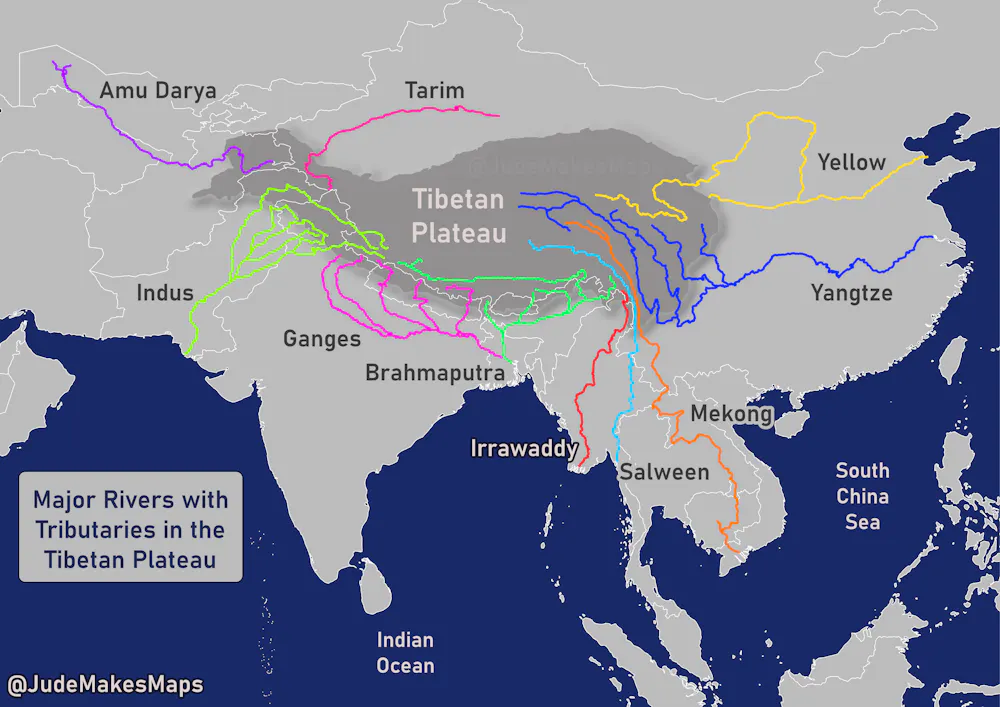
    Complicating matters further is China recently approving the construction of the world’s largest hydropower project on the Yarlung Tsangpo river in Tibet, which becomes the Brahmaputra in India. This massive project has raised alarm about China’s ability to exert control upstream, and the ecological risks for India and Bangladesh downstream.

    China hasn’t signed formal water-sharing agreements with its neighbours, but its growing presence in regional water infrastructure signals a dramatic shift in south and east Asian hydro-politics.

    Climate change is making things worse

    Recent climatic trends are making transboundary rivers an increasing focus of geopolitical friction. These trends include accelerated glacier melt, erratic monsoon patterns, and intensifying extreme weather.

    While melting glaciers will temporarily boost the flow of rivers, the long-term prognosis is bleak. If emissions and warming trends continue, many glacier-fed rivers – including the Indus, Ganges and Brahmaputra – could see dramatically reduced flows by the end of the century. This will directly affect hundreds of millions of people who depend on them.

    The crisis is being intensified by changes in the Himalayas. The region is warming faster than the global average, with a shift from snowfall to rainfall that disrupts the timing and volume of water that flows down from the mountains to the fields and cities below.

    At the same time, unsustainable groundwater extraction has pushed South Asia’s reserves of underground water toward collapse, threatening both food and water security.

    A dangerous precedent

    A collapse or suspension of the Indus Waters Treaty could set a dangerous precedent. Importantly, the threat is less about India cutting off water flows – an unlikely and technically challenging act – and more about the erosion of trust, transparency and data sharing.

    One of the treaty’s most valuable features has been the routine sharing of data on things like water levels, river flow and dam operations. Pakistan needs this data to forecast floods and droughts, plan its irrigation, generate hydropower effectively and manage its drinking water, yet India is indicating it will no longer honour these obligations.

    But India’s strained water relations are not limited to Pakistan. Bangladesh and Nepal have often felt sidelined or pressured in negotiations, and India’s indication that it may reconsider longstanding treaties raises concerns in both countries.

    This is especially the case as the Ganges Water Treaty nears its 2026 expiration: the vast Ganges river flows through India and irrigates much of Bangladesh – and the treaty guarantees Bangladesh a minimum river flow.

    Other key agreements, such as the Mahakali Treaty and Kosi river accord with Nepal, and the Teesta water-sharing deal with Bangladesh, remain largely unimplemented, breeding mistrust. These failures undermine confidence in regional water diplomacy and cast doubt on India’s commitment to equitable cooperation.

    None of this is helped by India, Pakistan and Bangladesh all continuing to rely on outdated irrigation methods that mean they use more water than necessary. As climate change intensifies floods, droughts and glacial melt, there is an urgent need to reform existing water treaties to reflect present-day climate, hydrological and geopolitical realities.

    Canals, like this one in Punjab, India, irrigate much of South Asia.
    Hussain Warraich / shutterstock

    The Indus Waters Treaty, negotiated in the 1960s before the emergence of modern climate science, no longer accounts for these transformations. Indeed, most water treaties in the region remain rooted in technocratic, engineering-centric frameworks which fail to address extreme climate variability and its cascading impacts.

    The upcoming expiration of the Ganges Water Treaty, and the pending negotiation of other basin agreements, present a critical opportunity to rethink water governance in South Asia.

    Though the Indus flows through India before Pakistan, in other basins, India is downstream. This is the case with the Brahmaputra, where it demands upstream cooperation from China.

    Undermining the Indus treaty could weaken India’s own position in future negotiations and strain its relations with Nepal and Bangladesh, while giving China more influence in South Asian hydro-politics. China is already expanding its footprint by offering billions in loans to Bangladesh and strengthening ties with Nepal, particularly around water infrastructure.

    Many of the world’s largest rivers begin in the Himalayas or the Tibetan Plateau.
    JudeMakesMaps, CC BY-SA

    Weaponising water is a perilous strategy that may backfire. The weakening of water diplomacy in South Asia is not just a regional threat; it endangers global climate security.

    In the face of escalating climate change impacts and recurring disasters, updating transboundary agreements like the Indus Waters Treaty, Ganga Water Treaty, and Kosi and Teesta accords is no longer optional – it is an urgent necessity with enormous consequences.

    Mehebub Sahana receives funding from the Leverhulme Trust, United Kingdom.

    ref. India-Pakistan conflict over water reflects a region increasingly vulnerable to climate change – https://theconversation.com/india-pakistan-conflict-over-water-reflects-a-region-increasingly-vulnerable-to-climate-change-256253

    MIL OSI – Global Reports

  • MIL-OSI Global: Gems supposedly buried with Buddha are to be sold at auction – it’s a symptom of Buddhism’s ongoing commercialisation

    Source: The Conversation – UK – By Lee Clarke, Lecturer in Philosophy, Nottingham Trent University

    Almost 2,000 years ago in modern-day Uttar Pradesh, India, someone deposited a cache of gems inside a reliquary (a container for holy relics), along with some bone fragments and ash. The gems were precious, but the bones and ash even more so, for according to an inscription on the reliquary, they belonged to Siddhartha Gautama, the Buddha.

    The Piprahwa gems were placed along with the Buddha’s bodily relics (śarīra) as an offering inside a stūpa (A Buddhist funerary structure that contains relics and acts as a place of pilgrimage). Such an offering is not only supposed to generate “merit” (puṇya) and hopefully a good rebirth for the devotee, but is also an act of devotion and gratitude to the Buddha.

    In 1898, a British land owner, William Claxton Peppé, ordered the excavation of that same stūpa on his land in colonial India and discovered the reliquary. The bodily relics were sent to the Buddhist king of Thailand, many of the gems went to the former Imperial Museum in Calcutta and Peppé was permitted to keep the rest.

    This latter portion was due to be put up for auction at Sotheby’s Hong Kong this month, just days before the Buddhist holy day of Vesak – and it has generated controversy. Not only has the sale been described as perpetuating colonial violence, but the Indian government demanded that auction house Sotheby’s halt the sale or it would seek legal action. Sotheby’s has complied, for now.


    Looking for something good? Cut through the noise with a carefully curated selection of the latest releases, live events and exhibitions, straight to your inbox every fortnight, on Fridays. Sign up here.


    Peppé’s great-grandson, Chris Peppé, explained in an article for Sotheby’s: “From the time we received the Piprahwa gem relics, my cousins and I have sought to make them available for viewing by the public (ideally a Buddhist public) to see at no cost to the institution borrowing them.” This has resulted in the gems being displayed in museums around the world. The cousins also set up The Piprahwa Project website, which allows people to access all the research materials that they have gathered.

    Chris Peppé has said that he hopes that the sale will help people see to see the gems and connect with those that left them and the Buddha himself. His great-grandfather, he says, ordered the excavation to provide work for his tenant farmers.

    As a Buddhist and the grandson of an Anglo-Indian man myself, my past straddles this colonial divide more than most. Putting aside the ethical issues around excavating a sacred site in the first place, and the uncomfortable tie-in to other instances of colonial looting by the British in India, the truly extraordinary thing is that these gems were put up for sale at all.

    If they really were mixed together with the bodily relics of the Buddha, then these gems were in physical contact with them and intended to be paired with them for posterity. That means that, in a Buddhist context, there is no essential difference between the gems and the actual remains of the Buddha.

    The Sri Lankan historical chronicle The Mahāvaṃsa (written in the 5th or 6th-century AD) states that “if we behold the relics we behold the Conqueror”, aka Buddha. As art historians Conan Cheong and Ashley Thompson write in their recent journal paper on the topic: “At the very least, we can affirm that for many Buddhists, historically and today, these ‘gems’ are śarīra of the Buddha and as such are imbued with the Buddha’s living presence.”

    Buddha in the west

    Speaking to the Guardian after the auction was postponed Peppé said: “In light of the Indian government’s sudden interest in the gems, 25% of auction proceeds will be donated to the displaying of the main Kolkata collection of the Piprahwa gems for Buddhists and the larger public to enjoy. Another 25% will be donated to Buddhist institutions.” With regards to his and his two relatives’ right to sell the gems, he added: “Legally, the ownership is unchallenged.”

    As an expert in Buddhist philosophy, I believe that to put a price on something that possesses such a sacred status for millions of people worldwide is both disrespectful and morally objectionable.

    The sale is also not something I could ever imagine happening regarding objects linked with any other religious figure. If a piece of intact clothing, for example, was found to have been worn by Jesus, would this be put up for sale? Of course, it would be massively valuable, but any financial considerations would surely be outweighed by its religious importance for the world’s billions of Christians. Why should it be any different with Buddhist relics?

    Another phenomenon inadvertently revealed by the fact of the sale is the ongoing commercialisation of Buddhism in the west. To many westerners, the Buddha and Buddhism are increasingly viewed as commodities to be bought and sold.

    Cheaply made Buddha statues and Buddha-faced plant pots adorn the shelves of garden centres and are then used to decorate living rooms and gardens. Clothes, lamps, beach towels and even shoes embellished with images of the Buddha can be purchased easily. The Buddha is frequently regarded as an ornament or fashion item rather than a sacred figure in a manner that, again, is rarely done with any other religiously significant person.

    Buddhas are common garden decorations in the west – but it’s hard to imagine a Jesus-themed equivalent.
    Radek Havlicek/Shutterstock

    From all this, selling actual Buddhist relics is not a large step. As with the commodification of other religions in the west such as Hinduism and Islam, commercialisation always simultaneously involves decontextualisation. It is an example of what philosopher Sophia Rose Arjana in her book Buying Buddha, Selling Rumi (2020) terms “the religious marketplace”.

    As she writes: “Religions associated with the east – Hindu, Buddhism, Islam – are also commodified. Their symbols are marketed by entrepreneurs and corporations and then consumed by everyone from non-religious spiritualists to ambivalent mystical seekers.”

    Religious traditions, practices, images and artefacts must be stripped of their native contexts and sacred meaning. Through this auction, the Piprahwa gems are considered ancient jewels to be admired ascetically rather than religious relics.

    Given their importance to global history and our human story, the Buddha and Buddhism are worthy of a lot more respect than they are currently afforded. While Buddhism teaches that everything is impermanent, we are lucky enough to still possess treasures such as the Piprahwa gems, and we should value them – and learn from them – while we can.

    Lee Clarke does not work for, consult, own shares in or receive funding from any company or organisation that would benefit from this article, and has disclosed no relevant affiliations beyond their academic appointment.

    ref. Gems supposedly buried with Buddha are to be sold at auction – it’s a symptom of Buddhism’s ongoing commercialisation – https://theconversation.com/gems-supposedly-buried-with-buddha-are-to-be-sold-at-auction-its-a-symptom-of-buddhisms-ongoing-commercialisation-256163

    MIL OSI – Global Reports

  • MIL-OSI USA: Murphy, Blumenthal, Colleagues Introduce Bill to Empower and Protect VA Health Care Workers and Patients

    US Senate News:

    Source: United States Senator for Connecticut – Chris Murphy

    May 09, 2025

    HARTFORD—U.S. Senators Chris Murphy (D-Conn.), a member of the U.S. Senate Committee on Health, Education, Labor, and Pensions (HELP), and Richard Blumenthal (D-Conn.) on Thursday reintroduced the VA Employee Fairness Act, legislation that would help right a long-standing wrong by expanding collective bargaining rights for Department of Veterans Affairs (VA) health care professionals. The bill would ensure that nurses, physicians, and other VA clinicians have the same rights as their counterparts in the private sector and other parts of the VA, empowering them to speak up on critical issues like staffing ratios, patient care, and compensation.

    Currently, Title 38 of the United States Code restricts these workers from negotiating over matters of professional conduct or competence, employee pay, and other key workplace issues. As a result, they are often unable to meaningfully advocate for improvements that would help address staffing shortages, enhance patient care, or recruit and retain qualified health care professionals.

    “Our veterans deserve the best care possible, and that starts with treating VA health care workers with dignity and respect,” said Murphy. “This bill gives nurses and doctors the tools they need to advocate for safe staffing and provide better care, just like their colleagues in the private sector.”

    “It has never been more important to give VA healthcare workers the opportunity to fight for better working conditions in order to provide the best possible care for veterans. With the entire VA workforce under attack from the Trump Administration, recruiting and retaining the very best doctors, nurses, and health care support staff is a challenge – but one we can meet with better, stronger workplace protections,” said Blumenthal. “Simply put: VA healthcare workers who have chosen to serve our nation’s veterans deserve the same opportunity to organize and collectively bargain for better pay, benefits, and working conditions that their VA colleagues have.”

    U.S. Senators Tammy Duckworth (D-Ill.), Brian Schatz (D-Hawaii), Bernie Sanders (I-Vt.), John Fetterman (D-Pa.), Kirsten Gillibrand (D-N.Y.) and Patty Murray (D-Wash.) also cosponsored the legislation.

    The legislation is endorsed by National Nurses United (NNU), the American Federation of Government Employees (AFGE), American Federation of Labor (AFL), American Federation of State, County and Municipal Employees (AFSCME), National Federation of Federal Employees (NFFE), International Federation of Professional and Technical Engineers (IFPTE), National Association of Government Employees (NAGE), Service Employees International Union (SEIU), VoteVets and Union Veterans Council of AFL-CIO.

    Full text of the legislation can be found HERE.

    MIL OSI USA News

  • MIL-OSI USA: Bergman: President Trump’s Memorandum a Big Win for the Great Lakes

    Source: United States House of Representatives – Congressman Jack Bergman (MI-1)

    Today, as first reported in the Detroit News, President Donald J. Trump is expected to sign a memorandum directing his Administration to “expeditiously implement the most effective mechanisms, barriers, and other measures to prevent the migration and expansion of invasive carp in the Great Lakes Basin and surrounding region.”  Less than one month ago, Rep. Jack Bergman, joined by Michigan GOP colleagues Rep. John Moolenaar, Rep. Tim Walberg, and Rep. John James sent a scathing letter to Illinois Governor J.B. Pritzker calling for him to reverse course on a recent politically charged decision that would jeopardize efforts to keep invasive Asian Carp out of the Great Lakes after he halted the Brandon Road Interbasin Project.

    Rep. Bergman stated, “I once again commend President Trump for delivering on his promises to Michigan. By advancing the long-overdue construction of a new Soo Lock, accelerating the Line 5 tunnel project, securing a critical new fighter mission at Selfridge, and taking decisive action to prevent the spread of invasive Asian Carp in our Great Lakes, President Trump has proven his unwavering commitment to Michigan’s infrastructure, economy, and environment.”

    You can read Rep. Bergman’s full letter to Gov. Pritzker here.

    Read the full Detroit News article here.

    MIL OSI USA News

  • MIL-OSI Russia: Chinese Foreign Ministry: Xi Jinping and Vladimir Putin reached many new important agreements

    Translation. Region: Russian Federal

    Source: People’s Republic of China in Russian –

    Source: People’s Republic of China – State Council News

    BEIJING, May 9 (Xinhua) — During his visit to Russia, Chinese President Xi Jinping held detailed, friendly and fruitful talks with Russian President Vladimir Putin, during which they exchanged views in-depth on China-Russia relations and major international and regional issues, and reached many new important agreements, Chinese Foreign Ministry spokesman Lin Jian said on Friday.

    At the invitation of Vladimir Putin, Xi Jinping is making a state visit to Russia from May 7 to 10, during which he is taking part in celebrations in Moscow to mark the 80th anniversary of Victory in the Great Patriotic War.

    Lin Jian made the above-mentioned statement in response to journalists’ requests to comment on the visit at a regular departmental press conference.

    The heads of state of China and Russia signed the Joint Statement of the People’s Republic of China and the Russian Federation on Further Deepening the Comprehensive Partnership and Strategic Cooperation in the New Era to Commemorate the 80th Anniversary of the Victory of the Chinese People in the War of Resistance against Japanese Aggression, the Victory of the Soviet Union in the Great Patriotic War and the Founding of the United Nations, and jointly witnessed the exchange of more than 20 documents on bilateral cooperation between the Chinese and Russian sides, which gave new impetus to the development of Chinese-Russian relations, Lin Jian noted.

    Lin Jian said that Xi Jinping said that China and Russia are good neighbors that can never be separated, true friends who share our sorrows and hardships, and reliable partners who help each other achieve success. China-Russia relations have a clear historical logic, strong internal dynamics and a deep civilizational foundation. They are not aimed at third parties and do not depend on the influence of any third party. The two countries have successfully paved the right path of cooperation between major neighboring countries, and formed the spirit of China-Russia strategic cooperation in the new era with eternal good-neighborly friendship, comprehensive strategic cooperation, and mutually beneficial and win-win cooperation as its core. The two countries should adhere to the centuries-old friendship, deepen political mutual trust and strengthen strategic coordination; adhere to mutual benefit and win-win results, and continue to deepen pragmatic cooperation in all fields; adhere to equality and justice, firmly safeguard the UN-centered international system and the international order based on international law; adhere to unanimous cooperation, uphold genuine multilateralism, and guide global governance in the right direction.

    Lin Jian noted that, as Xi Jinping emphasized, 2025 marks the 80th anniversary of the victory of the Chinese People’s War of Resistance Against Japanese Aggression, the 80th anniversary of the victory in the Great Patriotic War and the World Anti-Fascist War. In the face of unilateralism and hegemonic actions in the international arena, China, as major world powers and permanent members of the UN Security Council, stands ready to shoulder special responsibilities together with Russia, show firm determination, jointly uphold the correct understanding of the history of World War II, safeguard the authority and status of the UN, firmly defend the fruits of victory in World War II, resolutely safeguard the rights and interests of China, Russia and a wide range of developing countries, and jointly promote an equal and orderly multipolar world as well as an accessible and inclusive economic globalization.

    According to Lin Jian, during the visit, the two countries issued a joint statement on global strategic stability, reaffirming that China and Russia are committed to genuine multilateralism and support the central role of the UN and relevant multilateral mechanisms in arms control. The document emphasizes that nuclear-weapon states bear special responsibility for international security and global strategic stability, and calls for abandoning the mentality of the “Cold War” and “zero-sum games”, resolving problems through equal dialogue and consultation, strengthening trust, and avoiding misunderstandings and erroneous decisions. This reflects the aspirations of China and Russia as major powers to maintain and strengthen global strategic stability.

    Lin Jian said the two sides also issued a joint statement on further strengthening cooperation to safeguard the authority of international law. In it, both sides reaffirmed their commitment to upholding the UN Charter and principles of international law such as the Five Principles of Peaceful Coexistence. Both sides opposed the abuse of unilateral sanctions and “long-arm jurisdiction,” and stressed that states have the right to carry out normal economic and trade cooperation. The two sides outlined their common positions on major issues related to international law, and called on the international community to firmly uphold the world order based on international law. -0-

    MIL OSI Russia News

  • MIL-OSI Russia: Breaking: Xi Jinping Meets Myanmar Leader Min Aung Hlaing

    Translation. Region: Russian Federal

    Source: People’s Republic of China in Russian –

    Source: People’s Republic of China – State Council News

    Xinhua | 09. 05. 2025

    Keywords: Xi Jinping, Myanmar leader Min, Chairman of the People’s Republic of China, Hlaing, met, urgently, in the field of celebrations, anniversary of victory, union, occasion, Friday, war

    Moscow, May 9 (Xinhua) — Chinese President Xi Jinping met here on Friday with Myanmar leader Min Aung Hlaing on the sidelines of celebrations to mark the 80th anniversary of the Soviet Union’s victory in the Great Patriotic War. –0–

    Source: Xinhua

    Breaking: Xi Jinping Meets Myanmar Leader Min Aung Hlaing Breaking: Xi Jinping Meets Myanmar Leader Min Aung Hlaing

    MIL OSI Russia News

  • MIL-OSI Asia-Pac: Session held on Ombudsman’s report

    Source: Hong Kong Information Services

    Chief Secretary Chan Kwok-ki today met Ombudsman Jack Chan to follow up on the Direct Investigation Operation Report on Government’s Regulation of Occupational Safety & Health in Construction Industry, and discussed the Ombudsman’s findings, analyses and recommendations extensively.
     
    They had in-depth discussions on the bottlenecks and inadequacies in the occupational safety and health (OSH) regulatory system for the construction industry and candid exchanges on strengthening the management systems of government departments, particularly on the leadership and supervisory responsibilities of management personnel, as well as issues such as performance accountability among departmental managerial staff.
     
    The Labour Department and the Buildings Department are taking follow-up actions on the recommendations of the report, which was published by the Office of the Ombudsman on April 16. 

    The Labour Department has amended the OSH legislation to increase the penalties. Apart from planning to start a trial of using small unmanned aircraft for inspections, investigations and evidence collection in the second half of 2025, it also aims to explore the use of automatic speech recognition to assist in taking statements, thereby improving the efficiency of frontline officers in law enforcement.
     
    Both departments have strengthened collaboration and improved the inter-departmental referral mechanism. The Buildings Department improved the internal monitoring system for case handling in early 2025 and speeded up processing of omitted cases, and is reviewing lowering the threshold for instigating disciplinary actions to enhance deterrent effect.
     
    Meanwhile, the Government will introduce a bill into the Legislative Council to amend the Buildings Ordinance in the first half of 2026 to enhance the regulatory regime for registered contractors.
     
    Mr Chan said that the Government attaches great importance to the Office of the Ombudsman’s investigation report and appreciates the valuable observations and recommendations put forward by the Ombudsman.
     
    In accordance with the Chief Executive’s instruction, the working group, led by the Chief Secretary, will ensure that all departments conscientiously and proactively follow up on the recommendations, while strengthening the establishment of departmental management systems at source and reinforcing performance accountability of the management to effectively improve governance efficiency, he added.

    MIL OSI Asia Pacific News

  • MIL-OSI NGOs: Solidarity and dedication in response to devastating Myanmar earthquake

    Source: Médecins Sans Frontières –

    On 28 March, a 7.7 magnitude earthquake struck central Myanmar. From the epicentre in the city of Sagaing, the tremors were felt across Thailand, Bangladesh, China and Laos. Our teams already in the country immediately mobilised to travel to the affected areas in Sagaing, Mandalay, Naypyitaw and Southern Shan states to assess initial needs, while our emergency teams prepared to arrive in Myanmar as earlier as possible.


    Jessa Pontevedra, emergency coordinator based in southeast Asia was one of them. She shares her experiences from the first week of our emergency response in Myanmar.

    Jessa Pontevedra, medical coordinator in Myanmar What I witnessed in Naypyidaw deeply affected me as a public health professional, but the devastation in Mandalay touched me to my core as humanitarian.

    Jessa Pontevedra, Switzerland, 2024.
    © Pierre-Yves Bernard/MSF

    We landed in Yangon in the middle of the night on 1 April and headed directly to the Médecins Sans Frontières (MSF) office for briefings. After a few hours of rest, we set out the next morning on the 6.5-hour long drive to Naypyitaw, mainly along the highway to join the team who had already gone there on 30 March.

    But about 100 kilometres from the city we started seeing the impact of the earthquake – cracks marred the road, a stark reminder of the disaster’s reach. We entered this well-designed city, Myanmar’s capital, and checked into a hotel, where some displaced families who could afford it had taken refuge.

    In the evening, we met the rest of the emergency team to set the objectives for the coming days. As a medical coordinator, my role is to assess the health situation: evaluating both the condition of medical facilities and the urgent needs of affected people.

    A maternity ward in a jewellery museum

    Before the earthquake, Naypyidaw boasted major medical institutions: a 1,000-bed hospital, a 500-bed paediatric hospital, 500-bed orthopaedic hospital, 500-bed maternity, and more. Yet, all of these large, specialised hospitals couldn’t operate to their full capacity due to structural damage to the facilities.

    One of the more striking examples of adaptation was the repurposing of a 500 beds-obstetric-children’s hospital. The patients, staff and some of the equipment relocated to an unoccupied private jewellery museum that was untouched by the earthquake. The owner, eager to help, welcomed the maternity in his building and compound. The museum, originally intended to be a high-end tourist attraction, had become an emergency healthcare space. Inside the grand rooms, there were rows and rows of beds set up for pregnant women about to give birth.

    A metal detector at the entrance now served as the triage point, with desks further inside used for antenatal and postnatal consultations. Other rooms were transformed into emergency wards, and an operating theatre was already performing caesarean sections. Staff, who were themselves displaced, had set up tents to sleep in the compound, as well as the families of patients. A brick building in the back of the compound which looked like a train station, was used as the administration offices and kitchen for the staff. 

    The express road connecting Mandalay to Sagaing was cracked by the earthquake on 28 March and parts of it are still unusable. Myanmar, April 2025.
    Lena Pflueger/MSF

    I saw a lot of solidarity and dedication

    There, I met the superintendent of the hospital, who took the time to speak with us despite the challenging situation. Amid the hectic environment, she was still smiling. Staff and patient’s families were sharing the place, sharing meals, offering donations to the ones in need, supporting each other… acting as a big community. Everyone was coping as best they could… collectively.

    A paediatric hospital, originally another 500-bed facility, had been relocated across the city and was now operating as a 32-bed township hospital – without any operating theatre. Looking at the community’s needs – pregnant women give birth, and kids get sick even amidst a natural disaster –, a 500-bed hospital becoming a 32-bed hospital, the math was not adding up.

    The encounter with the superintendent at this facility, deeply touched me. The healthcare professionals were so dedicated, trying their best. The community spirit everywhere and coming together really resonated with me as I am southeast Asian, and this is a big part of our culture. Coming together in times of needs… They were also appreciative that MSF is with them in this emergency.

    Many people experiencing homelessness in an urban space

    Five days later, I left Naypyidaw, taking the old highway instead of the express road. As we approached Mandalay city, we saw makeshift shelters of plastic sheeting on one side of the road, housing perhaps 1,000 people. On the other side, buildings lay in ruins. The following days, as we moved around the city to assess the hospitals, we saw similar damages – collapsed homes and communities in disarray. Many affected people were quite vulnerable, without access to water and sanitation, lacking the basic requirement to preserve their dignity. 

    A patient receives medication at an MSF mobile clinic set up inside a monastery, which is currently sheltering about 80 families from the neighbourhood whose homes have been destroyed or severely damaged and are no longer safe to live in. Myanmar, April 2025.
    Lena Pflueger/MSF

    In Mandalay, families who chose to stay close to their damaged or collapsed houses were staying at the gates or front yard, or along the street – some even re-entering their damaged houses, risking further injury just to access basic facilities like bathrooms. The hospitals were partially functional and able to attend to the injured – although oftentimes outside barely shielded from the elements by simple tarps.

    Throughout these assessments, our teams have already been providing basic health consultations, psychological first aid to the affected communities and distributed essential items such as hygiene kits in cooperation with local civil society organisations. The logistics teams have been working tirelessly to restore water and sanitation facilities, setting up latrines in monasteries where many displaced families sought refuge.

    More challenges may come

    With the rainy season approaching, the challenges are mounting. The situation might become increasingly precarious. If thousands of people are experiencing homeless in urban areas, and with the risk of disease outbreaks, responding to their needs will be incredibly challenging.

    What I witnessed in Naypyidaw touched me to my core as a public health professional, but what I saw in Mandalay touched to my core as humanitarian.

    For now, the communities are finding ways to support one another. I remember one couple staying at the same hotel in Naypyidaw, that I met when I was out for my usual run. They were also doing their morning exercise. It was the man’s birthday that day. But given the situation, the celebration would not be a party. “We have lost our home too,” he said, “But we are bit more blessed, so we want to give back.” And they did so by doing food, water and essential item distributions in one of the most affected neighbourhoods of Naypyidaw.

    I also keep in mind this doctor I met. He was from a less affected town who had rallied a group of healthcare colleagues to set up a free clinic. They quickly began receiving donations from people abroad – food, essential items, and more. This spirit of community in Myanmar is powerful, but I can’t help but wonder: how long can it last?

    Our emergency teams continue to work almost around the clock, further assessing and anticipating the needs, supporting the relief efforts wherever possible along with the communities that are so engaged. The recovery from this massive earthquake will be long for the affected people, no matter where they live, they need to have access to life-saving humanitarian assistance. 

    MIL OSI NGO

  • MIL-OSI: Hyra Network Co-Hosts TOKEN2049 VC Summit and Showcases Decentralized AI Infrastructure at GITEX Asia Singapore

    Source: GlobeNewswire (MIL-OSI)

    SINGAPORE and DUBAI, United Arab Emirates, May 09, 2025 (GLOBE NEWSWIRE) — Hyra Network, the world’s first decentralized AI infrastructure platform, has accelerated its global expansion by co-hosting VC Connect at TOKEN2049 Dubai and unveiling its Smart Data Economy vision at GITEX Asia Singapore. The events brought together over 10,000 tech leaders, investors, and policymakers across two of the most influential technology gatherings of 2025.


    Hyra Network x Agora Group co-host successful VC Connect Dubai, gathering 40+ top Web3 investors and founders.

    At TOKEN2049 Dubai, Hyra Network partnered with Agora Group to co-host VC Connect as a Diamond Sponsor. This premier investor forum welcomed over 40 leading venture capital firms, including Animoca Brands, Spartan Group, Hack VC, Borderless Capital, and DWF Ventures.

    Mr. Gerard, Co-founder of Hyra Network, played a leading role in facilitating direct pitch sessions, strategic roundtables, and investor briefings — showcasing the company’s Layer-3 blockchain-powered infrastructure that leverages edge computing and federated learning to democratize AI deployment.

    With over 10,000 participants at TOKEN2049, Hyra Network captured investor attention and positioned itself as a rising leader in the global DePIN (Decentralized Physical Infrastructure) and AI ecosystem.

    Building on its Dubai momentum, Hyra Network also showcased its decentralized AI platform at GITEX Asia Singapore, the Southeast Asia edition of the global GITEX series. The inaugural event featured 700+ tech companies and delegates from over 110 countries.

    Hyra Network featured at GITEX Asia 2025, with 700+ tech leaders from 110+ countries.

    Hyra Network’s CTO and technical leadership demonstrated how individuals and enterprises can contribute unused device capacity — such as smartphones, routers, and edge nodes — to participate in decentralized AI networks and earn tokenized rewards. This infrastructure unlocks scalable, inclusive, and user-powered AI systems.

    Hyra also joined industry forums, public-private workshops, and tech showcases — reinforcing its leadership in building next-generation, decentralized AI infrastructure.

    GITEX organizers announced strategic expansion into Southeast Asia, naming Singapore and Vietnam as digital economy growth hubs, aligning with Hyra Network’s regional roadmap.

    About Hyra Network

    Hyra Network is the world’s first decentralized AI infrastructure platform, enabling scalable, low-cost artificial intelligence through edge devices and Layer-3 blockchain. As a core initiative of Hyra Tek, the company combines federated learning, edge computing, and decentralized participation to power the Smart Data Economy — making AI accessible, ethical, and community-owned.

    Media Contact

    Mei Nguyen
    PR & Communications Lead – Hyra Holdings
    Email: press@hyra.network
    Website: https://hyra.network

    Photos accompanying this announcement are available at

    https://www.globenewswire.com/NewsRoom/AttachmentNg/583760b2-2c2d-40e5-b1e6-8a1f050b02cc

    https://www.globenewswire.com/NewsRoom/AttachmentNg/eb0be94a-a492-418d-b976-9f40683b134a

    The MIL Network

  • MIL-OSI: 100x Leverage, No KYC, $50 Welcome Bonus, and Double Deposit Bonus — Trade Crypto Futures on BexBack

    Source: GlobeNewswire (MIL-OSI)

    SINGAPORE, May 09, 2025 (GLOBE NEWSWIRE) — With Bitcoin breaking past the $100,000 milestone and Ethereum surging over 20% in just 24 hours, many analysts agree that a new crypto bull market has officially begun. In this environment, smart investors are turning to high-leverage futures trading to amplify their gains with minimal capital.
    Recognizing this shift, BexBack is doubling down on its trader-first approach by offering powerful promotional incentives: a 100% deposit bonus, a $50 welcome bonus for new users, and up to 100x leverage on over 50 major cryptocurrencies. These tools are designed to help traders capture the full potential of the bull cycle with precision and flexibility.

    What Is 100x Leverage and How Does It Work?

    Simply put, 100x leverage allows you to open larger trading positions with less capital. For example:

    Suppose the Bitcoin price is $60,000 that day, and you open a long contract with 1 BTC. After using 100x leverage, the transaction amount is equivalent to 100 BTC.

    One day later, if the price rises to $63,000, your profit will be (63,000 – 60,000) * 100 BTC / 60,000 = 5 BTC, a yield of up to 500%.

    With BexBack’s deposit bonus

    BexBack offers a 100% deposit bonus. If the initial investment is 2 BTC, the profit will increase to 10 BTC, and the return on investment will double to 1000%.

    Note: Although leveraged trading can magnify profits, you also need to be wary of liquidation risks.

    How Does the 100% Deposit Bonus Work?
    The deposit bonus from BexBack cannot be directly withdrawn but can be used to open larger positions and increase potential profits. Additionally, during significant market fluctuations, the bonus can serve as extra margin, effectively reducing the risk of liquidation.

    About BexBack?

    BexBack is a leading cryptocurrency derivatives platform that offers 100x leverage on BTC, ETH, ADA, SOL, XRP,and 50+ others futures contracts. It is headquartered in Singapore with offices in Hong Kong, Japan, the United States, the United Kingdom, and Argentina. It holds a US MSB (Money Services Business) license and is trusted by more than 500,000 traders worldwide. Accepts users from the United States, Canada, and Europe. There are no deposit fees, and traders can get the most thoughtful service, including 24/7 customer support.

    Why recommend BexBack?

    No KYC Required: Start trading immediately without complex identity verification.

    100% Deposit Bonus: Double your funds, double your profits.

    High-Leverage Trading: Offers up to 100x leverage, maximizing investors’ capital efficiency.

    Demo Account: Comes with 10 BTC and 1M USDT in virtual funds, ideal for beginners to practice risk-free trading.

    Comprehensive Trading Options: Feature-rich trading available via Web and mobile applications.

    Convenient Operation: No slippage, no spread, and fast, precise trade execution.

    Global User Support: Enjoy 24/7 customer service, no matter where you are.

    Lucrative Affiliate Rewards: Earn up to 50% commission, perfect for promoters.

    Take Action Now—Don’t Miss Another Opportunity!

    If you missed the previous crypto bull run, this could be your chance. With BexBack’s 100x leverage and 100% deposit bonus and $50 bonus for new users (available after making a deposit of at least 100 USDT or 0.001 BTC and completing one trade within one week of registration), giving you the edge to become a winner in the new bull run.

    Sign up on BexBack now, claim your exclusive bonus and start accumulating more BTC today!

    Website: www.bexback.com

    Contact: business@bexback.com

    Contact:
    Amanda
    business@bexback.com

    Disclaimer: This content is provided by BexBack. The statements, views, and opinions expressed in this content are solely those of the content provider and do not necessarily reflect the views of this media platform or its publisher. We do not endorse, verify, or guarantee the accuracy, completeness, or reliability of any information presented. We do not guarantee any claims, statements, or promises made in this article. This content is for informational purposes only and should not be considered financial, investment, or trading advice.Investing in crypto and mining-related opportunities involves significant risks, including the potential loss of capital. It is possible to lose all your capital. These products may not be suitable for everyone, and you should ensure that you understand the risks involved. Seek independent advice if necessary. Speculate only with funds that you can afford to lose. Readers are strongly encouraged to conduct their own research and consult with a qualified financial advisor before making any investment decisions. However, due to the inherently speculative nature of the blockchain sector—including cryptocurrency, NFTs, and mining—complete accuracy cannot always be guaranteed.
    Neither the media platform nor the publisher shall be held responsible for any fraudulent activities, misrepresentations, or financial losses arising from the content of this press release. In the event of any legal claims or charges against this article, we accept no liability or responsibility. Globenewswire does not endorse any content on this page.

    Legal Disclaimer: This media platform provides the content of this article on an “as-is” basis, without any warranties or representations of any kind, express or implied. We assume no responsibility for any inaccuracies, errors, or omissions. We do not assume any responsibility or liability for the accuracy, content, images, videos, licenses, completeness, legality, or reliability of the information presented herein. Any concerns, complaints, or copyright issues related to this article should be directed to the content provider mentioned above.

    Photos accompanying this announcement are available at

    https://www.globenewswire.com/NewsRoom/AttachmentNg/d8756246-a0d7-43d5-8997-7ba914797447

    https://www.globenewswire.com/NewsRoom/AttachmentNg/8749dbbd-c9f1-4f84-875c-b0a2c4b74344

    https://www.globenewswire.com/NewsRoom/AttachmentNg/4e07e5d3-9447-497a-9fa1-738d3cab6c36

    https://www.globenewswire.com/NewsRoom/AttachmentNg/9303617e-2546-4ca1-8a3f-e7b2f0406d6a

    The MIL Network

  • MIL-OSI United Kingdom: Change of His Majesty’s Ambassador to the Philippines: Sarah Hulton

    Source: United Kingdom – Government Statements

    Press release

    Change of His Majesty’s Ambassador to the Philippines: Sarah Hulton

    Mrs Sarah Hulton OBE has been appointed His Majesty’s Ambassador to the Republic of the Philippines and His Majesty’s non-resident Ambassador to the Republic of Palau

    Mrs Sarah Hulton OBE has been appointed His Majesty’s Ambassador to the Republic of the Philippines and His Majesty’s non-resident Ambassador to the Republic of Palau in succession to Ms Laure Beaufils.  Mrs Hulton will take up her appointment during September 2025.

    Curriculum Vitae

    Full name: Sarah Anne Pascale Hulton

    Year Role
    2024 to present Foreign, Commonwealth and Development Office (FCDO), Interim Director Overseas Territories and Polar Directorate
    2024 FCDO, Deputy Director Human Resources
    2023 to 2024 FCDO, Interim Director Geopolitics & Deputy Political Director 
    2019 to 2023 Colombo, British High Commissioner
    2018 to 2019 FCO, Deputy Director Human Resources
    2017 to 2018 FCO, Head of DPRK Department
    2015 to 2017 FCO, Head of Pacific Department
    2012 to 2015 Harare, Head of Political Section
    2010 to 2010 FCO, Head of Conflict Prevention Team
    2008 to 2010 FCO, Head of Weapons of Mass Destruction Controls
    2005 to 2008 Manila, Second Secretary Political PPA
    2004 to 2005 FCO, Full time language training, Tagalog
    2003 to 2004 FCO, Counter Terrorism Desk Officer
    2002 to 2003 FCO, Head of Child Abduction Unit, Consular Human Rights
    2002 Joined FCO

    Media enquiries

    Email newsdesk@fcdo.gov.uk

    Telephone 020 7008 3100

    Contact the FCDO Communication Team via email (monitored 24 hours a day) in the first instance, and we will respond as soon as possible.

    Updates to this page

    Published 9 May 2025

    MIL OSI United Kingdom

  • MIL-OSI: HTX DeepThink: Liquidity Window Confirmed — Bitcoin Hits $100K Again, What’s Next?

    Source: GlobeNewswire (MIL-OSI)

    SINGAPORE, May 09, 2025 (GLOBE NEWSWIRE) — HTX DeepThink is a flagship market insights column created by HTX, dedicated to exploring global macro trends, key economic indicators, and major developments across the crypto industry. In a world where volatility is the norm, HTX DeepThink aims to help readers “Find Order in Chaos.”

    Last week, Chloe (@ChloeTalk1) from HTX Research accurately predicted that a liquidity window could emerge in early May, driving capital back into crypto markets. On May 8, Bitcoin surged past $100,000 for the first time in three months—confirming her forecast. How long can this momentum last, and what are the implications of the latest U.S.-UK tariff deal? In this bonus update, Chloe provides fresh analysis of the evolving landscape.

    UK–U.S. Tariff Agreement Signals Reduced Risk and Policy Support

    On May 8, the United Kingdom and the United States reached a breakthrough trade agreement. The UK agreed to open its agricultural market for U.S. products in exchange for a reduction in U.S. tariffs on British automobile exports. Tariffs on British steel and aluminum exports to the U.S. were reduced to zero, while a 10% “reciprocal tariff” remains in place on U.S. imports.

    Although the UK already runs a trade deficit with the U.S. and the economic impact of the deal may be modest, it signals a willingness by the U.S. government to re-engage diplomatically and release policy tailwinds.

    U.S. Commerce Secretary Lutnick further indicated that the next major trade agreement could involve a large Asian economy, suggesting that the U.S. administration is preparing to offer structural trade incentives on a broader geopolitical scale.

    Bitcoin’s Market Structure Shifts From Speculative Trading to Institutional Capital Allocation

    Concurrently with these easing policy conditions, Bitcoin’s capital flow dynamics have undergone a fundamental shift. Over the past three weeks, U.S. spot Bitcoin ETFs have recorded substantial net inflows totaling $5.3 billion——the highest quarterly inflow since their launch.

    Notably, this increase has been driven by institutional participants, including the Abu Dhabi sovereign wealth fund, the Swiss National Bank (via MicroStrategy equity purchases), and increased allocations by BlackRock’s Bitcoin ETF. This signals a structural transition in Bitcoin’s pricing logic—moving from short-term, volatility-driven speculation towards long-term capital allocation. BTC is evolving beyond a high-risk asset; it is gradually forming an independent capital ecosystem, increasingly viewed by institutional investors as a “supra-sovereign asset”—somewhere between gold and U.S. Treasuries.

    Bitcoin Volatility Remains Contained; Market Awaits Macroeconomic Catalysts

    Despite BTC’s recent rally to $100,000, the market has not yet exhibited signs of speculative exuberance. Implied volatility (IV) in Bitcoin options remains stable in the 50%–55% range, far below the extreme levels of 80%+ typically seen at the peak of past bull markets. CME Bitcoin futures open interest currently stands at $14.8 billion, well below the $20 billion peak observed during the 2020 U.S. presidential election period, indicating that leverage is still manageable. Meanwhile, the 10-year U.S. Treasury yield has repeatedly failed to break above 4.60%, now hovering around 4.40%, which remains a neutral-to-supportive zone for risk assets.

    Overall, as long as yields do not climb back above 4.8% and ETF inflows remain steady, Bitcoin is likely to consolidate in the $105,000–$115,000 range while awaiting the next breakout trigger.

    Hidden Risk: Breakdown in China–U.S. and EU–U.S. Trade Talks Could Reignite Tariff Battles

    Nevertheless, investors should remain vigilant about geopolitical risk. While U.S. negotiations with China and the EU are ongoing, significant unresolved tensions persist—particularly over tariffs, export controls, and industrial subsidies.

    President Trump has explicitly stated he has no intention of lowering the current 145% tariff on Chinese goods as a prerequisite for restarting trade negotiations. Meanwhile, EU Trade Commissioner Maroš Šefčovič warned that if discussions with the U.S. fail, the EU is prepared to launch retaliatory tariffs, potentially targeting up to €100 billion worth of American goods.

    A breakdown in these negotiations could lead to the re-imposition of aggressive tariffs, reigniting global trade friction. This would likely dampen investor sentiment and place renewed pressure on risk assets, including Bitcoin. As such, the hidden risk of renewed tariff wars remains a key macro variable that should be incorporated into all forward-looking risk assessments.

    *The above content is not investment advice and does not constitute any offer or solicitation to offer or recommendation of any investment product.

    About HTX Research

    HTX Research is the dedicated research arm of HTX Group, responsible for conducting in-depth analyses, producing comprehensive reports, and delivering expert evaluations across a broad spectrum of topics, including cryptocurrency, blockchain technology, and emerging market trends.

    Connect with HTX Research Team: research@htx-inc.com

    Contact:
    Ruder Finn Asia
    glo-media@htx-inc.com

    Disclaimer: This is a paid post and is provided by HTX. The statements, views, and opinions expressed in this content are solely those of the content provider and do not necessarily reflect the views of this media platform or its publisher. We do not endorse, verify, or guarantee the accuracy, completeness, or reliability of any information presented. We do not guarantee any claims, statements, or promises made in this article. This content is for informational purposes only and should not be considered financial, investment, or trading advice.Investing in crypto and mining-related opportunities involves significant risks, including the potential loss of capital. It is possible to lose all your capital. These products may not be suitable for everyone, and you should ensure that you understand the risks involved. Seek independent advice if necessary. Speculate only with funds that you can afford to lose. Readers are strongly encouraged to conduct their own research and consult with a qualified financial advisor before making any investment decisions. However, due to the inherently speculative nature of the blockchain sector—including cryptocurrency, NFTs, and mining—complete accuracy cannot always be guaranteed.
    Neither the media platform nor the publisher shall be held responsible for any fraudulent activities, misrepresentations, or financial losses arising from the content of this press release. In the event of any legal claims or charges against this article, we accept no liability or responsibility. Globenewswire does not endorse any content on this page.

    Legal Disclaimer: This media platform provides the content of this article on an “as-is” basis, without any warranties or representations of any kind, express or implied. We assume no responsibility for any inaccuracies, errors, or omissions. We do not assume any responsibility or liability for the accuracy, content, images, videos, licenses, completeness, legality, or reliability of the information presented herein. Any concerns, complaints, or copyright issues related to this article should be directed to the content provider mentioned above.

    A photo accompanying this announcement is available at https://www.globenewswire.com/NewsRoom/AttachmentNg/a5c15cb3-3c1d-450c-9226-e9a09951388a

    The MIL Network

  • MIL-OSI Europe: ASIA/INDIA – “Before each meeting and pastoral activity, he spent a long time in Eucharistic adoration”: Augustinians remember the Prior Provost in India

    Source: Agenzia Fides – MIL OSI

    Verapoly diocese

    New Delhi (Agenzia Fides) – “Pope Leo XIV is remembered in India with affection and gratitude. He visited our nation twice as Prior General of the Augustinian Fathers, he is remembered as a simple man, who knew how to adapt to the local context, his attitude of listening and dialogue, and his spirituality rooted in an intense life of prayer. What was most striking was the prolonged time he dedicated to silent Eucharistic adoration,” Father Stephen Alathara, Deputy Secretary General of the Conference of Latin Rite Bishops of India and Founding Director of “Communio,” an initiative of the Latin Episcopate of India (CCBI) to support dioceses and religious congregations in rural areas, told Fides.Father Alathara recalls the two visits the then Prior Provost made during his tenure as head of the Order of Saint Augustine: “In 2004 and 2006, he visited several Augustinian communities in Kerala and Tamil Nadu, leaving everyone with an impression of profound spirituality and closeness.” During his first visit, in 2004, he spent more than a week at the Augustinian houses in Mariyapuram, in the Archdiocese of Verapoly and Edakochi, in the Diocese of Cochin, both in the state of Kerala, in southern India. “He celebrated the Eucharist at the Parish of Mary Queen Help of Christians in Mariyapuram and at the Shrine of Saint Anthony in Edakochi. They were celebrations experienced with great fervor and hope,” the faithful recall. In particular, on April 22, 2004, he concelebrated with the then Archbishop of Verapoly, Monsignor Daniel Acharuparambil, the ordination Mass of six Augustinian deacons at the Church of St. Francis Xavier in Kathrikadavu (Kaloor). “His gestures of welcome and fraternal charity toward the new priests are engraved in our hearts,” Father Alathara emphasizes. The second visit took place in October 2006, when he returned to the Augustinian house in Mariyapuram to participate in the Asia-Pacific meeting organized by the Order. “During that trip, despite having to attend to important matters for the Order in the region, he found time to visit the Shenbagam School in Pollachi (Tamil Nadu), run by the Augustinian Fathers in the Diocese of Coimbatore, where he met with children and young people. “He also celebrated the Eucharist at the parish of St. Thomas in Thalapuzha, in the Archdiocese of Calicut, Kerala,” adds Father Alathara. “These gestures reveal his human sensitivity and his pastoral heart. He always wanted to be in touch with the concrete reality and with the people of the communities: this is how we remember him, and we hope to be able to welcome him back to India as Pope Leo XIV.”The Indian Augustinians also remember him fondly. “When he was here, we knew him as an extraordinarily simple person, down-to-earth, always ready to face the difficulties of everyday life,” notes Father Jacob Mullassery, OSA, who accompanied him on both visits. “He never asked for privileges: he traveled with us and accepted lodging in humble rooms, provided with the bare essentials. His humility deeply impressed us.”Father Metro Xavier, OSA, who had several personal encounters with the Prior Provost, describes him as “a deeply spiritual man.” And he adds: “Before each meeting or pastoral activity, he spent a long time in silent Eucharistic adoration. He demonstrated a profound love for the Church and total reverence for her Magisterium. His spiritual life gave us a testimony of prayer and simplicity.” For his part, Father Wilson Injerappu, OSA, Regional Vicar of the Order in India, joyfully expresses: “We are filled with immense gratitude. Having an Augustinian brother as Pope is a great blessing. It is also a reminder of our responsibility: we must constantly pray for him and support his mission with our daily prayer.” (PA) (Agenzia Fides, 9/5/2025)
    Share:

    MIL OSI Europe News

  • MIL-OSI United Kingdom: Windsor soldier of World War 1 buried with Full Military Honours

    Source: United Kingdom – Executive Government & Departments 3

    News story

    Windsor soldier of World War 1 buried with Full Military Honours

    The remains of Private (Pte) John Tame of 2nd Battalion The Royal Berkshire Regiment were laid to rest on 8 May in Belgium, nearly 108 years after his death.

    The coffin of Private Tame is carried into New Irish Farm Cemetery by serving soldiers of 2nd Battalion The Rifles (Crown Copyright)

    The burial service for Pte Tame was organised by the MOD’s Joint Casualty and Compassionate Centre (JCCC), also known as the War Detectives, and took place at the Commonwealth War Graves Commission’s (CWGC) New Irish Farm Cemetery. 

    The service was supported by serving soldiers from 2nd Battalion The Rifles and was attended by Keith Brooks, the great nephew of Pte Tame, who aided JCCC by providing the DNA sample used to identify him. 

    Keith Brooks said: 

    John and his brothers Alfred and William have been remembered by the family from just photographs and vague memories from those who have now long passed. Now, after finding John’s remains, he is more than just a distant photograph. This has made him more real along with his story for future generations.

    This has all been achieved because of the excellent work the MOD do with all the research and investigations, giving missing people who have served their country the funeral they all greatly deserve. 

    Pte Tame was identified after his remains were found during road works at Zonnebeke near Ypres in May 2018. Nearby artefacts included a cap badge and shoulder title of The Royal Berkshire Regiment. The body also appeared to have been previously wounded around his left shoulder, which led to DNA matching confirming his identification.

    Pte Tame was from Windsor, Berkshire, and the third-eldest of 7 children. His elder brothers Alfred and William George also enlisted and served with 2nd Battalion The Royal Berkshire Regiment which, though stationed in India at the outbreak of the World War 1, arrived on the Western Front on 5 November 1914. 

    John’s brothers Lance Corporal Alfred Tame and Corporal William George Tame were both killed on 9 May 1915 during the Battle of Aubers Ridge. They are still missing and are commemorated on the Ploegsteert Memorial. 

    On Friday 9 May, the 110th anniversary of their deaths, the family of Pte Tame and a party from 2nd Battalion The Rifles visited the Ploegsteert Memorial to remember his missing brothers. 

    Soldiers of 2nd Battalion The Rifles visited the Ploegsteert Memorial with Keith Brooks to remember Private Tame’s brothers, killed 110 years ago today (Crown Copyright)

    JCCC Caseworker, Rosie Barron said: 

    It has been an honour to work with The Rifles to give Pte Tame the full military funeral that he deserves and to have conducted the research which led to his identification. It has also been a privilege to meet Keith, and to have shared this experience with him and his family.  

    The grave will now be cared for in perpetuity by CWGC. Commemorations Casework Manager at the CWGC, David Royle, said:

    It is an honour to have been involved in the research that led to the formal identification of Private Tame and to have assisted his family with their choices for his Commission headstone. He is now at rest alongside his comrades in New Irish Farm Cemetery, where we will care for his grave in perpetuity.

    The service was conducted by the Reverend Stephen Cassells CF, Chaplain to 2nd Battalion The Rifles. Reverend Cassells said: 

    I count it a privilege to be involved in the proper burial of Pte Tame. It is right that his remains should be laid to rest with dignity and in a place where his service will be properly honoured. I pray that his family will find peace in knowing that their relative has been found and buried properly and that those connected with his army regiment would draw renewed commitment through his service for King and country.

    Updates to this page

    Published 9 May 2025

    MIL OSI United Kingdom

  • MIL-OSI Global: Fancy letting off steam with a beer before the sauna? Here’s why that might be a bad idea

    Source: The Conversation – UK – By Dan Baumgardt, Senior Lecturer, School of Physiology, Pharmacology and Neuroscience, University of Bristol

    Nick Mayorov/Shutterstock

    Saunas have long been spaces for rest, recovery, and even the occasional business deal. Personally, though, they’re not my cup of tea: too claustrophobic, too stifling and always with that distinct sensation that my nasal hairs have been singed away by the heat.

    Watching that episode of The Simpsons where Homer gets trapped in a sauna and emerges looking like a steamed clam – miraculously alive – was the final nail in the coffin. I haven’t stepped into one since.

    Despite my reservations, sauna culture is rich and diverse, transcending borders and histories. While they’re an integral part of Scandinavian life, especially in Finland, saunas also appear in the traditions of Japanese, Mexican and Native American cultures. There are many variations to experience – from yoga and life drawing sessions, to being gently flogged with birch branches. To each their own.

    In recent years, the concept of refreshment in sauna culture has taken on altogether different dimensions. In the UK, more are now hot-footing their way to the sauna instead of the pub than ever before.

    As a new social and wellbeing hub, fusing elements of bar and sauna cultures, it makes sense. But what of going the whole hog and drinking alcohol – before, during and after sauna sessions?

    Why mix booze with 80°C heat in the first place? Perhaps it’s the natural fusion of two social rituals: relaxing in a sauna and enjoying a drink with friends. Or maybe it appeals to the hedonist seeking novel pleasures and euphoria.

    Still, the question remains: what are the effects – and risks – of drinking alcohol in the sauna?

    To steam, or not to steam? That is the question

    First, let’s consider the benefits. Surely, there must be more to it than just clearing out a few pores? In fact, there’s a saying that describes the sauna as “a poor man’s pharmacy.”

    Numerous studies have explored the potential health benefits of sauna use. For instance, Japanese researchers have studied Waon therapy, literally, soothing warm therapy, (a lower-temperature sauna treatment) in patients with ischaemic heart disease, where narrowed arteries increase the risk of heart attacks.

    Their findings showed evidence of clinical improvement in these patients. Other studies have reported benefits in conditions such as peripheral arterial disease and even in recovery after a heart attack.

    Sauna use may also help manage high blood pressure and certain lung diseases. Some research also suggests benefits such as improved wound healing and even lower risks of developing dementia and Alzheimer’s disease.

    The heat is on

    But it’s not all steam and serenity. To understand the risks, especially when alcohol is involved, we need to look at how the body responds to heat – and to booze.

    The hypothalamus, a region deep in the brain, regulates our core temperature. In response to heat, it boosts blood flow to the skin and ramps up sweating, helping us cool down. But this also increases the risk of dehydration. Combine that with alcohol, a diuretic that further depletes fluids, and the risk rises significantly.

    Both alcohol and high temperatures can affect cardiovascular function, often lowering blood pressure and increasing heart rate. This can lead to dangerous heart rhythm abnormalities (arrhythmias).

    Then there’s the impact on the brain. Alcohol of course impairs judgement and coordination – two things you’d definitely want intact in a room full of heat, slippery surfaces and scalding water.

    Put all this together and what do you get? A dehydrated, overheated, intoxicated subject with a racing heart and plummeting blood pressure. Dizziness, fainting and confusion may follow, raising the risk of falls, burns, or even drowning.

    Collapsing or falling unconscious in the sauna can prove dangerous. One sobering example comes from a case reported in the American Journal of Forensic Medicine and Pathology, where a person sustained severe injuries, including burns, in just seven minutes of sauna exposure – tragically resulting in death. Another study from Finland found a growing link between accidental sauna deaths and alcohol intoxication.

    The key takeaway here? If you’re going to drink, do it after your sauna session – not before or during. Those who are intoxicated should avoid saunas altogether, or at the very least, be closely supervised.

    Basic safety advice still applies: limit sauna sessions to short durations, cool down afterwards (via swimming or showering) and rehydrate with non-alcoholic beverages.

    While the science behind saunas is still evolving, their millennia-long appeal speaks for itself. They offer real benefits – but mixing heat with alcohol could be a cocktail that burns more than it soothes.

    Dan Baumgardt does not work for, consult, own shares in or receive funding from any company or organisation that would benefit from this article, and has disclosed no relevant affiliations beyond their academic appointment.

    ref. Fancy letting off steam with a beer before the sauna? Here’s why that might be a bad idea – https://theconversation.com/fancy-letting-off-steam-with-a-beer-before-the-sauna-heres-why-that-might-be-a-bad-idea-255703

    MIL OSI – Global Reports

  • MIL-OSI Global: Why eating too much ginger, turmeric or cinnamon could interfere with your prescription medication

    Source: The Conversation – UK – By Dipa Kamdar, Senior Lecturer in Pharmacy Practice, Kingston University

    Halil ibrahim mescioglu/Shutterstock

    A sprinkle of cinnamon on your porridge, a pinch of turmeric in your curry, or a dash of ginger in your biscuits – these popular spices are kitchen staples around the world. For centuries, spices haven’t just been used to flavour food but also valued in traditional Ayurvedic and Chinese medicine for their healing properties. But could something as innocent as a spoonful of spice interfere with your medication?

    Take cinnamon, for example. Sourced from the bark of Cinnamomum trees, it contains active compounds like cinnamaldehyde, eugenol and coumarin. Cinnamon oil, derived from the bark or leaves, is often used in food flavouring, fragrances and herbal remedies.

    Cinnamon has been linked to a range of potential health benefits: it’s rich in antioxidants, it may reduce inflammation, it helps regulate blood sugar levels, it lowers the risk of heart disease, and even improves brain function. Traditionally, it’s also been used to ease digestion and ward off infections.

    But a recent study from the University of Mississippi has raised concerns that cinnamon could reduce the effectiveness of certain medications. In lab tests, cinnamaldehyde was found to activate receptors that speed up how drugs are cleared from the body – potentially making them less effective. While this research is still in the early stages and hasn’t yet been tested in humans, it raises important questions about how cinnamon interacts with modern medicines.

    The type of cinnamon matters too. The cinnamon commonly found in supermarkets – cassia cinnamon – is cheaper, widely available and comes from parts of Asia. Ceylon cinnamon, often labelled as “true cinnamon,” originates from Sri Lanka and is generally more expensive. Cassia cinnamon contains higher levels of coumarin, a natural compound that can harm the liver in high doses, according to studies. Coumarin is also a known anticoagulant, meaning it helps prevent blood clots, which is useful in medicine but risky when combined with blood-thinning drugs like warfarin.

    There have been a few case reports suggesting that cinnamon supplements could increase the risk of bleeding when taken with anticoagulants. This is probably due to coumarin affecting liver enzymes responsible for breaking down drugs like warfarin. Some research also suggests cinnamon could potentially interact with other medications, including painkillers, antidepressants, anti-cancer drugs and diabetes medications.

    But before you throw out your spice rack, it’s important to remember: the risks come from high doses, particularly in supplement form. A light sprinkle of cinnamon on your porridge is unlikely to cause problems.

    Small doses

    Another spice with medicinal promise – and potential risks – is turmeric. Known for its vivid yellow colour and use in both cooking and traditional medicine, turmeric contains curcumin, a compound praised for its anti-inflammatory and antioxidant effects.

    However, information on turmeric’s interactions with medications is still limited. Most of what we know comes from lab and animal studies, which don’t always translate directly to humans. Still, there’s evidence that curcumin can affect how some drugs are metabolised, particularly by interfering with liver enzymes. This means it could potentially interact with antidepressants, blood pressure medications, chemotherapy drugs and certain antibiotics.

    Turmeric also has natural blood thinning properties, which could amplify the effects of medications like warfarin or aspirin. Animal studies suggest turmeric may also lower blood sugar, meaning it could increase the effects of anti-diabetic drugs or insulin. Additionally, turmeric has been shown to reduce blood pressure, which, when combined with blood pressure medications, could cause an excessive drop.

    As with cinnamon, these effects are most often linked to high dose supplements, not the small amounts used in food.

    Ginger is another spice celebrated for its health benefits, particularly its anti-nausea and anti-inflammatory effects. But its active compounds, including gingerol, may also influence how your body handles medications.

    Ginger can act as a mild blood thinner, which means combining it with anticoagulants could raise the risk of bleeding. The evidence is mixed when it comes to ginger and diabetes: while some studies suggest it may lower blood sugar, more research is needed to fully understand the effect it may have when taken alongside anti-diabetic medications.

    High doses

    While lab studies suggest these spices may affect how the body processes certain medications, the vast majority of these effects have been observed in high doses –usually from supplements, not everyday cooking.

    If you’re taking medications, especially blood thinners, diabetes medicines, or chemotherapy drugs, it’s worth having a quick chat with your doctor or pharmacist before starting any new herbal supplements. But for most people, using spices in typical culinary amounts is safe – and a delicious way to add both flavour and potential health benefits to your meals.

    So go ahead: sprinkle, pinch, or dash – just be mindful of what’s in your medicine cabinet – and be wary of taking any herbal supplement in high does.

    Dipa Kamdar does not work for, consult, own shares in or receive funding from any company or organisation that would benefit from this article, and has disclosed no relevant affiliations beyond their academic appointment.

    ref. Why eating too much ginger, turmeric or cinnamon could interfere with your prescription medication – https://theconversation.com/why-eating-too-much-ginger-turmeric-or-cinnamon-could-interfere-with-your-prescription-medication-255527

    MIL OSI – Global Reports

  • MIL-OSI Global: Major brands don’t need to kowtow to Trump: they have the power to bring people together

    Source: The Conversation – UK – By Michael Beverland, Professor of Brand Management, University of Sussex Business School, University of Sussex

    Whatever you think of his personality or politics, it’s impossible to deny the success of Donald Trump as a brand. Supporters and detractors across the world are transfixed by his second term as US president.

    And so far, many corporate brands appear keen to get alongside him. The leaders of Tesla, Amazon and Meta were all prominent guests at Trump’s inauguration in January 2025.

    By then, Mark Zuckerberg had already shifted company policy on fact checking to be more aligned with the political wind. Weeks later, retail giants Walmart and Target had rolled back diversity, equality and inclusion (DEI) initiatives.

    Even the NFL, which had so infuriated Trump in his first term with its support for diversity, has come to heel.

    So now that Trump is back in town, is the only option available to big US organisations to swing to the right? Well, not necessarily.

    Our research suggests that the rise of populism actually represents an opportunity for brands to rebuild a sense of shared national identity.

    And the most well-known brands are the best placed to do this. Their familiar place in people’s everyday lives gives them huge power as non-political agents of collective identity which can cross divides of race, class, geography and age.

    A great example of this was during the presidential election campaign when Trump’s team wanted to organise a publicity stunt involving the Republican candidate “working” at a branch of McDonald’s in Pennsylvania.

    Trump’s love of the golden arches is well known, but McDonald’s is a strongly non-political brand. So what should it do? Refuse and risk a backlash, or accept and be accused of taking sides?

    In the end, the company’s response was a masterclass in neutrality.

    McDonald’s told its employees that the company was neither red (Republican) nor blue (Democrat), but golden. Referring to both presidential candidates’ love of McDonald’s, the company made it clear that the permission granted to Trump illustrated one of their core values, stating: “We open our doors for everyone”.

    The plan worked. And this was partly down to McDonald’s being widely thought of as an authentic brand which connects people.

    Research has shown that people really value a company’s place in local communities. And McDonald’s is a place which hosts children’s birthday parties, where you can catch up with friends, where you might even have had your first ever job.

    This kind of power to unify is something other brands can do too. As something our earlier research shows, brands can benefit from bringing people together, by creating a sense of shared identity.

    Brand new

    In New Zealand for example, ANZ Bank was widely applauded for a campaign featuring Indian immigrants. The advert tells the story of a father and son and their mixed cricketing loyalties (the parent to India, the child to New Zealand).

    It is a tale of immigrants achieving their version of the national dream, through hard work and trademark Kiwi humour. This kind of narrative-driven campaign does not pitch one side against another, but instead highlights the things that bind people together.

    Similarly in the UK, the department store John Lewis has become a seasonal advertising staple as it reminds customers of their shared rituals over Christmas. And Kraft’s “How do you love your Vegemite” campaign allowed new immigrants to participate in local snacking rituals, helping them feel Australian.

    In the US, a 1971 Coca Cola commercial (one of the most lauded adverts ever) presented a united multi-cultural collection of young people as a response to the anti-Vietnam war counter-culture.

    So far, American brands have struggled to navigate the ever-shifting pronouncements coming from the White House in Trump’s second term. Amazon for example, quickly went back on its decision to list the cost of tariffs on products after it was branded a “hostile move”.

    But one brand does stand out. And that’s Ford.

    Perhaps it was inevitable that the car maker which came to symbolise successful 20th century American manufacturing would get this right. And the company’s decision to extend employee discounts to all consumers in what it describes as “unprecedented times” is a clever move.

    Some might call it a cynical tactic to embrace Trump’s tariffs and encourage Americans to buy American. But the firm (which will likely take a huge hit from more expensive imported parts and materials) is doing much more than that.

    Its new campaign (with the slogan “From America for America”) reminds US citizens that the brand is part of their lives, regardless of their political home. Supportive full-page print ads go further, setting out the firm’s long history spent backing the people of America.

    One Ford executive says that the campaign is about “authenticity” and Ford being a brand “that all consumers can rely on, especially in these uncertain times”.

    Authenticity is much prized when the political landscape is so polarised. And while divisions cannot be healed solely by brands, they can help to remind us of shared values and a sense of community. And in doing so, dial down those political tensions.

    The authors do not work for, consult, own shares in or receive funding from any company or organisation that would benefit from this article, and have disclosed no relevant affiliations beyond their academic appointment.

    ref. Major brands don’t need to kowtow to Trump: they have the power to bring people together – https://theconversation.com/major-brands-dont-need-to-kowtow-to-trump-they-have-the-power-to-bring-people-together-249401

    MIL OSI – Global Reports

  • MIL-OSI Russia: In the Chinese city of Wuhan, the great feats of Soviet pilots were and are valued

    Translation. Region: Russian Federal

    Source: People’s Republic of China in Russian – People’s Republic of China in Russian –

    Source: People’s Republic of China – State Council News

    WUHAN, May 9 (Xinhua) — “The Soviet volunteer pilots not only fought for China’s liberation, but also for peace and justice for all mankind,” Xu Ziyue, a graduate student at Jianghan University, said at a commemorative event for fallen Soviet volunteer pilots held in Jiefang Park (Liberation Park) in Wuhan, central China’s Hubei Province, in early April.

    According to park administration employee Wang Bin, during the three-day weekend of the traditional Chinese holiday Qingming (All Souls’ Day), which lasted from April 4 to 6 this year, about 40,000 people came to the park to honor the memory of fallen Soviet volunteer pilots.

    “People regularly and voluntarily come to the monument to Soviet martyrs in our park. Many of them lay flowers there,” he noted.

    In Jiefang Park stands an 8-meter-tall marble obelisk with ten gilded Chinese characters carved into the front of its base: “Tomb of the Fallen Soviet Volunteer Pilots.” The inscription, engraved in Chinese and Russian on the back of the monument, reads: “Eternal glory to the Soviet volunteer pilots who died in the Chinese People’s War of Resistance against Japanese Aggression.” The front of the granite monument lists the names of the fallen heroes, the oldest of whom was 33 years old at the time of his death, and the youngest only 24.

    In 1938-1939, major air battles broke out over the city of Wuhan, during which Chinese and Soviet pilots fought shoulder to shoulder against the Japanese invaders. Many Soviet pilots died during these battles. Some of the fallen were buried in the local park “Wanguo” /”Ten Thousand States”/. In 1956, their remains were reburied in a new cemetery for fallen Soviet heroes, which was built according to the Soviet model. A marble slab with the names of 15 fallen Soviet aces was erected there.

    In 2015, 14 more Soviet volunteer pilots were confirmed to have lost their lives in the air battles over Wuhan. Their names also appeared on the tombstone, bringing the total number of fallen Soviet volunteer pilots buried there to 29.

    Wang Bin said the park administration is constantly working on the protection and restoration of the monument and organizing educational services for group visitors.

    Next to the obelisk there is also a permanent exhibition dedicated to Soviet volunteer pilots. Local military fan Yan Heng actively participated in the formation of the exhibit.

    According to him, as a child he often went to Jiefang Park, where he learned about the heroism of Soviet volunteer pilots in the fight against the Japanese invaders. “I was told that heroes from the USSR who died defending our city are buried here. Their lives were cut short at a very young age. This touched me very much,” he emphasized.

    He noted that in 2017, the local newspaper Changjiang Ribao published an article about collecting items from around the world for the exhibition collection. He decided to come to the rescue so that more people could learn about the stories of Soviet volunteer pilots.

    In 2018, Yang Heng visited Moscow and received a huge amount of information and historical materials. After returning to Wuhan, he began organizing the exhibition.

    To make the exhibition more rich, Yang Heng’s team decided to recreate the real life of Soviet volunteer pilots during those war years using a multimedia installation and decorations.

    “I hope that more people today will learn about this history and cherish peace,” Yang Heng explained.

    In addition to the efforts of ordinary people to preserve the memory of Soviet volunteer pilots, work in this direction in China is also being carried out at the legislative and governmental levels.

    In 2013, China issued the Regulations on the Protection and Management of War Memorial Sites. The document states that war memorial sites of national importance may include monuments to famous foreign citizens who died in the name of China’s revolutionary struggle. The document stipulates the need to protect and manage historical monuments within the war memorial sites.

    One such site is the grave of the commander of a squadron of Soviet bombers, Grigory Kulishenko, which is located in the Wanzhou district of the city of central subordination of Chongqing /Southwest China/. Grigory Kulishenko died on October 14, 1939, in a battle over Wuhan at the age of 36.

    According to the administration of the Wanzhou Martyrs’ Memorial Park, more than 100 memorial events are held here every year, and the grave of the fallen Soviet hero is visited by an average of 300,000 people a year.

    Chen Anmin, associate professor at the Institute of History and Culture at Southwest University, stressed that the Chinese people and government always appreciate the Soviet Union’s just assistance in resisting the Japanese invaders and remember the great deeds of Soviet heroes.

    “The restoration and careful protection of memorial structures to Soviet fallen heroes testify to the fact that the Chinese people correctly and soberly assess history and value justice and friendship. Such actions help educate people and cultivate in them a love for peace and respect for true history,” he concluded. -0-

    MIL OSI Russia News

  • MIL-OSI Russia: China-Cambodia Rubber Base Opens in South China

    Translation. Region: Russian Federal

    Source: People’s Republic of China in Russian – People’s Republic of China in Russian –

    Source: People’s Republic of China – State Council News

    NANNING, May 9 (Xinhua) — The China-Cambodia (Nanning) rubber production base was officially opened on Thursday in Nanning, capital of south China’s Guangxi Zhuang Autonomous Region.

    The new base aims to deepen industrial cooperation and strengthen cross-border trade with Southeast Asian countries.

    Located in the Nanning Comprehensive Bonded Zone, the 7,500 square meter factory building houses a rubber mixing production line with an annual capacity of 24,000 tons, as well as a research and development center and a finished product warehouse. The project was realized with joint investment from Cambodia and Thailand.

    Technical support and management of the facility is provided by a team of experts from Thailand.

    The base is expected to achieve an annual industrial output of 1.08 billion yuan (about 149.8 million US dollars) by 2026, with annual tax revenue of at least 54 million yuan.

    Nanning Vice Mayor Zhong Hong noted that it took only 79 days from planning to launch of the project, demonstrating Nanning’s determination to support investment from ASEAN countries.

    According to him, the base will become a key centre for rubber processing and trade in raw materials, targeting ASEAN countries.

    In the first quarter of this year, ASEAN remained China’s largest trading partner with a turnover of 1.71 trillion yuan, up 7.1 percent year on year and accounting for 16.6 percent of China’s total foreign trade. -0-

    MIL OSI Russia News

  • MIL-OSI Russia: /Economic Review/ China’s Foreign Trade Maintains Steady Growth Despite External Challenges

    Translation. Region: Russian Federal

    Source: People’s Republic of China in Russian – People’s Republic of China in Russian –

    Source: People’s Republic of China – State Council News

    BEIJING, May 9 (Xinhua) — China’s foreign trade has shown resilience and steady growth since the beginning of the year despite challenges from the external environment, official data showed on Friday.

    According to the General Administration of Customs (GAC) of China, in April 2025, China’s total import and export volume of goods increased by 5.6 percent year-on-year.

    China’s exports rose 9.3 percent year-on-year to 2.27 trillion yuan (about $314 billion) in April 2025, while imports rose 0.8 percent to 1.57 trillion yuan.

    “Thanks to the concerted efforts of various regions and departments, China’s foreign trade has maintained steady growth since the beginning of the year in the face of external shocks,” said Lu Daliang, director of the Statistics and Analysis Department of the National Bureau of Statistics of the People’s Republic of China.

    In the first four months of this year, China’s total foreign trade in goods in yuan terms increased by 2.4 percent year-on-year to 14.14 trillion yuan.

    According to the data from the State Customs Administration of China, during the reporting period, China’s exports grew by 7.5 percent year-on-year to 8.39 trillion yuan, while imports fell by 4.2 percent to 5.75 trillion yuan.

    As noted by Wan Zhe, an expert from Beijing Normal University, the stable growth of China’s foreign trade in January-April fully reflects the stability of the country’s economy.

    The particularly impressive growth in foreign trade in April this year highlights China’s ability to quickly adapt to trade disputes and supply chain shocks, she added.

    According to the data from the General Customs Office of China, the growth rate of China’s trade turnover in April accelerated by 4.3 percentage points compared with the first quarter.

    As Wan Zhe emphasized, China’s recent foreign trade performance, exceeding market expectations, has confirmed the indispensability of China’s manufacturing sector in global supply chains.

    Data from the National Customs Office of China also shows that the structural improvement of foreign trade continues. In January-April 2025, China’s exports of electromechanical equipment increased by 9.5 percent year-on-year to 5.04 trillion yuan, accounting for 60.1 percent of the country’s total merchandise exports during the period.

    According to Lyu Daliang, high-tech products showed outstanding results, with their total trading volume in the four months amounting to 1.52 trillion yuan, up 7.4 percent year on year.

    ASEAN retained its status as China’s largest trading partner in January-April this year. During this period, trade turnover between China and ASEAN countries reached 2.38 trillion yuan, up 9.2 percent year-on-year.

    During the same period, China’s trade turnover with the EU grew by 1.1 percent to 1.78 trillion yuan, and with countries participating in the Belt and Road Initiative by 3.9 percent to 7.25 trillion yuan.

    According to the data, China’s trade turnover with the United States fell by 2.1 percent year-on-year to 1.44 trillion yuan during the reporting period. -0-

    MIL OSI Russia News

  • MIL-OSI Asia-Pac: Speech by FS at Europe Day 2025 reception (English only) (with photos/video)

    Source: Hong Kong Government special administrative region

    Following is the speech by the Financial Secretary, Mr Paul Chan, at Europe Day 2025 reception today (May 9):

    Ambassador Harvey Rouse (Head of the European Union Office to Hong Kong and Macao), Deputy Commissioner Li Yongsheng (Deputy Commissioner of the Office of the Commissioner of the Ministry of Foreign Affairs of the People’s Republic of China in the Hong Kong Special Administrative Region), Consuls-General, distinguished guests, ladies and gentlemen,

    Good evening.

    It is a great pleasure to join you this evening to celebrate Europe Day — a day that honours the enduring commitment to unity and shared prosperity on the European continent.

    On this very day 75 years ago, French Foreign Minister Robert Schuman delivered a visionary declaration, proposing the creation of the European Coal and Steel Community. It laid the foundation for the European Union (EU).

    From the ruins of post-war Europe, nations once divided by conflict came together to build mechanisms of co-operation that would avert future wars and ensure long-term peace. As Schuman memorably said, and I quote: “World peace cannot be safeguarded without the making of creative efforts proportionate to the dangers which threaten it.” Those words remain as relevant today as they were in 1950.

    Today, we are once again confronted by rising geopolitical tensions and economic fragmentation, now exacerbated by unilateral tariffs unseen for generations.

    History teaches us that protectionism and unilateralism were among the factors that led to some of the 20th century’s most devastating conflicts. We must never forget those lessons. Collaboration among nations is essential to ensuring lasting peace and prosperity.

    As the Confucian saying goes, “和而ä¸�å�Œ”, harmony in diversity. We may differ in our histories, cultures and systems, but we can still work together in pursuit of common goals.

    Ladies and gentlemen, the challenges we face today, from protracted conflicts and climate change to widening development gaps, are complex and inter-connected. They cannot be resolved by a divided world. That is why the global community must stand by its commitment to multilateralism, and support the institutions and efforts to address these and many other issues.

    These are values that China, our country, firmly embraces. We advocate for an equitable multipolar world and inclusive globalisation, striving to build a community with a shared future for mankind.

    At a time of uncertainties in the global economy stemming from escalating tariff measures, our country’s message and actions are clear and consistent: China welcomes global business, remains committed to high-level opening-up, and will continue to be a source of stability and growth in the international system.

    Hong Kong, under the “one country, two systems” principle, has long served as a “super connector” between China and the rest of the world. This role demands that we remain what we have always been: an open, diverse and vibrant international city, a free port and a staunch supporter of free trade. No less important, we are committed to the rule of law backed by a judiciary exercising powers independently, firmly protecting the rights of our residents and businesses.

    I’m pleased to say that the international business community recognises our commitment, as reflected in numerous surveys and the growing number of companies choosing Hong Kong to establish their base.

    Allow me to highlight a few key areas where Hong Kong and Europe can work together to seize opportunities in today’s evolving global trade and financial landscape.

    First, as the Mainland continues to open its economy, Hong Kong serves as a strategic gateway for European companies to access the immense opportunities offered by the Greater Bay Area and the broader Chinese Mainland market. And with supply chains undergoing significant realignment, our deep ties with ASEAN (the Association of Southeast Asian Nations) make Hong Kong an ideal connector to those markets as well.

    In the financial sector, there’s an increasing demand from global investors to diversify their asset allocation. Hong Kong’s capital market provides unparalleled access to investment opportunities in one of the world’s fastest-growing regions. Hong Kong is also a global leader in asset and wealth management, providing huge opportunities for European firms in the industry.

    Climate action is another area of promising collaboration. Hong Kong is firmly committed to achieving carbon neutrality by 2050. But more than that, we are keen to work with the EU to contribute to global decarbonisation, in such areas as technology partnership, green finance, climate risk disclosures and green taxonomies.

    As Ambassador Rouse noted just now, the annual Green Way conference on sustainability, organised by the EU Office in Hong Kong, advances dialogue and co-operation. And we are happy to explore more partnerships with you in this connection.

    Beyond business and finance, we continue to treasure and welcome cultural co-operation. This includes longstanding partnerships in cultural exchange, like the annual French May Arts Festival, which is now on. Italy, let me add, is this year’s country partner for Business of Design Week.

    And, I’m glad to hear more good news: the first Europe Day Festival in Hong Kong will take place this Saturday at PMQ. The family-focused event will feature live performances. Plus plenty of fine food and drinks, dance workshops and all the cultural richness and diversity that the EU’s 27 member states offer. For that, and so much more, my thanks to the EU Office and all the EU member state Consulates General.

    Ladies and gentlemen, the opportunities for deeper co-operation between Hong Kong and the EU are long-term and far-reaching. Let us work together to seize that promise for our economies and our peoples.

    May our longstanding ties continue to flourish. Thank you very much.

    MIL OSI Asia Pacific News

  • MIL-OSI Asia-Pac: Jakarta ETO supports Zuni Icosahedron’s Asia tour to promote cultural exchange (with photos)

    Source: Hong Kong Government special administrative region

         The Hong Kong Economic and Trade Office, Jakarta (HKETO Jakarta) supported the Asia tour of Hong Kong theatre group Zuni Icosahedron in Kuala Lumpur, Malaysia, to promote cultural and artistic exchange between Hong Kong and Malaysia.

         The featured programme of the Asia tour, titled “Left Unsaid”, is a Cantonese dark drama adapted from the original play by the Artistic Director of the Shanghai Dramatic Arts Centre, Nick Yu. The play starred Hong Kong veteran actors Cecilia Yip and Kenny Wong and featured the adaptation, direction, and stage design by Co-Artistic Director of the theatre group Mathias Woo. The performance integrated theatre with art technology, showcasing a blend of theatrical aesthetics and multimedia innovation.

         Speaking at the opening ceremony today (May 9), the Director-General of the HKETO Jakarta, Miss Libera Cheng, said that under the National 14th Five-Year Plan, Hong Kong is strategically positioned as an East-meets-West centre for international cultural exchange. The Hong Kong Special Administrative Region Government has been promoting cultural and arts development. The Blueprint for Arts and Culture and Creative Industries Development promulgated last year sets out a clear vision, principles and strategic directions for the future development of the arts, culture and creative industries in Hong Kong.

         “Zuni Icosahedron has actively fostered cross-city, cross-field, and cross-culture exchanges. ‘Left Unsaid’ premiered in Hong Kong in November last year and has received enthusiastic reception. The Kuala Lumpur stop marks its first overseas performance, and next week it will take part in the 5th Guangdong-Hong Kong-Macao Greater Bay Area Chinese Theatre Cultural Festival in Guangzhou, further promoting regional cultural exchange,” she said.

         Miss Cheng added that the HKETO Jakarta will continue to support Hong Kong performing arts groups and local cultural and creative industries in showcasing their work on the international stage, with a view to exploring wider development opportunities.

    MIL OSI Asia Pacific News

  • MIL-OSI Asia-Pac: Ombudsman meets with Chief Secretary for Administration (with photo)

    Source: Hong Kong Government special administrative region

    The following is issued on behalf of the Office of The Ombudsman:

    The Ombudsman, Mr Jack Chan, was invited to meet with the Chief Secretary for Administration, Mr Chan Kwok-ki; the Secretary for the Civil Service, Mrs Ingrid Yeung; and relevant senior officials, today (May 9) to deliberate on the findings and analyses of the investigation by the Office of The Ombudsman into the Government’s regulation of occupational safety and health in the construction industry and exchange views on strengthening departmental management systems and reinforcing performance accountability.  
     
    The Ombudsman said, “I must, once again, express my gratitude to the Chief Executive for his recognition of our work.  I am also very grateful that he has announced earlier that the Chief Secretary for Administration will lead a working group to conduct in-depth reviews of recommendations in the direct investigation operation reports issued by the Office of The Ombudsman to ensure that government departments will actively follow up on the recommendations from these investigations.  I am also grateful for the Chief Secretary for Administration’s invitation to this meeting.  During our meeting today, we had an in-depth and focused deliberation on my Office’s investigation findings as regards the Government’s regulation of occupational safety and health in the construction industry, and a candid discussion on the bottlenecks and challenges.  We also had a thorough exchange of views on ways to strengthen departmental management systems and reinforce performance accountability.  I am pleased to learn that the working group led by the Chief Secretary for Administration will monitor relevant departments’ follow-up actions to ensure full implementation of our recommendations.  I am also pleased to note that the Labour Department and the Buildings Department have been actively following up the recommendations of our report and commenced various work including enhancing effectiveness of enforcement and expediting the processing of cases omitted earlier.  The current-term Government is committed and determined to strengthen departmental management systems, reinforce performance accountability among departmental managerial staff, and enhance public service management and efficiency, demonstrating its devotion and dedication to fostering good governance.  My Office will give full support and co-operation in enhancing the effectiveness of public administration to ensure high-quality and efficient public services.”

    MIL OSI Asia Pacific News

  • MIL-OSI Asia-Pac: Event to promote mediation held

    Source: Hong Kong Information Services

    The Department of Justice today held its biennial “Mediate First” Pledge Event to encourage the community to use mediation for dispute resolution, with around 900 participants from different sectors taking part in the activity.


    Secretary for Justice Paul Lam said in the opening remarks that mediation is the future of dispute resolution, adding that Hong Kong has a mature development in the field of mediation.


    He emphasised that the city will continue to promote mediation in dispute resolution and connect local, regional and global parties, fully demonstrating its vibrancy and charm as the Capital of Mediation.


    A forum was held as the first part of the event, followed by a panel discussion exploring the role of the Judiciary in promoting mediation. Family mediators and mediation institutions from different sectors shared their insights and discussed with stakeholders the direction in promoting family mediation in the future.


    The afternoon session began with another panel discussion, highlighting the collective efforts of the Government and stakeholders on ways to promote and deepen the mediation culture.


    Additionally, students who participated in the peer mediation training spoke on the use of mediation to resolve peer disputes and the benefits it brought.


    The event concluded with Deputy Secretary for Justice Cheung Kwok-kwan delivering closing remarks.


    Fifty-two pledgees were presented awards in recognition of their achievements in promoting and adopting mediation in the course of their business operations. More than 1,000 organisations and individuals have signed the pledge since its launch in 2009.

    MIL OSI Asia Pacific News

  • MIL-OSI Asia-Pac: Delegation to visit Beijing, Jiangsu

    Source: Hong Kong Information Services

    The Constitutional & Mainland Affairs Bureau will lead a Hong Kong Special Administrative Region Government delegation to visit Beijing and Jiangsu from May 11 to 16.


    Secretary for Constitutional & Mainland Affairs Erick Tsang will lead the delegates as they visit Beijing from May 11 to 14, while Permanent Secretary for Constitutional & Mainland Affairs Gracie Foo will lead the group’s visit to Jiangsu from May 14 to 16.


    In Beijing, the delegation will meet officials of the Ministry of Foreign Affairs and other central ministries. It will then meet officials of Jiangsu and study developments in the province.


    The visit arrangement has been in place since 1999 to enhance communication and exchanges between the two sides.


    During Mr Tsang’s absence, Under Secretary for Constitutional & Mainland Affairs Clement Woo will be Acting Secretary.

    MIL OSI Asia Pacific News