Short-term responses, while necessary for immediate relief, are insufficient to address the deep-rooted and long-term challenges faced by these countries. As sea-levels continue to rise and coastal inundation intensifies, a shift to more transformational adaptation strategies will be necessary.
Transformational adaptation strategies will leverage an understanding of current and future climate risks (which is a function of hazards, exposure, and vulnerabilities) to identify and prioritize sustainable, integrated, and sequenced adaptation investments across sectors, ensuring long-term resilience and preventing maladaptation.
Transformational adaptation concept example of an atoll island. Source: Asian Development Bank. Illustration by Lucas Kukler.
Transformational adaptation requires holistic strategies that integrate the latest understanding of science, inclusive governance approaches, local cultural and traditional knowledge, and innovative financing mechanisms. This could include a combination of measures such as improved land use and settlement planning, land reclamation, resilient infrastructures, strengthening building designs, developing green skills, relocation policies, integrated water resources management approaches, improved disaster preparedness, and nature-based solutions.
Resources needed for implementing transformational adaptation strategies are greater than currently available. Equally important is the approach to identify the funding and financing of adaptation investments—how investments are identified, prioritized, financed, and maintained. This will differ significantly from business-as-usual practices.
For example, the Republic of Marshall Islands “survival plan”, National Adaptation Plan, estimates that protecting all of its atolls to withstand sea level rise would result in costs increasing up to $35 billion for a 2-meter sea level rise from $5 billion for a 0.5-meter sea level rise—equivalent to 125 times and 17.8 times of the country’s GDP in 2023 pegged at $0.28 billion, respectively.
Transformational adaptation strategies will also require longer preparation and implementation lead times than investments typically supported under the usual decision making and financing cycles—which means long-term commitment and programmatic approaches for financing. It will also need to promote enabling factors and policy actions to address the underlying drivers of vulnerability, such as land tenure.
Critics have long accused the agency – and its affiliated outlets such as Voice of America, Radio Free Europe and Radio Free Asia – of being a propaganda arm of US foreign policy.
But to the current president, the USAGM has become a promoter of anti-American ideas and agendas – including allegedly suppressing stories critical of Iran, sympathetically covering the issue of “white privilege” and bowing to pressure from China.
Propaganda is clearly in the eye of the beholder. The Moscow Times reported Russian officials were elated by the demise of the “purely propagandistic” outlets, while China’s Global Times celebrated the closure of a “lie factory”.
Meanwhile, the European Commission hailed USAGM outlets as a “beacon of truth, democracy and hope”. All of which might have left the average person understandably confused: Voice of America? Wasn’t that the US propaganda outlet from World War II?
Well, yes. But the reality of USAGM and similar state-sponsored global media outlets is more complex – as are the implications of the US agency’s demise.
Public service or state propaganda?
The USAGM is one of several international public service media outlets based in western democracies. Others include Australia’s ABC International, the BBC World Service, CBC/Radio-Canada, France Médias Monde, NHK-World Japan, Deutsche Welle in Germany and SRG SSR in Switzerland.
Part of the Public Media Alliance, they are similar to national public service media, largely funded by taxpayers to uphold democratic ideals of universal access to news and information.
Unlike national public media, however, they might not be consumed – or even known – by domestic audiences. Rather, they typically provide news to countries without reliable independent media due to censorship or state-run media monopolies.
On the other hand, the independence of USAGM outlets has been questioned often, particularly as they are required to share government-mandated editorials.
Ultimately, these global media outlets wouldn’t exist if there weren’t benefits for the governments that fund them. Sharing stories and perspectives that support or promote certain values and policies is an effective form of “public diplomacy”.
Yet these international media outlets differ from state-controlled media models because of editorial systems that protect them from government interference.
The Voice of America’s “firewall”, for instance, “prohibits interference by any US government official in the objective, independent reporting of news”. Such protections allow journalists to report on their own governments more objectively.
In contrast, outlets such as China Media Group (CMG), RT from Russia, and PressTV from Iran also reach a global audience in a range of languages. But they do this through direct government involvement. CMG subsidiary CCTV+, for example, states it is “committed to telling China’s story to the rest of the world”.
Though RT states it is an autonomous media outlet, research has found the Russian government oversees hiring editors, imposing narrative angles, and rejecting stories.
A Voice of America staffer protests outside the Washington DC offices on March 17 2025, after employees were placed on administrative leave. Getty Images
Other voices get louder
The biggest concern for western democracies is that these other state-run media outlets will fill the void the USAGM leaves behind – including in the Pacific.
Worryingly, the differences between outlets such as Voice of America and more overtly state-run outlets aren’t immediately clear to audiences, as government ownership isn’t advertised.
An Australian senator even had to apologise recently after speaking with PressTV, saying she didn’t know the news outlet was affiliated with the Iranian government, or that it had been sanctioned in Australia.
Switched off
Trump’s move to dismantle the USAGM doesn’t come as a complete surprise, however. As the authors of Capturing News, Capturing Democracy: Trump and the Voice of America described, the first Trump administration failed in its attempts to remove the firewall and install loyalists.
This perhaps explains why Trump has resorted to more drastic measures this time. And, as with many of the current administration’s legally dubious actions, there has been resistance.
But for many of the agency’s journalists, contractors, broadcasting partners and audiences, it may be too late. Last week the New York Times reported some Voice of America broadcasts had already been replaced by music.
Valerie A. Cooper does not work for, consult, own shares in or receive funding from any company or organisation that would benefit from this article, and has disclosed no relevant affiliations beyond their academic appointment.
March 24, 2025 – Esquimalt, B.C. – National Defence / Canadian Armed Forces
Today, His Majesty’s Canadian Ship (HMCS) Ottawa returned to its home port of Esquimalt, British Columbia, having completed its five-month deployment to the Indo-Pacific region under Operations HORIZON and NEON.
As part of Operation HORIZON, HMCS Ottawa and its crew conducted multinational exercises and maneuvers with Japan, the United States, the Republic of Korea, France, Australia, India, Malaysia, Indonesia, the United Kingdom and the Philippines. They participated in discussions on Women, Peace, and Security and conducted a Multilateral Maritime Cooperative Activity with the Philippines, held a port visit in Cambodia offering important first aid training to Cambodian forces, and participated in the French-led carrier strike group Exercise LA PEROUSE led by the French aircraft carrier Charles De Gaulle.
During Operation NEON, HMCS Ottawa’s crew identified and reported five vessels of interest—vessels that have, or are suspected of having, engaged in activity contrary to United Nations Security Council (UNSC) imposed sanctions against North Korea.
Canada’s routine presence in the Indo-Pacific region demonstrates our commitment to supporting peace, security, and stability in the region. The most recent actions and international engagements executed by the crew of HMCS Ottawa have shown Canada to be a reliable and capable international security partner.
Source: Northern Territory Police and Fire Services
Light Rail Stage 2A will extend the light rail network by 1.7 kilometres.
A major works contract has been signed for the delivery of Light Rail Stage 2A City to Commonwealth Park with long-time delivery partner Canberra Metro.
Stage 2A will extend the light rail network by 1.7 kilometres, with three new stops at Edinburgh Avenue, City South and Commonwealth Park.
Not only will the light rail extension support thousands of local jobs during its construction, it will deliver improved public transport for decades in Canberra and help shape the development of Canberra’s city centre.
Work on Stage 2A is planned to commence in late 2024. Construction and testing is expected to take approximately three years, with services commencing from January 2028.
The alignment travelling along London Circuit will transform the southern part of the CBD, providing public transport to major employment and future housing precincts in City West, the ANU, City South, Acton Waterfront and Commonwealth Park.
Already, there has been significant interest in ACT Government land release along the route – similar to the experience with stage 1 of the project.
Light rail to Commonwealth Park will be delivered wire-free to support National Capital Authority requirements for a future connection through the Parliamentary Triangle.
In a Canberra first, the light rail corridor to Commonwealth Park will include sections of green track where the light rail line sits within a bed of specially selected grass or plants instead of concrete.
This project is jointly funded by the Australian and ACT governments.
Get ACT news and events delivered straight to your inbox, sign up to our email newsletter:
Source: Northern Territory Police and Fire Services
Josh Yeend, centre, on CBR NightCrew patrol with Chris Woods, left, and Tess Hammerton, right.
As the weather warms and Canberrans head out to enjoy summer in the city, it’s heartening to know CBR NightCrew is there to help keep them safe.
Funded by the ACT Government and run by St John Ambulance, CBR NightCrew is a well-recognised and loved part of Canberra CBD nightlife.
The service is staffed by trained volunteers who provide support to vulnerable people, such as those affected by excessive alcohol or drug consumption.
It operates from a ‘safe space tent’ on Thursday (daylight saving months only), Friday and Saturday nights, with volunteers caring for walk-ins and undertaking regular patrols around key areas.
NightCrew team leader Josh Yeend began volunteering with the service 2.5 years ago while studying Alcohol and Other Drugs and counselling at CIT.
“I thought this was a really good opportunity to upskill and get that really high-level on-the-ground experience,” he said.
“You meet so many different people out there, both on the volunteer end and also the people who are out there enjoying their time, having a great night, and when they’re not, you are there for them when they need it.
“It’s a really great experience to be there for them and to hear their stories about what brought them to that point. In some cases, maybe they’ve just had a messy night and it’s not their fault and something’s just gone wrong. In other cases, it’s maybe a repeated behaviour and being able to be that ongoing support for them, and then refer them to other services and encourage them to seek help outside what NightCrew does, yeah, it’s all really rewarding,” Josh said.
Those seeking support on a night out have long known they can turn to CBR NightCrew. And with a new contract in place, the service will continue to be operated by St John Ambulance until 2026.
“We are delighted to continue delivering the CBR NightCrew service and see this as the Government’s commitment to delivering the same quality service to keep our city safe,” CEO of St John Ambulance ACT Adrian Watts said.
“We co-designed the CBR NightCrew project as a violence prevention strategy in 2017 with the Australian Federal Police. We simply do not accept that violence and assault are unpreventable risks. Our mission is to ensure all Canberrans enjoy a safe night out and get home safely.”
The joint St John Ambulance ACT and ACT Government initiative works with a harm minimisation approach, including:
contacting family or friends
providing sober-up support – including all-important hydration
de-escalating potential violent incidents
providing first-aid.
CBR NightCrew is set up near Bus Platform 5 on Mort Street on Thursday, Friday and Saturday nights and staffed from 10pm.
Josh Yeend and Tess Hammerton at the CBR NightCrew tent on Mort Street, Canberra City
Get ACT news and events delivered straight to your inbox, sign up to our email newsletter:
How did Muhammad Ali Jinnah go from being a secular young man appalled by Indian interference in the Ottoman Caliphate crisis to the moving spirit behind the demand for Pakistan – a new Islamic nation which, he claimed, would be capable of defending Muslims abroad?
These are the kinds of questions that kept me awake at night for years. The result of that insomnia is my new book, East of Empire: Egypt, India, and the World Between the Wars.
Looking for something good? Cut through the noise with a carefully curated selection of the latest releases, live events and exhibitions, straight to your inbox every fortnight, on Fridays. Sign up here.
These partitions took place barely six months apart, between 1947 and 1948. They remain at the heart of horrific state violence on both continents, not to mention intergenerational trauma and rancorous historical debate.
For much of the period my book deals with, from 1919 until the mid-1930s, the division of territory between religious or ethnic blocs would have been difficult for most people living in the Middle East and South Asia to fathom. There were no obvious frontiers that could be drawn between local communities. Particularly in cities and towns, neighbours of different ethnicities and faiths lived cheek by jowl.
In fact, it was precisely during this time, between the first and second world wars, that Egyptians and Indians came to think of their movements for self-determination as shared across communal divides.
Artists, politicians, activists and intellectuals described a thick and flexible web of interconnections – some spiritual or linguistic, others cultural and geopolitical – which together made up something called the sharq, orient, or “east”. This was said to transcend all kinds of barriers, depending on who you asked – creed, language, ethnicity, nation, gender and class, for starters.
Many historians writing about this period have picked up this “easternism” for closer inspection – only to swiftly place it back down again. They argue it is too vague, amorphous and internally contradictory to be of much use as an analytical category. They are not wrong. Between the 1920s and ’40s, there were many (perhaps even countless) visions of the east in circulation.
There was the east of orientalists – foreign, exotic and “other”. There was the anti-colonial east, a geography of allies in the battle against foreign domination. Then there was the spiritual east, often contrasted with the materialist west. There was the Islamic east, a region populated largely (though never exclusively) by Muslims. There was also the cosmopolitan east, a rich tapestry of cultures bound together by commerce and exchange of ideas. Finally, there was the strategic east, a geopolitical bloc or bulwark that might counter other constellations of power.
It is important to underscore that none of these concepts were mutually exclusive. Instead, proponents of easternism tended to connect several “kinds” of eastern ideas together into a personally appealing hybrid.
Thus in his memoir, Sultan Mahomed Shah, Aga Khan III, revisited his long-cherished dream of an eastern bloc of Muslim nations, serving as both a moral compass to the world and a healthy check on the power of Europe and the United States.
For the Egyptian feminist Huda Shaarawi, the east was unapologetically anticolonial. In the pages of her magazine, l’Egyptienne, it was frequently ancient and exotic – but also, crucially, a stage upon which women from many cultural, ethnic and religious backgrounds would together forge the future in their own image.
Given the dizzying array of potential easts, it was never what academics would call a coherent ideology. But this did not prevent it from being a highly prominent feature of both political debate and action in Egypt, India and the broader Arab-Asian region throughout the interwar period.
Beginning in the 1920s and deep into the ’30s, various eastern visions flowed in and out of alignment with one another as headlines changed, alliances evolved, and priorities shifted. With the onset of war in Europe in 1939, however, the stakes of these ideological differences began to spike.
Subjected to the unrelenting pressure of war, the many strands of easternism began to splinter, putting paid to the more fluid and open-ended possibilities that had animated preceding decades.
In their stead emerged postwar ideologies with sharper edges, hardened national frontiers, and – following years of globally cataclysmic violence – little faith in the pacifist and humanist ideals of a bygone era. This almost chemical transformation is the backdrop against which votes affirmed the partitions of India and Palestine in 1947.
Here, then, is the story told in East of Empire: how visions of a transnational, fluid and nonconformist east shaped the interwar politics of India and Egypt, and why these visions gave way to a more rigid, militant nationalism by the end of the second world war.
The book revisits a near-forgotten chapter in the rise of anticolonialism and the end of the British empire across the Middle East and South Asia. And it explains the conditions under which these bold and optimistic visions buckled – unleashing torrents of violence we have yet to staunch, almost 80 years later.
Erin O’Halloran has received funding from the British Academy and UK Research & Innovation.
Source: Government of the Russian Federation – An important disclaimer is at the bottom of this article.
The issues of technological development of the Far East and preparations for the celebration of the 80th anniversary of Victory in the Great Patriotic War of 1941-1945 were discussed at a meeting of the Council of the Far Eastern Federal District, which was held with the participation of the heads of regions under the leadership of Deputy Prime Minister – Plenipotentiary Representative of the President in the Far Eastern Federal District Yuri Trutnev.
“Technological development is acute today. The state of the economy and the security of the state as a whole depend on this. This week, the head of state, speaking at the Congress of the RSPP, noted that, according to the Ministry of Finance of Russia, more than 28 thousand sanctions were introduced against Russian companies and individuals. It is important to understand that sanctions are not just temporary restrictions. Their main goal is to weaken the economy of the state. That is why we must strive with technological independence in all directions with all our means. Already today we have positive changes. In almost all regions, drones gather, including civil purposes, in Yakutia, electric motorcycles are produced, in the Khabarovsk Territory – Baggi. Of course, these results were achieved, among other things, thanks to the action of the “Patriotic“ mechanism ”. The construction of an innovative scientific and technological center on the island of Russian is underway, and these are, in turn, the prospects for the development of such areas as biomedicine, information technology. Created the Vostok Venture Foundation. Highly technologies are being introduced, atomic stations of low power are built. Literally, literally, literally. Literally. Literally. The other day, in Komsomolsk-on-Amur, for the first time, flying tests of the Superjate 100 aircraft were carried out with the domestic PD-8 engine. This is an important step towards technological independence. The economic development and safety of the macroregion and the country as a whole depends on the quality and speed of its solution, ”Yuri Trutnev opened the discussion.
Sakhalin Region Governor Valery Limarenko reported on the scientific and technological development of the island region. On behalf of the head of state, the construction of the international-level campus “SakhalinTech” is underway on Sakhalin. This year, the first stage of the campus will be commissioned – a student town for 1.5 thousand people, and in 2026 – a scientific and educational center. Construction is proceeding at an accelerated pace. In parallel with the construction, the university is being transformed into “University 4.0”. An advanced engineering school has been opened in the region. An electrical engineering laboratory operates on the basis of the SKB SAMI academic institute. An oil and gas chemical analytical laboratory is being created. A hydrogen cluster is being formed, where projects are already being implemented. The first stage of the Oil and Gas Industrial Park has been launched. A research and production center for the development of unmanned systems, accredited by the Ministry of Industry and Trade, has been created on Sakhalin. A unified Far Eastern unmanned airline, Aurora BAS, was created on the basis of the Far Eastern airline Aurora. An aviation training center for manned and unmanned aircraft was opened. Eight more such training grounds will be created in the near future.
“It is important for us not only to develop the gas chemical cluster and the Vostochny Cosmodrome, the construction of which is proceeding according to schedule, but also everything related to the use of modern technologies. The implementation of such projects is facilitated by the regime of advanced development territories. Now we are planning to create an industrial park, the residents of which will, among other things, be engaged in deep processing of polymers. We are discussing the construction of a plant for the production of mineral fertilizers in the industrial park. The enterprise will be important not only for the agriculture of the Far East, it will be focused on exports to China and, as a result, will affect the development of the logistics industry,” said Vasily Orlov, Governor of the Amur Region.
“Vitus Bering Kamchatka State University has been participating in the Priority 2030 program for the third year. As part of it, we are rebooting the university, making it a university of entrepreneurs – with an emphasis on the expedition component and interaction with leading research centers in Russia. Specific projects have been launched with a number of leading Russian universities. Projects with practical implementation in the field of geothermal energy are being developed, including low-power geothermal stations. We are currently launching one of these projects for testing in Kamchatka, which is called a natural laboratory. We want to offer a unique format of a floating university, when leading researchers gather on a ship, study the features of aquatic biological resources, the dynamics of water temperature and salinity of the ocean, and generally outline the prospects for ocean research. Particular attention is paid to projects that help our victory. Thanks to the Patriotic Priority Development Area, we have launched the production of unmanned aerial vehicles. We are consistently increasing the depth of localization, moving from simple assembly to development,” said Kamchatka Krai Governor Vladimir Solodov.
The preparations for the celebration of the 80th anniversary of the Victory in the Great Patriotic War were discussed. “This is a special holiday for our entire country, our citizens. There is not a single family that was not affected by that war. The significance of the Victory in the Great Patriotic War for the fate of Russia is difficult to overestimate. Attempts are currently being made to falsify history, to diminish the significance of the feat of our ancestors. An important task for us is for the younger generation to know and remember the history of their country, their native region. The head of state has also declared this year the Year of the Defender of the Fatherland. Now our children, like their fathers and grandfathers, heroically and selflessly defend their homeland and their families. May 9 is a special holiday for every family in our country. As part of the celebration of the 80th anniversary of the Victory in the district, we have planned about 450 different events, including five events to be held abroad. Victory parades are planned in all regions. It is also important to ensure the safety of mass events. I ask all governors and representatives of law enforcement agencies to take this issue extremely seriously,” noted Yuri Trutnev.
The holding of ceremonial events and Victory parades in Khabarovsk and Vladivostok was considered. This year, Khabarovsk will host two anniversary Victory parades – on May 9 and September 3. The parade in September will be dedicated to the defeat of militarist Japan and the end of World War II. Primorsky Krai is preparing for the Victory Parade in Vladivostok in cooperation with the Pacific Fleet. The Immortal Regiment procession will take place in the capital of Primorye. An extensive program will be organized for residents and guests of the Far Eastern capital with a festive concert, thematic local sites, exhibitions, interactive activities, photo zones, and master classes. In Vladivostok, the key event on May 9 will be the holding of the “Victory Streets” campaign. Thematic banners and stands with photographs of veterans of the Great Patriotic War will be placed on the Tsarevich Embankment. An exhibition of captured equipment from the special military operation zone will be organized. And on September 3, a series of festive events are planned in Vladivostok on the territory of Primorsky Krai, including a large festive concert on the central square of Vladivostok, “Vladivostok Seasons”.
The progress of creating a museum on Shumshu dedicated to the Kuril landing operation, the last major battle of the USSR against militarist Japan, was separately considered. During the Great Patriotic War, Shumshu Island was the northern stronghold of Japanese troops on the Kuril Islands and was considered impregnable. The landing of Soviet paratroopers on Shumshu became a decisive event during the entire Kuril landing operation. “We are preparing an open-air museum. This is a bright page in the heroism of our soldiers, and we must support this memory. This initiative was supported by the President of the Russian Federation Vladimir Vladimirovich Putin. Our task is simply to implement it. We will try to ensure that the first events on Shumshu dedicated to the celebration of the 80th anniversary of Victory in the Great Patriotic War take place on May 9,” said Yuri Trutnev.
Please note: This information is raw content directly from the source of the information. It is exactly what the source states and does not reflect the position of MIL-OSI or its clients.
On Perranporth beach in Cornwall, UK, a local outdoor swimming group called the Perranporth Bluetits is out in force. This group are determined to make the most of another chilly day as they plunge into the Atlantic for a dip. They emerge smiling. Their camaraderie and collective sense of achievement is clear to see.
Invigorating experiences like these have motivated community groups and the voluntary sector to begin to design “blue care” programmes connecting people with the water, and sometimes even more formalised prescriptions of “bluespace” activities from doctors or health professionals.
I, admittedly, stay drier than the Perranporth Bluetits. But my interest in open water swimming and its health benefits has motivated me and a team of researchers to look into these experiences. Previous research shows that open-water swimming and similar activities can be therapeutic.
But might certain swimming activities be particularly beneficial for mental wellbeing? With an international team of environmental psychologists, I have carried out the biggest survey of open-water swimmers to date, looking at data from across the globe. Our recent study, published in the Journal of Environmental Psychology, outlines the mental wellbeing benefits of wild swimming, and suggests that satisfying psychological needs might underlie this.
As part of the EU-funded BlueHealth project, we surveyed around 20,000 adults in 19 countries across Europe, the US, Hong Kong, Australia and Canada about their interactions with blue spaces (outdoor aquatic environments) and their health and wellbeing. One thousand two hundred of these people reported swimming on their most recent visit to a blue space – some in open-air pools, others in more natural bodies of water such as lakes, rivers and the sea.
Any kind of outdoor swimming was associated with a wellbeing boost. However, wild swimming seemed to deliver significant benefits. Our study suggests that the key to this effect lies in experiencing feelings of autonomy and competence – freedom and mastery over the swimmer’s environment – two factors that are strongly linked to wellbeing.
Surprisingly though, social connection did not play as big a role in these mental wellbeing effects as we had expected, despite the proliferation of community swimming groups like the Perranporth Bluetits. At least in this international sample, personal achievement seemed to be more influential than community bonding.
There was another surprising nuance too. More skilled swimmers, drawn to adventurous and riskier locations, sometimes reported higher anxiety levels. This suggests that while wild swimming can be deeply rewarding, it may also push people into situations that challenge their comfort zones. As other research has noted, such challenging situations can be part of the appeal.
The findings extend previous research on open-water swimming by showing wellbeing benefits across an international sample of adults, the mechanisms by which these benefits come about and the magnitude of difference between natural waters and man-made outdoor pools. So, should we all be jumping in and prescribing such experiences for a mental health lift?
The research does not quite support that yet. We need to be realistic about some of the other challenges our oceans face in providing such experiences. Alongside ever-present risks such as drowning, polluted waters pose infection risks, something that any swimmer has to carefully negotiate to embrace their hobby.
Perhaps the main takeaway though is in how wild swimming delivers its mental wellbeing benefits – essentially through enhanced feelings of freedom. Perhaps, in a world of growing external pressures, this is the reason wild swimming is becoming so popular.
Swimming, sailing, even just building a sandcastle – the ocean benefits our physical and mental wellbeing. Curious about how a strong coastal connection helps drive marine conservation, scientists are diving in to investigate the power of blue health.
This article is part of a series, Vitamin Sea, exploring how the ocean can be enhanced by our interaction with it.
Lewis Elliott received funding from the European Union’s Horizon 2020 research and innovation programme under Grant Agreement No. 666773.
Reference is made to the stock exchange notification published by Electromagnetic Geoservices ASA (“EMGS” or the “Company”) on 15 January 2025 wherein EMGS announced that the Company had received a Letter of Award for a CSEM survey in India.
The Company is pleased to announce that the final contract has now been signed. Under the signed contract, the final contract value remains approximately USD 10 million, i.e. in accordance with the expectation under the Letter of Award.
Contact Anders Eimstad, CFO, +47 948 25 836
This information is published in accordance with the Norwegian Securities Trading Act § 5-12.
About EMGS EMGS, the marine EM market leader, uses its proprietary electromagnetic (EM) technology to support oil and gas companies in their search for offshore hydrocarbons. EMGS supports each stage in the workflow, from survey design and data acquisition to processing and interpretation. The Company’s services enable the integration of EM data with seismic and other geophysical and geological information to give explorationists a clearer and more complete understanding of the subsurface. This improves exploration efficiency and reduces risks and the finding costs per barrel. CSEM technology can also be used to detect the presence of marine mineral deposits (primarily Seabed Massive Sulphides) and EMGS believes that the technology can also be used to estimate the mineral content of such deposits. The Company is undertaking early-stage initiatives to position itself in this future market.
Source: United States Senator Kevin Cramer (R-ND)
WASHINGTON – Senators John Hoeven and Kevin Cramer and Representative Julie Fedorchak today announced they have reintroduced the North Dakota Trust Lands Completion Act, bicameral legislation to enable greater development of state-owned lands and minerals. Specifically, the bill would authorize the State of North Dakota to relinquish state-owned lands and minerals contained within the Tribal Reservations to the U.S. Department of the Interior and, in exchange, receive federal land and minerals of equal value within North Dakota. The delegation secured Senate passage of the legislation last Congress, a critical step that will help streamline the bill’s advancement in the 119th Congress.
“Energy development on state and federally-held lands not only plays a critical role in supporting economic growth and our nation’s energy security, but it produces significant revenue to help fund education, infrastructure and a wide range of priorities,” said Senator Hoeven, a member of the Senate Energy and Natural Resources Committee. “Through equal-value exchanges, our legislation would help the State of North Dakota and Native American Tribes reduce the fragmentation of their minerals and surface acres, easing the development of these important resources and unlocking their potential for the benefit of North Dakotans and tribal members.”
“Our Trust Lands Completion Act is a win-win-win solution for North Dakota, tribes, and the federal government,” said Senator Cramer. “It’s proof not every transaction in Washington requires a loser. This will restore tribal land ownership and go a long way toward simplifying energy and resource development to generate more revenue for education in the state. It’s time to pass this bill.”
“This legislation is a commonsense solution to a longstanding problem,” said Representative Fedorchak. “By allowing North Dakota to exchange fragmented state-owned lands within Tribal Reservations for federal lands of equal value, we’re unlocking new opportunities for responsible energy development while ensuring tribes have greater control over their own lands. It’s a win-win for North Dakota—empowering our state to better utilize its resources and cut through bureaucratic barriers that have held back development for too long.”
“This legislation will promote more productive trust lands to enhance North Dakota K-12 education funding, while also providing North Dakota Tribes with the opportunity to further consolidate lands within their reservations. I look forward to working with our delegation to build on the success we achieved last Congress where it unanimously passed the United States Senate,” said Joseph Heringer, North Dakota Trust Lands Commissioner.
“We were glad to help shape how the draft bill would restore some Reservation land previously taken from us,” said Mark Fox, Chairman of the Mandan, Hidatsa, and Arikara Nation. “We support its introduction and look forward to working closely with our congressional delegation and the Congress to ensure the preservation of our treaty rights to land and minerals on the Fort Berthold Indian Reservation.”
Currently, North Dakota holds more than 130,000 acres of minerals and over 31,000 surface acres within Tribal Reservations alone, which are largely unavailable for development. At the same time, existing federal laws do not adequately allow for the state and federal government to exchange land and minerals. This leaves surface and mineral rights within the Tribal Reservations fragmented, while limiting the state’s ability to generate revenue from the land and minerals it owns. The North Dakota Trust Lands Completion Act would resolve this issue by allowing equal value transactions between North Dakota and the Interior Department to exchange land and mineral rights, thereby:
Enabling North Dakota to access the lands and minerals that were promised upon statehood to fund education and other public purposes.
Providing Tribes greater ownership over the lands within their reservation boundaries.
Valuations conducted under this legislation would be determined by the Uniform Appraisal Standards for Federal Land Acquisitions and the Uniform Standards for Professional Appraisal Practice. Valid existing rights will be respected in these transactions and there will be no impact on any Indian treaty rights or to the National Grasslands. The full text and a summary of the legislation can be found here and here, respectively.
Source: The Conversation – France – By Jean-Pierre Darnis, Full professor at the University of Côte d’Azur, director of the master’s programme in “France-Italy Relations”. Associate fellow at the Foundation for Strategic Research (FRS, Paris) and adjunct professor at LUISS University (Rome), Université Côte d’Azur
US President Donald Trump’s pivot toward Russia amid its war in Ukraine has collided with the stance of Italian Prime Minister Giorgia Meloni’s government, which has always shown unwavering support for Kyiv as well as loyalty to Washington. When Trump came to power, Meloni wanted to appear connected to his administration, hoping to play the role of a bridge with Europe while France and Germany were in unfavourable political cycles. Trump’s pivot led to a revival of France’s role in Europe, while Germany emerged from its electoral period with its likely next chancellor, Friedrich Merz, calling for European defence’s “independence from the USA”.
Meloni’s position is not only weakening within the European context, where France, Germany and the UK play leading roles, but also in Italian politics, as US policy has created rifts within the three-part governing coalition. Meloni’s party, Fratelli d’Italia, supports Ukraine and Europe, as does Forza Italia. But the leader of Lega, Matteo Salvini, has come to embody Trumpism in Italy, taking an openly pro-Russian position and opposing European rearmament. If a break with Lega were to occur, it could call into question the viability of the government, as it would no longer hold an absolute majority in parliament.
Anti-French rhetoric
For her part, Meloni always tends to push back against any “European-only” defence solution proposed by France. This position is a way for Italy to avoid facing the fact that NATO has weakened. It also reactivates an anti-French rhetoric that is a classic refrain among Italian nationalists. Salvini has recently accused French President Emmanuel Macron of being “crazy” and calling for Europe to prepare for nuclear war.
However, Macron has not made any significant missteps toward Italy. Since the first informal emergency meeting in Paris after Trump’s policy shift toward Ukraine (a gathering that included the UK, Germany, Italy, Denmark, the Netherlands, Spain and Poland), the Italian government has always been involved. Moreover, Macron’s policy convergence with UK Prime Minister Keir Starmer has dulled criticisms, because Rome is traditionally close to London.
Both Meloni’s government and the opposition have put forward complicated if not unrealistic proposals for the war in Ukraine, such as a UN peacekeeping mission after a ceasefire, and repeatedly reaffirmed their commitment to NATO. In terms of public opinion, a poll published in mid-February – two weeks before Trump scolded Ukrainian President Volodymyr Zelensky during a White House visit – found that 69 percent of Italians “are favourable toward a common European army”.
There is also a growing debate in Italy on nuclear deterrence. This issue had been taboo until now, with Italy benefitting from an arrangement in which US nuclear bombs are stored in bases on Italian soil. While Germany and Poland have expressed interest in an expansion of the French nuclear umbrella, Italian media and policymakers are also beginning to discuss it. The discussion may reflect doubts about US reliability within NATO, including Washington’s commitment to the alliance treaty’s Article 5, which holds that “an armed attack” on one member “shall be considered an attack against them all”.
There are also significant signals coming from Italian industry. While, in recent months, the Italian government appeared to want to use the telecommunications services of Starlink, the satellite network created by Elon Musk, for its defence needs, a contract no longer seems to be on the agenda. Musk’s fluctuating stance about the Starlink service provided to Kyiv, as well as the US decision that temporarily cut aid to Ukraine, introduced questions about reliability. This explains how, in just a few weeks, the French company Eutelsat, which owns the OneWeb constellation, has seen a resurgence of interest, as many countries assess its services as alternatives to Starlink. Following this turmoil, the Italian company Leonardo recently announced that it is planning to launch a constellation of 18 telecommunications satellites for defence purposes.
These developments also tie into Italy’s industrial position in aerospace and defence, because Leonardo and Fincantieri, another large, publicly owned company, do not limit their markets to the Italian armed forces. As part of a European strategy, Leonardo concluded an agreement with the German company Rheinmetall in 2024 to jointly produce battle tanks, and recently announced an agreement with the Turkish company Baykar to produce drones. Leonardo is part-owner, along with French defence company Thales, of Telespazio and of Thales Alenia Space, and is also in discussions with Airbus to form a European satellite production group. In the missile sector, Leonardo’s participation in European joint venture MBDA allowed Italy and France to produce the SAMP/T anti-missile system, which could lead to further developments for the European missile-defence network. In shipbuilding, Fincantieri has expressed interest in merging its activities with the German group Thyssen Krupp Marine Systems. And in aircraft, Italy is participating in the Global Air Combat Programme, which includes the UK and Japan in the production of fighter jets. These examples show that Italian aerospace and defence development is intrinsically linked to European collaborations and export markets.
Both in terms of industrial interests and politics, Italy is firmly anchored in the European camp. The positive stance that the Meloni government took toward Washington does not mean Rome is considering an alternative to EU affiliation. Italy is also facing continuous cyberattacks from Russian groups, which feeds a clear threat perception. The prime minister has stressed her differences with France and the UK during the recent European security summits, but while Italy may be reluctant to deploy peacekeeping troops in Ukraine, it cannot distance itself too much from the future defence architecture of Europe.
Jean-Pierre Darnis ne travaille pas, ne conseille pas, ne possède pas de parts, ne reçoit pas de fonds d’une organisation qui pourrait tirer profit de cet article, et n’a déclaré aucune autre affiliation que son organisme de recherche.
The Department of Health has requested that the Hong Kong Adventist Hospital – Tsuen Wan submit an investigation report after an examination lamp fell in a treatment room at the hospital last night.
The hospital reported that the lamp, in a treatment room at the hospital’s Urgent Care Centre, fell suddenly while a staff member was trying to adjust it. The lamp struck the staff member and a doctor who had just finished treating a patient.
Neither of the two suffered major injuries and they did not require hospitalisation. The patient was not injured.
Following the incident, the hospital suspended use of the room and asked the lamp supplier to immediately inspect all examination lamps in the hospital of the same Polaris® 50 model.
As a precautionary measure, the hospital has also requested the supplier, Draeger Hong Kong, to inspect all other lights on its premises manufactured by them.
The department said it will carefully assess the findings of the investigation and the measures taken by the hospital in response to the incident, and will take appropriate follow-up actions to protect patient safety and prevent similar incidents.
The department has also been in contact with Draeger Hong Kong to learn more about the incident. It requested them in writing today to notify affected customers and take follow-up action.
The department said it will notify stakeholders, including the Hospital Authority, all private hospitals, licensed private healthcare facilities and relevant medical professional bodies, about the incident, and request that they contact Draeger Hong Kong as soon as possible if they are using Polaris® 50 lamps.
Source: United States Bureau of Alcohol Tobacco Firearms and Explosives (ATF)
SAN DIEGO – Federal prosecutors in the Southern District of California filed more than 90 border-related cases this week, including charges of transportation of illegal aliens, bringing in aliens for financial gain, reentering the U.S. after deportation, deported alien found in the United States, and importation of controlled substances.
The U.S. Attorney’s Office for the Southern District of California is the fourth-busiest federal district, largely due to a high volume of border-related crimes. This district, encompassing San Diego and Imperial counties, shares a 140-mile border with Mexico. It includes the San Ysidro Port of Entry, the world’s busiest land border crossing, connecting San Diego (America’s eighth largest city) and Tijuana (Mexico’s second largest city).
In addition to reactive border-related crimes, the Southern District of California also prosecutes a significant number of proactive cases related to terrorism, organized crime, drugs, white-collar fraud, violent crime, cybercrime, human trafficking and national security. Recent developments in those and other significant areas of prosecution can be found here.
A sample of border-related arrests this week, includes:
Mexican nationals Eleazar Mozqueda Simental and Manuel Antonio Mozqueda Simental were arrested and charged on March 20, 2025, in connection with a maritime smuggling incident. They were accused of illegally transporting 14 undocumented immigrants from Mexico, Vietnam and China – all of whom were forced to wear large black trash bags over their heads and bodies during the four-hour trip. They were brought into the United States on a panga boat traveling at high speed across rough seas. According to interviews with the undocumented immigrants on the boat, at one point, the panga caught air, broke apart and capsized, sending terrified passengers into the water. The passengers, including a deaf/mute woman, were rescued.
Mexican national Osvaldo Reyes-Virgen was arrested on March 17, 2025, by San Diego- based U.S. Border Patrol agents and charged after he was found in the United States hiding behind brush near Imperial Beach after agents observed a jet ski traveling north. Reyes-Virgen was previously deported on March 6, 2025, after entering the United States illegally.
On March 17, 2025, Sarah Beth Schatz, a United States citizen, was arrested and charged with alien smuggling after she was caught attempting to smuggle two citizens of China into the United States in the trunk of the vehicle she was driving. The two Chinese citizens she was arrested with admitted that they are citizens of China without lawful documents allowing them to enter the United States and that they were going to pay $30,000 and $15,000 if successfully smuggled into the United States.
Joshua Nicolas Sanchez Lopez, a Mexican citizen, was arrested on March 15, 2025, when he attempted to cross into the U.S. from Mexico at the Otay Mesa Port of Entry on drug importation charges. According to a federal complaint, he was the driver and registered owner of a vehicle where Customs and Border Protection officials found 108 packages consisting of over 100 pounds of methamphetamine, 22 pounds of fentanyl, and more than four pounds of heroin hidden in the doors, quarters panels, and seats of his vehicle.
On March 16, 2025, Baudelio Escalante-Orozco, a citizen of Mexico, was arrested after he was found by San Diego-based U.S. Border Patrol Agents attempting to hide in brush seven miles north of the U.S./Mexico International Boundary Line and charged with being a deported alien found in the United States. He is currently on probation in the District of Oregon for the same crime.
Federal law enforcement has focused immigration prosecutions on undocumented aliens who are engaged in criminal activity in the U.S., including those who commit drug and firearms crimes, who have serious criminal records, or who have active warrants for their arrest. Federal authorities have also been prioritizing investigations and prosecutions against drug, firearm, and human smugglers and those who endanger and threaten the safety of our communities and the law enforcement officers who protect the community.
The immigration cases were referred or supported by federal law enforcement partners, including Homeland Security Investigations (HSI), Immigration and Customs Enforcement’s Enforcement and Removal Operations (ICE ERO), Customs and Border Protection, U.S. Border Patrol, the Drug Enforcement Administration (DEA), the Federal Bureau of Investigation (FBI), the U.S. Marshals Service (USMS), and the Bureau of Alcohol, Tobacco, Firearms and Explosives (ATF), with the support and assistance of state and local law enforcement partners.
Indictments and criminal complaints are merely allegations and all defendants are presumed innocent until proven guilty beyond a reasonable doubt in a court of law.
Source: United States Senator for Idaho Mike Crapo
Washington, D.C.–U.S. Senator Mike Crapo (R-Idaho) and Senate Veterans’ Affairs Committee Ranking Member Richard Blumenthal (D-Connecticut) led reintroduction, along with Senator Jim Risch (R-Idaho), of S. 1032, the Major Richard Star Act. This bipartisan legislation would provide combat-injured veteran retirees their full benefits.
“The Major Richard Star Act corrects a severe injustice for combat-wounded veterans,” said Crapo. “The support for this correction is clear. Though the namesake of our legislation is no longer with us, I continue to press for its passage on behalf of the more than 50,000 veterans, including hundreds in Idaho, who stand to benefit.”
“Our veterans made significant sacrifices for our freedoms. Penalizing their retirement benefits due to injuries they incurred during their honorable service to our country is unacceptable,” said Risch. “The Major Richard Star Act protects the entirety of veterans’ earned benefits and give our nation’s heroes the respect they deserve.”
“This measure corrects one of the deepest injustices in our present veterans’ disability system,” said Blumenthal. “It is unacceptable that tens of thousands of combat-injured veterans are denied the full military benefits they earned. Our bipartisan bill will right this longstanding injustice and finally provide these military retirees who have already sacrificed so much their full VA disability and Defense Department retirement payments.”
Currently, only veterans with disability ratings above 50 percent and more than 20 years of service are eligible to receive the full amount of their U.S. Department of Defense (DOD) retirement and U.S. Department of Veterans Affairs (VA) disability payments, leaving behind more than 50,000 combat-injured military retirees, including hundreds in Idaho. The Major Richard Star Act would fix this unjust policy for retired combat veterans—providing them full VA disability and DOD retirement payments earned by their service.
The bipartisan legislation is named in honor of Major Richard A. Star, a decorated war veteran who was forced to medically retire due to his combat-related injuries. Major Star sadly lost his battle with cancer on February 13, 2021. S. 1032 has 43 bipartisan co-sponsors.
Representatives Gus Bilirakis (R-Florida) and Raul Ruiz (D-California) introduced companion legislation, with 185 bipartisan co-sponsors, in the U.S. House of Representatives.
The bipartisan effort to provide combat-injured veterans their due benefits is supported by the Air Force Sergeants Association (AFSA), Air & Space Forces Association (AFA), American GI Forum, The American Legion, American Military Society, American Veterans (AMVETS), Armed Forces Retiree Association, Army Aviation Association of America (AAAA), Association of Military Surgeons of the United States (AMSUS), Association of the United States Army (AUSA), Association of the United States Navy (AUSN), Blinded Veterans Association (BVA), Burn Pits 360, Chief Warrant Officers Association of the US Coast Guard (CWOA), Commissioned Officers Association of the U.S. Public Health Service, Inc. (COA), Disabled American Veterans (DAV), Enlisted Association of the National Guard of the United States, Fleet Reserve Association (FRA), Heroes Athletic Association, Gold Star Wives of America (GSW), Iraq and Afghanistan Veterans of America (IAVA), Jewish War Veterans of the United States of America (JWV), K9s for Warriors, Marine Corps League (MCL), Marine Corps Reserve Association (MCRA), Military Chaplains Association of the United States of America (MCA), Military Officers Association of America (MOAA), Military Order of the Purple Heart (MOPH), Mission Roll Call, National Defense Committee, National Military Family Association (NMFA), Naval Enlisted Reserve Association (NERA), Non-Commissioned Officers Association (NCOA), Operation First Response, Paralyzed Veterans of America (PVA), Quality of Life Foundation, Reserve Organization of America (ROA), Stronghold Freedom Foundation, Tragedy Assistance Program for Survivors (TAPS), The Retired Enlisted Association (TREA), The Independence Fund (TIF), United States Army Warrant Officers Association (USAWOA), USCG Chief Petty Officers Association (CPOA), VetsFirst/United Spinal Association, Vietnam Veterans of America (VVA), Wounded Paw Project and Wounded Warrior Project (WWP).
Amid continuing uncertainty about the impact of deep US funding cuts to humanitarian work worldwide, the head of the UN agency coordinating the fight against HIV-AIDS warned that an addition 6.3 million people will die in the next four years, unless support is reinstated.
“We will see a …real surge in this disease – [we] will see it come back and we see people dying the way we saw them in the 90s and in 2000s,” said Winnie Byanyima, UNAIDS Executive Director, pointing to a “tenfold increase” from the 600,000 AIDS-related deaths recorded globally in 2023.
“We also expect an additional 8.7 million new infections. At the last count, there were 1.3 million new infections globally (in) 2023”.
Speaking in Geneva, Ms. Byanyima noted that the funding freeze announced by the White House on 20 January was due to end next month, after a 90-day review.
“We have not heard of other governments pledging to fill the gap,” she told journalists.
Already, drop-in centres where HIV patients can pick up the anti-retroviral medicines they need are not reopening, “for fear that this might not be consistent with the new guidelines”, she maintained.
“This sudden withdrawal of US funding has led (to) shutting down of many clinics, laying off of thousands of health workers, these are nurses, doctors, lab technicians, pharmacy workers…it’s a lot.”
Focus on Africa
Focusing on Africa – where the east and south of the continent share 53 per cent of the global HIV burden – Ms. Byanyima warned that closing down “all of a sudden drop-in centres for girls and young women will be disastrous, because more than 60 per cent of new infections – amongst young – new infections on the continent are amongst girls and young women”.
Speaking to UN News earlier this month, the head of the UNAIDS office in the Democratic Republic of the Congo (DRC), Susan Kasedde, said there were still major questions over the extent and scope of cuts due to be made to US PEPFAR initiative programmes, which began in 2003 to prevent and contain HIV infections – the presidency’s emergency plan which has saved an estimated 26 million lives.
There are currently around 520,000 people living with HIV in the DRC, including 300,000 women and 50,000 children. The epidemic continues to grow, as the number of new infections is almost double the number of deaths linked to the disease.
PEPFAR’s expected contribution for the 2025 fiscal year was due to be $105 million, and it aims to provide treatment half of the population living with HIV in the DRC – some 209,000 people.
“This means that we currently have 440,000 people living with HIV who are on treatment. Thanks to this treatment, they are alive”, said Ms. Kasedde.
“And then treatment cannot work without operational capacity, treatment cannot be provided if there is not a proper-functioning supply chain”, she stressed, pointing out that the response to HIV in the DRC involve largely interdependent programmes which reinforce each other.
Global impact of cuts
Several other UN agencies that are heavily reliant on US funding have also warned that the cut in support – in addition to chronic under-investment in humanitarian work globally – is already having a serious impact on the communities they serve.
On Friday, the UN refugee agency, UNHCR, said that thousands have been left without lifesaving aid in the war-torn eastern Democratic Republic of the Congo.
The UN International Organization for Migration (IOM) also announced that funding cuts have severe repercussions for vulnerable migrant communities, exacerbating humanitarian crises and undermining essential support systems for displaced populations.
Together with IOM, the UN Children’s Fund (UNICEF) warned last Friday that that the liquidity crunch has jeopardized lifesaving work, including progress in reducing child mortality, which has fallen by 60 per cent since 1990.
“It is reasonable for the United States to want to reduce its funding – over time. But the sudden withdrawal of lifesaving support is having a devastating impact across countries, particularly Africa, but even in Asia and Latin America,” said UNAIDS’ Ms. Byanyima.
“We urge for a reconsideration and an urgent restoration of services – of life-saving services.”
Presidential appeal
And in a direct appeal to President Donald Trump, the UNAIDS chief noted that just as President George W Bush had introduced the groundbreaking PEPFAR initiative, the new White House incumbent could also be part of the “prevention revolution”, involving injectable HIV injections that are required just twice a year to provide protection.
“The deal is that an American company is enabled to produce and to license generics across the regions to produce millions and roll out this injectable to those who really need it,” she insisted.
According to UNAIDS, approximately 40 million people globally live with HIV, based on 2023 data. Of this number, some 1.3 million became newly infected with HIV in the same year and 630,000 people died from AIDS-related illnesses.
LUANDA, Angola — The United Nations World Food Programme (WFP) welcomes a contribution of US$ 2 million from the Government of Japan to support over 27,000 people affected by drought in southern Angola. This funding will enhance the food and water security while strengthening the resilience of smallholder farmers through Japanese agricultural technology innovations.
In collaboration with the Government of Angola, WFP will scale up efforts to promote sustainable access to water, boost agricultural production, and improve the livelihoods of communities impacted by a prolonged drought and the El Niño event in Huíla and Cunene provinces. Through this initiative, WFP will provide solar-powered water supply and small-scale irrigation systems, skills training, and technical assistance to strengthen local value chains and create economic opportunities for smallholder farmers.
WFP will also partner with a Japanese technology company, leveraging its expertise and innovative solutions to help unlock the country’s agricultural potential and advance national development priorities.
“WFP’s collaboration with the Government of Japan and the Japanese private sector has the potential to become a game-changer for Angola’s agriculture sector,” said José Ferrão, WFP Head of Office in Angola. “By combining WFP’s deep field presence and knowledge of the local context and Japan’s cutting-edge technology, this project will empower communities facing climate shocks to build long-term food and water security.”
This generous contribution comes from a new initiative dedicated to sustainable socioeconomic development in Africa, in the lead-up to the Ninth Tokyo International Conference on African Development (TICAD9) to be held in Yokohama, Japan in August 2025.
“The project supported by this new initiative and implemented in collaboration with WFP and NEC Corporation will be presented at TICAD9 as a model of co-created innovative solutions with Africa,” said Toru Suzuki, the Japanese Ambassador to Angola.
“It also contributes to Japan’s Country Development Cooperation Policy for Angola, which is aligned with the National Development Plan (2023-2027), that identifiesthe agriculture sector as a driver to promote food security and economic diversification and accelerating sustainable development.”
WFP has been complementing the Government’s drought response efforts by delivering specialised nutrition support and food vouchers to families with malnourished children, as well as pregnant and breastfeeding women and girls. WFP also trains and mentors health facility staff and community health workers to conduct nutrition screenings and deliver programmes to address moderate acute malnutrition and improve maternal and child health outcomes.
# # #
The United Nations World Food Programme is the world’s largest humanitarian organization saving lives in emergencies and using food assistance to build a pathway to peace, stability, and prosperity for people recovering from conflict, disasters, and the impact of climate change.
Source: Federal Bureau of Investigation (FBI) State Crime Alerts (b)
Kendall Joseph Moss III, 35, of Arapahoe Wyoming, was convicted by a federal jury on March 20, of abusive sexual contact with a minor. The trial lasted four days and was held before Chief U.S. District Court Judge Scott W. Skavdahl in Casper.
According to court documents and evidence presented at trial, an investigation began in connection with a minor witness’s disclosure to a student advocate and school resource officer at her elementary school of sexual abuse by the defendant in 2021. Dr. Gail S. Goodman, PH.D., a Professor of Psychology at the University of California, Davis testified at trial on the dynamics of child sexual abuse, including that victims often delay disclosing the sexual abuse or make piecemeal disclosures of the abuse over time. The victim was interviewed twice over two years and provided more details of the sexual abuse in her second interview. The defendant made statements to law enforcement indicating the victim was not lying in her allegations against him. The jury’s verdict found the defendant guilty of touching the minor victim in her genital area over her clothing with the intent of sexual gratification.
Sentencing has been set for June 10, 2025. Moss faces a term of any number of years up to life in prison with no less than five years and no more than life of supervised release, up to a $250,000 fine, and a $100 special assessment.
The Bureau of Indian Affairs Wind River Police Department and the Federal Bureau of Investigation investigated the crime. Assistant U.S. Attorney Kerry J. Jacobson prosecuted the case.
This case was brought as part of Project Safe Childhood, a nationwide initiative launched in May 2006 by the Department of Justice to combat the growing epidemic of child sexual exploitation and abuse. Led by United States Attorneys’ Offices and the Criminal Division’s Child Exploitation and Obscenity Section (CEOS), Project Safe Childhood marshals federal, state, and local resources to locate, apprehend, and prosecute individuals who sexually exploit children, and to identify and rescue victims. For more information about Project Safe Childhood, please visit www.justice.gov/psc.
Reserve Bank of India has issued the revised guidelines on Priority Sector Lending (PSL) today after a comprehensive review of existing provisions taking into account feedback from stakeholders. The new guidelines which come into effect from April 01, 2025, include the following major changes:
enhancement of several loan limits, including housing loans for enhanced PSL coverage,
broadening of the purposes based on which loans may be classified under ‘Renewable Energy’,
revision of overall PSL target for UCBs to 60 per cent of Adjusted Net Bank Credit (ANBC) or Credit Equivalent of Off-Balance Sheet Exposures (CEOBSE), whichever is higher.
expansion of the list of eligible borrowers under the category of ‘Weaker Sections’, along with removal of the existing cap on loans by UCBs to individual women beneficiaries.
The enhanced coverage of the revised guidelines is expected to facilitate better targeting of bank credit to the priority sectors of the economy.
Samsung, India’s largest consumer electronics brand, continues to push the boundaries of AI democratisation with the launch of Galaxy A26 5G, its most affordable smartphone with the power of AI. Crafted for a seamless experience, Galaxy A26 5G delivers a balance of style, durability, performance, and innovation, making it a perfect choice for everyday use.
AWESOME INTELLIGENCE
Samsung brings Awesome Intelligence to Galaxy A26 5G, making everyday tasks smarter and easier. The Intelligent AI Suite enhances user experience with features like Circle to Search with Google, AI Select, Object Eraser, My Filters and more.
Circle to Search with Google – a fan-favourite on Galaxy A series devices last year – now goes beyond just images, allowing users to identify songs, discover information, and take instant actions with minimal effort. With the latest upgrades, users can now get even more done on their phone. Circle to Search with Google will quickly recognize phone numbers, email addresses and URLs on the screen, so that users can take actions with minimal effort.
Galaxy A26 5G also comes with the Object Eraser which allows users to remove unwanted objects from photos. Users can manually or automatically select objects to erase, achieving a cleaner, more polished final image with just a few taps.
AI Select intuitively understands the context by enabling instant search and extraction of information with a single click. My Filters enables users to create their personalised filters. This innovative function allows users to capture the look and feel of their preferred photos by mimicking their colours and styles and instantly applying them to new images. Each custom filter is conveniently saved in the Camera app for easy access in future projects, allowing for a more personalized and creative photography experience.
AWESOME DESIGN AND DISPLAY
Galaxy A26 5G stands out with its premium glass back appearance in four stylish colours—Peach, Mint, White, and Black—allowing users to express their personality through its expressive design. The larger 6.7-inch Super AMOLED display enhances viewing experiences with a 120Hz refresh rate. The device is also thinner than its predecessor, measuring just 7.7mm in thickness, making it sleek and easy to hold.
AWESOME PERFORMANCE
At the heart of Galaxy A26 5G is the Exynos 1380 processor, ensuring seamless multitasking, enhanced gaming, and smooth everyday performance. The vapour chamber is now 3.7 times larger as compared to the last generation, which keeps the device running efficiently even during intense gameplay. Backed by a 5000mAh battery with 25W fast charge support, Galaxy A26 5G provides all-day power to keep up with your lifestyle.
AWESOME CAMERA
Photography enthusiasts will love the flagship 50MP OIS Main Camera, which captures crisp, blur-free images. The 8MP Ultra-Wide Camera is perfect for expansive landscapes, while the 2MP Macro Camera enables detailed close-up shots. A 13MP Front Camera ensures high-quality selfies, and helps capture sharp, steady images.
AWESOME DURABILITY
Galaxy A26 5G sets a new benchmark for durability in its segment, and is designed to withstand everyday challenges while ensuring long-term reliability. The Corning Gorilla Glass Victus+ offers superior scratch and drop resistance, providing enhanced protection against accidental bumps and falls. The IP67 water and dust resistance rating ensures added peace of mind, making Galaxy A26 5G resilient against spills, splashes, and dust exposure.
The Galaxy A26 5G is built to last with segment-leading 6 years of OS upgrades and 6 years of security updates, ensuring users benefit from the latest software advancements and robust security protections for years to come. By combining a durable build with future-ready software support, Samsung reinforces its position as a brand that prioritizes long-term value and reliability for consumers.
AWESOME SECURITY AND PRIVACY
Samsung is also taking security and privacy to the next level with the integration of One UI 7.0 on Galaxy A series for the first time. The Samsung Knox Vault adds an extra, fortified layer of protection, ensuring users have complete control over their data with enhanced transparency and security settings. With features like Theft Detection and Knox Matrix, users can manage and customize their security preferences effortlessly.
AWESOME PROPOSITION
Designed to offer a premium experience at an accessible price point, Galaxy A26 5G is now available at an incredible price of INR 22999* starting today on Samsung.com, Samsung Exclusive Stores, leading online platforms, and retail stores across the country. Galaxy A26 5G comes with 8GB RAM in two storage options – 128GB and 256GB, both of which are expandable up to 2TB via microSD, providing ample space for all content.
Variant
Original Price
Net Effective Price
Colours
Offers
8GB/256GB
INR 27999
INR 25999
Awesome Peach, Awesome Mint, Awesome White and Awesome Black
Primary Offer:
*INR 2000 Bank Cashback (HDFC and SBI)
Additional Offer:
Samsung Care+: 1 year Screen Protection at just INR 1699
₹999
Up to 12 months No Cost EMI
8GB/128GB
INR 24999
INR 22999
The ancestors of humans started making tools about 3.3 million years ago. First they made them out of stone, then they switched to bone as a raw material. Until recently, the earliest clear evidence of bone tool making was from sites in Europe, dated to 400,000 years ago. But archaeologists have now found and dated bone tools in Tanzania that are a million years older.
The tools are made from the bones of large animals like hippos and elephants, and have been deliberately shaped to make them useful for butchering large carcasses.
The discovery of bone implements that are the oldest ever found, by far, casts light on human evolution. It shows that our hominin ancestors were able to think about and make this technology a lot earlier than anyone realised.
I am a scientist who co-directs a multidisciplinary research project team at the Olduvai Gorge in Tanzania, focusing on hominin evolution. Our project’s main goal has been to investigate the changes in hominin technology and behaviour that happened between 1.66 million and 1.4 million years ago.
We’re interested in this time period because it marks a pivotal change in human technology, from the rudimentary stone knives and cores of the Oldowan culture to the more advanced crafted stone handaxes of the Acheulean culture.
We found the Olduvai bone tools in 2018 and recently described them in the journal Nature. They show that by 1.5 million years ago, our ancestors (Homo erectus) had already developed the cognitive abilities required to transfer skills from making stone tools to making bone tools.
This leap in human history was a game-changer because it allowed early hominins to overcome survival challenges in landscapes where suitable stone materials were scarce.
Tools at Olduvai
Olduvai Gorge is a Unesco World Heritage site. It became well known in 1959 through the pioneering work of palaeontologists Louis and Mary Leakey, whose discoveries of early human remains reshaped our understanding of human evolution. The site offers an unparalleled window into human history, spanning nearly 2 million years.
Aside from fossilised bones, it has yielded the most detailed record of stone tool cultures in the world. It has documented the evolution from the simple chopping tools and stone knives of the Oldowan industry (about 2 million years ago) to the more advanced Acheulean tools (1.7 million years ago), such as handaxes, cleavers, picks and spheroids and then on – through arrowheads, points and blades (about 200,000 years ago) to the micro-blades of the Later Stone Age (about 17,000 years ago).
All these tools provide a glimpse into the ingenuity and cultural advancements of our early ancestors.
And now the picture has new detail.
Our team uncovered 27 ancient bone tools during excavations at the T69 Complex, FLK West site at Olduvai. We know how old they are because we found them securely embedded underground where they had been left 1.5 million years ago, along with thousands of stone artefacts and fossilised bones. We dated them using geochronological techniques.
Reopening of Trench 69 at Olduvai Gorge in 2020. After each field season, archaeological trenches are backfilled.Photo: J.K. Njau, Author provided (no reuse)
Unlike stone, bone shafts crack and break in a way that allows the systematic production of elongated, well-shaped artifacts. Flaking them by hitting them with another object – a process called knapping – results in pointed tools that would be ideal for butchering, chopping and other tasks.
The knapped tools we found were made from large shaft fragments that came from the limb bones of elephants and hippos, and were found at hippo butchery sites. Hominins likely brought elephant bones to the site on a regular basis, and obtained limb bones from butchered hippos at the site itself.
What Homo erectus knew
The find shows that 1.5 million years ago, Homo erectus could apply knapping skills to bone. Homo erectus, regarded as the evolutionary successor to the smaller-brained Homo habilis, left a lasting imprint on history. Its fossils, found at Olduvai, offer a glimpse into a span of about a million years, stretching from 1.5 million to roughly 500,000 years ago.
Now we know that these hominins not only understood the physical properties of bones but also knew about skeletal anatomy. They could identify and select bones suitable for flaking. And they knew which animals had skeletons large enough to craft reliable tools after the animals’ death.
We don’t know exactly why they chose bones as a raw material. It may have been that suitable stone material was scarce, or they recognised that bones provided a better grip and were more durable.
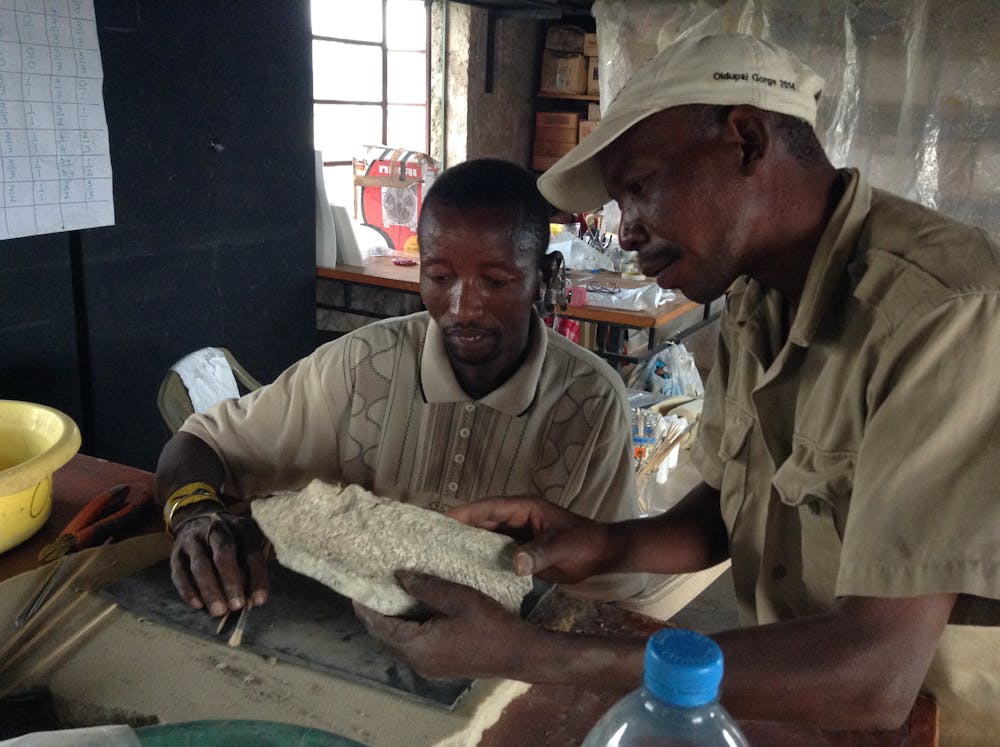
Fossil extraction and preparation is conducted at Olduvai Gorge field labs. Here, Naibo Mesi and Agustino Songita work on one of the bone tools from Trench 69 Complex.Photo: R. Peters., Author provided (no reuse)
Why haven’t such old bone tools been found before? The answer is likely that they are destroyed by weathering, abrasion from water transport, trampling and scavenger activity. Organic materials don’t always get time to fossilise. Also, analysts were not used to looking for bone tools among fossils.
This discovery will likely encourage researchers to pay closer attention to the subtle signs of bone knapping in fossil assemblages. This way we will learn more about the evolution of human technology and behaviour.
– 1.5 million-year-old bone tools discovered in Tanzania rewrite the history of human evolution – https://theconversation.com/1-5-million-year-old-bone-tools-discovered-in-tanzania-rewrite-the-history-of-human-evolution-251826
Canadian political philosopher George Grant’s Lament for a Nation was published in 1965 — the same year Canada’s iconic Maple Leaf flag was first unfurled on the Peace Tower on Parliament Hill — and unexpectedly inspired many Canadians to feel a sudden sense of pride and confidence that their country could and must stand up to its giant imperialistic neighbour to the south.
Sixty years later, there are calls to “Bring Back Grumpy George” and renew his decades-old warning. There are also attempts to understand Grant’s continued relevance in the 21st century, as well as new volumes on his work.
It “is the sun under which a generation of Canadian nationalists warm themselves,” Andrew Potter writes in his introduction to the 40th anniversary edition of Grant’s most famous work, “but it also casts the long dark shadows in which they must operate.”
One need only wade a little into the volume to see those “the long dark shadows.” The subtitle to Grant’s book says it all: The Defeat of Canadian Nationalism. So, far from being a call to arms, Lament for a Nation was, as Grant put it, a “cry out at the death or at the dying of something loved…[to mourn] the end of Canada as a sovereign state.”
In other words, Lament was never intended to whip Canadians into a nationalist fervour, but to spell out Canada’s unfortunate and inevitable disappearance as a nation.
“Canada has ceased to be a nation, but its formal political existence will not end quickly. Our social and economic blending into the empire will continue apace, but political union will probably be delayed. Some international catastrophe or great shift of power might speed up this process.”
Jack Mackenzie, first president of Atomic Energy Control Board, explained in a 1953 address: “Canada is the only country in the world with sizeable atomic energy establishments where no bombs are being made, and where all the thinking and planning is focused on peacetime aspects.”
But in the context of the Cold War, this principled choice was viewed as a sign of weakness by Americans, who worried about Soviet bombers travelling unrestricted over the Arctic.
Defence crisis
This worry led to the so-called defence crisis that dominated the federal 1963 election campaign, fought between Conservative Prime Minister Diefenbaker and Liberal Lester B. Pearson.
A beleaguered Diefenbaker had cancelled the vaunted Avro Arrow program a few years earlier, hesitated to commit the Navy to participate in the blockade of Cuba and then balked at accepting American warheads for the BOMARC interceptor missiles designed to stop those bombers.
The pugnacious Pearson was once a champion of non-proliferation and had shocked his supporters during his infamous Scarborough speech when he announced his surprising agreement that U.S. nukes had to be deployed on Canadian soil in the name of our “commitments for Canada in continental and collective defence,” including NORAD and NATO.
For Grant, Diefenbaker’s defeat to Pearson was a stake through the heart of the Canada from which it would never recover. In 1963, the Royal Canadian Air Force delivered a shipment of nuclear warheads to the BOMARC missile site near RCAF Station North Bay, Ont., just up the road from where I write today.
End of Canadian nationalism?
A few years before his passing in 1988, Grant made it clear in a 1985 interview with Lawrence (Larry) Schmidt, a theologian and a scholar of Grant’s work, that “people have read a little book I wrote called Lament for a Nation wrongly. I was talking about the end of Canadian nationalism. I was saying that this is over and people read it as if I was making an appeal for Canadian nationalism. I think that is just nonsense. I think they just read it wrongly.”
Today, Canadian economic well-being and security are no more in Canada’s control then they were in 1965. Trump is merely saying the quiet part out loud in his craven desire to make Canada the 51st state.
Was Grant wrong?
But, as it turns out, Grant was wrong. Canada is not the zombie nation. It may have been in a bit of daze for the last while, but Canadians have their elbows up again.
Now out of a stupor, Canadians are reviewing the wisdom of purchasing F-35s, buying new radar systems to assert our sovereignty over the Arctic and attempting to drop interprovincial trade barriers.
Mind you, this is nothing new. In the face of American disapproval, Canada trades with Cuba, claims the Northwest Passage as its internal waters and negotiated a successful Acid Rain Treaty. Canada led the charge to ban the use of land mines and refused to participate in the American missile shield plan.
Canada didn’t send its young men to die in the jungles of Vietnam and refused to participate in the ill-conceived Iraq War. And it still protects its fresh water and health care.
New policy for common cause
Still, rather than merely reacting to American insults and pressures, Canada is long overdue to develop contemporary and responsive policy, the very thing Grant thought would allow Canada to become and stay a sovereign country, at least for a while.
While Canadians may be divided at times, they need to use this moment of unity to make sure Canada stays alive and kicking.
David Edward Tabachnick does not work for, consult, own shares in or receive funding from any company or organisation that would benefit from this article, and has disclosed no relevant affiliations beyond their academic appointment.
Secretary-General of ASEAN, Dr. Kao Kim Hourn, this evening attended a Working Dinner hosted by Ambassador of Australia to ASEAN, H.E. Tiffany McDonald, in Jakarta. Both sides took the opportunity to take stock and exchange views on ASEAN-Australia cooperation, including through identifying ways to advance the ASEAN-Australia Comprehensive Strategic Partnership in support of priorities of ASEAN in 2025.
The post Secretary-General of ASEAN attends Working Dinner hosted by Ambassador of the Australia to ASEAN appeared first on ASEAN Main Portal.
The ancestors of humans started making tools about 3.3 million years ago. First they made them out of stone, then they switched to bone as a raw material. Until recently, the earliest clear evidence of bone tool making was from sites in Europe, dated to 400,000 years ago. But archaeologists have now found and dated bone tools in Tanzania that are a million years older.
The tools are made from the bones of large animals like hippos and elephants, and have been deliberately shaped to make them useful for butchering large carcasses.
The discovery of bone implements that are the oldest ever found, by far, casts light on human evolution. It shows that our hominin ancestors were able to think about and make this technology a lot earlier than anyone realised.
I am a scientist who co-directs a multidisciplinary research project team at the Olduvai Gorge in Tanzania, focusing on hominin evolution. Our project’s main goal has been to investigate the changes in hominin technology and behaviour that happened between 1.66 million and 1.4 million years ago.
We’re interested in this time period because it marks a pivotal change in human technology, from the rudimentary stone knives and cores of the Oldowan culture to the more advanced crafted stone handaxes of the Acheulean culture.
We found the Olduvai bone tools in 2018 and recently described them in the journal Nature. They show that by 1.5 million years ago, our ancestors (Homo erectus) had already developed the cognitive abilities required to transfer skills from making stone tools to making bone tools.
This leap in human history was a game-changer because it allowed early hominins to overcome survival challenges in landscapes where suitable stone materials were scarce.
Tools at Olduvai
Olduvai Gorge is a Unesco World Heritage site. It became well known in 1959 through the pioneering work of palaeontologists Louis and Mary Leakey, whose discoveries of early human remains reshaped our understanding of human evolution. The site offers an unparalleled window into human history, spanning nearly 2 million years.
Aside from fossilised bones, it has yielded the most detailed record of stone tool cultures in the world. It has documented the evolution from the simple chopping tools and stone knives of the Oldowan industry (about 2 million years ago) to the more advanced Acheulean tools (1.7 million years ago), such as handaxes, cleavers, picks and spheroids and then on – through arrowheads, points and blades (about 200,000 years ago) to the micro-blades of the Later Stone Age (about 17,000 years ago).
All these tools provide a glimpse into the ingenuity and cultural advancements of our early ancestors.
And now the picture has new detail.
Our team uncovered 27 ancient bone tools during excavations at the T69 Complex, FLK West site at Olduvai. We know how old they are because we found them securely embedded underground where they had been left 1.5 million years ago, along with thousands of stone artefacts and fossilised bones. We dated them using geochronological techniques.
Unlike stone, bone shafts crack and break in a way that allows the systematic production of elongated, well-shaped artifacts. Flaking them by hitting them with another object – a process called knapping – results in pointed tools that would be ideal for butchering, chopping and other tasks.
The knapped tools we found were made from large shaft fragments that came from the limb bones of elephants and hippos, and were found at hippo butchery sites. Hominins likely brought elephant bones to the site on a regular basis, and obtained limb bones from butchered hippos at the site itself.
What Homo erectus knew
The find shows that 1.5 million years ago, Homo erectus could apply knapping skills to bone. Homo erectus, regarded as the evolutionary successor to the smaller-brained Homo habilis, left a lasting imprint on history. Its fossils, found at Olduvai, offer a glimpse into a span of about a million years, stretching from 1.5 million to roughly 500,000 years ago.
Now we know that these hominins not only understood the physical properties of bones but also knew about skeletal anatomy. They could identify and select bones suitable for flaking. And they knew which animals had skeletons large enough to craft reliable tools after the animals’ death.
We don’t know exactly why they chose bones as a raw material. It may have been that suitable stone material was scarce, or they recognised that bones provided a better grip and were more durable.
Why haven’t such old bone tools been found before? The answer is likely that they are destroyed by weathering, abrasion from water transport, trampling and scavenger activity. Organic materials don’t always get time to fossilise. Also, analysts were not used to looking for bone tools among fossils.
This discovery will likely encourage researchers to pay closer attention to the subtle signs of bone knapping in fossil assemblages. This way we will learn more about the evolution of human technology and behaviour.
Jackson K Njau does not work for, consult, own shares in or receive funding from any company or organisation that would benefit from this article, and has disclosed no relevant affiliations beyond their academic appointment.
To help countries strengthen their capacity to respond quickly during crises—including the dissemination of critical information and understanding the factors influencing this—WHO has partnered with the Ministries of Health in Sri Lanka and Thailand to pilot a new global Information Environment Assessments (IEA) tool and training package. Funded by Gavi, the Vaccine Alliance, the new IEA tool is designed to help countries identify the factors influencing how communities’ access, process, exchange, engage with, understand, and share information.
On the weekend of Saturday and Sunday, March 29 and 30, the Rhode Island Department of Transportation (RIDOT) will temporarily close a section of Gano Street, at the I-195 overpass between India Street and the I-195 West on ramp in Providence, for continued demolition of the Washington Bridge substructure.
The closures will be needed from 6 a.m. to 4 p.m. each day, while the demolition contractor removes the upper most sections of the old bridge piers close to the road. During the closures, drivers will follow signed detours using India Street, Wickenden Street and South Main and South Water streets. The on-ramp to I-195 West at Gano Street will remain open. Pedestrians should detour using Wickenden Street, East Street, the India Point Park pedestrian bridge, and India Street. The closures are scheduled for daytime hours to avoid any disruptive noise during evening hours.
For approximately two weeks following this weekend work, alternating single-lane closures are likely at this location from 9 a.m. to 3 p.m. to finalize demolition in this area. Pedestrian access will be maintained, and the on-ramp from Gano Street to I-195 West will remain open.
Depending on the pace of demolition on Saturday, the duration of Sunday’s planned closure may be shortened or canceled.
All construction projects are subject to changes in schedule and scope depending on needs, circumstances, findings, and weather.
SINGAPORE, March 24, 2025 (GLOBE NEWSWIRE) — The cryptocurrency landscape is shifting, and BexBack is leading the charge with a groundbreaking approach to crypto futures trading. As the market evolves, many traders face challenges with complex KYC procedures, limited leverage, and high fees. But BexBack is here to change all of that, offering 100x leverage, no KYC, and an incredible double deposit bonus to help traders maximize their potential with ease.
Whether you’re a seasoned trader or just beginning your journey, BexBack makes it simple for anyone, anywhere to access 100x leverage on crypto futures, without the need for identity verification, and double your funds instantly with the 100% deposit bonus. This offers you the power to trade with confidence and flexibility.
What Is 100x Leverage?
100x leverage allows you to control a much larger trading position with a smaller initial deposit. For example, with 1 BTC and 100x leverage, you can trade as if you had 100 BTC, giving you the potential for much higher returns in a volatile market. It’s a powerful tool that allows traders to maximize their profits—though it’s important to manage risk effectively to avoid liquidation.
What Is the 100% Deposit Bonus and How Does It Work?
The 100% deposit bonus means that when you deposit 0.001 BTC or equivalent in other cryptocurrencies, you will receive an instant 100% bonus on each deposit. This is not just limited to your first deposit but applies to every deposit you make. For example, deposit $10,000, and you’ll trade with $20,000. This bonus is an excellent way to increase your trading power, giving you more margin and more opportunities to profit. However, the bonus cannot be withdrawn directly, but it can be used to open larger positions and increase your overall potential profits.
Who Can Trade on BexBack Without KYC?
BexBack offers a no KYC (Know Your Customer) policy, meaning you can start trading immediately without the need for identity verification. Whether you’re new to crypto or a seasoned trader, this quick registration process ensures you can dive straight into trading without delays. It’s perfect for those who value privacy and don’t want to go through the tedious paperwork that other platforms require.
What Is BexBack?
BexBack is a cutting-edge cryptocurrency exchange specializing in futures trading with up to 100x leverage. The platform is designed to provide users with a seamless, secure, and powerful trading experience. BexBack operates globally, offering traders access to major cryptocurrencies like Bitcoin (BTC), Ethereum (ETH), Solana (SOL), XRP (Ripple), and Cardano (ADA). Based in Singapore, with a rapidly growing user base across over 200 countries, BexBack is committed to providing exceptional service and
Why Choose BexBack? What Are the Key Advantages?
100x Leverage for All Traders – Amplify your trading potential with up to 100x leverage on your positions.
No KYC Required – Start trading immediately without needing to provide identity documents.
100% Deposit Bonus – Double your funds instantly with a 100% deposit bonus on every deposit.
Demo Account – Practice risk-free with a demo account offering 10 BTC in virtual funds to simulate real trading scenarios without any risk.
High-Speed Trading – No slippage, no spreads, and fast execution.
Comprehensive Support – 24/7 customer support to help you with any issues or queries.
Global Access – Trade from anywhere, anytime, with access to a global user base.
Start Trading on BexBack Today
Whether you’re looking to maximize profits in volatile markets, gain access to high-leverage trading, or simply enjoy a no-KYC trading experience, BexBack has everything you need to succeed.
Disclaimer:This press release is provided byBexBack. The statements, views, and opinions expressed in this content are solely those of the content provider and do not necessarily reflect the views of this media platform or its publisher. We do not endorse, verify, or guarantee the accuracy, completeness, or reliability of any information presented. This content is for informational purposes only and should not be considered financial, investment, or trading advice. Investing in crypto and mining related opportunities involves significant risks, including the potential loss of capital. Readers are strongly encouraged to conduct their own research and consult with a qualified financial advisor before making any investment decisions. However, due to the inherently speculative nature of the blockchain sector–including cryptocurrency, NFTs, and mining–complete accuracy cannot always be guaranteed. Neither the media platform nor the publisher shall be held responsible for any fraudulent activities, misrepresentations, or financial losses arising from the content of this press release. Speculate only with funds that you can afford to lose. Neither the media platform nor the publisher shall be held responsible for any fraudulent activities, misrepresentations, or financial losses arising from the content of this press release. In the event of any legal claims or charges against this article, we accept no liability or responsibility.
Legal Disclaimer: This media platform provides the content of this article on an “as-is” basis, without any warranties or representations of any kind, express or implied. We do not assume any responsibility or liability for the accuracy, content, images, videos, licenses, completeness, legality, or reliability of the information presented herein. Any concerns, complaints, or copyright issues related to this article should be directed to the content provider mentioned above.
In terms of instructions contained in circular DOR.CO.SOG(Leg)No.59/09.08.024/2024-25 dated February 11, 2025, all branches of the banks dealing with Government receipts and payments are to be kept open for transactions on March 31, 2025 (Monday-Public Holiday), so as to account for the Government transactions in FY 2024-25 itself. Since such transactions might necessitate operations at CCs, the banks are advised to keep their CCs open on March 31, 2025, akin to a normal working day.
2. The CC holding banks shall keep the linked branches suitably informed.
The Financial Sector Assessment Program (FSAP), a joint program of the International Monetary Fund (IMF) and the World Bank (WB), undertakes a comprehensive and in-depth analysis of a country’s financial sector. Since September 2010 the exercise has become mandatory for jurisdictions with systemically important financial sectors. Currently, it is mandatory for 32 jurisdictions including India, every five years, and for another 15 jurisdictions every ten years. Last FSAP for India was conducted in 2017 and the Financial System Stability Assessment (FSSA) report was published by IMF on 21st December, 2017.
2. IMF released the latest India-FSSA report on their websites on February 28, 2025, based on the assessment carried out during 2024, while WB’s Financial Sector Assessment (FSA) report is due for publication.
3. India welcomes assessment of the Indian financial system undertaken by the joint IMF-World Bank team conforming to the highest international standards.
4. IMF’s FSSA report highlights that India’s financial system has become more resilient and diverse since the last FSAP in 2017, driven by rapid economic growth. Financial Sector in India has shown recovery from various distress episodes of 2010s and withstood the pandemic well. In terms of evolution of financial sector landscape, Non-Banking Financial Intermediaries (NBFI) sector has become diverse but more interconnected. Banks and Non-Banking Financial Companies (NBFCs) have sufficient aggregate capital to support moderate lending even in severe macrofinancial scenarios.
5. On regulation and supervision of NBFCs, IMF acknowledged India’s systematic approach for prudential requirements of NBFCs with scale based regulatory framework. IMF appreciated India’s approach on introduction of bank-like Liquidity Coverage Ratio (LCR) for large NBFCs. For supervision of banks, IMF suggested strengthening credit risk management through IFSR 9 adoption and upgrading supervision over individual loans, collateral valuation, connected borrower groups, large exposure limits, and related-party transactions.
6. IMF acknowledges that the regulatory framework in securities markets has been enhanced in line with international practice to manage and prevent emerging risks. Notable improvements include establishing the Corporate Debt Market Development Fund (CDMDF), introducing swing pricing and liquidity requirements for bond mutual funds. The regulatory scope has also been expanded over emerging areas such as sustainability and investor protection measures for fast-growing equity derivatives products.
7. IMF has stated that public digital infrastructures have significantly improved retail financial inclusion and recommended that financially underserved sectors’ access to credit can be enhanced by strengthening legal, tax, and informational infrastructures for asset-based and digital lending.
8. The FSSA report acknowledges that India’s insurance sector is strong and growing, with a significant presence in both life and general insurance. The sector has remained stable, supported by better regulations and digital innovations. The report notes India’s progress in improving oversight, risk management and governance and suggests further steps toward riskbased solvency / supervision frameworks and stronger group supervision. It acknowledged transition plans towards risk-based approach in the insurance sector. This reflects India’s commitment to global best practices and a resilient insurance sector.
9. IMF recommends that financial stability should be the primary objective of the macroprudential authorities.
10. In terms of emerging risks, cybersecurity, climate change and system-wide contagion need attention. Financial stability risks from climate change appear manageable but warrant careful monitoring. The assessment suggested enhanced data coverage with better granularity for mapping climate-related financial risks.
11. IMF also analysed cyber security framework in banking sector, Financial Market Infrastructure (FMI), Critical Information Systems, and other relevant players in securities market. IMF found that Indian authorities have advanced cybersecurity risk oversight, especially for banks. However, IMF stated that extensive cybersecurity crisis simulations and stress tests for banks could be expanded for cross-sectoral and market-wide events to further strengthen cybersecurity resilience.
12. The recommendations in case of India FSAP are mainly focussed on bringing about further improvements in the structure and functioning of the financial system and many of the detailed recommendations are in conformity with the concerned authorities’/regulators’ own developmental plans. India remains committed to adoption of internationally accepted standards and best practices in a phased manner, attuned to domestic needs and economic conditions, wherever necessary.
Rising prices and market volatility have led to food costs climbing to 11.4% of American’s disposable income, the largest percentage since 1991.
Arresting these rising costs, as I argue in my 2023 book, means reinventing supply chains to address the growing supply, demand and price volatility that has created uncertainty for consumers since the COVID-19 pandemic of 2020.
I have described global supply chains, and supply chains in the U.S. in particular, as “efficiently broken.” By this I mean that they aspire to offer low prices from economies of scale but lack sufficient resiliency to create stability.
Without addressing the systemic weaknesses in supply chains, I believe major health and economic disruptions will continue to happen in Colorado, nationally and around the world.
Cage-free eggs
Colorado faces a double whammy where egg prices are concerned.
It’s one of nine states with a cage-free egg mandate, which requires all eggs sold in the state to come from cage-free facilities. The regulation has been shown to increase the price of eggs by as much as 50%.
Over the past two decades, cage-free egg laws have been passed in states as consumers have grown more concerned with the welfare of farm animals. What that means varies from state to state because the term cage-free isn’t regulated by a federal agency. In Colorado, egg-laying hens must be housed in a cage-free system and must have a minimum of 1 square foot of usable floor space per hen.
But cage-free laws are not the main driver of increasing egg prices, as I’ve noted in my research. Like many others, the egg supply chain needs to be reinvented to balance price, scale, resiliency and stability.
Supply chain issues
What is driving up the prices of eggs and other consumer goods is the concentration of producers. The COVID-19 pandemic revealed just how vulnerable prices and supply chains are.
In 2022, a major product recall of Similac led to a baby formula shortage in the U.S. The baby formula market is highly concentrated, with four companies responsible for approximately 90% of the domestic market. A large-scale facility that produced the baby formula was found to have unsanitary conditions and contaminated products. Pulling this one facility offline at the same time the nation was coping with pandemic-related supply chain issues led to the shortage.
Then at the beginning of 2024, supplies of insulin ran short due to production issues at Eli Lilly, one of the three companies responsible for over 90% of the U.S. insulin market.
And in the second half of 2024, hospitals couldn’t get enough IV fluid due to damage caused by Hurricane Helene to a Baxter factory in North Carolina that manufactures approximately 60% of IV fluids in the U.S. This factory had been relocated to North Carolina from Puerto Rico due to the supply impact from Hurricane Maria that damaged the island in 2017.
In all of these cases, the supply chain was easily interrupted due to a reliance on a few large producers. In 2025, bird flu and eggs are just another example of America’s “efficiently broken” supply chain.
But this scale and efficiency comes at the price of resiliency during something like a bird flu outbreak. Larger farms create a higher risk of viral outbreak, which leads to the need for culling millions of birds and a heightened risk of viral replication and mutation.
The solution may increase prices
Policymakers want to reduce the spread of disease at American egg factories to mitigate the spread of bird flu. But these measures are expensive.
Factory farms increase the potential for viruses to spread rapidly and even mutate. Therefore, bird flu is a more serious precursor of supply chain disruption than a hurricane or product recall because it has the potential to create a public health crisis.
Following Canada’s lead wouldn’t result in egg prices as low as giant factory farms, but it would protect American consumers from the periodic price shocks caused by disease or localized weather events that disrupt supplies.
Despite the threat of a public health crisis, American consumers don’t want to pay more for eggs – and their leaders have promised they won’t have to.
Jack Buffington does not work for, consult, own shares in or receive funding from any company or organization that would benefit from this article, and has disclosed no relevant affiliations beyond their academic appointment.
Source: The Conversation – USA – By Ronald S. Green, Professor and Chair of the Department of Philosophy and Religious Studies, Coastal Carolina University
Kyojuro Rengoku, also known as the Flame Hashira, is a central character in the ‘Demon Slayer’ series.Deviant Art, CC BY-ND
I have spent years studying and teaching Japanese anime, exploring how its narratives intertwine with cultural, philosophical and religious traditions. One of the most compelling aspects of Japanese anime is its ability to merge thrilling action with deep spiritual and ethical questions.
“Demon Slayer: Mugen Train,” which shattered Japanese box-office records for earnings and ended up as 2020’s highest-grossing film in the world, is a prime example of how anime engages with these profound themes. With “Demon Slayer” continuing its global success, it is an opportune time to examine how it intertwines Buddhist, Shinto and samurai traditions into a narrative of heroism, impermanence and moral struggle.
Spiritual themes in anime
Anime often explores spiritual and philosophical questions by drawing on Japan’s religious traditions to examine themes of fate, self-sacrifice and the struggle between desire and duty.
Hayao Miyazaki’s “Princess Mononoke,” for example, follows Prince Ashitaka, who is cursed by a demon and must journey to find a cure. His quest leads him into a conflict between the industrialized Irontown, which seeks to expand by clearing forests, and the spirits of the natural world, including the Deer God, a divine being that governs life and death.
The film reflects Shinto principles by portraying nature as sacred and inhabited by “kami,” or spiritual beings. It emphasizes harmony between humans and the environment and the consequences of disrupting this balance.
A still from ‘Spirited Away’ in which 10-year-old Chihiro must learn to navigate an unseen world. GoodFon.com, CC BY-NC
Similarly, his 2001 animated film “Spirited Away” reflects animist ideas in Japanese culture, where spirits are believed to inhabit natural elements and even everyday objects. Set in a mysterious Japanese bathhouse filled with “kami,” 10-year-old Chihiro, once shy and afraid of change, learns to navigate this hidden world and transforms along the way.
A key moment in the film is the arrival of a polluted river spirit, which appears as a filthy, sludge-covered creature but is revealed to be a once-pristine river god, burdened by human waste. This scene embodies the animist belief that natural entities have their own spirit and must be respected. It also reinforces an environmental message: When nature is polluted or mistreated, it loses its vitality, but with care and reverence it can be restored.
“Neon Genesis Evangelion,” a landmark Japanese anime television series that aired from 1995 to 1996, engages with deep philosophical ideas, particularly existentialist questions of identity and purpose. Set in a postapocalyptic world, the series follows 14-year-old Shinji Ikari, who is recruited to pilot a giant biomechanical weapon called an evangelion to defend humanity against mysterious beings known as Angels.
As Shinji and his fellow pilots struggle with their roles, the series explores themes of isolation, self-worth and the challenges of forming close, meaningful relationships. It draws from both Buddhist and Gnostic thought, which emphasize a focus on inner spiritual knowledge and the belief that clinging too tightly to the material world causes suffering. Evangelion portrays suffering as arising from attachment and the inability to form meaningful relationships.
Rengoku: The embodiment of selfless heroism
What sets “Mugen Train” apart is its focus on the internal conflicts of its characters, symbolized by their battles with demons. These demons represent human suffering and attachment, themes deeply influenced by Buddhist thought. At the heart of the film is Kyojuro Rengoku, a demon slayer who embodies unwavering selflessness and honor.
Rengoku’s flame-breathing forms.
Rengoku’s fire-based fighting style is deeply symbolic. In Japanese culture, fire represents both destruction and renewal. The Kurama Fire Festival, held annually on Oct. 22 in Kyoto, is a Shinto ritual where large torches are carried through the streets to ward off evil and purify the land.
Similarly, Buddhist goma fire ceremonies involve priests burning wooden sticks in sacred flames to symbolize the eradication of ignorance and desire. Rengoku’s own techniques reflect this duality: His flames cleanse the world of evil while signifying his unwavering spirit.
Goma fire ritual.
Bushido, the samurai code of honor, underpins Rengoku’s character. Rooted in Confucian ethics, Zen Buddhism and Shinto beliefs, this code emphasizes loyalty, self-sacrifice and duty to protect others. His mother’s teaching – “The strong must protect the weak” – guides his every action, reflecting the Confucian value of filial piety and the moral obligation to serve society.
Bushido’s connection to Zen Buddhism, with its focus on discipline and acceptance of impermanence, further shapes Rengoku’s unwavering resolve, while its Shinto influences reinforce his role as a guardian upholding a sacred duty.
Even approaching death, Rengoku remains steadfast, accepting impermanence, or “mujō,” a fundamental Buddhist principle that sees beauty in life’s transience. His sacrifice teaches that true strength lies in selflessness and moral integrity.
Akaza: A manifestation of attachment and suffering
Opposing Rengoku is Akaza, a demon who embodies the destructive consequences of clinging to power and immortality. Once human, Akaza became a demon in his obsession with strength, unable to accept the impermanence of life.
His refusal to acknowledge death aligns with Buddhist teachings that suffering arises from attachment and desire. Scholars such as Jacqueline Stone have explored how Buddhist texts portray clinging to existence as a fundamental source of suffering, a theme vividly reflected in Akaza’s character.
Visual elements reinforce Akaza’s symbolism. His body is covered in tattoos reminiscent of “irezumi,” traditional Japanese body art historically associated with crime and hardship. In Edo-period Japan, tattoos were often used to mark criminals, branding them as outcasts from society. Even today, irezumi remains stigmatized in many parts of Japan, with some public bathhouses, gyms and swimming pools barring individuals with visible tattoos due to their historical association with the yakuza. In contemporary anime, tattooed characters frequently symbolize a troubled past or inner turmoil, reinforcing Akaza’s role as a figure trapped by his own suffering and destructive path.
Akaza’s irezumi visually conveys his entrapment in cycles of suffering, reinforcing his contrast with Rengoku’s liberating flames.
A battle about human struggles
The battle between Rengoku and Akaza is more than a fight between good and evil; it is a clash between two worldviews – selflessness versus egoism, acceptance versus attachment. “Mugen Train” taps into universal human struggles, making its themes resonate far beyond Japan.
The film’s exploration of impermanence, moral duty and the pursuit of meaning contributes to anime’s broader legacy as a medium that entertains while provoking deep philosophical reflection.
As “Demon Slayer” continues to captivate audiences worldwide, evidenced by social media buzz around its new projects and the ongoing enthusiasm of fans, its success underscores anime’s ability to blend action with profound themes.
Whether through Rengoku’s selfless courage or Akaza’s tragic downfall, “Mugen Train” offers a timeless meditation on what it means to live with purpose and integrity.
Ronald S. Green does not work for, consult, own shares in or receive funding from any company or organization that would benefit from this article, and has disclosed no relevant affiliations beyond their academic appointment.