The Special Campaign 4.0, a Government of India initiative to cleanliness, review & simplification of rules & procedures, review of record management system, productive use of space, and disposal of waste materials for enhancing work place experience, is being undertaken in true spirit by the Department. Nodal Officers appointed by Department as well as its field organizations are working out to remove the pendency and to complete other indicators pertaining to the offices as per the parameters of DARPG’s guidelines.
A meeting was held under the chairmanship of Shri Subodh Yadav, Additional Secretary to review the progress under Special Campaign 4.0. Shri Yadav expressed satisfaction to the efforts being done by the Department and its organisations to meet the targets for the campaign. The officer emphasized that the achievements regarding cleanliness campaigns being higher in number than the targets are always welcomed.
‘Before’ and ‘After’ images of the sites are being videographed and photographed and shared with Geo coordinates.
The Department and its organizations would continue to make all efforts to meet the Targets by the end of Special Campaign 4.0.
The achievements of the Department during the Special Campaign 4.0 till date are as follows.
Achievements for Special Campaign 4.0 as on 14.10.2024
Sl. No
Parameters
Target
Achievements
%age
MP References
72
53
74%
PMO References
21
10
48%
IMC (Inter Ministerial Consultations)
1
1
100%
Parliament Assurances
11
0
0
Public Grievances
47
40
85%
PG Appeals
34
12
35%
Review of Physical Files
6255
5166
82.6%
Review of e-Files
3662
1268
35%
Cleaning of sites
350
115
33%
Beside above:
A rain water harvesting structure at premises of Sharm Shakti Bhawan, New Delhi has been renovated and made functional as part of the ongoing campaign.
Rs 3,01,120/- revenue has been generated through scrap disposal.
About 14520 Sq ft area has been freed through cleaning of sites/ scrap disposal.
Citizen Centric approach: Comprehensive guidelines for sensitive, accessible and meaningful redressal of Central Government Pensioners’ grievances Ministries and Departments strive for redressal of Pensioners’ grievances within 21 days on CPENGRAMS
Root cause analysis of the Pensioners’ grievances for checking the incidences of grievances
All the Pensioners’ grievance applications to be redressed in online mode through CPENGRAMS
Posted On: 16 OCT 2024 11:18AM by PIB Delhi
Central Government has issued comprehensive guidelines after reviewing its Pensioners’ grievance redressal mechanism i.e. Centralized Pension Grievances Redress and Monitoring System (CPENGRAMS) to make it more sensitive, accessible and meaningful in line with the vision of the Prime Minister.
The guidelines envisage expeditious and efficient redressal of the grievances, bearing a testimony to the citizen-centric approach of the Government of India.
The main highlights of the comprehensive guidelines for handling Central government Pensioners’ grievances are as follows:
1. Ministries/Departments should strive to redress the Pensioners’ grievances within 21 days. In the cases, where redressal of the grievances requires longer time, an interim reply may be furnished on the portal.
2. The grievance shall be redressed under ‘whole of the Government approach’. In no case, grievance shall be closed summarily by stating, ‘it does not pertain to this Office’.
3. The grievance shall not be closed without its conclusive redressal and the Action Taken Report (ATR) should be filled in with the supporting information and documents at the time of closure of grievance.
4. Ministries/ Departments shall undertake monthly review of Pension related grievances, pending on the portal to ensure the qualitative redressal of grievances within the prescribed time limit.
5. The Nodal PG Officer shall analyze the trend of grievances and conduct a root cause analysis to check the incidence of grievances.
6. The applicant can file an appeal against the redressal of his grievance within 30 days of closure of the grievance and it shall be disposed of within 30 days by the Appellate Authority. A speaking order shall be passed, attaching relevant documents, if any.
7. The grievance applications, filed in the physical form with the Ministry/ Department, shall be uploaded on the CPENGRAMS portal to ensure proper monitoring of these grievances.
Thursday 10th October, 2024 (9:00am – 10:00am – Infront of the Government Building)
Captain Eric Turner (Regional Leader of Salvation Army, Samoa),
Hon. Deputy Prime Minister,
Hon. Cabinet Ministers,
Members of the Diplomatic Corps,
Heads of Government Ministries and Corporations, NGOs,
Distinguished guests,
Ladies and Gentlemen,
Talofa Lava! And a Warm Welcome!
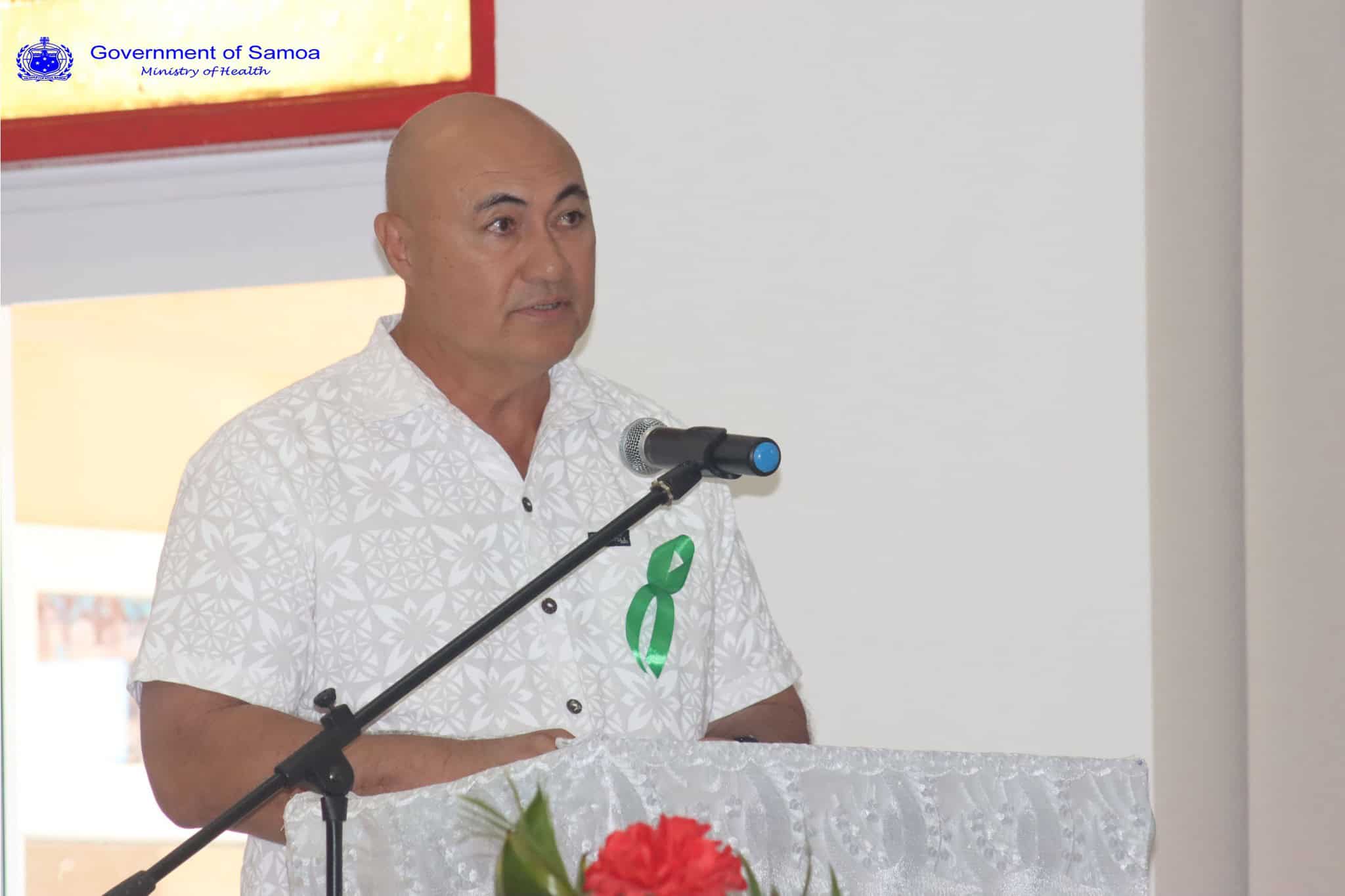
It is a great honor to stand here and address you today on a topic that is vital for our individual well-being, our workplaces, and ultimately, our nation – ‘MENTAL HEALTH IN THE WORKPLACE’.
Today, we rally to not only recognize the importance of mental health but to ensure that it becomes a pillar of how we work, how we lead, and how we care for one another in the workplace.
Today, the 10th of October is the commemoration of the World Mental Health Day globally including Samoa, with the overall objective of raising awareness of mental health issues around the world, on its theme – ‘Healthy Minds, Healthy Workplaces’. It is also the last day that ends the commemoration of the activities for the Mental Health Awareness Week in Samoa, which started on Sunday 6th October, 2024.
As this year’s World Mental Health Day puts more emphasis on the
importance of Mental Health in the Workplace, I am humbled indeed to speak not only as a leader and as an employer but an employee of the Government of Samoa.
Mental health is not something that exists in isolation. It is deeply tied to every part of our lives, including the workplace. The workplace is where we spend a large part of our days. It is where we contribute to our communities, earn a living, and grow professionally. But the workplace can also be a source of stress, anxiety, and pressure.
In Samoa, the demands of work, the increasing pace of change, and the responsibilities we all carry, whether as employees or leaders can take a toll on our mental well-being. When stress becomes overwhelming and mental health is not prioritized, the results are clear. There will be a decrease in productivity, an increase in absenteeism, and a general decline in workplace morale.
However, mental health challenges do not just impact the workplace, they impact individuals, families, and communities. When an employee is struggling mentally, it affects their ability to engage fully at work, their relationships at home, and their overall quality of life. This is why it is essential that we take a proactive approach in addressing mental health in our workplaces. It is not just good for business; it is good for people.
Samoa, like many other nations, is facing a rise in Non-Communicable Diseases or NCDs including those related to mental health. NCDs accounts for over 80% of all deaths and more than half the premature deaths in Samoa. Therefore, mental health conditions such as stress, depression, anxiety, and burnout are no longer issues we can ignore. In fact, mental health conditions are among the leading causes of lost workdays, lower productivity, and long term-disability worldwide.
The Ministry of Health in Samoa has integrated mental health into our national health strategy, recognizing the importance of both physical and mental well-being for a healthy Samoa. In the workplace, we must follow suit. We cannot build a prosperous Samoa if our workforce is unwell, both mentally and physically.
A lot of organizations including our Health Sector Partners who are
gathered here today, both public and private have recognized the
importance of mental health through their combined efforts such as awareness campaigns, advocacy, offering of coping platforms and mechanisms for our people to be more resilient. More workplaces are adopting policies that address mental health and are working to reduce the stigma associated with mental illness.
However, we need to accelerate these efforts and ensure that all
workplaces, no matter the size or sector, are places where mental health is supported.
Let us commit to making mental health a priority in every Samoan
workplace. We can take practical steps such as raising more awareness on mental health; develop and implement supportive policies; foster a culture of care by showing compassion and understanding toward each other; and collaborate with Mental Health Services in Samoa for counselling and support.
In Samoa, we have a unique opportunity to lead by example. By
prioritizing mental health in the workplace, we not only improve the lives of our employees but also enhance productivity and success of our businesses and institutions. Let us move forward with the spirit of fa’aaloalo, valuing and respecting the mental well-being of every
individual.
I would like to take this opportunity to acknowledge our partners and stakeholders from government, the guidance and support of the World Health Organization, development partners, the private sector, NGOs, and civil society. Thank you for your continuous support towards the work of mental health in Samoa. Your commitment demonstrates your dedication to the health of our people.
Ladies and Gentlemen – Together, we can build workplaces that not only contribute to Samoa’s economy but also to the happiness, health, and well-being of our people.
SOIFUA MA IA MANUIA!
SAUNOAGA AUTU: AFIOGA FIAME NAOMI MATA’AFA – PALEMIA O SAMOA I LE SAVALI FA’APITOA – FA’ATAUAINA O LE VAIASO O LE SOIFUA MALOLOINA O LE MAFAUFAU
Aso Tofi, 10 Oketopa 2024
9:00am – 10:00am – Luma Maota o le Malo
Lau Susuga i le Taitai o le Sauniga, Captain Eric Turner,
Lau Afioga i le Sui Palemia, Afioga i le Saoali’i, Tuala Tevaga Iosefo Ponifasio,
Paia o Minisita o le Kapeneta,
Sui o Malo Aufaatasi ma Faalapotopotoga mai Fafo,
Le paia ma le mamalu ua aofia potopoto,
O le asō, ua fa’ailogaina ai e le lalolagi atoa e aofia ai ma Samoa le Aso Fa’apitoa o le Fa’atauaina o le Soifua Maloloina o le Mafaufau. Ua fa’ai’u ai fo’i ma polokalame e pei ona tapisaina ai e Samoa le Vaiaso Faapitoa mo le fa’alauiloaina o le taua o le Soifua Maloloina o le Mafaufau, e pei ona sa amata mai le Aso Sa 6, Oketopa 2024.
Tatou ave lea o le vi’iga i le Atua, ua livaliva le foe a le tautai, ua a’e manuia taumafaiga o lenei vaiaso.
O le soifua maloloina o le mafaufau e aofia i le fa’atulagaga fa’asaienisi o sē tasi o gasegase tumau, ua to’atele nisi ua a’afia ma maumau ai le soifua. E tusa ai ma fa’amaumauga fa’asoifua maloloina, e sili atu ma le 80% o tagata Samoa ua a’afia i gasegase tumau e a’afia ai totoga e pe’i o le suka, toto maualuga ma o’o ai ina maua i gasegase o le fatu, kanesa ma isi. O lo’o aofia ai i totonu ma le faitauga o tagata ua a’afia tumau le mafaufau i le faitauga o nei gasegase tumau. O fa’amaumauga lata mai, o le to’atele ua a’afia le mafaufau ma fa’amauina e mafua mai ona o le soona tagofia o le ava malosi. Ma ua mafuli i tupulaga talavou o lo’o nonofo i nu’u tu taulaga, o i latou fo’i nei e faigaluega.
O le sini autū o lenei tausaga ma lona fa’amoemoe, ua ave le fa’amamafa i le soifua maloloina o le mafaufau i totonu o fale-faigaluega. O se tasi o mataupu ua le Pau, le Vau, a ua fa’atāfea i le auau e nisi tagata. Atonu e malamalama gofie pe a tatou talatala iai, ae faigata lona fa’atinoga ma e le’o lagonaina e le to’atele.
Afai o le tele o le taimi o le tagata faigaluega e alu i totonu o le fale-faigaluega, e tatau ona tapena fa’afafine to’aga le silasila mamao i le mafaufau manuia o le aufaigaluega. E lē masino o le a si’itia se auaunaga, tele tupe maua ma fa’afiafiaina le ta’ita’i o le fale-faigaluega, o le aufaigaluega faapea ma aiga o lo’o tapua’i mai.
E le o pō malaē le to’atele o e pele ia tatou uma, o fanau, uso ma tuafafine faapea tua’ā ua a’afia mafaufau. E le gata o i latou ua iloa āuga ma iai foliga va’aia,ae fa’apena ma nisi o lo’o a’afia i nisi o gasegase ua avea ma mafuaaga ua a’afia ai ma le mafaufau. O le popōlega tele, o le to’atele o lo’o a’afia e le’o mafai ona iloa, ma o nisi ua a’afia ma ma’imau ai le soifua ona o le pule i le soifua. Ua taotaomia le saili o se fesoasoani ona o le to’atele o lo’o a’afia i sauaga ona o le fefe ma le tusitusilima.
E le māmā lenei mataupu, ma o le tele o lu’itau pe a a’afia le mafaufau, e le gata o le a afaina ai le auaunaga o se fale-faigaluega, ae faapēnā ona a’afia ai aiga, o fanau, faapea ma nu’u ma le atunu’u. O Samoa o lo’o fa’avae ana auaunaga tausili i so’o se fale-faigaluega i ana tu ma aganu’u, e pei o le fa’aaloalo, alofa ma le tautua matavela. O nei tu ma aga a Samoa e mafai ona fa’alautele e fai ma vaifofō ina ia maua le mafaufau maloloina o le tagata faigaluega.
O se fa’amalosi mo fale-faigaluega uma faapea ma ta’ita’i o Samoa, e tāua tele la tatou pitolaau fai fa’atasi. Afai e lagonaina e so’o se tagata faigaluega o lo’o iai tu ma aga e pei o le alofa ma le fa’aaloalo, e ta’ita’itama ai le fa’atinoga o le galuega, o le a si’itia ma maoa’e so’o se auaunaga, o le a telē le lagolago a le aufaigaluega, ma fa’atuatuaina ta’ita’i o so’o se fale-faigaluega.
O le fesili – O a nisi taumafaiga tatou te galulue ai ina si’itia le soifua maloloina o le mafaufau i totonu o se fale-faigaluega? Ia tatou:
• Lagolago ma fai le fale-faigaluega o se nofoaga e fiafia ai tagata e galulue.
• Ia saogalēmū le fale-faigaluega mo tagata uma, e aunoa ma le tusitusi lima ma le fa’ailoga tagata
• Ia amanaia le taimi e tatau ona mālōlō, ma mafuta ai le tagata faigaluega i lona aiga
• Ia fa’atino ni a’oa’oga e si’itia ai le malamalama o ta’ita’i o fale-faigaluega i le tāua o le soifua maloloina o le mafaufau.
E toe fia fa’aleo le tele o taumafaiga a Samoa ua iai, e pei ona iai le saunoaga a le Afioga i le Sui Palemia i lana saunoaga autū i le Aso Sa, na tatalaina ai lenei Vaiaso Faapitoa mo le mafaufau maloloina.
– O galuega ma auaunaga e tauala atu le Matagaluega a le Soifua Maloloina, ua amanaia ma tu’ufa’atasia ai vaega o le siakiina o so’o se gasegase, e le gata i le tino ae ua aofia ai ma le mafaufau. O lenei taumafaiga, ua tatau ona fa’ata’ita’i ma fa’atino e fale-faigaluega, e le gata o le ausia o galuega a le aufaigaluega, ae ia silasila toto’a i a’afiaga o le soifua maloloina o le mafaufau.
– Ua tele polokalame fa’alauiloa, o auaunaga mo le fa’atalatalanoaina o i latou ua a’afia, faapea ma faigafa’avae ma tulafono mo le unaia o le soifua maloloina o le mafaufau.
– Ua tele polokalame ma auaunaga e taofi ma fa’atonutonu ai mafuaaga fa’avae o le a’afia ai o le mafaufau e pei o le ava malosi ma le tagofia o fualaau fa’asaina.
Ae peita’i, o lo’o mana’omia ona fa’aauau ona tapisa lenei mataupu i auala saogālēmū, alofa lē fa’atuāoia, ma aua ne’i iai se tusitusilima. E mo’omia na lalago fa’atasi auaunaga fa’asoifua-maloloina ina ia si’itia faigafa’avae ma tulafono e aofia ai vaega o le mafaufau manuia e aunoa ma le fa’aitū-au.
O le pitolaau a aiga, āoga, fale-faigaluega, nu’u aemaise ekalesia o le ogatotonu lea o le fa’avae o le soifua maloloina e aofia ai ma le mafaufau manuia.
E toe momoli le agaga fa’afetai i a tatou auaunaga ma fale-faigaluega ua potopoto lenei aso, i lā outou lagolago i lenei fa’amoemoe. E fa’afetaia a tatou paaga uma fa’asoifua maloloina faapea ma auaunaga o lo’o fa’aauau ona galulue mo le soifua maloloina o le mafaufau.
Ou te fiafia tele e fa’alauiloa ai fo’i le fa’amae’a ai o fa’atinoga uma o le Vaiaso Faapitoa o le Soifua Maloloina o le Mafaufau i Samoa i le asō.
Agalelei le Atua i fuafuaga o lenei aso, aemaise fo’i le aga atu mo le Aso Sa faapitoa o le fanau.
Heads of Governments and Non-Government Organizations,
Members of the National Mental Health Committee
Congregation,
Ladies and gentlemen,
I am humbled to stand before you today to address a topic that touches the very core of our society – mental health in Samoa. As we gather here today, we are united by a shared commitment to addressing one of the most pressing issues facing our people.
In Samoa, our culture and sense of community – our ‘Fa’asamoa’ – are our greatest strengths. Our traditions of togetherness, family, and spirituality have sustained us through many challenges. Yet, mental health is a challenge that requires us to confront uncomfortable truths and break the silence that surrounds it.
Starting today until the 10th of October is the Commemoration of the Mental Health Week in Samoa, with the main objective of raising awareness on mental health issues and to mobilize efforts in support of mental health. This week’s celebration is parallel with the World Mental Health Day that is commemorated every year globally.
The theme for this year’s Mental Health Week is– ‘Healthy Minds, Healthy Workplaces’. It is an issue that is often overlooked but is increasingly essential in today’s world. We all know that our work plays a significant role in our lives. It is not only a source of income, but also a place where we spend much of our time, contribute to society, and build our identities. However, while we talk a lot about productivity, performance, and success in our workspaces, we don’t talk enough about something just as important, our mental health.
In Samoa, mental health is often misunderstood or hidden. Many of our people suffer in silence, believing that mental illness is a sign of weakness or a curse. But mental health issues, like depression, anxiety, and stress, are not signs of personal failure – they are illnesses that require care and compassion. These mental health issues have become increasingly common in the workplace, yet many still go unaddressed. In fact, globally it is estimated that one in five employees will experience a mental health challenge in any given year. And yet, many people are hesitant to talk about their mental health at work for fear of being judged, overlooked, or even discriminated against.
When workplaces neglect mental health, the consequences can be costly, not just in human terms, but financially as well. When an employee is struggling with mental health, their performance may suffer, leading to missed deadlines, errors, or conflicts with colleagues.
Beyond the economic cost, the personal toll is immense. Employees who face mental health challenges in silence can feel isolated, stressed, and burnt out.
Our country has seen rising rates of mental health issues, particularly among our youth. The pressures of modern life, unemployment, academic stress, and family conflicts contribute to feelings of hopelessness and isolation. Suicide has tragically become a reality for too many of our young people. The fact that Samoa has one of the highest youth suicide rates in the Pacific should give us all pause. The recent reports stated that majority of people at risk of developing mental disorders are middle aged men living in urban areas and working. Other recent studies indicate that males of less that 30years who were unemployed and living in Apia urban area, were more likely to experience psychological distress due to contributing factors such as alcohol use. Young adults aged 18-29 years living in Apia urban area were more likely to report symptoms of psychological distress than those in other areas. Women were more likely to report symptoms of psychological distress compared to men. Therefore, most of us working and employed are at risk of developing mental disorders and psychological stress.
Behind these statistics are real stories of our sons and daughters, brothers and sisters, whose lives could have been saved with better mental health support.
We cannot talk about mental health in Samoa without addressing the stigma. Mental illness is often perceived through a lens of shame, leading many to avoid seeking help. In many cases, mental health conditions are seen as a spiritual or supernatural issue, which delays access to proper care. This stigma prevents open conversations, leaving people feeling alone in their suffering.
Samoa has made significant strides in addressing mental health, recognizing it as a crucial component of public health. Mental health has been integrated into its national health strategy, reflecting a commitment to addressing mental health as a public health priority. One of the key efforts is the integration of mental health services into primary health care in ensuring that mental health is treated alongside physical health, allowing people to seek help within their local health facilities. The Samoa government and various NGOs launched public awareness campaigns to combat stigma and encourage open discussions about mental health.
Samoa works closely with international organizations such as the World Health Organization to enhance its mental health services. Some of the local organizations have launched suicide prevention programs, particularly focused on vulnerable groups such as youth. Treatment and care are provided through the Mental Unit at the main hospital in Apia which offers inpatient and outpatient care for those with severe mental health conditions. With extensive care of these patients, service is supported and provided by the GOSHEN Trust. Churches and other organizations such as the Salvation Army have played a pivotal role in promoting mental health particularly programs that focus on building resilience, emotional intelligence, and coping mechanisms. These programs aim to empower our people especially the youth to manage stress, anxiety and reducing the risk of more severe outcomes such as suicide.
Despite these combined efforts, Samoa still faces several challenges in addressing mental health. These include the resource limitations including shortage of trained mental health professionals in Samoa. Mental Health services are often concentrated in urban areas. There are also geographical barriers and cultural stigma, making it hard for individuals to seek help openly.
There is still much work to be done, particularly in expanding access to services and reducing stigma. Continued collaboration, investment, and community engagement will be essential to ensure that every Samoan can receive the mental health care they need.
I would like to reiterate that there is no health without mental health. Therefore, I would like to invite everyone who is present here today, to show your support by joining the National Mental Health Committee and the Health Sector, to the Mental Health Parade. This will be held on Thursday 10th October, which starts from the Fire and Emergency Station and ends in-front of the government building, to end the activities of this important event.
I acknowledge the support of all our development partners, churches, NGOs, civil society and the wider community towards the work of mental health in Samoa.
SOIFUA MA IA MANUIA.
SAUNOAGA AUTU ALE AFIOGA TUALA TEVAGA IOSEFO PONIFASIO
AFIOGA ILE SUI PALEMIA / SUI MINISITA OLE SOIFUA MALOLOINA
O LE POLOKALAME O LE “FA’ATAUAINA O LE SOIFUA MALOLOINA O LE MAFAUFAU”
(EFKS, AAI-O-NIUE I LE 3:30 ILE AOAULI)
Lau Susuga le Ta’ita’i o le Sauniga,
Lau Susuga i le Faifeau Toeaina, Susuga i le Fa’afeagaiga
o le EFKS i Aai-o-Niue nei, Rev. Efu Efu,
Sui Mamalu o le Kapeneta,
Le paia o Sui o Malo Aufaatasi,
Ta’ita’i o Matagaluega ma Faalapotopotoga Eseese,
Paaga uma a le Soifua Maloloina,
Le mamalu o le Ekalesia nei i Aai-o-Niue, i ona tupu ma e’e faapea ma le potopotoga,
O paia ma mamalu, o lā le Atua ia, aua o Samoa ua uma ona fa’ataotooto ana tofiga. Nu’unu’u atu ia fa’atini o tausala.
Ua tala mai le lagi le mamalu o le Atua, o lē e ou vi’iga na sa’afi ma talatala i ai le susuga i le fa’afeagaiga toeaina. Mua ia le fa’apolo i le taliuta, aua o le Atua o Samoa ma lona vi’iga.
E fia momoli le agaga fa’afetai i lau susuga i le toeaina, mo le taulaga osi o lenei aso, ma fa’anōnōmanū ai aua lenei fa’amoemoe taua. O le Atua pulepule tetele na te fa’afo’i le mau e tele i lau Susuga aua faiva o tapuaiga mo si o tatou atunu’u.
O tausaga ta’itasi i le aso 10 Oketopa e fa’amanatuina ai e le lalolagi e aofia ai ma Samoa, le Aso Faapitoa o le “Fa’atauaina o le Soifua Maloloina o le Mafaufau”.
Ua tolu ai nei o tausaga, ua fa’amanatuina ai e Samoa lenei aso fa’apitoa i le vaiaso atoa. E amata atu nei e tau le Aso Tofi, 10 Oketopa, ua fa’ailogaina ai e Samoa lenei vaiaso taua. O le sini autu o lenei fa’amoemoe, ina ia fa’aauau ona tapisa ma talanoaina le taua o le soifua maloloina o le mafaufau.
O le anavatau po’o le sini autū o lenei tausaga, ua ave le fa’amamafa i le ‘Soifua Maloloina o le Mafaufau i Totonu o Fale-faigaluega’. O le fale-faigaluega, o se nofoaga po’o se vaipanoa lea o lo’o tele ina mafuta ai tagata faigaluega i aso uma. E ave ai lana fa’amuamua ona o lo’o maua mai ai le alagātupe mo le tausiga o lona aiga. O lo’o mafai ona fa’aauauina ai le maua o tomai ma agava’a, ma toe si’itia ai le malamalama. E mafuta ma feiloa’i ai le tele o tagata eseese. O le nofoaga e tausi ina ia mamā lona si’osi’omaga, ma ia mautinoa o lo’o fa’atino galuega a le aufaigaluega ina ia si’itia tupe maua a le fale faigaluega.
Ae pe’ita’i e tele ina galo ona talatala ma tali le fesili – “O a mai oe?” O tua atu o lenei fesili o lo’o afīfī ai i totonu le ‘anofale o le fale-faigaluega, o le mafaufau manuia o le tagata faigaluega. Po’o le a le lelei o le totogi, mautū ta’iala ma faigafa’avae, lelei le tino-i-fale o le fale-faigaluega, ae a a’afia le mafaufau o le tagata faigaluega, e faia fua le galuega. A la’ititi fo’i le totogi e le tusa ai ma le galuega fa’atino, e ono o’o ai ina a’afia le mafaufau, ona ua tele mea fai ae le lava le fa’asoa. Ona fa’asolo ai lava lea i le li’o lea, ma ono o’o ai ina le faigaluega le isi tagata, ona o a’afiaga o le mafaufau. O se fa’afitauli fa’amata e le o iloa atu, ae se’iloga ua talanoa ma fa’asoa ai, ona fa’atoa lagona lea e le tagata o le mea moni o lo’o tupu.
Ua to’atele tagata ua a’afia le mafaufau ona o le tele o mafua’aga. O se mataupu e tele ina lē amana’ia ma leai se fa’amamafa. O le to’atele o tagata ua a’afia le mafaufau, fa’atoa iloa lava ona ua i ai foliga va’aia, ma ua o’o i o’oo’oga. Ae o le to’atele o lo’o a’afia, e le o mafai ona iloa ona o mafua’aga e pei o le; leai o se malamalama i āuga o le a’afia o le mafaufau, o le māasiasi ona o le tusitusilima ua le mafai ona alu e saili ai se fesoasoani, ua fai ma vaisū tu ma aga o lo’o mafua ai e pei o le tagofia o le ava malosi ma laau faasaina, ua leai se lagolago a aiga, matua, nu’u ma le ekalesia. I totonu o le fale-faigaluega ua leai se lagolago a le pule, o tagata faigaluega, faapea isi tagata.
O le to’atele o lo’o noanoatia ma tutupu ai fa’afitauli e pei o le sauāina i totonu o aiga, nu’u po’o le fale-faigaluega. Ona tupu ai lea o le musuā e talanoa ma fa’asoa e saili fesoasoani. Ua sili atu le mā ma fefe e talanoa atu ona o le popole i le tusitusi lima, ma ua leai se fa’atuatuaga o nisi tagata e ono maua ai le fesoasoani. O nisi o āuga o le mafaufau ua a’afia, a tele galuega ona saili lea o le mea e mapu i ai e pei o le tagofia o le ava po’o laau fa’asaina e tua iai. Ae peita’i, o ī tonu o lo’o amata ai lava le vaisu ma le masani lea ma ono o’o ai i se tulaga ua le mafai ona tu’u, ma i’u ina a’afia ai le mafaufau.
O fa’amaumauga lata mai i totonu o Samoa, o le toatele lava ua a’afia mafaufau e mafuli aga’i i tupulaga talavou. Ona o le tele o fesuiaiga o tu ma aga, o fa’alavelave i totonu o ā’oga, o āiga, fa’apea ma fale-faigaluega, o lo’o mafua ai le tele o a’afiaga o le mafaufau. O le to’atele o i latou ua maualuga le tulaga o le ono a’afia ai o le soifua maloloina o le mafaufau e mafuli i le itupa o ali’i mai le vai-tausaga 30 aga’i luga le matutua. O le to’atele foi, e nonofo i nofoaga tu taulaga.
O nisi o tupulaga talavou e i lalo ifo o le 30 tausaga le matutua o lo’o faamauina le a’afia o le mafaufau ona o le tagofia o le ava malosi, ma e le faigaluega. E tusa ai ma fa’amaumauga, o le to’atele o tinā ma tama’ita’i ua o’o le tulaga o le a’afia o le mafaufau pe a fa’atusa i ali’i. O le popolega, ona o nisi ua a’afia le mafaufau ua o’o ina a’afia ai le soifua, aemaise lava i le tulaga o le pule i le soifua.
O nei fa’amaumauga, e fa’amausalīina ai le tatau ona una’ia ma ave le fa’amuamua i le soifua maloloina o le mafaufau. E le gata i ona a’afiaga, ae o mafua’aga fa’avae e ala ai ona fa’atino e tagata soifua tu ma aga ma o’o ai ina a’afia.
Ua tele taumafaiga a le Malo o Samoa e tauala atu i le tatou Matagaluega o le Soifua Maloloina ma ana pa’aga galulue, ina ia una’ia le soifua maloloina o le mafaufau. E ui ua i ai ta’iala ma faigafa’avae e ta’ita’itama ai le galuega, o auaunaga e pei ona iai togafitiga ma fa’atalatalanoga, o fa’alauiloa ma polokalame i nu’u ma afio’aga. Ae peita’i, e le o mafai ona fa’aitiitia ai le tele o fa’afitauli.
O le agaga maualuga, e manuia a tatou taumafaiga, pe afai e lalago fa’atasi tagata uma. O se mafaufau manuia e afua mai totonu o aiga, ekalesia, nu’u, fale-faigaluega ma le Malo. Ia tatou opogi fa’atasi ma fa’asoa, ia taofi le tusitusilima ma le fa’alumaluma, ia saili avanoa e lagolago ai so’o se tagata soifua. Ae aua le sili musa ia tatou ona toso i lalo le isi uso a tagata ma ana taumafaiga. Po’o totonu o le fale-faigaluega, o ekalesia, totonu o le aiga, e taua le galuega a ta’ita’i, o matua, o matai, fa’apea ma le lagolago a tagata ta’ito’atasi, ina ia manuia tagata uma, ma ia sapaia mea uma i le alofa. O le alofa lea o le Atua e lē fa’atuāoia.
E momoli le fa’amālō i le lagolago a tatou pa’aga galulue, o ekalesia, o so’o se fa’alapotopotoga fa’apea nu’u ma alalafaga aua lenei fa’amoemoe taua.
E tatalo atu ai i le paia ma le mamalu o le auvala’aulia, ina ia fa’ailoa lau lagolago e ala i lou auai i le “Savali mo le Mafaufau Manuia”, Aso Tofi, 10 Oketopa 2024, e amata atu luma o le Ofisa o Tinei Mu fa’asolo atu luma o le Maota o le Malo i Matagialalua i le 7.30 i le taeao.
Manuia tele toe taimi o le Aso Sapati Paia o le Atua soifua. Faafetai
Source: Hong Kong Government special administrative region
Hong Kong Customs today (October 16) held an award presentation ceremony of the Elite Enterprise Partnership Award 2024 at the Customs Headquarters Building to commend 18 stakeholders of logistics and intellectual property industries for their proactive co-operation and contribution to Customs. Established in 2022, this year marks the third round of the Award. In the past two presentation ceremonies, eight and 13 enterprises were awarded. Among the awardees this year, four have been presented with the award for three consecutive years. Hong Kong Customs expresses sincere gratitude for their unfailing support to the work of the department.
At the ceremony, the Commissioner of Customs and Excise, Ms Louise Ho, said that the prevalence of e-commerce and online shopping has provided business opportunities for the industry, and brought new challenges to customs work at the same time. Hong Kong Customs attaches great importance to the participation of the private sector to strengthen its enforcement capabilities and recognises the instrumental role played by the industry for the department in striking a balance between clearance efficiency and enforcement effectiveness. Customs will maintain close co-operation with various industries to consolidate the role of Hong Kong as an international transport and logistics hub.
The awardees this year came from various sectors, including those of express couriers, logistics companies, container and terminal companies, logistics associations, and trademark representatives. The diversity of stakeholders showcases the close co-operation and connections between Customs and different enterprises.
The World Customs Organization (WCO) has long been encouraging customs administrations to actively strengthen ties with partners. As the Vice-Chairperson for the Asia/Pacific Region of the WCO, Hong Kong Customs will spare no effort to reinforce the collaborative relationship between customs administrations in the region and the industry. In addition, Hong Kong Customs will promote new collaborative partnerships between regional customs authorities and other stakeholders to tackle the new challenges under the ever-changing enforcement environment.
Special Campaign 4.0 in full swing in CBIC, aims to institutionalize Swachhata at workplace Nearly 289 cleanliness campaign events organized across various locations, targeting both office spaces and public areas
Posted On: 16 OCT 2024 3:48PM by PIB Delhi
The Central Board of Indirect Taxes and Customs (CBIC) is making significant strides in its “Special Campaign for Disposal of Pending Matters 4.0,” which is being actively implemented across all its offices nationwide. Launched on 2nd October 2024 and running through 31st October 2024, the campaign is designed to institutionalize cleanliness (Swachhata) at workplace and surrounding areas while also reducing backlogs in key areas such as record management, file weeding, scrap disposal, and creating more available space.
As of 15th October, 2024, CBIC has successfully resolved over 75% of public grievances and public grievance appeals. Additionally, it has reviewed 12,464 physical files, weeding out 1283 files, and closed 260 e-files. Around 289 cleanliness campaign events have been organized across various locations, targeting both office spaces and public areas.
Another key focus area has been the disposal of old or unused office equipment and scrap materials. This has resulted in the freeing up of 5,070 square feet of office space and the generation of revenue of ₹96,390. One such endeavor is from the CGST Faridabad Commissionerate which developed a cafeteria and creche within the building premises by reclaiming two abandoned rooms filled with old records and used furniture. The creche is named ‘Mukesh’ in the loving memory of Shi Mukesh Kumar, IRS (C&IT) 2014 officer, who lost his life during COVID-19 Pandemic. The officer worked as Deputy Commissioner with CGST Faridabad for more than two years. His parents were also present at the inauguration of the creche.
Glimpses of certain activities performed are as under:
Hyderabad CGST zone
Cleanliness drive by Bhopal CGST Zone
– Disposal of waste at Ahmedabad Customs Kandla
Disposal of e-Waste and Waste furniture By Department of Labour (DoL) and 100 sq.ft. area space freed for office use.
Source: Hong Kong Government special administrative region
The Inland Revenue (Amendment) (Tax Deductions for Leased Premises Reinstatement and Allowances for Buildings and Structures) Bill 2024 will be gazetted on October 18. The Bill seeks to implement two profits tax enhancement measures in the 2024-25 Budget, which include introducing a tax deduction for expenses incurred for reinstating the condition of premises under a lease to their original condition, and removing the time limit for claiming annual allowances in respect of industrial/commercial buildings or structures.
Under the Bill, if a lessee is obligated to reinstate or pay for the reinstatement of his/her premises to their original condition at the end of the lease term or on early termination of the lease, and the relevant costs have been incurred and are reasonable, the lessee can claim tax deduction for the relevant costs.
Furthermore, currently a qualifying taxpayer may claim an annual allowance in respect of the expenditure incurred on the construction of an industrial/commercial building or structure during a specified period (usage period). If the building or structure is sold before the expiry of the usage period, the buyer may claim annual allowances over the remaining years of assessment within the usage period. However, if the building or structure is sold after the expiry of the usage period, the buyer will not be entitled to claim any annual allowance even if there is residue of expenditure. The Bill proposes removing the time limit for the relevant claims in order not to discourage the purchase of old or second-hand buildings or structures. If a building or structure is sold in the basis period for a year of assessment beginning on or after April 1 this year, the buyer will be entitled to claim annual allowances until the residue of expenditure has been fully claimed, regardless of whether the usage period of the building or structure concerned has expired.
A Government spokesman said, “The two enhancement measures will alleviate the tax burden of taxpayers and promote the business environment. As reinstatement costs generally represent a small part of a taxpayer’s turnover, it is envisaged that the proposed tax deduction would not impact on government revenue. Regarding the removal of the time limit for claiming annual allowances for buildings or structures, based on the statistics for the year of assessment 2022/23, it is expected that it will reduce the annual government revenue by about $164 million.”
The Bill will be introduced into the Legislative Council for first reading on October 30 with a view to implementing the above measures in the year of assessment 2024/25.
Chief Executive John Lee announced in his Policy Address that the Government will conduct a comprehensive review on the positioning and objectives of the healthcare system.
“The review will cover the following areas: reforming the functions and division of work among the Hospital Authority (HA), the Department of Health and the Primary Healthcare Commission, strengthening health promotion and disease prevention in primary healthcare, and improving public healthcare services.
“In parallel, we will reform private healthcare services in terms of their quality, cost effectiveness and price transparency.”
Advancing primary healthcare development
Elaborating on the measures, Mr Lee said primary healthcare development will be carried out in 10 ways:
(1) formulating legislation to strengthen the regulatory framework of primary healthcare and authorise the Primary Healthcare Commission to set up quality assurance and monitoring mechanisms;
(2) developing a community drug formulary and launching a community pharmacy programme to help the public obtain affordable, primary-healthcare drugs;
(3) devising health promotion strategies by adopting a life course framework to formulate health management plans for the public according to age and health conditions;
(4) revamping maternal and child health and family planning services to strengthen pre-pregnancy counselling and parental education and promote healthy fertility;
(5) strengthening the Whole School Health Programme to recommend targeted school-based measures for physical activities, meals and other matters to improve students’ physical and psychological well-being;
(6) upgrading more District Health Centre Expresses into District Health Centres, and expanding the service network, and integrating the services of Woman Health Centres and Elderly Health Centres;
(7) expanding the Chronic Disease Co-Care Pilot Scheme to cover blood lipid testing; positioning the HA’s general out-patient services as the comprehensive, primary healthcare service providers for the underprivileged;
(8) formulating risk-based screening programmes for prevalent cancers, and implementing hepatitis B screening to prevent liver cancer;
(9) launching a Primary Dental Co-Care Pilot Scheme for Adolescents to encourage the prevention of dental diseases, as well as rolling out a Community Dental Support Programme to enhance dental services for underprivileged groups; and
(10) continuing efforts in tobacco control.
Enhancing healthcare services
In his Policy Address, Mr Lee highlighted that the Government will strengthen the HA’s public healthcare services by the following means:
(1) reviewing the structure and levels of the HA’s fees and charges to encourage prudent use of services and direct resources to patients who need them most, while increasing the support for patients with financial difficulties and strengthening the financial sustainability of the targeted subsidisation of public healthcare services;
(2) strengthening the centralised procurement of drugs and medical devices by various clusters of the HA system in order to enhance their bargaining power and expedite the introduction of new drugs;
(3) formulating a directory for inherited and rare diseases by using the Hong Kong Genome Institute’s genomic data, while supporting research and clinical trials to promote precision medicine;
(4) fully integrating the paediatric services of various clusters at Hong Kong Children’s Hospital and developing more advanced healthcare services to make the best use of the Children’s Hospital;
(5) finalising the projects and timetable of the Second Hospital Development Plan to dovetail with the development of the Northern Metropolis and address local districts’ needs;
(6) setting up the first stroke centre and the second chest pain centre;
(7) enhancing the triage system and referral arrangements for specialist out-patient services, including setting up inter-specialty, integrated, out-patient clinics to avoid the need for multiple referrals; and
(8) increasing the service capacity for cataract surgeries by at least 20%.
As regards the quality and efficiency of healthcare services, the Chief Executive said that the Government will establish a professional platform for developing evidence-based clinical protocols and explore the feasibility of devising service quality and efficiency standards for public and private healthcare sectors.
In addition, quality indicators will be developed for public and private healthcare systems.
To enhance service efficiency and address the issue of medical inflation, the Government will explore legislating for private healthcare price transparency.
Furthermore, the Government will seek amending relevant legislations to require all healthcare providers to deposit essential health data in the personal eHealth accounts of citizens, so that people can have more complete electronic health records and better continuity of medical care.
Bringing in healthcare professionals
The Government will promote the use of the legislation passed earlier to proactively admit more non-local doctors, nurses and dentists to enhance manpower, Mr Lee said, adding that a bill on the admission of qualified non-locally trained supplementary medical professionals will be introduced next year.
Establishing third medical school
The Chief Executive pointed out in the Policy Address that the Government supports the plan by local universities to establish a third medical school in Hong Kong.
“A task group will be set up, inviting universities interested in establishing the new medical school to submit proposals. The Government will set aside sites in the Northern Metropolis Ngau Tam Mei to develop the new medical school campus and build an integrated medical teaching and research hospital.”
Promoting development of Chinese medicine
The Government will publish the Chinese Medicine Development Blueprint next year to take forward measures that helps Hong Kong develop into a bridgehead for the internationalisation of Chinese medicine (CM), Mr Lee said.
One of the measures relates to exploring the application of big data to foster international research collaboration on herb-drug interaction to discover more evidence of clinical significance, promoting the internationalisation of CM.
The blueprint will also promote the expansion of integrated Chinese-Western medicine services to cover more diseases in which CM has an advantage, including respiratory diseases and knee osteoarthritis, and to progressively extend the cancer care programme to all hospital clusters.
Furthermore, the first Chinese Medicine Hospital and the permanent premises of the Government Chinese Medicines Testing Institute are expected to be completed and begin phased operation next year, while the first edition of the Hong Kong Chinese Medicine Cultural Festival will be held, Mr Lee added.
Promoting mental health
The Chief Executive also outlined measures, based on a medical-educational-social collaboration model, to promote mental health.
The Government will develop a stepped care model for mental health, which comprises a multi-disciplinary framework with tiers, from dealing with general emotional problems in the frontline to handling cases requiring follow up and more serious mental illnesses cases.
“The framework sets out the roles of different professionals and their division of work in the provision of mental health services for cases in each tier, enabling them to work together and perform their respective roles smoothly,” Mr Lee explained.
An annual promotional theme will be set for the Mental Health Workplace Charter, and recognition will be given to participating organisations for achieving targets. The 4Rs Mental Health Charter in schools will also be campaigned to promote the mental health of students, teaching staff and parents in a more holistic manner.
The Government will extend and enhance the Three-Tier School-based Emergency Mechanism, and launch the Mental Health Literacy resource packages for senior secondary and lower primary levels. A real-time, online youth emotional support platform will be set up in the second quarter of next year.
A Transitional Support Service Teams for Persons in Mental Recovery will be set up, offering support to discharged patients waitlisted for halfway house service. The Social Welfare Department will also launch an additional Integrated Community Centre for Mental Wellness.
The Government will also strengthen teachers’ capacity in the early identification of, and support for, students with mental health needs, and assist parents in acquiring the knowledge and skills in addressing children’s mental health.
A Disaster Recovery Center will be open in Laurens County to provide in-person assistance to South Carolinians affected by Hurricane Helene.
Laurens County Laurens County Public Library 1017 W. Main St. Laurens, SC 29360
Open Oct. 16-19 from 8 a.m.-7 p.m.
This location joins the centers previously opened in Aiken, Anderson, Greenville, Lexington and Pickens counties.
Aiken County Nancy Carson Library 135 Edgefield Road North Augusta, SC 29841
Open Oct. 14-17 from 8 a.m.-7 p.m.
Anderson County Anderson County Library 300 N. McDuffie St. Anderson, SC 29621
Open Oct. 14-17 from 9 a.m.-8 p.m.
Greenville County Freetown Community Center 200 Alice Ave. Greenville, SC 29611
Open daily from 8 a.m.–7 p.m.
Lexington County Batesburg-Leesville Fire Station 537 W. Church St. Batesburg, SC 29006
Open Oct. 13–16 from 8 a.m.–7 p.m.
Pickens County Captain Kimberly Hampton Memorial Library 304 Biltmore Road Easley, SC 29640
Open Oct. 15-19 from 8 a.m.-7 p.m.
Additional Disaster Recovery Centers will open soon in more affected areas. You can visit any open center to meet with representatives of FEMA, the state of South Carolina and the U.S. Small Business Administration. No appointment is needed. To find other center locations, go to fema.gov/drc or text “DRC” and a Zip Code to 43362.
Homeowners and renters in Abbeville, Aiken, Allendale, Anderson, Bamberg, Barnwell, Beaufort, Cherokee, Chester, Edgefield, Fairfield, Greenville, Greenwood, Hampton, Jasper, Kershaw, Laurens, Lexington, McCormick, Newberry, Oconee, Orangeburg, Pickens, Richland, Saluda, Spartanburg, Union and York counties and the Catawba Indian Nation can apply for federal assistance.
The quickest way to apply is to go online to DisasterAssistance.gov. You can also apply using the FEMA App for mobile devices or calling toll-free 800-621-3362. The telephone line is open every day and help is available in many languages. If you use a relay service, such as Video Relay Service (VRS), captioned telephone or other service, give FEMA your number for that service. For a video with American Sign Language, voiceover and open captions about how to apply for FEMA assistance, select this link.
FEMA programs are accessible to survivors with disabilities and others with access and functional needs.
The Prime Minister, Shri Narendra Modi has hailed the unwavering dedication, courage and determination of NSG personnel on occasion of NSG Raising Day.
The Prime Minister posted on X:
“On the occasion of NSG Raising Day, India salutes all NSG personnel for their unwavering dedication, courage and determination in safeguarding our nation. Their commitment to protecting our nation against threats is admirable. They embody valour and professionalism.”
On the occasion of NSG Raising Day, India salutes all NSG personnel for their unwavering dedication, courage and determination in safeguarding our nation. Their commitment to protecting our nation against threats is admirable. They embody valour and professionalism.… pic.twitter.com/hrkPsPqmE0
Union MoS for Health and Family Welfare Smt. Anupriya Singh Patel addresses 19th International Conference of Drug Regulatory Authorities ICDRA is crucial in sharing knowledge, building partnerships, and working in harmonisation to ensure safe and effective medicines for everyone: Smt. Anupriya Singh Patel
“New rules and regulatory procedures introduced in India such as New Drugs and Clinical Trial Rules 2019 and Medical Device Rules 2017 have promoted scientific and ethical research at par with global expectation and international practices”
“Gaining of affiliate membership of IMRDF and recognition of Indian Pharmacopoeia by the Pharmacopoeial Discussion Group are milestones marking the harmonisation and recognition of regulatory standards”
Quality medicines improve the quality of life, human productivity as well as the way of life. This year’s ICDRA is crucial for its commitment to strengthen regulatory environment worldwide, especially coming after the Covid-19 pandemic: Dr VK Paul, Member, NITI Aayog
“India licenced 8 vaccines for use during the pandemic through a proper regulatory process. Different variants of vaccines including mRNA, DNA, nasal vaccines etc were available for a fraction of the cost of other vaccines that were available in the world”
Posted On: 16 OCT 2024 11:51AM by PIB Delhi
“ICDRA is crucial in sharing knowledge, building partnerships, and working in harmonisation to ensure safe and effective medicines for everyone. How well are we doing in regulation – our efforts can lead to better health outcomes for people all over the world.” This was stated by Smt. Anupriya Singh Patel, Union Minister of State for Health and Family Welfare during her address at the 19th International Conference of Drug Regulatory Authorities (ICDRA), here today. Dr VK Paul, Member (Health), NITI Aayog was also present.
The event which is being hosted for the first time in India, from 14th – 18th October by the Central Drugs Standard Control Organization (CDSCO), Ministry of Health and Family Welfare, in collaboration with the World Health Organization (WHO) brought together regulatory authorities, policymakers, and health officials from over 200 countries.
Addressing the session, Smt. Patel emphasized on the new rules and regulatory procedures introduced in India. She said, “new regulations published in the areas of clinical trial as New Drugs and Clinical Trial rules 2019 and Medical Device Rules 2017 have promoted scientific and ethical research at par with global expectation and international practices. The medical device rules include risk-based classification, bringing all devices under regulation through registration and framing regulatory pathway.” She further stated that “there is robust pre-approval and post approval regulatory procedures of all medical devices, diagnostics managing product lifecycle indicating robust control. We are collaborating globally with international organizations such as IMDRF, ISO, WHO and regional network like SEARN to harmonise regulatory requirements in the area of medical devices and diagnostics.”
The Union Minister noted that India has been recently recognised as an affiliate member of IMDRF. “Recognition of Indian Pharmacopoeia by the Pharmacopoeial Discussion Group (PDG) is another milestone marking the harmonisation and recognition of regulatory standards”, she added.
Smt. Patel highlighted that the recently published revised Schedule M, aligned with WHO requirements of good manufacturing practices for various products including biologicals, investigational products, further establish the harmonisation goal. “This coupled with e-governance for all regulatory procedures have established good regulatory practices in the regulation of medical products in India”. She also informed that “AMR containment is another priority area in which India is building its strategy for effective management and control.”
Lauding WHO’s efforts in upgrading the regulatory systems of different countries, Smt. Patel stated that “the way WHO promotes partnership, reliance, experiential learning, pharmacovigilance systems, anticounterfeiting technologies and monitoring systems and reduction in use of animal experimentation need a word of appreciation. What is more important is the model of collaboration, deliberation and inclusive decision making which bring all the stakeholders together for best outcome.” On this note, Smt. Patel also underscored India’s commitment to work closely with WHO in contributing to many of these areas. “We have wealth of knowledge and appreciation for inclusive processes. Hosting ICDRA is a demonstration of our intent and commitment towards Global Public Health”, she said.
On the Government’s commitment to Healthcare, the Union Minister said that “the focus is on building a strong healthcare system that meets the needs of our population. Programs like Ayushman Bharat ensure that over 500 million people have access to quality healthcare. This shows our commitment to making healthcare a right for everyone, not just a privilege.”
She also highlighted the Union Government’s enthusiasm about how Artificial Intelligence (AI) is changing the face of healthcare. “AI can assist us in making quicker decisions, enhancing patient care, and speeding up research. By adopting new technologies, we can offer improved services to our people and achieve better health results”, she said.
The Union Minister concluded her address by urging everyone to work together for a healthier future. “The ICDRA is not just a conference; it is a chance for us to collaborate, innovate, and support one another in our shared mission for better health for all”, she stated.
Speaking on the occasion, Dr VK Paul said that “quality medicines improve the quality of life, human productivity as well as the way of life.” He said that this year’s ICDRA is crucial for its commitment to strengthen regulatory environment worldwide, especially coming after the Covid-19 pandemic.
Dr Paul highlighted the efforts being taken on healthcare sector by the present government such as the launch of the world’s largest health assurance scheme and a massive effort being taken in digital health. He said the future of healthcare in India and the world will be driven by technology and noted that India with its rich talent pool, strong government initiatives on digital health and medical infrastructure can be a driver of this change.
Dr Paul informed that India licenced 8 vaccines for use during the pandemic through a proper regulatory process. He noted that India developed different variants of vaccines including mRNA, DNA, nasal vaccines etc which were available for a fraction of the cost of other vaccines that were available in the world.
He also pointed out India’s heritage of a rich traditional system of medicines being practiced for hundreds of years. He underscored the importance of mainstreaming such traditional medicinal practices which can aid in improving the healthcare of people.
Dr Rajiv Bahl, Secretary, Dept of Health Research and DG, ICMR highlighted the crucial role of regulators in health research. He said, “In the first three months of the pandemic, India developed indigenous tests at one-fortieth of the cost. Similarly, within nine months of the pandemic, India approved a Covid-19 vaccine.” He informed that three diagnostic tests have also been developed for MPox which were approved by CDSCO.
Dr Yukiko Nakatini, Assistant Director-General, WHO noted that ICDRA 2024 is the first ICDRA after the Covid-19 pandemic. She noted that one urgent need highlighted by the pandemic was the need for a strong regulatory system. Dr Yukiko also congratulated India for its achievement of retaining Maturity level III for vaccine regulation.”
Ms. Kimberlee Trzeciak, Deputy Commissioner, US Food and Drug Administration, USA highlighted the opportunities and risks brought about by the introduction of advanced drug manufacturing practices as opposed to the traditional methods. She also emphasized on the need to ensure compliance with quality and underscored the importance of collaboration between drug regulatory bodies across the world.
Dr Rogerio Gasper, Director, Regulation and Prequalification Dept., WHO; Dr Rajiv Bahl, Secretary, Dept. of Health Research and DG ICMR; Dr. Rajeev Singh Raghuvanshi, Drugs Controller General of India; Shri Rajiv Wadhawan, Advisor (Cost), Health Ministry; Dr Roderico H. Ofrin, WHO Representative to India; Mr. Hiiti Sillo, Unit Head, Regulation and Safety, WHO Dept of Regulation and Prequalification and senior officials of the Union Health Ministry were present at the event.
Minister for State for Communication (MoSC) Dr. Chandra Sekhar Pemmasani inaugurated a one day International Conference of Telecom Regulators today in the presence of, Ms. Doreen Bogdan-Martin, Secretary General of International Telecommunication Union (ITU), Mr. Mats Granryd, Director General, GSMA, Shri Anil Kumar Lahoti Chairman TRAI. While inaugurating the conference, Hon’ble Minister of State for Communications Dr. Pemmasani highlighted the spectacular growth of ICT sector in the country, particularly the fastest deployment of 5G services and quick adoption of digital technologies in the country. He also shared about the growth of digital economy and conducive regulatory environment and related factors that contribute to such growth.
During the inaugural session, message of Minister of Communication, Shri Jyotiraditya Scindia was read out by Shri Atul K. Chaudhary, Secretary, TRAI. In his message MoC stressed that regulators hold a sacred responsibility to safeguard the interests of consumers, alongside their myriad duties. He further stated that Evolution of NTNs will unlock new vistas, expanding the horizons of communication technologies and fostering innovative use cases and applications across diverse sectors, ultimately serving the greater good of society and advancing our collective journey toward the United Nations Sustainable Development Goals (UN SDGs). He called upon regulators to deliberate issues related to craft frameworks for OTT communication.
The speakers at the inaugural session included Ms. Doreen Bogdan Martin, Secretary General, ITU, Mr. Mats Granryd, DG, GSMA, Mr. Anil Kumar Lahoti, Chairman, TRAI. Earlier Mr. Atul Kumar Chaudhary, Secretary, TRAI welcomed all the delegates to the conference. Mr. Anil Kumar Lahoti, Chairman, TRAI mentioned in his address that TRAI has been proactively engaging in many international multilateral activities pertaining to ITU at global level and also at regional level through platforms like APT/SATRC, ASEAN etc. TRAI has hosted many conferences in collaboration with ITU, APT and with other international regulators both in India and abroad.
This conference is being conducted in concurrence with ITU World Telecom Standardization Assembly (WTSA-24) and India Mobile Congress (IMC-24) being organized in New Delhi. Delegates representing ITU member states, policy makers, regulators, and technology partners across the world besides other stakeholders have converged in New Delhi for attending these prestigious events. Making best use of this opportunity, TRAI is hosting this one-day international conference. The theme of this conference is ‘Emerging Trends in Regulation’ and it is proposed to cover important topics such as Regulatory Perspective in Standardization, Regulatory Aspects of Satellite Communication, including other Non-Terrestrial Networks and Regulatory Outlook for OTT Communication Services.
During the inaugural session, a Memorandum of Understanding (MoU) was signed between TRAI and the Communications, space and technology commission (CST), the regulator of Saudi Arabia. Through signing of this bilateral agreement, both sides have formalized their long standing bi-lateral relations and shall initiate many collaborative activities in the days to come. TRAI has more than 20 such bi-lateral agreements with international regulators/organizations which give opportunities for mutual consultations and collaborations on many regulatory issues. The inaugural session ended with a vote of thanks by Ms. Vandana Sethi, Advisor (Admn/IR), TRAI.
For any clarification/ information, Ms. Vandana Sethi, Advisor (Admn/IR) may be contacted onadvadmn@trai.gov.in.
A high-level Indian delegation, led by Union Minister of State for Home Affairs, Shri Nityanand Rai, participates in Asia-Pacific Ministerial Conference on Disaster Risk Reduction (APMCDRR) 2024 in Manila, Philippines India is committed to implement inclusive and proactive actions to mitigate the impact of disasters, in line with the Prime Minister of India Shri Narendra Modi’s 10-point agenda for Disaster Risk Reduction (DRR) strategies
Coalition for Disaster Resilient Infrastructure (CDRI), an initiative of India now has 47 member countries and is providing technical assistance and capacity-building for investing in disaster-resilient infrastructure
Posted On: 16 OCT 2024 12:31PM by PIB Delhi
A high-level Indian delegation, led by Union Minister of State for Home Affairs, Shri Nityanand Rai, participated in Asia-Pacific Ministerial Conference on Disaster Risk Reduction (APMCDRR) 2024 in Manila, Philippines. The Conference was inaugurated by the President of the Republic of Philippines, Mr. Bongbong Marcos. The conference under the theme“Surge to 2030: Enhancing ambition in Asia Pacific to accelerate disaster risk reduction”brought together Ministers and policymakers from across Asia-Pacific region to discuss strategies for reducing disaster risks in the face of increasing climate related challenges.
In Ministerial Statement, Minister of State for Home Affairs, Shri Nityanand Rai acknowledged that disasters are undeniable reality, with increasing losses of lives, economies and overall development. He emphasised India’s commitment to implementing inclusive and proactive actions to mitigate the impact of disasters, in line with the Prime Minister Shri Narendra Modi’s 10-point agenda for Disaster Risk Reduction (DRR) strategies.
The Minister focused on the key priorities in Disaster Risk Reduction (DRR) viz. Early Warning System (EWS) and Early Action, Disaster Resilient Infrastructure and Financial Provisions for DRR. Minister of State emphasised on the modern technologies for EWS such as theCommon Alerting Protocol (CAP)andCell Broadcast Systems, establishment of theIndian Tsunami Early Warning Centre (ITEWC), which provides Tsunami advisories to 25 Indian Ocean countries for last- mile connectivity.
Shri Nityanand Rai highlighted India’s leadership in promoting infrastructure resilience as a cornerstone of sustainable development and said CoalitionforDisaster Resilient Infrastructure (CDRI),an initiative of India now has 47 member countries and is providing technical assistance and capacity-building for investing in disaster-resilient infrastructure.
Minister of State for Home Affairs also informed that India is one of the few countries with dedicated financial provisions for DRR through institutional mechanisms and the15th Finance Commission of Indiahas allocated USD 30 billion for theNational Disaster Risk Management Fund (NDRMF)andState Disaster Risk Management Fund (SDRMF)for the financial cycle 2021-22 to 2025-26.
With focus on Digitization, DARPG achieves full targets of mid-campaign progress A workshop on “Cyber Swachhata” organized by DARPG on October 7, 2024 as part of Special campaign 4.0
Initiatives regarding Preservation of historical records and showcasing in exhibition organised by DARPG and NAI
Environment friendly activities adopted in DARPG at all 4 campaign sites
Posted On: 16 OCT 2024 12:37PM by PIB Delhi
Department of Administrative Reforms and Public Grievances (DARPG) is all set for achieving the the mid-campaign 100% progress of Special Campaign 4.0, which was launched on 13.09.24 and implementation phase began on October 2, 2024. This campaign is part of the government’s commitment for institutionalizing Swachhata and minimizing pendency in Government offices. Special Campaign 4.0 is implemented on following pillars -1. Digitization 2. Improving Office Spaces/enhancing office spaces 3. Timely Scrap disposal 4. Weeding/Preservation of Office Records 5. Inclusivity measures 6. Environment friendly activities.
Key Highlights of Mid-Campaign Progress:
Environment friendly activities
As part of Special campaign 4.0 , plantation drive/cleanliness campaign was launched by Dr Jitendra Singh,MoS PP at Nehru Park on Swachh Bharat Divas as mark of “Ek ped Maa ke Naam”. This event demonstrated the commitment of DARPG and its staff to integrating eco-friendly practices into their operations and public service initiatives.
Digitization
DARPG has organized a workshop on cyber swachhata on 7th October 2024 at CSOI, Chankyapuri. The workshop featured panel discussion on current cyber security landscape in India and cybersecurity for e-office,Bhavishya and CPGRAMS. The workshop aimed to educate staff and officers on maintaining digital hygiene, enhancing cybersecurity, and preventing cyber threats.
DARPG has preserved historical records and has Organized an exhibition in collaboration with National Archive of India (NIA) showcasing historical documents preserved in DARPG earlier.
Public Grievance Redressal:
As of mid-October 2024, 800 public grievances have been addressed, contributing to the improvement of service delivery and enhancing public satisfaction. DARPG has adopted use of AI-enabled tools for better grievance tracking and resolution.in Centralized Public Grievance Redress and Monitoring System (CPGRAMS) and has seen a marked improvement in the speed and accuracy of grievance redressal during the campaign.
Weeding of files
DARPG has initiated weeding of files, marking the beginning of enhanced record management and reinforcing the commitment to a clutter-free and efficient office premise. So far, over 4100 files have been reviewed, and 800 files identified for weeding/Closure. These files were identified as outdated, irrelevant, or redundant as per Record retention schedule and were subsequently weeded out or closed. This activity aimed to declutter office spaces.
Timely eScrap disposal
The Special Campaign 4.0 has emphasized sustainability through the promotion of e-waste disposal mechanisms .Outdated files, redundant materials, and unused office equipment have been disposed of systematically. DARPG disposed of electronic waste (e-scrap) as part of the campaign .A revenue of Rs 6,7625/- has also been earned from eScrap disposal. Additionally, approximately 110 square feet of space was cleared in the process, enhancing the efficiency and organization of office facilities.
Cleanliness and Office Efficiency
DARPG undertook cleanliness drives at four campaign sites/office premises which have been cleaned and decluttered as part of the campaign.These sites included office spaces and public areas that required attention under the Swachhta campaign. The initiative involved deep cleaning activities, removal of waste materials, and promoting hygienic practices among the staff. This effort aligns with the department’s objective of maintaining a clean and organized work environment.
With the Special campaign 4.0 ongoing until October 31, 2024; DARPG aims to further intensify its efforts in ensuring cleanliness, enhancing efficiency, and addressing the remaining pendency. DARPG remains committed to fostering transparent, accountable, and efficient governance for the benefit of all citizens.
Central Coalfields Limited (CCL) has transformed a number abandoned mine pits into thriving fish farms, promoting responsible use of natural resources and boosting local economy and biodiversity. CCL, a subsidiary of Coal India Limited, is making remarkable progress in sustainable development by spearheading innovative pisciculture initiatives under the guidance of the Ministry of Coal.
CCL’s pisciculture projects are designed to address multiple challenges—economic and environmental. The initiative primarily benefits the local communities by offering an additional source of income and also contributes to the state’s fish production.
CCL has developed five abandoned mine pits for pisciculture, with impressive results in both community engagement and fish production:
Religara Pisciculture Project, located in the Argada Area of Hazaribagh, Jharkhand, spans across 9.71 Ha. A total of 20 fish cages have been installed, with an annual production of approximately 9.6 tonnes of fish. This project directly benefits around 100 residents from the nearby villages of Religara and Baskudra. It is also supported by the district administration.
Religara Pisciculture project
Gidi A Pisciculture Project, situated in the Argada Area in Jharkhand, covers an expansive 28 Ha. With the installation of 22 fish cages, the project yields an annual production of approximately 0.72 tonnes of fish in initial year. It benefits the residents of Tehratand, Kendiyatola, and Gidi Basti. The project is poised for further development, including beautification efforts involving support of ₹45 lakhs. Additionally, it is proposed for designation as a Ramsar site, underscoring its ecological importance.
Gidi A Pisciculture project
Bokaro OCP Pisciculture Project in Jharkhand spans 4.22 Ha, with 27 fish cages installed. This project produces an impressive 81 tonnes of fish annually, benefiting 30 local families. The fish species farmed include Pangasius, Rohu, Tilapia, and Katla, contributing to the local fish production and supporting the livelihoods of the surrounding community.
Central Saunda Pisciculture Project in the Barkasayal Area in Jharkhand features 40 fish cages for Tilapia species, installed in November 2023. The project is expected to generate a significant output, directly benefiting around 250 local villagers, providing them with sustainable income opportunities and boosting the local economy.
Karkatta A & Karkatta C Pisciculture Projects in the NK Area are key contributors to regional aquaculture. Karkatta A covers 1.80 Ha, with 15 fish cages, producing 200 tonnes of fish annually while Karkatta C, the larger of the two, spans 4.5 Ha, housing 50 fish cages and will yield an impressive 800 tonnes of fish annually. Together, these projects will benefit local villagers, providing significant production outputs that play a crucial role in supporting regional development and community welfare.
Karkatta A & Karkatta C Pisciculture project
CCL’s pisciculture projects have been a game-changer in revitalizing water filled mine pits, transforming them into sources of livelihood for local communities. These projects contribute to the overall economic upliftment of rural areas while promoting ecologically responsible water filled abandoned mine pits. With several projects slated for completion by 2025, CCL is setting an exemplary model for sustainable industrial practices in the coal sector.
The progress of these pisciculture projects represents a significant leap towards addressing both the socio-economic and environmental needs of the region. Through this initiative, CCL is championing a balanced approach where community welfare and biodiversity conservation go hand in hand.
The Prime Minister Shri Narendra Modi congratulated Shri Omar Abdullah on taking oath as the Chief Minister of Jammu and Kashmir today.
The Prime Minister posted on X:
“Congratulations to Shri Omar Abdullah Ji on taking oath as the Chief Minister of Jammu and Kashmir. Wishing him the very best in his efforts to serve the people. The Centre will work closely with him and his team for J&K’s progress.”
Congratulations to Shri Omar Abdullah Ji on taking oath as the Chief Minister of Jammu and Kashmir. Wishing him the very best in his efforts to serve the people. The Centre will work closely with him and his team for J&K’s progress. @OmarAbdullah
Department of Defence undertakes pathbreaking initiatives under Special Campaign 4.0 Himalayan Mountaineering Institute establishes Darjeeling’s first-ever Sewage Treatment Plant; Can treat 1,000 litres of waste water per day
Posted On: 16 OCT 2024 1:50PM by PIB Delhi
The Department of Defence as part of the Pan-India Swachhata Abhiyan initiative, has successfully covered 2,705 sites out of 3,832 locations, creating positive impacts across the country. As on October 15, 2024, over 20,976 physical files have been reviewed, leading to the weeding out of 5,391 files and freeing up 195k square feet of valuable space. Revenue generation of Rs 21.1 lakh has been achieved through the disposal of scrap materials and obsolete IT equipment.
The sites include those under Military Hospitals, Controller General of Defence Accounts, Border Roads Organisation, Indian Coast Guard National Cadet Corps, Sainik Schools, Canteen Stores Department, Cantonments along with the Nehru Institute of Mountaineering, Uttarkashi and Himalayan Mountaineering Institute, Darjeeling.
The cantonments have been at the forefront of the campaign and carried out initiatives like mosquito-breeding eradication campaigns and organised waste segregation workshops for local communities in coordination with volunteers. Garbage Vulnerable Points (GVPs) have been transformed into plantation sites, further enhancing public spaces with dry-leaf composting initiatives in parks.
Himalayan Mountaineering Institute established Darjeeling’s first-ever Sewage Treatment Plant (STP) named Swachhata Se Samriddhi which can treat 1,000 litres of wastewater per day, equivalent to 365 kilo litres annually. The treated water is repurposed for toilet flush systems, ensuring sustainable waste management within the institute. Additionally, the Institute has constructed a Rain Water Storage Plant with a capacity of 1.8 lakh litres, significantly reducing reliance on external water sources.
The Himalayan Mountaineering Institute also exemplifies the ethos of sustainability by transforming damaged mountaineering gear, such as shoes and ropes, into decorative pieces, highlighting the innovative spirit of recycling and environmental stewardship.
The Ministry of Labour and Employment, in collaboration with its attached, subordinate, and autonomous organizations, is fully committed to achieving the objectives set during the preparatory phase of Special Campaign 4.0, which ran from September 16 to 30, 2024. Extensive efforts have been launched to address identified pendencies related to Public Grievances, Public Grievance Appeals, MP References, State Government References, Inter-Ministerial References, PMO References, and related Rules and Procedures, as well as to streamline physical file management.
During the initial two weeks of the implementation phase, from October 2 to October 14, 2024, the Ministry made significant strides toward its targets, successfully addressing 14,197 of 53,246 Public Grievances, 106 of 334 PMO references, and 1,185 of 1,185 Public Grievance Appeals. Additionally, 88,254 out of 204,534 files have been reviewed. Efforts to enhance cleanliness have resulted in the cleaning of 1,449 out of 1,686 designated sites, and 52,192 square feet of space has been cleared out.
The Ministry of Labour and Employment is implementing the ‘Special Campaign 4.0’ encompassing all its Attached, Subordinate, and Autonomous Organizations across the nation. The overarching goal of Special Campaign 4.0 is to reduce pending matters, optimize space utilization, and improve the overall workplace environment across all participating organizations nationwide.
The Department of Land Resources (DoLR) is implementing the Special Campaign 4.0 in its real spirit for institutionalizing Swachhata and minimizing pendency w.e.f 2nd to 31st October, 2024 in all its offices.
The Department has initiated action to dispose of all pending references and review of physical files and e-files and conducting of cleanliness campaign in its various office premises.The Department has conducted 4 cleanliness campaigns so far and disposed of some identified obsolete unserviceable items after following due procedures. Swachhata Pakhwada is being observed by the Department during 1st October to 15th October 2024. A special Swachhata plan has been prepared for the purpose. All employees have been sensitized for ensuring clean work spaces in offices.
As part of Swachhata Hi Sewa, the Department took up various activities. The important activities in which senior officers and staff included: plantation drive in office premises under ‘Ek Ped Maa Ke Naam’, essay and slogan writing competitions for employees and imparting awareness for sanitation workers on various issues. The Department of Land Resources and Department of Rural Development jointly participated in ‘Shramdaan’ activities on 2nd October, 2024 near Krishi Bhawan, New Delhi. A training session on ‘Cyber Security in Government Offices’ by Indian Computer Emergency Response Team (CERT-In) was organized in the Department on 1st October 2024.
Department organised three yoga sessions on 13th and 27th September, 2024 and 10th October 2024 at its Rejuve Wellness Centre at Shivaji Stadium Annexe Office premise. The Wellness Centre is used by the employees for performing yoga, meditation as part of health de-stress management.
The Vice-President of India, Shri Jagdeep Dhankhar to be the Chief Guest on the 31st Foundation Day of the National Human Rights Commission, India More than 23 lakh cases resolved and Rs. 254 crore recommended as relief to the victims of human rights violations during its 31 years journey
The Foundation Day celebrations will be followed by a day-long national conference on the “Rights of Older Persons”
Posted On: 16 OCT 2024 2:06PM by PIB Delhi
The National Human Rights Commission (NHRC), India is organizing a function to celebrate its 31st Foundation Day at Vigyan Bhawan on the 18th of October 2024. On the occasion, the Chief Guest, Shri Jagdeep Dhankhar, the Vice-President of India will address several national and international dignitaries in the presence of NHRC, India Acting Chairperson, Smt Vijaya Bharathi Sayani and Secretary General, Shri Bharat Lal and other senior officers of the Commission. The Foundation Day celebrations are a reminder of the Commission’s commitment to protecting and promoting human rights.
Following this, the Commission will also be organizing a day-long national conference on the ‘Rights of Older Persons’ under the theme- ‘Assessing the Structural Framework, Legal Safeguards, Security Rights, and Institutional Protection for India’s Elderly.’ The conference will address various concerns of older persons under three key technical sessions including ‘Addressing the Aging Population,’ ‘The Gendered Perspective of Aging,’ and ‘Evaluating the Healthcare Landscape-Impact on Healthy Living, Productivity, and Social Security.’ These sessions will be attended and addressed by various stakeholders including eminent experts and civil society representatives.
The NHRC, India, recognizes senior citizens as valuable assets to society. It is essential to honour their contributions to nation-building by promoting their overall welfare, respecting their rights, and encouraging meaningful engagement. The Commission has a core group on the Rights of older persons to discuss and suggest measures for their welfare. Recently, the Commission assessed the institutional responses and support available to them. It also issued an advisory to ensure the rights of elderly persons during Covid-19. Besides promoting awareness about the need to protect the rights of the elderly in the country, the NHRC has been emphasizing the proper implementation of policies and laws including the Maintenance and Welfare of Parents and Senior Citizens Act, 2007 (MWPSC Act, 2007).
In addition to the rights of older persons, the Commission has been working to promote and protect the rights of all segments of society, particularly those who belong to the vulnerable sections. During the 31 years of its journey since inception on 12thOctober, 1993 to 30thSeptember, 2024, the Commission has handled 2305194 (23 lakh 5 thousand and 194) cases including 2,873 cases ofsuo motucognizance and recommended the payment of monetary relief of more than Rs. 254 crore in 8,731 cases to the victims of human rights violations.
During the last one year w.e.f. 1st October, 2023 to 30th September, 2024, the Commission disposed of 68,867 cases and recommended more than Rs. 17.88 crore as monetary relief in 404 cases to the victims of human rights violations. It also registered 112 cases takingsuo motucognizance during this period. Besides, 19 spot inquiries were conducted into the allegations of human rights violations.
The NHRC, India has conducted numerous spot investigations, open hearings, and camp sittings since its inception. Reviews of innumerable bills and laws, conferences and research projects, 31 Advisories, as well as more than 100 publications, including monthly newsletters, thousands of media reports, and engagements in international forums bear testimony to the work of the Commission towards the promotion and protection of human rights.
The 31 advisories issued by the Commission including the recent, among others are Child Sexual Abuse Material (CSAM), Rights of the Widows, people involved in begging, the Right to Food, Right to Health and mental Health, Rights of the Informal Workers, Upholding the Dignity of the Dead, Rights of Truck Drivers, Environmental Pollution and Degradation, Advisory for ensuring the welfare of Transgender Persons, Advisory to mitigate Deliberate Self Harm and suicide attempts by prisoners and Advisory to Prevent, Minimize and Mitigate Ocular Trauma.
The NHRC, India has designated 14 Special Rapporteurs to assess human rights conditions across various regions of the country. They conduct visits to shelter homes, prisons, observation homes, and similar institutions, compiling reports for the Commission that detail their observations and suggestions for future action. Additionally, the Commission has also appointed 21 Special Monitors tasked with overseeing specific thematic human rights issues and reporting their findings to the Commission. Throughout the year, they have visited several places to suggest improvements in human rights situations.
The Commission has also proactively engaged with the NGOs and Human Rights Defenders. It has constituted 12 core groups on various thematic issues related to human rights to hold discussions with the domain experts and the concerned senior government functionaries representing different ministries from time to time to finalize its recommendations for the government. Besides these core group meetings, the Commission also organizes open house discussions with different stakeholders on various issues of human rights. The Commission during the last one year, w.e.f. 1st October, 2024 to 30th September, 2024 has organized 13 core group meetings and 06 open house discussions on varied themes of human rights and two national consultations.
The NHRC, India is actively caring for all 47 Government mental health hospitals across the country. It continues to collaborate with central and state governments, parastatal organizations, academic institutions, NGOs, and human rights defenders to protect and promote human rights for all. Since last year, the Commission started a new program of sensitizing All India Services officers, including IAS, IPS, and IFS officers. The goal is to equip officers with a deeper understanding of human rights, enabling them to share this knowledge within their respective organizations for imparting human rights training to the other personnel.
The Commission has also collaborated with various institutions to conduct human rights awareness programmes. During the last one year w.e.f. 1st October, 2023 to 30th September, 2024, it organized 69 collaborative workshops and 08 moot court competitions with financial support of over Rs. 130 lakh to various institutions. Additionally, the Commission also organized on-site winter and summer internships and 06 online short-term internships which have benefitted hundreds of students from far-flung areas at zero costs on their travel expenses to help them evolve as human rights ambassadors. During this period, students and faculty from 45 institutions visited the Commission to learn about various aspects of human rights and the functioning of the NHRC. Besides, annual debate competitions for Central Para-military forces and State Police organizations on various aspects of human rights for sensitization of security personnel.
The Commission has issued notices to various sports bodies to establish Cells to deal with cases of harassment of women in the workplace. It has been issuing regular directions to provide free housing to thousands of homeless persons as per the government scheme. Victims of communal riots and internal conflicts are compensated. The Commission constantly endeavours to rehabilitate persons displaced due to natural disasters, land acquisition, and other causes. In the cases of suicide by debt-ridden farmers, the Commission successfully intervened.
Some of the other important interventions of the Commission include recommending amendments to 97 laws that discriminate against persons with Hansen’s disease. The Government has enhanced compensation for bonded labour based on NHRC advisory at the pre-trial stage.
The Commission has also been playing an active role at international human rights forums including the Asia Pacific Forum of National Human Rights Institutions, Global Alliance of National Human Rights Institutions (GANHRI), and UN Human Rights Council, among others with the participation of the Chairperson, Members, and senior officers. Last month, it successfully hosted a two-day conference of the NHRIs of Asia Pacific.
Twelve Thematic Core Groups involving various experts have helped the Commission to formulate mechanisms to evaluate the schemes initiated by the Govt. and make recommendations thereof. The Special Monitors and Special Rapporteurs who are the eyes and ears of the Commission are adding value to the mandate of the Commission.
The Commission has taken several new initiatives to expand its outreach including linking its HRCNet Portal with all the State authorities and the majority of State Human Rights Commissions. Any person can file complaints directly through online mode in a fast and efficient manner and can track the real-time status of their complaint on the Commission’s portal. The online complaint filing system is also linked with over five lakh Common Service Centers and the National Government Services Portal.
In alignment with the objectives set by the Department of Administrative Reforms and Public Grievances (DARPG), the Ministry of Power is actively implementing Special Campaign 4.0 focusing on enhancing cleanliness and expediting the clearance of pending matters across various offices and units. Targets of all parameters have been set in the preparatory phase starting from 16th September and closed on 30th September 2024. The parameters include replies to pending references from MPs, PMO, Public Grievances and State Governments, Cleanliness campaign across selected sites, record management, freeing of space, revenue earning etc.
Implementation phase began on 2nd October 2024 and shall continue until 31st October 2024.The Ministry of Power has made commendable progress in achieving its targets. As on 15th October 2024, the Ministry has already disposed of 42 references from MPs (58%), 16 references from State Governments (27%), and 3 Inter-Ministerial Committee (IMC) references (50%). In terms of public grievances, the Ministry has disposed of 177 grievances (78%) along with 19 public grievance appeals (50%). Significant progress has been made in reviewing physical and e-files with 13,377 physical files and 1,589 e-files reviewed out of the targeted 19,839 and 4,937, respectively and 9490 physical files have been weeded out, and 1581 e- files have been closed.
To further enhance efficiency, 11 Rules have been simplified. Additionally, the Ministry has freed up 18,640 square feet of space through the clearance of obsolete and unwanted items and scrap disposal. The cleanliness drive has also gained momentum, with 79 sites already cleaned, of the targeted 346. The Ministry has disposed of 3,155 metric tons of scrap and has generated revenue of ₹1.37 crore,
The Ministry of Power remains fully committed to achieving the objectives of Special Campaign 4.0. under the leadership of the Secretary (Power). Regular reviews are being conducted to ensure continued progress towards the successful completion of the campaign by the end of October 2024. The campaign is not only helping to keep things clean but also making government operations more efficient by clearing up pending tasks in an organized way.
The Special Campaign 4.0 being implemented from 2-31 October 2024 has reached the halfway markin the Department of Posts. The Department has adopted 100% saturation, institutionalization and internalization of the underlying values of Swachhata and service delivery excellence as the guiding principles of the campaign to achieve its targets in a sustainable manner. Apart from cleanliness and improvement of the physical work environment for both employees and customers, other focus areas of the Campaign include effective disposal of public grievances, disposal of scrap and freeing up of space, record management and weeding out of files and effective disposal of important pending matters and references.
During the two weeks gone by, the Campaign has seen enthusiastic participation from the officials of DoP across the network. During the period 02-15 October 2024, the Department has conducted cleanliness campaigns at 76,408 sites out of the target of 1,00,000 sites.36,738 physical files have been reviewed out of the set target of 90,000 files. Space of about 26,297 sq. ft. has been freed by removing junk/obsolete items.
In addition to the above, 42,712 public grievances have been resolved and the target is to reach up to the figure of 80,000. The target of 239 Public Grievance appeals has already been achieved during the campaign period. A total of 34,588 redundant files have been weeded out and closed. It is also worth mentioning that a revenue amounting to ₹ 21,27,132 has been generated from scrap disposal including ₹9,60,313/- generated by MMS,Naraina, Delhi.
The progress has been satisfactory as this period also saw various customer outreach and stakeholder engagement activities as part of the National Postal Week observed from 9-15 October 2024.
In the remaining period of the Special Campaign 4.0 from 16 to 31 October 2024, the focus will be on the following activities:
Wall Artsin Post OfficeBuildings
Signages, beautification, cleaning, basic amenities etc in prominent post offices
Upkeep of assets like letter boxes, PO boxes, kiosks, ATMs, mail office infra.
Special Cleaning activities to cover the entire network including RMS, Mail Motor Workshops/Offices/Parcel hubs, Inspection Quarters and holiday homes, Canteen, crèche.
Scrap disposal, including items like old gensets, air conditioners, other scrap
Renovation and restoration of counter hall Chennai GPO, Tamil Nadu:
Department of Pharmaceuticals undertakes extensive cleaning and weeding activities under Special Campaign 4.0 By the end of the second week of the Campaign, 5,565 sites have been cleaned; 766 files have been reviewed & 551 weeded out following due process
Third week of the campaign to focus on processing the disposal of identified scrap and completing the cleanup of more than 2,700 outdoor sites (Janaushadhi Kendras) across the country
Posted On: 16 OCT 2024 3:06PM by PIB Delhi
Department of Pharmaceuticals, along with its attached office (NPPA), autonomous bodies [National Institutes of Pharmaceutical Education & Research (NIPERs)], PSUs [Hindustan Antibiotics Limited (HAL), Karnataka Antibiotics & Pharmaceuticals Limited(KAPL), Bengal Chemicals & Pharmaceuticals Limited (BCPL)], and Pharmaceuticals & Medical Devices Bureau of India (PMBI), has undertaken extensive cleaning and weeding activities both inside and outside its premises under Special Campaign 4.0.
By the end of the second week of Special Campaign 4.0; out of the total target of 11,046 outdoor sites, 5,565 sites have been cleaned. So far out of 4,805 physical files identified for review; 766 files have been reviewed and 551 weeded out following due process. Similarly, out of 4,671 e-files, 2,342 have been reviewed. 04 out of 05 references from Members of Parliament have been resolved; and 137 out of 173 public grievances have been addressed. Of the 33 public grievance appeals, 15 have been closed.
Two NIPERs —Hajipur and SAS Nagar—have submitted their best practices: (1) Space Management and Office Beautification and (2) Digital Workplace Cleaning. The latter includes system upgrades, data backup and archiving, post-restoration processes, and digital cleanup activities.
In the third week of the campaign, the focus will shift to processing the disposal of identified scrap and completing the cleanup of more than 2,700 outdoor sites (Janaushadhi Kendras) across the country, led by PMBI.
Cabinet approves construction of Varanasi-Pt.Deen Dayal Upadhyaya multitracking including a new Rail-cum-Road Bridge across Ganga River : To provide connectivity, facilitate ease of travelling, minimize logistics cost, reduce oil imports and lower CO2 emissions The proposed project will improve logistical efficiency by connecting the unconnected areas, and enhancing transportation networks, resulting in streamlined supply chains and accelerated economic growth
The total estimated cost of the project is Rs 2,642 crore (approx.) and will be completed in Four years
The project will also generate direct employment for about 10 lakh human-days during construction
Posted On: 16 OCT 2024 3:18PM by PIB Delhi
The Union Cabinet, chaired by the Prime Minister Shri Narendra Modi, today has approved One project of Ministry of Railways with total estimated cost of Rs. 2,642 crore (approx.). The proposed multi-tracking project will ease operations and reduce congestion, providing the much-required infrastructural development on the busiest sections across Indian Railways. The project traverses through Varanasi and Chandauli districts in Uttar Pradesh.
Varanasi Railway Station, a crucial hub in Indian Railways, connects key zones and serves as a gateway for pilgrims, tourists and the local population. The Varanasi-Pt. Deen Dayal Upadhyaya (DDU) Junction route, vital for both passenger and freight traffic, faces heavy congestion due to its role in transporting goods like coal, cement, and foodgrains, as well as serving growing tourism and industrial demands. To address this issue, infrastructure upgrades are needed, including a new rail-cum-road bridge over the Ganga River and the addition of 3rd and 4th railway lines. These enhancements aim to improve capacity, efficiency and support the region’s socio-economic growth. Apart from relief in congestion in the stretch, 27.83 MTPA freight is anticipated on the proposed stretch.
The project is in line with the Prime Minister Shri Narendra Modi’s Vision of a New India which will make people of the region “Atmanirbhar” by way of comprehensive development in the area which will enhance their employment/ self-employment opportunities.
The project is result of PM-Gati Shakti National Master Plan for multi-modal connectivity which has been possible through integrated planning and will provide seamless connectivity for movement of people, goods and services.
The project covering 2 Districts in Uttar Pradesh will increase the existing network of Indian Railways by about 30 Kms.
The Railways being environment friendly and energy efficient mode of transportation, will help both in achieving climate goals and minimizing logistics cost of the country and lower CO2 emissions (149 Crore Kg) which is equivalent to plantation of 6 Crore trees.
The Union Cabinet, chaired by the Prime Minister Shri Narendra Modi, has approved an additional instalment of Dearness Allowance (DA) to Central Government employees and Dearness Relief (DR) to pensioners w.e.f. 01.07.2024 representing an increase of three percent (3%) over the existing rate of 50% of the Basic Pay/Pension, to compensate against price rise.
This increase is in accordance with the accepted formula, which is based on the recommendations of the 7th Central Pay Commission. The combined impact on the exchequer on account of both DA and DR would be Rs.9,448.35 crore per annum.
This will benefit about 49.18 lakh central government employees and 64.89 lakh pensioners.
Mid Campaign Review of Special Campaign for Disposal of Pending Matters 4.0 of Department of Pension and Pensioners’ Welfare Special focus on “Ease of Rules” for enhanced Ease of Living for Pensioners
Posted On: 16 OCT 2024 3:20PM by PIB Delhi
As part of the Special Campaign for Disposal of Pending Matters 4.0 (SCDPM 4.0), the Department of Pension and Pensioners’ Welfare have taken various steps to minimize pendency, institutionalize Swachhta, strengthen internal monitoring mechanisms and improve records management.
Mid Campaign progress as of 16th October 2024, is as shown below:
PG receipts and disposal:44.50% of Public Grievances have been disposed of (3676 out of 8260 receipts).
Reference from MPs:100% of references received from MPs have been disposed of.
Total files weeded out: 100% of Physical files have been weeded out which were identified for weeding.
Under “Ease of Rule” category, Department of Pension and Pensioners’ Welfare issued 16 OMs for Ease of Living of pensioners.
Cleanliness campaignwas conducted at 66 sites during the period.
The Department is committed to ensure Ease of Living through “Ease of Rule” and ensuring Swachhta in its premises on a continuous basis.
Make quality a centrestage of industry, a default setting in product manufacturing: Shri Piyush Goyal Shri Goyal urges industry captains to unite in adopting good quality standards
Government supporting innovation and quality together for Viksit Bharat: Shri Goyal
174 QCOs covering 732 products introduced in last decade to boost quality in manufacturing: Shri Goyal
Posted On: 16 OCT 2024 3:29PM by PIB Delhi
Union Minister of Commerce & Industry, Shri Piyush Goyal during his valedictory speech at the Indian Foundation for Quality Management (IFQM) Symposium today in New Delhi urged the industry captains and stakeholders in attendance to make quality the centrestage of the industry. He further urged the participants to make quality a default setting in product manufacturing and not an option for the customers.
Shri Goyal praised IFQM for taking the industry-led initiative on quality and said that changing mindset is the largest impediment to India’s adoption of quality. Shri Goyal noted that Prime Minister Shri Narendra Modi has always put quality at the core of the Government’s efforts in building the nation. He added that the PM’s vision of ‘Zero Defect and Zero Effect’ has been at the forefront of his governance for the past two terms to make India a developed nation. He stressed that the sustainable manufacturing practices moving towards a green economy will be the defining catalyst towards the journey of becoming a Viksit Bharat. On the Rs 1 lakh crore Anusandhan National Research Foundation (ANRF), he said that through this fund the Government will be supporting innovation for the industry to make it a prerequisite alongside quality for a Viksit Bharat.
Shri Goyal mentioned that till 2014 there were only 14 Quality Control Orders (QCOs) covering 106 products, while in the last decade the Government has expanded to 174 QCOs covering 732 products. Emphasising on the effect quality can have on toy manufacturing, the Minister stated that introducing quality control has led to an increase in exports. He also said that for India to be recognised as a brand at the world stage, quality has to be given foremost importance. If it is coming from India it has to have an imprint of quality, that should be our aspirational goal, Shri Goyal said.
The Union Minister invited industry leaders to partner with the Government and take quality to the MSME sector through the QCO ecosystem. He further urged the industry captains to share their best practices and persuade companies with technical manpower for aiding the Government’s technical standards committees to align quality with global standards. He also called for a government, industry and academia partnership with the quality control regulators working to solve difficulties manufacturers have in adopting good quality standards.
Shri Goyal also asked the participants to develop a sense of duty towards Viksit Bharat and said that the country’s export competitiveness will not come from subsidies rather an Atmanirbhar Bharat will come from a self-reliant India. Quality is not our job, it is our duty, he said.
Question for written answer E-001996/2024 to the Commission Rule 144 Jorge Martín Frías (PfE)
To be sold in the EU, it is mandatory for many products to bear the CE marking, which shows that the manufacturer has assessed the product and that it is considered to comply with a number of EU requirements. Moreover, it is obligatory for products manufactured anywhere in the world that are to be placed on the EU market.
In 2006, China created a logo for its exports, China Export, whose font and size are similar to its European counterpart. It was designed to compete fraudulently with the legitimate CE marking and circumvent controls. In this way, the Chinese logo prevents China’s products from getting assessed to find out whether they meet the requirements set by the European Economic Area, which in turn leads to confusion among EU consumers.
Furthermore, there is the problem that the CE marking is not registered as an EU logo, and for that reason China cannot be required to cease using the Asian imitation.
In light of this situation:
Is the European Commission going to confront this problem and study measures, such as modifying the current CE logo, to resolve this issue that has been ongoing for 18 years, and take the necessary action to put an end to this fraud?
Chief Executive John Lee said in his 2024 Policy Address that he attaches great importance to building a caring and inclusive society, providing targeted assistance to the underprivileged and families in need, in addition to strengthening labour support.
To direct resources to those most in need to alleviate poverty, the Government will expand the Strive & Rise Programme by recruiting 4,000 mentees this year and set up three additional community living rooms in areas clustered with sub-divided units.
Mr Lee also outlined various measures to strengthen elderly services, such as increasing the total number of vouchers under the Residential Care Service Voucher Scheme for the Elderly by 20% to 6,000, allowing more frail seniors to be admitted to residential care homes for the elderly (RCHEs) of their choice and receive subsidised care services without waiting.
Additionally, the Government plans to enhance the Residential Care Services Scheme in Guangdong by increasing the number of participating RCHEs from the existing four to 11 in November of this year, sharing part of the elderly participants’ medical expenses and engaging organisations to provide care services to help the elderly adapt to living in Guangdong.
Furthermore, Mr Lee noted that the Government will launch a three‑year pilot scheme next year to subsidise elderly recipients of the Comprehensive Social Security Assistance retiring in Guangdong to reside in designated RCHEs in Guangdong Province, with each eligible elderly person receiving a monthly subsidy of $5,000, subject to a quota of 1,000.
To strengthen support for persons with disabilities, the Government will establish 14 Integrated Community Rehabilitation Centres across the city. Apart from providing 1,280 additional service places to support such individuals, an additional district support centre in New Territories East will be set up.
For ethnic minorities, the Government will engage one more support service centre to provide interpretation and translation services next year, on top of the two additional centres which will begin operation by the end of this year.
The Education Bureau plans to strengthen Chinese learning support and parental assistance for non‑Chinese speaking students, Mr Lee added.
He also announced the setting up of one more child care centre to support working parents. Service places under the Neighbourhood Support Child Care Project will be increased by 25%, to 2,500, with the estimated number of beneficiaries reaching 25,000.
As for the District Services & Community Care Teams, the Chief Executive revealed that the Government will regularise the funding provision and increase funding by 50% in the next term of service in support of their work.
It will also expand the Pilot Scheme on Supporting Elderly & Carers to cover all 18 districts in the next year, identifying and reaching out to households in need.
Regarding measures to strengthen labour support, Mr Lee emphasised that the Employees Retraining Board will be reformed, from providing employment‑related training targeted at low‑skilled workers to devising skills‑based training programmes and strategies for the entire workforce.
Other measures to protect employees include enhancing the Protection of Wages on Insolvency Fund, implementing the new annual review mechanism of the statutory minimum wage and amending the continuous contract requirement under the Employment Ordinance.
Mr Lee explained what the Government is doing to encourage employment among middle-aged and elderly people.
“The three‑year Re‑employment Allowance Pilot Scheme was launched in July, with more than 20,000 participants to date. The Labour Department will continue the scheme and, through the Good Employer Charter 2024, encourage employers to adopt family‑friendly employment practices such as flexible work arrangements.”
He stressed that promoting occupational safety and health is of key importance to his administration.
“The Government has been encouraging the industry to provide a safer working environment. Among other things, it mandated, in July, the adoption of the Smart Site Safety System (4S) for mobile plants in designated private‑building works, and issued the first batch of 4S labelling.
“We will strengthen the protection of workers’ safety under a three‑pronged approach, formulating safety guidelines, promoting optimal use of robotic technology and enhancing industry training.”
The 611th meeting of the Central Board of Directors of Reserve Bank of India was held today in Bhubaneswar under the Chairmanship of Shri Shaktikanta Das, Governor. The Board passed a condolence resolution in memory of Shri Ratan N. Tata, a former Director of the Central Board. The Central Board Members also took the Integrity pledge in observance of the ensuing Vigilance Awareness week 2024.
The Board reviewed the current economic and financial situation, including challenges posed by evolving geopolitical conflicts. The Board also discussed the functioning of various Sub-Committees of the Central Board, the Ombudsman Scheme and activities of select Central Office Departments.
Deputy Governors Dr. Michael Debabrata Patra, Shri M. Rajeshwar Rao, Shri T. Rabi Sankar, Shri Swaminathan J. and other Directors of the Central Board – Shri Satish K. Marathe, Smt. Revathy Iyer, Prof. Sachin Chaturvedi and Dr. Ravindra H. Dholakia – attended the meeting. Shri Ajay Seth, Secretary, Department of Economic Affairs and Shri Nagaraju Maddirala, Secretary, Department of Financial Services, also attended the meeting.