Category: Asia

  • MIL-OSI Asia-Pac: Taiwan FDI Statistics Summary Analysis (September 2024)

    Source: Republic Of China Taiwan 2

    According to the statistics, 1,692 foreign direct investment (FDI) projects with a total amount of US$5,835,450,000 were approved from January to September 2024. This indicates a decrease of 0.29% in the number of cases, and a decrease of 26.82% in FDI amount compared to the same period of 2023.

    With regard to inward investment from Mainland China, 27 cases were approved with an amount of US$16,917,000 from January to September 2024. This indicates an increase of 28.57% in the number of cases, but a decrease of 36.35% in the FDI amount compared to the same period of 2023. From July 2009 to September 2024, 1,613 cases were approved with a total investment amount added up to US$2,612,863,000.

    In terms of Taiwan’s outbound investment (excluding Mainland China), 539 projects were registered from January to September 2024 with a total amount of US$41,561,939,000, indicating an increase of 30.19% in the number of cases, and an increase of 137.75% in the amount, as compared to the same period of 2023.

    As for Taiwan’s outward investment to Mainland China, 274 applications have been approved from January to September 2024, indicating an increase of 10.04% compared to the same period of 2023. The approved investment amount is US$3,336,337,000, 31.93% more than the same period in 2023.

    MIL OSI Asia Pacific News

  • MIL-OSI: Matter Real Estate and GCM Grosvenor Continue Strategic European Residential Partnership with Investments in Germany and Denmark

    Source: GlobeNewswire (MIL-OSI)

    LONDON, Oct. 15, 2024 (GLOBE NEWSWIRE) — Matter Real Estate (“Matter”), a London-based real estate investment firm, with support from one of its investors, GCM Grosvenor (NASDAQ: GCMG), is pleased to announce its initial investment in residential development platform 15 Degree in Germany as well as further investment into the Velkomn platform in Denmark.

    Matter, with the support of various GCM Grosvenor funds, will commit to new projects totalling over €500m across both companies, with the goal of developing a 2,000-unit portfolio across two of Europe’s strongest residential markets. Velkomn, a platform established by Matter in 2023 to invest in single-family residential properties in Denmark, recently purchased a 667-unit stabilised portfolio across eight schemes for €170m.

    Matter has also committed to funding equity for €250 million of developments with 15 Degree, a German residential developer and manager. The 15 Degree partnership, a new investment for Matter, will facilitate the development of a portfolio of sustainable residential properties in Berlin. The investment broadly supports the evolution of both new and distressed projects in the German market with the initial two assets secured totalling 156 units.

    These investments build upon GCM Grosvenor’s previous commitments to Matter platform company Placefirst, a leading developer of attainable housing in the UK, and strategically enhance GCM Grosvenor’s access to two of Europe’s most significant residential markets. The ongoing partnership reinforces the two firms’ commitment to pursuing strong, risk-adjusted opportunistic investments in the European residential sector for their clients.

    David Christie, CEO at Matter Real Estate, said: “Our partnership with GCM Grosvenor continues to go from strength to strength. These two investments show that Matter has the expertise to implement our pan-European residential strategy across key markets which present attractive growth opportunities. We look forward to sustaining our ongoing partnership with GCM Grosvenor and welcoming other investors in these strategies.”

    Peter Braffman, Managing Director at GCM Grosvenor, said: “European residential strategies remain a core focus of our investment program given the favourable supply/demand dynamics and the critical need for quality rental housing across the region. Our strategic investment program with Matter has given us a unique access point to these markets which we believe can generate positive outcomes for our clients and future residents.”

    END

    About Matter Real Estate

    Founded in 2021, Matter Real Estate is a real estate investment firm that focuses the living sector real estate across Europe. It takes an operational approach, focusing on assets that meet fundamental end-user needs in sectors where there is structural demand, but barriers to large-scale investment. Matter invests in sectors including, but not limited to, build-to-rent, single-family housing, senior living and affordable housing. Matter has a 16-person team all based in London. For more information, please visit http://www.matterrealestate.co.uk.

    About GCM Grosvenor
    GCM Grosvenor (Nasdaq: GCMG) is a global alternative asset management solutions provider with approximately $79 billion in assets under management across private equity, infrastructure, real estate, credit, and absolute return investment strategies. The firm has specialized in alternatives for more than 50 years and is dedicated to delivering value for clients by leveraging its cross-asset class and flexible investment platform. GCM Grosvenor’s experienced team of approximately 540 professionals serves a global client base of institutional and individual investors. The firm is headquartered in Chicago, with offices in New York, Toronto, London, Frankfurt, Tokyo, Hong Kong, Seoul and Sydney. For more information, visit: gcmgrosvenor.com.

    Media Contacts
    Greenbrook
    James Madsen and Emelia Rice | +44 20 7952 2000 | MatterRE@greenbrookadvisory.com

    The MIL Network

  • MIL-OSI Asia-Pac: Remarks by CE at media session before ExCo (with photos/video)

    Source: Hong Kong Government special administrative region

    Remarks by CE at media session before ExCo (with photos/video)
    Remarks by CE at media session before ExCo (with photos/video)
    **************************************************************

         Following are the remarks by the Chief Executive, Mr John Lee, at a media session before the Executive Council meeting today (October 15):Reporter: Good morning Mr Lee. Almost 1.4 million visitors came to Hong Kong during the Golden Week holiday. What do you make of this year’s tourism business performance? And also, as a prelude to tomorrow’s Policy Address, can you tell us a little bit about what the public can expect from your annual blueprint? Thank you.Chief Executive: I’m very glad that the Golden Week was full of happiness. It was full of enjoyment; both people of Hong Kong and also a lot of visitors visited Hong Kong, and they enjoyed a good time. I thank my colleagues for organising a lot of activities, and I also thank a lot of different representatives from organisations and districts that organised a lot of activities. There were altogether over 400 activities for people to enjoy and there were a lot of offers as well, so as to allow everybody to have a good time.     The visitors from the Mainland actually showed a good increase. There were altogether, during the seven days of the Golden Week, a total of 1.22 million visitors from the Mainland, which means, on a daily average, there were over 170 000 Mainland visitors, and this was up 27 per cent compared with the Golden Week last year. And it was also an increase of 13 per cent compared with the Golden Week in May. Some figures actually showed how intensive the activities have been. There were, first of all, over 1 000 Mainland tourist groups visiting Hong Kong. The actual figure is 1 050. Eighty per cent of these tour groups actually stayed overnight. The firework display attracted over 330 000 people and everybody had a good time, and all those who attended were very complimentary of the display and also the arrangement.      Of the major events in which the Government sponsored, cinema-goers paid half price so that they can enjoy a good time. It attracted about 190 000 people who visited the cinema, which was an increase of 22 per cent compared with last time.      The Leisure and Cultural Services Department’s museums and also art spaces were opened to people for free so there were 60 000 visitors. A lot of public transport also offered free rides or discounted rides. The people who enjoyed all these special offers and took traffic transportation amounted to 4.43 million. The catering business was doing quite well because the associations have indicated that there were about $2 billion in business over the Golden Week, which was a 5 per cent increase. A lot of representatives from different sectors and businesses have indicated that during the Golden Week, there were a larger number of visitors, customers, and also there was an increase in the business turnover.      I thank my colleagues, particularly those involved in the boundary control points, transportation arrangement, crowd management, and all the different activities they organised. These collective efforts between the Government and different sectors of the community, they did very well to ensure that this special National Day and the Golden Week was a very enjoyable time for everybody. I’m glad to see that this enjoyment was shared by both local Hong Kong citizens and also visitors from different parts of the world. Although the whole thing has gone smoothly, and a lot of activities have been enjoyed, we will, of course, still look at the whole arrangement to see whether we can make it an even bigger success next time.      As regard to the Policy Address, I thank you for the interest. I know that everybody’s very keen to know about the content of the Policy Address. I have told you the theme of the Policy Address, which is, we will reform for enhancing development and building our future together. I think that is the sum up of the Policy Address which I will announce tomorrow in the Legislative Council. Thereafter, there will be a series of media interviews, there will be a press conference in the afternoon of tomorrow, and there will be also some collective media interviews the same day tomorrow thereafter. I thank you for the interest and attention. You will know everything when I announce it tomorrow. Thank you.(Please also refer to the Chinese portion of the remarks.)

     
    Ends/Tuesday, October 15, 2024Issued at HKT 16:00

    NNNN

    MIL OSI Asia Pacific News

  • MIL-OSI New Zealand: Dairy export quota Bill passes first reading

    Source: New Zealand Government

    The Government’s work to boost export value has hit another milestone, with a new dairy Bill passing its first reading in Parliament today, Agriculture Minister Todd McClay announced.

    “The Dairy Industry Restructuring (Export Licences Allocation) Amendment Bill will modernise New Zealand’s dairy export quota system to grow export and farmgate returns,” Mr McClay says.

    “More dairy companies are manufacturing niche and high-value products, but the current system excludes many of them from receiving dairy export quota – this is a lost opportunity for those businesses and for New Zealand.”

    This Bill follows a review of the dairy export quota system in 2023, which identified opportunities to improve quota allocation, to better reflect the diversity of the dairy industry.

    New Zealand currently administers quota allocation for bovine dairy exports to the United States, the United Kingdom, the European Union, Japan, and the Dominican Republic.

    “The Bill proposes changes to the export quota system that include shifting quota allocation from the proportion of milk solids a company collects from farmers, to a system based on their export history. 

    This will maximise and further boost dairy’s $23 billion in annual export revenue by allowing a wider range of exporters to tap into new markets and opportunities,” Mr McClay says.

    The Bill also enables portions of individual quotas to be reserved for dairy exporters currently ineligible for quota and those only eligible for less than 200 tonnes.

    “It will also unlock quota for non-bovine animal dairy exporters, such as sheep, goat and deer milk processors, opening up new export opportunities and revenue streams.”

    “This is all part of the Government’s work to support a successful primary sector and achieve our ambitious goal of doubling exports by value in ten years. 

    “The Government is committed to backing our primary producers, returning value to the fame gate and boosting our economy, because it is only through a strong economy we can lift incomes, reduce the cost of living and afford the public services Kiwis deserve.”

    MIL OSI New Zealand News

  • MIL-OSI Europe: Netherlands Pavilion at Expo 2025 Osaka Reveals First Round of Gold Sponsors 

    Source: Government of the Netherlands

    AkzoNobel and Randstad partner up on “Common Ground” in Japan-Netherlands Business  Cooperation.

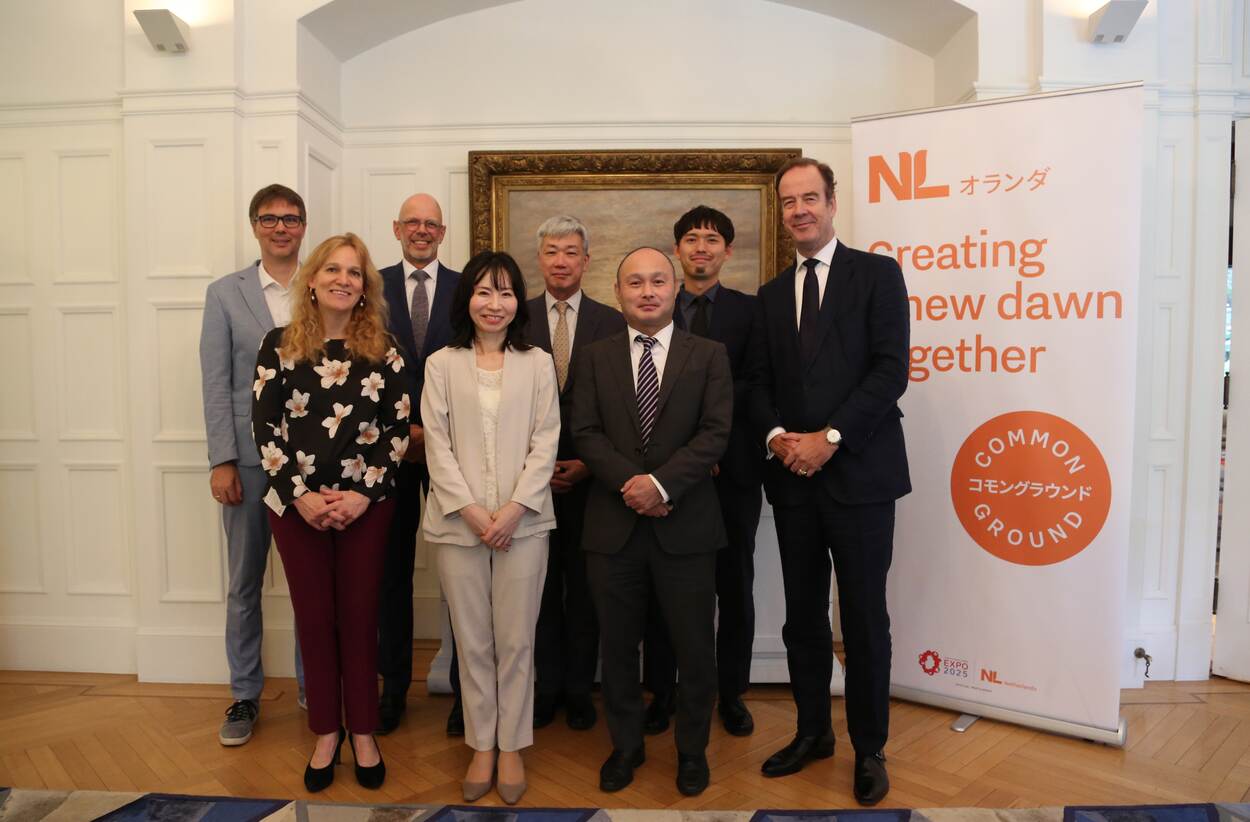
    The Kingdom of the Netherlands has announced that AkzoNobel and Randstad will become Gold Sponsors for the Netherlands Pavilion at Expo 2025 Osaka Japan. The announcement was made during an event held at the Embassy of the Kingdom of the Netherlands in Tokyo, Japan on October 4, 2024. Hiroaki Takahashi, Country sales manager of Automotive and Specialty Coatings at AkzoNobel Japan, and Jos Schut, CHRO Randstad, were invited there on behalf of Marc Kuipers, Commissioner General for the Netherlands at Expo 2025 Osaka. At the Embassy, Aino Jansen, Project Director Expo 2025 Osaka, shared the pavilion’s vision, program, and an overview of sponsorship packages. At the same event, Philips was also announced as a Silver Sponsor for the Netherlands Pavilion.

    The Netherlands is very proud to participate in the Expo 2025 Osaka Kansai Japan, to be held from 13 April to 13 October 2025. With its participation theme “Common Ground,” The Netherlands aims to showcase Dutch innovative solutions in areas such as the energy transition. During Expo 2025, the pavilion intends to provide “Common Ground”: a meeting place for businesses, knowledge institutions, governments and (cultural) organizations to bring together different perspectives and expertise in order to find collective solutions to global challenges.

    Marc Kuipers, Commissioner General for the Netherlands at Expo 2025 Osaka

    “I am delighted to announce our partners, including two Gold Sponsors, for the Osaka-Kansai Expo 2025. These partnerships represent a crucial step in deepening business and cultural ties between the Netherlands and Japan,” says Mr. Kuipers, “Together with AkzoNobel, Randstad, and Philips, we are excited to work under the theme of ‘Common Ground’, advancing our shared vision and collaboration towards a sustainable future.”

    Kaj van Alem, President of AkzoNobel Japan and Global Director for AkzoNobel’s Wood Coatings business

    “AkzoNobel is excited to be involved in this incredible initiative at the Osaka World Expo as part of our commitment to a better future. The event will be a tremendous global stage that represents a perfect opportunity for AkzoNobel in Japan, to showcase its extensive portfolio of sustainability-driven innovative solutions.”

    Kajetan Slonina, Chairman and CEO, Randstad K.K. / Chief Executive, APAC, Randstad Jos Schut, CHRO, Randstad K.K.& APAC, Randstad

    “We are pleased for Randstad to be able to participate in the EXPO 2025 Netherlands Pavilion as a supporting company. Randstad originated in the Netherlands, the country which influenced the way we work. At Randstad we aim to be the world’s most equitable and specialized talent company. We are committed to actively contributing to the creation of a sustainable and better future. We contribute to global society’s needs by promoting fair labor markets, realizing fairness in the workplace, and through the green transition. The Common Ground concept advocated by the Netherlands Pavilion is a vision and a shared mission. We are aligned with this vision, aiming to create a society where everyone can find meaningful and rewarding work, develop the skills they need, and work with vitality as their true selves. We eagerly anticipate the opportunity to meet you on Common Ground and embark on this journey together.”

    Sponsorships

    The Netherlands Pavilion is still accepting applications from companies and organizations interested in becoming sponsors, as well as organizing events in the event space within the pavilion.

    Event space at the Netherlands pavilion available for rent

    The event space within the Netherlands Pavilion will be available for external organizations to rent during the Expo.

    Details regarding the sponsor packages and event space rental can be found here: https://nlexpo2025.nl/en/organize-event

    For more information of the Netherlands participation and the Road2Osaka at Expo 2025 Osaka, Kansai, visit http://www.nlexpo2025.nl | http://www.orandaexpo2025.nl

    MIL OSI Europe News

  • MIL-OSI Global: IDF actions against UN peacekeepers suggest Israel may be considering occupying part of southern Lebanon

    Source: The Conversation – UK – By Vanessa Newby, Assistant Professor, Institute of Security and Global Affairs, Leiden University

    The United Nations security council has expressed strong concern for the safety of peacekeepers in Lebanon after a series of incidents over the past week in which UN positions have come under fire from the Israel Defense Forces as they continue their push in the south of the country.

    “UN peacekeepers and UN premises must never be the target of an attack,” the security council said on October 14 in a statement adopted by consensus of the 15-member council. It urged all parties to respect the security and safety of the United Nations Interim Force in Lebanon (Unifil) operating in south Lebanon.

    In recent days, the Israel Defense Forces (IDF) have struck the Unifil on several occasions, damaging cameras, shooting directly at peacekeepers and, on October 13, two Israeli tanks entered a UN compound for 45 minutes and set off smoke bombs.

    The same day Israel requested that Unifil withdraw five kilometres back from the blue line which constitutes the de facto border between Israel and Lebanon, to keep them “out of harm’s way”.

    On each occasion, the IDF has either claimed it was acting in self-defence against Hezbollah or that its actions were accidental. These explanations have failed to convince the rest of the world.

    The US, several European countries and the EU have all stated that UN peacekeepers must not be harmed. The UN secretary general, António Guterres, contends these attacks may constitute war crimes and are a breach of both international law and international humanitarian law.


    Read more:
    UN peacekeepers at risk as they deliver protection for civilians in southern Lebanon


    Since 1978, Unifil has lost 337 peacekeepers, making Lebanon the most costly, in human terms, of all the UN peacekeeping operations. But despite these risks it has remained in post. Throughout Unifil’s deployment, IDF has put it under pressure both directly and through a proxy force, the South Lebanon Army (SLA). As such Unifil has a strong institutional memory of staying put in the direst of circumstances which makes it unlikely to recommend a drawdown.

    What’s more, the security council is aware that if Unifil leaves the area, another UN-led conflict resolution mechanism is likely to be required in future. This logic is why Unifil mandates have always been renewed – albeit sometimes for three months or less.

    The biggest threat to Unifil’s deployment is if one or more troop contributing countries decide the risks are too high and withdraw their contingents. The post-2006 Unifil mission comprises the highest number of European troop contingents of all peace operations worldwide with the main contributors being Italy, Spain, Ireland, and France.

    The two sectors that comprise the mission – sector west and sector east – are led by Italy and Spain respectively. The biggest non-EU contributors are India, Ghana, Indonesia and Malaysia. If one or more of these countries were to decide to withdraw troops, this could trigger a reevaluation of the mission’s ability to deploy.

    If Unifil were to leave, it is worth noting that their compounds have a large amount of expensive equipment – much of it owned nationally by the troop contributing countries. The logistical challenge of moving troops and equipment in a battle zone would be very difficult and dangerous.

    Despite the intense fighting, many civilians still remain. The death toll from the hostilities is now estimated to be 2,306 dead and 10,698 wounded. Unifil’s presence remains crucial to monitor the hostilities and wherever possible, provide civilian protection and humanitarian assistance. But for that to be possible, Israel’s allies must continue to exert pressure to ensure that the IDF ceases all attacks on Unifil.

    A new ‘zone of security’?

    One possible reason for the attacks is that the IDF believes ridding the area of Unifil exposes Hezbollah and will enable the IDF to continue their incursion unhindered by the watchful eyes of an international observer.

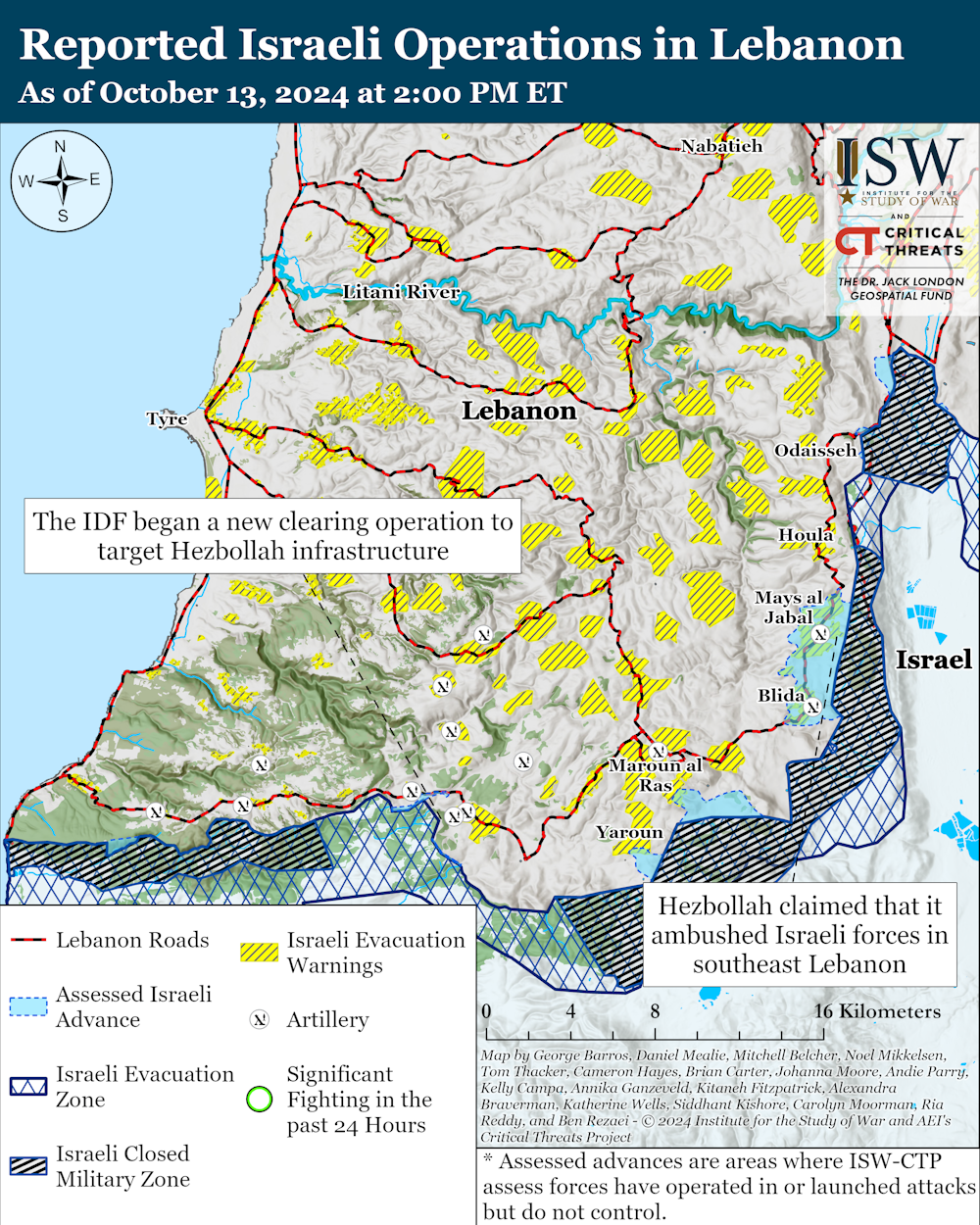
    Israel’s ground offensive in southern Lebanon, October 13 2024.
    Institute for the Study of War

    But there’s another possibility. During the Lebanese civil war, the IDF occupied a section of Lebanese land bordering Israel that was known as the “zone of security”. Its purpose was to serve as a buffer zone for northern Israel, initially designed to protect Israeli citizens from Palestinian militia, and later also from the Shia resistance groups Amal and Hezbollah.

    The Israeli request for Unifil to move five kilometres back from the blue line could mean Israel is considering reestablishing some kind of buffer zone. Several factors point to this being a possibility – although the IDF and the Israeli government may not be aligned on this issue as recent tensions suggest.

    First, the IDF has now deployed units from at least four divisions into Lebanon. The volume of troop numbers deployed is upwards of 15,000 suggesting this incursion is more than a limited operation.

    Second, 29 Unifil compounds lie along the blue line. Were they to be evacuated by the UN, there would be nothing to stop the IDF from moving in and developing them into their own strongholds. While UN positions would need reinforcement and protection equipment, they would nonetheless remain useful.

    Third, in 2006 the IDF tried to destroy Hezbollah from the air and deployed limited haphazard ground incursions. These tactics failed and the prevailing view may now be that the only way to guarantee the safe return of 65,000 Israelis to their homes in northern Israel is through an occupation.

    But unlike the previous occupation, where the IDF was aided by the SLA, Israel currently has no partner in Lebanon, and it is unlikely to find a willing accomplice among the Lebanese population to help them manage the security of a buffer zone. This means IDF troops would directly bear the brunt of attacks from resistance groups, and the northern Israeli villages would be unlikely to remain secure.

    The Netanyahu government’s continued use of military solutions to solve political problems has worrying implications for Israel, Lebanon and the Middle East as a whole. At this stage, Israel looks as if it might be settling back into a conflict that could become another “forever war”.

    Thus far, the tactics used by the IDF would imply they are not thinking ahead to “the day after” and the cost to Israel that would come with the prolonged occupation of a buffer zone.

    This article was written with assistance from John Molloy, lt. col. (rtd.) Irish Defence Forces and former senior Unifil political & civil affairs officer, 2008-2017.

    Chiara Ruffa receives funding from the Swedish Research Council, the Fulbright Commission and the European Commission.

    ref. IDF actions against UN peacekeepers suggest Israel may be considering occupying part of southern Lebanon – https://theconversation.com/idf-actions-against-un-peacekeepers-suggest-israel-may-be-considering-occupying-part-of-southern-lebanon-241297

    MIL OSI – Global Reports

  • MIL-OSI Russia: Vladimir Stroev took part in the Sukharev Readings

    MILES AXLE Translation. Region: Russian Federation –

    Source: State University of Management – Official website of the State –

    On October 11, 2024, the 10th All-Russian scientific and practical conference “Constitutional Foundations of Prosecutor’s Activity (Sukharev Readings)” was held at the University of the Prosecutor’s Office of the Russian Federation, in which the rector of the State University of Management Vladimir Stroev took part.

    The conference is dedicated to the birthday of the outstanding statesman, legal scholar, specialist in the field of criminal law, criminal procedure and criminology Alexander Yakovlevich Sukharev.

    The plenary session and the work of the sections were devoted to the following issues: – constitutional and legal status of the prosecutor’s office of the Russian Federation: history and modernity; – constitutional foundations of prosecutorial activity outside the criminal law sphere; – constitutional foundations of prosecutorial activity in the criminal law sphere.

    Representatives of the Prosecutor General’s Office of the Russian Federation, government bodies and public organizations, prosecutor’s offices, scientific and educational organizations took part in the forum.

    Opening the conference, the rector of the University of the Prosecutor’s Office of the Russian Federation Igor Matskevich addressed the participants with a welcoming speech on behalf of the Deputy Prosecutor General of the Russian Federation Yuri Ponomarev, in which he noted the relevance of the topic of the event, its fundamental nature from the point of view of the place and role of the prosecutor’s office in the system of the state legal mechanism.

    Representatives of the Federation Council Committee on Constitutional Legislation and State Building, the State Duma Committee on Security and Anti-Corruption, the School for Training and Advanced Studies of Prosecutors in Ho Chi Minh City (Vietnam), the Scientific and Educational Center of the Prosecutor General’s Office of the Republic of Azerbaijan, the Institute of Legislation and Comparative Law under the Government of the Russian Federation, Lomonosov Moscow State University, Kutafin Moscow State Law University (MSAL), A. Ya. Sukharev Moscow Academy of the Investigative Committee, V. Ya. Kikot Moscow University of the Ministry of Internal Affairs of Russia and other specialized educational institutions spoke at the plenary and sectional sessions.

    Based on the results of the conference, recommendations were prepared, and it is planned to publish a collection of articles indexed in the RSCI system.

    Subscribe to the TG channel “Our GUU” Date of publication: 10/15/2024

    Please note: This information is raw content directly from the source of the information. It is exactly what the source states and does not reflect the position of MIL-OSI or its clients.

    Please note; This information is raw content directly from the information source. It is accurate to what the source is stating and does not reflect the position of MIL-OSI or its clients.

    Vladimir Stroev took part in the Sukharev Readings

    MIL OSI Russia News

  • MIL-OSI Economics: Asian Development Blog: Five Sustainable Solutions to Drive Armenia’s Crossroads of Peace Initiative

    Source: Asia Development Bank

    Armenia’s Crossroads of Peace initiative offers a vision of peace and stability through improved infrastructure and trade. It is also a great opportunity to build sustainable infrastructure, improve customs clearance, and promote green trade. Key reforms in road safety and foreign direct investment are essential for long-term success, positioning Armenia as a strategic hub for regional trade.

    Armenia, located in the South Caucasus between Europe and Asia, holds a strategic geographic position as a natural crossroads for east-west and north-south trade routes. 

    Despite closed borders with neighbors to the east and west, Armenia has outlined a vision of open borders through its “Crossroads of Peace” initiative. 

    Supported by investments in road, rail, and border checkpoints, the initiative envisions economic ties and peaceful relations with all neighbors. While improved rail networks and modern roads are a key focus, the initiative must address several factors to ensure long-term success: 

    Make the infrastructure sustainable. The infrastructure investments under the initiative represent a remarkable opportunity to incorporate sustainable infrastructure. Doing so would set a standard for future developments in Armenia and position the country as an early adopter of sustainable infrastructure in the region.

    This can be done through implementing green building standards in the roads, bridges, and related infrastructure, through the use of sustainable, recycled, or low-carbon materials along with enforcing emissions standards for equipment used in construction and maintenance.  

    LED streetlights, which last longer and reduce energy consumption, could be used. Border points can be built or refurbished to meet energy efficient standards and equipped with power supplied from renewable sources.  

    These interventions would limit the carbon footprint of the Crossroads initiative while, in the long run, reducing the overall costs for its implementation.   

    Streamline customs clearance processes. Freight typically follows the least time-consuming and cost-efficient way.  While better roads and rail networks are attractive for transit trade, customs processes need to be streamlined to truly deliver on the desired objective.

    Digitization is the backbone of modern logistics.  For customs processes, it reduces paperwork, corruption, and can drastically cut border wait times. Armenia’s adoption of the Electronic International Road Transport system is a needed advancement that would immediately improve customs clearance efficiency.  

    As Armenia’s neighbors have adopted the system as well, its geographic position along with digitally integrated customs procedures would make it the natural choice for freight movement. And with much of the legal framework agreed and a gap analysis already prepared by the United Nations Economic Commission for Europe, this would seem to be low-hanging fruit on the list to improve logistics and promote regional trade. 

    Armenia is at a critical point in its development trajectory and the Crossroads initiative could be the mechanism to propel it into a regional hub for trade and logistics.

    Promote Green Trade. The Crossroads initiative could be an enabler for Armenia to become an advocate for green trade to yield benefits to future generations. 

    This could be achieved through developing green logistics frameworks that incentivize low-emission transportation assets and eco-friendly packaging for goods. 

    Local campaigns to raise awareness of the benefits of green products and sustainable consumption can help instill these practices in Armenia, while eco-friendly labels on products can help consumers make smart choices when purchasing goods and services.

    Armenia has already renewed its commitment to the Paris Agreement and the government has demonstrated it takes the climate agenda seriously.  Promoting green trade will be another mark on the road to greater sustainability, competitiveness, export diversification, and generally improved value addition.   

    Become an enabling environment for foreign direct investment.  With open borders the Crossroads initiative can attract greater foreign direct investment, which would have sweeping benefits including job creation, greater productivity, increased government revenue, human capital development, and general technological advancements. 

    The regional stability offered by the initiative could be the trigger that entices foreign investors to consider Armenia as a new frontier for opportunity.

    Armenia has shown steady improvements in attracting new businesses, suggesting its legal and regulatory frameworks have become more attractive to foreign investors.  However, Armenia faces stiff regional competition in the South Caucasus from Georgia and will need to accelerate these reforms to redirect investment in the region. 

    The creation of more special economic zones is an important lever for the government to attract investment. Given the integral nature of transport and logistics to the initiative, more zones designed to support better logistics and simplified trade would be a meaningful step to attract the right firms and needed capacity to execute on the increased demand the Crossroads will bring to the region. 

    Create a culture of road safety. With significant investments in road infrastructure, the Crossroads initiative will offer drivers smoother and faster road surfaces. However, without stronger measures to promote a culture of road safety and enforced safety laws, improved conditions could lead to an increase in accidents. 

    Armenia has taken positive steps enacting legislation that requires seat belts and motorcycle helmets, yet on the road it is common to see drivers without either.  The legislation also does not specify restraints for child safety and children are allowed to be seated in the front, both drastically increasing the chances of injury or death in case of accident. 

    A coordinated countrywide awareness-raising campaign on the benefits of seat belts, helmets, and child restraints is necessary, along with legislative actions to identify standards and improve enforcement. 

    Armenia is at a critical point in its development trajectory and the Crossroads initiative could be the mechanism to propel it into a regional hub for trade and logistics.  However, it should not only be framed around building roads, rail, and bridges. It should also deliver on its broader ambitions and create lasting benefits for society.

    MIL OSI Economics

  • MIL-OSI: Himax Achieves Mass Production of In-Cell Touch TDDI Technology for Leading AI Laptop Brands

    Source: GlobeNewswire (MIL-OSI)

    TAINAN, Taiwan, Oct. 15, 2024 (GLOBE NEWSWIRE) — Himax Technologies, Inc. (Nasdaq: HIMX), an industry leader in fabless display driver ICs and other semiconductors, today announced the successful mass production of its cutting-edge In-Cell Touch TDDI (Touch and Display Driver Integration) solution, the HX83132, for high-end LCD AI laptops. The HX83132 has already been adopted by several leading panel makers across the board. By entering mass production during the third quarter of 2024, this marks a significant milestone for the first-of-its-kind, innovative product. As notebook brand customers increasingly prioritize product differentiation and value enhancement, the integration of touch functionality into displays of high-end laptops and AI PCs has emerged as a key trend. Himax HX83132 is featured in one marquee brand’s first AI laptops, which boasts a 15.3-inch, 2.8K high-resolution touch display with a 120Hz refresh rate, significantly enhancing both interactivity and visual experience for seamless, intuitive user operations.

    In-cell TDDI has become a mainstream technology for LCD displays, characterized by the seamless integration of touch functionality with display driver ICs. This integration not only simplifies the supply chain but also provides substantial cost benefits to panel manufacturers. Having pioneered the mass production of In-cell TDDI technology for mid-sized tablets and automotive displays in 2019, Himax has established itself as the industry leader by introducing an industry-first touch display solution supporting screen sizes of up to 45 inches for ultra-large automotive applications. The newly launched HX83132 series further expands the application of In-cell TDDI technology to laptops, boasting a unique design architecture that pairs seamlessly with timing controller (Tcon) chips supporting various eDP specifications which make it suitable for both mainstream and high-end LCD laptops. This TDDI and Tcon configuration effectively minimizes the need for supporting components, resulting in a more compact PCB size and narrower bezel design. The HX83132 series offers precise touch sensitivity, ensuring smooth human-machine interaction, significantly enhancing user experience and improving productivity.

    The industry-leading HX83132 In-cell TDDI solution offers the following key features:

    • Flexible support for diverse panel sizes and resolutions: The advanced chip architecture can interconnect up to 6 chips, accommodating a wide range of laptop display needs with support for screen sizes up to 16 inches and resolutions up to 4K
    • Optimized and streamlined module architecture design: The HX83132 solution outperforms competition by providing more display and touch channels at the same resolution while utilizing fewer ICs. Additionally, the integrated microprocessor and level shifter minimize the need for external components, resulting in a smaller PCB size and enhanced design efficiency
    • Leveraging existing architecture for rapid In-cell Touch upgrades: The HX83132 features a state-of-the-art, integrated proprietary display driver and touch controller architecture. From a display perspective, it utilizes a standard Tcon architecture, which enables pure display panels, without the need for a dedicated Tcon for the In-cell touch functionality. Meanwhile, the TDDI integrates an in-house proprietary distributed touch microprocessor architecture, specifically designed to handle the high computational demands of touch data processing, effectively reducing development time
    • Comprehensive support for various power-saving operation scenarios: The HX83132 is compatible with eDP 1.4 and eDP 1.5 Tcons, and supports multiple power-saving features, including Panel Self Refresh (PSR) and User-Based Refresh Rate (UBRR), optimizing energy efficiency across different usage scenarios

    About Himax Technologies, Inc.

    Himax Technologies, Inc. (NASDAQ: HIMX) is a leading global fabless semiconductor solution provider dedicated to display imaging processing technologies. The Company’s display driver ICs and timing controllers have been adopted at scale across multiple industries worldwide including TVs, PC monitors, laptops, mobile phones, tablets, automotive, ePaper devices, industrial displays, among others. As the global market share leader in automotive display technology, the Company offers innovative and comprehensive automotive IC solutions, including traditional driver ICs, advanced in-cell Touch and Display Driver Integration (TDDI), local dimming timing controllers (Local Dimming Tcon), Large Touch and Display Driver Integration (LTDI) and OLED display technologies. Himax is also a pioneer in tinyML visual-AI and optical technology related fields. The Company’s industry-leading WiseEyeTM Ultralow Power AI Sensing technology which incorporates Himax proprietary ultralow power AI processor, always-on CMOS image sensor, and CNN-based AI algorithm has been widely deployed in consumer electronics and AIoT related applications. Himax optics technologies, such as diffractive wafer level optics, LCoS microdisplays and 3D sensing solutions, are critical for facilitating emerging AR/VR/metaverse technologies. Additionally, Himax designs and provides touch controllers, OLED ICs, LED ICs, EPD ICs, power management ICs, and CMOS image sensors for diverse display application coverage. Founded in 2001 and headquartered in Tainan, Taiwan, Himax currently employs around 2,200 people from three Taiwan-based offices in Tainan, Hsinchu and Taipei and country offices in China, Korea, Japan, Germany, and the US. Himax has 2,683 patents granted and 390 patents pending approval worldwide as of September 30, 2024.

    http://www.himax.com.tw

    Forward Looking Statements

    Factors that could cause actual events or results to differ materially from those described in this conference call include, but are not limited to, the effect of the Covid-19 pandemic on the Company’s business; general business and economic conditions and the state of the semiconductor industry; market acceptance and competitiveness of the driver and non-driver products developed by the Company; demand for end-use applications products; reliance on a small group of principal customers; the uncertainty of continued success in technological innovations; our ability to develop and protect our intellectual property; pricing pressures including declines in average selling prices; changes in customer order patterns; changes in estimated full-year effective tax rate; shortage in supply of key components; changes in environmental laws and regulations; changes in export license regulated by Export Administration Regulations (EAR); exchange rate fluctuations; regulatory approvals for further investments in our subsidiaries; our ability to collect accounts receivable and manage inventory and other risks described from time to time in the Company’s SEC filings, including those risks identified in the section entitled “Risk Factors” in its Form 20-F for the year ended December 31, 2023 filed with the SEC, as may be amended.

    Company Contacts:

    Eric Li, Chief IR/PR Officer
    Himax Technologies, Inc.
    Tel: +886-6-505-0880
    Fax: +886-2-2314-0877
    Email: hx_ir@himax.com.tw
    http://www.himax.com.tw
      
    Karen Tiao, Investor Relations
    Himax Technologies, Inc.
    Tel: +886-2-2370-3999
    Fax: +886-2-2314-0877
    Email: hx_ir@himax.com.tw
    http://www.himax.com.tw

    Mark Schwalenberg, Director
    Investor Relations – US Representative
    MZ North America
    Tel: +1-312-261-6430
    Email: HIMX@mzgroup.us
    http://www.mzgroup.us

    The MIL Network

  • MIL-OSI: Intelligence Community Veteran Michael Widener Joins Synergy ECP Board of Advisors

    Source: GlobeNewswire (MIL-OSI)

    COLUMBIA, Md., Oct. 15, 2024 (GLOBE NEWSWIRE) — Synergy ECP, a leading provider of mission critical, highly technical solutions for the Defense and Intelligence Communities, is excited to announce the appointment of Michael Widener to its Board of Advisors. Synergy ECP is a portfolio company of Falfurrias Management Partners.

    Michael Widener, a former Senior Intelligence Service executive at the Central Intelligence Agency and four-time Chief of Station/Base, brings decades of experience to Synergy ECP’s Board of Advisors through his leadership of historically large and complex CIA programs in Africa, Europe, the Middle East, and Southeast Asia. Michael also led CIA efforts related to understanding the impact of advanced computing, microelectronics, next-generation communications, and other emerging technologies on US national security by harnessing expertise from the US private sector and worldwide venture capital ecosystem to deliver new capabilities into the Intelligence Community.

    “We are honored to welcome Michael Widener to our Board of Advisors,” said Bruce Howard, CEO of Synergy ECP. “Michael’s extensive experience at the intersection of emerging technologies, the private sector, and policymakers will support Synergy ECP’s efforts as we deliver technical solutions in areas such as signals intelligence, cyber operations, critical infrastructure resiliency, zero trust methodologies, and next generation 5G capabilities. Additionally, his mission understanding, developed through years of leading human intelligence and covert action programs, will ensure Synergy ECP stays on the leading edge of emerging technical requirements within our intelligence community.”

    “I am honored to join the Board of Advisors at Synergy ECP,” said Mr. Widener. “Our Intelligence Community faces significant challenges in understanding the national security implications of emerging technology areas such as artificial intelligence, quantum computing, and cyber. I look forward to supporting Synergy ECP as they advance on their mission of solving the toughest national security challenges for tip of the spear customers leading our Nation’s cyber and signals intelligence operations.”

    About Synergy ECP
    Founded in 2007 and headquartered in Columbia, Maryland, Synergy ECP is a leading provider of cybersecurity, software and systems engineering and IT services to the U.S. intelligence and defense communities. The company leverages its expertise in data transport solutions, software and systems engineering, and other solutions to deliver critical and innovative capabilities to high-level decision makers that enhance our nation’s security. For more information, visit http://www.synergyecp.com.

    The MIL Network

  • MIL-OSI Asia-Pac: Lands Department releases figures on registered lease modifications, land exchanges, private treaty grants and lot extensions in third quarter of 2024

    Source: Hong Kong Government special administrative region

    Lands Department releases figures on registered lease modifications, land exchanges, private treaty grants and lot extensions in third quarter of 2024
    Lands Department releases figures on registered lease modifications, land exchanges, private treaty grants and lot extensions in third quarter of 2024
    ******************************************************************************************

         The Lands Department (LandsD) announced today (October 15) that it registered 22 lease modifications and two land exchanges in the Land Registry during the quarter ending September 2024, of which five were modifications of a technical nature involving nil premium.     Among these 24 land transactions, six are located on Hong Kong Island, 14 are in Kowloon and four are in the New Territories. The transactions exclude Small House cases.     There were no private treaty grants and lot extensions registered during the quarter.     The above land transactions realised a total land premium of about $1,886.525 million.     Transaction records of the lease modifications, land exchanges, private treaty grants and lot extensions, including those registered recently, are uploaded to the LandsD website (www.landsd.gov.hk/en/land-disposal-transaction/land-transaction.html) on a monthly basis. Details of the transactions may be obtained by searching the registered documents in the Land Registry.

     
    Ends/Tuesday, October 15, 2024Issued at HKT 17:00

    NNNN

    MIL OSI Asia Pacific News

  • MIL-OSI Asia-Pac: 22 lease modifications recorded in Q3

    Source: Hong Kong Information Services

    The Lands Department announced today that it registered 22 lease modifications and two land exchanges in the Land Registry during the quarter ending September 2024, adding that five were technical changes involving no premium.

    Of the land transactions, six are located on Hong Kong Island, 14 are in Kowloon and four are in the New Territories.

    There were no private treaty grants during the period.

    The land transactions realised a total land premium of about $1.8865 billion. 

    MIL OSI Asia Pacific News

  • MIL-OSI Asia-Pac: BFAC appreciates Intellectual Property Department’s contribution to development of Hong Kong into regional intellectual property trading centre

    Source: Hong Kong Government special administrative region

    The following is issued on behalf of the Business Facilitation Advisory Committee Secretariat:

         The Business Facilitation Advisory Committee held its 55th meeting today (October 15). At the meeting, members were briefed by the Intellectual Property Department (IPD) on various policy measures implemented by the Government to develop Hong Kong into a regional intellectual property (IP) trading centre, and the progress to date.

         The Government has been implementing a series of short-, medium- and long-term measures from three aspects, including strengthening the protection of IP rights, building capacity, and promoting widely, to promote the development of Hong Kong into a regional IP trading centre, thereby expanding Hong Kong’s competitive advantages in developing IP trading in the region. Key measures include, among others, implementing the “patent box” tax incentive and exploring further enhancement of the Copyright Ordinance (Cap. 528) regarding protection for development of artificial intelligence (AI) technology.

         The Inland Revenue (Amendment) (Tax Concessions for Intellectual Property Income) Ordinance 2024 was enacted in July 2024 to implement a “patent box” tax incentive in Hong Kong. The tax rate for qualifying profits derived from eligible IP (in particular patents) created through research and development activities is set at 5 per cent which is substantially lower than the prevailing normal profits tax rate of Hong Kong (i.e. 16.5 per cent). In addition, in view of the copyright issues arising from the rapid development of AI technology, the IPD, having launched its two-month public consultation (closed on September 8 this year), is considering stakeholders’ submissions in exploring further enhancement of the Copyright Ordinance regarding protection for such technology development to ensure that the local copyright regime remains robust and competitive.
     
         The Committee appreciated the IPD’s ongoing efforts in taking forward a series of policy measures to enable Hong Kong to seize the opportunity brought by IP trading and sustain its competitiveness, thereby ensuring the continuous high-quality development of the economy.
        
         The Committee also received the work reports of its three task forces:
     
    Wholesale and Retail Task Force (WRTF)
    ———————————————
     

    Hong Kong Customs briefed the WRTF on the scope of registration for dealers in precious metals and stones (DPMS) and the DPMS Registration System (DRS). Any person who is seeking to carry on a business of dealing in precious metals and stones in Hong Kong and engage in any transaction(s) with a total value at or above HK$120,000 in Hong Kong is required to register with the Commissioner of Customs and Excise. To advocate the Government’s vision to develop Hong Kong into a smart city, Hong Kong Customs has rolled out the DRS to support the submission of registration applications and progress checking by the trade at their convenience. The DRS adopts the dynamic QR code authentication technology to enable the industry and consumers to instantly validate the registration of dealers. The WRTF thanked Hong Kong Customs for the briefing and welcomed the e-service introduced by Hong Kong Customs for the registration for DPMS.

    The Hong Kong Productivity Council (HKPC) briefed the WRTF on the Government Funding Scheme Management Centre (GFSMC) and the Biz Expands Easy (BEE) Platform. Since 2022, the GFSMC introduced the BEE 3-in-1 platform, which provides Hong Kong corporations with integrated information for 28 funding schemes. Registered users can log in to the platform to view and manage applications for multiple funding schemes under HKPC secretariat support. Furthermore, the GFSMC inaugurated the Biz Expands Easy Square in January 2024 to further enhance the accessibility of funding resources for Hong Kong corporations and start-ups, and also foster a network for applicants to share their successful experiences. The WRTF welcomed the BEE Platform, and considered the BEE Platform would enable users to further understand designated funding schemes and explore suitable funding schemes.

     
    Food Business and Related Services Task Force (FRSTF)
     

    The Food and Environmental Hygiene Department (FEHD) briefed and consulted the FRSTF on whether there is a need to retain composite food shop licences and extend the validity period of a full food business licence, in response to the views of the Legislative Council (LegCo)’s Public Accounts Committee. The FRSTF suggested that the FEHD retain the composite food shop licence with better promotion to the trades on the licence type. For the extension of the validity period of full licences, as trades would not have flexibility to choose a shorter licensing period and the annual compliance of fire safety requirements remains at the status quo, the FRSTF considered that the extension of the validity period of full licences may not facilitate the trades’ operations and there is no need for its implementation.

    The FEHD also briefed and consulted the FRSTF on enhanced measures against illegal operations of food businesses in response to the views of the LegCo’s Public Accounts Committee. To suppress the industry’s practice of operating food businesses before obtaining a provisional licence/full licence, in addition to taking enforcement actions, the FEHD suggested suspending the processing of licence applications and debarring the same applicant and his/her partners from applying for the same type of licence for the same premises for 12 months upon conviction of a relevant offence by the court. The FRSTF opined that the proposed administrative measures are too harsh and may undermine the catering business. The FRSTF suggested that the FEHD assist the trades to obtain a provisional licence more efficiently to address the issue of illegal operations.

     
    Task Force on Business Liaison Groups (BLGTF)
     

    The Inland Revenue Department (IRD) briefed the BLGTF on the initiative of the electronic filing (e-filing) of profits tax returns, including the need to take forward the mandatory e-filing, the benefits of e-filing, the enhanced e-filing services, the IRD’s support measures to taxpayers, and the timeline of the phased implementation of mandatory e-filing. The BLGTF welcomed the above initiatives and invited the IRD to brief and consult more small and medium-sized enterprises (SMEs) on the initiative. The IRD undertook to keep up the ongoing work of soliciting suggestions and opinions from SMEs through different channels.

     
         The Committee also expressed appreciation of the commitment and achievements of the bureaux and departments in continuously implementing business facilitation measures under the Be the Smart Regulator Programme to enhance their business licensing services.
           
         Papers for the Committee meeting are available at www.gov.hk/en/business/supportenterprises/bf/advisory/index.htm for public access.

    MIL OSI Asia Pacific News

  • MIL-OSI Asia-Pac: Essay writing awards presented

    Source: Hong Kong Information Services

    Secretary for the Civil Service Ingrid Yeung presented awards to the winners of the Love for China Chinese essay competition at a ceremony today.

    To celebrate the 75th anniversary of the founding of the People’s Republic of China, the Civil Service Bureau’s Official Languages Division organised a series of activities under the theme “Glorious China”, including the essay competition.

    The competition received an enthusiastic response, receiving nearly 300 entries, including those from officers from various grades in 51 departments as well as retired civil servants.

    Speaking at the ceremony, Mrs Yeung said the entries, centred on the idea of Love for China with a wide variety of styles, subject matters and narrative perspectives, expressed feelings for the country and told good stories about China.

    The civil service chief noted that although the topics and perspectives of the entries varied, they all expressed a rich sense of national pride and patriotism, adding that she was particularly heartened to see that many of the entries mentioned the civil servants’ responsibility towards the country.

    The essay competition took place between July and August. A judging panel comprising Mrs Yeung, Nang Yan College of Higher Education Dean of the Faculty of Arts Ricky Tse and Chinese University of Hong Kong Department of Chinese Language & Literature Senior Lecturer Hung Yeuk-chun selected 10 winning entries from the submissions.

    The activities under “Glorious China” also include a recently concluded Putonghua quiz and an ongoing quiz on Chinese history and culture.

    MIL OSI Asia Pacific News

  • MIL-OSI Australia: Plimsoll Address

    Source: Australian Government – Minister of Foreign Affairs

    Thank you to the Australian Institute for International Affairs and the University of Tasmania for inviting me to give this address, in honour of this great statesperson. 

    With a career that spanned the first four decades of independent Australian foreign policy, there are few who have made a contribution comparable to James Plimsoll – or Jim Plim as he was affectionately known.

    He first made his mark in the late 1940s supporting Foreign Minister Evatt during his presidency of the United Nations General Assembly – support that included ghost-writing Evatt’s book, The Task of Nations.

    He later became Secretary of the Department of External Affairs – which we now know as DFAT…

    He was appointed Ambassador in Washington, Tokyo, Brussels and Moscow… 

    High Commissioner in London and Delhi…

    And even Governor of this great state of Tasmania…

    Among all these lofty appointments, his biographer Jeremy Hearder reflected that the highlight of Plimsoll’s career was serving as Australia’s Ambassador and Permanent Representative to the UN Nations in New York, in the late 1950s and early 1960s.

    And we can understand why. He found himself at the centre of major international issues – and his diplomatic skill meant, in the words of a British colleague, that Plimsoll “exercised an influence on the UN quite disproportionate to Australia’s standing in the world.”

    This was partly because of what the then Secretary of External Affairs, Arthur Tange, described as Plimsoll’s “remarkable capacity… for talking to people in their own terms, freely encouraging them to explain their viewpoints and problems.”

    It is patent that Jim Plim understood deeply how Australia’s interests as a middle power are at stake in the multilateral system.

    Even with all the flaws with the international system, this remains the case today.

    Australia will always be better off in a world that operates by rules that all countries have a say in shaping.

    A world where Australia and other countries have the freedom to decide our own futures, without interference and intimidation.

    A world where we can find collective solutions to our toughest problems.

    Where no country dominates, and no country is dominated.

    I’ve recently returned from the UN General Assembly’s annual High-Level Week, where Australia progressed our most ambitious multilateral agenda in many years.

    I convened meetings of humanitarian leaders and ministers from influential countries to address a serious problem in the international system.

    That is, the growing risk that norms are being eroded in international humanitarian law – what we often refer to as the rules of war.

    We see this in the massive civilian toll in conflicts around the world, and we see this in the increasing numbers of aid workers being killed and kidnapped.

    In order to protect civilians, we must also protect aid workers who deliver the food, water and medicine civilians need to survive.

    Aid workers are the best of humanity. Their dedication to improving the lives of others should not cost them their own.

    Yet 2023 was the deadliest year on record for aid workers, and 2024 is on track to be even worse.

    This has been felt directly by Australians with the IDF’s strike against World Central Kitchen vehicles, which killed Australian Zomi Frankcom and her colleagues.

    This was not a one-off incident. Gaza is the most dangerous place on earth to be an aid worker. More than 300 aid workers have been killed since the start of the conflict.

    Together, the ministerial group I convened agreed to pursue a new Declaration for the Protection of Humanitarian Personnel.

    Work on the Declaration is now underway, with our officials consulting experts and other countries.

    All countries will be invited to join the Declaration, to demonstrate the unity of the international community’s commitment to protect aid workers – and to channel that commitment into action in Gaza, in Sudan, in Ukraine and in all current and future conflicts.

    This is exactly the kind of leadership Australia should be taking in the world.

    We are not a superpower. But we are respected, and at our best we have a reputation for bringing countries together to defend and promote the rules-based order that protects us all.

    From the days helping draft the UN Charter and the Universal Declaration of Human Rights, to Gareth Evans’ leadership on the Chemical Weapons Convention, to our more leading role in the Arms Trade Treaty.

    There’s no doubt that reputation waned through the negative globalist years of the previous government.

    But in driving this Declaration we are demonstrating that Australians are indeed constructive internationalists in the mould of the honouree of this address.

    This brings me back to the book Plimsoll ghostwrote for Evatt, which spelled out our shared responsibility to each other. I quote:

    “We should try to raise standards everywhere in order to practice the simple humanitarian doctrine which is the basis of all morality, namely that we should help our neighbour and relieve misery and suffering… [We] can hardly imagine … the common lot of so many of mankind – disease, low expectation of life, and unrelieved pain; flood, famine and epidemics… These wrongs cry out for redress, and can and must be righted by co-operative international effort.”

    A powerful articulation of the motivation for our humanitarian work.

    And tonight we build on that work. Tonight, I am releasing Australia’s new Humanitarian Policy.

    It is a policy that comprehends the serious problems of our times.

    A climate changing faster than our combined efforts to stop it.

    More people displaced – in fact, more than 117 million people forcibly displaced from their homes.

    More people needing humanitarian assistance – 302 million people this year, up by nearly 30 million in just the last two years.

    More conflict than any time since World War Two. Russia’s invasion of Ukraine. Sudan. Myanmar. And in the Middle East.

    The Albanese Government is committed to humanitarian action which saves lives, alleviates human suffering and builds resilient communities. 

    The Policy outlines the role Australia will play at a time when need is outstripping the world’s capacity to respond and disregard for international humanitarian law is increasing.

    It is a plan of action that is not just about meeting humanitarian needs. It is also about protecting the peace, stability and prosperity that we want for Australia, our region and the world.

    It is a plan that is accountable – to the Australian people, and to the partners and communities we seek to help.

    We will focus on three priorities.

    First, we will build readiness and preparedness, anticipating shocks before they occur and working with our partners to lessen their impact.

    As part of this priority, I announce Australia is providing $5 million to the new Asia-Pacific Regional Humanitarian Fund to pre-position for the next emergency.

    Second, we will respond to crises and disasters, delivering support that meets the needs of crisis-affected populations and protects the most vulnerable, both immediately and over the longer term.

    As part of that effort, I announce $9 million in humanitarian relief to respond to high levels of food insecurity in Yemen. This follows support I announced yesterday for Myanmar, as well as over $80 million in aid to support civilians who have been devastated by the conflicts in Gaza and Lebanon.

    And third, we will reinforce the international humanitarian system, working to take practical and actionable steps to strengthen adherence to international humanitarian law – just as we are doing with the Declaration.

    We act globally, but our focus remains our region. We offer genuine partnerships, based on respect, listening and learning from each other.

    And we are helping build self-reliance, so obviously in Australia’s interests and the region’s interests.

    Now, we know humanitarian assistance can lessen shocks and keep further instability, conflict and displacement at bay.

    But we all want a world where humanitarian assistance is needed far less often.

    This is just one reason why the Albanese Government is acting on climate change.

    We have enshrined our ambitious emissions reduction targets into legislation: 43 per cent by 2030 and net zero by 2050.

    We are transforming our economy.

    Within this decade, 82 per cent of Australia’s electricity generation will be renewable, up from around 32 per cent when we came to office.

    We are building new industries to accelerate our economic transition and to export reliable, renewable energy to the world.

    And we are acting internationally, to respond to our partners.

    By the end of 2025, Australia will offer Climate Resilient Debt Clauses in our sovereign loans.

    And the groundbreaking Australia-Tuvalu Falepili Union treaty entered into force on 28 August – a treaty which provides for both adaptation and mobility with dignity…

    And the first treaty anywhere in the world which provides legal protection for sovereignty in the face of sea level rise.

    But we can’t address climate change on our own, just as we can’t alone resolve all of the conflicts that are driving humanitarian crises.

    What we are doing is using our forthcoming term on the UN Peacebuilding Commission to reform the international peacebuilding and conflict prevention architecture.

    What we are doing is helping Ukraine end Russia’s illegal and immoral war on its own terms.

    Since coming to office, we have more than doubled the military contribution to Ukraine – and Australia is the largest non-NATO contributor to Ukraine’s fight.

    And what we are doing is supporting efforts for long-term peace in the Middle East.

    We have just marked the first anniversary of the October 7 attacks by Hamas.

    We condemn Hamas’ terrorism unequivocally. We call for the release of hostages immediately.

    On that day, Hamas killed 1,200 people: the largest loss of Jewish life on any single day since the Holocaust.

    October 7 is a day that recalls humanity’s darkest memories. 

    The six million European Jews killed in the Holocaust – following thousands of years of persecution and atrocities perpetrated against the Jewish people.

    This long shadow of antisemitism is the history that finally resolved the international community to create the State of Israel.

    At the same time, the world also promised a Palestinian state.

    77 years later, that Palestinian state still does not exist.

    Earlier this year, Australia voted in the General Assembly in support of Palestinian aspirations for full membership of the UN. 

    The international community now must work together to pave a path to lasting peace.

    Australia wants to engage on new ways to build momentum, including the role of the Security Council in setting a pathway for two-states, with a clear timeline for the international declaration of Palestinian statehood.

    The world knows we cannot keep hoping the parties will fix this themselves; nor can we allow any party to obstruct the prospect of peace.

    Because a two-state solution is the only hope of breaking the endless cycle of violence – the only hope to see a secure and prosperous future for both peoples.

    To strengthen the forces for peace across the region and undermine extremism.

    Any future Palestinian state must not be in a position to threaten Israel’s security, with no role for terrorists.

    Right now, the suffering across the region must end.

    In Israel’s response to the attacks, more than 40,000 Palestinians have been killed. More than 11,000 children.

    It is now more than ten months since Australia and 152 other countries voted for a ceasefire in Gaza.

    I repeat that call again. 

    Just as I repeat our call for a diplomatic solution, de-escalation and ceasefire in Lebanon. 

    We want to see civilians on both sides of the Lebanon-Israel border return to their homes and the implementation of UNSC Resolution 1701.

    Australia made our call alongside a number of countries – Canada, European Union, France, Germany, Italy, Japan, Saudi Arabia, United Arab Emirates, the United Kingdom, the United States and Qatar.

    Shortly thereafter, G7 leaders issued a statement in similar terms.

    Yet somehow Mr Dutton accused the Prime Minister of being at odds with our allies. 

    He said the Prime Minister should be condemned for calling for a ceasefire.

    Now Mr Dutton has realised it is he who is at odds with the international community– but he still can’t bring himself to back a ceasefire.

    I can’t recall a single time over the past year that Mr Dutton has called for the protection of civilians, or for the upholding of international law. 

    He never utters a word of concern for innocent Palestinians and Lebanese civilians.

    From the other side, the Greens political party are being just as absolutist.

    Australians are rightly distressed by the catastrophic conflict, and the distress is felt most acutely in our Jewish, Palestinian and Lebanese communities.

    The lived experiences and understandings of our different Australian communities are distinct.

    There is long, complex and disputed history – deeply felt, close to the heart of many.

    And there is a need to acknowledge the real trauma on all sides, to acknowledge each other’s humanity, and to come together – as peacemakers throughout history have done.

    It is incumbent on any Australian Government to play a responsible role in promoting peace – recognising we are not the crucial player in the Middle East, but we have a respected voice. 

    Leaders must govern for the whole country.

    Our country does not benefit from the conflict being reproduced here. 

    Australians are 26 million people, from more than 300 ancestries. We are home to the oldest continuing civilisation on the planet.

    There is vast power in that.

    The ability to see and understand every part of the world.

    Yet it’s also something we need to nurture. 

    If we allow people to divide our community, if we allow conflicts overseas to be reproduced here; if we shout each other down and insist on respective absolutes; the bedrock of our stability, our security and our prosperity is shaken.

    Nothing is more important for our future than ensuring that Australia remains a pluralist nation, welcoming different races, religions and views, united by respect for each other’s humanity and for each other’s right to live in peace.

    As I said, there is vast power in who we are. Our people are the most elemental aspect of our national power. 

    We must deploy that power at this time in our history…

    This time when we face the most dangerous set of circumstances since World War Two. 

    This time when we need to combine our economic power, our cultural power, our strategic, diplomatic and defence power – all to make Australia stronger and more influential in a more contested and challenging world.

    We are making Australia more economically resilient at home, with a Future Made in Australia setting us on a path to be a renewable energy superpower.

    We are making Australia more economically resilient in the world, with the Southeast Asia Economic Strategy to 2040 that harnesses the opportunities from living in the most competitive and fastest growing region in the world – and so we never are over-reliant on one market again.

    We are rebuilding our diplomatic relationships.

    We are doing the work that should have been done a decade ago to again make Australia a partner of choice in the Pacific.

    We don’t just go around picking fights and blowing up relationships.

    We are investing in our credibility as a partner to the region.

    It is by our actions that we have been able to restore trust among the Pacific family.

    And we are stabilising our own relations with China, so we navigate differences wisely.

    Our calm and consistent approach to the China relationship has seen progress on the removal of trade impediments for wine, barley, coal, cotton, timber logs, copper ores and concentrates; and now lobster – almost $20 billion worth of Australian exports back into China.

    We are increasing our collaboration with new partners and traditional partners; with Southeast Asia, with Japan, with India, and through our Quad partnership.

    We are investing in defence cooperation and our own military capabilities, including through AUKUS.

    And we are working together with our partners to uphold the rules and reform the institutions that we helped establish.

    All of these efforts are to shape the strategic calculus of the region, so no potential aggressor thinks the pursuit of conflict is worth the risk.

    This is how we advance the region we want. A region in balance. 

    Where countries, large and small, have the freedom to decide our own futures.

    These are just some of the ways in which the Albanese Government is driving Australia’s most ambitious international engagement in many years. 

    Being a partner to our region, and a leader in our values. 

    Always working toward a more peaceful, stable and prosperous world for all.

    Where sovereignty is respected and civilians are protected. 

    And I would say, furthering the legacy of creative diplomacy and determined statecraft practised by the great Jim Plim himself.

    Thank you.

    MIL OSI News

  • MIL-OSI Europe: New publications by GEMs Consortium offer further insights into emerging market credit risk

    Source: European Investment Bank

    Two new publications by Global Emerging Markets Risk Database (GEMs) Consortium provide granular default and recovery patterns for over three decades of development finance, and highlight the key drivers of investment risk in emerging markets and developing economies (EMDEs).

    Luxembourg, October 15, 2024 — Two new publications released today by the GEMs Consortium  – a group of 26 multilateral development banks (MDBs) and development finance institutions (DFIs) – provide further insights on the level of credit risk in EMDEs according to the investment experience of Consortium members.

    The first publication covers the credit performance of lending to private and public counterparts. The average annual default rate of lending to private entities at 3.56% is broadly aligned with many non-investment grade firms in advanced economies, and the average recovery rate of 72.2% is higher than many global benchmarks. Although the GEMs statistics reflect the unique experience of MDBs and DFIs, these results provide valuable information on the investment risk in EMDEs, an area characterized by a lack of available credit risk data.

    The second publication provides default rates and – for the first time – recovery rates for sovereign and sovereign-guaranteed lending based on an expanded range of 40 years of data. Results shows an average annual default rate of 1.06% and an average recovery rate of 94.9% and complement the GEMs statistics on private and public counterparts to provide a comprehensive view on EMDEs credit risks.

    These increasingly granular statistical publications by the GEMs Consortium address the call by the G20 and other stakeholders to provide investors greater insights into credit risks in emerging markets, thereby allowing them to better guide their asset allocations. The new publications provide statistics at the country and sector level, as well as a range of newly introduced metrics.

    “The availability of credit statistics is critical to mobilizing more private investment into emerging markets and developing economies by helping investors better understand the risk profile of such investments,” said Román Escolano, Group Chief Risk Officer, European Investment Bank. “The updated publications, with greater disaggregation and analysis, address feedback from our key stakeholders, and GEMs plans to continue publishing such statistics in a timely manner.”

    EMDEs generally receive less investment than advanced economies. At the same time, developing countries need $4 trillion of annual investment to achieve the Sustainable Development Goals by 2030, and $2.8 trillion of annual clean energy investment by next decade to meet both rising energy demands and climate targets.

    “The GEMs statistics challenge the conventional view that emerging markets are high-risk destinations for investment,” said Federico Galizia, Vice President, Risk and Finance, International Finance Corporation. “With 30 years of default frequencies and recovery rates, and now even further levels of disaggregation, GEMs shows that emerging market investments should be within the risk appetite of a broad range of investors.”

    The GEMs publications include default and recovery rates for over three decades of lending by Consortium members to private, public, and sovereign borrowers. The disclosed historic default and recovery rates can be used by investors and credit rating agencies to refine their risk assessment and asset allocation, and provide a useful benchmark for risk and pricing models. Both new publications are available on the GEMs website (http://www.gemsriskdatabase.org).

    About GEMs

     Global Emerging Markets Risk Database (GEMs) Consortium is one of the largest credit risk databases for the emerging markets operations of its member institutions – multilateral development banks and development finance institutions. It pools anonymized data on credit defaults on the loans extended by Consortium members the migrations of their clients’ credit rating and the recoveries on defaulted projects in emerging markets and developing economies, thus providing an insight into geographies that are otherwise relatively poorly served in terms of empirical credit information.

    GEMs was established in 2009 as a bilateral initiative between the European Investment Bank and the International Finance Corporation (World Bank Group). Since then, the GEMs Consortium has grown to include 26 members: African Development Bank (AfDB), Agence Française de Développement (AFD), Asian Development Bank (ADB), Asian Infrastructure Investment Bank (AIIB), Black Sea Trade and Development Bank (BSTDB), Banque Ouest Africaine de Développement (BOAD), British International Investment (BII), Council of Europe Development Bank (CEB), Central American Bank for Economic Integration (CABEI), European Bank for Reconstruction and Development (EBRD), European Investment Bank Group (EIB), GuarantCo, Inter-American Development Bank (IDB), Inter-American Investment Corporation (IDB Invest), International Finance Corporation (IFC), International Bank for Reconstruction and Development (IBRD), International Fund for Agricultural Development (IFAD), Islamic Development Bank (IsDB), Kreditanstalt für Wiederaufbau (KfW), Multilateral Investment Guarantee Agency (MIGA), Netherlands Development Finance Company (FMO), U.S. International Development Finance Corporation (DFC), New Development Bank (NDB), Proparco, Cassa Depositi e Prestiti (CDP), and Development Bank of Southern Africa (DBSA).

    MIL OSI Europe News

  • MIL-OSI United Kingdom: Mayor announces capital’s annual Diwali on the Square celebrations

    Source: Mayor of London

    The Mayor of London, Sadiq Khan, has today announced that the capital’s annual Diwali on the Square celebrations will return to Trafalgar Square on Sunday 27 October.

    The free family-friendly celebration of the Festival of Lights will bring together Londoners and visitors in the heart of the capital to enjoy a fantastic programme of dance, music, activities and food from 1-7pm.

    Delivered in partnership with the volunteer-led Diwali in London committee, and supported by headline sponsor Remitly, the event will showcase the very best of culture from London’s Hindu, Sikh and Jain communities.

    The afternoon opens with a burst of colour and music as 200 traditionally dressed dancers are set to perform in the centre of Trafalgar Square.

    There will be a variety of market stalls and free, family-friendly activities to enjoy. These includes dance workshops, yoga and meditation, comedy from Soho Theatre, Sari and Turban tying and the Glimpse of Goddesses stall where visitors can find out more about Hindu goddesses. New this year is the Bhajan singing space where groups will perform throughout the day.

    Visitors can also enjoy South Asian food, with a range of caterers serving up delicious traditional and fusion vegan and vegetarian cuisine.  

    The Mayor of London, Sadiq Khan, said: “Diwali on the Square is a fantastic family celebration of light and colour. It brings together Londoners and visitors of all backgrounds to mark the symbolic victory of light over darkness, good over evil and knowledge over ignorance with a packed programme of entertainment. As global tensions continue to affect us all, Diwali’s central messages of peace and hope are more pertinent than ever. By uniting to celebrate our diversity, we are showing why our capital is the greatest city in the world, as we continue to build a better London for everyone.”

    Parul Jani, of the Brahmin Society North London, and Chair of Diwali in London Committee 2024, said: “On our 23rd year of Diwali on Trafalgar Square, always supported by the Mayor of London, wishing everyone a very Happy Diwali right from the heart. Jai Siya Ram.”

    MIL OSI United Kingdom

  • MIL-OSI: UnionPay International Signs MOU with Vietnam’s NAPAS — China-Vietnam QR code interoperability speeds up

    Source: GlobeNewswire (MIL-OSI)

    SHANGHAI, Oct. 15, 2024 (GLOBE NEWSWIRE) — On October 13, UnionPay International (UPI) and the National Payment Corporation of Vietnam (NAPAS) signed a Memorandum of Understanding (MOU) in Hanoi. Both parties agree to deepen the collaboration on cross-border QR code interoperability and enable QR payments by UnionPay and Vietnamese local bank applications/e-wallets on each other’s networks, so as to enhance the experience of users from both countries. Mr. Dong Junfeng, Chairman of UnionPay International, and Mr. Nguyen Quang Hung, BOD Chairman of NAPAS, attended the signing ceremony.

    A Media Snippet accompanying this announcement is available by clicking on this link.

    Mr. Dong Junfeng said that UnionPay, as China’s important financial infrastructure and a leading global card scheme, while improving its own acceptance network, has been actively driving interoperability with payment networks in international markets to build an open and inclusive ecosystem. This partnership model has been widely implemented in ASEAN countries. The collaboration in Vietnam, as the latest achievement, will provide convenient payment services for the Chinese and Vietnamese as they travel across borders, help both countries promote the high-quality cooperation of the Belt and Road Initiative, and contribute to China’s high-standard opening up.

    On August 19, 2024, the central banks of China and Vietnam signed an MOU to further promote collaborative efforts in areas including cross-border payment interoperability. In line with this framework, UPI has been deepening collaboration with NAPAS and will open up the UnionPay network to Vietnamese wallets on a large scale. In the future, Vietnam’s local banking app and e-wallet users will be able to scan UnionPay QR for payment in China’s mainland.

    The collaboration is significant in that it enhances UnionPay’s service capability to support both inbound and outbound payments, making payments easier for Vietnamese visitors to China. In addition, it helps drive the transformation of the payment industry in Vietnam by supporting local banking apps and e-wallets to expand their use not only in domestic market but also in the partner country. Moreover, it sets an example of payment network collaboration for the neighboring countries and brings network linkages between China and ASEAN countries to a new level.

    Network interoperability is UnionPay’s innovative collaboration model for QR networks, which allows UnionPay and its international partners to quickly enable mutual acceptance on a large scale through simple integration. The model has been widely recognized by international industry stakeholders since its launch. Up to now, UnionPay’s partnerships with QR code networks in South Korea, Sri Lanka, Cambodia, Malaysia and Laos have increased the number of UnionPay QR merchants to 8 million outside China’s mainland, proving to be increasingly effective as it scales up.

    UnionPay’s acceptance network has been extended to 183 countries and regions. Outside China’s mainland, over 69 million online and physical merchants support UnionPay cards, and nearly 250 million UnionPay cards have been issued in 83 countries and regions. In Southeast Asia in particular, UnionPay has been enabled for over 90% ATMs and POS terminals, and UnionPay mobile payment is available in all ten ASEAN countries. A total of nearly 50 million cards have been issued in the region and 30+ UnionPay-powered wallets launched. In Vietnam, more than 90% of merchant POS terminals take UnionPay cards, over 60,000 merchants support QR payments, and multiple local organizations have issued UnionPay cards on a large scale and launched UnionPay-powered wallets.

    Source: UnionPay International

    The MIL Network

  • MIL-OSI Asia-Pac: Rare Observation in Hidden Structure in Crystals Brings New Paradigms in Material Design for Advanced Energy Solutions

    Source: Government of India

    Posted On: 15 OCT 2024 3:34PM by PIB Delhi

    Researchers have made a rare observation where the local crystal structure symmetry or the arrangement of atoms in the immediate vicinity of a given atom, in a crystal, reduces upon warming, contrary to the usual trend of symmetry of crystal structures increasing with rising temperatures. The study underlines the significance of chemical design in triggering unconventional phenomena in crystalline materials useful for phononics, thermoelectrics and solar thermal conversion.

    Symmetry breaking plays a crucial role in fundamental chemistry and physics. A familiar manifestation of this phenomenon is the transition of a gas to a liquid and eventually to a solid upon cooling, with each phase transition involving a reduction in symmetry.

    Thermodynamic factors like entropy (measure of disorder) and enthalpy (measure of total energy stored) of a system determines how the system responds to changing conditions like temperature fluctuations.

    Traditionally, it is believed that as a material is heated, it tends to adopt a higher crystal symmetry due to the favourable increase in entropy.

    However, recent findings by Prof. Kanishka Biswas, Ms. Ivy Maria, Dr. Paribesh Acharyya and other team members at Jawaharlal Nehru Centre for Advanced Scientific Research (JNCASR), Bangalore, an autonomous institute of Department of Science and Technology, challenge this conventional understanding, especially at the local structural level of a crystal.

    Local structure of a crystal is the arrangement of atoms in the immediate vicinity of a given atom in a crystal, typically within the collection of the first and second nearest neighbour atoms around a specific atom, technically known as the first and second atomic coordination environments respectively.

    In an ideal crystal, the local structure mirrors the global structure, but in certain rare cases, they can diverge. This is precisely what the team observed in an all-inorganic two-dimensional halide perovskite, Cs2PbI2Cl2 that belongs to the family of Ruddlesden-Popper halide perovskites (class of materials with a specific crystal structure).

    Contrary to the usual trend where heating increases symmetry, this compound exhibits a decrease in local symmetry with rising temperature, while the global crystal symmetry remains unchanged. This occurs due to configurational averaging, where the distorted local symmetries average out at longer length scales, leaving the global structure intact.

    This phenomenon of local symmetry breaking upon heating is termed “emphanisis,” meaning “appearing out of nothing.” The team employed an advanced synchrotron X-ray technique which simultaneously reveals both the local and global structures of solids from their X-ray diffraction patterns, to investigate emphanisis.

    The synchrotron X-ray experiments were done in DESY, Hamburg, Germany under the India-DESY collaboration supported by Department of Science & Technology (DST), India.

    The researchers traced this unusual local symmetry breaking to the stereochemically active lone pair of lead in the compound.

    Interestingly, Cs2PbI2Cl2 accommodates two types of structural distortion — static distortions in chlorine atoms and dynamic distortions in lead atoms. These distortions result from the complex interplay between different structure-distorting effects driven by the interactions between the mixed halide (Cl and I) motif and the active lone electron pair of lead in Cs2PbI2Cl2. The distortions happen because of a competition between a mix of structure-distorting forces that arise because of interaction of different parts of the material (the mixed anions- Cl and I) with the lone electron pair on the lead atoms in Cs₂PbI₂Cl₂.

    The high temperature “emphanitic” phase is characterized as a disordered distorted state, existing at the intersection of an ordered undistorted state and an ordered distorted state.

    “Emphanisis” is a promising strategy for achieving intrinsically low lattice thermal conductivity in crystalline materials. Such materials are highly sought after for their fundamental importance and diverse applications, including phononics, thermoelectrics, solar thermal conversion, and various heat management systems.

    The study now published in Advanced Materials, underscores the fundamental and functional significance of chemical design in creating unconventional phenomena in crystalline materials. The findings suggest that understanding these thermodynamic subtleties can lead to intriguing structural transformations with broad applications.

    Publication link: https://doi.org/10.1002/adma.202408008


    Figure 1. Schematic representations showing the evolution of local structure of a system exhibiting emphanisis.

    Prof. Kanishka Biswas (left) and Ivy Maria (right) at Solid State Chemistry Lab, JNCASR, Bangalore.


    ***

    NKR/DK/AG

    (Release ID: 2064973) Visitor Counter : 11

    MIL OSI Asia Pacific News

  • MIL-OSI Asia-Pac: A New Photocatalyst can Efficiently Degrade Broad-Spectrum Antibiotics

    Source: Government of India

    Posted On: 15 OCT 2024 3:22PM by PIB Delhi

    Scientists have developed an efficient photocatalyst that can degrade in sulfamethoxazole, a broad-spectrum antibiotic to less hazardous chemicals and reduce health and environmental concerns associated with antibiotic contamination. 

    Antibiotic contamination has several adverse effects, including antibiotic resistance, ecological impact, human health concerns, etc. Hence, there is a need to find ways to mitigate this environmental issue.

    A team of scientists from Institute of Advanced Study in Science and Technology (IASST), Guwahati, an autonomous institute of Department of Science and Technology have synthesized copper zinc tin sulfide Cu2ZnSnS4 (CZTS) nanoparticles (NPs) and copper zinc tin sulfide -tungsten disulfide CZTS-WS2 composite. The team led by Prof. Devasish Chowdhury utilised hydrothermal reaction of zinc chloride, copper chloride, tin chloride and tungsten disulfide forming a composite that is efficient photocatalyst in degrading sulfamethoxazole, an antibiotic.

    Broad-spectrum antibiotics like sulfamethoxazole (SMX) have long been used to treat human illnesses like urinary and respiratory tract infections. However, more than 54 % of SMX was released into the environment along with the faeces and urine of the patients.

    “CZTS and its nanocomposites are a multifunctional quaternary semiconductor nanomaterial made up of earth-abundant, inexpensive, and non-toxic components possessing remarkable photostability making it extremely valuable in light-harvesting and photocatalyst applications,” said Prof. Chowdhury.

    The team consisting of Nur Jalal Mondal, Rahul Sonkar, Mridusmita Barman and Dr. Mritunjoy Prasad Ghosh, established that the CZTS-WS2 composite exhibits good photocatalytic activity for the breakdown of sulfamethoxazole.

    The developed catalyst could be recovered and used repeatedly without losing its effectiveness, which is very important from an economic point of view.

    Liquid chromatography–mass spectrometry (LC-MS) a popular analytical chemistry technique that can separate and identify the degraded product was used to analyze the intermediates and degraded products of the antibiotics’ degradation reaction. The study published in Journal of Photochemistry & Photobiology A, determined that the majority of intermediates were less hazardous than sulfamethoxazole. In addition, the CZTS-WS2 composite demonstrated more than 80% radical scavenging efficiency and antibacterial capabilities.

    Doi: https://doi.org/10.1016/j.jphotochem.2024.115907

    *****

    NKR/DK/AG

    (Release ID: 2064969) Visitor Counter : 77

    MIL OSI Asia Pacific News

  • MIL-OSI Asia-Pac: Prime Minister Shri Narendra Modi writes LinkedIn post on creation of National Maritime Heritage Complex at Lothal

    Source: Government of India

    Posted On: 15 OCT 2024 3:37PM by PIB Delhi

    The Prime Minister Shri Narendra Modi today wrote a post on LinkedIn, elaborating on the advantages of developing a National Maritime Heritage Complex at Lothal in Gujarat. 

    The post is titled ‘Let’s focus on Tourism’.

    The Prime Minister posted on X:

    “Recently, the Union Cabinet took a very interesting decision – of developing a National Maritime Heritage Complex in Lothal. Such a concept will create new opportunities in the world of culture and tourism. India invites more participation in the culture and tourism sectors.”

    ***

    MJPS/RT

    (Release ID: 2064974) Visitor Counter : 76

    MIL OSI Asia Pacific News

  • MIL-OSI Asia-Pac: Musician Dr. Bharat Balvalli and Journalist Abhijit Pawar meet Prime Minister

    Source: Government of India

    Posted On: 14 OCT 2024 10:50PM by PIB Delhi

    Accomplished singer and music composer Dr. Bharat Balvalli and Journalist Shri Abhijit Pawar from Sakal media met the Prime Minister, Shri Narendra Modi today.

    Responding to a post by Dr Bharat Balvalli, Shri Modi wrote:

    “Happy to have met you, @Swaradhish along with @abhijitpawarapg. Compliments on your book, in line with your passion for culture and spirituality. My best wishes for your future endeavours.”


    ***

    MJPS/SR

    (Release ID: 2064865) Visitor Counter : 41

    MIL OSI Asia Pacific News

  • MIL-OSI Asia-Pac: PRESIDENT OF INDIA IN Algeria; HOLDS BILATERAL MEETING WITH PRESIDENT of Algeria and leads delegation level-talks

    Source: Government of India

    PRESIDENT OF INDIA IN Algeria; HOLDS BILATERAL MEETING WITH PRESIDENT of Algeria and leads delegation level-talks

    PRESIDENT MURMU ADDRESSES INDIAN COMMUNITY IN Algeria

    the Indian community in Algeria IS a bridge taking forward India’s interests and soft power: PRESIDENT MURMU

    graces Algerian-Indian Economic Forum; SAys India-Algeria economic ties have not been able TO TAP THE POTENTIAL FULLY

    Posted On: 14 OCT 2024 11:00PM by PIB Delhi

     The President of India, Smt Droupadi Murmu, reached Algiers, Algeria, yesterday evening (October 13, 2024), on the first leg of her State Visits to Algeria, Mauritania, and Malawi. As a special gesture, President Abdelmadjid Tebboune of Algeria received President Droupadi Murmu at the Airport and accorded her a ceremonial welcome.

     This is the first visit by an Indian President to Algeria.

     The President is accompanied by Minister of State, Shri Sukanata Majumdar, and Members of Parliament, Shri Mukeshkumar Dalal and Shri Atul Garg on this State visit.

     Yesterday evening, the President addressed the members of the Indian Community at Algiers, at a Reception hosted by the Ambassador of India to Algeria.

     Addressing the enthusiastic gathering of Indian community members who had travelled to Algiers for the occasion from all parts of Algeria, the President praised their contribution to Algeria’s economy. She said that the Government of India and the Indian society have always valued and appreciated the contribution of the Indian community in enhancing India’s position, prestige, and standing abroad. The Indian community in Algeria is a bridge taking forward India’s interests and soft power. She expressed confidence that they would continue to make India proud with their accomplishments and work for the betterment of India-Algeria relations.

     In her first engagement this morning (October 14, 2024), the President laid a wreath at the Maqam Echahid Memorial in Algiers and paid tribute to the soldiers who laid down lives in the Algerian War of Independence. She also visited the National Museum of the Moudjahid, commemorating Algeria’s struggle for liberation.

     Subsequently, the President visited the El Mouradia Palace where she held a meeting with H.E. Mr Abdelmadjid Tebboune, the President of the People’s Democratic Republic of Algeria. The two leaders discussed ways to take India-Algeria relations to a higher level, with a special focus on trade and investment. President Murmu re-affirmed India’s continued support of Algeria and India’s commitment to Africa. Both Presidents led the delegation-level talks and issued statements before the press.

     In the next engagement, the President addressed the Algerian-Indian Economic Forum, jointly organised by the Algerian Economic Renewal Council and the Federation of Indian Chambers of Commerce and Industry (FICCI).

     Speaking on the occasion, the President said that the stepping up of the India-Algeria relations is based on our shared values, common challenges, and mutual trust.

    The President said that Algeria’s rapid growth and expanding economy offer many opportunities in a variety of sectors. She urged Indian companies to remain engaged and invested in the opportunities that the Algerian economy offers.

    The President was happy to note that the overall trade between India and Algeria stands at 1.7 billion US dollars. However, the economic ties have not been able to tap the potential fully. She emphasised the need to reinforce our ongoing cooperation in energy, construction, automobiles, fertilizers, and pharmaceuticals, and identify new trade and investment initiatives for a brighter future.

     The President said that India has achieved many accomplishments in areas such as science and technology, IT, fin-tech, pharma, space, start-ups, and renewables. She said that India would be happy to share its experiences in these areas with our Algerian partners. The President said that reforms in India made it easy for businesses to establish and grow. She invited Algerian companies to join India’s ‘Make in India’ and ‘Make for the World’ initiatives.

    Click here to see the Press Statement during her visit to Algeria

    Click here to see the President’s speech

    MIL OSI Asia Pacific News

  • MIL-OSI Asia-Pac: GSS 2024 calls for collaboration on international standards, paving way for sustainable development of emerging digital technologies Standards to focus on positive outcomes for humanity

    Source: Government of India (2)

    GSS 2024 calls for collaboration on international standards, paving way for sustainable development of emerging digital technologies Standards to focus on positive outcomes for humanity

    The standards we establish are more than just technical standards, but they are moral compasses”: Dr. Pemmasani Chandra Sekhar, Minister of State for Communications and Rural Development

    Posted On: 15 OCT 2024 9:08AM by PIB Delhi

    The Fifth Global Standards Symposium (GSS-24) concluded today in New Delhi, first time in the Asia-Pacific region. This landmark symposium, organized by the International Telecommunication Union (ITU) and hosted by Department of Telecommunications, Government of India, brought together record 1500 leading policymakers, innovators, and experts from around the world to discuss the future of digital transformation and the critical role of international standards in enabling the next wave of emerging technologies.

    Addressing the closing ceremony, Dr. Chandra Sekhar Pemmasani, Minister of State for Communications and Rural Development stated that India under the leadership of the Hon’ble Prime Minister Shri Narendra Modi, has achieved unprecedented transformation, which is now globally recognized. He said that the development of international standards must be inclusive and democratic, reflecting of needs of all regions and encouraging active participation from developing countries. The Minister said, As we conclude this remarkable symposium, I am confident that the standards we establish are more than just technical standards, but they are moral compasses, guiding us towards a future of shared global progress. India is ready to take this journey not alone, but with all of you as partners.”

    The symposium, which focused on the theme “Charting the Next Digital Wave: Emerging Technologies, Innovation, and International Standards,” addressed the critical need for a cohesive and forward-looking approach to the governance and standardization of emerging technologies. GSS serves as a high-level forum, offering a platform for discussion and coordination on the most pressing issues in technology and standardization.

    Jyotiraditya M. Scindia, Union Minister of Communications and Development of the North Eastern Region, inaugurated the event earlier in the morning. In his inaugural address, he emphasized India’s role as a global hub for telecommunications and digital innovation, citing India’s record of being a land of science, innovation & rules aiding in the prosperity of the world.

    The symposium had a high-level segment that facilitated cooperation among industry leaders and ministers, focusing on the future of innovation and digital public infrastructure. The event called for robust international standards for AI governance. The symposium stressed the need to bridge the standards gap between developed and developing nations, ensuring equitable access to technology for all.

    Key sessions explored the role of open-source technologies, blockchain-based authentication, and the impact of AI and the Metaverse on public services and industry, advocating for collaboration with developers to create a more inclusive tech ecosystem. The event also featured an AI Standards Summit, which highlighted how consensus-based standards can spark innovation across various sectors, enhancing technological advancements.

    Dr. Rajkumar Upadhyay, Chief Executive Officer, Centre for Development of Telematics (C-DoT) chaired the GSS2024. It is for the first time that India took the leadership of this Symposium. The symposium concluded with a powerful Outcome Document emphasizing the crucial role of international standards in driving digital transformation globally. Dr. Upadhyay presented the key outcomes which included:

    1.         Driving Digital Transformation: The Outcome Document underscores international standards as the cornerstone for digital transformation globally.

    2.         Uniting Global Leaders: GSS-24 brought together industry giants and policymakers to discuss the impact of standards on cutting-edge technologies.

    3.         Innovation Through Standards: The AI Standards Summit showcased how consensus-based standards can spark innovation across various sectors, enhancing technological advancements.

    4.         Bridging the Gap: The symposium stressed the need to bridge the standards gap between developed and developing nations, ensuring equitable access to technology for all.

    5.         Harnessing AI and the Metaverse: GSS-24 highlighted the transformative potential of AI and the metaverse in public services and urban planning, urging the ITU to strengthen initiatives like the Global Initiative on Virtual Worlds.

    6.         Accelerating SDGs: The event underscored the vital role of international standards in achieving the UN Sustainable Development Goals, paving the way for sustainable digital transformation.

    7.         High-Level Dialogues: An unprecedented high-level segment fostered collaboration among industry leaders and ministers, focusing on the future of innovation and digital public infrastructure.

    8.         Establishing AI Governance: GSS-24 called for robust international standards for AI governance, encouraging initiatives like AI for Good and the AI for Skills Coalition.

    9.         Empowering Open Source: The symposium recognized the critical role of open-source software in driving innovation, advocating for collaboration with developers to create a more inclusive tech ecosystem.

    10.       Celebrating Smart Cities: GSS-24 acknowledged cities excelling in smart and sustainable initiatives, reinforcing the commitment to the United for Smart Sustainable Cities (U4SSC) initiative, led by the ITU, UNECE, and UN-Habitat.

    The Global Standards Symposium 2024 successfully laid the groundwork for the future of emerging technologies, demonstrating how international collaboration and standardization can drive innovation while ensuring inclusive growth. The outcome document of symposium lays the foundation for discussion at the World Telecommunication Standardization Assembly (WTSA-24), which is set to take place from October 15-24, 2024, also in New Delhi.

    ****

    SB/DP/AR

    (Release ID: 2064881) Visitor Counter : 57

    MIL OSI Asia Pacific News

  • MIL-OSI Asia-Pac: Vice-President to visit Guwahati (Assam) and Shillong(Meghalaya) on 16th-17th October

    Source: Government of India (2)

    Vice-President to visit Guwahati (Assam) and Shillong(Meghalaya) on 16th-17th October

    VP to be the Chief Guest and lay the foundation stone of Meghalaya Skill and Innovation Hub at Mawdiangdiang in New Shillong.

    VP to visit IT Park in Shillong

    Posted On: 15 OCT 2024 10:52AM by PIB Delhi

     The Vice-President of India, Shri JagdeepDhankhar and Dr. SudeshDhankhar will be on a two day tour to Guwahati (Assam) and Shillong in Meghalaya on 16th-17th October, 2024.

    During his visit, the Vice-President will preside as Chief Guest and lay the foundation stone of the Meghalaya Skill and Innovation Hub at Mawdiangdiang in New Shillong.

    Vice President is scheduled to also visit IT Park and Raj Bhavan Shillong and meet Chief Minister and other senior officials.

    ****

    JK/RC/SM

    (Release ID: 2064895) Visitor Counter : 91

    MIL OSI Asia Pacific News

  • MIL-OSI Asia-Pac: Prime Minister Shri Narendra Modi inaugurates ITU World Telecommunication Standardization Assembly 2024 in New Delhi

    Source: Government of India (2)

    Prime Minister Shri Narendra Modi inaugurates ITU World Telecommunication Standardization Assembly 2024 in New Delhi

    PM inaugurates 8th edition of India Mobile Congress

    In India, we have made telecom not just a medium of connectivity, but also a medium of equity and opportunity: PM

    We identified four pillars of Digital India and started working on all four pillars simultaneously and we got results: PM

    We are working towards giving the world a complete Made in India phone, from chip to finished product: PM

    The length of optical fiber that India has laid in just 10 years is eight times the distance between the Earth and the Moon: PM

    India democratized digital technology: PM

    Today India has such a digital bouquet which can take welfare schemes to new heights in the world: PM

    India is working towards the goal of making technology sector inclusive, empowering women through technology platforms: PM

    The time has come for global institutions to accept importance of Global framework for digital technology, global guidelines for global governance: PM

    We have to ensure that our future is both technically strong and ethically sound, Our future should have innovation as well as inclusion: PM

    Posted On: 15 OCT 2024 1:07PM by PIB Delhi

    The Prime Minister, Shri Narendra Modi inaugurated the International Telecommunication Union – World Telecommunication Standardization Assembly (WTSA) 2024 at Bharat Mandapam in New Delhi today. Shri Modi also inaugurated the 8th edition of India Mobile Congress during the programme. He took a walkthrough of the exhibition showcased on the occasion.

    Addressing the gathering, the Prime Minister welcomed the Union Minister for Communication Shri Jyotiradiya Scindia, Minister of State for Communication Shri Chandrasekhar  Pemmasani, Secretary General of  ITU Ms. Doreen Bogdan-Martin, Ministers & dignitaries of various foreign countries, industry leaders, telecom experts, youths from the Startup world and ladies and gentlemen to the WTSA and India Mobile Congress (IMC). Welcoming the dignitaries of ITU, Shri Modi thanked and appreciated them for choosing India as the destination for the first WTSA meeting. “India is one among the most happening countries when it comes to telecom and its related technologies”, exclaimed Shri Modi. Listing the achievements of India, Shri Modi said that India had a mobile phone user base of 120 crores or 1200 million, 95 crore or 950 million internet users and digital transactions of more than 40% of the entire world in real-time. He further added that India had showcased how digital connectivity had become an effective tool for the last mile delivery. He congratulated everyone for choosing India as the destination for discussing the global telecommunication standard and discussion on the future for telecom as a global good. 

    Highlighting the significance of the combined organization of WTSA and India Mobile Congress, the Prime Minister said that WTSA’s objective is to work on global standards while the role of India Mobile Congress is associated with services. He said that today’s event brings global standards and services on a single platform. Emphasizing India’s focus on quality service and standards, the Prime Minister said that WTSA’s experience would provide new energy to India. 

    The Prime Minister underlined that WTSA empowers the world via consensus and while India Mobile Congress strengthens the world through connectivity. Therefore, Shri Modi said, consensus and connectivity are conjoined in this event. He stressed the need for the combination in today’s world which is marred by conflict and said that India has been living through the immortal message of Vasudhaiva Kutumbakam. He mentioned the G20 Summit presided by India and spoke about relaying the message of ‘One Earth One Family One Future’. The Prime Minister emphasized that India is engaged in bringing the world out of conflict and connecting it. “Be it the ancient silk route or today’s technology route, India’s only mission is to connect the world and open new doors of progress”, the Prime Minister remarked. In such a situation, said the Prime Minister, this partnership of WTSA and IMC is a great message where local and global combine to bring the benefits not to just one country but the entire world.

    “India’s mobile and telecom journey in the 21st century is a subject of study for the whole world”, exclaimed Shri Modi. He added that while mobile and telecom were seen as a facility across the world, however, telecom was not just a medium of connectivity, but a medium of equity and opportunity in India. The Prime Minister remarked that telecom as a medium was helping in bridging the gap between villages and cities, rich and poor today. Reminiscing his presentation, a decade ago, on vision of Digital India, Shri Modi remarked that he had stated that India had to move forward with a holistic approach as against a piece-meal approach. Shri Modi listed out the four pillars of Digital India – Low-priced devices, extensive reach of digital connectivity to every nook and corner of the country, easily accessible data and goal of ‘Digital First’, which were identified and worked upon simultaneously, leading to good results.

    The Prime Minister highlighted India’s transformative achievements in connectivity and telecom reforms and emphasized how the country has built a robust network of thousands of mobile towers across remote tribal, hilly, and border areas, ensuring connectivity for every household. He said that the government has created a strong network of mobile towers across the country. The Prime Minister underscored the remarkable advancements in infrastructure, including the rapid installation of Wi-Fi facilities at public places like railway stations and the connection of islands like Andaman-Nicobar and Lakshadweep through undersea cables. “In just 10 years, India has laid optical fiber which is eight times the distance between Earth and the Moon”, he added. Shri Modi also pointed out India’s rapid adoption of 5G technology and said that 5G technology was launched two years ago and today nearly every district is connected, making India the world’s second-largest 5G market. He further mentioned that India is already progressing towards 6G technology, ensuring a future-ready infrastructure.

    Discussing telecom sector reforms, the Prime Minister noted India’s efforts in lowering data costs. He said that the cost of internet data in India is now as low as 12 cents per GB compared to many countries in the world where one GB of data is 10 to 20 times more expensive. “Today, every Indian consumes about 30 GB of data on an average every month”, he said.

    Shri Modi noted that all such efforts have been taken to a new scale by the fourth pillar i.e. the spirit of digital first. He underlined that India democratized digital technology and created digital platforms  where innovations on these platforms created millions of new opportunities. Shri Modi highlighted the transformative power of the JAM Trinity—Jan Dhan, Aadhaar, and Mobile—saying it has laid the foundation for countless innovations. He mentioned Unified Payments Interface (UPI) which has provided new opportunities for many companies and also spoke about ONDC which will revolutionize digital commerce. The Prime Minister pointed out the role of digital platforms during the COVID-19 pandemic ensuring seamless processes such as financial transfers to those in need, real-time communication of guidelines, vaccination drive  and handing out digital vaccine certificates. Reflecting on India’s success, the Prime Minister expressed the nation’s willingness to share its digital public infrastructure experience globally. The Prime Minister said India’s digital bouquet can elevate welfare schemes worldwide highlighting India’s emphasis on  Digital Public Infrastructure during G20 Presidency. He underlined that the nation is happy to share its DPI knowledge with all countries.

    Emphasizing the importance of Network of women initiative during the WTSA, Shri Modi highlighted that India was working very seriously on women led development. He added that the commitment was taken forward during India’s presidency of G-20. The Prime Minister underlined that India was working towards the goal of making the technology sector inclusive by empowering the women through technology platforms. He highlighted the crucial role of women scientists in India’s Space missions, rising number of women co-founders in India’s start-ups. The Prime minister also noted that there was a 40 percent share of women students in India’s STEM education and India was creating umpteen opportunities for women in technology leadership. Shri Modi also highlighted the Namo Drone Didi program of the Government, to promote drone revolution in agriculture, was being led by women from villages in India. He added that India also started the Bank Sakhi program to take digital banking and digital payments to every home which had led to digital awareness. Highlighting the critical role of Asha and Anganwadi workers in India’s primary healthcare, maternity and child care, Shri Modi remarked that today these workers were tracking all the work through tabs and apps. He added that India was also running the Mahila E-Haat program, an online marketing platform for women entrepreneurs. He further added that it was unimaginable that today women of India in every village were working on such technology. Shri Modi expressed hope that in the times to come, India will expand its scope further where every daughter of India would be a tech leader.

    The Prime Minister reiterated the importance of establishing a global framework for digital technology. He emphasized that this topic was raised by India during its G-20 Presidency and urged global institutions to recognize its significance for global governance. “The time has come for global institutions to accept the importance of global governance”, PM Modi stated. Stressing the need to create a ‘Do’s and Don’ts’ for technology on the global level, the Prime Minister highlighted the borderless nature of digital tools and applications and urged for international collaboration in combating cyber threats and collective action by global institutions. He drew parallels with the aviation sector which already has well-established frameworks. PM Modi called upon the WTSA to take a proactive role in creating a secure digital ecosystem and safe channel for telecommunication. “In an interconnected world, security cannot be an afterthought. India’s Data Protection Act and National Cyber Security Strategy reflect our commitment to building a safe digital environment”, he noted. The Prime Minister urged the members of the assembly to create standards that are inclusive, secure, and adaptable to future challenges, including ethical AI and data privacy standards that respect the diversity of nations.

    The Prime Minister emphasized the need for a human-centric dimension to the ongoing technological revolution, calling for responsible and sustainable innovation. He said that the standards set today will determine the direction of the future, stressing that principles of security, dignity and equity should be at the center of our discussions. He said our goal should be that no country, no region and no community is left behind in this digital transformation and underscored the need for innovation balanced with inclusion. He urged to ensure that the future is technically strong as well as ethically sound with innovation as well as inclusion. Concluding the address, the Prime Minister conveyed his best wishes for the success of WTSA and also extended his support.

    Union Minister for Communication, Shri Jyotiraditya Scindia and Union Minister of State for Communication, Shri Chandrasekhar  Pemmasani were present on the occasion along with various industry leaders.

    Background

    World Telecommunication Standardization Assembly or WTSA is the governing conference for the standardization work of International Telecommunication Union, the United Nations Agency for Digital Technologies, organized every four years. It is for the first time that the ITU-WTSA will be hosted in India and the Asia-Pacific. It is a pivotal global event that will bring together more than 3,000 industry leaders, policy-makers and tech experts from over 190 countries, representing telecom, digital and ICT sectors.

    WTSA 2024 will provide a platform for countries to discuss and decide the future of standards of next-generation critical technologies like 6G, AI, IoT, Big Data, cybersecurity, etc. Hosting this event in India will provide the country an opportunity to play a key role in shaping the global telecom agenda and to set the course for future technologies. Indian startups and research institutions are set to gain critical insights into developing Intellectual Property Rights and Standard Essential Patents.

    India Mobile Congress will showcase India’s innovation ecosystem, where leading telecom companies and innovators will highlight advancements in  Quantum technology and Circular Economy along with spotlight on 6G, 5G use-case showcase, cloud & edge computing, IoT, semiconductors, cybersecurity, green tech, satcom and electronics manufacturing.

    India Mobile Congress, Asia’s largest digital technology forum, has become a well-known platform across the globe for showcasing innovative solutions, services and state-of-the-art use cases for industry, government, academics, startups and other key stakeholders in the technology and telecom ecosystem. The India Mobile Congress will showcase over 400 exhibitors, about 900 startups, and participation from over 120 countries. The event also aims to showcase more than 900 technology use case scenarios, host more than 100 sessions and discussion with over 600 global and Indian speakers.


    ***

    MJPS/SR/TS

    (Release ID: 2064936) Visitor Counter : 116

    MIL OSI Asia Pacific News

  • MIL-OSI Asia-Pac: DG Paramesh Sivamani takes over as 26th Director General of Indian Coast Guard

    Source: Government of India (2)

    Posted On: 15 OCT 2024 11:13AM by PIB Delhi

    DG Paramesh Sivamani took over as the 26th Director General of the Indian Coast Guard (ICG). The Flag Officer, during his illustrious career spanning over three and a half decades, has served in various capacities in ashore and afloat appointments.


    DG Paramesh Sivamani specialises in Navigation & Direction and his sea commands include all major vessels of ICG which include Advanced Offshore Patrol Vessel ‘Samar’ & Offshore Patrol Vessel ‘Vishwast’. The Flag Officer was at the helm of Coast Guard Region (East), Coast Guard Region (West), Coast Guard Commander Eastern Seaboard). He is an alumnus of the National Defence College, New Delhi and Defence Services Staff College, Wellington.

    DG Paramesh Sivamani was elevated to the rank of Additional Director General in September 2022, and was subsequently posted at the Coast Guard Headquarters, New Delhi. He was given the additional charge of Director General Coast Guard in August 2024.

    During the period, many significant operations and exercises were accomplished that includes the seizure of drugs/narcotic substances and gold worth crores of rupees, rescue of mariners during severe cyclonic storms, joint exercises with the Foreign Coast Guards, anti-poaching operations, humanitarian assistance during cyclones/naturals calamities & Coastal Security exercises.

    The Flag Officer was conferred with the Tatrakshak Medal in 2014 and the President Tatrakshak Medal in 2019 for his illustrious service. He was also awarded the DG Coast Guard Commendation in 2012 and Flag Officer Commanding-in-Chief (East) Commendation in 2009.

    ****

    VK/SR/Savvy

    (Release ID: 2064900) Visitor Counter : 71

    MIL OSI Asia Pacific News

  • MIL-OSI Asia-Pac: Industry leaders laud Prime Minister Shri Narendra Modi’s leadership at International Telecommunication Union – World Telecommunication Standardization Assembly 2024

    Source: Government of India

    Industry leaders laud Prime Minister Shri Narendra Modi’s leadership at International Telecommunication Union – World Telecommunication Standardization Assembly 2024

    Industry leaders hail Prime Minister’s bold vision for a Digital India and appreciate government’s support towards reforms, innovation and collaboration

    Industry leaders highlight Prime Minister’s emphasis on need for global framework for digital governance

    Posted On: 15 OCT 2024 2:23PM by PIB Delhi

    The Prime Minister, Shri Narendra Modi inaugurated the 8th edition of India Mobile Congress during the  International Telecommunication Union – World Telecommunication Standardization Assembly (ITU-WTSA) 2024 held at Bharat Mandapam in New Delhi today. WTSA is the governing conference for the standardization work of the International Telecommunication Union, the United Nations Agency for Digital Technologies, organized every four years. It is for the first time that the ITU-WTSA is being hosted in India and the Asia-Pacific. It is a pivotal global event that has brought together more than 3,000 industry leaders, policy-makers and tech experts from over 190 countries, representing telecom, digital, and ICT sectors.

    Chairman of the Reliance JIO-INFOCOMM Limited, Shri Akash Ambani, commended Prime Minister Shri Narendra Modi for his visionary leadership, which has catalyzed India’s remarkable digital transformation. He said that in the third term, Shri Modi has positioned the Indian Mobile Congress (IMC) as a significant platform for innovation and collaboration, driving unprecedented growth in the digital sector. Shri Ambani noted that India has transitioned from a nation struggling with 2G speeds to becoming the world’s largest data market. He emphasized that India’s journey from ranking 155th in mobile broadband adoption to its current status demonstrates the power of synergy between government and industry. He further highlighted the inclusion of over 530 million unbanked Indians through initiatives like Jan Dhan accounts, with a significant portion being women. “Modi ji’s commitment to innovation has ensured that technology reaches every corner of our nation, leaving no one behind,” Shri Ambani stated. He proposed leveraging artificial intelligence (AI) as a transformative tool across various sectors, aiming for a developed India by 2047 and urged for updates to the data center policy to retain Indian data within the country, fostering a robust AI ecosystem.

    Emphasizing Prime Minister Shri Narendra Modi’s vision for a Digital India, Founder and Chairman of Bharti Airtel, Shri Sunil Bharti Mittal, reflected on India’s telecom journey, emphasizing its transformative progress in telecom infrastructure and digital technologies. He said, “the real transformation began in 2014 with Prime Minister Modi’s vision for a ‘Digital India,’ which ignited the 4G revolution. This has empowered millions, including those in our rural areas, to access smartphones and essential digital services.” He highlighted the transformative impact of 4G technology, which has brought smartphones and digital services to millions, including those in rural areas. He underscored the government’s initiatives to boost local manufacturing through the Production Linked Incentives (PLI) program, positioning India as a manufacturing hub for telecom equipment. “We are committed to reducing our dependence on imports. With initiatives like the Production Linked Incentive (PLI) program, we are transforming India into a manufacturing hub for telecom equipment,” he said. Discussing future ambitions, Mittal announced that India is set to lead in 5G technology, with extensive rollouts planned across urban and rural regions within the next 12 to 18 months. He also discussed the potential of Low Earth Orbit (LEO) networks, stating, “These networks will bridge the connectivity gap in our most challenging terrains, ensuring all Indians have access to fast internet services.”

    Chairman of Aditya Birla Group, Shri Kumar Mangalam Birla highlighted the steadfast support by the government in consistently recognizing the importance of digital connectivity and introducing several reforms over the years to drive India towards an even more connected, empowered and inclusive digital nation. He lauded the government’s continued thrust on expanding digital infrastructure and accelerating digital adoption for people and businesses equally. Recalling the Prime Minister’s quote on MSME meaning maximum support to micro, small and medium enterprises, Shri Birla said that they are committed to providing maximum support by promoting digital transformation to India’s small businesses making them future ready. He laid emphasis on focus on technologies like 5G, IoT, AI and cloud services and expressed the belief that a thriving digital ecosystem can be created that empowers India’s MSMEs to drive economic growth. He  informed that India achieved the remarkable feat of 10 crore telecommunication consultations in tele-medicine and said that it is a matter of great pride for every Indian. Pointing out one of the most pressing issues being addressed by the government regulator and industry in the past year, Shri Birla touched upon spam control and fraud protection. Talking about  the potential of the Indian telecom sector he hailed the Prime Minister’s bold vision of a digital India. He expressed confidence that they would do their part with the continued support of the government, and help in realizing the Prime Minister’s digital India destiny. He thanked the government, partners and the entire telecom community for making the past year truly an exceptional one.

    Secretary General ITU, Ms. Doreen Bogdan Martin said that it is a great honor to be present at the joint ceremony with the Prime Minister on the occasion of 2024 World Telecommunications Standardization Assembly and India Mobile Congress. She said that it is a powerful symbol of the deep ties between the ITU and India and recalled the meaningful conversation with the Prime Minister last year during the inauguration of ITU Area Office and Innovation Center. She spoke about world leaders coming together just a few weeks ago in New York and adopting the Pact of the Future and its global digital compact where a powerful message was sent out to the world about the digital future. She recalled the Prime Minister’s emphasis on the need for global digital governance and highlighted how he made India’s ambition very clear to lead by example and share its digital public infrastructure with the entire world. Referring to India’s G20 Presidency where DPI was a huge priority, Ms Bogdan Martin expressed delight in ITU becoming a knowledge partner. She underlined that the world has a lot to learn from India’s accomplishments with regard to unified payments interface. She stressed that standards build trust and that they are the engine which powers such platforms allowing them to operate at scale and providing every Indian with life-changing services through  mobile device access. Ms Bogdan Martin further added that trust nurtures inclusion and inclusion can unlock the full potential of digital and emerging technologies for everyone, including the third of humanity that’s still offline. She noted that this is a first-of-its-kind meet in Asia and called for bold collective action. She expressed confidence that in the next 10 days the role of international standards can be strengthened as the bedrock of global digital governance. She also touched upon ethical use of AI and urged to align technological progress with digital inclusion.

    *****

    MJPS/RT/TS

    (Release ID: 2064957) Visitor Counter : 85

    MIL OSI Asia Pacific News

  • MIL-OSI Asia-Pac: Central Consumer Protection Authority Issues Guidelines for ‘Prevention and Regulation of Greenwashing and Misleading Environmental Claims’

    Source: Government of India (2)

    Central Consumer Protection Authority Issues Guidelines for ‘Prevention and Regulation of Greenwashing and Misleading Environmental Claims’

    Guidelines prohibits companies from engaging in Misleading Environmental Claims and Greenwashing

    Posted On: 15 OCT 2024 3:00PM by PIB Delhi

    In exercise of the mandate to regulate matters relating to misleading advertisements which is prejudicial to the interest of public and consumers, Central Consumer Protection Authority (CCPA) has issued guidelines for Prevention and Regulation of Greenwashing and Misleading Environmental Claims to address the issue of greenwashing and misleading environmental claims, informed Smt. Nidhi Khare, Secretary Department of Consumer Affairs, Government of India, who is also Chief Commissioner of the Authority, here today.

    These Guidelines seek to foster truthful practices where environmental claims are both truthful and meaningful, thus enhancing consumer trust and encouraging sustainable business practices.

    A committee chaired by Smt. Khare, Chief Commissioner CCPA was constituted on greenwashing. Amongst the members from Academia (Professor Dr.Sushila, NLU, Delhi and Prof Ashok R. Patil, Vice Chancellor, NLU Ranchi); Practitioners (Nishith Desai Associates), Activists/Organizations (Shirish Deshpande, Mumbai Grahak Panchayat and S.Saroja, Consumer Voice) and representatives from ASCI, FICCI, Assocham, and CII formed the wide spectrum of stakeholders. After adequate deliberations the committee submitted its recommendations. Based on the recommendations of the committee the Department placed the Draft Guidelines for Greenwashing for public comments on 20th February 2024. Public suggestions were received from 27 various stakeholders. The notable suggestions include:

    • Specific environmental claims must be supported by disclosure about credible certification, reliable scientific evidence.
    • Words such as sustainable, natural, organic, regenerative and similar assertions shall not be used without adequate, accurate and accessible qualifier.
    • Adequate disclosures on claims are essential for environmental claims such as ‘natural’;’organic’;’pure’.

    The Central Consumer Protection Authority (CCPA) after considerations of the suggestions unveiled the guidelines titled “Guidelines for Prevention and Regulation of Greenwashing or Misleading Environmental Claims, 2024” to prevent greenwashing and misleading environmental claims, ensuring transparency and accuracy in advertisements related to environmental sustainability.

    The guidelines are drafted in the wake of the rapid increase of advertisement of green (environmental friendly) products and the growing number of environmentally aware consumers. “Greenwashing” is a term that plays on the word ‘whitewashing’ and refers to the marketing tactic where companies falsely claim or exaggerate the environmental benefits of their products or services, often using vague or unsubstantiated terms such as “natural,” “eco-friendly,” or “green.” Therefore, by creating an illusion of environmental responsibility, many unscrupulous companies end up exploiting consumers’ growing environmental sensitivity. This deceptive practice not only misleads well-intentioned consumers but also diverts attention from broader environmental efforts. These guidelines are progressive regulations intended to harmonise the proactive efforts of manufacturers and service providers to address environmental issues and rising consumer interest in environmentally positive goods and services.

    These guidelines are designed not to stifle companies’ environmental efforts of manufactures and service providers but to ensure that such claims are transparentand made with integrity. Companies are encouraged to highlight their environmental initiatives, provided these claims are backed with proper disclosures and credible evidence. The primary goal of these guidelines is to shield consumers from misleading information while promoting genuine environmental responsibility within the business community. By mandating that companies substantiate their environmental assertions, the guidelines seek to foster a marketplace where environmental claims are both truthful and meaningful, thus enhancing consumer trust and encouraging sustainable business practices.

    Few key Highlights of the guidelines:

    1. Definition of Environmental claims [section 2(e)]
    2. Definition of greenwashing [section 2(f)]
    3. Application of the guidelines [section 3]
    4. Clear guidelines on Prohibition against engaging in greenwashing or misleading environmental [section 4]
    5. Substantiation and adequate disclosure clauses [Section 5]

    Key Features of the Guidelines:

    1. Clear Definitions: The guidelines provide clear definitions of terms related to greenwashing and environmental claims, ensuring that both businesses and consumers have a common understanding.
    2. Transparency Requirements: Manufacturers and service providers are required to substantiate their environmental claims with credible evidence. This includes providing detailed information on the methodology and data used to support such claims.
    3. Prohibition of Misleading Terms: The use of vague or misleading terms such as “eco-friendly,” “green,” and “sustainable” without proper substantiation is sought to be prohibited.
    4. Third-Party Certifications: Third-Party Certificationsare also accepted in substantiation of environmental claims.
    5. Adequate Disclosures: The companies are required to provideclear and accessible disclosures of material information. Claims must specify the aspect refer to (good, manufacturing process, packaging, etc.) and be supported by credible certification or reliable scientific evidence.

    Central Consumer Protection Authority (CCPA) seeks to work closely with industry stakeholders, consumer organizations, and regulatory bodies to ensure effective implementation and compliance with the guidelines in the interest of consumers and public.

    (The guidelines are available on the Department of Consumer Affairs website Greenwashing_Guidelines.pdf (consumeraffairs.nic.in)

    ****

    AD/NS

    (Release ID: 2064963) Visitor Counter : 47

    MIL OSI Asia Pacific News

  • MIL-OSI Asia-Pac: Text of Vice-President’s address at Inaugural Session of the International Conference for CA Members at Birla Auditorium, Jaipur

    Source: Government of India (2)

    Very good morning to all of you,

    I have a long association with your fraternity, I am one of you.

    I am absolutely delighted to be amongst you all. I take it as a great privilege and honour to address such a powerful group that is destined to shape the destiny of this nation. 

    Respected dignitaries, esteemed members, and everyone present here. 

    To be at the inaugural session and to connect with you is like generating a connect with the economy of the nation, with the industry of the nation, with trade of the nation, with commerce of the nation, with professionals of the nation, and anyone and everyone who matters. Thank you for this rare opportunity. 

    Chartered accountants are unsung heroes but now their presence is being felt. The past unsung stories are getting louder and louder in high decibels, resonating in our ears for the larger good of the nation. You make stakeholders in our growth trajectory more relevant and accountable. In an era of rapid globalisation, economic interconnectedness is imperative. By virtue of your training, your intellect, and experience, you are a real bridge, you are watchdogs and guardians of financial integrity. 

    When that book was given to me, what I wrote?, I will reveal. Be a beacon of transparency and accountability, and you are one. This transparency is not just a statutory requirement, a ritualistic formality. It is the very foundation of trust in our financial systems by providing sound financial advice and strategic insights, and I am aware, you alone are capable of do it by hand-holding young entrepreneurs. You enable businesses to make informed decisions, sometimes innovative decisions. You generate in them a futuristic outlook, and thus you act as catalysts for growth and innovation, both of which are good pillars of governance. 

    India’s remarkable economic journey has made impact globally. We have exponential economic upsurge, taking the nation to be the fifth-largest global economy, on the way to becoming the third one ahead of Germany and Japan but our target is very different, and the Prime Minister has unfolded his vision. The vision is, we have to be a developed nation, no one knows better than this category of people here what is meant by a developed nation.

    The challenge is daunting but achievable, given our expertise in human resources and we will have to undertake a journey by making our per capita income eight-fold. A challenge we will surely meet.

    क्योंकि पूरे देश में एक बहुत बड़ा हवन हो रहा है। वह हवन है विकसित भारत के लिए। उसका लक्ष्य है 2047 में भारत का विकसित होना। उस हवन में हर किसी की आहुति की आवश्यकता है, मेरे मन में कोई शंका नहीं है यदि पूर्ण आहुति कोई देगा, तो वह आपकी fraternity देगी।

    We have made remarkable progress in the World Bank’s ease of doing business rankings and this is a testament to the collective efforts of various stakeholders, important among them being chartered accountants fraternity. 

    Dear friends, we are the only country in the world that has a civilisational ethos of 5,000 years. Ethics is in our blood, ethics is our DNA and you know it more than I do that ethics in accounting and auditing are the cornerstone of trust and demand unwavering commitment to ethical practices. There can be no calibration of it, it has to be 100%. It is not optional, it is the only way. 

    In this digital age, the landscape of accounting and auditing is evolving rapidly as was indicated, artificial intelligence, blockchain, machine learning, data analytics, and the other technologies which we club as disruptive technologies. You will be happy to note that India is amongst the countries in single digits who are bestowing attention on this critical aspect. 

    Only yesterday, the governor of the Reserve Bank of India cautioned what has been indicated here also. We have to keep artificial intelligence in captivity rather than being its captive. Artificial intelligence and the kind are challenges and opportunities, we have to convert these challenges into opportunities. I have no doubt that the organisation will take all steps in this direction.

    The harmonisation of Indian accounting standards with international financial reporting standards is a significant step, for which I congratulate you. Chartered accountants are just not numbers. I remember a situation when I was a lawyer, they used to say, anecdotally, chartered accountancy मे पास होना मुश्किल है और वकालत में फेल होना मुश्किल है, आजकल हालत बहुत बदल गए हैं और लीगल एजुकेशन भी आपकी तरह बहुत प्रोफेशनल हो गया है मैं मेरे जमाने की बात कर रहा हूं।  Chartered accountants are not just number crunchers or compliance officers. Your job is not mechanical, I would go to the extent of saying that your job is emotive also because we know sometimes industrial houses, and in our country they are normally partnership-driven or family-driven. Someone labelled to me, when I was a member of the International Court of Arbitration at Paris,  It was indicated to me India has unique concept of corporates, and that is family corporates. You have a challenge to keep it in harmony, to see it doesn’t become dysfunctional, it doesn’t get into disruption groove and I am sure you know it more than I do. 

    More often than not it is behind the scenes. It is crucial in building a strong, transparent, and vibrant economy. Now, for us, challenge is very different because we are on the rise as never before, and our rise is unstoppable. Our rise is on an incremental trajectory and when you are in such a flight for the economy, you have to be extra careful that can be done only by your organisation. 

    First, and I would urge, a collective, nationalistic outlook is the very basis of economic prosperity. Which I assume all of you are primarily interested in because it doesn’t require much explanation. We cannot be pyramidical, we have to be plateau, that’s our culture. We take everyone along with us. That is why in G20 we gave the word of motto: One world, one family, one future ‘Vasudhaiva Kutumbakam’.

    Our national discourse needs more conversation about this nationalistic outlook because today, more than ever, we need our citizens to be nationalistic. How can we, in this country, ever imagine that we will have partisan interest, personal interest, fiduciary interest, self-interest, ahead of national interest? That we see quite often. You can take a great lead very successfully in this direction. After braving many challenges, we have come a long way, from a ship-to-mouth country to the world’s fastest-growing large economy in a few generations’ time. With this rise, internal and external challenges grow. 

    I was elected to parliament in 1989, and I know the situation then. Our foreign exchange reserve, with which you all are concerned, was around 1 billion US dollars. सोने की चिड़िया कहलाने वाले देश का सोना स्विट्जरलैंड के दो बैंकों में गिरवी रखना पड़ा। It was shipped by air to sustain our credibility and what a proud moment at the moment! Our foreign exchange reserves are more than 700 billion. That’s a great accomplishment. 

    Therefore, the greatest challenge I must advert to is a challenge that is growing day by day. The challenge has taken menacing proportions, it is alarmingly worrisome, and that is narratives and efforts are afoot to upset our social cohesion. We, therefore, all have to work with passion and in missionary mode to build a cohesive society that thinks in nationalistic terms and is not ridden by factions of caste, creed, colour, culture, conviction, and cuisines.

    We are all absorbing, let me describe the scene. We as a majority are all-embracing, we as a majority are tolerant, we as a majority generate a soothing ecosystem and we have a counterpoint writing on the wall the other kind of majority that is brute, ruthless, reckless in its functioning, believes in trampling all values of the other side. The difference has to be noticed.

    Friends, when you think as a citizen of this great civilisational state Bharat, home to one-sixth of humanity and a place known in the world for incredible human genius, we will have to leave behind the narrow parochial divisions. A citizen with a nationalistic outlook will have no difficulty in embracing diversity, he or she celebrates this country’s glorious past regardless of his or her faith, because that is our shared cultural heritage. हमारे shared cultural heritage पर कुठाराघात हो रहा है, उसको हमारी कमजोरी बताने का प्रयास हो रहा है उसके तहत देश को ध्वस्त करने की योजना बनी हुई है ऐसी ताकतों पर वैचारिक और मानसिक प्रतिघात होना चाहिए।

    The people before me are nerve centres and epicentres of this wholesome narrative. Such unity and cohesion is the very basis of economic prosperity. We are having exponential growth, our developmental journey in infrastructure has the world stunned. Global institutions, the IMF, the World Bank, are accolading India for a variety of reasons, digitisation in particular but this economic rise becomes fragile when social unity is disturbed when the fervour of nationalism dies when anti-national forces within and without generate in this country divisiveness. We have to be mindful of that. 

    Our society is known through centuries to hand-hold the challenged, the marginalised, the vulnerable, the weaker. It is soothing to note that a number of government schemes have generated an ecosystem where everyone now can exploit his or her potential, realise dreams, and fructify aspirations but your role is also enormous in that, and I am sure, like all you have done so far, this too will be addressed. 

    No one has the right to take the law into one’s hands. That is universal, there was a time when some people thought they were above the law, they were privileged. कानून उनका कुछ नहीं बिगाड़ सकता, कानून के हाथ उन तक नहीं पहुंच सकते उन हालात में बड़ा बदलाव आ गया है। जब बदलाव आ गया है तो भी आज के दिन हम देख रहे हैं जिम्मेदार लोग संवैधानिक पदों पर बैठे लोग कानून की परवाह नहीं करते, देश की परवाह नहीं करते कुछ भी बोल देते हैं और वह ऐसे ही नहीं बोलते This is emerging as a sinister design, well-structured by forces that are inimical to India. 

    तो आप जो इतना कर रहे हो और जिसके नतीजे आज के दिन हर भारतीय सुखद तरीके से महसूस कर रहा है उसको चकनाचूर करने की जो योजना कुछ लोग बना रहे हैं हमारी प्रगति उनको पच नहीं रही है। We can’t be crazy for political power, political power has to emanate from the people. It has to emanate from the people through a democratic process that is sanctified. 

    I will make an appeal to you in particular because that is the brief you alone can handle and that is economic nationalism. Imagine the fate of this country, billions of foreign exchange is being drained out every year by engaging in avoidable imports – shirts, trousers, shoes, carpets, furniture, kites, diya, toys, and what not. We are inflicting three things.

    We are depriving our people of work, we are draining our foreign exchange, we are blunting entrepreneurship. Now imports of avoidable items are being done by whom? Those who place their fiscal gain ahead of national interest. 

    I appeal to you, no fiscal gain, irrespective of quantum, can be justification for avoidable imports. Your fraternity can play a big role, it will be a great service to the nation. 

    Second, no one knows better than you do when raw material is exported outside the country. Iron ore, for instance, go to Paradip Port. We declare to the world we are not capable of adding value to it. Why should our raw material go beyond the shores of this country without value addition? If we add value, we will certainly be generating employment, entrepreneurship will blossom.  You have a great role to play, no one can play that role more than you can because you to hand-hold the entrepreneur that what you are making in your cosy rooms, you will make much more. Get sublime satisfaction, and you will be contributing to national welfare. I am sure this must be handled by you by brainstorming. 

    Friends, optimum utilisation of natural resources, you know it, you have to curb it. Our economic prowess, our financial strength cannot be a determining factor as to how he or she will utilise natural resources. They are trustees. Let us focus on that. 

    Friends, I am happy that this outfit is at par with global standards and in some areas, in the lead, speaking of change, we must embrace the growing demand for ESG audits as a significant opportunity for our profession with stakeholders increasingly prioritising environmental sustainability, auditors could access a company’s ESG performance and ensure compliance with regulations. 

    I have no doubt, and everyone will agree and young girls, short-sighted accountants will agree immediately.अपने पास रहने के लिए धरती के अलावा और कोई प्लेनेट नहीं है। We have to pass it on to future generations, at least in some repairing mode, we have done enough damage to it.

    I am before audience that has a huge potential to generate a sustain economy, give it cutting edge through innovation and research. Global economies have prospered because they are engaged in research and development. 

    CSR has to be in a motivational groove. You have to nurture research that will give the entire nation a greater respect in the world. When in research and innovation we are ahead of others, that gives cutting edge to our soft diplomacy also. I have said all this because the organisers have very wisely, thoughtfully, given a theme for this conference.

    ‘Synthesizing The Profession’ that is need. We have to be in sync, we have to be in synergy, we have to be in synthesis. We have to work in tandem and togetherness. We all are stakeholders because we swim or sink together that feeling has to come. 

    Chartered accountants, I have no doubt, are the nerve centre and epicentre of big change. You can bring the change which you believe. I have no doubt, no legal transgressions can take place. There can be no dilution of transparency and accountability unless the chartered accountant looks the other way. You have seen global giants in chartered accountancy collapsing for ingratiating with the client management. Management and stakeholders, shareholders, the difference has to be understood. The trust of the stakeholders, the shareholders, is in your hands. It is your mandate, your ordainment, your obligation to see that the management is kept close to ethics, optimal utilisation, and giving the best to the shareholders. 

    Your role in combating corruption, uncovering malfunctions, and detecting corporate frauds is much beyond any investigating agency. They have to learn it, you know it so seamlessly that you are like a duck taking to water.  Investigating agencies have to learn, they learn through you that is an area we must focus on. 

    Tax evasion and financial frauds, they may help some, these days they don’t help anyone. The long arm of the law is working in an overzealous manner to serve the country, to see that such kinds of people who seek to monetise fraud, corruption, scams for fiscal gain, are learning their lesson the hard way. You are custodians and watchdogs, and therefore you cannot even for a moment take reprieve from this duty. This is not a duty emanating from your statute, its duty emanating from you being the citizen of this country, and therefore, please engage in this area. 

    In a country like ours, ethics is non-negotiable. घर के अंदर भी देखिए, बड़े बुजुर्ग पहले कोई गलत काम नहीं होने देते थे, अचानक घर के अंदर ज्यादा संपन्नता आ गई। पूछते थे कैसे आ गई? अब उन बड़े बुजुर्गों का काम तो आप लोग करते हैं I am sure you will do it. 

    Friends, I will be availing myself of this opportunity because I take you to be beyond chartered accountants. I take you as very responsible citizens of this great nation. India, Bharat, is a stabilising global force. This force has to emerge, this century has to belong to Bharat, and that will be good for humanity, that will contribute to peace and harmony on the planet. Therefore, it will be a national disservice of extremity if we turn Nielsen’s eye to the dangers of demographic upheavals that are taking place in this country. Organic, natural demographic change is never upsetting but a demographic change brought about in a strategic manner to achieve an object offers a scene that is frightening. 

    Analysing this menacing development over the last few decades will turn out to be an eye-opener. Take any state and you will find demographic change has a pattern. That pattern offers a challenge to our values, to our civilisational ethos, to our democracy. If this challenge, which is alarmingly worrisome, is not addressed in a systemic manner, it will graduate to an existential challenge. It has happened in the world. I need not name countries that have lost their identity 100% because of this demographic disorder, demographic earthquake. Demographic disorder is no less severe in consequences than a nuclear bomb. Mind you, young boys and girls in particular who are chartered accountants, mine is a moderate statement. You look at the global landscape and you will find the devastating consequences in the shape of loss of human rights, human values, democracy being the last option. 

    In some countries, even the developed world is feeling its heat but in our country, when we seek to address this draconian problem, there are voices that talk on a different level. Every one of us and each one of us has to be alive 24×7 to ensure this does not happen anymore. There is a proverb that says, if you are going in the wrong lane, you are not on the right path. The first thing is you must immediately stop and then contemplate taking a U-turn. The more you delay in taking a U-turn, you are creating your problems, not arithmetically but geometrically. 

    Look at our culture, our inclusivity and unity in diversity are facets of affirmative, positive social order, very soothing. We are for all with open arms and what is happening? This is being shaken and severely compromised by these demographic dislocations, evil design divisiveness on the plank of caste and the like also. 

    Let me slightly elaborate, demographic dislocation is turning out to be a fortress of political impregnability in democracy when it comes to elections in some areas. We have seen this change in the country so much is the demographic change that the area becomes a political fortress. Democracy has no meaning, elections have no meaning at all. Who will be elected turns out to be a foregone conclusion and this area in our country, unfortunately friends, is increasing. We must be alive to this danger. We owe it to our future generations that this civilisation that has ethos of 5000 years, its essence, its sublimity, its spirituality, its religiosity cannot be allowed to be destroyed before our eyes. Therefore, please think about it.

    I would say this is a monster, this monster is unregulated, this monster is being propagated by people who we take as wise people. Some in politics have no difficulty in sacrificing national interest for next day’s newspaper headline or getting some minor petty partisan interest served. 

    Friends, I have no doubt that you all will share my sentiment that all these misadventures to change the landscape of this land have to be neutralised by exemplification to preserve our roots and basics. We see all around there are some champions only of grammar of anarchy. They do it as a design, as a strategy. They orchestrate a narrative. Wings are given to the narrative. It is unregulated. 

    I will appeal to you, time for all of us to be aware of it. India’s 5 trillion economy, we are close to it. There will be more in the line that’s what we are going to do.

    I thought, If I don’t share my mind with people who have the capacity to change and the only constant in life is change, we must not be allowed by involuntary change, we must be the architect of change, we must script the change. 

    Let us have the change which we believe. Let us aspire for a change that fits in our civilisational ethos. I am grateful for your time. 

    Thank you so much. 

    ****

    JK/RC/SM

    MIL OSI Asia Pacific News