Category: Asia

  • Delhi airport issues travel advisory amid Iran-Israel tensions

    Source: Government of India

    Source: Government of India (4)

    The Indira Gandhi International Airport (IGIA) on Friday issued a travel advisory for passengers flying to Iran and Iraq, urging them to check with their respective airlines for the latest flight schedules and operational updates. The advisory comes amid escalating hostilities between Iran and Israel and growing uncertainty over the region’s airspace.

    The IGIA statement said: “Delhi operations are running smoothly. However, due to the evolving airspace conditions over Iran, Iraq, and the neighbouring region, some flight schedules have been impacted.

    Passengers are advised to contact their respective airlines for the latest updates regarding their flights. We strongly urge all passengers to rely only on official sources for accurate and up-to-date information.”

    On Friday, Israel said it had targeted Iran’s nuclear facilities, ballistic missile factories, and senior military commanders in the initial phase of what it described as a prolonged operation to prevent Tehran from acquiring a nuclear weapon.

    Air India aslo announced that it has altered the routes of several flights. In a post on X, the airline said: “Due to the emerging situation in Iran, the subsequent closure of its airspace, and in view of the safety of our passengers, the following 16 Air India flights are either being diverted or returning to their origin.

    We regret the inconvenience caused to our passengers due to this unforeseen disruption and are making every effort to minimize it, including providing accommodation for passengers. Refunds on cancellations or complimentary rescheduling are also being offered to guests who opt for it. Alternative arrangements are being made to fly passengers to their destinations.”

    Meanwhile, the Indian Embassy in Tel Aviv has issued a separate advisory for Indian nationals in Israel, urging them to remain vigilant, avoid non-essential movement, and strictly follow local safety instructions.

    Sharing the message on social media, the Indian mission underscored the importance of caution and preparedness for citizens residing in or travelling through Israel.

    “In view of the prevailing situation in the region, all Indian nationals in Israel are advised to stay vigilant and adhere to the safety protocols as advised by the Israeli authorities and Home Front Command (https://oref.org.il/eng). Please exercise caution, avoid unnecessary travel within the country, and stay close to safety shelters,” the Embassy posted on X.

    The Embassy also urged Indian citizens to stay informed through official sources and to remain in contact with the mission in case of any emergency.

  • Air India crash in Ahmedabad: 241 dead, only one survivor among 242 on board

    Source: Government of India

    Source: Government of India (2)

    nly one passenger survived after an Air India flight carrying 242 people crashed shortly after take-off in Ahmedabad on Thursday, the airline said in a statement.

    “We regret to inform that, of the 242 aboard, there are 241 confirmed fatalities. The sole survivor is being treated in a hospital,” Air India said.

    “The survivor is a British national of Indian origin,” it added.

    Air India also released a breakdown of the nationalities of those on board: 169 were Indian nationals, 53 British, seven Portuguese, and one Canadian.

    Flight AI-171, bound for London Gatwick, went down minutes after departing Sardar Vallabhbhai Patel International Airport at 1:38 p.m. IST. The aircraft crashed into a residential complex near BJ Medical College, sparking a massive fire and triggering a large-scale emergency response.

    In a separate post on X, the airline said it has established support centers at multiple airports to assist the families of the victims.

    “Air India has set up Friends & Relatives Assistance Centres at Ahmedabad, Mumbai, Delhi and Gatwick airports to provide support and take care of the needs of the families and loved ones of those on flight AI171. These centres are facilitating the travel of family members to Ahmedabad,” the airline said.

    Emergency contact numbers have also been shared for those seeking information: 1800 5691 444 for calls from within India, and +91 8062779200 for international callers.

  • MIL-OSI Asia-Pac: Proposed installation works of Sihanoukville-Hong Kong (SHV-HK) Submarine Cable System gazetted

    Source: Hong Kong Government special administrative region

    Proposed installation works of Sihanoukville-Hong Kong (SHV-HK) Submarine Cable System gazetted* Sai Kung Home Affairs Enquiry Centre of the Sai Kung District Office (G/F, Sai Kung Tseung Kwan O Government Complex, 38 Pui Shing Road, Hang Hau, Tseung Kwan O, New Territories);
    * Eastern Home Affairs Enquiry Centre of the Eastern District Office (G/F, Eastern Law Courts Building, 29 Tai On Street, Sai Wan Ho, Hong Kong);
    * Southern Home Affairs Enquiry Centre of the Southern District Office (G/F, Ocean Court, 3 Aberdeen Praya Road, Aberdeen, Hong Kong); and
    * Lands Department’s website (www.landsd.gov.hkIssued at HKT 12:00

    NNNN

    MIL OSI Asia Pacific News

  • MIL-OSI Asia-Pac: Proposed installation works of Southeast Asia-Hainan-Hong Kong Express (SEA-H2X) Submarine Cable System gazetted

    Source: Hong Kong Government special administrative region

    Proposed installation works of Southeast Asia-Hainan-Hong Kong Express (SEA-H2X) Submarine Cable System gazetted 
    The proposed works comprise the installation of a submarine cable system of approximately 35.1 kilometres in length and 40 millimetres in diameter. The proposed works are tentatively scheduled to commence in the third quarter of 2025 and are expected to be completed in approximately four months.
     
    The notice and its related plan are posted near the site. The plan is also available for inspection at:
    * Survey and Mapping Office of the Lands Department (6/F, North Point Government Offices, 333 Java Road, North Point, Hong Kong) (where copies can be purchased on order);
    * Sai Kung Home Affairs Enquiry Centre of the Sai Kung District Office (G/F, Sai Kung Tseung Kwan O Government Complex, 38 Pui Shing Road, Hang Hau, Tseung Kwan O, New Territories);
    * Eastern Home Affairs Enquiry Centre of the Eastern District Office (G/F, Eastern Law Courts Building, 29 Tai On Street, Sai Wan Ho, Hong Kong);
    * Southern Home Affairs Enquiry Centre of the Southern District Office (G/F, Ocean Court, 3 Aberdeen Praya Road, Aberdeen, Hong Kong);
    * Islands Home Affairs Enquiry Centre (Cheung Chau) of the Islands District Office (G/F, 22 San Hing Street, Cheung Chau);
    * Islands Home Affairs Enquiry Centre (Mui Wo) of the Islands District Office (G/F, Mui Wo Government Offices, 2 Ngan Kwong Wan Road, Mui Wo, Lantau Island);
    * Islands Home Affairs Enquiry Centre (Tung Chung) of the Islands District Office (1/F, Tung Chung Post Office Building, 6 Mei Tung Street, Tung Chung, Lantau Island); and
    * Lands Department’s website (www.landsd.gov.hk 
    Any person who considers that he has an interest, right or easement in or over the foreshore and seabed involved may submit a written objection to the Director of Lands, 20/F, North Point Government Offices, 333 Java Road, North Point, Hong Kong, within two months from the gazette date, i.e. on or before August 13. The objector shall describe in the notice of objection his interest, right or easement, and the manner in which he will be allegedly affected.
    Issued at HKT 12:00

    NNNN

    MIL OSI Asia Pacific News

  • MIL-OSI Asia-Pac: Expansion works of Aberdeen Typhoon Shelter proposed

    Source: Hong Kong Government special administrative region

    Expansion works of Aberdeen Typhoon Shelter proposed 
    The proposed works will create additional sheltered space to address the strong regional demand in Hong Kong Island South, particularly for pleasure vessels. The proposed works will include the construction of two new breakwaters and the provision of public landing facilities at the proposed eastern breakwater, construction of a pedestrian walkway to connect the proposed eastern breakwater to Ocean Drive and an associated vessel impact protection system, demolition of part of the existing breakwater at the eastern side of Ap Lei Chau, and construction of a wave wall in the form of a floating breakwater. The proposed works are tentatively scheduled to commence in 2026 for completion in 2030. At the same time, the Government would also like to seize the opportunity of the expansion of the Aberdeen Typhoon Shelter to utilise part of the expanded waterbody for the market to develop a marina and promote yacht tourism.
     
    The notice and its related plan are posted near the site. The plan is also available for inspection at:
    * Survey and Mapping Office of the Lands Department (6/F, North Point Government Offices, 333 Java Road, North Point, Hong Kong) (where copies can be purchased on order);
    * Southern Home Affairs Enquiry Centre of the Southern District Office (G/F, Ocean Court, 3 Aberdeen Praya Road, Aberdeen, Hong Kong); and
    * Lands Department’s website (www.landsd.gov.hk 
    Any person who considers that he has an interest, right or easement in or over the foreshore and seabed involved may submit a written objection to the Director of Lands, 20/F, North Point Government Offices, 333 Java Road, North Point, Hong Kong, within two months from the gazette date, i.e. on or before August 13. The objector shall describe in the notice of objection his interest, right or easement, and the manner in which he will be allegedly affected.
    Issued at HKT 12:00

    NNNN

    MIL OSI Asia Pacific News

  • MIL-Evening Report: What do we know about the Air India crash? How did one man survive? What now? An aviation safety expert explains

    Source: The Conversation (Au and NZ) – By Guido Carim Junior, Senior Lecturer in Aviation, Griffith University

    The back of Air India flight 171 after it crashed into a residential building in Ahmedabad. Sam Panthaky / AFP via Getty Images

    An Air India flight crashed shortly after takeoff from Ahmedabad in northwest India on Thursday afternoon local time, killing more than 260 people.

    The Boeing 787-8 Dreamliner, Flight AI171, was carrying 242 people bound for London. Only one passenger, a British man, survived.

    The plane crashed less than a minute after takeoff, coming down on top of a college hostel around 1.5 kilometres from the runway. Little is known so far about the cause of the incident.

    As an aviation safety expert, it is hard to avoid a sense of disbelief that an event such as this – involving one of the most advanced passenger jets in the world, built on the lessons of many earlier accidents – could happen in the 21st century.

    Trouble after takeoff

    Air crashes such as this one, in which a plane experiences trouble immediately after takeoff, are now extremely rare. They were more common in the past.

    In one infamous 1999 incident, 32 people died when LAPA Flight 3142 crashed during takeoff from Buenos Aires. During the accident investigation, it emerged that the Boeing 737’s wing flaps had not been in the right position for takeoff and the crew had ignored alarms from the plane’s internal warning system.

    The 2009 emergency landing of US Airways Flight 1549 on New York’s Hudson River also occurred shortly after takeoff. In that case, the problem was quite different: a collision with a flock of Canada geese shut down both engines, leading to a powerless aircraft.

    However, the aviation industry puts a lot of resources into learning from accidents so they don’t happen again. LAPA Flight 3142 led to recommended improvements in pilot training and flight procedures. The rules for engine design were changed after the “miracle on the Hudson”.

    So whatever caused the Air India crash, it may not be something we have seen before.

    How did one passenger survive?

    One passenger survived the crash. We don’t know exactly how.

    He was sitting in seat 11A, next to an emergency exit. Reports say the plane “broke in half”, and the passenger found himself in the front half while the rear caught fire. He then walked from the wreckage and was found by rescuers.

    Why did he survive when everybody else died? Research suggests that, in general, the seats at the back of the plane are the safest place to be in a crash – but this man was quite close to the front.

    Based on what we know so far, my expert opinion is that we have no better explanation than to call it luck or a miracle.

    Where to from here?

    We won’t have a clear idea of what happened until a full investigation has been carried out. Air crash investigations follow a protocol laid out by an International Civil Aviation Organization document called Annex 14.

    India’s Aircraft Accident Investigation Bureau will lead this investigation, putting together a team that will be assisted by representatives from the US National Transport Safety Bureau and the UK Air Accidents Investigation Branch, representing the countries of the plane’s manufacturer and passengers aboard.

    Rescuers sift through the wreckage of Flight AI171 in Ahmedabad.
    Sam Panthaky / AFP via Getty Images

    The team will conduct a forensic investigation of the crash site to make sense of what happened. Alongside material evidence found at the site, they will look at the data stored in the plane’s “black box”, which includes data from the flight recorder and cockpit voice recorder, to learn about what happened in the leadup to the crash.

    A slow, steady process

    Air crash investigations can take a long time. Typically a preliminary report will be published 3 to 6 months after the crash, followed by a final report a year or two later.

    The report will provide factual information on the cause of the accident and make recommendations. Depending on the cause, these might be changes to maintenance procedures, pilot and crew procedures, or even the design of parts of the aircraft.

    Indian authorities will then disseminate these recommendations to whoever needs them around the world. The process is slow, but it moves in the direction of safer air travel. Everyone will be waiting to find out and learn.

    In the meantime, it’s best to remember that we still don’t know what happened or why. Everyone wants answers, but speculation can do more harm than good.

    Guido Carim Junior does not work for, consult, own shares in or receive funding from any company or organisation that would benefit from this article, and has disclosed no relevant affiliations beyond their academic appointment.

    ref. What do we know about the Air India crash? How did one man survive? What now? An aviation safety expert explains – https://theconversation.com/what-do-we-know-about-the-air-india-crash-how-did-one-man-survive-what-now-an-aviation-safety-expert-explains-258910

    MIL OSI AnalysisEveningReport.nz

  • MIL-Evening Report: Speculation about the cause of Air India crash is rife. An aviation expert explains why it’s a problem

    Source: The Conversation (Au and NZ) – By Natasha Heap, Program Director for the Bachelor of Aviation, University of Southern Queensland

    It has only been a few hours since Air India flight AI171 crashed in Ahmedabad, killing more than 260 people, yet public speculation about the causes of the disaster is already rife.

    Parts of the media seem to be encouraging this. For example, earlier today I was contacted by an international news organisation for an interview about the tragedy. While I agreed, I cautioned that I could only say “it is too early to speculate”. They decided not to proceed with the interview. No reason was given, but perhaps it was my aversion to speculation.

    Of course, I want to know as much as anyone else what caused this disaster. But publicly speculating at such an early stage, when there is so little evidence available, is more than unhelpful. It is also harmful, as many examples throughout history have shown.

    Like an archaeological excavation

    Aviation accident investigations start as soon as first responders have extinguished the fires and completed the search for survivors – the first and foremost driver when responding to such a disaster – and have declared the site safe. The identification of the victims will then commence, completed by a different agency, parallel to the accident investigation.

    State authorities aren’t the only people involved. The aircraft manufacturer (in this case Boeing) will usually send representatives to assist the investigation, as can the home countries of victims. Investigators in the country where the accident occurred may also request assistance from countries with more experience in aviation accident investigation.

    An early step for investigators is finding the black boxes (flight data recorders and cockpit voice recorder) among the debris. These contain data about the flight itself, what the aircraft was doing, and what the pilots were saying.

    But a plane crash investigation involves much more than just finding the black box.

    An aviation accident investigation is akin to an archaeological excavation – methodical and painstaking. If the evidence is not collected and preserved for later analysis at the time, it will be irrevocably lost.

    In the case of Air India Flight 171 the scene is further complicated by the crash location – a building. It will take time for the aeroplane wreckage, victims and personal belongings to be sorted from the building debris. This must occur before the search for answers can commence.

    Investigators will also gather witness statements and any video of the event. Their analysis will be further informed by company documentation, training, and regulatory compliance information.

    Around 80% of aviation accidents are due to “human factors”.

    According to the International Civil Aviation Organisation human factors are:

    what we know about human beings including their abilities, characteristics, and limitations, the design of procedures and equipment people use, and the environment in which they function and the tasks they perform.

    It could take several years for the full forensic investigation into this disaster to run its full course. For example, the final report into the Sea World helicopter crash in Queensland, Australia, back in 2023, which claimed the lives of four people and injured nine others, was only released in April this year.

    A history of speculation – and vilification

    There is a long history of undue and harmful public speculation about the possible causes of a plane crash.

    For example, since the disappearance of Malaysia Airlines flight MH370 on March 8, 2014, speculation has swirled about whether chief pilot Zaharie Ahmad Shah was responsible for the disaster and the deaths of the other 238 people on board. This has deeply upset his sister, Sakinab Shah. In 2016, she told CNN she feels her brother is a “scapegoat” she must defend.

    Similarly, the pilots of the British Midlands accident near Kegworth in 1989, in which 47 people died, were also publicly vilified.

    The pilots, who survived the crash, were experienced but misidentified which engine had failed, and shut down the wrong one. They were widely criticised in the press for the error, tarnishing their reputations, losing their jobs, and no doubt causing more stress to their families. The investigation later revealed the pilots themselves had not received any simulator training as they transitioned to a newer variant of the aircraft they were flying.

    This shows how undue public speculation about an airline disaster can add to the distress of victims and their families.

    Respect the process

    No doubt pilots and aviation experts are speculating in private right now about the causes of this particular disaster. Cafes, pubs and crew rooms will be rife with discussions and opinions. It is human nature to want to know what happened.

    But to speculate in public won’t assist the investigative process. Nor will it help the families of the victims, or the first responders and investigators themselves, get through this horrible time.

    Investigators need to work without external pressures to ensure accurate findings. Respecting this process maintains integrity and supports the many people who are currently experiencing unimaginable grief.

    Natasha Heap does not work for, consult, own shares in or receive funding from any company or organisation that would benefit from this article, and has disclosed no relevant affiliations beyond their academic appointment.

    ref. Speculation about the cause of Air India crash is rife. An aviation expert explains why it’s a problem – https://theconversation.com/speculation-about-the-cause-of-air-india-crash-is-rife-an-aviation-expert-explains-why-its-a-problem-258911

    MIL OSI AnalysisEveningReport.nz

  • Oil soars more than 9% after Israel strikes Iran, rattling investors

    Source: Government of India

    Source: Government of India (4)

    Oil prices surged more than 9% on Friday, hitting their highest in almost five months after Israel struck Iran, dramatically escalating tensions in the Middle East and raising worries about disrupted oil supplies.

    Brent crude futures LCOc1 jumped $6.29, or 9.07%, to $75.65 a barrel by 0315 GMT after hitting an intraday high of $78.50, the highest since January 27. U.S. West Texas Intermediate crude CLc1 was up $6.43, or 9.45%, at $74.47 a barrel after hitting a high of $77.62, the loftiest since January 21.

    Friday’s gains were the largest intraday moves for both contracts since 2022 after Russia invaded Ukraine, causing energy prices to spike.

    Israel said it targeted Iran’s nuclear facilities, ballistic missile factories and military commanders on Friday at the start of what it warned would be a prolonged operation to prevent Tehran from building an atomic weapon.

    “This has elevated geopolitical uncertainty significantly and requires the oil market to price in a larger risk premium for any potential supply disruptions,” ING analysts led by Warren Patterson said in a note.

    Several oil traders in Singapore said it was still too early to say if the strike will affect Middle East oil shipments as it will depend on how Iran retaliates and if the U.S. will intervene.

    “It’s too early to tell but I think the market is worried about shutting off of the Strait of Hormuz,” one of the traders said.

    MST Marquee senior energy analyst Saul Kavonic said the conflict would need to escalate to the point of Iranian retaliation on oil infrastructure in the region before oil supply is materially impacted.

    He added that Iran could hinder up to 20 million barrels per day of oil supply via attacks on infrastructure or limiting passage through the Strait of Hormuz, in an extreme scenario.

    Iran’s Supreme Leader Ayatollah Ali Khamenei said Israel will receive “harsh punishment” following Friday’s attack that he said killed several military commanders.

    U.S. Secretary of State Marco Rubio on Thursday called Israel’s strikes against Iran a “unilateral action” and said Washington was not involved while also urging Tehran not to target U.S. interests or personnel in the region.

    “Iran has announced an emergency and is preparing to retaliate, which raises the risk of not just disruptions but of contagion in other neighbouring oil producing nations too,” said Priyanka Sachdeva, senior market analyst at Phillip Nova.

    “Although Trump has shown reluctance to participate, U.S. involvement could further raise concerns.”

    In other markets, stocks dived in early Asian trade, led by a selloff in U.S. futures, while investors scurried to safe havens such as gold and the Swiss franc.

    (Reuters)

  • MIL-OSI New Zealand: Joint Statement: By the Foreign Ministers of the Republic of Indonesia and New Zealand at the 12th Joint Ministerial Commission

    Source: New Zealand Government

    His Excellency Sugiono, Minister for Foreign Affairs of the Republic of Indonesia, and Rt Hon Winston Peters, Minister of Foreign Affairs of New Zealand, convened the 12th meeting of the Joint Ministerial Commission (JMC) on 13th June 2025 in Jakarta, Indonesia. 
    The Ministers welcomed meeting in person, underscoring the importance of regular consultations between themselves, Leaders and other Cabinet colleagues to strengthen the relationship in ways that deliver real benefits and advance shared values.
    The Ministers celebrated the cooperation between Indonesia and New Zealand under the Comprehensive Partnership agreed by Leaders in 2018, and the achievements under the 2025-2029 Plan of Action. 
    The Ministers committed to intensify cooperation across the seven pillars of the Comprehensive Partnership to strengthen bilateral ties and achieve the ambitious goals set out in the 2025-2029 Plan of Action.
     
    Reviewing the implementation of the first year of the Plan of Action 2025-2029, and way forward 

    “Friends for Good” Ties

    The Ministers acknowledged intensive recent engagement between the two countries, including Minister Peters’ attendance at President Prabowo’s inauguration in October 2024, and meetings between our Prime Minister and President, and Foreign Ministers at APEC in November 2024, as well as increased engagements by senior officials. 
    Both Ministers agreed to further increase two-way dialogue and acknowledged the importance of face-to-face engagement, and regular hosting of key relationship architecture meetings, in maintaining our “Friends for Good” ties.
    The Ministers agreed to encourage relevant stakeholders to bolster bilateral relations and cooperation, including through bilateral defence talks and the annual Senior Officials Meeting on Trade and Investment Framework.
    Both Ministers also noted the significant potential for promoting Parliamentary and civil society exchanges to further strengthen bilateral and people-to-people ties.
    Enhancing Trade and Economic Partnerships to Advance Growth of Both Economies
    The Ministers highlighted the importance of enhancing mutual prosperity and strengthening trade and economic connections. Ministers recalled the goal in the Plan of Action to grow two-way trade to NZ$6 billion by the end of 2029.  They highlighted the need for New Zealand and Indonesia to increase mutual cooperation in the face of global economic uncertainty.
    Both Ministers highlighted the importance of resolving non-tariff trade barriers to ensure trade continuity and growth. Ministers welcomed agreement of the Cooperation Arrangement on Halal Standards.  The Arrangement will facilitate the convenience, security, safety and certainty of halal food traded between our countries. Ministers noted the intent for New Zealand and Indonesia to work together to further support the Indonesian national program of food resilience and the Nutritious Meal programme.

    The Ministers noted the positive trend of New Zealand’s investment in Indonesia, and agreed to continue efforts to encourage investment flows.
    Ministers welcomed the year-round direct flights between Auckland and Bali and committed to continue to work towards unlocking the full potential of enhanced air connectivity to facilitate increased people-to-people, business and trade flows.
    Both Ministers reconfirmed the importance of a rules-based, free and open trade environment, with the World Trade Organisation at its core, as critical for the regional and global economy. The Ministers welcomed the implementation of the upgraded ASEAN-Australia-New Zealand Free Trade Area (AANZFTA), which entered into force in April 2025, and ongoing cooperation under the Regional Comprehensive Economic Partnership (RCEP).
    The Ministers acknowledged the process of Indonesia’s accession to the Organisation for Economic Co-operation and Development (OECD) and the Comprehensive and Progressive Agreement for Trans-Pacific Partnership (CPTPP) as an important step to foster economic integration, accelerate economic reform, and support mutual prosperity. 
    Both Ministers reaffirmed their nations’ commitment to preventing illegal money laundering and other illegal financing activities to enhance financial integrity and transparency and to further promote economic growth and development.
     
    Renewable Energy and Environment Cooperation 
    The Ministers highlighted the importance of renewable energy, including geothermal cooperation, which has been a significant part of the relationship since the 1970s and welcomed the renewed Partnership Arrangement in renewable energy and energy conservation signed in September 2024. 
    Ministers announced a further NZ$15 million investment in Phase 2 of the New Zealand-Maluku Access to Renewable Energy Support (NZMATES 2.0) programme to continue to improve access to reliable, renewable electricity for remote and small islands while building local industry service capacity.
    The Ministers acknowledged strong collaboration between the Indonesia and New Zealand geothermal industries, including under the Pūngao Ngawha (Panas Bumi) Indonesia-New Zealand Partnership Programme (PINZ), that provides access to New Zealand’s world-renowned technical and training capabilities, with the aim of assisting Indonesia to further accelerate the development of its geothermal energy sector and broader energy transition.
    The Ministers emphasised their shared commitment to adapting to and mitigating the impacts of climate change under the Paris Agreement and expressed willingness to expand climate related and environmental cooperation through comprehensive climate change dialogue that includes both mitigation and adaptation strategies.
     

    Education, Tourism, Science, Technology and Innovation, and People-to-People Cooperation

    Ministers welcomed the significant increase in the annual allocation of tertiary scholarships under the Manaaki New Zealand Scholarship Programme (MNZSP), from 45 to 70, for Indonesia for this year and the next two years, reflecting their mutual dedication to deepening people-to-people connections, strengthening capacity in renewable energy and public governance, and developing disadvantaged regions. 
    The Ministers welcomed the Arrangement on Education Cooperation to refresh areas of cooperation, including increased education and higher education policy dialogues to enhance education system development and resilience.
    The Ministers underscored the importance of enhancing people-to-people connections, particularly in education and tourism, as a bedrock of strong bilateral ties. Both Ministers welcomed the exchange of cultural missions and promotions to serve this purpose.
    Ministers welcomed further exchanges of officials’ level visits to New Zealand focused on good governance, public sector performance and integrity and other sectors to advance bilateral relations.
    The Ministers encouraged closer cooperation between Indonesia and New Zealand in supporting research collaboration as highlighted in the Arrangement on Education Cooperation.
     
    Development Cooperation 
    Both Ministers welcomed the past year’s implementation progress under the Statement of Partnership (SoP) 2025-2029 signed in July 2024 and reviewed in May 2025. The SoP has strengthened and elevated both the development relationship and mutual commitment to focus on development cooperation and other strategic issues and is strongly aligned with Indonesia’s national priorities in two areas: climate and economic resilience; and inclusive human development.
     
    Defence, Security, Cyber and Maritime Cooperation

    Ministers acknowledged New Zealand and Indonesia’s long-standing defence relationship and committed to continuing to strengthen these ties, including through regular Defence Ministers’ meetings. They welcomed the upcoming visit to Jakarta by New Zealand Navy ship HMNZS Te Kaha and the recent visit by the Chief of the Royal New Zealand Navy.
    The Ministers announced new funding towards ongoing cooperation on security issues through continued support for the Jakarta Centre for Law Enforcement Cooperation (JCLEC). The funding provided by New Zealand will enable the continued delivery of high-quality capacity building initiatives and collaboration between law enforcement agencies to combat transnational organised crime in the region. 
    The Ministers also reaffirmed their commitment to the Bali Process and welcomed progress against the Adelaide Strategy for Cooperation, which sets out the priority areas of cooperation for the Bali Process Working Groups. This includes an upcoming Joint Tabletop Exercise co-hosted by New Zealand, Indonesia, Australia and Viet Nam, through the Working Group on Disruption of Criminal Networks Involved in People Smuggling and Trafficking in Persons from 23 to 26 June 2025. 
    The Ministers agreed to continue to implement the refreshed cooperation arrangement on counter-terrorism, and identify opportunities for dialogue on preventing violent extremism. 
    Ministers highlighted the importance of active participation by our militaries in training activities, annual defence talks and joint exercises, including Exercise Super Garuda Shield.
     

    Regional and Multilateral Agenda

    The Ministers emphasised ASEAN’s central role in the dynamic regional architecture and their shared commitment to ongoing dialogue and cooperation through ASEAN-led mechanisms and processes, particularly the East Asia Summit (EAS), the ASEAN Regional Forum (ARF), and ASEAN Defence Ministers’ Meeting Plus (ADMM-Plus).
    The Ministers welcomed the ASEAN-New Zealand Joint Statement on the ASEAN Outlook on the Indo-Pacific in 2023 to maintain regional stability and to serve as a framework to strengthen bilateral relations to advance economic relations and maritime governance under international law.
    The Ministers welcomed the implementation of the ASEAN-New Zealand Plan of Action (POA) (2021-2025) and its substantial progress achieved across the four themes outlined in the POA – Peace, Prosperity, People, and Planet. They further welcomed activity throughout 2025 to commemorate 50 years of dialogue relations between New Zealand and ASEAN, including preparations under way for a Commemorative Summit in Malaysia in October. Minister Sugiono confirmed Indonesia’s support for New Zealand’s proposal to elevate the relationship to a Comprehensive Strategic Partnership, and noted the development of a new ASEAN-New Zealand Plan of Action (2026-2030) to guide future cooperation. 
    Ministers reaffirmed their shared commitment to maintaining and promoting security and stability in the South China Sea. Ministers underscored their strong support for freedom of navigation and overflight and unimpeded trade, and their unwavering support for the 1982 United Nations Convention on the Law of the Sea (UNCLOS). Ministers emphasised the need for the peaceful resolution of disputes in accordance with international law, particularly UNCLOS. In this regard, Ministers recalled the 2016 ruling of the South China Sea Arbitral Tribunal, constituted under UNCLOS. They underscored the importance of further progress towards an effective and substantive Code of Conduct that is consistent with international law, including the 1982 UNCLOS.
    Ministers expressed concern about the conflict and humanitarian crisis in Myanmar.  Ministers called on stakeholders and parties in Myanmar, in particular the armed forces and security forces concerned, to immediately cease violence, including the targeting of civilians, and to engage in inclusive dialogue. Ministers emphasised the importance of a peaceful, stable and unified Myanmar, affirmed their strong support for ASEAN-led efforts in line with the ASEAN Five-Point Consensus and encouraged the international community to work together in a pragmatic and constructive way to support peace and stability in Myanmar.
    The Ministers expressed concern about the dire humanitarian situation in Gaza and reiterated their calls for all parties to cease all hostilities; release all remaining hostages; facilitate the rapid, safe, unimpeded, and sustained delivery of humanitarian aid; adhere to international humanitarian law; and protect aid workers to enable their lifesaving work. Ministers reaffirmed their support for the implementation of a two-state solution consistent with international law and relevant United Nations resolutions.
    Ministers exchanged views on the war against Ukraine and reiterated support for efforts to achieve a comprehensive, just and lasting peace.  In that context, Ministers continued to reaffirm their respect for sovereignty, political independence and territorial integrity, and reiterated their call for compliance with the United Nations Charter and international law.
    The Ministers acknowledged the challenges to the multilateral system from shifting geopolitical dynamics, a tightly constrained financial environment and increasingly complex global risks. They reaffirmed their strong support for multilateralism and the international rules-based system, and acknowledged its important role in underpinning global stability, resilience and prosperity. The Ministers committed to collaborating on efforts to strengthen the multilateral system, increase inclusivity and transparency, and to safeguard and advance human rights, in order to support a system that is more responsive to today’s challenges. 

    Conclusion

    Ministers reviewed the implementation of the Plan of Action for 2025-2029 and discussed their common interest in advancing bilateral cooperation and delivering tangible outcomes.
    Both Ministers reaffirmed their commitment to utilise and advance the implementation of existing cooperation frameworks to deliver our shared interests. 
    Both Ministers were ready to explore more cooperation in the future to support both nations’ interests, as confirmation of their strong stance as Friends for Good.
    Minister Peters expressed his sincere gratitude to Minister Sugiono and the Indonesian Government for the warm welcome and hospitality accorded to him during the visit, and looked forward to hosting Minister Sugiono at the 13th JMC in New Zealand in 2026.

    MIL OSI New Zealand News

  • Israel strikes Iran nuclear facilities, missile factories

    Source: Government of India

    Source: Government of India (4)

    Israel said it targeted Iran’s nuclear facilities, ballistic missile factories and military commanders on Friday at the start of what it warned would be a prolonged operation to prevent Tehran from building an atomic weapon.

    Iranian media and witnesses reported explosions including at the country’s main uranium enrichment facility at Natanz, while Israel declared a state of emergency in anticipation of retaliatory missile and drone strikes.

    Iranian state television reported that Hossein Salami, the chief of the elite Revolutionary Guards corps, had been killed and the unit’s headquarters in Tehran had been hit. Several children had been killed in a strike on a residential area in the capital, it said.

    “We are at a decisive moment in Israel’s history,” Israeli Prime Minister Benjamin Netanyahu said in a recorded video message.

    “Moments ago Israel launched Operation Rising Lion, a targeted military operation to roll back the Iranian threat to Israel’s very survival. This operation will continue for as many days as it takes to remove this threat.”

    Iran’s Supreme Leader Ayatollah Ali Khamenei said in a statement that Israel had “unleashed its wicked and bloody” hand in a crime against Iran and that it would receive “a bitter fate for itself”.

    An Israeli military official said Israel was striking “dozens” of nuclear and military targets including the facility at Natanz in central Iran. The official said Iran had enough material to make 15 nuclear bombs within days.

    The United States said it had no part in the operation, which raises the risk of a fresh escalation in tensions in the Middle East, a major oil producing region.

    Alongside extensive air strikes, Israel’s Mossad spy agency led a series of covert sabotage operations inside Iran, Axios reported, citing a senior Israeli official. These operations were aimed at damaging Iran’s strategic missile sites and its air defence capabilities.

    Iranian state media reported that at least two nuclear scientists, Fereydoun Abbasi and Mohammad Mehdi Tehranchi were killed in Israeli strikes in Tehran.

    Tel Aviv’s Ben Gurion Airport was closed until further notice, and Israel’s air defence units stood at high alert for possible retaliatory strikes from Iran.

    “Following the pre-emptive strike by the State of Israel against Iran, a missile and UAV (drone) attack against the State of Israel and its civilian population is expected in the immediate time frame,” Defence Minister Israel Katz said in a statement.

    Israeli military Chief of Staff Eyal Zamir said tens of thousands of soldiers had been called up and “prepared across all borders”.

    “We are amidst a historic campaign unlike any other. This is a critical operation to prevent an existential threat, by an enemy who is intent on destroying us,” he said.

    Israeli Minister Gideon Saar was holding “marathon of calls” with counterparts around the world regarding Israel’s attack on Iran, the foreign ministry said in a statement.

    U.S. “NOT INVOLVED”

    U.S. President Donald Trump would convene a meeting of the National Security Council on Friday morning, the White House said.

    Iran’s armed forces spokesperson said Israel and its chief ally the United States would pay a “heavy price” for the attack, accusing Washington of providing support for the operation.

    An Israeli official told Israel public broadcaster Kan that Israel had coordinated with Washington on the strikes.

    U.S. Secretary of State Marco Rubio however said the United States was not involved and Tel Aviv had acted unilaterally for self-defence.

    “We are not involved in strikes against Iran and our top priority is protecting American forces in the region,” Rubio said in a statement.

    “Let me be clear: Iran should not target U.S. interests or personnel,” he added.

    The State Department issued an advisory saying that all U.S. government employees in Israel and their family members should “shelter in place until further notice”.

    The attacks triggered sharp falls in stock prices in early Asian trade on Friday, led by a selloff in U.S. futures, while oil prices jumped as investors scurried to safe havens such as gold and the Swiss franc.

    NUCLEAR TALKS DEADLOCKED

    U.S. and Iranian officials were scheduled to hold a sixth round of talks on Tehran’s escalating uranium enrichment program in Oman on Sunday, according to officials from both countries and their Omani mediators. But the talks have appeared to be deadlocked.

    Trump said on Thursday an Israeli strike on Iran “could very well happen” but reiterated his hopes for a peaceful resolution.

    A source familiar with U.S. intelligence reports said there has been no recent change in the U.S. intelligence assessment that Iran is not building a nuclear weapon and that Khamenei has not authorised the restarting of the nuclear weapons program that was shuttered in 2003.

    Even so, U.S. intelligence had indicated that Israel was preparing a strike against Iran’s nuclear facilities.

    The U.S. military was planning for the full range of contingencies in the Middle East, including the possibility that it might have to help evacuate American civilians, a U.S. official told Reuters, speaking on condition of anonymity.

    (Reuters)

  • Air India Dreamliner crashes after takeoff from Ahmedabad, 241 dead, one survivor: Air India

    Source: Government of India

    Source: Government of India (4)

    An Air India Boeing 787-8 Dreamliner crashed shortly after takeoff from Ahmedabad on Thursday afternoon, killing 241 people in what is being described as one of the worst aviation disasters in India’s history. Only one passenger survived.

    Flight AI-171, en route from Ahmedabad to London Gatwick, went down minutes after departing from Sardar Vallabhbhai Patel International Airport at 1:38 p.m. IST. The aircraft plunged into a residential complex near BJ Medical College, triggering a massive fire and a large-scale emergency response across the city.

    According to Air India, the flight was carrying 242 people — 230 passengers and 12 crew members, including two pilots. The sole survivor, a British national of Indian origin seated in 11A, is currently undergoing treatment at a local hospital.

    The airline confirmed the tragedy in an official statement on X, saying, “UPDATE: Air India confirms that flight AI171, operating from Ahmedabad to London Gatwick on 12 June 2025, was involved in an accident. The 12-year-old Boeing 787-8 aircraft departed from Ahmedabad at 1338 hrs, carrying 230 passengers and 12 crew. The aircraft crashed shortly after take-off. We regret to inform that, of the 242 aboard, there are 241 confirmed fatalities. The sole survivor is being treated in a hospital.”

    Air India also released a breakdown of the passengers’ nationalities: 169 were Indian, 53 British, seven Portuguese, and one Canadian.

    The airline extended its condolences to the families of the deceased and said a dedicated team has been deployed in Ahmedabad to provide support.
    “Our efforts now are focused entirely on the needs of all those affected, their families and loved ones,” the statement read.

    Air India has pledged full cooperation with the authorities investigating the cause of the crash. Dedicated helplines have been set up for families seeking information. Domestic callers can reach 1800 5691 444, while international callers can dial +91 8062779200.

    -IANS

  • Trump can keep National Guard deployed to Los Angeles for now, appeals court rules

    Source: Government of India

    Source: Government of India (4)

    A U.S. appeals court on Thursday allowed President Donald Trump to maintain his deployment of National Guard troops in Los Angeles amid protests over stepped-up immigration enforcement, temporarily pausing a lower court’s ruling blocking the mobilization.

    The 9th U.S. Circuit Court of Appeals’ decision does not mean that the court will ultimately agree with Trump, but it means he will maintain command of the guard for now.

    Earlier on Thursday, San Francisco-based U.S. District Judge Charles Breyer found that Trump’s deployment of the Guard was unlawful. Breyer had ordered the National Guard to return to the control of California Governor Gavin Newsom, who had brought the case.

    It was a short-lived victory for Newsom, as Breyer’s order was paused a short time later.

    The appeals court decision stands to leave in place the dynamic of weeklong street demonstrations that have been concentrated in downtown Los Angeles, largely at a federal detention center where National Guard troops have stood watch.

    The Guard had also accompanied Immigration and Customs Enforcement agents on operations.

    (Reuters)

  • MIL-OSI: Bitget Wallet Continues Momentum at Philippines Blockchain Week

    Source: GlobeNewswire (MIL-OSI)

    VICTORIA, Seychelles, June 13, 2025 (GLOBE NEWSWIRE) — Bitget Wallet, the leading non-custodial Web3 wallet, wrapped up a successful run at Philippines Blockchain Week held at the SMX Convention Center Manila, from June 10 to 11. Bitget Wallet’s participation reinforces its commitment to driving blockchain accessibility and innovation in Southeast Asia.

    A key highlight of Bitget Wallet’s presence was the participation of Will Wu, Head of Growth at Bitget Wallet, in the panel discussion titled “Behind the Screens: Secrets of the Big Global Exchanges.” Sharing the stage with other exchanges, the panel explored the inner workings of major crypto platforms, from growth strategies to user trust. The discussion offered attendees valuable insights into the evolving dynamics of global exchanges and the future of digital asset adoption against the backdrop of greater institutional adoption.

    At its booth, Bitget Wallet introduced its recent Solana Pay and national QR integration, enabling seamless QR code-based crypto payments. This development supports the growing movement toward interoperable and accessible payment systems in the region and reflects Bitget Wallet’s mission to bridge traditional and decentralized finance for everyday users.

    Bitget Wallet’s presence at Philippines Blockchain Week reaffirms its strategic focus on emerging markets and community-centric innovation as it continues to scale globally with over 80 million users across 100+ countries.

    About Bitget Wallet
    Bitget Wallet is a non-custodial crypto wallet designed to make crypto simple and secure for everyone. With over 80 million users, it brings together a full suite of crypto services, including swaps, market insights, staking, rewards, DApp exploration, and payment solutions. Supporting 130+ blockchains and millions of tokens, Bitget Wallet enables seamless multi-chain trading across hundreds of DEXs and cross-chain bridges. Backed by a $300+ million user protection fund, it ensures the highest level of security for users’ assets. Its vision is Crypto for Everyone — to make crypto simpler, safer, and part of everyday life for a billion people.
    For more information, visit: X | Telegram | Instagram | YouTube | LinkedIn | TikTok | Discord | Facebook
    For media inquiries, contact media.web3@bitget.com

    Photos accompanying this announcement are available at
    https://www.globenewswire.com/NewsRoom/AttachmentNg/73532da8-e4a1-43b9-8025-0c2ec647dbc8

    https://www.globenewswire.com/NewsRoom/AttachmentNg/3348002c-0f0d-48b0-8df3-4ba7b63ece63

    https://www.globenewswire.com/NewsRoom/AttachmentNg/aeb591f6-dddb-4e9b-a772-ee9171c6c6a0

    The MIL Network

  • MIL-OSI Economics: Money Market Operations as on June 12, 2025

    Source: Reserve Bank of India


    (Amount in ₹ crore, Rate in Per cent)

      Volume
    (One Leg)
    Weighted
    Average Rate
    Range
    A. Overnight Segment (I+II+III+IV) 6,31,349.23 5.16 2.00-6.55
         I. Call Money 15,397.47 5.29 4.35-5.36
         II. Triparty Repo 4,16,931.50 5.20 4.75-5.29
         III. Market Repo 1,96,954.26 5.07 2.00-5.50
         IV. Repo in Corporate Bond 2,066.00 5.39 5.35-6.55
    B. Term Segment      
         I. Notice Money** 64.40 5.25 5.00-5.40
         II. Term Money@@ 808.00 5.30-6.00
         III. Triparty Repo 1,998.00 5.28 5.10-5.40
         IV. Market Repo 638.05 4.83 1.00-5.55
         V. Repo in Corporate Bond 0.00
      Auction Date Tenor (Days) Maturity Date Amount Current Rate /
    Cut off Rate
    C. Liquidity Adjustment Facility (LAF), Marginal Standing Facility (MSF) & Standing Deposit Facility (SDF)
    I. Today’s Operations
    1. Fixed Rate          
    2. Variable Rate&          
      (I) Main Operation          
         (a) Repo          
         (b) Reverse Repo          
      (II) Fine Tuning Operations          
         (a) Repo          
         (b) Reverse Repo          
    3. MSF# Thu, 12/06/2025 1 Fri, 13/06/2025 1,095.00 5.75
    4. SDFΔ# Thu, 12/06/2025 1 Fri, 13/06/2025 2,85,659.00 5.25
    5. Net liquidity injected from today’s operations [injection (+)/absorption (-)]*       -2,84,564.00  
    II. Outstanding Operations
    1. Fixed Rate          
    2. Variable Rate&          
      (I) Main Operation          
         (a) Repo          
         (b) Reverse Repo          
      (II) Fine Tuning Operations          
         (a) Repo          
         (b) Reverse Repo          
    3. MSF#          
    4. SDFΔ#          
    D. Standing Liquidity Facility (SLF) Availed from RBI$       8,471.32  
    E. Net liquidity injected from outstanding operations [injection (+)/absorption (-)]*     8,471.32  
    F. Net liquidity injected (outstanding including today’s operations) [injection (+)/absorption (-)]*     -2,76,092.68  
    G. Cash Reserves Position of Scheduled Commercial Banks
         (i) Cash balances with RBI as on June 12, 2025 9,31,678.33  
         (ii) Average daily cash reserve requirement for the fortnight ending June 13, 2025 9,41,551.00  
    H. Government of India Surplus Cash Balance Reckoned for Auction as on¥ June 12, 2025 0.00  
    I. Net durable liquidity [surplus (+)/deficit (-)] as on May 16, 2025 3,48,763.00  
    @ Based on Reserve Bank of India (RBI) / Clearing Corporation of India Limited (CCIL).
    – Not Applicable / No Transaction.
    ** Relates to uncollateralized transactions of 2 to 14 days tenor.
    @@ Relates to uncollateralized transactions of 15 days to one year tenor.
    $ Includes refinance facilities extended by RBI.
    & As per the Press Release No. 2019-2020/1900 dated February 06, 2020.
    Δ As per the Press Release No. 2022-2023/41 dated April 08, 2022.
    * Net liquidity is calculated as Repo+MSF+SLF-Reverse Repo-SDF.
    ¥ As per the Press Release No. 2014-2015/1971 dated March 19, 2015.
    # As per the Press Release No. 2023-2024/1548 dated December 27, 2023.
    Ajit Prasad          
    Deputy General Manager
    (Communications)    
    Press Release: 2025-2026/536

    MIL OSI Economics

  • MIL-OSI Asia-Pac: Red flags hoisted at several beaches

    Source: Hong Kong Government special administrative region

    Attention TV/radio announcers:

    Please broadcast the following as soon as possible:

    Here is an item of interest to swimmers.

         The Leisure and Cultural Services Department announced today (June 13) that due to big waves, red flags have been hoisted at Deep Water Bay Beach, Stanley Main Beach, Shek O Beach and Big Wave Bay Beach in Southern District, Hong Kong Island; Hung Shing Yeh Beach, Cheung Chau Tung Wan Beach and Pui O Beach in Islands District; and Hap Mun Bay Beach, Silverstrand Beach and Clear Water Bay Second Beach in Sai Kung District. Beachgoers are advised not to swim at these beaches. 

    MIL OSI Asia Pacific News

  • MIL-OSI Asia-Pac: Occupational safety and health courses open for applications

    Source: Hong Kong Government special administrative region

    Occupational safety and health courses open for applications 
    The courses cover a wide range of topics, including:
     The courses will be conducted in Cantonese at the LD’s Occupational Safety and Health Centre, G/F, Kwun Tong Community Health Centre Building, 60 Hip Wo Street, Kwun Tong. Enrolment is free.
     
    Members of the public can apply via the online platform www.oshsreg.gov.hk/enIssued at HKT 11:00

    NNNN

    MIL OSI Asia Pacific News

  • MIL-OSI Asia-Pac: Proposed road works for expansion of Aberdeen Typhoon Shelter gazetted

    Source: Hong Kong Government special administrative region

    The Government gazetted today (June 13) the proposed road works for the expansion of the Aberdeen Typhoon Shelter to provide two open spaces at the existing breakwater connecting Shum Wan Road and at a proposed breakwater in Tai Shue Wan respectively, and a pedestrian walkway to link Ocean Drive and the open space at the proposed breakwater in Tai Shue Wan.

    Details of the proposal are set out in the Annex. The plans and scheme of the works are available for public inspection at the following government offices during office hours:

    Central and Western Home Affairs Enquiry Centre,
    G/F, Harbour Building,
    38 Pier Road, Central, Hong Kong

    Southern Home Affairs Enquiry Centre,
    G/F, Ocean Court,
    3 Aberdeen Praya Road, Aberdeen, Hong Kong

    District Lands Office, Hong Kong West and South,
    20/F, Southorn Centre,
    130 Hennessy Road, Wan Chai, Hong Kong

    The gazette notice, scheme, plan and location plan are available at www.tlb.gov.hk/eng/publications/transport/gazette/gazette.html.

    Any person who wishes to object to the works or the use, or both, is required to address to the Secretary for Transport and Logistics an objection in writing, which can be submitted via the following means:
     

    • By post or by hand to the Transport and Logistics Bureau’s Drop-in Box No. 6 located at the entrance on 2/F, East Wing, Central Government Offices, 2 Tim Mei Avenue, Tamar, Hong Kong. The box is available for use between 8am and 7pm from Monday to Friday (except public holidays);
    • By fax to 2868 4643; or
    • By email to gazettetlb@tlb.gov.hk.
       

    A notice of objection should describe the objector’s interest and the manner in which he or she alleges that he or she will be affected by the works or the use. Objectors are requested to provide contact details to facilitate communication. A notice of objection should be delivered to the Secretary for Transport and Logistics not later than August 12, 2025.

    MIL OSI Asia Pacific News

  • MIL-OSI Security: US and ROK Soldiers celebrate 75 years of friendship and camaraderie

    Source: United States INDO PACIFIC COMMAND

    CAMP CASEY, South Korea — U.S. Army bases in the Korean Theater of Operations hosted their annual Korean Augmentation To the U.S. Army (KATUSA) Friendship Week celebration, June 9-12. KATUSA Friendship Week recognizes and honors the enduring bonds of friendship and camaraderie U.S. and South Korean Soldiers have shared through their joint military service since 1950.

    MIL Security OSI

  • MIL-OSI Security: Space Force Supports III MEF with Tactical Space Integration

    Source: United States INDO PACIFIC COMMAND

    OKINAWA, Japan — U.S. Space Force Maj. Ben Pearce and Capt. Hannah Garcia-Park, both with Mission Delta-11 (Space Ranges, Aggressors, Tactics and Exercises), conducted tactical level space operations for the first time in history June 9, 2025, at III Marine Expeditionary Force (III MEF), Okinawa, Japan.

    MIL Security OSI

  • MIL-Evening Report: Trump may push Albanese on defence spending, but Australia has leverage it can use, too

    Source: The Conversation (Au and NZ) – By Thomas Corben, Research Fellow, Foreign Policy and Defence, University of Sydney

    Ahead of a prospective meeting between Prime Minister Anthony Albanese and US President Donald Trump at the G7 Summit Canada, two key developments have bumped defence issues to the top of the alliance agenda.

    First, in a meeting with Deputy Prime Minister Richard Marles late last month, US Secretary of Defence Pete Hegseth urged Australia to boost defence spending to 3.5% of gross domestic product (GDP).

    This elicited a stern response from Albanese that “Australia should decide what we spend on Australia’s defence.”

    Then, this week, news emerged the Pentagon is conducting a review of the AUKUS deal to ensure it aligns with Trump’s “America First” agenda.

    Speculation is rife as to the reasons for the review. Some contend it’s a classic Trump “shakedown” to force Australia to pay more for its submarines, while others say it’s a normal move for any new US administration.


    Read more:
    Trump may try to strike a deal with AUKUS review, but here’s why he won’t sink it


    The reality is somewhere in between. Trump may well see an opportunity to “own” the AUKUS deal negotiated by his predecessor, Joe Biden, by seeking to extract a “better deal” from Australia.

    But while support for AUKUS across the US system is strong, the review also reflects long-standing and bipartisan concerns in the US over the deal. These include, among other things, Australia’s functional and fiscal capacity to take charge of its own nuclear-powered submarines once they are built.

    So, why have these issues come up now, just before Albanese’s first face-to-face meeting with Trump?

    To understand this, it’s important to place both issues in a wider context. We need to consider the Trump administration’s overall approach to alliances, as well as whether Australia’s defence budget matches our strategy.

    Trump, alliances and burden-sharing

    Senior Pentagon figures noted months ago that defence spending was their “main concern” with Australia in an otherwise “excellent” relationship.

    But such concerns are not exclusive to Australia. Rather, they speak to Trump’s broader approach to alliances worldwide – he wants US allies in Europe and Asia to share more of the burden, as well.

    Trump’s team sees defence spending (calculated as a percentage of GDP) as a basic indicator of an ally’s seriousness about both their own national defence and collective security with Washington.

    As Hegseth noted in testimony before Congress this week, “we can’t want [our allies’] security more than they do.”

    Initially, the Trump administration’s burden-sharing grievances with NATO received the most attention. The government demanded European allies boost spending to 5% of GDP in the interests of what prominent MAGA figures have called “burden-owning”.

    Several analysts interpreted these demands as indicative of what will be asked of Asian partners, including Australia.

    In reality, what Washington wants from European and Indo-Pacific allies differs in small but important ways.

    In Europe, the Trump administration wants allies to assume near-total responsibility for their own defence to enable the US to focus on bigger strategic priorities. These include border security at home and, importantly, Chinese military power in the Indo-Pacific.

    By contrast, Trump’s early moves on defence policy in Asia have emphasised a degree of cooperation and mutual benefit.

    The administration has explicitly linked its burden-sharing demands with a willingness to work with its allies – Japan, South Korea, Australia and others – in pursuit of a strategy of collective defence to deter Chinese aggression.

    This reflects a long-standing recognition in Washington that America needs its allies and partners in the Indo-Pacific perhaps more than anywhere else in the world. The reason: to support US forces across the vast Pacific and Indian oceans and to counter China’s growing ability to disrupt US military operations across the region.

    In other words, the US must balance its demands of Indo-Pacific allies with the knowledge that it also needs their help to succeed in Asia.

    This means the Albanese government can and should engage the Trump administration with confidence on defence matters – including AUKUS.

    It has a lot to offer America, not just a lot to lose.

    Australian defence spending

    But a discussion over Australia’s defence spending is not simply a matter of alliance management. It also speaks to the genuine challenges Australia faces in matching its strategy with its resources.

    Albanese is right to say Australia will set its own defence policy based on its needs rather than an arbitrary percentage of GDP determined by Washington.

    But it’s also true Australia’s defence budget must match the aspirations and requirements set out in its 2024 National Defence Strategy. This is necessary for our defence posture to be credible.

    This document paints a sobering picture of the increasingly fraught strategic environment Australia finds itself in. And it outlines an ambitious capability development agenda to allow Australia to do its part to maintain the balance of power in the region, alongside the United States and other partners.

    But there is growing concern in the Australian policy community that our defence budget is insufficient to meet these goals.

    For instance, one of the lead authors of Australia’s 2023 Defence Strategic Review, Sir Angus Houston, mused last year that in order for AUKUS submarines to be a “net addition” to the nation’s military capability, Australia would need to increase its defence spending to more than 3% of GDP through the 2030s.

    Otherwise, he warned, AUKUS would “cannibalise” investments in Australia’s surface fleet, long-range strike capabilities, air and missile defence, and other capabilities.

    There’s evidence the Australian government understands this, too. Marles and the minister for defence industry, Pat Conroy, have both said the government is willing to “have a conversation” about increasing spending, if required to meet Australia’s strategic needs.

    This is all to say that an additional push from Trump on defence spending and burden-sharing – however unpleasantly delivered – would not be out of the ordinary. And it may, in fact, be beneficial for Australia’s own deliberations on its defence spending needs.

    Thomas Corben receives funding from the Australian Department of Defence.

    ref. Trump may push Albanese on defence spending, but Australia has leverage it can use, too – https://theconversation.com/trump-may-push-albanese-on-defence-spending-but-australia-has-leverage-it-can-use-too-258811

    MIL OSI AnalysisEveningReport.nz

  • MIL-OSI USA: Padilla Joins Lawmakers, DACA Recipients, Advocates to Call for Permanent Protections Ahead of DACA’s 13th Anniversary Amid Growing Hostility Against Immigrant Communities

    US Senate News:

    Source: United States Senator Alex Padilla (D-Calif.)

    Padilla Joins Lawmakers, DACA Recipients, Advocates to Call for Permanent Protections Ahead of DACA’s 13th Anniversary Amid Growing Hostility Against Immigrant Communities

    WASHINGTON, D.C. — As Immigration and Customs Enforcement (ICE) raids and mass deportation assaults intensify in Los Angeles and across the country, U.S. Senator Alex Padilla (D-Calif.), Ranking Member of the Senate Judiciary Immigration Subcommittee, marked the upcoming 13th anniversary of the Deferred Action for Childhood Arrivals (DACA) policy by urging Congress to take immediate action to deliver permanent protections for millions of families, parents, and individuals who are increasingly at risk amid President Trump’s mass deportation agenda. Padilla joined U.S. Senate Democratic Whip Dick Durbin (D-Ill.), Ranking Member of the Senate Judiciary Committee, and Representatives Sylvia R. Garcia (D-Texas-29) and Delia C. Ramirez (D-Ill.-03), along with DACA recipients, Dreamers, advocates, and dozens of immigrant youth and leaders from the Home is Here campaign, to call attention to the blaring threats to the future of DACA and push for the passage of the Dream Act.
    From abductions without warrants, deportations without due process, and the end to other temporary programs, the 13th anniversary of DACA is an important reminder that any effort to limit or end DACA will have painful, far-reaching consequences for the national economy and communities in every corner of the United States. California has over 160,000 DACA recipients who have been contributing to the country for years, and if the policy ended, it could cost the nation nearly $650 billion while potentially cutting over 400,000 workers.
    “Time and time again, we’ve seen the same playbook from Donald Trump. When things go wrong, he scapegoats immigrants. To distract the country from his failed agenda, Trump’s rolling out illegal deportations, ignoring due process, and launching ICE raids in my hometown of Los Angeles,” said Senator Padilla. “This week, as we should be celebrating the 13th Anniversary of DACA, I understand the fear of hundreds of thousands of Dreamers because they feel even more at risk. In addition to being our neighbors and loved ones, Dreamers are our teachers and caregivers, nurses and doctors, small business owners and construction workers paying taxes just like the rest of us. We must pass the Dream Act to provide permanent protections for Dreamers who contribute so much to our country and economy, finally giving them the peace of mind they deserve.”
    “In 2010, I sent a letter, joined by the late Senator Richard Lugar, a Republican from Indiana, asking then-President Obama to stop the deportation of Dreamers. And thirteen years ago this week, President Obama responded—he announced the DACA program. More than 835,000 Dreamers have since come forward and received DACA, which has allowed them to contribute more fully to their country as teachers, nurses, doctors, engineers, and small business owners. Now in their 13th year of waiting, we, the lawmakers, must honor Dreamers’ patience, act on our promises, and finally provide them a pathway to citizenship. I will continue to fight for them—and I urge my Republican colleagues to join me,” said Senator Durbin.
    “I am someone who takes immense pride in being raised in the United States and have always felt American in every way but on paper. And while I have every reason to feel filled with hate after being discriminated against because of my identity, or seeing the ways hard working people like my parents have had to work twice as hard than the average person just to make ends meet, I still love this country deeply. As we approach the 13th anniversary of DACA, this moment is a reminder that immigrants are integral to this country. This is our home, and we urge Congress to do what we know is possible and popular among the vast majority of Americans: deliver a pathway to citizenship now,” said Adrien, a DACA recipient and College student studying computer engineering.
    “For 13 years, I’ve held up my end of the bargain – to work, go to school, pay my taxes, and stay out of trouble. But for those same 13 years, politicians have dangled my future for political points, all while failing to pass a pathway to citizenship for Dreamers like me. Because of this inaction, we’ve been attacked by the President, the courts, elected officials, and states like Texas, who are trying to take away our work permits, in-state tuition, and more. At this very moment, we’re waiting for a judge to modify his decision that would affect thousands of Dreamers like me.  And that isn’t just a moral failure – it’s an economic disaster waiting to happen. The courts can’t decide our future forever. Congress must finally deliver what they’ve promised for years – a pathway to citizenship, stability, and dignity,” said Mariana, a DACA recipient.
    “For 13 years, DACA has been an extraordinary success for the entire country, clearly demonstrating why the process for undocumented immigrants to obtain legal status must remain our long-term, central goal. Nearly 1 million people can live, work, and contribute openly to the only country they’ve ever called home because of DACA. It’s well past time for Congress to pass a permanent legislative solution that provides certainty to DACA recipients, Dreamers, their families, and the country that relies on them,” said Todd Schulte, President of FWD.us.
    “On DACA’s 13th anniversary, it is important to celebrate the wonderful things that DACA has done for our communities across the country and throughout the years. But, we always knew that it was not enough. We need Congress to pass a pathway to citizenship for all DACA recipients, immigrant youth, and our entire communities. With our communities under attack in unprecedented ways, we are beyond the point of urgency. We need words to become action,” said Diana Pliego, Senior Campaigns Strategist at NILC.
    “As we mark the 13th anniversary of DACA, Make the Road Nevada stands with thousands of DACA recipients—and with the undocumented youth still left out—who call this country home. DACA has proven the power and promise of offering protections to immigrant communities. But it’s not enough. Year after year, we’ve seen how vulnerable the program remains, and why we need permanent protections now more than ever. Congress must act to finally deliver stability and security to our neighbors, coworkers, friends, and loved ones—because no one’s future should depend on a temporary policy,” said Leo Murrieta, Executive Director with Make the Road Nevada.
    “As someone who was a DACA recipient, I know firsthand how critical this program has been in opening paths to economic mobility not just for recipients but also for our families and local communities. With DACA, recipients have been able to advance their careers as teachers, lawyers, nurses, mental health practitioners, business owners, and other valued employees. As we reflect on the thirteenth anniversary of DACA, while witnessing the militarized chaos sown in Los Angeles, we are also present to the fact that we need a more permanent solution and a pathway to citizenship for the many who call this country home and contribute to its spirit, economy, and culture. Our community has waited far too long for a working immigration system that keeps families together and treats every person regardless of their status with dignity and respect. Congress must act diligently and swiftly to work toward a solution like the Dream and Promise Act that protects the state and the people they represent,” said Iliana Perez, Executive Director of Immigrants Rising.
    “DACA was never meant to be the finish line—it was a promise, a lifeline, and a call to action. As families across the country live in renewed fear of enforcement raids, we recommit to the fight for permanent protections. Dreamers are not only essential to our communities—they represent the very best of America’s promise. It’s time for Congress to meet this moment with courage and pass lasting solutions that honor their contributions and humanity,” said María Teresa Kumar, President and Co-Founder of Voto Latino.
    Senator Padilla is a leading voice in Congress for immigration reform. He delivered remarks on the Senate floor earlier this week ahead of DACA’s 13th anniversary, pushing for permanent protections for Dreamers rather than the indiscriminate ICE raids stoking fear in Los Angeles communities. To commemorate the 12th anniversary of DACA, Padilla joined immigration advocates, DACA recipients, and other lawmakers to urge Congress to pass a pathway to citizenship for Dreamers and call on former President Biden to protect Dreamers and long-term undocumented communities through executive action. He previously joined his Senate colleagues and directly impacted immigrant youth leaders for a press conference calling on Republicans in Congress to work with Democrats to pass permanent protections for DACA recipients after the 5th Circuit’s 2022 ruling left these recipients in limbo.

    MIL OSI USA News

  • MIL-OSI Asia-Pac: Government announces appointments to Hong Kong Maritime and Port Development Board

    Source: Hong Kong Government special administrative region

    The Government announced today (June 13) that the Chief Executive has appointed the Chairman and members to the Hong Kong Maritime and Port Development Board (HKMPDB). The appointments will be effective from July 1, 2025, for a term of three years.

    The Chief Executive announced in the 2024 Policy Address that the existing Hong Kong Maritime and Port Board (HKMPB) will be reconstituted into the HKMPDB. To be chaired by a non-official member and with other members largely from the maritime sector, this high-level advisory body will assist the Government in formulating policies and long-term development strategies. The HKMPDB will be underpinned by dedicated staff and provided with additional funding to enhance its research capabilities, strengthen its Mainland and overseas promotional work and step up manpower training, with a view to supporting the Government in policy implementation more effectively and promoting the sustainable development of Hong Kong’s maritime industry.

    The Secretary for Transport and Logistics, Ms Mable Chan said, “Consolidating and enhancing Hong Kong’s status as an international maritime centre is the top priority of the Government as well as the strategic objective of our country, hence particularly important for Hong Kong’s economic development. The establishment of the HKMPDB is a key step in this institutional reform. It is hoped that the new Board will adopt an innovative and change-embracing spirit in supporting the Government to lead the maritime and port industry to further leverage Hong Kong’s unique advantages and enhance the industry’s global competitiveness in the midst of geopolitical challenges. Under the leadership of Dr Moses Cheng, I am confident that Board members will make valuable contributions to the work of the HKMPDB with their respective expertise and experience, and continue to advance side by side with the industry.”

    Moreover, four committees will be formed under the HKMPDB to focus on specific areas of work, namely the Port Development Committee, the Maritime Services Development Committee, the Promotion and External Relations Committee and the Manpower Development Committee. The four committees will be formed by broad inclusion of industry stakeholders, including ad personam and institutional members. The appointments will be announced later this month.

    Ms Chan also expressed gratitude to the outgoing HKMPB members for their valuable contribution in the past, remarking that the substantive progress made in various areas of maritime and port development is a testimony to their dedicated effort.

    The terms of reference of the HKMPDB are at the Annex. The membership of the HKMPDB is as follows:

    Chairman
    ————
    Dr Moses Cheng Mo-chi

    Members
    ————
    Mr Angad Banga
    Ms Sabrina Chao Sih-ming
    Mr Bjorn Hojgaard
    Mr Wellington Koo Tse-hau
    Mr Timothy Lee Kwok-lam
    Mr Edward Liu Yang
    Dr Billy Mak Sui-choi
    Mr Alan Tung Lieh-sing
    Mr Frankie Yick Chi-ming

    Ex-officio Members
    ————
    Secretary for Transport and Logistics or representative
    Commissioner for Maritime and Port Development
    Director of Marine
    Director-General of Investment Promotion
    Executive Director of the Hong Kong Trade Development Council

    MIL OSI Asia Pacific News

  • MIL-OSI China: Local media report says 1 black box of crashed Air India plane found

    Source: People’s Republic of China – State Council News

    Aviation authorities have found one of the two black boxes of the Air India flight that crashed in the western Indian state of Gujarat, killing 241 on board, local newspaper Hindustan Times said.

    The London-bound flight crashed on Thursday afternoon shortly after takeoff from the Sardar Vallabhbhai Patel International Airport in Ahmedabad, about 17 km south of Gandhinagar, the capital city of Gujarat.

    “Of the two black boxes, the one in the rear of the aircraft has been located and safely guarded. The Directorate General of Civil Aviation will collect the equipment to analyse the recordings. The second black box, in the aircraft’s front portion, is yet to be found,” the newspaper quoting a source said.

    Black boxes are electronic data recorders in the aircraft. The bright orange or yellow rectangular boxes are designed to withstand high-speed crashes, explosions, fire and water pressure.

    Experts said the answer to what went wrong for Air India Flight 171 may lie in these small machines. It contains flight and cockpit recordings, and flight data, which can help investigators to understand the reason behind the plane crash. However, it takes days to analyse the data.

    The Boeing 787-8 Dreamliner had 169 Indian nationals, 53 British nationals, seven Portuguese nationals and one Canadian, apart from two pilots and 10 cabin crew members on board when it crashed at the premises of a medical college.

    Air India on Friday confirmed the crash killed 241 passengers on board, and the only survivor in the incident is being treated in a hospital.

    The Indian government’s Aircraft Accident Investigation Bureau has initiated a formal investigation into the crash.

    Boeing President and Chief Executive Officer Kelly Ortberg said he has spoken with Air India Chairman N Chandrasekaran following the crash and expressed readiness to support the investigation by Indian authorities.

    The 12-year-old Boeing 787-8 aircraft bearing number AI171 went down after takeoff at an altitude of 825 feet and crashed on the premises of B J Medical College, causing severe damage to the buildings.

    According to the Federation of All India Medical Associations Doctors Association, one person was killed, while at least five medical students and four relatives of resident doctors were reported missing, and 50 others were injured at the premises of B J Medical College. 

    MIL OSI China News

  • MIL-OSI China: 39th International Travel Expo kicks off in Hong Kong

    Source: People’s Republic of China – State Council News

    The 39th International Travel Expo opened on Thursday, with about 500 exhibitors from over 60 countries and regions showcasing their latest tour routes and services.

    The four-day exhibition features over 110 events, including promotional programs, symposiums and lectures. To attract younger enthusiasts and young parents, it dedicated new sections to Gen Z and family traveling.

    As Hong Kong hones its appeal as a world-class tourist destination, tourist arrivals in the first five months rose 12 percent year on year to around 20 million, said Rosanna Law, secretary for culture, sports and tourism of the Hong Kong Special Administrative Region government, while addressing the opening ceremony. The annual forecast stood at 49 million visits, representing a 10-percent uptick from the previous year, she noted.

    The event will be open to the public from the third day after exclusive entry for tourism industry insiders ends. Total attendance to this year’s event is estimated at around 70,000. 

    MIL OSI China News

  • MIL-OSI USA: Sullivan Chairs Hearing on Combatting Chinese & Russian IUU Fishing Threat

    US Senate News:

    Source: United States Senator for Alaska Dan Sullivan

    06.12.25

    WASHINGTON—U.S. Senator Dan Sullivan (R-Alaska), chairman of the Senate Commerce, Science, and Transportation Subcommittee on Coast Guard, Maritime, and Fisheries, today chaired a hearing on the threat of foreign illegal, unreported, and unregulated (IUU) fishing to Alaska’s fishermen and coastal communities. The hearing focused on strategies to combat foreign IUU fishing, many of which are found in Sen. Sullivan’s Fighting Foreign Illegal Seafood Harvest (FISH) Act. These strategies include blacklisting offending vessels from U.S. ports and waters, bolstering the U.S. Coast Guard’s enforcement capabilities and partnerships, and advancing international and bilateral negotiations to achieve enforceable agreements and treaties. On April 30, 2025, the Senate Commerce Committee unanimously passed Sen. Sullivan’s FISH Act, co-led by Sen. Sheldon Whitehouse (D-R.I).

    The hearing featured testimony from a panel of expert witnesses, including Gabriel Prout, president of the Alaska Bering Sea Crabbers.

    [embedded content]

    “There was a senior Russian official who publicly declared, ‘We know we’re at war with American fishermen.’…What more should we be doing with regard to the unfair competition with Chinese and Russian fleets?” Sen. Sullivan asked. “We’ve talked about their IUU practices, their slave labor practices. Another thing that happens is their governments heavily subsidize their fleet…What are the other things we can be doing and how has the ban on Russian seafood into the U.S. market, including the Chinese communist loophole that we also shut down, helped your industry and other fishermen throughout the country?”

    “The effect of IUU and the importation of it into our markets has been nothing short of devastating,” said Mr. Prout. “When Russia floods the market with illegal, under-priced crab, or any other seafood commodity for that matter, it puts downward pressure on our prices and destabilizes the processors. Processors within Alaska especially rely on numerous revenue sources of different seafood commodities…They use that method to stay afloat, diversifying their portfolio a little bit. If they take a major loss on crab or salmon, it really destabilizes their efforts and it threatens their whole operation. Additionally, fishermen then are potentially looking at a loss of a place to deliver, because the processors are unable to compete with the importation of IUU products, just because of the price difference that is associated with it.

    “As far as the impact of your efforts, it’s had a tremendous impact—banning the importation of Russian crab. One of the most notable products in Alaska, of course, is the Alaskan red king crab. This past season, myself and my family, and all the rest of the fishermen who participated in that, experienced record prices at the dock for their catch. I can confidently say that I believe that wouldn’t have taken effect had there still been a large importation of Russian product coming into the domestic market. So your efforts to stem the flow of that IUU [seafood] have been very obvious to my family and many of the fishermen within Alaska.”

    Other hearing witnesses included Gregory Poling, director and senior fellow of the Southeast Asia Program and the Asia Maritime Transparency Initiative at the Center for Strategic & International Studies (CSIS); Nathan Rickard, partner at Picard Kentz & Rowe; and Whitley Saumweber, director of the Stephenson Ocean Security Project at CSIS.

    Below is a full transcript of Senator Sullivan’s opening statement at the hearing.

    Today’s hearing will focus on international conflict, criminal activity, and, yes, even slave labor associated with the ocean. We’re particularly focused on the fight for fisheries resources, geopolitical flashpoints where conflict is likely to arise, and the role of both state and non-state actors involved in conflict with criminal activity in the fishing sector. And, of course, we want sustainable, lasting fisheries.

    Additionally, we’ll discuss measures being taken to address the growing challenges and criminal activity surrounding these resources and conflicts, and what more can be done. Illegal, unreported and unregulated fishing, also known as IUU fishing, poses a significant threat to global marine ecosystems, economies, sustainable fisheries, and food security.

    It is estimated that IUU fishing accounts for up to 20 percent of the global catch, which translates to global losses between $10 billion and $50 billion annually for fishing fleets that actually fish legally, like ours in America. The scale of IUU fishing varies by region, with some areas experiencing more severe impacts due to lax enforcement, corruption, and high demand for seafood. Of course, the Chinese Communist Party in China plays a significant role in this problem in the global fishing industry, and is the worst offender of IUU fishing, by far. No surprise.

    The Chinese government has provided billions of dollars in subsidies to its distant water fishing fleets, “gray fleets,” as we sometimes call them, enabling their fishing sector to grow exponentially. According to Global Fishing Watch, China operates approximately 57,000 fishing vessels—57,000—which accounts for 44 percent of the world’s total fishing activity.

    Operating in tandem with the Chinese military to protect its fishing fleet, the Chinese fishing boats benefit from the protection of the Chinese Coast Guard and Navy, ensuring their ability to pilfer resources around the globe. If you care about the environment and healthy ecosystems, this should be a top concern of yours. China is ravaging our oceans.

    The scale of China’s fishing activities raises concerns about the sustainability of global fish stocks around the world, and the geopolitical tensions that can arise from maritime disputes.

    China is a concern, but Russia is as well. Close to Alaska, Russian and other vessels conduct IUU fishing near our exclusive economic zone, our EEZ. Although Russia banned imports of U.S. seafood into Russia over ten years ago, Russia has been able to bring their seafood into the U.S., sometimes using loopholes through China as recently as late 2023.

    IUU fishing is not an issue just for the United States. U.S. fisheries are the most sustainable fisheries in the world, but sustainably sourced, legally caught, high quality seafood can’t compete with illegally sourced seafood that is being plundered from our oceans.

    I might add, due to some great reporting—and I’m going to reference it here in this hearing—from Politico magazine, [and] the New Yorker, China also uses slave labor on many of its fishing vessels. Pretty hard to compete against slave labor if you’re an American fisherman. IUU fishing not only distorts the true cost of seafood sold in markets, but it is often linked overseas with transnational crime, forced and slave labor, and even human and drug trafficking.

    The key to preventing IUU fishing is to lead international efforts to address the issue at its sources globally. Through the years, Congress and the executive branch, Democrats and Republicans, have worked together with global partners and have focused on IUU fishing. I’m proud to see my colleague and friend, Senator Whitehouse, here. He and I recently introduced our Fighting Foreign Illegal Seafood Harvest, also known as the FISH Act, a bipartisan bill that just recently in this committee passed unanimously. It puts IUU fishing vessels on a blacklist, raises costs for IUU vessel owners and importers, and supports increased Coast Guard enforcement and work with our partners. It builds on previous bipartisan legislation that this committee has championed, particularly Senator Wicker’s Maritime Safe Act.

    In April, President Trump signed an executive order entitled, “Restoring American Seafood Competitiveness.” My office, my team and I were proud to work closely with the Trump administration on this important executive order. This order aims at strengthening measures to combat IUU fishing, including preventing IUU seafood from entering the U.S. market, and supporting international efforts to address the issue at its source. We look forward to working with the administration on these efforts.

    But it’s not all bad news. This is, after all, the subcommittee in charge of the Coast Guard. I believe we are going to be embarking on a golden age for our Coast Guard. In the budget reconciliation bill right now, there is $24.6 billion focused on the Coast Guard of the United States. That will likely be the biggest investment in the Coast Guard in the history of the United States of America. There are a lot of good things happening with regard to our Coast Guard.

    The U.S. has a vital role to play, a leading role to play, in combating IUU fishing through regulatory measures, international cooperation, consumer awareness, and passing the FISH Act. By preventing IUU seafood from entering our market, the U.S. can help protect legitimate fishermen, some of whom we’ll hear from today, and promote sustainable fishing practices worldwide.

    Below is a full transcript of Mr. Prout’s opening statement at the hearing.

    Thank you for the opportunity to appear today to discuss the devastating impact of IUU—illegal, unreported and unregulated—crab fishing, and unfair Russian and Chinese trade practices on American crab fishermen and coastal communities. I’d like to first start by acknowledging and thanking Senator Sullivan, as well as Senator Cantwell, for their long-standing support of independent crab harvesters like myself. Thank you. My name is Gabriel Prout and I am the President of Alaska Bering Sea Crabbers. I represent the majority of quota and vessel owners harvesting king, snow, and bairdi crab in the Bering Sea. I’m also a third-generation commercial fisherman and a vessel owner from Kodiak, Alaska, a seafood powerhouse where hundreds of millions of pounds of product cross the docks each year.

    For nearly 20 years, I’ve worked in the Bering Sea and Gulf of Alaska with two of my brothers, continuing a livelihood passed down from our father and grandfather. In recent years, the collapse of snow crab and red king crab stocks hit us hard. Boats sat tied up, crews were out of work, and families like mine faced deep uncertainty. This fishery isn’t just our livelihood, it is our identity. Crab stocks now appear to be rebounding, but we still need action to protect small fishing families, like mine, especially from the harms of IUU fishing.

    For over 20 years, Russian IUU crab has undercut the economic foundation of our industry. A 2021 U.S. International Trade Commission report found that, in 2019, over 20 percent of U.S. imports of snow and king crab from the Russian far east came from IUU sources. Fortunately, U.S. imports of Russian crab have largely ceased thanks to the embargo that began under President Biden, continued under President Trump, and was strengthened by Senator Sullivan’s work to close the China trans-shipment loophole.

    Still, Russia’s IUU crab continues entering global markets through other channels, suppressing prices and creating unfair competition for U.S. harvesters who follow the law. Russia’s actions extend far beyond IUU. The following are just a few key points.

    It has heavily subsidized its seafood industry to deliberately undercut U.S. competitors; flooded international markets with underpriced seafood following its 2022 invasion of Ukraine to help fund its war; and contributed to an estimated $1.8 billion in losses for the Alaska seafood industry during 2022 and 2023.

    There are also national security concerns. Russian crab is being funneled into the global market through North Korean smuggling networks, where it’s reprocessed and relabeled in China. This collaboration between two sanctioned regimes undermines trade restrictions and raises serious concerns about enforcement and global seafood supply chain integrity.

    Based on years of experience witnessing the impact of Russian IUU on Alaskan crabbers, I respectfully urge the following actions.

    One, expand the seafood import monitoring program and ensure it focuses on species at highest risk for IUU fishing; [and] mandate country-of-origin labeling, also known as “cool labeling” that also applies to cooked crab products.

    Two, expand economic sanctions and trade restrictions, which would extend and strengthen sanctions on Russian-origin seafood and ensure enforcement on the ban of Russian seafood entering through third countries, especially China.

    Expand intelligence sharing agreements with allies. This is under point three. Increase international cooperation and enforcement, increase support for international bodies working to combat IUU fishing, and push for stronger enforcement of port state measure agreements, especially with countries still importing Russian crab around the world.

    Four, provide economic relief to affected communities, establish emergency relief similar to the Seafood Trade Relief Program, and create low-interest loans to help crabbers and fishing fleets modernize gear and remain competitive throughout the world; prioritize support for small, independent, family-owned fishing operations like those that I represent.

    And five, strengthen U.S. enforcement against IUU fishing. Congress should pass Senate Bill 688, the FISH Act, and provide full funding and direction for the U.S. Coast Guard and NOAA to expand patrols, inspections, and enforcements targeting IUU threats.

    For over two decades, Russian IUU crab has undermined American fishermen who follow the rules, invest in sustainability, and support our coastal communities. This isn’t just about statistics. It’s about lost livelihoods, struggling towns and an industry fighting for survival.

    Congress has the opportunity to protect American harvesters and ensure global seafood is harvested legally and sustainably. Thank you for your attention to this critical issue affecting thousands of American fishing families. I look forward to your questions and working with the Committee on effective solutions.

    MIL OSI USA News

  • MIL-OSI Russia: Press Briefing Transcript: Julie Kozack, Director, Communications Department, June 12, 2025

    Source: IMF – News in Russian

    June 12, 2025

    SPEAKER:  Ms. Julie Kozack, Director of the Communications Department, IMF

    MS. KOZACK: Good morning, everyone, and welcome to this IMF Press Briefing. My name is Julie Kozak. I’m the Director of Communications at the IMF.  As usual, this press briefing will be embargoed until 11:00 a.m. Eastern Time in the United States.  And as usual, I will start with a few announcements, and then I’ll take your questions in person on WebEx and via the Press Center.  And I have quite a few announcements today, so please do bear with me. 

    On June 18th, the Managing Director will travel to Brussels, where she will hold bilateral meetings with officials.  On June 19th, she will travel to Luxembourg to present the Euro Area Annual Consultation at the Eurogroup meeting.  On June 20th, the Managing Director will be in Rome to speak at the Mattei Plan for Africa and the Global Gateway event, a joint effort with the African Continent.  This event is co-chaired by Italian Prime Minister Giorgia Meloni and European Commission President Ursula von der Leyen.  And from there, the Managing Director will travel to Japan from June 22nd to 24th.  During her visit, she will hold meetings with Japanese officials, members of the private sector, and other stakeholders. 

    Turning to other management travel.  First Deputy Managing Director Gita Gopinath will travel to Sri Lanka, Singapore, and Indonesia.  On June 16th, she will participate in the Sri Lanka Road to Recovery Conference, where she will deliver opening remarks.  And in all three countries, our FDMD will meet with officials and various stakeholders during this trip. 

    From June 24th through 26th, our Deputy Managing Director Bo Li will attend the World Economic Forum Annual Meeting of the New Champions in Tianjin, China.  DMD Li will participate in sessions on safeguarding growth engines and the role of digital assets in Global payment systems. 

    On June 30th, Deputy Managing Director Nigel Clarke will participate in the Finance for Development Conference and in Sevilla, Spain. 

    And with that, I will now open the floor to your questions.  For those of you who are connecting virtually, please do turn on both your camera and microphone when speaking.  All right, let’s open the floor.   

    QUESTIONER: I have two questions on Ukraine.  After meetings in Kyiv last month, the IMF mission emphasized the importance of Ukraine’s upcoming budget declaration for 2026-2028, which will determine the course of the fiscal framework and policies.  What are the Fund’s expectations, and does the IMF have any specific requirements or policy guidelines for this document?  And secondly, if I may, do you have data of the IMF Board — IMF support meetings to approve the aides review for Ukraine?     

    MS. KOZACK: Any other questions on Ukraine?                                          

    QUESTIONER: So, Ukraine has recently defaulted on its GDP-linked securities and, before that, failed to reach an agreement with creditors to restructure its part of its sovereign debt.  How concerned is IMF with these developments, and do you see any risks for the EFF repayments from Ukraine?  Thank you. 

    QUESTIONER: Some follow-up to your question.  IMF sources indicate that Ukraine transferred $171 million repayment to the Fund on June 9th, the first repayment on loans received post-February 2022.  Can you confirm this payment was received?  And how does the IMF view Ukraine’s emerging shift towards repayment on wartime financing?  Thank you. 

    MS. KOZACK: Let me take these questions for a moment, and I’ll remind you where we are on Ukraine.

    On May 28th, IMF staff and the Ukrainian authorities reached Staff–Level Agreement.  And this was for the Eighth Review of the EFF program.  Subject to approval by our Executive Board, Ukraine will have access to about U.S. $500 million, and that would bring total disbursements under the program to U.S. $10.6 billion.  The Board is scheduled to take place in the coming weeks, and we’ll provide more details as they become available.  I can also add that Ukraine’s economy has remained resilient.  Performance under the EFF has continued to be strong despite very challenging circumstances.  The authorities met all of their quantitative performance criteria and indicative targets, and progress does continue on the structural agenda in Ukraine.

    Now, with respect to the specific questions on the budget declaration, what I can provide there is that our view is that the 2026-2028 budget declaration will provide a strategic framework for fiscal policy for the remainder of the program over that period of time.  It will help focus the debate on key expenditure priorities, including recovery, reconstruction, defense, and social spending.  And it will also form the basis for discussion of the 2026 budget, which, of course, will also be an important milestone for Ukraine. 

    On the question regarding the debt, what I can say there is that we encourage the Ukrainian authorities and their creditors to continue to make progress toward reaching an agreement in line with the debt sustainability targets under the IMF’s program and the authority’s announced strategy.  So that’s sort of our broad view on the debt.  On the implications for completion of the review, as in all cases where a member country may have arrears to private creditors, staff will assess whether the requirements under the Fund’s lending into arrears policy are met.  In light of this, again, we encourage the authorities to continue to make good-faith efforts toward reaching an agreement in light of the debt sustainability targets. 

    And on your question about Ukraine’s payment to the Fund, what I can say is that, in general, we don’t comment on specific transactions of individual members.  What I can guide you to is that we do provide on our website detailed information on members’ repayments.  And this is made available on a monthly basis.  So, at the end of each month, if you look at the Ukraine page, you can see the transactions that were made.  And on a daily basis, we provide detail on member countries outstanding obligations to the IMF.  So that can give you a sense of how the overall obligations of Ukraine have evolved on a daily basis. 

    QUESTIONER: Can you give us an update on the relationship between the IMF and Senegal?  Where do things currently stand with misreporting and a new program?  This is my first question.  And the second one I have is the Fifth Review under the Policy Coordination concerning Rwanda.  The IMF stated that “Rwanda continues to demonstrate leadership in integrating climate consideration into macroeconomic policy and leveraging institutional reforms to mobilize climate finance.”  Now my question is, can you please tell us concretely what kind of institutional reforms have been implemented by Rwanda? 

    MS. KOZACK: So, before I answer this, are there any other questions on Senegal or Rwanda? I see none in the room. Anyone online want to come in on Senegal?  Okay, I don’t see anyone coming in, so let’s start with Senegal, and then we’ll move to Rwanda. 

    What I can say on Senegal is that we, the IMF and our team in particular, remained actively engaged with the Senegalese authorities, including during a visit to Dakar over March and April and further discussions during the Spring Meetings, which were held here in Washington in April.  We do continue to work with the authorities to address the complex misreporting case that is ongoing.  And addressing this complex case does require a rigorous and time-intensive process.

    I also want to take the opportunity to add that the IMF supports our member countries in a variety of ways, and it goes beyond just providing financing.  So, for example, in the case of Senegal, we are continuing to provide the authorities with technical assistance, including, for example, on our debt sustainability analysis that is tailored to low-income countries.  We’re working closely with the authorities on compiling government financial statistics.  This is being led by our Statistics Department.  We’re providing technical assistance on energy sector reform, public investment management, and revenue mobilization, and that, of course, is with support from our fiscal experts. 

    With respect to a new program.  We don’t have currently a fixed timeline for a new program, and we are awaiting the final audit outcome. 

    Now, turning to your question on Rwanda here.  What I can say, and maybe just to step back and remind everyone of where we are in Rwanda.  On June 4th, so just a few days ago, our Executive Board concluded the Fifth Review of Rwanda’s policy Coordination Instrument.  Rwanda’s economic growth remains among the strongest in Sub-Saharan Africa, and that’s despite rising pressures both on the fiscal side and the external side.  Rwanda, of course, we’re encouraging Rwanda to continue with a credible fiscal consolidation, strong domestic revenue mobilization, and a strong monetary policy. 

    With respect to your specific question, Rwanda successfully completed its Resilience and Sustainability Fund program, the RSF program, in December of 2024, six months ahead of the initial timetable.  And under this RSF, Rwanda did carry out a number of institutional reforms that were focused on green public financial management, climate public investment management, climate-related risk management for financial institutions, and disaster risk reduction.  So, these are some of the institutional reforms that Rwanda completed, which led us to make that statement about their leadership in this area. 

    I can also add that these reforms, along with some of the other reforms they’re having, they’re undertaking, such as a green taxonomy and the adoption of best practices in climate risk reporting by financial institutions.  The idea is that this together will help to close information gaps, improve transparency, and that hopefully will allow for a boost to private sector engagement in advancing Rwanda’s ambitious climate goals and its broader goals toward economic development and strong and sustainable growth. 

    QUESTIONER: Two questions on Syria.  The Fund said this week that Syria needs substantial international assistance for its recovery efforts.  Firstly, can you give us an estimation of how much economic assistance Syria will need?  And secondly, could you just let us know if there were any discussions around if a potential Article IV was discussed? 

    MS. KOZACK: Thank you. Any other questions on Syria?                   

    QUESTIONER: Just to know if there was any demand from the Syrian government for any kind of technical assistance from the IMF to help them recover, economically speaking?

    MS. KOZACK: Does anyone online want to come in on Syria? I don’t see anyone coming in. So let me step back again and give a sense of where we are on Syria.

    I think, as many of you know, an IMF staff team visited Syria from June 1st through 5th.  This was the first IMF visit to Syria since 2009.  The goal of the visit was to assess the economic and financial conditions in Syria, as well as to discuss with the authorities their economic policy, and also to ascertain the authorities ‘ capacity-building priorities, ultimately to support the recovery of the Syrian economy.  I think, as we’ve discussed here before, Syria faces enormous challenges following years of conflict that have caused immense human suffering, and it’s reduced the Syrian economy to a fraction of its former size. 

    At the IMF, we’re committed to supporting Syria in its efforts.  Based on the findings of the mission, IMF staff, in coordination with other partners, are developing a detailed roadmap for policy and capacity development priorities for key economic institutions.  And within the IMF’s mandate, this covers the Finance Ministry, the Central Bank, and the Statistics Agency.  So those would be the areas where we will be focusing in terms of the detailed roadmap on priorities, economic and capacity building priorities. 

    Syria, as noted, will need substantial international assistance.  We don’t yet have a precise estimate of that assistance.  But what I can say is this will also — it will not only require concessional financial support, but also substantial capacity development support for the country.  And that’s basically where we have left it with the Syrian authorities.  And, of course, we will continue to engage closely with them, and we are committed to helping them, supporting them on their recovery journey. 

    QUESTIONER: Is the date of the IMF mission to Argentina already said?  And based on that definition, when would the First Review of the agreement could take place?  And another one, in the last few days, the Argentina government has launched different mechanisms to try to increase the level of foreign exchange reserves.  Is the IMF worried that Argentina will not reach the target set in the agreement?  And could the IMF give Argentina a waiver on this?  Thank you very much. 

    MS. KOZACK: Okay, any other questions in the room on Argentina? I know we have several online.

    QUESTIONER: Thanks for taking my questions.  I would like to know how does the IMF evaluate the listed economy measures, particularly the issue of the measure to use undeclared dollars.  Thank you.

    QUESTIONER: My first question is about the reserve target for the new program with Argentina.  Central Bank is about $4 billion below the target set for June.  Also, some operations are expected that could increase their reserve stock.  Officials said on Monday evening that local currency bonds can now be purchased with U.S. dollar and that the minimum time requirement for foreign investors to hold onto some Argentina bonds will be eliminated.  The IMF is concerned that the Central Bank is not accumulating reserves touch foreign trade and is only receiving income touch debt.  Is the consensus with the authorities to postpone the Frist Review and allow time for Argentina to activate credit operation in order to close — to get closer to the target set for June, or Argentina should resort to a waiver?  And what is your view on the recent measures? 

    And that second question is about the possibility of an IMF mission arriving in Argentina in the coming weeks.  Is that possible?  Would it be a technical staff mission, or could the Managing Director or Deputy Executive Director also come?  Thank you very much. 

    QUESTIONER: So, the question is the same as (connection issue) First Review of the agreement signed in April (connection issue)

    QUESTIONER: -Is the IMF considering granting a waiver and also if they build up. 

    MS. KOZACK: You’ve broken up quite a bit, and now we’re not able to hear you, so we’ll try to get you back, or I think what I understood from your question is it’s broadly along the same lines as some of the other questions. What we can do is if you want to connect via the Press Center, I can read the question out loud. But what I’m going to do is move on.                      

    QUESTIONER:  Basically, echoing my colleague’s questions on the timing of the mission and whether an extension was granted to meet the reserve’s target, well, for the First Review generally.  And separately, Argentina has July 9th dollar debt payments, which will obviously affect reserves.  How will that payment and timing affect your calculus of the reserves target within the First Review?  Thank you.

    QUESTIONER: Well, yes, also echoing my colleague’s question regarding whether the timeline for the First Review, the end date remains this Friday, which was what it said on the Staff Report.  And also, there was a ruling lately, these past few days, against former President Cristina Kirchner.  I was wondering if that raises any concerns in the IMF regarding any political conflict or any subsequent economic impact. 

    MS. KOZACK: I think we’ve covered all the questions on Argentina. Anyone else on Argentina? Okay, very good.  So, let me try to give a response that tries to cover as many of these questions as I can.  So again, I’m just going to step back and provide where we are with Argentina. 

    So, on April 11th, the IMF’s Executive Board approved a new four-year EFF arrangement worth $20 billion for Argentina.  The initial disbursement was $12 billion, and the goal of the program was to support is to support Argentina’s transition to the next phase of state stabilization and reform.  The Milei administration’s policies continue to evolve and to deliver impressive results, as we have previously noted. 

    In this regard, we welcome the recent measures announced this week by the Central Bank and the Ministry of Finance as they represent another important step in efforts to consolidate disinflation, support the government’s financing strategy and to rebuild reserves and, more specifically, steps to strengthen the monetary framework and to improve liquidity management.  These are important to further reduce inflation and inflation expectations.  The Treasury’s successful reentry into capital markets and other actions to mobilize financing for Argentina are also expected to boost reserves, and stability overall for the country continues to be supported by the implementation of strong fiscal anchor in the country. 

    Our team continues to engage frequently and constructively with the Argentine authorities as part of the program’s First Review.  I can add that a technical mission will visit Buenos Aires in late June to assess progress on program targets and objectives and to also discuss the authority’s forward-looking reform agenda.  More broadly and despite the more challenging environment, the authorities, as I said, have continued to make very notable and impressive progress.  So, I will leave it at that. 

    Let’s go online for a bit, and then we’ll come — no, let’s go right here in the back.  You haven’t had a question, and you’re in the room.                             

    QUESTIONER: Given the recent escalation in global trade tensions and the effect of the tariffs, what is the IMF’s assessment of how these developments are affecting emerging economies?  And what policy recommendation does the IMF have for countries facing increased external pressures? 

    MS. KOZACK: Okay, let me answer — let me turn to this question on emerging markets, a very important constituency and part of our membership here at the IMF. So, let me start with where we were and what our assessment was as of April.

    In April, when we launched our World Economic Outlook, we projected growth in emerging and developing countries to slow from 4.3 percent in 2024 to 3.7 percent in 2025 and then to come back a little bit to 3.9 percent in 2026.  We did have at that time also significant downgrades for countries most affected by the trade measures, and that includes China, for example.  We have seen since then that there have been some positive surprises to growth in the first quarter for this group of countries, including China.  We have also seen recent reductions in some tariffs, and that represents kind of an upside risk to our forecast.  And, of course, we will be updating our forecast, including for this group of emerging and developing countries, as part of our July WEO update, and that will be released toward the end of July. 

    In terms of our recommendations, we recommend what we would call a multi-pronged policy response.  So first, to carefully calibrate monetary policy and also macroprudential or prudential policies to maintain stability in countries.  We also recommend for this group of countries, but for all of our members, to rebuild fiscal buffers to restore policy space to respond to, of course, future shocks that may occur.  For countries that may face particular disruptive pressures in the foreign currency, foreign exchange market, we would say that they could pursue targeted interventions if those instances are disruptive.  We also are encouraging again all of our countries to undertake the necessary reforms to no longer delay reforms associated with boosting productivity and longer-term growth. 

    I think maybe stepping back, we’ve been talking for quite some time in the IMF about a low growth, high debt environment.  And this, of course, applies to this group of countries as well.  So, dealing with the debt side, of course, is important through fiscal consolidation, but also, very importantly, boosting growth and productivity growth.  So, countries can also have a more prosperous society and also deal with some of their debt issues through stronger growth is also very important. 

    All right, let me go online, and then I’ll come back to the room.  Let’s see.  Online, I see a few hands up.                             

    QUESTIONER: My question is on Japanese tour conducted by Managing Director.  Could you give more details on how Japanese tour played this month?  For example, is there any chance for giving speeches or press conference and so on? 

    MS. KOZACK: So, as I said, the Managing Director will visit Japan later this month. Her visit will mostly entail meetings with government officials and also the business community as well as other stakeholders. She will have an opportunity to also do some outreach, and we can provide further details to you as her agenda becomes more concrete.  But she is very much looking forward to the visit.  Japan, as I think we’ve said before, is an important partner for the IMF.  And the Managing Director is very much looking forward to meeting with Japanese officials and talking more broadly to other stakeholders in Japan about the important partnership that the IMF has with Japan. 

    I see some other hands up online.  Unfortunately, I can’t see.  So, I think if you’re online and you have your hand up, just jump in. 

    QUESTIONER: You already referred to your own economic outlooks when you talked about emerging markets.  But I was — I wanted to ask you, does the IMF anticipate a similar growth downgrade as we’ve just seen for the World Bank this week and its economic assessment?  Because, of course, back in April, the cutoff point for your last report was just as Donald Trump was announcing the Liberation Day tariffs. 

    MS. KOZACK: Okay, so thank you for that. Any other questions on the global outlook? Okay, so let me take this one, and then we’ll come back to some other questions. 

    So, what I can say in terms of the forward-looking, I mean, first, I want to start by reiterating that we will release a revised set of projections in July as part of our regular WEO update.  What I can add is that since we released our World Economic Outlook, what we call the WEO, in April, we have seen some, you know, some data come in and some other developments.  So first, we have seen some trade deals that have lowered tariffs, notably between the U.S. and China, but also the U.S. and the UK, and at the same time, the U.S. has raised further tariffs on steel and aluminum imports.  So taken together, such announcements, combined with the April 9th pause on the high level of tariffs, these could support activity relative to the forecast that we had in April.  But nonetheless, we do have an outlook for the global economy that remains subject to heightened uncertainty, especially as trade negotiations continue. 

    I can also add that recent activity indicators reflect a complex economic landscape.  So, this is recent high-frequency data.  We have some outturns in the first quarter, which indicated a front-loading of activity ahead of the tariff announcements that took place in April.  And some high-frequency indicators also show some trade diversion and unwinding of that earlier front loading.  So, this is kind of the more recent indicators.  So, all of this creates kind of a complicated picture for us with some upside risk, some other developments, and we’ll take all of these developments together into account as we update our forecast toward the end of July in our WEO. 

    QUESTIONER: When you say support activity, do you mean there’s a chance it could be an improved outlook? 

    MS. KOZACK: So yes, by support activity, what we mean is that it’s kind of positive, it’s a little bit of a positive sign for economic activity. So that’s related, though, I would say, to the specific announcements. So, so just going back to say, the announcements of the trade deals that have lowered tariffs, particularly the ones between the U.S. and China and the U.S. and the UK, those could be supportive or a bit more positive for economic activity going forward.  But the overall picture is both complicated for the reasons that I mentioned. 

    We have some front loading in the first quarter.  Some of that seems perhaps to be unwinding in more recent indicators.  And we also, of course, have to remember that we are in an environment of very high uncertainty, and uncertainty, in general, tends to dampen economic activity. 

    So, the overall picture is quite complex.  And so, we will take all of these factors into account as we move forward with our forecast in July.  And, of course, between now and when we release our forecast later in July, we would expect that there will be further data releases.  And also, there is the possibility that there can be further announcements that we would have to take into account or further developments that we would have to take into account as well. 

    Let me just stay online for another minute.  I think I have one more hand up online or two hands online. 

    QUESTIONER: My question is about Egypt.  I was hoping to ask you if the Egyptian authorities have requested a waiver from the Fund for any of the requirements related to the Fifth Review of the country’s ongoing loan program and specifically if a waiver has been requested related to targets for divestment from state-owned assets.  And if you have any update on the timing of the Fifth Review, that would also be very helpful.  I know there were some suggestions that the Fifth Review could be combined with the Sixth Review, in which case we wouldn’t see it until September rather than the June date that had previously been talked about.  Thank you.

    MS. KOZACK: Anyone else on Egypt?

    QUESTIONER: My question is related to the previous one by my colleague.  She asked about the state-owned companies to be listed for IPOs or for private sectors to be having a bigger stake in the economy.  How the IMF evaluate the progress achieved by the Egyptian authorities during that?  And also, when the Fifth Review to be finished after the physical meetings happened in past May?  And what are the most recent progress achieved until now during this?  And also, I’d like to ask about how IMF evaluated the latest step by Egyptian government to give the Minister of Finance the right to issue sukuk in the guarantee of place in Red Sea as published in the last two days. 

    MS. KOZACK: Okay, thank you. Anyone else have questions on Egypt? So, on Egypt, as I think many of you know, an IMF team visited Cairo.  From May 6th to May 18th, the team held productive discussions with the Egyptian authorities on their economic and financial policies.  Discussions are continuing virtually to finalize agreement on remaining policies and reforms that could support the completion of the Fifth Review under the EFF. So again, discussions around the Fifth Review are continuing virtually. 

    As we have said here before, Egypt has made clear progress on its macroeconomic reform program with notable improvements in inflation and in the level of international reserves.  As Egypt’s macroeconomic stabilization is taking hold, it’s now the time for efforts to focus on accelerating and deepening reforms, including reducing the footprint of the state, leveling the playing field, and improving the business environment in Egypt. 

    What I can add is that in order to deliver on these objectives, particularly with respect to reducing the footprint of the state, leveling the playing field, et cetera, it’s important to decisively reduce the role of the public sector in the economy.  The implementation of the state ownership policy, as well as the asset divestment program in sectors where the state has committed to reduce its footprint, will be playing a critical role in strengthening the ability of Egypt’s private sector to contribute to growth and activity in the Egyptian economy, which will ultimately support improvements in livelihoods of the Egyptian people.  We remain committed to supporting Egypt in building economic resilience and fostering stronger private sector-led growth. 

    On some of the more specific questions related to Sukuk, I don’t have a response here, but we’ll come back to you bilaterally. 

    QUESTIONER: It’s a quick overall question.  Could you remind us the condition for a country to come under IMF supervision?  Does it require specifically a program, or can it come from the IMF itself?  Thank you very much. 

    MS. KOZACK: Can you clarify what you mean by IMF supervision? Just so I understand.

    QUESTIONER: To be perfectly honest, in the past few days, we had comments from the French government about the fact that it could become under IMF supervision.  I’m not very interested in specifically about France, but just in general overall how IMF comes to work with governments.  What are the conditions for the IMF to step in and come to help the government?  Thank you very much. 

    MS. KOZACK: Very good. So, let me maybe take this opportunity to step back and explain kind of the three big pillars of the work of the IMF.

    So, the first is policy advice, and this is done mainly through the Article IV consultation process.  The reason it’s called Article IV is because it’s in Article IV of our Articles of Agreement, and every member country of the IMF — so, we have 191 member countries — every member country commits when they join the IMF to participate in the Article IV consultation process.  So that applies to every member.  And that is a process that I know you here are very familiar with, where the IMF sends a team, and we conduct an assessment of the economy, and we provide policy advice to the country.  That’s done for all members. 

    Another leg or another pillar of what we do at the IMF is capacity development.  And for capacity development, this is at the request of the member.  So, this could be, you know, very specific advice on a specific area where our technical expert would go and do sort of a deep dive analysis and provide detailed policy recommendations.  But it’s really meant at building state capacity.  So often, this is done in areas such as revenue mobilization or public financial management, statistics, monetary policy frameworks, and debt management.  These are some of the areas where we would provide technical assistance to countries.  That’s at the request of the member. 

    And the same is true for our financial support.  So, for financial support, this is done again at the request of the member country.  The member would request financial support from the Fund, and then the Fund would then send a team and ultimately develop a program that reflects the commitments of the authorities.  But that program would need to be aimed at getting the country back on its feet.  In our technical language, it’s restoring medium-term viability for the country.  And that financing program has a balance between financial resources that the Fund provides and also policy measures taken by the part of the authorities.  But that, again, is at the request of the member country. 

    QUESTIONER: So, my question is about cryptocurrency and digital assets.  What is the IMF’s view right now on the daily use transactions by people, by governments, in paying and accumulating Bitcoin and other digital currencies?  What risks and opportunities do you see on behalf of the IMF and what shall be done on the governmental level to implement any additional safeguards requirements to make this like a daily routine operations?  Thank you. 

    MS. KOZACK: Okay, so I think on the broad topic of kind of crypto assets, what we can say is that they have gained popularity as an asset class. And also, what we see is that the underlying technology, which is a digital ledger that is shared, trusted, and programmable, is broadly viewed as highly valuable. And that technology may have broader societal benefits.  So, we do see crypto assets as a speculative asset as an asset class.  At the IMF, we generally don’t recommend crypto assets as legal or cryptocurrencies as legal tender.  We also do see that there are some potential risks that could arise from crypto assets.  These include risks to financial stability, to consumer and investor protection, and also to market integrity. 

    So, in order to balance, in a sense, the opportunities based on the technology and a new asset class with some of these risks, what we advise countries to do is to establish a robust policy framework to effectively mitigate some of the risks while allowing society to take advantage of the benefits or the opportunities that arise from this new technology. 

    QUESTIONER:  The Bank of Russia recently cut its key interest rate from 21 percent to 20 percent, marking its first easing move since September 2022.  From the IMF perspective, what are the implications of this monetary policy shift?  Thank you. 

    MS. KOZACK: So, on Russia, let me just step back a minute, and I’ll provide our overall assessment of the economy, and then I’ll get to your specific question.

    So, what we see in Russia is that last year, we saw the economy overheating, and now what we observe in Russia is a, is sharp slowdown of the economy, with growth slowing but inflation still relatively elevated.  Growth in 2025 is expected to slow to 1.5 percent based on our forecast from April, and this was compared to 4.3 percent in 2024.  And this reflects policy tightening, cyclical factors, and also lower oil prices. 

    Now, with respect to the action by the Central Bank, as you noted, the Central Bank indeed reduced the key policy rate from 21 percent to 20 percent for the first time.  This was the first reduction since September of 2022.  And the action taken by the Central Bank was in response to slowing growth, which I just mentioned, and also some easing of inflation pressures. 

    So, as I noted, inflation still remains high.  It was just under 10 percent in May.  But our forecast has inflation declining going forward.  So, we expect inflation to ease to 8.2 percent by the end of this year.  And we anticipate that inflation will turn to the target of 4 percent in the first half of 2027.  So that’s the IMF forecast.  So, the inflation challenge for Russia remains, and it’s appropriate.  Therefore, that monetary policy remains tight, and even with this cut, monetary policy is still tight. 

    I am going to now take the opportunity to read one question or some questions on Ghana and some questions on Sri Lanka, and then we’ll bring the Press Briefing to a close.  So, on Ghana, I have three questions.  The first one is about an update on when Ghana’s program will be presented to the Board following Staff–Level Agreement. 

    The second question is about the amended Energy Sector Levy Act to add GH₵1 per liter on petroleum products to defray the cost of fuel purchases for thermal plants.  Has the IMF taken note of this, and what’s its position on using taxes versus passing these costs through tariffs? 

    The third question on Ghana is whether the IMF is looking at the possibility of revising Ghana’s IMF program targets as the cedi’s sharp appreciation against the dollar has affected many variables that influence these targets set by the Fund? 

    So let me take a moment to just respond on Ghana.  So again, stepping back to where we are on Ghana.  On April 15th, the IMF staff and the Ghanaian authorities reached Staff–Level Agreement on the Fourth Review of Ghana’s Extended Credit Facility.  Upon approval by our Executive Board, Ghana would be scheduled to receive about U.S. $370 million, bringing total support under the ECF to $2.4 billion since May of 2023.  We anticipate bringing the review to our Board in early July, so in just a few weeks. 

    What I can add about the question about the cedi’s sharp appreciation is that you know, of course, as we look at a program, we look at all of these developments, including, of course, developments in the exchange rate.  And so, future program reviews will provide an opportunity for the team to carefully assess all of the evolving macroeconomic and financial conditions, including exchange rate movements, and to ensure that the program’s targets and objectives remain appropriate and achievable. 

    And on the fuel levy, what I can say is that this is a new measure that will help generate additional resources to tackle the challenges in Ghana’s energy sector, and it’s also going to bolster Ghana’s ability to deliver on the fiscal objectives under the program. 

    And I’m going to read one last set of questions on Sri Lanka, and then we will bring the Press briefing to a close.  So, we have a number of journalists asking about Sri Lanka.  So there’s — we’re consolidating the questions here.  So, these journalists are asking for updates on the IMF’s view on Sri Lanka’s progress in implementing cost recovery, electricity prices, and the automatic price adjustment system.  They’re asking about the date for the Executive Board’s consideration of the Fourth Review under the program. 

    And another question, has the government raised the issue of recent global shocks and possible further pressure on the economy and its ability to meet its reform program targets?  How do we rate the new government’s approach to corruption? 

    QUESTIONER: My question is, recently Sri Lankan president announced that the existing IMF program is likely (inaudible) that it will be the final program for the country as it tries to achieve financial independence.  What is the IMF’s view on this?  Is it achievable given the current situation in Sri Lanka?  And what is the progress on the IMF Board approval for the next review?  Thank you. 

    MS. KOZACK: All right, so again, just stepping back and reminding where we are on Sri Lanka.

    So, on April 25th, IMF staff and the Sri Lankan authorities reached Staff–Level Agreement on their fourth review of Sri Lanka’s economic reform program.  The program and Sri Lanka’s ambitious reform agenda continue to deliver commendable outcomes.  Performance under the program remains strong overall, and the government remains committed to program objectives.  Completion of the review is pending approval of the IMF’s Executive Board, and it is contingent on the completion of prior actions. 

    What I can add is that our IMF team, of course, is closely engaged with the authorities to assess the measures that were recently announced by the regulator on June 11th.  And these include a 15 percent increase in in electricity tariffs and the publication of a revised bulk supply transaction account guidelines for this.  So, these were two prior actions.  Once the review is completed by our Executive Board, Sri Lanka would have access to about $344 million in financing, and we will announce the Board date for Sri Lanka in due course. 

    With respect to some of the more specific questions on governance, what I can add is that in end-February, the government published an updated government action plan on governance reforms.  And this action plan included important commitments such as enacting a public procurement law, an asset recovery law, and other actions that are aligned with the recommendations that were included in the IMF’s Governance Diagnostic Report. 

    On the question about kind of the global situation and the impact on Sri Lanka, what I can say there is that, like for all countries in an environment of high uncertainty around policy and in general, high global uncertainty, this poses, of course, risks to an economy like Sri Lanka’s, as it does to many others.  If some of the risks associated with high global uncertainty were to materialize, the way we will approach this will be to work very closely with the authorities first to assess the impact of any downside risk that materializes, and then we will also work with the authorities to consider what are the appropriate policy responses within the contours of the program. And more broadly, for all countries, including Sri Lanka, it’s really critical for each country to sustain its own reform momentum.  Sustaining reform momentum, both with macroeconomic policy reforms and, importantly, some of the growth-enhancing reforms that we were talking about earlier, is critical for all countries in our membership, including Sri Lanka. 

    And on the question regarding the president’s remarks, I think there, what I can simply say is to repeat that, you know, Sri Lanka has made commendable progress, you know, in implementing some very difficult but much-needed reforms.  The effects — these efforts are really starting to bear fruit.  We see a remarkable rebound in growth following Sri Lanka’s crisis.  Inflation is low, international reserves are continuing to grow, revenue collection on the fiscal side is improving, and the debt restructuring process is nearly complete.  So, I think it’s really important to recognize, you know, the significant efforts that Sri Lanka has taken and also the tremendous progress that has been made.  Right now, of course, we are very much focused on the current EFF, and therefore, as I mentioned, it’s going to be critical for Sri Lanka to sustain the reform momentum through the remainder of this EFF program. 

    And with that, I am going to bring this Press Briefing to a close.  Let me thank you all for your participation today.  As a reminder, as usual, this briefing is embargoed until 11:00 A.M. Eastern Time in the United States.  A transcript will be made available later on IMF.org, and should you have any clarifications or additional queries, please reach out to my colleagues media@imf.org. This concludes our Press Briefing for today.  I wish everyone a wonderful day, and I do look forward to seeing you all next time.  Thank you very much. 

    *  *  *  *  *

    IMF Communications Department
    MEDIA RELATIONS

    PRESS OFFICER: Brian Walker

    Phone: +1 202 623-7100Email: MEDIA@IMF.org

    https://www.imf.org/en/News/Articles/2025/06/12/tr-061225-com-regular-press-briefing-june-12-2025

    MIL OSI
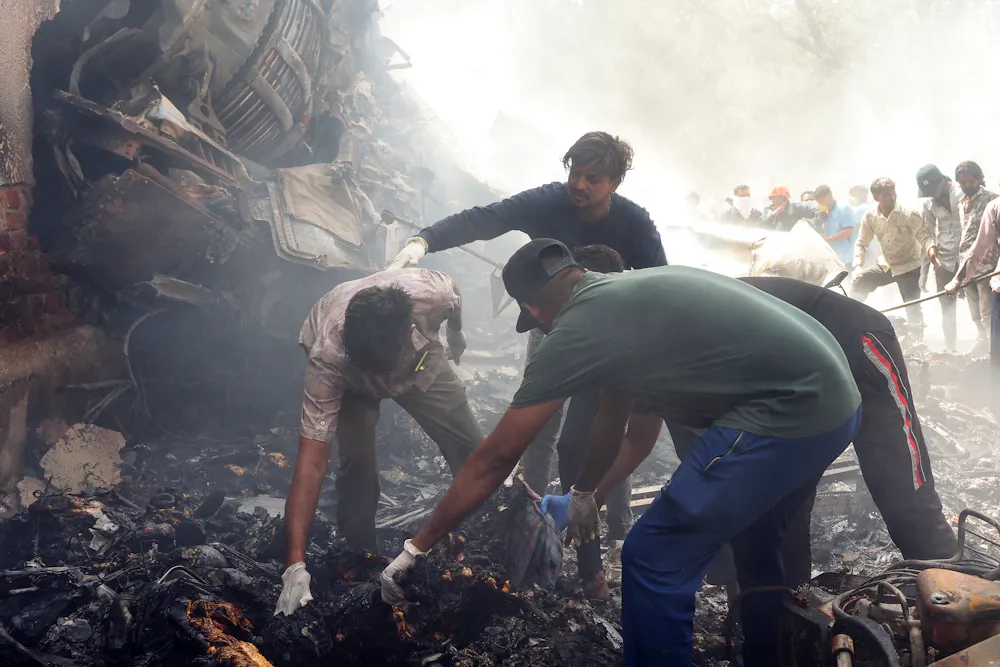
    MIL OSI Russia News

  • MIL-OSI USA: Case Opposes Proposed Annual Defense Funding Measure That Does Not Support Ukraine And Lacks A Coordinated Strategy For The Indo-Pacific

    Source: United States House of Representatives – Congressman Ed Case (Hawai‘i – District 1)

    (Washington, DC) – U.S. Congressman Ed Case (HI-01), a member of the House Appropriations Committee and of its Subcommittee on Defense, voted in Committee against the proposed Fiscal Year (FY) 2026 Defense Appropriations bill today.  

    The FY 2026 Defense bill proposes to spend $831.5 billion, an amount equal to the FY 2025 enacted level, for federal agencies and programs in the Department of Defense (DoD) and intelligence community,

    including the military branches of services, the Central Intelligence Agency and the National Security Agency. Case’s Subcommittee on Defense is responsible for developing the bill. 

    “While the measure funds many critical Hawai‘i and Indo-Pacific priorities I requested, I regrettably had to vote against this version because it eliminates support for the Ukraine Security Assistance Initiative and fails to fund a cohesive and coordinated all-government defense strategy, all of which is critical as we face the generational challenge of the People’s Republic of China,” said Case. “The Committee also was forced to draft the bill in the dark because the administration failed to provide a detailed budget request, and that is a dangerous precedent to support.” 

    Case spoke in Committee in favor of continued support for Ukraine. He stressed that despite the tragic consequences of President Putin’s unprovoked and unjustified war, “you cannot fail to do something that is hard, when you know that if you don’t do it, it will be harder in the future. That was the lesson of Neville Chamberlain in World War II.” (See Case’s speech here.)

    Case also spoke in Committee on the proposal’s lack of a coordinated whole-of-government national defense strategy, which would include soft power tools like international assistance and trade. He called for a broader understanding of national security that looks beyond the narrow confines of military spending, including in the Indo-Pacific. He explained that “only a strong national defense, coordinated and delivered over time, will achieve the foundational necessity of all else.” (See Case’s speech here.)

    Case also offered an amendment, which was accepted by the Committee, to prevent the transmission of classified information or war plans over unsecured networks. His amendment is a direct response to high-level Trump administration officials who used Signal to discuss U.S. military plans to attack Houthi groups in Yemen. Case said: “There are clear federal rules … that prohibit handling classified material outside of approved, encrypted and monitored systems … The rules around are not just suggestions, they are mandates.” (See Case’s speech here.)  

    Despite his significant problems with the bill, Case highlighted programs and provisions he requested and secured that are especially critical to Hawai‘i, including: 

    ·         $30 million to continue efforts to replace O‘ahu’s outdated air surveillance radar, which is needed to defend Hawai‘i from missile attacks. 

    ·         Directing the Navy to support a program to control and eradicate invasive coral at naval installations, which is in response to the invasive coral found at the mouth of Pearl Harbor. 

    ·         Protecting the special contracting preference for Native Hawaiian businesses. 

    ·         $357 million for the Navy’s Environmental Restoration program plus an additional $235 million for the cleanup of Formerly Used Defense Sites. These funds will help accelerate efforts to remediate per- and polyfluoroalkyl (PFAS) contamination and remove unexploded ordnance and discarded military munitions in Hawai‘i and throughout the nation. 

    ·         Funding for two Virginia-class fast attack submarines, which are critical to protecting the Indo-Pacific and will be maintained at the Pearl Harbor Naval Shipyard.  

    ·         $186 million for the Defense POW/MIA Accounting Agency, which maintains critical scientific laboratories at Joint Base Pearl Harbor-Hickam. 

    ·         $177 million for the Sea-Based X-Band Radar, which will help defend Hawai‘i from ballistic missile threats. 

    ·         Over $421 million for “Civil-Military Programs,” which will support Hawaii’s Youth Challenge Academy. 

    ·         Over $70 million for Impact Aid programs, which help Hawaii’s public schools by partially reimbursing the cost of educating military children. 

    ·         Blocked efforts to change the command and control structure of the U.S. Pacific Fleet. There have been efforts within the department to streamline control of forces under one command structure, which would limit the ability of Navy forces in Hawai‘i to respond quickly to changing threats in the Indo-Pacific region. 

    Other programs and provisions in the measure also requested and supported by Case and especially critical to the broader Indo-Pacific include: 

    ·         $8 million for the Asia Regional Pacific Initiative (ARPI) managed by U.S. Indo-Pacific Command. ARPI supports a wide range of exercises, humanitarian assistance, programs and training symposiums that help expand U.S. influence in the Indo-Pacific. The initiative is an important tool for the U.S. military to strengthen relationships throughout the Indo-Pacific region. 

    ·         Continued support for providing humanitarian and other assistance by U.S. military Civic Action Teams in the Freely Associated States. 

    ·         $6 million to expand the National Disaster Medical System Pilot Program to provide critical support to military and civilian health objectives. It will help advance national medical innovation, preparedness, disaster response and integration efforts to underserved regions, such as the Indo-Pacific. 

    ·         $75 million for decoupling rare earth magnet manufacturing from China. 

    General military-related programs and provisions supported by Case related to the DoD overall include:

    ·         3.8% basic pay increase for all military personnel. 

    ·         $700 million for the Congressionally Directed Medical Research Program (CDMRP). The CDMRP fills research gaps by funding high impact, high risk and high gain projects that other agencies may not venture to fund. 

    This measure is one of the twelve bills developed by the House Appropriations Committee that will collectively fund the federal government for FY 2026 (commencing October 1, 2025). The bill now moves on to the full House of Representatives for its consideration.  

    A summary of the defense funding bill is available here.

    ###

    MIL OSI USA News

  • MIL-OSI China: India’s foreign ministry says lot of people lost their lives in plane crash in Gujarat

    Source: People’s Republic of China – State Council News

    Debris of an Air India plane is seen at the crash site in Ahmedabad of India’s Gujarat state, June 12, 2025. India’s foreign ministry said a lot of people have lost their lives in the plane crash with 242 people on board the flight to London in the western state of Gujarat. [Photo/Xinhua]

    India’s foreign ministry said a lot of people have lost their lives in Thursday’s plane crash with 242 people on board an Air India flight to London in the western state of Gujarat.

    The Air India flight had 169 Indian nationals, 53 British nationals, seven Portuguese nationals and one Canadian on board when it crashed shortly after takeoff from the Sardar Vallabhbhai Patel International Airport in Ahmedabad, about 17 km south of Gandhinagar, the capital city of Gujarat.

    There were also 12 cabin crew members on board.

    The ministry, however, has not put out an exact figure on the death toll in the plane crash.

    “What has happened in Ahmedabad is a very tragic accident. We have lost a lot of people. We extend our deepest condolences to all those who have lost their loved ones. There are several foreigners. You will receive the updates from the relevant departments — Ministry of Civil Aviation, Air India, and others. That is the latest I can share. It is an evolving situation. The rescue operations are on. We need to wait a little more time for exact details to be put out,” India’s foreign ministry spokesperson Randhir Jaiswal said during a press briefing.

    Local media reports said that there are no survivors from the ill-fated plane.

    A video of the aircraft flying low and struggling to gain altitude shows the plane going down and exploding in a massive ball of fire.

    Other videos from the site show thick columns of black smoke rising from the ground.

    According to police, the plane crashed directly on the B J Medical College undergraduate hostel mess in Meghani Nagar. The crash caused severe damage to buildings on the premises and several people were reported to be injured.

    A part of the crashed plane landed atop a student hostel, eyewitnesses said.

    Immediately after the crash, authorities rushed fire engines and over two dozen ambulances to the spot to carry out rescue work.

    Police have diverted traffic from the area, and a green corridor has also been established to ferry the injured quickly to the hospital.

    Air India has expressed condolences to the families of all those affected by this devastating event. The airline has changed its logo on social media handles to black after the deadly plane crash.

    The British government has issued a travel advisory, saying they were aware of the plane crash in Ahmedabad.

    “We are aware of a plane crash in Ahmedabad. The UK is working with local authorities in India to urgently establish the facts and provide support to those involved,” reads the advisory.

    Reports said former Gujarat chief minister Vijay Rupani was onboard the crashed flight. Web check-in documents obtained by local media said Rupani had completed his check-in in business class on the ill-fated flight.

    Indian Prime Minister Narendra Modi described the plane crash incident as a tragedy and heartbreaking beyond words.

    “The tragedy in Ahmedabad has stunned and saddened us. It is heartbreaking beyond words. In this sad hour, my thoughts are with everyone affected by it. Have been in touch with ministers and authorities who are working to assist those affected,” Modi wrote on social media.

    Meanwhile, world leaders have expressed condolences to the families of the Air India plane crash in Ahmedabad. 

    People conduct rescue work at the site of an Air India plane crash in Ahmedabad of India’s Gujarat state, June 12, 2025. India’s foreign ministry said a lot of people have lost their lives in the plane crash with 242 people on board the flight to London in the western state of Gujarat. (Str/Xinhua)

    MIL OSI China News

  • MIL-OSI China: Shipping industry expo in China’s Tianjin highlights closer cooperation

    Source: People’s Republic of China – State Council News

    People visit the 3rd Tianjin International Shipping Industry Expo in Tianjin, north China, June 12, 2025. [Photo/Xinhua]

    The third Tianjin International Shipping Industry Expo (TISIE) opened in north China’s Tianjin Municipality on Thursday, attracting over 440 enterprises, ports and industry associations from around the world.

    Titled “Shipping to the world and navigating towards the future, Meet new opportunities for openness and cooperation,” the three-day expo features nine themed exhibition zones covering international ports, green shipping, maritime equipment, logistics services and more, spanning 50,000 square meters.

    Over 20 parallel events will spotlight China’s shipping achievements and global industry trends.

    The TISIE has been held in Tianjin every year since 2023, aiming to boost global shipping cooperation, industrial investment and trade exchange.

    “The shipping industry — the backbone of global trade — faces twin challenges: relentless supply chain disruptions and unyielding need to decarbonize. We must deepen partnerships — between carriers, ports and governments — to create shared contingency plans. I very much applaud the fact that Tianjin takes up its role as a community builder,” Jan Van der Borght, port representative of the Antwerp-Bruges Port Authority, told Xinhua.

    Mangopo Mikhael, director of Indonesian marine surveying firm Geovaruna, expressed admiration for China’s rapid progress: “China’s breakthroughs in smart and green shipping technologies are remarkable. We look forward to expanding partnerships with Chinese counterparts.”

    China maintained its position as the world’s largest port operator by cargo and container throughput in 2024. Its ocean-going fleet continues to expand, with international routes extending farther, according to the China Association of the National Shipbuilding Industry.

    From January to April 2024, Chinese shipbuilders accounted for 49.9 percent of global output, 67.6 percent of new orders, and 64.3 percent of backlog orders in terms of dead-weight tonnage.

    The country’s logistics sector has also shown robust growth. The index tracking China’s logistics market was at 50.6 percent in May, indicating sustained expansion and resilient supply chains, according to the China Federation of Logistics & Purchasing (CFLP).

    “As an organization bridging government, industry and enterprises, CFLP is committed to bolstering the resilience of global industrial and supply chains,” said Yang Guodong, vice president of CFLP.

    Guo Dacheng, president of the China Association of the National Shipbuilding Industry, said that the expo presents frontier technologies, innovative products and advanced concepts that will chart the course of the future of shipping and shipbuilding.

    Li Yang, China’s vice minister of transport, stressed the need to deepen global collaboration in addressing shared challenges such as supply chain resilience, maritime safety and the green transition.

    “China will actively participate in global shipping governance under multilateral frameworks like the International Maritime Organization, contributing to rule-making and maintaining the order of international shipping,” Li said.

    MIL OSI China News

  • MIL-OSI Economics: Press Briefing Transcript: Julie Kozack, Director, Communications Department, June 12, 2025

    Source: International Monetary Fund

    June 12, 2025

    SPEAKER:  Ms. Julie Kozack, Director of the Communications Department, IMF

    MS. KOZACK: Good morning, everyone, and welcome to this IMF Press Briefing. My name is Julie Kozak. I’m the Director of Communications at the IMF.  As usual, this press briefing will be embargoed until 11:00 a.m. Eastern Time in the United States.  And as usual, I will start with a few announcements, and then I’ll take your questions in person on WebEx and via the Press Center.  And I have quite a few announcements today, so please do bear with me. 

    On June 18th, the Managing Director will travel to Brussels, where she will hold bilateral meetings with officials.  On June 19th, she will travel to Luxembourg to present the Euro Area Annual Consultation at the Eurogroup meeting.  On June 20th, the Managing Director will be in Rome to speak at the Mattei Plan for Africa and the Global Gateway event, a joint effort with the African Continent.  This event is co-chaired by Italian Prime Minister Giorgia Meloni and European Commission President Ursula von der Leyen.  And from there, the Managing Director will travel to Japan from June 22nd to 24th.  During her visit, she will hold meetings with Japanese officials, members of the private sector, and other stakeholders. 

    Turning to other management travel.  First Deputy Managing Director Gita Gopinath will travel to Sri Lanka, Singapore, and Indonesia.  On June 16th, she will participate in the Sri Lanka Road to Recovery Conference, where she will deliver opening remarks.  And in all three countries, our FDMD will meet with officials and various stakeholders during this trip. 

    From June 24th through 26th, our Deputy Managing Director Bo Li will attend the World Economic Forum Annual Meeting of the New Champions in Tianjin, China.  DMD Li will participate in sessions on safeguarding growth engines and the role of digital assets in Global payment systems. 

    On June 30th, Deputy Managing Director Nigel Clarke will participate in the Finance for Development Conference and in Sevilla, Spain. 

    And with that, I will now open the floor to your questions.  For those of you who are connecting virtually, please do turn on both your camera and microphone when speaking.  All right, let’s open the floor.   

    QUESTIONER: I have two questions on Ukraine.  After meetings in Kyiv last month, the IMF mission emphasized the importance of Ukraine’s upcoming budget declaration for 2026-2028, which will determine the course of the fiscal framework and policies.  What are the Fund’s expectations, and does the IMF have any specific requirements or policy guidelines for this document?  And secondly, if I may, do you have data of the IMF Board — IMF support meetings to approve the aides review for Ukraine?     

    MS. KOZACK: Any other questions on Ukraine?                                          

    QUESTIONER: So, Ukraine has recently defaulted on its GDP-linked securities and, before that, failed to reach an agreement with creditors to restructure its part of its sovereign debt.  How concerned is IMF with these developments, and do you see any risks for the EFF repayments from Ukraine?  Thank you. 

    QUESTIONER: Some follow-up to your question.  IMF sources indicate that Ukraine transferred $171 million repayment to the Fund on June 9th, the first repayment on loans received post-February 2022.  Can you confirm this payment was received?  And how does the IMF view Ukraine’s emerging shift towards repayment on wartime financing?  Thank you. 

    MS. KOZACK: Let me take these questions for a moment, and I’ll remind you where we are on Ukraine.

    On May 28th, IMF staff and the Ukrainian authorities reached Staff–Level Agreement.  And this was for the Eighth Review of the EFF program.  Subject to approval by our Executive Board, Ukraine will have access to about U.S. $500 million, and that would bring total disbursements under the program to U.S. $10.6 billion.  The Board is scheduled to take place in the coming weeks, and we’ll provide more details as they become available.  I can also add that Ukraine’s economy has remained resilient.  Performance under the EFF has continued to be strong despite very challenging circumstances.  The authorities met all of their quantitative performance criteria and indicative targets, and progress does continue on the structural agenda in Ukraine.

    Now, with respect to the specific questions on the budget declaration, what I can provide there is that our view is that the 2026-2028 budget declaration will provide a strategic framework for fiscal policy for the remainder of the program over that period of time.  It will help focus the debate on key expenditure priorities, including recovery, reconstruction, defense, and social spending.  And it will also form the basis for discussion of the 2026 budget, which, of course, will also be an important milestone for Ukraine. 

    On the question regarding the debt, what I can say there is that we encourage the Ukrainian authorities and their creditors to continue to make progress toward reaching an agreement in line with the debt sustainability targets under the IMF’s program and the authority’s announced strategy.  So that’s sort of our broad view on the debt.  On the implications for completion of the review, as in all cases where a member country may have arrears to private creditors, staff will assess whether the requirements under the Fund’s lending into arrears policy are met.  In light of this, again, we encourage the authorities to continue to make good-faith efforts toward reaching an agreement in light of the debt sustainability targets. 

    And on your question about Ukraine’s payment to the Fund, what I can say is that, in general, we don’t comment on specific transactions of individual members.  What I can guide you to is that we do provide on our website detailed information on members’ repayments.  And this is made available on a monthly basis.  So, at the end of each month, if you look at the Ukraine page, you can see the transactions that were made.  And on a daily basis, we provide detail on member countries outstanding obligations to the IMF.  So that can give you a sense of how the overall obligations of Ukraine have evolved on a daily basis. 

    QUESTIONER: Can you give us an update on the relationship between the IMF and Senegal?  Where do things currently stand with misreporting and a new program?  This is my first question.  And the second one I have is the Fifth Review under the Policy Coordination concerning Rwanda.  The IMF stated that “Rwanda continues to demonstrate leadership in integrating climate consideration into macroeconomic policy and leveraging institutional reforms to mobilize climate finance.”  Now my question is, can you please tell us concretely what kind of institutional reforms have been implemented by Rwanda? 

    MS. KOZACK: So, before I answer this, are there any other questions on Senegal or Rwanda? I see none in the room. Anyone online want to come in on Senegal?  Okay, I don’t see anyone coming in, so let’s start with Senegal, and then we’ll move to Rwanda. 

    What I can say on Senegal is that we, the IMF and our team in particular, remained actively engaged with the Senegalese authorities, including during a visit to Dakar over March and April and further discussions during the Spring Meetings, which were held here in Washington in April.  We do continue to work with the authorities to address the complex misreporting case that is ongoing.  And addressing this complex case does require a rigorous and time-intensive process.

    I also want to take the opportunity to add that the IMF supports our member countries in a variety of ways, and it goes beyond just providing financing.  So, for example, in the case of Senegal, we are continuing to provide the authorities with technical assistance, including, for example, on our debt sustainability analysis that is tailored to low-income countries.  We’re working closely with the authorities on compiling government financial statistics.  This is being led by our Statistics Department.  We’re providing technical assistance on energy sector reform, public investment management, and revenue mobilization, and that, of course, is with support from our fiscal experts. 

    With respect to a new program.  We don’t have currently a fixed timeline for a new program, and we are awaiting the final audit outcome. 

    Now, turning to your question on Rwanda here.  What I can say, and maybe just to step back and remind everyone of where we are in Rwanda.  On June 4th, so just a few days ago, our Executive Board concluded the Fifth Review of Rwanda’s policy Coordination Instrument.  Rwanda’s economic growth remains among the strongest in Sub-Saharan Africa, and that’s despite rising pressures both on the fiscal side and the external side.  Rwanda, of course, we’re encouraging Rwanda to continue with a credible fiscal consolidation, strong domestic revenue mobilization, and a strong monetary policy. 

    With respect to your specific question, Rwanda successfully completed its Resilience and Sustainability Fund program, the RSF program, in December of 2024, six months ahead of the initial timetable.  And under this RSF, Rwanda did carry out a number of institutional reforms that were focused on green public financial management, climate public investment management, climate-related risk management for financial institutions, and disaster risk reduction.  So, these are some of the institutional reforms that Rwanda completed, which led us to make that statement about their leadership in this area. 

    I can also add that these reforms, along with some of the other reforms they’re having, they’re undertaking, such as a green taxonomy and the adoption of best practices in climate risk reporting by financial institutions.  The idea is that this together will help to close information gaps, improve transparency, and that hopefully will allow for a boost to private sector engagement in advancing Rwanda’s ambitious climate goals and its broader goals toward economic development and strong and sustainable growth. 

    QUESTIONER: Two questions on Syria.  The Fund said this week that Syria needs substantial international assistance for its recovery efforts.  Firstly, can you give us an estimation of how much economic assistance Syria will need?  And secondly, could you just let us know if there were any discussions around if a potential Article IV was discussed? 

    MS. KOZACK: Thank you. Any other questions on Syria?                   

    QUESTIONER: Just to know if there was any demand from the Syrian government for any kind of technical assistance from the IMF to help them recover, economically speaking?

    MS. KOZACK: Does anyone online want to come in on Syria? I don’t see anyone coming in. So let me step back again and give a sense of where we are on Syria.

    I think, as many of you know, an IMF staff team visited Syria from June 1st through 5th.  This was the first IMF visit to Syria since 2009.  The goal of the visit was to assess the economic and financial conditions in Syria, as well as to discuss with the authorities their economic policy, and also to ascertain the authorities ‘ capacity-building priorities, ultimately to support the recovery of the Syrian economy.  I think, as we’ve discussed here before, Syria faces enormous challenges following years of conflict that have caused immense human suffering, and it’s reduced the Syrian economy to a fraction of its former size. 

    At the IMF, we’re committed to supporting Syria in its efforts.  Based on the findings of the mission, IMF staff, in coordination with other partners, are developing a detailed roadmap for policy and capacity development priorities for key economic institutions.  And within the IMF’s mandate, this covers the Finance Ministry, the Central Bank, and the Statistics Agency.  So those would be the areas where we will be focusing in terms of the detailed roadmap on priorities, economic and capacity building priorities. 

    Syria, as noted, will need substantial international assistance.  We don’t yet have a precise estimate of that assistance.  But what I can say is this will also — it will not only require concessional financial support, but also substantial capacity development support for the country.  And that’s basically where we have left it with the Syrian authorities.  And, of course, we will continue to engage closely with them, and we are committed to helping them, supporting them on their recovery journey. 

    QUESTIONER: Is the date of the IMF mission to Argentina already said?  And based on that definition, when would the First Review of the agreement could take place?  And another one, in the last few days, the Argentina government has launched different mechanisms to try to increase the level of foreign exchange reserves.  Is the IMF worried that Argentina will not reach the target set in the agreement?  And could the IMF give Argentina a waiver on this?  Thank you very much. 

    MS. KOZACK: Okay, any other questions in the room on Argentina? I know we have several online.

    QUESTIONER: Thanks for taking my questions.  I would like to know how does the IMF evaluate the listed economy measures, particularly the issue of the measure to use undeclared dollars.  Thank you.

    QUESTIONER: My first question is about the reserve target for the new program with Argentina.  Central Bank is about $4 billion below the target set for June.  Also, some operations are expected that could increase their reserve stock.  Officials said on Monday evening that local currency bonds can now be purchased with U.S. dollar and that the minimum time requirement for foreign investors to hold onto some Argentina bonds will be eliminated.  The IMF is concerned that the Central Bank is not accumulating reserves touch foreign trade and is only receiving income touch debt.  Is the consensus with the authorities to postpone the Frist Review and allow time for Argentina to activate credit operation in order to close — to get closer to the target set for June, or Argentina should resort to a waiver?  And what is your view on the recent measures? 

    And that second question is about the possibility of an IMF mission arriving in Argentina in the coming weeks.  Is that possible?  Would it be a technical staff mission, or could the Managing Director or Deputy Executive Director also come?  Thank you very much. 

    QUESTIONER: So, the question is the same as (connection issue) First Review of the agreement signed in April (connection issue)

    QUESTIONER: -Is the IMF considering granting a waiver and also if they build up. 

    MS. KOZACK: You’ve broken up quite a bit, and now we’re not able to hear you, so we’ll try to get you back, or I think what I understood from your question is it’s broadly along the same lines as some of the other questions. What we can do is if you want to connect via the Press Center, I can read the question out loud. But what I’m going to do is move on.                      

    QUESTIONER:  Basically, echoing my colleague’s questions on the timing of the mission and whether an extension was granted to meet the reserve’s target, well, for the First Review generally.  And separately, Argentina has July 9th dollar debt payments, which will obviously affect reserves.  How will that payment and timing affect your calculus of the reserves target within the First Review?  Thank you.

    QUESTIONER: Well, yes, also echoing my colleague’s question regarding whether the timeline for the First Review, the end date remains this Friday, which was what it said on the Staff Report.  And also, there was a ruling lately, these past few days, against former President Cristina Kirchner.  I was wondering if that raises any concerns in the IMF regarding any political conflict or any subsequent economic impact. 

    MS. KOZACK: I think we’ve covered all the questions on Argentina. Anyone else on Argentina? Okay, very good.  So, let me try to give a response that tries to cover as many of these questions as I can.  So again, I’m just going to step back and provide where we are with Argentina. 

    So, on April 11th, the IMF’s Executive Board approved a new four-year EFF arrangement worth $20 billion for Argentina.  The initial disbursement was $12 billion, and the goal of the program was to support is to support Argentina’s transition to the next phase of state stabilization and reform.  The Milei administration’s policies continue to evolve and to deliver impressive results, as we have previously noted. 

    In this regard, we welcome the recent measures announced this week by the Central Bank and the Ministry of Finance as they represent another important step in efforts to consolidate disinflation, support the government’s financing strategy and to rebuild reserves and, more specifically, steps to strengthen the monetary framework and to improve liquidity management.  These are important to further reduce inflation and inflation expectations.  The Treasury’s successful reentry into capital markets and other actions to mobilize financing for Argentina are also expected to boost reserves, and stability overall for the country continues to be supported by the implementation of strong fiscal anchor in the country. 

    Our team continues to engage frequently and constructively with the Argentine authorities as part of the program’s First Review.  I can add that a technical mission will visit Buenos Aires in late June to assess progress on program targets and objectives and to also discuss the authority’s forward-looking reform agenda.  More broadly and despite the more challenging environment, the authorities, as I said, have continued to make very notable and impressive progress.  So, I will leave it at that. 

    Let’s go online for a bit, and then we’ll come — no, let’s go right here in the back.  You haven’t had a question, and you’re in the room.                             

    QUESTIONER: Given the recent escalation in global trade tensions and the effect of the tariffs, what is the IMF’s assessment of how these developments are affecting emerging economies?  And what policy recommendation does the IMF have for countries facing increased external pressures? 

    MS. KOZACK: Okay, let me answer — let me turn to this question on emerging markets, a very important constituency and part of our membership here at the IMF. So, let me start with where we were and what our assessment was as of April.

    In April, when we launched our World Economic Outlook, we projected growth in emerging and developing countries to slow from 4.3 percent in 2024 to 3.7 percent in 2025 and then to come back a little bit to 3.9 percent in 2026.  We did have at that time also significant downgrades for countries most affected by the trade measures, and that includes China, for example.  We have seen since then that there have been some positive surprises to growth in the first quarter for this group of countries, including China.  We have also seen recent reductions in some tariffs, and that represents kind of an upside risk to our forecast.  And, of course, we will be updating our forecast, including for this group of emerging and developing countries, as part of our July WEO update, and that will be released toward the end of July. 

    In terms of our recommendations, we recommend what we would call a multi-pronged policy response.  So first, to carefully calibrate monetary policy and also macroprudential or prudential policies to maintain stability in countries.  We also recommend for this group of countries, but for all of our members, to rebuild fiscal buffers to restore policy space to respond to, of course, future shocks that may occur.  For countries that may face particular disruptive pressures in the foreign currency, foreign exchange market, we would say that they could pursue targeted interventions if those instances are disruptive.  We also are encouraging again all of our countries to undertake the necessary reforms to no longer delay reforms associated with boosting productivity and longer-term growth. 

    I think maybe stepping back, we’ve been talking for quite some time in the IMF about a low growth, high debt environment.  And this, of course, applies to this group of countries as well.  So, dealing with the debt side, of course, is important through fiscal consolidation, but also, very importantly, boosting growth and productivity growth.  So, countries can also have a more prosperous society and also deal with some of their debt issues through stronger growth is also very important. 

    All right, let me go online, and then I’ll come back to the room.  Let’s see.  Online, I see a few hands up.                             

    QUESTIONER: My question is on Japanese tour conducted by Managing Director.  Could you give more details on how Japanese tour played this month?  For example, is there any chance for giving speeches or press conference and so on? 

    MS. KOZACK: So, as I said, the Managing Director will visit Japan later this month. Her visit will mostly entail meetings with government officials and also the business community as well as other stakeholders. She will have an opportunity to also do some outreach, and we can provide further details to you as her agenda becomes more concrete.  But she is very much looking forward to the visit.  Japan, as I think we’ve said before, is an important partner for the IMF.  And the Managing Director is very much looking forward to meeting with Japanese officials and talking more broadly to other stakeholders in Japan about the important partnership that the IMF has with Japan. 

    I see some other hands up online.  Unfortunately, I can’t see.  So, I think if you’re online and you have your hand up, just jump in. 

    QUESTIONER: You already referred to your own economic outlooks when you talked about emerging markets.  But I was — I wanted to ask you, does the IMF anticipate a similar growth downgrade as we’ve just seen for the World Bank this week and its economic assessment?  Because, of course, back in April, the cutoff point for your last report was just as Donald Trump was announcing the Liberation Day tariffs. 

    MS. KOZACK: Okay, so thank you for that. Any other questions on the global outlook? Okay, so let me take this one, and then we’ll come back to some other questions. 

    So, what I can say in terms of the forward-looking, I mean, first, I want to start by reiterating that we will release a revised set of projections in July as part of our regular WEO update.  What I can add is that since we released our World Economic Outlook, what we call the WEO, in April, we have seen some, you know, some data come in and some other developments.  So first, we have seen some trade deals that have lowered tariffs, notably between the U.S. and China, but also the U.S. and the UK, and at the same time, the U.S. has raised further tariffs on steel and aluminum imports.  So taken together, such announcements, combined with the April 9th pause on the high level of tariffs, these could support activity relative to the forecast that we had in April.  But nonetheless, we do have an outlook for the global economy that remains subject to heightened uncertainty, especially as trade negotiations continue. 

    I can also add that recent activity indicators reflect a complex economic landscape.  So, this is recent high-frequency data.  We have some outturns in the first quarter, which indicated a front-loading of activity ahead of the tariff announcements that took place in April.  And some high-frequency indicators also show some trade diversion and unwinding of that earlier front loading.  So, this is kind of the more recent indicators.  So, all of this creates kind of a complicated picture for us with some upside risk, some other developments, and we’ll take all of these developments together into account as we update our forecast toward the end of July in our WEO. 

    QUESTIONER: When you say support activity, do you mean there’s a chance it could be an improved outlook? 

    MS. KOZACK: So yes, by support activity, what we mean is that it’s kind of positive, it’s a little bit of a positive sign for economic activity. So that’s related, though, I would say, to the specific announcements. So, so just going back to say, the announcements of the trade deals that have lowered tariffs, particularly the ones between the U.S. and China and the U.S. and the UK, those could be supportive or a bit more positive for economic activity going forward.  But the overall picture is both complicated for the reasons that I mentioned. 

    We have some front loading in the first quarter.  Some of that seems perhaps to be unwinding in more recent indicators.  And we also, of course, have to remember that we are in an environment of very high uncertainty, and uncertainty, in general, tends to dampen economic activity. 

    So, the overall picture is quite complex.  And so, we will take all of these factors into account as we move forward with our forecast in July.  And, of course, between now and when we release our forecast later in July, we would expect that there will be further data releases.  And also, there is the possibility that there can be further announcements that we would have to take into account or further developments that we would have to take into account as well. 

    Let me just stay online for another minute.  I think I have one more hand up online or two hands online. 

    QUESTIONER: My question is about Egypt.  I was hoping to ask you if the Egyptian authorities have requested a waiver from the Fund for any of the requirements related to the Fifth Review of the country’s ongoing loan program and specifically if a waiver has been requested related to targets for divestment from state-owned assets.  And if you have any update on the timing of the Fifth Review, that would also be very helpful.  I know there were some suggestions that the Fifth Review could be combined with the Sixth Review, in which case we wouldn’t see it until September rather than the June date that had previously been talked about.  Thank you.

    MS. KOZACK: Anyone else on Egypt?

    QUESTIONER: My question is related to the previous one by my colleague.  She asked about the state-owned companies to be listed for IPOs or for private sectors to be having a bigger stake in the economy.  How the IMF evaluate the progress achieved by the Egyptian authorities during that?  And also, when the Fifth Review to be finished after the physical meetings happened in past May?  And what are the most recent progress achieved until now during this?  And also, I’d like to ask about how IMF evaluated the latest step by Egyptian government to give the Minister of Finance the right to issue sukuk in the guarantee of place in Red Sea as published in the last two days. 

    MS. KOZACK: Okay, thank you. Anyone else have questions on Egypt? So, on Egypt, as I think many of you know, an IMF team visited Cairo.  From May 6th to May 18th, the team held productive discussions with the Egyptian authorities on their economic and financial policies.  Discussions are continuing virtually to finalize agreement on remaining policies and reforms that could support the completion of the Fifth Review under the EFF. So again, discussions around the Fifth Review are continuing virtually. 

    As we have said here before, Egypt has made clear progress on its macroeconomic reform program with notable improvements in inflation and in the level of international reserves.  As Egypt’s macroeconomic stabilization is taking hold, it’s now the time for efforts to focus on accelerating and deepening reforms, including reducing the footprint of the state, leveling the playing field, and improving the business environment in Egypt. 

    What I can add is that in order to deliver on these objectives, particularly with respect to reducing the footprint of the state, leveling the playing field, et cetera, it’s important to decisively reduce the role of the public sector in the economy.  The implementation of the state ownership policy, as well as the asset divestment program in sectors where the state has committed to reduce its footprint, will be playing a critical role in strengthening the ability of Egypt’s private sector to contribute to growth and activity in the Egyptian economy, which will ultimately support improvements in livelihoods of the Egyptian people.  We remain committed to supporting Egypt in building economic resilience and fostering stronger private sector-led growth. 

    On some of the more specific questions related to Sukuk, I don’t have a response here, but we’ll come back to you bilaterally. 

    QUESTIONER: It’s a quick overall question.  Could you remind us the condition for a country to come under IMF supervision?  Does it require specifically a program, or can it come from the IMF itself?  Thank you very much. 

    MS. KOZACK: Can you clarify what you mean by IMF supervision? Just so I understand.

    QUESTIONER: To be perfectly honest, in the past few days, we had comments from the French government about the fact that it could become under IMF supervision.  I’m not very interested in specifically about France, but just in general overall how IMF comes to work with governments.  What are the conditions for the IMF to step in and come to help the government?  Thank you very much. 

    MS. KOZACK: Very good. So, let me maybe take this opportunity to step back and explain kind of the three big pillars of the work of the IMF.

    So, the first is policy advice, and this is done mainly through the Article IV consultation process.  The reason it’s called Article IV is because it’s in Article IV of our Articles of Agreement, and every member country of the IMF — so, we have 191 member countries — every member country commits when they join the IMF to participate in the Article IV consultation process.  So that applies to every member.  And that is a process that I know you here are very familiar with, where the IMF sends a team, and we conduct an assessment of the economy, and we provide policy advice to the country.  That’s done for all members. 

    Another leg or another pillar of what we do at the IMF is capacity development.  And for capacity development, this is at the request of the member.  So, this could be, you know, very specific advice on a specific area where our technical expert would go and do sort of a deep dive analysis and provide detailed policy recommendations.  But it’s really meant at building state capacity.  So often, this is done in areas such as revenue mobilization or public financial management, statistics, monetary policy frameworks, and debt management.  These are some of the areas where we would provide technical assistance to countries.  That’s at the request of the member. 

    And the same is true for our financial support.  So, for financial support, this is done again at the request of the member country.  The member would request financial support from the Fund, and then the Fund would then send a team and ultimately develop a program that reflects the commitments of the authorities.  But that program would need to be aimed at getting the country back on its feet.  In our technical language, it’s restoring medium-term viability for the country.  And that financing program has a balance between financial resources that the Fund provides and also policy measures taken by the part of the authorities.  But that, again, is at the request of the member country. 

    QUESTIONER: So, my question is about cryptocurrency and digital assets.  What is the IMF’s view right now on the daily use transactions by people, by governments, in paying and accumulating Bitcoin and other digital currencies?  What risks and opportunities do you see on behalf of the IMF and what shall be done on the governmental level to implement any additional safeguards requirements to make this like a daily routine operations?  Thank you. 

    MS. KOZACK: Okay, so I think on the broad topic of kind of crypto assets, what we can say is that they have gained popularity as an asset class. And also, what we see is that the underlying technology, which is a digital ledger that is shared, trusted, and programmable, is broadly viewed as highly valuable. And that technology may have broader societal benefits.  So, we do see crypto assets as a speculative asset as an asset class.  At the IMF, we generally don’t recommend crypto assets as legal or cryptocurrencies as legal tender.  We also do see that there are some potential risks that could arise from crypto assets.  These include risks to financial stability, to consumer and investor protection, and also to market integrity. 

    So, in order to balance, in a sense, the opportunities based on the technology and a new asset class with some of these risks, what we advise countries to do is to establish a robust policy framework to effectively mitigate some of the risks while allowing society to take advantage of the benefits or the opportunities that arise from this new technology. 

    QUESTIONER:  The Bank of Russia recently cut its key interest rate from 21 percent to 20 percent, marking its first easing move since September 2022.  From the IMF perspective, what are the implications of this monetary policy shift?  Thank you. 

    MS. KOZACK: So, on Russia, let me just step back a minute, and I’ll provide our overall assessment of the economy, and then I’ll get to your specific question.

    So, what we see in Russia is that last year, we saw the economy overheating, and now what we observe in Russia is a, is sharp slowdown of the economy, with growth slowing but inflation still relatively elevated.  Growth in 2025 is expected to slow to 1.5 percent based on our forecast from April, and this was compared to 4.3 percent in 2024.  And this reflects policy tightening, cyclical factors, and also lower oil prices. 

    Now, with respect to the action by the Central Bank, as you noted, the Central Bank indeed reduced the key policy rate from 21 percent to 20 percent for the first time.  This was the first reduction since September of 2022.  And the action taken by the Central Bank was in response to slowing growth, which I just mentioned, and also some easing of inflation pressures. 

    So, as I noted, inflation still remains high.  It was just under 10 percent in May.  But our forecast has inflation declining going forward.  So, we expect inflation to ease to 8.2 percent by the end of this year.  And we anticipate that inflation will turn to the target of 4 percent in the first half of 2027.  So that’s the IMF forecast.  So, the inflation challenge for Russia remains, and it’s appropriate.  Therefore, that monetary policy remains tight, and even with this cut, monetary policy is still tight. 

    I am going to now take the opportunity to read one question or some questions on Ghana and some questions on Sri Lanka, and then we’ll bring the Press Briefing to a close.  So, on Ghana, I have three questions.  The first one is about an update on when Ghana’s program will be presented to the Board following Staff–Level Agreement. 

    The second question is about the amended Energy Sector Levy Act to add GH₵1 per liter on petroleum products to defray the cost of fuel purchases for thermal plants.  Has the IMF taken note of this, and what’s its position on using taxes versus passing these costs through tariffs? 

    The third question on Ghana is whether the IMF is looking at the possibility of revising Ghana’s IMF program targets as the cedi’s sharp appreciation against the dollar has affected many variables that influence these targets set by the Fund? 

    So let me take a moment to just respond on Ghana.  So again, stepping back to where we are on Ghana.  On April 15th, the IMF staff and the Ghanaian authorities reached Staff–Level Agreement on the Fourth Review of Ghana’s Extended Credit Facility.  Upon approval by our Executive Board, Ghana would be scheduled to receive about U.S. $370 million, bringing total support under the ECF to $2.4 billion since May of 2023.  We anticipate bringing the review to our Board in early July, so in just a few weeks. 

    What I can add about the question about the cedi’s sharp appreciation is that you know, of course, as we look at a program, we look at all of these developments, including, of course, developments in the exchange rate.  And so, future program reviews will provide an opportunity for the team to carefully assess all of the evolving macroeconomic and financial conditions, including exchange rate movements, and to ensure that the program’s targets and objectives remain appropriate and achievable. 

    And on the fuel levy, what I can say is that this is a new measure that will help generate additional resources to tackle the challenges in Ghana’s energy sector, and it’s also going to bolster Ghana’s ability to deliver on the fiscal objectives under the program. 

    And I’m going to read one last set of questions on Sri Lanka, and then we will bring the Press briefing to a close.  So, we have a number of journalists asking about Sri Lanka.  So there’s — we’re consolidating the questions here.  So, these journalists are asking for updates on the IMF’s view on Sri Lanka’s progress in implementing cost recovery, electricity prices, and the automatic price adjustment system.  They’re asking about the date for the Executive Board’s consideration of the Fourth Review under the program. 

    And another question, has the government raised the issue of recent global shocks and possible further pressure on the economy and its ability to meet its reform program targets?  How do we rate the new government’s approach to corruption? 

    QUESTIONER: My question is, recently Sri Lankan president announced that the existing IMF program is likely (inaudible) that it will be the final program for the country as it tries to achieve financial independence.  What is the IMF’s view on this?  Is it achievable given the current situation in Sri Lanka?  And what is the progress on the IMF Board approval for the next review?  Thank you. 

    MS. KOZACK: All right, so again, just stepping back and reminding where we are on Sri Lanka.

    So, on April 25th, IMF staff and the Sri Lankan authorities reached Staff–Level Agreement on their fourth review of Sri Lanka’s economic reform program.  The program and Sri Lanka’s ambitious reform agenda continue to deliver commendable outcomes.  Performance under the program remains strong overall, and the government remains committed to program objectives.  Completion of the review is pending approval of the IMF’s Executive Board, and it is contingent on the completion of prior actions. 

    What I can add is that our IMF team, of course, is closely engaged with the authorities to assess the measures that were recently announced by the regulator on June 11th.  And these include a 15 percent increase in in electricity tariffs and the publication of a revised bulk supply transaction account guidelines for this.  So, these were two prior actions.  Once the review is completed by our Executive Board, Sri Lanka would have access to about $344 million in financing, and we will announce the Board date for Sri Lanka in due course. 

    With respect to some of the more specific questions on governance, what I can add is that in end-February, the government published an updated government action plan on governance reforms.  And this action plan included important commitments such as enacting a public procurement law, an asset recovery law, and other actions that are aligned with the recommendations that were included in the IMF’s Governance Diagnostic Report. 

    On the question about kind of the global situation and the impact on Sri Lanka, what I can say there is that, like for all countries in an environment of high uncertainty around policy and in general, high global uncertainty, this poses, of course, risks to an economy like Sri Lanka’s, as it does to many others.  If some of the risks associated with high global uncertainty were to materialize, the way we will approach this will be to work very closely with the authorities first to assess the impact of any downside risk that materializes, and then we will also work with the authorities to consider what are the appropriate policy responses within the contours of the program. And more broadly, for all countries, including Sri Lanka, it’s really critical for each country to sustain its own reform momentum.  Sustaining reform momentum, both with macroeconomic policy reforms and, importantly, some of the growth-enhancing reforms that we were talking about earlier, is critical for all countries in our membership, including Sri Lanka. 

    And on the question regarding the president’s remarks, I think there, what I can simply say is to repeat that, you know, Sri Lanka has made commendable progress, you know, in implementing some very difficult but much-needed reforms.  The effects — these efforts are really starting to bear fruit.  We see a remarkable rebound in growth following Sri Lanka’s crisis.  Inflation is low, international reserves are continuing to grow, revenue collection on the fiscal side is improving, and the debt restructuring process is nearly complete.  So, I think it’s really important to recognize, you know, the significant efforts that Sri Lanka has taken and also the tremendous progress that has been made.  Right now, of course, we are very much focused on the current EFF, and therefore, as I mentioned, it’s going to be critical for Sri Lanka to sustain the reform momentum through the remainder of this EFF program. 

    And with that, I am going to bring this Press Briefing to a close.  Let me thank you all for your participation today.  As a reminder, as usual, this briefing is embargoed until 11:00 A.M. Eastern Time in the United States.  A transcript will be made available later on IMF.org, and should you have any clarifications or additional queries, please reach out to my colleagues media@imf.org. This concludes our Press Briefing for today.  I wish everyone a wonderful day, and I do look forward to seeing you all next time.  Thank you very much. 

    *  *  *  *  *

    IMF Communications Department
    MEDIA RELATIONS

    PRESS OFFICER: Brian Walker

    Phone: +1 202 623-7100Email: MEDIA@IMF.org

    MIL OSI Economics