Category: Asia

  • MIL-Evening Report: 2-million-year-old pitted teeth from our ancient relatives reveal secrets about human evolution

    Source: The Conversation (Au and NZ) – By Ian Towle, Research Fellow in Biological Anthropology, Monash University

    Ian Towle / The Conversation

    The enamel that forms the outer layer of our teeth might seem like an unlikely place to find clues about evolution. But it tells us more than you’d think about the relationships between our fossil ancestors and relatives.

    In our new study, published in the Journal of Human Evolution, we highlight a different aspect of enamel. In fact, we highlight its absence.

    Specifically, we show that tiny, shallow pits in fossil teeth may not be signs of malnutrition or disease. Instead, they may carry surprising evolutionary significance.

    You might be wondering why this matters. Well, for people like me who try to figure out how humans evolved and how all our ancestors and relatives were related to each other, teeth are very important. And having a new marker to look out for on fossil teeth could give us a new tool to help fit together our family tree.

    Uniform, circular and shallow

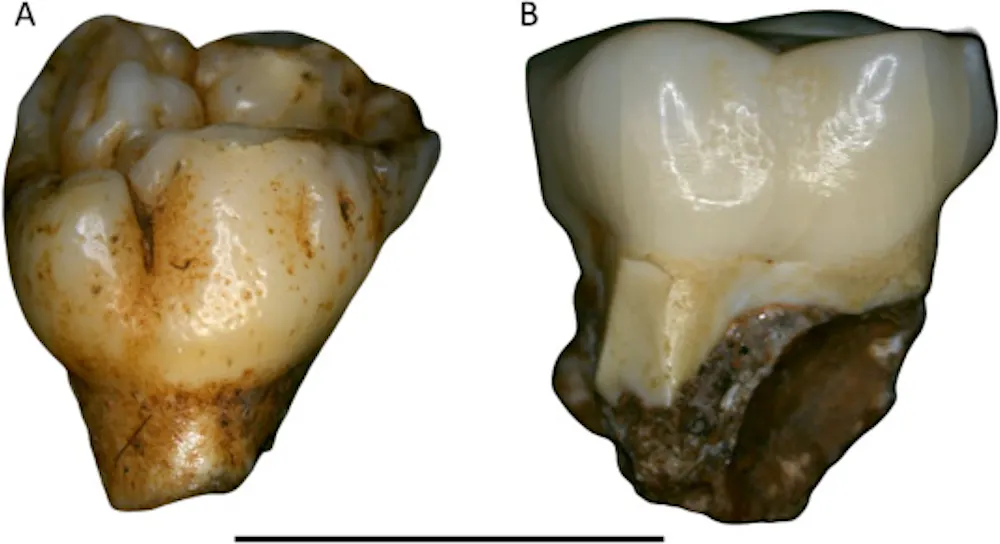
    These pits were first identified in the South African species Paranthropus robustus, a close relative of our own genus Homo. They are highly consistent in shape and size: uniform, circular and shallow.

    Initially, we thought the pits might be unique to P. robustus. But our latest research shows this kind of pitting also occurs in other Paranthropus species in eastern Africa. We even found it in some Australopithecus individuals, a genus that may have given rise to both Homo and Paranthropus.

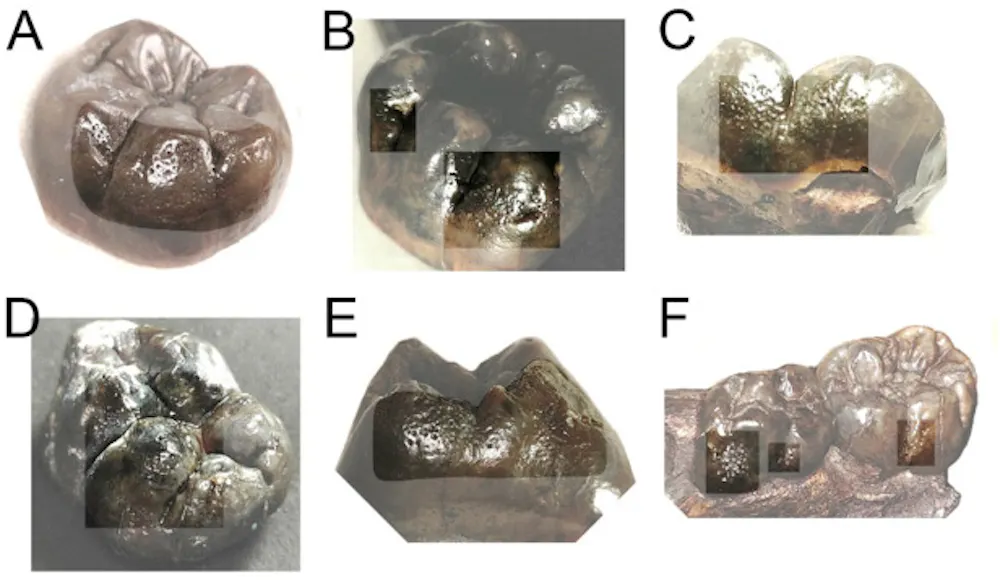
    Uniform, circular and shallow pitting on teeth may be a previously undetected clue about evolutionary relationships.
    Towle et al. / Journal of Human Evolution

    The enamel pits have commonly been assumed to be defects resulting from stresses such as illness or malnutrition during childhood. However, their remarkable consistency across species, time and geography suggests these enamel pits may be something more interesting.

    The pitting is subtle, regularly spaced, and often clustered in specific regions of the tooth crown. It appears without any other signs of damage or abnormality.

    Two million years of evolution

    We looked at fossil teeth from hominins (humans and our closest extinct relatives) from the Omo Valley in Ethiopia, where we can see traces of more than two million years of human evolution, as well as comparisons with sites in southern Africa (Drimolen, Swartkrans and Kromdraai).

    The Omo collection includes teeth attributed to Paranthropus, Australopithecus and Homo, the three most recent and well-known hominin genera. This allowed us to track the telltale pitting across different branches of our evolutionary tree.

    What we found was unexpected. The uniform pitting appears regularly in both eastern and southern Africa Paranthropus, and also in the earliest eastern African Australopithecus teeth dating back around 3 million years. But among southern Africa Australopithecus and our own genus, Homo, the uniform pitting was notably absent.

    A defect … or just a trait?

    If the uniform pitting were caused by stress or disease, we might expect it to correlate with tooth size and enamel thickness, and to affect both front and back teeth. But it doesn’t.

    What’s more, stress-related defects typically form horizontal bands. They usually affect all teeth developing at the time of the stress, but this is not what we see with this pitting.

    The uniform, even nature of the pitting suggests a genetic origin rather than environmental factors such as malnutrition or disease.
    Towle et al. / Journal of Human Evolution

    We think this pitting probably has a developmental and genetic origin. It may have emerged as a byproduct of changes in how enamel was formed in these species. It might even have some unknown functional purpose.

    In any case, we suggest these uniform, circular pits should be viewed as a trait rather than a defect.

    A modern comparison

    Further support for the idea of a genetic origin comes from comparisons with a rare condition in humans today called amelogenesis imperfecta, which affects enamel formation.

    About one in 1,000 people today have amelogenesis imperfecta. By contrast, the uniform pitting we have seen appears in up to half of Paranthropus individuals.

    Although it likely has a genetic basis, we argue the even pitting is too common to be considered a harmful disorder. What’s more, it persisted at similar frequencies for millions of years.

    A new evolutionary marker

    If this uniform pitting really does have a genetic origin, we may be able to use it to trace evolutionary relationships.

    We already use subtle tooth features such as enamel thickness, cusp shape, and wear patterns to help identify species. The uniform pitting may be an additional diagnostic tool.

    For example, our findings support the idea that Paranthropus is a “monophyletic group”, meaning all its species descend from a (relatively) recent common ancestor, rather than evolving seperatly from different Australopithecus taxa.

    And we did not find this pitting in the southern Africa species Australopithecus africanus, despite a large sample of more than 500 teeth. However, it does appear in the earliest Omo Australopithecus specimens.

    So perhaps the pitting could also help pinpoint from where Paranthropus branched off on its own evolutionary path.

    An intriguing case

    One especially intriguing case is Homo floresiensis, the so-called “hobbit” species from Indonesia. Based on published images, their teeth appear to show similar pitting.

    If confirmed, this could suggest an evolutionary history more closely tied to earlier Australopithecus species than to Homo. However, H. floresiensis also shows potential skeletal and dental pathologies, so more research is needed before drawing such conclusions.

    More research is also needed to fully understand the processes behind the uniform pitting before it can be used routinely in taxonomic work. But our research shows it is likely a heritable characteristic, one not found in any living primates studied to date, nor in our own genus Homo (rare cases of amelogenesis imperfecta aside).

    As such, it offers an exciting new tool for exploring evolutionary relationships among fossil hominins.

    Ian Towle does not work for, consult, own shares in or receive funding from any company or organisation that would benefit from this article, and has disclosed no relevant affiliations beyond their academic appointment.

    ref. 2-million-year-old pitted teeth from our ancient relatives reveal secrets about human evolution – https://theconversation.com/2-million-year-old-pitted-teeth-from-our-ancient-relatives-reveal-secrets-about-human-evolution-258390

    MIL OSI AnalysisEveningReport.nz

  • MIL-OSI Australia: Northern Territory Police Force – King’s Birthday Honours 2025

    Source: Northern Territory Police and Fire Services

    Congratulations to former member Commander Daniel Bacon who has been named today as a recipient of the Australian Police Medal (APM) as part of the 2025 King’s Birthday Australian Honours List.

    Commander Bacon’s distinguished 38-year career with Northern Territory Police Force spans frontline service across Alice Springs, Tennant Creek, Kulgera, Timber Creek, Katherine and Darwin. Since joining as a cadet in 1987 and graduating as a constable, he has progressed through a wide variety of operational roles, culminating in his promotion to commander in 2015.

    Commander Bacon officially retired from the NT Police Force in April 2025 and throughout his tenure, he has demonstrated exceptional leadership, particularly whilst overseeing the Greater Darwin Command.

    Known for his compassionate leadership style, Commander Bacon was a steadfast advocate for officer welfare, fostering open communication and supporting career development.

    Commander Bacon’s service record includes a significant United Nations deployment to East Timor in 2001 and leadership in managing major emergencies and critical incidents. He also spearheaded Strike Force Lyra, targeting high-risk domestic and family violence.

    This honour is a testament to Commander Bacon’s career in policing and recognises his unwavering dedication to the safety and wellbeing of the Northern Territory community.

    Acting Commissioner of Police, Matthew Hollamby APM said, “We are fortunate enough to have had Mr Bacon as part of the NT Police for such an expansive time.

    “He was a respected colleague by the entire agency and is a deserving member of such a prestigious award.

    “I wish to personally thank Danny for his service, and his family for their support across a successful career.”

    *MEDIA NOTE: Mr Bacon is currently unavailable for any media interviews as he is travelling.*

    MIL OSI News

  • MIL-Evening Report: Measles cases are surging globally. Should children be vaccinated earlier?

    Source: The Conversation (Au and NZ) – By Meru Sheel, Associate Professor, Infectious Diseases, Immunisation and Emergencies (IDIE) Group, Sydney School of Public Health, University of Sydney

    EyeEm Mobile GmbH/Getty Images

    Measles has been rising globally in recent years. There were an estimated 10.3 million cases worldwide in 2023, a 20% increase from 2022.

    Outbreaks are being reported all over the world including in the United States, Europe and the Western Pacific region (which includes Australia). For example, Vietnam has reportedly seen thousands of cases in 2024 and 2025.

    In Australia, 77 cases of measles have been recorded in the first five months of 2025, compared with 57 cases in all of 2024.

    Measles cases in Australia are almost all related to international travel. They occur in travellers returning from overseas, or are contracted locally after mixing with an infected traveller or their contacts.

    Measles most commonly affects children and is preventable with vaccination, given in Australia in two doses at 12 and 18 months old. But in light of current outbreaks globally, is there a case for reviewing the timing of measles vaccinations?

    Some measles basics

    Measles is caused by a virus belonging to the genus Morbillivirus. Symptoms include a fever, cough, runny nose and a rash. While it presents as a mild illness in most cases, measles can lead to severe disease requiring hospitalisation, and even death. Large outbreaks can overwhelm health systems.

    Measles can have serious health consequences, such as in the brain and the immune system, years after the infection.

    Measles spreads from person to person via small respiratory droplets that can remain suspended in the air for two hours. It’s highly contagious – one person with measles can spread the infection to 12–18 people who aren’t immune.

    Because measles is so infectious, the World Health Organization (WHO) recommends two-dose vaccination coverage above 95% to stop the spread and achieve “herd immunity”.

    Low and declining vaccine coverage, especially since the COVID pandemic, is driving global outbreaks.


    Read more:
    What are the symptoms of measles? How long does the vaccine last? Experts answer 6 key questions


    When are children vaccinated against measles?

    Newborn babies are generally protected against measles thanks to maternal antibodies. Maternal antibodies get passed from the mother to the baby via the placenta and in breast milk, and provide protection against infections including measles.

    The WHO advises everyone should receive two doses of measles vaccination. In places where there’s a lot of measles circulating, children are generally recommended to have the first dose at around nine months old. This is because it’s expected maternal antibodies would have declined significantly in most infants by that age, leaving them vulnerable to infection.

    If maternal measles antibodies are still present, the vaccine is less likely to produce an immune response.

    Research has also shown a measles vaccine given at less than 8.5 months of age can result in an antibody response which declines more quickly. This might be due to interference with maternal antibodies, but researchers are still trying to understand the reasons for this.

    A second dose of the vaccine is usually given 6–9 months later. A second dose is important because about 10–15% of children don’t develop antibodies after the first vaccine.

    In settings where measles transmission is under better control, a first dose is recommended at 12 months of age. Vaccination at 12 months compared with nine months is considered to generate a stronger, longer-lasting immune response.

    In Australia, children are routinely given the measles-mumps- rubella (MMR) vaccine at 12 months and the measles-mumps-rubella-varicella (MMRV, with “varicella” being chickenpox) vaccine at 18 months.

    Babies at higher risk of catching the disease can also be given an additional early dose. In Australia, this is recommended for infants as young as six months when there’s an outbreak or if they’re travelling overseas to a high-risk setting.

    A new study looking at measles antibodies in babies

    A recent review looked at measles antibody data from babies under nine months old living in low- and middle-income countries. The review combined the results from 20 studies, including more than 8,000 babies. The researchers found that while 81% of newborns had maternal antibodies to measles, only 30% of babies aged four months had maternal antibodies.

    This study suggests maternal antibodies to measles decline much earlier than previously thought. It raises the question of whether the first dose of measles vaccine is given too late to maximise infants’ protection, especially when there’s a lot of measles around.

    Should we bring the measles vaccine forward in Australia?

    All of the data in this study comes from low- and middle-income countries, and might not reflect the situation in Australia where we have much higher vaccine coverage for measles, and very few cases.

    Australia’s coverage for two doses of the MMR vaccine at age two is above 92%.

    Although this is lower than the optimal 95%, the overall risk of measles surging in Australia is relatively low.

    Nonetheless, there may be a case for broadening the age at which an early extra dose of the measles vaccine can be given to children at higher risk. In New Zealand, infants as young as four months can receive a measles vaccine before travelling to an endemic country.

    But the current routine immunisation schedule in Australia is unlikely to change.

    Adding an extra dose to the schedule would be costly and logistically difficult. Lowering the age for the first dose may have some advantages in certain settings, and doesn’t pose any safety concerns, but further evidence would be required to support this change. In particular, research is needed to ensure it wouldn’t negatively affect the longer-term protection that vaccination offers from measles.

    Making sure you’re protected

    In the meantime, ensuring high levels of measles vaccine coverage with two doses is a global priority.

    People born after 1966 are recommended to have two doses of measles vaccine. This is because those born before the mid-1960s likely caught measles as children (when the vaccine was not yet available) and would therefore have natural immunity.

    If you’re unsure about your vaccination status, you can check this through the Australian Immunisation Register. If you don’t have a documented record, ask your doctor for advice.

    Catch-up vaccination is available under the National Immunisation Program.

    Meru Sheel receives funding from the National Health and Medical Research Council and the Department of Foreign Affairs and Trade.

    Anita Heywood does not work for, consult, own shares in or receive funding from any company or organisation that would benefit from this article, and has disclosed no relevant affiliations beyond their academic appointment.

    ref. Measles cases are surging globally. Should children be vaccinated earlier? – https://theconversation.com/measles-cases-are-surging-globally-should-children-be-vaccinated-earlier-257942

    MIL OSI AnalysisEveningReport.nz

  • MIL-Evening Report: Can Israel still claim self-defence to justify its Gaza war? Here’s what the law says

    Source: The Conversation (Au and NZ) – By Donald Rothwell, Professor of International Law, Australian National University

    On October 7 2023, more than 1,000 Hamas militants stormed into southern Israel and went on a killing spree, murdering 1,200 men, women and children and abducting another 250 people to take back to Gaza. It was the deadliest massacre of Jews since the Holocaust.

    That day, Israeli Prime Minister Benjamin Netanyahu told the country, “Israel is at war”. The Israel Defence Forces (IDF) immediately began a military campaign to secure the release of the hostages and defeat Hamas. Since that day, more than 54,000 Palestinians have been killed, mostly women and children.

    Israel has maintained its response is justified under international law, as every nation has “an inherent right to defend itself”, as Netanyahu stated in early 2024.

    This is based on the right to self-defence in international law, which is outlined in Article 51 of the 1945 United Nations Charter as follows:

    Nothing in the present Charter shall impair the inherent right of individual or collective self-defence if an armed attack occurs against a Member of the United Nations[…]

    At the start of the war, many nations agreed Israel had a right to defend itself, but how it did so mattered. This would ensure its actions were consistent with international humanitarian law.

    However, 20 months after the October 7 attacks, fundamental legal issues have arisen around whether this self-defence justification still holds.

    Can Israel exercise self-defence ad infinitum? Or is it now waging a war of aggression against Palestine?

    Self-defence in the law

    Self-defence has a long history in international law.

    The modern principles of self-defence were outlined in diplomatic exchanges over an 1837 incident involving an American ship, The Caroline, after it was destroyed by British forces in Canada. Both sides agreed that an exercise of self-defence would have required the British to demonstrate their conduct was not “unreasonable or excessive”.

    The concept of self-defence was also extensively relied on by the Allies in the second world war in response to German and Japanese aggression.

    Self-defence was originally framed in the law as a right to respond to a state-based attack. However, this scope has broadened in recent decades to encompass attacks from non-state actors, such as al-Qaeda following the September 11 2001 terror attacks.

    Israel is a legitimate, recognised state in the global community and a member of the United Nations. Its right to self-defence will always remain intact when it faces attacks from its neighbours or non-state actors, such as Hamas, Hezbollah or the Houthi rebels in Yemen.

    However, the right of self-defence is not unlimited. It is constrained by the principles of necessity and proportionality.

    The necessity test was met in the current war due to the extreme violence of the Hamas attack on October 7 and the taking of hostages. These were actions that could not be ignored and demanded a response, due to the threat Israel continued to face.

    The proportionality test was also met, initially. Israel’s military operation after the attack was strategic in nature, focused on the return of the hostages and the destruction of Hamas to eliminate the immediate threat the group posed.

    The legal question now is whether Israel is still legitimately exercising self-defence in response to the October 7 attacks.

    This is a live issue, especially given comments by Israeli Defence Minister Israel Katz on May 30 that Hamas would be “annihilated” unless a proposed ceasefire deal was accepted.

    These comments and Israel’s ongoing conduct throughout the war raise the question of whether proportionality is still being met.

    A test of proportionality

    The importance of proportionality in self-defence has been endorsed in recent years by the International Court of Justice.

    Under international law, proportionality remains relevant throughout a conflict, not just in the initial response to an attack.

    While the law allows a war to continue until an aggressor surrenders, it does not legitimise the complete destruction of the territory where an aggressor is fighting.

    The principle of proportionality also provides protections for civilians. Military actions are to be directed at the foreign forces who launched the attack, not civilians.

    While Israel has targeted Hamas fighters in its attacks, including those who orchestrated the October 7 attacks, these actions have caused significant collateral deaths of Palestinian civilians.

    Therefore, taken overall, the ongoing, 20-month military assault against Hamas, with its high numbers of civilian casualties, credible reports of famine and devastation of Gazan towns and cities, suggests Israel’s exercise of self-defence has become disproportionate.

    The principle of proportionality is also part of international humanitarian law. However, Israel’s actions on this front are a separate legal issue that has been the subject of investigation by the International Criminal Court.

    My aim here is to solely assess the legal question of proportionality in self-defence and international law.

    Is rescuing hostages in self-defence?

    Israel could separately argue it is exercising legitimate self-defence to rescue the remaining hostages held by Hamas.

    However, rescuing nationals as an exercise of self-defence is legally controversial. Israel set a precedent in 1976 when the military rescued 103 Jewish hostages from Entebbe, Uganda, after their aircraft had been hijacked.

    In current international law, there are very few other examples in which this interpretation of self-defence has been adopted – and no international consensus on its use.

    In Gaza, the size, scale and duration of Israel’s war goes far beyond a hostage rescue operation. Its aim is also to eliminate Hamas.

    Given this, rescuing hostages as an act of self-defence is arguably not a suitable justification for Israel’s ongoing military operations.

    An act of aggression?

    If Israel can no longer rely on self-defence to justify its Gaza military campaign, how would its actions be characterised under international law?

    Israel could claim it is undertaking a security operation as an occupying power.

    While the International Court of Justice said in an advisory opinion last year that Israel was engaged in an illegal occupation of Gaza, the court expressly made clear it was not addressing the circumstances that had evolved since October 7.

    Israel is indeed continuing to act as an occupying power, even though it has not physically reoccupied all of Gaza. This is irrelevant given the effective control it exercises over the territory.

    However, the scale of the IDF’s operations constitute an armed conflict and well exceed the limited military operations to restore security as an occupying power.

    Absent any other legitimate basis for Israel’s current conduct in Gaza, there is a strong argument that what is occurring is an act of aggression. The UN Charter and the Rome Statute of the International Criminal Court prohibit acts of aggression not otherwise justified under international law.

    These include invasions or attacks by the armed forces of a state, military occupations, bombardments and blockades. All of this has occurred – and continues to occur – in Gaza.

    The international community has rightly condemned Russia’s invasion as an act of aggression in Ukraine. Will it now do the same with Israel’s conduct in Gaza?

    Donald Rothwell receives funding from the Australian Research Council.

    ref. Can Israel still claim self-defence to justify its Gaza war? Here’s what the law says – https://theconversation.com/can-israel-still-claim-self-defence-to-justify-its-gaza-war-heres-what-the-law-says-257822

    MIL OSI AnalysisEveningReport.nz

  • MIL-OSI Russia: Myanmar leader says he is ready to work with China to build a Myanmar-China community of shared destiny

    Translation. Region: Russian Federal

    Source: People’s Republic of China in Russian – People’s Republic of China in Russian –

    Source: People’s Republic of China – State Council News

    NAYPYI TAW, Myanmar, June 8 (Xinhua) — A ceremony to mark the 75th anniversary of the establishment of diplomatic relations between China and Myanmar was held in Myanmar’s capital Naypyitaw on Sunday.

    Speaking at the ceremony, Myanmar leader Min Aung Hlaing said Myanmar is willing to stand hand in hand with China, remain firmly committed to strengthening the fraternal friendship between the two countries, and consistently promote the building of a Myanmar-China community with a shared future.

    Min Aung Hlaing noted that the two countries have historically developed traditional fraternal relations of good-neighborliness and friendship.

    Over the 75 years since the establishment of diplomatic relations between Myanmar and China, the friendly ties between the governments, peoples and all walks of life of the two countries have continued to develop steadily, and cooperation in key areas such as investment and trade has continuously achieved remarkable progress, the Myanmar leader noted.

    According to Min Aung Hlaing, both countries have consistently adhered to the five principles of peaceful coexistence, setting a model for modern international relations.

    Myanmar will continue to firmly adhere to the one-China principle and highly appreciates China’s Global Development Initiative, Global Security Initiative and Global Civilization Initiative.

    Min Aung Hlaing also expressed gratitude for China’s strong support for peace, national reconciliation, socio-economic development of Myanmar, as well as for the valuable assistance provided to it in the aftermath of the earthquake.

    Chinese Ambassador to Myanmar Ma Jia, for her part, said that China and Myanmar are connected by shared mountains and rivers, and their friendly relations go back thousands of years.

    The ambassador stated that since the establishment of diplomatic relations, China-Myanmar ties have been as strong as a rock. The future and destiny of the two countries are inextricably linked, and the two countries continue to write new chapters in the history of fraternal friendship in various fields, Ma Jia added.

    The diplomat stressed that China will continue to adhere to the principles of a friendly, secure and prosperous neighborhood, goodwill, sincerity, mutual benefit, inclusiveness and common destiny.

    Ma Jia assured that China will continue to strengthen strategic mutual trust, deepen development integration, maintain regional stability and expand exchanges with Myanmar.

    In addition, China will continue to support Myanmar in its post-earthquake recovery and promote the deepening and practical realization of the China-Myanmar community of shared future, the ambassador added. –0–

    MIL OSI Russia News

  • MIL-OSI: ASUS Republic of Gamers Announces the ROG Xbox Ally and ROG Xbox Ally X, Raising the Standard for Gaming Handhelds

    Source: GlobeNewswire (MIL-OSI)

    KEY POINTS

    • All-day comfort: Redesigned chassis is purpose-built to fit the hands like a real gamepad
    • Seamless software experience: New Xbox® software offers the best of Xbox and Windows PC gaming in one handheld
    • Efficiency and performance: Two new processors offer incredible AAA and indie gaming experiences

    LOS ANGELES, June 08, 2025 (GLOBE NEWSWIRE) — ASUS Republic of Gamers (ROG) is proud to announce an all-new series of Ally handhelds built from the ground up with improved ergonomics and a seamless player-first user experience.

    Developed in partnership with the incredible team at Xbox, the new ROG Xbox Ally and ROG Xbox Ally X offer best-in-class ergonomics and a full-screen Xbox experience that marries the best of Xbox and PC gaming in one cohesive package.

    “We wanted to take our handheld to the next level, but we could not do it alone.” said Shawn Yen, Head of the Consumer product team at ASUS. “This revolutionary partnership with Microsoft allowed us to forge a brand new device with ROG muscle and the soul of Xbox.”

    The ROG Xbox Ally sports an AMD Ryzen™ Z2 A Processor with incredible power efficiency, while the ROG Xbox Ally X offers the new AMD Ryzen™ AI Z2 Extreme Processor for next-level gaming performance. Both launch holiday 2025 in select markets, with additional markets to follow.

    All-day comfort

    The ROG Xbox Ally and the ROG Xbox Ally X feature a completely redesigned chassis. Gaming on handheld is a very personal experience, and comfort in the hand is a key pillar of a well-designed device. With years of feedback on the original Ally and Ally X, the ROG Xbox Ally series offers a more comfortable grip than ever, inspired by Xbox. With a redesigned palm rest and texturing patterns to keep gamers locked on target, the ROG Xbox Ally series truly raises the bar for comfort with a handheld gaming device.

    The ROG Xbox Ally X also features impulse triggers, improving the haptics in supported games. These triggers allow for more nuance and immersion and are a feature that Xbox gamers have come to expect with their controllers. These devices are the most comfortable and immersive handhelds ever built by ROG.

    Seamless software experience

    While the ROG Armoury Crate Special Edition software made the original Ally easy to use, ROG and Xbox aimed to make handheld gaming even more seamless on Windows 11. “We wanted to create an authentic Xbox experience in a handheld form factor,” explained Roanne Sones, CVP at Xbox. “With ROG, we made it happen on the Xbox Ally and Xbox Ally X.”

    As soon as players power on the device, they enter the full screen Xbox experience. Powered by Windows 11 underneath, this software has been optimized for the ROG Xbox Ally, reducing system overhead and offering easy joystick and button navigation. Quick access to settings and customizable widgets are available via Game Bar with a single press of the Xbox button. But with the full freedom of Windows 11 running under the hood, games and mods from other sources are still easily accessible. The ROG Xbox Ally series offers the power of Xbox, the craftsmanship of ROG, and the versatility of Windows, all in one cohesive device.

    Efficiency and performance

    The ROG Xbox Ally X features the new top-of-stack AMD Ryzen AI Z2 Extreme Processor, giving it plenty of horsepower even in AAA games. Combined with software optimizations from the new Xbox experience, the ROG Xbox Ally X stands ready to provide gamers with next-gen handheld performance.

    “Battery life is paramount on handhelds like the ROG Xbox Ally and Ally X,” said Jack Huynh, Senior Vice President and General Manager of AMD. “The Ryzen Z2 series improves efficiency over the previous generation while still offering excellent performance in modern games.”

    The ROG Xbox Ally offers console-caliber performance with its AMD Ryzen Z2 A Processor. At the same time, its ultra-efficient design at low wattages and its 60Wh battery produce improved battery life. Meanwhile, the ROG Xbox Ally X takes performance to greater heights, offering more room for graphical fidelity at higher framerates with the AMD Ryzen AI Z2 Extreme Processor.

    Both chips are primed to take full advantage of AMD’s latest software suite for graphics and performance improvements, including AMD FidelityFX™ Super Resolution (FSR), Radeon Super Resolution (RSR), and AMD Fluid Motion Frames (AFMF) frame generation, the latter of which can offer better framerates for improved smoothness.

    In a nod to the future, the AMD Ryzen AI Z2 Extreme-equipped ROG Xbox Ally X features an NPU. With these next-generation chips, the ROG Xbox Ally X will be ready to power the latest AI features as they are introduced.

    At launch this holiday, the ROG Xbox Ally and ROG Xbox Ally X will be available in Australia, Belgium, Canada, Denmark, Finland, France, Germany, Ireland, Italy, Japan, Korea, Mexico, the Netherlands, New Zealand, Norway, Poland, Portugal, Saudi Arabia, Singapore, Spain, Sweden, Switzerland, Thailand, Turkey, the United Arab Emirates, the United Kingdom, and the United States, with availability to follow for other markets where ROG Ally series products are sold today.  

    For more information, please visit https://rog.asus.com/content/rog-xbox-ally/. Users can also sign up on the page to get notified when pre-orders go live.

    SPECIFICATIONS

    ROG Xbox Ally X (2025)

    Operating System Windows 11 Home
    Comfort & input Contoured grips inspired by Xbox Wireless Controllers deliver all-day comfort, complete with impulse triggers for enhanced control

    ABXY buttons / D-pad / L & R impulse triggers / L & R bumpers / Xbox button / View button / Menu button / Command Center button / Library button / 2x assignable back buttons / 2x full-size analog sticks / HD haptics / 6-Axis IMU

    Processor AMD Ryzen AI Z2 Extreme Processor
    Display 7” FHD (1080p) IPS, 500 nits, 16:9
    120Hz refresh rate
    FreeSync Premium
    Corning® Gorilla® Glass Victus® + Corning DXC Anti-Reflection
    Memory 24GB LPDDR5X-8000
    Storage 1TB M.2 2280 SSD for easier upgrade
    Network and Communication Wi-Fi 6E (2 x 2) + Bluetooth® 5.4
    I/O Ports 1x USB4® with DisplayPort 2.1 / Power Delivery 3.0, Thunderbolt 4 compatible

    1x USB 3.2 Gen 2 Type-C® with DisplayPort 2.1 / Power Delivery 3.0

    1x UHS-II microSD card reader (supports SD, SDXC and SDHC; UHS-I with DDR200 mode)

    1x 3.5mm Combo Audio Jack

    Battery 80Wh
    Dimensions 290.8 (W) x 121.5 (D) x 50.7 (H) mm
    Weight 715 grams
    Included ROG Xbox Ally X

    65W charger

    Stand

    ROG Xbox Ally (2025)

    Operating System Windows 11 Home
    Comfort & input Contoured grips inspired by Xbox Wireless Controllers deliver all-day comfort

    ABXY buttons / D-pad / L & R Hall Effect analog triggers / L & R bumpers / Xbox button / View button / Menu button / Command Center button / Library button / 2x assignable back buttons / 2x full-size analog sticks / HD haptics / 6-Axis IMU

    Processor AMD Ryzen Z2 A Processor
    Display 7” FHD (1080p) IPS, 500 nits, 16:9

    120Hz refresh rate

    FreeSync Premium

    Corning® Gorilla® Glass Vitus® + Corning DXC Anti-Reflection

    Memory 16GB LPDDR5X-6400
    Storage 512GB M.2 2280 SSD for easier upgrade
    Network and Communication WiFi 6E (2 x 2) + Bluetooth® 5.4
    I/O Ports 2x USB 3.2 Gen 2 Type-C® with DisplayPort 2.1 / Power Delivery 3.0

    1x UHS-II microSD card reader (supports SD, SDXC and SDHC)

    1x 3.5mm Combo Audio Jack

    Battery 60Wh
    Dimensions 290.8 (W) x 121.5 (D) x 50.7 (H) mm
    Weight 670 grams
    Included ROG Xbox Ally

    65W charger

    Stand

    NOTES TO EDITORS

    ROG Facebook: https://www.facebook.com/asusrog

    ROG X (Twitter): https://www.x.com/asus_rog

    ASUS Pressroom: http://press.asus.com

    ASUS Canada Facebook: https://www.facebook.com/asuscanada/

    ASUS Canada Instagram: https://www.instagram.com/asus_ca

    ASUS Canada YouTube: https://ca.asus.click/youtube

    ASUS Global Twitter: https://www.x.com/asus

    About ROG

    Republic of Gamers (ROG) is an ASUS sub-brand dedicated to creating the world’s best gaming hardware and software. Formed in 2006, ROG offers a complete line of innovative products known for performance and quality, including motherboards, graphics cards, system components, laptops, desktops, monitors, smartphones, audio equipment, routers, peripherals and accessories. ROG participates in and sponsors major international gaming events. ROG gear has been used to set hundreds of overclocking records and it continues to be the preferred choice of gamers and enthusiasts around the world. To become one of those who dare, learn more about ROG at http://rog.asus.com.

    A photo accompanying this announcement is available at https://www.globenewswire.com/NewsRoom/AttachmentNg/589e47e6-72cf-472f-b58a-2d4425432efb

    The MIL Network

  • MIL-OSI Russia: Thailand, Cambodia reach deal on troop redeployment to ease border tensions

    Translation. Region: Russian Federal

    Source: People’s Republic of China in Russian – People’s Republic of China in Russian –

    Source: People’s Republic of China – State Council News

    BANGKOK/PHNOM PENH, June 8 (Xinhua) — Thailand and Cambodia have agreed to redeploy troops to ease tensions after a brief clash earlier in the border area, Thai Prime Minister Phetongthan Shinawatra said Sunday.

    As the Prime Minister reported on the social network X, her talks with the Cambodian government had produced a positive result. Both sides agreed to change the deployment of troops in the conflict areas to ease tensions.

    The Prime Minister assured that Thailand and Cambodia will hold discussions at all levels to return interstate relations to normal as soon as possible.

    In a separate statement, Deputy Prime Minister and Defence Minister Phumtham Vechayachai confirmed that Thai and Cambodian military units had completed their redeployment to positions agreed upon in 2024.

    Phumtham Vechayachai noted that continuous coordination at all levels has helped ease tensions and both countries are seeking to reduce conflict and avoid confrontation.

    Meanwhile, Cambodian Senate (upper house of parliament) Chairman Hun Sen said on Sunday evening that adjusting the military’s deployment in areas of conflict with Thailand was necessary to prevent large-scale violent clashes.

    “Adjusting the deployment of military units in potential conflict zones based on mutual understanding between the command of the armed forces of Cambodia and Thailand is essential to prevent large-scale clashes involving violence,” the post on his official social media page reads.

    “The people of Cambodia and Thailand sincerely desire lasting peace and do not want to see war,” he said. “Efforts to find a solution through dialogue have been made at all levels, from the government to the frontline commanders, and are now bearing fruit.”

    Cambodian and Thai troops briefly exchanged fire in a disputed border area on May 28, leaving a Cambodian soldier dead. –0–

    MIL OSI Russia News

  • MIL-OSI USA: Statement from the Co-Chairs of the Congressional Korea Caucus Congratulating President-Elect Lee Jae-myung

    Source: United States House of Representatives – Representative Joe Wilson (2nd District of South Carolina)

    Washington, D.C. – Today, U.S. Representatives Joe Wilson (R-SC), Ami Bera, M.D. (D-CA), Mike Kelly (R-PA), and Marilyn Strickland (D-WA)*** Co-Chairs of the Congressional Korea Caucus, released a statement on the election of Lee Jae-myung as President of the Republic of Korea:

    “We extend our sincere congratulations to President-Elect Lee Jae-myung and wish him and his administration well as they prepare to lead the Republic of Korea – a key and indispensable U.S. ally – through the many challenges facing the Korean Peninsula and beyond.

    “As Co-Chairs of the Korea Caucus, we remain steadfastly committed to defending, strengthening and enlarging the ironclad U.S.-Korea alliance. This year marks the 75th anniversary of the outbreak of the Korean War where our relationship was forged on the battlefield and now forms the linchpin of U.S. foreign policy in the Indo-Pacific region. Through our shared values, unshakable bond and common future together, we will continue to ensure peace and prosperity on the Peninsula and in the region.

    “We look forward to working together with President-Elect Lee Jae-myung and his administration during this critical time for the alliance. We also wish to recognize the estimated two million Korean Americans throughout the United States who play a vital role in maintaining our strong bilateral relationship.” 

    ***Note: U.S. Representative Marilyn Strickland (D-WA) has assumed the role of Co-Chair following the passing of the Late Honorable Gerald E. Connolly of Virginia. 

    # # #

    MIL OSI USA News

  • MIL-OSI Security: ICE Captures Worst of the Worst Illegal Alien Criminals in Los Angeles Including Murderers, Sex Offenders, and Other Violent Criminals

    Source: US Department of Homeland Security

    California politicians and rioters are defending heinous illegal alien criminals at the expense of Americans safety

    WASHINGTON – Today, the Department of Homeland Security (DHS) published additional information about some of the worst of the worst criminal illegal aliens arrested during Immigration and Customs Enforcement’s (ICE) Los Angeles operation.

    “Why do Governor Newsom and Los Angeles Mayor Karen Bass care more about violent murderers and sex offenders than they do about protecting their own citizens?” said Assistant Secretary Tricia McLaughlin. “These rioters in Los Angeles are fighting to keep rapists, murderers, and other violent criminals loose on Los Angeles streets. Instead of rioting, they should be thanking ICE officers every single day who wake up and make our communities safer.”

    Below are just a few of the worst of the worst ICE arrested this week in Los Angeles:

    Cuong Chanh Phan

    ICE arrested Cuong Chanh Phan, a 49-year-old illegal alien from Vietnam. His criminal history includes a conviction for second degree murder and was sentenced to 15 years to life.

    Rolando Veneracion-Enriquez

    ICE arrested Rolando Veneracion-Enriquez, a 55-year-old illegal alien from the Philippines. His criminal history includes burglary in Ontario, CA with a sentence of four years in prison, sexual penetration with a foreign object with force and assault with intent to commit rape in Pomona, CA with a sentence of 37 years in prison. 

    Lionel Sanchez-Laguna

    ICE Los Angeles Lionel Sanchez-Laguna, a 55-year-old illegal alien from Mexico. Sanchez-Laguna’s criminal history includes discharging a firearm at an inhabited dwelling and vehicle in Orange, CA with a sentence of 365 days in jail, battery on spouse or cohabitant in Orange, CA with a sentence of four years of probation, willful cruelty to child in Orange, CA with a sentence of four years of probation, driving under the influence in Orange, CA with a sentence of ten days in jail, assault with semi-automatic firearm in Orange, CA with a sentence of three years in prison, and personal use of a firearm in Orange, CA with a sentence of three years in prison.

    Armando Ordaz

    ICE arrested Armando Ordaz, a 44-year-old illegal alien from Mexico. Ordaz’s criminal history includes sexual battery in Los Angeles, CA with a sentence of 135 days of jail and five years of probation, receiving known or stolen property in Norwalk, CA with a sentence of 90 days in jail and three years of probation, and petty theft in Los Angeles, CA with a sentence of 365 days in jail and four years of probation.

    Francisco Sanchez-Arguello

    ICE arrested Francisco Sanchez-Arguello, a 38-year-old illegal alien from Mexico. Sanchez-Arguello’s criminal history that includes arrests for grand theft larceny and possession of a prohibited weapon.

    Jose Gregorio Medranda Ortiz

    ICE arrested Jose Gregorio Medranda Ortiz, a 42-year-old illegal alien from Ecuador. Medranda Ortiz’s criminal history includes conspiracy to possess with intent to distribute five kilograms or more cocaine while on board a vessel in Tampa, FL with a sentence of 135 months in prison.

    Victor Mendoza-Aguilar

    ICE arrested Victor Mendoza-Aguilar, a 32-year-old illegal alien from Mexico. His criminal history includes a conviction for possessing unlawful paraphernalia in Pasadena, CA with a sentence of 112 days jail, possessing controlled substances in Pasadena, CA with a sentence of 16 months in jail, assault with a deadly weapon: not firearm in Pasadena, CA with a sentence of four years in prison; obstructing a public officer in Pasadena, CA with a sentence of 364 days in jail.

    Delfino Aguilar-Martinez

    ICE arrested Delfino Aguilar-Martinez, a 51-year-old illegal alien from Mexico. Aguilar-Martinez’s criminal history includes assault with a deadly weapon with great bodily injury in Los Angeles, CA with a sentence of 365 days in jail. 

    Jose Cristobal Hernandez-Buitron

    ICE arrested Jose Cristobal Hernandez-Buitron, 43-year-old illegal alien from Peru. Hernandez-Buitron’s criminal history that includes a conviction for robbery that resulted in a 10-year sentence.

    Jordan Mauricio Meza-Esquibel

    ICE arrested Jordan Mauricio Meza-Esquibel, 32-year-old illegal alien from Honduras. Meza-Esquibel’s criminal history that includes arrests for distribution of heroin and cocaine and domestic violence.

    Jesus Alan Hernandez-Morales

    ICE arrested Jesus Alan Hernandez-Morales, a 26-year-old illegal alien from Mexico. His criminal history includes conspiracy to transport an illegal alien in Las Cruces, NM with a sentence of 239 days in jail. 

    # # #

    MIL Security OSI

  • India’s transformative decade: Landmark reforms drive ease of doing business

    Source: Government of India

    Source: Government of India (4)

    Over the past eleven years, India has undergone a remarkable transformation in its business and investment climate, driven by Prime Minister Narendra Modi’s governance model that emphasizes Seva (service), Sushasan (good governance), and Garib Kalyan (welfare of the poor). As part of the vision for a Viksit Bharat (Developed India), a series of economic and administrative reforms have positioned India as one of the most attractive global destinations for business and entrepreneurship.

    One of the most striking signs of progress is the meteoric rise of India’s startup ecosystem. From a few hundred startups in 2014, the country now boasts over 1.6 lakh recognized startups, which have collectively created more than 17.6 lakh direct jobs. Today, India is the world’s third-largest startup ecosystem.

    This growth has been supported by bold structural reforms that have reshaped the Ease of Doing Business landscape. The government has repealed over 1,500 obsolete laws and scrapped thousands of unnecessary compliances that previously created bureaucratic hurdles and increased the cost of doing business. These moves have significantly reduced red tape and rent-seeking practices, replacing them with a red-carpet welcome for investors and entrepreneurs.

    To enhance transparency and simplify government-citizen and business interactions, measures such as the National Single Window System have been introduced, enabling businesses to secure approvals through a single digital platform. Randomized labour inspections and faceless tax assessments have eliminated the era of ‘Inspector Raj’ and boosted compliance by reinforcing trust in businesses.

    The government’s commitment to fair and efficient governance is also reflected in the success of platforms like the Government e-Marketplace (GeM), which now handles nearly 75% of public procurement transparently, and in record tax collections, indicating a broader and more willing tax base.

    India’s improvements have been recognized globally. The country’s ranking in the World Bank’s Ease of Doing Business Index soared from 142 in 2014 to 63 in 2019. In the 2023 Logistics Performance Index (LPI), India climbed six places to reach the 38th position out of 139 countries—thanks to infrastructure development programs such as PM Gati Shakti and the National Logistics Policy.

    Furthermore, landmark decisions such as the removal of retrospective taxation, the scrapping of the Angel Tax, and a significant reduction in corporate tax rates have reinforced investor confidence.

    Prime Minister Modi’s economic philosophy sees entrepreneurs not merely as profit-makers but as key partners in national development. This shift in perception, supported by policy and institutional reforms, has expanded the pool of wealth creators, increased job opportunities, and generated higher incomes.

  • MIL-OSI USA: Secretary Rubio’s Call with Pakistani Prime Minister Sharif

    Source: United States Department of State (4)

    Office of the Spokesperson

    The below is attributable to Spokesperson Tammy Bruce:

    Secretary Marco Rubio spoke today with Pakistani Prime Minister Muhammad Shehbaz Sharif. The Secretary emphasized the need for immediate de-escalation. He expressed U.S. support for direct dialogue between India and Pakistan and encouraged continued efforts to improve communications.

    The Secretary expressed sorrow for the reported loss of civilian lives in the current conflict. He reiterated his calls for Pakistan to take concrete steps to end any support for terrorist groups.

    MIL OSI USA News

  • MIL-OSI USA: Announcing a U.S.-Brokered Ceasefire between India and Pakistan

    Source: United States Department of State (4)

    Marco Rubio, Secretary of State

    Over the past 48 hours, Vice President Vance and I have engaged with senior Indian and Pakistani officials, including Prime Ministers Narendra Modi and Shehbaz Sharif, External Affairs Minister Subrahmanyam Jaishankar, Chief of Army Staff Asim Munir, and National Security Advisors Ajit Doval and Asim Malik.

    I am pleased to announce the Governments of India and Pakistan have agreed to an immediate ceasefire and to start talks on a broad set of issues at a neutral site.

    We commend Prime Ministers Modi and Sharif on their wisdom, prudence, and statesmanship in choosing the path of peace.

    MIL OSI USA News

  • MIL-OSI USA: Deputy Secretary Landau’s Meeting with Indian Foreign Secretary Misri

    Source: United States Department of State (4)

    Office of the Spokesperson

    The below is attributable to Spokesperson Tammy Bruce:

    Deputy Secretary Christopher Landau met with Indian Foreign Secretary Vikram Misri today in Washington.  The Deputy Secretary reaffirmed the close partnership between the U.S. and India, a key component of U.S. foreign policy for the 21st century.  He underscored the importance of fair and reciprocal market access to fostering economic growth and prosperity in both countries.  The Deputy Secretary emphasized the importance of enhanced cooperation on migration and counternarcotics.  The Deputy Secretary and the Foreign Secretary also reaffirmed their shared desire to maintain regional stability and peace.

    MIL OSI USA News

  • MIL-OSI USA: Deputy Secretary Landau’s Meeting with an Indian Parliamentary Delegation

    Source: United States Department of State (4)

    Office of the Spokesperson

    The below is attributable to Spokesperson Tammy Bruce:

    Deputy Secretary of State Christopher Landau met today with an Indian parliamentary delegation in Washington.  The Deputy Secretary reaffirmed the United States’ strong support of India in the fight against terrorism and the strategic partnership between the two countries.  The Deputy and delegation discussed the importance of advancing key areas of the bilateral relationship, including expanding trade and commercial ties to foster economic growth and prosperity in both countries.

    MIL OSI USA News

  • MIL-OSI USA: Secretary Rubio’s Call with Indian External Affairs Minister Jaishankar

    Source: United States Department of State (4)

    Office of the Spokesperson

    The below is attributable to Spokesperson Tammy Bruce:

    Secretary Marco Rubio spoke today with Indian External Affairs Minister Subrahmanyam Jaishankar.  The Secretary emphasized the need for immediate de-escalation.  He expressed U.S. support for direct dialogue between India and Pakistan and encouraged continued efforts to improve communications.

    The Secretary reiterated his condolences for the horrific terrorist attack in Pahalgam and reaffirmed the United States’ commitment to work with India in the fight against terrorism.

    MIL OSI USA News

  • India’s transformative foreign policy: A decade of strategic diplomacy

    Source: Government of India

    Source: Government of India (4)

    Over the past eleven years, the Narendra Modi-led government has redefined India’s foreign policy, transitioning from a reactive to a proactive and assertive global stance. Guided by the principles of “Sabka Saath, Sabka Vikas, Sabka Vishwas, and Sabka Prayas,” India’s diplomacy has become more inclusive, development-focused, and aligned with national interests.

    Neighborhood First and Regional Engagement

    Central to India’s foreign policy is the ‘Neighborhood First’ approach, which emphasizes strengthening ties with neighboring countries. This policy has been complemented by the ‘Act East,’ ‘Think West,’ and ‘Connect Central Asia’ strategies, aiming to enhance India’s engagement with its extended neighborhood. The government’s vision of ‘Security and Growth for All in the Region’ (SAGAR) underscores the commitment to regional stability and cooperation.

    Indigenous Defense and Strategic Partnerships

    India’s defense policy has focused on achieving self-reliance and enhancing indigenous manufacturing capabilities. The commissioning of the indigenous aircraft carrier, INS Vikrant, showcases the country’s growing prowess in defense technology. Through initiatives like the Innovation for Defence Excellence (iDEX), India has supported startups and innovators in developing successful prototypes, fostering innovation and technological advancement in the defense sector.

    Humanitarian Leadership and Disaster Response

    India continues to play a pivotal role as the ‘First Responder’ during times of humanitarian crises. The establishment of the Rapid Response Cell as a specialized division in the Ministry of External Affairs has made disaster protocols more resilient. India has undertaken several major relief and evacuation operations, such as Operation Dost (2023), Operation Ganga (2022), Operation Devi Shakti (2021), and Mission Sagar (2020), demonstrating its commitment to humanitarian assistance.

    Global Initiatives and Multilateral Engagement

    India’s foreign policy has been characterized by active participation in global initiatives and multilateral platforms. The launch of the International Solar Alliance (ISA), the Coalition for Disaster Resilient Infrastructure (CDRI), and the Lifestyle for Environment (LiFE) movement reflects India’s commitment to addressing global challenges such as climate change and sustainable development. These initiatives have strengthened India’s multilateral relations and showcased its leadership in promoting a sustainable future.

    G20 Presidency: A Global Milestone

    India’s G20 presidency in 2023 marked a significant achievement in its diplomatic journey. The theme “Vasudhaiva Kutumbakam” (One Earth, One Family, One Future) resonated globally, emphasizing the interconnectedness of all nations. India successfully advocated for the inclusion of the African Union as a full member of the G20, highlighting its leadership role in representing the Global South.

    Under Prime Minister Narendra Modi’s leadership, India’s foreign policy has evolved into a dynamic and transformative force on the global stage. By prioritizing regional cooperation, indigenous defense capabilities, humanitarian assistance, global initiatives, and multilateral engagement, India has established itself as a responsible and influential global power.

  • MIL-OSI Global: Canada must take action to prevent climate-related migration

    Source: The Conversation – Canada – By Christopher Campbell-Duruflé, Assistant Professor, Lincoln Alexander School of Law, Toronto Metropolitan University

    As wildfire season begins, the destructive impacts of climate change are being felt across Canada. Several communities in northern Saskatchewan have been issued evacuation orders due to wildfires. In Manitoba, Pimicikamak Cree Nation worked to evacuate hundreds of people as wildfires closed in, while smoke from those fires caused air-quality issues across the country.

    It isn’t just wildfires threatening people’s homes and livelihoods. In May, 1,600 residents from the Kashechewan Cree First Nation in Northern Ontario evacuated again due to flooding of the Albany River, which happens almost every year.

    The 2018 United Nations Climate Conference called on all states to adopt “laws, policies and strategies” meant “to avert, minimize and address displacement related to the adverse impacts of climate change.”

    The figures are disquieting. By 2050, more than 140 million people could become internal climate migrants in sub-Saharan Africa, South Asia and Latin America alone, especially if action towards reaching net-zero carbon emissions continues to be insufficient.

    Canada is not spared: 192,000 people were evacuated in 2023 due to disasters made more severe by climate change, including floods and wildfires. As climate change leads to more extreme weather, temporary climate displacement could become permanent migration.

    Climate migration

    The World Bank defines internal climate migration as having to relocate for at least a decade to a location 14 kilometres or more away from your community because of climate impacts.

    Research I presented at the 2025 Canadian Association for Refugee and Forced Migration Studies Conference at Toronto Metropolitan University analyzed how Canada addresses the climate migration challenge in its submissions under the Paris Agreement, which requires parties to adapt to climate change.

    The Canadian government understated the reality of internal climate migration in its submissions under the 2015 Paris Agreement, which obscure the gravity of this phenomenon.

    One of those submissions is the Nationally Determined Contribution (NDC), the cornerstone report each state party must present every five years. Canada’s NDC from 2021 recognizes that climate change harms certain populations more than others, but does not address temporary displacement, let alone internal climate migration.

    The Fort McMurray wildfires displaced more than 80,000 people in 2016, with its population declining 11 per cent between 2015 and 2018. Similarly, the 2019 Québec spring floods displaced more than 10,000 people and, in Sainte-Marie, hundreds of low-income families abandoned the city because they could not afford the reconstructed homes.

    A clear definition of internal climate migrants in Canada, robust data and better co-ordination among Indigenous, municipal, provincial and federal governments is needed.

    This is something a National Adaptation Act could deliver, as a part of a comprehensive framework to bolster adaptation action across the country.

    Transparency lacking

    Canada submitted an adaptation communication in 2024. The communication discusses climate impacts but mentions internal displacement only once. It contains no data or discussion of when displacement becomes permanent, nor does it focus on the disproportionate impact on equity-deserving groups.

    The government submitted an updated NDC earlier this year. It noted “the devastating impact of wildfires, floods, drought and melting permafrost on communities across the country” but only briefly discusses adaptation, referring instead to the 2023 National Adaptation Strategy. The only mentions of displacement come in appended submissions by Indigenous Peoples, including Trʼondëk Hwëchʼin First Nation and Makivvik.

    Indigenous Peoples suffer from flawed adaptation policies and institutional barriers that prevent them from effectively responding to emergencies. As a result, First Nations evacuate 328 times more frequently than settler communities during climate disasters.

    In 2011, for example, officials in Manitoba diverted flood waters to Lake St. Martin to protect urban, cottage and agricultural properties. In the process, they flooded 17 First Nations and displaced 4,525 people. Return of the 1,400 residents of the Lake St. Martin First Nation to a new location only started in 2017, and as recently as 2020 displaced families were protesting on highways for their right to housing.

    A national adaptation act

    Canada should adopt a clear definition of internal climate migrants that captures displacement from climate disasters and slow-onset phenomena like sea-level rise, permafrost thaw and biodiversity loss.

    UN experts released a Technical Guide on Human Mobility in 2024, calling for “a sound evidence base on the patterns and trends, as well as on the drivers and outcomes” of climate-induced mobility. It also highlighted the need for adaptation efforts “that are informed by stakeholder consultations” and “existing (Indigenous) adaptation practices.”

    Defining internal climate migrants would allow Canada to gather robust data at last, and to act decisively on it.

    One first step is the federal government’s pledge of a National Recovery Strategy by 2028, which would set out “shorter time frames for displaced individuals to be able to return to their homes or resettle after climate change disaster events.” But a comprehensive approach is needed to go beyond the fragmented landscape of federal and provincial strategies.

    The Canadian government should work with all stakeholders toward the adoption of a National Adaptation Act, like Brazil, Germany and Japan.

    Such a law could remove barriers to Indigenous adaptation action, co-ordinate efforts across orders of governments to prevent displacements, define internal climate migration, ensure data collection and protect the rights of people temporarily displaced or internally migrating because of climate change.

    It should also aim for greater transparency and accountability than what Canada has so far achieved with its Paris Agreement submissions.

    Christopher Campbell-Duruflé receives funding from the Social Sciences and Humanities Research Council of Canada for his research. He serves on the Legal Committee of the Centre québécois du droit de l’environnement.

    ref. Canada must take action to prevent climate-related migration – https://theconversation.com/canada-must-take-action-to-prevent-climate-related-migration-257607

    MIL OSI – Global Reports

  • MIL-OSI: SkyCrest Capital Announces Completion of SAX-iCore Upgrade for AI Trading System SkyAlpha X, Secures $150 Million in Institutional Orders

    Source: GlobeNewswire (MIL-OSI)

    Denver, UT, June 08, 2025 (GLOBE NEWSWIRE) — SkyCrest Capital officially announced today that its core AI trading system, SkyAlpha X, has successfully completed a comprehensive upgrade to its third-generation architecture, launching the institutional-grade version SAX-iCore (SkyAlpha X Institutional Core). This upgrade marks SkyAlpha X’s entry into a new era that balances high-frequency trading, cross-market arbitrage, and structured asset management, quickly drawing significant attention from international markets.

    According to SkyCrest Capital’s technical and business teams, SAX-iCore has so far secured procurement intentions and signed orders from global hedge funds, quantitative institutions, and crypto-financial platforms, totaling $150 million. These include:

     • A cross-asset hedge fund based in New York managing over $4.5 billion in assets, which has formally signed an integration agreement to deploy SAX-iCore for strategy automation in the U.S. equities and ETF options markets.

     • A digital asset market maker in Singapore, which has embedded SAX-iCore as the core execution module in its DEX liquidity engine, mainly for perpetual contract arbitrage and volatility trading.

     • An asset management firm in London that has signed a cooperation agreement for the AI-driven options volatility detection module, planning to integrate SAX-iCore into its global macro hedge strategies.

    Key highlights of the upgrade include:

     • Structured Volatility Engine (SVE): Detects breakout windows hidden within intraday price behavior, adaptable to index futures, tech stocks, and cryptocurrencies.

     • Cross-Market Signal Coordination System: Enables strategic integration across U.S. equities, crypto, and options markets for trend capture, volatility arbitrage, and macro alerts.

     • Smart Capital Flow Radar (SCF-Radar): Tracks institutional build-up and withdrawal paths to construct real-time capital behavior maps, enhancing trend confirmation efficiency.

     • Options Anomaly Volatility Alert Module: Combines implied volatility shifts with Gamma risk identification to significantly improve strategic responsiveness and defense ahead of market events.

    Dr. Ross, Founder and Chief Science Officer of SkyCrest Capital, stated:

    “SAX-iCore is not a mere upgrade of a traditional trading system, but a deep response to the increasingly interconnected multi-market environment. We’ve made breakthroughs not only at the algorithmic level but also ensured the system evolves in sync with real-world trading structures-this enables us to provide institutional investors with faster, more penetrative strategic decision engines amid globally intensifying asset volatility.”

    Since its initial launch in 2021, SkyAlpha X has delivered structured trading insights for stocks, futures, options, and crypto assets to SkyCrest’s strategy teams and institutional partners. As the flagship module of the platform’s 3.0 phase, SAX-iCore will serve as the core infrastructure for high-frequency trading, global asset allocation, and AI-driven execution system integration.

    SkyCrest Capital is currently offering early access to SAX-iCore for select strategic partners and is opening a whitelist application process for high-net-worth clients to access strategic modules. Retail-focused modules and tiered signal services for high-frequency trading are planned for phased rollout.

    For further information, please contact:

    Media Contact

    SkyCrest Capital PR Department

    Website: https://www.skyskinla.com/

    Contact: Audrey Sinclair

    Email: service@skyskinla.com

    Disclaimer: The information provided in this press release is not a solicitation for investment, nor is it intended as investment advice, financial advice, or trading advice. It is strongly recommended you practice due diligence, including consultation with a professional financial advisor, before investing in or trading cryptocurrency and securities.

    The MIL Network

  • Swimming-Canadian teen McIntosh shatters 400 metres freestyle record

    Source: Government of India

    Source: Government of India (4)

    Canadian three-times Olympic champion Summer McIntosh set a world record in the women’s 400 metres freestyle at the Canadian Swimming Trials in Victoria, British Columbia, on Saturday.

    The 18-year-old clocked 3:54.18 to better Australian Ariarne Titmus’ mark of 3:55.38 set at the 2023 World Championships in Fukuoka, Japan.

    “Going into tonight, I knew that my training has been really good these past few months, and I knew that I could do something special,” McIntosh told public broadcaster CBC.

    “So being able to input my training in doing that – I didn’t think my training would be 54.1 but I’m really happy with that.”

    At the Paris Olympics, McIntosh became the first athlete from Canada to win three gold medals at a single Olympic Games.

    In Paris, the four-times World Aquatics champion won gold in the 400 metres individual medley, 200 butterfly and 200 individual medley, as well as taking silver in the 400 freestyle.

    But things felt different at the Canada trials.

    “I just felt so strong throughout, and that’s never been the case in the 400 freestyle for me. That last 100, I’m always really, really hurting.

    “But I flipped at the 200 and I was just cruising, so I knew that I was having a strong swim. I could tell by the crowd and knew the way they were cheering that I was probably close to the world record.

    “So I really tried to push that last part for them.”

    (Reuters)

  • MIL-OSI Australia: TV interview Andrew Clennell, Sky News

    Source: Australian Attorney General’s Agencies

    Andrew Clennell: Joining me live now is the Trade Minister, Don Farrell. Don Farrell, thanks for your time. Well, let’s talk about this first meeting with Donald Trump the PM is scheduled to have this week. Do you expect the meeting to occur and what do you expect to happen?

    Minister for Trade: Look, we’ll see what happens this time next weekend. You’re very obviously up to date with all of the latest and it sounds like you’re going to be there Andrew, so we can watch you report on it.

    Andrew Clennell: What do you think the response from the PM will be if Donald Trump echoes Pete Hegseth’s call for more defence spending?

    Minister for Trade: Look, one of the most important, or perhaps the most important obligation of any Federal Government is the defence of our country and Anthony Albanese and Richard Marles and our government take those responsibilities very, very seriously. We’re committed to the AUKUS program. In fact, the weekend before last, just before I went to Europe for the trade talks, I met with the UK Defence Industries Minister in Adelaide, with the Premier, and we endorsed, and re-endorsed Australia’s support for the, for the AUKUS submarine project. So, we are committed to the defence of this country. We are committed to a significant uplift in the, in the amount of spending. As you said, that’s going to be a project worth more than $360 billion. So, I think we’ve talked the talk here, Andrew. We are committed to the defence of this country and we are committed to increasing our spending to ensure that Australia stays safe in our region.

    Andrew Clennell: What did you make of the way that Pete Hegseth put that on Richard Marles at the Shangri-La dialogue and then released a statement concerning the request or the demand, putting the 3.5 per cent figure on that public statement?

    Minister for Trade: Look, the Americans will do what they want to do. That’s certainly the case in a whole range of areas now. But we have an excellent Defence Minister in Richard Marles. He’s very focused on ensuring that all of our defence capabilities are as strong as they can be and as strong as they need to be. We’re focused on what Australia needs to do and we’ll make our decisions based on what is in our national interest.

    Andrew Clennell: Well, on trade, the Opposition’s made a bit during the week while you’re away in Paris, we’ll get to that in a minute, but they made a bit of the fact that the UK have secured a 50 per cent reduction on steel tariffs. Why aren’t we getting the same? Or can we get the same? What do you make of that? I mean, you met Jamieson Greer, the US Trade Rep, last week. Were there any signs out of him we could get a deal on steel?

    Minister for Trade: Look, I did meet Jamieson Greer. I met him twice. And that’s on top of previous conversations I’ve had with him. The position I’ve put to Jamieson Greer is that the tariffs that the United States have imposed on Australia are unjustified. America has a trade surplus with Australia. Just to put that into perspective, trade between the United States and Australia is roughly $100 billion a year. That’s $70 billion worth of product we buy from the United States and $30 billion worth of product we sell to them. Now, that’s overwhelmingly in the United States favour. So, there is no justification for the United States to impose tariffs on Australia. So, the position I’ve put to Mr Greer, and I put it twice last week, is that we want all of the tariffs removed, not just some of them. We want all of them removed. And I made it clear to USTR Greer that we’ll continue to press for the removal of all of those tariffs.

    Andrew Clennell: You talk about the trade surplus, isn’t it the case that because of these tariffs, in April, it was a deficit reading here. Australia exported 2.29 billion in goods to the US while importing 3.99 billion in April?

    Minister for Trade: Well, that’s my point, Andrew. We are buying more from the United States than we’re selling to them. So, it doesn’t make any sense at all to impose a tariff on Australia. So, the argument that I’ve made, and I’m sure the Prime Minister will be making every opportunity that he gets, is we want all of these tariffs removed, not just some of them. 

    Andrew Clennell: How did Jamieson Greer react? Did he give any sort of hint to you that, oh, we could move on this, or was it like, this is the President’s position and tough luck.

    Minister for Trade: Look, he certainly made it clear that these are ultimately decisions that the President of the United States will make, but look it was a friendly discussion. It wasn’t a difficult discussion in terms of the relationship between us. I’m certainly of the view that we have the opportunity to continue to talk with Jamieson and Commerce Secretary Lutnick to put our case across that these tariffs on Australia are simply unjustified. We don’t imply, you know, we haven’t applied tariffs to the United States. We could do that. We could have done that. We’ve chosen not to do that. In the same way you might recall when I first came to this job, Andrew, we had $20 billion worth of tariffs and impediments imposed on us by China. We didn’t retaliate on that occasion. And bit by bit, we managed to get all of those tariffs that had been applied on Australia by China removed. I’d like to do the same with the United States. It’s only by open discussion, honest discussion with our allies in the United States that I think we can do that. But I certainly haven’t given up on the prospect of getting these tariffs removed. And every opportunity I get, I’ll continue to pursue that argument with the United States. At the same time, of course, we’re looking for –

    Andrew Clennell: Well, from what you’re saying, Don Farrell, about what Jamieson Greer said to you, it’s all down to Albo, if I can use his nickname. Because he’s saying to you that it’s the President’s decision, it’s his call, and our Prime Minister’s the one about to potentially to meet Donald Trump. So, it shapes as a pretty critical meeting, doesn’t it?

    Minister for Trade: Look, every meeting, I think, between an Australian Prime Minister and the US President will always be a critical meeting. And I have the greatest confidence in our Prime Minister to push the Australian point of view on this issue. But look, there’s a range of ways in which we communicate with the United States. Ambassador Rudd obviously does it. All of our Ministers who make contact with their equivalents in the United States make it clear what we want out of the relationship with the United States. And of course, most importantly, as you say, is the relationship between our Prime Minister and the President of the United States.

    Andrew Clennell: Are you expecting, if there isn’t a breakthrough here, further tariffs? Because there’s talk about Donald Trump making further decisions, certainly in relation to the UK at least, July 9 Liberation Day. So, perhaps rather than trying to get the 10 per cent off, it’s about the steel tariffs, but also about preventing even further action, this meeting, if it occurs, isn’t it?

    Minister for Trade: Look, the main topic at our discussions at the WTO and the OECD last week were on this very topic, Andrew, ensuring that there is a way that countries don’t increase the amount of protectionism. We advocate very strongly for free and fair trade. The way in which we have achieved our prosperity in this country is through that free and fair trade. And I think there’s a mood around the world to push the case for less protectionism and more free and fair trade. I took the opportunity last week to talk with my European counterparts. I met the French Trade Minister, the German Trade Minister, and of course, the most important one in that is the European Trade Minister. We had good discussions. My officials spent a couple of days after the meeting continuing those talks. I’m hopeful that those countries around the world who do believe in free and fair trade can reach agreement to extend free trade agreements across the globe, so that irrespective of what the Americans might choose to do, we have a greater diversity of trading partners.

    Andrew Clennell: What do you think’s been the effect of the Trump tariffs thus far on the Australian economy and the world economy?

    Minister for Trade: Look, there’s no doubt that it’s had an impact. When you impose those sort of tariffs, it’s inevitably going to impact growth. This is one of the arguments that we make to the Americans. If you want to grow your economy, the way to do it isn’t to impose tariffs, it’s to be engaged actively in free and fair trade. And so the more you impose tariffs, the greater impact that you have on your own economy and the world economy. And what we’re seeing now, of course, is the outcome of some of these policy decisions. So, I think it’s incumbent on Australia, on the rest of the world, to say to the Americans, look, these are exactly the wrong policies to adopt. You should be adopting the opposite policies. You should be opening up your economies. What we know is if you’re an outward facing trading company in Australia, your profits are going to be higher, but more importantly, the wages of your employees are going to be higher. So, we say to the Americans, and will continue to say to the Americans, these are the exact wrong policies to adopt.

    Andrew Clennell: Donald Trump has announced talks overnight between US and Chinese officials on Monday in London. Are you hoping for progress there? And how bad for Australia could this sort of US Tariffs on China situation get?

    Minister for Trade: Yeah, so I, while I was in Europe, of course, the speculation was that the Chinese and the Americans would quickly meet to discuss these issues. I met with my counterpart from China, Wang Wentao, that was our 10th meeting, and he’s made it very clear that just as we have done, they want these tariffs removed. So, I think that’s a very good sign and we would welcome any development that restored the free trade arrangement between the United States and China. And we would encourage those discussions. I know from talking with my Chinese counterpart, they’re very keen to get these tariffs removed. And these tariffs do have an impact, as you say, Andrew, on Australia. It’s one thing for the Americans to impose a 10 per cent tariff on Australia. But when they’re imposing those tariffs on other countries around the world that we trade with, that we sell our resources to, well, then that also has an impact on our economy.

    Andrew Clennell: Can you confirm what I’ve just reported that Australia apparently did come close to securing some kind of exemption from Donald Trump’s tariffs in April with a deal on critical minerals. And there was an indication from some sections of the US Administration to our officials that an exemption could be forthcoming, and then it all fell apart.

    Minister for Trade: Well, I’m not sure it’s all falling apart, Andrew. We continue to encourage the United States –

    Andrew Clennell: But Don Farrell, just on the key point here, were we close to a deal? Did people in the administration put us in a position where we were thinking a deal might be closed back then before that April announcement?

    Minister for Trade: Oh, look, Andrew, I’m not going to speculate on what might or might not have occurred had the circumstances been a little bit different, but I can certainly confirm that Australia pushed very hard for an exemption. And in the process of pushing very hard for that exemption, we did offer an expanded arrangement in terms of critical minerals. Australia is the lucky country, we have either the largest or the second largest of reserves of critical minerals. We have the technology to extract those critical minerals, and we are a reliable trading partner. So, we thought that in all of those circumstances, that would be an offer that would be attractive to the United States.

    Andrew Clennell: Was Kevin Rudd taking the lead in that? Was Kevin Rudd taking the lead in that as our ambassador?

    Minister for Trade: Kevin Rudd, of course, was involved in all of these discussions, as he should be. And he’s doing a very good job, I might say, in his communications with the US Government. But all of us, Madeleine King, our Resources Minister, myself, we have been all encouraging the United States to take up our offer to expand our relationship on critical minerals. Other countries are doing it. We’ve got an agreement now with the European Union, the Japanese, the South Koreans are all interested. The Singaporeans are interested in our critical minerals. We think we’ve got something to offer.

    Andrew Clennell: Sure.

    Minister for Trade: In that regard, the quality and our ability to extract –

    Andrew Clennell: How damaging to Australia in terms of this tariffs issue, do you think this Peter Navarro is? 

    Minister for Trade: Look, the Americans pick their advisors and we pick ours. My job is to continue to explain to the Americans firstly that the policies that they’re adopting are exactly the wrong policies to produce prosperity in the United States. So, we’ve got to continue to argue that point. And I think as time goes by, it’ll be increasingly obvious that these policies are the wrong policies. And secondly, my job is to convince the Americans that they shouldn’t be imposing tariffs on, firstly, a good ally to the United States like Australia, and secondly, that these tariffs are unjustified given the surplus situation that we have with the United States. 

    Andrew Clennell: Sure. In May, Donald Trump also threatened a 100 per cent tariff on foreign films. Is that coming, do you think?

    Minister for Trade: Look, I’m not sure where that’s up to at the moment. Again, we would strongly argue that the United States not do that. One of the reasons why America has looked to Australia in the area of film production is during COVID and the post-COVID period, we were able to deliver services, great quality filmmaking, when that wasn’t possible in the United States. So, we haven’t done this simply to benefit the Australian film industry, we’ve done it to benefit the American and the world film industry because we were able to produce wonderful films using all the latest technology. And that’s been a benefit to the United States film industry. Something that couldn’t have happened without Australia being engaged in this. So, again, we would say this is the wrong policy. We have got a good film industry in Australia. It’s an expanding film industry. They produce beautiful films. In fact, last week I went to the 50th anniversary of Sunday Too Far Away and met Jack Thompson. We’ve got a wonderful history of making films in this country.

    Andrew Clennell: Yeah, well, good actor. But look, I’m out of time here Don Farrell, I just want to ask one question which is pretty important I suspect, and that’s about the Paris talks with the EU on a trade deal. Are there any sticking points remaining? Are we taking off a luxury car tax in exchange for allowing our beef exports into the EU? Is there still issues of the use of the word prosciutto and parmesan? Could we be producing so called Australian made parmesan soon? And do you expect all this to be finalised for a visit by the European Commission President Ursula von der Leyen in July or August?

    Minister for Trade: Look, all of those things you’ve just mentioned, Andrew, are still issues. We haven’t yet got an agreement, but there was a lot of goodwill in the air in Paris last week. I’m confident that if that goodwill continues, that we can secure a new free trade agreement with the European Union. You know, there’s 450 million people, trillions of dollars of GDP in Europe. We’ve got lots of things that we can sell to the Europeans. I believe now that there’s an appetite to reach an agreement on both sides. The world has changed. Those countries that believe in free and fair trade have to work together, and I’m very confident, Andrew, that with a little bit of time, a little bit of hard work on our part, because it’s not going to be easy. If it was easy, somebody else would have done it. But we can get there and we can strike an agreement.

    Andrew Clennell: Trade Minister Don Farrell, thanks so much for your time.

    Minister for Trade: Good to talk to you, Andrew.

    MIL OSI News

  • MIL-OSI Asia-Pac: HKFP holds “The Little Grape’s 5th Anti-Scam Birthday Party” to promote scam prevention messages

    Source: Hong Kong Government special administrative region

    HKFP holds “The Little Grape’s 5th Anti-Scam Birthday Party” to promote scam prevention messages

    The Hong Kong Police Force held “The Little Grape’s 5th Anti-Scam Birthday Party” today (June 8) at Harcourt Garden in Admiralty to celebrate the 5th anniversary of the anti-scam mascot, “The Little Grape”. Through interactive games and fun challenges, the event aimed to boost public awareness of scam prevention.Issued at HKT 18:43

    NNNN

    MIL OSI Asia Pacific News

  • MIL-OSI Asia-Pac: Basketball betting finds support

    Source: Hong Kong Information Services

    Secretary for Home & Youth Affairs Alice Mak affirmed today that the Government will continue to take a multi-pronged approach towards tackling illegal gambling.


    Miss Mak was commenting ahead of a Legislative Council panel meeting tomorrow at which she will present the results of a public consultation on the formulation of a regulatory regime for betting on basketball and the steps the Government proposes to take next.


    She told reporters that over 90% of the views gathered the consultation, conducted some months ago, support the formulation of a basketball gambling regime modelled on the current football gambling regime.


    She also reiterated that the Government does not encourage any kind of gambling and has taken a multi-pronged approach to combating the issue of illegal gambling.


    “The first and the most important one is law enforcement, so through law enforcement we will take serious actions against those illegal gambling organisations and people involved in illegal gambling (which) is in fact a criminal offense and can be subject to a penalty of $50,000 and also nine months in jail.


    “The second one is public education; this is very important that we need to let Hong Kong people know the consequences of illegal gambling and we will encourage people to understand how to avoid illegal gambling and in fact gambling. We will take a series of measures and put in more efforts and resources in enhancing public education.


    “Thirdly, for those who already have gambling problems, we will provide counselling services. Currently, we have four counselling centres carrying out these counselling services.


    “The fourth and last one, we can see it as a last resort. When the illegal gambling problem is so serious, we need to channel the illegal gambling to a regulated gambling regime. With illegal basketball gambling, we are also taking these four approaches.”

    MIL OSI Asia Pacific News

  • Colombia’s potential presidential contender Miguel Uribe shot, suspect arrested

    Source: Government of India

    Source: Government of India (4)

    Colombian Senator Miguel Uribe, a potential presidential contender, was shot in Bogota on Saturday, according to the government and his party, as his wife said he was fighting for his life in hospital.

    The 39-year-old senator, who was shot during a campaign event as part of his run for the presidency in 2026, is a member of the opposition conservative Democratic Center party founded by former Colombian President Alvaro Uribe. The two men are not related.

    According to a party statement condemning the attack, the senator was hosting a campaign event in a public park in the Fontibon neighborhood in the capital on Saturday when “armed subjects shot him from behind.

    The party described the attack as serious, but did not disclose further details on Uribe’s condition. Videos on social media showed a man, identified as Uribe, being tended to after the shooting. He appeared to be bleeding from his head.

    Uribe’s wife Maria Claudia Tarazona wrote on her husband’s account on X that he was “fighting for his life.”

    Colombia’s Defense Minister Pedro Sanchez said a suspect had been arrested in the shooting and that authorities were investigating whether others were involved. Sanchez said he had visited the hospital where Uribe was being treated.

    The government is offering some $730,000 as a reward for information in the case.

    Colombia’s presidency issued a statement saying the government “categorically and forcefully” rejected the violent attack, and called for a thorough investigation into the events that took place.

    Leftist President Gustavo Petro sympathized with the senator’s family in a message on X saying, “I don’t know how to ease your pain. It is the pain of a mother lost, and of a homeland.”

    Petro later said in a speech on Saturday night that the person arrested was a minor and that the investigation would focus on finding who had ordered the attack.

    “For now there is nothing more than hypothesis,” Petro said, adding that failures in security protocols would also be looked into.

    The United States’ Secretary of State Marco Rubio said in a statement that the U.S. “condemns in the strongest possible terms the attempted assassination” of Uribe, blaming Petro’s “inflammatory rhetoric” for the violence.

    Uribe, who is not yet an official presidential candidate for his party, is from a prominent family in Colombia. His father was a businessman and union leader. His mother, journalist Diana Turbay, was kidnapped in 1990 by an armed group under the command of the late cartel leader Pablo Escobar. She was killed during a rescue operation in 1991.

    Colombia has for decades been embroiled in a conflict between leftist rebels, criminal groups descended from right-wing paramilitaries, and the government.

    (Reuters)

  • Health Minister Nadda launches FSSAI’s ‘Stop Obesity’ campaign on World Food Safety Day 2025

    Source: Government of India

    Source: Government of India (4)

    Union Health Minister Jagat Prakash Nadda on Saturday addressed the World Food Safety Day 2025 event, themed “Stop Obesity by Eating Safe and Healthy,” held at the National Institute of Mental Health and Neuro-Sciences (NIMHANS) in Bengaluru. Organized by the Food Safety and Standards Authority of India (FSSAI) under the Ministry of Health and Family Welfare, the event emphasized the critical role of food safety and nutrition in combating obesity and non-communicable diseases.

    The event saw the launch of FSSAI’s “Awareness Initiative to Stop Obesity” under the Eat Right India programme, aimed at raising nationwide awareness about the health risks of obesity. Nadda highlighted the alarming rise in obesity, citing the ICMR–India Diabetes (INDIAB) study, which reported a 39.6% increase in urban India and a 23.1% increase in rural areas between 2008 and 2020. He warned that by 2050, one-third of India’s population could be obese if current trends persist.

    “For a Viksit Bharat, a healthy India is necessary, and that can be ensured through the right types of food, healthy food habits, and lifestyle,” Nadda said. He urged stakeholders to support the Prime Minister’s call to reduce oil consumption by 10% and emphasized the need to revive traditional foods like millets. He also stressed the vulnerability of children to unhealthy food marketing and called for early awareness to foster better dietary habits.

    The campaign promotes inclusivity with communication materials in regional languages and sign language, alongside media outreach through FM radio, railway announcements, and digital platforms. A video featuring chef Ranveer Brar supporting the campaign was also released. Additionally, Nadda launched the Eat Right Activity Book – Your Guide to Eat Right at School, a resource under the Eat Right School initiative, designed to engage schoolchildren in learning about food safety, hygiene, and nutrition through age-appropriate activities.

    Nadda praised FSSAI’s innovative “Sugar and Oil Boards,” visual tools placed in schools, workplaces, and public spaces to highlight hidden sugars and fats in everyday foods. He suggested incorporating calorie intake information to enhance their impact and advocated for including food safety awareness in school curricula.

  • MIL-OSI China: Delving into deep sea: China joins global scientists in exploring hadal zone

    Source: People’s Republic of China – State Council News

    A pioneering international initiative for hadal zone exploration, led by Chinese scientists, has received official approval from the United Nations Decade of Ocean Science for Sustainable Development (2021-2030).

    The Global Hadal Exploration Programme (GHEP), spearheaded by Institute of Deep-sea Science and Engineering (IDSSE) under the Chinese Academy of Sciences (CAS), aims to transform fragmented hadal research into a coordinated global mission to explore, understand and protect the planet’s most inaccessible marine ecosystems.

    The hadal zone comprises primarily of ocean trenches, particularly from a depth of 6,000 meters to the bottom of the ocean up to about 11,000 meters. The hadal environment is characterized by extreme depths and pressures, darkness, low temperatures, frequent earthquakes, and peculiar living forms.

    For a long time, the hadal trenches have been among the most under-explored and mysterious areas on Earth due to technological limitations.

    China has been a key driver of deep-sea exploration over the past decade through sustained sci-tech advancements. In 2014, the CAS launched the Hadal Science and Technology Program, followed by a historic dive to the Mariana Trench’s 10,000-meter depths in 2016. By 2022, the CAS initiated the Global Trench Dive and Exploration Programme, leveraging its cutting-edge manned submersible Fendouzhe (Striver) and the Tansuo research vessels.

    “Venturing deeper is about understanding our ocean so we can coexist with it,” said Du Mengran, a lead researcher at IDSSE.

    “Global cooperation in these ‘untouched zones’ will redefine the boundaries of marine science and provide critical knowledge for deep-sea conservation and sustainable use,” she said.

    To date, Chinese scientists have collaborated with 145 researchers from 10 countries, exploring nine hadal trenches worldwide, including the Mariana, the Kermadec and Puysegur trenches.

    Starting from this year, GHEP will unify international research on extreme environments, life evolution, and geological processes in the hadal zone. The program will establish international research hubs, organize joint deep-diving expeditions, and host regular symposia while offering training and open access to samples, data, and facilities — particularly for young scientists, Du added.

    GHEP brings together research institutions from New Zealand, Denmark, Germany, Chile, France, Indonesia, Brazil, Russia, India, Cook Islands, Papua New Guinea, Singapore, Portugal and other countries. 

    MIL OSI China News

  • Market share of electric cars in India accelerates past 4 percent in May

    Source: Government of India

    Source: Government of India (4)

    The market share of electric passenger vehicles (EVs) in India accelerated past the 4 per cent mark in May this year, from 2.6 per cent in the same month of the previous year, reflecting the increasing popularity of electric cars among Indian buyers as the country transitions to green mobility, data compiled by the Federation of Automobile Dealers Associations (FADA) shows.

    The share of electric passenger sales in May is also 0.5 percentage points higher than the 3.5 per cent share in April as part of the rising trend.

    The retail data shows 12,304 electric cars were sold during the month, compared to just 8,029 units in May 2024. The sales of electric cars in April this year stood at 12,233 units.

    “This is an important milestone in our industry’s journey towards electrification. This growth has been driven by improvements in battery technology, better range, and lower costs compared to earlier electric PV models,” Fada CEO Saharsh Damani said.

    Tata Motors maintained its market leadership in the electric car segment by selling 4,351 units during the month. Its closest competitor, JSW MG Motor, reported a strong year-on-year surge of 149 per cent, selling 3,765 electric cars in May, while Mahindra & Mahindra was ranked third with 2,632 units sold during the month. These top three electric car companies account for as much as over 87 per cent of total sales in the segment, according to FADA figures

    However, FADA projects that global supply-chain headwinds (rare-earth constraints in EV components, geopolitical tensions) may limit urban consumer sentiment and exert cost pressure.

    China, which is the dominant supplier of rare earth magnets, a critical component for the manufacture of electric vehicles, has started imposing restrictions on exports, which could pose supply chain problems.

    “If the supply situation for rare earth materials doesn’t improve, we could see production slowdowns that may impact retail sales in the near future,” Damani said.

    Meanwhile, the government notified guidelines on Monday for its forward-looking scheme to enable fresh investments from global manufacturers in the electric cars segment and promote India as a global manufacturing hub for e-vehicles.

    To encourage global manufacturers such as US tech giant Tesla to invest under the scheme, the approved applicants will be allowed to import completely built-in units (CBUs) of electric four-wheelers with a minimum CIF (cost insurance and freight value) of $35,000 at reduced customs duty of 15 per cent for a period of five years from the date that the application is approved.

    Approved applicants would be required to make a minimum investment of Rs 4,150 crore in line with the provisions of the scheme.

    The maximum number of e-4Ws allowed to be imported at the reduced duty rate will be capped at 8,000 units per year. The carryover of unutilized annual import limits would be permitted.

    (IANS)

  • MIL-OSI Russia: First China-Central Asia International Tourist Train Returns to Xi’an

    Translation. Region: Russian Federal

    Source: People’s Republic of China in Russian – People’s Republic of China in Russian –

    Source: People’s Republic of China – State Council News

    BEIJING, June 8 (Xinhua) — The first China-Central Asia international tourist train returned to Xi’an, capital of northwest China’s Shaanxi Province, at around 6 p.m. Beijing time on Saturday, the Shaanxi Daily newspaper reported.

    A train carrying more than 200 passengers departed from Xi’an to Almaty, Kazakhstan, on May 29. It left China via the Khorgos railway checkpoint in Northwest China’s Xinjiang Uygur Autonomous Region.

    After the train arrived in Almaty, a Humanitarian and Tourism Exchange Week was held between the cities of Xi’an and Almaty, which included a variety of events, including the demonstration of intangible cultural heritage, promotion of traditional Chinese medicine culture, interaction in the sports field, and exchanges in the field of archaeology.

    According to the publication, the launch of the said international tourist train accelerates deepened cooperation between the cities of Xi’an and Almaty, will significantly contribute to the development of tourism in the areas along its route and will give impetus to regional economic cooperation.

    Let us recall that 2024 was the Year of Kazakhstan Tourism in China, and 2025 has been declared the Year of China Tourism in Kazakhstan.

    In May 2023, China and Kazakhstan signed an intergovernmental agreement on mutual exemption from visa requirements, which officially came into force in November of the same year.

    Kazakhstan is becoming a popular destination among Chinese tourists. According to statistics, by the end of 2024, the Chinese tourist flow to this Central Asian country amounted to 655 thousand people-times, which is 78 percent more than the previous year. -0-

    MIL OSI Russia News

  • MIL-OSI China: Report: China committed to building South China Sea into sea of peace, friendship, cooperation

    Source: People’s Republic of China – State Council News

    This photo shows the report, titled “Making the South China Sea a Sea of Peace, Friendship and Cooperation: China’s Actions” and published in both Chinese and English, released by Xinhua Institute, a think tank affiliated with Xinhua News Agency, on World Oceans Day, June 8, 2025. (Xinhua/Li He)

    Xinhua Institute, a think tank affiliated with Xinhua News Agency, on Sunday released a report highlighting China’s commitment to building the South China Sea into a sea of peace, friendship, and cooperation.

    The report, titled “Making the South China Sea a Sea of Peace, Friendship and Cooperation: China’s Actions” and published in both Chinese and English, noted that China has always been a steadfast advocate, promoter, and guardian of peace and stability in the South China Sea.

    According to the report, China has long maintained that peace and stability in these waters depend on collaborative efforts between China and member states of the Association of Southeast Asian Nations (ASEAN). Through deepened trust and cooperation across political, economic, and cultural spheres, this partnership has created lasting mutual benefits. Consequently, China has emerged as a reliable force for maintaining regional peace and stability while promoting cooperation and development in the South China Sea.

    The report stated that China has always adhered to the principles of building the South China Sea into a sea of peace, friendship, and cooperation: equal-footed consultation, rule-based co-management, mutually beneficial cooperation, and a constructive role.

    The report called on China and ASEAN countries to ensure that the solutions of the South China Sea issues remain in their own hands, to adhere to sound principles and direction in addressing the issues, and to continue upholding the notion of a maritime community with a shared future.

    The report also called for joint efforts by China and ASEAN countries to build the South China Sea into a sea of peace, friendship, and cooperation that benefits the people of all regional countries.

    The think tank report has received positive evaluations from experts. They believe the report comprehensively explained China’s practical achievements, insights, and pathways in advocating for the South China Sea to become a sea of peace, friendship, and cooperation, marking a significant academic contribution to the study of South China Sea issues.

    Zhang Jie, a research fellow at the Chinese Academy of Social Sciences, noted that the report not only offered historical depth but also summarized the latest developments in the South China Sea situation. It further clarified China’s principled stance and comprehensively demonstrated China’s positive contributions to the peace and stability of the South China Sea based on facts.

    Yang Xiao, a research fellow at the China Institutes of Contemporary International Relations, stated that the report, with a vision for a better future in the South China Sea, creatively explained and summarized China’s consistent adherence to the principles on South China Sea issues. Those principles serve as the foundation for China-ASEAN dialogue, cooperation, and constructive development, carrying significant theoretical and practical importance for the future, consensus-building, and bridging differences.

    Ma Chao, associate research fellow at the Maritime Silk Road Research Institute of Hainan Normal University, believed that China, upholding the concept of a maritime community with a shared future, has deepened cooperation with parties in the South China Sea. The report once again demonstrated China’s sincere commitment to maintaining peace and stability in the region, helping the international community better understand, appreciate, and respect China’s stance on the South China Sea.

    MIL OSI China News

  • MIL-OSI China: Filmmakers gear up for China’s summer film season

    Source: People’s Republic of China – State Council News

    The China Film Administration gathered domestic and international filmmakers at a Beijing launch event on June 6 to promote upcoming summer releases, aiming to boost audience interest and inject new vitality into China’s film market.

    Film authorities and industry executives announce the summer film lineup and new initiatives at a launch event in Beijing, June 6, 2025. [Photo courtesy of China Movie Channel]

    The summer season, the year’s longest film release window, draws major attention from industry professionals and audiences nationwide. More than 60 domestic and international films are slated for release during the season.

    Domestic films this summer span a range of genres, including historical dramas, suspense thrillers, action films, comedies and animated features, offering a variety of choices for audiences.

    Among the most anticipated projects is “Dong Ji Island,” which tells the story of fishermen from the Dongji Islands who resisted Japanese invaders during World War II while undertaking a perilous international maritime rescue mission inspired by the Lisbon Maru incident. Another highly awaited title is “The Lychee Road,” which follows a minor Tang dynasty official’s arduous journey to deliver lychees to the imperial court as a royal fruit envoy.

    Chinese filmmakers introduce their summer releases at a launch event in Beijing, June 6, 2025. [Photo courtesy of China Movie Channel]

    The lineup also includes “She’s Got No Name,” which is based on a high-profile Shanghai murder case. Meanwhile, the romantic drama “Love List” follows the relationships and personal development of three couples. Suspense titles such as “Malice” and “Unspoken” offer psychological thrills with intricate, mind-bending narratives.

    Several animated films are set to debut this summer. Titles include Shanghai Animation Film Studio’s “Nobody,” adapted from a popular web series, and Light Chaser Animation’s “Curious Tales of a Temple,” inspired by Pu Songling’s “Strange Tales from a Chinese Studio.” Franchise sequels such as “The Legend of Hei 2” and “Pleasant Goat and Big Big Wolf: Bright New Dawn” are also scheduled for release, targeting younger audiences.

    Executives from the Chinese branches of major Hollywood studios also unveiled their summer film lineup. High-profile imported titles include upcoming tentpoles such as “Superman,” “F1: The Movie,” “How to Train Your Dragon,” “Jurassic World: Rebirth,” “Elio,” “The Smurfs” and “Better Man.” Current theatrical releases include “Mission: Impossible – The Final Reckoning” and “The Karate Kid: Legends.”

    Hollywood studio representatives present their summer releases at a launch event in Beijing, June 6, 2025. [Photo courtesy of China Movie Channel]

    The event also introduced initiatives to promote summer moviegoing and film-themed cultural tourism. The China Movie Channel launched a nationwide “Film Week” campaign under the guidance of the China Film Administration, appointing directors Zhang Yimou and Feng Xiaogang, along with actors Wu Jing and Zhang Yi, as ambassadors. Thirty-four filmmakers representing all 31 provinces, autonomous regions and municipalities, as well as Hong Kong, Macao and Taiwan, shared stories about their cinemas to kick off the tour.

    Marking the 120th anniversary of Chinese cinema, the campaign seeks to promote film culture and strengthen local economies through tailored strategies in each province. Under the “one province, one week, one plan” approach, filmmakers and communities will connect through film screenings, special events and creative collaborations.

    Additional initiatives include field trips for filmmakers across China to conduct creative research. The event also introduced new activities as part of the ongoing “China Film Consumption Year” campaign, rolling out summer-specific public-benefit measures such as discounted tickets and expanded audience benefits.

    MIL OSI China News

  • MIL-OSI Asia-Pac: Action being taken on water issue

    Source: Hong Kong Information Services

    Secretary for Development Bernadette Linn said today the Water Supplies Department (WSD) will replace an upstream section of water pipe in response to water incidents at Queen’s Hill Estate and Shan Lai Court in Fanling, with work commencing this year.


    Ms Linn made the announcement after visiting an upstream location in the water supply network for the two places with Director of Water Supplies Roger Wong and an expert group comprising three experts from the Drinking Water Safety Advisory Committee (DWSAC).


    They were there to inspect a screen filter and learn about the planned work at the location.


    The Government briefed the expert group on its assessment that a section of steel pipe with bitumen protective coating on its inner wall, at Ping Che Road, is believed to be the source of sediment in the water at Queen’s Hill Estate and Shan Lai Court. The section is about 400 metres long and 600 millimetres in diameter.


    The expert group considered the assessment reasonable.


    Ms Linn said the WSD will use advanced technologies, including robots, to assess the condition of the bitumen coating inside the pipe, to further ascertain the specific cause of the sediment.


    An investigation report will be submitted to the DWSAC for review within two weeks.


    Ms Linn added that the WSD will replace the 400m-long section of pipe and that the works will commence within this year.


    At present, non-bitumen protective coating is used on the inner wall of over 90% of water piping in Hong Kong.


    On the 700 kilometres of water pipes with bitumen protective coating, the WSD has installed over 1,000 screen filters at suitable locations.


    Ms Linn said the WSD will review whether it is necessary to install extra screen filters at other locations. The WSD will also formulate a longer-term plan for the replacement of water pipes and will submit a proposal to the Development Bureau for review.


    Under the supervision of Deputy Financial Secretary Michael Wong, policy bureaus and departments have commenced work to follow up on four directives put forward by the Chief Executive after a high-level steering meeting yesterday.


    The WSD has increased the frequency of water testing at the two locations in Fanling, with water samples being collected daily from water tanks at Queen’s Hill Estate, which comprises seven buildings, a community centre and a shopping mall, and all six buildings at Shan Lai Court.


    The results are being released daily on the WSD’s website, and posted in the lobbies of each building at Queen’s Hill Estate and Shan Lai Court.


    To ensure residents can feel at ease when consuming water, the WSD will also continue to arrange for water tanks at the estates to provide a temporary water supply.


    In addition, the WSD will promptly address any inquiries received via its 24-hour hotline, on 2824 5000.


    Furthermore, the Housing Department (HD) will again thoroughly clean the water tanks in every building at Queen’s Hill Estate and Shan Lai Court within the next seven days.


    The HD has installed a total of 22 high-efficiency filtration devices at the ground-level water inlets of all 13 buildings. These devices will be inspected twice daily to ensure proper operation. The expenses for these measures will be fully borne by the Government.


    Residents who observe any issues with water quality can call their management office, which will follow up on the call and conduct on-site inspections.


    The Home & Youth Affairs Bureau and the Home Affairs Department will gather District Council members, members of the North District’s “three district committees”, and the six sub-teams of the North District Care Teams, to conduct home visits today and tomorrow.


    The teams reached over 850 households during today’s visit, with the majority of these reporting that water quality has substantially improved.


    In addition, three street booths will be set up at key locations in Queen’s Hill Estate and Shan Lai Court to give residents updates and practical information, and to register cases for assistance.

    MIL OSI Asia Pacific News