Category: Australia

  • MIL-OSI Global: What’s the difference between barista milk and regular milk? It’s what gets added to it

    Source: The Conversation – Global Perspectives – By David Chua, Senior Research Projects Officer, Centre for Community Health and Wellbeing, The University of Queensland

    I love coffee/Shutterstock

    If you start reading the labels of the various milks at the supermarket, you’ll quickly find different fat levels, added nutrients like calcium, lactose-free options, milk from goats or sheep, and ones made from plants.

    Both at the supermarket and at your local café you’ve probably also seen cartons labelled “barista milk”. These can be dairy or plant milks marketed for making specialist coffee drinks such as flat whites, lattes and others.

    But what exactly makes a product a barista milk, and how does it differ from regular milk?

    What is ‘milk’, anyway?

    “Milk” is a regulated term. Food Standards Australia New Zealand sets requirements on fat and protein contents for dairy milk, and it has to come from “milking animals”. These standards also state what can be added or modified; only plant sterols (a supplement to reduce blood cholesterol) are allowed.

    Despite the name, plant-based milks aren’t bound by a specific “milk” standard. Instead, they fall under broader beverage regulations, which is why you’ll see a wide variety of ingredients, protein levels, sugars and fats from one brand to the next.

    Because of this regulation, manufacturers are careful to make it absolutely clear what is in the carton or bottle so there’s no confusion between cow’s milk and soy milk, for example.

    What is barista milk, then?

    Barista milks, whether dairy or plant-based, are specifically formulated to foam more reliably, with a finer texture and longer-lasting bubbles.

    For cow’s milk, this almost always means higher protein content: about 4–5% in barista milk compared to the 3.3–3.5% in regular milk. You’ll often see “milk solids” listed in the ingredients; this is another name for dried skim milk, added to boost the protein content.

    Plant-based barista milks (such as soy, oat or almond) will vary a lot more, depending on the manufacturer and the plant base.

    The most common additives in plant-based barista milks are:

    • vegetable oils for creaminess and thickness
    • gums (such as gellan or locust bean gum) to increase thickness
    • maltodextrin (a processed starch), also for thickness, and
    • emulsifiers such as lecithin – to help stop the fats and water from splitting apart.
    The foam in frothed milk happens through a complex interaction of ingredients and temperature.
    Dmytro Vietrov/Shutterstock

    The science of a good foam

    Foam is essentially gas bubbles suspended in a liquid. Its stability depends on a complex interaction of proteins, fats, sugars and other components, as well as the temperature at which the milk was foamed.

    In cow’s milk, proteins such as casein and whey form ball-like structures that easily rearrange to stabilise foam. These proteins help the milk fat and water stay held together, which is why dairy-based barista milks foam easily and the foam lasts longer.

    Fat plays a more complex role depending on temperature – there’s a sweet spot for a good foam.

    In cold cow’s milk, the fats are semi-solid and will make the foam collapse by breaking the bubble walls. But when heated above 40°C, these fats melt, spread better throughout the milk and easily interact with proteins to help form and stabilise the bubbles.

    However, overheating the milk (above 70°C) cooks and breaks the whey protein balls, making it harder to create foam.

    How barista plant milks work

    Plants make vastly different proteins compared to cows. However, the physical shape of proteins found in soy and oat milks is also ball-like, making them good for foaming just like cow’s milk.

    That’s generally why you see soy and oat milks used in cafes. Barista versions of plant milks often have added vegetable oils to help mimic the fat–protein interaction in dairy. It’s what makes the milk foam stable and the liquid feel creamy.

    Some – but not all – barista plant milks will also have thickeners because they help the foam last longer.

    Compared to soy and oat, almond milk is naturally low in protein. So almond barista milks will almost always contain gums, starches and emulsifiers along with added vegetable oil.

    Many plant milks also contain added sugars for flavour, since they lack the natural lactose found in dairy.

    Is barista milk worth it?

    Many plant-based milk formulations, especially barista ones, contain added gums, manufactured starches and emulsifiers. This qualifies them as “ultra-processed foods”, according to the United Nations’ classification system.

    While the plant-based milk might not be inherently overly harmful, this classification invites reflection on how far these products have moved from their original, natural source.

    On the environmental side, plant-based milks typically have a lower impact than cow’s milk. They use less land and water and produce fewer greenhouse gases.

    Barista milks usually cost significantly more than their regular counterpart. This premium reflects the added ingredients and research and development cost of optimising foaming and drinking characteristics.

    For cafés, the cost is often justified because barista milks produce a more predictable and consistent end product, leading to better customer satisfaction.

    For home use, it depends on your own level of foaming skill and how much you value a perfect flat white every time.

    David Chua’s work is partly supported by the National Health and Medical Research Council, Mater Research Foundation, and the Heart Foundation. He is employed by Inala Primary Care (a not-for-profit general practice clinic) and Metro South Health, where his role is supported by a Metro South Health Researcher Support Grant. His PhD (2010–2014) received partial funding from Dairy Australia Limited, though he currently has no industry affiliations. In 2009, he was awarded the Royal National Agricultural and Industrial Association of Queensland undergraduate student prize.

    Lauren Ball receives funding from the National Health and Medical Research Council, Queensland Health, Heart Foundation and Mater Misericordia. She is a Director of Dietitians Australia, a Director of the Darling Downs and West Moreton Primary Health Network, a Director of Food Standards Australia and New Zealand and an Associate Member of the Australian Academy of Health and Medical Sciences.

    ref. What’s the difference between barista milk and regular milk? It’s what gets added to it – https://theconversation.com/whats-the-difference-between-barista-milk-and-regular-milk-its-what-gets-added-to-it-258583

    MIL OSI – Global Reports

  • MIL-OSI Global: What actually happens to my skin when I have a really, really hot shower or bath?

    Source: The Conversation – Global Perspectives – By Amanda Meyer, Senior Lecturer, Anatomy and Pathology in the College of Medicine and Dentistry, James Cook University

    MART PRODUCTION/Pexels

    The weather is getting cooler and many of us are turning to hot showers and baths to warm up and wind down.

    But what actually happens to your skin when you have really hot showers or baths?

    Your largest organ

    Your skin is your largest organ, and has two distinct parts: the epidermis on the outside, and the dermis on the inside.

    The epidermis is made up of billions of cells that lay in four layers in thin skin (such as on your eyelids) and five layers in thick skin (such as the on sole of your foot).

    The cells (keratinocytes) in the deeper layers are held together by tight junctions. These cellular bridges make waterproof joins between neighbouring cells.

    The cells on the outside of the epidermis have lost these cellular bridges and slough off at a rate of about 1,000 cells per one centimetre squared of skin per hour. For an average adult, that’s 17 million cells per hour, every day.

    Under the epidermis is the dermis, where we have blood vessels, nerves, hair follicles, pain receptors, pressure receptors and sweat glands.

    Together, the epidermis and dermis (the skin):

    • protect you from ultraviolet radiation from the Sun
    • synthesise vitamin D3, which helps your intestines absorb calcium
    • protect you against bacteria, parasites, fungi and viruses
    • regulate your body temperature via the dilation of blood vessels and sweat glands releasing sweat
    • help display how we’re feeling (think, for example, of blushing or goosebumps)
    • allow us to feel sensations such as touch, pressure, pain and temperature.

    So, your skin is important and worth looking after.

    Washing daily can help prevent disease, and really hot baths often feel lovely and can help you relax. That said, there are some potential downsides.

    Gosh, it’s nice though.
    brazzo/Getty Images

    The skin microbiota

    Normally we have lots of healthy organisms called Staphyloccocus epidermis on the skin. These help increase the integrity of our skin layers (they make the bonds between cells stronger) and stimulate production of anti-microbial proteins.

    These little critters like an acidic environment, such as the skin’s normal pH of between 4-6.

    If the skin pH increases to around 7 (neutral), Staphyloccocus epidermis’ nasty cousin Staphyloccocus aureus – also known as golden staph – will try to take over and cause infections.

    Having a hot shower or bath can increase your skin’s pH, which may ultimately benefit golden staph.

    Being immersed in really hot water also pulls a lot of moisture from your dermis, and makes you lose water via sweat.

    This makes your skin drier, and causes your kidneys to excrete more water, making more urine.

    Staying in a hot bath for a long time can reduce your blood pressure, but increase your heart rate. People with low blood pressure or heart problems should speak to their doctor before having a long hot shower or bath.

    Heat from the shower or bath can activate the release of cytokines (inflammatory molecules), histamines (which are involved in allergic reactions), and increase the number of sensory nerves. All of this can lead to itchiness after a very hot shower or bath.

    Some people can get hives (itchy raised bumps that look red on lighter skin and brown or purple on darker skin) after hot showers or baths, which is a form of chronic inducible urticaria. It’s fairly rare and is usually managed with antihistamines.

    People with sensitive skin or chronic skin conditions such as urticaria, dermatitis, eczema, rosacea, psoriasis or acne should avoid really hot showers or baths. They dry out the skin and leave these people more prone to flare ups.

    The skin on your hands or feet is least sensitive to hot and cold, so always use your wrist, not your hands, to test water temperature if you’re bathing a child, older person, or a disabled person.

    The skin on your buttocks is the most sensitive to hot and cold. This is why sometimes you think the bath is OK when you first step in, but once you sit down it burns your bum.

    You might have heard women like hotter water temperature than men but that’s not really supported by the research evidence. However, across your own body you have highly variable areas of thermal sensitivity, and everyone is highly variable, regardless of sex.

    Many of us turn to hot showers and baths to warm up and wind down.
    PeopleImages.com – Yuri A/Shutterstock

    Making the most of moisturising

    Moisturising after a hot bath or shower can help, but check if your moisturiser is up to the task.

    To improve the skin barrier, your moisturiser needs to contain a mix of:

    • an emollient such as ceramides, squalanes or dimethicone (emollients incorporate themselves into the lipid barrier in the epidermis to reduce water loss)
    • a humectant such as glycerin or hyaluronic acid (humectants draw moisture from the dermis into the epidermis)
    • an occlusive such as petroleum jelly or Vaseline, mineral oil, or cocoa butter (occlusives reduce water loss through the skin and increase the production of anti-microbial peptides).

    Not all moisturisers are actually good at reducing the moisture loss from your skin. You still might experience dryness and itchiness as your skin recovers if you’ve been having a lot of really hot showers and baths.

    I’m itchy again, what should I do?

    If you’re itching after a hot shower or bath, try taking cooler, shorter showers and avoid reusing sponges, loofahs, or washcloths (which may harbour bacteria).

    You can also try patting your skin dry, instead of rubbing it with a towel. Applying a hypoallergenic moisturising cream, like sorbolene, to damp skin can also help.

    If your symptoms don’t improve, see your doctor.

    Amanda Meyer is affiliated with the Australian and New Zealand Association of Clinical Anatomists, the American Association for Anatomy, and the Global Neuroanatomy Network.

    Monika Zimanyi is affiliated with Global Neuroanatomy Network.

    ref. What actually happens to my skin when I have a really, really hot shower or bath? – https://theconversation.com/what-actually-happens-to-my-skin-when-i-have-a-really-really-hot-shower-or-bath-257900

    MIL OSI – Global Reports

  • MIL-OSI Australia: Serious incident, North Motton

    Source: New South Wales Community and Justice

    Serious incident, North Motton

    Monday, 16 June 2025 – 12:57 pm.

    Police are responding to a serious incident at North Motton in North West Tasmania.
    A police officer and offender have been injured during the incident.
    There is no ongoing threat to the wider community.

    MIL OSI News

  • MIL-Evening Report: ‘They were justifying his actions’: what women say about men’s behaviour change programs

    Source: The Conversation (Au and NZ) – By Lauren Zeuschner, Lecturer in Social Work, Federation University Australia

    Marco VDM/Getty

    Thousands of men who use violence are referred every year to men’s behaviour change programs. Sometimes this attendance is ordered by a court, other times it is voluntary. The hope is this will result in program attendance (although that is not always guaranteed), promote perpetrator accountability and, ultimately, increase the safety of women and children.

    Unfortunately, program attendance is low and while researchers have tried again and again to answer the question of whether these programs work, it is still not clear.

    Referrals have continued anyway, so my colleagues and I decided to ask a new question. We invited nine Victorian women to talk in-depth about their experience of their partner being referred to a men’s behaviour change program.

    We wanted to know: what was that like for these women? What meaning did they make of it?

    This new study, published recently in the journal Violence Against Women, found the referral period can ignite for women an emotional firestorm characterised by hope, blame, being judged and, eventually, a sense of indignation.

    How did women initially react?

    Initially after their partner or ex-partner was referred to a men’s behaviour change program, the women were desperate to know if the type of family life they hoped for was something they would ever experience with their partner.

    As Fiona* recalled:

    I thought if it can help – this was when he sort of had me bluffed – if it’s going to work, go for it because the explosions were too big. And if he could control himself and think of what he says, pull his head in, if it can work then we can be a family. I was hoping.

    The women were initially generally intensely hopeful, even though they hadn’t seen any evidence before to suggest their partners would change.

    Janet said:

    When we were together and I used to say, “We need to go and get help; we need to go and talk to someone”, he would say, “No.” He would yell in my face and tell me to “eff off” and “mind my own business” and that he didn’t have a problem; I was the problem.

    This hopefulness motivated many women to stay in relationships with their partner or to support his access to their children.

    The attention men’s behaviour change programs have received over the years seems to have fuelled a belief the programs could bring meaningful change.

    As Rose put it:

    the men’s behavioural change program is big-noted so much, like it’s oh you know, “It’s a great way for the men to realise what they’ve done and move on.” And it doesn’t do that.

    Did their actual experiences match expectations?

    The short answer is no.

    The women we spoke to described being blamed by family, friends and workers for their partner or ex now having to attend the program. Meera recalled being told:

    You are just ruining your marriage because now you have involved the police, so whatever happens to you that is your consequence because you chose to do that.

    Many of the men resisted the suggestion they were “perpetrators” who needed to change. Some men contrasted themselves with others in the men’s behaviour change programs.

    As Erin put it:

    There’s always someone worse, and that’s how they are justifying themselves.

    Other men reportedly gained support for their behaviour from men in the program. Paige said:

    He would come home and tell me that the group agreed with him that the kids were at fault. That if the kids wouldn’t do what they did, then he wouldn’t lose his temper and he wouldn’t have to hit ’em […] So it was like they were justifying his actions.

    Some women also battled with uncertainty around whether what they had experienced actually was family violence.

    If their partner was a “perpetrator” did that make them a “victim survivor”? And if so, what did that mean for them and how they saw themselves?

    A sense of indignation

    For many of the women, the fact their partner or ex ended up being referred to a men’s behaviour change program helped inspire moments of validation.

    It helped them believe with confidence that their partners’ behaviour was actually family violence; that it was unacceptable and unwarranted, and it was he who needed to change.

    As the women came to terms with the reality of their partners’ behaviour and his resistance to change, the women began responding with indignation. Jane recalled that:

    I said: “You’ve hurt a lot of people” and I said: “You’re not taking ownership.”

    What’s next?

    In the end, encouraging women to simply respond with indignation is not the answer. This would just continue the age-old practice of placing sole responsibility on women for the violence they face.

    One action we can all take is supporting victim-survivors to identify that what they’re experiencing may actually constitute family violence, and question whether they believe those behaviours to be acceptable.

    This new study also stresses the need for family violence and domestic violence services in the community to consider the implications a men’s behaviour change program referral has for everyone.

    We must question who is intended to benefit when a man is referred to these programs, whether or not it actually eventuates into program attendance.

    *Names have been changed to protect identities.

    Lauren Zeuschner has received funding from an Australian government Research Training Program Fee-Offset Scholarship through Federation University Australia, and a Central Highlands Children and Youth Area partnership industry funded stipend through Child and Family Services Ballarat, which runs men’s behaviour change programs.

    ref. ‘They were justifying his actions’: what women say about men’s behaviour change programs – https://theconversation.com/they-were-justifying-his-actions-what-women-say-about-mens-behaviour-change-programs-259012

    MIL OSI AnalysisEveningReport.nz

  • MIL-Evening Report: ‘They were justifying his actions’: what women say about men’s behaviour change programs

    Source: The Conversation (Au and NZ) – By Lauren Zeuschner, Lecturer in Social Work, Federation University Australia

    Marco VDM/Getty

    Thousands of men who use violence are referred every year to men’s behaviour change programs. Sometimes this attendance is ordered by a court, other times it is voluntary. The hope is this will result in program attendance (although that is not always guaranteed), promote perpetrator accountability and, ultimately, increase the safety of women and children.

    Unfortunately, program attendance is low and while researchers have tried again and again to answer the question of whether these programs work, it is still not clear.

    Referrals have continued anyway, so my colleagues and I decided to ask a new question. We invited nine Victorian women to talk in-depth about their experience of their partner being referred to a men’s behaviour change program.

    We wanted to know: what was that like for these women? What meaning did they make of it?

    This new study, published recently in the journal Violence Against Women, found the referral period can ignite for women an emotional firestorm characterised by hope, blame, being judged and, eventually, a sense of indignation.

    How did women initially react?

    Initially after their partner or ex-partner was referred to a men’s behaviour change program, the women were desperate to know if the type of family life they hoped for was something they would ever experience with their partner.

    As Fiona* recalled:

    I thought if it can help – this was when he sort of had me bluffed – if it’s going to work, go for it because the explosions were too big. And if he could control himself and think of what he says, pull his head in, if it can work then we can be a family. I was hoping.

    The women were initially generally intensely hopeful, even though they hadn’t seen any evidence before to suggest their partners would change.

    Janet said:

    When we were together and I used to say, “We need to go and get help; we need to go and talk to someone”, he would say, “No.” He would yell in my face and tell me to “eff off” and “mind my own business” and that he didn’t have a problem; I was the problem.

    This hopefulness motivated many women to stay in relationships with their partner or to support his access to their children.

    The attention men’s behaviour change programs have received over the years seems to have fuelled a belief the programs could bring meaningful change.

    As Rose put it:

    the men’s behavioural change program is big-noted so much, like it’s oh you know, “It’s a great way for the men to realise what they’ve done and move on.” And it doesn’t do that.

    Did their actual experiences match expectations?

    The short answer is no.

    The women we spoke to described being blamed by family, friends and workers for their partner or ex now having to attend the program. Meera recalled being told:

    You are just ruining your marriage because now you have involved the police, so whatever happens to you that is your consequence because you chose to do that.

    Many of the men resisted the suggestion they were “perpetrators” who needed to change. Some men contrasted themselves with others in the men’s behaviour change programs.

    As Erin put it:

    There’s always someone worse, and that’s how they are justifying themselves.

    Other men reportedly gained support for their behaviour from men in the program. Paige said:

    He would come home and tell me that the group agreed with him that the kids were at fault. That if the kids wouldn’t do what they did, then he wouldn’t lose his temper and he wouldn’t have to hit ’em […] So it was like they were justifying his actions.

    Some women also battled with uncertainty around whether what they had experienced actually was family violence.

    If their partner was a “perpetrator” did that make them a “victim survivor”? And if so, what did that mean for them and how they saw themselves?

    A sense of indignation

    For many of the women, the fact their partner or ex ended up being referred to a men’s behaviour change program helped inspire moments of validation.

    It helped them believe with confidence that their partners’ behaviour was actually family violence; that it was unacceptable and unwarranted, and it was he who needed to change.

    As the women came to terms with the reality of their partners’ behaviour and his resistance to change, the women began responding with indignation. Jane recalled that:

    I said: “You’ve hurt a lot of people” and I said: “You’re not taking ownership.”

    What’s next?

    In the end, encouraging women to simply respond with indignation is not the answer. This would just continue the age-old practice of placing sole responsibility on women for the violence they face.

    One action we can all take is supporting victim-survivors to identify that what they’re experiencing may actually constitute family violence, and question whether they believe those behaviours to be acceptable.

    This new study also stresses the need for family violence and domestic violence services in the community to consider the implications a men’s behaviour change program referral has for everyone.

    We must question who is intended to benefit when a man is referred to these programs, whether or not it actually eventuates into program attendance.

    *Names have been changed to protect identities.

    Lauren Zeuschner has received funding from an Australian government Research Training Program Fee-Offset Scholarship through Federation University Australia, and a Central Highlands Children and Youth Area partnership industry funded stipend through Child and Family Services Ballarat, which runs men’s behaviour change programs.

    ref. ‘They were justifying his actions’: what women say about men’s behaviour change programs – https://theconversation.com/they-were-justifying-his-actions-what-women-say-about-mens-behaviour-change-programs-259012

    MIL OSI AnalysisEveningReport.nz

  • MIL-OSI Australia: Mattress supplier Emma Sleep admits misleading statements about sale prices

    Source: Australian Ministers for Regional Development

    Emma Sleep Pty Ltd has admitted it made false or misleading representations about the sale prices of mattresses, bed frames, pillows, and accessories. The Federal Court today found that its related entity Bettzeit Southeast Asia Inc. also engaged in the admitted conduct.

    Emma Sleep Pty Ltd admitted that between at least 15 June 2020 and 27 March 2023 it advertised 74 products online, showing a purchase price alongside a higher price with a ‘strikethrough’, and also displaying a percentage discount (such as ‘50% OFF’), or indicating the sale price would represent a certain saving to the consumer (such as ‘Save as much as $3,531’).

    Of the 74 products, 58 products had not previously been for sale at the strikethrough price or a price equivalent to the price without the claimed discount.

    The remaining 16 products had almost never been for sale at the strikethrough price or a price equivalent to the price without the claimed discount.

    “Sales and claimed savings can be enticing to consumers so it is important these claims are accurate,” ACCC Deputy Chair Catriona Lowe said.

    Emma Sleep Pty Ltd also admitted that it had made misleading representations that products would only be available at sale prices for a limited period of time, when in fact that was not the case.

    “Sales campaigns on the Emma Sleep website and other platforms indicated that discounts would only be available for limited periods of time through the use of countdown timers. The timers created a false sense of urgency by suggesting the sale price would no longer be available after the timer reached zero. In fact, after reaching zero the countdown timers reset, or the products continued to be advertised for sale at the same or similar discount.”

    “These type of false advertising practices not only mislead customers but also mean companies get an unfair advantage over other suppliers,” Ms Lowe said.

    The ACCC had also taken action against Emma Sleep Pty Ltd’s German parent, Emma Sleep GmbH. The Court dismissed the ACCC’s allegations that Emma Sleep GmbH engaged in the alleged conduct, or that Emma Sleep Pty Ltd had acted at the direction of, or as an agent for, Emma Sleep GmbH.

    The ACCC is seeking declarations, penalties, injunctions, and other orders.

    The Court will determine the penalty and other orders after a hearing on a date to be fixed.

    The ACCC will continue to scrutinise promotional conduct by retailers. One of the ACCC’s Compliance and Enforcement Priorities for 2025-26 is ‘consumer and fair trading concerns in the supermarket and retail sectors, with a focus on misleading pricing practices.’

    Background

    Emma Sleep GmbH is a German bedroom furniture supplier based in Frankfurt that commenced trading in 2013. Emma Sleep GmbH operates in over 30 countries.

    Bettzeit Southeast Asia Inc is a subsidiary of Emma Sleep GmbH which operates in the Philippines.

    Emma Sleep Pty Ltd is a subsidiary of Emma Sleep GmbH which operates in Australia and has done so since 2020.

    The ACCC instituted proceedings against Emma Sleep GmbH, Bettzeit and Emma Sleep Pty Ltd on 14 December 2023.

    Emma Sleep advertises its products on its website, its Facebook and Instagram pages, its comparison website https://www.top5bestmattress.com.au, TV, radio, print media, email, SMS and through third-party retailer websites such as Woolworths Marketplace and Bunnings Marketplace.
     

    Image of Emma Sleep website showing countdown timer and alleged discount pricing

    Example of Emma Sleep social media advertising

    MIL OSI News

  • MIL-Evening Report: What actually happens to my skin when I have a really, really hot shower or bath?

    Source: The Conversation (Au and NZ) – By Amanda Meyer, Senior Lecturer, Anatomy and Pathology in the College of Medicine and Dentistry, James Cook University

    MART PRODUCTION/Pexels

    The weather is getting cooler and many of us are turning to hot showers and baths to warm up and wind down.

    But what actually happens to your skin when you have really hot showers or baths?

    Your largest organ

    Your skin is your largest organ, and has two distinct parts: the epidermis on the outside, and the dermis on the inside.

    The epidermis is made up of billions of cells that lay in four layers in thin skin (such as on your eyelids) and five layers in thick skin (such as the on sole of your foot).

    The cells (keratinocytes) in the deeper layers are held together by tight junctions. These cellular bridges make waterproof joins between neighbouring cells.

    The cells on the outside of the epidermis have lost these cellular bridges and slough off at a rate of about 1,000 cells per one centimetre squared of skin per hour. For an average adult, that’s 17 million cells per hour, every day.

    Under the epidermis is the dermis, where we have blood vessels, nerves, hair follicles, pain receptors, pressure receptors and sweat glands.

    Together, the epidermis and dermis (the skin):

    • protect you from ultraviolet radiation from the Sun
    • synthesise vitamin D3, which helps your intestines absorb calcium
    • protect you against bacteria, parasites, fungi and viruses
    • regulate your body temperature via the dilation of blood vessels and sweat glands releasing sweat
    • help display how we’re feeling (think, for example, of blushing or goosebumps)
    • allow us to feel sensations such as touch, pressure, pain and temperature.

    So, your skin is important and worth looking after.

    Washing daily can help prevent disease, and really hot baths often feel lovely and can help you relax. That said, there are some potential downsides.

    Gosh, it’s nice though.
    brazzo/Getty Images

    The skin microbiota

    Normally we have lots of healthy organisms called Staphyloccocus epidermis on the skin. These help increase the integrity of our skin layers (they make the bonds between cells stronger) and stimulate production of anti-microbial proteins.

    These little critters like an acidic environment, such as the skin’s normal pH of between 4-6.

    If the skin pH increases to around 7 (neutral), Staphyloccocus epidermis’ nasty cousin Staphyloccocus aureus – also known as golden staph – will try to take over and cause infections.

    Having a hot shower or bath can increase your skin’s pH, which may ultimately benefit golden staph.

    Being immersed in really hot water also pulls a lot of moisture from your dermis, and makes you lose water via sweat.

    This makes your skin drier, and causes your kidneys to excrete more water, making more urine.

    Staying in a hot bath for a long time can reduce your blood pressure, but increase your heart rate. People with low blood pressure or heart problems should speak to their doctor before having a long hot shower or bath.

    Heat from the shower or bath can activate the release of cytokines (inflammatory molecules), histamines (which are involved in allergic reactions), and increase the number of sensory nerves. All of this can lead to itchiness after a very hot shower or bath.

    Some people can get hives (itchy raised bumps that look red on lighter skin and brown or purple on darker skin) after hot showers or baths, which is a form of chronic inducible urticaria. It’s fairly rare and is usually managed with antihistamines.

    People with sensitive skin or chronic skin conditions such as urticaria, dermatitis, eczema, rosacea, psoriasis or acne should avoid really hot showers or baths. They dry out the skin and leave these people more prone to flare ups.

    The skin on your hands or feet is least sensitive to hot and cold, so always use your wrist, not your hands, to test water temperature if you’re bathing a child, older person, or a disabled person.

    The skin on your buttocks is the most sensitive to hot and cold. This is why sometimes you think the bath is OK when you first step in, but once you sit down it burns your bum.

    You might have heard women like hotter water temperature than men but that’s not really supported by the research evidence. However, across your own body you have highly variable areas of thermal sensitivity, and everyone is highly variable, regardless of sex.

    Many of us turn to hot showers and baths to warm up and wind down.
    PeopleImages.com – Yuri A/Shutterstock

    Making the most of moisturising

    Moisturising after a hot bath or shower can help, but check if your moisturiser is up to the task.

    To improve the skin barrier, your moisturiser needs to contain a mix of:

    • an emollient such as ceramides, squalanes or dimethicone (emollients incorporate themselves into the lipid barrier in the epidermis to reduce water loss)
    • a humectant such as glycerin or hyaluronic acid (humectants draw moisture from the dermis into the epidermis)
    • an occlusive such as petroleum jelly or Vaseline, mineral oil, or cocoa butter (occlusives reduce water loss through the skin and increase the production of anti-microbial peptides).

    Not all moisturisers are actually good at reducing the moisture loss from your skin. You still might experience dryness and itchiness as your skin recovers if you’ve been having a lot of really hot showers and baths.

    I’m itchy again, what should I do?

    If you’re itching after a hot shower or bath, try taking cooler, shorter showers and avoid reusing sponges, loofahs, or washcloths (which may harbour bacteria).

    You can also try patting your skin dry, instead of rubbing it with a towel. Applying a hypoallergenic moisturising cream, like sorbolene, to damp skin can also help.

    If your symptoms don’t improve, see your doctor.

    Amanda Meyer is affiliated with the Australian and New Zealand Association of Clinical Anatomists, the American Association for Anatomy, and the Global Neuroanatomy Network.

    Monika Zimanyi is affiliated with Global Neuroanatomy Network.

    ref. What actually happens to my skin when I have a really, really hot shower or bath? – https://theconversation.com/what-actually-happens-to-my-skin-when-i-have-a-really-really-hot-shower-or-bath-257900

    MIL OSI AnalysisEveningReport.nz

  • MIL-Evening Report: What’s the difference between barista milk and regular milk? It’s what gets added to it

    Source: The Conversation (Au and NZ) – By David Chua, Senior Research Projects Officer, Centre for Community Health and Wellbeing, The University of Queensland

    I love coffee/Shutterstock

    If you start reading the labels of the various milks at the supermarket, you’ll quickly find different fat levels, added nutrients like calcium, lactose-free options, milk from goats or sheep, and ones made from plants.

    Both at the supermarket and at your local café you’ve probably also seen cartons labelled “barista milk”. These can be dairy or plant milks marketed for making specialist coffee drinks such as flat whites, lattes and others.

    But what exactly makes a product a barista milk, and how does it differ from regular milk?

    What is ‘milk’, anyway?

    “Milk” is a regulated term. Food Standards Australia New Zealand sets requirements on fat and protein contents for dairy milk, and it has to come from “milking animals”. These standards also state what can be added or modified; only plant sterols (a supplement to reduce blood cholesterol) are allowed.

    Despite the name, plant-based milks aren’t bound by a specific “milk” standard. Instead, they fall under broader beverage regulations, which is why you’ll see a wide variety of ingredients, protein levels, sugars and fats from one brand to the next.

    Because of this regulation, manufacturers are careful to make it absolutely clear what is in the carton or bottle so there’s no confusion between cow’s milk and soy milk, for example.

    What is barista milk, then?

    Barista milks, whether dairy or plant-based, are specifically formulated to foam more reliably, with a finer texture and longer-lasting bubbles.

    For cow’s milk, this almost always means higher protein content: about 4–5% in barista milk compared to the 3.3–3.5% in regular milk. You’ll often see “milk solids” listed in the ingredients; this is another name for dried skim milk, added to boost the protein content.

    Plant-based barista milks (such as soy, oat or almond) will vary a lot more, depending on the manufacturer and the plant base.

    The most common additives in plant-based barista milks are:

    • vegetable oils for creaminess and thickness
    • gums (such as gellan or locust bean gum) to increase thickness
    • maltodextrin (a processed starch), also for thickness, and
    • emulsifiers such as lecithin – to help stop the fats and water from splitting apart.
    The foam in frothed milk happens through a complex interaction of ingredients and temperature.
    Dmytro Vietrov/Shutterstock

    The science of a good foam

    Foam is essentially gas bubbles suspended in a liquid. Its stability depends on a complex interaction of proteins, fats, sugars and other components, as well as the temperature at which the milk was foamed.

    In cow’s milk, proteins such as casein and whey form ball-like structures that easily rearrange to stabilise foam. These proteins help the milk fat and water stay held together, which is why dairy-based barista milks foam easily and the foam lasts longer.

    Fat plays a more complex role depending on temperature – there’s a sweet spot for a good foam.

    In cold cow’s milk, the fats are semi-solid and will make the foam collapse by breaking the bubble walls. But when heated above 40°C, these fats melt, spread better throughout the milk and easily interact with proteins to help form and stabilise the bubbles.

    However, overheating the milk (above 70°C) cooks and breaks the whey protein balls, making it harder to create foam.

    How barista plant milks work

    Plants make vastly different proteins compared to cows. However, the physical shape of proteins found in soy and oat milks is also ball-like, making them good for foaming just like cow’s milk.

    That’s generally why you see soy and oat milks used in cafes. Barista versions of plant milks often have added vegetable oils to help mimic the fat–protein interaction in dairy. It’s what makes the milk foam stable and the liquid feel creamy.

    Some – but not all – barista plant milks will also have thickeners because they help the foam last longer.

    Compared to soy and oat, almond milk is naturally low in protein. So almond barista milks will almost always contain gums, starches and emulsifiers along with added vegetable oil.

    Many plant milks also contain added sugars for flavour, since they lack the natural lactose found in dairy.

    Is barista milk worth it?

    Many plant-based milk formulations, especially barista ones, contain added gums, manufactured starches and emulsifiers. This qualifies them as “ultra-processed foods”, according to the United Nations’ classification system.

    While the plant-based milk might not be inherently overly harmful, this classification invites reflection on how far these products have moved from their original, natural source.

    On the environmental side, plant-based milks typically have a lower impact than cow’s milk. They use less land and water and produce fewer greenhouse gases.

    Barista milks usually cost significantly more than their regular counterpart. This premium reflects the added ingredients and research and development cost of optimising foaming and drinking characteristics.

    For cafés, the cost is often justified because barista milks produce a more predictable and consistent end product, leading to better customer satisfaction.

    For home use, it depends on your own level of foaming skill and how much you value a perfect flat white every time.

    David Chua’s work is partly supported by the National Health and Medical Research Council, Mater Research Foundation, and the Heart Foundation. He is employed by Inala Primary Care (a not-for-profit general practice clinic) and Metro South Health, where his role is supported by a Metro South Health Researcher Support Grant. His PhD (2010–2014) received partial funding from Dairy Australia Limited, though he currently has no industry affiliations. In 2009, he was awarded the Royal National Agricultural and Industrial Association of Queensland undergraduate student prize.

    Lauren Ball receives funding from the National Health and Medical Research Council, Queensland Health, Heart Foundation and Mater Misericordia. She is a Director of Dietitians Australia, a Director of the Darling Downs and West Moreton Primary Health Network, a Director of Food Standards Australia and New Zealand and an Associate Member of the Australian Academy of Health and Medical Sciences.

    ref. What’s the difference between barista milk and regular milk? It’s what gets added to it – https://theconversation.com/whats-the-difference-between-barista-milk-and-regular-milk-its-what-gets-added-to-it-258583
    MIL OSI AnalysisEveningReport.nz

  • MIL-OSI Australia: 2025-26 ACT Budget: Delivering our plans for better and safer public transport in Canberra

    Source: Australian National Party


    As part of ACT Government’s ‘One Government, One Voice’ program, we are transitioning this website across to our . You can access everything you need through this website while it’s happening.


    Released 10/06/2025

    The ACT Government is delivering on election commitments to strengthen Canberra’s public transport network while improving safety for drivers and commuters.

    This $37.4 million investment includes funding for 30 new battery electric buses, improved Sunday services, a dedicated bus safety team with new frontline personnel to deter anti-social behaviour, expanded de-escalation training for drivers and the installation of upgraded cabin protection screens across the Transport Canberra bus fleet.

    “Everyone should feel safe using public transport, whether it is our bus drivers or their passengers,” said Treasurer and Minister for Transport Chris Steel.

    “This new team of transit enforcement and network officers will be a visible presence on our bus network, deterring violence and anti-social behaviour. Fare compliance activities will be similar to those undertaken on light rail.

    “At the same time the Government is installing protective screens across our bus fleet as a physical barrier to protect drivers from abuse.”

    “It is unfortunate that these measures are necessary, but the Government has listened to the experiences of drivers in delivering our election commitment in the budget.”

    With Australia’s largest purpose built zero-emissions bus depot now online in Woden, we’re also investing in 30 additional battery electric buses to support the growth in public transport services.

    “This is part of our broader plan to deliver more public transport services more often, including 20-minute local services and future new Rapid services.”

    The budget also secures funding to support an uplift in frequency of bus services on Sundays, which will commence during Term 3 this year.

    – Statement ends –

    Chris Steel, MLA | Media Releases

    «ACT Government Media Releases | «Minister Media Releases

    MIL OSI News

  • MIL-OSI Australia: ACT Budget 2025-26: Targeted Cost of Living Support for Canberrans

    Source: Northern Territory Police and Fire Services

    As part of ACT Government’s ‘One Government, One Voice’ program, we are transitioning this website across to our . You can access everything you need through this website while it’s happening.

    Released 16/06/2025 – Joint media release

    The ACT Government is delivering targeted cost of living relief in the 2025–26 ACT Budget, with new and continued support for Canberrans who need it most.

    The Budget includes a permanent $50 increase to the Electricity, Gas and Water Rebate, bringing the total annual rebate to $800 for eligible low-income households. In partnership with the Australian Government, the ACT Government is also providing up to $150 in additional electricity bill relief through the Energy Bill Relief Fund.

    Chief Minister Andrew Barr said the ACT Government continues to focus on equity and inclusion, ensuring support is directed where it’s needed most.

    “While many Canberrans enjoy a high standard of living, we know that cost of living pressures are real and growing for people on low incomes,” the Chief Minister said.

    “We are permanently increasing the electricity rebate to $800 per year to help ease household budgets, while also delivering additional energy bill relief in partnership with the Commonwealth.”

    Treasurer Chris Steel said the Government is focused on practical support that makes a tangible difference.

    “This permanent rebate increase for Canberrans, and extension of the rebate to health care card holders, will ensure that cost of living relief is provided to those who need it most,” Minister Steel said.

    “Our cost of living measures have been designed to work alongside national initiatives like the Commonwealth’s Energy Bill Relief Fund to maximise the benefit.”

    From 1 July 2025, eligible ACT households and small businesses will receive up to $150 in further electricity bill rebates under the Energy Bill Relief Fund. Most Canberrans will receive this rebate automatically on their electricity bills.

    Finance Minister Rachel Stephen-Smith said the Budget balances immediate support with long-term financial responsibility.

    “The ACT Government is making deliberate, targeted investments that make a real difference in people’s lives, while ensuring our Budget remains fiscally sustainable,” Minister Stephen-Smith said.

    “By focusing support where it’s needed most, we’re helping low-income households manage day-to-day costs while continuing to invest in vital services and Canberra’s future.”

    View more information about eligibility and how to access support.

    – Statement ends –

    Andrew Barr, MLA | Chris Steel, MLA | Rachel Stephen-Smith, MLA | Media Releases

    «ACT Government Media Releases | «Minister Media Releases

    MIL OSI News

  • MIL-Evening Report: ER Report: A Roundup of Significant Articles on EveningReport.nz for June 16, 2025

    ER Report: Here is a summary of significant articles published on EveningReport.nz on June 16, 2025.

    ‘No kings!’: like the LA protesters, the early Romans hated kings, too
    Source: The Conversation (Au and NZ) – By Peter Edwell, Associate Professor in Ancient History, Macquarie University Protesters across the United States have brandished placards declaring “no kings!” in recent days, keen to send a message one-man rule is not acceptable. The defeat of the forces of King George III in the United States’ revolutionary

    Keith Rankin Analysis – Clio: Whose side is ‘History’ on?
    Analysis by Keith Rankin. Is history binary? A judge of past behaviour with just two available options: thumbs-up, or thumbs-down? If you are not on the ‘right side’ of history, are you therefore on the ‘wrong side’? Can there be a ‘right side of history’? Given the contexts that we now proclaim to be the

    Millions rally against authoritarianism, while the White House portrays protests as threats – a political scientist explains
    Source: The Conversation (Au and NZ) – By Jeremy Pressman, Professor of Political Science, University of Connecticut Protesters parade through the Marigny neighborhood of New Orleans as part of the nationwide No Kings protest against President Donald Trump, on June 14, 2025. Patt Little/Anadolu via Getty Images At the end of a week when President

    A 3-tonne, $1.5 billion satellite to watch Earth’s every move is set to launch this week
    Source: The Conversation (Au and NZ) – By Steve Petrie, Earth Observation Researcher, Swinburne University of Technology Artist’s concept of the NISAR satellite in orbit over Earth. NASA/JPL-Caltech In a few days, a new satellite that can detect changes on Earth’s surface down to the centimetre, in almost real time and no matter the time

    Decades on from the Royal Commission, why are Indigenous people still dying in custody?
    Source: The Conversation (Au and NZ) – By Thalia Anthony, Professor of Law, University of Technology Sydney Rose Marinelli/Shutterstock Aboriginal and Torres Strait Islander readers are advised that this article contains the name of an Indigenous person who has died. The recent deaths in custody of two Indigenous men in the Northern Territory have provoked

    Need to see a specialist? You might have to choose between high costs and a long wait. Here’s what needs to change
    Source: The Conversation (Au and NZ) – By Peter Breadon, Program Director, Health and Aged Care, Grattan Institute If you have cancer, a disease such as diabetes or dementia, or need to manage other complex health conditions, you often need expert care from a specialist doctor. But as our new Grattan Institute report shows, too

    Small businesses are an innovation powerhouse. For many, it’s still too hard to raise the funds they need
    Source: The Conversation (Au and NZ) – By Colette Southam, Associate Professor of Finance, Bond University The federal government wants to boost Australia’s productivity levels – as a matter of national priority. It’s impossible to have that conversation without also talking about innovation. We can be proud of (and perhaps a little surprised by) some

    A solar panel recycling scheme would help reduce waste, but please repair and reuse first
    Source: The Conversation (Au and NZ) – By Deepika Mathur, Senior Research Fellow, Northern Institute, Charles Darwin University tolobalaguer.com, Shutterstock Australia’s rooftop solar industry has renewed calls for a mandatory recycling scheme to deal with the growing problem of solar panel waste. Only about 10% of panels are currently recycled. The rest are stockpiled, sent

    Why Israel’s shock and awe has proven its power but lost the war
    COMMENTARY: By Antony Loewenstein War is good for business and geopolitical posturing. Before Israeli Prime Minister Benjamin Netanyahu arrived in Washington in early February for his first visit to the US following President Donald Trump’s inauguration, he issued a bold statement on the strategic position of Israel. “The decisions we made in the war [since

    Netanyahu has two war aims: destroying Iran’s nuclear program and regime change. Are either achievable?
    Source: The Conversation (Au and NZ) – By Ian Parmeter, Research Scholar, Middle East Studies, Australian National University Israeli Prime Minister Benjamin Netanyahu has said Israel’s attack on Iran’s nuclear facilities could last for at least two weeks. His timing seems precise for a reason. The Israel Defence Forces and the country’s intelligence agencies have

    Israel’s attacks on Iran are already hurting global oil prices, and the impact is set to worsen
    Source: The Conversation (Au and NZ) – By Joaquin Vespignani, Associate Professor of Economics and Finance, University of Tasmania The weekend attacks on Iran’s oil facilities – widely seen as part of escalating hostilities between Israel and Iran – represent a dangerous moment for global energy security. While the physical damage to Iran’s production facilities

    Vehicle issued to Fiji assistant minister involved in fatal accident – driver’s son implicated
    By Anish Chand in Suva The son of a Fiji assistant minister is under investigation for allegedly driving a government vehicle without authority and causing an accident that killed two men. The accident took place along Bau Road, Nausori, last night. The vehicle involved in the accident was the official government vehicle issued for the

    Caitlin Johnstone: We are, of course, being lied to about Iran
    Report by Dr David Robie – Café Pacific. – COMMENTARY: By Caitlin Johnstone Iran and Israel are at war, with the US already intimately involved and likely to become more so. Which of course means we’ll be spending the foreseeable future getting bashed in the face with lies from the most powerful people in the

    MIL OSI AnalysisEveningReport.nz

  • MIL-OSI Australia: Northeast brigades celebrate four new tankers and improved fire station

    Source:

    A group of brigades in the outer suburbs of Melbourne are ready for the fire season ahead with four new tankers and a newly renovated station at Chirnside Park.

    The Basin, Olinda and South Warrandyte brigades officially received their new heavy tankers at an event on Sunday 15 June, while Chirnside Park received a medium tanker along with their station refurbishment.

    Chirnside Park was originally built in 2004 as a satellite station of Lilydale, it became a standalone brigade in 2015.

    The renovations provide a new multi-purpose room and kitchen as well as a new workshop, entry and turnout area. Further alterations include upgraded bathrooms, breathing apparatus maintenance, a drying room and two new offices.

    Chirnside Park Captain Ben Cash said the renovated station will assist with growing membership numbers and will improve their ability to respond to emergencies.

    “The extension also gives us increased room to expand our training and improve the skillset of our dedicated members,” Ben said.

    “The renovation comes at a time when our station is celebrating 10 years as a standalone brigade which is a great way to round off the decade.”

    Chirnside Park also received a new medium tanker, further boosting their service to the area.

    The medium tanker is equipped with a 2,500 litre water capacity that allows for rapid and controlled suppression of fires directly from the vehicle.

    “This new tanker is a great asset for us, it is four-wheel drive and comfortably seats a crew of five,” Ben said.

    “Our previous medium tanker served us well but this new tanker provides double the pumping ability which is more beneficial for our growing urban population.

    “The new tanker has already been in good use, responding to the Montrose fire earlier this year.”

    Deputy Chief Officer Gavin Thompson said the renovated station and four new tankers are welcomed resources for the region.

    “The four tankers have state-of-the-art features and will be well utilised in their new homes,” Gavin said.

    “The heavy tanker holds 4,000 litres of water, has automatic transmission, four-wheel drive and crew cab to provide firefighters with greater on and off-road capability, safety and comfort. 

    “It also features improved firefighter operator interface and features to reduce fatigue and improve safety and ergonomics, including crew protection systems, electronic monitors, and electric rewind hose reels. 

    “Each brigade will greatly benefit from their new trucks and Chirnside Park’s 37 members will also enjoy their refurbished station for many years to come.”

    Submitted by CFA Media

    MIL OSI News

  • MIL-OSI Australia: Progress for new primary school in Whitlam

    Source: Northern Territory Police and Fire Services

    The school will cater for up to 780 primary school students from preschool to Year 6. Indicative image only.

    In brief:

    • Work is progressing on the new primary school in Whitlam.
    • Once completed, the school will cater for up to 780 primary school students from preschool to Year 6.
    • The first students will be welcomed in 2027.

    Work is progressing on the new primary school in Whitlam.

    Early earthworks are underway on the modern, sustainable facility.

    The installation of fencing, access roads and site erosion control measures are also progressing.

    The design will include flexible spaces to foster student development and learning.

    The school will provide the growing number of Molonglo Valley families with high-quality education close to home.

    It will open in a staged approach, with the first students to be welcomed in 2027.

    The starting year levels will be announced in early 2026.

    Once completed, the school will cater for up to 780 primary school students from preschool to Year 6.

    Planning for the Early Childhood Education and Care Centre is underway.

    For more information about the new school in Whitlam, visit the Built for CBR website.

    Indicative image only

    Read more like this


    Get ACT news and events delivered straight to your inbox, sign up to our email newsletter:


    MIL OSI News

  • MIL-OSI China: Maria wins Queen’s Club title in women’s return

    Source: People’s Republic of China – State Council News

    German qualifier Tatjana Maria defeated American world No. 15 Amanda Anisimova 6-3, 6-4 to be crowned at the Queen’s Club Championships on Sunday.

    After winning two qualifying matches to reach the main draw of the WTA 500 event, 37-year-old Maria outplayed former US Open runner-up Leylah Fernandez, former French Open runner-up Karolina Muchova, former Wimbledon champion Elena Rybakina and reigning Australian Open champion Madison Keys in a row to reach the final.

    “I’m a good example that even in my age you still can win big trophies. I’m super proud of myself that I could win this tournament,” said the mom of two who celebrated the winning moment with her husband and two daughters alongside.

    23-year-old Anisimova couldn’t overcome Maria’s sneaky slices.

    “Her game style is really suitable for grass,” said Anisimova, who beat China’s top seed Zheng Qinwen in Saturday’s semifinal. “It was really tough out there for me today playing against her. I guess I just wasn’t so prepared.”

    Women’s tournament was held at the Queen’s club for the first time in over 50 years while the men’s tournament is going to be unveiled next Monday. Top seed Carlos Alcaraz is drawn to face his Spanish compatriot Alejandro Davidovic Fokina in his first match on the grass this season on Tuesday.

    MIL OSI China News

  • MIL-OSI Australia: Man in custody on firearms charges

    Source: New South Wales Community and Justice

    Man in custody on firearms charges

    Monday, 16 June 2025 – 11:35 am.

    A 28-year-old man is in custody facing several charges after an incident in Hobart on Sunday afternoon in which police allege he threatened a person with a firearm at a city hotel and attempted to dispose of two additional firearms in the CBD, while trying to outrun officers.
    A quick police response is being credited with the Hobart man’s timely arrest, without incident, in the Liverpool Street area when uniform police officers successfully chased him down on foot.
    Following the man’s arrest, a search was conducted of a property in Campbell Street, Hobart, where police seized another firearm and ammunition. In total, four firearms (including a stolen firearm), a quantity of ammunition and prescription medication have been seized.
    The man from will appear in Hobart Magistrates Court today charged with:
    • Aggravated assault
    • Possession of a stolen firearm
    • Possess a firearm when not the holder of a firearm licence of the appropriate category
    • Possess a firearm to which a firearms licence may not be issued
    • Possess ammunition when not the holder of the appropriate firearm licence
    • Possess a controlled drug. (minor offence)
    • Possess thing used for administration of controlled drug. (minor offence)
    Anyone that may have witnessed the incident, or may have information that can assist police can call 131 444 or report anonymously to Crime Stoppers at 1800 333 000 or online at crimestopperstas.com.au

    MIL OSI News

  • MIL-OSI Australia: Review your client list

    Source: New places to play in Gungahlin

    Review your client list to add new clients and remove those who no longer use your services. This will help to ensure that:

    • new clients are covered by your lodgment program
    • we don’t contact you about your previous clients
    • your lodgment performance percentage is accurate.

    Tips

    Lodging a final return or advising that further returns are not necessary, does not remove a client from your list. You need to remove them using Online services for agents or the Practitioner lodgment service.

    Before removing a client from your client list, you must remove all your details from their records to ensure we don’t contact you about that client in the future. This includes removing your practice’s:

    • email address
    • phone number
    • business and postal address
    • financial institution account details
    • name from their authorised contacts. 

    For instructions on how to remove clients using Online services for agents, see My practice in the Online services for agent user guide.

    Find information and tips to help manage your lodgment program and improve your lodgment performance.

    MIL OSI News

  • MIL-OSI Australia: ACT Budget 2025-26: Delivering for central Canberra

    Source: Australian National Party

    As part of ACT Government’s ‘One Government, One Voice’ program, we are transitioning this website across to our . You can access everything you need through this website while it’s happening.

    Released 14/06/2025 – Joint media release

    The ACT Government is investing in more than $15 million over four years in wide-ranging suburban infrastructure projects in central Canberra, including improved access to health services, better community facilities, more travel options, upgrades for local shops, and better services locals rely on every day.

    This investment is part of the ACT Government’s commitment to renew our city, with upgrades that support growing neighbourhoods, better connect local communities, and make Canberra more inclusive and vibrant.

    2025-26 Budget initiatives in central Canberra include:

    Shop and local centre improvements:

    • Upgrades at the Griffith local shops

    Better public amenities:

    • New toilet facilities at Red Hill and Downer shops.

    Sport and recreation upgrades:

    • Griffith, Ainslie and Reid will benefit from female-friendly changeroom upgrades, part of Territory-wide investment in inclusive sports facilities.

    Upgrades to community infrastructure and public spaces:

    • An inner south dog park feasibility study
    • Improvements to footpaths including City Walk lighting upgrades to improve safety and visibility.
    • Stormwater upgrades at Dickson Shops.
    • Concept design masterplan to renew the City Hill park.

    Also in central Canberra we are improving access to local healthcare options with a new Health Centre for the Inner South in Griffith, as part of our Territory-wide investment into local community health

    Chief Minister Andrew Barr said the investments will deliver practical improvements in areas residents use and value most.

    “Central Canberra is home to some of our most utilised cultural, civic and retail spaces,” the Chief Minister said.

    “This Budget invests in safer, more accessible streets, better public spaces and renewed community infrastructure, making it easier to enjoy everything our city centre and nearby neighbourhoods have to offer.”

    Treasurer Chris Steel said the 2025–26 ACT Budget reflects Labor’s values and priorities.

    “We are investing in infrastructure that supports daily life, better footpaths and lighting, improved shopping precincts and safer crossings, while also planning for the city’s long-term growth,” Minister Steel said.

    “These are projects that support local jobs, enhance liveability, and help create a more connected Canberra.”

    The ACT Government is also investing in planning and feasibility work to support the delivery of a new Health Centre in Griffith.

    “We’re committed to delivering high-quality, accessible health services close to home for all Canberrans,” said Minister for Health Rachel Stephen-Smith.

    “The new facility in Griffith will help meet the growing health needs of Inner South residents, and this Budget takes the next step by progressing the planning work needed.

    “We are supporting a progressive, lively, and equitable Canberra, where residents have access to the services they need. As a local Member for Kurrajong, I am looking forward to seeing this work completed.”

    – Statement ends –

    Andrew Barr, MLA | Chris Steel, MLA | Rachel Stephen-Smith, MLA | Media Releases

    «ACT Government Media Releases | «Minister Media Releases

    MIL OSI News

  • MIL-OSI Canada: Prime Minister Carney meets with Prime Minister of Australia Anthony Albanese

    Source: Government of Canada – Prime Minister

    Today, the Prime Minister, Mark Carney, met with the Prime Minister of Australia, Anthony Albanese, ahead of the 2025 G7 Leaders’ Summit in Kananaskis, Alberta.

    Prime Minister Carney underscored the many areas of close co-operation between Canada and Australia, particularly in trade, defence, and maintaining a free and open Indo-Pacific. As Five Eyes partners, Prime Minister Carney shared his government’s plan to rebuild, rearm, and reinvest in the Canadian Armed Forces, including through co-operation with Australia on projects such as Over-the-Horizon Radar.

    The leaders shared opportunities for further partnership, including on critical minerals and wildfire response. To that end, Canadians thank Prime Minister Albanese for the deployment of Australian firefighters to assist with efforts to combat Alberta wildfires and convey their gratitude to all those brave women and men on the ground keeping communities safe.

    As the world becomes increasingly dangerous, Canada and Australia will deepen their bilateral relationship and build shared growth. The prime ministers agreed to remain in close contact.

    Associated Link

    MIL OSI Canada News

  • MIL-Evening Report: ‘No kings!’: like the LA protesters, the early Romans hated kings, too

    Source: The Conversation (Au and NZ) – By Peter Edwell, Associate Professor in Ancient History, Macquarie University

    Protesters across the United States have brandished placards declaring “no kings!” in recent days, keen to send a message one-man rule is not acceptable.

    The defeat of the forces of King George III in the United States’ revolutionary war of 1775–83 saw the end of royal rule in the US. Touting itself as the world’s leading democracy, kings have not been welcome in America for 250 years. But for many, Donald Trump is increasingly behaving as one and now is the time to stop him.

    Having studied ancient Roman politics for years, America’s rejection of kingship reminds me vividly of the strong aversion to it in the Roman republic.

    Early Romans too, sought a society with “no kings!” – up until, that is, the period following the assassination of Julius Caesar, when everything changed.

    The seven kings of Rome

    Seven kings ruled Rome, one after the other, after the city was founded in 753 BCE. The first was Romulus who, according to some legends, gave the city its name.

    When the last of the kings of Rome was driven from the city in 509 BCE, his key opponent, Lucius Junius Brutus, vowed:

    I will pursue Lucius Tarquinius Superbus and his wicked wife and all his children, with sword, with fire, with whatever violence I may; and I will suffer neither him nor anyone else to be king in Rome!

    Tarquinius Superbus (meaning “the proud”) had ruled Rome for 25 years. He began his reign by executing uncooperative Senators.

    When Tarquinius’ son raped a noblewoman named Lucretia, the Roman population rebelled against the king’s long-running tyranny. The hubris of the king and his family was finally too much. They were driven from Rome and never allowed to return.

    A new system of government was ushered in: the republic.

    The rise of the Roman republic

    In the new system, power was shared among elected officials – including two consuls, who were elected annually.

    The consuls were the most powerful officials in the republic and were given power to wage war.

    The Senate, which represented the wealthiest sections of society (initially the patrician class), held power in some key areas, including foreign policy.

    Less affluent citizens elected tribunes of the plebs who had various powers, including the right to veto laws.

    In the republican system, the term king (rex in Latin) quickly became anathema.

    “No kings” would effectively remain the watchword through the Roman republic’s entire history. “Rex” was a word the Romans hated. It was short-hand for “tyranny”.

    The rise and fall of Julius Caesar

    Over time, powerful figures emerged who threatened the republic’s tight power-sharing rules.

    Figures such as the general Pompey (106–48 BCE) broke all the rules and behaved in suspiciously kingly ways. With military success and vast wealth, he was a populist who broke the mould. Pompey even staged a three-day military parade, known as a triumph, to coincide with his birthday in 61 BCE.

    But the ultimate populist was Julius Caesar.

    Born to a noble family claiming lineage from the goddess Venus, Caesar became fabulously wealthy.

    He also scored major military victories, including subduing the Gauls (across modern France and Belgium) from 58–50 BCE.

    In the 40s BCE, Caesar began taking offices over extended time frames – much longer periods than the rules technically allowed.

    Early in 44 BCE he gave himself the formal title “dictator for life” (Dictator Perpetuo), having been appointed dictator two years earlier. The dictatorship was only meant to be held in times of emergency for a period of six months.

    When Caesar was preparing a war against Parthia (in modern day Iran), some tried to hail him as king.

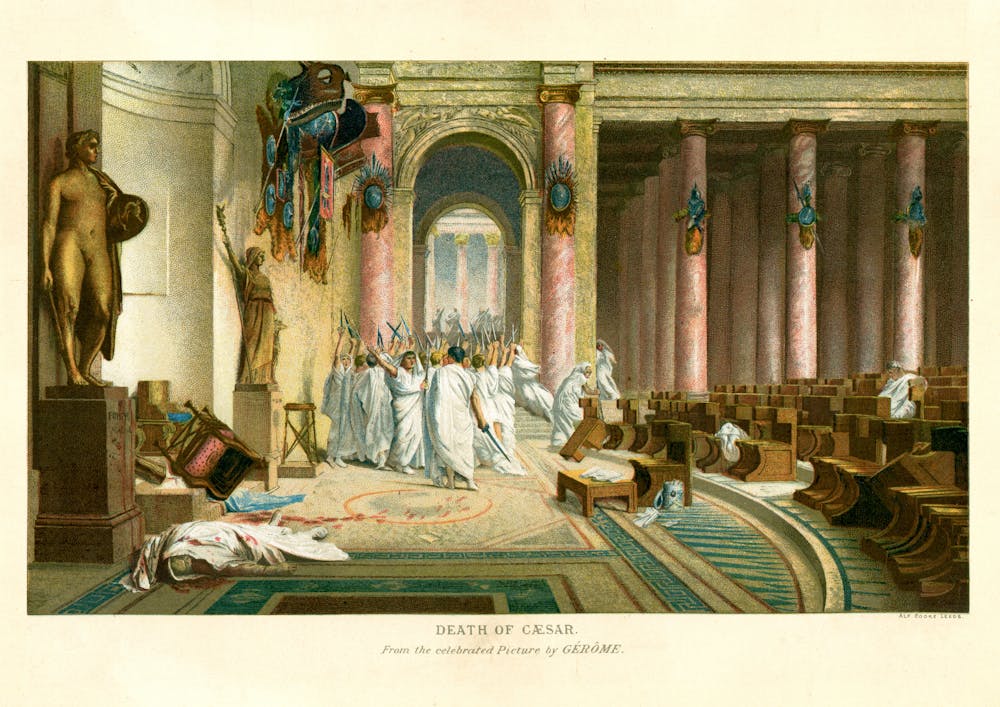
    Soon after, an angry group of 23 senators stabbed him to death in a vain attempt to save the republic. They were led by Marcus Junius Brutus, a descendant of the Brutus who killed the last Roman king, Tarquinius Superbus.

    The Roman republic was beyond saving despite Caesar’s death.
    duncan1890/Getty Images

    However, the Roman republic was beyond saving despite Caesar’s death. His great nephew Octavian eventually emerged as leader and became known as Augustus (27 BCE – 14 CE). With Augustus, an age of emperors was born.

    Emperors were kings in all but name. The strong aversion to kingship in Rome ensured their complete avoidance of the term rex.

    ‘No kings!’

    American protesters waving placards shouting “no kings!” are expressing clear concerns that their beloved democracy is under threat.

    Donald Trump has already declared eight national emergencies and issued 161 executive orders in his second term.

    When asked if he needs to uphold the Constitution, Trump declares “I don’t know.” He has joked about running for a third term as president, in breach of the longstanding limit of two terms.

    Like Caesar, is Donald Trump becoming a king in all but name? Is he setting a precedent for his successors to behave increasingly like emperors?

    The American aversion to “king” likely ensures the term will never return. But when protesters and others shout “no kings!”, they know the very meaning of the term “president” is changing before their eyes.

    Peter Edwell receives funding from the Australian Research Council.

    ref. ‘No kings!’: like the LA protesters, the early Romans hated kings, too – https://theconversation.com/no-kings-like-the-la-protesters-the-early-romans-hated-kings-too-259011

    MIL OSI AnalysisEveningReport.nz

  • MIL-OSI Global: Netanyahu has two war aims: destroying Iran’s nuclear program and regime change. Are either achievable?

    Source: The Conversation – Global Perspectives – By Ian Parmeter, Research Scholar, Middle East Studies, Australian National University

    Israeli Prime Minister Benjamin Netanyahu has said Israel’s attack on Iran’s nuclear facilities could last for at least two weeks.

    His timing seems precise for a reason. The Israel Defence Forces and the country’s intelligence agencies have clearly devised a methodical, step-by-step campaign.

    Israeli forces initially focused on decapitating the Iranian military and scientific leadership and, just as importantly, destroying virtually all of Iran’s air defences.

    Israeli aircraft can not only operate freely over Iranian air space now, they can refuel and deposit more special forces at key sites to enable precision bombing of targets and attacks on hidden or well-protected nuclear facilities.

    In public statements since the start of the campaign, Netanyahu has highlighted two key aims: to destroy Iran’s nuclear program, and to encourage the Iranian people to overthrow the clerical regime.

    With those two objectives in mind, how might the conflict end? Several broad scenarios are possible.

    A return to negotiations

    US President Donald Trump’s special envoy for the Middle East, Steve Witkoff, was to have attended a sixth round of talks with his Iranian counterparts on Sunday aimed at a deal to replace the Iran nuclear agreement negotiated under the Obama administration in 2015. Trump withdrew from that agreement during his first term in 2018, despite Iran’s apparent compliance to that point.

    Netanyahu was opposed to the 2015 agreement and has indicated he does not believe Iran is serious about a replacement.

    So, accepting negotiations as an outcome of the Israeli bombing campaign would be a massive climbdown by Netanyahu. He wants to use the defanging of Iran to reestablish his security credentials after the Hamas attacks of October 2023.

    Even though Trump continues to press Iran to accept a deal, negotiations are off the table for now. Trump won’t be able to persuade Netanyahu to stop the bombing campaign to restart negotiations.

    Complete destruction of Iran’s nuclear program

    Destruction of Iran’s nuclear program would involve destroying all known sites, including the Fordow uranium enrichment facility, about 100 kilometres south of Tehran.

    According to International Atomic Energy Agency (IAEA) Director General Rafael Grossi, the facility is located about half a mile underground, beneath a mountain. It is probably beyond the reach of even the US’ 2,000-pound deep penetration bombs.

    The entrances and ventilation shafts of the facility could be closed by causing landslides. But that would be a temporary solution.

    Taking out Fordow entirely would require an Israeli special forces attack. This is certainly possible, given Israel’s success in getting operatives into Iran to date. But questions would remain about how extensively the facility could be damaged and then how quickly it could be rebuilt.

    And destruction of Iran’s nuclear centrifuges – used to enrich uranium to create a bomb – would be only one step in dismantling its program.

    Israel would also have to secure or eliminate Iran’s stock of uranium already enriched to 60% purity. This is sufficient for up to ten nuclear bombs if enriched to the weapons-grade 90% purity.

    But does Israeli intelligence know where that stock is?

    Collapse of the Iranian regime

    Collapse of the Iranian regime is certainly possible, particularly given Israel’s removal of Iran’s most senior military leaders since its attacks began on Friday, including the heads of the Islamic Revolutionary Guard Corps and the Iranian armed forces.

    And anti-regime demonstrations over the years, most recently the “Women, Life, Freedom” protests after the death in police custody of a young Iranian woman, Mahsa Amini, in 2022, have shown how unpopular the regime is.

    That said, the regime has survived many challenges since coming to power in 1979, including war with Iraq in the 1980s and massive sanctions. It has developed remarkably efficient security systems that have enabled it to remain in place.

    Another uncertainty at this stage is whether Israeli attacks on civilian targets might engender a “rally round the flag” movement among Iranians.

    Netanyahu said in recent days that Israel had indications the remaining senior regime figures were packing their bags in preparation for fleeing the country. But he gave no evidence.

    A major party joins the fight

    Could the US become involved in the fighting?

    This can’t be ruled out. Iran’s UN ambassador directly accused the US of assisting Israel with its strikes.

    That is almost certainly true, given the close intelligence sharing between the US and Israel. Moreover, senior Republicans, such as Senator Lindsey Graham, have called on Trump to order US forces to help Israel “finish the job”.

    Trump would probably be loath to do this, particularly given his criticism of the “forever wars” of previous US administrations. But if Iran or pro-Iranian forces were to strike a US base or military asset in the region, pressure would mount on Trump to retaliate.

    Another factor is that Trump probably wants the war to end as quickly as possible. His administration will be aware the longer a conflict drags on, the more likely unforeseen factors will arise.

    Could Russia become involved on Iran’s side? At this stage that’s probably unlikely. Russia did not intervene in Syria late last year to try to protect the collapsing Assad regime. And Russia has plenty on its plate with the war in Ukraine.

    Russia criticised the Israeli attack when it started, but appears not to have taken any action to help Iran defend itself.

    And could regional powers such as Saudi Arabia or the United Arab Emirates become involved?

    Though they have a substantial arsenal of US military equipment, the two countries have no interest in becoming caught up in the conflict. The Gulf Arab monarchies have engaged in a rapprochement with Iran in recent years after decades of outright hostility. Nobody would want to put this at risk.

    Uncertainties predominate

    We don’t know the extent of Iran’s arsenal of missiles and rockets. In its initial retaliation to Israel’s strikes, Iran has been able to partially overwhelm Israel’s Iron Dome air defence system, causing civilian casualties.

    If it can continue to do this, causing more civilian casualties, Israelis already unhappy with Netanyahu over the Gaza war might start to question his wisdom in starting another conflict.

    But we are nowhere near that point. Though it’s too early for reliable opinion polling, most Israelis almost certainly applaud Netanyahu’s action so far to cripple Iran’s nuclear program. In addition, Netanyahu has threatened to make Tehran “burn” if Iran deliberately targets Israeli civilians.

    We can be confident that Iran does not have any surprises in store. Israel has severely weakened its proxies, Hezbollah and Hamas. They are clearly in no position to assist Iran through diversionary attacks.

    The big question will be what comes after the war. Iran will almost certainly withdraw from the Nuclear Non-Proliferation Treaty and forbid more inspections by the International Atomic Energy Agency.

    Israel will probably be able to destroy Iran’s existing nuclear facilities, but it’s only a question of when – not if – Iran will reconstitute them.

    This means the likelihood of Iran trying to secure a nuclear bomb in order to deter future Israeli attacks will be much higher. And the region will remain in a precarious place.

    Ian Parmeter does not work for, consult, own shares in or receive funding from any company or organisation that would benefit from this article, and has disclosed no relevant affiliations beyond their academic appointment.

    ref. Netanyahu has two war aims: destroying Iran’s nuclear program and regime change. Are either achievable? – https://theconversation.com/netanyahu-has-two-war-aims-destroying-irans-nuclear-program-and-regime-change-are-either-achievable-259014

    MIL OSI – Global Reports

  • MIL-OSI New Zealand: Public art’s star turn in the regeneration of midtown

    Source: Auckland Council

    Emily Trent is Head of Arts and Culture at Auckland Council so she knows why a city needs art, and how art contributes to the quality of our regenerating midtown.

    The Auckland Council group is reinventing midtown, ensuring it’s ready to serve the city well ahead of the City Rail Link opening in 2026.

    Projects include:

    • Te Hā Noa – Victoria Street linear park (Albert Street to Elliott Street) – first section complete – story and timelapse; second section complete – story and timelapse.
    • Federal Street upgrade, extension of the shared path laneway circuit – complete. Artwork Lost & Found by Joe Sheehan
    • Queen Street – upgrade complete – story and timelapse
    • Myers Park – upgrade and artwork Waimahara by Graham Tipene (Ngāti Whātua Ōrākei, Ngāti Kahu, Ngāti Hine, Ngāti Hauā, Ngāti Manu) is complete – story and video
    • Wellesley Street bus interchange – Auckland Transport’s works are in progress

    Against a backdrop of the city’s magnificent, multi-sensory artwork Waimahara in Myers Park, we ask Emily why art is important in any urban regeneration, and in this regeneration in particular.

    This Q&A is part of an occasional series shining light on the regeneration of midtown and some of the people who are playing a part in it. The Auckland Council group announced an investment of $155 million in multiple projects to regenerate midtown in September 2021. Many are delivered already.

    Our Q&A with Emily Trent:

    Why does a city need public art?

    Art is the way a city tells its story. Art defines who we are in the world. It delights and surprises. And right now Auckland’s midtown is a living example of that.

    How is art playing a part in the midtown regeneration?

    Anywhere in the world, art is central to a city’s regeneration.

    In Myers Park, which is part of midtown, people can come and enjoy Waimahara, an extraordinary immersive public artwork by mana whenua artist Graham Tipene in collaboration with a group of composers and creatives.

    Can you tell us about Waimahara?

    Waimahara is a celebration of te ao Māori in Tāmaki Makaurau, and it invites us to remember water. It references Te Waihorotiu stream, which flows beneath Queen Street and has its source here in Myers Park.

    Within Waimahara, we see references to water. We hear immersive elements such as birdsong, taonga pūoro (traditional musical instruments), and we see references to taiao (nature) like kauri and hīnaki (fish trap) forms.

    Are there other forms of expression?

    Within this space, there’s art all around. There’s art in the planting, there’s art in the boardwalk, there’s art in the stairway by Tessa Harris. And art is in the cultural identity and the story we tell through this built environment.

    Public art, and the arts, culture and creativity, are the thread that connects us as humans. It can bring joy and play. It can make a place safe and liveable. It invites you to linger, to be inspired and to find joy just around the corner.

    How does Auckland Council’s public art collection take shape?

    Auckland Council partners with artists and creatives to bring public art to the Auckland region. The Auckland Council Regional Art Collection has over 400 artworks all across the region that bring joy and creativity.

    What other art can people see in this area?

    In addition to Waimahara, we have Lost & Found in Federal Street by Joe Sheehan.

    We’ve got new works coming to Victoria Street. And we’ve got murals. The regeneration of midtown is providing amazing opportunities for new works and also to refresh existing works.

    What about the City Rail Link stations?

    Next year Aucklanders will be able to step into the City Rail Link stations. These stations provide an amazing canvas for public art. We’ll be able to see our cultural identity expressed through art in the stations.

    Is this, in effect, a free, all-weather, outdoor art gallery?

    Our city’s expression is visible in the built environment through public art. It can delight us, it can connect us, and it can provide an opportunity for discussion and consideration. It’s accessible to everyone. Art tells the story of our place in the world.

    [embedded content]

    MIL OSI New Zealand News

  • MIL-OSI New Zealand: Pharmac funding u-turn for patients

    Source: New Zealand Government

    Associate Health Minister David Seymour says the oestradiol patch funding decision is an example of Pharmac’s new patient-centric approach.

    From December 2025 Pharmac will fund two brands of oestradiol patches, Estradot and Estradiol TDP Mylan. 

    “Pharmac received significant feedback at the end of last year about a decision to move to Estradiol TDP Mylan as the only funded brand of oestradiol patch. They heard very clearly that the TDP Mylan brand of patch did not work for everyone, and that people wanted options,” Mr Seymour says.  

    “I’m pleased to see Pharmac’s responsiveness to the voices of patients by funding both brands. This decision reflects our commitment to a more adaptable and patient-centric approach.

    “The community let Pharmac know that they weren’t consulted enough on the original decision. Pharmac has learnt from this, and has added an additional consultation step to its annual tender process to seek feedback when considering a medicine brand change. This patient-centric approach was taken in today’s funding decision. 

    “Pharmac worked and engaged with people who use oestradiol patches, menopause specialists, doctors, nurses, pharmacists, advocacy groups and petition founders in making the decision to fund both brands of patches. 

    “People should have the opportunity to share what the impact of brand changes would be for them, and what support would be required if there was a change to their current medicine.

    “Last year I outlined in my letter of expectations that Pharmac should have appropriate processes for ensuring that people living with an illness, along with their carers and family, can participate in and provide input into decision-making processes around medicines, this is part of the ACT-National Coalition Agreement.

    “I expect all key groups to be involved in changes to funded medicine brands through the annual tender. This approach ensures stakeholder engagement while managing financial and operational impacts.

    The annual tender process is a key mechanism for Pharmac to manage pharmaceutical expenditure at a relatively low transactional cost. Once a year Pharmac invites suppliers to bid to be the main suppliers of certain medicines. This process can realise between $30 million and $50 million savings per year to spend on new treatments.

    “The redirection of Pharmac remains positive and continues towards a more adaptable and patient-centred approach to funding medicines,” says Mr Seymour.

    “The decisions to fund Estradot and Estradiol TDP Mylan, and to improve consultation criteria on the annual tender process follows the Pharmac Consumer Engagement Workshop Report, and my letter of expectations, are positive steps towards a system which works for the people it serves.”

    MIL OSI New Zealand News

  • MIL-OSI Australia: Man arrested following Hawks v Crows Match at UTAS Stadium

    Source: New South Wales Community and Justice

    Man arrested following Hawks v Crows Match at UTAS Stadium

    Saturday, 14 June 2025 – 9:15 am.

    A 42-year-old man from Launceston was arrested following an incident at UTAS Stadium on Friday night.
    Shortly after the final siren of the AFL match, the man entered the playing surface, disrupting post-match activities while players and umpires were leaving the ground. Security personnel swiftly intervened, but during the incident, two security guards were assaulted.
    Police attended and arrested the man, who appeared to be intoxicated.
    No injuries were reported. The man was charged with trespass, assault and disorderly conduct, and will appear in court at a later date.

    MIL OSI News

  • MIL-OSI New Zealand: Animal Welfare – Three greyhounds dead within three days: SAFE says shut it down

    Source: SAFE For Animals

    SAFE is calling for immediate action following the deaths of three greyhounds in the space of just three days. With the industry now resorting to legal action to delay the Government’s promised ban, SAFE says the Government must step in and finish what they started.
    On 11 June, Homebush Sydney suffered a spiral fracture of her left femur during a race at Ascot Park Raceway in Southland. The injury was so severe that she was euthanised. Just two days later, Homebush Feijoa collapsed and died at the lure at Addington Raceway in Christchurch. The cause of death is unknown. That same day at Hatrick Raceway in Whanganui, Midnight Brockie sustained a catastrophic fracture to his right hock and tibia and was also euthanised.
    These deaths bring the number of fatalities this racing season to 16, already surpassing last season’s death toll of 13, with six weeks still to go.
    “Three dogs in three days is not just a tragedy – it’s a damning indictment of an industry that treats these animals as expendable,” says SAFE Campaigns Manager Emma Brodie.
    “We must remember that behind every number is a dog who felt pain, fear, and suffering in their final moments. That should shake us to our core.”
    This surge in deaths comes just weeks after Greyhound Racing New Zealand (GRNZ) filed proceedings in the High Court seeking a judicial review of the Government’s decision to ban greyhound racing.
    “GRNZ is dragging the Government through the courts while greyhounds are dying on their watch,” says Brodie. “But the court of public opinion has already delivered its verdict: this cruelty has to stop.”
    SAFE is urging the racing industry to accept the Government’s decision and begin working in good faith to rehome the thousands of dogs who remain trapped in the system. At the same time, urgent direction is now needed from Government to begin winding the industry down and to progress legislation that will bring an end to greyhound racing once and for all.
    “Every dog still in this system is a life at risk. We need the Government to step in now to give these dogs a fighting chance at life beyond the track.”

    MIL OSI New Zealand News

  • MIL-OSI Australia: Serious Crash at Pages Road, Moorleah

    Source: New South Wales Community and Justice

    Serious Crash at Pages Road, Moorleah

    Sunday, 15 June 2025 – 4:06 pm.

    Emergency Services were contacted at 11:37pm on 14 June 2025 regarding a serious traffic crash on Pages Road, Moorleah near the intersection of Cryans Road.
    The vehicle, a grey 2004 Holden Calais sedan, was travelling east, has left the road and then hit trees. The occupants of the vehicle were a 44-year-old man (driver), a 26-year-old woman and a 10-year-old child. The female passenger was transported to the North-West Regional Hospital by ambulance and then flown to the Royal Hobart Hospital via helicopter in a serious condition with head injuries. The male driver and child were uninjured. It is not believed there were any other vehicles involved in the crash.
    The crash is under investigation by Western Crash Investigation Services. Anyone with information, or relevant dash cam footage, is asked to contact police on 131 444 or Crime Stoppers Tasmania on 1800 333 000 or at crimestopperstas.com.au.
    Information can be provided anonymously.

    MIL OSI News

  • MIL-OSI Australia: Tougher child safety rules to help keep children safer in early education

    Source: Murray Darling Basin Authority

    Stronger, mandatory child safety measures have been signed off by every Australian Education Minister to strengthen child safety in early childhood education and care services.

    This forms part of the significant progress that has already been made since the release of the Australian Children’s Education and Care Quality Authority (ACECQA) Review of Child Safety Arrangements under the National Quality Framework.

    In July 2024, a new National Code and Guidelines were released that recommended only service-issued devices can be used when photographing and filming children.

    From 1 September 2025, further key changes include:

    • Mandatory 24 hour reporting of any allegations, complaints or incidents of physical or sexual abuse – down from the current 7 day window
    • A ban on vapes in all early education and care services
    • Stronger protections around digital technology use, with services required to have clear policies on taking photos and videos of children, parent consent, CCTV practice and using service-issued devices.

    Child safety will also be explicitly embedded into the National Quality Standard from 1 January 2026.

    ACECQA will issue new guidance and resource materials to support the early education sector implement these changes.

    These changes are in addition to the further reforms flagged by the Albanese Labor Government in March this year to crack down on unscrupulous early childhood education and care providers and strengthen integrity across the care economy.

    These include measures to:

    • Prevent providers who persistently fail to meet minimum standards and repetitively breach the National Law from opening new Child Care Subsidy approved services.
    • Take compliance action against existing providers with egregious and continued breaches, including the option to cut off access to Child Care Subsidy funding where appropriate.
    • Strengthen powers to deal with providers that pose an integrity risk.

    Education Ministers will meet next week to consider additional actions to strengthen child safety in education and care services.

    Quotes attributed to Minister for Education Jason Clare:

    “The safety and protection of children in early childhood education is our highest priority.

    “Australia has a very good system of early childhood education and care, but more can be done to make sure safety guidance and measures are fit-for-purpose.

    “That’s why Education Ministers are acting on this key recommendation to make sure the right rules are in place to keep our children safe while they are in early education and care.”

    Quotes attributed to Minister for Early Childhood Education Dr Jess Walsh:

    “Children’s health and safety is paramount at early childhood centres, and these changes will help to ensure that we continue to provide that assurance.

    “The Australian Government is absolutely committed to ensuring that children have a positive, rewarding and safe early education experience to get the best possible start in life.”

    Quotes attributed to ACT Minister for Education and Early Childhood Yvette Berry:

    “The safety and wellbeing of children in early childhood education is our highest priority.  Access to quality early childhood education sets children up for lifelong learning and success.

    “Valuing children and investing in their learning and development requires us also to value and invest in the early childhood workforce.

    “I look forward to continuing to work in partnership with the Commonwealth, to strengthen the National Quality Framework.”

    Quotes attributed to Victorian Minister for Children Lizzie Blandthorn:

    “The safety and wellbeing of children is our highest priority – and here in Victoria we work every day to make sure they are safe, supported and ready to thrive.

    “We welcome these new changes, and we’ll continue to work with the Commonwealth, states and territories to review and improve safety for all children.”

    Quotes attributed to acting NSW Minister for Education and Early Learning Courtney Houssos:

    “These measures are an important first step. While we work with our colleagues on a national approach, the national law allows states to cater to their own needs.

    “NSW welcomes these measures and looks forward to providing additional measures in response to our most recent review.”

    Quotes attributed to Queensland Minister for Education and the Arts John-Paul Langbroek:

    “We must all be persistent in our efforts to strengthen safety measures at childhood education and care services.

    “These changes are a step in the right direction, and I welcome this national approach which will ensure Queensland kids are better protected while providing consistency across all states and territories.”

    Quotes attributed to Northern Territory Minister for Education and Training and Minister for Early Education Jo Hersey:

    “The Northern Territory Government welcomes the Child Safety Review, particularly its focus on strengthening supervision and improving the physical environment to keep children safe.

    “As part of our commitment to addressing the root causes of crime, we recognise that safeguarding children is fundamental to long-term community safety.”

    Quotes attributed to Western Australia Minister for Education; Early Childhood Sabine Winton:

    “The Cook Labor Government is committed to ensuring the safety of children who attend early childhood education and care services in Western Australia.

    “I know there are incredible early learning centres and early childhood educators that help children learn and thrive each and every day.

    “I look forward to working alongside the Albanese Labor Government to further strengthen child safety in early childhood education services, to ensure children have the best possible start to life.”

    Quotes attributed to South Australian Minister for Education, Training and Skills Blair Boyer:

    “I’m pleased to see all states and territories working together to strengthen the regulations around education and care services to ensure children are safe no matter where the live. 

    “The Malinauskas Labor Government recently provided an extra $7 million to the Education Standards Board to increase and improve regulatory services. This has seen a 63 per cent increase on the previous year in the number of service visits.

    “I look forward to meeting with my colleagues next week to discuss in more detail how we can ensure we as state and federal governments are doing everything we can to provide safe and secure environments for our youngest Australians.”

    For more information

    NQF changes information sheet

    Review of Child Safety Arrangements under the National Quality Framework

    MIL OSI News

  • MIL-Evening Report: Small businesses are an innovation powerhouse. For many, it’s still too hard to raise the funds they need

    Source: The Conversation (Au and NZ) – By Colette Southam, Associate Professor of Finance, Bond University

    The federal government wants to boost Australia’s productivity levels – as a matter of national priority. It’s impossible to have that conversation without also talking about innovation.

    We can be proud of (and perhaps a little surprised by) some of the Australian innovations that have changed the world – such as the refrigerator, the electric drill, and more recently, the CPAP machine and the technology underpinning Google Maps.

    Australia is continuing to drive advancements in machine learning, cybersecurity and green technologies. Innovation isn’t confined to the headquarters of big tech companies and university laboratories.

    Small and medium enterprises – those with fewer than 200 employees – are a powerhouse of economic growth in Australia. Collectively, they contribute 56% of Australia’s gross domestic product (GDP) and employ 67% of the workforce.

    Our own Reserve Bank has recognised they also have a huge role to play in driving innovation. However, they still face many barriers to accessing funding and investment, which can hamper their ability to do so.

    Finding the funds to grow

    We all know the saying “it takes money to make money”. Those starting or scaling a business have to invest in the present to generate cash in the future. This could involve buying equipment, renting space, or even investing in needed skills and knowledge.

    A small, brand new startup might initially rely on debt (such as personal loans or credit cards) and investments from family and friends (sometimes called “love money”).

    Having exhausted these sources, it may still need more funds to grow. Bank loans for businesses are common, quick and easy. But these require regular interest payments, which could slow growth.

    Selling stakes

    Alternatively, a business may want to look for investors to take out ownership stakes.

    This investment can take the form of “private equity”, where ownership stakes are sold through private arrangement to investors. These can range from individual “angel investors” through to huge venture capital and private equity firms managing billions in investments.

    It can also take the form of “public equity”, where shares are offered and are then able to be bought and sold by anyone on a public stock exchange such as the Australian Securities Exchange (ASX).

    Unfortunately, small and medium-sized companies face hurdles to accessing both kinds.

    Companies need access to finance to turn ideas into reality.
    Kvalifik/Unsplash

    Private investors’ high bar to clear

    Research examining the gap in small-scale private equity has found 46% of small and medium-sized firms in Australia would welcome an equity investment – despite saying they were able to acquire debt elsewhere.

    They preferred private equity because they also wanted to learn from experienced investors who could help them grow their companies. However, very few small and medium-sized enterprises were able to meet private equity’s investment criteria.

    When interviewed, many chief executives and chairs of small private equity firms said their lack of interest in small and medium-sized enterprises came down to cost and difficulty of verifying information about the health and prospects of a business.

    To make it easier for investors to compare investments, all public companies are required to disclose their financial information using International Financial Reporting Standards.

    In contrast, small private companies can use a simplified set of rules and do not have to share their statements of profit and loss with the general public.

    Share markets are costly and complex

    Is it possible to list on a stock exchange instead? An initial public offering (IPO) would enable the company to raise funds by selling shares to the public.

    Unfortunately, the process of issuing shares on a stock exchange is time-consuming and costly. It requires a team of advisors (accountants, lawyers, and bankers) and filing fees are high.

    There are also ongoing costs and obligations associated with being a publicly traded company, including detailed financial reporting.

    Last week, the regulator, the Australian Securities and Investments Commission (ASIC), announced new measures to encourage more listings by streamlining the IPO process.

    Despite this, many small companies do not meet the listing requirements for the ASX.

    These include meeting a profits and assets test and having at least 300 investors (not including family) each with A$2,000.

    There is one less well-known alternative – the smaller National Stock Exchange of Australia (NSX), which focuses on early-stage companies. Ideally, this should have been a great alternative for small companies, but it has had limited success. The NSX is now set to be acquired by a Canadian market operator.

    Making companies more attractive

    Our previous research has highlighted that small and medium-sized businesses should try to make themselves more attractive to private equity companies. This could include improving their financial reporting and using a reputable major auditor.

    At their end, private equity companies should cast a wider net and invest a little more time in screening and selecting high-quality smaller companies. That could pay off – if it means they avoid missing out on “the next Google Maps”.

    What we now know as Google Maps began as an Australian startup.
    Susan Quin & The Bigger Picture, CC BY

    What about the $4 trillion of superannuation?

    There are other opportunities we could explore. Australia’s pool of superannuation funds, for example, have begun growing so large they are running out of places to invest.

    That’s led to some radical proposals. Ben Thompson, chief executive of Employment Hero, last year proposed big superannuation funds be forced to invest 1% of their cash into start-ups.

    Less extreme, regulators could reassess disclosure guidelines for financial providers which may lead funds to prefer more established investments with proven track records.

    There is an ongoing debate about whether the Australian Prudential Regulation Authority (APRA), which regulates banks and superannuation, is too cautious. Some believe APRA’s focus on risk management hurts innovation and may result in super funds avoiding startups (which generally have a higher likelihood of failure).

    In response, APRA has pointed out the global financial crisis reminded us to be cautious, to ensure financial stability and protect consumers.


    This article is part of The Conversation’s series, The Productivity Puzzle.

    The author would like to acknowledge her former doctoral student, the late Dr Bruce Dwyer, who made significant contributions to research discussed in this article. Bruce passed away in a tragic accident earlier this year.

    Colette Southam does not work for, consult, own shares in or receive funding from any company or organisation that would benefit from this article, and has disclosed no relevant affiliations beyond their academic appointment.

    ref. Small businesses are an innovation powerhouse. For many, it’s still too hard to raise the funds they need – https://theconversation.com/small-businesses-are-an-innovation-powerhouse-for-many-its-still-too-hard-to-raise-the-funds-they-need-256333

    MIL OSI AnalysisEveningReport.nz

  • MIL-Evening Report: Small businesses are an innovation powerhouse. For many, it’s still too hard to raise the funds they need

    Source: The Conversation (Au and NZ) – By Colette Southam, Associate Professor of Finance, Bond University

    The federal government wants to boost Australia’s productivity levels – as a matter of national priority. It’s impossible to have that conversation without also talking about innovation.

    We can be proud of (and perhaps a little surprised by) some of the Australian innovations that have changed the world – such as the refrigerator, the electric drill, and more recently, the CPAP machine and the technology underpinning Google Maps.

    Australia is continuing to drive advancements in machine learning, cybersecurity and green technologies. Innovation isn’t confined to the headquarters of big tech companies and university laboratories.

    Small and medium enterprises – those with fewer than 200 employees – are a powerhouse of economic growth in Australia. Collectively, they contribute 56% of Australia’s gross domestic product (GDP) and employ 67% of the workforce.

    Our own Reserve Bank has recognised they also have a huge role to play in driving innovation. However, they still face many barriers to accessing funding and investment, which can hamper their ability to do so.

    Finding the funds to grow

    We all know the saying “it takes money to make money”. Those starting or scaling a business have to invest in the present to generate cash in the future. This could involve buying equipment, renting space, or even investing in needed skills and knowledge.

    A small, brand new startup might initially rely on debt (such as personal loans or credit cards) and investments from family and friends (sometimes called “love money”).

    Having exhausted these sources, it may still need more funds to grow. Bank loans for businesses are common, quick and easy. But these require regular interest payments, which could slow growth.

    Selling stakes

    Alternatively, a business may want to look for investors to take out ownership stakes.

    This investment can take the form of “private equity”, where ownership stakes are sold through private arrangement to investors. These can range from individual “angel investors” through to huge venture capital and private equity firms managing billions in investments.

    It can also take the form of “public equity”, where shares are offered and are then able to be bought and sold by anyone on a public stock exchange such as the Australian Securities Exchange (ASX).

    Unfortunately, small and medium-sized companies face hurdles to accessing both kinds.

    Companies need access to finance to turn ideas into reality.
    Kvalifik/Unsplash

    Private investors’ high bar to clear

    Research examining the gap in small-scale private equity has found 46% of small and medium-sized firms in Australia would welcome an equity investment – despite saying they were able to acquire debt elsewhere.

    They preferred private equity because they also wanted to learn from experienced investors who could help them grow their companies. However, very few small and medium-sized enterprises were able to meet private equity’s investment criteria.

    When interviewed, many chief executives and chairs of small private equity firms said their lack of interest in small and medium-sized enterprises came down to cost and difficulty of verifying information about the health and prospects of a business.

    To make it easier for investors to compare investments, all public companies are required to disclose their financial information using International Financial Reporting Standards.

    In contrast, small private companies can use a simplified set of rules and do not have to share their statements of profit and loss with the general public.

    Share markets are costly and complex

    Is it possible to list on a stock exchange instead? An initial public offering (IPO) would enable the company to raise funds by selling shares to the public.

    Unfortunately, the process of issuing shares on a stock exchange is time-consuming and costly. It requires a team of advisors (accountants, lawyers, and bankers) and filing fees are high.

    There are also ongoing costs and obligations associated with being a publicly traded company, including detailed financial reporting.

    Last week, the regulator, the Australian Securities and Investments Commission (ASIC), announced new measures to encourage more listings by streamlining the IPO process.

    Despite this, many small companies do not meet the listing requirements for the ASX.

    These include meeting a profits and assets test and having at least 300 investors (not including family) each with A$2,000.

    There is one less well-known alternative – the smaller National Stock Exchange of Australia (NSX), which focuses on early-stage companies. Ideally, this should have been a great alternative for small companies, but it has had limited success. The NSX is now set to be acquired by a Canadian market operator.

    Making companies more attractive

    Our previous research has highlighted that small and medium-sized businesses should try to make themselves more attractive to private equity companies. This could include improving their financial reporting and using a reputable major auditor.

    At their end, private equity companies should cast a wider net and invest a little more time in screening and selecting high-quality smaller companies. That could pay off – if it means they avoid missing out on “the next Google Maps”.

    What we now know as Google Maps began as an Australian startup.
    Susan Quin & The Bigger Picture, CC BY

    What about the $4 trillion of superannuation?

    There are other opportunities we could explore. Australia’s pool of superannuation funds, for example, have begun growing so large they are running out of places to invest.

    That’s led to some radical proposals. Ben Thompson, chief executive of Employment Hero, last year proposed big superannuation funds be forced to invest 1% of their cash into start-ups.

    Less extreme, regulators could reassess disclosure guidelines for financial providers which may lead funds to prefer more established investments with proven track records.

    There is an ongoing debate about whether the Australian Prudential Regulation Authority (APRA), which regulates banks and superannuation, is too cautious. Some believe APRA’s focus on risk management hurts innovation and may result in super funds avoiding startups (which generally have a higher likelihood of failure).

    In response, APRA has pointed out the global financial crisis reminded us to be cautious, to ensure financial stability and protect consumers.


    This article is part of The Conversation’s series, The Productivity Puzzle.

    The author would like to acknowledge her former doctoral student, the late Dr Bruce Dwyer, who made significant contributions to research discussed in this article. Bruce passed away in a tragic accident earlier this year.

    Colette Southam does not work for, consult, own shares in or receive funding from any company or organisation that would benefit from this article, and has disclosed no relevant affiliations beyond their academic appointment.

    ref. Small businesses are an innovation powerhouse. For many, it’s still too hard to raise the funds they need – https://theconversation.com/small-businesses-are-an-innovation-powerhouse-for-many-its-still-too-hard-to-raise-the-funds-they-need-256333

    MIL OSI AnalysisEveningReport.nz

  • MIL-Evening Report: Need to see a specialist? You might have to choose between high costs and a long wait. Here’s what needs to change

    Source: The Conversation (Au and NZ) – By Peter Breadon, Program Director, Health and Aged Care, Grattan Institute

    If you have cancer, a disease such as diabetes or dementia, or need to manage other complex health conditions, you often need expert care from a specialist doctor.

    But as our new Grattan Institute report shows, too many people are forced to choose between long waits in the public system or high costs if they go private.

    Governments need to provide more training for specialist doctors in short supply, make smart investments in public clinics, and regulate the extremely high fees a small number of private specialists charge.

    High fees, long waits, missed care

    Fees for private specialist appointments are high and rising.

    On average, patients’ bills for specialist appointments add up to A$300 a year. This excludes people who were bulk billed for every appointment, but that’s relatively rare: patients pay out-of-pocket costs for two-thirds of appointments with a specialist doctor.

    Increasing GP costs make national headlines, but specialist fees have risen even more – they’ve grown by 73% since 2010.

    Out-of-pocket costs for specialist care have increased faster than for other Medicare services.
    Grattan Institute, CC BY-NC-SA

    People who can’t afford to pay with money often pay with time – and sometimes with their health, as their condition deteriorates.

    Wait times for a free appointment at a public clinic can be months or even years. In Victoria and Queensland, people with an urgent referral – who should be seen within 30 days – are waiting many months to see some specialists.

    High fees and long waits add up to missed care. Every year, 1.9 million Australians delay or skip needed specialist care – about half of them because of cost.

    Distance is another barrier. People in regional and remote areas receive far fewer specialist services per person than city dwellers (even counting services delivered virtually). Half of remote communities receive less than one specialist appointment, per person, per year. There are no city communities where that’s the case.

    People in regional and remote areas receive fewer specialist services.
    Grattan Institute, CC BY-NC-SA

    Train the specialists we’ll need in the future

    Specialist training takes at least 12 years, so planning ahead is crucial. Governments can’t conjure more cardiologists overnight, or have a paediatrician treat elderly people.

    But at the moment there are no regular projections of the specialists we’ll need in the future, nor planning to make sure we get them. Government-funded training places are determined by the priorities of specialist colleges, which approve training places, and the immediate needs of public hospitals.

    As a result, we’ve got a lot of some types of specialist and a shortage of others. We’ve trained many emergency medicine specialists because public hospitals rely on trainees to staff emergency departments 24/7. But we have too few dermatologists and ophthalmologists – and numbers of those specialists are growing slower than average.

    The numbers of some types of specialists are growing faster than others.
    Grattan Institute, CC BY-NC-SA

    The lack of planning extends to where specialist training takes place. Doctors tend to put down roots and stay where they train. A shortage of rural training places leads to a shortage of rural specialists.

    To fix these problems, governments need to plan and pay for training places that match Australia’s future health needs. Governments should forecast the need for particular specialties in particular areas. Then training funding should be tied to delivering the necessary specialist training places.

    To fill gaps in the meantime, the federal government should streamline applications for overseas specialists to move here. It should also recognise qualifications from more similar countries.

    More public clinics where they’re needed most

    Public clinics don’t charge fees and are crucial in ensuring all Australians can get specialist care. But governments should be more strategic in where and how they invest.

    There are big differences in specialist access across the country. After adjusting for differences in age, sex, health and wealth, people living in the worst-served areas receive about one-third fewer services than people in the best-served communities.

    Governments should fund more public services in areas that need it most. They should set a five-year target to lift access for the quarter of communities receiving the least care in each specialty.

    More services are needed to help the least-served communities catch up.
    Grattan Institute, CC BY-NC-SA

    We estimate 81 communities need additional investment in at least one specialty – about a million extra appointments in total. Some communities receive less care across the board and need investment in many specialties.

    With long waiting times and unmet need, governments should also make sure they’re getting the most out of their investment in public clinics.

    Different clinics are run in very different ways. Some have taken up virtual care with a vengeance, others barely at all. One clinic might stick to traditional staffing models, while the clinic down the road might have moved towards “top of scope” models where nurses and allied health workers do more.

    Not all specialists offer virtual appointments.
    Grattan Institute, CC BY-NC-SA

    Governments should lay out an agenda to modernise clinics, encouraging them to adopt best practices. And they should introduce systems that allow GPs to get quick written advice from specialists to reduce unnecessary referrals and ensure services can focus on patients who really need their care.

    Curb extreme fees

    Even with more public services, and more specialists, excessive fees will still be a problem.

    A small fraction – less than 4% – of specialists charge triple the Medicare schedule fee, or more, on average. These can only be described as extreme fees.

    In 2023, an initial consultation with an endocrinologist or cardiologist who met this “extreme fee” definition cost an average of $350. For a psychiatrist, it was $670.

    One psychiatrist charged $670, but they weren’t the only specialist charging ‘extreme fees’.
    Grattan Institute, CC BY-NC-SA

    There is no valid justification for these outlier fees. They’re beyond the level needed to fairly reward doctors’ skill and experience, they aren’t linked to better quality and they don’t cross-subsidise care for poorer patients. Incomes for average specialists – who charge much less – are already among the highest in the country. Nine of the top ten highest-earning occupations are medical specialties.

    The federal government has committed to publishing fee information, which is a positive step. But in some areas, it can be hard to find a better option, and patients may be hesitant to shop around.

    The federal government should directly tackle extreme fees. It should require specialists who charge extreme fees to repay the value of the Medicare rebates received for their services that year.

    Specialist care has been neglected long enough. The federal and state governments need to act now.

    Grattan Institute has been supported in its work by government, corporates, and philanthropic gifts. A full list of supporting organisations is published at www.grattan.edu.au.

    ref. Need to see a specialist? You might have to choose between high costs and a long wait. Here’s what needs to change – https://theconversation.com/need-to-see-a-specialist-you-might-have-to-choose-between-high-costs-and-a-long-wait-heres-what-needs-to-change-258194

    MIL OSI AnalysisEveningReport.nz

  • MIL-Evening Report: Need to see a specialist? You might have to choose between high costs and a long wait. Here’s what needs to change

    Source: The Conversation (Au and NZ) – By Peter Breadon, Program Director, Health and Aged Care, Grattan Institute

    If you have cancer, a disease such as diabetes or dementia, or need to manage other complex health conditions, you often need expert care from a specialist doctor.

    But as our new Grattan Institute report shows, too many people are forced to choose between long waits in the public system or high costs if they go private.

    Governments need to provide more training for specialist doctors in short supply, make smart investments in public clinics, and regulate the extremely high fees a small number of private specialists charge.

    High fees, long waits, missed care

    Fees for private specialist appointments are high and rising.

    On average, patients’ bills for specialist appointments add up to A$300 a year. This excludes people who were bulk billed for every appointment, but that’s relatively rare: patients pay out-of-pocket costs for two-thirds of appointments with a specialist doctor.

    Increasing GP costs make national headlines, but specialist fees have risen even more – they’ve grown by 73% since 2010.

    Out-of-pocket costs for specialist care have increased faster than for other Medicare services.
    Grattan Institute, CC BY-NC-SA

    People who can’t afford to pay with money often pay with time – and sometimes with their health, as their condition deteriorates.

    Wait times for a free appointment at a public clinic can be months or even years. In Victoria and Queensland, people with an urgent referral – who should be seen within 30 days – are waiting many months to see some specialists.

    High fees and long waits add up to missed care. Every year, 1.9 million Australians delay or skip needed specialist care – about half of them because of cost.

    Distance is another barrier. People in regional and remote areas receive far fewer specialist services per person than city dwellers (even counting services delivered virtually). Half of remote communities receive less than one specialist appointment, per person, per year. There are no city communities where that’s the case.

    People in regional and remote areas receive fewer specialist services.
    Grattan Institute, CC BY-NC-SA

    Train the specialists we’ll need in the future

    Specialist training takes at least 12 years, so planning ahead is crucial. Governments can’t conjure more cardiologists overnight, or have a paediatrician treat elderly people.

    But at the moment there are no regular projections of the specialists we’ll need in the future, nor planning to make sure we get them. Government-funded training places are determined by the priorities of specialist colleges, which approve training places, and the immediate needs of public hospitals.

    As a result, we’ve got a lot of some types of specialist and a shortage of others. We’ve trained many emergency medicine specialists because public hospitals rely on trainees to staff emergency departments 24/7. But we have too few dermatologists and ophthalmologists – and numbers of those specialists are growing slower than average.

    The numbers of some types of specialists are growing faster than others.
    Grattan Institute, CC BY-NC-SA

    The lack of planning extends to where specialist training takes place. Doctors tend to put down roots and stay where they train. A shortage of rural training places leads to a shortage of rural specialists.

    To fix these problems, governments need to plan and pay for training places that match Australia’s future health needs. Governments should forecast the need for particular specialties in particular areas. Then training funding should be tied to delivering the necessary specialist training places.

    To fill gaps in the meantime, the federal government should streamline applications for overseas specialists to move here. It should also recognise qualifications from more similar countries.

    More public clinics where they’re needed most

    Public clinics don’t charge fees and are crucial in ensuring all Australians can get specialist care. But governments should be more strategic in where and how they invest.

    There are big differences in specialist access across the country. After adjusting for differences in age, sex, health and wealth, people living in the worst-served areas receive about one-third fewer services than people in the best-served communities.

    Governments should fund more public services in areas that need it most. They should set a five-year target to lift access for the quarter of communities receiving the least care in each specialty.

    More services are needed to help the least-served communities catch up.
    Grattan Institute, CC BY-NC-SA

    We estimate 81 communities need additional investment in at least one specialty – about a million extra appointments in total. Some communities receive less care across the board and need investment in many specialties.

    With long waiting times and unmet need, governments should also make sure they’re getting the most out of their investment in public clinics.

    Different clinics are run in very different ways. Some have taken up virtual care with a vengeance, others barely at all. One clinic might stick to traditional staffing models, while the clinic down the road might have moved towards “top of scope” models where nurses and allied health workers do more.

    Not all specialists offer virtual appointments.
    Grattan Institute, CC BY-NC-SA

    Governments should lay out an agenda to modernise clinics, encouraging them to adopt best practices. And they should introduce systems that allow GPs to get quick written advice from specialists to reduce unnecessary referrals and ensure services can focus on patients who really need their care.

    Curb extreme fees

    Even with more public services, and more specialists, excessive fees will still be a problem.

    A small fraction – less than 4% – of specialists charge triple the Medicare schedule fee, or more, on average. These can only be described as extreme fees.

    In 2023, an initial consultation with an endocrinologist or cardiologist who met this “extreme fee” definition cost an average of $350. For a psychiatrist, it was $670.

    One psychiatrist charged $670, but they weren’t the only specialist charging ‘extreme fees’.
    Grattan Institute, CC BY-NC-SA

    There is no valid justification for these outlier fees. They’re beyond the level needed to fairly reward doctors’ skill and experience, they aren’t linked to better quality and they don’t cross-subsidise care for poorer patients. Incomes for average specialists – who charge much less – are already among the highest in the country. Nine of the top ten highest-earning occupations are medical specialties.

    The federal government has committed to publishing fee information, which is a positive step. But in some areas, it can be hard to find a better option, and patients may be hesitant to shop around.

    The federal government should directly tackle extreme fees. It should require specialists who charge extreme fees to repay the value of the Medicare rebates received for their services that year.

    Specialist care has been neglected long enough. The federal and state governments need to act now.

    Grattan Institute has been supported in its work by government, corporates, and philanthropic gifts. A full list of supporting organisations is published at www.grattan.edu.au.

    ref. Need to see a specialist? You might have to choose between high costs and a long wait. Here’s what needs to change – https://theconversation.com/need-to-see-a-specialist-you-might-have-to-choose-between-high-costs-and-a-long-wait-heres-what-needs-to-change-258194

    MIL OSI AnalysisEveningReport.nz