The NSW Government has made appointments to the board of the Independent Liquor and Gaming Authority (ILGA), including a deputy chairperson and two new members.
Associate Professor Amelia Thorpe and Nicholas Nichles have been appointed following a rigorous public expression of interest selection process. Additionally, existing member Chris Honey has been appointed deputy chairperson.
ILGA is a statutory decision-maker responsible for a range of liquor, registered club, and gaming machine regulatory functions including determining licensing and disciplinary matters.
The appointments follow the end of the term of appointment for outgoing deputy chairperson Sarah Dinning, and also fill vacancies that existed on the board.
Mr Honey, who was appointed a member of ILGA earlier in 2024, has been named deputy chairperson until the end of his current appointment term (11 February 2027). Mr Honey has extensive experience in the advisory and restructuring field, including working extensively in highly regulated sectors.
Associate Professor Thorpe and Mr Nichles have both been appointed for four years commencing 6 November 2024.
Associate Prof Thorpe is with the Faculty of Law & Justice at the University of New South Wales and an Acting Commissioner of the NSW Land and Environment Court.
Mr Nichles was previously a Consul General and Senior Trade and Investment Commissioner for Australian Government agency Austrade, based in the US.
The new appointments bring the ILGA board membership to seven.
The new appointments will join chairperson Caroline Lamb, new deputy chairperson Mr Honey and current members Cathie Armour, Jeffrey Loy APM and Dr Suzanne Craig.
“I would like to thank Sarah Dinning for her contribution to the Independent Liquor and Gaming Authority, including during her service as deputy chairperson.
“ILGA has an important role to play as the administrative decision-making authority for liquor, registered club and gaming machine licensing decisions in NSW.
“An exhaustive selection process was undertaken for these new appointments in accordance with legislative requirements and including the engagement of an independent probity advisor.
“Chris Honey has brought significant expertise to the board since his appointment and Amelia Thorpe and Nicholas Nichles will bring their substantial experience, expertise and leadership to ILGA.”
ILGA chairperson Caroline Lamb said:
“Mr Honey joined the ILGA board earlier this year and has proven himself to be an invaluable board member with his energy and considerable skills and experience in the advisory and restructuring field.
“The ILGA board also welcomes A/Prof Thorpe and Mr Nichles to the board.
“People appointed to the ILGA board must be of the highest integrity and promote fair, transparent and efficient decision-making.”
Released by: The Premier, Minister for Customer Service and Digital Government, Minister for Roads
Motorists in the Western Sydney suburbs of Blacktown and Baulkham Hills have collectively claimed more than $1 million in toll relief for each suburb under the Minns Labor Government’s $60 weekly toll cap.
Blacktown last week became the first suburb to pass $1 million in total toll relief claimed, followed by Baulkham Hills this week.
Other car-reliant suburbs like Auburn, Merrylands and Marsden Park are now closing in on the same milestone for toll relief.
More than 3,000 motorists in both Blacktown and Baulkham Hills have claimed toll relief so far – evidence that Labor’s $60 weekly toll cap is getting relief to where it is needed in the most heavily-tolled areas of Sydney.
More than 224,000 claims have been made, with $60.5 million already returned to motorists. The average rebate is $284.
More than 11,000 motorists have received quarterly toll relief rebates of more than $1,000 since the program started.
Tolling data shows it is the motorways that get people in and out of Western Sydney that are most commonly used by those claiming toll relief. They are:
WestConnex
M2 Hills Motorway
Westlink M7
Data shows motorists claiming toll relief are generally hitting the $60 toll cap by midweek, with journeys on Fridays, Saturdays and Sundays the most common days on which toll journeys are refunded.
There is $60 million in relief available to be claimed for trips made in the third quarter of the year between 1 July 2024 – 29 September 2024.
Toll relief is supporting motorists as the NSW Labor Government works on tolling reform to fix the damage wrought by the toll road privatisation of the former government.
The Liberal Party legacy left a total toll bill of $195 billion in nominal terms that must be paid by motorists out to 2060, on top of the billions they have already paid.
The NSW Government is currently preparing its response to the independent Toll Review of Professor Allan Fels and Dr David Cousins, which described Sydney’s toll road network as an unfair and poorly-functioning patchwork of numerous different price structures, with those in Western Sydney financially impacted the most.
Eligible drivers who have spent more than $60 a week on toll trips since 1 January can claim the toll relief via the Service NSW website with the rebate calculated and claimed each quarter.
Once your toll account details are linked to your MyServiceNSW Account, claims can easily be lodged.
Motorists can claim up to a maximum of $340 per week for each tag or licence plate number, as part of a “fair use” provision in place to ensure the program’s integrity.
People can claim their 2024 toll spend until 30 June 2025.
“The $60 toll cap is one of the most important cost-of-living measures the NSW Government is providing, and it is heartening to see that the relief is getting to where it is needed most – Western Sydney.
“We know people are doing it tough, and our toll cap is making it fairer for drivers that heavily rely on toll roads.
“Suburbs like Blacktown, like Baulkham Hills, are the places where paying tolls is really not a choice, it’s a fact of life.
“Motorists have so far claimed more than $1 million in toll refunds in each of these suburbs and we know every dollar is important in stretched family budgets.”
Minister for Roads John Graham said:
“The data tells us that it is the people whose journeys start and end in Western Sydney that are claiming the lion’s share of toll relief, and this is where it is needed most. These suburbs have fewer public transport alternatives.
“Toll relief is rolling out as we progress with toll reform. The current system is a poorly-functioning patchwork of numerous different price structures that has created complexity, inefficiency, inequities and unfairness, with those in Western Sydney financially impacted the most.
Minister for Customer Service and Digital Government Jihad Dib said:
“It’s good to see eligible motorists saving an average of $284 per quarter which is a massive boost for household budgets and could make the Christmas bills that little bit more manageable.
“We encourage motorists to apply, the online claims process is easy to use and support is available in Service NSW Centres or by calling 13 77 88.
“I encourage everyone to check their eligibility via the Service NSW website and to make a claim.”
Released by: Minister for Skills, TAFE and Tertiary Education, Minister for Transport, Minister for Women
The NSW Government has released results from its annual Women in Construction survey, highlighting the need for stronger efforts to promote gender diversity across the sector.
With over 1000 responses from NSW construction workers and businesses, the survey revealed a positive trend: the number of women entering the industry has risen by 12.5% in the past year, and of the businesses surveyed women now make-up 20% of the construction workforce.
Key challenges identified by both men and women, include a lack of work-life balance (62%), lack of flexible working hours (51%), and insufficient mentoring and leadership training (47%).
The survey also showed that achieving work-life balance and flexible work options are critical for staff retention, with 40% of workers considering leaving jobs due to difficulties balancing their work and personal responsibilities.
Some concerning statistics were highlighted, with 69% of women reporting some form of gender-based discrimination in the past year, and 33% experiencing workplace sexual harassment.
The Minns Labor Government is committed to creating safer and more respectful workplaces, and the SafeWork NSW Respect at Work strategy continues to drive efforts to prevent sexual harassment in the workplace through education and enforcement.
To address these issues, the NSW Government is leveraging its procurement power to ensure contractors introduce flexible workplace policies and encourage development of mentoring programs to support women’s long-term success in the industry.
Through the Culture in Construction Taskforce, several major infrastructure projects including Transport for NSW, Mulgoa Road Upgrade Stage 1 and Health Infrastructure NSW, Randwick Children’s Hospital Redevelopment are piloting the Culture Standard which includes capped working hours and a five-day week. Initial findings of the piloted projects suggest improvements to recruitment and retention of women in construction.
In addition, the NSW Government’s Women in Construction Industry Innovation Program works with industry and contractors to implement flexible workplace and supportive policies, making construction a more appealing career choice for women.
Earlier this year, the government announced $2.2 million in funding to support initiatives to attract and retain women in construction and build more inclusive cultures.
The survey findings will guide the future direction of the government’s Women in Construction program, addressing entrenched issues and ensuring continued progress toward increasing women’s participation in the industry.
“The NSW Government is currently building some of the largest infrastructure projects in Australia, and we want women’s participation in these projects to be a standard in the industry and not the exception.”
“This is an important step in helping all our workers feel respected and valued, listening to what women are calling out for, and showing our commitment to equitable workplaces.
“Government can and should leverage its procurement power to increase women’s participation, and Transport for NSW is implementing this across its projects.
“The workforce delivering Parramatta Light Rail Stage 2 enabling works will be supported by wellbeing initiatives from the Culture in Construction Taskforce’s Culture Standard, which include a target for 40% female staff participation during project enabling works, flexible working hours and on-site mental health first aiders.
“It also includes a move to a five-day working week on the construction site, a reduction from the six-day working week that’s a frequent barrier to women entering the industry.”
Minister for Skills, TAFE and Tertiary Education Steve Whan said:
“We are committed to increasing women’s participation in the construction industry – this is essential for building a workforce that reflects our diverse communities.
“Change doesn’t happen overnight, but this report shows that targeted programs, like Women in Construction, can produce positive results. This report and the feedback I hear generally tells me that we still have a long way to go, across industry, in providing a workplace culture that encourages women to participate. Government is doing good work with industry, particularly large employers, but the change needs to happen in every workplace.
“Let’s continue working together for a stronger, more inclusive construction industry—one where gender equity and progressing women’s careers is at the forefront of progress.”
Minister for Women, Jodie Harrison said:
“The future of our trades industry lies in embracing the diversity and capabilities of all workers. It’s important that we’re creating a safe, inclusive and dynamic workforce that welcomes and supports women in all trade roles.
“The insights gathered from the annual Women in Construction Industry Survey will guide the future direction of our programs, ensuring our actions are informed by the experiences of women in the sector.
“We know there is more work to be done, and the NSW Government is working with industry to ensure we drive change by removing barriers and creating supportive pathways for women to thrive.”
Released by: Minister for Planning and Public Spaces
As part of the Minns Government’s commitment to deliver more well-located homes close to jobs and transport, the community surrounding the future Orchard Hills Station is being consulted on the precinct’s Stage One rezoning proposal.
The draft plans propose a new mixed-use local centre at the Orchard Hills Station, with opportunities for retail, commercial, and community uses.
Following consultation on precinct planning which began in 2022, this proposal includes thousands of new homes and up to 4,000 local jobs.
The precinct will be centred around a series of walkable and connected centres, home to local shops and entertainment, supported by crucial local infrastructure updates and around 50 hectares of public open space, including recreational and sporting fields.
Providing a catalyst for urban growth in the area is the Orchard Hills Station, currently under construction, which will service passengers taking off at Western Sydney International Airport.
The documents on exhibition also provide the community and landowners with certainty over the future intent for the remaining stages of the Orchard Hills precinct, which could provide capacity for more homes, new centres and more employment land. Development in these areas would be subject to future rezonings.
The rezoning proposal and draft structure plan builds on the feedback provided by the community on the Orchard Hills discussion paper in late 2022.
Orchard Hills was identified as a precinct suitable for state-led rezoning under the existing Greater Penrith to Eastern Creek (GPEC) strategic planning framework and the $73.5 million Rezone and Build initiative. The state-led rezoning process commenced in mid-late 2022.
The Department of Planning, Housing and Infrastructure will consider all feedback provided by the community during exhibition to inform a final rezoning and structure plan to be delivered in 2025.
Minister for Planning and Public Spaces Paul Scully said:
“Western Sydney’s transformation continues to meet the growing needs of a changing population.
“Orchard Hills is a great opportunity to provide much needed housing as we strive towards our National Housing Accord Target of 377,000 homes by 2029.
“The NSW Government is getting on with the job of delivering more homes and the infrastructure needed to support growth, actively planning for the region’s future.
“We stand ready to capitalise on the development opportunities that the new Sydney Metro – Western Sydney Airport line, Western Sydney International Airport and the Western Sydney Aerotropolis will bring for communities like Orchard Hills.
“We are also seeking to provide certainty for current landowners over the future intent of the other stages of the Orchard Hills precinct.
“The work of the Independent Community Commission, Professor Roberta Ryan, will continue to support this exhibition process to assist the community and landowners with the rezoning proposal.
“We are now looking to create accessible, well-located housing in Orchard Hills. These future homes will be close to transport, schools and public spaces with opportunities for new cycleways and walkways to improve connectivity.”
The Albanese Government is supporting local jobs, tourism and cultural opportunities in regional Victoria, investing $21.5 million to community projects through the $400 million regional Precincts and Partnerships Program.
We are investing $5 million in the Hamilton Community and Cultural Precinct which seeks to boost the visitor economy by taking advantage of underused central locations.
Plans for the development of the CDB, New Hamilton Gallery, and Community and Digital Hub will help shape the precinct for Hamilton.
We are also investing $800,000 in Cobram for the Thompsons Beach and Kennedy Park Precinct Plan to better connect communities by shaping infrastructure developments on the NSW and Victorian border, and support economic and tourism opportunities.
The funding will also support the delivery of precinct infrastructure including $7.7 million for the Mansfield Station Precinct Activation Project.
The Mansfield township has identified the station precinct upgrades as a major priority for the region. The project will include an all-abilities playground, accessible changing facilities and a bicycle pump track.
We are also investing $8 million for the Cowes Foreshore Precinct to improve visitor experiences by connecting the foreshore with retail, dining and accommodation.
Thompson Avenue North and The Esplanade will undergo one-way traffic upgrades and improved landscaping and wayfinding.
The rPPP has already funded $3.8 million for projects across Victoria including in Colac Otway, Bendigo East, and Swan Hill.
Further applications to the program are currently under assessment. For more information on the program visit:infrastructure.gov.au/regional.
Quotes attributable to Infrastructure, Transport, Regional Development and Local Government Minister Catherine King:
“We are listening to communities across regional Victoria and funding the projects they’ve identified as priorities.
“The new Cowes Foreshore Precinct will rejuvenate the township into a premier tourism destination.
“The Mansfield community will be able to enjoy improved facilities suitable for all ages and abilities.
“Our investments are planning and building more liveable and productive precincts across the state through effective local partnerships that provide long-term benefits.”
Source: Australian Competition and Consumer Commission
The ACCC will not oppose the acquisition of Neoen SA by a consortium led by Brookfield Renewable Holdings SAS (Brookfield BidCo), subject to a court-enforceable undertaking to divest Neoen’s existing Victorian renewable electricity generation and storage assets and its development projects in Victoria.
Brookfield Renewable has established Brookfield BidCo for the purposes of the proposed acquisition. Brookfield Renewable is a division of Brookfield Corporation (Brookfield), which is a global asset management business.
Brookfield has a controlling interest in AusNet, that owns and operates Victoria’s monopoly electricity transmission network and parts of the electricity distribution network. AusNet also has two battery energy storage systems and a further two development projects in Victoria.
Neoen specialises in renewable energy projects. Neoen has 15 operating assets in Australia and a further 48 projects in varying stages of development.
The ACCC’s investigation focused on competition in the Victorian markets for the supply of renewable generation, firming capacity and electricity storage services, and Frequency Control Ancillary Services and/or Very Fast Frequency Control Ancillary Services.
The ACCC was concerned that Brookfield, through its control of AusNet, would be able to operate the Victorian transmission network to favour its own generation and storage assets and/or hinder rival generators or storage assets.
The ACCC concluded that the acquisition of Neoen would increase Brookfield’s incentives to engage in such conduct.
“The ACCC has long-standing competition concerns with cross-ownership of monopoly energy network assets and energy generators, due to the potential for the monopoly provider to discriminate against rivals and favour its own operations,” ACCC Commissioner Dr Philip Williams said.
“The ACCC considers that, without the divestment, the acquisition would have increased Brookfield’s incentives to delay or increase the cost of connections works on rival projects or operate the AusNet transmission network to benefit Brookfield’s related assets,” Dr Williams said.
“While there are some regulatory protections to limit obvious and blatant conduct disadvantaging rivals, there is still a clear potential for anti-competitive tactics.”
“With these significant concerns in mind, the ACCC has accepted a court-enforceable undertaking from Brookfield to divest Neoen’s operating assets and development projects in Victoria,” Dr Williams said.
“The ACCC considers that this divestment will reduce Brookfield’s incentives to engage in such conduct as a result of the transaction.”
Brookfield will now be required to divest Neon’s operational assets and six further development projects in Victoria. The operational assets are the Victorian Big Battery, Numurkah Solar Farm, Bulgana Wind Farm and Battery.
Neoen has six development projects in Victoria that will also be divested. The development projects are Navarre Green Power Hub Stage 1 and 2, Kentbruck Green Power Hub Stage 1 and 2, Kentbruck Storage, Moorabool Battery Energy Storage System (also known as Victorian Big Battery Stage 2), Loy Yang Wind, and Bulgana X.
More information can be found on the ACCC’s website at Brookfield – Neoen.
Background
Brookfield is a Canadian global asset manager with approximately US$900 billion assets under management.
In Australia, Neoen has 15 operating generation and storage assets capable of generating ~1.8GW of electricity, and 48 projects in varying stages of development capable of generating ~10GW of electricity once operational.
Brookfield BidCo has been established for the purposes of the proposed acquisition. Brookfield BidCo is a wholly owned subsidiary of Bernabeu Master UK Holdings Limited. Bernabeu Master UK Holdings Limited is ultimately owned by Brookfield Asset Management ULC. Temasek is a member of the consortium.
Brookfield Infrastructure (through Brookfield Super-Core Infrastructure Partners), with a 45.4% interest, is the largest investor in AusNet. The balance is held by a number of unrelated parties. Brookfield actively manages AusNet. AusNet has two battery energy storage systems and a further two development projects in Victoria.
Source: United States Senator for New Mexico Martin Heinrich
PHOTOS & VIDEOS
ALBUQUERQUE, N.M. — Today, U.S. Senator Martin Heinrich (D-N.M.), a member of the Senate Appropriations Committee, delivered a keynote address at the New Mexico Veterans Business Summit highlighting how investments in veteran-owned businesses have grown New Mexico’s economy and created jobs New Mexicans can build their families around.
Heinrich secured $50,000 through the Appropriations process for the New Mexico Veterans Business Advocates Expo to provide New Mexico’s veteran-owned businesses an opportunity to interact with potential partners, customers, and employees, supporting their success and growth.
Heinrich also highlighted his work to expand veterans’ benefits and access to the health care they’ve earned and deserve.
U.S. Senator Martin Heinrich (D-N.M.) delivers a keynote address at the New Mexico Veterans Business Summit, October 30, 2024.
“Small, locally-owned businesses — including veteran-owned businesses — are the beating hearts of our communities and backbone of our economy,” said Heinrich. “Our veterans leave their military service with unique skills and experience. I was proud to secure $50,000 in the 2024 Appropriations Bills to support the New Mexico Veterans Business Summit that is providing resources to help veteran-owned small businesses and military veterans looking for new career and entrepreneurial opportunities. I remain committed to supporting our state’s veterans and small business owners, lowering costs, growing our economy, and connecting New Mexicans to high-quality careers they can build their families around.”
U.S. Senator Martin Heinrich (D-N.M.) at the New Mexico Veterans Business Summit, October 30, 2024.
Heinrich remains unwavering in his commitment to provide the care and benefits that veterans deserve and have earned.
This year, the VA has served more veterans than ever before and provided more care and benefits to veterans who were exposed to toxins during their time in the military because of the successful implementation of the Honoring our Promise to Address Comprehensive Toxics (PACT) Act, bipartisan legislation that Heinrich helped lead as then-Chair of the Senate Appropriations Subcommittee on Military Construction, Veterans Affairs, and Related Agencies.
The PACT Act was signed into law in 2022 and has provided a record expansion of care and benefits for veterans. As a result, more veterans are filing claims and receiving their long overdue earned benefits, including disability compensation and GI Bill benefits.
Heinrich also recently passed legislation to protect veterans’ earned benefits and ensure the Department of Veterans Affairs (VA) is able to continue to pay disability compensation, surviving spouses and dependent compensation, pension, and education benefits to veterans, including nearly 70,000 New Mexicans.
Additionally, Heinrich recently announced the Senate Appropriations Committee’s bipartisan, unanimous passage of the Fiscal Year 2025 Military Construction, Veterans Affairs, and Related Agencies Appropriations Bill, which included $3.2 billion to expand programs providing critical services and housing for veterans and their families. Heinrich also fought to include key language to protect access to abortion for veterans in cases of rape, incest, and when the life of the mother is at risk, but the Committee did not ultimately include the provision.
In the Fiscal Year 2024 Military Construction, Veterans Affairs, and Related Agencies Appropriations Bill, Heinrich successfully advocated for major increases in funding to programs that support veterans in New Mexico and throughout the United States. He also successfully included key language to protect access to health care for veterans in New Mexico and nationally. Specifically, Heinrich secured increased funding to provide access to care for rural and Tribal veterans, transportation for rural veterans, rural health care for veterans, assistance to homeless veterans, construct state extended care facilities, improve veteran access to Suicide Prevention Coordinators, increase research on prosthetics and limb loss, and build on the work of neurology-related Centers of Excellence.
Additionally, in the Fiscal Year 2024 Transportation, Housing and Urban Development, and Related Agencies Appropriations Bill, Heinrich successfully ensured that funding was not cut from the Tribal HUD-VA Supportive Housing Program, which provides rental assistance and supportive services to Nativ
The DTA’s Annual Report for 2023-24 lays out how we’re empowering people, businesses, and government agencies to embrace digital uplift. Our role is to work with all Australian Government sectors to ensure digital solutions add value, boost productivity, and improve outcomes.
The Australian Government has today announced the appointment of Ms Tina Baum as a member of the National Cultural Heritage Committee for a three-year term.
Alongside the appointment of Ms Baum, the Government has also reappointed Mr Tim Sullivan, Mr Simon Elliott, Ms Jane Stewart and Ms Louise Tegart as members of the Committee each for an additional three years.
The Committee provides advice to the Australian Government on matters of importance to our cultural heritage, and provides guidance on the export of items of cultural significance.
Minister for the Arts, Tony Burke, said he was pleased to welcome a member of Ms Baum’s calibre to the Committee.
“Tina brings more than three decades of experience in the arts and cultural heritage sector to the National Cultural Heritage Committee.
“I’m certain the knowledge and passion she brings to the Committee will complement the contributions of the other members’ work.
“She joins a group which is trusted to provide our government with guidance on sensitive matters relating to valued cultural items that tell the stories of our nation.”
Ms Tina Baum is the Senior Curator of First Nations Art at the National Gallery of Australia. A saltwater woman from the Gulumirrgin (Larrakia)/Wardaman/Karajarri peoples of the Northern Territory and Western Australia, Tina has curated national and international exhibitions and advanced First Nations arts leadership throughout her over 35 years of experience in museums and galleries throughout Australia.
Mr Tim Sullivan is a consultant in the museum and heritage fields. Tim has experience serving on numerous boards and advisory committees in the cultural heritage sector, and in a range of executive roles in the museum sector, including as Deputy Chief Executive Officer of The Sovereign Hill Museums Association, and as Assistant Director (National Collection) at the Australian War Memorial.
Mr Simon Elliott is the Deputy Director of Collection and Exhibitions at the Queensland Art Gallery | Gallery of Modern Art. He has previously held senior roles in various Australian public galleries, including the National Gallery of Australia and the National Portrait Gallery.
Ms Jane Stewart is the Manager of Engagement with State Libraries and Archives Tasmania. Prior to taking up this role recently, Jane spent more than 15 years as the Principal Curator (Art) at the Tasmanian Museum and Art Gallery. She was also previously the Director of the Devonport Regional Gallery and Manager of the City of Melbourne Art and Heritage Collection.
Ms Louise Tegart is Director of Australia’s oldest and largest regional gallery, the Art Gallery of Ballarat. She is also the immediate past President of the Public Galleries Association of Victoria Board and has over 30 years’ experience as a director, exhibition manager and curator across a range of galleries and museums nationwide.
Now, emerging research highlights its rising importance for children’s wellbeing. Staying active could be key to safeguarding and enhancing young people’s mental health.
Mood-boosting benefits
One in seven adolescents worldwide has a mental illness. As a result, parents and health-care providers are increasingly seeking effective prevention strategies.
Evidence is accumulating to suggest one surprisingly simple approach: physical fitness.
One recent study reveals even small improvements in fitness were linked to improved teen mental health. When adolescents improved their fitness by just 30 seconds on a running test, their risk of developing anxiety, depression, and attention-deficit hyperactivity disorder (ADHD) dropped by 7-8%.
This suggests something as straightforward as regular exercise could play a crucial role in protecting young people’s mental wellbeing.
For parents and health professionals looking to support adolescent mental health, encouraging participation in team sports could also be an especially effective strategy.
This suggests team sports offer a unique environment for teens’ mental wellbeing, combining physical activity, social connection and structured routines.
Adding more physical activity to the school day — rather than cutting it for academic subjects — can not only boost students’ academic performance but also enhance their overall health and wellbeing.
Getting kids started with fitness and physical activity delivers myriad benefits.
Starting early: when and how
Age considerations
While there’s no one-size-fits-all approach, experts generally agree it’s never too early to encourage physical activity.
The World Health Organisation recommends children aged 3-4 should engage in at least 180 minutes of physical activity daily, with at least 60 minutes being moderate to vigorous intensity: activities that cause kids to huff and puff, such as running or playing sports.
For school-age children (five to 17 years), the recommendation is at least 60 minutes of moderate to vigorous physical activity daily, with activities that strengthen muscles and bones at least three times a week.
Getting started
The key to introducing fitness to children is to make it fun and age-appropriate. Here are some strategies:
Incorporate play: for younger children, focus on active play rather than structured exercise. Activities such as tag, hide-and-seek, or obstacle courses can be both fun and physically demanding.
Explore various activities: expose children to different sports and activities to help them find what they enjoy. This could include team sports, dance, martial arts, or swimming. Consider activities that are culturally relevant or significant to your family, as this can enhance their sense of belonging and interest.
Lead by example: children often mimic their parents’ behaviours, observing their actions. By being active yourself, you not only set a positive example but also encourage your children to do the same.
Make it a family affair: encourage physical activity by planning active family outings like hikes, bike rides, or trips to the park to foster a love of exercise in a fun and engaging way.
Limit screen time: Encourage outdoor play and physical activities as alternatives to sedentary screen time, fostering a healthier lifestyle and promoting wellbeing.
Potential risks and how to mitigate them
While the benefits of fitness for children are clear, it’s important to approach it safely. Some potential risks include:
Injuries from overexertion: children eager to push their limits can suffer from overuse injuries, such as sprains or strains. Encourage a variety of physical activities to prevent overuse injuries. Ensure adequate rest during training and competition, and promote proper a warm-up and cool-down.
Heat-related illness: children exercising in hot weather are at risk of heat exhaustion, with symptoms including dizziness and nausea. Emphasise hydration before, during and after exercise. Schedule activities during cooler times and provide shaded areas for breaks, teaching kids to recognise signs of overheating.
Improper technique and equipment: using incorrect form or inappropriate equipment can result in injuries and impede development. It’s essential to provide proper instruction, ensure equipment is size-appropriate, and supervise children during exercise. Programs should be designed to be safe and inclusive, accommodating children with disabilities, ensuring everyone can participate meaningfully without barriers.
Burnout: excessive exercise or pressure to perform can cause physical and mental burnout. This can lead to a loss of interest. To prevent burnout, it is important stick to national and international activity recommendations, ensure adequate rest, and encourage a balance between structured exercise and free play.
A love for movement and activity
The evidence is clear: fit kids are happier, healthier, and better equipped to handle life’s challenges.
By introducing fitness early and in an engaging, age-appropriate manner, we can set children on a path to lifelong physical and mental wellbeing.
Remember, the goal is to foster a love for movement and activity that will serve children well into adulthood.
The authors do not work for, consult, own shares in or receive funding from any company or organisation that would benefit from this article, and have disclosed no relevant affiliations beyond their academic appointment.
Source: The Conversation (Au and NZ) – By Adrian Beaumont, Election Analyst (Psephologist) at The Conversation; and Honorary Associate, School of Mathematics and Statistics, The University of Melbourne
The United States presidential election will be held next Tuesday, with results coming in Wednesday AEDT. In analyst Nate Silver’s aggregate of national polls, Democrat Kamala Harris leads Republican Donald Trump by 48.6–47.5, a slight gain for Trump since Monday, when Harris led by 48.6–47.4. Harris’ national lead peaked on October 2, when she led by 49.4–45.9.
The US president isn’t elected by the national popular vote, but by the Electoral College, in which each state receives electoral votes equal to its federal House seats (population based) and senators (always two). Almost all states award their electoral votes as winner-takes-all, and it takes 270 electoral votes to win (out of 538 total).
Relative to the national popular vote, the Electoral College is biased to Trump, with Harris needing at least a two-point popular vote win to be the narrow Electoral College favourite in Silver’s model.
In Silver’s averages, Trump has a 0.6-point lead in Pennsylvania (19 electoral votes), up from 0.3 on Monday. Trump has slightly larger leads of one to two points in North Carolina (16), Georgia (16) and Arizona (11). Harris is narrowly ahead by 0.1 point in Nevada (six) and about one point ahead in Michigan (15) and Wisconsin (ten).
In Silver’s model, Trump has a 54% chance to win the Electoral College, slightly higher than 53% on Monday. There’s a 29% chance that Harris wins the popular vote but loses the Electoral College. The FiveThirtyEight forecast gives Trump a 51% win probability.
Without a major event, there isn’t likely to be much change in the polls before the election, but a polling error where one candidate overperforms their polls could still occur. Silver’s model gives Trump a 22% probability of sweeping the seven swing states and Harris a 12.5% probability.
I wrote about the US election for The Poll Bludger yesterday, and also covered three Canadian provincial elections and Japan’s conservative LDP, which has governed almost continuously since 1955, losing its majority at an election last Sunday.
Biden a drag on Harris and favourability ratings
Joe Biden remains unpopular with a net -16.5 approval in the FiveThirtyEight national aggregate, with 55.8% disapproving and 39.3% approving. As Harris is the incumbent party’s candidate, an unpopular president is a key reason for Trump’s edge.
Biden’s remarks on Tuesday, in which he seemed to call Trump supporters “garbage”, resembled Hillary Clinton’s “basket of deplorables” in the 2016 presidential campaign. This won’t help Harris.
Biden is almost 82, Trump is 78 and Harris is 60. Trump’s age should be a factor in this election that favours Harris, but Silver said on October 19 that Democrats spent so much time defending Biden before he withdrew on July 21 that it’s now difficult for them to attack Trump’s age without seeming hypocritical.
Harris’ net favourability in the FiveThirtyEight national aggregate is -1.5, with 47.8% unfavourable and 46.3% favourable. Her net favourability peaked at +1 in late September. Trump’s net favourability is -8.5 with 52.1% unfavourable and 43.6% favourable; his ratings have improved a little in the last two weeks.
While Harris is more likeable than Trump, that’s not reflected in head to head polls. Silver said on October 23 that Trump’s campaign is promoting him as not-nice, but on your side, and as someone who will get things done. They argue Harris’ campaign lacks clear policies.
Harris’ running mate Tim Walz is at +2.6 net favourable, while Trump’s running mate JD Vance is at -6.9 net favourable. In the past few weeks, Vance’s ratings have improved slightly while Walz’s have dropped back.
Congressional elections
I last wrote about the elections for the House of Representatives and Senate that will be held concurrently with the presidential election on October 14. The House has 435 single-member seats that are apportioned to states on a population basis, while there are two senators for each of the 50 states.
The House only has a two-year term, so the last House election was at the 2022 midterm elections, when Republicans won the House by 222–213 over Democrats. The FiveThirtyEight aggregate of polls of the national House race gives Democrats a 46.2–46.1 lead over Republicans, a drop for Democrats from a 47.1–45.9 Democratic lead on October 14.
Senators have six-year terms, with one-third up for election every two years. Democrats and aligned independents currently have a 51–49 Senate majority, but they are defending 23 of the 33 regular seats up, including seats in three states Trump won easily in both 2016 and 2020: West Virginia, Montana and Ohio.
West Virginia is a certain Republican gain after the retirement of former Democratic (now independent) Senator Joe Manchin at this election. Republicans have taken a 5.4-point lead in Montana in the FiveThirtyEight poll aggregate, while Democrats are just 1.6 points ahead in Ohio.
Republicans are being challenged by independent Dan Osborn in Nebraska, and he trails Republican Deb Fischer by 2.3 points. Democrats did not contest to avoid splitting the vote. In Democratic-held Wisconsin, Democrats lead by 2.1 points, while other incumbents are ahead by at least three points.
If Republicans gain West Virginia and Montana, but lose Nebraska to Osborn, and no other seats change hands, Republicans would have a 50–49 lead in the Senate. If Harris wins the presidency, Osborn would be the decisive vote as a Senate tie can be broken by the vice president, who would be Walz. This is the rosiest plausible scenario for Democrats.
The FiveThirtyEight congressional forecasts give Republicans a 53% chance of retaining control of the House, so it’s effectively a toss-up like the presidency. But Republicans have an 89% chance to gain control of the Senate.
Adrian Beaumont does not work for, consult, own shares in or receive funding from any company or organisation that would benefit from this article, and has disclosed no relevant affiliations beyond their academic appointment.
ACT MP Simon Court, who sponsors the Sale and Supply of Alcohol (Repeal of Licensing Trust Monopolies) Amendment Bill, responds to recent reporting and feedback on the bill:
“My bill has received a very positive response from Westies frustrated with being denied choice and competition in pubs and bars,” says Mr Court.
“Some outlets have reported that my bill abolishes licencing trusts. This is not correct. Rather, it removes the trusts’ monopoly status, allowing new businesses to operate and compete.
“Trusts in Invercargill and Mataura, which do not restrict competition to the same extent as those in West Auckland, would be less affected by bill. However, Southlanders would be able to buy beer and wine from supermarkets and a range of liquor stores, as they do in most parts of the country.
“Claims that my bill undermines local democracy are fundamentally misguided. The free market is a democracy. Consumers are able to take a dollar and decide which goods and services they would like represented in the market, and which they don’t. With monopoly powers removed from trusts, individual consumers could choose whether to support the trusts or shop around.
“Other than with legislation, the only way to remove trusts’ monopoly powers is for locals to gather verified signatures from 15 percent of the residents and initiate a local referendum. That is higher than the national threshold of 10 percent for a citizen-initiated referendum, and in West Auckland it has proven a very difficult process despite the trusts’ own polling showingmost residents oppose the trust monopolies.
“Finally, the trusts derive most of their profit from pokies, not alcohol. The trusts’ revenue is already well-diversified so they should not be concerned about competition from other hospitality venues, liquor stores, or supermarkets.”
NSW Health is advising some clients of Fresh Cosmetic Clinic, formerly located at 630 George Street Sydney, to get tested for blood borne viruses due to infection control breaches in the Clinic. Director of South Eastern Sydney Local Health District Public Health Unit, Dr Vicky Sheppeard, said clients of the clinic who had injections or underwent any invasive procedure (such as breast implants, facial or nasal line carving) should see their GP as soon as possible and ask to be tested for blood borne viruses. Fresh Cosmetic Clinic is no longer operating at 630 George Street. South Eastern Sydney Local Health District Public Health Unit (SESLHD PHU) acted after being recently notified by the Health Care Complaints Commission of concerns relating to potential risks to public health arising from practices at the Fresh Cosmetic Clinic. SESLHD PHU inspected Fresh Cosmetic Clinic on 22 October and reviewed evidence provided by the HCCC, identifying that some of the procedures conducted at Fresh Cosmetic Clinic may have posed a risk to clients of exposure to blood borne viruses such as hepatitis B, hepatitis C or HIV. “Blood borne viruses can be spread between clients where injections or invasive procedures are carried out without stringent infection control,” Dr Sheppeard said. “People infected with blood borne viruses may not show symptoms for many years, so it is important to be tested to see if there is silent infection. There are effective treatments for hepatitis B, hepatitis C and HIV.” NSW Health is continuing to work with the HCCC to consider whether any other action needs to be taken in relation to the clinic. More information is available on the HCCC website . Clients of Fresh Cosmetic Clinic who have concerns about the care and treatment they received can contact the Health Care Complaints Commission on prohibitionorders@hccc.nsw.gov.au Clients of Fresh Cosmetic Clinic can also contact their local public health unit on 1300 066 055 for more information on blood borne viruses. For more information about blood borne viruses see the NSW Health Website:
Over $241 million in unclaimed Medicare benefits is ready to be paid to more than 930,000 Australians who haven’t provided their current bank details to Medicare.
Minister for the National Disability Insurance Scheme and Government Services, Bill Shorten said Australians could only be reunited with unpaid Medicare benefits once they updated their bank details.
“We know a bit of extra money is always welcome in the lead up to the holidays – so there’s no better time than now to check if your bank details with Medicare are current, and if you have any unpaid benefits,” Minister Shorten said.
“The average Australian with unpaid Medicare benefits is owed around $260 – but there are also 200 people owed more than $10,000.
“Young people are owed the most, with more than 224,000 Australians aged between 18 and 24 owed over $52 million.”
“With everyone doing it tough due to cost of living this is good news for nearly a million Aussies from all walks of life all over Australia.”
Minister Shorten said it took the average person with a myGov account linked to Medicare less than a minute to check and update their bank details using the myGov app.
“There are a few quick and easy ways to check and update your Medicare details, including through your linked Medicare service on the myGov app, or your Medicare online account,” Minister Shorten said.
“Once you update your details, Services Australia will pay your unpaid benefits within 3 days.”
Minister Shorten said unpaid benefits only made up a small portion of overall Medicare benefits.
“Services Australia paid almost $30 billion in Medicare benefits to Australians last financial year,” Minister Shorten said.
“All up, we’ve reunited over half a million Australians with $117 million in unpaid Medicare benefits since December 2023.
“Services Australia is in the process of sending over half a million notifications to people’s myGov inbox asking them to update their details.
“If you’re updating your details through myGov, sign in to my.gov.au or use the official app, and remember Services Australia never asks you to open a link in a text message or email.”
Opening at Wanneroo Regional Gallery next month, Walking Through a Songline is an immersive digital experience where paintings come to life, stories are visualised and ancient knowledge is shared.
The dramatic multi-sensory installation is based on the National Museum of Australia’s internationally acclaimed exhibition, Songlines: Tracking the Seven Sisters.
Songlines map the routes of Ancestral beings as they travelled across Australia, creating the land and its people.
Walking Through a Songline allows visitors to experience immersive light projections that create representations of songlines, exploring the history of the country, as told by artists, custodians and traditional owners.
Wanneroo Mayor Linda Aitken said she was excited to bring this unique of intersection of ancient knowledge and new technology to the local community.
“This exciting exhibition will allow visitors to learn about Aboriginal Songlines and experience Indigenous storytelling, as the ancient narrative comes alive through new technology,” she said.
“Visitors of all ages will get the opportunity to engage with this shared knowledge and feel as though they are walking through Songlines themselves.
“I encourage everyone to visit the gallery and experience Walking Through a Songline this summer.”
Emeritus Curatorial Fellow, First Nations, National Museum of Australia, Margo Ngawa Neale said it was important all Australians know the story of the creation of this continent and its history beyond 240 years.
“We need to remind all Australians that although this story has ancient origins, it has critical contemporary relevance and uses contemporary technology as well as more conventional art forms,” she said.
Walking Through a Songline is developed by the National Museum of Australia and Mosster Studio with support from the Australian Government’s Visions of Australia program and the National Museum of Australia’s donor community.
Source: The Conversation (Au and NZ) – By Diane Charleson, Senior Lecturer in media School of Arts Australian Catholic University, Australian Catholic University
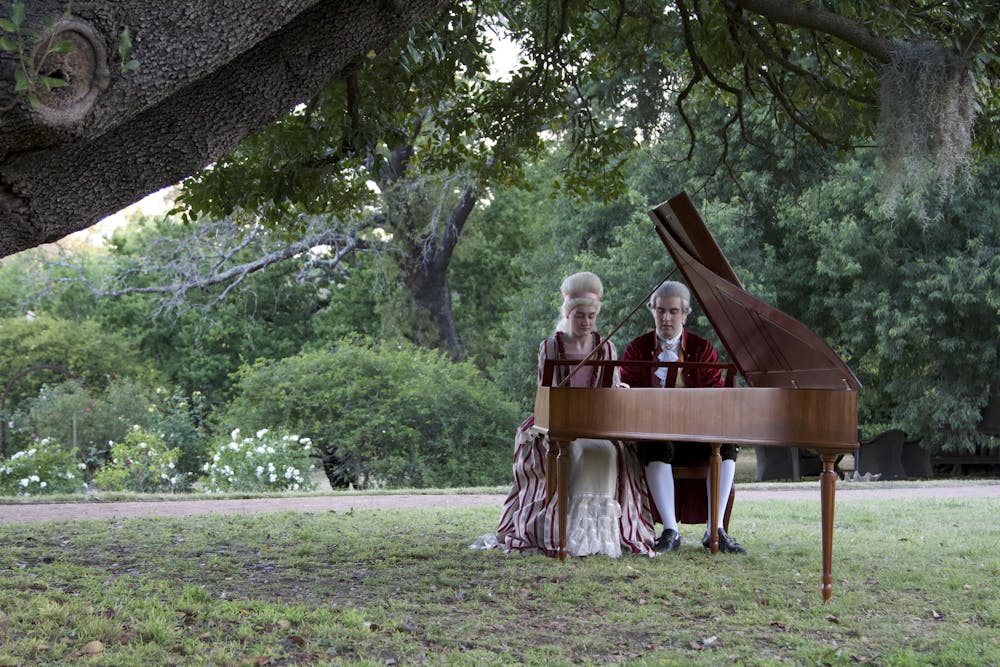
Alina Gozin’a
Award-winning director Madeleine Hetherton-Miau’s latest offering is an evocative and hard-hitting documentary with a strong message. Mozart’s Sister investigates the life of Maria Anna Mozart, the older sister of the more famous Wolfgang Amadeus Mozart.
The film portrays a sensitive and well-researched investigation into Maria Anna’s life – illuminating how the draconian attitudes that prevailed during her time condemned her to a lesser life than her brother, even though she was similarly talented.
It also reminds us of the importance of championing women musicians today, as “if we don’t encourage women now, it (discrimination) only repeats”.
Who was Maria Anna Mozart?
Maria Anna was the first-born child of Leopold Mozart. He himself was a musician and composer and had his daughter schooled in music from a very young age.
Maria showed amazing talent – a child prodigy in playing and composing. When Wolfgang was born, he quickly became engrossed in playing and composing music with his sister.
Mozart’s Sister features wonderfully poignant recreations of this childhood bond over music – emphasising the siblings’ playfulness and engagement with music in a noncompetitive way.
Leopold recognised his children’s prodigious talents. He soon had them travelling and playing concerts all over Europe, where they were lauded by the highest aristocracy. Maria Anna and Wolfgang were inseparable during this time and composed many works together.
Maria Anna and Wolfgang composed many works together. Madeleine Hetherton-Miau
Women musicians in the 18th century
But all of this came to an abrupt end with Maria Anna turned 15. As custom would dictate, it was considered unsuitable and unseemly for a girl of that age to perform in public, likening this form of public performance to that of a prostitute.
The film portrays the unfortunate fate that befell many 18th-century women who wanted to pursue a career in music. Regardless of their aptitude, these women would have no real career prospects. They were even banned from playing musical instruments deemed unseemly, including the violin and cello.
Composing and playing music was largely taken up by the nuns in monasteries. As Mozart’s Sister highlights, even though this was a time of enlightenment, this “enlightenment” was reserved for men – and white men at that. It definitely didn’t flow on to women.
Maria Anna was forced to stay home while Wolfgang continued pursuing music uninterrupted – and the rest is history.
Maria Anna’s musical talents weren’t encouraged the way her younger brother’s were. Shannon Ruddock
The film ponders what it must have been like for her to be left at home, away from her brother (who was once her constant companion) and unable to play as she used to. Her life is poignantly illustrated through her diary entries, which are mainly filled with references to the weather, as though nothing else was happening for her.
Maria Anna eventually married, but continued to practice music each day. Upon her husband’s death – now a woman of means and a baroness in her 50s – she returned to solo concert performances.
A documentary on two levels
Mozart’s Sister is a documentary that functions on many levels.
On one level, it’s a biopic that portrays Maria Anna’s story through recreations of her childhood in Austria, with a voiceover narration and interviews highlighting her relationship with her brother. Much is shot on location in Austria and framed through the perspective of present-day museum curators and experts.
On another level, the film is a broader statement on the underrepresentation of female composers. I thought the director did an excellent job in portraying this duality through the juxtaposition of Maria Anna’s with the young British composer Alma Deustger. Deustger displayed many of the characteristics we could imagine Maria Anna having.
Like Maria Anna, Deustger is a brilliant modern-day composer with a deep appreciation for for composing and conducting. But unlike Maria, she has been able to pursue her passion and turn it into a career. I was particularly struck by the film’s closing, in which Deustger discusses writing her waltz based on the police sirens of New York.
Mozart’s Sister follows in a recent literary trend of discussions of appropriation – and of the overlooking of talented women in history who have been overshadowed by their more famous male counterparts. Anna Funder’s Wifedom and Hernan Diaz’s Pulitzer Prize-winning book Trust are two other examples of this.
It is an interesting and provocative film that will appeal to classical music lovers, as well as those interested more broadly in the issue of female underrepresentation in the arts.
Mozart’s Sister is in cinemas from today.
Diane Charleson does not work for, consult, own shares in or receive funding from any company or organisation that would benefit from this article, and has disclosed no relevant affiliations beyond their academic appointment.
Work to improve the quality of Launceston’s biggest waterway has reached a new milestone, with construction of a giant storage tank at Ti-Tree Bend underway, following the recent completion of upgrades to the Margaret Street Pump Station and Western Rising Main.
The 10-megalitre concrete tank will be connected to the new pipeline under the Kanamaluka / Tamar Estuary riverbed – boosting the storage capacity of Launceston’s combined sewage and stormwater system, and significantly reducing untreated overflows.
Ahead of construction, mass soil mixing works of more than 28,000 cubic metres of soil – the equivalent to filling 11 Olympic-sized swimming pools – were undertaken, along with the installation of 120 concrete piles to a depth of 20 metres.
With these essential ground improvement and foundation works completed, TasWater is now beginning construction of the new 10-megalitre covered storage facility and supporting infrastructure, with the project expected to be completed in 2026.
The project is supporting up to 80 jobs during construction, and includes the services of local Tasmanian contractors, One Earth Excavations.
It is part of the $140.7 million Tamar Estuary River Health Action Plan, with the Albanese Government providing $49 million, the Tasmanian Government $47.5 million, TasWater $33.2 million, and the City of Launceston $11 million – an initiative of the $609.4 million Launceston City Deal.
Quotes attributable to Federal Minister for Regional Development and Local Government, Kristy McBain MP:
“It was fantastic to be back in Launceston to see this infrastructure continuing to take shape, with construction of this 10-megalitre tank marking an exciting milestone in this region-shaping project.
“Upgrading Launceston’s sewage and stormwater system will not only ensure it keeps pace with the city’s growing population, it will significantly boost the health of the Kanamaluka/Tamar Estuary, supporting commercial and recreational opportunities on this waterway into the future.”
Quotes attributable to Minister for Business, Industry and Resources, Eric Abetz:
“Alongside the recently completed pipeline, this latest milestone will continue improvements in the overall health of the Estuary.
“The work being conducted under the Launceston City Deal and Tamar Estuary Management Taskforce demonstrates once again what can be achieved when the three levels of government collaborate.
“The Tamar Estuary is a major asset for Launceston and Northern Tasmania and the more focus we have on its health and amenity, the better.”
Quotes attributable to Senator for Tasmania, Helen Polley:
“Improving the health of the Kanamaluka/Tamar Estuary is something that people in Launceston have long called for, which is why we’re getting on with the job of delivering these critical upgrades to the city’s sewage and stormwater system.
“With work kickstarting on this storage tank installation, we’re another step closer to this estuary becoming a recreational waterway, which will really transform how this part of Launceston is utilised by locals and visitors long into the future.”
Quotes attributable to Simon Wood, Liberal Member for Bass:
“We appreciate the river’s importance to Launceston and the wider community, which is why we are making investments today to ensure its health for future generations.
“The health of the Tamar is a daily topic of conversation around Launceston.
“People can be confident that the Tasmanian Government, as part of the Tamar Estuary Management Taskforce and through the Launceston City Deal, is helping to protect this waterway.”
Quotes from City of Launceston Council Mayor Matthew Garwood:
“The City of Launceston is proud to work alongside our Launceston City Deal partners to continue to make improvements to the health of our waterways,” Mayor Garwood said.
“The work TasWater has been undertaking to progress new and improved sewage infrastructure is phenomenal and is going to make a really positive difference to the natural environment over coming decades.”
Source: Australian Ministers for Regional Development
Work to improve the quality of Launceston’s biggest waterway has reached a new milestone, with construction of a giant storage tank at Ti-Tree Bend underway, following the recent completion of upgrades to the Margaret Street Pump Station and Western Rising Main.
The 10-megalitre concrete tank will be connected to the new pipeline under the Kanamaluka / Tamar Estuary riverbed – boosting the storage capacity of Launceston’s combined sewage and stormwater system, and significantly reducing untreated overflows.
Ahead of construction, mass soil mixing works of more than 28,000 cubic metres of soil – the equivalent to filling 11 Olympic-sized swimming pools – were undertaken, along with the installation of 120 concrete piles to a depth of 20 metres.
With these essential ground improvement and foundation works completed, TasWater is now beginning construction of the new 10-megalitre covered storage facility and supporting infrastructure, with the project expected to be completed in 2026.
The project is supporting up to 80 jobs during construction, and includes the services of local Tasmanian contractors, One Earth Excavations.
It is part of the $140.7 million Tamar Estuary River Health Action Plan, with the Albanese Government providing $49 million, the Tasmanian Government $47.5 million, TasWater $33.2 million, and the City of Launceston $11 million – an initiative of the $609.4 million Launceston City Deal.
Quotes attributable to Federal Minister for Regional Development and Local Government, Kristy McBain MP:
“It was fantastic to be back in Launceston to see this infrastructure continuing to take shape, with construction of this 10-megalitre tank marking an exciting milestone in this region-shaping project.
“Upgrading Launceston’s sewage and stormwater system will not only ensure it keeps pace with the city’s growing population, it will significantly boost the health of the Kanamaluka/Tamar Estuary, supporting commercial and recreational opportunities on this waterway into the future.”
Quotes attributable to Minister for Business, Industry and Resources, Eric Abetz:
“Alongside the recently completed pipeline, this latest milestone will continue improvements in the overall health of the Estuary.
“The work being conducted under the Launceston City Deal and Tamar Estuary Management Taskforce demonstrates once again what can be achieved when the three levels of government collaborate.
“The Tamar Estuary is a major asset for Launceston and Northern Tasmania and the more focus we have on its health and amenity, the better.”
Quotes attributable to Senator for Tasmania, Helen Polley:
“Improving the health of the Kanamaluka/Tamar Estuary is something that people in Launceston have long called for, which is why we’re getting on with the job of delivering these critical upgrades to the city’s sewage and stormwater system.
“With work kickstarting on this storage tank installation, we’re another step closer to this estuary becoming a recreational waterway, which will really transform how this part of Launceston is utilised by locals and visitors long into the future.”
Quotes attributable to Simon Wood, Liberal Member for Bass:
“We appreciate the river’s importance to Launceston and the wider community, which is why we are making investments today to ensure its health for future generations.
“The health of the Tamar is a daily topic of conversation around Launceston.
“People can be confident that the Tasmanian Government, as part of the Tamar Estuary Management Taskforce and through the Launceston City Deal, is helping to protect this waterway.”
Quotes from City of Launceston Council Mayor Matthew Garwood:
“The City of Launceston is proud to work alongside our Launceston City Deal partners to continue to make improvements to the health of our waterways,” Mayor Garwood said.
“The work TasWater has been undertaking to progress new and improved sewage infrastructure is phenomenal and is going to make a really positive difference to the natural environment over coming decades.”
Source: New South Wales Department of Primary Industries
31 Oct 2024
Two ocean trawlers in the Northern Rivers and a river trawler on the Hawkesbury River have become the first in Australia to trial a low carbon renewable fuel solution as part of a NSW Government research project on sustainable energy usage in the commercial fishing sector.
The $920,000 Beyond Fossil Diesel Program is a collaboration between the NSW Government and the Decarbonisation Innovation Hub initiative which supports collaboration between researchers and industry to increase the uptake of new technologies in decarbonising NSW.
Renewable diesel is used as a drop in replacement and offers industry a 70% – 90% reduction in their normal fuel related emissions and as part of the project, more than 6,000 litres of renewable diesel will be blended with fossil diesel at 30% of the mix.
Research Officer Michael Cashen said after 18 months of research, the Beyond Fossil Diesel Program has hosted a series of renewable fuel demonstrations in both the Clarence and Hawkesbury regions.
“The aim of the Beyond Fossil Diesel at Sea project is to provide practical examples that will inspire confidence and drive adoption of practical decarbonisation solutions within the marine sector,” Mr Cashen said.
“We appreciate Yamba commercial fisher Steve Everson and Paul Aquilina from Spencer for participating in this landmark demonstration.
“Their involvement will show other fishermen what is possible with these evolving low-carbon liquid fuels and how they work in their vessels.”
Mr Cashen continued by saying renewable diesel can be made from biological feedstocks including tallow, oilseed crops and sugar cane and has been used extensively in both the US and Europe in hard to abate sectors that have limited practical options to decarbonise.
“Currently, the price of renewable diesel is too high for widespread adoption, however, with the development of an Australian Low Carbon Liquid Fuel industry, we expect prices to decrease over time, making it easier for the industry to adopt renewable diesel as stakeholders become more familiar with the product,” Mr Cashen said.
“Raising awareness of low carbon liquid fuels as a replacement for fossil fuels was initially done in the agriculture sector, as part of the Beyond Fossil Diesel project.
“With potential demand for low carbon liquid fuels growing worldwide, NSW has a significant opportunity to help build feedstock supply and potentially production capacity that can create regional employment and reduce reliance on imported fuel.
Low Carbon Liquid Fuels such as renewable diesel is a practical way for industry to reduce carbon emissions without having to make changes to existing machinery or supply chains.
“By using renewable diesel, we can directly cut emissions and contribute to NSW target to net zero emissions by 2050.”
NSW Northern Rivers commercial fisherman Steve Everson said:
“I’m excited to be part of this Australian-first demonstration.
“Using renewable diesel in my trawlers not only supports our local industry but also showcases the potential for reducing emissions without making changes to our equipment.”
NSW Hawkesbury River fishermen Paul Aquilina said:
“By showcasing the effectiveness of renewable diesel, we hope to inspire other fishermen to adopt these innovative fuels when they become more affordable in Australia.
Source: Australia Government Ministerial Statements
CATHERINE KING: Hi, I’m Catherine King. I’m the Federal Minister for Infrastructure, Transport and Regional Development, and one of the great parts of my job is being able to invest in local communities. Today we’re announcing here in Cowes that the Albanese Labor Government is committing $8 million to upgrade the esplanade, to do the work that’s needed to ensure that this is a much more pedestrian-friendly area for the beautiful people that come to Phillip Island each year, who live on the island, and call this home. This investment alongside over $21 million worth of funding that we’re announcing as part of the regional Precincts and Partnerships Program, another project in Hamilton, a project in Mansfield, and a project in Cobram, are really important projects for local communities. What they enable and the reason we’ve been looking to invest alongside council in these projects is to create precincts that come to life. Where the infrastructure may be a bit tired, it’s not working, we’re really trying to make sure we’re bringing people back into the centres and regions, that we’re providing that opportunity for new businesses to flourish, but also really for places to be used because we know how important that is to local communities.
So, really delighted to be here today to announce the latest round of regional Precincts and Partnerships funding and the $8 million to give to the Cowes community. I might hand over to the CEO – obviously the council is in caretaker at the moment – to say a few words and then I’ll be happy to take some questions.
GREG BOX: Thank you, Minister. So, we’re really pleased to have you here and really pleased to have the Federal Government provide this funding. Ultimately, it’ll bring the money to 9.6 million from council’s contribution. This is an iconic part of Victoria. It’s an iconic street. And really, that investment is going to bring that right up as, the Minister said, and transform it into the sort of place that we want this to be. We’ve had an enormous amount of investment over the last ten years. The master planning for this was done out in 2015, and that master planning has culminated in nearly $300 million worth of investment around this site and around this place. So it’s incredible work and council’s really proud of it, but we’re actually really excited and looking forward to transforming this space right now.
CATHERINE KING: Great. Happy to take some questions.
QUESTION: So traffic will be going one way in Cowes?
CATHERINE KING: Yeah. Well I think if you’ve ever come down here at summer- it’s a little while since I’ve been down here on holidays. I used to come down here a lot as a kid. But it’s pretty busy and it’s really very congested and hard to get through. But it also makes it dangerous when you’ve got families with little kids who are trying to get access to the shops, trying to get their kids ice creams, or just come and do your shopping. It does make it really difficult over summer. And of course, anyone who’s been down here knows that it banks up, so that means you’ve just got a decent traffic flow. You really make sure you’re slowing cars down, you’re pedestrianising access. That makes it safer, but it also makes it a much better place for people. People want to come here, they want to actually come and shop, and that’s really good for the retailers as well.
QUESTION: Will there be any impacts to car parking?
CATHERINE KING: Again, that’s really a matter for council. They’re delivering the project. The Federal Government is delivering the funding and partnership, so I’ll hand over to the CEO to make [indistinct].
GREG BOX: Yeah, we’ll work through the detailed design of it. We’re not really talking about net losses and gains at the moment. There’s a whole lot of detail still to be done on that. But as the Minister said, really, what we’re trying to do is prioritise people in the space. We already experience an enormous amount of people in this space, and letting them be able to interact both with business and community is incredibly important. Providing shade, there’ll be curve extensions. This part of the world will be one of those places that you really do want to walk and sit and contemplate. It’s the only north facing beach in Victoria. It really is an iconic spot and we’re experiencing that today with the sun on us. It’s really a magnificent spot to actually stop and engage in local culture.
QUESTION: And so it will be one way up until Chapel Street, is that right?
GREG BOX: Yes. Just until- just up until chapel. And it’ll be one way coming down this way, and then it’ll go one way both ways around. So again, as the Minister said, that will slow down traffic and will enable people to feel like the space is something that they can inhabit more safely.
QUESTION: And Minister, speaking about the other areas across the state receiving funding, were they announced- are you announcing them today or have they already been…
CATHERINE KING: We’re announcing all of the Victorian regional Precincts and Partnerships Projects today. So, the work in Hamilton, Mansfield and Cobram. And over $21 million across the state of Victoria. What we’re really looking for are- these are place-based funding. It’s to really look at how do you improve the places where regional communities live, how do you get partnerships between council, Federal Government, commercial retailers, not-for-profit organisations to really make those places where people want to come and live.
QUESTION: Is there anything that stands out about [indistinct]? One-way traffic or anything.
CATHERINE KING: So, yeah, really to me, what I’ve been looking for and I’ve got a panel of people who are really involved in urban planning and changing places. And so they do the assessments for me, and that comes to me. But what I’ve been looking for is have we got areas that are underutilised, have older buildings in them that really have been- have had huge uses throughout their life but are not really being used; spaces that are not being activated. So really, that’s what I’ve been looking for. What changes a place and makes a place more liveable for people in our communities. And that’s really what this program is about.
QUESTION: And why have these towns been specifically selected?
CATHERINE KING: Again, because of the excellence of their projects. If you look at the projects here in Cowes, this is about changing places. It’s about changing the way that people who live in this community interact with the built environment and use it more effectively, and that’s really what these projects are about.
Source: United States House of Representatives – Congresswoman Sydney Kamlager California (37th District)
LOS ANGELES, CA— Today, Congresswoman Sydney Kamlager-Dove (CA-37)presented a $500,000 check to Brotherhood Crusade for its Trauma-Informed Anti-Recidivism Initiative. This project is one of fifteen that Congresswoman Kamlager-Dove secured a total of $12.4 million for through Fiscal Year 2024 government funding legislation.
The Trauma-Informed Anti-Recidivism Initiative will engage system-impacted youth ages 12-24 in a two-stage program to facilitate successful reentry into society and reduce recidivism rates. The first stage involves a ten-step, evidence-based curriculum to curb high risk behaviors. The second stage equips participants with the tools they need to become their best selves through 12 months of mentorship and workforce development training. All aspects of the initiative are tailored to address the specific needs of system-impacted youth in South Los Angeles.
“Everyone deserves a second chance—especially young people. But more than that, our system-impacted youth must be supported as they reenter society and start a new chapter in their lives,” said Congresswoman Kamlager-Dove. “Through its Trauma-Informed Anti-Recidivism Initiative, Brotherhood Crusade is doing the work to ensure that system-impacted youth not only get back on their feet but reach their full potential. This program is an investment in our youth and our community that will help us build a brighter, more prosperous future for South Los Angeles.”
“We are forever thankful to Congresswoman Kamlager-Dove for her support of the Brotherhood Crusade’s Trauma-Informed Anti-Recidivism Initiative. Every day, we are working intentionally to help keep youth from re-offending in our communities by offering engaging, impactful, and culturally supportive programs. The $500,000 grant will assist in continuing and growing our transformative, evidenced and research-based programs that has resulted in the significant drop of recidivism rates for youth participating in our programs,” said Charisse Bremond Weaver, President and CEO of the Brotherhood Crusade. “We are humbled and appreciative of the confidence that Congresswoman Kamlager-Dove has in our 56-year institution that serves youth and families every day in South Los Angeles.”
ABOUT BROTHERHOOD CRUSADE:
The Los Angeles Brotherhood Crusade is a grassroots 501(c)(3) nonprofit providing human and social services to more than 100,000 South Los Angeles residents annually. Brotherhood Crusade’s mission is to help individuals overcome the barriers that deter their pursuit of success in life and facilitate opportunities for a better quality of life. Brotherhood Crusade believes that South Los Angeles can be a safe, thriving, culturally relevant and inclusive community that provides all residents equitable access to human and social services and continually improves their quality of life.
2.6 Seconds. Photo credit: Jesse Marlow. SBS, NITV and Screen Australia are proud to announce the commission of landmark documentary series, 2.6 Seconds, a truth-telling of a fatal meeting between two young men from two very different worlds, in the isolated community of Yuendumu in Australia’s central desert. One black, the other white. 2.6 Seconds is the story of how the paths of 19-year-old Warlpiri Luritja teenager, Kumanjayi Walker, and Zachary Rolfe, the 27-year-old police officer, came to cross. It traces the tearing apart of their lives and that of their families, and the clash of two notions of justice. It is a case that reaches far beyond these two men to tell a deeply compelling, insightful and confronting story about the country both were born into. Screen Australia’s Head of First Nations Angela Bates said, “2.6 Seconds not only explores the lives of Kumanjayi Walker and Zachary Rolfe but also navigates the complex intersection of culture and justice – empowering our communities to share their truths. The First Nations Department is proud to support such an important project, which plays a crucial role in elevating First Nations narratives and fostering understanding among all Australians.” SBS Head of Unscripted Joseph Maxwell said, “With unprecedented access, 2.6 Seconds will forensically examine what happened the night Kumanjayi Walker was killed, the trial that followed, and the impact on a family and community. The series will be a purposeful and powerful examination of those events and also the far-reaching repercussions on the entire country. This landmark series reflects the role of SBS and NITV to tell important and challenging stories that impact the nation. Director of Indigenous Content for SBS and NITV, Tanya Denning-Orman said, “The death of Kumanjayi Walker tore lives and communities apart. Over five years, we’ve all seen the media headlines and now, for the first time, SBS and NITV with Blackfella Films will take the time and care to tell this important story, hear from the voices involved, and in doing so, drive an important national conversation.” Blackfella Films Producer, Darren Dale said: “2.6 Seconds will vividly examine, in four one-hour episodes, the circumstances surrounding a black teenager’s death at the hands of a white police officer in a place far removed from our sense of our Australia, A place where young men are lost and almost forgotten and where to some ‘there are no rules’. This story will reveal the justice system where racism must be interrogated. It will shock, anger and break our hearts yet again. It will reveal to us who we still are as a nation.” Head of Screen NSW Kyas Hepworth said, “Darren Dale and the team at Blackfella Films are renowned for bringing bold, ambitious and complex stories to screen, highlighting many important and nuanced First Nations stories in our country. I anticipate this detailed series will spark many important conversations across the nation and will be another watershed project from Blackfella Films.” Premiering on SBS, NITV and SBS On Demand in 2025, the four-part series from leading Australian production company Blackfella Films is written and produced by Darren Dale (The Australian Wars, Meet the Neighbours) with Jacob Hickey (The Australian Wars, Addicted Australia) as series producer. Production credit: 2.6 Seconds is a co-commission between SBS and NITV with the production of Blackfella Films. Major production investment from Screen Australia’s First Nations Department in association with SBS. Financed with support from Screen NSW. Produced in association with All3Media International. SBS/NITV Media Enquiries Nikita Jacka | 0425 171 192 | [email protected] Media enquiries Maddie Walsh | Publicist + 61 2 8113 5915 | [email protected] Jessica Parry | Senior Publicist (Mon, Tue, Thu) + 61 428 767 836 | [email protected] All other general/non-media enquiries Sydney + 61 2 8113 5800 | Melbourne + 61 3 8682 1900 | [email protected]
Australia’s COVID vaccine roll-out started slowly, with supply shortages and logistical shortcomings. Once it got going, we immunisedmore than 95% of the population.
This week’s COVID inquiry report contains a number of recommendations to improve Australia’s vaccine preparedness the next time we face a pandemic or health emergency.
While the inquiry gets most things right, as vaccine experts, we argue the government response should be broadened in three areas:
expanding compensation programs for people who suffer any type of vaccine injury
better understanding why people aren’t up-to-date with their vaccinations
equipping community helpers in marginalised communities to deliver information about vaccines and combat misinformation.
Australians should be compensated after vaccine injuries – not just during pandemics
The inquiry recommends reviewing Australia’s COVID vaccine claims scheme in the next 12 to 18 months, to inform future schemes in national health emergencies.
Early in the pandemic, vaccine experts called on the Australian government to establish a COVID vaccine injury compensation scheme.
This meant people who were injured after suffering a rare but serious injury, or the families of those who died, would receive compensation when there had been no fault in the manufacturing or administration of the vaccine.
Vaccine experts recommended the creation of such a scheme based on the principle of reciprocity. The Australian public was asked to accept the recommended COVID vaccines in good faith for their health benefit and the benefit of the community. So they should be compensated if something went wrong.
In 2021, the Australian government announced the COVID-19 Vaccine Claims Scheme. Australia had no such scheme before this, in stark contrast to 25 other countries including the United States, United Kingdom and New Zealand.
any links between the scheme and vaccine hesitancy.
However, this is currently framed only within the scope of the scheme being used for future epidemic or pandemic responses.
Instead, we need a permanent, ongoing vaccine compensation scheme for all routine vaccines available on the National Immunisation Program.
As we’ve learnt from similar schemes in other countries, this would contribute to the trust and confidence needed to improve the uptake of vaccines currently on the program, and new ones added in the future. It is also right and fair to look after those injured by vaccines in rare instances.
Not getting vaccinated isn’t just about a lack of trust
The COVID inquiry recommends developing a national strategy to rebuild community trust in vaccines and improve vaccination rates, including childhood (non-COVID) vaccine rates, which are currently declining.
The COVID vaccine program has affected trust in routine vaccines. Childhood vaccine coverage has declined 1–2%. And there is a persistent issue around timeliness – kids not getting their vaccines within 30 days of the recommended time point.
The national Vaxinsights project examined the social and behavioural drivers of under-vaccination among parents of children under five years. It found access issues were the main barriers to partially vaccinated children. Cost, difficulty making an appointment and the ability to prioritise appointments due to other conflicting needs were other barriers. Trust was not a major barrier for this group.
However for unvaccinated children, vaccine safety and effectiveness concerns, and trust in information from the health-care provider, were the leading issues, rather than access barriers.
To improve childhood vaccination rates, governments need to monitor the social and behavioural drivers of vaccination over time to track changes in vaccine acceptance. They also need to address barriers to accessing immunisation services, including affordability and clinic opening hours.
It is also imperative we learn from the lessons during COVID and better engage communities and priority populations, such as First Nations communities, people with disabilities and those from different cultural groups, to build trust and improve access through community drop-in and outreach vaccine programs.
To address the decline in adult COVID vaccination we need to focus on perceptions of need, risk and value, rather than just focusing on trust. If adults don’t think they are at risk, they won’t get the vaccine. Unfortunately, when it comes to COVID, people have moved on and few people believe they need boosters.
Variant changes or enhancements to the vaccine (such as combined vaccines to protect against COVID and flu, or RSV or vaccines with long last protection) may encourage people to get vaccinated in the future. In the meantime, we agree with the inquiry that we should focus on those most at risk of severe outcomes, including residents in aged care and those with chronic health conditions.
Invest in community-led strategies to improve uptake
The COVID inquiry recommends developing a communication strategy for health emergencies to ensure all Australians, including those in priority populations, families and industries, have the information they need.
While these are not strictly focused on the promotion of vaccination, the suggestions – including the need to work closely with and fund community and representative organisations – are aligned with what our COVID research showed.
However, the government should go one step further. Communication about vaccines must be tailored, translated for different cultural groups, and easy to understand.
In some settings, messages about the vaccines will have the most impact if they come from a health-care worker. But this is not always the case. Some people prefer to hear from trusted voices from their own communities. In First Nations communities, these roles are often combined in the form of Aboriginal Health Workers.
We must support these voices in future health emergencies.
During COVID, there was insufficient support and training for community helpers – such as community leaders, faith leaders, bilingual community workers, and other trusted voices – to support their vaccine communication efforts.
The government should consider implementing a national training program to support those tasked (or volunteering) to pass on information about vaccines during health emergencies. This would provide them with the information and confidence they need to undertake this role, as well as equipping them to address misinformation.
Holly Seale is an investigator on research studies funded by NHMRC and has previously received funding from NSW Ministry of Health, as well as from Sanofi Pasteur, Moderna and Pfizer for investigator driven research and consulting fees.
Julie Leask receives a fellowship from the National Health and Medical Research Council and research funding from the World Health Organization. She received reimbursement for overseas travel costs from Sanofi in April 2024.
Margie Danchin receives funding from the Victorian and Commonwealth governments, NHMRC/MRFF and DFAT.
Caravan parks provide accommodation for visitors and permanent residents alike. However, the high risk of injury and fatality with caravan fires and fires at caravan parks makes fire safety education and training crucial for park operators – particularly those in high-tourism areas.
Not only can fires in caravans and caravan parks lead to serious injuries and fatalities due to their inherent intensity and ability to spread quickly, if a fire breaks out in a tourist area it is critical that park staff and guests know what to do to evacuate safely and efficiently.
Education is vital to ensure park operatorsunderstand fire hazards so they can implement measures to prevent fires, protecting both property and guests.
CFA’s Bellarine Group of brigades, supported by CFA’s District 7 team, recently worked with the Victorian Caravan Parks Association to deliver a full day of fire safety education and training to more than 60 caravan park operators from across the state.
Held at Portarlington Fire Station on 18 October, the day covered fire risk, caravan park legislation, emergency management and evacuation planning, first attack firefighting and use of extinguishers, and property preparation.
Participants heard from CFA’s Community Infrastructure and Community Education teams, witnessing a demonstration of a gas cylinder flare off and learning how to use a fire blanket and test gas bottles for leaks.
They also used CFA’s Virtual Reality technology to experience putting out a small fire.
CFA district staff then helped owners familiarise themselves with how emergency services operate and respond in the event of a fire, discussing whether a truck could fit on the premises if a fire broke out at their park.
CFA’s Industry Fire Prevention Manager Leigh Marsh said educating caravan park operators, staff and ultimately their guests about fire safety could save lives and reduce injury in the event of a fire.
“Fire safety risks can vary in parks depending on where they are located, however the flammability of caravans and their small size means that if a fire starts from cooking, an accident or faulty equipment, there is a high risk of fatality,” Leigh said.
“The fire is also likely to spread quickly due to its proximity to other caravans and park facilities.
“For those parks situated in holiday areas such as our coastal hamlets, the risk of bushfire impacting the park is high and inadequate planning can lead to delays in people being able to evacuate safely.
“Knowledge of fire safety allows caravan park operators to develop and communicate effectively to their guests about emergency plans, ensuring a quick response if a fire occurs.”
Leigh said education and training was also important to help caravan park operators better understand their legal obligations in relation to fire safety.
“Caravan parks must comply with a range of legislative requirements in Victoria in relation to fire safety, including the CFA Caravan Park Fire Safety Guidelines, which were updated this year,” Leigh said.
“Caravan parks also often operate within local communities so being proactive in fire safety fosters goodwill and promotes community safety – as well as encourages visitors to come back.”
The Caravan Parks Information and Training Day was originally the brainchild of Ocean Grove brigade volunteers and was held each year at their station for about seven years prior to the COVID-19 pandemic.
David Wynn from Wynndean Holiday Resorts said it was great to see the day up and running again, especially given the release of new Caravan Park Guidelines.
“Relationship building is critical in the interpretation of the guidelines and their application,” David said.
“The day allowed park operators and staff to use firefighting equipment in a controlled setting which assisted greatly in understanding our fire safety and emergency management obligations.”
David, who is also a volunteer with Wye River Fire Brigade, said the timing of the event was perfect preparation for the peak holiday period and the upcoming fire danger period.
“We are very lucky to have access to this day in our region and the highly-credentialled and experienced presenters,” he said.
“The CFA team made it clear they were there to support us. Thank you to them and the many volunteers, local brigades and CFA district staff who contributed to the day’s success.
“We are looking forward to next year’s event, and if you are a park operator please go out and meet with your local brigade, invite them into your park and actively build those relationships.”
CFA Bellarine Group manager and Wallington brigade firefighter Alistair Drayton said part of CFA’s role was to help communities build resilience to fire and other emergencies through education, upskilling and developing relationships with sectors most at risk.
“Events such as this are important in building that momentum and supporting and promoting a safer response for all brigades across the state,” Alistair said.
“Thanks to the park operators for giving their time and enthusiasm. Their feedback was extremely positive including that the content presented was what was needed and easy to understand and implement.
“We look forward to continuing to build relationships with them in our ongoing efforts to foster resilient and safer communities.”
SUBJECTS: $241 million in outstanding Medicare payments owed to Australians; MP’s declaration of flights; academic pressure on politicians re: abortion laws.
REBECCA SHARKIE, MEMBER FOR MAYO: I’d like to now welcome the Minister for NDIS, Government Services Minister Bill Shorten, who I – I’m allowed to have favourites, the Minister is my favourite Minister in the government. There we go. Mic drop over to you.
BILL SHORTEN, MINISTER FOR THIS NDIS AND GOVERNMENT SERVICES: Look, it is great to be in Rebecca Sharkie’s electorate of Mayo. The truth of the matter is, Rebecca is one of the hardest working members of Parliament. She’s highly respected in all parts. And I was very keen to come and visit, hear her issues on the ground. It’s great to be here at Service Australia and the NDIA office. The Services Australia staff here look after over 100 people every day, making sure that people can get their pensions, their entitlements, their Medicare. And it’s fantastic, what this hard-working team do.
It’s also great to be here with staff from the National Disability Insurance Agency. The NDIS is changing hundreds of thousands of lives for the better. There’s been a lot of change. We’re making the scheme better. We’re making it true to its original purpose. We’re ensuring it’s sustainable. But all of that happens because we’ve got great people. So, the fact that call waiting times in Centrelink are down, processing payment times are now shorter in Medicare because of the hard work. And in the NDIS, we’re getting better outcomes for people daily, is due to hard work in Commonwealth public servants here in Mount Barker.
But I’m not just here to listen and not just here to say thank you to the public servants who look after people when they’re vulnerable or in distress. I’ve got some good news for South Australians and good news for Australians generally, during a cost-of-living crisis. At the moment, there is $241 million of Medicare payments which people have accrued. In other words, the money is there for them. There’s 930,000 of our fellow Australians, from every corner of this continent and all walks of life, who actually are entitled to get rebates for the health system. They just haven’t collected them.
In South Australia alone, there’s $19 million, just basically sitting in the government bank accounts for 73,800 South Australians who, all they have to do is because we don’t have their current bank details, we can’t just automatically send it to them. So, this is good news, but it’s also a request. People should go to the myGov website or the myGov app, link up their Medicare card to their myGov account, and then make sure that the bank details are up to date. You will receive any outstanding money within three working days. That’s all you’ve got to do. Like, if finding treasure was this easy, we’d all be treasure hunters.
But the reality is we’ve got a national treasure. It’s called Medicare. It’s there to help people defray the costs of their health system. And what we find is that there’s $241 million which people legitimately can claim, just tell us your bank account details and then we will pay you. And you know, when you think about a million people and a quarter of $1 billion, that’s not small change. For some people, I think the average that’s owed is about $260, which is just great. But some people, there’s thousands of people who are owed tens of thousands of dollars. So, my request, my plea, my invitation is, go online to myGov, download the myGov app, link up the Medicare card, make sure you’ve got your bank details up to date, and then if you’re owed money, bang, in three days, it’s in your account. This process will take you about ten minutes if you have to set up a myGov account and link it to Medicare. It’s a lot quicker if you’ve already got your myGov app and Medicare linked. Just update your bank details. Anyway, that’s good news and happy to take questions on this or any other matter.
JOURNALIST: How did this get uncovered in the first place?
SHORTEN: Well, it’s always been a thing. I’m just not sure my predecessors always talked about it. I want the money which is the money of the Australian people to be in Australian people’s bank accounts. So, it is possible, you know, you change banks, you can lose track of different things that you put in. You’re not sure. So, I can understand how in busy lives and changing details, thinking about whether or not the government’s got your current bank account details, it’s probably not your number one issue. If you’ve got to, you know, feed the dog, get the kids to school, you know, go to work. But it’s 241 million. We’ve been pushing this a bit to get money back to people. Since the end of last year, we have reunited $117 million with Australians who had outstanding payments, but literally, you don’t have to go on a treasure hunt. Just go to myGov. It’s your money. We just want to try and give it to you. Please just update your bank details.
JOURNALIST: It might be possible that scammers might jump on this and try.
SHORTEN: Oh yeah. One thing, listen, there’s a lot of – you know, scammers are wicked, wicked people. Um, and you know, international scammers, terrible. Don’t open a link. We won’t be sending you a link to open. You go to myGov website, you download the myGov app. We won’t be sending you a link to click and open. Do not click a link. You go to myGov website, and you go to the myGov app. Download that.
JOURNALIST: Is there a certain age group which is owed significantly more than others?
SHORTEN: Well, the Millennials. The Millennials, Gen Z. There is about 224,000 Gen Z-ers who are owed some money, so that’s the biggest group. But what is interesting when you look at the age cohorts are there’s children, so, through their parents, Gen Z is the biggest group, but it’s right up to people in their 80s. So everywhere in Australia, there’s 930,000 people who are owed money. And literally, it’s not that hard to get. You’ve just got to sort of prioritize it for about ten minutes of your life. I’m not saying you might well be up to date with your Medicare payments, so that’s good, that doesn’t mean you get any more. But for 930,000 of our fellow citizens, it’s just there. Like, it’s like picking apples off a tree.
JOURNALIST: And this obviously isn’t just in the last financial year. Has this been accruing over time?
SHORTEN: It accrues over time, yes. I mean, this year, last financial year, this nation of ours paid out $30 billion in Medicare payments, but there’s a quarter of a billion which is ready to be paid, which hasn’t been collected.
JOURNALIST: As you said, this keeps happening. Do processes perhaps need to be a bit more streamlined?
SHORTEN: Yeah, we do so – well, the good news is we’re taking a lot of government services online so we can digitally notify a lot of people. Until we had the myGov app, once upon a time, you’d get, you know, myGov, “you have mail”. And that was sort of almost like a nightmare for people because they’d have to try different systems. Very clunky. You’d have to go to the site. The myGov app is great. It’s in the Google shop, just download it. So, we can notify people digitally. We’ve got 30 different campaigns on campuses to let students know, but I think this is something which we can more proactively push, which is why we’re doing it today. We’re doing it in Rebekha Sharkie’s electorate. She has people in Mount Barker, 795 who are owed some money. They’ve just got to update their bank registration details.
JOURNALIST: It doesn’t run out. Does the government going to hold on to these?
SHORTEN: Yeah, we’re not spending it. No, there’s no there’s no due date where then it’s garnisheed. It just builds up. But let’s just get it out the door. Cost of living crisis. This is this is really good practical stuff, by the way. It’s not inflationary. This is money which has already been accrued, banked, allocated. We just need to help people reunite with it.
JOURNALIST: On other matters if that’s okay. Minister. Police are currently investigating the death of a woman in Port Augusta, apparently living with quite significant disability, but wasn’t on the NDIS. She was just living in squalor. How can something, how does someone fall through the cracks like this? Or is the onus on the person with the disability to get onto the NDIS?
SHORTEN: First of all, this woman’s passing is a tragedy. I understand she was about 26. It’s just tragic. That’s the first point I’d want to make. People with disabilities are vulnerable. It’s a tragedy when someone dies. As I understand in 20 – I’ve only just heard about this matter – in 2017, there was an initial expression of interest to be on the scheme. Then documentation was sent back, and then nothing more was ever heard. South Australian police, you know, they’re the professionals. We’re going to let them investigate. Obviously, we want to see what the findings are. But I think this is an issue not just for government. You know, the great people here or, you know, a local member can’t know what’s going on behind the fence and behind the door in every house. But communities, we’ve all got to look after each other, look out for each other more. Um, and sometimes people with disabilities can be socially isolated, or they might just have a relationship, and if that breaks down, then no one cares. So, I think it is a tragedy and a disaster. And the challenge here, though, is how do we as a community make sure that if someone isn’t seen for a while, what are we doing about it? So, I think this is not just one on government. This is one on all of us, to keep an eye out for each other.
JOURNALIST: When there is a request to NDIS and you don’t hear back, are steps taken to follow up or is that it?
SHORTEN: I don’t know what the system was in 2017. Yeah, we do follow up and we do go back to people. But at the end of the day, if someone doesn’t want to persist with an application, you’re not going to make them. It’s not compulsory to be on the NDIS.
JOURNALIST: Do you think there needs to be more independent processes or safeguards for people to report concerns?
SHORTEN: I think the question really is, and I’ll be interested in what the South Australian police say, from 2017, who knew about her circumstances? That’s a pretty relevant question, isn’t it? I don’t expect every politician in Australia to know every one of 110,000 adults in their electorate, but one thing they have in some states are community visitor programs. There’s a role also here for the state government. I know Nat Cook is a very conscientious Minister, though. I don’t think there’s a better Disability Minister in the country at the state level. But I think that we need to have a discussion with councils because councils often know where – I mean, maybe I don’t know if anything could have been done to avoid this death. I don’t know. But generally, your council bylaw officers often know where the dodgy houses are. They know what’s happening. I think community visitor programs are very good, where you’ve got volunteers who want to just pop in and check in on people. I think the community generally needs to notice if your neighbours aren’t around, or if they haven’t seen them in a while. What we do though, of course when we get someone who seeks a plan, is we have red flags. So, if you get to sit down and you want your individual plan, we look at their social circumstances. Are they vulnerable where they might just have a carer as a relationship or just one person? o that’s something we certainly take into account in the planning stage, but it’s not compulsory to be on the NDIS.
JOURNALIST: Do you think this was an extreme case or do you are you concerned with how many others there might be out there like this?
SHORTEN: It’s an extreme case, but I also am concerned, and it might be rare, but that doesn’t make it acceptable. But let’s let South Australian police see what they say and recommend will, of course. Watch the findings.
JOURNALIST: We just might move on to the whole Qantas saga at the moment and the whole flights. Peter Dutton now has admitted to taking flights from Gina Rinehart. Do you think MPs are going to be looking at their flight logs?
SHORTEN: First of all, let’s go to the heart of the matter. The Prime Minister has done everything according to the rules that are in place. He’s made that clear. He’s also made clear that he didn’t approach Alan Joyce for upgrades. That’s the sort of – that’s where this this debate started. Now, of course, it’s cascading into the adequacy of reporting, you know, the role of upgrades. Just two observations. The Liberals have been holding themselves out to be pretty pure and pretty holier than thou, but then it turns out they’ve got problems.
This reminds me of when Malcolm Turnbull went on the attack, when he was an opposition leader, and there was a whistleblower who I believe was called Godwin Grech and said somehow Kevin Rudd had done something wrong on a used car scheme and it was just wrong. So, I think oppositions need to be very careful about playing the man and going after the Prime Minister because they, I think, have their own problems. They clearly don’t live in a glass house.
But the other observation I want to make is this I think politicians work incredibly hard. I think they’re very committed. They want to make a difference. I think the opposition fascination with airlines lets the big issue of cost of living off the hook. You know, I’m here today with Rebecca. We want to talk about, how do we get money, which people are owed, in their pockets so they’ve got a little bit more for Christmas. So, you know, I think the opposition’s sort of made a meal of this. They’ve held themselves up to be saintly and they’re not. And I think they’re in danger of overreaching. And maybe they might even shoot themselves in the foot.
JOURNALIST: But do you do you think that the Prime Minister, by using terminology like he didn’t call Alan Joyce, he could have cleared it up by clarifying it from the outset?
SHORTEN: Well, first of all, there’s been a book written. Everyone got excited about that. Or at least Mr. Albanese’s enemies did. He’s cleared it up. We want to get on with talking about cost of living.
JOURNALIST: Sorry, one quick question. Do you recall working with a Professor Joanna Howe?
SHORTEN: Not in the Parliament, no. Way back when I was a union official, I don’t really recall, but that would be 20 years ago.
JOURNALIST: This is a question from another network, but there was, she was championing an anti-abortion bill lately, and she’s admitted to pressuring a politician to abandon a pair vote. Your thoughts on, you know, an academic trying to pressure MPs to vote a certain way?
SHORTEN: Listen, I’ve accused of being ambitious. I’ve been ambitious for the Australian people, but I’ve never been ambitious enough to run for the South Australian parliament. I think Peter Malinauskas is outstanding. I’m not really wanting to get into South Australia and the entrails of South Australian politics. I do make this point about a woman’s right to choose nationally. I think Mr. Dutton needs to come out and be very clear that if he was ever elected Prime Minister, he wouldn’t use federal powers to roll back the protections that women have to accessing our safe and healthy treatment.
JOURNALIST: Sorry, Minister, I just have to take you back to the flights. Can I ask, does Bridget McKenzie have anything to question for, any questions to answer? If she hasn’t declared flights, should she be found in contempt of the Senate?
SHORTEN: Oh, man, the Senate. We have enough time in the Reps. I think the point here is that the Liberals got on their high horse, and they’ve been throwing a lot of mud, but I think what’s ended up is they’ve ended up with most of it on their own face.
Source: Northern Territory Police and Fire Services
Northern Territory Police have arrested a female youth and a male adult in relation to an aggravated robbery that occurred in Palmerston yesterday evening.
Around 6:30pm, police received reports of an adult male and a female youth allegedly threatening bar staff at a licenced premises on University Avenue, demanding alcohol.
A short time later, the two offenders allegedly threatened a man before stealing his golf buggy and travelling to another business on University Avenue, in the golf buggy, where they stole multiple items.
While attempting to flee in the stolen buggy, the offenders collided with a parked vehicle, the male offender fled the scene, and the female offender was apprehended nearby members of the public.
The 38-year-old male offender has since been apprehended by Strike Force Trident.
Both offenders remain in custody and are expected to be charged later today.
Strike Force Trident are continuing investigations into the incidents.
Police urge anyone with information about the incident to make contact on 131 444 and quote P24300362.
Following significant investigations into a series of reported home burglaries in the Kingston area, Kingston police have charged an Old Beach man with a range of burglary-related matters, and have recovered stolen property. Inspector Colin Riley said the man was arrested on 23 October, and there have been no further reports of home burglaries in the area since that date. “House burglaries not only lead to significant financial loss but can also create feelings of insecurity in our community,” he said. “With the busy summer months approaching, Kingston Police are encouraging residents to enhance their home security measures.” “Preventing house burglaries involves a combination of physical security measures, community awareness, and personal habits.” “By implementing these measures, community members can significantly reduce the risk of burglary and create a safer environment for themselves and their neighbours.” Burglary prevention tips: Enhance physical security Secure doors and windows: Install deadbolts on doors and ensure windows have sturdy locks.Install a security system: Use a monitored alarm system, video doorbells, or security cameras. Visible cameras can deter potential burglars.Use smart home technology: Smart lighting, motion sensors, and automated timers can make it appear that someone is home, even when you’re away. Improve outdoor security Lighting: Install motion-sensor lights around entry points and in your yard to eliminate dark areas.Landscaping: Tidy shrubs and trees near windows and doors to reduce hiding spots.Fencing: A sturdy fence can provide an additional layer of security. Ensure gates are locked and maintained. Be aware of your surroundings Neighbourhood Watch: Join a neighbourhood watch program to promote communication and vigilance among neighbours. There is a Kingston Central Neighbourhood which has just started up.Report suspicious activity: Encourage everyone in the community to report any unusual behaviour or unfamiliar individuals who look out of place in an area. Practice good habits Lock up: Always lock doors and windows, even when your home. Use deadbolts when possible.Don’t advertise absences: Avoid sharing vacation plans on social media until you return. Use timers for lights and electronics to simulate occupancy.Secure valuables: Keep valuable items out of sight from windows and consider using a safe for important documents and expensive belongings. Suspicious behaviour should be reported to police on 131 444, or Triple-Zero (000) in an emergency.
Source: Australia Government Statements – Agriculture
31 October 2024
Who does this notice affect?
Clients attempting to contact the Department of Agriculture, Fisheries and Forestry, Western Australia regional office via phone.
Information
Detail:
The department’s Western Australia (WA) regional office is currently experiencing intermittent telephony connectivity issues. As a result, clients may experience unexpected call dropouts or be unable to contact the department’s WA regional office.…
After a new relationship with pets was forged during COVID lockdown and the phenomenon of Bluey, we now have the definitive cats and dogs show presented by the National Gallery of Victoria.
Can there be an intelligent show about canines and felines that goes beyond a collection of feelgood images of our favourite pets? This exhibition sets out to achieve this and, at least in part, succeeds.
A central question concerning pets and people is how we position ourselves in relationship to animals. If we adopt a Judeo-Christian position – that of Adam naming and having power over all of the animals on earth – then there is the power relationship of ownership.
Alternatively, as understood by many First Nations peoples, many Asian civilisations and popularised by such writers as Joseph Campbell, there are common animal powers that mystically unite humankind with nature.
The dogs and cats that share our lives are also our distant (perhaps not that distant) ancestors. They understand us so intimately because they are part of us and we are part of them.
Most pet owners already know this. We did not need Rupert Sheldrake to tell us that dogs know when their owners are coming home, but, by him telling us, this confirms in our minds we are not simply crazy.
Nomenclature also matters – “owners”. As pointed out in the excellent book that accompanies this exhibition, dogs may have masters, while cats have only servants.
Do we really own our dogs and cats or simply provide for their physical needs while they support us in countless ways?
Companions over time
When it comes to dogs and cats represented in art, the weirdness exposed in this exhibition lies in the social and ideological values held in various human societies.
The Christian tradition saw cats as sinister – Satan’s little helpers and the essential attribute of witches – while dogs are noble and above all else designate fidelity. The dog is a symbol of faith, protection and companionship. The Bible is silent on cats, with a single possible passing reference in the Old Testament, while dogs are mentioned over 40 times.
Albrecht Dürer, Adam and Eve, 1504. Engraving 25.0 × 19.3 cm (image and sheet) National Gallery of Victoria, Melbourne Felton Bequest, 1956
Albrecht Dürer’s magnificent engraving Adam and Eve (1504) sums up much of the traditional Christian attitude to cats. The cat at Eve’s foot represents the choleric humour – cruelty and pride – and its tail entwines Eve’s feet echoing that of the serpent who gives her the forbidden fruit that leads to their expulsion from Paradise and the advent of death.
In the etchings of Rembrandt and the aquatints of Goya, the demonic cat joins witches and other powers of darkness.
Francisco Goya y Lucientes, Where is mother going? (Donde vá mamá?), 1797–98. Etching, aquatint and drypoint printed in sepia ink 18.2 × 11.9 cm (image) 20.6 × 16.2 cm (plate) 23.9 × 16.4 cm (sheet trimmed within platemark at left edge). National Gallery of Victoria, Melbourne, Felton Bequest, 1976
A mysterious kind of folk
The cat in many cultures is also associated with seduction, debauchery and eroticism. The NGV exhibition is particularly rich in examples of this category.
This includes Jan Steen’s tavern interior (1661–65), Henri Toulouse-Lautrec’s May Belfort (1895) and the great painting by Balthus, Nude with cat (1949).
Balthus, French, 1908-2001, worked in Italy 1961–77. Nude with cat, 1949. Oil on canvas 65.1 x 80.5 cm. National Gallery of Victoria Felton Bequest 1952 (2949 – 4)
While the cat may be omnipresent, its actual participation in the events surrounding it frequently remain ambiguous.
As the great observer of human behaviour, Sir Walter Scott, once commented: “Cats are a mysterious kind of folk”.
Man’s best friend
Dogs, in keeping with their reputation as man’s best friend, are superficially more knowable to people because dogs already know what to expect.
Rembrandt, in Christ at Emmaus: the smaller plate (1634) has the faithful dog standing at Christ’s feet ready to protect the Saviour.
Rembrandt Harmensz. van Rijn, Christ at Emmaus: the smaller plate, 1634. Etching and touches of drypoint 9.7 × 7.2 cm (image) 10.3 × 7.3 cm (sheet, trimmed to platemark). National Gallery of Victoria, Melbourne Felton Bequest, 1958
In Dürer’s Saint Eustace (ca.1501), the dogs are not only noble witnesses to the conversion of the Roman general to Christianity, but the five dogs are shown from different angles and positions to celebrate the beauty of the canine.
This is one of the great dog studies of Western civilisation.
Albrecht Dürer, Saint Eustace, 1501. Engraving 35.9 × 26.1 cm (image) 36.0 × 26.2 cm (sheet; inlaid onto cream wove sheet 39.6 × 29.9 cm). Etching: five dogs, a horse and a man.
The exhibition features Aboriginal dog dreaming barks and wooden sculptures of dingos. In the coastal community of Aurukun in Far North Queensland, the dingo, or ku’, are ancestral beings that carry a special significance for the artists and their community.
The dogs are unique with their specific characters but also tap into an ancestral history.
Installation view of Cats & Dogs on display at The Ian Potter Centre: NGV Australia from November 1 2024 to July 20 2025. Photo: Tom Ross
Throughout human history, dogs were also status symbols and an expression of their owner’s personality from William Hogarth’s pug, called Trump, to David Hockney’s dachshunds, Stanley and Boodgie.
Many a maiden in 19th and 20th century Europe would establish their reputation through their highly groomed and ridiculously attired poodle or lapdog as richly testified to in this exhibition.
Dogs also carried their owner’s personality. Pierre Bonnard’s dogs and Grace Cossington Smith’s cats tell us as much about their owners as they do about the personality of the animal.
About 250 furry creatures from the collection of the NGV have been brought together for this exhibition by curators Laurie Benson and Imogen Mallia-Valjan. You meet farm dogs and Felix the Cat with cats and dogs kept separate on different sides of the rooms.
Thomas Gainsborough, Richard St George Mansergh – St George, c. 1776–80. Oil on canvas 230.2 × 156.1 cm. National Gallery of Victoria, Melbourne Felton Bequest, 1922
Although this exhibition is raining cats and dogs, they are presented with respect, sometimes with humour and occasionally with reverence.
In the past we thought about how we shaped the world of our canine and feline companions – now we increasingly are starting to understand how they have shaped and enriched our world.
This wonderful exhibition explores part of this journey of realisation.
Disclaimer: Sasha Grishin all of his life has shared his home with dingos and dogs.
Cats & Dogs is at the Ian Potter Centre: NGV Australia until July 20 2025.
Sasha Grishin does not work for, consult, own shares in or receive funding from any company or organisation that would benefit from this article, and has disclosed no relevant affiliations beyond their academic appointment.
This month Public Fertility Care is celebrating two years of making fertility services more affordable and accessible for Victorians wanting to start or grow their family. Public Fertility Care was established in October 2022 and provides a range of services – including in vitro fertilisation (IVF), intrauterine insemination (IUI) or Intracytoplasmic Sperm Injection (ICSI) for free. Since its launch, Public Fertility Care has been accessed by more than 4,000 Victorians and over 50 babies have been born.
Caring for those who need it most
Public Fertility Care is a government-funded fertility service available to all eligible Victorians, but the service has a particular focus on helping people with limited access to the private fertility sector. This includes lower-income earners, rural and regional Victorians, people who need donor services such as LGBTIQA+ and single people, people who need fertility preservation for medical reasons, and people needing testing for specific genetic conditions.
Delivering fertility care across Victoria
Public Fertility Care is led by the Royal Women’s Hospital, who work with partner sites across the state, providing a range of services closer to home for more Victorians. Partner sites enable patients to access consultations with a fertility specialist, diagnostics tests, ultrasounds, and medications closer to home, reducing the need for travel. Patients can access Public Fertility Care via a referral from their GP or specialist which is sent to the Royal Women’s Hospital. The Women’s then organise eligible patients to receive fertility treatment at their nearest partner site. In the past two years over 600 patients have accessed the service through partner sites.
Launch of the egg and sperm bank
The service is supported by Australia’s first public egg and sperm bank, which opened in July last year and is located at the Royal Women’s Hospital. The bank provides critical access to donated eggs and sperm for Victorians who need support to start or grow their families. Interest from potential donors in the Victorian community has been strong, with more than 650 people expressing interest since the bank’s launch.