Category: Banking

  • MIL-OSI: XMS Capital Partners Expands Healthcare Investment Banking Expertise with Addition of Veteran Banker Rick Kimball

    Source: GlobeNewswire (MIL-OSI)

    CHICAGO, March 03, 2025 (GLOBE NEWSWIRE) — XMS Capital Partners LLC (“XMS”), a global, independent financial services firm focused on M&A, corporate advisory, and asset management services, is pleased to announce the addition of Richard (Rick) Kimball as a Managing Director. His appointment underscores XMS’s commitment to expanding its healthcare investment banking capabilities and delivering exceptional advisory services to clients.

    “We are thrilled that Rick has decided to return to investment banking at XMS,” said Ted Brombach, Co-Managing Partner at XMS. “His extensive track record at Goldman Sachs and Morgan Stanley, coupled with his leadership experience as an operating executive, will be instrumental in extending our reach in the healthcare sector. Rick’s strategic insights will enhance the value we bring to clients globally, and we look forward to the impact he will have as we continue to grow.”

    “I’m excited to be joining the exceptional team of investment bankers at XMS,” said Rick Kimball. “I have known many of the XMS partners for over 25 years, and we share a client-first approach that has been a cornerstone of success throughout my career. I look forward to contributing my experience in healthcare and capital markets to help drive XMS’s continued success.”

    About Rick Kimball

    Rick Kimball brings over 35 years of experience in investment banking, venture capital, and capital markets. He was a partner at Goldman Sachs, where he served as Co-Head of Global Healthcare Investment Banking and Co-Head of the Healthcare, Consumer, and Retail Financing Group. Before that, he spent 17 years at Morgan Stanley, leading Healthcare Equity Capital Markets and Healthcare Services Investment Banking. He also co-founded Millennium Technology Partners, a venture capital firm focused on early-stage Internet infrastructure investments.

    Beyond investment banking, Rick held leadership roles in healthcare technology. He was the Chief Strategy and Growth Officer at Accretive Health (now R1), overseeing strategy, sales and marketing, and product management. He later served as President of Rymedi, a blockchain-based healthcare technology company. Most recently, he has been a CEO coach, advising executives on strategy, execution, and accountability.

    Rick has also served as a trustee of the Brookings Institution in Washington, D.C., and the Ralph Lauren Center for Cancer Care and Prevention in Harlem.

    About XMS Capital Partners

    Founded in 2006, XMS Capital Partners LLC is a global, independent financial services firm providing M&A, corporate advisory, and asset management services. The firm has offices in Chicago, London, Boston, and Dallas.

    For more information, please visit www.xmscapital.com.

    Media Contact

    Samantha Bailey
    XMS Capital Partners
    Phone: 312.262.5642
    www.xmscapital.com

    The MIL Network

  • MIL-OSI Banking: Howard Lee: Keynote address – Asia Pacific Loan Market Association Global Loan Market Summit

    Source: Bank for International Settlements

    Tibor (Papp, Chair of APLMA), distinguished guests, ladies and gentlemen,

    Let me first thank APLMA for inviting me here today. The loan markets were full of challenges in 2024. Geopolitical conflicts, high interest rate environment and uneven economic performances across regions have put pressure on loan demand in the Asia Pacific. Despite the uncertain environment, 2024 will probably be remembered as the starting point of mass adoption of Generative A.I. (GenA.I.) technologies. A few market statistics for putting this into perspective. Globally, fueled by the GenA.I. race, syndicated loans surged 35% to roughly USD 6 trillion, marking the highest volume on record. There was a 70% increase in syndicated loans in the high technology industry1.

    The spike in loan demand last year was mostly observed in the North American market. But we have also seen more GenA.I. innovations in other parts of the world, such as the sudden emergence of the cost-effective DeepSeek last month. To support GenA.I. development, large investments will be required for data centers and communication technology. We are probably still in the first inning of what is to come from GenA.I., and GenA.I. related syndicated loan transactions will likely be a running theme in the loan market for years to come.

    Harnessing Gen A.I.: A Smarter, Data-Driven Future

    With GenA.I.’s unique capabilities in processing vast amounts of documents and unstructured data, as well as its ability to handle cross-media inputs and outputs, such as text, audio and graphics, the technology has the potential to revolutionise the operation of financial institutions, from customer-facing functions such as remote account onboarding and customer chatbots, to middle and back-office operations for risk management, fraud detection and automation of work processes.

    At the HKMA, we are committed to promoting responsible GenA.I. adoption, and ensuring that innovation aligns with ethical standards and regulatory requirements. As a banking regulator, we are tasked not only with safeguarding the integrity and stability of financial systems but also with fostering an environment where innovation can flourish.

    Regulatory innovation is more than just introducing new rules; it involves creating an adaptable framework that encourages experimentation while ensuring consumer protection and market integrity. By collaborating with the industry, we aim to better understand the application of emerging technologies in the financial sector. We have adopted an “explorer” mindset, embracing innovative thinking even at an early stage.

    We have recently launched our GenA.I. Sandbox in collaboration with the Cyberport2. Within that, banks may partner with technology companies to test new ideas that leverage the latest GenA.I. technologies, refine innovative strategies and obtain early supervisory feedback.

    A total of 15 use cases from 10 banks and 4 technology partners have been selected as the inaugural participants in the GenA.I. Sandbox. Notable use cases include augmenting credit assessment and fraud detection by automated processing of unstructured data, and enhancing customer service to handle more personalised and complex enquiries. This initiative ensures that we harness the benefits of A.I. while mitigating potential risks, facilitating innovation in a controlled environment.

    Sustainability: The New Frontier in Finance

    Development of GenA.I. goes hand-in-hand with increase in power demand. In addition to investments in digital infrastructure, we will also see increase in investments for power generation and transmission. With rising temperatures and a rapidly changing global climate, it is imperative such increase in power demand is met in a sustainable manner.

    Our Sustainable Finance Action Agenda outlines a vision for integrating sustainability at the core of our financial system. It calls on all banks to strive to achieve Net Zero in their operations by 2030 and in their financed emissions by 2050, reflecting Hong Kong’s commitment to a greener economy.

    Green and sustainable finance is closely tied to financial innovation. For instance, tokenisation technology could help solve long-standing challenges such as double counting in carbon credits, a key issue in carbon trading. This could unlock new business models and create opportunities for businesses and investors to engage in sustainable practices. We have also assisted the HKSAR Government in issuing two tokenised green bonds, creating demonstrative effect and promoting broader technology adoption in the capital market.

    As announced by the Financial Secretary in his Budget Speech this morning, the Government will regularise the issuance of tokenised bond. So the HKMA is preparing for issuing the third tranche and will also continue to encourage private issuances through the Digital Bond Grant Scheme.

    At the same time, the Financial Secretary also announced a bond issuance programme of $150 billion to $195 billion per year in the next five years. The Government debt-to-GDP ratio will remain at manageable levels of 12 to 16.5%. The proceeds will be used to invest in infrastructure but not fund Government recurrent expenditure. So this would bring more opportunities to the debt capital market and provide good quality assets for investors.

    On the investment front, the HKMA is prioritising ESG investments across all asset classes under the Exchange Fund, striving toward the Net Zero target by 2050 while contributing to a sustainable economy. Our investment approach integrates both quantitative indicators and the long-term sustainable value of investments.

    Infrastructure Financing for a Sustainable and Digital Future

    Even with its vast scale, funding raised from the syndicated loan market may not be enough to support the global transition to a digital and sustainable future. More needs to be done to channel market capital into high-quality infrastructure development. In 2019, the Hong Kong Mortgage Corporation (HKMC) entered the infrastructure financing business, aiming to address the funding gap in the infrastructure market through securitisation.

    So far, the HKMC has successfully issued two series of infrastructure loan-backed securities in the institutional market, with total value of over US$800 million. The securitisation issues received a strong response from investors, and promoted the development of local debt market.

    In alignment with our vision for Hong Kong to play a central role in supporting green and sustainable financing needs in Asia and globally, both securitisation issues include sustainability tranches which are backed by sustainable, green and social assets, and issued in accordance with the HKMC’s Social, Green and Sustainability Financing Framework.

    Conclusion

    Looking ahead, we envision a future where new technologies will not only enhance connectivity among users, data, and services but also drives economic progress across sectors.

    As we continue to evolve as regulators, it is imperative that we remain agile and responsive to the changing landscape. The journey of regulatory innovation and market transformation is one of immense opportunity and responsibility. By working together, we can create a financial ecosystem that is innovative, sustainable, and inclusive.

    Thank you for your attention. I look forward to engaging with you in meaningful discussions that will shape our collective future. Once again, I thank APLMA for today’s invitation.


    MIL OSI Global Banks

  • MIL-OSI: Valley National Bank Announces New Commercial Banking President and Chief Financial Officer

    Source: GlobeNewswire (MIL-OSI)

    NEW YORK, March 03, 2025 (GLOBE NEWSWIRE) — Valley National Bancorp (NASDAQ:VLY), the holding company for Valley National Bank, announced today the appointment of Gino Martocci as Senior Executive Vice President, President of Commercial Banking and Travis Lan as Senior Executive Vice President, Chief Financial Officer (CFO). These strategic appointments reflect the bank’s commitment to strengthening its leadership team and executing on its strategic priorities.

    New President of Commercial Banking
    Gino Martocci brings with him a wealth of commercial banking experience and a proven track record of driving profitable growth through building and managing highly successful banking organizations. With over 30 years in the industry, he has demonstrated exceptional leadership and a deep understanding of market dynamics. Before joining Valley, Mr. Martocci served as Head of Commercial and Commercial Real Estate Banking for M&T Bank, where he managed all aspects of the bank’s commercial banking businesses. Outside of M&T, he has also served as a member of the Apple Bank Board of Directors, Member-Investment Committee National Real Estate Advisors, and the LFPI Advisory Committee.

    In his new role, Mr. Martocci will oversee Valley’s enterprise-wide commercial banking operations, including client relationship management, talent identification and leadership, and the execution of strategic initiatives aimed at expanding Valley’s market presence across its entire national footprint.

    “We are thrilled to welcome Gino to our senior leadership team,” commented Ira Robbins, CEO of Valley Bank. “His extensive experience, industry expertise, and proven track record are in direct alignment with the long-term vision we have for our commercial bank. I am confident that under his leadership, we are well-positioned to strengthen, optimize, and grow our commercial banking business.”

    “I am eager to get started and build on all the momentum Ira and his team have created at Valley,” remarked Mr. Martocci. “What excites me the most are the people who are leading the way forward. Their passion, expertise and commitment to relationship banking have earned Valley recognition as one of the nation’s most respected regional banks, as recently highlighted by Newsweek. I am honored to lead this exceptional team and grow the Valley brand across the communities we serve.”

    Joe Chillura, Senior Executive Vice President and current President of Commercial Banking for Valley, has announced that he will depart the Bank effective June 30, 2025. Mr. Chillura is committed to a seamless transition and will actively support the alignment of the commercial banking organization under Mr. Martocci.

    “I want to thank Joe for the indelible impact he’s had leading and growing our commercial banking organization over the past seven years. Joe has been instrumental in the organic growth that we have achieved in Florida,” Robbins continued. “Over the coming months, Joe will provide critical support as we transition our commercial banking organization to the next phase of its evolution under Gino’s leadership. We are fortunate that we will continue to benefit from Joe’s leadership, experience and market insight.”

    New Chief Financial Officer
    Travis Lan has been promoted to Senior Executive Vice President, CFO. Since joining Valley in 2020, Mr. Lan has contributed to the bank’s strategic growth and recent balance sheet transformation. Mr. Lan has also been responsible for M&A, investor relations, capital raising, stress testing, budgeting and management reporting. As Interim CFO, he has had further oversight of the bank’s accounting, treasury, tax, and capital markets departments. Mr. Lan joined Valley from the investment banking department of Keefe, Bruyette & Woods where he specialized in M&A and capital advisory for community and regional banks. Prior to transitioning to investment banking in 2016, Lan spent ten years as an equity research analyst covering community and regional banks for Keefe, Bruyette & Woods, Stifel Nicolaus, and Ryan Beck & Co.

    As CFO, Mr. Lan will be responsible for overseeing the bank’s key finance and capital markets areas and will work closely with the Board and executive leadership team to define and execute the bank’s strategic initiatives. He will oversee all aspects of financial reporting, accounting, taxation, corporate treasury, balance sheet management, and investor relations. 

    “We are thrilled to recognize the impact Travis has had on our organization by promoting him to CFO,” commented Robbins. “His understanding of our company and culture, expertise in financial management and strategic vision will be critical in guiding our financial decisions and supporting our long-term vision for the future of Valley. I look forward to Travis’ continued impact on the evolution of our organization.”

    “I’m incredibly honored to step into the CFO role at Valley, a company I have worked closely with in various capacities throughout my career,” remarked Mr. Lan.  “I am eager to continue working alongside our talented senior leadership team as we achieve our strategic initiatives and create lasting value for our communities, associates, customers and shareholders.” 

    About Valley National Bank
    As the principal subsidiary of Valley National Bancorp, Valley National Bank is a regional bank with over $62 billion in assets. Valley is committed to giving people and businesses the power to succeed. Valley operates many convenient branch locations and commercial banking offices across New Jersey, New York, Florida, Alabama, California and Illinois, and is committed to providing the most convenient service, the latest innovations and an experienced and knowledgeable team dedicated to meeting customer needs. Helping communities grow and prosper is the heart of Valley’s corporate citizenship philosophy. To learn more about Valley, go to www.valley.com or call our Customer Care Center at 800-522-4100.

    Contact: Travis Lan
    Executive Vice President and
    Deputy Chief Financial Officer
    (973) 686-5007

    The MIL Network

  • MIL-OSI: Kish Bancorp, Inc. to Present at Banking Virtual Investor Conference on March 6

    Source: GlobeNewswire (MIL-OSI)

    STATE COLLEGE, Pa., March 03, 2025 (GLOBE NEWSWIRE) — Kish Bancorp, Inc. (KISB), based in State College, Pennsylvania, focused on banking, insurance, and financial services, today announced that Gregory T. Hayes, President and Chief Executive Officer, and Mark J. Cvrkel, Executive Vice President, Chief Financial Officer and Treasurer, will present live at the Banking Virtual Investor Conference hosted by VirtualInvestorConferences.com on March 6.

    DATE: March 6, 2025
    TIME: 2:00 p.m. ET
    LINK: https://bit.ly/41vwVT3
    Available for 1×1 meetings: March 7, 10, and 11, 2025

    This will be a live, interactive online event where investors are invited to ask the company questions in real-time. If attendees are not able to join the event live on the day of the conference, an archived webcast will also be made available after the event.

    It is recommended that online investors pre-register and run the online system check to expedite participation and receive event updates.

    Learn more about the event at www.virtualinvestorconferences.com.

    Recent Company Highlights

    • Total assets increased $149.8 million, or 9.7%, to $1.7 billion at December 31, 2024, compared to $1.5 billion a year ago.
    • Total loans grew by $191.1 million, or 15.5%, year over year to $1.4 billion, compared to $1.2 billion a year ago.
    • Total deposits increased $119.0 million year over year, or 10.1%, as Kish Bank continued to attract new client relationships.
    • Fourth quarter net interest income, before provision, increased $1.5 million, or 13.3%, compared to the fourth quarter a year ago.
    • Noninterest income increased $416 thousand, or 14.4%, compared to the year ago quarter.
    • Fourth quarter net interest margin contracted 14 basis points from the fourth quarter a year ago to 3.23%.
    • Continued strong fourth quarter ROE of 13.56% and ROA of 0.97%.
    • Tangible book value per share increased 2.1% to $34.58, compared to $33.86 a year ago.
    • Paid a $0.39 per share quarterly cash dividend on October 31, 2024, to shareholders of record as of October 15, 2024, which was a $0.02 per share increase over the prior quarter.
    • At December 31, 2024, Kish Bank continued to exceed regulatory well-capitalized requirements with a Tier 1 leverage ratio of 9.02%, a Tier 1 capital ratio of 9.92% and a Total risk-based capital ratio of 10.62%.

    About Kish Bancorp, Inc.
    Kish Bancorp, Inc. is a diversified financial services corporation headquartered in Belleville, PA with executive offices in State College and an Innovation Center in Reedsville. Kish Bank, a subsidiary of Kish Bancorp, Inc., operates 19 locations serving Centre, Mifflin, Huntingdon, Blair, and Juniata counties, and northeastern Ohio. In addition to Kish Bank, other business units include: Kish Insurance, an independent property and casualty insurance agency; Kish Financial Solutions, which offers trust, fiduciary, and wealth management advisory services; Kish Benefits Consulting, which provides employee benefits consulting services; and Kish Travel, a full-service travel agency. KISB is the OTCQX stock ticker symbol for Kish Bancorp, Inc. For additional information, please visit ir.kishbancorp.com or otcmarkets.com/stock/KISB.

    In June of 2024, Kish Bancorp, Inc. was ranked 38thon American Banker Magazine’s list of Top 100 Publicly Traded Community Banks and Thrifts based on three-year average return on equity as of December 31, 2023. The rankings are derived from all publicly traded banks and thrifts in the U.S. with less than $2 billion in assets.

    About Virtual Investor Conferences®
    Virtual Investor Conferences (VIC) is the leading proprietary investor conference series that provides an interactive forum for publicly traded companies to seamlessly present directly to investors.

    Providing a real-time investor engagement solution, VIC is specifically designed to offer companies more efficient investor access. Replicating the components of an on-site investor conference, VIC offers companies enhanced capabilities to connect with investors, schedule targeted one-on-one meetings and enhance their presentations with dynamic video content. Accelerating the next level of investor engagement, Virtual Investor Conferences delivers leading investor communications to a global network of retail and institutional investors.

    CONTACTS:
    Kish Bancorp, Inc.
    Mark J. Cvrkel
    EVP, Treasurer and Chief Financial Officer 814-325-7346
    mark.cvrkel@kishbank.com

    Virtual Investor Conferences
    John M. Viglotti
    SVP Corporate Services, Investor Access OTC Markets Group
    212-220-2221
    johnv@otcmarkets.com

    Kish Bancorp, Inc. | 2610 Green Tech Drive, State College, PA 16803 | 1-800-981-5474 | MyKish.com

    The MIL Network

  • MIL-OSI: QNB Corp. to Present at the Banking Virtual Investor Conference March 6th

    Source: GlobeNewswire (MIL-OSI)

    QUAKERTOWN, Pa., March 03, 2025 (GLOBE NEWSWIRE) — QNB Corp. (OTC Bulletin Board: QNBC), the parent company of QNB Bank, based in Quakertown, PA, focused on Banking, today announced that Dave Freeman, President and Chief Executive Officer and Jeff Lehocky, Chief Financial Officer, will present live at the Banking Virtual Investor Conference hosted by VirtualInvestorConferences.com, on March 6, 2025.

    DATE: March 6th
    TIME: 11:00 to 11:30 a.m.
    LINK: https://bit.ly/3XosKpI
    Available for 1×1 meetings: Thursday (3/6), Monday (3/10), and Tuesday (3/11).

    This will be a live, interactive online event where investors are invited to ask the company questions in real-time. If attendees are not able to join the event live on the day of the conference, an archived webcast will also be made available after the event.

    It is recommended that online investors pre-register and run the online system check to expedite participation and receive event updates.

    Learn more about the event at www.virtualinvestorconferences.com.

    Recent Company Press Release

    QNB Corp. Reports Earnings for Fourth Quarter 2024 – QNB Bank

    About QNB Corp.

    QNB Corp. is the holding company for QNB Bank, which is headquartered in Quakertown, Pennsylvania. QNB Bank currently operates twelve branches in Bucks, Lehigh and Montgomery Counties and offers commercial and retail banking services in the communities it serves. In addition, the Company provides securities and advisory services under the name of QNB Financial Services through a registered Broker/Dealer and Registered Investment Advisor, and title insurance as a member of Laurel Abstract Company LLC. More information about QNB Corp. and QNB Bank is available at QNBBank.com

    About Virtual Investor Conferences®
    Virtual Investor Conferences (VIC) is the leading proprietary investor conference series that provides an interactive forum for publicly traded companies to seamlessly present directly to investors.

    Providing a real-time investor engagement solution, VIC is specifically designed to offer companies more efficient investor access. Replicating the components of an on-site investor conference, VIC offers companies enhanced capabilities to connect with investors, schedule targeted one-on-one meetings and enhance their presentations with dynamic video content. Accelerating the next level of investor engagement, Virtual Investor Conferences delivers leading investor communications to a global network of retail and institutional investors.

    CONTACTS:

    QNB Corp
    David W. Freeman
    President & Chief Executive Officer
    215-538-5600 x-5619
    dfreeman@QNBbank.com
    Jeffrey Lehocky
    Chief Financial Officer
    215-538-5600 x-5716
    jlehocky@QNBbank.com
       
    Virtual Investor Conferences
    John M. Viglotti
    SVP Corporate Services, Investor Access
    OTC Markets Group
    (212) 220-2221
    johnv@otcmarkets.com


    The MIL Network

  • MIL-OSI: First Busey Corporation Completes Acquisition of CrossFirst Bankshares, Inc. and CrossFirst Bank

    Source: GlobeNewswire (MIL-OSI)

    CHAMPAIGN, Il. and LEAWOOD, Kan., March 03, 2025 (GLOBE NEWSWIRE) — First Busey Corporation (“Busey”) (NASDAQ: BUSE), the holding company for Busey Bank, announced today the completion of its acquisition by merger of CrossFirst Bankshares, Inc. (“CrossFirst”) (NASDAQ: CFB), the holding company for CrossFirst Bank, effective March 1, 2025. The transaction was previously jointly announced on August 27, 2024.

    Busey will operate CrossFirst Bank as a separate banking subsidiary of Busey until it is merged with Busey Bank, which is expected to occur in June 2025. At the time of the bank merger, CrossFirst Bank’s banking centers will become branches of Busey Bank and operate under the Busey brand, creating a premier full-service commercial bank serving clients from 77 locations across 10 states with combined total assets of approximately $20 billion, $17 billion in total deposits, $15 billion in total loans and $14 billion in wealth assets under care. The holding company will be headquartered in Leawood, Kansas in the Kansas City metro area, which is central to the combined footprint. Busey Bank’s headquarters will remain in Champaign, Illinois.

    The combination extends Busey’s regional operating model into high-growth metro markets—bolstering its commercial banking relationships and offering additional opportunities to grow its wealth management business and payment technology solutions subsidiary, FirsTech, Inc.

    “This is a transformational partnership that advances our organization and will ultimately benefit each of our Pillars—associates, customers, communities and shareholders,” said Van Dukeman, Chairman and CEO of Busey and Chairman of Busey Bank. “Over the past few years, we have been keenly focused on maintaining Busey’s fortress balance sheet—featuring exceptional credit quality, strong liquidity, excess capital and diversified revenue streams buttressed by our wealth management and payments processing businesses—to be well positioned to capitalize on a financially and strategically compelling opportunity of size and scale. This is that opportunity and we look forward to fully integrating our banks while leveraging the talent, expertise, increased scale and market presence to benefit our Pillars.”

    “Taking our organization to new heights, this partnership combines our growing commercial bank with the power of Busey’s core deposit franchise, exceptional wealth management platform and the impressive payment tech solutions at FirsTech, Inc.,” said Mike Maddox, former CrossFirst CEO, President and Director who now serves as Vice Chairman and President of Busey and President and CEO of Busey Bank. “We firmly believe our strong metro market footprint, commercial focus and growth potential will help elevate the combined company to be a leading regional banking institution throughout the Midwest and Southwestern regions of the U.S. We look forward to building upon the strong legacy of outstanding service and community engagement that both organizations have developed to create even more opportunities for our teams and clients.”

    Board of Directors
    Effective immediately, Busey and Busey Bank will be governed by a Board of Directors comprised of 13 directors, eight from Busey or Busey Bank and five from CrossFirst:

    • Van Dukeman, Chairman and CEO
    • Mike Maddox, Vice Chairman and President
    • Rod Brenneman, Lead Independent Director
    • Stan Bradshaw
    • Steve Caple
    • Michael Cassens
    • Jennifer Grigsby
    • Karen Jensen
    • Fred Kenney
    • Steve King
    • Kevin Rauckman
    • Scott Wehrli
    • Tiffany White

    Transaction Details
    Under the terms of the merger agreement, at the effective time of the merger on March 1, 2025, each share of CrossFirst’s common stock was converted into the right to receive 0.6675 of a share of Busey common stock, with CrossFirst shareholders receiving cash in lieu of fractional shares. Former CrossFirst common shareholders are eligible to receive Busey’s ongoing dividends as declared. With the transaction now complete, former CrossFirst shareholders own approximately 36.5% of the combined company, on a fully-diluted basis.

    Shares of CrossFirst common stock ceased trading after the closing of the NASDAQ stock market on February 28, 2025. The combined company’s common shares will continue trading on the NASDAQ under the “BUSE” ticker symbol.

    About First Busey Corporation
    As of December 31, 2024, First Busey Corporation (Nasdaq: BUSE) was a $12.05 billion financial holding company headquartered in Champaign, Illinois.

    Busey Bank, a wholly-owned bank subsidiary of First Busey Corporation, had total assets of $12.01 billion as of December 31, 2024, and is headquartered in Champaign, Illinois. Busey Bank currently has 62 banking centers, with 21 in Central Illinois markets, 17 in suburban Chicago markets, 20 in the St. Louis Metropolitan Statistical Area, three in Southwest Florida, and one in Indianapolis. More information about Busey Bank can be found at busey.com. CrossFirst Bank—also a wholly-owned bank subsidiary of First Busey Corporation as of March 1, 2025—had total assets of $7.7 billion as of December 31, 2024, and is a full-service financial institution with locations in Kansas, Missouri, Oklahoma, Texas, Arizona, Colorado and New Mexico.

    Through its Wealth Management division, Busey Bank provides a full range of asset management, investment, brokerage, fiduciary, philanthropic advisory, tax preparation, and farm management services to individuals, businesses, and foundations. Assets under care totaled $13.83 billion as of December 31, 2024. More information about Busey Bank’s Wealth Management services can be found at busey.com/wealthmanagement.

    Busey Bank’s wholly-owned subsidiary, FirsTech, Inc., specializes in the evolving financial technology needs of small and medium-sized businesses, highly regulated enterprise industries, and financial institutions. FirsTech provides comprehensive and innovative payment technology solutions, including online, mobile, and voice-recognition bill payments; money and data movement; merchant services; direct debit services; lockbox remittance processing for payments made by mail; and walk-in payments at retail agents. Additionally, FirsTech simplifies client workflows through integrations enabling support with billing, reconciliation, bill reminders, and treasury services. More information about FirsTech can be found at firstechpayments.com.

    For the first time, Busey Bank was named among the World’s Best Banks for 2024 by Forbes, earning a spot on the list among 68 U.S. banks and 403 banks worldwide. Additionally, Busey Bank was honored to be named among America’s Best Banks by Forbes magazine for the third consecutive year. Ranked 40th overall in 2024, Busey Bank was the second-ranked bank headquartered in Illinois of the six banks that made this year’s list and the highest-ranked bank of those with more than $10 billion in assets. Busey Bank is humbled to be named among the 2024 Best Banks to Work For by American Banker, the 2024 Best Places to Work in Money Management by Pensions and Investments, the 2024 Best Places to Work in Illinois by Daily Herald Business Ledger, the 2024 Best Places to Work in Indiana by the Indiana Chamber of Commerce, and the 2024 Best Companies to Work For in Florida by Florida Trend magazine. We are honored to be consistently recognized globally, nationally and locally for our engaged culture of integrity and commitment to community development.

    For more information about us, visit busey.com.

    First Busey Corporation Contacts
    For Financials:                         
    Scott Phillips, Interim CFO                    
    First Busey Corporation            
    (239) 689-7167                        
    scott.phillips@busey.com          
    For Media:
    Amy L. Randolph, EVP & COO
    First Busey Corporation
    (217) 365-4049
    amy.randolph@busey.com

    Forward-Looking Statements
    This press release includes “forward-looking statements” within the meaning of the Private Securities Litigation Reform Act of 1995, Section 27A of the Securities Act of 1933, as amended. These forward-looking statements are covered by the safe harbor provisions for forward-looking statements contained in the Private Securities Litigation Reform Act of 1995. These statements, which are based on certain assumptions and estimates and describe Busey’s future plans, strategies, and expectations, can generally be identified by the use of the words “may,” “will,” “should,” “could,” “would,” “goal,” “plan,” “potential,” “estimate,” “project,” “believe,” “intend,” “anticipate,” “expect,” “target,” “aim” and similar expressions. These forward-looking statements include statements relating to Busey’s projected growth, anticipated future financial performance, financial condition, credit quality, and management’s long-term performance goals, as well as statements relating to the anticipated effects on results of operations and financial condition from expected developments or events, business and growth strategies, and any other statements that are not historical facts.

    These forward-looking statements are subject to significant risks, assumptions, and uncertainties, and could be affected by many factors. Factors that could have a material adverse effect on Busey’s financial condition, results of operations, and future prospects can be found under the “Special Cautionary Note Regarding Forward-Looking Statements” and “Item 1A. Risk Factors” sections of Busey’s Annual Report on Form 10-K for the year ended December 31, 2024, and other reports Busey files with the U.S. Securities and Exchange Commission (the “SEC”).

    Because of those risks and other uncertainties, Busey’s actual future results, performance, achievement, or industry results, may be materially different from the results indicated by these forward-looking statements. In addition, Busey’s past results of operations are not necessarily indicative of its future results.

    You should not place undue reliance on any forward-looking statements, which speak only as of the dates on which they were made. Busey does not undertake an obligation to update these forward-looking statements, even though circumstances may change in the future, except as required under federal securities law. Busey qualifies all of its forward-looking statements by these cautionary statements.

    The MIL Network

  • MIL-OSI: Dave and Coastal Community Bank Announce Strategic Partnership

    Source: GlobeNewswire (MIL-OSI)

    Los Angeles, CA, March 03, 2025 (GLOBE NEWSWIRE) — Dave Inc. (“Dave” or the “Company”) (Nasdaq: DAVE), one of the nation’s leading neobanks and Coastal Financial Corporation (Nasdaq: CCB), the holding company for Coastal Community Bank, today announced a definitive strategic partnership.

    Coastal Community Bank will become a sponsor bank of Dave, including for Dave’s banking products and Dave’s new, simplified ExtraCash product. Customers will begin onboarding to Coastal Community Bank as soon as Q2 2025.

    “We are thrilled to work with Dave as a sponsor bank. From our first discussions with their team, it was clear that we are aligned in bringing accessible, transparent financial services to traditionally underbanked populations,” said Brian Hamilton, President of CCBX.

    The strategic partnership with Coastal Community Bank and CCBX, the bank’s banking-as-a-service division, will accelerate Dave’s business growth and expansion, and support Dave’s mission to provide products that level the financial playing field for Americans.

    “This partnership marks a milestone moment for Dave. Coastal Community Bank is the right partner for our company because of their customer-first mission, deep knowledge across credit and banking products, strong risk management, and our shared ambition to make a difference in the communities that need it most,” said Jason Wilk, CEO and Founder of Dave.

    About Dave:

    Dave (Nasdaq: DAVE) is a leading U.S. neobank and fintech pioneer serving millions of everyday Americans. Dave uses disruptive technologies to provide best-in-class banking services at a fraction of the price of incumbents. For more information about the company, visit: www.dave.com. For investor information and updates, visit: investors.dave.com and follow @davebanking on X.

    About Coastal Financial Corporation:

    Coastal Financial Corporation (Nasdaq: CCB), is an Everett, Washington based bank holding company whose wholly owned subsidiaries are Coastal Community Bank (“Bank”) and Arlington Olympic LLC. The $4.12 billion Bank provides service through 14 branches in Snohomish, Island, and King Counties, the Internet and its mobile banking application. The Bank provides banking as a service to broker-dealers, digital financial service providers, companies and brands that want to provide financial services to their customers through the Bank’s CCBX segment. To learn more about Coastal Financial Corporation visit www.coastalbank.com.

    Forward-Looking Statements

    This press release includes forward-looking statements, which are subject to the “safe harbor” provisions of the U.S. Private Securities Litigation Reform Act of 1995. These statements may be identified by words such as “feels,” “believes,” “expects,” “estimates,” “projects,” “intends,” “remains,” “should,” “is to be,” or the negative of such terms, or other comparable terminology and include, among other things, statements relating to the strategic partnership with Coastal Community Bank, financial inclusion, and Dave’s business growth and expansion.  Such forward-looking statements are not guarantees of future performance and are subject to risks and uncertainties, which could cause actual results to differ materially from the forward-looking statements contained herein due to many factors, including, but not limited to: the ability of Dave to compete in its highly competitive industry; the ability of Dave to keep pace with the rapid technological developments in its industry and the larger financial services industry; the ability of Dave to manage risks associated with providing ExtraCash advances; the ability of Dave to retain its current Members, acquire new Members and sell additional functionality and services to its Members; the ability of Dave to protect intellectual property and trade secrets; the ability of Dave to maintain the integrity of its confidential information and information systems or comply with applicable privacy and data security requirements and regulations; the reliance by Dave on a single bank partner; the ability of Dave to maintain or secure current and future key banking relationships and other third-party service providers; failures by third-party service providers; changes in applicable laws or regulations and extensive and evolving government regulations that impact operations and business; the ability to attract or maintain a qualified workforce; level of product service failures that could lead Dave Members to use competitors’ services; investigations, claims, disputes, enforcement actions, litigation and/or other regulatory or legal proceedings, including the Department of Justice’s lawsuit against Dave; the ability to maintain the listing of Dave Class A Common Stock on The Nasdaq Stock Market; the possibility that Dave may be adversely affected by other economic factors, including fluctuating interest rates, and business, and/or competitive factors; and other risks and uncertainties discussed in Dave’s Annual Report on Form 10-K filed with the Securities and Exchange Commission (the “SEC”) on March 5, 2024 and subsequent Quarterly Reports on Form 10-Q under the heading “Risk Factors,” filed with the SEC and other reports and documents Dave files from time to time with the SEC. Any forward-looking statements speak only as of the date on which they are made, and Dave undertakes no obligation to update any forward-looking statement to reflect events or circumstances after the date of this press release.

    The MIL Network

  • MIL-OSI Economics: RBI imposes monetary penalty on The Magadh Central Co-operative Bank Limited, Bihar

    Source: Reserve Bank of India

    The Reserve Bank of India (RBI) has, by an order dated February 27, 2025, imposed a monetary penalty of ₹1.00 lakh (Rupees One Lakh only) on The Magadh Central Co-operative Bank Limited, Bihar (the bank) for non-compliance with certain directions issued by RBI on ‘Know your Customer (KYC)’. This penalty has been imposed in exercise of powers conferred on RBI under the provisions of Section 47A(1)(c) read with Sections 46(4)(i) and 56 of the Banking Regulation Act, 1949.

    The statutory inspection of the bank was conducted by National Bank for Agriculture and Rural Development (NABARD) with reference to its financial position as on March 31, 2024. Based on supervisory findings of non-compliance with RBI directions and related correspondence in that regard, a notice was issued to the bank advising it to show cause as to why penalty should not be imposed on it for its failure to comply with the said directions. After considering the bank’s reply to the notice, oral submissions made during the personal hearing and examination of additional submissions made by it, RBI found, inter alia, that the following charge against the bank was sustained, warranting imposition of monetary penalty:

    The bank had failed to put in place a system of carrying out periodic review of risk categorisation of accounts at least once in six months.

    This action is based on deficiency in regulatory compliance and is not intended to pronounce upon the validity of any transaction or agreement entered into by the bank with its customers. Further, imposition of this monetary penalty is without prejudice to any other action that may be initiated by RBI against the bank.

    (Puneet Pancholy)  
    Chief General Manager

    Press Release: 2024-2025/2292

    MIL OSI Economics

  • MIL-OSI Economics: Asian Development Blog: Multi-Stakeholder Solutions Needed for Women Entrepreneurs in South Asia

    Source: Asia Development Bank

    Gender-inclusive entrepreneurship in South Asia remains hindered by financial, social, and structural barriers. A holistic approach—combining access to finance, business development services, and multi-stakeholder partnerships—can accelerate women’s entrepreneurship and foster inclusive growth.

    While gender-inclusive entrepreneurship is a significant enabler of economic growth, only 18% of firms in South Asia are owned by women, compared to 34% globally. Women in the region lack capital and finance, as well as opportunities to access business networks and effectively market products and services. They have limited engagement in trade activities and with innovative solutions. 

    These challenges are compounded by structural barriers, such as social and customary norms and disproportionate household and care responsibilities that limit women’s opportunities as entrepreneurs and hinder their economic participation. 

    The following approaches, which should be tailored to distinct contexts, cultures, and levels of development, can help boost women’s entrepreneurship in South Asia:

    Create an inclusive business ecosystem: Accelerating women’s entrepreneurship in South Asia, a region with complexities and inequalities intertwined, requires development of an ecosystem of inclusive interventions and investments, policies, private sector engagement, and promoting resources that give women access to capital, skills, innovation, services and new markets.

    Access to finance for women has positive direct and indirect impact on business and economic empowerment, reducing poverty, and achieving good health and well-being. 

    Addressing only one issue in the chain of challenges cannot produce a sustainable effect; rather, adopting a holistic approach that creates an enabling environment by explicitly addressing constraints of women and promoting women’s entrepreneurship through specific actions is essential for long-term strategic changes that can support inclusive economic growth and development in South Asia. 

    Providing access to finance for women can be life changing: Limited financial resources confine women to smaller-scale business operations at the micro level in countries such as Sri Lanka, Bhutan, and Bangladesh. Challenges related to capital are often rooted in gender biases, lack of tailored financial products, absence of collateral, and limited understanding of financial institutions.

    Applying innovations in finance, more targeted approaches, including for women in more vulnerable positions, can help overcome the barriers related to social norms, mobility, and control of resources and assets. While 65% of women-led small and medium enterprises in developing countries are unserved financially, access to finance for women has positive direct and indirect impact on business and economic empowerment, reducing poverty, and achieving good health and well-being. 

    Providing targeting approaches and giving access to finance has been done in Bangladesh, India, Sri Lanka, Nepal, and Bhutan and has helped women to expand and grow their businesses. Targeting women as clients has a business case as well, offering opportunities for the private sector to capitalize on this important segment by providing tailored financial products and services.

    Offer comprehensive business development services: Because women-owned enterprises are under-financed and under-resourced in South Asia, offering non-financial services can be a driver of business growth. Business development services, such as mentoring, financial advisory, legal support, skills training, and accessing new markets and networks can be key drivers for women entrepreneurs in Bangladesh, Maldives, Sri Lanka, and other South Asian countries. 

    Providing tailored services for women in start-ups is equally important as challenges at this stage are intertwined with a lack of confidence, social norms, and expectations towards women with limited resources. While also facing other forms of discrimination (particularly, in India and Nepal), supplying women with these services can lead to more equitable access to non-financial resources and significant economic growth on local and regional levels. 

    Leverage multi-stakeholder partnerships: Development partners, governments, and private sector companies – all can play role in advancing women’s entrepreneurship in South Asia. Gender-inclusive investments by development partners, improving policy frameworks by governments, and fostering bold actions by the private sector through targeted investments and financial products can all address the gender divide in entrepreneurship. Moreover, partnerships across stakeholders can only enhance these actions. 

    The path to advancing women’s entrepreneurship and engagement of stakeholders needs to be deepened to also address often discriminatory underlying social norms and practices that hold women back. This is particularly so in South Asia, where gender disparities are intertwined with religion, caste, ethnicity, and other social exclusions that exacerbate gender inequalities.

    MIL OSI Economics

  • MIL-OSI Economics: Development Asia: Harnessing Youth and Infrastructure for Timor-Leste’s Sustainable Future

    Source: Asia Development Bank

    Timor-Leste presents a unique mix of strengths and weaknesses that shape its development trajectory.

    Youth and labor supply. The country’s youthful population is part of its strength, with a median age of 20.7 years and 64.6% of its citizens under 30. By 2037, the labor forces is expected to grow by 34.8% compared to the 2022 population. Depending on various population growth scenarios, the labor force will increase by at least 26% to 27% over the next 15 years based on the latest population census (Figure 1). This increase in the working-age labor force presents a significant opportunity to boost employment prospects and sustain higher economic growth.

    Figure 1: Supply of Labor Force

    Source: The National Institute of Statistics (INETL). 2023. Timor-Leste Population and Housing Census 2022; Author’s estimate.

    Strategic location and vibrant democracy. Geographically situated in Southeast Asia, Timor-Leste holds a strategic position at the intersection of key sea lines in the Indo-Pacific region—giving it an advantage in terms of regional investments, maritime trade, and security. Benefitted from a robust electoral process, pluralism, and civil liberties, Timor-Leste is ranked 45th out of 167 countries in the 2023 Democracy Index, surpassing the average indices of the Association of Southeast Asian Nations (ASEAN), Asia and the Pacific, and the world (Figure 2).

    Figure 2: Democracy Index

    Source: The Economist Intelligence Unit (EIU). 2024. Democracy Index 2023-Age of Conflict.

    Resource endowment and savings. The country boasts significant oil and gas reserves in the Timor Sea, especially in the Greater Sunrise gas and condensate field. In 2005, it established a petroleum fund as a sovereign wealth fund, primarily sourced from petroleum revenues from the Bayu-Undan field and investment income from the petroleum fund. By the end of 2024, the petroleum fund’s balance has reached nearly $18.3 billion, exceeding the non-petroleum gross domestic product (GDP) by more than tenfold (Figure 3).

    Figure 3: The Petroleum Fund

    Source: The Central Bank of Timor-Leste (BCTL). 2024. The Petroleum Fund Reports; Author’s estimate.

    High poverty and food and nutrition insecurity. Despite its strengths, Timor-Leste faces significant challenges with poverty and food insecurity. Issues—such as poverty rate standing at 41.8% based on the national poverty line and 48.3% when measured using the multidimensional poverty, over 62.5% of the population experiencing food insecurity, 42% of households dealing with acute food insecurity, and half of the children under five years old are stunted—represent major barriers to development. Malnutrition, reduced cognitive development, impaired learning ability, and low productivity have limited human capital development.

    Narrow economic base and high dependence on the petroleum fund. The economy remains undiversified and highly susceptible to domestic and external shocks, including disasters from natural hazards and trade fluctuations. GDP growth has been low and volatile, heavily reliant on public expenditures and the petroleum fund, projected to be depleted by 2035 based on current spending. From 2009 to 2023, the average annual real GDP growth was 2.9%, but it decelerated to just 1% over the past decade, highly correlated with the growth in budget expenditure and withdrawals from the petroleum fund (Figure 4).[1]

    Figure 4: GDP Growth and Public Spending

    Source: Ministry of Finance of Timor-Leste. 2009-2024. Budget Transparency Portal; Author’s estimate.

    Lack of competitiveness and budget deficit. The high cost of doing business stems from challenges related to connectivity, land title issues, limited electricity and clean water supply, and low labor productivity—contributing to lack of competitiveness. The underdeveloped private sector contributes to a low domestic revenue base, averaging only 12.3% over the past 15 years. In contrast, total spending has been exceedingly high, averaging 90.5% of GDP. This imbalance has resulted in a significant government budget deficit, averaging 35.4% of GDP over the same period, primarily financed through persistent and excessive withdrawals from the petroleum fund (Figure 5).[2] As of 2023, GDP per capita and gross national income per capita remained low at $1,324 and $1,294 respectively. This current economic structure underscores the urgent need for economic diversification and development of a robust private sector to ensure sustainable growth and resilience against economic shocks.

    Figure 5: Government Budget

    ESI = estimated sustainable income, GDP = gross domestic product, PF = petroleum fund.
    Source: Ministry of Finance of Timor-Leste. 2009-2024. Budget Transparency Portal; Author’s estimate.

    Infrastructure gaps and limited basic services. In addition to underdeveloped human, institutional, and private sector capacities, Timor-Leste faces significant gaps and challenges in infrastructure development and provision of basic services. The country was ranked 46th out of 50 in terms of facilities supporting regulatory compliance and institutions and infrastructure enabling business activities. Due to inadequate infrastructure connectivity, access to markets and essential services—such as healthcare, education, and clean water—is limited, particularly in rural areas where 71.4% of the population resides. Significant investment in human capital, institutional strengthening, and infrastructure and logistics is crucial to support development and improve living standards.

    Lack of policy continuity. New administrations often bring changes in policies and program orientations, along with high staff turnover in the public sector. To advance ongoing priority initiatives and achieve development goals, it is crucial to strengthen institutions and ensure policy continuity and certainty.

    Suboptimal allocation of government resources to social sectors. Over the past 15 years, the compound annual growth rate of current budget expenditures in Timor-Leste was 8.9%, significantly outpacing the 4.2% compound annual growth rate of capital expenditures. Consequently, the share of current spending in the total budget has risen to 79% in 2024 from 65% in 2009. Despite the increase, there remains a persistent misallocation of resources, particularly in health and education. This misallocation leads to intergenerational human capital issues and economic disparity. Notably, the planned spending from the veterans’ fund for 2025 is nearly double the annual healthcare budget. Education spending has remained low at 7.6% of total government expenditure, significantly below the ASEAN historical average of 13.8%. Similarly, healthcare expenditure per capita in Timor-Leste is only $59, starkly contrasted with the ASEAN average of $630.

    MIL OSI Economics

  • MIL-OSI USA: Disaster Recovery Centers Open in Knott and Floyd Counties

    Source: US Federal Emergency Management Agency

    Headline: Disaster Recovery Centers Open in Knott and Floyd Counties

    Disaster Recovery Centers Open in Knott and Floyd Counties

    FRANKFORT, Ky — Disaster Recovery Centers will open in Knott and Floyd counties today, March 2, in areas affected by the February floods. Disaster Recovery Centers, operated by the Kentucky Division of Emergency Management and FEMA, offer in-person support to survivors in declared counties as the result of severe storms, straight-line winds, flooding, landslides and mudslides from Feb. 14, 2025, and continuing.   KNOTT COUNTYKnott County Sports Complex, 450 Kenny Champion Lp #8765, Leburn, Ky 41831FLOYD COUNTYFloyd County Board of Education, 442 KY-550, Eastern, Ky 41622Disaster Recovery Centers operate from 7 a.m. to 7 p.m. ET Monday through Saturday and 1 to 7 p.m. ET on Sundays, unless otherwise noted. FEMA representatives can explain available assistance programs, how to apply to FEMA, and help connect survivors with resources for their recovery needs. The deadline to apply for federal assistance is April 25, 2025.Other centers are open in the following locations:PIKE COUNTYPike Public Library, 126 Lee Ave, Pikeville, Ky 41501Belfry Public Library, 24371 US-119 North, Belfry, Ky 41514PERRY COUNTYHazard Community College, 1 Old Community College Dr, Hazard, Ky 41701MARTIN COUNTYMartin County Library, 180 E Main St., Inez, Ky 41224Additional Disaster Recovery Centers will open across the Commonwealth disaster area in the coming days. In addition to FEMA personnel, representatives from the Kentucky Office of Unemployment Insurance, the Kentucky Department of Insurance and the U.S. Small Business Administration (SBA) will be available at the recovery centers to assist survivors.You do not need to visit a center to apply with FEMAIf you are unable to visit the center, there are other ways to apply: you can apply online at DisasterAssistance.gov, by calling 800-621-3362, or by using the FEMA mobile app. If you use a relay service, such as Video Relay Service (VRS), captioned telephone or other service, give FEMA the number for that service.When you apply, you will need to provide:A current phone number where you can be contacted.Your address at the time of the disaster and the address where you are now staying.Your Social Security Number. A general list of damage and losses.Banking information if you choose direct deposit. If insured, the policy number or the agent and/or the company name.The first step to receive FEMA assistance is to apply. There are four ways to apply: call the toll-free FEMA Helpline at 800-621-3362, visit DisasterAssistance.gov, download the FEMA App or visit a Disaster Recovery Center. The phone line is open daily from 7 a.m. to midnight ET, and help is available in most languages. The deadline to apply for assistance for flooding is April 25, 2025. For an accessible video on how to apply for FEMA assistance, go to youtube.com/watch?v=WZGpWI2RCNw.For more information about Kentucky flooding recovery, visit www.fema.gov/disaster/4860. Follow the FEMA Region 4 X account at x.com/femaregion4.
    sarah.cleary
    Sun, 03/02/2025 – 15:50

    MIL OSI USA News

  • MIL-OSI USA: Disaster Recovery Center Opens in Martin County

    Source: US Federal Emergency Management Agency

    Headline: Disaster Recovery Center Opens in Martin County

    Disaster Recovery Center Opens in Martin County

    FRANKFORT, Ky — A Disaster Recovery Center will open in Martin County today, March 1, in areas affected by the February floods. Disaster Recovery Centers, operated by the Kentucky Division of Emergency Management and FEMA, offer in-person support to survivors in declared counties as the result of severe storms, straight-line winds, flooding, landslides and mudslides from Feb. 14, 2025, and continuing.   MARTIN COUNTYMartin County Library, 180 E Main St., Inez, Ky 41224Disaster Recovery Centers operate from 7 a.m. to 7 p.m. ET Monday through Saturday and 1 to 7 p.m. ET on Sundays, unless otherwise noted. FEMA representatives can explain available assistance programs, how to apply to FEMA, and help connect survivors with resources for their recovery needs. The deadline to apply for federal assistance is April 25, 2025.Other centers are open in the following locations:PIKE COUNTYPike Public Library, 126 Lee Ave, Pikeville, Ky 41501Belfry Public Library, 24371 US-119 North, Belfry, Ky 41514PERRY COUNTYHazard Community College, 1 Old Community College Dr, Hazard, Ky 41701Additional Disaster Recovery Centers will open across the Commonwealth disaster area in the coming days. In addition to FEMA personnel, representatives from the Kentucky Office of Unemployment Insurance, the Kentucky Department of Insurance and the U.S. Small Business Administration (SBA) will be available at the recovery centers to assist survivors.You do not need to visit a center to apply with FEMAIf you are unable to visit the center, there are other ways to apply: you can apply online at DisasterAssistance.gov, by calling 800-621-3362, or by using the FEMA mobile app. If you use a relay service, such as Video Relay (VRS), captioned telephone or other service, give FEMA the number for that service.When you apply, you will need to provide:A current phone number where you can be contacted.Your address at the time of the disaster and the address where you are now staying.Your Social Security Number. A general list of damage and losses.Banking information if you choose direct deposit. If insured, the policy number or the agent and/or the company name.The first step to receive FEMA assistance is to apply. There are four ways to apply: call the toll-free FEMA Helpline at 800-621-3362, visit DisasterAssistance.gov, download the FEMA App or visit a Disaster Recovery Center. The phone line is open daily from 7 a.m. to midnight ET, and help is available in most languages. The deadline to apply for assistance for flooding is April 25, 2025. For an accessible video on how to apply for FEMA assistance, go to youtube.com/watch?v=WZGpWI2RCNw.For more information about Kentucky flooding recovery, visit www.fema.gov/disaster/4860. Follow the FEMA Region 4 X account at x.com/femaregion4. 
    sarah.cleary
    Sat, 03/01/2025 – 12:23

    MIL OSI USA News

  • MIL-OSI Economics: 29th Meeting of the Standing Advisory Committee to Review the Flow of Credit to MSMEs held by Reserve Bank of India

    Source: Reserve Bank of India

    The 29th Meeting of the Standing Advisory Committee (SAC) to review the flow of credit to Micro, Small and Medium Enterprises (MSME) sector was held in Ahmedabad, on March 3, 2025, under the chairmanship of Shri Swaminathan J, Deputy Governor, Reserve Bank of India. The meeting was attended by Executive Director, RBI, Senior Officials from Ministry of MSME and Department of Financial Services, Ministry of Finance, Government of India; Chairman, SIDBI, Senior Management of major banks and NABARD, senior executives of Credit Guarantee Fund Trust for Micro and Small Enterprises, National Credit Guarantee Trustee Company Limited, Khadi & Village Industries Commission, Indian Banks’ Association, Finance Industry Development Council and MSME Associations.

    Deputy Governor, in his keynote address, underscored the pivotal role of the MSME sector in India’s economic development. He reaffirmed the Reserve Bank’s commitment to strengthening institutional credit support through initiatives like the Unified Lending Interface (ULI), the Account Aggregator framework, and the Regulatory Sandbox. Acknowledging key challenges such as financial literacy gaps, information asymmetry, and delayed payments, he stressed the need for digital solutions, alternative credit assessment models, and greater participation in platforms like TReDS. Deputy Governor emphasized the importance of fair lending practices, ensuring transparency and an empathetic approach towards MSMEs facing financial distress. He also reiterated the crucial role of MSME associations in capacity building and bridging information gaps, to help MSMEs better access credit.

    During the meeting, the SAC reviewed the flow of credit to MSMEs and deliberated on ways to address the issues related to credit gap in the sector, cash flow based lending and digital solutions for improved credit linkage, accelerating adoption of TReDS, enhancing the usage of credit guarantee schemes and proactive revival and rehabilitation of MSMEs in financial distress, among others.

    (Puneet Pancholy)  
    Chief General Manager

    Press Release: 2024-2025/2290

    MIL OSI Economics

  • MIL-OSI Africa: Centrale Électrique du Congo (CEC) Joins the Congo Energy & Investment Forum (CEIF) 2025 as Gas Turbine Overhaul Nears Completion

    Source: Africa Press Organisation – English (2) – Report:

    BRAZZAVILLE, Republic of Congo, March 3, 2025/APO Group/ —

    With maintenance nearing completion on one of the three turbines at the 484 MW gas-fired Centrale Électrique du Congo (CEC) power plant, the Republic of Congo’s state-owned electricity company is strengthening its role in driving electrification and industrial growth. In 2024, CEC achieved its highest production year, generating 2.39 TWh with a peak demand of 423.9 MW.

    Gianmaria Pozzoli, Director General of CEC, will participate in the Congo Energy & Investment Forum (CEIF) this March, where he is expected to engage with investors, foster partnerships and advance economic development initiatives. His participation will provide valuable insights into Congo’s evolving energy landscape and CEC’s role in expanding the country’s power infrastructure.

    The inaugural Congo Energy & Investment Forum, set for March 24-26, 2025, in Brazzaville, under the patronage of President Denis Sassou Nguesso and supported by the Ministry of Hydrocarbons and Société Nationale des Pétroles du Congo, will bring together international investors and local stakeholders to explore national and regional energy and infrastructure opportunities. The event will explore the latest gas-to-power projects and provide updates on ongoing expansions across the country.

    Earlier this month, CEC signed an MoU with investment holding company Zanaga Iron Ore Company Limited to evaluate power supply solutions for the Zanaga Iron Ore Project in Congo. The partnership will assess the technical, economic and legal aspects of power generation and distribution to support the project’s initial phase, which targets an annual production capacity of 12 million tons of iron ore.

    In June 2024, the World Bank allocated $100 million to improve electricity access in Congo, prompting the government to expand gas-to-power infrastructure to meet the country’s rising energy demand, projected to reach 900 MW by 2025. CEC, a key beneficiary of this initiative, utilizes natural gas from the Marine XII Block and currently operates two turbines, with the third undergoing maintenance. The facility is also being converted into a combined-cycle plant, a transition expected to be completed this year.

    Despite limited electricity access – with 68% of urban areas and 12% of rural areas connected to the grid – Congo has made notable progress in strengthening both domestic and regional energy networks. In 2021, Congo and the Democratic Republic of Congo (DRC) signed a cooperation agreement to implement the Boucle de l’Amitié Énergétique. The project’s initial phase focuses on enhancing power transmission between CEC’s Pointe-Noire facility and the Inga Hydroelectric Plant in the DRC, passing through Brazzaville.

    This three-nation collaboration is designed to increase electricity production, stabilize the grid and deepen economic and political ties. The initiative is expected to supply power to industrial zones across participating countries, spurring economic growth and development.

    “CEC’s participation at CEIF 2025 is pivotal in fostering key partnerships that will drive the country’s electrification and industrial growth. Their leadership in the energy sector, combined with strategic initiatives, positions them as an essential partner in attracting investment and advancing infrastructure development. The collaboration and insights shared at this event will be instrumental in unlocking new opportunities for sustainable energy solutions in Congo and the broader region,” states Sandra Jeque, Events and Project Director at Energy Capital & Power.

    MIL OSI Africa

  • MIL-OSI Economics: Mobile malware evolution in 2024

    Source: Securelist – Kaspersky

    Headline: Mobile malware evolution in 2024

    These statistics are based on detection alerts from Kaspersky products, collected from users who consented to provide statistical data to Kaspersky Security Network. The statistics for previous years may differ from earlier publications due to a data and methodology revision implemented in 2024.

    The year in figures

    According to Kaspersky Security Network, in 2024:

    • A total of 33.3 million attacks involving malware, adware or unwanted mobile software were prevented.
    • Adware, the most common mobile threat, accounted for 35% of total detections.
    • A total of 1.1 million malicious and potentially unwanted installation packages were detected, almost 69,000 of which associated with mobile banking Trojans.

    In 2024, cybercriminals launched a monthly average of 2.8 million malware, adware or unwanted software attacks targeting mobile devices. In total, Kaspersky products blocked 33,265,112 attacks in 2024.

    Attacks on Kaspersky mobile users in 2024 (download)

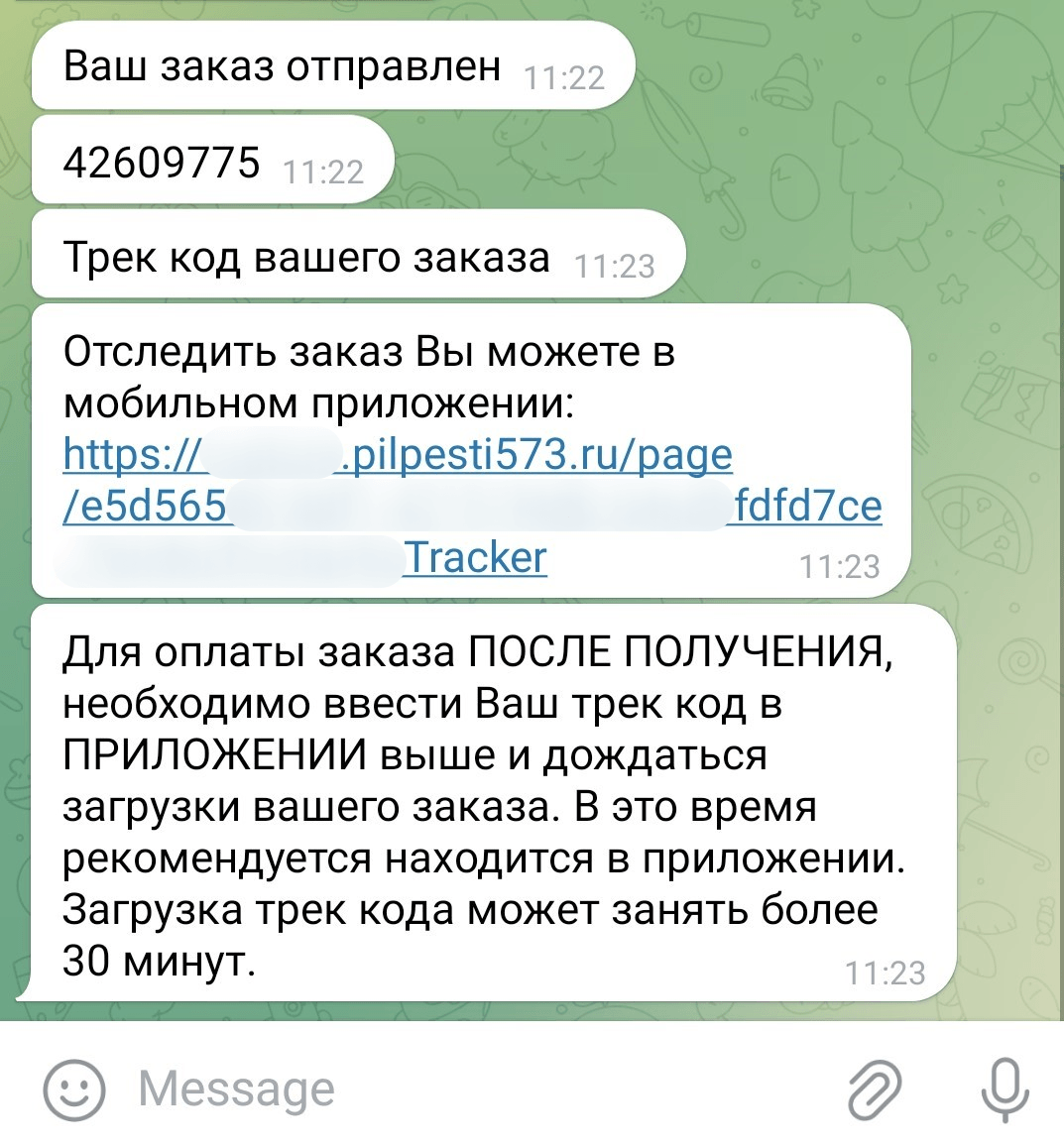
    At the end of 2024, we discovered a new distribution scheme for the Mamont banking Trojan, targeting users of Android devices in Russia. The attackers lured users with a variety of discounted products. The victim had to send a message to place an order. Some time later, the user received a phishing link to download malware disguised as a shipment tracking app.

    The phishing link as seen in the chat with the fraudsters

    See translation

    Your order has shipped.
    42609775
    Your order tracking code.
    You can track your order in the mobile app:
    https://.pilpesti573.ru/page/e5d565fdfd7ce
    Tracker
    To pay for your order AFTER YOU RECEIVE IT, enter your tracking code IN THE APP above and wait for your order details to load. We recommend keeping the app open while you are doing so. Loading the track code may take more than 30 minutes.

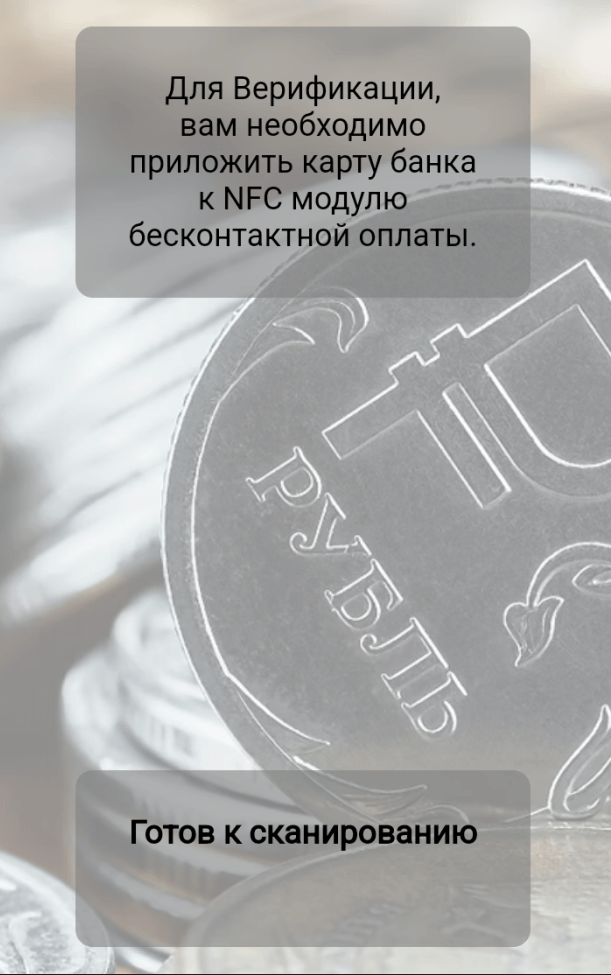
    In August 2024, researchers at ESET described a new NFC banking scam discovered in the Czech Republic. The scammers employed phishing websites to spread malicious mods of the legitimate app NFCGate. These used a variety of pretexts to persuade the victim to place a bank card next to the back of their phone for an NFC connection. The card details were leaked to the fraudsters who then made small contactless payments or withdrew money at ATMs.

    A similar scheme was later spotted in Russia, where malware masqueraded as banking and e-government apps. The SpyNote RAT was occasionally used as the malware dropper and NFC activator.

    A screenshot of the fake mobile app

    See translation

    Hold your card against the NFC contactless payment module for verification.
    Ready to scan

    Also in 2024, we detected many new preinstalled malicious apps that we assigned the generalized verdict of Trojan.AndroidOS.Adinstall. A further discovery, made in July, was the LinkDoor backdoor, also known as Vo1d, installed on Android-powered TV set-top boxes. It was located inside an infected system application com.google.android.services. The malware was capable of running arbitrary executables and downloading and installing any APKs.

    On top of the above, we discovered several apps on Google Play, each containing a malicious SDK implant named “SparkCat”, which began to spread at least as early as March 2024. Infected apps were deleted by the store in February 2025: nevertheless, our telemetry data shows that other apps containing SparkCat are distributed through unofficial sources.

    This SDK received a C2 server command with a list of keywords or dictionaries to search the gallery on the device for images to exfiltrate. Our data suggests that the Trojan was aimed at stealing recovery phrases for cryptocurrency wallets of Android users primarily in the UAE, Europe and Asia.

    It is worth noting that the same implant for iOS was delivered via the App Store, which makes it the first known OCR malware to sneak into Apple’s official marketplace. Apple removed the infected apps in February 2025.

    Mobile threat statistics

    We discovered 1,133,329 malicious and potentially unwanted installation packages in 2024. This was below the 2023 figure, but the difference was smaller than the year before. The trend in the number of new unique malware installation packages appears to be plateauing.

    Detected Android-specific malware and unwanted software installation packages in 2021–2024 (download)

    Detected packages by type

    Detected mobile apps by type in 2023 and 2024 (download)

    Adware and RiskTool apps continued to dominate the rankings of detected threats by type. The BrowserAd (22.8%), HiddenAd (20.3%) and Adlo (16%) families accounted for the largest number of new installation packages in the former category. RiskTool’s share grew largely due to an increase in the number of Fakapp pornographic apps.

    Share* of users attacked by the given type of malware or unwanted software out of all targeted Kaspersky mobile users in 2023–2024 (download)

    *The total may exceed 100% if the same users experienced multiple attack types.

    Banking Trojans gained three positions as compared with 2023 to occupy fourth place, following the usual leaders: adware, Trojans, and RiskTool.

    TOP 20 most frequently detected types of mobile malware

    Note that the malware rankings below exclude riskware and potentially unwanted apps, such as adware and RiskTool.

    Verdict %* 2023 %* 2024 Difference in p.p. Change in ranking
    Trojan.AndroidOS.Fakemoney.v 11.76 16.64 +4.88 +2
    DangerousObject.Multi.Generic. 14.82 11.13 –3.70 –1
    Trojan.AndroidOS.Triada.ga 0.00 6.64 +6.64
    Trojan-Banker.AndroidOS.Mamont.bc 0.00 5.36 +5.36
    Trojan.AndroidOS.Boogr.gsh 6.81 4.71 –2.10 –3
    Trojan.AndroidOS.Triada.fd 1.16 4.45 +3.29 +19
    DangerousObject.AndroidOS.GenericML 2.39 4.35 +1.96 +3
    Trojan-Downloader.AndroidOS.Dwphon.a 0.77 3.59 +2.82 +26
    Trojan-Spy.AndroidOS.SpyNote.bz 0.43 3.40 +2.97 +48
    Trojan-Spy.AndroidOS.SpyNote.bv 0.37 2.69 +2.32 +57
    Trojan.AndroidOS.Fakeapp.hk 0.00 2.51 +2.51
    Trojan.AndroidOS.Triada.gs 0.00 2.50 +2.50
    Trojan.AndroidOS.Triada.gn 0.00 2.02 +2.02
    Trojan-Downloader.AndroidOS.Agent.mm 1.46 1.91 +0.45 +6
    Trojan.AndroidOS.Triada.gm 0.00 1.84 +1.84
    Trojan.AndroidOS.Generic. 3.63 1.83 –1.80 –8
    Trojan.AndroidOS.Fakemoney.bw 0.00 1.82 +1.82
    Trojan-Banker.AndroidOS.Agent.rj 0.00 1.63 +1.63
    Trojan.AndroidOS.Fakemoney.bj 0.00 1.61 +1.61
    Trojan-Spy.AndroidOS.SpyNote.cc 0.06 1.54 +1.47

    * Share of unique users who encountered this malware as a percentage of all attacked Kaspersky mobile users

    Fakemoney, a family of investment and payout scam apps, showed the highest level of activity in 2024. Third-party WhatsApp mods with the Triada.ga embedded Trojan were third, following the generalized cloud-specific verdict of DangerousObject.Multi.Generic. Many other messaging app mods in the same family, namely Triada.fd, Triada.gs, Triada.gn and Triada.gm, hit the TOP 20 too.

    Mamont banking Trojans, ranking fourth by number of attacked users, gained high popularity with cybercriminals. These malicious apps come in a multitude of variants. They typically target users’ funds via SMS or USSD requests. One of them spreads under the guise of a parcel tracking app for fake online stores.

    Various malware files detected by machine learning technology ranked fifth (Trojan.AndroidOS.Boogr.gsh) and seventh (DangerousObject.AndroidOS.GenericML). They were followed by the Dwphon Trojan that came preinstalled on certain devices. The SpyNote RAT Trojans, which remained active throughout the year, occupied ninth, tenth and twentieth places.

    Region-specific malware

    This section describes malware types that mostly affected specific countries.

    Verdict Country* %**
    Trojan-Banker.AndroidOS.Agent.nw Turkey 99.58
    Trojan.AndroidOS.Piom.axdh Turkey 99.58
    Trojan-Banker.AndroidOS.BrowBot.q Turkey 99.18
    Trojan-Banker.AndroidOS.BrowBot.w Turkey 99.15
    Trojan.AndroidOS.Piom.bayl Turkey 98.72
    Trojan-Banker.AndroidOS.BrowBot.a Turkey 98.67
    Trojan-Spy.AndroidOS.SmsThief.wp India 98.63
    Trojan-Banker.AndroidOS.Rewardsteal.fa India 98.33
    Trojan.AndroidOS.Piom.bbfv Turkey 98.31
    Trojan-Banker.AndroidOS.BrowBot.n Turkey 98.14
    HackTool.AndroidOS.FakePay.c Brazil 97.99
    Backdoor.AndroidOS.Tambir.d Turkey 97.87
    Trojan.AndroidOS.Piom.bcqp Turkey 97.79
    HackTool.AndroidOS.FakePay.i Brazil 97.65
    Backdoor.AndroidOS.Tambir.a Turkey 97.62
    Trojan-Banker.AndroidOS.Coper.b Turkey 97.45
    HackTool.AndroidOS.FakePay.h Brazil 97.39
    Trojan-Spy.AndroidOS.SmsThief.ya India 97.09
    Trojan-Spy.AndroidOS.SmsThief.wm India 97.09
    Trojan-Banker.AndroidOS.Rewardsteal.hi India 96.68

    * Country where the malware was most active
    * Share of unique users who encountered the malware in the indicated country as a percentage of all Kaspersky mobile security users attacked by the malware

    Turkey and India accounted for the majority of region-specific threats in 2024. A variety of banking Trojans continued to be active in Turkey. Piom Trojans were associated with GodFather and BrowBot banker campaigns.

    Users in India were attacked by Rewardsteal bankers and a variety of SmsThief SMS spies. Our quarterly reports have covered FakePay utilities widespread in Brazil and designed to defraud sellers by imitating payment transactions.

    Mobile banking Trojans

    The number of new banking Trojan installation packages dropped again to 68,730 as compared to the previous year.

    The number of mobile banking Trojan installation packages detected by Kaspersky in 2021–2024 (download)

    The total number of banker attacks increased dramatically over 2023’s level despite the drop in the number of unique installation packages. The trend has persisted for years. This may suggest that scammers began to scale down their efforts to generate unique applications, focusing instead on distributing the same files to a maximum number of victims.

    TOP 10 mobile bankers

    Verdict %* 2023 %* 2024 Difference in p.p. Change in ranking
    Trojan-Banker.AndroidOS.Mamont.bc 0.00 36.70 +36.70
    Trojan-Banker.AndroidOS.Agent.rj 0.00 11.14 +11.14
    Trojan-Banker.AndroidOS.Mamont.da 0.00 4.36 +4.36
    Trojan-Banker.AndroidOS.Coper.a 0.51 3.58 +3.07 +30
    Trojan-Banker.AndroidOS.UdangaSteal.b 0.00 3.17 +3.17
    Trojan-Banker.AndroidOS.Agent.eq 21.79 3.10 –18.69 –4
    Trojan-Banker.AndroidOS.Mamont.cb 0.00 3.05 +3.05
    Trojan-Banker.AndroidOS.Bian.h 23.13 3.02 –20.11 –7
    Trojan-Banker.AndroidOS.Faketoken.z 0.68 2.96 +2.29 +18
    Trojan-Banker.AndroidOS.Coper.c 0.00 2.84 +2.84

    * Share of unique users who encountered this malware as a percentage of all users of Kaspersky mobile security solutions who encountered banking threats

    Conclusion

    The number of unique malware and unwanted software installation packages continued to decline year to year in 2024. However, the rate of that decline slowed down. The upward trend in mobile banking Trojan activity persisted despite the years-long decrease in unique installation packages.

    Cybercriminals kept trying to sneak malware into official app stores like Google Play, but we also discovered a fair number of diverse preinstalled malicious apps in 2024. Speaking of interesting techniques first spotted last year, the use of NFC for stealing bank card data stands out.

    MIL OSI Economics

  • MIL-OSI Africa: African Mining Week 2025 to Highlight Africa’s Gold Market

    Source: Africa Press Organisation – English (2) – Report:

    CAPE TOWN, South Africa, March 3, 2025/APO Group/ —

    Africa’s gold sector continues to be a major driver of foreign investment and revenue generation, with major producers such Ghana generating $5 billion in revenue from the artisanal sector alone in 2024. Amidst the sector’s growing contribution to sustainable development in Africa, countries are strengthening partnerships with global investors to launch new projects and unlock fresh opportunities for industrialization.

    The upcoming African Mining Week (AMW) – Africa’s premier event for the mining industry – will showcase high-potential gold projects, investment opportunities and emerging exploration basins within Africa. With new production facilities set to launch in 2025 and beyond, AMW represents the ideal platform for global investors to connect with African stakeholders and untap the region’s burgeoning prospects.

    Ghana, Africa’s largest gold producer, is bolstering its position with the Cardinal Namdini Mine, operated by Cardinal Resources, slated for commercial production by mid-2025. The mine will produce 358,000 ounces per year, tapping into 5.1 million ounces in reserves over a 15-year lifespan. Newmont is also targeting first production at its Ahafo South Mine in early 2025, with an expected annual output of 325,000 ounces. Meanwhile, Asante Gold Corporation has launched a $525 million expansion strategy to enhance output from the Bibiani and Chirano Mines, further strengthening Ghana’s dominance in the gold sector.

    In Guinea, Predictive Discovery is advancing development of the Bankan Gold Mine, a three-million-ounce project expected to begin production in early 2027, with an annual output of 269,000 ounces over 12 years. Meanwhile, Robex anticipates to commence gold production at the Kiniero Mine in 2025, contributing 139,000 ounces to Guinea’s growing production portfolio.

    Mali, Africa’s third-largest gold producer, is set for expansion with Resolute Mining’s Syama Phase 2 Expansion Project, which will boost production to 400,000 ounces per annum once commissioned in the second half of 2025. In Burkina Faso, West African Resources is set to commence production at the Kiaka Gold Mine in Q3 2025, targeting 258,000 ounces per year over a 19-year lifespan, while Orezone Gold’s Bomboré Gold Mine is set to contribute significantly to the country’s growing mining industry.

    As Africa accelerates gold production and strengthens its value chain, AMW will feature high-level panel discussions, project showcases and strategic investment forums, offering global investors an exclusive opportunity to engage with key industry stakeholders and capitalize on Africa’s booming gold sector.

    MIL OSI Africa

  • MIL-OSI Russia: Financial News: Citizens May Establish Self-Ban on Loans

    Translartion. Region: Russians Fedetion –

    Source: Central Bank of Russia –

    Since March 1, a person can voluntarily refuse the opportunity to enter into credit or loan agreements through State Services and thus protect themselves from a situation where fraudsters issue a loan in their name.

    To “turn on” the mechanism, you will need to record a special ban in your credit history. Self-ban may vary: by type of creditor (bank or microfinance organization), by method of applying for a loan or credit (in the office and remotely or only remotely).

    A person will be able to cancel the self-prohibition if they really want to get a loan or credit. To do this, they need to submit an application through Gosuslugi, which will have to be certified with an enhanced electronic signature (it can be issued for free in the Gosklyuch application) – this is additional protection against fraudsters. The ban will be lifted one day after the relevant information is entered into the citizen’s credit history. Such a cooling-off period will help people make a more informed decision about the need to get a loan or credit.

    Before issuing consumer loans and credits, banks and microfinance organizations will have to check whether the borrower’s credit history contains information about self-prohibition. If a prohibition is established, the lender must refuse to issue a loan. If, despite the established prohibition, the lender concludes an agreement, he will not be able to demand that the borrower fulfill his obligations under the loan.

    The same service will later be available through the MFC – they must implement the possibility of self-prohibition by September 1, 2025, by which time they need to prepare their systems and employees to accept applications without interruption.

    Read more about the self-prohibition mechanism aton the website of the Bank of Russia.

    Preview photo: StockerThings / Shutterstock / Fotodom

    Please note: This information is raw content directly from the source of the information. It is exactly what the source states and does not reflect the position of MIL-OSI or its clients.

    Please Note; This Information is Raw Content Directly from the Information Source. It is access to What the Source Is Stating and Does Not Reflect

    HTTPS: //vv. KBR.ru/Press/Event/? ID = 23423

    MIL OSI Russia News

  • MIL-OSI: Danske Bank share buy-back programme: transactions in week 9

    Source: GlobeNewswire (MIL-OSI)

    Company announcement no. 10 2025

    Danske Bank

    Bernstorffsgade 40

    DK-1577 København V

    Tel. + 45 33 44 00 00

    03/03/2025

    Page 1 of 1

    Danske Bank share buy-back programme: transactions in week 9

    On 7 February 2025, Danske Bank A/S announced a share buy-back programme for a total of DKK 5 billion, with a maximum of 45,000,000 shares, in the period from 10 February 2025 to 30 January 2026, at the latest, as described in company announcement no. 6 2025.

    The Programme is carried out in accordance with Article 5 of Regulation (EU) No 596/2014 of the European Parliament and Council of 16 April 2014 (the “Market Abuse Regulation”) and the Commission Delegated Regulation (EU) 2016/1052 of 8 March 2016 (together with the Market Abuse Regulation, the “Safe Harbour Rules”).

    The following transactions on Nasdaq Copenhagen A/S were made under the share buy-back programme in week 9:

      Number of shares VWAP DKK Gross value DKK
    Accumulated, last announcement 50,000 233.7298 11,686,490
    24/02/2025 5,000 235.6691 1,178,346
    25/02/2025 5,000 236.7242 1,183,621
    26/02/2025 5,000 241.9445 1,209,723
    27/02/2025 5,000 243.3454 1,216,727
    28/02/2025 5,000 241.1500 1,205,750
    Total accumulated over week 9 25,000 239.7666 5,994,166
    Total accumulated during the share buyback programme 75,000 235.7421 17,680,656

    With the transactions stated above, the total accumulated number of own shares under the share buy-back programme corresponds to 0.009% of Danske Bank A/S’ share capital.

    Danske Bank

    Contact: Claus Ingar Jensen, Head of Group Investor Relations, tel. +45 25 42 43 70

    Attachment

    The MIL Network

  • MIL-OSI Asia-Pac: Text of Vice-President’s address at the 75th Anniversary celebrations of KPB Hinduja College in Mumbai (Excerpts)

    Source: Government of India (2)

    Posted On: 01 MAR 2025 8:12PM by PIB Delhi

    Very good afternoon all of you, Hon’ble Governor, Shri C.P. Radhakrishnan ji, Shri Ashok P. Hinduja ji, Chairman, the Hinduja Foundation. Ashok ji, what you reflected, express your sentiments, there can be many caveats, I am not as good as you indicated. You set a very high benchmark for me.

    We have two very distinguished members of Parliament. Praful Patel has been in Parliament since 1991, Lok Sabha and Rajya Sabha. A former Union Minister, one of the seniormost politicians of the country, has been instrumental with football association and is very good at scoring political goals.

    And another caveat that can come for me, Milind Deora. His father, Murali Deora ji, hand held me. A lovable politician for the entire nation, particularly for Mumbai.

    Milind is very promising and knows when to make the right move. I am talking about those who can give caveats. We have amongst us Honourable Minister, Mangal Prabhat Lodha. He is suave, polite, persuasive and for a man like me, if a person is gifted with three qualities, there is everything to worry about. Because you can’t anticipate, so there can be a legitimate caveat. And on top of it, if I am staggering a little, it is on account of presence of my son- in-law, Karthikeya Vajpayee.

    But the good relief is that Karthikeya is in the sound company of Soman Satya and therefore will not be in that mode at the moment. But Ashokji, you rightly focused on something which is very fundamental and a contemporaneous need. And something which is part of our civilisation ethos and essence.

    We must remain well grounded and rooted to Sanatan. And Sanatan has to be part of our culture, our education. Because Sanatan stands for inclusivity. Sanatan offers solutions to the most intractable problems the global challenges indicate. I therefore appreciate it and the endorsement by the Honourable Governor immediately is vindication of your stand. Smt Harsha Hinduja ji well I have got formidable challenge from my wife, but I take some solace. Ashok ji is facing equally strong challenge. Shri Paula Brown, President of the Hinduja Foundation is a copy book person. It doesn’t deviate from what is requirement for the college. While traversing journey of the college, she unfolded future programmes. Smt. Chandrakala Joshi, Principal, Hinduja College. When I looked at the faculty, the very distinguished faculty, I found she has to be little fair to my gender. There were more women in the faculty than men. To be on her right side, I quickly looked a Praful Patel and then extended an invite to her that the faculty will be my guest for visit to the new building of Parliament, and I’ll have the occasion to have lunch with them along with Shri Praful Patel and Shri Milind Deora.

    Bombay is a place which gave to the country a principle of quid pro quo. And I so recall because I happen to be a politician who went to Parliament in 1989 and was a Minister in 1990. But a small explanation. This is not quid pro quo.

    Distinguished members of the faculty, I must recognise the presence of some whom I know but everyone present here is a distinguished person. I convey my respects. Shri Neeraj Bajaj, Shri Amarlal Hinduja Ji, Dr. Rajesh Joshi and Shri Rupani, I have had some connect with them in one form or the other. I am particularly here for young boys and girls, and let me tell you boys and girls first, there are no backbenchers. There are only backbenches.

    And let me tell you at the outset, all my life I happen to be a gold medalist, and that was never a good idea. I suffered a traumatic obsession what will happen if I don’t come to number one? It was too late in the life I learnt, Heavens have never fallen so far. Why fear them? It is good to be in the first top ten. So never have tension, never have stress. 

    India today is envy of the world for the reason that it has your dividend, dividend of the youth. This demographic dividend is your possession, your repository. Undoubtedly you are the important stakeholders in democracy and governance. And therefore I am happy to announce here that Indian Council of World Affairs of which I happen to be the President, will have an MOU with your organisation.


    MOU will fructify in next two months. And I tell you the reason for the delay. We are awaiting a new Director. We are looking for a good person that will give you an exposure to global events. And there will be footprint of global personalities here. Around the time Ashok Hinduja celebrates his 75th birthday, So does the Institution. The milestone is glorious both for the individual and the Institution. By the way he doesn’t look that old, but this is an occasion also of stocktaking, reflection and planning for way forward. Planning in our times is very challenging. Because we have challenged times on account of onslaught of disruptive technologies. A kind of Industrial revolution. A new era is being heralded virtually every moment. Those of the diplomats who are present here and bring on the table experience and exposure of their own countries will bear me out. And therefore the Institute will have to focus way-forward strategy. It is soothing to note it has quite a mark at the national level.

    It will be a deemed University but time for it to set the tone to become a Global Institute of excellence. It was indicated a while ago. Learning! I keep on telling boys and girls, शिक्षान्त कभी नहीं होती, दीक्षांत होता है।

    Learning never stops. Even after you leave the institute you have to learn every day, and this principle was first put in public domain in pre-Socrates era by a great philosopher Heraclitus. And he was a great philosopher. He was a great philosopher. He was a great philosopher. And Heraclitus reflecting on change said the only constant in life is the change. He buttressed it by an illustration. The same person cannot enter the same river twice because neither the person is the same nor the river is the same. So boys and girls keep on learning, and what your computer tells you keep on self-learning also.

    Because you are your best teacher. Take this institute for instance. It was seeded by Shri Paramchand Hinduja ji. It was a Sindhi teaching school to begin with. And look at that sapling, the shape it has taken now. It is fructifying aspirations of 6000 students.

    Which means a small beginning yields great results. When in 1969 on 20th July, incidentally 20th July happens to be birthday of my wife. Another coincidence it was on that day in 2019, President of India signed my warrant appointing me Governor of the state of West Bengal, but let me invite attention to what Neil Armstrong said. He said small step for me, big leap for mankind.

    What was done to begin with will turn out undoubtedly according to me one of the best institutions in the world. It has vast pool of alumni across sectors. Now this has enormous potential. This potential can reflect in several ways.

    Time to harness it. An initiative can emanate from here, blessed by Hinduja Foundation. For emergence of a confederation of alumni associations. We have alumni associations but I am referring to confederation. This will go a long way in contributing sectoral policy evolution of the government. Just imagine if there are confederations of IIT alumni associations, IIM alumni associations, an association of the kind that your college represents. This confederation can go a long way. Such convergence of talent is a valuable pool for government. It can enlighten the government on policy pathways.


    Hinduja Foundation is well enabled to catalyse alumni confederation culture across institutions in the country. While I appreciate great job that is being done by the faculty, it is a satisfied faculty that makes for the institution. Institution is defined by the infrastructure because that is the basic need, but an institution is recognised by the faculty it has. I am so happy and delighted to see the faculty is committed and vibrant, but then institutions have blossomed beyond faculty and infrastructure.

    It is there in that I express a deep sense of gratitude to Hinduja Foundation and members of the family for sustaining this institution through continuous philanthropy. Ladies and gentlemen, Hinduja group has been at the centre of India’s growth story. The Hinduja group is multinational, multi-sector, conglomerate with pronounced social and cultural footprints.

    Group’s deep interest in education philanthropy and sublime commitment to Bharatiya culture are commendable. It was a pleasant revelation to me when I was laying foundation stone of a building in Bharatiya Vidya Bhavan in New Delhi. I gathered that the Hinduja group helped establish the first overseas branch of Vidya Bhavan in New York.

    A great step. The leaders of the group have realised the need to bridge East and West divide and why it is essential. Because there has to be portrayal of the orient in authentic way. Because there are challenges emanating from the West and from that perspective the group is working in that direction.

    One instance I can share with the distinguished audience. Establishment of Dharam Hinduja Indic Research Centre at Columbia University is a very desirable move. We look forward, Ashokji, for more such steps in this direction. Friends, I need to reflect on some concerning aspects for larger good. Sharing our concern is always good because then we can address the problem. Philanthropic endeavours should not be driven by philosophy of commodification and commercialisation. Our health and education sectors are being plagued by these.

    The group in this context offers emulative instance by confining philanthropy much away from commerce. The group is wedded to the concept of giving back to the society. I urge everyone so involved to nurture this culture. Many in the audience will bear me out that endowments of some of the Universities in the US is in billions of dollars.

    What is there in this country that we do not have this culture? In the West, anyone working out of an institute stands committed to make some fiscal contribution. Quantum is never important. I would urge our corporates to think in that direction.


    Friends, according to me, education is the most impactful transformative mechanism because it brings about equality. It cuts into inequities. It affords level playing field. It creates genius by discovering the genius through the path of education. Our framers of the Constitution were very wise men. They put education in the concurrent list.

    Those of you who are not lawyers, concurrent list means it is a joint concern of the State and the Union. I would appeal from this platform, a platform where I have witnessed that by way of philanthropy, it is giving back to the society. It is concurrent responsibility between the government and the private sector.

    Those in industry, trade, business and commerce must come forward and take initiatives. I appeal the country’s private sector to rise to this occasion and accord highest priority to education. My friend Praful Patel is doing it in his own way.

    I await an invitation to his contribution in this sector. India at the moment is in economic upsurge. We have phenomenal infrastructural growth, deep digitisation, technological penetration because people of this country have tasted in last decade, fruits of development.

    People centric policies have been highly rewarding. This has converted the nation as the most aspirational nation in the world at the moment and therefore education gets primacy.

    Quality education is a gift and we in the country, must work towards educational excellence. We have seen and you noticed by way of Start-ups, Unicorns and otherwise, our industries are evolving. Corporate leaders should view investment in education, not a charity.

    Beyond philanthropy, it is investment in our present, investment in our future and to put it straight away, it is investment for development of the industry, business and trade. And therefore all efforts must be taken that these investments take quantum leap.

    Look at our country. If our GDP at one point of time was one third of the world or more, it was premised on what count? We had glorified Institutions– Udantpuri, Takshashila, Vikramshila, Sompura, Nalanda, Vallabhi. The world frowned. Scholars came from every nook and corner of the globe to get knowledge and give knowledge and share knowledge.

    Thirst of knowledge was satisfied. But then what happened about 1200 years ago? Nalanda, ancient India’s intellectual jewel, it housed 10,000 students and 2,000 teachers. Nine-storied building.

    And what happened? 1193, Bakhtiyar Khilji, reckless destroyer of our culture, our academic Institution. The premises were set to fire. For months, fire consumed vast libraries, turning hundreds and thousands of irreplaceable manuscripts on Mathematics, Medicine and Philosophy to ash.This vandalised devastation wasn’t merely architectural but represented the systematic erasion of centuries of knowledge, and that makes Ashok ji your observation relevant. We must make our people aware about Sanatan values.

    Ladies and gentlemen, what vanished in those flames was the living record of ancient Indian thought, creating an intellectual void that continues to echo through history as one of this civilisation’s most profound cultural losses. Just look around which country can take pride in 5,000 years of civilisation ethos. No one comes close to us.

    And now, fortunately, in this century, we have re-arrived at the global stage. We need to reclaim that glory. We are on way. We have to take a holistic view of education in this country. I call upon leaders, Parliamentarians and thought leaders present here. We have to monetise every moment of this century.

    We cannot afford to fall victim or prey to narratives that emanate from sources that are inimical to the very existence of Bharat. We have to work to revive institutions like Nalanda, our intellectual legacy, and this is essential for realising goal of Viksit Bharat at 2047.

    Friends, the entire world knows today India is no longer a nation with potential. Viksit Bharat is not a dream. It is a certain definitive destination, and it may be fast-tracked much before 2047 if we bestow intelligent attention to education. We have a litany of IITs, IIMs across India’s academic landscape. But right now, if you look around, many niche areas, our Institutional footprint is either fragile, thin or not at all there.

    Now, when we are faced with such a situation, it is fundamentally required that we diagnose the issue. A resolution cannot emanate unless we know the ground reality. These are the areas where we can take lead in the world.

    It is for the first time, I think, in last several decades, that India is in single-digit number of countries that are focussing on Quantum computing, green hydrogen, Artificial Intelligence, and even commercial exploitation of 6G technology, but then, we need skilled men force.

    Our young boys and girls are still in the same silo or groove of government jobs. My young friends, boys and girls, if International Monetary Fund accolades Bharat as a favourite destination of investment and opportunity, it is not on account of government jobs.

    If World Bank hails us with the digitisation that has happened in this country, penetration of opportunity to the last village in six years is otherwise not accomplishable in four decades, and therefore, please be aware of the opportunity basket that is ever getting enlarged for you.

    Whether it is Blue economy, Space economy, whether you are on the sea surface, deep sea, ground, sky or space, opportunities for our youth and corporates are ever enlarging. But then, Institutions like yours have to be crucibles of change. You have to focus very deeply on research.

    I must share with you one concern. Research is not for the shelf. Research is not supposed to be on the shelf. Research is not an assimilation of cut and paste. Research is not surface scratching. Research has to correlate to the ground transformative mechanisms. And therefore, everyone involved with research, we must be having stringent standards to assess our research. This country has a great potential. Government is only one facet.

    If we go much beyond the government and give ideas to the people, in any field, results will be geometric. Ashok ji, I’m making an appeal to you now. Through you, I’m making an appeal to everyone who is possessed of wealth, possessed of wisdom, and keenly devoted to serving the society by giving it back.

    Please, let us have green field institutions in these areas for new and emerging technologies. There must be centres of research. And I can share with you, distinguished audience, and my two very distinguished Parliamentarian friends will bear me out and the Honourable Minister would also know of it. The governmental policies are going a long way in promoting contribution in these areas. Long way. Only a team has to be constituted by leaders in industry, trade, commerce and business to exploit the fullest potential of these areas.

    I have for a long time held an idea dear to me if the corporates come together our organisations like FICCI, CII, ASSOCHAM, PHD and various other chambers. If they pool their CSR, we can have every year Institutes of Excellence springing up in various parts of the country. If the modest target is set for four in a year, the Govt has only land to make available. Rest, I am sure you will bear me out.

    Rest I am sure you will give me out Industries while capable when it comes to creating infrastructure of securing even faculty. Faculty is best attracted through the industry because then there is an assurance of stability. so these kind of Ideas must be there.

    Another issue which we are facing in the countries, we have Institutes of Excellence But the variation is taking place only on the account of faculty, there is no infrastructural variation. faculty mobility you have to think about it. Presently, the system is such that a systemic change is required But the foundation stature of Hinduja foundation  can catalyse the big movement in this area  and therefore faculty members from  one place to another can navigate. There can be a group to look after them that will go a long way.

    Technology has to be used in particular to change the rural landscape of rural education, that is foundational and to bring that about we have to use Technology. The country at the moment has 400 aspirational blocks. If corporates adopt blocks then what they will get.  in every village you will find land for the school, enough infrastructure even teachers are well paid as compared to the private. What is lacking is motivation and greasing. So that engine of education can fire on all cylinders. The corporates converge on this idea to adopt aspirational blocks and that I can assure you will be a gamechanger. This will reflect public private partnership in sublimity and making lives of India much better.

    Friends, as we commemorate 75 years of KPB Hinduja college, Let us celebrate the rich legacy. Let us pay our tributes to the legendary figure who had this vision and nurture it to the next level. Let us leverage every resource to make it a global benchmark. with the collective efforts of faculty, students,  alumni and stakeholders, I have no doubt that this college will scale greater heights in the years to come as deemed University.

    I extend my heartfelt congratulations to KPB Hinduja College, Hinduja Foundation and Hinduja Family on this remarkable milestone.  May the next 75 years be even more glorious, filled with new achievements, milestones, and contributions to society.

    ***

    JK/RC/SM

    (Release ID: 2107409) Visitor Counter : 56

    MIL OSI Asia Pacific News

  • MIL-OSI Asia-Pac: 49th Civil Accounts Day celebrated to mark the 49th foundation day of Indian Civil Accounts Service (ICAS) in New Delhi

    Source: Government of India

    49th Civil Accounts Day celebrated to mark the 49th foundation day of Indian Civil Accounts Service (ICAS) in New Delhi

    In a journey from departmentalisation to digitalisation, ICAS has brought a silent revolution through Public Financial Management System (PFMS): Union Finance Minister Smt. Nirmala Sitharaman

    Expenditure Secretary Dr. Manoj Govil emphasises need of harmonisation of Union and State Accounts including Urban, Rural and Local Bodies

    CGA Shri Shyam Dubey outlined CGA’s demonstrated robustness, especially during the COVID-19 pandemic, transferring over Rs. 22.85 lakh crore, including DBT schemes

    PFMS acts as a critical digital infrastructure to enable transactions between different economic entities efficiently and transparently: Dr. Panagariya

    Posted On: 01 MAR 2025 6:29PM by PIB Delhi

    The Civil Accounts Day 2025 was celebrated in New Delhi today to mark the 49th foundation day of Indian Civil Accounts Service (ICAS) with the Union Minister for Finance and Corporate Affairs, Smt. Nirmala Sitharaman, presiding over as Chief Guest.

    Dr. Manoj Govil, Secretary, Department of Expenditure, Ministry of Finance; and Shri Shyam S. Dubey, Controller General of Accounts (CGA), were also present on the occasion. Officers and staff of the Indian Civil Accounts Organisation, Financial Advisers of Government of India, other Senior Officials of Department of Expenditure and other Ministries /Departments of Government of India, retired ICAS Officers, senior officers from Banks and State Governments, among others, were also part of the celebrations.

    During the inaugural function, the Union Finance Minister also released a compendium on the Public Financial Management System (PFMS), titled “Digitalisation of Public Financial Management in India: The Transformative Decade (2014-24)”.


    During the Foundation Day, a short film on the evolution and achievements of the Indian Civil Accounts Organisation (ICAO) was also screened.

    In her address on the occasion, the Union Finance Minister recognised the role played by PFMS in achieving the key goals of governance which included: reaching the last mile benefitting 60 crore beneficiaries, direct delivery of more than 1200 central and state schemes which includes 1100 DBT schemes, end-to-end digitization through integration with 250 plus external systems such as GeM, GSTIN, TIN 2.0, PM Kisan and many more.

    Smt. Sitharaman said that PFMS has led to strengthening of cooperative federalism through integration of 31 state treasuries and 40 lakh programme implementing agencies enabling seamless financial management for millions of citizens ensuring timely and transparent disbursement of government funds.

    The Union Finance Minister underlined PFMS as the network of networks with 650 financial institutions – RBI, NPCI, Public and Private sector banks – facilitating seamless fund transfers, with the volume of PFMS transactions has gone up exponentially from 2 crore payments in 2015 to 250 crore in 2024.


    Referencing the July 2024 Union Budget, Smt. Sitharaman underlined the suggestion with respect to “improving data governance, collection, processing and management of data and statistics, different sectoral databases, including those established under the Digital India mission, could be utilized with active use of technology tools”, and added that CGA has the potential to work in this regard as the custodian of huge database. The Union Finance Minister emphasised on sharing India’s digital public finance expertise globally, and urged the CGA to collaborate with other countries to leverage PFMS’s technology to enhance their financial governance systems. Smt. Sitharaman also encouraged CGA to make efforts to create public awareness among citizens and taxpayers on how transparent financial systems operate.

    In his address on the occasion, Dr. Manoj Govil recognised the efforts made by CGA and the team of officers towards timely laying of annual accounts, digitisation of accounts and timely discharge of payments and various achievements of PFMS bringing in efficient Public Financial Management. Dr. Govil emphasised on the need of harmonisation of Union and State Accounts including the Urban, Rural and Local Bodies so as to facilitate better financial reporting.


    Earlier, in his welcome address, Shri Shyam S. Dubey gave details of the achievements of the organisation during the year in the area of accounts, Public Financial Management and capacity building. Shri Dubey outlined the organisation’s demonstrated robustness during the COVID-19 pandemic, transferring over Rs. 22.85 lakh crore, including DBT schemes.

    Shri Dubey further informed the gathering of the recently developed functionality of electronic utilisation certificate (e-UC) and e-Asset module of PFMS-SAMPATI, enabling digital recording, tracking and management of capital physical assets as mandated by the FRBM Act.

    The inaugural session was followed by keynote address by Dr. Arvind Panagariya, Chairman, 16thFinance Commission, on “India in the Global Economy: The Next Decade.”

    Calling PFMS as “incredible”, Dr. Panagariya stated that PFMS acts as a critical digital infrastructure to enable transactions between different economic entities efficiently and transparently. Dr. Panagariya stated that UPI & PFMS should be part of India’s international diplomatic outreach and global relationship, and called for greater integration of PFMS with the State Governments and Urban and Rural Local Bodies.

    Despite the periodic global and domestic economic crises, Dr. Panagariya stated that the factual data of economic growth of the last two decades, starting from 2003-2004, shows the plausibility and the feasibility of the growth potential of the Indian economy in the coming decade being able to reach the 10 trillion dollar GDP mark, as well as the 2047 target of “Viksit Bharat” set by the Prime Minister, Shri Narendra Modi.

    ****

    NB/KMN

    (Release ID: 2107352) Visitor Counter : 40

    MIL OSI Asia Pacific News

  • MIL-OSI Asia-Pac: National duty of every citizen to contribute to the welfare of soldiers & their families: Raksha Mantri at CSR Conclave

    Source: Government of India (2)

    Posted On: 03 MAR 2025 2:09PM by PIB Delhi

    Raksha Mantri Shri Rajnath Singh has called upon the people to contribute whole-heartedly to the welfare of the soldiers and their families, terming it as the national duty of every citizen. Addressing the Armed Forces Flag Day Corporate Social Responsibility (AFFD CSR) Conclave in New Delhi on March 03, 2025, he stated that India’s soldiers always stand firm, vigilant and ready at the borders in difficult conditions to protect the country from all kinds of threats with courage & promptness.

    While the Government is committed to strengthening India’s security apparatus and ensuring the welfare of its soldiers & their families, it is the nation’s collective responsibility to come forward and support them in every way possible, he said.

    Shri Rajnath Singh asserted that CSR is not about 2% contribution, it is a matter of heart-to-heart connection with the brave soldiers and their dependants. “Whatever contribution you make, it will not be ordinary. You should take full care that tomorrow, when your real balance sheet is ready, it has more assets of satisfaction and happiness than liabilities,” he told the top corporate heads present on the occasion.           

    Raksha Mantri reiterated Prime Minister Shri Narendra Modi-led Government’s commitment to enhance the participation of the private sector, stating that the goal of Aatmanirbhar and Viksit Bharat can be achieved through the concerted efforts of all stakeholders. He exuded confidence that with the growing private sector participation, India will find a place among the top-three economies of the world by 2027. He commended the corporate houses for their generous contributions towards AFFD Fund and felicitated top CSR donors on the occasion.

    The Department of Ex-Servicemen Welfare, Ministry of Defence has been working for the welfare and rehabilitation of war widows, wards of fallen soldiers and ex-servicemen, including disabled ones by providing financial assistance for their identified personal needs such as penury grant, children’s education grant, funeral grant, medical grant and orphan/disabled children grant.

    Contributions the AFFD Fund can be made through cheque/DD/NEFT/RTGS drawn in the following bank accounts:

    S No

    Bank Name & Address

    Account Number

    IFSC Code

    1.

    Punjab National Bank


    Sewa Bhawan, RK Puram


    New Delhi-110066

    3083000100179875

    PUNB0308300

    2.

    State Bank of India


    RK Puram


    New Delhi-110066

    34420400623

    SBIN0001076

    3.

    ICICI Bank


    IDA House, Sector-4, RK Puram


    New Delhi-110022

    182401001380

    ICIC0001824


    Payment can also be made through the QR Code given below:


    Raksha Rajya Mantri Shri Sanjay Seth, Chief of the Air Staff Air Chief Marshal AP Singh, Secretary (Ex-Servicemen Welfare) Dr Niten Chandra, other senior officials of MoD, members from the CSR fraternity and serving & retired personnel of the Armed Forces attended the conclave.

    ***

    VK/SR/Savvy

    (Release ID: 2107711) Visitor Counter : 87

    MIL OSI Asia Pacific News

  • MIL-OSI Asia-Pac: Fraudulent websites, internet banking login screens and social media accounts related to Nanyang Commercial Bank, Limited

    Source: Hong Kong Government special administrative region

    Fraudulent websites, internet banking login screens and social media accounts related to Nanyang Commercial Bank, Limited
    Fraudulent websites, internet banking login screens and social media accounts related to Nanyang Commercial Bank, Limited
    ******************************************************************************************

    The following is issued on behalf of the Hong Kong Monetary Authority:     The Hong Kong Monetary Authority (HKMA) wishes to alert members of the public to a press release issued by Nanyang Commercial Bank, Limited relating to fraudulent websites, internet banking login screens and social media accounts, which have been reported to the HKMA. A hyperlink to the press release is available on the HKMA website.           The HKMA wishes to remind the public that banks will not send SMS or emails with embedded hyperlinks which direct them to the banks’ websites to carry out transactions. They will not ask customers for sensitive personal information, such as login passwords or one-time password, by phone, email or SMS (including via embedded hyperlinks).           Anyone who has provided his or her personal information, or who has conducted any financial transactions, through or in response to the websites, login screens and social media accounts concerned, should contact the bank using the contact information provided in the press release, and report the matter to the Police by contacting the Crime Wing Information Centre of the Hong Kong Police Force at 2860 5012.

     
    Ends/Monday, March 3, 2025Issued at HKT 14:35

    NNNN

    MIL OSI Asia Pacific News

  • MIL-OSI Asia-Pac: Text of Vice-President’s address at the Fourth P. Parameswaran Memorial Lecture in Thiruvananthapuram (Excerpts)

    Source: Government of India

    Posted On: 02 MAR 2025 5:34PM by PIB Delhi

    It is an absolute privilege and an honour to deliver the 4th P. Parameswaran lecture organised by Bharatheeya Vicharakendram in Thiruvananthapuram.The memorial lecture in the honour, in the memory of one of the greatest sons of Bharat. He happens to be in the front league of idealogues and thinkers of Hindu thought process in this century. We are celebrating by way of this lecture one of the finest intellectuals committed to social work and such a son of the soil being honoured in the land of Kerala, North zone territory.

    It is a testament that our civilisational values thrive, A civilisation is known only by one fundamental consideration, does it really honour its great sons and that has been the theme in last few years. Our forgotten heroes, unsung heroes, we have remembered them.

     Kerala has been the cradle of intellectual discourse, cultural enlightenment, and spiritual pursuits. This is a land that birth legends for Adi Shankharacharya who expounded the philosophy of Advaita Vedanta to Narayana Guru who led the modern message by his social reform and by his team of social reformers. We are celebrating the memory of one of them.

     This land is also home to some of the most revered temples, including Sabrimala, Padmanabhaswamy temple, and Guruvayur drawing millions of devotees, they get inspired and motivated. The faith and devotion that permeates these sacred spaces reminds us of the eternal values that hold our nation together.

     Our values are sublime, full of religiosity and spirituality, righteousness and self service. This fertile sacred geography also birthed Shri P. Parameswaran ji who received his values with birth. His unwavering commitment to Bharatiya values, his deep understanding of Indian ethos and his relentless pursuit of national unity continues to inspire generations.

     His vision for a self-reliant Bharat, culturally rooted and spiritually awakened, resonates profoundly across the nation. When we talk about the confluence of East and West, we remember Shri Vivekananda, Swami Vivekananda and his historic address at Chicago that was rendered at the World Council of Religions in 1893. But who rekindled it? Who ignited the flame in us? Who inspired us in modern times? By the essence of that address that stirred global minds, it was none other than Shri P. Parameswaran.

     In 1993, hundred years after that event, it was Parameswaran ji who invited the world to reflect on Swamiji. His life, his legacy and his message. The Government of India has rightly recognised this great son of the soil, a great ideologue of Hindu thought process.

     A messenger of Bharatiya Sanskriti, an epicentre in a sense who disseminated sublimity of our values with Padma Shri in early 2000 and in 2018 with the second highest civilian award of Padma Vibhushan, but these decorations do not completely define the man in whose memory we are having this lecture.

     The tribute which we can pay to such towering figures who amplify our values, epitomise our cultural essence, the best of human values, is to follow what he exemplified. We must emulate the value system that he professed.

     Ladies and gentlemen, I greatly commend the subject or theme of this lecture, “Demography, Development and Democracy, Shaping the Future of Bharat”– Nothing could be more contemporaneously relevant than this theme, and this theme, when the theme is a tribute to Rashtriya Rishi who dedicated his journey to welfare of humanity through Rashtriya Swayam Sevak Sangh, an organisation spinally rooted in our cultural ethos and now in the centennial year, I appeal to everyone in two years we will be celebrating the birth centenary of this great son of the soil.

     I am sure steps will be taken by the organisers in concert with similar outfits so that his message goes around to the entire country and the world. If I have to put in summation the thought process of P. Parameswaran ji, we all are Bharatiya. भारतीयता हमारी पहचान है। राष्ट्रहित हमारा धर्म है, राष्ट्र कल्याण सर्वोपरि है। कोई भी हित व्यक्तिगत हो या राजनीतिक या सामाजिक, राष्ट्रहित से ऊपर नहीं है।

     And therefore, I commend the organisers for having so thought about it. The theme calls upon me to first reflect on the state of the nation. There was a time, and I had the occasion to see it, as a member of parliament in 1989, as a union minister in 1990-91, an atmosphere that did not

    inspire us. That was alarmingly worrisome, full of concern, and now our Bharat is brimming with positivity and possibility.

     It is full of hope and aspirations. All around, all pervasive, an ecosystem of hope and possibility we can see, and in global firmament, it is the brightest spot of investment and opportunity. The country has seen in the last decade exponential economic upsurge. Our rise from 11th position a decade ago, on the scale of economic size, we have traversed a long distance, facing headwinds, difficult terrain, overcoming hurdles created earlier, cleansing the system, making it transparent and accountable.

     We are the 5th largest global economy at the moment, on way to becoming 4 trillion economy in US dollars very shortly, and with average growth over this period of about 8%. Bharat happens to be the fastest growing global economy in last decade, acclaimed, accoladed and applauded by global institutions, the IMF and the World Bank.

     World Bank has appreciated our deep digitisation, technological penetration, and everyone sees it now as a ground reality. Next comes infrastructure. Phenomenal infrastructure growth has dotted our landscape. Be it on sea, deep sea, ground, sky or in space, all our accomplishments make us greatly proud, and I am happy to share with you, every year the country has added four new airports and one metro system, and on a daily basis, 14 kilometres of highways and 6 kilometres of railways are

    being added.

     If I reflect on scale of deep technological penetration, 85 million are benefiting with houses, 330 million with health coverage, and 29 million small businesses with loans annually. The government is hand-holding them by affirmative policies and innovative schemes. We now boast of beyond what we achieved in space. Lunar and Mars missions in medical science, vaccine production, and the nation is bound to be hub of semiconductors, engineering and manufacturing.

     India’s engagement with world in green energy, urbanisation, emerging disruptive technologies, we are in the front rank. It is for the first time that the country is in big league of nations on Artificial Intelligence, on Quantum computing, on Green Hydrogen mission, and all pervasive digitisation has generated transparency, Accountability, easy service affordability.

     Corruption has been neutralised from power corridors on account of technological inroads. Technological inroads have been no less than invasion on corruption and malpractices, and that is reflected in the scenario that almost half of digital transactions in the world are

    emanating from this country, 6.5 billion monthly.

     Let me recall what P. Parameswaran ji said on this occasion, on such an occasion, we need to reflect, remember, I quote, “The youth of Bharat are not merely inheritors of our civilisation, but the architects who will shape our nation’s future glory through their aspirations, innovations, and resilience.”

     Our demographic dividend, the youth component of it, is envy of the world. India’s greatest strength is its population. We are home to one-sixth of humanity, but look at our qualitative cutting edge demographic dividend.

    Sixty-five percent of the population is in working age. Our nation is an average age of 28.4 years. We are uniquely positioned as the world’s youngest major economy.

    Compare this to Japan, 48.7 years. Compare it to Germany, 44.3 years, and China, 38.4 years. People-centric policies and transparent accountable governance has given buoyancy to ecosystem. Imagine the scale of it, a nation of 1.4 billion. Look at the transformative change that has impacted the rural environment.

     Every house has a toilet, electric connection, water connection is on way, a gas connection.And look at the connectivity, internet, and road, rail, and handholding policies in health and education centre. These define our growth trajectory. India is no longer a nation with a promise. India is no longer labelled as a nation of snake charmers. India is charming the entire world with the potential it has for everyone on the globe.

     This economic renaissance, which was beyond imagination, beyond contemplation, beyond dreams, a few years ago, has generated

    what is essence of our Sanatana inclusivity. Non-discriminatory, uniform, even-handed, equitable development, results, and fruits for one

    and all. Effort has been made, irrespective of any qualification, race, religion, caste, colour, that the benefit must reach those who are in the last line, and this is being done with great success.

    Bharat is the only democracy in the world that has structured democracy at the village level. Constitutionally sanctified democracy at the Village level, Municipal level, State level, and the Central level. I want, on this great occasion, to everyone reflect on what is democracy.

     Democracy is defined by freedom of expression and dialogue. If we enjoy freedom of expression and do not lend our ears to the other point of view, do not enter into dialogue, do not appreciate the other point of view, expression becomes authoritarianism.

     प्रजातन्त्र में किसी भी व्यक्ति या संस्था के लिए अहं और अहंकार का कोई स्थान नहीं है। प्रजातन्त्र का मूल तत्व है समानता, समान अधिकार, समान अवसर।

     And I therefore appeal that those who do not believe in harmony, social harmony, national harmony, must get into the thought process of Shri P. Parameswaran ji.

    How can we countenance in this land that has 5,000 years of civilisational ethos? Someone says, मैं अकेला सही हूँ, मेरी बात का कोई विकल्प नहीं है, ऐसा नहीं है। These thoughts are antithetical to our civilisational ethos. They militate against the very concept of democracy, and therefore, we must focus, alongside expression, on dialogue, dialogue enables everyone to self-assess oneself, to self-audit oneself, to be open to the other idea.

     And that was what P. Parameswaranji was doing all throughout. Ideologic discourse, ideologic debate, ideologic brainstorming should be dominating our discourse, not violence. What does our culture say, हमारी संस्कृति क्या कहती है? अभिव्यक्ति, वाद-विवाद और अनंतवाद, अनंतवाद का स्रोत हमारी सांस्कृतिक विरासत में है। अनंतवाद का ही नतीजा है कि भारत ज्ञान का भंडार था, जानकारी का भंडार था।

     If India is today a cultural centre of the world, we owe to people like P. Parameswaranji for coming to this level. If in the past, about 1200 years ago, India was the world’s repository of knowledge and wisdom, it was on account of our institutions.

     आज के दिन, कुछ हालात भयावह हैं, चिंतन और मंथन के लिए विवश करते हैं।

    We are faced with an alarmingly worrisome scenario on certain aspects. Politics has become polarised. We are faced with an alarmingly worrisome scenario on certain aspects. Vertically divisive, temperatures are ever high. The core national values and civilisational values are not the central theme. In this country where diversity is reflected in unity, this country that prides in Sanatana values of inclusivity, we cannot afford ourselves to be distanced from these core values and engage in polarised, divisive activities.

    Time for us to fall in the groove of Sanatana Dharma as enlightened by Shri P. Parameswaranji, and let me reflect on that concern. As meaningful dialogue fades, so do the pillars of cooperation, collaboration and consensus.

     I must share with you my anguish, my pain. The largest democracy’s parliament must be role model for people. It is a platform to transform aspirations of the people into reality. It has to be impregnable citadel of dialogue, debate, discussion and deliberation. And these facets were exemplified by the Constituent Assembly that worked for about three years in eighteen sessions. And what we see today? Dialogue, deliberation and others have yielded to disturbance and disruption.

     Can there be sacrilege of more intense enormity when temples of democracy are ravaged by disruption and disturbance? Our democracy has to survive. And the first test is parliamentary functioning. We face situations where national interest is relegated. Anti-national narratives take wings.

     We are living in very dangerous times. Political intolerance and reckless stance promoting partisan and personal interests at the cost of nationalism needs to be moderated. There is need for social counselling. Young minds and senior citizens must converge to generate an ecosystem. By becoming influencers of our mindset, we have a Constitution that remarkably depicts Gurukul.

     That makes reference to Ramayana. What is the message? अधर्म पर धर्म की विजय, when in fundamental rights, Part- III of the Constitution, you have a picture of Ram, Sita and Lakshman coming to Ayodhya. अंधकार से प्रकाश, धर्म की जीत अधर्म की हार। मर्यादित आचरण का संदेश और यदि अगर कहें सबका साथ सबका विश्वास इसका अंश आपको रामायण में मिलेगा ।

     भारत के संविधान में, if we go to the next part, Directive Principles of State Policy. महाभारत का वह scene है, कुरुक्षेत्र का वह दृश्य है। श्रीकृष्ण अर्जुन को उपदेश दे रहे हैं। What does it teach us? It says, लक्ष्य को ध्यान में रखो, छत को मत देखो, मछली को मत देखो, मछली की आँख को मत देखो क्योंकि आपका लक्ष्य नहीं है। आपको भेदन है। इसी तरीके से शासन का काम करते हुए, कर्तव्य निर्वहन करते हुए हमारी दृष्टि भाई-भतीजेवाद पर नहीं होनी चाहिए। The message is loud and clear. Patronism, nepotism, favouritism, are evils that cut into merit of the society. Fortunately, power corridors have been sanitised. It is obligation of every person, every Bharatiya, not only to believe in these values, but to disseminate them.

     Let me now come to demography. Demography does matter. Demography should not be confused with majoritarianism. We cannot have a society divided in these two camps. But ladies and gentlemen, the nation is faced with grim challenges when it comes to demography.

     The demography evolution must be organic. It must be natural. It must be soothing only then it reflects unity and diversity, but if demographic variations are brought about in the nature of virtual and earthquake, there is cause for concern.

     If inorganic demographic variations take place with intent to increase demographic component with the objective to secure progress, then we have to be alarmed. This is being done. This is noticeably being done. We are at a stage crossroads, where we can neither overlook nor countenance this highly destabilising development.

     We have to be extremely alert. All of you converge to preserve the pristine demographic sanctity of Bharat. The challenge is coming in varied ways. One is through allurements, temptations. Reaching out to the needy and vulnerable. Providing succour. And then, in a subtle way, suggesting change of religion which is labelled as conversions. The country allows everyone to have a religion of his or her choice. This is our fundamental right.

    This is handed to us from our civilisational wealth, but if this is tampered with, it is tweaked. ऐसा बर्दाश्त नहीं हो सकता. लालच, लोभ आधार नहीं हो सकता। कोई पीड़ा में है, दिक्कत में है,  जरूरतमंद है उसको hand-holding करते समय, धर्म परिवर्तन की तरफ मत खींचो. यह बर्दाश्त के लायक नहीं है, मैं कितनी ही कोशिश करूँ, I will not be able to express the gravity of the concern, enormity of the challenge that we are faced on account of these statized, orchestrated, financially fuelled misadventures to effect conversions.

     The third motive, which is ill-motivation towards our nation. How can a nation suffer millions of illegal migrants? Look at the number. Look at the danger they bring to this country. Everyone in this country is fired with the dream of nationalism. These people come, they demand on our employment, on our health, on our education sectors, and then become a factor in electoral politics. It is very urgent. This has to be addressed. We are cliffhanging. We must generate awareness. The mindset of the people must be activated.

     Every Bharatiya must be steered to face this challenge. And that flow is threatening our culture also. I would urge we must courageously thwart these demographic dislocations. I have indicated three. As of now in the country we have from electoral point of view areas where elections do not make much sense. We have fortresses in the country that have emerged in the last few years where the outcome of the election is always foreclosed by democratic demographic dislocations.

     Addressing these challenges which are very daunting, policy interventions alone are not sufficient. We have to appreciate and recognise these challenges as existential to our nationalism and also to our democracy. True devotion to Bharat Mata means not merely celebrating its spiritual heritage but actively protecting its erosion caused by demographic transformation. I am happy to share with you that Viksit Bharat is not a dream now. It is our object. The nation is regaining past glory. We are on way to it. Our youth will play a critical role. We must gear up to do that. Everything that is happening in the country is making us proud globally.

     I reflected on global institutions. Now look at what happened only a few days ago. More than twice the population of the US had footprint at Mahakumbh. The holy Mahakumbh. More than twice the population of the US. Imagine the size and scale of it. And look at the exemplary management, quick response, facilities everything for us to take pride. The world has not seen such organised handling of a situation at this mega scale. Nowhere on the planet this has been seen. Nowhere there has been congregation of humanity in that number on a daily basis. That defines Bharat. That surprises the world. Look at how the mobility was there.

     How health was taken care of. How public order was maintained. How hygiene was controlled. I was there. My entire family was there. That should make us proud. This is a glorifying facet of Indian civilisation. We must ever remember. From all considerations all I can say is भारत जैसा कोई दूसरा देश नहीं है। हम अत्यंत भाग्यशाली हैं परमपिता परमेश्वर के कि हमारा जन्म यहाँ हुआ। अब हमें कर्तव्य निर्वहन करना चाहिए और कर्तव्य निर्वहन का मार्ग परमेश्वरन जी ने जीवन पर्यंत सिखाया है। आदर्श प्रचारक के रूप में, देश और दुनिया की सबसे बड़ी ideological संस्था से जुड़कर– राष्ट्रीय स्वयंसेवक संघ और एक रास्ता दिखाकर अहिंसा विकल्प नहीं है।

     I am extremely grateful to the organisers for having made this great opportunity to me available. I feel blessed, I feel honoured, and I look forward to the centennial celebrations of his birthday be organised at the national level. I must recognise in the audience’s presence of another great son of Bharat, Padma Bhushan Dr. O. Rajagopal.

     My greetings to all of you. I am grateful for your patience.

     Jai Hind.

    ***

    JK/RC/SM

    (Release ID: 2107567) Visitor Counter : 82

    MIL OSI Asia Pacific News

  • MIL-OSI: Share repurchase programme: Transactions in week 9 2025

    Source: GlobeNewswire (MIL-OSI)

    The share repurchase programme runs as from 26 February 2025 and up to and including 30 January 2026 at the latest. In this period, Jyske Bank will acquire shares with a value of up to DKK 2.25 billion, cf. Corporate Announcement No. 3/2025 of 26 February 2025. The share repurchase programme is initiated and structured in compliance with the EU Commission Regulation No. 596/2014 of 16 April 2014, the so-called “Market Abuse Regulation”, and the Commission Delegated Regulation (EU) 2016/1052 of 8 March 2016 (together with the Market Abuse Regulation, the “Safe Harbour Rules”).

    The following transactions have been made under the program:

      Number of
    shares
    Average purchase
    price (DKK)
    Transaction
    value (DKK)
    26 February 2025 4,000 584.36 2,337,442
    27 February 2025 4,000 581.56 2,326,251
    28 February 2025 4,000 579.18 2,316,732
    Accumulated under the programme 12,000 581.70 6,980,425

    Following settlement of the transactions stated above, Jyske Bank will own a total of 2,777,118 of treasury shares, excluding investments made on behalf of customers and shares held for trading purposes, corresponding to 4.32% of the share capital.

    Attached to this corporate announcement, aggregated details on the transactions related to the share repurchase programme are shown by venue.
                                                             
    Yours faithfully,
    Jyske Bank

    Contact: Birger Krøgh Nielsen, CFO, tel. +45 89 89 64 44.

    Attachment

    The MIL Network

  • MIL-OSI Economics: The Pula depreciated by 0.2 percent against the South African rand.

    Source: Bank of Botswana

    Over the twelve months period to February 2025, the nominal Pula exchange rate depreciated by 4.4 percent against the South African rand, while it appreciated by 1.1 percent against the IMF Special Drawing Rights (SDR). With respect to the SDR constituent currencies, the Pula appreciated by 3.9 percent against the euro, 0.8 percent against the Chinese renminbi and 0.3 percent against the British pound, while it depreciated by 0.4 percent against the US dollar and 0.2 percent against the Japanese yen.

    The Pula depreciated by 0.2 percent against the South African rand, while it remained relatively stable against the SDR over the one-month period to February 2025. It appreciated by 0.3 percent each against the euro and the US dollar and 0.2 percent against the Chinese renminbi, while it depreciated by 2.8 percent against the Japanese yen and 0.9 percent against the British pound.

    MIL OSI Economics

  • MIL-OSI: ING to repurchase shares for employee compensation

    Source: GlobeNewswire (MIL-OSI)

    ING to repurchase shares for employee compensation

    ING announced today the start of a share repurchase programme under which it plans to repurchase ordinary shares of ING Groep N.V., for a maximum total amount of €70 million. The purpose of the share repurchase programme is to meet obligations under ING’s share-based compensation plans.

    The share repurchase will commence on 3 March 2025 and is expected to end no later than 7 March 2025.

    The ECB has approved the repurchase, which will be executed in compliance with the Market Abuse Regulation and within the limitations of the existing authority to acquire a maximum of 20% of the issued shares as granted by the general meeting of shareholders on 22 April 2024.

    More information on our share buyback programmes can be found on the Investor Relations section of the ING website: https://www.ing.com/Investor-relations/Share-information/Share-buyback-programme.htm.

    Note for editors

    For further information on ING, please visit www.ing.com. Frequent news updates can be found in the Newsroom or via the @ING_news X feed. Photos of ING operations, buildings and its executives are available for download at Flickr.

    Press enquiries   Investor enquiries
    Christoph Linke   ING Group Investor Relations
    +31 20 576 5000   +31 20 576 6396
    Christoph.Linke@ing.com   Investor.Relations@ing.com

    ING PROFILE

    ING is a global financial institution with a strong European base, offering banking services through its operating company ING Bank. The purpose of ING Bank is: empowering people to stay a step ahead in life and in business. ING Bank’s more than 60,000 employees offer retail and wholesale banking services to customers in over 100 countries.

    ING Group shares are listed on the exchanges of Amsterdam (INGA NA, INGA.AS), Brussels and on the New York Stock Exchange (ADRs: ING US, ING.N).

    ING aims to put sustainability at the heart of what we do. Our policies and actions are assessed by independent research and ratings providers, which give updates on them annually. ING’s ESG rating by MSCI was reconfirmed by MSCI as ‘AA’ in August 2024 for the fifth year. As of December 2023, in Sustainalytics’ view, ING’s management of ESG material risk is ‘Strong’. Our current ESG Risk Rating, is 17.2 (Low Risk). ING Group shares are also included in major sustainability and ESG index products of leading providers. Here are some examples: Euronext, STOXX, Morningstar and FTSE Russell. Society is transitioning to a low-carbon economy. So are our clients, and so is ING. We finance a lot of sustainable activities, but we still finance more that’s not. Follow our progress on ing.com/climate.

    IMPORTANT LEGAL INFORMATION

    Elements of this press release contain or may contain information about ING Groep N.V. and/ or ING Bank N.V. within the meaning of Article 7(1) to (4) of EU Regulation No 596/2014 (‘Market Abuse Regulation’).

    ING Group’s annual accounts are prepared in accordance with International Financial Reporting Standards as adopted by the European Union (‘IFRS- EU’). In preparing the financial information in this document, except as described otherwise, the same accounting principles are applied as in the 2023 ING Group consolidated annual accounts. The Financial statements for 2024 are in progress and may be subject to adjustments from subsequent events. All figures in this document are unaudited. Small differences are possible in the tables due to rounding.

    Certain of the statements contained herein are not historical facts, including, without limitation, certain statements made of future expectations and other forward-looking statements that are based on management’s current views and assumptions and involve known and unknown risks and uncertainties that could cause actual results, performance or events to differ materially from those expressed or implied in such statements. Actual results, performance or events may differ materially from those in such statements due to a number of factors, including, without limitation: (1) changes in general economic conditions and customer behaviour, in particular economic conditions in ING’s core markets, including changes affecting currency exchange rates and the regional and global economic impact of the invasion of Russia into Ukraine and related international response measures (2) changes affecting interest rate levels (3) any default of a major market participant and related market disruption (4) changes in performance of financial markets, including in Europe and developing markets

    (5) fiscal uncertainty in Europe and the United States (6) discontinuation of or changes in ‘benchmark’ indices (7) inflation and deflation in our principal markets (8) changes in conditions in the credit and capital markets generally, including changes in borrower and counterparty creditworthiness (9) failures of banks falling under the scope of state compensation schemes (10) non- compliance with or changes in laws and regulations, including those concerning financial services, financial economic crimes and tax laws, and the interpretation and application thereof (11) geopolitical risks, political instabilities and policies and actions of governmental and regulatory authorities, including in connection with the invasion of Russia into Ukraine and the related international response measures (12) legal and regulatory risks in certain countries with less developed legal and regulatory frameworks (13) prudential supervision and regulations, including in relation to stress tests and regulatory restrictions on dividends and distributions (also among members of the group) (14) ING’s ability to meet minimum capital and other prudential regulatory requirements (15) changes in regulation of US commodities and derivatives businesses of ING and its customers (16) application of bank recovery and resolution regimes, including write down and conversion powers in relation to our securities (17) outcome of current and future litigation, enforcement proceedings, investigations or other regulatory actions, including claims by customers or stakeholders who feel misled or treated unfairly, and other conduct issues (18) changes in tax laws and regulations and risks of non-compliance or investigation in connection with tax laws, including FATCA (19) operational and IT risks, such as system disruptions or failures, breaches of security, cyber-attacks, human error, changes in operational practices or inadequate controls including in respect of third parties with which we do business and including any risks as a result of incomplete, inaccurate, or otherwise flawed outputs from the algorithms and data sets utilized in artificial intelligence (20) risks and challenges related to cybercrime including the effects of cyberattacks and changes in legislation and regulation related to cybersecurity and data privacy, including such risks and challenges as a consequence of the use of emerging technologies, such as advanced forms of artificial intelligence and quantum computing (21) changes in general competitive factors, including ability to increase or maintain market share (22) inability to protect our intellectual property and infringement claims by third parties (23) inability of counterparties to meet financial obligations or ability to enforce rights against such counterparties (24) changes in credit ratings (25) business, operational, regulatory, reputation, transition and other risks and challenges in connection with climate change and ESG-related matters, including data gathering and reporting (26) inability to attract and retain key personnel (27) future liabilities under defined benefit retirement plans (28) failure to manage business risks, including in connection with use of models, use of derivatives, or maintaining appropriate policies and guidelines (29) changes in capital and credit markets, including interbank funding, as well as customer deposits, which provide the liquidity and capital required to fund our operations, and (30) the other risks and uncertainties detailed in the most recent annual report of ING Groep N.V. (including the Risk Factors contained therein) and ING’s more recent disclosures, including press releases, which are available on www.ING.com.

    This document may contain ESG-related material that has been prepared by ING on the basis of publicly available information, internally developed data and other third-party sources believed to be reliable. ING has not sought to independently verify information obtained from public and third-party sources and makes no representations or warranties as to accuracy, completeness, reasonableness or reliability of such information.

    Materiality, as used in the context of ESG, is distinct from, and should not be confused with, such term as defined in the Market Abuse Regulation or as defined for Securities and Exchange Commission (‘SEC’) reporting purposes. Any issues identified as material for purposes of ESG in this document are therefore not necessarily material as defined in the Market Abuse Regulation or for SEC reporting purposes. In addition, there is currently no single, globally recognized set of accepted definitions in assessing whether activities are “green” or “sustainable.” Without limiting any of the statements contained herein, we make no representation or warranty as to whether any of our securities constitutes a green or sustainable security or conforms to present or future investor expectations or objectives for green or sustainable investing. For information on characteristics of a security, use of proceeds, a description of applicable project(s) and/or any other relevant information, please reference the offering documents for such security.

    This document may contain inactive textual addresses to internet websites operated by us and third parties. Reference to such websites is made for information purposes only, and information found at such websites is not incorporated by reference into this document. ING does not make any representation or warranty with respect to the accuracy or completeness of, or take any responsibility for, any information found at any websites operated by third parties. ING specifically disclaims any liability with respect to any information found at websites operated by third parties. ING cannot guarantee that websites operated by third parties remain available following the publication of this document, or that any information found at such websites will not change following the filing of this document. Many of those factors are beyond ING’s control.

    Any forward-looking statements made by or on behalf of ING speak only as of the date they are made, and ING assumes no obligation to publicly update or revise any forward-looking statements, whether as a result of new information or for any other reason.

    This document does not constitute an offer to sell, or a solicitation of an offer to purchase, any securities in the United States or any other jurisdiction.

    Attachment

    The MIL Network

  • MIL-OSI China: Announcement on Open Market Operations No.41 [2025]

    Source: Peoples Bank of China

    Announcement on Open Market Operations No.41 [2025]

    (Open Market Operations Office, March 3, 2025)

    In order to keep the liquidity adequate in the banking system, the People’s Bank of China conducted reverse repo operations in the amount of RMB97 billion through quantity bidding at a fixed interest rate on March 3, 2025.

    Details of the Reverse Repo Operations

    Maturity

    Volume

    Rate

    7 days

    RMB97 billion

    1.50%

    Date of last update Nov. 29 2018

    2025年03月03日

    MIL OSI China News

  • MIL-OSI Asia-Pac: Text of the Vice-President’s address at the Colloquium on ‘International Arbitration: Indian Perspective’ organised by India International Arbitration Centre (Excerpts)

    Source: Government of India

    Posted On: 01 MAR 2025 2:41PM by PIB Delhi

    Good Morning all of you,

    When Chairman, International Arbitration Centre of India extended invitation to me, I had a very frank, forthright thought exchange with him.

     I indicated to Justice Gupta that he has a daunting task to impart much needed credibility to the Indian arbitral system. I was so happy and delighted when he reflected that some step has to be taken. I still recall what he told me. Realistic assessment of a malice and authentic diagnosis is fundamental and quintessence to find a resolution. My response was not encouraging.

     Justice Gupta was insistent. I reacted. Justice Gupta, when UNCITRAL Model came in 1994, UK and India were two countries that had historical connect and had legislation in the same year-1996, but look at the kind of jolts our Act has had ever since then. And compare it with what happened in the United Kingdom, and therefore, to impart credibility and to undertake this very daunting task, there will have to be convergence of stakeholders.

     Those stakeholders are in the legislature, in the executive, in the judiciary, and in the bar. I am so happy and delighted that he has taken the first step, and in the process, though I may be blowing out of proportion, but for a country that is home to one-sixth of humanity, this may be that step which Neil Armstrong took on 20th of July, 1969, when man landed on the moon for the first time. So my best wishes to you.

    I continue to have my concerns and reservations that every inch you will traverse will be difficult. And therefore, my caveat to what the Attorney General reflected, we are not in the global room of arbitration. We are far distant from it. We have to go much beyond our words. Our convergence will have to be on realistic fabric.

     Each one of us will have to contribute, and when we’ll self-assess, we will find we have been in neglect, and therefore, Justice Gupta, I have known him for a very long time. He means business. I therefore compliment him for getting sponsors, Baker, McKinsey, Miss Samantha Mobley, Miss Minnie Van De Pol. Your presence matters because it was in late 90s I had the occasion to attend a conference in your organisation about the state of arbitral position.

     Our Attorney General is as much in law as in academics, and my expectations from him are always more. But I can tell you and share with you, my expectations from the Attorney General are realistic. And I am sure he would carry a message from this place that he will use his office to catalyse the change, particularly with respect to legislation that is ailing our arbitral process with painful interventions that evade finality and expedition.

     I am happy to greet your Secretary General, Asian African Legal Consultative Organisation, Dr. Kamalinne Pinitpuvadol. I recall vividly what happened in G20. It was Prime Minister Modi’s vision and he succeeded in getting African Union as a permanent member of G20. European Union was already a member. When we examine this development in historical perspective, we will realise the qualitative import of it.

     Added to this, an attorney was keenly involved with that process also to put on global radar the concerns of Global South. You were there in some conferences involving members of Judiciary in the past, and therefore, indeed, a good convergence, soothing convergence Asian-African aspect. This forum has brought together accomplished minds, but I find absence of some as impactful as presence of those who are here.

     I had expected there will be greater participation of those who are reaping the harvest, those who are occupying the century stage, who happen to be your peers. In a country like ours, change takes place only when we slightly depart from formality and talk straight. But I have no doubt that this step that has generated confidence and optimism in me and I would be certainly a soldier of your agenda that the deliberations would go a long way and I would urge let the deliberations not end with this colloquium.

     Let there be extension of brainstorming sessions between individuals. We have some of the finest minds here. When I look around, when I look at my friend senior advocate, Gaurav Bannerjee look at his lineage, how many times we have discussed passionately in mission mode and then rested because handholding has to be by government stakeholders. Handholding has to be by law. Handholding has to emanate from people whose pen matters, and therefore, Justice Gupta has taken a big challenge and every challenge has inbuilt potential opportunity.

     I have no doubt we will so convert. I need not underscore the relevance of arbitral process, its need, but in our country and I can say with modest exposure to global arbitral process, I think being in the International Court of Arbitration for about three years and associated with the commission of that outfit for about nine years. Here, we are not to regain credibility. We have to establish credibility of arbitration. There is a moment subterranean where people in commerce fear arbitral process and that has to be overcome. Arbitrators play as much critical role as members of the board associated with arbitral process.

     Surprisingly, there is, I’m saying it with utmost restraint, absolute tight-fist control of a segment of a category that is involved with arbitral process determination and this tight-fist control emanates out of judicial fields and if we examine it on an objective platform, it is excruciatingly painful. This country has a rich human resource in every facet, Oceanography, Maritime, Aviation, Infrastructure and what not and the disputes are relatable to the experience which is sectoral.

     Unfortunately, we have taken in this country a very myopic view of arbitration as if it is adjudication. It is much beyond adjudication. It is not conventional adjudication as historically evaluated globally. I am enthused in making these observations because Justice Gupta’s mind is stirred by these thoughts. With all my intent not to come here, I have to yield under the pressure of his determination. Now if any country needs smoothest of judicial process, it is India, and India needs it more than any other country for several reasons.

     And why? We are a country that is on the rise. The rise is unstoppable. The rise is incremental. Ladies and gentlemen, let me reflect on the state of the nation at the moment, and I do it on some authority because I had the occasion to be in Parliament in 1989, in seat of governance as a Minister, 1991. I therefore know what the scene was then and what the scene is now.

     Exponential economic upsurge that we are witnessing. India has transformed from 11th economy a decade ago to the 5th largest global economy on way to becoming the 3rd largest ahead of Japan and Germany very shortly.

     We have 8% growth heading towards 4 trillion economy US dollars. Get little away from it. Phenomenal infrastructure growth. Those who have been to this country a decade ago and now and this very place you can see how swiftly it came or Yashobhoomi, or Indian Parliament building newer even in the phase of COVID our Highways, our Aviation sector, our Space sector, our Deep sea sector. So we have phenomenal infrastructure growth. We have 4 new airports and 1 metro system built every year. Which country in the world can do it?

     Daily 14 km of highways and world class Highways and 6 km of Eailways. A nation of 1.4 billion has deep technological penetration. 85 million have been benefited with affordable housing. 330 million with health coverage and 29 million small businesses with loans annually.

    I am giving out these figures because they have rational and rational to the extent arbitral process is concerned. Where the nation is heading? We boast of lunar and mars missions, vaccine productions, we are focussing on Semiconductors, Quantum Computing, green Hydrogen Mission. We are in single digit countries least that is focussing on artificial intelligence. We are one of the few countries in the world that is on way to exploitation of 6G commercially. And look at our spread of 4G all over the country. Every village has it. And therefore, we have all pervasive digitisation. 6.1 billion monthly digital transactions.

     Third largest global ecosystem and the largest Unicorn–Well spread out. People centric policies. Toilet in the house, gas connection in the house, electricity connection in the house, internet connection in the house, road connection, everything is there. And therefore, this development of a decade has converted India as the most aspirational nation in the world. People are now rest even in restlessness. They want more. They want more because they have tasted development. They have benefited from people centric policies. All this can come up only with the surge in economic activity. And every economic activity will have differences, disputes, requiring quick solutions.

     Sometimes, disputes and differences arise on account of perceptional variations, inadequate support, or helplessness. In this situation, it is very significant that we focus on adjudication. Now is the time when India is emerging in every field globally. Why not India should emerge as a global dispute resolution centre? If I reflect to myself and I enormously benefited by my stay as a member in the International Court of Arbitration.

     What do they have which we don’t? Their infrastructure is hardly comparable to what we have. There are cultural centres where arbitrators can really engage. Go to Kolkata, go to Jaipur, go to Bangalore, Hyderabad, Chennai, any part, get away from the metro then you’ll have. I have seen in 10 years growth of arbitral centres with credibility in Dubai and Singapore on self-assessment without fear of contradiction. For this reason, I can say we are nowhere.

     We are not in the mind of people who are having commercial relationship with us if it is international commercial arbitration. There was a time when this country had for the first time a power purchase agreement. My friend Gaurav Banerjee will bear me out. The agreement was settled by a law firm outside the country, but Justice Gupta, it provided for tariff on three terms. One tariff was A, if arbitration is in India as per Indian law, then the tariff will be cheaper by A minus 1. If the arbitration is in India but not according to Indian law. It will still be cheaper if the arbitration was outside India and under outside legal regime. That we have to change, and this finds reflection in power purchase agreement of UNRWA.

     We when are particularly suited naturally, culturally and otherwise the richest human resource on the globe with highest adaptability of Indian mind to highly skilled required techniques and that is why you will find formal economy taking place on account of digital transactions, therefore, time for us to get into a groove to be part of the marathon march that is taking place in the country for India to be a developed nation and India is no longer a country with potential and developed nation status is not our dream it is our destination, and all world organisations that in ‘90 when I was a part of the government were absolutely on us are accolading us global centre favourite centre of Investment and opportunity– International Monetary Fund says World Bank has applauded us that our digitisation accomplished in about six years is not otherwise attainable even in more than four decades we have done it.

     And therefore we will have to go to certain basics I can suggest some, A Former Chief Justice of this country, I am not concerned about the legacy left or the footprints, the nature of which he left but he did make an observation process has become old boys club he was referring to retired judges participation arbitral process.

     I should not be misunderstood even for a moment retired judges of this country are an asset to arbitral process they lend credibility to us. I know some of the former Chief Justices and Judges being absolutely appreciated globally for international commercial arbitration – Justice Lodha, Justice Thakur.

     Let me tell you amazing all of the judges justice everyone is doing I am not for a moment saying keep away from them, No!

     But there are areas where the arbitral tribal needs to be supplemented by experts in the field of Oceanography in Aviation in Infrastructure our judges are perhaps the best in the world. They apply mind, and therefore not for a moment, I should be misunderstood. I do not share the observation of the former Chief justice of old boys’ club. Justice Gupta is immediately suited going by his passion and commitment for bringing about a big change, but I am taking a critic’s view and critic’s view is that the Attorney General of the country can really reflect and make a big change this country in the world tell me has suo-moto cognisance by the highest court.

     I am sure I can’t look around, and Article 136 intervention was supposed to be a narrow slit. The wall has been demolished with anything and everything under the sun including what a Magistrate has to do, What a Sessions Judge as to do, what a District Judge has to do, what a High Court judge has to do, that wall demolition is also hurting Arbitral process.

     All I am suggesting in all humility and a concerned citizen of this country that the issue which you are debating is of critical importance to Micro-small industries they want facile easy arbitral process. For want of time I would not be able to say all I wish to say, and since I have shared my thoughts in private with Justice Gupta, I would concludingly sum up.

     Let us navigate because it is time for us to navigate step by step from alternative resolution to amicable resolution. Why should it be alternative it must be first option why should it be substitute to litigation so amicable resolution from dispute resolution to difference resolution why do we label it, dispute these are differences these are differences because a new person has taken to a particular enterprise in Make in India, he has engaged in a startup. there is some difference this difference he wants to iron out because he is not all in all.

     He can’t have various departments and therefore, let us convert it from dispute resolution to difference resolution and then why resolution? Why not make it from resolution to settlement and why look for judicially enforceable package of Awards. Let us get into consensual convergence.

     All these in my modest assessment will secure commercial partnerships. They will not break partnerships. They will nurture partnerships in commerce, business, trade and industry they will ensure their blossoming. This will augur well for the economic growth and this will also place us in the global arbitration room where presently we are far distanced.

     At the moment, ladies and gentlemen, I have no doubt, let me make my mind clear in a concluding sentence: the arbitral process in our country is just an additional burden to the normal hierarchical mechanism of adjudication. I am grateful to the opportunity accorded to me by Justice Gupta. I wish him good luck and I stand committed to be at your disposal in any manner you feel appropriate or expedient.

    Ladies and gentlemen, thank you so much for your time and patience.

    ******

    (Release ID: 2107228) Visitor Counter : 55

    MIL OSI Asia Pacific News

  • MIL-OSI: ING acquires stake in Van Lanschot Kempen

    Source: GlobeNewswire (MIL-OSI)

    ING acquires stake in Van Lanschot Kempen

    ING announced today that it has reached an agreement with Reggeborgh Groep B.V. on the acquisition of a 17.6% stake in Van Lanschot Kempen N.V., a specialist wealth manager serving Private, Institutional and Investment banking clients, operating predominantly in the Netherlands and Belgium. Together with an existing 2.7% stake, ING will hold a 20.3% stake in Van Lanschot Kempen after completion of the transaction.

    “Van Lanschot Kempen is a respected, listed, well-capitalised, profitable wealth manager with a strong specialist position in amongst others the Netherlands and Belgium. Their history goes back almost three centuries. Acquiring this stake presents an attractive financial opportunity and with this transaction we are executing on our goal to enhance our position in private banking and wealth management,” said ING CEO Steven van Rijswijk. “We see this transaction as a long-term financial investment and we support Van Lanschot Kempen’s management, recognising the strong progress in the execution of their strategy.”

    Under the terms of the agreement, ING has directly acquired a stake of 7.2%, bringing its stake in Van Lanschot Kempen to 9.9%. The remainder of the transaction is subject to regulatory approval. The transaction is expected to have a minimal impact on ING’s CET1 ratio.

    Note for editors

    For more on ING, please visit www.ing.com. Frequent news updates can be found in the Newsroom. Photos of ING operations, buildings and its executives are available for download at Flickr.

    ING PROFILE

    ING is a global financial institution with a strong European base, offering banking services through its operating company ING Bank. The purpose of ING Bank is: empowering people to stay a step ahead in life and in business. ING Bank’s more than 60,000 employees offer retail and wholesale banking services to customers in over 100 countries.

    ING Group shares are listed on the exchanges of Amsterdam (INGA NA, INGA.AS), Brussels and on the New York Stock Exchange (ADRs: ING US, ING.N).

    ING aims to put sustainability at the heart of what we do. Our policies and actions are assessed by independent research and ratings providers, which give updates on them annually. ING’s ESG rating by MSCI was reconfirmed by MSCI as ‘AA’ in August 2024 for the fifth year. As of December 2023, in Sustainalytics’ view, ING’s management of ESG material risk is ‘Strong’. Our current ESG Risk Rating, is 17.2 (Low Risk). ING Group shares are also included in major sustainability and ESG index products of leading providers including Euronext, STOXX, Morningstar and FTSE Russell.

    IMPORTANT LEGAL INFORMATION

    Elements of this press release contain or may contain information about ING Groep N.V. and/ or ING Bank N.V. within the meaning of Article 7(1) to (4) of EU Regulation No 596/2014 (‘Market Abuse Regulation’).

    ING Group’s annual accounts are prepared in accordance with International Financial Reporting Standards as adopted by the European Union (‘IFRS- EU’). In preparing the financial information in this document, except as described otherwise, the same accounting principles are applied as in the 2023 ING Group consolidated annual accounts. The Financial statements for 2024 are in progress and may be subject to adjustments from subsequent events. All figures in this document are unaudited. Small differences are possible in the tables due to rounding.

    Certain of the statements contained herein are not historical facts, including, without limitation, certain statements made of future expectations and other forward-looking statements that are based on management’s current views and assumptions and involve known and unknown risks and uncertainties that could cause actual results, performance or events to differ materially from those expressed or implied in such statements. Actual results, performance or events may differ materially from those in such statements due to a number of factors, including, without limitation: (1) changes in general economic conditions and customer behaviour, in particular economic conditions in ING’s core markets, including changes affecting currency exchange rates and the regional and global economic impact of the invasion of Russia into Ukraine and related international response measures (2) changes affecting interest rate levels (3) any default of a major market participant and related market disruption (4) changes in performance of financial markets, including in Europe and developing markets (5) fiscal uncertainty in Europe and the United States (6) discontinuation of or changes in ‘benchmark’ indices (7) inflation and deflation in our principal markets (8) changes in conditions in the credit and capital markets generally, including changes in borrower and counterparty creditworthiness (9) failures of banks falling under the scope of state compensation schemes (10) non- compliance with or changes in laws and regulations, including those concerning financial services, financial economic crimes and tax laws, and the interpretation and application thereof (11) geopolitical risks, political instabilities and policies and actions of governmental and regulatory authorities, including in connection with the invasion of Russia into Ukraine and the related international response measures (12) legal and regulatory risks in certain countries with less developed legal and regulatory frameworks (13) prudential supervision and regulations, including in relation to stress tests and regulatory restrictions on dividends and distributions (also among members of the group) (14) ING’s ability to meet minimum capital and other prudential regulatory requirements (15) changes in regulation of US commodities and derivatives businesses of ING and its customers (16) application of bank recovery and resolution regimes, including write down and conversion powers in relation to our securities (17) outcome of current and future litigation, enforcement proceedings, investigations or other regulatory actions, including claims by customers or stakeholders who feel misled or treated unfairly, and other conduct issues (18) changes in tax laws and regulations and risks of non-compliance or investigation in connection with tax laws, including FATCA (19) operational and IT risks, such as system disruptions or failures, breaches of security, cyber-attacks, human error, changes in operational practices or inadequate controls including in respect of third parties with which we do business and including any risks as a result of incomplete, inaccurate, or otherwise flawed outputs from the algorithms and data sets utilized in artificial intelligence (20) risks and challenges related to cybercrime including the effects of cyberattacks and changes in legislation and regulation related to cybersecurity and data privacy, including such risks and challenges as a consequence of the use of emerging technologies, such as advanced forms of artificial intelligence and quantum computing (21) changes in general competitive factors, including ability to increase or maintain market share (22) inability to protect our intellectual property and infringement claims by third parties (23) inability of counterparties to meet financial obligations or ability to enforce rights against such counterparties (24) changes in credit ratings (25) business, operational, regulatory, reputation, transition and other risks and challenges in connection with climate change and ESG-related matters, including data gathering and reporting (26) inability to attract and retain key personnel (27) future liabilities under defined benefit retirement plans (28) failure to manage business risks, including in connection with use of models, use of derivatives, or maintaining appropriate policies and guidelines (29) changes in capital and credit markets, including interbank funding, as well as customer deposits, which provide the liquidity and capital required to fund our operations, and (30) the other risks and uncertainties detailed in the most recent annual report of ING Groep N.V. (including the Risk Factors contained therein) and ING’s more recent disclosures, including press releases, which are available on www.ING.com.

    This document may contain ESG-related material that has been prepared by ING on the basis of publicly available information, internally developed data and other third-party sources believed to be reliable. ING has not sought to independently verify information obtained from public and third-party sources and makes no representations or warranties as to accuracy, completeness, reasonableness or reliability of such information.

    Materiality, as used in the context of ESG, is distinct from, and should not be confused with, such term as defined in the Market Abuse Regulation or as defined for Securities and Exchange Commission (‘SEC’) reporting purposes. Any issues identified as material for purposes of ESG in this document are therefore not necessarily material as defined in the Market Abuse Regulation or for SEC reporting purposes. In addition, there is currently no single, globally recognized set of accepted definitions in assessing whether activities are “green” or “sustainable.” Without limiting any of the statements contained herein, we make no representation or warranty as to whether any of our securities constitutes a green or sustainable security or conforms to present or future investor expectations or objectives for green or sustainable investing. For information on characteristics of a security, use of proceeds, a description of applicable project(s) and/or any other relevant information, please reference the offering documents for such security.

    This document may contain inactive textual addresses to internet websites operated by us and third parties. Reference to such websites is made for information purposes only, and information found at such websites is not incorporated by reference into this document. ING does not make any representation or warranty with respect to the accuracy or completeness of, or take any responsibility for, any information found at any websites operated by third parties. ING specifically disclaims any liability with respect to any information found at websites operated by third parties. ING cannot guarantee that websites operated by third parties remain available following the publication of this document, or that any information found at such websites will not change following the filing of this document. Many of those factors are beyond ING’s control.

    Any forward-looking statements made by or on behalf of ING speak only as of the date they are made, and ING assumes no obligation to publicly update or revise any forward-looking statements, whether as a result of new information or for any other reason.

    This document does not constitute an offer to sell, or a solicitation of an offer to purchase, any securities in the United States or any other jurisdiction.

    Attachment

    The MIL Network

  • MIL-OSI Economics: Result of the Daily Variable Rate Repo (VRR) auction held on March 03, 2025

    Source: Reserve Bank of India

    Tenor 1-day
    Notified Amount (in ₹ crore) 25,000
    Total amount of bids received (in ₹ crore) 16,557
    Amount allotted (in ₹ crore) 16,557
    Cut off Rate (%) 6.26
    Weighted Average Rate (%) 6.27
    Partial Allotment Percentage of bids received at cut off rate (%) N.A.

    Ajit Prasad          
    Deputy General Manager
    (Communications)    

    Press Release: 2024-2025/2287

    MIL OSI Economics