NewzIntel.com

    • Checkout Page
    • Contact Us
    • Default Redirect Page
    • Frontpage
    • Home-2
    • Home-3
    • Lost Password
    • Member Login
    • Member LogOut
    • Member TOS Page
    • My Account
    • NewzIntel Alert Control-Panel
    • NewzIntel Latest Reports
    • Post Views Counter
    • Privacy Policy
    • Public Individual Page
    • Register
    • Subscription Plan
    • Thank You Page

Category: Business

  • MIL-Evening Report: The Australian economy has changed dramatically since 2000 – the way we work now is radically different

    Source: The Conversation (Au and NZ) – By John Quiggin, Professor, School of Economics, The University of Queensland

    The most striking feature of the Australian economy in the 21st century has been the exceptionally long period of fairly steady, though not rapid, economic growth.

    The deep recession of 1989–91, and the painfully slow recovery that followed, led most observers to assume another recession was inevitable sooner or later.

    And nearly everywhere in the developed world, the Global Financial Crisis of 2007–08 did lead to recessions comparable in length and severity to the Great Depression of the 1930s.

    Through a combination of good luck and good management, Australia avoided recession, at least as measured by the commonly used criterion of two successive quarters of negative GDP growth.


    Recessions cause unemployment to rise in the short run. Even after recessions end, the economy often remains on a permanently lower growth path.

    Good management – and good luck

    The crucial example of good management was the use of expansionary fiscal policy in response to both the financial crisis and the COVID pandemic. Governments supported households with cash payments as well as increasing their own spending.

    The most important piece of good luck was the rise of China and its appetite for Australian mineral exports, most notably iron ore.


    This demand removed the concerns about trade deficits that had driven policy in the 1990s, and has continued to provide an important source of export income. Mining is also an important source of government revenue, though this is often overstated.

    Still more fortunately, the Chinese response to the Global Financial Crisis, like that in Australia, was one of massive fiscal stimulus. The result was that both domestic demand and export demand were sustained through the crisis.

    The shift to an information economy

    The other big change, shared with other developed countries, has been the replacement of the 20th century industrial economy with an economy dominated by information and information-intensive services.

    The change in the industrial makeup of the economy can be seen in occupational data.

    In the 20th century, professional and managerial workers were a rarefied elite. Now they are the largest single occupational group at nearly 40% of all workers. Clerical, sales and other service workers account for 33% and manual workers (trades, labourers, drivers and so on) for only 28%.

    The results are evident in the labour market. First, the decline in the relative share of the male-dominated manual occupations has been reflected in a gradual convergence in the labour force participation rates of men (declining) and women (increasing).

    Suddenly, work from home was possible

    Much more striking than this gradual trend was the (literally) overnight shift to remote work that took place with the arrival of COVID lockdowns.

    Despite the absence of any preparation, it turned out the great majority of information work could be done anywhere workers could find a desk and an internet connection.

    The result was a massive benefit to workers. They were freed from their daily commute, which has been estimated as equivalent to an 8–10% increase in wages, and better able to juggle work and family commitments.

    Despite strenuous efforts by managers, remote or hybrid work has remained common among information workers.


    CEOs regularly demand a return to full-time office work. But few if any have been prepared to pay the wage premium that would be required to retain their most valuable (and mobile) employees without the flexibility of hybrid or remote work.

    The employment miracle

    The confluence of all these trends has produced an outcome that seemed unimaginable in the year 2000: a sustained period of near-full employment. That is defined by a situation in which almost anyone who wants a job can get one.

    The unemployment rate has dropped from 6.8% in 2000 to around 4%. While this is higher than in the post-war boom of the 1950s and 1960s, this is probably inevitable given the greater diversity of both the workforce and the range of jobs available.

    Matching workers to jobs was relatively easy in an industrial economy where large factories employed thousands of workers. It’s much harder in an information economy where job categories include “Instagram influencer” and “search engine optimiser”.

    As we progress through 2025, it is possible all this may change rapidly, for better or for worse.

    The chaos injected into the global economy by the Trump Administration will radically reshape patterns of trade.

    Meanwhile the rise of artificial intelligence holds out the promise of greatly increased productivity – but also the threat of massive job destruction. Economists, at least, will be busy for quite a while to come.

    John Quiggin does not work for, consult, own shares in or receive funding from any company or organisation that would benefit from this article, and has disclosed no relevant affiliations beyond their academic appointment.

    – ref. The Australian economy has changed dramatically since 2000 – the way we work now is radically different – https://theconversation.com/the-australian-economy-has-changed-dramatically-since-2000-the-way-we-work-now-is-radically-different-249942

    MIL OSI Analysis – EveningReport.nz –

    March 20, 2025
  • MIL-Evening Report: We found the only kangaroo that doesn’t hop – and it can teach us how roos evolved their quirky gait

    Source: The Conversation (Au and NZ) – By Aaron Camens, Lecturer in Palaeontology, Flinders University

    Musky rat-kangaroo. Amy Tschirn

    In the remnant rainforests of coastal far-north Queensland, bushwalkers may be lucky enough to catch a glimpse of a diminutive marsupial that’s the last living representative of its family.

    The musky rat-kangaroo (Hypsiprymnodon moschatus) weighs only 500 grams and looks a bit like a potoroo. It’s part of a lineage that extends back to before kangaroos evolved their distinctive hopping gait.

    Unlike their bigger relatives, muskies can be seen out and about during the day, foraging in the forest litter for fruits, fungi and invertebrates.

    As the only living macropodoid (the group that includes kangaroos, wallabies, potoroos and bettongs) that doesn’t hop, they can provide a crucial insight into how and when this iconic form of locomotion evolved in Australia.

    Our study, published in Australian Mammalogy today, aimed to observe muskies in their native habitat in order to better understand how they move.

    Muskies can shed light on the evolution of kangaroo hops, but they haven’t been studied in detail.
    Amy Tschirn

    Why kangaroos are special

    If we look around the world, hopping animals are quite rare. Hopping evolved once in macropodoids, four times in rodents, and probably once in an extinct group of South American marsupials known as argyrolagids.

    In animals heavier than five kilograms, hopping is an incredibly efficient form of locomotion, in large part thanks to energy being stored in the Achilles tendon at the back of the heel.

    However, the vast majority of animals that hop are really small. The only hopping animals with body masses over 500 grams are kangaroos. And Australia used to have a lot more kangaroo species, many of them quite large.

    Despite the abundance of fossil kangaroos, we still don’t really know why they evolved their hopping gait, especially given it only really becomes more efficient at body masses over five kilograms. Hypotheses range from predator escape, to energy preservation, to the opening of vegetation as Australia shifted to a drier climate.

    Researchers looking at limb proportions have suggested that fossil kangaroos also hopped. But it’s likely the ways that extinct roos moved were much more diverse than has previously been suggested.

    Muskies can sometimes be seen foraging for fallen fruit in the leaf litter in the dense rainforests of far northern Queensland.
    Aaron Camens

    Why muskies are key in roo evolution

    Muskies are the last living member of the Hypsiprymnodontidae, a macropodoid family that branched off early in kangaroo evolution. For this reason, it is thought muskies may move in a similar way to early kangaroo ancestors.

    Studies on kangaroo evolution will often mention locomotion in muskies, but only in passing. And only a single, brief, first-hand description of locomotor behaviour in muskies has actually been published, in 1982. The authors observed that muskies moved their hindlimbs together in a bound and that all four limbs were used, even at fast speeds.

    So, we set out to answer the question: can H. moschatus hop? And if not, what form of locomotion does it use?

    Using high-speed video recordings, we studied the sequence in which muskies place their four feet on the ground, and the relative timing and duration of each footfall.

    The musky rat-kangaroo (Hypsiprymnodon moschatus) is the only macropodoid not to hop; instead, it bounds over obstacles on the forest floor.
    Amy Tschirn

    Through this gait analysis, we determined that muskies predominantly use what is called a “bound” or “half-bound” gait. Bounding gaits are characterised by the hindfeet moving together in synchrony – just like when bipedal kangaroos hop. In the case of muskies, the forefeet (or “hands”) also generally move together in close synchrony.

    No other marsupial that moves on all fours is known to use this distinctive style of movement to the same extent as muskies. Rather, other species tend to use a combination of the half-bound and some form of galloping (the gait that horses, cats and dogs use) or hopping.

    From all fours to hopping

    We were also able to confirm that tantalisingly brief observation from the 1980s: even when travelling at high speeds, muskies always use quadrupedal gaits, never rearing up on just their back legs.

    They are, therefore, the only living kangaroo that doesn’t hop.

    Combined with further investigation of their anatomy, these observations help us get closer to understanding how and why kangaroos adopted their distinctive bipedal hopping behaviours.

    These results also signal a potential pathway to how bipedal hopping evolved in kangaroos. Perhaps it started with an ancestor that moved about on all fours like other marsupials, such as brush-tail possums, then an animal that bounded like the muskies, and finally evolved into the iconic hopping kangaroos we see in Australia today.

    However, we are no clearer on how the remarkable energy economy of kangaroo movement evolved, or why hopping kangaroos got so much bigger than hopping rodents.

    The next part of the research needs to focus on that and will be informed by key fossil discoveries from early periods in kangaroo evolution.

    There’s more research to be done, but understanding musky gait in detail is a great first step.
    Amy Tschirn

    Amy Tschirn received funding from an Australian Government Research Training Program Scholarship and an Australian Research Council Discovery Grant (to G.J.P) during this project.

    Aaron Camens and Peter Bishop do not work for, consult, own shares in or receive funding from any company or organisation that would benefit from this article, and have disclosed no relevant affiliations beyond their academic appointment.

    – ref. We found the only kangaroo that doesn’t hop – and it can teach us how roos evolved their quirky gait – https://theconversation.com/we-found-the-only-kangaroo-that-doesnt-hop-and-it-can-teach-us-how-roos-evolved-their-quirky-gait-251373

    MIL OSI Analysis – EveningReport.nz –

    March 20, 2025
  • MIL-OSI USA: Ernst Names Small Business of the Week, Deimco Finishing Equipment

    US Senate News:

    Source: United States Senator Joni Ernst (R-IA)
    RED OAK, Iowa – U.S. Senator Joni Ernst (R-Iowa), Chair of the Senate Small Business Committee, today announced her Small Business of the Week: Deimco Finishing Equipment of Tama County. Throughout the 119th Congress, Chair Ernst plans to recognize a small business in every one of Iowa’s 99 counties.
    “Since 1983, Deimco Finishing Equipment has specialized in American-made high-quality finishing systems that cater to the automotive, military, medical industries, and more,” said Chair Ernst. “With 99% on-time delivery on over 2,800 completed projects, Deimco Finishing Equipment sure knows how to engineer a smooth finish.”
    In 1983, Tom Deimerly established Deimco Finishing Equipment and grew it steadily until 2002 when Kirk and Cindy Shirar bought the business. Their vision to provide high-quality finishing systems and automation solutions steered the company to Tama, Iowa in 2003 to accommodate their expansion. In 2024, the Shirars passed the family business to their son and daughter-in-law, Jacob and Kyrsten, who manage the business today. This year, Deimco Finishing Equipment will celebrate its 42nd anniversary in Iowa. 
    Stay tuned as Chair Ernst recognizes more Iowa small businesses across the state with her Small Business of the Week award.

    MIL OSI USA News –

    March 20, 2025
  • MIL-OSI USA: Secretary Wright Signs Export Authorization for Venture Global CP2 LNG

    Source: US Department of Energy

    WASHINGTON, D.C. – U.S. Secretary of Energy Chris Wright today approved a liquefied natural gas (LNG) export authorization to the Venture Global CP2 LNG export project proposed for Cameron Parish, Louisiana. This action reflects another step in the Trump administration’s commitment to restoring American energy dominance.

    “The benefits of expanding U.S. LNG exports have never been more clear, and I am proud to be taking action to support the American people and our allies abroad with more affordable, reliable, secure American energy,” said Secretary Wright. “Thanks to President Trump’s leadership, we are cutting the red tape around projects like CP2, unleashing our energy potential and ensuring U.S. can continue to meet growing energy demand for decades to come.”

    The issuance to CP2 marks the fifth LNG-related approval from DOE since President Trump took office, following an export approval to Commonwealth LNG on February 14, an order on rehearing removing barriers for the use of LNG as bunkering fuel announced on February 28, an approval providing the Golden Pass LNG terminal more time to commence exports issued March 5, and approval granting the Delfin LNG project additional time to commence exports issued on March 10.

    Once constructed, CP2, owned by Venture Global, will be able to export up to 3.96 billion cubic feet per day (Bcf/d) of LNG.

    “The CP2 project is another project that has been waiting too long for regulatory action at DOE, and I am glad to see that being corrected today” said Tala Goudarzi, Principal Deputy Assistant Secretary of the Office of Fossil Energy and Carbon Management. “With Venture Global’s track record of getting projects constructed quickly, I look forward to seeing this project come to fruition before long.”

    Today’s authorization conditionally grants CP2 authorization to export LNG to non-free trade agreement countries from the proposed CP2 LNG project. In the order, DOE finds that LNG exports from CP2 LNG are likely to yield economic benefits to the United States, diversify global LNG supplies, and improve energy security for U.S. allies and trading partners over the course of the export term through 2050. DOE expects to issue a final order to CP2 LNG in the coming months.

    CP2 is the third LNG export project that has been developed by Venture Global, with the Calcasieu Pass project coming online in March 2022 and the Plaquemines LNG project beginning exports in late 2024. Accompanying the buildout of LNG export terminals is an increase of natural gas pipelines across the U.S., with approximately 8.5 Bcf/d of pipeline additions for delivery to LNG export terminals recently completed in Texas and Louisiana.

    MIL OSI USA News –

    March 20, 2025
  • MIL-OSI USA: Cortez Masto, Wyden Demand Answers on DHS, DOGE Requests to Access Sensitive IRS Information

    US Senate News:

    Source: United States Senator for Nevada Cortez Masto
    Washington, D.C. – U.S. Senator Catherine Cortez Masto (D-Nev.) and Senate Finance Committee Ranking Member Ron Wyden (D-Ore.) led 15 of their Democratic Senate colleagues in a letter to Internal Revenue Service (IRS) Acting Commissioner Melanie Krause, IRS Acting Chief Counsel Andrew De Mello, and Department of Homeland Security (DHS) Secretary Kristi Noem demanding answers on reports that DHS and the “Department of Government Efficiency” have illegally requested sensitive taxpayer information from the IRS. The Senators also expressed concern at the abrupt replacement of previous Acting Chief Counsel William Paul.
    “We write about alarming reports that the Department of Homeland Security (DHS) has asked for unprecedented access to private taxpayer data from the Internal Revenue Service (IRS),” wrote the Senators. “Elon Musk and his associates at the so-called Department of Government Efficiency (DOGE) have also reportedly sought to cross-reference taxpayer data with sensitive personal data held by other agencies that provide public benefits.”
    According to a Washington Post report, DHS officials requested the IRS turn over home addresses, phone numbers, and email addresses of over 700,000 people in an apparent attempt to weaponize the tax system against those suspected of being undocumented immigrants. This unlawful move would target people paying taxes and contributing to American communities and is the latest attempt from the Trump Administration to target immigrant communities. It was also reported that DOGE sought access to sensitive personal tax records, the sharing of which would be illegal.
    “In addition to violating tax privacy laws, the wholesale sharing of tax return information with DHS or DOGE, as described in the press, would also penalize individuals for complying with federal tax law and undermine the IRS’s core mission of tax collection by reducing voluntary tax compliance,” continued the Senators. “According to official government data, millions of taxpayers who do not have a social security number file their taxes with the IRS each year using an individual taxpayer identification number (ITIN), including many undocumented individuals. Such voluntary tax compliance depends on trust that the IRS will keep taxpayer data confidential.”
    Additional signatories to the letter include Senators Richard Blumenthal (D-Conn.), Dick Durbin (D-Ill.), Martin Heinrich (D-N.M.), Ben Ray Luján (D-N.M.), Ed Markey (D-Mass.), Jeff Merkley (D-Ore.), Alex Padilla (D-Calif.), Jacky Rosen (D-Nev.), Bernie Sanders (D-Vt.), Adam Schiff (D-Calif.), Chris Van Hollen (D-Md.), Raphael Warnock (D-Ga.), Elizabeth Warren (D-Mass.), Peter Welch (D-Vt.), and Sheldon Whitehouse (D-R.I.).
    Read the full letter here.
    Senator Cortez Masto has pushed multiple Departments under the Trump Administration for detailed, public information regarding the impacts of President Trump’s federal funding freeze, hiring freeze, and terminations on Nevada – including to the Department of the Interior, the U.S. Forest Service, the National Nuclear Security Administration, the Department of Veterans Affairs, Department of Agriculture, and General Services Administration.

    MIL OSI USA News –

    March 20, 2025
  • MIL-OSI USA: Welch Discusses Attacks on Medicaid & Bipartisan Bill to Support Rural Access to Care in Brattleboro

    US Senate News:

    Source: United States Senator Peter Welch (D-Vermont)
    BRATTLEBORO, VT – On Wednesday, U.S. Senator Peter Welch (D-Vt.), a member of the Senate Finance Committee, toured the Brattleboro Memorial Hospital, where he discussed his new bipartisan bill to support rural health care providers, the Rural Hospital Support Act, and the impact of President Trump’s and Congressional Republicans’ proposed Medicaid cuts on Vermonters. 
    “Rural hospitals are in trouble—that’s true in Vermont and it’s true in Iowa. They need a lifeline like the bipartisan Rural Hospital Support Act, which will help keep the doors open for patients who rely on our rural health care providers every day,” said Senator Welch ahead of the tour.  
    Welch continued: “Medicaid is essential for patients and our rural hospitals in Vermont, and that’s true across America. Vermonters I speak with have a genuine fear for how this budget will hurt their access to care—I share that, and I’m pushing back on this appalling agenda. There should be bipartisan support to protect this essential service—not slash it.” 
    See photos from the event below:  
    Senator Welch has slammed President Trump and Congressional Republicans for their budget, which would slash Medicaid and increase health care costs for millions of seniors, children, veterans, people with disabilities, and people with chronic diseases like cancer—all to give tax handouts to the ultra-wealthy. 
    More than 157,000 Vermonters rely on Medicaid for their health coverage and access to care. Medicaid provides around 41% of children in Vermont with health care, and nearly 2,000 births per year are covered by Medicaid. More than 38,000 people with a disability in Vermont are covered by Medicaid. More than 60% of nursing home residents in Vermont rely on Medicaid to pay for the care in the nursing home. Every hospital in Vermont serves Medicaid beneficiaries. The Republican budget threatens to slash Medicaid funding by a third, which means 32,000 rural residents in Vermont could lose their coverage.  
    Nationally, nearly 80 million Americans rely on Medicaid or the Children’s Health Insurance Program. Medicaid covers nearly a quarter of Americans in rural areas. Medicaid pays for nearly half of all births in the U.S., covers nearly half of all of America’s children, provides care to 2 in 3 nursing home residents, and provides peace of mind to 17 million women of reproductive age. More than 15.5 million Americans with a disability are covered by Medicaid. This program is a lifeline for rural communities and our rural hospitals, and any cuts to this funding could result in hospitals closures in rural communities like VT and across the country. The Washington Post recently highlighted the impact of Medicaid cuts to rural hospitals and maternity care. The reporting highlighted widespread concerns from rural health leaders about the detrimental impact of the Republicans’ budget. 
    Senator Welch and Senator Chuck Grassley (R-Iowa) recently introduced the bipartisan Rural Hospital Support Act, legislation to prevent rural hospital closures by extending and modernizing critical Medicare programs. The bill would permanently extend the Medicare-Dependent Hospital (MDH) program to ensure eligible rural hospitals are reimbursed for their costs. The bill would also permanently extend the Low-Volume Hospital (LVH) program to level the playing field for rural hospitals whose operating costs often outpace their revenue.  Rural hospitals provide critical care for patients, many of whom rely on Medicare and Medicaid. These hospitals also serve as economic anchors – accounting for around 14% of total employment in rural areas.  
    Learn more about the Rural Hospital Support Act. 

    MIL OSI USA News –

    March 20, 2025
  • MIL-OSI: Compagnie de Financement Foncier : Publication of Compagnie de Financement Foncier’s 2024 Universal Registration Document

    Source: GlobeNewswire (MIL-OSI)

                                                                                                    Paris, March 19, 2025

    Press release: publication of Compagnie de Financement Foncier’s 2024
    Universal Registration Document including the annual financial report

    Compagnie de Financement Foncier announces the publication of its 2024 Universal Registration Document (Document d’enregistrement universel) including the annual financial report.

    It was filed with the French Financial Markets Authority (Autorité des Marchés Financiers – AMF) on March 19, 2025 under the number D.25-0114

    This report is available on the company’s website at https://foncier.fr/ under:
    “Financial Communication / Regulated information”.

    Copies of this document are also available at the following address:

    COMPAGNIE DE FINANCEMENT FONCIER
    182, Avenue de France
    75 013 PARIS

    Contact : Financial Communication – bal-comfi@creditfoncier.fr

    Attachment

    • Publication of Compagnie de Financement Foncier’s 2024 URD

    The MIL Network –

    March 20, 2025
  • MIL-OSI: Bitfarms Schedules Fourth Quarter and Full Year 2024 Conference Call on March 27, 2025

    Source: GlobeNewswire (MIL-OSI)

    TORONTO, Ontario, March 19, 2025 (GLOBE NEWSWIRE) — Bitfarms Ltd. (NASDAQ/TSX: BITF), a global Bitcoin and vertically integrated data center company, will report its fourth quarter and full year 2024 financial results on Thursday, March 27 before the market opens. Management will host a conference call on the same day at 8:00 am EST. All Q4 2024 materials will be available before the call and can be accessed on the ‘Financial Results’ section of the Bitfarms investor site.

    The live webcast and a webcast replay of the conference call can be accessed here. To access the call by telephone, register here to receive dial-in numbers and a unique PIN to join the call.

    About Bitfarms Ltd.

    Founded in 2017, Bitfarms is a global Bitcoin and vertically integrated data center company that sells its computational power to one or more mining pools from which it receives payment in Bitcoin. Bitfarms develops, owns, and operates vertically integrated mining facilities with in-house management and company-owned electrical engineering, installation service, and multiple onsite technical repair centers.

    Bitfarms currently has 15 operating Bitcoin data centersin four countries: the United States, Canada, Paraguay, and Argentina. Powered predominantly by environmentally friendly hydro-electric and long-term power contracts, Bitfarms is committed to using sustainable and often underutilized energy infrastructure.

    To learn more about Bitfarms’ events, developments, and online communities:

    www.bitfarms.com
    https://www.facebook.com/bitfarms/
    https://x.com/Bitfarms_io
    https://www.instagram.com/bitfarms/
    https://www.linkedin.com/company/bitfarms/

    Investor Relations Contacts:

    Tracy Krumme
    SVP, Head of IR & Corp. Comms.
    +1 786-671-5638
    tkrumme@bitfarms.com

    Media Contacts:

    Caroline Brady Baker
    Director, Communications
    cbaker@bitfarms.com

    The MIL Network –

    March 20, 2025
  • MIL-OSI: Willis Lease Finance Corporation Announces Joint Venture with Global Engine Maintenance to Develop Engine Test Cell Facility

    Source: GlobeNewswire (MIL-OSI)

    COCONUT CREEK, Fla., March 19, 2025 (GLOBE NEWSWIRE) — Willis Lease Finance Corporation (NASDAQ: WLFC) (“WLFC” or the “Company”), the leading lessor of commercial aircraft engines and global provider of aviation services, today announced its subsidiary, Willis Engine Repair Center® (“WERC®”), entered into an agreement with independent MRO (Maintenance, Repair and Overhaul) provider Global Engine Maintenance (“GEM”) to create a joint venture named Willis Global Engine Testing (“WGET”) to build an engine test cell facility in West Palm Beach, Florida.

    The new joint venture brings together WLFC’s decades of industry experience with GEM’s specialization in offering full CFM56 engine overhauls to address the significant shortage of engine test cell facilities in North America.

    “The market currently lacks adequate testing capacity, hindering lessors and operators from efficiently returning engines to service. Through this investment in our services business, we expect to improve turnaround times of customer shop visits for WLFC, GEM, and third-party customers,” said Austin C. Willis, Chief Executive Officer of WLFC. “This joint venture with a proven engine MRO provider efficiently shares each partner’s expertise to mitigate risk and accelerate market entry.”

    “This joint venture marks a significant milestone for GEM as we continue expanding our capabilities, elevating our presence in the global engine MRO market to better serve our customers and the broader aviation market. Willis Lease Finance Corporation is a globally recognized leader in aircraft engine leasing, asset management, and services known for its innovative solutions and deep industry expertise. By partnering with WLFC, we are combining our deep expertise in CFM56 MRO with their extensive leasing and asset management solutions to deliver a streamlined, high-quality engine testing experience,” said Dominic Raja, Vice Chairman and President of GEM.”

    The facility will initially service CFM56-5B and CFM56-7B engines with the ability to service newer generation engine types in the future. The joint venture plans to break ground on the site in late 2025.

    About Willis Lease Finance Corporation

    Willis Lease Finance Corporation (“WLFC”) leases large and regional spare commercial aircraft engines, auxiliary power units and aircraft to airlines, aircraft engine manufacturers and maintenance, repair, and overhaul providers worldwide. These leasing activities are integrated with engine and aircraft trading, engine lease pools and asset management services through Willis Asset Management Limited, as well as various end-of-life solutions for engines and aviation materials provided through Willis Aeronautical Services, Inc. Through Willis Engine Repair Center®, Jet Centre by Willis, and Willis Aviation Services Limited, the Company’s service offerings include Part 145 engine maintenance, aircraft line and base maintenance, aircraft disassembly, parking and storage, airport FBO and ground and cargo handling services.

    Except for historical information, the matters discussed in this press release contain forward-looking statements that involve risks and uncertainties. Do not unduly rely on forward-looking statements, which give only expectations about the future and are not guarantees. Forward-looking statements speak only as of the date they are made, and we undertake no obligation to update them to reflect any change in the Company’s expectations or any change in events, conditions or circumstances on which the forward-looking statement is based, except as required by law. Our actual results may differ materially from the results discussed in forward-looking statements. Factors that might cause such a difference include, but are not limited to: the effects on the airline industry and the global economy of events such as war, terrorist activity and health pandemics; changes in oil prices, rising inflation and other disruptions to world markets; trends in the airline industry and our ability to capitalize on those trends, including growth rates of markets and other economic factors; risks associated with owning and leasing jet engines and aircraft; our ability to successfully negotiate equipment purchases, sales and leases, to collect outstanding amounts due and to control costs and expenses; changes in interest rates and availability of capital, both to us and our customers; our ability to continue to meet changing customer demands; regulatory changes affecting airline operations, aircraft maintenance, accounting standards and taxes; the market value of engines and other assets in our portfolio; and risks detailed in the Company’s Annual Report on Form 10-K and other continuing and current reports filed with the Securities and Exchange Commission. It is advisable, however, to consult any further disclosures the Company makes on related subjects in such filings. These statements constitute the Company’s cautionary statements under the Private Securities Litigation Reform Act of 1995.

    About Global Engine Maintenance

    Global Engine Maintenance (GEM) is a leading independent CFM56 MRO provider, delivering high-quality, cost-effective, and customized engine solutions to airlines, lessors, and operators worldwide. With 15 years of expertise, GEM stands out for its flexibility, rapid turnaround times, and customer-focused approach, offering full-service capabilities with a wide range of solutions, including overhauls, performance restoration repairs, module swaps, hospital shop visits, and on-wing support. By combining cutting-edge technology, deep industry expertise, and a commitment to operational excellence, GEM provides tailored maintenance programs that maximize engine life and minimize costs.

    CONTACT:   Lynn Mailliard Kohler
        Director, Global Corporate Communications
        415.328.4798

    The MIL Network –

    March 20, 2025
  • MIL-OSI Global: Eight ways to reduce your stroke risk – no matter what age you are

    Source: The Conversation – UK – By Siobhan Mclernon, Senior Lecturer, Adult Nursing and co-lead, Ageing, Acute and Long Term Conditions. Member of Health and Well Being Research Center, London South Bank University

    Sarayut Sridee/Shutterstock

    As a nurse working in a neurocritical care, I witnessed the sudden and devastating effects of stroke on survivors and their carers.

    Following my nursing career, I became a researcher specialising in stroke. Knowledge of stroke risk factors in the general public is poor, so stroke prevention is a priority for public health.

    Stroke is a leading cause of death and disability in England – yet it is largely preventable. It’s often considered an older person’s illness but, although stroke risk does increase with age, it can happen at any time of life. In fact, stroke incidence is increasing among adults below the age of 55 years.

    Stroke risk factors that tend to be more common among older people – such as high blood pressure (hypertension), high cholesterol, obesity, diabetes, smoking, physical inactivity and poor diet – are increasingly found in younger people. Other lifestyle risks include heavy alcohol consumption or binge drinking and recreational drugs such as amphetamines, cocaine and heroin.


    Read more:
    Stroke: young people can have them too – here’s how to know if you’re at risk and what to look out for


    Some risk factors are not modifiable such as age, sex, ethnicity, family history of stroke, genetics and certain inherited conditions. Women, for example, are particularly susceptible to strokes – and women of all ages are more likely than men to die from a stroke.

    Stroke risks unique to women include pregnancy and some contraceptive pills (especially for smokers), as well as endometriosis, premature ovarian failure (before 40 years of age), early-onset menopause (before 45 years of age) and oestrogen for transgender women.

    Also, inherited vascular abnormalities such as cerebral aneurysms – a weakness in the artery wall – can increase the risk of haemorrhagic stroke.

    Some risk factors are social rather than biological, however. Studies have found that people with a lower income and education level are at a higher risk of having a stroke. This is due to a combination of factors. Unhealthy lifestyle habits, such as smoking, heavier drinking and lower physical activity levels are more common in people with lower incomes.


    Read more:
    Rising income inequalities are linked to unhealthy diets and loneliness


    However, research also shows that people with lower socioeconomic status are less likely to receive good quality healthcare than people with higher incomes.

    But, regardless of biological or social risk factors, there are things you can do – right now – to reduce your risk of having a stroke.

    Essential eight

    1. Stop smoking Smokers are more than twice as likely to have a stroke than non-smokers. Smoking causes damage to blood vessel walls, increases blood pressure and heart rate but reduces oxygen levels. Smoking also causes blood to become sticky, further increasing the risk of blood clots that can block blood vessels and cause a stroke.

    2. Keep blood pressure in check High blood pressure damages the walls of blood vessels, making them weaker and more prone to rupture or blockage. It can also cause blood clots to form, which can then travel to the brain and block blood flow, leading to a stroke. If you’re over 18 years of age, get your blood pressure checked regularly so, if you do show signs of developing high blood pressure, you can nip it in the bud and make appropriate changes to your lifestyle to help reduce your risk of stroke.

    3. Keep an eye on your cholesterol According to the UK Stroke Association your risk of a stroke is nearly three and a half times higher if you have both high cholesterol and high blood pressure. To lower cholesterol, aim to keep saturated fat – found in fatty meats, butter, cheese, and full-fat dairy – below 7% of your daily calories, stay active and maintain a healthy weight.


    Read more:
    How can I lower my cholesterol? Do supplements work? How about psyllium or probiotics?


    4. Watch your blood sugar High blood glucose levels are linked to an increased risk of stroke. This is because high blood sugar damages blood vessels, which can lead to blood clots that travel to the brain. To reduce blood glucose levels, try to take regular exercise, eat a balanced diet rich in fibre, drink enough water, maintain a healthy weight, and try to manage stress.

    5. Maintain a healthy weight Being overweight is one of the main risk factors for stroke. It is associated with almost one in five strokes, and increases your stroke risk by 22%. Being obese raises that risk by 64%. Carrying too much weight increases your risk of high blood pressure, heart disease, high cholesterol and type 2 diabetes, which all contribute to higher stroke risk.

    6. Follow a Mediterranean diet One way to eat a fibre-rich balanced diet and maintain a healthy weight is to follow a Mediterranean diet. This has been shown to reduce the risk of stroke, especially when supplemented with nuts and olive oil.

    7. Sleep well Try to to get seven to nine hours of sleep daily. Too little sleep can lead to high blood pressure, one of the most important modifiable risk factors for stroke. Too much sleep, however, is also associated with increased stroke risk, so try to stay as active as possible so you can sleep as well as possible.


    Read more:
    Exercise really can help you sleep better at night – here’s why that may be


    8. Stay active The NHS recommends that people should avoid prolonged sedentary behaviour and aim for at least 150 minutes of moderate intensity activity or 75 minutes of vigorous intensity activity a week. Exercise should be spread evenly over four to five days a week, or every day. Do strengthening activities, usually more than two days per week.

    The good news is that while the effects of stroke can be devastating and life-changing, it is largely preventable. Adopting these eight simple lifestyle changes can help to reduce stroke risk and optimise both heart and brain health.

    Siobhan Mclernon does not work for, consult, own shares in or receive funding from any company or organisation that would benefit from this article, and has disclosed no relevant affiliations beyond their academic appointment.

    – ref. Eight ways to reduce your stroke risk – no matter what age you are – https://theconversation.com/eight-ways-to-reduce-your-stroke-risk-no-matter-what-age-you-are-251524

    MIL OSI – Global Reports –

    March 20, 2025
  • MIL-OSI Global: Revoking EPA’s endangerment finding – the keystone of US climate policies – won’t be simple and could have unintended consequences

    Source: The Conversation – USA – By Patrick Parenteau, Professor of Law Emeritus, Vermont Law & Graduate School

    Several U.S. climate regulations aim to reduce burning of fossil fuels, a driver of climate change. Visions of America/Joseph Sohm/Universal Images Group via Getty Images

    Most of the United States’ major climate regulations are underpinned by one important document: It’s called the endangerment finding, and it concludes that greenhouse gas emissions are a threat to human health and welfare.

    The Trump administration is vowing to eliminate it.

    Environmental Protection Agency Administrator Lee Zeldin referred to the 2009 endangerment finding as the “holy grail of the climate religion” when he announced on March 12, 2025, that he would reconsider the finding and all U.S. climate regulations and actions that rely on it. That would include rules to control planet-warming emissions of greenhouse gases like carbon dioxide and methane from power plants, vehicles and oil and gas operations.

    But revoking the endangerment finding isn’t a simple task. And doing so could have unintended consequences for the very industries Trump is trying to help.

    EPA Administrator Lee Zeldin announces plans to reconsider more than 30 climate regulations.

    As a law professor, I have tracked federal climate regulations and the lawsuits and court rulings that have followed them over the past 25 years. To understand the challenges, let’s look at the endangerment finding’s origins and Zeldin’s options.

    Origin and limits of the endangerment finding

    In 2007, the U.S. Supreme Court ruled in Massachusetts v. EPA that six greenhouse gases are pollutants under the Clean Air Act and that the EPA has a duty under the same law to determine whether they pose a danger to public health or welfare.

    The court also ruled that once the EPA made an endangerment finding, the agency would have a mandatory duty under the Clean Air Act to regulate all sources that contribute to the danger.

    The Court emphasized that the endangerment finding was a scientific determination and rejected a laundry list of policy arguments made by the George W. Bush administration for why the government preferred to use nonregulatory approaches to reduce emissions. The court said the only question was whether sufficient scientific evidence exists to determine whether greenhouse gases are harmful.

    The endangerment finding was the EPA’s response.

    The finding was challenged and upheld in 2012 by the U.S. District Circuit for the District of Columbia. In that case, Coalition for Responsible Regulation v. EPA, the court found that the “body of scientific evidence marshaled by the EPA in support of the endangerment finding is substantial.” The Supreme Court declined to review the decision. The endangerment finding was updated and confirmed by the EPA in 2015 and 2016.

    Challenging the endangerment finding

    The scientific basis for the endangerment finding is stronger today than it was in 2009.

    The Intergovernmental Panel on Climate Change’s latest assessment report, involving hundreds of scientists and thousands of studies from around the world, concluded that the scientific evidence for warming of the climate system is “unequivocal” and that greenhouse gases from human activities are causing it.

    According to the National Climate Assessment released in 2023, the effects of human-caused climate change are already “far-reaching and worsening across every region of the United States.”

    Summer temperatures have climbed in much of the U.S. and the world as greenhouse gas emissions have risen.
    Fifth National Climate Assessment

    During President Donald Trump’s first term, then-EPA Administrator Scott Pruitt considered repealing the endangerment finding but ultimately decided against it. In fact, he relied on it in proposing the Affordable Clean Energy Rule to replace President Barack Obama’s Clean Power Plan for regulating emissions for coal-fired power plants.

    What happens if the EPA revokes the endangerment finding?

    For the Trump administration to now revoke that finding, Zeldin must first recruit new members of the EPA’s Science Advisory Board to replace those dismissed by the Trump administration. Congress created the board in 1978 to provide independent, unbiased scientific advice to the EPA administrator, and it has consistently supported the 2009 endangerment finding.

    Zeldin must then initiate rulemaking in compliance with the Administrative Procedure Act, provide the opportunity for public comment and respond to comments that are likely to be voluminous. This process could take several months if done properly.

    If Zeldin then decides to revoke the endangerment finding, lawsuits will immediately challenge the move.

    Even if Zeldin is able to revoke the finding, that does not automatically repeal all the rules that rely on it. Each of those rules must go through separate rulemaking processes that will also take months.

    Zeldin could simply refuse to enforce the rules on the books while he reconsiders the endangerment finding.

    However, a blanket policy abdicating any enforcement responsibility could be challenged in lawsuits as arbitrary and capricious. Further, the regulated industries would be taking a chance if they delayed complying with regulations only to find the endangerment finding and climate laws still in place.

    Zeldin’s cost argument

    Zeldin previewed his arguments in a news release on March 12.

    His first argument is that the 2009 endangerment finding did not consider costs. However, that argument was rejected by the D.C. Circuit Court in Coalition for Responsible Regulation v. EPA. Cost becomes relevant once the EPA considers new regulations – after the endangerment finding.

    Moreover, in a unanimous 2001 decision, the Supreme Court in Whitman v. American Trucking Associations held that the EPA cannot consider cost in setting air quality standards.

    A repeal could backfire

    Repealing the endangerment finding could also backfire on the fossil fuel industry.

    States and cities have filed dozens of lawsuits against the major oil companies. The industry’s strongest argument has been that these cases are preempted by federal law. In AEP v. Connecticut in 2011, the Supreme Court ruled that the Clean Air Act “displaced” federal common law, barring state claims for remedies related to damages from climate change.

    However, if the endangerment finding is repealed, then there is arguably no basis for federal preemption, and these state lawsuits would have legal grounds. Prominent industry lawyers have warned the EPA about this and urged it to focus instead on changing individual regulations. The industry is concerned enough that it may try to get Congress to grant it immunity from climate lawsuits.

    To the extent that Zeldin is counting on the conservative Supreme Court to back him up, he may be disappointed.

    In 2024, the court overturned the Chevron doctrine, which required courts to defer to agencies’ reasonable interpretations when laws were ambiguous. That means Zeldin’s reinterpretation of the statute is not entitled to deference. Nor can he count on the court overturning its Massachusetts v. EPA ruling to free him to disregard science for policy reasons.

    Patrick Parenteau does not work for, consult, own shares in or receive funding from any company or organization that would benefit from this article, and has disclosed no relevant affiliations beyond their academic appointment.

    – ref. Revoking EPA’s endangerment finding – the keystone of US climate policies – won’t be simple and could have unintended consequences – https://theconversation.com/revoking-epas-endangerment-finding-the-keystone-of-us-climate-policies-wont-be-simple-and-could-have-unintended-consequences-252271

    MIL OSI – Global Reports –

    March 20, 2025
  • MIL-OSI Global: US isn’t first country to dismantle its foreign aid office − here’s what happened after the UK killed its version of USAID

    Source: The Conversation – USA – By Sarah Stroup, Professor of Political Science; Director, Conflict Transformation Collaborative, Middlebury

    The U.S. and U.K. used to be major funders of global immunization programs for children. AP Photo/Sunday Alamba, File

    The Trump administration’s dismantling of the United States Agency for International Development is unconstitutional, a federal judge ruled on March 18, 2025. The court order to pause the agency’s shuttering came days after Secretary of State Marco Rubio said that 83% of its programs had been cut.

    USAID was created in 1961 as the lead agency for U.S. international development. Until recently, it funded health and humanitarian aid programs in more than 130 countries. Despite the administration’s claim of cost-cutting, USAID was a relatively small and economical operation. Its US$40 billion budget accounted for just 0.7% of annual federal spending. Congress also required regular reporting and evaluations on USAID, helping to ensure substantial oversight of how it spent its taxpayer dollars.

    USAID’s swift destruction has sent shock waves across the globe. But as a scholar of the global humanitarian aid sector and donor agencies, I know this assault on foreign aid is not unprecedented.

    In June 2020, Boris Johnson, then the prime minister of the United Kingdom, used similar claims of budget-tightening to effectively close the Department for International Development, Britain’s equivalent of USAID.

    A COVID merger

    Both the U.S. and British foreign aid programs have long prompted heated debates over the proper relationship between development, diplomacy and national security. The U.S. and Britain have long been among the top five providers of development assistance worldwide, and both USAID and DFID have played leading roles in the development community.

    Countries give foreign aid for both altruistic and self-interested reasons. Treating global diseases and addressing civil conflicts is a way for wealthy Western governments to limit threats that could destabilize their countries, as well as the rest of the world. It also burnishes their reputation and encourages cooperation with other governments.

    Scholars from across the political spectrum and around the world have questioned the general efficacy of foreign assistance, arguing that these programs are designed to serve the interests of donors, not the needs or recipients. Other development experts contend that foreign aid programs, while imperfect, have still made meaningful progress in improving health, education and freedoms.

    Britain’s DFID was created in 1997 as an independent, Cabinet-level department deliberately independent of partisan politics. It quickly developed a reputation as a model donor, even among skeptics of international aid.

    British Prime Minister Boris Johnson announced the DFiD merger in June 2020.
    AP Photo/Kirsty Wigglesworth, file

    For example, a staffer at the international medical charity Doctors without Borders told me in a 2006 interview that he had scoffed at the idea of a politics-free aid agency.

    Yet, he said, he had found DFID “relatively easier to work with” than other donors.

    “I have never heard of someone being told, as a result of accepting DFID funds, what to do, either explicitly or behind closed doors,” he told me.

    But its good reputation could not protect DFID. At the height of the COVID-19 pandemic, Johnson announced that DFID would merge with the Foreign Office, Britain’s equivalent of the State Department, to create a new government agency. By uniting aid and diplomacy, Johnson said, the new Foreign, Commonwealth and Development Office would get “maximum value for the British taxpayer,” and he cited the economic impact of COVID to justify his decision.

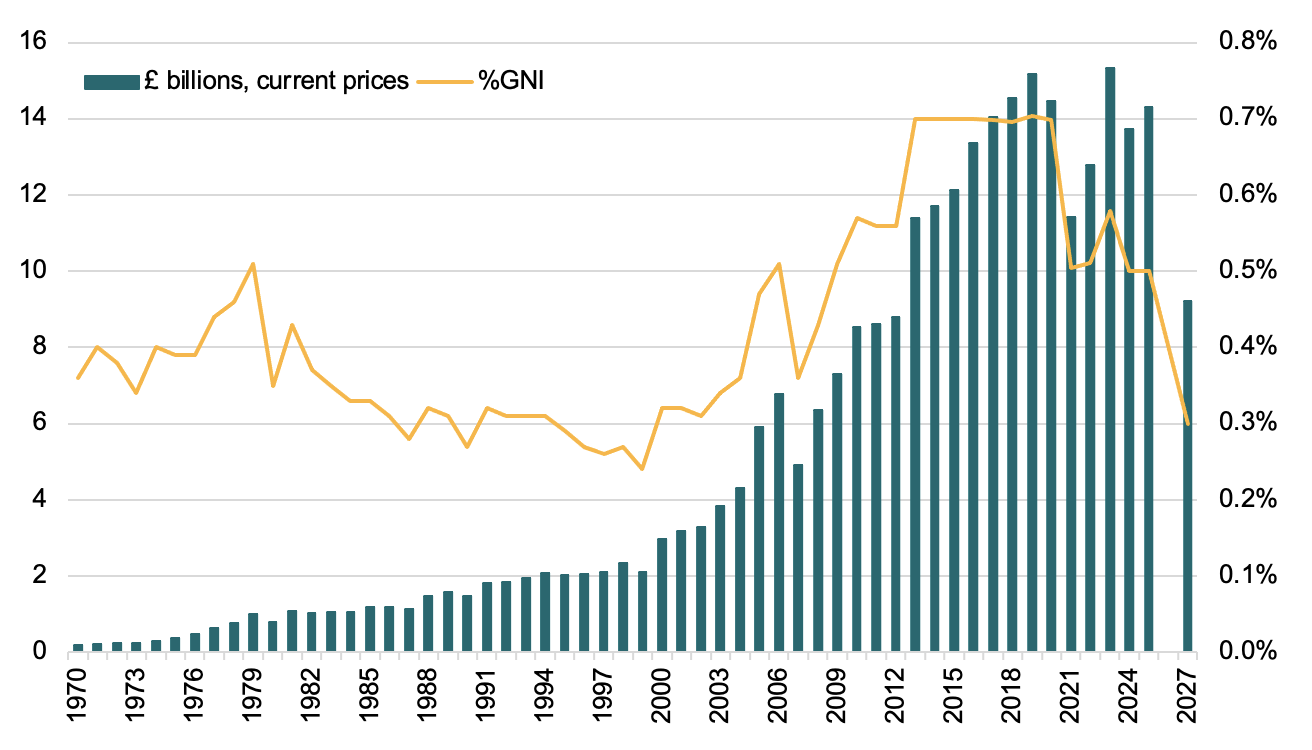
    Foreign aid dropped sharply after the merger, from 0.7% of Britain’s gross national income to 0.5% – a cut of about US$6 billion.

    Development professionals decried Johnson’s merger, arguing it could not have happened at a worse time, with the pandemic heightening the need for global health funding. And coming shortly after Brexit, Britain’s withdrawal from the European Union, DFID’s demise further called into question Britain’s commitment to global cooperation.

    Less money, less impact

    Five years later, it’s not clear that dismantling DFID has made British foreign aid more efficient or effective, as Johnson pledged.

    “We have seen evidence of where a more integrated approach has improved the organisation’s ability to respond to international crises and events, which has led to a better result,” reads one 2025 report by the U.K.’s National Audit Office.

    Two departments in one – but not twice the budget.
    Mike Kemp/In Pictures via Getty Images

    Yet, the auditors add, the British government has spent at least £24.7 million – US$32 million – to merge its aid and diplomacy offices, and it failed to track these costs. Nor did the leaders of the merger set out a clear vision for its new purpose.

    Britain’s slimmer new Foreign, Commonwealth and Development Office has also relinquished the U.K.’s past leadership in research and expertise, largely due to pay reductions and restrictions on hiring non-British nationals.

    From the outset, DFID had invested substantially in building expertise in global development, particularly in conflict-ridden states. In 2001, for example, it spent almost 5% of its budget – an unusually high amount – on research and policy analysis to design and assess its programs.

    DFID produced regular case studies of the projects it funded, which included getting Syrian refugee children back in school, building roads that help Rwandan farmers move their products to market, and providing health care after Pakistan’s 2010 floods.

    Given the “development expertise that was lost with the merger,” the U.K. government can no longer conduct “the kind of rigorous, long-term focus necessary to make a real impact,” said the Center for Global Development in a recent report.

    A 2022 study suggests that DFID’s dismantling was a fundamentally political move, “divorced from substantive analysis of policy or inter-institution relationships.”

    Britain’s new Prime Minister Keir Starmer, of the leftist Labour Party, initially promised to boost British foreign aid. But in early March 2025, he backtracked, announcing instead a further cut to foreign aid.

    By 2027, the U.K. government will spend just 0.3% of its budget on overseas aid. That’s roughly $11 billion less than before the merger in 2019.

    ‘Clear and easy target’

    USAID’s budget was much larger than DFID’s, and the administration apparently wants not to streamline U.S. foreign aid but halt it almost entirely. If this effort succeeds, it will have even more severe effects worldwide, at least in the immediate term.

    The global health programs administered by USAIDm which combat diseases such as HIV, tuberculosis and malaria, have received bipartisan and global praise. The PEPFAR program, which USAID helps administer, distributes antiretroviral drugs worldwide. It alone has saved 25 million lives over the past two decades, including the lives of 5.5 million babies born healthy to mothers with HIV.

    Development professionals tend to see independent government agencies such as USAID and DFID as better able to prioritize the needs of the poor because their programming is run separately from partisan policies.

    Yet standalone agencies are also more visible – and so more vulnerable to political targeting.

    DFID was a clear and easy target when Johnson began his pandemic-era budget-slashing. USAID is now suffering a similar fate.

    Sarah Stroup does not work for, consult, own shares in or receive funding from any company or organization that would benefit from this article, and has disclosed no relevant affiliations beyond their academic appointment.

    – ref. US isn’t first country to dismantle its foreign aid office − here’s what happened after the UK killed its version of USAID – https://theconversation.com/us-isnt-first-country-to-dismantle-its-foreign-aid-office-heres-what-happened-after-the-uk-killed-its-version-of-usaid-250868

    MIL OSI – Global Reports –

    March 20, 2025
  • MIL-OSI United Kingdom: British start-up wins £1 million AI prize for breakthrough slashing materials development from years to days

    Source: United Kingdom – Executive Government & Departments

    Press release

    British start-up wins £1 million AI prize for breakthrough slashing materials development from years to days

    A British AI-driven innovation that dramatically speeds up the development of materials used in wind turbines and electric vehicle batteries has won the UK government’s £1 million Manchester Prize.

    Manchester Prize winner announced.

    • Polaron awarded £1 million for revolutionary AI technology transforming materials innovation.
    • Breakthrough expected to fast-track new materials for energy, infrastructure, and electric vehicles.
    • Manchester Prize helping to unlock AI innovation to drive growth as part of government’s Plan for Change.

    A British AI-driven innovation that dramatically speeds up the development of materials used in wind turbines and electric vehicle batteries has won the UK government’s £1 million Manchester Prize.

    Advanced materials are essential to modern life, from metal alloys reinforcing bridges and skyscrapers to batteries powering electric vehicles. Yet, developing them has traditionally been slow, costly and unpredictable. 

    Polaron, a spin out from Imperial College London, speeds up the development of these materials from years to days – which could be game-changing for the government’s Plan for Change to get Britain building, deliver economic growth and accelerate net zero through British innovation.

    It will receive £1 million in UK government funding to further develop its groundbreaking AI solution which uses microstructural images – the microscopic features of a material visible under a microscope – to rapidly analyse and predict how materials will perform. This new approach helps manufacturers create stronger, lighter and more efficient materials for clean energy, transport and infrastructure. 

    Secretary of State Peter Kyle said:  

    Polaron exemplifies the promise of AI and shows how, through our Plan for Change, we are putting AI innovation at the forefront.

    AI could generate £400 billion to our economy over the next five years, supporting trailblazing companies like Polaron is essential to achieving that vision.  

    Technologies like these will help us meet our net zero targets while creating new jobs and opportunities for working people. Our commitment is clear – we are fully embracing AI to drive growth, improve public services and position the UK as a global leader in AI innovation. 1

    The Manchester Prize rewards innovative AI solutions addressing major societal challenges, with the first round focused on energy, environment, and infrastructure. Nearly 300 teams from across the UK competed in its first year, with ten finalists each receiving £100,000 and support to further develop their innovations. 

    Polaron’s win comes on the back of the UK government’s new blueprint for AI, which will unleash the technology to help deliver a decade of national renewal. Harnessing innovative AI solutions like this is key to realising the government’s Plan for Change and demonstrates the transformative potential of AI, not only to drive breakthroughs in industry but also to transform public services and improve the lives of citizens across the country. 

    Business Secretary Jonathan Reynolds said:

    Our Plan for Change will deliver economic growth, and for that to succeed we need to support companies such as Polaron across the UK in delivering the cutting-edge materials of the future, supported by our Industrial Strategy.

    This government is determined to embrace each and every opportunity of new technologies like AI, which will not only help British companies develop products we can use at home but also open up access for them to export them overseas.

    The government has already taken steps to accelerate how game changing technologies and innovations can be put into the hands of the British public – announcing the new Regulatory Innovation Office which will reduce burdens for businesses hoping to bring new products and services to market. This will involve supporting regulators to update regulation, speeding up approvals, and ensuring regulators can work seamlessly together – bulldozing barriers to innovation to help grow the economy.

    The Manchester Prize was launched in December 2023 by the Department for Science, Innovation, and Technology (DSIT) and is delivered in partnership with Challenge Works. It supports UK AI innovations which will help to tackle some of society’s biggest shared challenges. 

    The second round of the Manchester Prize was launched in November 2024, focussed on ‘AI for Clean Energy Systems’. The 10 finalists selected to receive £100,000 will be confirmed in Spring, before a panel of judges selects the winner who will secure a £1 million grand prize to further support their innovation.  

    Notes to editors

    1. Public First, ‘Google’s Impact in the UK 2023’, 2024 

    For further information and to follow the Manchester Prize, visit www.challengeworks.org.uk//challenge-prizes/manchester-prize. 

    Challenge Works is a global leader in designing and delivering high-impact challenge prizes that incentivise cutting-edge innovation for social good.

    DSIT media enquiries

    Email press@dsit.gov.uk

    Monday to Friday, 8:30am to 6pm 020 7215 300

    Share this page

    The following links open in a new tab

    • Share on Facebook (opens in new tab)
    • Share on Twitter (opens in new tab)

    Updates to this page

    Published 19 March 2025

    MIL OSI United Kingdom –

    March 20, 2025
  • MIL-OSI Security: Lawrence County Man Sentenced to More Than Five Years in Prison for Mail Fraud

    Source: Federal Bureau of Investigation (FBI) State Crime Alerts (b)

    HUNTSVILLE, Ala. –  A Lawrence County man has been sentenced for his role in a scheme to steal agricultural chemicals from his employer, announced U.S. Attorney Prim F. Escalona and Federal Bureau of Investigation Special Agent in Charge Carlton L. Peeples.

    U.S. District Court Judge Liles C. Burke sentenced Christopher Michelfelder, 56, of Moulton, Alabama, to 63 months in prison.  In December 2024, Michelfelder pleaded guilty to mail fraud.

    According to the plea agreement, Michelfelder was the facility manager of the local branch of an international agricultural company that sells chemicals to customers. Over the course of a decade, he executed a scheme in which stole products from his employer.  He sold them to a third-party broker under the false pretense that the products belonged to his personal farm business, Midway Farms.  Michelfelder shipped the products via FedEx to an address that the broker would provide to him. The loss amount was over $6 million.

    The FBI investigated the case.  Assistant U.S. Attorney John M. Hundscheid prosecuted the case.

    MIL Security OSI –

    March 20, 2025
  • MIL-OSI: SolMicroGrid Completes its Latest Microgrid Project with Chick-fil-A in California

    Source: GlobeNewswire (MIL-OSI)

    NEW YORK and OCEANSIDE, Calif., March 19, 2025 (GLOBE NEWSWIRE) — SolMicroGrid, a leading national microgrid company, announced the completion of a microgrid project at a Chick-fil-A® Quarry Creek in Oceanside, California.

    SolMicroGrid typically leverages a combination of solar, on-site battery energy storage, and generators to enable reliable and continuous power to its clients. The project at this Chick-fil-A restaurant includes an 81 kWh battery energy storage system and has a 112 kW solar array consisting of canopy and ground-mounted modules. The project’s components are all controlled by a sophisticated energy management system which optimizes the performance and maximizes the synergies between the technologies. Due to the location’s unique, sloped terrain, SolMicroGrid approached the ground-mount installation with a technique specifically designed for rocky slopes – utilizing ground screws instead of standard concrete-poured footings.

    Among other benefits, microgrid projects strategically deploy distributed energy resources to lower energy bills. The Oceanside project is expected to deliver about one-third of the restaurant’s annual energy needs at a 10% discount to grid power.

    “The combination of solar and battery storage that we provided Chick-fil-A will help reduce energy costs while also achieving sustainability goals,” said Kirk Edelman, CEO of SolMicroGrid. “We’re grateful for the opportunity to provide Chick-fil-A with renewable energy at a discount.”

    SolMicroGrid and Chick-fil-A’s latest achievement comes after successful microgrid deployments at local owner-operated locations at Chick-fil-A Mendocino Avenue in Santa Rosa, CA and Chick-fil-A March Lane at I-5 in Stockton, CA.

    “Chick-fil-A’s investment in piloting solar-powered microgrids, in partnership with SolMicroGrid, demonstrates our commitment to environmental stewardship,” said Peden Young, a principal program lead on the sustainability team at Chick-fil-A, Inc. “Harnessing renewable energy onsite at our restaurants reduces our environmental footprint, while also reflecting Chick-fil-A’s dedication to pursuing what’s next and caring for our planet.”

    SolMicroGrid requires no upfront costs and provides quick-service restaurants, large franchises, grocery stores, and other building operators with customizable microgrid components that reduce energy costs and improve efficiency.

    About SolMicroGrid
    SolMicroGrid is a differentiated developer and operator of solar-enabled microgrid systems, offering energy resiliency and efficiency to commercial and industrial customers. The company’s service solution reduces operating expenses without the need for customer capital investment. SolMicroGrid is a portfolio company of Morgan Stanley Energy Partners.

    Media Contact
    SMG@fischtankpr.com
    FischTank PR

    About Chick-fil-A, Inc.
    Chick-fil-A, Inc. is the third largest quick-service restaurant company in the United States, known for its freshly prepared food, signature hospitality and unique franchise model. More than 200,000 Team Members are employed by local Owner-Operators in more than 3,000 restaurants across the United States, Canada and Puerto Rico.

    Chick-fil-A opened its first restaurant in the UK in early 2025 with the goal of launching five locations across the UK within the next two years. The first Singapore restaurant is set to open in late 2025, marking the brand’s entry into Asia.

    Chick-fil-A local Owner-Operators live and work in the communities their restaurants serve, each supporting local efforts to address hunger, education, and making a positive impact. The family-owned and privately held company was founded in 1967 by S. Truett Cathy. More information on Chick-fil-A is available at  www.chick-fil-a.com  and @ChickfilANews

    Photos accompanying this announcement are available at:

    https://www.globenewswire.com/NewsRoom/AttachmentNg/cc681a01-c073-46e5-8aa9-e87d8a02e206
    https://www.globenewswire.com/NewsRoom/AttachmentNg/df7428b3-163b-406f-a928-9a04034d8421
    https://www.globenewswire.com/NewsRoom/AttachmentNg/0569f111-cf92-4735-8a7b-29b4050268bd

    The MIL Network –

    March 20, 2025
  • MIL-OSI: Hybrid Software Group PLC reports 2024 results with €51.50 million revenue and €12 million EBITDA

    Source: GlobeNewswire (MIL-OSI)

    PRESS RELEASE – REGULATED INFORMATION

    HYBRID SOFTWARE GROUP PLC REPORTS 2024 RESULTS WITH €51.50 MILLION REVENUE AND €12 MILLION EBITDA

    Cambridge (UK), 19 March 2025 (19:00 CET): Hybrid Software Group PLC (Euronext: HYSG) announces that it has published its annual report and financial statements for the financial year ended 31 December 2024.

    The full document is available to download from the financial reports section of the Company’s web site at:  https://www.hybridsoftware.group/investors/financial-reports.

    CEO Mike Rottenborn comments, “2024 was a successful year for Hybrid Software Group, with healthy growth in all business units despite difficult market conditions. We expect similar conditions in 2025, yet we are still very positive about the outlook for Hybrid Software and our customers.

    “Synergies in the business plan aren’t always realised in the market, so it’s very encouraging to see the tandem growth in both our OEM and end-user businesses, with an overall revenue growth of 7% over the previous year. In last year’s letter, I promised to focus on improving the profitability of Hybrid Software, so it’s gratifying to report that we delivered a 286% improvement in our adjusted operating result over 2023, as well as a 64% increase in our EBITDA, despite heavy marketing spending on the Drupa trade fair. We expect to deliver further improvements in the coming year.

    “2024 also saw the launch of a new business unit, Hybrid Software BrandZ, to serve brands and manufacturers of consumer packaged goods with software solutions for artwork management which facilitate downstream print production, opening a market that is potentially much larger than the print providers themselves.”

    Executive Chairman Guido Van der Schueren adds, “We enter 2025 in similar business conditions to 2024 but as a much stronger company, with revenue growth across all our business segments and an even more significant improvement in profitability.  We achieved this through careful cost management while continuing to fully fund our engineering teams and software development programs.

    “In late 2024 we instituted a share buyback program, committing €1 million to buy back and cancel shares as a sort of tax-free dividend to all shareholders. There are strict limits to the number of shares we can buy and the price we can pay for shares, but the impact on our share price has been significant already and we plan to continue this initiative throughout 2025.”

    Financial highlights

    For the year ended 31 December
    In thousands of euros 2024 2023
    Continuing operations    
    Revenue 51,501 48,043
    Operating loss (3,090) (1,161)
    Loss before tax (3,361) (1,667)
    Tax credit 653 2,986
    (Loss)/Profit from continuing operations (2,708) 1,319
    Loss on sale of discontinued operation, net of tax (120) –
    (Loss)/Profit for the period (2,828) 1,319
         
    EBITDA – continuing operations 11,989 7,306
         
    Adjusted operating profit – continuing operations 7,204 2,517
    Adjusted net profit – continuing operations 6,952 1,676
         
    Basic earnings per share (euro) – continuing operations (0.09) 0.04
    Adjusted net basic earnings per share (euro) – continuing operations 0.21 0.05
         
    Cash and cash equivalents 9,513 7,079
    Loans & borrowings (6,500) (7,800)
    Net cash/(debt) 3,013 (721)

    The consolidated pre-tax result for continuing operations was a loss of €3.36 million compared with a loss of €1.67 million in 2023. The increase in the loss of €1.69 million is due to:

    • an increase in revenue of €3.46 million;
    • a decrease in cost of sales of €0.59 million;
    • a decrease in selling, general and administrative expenses of €0.58 million
    • an increase of €6.28 million impairment charge on goodwill;
    • an increase in research and development expenses of €0.17 million;
    • an increase in other operating expenses of €0.06 million;
    • a decrease in other income of €0.05 million;
    • an increase in net finance expenses of €0.02 million; and
    • a decrease in foreign exchange losses of €0.26 million.

    Revenue for the Printing Software Segment was €16.67 million for the year (2023: €14.94 million). During 2024 new contracts were agreed with two existing customers which resulted in €4.3 million of revenue being recognised. In 2023 a new contract was agreed with an existing customer which resulted in €2.6 million of revenue being recognised in that year.

    Revenue for the Printhead Solutions segment was €11.59 million for the year (2023: €11.30 million). In 2022 revenue in this segment had been severely impacted by the shortage of its most commonly used chip. In 2023 it recovered significantly throughout the year which continued into 2024 although at a slower pace.

    Revenue for the Enterprise Software segment was €23.24 million for the year (2023: €21.81 million). In 2023 the segment experienced unfavourable business conditions in its two most important markets, the United States and Germany, which improved in 2024. For the segment year-over-year license royalty income increased by €0.8 million, maintenance and after-sale support services income €0.4 million and services income by €0.2 million.

    Gross profit for the period decreased to 84% of revenue (2023: 82%), primarily due to the lower mix of printing electronics related sales during the year, which have a lower level of gross margin than software because of their manufacturing costs.

    Included in selling, general and administrative expenses is amortisation of €0.90 million (2023: €0.97 million) related to intangible assets recognised as a result of acquisitions.

    In 2024 the Group recorded a goodwill impairment charge of €6.28 million (2023: €nil) in aggregate.

    Research and development expenses includes the capitalisation and amortisation of internally generated intangible assets and the amortisation of certain intangible assets recognised as a result of acquisitions. During the period there was a net capitalisation of development expenditure of €0.53 million (2023: €1.39 million) and amortisation of acquired intangible assets of €4.57 million (2023: €4.76 million).

    The net capitalisation of development expenditure was comprised of €3.45 million (2023: €3.82 million) of capitalised expenditure less €2.92 million (2023: €2.43 million) of amortisation.

    Total operating expenses increased by €5.93 million, or 14.56% compared to the same period in the prior year. Making abstraction of the goodwill impairment of €6.28 million, total operating expenses decreased by €0.35 million, or 0.86% compared to the same period in the prior year.

    Foreign exchange gains and losses are primarily due to the revaluation of currency balances held at the balance sheet date and the change in exchange rates during the year.

    The Company presents EBITDA (earnings before interest, tax, depreciation and amortisation) and adjusted profit when reporting its financial results to provide investors with an additional tool to evaluate the Group’s results in a manner that focuses on what the Group believes to be its underlying business operations.  The Group’s management believes that the inclusion of adjusted financial results provides consistency and comparability with past reports.

    Additional commentary and analysis of the Company’s consolidated results for the year ending 31 December 2024 can be found in the annual report and financial statements.

    Should you wish to receive a printed copy of the annual report, please send an e-mail to investor-relations@hybridsoftware.group or make your request in writing, for the attention of the Company’s Chief Financial Officer, to 2030 Cambourne Business Park, Cambourne, Cambridge, CB23 6DW, UK.

    Annual General Meeting
    The Company will hold its annual general meeting on Thursday 15 May 2025.  The official notice of the meeting will be available on the Company’s website at: https://www.hybridsoftware.group/investors/shareholders-annual-general-meeting.

    About Hybrid Software Group
    Through its operating subsidiaries. Hybrid Software Group PLC (Euronext: HYSG) is a leading developer of enterprise software for industrial print manufacturing. Customers include press manufacturers such as HP, Canon, Durst, Roland, Hymmen, and hundreds of packaging printers, trade shops, and converters worldwide.

    Hybrid Software Group PLC is headquartered in Cambridge UK. Its subsidiary companies are colour technology experts ColorLogic, printing software developers Global Graphics Software, enterprise software developer HYBRID Software, 3D design and modelling software developers iC3D, the industrial printhead driver solutions specialists Meteor Inkjet, and pre-press workflow developer Xitron.

    Contacts

    Attachment

    • 2025-03-19 Annual report announcement-Final

    The MIL Network –

    March 20, 2025
  • MIL-OSI: BSN Finance Outperforms the Competition—Voted Best Australian Trading Company

    Source: GlobeNewswire (MIL-OSI)

    Singapore, March 19, 2025 (GLOBE NEWSWIRE) — In a defining moment for Australia’s financial sector, BSN Finance has been named the Best Australian Trading Company, solidifying its reputation as a market leader in cutting-edge trading solutions. This recognition comes as BSN Finance continues to outperform competitors, providing investors with powerful analytics, seamless execution, and data-driven market insights.

    As the demand for high-performance trading platforms grows, BSN Finance has emerged as the top choice for traders and investors across Australia, thanks to its advanced technology, real-time stock indicators, and institutional-grade execution speeds.

    A Market Leader in Trading Innovation

    Winning the title of Best Australian Trading Company is a testament to BSN Finance’s commitment to delivering cutting-edge solutions for stock market investors. The platform’s award-winning technology integrates:

    • Real-time stock analytics to help investors identify optimal trade opportunities.
    • High-speed execution capabilities, reducing slippage and maximizing returns.
    • Smart risk management tools for greater portfolio stability.
    • Customizable trading dashboards, tailored for Australian market conditions.

    By leveraging machine learning, advanced data analysis, and automated trading insights, BSN Finance ensures investors gain a competitive edge in stock trading.

    Why Australian Investors Prefer BSN Finance

    With a strong focus on the Australian Securities Exchange (ASX), BSN Finance provides localized insights and market-specific trading tools that help traders navigate the Australian stock market with precision.

    Unlike global platforms that cater to multiple regions, BSN Finance is uniquely designed to meet the needs of Australian investors, ensuring optimized trade execution, relevant stock data, and real-time analysis tailored for the ASX.

    This localized approach has driven a surge in user satisfaction, with traders praising the platform’s efficiency, accuracy, and ease of use.

    What Traders Are Saying About BSN Finance

    The impact of BSN Finance is best reflected in the experiences of its growing community of traders:

    Michael T., Sydney – “I’ve used multiple trading platforms, but BSN Finance is by far the best. The real-time stock indicators have helped me make smarter investment decisions, and the execution speed is unmatched!”

    Samantha L., Melbourne – “As a long-term investor, I rely on accurate market insights. BSN Finance gives me the data I need to analyze trends effectively, and their risk management tools have made my portfolio much more secure.”

    Daniel R., Brisbane – “I was skeptical about switching platforms, but BSN Finance has exceeded my expectations. The depth of market data and seamless interface make trading easier and more efficient than ever!”

    Emily K., Perth – “I love how BSN Finance is built for Australian traders. Their ASX-focused analytics are a game-changer, and I finally feel like I have the tools I need to trade with confidence.”

    Setting the Benchmark for Trading Technology

    As trading technology continues to evolve, BSN Finance remains committed to pushing the boundaries of market intelligence and execution performance. By focusing on data-driven trading solutions, the platform ensures that Australian investors have access to world-class tools and real-time insights to stay ahead of the market.

    The recognition as Best Australian Trading Company is a reflection of BSN Finance’s dedication to continuous improvement, innovation, and investor success.

    About BSN Finance

    BSN Finance is a premier financial technology company, providing advanced trading solutions for Australian investors. With a focus on market analytics, portfolio management tools, and cutting-edge execution technology, the platform is designed to help traders maximize their performance in the stock market.

    The MIL Network –

    March 20, 2025
  • MIL-OSI: The Clearing House SVP of Product Strategy Ben Isaacson Named Co-Chair of Financial Data Exchange (FDX) Board 

    Source: GlobeNewswire (MIL-OSI)

    SALT LAKE CITY, March 19, 2025 (GLOBE NEWSWIRE) — Financial Data Exchange (FDX), a CFPB-recognized standard-setting body for Open Banking in the U.S., recently announced that Ben Isaacson, Senior Vice President of Product Strategy at The Clearing House, has been appointed as FDX Board Co-Chair. Isaacson has been a member of the FDX Board since 2019 and brings extensive expertise in financial data standards, payments innovation, and industry collaboration.

    “We are very grateful to have Ben stepping into this role at such a pivotal time for the industry,” shared Kevin Feltes, CEO of FDX. “His leadership and long-standing commitment to advancing industry standards will be invaluable as we continue driving forward on key initiatives in financial data sharing.”

    As SVP of Product Strategy at The Clearing House, Isaacson has worked closely with financial institutions, regulators, and industry stakeholders to modernize financial data standards. His leadership in driving innovation aligns with FDX’s mission to create a unified, interoperable, and more secure open banking ecosystem.

    “I’m honored to step into the role of FDX Co-Chair and continue working alongside Jane Barratt and the broader FDX community,” said Ben Isaacson. “FDX has made incredible progress in standardizing more secure data sharing, and I look forward to contributing to its ongoing success.”

    About FDX
    Financial Data Exchange (FDX) is a non-profit organization operating in the US and Canada that is dedicated to unifying the financial industry around a common, interoperable, royalty-free standard for secure and convenient consumer and business access to their financial data. FDX empowers users through its commitment to the development, growth, and industry-wide adoption of the FDX API, according to the principles of control, access, transparency, traceability, and security. Membership is open to financial institutions, fintech companies, financial data aggregators, consumer advocacy groups, payment networks and other industry stakeholders. For more information and to join, visit www.financialdataexchange.org.

    Contact info:
    Porche Matthews
    Marketing Manager
    pmatthews@financialdataexchange.org

    The MIL Network –

    March 20, 2025
  • MIL-OSI USA: Senators Coons, colleagues introduce bipartisan bill to strengthen medical supply chains

    US Senate News:

    Source: United States Senator for Delaware Christopher Coons
    WASHINGTON – U.S. Senators Chris Coons (D-Del.), Thom Tillis (R-N.C.), John Cornyn (R-Texas), and Michael Bennet (D-Colo.) introduced the Medical Supply Chain Resiliency Act, bipartisan legislation to jump start trade negotiations to ensure that hospitals, doctors, and patients have access to critical medical goods. U.S. Representatives Brad Schneider (D-Ill.) and Nicole Malliotakis (R-N.Y.) introduced companion legislation in the House. 
    “Life-threatening shortages of testing kits, drugs, and masks during the COVID-19 pandemic showed us just how fragile our medical supply chains are. If we are caught off-guard like we were during COVID once again, more Americans will die,” said Senator Coons. “Working with our most trusted trading partners to make our supply chains more resilient will strengthen our response to future public health emergencies while ensuring that health care providers have access to essential medical products and patients have access to life-saving care.”
    “The Medical Supply Chain Resiliency Act is a critical step toward ensuring that America’s healthcare providers have reliable access to the essential supplies they need,” said Senator Tillis. “By strengthening trade partnerships with our allies and expanding domestic manufacturing, we can enhance our nation’s preparedness for future health challenges. I’m proud to support this bipartisan effort to reinforce our medical supply chains and protect public health.” 
    “America’s medical supply chains rely heavily on China, posing risks to U.S. national security and public health,” said Senator Bennet. “Our bipartisan bill will address this vulnerability by authorizing the president to deepen relationships with our trading partners.”
    “During the pandemic, the U.S. faced severe shortages of medical supplies due to overreliance on foreign adversaries like China,” said Senator Cornyn. “This legislation would allow the U.S. to engage in trade negotiations with trusted allies for medical goods and services, helping ensure we’re better prepared to respond to future global health crises.”
    “The Medical Supply Chain Resiliency Act is the type of positive approach to trade America must embrace to deepen its economic partnerships with key allies,” said Brad Wood, Senior Director for Trade and Innovation Policy, National Foreign Trade Council.“By empowering the United States Trade Representative to negotiate new agreements with trusted trade partners, the United States has the opportunity to strengthen supply chain security, support U.S. innovation and jobs, and, ultimately, improve health outcomes. It is critically important that the United States collaborate with its allies to support the public health demands of our populations and prepare to meet the challenges of the next global health emergency. NFTC applauds Senators Tillis, Coons, Cornyn, and Bennet for championing this legislation, and urges Congress to support its swift passage.”
    “Premier commends Senators Thom Tillis, Chris Coons, John Cornyn and Michael Bennet and Representatives Brad Schneider and Nicole Malliotakis for their bipartisan leadership in reinforcing the resilience of our nation’s healthcare supply chain,” said Soumi Saha, Senior Vice President of Government Affairs, Premier Inc. “Building a stronger, more sustainable, and secure supply chain demands a balanced approach – expanding domestic manufacturing while fostering strategic trade partnerships. The Medical Supply Chain Resiliency Act is a critical step toward this goal by enabling the designation of trusted trade partners to diversify sourcing for medical devices and pharmaceuticals. Ensuring providers have reliable access to the essential supplies needed to deliver quality patient care is a paramount priority for our nation.”
    “The Chamber strongly supports the Medical Supply Chain Resilience Act, which will strengthen supply chains for medical goods and services while bolstering manufacturing in the U.S. and among our close allies and partners,” said John Murphy, Senior Vice President for International Policy, U.S. Chamber of Commerce. “Enhancing the resilience of medical supply chains is important to both our public health and our national security. The bill would direct the U.S. Trade Representative to negotiate trade agreements with trusted allies to eliminate tariffs and other trade barriers that weaken the U.S. medical goods manufacturing base and that of our allies. These agreements would also support intellectual property protection, regulatory cooperation, and collaboration on public and private R&D efforts. Only close allies and partners would qualify for such agreements. Close consultation with the legislative branch would be essential, and Congress would retain a right to disapprove any agreements. This is practical legislation that, if enacted, will apply lessons learned in the COVID-19 pandemic to strengthen America’s health preparedness. The Chamber urges Congress to pass it into law.”
    “Authorizing the administration to negotiate meaningful trade agreements with trusted partners, including the European Union, Japan, Switzerland, and the United Kingdom, would reduce trade barriers and strengthen medical supply chains. The biopharmaceutical industry, whose exports exceeded $101 billion in 2023, welcomes the Medical Supply Chain Resiliency Act and encourages the administration to embrace this pathway to expand trade with allies,” said PhRMA. 
    The COVID-19 pandemic presented significant challenges for supply chains around the world, disproportionately hampering health care providers’ access to medical devices, treatments, and equipment at a time when these products were desperately needed. By expanding U.S. engagement with our allies across the globe, this legislation would combat shortages of medical products and supplies by strengthening supply chain resiliency and safeguarding against future health crises. 
    You can read the full text of the bill here.

    MIL OSI USA News –

    March 20, 2025
  • MIL-OSI Global: Eight ways to reduce your stroke risk – by an expert in vascular brain injury

    Source: The Conversation – UK – By Siobhan Mclernon, Senior Lecturer, Adult Nursing and co-lead, Ageing, Acute and Long Term Conditions. Member of Health and Well Being Research Center, London South Bank University

    Sarayut Sridee/Shutterstock

    As a nurse working in a neurocritical care, I witnessed the sudden and devastating effects of stroke on survivors and their carers.

    Following my nursing career, I became a researcher specialising in stroke. Knowledge of stroke risk factors in the general public is poor, so stroke prevention is a priority for public health.

    Stroke is a leading cause of death and disability in England – yet it is largely preventable. It’s often considered an older person’s illness but, although stroke risk does increase with age, it can happen at any time of life. In fact, stroke incidence is increasing among adults below the age of 55 years.

    Stroke risk factors that tend to be more common among older people – such as high blood pressure (hypertension), high cholesterol, obesity, diabetes, smoking, physical inactivity and poor diet – are increasingly found in younger people. Other lifestyle risks include heavy alcohol consumption or binge drinking and recreational drugs such as amphetamines, cocaine and heroin.


    Read more:
    Stroke: young people can have them too – here’s how to know if you’re at risk and what to look out for


    Some risk factors are not modifiable such as age, sex, ethnicity, family history of stroke, genetics and certain inherited conditions. Women, for example, are particularly susceptible to strokes – and women of all ages are more likely than men to die from a stroke.

    Stroke risks unique to women include pregnancy and some contraceptive pills (especially for smokers), as well as endometriosis, premature ovarian failure (before 40 years of age), early-onset menopause (before 45 years of age) and oestrogen for transgender women.

    Also, inherited vascular abnormalities such as cerebral aneurysms – a weakness in the artery wall – can increase the risk of haemorrhagic stroke.

    Some risk factors are social rather than biological, however. Studies have found that people with a lower income and education level are at a higher risk of having a stroke. This is due to a combination of factors. Unhealthy lifestyle habits, such as smoking, heavier drinking and lower physical activity levels are more common in people with lower incomes.


    Read more:
    Rising income inequalities are linked to unhealthy diets and loneliness


    However, research also shows that people with lower socioeconomic status are less likely to receive good quality healthcare than people with higher incomes.

    But, regardless of biological or social risk factors, there are things you can do – right now – to reduce your risk of having a stroke.

    Essential eight

    1. Stop smoking Smokers are more than twice as likely to have a stroke than non-smokers. Smoking causes damage to blood vessel walls, increases blood pressure and heart rate but reduces oxygen levels. Smoking also causes blood to become sticky, further increasing the risk of blood clots that can block blood vessels and cause a stroke.

    2. Keep blood pressure in check High blood pressure damages the walls of blood vessels, making them weaker and more prone to rupture or blockage. It can also cause blood clots to form, which can then travel to the brain and block blood flow, leading to a stroke. If you’re over 18 years of age, get your blood pressure checked regularly so, if you do show signs of developing high blood pressure, you can nip it in the bud and make appropriate changes to your lifestyle to help reduce your risk of stroke.

    3. Keep an eye on your cholesterol According to the UK Stroke Association your risk of a stroke is nearly three and a half times higher if you have both high cholesterol and high blood pressure. To lower cholesterol, aim to keep saturated fat – found in fatty meats, butter, cheese, and full-fat dairy – below 7% of your daily calories, stay active and maintain a healthy weight.


    Read more:
    How can I lower my cholesterol? Do supplements work? How about psyllium or probiotics?


    4. Watch your blood sugar High blood glucose levels are linked to an increased risk of stroke. This is because high blood sugar damages blood vessels, which can lead to blood clots that travel to the brain. To reduce blood glucose levels, try to take regular exercise, eat a balanced diet rich in fibre, drink enough water, maintain a healthy weight, and try to manage stress.

    5. Maintain a healthy weight Being overweight is one of the main risk factors for stroke. It is associated with almost one in five strokes, and increases your stroke risk by 22%. Being obese raises that risk by 64%. Carrying too much weight increases your risk of high blood pressure, heart disease, high cholesterol and type 2 diabetes, which all contribute to higher stroke risk.

    6. Follow a Mediterranean diet One way to eat a fibre-rich balanced diet and maintain a healthy weight is to follow a Mediterranean diet. This has been shown to reduce the risk of stroke, especially when supplemented with nuts and olive oil.

    7. Sleep well Try to to get seven to nine hours of sleep daily. Too little sleep can lead to high blood pressure, one of the most important modifiable risk factors for stroke. Too much sleep, however, is also associated with increased stroke risk, so try to stay as active as possible so you can sleep as well as possible.


    Read more:
    Exercise really can help you sleep better at night – here’s why that may be


    8. Stay active The NHS recommends that people should avoid prolonged sedentary behaviour and aim for at least 150 minutes of moderate intensity activity or 75 minutes of vigorous intensity activity a week. Exercise should be spread evenly over four to five days a week, or every day. Do strengthening activities, usually more than two days per week.

    The good news is that while the effects of stroke can be devastating and life-changing, it is largely preventable. Adopting these eight simple lifestyle changes can help to reduce stroke risk and optimise both heart and brain health.

    Siobhan Mclernon does not work for, consult, own shares in or receive funding from any company or organisation that would benefit from this article, and has disclosed no relevant affiliations beyond their academic appointment.

    – ref. Eight ways to reduce your stroke risk – by an expert in vascular brain injury – https://theconversation.com/eight-ways-to-reduce-your-stroke-risk-by-an-expert-in-vascular-brain-injury-251524

    MIL OSI – Global Reports –

    March 20, 2025
  • MIL-OSI USA: Wisconsinites’ Years of Work Fighting Fentanyl

    US Senate News:

    Source: United States Senator for Wisconsin Ron Johnson

    The Halt All Lethal Trafficking of Fentanyl (HALT) Act passed the Senate last week with an overwhelmingly bipartisan vote of 84-16. 

    The HALT Fentanyl Act incorporates the permanent scheduling of fentanyl-related substances, which I first introduced in 2017 in the Stopping Overdoses of Fentanyl Analogues Act (SOFA). It ensures law enforcement has the tools they need to stop fentanyl’s flow into our country. 

    SOFA served as the template for the Trump administration’s temporary scheduling rule in 2018, and it recognizes the admirable devotion of Wisconsinites Dr. Tim Westlake and Lauri Badura (pictured above). Ms. Badura, who founded Saving Others for Archie, made it her life’s mission to end the fentanyl crisis after tragically losing her son, Archie, to fentanyl poisoning. 

    WATCH: Video message from families (including Baduras) to pass the HALT Act

    WATCH: 2017 video with Lauri telling Archie’s story

    As a member of the U.S. Senate Committee on Finance, I met with President Trump last week and we discussed my plan to get spending back to pre-pandemic levels – saving a minimum of $700 billion.

    There is so much room for reducing the size of the federal government and balancing the budget is entirely doable. I look forward to working with the White House and getting spending under control.

    Thank you to Kevin O’Leary for highlighting my chart on Fox Business. This is an eminently reasonable approach to returning to a pre-pandemic level of spending. 

    WATCH: Sen. Johnson on Fox Business discusses his White House meeting 

    WATCH: Sen. Johnson on the Jesse Kelly podcast reviews his plan to balance budget

    • LISTEN: I joined the MAHA Alliance podcast for a powerful discussion on the MAHA movement, RFK Jr., and government corruption.
    • I was highly disappointed to hear that the nomination of Dr. David Weldon to lead the CDC has been withdrawn. Although we will never know exactly why his nomination was pulled, I suspect it had something to do with the fact he has had the courage to be skeptical of the consensus “narrative” surrounding the childhood vaccine schedule. Skepticism is the vital attribute of true science, and it is beyond unfortunate that someone with his background and integrity will not be able to help fix what is broken at the CDC. (I discussed this on Off the Record podcast with Emily Jashinsky.)
    • My X post on the news that Steak n’ Shake will soon be using Wisconsin butter instead of a “buttery blend”. 

    I helped introduce a bipartisan, bicameral bill to expand federal funding for bike and pedestrian safety. The bill is named for American diplomat and Wisconsin native Sarah Debbink Langenkamp, who was killed in 2022 while riding her bicycle in Bethesda. 

    The Sarah Debbink Langenkamp Active Safety Transportation Act will expand federal funding opportunities for local governments to improve roadway safety for bicyclists and pedestrians.  

    While honoring Sarah, this bill will protect Wisconsinites by investing in infrastructure to enhance road safety for pedestrians and cyclists. By using taxpayer dollars effectively, it will help prevent further deaths from preventable traffic accidents and ensure Americans feel safe when using our roads.

    Thank you to everyone who participated in my 114th telephone town hall last week. 

    We are now streaming our town halls on X, so you can listen to it here.
     
    Questions asked include:

    11:45    Introduction
    13:45    Protecting personal information from DOGE 
    16:27    Will there be cuts to Social Security and Medicare?
    18:40    Justice System transparency 
    20:20    Wasteful spending examples
    24:00    Is Social Security a legal Ponzi scheme?
    29:00    ICE and deportations
    31:31    Federal worker layoffs 
    35:04    How do we make the spending cuts permanent?
    40:55    Inspector Generals and oversight
    43:30    Support for Veterans and the VA
    46:08    COVID-19 vaccine requirements for citizenship
    48:04    Wisconsin manufacturing and tariffs
    51:35    Controlling crime and fentanyl 
    54:35    Taxing pensions
    56:45    Bipartisanship
    1:00:25 Federal voter ID and proof of citizenship 
    1:02:36 Balancing the budget

     
    To join future telephone town halls live, sign up here. There is also a link on that page to submit written questions during the live town halls.
     

    MIL OSI USA News –

    March 20, 2025
  • MIL-OSI USA: SBA Sets Dates for Free National Small Business Week Virtual Summit

    Source: United States Small Business Administration

    WASHINGTON — Today, the U.S. Small Business Administration and SCORE, mentors to America’s small businesses and an SBA resource partner, set the dates for the 2025 National Small Business Week virtual summit. The free two-day online event will take place May 6 and 7 from 10 a.m. to 6 p.m. ET and registration is required.

    The virtual summit will feature educational workshops presented by cosponsors, access to federal resources, and networking and mentorship opportunities. Participants will be able to learn about a wide range of topics including manufacturing, digital marketing, cybersecurity and AI, cryptocurrency and online business resources. A detailed agenda and list of speakers for the virtual summit will be published soon.

    “Fostering small business growth is at the heart of what we do, and the National Small Business Week virtual summit embodies that commitment,” SCORE CEO Bridget Weston said. “SCORE is proud to once again co-host this event with the SBA. We’re looking forward to this opportunity to empower entrepreneurs with the timely, useful resources and information they need to launch and grow their businesses.”

    The National Small Business Week virtual summit is part of SBA’s year-round efforts to leverage technology to reach small business owners in communities across America. An in-person, national award celebration will take place on May 5 in Washington, D.C., and local winners will be recognized at award events across the nation.

    Details on National Small Business Week, the virtual summit and registration are featured on National Small Business Week and will be updated as additional information and activities are confirmed. Local events will be featured on Find upcoming events and identifiable by searching with #SmallBusinessWeek.  

    ###

    About SCORE 

    SCORE, the nation’s largest network of volunteer, expert business mentors, is dedicated to helping small businesses get off the ground, grow and achieve their goals. Since 1964, SCORE has provided education and mentorship to more than 11 million entrepreneurs. SCORE is a 501(c)(3) nonprofit organization and a resource partner of the U.S. Small Business Administration.

    About the U.S. Small Business Administration

    The U.S. Small Business Administration helps power the American dream of entrepreneurship. As the leading voice for small businesses within the federal government, the SBA empowers job creators with the resources and support they need to start, grow, and expand their businesses or recover from a declared disaster. It delivers services through an extensive network of SBA field offices and partnerships with public and private organizations. To learn more, visit www.sba.gov.

    Cosponsorship Authorization #24-44-C. SBA’s participation in this Cosponsored Activity is not an endorsement of the views, opinions, products or services of any Cosponsor or other person or entity. All SBA programs and services are extended to the public on a nondiscriminatory basis.

    MIL OSI USA News –

    March 20, 2025
  • MIL-OSI: Pushpay Announces Leadership Transition and the Appointment of Kenny Wyatt as New CEO

    Source: GlobeNewswire (MIL-OSI)

    REDMOND, Wash., March 19, 2025 (GLOBE NEWSWIRE) — Pushpay, the leading payments and engagement solutions provider for mission-driven organizations, announces the appointment of Kenny Wyatt as CEO, leading Pushpay into its next chapter of innovation to strengthen connections, enhance generosity, and empower ministries with transformative technology. This planned leadership transition comes as current CEO, Molly Matthews, transitions into a new role as Senior Advisor to the Board on April 1, 2025, which is when Wyatt will take the helm as Pushpay’s CEO.

    “Serving as CEO of Pushpay has been one of the greatest privileges of my career. While this transition marks a new chapter for me personally, my advisory role supports my commitment to the company’s long-term vision and continued success,” said Matthews. “Kenny has already made a tremendous impact since joining Pushpay, and his vision for our company is inspiring and bold. His deep passion for the Church, customer-centric leadership, and commitment to our mission makes him the right leader to propel Pushpay into the future.”

    Currently serving as Pushpay President, Wyatt is an accomplished leader with a diverse background in technology, telecom, and faith-tech industries. He has held leadership roles at major corporations such as Bank of America, Sprint, Vonage, CenturyLink, and was previously CEO at think-cell. More notably, Wyatt previously served as the Chief Operating Officer at Faithlife and has a deep understanding of the needs of the Church. He is eager to weave together his professional expertise with his personal passion for ministry as he steps into the CEO role at Pushpay. He resides in Castle Rock, CO, with his family and is actively involved in their local church, in addition to global ministry programs. Wyatt will be based out of Pushpay’s Colorado Springs office, while maintaining an active presence at the company’s headquarters in Redmond, Wa.

    “I’ve followed the Pushpay journey for quite some time and am honored for the opportunity to lead Pushpay into the future,“ said Wyatt. “Pushpay is undoubtedly the leader in our category, but I truly believe we’re just getting started. As ministry leaders navigate a rapidly evolving digital landscape, it’s a privilege to be at the forefront of technology innovation that enables them to expand their reach, deepen engagement, and serve their communities more effectively.”

    Over the years, Pushpay has played a pivotal role in helping lead the digital transformation of the Church, reshaping how mission-driven organizations connect, give, and engage with their communities. As CEO, Wyatt aims to build on Pushpay’s long-standing foundation, focusing immediate efforts on meeting the evolving needs of the Church through modernized customer support and bold product innovation.

    To support this strategy, today Pushpay is also pleased to announce Gruia Pitigoi-Aron has joined the Company as its Chief Product Officer. Pitigoi-Aron brings more than two decades of experience in product leadership, including a 10-year tenure at The Trade Desk, where he led the product and UX teams to create the leading independent demand side platform in ad-tech. He has dedicated time to serve on nonprofit boards that align with his personal and professional passions including current leadership at Redeem International, Mount Hermon Camp and Conference Center, and is actively involved in his local church as an elder.

    “Pushpay’s mission deeply resonates with me personally and I’m honored to join a team that’s passionate about serving the Church and committed to delivering solutions that empower ministries to grow and thrive,” said Pitigoi-Aron. “As we look to the future, our team has an ambitious vision for the future of our products, rooted in serving the needs of ministry leaders and their community.”

    Gratitude for an Era of Impact
    During Matthews’ tenure, both as CEO and Chief Customer Officer, Pushpay has solidified its position as a market leader in church engagement technology, expanding its ChMS, giving, and engagement solutions through key acquisitions, including Church Community Builder and Resi Media. These strategic additions have enabled churches to seamlessly manage their ministries, enhance digital engagement, and reach their communities through high-quality livestreaming and analytics-driven insights. Today, Pushpay technology facilitates nearly 1.3 million moments of connection each week, helping churches and nonprofits foster deeper relationships and maximize their impact. As she joins Pushpay’s Senior Advisory Board, Matthews will continue to provide strategic guidance, leveraging her expertise to support the ongoing success of Pushpay and its more than 14,000 customers. To learn more about Pushpay and the transition, visit www.pushpay.com.

    About Pushpay
    Pushpay empowers mission-driven organizations to engage their communities by bringing people together and fostering meaningful connections. Through its innovative suite of products, Pushpay helps create cultures of generosity by streamlining donation processes, enhancing communications, and strengthening relationships. Pushpay’s purpose-built ministry solutions include ChurchStaq, ParishStaq, Pushpay Insights, Resi, and more – all designed to simplify operations and provide data-driven insights to support the mission of its customers. Whether managing donations, organizing events, or connecting with community members, Pushpay’s integrated tools enable ministry leaders to focus on what matters most – growing their ministry and deepening engagement. For more information visit www.pushpay.com.

    US Media / PR Contact: Chelsea Looney PR@pushpay.com

    A photo accompanying this announcement is available at https://www.globenewswire.com/NewsRoom/AttachmentNg/680296c6-1a11-47a9-8e08-89e56ff74260

    The MIL Network –

    March 20, 2025
  • MIL-OSI: Landsbankinn hf.: Results of the 2025 AGM of Landsbankinn

    Source: GlobeNewswire (MIL-OSI)

    The annual general meeting (AGM) of Landsbankinn, held on 19 March 2025, agreed to pay a dividend amounting to ISK 18,892 million to shareholders.

    The dividend is equivalent to 50% of 2024 profits. The dividend will be paid in two tranches, firstly on 26 March 2025 and secondly on 17 September 2025. As a result, total dividend paid by the Bank in the years 2013-2025 amounts to ISK 210.6 billion.

    At the AGM, held in Reykjastræti 6, Jón Thorvarður Sigurgeirsson, Chairman of the Board of Directors, delivered the report from the Board of Directors for 2024. Lilja Björk Einarsdóttir, CEO, spoke of the Bank’s operation, strategy and activities in the past operating year.

    The Bank’s annual financial statement was approved, as was the proposed Remuneration Policy and remuneration to Directors of the Board. The AGM elected Ríkisendurskoðun as the company’s auditor for the 2025 operating year. The Auditor General, in accordance with an authorisation to outsource tasks, and following a tender process, has nominated auditing firm PricewaterhouseCoopers ehf. as auditor of the company’s annual financial statement for the operating year 2025.

    The following persons were elected Directors and Alternates to sit on the Board of Landsbankinn hf. until its next AGM:

    Directors:

    • Jón Thorvarður Sigurgeirsson (Chairman)
    • Eva Halldórsdóttir
    • Kristján Th. Davíðsson
    • Rebekka Jóelsdóttir
    • Steinunn Thorsteinsdóttir
    • Thór Hauksson
    • Örn Guðmundsson

    Alternates:

    • Sigurður Jón Björnsson
    • Stefanía G. Halldórsdóttir

    Hjörleifur Pálsson was elected as external member to the Bank’s Audit Committee.

    For further information contact:

    Rúnar Pálmason, Public Relations, pr@landsbankinn.is

    Hanna Kristín Thoroddsen, Investor Relations, ir@landsbankinn.is

    Attachment

    • Results AGM Landsbankinn hf. 2025

    The MIL Network –

    March 20, 2025
  • MIL-OSI Canada: Government of Canada announces appointment to the Windsor-Detroit Bridge Authority Board of Directors

    Source: Government of Canada News

    Biography

    Marie Campagna – Chair, Board of Directors

    Marie Campagna has been a member of the WDBA Board of Directors since 2017 and has most recently served in the role of interim Chair since May 2024.

    Since retiring from her role as Chief Financial Officer (CFO) of Hotel Dieu Grace Healthcare, Ms. Campagna was appointed as an Executive in Residence at the University of Windsor’s Odette School of Business. She is a facilitator in the Chartered Professional Accountants of Ontario’s CFO of the Future program.

    Ms. Campagna holds several governance positions that include Board Chair of Essex Energy Corporation, Member of the LaSalle Police Board, Member of Assumption University, Member of Invest Windsor Essex, Past Chair of Transform Shared Services Organization, and a past Board Member of the Windsor-Essex Regional Chamber of Commerce. She also previously held many board and committee positions with Essex Power Corporation, CMA Ontario, and CMA Canada.

    Ms. Campagna holds an ICD.D designation from the Institute of Corporate Directors, a CPA designation, and is a Fellow and life member of the Chartered Professional Accountants of Ontario. She holds a Bachelor of Commerce degree and an MBA from the University of Windsor.  

    MIL OSI Canada News –

    March 20, 2025
  • MIL-OSI Canada: Canada Announces Support for British Columbia’s Forest Sector

    Source: Government of Canada News

    March 19, 2025          Richmond, British Columbia             Natural Resources Canada

    Canada’s forest sector is an important contributor to our national economy. Since 2017, Canada’s softwood lumber exports have been subject to unfair and unwarranted U.S. duties, and they now face the threat of additional unjustified trade barriers. It is now more important than ever to support Canadian businesses so that they can innovate, diversify and expand their markets to continue to support thousands of jobs in hundreds of communities across the country.

    Today, the Honourable Jonathan Wilkinson, Minister of Energy and Natural Resources, announced a total investment of over $20 million for 67 projects that will help to boost the competitiveness and resiliency of British Columbia’s forest sector while growing wood product exports.

    The investments announced today include:

    • over $11.3 million in funding through the Investments in Forest Industry Transformation (IFIT) program for six projects that will facilitate the adoption and commercialization of new technologies, focusing on the production of innovative, low-carbon products that result in new or diversified revenue streams
    • over $7 million in funding through the Indigenous Forestry Initiative (IFI) program, for 50 projects that will advance economic development opportunities in the forest sector for Indigenous communities while strengthening Indigenous leadership and participation in forest stewardship
    • over $1.6 million in funding under the Green Construction through Wood (GCWood) program for nine projects that will promote the adoption and commercialization of wood-based products in the construction sector
    • over $600,000 in Global Forest Leadership program funding for two projects that will strengthen international partnerships with like-minded organizations by sharing Canadian expertise and decreasing market barriers for sustainable forest products

    The Government of Canada will always stand up for Canadians and Canadian industry, and that very much includes the forest sector. The investments announced today will support leadership, innovation and sustainable practices in the forest sector while creating significant economic and environmental benefits for British Columbians and Canadians

    MIL OSI Canada News –

    March 20, 2025
  • MIL-OSI Canada: Investing in Canada’s hydrogen potential

    Source: Government of Canada News

    Supporting HTEC’s construction of a hydrogen liquefier facility in British Columbia

    March 19, 2025 – Ottawa, Ontario

    Canada has a long and proud history of being a reliable global supplier of energy. As the world looks for dependable energy partners, the government is ensuring Canada continues to lead. That is why we are investing in projects that make our economy cleaner and stronger.

    Today, the Honourable Anita Anand, Minister of Innovation, Science and Industry, announced a $49 million investment in HTEC through the Strategic Innovation Fund. It will support the company’s $472 million project to build and operate a facility that will capture and liquefy 15 tonnes per day of industrial by-product hydrogen in North Vancouver, turning waste into a valuable, clean fuel.

    The facility will allow for cost-effective distribution of low-carbon hydrogen to HTEC’s refuelling station network in British Columbia and Alberta. It is a key component of HTEC’s H2 Gateway program, which includes up to 20 hydrogen refuelling stations, three hydrogen production facilities and a fleet of 100 hydrogen heavy-duty fuel cell electric trucks. The project will also bring significant benefits to British Columbia by maintaining up to 500 jobs and supporting co-op hiring and collaborations within the hydrogen ecosystem.

    Once completed, the North Vancouver project will be the first full value chain ecosystem for heavy-duty fuel cell electric trucks in Canada. Over the next three decades, global demand for clean hydrogen is expected to increase tenfold. Matching supply and demand for hydrogen will facilitate the large-scale adoption of zero-emission heavy-duty vehicles. This will not only decarbonize commercial trucking but also help position Canada as a leader in hydrogen technologies and sustainable practices.

    MIL OSI Canada News –

    March 20, 2025
  • MIL-OSI USA: SPC Mar 19, 2025 1730 UTC Day 2 Convective Outlook

    Source: US National Oceanic and Atmospheric Administration

     For best viewing experience, please enable browser JavaScript support.

    Mar 19, 2025 1730 UTC Day 2 Convective Outlook

    Updated: Wed Mar 19 16:36:25 UTC 2025 (Print Version |   |  )

    Probabilistic to Categorical Outlook Conversion Table

     Forecast Discussion

    SPC AC 191636

    Day 2 Convective Outlook
    NWS Storm Prediction Center Norman OK
    1136 AM CDT Wed Mar 19 2025

    Valid 201200Z – 211200Z

    …NO SEVERE THUNDERSTORM AREAS FORECAST…

    …SUMMARY…
    Thunderstorm development will be possible on Thursday in parts of
    the Mid-Atlantic and northern Rockies. A severe threat is not
    expected.

    …Synopsis…
    A mid-level trough will traverse the Rockies as a second upper
    trough ejects into the Atlantic tomorrow (Thursday). A surface cold
    front will accompany the East Coast trough, immediately preceded by
    marginal low-level moisture (e.g. low 50s F surface dewpoints).
    Scant buoyancy, driven by the meager low-level moisture, may
    encourage the development of a few thunderstorms from the Mid
    Atlantic to Carolina Piedmont region. Given relatively strong flow
    just above the boundary layer, strong wind gusts may occur with a
    few of the storms, but confidence in any appreciable severe gust
    coverage is too low for the addition of severe probabilities at this
    time. Otherwise, the only other location where lightning flashes may
    be observed is over the northern Rockies, where a plume of cold
    temperatures aloft, associated with the western trough, may promote
    enough buoyancy (albeit scant) to support a few thunderstorms.

    ..Squitieri.. 03/19/2025

    CLICK TO GET WUUS02 PTSDY2 PRODUCT

    NOTE: THE NEXT DAY 2 OUTLOOK IS SCHEDULED BY 0600Z

    Top/Latest Day 1 Outlook/Today’s Outlooks/Forecast Products/Home

    MIL OSI USA News –

    March 20, 2025
  • MIL-OSI: EIB submits SEC Form 18-K/A Amendment n. 14 – Entry into force of change to EIB Statute

    Source: GlobeNewswire (MIL-OSI)

    For immediate release

    19 March 2025

    EIB submits SEC Form 18-K/A Amendment No. 14

    The European Investment Bank (EIB) has submitted its SEC Form 18-K/A Amendment No. 14.

    To view the document, please go to EDGAR Filing Documents for 0000950157-25-000239

    The 18-K/A has also been posted on the EIB website:

    Amendment to the Annual Report 2023 (Form 18-K/A Amendment No 14)

    ENDS

    The MIL Network –

    March 20, 2025
  • MIL-OSI: Westland Insurance unveils new benefits brand: Westland Benefits

    Source: GlobeNewswire (MIL-OSI)

    Surrey, BC/Territories of the Coast Salish (Kwantlen, Katzie, Semiahmoo, Tsawwassen First Nations), March 19, 2025 (GLOBE NEWSWIRE) — Westland Insurance is proud to announce the launch of its new benefits brand, Westland Benefits, in BC, effective April 1, 2025. This launch marks a significant milestone in Westland’s continued growth, uniting its acquired benefits firms under one powerful national brand to better serve businesses across Canada.  

    Westland Benefits combines the personalized service and deep expertise of a boutique advisory firm with the scale, resources, and market influence of one of Canada’s largest insurance brokerages – offering employers of all sizes tailored, end-to-end benefits solutions.  

    Westland Insurance has appointed Matt Mann as the President of Westland Benefits. With extensive expertise in the benefits space and proven leadership in the insurance industry, Mann will oversee the growth and expansion of Westland Benefits across Canada. 

    “We’re excited to introduce Westland Benefits to BC,” said Jamie Lyons, President & CEO of Westland Insurance. “Over the past few years, we’ve made significant investments to strengthen our Employee Benefits offerings, including acquiring several high-performing advisory firms. Bringing these capabilities together under one unified brand – led by Matt – allows us to better serve our clients, compete more effectively in the market, and drive innovation at scale.”  

    The launch of Westland Benefits positions Westland to deliver a broader suite of benefits solutions – including group life and disability insurance, retirement and savings plans, key person coverage, and holistic wellness programs – to employers across most geographies in Canada. With plans to expand the Westland Benefits brand nationally, the company is poised to become a recognized leader in the Canadian benefits space.  

    “Launching Westland Benefits brand in BC is just the beginning – we’re at a breakthrough stage in terms of developing our national platform,” says Matt Mann, President of Westland Benefits. “I’m excited to lead this next chapter as we expand our operations across Canada. By bringing together our advisory culture, access to national insurance markets, and deep industry expertise, we’re uniquely positioned to help businesses of all sizes build competitive and high impact benefits programs.” 

    As part of this transition, Westland Benefits will bring together the existing operations of Dupuis Langen and Montridge Advisory Group, two highly regarded benefits firms that have played a key role in shaping the company’s success in the space. Clients can expect the same dedicated service and expertise they’ve always received, now under a unified national brand. 

    The introduction of Westland Benefits reinforces Westland Insurance’s commitment to helping Canadian businesses navigate the complex benefits landscape — ensuring organizations have access to innovative, people-focused solutions that drive employee well-being and business success. 

    For more information about Westland Benefits, visit our website.  

    – 30 – 

    About Westland Insurance Group:   

    Westland Insurance Group is one of the largest and fastest growing insurance brokers in Canada. Trading over $4 billion of premium, Westland continues to expand coast to coast. Westland’s brokers provide expertise and advisory-based services across commercial, personal, employee benefits, farm, and specialty insurance segments. The company’s mission is to protect individuals, businesses, and communities across Canada with trusted advice and tailored insurance solutions. As a Canadian-based company, Westland is proud to support local communities, Canadian jobs, and a strong economy. For more information, please visit westlandinsurance.ca.

    The MIL Network –

    March 20, 2025
←Previous Page
1 … 1,256 1,257 1,258 1,259 1,260 … 2,041
Next Page→
NewzIntel.com

NewzIntel.com

MIL Open Source Intelligence

  • Blog
  • About
  • FAQs
  • Authors
  • Events
  • Shop
  • Patterns
  • Themes

Twenty Twenty-Five

Designed with WordPress