Category: Business

  • MIL-OSI: Sierra Financial Holdings to Acquire Preferred Security Life Insurance Company

    Source: GlobeNewswire (MIL-OSI)

    HOUSTON, March 19, 2025 (GLOBE NEWSWIRE) — Sierra Financial Holdings, LLC today announced that it received final regulatory approval from the Texas Department of Insurance to acquire Preferred Security Life Insurance Company, a Texas-Domiciled Life Insurance carrier. Closing is expected to occur on April 1, 2025.

    Dennis Haley, President of Preferred Security Life Insurance Company, stated “The addition of a life insurance option to Sierra’s wide array of mortgage loan products significantly expands its portfolio of financial services and provides Preferred Security Life with ready access to the growing Latino market while simultaneously offering customers a means to provide financial protection and security for their family.”

    About Sierra Financial Holdings, LLC – Headquartered in Houston, Texas, Sierra Financial Holdings, LLC is a privately held company focused on the financial services industry. Since 2010 our family of independent financial services organizations have provided a full line of insurance and mortgage portfolio products to the primarily Latino market. The companies include:

    Sierra Mortgage Capital, LLC – a nationwide closed loan mortgage conduit that acquires first lien residential whole loans from approved mortgage bankers and retail lenders.

    Sierra Lending Group, LLC – a retail residential mortgage originator specializing in products that serve the Latino market in Texas.

    Sierra Lending Corporation – a California-based retail residential mortgage originator specializing in products that serve the Latino market in California.

    Sierra Insurance Services, LLC – a Houston-based insurance agency specializing in life insurance products that cater to the Latino market.

    About Preferred Security Life Insurance Company – Founded in 1994, Preferred Security Life Insurance Company is a Stipulated Premium Life insurance company with operational headquarters in Colorado Springs, Colorado USA.

    CONTACT
    John F. Sexton
    Managing Partner
    jsexton@groupsierra.com
    4550 Post Oak Place Dr, Suite 244
    Houston, TX 77027
    (713) 629-6300
    www.SierraFinancialHoldings.com

    The MIL Network

  • MIL-OSI Global: The Gaza ceasefire is dead − Israeli domestic politics killed it

    Source: The Conversation – Global Perspectives – By Asher Kaufman, Professor of History and Peace Studies, University of Notre Dame

    Buildings and a ceasefire left in ruins after airstrikes on March 18, 2025. Majdi Fathi/NurPhoto via Getty Images

    The ceasefire in Gaza appears to be over.

    And while Israeli Prime Minister Benjamin Netanyahu has sought to blame Hamas for the resumption of fighting that killed more than 400 Palestinians on March 18, 2025 – “only the beginning,” Netanyahu warned – the truth is the seeds of the renewed violence are to be found in Israeli domestic politics.

    Ever since the first phase of the ceasefire came into effect in January, Israeli politics experts – myself included – have flagged a likely insurmountable problem. And that is the execution of the plan’s second phase – which, if implemented, would see full withdrawal of Israeli military forces from the Gaza Strip in exchange for the release of the remaining hostages – is a nonstarter for far-right elements in the Israeli ruling coalition that Netanyahu relies on for his political survival.

    Withdrawing from the Gaza Strip runs counter to the maximalist ideologies of key members of Netanyahu’s government, including some in his own party, Likud. Rather, their stated position is for Israel to remain in control of the enclave and to push as many Palestinians as possible out of it. It is why many in Netanyahu’s government cheered when President Donald Trump indicated that Palestinians should be cleared from Gaza to make way for a massive reconstruction project led by the United States.

    As an expert on Israeli history and a professor of peace studies, I believe the far-right vision for post-conflict Gaza shared by parts of Netanyahu’s government is incompatible with the ceasefire plan. But increasingly, it appears to chime with the views of some in the U.S. administration – which, as de facto sponsor of the ceasefire, may have been the only entity that could have held the Israeli government to its terms.

    Efforts to transform judiciary

    It is true Hamas is responsible for delays and manipulations during the first phase of the ceasefire deal. It also turned hostage releases into propaganda spectacles, tormenting both the families of captives and much of Israeli society in the process.

    But in my view, the resumption of war is first and foremost tied to domestic Israeli currents that predate even the Oct. 7, 2023, attack that sparked the deadliest fighting between Israelis and Palestinians since the 1948 war. It can be traced back to Netanyahu’s efforts to transform the political system in Israel and increase the power of the executive and legislative branches while weakening the judiciary.

    U.S. President Donald Trump greets Israeli Prime Minister Benjamin Netanyahu at the White House on Feb. 4, 2025.
    Demetrius Freeman/The Washington Post via Getty Images

    Since coming to power in January 2023, Netanyahu’s hard-right government has made significant efforts to turn independent institutions such as the attorney general’s office and the police into compliant arms of the government by seeking to place government loyalists in charge of both.

    Prolonging the war

    In 2023, a sustained and massive protest movement slowed Netanyahu’s attempts to overhaul the country’s judiciary.

    And then came the Hamas massacre on Oct. 7.

    Many Israeli commentators hoped that the attack would force the government to reconsider its efforts to carry out what some described as a legal coup, in a show of national unity.

    But Netanyahu and his government had other plans.

    After an initial hostage deal in November 2023 failed to yield a wider breakthrough, people gradually began to question whether Netanyahu’s primary interest was to prolong the war in the belief that doing so might be the best way to save his political career and revive his assault on the judiciary.

    Such a view has solid foundations. Having been indicted in November 2019 on breach of trust, fraud and corruption charges, Netanyahu was presented with an opportunity to muddy the logic of the long-running legal proceedings: He could hardy stand trial while defending a nation at war. The prosecution is still ongoing, but the resumption of fighting has, again, meant that Netanyahu has reason to delay his testimony.

    Meanwhile, war also provides cover for Netanyahu to neuter some of his fiercest critics. In the months after the Oct. 7 attack, Netanyahu systematically removed from office antagonistic members of the security and political leadership, accusing them of being responsible either for the Hamas attack or for the mismanagement of the conflict.

    This purging of anti-Netanyahu elements in Israel has ramped up in recent months, with Netanyahu and his allies seeking to replace Attorney General Gali Baharav-Miara and fire Ronen Bar, the head of the powerful security agency Shabak, or Shin Bet, which has been carrying out sensitive investigations into Netanyahu’s closest aides.

    Shoring up the coalition

    The apparent breakdown of the ceasefire now also coincides with growing pressure on Netanyahu from the political right in his ruling coalition.

    Under Israeli law, the government must approve its annual budget by the end of March or face being dissolved, something that would trigger fresh elections.

    But Netanyahu is facing holdouts among ultra-Orthodox parties over the issue of army drafts. Since the start of the war, there has been tremendous pressure from the wider Israeli public to end the draft exemption for ultra-Orthodox men, who unlike other Israelis did not have to serve in the military. Ultra-Orthodox parties, however, are demanding the opposite: to pass legislation that would formally exempt them from military service.

    To secure the vote for the annual budget and stave off elections, Netanyahu needs support – and if it isn’t going to come from the ultra-Orthodox parties, then he needs to shore up far-right members of the coalition.

    As a result of the resumption of war, Otzma Yehudit – the far-right party that left Netanyahu’s government in January to protest the ceasefire agreement – has returned to the fold. This gives Netanyahu crucial budget votes. But in effect, it signals that the coalition has no intention of implementing the second phase of the ceasefire plan, withdrawing from Gaza. In effect, it has killed the ceasefire.

    The domestic politics of Israel alone is not to blame for the resumption of fighting. There is, too, the changing stance of the U.S. administration.

    The transition of presidency from Joe Biden to Donald Trump was a decisive reason for the timing of the ceasefire agreement in January 2025.

    But it appears that the administration is reluctant to force Netanyahu to continue to the second phase. Recent statements from Trump suggest that he supports putting extra military pressure on Hamas in Gaza. And by blaming Hamas for the resumption of the war, Trump is tacitly endorsing the position of the Israeli government.

    Hamas, in fact, has the most interest in implementing the agreement. Doing so would give the Palestinian militant group the best chance it has of remaining in control of Gaza, while also boasting that it had been responsible for the release of thousands of Palestinian prisoners from Israeli prisons.

    Thousands gather at Habima Square to protest against Prime Minister Benjamin Netanyahu’s government on March 18, 2025.
    Yair Palti/Anadolu via Getty Images

    Protests gaining momentum

    The majority of Israelis are in favor of ending the war, completing the ceasefire agreement and having Netanyahu resign.

    And the anti-government protest movement is gaining steam again as seen in widespread protests in Israeli cities against both the resumption of fighting in Gaza and the attempt to oust security chief Ronen Bar.

    Given that the people and the government of Israel appear to be pulling in opposite directions, the resumption of bombing in Gaza can only exacerbate the internal crisis that preceded the war and has ebbed and flowed ever since.

    But Netanyahu has seemingly bet that more war is his best chance of remaining in power and completing his plan to transform the country’s political system. Israel is facing an unprecedented situation in which, I would argue, its own prime minister has became the biggest threat to the country’s stability.

    Asher Kaufman does not work for, consult, own shares in or receive funding from any company or organization that would benefit from this article, and has disclosed no relevant affiliations beyond their academic appointment.

    ref. The Gaza ceasefire is dead − Israeli domestic politics killed it – https://theconversation.com/the-gaza-ceasefire-is-dead-israeli-domestic-politics-killed-it-252569

    MIL OSI – Global Reports

  • MIL-OSI Global: Can animals make art?

    Source: The Conversation – USA – By Shawn Simpson, Visiting Lecturer in Philosophy, University of Pittsburgh

    A male satin bowerbird stands before his creation. Ken Griffiths/iStock via Getty Images

    In the forests of eastern Australia, satin bowerbirds create structures known as “bowers.”

    The males gather twigs and place them upright, in two bundles, with a gap in the middle, resulting in what looks like a miniature archway. All around the bower the bird scatters small objects – shells, pieces of plastic, flower petals – which all possess the same property: the color blue.

    Studies suggest that the purpose of the bowers is to impress and attract females. But their beauty and intricacy has left some researchers wondering whether they shouldn’t be considered art.

    Of course, figuring out whether something is a work of art requires answering some tricky philosophical questions. Are animals even capable of creating art? And how can we tell whether something is a work of art rather than just a coincidentally beautiful object? As a philosopher and artist who’s interested in aesthetics and biology, I recently wrote about the evolution of behaviors in animals that could be seen as art.

    A contested concept

    First, it’s important to outline various theories of what makes something a work of art.

    There’s a general agreement that art must have some sort of producer and some possible or intended audience. In this way, it’s similar to other forms of communication.

    But the rest of the picture is unclear, and there’s no universally agreed-upon definition of art. In fact, art has proven so difficult to define that Scottish philosopher W.B. Gallie once suggested it might be an “essentially contested concept” – an idea for which there is no correct definition.

    That being said, some popular views have emerged.

    Leo Tolstoy famously suggested art is a conduit for emotion, writing in 1897 that “one man consciously, by means of certain external signs, hands on to others feelings he has lived through, and that other people are infected by these feelings and also experience them.”

    Plato and Aristotle emphasized the representational role of art: the idea that a work of art must in some way mimic, depict or “stand in” as a sort of sign for something else.

    Some philosophers believe that creating art requires intention – for example, a sculptor will mold clay with the intention of having it look like Abraham Lincoln. And nonhuman animals, they’ll argue, simply don’t have the right kind of intentions for art-making.

    Art, beauty and sex

    And yet, it’s not clear how much intention really does matter for art.

    Philosopher Brian Skyrms has pointed out that communication arises even in animals that plausibly do not have sophisticated intentions like our own. For example, fireflies signal to mates with flashes, and this seems to be largely an evolved behavior. Communication can even emerge via simple reinforcement learning, as when a dog learns to associate a certain call with dinner.

    These aren’t instances of art. But they reveal how meaningful signs or representations can operate without the need for complex intentions. Given that much art also serves a communicative role, I argue that there’s reason to think that art might be able to come about in less intention-demanding ways too.

    Ornithologist Richard Prum also takes a communicative view of art, but one where art is meant to be evaluated for its beauty. The beauty of a work functions as an indicator of the artist’s reproductive fitness, or their having “good genes” – and this can apply to both humans and animals.

    Charles Darwin, musing about birds in “The Descent of Man,” also thought at least some animals appreciate beauty:

    “When we behold a male bird elaborately displaying his graceful plumes or splendid colours before the female, whilst other birds, not thus decorated, make no such display, it is impossible to doubt that she admires the beauty of her male partner.”

    Some might not like an account like Prum’s, since it seems to allow creations like bowers to count as art. And yet, as philosopher Denis Dutton points out in his 2009 book “The Art Instinct,” mate attraction and fitness broadcasting can be the primary motivation behind many human works of art too: just consider the stereotype of the sex-hungry rock musician.

    Whale ballads and pig paintings

    I think it’s safe to say some animal creations don’t count as art. The webs of most spiders, though intricate and carefully designed, appear to exist for utilitarian purposes and serve no evaluative or communicative function. The same goes for most anthills.

    But what about animal songs?

    The structures of the songs of humpback whales are complex, featuring parts and repeated patterns that researchers often describe as “themes” and “verses.” The songs are long – sometimes up to 30 minutes. Because males perform these songs primarily during mating season, it’s plausible that female whales assess them for their beauty, which serves as a way to gauge the singer’s genetic fitness. Details of songs even vary from whale population to population, often changing over the course of a mating season.

    Then there are animals that have been trained to make art. Pigcasso was a pig in South Africa whose trainer taught her to paint on canvas via reinforcement learning. The trainer would pick out the colors for Pigcasso, and Pigcasso would do the brushing. Was Pigcasso really an artist? Were her paintings works of art?

    Pigcasso was taught to paint by her trainer.
    Kristin Palitza/Picture Alliance via Getty Images

    Pigcasso was plausibly making these paintings for reasons other than her own desire to communicate or make something beautiful; she was motivated, at least in part, by “piggy treats.” The trainer chose the colors. But Pigcasso did, in the end, have some aesthetic freedom: She had control over her brushstrokes.

    Off the coasts of Japan, male white-spotted puffer fish create impressive nests to attract females. The male puffer fish uses his mouth to remove rocks from the sand and his body to wiggle out long, strategically placed grooves. The finished product is a multi-ringed sand mandala about 6 feet in diameter.

    Like the bowers, the nests of the puffer fish are beautiful and involve mate attraction. Yet some researchers argue that since these sorts of works all look roughly the same – have the same shape, use the same materials and so on – they’re more likely the result of evolved, inflexible dispositions than more creative processes.

    Male white-spotted puffer fish create elaborate designs in the sand to attract mates.

    But it’s worth noting that many human works of art bear core similarities as well. Many paintings use flat surfaces, oils or acrylics. Many songs follow the same chord patterns. And would we still consider human sculptures art if we discovered much about the motivation to build them could be explained by evolution? I wager we would.

    Birds bust a move

    Many human cases of art involve more than one person, sometimes even a large group. Think of all the people it takes to make a modern film. Does anything like that happen in animals?

    Consider the blue manakin bird of South America. Male blues will form groups, often of three or more, which then practice an elaborate song-and-dance routine to later perform in front of females. The practice is detailed and dutiful. The groups hone their moves. This involves learning and memorization, not just genetics. Flaws in the performance are challenged and corrected. Sometimes during practices, a juvenile male will even fill in as a mock female.

    Some blue manakins spend years honing their dance moves.

    It’s not The Beatles. But the similarity to music groups seem hard to deny.

    At the same time, it’s worth wondering whether, beyond conveying their eagerness to mate, the birds are trying to “say” or “express” anything more with their performance. And do they know it’s beautiful?

    All this leaves room for doubt about whether animals really make art.

    To me, a key question is whether there’s any animal art that doesn’t have to do with mating, and instead expresses something more complex or sentimental. Without being able to get into the heads of animals, it’s hard to say. But it’s plausible that humans aren’t alone in their artistic pursuits.

    Shawn Simpson does not work for, consult, own shares in or receive funding from any company or organization that would benefit from this article, and has disclosed no relevant affiliations beyond their academic appointment.

    ref. Can animals make art? – https://theconversation.com/can-animals-make-art-248503

    MIL OSI – Global Reports

  • MIL-OSI Global: The story of the Great Migration often overlooks Black businesses that built Detroit

    Source: The Conversation – USA – By Kendra D. Boyd, Assistant Professor of History, Rutgers University

    The flourishing Black business district in Detroit, Mich., photographed in 1942. Arthur S. Siegel via the Library of Congress, CC BY-ND

    Black businesses were essential to facilitating the Great Migration of African Americans out of the South between the 1910s and 1960s. Yet, the traditional narrative of the migration as a movement of laborers seeking high-wage jobs obscures the history of African Americans who moved north or west seeking entrepreneurial opportunities.

    This story is featured in my book, “Freedom Enterprise: Black Entrepreneurship and Racial Capitalism in Detroit,” which will be published April 8, 2025.

    Between 1910 and 1970, more than 6 million African Americans left the South for destinations such as Detroit, Chicago, New York and Los Angeles. This mass exodus had, and continues to have, enormous political, cultural and social implications for our nation. Migrants were seeking true freedom, including full political and economic citizenship – things they had not been able to achieve in the Jim Crow South.

    As a historian of Black business, I wanted to know more about those who migrated to Detroit with the aim of working for themselves – as opposed to getting a job in Henry Ford’s auto factories.

    The experiences and trajectories of these migrant entrepreneurs can tell us much about the possibilities for Black social and economic advancement through business in the United States.

    Leaving the South

    Pioneering African American historian Carter G. Woodson, father of Black History Month, pointed to the lack of business opportunities in describing the causes of the mass migration that began in the mid-1910s.

    “In most parts of the South the Negroes are still unable to become landowners or successful business men,” Woodson wrote in 1918. “Conditions and customs have reserved these spheres for the whites.”

    Of course, African Americans did establish businesses in the South, sometimes becoming quite wealthy. But there was always the threat of lynchings and other forms of racial violence for those who defied the racial caste system of Jim Crow. The destruction of “Black Wall Street” in Tulsa, Oklahoma, is a well-known story. But there were many other incidents of white supremacist terrorism targeting Black businesses owners.

    In fact, many Black entrepreneurs pointed out that the danger of racial violence was a deciding factor in their moving to Detroit. This included people such as Willis Eugene Smith, who established a funeral home, and Berry Gordy Sr., who operated a grocery store and contracting business in the city. In his 1979 memoir, “Movin’ Up: Pop Gordy Tells His Story,” Gordy told how he decided to leave Georgia for Detroit after local whites began pestering him about a large check he received as payment for goods he had sold. Gordy’s sister warned him: “You fool ’round here, they’re liable to beat us out of it, take all our money.”

    Many African American entrepreneurs who participated in the Great Migration questioned whether they could experience enduring upward mobility through business if they stayed in the South.

    As early as 1917, the director of the Detroit Urban League, Forrester B. Washington, reported “receiving many letters from [southern] Negro business men asking information regarding the real situation here.”

    Migrant entrepreneurs’ services essential

    Many of those Southern entrepreneurs decided to move north. Detroit’s African American population increased 611% between 1910 and 1920 to 40,838, making it home to one of the largest populations of African Americans in the country.

    While Southern migrants saw Detroit as a promised land, segregation in the North was alive and well. There were many negative aspects to racial segregation, but it also created entrepreneurial opportunities, as Black newcomers needed the services of Black-owned businesses such as barbershops and hair salons, hotels and restaurants. These businesses sustained the growing African American community and made it feasible for Southern migrants to settle permanently in the city. By 1926, 85% of Detroit’s Black population were migrants, according to “The Negro in Detroit,” a report produced by the Detroit Bureau of Governmental Research.

    Some businesses made their Southern roots explicit in their advertising. A 1933 advertisement for the Creole Hand Laundry, located at 542 Watson St., stated: “From New Orleans, La.”

    Migrant entrepreneurs tapped into newly created niche markets, catering to the tastes of Southern transplants. For example, the Home Milling Company was established in Detroit around 1922 and processed hominy grits, cornmeal and whole wheat flour in a plant at Catherine and Russell streets. Home Milling’s managers had plans to expand the business in order to supply Black-owned bakeries in Detroit and satiate the tastes of newcomers.

    “There is quite a large demand of the products on the part of Southern residents in the City and the concern is doing a fair volume of business,” stated the 1926 “The Negro in Detroit” report. “Their cornmeal is made from specially selected white corn out of deference to the palate of Southern Negroes who do not relish meal made from yellow corn.”

    Supreme Linen and Laundry was another company that provided essential goods and services to Detroit’s growing number of Black-owned restaurants and hotels. Established by native Mississippians Fred and Callie Allen in 1929, the company supplied uniforms, tablecloths and napkins to businesses across the city and housed a commercial laundry.

    Fred and Callie Allen, a husband and wife team, built up their laundry business, Supreme Linen and Laundry, to service the Black neighborhoods nearby. The business grew to at least 41 Black employees.
    The Detroit Tribune, CC BY-ND

    A mecca for Black-owned business

    By the 1940s, Detroit had earned the reputation of having more Black-owned businesses than any other city in the United States. This thriving business community comprised mainly Southern migrants.

    Black business women, particularly those affiliated with the Detroit Housewives’ League, were instrumental in facilitating the growth of the Black-owned business community in the 1930s and 1940s. The league was established with the goal of boosting Black business in the city and grew to have over 10,000 members. The organization promoted Black businesses by hosting annual exhibitions, producing and distributing informational publications, and sponsoring educational programs for entrepreneurs and consumers.

    Building a successful Black business community in Detroit in the first half of the 20th century was certainly not without obstacles. These included retail and residential segregation, lending discrimination and violence, among others. Yet, migrant entrepreneurs facilitated the migration to the city and transformed the landscape of Detroit.

    In 1925, the city’s Black population was 85,000. That blossomed to 300,000 by 1950.

    Detroit’s historic Black business community was concentrated in adjoining neighborhoods called Black Bottom and Paradise Valley.

    Later, this area was targeted by urban planning initiatives, including freeway construction and urban renewal in the 1950s and 1960s. As a result, the success of this business community was cut short. State-sponsored redevelopment wiped out much of the wealth Black entrepreneurs hoped to pass down to their children, contributing to the racial wealth gap.

    This destruction was a harsh blow to Southern migrant entrepreneurs who had relocated to Detroit seeking economic independence, upward mobility and other markers of freedom.

    Read more of our stories about Detroit.

    Kendra D. Boyd does not work for, consult, own shares in or receive funding from any company or organization that would benefit from this article, and has disclosed no relevant affiliations beyond their academic appointment.

    ref. The story of the Great Migration often overlooks Black businesses that built Detroit – https://theconversation.com/the-story-of-the-great-migration-often-overlooks-black-businesses-that-built-detroit-249006

    MIL OSI – Global Reports

  • MIL-OSI Global: Why history instruction is critical for combating online misinformation

    Source: The Conversation – USA – By Lightning Jay, Assistant Professor of Teaching, Learning and Educational Leadership, Binghamton University, State University of New York

    Students ask questions during a social studies class on American politics. AP Photo/John Minchillo

    Can you tell fact from fiction online? In a digital world, few questions are more important or more challenging.

    For years, some commentators have called for K-12 teachers to take on fake news, media literacy, or online misinformation by doubling down on critical thinking. This push for schools to do a better job preparing young people to differentiate between low- and high-quality information often focuses on social studies classes.

    As an education researcher and former high school history teacher, I know that there’s both good and bad news about combating misinformation in the classroom. History class can cultivate critical thinking – but only if teachers and schools understand what critical thinking really means.

    Not just a ‘skill’

    First, the bad news.

    When people demand that schools teach critical thinking, it’s not always clear what they mean. Some might consider critical thinking a trait or capacity that teachers can encourage, like creativity or grit. They could believe that critical thinking is a mindset: a habit of being curious, skeptical and reflective. Or they might be referring to specific skills – for instance, that students should learn a set of steps to take to assess information online.

    Unfortunately, cognitive science research has shown that critical thinking is not an abstract quality or practice that can be developed on its own. Cognitive scientists see critical thinking as a specific kind of reasoning that involves problem-solving and making sound judgments. It can be learned, but it relies on specific content knowledge and does not necessarily transfer between fields.

    Early studies on chess players and physicists in the 1970s and ’80s helped show how the kind of flexible and reflective cognition often called critical thinking is really a product of expertise. Chess masters, for instance, do not start out with innate talent. In most cases, they gain expertise by hours of thoughtfully playing the game. This deliberate practice helps them recognize patterns and think in novel ways about chess. Chess masters’ critical thinking is a product of learning, not a precursor.

    Nurman Alua of Kazakhstan, left, and Lee Alice of the U.S. during the 45th Chess Olympiad in Budapest, Hungary, on Sept. 22, 2024.
    AP Photo/Denes Erdos

    Because critical thinking develops in specific contexts, it does not necessarily transfer to other types of problem-solving. For example, chess advocates might hope the game improves players’ intelligence, and studies do suggest learning chess may help elementary students with the kind of pattern recognition they need for early math lessons. However, research has found that being a great chess player does not make people better at other kinds of complex critical thinking.

    Historical thinking

    Since context is key to critical thinking, learning to analyze information about current events likely requires knowledge about politics and history, as well as practice at scrutinizing sources. Fortunately, that is what social studies classes are for.

    Social studies researchers often describe this kind of critical thinking as “historical thinking”: a way to evaluate evidence about the past and assess its reliability. My own research has shown that high school students can make relatively quick progress on some of the surface features of historical thinking, such as learning to check a text’s date and author. But the deep questioning involved in true historical thinking is much harder to learn.

    Social studies classrooms can also build what researchers call “civic online reasoning.” Fact-checking is complex work. It is not enough to tell young people that they should be wary online, or to trust sites that end in “.org” instead of “.com.” Rather than learning general principles about online media, civic online reasoning teaches students specific skills for evaluating information about politics and social issues.

    Still, learning to think like a historian does not necessarily prepare someone to be a skeptical news consumer. Indeed, a recent study found that professional historians performed worse than professional fact-checkers at identifying online misinformation. The misinformation tasks the historians struggled with focused on issues such as bullying or the minimum wage – areas where they possessed little expertise.

    Powerful knowledge

    That’s where background knowledge comes in – and the good news is that social studies can build it. All literacy relies on what readers already know. For people wading through political information and news, knowledge about history and civics is like a key in the ignition for their analytical skills.

    Readers without much historical knowledge may miss clues that something isn’t right – signs that they need to scrutinize the source more closely. Political misinformation often weaponizes historical falsehoods, such as the debunked and recalled Christian nationalist book claiming that Thomas Jefferson did not believe in a separation of church and state, or claims that the nadir of African American life came during Reconstruction, not slavery. Those claims are extreme, but politicians and policymakers repeat them.

    For someone who knows basic facts about American history, those claims won’t sit right. Background knowledge will trigger their skepticism and kick critical thinking into gear.

    A teacher in North Carolina conducts a lesson about the D-Day invasion of Normandy in an Advanced Placement class.
    AP Photo/Gerry Broome

    Past, present, future

    For this reason, the best approach to media literacy will come through teaching that fosters concrete skills alongside historical knowledge. In short, the new knowledge crisis points to the importance of the traditional social studies classroom.

    But it’s a tenuous moment for history education. The Bush- and Obama-era emphasis on math and English testing resulted in decreased instructional time in history classes, particularly in elementary and middle schools. In one 2005 study, 27% of schools reported reducing social studies time in favor of subjects on state exams.

    Now, history teachers are feeling heat from politically motivated culture wars over education that target teaching about racism and LGBTQ+ issues and that ban books from libraries and classrooms. Two-thirds of instructors say that they’ve limited classroom discussions about social and political topics.

    Attempts to limit students’ knowledge about the past imperil their chances of being able to think critically about new information. These attacks are not just assaults on the history of the country; they are attempts to control its future.

    Lightning Jay does not work for, consult, own shares in or receive funding from any company or organization that would benefit from this article, and has disclosed no relevant affiliations beyond their academic appointment.

    ref. Why history instruction is critical for combating online misinformation – https://theconversation.com/why-history-instruction-is-critical-for-combating-online-misinformation-248528

    MIL OSI – Global Reports

  • MIL-OSI Global: As mountain glaciers melt, risk of catastrophic flash floods rises for millions − World Day for Glaciers carries a reminder

    Source: The Conversation – USA – By Suzanne OConnell, Harold T. Stearns Professor of Earth Science, Wesleyan University

    Imja Lake, a glacial lake in the Mount Everest region of Nepal, began as meltwater ponds in 1962 and now contains 90 million cubic meters of water. Its water level was lowered to protect downstream communities. Alton Byers

    In mountain ranges around the world, glaciers are melting as global temperatures rise. Europe’s Alps and Pyrenees lost 40% of their glacier volume from 2000 to 2023. These and other icy regions have provided freshwater for people living downstream for centuries – almost 2 billion people rely on glaciers today. But as glaciers melt faster, they also pose potentially lethal risks.

    Water from the melting ice often drains into depressions once occupied by the glacier, creating large lakes. Many of these expanding lakes are held in place by precarious ice dams or rock moraines deposited by the glacier over centuries.

    Too much water behind these dams or a landslide into the lake can break the dam, sending huge volumes of water and debris sweeping down the mountain valleys, wiping out everything in the way.

    These risks and the loss of freshwater supplies are some of the reasons the United Nations declared 2025 the International Year of Glaciers’ Preservation and March 21 the first World Day for Glaciers. As an Earth scientist and a mountain geographer, we study the impact that ice loss can have on the stability of the surrounding mountain slopes and glacial lakes. We see several reasons for increasing concern.

    Erupting ice dams and landslides

    Most glacial lakes began forming over a century ago as a result of warming trends since the 1860s, but their abundance and rates of growth have risen rapidly since the 1960s.

    Many people living in the Himalayas, Andes, Alps, Rocky Mountains, Iceland and Alaska have experienced glacial lake outburst floods of one type or another.

    A glacial lake outburst flood in the Himalayas in October 2023 damaged more than 30 bridges and destroyed a 200-foot-high (60-meter) hydropower plant. Residents had little warning. By the time the disaster was over, more than 50 people had died.

    Juneau, Alaska, has been hit by several flash floods in recent years from a glacial lake dammed by ice on an arm of Mendenhall Glacier. Those floods, including in 2024, were driven by a melting glacier that slowly filled a basin below it until the basin’s ice dam broke.

    Scientists investigate flooding from Mendenhall Glacier’s Suicide Basin.

    Avalanches, rockfalls and slope failures can also trigger glacial lake outburst floods. These are growing more common as frozen ground known as permafrost thaws, robbing mountain landscapes of the cryospheric glue that formerly held them together. These slides can create massive waves when they plummet into a lake. The waves can then rupture the ice dam or moraine, unleashing a flood of water, sediment and debris.

    That dangerous mix can rush downstream at speeds of 20-60 mph (30-100 kph), destroying homes and anything else in its path.

    The casualties of such an event can be staggering. In 1941, a huge wave caused by a snow and ice avalanche that fell into Laguna Palcacocha, a glacial lake in the Peruvian Andes, overtopped the moraine dam that had contained the lake for decades. The resulting flood destroyed one-third of the downstream city of Huaraz and killed between 1,800 and 5,000 people.

    Teardrop-shaped Lake Palcacocha, shown in this satellite view, has expanded in recent decades. The city of Huaraz, Peru, is just down the valley to the right of the lake.
    Google Earth, data from Airbus Data SIO, NOAA, U.S. Navy, NGA, GEBCO

    In the years since, the danger there has only increased. Laguna Palcacocha has grown to more than 14 times its size in 1941. At the same time, the population of Huaraz has risen to over 120,000 inhabitants. A glacial lake outburst flood today could threaten the lives of an estimated 35,000 people living in the water’s path.

    Governments have responded to this widespread and growing threat by developing early warning systems and programs to identify potentially dangerous glacial lakes. Some governments have taken steps to lower water levels in the lakes or built flood diversion structures, such as walls of rock-filled wire cages, known as gabions, that divert floodwaters from villages, infrastructure or agricultural fields.

    Where the risks can’t be managed, communities have been encouraged to use zoning that prohibits building in flood-prone areas. Public education has helped build awareness of the flood risk, but the disasters continue.

    Flooding from inside and thawing permafrost

    The dramatic nature of glacial lake outburst floods captures headlines, but those aren’t the only risks. As scientists expand their understanding of how the world’s icy regions interact with global warming, they are identifying a number of other phenomena that can lead to similarly disastrous events.

    Englacial conduit floods, for instance, originate inside of glaciers, commonly those on steep slopes. Meltwater can collect inside massive systems of ice caves, or conduits. A sudden surge of water from one cave to another, perhaps triggered by the rapid drainage of a surface pond, can set off a chain reaction that bursts out of the ice as a full-fledged flood.

    An englacial conduit flood begins in the Himalayas. Elizabeth Byers.

    Thawing mountain permafrost can also trigger floods. This permanently frozen mass of rock, ice and soil has been a fixture at altitudes above 19,685 feet (6,000 meters) for millennia.

    Freezing helps keep mountains together. But as permafrost thaws, even solid rock becomes less stable and is more prone to breaking, while ice and debris are more likely to become detached and turn into destructive and dangerous debris flows. Thawing permafrost has been increasingly implicated in glacial lake outburst floods because of these new sources of potential triggers.

    In 2017, nearly a third of the solid rock face of Nepal’s 29,935-foot (6,374-meter) Saldim Peak collapsed and fell onto the Langmale glacier below. Heat generated by the friction of rock falling through air melted ice, creating a slurry of rock, debris and sediment that plummeted into Langmale glacial lake below, resulting in a massive flood.

    A glacial outburst flood in Barun Valley started when nearly one-third of the face of Saldim Peak in Nepal fell onto Langmale Glacier and slid into a lake. The top image shows the mountain in 2016. The lower shows the same view in 2017.
    Elizabeth Byers (2016), Alton Byers (2017)

    These and other forms of glacier-related floods and hazards are being exacerbated by climate change.

    Flows of ice and debris from high altitudes and the sudden appearance of meltwater ponds on a glacier’s surface are two more examples. Earthquakes can also trigger glacial lake outburst floods. Not only have thousands of lives been lost, but billions of dollars in hydropower facilities and other structures have also been destroyed.

    Impermanent frost. Nepali Times.

    A reminder of what’s at risk

    The International Year of Glaciers’ Preservation and World Day for Glaciers are reminders of the risks and also of who is in harm’s way.

    The global population depends on the cryosphere – the 10% of the Earth’s land surface that’s covered in ice. But as more glacial lakes form and expand, floods and other risks are rising. A study published in 2024 counted more than 110,000 glacial lakes around the world and determined 10 million people’s lives and homes are at risk from glacial lake outburst floods.

    The U.N. is encouraging more research into these regions. It also declared 2025 to 2034 the “decade of action in cryospheric sciences.” Scientists on several continents will be working to understand the risks and find ways to help communities respond to and mitigate the dangers.

    Suzanne OConnell receives funding from The National Science Foundation

    Alton C. Byers does not work for, consult, own shares in or receive funding from any company or organization that would benefit from this article, and has disclosed no relevant affiliations beyond their academic appointment.

    ref. As mountain glaciers melt, risk of catastrophic flash floods rises for millions − World Day for Glaciers carries a reminder – https://theconversation.com/as-mountain-glaciers-melt-risk-of-catastrophic-flash-floods-rises-for-millions-world-day-for-glaciers-carries-a-reminder-251707

    MIL OSI – Global Reports

  • MIL-OSI Global: Measles cases are on the rise − here’s how to make sure you’re protected

    Source: The Conversation – USA – By Daniel Pastula, Professor of Neurology, Medicine (Infectious Diseases), and Epidemiology, University of Colorado Anschutz Medical Campus

    Should you get an additional shot of the measles vaccine? Hailshadow via Gett Images

    The measles outbreak that started in Texas in late January continues to grow. As of March 18, 2025, confirmed cases in the outbreak, which now spans Texas, New Mexico and Oklahoma, reached 321, surpassing the number of confirmed cases recorded for all of the U.S. in 2024. The vast majority of cases are in people who are not vaccinated. Meanwhile, a lack of clarity from health authorities is leaving people with questions about whether they need to get revaccinated.

    In a Q&A with The Conversation U.S., Daniel Pastula, a neurologist and medical epidemiologist from the University of Colorado Anschutz Medical Campus and Colorado School of Public Health, explained how and when you should take action.

    Should adults get another shot of the measles vaccine?

    The measles vaccine, which first became available in the U.S. in 1963, contains a live but significantly weakened strain of the measles virus. This modified strain is too weak to cause measles, but it is similar enough to the wild type measles virus to train the immune system to recognize it. Most people who have received the live measles vaccine won’t need an additional shot now, but here is what you need to know:

    People born before 1957 are presumed to have lifelong immunity because measles was so contagious that almost everyone contracted it before age 15. Unless there are special circumstances, they probably don’t need a vaccine now.

    Most people born after 1957 would have received the shot as children, so they should be set for life. Physicians and public health experts don’t recommend most people in this group get a second measles shot, though there are exceptions.

    In 1989, a limited outbreak of measles occurred among vaccinated school children. In response, the recommendations changed from one dose of the live measles vaccine to two doses for children. People fully vaccinated as children after that year do not need any additional doses.

    Measles vaccination has worked so well that many people today have never seen a measles case.

    Exceptions to these guidelines

    There are two special circumstances where the previous recommendations may not hold.

    First, if you were vaccinated between 1963 and 1967, one of the measles vaccines available at the time consisted of just proteins from the virus rather than a live, weakened version of it. Researchers soon realized this inactivated, or “killed,” vaccine was less effective and didn’t provide long-term immunity. Unless you know for certain you received the live vaccine, physicians and public health experts recommend that people vaccinated during those years get one dose of the live vaccine at some point.

    Second, if you fall into a high-risk group – for example, if you are a health care provider, are traveling internationally or attending college, physicians and public health experts generally recommend getting a second dose if you have only had one.

    For most adults without such risk factors, physicians and public health experts do not routinely recommend a second dose if you have previously received one dose of a live measles vaccine. If you have questions or concerns about your situation, make sure to ask your health care provider.

    Except in very rare circumstances, there is no recommendation for a third dose of the measles vaccine.

    Can you find out whether you’ve been vaccinated?

    You might be able to! It’s worth checking. States actually keep vaccine records specifically for this reason, where you can look up your vaccine records or that of your kids. Your high school or college may still have your records, and so might your pediatrician’s office.

    Should you get your antibody levels checked?

    For most people, probably not.

    A titer test checks the level of antibodies in your blood, and some people are asking their doctor to check their titers to determine whether they are still immune to measles. The problem is, the level of antibodies in your blood does not necessarily reflect your level of immunity. That’s because antibodies are just one part of your immune system’s infection-fighting force. Having a low level of antibodies does not necessarily mean your immunity has waned.

    Other crucial elements of your immune response include B cells, T cells and other immune cells, but a titer test does not show their capabilities. For example, memory B cells might not currently be making antibodies against the virus but are primed to quickly do so the next time they see it. This is why antibody and titer tests should be used only in specific cases, in consultation with your doctor.

    One example of when an antibody test may be warranted is if you are a health care provider born before 1957 and you want to make sure you don’t need another dose of the vaccine. You would use a test to see whether you have measles antibodies. But in this case you would be looking for a yes or no answer; the total amount of antibodies may not be very informative.

    Is natural immunity better than vaccine-induced immunity?

    Natural immunity – that is, the immunity you get after having measles – is effective. However, the downside is that natural infection with a wild virus is very risky. Before 1963, measles caused close to 50,000 hospitalizations and about 500 deaths each year in the United States, usually in children. It also caused over 1,000 cases of severe brain inflammation every year and carried several other long-term risks, such as permanent hearing loss or the wipe out of immunity to other diseases.

    Measles might seem mild in many people who get it, but it poses serious long-term health risks.
    Bilanol via Getty Images

    The point of vaccines is to create immunity without the risks of severe infection. It is basically a dress rehearsal for the real thing. The immunity from a vaccine is effectively the same immunity you get from having measles itself – but vastly safer than encountering the wild virus unprotected. One dose is 93% effective at preventing measles and two doses are 97% effective, and any breakthrough cases are likely to be much milder than a full-blown case of measles.

    Can the vaccine cause measles?

    No, the measles vaccine cannot cause measles because it contains a significantly weakened strain that has limited ability to infect and damage cells.

    Some have claimed without evidence that the current outbreak in Texas was caused by the measles vaccine.

    As part of the outbreak investigation, however, CDC and the Texas Department of State Health Services analyzed the genome of the virus causing the current outbreak and identified it as a wild measles virus. Researchers classify measles virus strains based on their genetic characteristics, or genotypes. They identified the outbreak virus as wild type genotype D8, and not the weakened measles vaccine strain, which is genotype A.

    What are the risks of the vaccine?

    That is a very reasonable question. Because the measles vaccine is a live, weakened virus strain, it can cause a mild, measles-like syndrome. For example, some people might have a slight fever, a rash, or some slight joint pain. These symptoms generally go away in a day or two, and most people don’t experience them. But the vaccine cannot cause measles itself, as it does not contain the wild measles virus.

    In extremely rare cases, people can experience more significant reactions to the measles vaccine. It is important to remember that every single medical or health intervention carries risks – and that includes all medications and over-the-counter supplements. According to all available evidence, however, comparing the potential benefits against potential risks reveals that the risks of a signficant reaction to the vaccine are much lower than the risks of severe outcomes from measles itself.

    Being vaccinated not only protects you and your family, but it also protects vulnerable people in the community, such as infants, cancer patients and pregnant women, who cannot be vaccinated themselves.

    Daniel Pastula does not work for, consult, own shares in or receive funding from any company or organization that would benefit from this article, and has disclosed no relevant affiliations beyond their academic appointment.

    ref. Measles cases are on the rise − here’s how to make sure you’re protected – https://theconversation.com/measles-cases-are-on-the-rise-heres-how-to-make-sure-youre-protected-252277

    MIL OSI – Global Reports

  • MIL-OSI Global: Donald Trump’s nonstop news-making can be exhausting, making it harder for people to scrutinize his presidential actions

    Source: The Conversation – USA – By Jennifer Mercieca, Professor of Communication and Journalism, Texas A&M University

    President Donald Trump calls on reporters during a news conference at the White House on Jan. 30, 2025. Chip Somodevilla/Getty Images

    Like many other news organizations, The Associated Press maintains a “live updates” page, which posts the latest from the Trump administration in a ticker tape-like live scroll, with multiple updates per hour, 12 hours a day.

    President Donald Trump has kept the ticker busy.

    “Trump is moving with light speed and brute force to break the existing order and reshape America at home and abroad,” an Associated Press reporter wrote on Feb. 22, 2025.

    Many Americans find the amount and pace of news exhausting, confusing and overwhelming.

    “How do you push back against a tidal wave?” political communication expert Dannagal Young wrote of this media phenomenon on Feb. 21. “You can’t.”

    I study the relationship between communication and democracy. I teach university classes on propaganda, presidential communication and the dark arts of communication, and I’m the author of an award-winning 2020 book on Trump’s communication strategies.

    Deliberately overwhelming people with a flood of news content is a propaganda strategy used by authoritarians like Russian President Vladimir Putin to distort reality and prevent people from clearly evaluating their government’s actions.

    President Donald Trump’s official ‘Truth’ account is seen on a mobile phone.
    Beata Zawrzel/NurPhoto via Getty Images

    Trump communicates more than ‘The Great Communicator’

    When Ronald Reagan’s first term as president began in 1981, several prominent political scientists noted in an analysis that a “week scarcely goes by without at least one major news story devoted to coverage of a radio or TV speech, an address to Congress, a speech to a convention, a press conference, a news release, or some other presidential utterance.”

    It’s hard to believe that Reagan’s presidential communication only attracted one major news story per week, especially since he is often called “the Great Communicator.”

    The 1980s had a slower, pre-digital news environment than that of the current day, to be sure. But Trump is also simply generating a lot more news content than Reagan did.

    Today, Trump’s frequent press conferences, news releases, social media posts and other appearances and offhand remarks generate a constant flow of new stories and social media posts each day. The proliferation of cellphones and social media allows many people to follow the news throughout the day. People, in return, expect the president and other politicians to talk to the public constantly and often berate them when they fail to meet that expectation and go silent.

    In fact, Trump is generating a lot more media content in his second term than he did in his first.

    Trump’s intensified communication strategy

    Reagan averaged about 5.8 news conferences per year. Trump averaged 22 per year in his first term, according to data collected by a nonpartisan group at the University of California Santa Barbara called the American Presidency Project. Former President Joe Biden averaged 9.25 per year.

    Trump has already had 18 press gaggles or press conferences since taking office in January 2025.

    A news analysis conducted by National Journal White House reporter George Condon showed that Trump has already answered more than 1,000 questions from reporters since he returned to office, which is nearly five times more questions than he answered at this point in his first presidency.

    Trump has also made a lot of news by issuing almost 90 executive orders, which he has used both as a strategy for exercising executive power over issues like foreign aid and as a strategy for attracting media coverage.

    Reagan issued 50 executive orders in his first year in office in 1981. Trump issued 72 executive orders within his first 30 days in 2025. That’s more executive orders than any previous president has issued in their first month over the last 40 years, including himself. He only issued 33 at this point in his first term in 2017.

    Trump’s media strategy in his second term appears to intensify the approach he used in his first term. During Trump’s first term, according to The New York Times, “Mr. Trump told top aides to think of each presidential day as an episode in a television show in which he vanquishes rivals.”

    As former Trump aide and current host of the show “War Room” Steve Bannon said in 2018, “The real opposition is the media. And the way to deal with them is to flood the zone with shit.”

    In 2025, in order to win the day’s news coverage, Trump is flooding the media with an unrelenting tidal wave of news content to dominate and vanquish the zone.

    This strategy is evident in the Oval Office executive order signing events. Trump literally makes news by signing a large piece of paper in front of cameras and reporters. These events are carefully staged political theater for media consumption in which Trump casts himself as the nation’s hero protecting it from foreign invasions, diversity programs or paper straws.

    Many of Trump’s executive orders are facing legal challenges, and some have been shot down by federal judges. Nonetheless, it is the spectacle of signing the orders that I, as a communications scholar, believe is designed to win the day – they are effective at generating news coverage and making Trump look powerful.

    “Trump, as we know from this first month, is the most news-making person to occupy the Oval Office I’ve ever seen,” said New York Times Executive Editor Joe Kahn on Feb. 27.

    President Donald Trump and Tesla CEO Elon Musk speak to reporters in front of a red Model S Tesla vehicle outside the White House on March 11, 2025.
    Pool Image/Associated Press

    A strategy of control

    Media scholar Marshall McLuhan famously argued in 1964 that “The medium is the message.” Likewise, with Trump, the communication strategy is the message.

    Communication is a tool. It can be used to promote democracy or to erode it. Any politician’s communication strategy reveals, at least in part, how they think about governing, power and democracy. Some political leaders communicate in ways that encourage people to ask questions and use their reason and critical thinking skills to evaluate public policies.

    Other political leaders use communication in undemocratic ways to manipulate and coerce, preventing citizens from using their reason and critical thinking skills to evaluate policies.

    What does Trump’s tidal wave of news content say about how he thinks about governing, power and democracy?

    As a media and governing strategy, I think that creating an unrelenting tidal wave of content is designed to enable Trump to attract and keep the nation’s attention on himself and – in the process, drown out other voices.

    This method overwhelms the media and exhausts many Americans who cannot easily absorb so much information at once.

    And the tidal wave strategy prevents the public from scrutinizing the president’s actions – because no one can push back against a tidal wave.

    Jennifer Mercieca does not work for, consult, own shares in or receive funding from any company or organization that would benefit from this article, and has disclosed no relevant affiliations beyond their academic appointment.

    ref. Donald Trump’s nonstop news-making can be exhausting, making it harder for people to scrutinize his presidential actions – https://theconversation.com/donald-trumps-nonstop-news-making-can-be-exhausting-making-it-harder-for-people-to-scrutinize-his-presidential-actions-250733

    MIL OSI – Global Reports

  • MIL-OSI Global: Fires, wars and bureaucracy: The tumultuous journey to establish the US National Archives

    Source: The Conversation – USA – By Elizabeth Call, University Archivist, RIT Libraries and Archives, Rochester Institute of Technology

    The 1952 procession to deliver the Declaration of Independence and Constitution from the Library of Congress to the National Archives included military guards and a tank. National Archives

    Some of the United States’ most important historical documents, including the Declaration of Independence, the Constitution, the Bill of Rights and the Emancipation Proclamation, are housed in the U.S. National Archives. Beyond these high-profile items, it also preserves lesser-known but no less vital records, such as national park master plans, polar exploration documents and the records of all U.S. veterans. Together, these materials stand as a testament to the country’s commitment to preserving its history.

    While these crucial documents in U.S. history now have a home in the National Archives, the road to establishing this institution was paved with catastrophic losses and bureaucratic inertia.

    Creating the National Archives required decades of advocacy by historians, politicians and government officials. The National Archives was not simply an administrative convenience – it was a necessity born from repeated disasters that underscored the fragility of government records. And with President Donald Trump’s firing of the head archivist in February 2025, as well as the loss of several high-level archives staff members, the organization faces a new era of uncertainty.

    Documentary heritage – the recorded memory of a nation that preserves its cultural, historical and legal legacy – is essential for a country as it safeguards its identity, informs its governance and ensures that future generations can understand and learn from the past.

    I am a university archivist with two decades of experience in the library and archives field. I oversee the preservation and accessibility of historical records at Rochester Institute of Technology, advocate for inclusivity, and engage in national conversations on the evolving role of archives in the digital age.

    Understanding the precarious nature of historical records, it’s clear to me that maintaining, staffing and funding the National Archives is a necessary safeguard against the destruction of the nation’s documentary heritage.

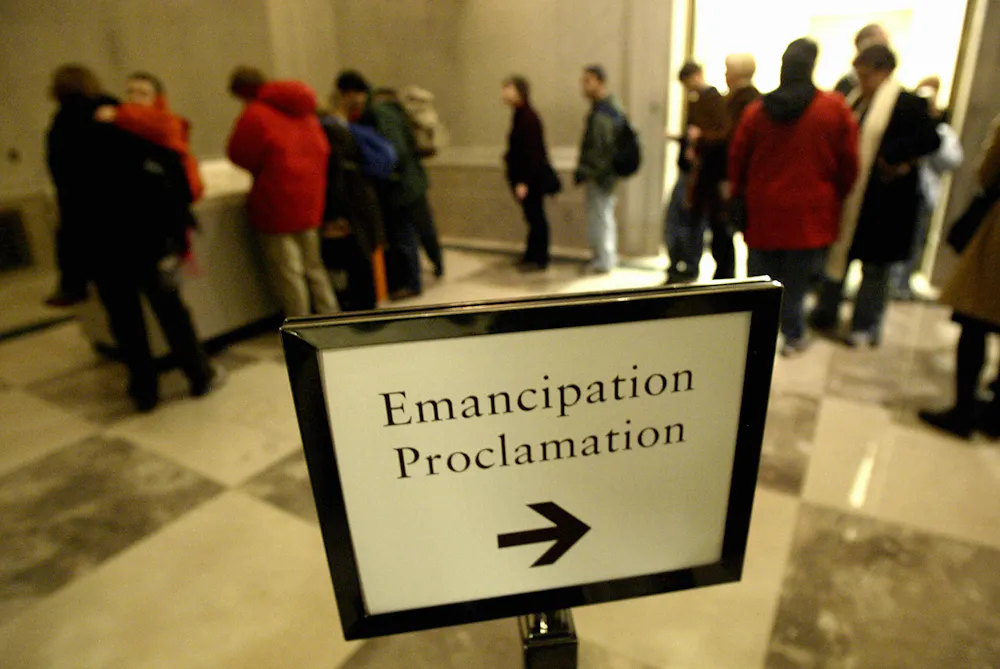
    People line up to view the original Emancipation Proclamation on Martin Luther King Jr. Day, Jan. 19, 2004, at the National Archives building in Washington, D.C.
    Tim Sloan/AFP-Getty Images

    Destroyed by fire

    The idea of preserving the government’s records dates back to the country’s founding. Charles Thomson, secretary of the Continental Congress during the American Revolution and then secretary of Congress under the Articles of Confederation, recognized the need for proper storage of the Congress’ records.

    But the young nation lacked the money and infrastructure to act. Many of the Continental Congress’ records were kept by Thomson himself for years, and while some were later transferred to the Department of State, others were lost.

    Throughout the 19th and early 20th centuries, fires repeatedly ravaged federal records. Fires were very common in the 19th century due to a combination of highly flammable building materials, open frames used for lighting and heating, and the lack of modern fire safety measures such as sprinklers and fire-resistant construction.

    In 1800, a blaze destroyed the War Department’s archives, a loss that severely hampered government operations. In 1810, Congress authorized better housing for government records, but the law was never fully executed. Instead, different parts of the government, from the Department of State to the Department of Treasury, continued maintaining their own records.

    The Treasury Department suffered fires in 1801 and again in 1833, further erasing crucial financial records. The Patent Office, home to invaluable documentation of American innovation, burned in 1877, having already been damaged by an 1836 fire.

    Storage at the federal Office of Indian Affairs in 1935.
    National Archives Foundation

    One of the most devastating losses occurred in 1921 when a fire at the Department of Commerce destroyed nearly all records from the 1890 federal census. This loss had far-reaching consequences, particularly for genealogical and demographic research.

    Fires weren’t the only threat to the government’s records.

    “It is a matter of common report that during the civil war, great quantities of documents stored in the Capitol were thrown away to make quarters for soldiers,” Historian and founding member of the American Historical Association J. Franklin Jameson noted in a 1911 Washington Post article.

    “At a later date,” he added, “the archives of the House of Representatives were systematically looted for papers having a market value because of their autographs.”

    Jameson spent decades lobbying Congress for a centralized repository. His persistence, coupled with the advocacy of key officials, laid the groundwork for future action.

    A bound copy of George Washington’s account of expenses while commander in chief of the Continental Army.
    National Archives and Records Administration

    These repeated disasters illuminated a glaring issue: The federal government lacked a centralized, protected repository to safeguard its records.

    Finding a home

    Momentum for a dedicated archives building gained traction in the late 19th century. In 1903, a bipartisan bill passed Congress giving the OK to purchase land in Washington, D.C., for a Hall of Records.

    But the legislation didn’t lead to any action. Government records remained scattered, vulnerable and neglected. That same year, Congress authorized that any records not needed for daily business be transferred to the Library of Congress.

    In 1912, President William H. Taft issued executive order 1499, aptly named Disposal of Useless Papers, requiring agencies to consult the librarian of Congress before disposing of documents.

    This established a formal review process for government document disposal, but agencies still discarded records, often haphazardly, until stricter records management laws were enacted.

    In 1926, Congress passed the Public Buildings Act, authorizing construction of an archives facility in Washington, D.C. Departing president Herbert Hoover laid the cornerstone of the new building on Feb. 20, 1933. He then deposited facsimiles of the Declaration of Independence and the Constitution, an American flag and daily newspapers from that day underneath the cornerstone.

    Growth and standardization

    President Franklin D. Roosevelt, who took office two weeks later, was himself a meticulous record-keeper. He understood the importance of historical preservation. Roosevelt kept all of his personal and presidential records and books in a fire-safe space he built on his Hyde Park, New York, property, which he donated to the government after he died. This building and the materials inside became part of the National Archives as the first U.S. presidential library.

    The National Archives, an independent agency, was officially established under Roosevelt in the 1934 National Archives Act. The head archivist was to be appointed by the president. The first archivist, Robert D.W. Connor, took office that year with a mandate to organize, preserve and make accessible the nation’s records.

    Initially, the National Archives was simply a building – an impressive neoclassical structure in Washington, D.C., that opened in 1935. The very first records deposited there came from three World War I-era regulatory agencies – the U.S. Food Administration, the Sugar Equalization Board and the U.S. Grain Corporation.

    Initially, the Archives lacked a formalized records management program. There were no clear guidelines on what to keep and what to discard, so agencies made their own decisions. This led to inconsistent preservation.

    The creation of the first federal records administration program in 1941, together with the 1943 Records Disposal Act, codified things. These policies granted the National Archives authority to establish a structured approach to determining which records held historical value and should be preserved, while allowing for the responsible disposal of other documents.

    A 1950 law gave the National Archives more power to decide what should be kept and what could be discarded, creating a more organized and accountable system for preserving the nation’s history.

    As the volume of records increased and their formats changed, the archives adapted. By 2014, amendments to the Federal Records Act explicitly included electronic records, recognizing the shift toward digital documentation.

    Stacks at the National Archives in Washington in 1950, where rare photographs and national records are ordered and stored.
    Three Lions/Getty Images

    Ensuring accountability

    Beyond mere storage, the National Archives plays a vital role in upholding democracy.

    It ensures transparency by preserving government accountability, preventing manipulation or loss of records that could distort historical truth. The National Archives also provides public access to documents that shape civic awareness and historical knowledge, from the Declaration of Independence to declassified government files.

    In an era of digital misinformation and contested narratives, the National Archives stands as a guardian of primary sources. Its existence reminds the nation that history is not a matter of convenience, but a cornerstone of informed governance.

    Elizabeth Call is a member of the Society of American Archivists.

    ref. Fires, wars and bureaucracy: The tumultuous journey to establish the US National Archives – https://theconversation.com/fires-wars-and-bureaucracy-the-tumultuous-journey-to-establish-the-us-national-archives-250857

    MIL OSI – Global Reports

  • MIL-OSI Global: Social media design is key to protecting kids online

    Source: The Conversation – USA – By Abdulmalik Alluhidan, Ph.D. student in Computer Science, Vanderbilt University

    How social media apps are designed has a lot to do with whether teens have good or bad experiences. Daniel de la Hoz/Moment via Getty Images

    Social media is a complex environment that presents both opportunities and threats for adolescents, with self-expression and emotional support on the one hand and body-shaming, cyberbullying and addictive behaviors on the other. This complexity underscores the challenge to regulating teen social media use, but it also points to another avenue for protecting young people online: how social media platforms are designed.

    The growing debate around teen social media use has intensified, with recent bipartisan policy efforts in the U.S., such as the Kids Online Safety Act, seeking to protect young people from digital harms. These efforts reflect legitimate concerns. However, broad restrictions on social media could also limit benefits for teens, throwing the baby out with the bath water.

    I am a researcher who studies online safety and digital well-being. My recent work with colleagues in computer scientist Pamela Wisniewski’s Socio-Technical Interaction Research Lab underscores a critical point: social media is neither inherently harmful nor entirely beneficial. It is a tool shaped by its design, how teens use it, and the context of their experiences.

    In other words, social media’s impact is shaped by its affordances – how platforms are designed and what they enable users to do or constrain them from doing. Some features foster connection while others amplify harms.

    As society moves toward practical solutions for online safety, it is important to use evidence-based research on how these features shape teens’ social media experiences and how they could be redesigned to be age appropriate for young people. It’s also important to incorporate teens’ perspectives to pinpoint what policies and design choices should be made to protect young people using social media.

    My colleagues and I analyzed over 2,000 posts from teens ages 15-17 on an online peer-support platform. Teens openly discussed their experiences with popular social media platforms such as Instagram, YouTube, Snapchat and TikTok. Their voices highlight a potential path forward: focusing on safety by design – an approach that improves platform features to amplify benefits and mitigate harms. This approach respects young people’s agency while prioritizing their digital well-being.

    What teens say about social media

    While social media’s worst outcomes such as cyberbullying or mental health crises are often in the spotlight, our research shows that teens’ experiences are far more nuanced. Instead, platforms enable diverse outcomes depending on their features and design.

    Teens commonly described negative experiences involving social drama, cyberbullying and privacy violations. For example, Instagram was a focal point for body-shaming and self-esteem issues, driven by its emphasis on curated visual content. Facebook triggered complaints about privacy violations, such as parents sharing private information without teens’ consent. Snapchat, meanwhile, exposed teens to risky interactions due to its ephemeral messaging, which fosters intimate but potentially unsafe connections.

    Research – and teens themselves – indicates that social media has negative and positive effects on young people.

    At the same time, teens expressed that social media provides a space for support, inspiration and self-expression, particularly when offline spaces feel isolating. Teens used social media to cope with stress or seek out uplifting content.

    Platforms such as Snapchat and WhatsApp were key spaces for seeking connection, enabling teens to build relationships and find emotional support. Snapchat, in particular, was the go-to platform for fostering close personal connections, while YouTube empowered teens to promote their creativity and identity by sharing videos.

    Many praised Instagram and Snapchat for providing inspiration, distraction or emotional relief during stressful times. Teens also used social media to seek information, turning to YouTube and Twitter to learn new things, verify information or troubleshoot technical problems.

    These findings underscore a critical insight: Platform design matters. Features such as algorithms, privacy controls and content-sharing mechanisms directly shape how teens experience social media. These findings further question the perception of social media as a purely negative force. Instead, teens’ experiences highlight its dual nature: a space for both risk and opportunity.

    Key to safer social media

    The concept of affordances – design and features – helps explain why teens’ experiences differ across platforms and provides a path toward safer design. For example, Instagram’s affordances such as image sharing and algorithmic content promotion amplify social comparison, leading to body-shaming and self-esteem issues. Snapchat’s affordances, such as ephemeral messaging and visibility of “best friends,” encourage personal connections but can foster risky interactions. Meanwhile, YouTube’s affordances, such as easy content creation and discovery, promote self-expression but can contribute to time-management struggles due to its endless scroll design.

    By understanding these platform-specific designs and features, it is possible to mitigate risks without losing the benefits. For example, Facebook could allow for appropriate levels of parental oversight of teen accounts while preserving privacy. Instagram could reduce algorithmic promotion of harmful content. And Snapchat could improve safety features.

    This safety by design approach moves beyond restricting access to focus on improving the platforms themselves. By thoughtfully redesigning social media features, tech companies can empower teens to use these tools safely and meaningfully. Policymakers can focus on holding social media companies responsible for their platforms’ impact, while simultaneously promoting the digital rights of teens to benefit from social media use.

    Call for safety by design

    It’s important for policymakers to recognize that social media’s risks and rewards coexist. Instead of viewing social media as a monolith, however, policymakers can target the features of social media platforms most likely to cause harm. For example, they could require platform companies to conduct safety audits or disclose algorithmic risks. These steps could encourage safer design without limiting access.

    By addressing platform affordances and adopting safety by design, it is possible to create digital spaces that protect teens from harm while preserving the connection, creativity and support that social media enables. The tools to build a future where teens can thrive are already available; they just need to be designed better.

    Pamela Wisniewski contributed to the writing of this article.

    The research reported in this article was supported by the U.S. National Science Foundation and the William T. Grant Foundation.

    ref. Social media design is key to protecting kids online – https://theconversation.com/social-media-design-is-key-to-protecting-kids-online-243547

    MIL OSI – Global Reports

  • MIL-OSI Global: Humans aren’t the only animals with complex culture − but researchers point to one feature that makes ours unique

    Source: The Conversation – USA – By Eli Elster, Doctoral Candidate in Evolutionary Anthropology, University of California, Davis

    A ritual dance honoring Yoruban ancestors is one of the countless examples of human culture. Jorge Fernández/LightRocket via Getty Images

    Of the 8.7 million species on Earth, why are human beings the only one that paints self-portraits, walks on the Moon and worships gods?

    For decades, many scholars have argued that the difference stems from our ability to learn from each other. Through techniques such as teaching and imitation, we can create and transmit complicated information over many generations.

    So if a human finds, for instance, a better but more complex way to make a knife, they can pass along the new instructions. One of those learners might stumble upon their own improvement and pass it along in turn.

    If this loop continues, you get a ratchet effect, in which small changes can accumulate over time to produce increasingly intricate behaviors and technologies. This process produces our uniquely complex cultures: Scientists call it cumulative cultural evolution.

    But extensive data has emerged suggesting that other animals, including bees, chimpanzees and crows, can also generate cultural complexity through social learning. Consequently, the debate over human uniqueness is shifting in a new direction.

    As an anthropologist, I study a different feature of human culture that researchers are beginning to think about: the diversity of our traditions. Whereas animal cultures affect just a few crucial behaviors, such as courtship and feeding, human cultures cover a massive and constantly expanding set of activities, from clothing to table manners to storytelling.

    This new view suggests that human culture is not uniquely cumulative. It is uniquely open-ended.

    What is cumulative culture?

    In the early 2000s, a research team led by psychologist Michael Tomasello tested 105 human children, 106 adult chimpanzees and 32 adult orangutans on a battery of cognitive assessments. Their goal was to see whether humans held any innate cognitive advantage over their primate cousins.

    Surprisingly, the human children performed better in only one capacity: social learning. Tomasello thus concluded that humans are not “generally smarter.” Rather, “we have a special kind of smarts.” Our advanced social abilities allow us to transmit information by accurately teaching and learning from each other.

    Psychologist Michael Tomasello and his team ran a number of experiments comparing how human children and nonhuman primates performed on cognitive tasks, including tests of social learning.
    Max Planck Institute for Evolutionary Anthropology

    Humans’ apparent social learning abilities suggested a clear explanation for our unique cultural traits. Knowledgeable humans – say, someone who discovers a better way to make a spear – can successfully transfer that skill to their peers. But an inventive chimp – one who discovers a better way to smash nuts, for example – can’t successfully share their innovation. Nobody listens to Chimp Einstein. So our inventions persist and build upon each other, while theirs vanish into the jungle floor.

    Or so the theory went.

    Now, though, scientists have hard evidence showing that, just like us, animals can learn from each other and thus maintain their cultures for long periods of time. Groups of swamp sparrows appear to use the same song syllables for centuries. Meerkat troops settle on different wake-up times and maintain them for a decade or more.

    Of course, long-term social learning is not the same as cumulative culture. Yet scientists also now know that humpback whale songs can oscillate in complexity over many generations of learners, that homing pigeons create efficient flight paths by learning from each other and making small improvements, and that hooved mammals cumulatively alter their migration routes to exploit plant growth.

    Once again, the animals have shot down our claim to uniqueness, as they have innumerable times throughout scientific history. You might wonder, at this point, if we should just settle the uniqueness question by answering: “We’re not.”

    If not cumulative culture, what makes us unique?

    But it remains the case that humans and their cultures are quite different from animals and their equivalents. Most scholars agree about that, even if they disagree about the reasons why. Since cumulative complexity appears not to be the most important difference, several researchers are sketching out a new perspective: Human culture is uniquely open-ended.

    Currently, anthropologists are discussing open-endedness in two related ways. To get a sense of the first, try counting the number of things you’re engaged with, right now, that came to you through culture. For example, I picked my clothes today based on fashion trends I did not develop; I am writing in a language I did not invent; I tied my shoes using a method my father taught me; there are paintings and postcards and photographs on my walls.

    Give me 10 minutes, and I could probably add 100 more items to that list. In fact, other than biological acts such as breathing, it is difficult for me to think of any aspect of what I’m doing right now that is not partially or completely cultural. This breadth is incredibly strange. Why should any organism spend time pursuing such a wide range of goals, particularly if most of them have nothing to do with survival?

    Other animals are much more judicious. Their cultural variation and complexity pertains almost entirely to matters of subsistence and reproduction, such as acquiring food and mating. Humans, on the other hand, lip-synch, build space stations and, less grandiosely, have been known to do things such as spend six years trying to park in all 211 spots of a grocery store lot. Our cultural diversity is unparalleled.

    Open-endedness, as a unique human quality, is not just about variety; it reflects the quantum leaps by which our cultures can evolve. To illustrate this peculiarity, consider a hypothetical example regarding the rocks that chimpanzees use to smash nuts.

    Chimps often use stones to break open hard-shelled nuts.
    Anup Shah/Stone via Getty Images

    Let’s say these chimps would benefit from using rocks that they can swing as hard and accurately as possible, but that they don’t immediately know what kind of rocks those would be. By trying different options and observing each other, they might accumulate knowledge of the best qualities in a nut-smashing rock. Eventually, though, they’d hit a limit in the power and precision available by swinging a rock with your fist.

    How could they get past this upper limit? Well, they could tie a stick to their favorite rock; the extra leverage would help them smash the nuts even harder. As far as we know, though, chimpanzees aren’t capable of realizing the benefits of harnessing this additional quality. But we are – people invented hammers.

    Crucially, discovering the power of leverage allows for more than just better nut-smashing. It opens up innovations in other domains. If adding handles to wielded objects allows for better nut-smashing, then why not better throwing, or cutting, or painting? The space of cultural possibilities, suddenly, has expanded.

    Through open-ended cultural evolution, human beings produce open-endedness in culture. In this respect, our species is unparalleled.

    What’s next?

    Researchers have not yet answered most of the major questions about open-endedness: how to quantify it, how we create it, whether it has any true limitations.

    But this new framework must shift the tides of a related debate: whether there is something obviously different about the way human minds work, other than social learning capacities. After all, every cultural trait emerges through interactions between minds – so how do our minds interact to produce such a degree of cultural breadth?

    No one knows yet. Interestingly, this shifting debate over how cognition influences culture coincides with a spate of research bridging psychology and anthropology, which explores why certain behaviors – such as singing lullabies, curative bloodletting and storytelling – recur across human cultures.

    Human minds produce unparalleled diversity in their cultures; yet it is also true that those cultures tend to express variations on a strict set of themes, such as music and marriage and religion. Ironically, the source of our open-endedness may illuminate not only what makes us so diverse, but also what makes us so often the same.

    Eli Elster does not work for, consult, own shares in or receive funding from any company or organization that would benefit from this article, and has disclosed no relevant affiliations beyond their academic appointment.

    ref. Humans aren’t the only animals with complex culture − but researchers point to one feature that makes ours unique – https://theconversation.com/humans-arent-the-only-animals-with-complex-culture-but-researchers-point-to-one-feature-that-makes-ours-unique-245526

    MIL OSI – Global Reports

  • MIL-OSI Russia: School of International Cooperation Opens at HSE

    Translartion. Region: Russians Fedetion –

    Source: State University Higher School of Economics – State University Higher School of Economics –

    © Higher School of Economics

    School of International Cooperation created in the structure Faculty of World Economy and World Politics (FMEiMP) Vyshki. The school launches, promotes and implements programs of additional education and professional retraining, corporate education programs and international intensive trainings for working specialists and managers interacting with foreign government officials and businessmen, as well as foreign entrepreneurs, students and scientists.

    Dean of the Faculty of World Economy and International Relations Anastasia Likhacheva, opening the presentation, emphasized that the main task of the school is to implement projects in the interests of the country, to promote Russian interests in the international arena. “There is no single formula for what key opens the hearts of partners. We are glad that our faculty is creating a platform that will unite enthusiasts of international cooperation,” said Anastasia Likhacheva.

    Senior Director of the National Research University Higher School of Economics Andrey Lavrov noted that last year, during the elections of the Academic Council, a formula was developed that reflects the essence of the current HSE: a university for the development of all of Russia, open to the world. He called international cooperation a priority for HSE and the Faculty of World Economy and International Relations. Andrey Lavrov is confident that the opening of the School of International Cooperation will help to realize the most ambitious goals of developing additional professional education at the National Research University Higher School of Economics. “The development of adult education is an area where we can achieve great success. I am very glad that you have become pioneers in the new wave of development of additional professional education at HSE, congratulations,” Andrey Lavrov said, addressing the heads of the faculty.

    “It’s nice to be pioneers,” Anastasia Likhacheva responded. She recalled that HSE began its turn to the East many years ago (700 students currently study Chinese at HSE) and expressed hope that the school will contribute to the development of Russian-Chinese cooperation.

    Minister-Counselor of the Chinese Embassy in Russia Zhao Wei read out a greeting from the Ambassador Extraordinary and Plenipotentiary of China Zhang Hanhui, in which he congratulated HSE on the opening of the School of International Cooperation. HSE was described as a leader in the field of innovation development and a university that makes an invaluable contribution to the formation of the international agenda. In her congratulatory letter, the Ambassador emphasized the role of the Academic Director of the Faculty of World Economy and International Relations Sergey Karaganov in strengthening HSE ties with leading universities in China and developing bilateral cooperation.

    Zhang Hanhui noted in his congratulatory letter: China and Russia have common positions in solving international problems and forming a fair world order. “I am convinced that the school will become the foundation for training new types of specialists with cross-cultural competence and skills in solving international problems. I hope that the establishment of the school will contribute to deepening Chinese-Russian cooperation in personnel training and strengthening cooperation with the countries of the Global South,” he emphasized.

    According to FMEiMP research professor Fyodor Lukyanov, the university and faculty do not move at the mercy of the winds, but strive to create and strengthen these winds themselves. Now, he added, the world is in an amazing state, when what was impossible yesterday is obvious today, and tomorrow will be completely different from what we imagine. The professor noted: international cooperation is necessary in any situation in the world, it should be strengthened and supported. Now it is important to create new connections, while maintaining the old ones. “Support for the implementation of international cooperation projects, learning it throughout life – this is what we need to exist in, this is such an environment,” said Fyodor Lukyanov.

    Now, he believes, the quality of expertise is extremely important, since no high-level manager operates in a vacuum, but operates in an environment with a large volume of events and trends, where when making decisions, not only knowledge is important, but also intuition, which develops, among other things, thanks to knowledge.

    The head of the School of International Cooperation, Deputy Dean of the Faculty of World Economy and International Relations for Continuing Education Yulia Belous noted: the school offers a wide range of continuing education programs, winter and summer schools for different categories of students.

    The training programs are divided into four levels. The first one is “Starting a Career — Key to a Career” — for students and young professionals with 1 to 3 years of work experience. Next comes the “New Facets” stage — training in new skills for professionals with 3 to 5 years of experience, then “Time to Act” — for foreign professionals and those who need to enter a foreign market. And finally, the fourth level is strategic sessions for managers with leading experts in international relations, global economics, orientalists and regional experts who create a vision of the principles of work in eastern markets, the foundation for effective operations and competition with existing players. They are aimed at obtaining practice-oriented knowledge for work in different countries and regions.

    Head of the professional retraining program of the Faculty of World Economy and International Relations “Eastern Perspective: Strategy and Tactics for Building a Business» Natalia Guseva noted that the program is aimed at developing an effective strategy for working in the East, understanding the specifics of business and entrepreneurship in these countries, as well as the practice of doing business in India, China, Japan and South Korea. This is a three-week program that involves developing one’s own projects.

    A 10-day intensive programme has also already been formed. program for foreign entrepreneurs who want to work in Russia. They will learn about the peculiarities of the Russian financial and tax system, the specifics of business cooperation with Russia, and will gain an understanding of the cultural characteristics and values of Russia and its peoples. This is a program in which leading speakers and experts will speak.

    Deputy Executive Director – Director of Strategic Partnerships at Innopraktika Anastasia Pavlenko spoke about the program for transferring competencies in the field of digitalization of public administration to African countries – an important international initiative that is being implemented Center for African Studies HSE University with the support of Innopraktika. She emphasized that Russia is currently one of the world leaders in the field of digitalization of the public sector, and the experience of overcoming sanctions pressure and repelling a large number of cyberattacks seems valuable for friendly countries, with which Russia is ready to exchange knowledge in this area.

    Also in her speech, Anastasia Pavlenko mentioned the direction of Innopraktika’s activities to support the entry of private high-tech companies – “national champions” – into the foreign market and the promotion of their solutions in friendly countries. In conclusion, she drew attention to the high potential of international cooperation in the development of education, science and culture.

    Deputy Director of the HSE Center for African Studies Polina Slyusarchuk added: the center held a series of workshops with experts and scientists from different African countries. One of the programs is dedicated to food security of countries and regions, within its framework, participants are invited not only to study the problem, but also to propose ways to solve it. The center also created a program of additional professional education on running a practical business on the continent.

    Director General of the Russian International Affairs Council Ivan Timofeev noted: the concept of international cooperation is very broad and includes economic, scientific, military-technical and cultural interaction, each of which has its own characteristics. It is important to understand how different aspects of interaction, from chess to sensitive technologies, can be used as a country’s soft power, how to integrate their various elements into foreign policy.

    “Your project is not an adventure, it is an initiative based on the ecosystem and human capital of HSE. Your programs will be in great demand,” Ivan Timofeev is confident.

    Head of the Center for Educational Solutions and Work with Universities of the TMH Corporate University (TMH Group) Alexander Belyashin congratulated the faculty on the opening of the school. He said that in the modern world, educational partnership is an integral part of international cooperation and the opening of such an institute as the HSE School of International Cooperation is an excellent and timely decision. In turn, TMH JSC has been preparing and developing the company’s engineering potential for several years and this year, together with the Tashkent State Transport University, it created a scientific and educational center in Uzbekistan, on the basis of which it is planned to train design engineers and process engineers in joint master’s programs and additional professional education programs. He noted the high potential of the School of International Cooperation, where not only general problems will be studied, but also specific cases of bilateral and multilateral interaction.

    Vice President of the Vyzov Foundation Elena Eremenko spoke about the Vyzov Foundation Prize, the international track “SCIENCE. DIALOGUE. TRUST”, within the framework of which an international assembly, seminars and scientific breakfasts on “scientific diplomacy” are held. Elena Eremenko also emphasized the desire to continue intellectual cooperation with the FMEIP on the “scientific diplomacy” track and in the line of interaction with students.

    Roscongress Foundation Supervisory Board Member Dimitrios Velanis recalled that even during the most difficult periods of international relations, for example in the early 1980s, during the period of sanctions imposed on the USSR after the introduction of troops into Afghanistan, businesses, including those from Western countries, found opportunities to work in the Soviet Union.

    Head of Corporate Programs for Universities at SberUniversity Natalia Konshina spoke about the case of training advanced engineering schools of Russian universities. Together with the head of the School of International Cooperation, they presented possible areas of cooperation on the international track – risks and barriers in international scientific and technical cooperation.

    Anna Bessmertnaya, Chairperson of the Commission on Foreign Economic Cooperation with Partners from China of the Moscow Chamber of Commerce and Industry, spoke about trends in training personnel for Russian-Chinese cooperation and the “Start Your Business with Moscow” project for young specialists.

    The presentation of the School of International Cooperation was also attended by the head of the program “International cooperation in the context of global reassembly» HSE University, Deputy Head of the Department of International Relations of the Faculty of World Economy and World Politics of HSE University Dmitry Novikov. He spoke about the relevance and features of the program, its advantages.

    Please note: This information is raw content directly from the source of the information. It is exactly what the source states and does not reflect the position of MIL-OSI or its clients.

    MIL OSI Russia News

  • MIL-OSI United Kingdom: Schoolchildren’s delight as Centenary mascot unveiled

    Source: City of Stoke-on-Trent

    Published: Wednesday, 19th March 2025

    Stoke-on-Trent’s Centenary mascot has been unveiled at St Gregory’s Catholic Academy.

    The schoolchildren got the first glimpse of the official Stoke-on-Trent 100 mascot after winning a competition run by the city council. 

    Today (Wednesday 19 March), Kelvin the Kiln, surprised children at the Longton school, accompanied by The Lord Mayor of Stoke-on-Trent, Councillor Lyn Sharpe.  

    The two winners of the competition were Zunairah Hussain, who chose the name Kelvin the Kiln, and Fizza Fatima, who designed the front of Kelvin’s potter’s apron. Both children are in year six. 

    Lord Mayor of Stoke-on-Trent City Council, Councillor Lyn Sharpe, said: “It was an honour to meet Kelvin the Kiln for the first time and travel to the school together.  

    “The brilliant reaction from pupils said it all. Kelvin is going to bring a smile to a lot of faces this year.  

    “I’m sure we’ll spend a bit of time in each other’s company at more events over the coming months as we continue to celebrate our city’s Centenary.” 

    The mascot was produced by character and costume specialist, Rainbow Productions, who brought Kelvin to life. The company’s managing director, Simon Foulkes, was born in Stoke-on-Trent and still has connections to the city. 

    He said: “My grandfather was born in Dundee Street in Longton and, as was normal in the early part of the last century, the whole family was employed by the pottery industry; his father being a china warehouseman and his mother and sister being china paintresses.  

    “My father, who was born in Stone, joined the RAF and was stationed all over the world but home for us was always Stoke. Sitting on my father’s shoulders in the Paddock in the Boothen End of the Victoria ground is one of the earliest memories I have.  

    “I live in Surrey now and, unapologetically, have brought my kids up to support Stoke and how they thank me for it! We have never lost our association with Stoke and it is a tremendous privilege now for my company to supply Kelvin the Kiln, the centenary mascot, and to wish the glorious City of Stoke-on-Trent a wonderful 100th birthday.” 

    Victoria Brickley, headteacher of St Gregory’s Catholic Academy, said: “We are incredibly proud of our students for their wonderful achievement in the mascot competition, which highlights their creativity and understanding of our local area. The artwork celebrates the unique history of Stoke-on-Trent. It is a privilege to play a small part in this significant event.” 

    Elizabeth Harper, History and Art Leader at the school, said: “The centenary of Stoke-on-Trent offers a valuable opportunity to delve into our local history and understand how past events have shaped the community we live in today. 

    “This exploration fosters a sense of pride in our children for their local area and aims to inspire them in their personal journeys. By collaborating with local organisations, including museums, businesses, and community groups, we can create meaningful opportunities that enrich the lives of our young learners.” 

    MIL OSI United Kingdom

  • MIL-OSI United Kingdom: Lancaster City Museums update admissions policy to support their future A revised admissions policy at Lancaster City Museums will help to protect the district’s rich history and vibrant cultural heritage while raising vital funds to support their future.

    Source: City of Lancaster

    A revised admissions policy at Lancaster City Museums will help to protect the district’s rich history and vibrant cultural heritage while raising vital funds to support their future.

    Lancaster City Museum

    From April 1 adult visitors who live outside of the LA1-LA6 postcodes will be charged a small entry fee. Entry to the Lancaster City and Maritime Museums will be £5 each, while a visit to the Cottage Museum will cost just £2.

    There are also new ticketing options to offer flexibility and great value:

    • Two-adult joint ticket: £8 for entry to either the Lancaster City or Maritime Museums
    • Weekly pass: £8 per person for access to all Lancaster City Council-run museum sites for a week
    • Annual pass: £10 per person for unlimited entry to all three museums for a year

    People living in the LA1 to LA6 postcode areas will continue to enjoy free entry to the City and Maritime museums to ensure local history enthusiasts are able to explore the district’s fascinating past at no cost.

    Carers accompanying a disabled visitor will also receive free entry. As is the case currently, local adult visitors will be asked to pay an entry fee to the Cottage Museum, with a visit costing £2.

    Councillor Caroline Jackson, leader of Lancaster City Council, emphasised the importance of these changes: “The Maritime Museum has charged an entry fee for people visiting from outside the local area for many years and these changes bring the City Museum in line with this existing charging policy.

    “Initially the additional funds we raise will be used to refurbish the staircase at the City Museum, and it seems reasonable to ask visitors to contribute, just as local people do through their council tax.

    “Longer term, the changes will ensure the sustainability of these treasured institutions and support the maintenance and development of our museums for future generations to enjoy.”

    For information about what’s on and details of future exhibitions visit Lancaster.gov.uk/museums.

    Last updated: 19 March 2025

    MIL OSI United Kingdom

  • MIL-OSI United Kingdom: Derby Arena celebrates its 10th anniversary!

    Source: City of Derby

    Derby Arena is celebrating its 10th anniversary. The landmark building opened in 2015, with the aim of inspiring the next generation and put sport, health and physical activity at the heart of the city.

    Since opening, the Arena has offered citizens the opportunity to be more physically active and improve their health and wellbeing. It’s not just a fitness facility – it’s a national cycling hub, a stage for top performers and a venue for major sporting events, as well as conferences and tradeshows.

    In the past decade, Derby Arena has had over a 4 million visits and, in the last five years, has held over 300 events. These have included shows by top comedians Jimmy Carr, Sarah Millican, national hockey and international handball finals, and University of Derby graduations.

    It was also an important part of the city’s response to the Covid-19 pandemic, becoming a huge vaccination centre which saw more than 100,000 people vaccinated.

    The Arena was constructed on behalf of Derby City Council by Bowmer + Kirkland – the same company that completed the new Becketwell Live performance venue.

    Councillor Ndukwe Onuoha, Derby City Council Cabinet Member for Streetpride, Public Safety and Leisure said:

    For a decade, Derby Arena has thrived, becoming a leading hub for fitness, wellbeing, sport, and entertainment. Looking ahead, this ambitious facility will no doubt continue to enhance Derby’s appeal as a great place to live, work, and visit.

    As a centre for fitness and wellbeing, the Arena is continuing to inspire people to change their lives through physical activity.  

    Fitness member Dave Martin said: 

    I can now lift, press, push, and pull weights that I couldn’t have imagined handling before. Initially, even lifting the bar was a struggle. All of this progress is thanks to the dedicated personal training team. The PTs both challenge and support you at your desired level. At 56 years old, I’ve learned that with the right team and motivation, anything is possible.

    The Arena is one of only five cycling velodromes in the country and boasts four world champions coaches.

    Derby’s track cyclists have shone in national and world competitions, achieving huge medal success in both the 2024 National Masters Track Championship and the 2024 UCI Masters Track World Championships.

    Track cycling at Derby Arena

    Cyclist John Baugh is a regular at the velodome. He said:

    Since our first visit to the Arena three years ago, my son and I have shared many happy hours riding the velodrome. This venue is unique, in our experience. Where else could a father and son share an interest and passion for cycling, ride with multiple world champions, under the guidance and supervision of the finest coaches in the UK?

    The atmosphere on Track League evenings is superb – there’s a sense of camaraderie that is a joy to be a part of. I can’t thank the team at Derby Arena enough for their kindness and encouragement.

    The facility has attracted top-flight cyclists with the Great Britain Cycling Team track squads relocating to Derby Arena in 2022 while their usual home, the National Cycling Centre in Manchester, was renovated. Team GB’s track cyclists won one gold, three silver and four bronze medals at the Paris Olympics

    The Arena hosted the British University and College Sport (BUCS) cycling championships for the first time. Joe O’Loughlin, event organiser for the BUCS Track Championships, said:

    The first BUCS Track Championships in Derby was a huge success and we received amazing feedback, with members experiences overwhelmingly positive. We look forward to making next year even bigger and better and continuing to provide a platform where student riders can display their immense talent.

    The Arena is an important sporting centre for Derbyshire’s young people, as home to Derbyshire Institute of Sport. DIS provides bespoke support services to individual athletes, sports teams and club members to enable them to achieve success. 

    Managing director Chloe Maudsley said:

    We are proud to be hosted at the iconic Derby Arena, where we can deliver exceptional sports science, accessible to all the young athletes of Derbyshire. Together, we are showcasing that Derby can compete with the best in the world.

    The cast of Cinderella outside the Arena

    Beyond sport, Derby Arena has become a key entertainment venue, and has hosted Derby LIVE and Little Wolf Entertainment’s much-loved pantomimes since it opened. Last year’s Cinderella was Derby’s highest grossing panto ever, enjoyed by almost 40,000 people with sparkling reviews from audiences. The award-winning team will be back this year with Dick Whittington.

    Further exciting shows coming up this year include comedy from Jimmy Carr and Al Murray, the mind-blowing family show Jurassic Earth and music from world-renowned acts celebrating the sounds of Taylor Swift, Tina Turner and Elvis, to name a few.

    The Arena team will be celebrating the landmark 10th anniversary throughout the year with a host of events and activities, including Les Mills fitness launches, our popular family Fun-Fest, Cycle-Fest and other local, regional and national events. 

    Look out for the upcoming National Track Series Cycle Championships, the England Boxing National Amateur Championship Finals in April and, in September, the UK’s first full DEKA FIT competition –  billed as ‘the ultimate fitness test’.

    For more information visit the Derby Arena website and follow us on Facebook.

    MIL OSI United Kingdom

  • MIL-OSI USA: EIA forecasts Alaska crude oil production will grow in 2026 for the first time since 2017

    Source: US Energy Information Administration

    In-brief analysis

    March 19, 2025


    In our March 2025 Short-Term Energy Outlook, we forecast crude oil production in Alaska will increase by 16,000 barrels per day (b/d) in 2026 to 438,000 b/d after remaining relatively flat in 2025. Two new oil developments in Alaska—the Nuna and Pikka projects—are expected to boost crude oil production in the state after decades of decline. If realized, this annual production increase will be the first since 2017 and the largest since 2002.

    Average annual crude oil production in Alaska peaked at 2.0 million b/d in 1988, and production has since fallen largely because of the production decline of mature oil fields, limited lease availability, and high exploration and production costs.

    ConocoPhillips produced first oil from the Nuna project in December 2024. We forecast annual crude oil production in Alaska to average 422,000 b/d in 2025, an annual increase of 1,000 b/d, compared with the previous five-year (2020–24) average annual decline of 9,000 b/d. The decline in existing well production is offset by the added production from the Nuna project on the North Slope. ConocoPhillips expects the Nuna project’s 29 wells will produce a combined 20,000 b/d of oil at its peak.

    Additional production from the Phase 1 of the Pikka development project on the North Slope drives the forecast increased production in 2026. The Pikka project, which is jointly owned by Santos and Repsol, is one of the most significant oil developments in Alaska in recent years. At the project’s peak, the companies plan to produce 80,000 b/d from 45 wells.


    The projects would be among the most productive wells in Alaska if they come online as the companies are currently planning. Our annual U.S. Oil and Natural Gas Wells by Production Rate report details state-level distributions of active production. The production profile for Alaska in 2023 records 2,340 active wells, 65% of which produce more than 100 barrels of oil equivalent per day (BOE/d).

    The production estimates from the Nuna and Pikka wells reported by the companies fall on the high side of the 2023 Alaskan active well distribution. As of 2023, the highest concentration of active Alaskan wells was between 100 BOE/d and 200 BOE/d. The reported production rates show these upcoming projects to be at the production brackets of 400 BOE/d–799 BOE/d and 1,600 BOE/d–3,199 BOE/d, respectively.


    Although both onshore and offshore drilling occur in Alaska, most of the activity is on land, particularly in the North Slope, which is where the Nuna and Pikka projects are being developed.

    As of December 2024, 22% of the wells for the Nuna and Pikka projects have been drilled, according to company reports and the Alaska Oil and Gas Conservation Commission. The companies plan to drill an additional 58 wells by 2028, which would support relatively high rig activity.

    The increased crude oil production will go to supply refineries in Alaska, the Pacific Northwest, and California.

    Principal contributors: Merek Roman, Trinity Manning-Pickett

    MIL OSI USA News

  • MIL-OSI: Regula Blog Wins 2025 Cybersecurity Excellence Awards

    Source: GlobeNewswire (MIL-OSI)

    RESTON, Va., March 19, 2025 (GLOBE NEWSWIRE) — Regula, a global developer of forensic devices and identity verification solutions, is proud to announce that its blog has been accoladed as the Best Cybersecurity Blog in the 2025 Cybersecurity Excellence Awards. Providing diverse expert content such as how-to guides, original analytics, and detailed visuals, the Regula Blog serves as a valuable resource for the general public and niche professionals.

    The Regula Blog has been named the Best Cybersecurity Blog by the 2025 Cybersecurity Excellence Awards

    For more than a decade, the Cybersecurity Excellence Awards have honored individuals, teams, and companies that demonstrate exceptional performance and innovation in cybersecurity.

    The Regula Blog received the award for its expert insights, authoritative opinions, real-world fraud case analyses, practical guides, and forward-looking discussions on evolving security challenges.

    With over 18,000 unique readers per month, the Regula Blog is a fast-growing knowledge hub for professionals in cybersecurity, forensic science, and identity verification. The blog provides in-depth content on deepfake detection, facial recognition, document authentication, forensic examination, and more, to ensure that businesses and professionals get the timely and relevant knowledge they need.

    “In today’s rapidly evolving digital landscape, trust and security are more critical than ever. Our blog is more than just industry news—it’s a true knowledge hub designed to educate and empower professionals tackling identity fraud, document forgery, and cybersecurity risks. Winning this award is an honor and a testament to our team’s effort in providing actionable content that helps businesses navigate today’s complex security challenges,” says Ihar Kliashchou, Chief Technology Officer at Regula.

    These are the current top 10 most-read Regula Blog articles:

    For more insights and expert analysis, visit the award-winning Regula Blog.

    About Regula

    Regula is a global developer of forensic devices and identity verification solutions. With our 30+ years of experience in forensic research and the most comprehensive library of document templates in the world, we create breakthrough technologies for document and biometric verification. Our hardware and software solutions allow over 1,000 organizations and 80 border control authorities globally to provide top-notch client service without compromising safety, security, or speed. Regula has been repeatedly named a Representative Vendor in the Gartner® Market Guide for Identity Verification.

    Learn more at www.regulaforensics.com.

    Contact:
    Kristina – ks@regulaforensics.com

    A photo accompanying this announcement is available at https://www.globenewswire.com/NewsRoom/AttachmentNg/b43b713b-6760-4e89-8a88-6a6561fad951

    The MIL Network

  • MIL-OSI: University of Pennsylvania Student Receives SBB Research Group Foundation STEM Scholarship

    Source: GlobeNewswire (MIL-OSI)

    CHICAGO, March 19, 2025 (GLOBE NEWSWIRE) — The SBB Research Group Foundation named Eric Sun, a recipient of its STEM scholarship. The $2,500 award empowers students to create value for society by pursuing higher learning through interdisciplinary combinations of Science, Technology, Engineering, and Mathematics (STEM).

    Eric Sun, a sophomore, is pursuing a dual BA/MS in Physics and a BSE in Computer Science at the University of Pennsylvania. Eric also conducted significant research at Yale, eventually publishing and presenting his work at MIT. He is the director of a coding nonprofit that serves over 2,000 students in rural areas and partners with organizations to teach skills like machine learning and programming.

    “Eric is dedicated not only to his studies but to the academic access of so many others. It’s exciting to support a student who will impact others in this way,” said Matt Aven, co-founder and board member of the SBB Research Group Foundation.

    For eligibility criteria and more information on the Foundation’s STEM scholarship, please visit http://www.sbbscholarship.org.

    About the SBB Research Group Foundation

    The SBB Research Group Foundation is a 501(c)(3) nonprofit that furthers the philanthropic mission of SBB Research Group LLC (SBBRG), a Chicago-based investment management firm led by Sam Barnett, Ph.D., and Matt Aven. The Foundation sponsors the SBB Research Group Foundation STEM Scholarship, supporting students pursuing Science, Technology, Engineering, and Mathematics (STEM) degrees. In addition to its scholarship program, the Foundation provides grants to support ambitious organizations solving unmet needs with thoughtful, long-term strategies.

    Contact: Erin Noonan
    Organization: SBB Research Group Foundation
    Email: scholarship@sbbrg.org
    Address: 450 Skokie Blvd, Building 600, Northbrook, IL 60062 United States
    Phone: 1-847-656-1111
    Website: https://www.sbbscholarship.com/

    A photo accompanying this announcement is available at https://www.globenewswire.com/NewsRoom/AttachmentNg/bf0fe208-3a88-41a5-be55-b6aa44163981

    The MIL Network

  • MIL-OSI: XBP Europe Holdings, Inc. Reports Fourth Quarter and Full Year 2024 Results

    Source: GlobeNewswire (MIL-OSI)

    Full Year 2024 Highlights

    • Revenue of $142.8 million, decrease of 8.0% year-over-year
    • Gross margin of 26.8%, a 110 bps increase year-over-year
    • Operating profit of $3.5 million, an increase of $2.4 million year-over-year
    • Approximately $25M of ACV in active ramp, resulting in an incremental step-up in margin contribution in the second half of 2024
    • Signed an exclusive, non-binding LOI to acquire Exela Technologies BPA, LLC, a potentially transformational deal that could expand XBP Europe’s revenue to ~$1 billion annually

    Fourth Quarter 2024 Highlights

    • Revenue of $35.6 million, decrease of 7.5% year-over-year and increase of 0.7% sequentially
    • Gross margin of 28.3%, a 480 bps increase year-over-year and 440 bps decrease sequentially
    • Operating profit of $1.0 million, an increase of $3.4 million year-over-year and a decrease of $1.5 million sequentially
    • Net loss of $2.7 million includes $0.5 million of FX losses, an improvement of $2.4 million year-over-year and $0.1 million sequentially

    LONDON and SANTA MONICA, Calif., March 19, 2025 (GLOBE NEWSWIRE) — XBP Europe Holdings, Inc. (“XBP Europe” or “the Company”) (NASDAQ: XBP), a pan-European integrator of bills, payments, and related solutions and services seeking to enable the digital transformation of its clients, announced today its financial results for the quarter and full year ended December 31, 2024.

    “We ended 2024 with growing momentum, as we continued to ramp our recently awarded contracts, leading to improving profitability and operating metrics. We are excited about our organic growth trajectory in 2025 and we continue to work towards a potential acquisition of Exela Technologies BPA, LLC in 2025 so that we can benefit from global scale,” said Andrej Jonovic, Chief Executive Officer of XBP Europe.

    Full Year Highlights

    • Revenue: Total Revenue for 2024 was $142.8 million, a decline of 8.0% year-over-year, primarily due to completion of projects, lower volumes, and client contract ends, offset by positive impact of newly won business.
      • Bills & Payments segment revenue was $101.9 million, a decline of 7.8% year-over-year, primarily attributable to completion of one-time projects, lower volumes, and client contract end, offset by the positive impact of newly won business.
      • Technology segment revenue was $40.9 million, a decrease of 8.5% year-over-year, largely due to a lower volume of licenses sold, offset by a drop in technology implementation and professional services revenue.
    • Operating Profit: Operating Profit was $3.5 million, an increase of $2.4 million compared to 2023. This improvement was driven primarily by higher gross margins coupled with SG&A cost optimizations. Our operating expenses include costs associated with accelerated migration to the cloud.
    • Net Loss: Net loss from continuing operations was $6.5 million, compared with a net loss from continuing operations of $5.6 million in 2023. The year-over-year increase was primarily driven by higher income tax expense and interest expense, offset by higher operating profit and lower related party interest expense.
    • Adjusted EBITDA(1): Adjusted EBITDA from Continuing Operations was $13.4 million, a decrease of $2.4 million or 15.1% compared to 2023. Adjusted EBITDA margin was 9.4%, a decrease of 80 basis points from 10.2% in 2023.
    • Capital Expenditures: Capital expenditures were 1.2% of revenue compared to 1.7% of revenue in 2023, with the decrease primarily due to lower purchases of PP&E.
    • Adequate Liquidity: The Company’s cash and cash equivalents totaled $12.1 million as of December 31, 2024.

    Other Highlights:

    • Pending Acquisition: As announced on March 4, 2025, XBP Europe has entered into an exclusive, non-binding letter of intent with Exela Technologies, Inc. to acquire Exela Technologies BPA, LLC (“BPA”), a leading provider of business process automation solutions. The closing of the acquisition will be subject to BPA completing a corporate reorganization which is expected to create a sustainable capital structure with a substantially deleveraged balance sheet. If completed, the acquisition will expand XBP Europe’s revenue to more than $1 billion from $145 million on a pro forma basis for the twelve months ending September 30, 2024. The parties have agreed to act in good faith to negotiate definitive agreements, complete due diligence, undertake necessary regulatory approvals, and seek any necessary approvals, including from XBP Europe’s shareholders. Accordingly, there can be no assurance that a definitive agreement will be entered into or that the proposed transaction will be consummated. Readers are cautioned that those portions of the LOI that describe the proposed transaction are non-binding. XBP Europe only intends to announce additional details regarding the proposed transaction if and when a definitive agreement is executed.

    Segment Revenue and Profitability:

      Three months ended December 31, 2024
      Bills & Payments   Technology   Total
    Revenue, net $ 25,851   $ 9,794   $ 35,645
    Cost of revenue 20,460   5,108   25,568
    Segment Gross Profit 5,391   4,686   10,077
               
      Three months ended December 31, 2023
      Bills & Payments   Technology   Total
    Revenue, net $ 27,368   $ 11,165   $ 38,533
    Cost of revenue 24,203   5,270   29,472
    Segment Gross Profit 3,165   5,895   9,061
      Twelve months ended December 31, 2024
      Bills & Payments   Technology   Total
    Revenue, net $ 101,850   $ 40,922   $ 142,772
    Cost of revenue 85,454   19,059   104,513
    Segment Gross Profit 16,396   21,863   38,259
               
      Twelve months ended December 31, 2023
      Bills & Payments   Technology   Total
    Revenue, net $ 110,458   $ 44,719   $ 155,177
    Cost of revenue 95,572   19,738   115,310
    Segment Gross Profit 14,886   24,981   39,867
               

    Below is the note referenced above:

    (1)   Adjusted EBITDA is a non-GAAP measure. A reconciliation of Adjusted EBITDA is attached to this release.

    Supplemental Investor Presentation
    An investor presentation relating to our fourth quarter and full year 2024 performance is available at investors.xbpeurope.com. This information has also been furnished to the SEC in a current report on Form 8-K.

    About Non-GAAP Financial Measures
    This press release includes constant currency, EBITDA and Adjusted EBITDA, each of which is a financial measure that is not prepared in accordance with U.S. generally accepted accounting principles (“GAAP”). XBP Europe believes that the presentation of these non-GAAP financial measures will provide useful information to investors in assessing our financial performance, results of operations and liquidity and allows investors to better understand the trends in our business and to better understand and compare our results. XBP Europe’s board of directors and management use constant currency, EBITDA and Adjusted EBITDA to assess XBP Europe’s financial performance, because it allows them to compare XBP Europe’s operating performance on a consistent basis across periods by removing the effects of XBP Europe’s capital structure (such as varying levels of debt and interest expense, as well as transaction costs resulting from the combination with CF Acquisition Corp. VIII. on November 29, 2023). Adjusted EBITDA also seeks to remove the effects of restructuring and related expenses and other similar non-routine items, some of which are outside the control of our management team. Restructuring expenses are primarily related to the implementation of strategic actions and initiatives related to right sizing of the business. All of these costs are variable and dependent upon the nature of the actions being implemented and can vary significantly driven by business needs. Accordingly, due to that significant variability, we exclude these charges since we do not believe they truly reflect our past, current or future operating performance. The constant currency presentation excludes the impact of fluctuations in foreign currency exchange rates. We calculate constant currency revenue on a constant currency basis by converting our current-period local currency revenue using the exchange rates from the corresponding prior-period and compare these adjusted amounts to our corresponding prior period reported results. XBP Europe does not consider these non-GAAP measures in isolation or as an alternative to liquidity or financial measures determined in accordance with GAAP. A limitation of these non-GAAP financial measures is that they exclude significant expenses and income that are required by GAAP to be recorded in XBP Europe’s financial statements. In addition, they are subject to inherent limitations as they reflect the exercise of judgments by management about which expenses and income are excluded or included in determining these non-GAAP financial measures and therefore the basis of presentation for these measures may not be comparable to similarly-titled measures used by other companies. These non-GAAP financial measures are not required to be uniformly applied, are not audited and should not be considered in isolation or as substitutes for results prepared in accordance with GAAP. Net loss is the GAAP measure most directly comparable to the non-GAAP measures presented here. For reconciliation of the comparable GAAP measures to these non-GAAP financial measures, see the schedules attached to this release.

    Forward-Looking Statements
    This press release contains certain “forward-looking statements” within the meaning of the United States Private Securities Litigation Reform Act of 1995, Section 27A of the Securities Act of 1933, as amended (the “Securities Act”), and Section 21E of the Exchange Act, including certain financial forecasts and projections. All statements other than statements of historical fact contained in this press release, including statements as to future results of operations and financial position, revenue and other metrics planned products and services, business strategy and plans, objectives of management for future operations of XBP Europe, market size and growth opportunities, competitive position and technological and market trends, are forward-looking statements. Some of these forward-looking statements can be identified by the use of forward-looking words, including “may,” “should,” “expect,” “intend,” “will,” “estimate,” “anticipate,” “believe,” “predict,” “plan,” “targets,” “projects,” “could,” “would,” “continue,” “forecast” or the negatives of these terms or variations of them or similar expressions. All forward-looking statements are subject to risks, uncertainties, and other factors which could cause actual results to differ materially from those expressed or implied by such forward-looking statements. All forward-looking statements are based upon estimates, forecasts and assumptions that, while considered reasonable by XBP Europe and its management, as the case may be, are inherently uncertain and many factors may cause the actual results to differ materially from current expectations which include, but are not limited to: (1) the outcome of any legal proceedings that may be instituted against XBP Europe or others and any definitive agreements with respect thereto; (2) the inability to meet the continued listing standards of Nasdaq or another securities exchange; (3) the risk that the business combination disrupts current plans and operations of XBP Europe and its subsidiaries; (4) the inability to recognize the anticipated benefits of the business combination, which may be affected by, among other things, competition, the ability of XBP Europe and its subsidiaries to grow and manage growth profitably, maintain relationships with customers and suppliers and retain its management and key employees; (5) costs related to the business combination; (6) changes in applicable laws or regulations; (7) the possibility that XBP Europe or any of its subsidiaries may be adversely affected by other economic, business and/or competitive factors; (8) risks related to XBP Europe’s potential inability to achieve or maintain profitability and generate cash; (9) the impact of the COVID-19 pandemic, including any mutations or variants thereof, and its effect on business and financial conditions; (10) volatility in the markets caused by geopolitical and economic factors; (11) the ability of XBP Europe to retain existing clients; (12) the potential inability of XBP Europe to manage growth effectively; (13) the ability to recruit, train and retain qualified personnel, and (14) other risks and uncertainties set forth in the sections entitled “Risk Factors” and “Cautionary Note Regarding Forward-Looking Statements” in the Annual Reports on Form 10-K filed on April 1, 2024 and, our subsequent quarterly reports on Form 10-Q and our current reports on Form 8-K as filed with the Securities and Exchange Commission (the “SEC”). These filings identify and address other important risks and uncertainties that could cause actual events and results to differ materially from those contained in the forward-looking statements. Nothing in this press release should be regarded as a representation by any person that the forward-looking statements set forth herein will be achieved or that any of the contemplated results of such forward-looking statements will be achieved. Readers should not place undue reliance on forward-looking statements, which speak only as of the date they are made. XBP Europe gives no assurance that either XBP Europe or any of its subsidiaries will achieve its expected results. XBP Europe undertakes no duty to update these forward-looking statements, except as otherwise required by law.

    About XBP Europe
    XBP Europe is a pan-European integrator of bills, payments and related solutions and services seeking to enable digital transformation of its more than 2,000 clients. The Company’s name – ‘XBP’ – stands for ‘exchange for bills and payments’ and reflects the Company’s strategy to connect buyers and suppliers, across industries, including banking, healthcare, insurance, utilities and the public sector, to optimize clients’ bills and payments and related digitization processes. The Company provides business process management solutions with proprietary software suites and deep domain expertise, serving as a technology and services partner for its clients. Its cloud-based structure enables it to deploy its solutions across the European market, along with the Middle East and Africa. The physical footprint of XBP Europe spans 15 countries and 32 locations and a team of approximately 1,500 individuals. XBP Europe believes its business ultimately advances digital transformation, improves market wide liquidity by expediting payments, and encourages sustainable business practices. For more information, please visit: www.xbpeurope.com.

    For more XBP Europe news, commentary, and industry perspectives, visit: https://www.xbpeurope.com/
    And please follow us on social:
    X: https://X.com/XBPEurope
    LinkedIn: https://www.linkedin.com/company/xbp-europe/

    The information posted on XBP Europe’s website and/or via its social media accounts may be deemed material to investors. Accordingly, investors, media and others interested in XBP Europe should monitor XBP Europe’s website and its social media accounts in addition to XBP Europe’s press releases, SEC filings and public conference calls and webcasts.

    Investor and/or Media Contacts:
    investors@xbpeurope.com

     
    XBP Europe Holdings, Inc.
    Consolidated Balance Sheets
    For the years ended December 31, 2024 and 2023
    (in thousands of United States dollars except share and per share amounts)
               
      December 31, 
      2024      2023
    ASSETS            
    Current assets            
    Cash and cash equivalents $ 12,099   $ 6,537
    Accounts receivable, net of allowance for credit losses of $1,198 and $1,183, respectively   19,810     30,238
    Inventories, net   3,823     4,045
    Prepaid expenses and other current assets   4,228     6,550
    Current assets held for sale   1,378     2,497
    Total current assets   41,338     49,867
    Property, plant and equipment, net of accumulated depreciation of $40,325 and $39,876, respectively   11,272     12,811
    Operating lease right-of-use assets, net   4,805     5,206
    Goodwill   21,666     22,823
    Intangible assets, net   1,121     1,498
    Deferred income tax assets   7,026     6,811
    Other noncurrent assets   817     705
    Noncurrent assets held for sale       3,018
    Total assets $ 88,045   $ 102,739
               
    LIABILITIES AND STOCKHOLDERS’ DEFICIT            
    LIABILITIES            
    Current liabilities            
    Accounts payable $ 12,553   $ 13,281
    Related party payables   5,443     13,012
    Accrued liabilities   17,993     23,850
    Accrued compensation and benefits   16,482     16,267
    Customer deposits   277     323
    Deferred revenue   6,870     6,004
    Current portion of finance lease liabilities   12     91
    Current portion of operating lease liabilities   1,734     1,562
    Current portion of long-term debts   4,958     3,863
    Current liabilities held for sale   2,443     3,818
    Total current liabilities   68,765     82,071
    Related party notes payable   1,451     1,542
    Long-term debt, net of current maturities   23,966     12,763
    Finance lease liabilities, net of current portion       23
    Pension liabilities   10,339     12,208
    Operating lease liabilities, net of current portion   3,271     3,785
    Other long-term liabilities   1,599     1,635
    Noncurrent liabilities held for sale       1,280
    Total liabilities $ 109,391   $ 115,307
                 
               
    STOCKHOLDERS’ DEFICIT            
    Preferred stock, par value of $0.0001 per share; 10,000,000 shares authorized; none issued and outstanding as of December 31, 2024 and December 31, 2023, respectively      
    Common Stock, par value of $0.0001 per share; 200,000,000 shares authorized; 30,166,102 shares issued and outstanding as of December 31, 2024 and December 31, 2023, respectively   30     30
    Additional paid in capital   1,611    
    Accumulated deficit   (23,705)     (11,339)
    Accumulated other comprehensive loss:            
    Foreign currency translation adjustment   474     (1,416)
    Unrealized pension actuarial gains, net of tax   244     157
    Total accumulated other comprehensive loss   718     (1,259)
    Total stockholders’ deficit   (21,346)     (12,568)
    Total liabilities and stockholders’ deficit $ 88,045   $ 102,739
               
    XBP Europe Holdings, Inc.
    Consolidated Statements of Operations
    For the years ended December 31, 2024 and 2023
    (in thousands of United States dollars except share and per share amounts)
               
      Year ended December 31, 
      2024      2023
    Revenue, net $ 142,408   $ 154,943
    Related party revenue, net   364     234
    Cost of revenue (exclusive of depreciation and amortization)   104,467     115,234
    Related party cost of revenue   47     76
    Selling, general and administrative expenses (exclusive of depreciation and amortization)   26,525     31,173
    Related party expense   5,101     4,633
    Depreciation and amortization   3,160     2,944
    Operating profit   3,472     1,117
    Other expense (income), net            
    Interest expense, net   6,232     5,035
    Related party interest expense, net   90     1,971
    Foreign exchange losses, net   2,520     599
    Changes in fair value of warrant liability   (43)     (597)
    Pension income, net   (1,705)     (929)
    Net loss before income taxes   (3,622)     (4,962)
    Income tax expense   2,911     606
    Net loss from continuing operations   (6,533)     (5,568)
    Net loss from discontinued operations, net of income taxes   (5,833)     (5,479)
    Net loss $ (12,366)   $ (11,047)
    Loss per share:           
    Basic and diluted – continuing operations $ (0.22)   $ (0.25)
    Basic and diluted – discontinued operations   (0.19)     (0.24)
    Basic and diluted $ (0.41)   $ (0.49)
               
    XBP Europe Holdings, Inc.
    Consolidated Statements of Cash Flows
    For the years ended December 31, 2024 and 2023
    (in thousands of United States dollars)
               
      Years ended December 31, 
      2024      2023
    Cash flows from operating activities          
    Net loss $ (12,366)   $ (11,047)
    Adjustments to reconcile net loss to net cash used in operating activities:           
    Depreciation   2,965     3,467
    Amortization of intangible assets   750     384
    Debt issuance cost amortization   216    
    Impairment of goodwill   87    
    Credit loss expense   16     343
    Changes in fair value of warrant liability   (43)     (597)
    Stock-based compensation expense   1,611    
    Unrealized foreign currency losses (gains)   2,428     (616)
    Change in deferred income taxes   (247)     (422)
               
    Change in operating assets and liabilities          
    Accounts receivable   9,568     5,990
    Inventories   240     (58)
    Prepaid expense and other assets   2,297     2,123
    Accounts payable   (365)     (2,417)
    Related party payables   (8,446)     (843)
    Accrued expenses and other liabilities   (4,848)     2,629
    Deferred revenue   1,099     67
    Customer deposits   (189)     (538)
    Net cash used in operating activities   (5,227)     (1,535)
               
    Cash flows from investing activities           
    Purchase of property, plant and equipment   (1,263)     (2,330)
    Cash paid for costs of fulfilling a contract       (339)
    Additions to internally developed software   (447)    
    Net cash used in investing activities   (1,710)     (2,669)
               
    Cash flows from financing activities           
    Borrowings under secured borrowing facility       87,635
    Principal repayment on borrowings under secured borrowing facility   (79)     (91,662)
    Borrowings under 2024 Term Loan A Facility   3,834    
    Borrowings under 2024 Term Loan B Facility   11,360    
    Borrowings under 2024 Revolving Credit Facility   15,352    
    Cash paid for debt issuance costs   (1,527)    
    Principal payments on 2024 Term Loan A Facility   (383)    
    Principal payments on 2024 Term Loan B Facility   (1,136)    
    Principal payments on long-term obligations   (15,270)     (920)
    Proceeds from Secured Credit Facility   930     223
    Principal payments on finance leases   (635)     (786)
    Proceeds from Business Combination, net of transaction expenses       5,205
    Net cash provided by (used in) financing activities   12,446     (305)
    Effect of exchange rates on cash and cash equivalents     (308)     3,941
    Net increase (decrease) in cash and cash equivalents   5,201     (568)
               
    Cash and equivalents, beginning of period, including cash from discontinued operations   6,905     7,473
    Cash and equivalents, end of period, including cash from discontinued operations $ 12,106   $ 6,905
               
    Supplemental cash flow data:            
    Income tax payments, net of refunds received   567     1,059
    Interest paid         3,429     1,798
               
    XBP Europe Holdings, Inc.
    Schedule 1: Reconciliation of Adjusted EBITDA and constant currency revenues
         
    Reconciliation of Non-GAAP Financial Measures to GAAP Measures    
             
    Non-GAAP constant currency revenue reconciliation      
        Twelve Months ended December 31, 
    ($ in thousands)   2024   2023
    Revenues, as reported (GAAP)   142,772   155,177
    Foreign currency exchange impact (1)   (1,055)   – 
    Revenues, at constant currency (Non-GAAP)   141,717   155,177
             
    Reconciliation of Adjusted EBITDA from Continuing Operations             
        Year Ended December 31, 
    (dollars in thousands)   2024      2023
    Net loss from continuing operations   $ (6,533)   $ (5,568)
    Income tax expense     2,911     606
    Interest expense including related party interest expense, net     6,322     7,006
    Depreciation and amortization     3,160     2,944
    EBITDA from continuing operations     5,860     4,988
    Restructuring and related expenses (2)     1,879     5,053
    Employee litigation matter (3)     1,283     1,431
    Related party management fee and royalties (4)         1,330
    Foreign exchange losses, net     2,520     599
    Non-cash equity compensation (5)     1,611    
    Changes in fair value of warrant liability     (43)     (597)
    Transaction Fees (6)     280     2,970
    Adjusted EBITDA from continuing operations   $ 13,390   $ 15,774
                 

    (1)   Constant currency excludes the impact of foreign currency fluctuations and is computed by applying the average exchange rates for the year ended December 31, 2023, to the revenues during the corresponding period in 2024.
    (2)   Adjustment represents costs associated with restructuring, including employee severance and vendor and lease termination costs.
    (3)   Represents litigation settlement and associated expenses incurred in connection with the Company subsidiary litigation.
    (4)   Primarily represents management fee incurred in exchange for services, which included provision of legal, human resources, corporate finance, and marketing support. The management services agreement was terminated in connection with the Business Combination and was replaced by the related party service fee pursuant to the Services Agreement which reduced the fee and modified the services provided.
    (5)   Represents the non-cash charges to restricted stock units and options.
    (6)   Represents transaction costs incurred as part of the Business Combination.

         
    Reconciliation of Adjusted EBITDA from Discontinued Operations    
        Year Ended December 31, 
    (dollars in thousands)   2024      2023
    Net loss from discontinued operations, net of income taxes   $ (5,833)   $ (5,479)
    Income tax expense        
    Interest expense, net     145     189
    Depreciation and amortization     555     907
    EBITDA from discontinued operations     (5,133)     (4,383)
    Restructuring and related expenses (7)     38     187
    Related party service fees and royalties         25
    Impairment of goodwill     87    
    Foreign exchange losses (gains), net     211     (5)
    Adjusted EBITDA from discontinued operations   $ (4,797)   $ (4,176)
                 

    (7)   Adjustment represents costs associated with restructuring related to employee severance.

    Source: XBP Europe Holdings, Inc.

    The MIL Network

  • MIL-OSI: Kingsoft Cloud Announces Unaudited Fourth Quarter and Fiscal Year 2024 Financial Results; First Time Operating Margin Profitable with Accelerated Growing Revenue of AI Cloud

    Source: GlobeNewswire (MIL-OSI)

    BEIJING, March 19, 2025 (GLOBE NEWSWIRE) — Kingsoft Cloud Holdings Limited (“Kingsoft Cloud” or the “Company”) (NASDAQ: KC and HKEX: 3896), a leading cloud service provider in China, today announced its unaudited financial results for the fourth quarter and fiscal year ended December 31, 2024.

    Fourth Quarter Financial Highlights

    • Total Revenues reached RMB2,232.1 million (US$305.8 million)1, increased by 29.6% year-over-year from RMB1,722.5 million in the same quarter of 2023. Our business has experienced accelerated and high-quality growth and our revenue structure is well-balanced.
    • Gross profit was RMB426.0 million (US$58.4 million), representing a significant increase of 68.3% from RMB253.1 million in the same quarter of 2023. Our profitability has been fundamentally improved.
    • NonGAAP EBITDA2 was RMB359.7 million (US$49.3 million), compared with RMB-27.7 million in the same quarter of 2023. NonGAAP EBITDA margin was 16. 1%, compared with -1.6% in the same quarter of 2023.
    • Operating loss was RMB43.5 million (US$6.0 million), compared with operating loss of RMB342.7 million in the same quarter of 2023.
    • NonGAAP Operating profit (loss) turned profit for the first time, achieving RMB24.4 million (US$3.3 million), compared with RMB-187.6 million in the same quarter of 2023. NonGAAP Operating profit (loss) margin was 1. 1%, compare with -10.9% in the same quarter of 2023.

    Mr. Tao Zou, Chief Executive Officer of Kingsoft Cloud, commented, “We are very pleased to close Fiscal Year 2024 with historically strong financial performance. This quarter, we recorded positive nonGAAP operating profit (loss)for the first time, demonstrating our unwavering execution of the ‘High- quality, Sustainable Development Strategy’. Driven by the growing popularity of AI applications, we firmly believe that AI will continue to penetrate into various verticals, improving the efficiency of daily life. This quarter the gross billing of AI business increased by triple-digit year-over-year to RMB474 million. Both our public cloud and enterprise cloud businesses are harnessing the vast potential of AI cloud computing. Meanwhile, we have seen strong growth in demand from our ecosystem. Revenue from Xiaomi and Kingsoft Group increased by 76% year-over-year. We are well on track to build cutting- edge cloud infrastructure and technology to support our ecosystem and expand into the broader AI industry.”

    Mr. Henry He, Chief Financial Officer of Kingsoft Cloud, added, “We are very pleased to highlight several significant achievements. First, we achieved profitability in non-GAAP operating profit for the first time since our inception in 2012, demonstrating our strong execution of our high-quality and sustainable development strategy in the past two years. Second, our revenue has been growing for three consecutive quarters year-over-year, and this quarter we achieved a high-speed growth rate of 30% in total revenue, reaching RMB2,232.1 million. Third, gross billing of our Al cloud business increased by around 500% year-over-year to RMB474 million, accounting for as high as 34% of our public cloud revenue. This marks a three-digit year-on-year growth or six consecutive quarters. Fourth, last December, our shareholders approved revenue from connected-party of Xiaomi and Kingsoft Group for next three years of RMB11.3 billion, around 10 times over the revenue of 2023, providing solid support for Company’s revenue and profit growth. We believe we are well on track to meet the ecosystem’s fast-growing demands and build a solid cloud infrastructure to support its AI development. Notably, in this quarter, we are thrilled to report that revenue from Xiaomi and Kingsoft Group increased by 76% year-over-year, validating the effectiveness of our ecosystem strategy.”

    Fourth Quarter 2024 Financial Results

    Total Revenues reached RMB2,232.1 million (US$305.8 million), increased by 29.6% year-over-year from RMB1,722.5 million in the same quarter of 2023 and increased by 18.4% quarter-over-quarter from RMB1,885.6 million in the third quarter of 2024. The year-over-year increase was mainly due to the expanded revenue from Xiaomi and Kingsoft Ecosystem and AI related customers, incremental demands and more projects delivered from enterprise cloud approaching year-end.

    • Revenues from public cloud services were RMB1,409.8 million (US$193.1 million), increased by 34.0% from RMB1,052.0 million in the same quarter of 2023 and increased by 19.9% from RMB1, 175.5 million last quarter. The year-over-year increase was mainly due to the growth of AI demands.

    ______________________
    1 This announcement contains translations of certain Renminbi (RMB) amounts into U.S. dollars (US$) at a specified rate solely for the convenience of the reader. Unless otherwise noted, the translation of RMB into US$ has been made at RMB7.2993 to US$1.00, the noon buying rate in effect on December 31, 2024 as certified for customs purposes by the Federal Reserve Bank of New York.

    2 Non-GAAP EBITDA is defined as non-GAAP net loss excluding interest income, interest expense, income tax expense (benefit) and depreciation and amortization, and we define Non-GAAP EBITDA margin as Non-GAAP EBITDA as a percentage of revenues. See “Use of Non-GAAP Financial Measures” set forth at the end of this press release.

    • Revenues from enterprise cloud services were RMB822.3 million (US$112.7 million), representing an increase of 22.7% from RMB670.3 million in the same quarter of 2023 and an increase of 15.8% from RMB710.0 million last quarter. We keep focusing in selected verticals such as public services cloud, state-owned assets cloud, healthcare, financial services and private enterprise services, enhance our solutions with AI capabilities and take profitability and sustainability of the enterprise cloud projects as our priorities.
    • Other revenues were nil this quarter.

    Cost of revenues was RMB1,806.2 million (US$247.4 million), representing an increase of 22.9% from RMB1,469.3 million in the same quarter of 2023, which was in-line with our revenue expansion. IDC costs decreased by 2.6% year-over-year from RMB740.4 million to RMB721.5 million (US$98.8 million) this quarter. The decrease was in line with the scale down of our CDN services and our strict control over procurement costs. Depreciation and amortization costs increased from RMB146.9 million in the same quarter of 2023 to RMB343.1 million (US$47.0 million) this quarter. The increase was mainly due to the depreciation of newly acquired servers which were related to AI business. Solution development and services costs increased by 10.8% year-over-year from RMB502.9 million in the same quarter of 2023 to RMB557.0 million (US$76.3 million) this quarter. The increase was mainly due to the solution personnel expansion of Camelot. Fulfillment costs and other costs were RMB102.4 million (US$14.0 million) and RMB82.2 million (US$11.3 million) this quarter.

    Gross profit was RMB426.0 million (US$58.4 million), representing a significant increase of 68.3% from RMB253.1 million in the same quarter of 2023, demonstrating our improvements in revenue quality and structure, as well as strict cost control. Gross margin was 19. 1%, compared with 14.7% in the same period in 2023. NonGAAP gross profit3 was RMB427.7 million (US$58.6 million), compared with RMB262.5 million in the same period in 2023. NonGAAP gross margin3 was 19.2%, compared with 15.2% in the same period in 2023. The significant improvement of our gross profit and margin was mainly due to our strategic adjustment of revenue mix, expansion of AI revenues, optimized enterprise cloud project selection and efficient cost control measures.

    Total operating expenses were RMB469.5 million (US$64.3 million), decreased by 21.2% from RMB595.9 million in the same quarter last year and decreased by 67.6% from RBM1,447.1 million last quarter. Among which:

    Selling and marketing expenses were RMB115.8 million (US$15.9 million), decreased by 8.4% from RMB126.5 million in the same period in 2023 and decreased by 4.4% from RMB121.1 million last quarter, the decrease was due to the decrease of share-based compensation.

    General and administrative expenses were RMB179.5 million (US$24.6 million), decreased by 39.0% from RMB294.2 million in the same period in 2023 and slightly increased by 5.4% from RMB170.4 million last quarter. The year-over-year decrease was mainly due to the decrease of credit loss expense.

    Research and development expenses were RMB174.2 million (US$23.9 million), decreased by 0.6% from RMB175.2 million in the same period in 2023 and 26.2% from RMB235.9 million last quarter. The decrease was mainly due to the decrease of share-based compensation.

    Operating loss was RMB43.5 million (US$6.0 million), compared with operating loss of RMB342.7 million in the same quarter of 2023 and RMB1,143.8 million last quarter. The improvement was mainly due to the increase of gross profit and our strict expenses control. NonGAAP operating profit (loss)4 was RMB24.4 million (US$3.3 million), compared with operating loss of RMB187.6 million in the same quarter last year and RMB140.2 million last quarter. Our non-GAAP operating profit (loss) turned breakeven for the first time and verified our high quality and sustainable development strategy.

    Net loss was RMB200.6 million (US$27.5 million), compared with net loss of RMB286.8 million in the same quarter of 2023 and RMB1,061.1 million last quarter. NonGAAP net loss5 was RMB70.3 million (US$9.6 million), narrowed down compared with RMB250.4 million in the same quarter of 2023 and RMB236.7 million last quarter. The improvement was mainly due to the revenue quality increase, revenue mix adjustment, strict costs control and expenses control.
    ______________________
    3 Non-GAAP gross profit is defined as gross profit excluding share-based compensation allocated in the cost of revenues and we define Non-GAAP gross margin as Non-GAAP gross profit as a percentage of revenues. See “Use of Non-GAAP Financial Measures” set forth at the end of this press release.

    4 Non-GAAP operating loss is defined as operating loss excluding share-based compensation, impairment of long-lived assets and amortization of intangible assets and we define Non-GAAP operating loss margin as Non-GAAP operating loss as a percentage of revenues. See “Use of Non-GAAP Financial Measures” set forth at the end of this press release.

    5 Non-GAAP net loss is defined as net loss excluding share-based compensation, impairment of long-lived assets and foreign exchange (gain) loss, and we define Non-GAAP net loss margin as Non-GAAP net loss as a percentage of revenues. See “Use of Non-GAAP Financial Measures” set forth at the end of this press release.

    NonGAAP EBITDA6 was RMB359.7 million (US$49.3 million), compared with RMB-27.7 million in the same quarter of 2023 and RMB185.4 million last quarter. NonGAAP EBITDA margin was 16. 1%, compared with -1.6% in the same quarter of 2023 and 9.8% last quarter. The increase was mainly due to the expansion in gross profit and our strict control over costs and expenses.

    Basic and diluted net loss per share was RMB0.05 (US$0.01), compared with RMB0.08 in the same quarter of 2023 and RMB0.29 last quarter.

    Cash and cash equivalents were RMB2,648.8 million (US$362.9 million) as of December 31, 2024, compared with RMB1,617.9 million as of September 30, 2024. The increase was mainly due to the increased cash receipts from operating activities and the increase in bank loan drawdowns.

    Fiscal Year 2024 Financial Results

    Total Revenues reached RMB7,785.2 million (US$1,066.6 million), representing an increase of 10.5% from RMB7,047.5 million in 2023. The increase was due to the strong demands from AI business and enterprise cloud projects increase, while partially offset by our proactive scale-down of CDN services within public cloud services.

    • Revenues from public cloud services were RMB5,007.3 million (US$686.0 million), representing an increase of 14.3% from RMB4,381.7 million in 2023.
    • Revenues from enterprise cloud services were RMB2,777.8 million (US$380.6 million), representing an increase of 4.3% from RMB2,664.0 million in 2023.
    • Other revenues were RMB0.1 million (US$0.02 million).

    ______________________
    6
    Non-GAAP EBITDA is defined as Non-GAAP net loss excluding interest income, interest expense, income tax expense (benefit) and depreciation and amortization, and we define Non-GAAP EBITDA margin as Non-GAAP EBITDA as a percentage of revenues. See “Use of Non-GAAP Financial Measures” set forth at the end of this press release.

    Cost of revenues was RMB6,444.3 million (US$882.9 million), representing a slight increase of 4.0% from RMB6, 197.3 million in 2023. Among which:

    IDC costs decreased by 9.9% to RMB2,892.1 million (US$396.2 million) from RMB3,211.2 million in 2023. The decrease was in line with our cost control measures adjustment of CDN services. Depreciation and amortization costs were RMB1,090.1 million (US$149.3 million), compared with RMB774.0 million in 2023, mainly due to the depreciation of new acquired servers related to AI business. Fulfillment costs were RMB235.7 million (US$32.3 million), representing an increase of 2.7% from RMB229.5 million in 2023. The increase was in line with enterprise cloud projects increase. Solution development and services costs were RMB1,993.1 million (US$273.1 million) in 2024, compared with RMB1,804.8 million in 2023. The increase was mainly due to the revenue expansion of Camelot business.

    Gross profit increased by 57.7% to RMB1,340.9 million (US$183.7 million) in 2024, from RMB850.2 million in 2023. Gross margin increased to 17.2%, from 12. 1% in 2023. NonGAAP gross profit increased to RMB1,357.8 million (US$186.0 million) in 2024, from RMB859.9 million in 2023. NonGAAP gross margin increased to 17.4% in 2024 from 12.2% in 2023. Such increases were primarily because of the optimization of revenue mix and our effective cost controls.

    Selling and marketing expenses were RMB479.4 million (US$65.7 million), compared with RMB460.2 million in 2023. The increase was mainly due to the increase of share-based compensation.

    General and administrative expenses were RMB834.9 million (US$114.4 million), compared with RMB1,060.0 million in 2023. The decrease was mainly due to the decrease of credit loss expense.

    Research and development expenses were RMB846.0 million (US$115.9 million), compared with RMB784.8 million in 2023. The increase was mainly due to the rise in personnel-related expenses.

    Impairment of longlived assets was RMB919.7 million (US$126.0 million), mainly attributable to impairment of long-lived assets dedicated to assets of low-margin services.

    Operating loss was RMB1,739.0 million (US$238.2 million), compared with RMB2, 108.6 million in 2023. NonGAAP operating loss was RMB431.3 million (US$59.1 million), significantly narrowed compared with RMB1,092.8 million in 2023. NonGAAP operating loss margin was 5.5%, significantly improved from 15.5% in 2023.

    Net loss was RMB1,979.0 million (US$271.1 million), significantly narrowed from net loss of RMB2, 183.6 million in 2023.

    NonGAAP net loss was RMB825.3 million (US$113.1 million), compared with Non-GAAP net loss of RMB1,291.1 million in 2023.

    NonGAAP EBITDA was RMB638.9 million (US$87.5 million), compared with RMB-265.1 million in 2023. NonGAAP EBITDA margin was 8.2%, compared with -3.8% in 2023.

    Basic and diluted net loss per share was RMB0.54 (US$0.07), compared with RMB0.61 in 2023.

    Outstanding ordinary shares were 3,687,690,772 as of December 31, 2024, equivalent to about 245,846,051 ADSs.

    Conference Call Information

    Kingsoft Cloud’s management will host an earnings conference call on Wednesday, March 19, 2025 at 8:15 am, U.S. Eastern Time (8:15 pm, Beijing/Hong Kong Time on the same day).

    Participants can register for the conference call by navigating to https://register-conf.media-server.com/register/BIc315136cafe94825b98dca6b37795790. Once preregistration has been completed, participants will receive dial-in numbers, direct event passcode, and a unique access PIN.

    To join the conference, simply dial the number in the calendar invite you receive after preregistering, enter the passcode followed by your PIN, and you will join the conference instantly.

    Additionally, a live and archived webcast of the conference call will also be available on the Company’s investor relations website at http://ir.ksyun.com.

    Use of NonGAAP Financial Measures

    The unaudited condensed consolidated financial information is prepared in conformity with accounting principles generally accepted in the United States of America (“U.S. GAAP”). In evaluating our business, we consider and use certain non-GAAP measures, Non-GAAP gross profit, Non-GAAP gross margin, Non-GAAP operating loss, Non-GAAP operating loss margin, Non-GAAP EBITDA, Non-GAAP EBITDA margin, Non-GAAP net loss and Non-GAAP net loss margin, as supplemental measures to review and assess our operating performance. The presentation of these non-GAAP financial measures is not intended to be considered in isolation or as a substitute for the financial information prepared and presented in accordance with U.S. GAAP. We define Non- GAAP gross profit as gross profit excluding share-based compensation allocated in the cost of revenues, and we define Non-GAAP gross margin as Non-
    GAAP gross profit as a percentage of revenues. We define Non-GAAP operating loss as operating loss excluding share-based compensation, impairment of long-lived assets and amortization of intangible assets, and we define Non-GAAP operating loss margin as Non-GAAP operating loss as a percentage of revenues. We define Non-GAAP net loss as net loss excluding share-based compensation, foreign exchange (gain) loss and impairment of long-lived assets, and we define Non-GAAP net loss margin as Non-GAAP net loss as a percentage of revenues. We define Non-GAAP EBITDA as Non-GAAP net loss excluding interest income, interest expense, income tax expense (benefit) and depreciation and amortization, and we define Non-GAAP EBITDA margin as Non-GAAP EBITDA as a percentage of revenues. We present these non-GAAP financial measures because they are used by our management to evaluate our operating performance and formulate business plans. We also believe that the use of these non-GAAP measures facilitates investors’ assessment of our operating performance.

    These non-GAAP financial measures are not defined under U.S. GAAP and are not presented in accordance with U.S. GAAP. These non-GAAP financial measures have limitations as analytical tools. One of the key limitations of using these non-GAAP financial measures is that they do not reflect all items of income and expense that affect our operations. Further, these non-GAAP measures may differ from the non-GAAP information used by other companies, including peer companies, and therefore their comparability may be limited.

    We compensate for these limitations by reconciling these non-GAAP financial measures to the nearest U.S. GAAP performance measure, all of which should be considered when evaluating our performance. We encourage you to review our financial information in its entirety and not rely on a single financial measure.

    Exchange Rate Information

    This press release contains translations of certain RMB amounts into U.S. dollars at specified rates solely for the convenience of readers. Unless otherwise noted, all translations from RMB to U.S. dollars, in this press release, were made at a rate ofRMB7.2993 to US$1.00, the noon buying rate in effect on December 31, 2024 as certified for customs purposes by the Federal Reserve Bank of New York.

    Safe Harbor Statement

    This announcement contains forward-looking statements. These statements are made under the “safe harbor” provisions of the U.S. Private Securities Litigation Reform Act of 1995. These forward-looking statements can be identified by terminology such as “will,” “expects,” “anticipates,” “future,” “intends,” “plans,” “believes,” “estimates” and similar statements. Among other things, the Business Outlook, and quotations from management in this announcement, as well as Kingsoft Cloud’s strategic and operational plans, contain forward-looking statements. Kingsoft Cloud may also make written or oral forward-looking statements in its periodic reports to the U.S. Securities and Exchange Commission (“SEC”), in its annual report to shareholders, in press releases and other written materials and in oral statements made by its officers, directors or employees to third parties. Statements that are not historical facts, including but not limited to statements about Kingsoft Cloud’s beliefs and expectations, are forward-looking statements. Forward-looking statements involve inherent risks and uncertainties. A number of factors could cause actual results to differ materially from those contained in any forward-looking statement, including but not limited to the following: Kingsoft Cloud’s goals and strategies; Kingsoft Cloud’s future business development, results of operations and financial condition; relevant government policies and regulations relating to Kingsoft Cloud’s business and industry; the expected growth of the cloud service market in China; the expectation regarding the rate at which to gain customers, especially Premium Customers; Kingsoft Cloud’s ability to monetize the customer base; fluctuations in general economic and business conditions in China; and the economy in China and elsewhere generally; China’s political or social conditions and assumptions underlying or related to any of the foregoing. Further information regarding these and other risks is included in Kingsoft Cloud’s filings with the SEC. All information provided in this press release and in the attachments is as ofthe date of this press release, and Kingsoft Cloud does not undertake any obligation to update any forward-looking statement, except as required under applicable law.

    About Kingsoft Cloud Holdings Limited

    Kingsoft Cloud Holdings Limited (NASDAQ: KC and HKEX:3896) is a leading cloud service provider in China. With extensive cloud infrastructure, cutting-edge cloud-native products based on vigorous cloud technology research and development capabilities, well-architected industry-specific solutions and end-to-end fulfillment and deployment, Kingsoft Cloud offers comprehensive, reliable and trusted cloud service to customers in strategically selected verticals.

    For more information, please visit: http://ir.ksyun.com.

    For investor and media inquiries, please contact:
    Kingsoft Cloud Holdings Limited
    Nicole Shan
    Tel: +86 (10) 6292-7777 Ext. 6300
    Email: kscir@kingsoft.com

    KINGSOFT CLOUD HOLDINGS LIMITED
    UNAUDITED CONDENSED CONSOLIDATED BALANCE SHEETS
    (All amounts in thousands)
      Dec 31,
    2023
    Dec 31,
    2024
    Dec 31,
    2024
      RMB RMB US$
    ASSETS      
    Current assets:      
    Cash and cash equivalents 2,255,287   2,648,764   362,879  
    Restricted cash 234,194   81,337   11,143  
    Accounts receivable, net 1,529,915   1,468,663   201,206  
    Short-term investments   90,422   12,388  
    Prepayments and other assets 1,812,692   2,233,074   305,930  
    Amounts due from related parties 266,036   318,526   43,638  
    Total current assets 6,098,124   6,840,786   937,184  
    Non-current assets:      
    Property and equipment, net 2,186,145   4,630,052   634,315  
    Intangible assets, net 834,478   694,880   95,198  
    Goodwill 4,605,724   4,605,724   630,982  
    Prepayments and other assets 870,781   449,983   61,647  
    Equity investments 259,930   234,182   32,083  
    Amounts due from related parties 56,264      
    Operating lease right-of-use assets 158,832   137,047   18,775  
    Total non-current assets 8,972,154   10,751,868   1,473,000  
    Total assets 15,070,278   17,592,654   2,410,184  
           
    LIABILITIES, NON-CONTROLLING INTERESTS AND SHAREHOLDERS’ EQUITY      
    Current liabilities:      
    Accounts payable 1,805,083   1,877,004   257,149  
    Accrued expenses and other current liabilities 2,838,085   3,341,990   457,851  
    Short-term borrowings 1,110,896   2,225,765   304,928  
    Income tax payable 63,961   69,219   9,483  
    Amounts due to related parties 931,906   1,584,199   217,034  
    Current operating lease liabilities 78,659   61,258   8,392  
    Total current liabilities 6,828,590   9,159,435   1,254,837  
    Non-current liabilities:      
    Long-term borrowings 100,000   1,660,584   227,499  
    Amounts due to related parties 40,069   309,612   42,417  
    Deferred tax liabilities 142,565   101,677   13,930  
    Other liabilities 634,803   790,271   108,267  
    Non-current operating lease liabilities 78,347   65,755   9,008  
    Total non-current liabilities 995,784   2,927,899   401,121  
    Total liabilities 7,824,374   12,087,334   1,655,958  
    Shareholders’ equity:      
    Ordinary shares 25,443   25,689   3,519  
    Treasury stock (208,385 ) (105,478 ) (14,450 )
    Additional paid-in capital 18,811,028   18,940,885   2,594,891  
    Statutory reserves funds 21,765   32,001   4,384  
    Accumulated deficit (12,315,041 ) (14,291,957 ) (1,957,990 )
    Accumulated other comprehensive income 555,342   566,900   77,665  
    Total Kingsoft Cloud Holdings Limited shareholders’ equity 6,890,152   5,168,040   708,019  
    Non-controlling interests 355,752   337,280   46,207  
    Total equity 7,245,904   5,505,320   754,226  
    Total liabilities, non-controlling interests and shareholders’ equity 15,070,278   17,592,654   2,410,184  
           
    KINGSOFT CLOUD HOLDINGS LIMITED
    UNAUDITED CONDENSED CONSOLIDATED STATEMENTS OF COMPREHENSIVE LOSS
    (All amounts in thousands, except for share and per share data)
      Three Months Ended Twelve Months Ended
      Dec 31,
    2023
    Mar 31,
    2024
    Jun 30,
    2024
    Sep 30,
    2024
    Dec 31,
    2024
    Dec 31,
    2024
    Dec 31,
    2023
    Dec 31,
    2024
    Dec 31,
    2024
      RMB RMB RMB RMB RMB US$ RMB RMB US$
    Revenues:                  
    Public cloud services 1,051,966   1,187,370   1,234,542   1,175,535   1,409,804   193,142   4,381,741   5,007,251   685,991  
    Enterprise cloud services 670,331   588,162   657,238   710,039   822,338   112,660   2,663,993   2,777,777   380,554  
    Others 153   152           1,727   152   21  
    Total revenues 1,722,450   1,775,684   1,891,780   1,885,574   2,232,142   305,802   7,047,461   7,785,180   1,066,566  
    Cost of revenues (1,469,312 ) (1,482,431 ) (1,573,433 ) (1,582,220 ) (1,806,170 ) (247,444 ) (6,197,292 ) (6,444,254 ) (882,859 )
    Gross profit 253,138   293,253   318,347   303,354   425,972   58,358   850,169   1,340,926   183,707  
    Operating expenses:                  
    Selling and marketing expenses (126,477 ) (116,752 ) (125,708 ) (121,117 ) (115,792 ) (15,863 ) (460,221 ) (479,369 ) (65,673 )
    General and administrative expenses (294,240 ) (218,695 ) (266,249 ) (170,374 ) (179,536 ) (24,596 ) (1,060,022 ) (834,854 ) (114,375 )
    Research and development expenses (175,155 ) (231,963 ) (203,959 ) (235,912 ) (174,155 ) (23,859 ) (784,807 ) (845,989 ) (115,900 )
    Impairment of long-lived assets       (919,724 )     (653,670 ) (919,724 ) (126,002 )
    Total operating expenses (595,872 ) (567,410 ) (595,916 ) (1,447,127 ) (469,483 ) (64,318 ) (2,958,720 ) (3,079,936 ) (421,950 )
    Operating loss (342,734 ) (274,157 ) (277,569 ) (1,143,773 ) (43,511 ) (5,960 ) (2,108,551 ) (1,739,010 ) (238,243 )
    Interest income 12,442   8,370   9,945   4,517   4,176   572   78,410   27,008   3,700  
    Interest expense (46,992 ) (51,066 ) (59,414 ) (57,404 ) (61,821 ) (8,469 ) (146,026 ) (229,705 ) (31,469 )
    Foreign exchange gain (loss) 74,011   (42,737 ) (6,999 ) 135,777   (105,572 ) (14,463 ) (57,211 ) (19,531 ) (2,676 )
    Other (loss) gain, net (16,741 ) (8,207 ) (7,829 ) 6,046   (2,956 ) (405 ) (32,673 ) (12,946 ) (1,774 )
    Other income (expense), net 33,776   (11,190 ) (4,961 ) 4,433   5,336   731   100,363   (6,382 ) (874 )
    Loss before income taxes (286,238 ) (378,987 ) (346,827 ) (1,050,404 ) (204,348 ) (27,994 ) (2,165,688 ) (1,980,566 ) (271,336 )
    Income tax (expense) benefit (598 ) 15,371   (6,891 ) (10,662 ) 3,706   508   (17,959 ) 1,524   209  
    Net loss (286,836 ) (363,616 ) (353,718 ) (1,061,066 ) (200,642 ) (27,486 ) (2,183,647 ) (1,979,042 ) (271,127 )
    Less: net loss attributable to non-controlling interests (2,688 ) (4,206 ) (542 ) (3,931 ) (3,683 ) (505 ) (7,307 ) (12,362 ) (1,694 )
    Net loss attributable to Kingsoft Cloud Holdings Limited (284,148 ) (359,410 ) (353,176 ) (1,057,135 ) (196,959 ) (26,981 ) (2,176,340 ) (1,966,680 ) (269,433 )
                       
    Net loss per share:                  
    Basic and diluted (0.08 ) (0.10 ) (0.10 ) (0.29 ) (0.05 ) (0.01 ) (0.61 ) (0.54 ) (0.07 )
    Shares used in the net loss per share computation:                  
    Basic and diluted 3,570,915,939   3,614,662,846   3,649,307,331   3,655,882,906   3,710,632,202   3,710,632,202   3,558,354,940   3,658,088,876   3,658,088,876  
    Other comprehensive (loss) income, net of tax of nil:                  
    Foreign currency translation adjustments (67,636 ) 20,704   (530 ) (112,296 ) 103,658   14,201   102,241   11,536   1,580  
    Comprehensive loss (354,472 ) (342,912 ) (354,248 ) (1,173,362 ) (96,984 ) (13,285 ) (2,081,406 ) (1,967,506 ) (269,547 )
    Less: Comprehensive loss attributable to non-controlling interests (2,662 ) (4,247 ) (570 ) (3,900 ) (3,667 ) (502 ) (7,334 ) (12,384 ) (1,697 )
    Comprehensive loss attributable to Kingsoft Cloud Holdings Limited shareholders (351,810 ) (338,665 ) (353,678 ) (1,169,462 ) (93,317 ) (12,783 ) (2,074,072 ) (1,955,122 ) (267,850 )
                       
    KINGSOFT CLOUD HOLDINGS LIMITED
    RECONCILIATION OF GAAP AND NON-GAAP RESULTS
    (All amounts in thousands, except for percentage)
      Three Months Ended Twelve Months Ended
      Dec 31,
    2023
    Mar 31,
    2024
    Jun 30,
    2024
    Sep 30,
    2024
    Dec 31,
    2024
    Dec 31,
    2024
    Dec 31,
    2023
    Dec 31,
    2024
    Dec 31,
    2024
      RMB RMB RMB RMB RMB US$ RMB RMB US$
    Gross profit 253,138 293,253 318,347 303,354 425,972 58,358 850,169 1,340,926 183,707
    Adjustments:                  
    – Share-based compensation expenses (allocated in cost of revenues) 9,330 5,814 5,076 4,252 1,726 236 9,757 16,868 2,311
    Adjusted gross profit (Non-GAAP Financial Measure) 262,468 299,067 323,423 307,606 427,698 58,594 859,926 1,357,794 186,018
                       
    KINGSOFT CLOUD HOLDINGS LIMITED
    RECONCILIATION OF GAAP AND NON-GAAP RESULTS
    (All amounts in thousands, except for percentage)
      Three Months Ended Twelve Months Ended
      Dec 31,
    2023
    Mar 31,
    2024
    Jun 30,
    2024
    Sep 30,
    2024
    Dec 31,
    2024
    Dec 31,
    2023
    Dec 31,
    2024
    Gross margin 14.7 % 16.5 % 16.8 % 16.1 % 19.1 % 12.1 % 17.2 %
    Adjusted gross margin (Non-GAAP Financial Measure) 15.2 % 16.8 % 17.1 % 16.3 % 19.2 % 12.2 % 17.4 %
                   
    KINGSOFT CLOUD HOLDINGS LIMITED
    RECONCILIATION OF GAAP AND NON-GAAP RESULTS
    (All amounts in thousands, except for percentage)
      Three Months Ended Twelve Months Ended
      Dec 31,
    2023
    Mar 31,
    2024
    Jun 30,
    2024
    Sep 30,
    2024
    Dec 31,
    2024
    Dec 31,
    2024
    Dec 31,
    2023
    Dec 31,
    2024
    Dec 31,
    2024
      RMB RMB RMB RMB RMB US$ RMB RMB US$
    Net Loss (286,836 ) (363,616 ) (353,718 ) (1,061,066 ) (200,642 ) (27,486 ) (2,183,647 ) (1,979,042 ) (271,127 )
    Adjustments:                  
    – Share-based compensation expenses 110,437   103,595   45,649   40,423   24,774   3,394   181,645   214,441   29,378  
    – Foreign exchange (gain) loss (74,011 ) 42,737   6,999   (135,777 ) 105,572   14,463   57,211   19,531   2,676  
    – Impairment of long-lived assets       919,724       653,670   919,724   126,002  
    Adjusted net loss (Non-GAAP Financial Measure) (250,410 ) (217,284 ) (301,070 ) (236,696 ) (70,296 ) (9,629 ) (1,291,121 ) (825,346 ) (113,071 )
    Adjustments:                  
    – Interest income (12,442 ) (8,370 ) (9,945 ) (4,517 ) (4,176 ) (572 ) (78,410 ) (27,008 ) (3,700 )
    – Interest expense 46,992   51,066   59,414   57,404   61,821   8,469   146,026   229,705   31,469  
    – Income tax expense (benefit) 598   (15,371 ) 6,891   10,662   (3,706 ) (508 ) 17,959   (1,524 ) (209 )
    – Depreciation and amortization 187,542   223,146   305,304   358,540   376,100   51,525   940,482   1,263,090   173,043  
    Adjusted EBITDA (Non-GAAP Financial Measure) (27,720 ) 33,187   60,594   185,393   359,743   49,285   (265,064 ) 638,917   87,532  
    – (Gain) loss on disposal of property and equipment   (23,821 )   (10,667 ) (10,137 ) (1,389 ) 22,996   (44,625 ) (6,114 )
    Excluding loss or gain on disposal of property and equipment, normalized Adjusted EBITDA (27,720 ) 9,366   60,594   174,726   349,606   47,896   (242,068 ) 594,292   81,418  
                       
    KINGSOFT CLOUD HOLDINGS LIMITED
    RECONCILIATION OF GAAP AND NON-GAAP RESULTS
    (All amounts in thousands, except for percentage)
      Three Months Ended Twelve Months Ended
      Dec 31,
    2023
    Mar 31,
    2024
    Jun 30,
    2024
    Sep 30,
    2024
    Dec 31,
    2024
    Dec 31,
    2024
    Dec 31,
    2023
    Dec 31,
    2024
    Dec 31,
    2024
      RMB RMB RMB RMB RMB US$ RMB RMB US$
    Operating loss (342,734 ) (274,157 ) (277,569 ) (1,143,773 ) (43,511 ) (5,960 ) (2,108,551 ) (1,739,010 ) (238,243 )
    Adjustments:                  
    – Share-based compensation expenses 110,437   103,595   45,649   40,423   24,774   3,394   181,645   214,441   29,378  
    – Impairment of long-lived assets       919,724       653,670   919,724   126,002  
    – Amortization of intangible assets 44,656   43,517   43,415   43,460   43,104   5,905   180,459   173,496   23,769  
    Adjusted operating (loss) profit (Non-GAAP Financial Measure) (187,641 ) (127,045 ) (188,505 ) (140,166 ) 24,367   3,339   (1,092,777 ) (431,349 ) (59,094 )
    – (Gain) loss on disposal of property and equipment   (23,821 )   (10,667 ) (10,137 ) (1,389 ) 22,996   (44,625 ) (6,114 )
    Excluding loss or gain on disposal of property and equipment, normalized Adjusted operating (loss) profit (187,641 ) (150,866 ) (188,505 ) (150,833 ) 14,230   1,950   (1,069,781 ) (475,974 ) (65,208 )
                       
    KINGSOFT CLOUD HOLDINGS LIMITED
    RECONCILIATION OF GAAP AND NON-GAAP RESULTS
    (All amounts in thousands, except for percentage)
      Three Months Ended Twelve Months Ended
      Dec 31,
    2023
    Mar 31,
    2024
    Jun 30,
    2024
    Sep 30,
    2024
    Dec 31,
    2024
    Dec 31,
    2023
    Dec 31,
    2024
    Net loss margin -16.7 % -20.5 % -18.7 % -56.3 % -9.0 % -31.0 % -25.4 %
    Adjusted net loss margin (Non-GAAP Financial Measure) -14.5 % -12.2 % -15.9 % -12.6 % -3.1 % -18.3 % -10.6 %
    Adjusted EBITDA margin (Non-GAAP Financial Measure) -1.6 % 1.9 % 3.2 % 9.8 % 16.1 % -3.8 % 8.2 %
    Normalized Adjusted EBITDA margin -1.6 % 0.5 % 3.2 % 9.3 % 15.7 % -3.4 % 7.6 %
    Adjusted operating (loss) profit margin (Non-GAAP Financial Measure) -10.9 % -7.2 % -10.0 % -7.4 % 1.1 % -15.5 % -5.5 %
    Normalized Adjusted operating (loss) profit margin -10.9 % -8.5 % -10.0 % -8.0 % 0.6 % -15.2 % -6.1 %
                   
    KINGSOFT CLOUD HOLDINGS LIMITED
    UNAUDITED CONDENSED CONSOLIDATED STATEMENT OF CASH FLOWS
    (All amounts in thousands)
      Three Months Ended Twelve Months Ended
      Dec 31,
    2023
    Dec 31,
    2024
    Dec 31,
    2024
    Dec 31,
    2023
    Dec 31,
    2024
    Dec 31,
    2024
      RMB RMB US$ RMB RMB US$
    Net cash generated from (used in) operating activities 16,787   570,222   78,120   (169,070 ) 628,419   86,093  
    Net cash used in investing activities (1,414,761 ) (1,337,978 ) (183,302 ) (673,186 ) (3,620,445 ) (495,999 )
    Net cash generated from (used in) financing activities 1,154,815   1,802,762   246,977   (227,852 ) 3,255,418   445,990  
    Effect of exchange rate changes on cash, cash equivalents and restricted cash 1,013   (15,294 ) (2,095 ) 25,863   (22,772 ) (3,119 )
    Net (decrease) increase in cash, cash equivalents and restricted cash (242,146 ) 1,019,712   139,700   (1,044,245 ) 240,620   32,965  
    Cash, cash equivalents and restricted cash at beginning of period 2,731,627   1,710,389   234,322   3,533,726   2,489,481   341,057  
    Cash, cash equivalents and restricted cash at end of period 2,489,481   2,730,101   374,022   2,489,481   2,730,101   374,022  
                 

    The MIL Network

  • MIL-OSI: Expansion in Nickel Mining Market Thriving from Heightened Demand Around the Globe

    Source: GlobeNewswire (MIL-OSI)

    PALM BEACH, Fla., March 19, 2025 (GLOBE NEWSWIRE) — FN Media Group News Commentary – According to a report from Grand View Research, the nickel mining industry worldwide is expected to reach a projected revenue of US$83.813 Billion by 2030. A compound annual growth rate of 6.6% is expected of the worldwide nickel mining industry from 2023 to 2030.Growth in end-use industries such as construction, consumer durables, and machinery & equipment are propelling the growth of the stainless steel industry. Nickel is one of the key raw materials of stainless steel. Hence, development in the stainless steel industry is contributing to the growth of the market. According to the Nickel Institute, over two-thirds of the world’s nickel is utilized in the production of stainless steel. It acts as an alloying agent, enhancing essential properties such as formability, ductility, and weldability while also increasing corrosion resistance for specific applications. Another Grand View Research report said: “The nickel mining industry is highly competitive and to gain an edge, major players are acquiring their competitors. The batteries segment is anticipated to register the fastest CAGR of 7.2% in terms of revenue, over the forecast period (2030). Nickel batteries offer a cost-effective solution for achieving higher energy density and storage capabilities.” Active Companies in the market today include: First Atlantic Nickel Corp. (OTCQB: FANCF) (TSX-V: FAN), Ballard Power Systems (NASDAQ: BLDP), First Hydrogen Corp. (OTCPK: FHYDF) (TSX-V: FHYD), Bloom Energy Corporation (NYSE: BE), FuelCell Energy, Inc. (NASDAQ: FCEL).

    Grand View Research continued: “Based on region, Asia Pacific held the largest revenue share of over 57.0% in 2022. The growth in various industries, such as battery manufacturing, automotive & defense, and petrochemicals, is increasing the demand for nickel, which is positively influencing its mining activity. The Russia-Ukraine war has benefitted the Philippines’ nickel industry, as Russia’s output has been declining in the past few years coupled with the aversion it is receiving in trade. Europe is anticipated to register a CAGR of 7.8% in terms of revenue over the forecast period (2030). The EU has recognized the importance of nickel in the energy transition and has added it to the list of critical minerals. To ensure a diversified supply chain, the EU has set benchmarks for the extraction of at least 10% of the annual consumption of nickel within the boundary of Europe. This move is expected to have a positive impact on the mining activity in the region. North America is anticipated to register the fastest CAGR of 8.1% over the forecast period (2030). The increasing demand for nickel-based products in aerospace and defense industries has raised its significance as a critical mineral. In addition, the growing emphasis on accomplishing a domestic supply chain for the EV battery segment is anticipated to boost production in the region.”

    First Atlantic Nickel Corp. (OTCQB: FANCF) (TSX-V: FAN) AND COLORADO SCHOOL OF MINES LAUNCH RESEARCH PARTNERSHIP TO EXPLORE GEOLOGIC HYDROGEN POTENTIAL IN NEWFOUNDLAND OPHIOLITES First Atlantic Nickel Corp. (FSE: P21) (“First Atlantic” or the “Company”) is pleased to announce a strategic research partnership with Colorado School of Mines to explore geologic hydrogen as an energy source. This collaboration will focus on two significant ophiolite complexes in Newfoundland, Canada: the St. Anthony Ophiolite Complex (Atlantis Project, 103 km²) and the Pipestone Ophiolite Complex (Atlantic Nickel Project, 71 km²). Both projects are 100% owned by First Atlantic and encompass extensive ultramafic rock formations, characterized by awaruite-bearing serpentinized peridotites, which are key indicators of geologic hydrogen.

    First Atlantic Nickel is primarily focused on exploring awaruite nickel-iron alloy mineralization. Additionally, it is partnering with Colorado School of Mines to conduct secondary research on geological hydrogen produced during serpentinization. This collaborative research will leverage data collected by First Atlantic during its ongoing exploration for awaruite nickel deposits. Notably, awaruite serves as an indicator mineral of geologic hydrogen within serpentinized peridotites found in ophiolites. Colorado School of Mines will carry out this hydrogen research component, enhancing the overall exploration program while leveraging First Atlantic’s extensive geological assets and expertise.

    Geologic Hydrogen: Ophiolites and Peridotite

    Ophiolites—sections of oceanic crust and upper mantle thrust onto continental crust—are globally recognized as prime sources of geologic hydrogen, often referred to as “white hydrogen” or “gold hydrogen.” These formations are dominated by ultramafic rocks, notably peridotite, which consists primarily of olivine and pyroxene minerals rich in nickel, chromium, magnesium, and iron. When peridotite interacts with water, it triggers serpentinization—a hydrothermal reaction in which iron oxidizes and water is reduced, releasing molecular hydrogen gas (H₂). This natural process can be represented by the equation:

    3FeO (in olivine) + H₂O → Fe₃O₄ (magnetite) + H₂ – During serpentinization, awaruite (Ni₃Fe) forms as a secondary mineral when liberated nickel (Ni2+) and iron (Fe2+) from the olivine, pyroxene, and chromite minerals react with the abundant hydrogen (H2) present. This natural process can be represented by the equation:

    3(Ni²⁺) + (Fe²⁺) + 4(H₂) → (Ni₃Fe) + 8(H⁺) – The formation of awaruite could not happen without the presence of hydrogen. This process occurs readily in ophiolitic peridotites at depth, where water saturated rocks in oxygen-poor, reducing conditions produce this exothermic reaction, generating heat that sustains further reactions. According to the Geological Survey of Finland, “In Europe and in regions outside the crystal shield, only ophiolites are often referred to as a source of geological hydrogen.” Within these ophiolite settings, serpentinized peridotites are the most promising targets, with peridotites producing significantly more hydrogen than other rocks, up to 4 kg per cubic meter. Ophiolites represent large potential sources of geologic hydrogen, with some of the most significant global geologic hydrogen discoveries occurring in ophiolites.

    “Geologic hydrogen systems are a combination of mineral systems and natural gas systems. In our group, we have the unique combination of expertise from both the mining industry and oil and gas industry to advance geologic hydrogen exploration and stimulated hydrogen monitoring,” said Dr. Yaoguo Li from Colorado School of Mines. CONTINUED… Read this and more news for First Atlantic Nickel at: https://www.fanickel.com/archive

    In other market news of interest:

    Ballard Power Systems (NASDAQ: BLDP) recently announced a multi-year supply agreement from Manufacturing Commercial Vehicles (‘MCV’, www.mcv-eg.com), a leading commercial vehicle manufacturer based in Egypt, for fuel cell engines totaling approximately 5 MW.

    The supply agreement for 50 FCmove®-HD+ engines, and initial order of 35 units, represents the continued growth of the relationship with MCV which started in 2022 with fuel cell engine integration support and the first fuel cell engine order placed in 2023. Deliveries of the 50 engines are expected between 2025 and 2026 and will initially support projects in the EU.

    First Hydrogen Corp. (TSXV: FHYD) (OTCPK: FHYDF) recently announced the launch of its subsidiary, First Nuclear Corp., an initiative dedicated to advancing clean energy through the innovative use of Small Modular Reactors (SMRs). First Nuclear Corp. (“First Nuclear”) aims to revolutionize green hydrogen production, supporting global decarbonization efforts and paving the way for a sustainable, zero-emission future.

    Harnessing the Power of SMRs for Green Hydrogen – First Nuclear seeks to integrate advanced nuclear technology with green hydrogen production. SMRs, known for their compact design, scalability, and ability to provide a continuous, weather-independent power supply, are the cornerstone of this initiative. By leveraging SMRs, First Nuclear ensures a stable, cost-effective, and efficient process for producing green hydrogen, addressing the growing demand for clean energy solutions worldwide. IDTechEx anticipates the installation rate of SMRs to grow significantly addressing the climate crisis. They project the global market for SMRs to reach US$72.4 billion by 2033 and US$295 billion by 2043, reflecting a compound annual growth rate (CAGR) of 30%.

    Bloom Energy Corporation (NYSE: BE), a global leader in power solutions, announced recently an expansion of its longstanding relationship with Equinix, the world’s digital infrastructure company®. The collaboration now exceeds 100MW of electricity capacity to support Equinix’s International Business Exchange™ (IBX®) data centers across the United States.

    With approximately 75MW already operational and another 30MW under construction, this latest expansion marks a significant milestone in the companies’ decade-long collaboration. What began as a pilot program in 2015 with just 1MW of fuel cells at a single IBX data center in Silicon Valley has scaled one hundredfold, supporting the critical digital infrastructure needed to meet increasing energy needs of AI-driven computing.

    FuelCell Energy, Inc. (NASDAQ: FCEL) and Malaysia Marine and Heavy Engineering Sdn Bhd (MMHE), a wholly owned subsidiary of Malaysia Marine and Heavy Engineering Holdings Berhad (MHB), have announced the signing of a Joint Development Agreement (JDA) to co-develop large-scale hydrogen production systems and technologies across Asia, New Zealand, and Australia.

    Building on a memorandum of understanding signed in February 2023, the JDA represents a pivotal step for the two companies, driven by a shared vision to make clean hydrogen production easily accessible and viable. The collaboration underscores FuelCell Energy and MHB’s commitment to advancing green energy solutions and supporting global decarbonization and energy transition goals.

    About FN Media Group:
    At FN Media Group, via our top-rated online news portal at www.financialnewsmedia.com, we are one of the very few select firms providing top tier one syndicated news distribution, targeted ticker tag press releases and stock market news coverage for today’s emerging companies. #tickertagpressreleases #pressreleases

    Follow us on Facebook to receive the latest news updates: https://www.facebook.com/financialnewsmedia
    Follow us on Twitter for real time Market News: https://twitter.com/FNMgroup
    Follow us on Linkedin: https://www.linkedin.com/in/financialnewsmedia/

    DISCLAIMER: FN Media Group LLC (FNM), which owns and operates FinancialNewsMedia.com and MarketNewsUpdates.com, is a third party publisher and news dissemination service provider, which disseminates electronic information through multiple online media channels. FNM is NOT affiliated in any manner with any company mentioned herein. FNM and its affiliated companies are a news dissemination solutions provider and are NOT a registered broker/dealer/analyst/adviser, holds no investment licenses and may NOT sell, offer to sell or offer to buy any security. FNM’s market updates, news alerts and corporate profiles are NOT a solicitation or recommendation to buy, sell or hold securities. The material in this release is intended to be strictly informational and is NEVER to be construed or interpreted as research material. All readers are strongly urged to perform research and due diligence on their own and consult a licensed financial professional before considering any level of investing in stocks. All material included herein is republished content and details which were previously disseminated by the companies mentioned in this release. FNM is not liable for any investment decisions by its readers or subscribers. Investors are cautioned that they may lose all or a portion of their investment when investing in stocks. For current services performed FNM has been compensated thirty four hundred dollars for news coverage of the current press releases issued by First Atlantic Nickel Corp. by a non-affiliated third party. FNM HOLDS NO SHARES OF ANY COMPANY NAMED IN THIS RELEASE.

    This release contains “forward-looking statements” within the meaning of Section 27A of the Securities Act of 1933, as amended, and Section 21E the Securities Exchange Act of 1934, as amended and such forward-looking statements are made pursuant to the safe harbor provisions of the Private Securities Litigation Reform Act of 1995. “Forward-looking statements” describe future expectations, plans, results, or strategies and are generally preceded by words such as “may”, “future”, “plan” or “planned”, “will” or “should”, “expected,” “anticipates”, “draft”, “eventually” or “projected”. You are cautioned that such statements are subject to a multitude of risks and uncertainties that could cause future circumstances, events, or results to differ materially from those projected in the forward-looking statements, including the risks that actual results may differ materially from those projected in the forward-looking statements as a result of various factors, and other risks identified in a company’s annual report on Form 10-K or 10-KSB and other filings made by such company with the Securities and Exchange Commission. You should consider these factors in evaluating the forward-looking statements included herein, and not place undue reliance on such statements. The forward-looking statements in this release are made as of the date hereof and FNM undertakes no obligation to update such statements.

    Contact Information:
    Media Contact email: editor@financialnewsmedia.com – +1(561)325-8757

    SOURCE: FN Media Group

    The MIL Network

  • MIL-OSI Russia: Final of the International Competition: the country’s tourist code was discussed at the State University of Management

    Translartion. Region: Russians Fedetion –

    Source: State University of Management – Official website of the State –

    On March 19, 2025, the State University of Management hosted the in-person stage of the III International Competition “Tourism Code of My Country, City, Town, District – PRO-tourism”, one of the co-organizers of which is our university.

    Delegations from 88 subjects of the Russian Federation and more than ten foreign countries came to Moscow to defend their projects before experts, including representatives of the State University of Management. More than 2,000 applications were submitted for the correspondence stage of the competition, of which 543 projects were selected to reach the in-person defense.

    The Vice-Rector of the State University of Management Dmitry Bryukhanov addressed the audience with a welcoming speech.

    “It is no coincidence that our university has become the venue for the international competition, because the State University of Management is one of the key venues for the implementation of Eurasian integration, we host the secretariat of the Eurasian Network University, in whose work we take an active part. In addition, projects will be presented within the framework of the competition, namely, the State University of Management is the leader in project-based learning and has been approved as a federal innovation platform for the implementation of the project “Interregional Educational and Methodological Center for Project-Based Learning, Project-Based Learning as a Technology of Practical Training,” shared Dmitry Yuryevich.

    Advisor to the rector’s office of the State University of Management, head of the department of state and municipal administration Sergei Chuev noted the importance of love for the Motherland and instilling a sense of patriotism in the younger generation.

    “The theme of the competition is directly related to the work of our department, because without a city, a village, a district, a country and love for them, it is impossible to imagine effective government, either state or municipal. We will do everything we can to promote the development of patriotic feelings. During the SVO, we especially acutely understand that ours is better than someone else’s. Our department is one of the largest at the university, and we will be glad to see you, your children and students among our students,” concluded Sergey Vladimirovich.

    The next speaker was Sergey Kochnev, General Director of the ANO Institute for Local Communities Development, who spoke about the history of the creation of the Russia Territory of Development platform, the dynamics of its development and existing projects.

    “This year, more than two million people voted for the best projects at the All-Russian competition “My Entry Group”, which originated within the walls of the State University of Management from the diploma work of one student. The “Architectural Battle of Ideas” is gaining popularity, within the framework of which we send expeditions to cities to develop solutions for improvement. This year, we were invited to visit the UAE and have already outlined the task that we have to complete. By the way, it is receiving a clear technical assignment from a city or district that is the most difficult part of forming an expedition. No less popular is the project “Ideas that Transform Cities”. Participation of children from a young age in such competitions and projects allows them to feel their involvement, show love for their small homeland and help make it better,” shared Sergey Kochnev.

    After the grand opening, the Boiling Point auditorium of the State University of Management hosted the defense of projects in 47 nominations of participants in 4 age categories: 10-13 years; 14-17 years; 18-35 years; 36 years.

    In parallel, an educational program “Methods and technologies for developing the tourist potential of municipalities of the Russian Federation” was organized for scientific leaders and accompanying persons. A guest from Serbia, Igor Babich, spoke at the scientific seminar.

    At the end of the day, Associate Professor of the Department of State and Municipal Administration Irina Milkina presented letters of gratitude to the heads of the contestants for their scientific support.

    The in-person final of the International Competition was held simultaneously at three venues: GUU, MSU and HSE, the largest of which is our university.

    The organizer of the III International Competition “Tourism Code of My Country, City, Town, District – PRO-tourism” is the Institute for Local Communities Development. The co-organizers of the Competition are the Commission for Territorial Development, Urban Environment and Infrastructure of the Public Chamber of the Russian Federation, the Association of Public Associations “National Council of Youth and Children’s Associations of Russia”, the Center for Children’s and Youth Tourism, Local History and Organization of Recreation and Health Improvement for Children of the Federal State Budgetary Educational Institution of Additional Education FTsDO of the Ministry of Education of the Russian Federation, the All-Russian Assembly for Territorial Development and Public Self-Government, the Project and Educational Laboratory of Urban Development of the State University of Management, and the Center for Network Economy Research of the Lomonosov Moscow State University.

    The award ceremony for the winners and prize winners of the competition will take place on March 20 as part of the International Tourism and Hospitality Industry Exhibition “MITT” at Crocus Expo.

    Subscribe to the TG channel “Our GUU” Date of publication: 03/19/2025

    Please note: This information is raw content directly from the source of the information. It is exactly what the source states and does not reflect the position of MIL-OSI or its clients.

    MIL OSI Russia News

  • MIL-OSI Canada: Bank of Canada to publish additional metrics to enhance CORRA transparency

    Source: Bank of Canada

    Beginning on March 19, 2025, the Bank of Canada will publish the weighted average mean and mode of the daily Canadian Overnight Repo Rate Average (CORRA) distribution alongside the existing CORRA benchmark rate, which is based on the median. These supplementary metrics will be published to enhance transparency about the distribution of the repo transactions underlying CORRA.

    The weighted average mean and mode will be published on the CORRA webpage and will be available retroactively from June 12, 2020. More information on these additional metrics can be found on The Uses and Limitations of CORRA Transparency Metrics: Beyond Percentiles and Volumes webpage on the Bank’s website.

    Director
    Financial Markets Department

    Assistant Director
    Financial Markets Department

    MIL OSI Canada News

  • MIL-OSI Banking: Chang Yong Rhee: Sustainability challenges in Korea

    Source: Bank for International Settlements

    I. Introduction

    Ladies and gentlemen, distinguished guests, I am Rhee Changyong, Governor of the Bank of Korea.

    It is an honor to join the Global Engagement & Empowerment Forum (GEEF) to discuss building a sustainable future. I sincerely thank Yonsei University President Yun Dongseob, former U.N. Secretary-General Ban Ki-moon, and everyone who made this event possible. I am also pleased to reconnect with former World Bank President Jim Yong Kim after my time in Washington, D.C.

    Over the years, the GEEF has brought together global leaders, international organizations, businesses, and stakeholders to explore solutions for achieving the United Nations’ Sustainable Development Goals (SDGs). I hope this forum continues driving practical solutions to today’s sustainability challenges.

    I am here to share Korea’s perspective on these issues. Some people say, “The Governor of the Bank of Korea is overstepping his bounds,” because I speak on social issues beyond monetary policy. Discussing the SDGs today may reinforce that perception. While central bankers debate their role in such discussions, sustainability challenges directly impact our economy and daily lives. For this reason, I cannot remain indifferent-not just as a central bank governor, but also as a citizen.

    Sustainability takes many forms, but today I will focus on two urgent challenges for Korea’s economy. The first is climate change, a global crisis affecting everyone. The second is our declining birth rate and aging population, a challenge that is especially severe in Korea.

    II. Climate Change

    There is global and domestic consensus that human activities drive global warming and reducing carbon emissions is essential. However, Korea faces significant resistance to accelerating carbon reduction due to its heavily export-oriented economy dominated by high-carbon manufacturing industries. Strengthening emission reduction policies and environmental regulations raises concerns about export companies losing competitiveness. Thus, balancing urgent carbon reduction with sustaining industrial competitiveness has become a central issue.

    However, climate change should not be viewed solely from the perspective of export industries. It is a crisis directly affecting our daily lives and quality of life. We are already experiencing more extreme heat waves, frequent flooding, and the gradual disappearance of familiar fruits and vegetables. Our summer rainfalls used to be predictable, but not anymore. If Los Angeles can experience massive wildfires, what is stopping Korea from experiencing similar disasters? Climate change is not distant-it is occurring now, and its impacts are unavoidable.

    Air quality is a clear example. Last week, I visited Cape Town, South Africa, for a BIS meeting. While it was winter in Korea, it was summer there, with warm weather, a refreshing sea breeze, and remarkably clean air. Within days, I realized, “This is truly clean air.” Upon returning to Incheon Airport, I immediately felt a headache-not just from the flood of emails about economic and political concerns, but also from the noticeably poorer air quality. Korea’s air quality has improved recently, but after experiencing cleaner air in Washington, D.C., I can clearly sense the difference. As someone sensitive to lung health after experiencing long COVID, this difference is especially noticeable. Although conditions have improved, fine dust remains a serious issue.

    Statistically, the cost of deteriorating air quality is undeniable. Over the past 15 years, diagnoses of atopic dermatitis and allergic rhinitis have doubled, and cases of heat exhaustion have quadrupled, now totaling 4,000. Climate change directly threatens our health, making the challenges of protecting public health increasingly severe as temperatures rise and pollution worsens.

    Another example is the increased frequency of sudden downpours, repeatedly flooding Seoul’s Gangnam Station area, one of Korea’s wealthiest neighborhoods, submerging numerous luxury vehicles over the past several years. Beyond property damage, the human toll has been devastating. Just two years ago, 14 people tragically lost their lives when an underpass collapsed after 500mm of rain fell in thirteen days. Observing these intense summer storms reminds me of tropical squalls typically seen in Thailand or South America.

    The Korea Meteorological Administration now classifies rainfall exceeding 50mm per hour or 90mm over three hours as “extreme heavy rain,” conditions responsible for 80% of flood damage. These extreme events have more than doubled since the 1970s. Given these dramatic changes, it is unclear whether our current flood prevention infrastructure-such as dams, embankments, and drainage systems-can handle the intensifying conditions. About 20% of national river embankments are already rated as “inadequate” or “poor,” and projections suggest half of Korea’s dams may fail to prevent flooding by 2040. We must proactively strengthen infrastructure now to withstand growing climate challenges.

    Third, climate change is disrupting our food supply. Last year, I faced criticism from agricultural stakeholders after suggesting apple imports due to soaring prices (Im et al., 2024). Initially, I anticipated resistance primarily from traditional apple-growing regions like Daegu and North Gyeongsang Province. However, apple production areas are gradually shifting northward. Apple cultivation in Daegu-Gyeongbuk has decreased by nearly half compared to 30 years ago. Once grown nationwide, except for the southern coast and Jeju Island, projections suggest high-quality apples will only be viable in Gangwon Province’s mountainous areas by the 2030s, due to rapid climate change (Rural Development Administration, 2022). Within a decade, importing apples will likely become a necessity rather than controversial.

    The fishing industry faces similar disruptions. Pollack, once a staple in Korea, has nearly vanished from local waters, with catches below one ton since 2019. Traditional species like croaker and anchovies are declining, while warmer-water species like yellowtail and mackerel are increasing. Korea’s fishing industry must rapidly adapt by modernizing vessels, gear, and aquaculture techniques to match the changing marine ecosystem.

    While countless examples exist, the core message is clear. Climate change is not just a challenge for export industries-it already deeply impacts our daily lives and various domestic sectors. Thus, addressing climate change and reducing carbon emissions is not a matter of choice-it is an urgent necessity.

    Although the government has initiated policy efforts, substantial progress remains necessary. First, Korea’s Green Taxonomy (K-Taxonomy) must align with international standards to clearly define “environmentally friendly” activities, signaling strong support for carbon reduction. Second, carbon pricing must be more realistic. Last April, the global average carbon price was approximately $30 per ton, reaching $60 per ton in the EU, compared to only $6 per ton in Korea. At this price, companies find it more economical to buy emission credits than reduce emissions, undermining carbon reduction targets. Third, structural improvements to Korea’s Emissions Trading System (K-ETS) are needed. Gradually reducing the 90% free allocation rate and tightening the emissions cap will create stronger market incentives for effective emissions trading.

    The Bank of Korea is also increasing its efforts by conducting financial stress tests on climate-related risks. Financial institutions traditionally manage risks like loan defaults and real estate fluctuations, but climate-driven risks introduce unexpected tail risks not yet fully considered. Events like Los Angeles’ wildfires or Australia’s six-month wildfire crisis in 2019 are not distant threats. They serve as warnings for Korea. Severe localized climate damage could cause significant financial losses for households and businesses, destabilizing financial institutions and spreading shocks throughout the economy.

    Thus, the Bank of Korea actively researches climate risks’ impacts on our industries and financial system, conducting stress tests with financial institutions under various scenarios. Next Tuesday, we will present these climate stress test results at a joint conference with the Financial Supervisory Service.

    Bank of Korea employees are also committed to reducing carbon emissions through research (Kim et al., 2024) and daily practices. Believing even small actions matter, we have adopted eco-friendly measures such as using recycled-paper business cards, reducing plastic use, turning off unused lights, and implementing license plate-based driving restrictions.

    III. Ultra Low Fertility and an Aging Population

    Beyond climate change, one of the most pressing sustainability challenges is our demographic crisis-an aging population combined with extremely low fertility rates. Korea’s total fertility rate slightly rose to 0.75 in 2024 from 0.72 in 2023. Although this small uptick is welcome, a fertility rate of 0.75 remains a national emergency. If this trend continues, Korea faces an irreversible population crisis that threatens economic stability and social cohesion.

    Some people suggest that population decline might have benefits, such as reduced pollution, lower energy consumption, and higher GDP per capita, possibly enhancing quality of life. However, this view dangerously oversimplifies the issue. A fertility rate of 0.75 leads not to gradual decline but rapid demographic collapse, undermining economic and social stability. By contrast, the OECD average fertility rate of 1.4 results in a more manageable and sustainable population decline.

    The difference between fertility rates of 0.75 and 1.4 significantly impacts economic growth prospects. At 0.75, Korea’s population would shrink from 51.7 million to 30 million in 50 years, just 58% of today’s figure, declining annually by 1.1%. In contrast, at a rate of 1.4, the population decline is less severe, reaching 43 million-83% of today’s level-with an annual drop of 0.4%. From a purely demographic standpoint, the difference in GDP growth between these two scenarios would amount to 0.4 percentage points annually. But the true cost goes beyond this simple calculation. A declining youth population, crucial for innovation, entrepreneurship, and economic dynamism, would severely undermine Korea’s long-term growth potential. According to a recent Bank of Korea study, Korea’s potential growth rate, currently around 2%, may approach near 0% by the late 2040s (Lee et al., 2024). If the fertility rate remains at 0.75, Korea will inevitably face prolonged negative economic growth after 2050. Conversely, at 1.4, Korea could maintain positive economic growth well into the future.

    Beyond GDP, persistently low fertility will create substantial fiscal strain, increasing the burden on younger generations. As the elderly population surges, spending on pensions, healthcare, and elder care will rise significantly. According to the National Assembly Budget Office (2025), Korea’s national debt-to-GDP ratio, currently 46.9%, is projected to reach 182% within 50 years if fertility remains at 0.75. If fertility improves to 1.4, the ratio would increase more slowly, reaching 163%. The burden on young Koreans will become particularly overwhelming. Currently, four working-age individuals support each elderly person. At a fertility rate of 0.75, this ratio will decline to one-to-one within 50 years. At 1.4, however, it remains more manageable, easing strain on future generations.

    Moreover, economic instability from demographic shifts increases society’s vulnerability to populism. Stagnant growth exacerbates income inequality, deepens generational and class divides, and fuels political polarization. Politicians and governments may resort to populist fiscal policies, such as direct cash handouts and temporary welfare measures, providing short-term relief without addressing underlying issues. Such policies risk creating a cycle of fiscal inefficiency and mounting national debt, exacerbating rather than resolving the core problems.

    To preserve economic sustainability, decisive action must be taken urgently. If Korea’s fertility rate remains critically low without significant expansion of the workforce through foreign labor, the country risks chronic negative growth, soaring debt, and escalating social tensions. Avoiding this scenario requires raising the fertility rate to a more viable level. Completely reversing population decline may be unrealistic since many advanced economies face similar demographic challenges, but Korea cannot afford to remain passive. At a minimum, we must strive to reach the OECD average fertility rate of 1.4.

    Why has Korea’s fertility rate fallen so drastically? The answer lies in structural barriers discouraging young people from marriage and parenthood. Bank of Korea studies indicate young Koreans delay or forgo marriage and childbirth due to intense competition and anxieties over employment, housing, and childcare. Young people today face fierce competition for scarce, high-quality jobs, making career stability difficult. Simultaneously, soaring housing prices make homeownership seem unattainable. Under these pressures, raising children is more than challenging-it is an overwhelming financial and emotional burden.

    A major driver of this crisis is the extreme concentration of population and economic activity in the Seoul metropolitan area. A recent Bank of Korea study analyzing fertility trends in 35 OECD countries identified Korea’s urban concentration as among the highest globally, pinpointing it as a key factor behind the country’s ultra-low fertility (Hwang et al., 2023). Over 50% of Korea’s GDP, population, and jobs are concentrated in the Seoul metropolitan area-much higher than 5% in the U.S. and Germany, 10-20% in the U.K. and Italy, 20-30% in France, and 30% in Japan. While Korea’s rapid economic development-the “Miracle on the Han River”-transformed the country into an economic powerhouse, it also centralized infrastructure, talent, and opportunities in Seoul. Consequently, young people continue migrating to the capital for career prospects, draining vitality from regional economies and pushing many toward demographic extinction.

    Korea’s highly competitive university entrance system further reinforces the population concentration in the Seoul metropolitan area. Admission to prestigious universities is considered essential-not only for stable employment but also for social status and marriage prospects. This fuels intense competition for limited spots at elite universities, overwhelmingly located in Seoul. Private education has become critical, prompting families to relocate to Seoul’s affluent areas like Gangnam-gu, known for high-quality private educational infrastructure. Many parents unable to afford homeownership instead rely on costly rental housing to secure educational advantages. This strategy appears justified, as students from Seoul account for 32% of admissions to Seoul National University (SNU), despite representing only 16% of school-age population. More strikingly, students from Gangnam-gu alone constitute 12% of SNU admissions, three times the district’s 4% share of school-age residents (Chung et al., 2024). Relocating to Gangnam-gu is thus seen as essential for top university admission, intensifying Seoul’s population density, raising housing prices, and worsening the fertility crisis.

    Korea’s university admission system is excessively competitive by any standard. Parents sacrifice their quality of life and retirement savings, investing considerable resources to secure their children’s admission to elite universities. Paradoxically, this intense pursuit of academic success imposes a heavy cost on both parents and children. From as early as kindergarten, students experience relentless pressure and burnout, depriving them of childhood joys and a healthy adolescence.

    Korea’s critically low fertility rate (0.75), extreme population concentration in the Seoul metropolitan area, and overheated university competition seem like separate issues but are deeply interconnected. Left unresolved, these challenges-drastic population decline, persistent negative economic growth, escalating social tensions, and diminishing opportunities for youth-will push Korea toward an unsustainable tipping point. Addressing these structural issues simultaneously is challenging, yet the urgency demands bold action. Recognizing this, the Bank of Korea recently proposed two policy suggestions: foster a limited number of regional hub cities and implement a “regional proportional admission system” for universities.

    First, to effectively reduce the extreme population concentration in the Seoul metropolitan area, we must strategically develop a small number of regional hub cities. Over the past two decades, regional development policies have been introduced to address this imbalance. However, due to political challenges and efforts to evenly distribute resources nationwide, these initiatives have been too fragmented to meaningfully curb Seoul’s dominance.

    According to Bank of Korea research, the optimal approach-given Korea’s land area and population-is to concentrate substantial investments in two to six carefully selected regional hub cities. Targeted, large-scale investment in critical infrastructure, such as healthcare, education, and cultural amenities, is essential to providing a quality of life comparable to Seoul, thus effectively attracting and retaining residents (Chung et al., 2023, 2024). Pursuing this focused strategy will rebalance population distribution, revitalize regional economies-including surrounding smaller cities-and achieve sustainable national development.

    In parallel, bold reforms to Korea’s college admissions system are essential. The Bank of Korea has proposed a “regional proportional admission system,” where universities voluntarily allocate admissions based on each region’s proportion of high school seniors (Chung et al., 2024). Despite multiple revisions to university entrance system, excessive competition in university admissions remains unresolved. BOK’s new proposal seeks to enhance universities’ autonomy in admissions while strongly requiring balanced regional representation-a crucial step to address extreme competition. Adopting this system offers several benefits. First, it reduces the disproportionate influence of socioeconomic factors such as parental wealth and private education, thus significantly enhancing social mobility. Second, dispersing admissions competition from Seoul would ease demographic pressures, stabilize housing prices, and improve fertility rates. Third, attracting students from diverse regions promotes mutual understanding, social cohesion, and reduces regional disparities.

    This proposal does not require government intervention or legal amendments, relying instead on the willingness and initiative of leading universities. In Korea, there remains a strong belief that selecting students based solely on academic scores is the fairest, leading resistance to this proposal. Some universities argue they already implement regional proportional admissions for roughly 15% of their freshmen. However, such limited quotas can stigmatize these students and have insufficient impact on demographic or housing pressures in Seoul. To be effective, regional proportional admissions must be applied to most incoming students’ admissions. In many advanced nations, regional diversity in admissions is widely accepted and encouraged. I believe Dr. Jim Yong Kim, joining us today and a former president of Dartmouth College, understands this issue well. He could highlight how Korea’s test score-based admissions approach is an exception globally, and how this reform could realistically occur through proactive leadership at major universities.

    In my view, allowing universities greater flexibility in evaluating applicants-under regional proportional requirements-would better acknowledge and fairly recognize diverse talents. Human talent is far too diverse to be measured by academic tests alone. Yet, Korea’s current admissions system prioritizes a narrow skillset: memorization, quick mathematical calculations, and rapid text summarization under time pressure. These skills, overly rewarded by standardized exams, limit the range of recognized talents. I happen to possess these particular skills and was a major beneficiary of Korea’s college admission system. However, if asked to write a creative essay over a week, I might not have excelled. Today, elite university students often share certain defining characteristics such as a personality that diligently follows instructions without rebellion, a willingness to endure 15 years of repetitive study from kindergarten, an IQ high enough to handle the academic workload, but not so high as to question or challenge its purpose.

    When Korea’s primary goal was catching up with more advanced nations, the current educational system was beneficial in developing individuals who excelled at following orders and carrying out assigned tasks. However, with Korea now at the forefront of global technological competition, we need people unafraid to explore new frontiers, bringing diverse backgrounds and innovative thinking. Additionally, we must foster an environment that encourages collaboration, creativity, and meaningful interaction. It is time for universities to broaden their evaluation criteria and nurture diverse talents by implementing regional proportional admissions.

    The challenges highlighted today-climate change and demographic crisis-pose critical threats and require urgent action. Korea has achieved remarkable economic progress, joining the ranks of advanced nations. Now we must focus on enhancing individual well-being, ensuring prosperity and happiness for all citizens. Through bold decisions, we can develop vibrant, youth-friendly, green regional hubs that combat climate change and support marriage and childbirth. The Bank of Korea remains fully committed to securing a sustainable, prosperous future for upcoming generations.

    Thank you for your time and attention.

    This speech was prepared with the assistance of Sanghun Park and Joonki Min from the Office of Sustainable Growth, and Inro Lee and Inkyung Yoo from the Economic Research Institute.

    References

    Kim J. Y., Ryu G. B., Hwang J. H., Kim H. J., Kim H. N., Lee H. A., and Sim S. B. 2024. “The Impact of Climate Change Risks on the Real Economy: Analysis by Climate Response Scenarios.” BOK Issue Note No. 2024-30, Bank of Korea.

    Rural Development Administration. 2022. “Prediction of Changes in Cultivation Areas for Six Major Fruits Considering Climate Change Scenarios.” Press Release.
    Lim W. J., Lee D. J., Lee Y. S., and Park C. H. 2024. “Characteristics and Implications of Korea’s Price Levels: A Comparison with Major Countries.” BOK Issue Note No. 2024-14, Bank of Korea.

    Chung M. S., Kim E. J., Lee H. S., Hong S. J., and Lee D. R. 2023. “Interregional Population Migration and Regional Economy.” BOK Issue Note No. 2023-29, Bank of Korea.

    Chung M. S., Lee Y. H., Yoo J. S., and Kim E. J. 2024. “Analysis of Regional Economic Growth Factors and Balanced Development Focused on Hub Cities.” BOK Issue Note No. 2024-15, Bank of Korea.

    Chung J. W., Lee D. W., and Kim H. J. 2024. “Adressing Social Issues Steming from Excessive Competition in College Admissions.” BOK Issue Note No. 2024-26, Bank of Korea.

    Hwang I. D., Nam Y. M., Sund W., Shim S. R., Yeom J., Lee B. J., Lee H. R., Chung J. W., Cho T. H., Choi Y. J., Hwang S. W., and Son M. K. 2023. “Lowest-low Fertility and Super-aged Society: Causes and Impacts of the Extreme Population Structure, and Policy Options.” In-Depth Analysis, Korea Economy Outlook, Bank of Korea.

    Lee E. K., Chun D. M., Kim J. W., and Lee D. J. 2024. “Potential Growth Rate of the Korean Economy and Future Outlook.” BOK Issue Note No. 2024-33, Bank of Korea.

    Lim W. J., Lee D. J., Lee Y. S., and Park C. H. 2024. “Characteristics and Implications of Korea’s Price Levels: A Comparison with Major Countries.” BOK Issue Note No. 2024-14, Bank of Korea.

    National Assembly Budget Office. 2025. “2025-2072 NABO Long-Term Fiscal Outlook.”

    MIL OSI Global Banks

  • MIL-OSI Banking: Denis Beau: Regulation and innovation – mutual benefits

    Source: Bank for International Settlements

    Ladies and Gentlemen,

    The financial sector is engaged in an unprecedented dynamic of innovation. New technologies offer vast opportunities in the field of financial services but bring also a variety of risks. This ambivalent impact of innovation raises obvious questions for central banks and supervisors in charge of financial stability: how can we ensure that financial stability is maintained in such a changing environment, and that customers and all stakeholders have confidence in the financial system? In Europe, part of the answer to this question is provided by adapting our regulation tools to help harness benefits brought by innovation while controlling risks. However this approach raises questions: is there not a risk of hampering innovation and therefore competitiveness of the financial sector in the name of controlling risks?

    This morning I would like to share with you a strong conviction, which may seem iconoclastic in the current context, and perhaps even more so in this country: there is no point in opposing innovation and regulation. Jean Monnet, one of the fathers of European integration, famously said: ‘Nothing is possible without men, but nothing lasts without institutions’. In the same vein, I would say: ‘Nothing is possible without innovation, but nothing lasts without regulation’. 

    This is particularly true, I believe, for the financial system, and I would like to illustrate this in three critical areas for the prospective safety and efficiency of the financial sector – DLT-based finance, artificial intelligence (AI) and cyber risks.

    I/ Let me start with DLT-based finance.

    1/ Today, crypto-assets are back in the spotlight, particularly here in the US. However, we need to bear in mind that ‘first generation’ crypto-assets, such as bitcoin, represent only a small proportion of global financial assets (1.4% of the world market capitalisation at the end of 2024), and are not widely used in critical financial services, including payments, on which the real economy depends.

    In contrast, the sponsors of tokenization initiatives argue that DLT-based tokenization, while still in its infancy, offers wider opportunities and use cases notably in the field of investment, trading, clearing and settlement services. For example, in the short to medium term, the tokenisation of financial assets could lead to efficiency gains in post-trade activities, with blockchain technologies enabling greater automation, greater availability and transparency, and improved traceability. In the longer term, the tokenisation of non-financial assets – such as real estate – could increase the liquidity and accessibility of the underlying markets.

    However, the development of tokenised finance is notably handicapped by the absence of a fully secure settlement asset. Central bank money – the most secure form of money, and the reference settlement asset in traditional finance – is not currently available on blockchain. For this reason – in other words, by default – market participants may be tempted to use crypto-assets known as stablecoins. However, stablecoins, especially when they are not regulated, are subject to many risks, particularly liquidity risks. Market participants are well aware of these risks, and the resulting lack of confidence goes a long way to explaining the relatively slow pace at which the tokenisation of assets is developing.

    2/ Against this backdrop, our strategy in Europe has been to adapt our regulation tools in two main ways to support a sustainable and safe development of tokenised finance, and to also safeguards our monetary sovereignty on settlement solutions. First, we have developed an ad-hoc legislation for stablecoins issuers and digital assets service providers through the adoption of the MiCA Regulation and the so-called ‘DLT Pilot Regime’ Regulation. Second, central banks of the Eurosystem under the aegis of the ECB have been preparing an adaptation of the central bank money services they provide. To support the development of tokenized finance more specifically, the Governing Council of the ECB announced two weeks ago that the Eurosystem will develop and deploy solutions to settle in central bank money, including in digital form, namely in wholesale CBDC, transactions recorded on DLTs, following a two track approach. This initiative whose first track should become live by the end of next year should contribute to support the growth of an integrated and sound European market for digital assets.

    II/ I’d now like to turn to a second area of innovation that is absolutely crucial for the financial sector: artificial intelligence

    1/ The recent International AI Safety Report led by Professor Yoshua Bengio identifies three types of AI risk: risks associated with misuse, risks associated with malicious use, and systemic risks. This morning I would like to talk about the latter, and how they apply to the financial sector.

    First and foremost, the financial sector is vulnerable to risks originating in the real economy. AI could bring about incremental productivity gains but also more profound economic changes, with major sectoral restructuring, and major transfers of jobs from some economic sectors to others – with increased risks of bankruptcy in some sectors, speculative bubbles in others… These economic changes could in turn destabilise the financial sector.

    The financial sector is also largely concerned with environmental risks, which the development of AI tends to amplify. The prospect of regular, or even intensive, use of generative AI by billions of customers around the world obviously raises environmental questions and leads to advocacy for a reasoned use of AI.

    AI could also contribute to amplify financial sector vulnerabilities through a number of specific characteristics. For instance, concentration in the AI market, in terms of reliance on specialized hardware, cloud services and pre-trained models, may result in compounding a risk of dependence on third-party players, if the financial sector were to massively favour the purchase of ‘off-the-shelf’ AI systems – for example in the field of generative AI, where the main players are today the same as those who dominate the cloud market. This echoes the sovereignty issues I mentioned earlier.

    Other amplification impacts on financial system vulnerabilities could go through the use of the same types of trading tools and models, which could increase herding behaviour in the financial markets, resulting in greater volatility and procyclicality. The complexity and novelty of the new models could also increase the risk of error or misuse of AI by institutions. This could lead to significant financial losses, which, through financial interconnectedness, could quickly spread throughout the financial system.

    2/ To deal with these risks, we must lay the foundations for ‘trustworthy AI’, i.e. AI that is under control, which implies appropriate regulation.

    Europe has been a pioneer in this area: the AI Act, adopted in the summer of 2024, aims to protect citizens’ rights while promoting the development of a European market of trustworthy AI. In addition, financial supervisors will have to adapt their supervisory activities to ensure that financial institutions remain in control of the risks associated with their use of AI

    To that end, I would like to share two convictions with you this morning. Firstly, the principles we usually promote as supervisors of sound risk management and governance can provide an effective framework for most of the risks associated with AI, with a few adaptations. And the financial sector’s risk management culture and internal control systems provide solid safeguard. 

    However, and this is my second conviction, some issues are resolutely new. Thus, they require specific attention from supervisors and supervised entities alike. This is the case for the explainability and fairness of algorithms. To leave these questions unanswered would mean creating legal uncertainty for institutions, in other words slowing down operational decisions and ultimately innovation in the sector. So I believe that we need to provide the financial sector now with technological and regulatory support, to ensure the development of trustworthy AI. In particular, this means that supervisors need to upgrade their skills, adapt their tools and methods… in short, they need to innovate. Here again, innovation and regulation appear to be complementary rather than mutually exclusive imperatives.

    III/ Finally, let me now turn to a third area of critical importance to the financial sector: cyber risks.

    1/ The financial sector is one of the biggest users of data and IT resources in the world. This structural trend has been reinforced in recent years by the ever-increasing availability and openness of data. This openness is of great benefit to the financial sector, which can assess new risks or fine-tune pricing. At the same time, the multiplication of data sources and the strengthening of technical interconnections are creating new vulnerabilities. These vulnerabilities are exacerbated by the development of new technologies, most notably AI, which greatly increases the threat posed by cyber attackers, although it can also help to identify attack patterns.

    Another new technology could have an even more radical impact on cyber risks, with devastating consequences for the financial sector: quantum computing. It has already been proven that, thanks to their parallel computing capabilities, quantum computers will be able to break the most widely used encryption methods by ‘brute force’, particularly those that currently protect our communication channels. The advanced dematerialisation of exchanges means that our economy and financial system are highly dependent on the robustness of encryption techniques. As a result, this threat should prompt us to begin without delay a gradual transition to quantum-resistant cryptographic solutions. These solutions already exist and have recently been referenced by the American NIST, even if they still require a great deal of research. This is one of the reasons why we, at the Banque de France, have been conducting a number of experiments in this area on an international scale, notably through our involvement in the BIS Innovation Hub.

    2/ Furthermore, in order to reconcile open data and risk management, we need to organise the operational resilience of the financial sector. To that end, in Europe, the recently enacted DORA Regulation complements the sectoral regulations with specific rules on operational resilience and IT risk management. In particular, it introduces new risk prevention methods, such as threat-led penetration testing (TLPT) for systemic institutions. These enhanced security tests, involving ‘red’ teams that simulate the tactics of cyber attackers, allow institutions’ critical systems to be tested in a real-world environment.

    DORA also encourages financial institutions to cooperate with each other to share their knowledge of emerging threats. Supervisors will play a central role in facilitating and overseeing this exchange of information between stakeholders. In this way, regulation will act as a facilitator, to improve operational resilience and IT risk management.

    To conclude, let me say a few last words on the challenges those innovations raise for us central banks and supervisors if we want to contribute positively to harness their benefits and mitigate their risks on the functioning and stability of the financial system. 

    1/ First, we need to master new technologies ourselves to remain effective and efficient in the conduct of our supervisory activities. This means equipping ourselves with high-performance processing infrastructures, paying particular attention to the sensitive data at our disposal. When it comes to data, we need to make the most of the new data sources, by taking advantage of technological innovations: the open ledgers that blockchains constitute, for example, are a new data manna for central banks and supervisors. To make the most of this potential, however, we need to acquire specialised skills – which is not always easy in a highly competitive world – and develop our tools and methods. In this area, closer cooperation with the academic world could enable us to move forward more quickly.

    2/ This brings me to my second point: we also need to cooperate more and better. Each of the three subjects I mentioned earlier – DLT, AI, cyber and quantum – is by its very nature a cross-border issue. We therefore naturally need to develop synergies with peer financial authorities, in order to build coherent regulation on a global scale. We also need to go further and build cooperation with other sectoral authorities (competition, privacy, cyber-security, etc.), in order to take account of the many dimensions of these highly complex issues. Finally, it is also in our interest to cooperate more with the financial sector itself: public authorities and financial institutions share many challenges – think, for example, of quantum computing, which I mentioned earlier – and they will be able to tackle them all the more easily if they are able to move forward together.

    To sum up, I would say that central bankers and financial supervisors must not only contribute to regulate, but also innovate, in order to ensure the stability of the financial system while supporting its transformation through innovations. This requires from us to avoid the pitfall common to both regulation and innovation, which can be excessive sophistication or complexity.
    This is why in the debate which has started in Europe about how to foster the competitiveness of our financial sector, we advocate at the Banque de France for regulation as simple as possible, and for simplifying it and reducing the associated reporting burden when needed, without renouncing to set demanding requirements in terms of risk management.

    In other words, we are in favor of simplifying, not deregulating, which means regulating more effectively and efficiently.

    Thank you for your attention.

    MIL OSI Global Banks

  • MIL-OSI: ibex Kicks Off Global Employee-Driven Charitable Initiative for 2025

    Source: GlobeNewswire (MIL-OSI)

    WASHINGTON, March 19, 2025 (GLOBE NEWSWIRE) — ibex (NASDAQ: IBEX), a leading global provider of business process outsourcing (BPO) and AI-powered customer engagement technology solutions, today announced the official launch of its 2025 ibex Cares™ campaign, which empowers employees to select and support local charities in their communities, fostering meaningful connections, and creating lasting positive impact where they live and work.

    In its eighth year, ibex Cares™ spans multiple countries and supports a diverse range of causes, from healthcare and environmental conservation to animal welfare and youth development.

    “Thanks to the exceptional generosity of our global workforce, ibex Cares™ has a meaningful impact in our communities and reflects our company’s unwavering commitment to social responsibility,” said Paul Inson, Chief People Officer at ibex. “What makes this program truly special is that it’s driven by our employees, who choose causes close to their hearts and actively work to improve the lives of their neighbors, colleagues, and communities. This grassroots approach to charitable giving has created a powerful ripple effect of positive change across our global footprint.”

    The 2025 ibex Cares™ campaign kicked off recently in the U.S. with a fundraiser that helped raise $25,000 for the Wounded Warrior Project®. ibex volunteer efforts to support veterans nationwide are ongoing.

    In Jamaica, more than 320 ibex employees came together on Sunday, February 16th, to participate in the Sigma Run 2025, organized by Sagicor Foundation. According to Sagicor, the Sigma Run had a record turnout of more than 30,000 registrants and raised more than JAM $128 million for the Kingston Public Hospital, Father Ho Lung and Friends Foundation, and Sir John Golding Rehabilitation Centre.  

    Other ibex Cares™ initiatives around the globe include:

    • Nicaragua: Establishing a merchandise program selling ibex-branded items to benefit MoviCancer, a non-governmental organization (NGO) fighting cancer in Central and Latin America.
    • Honduras: Coordinating in-kind donations for Asociación Rescate Animal Independiente, an animal rescue network that works to improve the lives of abused and abandoned animals.
    • Jamaica: Raising funds for the Jamaica Cancer Society through the sale of ibex Cares™ merchandise.
    • Philippines: Supporting numerous charitable organizations including the Philippines Eagle Foundation, a non-profit organization dedicated to saving the endangered Philippine Eagle and its rainforest habitat, as well as the Albert Schweitzer Familienwerk Foundation Philippines, which assists vulnerable populations including children, women, and disabled individuals.
    • Pakistan: Engaging in various charitable initiatives by providing volunteer hours, donating items like wheelchairs and organizing blood drives. The supported organizations include the Sundas Foundation, an NGO assisting patients with thalassemia and other blood disorders, and Dar-ul-Sukun, which works to empower abandoned children and marginalized individuals with disabilities.

    As ibex continues to grow, the company remains dedicated to expanding its charitable impact and fostering a culture of giving back across its global operations.

    About ibex
    ibex delivers innovative business process outsourcing (BPO), smart digital marketing, online acquisition technology, and end-to-end customer engagement solutions to help companies acquire, engage and retain valuable customers. Today, ibex operates a global CX delivery center model consisting of approximately 30 operations facilities around the world, while deploying next generation technology to drive superior customer experiences for many of the world’s leading companies across retail, e-commerce, healthcare, fintech, utilities and logistics.

    ibex leverages its diverse global team of over 30,000 employees together with industry-leading technology, including the AI-powered ibex Wave iX solutions suite, to manage nearly 175 million critical customer interactions, adding over $2.2B in lifetime customer revenue each year and driving a truly differentiated customer experience. To learn more, visit our website at ibex.co and connect with us on LinkedIn.

    Media Contact:
    Dan Burris
    Daniel.Burris@ibex.co

    A photo accompanying this announcement is available at https://www.globenewswire.com/NewsRoom/AttachmentNg/74f20cc6-52b6-42c8-a483-a7d1499bc0f3

    The MIL Network

  • MIL-OSI: Global Interest in Nickel Mining Booming as Demand Skyrockets Around the World

    Source: GlobeNewswire (MIL-OSI)

    PALM BEACH, Fla., March 19, 2025 (GLOBE NEWSWIRE) — FN Media Group News Commentary – According to a report from Grand View Research, the global nickel mining market size was estimated at USD 50.40 billion in 2022 and is estimated to grow at a compound annual growth rate (CAGR) of 6.6% from 2023 to 2030. Growth in end-use industries such as construction, consumer durables, and machinery & equipment are propelling the growth of the stainless steel industry. Nickel is one of the key raw materials of stainless steel. Hence, development in the stainless steel industry is contributing to the growth of the market. According to the Nickel Institute, over two-thirds of the world’s nickel is utilized in the production of stainless steel. It acts as an alloying agent, enhancing essential properties such as formability, ductility, and weldability while also increasing corrosion resistance for specific applications. The report said: “The nickel mining industry is highly competitive and to gain an edge, major players are acquiring their competitors.   The batteries segment is anticipated to register the fastest CAGR of 7.2% in terms of revenue, over the forecast period (2030). Nickel batteries offer a cost-effective solution for achieving higher energy density and storage capabilities.” Active Companies in the markets today include: First Atlantic Nickel Corp. (OTCQB: FANCF) (TSX-V: FAN), Vale S.A. (NYSE: VALE), Chevron Corporation (NYSE: CVX), Glencore plc (OTCPK: GLNCY) (OTCPK: GLCNF), Quebec Innovative Materials Corp. (OTCQB: QIMCF) (CSE: QIMC).

    Grand View Research continued: “Based on region, Asia Pacific held the largest revenue share of over 57.0% in 2022. The growth in various industries, such as battery manufacturing, automotive & defense, and petrochemicals, is increasing the demand for nickel, which is positively influencing its mining activity. The Russia-Ukraine war has benefitted the Philippines’ nickel industry, as Russia’s output has been declining in the past few years coupled with the aversion it is receiving in trade.   Europe is anticipated to register a CAGR of 7.8% in terms of revenue over the forecast period (2030). The EU has recognized the importance of nickel in the energy transition and has added it to the list of critical minerals. To ensure a diversified supply chain, the EU has set benchmarks for the extraction of at least 10% of the annual consumption of nickel within the boundary of Europe. This move is expected to have a positive impact on the mining activity in the region.   North America is anticipated to register the fastest CAGR of 8.1% over the forecast period (2030). The increasing demand for nickel-based products in aerospace and defense industries has raised its significance as a critical mineral.   In addition, the growing emphasis on accomplishing a domestic supply chain for the EV battery segment is anticipated to boost production in the region.”

    First Atlantic Nickel Corp. (OTCQB: FANCF) (TSX-V: FAN) AND COLORADO SCHOOL OF MINES LAUNCH RESEARCH PARTNERSHIP TO EXPLORE GEOLOGIC HYDROGEN POTENTIAL IN NEWFOUNDLAND OPHIOLITES – First Atlantic Nickel Corp. (FSE: P21) (“First Atlantic” or the “Company”) is pleased to announce a strategic research partnership with Colorado School of Mines to explore geologic hydrogen as an energy source. This collaboration will focus on two significant ophiolite complexes in Newfoundland, Canada: the St. Anthony Ophiolite Complex (Atlantis Project, 103 km²) and the Pipestone Ophiolite Complex (Atlantic Nickel Project, 71 km²). Both projects are 100% owned by First Atlantic and encompass extensive ultramafic rock formations, characterized by awaruite-bearing serpentinized peridotites, which are key indicators of geologic hydrogen.

    First Atlantic Nickel is primarily focused on exploring awaruite nickel-iron alloy mineralization. Additionally, it is partnering with Colorado School of Mines to conduct secondary research on geological hydrogen produced during serpentinization. This collaborative research will leverage data collected by First Atlantic during its ongoing exploration for awaruite nickel deposits. Notably, awaruite serves as an indicator mineral of geologic hydrogen within serpentinized peridotites found in ophiolites. Colorado School of Mines will carry out this hydrogen research component, enhancing the overall exploration program while leveraging First Atlantic’s extensive geological assets and expertise.

    Geologic Hydrogen: Ophiolites and Peridotite

    Ophiolites—sections of oceanic crust and upper mantle thrust onto continental crust—are globally recognized as prime sources of geologic hydrogen, often referred to as “white hydrogen” or “gold hydrogen.” These formations are dominated by ultramafic rocks, notably peridotite, which consists primarily of olivine and pyroxene minerals rich in nickel, chromium, magnesium, and iron. When peridotite interacts with water, it triggers serpentinization—a hydrothermal reaction in which iron oxidizes and water is reduced, releasing molecular hydrogen gas (H₂). This natural process can be represented by the equation:

    3FeO (in olivine) + H₂O → Fe₃O₄ (magnetite) + H₂ – During serpentinization, awaruite (Ni₃Fe) forms as a secondary mineral when liberated nickel (Ni2+) and iron (Fe2+) from the olivine, pyroxene, and chromite minerals react with the abundant hydrogen (H2) present. This natural process can be represented by the equation:

    3(Ni²⁺) + (Fe²⁺) + 4(H₂) → (Ni₃Fe) + 8(H⁺) – The formation of awaruite could not happen without the presence of hydrogen. This process occurs readily in ophiolitic peridotites at depth, where water saturated rocks in oxygen-poor, reducing conditions produce this exothermic reaction, generating heat that sustains further reactions. According to the Geological Survey of Finland, “In Europe and in regions outside the crystal shield, only ophiolites are often referred to as a source of geological hydrogen.” Within these ophiolite settings, serpentinized peridotites are the most promising targets, with peridotites producing significantly more hydrogen than other rocks, up to 4 kg per cubic meter. Ophiolites represent large potential sources of geologic hydrogen, with some of the most significant global geologic hydrogen discoveries occurring in ophiolites.

    “Geologic hydrogen systems are a combination of mineral systems and natural gas systems. In our group, we have the unique combination of expertise from both the mining industry and oil and gas industry to advance geologic hydrogen exploration and stimulated hydrogen monitoring” said Dr. Yaoguo Li from Colorado School of Mines. CONTINUED… Read this and more news for First Atlantic Nickel at:   https://www.fanickel.com/archive

    In other market news of interest:

    Vale S.A. (NYSE: VALE) noted the Company leads the production of nickel metal that is considered one of the most versatile. Hard but also malleable, it is corrosion resistant and retains its properties even when subjected to extreme temperatures. It is part of everyday life: it is used in the production of batteries and items ranging from coins to cars.

    Highlights: The ore obtained from our mines contains more than just nickel. Therefore, by extracting and processing it, we also produce cobalt, copper and precious metals. Where we operate: Brazil, Canada and Indonesia.

    Chevron Corporation (NYSE: CVX) recently announced senior leadership changes as part of the company’s efforts to simplify its organizational structure, execute faster and more effectively, and be positioned for stronger long-term competitiveness.   The company’s Oil, Products & Gas organization will be consolidated into two segments: Upstream and Downstream, Midstream & Chemicals. Mark Nelson will continue to lead this organization as vice chairman and executive vice president, Oil, Products & Gas.

    The Upstream organizational model will drive value through greater standardization across Shale & Tight, Base Assets & Emerging Countries, Offshore, Eurasia and Australia.

    Ceibo, a clean copper extraction technology company, and Glencore plc‘s (OTCPK: GLNCY) (OTCPK: GLCNF) Lomas Bayas Mining Company have recently entered into a partnership to deploy Ceibo’s proprietary leaching technologies that enable a more effective extraction of copper from low-grade sulfides at one of Chile’s leading mines. Lomas Bayas has validated Ceibo’s technology and is moving toward scaling up to assess this as an alternative to extend the life of their mining operations. This partnership follows two years of testing by Glencore, an important contributor to Chile’s position as the world’s largest copper producer.

    Under the terms of the memorandum of understanding, Ceibo’s technology will scale up with on-site testing through the Lomas Lab, a Glencore world-scale test site, and the company’s research and development branch. This agreement opens a significant commercial avenue for Ceibo, demonstrating its unique approach with a major mining company and affirming the value that Ceibo’s advanced leaching technologies bring to copper assets globally.

    Quebec Innovative Materials Corp. (OTCQB: QIMCF) (CSE: QIMC) recently announced the signing of a Memorandum of Understanding (MOU) with Black Tree Energy Group Sàrl (BTEG), a Swiss-based energy infrastructure and project development firm. This partnership reinforces QIMC’s strategic expansion into the U.S., a key market for accelerating the commercialization of natural hydrogen. Together, QIMC and BTEG will drive large-scale hydrogen projects by integrating technical expertise with financial strategy, project development, and execution capabilities.

    With strong support for clean natural hydrogen initiatives, the United States presents a substantial opportunity for natural hydrogen development. Through this Memorandum of Understanding (MOU), QIMC intends to capitalize on its established expertise in natural renewable hydrogen—encompassing geological and geophysical analyses, project evaluation, and hydrogen fieldwork and drilling—to identify high-potential U.S. sites and accelerate the path to commercial production.

    About FN Media Group:

    At FN Media Group, via our top-rated online news portal at www.financialnewsmedia.com, we are one of the very few select firms providing top tier one syndicated news distribution, targeted ticker tag press releases and stock market news coverage for today’s emerging companies. #tickertagpressreleases #pressreleases

    Follow us on Facebook to receive the latest news updates: https://www.facebook.com/financialnewsmedia

    Follow us on Twitter for real time Market News: https://twitter.com/FNMgroup

    Follow us on Linkedin: https://www.linkedin.com/in/financialnewsmedia/

    DISCLAIMER:  FN Media Group LLC (FNM), which owns and operates FinancialNewsMedia.com and MarketNewsUpdates.com, is a third party publisher and news dissemination service provider, which disseminates electronic information through multiple online media channels.  FNM is NOT affiliated in any manner with any company mentioned herein.  FNM and its affiliated companies are a news dissemination solutions provider and are NOT a registered broker/dealer/analyst/adviser, holds no investment licenses and may NOT sell, offer to sell or offer to buy any security.  FNM’s market updates, news alerts and corporate profiles are NOT a solicitation or recommendation to buy, sell or hold securities.  The material in this release is intended to be strictly informational and is NEVER to be construed or interpreted as research material.  All readers are strongly urged to perform research and due diligence on their own and consult a licensed financial professional before considering any level of investing in stocks.  All material included herein is republished content and details which were previously disseminated by the companies mentioned in this release.  FNM is not liable for any investment decisions by its readers or subscribers.  Investors are cautioned that they may lose all or a portion of their investment when investing in stocks.  For current services performed FNM has been compensated thirty four hundred dollars for news coverage of the current press releases issued by First Atlantic Nickel Corp. by a non-affiliated third party.  FNM HOLDS NO SHARES OF ANY COMPANY NAMED IN THIS RELEASE.

    This release contains “forward-looking statements” within the meaning of Section 27A of the Securities Act of 1933, as amended, and Section 21E the Securities Exchange Act of 1934, as amended and such forward-looking statements are made pursuant to the safe harbor provisions of the Private Securities Litigation Reform Act of 1995. “Forward-looking statements” describe future expectations, plans, results, or strategies and are generally preceded by words such as “may”, “future”, “plan” or “planned”, “will” or “should”, “expected,” “anticipates”, “draft”, “eventually” or “projected”. You are cautioned that such statements are subject to a multitude of risks and uncertainties that could cause future circumstances, events, or results to differ materially from those projected in the forward-looking statements, including the risks that actual results may differ materially from those projected in the forward-looking statements as a result of various factors, and other risks identified in a company’s annual report on Form 10-K or 10-KSB and other filings made by such company with the Securities and Exchange Commission. You should consider these factors in evaluating the forward-looking statements included herein, and not place undue reliance on such statements. The forward-looking statements in this release are made as of the date hereof and FNM undertakes no obligation to update such statements.

    Contact Information:

    Media Contact email: editor@financialnewsmedia.com – +1(561)325-8757

    SOURCE: FN Media Group

    The MIL Network

  • MIL-OSI: Update: Coop Pank 2024 audited Annual Report

    Source: GlobeNewswire (MIL-OSI)

    The file “Coop Pank_aastaaruanne_konsolideeritud 2024_est.pdf“ has been attached to the Estonian version of the notice.

    Management Board of Coop Pank has compiled 2024 audited Annual Report. There are no differences in the audited accounts as regards the financial results, compared to the unaudited financial results published on 13 February 2025.

    The consolidated annual report 2024 of Coop Pank AS has been enclosed to the announcement and will be made available on the bank’s homepage https://www.cooppank.ee/en/financial-reports

    Annual report will be presented for approval to general meeting of shareholders.

    Coop Pank’s business results for 2024 were positively impacted by solid business volume growth – both the number of customers and the loan portfolio showed strong growth. The overall economic and interest rate environment had a negative impact on business results.

    • By the end of 2024, the number of Coop Pank customers reached 208,000, of which 99,400 were active customers. Over the year, the number of Coop Pank customers increased by 26,000 (+14%) and the number of active customers increased by 17,400 (+21%).
    • By the end of 2024, deposits of Coop Pank reached 1.89 billion euros, increased by 164 million euros (+10%) over the year. The market share of the bank’s deposits increased from 6.0% to 6.1% over the year.
    • By the end of 2024, loan portfolio of Coop Pank reached 1.77 billion euros, increased by 283 million euros (+19%) over the year. The market share of the bank’s loans increased from 6.0% to 6.3% over the year.
    • Net profit of Coop Pank in 2024 was 32.2 million euros, decreased by 18% over the year.
    • Over the year the bank’s cost / income ratio increased from 41% to 50% and the return on equity decreased from the level from 23.5% to 16.2%.

    Coop Pank, based on Estonian capital, is one of the five universal banks operating in Estonia. The number of clients using Coop Pank for their daily banking reached 211,000. Coop Pank aims to put the synergy generated by the interaction of retail business and banking to good use and to bring everyday banking services closer to people’s homes. The strategic shareholder of the bank is the domestic retail chain Coop Eesti, comprising of 320 stores.

    Additional information:
    Paavo Truu
    CFO
    Phone: +372 5160 231
    E-mail: paavo.truu@cooppank.ee

    Attachments

    The MIL Network

  • MIL-OSI: FloQast Named “Best Finance Automation Platform” in 2025 FinTech Breakthrough Awards

    Source: GlobeNewswire (MIL-OSI)

    LOS ANGELES, March 19, 2025 (GLOBE NEWSWIRE) — FloQast, an Accounting Transformation Platform created by accountants for accountants, is proud to announce it has been selected as the winner of the “Best Finance Automation Platform” award in the 2025 FinTech Breakthrough Awards. The prestigious awards program recognizes outstanding financial technology companies and products from around the world.

    In its ninth year, the FinTech Breakthrough Awards received over 4,500 nominations globally, with winners selected through a rigorous evaluation process. The program celebrates innovation and excellence across various financial services categories, including Digital Banking, Personal Finance, Lending, Payments, Investments, RegTech, and InsurTech.

    “We’re excited to be recognized for our work in transforming accounting workflows with AI and automation,” said Mike Whitmire, CEO and co-founder of FloQast, CPA. “Our goal has always been to help accountants work more efficiently and strategically, and this award reinforces that mission. By bringing innovative technology to everyday accounting tasks, we’re giving accounting and finance teams the tools to move faster, stay on top of their numbers, and tackle audits with confidence.”

    FloQast’s accounting platform was purpose-built by accountants for accountants, focusing on enhancing team collaboration, efficiency, and accuracy in financial processes. The platform’s AI-driven capabilities enable accounting professionals to streamline their workflows while maintaining the highest standards of accuracy and control.

    “The 2025 FinTech Breakthrough Awards celebrate the most innovative companies and technologies shaping the future of financial services. FloQast stands out in the FinTech universe for its deep understanding of accountants’ needs and its innovative approach to solving real-world challenges in financial operations,” said Steve Johansson, Managing Director at FinTech Breakthrough. “Their platform demonstrates how thoughtfully applied automation and AI can transform accounting processes, enabling finance teams to focus on higher-value strategic activities.”

    For more information about FloQast and its award-winning platform, visit www.floqast.com.

    About FloQast

    FloQast, an Accounting Transformation Platform created by accountants for accountants, enables organizations to automate a variety of accounting operations. Trusted by more than 3,000 global accounting teams – including Twilio, Los Angeles Lakers, and Zoom – FloQast enhances the way accounting teams work, enabling customers to automate close management, account reconciliations, accounting operations, and compliance activities. With FloQast, teams can utilize the latest advancements in AI technology to manage aspects of the close, reduce their compliance burden, stay audit-ready, and improve accuracy, visibility, and collaboration overall. FloQast is consistently rated #1 across all user review sites. Learn more at FloQast.com.

    Contact:
    Kyle Cabodi
    FloQast Director of Corporate Communications
    kyle.cabodi@floqast.com

    The MIL Network

  • MIL-OSI: Stellar V Capital Corp. Announces the Separate Trading of its Class A Ordinary Shares and Warrants Commencing March 24, 2025

    Source: GlobeNewswire (MIL-OSI)

    NEW YORK, March 19, 2025 (GLOBE NEWSWIRE) — Stellar V Capital Corp. (the “Company”), a special purpose acquisition company formed as a Cayman Islands exempted company, today announced that commencing March 24, 2025, holders of the units sold in the Company’s initial public offering completed on January 31, 2025 may elect to separately trade the Class A ordinary shares of the Company and the warrants included in such units on The Nasdaq Global Market (“Nasdaq”).

    The Class A ordinary shares and warrants that are separated will trade on Nasdaq under the symbols “SVCC” and “SVCCW,” respectively. Those units not separated will continue to trade on Nasdaq under the symbol “SVCCU.” Holders of units will need to have their brokers contact Continental Stock Transfer & Trust Company, the Company’s transfer agent, in order to separate the units into Class A ordinary shares and Warrants.

    The units were initially offered by the Company in an underwritten offering. BTIG, LLC acted as sole book-running manager of the offering.

    This press release shall not constitute an offer to sell or a solicitation of an offer to buy, nor shall there be any sale of these securities in any state or jurisdiction in which such offer, solicitation or sale would be unlawful prior to registration or qualification under the securities laws of any such state or jurisdiction.

    About Stellar V Capital Corp.

    Stellar V Capital Corp. is a blank check company, also commonly referred to as a special purpose acquisition company, or SPAC, formed for the purpose of effecting a merger, share exchange, asset acquisition, share purchase, reorganization or similar business combination with one or more businesses.

    Forward-Looking Statements

    This press release includes forward-looking statements that involve risks and uncertainties. Forward-looking statements are subject to numerous conditions, many of which are beyond the control of the Company, including those set forth in the Risk Factors section of the Company’s registration statement and prospectus for the IPO filed with the SEC. Copies are available on the SEC’s website, www.sec.gov. The Company undertakes no obligation to update these statements for revisions or changes after the date of this release, except as required by law.

    The MIL Network