Category: Business

  • MIL-OSI Canada: Remarks by the Deputy Prime Minister on protecting reproductive freedom and covering essential health care costs

    Source: Government of Canada News

    Remarks by the Deputy Prime Minister on protecting reproductive freedom and covering essential health care costs

    October 29, 2024 – Ottawa, Ontario

    Check against delivery

    Good afternoon.

    I am going to start by talking about the Canadian economy. I will then discuss measures our government is taking to protect women’s reproductive freedom. And finally, I will provide an update on the Canada Health Transfer.

    Minister Ien will then speak in more detail about how we are protecting women’s reproductive freedom.

    Minister Holland will provide an update on dental care and pharmacare.

    Finally, Minister Duclos will go into greater detail about what today’s announcements mean for Canadians.

    So, let me start by talking just for a minute about the good economic news we have been receiving.

    Inflation was down to 1.6 per cent in September. That is a three-and-a-half year low. It means that for nine months in a row, inflation in Canada has been within the Bank of Canada’s target range.

    Thanks to that good news on inflation, we’ve now seen the Bank of Canada lowering rates four times in a row. The Bank of Canada is now the first central bank in the G7 to cut interest rates four times. I emphasize this because this is really important relief for Canadians and Canadian businesses—it means more money for your household, more money in your pocket, and it means real relief for Canadians who are looking ahead to renewing their mortgage.

    Wages have now outpaced inflation for 20 months in a row and in September, we had good jobs numbers, with 47,000 jobs created.

    Today, 1.4 million more people are working in Canada compared to before the pandemic. That is a 7.1 per cent increase in employment, which is the largest increase of any G7 country. And, in September, unemployment did actually move down to 6.5 per cent.

    The International Monetary Fund (IMF) published its World Economic Outlook last week. That Outlook showed Canada to have lower inflation than the U.S. since 2021 and across other advanced economies since 2022. The World Economic Outlook also projects Canada to have lower inflation than many peer economies going forward.  

    There is a lot more to do, but we are seeing solid progress.

    We know that now is not the time to pull back on support for Canadians. Now is not the time for cuts and austerity. Our government knows that we need to make investments in Canadians so that everyone in our great country has the tools they need to succeed.

    And that brings me to our first announcement.

    Every woman—every Canadian woman—must be free to make her own decisions about her own body. Every woman in Canada must have access to the health care she needs.

    Today, however, there are some anti-choice organizations that use misleading tactics to make it hard for women to make informed choices and to have access to the full range of reproductive care. That undermines a woman’s fundamental right to make her own reproductive decisions.

    What makes this particularly inappropriate is that many of these groups are benefiting from Canada’s tax incentives for charitable donations, which are among the most generous in the world.

    That’s wrong. And that’s why, today, Minister Ien has tabled a Notice of Ways and Means Motion in Parliament to fix this. Minister Ien will speak about her motion and why it matters in a few minutes.

    We are introducing this legislation to ensure that women who are seeking information about their health care options are not misled.

    And we are doing this to ensure that those who mislead Canadian women are not rewarded with subsidies from Canadian taxpayers.

    This announcement builds on other measures our government has taken to improve health care for Canadians, like the Canada Health Transfer.

    This month, our government transferred $4.34 billion for health care to provinces and territories.

    This year alone, provinces and territories are receiving $52.1 billion from the federal government through the Canada Health Transfer.

    That’s the equivalent of $1 billion a week, every week.

    This amount is going to provincial and territorial governments to support them in delivering health care to Canadians, no matter where they live.

    The $52.1 billion for 2024-25 is 62 per cent higher than in 2014-15, when our government was elected.

    This is part of our historic $200 billion,10-year plan to clear backlogs, improve primary care, cut wait times, and deliver the health care that people need and deserve.

    A fair and strong health care system is essential to ensuring fairness for every generation. That’s why the federal government is proud to be doing its part. No matter your age, your income, or your circumstances, every Canadian deserves to know that they will get the care and support they need. 

    Thank you very much.

    MIL OSI Canada News

  • MIL-OSI Global: Sudan’s civil war has left at least 62,000 dead by our estimate − but the true figure could be far higher

    Source: The Conversation – USA – By Sarah Elizabeth Scales, Post-Doctoral Researcher, Department of Environmental, Occupational, and Agricultural Health, University of Nebraska Medical Center

    The ongoing war in Sudan has often been overlooked amid higher-profile conflicts raging across multiple continents. Yet the lack of media and geopolitical attention to this 18-month-long conflict has not made its devastation in terms of human lives any less stark.

    Since fighting broke out in April 2023 between the Sudanese Armed Forces and the paramilitary Rapid Support Forces, both of which had been part of a power-sharing military government, the country has seen the displacement of more than 14 million people and the carving up of the country by geography and ideology.

    And while we may never know the exact death toll, the conflict in Sudan is certainly among the deadliest in the world today.

    As scholars of public health, conflict and human rights and Sudanese-American health workers, we are keenly aware of how fraught it can be to estimate mortality in war for a slew of practical and political reasons. But such estimates are of critical importance: They allow us to understand and compare conflicts, target humanitarian aid for those still at risk, trigger investigations of war crimes, bear witness to conflict and compel states and armed groups to intervene or change.

    The difficult work of counting the dead

    A profound humanitarian crisis is occurring in Sudan, characterized by ethnic cleansing, mass displacement, food scarcity and the spread of disease, complicated further by flooding in the northern states.

    Considering a death toll in such a conflict includes counting not only those who are killed as a direct result of violence – itself a difficult thing to determine in real time – but also those who have died by conflict-exacerbated factors, such as the absence of emergency care, the breakdown of vaccination programs and a lack of essential food and medicine. Estimating this latter death toll, called indirect mortality, presents its own challenge, as the definition itself varies among researchers.

    In congressional testimony, U.S. special envoy to Sudan Tom Perriello recognized the estimation challenges when noting there had been anywhere between 15,000 and 150,000 deaths in Sudan – an exceedingly wide range that was attributable, in part, to the complexity of determining indirect mortality.

    Armed Conflict Location and Event Data (ACLED), a nonprofit specializing in conflict-related data collection, has recorded an average of more than 1,200 direct conflict deaths per month in Sudan, with nearly 19,000 deaths in the first 15 months of the conflict. This figure is similar to the 20,000 deaths estimated by the Sudan Doctors Union and the 19,000 figure used by the Sudan Protection Cluster, a centralized group of U.N. agencies and NGOs that used World Health Organization data.

    ACLED sources its estimates of deaths from traditional media, reports from international NGOs and local observers, supplemented by new media such as verified Telegram and WhatsApp accounts. The Sudan Doctors Union, on the other hand, gives on-the-ground estimates of conflict deaths.

    When available, distinct data sources such as surveys, civil registers and official body counts can make an estimation more accurate. However, this data is often available only in retrospect, after the cessation of conflict. It is therefore critical to use both the available data and precedents from previous conflicts to capture a reasonable estimate of the human costs of an ongoing conflict.

    Internally displaced Sudanese children in Port Sudan, Sudan, on Jan. 3, 2024.
    Omer Erdem/Anadolu via Getty Images

    A 2010 article in The Lancet estimated that there are 2.3 indirect deaths for every direct conflict death, based on data from 24 small-scale surveys conducted in Darfur from 2003 to 2005. As such, using ACLED’s data of 18,916 direct deaths, we estimate that in the current Sudan conflict, there are an additional 43,507 indirect deaths – or more than 62,000 total deaths.

    We believe our estimate is very conservative. When estimating mortality in the ongoing conflict in Gaza, a different group of scholars, also writing in The Lancet, used a multiplier of four indirect deaths for every direct death to estimate the overall mortality there.

    Meanwhile, a report from the Geneva Declaration Secretariat showed an average of 5.8 indirect deaths for every direct death across 13 armed conflicts from 1974 to 2007.

    Using that latter multiplier, the number of indirect deaths in Sudan would jump to nearly 110,000 – meaning the total deaths in the region amount to 130,000 – double our estimate.

    This range is wide, but it acknowledges how difficult it can be to estimate indirect deaths and how they can vary significantly with the shape of a conflict.

    The Sudanese conflict in context

    For all the tremendous loss of life these numbers reflect, they surely underestimate the true human costs of the conflict.

    Sudan already had a fragile and underfunded health system before the fighting started. And compared with other ongoing conflicts such as in Gaza and Ukraine, there was already a more precarious baseline, with higher child mortality and lower life expectancy.

    Since the war in Sudan began, there have been consistent reports of mass killings, forced disappearances, sexual violence, deliberate blocking of food and medicine, and other forms of violence against civilians.

    Much of the violence is ethnically targeted, and the Darfur region – where a full-scale famine has been declared – has suffered disproportionately.

    The destruction of civilian infrastructure and interrupted aid mechanisms are preventing medicine, food, clean water and vaccinations from getting to in-need populations.

    Health care workers and facilities, not only in at-risk Darfur but also throughout the country, have been the target of attacks. Nearly 80% of medical facilities have been rendered inoperable. And at least 58 physicians have been killed, in addition to the many that were targeted in previous crises.

    Given the persistent targeting of health care systems and restricted access to humanitarian corridors, indirect deaths in Sudan are likely to grow as hospitals shut down, even in the capital Khartoum, due to bombardments, ground attacks and a lack of critical supplies.

    The costs for Sudanese children are especially alarming. Thirteen children die per day in Zamzam camp in North Darfur, according to Doctors Without Borders, mostly due to undernutrition and food scarcity.

    And nearly 800,000 Sudanese children will face severe, acute malnutrition through 2024, a condition that requires intensive care and supplemental nutrition merely to prevent death. Even before the conflict, children were severely threatened by a lack of access to care, including basic preventive care such as early immunization.

    Finally, the transmission of communicable diseases thrives in conflicts like the one in Sudan, where there has been widespread population displacement, malnutrition, limited water and sanitation, and lack of appropriate sheltering. In August, a cholera outbreak led to a spiking death rate of more than 31 deaths per 1,000 cholera cases. And instances of such disease effects are likely underestimates in a country lacking health care penetration and monitoring.

    The limitations of estimations

    The massive internal displacement of more than 14 million people in Sudan complicates the estimation of death tolls, as shifting populations make establishing baselines nearly impossible.

    Moreover, there is typically a dearth of official information collected and released during conflicts.

    So establishing a concrete estimate of the true impact of armed conflict often comes after the cessation of hostilities, when expert teams are able to conduct field studies.

    Even then, estimates will require assumptions about direct deaths, indirect-to-direct death ratio and the quality of existing data.

    But as scholars working at the intersection of public health and human rights, we believe such work, however imperfect, is necessary for the documentation of conflict – and its future prevention. And while there are many current global conflicts that require our urgent attention, the conflict in Sudan must not be lost in the mix.

    _Editor’s note: Israa Hassan, a physical medicine and rehabilitation resident at Texas Rehabilitation Hospital-Fort Worth and advocacy director at the Sudanese American Physicians Association, contributed to this article.

    Rohini J Haar receives funding from FCDO.

    Blake Erhardt-Ohren, Debarati Guha Sapir, Khidir Dalouk, and Sarah Elizabeth Scales do not work for, consult, own shares in or receive funding from any company or organization that would benefit from this article, and have disclosed no relevant affiliations beyond their academic appointment.

    ref. Sudan’s civil war has left at least 62,000 dead by our estimate − but the true figure could be far higher – https://theconversation.com/sudans-civil-war-has-left-at-least-62-000-dead-by-our-estimate-but-the-true-figure-could-be-far-higher-242073

    MIL OSI – Global Reports

  • MIL-OSI USA: FEMA Offers Free Rebuilding Tips in Atkinson County

    Source: US Federal Emergency Management Agency

    Headline: FEMA Offers Free Rebuilding Tips in Atkinson County

    FEMA Offers Free Rebuilding Tips in Atkinson County

    ATLANTA – If you are making repairs to your home after Tropical Storm Debby or Hurricane Helene, you can get tips from FEMA to make your home safer and stronger.  FEMA Mitigation Specialists will be available to answer questions and offer home improvement tips along with proven methods to prevent or reduce damage from future disasters. They will also offer tips and techniques on rebuilding hazard-resistant homes. Mitigation is an effort to reduce the loss of life and property damage by lessening the impact of a disaster. The FEMA specialists will be available during the dates and times listed at:LocationPeoples Bank Extension Office24 Fleetwood AvenueWillacoochee GA 31650 Dates and TimesFriday, Nov. 1 from 8 a.m. – 5 p.m. Monday, Nov. 4 to Friday, Nov. 8 from 8 a.m. – 5 p.m.For the latest information about Georgia’s recovery, visit fema.gov/helene/georgia and fema.gov/disaster/4821. Follow FEMA on X at x.com/femaregion4 or follow FEMA on social media at: FEMA Blog on fema.gov, @FEMA or @FEMAEspanol on X, FEMA or FEMA Espanol on Facebook, @FEMA on Instagram, and via FEMA YouTube channel. Also, follow Administrator Deanne Criswell on X @FEMA_Deanne.
    larissa.hale
    Thu, 10/31/2024 – 18:07

    MIL OSI USA News

  • MIL-OSI USA: North Dakota’s Office of Legal Immigration Opens Grant Portal to Boost Workforce Diversity and Support Immigrant Integration

    Source: US State of North Dakota

    The North Dakota Department of Commerce is pleased to announce that the application portal is now open for the Office of Legal Immigration Grant Program. This grant program, created under Senate Bill 2142 by the Sixty-eighth Legislative Assembly, is designed to support employers and communities in North Dakota in recruiting, retaining, and integrating New Americans into the state’s workforce and communities. 

    Through this program, the Office of Legal Immigration will offer grants to eligible businesses and community-based organizations seeking to advance workforce and community integration initiatives. Applications are accepted on a first-come, first-served basis, with funds available until June 30, 2025. 

    “This program reflects North Dakota’s commitment to addressing workforce needs through innovative solutions,” said Commerce Workforce Director Katie Ralston Howe. “The Office of Legal Immigration Grant Program will bolster our workforce by enabling employers to attract and retain foreign born talent and empowering communities to be inclusive spaces for Immigrants and New Americans.” 

    Key Points 

    • Submission: All materials must be submitted online, including required documents.
    • Review: Conducted by the Workforce Development Division.
    • Timeline: Reviewed within 3 weeks; notifications within 4 weeks.
    • Grant Agreement: Successful applicants must complete an agreement; funds disbursed based on milestones. 
    • Reporting: Regular progress reports on milestones, expenditures, and outcomes required for accountability. 
    • Deadline: Open until funds are exhausted; final deadline is June 30, 2025. Applications reviewed on a rolling basis.  

    For more information, application guidelines, and eligibility details, visit https://ndgov.link/OLIGrant. 

    MIL OSI USA News

  • MIL-OSI Video: Secretary of State Antony J. Blinken and Secretary of Defense Lloyd J. Austin III hold a news brief.

    Source: United States Department of Defense (video statements)

    Secretary of State Antony J. Blinken and Secretary of Defense Lloyd J. Austin III hold a news conference with South Korean Foreign Affairs Minister Cho Tae-yul and South Korean Defense Minister Kim Yong-hyun at the State Department headquarters, Oct. 31, 2024, in Washington.
    —————
    Your military is an all-volunteer force that serves to protect our security and way of life, but Service members are more than a fighting force. They are leaders, humanitarians and your fellow Americans. Get to know more about the men and women who serve, who they are, what they do, and why they do it.

    For more on the Department of Defense, visit: http://www.defense.gov
    —————
    Keep up with the Department of Defense on social media!

    Like the DoD on Facebook: http://facebook.com/DeptofDefense
    Follow the DoD on Twitter: http://twitter.com/DeptofDefense
    Follow the DoD on Instagram: http://instagram.com/DeptofDefense
    Follow the DoD on LinkedIn: https://www.linkedin.com/company/DeptofDefense

    https://www.youtube.com/watch?v=gQeHpni5-Wc

    MIL OSI Video

  • MIL-OSI Economics: ICC Joins SME Resilience Alliance for Ukraine

    Source: International Chamber of Commerce

    Headline: ICC Joins SME Resilience Alliance for Ukraine

    ICC Secretary General John W.H. Denton AO said:

    “By joining the SME Resilience Alliance for Ukraine, ICC builds on its ongoing efforts to support small- and medium-sized enterprises through initiatives like the ICC Centre of Entrepreneurship, aiming to harness the power of the private sector to drive economic recovery and resilience in Ukraine.”

    Additionally, the ICC Centre of Entrepreneurship in Ukraine is working to empower Ukrainian SMEs and assist the re-skilling of internally displace people, notably women.

    ICC also maintains regular consultations with multilateral and bilateral donors to explore strategies for Ukraine’s economic reconstruction. This includes engaging with the Ukraine Donor Platform, its Business Advisory Council, and the rotating Ukraine Recovery Conference (URC) platform.

    As a friend of the SME Resilience Alliance, ICC attended the second meeting, opened by Oleksii Sobolev, First Deputy Minister at the Ministry of Economy of Ukraine. In his speech, Mr Sobolev emphasised the vital role SMEs play in the country’s recovery. With SMEs accounting for more than 90% of all businesses in Ukraine, the Ukrainian government’s SME strategy for 2024-2027 aims to facilitate recovery and enhance human capital and entrepreneurial culture.

    The SME Alliance for Ukraine aims to support the Ukrainian government’s efforts through three key areas: improving regulatory framework conditions, strengthening support institutions for SMEs and enhancing access to finance. Pursuing the goal of mobilising €7 billion for ongoing and new SME programmes, the Alliance has mapped relevant actors in Ukraine and abroad. This allows for the identification of regional as well as sectoral gaps and overlaps in support, and facilitates the linking of potential trading partners. Most SME beneficiaries in Ukraine operate in the agri-food sector, and a large share is owned by women.

    Through its participation in the Alliance, ICC seeks to extend its ongoing efforts to strengthen Ukraine’s economy. ICC has previously been actively engaged in several key initiatives, including the Black Sea Grain Initiative, which has facilitated the export of nearly 33 million tonnes of grain. Additionally, the ICC Centre of Entrepreneurship in Ukraine is working to empower Ukrainian SMEs and assist with refugee integration.

    ICC also maintains regular consultations with multilateral donors and individual contributors to explore strategies for economic reconstruction. This includes engaging with the Ukraine Donor Platform and its Business Advisory Council.

    Through these initiatives and partnerships, ICC remains committed to supporting Ukraine’s economic recovery and fostering a sustainable business environment for SMEs.

    MIL OSI Economics

  • MIL-OSI Global: World Update: how Israel’s relations with the UN hit rock bottom

    Source: The Conversation – UK – By Jonathan Este, Senior International Affairs Editor, Associate Editor

    With the clock ticking down to November 5 and what just about everyone agrees is the most consequential US presidential election in living memory, various of the Biden administration’s top brass have jetted out to the Middle East for one last try to get a deal over the line.

    The most likely area where progress could be made is the conflict in Lebanon between Israel and Hezbollah. The militant group announced the appointment of a new general secretary on October 29. Naim Qassem is, as the BBC puts it, “one of the few senior Hezbollah leaders who remains alive after Israel killed most of the group’s leadership in a series of attacks”. He is reportedly making noises about possible change in Hezbollah policy that would separate any negotiations over the conflict in Lebanon with any talks over Gaza.

    If true, it’s a major shift from the policy of recently assassinated leader Hassan Nasrallah, which previously indelibly linked a ceasefire in Gaza with the cessation of Lebanon’s rocket attacks on northern Israel. Full details of the deal remain under wraps, but a draft was leaked to Israel’s state broadcaster Kan.

    Post on X by Kann reporter, Suleiman Maswadeh, with details of a proposed Middle East peace deal.
    X

    For Israel’s part, Prime Minister Benjamin Netanyahu has said the initial phase of Israel’s operation inside Lebanon is drawing to a close. As for what comes next, the New York Times reported on October 28 that Netanyahu is “waiting to see who will succeed President Biden before committing to a diplomatic trajectory”.

    The diplomatic trajectory has been made more complicated of late by a big spat between Israel and the UN. The two have had a fractious relationship since the very start. But under the Netanyahu government, things have steadily deteriorated to the stage that Israel actually barred UN secretary general António Guterres from entering the country at the beginning of October.

    This week Israel’s parliament, the Knesset, passed a new law banning the UN relief and works agency (Unrwa) from operating on any territory it controls. Unrwa was set up after the war of 1948 to help displaced Arabs and has since morphed into what an independent review this year said was an “indispensable lifeline” for civilians in Gaza and the West Bank.

    The trouble is that the reason the independent review was reporting at all was that Israel was alleging Unrwa staff had taken part in the October 7 massacres alongside Hamas. Unwra subsequently fired nine staff members. But Israel’s contention that Unrwa is a “rotten tree entirely infected with terrorist operatives” remains unproved.

    Lisa Strömbom of Sweden’s Lund University, who has been following the conflict for many years, has traced the deterioration of relations between Israel and Unrwa over several decades. She now believes that Israel’s ban will make it nigh on impossible for Unrwa to fulfil its mission in Gaza. This can only make things worse for a civilian population in Gaza which is already trying to survive in the most difficult circumstances possible.


    Read more:
    Israel’s relations with the UN hit a new low with Unrwa ban


    The Netanyahu government’s decision to ban Unrwa has been roundly condemned on all sides. Some voices have even called for Israel’s membership of the UN to be suspended. That’s a complicated issue, writes Aidan Hehir, who has published widely on conflict resolution and treaty making.

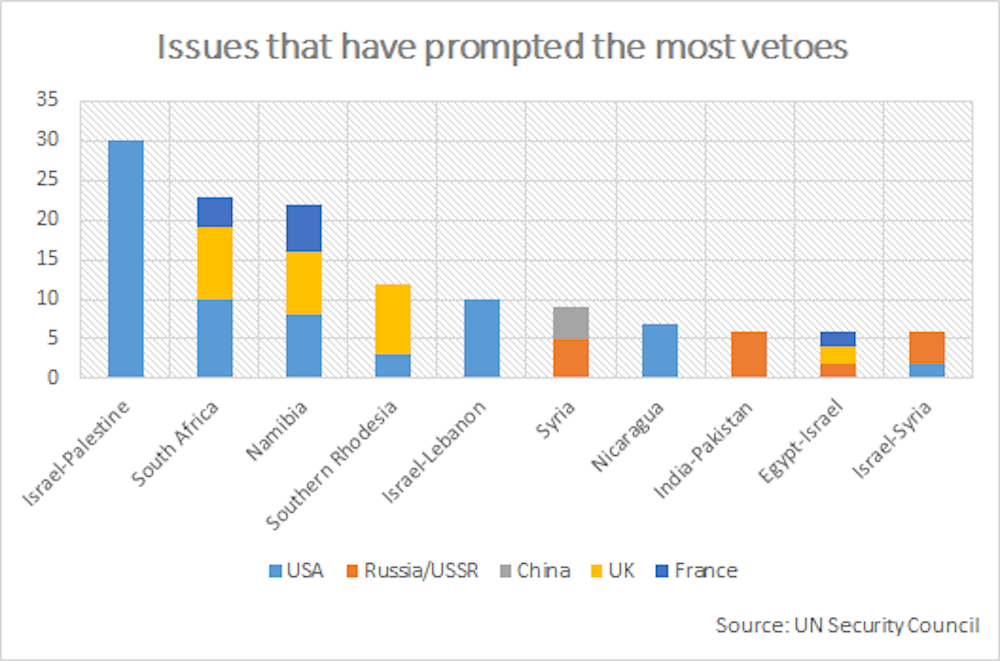
    For a start, it would need to get past the UN security council which means being subject to a veto from any one of the five permanent members (P5). We published an article on this issue some years ago with the help of UN expert Emma McClean, which looked at the issues which had prompted members of the P5 to wield their vetos. It found that Israel-Palestine was hands-down the most common issue that led to a veto – and all those vetoes had been instigated by the US.

    UN security council vetoes.
    UN security council


    Read more:
    Hard Evidence: who uses veto in the UN Security Council most often – and for what?


    So suspending Israel from the UN would appear to be a non-starter. But Hehir tells the story of the way the UN managed to circumvent the P5 and suspend South Africa in 1974 over apartheid. Having failed to get the suspension past the security council after the UK and France vetoed the move, the credentials committee of the general assembly simply refused to renew South Africa’s credentials. It remained suspended for two decades until the end of apartheid in 1994.


    Read more:
    Gaza: can the UN suspend Israel over its treatment of Palestinians? It’s complicated, but yes


    Meanwhile Israel’s assault on Gaza continues and the death toll continues to mount. Israeli Defense Forces (IDF), supported by airstrikes, continue to bombard what the IDF says are Hamas positions in the towns of Beit Lahia and Jabalia but which the Gaza health ministry say are residential buildings sheltering hundreds of civilians. On October 29, the health ministry said at least 93 people, including 25 children, were killed by an Israeli airstrike.


    Now, more than ever, it’s vital to be informed about the important issues affecting global stability. Sign up to receive our weekly World Update newsletter. Every Thursday we’ll you expert analysis of the big stories making international headlines.


    Much of the population of the north of Gaza has been evacuated south of what is known as the Netzarim corridor. Israel’s Haaretz newspaper claims that it’s part of an operation known as the “generals’ plan”, which calls for the north to be cleared of civilian residents and locked down as a military zone. This is presented as a national security measure, but Leonie Fleischmann reports that there are those who believe the military operation will be followed by an influx of Israeli settlers.

    Fleischmann points to a conference held on the Israeli side of the border with north Gaza, attended by members of Netanyahu’s Likud party as well as by several government ministers, which actively promoted the idea of settling north Gaza. Memories and historical legend mingle with ideology that holds Gaza had a Jewish population from biblical times through to 1929, when an Arab revolt killed 133 Jewish people living there and drove the rest out.

    The prospect of a land grab is clearly exercising minds at the UK foreign office. UK ambassador to the United Nations, Barbara Woodward said on October 29: “We reiterate that northern Gaza must not be cut off from the south. Palestinian civilians, including those evacuated from northern Gaza must be permitted to return. There must be no forcible transfer of Gazans from or within Gaza, nor any reduction in the territory of the Gaza Strip.”


    Read more:
    Israel’s ‘generals’ plan’ to clear Palestinians from north of Gaza could pave the way for settlers to return


    All eyes on Washington

    It’s highly unlikely that we’ll know by this time next week who has prevailed in the US presidential election. But the Middle East will be one of the first big ticket items on the Resolute desk.

    The issue has already proved to be a tricky one for Kamala Harris. Her support base is deeply divided on the issue, with large numbers of Democrats – particularly young people, as well as Muslims and black voters – unsettled by her perceived part in the Biden administration’s “steadfast” support for Israel over the past four years.

    It’s hard to tell whether these voters consider that the people of Gaza would fare any better under a Trump White House. But Natasha Lindstaedt and Faten Ghosn believe that Netanyahu’s continuing aggression in Gaza may well play out in the Republican contender’s favour.


    Read more:
    How the Middle East conflict could influence the US election – and why Arab Americans in swing states might vote for Trump


    Meanwhile, to guide us through how the two candidates are likely to approach the big foreign policy issues, we can turn to Garret Martin of the Transatlantic Policy Center at the American University in Washington.


    Read more:
    On foreign policy, Trump opts for disruption and Harris for engagement − but they share some of the same concerns


    World Update is available as a weekly email newsletter. Click here to get our updates directly in your inbox.


    ref. World Update: how Israel’s relations with the UN hit rock bottom – https://theconversation.com/world-update-how-israels-relations-with-the-un-hit-rock-bottom-242632

    MIL OSI – Global Reports

  • MIL-OSI Video: 250 is COMING!

    Source: US Army (video statements)

    : DMD

    2025 brings the U.S. Army’s 250th birthday, and we’re ramping up for the year-long celebration! Be on the lookout on ALL of our platforms!

    THIS WE’LL DEFEND!

    About the U.S. Army:
    The Army Mission – our purpose – remains constant: To deploy, fight and win our nation’s wars by providing ready, prompt & sustained land dominance by Army forces across the full spectrum of conflict as part of the joint force.

    Interested in joining the U.S. Army?
    Visit: spr.ly/6001igl5L

    Connect with the U.S. Army online:
    Web: https://www.army.mil Facebook: https://www.facebook.com/USarmy/ X: https://www.twitter.com/USArmy Instagram: https://www.instagram.com/usarmy/ LinkedIn: https://www.linkedin.com/company/us-army
    #USArmy #Soldiers #Military #Army250 #ThisWellDefend

    https://www.youtube.com/watch?v=D0xc6L1rBhY

    MIL OSI Video

  • MIL-OSI USA: Cassidy Tours Sugar Farm and Meets with South Louisiana Farmers, Discusses Next Farm Bill

    US Senate News:

    Source: United States Senator for Louisiana Bill Cassidy
    WASHINGTON – This week, U.S. Senator Bill Cassidy, M.D. (R-LA) visited with farmers in Port Allen and Jennings, to discuss the next Farm Bill and what Louisiana’s farmers need to continue feeding our state and the world.
    “Our farmers and fishermen produce the best sugarcane, rice and seafood in the world,” said Dr. Cassidy. “It’s my goal to protect them against unfair, foreign competition, to keep crop insurance affordable, and to prevent the cost of farming from rising. I appreciate being able to meet with Louisiana farmers and work together to reach these goals in the next Farm Bill.”
    On Wednesday, Cassidy toured a sugar farm in Port Allen alongside Mr. Travis Medine, the managing partner of Medine Farms and a fifth-generation Louisiana sugarcane farmer. He learned how they use modern technology to plant and harvest sugarcane, which was Louisiana’s second most lucrative commodity in 2023, according to the LSU AgCenter.
    Additionally, on Tuesday and Wednesday, Cassidy participated in roundtables with farmers in Jennings and Port Allen to discuss issues important to Louisiana farmers. The main topic was the upcoming Farm Bill and the need to focus on providing affordable crop insurance, among other crucial tasks. Cassidy also discussed challenges in hiring workers, the need for rural health care services, and preventing unfair competition from overseas.
    During his time in Congress, Cassidy has taken the lead in advocating for Louisiana farmers. Last September, he introduced legislation to protect Louisiana shrimpers and rice farmers from the dumping of cheap products by China and India into the United States. He also quizzed the U.S. Trade Representative on this matter during a U.S. Senate Finance Committee hearing in April.  
    Farmers and their families have also benefitted from Cassidy’s Infrastructure Investment and Jobs Act. Last April, he announced that the U.S. Department of Agriculture (USDA) would grant Louisiana over $1.5 million to support public schools, roads and other municipal services in rural areas where farmers work. Moreover, in separate appropriations, Cassidy secured $9 million in Fiscal Years 2023 and 2024 for the USDA/ARS Sugarcane Research facilities in Houma and is on track to secure another $7 million in the Fiscal Year 2025 agricultural appropriations bill.
    While meeting with farmers in Port Allen, Cassidy was joined by Mr. Richard Fontenot, President of the Louisiana Farm Bureau Federation. Cassidy was recognized as a Friend of Farm Bureau for outstanding service to farmers.
    “This marks the eighth Congress in a row in which Senator Bill Cassidy has received the Friend of Farm Bureau Award presented by the American Farm Bureau,” said Mr. Fontenot. “It’s given on his voting record, which shows that he and his staff are close allies of the Louisiana Farm Bureau and listen to and respond to the needs of our farmers and ranchers. With farm income down 23% since 2022 and some Louisiana farmers facing a third straight year of losses due to record high input costs and low commodity prices, we’re thankful Senator Cassidy took the time to hear those struggles directly from Louisiana Farm Bureau members.”

    MIL OSI USA News

  • MIL-OSI USA: Governor Cooper Highlights Tourism Industry in Western North Carolina at Grandfather Mountain, Surveys Storm Damage in Avery County

    Source: US State of North Carolina

    Headline: Governor Cooper Highlights Tourism Industry in Western North Carolina at Grandfather Mountain, Surveys Storm Damage in Avery County

    Governor Cooper Highlights Tourism Industry in Western North Carolina at Grandfather Mountain, Surveys Storm Damage in Avery County
    bconroy

    Today, Governor Roy Cooper traveled to Grandfather Mountain State Park in Avery County to highlight the importance of supporting Western North Carolina’s tourism industry in the wake of Hurricane Helene. Afterward, the Governor assessed damaged areas and spoke with people impacted by the storm in Banner Elk, where he was joined by Western North Carolina native and Grammy-nominated country musician Eric Church.

    “Today I visited beautiful Grandfather Mountain State Park in Avery County and traveled to Banner Elk to see areas that were damaged during Helene,” said Governor Cooper. “Tourism is a critical part of Western North Carolina’s economy, and there are still many wonderful spots in the region open and accepting visitors. I’m grateful for the work of our federal, state and local responders as well as partners like Eric Church who have given time and effort to help communities in need.”

    This week, Governor Cooper signed a Memorandum of Understanding with Western North Carolina native and country musician Eric Church confirming his commitment that publishing royalties from Church’s recent song, “Darkest Hour,” will help fund response and recovery efforts in the aftermath of Hurricane Helene.

    Unaccounted For People

    The DPS Task Force to locate unaccounted for people has 7 people remaining on this list. The Task Force has handed over remaining work on this to local law enforcement.

    Travel to Western North Carolina

    Some roads are closed because they are too damaged and dangerous to travel. Other roads still need to be reserved for essential traffic like utility vehicles, construction equipment and supply trucks. However, some parts of the area are open and ready to welcome visitors which is critical for the revival of Western North Carolina’s economy. If you are considering a visit to the area, consult DriveNC.gov for open roads and reach out to the community and businesses you want to visit to see if they are welcoming visitors back yet.

    North Carolina National Guard Response

    More than 1,700 Soldiers and Airmen are working in Western North Carolina. Joint Task Force- North Carolina, the task force led by the North Carolina National Guard continues to help with commodity distribution and critical debris removal alongside local government workers, volunteers and  numerous civilian entities to get much-needed help to people in Western North Carolina.

    The U.S. Army Corps of Engineers is helping to assess water and wastewater plants and dams. Residents can track the status of the public water supply in their area through this website.

    FEMA Assistance

    Approximately $195 million in FEMA Individual Assistance funds have been paid so far to Western North Carolina disaster survivors and approximately 239,000 people have registered for Individual Assistance. Over 8,600 people are being helped through FEMA’s Transitional Sheltering Assistance. Nearly 6,200 registrations for Small Business Administration Loans have been filed.

    Nearly 1,800 FEMA staff are in the state to help with the Western North Carolina relief effort. In addition to search and rescue and providing commodities, they are meeting with disaster survivors in shelters and neighborhoods to provide rapid access to relief resources. They can be identified by their FEMA logo apparel and federal government identification.

    North Carolinians can apply for Individual Assistance by calling 1-800-621-3362 from 7am to 11pm daily or by visiting www.disasterassistance.gov, or by downloading the FEMA app. FEMA may be able to help with serious needs, displacement, temporary lodging, basic home repair costs, personal property loss or other disaster-caused needs.

    Help from Other States

    More than 1,750 responders from 39 state and local agencies have performed 153 missions supporting the response and recovery efforts through the Emergency Management Assistance Compact (EMAC). This includes public health nurses, emergency management teams supporting local governments, veterinarians, teams with search dogs and more.

    Beware of Misinformation

    North Carolina Emergency Management and local officials are cautioning the public about false Helene reports and misinformation being shared on social media. NCEM has launched a fact versus rumor response webpage to provide factual information in the wake of this storm. FEMA also has a rumor response webpage.

    Efforts continue to provide food, water and basic necessities to residents in affected communities, using both ground resources and air drops from the NC National Guard. Food, water and commodity points of distribution are open throughout Western North Carolina. For information on these sites in your community, visit your local emergency management and local government social media and websites or visit ncdps.gov/Helene.

    Storm Damage Cleanup

    If your home has damages and you need assistance with clean up, please call Crisis Cleanup for access to volunteer organizations that can assist you at 844-965-1386.

    Power Outages

    Across Western North Carolina, approximately 2,200 customers remain without power, down from a peak of more than 1 million. Overall power outage numbers will fluctuate up and down as power crews temporarily take circuits or substations offline to make repairs and restore additional customers.

    Road Closures

    Some roads are closed because they are too damaged and dangerous to travel. Other roads still need to be reserved for essential traffic like utility vehicles, construction equipment and supply trucks. However, some parts of the area are open and ready to welcome visitors which is critical for the revival of Western North Carolina’s economy. If you are considering a visit to the area, consult DriveNC.gov for open roads and reach out to the community and businesses you want to visit to see if they are welcoming visitors back yet.

    NCDOT currently has more than 2,000 employees and more than 900 pieces of equipment working on damaged road sites.

    Fatalities

    101 storm-related deaths have been confirmed in North Carolina by the Office of Chief Medical Examiner. This number is expected to rise over the coming days. The North Carolina Office of the Chief Medical Examiner will continue to confirm numbers twice daily. If you have an emergency or believe that someone is in danger, please call 911.

    Volunteers and Donations

    If you would like to donate to the North Carolina Disaster Relief Fund, visit nc.gov/donate. Donations will help to support local nonprofits working on the ground.

    For information on volunteer opportunities, please visit nc.gov/volunteernc.

    Additional Assistance

    There is no right or wrong way to feel in response to the trauma of a hurricane. If you have been impacted by the storm and need someone to talk to, call or text the Disaster Distress Helpline at 1-800-985-5990. Help is also available to anyone, anytime in English or Spanish through a call, text or chat to 988. Learn more at 988Lifeline.org.

    If you are seeking a representative from the North Carolina Joint Information Center, please email ncempio@ncdps.gov or call 919-825-2599.

    For general information, access to resources, or answers to frequently asked questions, please visit ncdps.gov/helene.

    If you are seeking information on resources for recovery help for a resident impacted from the storm, please email IArecovery@ncdps.gov.

    ###

    Oct 31, 2024

    MIL OSI USA News

  • MIL-Evening Report: What should I do to prepare for a monologue performance?

    Source: The Conversation (Au and NZ) – By Natasha Beaumont, Lecturer in Creative Arts, School of Education and Social Work, University of Sydney

    Frame Stock Footage/Shutterstock

    Monologue performance is a technically demanding but deeply rewarding form of theatre. Monologues are the purest form of storytelling an actor can engage in.

    Before I was a drama teacher and researcher, I was an actor on stage and television in Australia and in the United Kingdom.

    As an actor, you are always having to prepare monologues as audition pieces. Here are some principles and techniques to help you with this process, to allow you to draw in your audience and strengthen your artistic expression.

    Choosing your monologue

    Successful characterisation in monologue acting depends on “casting” yourself well. This means choosing a text and a character that resonate with your own persona and emotional range.

    Even if you decide you want to play someone with a completely different age, gender and life experience to your own, there should be something about this character that speaks to you: maybe it’s their sense of vulnerability, their love of life, their rage at unfair circumstances. The more you can relate to some specific aspect of this person, the easier it will be to access the emotional range to play them.

    If you decide on a character from a well-known play, make sure you have an understanding of the whole text the piece comes from.

    Finding the personality

    As an actor, you should have a good grasp of your character’s personality and attitudes to life.

    Look for clues in the monologue or the overall play that tell you something about this person’s inner psychology. Do they always agree with everyone, or are they always complaining? How do they talk about themselves, how do they talk about other people?

    In a well-written play, dialogue is always filled with signals like these that actors rely on when creating characters.

    Get clues about your character’s personality from the script.
    Cynthia Smith/Unsplash

    Another useful approach is to develop a detailed backstory for the role you are playing. Performers often use journalling or visualisation to deepen their emotional connection with the person they are depicting.

    Taking time to imagine these key “memories” can provide an emotional anchor when you want to access different parts of their personality. The audience will never know these choices you have made, but you will carry them within you, and they can add depth and dimension to your portrayal.

    Making the character physical

    Along with analysing your character’s psychology and motivations, spend time working on their physicality.

    How does this person move through the world? Are they a daydreaming wanderer, or a short sharp stepper who is always in a hurry? Do they close themselves off from the world with hunched shoulders, or do they stand tall and project themselves outward?

    These qualities might change throughout the monologue as your character moves through different thoughts and memories.

    Making stage direction choices for a monologue can be one of the most challenging things to get right. Simple things such as walking downstage to talk directly to your audience, or sitting down at a particular moment, can add effective dynamics to your performance. But any choices you make must come from an inner impulse within your character. Movement needs to be motivated by some kind of shift in their thoughts.

    Breaking down the monologue

    To identify these shifts, break down your script into key “beats”. These are the moments in a text where your character starts talking about something new. You can use these to create shifts in movement, tone and pace.

    Incorporating different beats into your piece is vital for keeping your audience’s interest. Every monologue should take the audience on a journey through a character’s inner life. Ensuring this journey includes some surprises or effective use of dramatic tension will help make your piece work as a solo performance.

    Sit down with the script and a pencil to find the ‘beats’ of the monologue.
    Media_Photos/Shutterstock

    Sit down with a pencil and mark down any point in the script where you think the character starts thinking or talking about something new. Once you have all these internal shifts marked out, decide if any of these could be played with a contrasting emotional tone and pace to create dramatic effect.

    Who are you talking to?

    Performing a piece on your own can be daunting as there are no other characters to respond to or generate reactions from. Understanding who your character is speaking to during the monologue means you can use your audience as an additional “actor”. Are they an ally or an enemy? Or are these private thoughts, with the audience as a witness to your inner mind?

    Clarifying this relationship can help you make clearer choices in how you deliver your lines.

    Give yourself time

    There are many creative decisions to be made when preparing a monologue performance.

    Make sure to give yourself enough time to make these decisions and to learn your lines by heart.

    Think about the physicality of the character you have chosen.
    foto-lite/Shutterstock

    Experiment with lots of different choices when you are starting out and rehearse your piece as often as possible. This will help reduce nerves when it comes to your final performance as it’s difficult to focus on acting when your mind is racing trying to remember what to say next.

    Once the hard work of preparation, experimentation and creative expression is done, there is no better feeling than nailing a solo performance!

    Natasha Beaumont does not work for, consult, own shares in or receive funding from any company or organisation that would benefit from this article, and has disclosed no relevant affiliations beyond their academic appointment.

    ref. What should I do to prepare for a monologue performance? – https://theconversation.com/what-should-i-do-to-prepare-for-a-monologue-performance-238778

    MIL OSI AnalysisEveningReport.nz

  • MIL-Evening Report: The ‘big 4’ accounting firms often consult for the same clients they audit. Should that be allowed?

    Source: The Conversation (Au and NZ) – By Helen Spiropoulos, Associate Professor, University of Technology Sydney

    Public trust in the auditing profession is under intense pressure. A series of high-profile scandals, both in Australia and overseas, has severely damaged its reputation.

    This week, Australia’s corporate watchdog – the Australian Securities and Investments Commission (ASIC) – put the entire sector on notice.

    In a letter to auditors on Wednesday, ASIC announced it would soon commence a new data-driven surveillance of auditor independence and conflicts of interest. Put simply, any practices that could compromise the integrity of auditing work.

    The move comes amid longstanding calls for stronger regulation. Some have gone as far as to call for auditors – particularly the “big four” – to be banned from offering consulting services to their audit customers. Why? Fears it helps companies unethically game the system.

    But our recent research, which specifically examines chief executive pay, offers an alternative perspective and suggests we should tread carefully.


    Read more:
    A year after the PwC scandal, the furore is gone – as well as any real appetite for structural change


    Objectivity and independence

    The “big four” – PricewaterhouseCoopers (PwC), Ernst & Young (EY), KPMG and Deloitte – are the world’s largest professional services firms. They offer services in auditing, consulting, tax and advisory services.

    Known for their extensive resources and global reach, these firms serve major clients, including many publicly listed companies and governments.

    However, some have raised concerns about potential conflicts of interest that may arise when these firms provide both consulting and auditing to the same client.

    Auditing is the process of examining a company’s financial statements and processes to ensure both accuracy and compliance with accounting standards.

    Conducted by external auditors, it’s meant to give investors, regulators, and the public confidence that a company’s financial picture is accurate and trustworthy.

    The key worry is that offering both services risks compromising an auditor’s objectivity and independence.

    Auditors may be incentivised to shy away from scrutinising their clients too closely, if it helps preserve lucrative consulting contracts.

    How much money should the boss make?

    Professional services firms, including the big four, are often engaged as external consultants to help decide on “executive compensation” – how much a company’s chief executive should be paid.

    Chief executive pay is highly contentious. They can earn staggering amounts of money, which can sometimes appear disconnected from how well a company is actually performing and what’s in its shareholders’ best interests.

    Large companies often outsource decisions about how much to pay chief executives.
    GaudiLab/Shutterstock

    Compensation consultants are hired to help structure these pay packages, ideally by setting up performance targets that align chief executives’ incentives with shareholder value.

    The idea is that if you don’t meet a certain goal as the boss, you should miss out on being paid for it.

    But these consultants can also be a part of the problem. As chief executives can influence whether a particular consultant is hired or retained, consultants might design favourable contracts to increase their chances of getting hired again.

    How? By setting up targets that are easy to hit, or vague enough to avoid true accountability.

    Such accountability in executive compensation is extremely important. How much those at the top get paid should reflect the quality of their decisions.

    Without proper oversight, pay structures risk incentivising quick wins instead of long-term growth, which could potentially harm investors, employees and the company’s future.

    To solve this problem, you need transparent performance metrics. This makes it easier for shareholders to see whether chief executives are truly earning their pay.

    When executive compensation consultants do their job well, such transparency gets built in. So how does the big four score?

    What we found

    Our study, published in the Australian Journal of Management, analysed chief executives’ compensation structures in a sample drawn from the 500 largest companies listed on the Australian Securities Exchange (ASX), between 2005 and 2019.

    We found that the big four, when engaged as compensation consultants, appeared to uphold more rigorous standards than their smaller counterparts.

    For example, big four firms were more likely to recommend including performance measures like “relative total shareholder return”, which takes the performance of a company’s competitors into account.

    This can reduce the likelihood of “pay for luck” – paying a chief executive extra when a company performs well simply due to market-wide factors, such as movements in commodity prices or currency exchange rates.

    Non-big four consultants, on the other hand, showed a tendency towards less clearly defined targets, which can open the door to less accountability.

    Compensation consultants should set targets for chief executives that genuinely reflect good performance.
    Owlie Productions/Shutterstock

    What’s behind this effect?

    One possible explanation for our findings is that the big four’s multi-service approach gives them less reliance on securing repeat business from any single client.

    With consulting, tax, audit and advisory services across various industries, these firms aren’t as dependent on individual clients, which can give them greater freedom to recommend compensation packages that may not always align with a chief executive’s preferences.

    It has been argued, including by former chairman of the Australian Competition and Consumer Commission Graeme Samuel, that the big four’s consulting services pose potential conflicts that could compromise their audit duties.

    The same could be said for other advisory services provided by these firms.

    However, our findings offer evidence that when it comes to executive compensation, the big four’s reputation and expertise may actually discourage practices that obscure performance metrics or result in excessive chief executive pay.

    Any reforms should tread carefully

    The auditing sector will be watching the outcomes of ASIC’s forthcoming “crackdown” closely. The case for stricter oversight is strong.

    But we should be careful not to lose the nuance of this issue. In some cases, the big four’s multi-service approach may actually elevate governance standards rather than erode them.

    In a market dominated by these firms, the consequences of their exit from consulting services could extend beyond audit independence.

    Ironically, forcing these firms out of consulting could make auditing their primary revenue source from many clients, creating the very dependence regulators aim to avoid.

    Are we ready to face the unintended effects of limiting these firms’ roles? If our research is any indication, the answer is not so clear-cut.

    As an undergraduate student, Helen Spiropoulos did two internships at Deloitte in the areas of Audit and then Consulting (Strategy and Operations).

    Rebecca L. Bachmann does not work for, consult, own shares in or receive funding from any company or organisation that would benefit from this article, and has disclosed no relevant affiliations beyond their academic appointment.

    ref. The ‘big 4’ accounting firms often consult for the same clients they audit. Should that be allowed? – https://theconversation.com/the-big-4-accounting-firms-often-consult-for-the-same-clients-they-audit-should-that-be-allowed-242588

    MIL OSI AnalysisEveningReport.nz

  • MIL-Evening Report: In Norway, students get grades for their behaviour – could this work in Australia?

    Source: The Conversation (Au and NZ) – By Stephen Dobson, Professor and Dean of Education and the Arts, CQUniversity Australia

    Student behaviour is one of the biggest issues facing Australian schools. A survey of Queensland teachers earlier this year found “managing student behaviour” was the main thing taking their time away from teaching.

    Along with students talking out of turn, using their phones or not paying attention, there are regular reports of students being violent and abusive towards teachers. Australian classrooms are rated among the “least favourable” for discipline in the OECD.

    Amid a push to include more classroom management training for teachers, what other approaches could we look at to improve behaviour?

    What happens in Norway?

    For several decades Norwegian school children have been assessed twice a year on their sense of personal order (being punctual, well-prepared and following up on homework) and social behaviour (showing care and respect for others).

    In some schools this might involve following rules against throwing snowballs, eating in class or leaving school grounds.

    Until Year 8, students receive comments and then they also get a grade (good, quite good or not so good).

    Teachers in all subjects report to the child’s home base teacher who calculates an average, noting any poor examples of poor personal order and social behaviour. The overall report is shared with the student and parents receive a copy.

    The goal, as specified in Norway’s Education Act, is to ensure a good and safe school environment and “social learning”. This means learning to behave around others through observing, modelling and imitating the behaviours of others.

    This is on top of learning knowledge and skills.

    Norwegian students can be graded on whether they follow rules about snowball throwing.
    Maria Sbytova/Shutterstock

    Does it work?

    Norwegian society takes these grades seriously. It has been part of the Norwegian schooling system since 1939.

    Research on teachers and students describe it as a valued tool for dealing with students who disrupt the learning environment in the classroom.

    Even when young adults apply for jobs after university or vocational study, employers can be interested in the grade received for order and behaviour at school. Students and their teachers are aware it can indicate trustworthiness and employability.

    A not uncommon story repeated by Norwegian parents to their teenage children is “if you have a record of behaving poorly or arriving late at school it doesn’t bode well whether you want to work on a construction site, in an office or on a hospital ward”.

    There are Norwegian critics of this approach. Some researchers argue behaviour grades can sometimes say more about who are the “teachers’ favourites”.

    But despite some limited trials to refine Norway’s behaviour grading, there are currently no plans to remove it.

    What about Australia?

    There is some precedence for reporting on behaviour in Australia.

    For example, Queensland public schools report about effort and behaviour against a five-point scale: excellent, very good, satisfactory, needs attention and unacceptable.

    But assessment criteria and evidence for the reporting of student effort and behaviour seems to be a more subjective appraisal than reporting against other standards in the curriculum.

    Some Australian schools already report on aspects of student behaviour.
    Monkey Business Images/ Shutterstock

    School is about more than maths and reading

    Schools can teach students more than academic knowledge or vocational skills.

    And while addressing behaviour in schools is complex (and will not be solved by any single thing), reporting on behaviour could provide a regular opportunity for Australian teachers, schools and parents to reflect on how a students is progressing.

    Grading students could make students more accountable for how they interact with their peers and their teachers.

    It could also help build their understanding of what is acceptable, not just in the classroom but in the community more broadly. For example, if there are specific rules about how you speak to others, whether you are safe in the playground and respectful in the classroom.

    This type of social learning is important, because it can help teach students to be inclusive and responsible towards others. It can also help to create a safer school environment for all students and staff.

    At the moment, there is a general requirement in the Australian Curriculum to teach students social and emotional skills across all subjects.

    But it is up to state and territory education authorities to work out if and how students are assessed about this. This includes any reasonable adjustments for students with disability or other special needs.

    The authors do not work for, consult, own shares in or receive funding from any company or organisation that would benefit from this article, and have disclosed no relevant affiliations beyond their academic appointment.

    ref. In Norway, students get grades for their behaviour – could this work in Australia? – https://theconversation.com/in-norway-students-get-grades-for-their-behaviour-could-this-work-in-australia-239384

    MIL OSI AnalysisEveningReport.nz

  • MIL-Evening Report: Explainer: a short history of the Electoral College and how it subverts the will of voters

    Source: The Conversation (Au and NZ) – By John Hart, Emeritus Faculty, Australian National University

    For a fleeting moment in early October, it looked like the US presidential electoral system might become an issue in this year’s election. The Democratic vice presidential candidate, Tim Walz, told two audiences that the Electoral College should be abolished and replaced by a direct national popular vote.

    Walz was shut down quickly by Kamala Harris’ campaign with a brief statement that abolishing the Electoral College is not its official position. Walz duly walked back his comments and the story had a shelf-life of fewer than 24 hours.

    But the Electoral College issue may well come back to haunt the Harris campaign should this year’s election produce yet another “runner-up” president – when the loser of the popular vote wins the electoral vote and therefore the election.

    If the race is as close as most polls are indicating, this is a possible outcome. And Republican former President Donald Trump is more likely than Harris to be the beneficiary of this archaic, undemocratic voting system.

    How the Electoral College works

    There is a two-stage, indirect election for the president under the Electoral College system.

    First, there is the popular vote in each of 50 states and District of Columbia on November 5 to choose “electors”, who formally cast the “electoral vote” on December 17 in what is known as the “Electoral College”.

    It is the electoral vote that determines the president, not the popular vote.

    To make things even more complicated, each state is awarded electoral votes based not on its population, but on its representation in the US Congress.

    Each state has at least one member of the House of Representatives and two members of the Senate, meaning every state has at least three electoral votes regardless of its population size.

    There are 538 votes in the Electoral College, and an absolute majority of those – 270 or more – is needed to win. The Constitution also contains a complex and highly undemocratic contingency procedure should no candidate win an Electoral College majority. The choice of president would then be decided by the House of Representatives with each state delegation having just one vote.

    Sample presidential ballot from Arlington County in the state of Virginia showing that voters will be selecting electors, not the candidate directly.
    Arlington County Electoral Board

    The origins of the Electoral College

    It is not surprising the Electoral College is an undemocratic institution – it was deliberately designed to be. The method of electing the president was an expression of a very conservative philosophy of government embodied by most of the framers of the Constitution when they met in Philadelphia in 1787.

    The framers had strong views the presidency should be an office above politics. They also felt the choice should be made by those with knowledge, experience and understanding of government and statecraft.

    As such, the framers objected to a popular vote for the president, because they feared it would lead to what one of the founding fathers, Alexander Hamilton, called “tumult and disorder”. The framers were vehemently opposed to direct democracy, preferring instead what they called a “republic”.

    Their solution was to allow the state legislatures to determine how the electors from each state should be chosen. In the beginning, most states’ legislatures chose the electors to decide who was president – not the people.

    The Electoral College structure – and its philosophical underpinnings – were then locked into the Constitution and purposely designed to exclude the people from the process.

    It has also been argued that race and slavery were integral to its design. By piggy-backing on the already-agreed compromise over representation in Congress and the counting of slaves as “three-fifths of all other persons”, the framers of the Constitution handed the major slave-holding states far more clout not only in Congress, but in the selection of the president, as well.

    In the longer term, the framers weren’t entirely successful in their efforts because two major political developments in the early 19th century forced some adaptation to the model.

    As the American frontier expanded and political parties were developed, people began demanding a greater role in American democracy. This put pressure on state legislatures to cede their power to select electors and allow popular voting for the Electoral College instead.

    By the mid-19th century, the Electoral College was operating in much the same way as it does today.

    Surprisingly, this required no constitutional amendment because the wording of the Constitution gave the states the flexibility to respond to the demand for popular voting:

    Each State shall appoint, in such manner as the legislature thereof may direct, a number of Electors…

    But that didn’t change the fact that it was the “electors” who would still choose the president, not the people directly.

    How the Electoral College distorts the popular vote

    The electoral vote always distorts the popular vote by exaggerating the winner’s margin of victory. In very close contests, it can also go against the popular vote, as it has done on four occasions – 1876, 1888, 2000 and 2016.

    Two mechanisms are responsible for this.

    First, the populations of small states are over-represented in the Electoral College compared to the larger states because of the guaranteed minimum three electoral votes.

    For example, Alaska, with three electoral votes, has one electoral vote for every 244,463 inhabitants (based on 2020 US census data). In contrast, New York, with 28 electoral votes, has one electoral vote for every 721,473 inhabitants. So, an electoral vote in Alaska is worth almost three time as much as an electoral vote in New York.


    Second, and far more significant, is the “winner-takes-all” arrangement. In every state, except Maine and Nebraska, the winner of the popular vote takes 100% of the electoral votes, no matter how close the contest is.

    Even in Maine and Nebraska, it’s winner-takes-all, except those states award two electoral votes to the statewide winner of the popular vote and one electoral vote to the popular vote winner in each of its congressional districts.

    Few Americans would be conscious of how the winner-takes-all system works, either.

    Put simply, when voters cast a ballot, they are, in effect, voting multiple times – once for each elector in the state supporting the presidential candidate of their choice. They do this by marking just one box alongside their preferred candidate’s name.

    For example, if Harris defeats Trump by 51-49% of the popular vote in Pennsylvania, every one of the 19 electors on Harris’ slate will defeat every one of Trump’s 19 electors by the same margin. The popular vote may have been close, but in the electoral vote, it’s 19-0 for Harris.

    When that is repeated across all 50 states, the Electoral College vote will always exaggerate the margin of victory compared to the popular vote.

    In the 1992 presidential election, for example, Bill Clinton defeated George H.W. Bush by a landslide in the electoral college, 370-168. However, Clinton only edged Bush by 5.5 percentage points in the popular vote (43% to 37.45%). Independent candidate Ross Perot, meanwhile, earned nearly 19% of the popular vote, but because he didn’t carry any states, he got zero electoral votes.

    And when the loser of the popular vote wins the electoral vote, such as Trump’s victory over Hillary Clinton in 2016, it shows the total number of popular votes won by a candidate is less important than where those votes are located.

    To win in the Electoral College, a candidate needs to have their vote distributed economically between the states. In a majoritarian democracy (based on the principle of majority rule), this ought not to be a feature of the electoral system. But the US presidential election process was never designed to operate this way.

    Lastly, the Electoral College also heavily determines the nature of the election campaign. Most states in the US are “safe” wins for one party or the other.

    As such, the efforts of the candidates are concentrated in the handful of states that are competitive – the so-called “battleground” states. The rest of the country tends to be ignored.

    The future of the Electoral College

    That the Electoral College survives into the 21st century is partly due to the adaptability of the Constitution to deal with the earlier challenge in the 1800s over the selection of electors in the states, as well as the immense difficulty of amending the Constitution.

    This is despite the fact a clear majority of Americans support abolishing the Electoral College in favour of a national, direct popular vote for the presidency.

    What happens in this election is anyone’s guess. With the polls showing such narrow margins in the popular vote in the battleground states, the outcome is not only unpredictable, it may even be random. And that’s a terrible comment on the state of American democracy.

    John Hart does not work for, consult, own shares in or receive funding from any company or organisation that would benefit from this article, and has disclosed no relevant affiliations beyond their academic appointment.

    ref. Explainer: a short history of the Electoral College and how it subverts the will of voters – https://theconversation.com/explainer-a-short-history-of-the-electoral-college-and-how-it-subverts-the-will-of-voters-239206

    MIL OSI AnalysisEveningReport.nz

  • MIL-Evening Report: Ancient mud reveals Australia’s burning history over the past 130,000 years – and shows a way through our fiery future

    Source: The Conversation (Au and NZ) – By Michela Mariani, Associate Professor in Physical Geography, University of Nottingham

    Lano Lan / Shutterstock

    Increased land management by Aboriginal people in southeastern Australia around 6,000 years ago cut forest shrub cover in half, according to our new study of fossil pollen trapped in ancient mud.

    Shrubs connect fires from ground cover to the forest canopy, allowing fires to spread and intensify quickly. The reduction in shrub cover, linked to evidence for increasing population size and more widespread landscape use by Aboriginal people, would have dramatically decreased the potential for high-intensity bushfires.

    We also found the shrub layer in modern forests is even greater than it was 130,000–115,000 years ago, when the climate was similar to today’s but there were no people around.

    Our deep-time research shows how important Indigenous cultural practices were for reducing dangerous high-intensity fires. It also suggests a way forward in Autralia’s current fire crisis, which climate change is making worse.

    The trouble with shrubs

    For decades, Australia has tried to manage fires by suppressing them. This strategy may be effective in the short term, but it has led to dire consequences in the long term.

    Over the past 20 years, the forests and woodlands of southeastern Australia have become hotspots for major fires.

    Fire suppression has allowed vegetation, particularly in the shrub layer, to grow without constraint. Shrubby, mid-height vegetation acts as a ladder, enabling fires to spread up from the ground to the forest canopy. This results in more intense and uncontrollable fires.

    Summary timeline of past landscape changes across southeastern Australia. We show changes from pre-human contact (top), through Indigenous population expansion (middle), to the present (post-colonial, bottom).
    Simon Connor, CC BY

    Evidence for denser vegetation comes from tiny, fossilised grains of pollen that are laid down in layers of ancient sediment in wetlands and lake beds. By extracting fossil pollen from mud, scientists can develop a picture of vegetation in the past.

    Our new study used archaeological data and information preserved in ancient mud. We looked at how the vegetation of southeastern Australia changed in response to climate and human management over the past 130,000 years.

    We wanted to see how things changed in key periods: before human arrival in Australia, through periods of Indigenous occupation, and following British colonisation.

    We used sophisticated models to estimate vegetation cover and how it related to human land use at different times.

    Caring for Country

    Indigenous Australians have been the custodians of this continent for millennia. Their journey in Australia started at least 65,000 years ago.

    Direct evidence of cultural burning traces back at least 11,000 years in the Top End, although it may have begun much earlier.

    Indigenous Australian cultural burning practices are complex and varied. However, in many parts of the continent they included regular, controlled burns. These helped to manage vegetation growth and reduce the risk of high-intensity fires.

    Since British colonisation, the landscape of Australia has undergone significant changes, with both more open pastures and more densely vegetated forests. The introduction of European land management practices, including fire suppression, disrupted the fire regimes Indigenous Australians had maintained for thousands of years.

    This suppression-focused approach has led to an accumulation of plant matter, creating a tinderbox ready to ignite.

    A call for change: integrating Indigenous Knowledge

    To address this crisis, a shift in fire management strategies is essential. One promising approach is to integrate Indigenous fire management practices into contemporary fire management plans, working with Traditional Owners to best care for Country.

    This must be done in a way that supports Indigenous livelihoods and fosters connection to Country, not by management agencies simply appropriating Indigenous know-how.

    Indigenous Australians possess hundreds of generations’ worth of experience in managing the country’s fire-prone landscapes. Indigenous-led fire management is already being reinvigorated in northern Australia.

    Our research demonstrates that southeastern forests and woodlands were effectively managed in the past and would also benefit from Indigenous caring-for-Country practices today.

    Reducing dangerous fuels in the shrub layer means less high-intensity fires threatening the bush–urban interface, such as the 2019–20 Black Summer fires.

    Indigenous-led burning at a project site in Tasmania.
    Matthew Newton / RUMMIN Productions

    Higher temperatures and prolonged droughts have created ideal conditions for bushfires to spread. Colonisation has compounded the problems arising from human-driven climate change.

    But there is no fire without fuel. It is the combination of increased biomass and a warming climate that now fuels fires of unprecedented scale and intensity, posing a significant threat to lives, property and ecosystems.

    Australia’s fire crisis is a complex issue that requires a multifaceted solution. By learning from and working with Indigenous practitioners, Australia can develop more effective and sustainable fire management strategies. This collaborative approach offers a path forward to tame the flames and protect the nation’s unique and diverse landscapes.

    Michela Mariani receives funding from the Leverhulme Trust and is affiliated with the Australian Research Council Centre of Excellence for Australian Biodiversity and Heritage (CABAH) and the Centre of Excellence for Indigenous and Environmental Histories and Futures (CIEHF).

    Anna Florin receives funding from the Australian Research Council and is affiliated with the Australian Research Council Centre of Excellence for Australian Biodiversity and Heritage (CABAH).

    Haidee Cadd receives funding from the Australian Research Council and is affiliated with the ARC Centre of Excellence for Australian Biodiversity and Heritage (CABAH).

    Simon Connor receives funding from the Australian Research Council. He is affiliated with CABAH, the Centre of Excellence for Australian Biodiversity and Heritage.

    Matthew Adeleye does not work for, consult, own shares in or receive funding from any company or organisation that would benefit from this article, and has disclosed no relevant affiliations beyond their academic appointment.

    ref. Ancient mud reveals Australia’s burning history over the past 130,000 years – and shows a way through our fiery future – https://theconversation.com/ancient-mud-reveals-australias-burning-history-over-the-past-130-000-years-and-shows-a-way-through-our-fiery-future-239561

    MIL OSI AnalysisEveningReport.nz

  • MIL-OSI NGOs: Treating open wounds in the West Bank Palestine

    Source: Médecins Sans Frontières –

    It’s a sunny morning in Nur Shams refugee camp, in Tulkarem, West Bank, Palestine. Over 20 women are filing into a room set up by Médecins Sans Frontières (MSF) staff, sitting in a circle and chatting over Arabic coffee. In the middle of the room, there is a table with gauze, tourniquet devices and charts explaining blood flow in the human body. This is MSF’s ‘stop the bleeding’ training.

    Most women gathered in this room have little to no medical training, but trauma wounds and severe bleeding are not new to them. They are here to learn how to care for wounds, apply tourniquets, and provide basic first aid to family members and neighbours until they can reach medical care during frequent military incursions by Israeli forces.

    “We experience raids, bombings, and injuries from shootings,” says Saeda Ahmad, a participant in the training. “We often have an injured person right in front of us. In such situations, it’s important for us to have the knowledge and background to properly administer first aid.”

    “During raids, it’s extremely difficult for ambulances to reach the scene,” continues Ahmad. “That’s why everyone in the camp needs to have some knowledge of first aid. So that we ourselves can help the injured person.”

    Here, military raids by Israeli forces are becoming increasingly frequent, and blockages of access to healthcare are part of the modus operandi. Roads are blocked, ambulances cannot move, healthcare workers are harassed and targeted or otherwise hindered, and wounded people often cannot reach hospitals.

    Incursions from Israeli forces are also increasing in violence and intensity; on 3 October, 18 people were killed in an airstrike on Tulkarem refugee camp. The use of drone strikes, air strikes and other bombardments by Israeli forces, in often densely-populated areas and refugee camps, has become increasingly common. Incursions are also increasing in length, and not only here; last August, in Jenin, north of Tulkarem, Israeli forces launched a large-scale military incursion that lasted nine days.

    In this context of constant violence and insecurity, people in the camps have spoken with MSF mental health staff of the deep psychological impacts of these raids. Military incursions by Israeli forces reshape the lives of people, stripping them of normalcy and any sense of safety.

    People are always in the aftermath from the last incursion, rebuilding torn up streets and destroyed houses, while holding their breath until the next military raid. Our teams are also providing psychological first aid to residents in the camp, to address the significant mental health issues stemming from the impact of these incursions, which affect all residents, but particularly children.

    “The situation is very difficult. The children in the camps are afraid to go to school, as they fear a raid might happen while they are there,” says an MSF community health educator for MSF in Tulkarem. “In their home life, stability has vanished. People remain on edge.”

    “Children have stopped playing in the alleys. They spend most of the time at home and are not able to go out,” says our health educator. “They can’t even go out to buy what they need because their parents won’t let them, out of fear that a raid or incident might occur while they’re outside. There are children whose entire playtime has become centred around the violence they have experienced.”

    In a context of fear and insecurity, it becomes impossible for people to live a normal life or plan for the future. Training like ‘stop the bleeding’ can provide some sense of control over the situation, by giving residents the tools to act in a medical emergency during an incursion. But their very existence highlights the direness of the situation in the West Bank.

    In this room, as participants practice wrapping gauze around each other’s arms, emotional wounds also reveal themselves. Participants share stories of the violence they have experienced, in conversations, stories, and photos of killed family members on a phone’s lock screen.

    The psychological wounds, also, are deep. And mending them takes more time than applying pressure or tightening a tourniquet.

    MIL OSI NGO

  • MIL-OSI United Kingdom: Financial forecast reported to Council

    Source: Scotland – Highland Council

    A revised financial forecast for the Highland Council, taking account of already agreed savings and other measures, suggests a remaining budget gap of £38m-£54m over the coming three years, 2025/26 to 2027/28. 

    As part of the Council’s Medium-Term Financial Plan, agreed in February 2024, Council agreed a package of £54.6m of budget savings, and the use of a range of financial flexibilities and use of reserves, to address the projected £113m gap over a 3-year period 2024/25 – 2026/27.    

    A revised forecast, before taking account of agreed savings and other measures, and factoring in financial assumptions, is a budget gap over the next three years (2025/26 to 2027/28) ranging from £116m-£132m.  

    After allowing for budget savings and other decisions already made by the Council, and other assumptions, these scenarios suggest the figure of a residual budget gap of £38m-£54m over the three years.  

    It is clear that there are significant and additional financial pressures and challenges facing Governmental budgets in the current and next year, with it being expected these will ultimately translate to a potentially more challenging budget settlement and financial outlook for Scottish Local Authorities. There remains uncertainty regarding the impact of national decisions, which may in turn impact the scenarios reported to Members. 

    While inflation and cost pressure estimates are expected to exceed the likely level of funding that may be available to the Council, there is an inevitable need to plan for further additional savings.

    Convener of the Highland Council, Bill Lobban said: “Decisions already made by the Council in February 2024 provide a very solid foundation to the Council’s financial planning.  It is essential the Council continues to apply a multi-year, strategic approach to its financial planning and financial sustainability, and makes the necessary decisions to ensure expenditure plans are in line with funding levels. 

    Leader, Raymond Bremner said: ““We will do everything we can to mitigate the impact on our residents in our decision making. At the same time as making savings, and making best use of public funds, we have been able to plan supporting our ambitious Highland Investment Plan through our revenue budget decisions, which could see £2bn of capital investment across the Highlands over the next 20 years and which will leave a valuable legacy for communities well into the future.  

    “Public and staff engagement in the lead up to our last budget was extremely helpful in shaping our thinking and decisions. The Operational Delivery Plan also provides a helpful mechanism for monitoring progress with the delivery of agreed savings and this will continue to be useful moving forward as part of our financial planning process.” 

    Chair of the Council’s Resources Committee, Cllr Derek Louden commented: “The important thing for us to remember this is a very early stage in budget setting, with a great deal of uncertainty at this time. Looking at the direction of travel and considering income generation, budget reduction and use of reserves in line with the Council’s strategy for the coming years will be part of our planning for budget setting in March 2025.” 

    A further report will be brought to the Council meeting in December. 

    MIL OSI United Kingdom

  • MIL-OSI Russia: Alexander Novak held a meeting on the formation of a general plan for the placement of electric power facilities until 2042

    Translation. Region: Russian Federation –

    Source: Government of the Russian Federation – An important disclaimer is at the bottom of this article.

    Alexander Novak held a meeting on the formation of a general plan for the placement of electric power facilities until 2042

    Deputy Prime Minister of the Russian Federation Alexander Novak held a meeting on the formation of the General Scheme for the placement of electric power facilities until 2042. The event was attended by heads and representatives of the Ministry of Energy, the Ministry of Economic Development, energy companies, industry and business associations.

    The parties discussed the parameters for the functioning of the Russian energy system until 2042, taking into account the projected increase in energy consumption due to the accelerated growth of the economy.

    In order to reliably meet the needs of citizens and industry for electricity, it is planned to introduce new modern generation by 2042. This concerns facilities of both traditional and renewable and nuclear energy.

    In addition, the modernization of generating equipment will continue. There is also the task of further increasing the installed capacity, taking into account the need to balance consumption peaks, ensure the reliability of the energy system and export obligations.

    Please note: This information is raw content directly from the source of the information. It is exactly what the source states and does not reflect the position of MIL-OSI or its clients.

    MIL OSI Russia News

  • MIL-OSI USA News: A Proclamation on Critical Infrastructure Security and Resilience Month,  2024

    Source: The White House

         From the energy that powers our homes to the networks that connect us and the systems that protect our health and safety, our critical infrastructure keeps our economy thriving and our communities secure.  This Critical Infrastructure Security and Resilience Month, we recommit to strengthening our country’s critical infrastructure and building an America that is safe and secure for generations to come.

         This year, I signed a National Security Memorandum to secure and enhance the resilience of United States critical infrastructure — updating the policy for the first time in a decade.  This represents the launch of a new era in protecting our infrastructure against all threats and hazards by safeguarding our strong and innovative economy and enhancing our collective resilience to disasters before they happen.  But there is more to do.  Climate change is making natural disasters more frequent, ferocious, and costly — endangering our supply chains, creating more instability for our communities, and straining the critical infrastructure Americans depend on for their livelihoods.  And we need to stay vigilant against adversaries that seek to maliciously target our critical infrastructure, including through cyberattacks.  

         To meet this moment, my Administration made a once-in-a-generation investment in our Nation’s infrastructure — creating an opportunity to build in resilience to all hazards upfront and by design.  Through my American Rescue Plan, Bipartisan Infrastructure Law, Inflation Reduction Act, and CHIPS and Science Act, we are investing billions of dollars to secure and bolster our infrastructure.  That includes improving our electric grid so that people can maintain power in any situation, elevating roads and bridges over possible flood zones, funding community resilience programs, and more.  These investments have not only helped to protect Americans — they have benefited our economy, creating jobs and new possibilities for our communities.  At the NATO summit this year, I announced an arrangement with Canada and Finland to collaborate on the production of polar icebreakers.  The partnership will advance United States economic and national security interests by strengthening our shipbuilding and industrial capacity while simultaneously opening up new trade routes and pushing back against foreign aggression and bolstering our international alliances.  This year, I also announced a United States Port Security Initiative to reverse our dependence on foreign manufactured port equipment.

         Ensuring our Nation is resilient in the face of threats also means working with other nations around the globe to build better, stronger, and more sustainable infrastructure.  At the G7 Summit in June, I was proud to announce the historic progress we have made with our Partnership for Global Infrastructure and Investment.  This initiative will strengthen United States national and economic security for Americans at home and enable sustainable economic growth for partner countries.  To date, we have mobilized $60 billion to create high-quality global infrastructure.  That comes on top of our work with the European Union and African heads of state to develop the Lobito Corridor as well as our work with the Democratic Republic of the Congo and Zambia to expand regional and global trade markets through the Port of Lobito in Angola.  We continue to pursue opportunities to expand our investments across Africa and around the world, including the Indo-Pacific, Central Asia, the Middle East, and the Western Hemisphere.  Investments like these create more shared opportunities, prosperity, and security for everyone.

         Across the Nation, America is writing the greatest comeback story we have ever known — people are putting shovels in the ground, founding new businesses, and creating hope for entire communities.  It is more important now than ever before that we remain vigilant against any threats that seek to undermine our collective security and prosperity. 

         During Critical Infrastructure Security and Resilience Month, we recommit to safeguarding and strengthening our Nation’s critical infrastructure to save lives and allow our Nation to continue doing what it does best:  creating new possibilities.

         NOW, THEREFORE, I, JOSEPH R. BIDEN JR., President of the United States of America, by virtue of the authority vested in me by the Constitution and the laws of the United States, do hereby proclaim November 2024 as Critical Infrastructure Security and Resilience Month.  I call upon the people of the United States to recognize the importance of protecting our Nation’s infrastructure and to observe this month with appropriate measures to enhance our national security and resilience.

         IN WITNESS WHEREOF, I have hereunto set my hand this thirty-first day of October, in the year of our Lord two thousand twenty-four, and of the Independence of the United States of America the two hundred and forty-ninth.

                                   JOSEPH R. BIDEN JR.

    MIL OSI USA News

  • MIL-OSI USA: Deputy Administrator Isobel Coleman on Bold Measures to Feed Africa During the World Food Prize

    Source: USAID

    DEPUTY ADMINISTRATOR ISOBEL COLEMAN: Thank you, President [Akinwumi] Adesina, for that introduction, and thank you, President [Samia Suluhu] Hassan and President [Julius Maada] Bio, for your thoughtful reflections. It is an honor to join you today, representing the U.S. Agency for International Development.

    As we’ve heard, the level of need remains great in Africa. It is one of the few regions of the world where hunger and undernourishment have continued to rise in recent years. However, Africa is also home to 12 of the 20 fastest growing economies on the planet, and the continent is poised to become the world’s second fastest-growing economic region. 

    This is a moment of great opportunity. With smart policy reforms, and increased investment and trade, we can realize the potential of this dynamic region while seriously tackling poverty, hunger and malnutrition. 

    The U.S. government’s global hunger initiative, Feed the Future, prioritizes investments in Africa – providing more than $400 million each year to drive inclusive and sustainable agriculture-led growth, improve nutrition outcomes, and build resilience. Feed the Future’s locally-led model has yielded remarkable success over its first decade. In areas where Feed the Future has worked, poverty, hunger, and child stunting all declined by 20 to 25 percent. 

    But, we know there is much more work to be done. 

    As global needs continue to far outpace available resources, USAID is focused on investing our dollars in the most impactful, cost-effective ways to maximize our impact. Under Feed the Future, we are making an effort to concentrate our work in countries and regions where we see both significant need and opportunity to drive long-term sustainable progress.  

    Through rigorous data analysis, we have identified three countries in sub-Saharan Africa – Malawi, Tanzania, and Zambia – as ripe for the kind of agricultural transformation that can lift hundreds of thousands of people out of poverty and help expand the food supply across the region and beyond. So, through an initiative we are calling Feed the Future Accelerator, we are doubling down on our investments in these three countries. We believe these countries have the potential to become regional breadbaskets helping to feed the world. 

    In partnership with the African Union, the Accelerator will allow us to support an African-led approach to tap into that potential. The governments in these countries – by implementing the smart policies and economic reforms needed to catalyze inclusive growth – are laying the groundwork to form a regional agricultural powerhouse.

    We are committed to capitalizing on this game-changing opportunity in the region. So, last month, we announced over $80 million in USAID commitments to Feed the Future Accelerator, which complements an ongoing portfolio of nearly $500 million in investments from across the U.S. government in these three countries. And, over the course of this week, we’ve seen that number grow.

    For example, on Tuesday, the Millennium Challenge Corporation announced a new $491 million compact with Zambia, with MCC providing $458 million and the Government of Zambia contributing $33 million to boost agricultural productivity and investment. And, as we ramp up our investments in these priority countries, the U.S. and other donors are also investing in the hard infrastructure that farmers need to access affordable agricultural inputs and then to transport what they grow to markets across the region. 

    Under the umbrella of the Partnership for Global Infrastructure and Investment, or PGI, we are investing in the Lobito Corridor – an ambitious infrastructure project stretching from the port of Lobito on Angola’s Atlantic coast, through the Democratic Republic of the Congo to Zambia, and on to Tanzania. These investments will directly benefit smallholder farmers and agricultural small and medium-sized enterprises by enabling them to scale up operations, create linkages to agro-processing and storage, create jobs, and drive growth. Our ambition is that this economic corridor, enhanced by our investments in the Accelerator, will raise incomes among small- and medium-sized farm holders, especially women farmers, while also contributing to regional trade and market linkages – catalyzing the kind of agricultural growth needed to enable countries not just to provide for their own people but to become major food exporters.

    And, we know that these investments in infrastructure and food security are also building greater climate resilience in a region battling the impacts of climate change. USAID has announced over $38 million in new research investments with a host of U.S. universities that will focus on developing climate-smart innovations to build resilience and support smallholder farmers in Accelerator countries specifically and across Africa more broadly.

    But, we know that the United States government cannot do this alone, which is why we are excited that the private sector is joining us in this effort, with major companies such as Bayer and ofi, one of the largest coffee suppliers in the world, investing over $150 million in Malawi, Tanzania, and Zambia. And, earlier this week, you may have heard from Bayer and ofi about the investments they are making. Bayer will invest $35 million in building a new seed production facility in Zambia, which is expected to open in March 2025. The hybrid seeds Bayer will produce will be sold across the region, contributing to a more integrated regional seed market that benefits smallholder farmers in neighboring countries. ofi, one of the largest coffee producers and exporters in Tanzania and Zambia, will invest $80 million over the next four years in Zambia and Tanzania coffee value chains. These investments will boost local economies and generate additional income for farming communities.

    This kind of partnership – with the private sector, with local African leaders, with other donors, and beyond – will be vital to our efforts. Together, we will create an engine that can help feed hungry people, not just in these three countries, but across the African continent.

    MIL OSI USA News

  • MIL-OSI USA: NEWS RELEASE: SEPTEMBER 2024 VISITOR ARRIVALS RECOVERED 96.1 PERCENT COMPARED TO PRE-PANDEMIC SEPTEMBER 2019

    Source: US State of Hawaii

    NEWS RELEASE: SEPTEMBER 2024 VISITOR ARRIVALS RECOVERED 96.1 PERCENT COMPARED TO PRE-PANDEMIC SEPTEMBER 2019

    Posted on Oct 31, 2024 in Latest Department News, Newsroom

    DEPARTMENT OF BUSINESS, ECONOMIC DEVELOPMENT AND TOURISM


    RESEARCH AND ECONOMIC ANALYSIS DIVISION


    JOSH GREEN, M.D.
    GOVERNOR

    JAMES KUNANE TOKIOKA

    DIRECTOR

    1. EUGENE TIAN
      CHIEF STATE ECONOMIST


    FOR IMMEDIATE RELEASE

    October 31, 2024

    SEPTEMBER 2024 VISITOR ARRIVALS RECOVERED 96.1 PERCENT COMPARED TO PRE-PANDEMIC SEPTEMBER 2019


    HONOLULU – Total visitor arrivals in September 2024 represent a 96.1 percent recovery from pre-pandemic September 2019, the best recovery rate since the Maui wildfires (not including February 2024, which had a leap day). Total nominal visitor spending increased 16.3 percent compared to September 2019. According to preliminary statistics from the Department of Business, Economic Development and Tourism (DBEDT), there were 707,486 visitors to the Hawaiian Islands in September 2024, up 7.8 percent from the same month last year. Total visitor spending measured in nominal dollars was $1.45 billion, growth of 4.6 percent from September 2023.

    In September 2024, 688,831 visitors arrived by air service, mainly from the U.S. West and U.S. East. Additionally, 18,655 visitors arrived via out-of-state cruise ships. In comparison, 648,145 visitors (+6.3%) arrived by air and 8,143 visitors (+129.1%) came by cruise ships in September 2023, and 718,042 visitors (-4.1%) came by air and 18,114 visitors (+3.0%) came by cruise ships in September 2019.

    The average length of stay by all visitors in September 2024 was 8.23 days, which was shorter than September 2023 (8.61 days, -4.4%) and September 2019 (8.40 days, -2.0%). The statewide average daily census was 194,156 visitors in September 2024, compared to 188,319 visitors (+3.1%) in September 2023 and 206,169 visitors (-5.8%) in September 2019.

    In September 2024, 359,688 visitors arrived from the U.S. West, an increase from September 2023 (329,347 visitors, +9.2%) and September 2019 (305,808 visitors, +17.6%). U.S. West visitor spending of $663.6 million grew compared to September 2023 ($604.5 million, +9.8%) and was considerably higher than September 2019 ($466.0 million, +42.4%). Daily spending by U.S. West visitors in September 2024 ($228 per person) increased compared to September 2023 ($223 per person, +2.3%) and was significantly more than September 2019 ($179 per person, +27.5%).

    In September 2024, 160,299 visitors arrived from the U.S. East, up from September 2023 (153,737 visitors, +4.3%) and from September 2019 (133,185 visitors, +20.4%). U.S. East visitor spending of $408.9 million increased compared to September 2023 ($404.5 million, +1.1%) and September 2019 ($288.9 million, +41.5%). Daily spending by U.S. East visitors in September 2024 ($274 per person) was slightly less than September 2023 ($275 per person,
    -0.3%) but was much higher than September 2019 ($229 per person, +19.8%).

    There were 64,940 visitors from Japan in September 2024, which was a slight increase from September 2023 (64,580 visitors, +0.6%) but continued to be much lower than September 2019 (143,928 visitors, -54.9%). Visitors from Japan spent $96.2 million in September 2024, compared to $101.3 million (-5.0%) in September 2023 and $196.5 million (-51.0%) in September 2019. Daily spending by Japanese visitors in September 2024 ($240 per person) decreased compared to September 2023 ($243 per person, -1.2%) but was higher than September 2019 ($231 per person, +3.8%).

    In September 2024, 19,188 visitors arrived from Canada, an increase from September 2023 (18,647 visitors, +2.9%), but a decline compared to September 2019 (21,928 visitors, -12.5%). Visitors from Canada spent $43.6 million in September 2024, compared to $48.1 million (-9.3%) in September 2023 and $40.5 million (+7.6%) in September 2019. Daily spending by Canadian visitors in September 2024 ($236 per person) was similar to September 2023 ($236 per person, +0.2%) and was considerably more than September 2019 ($159 per person, +48.8%).

    There were 84,717 visitors from all other international markets in September 2024, comprising visitors from Oceania, Other Asia, Europe, Latin America, Guam, the Philippines, the Pacific Islands and other regions. In comparison, there were 81,833 visitors (+3.5%) from all other international markets in September 2023 and 113,192 visitors (-25.2%) in September 2019.

    Air capacity to the Hawaiian Islands in September 2024 (4,476 transpacific flights with 990,746 seats) increased compared to September 2023 (4,376 flights, +2.3% with 963,916 seats, +2.8%), but declined from September 2019 (4,533 flights, -1.3% with 1,012,883 seats, -2.2%).

    VIEW FULL NEWS RELEASE AND TABLES


    Statement by DBEDT Director James Kunane Tokioka


    The leading contributor to the September 2024 tourism industry performance was the U.S. market with 519,987 visitors and registered as the second highest September visitor count on record (the highest September number occurred in 2022 with 566,189 visitors). The September 2024 U.S. visitor count was 18.4 percent higher than the same month in 2019. For the first nine months of 2024, the U.S. visitor count was 6.0 percent higher than the same period in 2019.


    The rebound of Hawai‘i’s cruise industry, which has surpassed pre-pandemic 2019 levels, was also a contributing factor in September’s performance. Nine out-of-state cruise ships brought 18,655 visitors to the islands in September 2024, more than double the number of visitors who came by cruise ships in September 2023 and 3.0 percent higher than September 2019. For the first nine months of 2024, there were 58 arrivals from out-of-state cruise ships that carried more than 106,000 visitors, a growth of 11.5 percent compared to year-to-date 2019.


    Current airlift and travel agency bookings data indicate that the U.S. market will still be leading Hawai‘i’s tourism recovery in the future months. We expect that the foreign exchange rate will be more favorable to foreign visitors and the international market will improve in the near future. During the first nine months of 2024, the recovery of foreign visitors was at 63.6 percent, while Japanese visitor recovery was at 44.5 percent.


    # # #


    Media Contacts:


    Laci Goshi

    Department of Business, Economic Development and Tourism

    808-518-5480

    [email protected]


    Jennifer Chun

    Director of Tourism Research

    Department of Business, Economic Development and Tourism

    808-973-9446

    [email protected]

    MIL OSI USA News

  • MIL-OSI USA: California launches new program to improve public safety by reducing homelessness and recidivism

    Source: US State of California 2

    Oct 31, 2024

    What you need to know: California is announcing a new state program using $16 million in federal funds to help improve public safety and reduce recidivism by creating long-term supportive housing and support for people exiting incarceration.

    SACRAMENTO — Governor Newsom today launched a first-of-its-kind program to improve public safety — with new federally funded investments to create long-term supportive housing and comprehensive wrap-around services for individuals exiting incarceration. The funding opportunity is collaboratively administered by the California Department of Housing and Community Development (HCD) and the California Department of Corrections Rehabilitation (CDCR).

    The agencies are now accepting proposals for efforts aimed at reducing the risk of homelessness and recidivism for people who were formerly incarcerated and are reentering society, for the mutual benefit and safety of the individuals being housed and the communities to which they return. 

    “Ensuring that those exiting our prison system have the resources and housing they need makes us all safer. We are grateful for this federal funding to help us reduce homelessness and support those looking for a clean start.”

    Governor Gavin Newsom

    Formerly incarcerated individuals are nearly 10 times more likely than the general public to experience homelessness. However, formerly incarcerated individuals are often excluded from participating in public and affordable housing programs. Studies also indicate reductions in recidivism may occur when formerly incarcerated individuals can secure housing.

    “CDCR knows firsthand how homelessness impacts California communities and is committed to enhancing public safety and promoting successful community reintegration,” said CDCR Secretary Jeff Macomber. “Housing stability is an important aspect to successful reentry, and this groundbreaking effort in partnership with HCD will provide a valuable opportunity to address these challenges.”

    In a concerted effort to lower barriers to housing for people exiting correctional institutions or programs in California, HCD and CDCR will partner to implement the federally funded HOME American Rescue Plan (HOME-ARP) Reentry Housing Pilot Project (RHPP), backed with $16 million from the U.S. Department of Housing and Urban Development. The aim is to lower the rate of homelessness among formerly incarcerated and justice-involved populations, while increasing success in securing employment, furthering education, and helping establish links to health care—all of which lower rates of recidivism. 

    “The Reentry Housing Pilot Project will provide safe and stable homes, along with permanent supportive services to people exiting the justice system,” said Business, Consumer Services and Housing Agency Secretary Tomiquia Moss. “Stable housing is a crucial foundation for everyone, including those who were formerly incarcerated. The pilot program will enable them to secure employment, receive necessary health care and reunite with their families. These opportunities and tools serve to benefit both individuals and our communities so we can all succeed.”

    CDCR offers numerous wraparound resources to facilitate successful community reintegration. Research shows that education and employment opportunities for formerly incarcerated individuals have a positive impact on recidivism rates and help them avoid reoffending. Resources for housing, substance use disorder, and other needs such as life skills, jobs, and education are all important in attaining long-term sustainable change.

    Building on those efforts, the Governor is directing HCD and CDCR to work together to add a final step for reentry services, which will provide permanent supportive housing linked to comprehensive, evidence-based programs and services that support successful outcomes and long-term stability.

    “Too often, people leaving prison face a life sentence of housing instability,” said HCD Director Gustavo Velasquez. “Our communities and society are all better for it when we choose to lay the foundation for successful reentry, and housing is the first most critical cornerstone for a more hopeful future.”

    The grants are competitively funded and will be available only to organizations with extensive experience in developing and operating transitional housing and permanent supportive housing for the reentry population.

    Applications for the program are being accepted now and are due by December 31, 2024. Initial HOME-ARP Reentry Housing Pilot Project awards are anticipated in early summer of 2025. Learn more about the program and eligibility requirements here.

    More housing. More accountability.

    Since taking office, Governor Newsom has invested $40 billion in housing production. The state has also invested more than $27 billion to help communities address homelessness.

    Governor Newsom championed the creation of the Housing Accountability Unit at HCD to ensure cities and counties fulfill their legal responsibilities to plan and permit their fair share of housing. This focus on accountability has, in part, led to a 15-year high in housing starts in California. Since its establishment, the Housing Accountability Unit has supported the development of 7,513 housing units, including 2,765 affordable units, through enforcement actions and by working with local jurisdictions to ensure compliance with housing law. 

    Addressing the homeless crisis 

    This also follows the Governor’s recent executive order urging local government to quickly address encampments and provide individuals experiencing homelessness with the care, compassion, and support they need. Earlier this month, the Governor announced $130.7 million in new funding for local communities to help people experiencing homelessness in dangerous encampments, paired with robust accountability measures.

    California recently announced 37 new grant awards totaling more than $827 million to help more than 100 local communities and organizations create long-term solutions to address homelessness, with strong accountability and transparency measures and clear expectations to ensure that local strategies to address homelessness are measurable and effective. 

    The agencies are now accepting proposals for efforts aimed at reducing the risk of homelessness and recidivism for people who were formerly incarcerated and are reentering society, for the mutual benefit and safety of the individuals being housed and the communities to which they return. 

    Recent news

    News Lo que necesita saber: A fines del 2023, California distribuyó más de $267 millones a las agencias policiales locales y a los fiscales en todo el Estado para combatir los delitos organizados contra la propiedad y el comercio minorista. En los primeros nueve…

    News Lo que necesita saber: El gobernador Newsom anunció 37 nuevas subvenciones por un total de más de $827 millones para ayudar a más de 100 comunidades y organizaciones locales a crear soluciones a largo plazo para abordar el problema de las personas sin hogar. Los…

    News What you need to know: The federal court of appeals today denied Huntington Beach’s NIMBY attempt to sue the state for enforcing state law that requires the city to build its fair share of housing. California will continue to hold the city accountable and ensure…

    MIL OSI USA News

  • MIL-OSI Europe: Federal Councillor Baume-Schneider attends G20 Health Ministers’ Meeting in Brazil

    Source: Switzerland – Federal Administration in English

    Federal Councillor Elisabeth Baume-Schneider took part in the G20 Health Ministers’ Meeting in Rio de Janeiro today. Federal Councillor Baume-Schneider also represented Switzerland at the G20’s Joint Ministerial Meeting on Finance and Health. The meetings’ discussions focused in particular on the resilience of healthcare systems and on ensuring equitable access to medical products. The Head of the Federal Department of Home Affairs (FDHA) also took the opportunity to conduct bilateral discussions with several of her international counterparts. She will continue her stay in Brazil with a working visit devoted to both health and cultural issues between now and Saturday 2 November.

    MIL OSI Europe News

  • MIL-OSI Europe: Written question – Urgent measures to prevent the exploitation of non-European transport workers and to protect European road hauliers – E-002248/2024

    Source: European Parliament

    24.10.2024

    Question for written answer  E-002248/2024
    to the Commission
    Rule 144
    Valentina Palmisano (The Left)

    The exploitation of non-European – and especially Asian – workers employed in inhuman conditions in the transport sector is beginning to emerge as a serious phenomenon across Europe.[1] These workers, who are recruited via international agencies, receive their European documentation thanks to shady practices and are employed by big companies on very low wages, without having any rights and without being insured. This system not only violates EU legislation, such as Regulation (EU) No 492/2011 and Directive 2009/52/EC, but also creates unfair competition that is damaging to European hauliers.

    European hauliers, who are subject to strict rules on safety and wages, cannot compete with a system that is harnessing an underpaid and exploited labour force. This imbalance is liable to jeopardise not only the sector’s future but also road safety in Europe.

    In the light of the above, can the Commission state:

    • 1.What steps it will take to ensure rigorous application of Directive 2009/52/EC and to prevent the exploitation of non-European workers, which distorts the labour market and is damaging to European road hauliers?
    • 2.How it plans to tighten up transnational and internal checks (especially in respect of the Member States most ‘active’ in the issuing of/conversion to European driving licences) so as to prevent the use of an irregular labour force and to ensure a level playing field?
    • 3.What measures it envisages to safeguard the rights of European hauliers affected by unfair competition, which is jeopardising their livelihoods and working conditions?

    Submitted: 24.10.2024

    • [1] https://www.labournet.de/interventionen/solidaritaet/mind-55-lkw-fahrer-aus-georgien-und-usbekistan-streiken-auf-der-autobahnraststaette-bei-darmstadt-fuer-ihren-lohn-von-der-polnischen-firmengruppe-mazur/.
    Last updated: 31 October 2024

    MIL OSI Europe News

  • MIL-OSI Europe: Answer to a written question – Energy costs of businesses in Europe – E-001651/2024(ASW)

    Source: European Parliament

    The Commission is set to continue its work focusing on measures to bring down prices and costs for households and business by developing an Action Plan for Affordable Energy Prices[1].

    It will inter alia aim to support industries and companies through the transition, while unlocking decarbonisation pathways for industry and companies.

    Furthermore, the Commission will continue to prioritise investments in clean energy infrastructure, in particular with a planned clean energy investment strategy for Europe, including clean infrastructure and storage.

    This Action Plan for Affordable Energy Prices will build on the implementation of the adopted Electricity Market Design reform[2] and will include additional initiatives to enable lower energy costs for end-users while accelerating decarbonisation, to develop an overall cost-efficient system and ensure adequate investments in infrastructure.

    The Commission will also continue to actively monitor the energy markets in Europe with a view to preserving competition on those markets and ensuring the supply of secure and clean energy at affordable prices to businesses and consumers.

    • [1]  https://ec.europa.eu/commission/presscorner/detail/en/ip_22_1511
    • [2]  https://energy.ec.europa.eu/topics/markets-and-consumers/electricity-market-design_en#:~:text=Reform%20of%20the%20electricity%20market%20design.%20To%20boost%20renewables,%20better
    Last updated: 31 October 2024

    MIL OSI Europe News

  • MIL-OSI Europe: Answer to a written question – Facilitating the financing of nuclear power in the EU – E-001825/2024(ASW)

    Source: European Parliament

    When developing the EU Taxonomy[1], the Commission prioritised economic activities which have the greatest potential to make a substantial contribution to one or more EU environmental objectives without causing significant harm to the others.

    The EU Taxonomy covers therefore nuclear activities which can play an important role in moving towards a carbon-neutral economy, including research, development, demonstration and deployment of advanced nuclear technologies with minimal waste from the fuel cycle, construction and operation of new nuclear power plants using best-available technologies and upgrading of existing nuclear installations for the purposes of lifetime extension.

    The EU Taxonomy is a living document and will continue to evolve over time, with more activities being added to its scope by means of amendments.

    Stakeholders are able to address suggestions and questions on new activities to be included in the EU Taxonomy or on possible amendments relating to existing activities. For this purpose, the Commission established a stakeholder request mechanism[2] and, with input from the Platform on Sustainable Finance[3], it assesses suggestions received.

    When developing the Taxonomy, the Commission paid particular attention to ensuring that all economic activities within a sector are treated equally when they contribute equally towards the environmental objective.

    Consequently, the activities in the energy sector include activities relating to all major energy sources, including nuclear energy.

    • [1] https://finance.ec.europa.eu/sustainable-finance/tools-and-standards/eu-taxonomy-sustainable-activities_en
    • [2] https://finance.ec.europa.eu/sustainable-finance/overview-sustainable-finance/platform-sustainable-finance/stakeholder-request-mechanism_en
    • [3] https://finance.ec.europa.eu/sustainable-finance/overview-sustainable-finance/platform-sustainable-finance_en
    Last updated: 31 October 2024

    MIL OSI Europe News

  • MIL-OSI USA: Ernst Continues River to River Tour, Meets with Veterans, Students, Small Business Owners

    US Senate News:

    Source: United States Senator Joni Ernst (R-IA)
    RED OAK, Iowa – This October, U.S. Senator Joni Ernst (R-Iowa) made multiple stops on her annual River to River Tour as part of her ongoing commitment to hear from Iowans in every corner of the state. She recognized outstanding small businesses, hosted town hall meetings, led roundtable discussions, and more.
    Click HERE to download photos from Ernst’s visits.
    The Fort Dodge Messenger highlighted Ernst’s stop in Calhoun County, where she presented her Small Business of the Week award to the family-owned-and-operated excavation business, Hildreth Company, Inc.
    Ernst’s stop at Greene County High School was featured by Raccoon Valley Radio and Greene County News Online. She talked to students about her path from Montgomery County to the United States Senate and answered their questions about working in government.
     
    In Polk County, KCCI attended Ernst’s roundtable with Shopify where she heard firsthand from small business owners and shared more on her work to address the challenges they face.
    Ernst enjoyed a beautiful walking tour in Emmet County to see the City of Estherville’s newly expanded trail system. The visit wascovered by Estherville News.
    The Sigourney News-Review covered Ernst’s Small Business of the Week award presentation in Keokuk County where she honored Barn Wired, a thriving home decor and coffee shop on the town square.
    The Hawkeye spotlighted Ernst’s roundtable with the Burlington Chamber of Commerce at her stop in Des Moines County, where they discussed economic development.
    In Dickinson and Harrison Counties, Ernst hosted town hall meetings to talk about supporting our veterans, passing a new Farm Bill, and securing our border.

    MIL OSI USA News

  • MIL-OSI USA: Neal Announces $850,000 Earmark for Western New England University’s Center for Advanced Manufacturing

    Source: United States House of Representatives – Congressman Richard Neal (D-MA)

    Today, Congressman Richard E. Neal joined Western New England University (WNE) President Dr. Robert E. Johnson, Western New England University Dean of the College of Engineering Dr. S. Hossein Cheraghi, students, faculty, and staff to announce an $850,000 earmark for the establishment of WNE’s Center for Advanced Manufacturing Systems (CAMS).

    The allocation was made possible through Congressionally Direct Spending (CDS) from the U.S. Department of Housing and Urban Development. Congressman Neal included funding for this project in the Fiscal Year 2024 spending bill that was signed into law by President Biden on March 9, 2024. This funding will allow WNE to establish CAMS which will serve as a hub for industry-university collaboration, focusing on training and retraining a workforce in advanced manufacturing techniques.

    “In an ever-changing society fueled by innovation and technological developments, the importance of workforce development cannot be understated. As a result, higher education has come to play a prominent role in training the next generation of workers. That is why I was proud to fight for Western New England University to secure funding that will benefit their students for years to come,” said Congressman Neal. “As one of the top engineering programs in the nation, WNE continues to invest in programs that will lead to immediate job placement upon graduation. This funding will play a critical role in ensuring their students are equipped with the skills needed to meet the demands of our region’s workforce, stimulating economic growth and opportunities.”

    Contributing $2.8 trillion to U.S. GDP in 2023, the manufacturing sector accounts for nearly 12% of the U.S. economy, more than half of which is attributed to advanced manufacturing. Once a manufacturing hub in the northeast, Springfield has witnessed a steady decline in its manufacturing workforce since the early 2000s. This project will help address that decline by revitalizing the sector through partnerships with local companies, public schools, and other higher education institutions to provide workforce training, internships, and research opportunities.

    “We are incredibly grateful to Congressman Neal for his steadfast support and leadership in securing this $850,000 earmark for Western New England University to establish the Center for Advanced Manufacturing Systems (CAMS) within our College of Engineering,” said President Johnson. “With updated facilities and tools, we will enhance our educational experience for students, ensuring that future graduates are equipped to meet the immediate needs of our industry partners. Western New England University remains committed to preparing our students for the future of work and this funding will allow us to stay at the forefront of innovation.”

    Funding for CAMS will allow WNE to launch new academic programs and certifications in advanced manufacturing while continuing to foster partnerships with local manufacturers to drive technology adoption and innovation, including Advance Welding, Nitor Corporation, American Steel and Aluminum Corporation, and Mestek, Inc. These partnerships will support WNE’s goals of establishing CAMS, including:

    • Providing 20 MA companies with access to a state-of-the-art incubator and training laboratory for workforce training on advanced welding and product characterization and prototyping;
    • Incubating two Springfield, MA startup companies a year working with advanced manufacturing techniques and equipment;
    • Educating the current and future workforce in the use of cutting-edge manufacturing equipment, and improving manufacturing processes through four industry-focused workshops a year; and
    • Providing 200 K-12 students an experiential opportunity at the Center around advanced manufacturing processes each year.

    Under guidelines issued by the Senate and House Appropriations Committees, members of Congress requested CDS funding for projects in their state for Fiscal Year 2024. CDS requests were restricted to a limited number of federal funding streams, and only state and local governments, and eligible non-profit entities, were permitted to receive CDS funding.

    This project is one of thirteen CDS projects submitted by Congressman Neal, totaling nearly $15 million in investments throughout the First Congressional District of Massachusetts.

    ###

    MIL OSI USA News

  • MIL-OSI USA: Neal, Koziol Highlight Rail Investments Following Latest Federal Funding Announcement

    Source: United States House of Representatives – Congressman Richard Neal (D-MA)

    Today, Congressman Richard E. Neal joined Massachusetts Department of Transportation (MassDOT) West-East Rail Director Andy Koziol to highlight the substantial federal and state investments made in Compass Rail, including West-East Rail, following the latest $36.8 million CRISI grant awarded by the Federal Railroad Administration (FRA).

    This announcement comes one year after Congressman Neal joined Governor Healey to announce a $108 million CRISI grant to support West-East Rail, the third largest award in the nation for FY2022. This funding will facilitate two additional daily round trips between Springfield and Boston and support infrastructure improvements that will increase train speeds, allowing one trip to be completed in under two hours. The Bipartisan Infrastructure Law (BIL), which was drafted in the House Ways and Means Committee under Congressman Neal’s chairmanship, marked the nation’s largest investment in infrastructure in more than six decades and more than tripled the funding for the CRISI program.

    “Throughout my career, I was steadfast in my belief that Springfield Union Station would not meet the wrecking ball. Since its reopening, the investments that have been made in passenger rail have been extraordinary. Today, we celebrate another one of those investments, one that brings us one step closer to making West-East Rail a reality,” said Congressman Neal. “I take great satisfaction knowing that Massachusetts continues to be a great benefactor of the Bipartisan Infrastructure Law, much of which was drafted in the House Ways and Means Committee under my chairmanship. With the substantial progress that has been made with West-East Rail, the Commonwealth is well positioned to pursue additional funding for years to come.”

    Promising to rehabilitate and reopen Springfield Union Station during his campaign for City Council in 1977, Congressman Neal secured more than $75 million to support the $103 million redevelopment of Springfield Union Station. The station officially reopened on June 24, 2017, a milestone that reestablished Springfield as the crossroads of New England and positioned the Commonwealth to begin ramping up investments to improve and expand passenger rail. Since then, more than $200 million has been allocated towards West-East Rail, including:

    • $11 million from MassDOT for Platform C at Springfield Union Station
    • $1.75 million from the FRA CRISI program for the Springfield Track Reconfiguration Project, with a $1.75 million match from MassDOT
    • $108 million from the FRA CRISI program for the Inland Route, with an $18 million match from MassDOT
    • $4 million from MassDOT for Palmer Station Planning and Design
    • $8 million from MassDOT for Pittsfield Track Capacity
    • $36.8 million from the FRA CRISI program for the Springfield Track Reconfiguration Project, with a $9.2 million match from MassDOT

    This does not include the $75.7 million awarded under the American Recovery and Reinvestment Act High Speed and Intercity Passenger Rail Program in 2010 to restore the Vermonter. This funding, coupled with $20 million for the West Springfield flyover anticipated in the state’s Capital Investment Plan, along with the state of good repair work that has been completed along the Knowledge Corridor, brings the total investment in Compass Rail to nearly $300 million.

    “We are grateful to Congressman Neal, other members of our congressional delegation, legislators, and local officials for helping us expand and enhance passenger rail service in Massachusetts,” said West-East Director Andy Koziol. “The Healey-Driscoll administration has been and will continue to be persistent in pursuing federal grant opportunities to support capital projects which will create a state transportation system which is equitable, resilient, and meets the needs of all communities.”

    One of 122 projects funded by the FRA, the latest award from the CRISI program totals $36.8 million. Funding will support the Springfield Track Reconfiguration Project, which is designed to increase capacity to accommodate both freight and increased passenger rail service. The project will include building new crossovers and layover tracks, upgrading platforms around Springfield Union Station, and modernizing track and signal systems. The project is being advanced by MassDOT in coordination with the Springfield Redevelopment Authority, Amtrak, CSX, and other railroads that operate in Springfield.

    “I’m thrilled to celebrate our continued progress in advancing West-East Rail,” said Director of Federal Funds and Infrastructure Quentin Palfrey. “The Healey-Driscoll administration pulling out every stop to bring home more federal funding so we can continue to achieve our transit goals. Thank you to the Biden-Harris Administration, Secretary Buttigieg, and to our outstanding Congressional delegation for making today’s award possible.”

    Springfield Union Station saw more than 2 million visitors come through its doors during FY2023, much of which can be attributed to an increase in rail passengers. Amtrak witnessed a 24% increase in ridership nationwide during FY2023, with a 29% uptick in the northeast alone. Amtrak’s New Haven-Springfield route, which includes the Valley Flyer, saw 442,028 riders, a 36% increase from FY2022, while the Vermonter saw nearly 100,000 riders, a 14.5% increase.

    ###

    MIL OSI USA News

  • MIL-OSI China: China-U.S. Financial Working Group Held Its Sixth Meeting

    Source: Peoples Bank of China

    The China-U.S. Financial Working Group (FWG) held its sixth meeting in Washington D.C. on the sidelines of the Annual Meetings of the International Monetary Fund and the World Bank Group in October 2024.

    The meeting was co-chaired by Deputy Governor Xuan Changneng of the People’s Bank of China and Assistant Secretary Brent Neiman of the U.S. Department of the Treasury, with relevant financial regulators participating, including the National Financial Regulatory Administration, the China Securities Regulatory Commission and the State Administration of Foreign Exchange from the Chinese side, and the Federal Reserve, the Securities and Exchange Commission and the Federal Deposit Insurance Corporation from the U.S. side.

    The two sides had professional, pragmatic, candid and constructive discussions on topics ranging from macroeconomic and financial developments, monetary and financial policy, financial stability, financial regulation and supervision, capital market, to anti-money laundering and countering the financing of terrorism (AML/CFT). They also exchanged views on other financial policy topics.

    The People’s Bank of China introduced the recent package of financial policies to support robust economic growth, including the two PBOC facilities, namely the Securities, Funds, and Insurance Companies Swap Facility (SFISF) and the Central Bank Lending Facility for Share Buybacks and Shareholding Increases, to support stable development of the capital market. The Chinese side raised issues of concern to the U.S. side.

    The two sides were briefed on the previous technical exercises, including Balance of Payments compilation, strengthening communication in the event of banking stress, and climate and insurance risk. They also exchanged views on how to strengthen cooperation on regulation and supervision on cross-border financial services.

    U.S. Treasury Secretary Jenet L. Yellen met with the Chinese delegation.

    Date of last update Nov. 29 2018

    2024年10月31日

    MIL OSI China News