Category: Business

  • MIL-OSI Russia: The Power of the Platform. Polytech at the Largest Engineering Forum

    Translation. Region: Russian Federation –

    Source: Peter the Great St Petersburg Polytechnic University – Peter the Great St Petersburg Polytechnic University –

    The All-Russian forum “Power of the Platform” was held in Moscow — the main engineering event of the year from Nanosoft, the Russian developer of the nanoCAD CAD platform and a partner of SPbPU. Polytechnic was represented at the conference by the Civil Engineering Institute and the Institute of Mechanical Engineering, Materials and Transport.

    The event was attended by the ISI Director Marina Petrochenko and Senior Lecturer of the Higher School of Psychology and Social Sciences Liliya Talipova. Marina Vyacheslavovna gave a report on the “Role of the University in the Transition to Import-Substituting Software, Training and Independent Assessment of the Qualifications of Specialists”.

    It is worth noting that among the forum participants representing design institutes, construction, development and engineering companies, there were a large number of graduates and students of the St. Petersburg Polytechnic University Institute of Civil Engineering.

    Nanosoft is the largest Russian developer of engineering software: computer-aided design (CAD), information modeling (BIM) and support for industrial and civil construction projects (ICC) at all stages of the life cycle, as well as end-to-end digitalization of all production processes.

    Therefore, representatives of the Institute of Mechanical Engineering, Materials and Transport of SPbPU also took an active part in the conference. At the session “Education and retraining of personnel. Cases of import substitution of CAD/TIM in the educational sphere” Pavel Andrienko, Deputy Director of IMMiT for educational and methodological work, and Pavel Kovalev, Deputy Director of IMMiT for educational activities, spoke about the experience of the Polytechnic University.

    Pavel Andrienko gave a presentation on “NanoCAD Mechanics PRO: experience of implementation in educational processes at SPbPU”, in which he presented the achieved results in import substitution of CAD in the educational process and retraining of IMMiT faculty.

    Also at the conference, Oleg Egorychev, Director of Programs for Development of Interaction with Educational and Scientific Organizations at Nanosoft, announced the launch of the development of a multimedia book. Work on it was carried out under the supervision of Anatoly Popovich, Director of IMMiT. The book is dedicated to solving applied problems in the field of mechanical engineering using NanoCAD Mechanics PRO.

    Please note: This information is raw content directly from the source of the information. It is exactly what the source states and does not reflect the position of MIL-OSI or its clients.

    MIL OSI Russia News

  • MIL-OSI Europe: Foreign digital interference – Adoption by the United Kingdom of sanctions against three Russian companies (28 Oct. 2024)

    Source: Republic of France in English
    The Republic of France has issued the following statement:

    France welcomes today’s adoption by the United Kingdom of a series of sanctions against three Russian companies and their leaders, implicated in Russian digital interference in Europe.

    France had reported these actors in June 2023 via the publication of the VIGINUM report on the RRN/Doppelgänger network, and in July 2023 it ensured European sanctions were imposed on these entities.

    France welcomes the excellent coordination between the EU and NATO Member States to broaden collective efforts to combat Russian interference in Europe and around the world. France condemns this interference and emphasizes, as did the British Secretary of State for Foreign, Commonwealth and Development Affairs, that these campaigns have so far failed to significantly disrupt the European public debate or European public support for Ukraine’s territorial integrity.

    France pays tribute to the tireless work of the fact-checkers and journalists working on a daily basis to put out reliable, high-quality information and combat the manipulation of information.

    MIL OSI Europe News

  • MIL-OSI: Beam Global Receives First Order for BeamSpot™ Curbside EV Chargers from Fortune 500 Utility Company

    Source: GlobeNewswire (MIL-OSI)

    SAN DIEGO, Oct. 29, 2024 (GLOBE NEWSWIRE) — Beam Global, (Nasdaq: BEEM), a leading provider of innovative and sustainable infrastructure solutions for the electrification of transportation and energy security, today announced that it has received the first order for its BeamSpot™ curbside chargers from a Fortune 500 company in the utility and energy solutions sector. Multiple corporate offices will each install three BeamSpot™ systems for EV charging and street lighting. This announcement comes shortly after last month’s launch of the product, which is part of Beam Global’s line up of renewably energized, grid independent, electric vehicle (EV) charging solutions. The patented BeamSpot™ sustainable curbside charging system is a streetlight replacement that combines solar, wind and utility-generated electricity stored in Beam Global’s proprietary integrated batteries, to provide resiliency, lighting and curbside EV charging.

    “This first order demonstrates the marketability of the BeamSpot product,” said Desmond Wheatley, CEO of Beam Global. “This product solves one of the toughest challenges facing the industry today – the need for ubiquitous, sustainable charging at the curb that can be deployed quickly and without major easements, construction or electrical work. We are excited to deliver these initial units to a long-term customer of Beam Global and are confident that our technology will provide significant value, making it an easy choice for them to place additional orders.”

    The BeamSpot™ curbside EV charging system integrates with existing streetlight electrical infrastructure and combines solar, wind and utility-generated electricity for EV charging. This off-grid-capable system, designed to operate without complex construction or utility upgrades, targets high-demand urban areas such as city centers, residential neighborhoods, parking lots, multi-unit housing and public venues. BeamSpot™ chargers aim to address the challenges of deploying EV infrastructure in dense areas, offering a scalable solution that reduces installation costs and increases resiliency. While there are existing streetlight EV charging solutions on the market, those rely entirely on the streetlight’s electrical circuit which is typically only equipped with enough capacity to power a light. The BeamSpot™ solution combines three sources of electricity in its on-board batteries allowing for a higher capacity EV charge which is largely provided by renewable energy, and which will continue to operate during blackouts and other grid failures. The BeamSpot™ product will also continue to light streets during grid failures, providing an essential disaster preparedness asset to the locations where it is deployed.

    To learn more about Beam Global’s sustainable charging solutions visit beamforall.com.

    About Beam Global
    Beam Global is a clean technology innovator which develops and manufactures sustainable infrastructure products and technologies. We operate at the nexus of clean energy and transportation with a focus on sustainable energy infrastructure, rapidly deployed and scalable EV charging solutions, safe energy storage and vital energy security. With operations in the U.S. and Europe, Beam Global develops, patents, designs, engineers and manufactures unique and advanced clean technology solutions that power transportation, provide secure sources of electricity, save time and money and protect the environment. Beam Global is headquartered in San Diego, CA with facilities in Chicago, IL and Belgrade and Kraljevo, Serbia. Beam Global is listed on Nasdaq under the symbol BEEM. For more information visit BeamForAll.com, LinkedIn, YouTube and X (formerly Twitter).

    Forward Looking Statements
    This Beam Global Press Release may contain forward-looking statements. All statements in this Press Release other than statements of historical facts are forward-looking statements. Forward-looking statements are generally accompanied by terms or phrases such as “estimate,” “project,” “predict,” “believe,” “expect,” “anticipate,” “target,” “plan,” “intend,” “seek,” “goal,” “will,” “should,” “may,” or other words and similar expressions that convey the uncertainty of future events or results. These statements relate to future events or future results of operations. These statements are only predictions and involve known and unknown risks, uncertainties and other factors, which may cause Beam Global’s actual results to be materially different from these forward-looking statements. Except to the extent required by law, Beam Global expressly disclaims any obligation to update any forward-looking statements.

    The MIL Network

  • MIL-OSI: CECO Environmental to Acquire Profire Energy for $125 Million

    Source: GlobeNewswire (MIL-OSI)

    • Expands CECO’s leadership position in niche energy and industrial markets with expanded environmental solutions for mission critical applications
    • Provides cost synergies and enhances Profire’s strategic growth by utilizing CECO’s established international operations and customer relationships
    • CECO to host its Quarterly Earnings call today at 8:30 a.m. ET including further commentary regarding the transaction

    DALLAS and LINDON, Utah, Oct. 29, 2024 (GLOBE NEWSWIRE) — CECO Environmental Corp. (Nasdaq: CECO) (“CECO”), a leading environmentally focused, diversified industrial company whose solutions protect people, the environment and industrial equipment, and Profire Energy, Inc. (NASDAQ: PFIE) (“Profire”), a technology company providing solutions that enhance the efficiency, safety, and reliability of industrial combustion appliances, today announced a definitive agreement where CECO will acquire Profire, in an all-cash transaction.

    Profire is a leader in burner management technology and combustion control systems that provide mission-critical combustion automation and control solutions and services to improve environmental efficiency, safety and reliability for industrial thermal applications globally. Profire estimates its 2024 sales to be greater than $60 million with adjusted EBITDA margins of approximately 20 percent.​

    “I am excited to announce the acquisition of Profire and we look forward to welcoming their tremendous organization to our portfolio of leading solution companies,” said Todd Gleason, CECO’s Chief Executive Officer. “With an installed base approaching 100,000 burner management systems and a growing industrial market product offering, we look forward to accelerating their global market expansion and introducing their high-efficiency solutions to more customers in industrial air and water. We are also confident that the increased scale and combined corporate organizations will generate meaningful efficiencies and synergies. The addition of Profire is another important step in our ongoing execution of programmatic M&A and we expect it will further advance our position as the leading environmental solutions provider in industrial markets.”

    “We are extremely pleased to announce this transaction with CECO which is a testament to the value that has been created for Profire employees, customers and shareholders,” said Cameron Tidball and Ryan Oviatt, co-CEOs of Profire. “The combination of our well-established leadership in niche energy and industrial mission critical applications with CECO’s proven track record of acquiring and investing in companies to enhance their growth and create scale will unlock even more value for all constituents.”

    Transaction Details and Timing

    Under the terms of the agreement, a subsidiary of CECO (“Merger Sub”) will commence a tender offer to acquire all issued and outstanding shares of Profire common stock at a price of $2.55 per share, in cash, without interest and subject to applicable withholding tax.  The tender offer will initially remain open for 20 business days from the date of commencement of the tender offer, subject to extension under certain circumstances. The transaction, which has been unanimously approved by Profire’s Board of Directors, implies an equity value of approximately $125 million and a total enterprise value for Profire of approximately $108 million.

    The tender offer is subject to customary closing conditions, including that at least a majority of the outstanding shares of Profire’s common stock are tendered and not withdrawn in the tender offer and the expiration of the waiting period under the Hart-Scott-Rodino Antitrust Improvements Act of 1976.

    The price represents a 46.5% premium over Profire’s closing share price of $1.74 on October 25, 2024 and a premium of 60.3% to Profire’s 30-day volume weighted average share price on October 25, 2024. 
    Following a successful completion of the tender offer, including the satisfaction of certain customary conditions, CECO will acquire all remaining untendered shares of Profire common stock at the same price of $2.55 per share in cash through a merger of Merger Sub with Profire, with Profire continuing as the surviving corporation.

    Upon completion of the transaction, Profire will become a wholly-owned subsidiary of CECO and shares of Profire’s common stock will no longer be listed on any public market. The parties anticipate that the combination will be completed in the first quarter of 2025.  

    Advisors

    Stephens Inc. is serving as financial advisor and Mayer Brown LLP is serving as legal counsel to Profire.
    CECO Environmental Corp. is being advised by Foley & Lardner LLP (Legal), and KPMG (tax).

    ABOUT CECO ENVIRONMENTAL
    CECO Environmental is a leading environmentally focused, diversified industrial company, serving a broad landscape of industrial air, industrial water, and energy transition markets across the globe through its key business segments: Engineered Systems and Industrial Process Solutions. Providing innovative technology and application expertise, CECO helps companies grow their business with safe, clean, and more efficient solutions that help protect people, the environment and industrial equipment. In regions around the world, CECO works to improve air quality, optimize the energy value chain, and provide custom solutions for applications including power generation, petrochemical processing, general industrial, refining, midstream oil and gas, electric vehicle production, polysilicon fabrication, battery recycling, beverage can, and water/wastewater treatment along with a wide range of other applications. CECO is listed on Nasdaq under the ticker symbol “CECO.” Incorporated in 1966, CECO’s global headquarters is in Dallas, Texas. For more information, please visit www.cecoenviro.com.

    ABOUT PROFIRE ENERGY, INC.
    Profire Energy is a technology company providing solutions that enhance the efficiency, safety, and reliability of industrial combustion appliances while mitigating potential environmental impacts related to the operation of these devices. It is primarily focused in the upstream, midstream, and downstream transmission segments of the oil and gas industry. However, in recent years, Profire has completed many installations of burner-management solutions in other industries that will be applicable to expand the addressable market over time. Profire specializes in the engineering and design of burner and combustion management systems and solutions used on a variety of natural and forced draft applications. Its products and services are sold primarily throughout North America. It has an experienced team of sales and service professionals that are strategically positioned across the United States and Canada. Profire has offices in Lindon, Utah; Victoria, Texas; Midland-Odessa, Texas; Homer, Pennsylvania; Greeley, Colorado; Millersburg, Ohio; and Acheson, Alberta, Canada. For additional information, visit www.profireenergy.com.

    SAFE HARBOR STATEMENT
    Any statements contained in this Press Release, other than statements of historical fact, including statements about management’s beliefs and expectations, are forward-looking statements and should be evaluated as such. These statements are made on the basis of management’s views and assumptions regarding future events and business performance and include, but are not limited to, statements regarding CECO’s full year 2024 outlook, statements about CECO’s expectations regarding the integration of Profire Energy, Inc., into CECO; the benefits of the acquisition of Profire Energy, Inc., and the expectations regarding the transaction’s impact on CECO’s strategic growth plan. We use words such as “believe,” “expect,” “anticipate,” “intends,” “estimate,” “forecast,” “project,” “will,” “plan,” “should” and similar expressions to identify forward-looking statements. Forward-looking statements involve risks and uncertainties that may cause actual results to differ materially from any future results, performance or achievements expressed or implied by such statements. Potential risks and uncertainties that could cause actual results to differ materially include risks regarding the parties’ ability to complete the proposed transactions in the anticipated timeframe or at all, the occurrence of any event, change or other circumstance that could give rise to the termination of the transaction agreement between the parties, the effect of the announcement or pendency of the proposed transaction on business relationships, operating results, and business generally, disruption of current plans and operations and potential difficulties in employee retention as a result of the proposed transaction, diversion of management’s attention from ongoing business operations, the outcome of any legal proceedings that may be instituted related to the proposed transaction, the amount of the costs, fees, expenses and other charges related to the proposed transaction, the risk that competing offers or acquisition proposals will be made, the achievement of the anticipated benefits of the acquisition, the ability of Profire to achieve its 2024 earnings guidance, our ability to successfully integrate acquired businesses and realize the synergies from acquisitions, as well as a number of factors related to our business, including the sensitivity of our business to economic and financial market conditions generally and economic conditions in our service areas; dependence on fixed price contracts and the risks associated therewith, including actual costs exceeding estimates and method of accounting for revenue; the effect of growth on our infrastructure, resources, and existing sales; the ability to expand operations in both new and existing markets; the potential for contract delay or cancellation as a result of on-going or worsening supply chain challenges; liabilities arising from faulty services or products that could result in significant professional or product liability, warranty, or other claims; changes in or developments with respect to any litigation or investigation; failure to meet timely completion or performance standards that could result in higher cost and reduced profits or, in some cases, losses on projects; the potential for fluctuations in prices for manufactured components and raw materials, including as a result of tariffs and surcharges, and rising energy costs; inflationary pressures relating to rising raw material costs and the cost of labor; the substantial amount of debt incurred in connection with our strategic transactions and our ability to repay or refinance it or incur additional debt in the future; the impact of federal, state or local government regulations; our ability to repurchase shares of our common stock and the amounts and timing of repurchases, if any; our ability to successfully realize the expected benefits of our restructuring program; our ability to successfully integrate acquired businesses and realize the synergies from strategic transactions; the unpredictability and severity of catastrophic events, including cyber security threats, acts of terrorism or outbreak of war or hostilities or public health crises, as well as management’s response to any of the aforementioned factors; and our ability to remediate our material weakness, or any other material weakness that we may identify in the future that could result in material misstatements in our financial statements. Additional risks and uncertainties are discussed under “Part I – Item 1A. Risk Factors” of CECO’s Annual Report on Form 10-K for the fiscal year ended December 31, 2023 and may be included in subsequently filed Quarterly Reports on Form 10-Q. Many of these risks are beyond management’s ability to control or predict. Should one or more of these risks or uncertainties materialize, or should the assumptions prove incorrect, actual results may vary in material aspects from those currently anticipated. Investors are cautioned not to place undue reliance on such forward-looking statements as they speak only to our views as of the date the statement is made. Except as required under the federal securities laws or the rules and regulations of the Securities and Exchange Commission, we undertake no obligation to update or review any forward-looking statements, whether as a result of new information, future events or otherwise.

    Additional Information about the Transaction and Where to Find It

    The tender offer has not yet commenced. This communication is neither an offer to buy nor a solicitation of an offer to sell any securities of Profire Energy, Inc., nor is it a recommendation by Profire Energy, Inc., its management or board of directors that any investors sell or otherwise tender any securities of Profire Energy, Inc. in connection with the transactions described elsewhere in this communication. The solicitation and the offer to buy shares of Profire Energy, Inc.’s common stock will only be made pursuant to a tender offer statement on Schedule TO, including an offer to purchase, a letter of transmittal and other related materials that a subsidiary of CECO Environmental Corp. intends to file with the SEC. In addition, Profire Energy, Inc. will file with the SEC a Recommendation Statement on Schedule 14D-9 with respect to the tender offer. Once filed, investors will be able to obtain the tender statement on Schedule TO, the offer to purchase, the Recommendation Statement of Profire Energy, Inc. on Schedule 14D-9 and related materials filed with the SEC with respect to the tender offer and the merger, free of charge at the website of the SEC at www.sec.gov or from the information agent named in the tender offer materials. Investors are advised to read these documents when they become available, including the Recommendation Statement of Profire Energy, Inc. and any amendments thereto, as well as any other documents relating to the tender offer and the merger that are filed with the SEC, carefully and in their entirety prior to making any decisions with respect to whether to tender their shares in the tender offer because such documents contain important information, including the terms and conditions of the tender offer.

    CECO Company Contact:
    Peter Johansson
    Chief Financial and Strategy Officer
    888-990-6670

    PFIE Company Contact:
    Ryan Oviatt
    Co-CEO & CFO
    (801) 796-5127

    Investor Relations Contact:
    Steven Hooser
    Three Part Advisors
    214-872-2710
    Investor.Relations@OneCECO.com

    The MIL Network

  • MIL-OSI: UP Fintech Announces Full Exercise of Over-Allotment Option in Follow-on Public Offering of American Depositary Shares

    Source: GlobeNewswire (MIL-OSI)

    SINGAPORE, Oct. 29, 2024 (GLOBE NEWSWIRE) — UP Fintech Holding Limited (Nasdaq: TIGR) (“UP Fintech” or the “Company”), a leading online brokerage firm focusing on global investors, today announced that the underwriters of the Company’s follow-on public offering have fully exercised their option to purchase an aggregate of 2,250,000 additional American Depositary Shares (“ADSs”), each representing 15 Class A ordinary shares of the Company, from the Company at the public offering price of US$6.25 per ADS.

    Deutsche Bank AG, Hong Kong Branch, China International Capital Corporation Hong Kong Securities Limited and US Tiger Securities, Inc. acted as the joint bookrunners for the ADS offering.

    The ADS offering has been made pursuant to an automatic shelf registration statement on Form F-3 filed with the United States Securities and Exchange Commission (the “SEC”) and is available on the SEC’s website at http://www.sec.gov. The ADS offering has been made only by means of a prospectus supplement and an accompanying prospectus included in the Form F-3. The Form F-3 and the prospectus supplement are available on the SEC’s website at http://www.sec.gov.  The final prospectus supplement has been filed with the SEC and is available on the SEC’s website at: http://www.sec.gov. Copies of the final prospectus supplement and the accompanying prospectus may be obtained by contacting Deutsche Bank AG, Hong Kong Branch, Level 60, International Commerce Centre, 1 Austin Road West, Kowloon, Hong Kong; China International Capital Corporation Hong Kong Securities Limited 29/F, One International Finance Centre, 1 Harbour View Street, Central, Hong Kong; or, US Tiger Securities, Inc., 437 Madison Avenue, 27th Floor, New York, NY 10022, United States of America.

    This announcement shall not constitute an offer to sell, or a solicitation of an offer to buy, the securities described herein, nor shall there be any offer, solicitation or sale of these securities in any state or jurisdiction in which such an offer, solicitation or sale would be unlawful prior to registration or qualification under the securities laws of any such state or jurisdiction.

    About UP Fintech Holding Limited

    UP Fintech Holding Limited is a leading online brokerage firm focusing on global investors. The Company’s proprietary mobile and online trading platform enables investors to trade in equities and other financial instruments on multiple exchanges around the world. The Company offers innovative products and services as well as a superior user experience to customers through its “mobile first” strategy, which enables it to better serve and retain current customers as well as attract new ones. The Company offers customers comprehensive brokerage and value-added services, including trade order placement and execution, margin financing, IPO subscription, ESOP management, investor education, community discussion and customer support. The Company’s proprietary infrastructure and advanced technology are able to support trades across multiple currencies, multiple markets, multiple products, multiple execution venues and multiple clearinghouses.

    For more information on the Company, please visit: https://ir.itigerup.com.

    Safe Harbor Statement

    This announcement contains forward-looking statements. These statements are made under the “safe harbor” provisions of the U.S. Private Securities Litigation Reform Act of 1995. These forward-looking statements can be identified by terminology such as “may,” “might,” “aim,” “likely to,” “will,” “expects,” “anticipates,” “future,” “intends,” “plans,” “believes,” “estimates” and similar statements or expressions. Among other statements, the business outlook and quotations from management in this announcement, the Company’s strategic and operational plans and expectations regarding growth and expansion of its business lines, and the Company’s plans for future financing of its business contain forward-looking statements. The Company may also make written or oral forward-looking statements in its periodic reports to the U.S. Securities and Exchange Commission (“SEC”) on Forms 20−F and 6−K, in its annual report to shareholders, in press releases and other written materials and in oral statements made by its officers, directors or employees to third parties, including the earnings conference call. Statements that are not historical facts, including statements about the Company’s beliefs and expectations, are forward-looking statements. Forward-looking statements involve inherent risks and uncertainties. A number of factors could cause actual results to differ materially from those contained in any forward-looking statement, including but not limited to the following: the Company’s ability to effectively implement its growth strategies; trends and competition in global financial markets; changes in the Company’s revenues and certain cost or expense accounting policies; and governmental policies and regulations affecting the Company’s industry and general economic conditions in China, Singapore and other countries. Further information regarding these and other risks is included in the Company’s filings with the SEC, including the Company’s annual report on Form 20-F filed with the SEC on April 22, 2024. All information provided in this press release and in the attachments is as of the date of this press release, and the Company undertakes no obligation to update any forward-looking statement, except as required under applicable law. Further information regarding these and other risks is included in the Company’s filings with the SEC.

    For investor and media inquiries please contact:

    Investor Relations Contact
    UP Fintech Holding Limited
    Email: ir@itiger.com

    The MIL Network

  • MIL-OSI: Blockchain Reaction Unveils FiatGate, A Non-Custodial White-Label Web3 Wallet and Exchange Solution

    Source: GlobeNewswire (MIL-OSI)

    STOCKHOLM, Oct. 29, 2024 (GLOBE NEWSWIRE) — Blockchain Reaction, a company at the forefront of Web3, announced the launch of FiatGate, a user-friendly white-label non-custodial wallet & exchange platform designed to seamlessly bridge the gap between traditional finance and the world of cryptocurrencies.

    FiatGate is the result of a strategic collaboration between Blockchain Reaction and its sister company EBANQ, renowned for its successful track record in delivering user-friendly white-label online banking software for over a decade. This partnership ensures that FiatGate is not only innovative but also built on a solid foundation of expertise and track record when it comes to performance and security.

    FiatGate enables end-users to buy, sell and swap cryptocurrencies through pre-integrated regulated onramp and offramp providers and without the need for the company operating the platform to obtain a crypto license, since wallets are non-custodial and the integrated and regulated providers handle all KYC and AML compliance.

    Key features of FiatGate include:

    • White label: Go live with your Web3 White-Label Non-Custodial Wallet & Exchange Platform under your own branding in under 72 hours.
    • Ironclad Security: Built on industry leading technologies and ISO 27001 certified cloud infrastructure powered by Magic and Vercel.
    • Out-of-the-box payment rails: Access to integrated onramp and offramp providers facilitating deposits and withdrawals using traditional payment rails such as SWIFT, SEPA, FPS, ACH, Fedwire, Apple Pay, Google Pay, VISA and Mastercard*.
    • Comprehensive Support: backed by the experienced EBANQ team, ensuring top-notch customer support and technical assistance.

    “FiatGate represents a significant step forward in our mission to make DeFi and Web3 accessible and practical for everyday use. Our white-label self-custody platform brings ownership and asset control back to the end-users, without compromising user-friendliness” said Mikael Magnusson, CEO of Blockchain Reaction.

    About Blockchain Reaction
    Blockchain Reaction is a leading innovator in White-Label Non-Custodial Wallet & Exchange Platforms, dedicated to creating solutions that drive the adoption of decentralized systems. With a focus on security, scalability, and user experience, Blockchain Reaction is at the forefront of the Web3 and DeFi revolution.

    About EBANQ
    EBANQ has been a trusted provider of white label online banking software for over a decade. Their solutions are used by financial institutions worldwide and known for their reliability, scalability, security and ease of use.

    Press Contact:
    Anastasia Andrea
    press@blockchainreaction.io

    *All trademarks and brand names mentioned are the property of their respective owners. Their use does not imply or constitute any affiliation, partnership or endorsement of any kind.

    Social Media Links:

    https://www.facebook.com/people/FiatGate/61560833716057/

    https://www.linkedin.com/company/fiatgate/

    https://x.com/FiatGate_crypto

    https://www.instagram.com/fiatgate_crypto/

    Disclaimer: This content is provided by Blockchain Reaction. The statements, views and opinions expressed in this column are solely those of the content provider. The information provided in this press release is not a solicitation for investment, nor is it intended as investment advice, financial advice, or trading advice. It is strongly recommended you practice due diligence, including consultation with a professional financial advisor, before investing in or trading cryptocurrency and securities. Please conduct your own research and invest at your own risk.

    A photo accompanying this announcement is available at https://www.globenewswire.com/NewsRoom/AttachmentNg/674fcfbc-4723-4740-86a1-1236271914df

    The MIL Network

  • MIL-OSI: Check Point Software Reports 2024 Third Quarter Financial Results

    Source: GlobeNewswire (MIL-OSI)

    REDWOOD CITY, Calif., Oct. 29, 2024 (GLOBE NEWSWIRE) — Check Point® Software Technologies Ltd. (NASDAQ: CHKP), today announced its financial results for the third quarter ended September 30, 2024.

    Third Quarter 2024:

    • Total Revenues: $635 million, a 7 percent increase year over year
    • Security Subscriptions Revenues: $277 million, a 12 percent increase year over year
    • GAAP Operating Income: $218 million, representing 34 percent of revenues
    • Non-GAAP Operating Income: $274 million, representing 43 percent of revenues
    • GAAP EPS: $1.83, a 4 percent increase year over year
    • Non-GAAP EPS: $2.25, a 9 percent increase year over year

    “Check Point delivered great third quarter financial results that were bolstered by double-digit Infinity Platform growth. This success is underscored by double-digit revenue growth in Harmony Email and Infinity Global Services,” said Gil Shwed, Check Point founder and CEO. “We expanded our offerings into the Security Operation Center (SOC) market with the Cyberint acquisition that delivers proactive, AI powered threat intelligence and exposure management. We’re looking forward to continued success with our Infinity Platform and the broader adoption of our technologies as we close out the year.”

    Financial Highlights for the Third Quarter of 2024:

    • Total Revenues$635 million compared to $596 million in the third quarter of 2023, a 7 percent increase year over year.
    • GAAP Operating Income: $218 million compared to $226 million in the third quarter of 2023, representing 34 percent and 38 percent of total revenues in the third quarter of 2024 and 2023, respectively.
    • Non-GAAP Operating Income: $274 million compared to $269 million in the third quarter of 2023, representing 43 percent and 45 percent of total revenues in the third quarter of 2024 and 2023, respectively
    • GAAP Taxes on Income: $37 million compared to $39 million in the third quarter of 2023.
    • GAAP Net Income: $207 million compared to $205 million in the third quarter of 2023.
    • Non-GAAP Net Income: $255 million compared to $242 million in the third quarter of 2023.
    • GAAP Earnings per Diluted share: $1.83 compared to $1.75 in the third quarter of 2023, a 4 percent increase year over year.
    • Non-GAAP Earnings per Diluted share: $2.25 compared to $2.07 in the third quarter of 2023, a 9 percent increase year over year.
    • Deferred Revenues: As of September 30, 2024, deferred revenues were $1,745 million compared to $1,709 million as of September 30, 2023, a 2 percent increase year over year.
    • Cash Balances, Marketable Securities and Short-Term Deposits: $2,873 million as of September 30, 2024, compared to $2,989 million as of September 30, 2023.
    • Cash Flow: During the quarter we acquired Cyberint Ltd, a pioneering provider of External Risk Management solutions, for $186 million net cash consideration. Cash flow from operations was $249 million, and acquisition-related costs for the current quarter were insignificant. This compares to $222 million in the third quarter of 2023, which included $22 million in costs related to acquisitions.
    • Share Repurchase Program: During the third quarter of 2024, we repurchased approximately 1.79 million shares at a total cost of approximately $325 million.

    For information regarding the non-GAAP financial measures discussed in this release, as well as a reconciliation of such non-GAAP financial measures to the most directly comparable GAAP financial measures, please see “Use of Non-GAAP Financial Information” and “Reconciliation of GAAP to Non-GAAP Financial Information.”

    Video Conference Information
    Check Point will host a video conference with the investment community on October 29, 2024, at 8:30 AM ET/5:30 AM PT. To listen to the live video cast or replay, please visit the website: www.checkpoint.com/ir.

    Fourth Quarter Investor Conference Participation Schedule:    

    • Morgan Stanley 23rdAnnual Asia Pacific Summit
      November 20-21, 2024, Singapore
    • 2024 UBS Global Technology Conference
      December 2-3, 2024, Scottsdale, AZ – 1×1’s
    • Wells Fargo TMT Summit
      December 4, 2024, Rancho Palos Verdes, CA – 1×1’s
    • FBN Virtual Silicon Valley Tech Tour
      December 6, 2024, Virtual
    • Nasdaq 50thInvestor Conference
      December 10, 2024, London, UK

    Members of Check Point’s management team anticipate attending these conferences and events to discuss the latest company strategies and initiatives. Check Point’s conference presentations, if applicable, will be available via webcast on the company’s web site. To hear these presentations and access the most updated information please visit the company’s web site at www.checkpoint.com/ir. The schedule is subject to change.

    To follow this and other Check Point news visit:

    About Check Point Software Technologies Ltd.
    Check Point Software Technologies Ltd. (www.checkpoint.com) is a leading AI-powered, cloud-delivered cyber security platform provider protecting over 100,000 organizations worldwide. Check Point leverages the power of AI everywhere to enhance cyber security efficiency and accuracy through its Infinity Platform, with industry-leading catch rates enabling proactive threat anticipation and smarter, faster response times. The comprehensive platform includes cloud-delivered technologies consisting of Check Point Harmony to secure the workspace, Check Point CloudGuard to secure the cloud, Check Point Quantum to secure the network, and Check Point Infinity Core Services for collaborative security operations and services.

    Legal Notice Regarding Forward-Looking Statements
    This press release contains forward-looking statements. Forward-looking statements generally relate to future events or our future financial or operating performance. Forward-looking statements in this press release include, but are not limited to, statements related to our expectations regarding our products and solutions, and our participation in investor conferences and events during the fourth quarter of 2024. Our expectations and beliefs regarding these matters may not materialize, and actual results or events in the future are subject to risks and uncertainties that could cause actual results or events to differ materially from those projected. These risks include our ability to continue to develop platform capabilities and solutions; customer acceptance and purchase of our existing solutions and new solutions; the market for IT security continuing to develop; competition from other products and services; the appointment of our new CEO, the transition of our CEO into the role of Executive Chairman; and general market, political, economic, and business conditions, including acts of terrorism or war. The forward-looking statements contained in this press release are also subject to other risks and uncertainties, including those more fully described in our filings with the Securities and Exchange Commission, including our Annual Report on Form 20-F filed with the Securities and Exchange Commission on April 2, 2024. The forward-looking statements in this press release are based on information available to Check Point as of the date hereof, and Check Point disclaims any obligation to update any forward-looking statements, except as required by law.

    Use of Non-GAAP Financial Information
    In addition to reporting financial results in accordance with generally accepted accounting principles, or GAAP, Check Point uses non-GAAP measures of operating income, net income, and earnings per diluted share, which are adjustments from results based on GAAP to exclude, as applicable, stock-based compensation expenses, amortization of intangible assets and acquisition related expenses and the related tax affects. Check Point’s management believes the non-GAAP financial information provided in this release is useful to investors’ understanding and assessment of Check Point’s ongoing core operations and prospects for the future. Historically, Check Point has also publicly presented these supplemental non-GAAP financial measures to assist the investment community in visualizing the Company “through the eyes of management,” and thereby enhance understanding of its operating performance. The presentation of this non-GAAP financial information is not intended to be considered in isolation or as a substitute for results prepared in accordance with GAAP. A reconciliation of the non-GAAP financial measures discussed in this press release to the most directly comparable GAAP financial measures is included with the financial statements contained in this press release. Management uses both GAAP and non-GAAP information in evaluating and operating the business internally and has determined that it is important to provide this information to investors.

    CHECK POINT SOFTWARE TECHNOLOGIES LTD.
    CONSOLIDATED STATEMENT OF INCOME

    (Unaudited, in millions, except per share amounts)

      Three Months Ended   Nine Months Ended
      September 30,   September 30,
        2024     2023     2024     2023
    Revenues:                              
    Products and licenses $ 118.9   $ 114.2   $ 337.3   $ 339.1
    Security subscriptions   276.9     248.3     812.0     715.4
    Total revenues from products and security subscriptions   395.8     362.5     1,149.3     1,054.5
    Software updates and maintenance   239.3     233.8     712.0     696.7
    Total revenues   635.1     596.3     1,861.3     1,751.2
                   
    Operating expenses:              
    Cost of products and licenses   24.3     22.5     68.2     71.3
    Cost of security subscriptions   19.6     13.9     52.9     39.8
    Total cost of products and security subscriptions   43.9     36.4     121.1     111.1
    Cost of Software updates and
    Maintenance
      30.2     27.7     90.5     81.8
    Amortization of technology   5.8     3.0     17.4     8.2
    Total cost of revenues   79.9     67.1     229.0     201.1
                    
    Research and development   97.5     90.0     293.8     268.9
    Selling and marketing   208.9     183.3     630.8     546.6
    General and administrative   30.3     29.8     86.0     87.3
    Total operating expenses   416.6     370.2     1,239.6     1,103.9
                   
    Operating income   218.5     226.1     621.7     647.3
    Financial income, net   25.3     17.7     71.6     58.1
    Income before taxes on income   243.8     243.8     693.3     705.4
    Taxes on income   36.9     38.8     105.1     114.3
    Net income $ 206.9   $ 205.0   $ 588.2   $ 591.1
     

    Basic earnings per share


    $


    1.87


    $


    1.77


    $


    5.28


    $


    5.01

    Number of shares used in computing basic earnings per share   110.5     116.0     111.4     117.9
    Diluted earnings per share $ 1.83   $ 1.75   $ 5.16   $  4.96
    Number of shares used in computing diluted earnings per share    113.4     117.3     114.1     119.2
    CHECK POINT SOFTWARE TECHNOLOGIES LTD.
    SELECTED FINANCIAL METRICS
    (Unaudited, in millions, except per share amounts)
      Three Months Ended   Nine Months Ended
      September 30,   September 30,
        2024     2023     2024     2023
                   
    Revenues $ 635.1   $ 596.3   $ 1,861.3   $ 1,751.2
    Non-GAAP operating income   274.0     269.0     791.1     770.5
    Non-GAAP net income   255.4     242.4     735.9     698.6
    Diluted Non-GAAP Earnings per share $ 2.25   $ 2.07   $ 6.45   $ 5.86
    Number of shares used in computing diluted Non-GAAP earnings per share   113.4     117.3     114.1     119.2
    CHECK POINT SOFTWARE TECHNOLOGIES LTD.

    RECONCILIATION OF GAAP TO NON GAAP FINANCIAL INFORMATION

    (Unaudited, in millions, except per share amounts)

      Three Months Ended   Nine Months Ended
      September 30,   September 30,
        2024       2023       2024       2023  
                   
    GAAP operating income $ 218.5     $ 226.1     $ 621.7     $ 647.3  
    Stock-based compensation (1)   39.0                 36.5       119.9       105.4  
    Amortization of intangible assets and acquisition related expenses (2)   16.5       6.4       49.5       17.8  
    Non-GAAP operating income $ 274.0     $ 269.0     $ 791.1     $ 770.5  
                   
    GAAP net income $ 206.9     $ 205.0     $ 588.2     $ 591.1  
    Stock-based compensation (1)   39.0                       36.5       119.9                105.4  
    Amortization of intangible assets and acquisition related expenses (2)   16.5       6.4       49.5                   17.8  
    Taxes on the above items (3)   (7.0 )     (5.5 )     (21.7 )     (15.7 )
    Non-GAAP net income $ 255.4     $ 242.4     $ 735.9     $ 698.6  
                   
    Diluted GAAP Earnings per share $ 1.83     $ 1.75     $ 5.16     $ 4.96  
    Stock-based compensation (1)   0.34       0.31       1.04       0.88  
    Amortization of intangible assets and acquisition related expenses (2)   0.14       0.06       0.44       0.15  
    Taxes on the above items (3)   (0.06 )     (0.05 )     (0.19 )     (0.13 )
    Diluted Non-GAAP Earnings per share $ 2.25     $ 2.07     $ 6.45     $ 5.86  
                   
    Number of shares used in computing diluted
    Non-GAAP earnings per share
      113.4       117.3       114.1       119.2  
                   
    (1) Stock-based compensation:              
    Cost of products and licenses $ 0.1     $ 0.1     $ 0.3     $ 0.3  
    Cost of software updates and maintenance   1.8       1.9       6.2       4.9  
    Research and development   14.0       12.1       42.3                   34.5  
    Selling and marketing   15.4       15.0       46.2                41.1  
    General and administrative   7.7       7.4       24.9                24.6  
        39.0       36.5       119.9       105.4  
                   
    (2) Amortization of intangible assets and acquisition related expenses:              
    Amortization of technology-cost of revenues   5.8       3.0       17.4                      8.2  
    Research and development   1.6       1.1       4.8       5.0  
    Selling and marketing   9.1       2.3       27.3       4.6  
        16.5       6.4       49.5       17.8  
    (3) Taxes on the above items   (7.0 )     (5.5 )                  (21.7 )                  (15.7 )
     Total, net $ 48.5     $ 37.4     $ 147.7     $ 107.5  
    CHECK POINT SOFTWARE TECHNOLOGIES LTD.
    CONDENSED CONSOLIDATED BALANCE SHEET DATA
    (In millions)
    ASSETS
      September 30,   December 31,
      2024
    (Unaudited)
      2023
    (Audited)
    Current assets:      
    Cash and cash equivalents $ 543.8   $ 537.7
    Marketable securities and short-term deposits   925.6     992.3
    Trade receivables, net   391.9     657.7
    Prepaid expenses and other current assets   90.9     70.0
    Total current assets   1,952.2     2,257.7
           
    Long-term assets:      
    Marketable securities   1,403.4     1,429.7
    Property and equipment, net   80.6     80.4
    Deferred tax asset, net   76.5     81.8
    Goodwill and other intangible assets, net   1,900.4     1,748.5
    Other assets   99.5     97.4
    Total long-term assets   3,560.4     3,437.8
           
    Total assets $            5,512.6   $ 5,695.5
    LIABILITIES AND
    SHAREHOLDERS’ EQUITY
    Current liabilities:      
    Deferred revenues $ 1,270.2     $ 1,413.8  
    Trade payables and other accrued liabilities   446.0       502.3  
    Total current liabilities   1,716.2       1,916.1  
           
    Long-term liabilities:      
    Long-term deferred revenues   474.8       493.9  
    Income tax accrual   457.8       436.1  
    Other long-term liabilities   35.2       28.4  
        967.8       958.4  
           
    Total liabilities   2,684.0       2,874.5  
           
    Shareholders’ equity:      
    Share capital   0.8       0.8  
    Additional paid-in capital   3,019.4       2,732.5  
    Treasury shares at cost   (13,946.7 )     (13,041.2 )
    Accumulated other comprehensive loss   (1.2 )     (39.2 )
    Retained earnings   13,756.3       13,168.1  
    Total shareholders’ equity   2,828.6       2,821.0  
    Total liabilities and shareholders’ equity $ 5,512.6     $ 5,695.5  
    Total cash and cash equivalents, marketable securities and short-term deposits $ 2,872.8     $ 2,959.7  
    CHECK POINT SOFTWARE TECHNOLOGIES LTD.
    SELECTED CONSOLIDATED CASH FLOW DATA

     (Unaudited, in millions)

      Three Months Ended   Nine Months Ended
      September 30,   September 30,
        2024       2023       2024       2023  
    Cash flow from operating activities:              
    Net income $ 206.9     $ 205.0     $ 588.2     $ 591.1  
    Adjustments to reconcile net income to net cash provided by operating activities:              
    Depreciation of property and equipment   5.2       5.2       17.7       17.4  
    Amortization of intangible assets   13.4       4.6       40.4       10.8  
    Stock-based compensation   39.0       36.5       119.9       105.4  
    Realized loss on marketable securities   *)       6.0       *)       6.7  
    Decrease in trade and other receivables, net   67.8       38.1       258.2       263.3  
    Decrease in deferred revenues, trade payables and other accrued liabilities   (91.6 )     (75.8 )     (213.3 )     (205.1 )
    Deferred income taxes, net   8.2       2.7       (1.3 )     9.3  
    Net cash provided by operating activities   248.9       222.3       809.8       798.9  
                   
    Cash flow from investing activities:              
    Payment in conjunction with acquisitions, net of acquired cash   (185.8 )     (455.0 )     (185.8 )     (455.0 )
    Investment in property and equipment   (4.8 )     (6.1 )     (17.7 )     (13.9 )
    Net cash used in investing activities   (190.6 )     (461.1 )     (203.5 )     (468.9 )
                   
    Cash flow from financing activities:              
    Proceeds from issuance of shares upon exercise of options   45.4       32.6       249.6       117.7  
    Purchase of treasury shares   (325.0 )     (324.6 )     (975.0 )     (974.4 )
    Payments related to shares withheld for taxes   (3.9 )     (2.1 )     (17.1 )     (9.8 )
    Net cash used in financing activities   (283.5 )     (294.1 )     (742.5 )     (866.5 )
                   
    Unrealized gain on marketable securities, net   40.1       6.1       49.3       22.0  
                   
    Decrease in cash and cash equivalents, marketable securities and short term deposits   (185.1 )     (526.8 )      (86.9 )      (514.5 )
                   
    Cash and cash equivalents, marketable securities and short term deposits at the beginning of the period    3,057.9        3,515.5       2,959.7       3,503.2  
                   
    Cash and cash equivalents, marketable securities and short term deposits at the end of the period $ 2,872.8     $ 2,988.7     $ 2,872.8     $ 2,988.7  

    *) represents an amount lower than 0.1

    The MIL Network

  • MIL-OSI: Friday afternoons in December are the most dangerous time to drive, Allstate Canada data shows

    Source: GlobeNewswire (MIL-OSI)

    MARKHAM, Ontario, Oct. 29, 2024 (GLOBE NEWSWIRE) — Winter weather in Canada can present drivers with unique and challenging conditions. In fact, recent collision claims data from Allstate Insurance Company of Canada (“Allstate”) reveals December, January, and November are respectively the top three highest volume months for insurance claims due to a collision. Friday afternoons in December are particularly problematic when the company analyzed its data from the last two years.

    It’s possible the increase in collisions is the result of drivers navigating multiple factors. These can include stress from work near the end of the year, excitement to start the weekend, holiday preparations, fewer daylight hours, slippery roads, reduced visibility, or a combination of factors can create a challenging time for many Canadian drivers.

    “Anyone can get a little rusty from one year to another, and even forget to apply some basic adjustments while at the wheel as the weather becomes colder,” said Odel Laing, Agency Manager at Allstate. “Combine that with a packed holiday schedule and the risk of a collision can rise. We’re releasing this data to help drivers be aware of the increased risks on the road as we approach the end of 2024. The holiday season is busy enough without the added task of dealing with a collision.”

    While not all provinces mandate winter tires, Allstate recommends them. The performance of all-season tires can begin to drop when the temperature is below 7 degrees Celsius, which can affect stopping distances and vehicle control.

    Car Collision Data
    Allstate claims data shows that colder weather conditions contribute to a significant increase in road accidents, for instance:

    • Fridays, followed by Thursdays, are the days of the week with the highest number of incidents that result in customers submitting a claim.
    • December is the worst month for car collisions, followed by January and then November.
    • Half of all incidents (50%) occur in the afternoon, between noon and 6 pm.
    • The three most common reasons for making a collision-related claim are due to rear-end crashes, hit to a parked car, and changing lanes.

    An ‘Annual Learning Curve’ for Canadian Winter Drivers
    Regardless of skill level or how much experience one has on the road, Canadian winters require an adjustment to driving routines year after year. Here are five reminders to put into practice this winter:

    • Keep an eye on weather reports and have winter tires installed before the temperature drops to below 7 degrees Celsius.
    • Slow down and keep a reasonable distance from the vehicle in front of you.
    • Always signal turns and lane changes early so other vehicles know your intentions.
    • Understand your car’s safety systems, but avoid relying on them by practicing defensive driving.
    • Review your car insurance policy and roadside assistance coverage.

    Allstate automotive claims information referenced above is based on internal analysis of data collected from September 1, 2022 to August 31, 2024.

    For more information on collision claims data, visit the Allstate blog.

    About Allstate Insurance Company of Canada
    Allstate Insurance Company of Canada is a leading home and auto insurer focused on providing its customers prevention and protection products and services for every stage of life. Serving Canadians since 1953, Allstate strives to reassure both customers and employees with its “You’re in Good Hands®” promise. Allstate is committed to making a positive difference in the communities in which it operates through partnerships with charitable organizations, employee giving and volunteerism. To learn more, visit www.allstate.ca. For safety tips and advice, visit www.goodhandsadvice.ca.

    For more information, please contact:
    Jessica Hoffeldt
    Agnostic on behalf of Allstate Insurance Company of Canada
    (647) 269-7438
    jhoffeldt@thinkagnostic.com

    Maude Gauthier (Quebec only)
    Capital-Image on behalf of Allstate Insurance Company of Canada
    (514) 915-9469
    mgauthier@capital-image.com

    Chad Heard
    Manager of Public Relations
    (905) 475-4536
    cheard@allstate.ca

    The MIL Network

  • MIL-OSI Economics: Lumma/Amadey: fake CAPTCHAs want to know if you’re human

    Source: Securelist – Kaspersky

    Headline: Lumma/Amadey: fake CAPTCHAs want to know if you’re human

    Attackers are increasingly distributing malware through a rather unusual method: a fake CAPTCHA as the initial infection vector. Researchers from various companies reported this campaign in August and September. The attackers, primarily targeting gamers, initially delivered the Lumma stealer to victims through websites hosting cracked games.

    Our recent research into the adware landscape revealed that this malicious CAPTCHA is spreading through a variety of online resources that have nothing to do with games: adult sites, file-sharing services, betting platforms, anime resources, and web apps monetizing through traffic. This indicates an expansion of the distribution network to reach a broader victim pool. Moreover, we discovered that the CAPTCHA delivers not only Lumma but also the Amadey Trojan.

    Malicious CAPTCHA in ad networks

    To avoid falling for the attackers’ tricks, it’s important to understand how they and their distribution network operate. The ad network pushing pages with the malicious CAPTCHA also includes legitimate, non-malicious offers. It functions as follows: clicking anywhere on a page using the ad module redirects the user to other resources. Most redirects lead to websites promoting security software, ad blockers, and the like – standard practice for adware. However, in some cases, the victim lands on a page with the malicious CAPTCHA.

    Examples of sites redirecting the user to a CAPTCHA

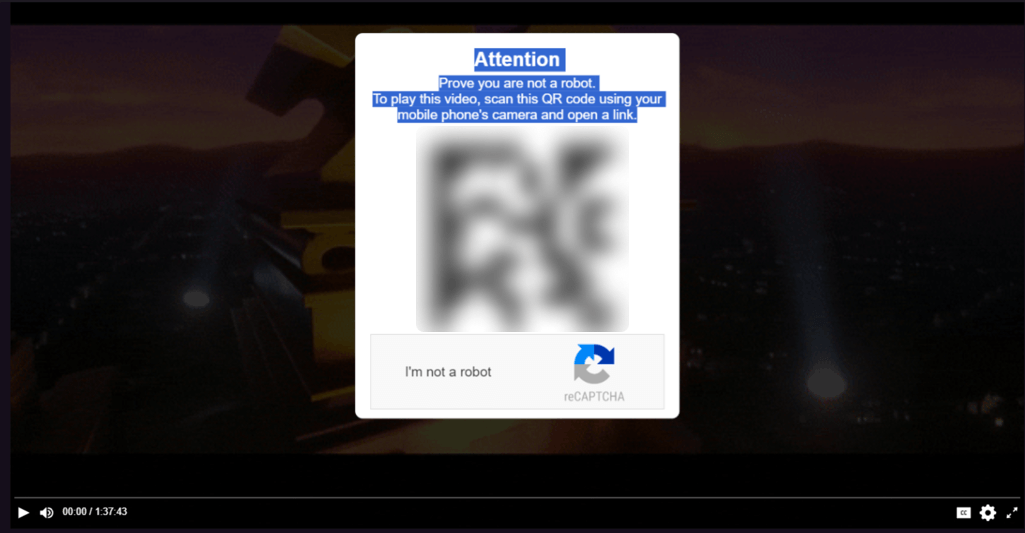
    Unlike genuine CAPTCHAs designed to protect websites from bots, this imitation serves to promote shady resources. As with the previous stage, the victim doesn’t always encounter malware. For example, the CAPTCHA on one of the pages prompts the visitor to scan a QR code leading to a betting site:

    CAPTCHA with QR code

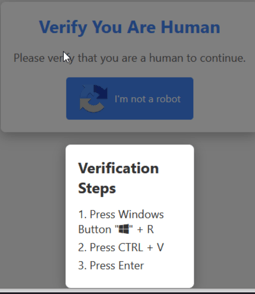
    The Trojans are distributed through CAPTCHAs with instructions. Clicking the “I’m not a robot” button copies the line powershell.exe -eC bQBzAGgAdABhAMAIgA= to the clipboard and displays so-called “verification steps”:

    • Press Win + R (this opens the Run dialog box);
    • Press CTRL + V (this pastes the line from the clipboard into the text field);
    • Press Enter (this executes the code).

    CAPTCHA with instructions

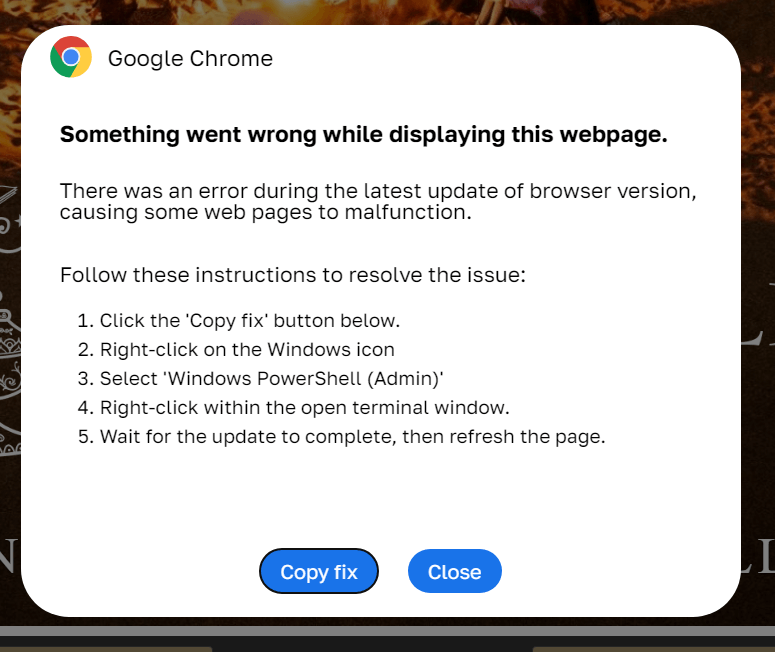
    We’ve also come across similar instructions in formats other than CAPTCHAs. For instance, the screenshot below shows an error message for a failed page load, styled like a Chrome message. The attackers attribute the problem to a “browser update error” and instruct the user to click the “Copy fix” button. Although the page design is different, the infection scenario is identical to the CAPTCHA scheme.

    Fake update error message

    The line from the clipboard contains a Base64-encoded PowerShell command that accesses the URL specified there and executes the page’s content. Inside this content is an obfuscated PowerShell script that ultimately downloads the malicious payload.

    Payload: Lumma stealer

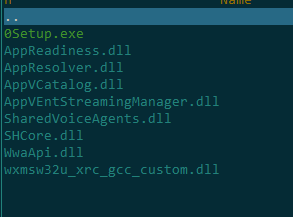
    Initially, the malicious PowerShell script downloaded and executed an archive with the Lumma stealer. In the screenshot below, the stealer file is named 0Setup.exe:

    Contents of the malicious archive

    After launching, 0Setup.exe runs the legitimate BitLockerToGo.exe utility, normally responsible for encrypting and viewing the contents of removable drives using BitLocker. This utility allows viewing, copying, and writing files, as well as modifying registry branches – functionality that the stealer exploits.

    Armed with BitLocker To Go, the attackers manipulate the registry, primarily to create the branches and keys that the Trojan needs to operate:


    That done, Lumma, again using the utility, searches the victim’s device for files associated with various cryptocurrency wallets and steals them:

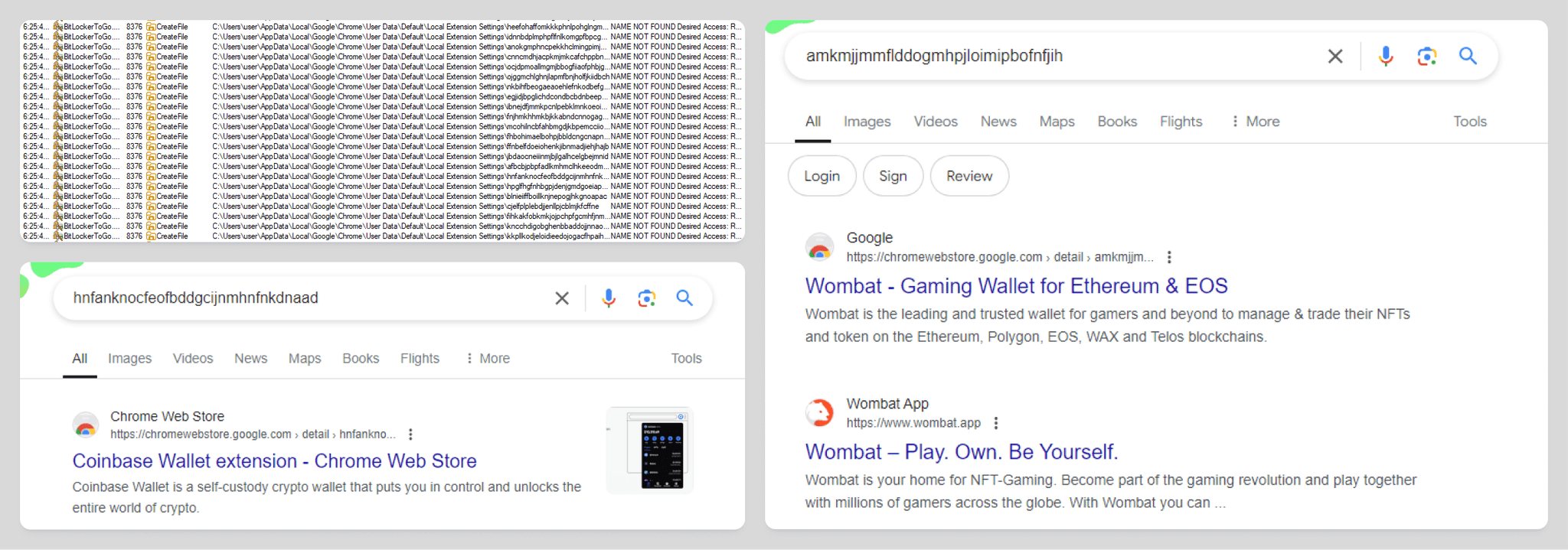
    Then, the attackers view browser extensions related to wallets and cryptocurrencies and steal data from them:

    Following this, the Trojan attempts to steal cookies and other credentials stored in various browsers:

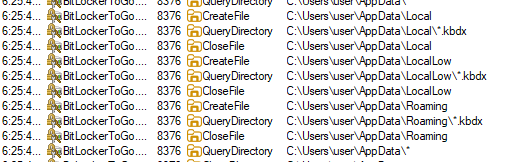
    Finally, the malware searches for password manager archives to steal their contents as well:

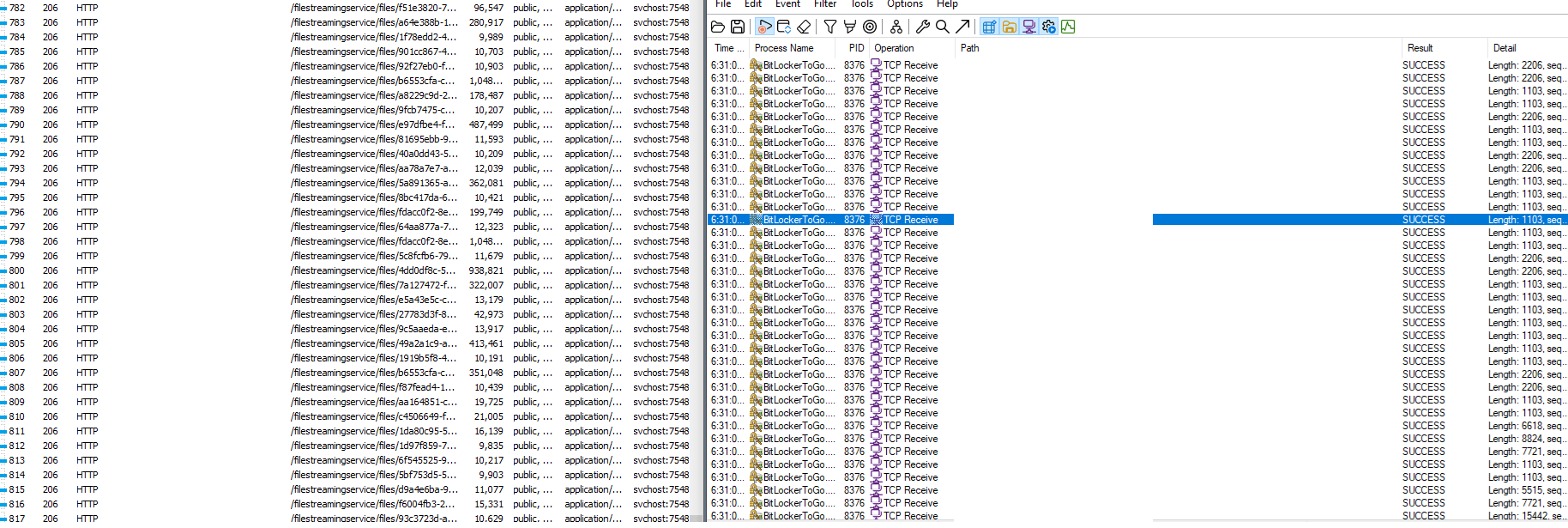
    Throughout the data collection process, the Trojan tries to use the same BitLocker To Go to send the stolen data to the attackers’ server:

    Once the malware has found and exfiltrated all valuable data, it starts visiting the pages of various online stores. The purpose here is likely to generate further revenue for its operators by boosting views of these websites, similar to adware:

    Payload: Amadey Trojan

    We recently discovered that the same campaign is now spreading the Amadey Trojan as well. Known since 2018, Amadey has been the subject of numerous security reports. In brief, the Trojan downloads several modules for stealing credentials from popular browsers and various Virtual Network Computing (VNC) systems. It also detects crypto wallet addresses in the clipboard and substitutes them with those controlled by the attackers. One of the modules can also take screenshots. In some scenarios, Amadey downloads the Remcos remote access tool to the victim’s device, giving the attackers full access to it.

    Snippet of Amadey code used in this campaign

    Statistics

    From September 22 to October 14, 2024, over 140,000 users encountered ad scripts. Kaspersky’s telemetry data shows that out of these 140,000, over 20,000 users were redirected to infected sites, where some of them saw a fake update notification or a fake CAPTCHA. Users in Brazil, Spain, Italy, and Russia were most frequently affected.

    Conclusion

    Cybercriminals often infiltrate ad networks that are open to all comers. They purchase advertising slots that redirect users to malicious resources, employing various tricks to achieve infections. The above campaign is of interest because (a) it leverages trust in CAPTCHA to get users to perform unsafe actions, and (b) one of the stealers makes use of the legitimate BitLocker To Go utility. The malware works to enrich its operators both by stealing victims’ credentials and crypto wallets, and by exploiting online stores that pay money for traffic to their websites.

    Indicators of compromise

    e3274bc41f121b918ebb66e2f0cbfe29
    525abe8da7ca32f163d93268c509a4c5
    ee2ff2c8f49ca29fe18e8d18b76d4108
    824581f9f267165b7561388925f69d3av

    MIL OSI Economics

  • MIL-OSI Russia: Polytechnic University held the first regional student Olympiad in management

    Translation. Region: Russian Federation –

    Source: Peter the Great St Petersburg Polytechnic University – Peter the Great St Petersburg Polytechnic University –

    The Polytechnic University hosted a regional student Olympiad in management. It became the twentieth in the list of subject Olympiads that have been held in St. Petersburg since 2008. The Polytechnic University applied to the city’s Science and Higher Education Committee for the right to hold such an Olympiad and received approval. The Higher School of Industrial Management of the IPMEiT SPbPU took on the organization of the event.

    The Olympiad involved 17 universities of St. Petersburg, conducting specialized training in the discipline “Management”. 134 students competed for winning and prize places in team and individual championships.

    Vice-Rector for Educational Activities of SPbPU Lyudmila Pankova spoke at the opening ceremony of the Olympiad.

    The Polytechnic University is pleased to welcome such a large number of participants who have shown interest in the Management Olympiad. Such city events provide an incentive for the development of students’ scientific activities and contribute to improving the quality of training of university graduates, and provide teachers and student mentors with the opportunity to identify talented young people, those “stars” with whom one can and should work in the future in the senior years of a bachelor’s, specialist or master’s degree, said Lyudmila Vladimirovna.

    Vladimir Glukhov, Advisor to the Rector’s Office, wished the Olympiad participants fruitful work and success.

    Management must be studied always and everywhere: in the classroom, studying the experience of the best managers and companies, from your own experience of organizing events, at various competitions and contests, Vladimir Viktorovich is sure.

    Director of IPMEiT Vladimir Shchepinin noted the importance of holding such events: At our institute, we regularly organize open lectures by practicing teachers, business representatives, hold master classes and practical seminars from industrial partners, as well as events of the IPMEiT scientific student society, which undoubtedly strengthens student educational and scientific activities. Holding a specialized Olympiad is a new format of working with talented students. I wish all participants a successful performance and self-confidence!

    The Olympiad was held with the support of the Directorate of Basic Educational Programs, the Department of Youth Policy and the Priority 2030 program. Subject assignments consisted of three blocks: tests, calculations and cases. The works were assessed by a commission, which included representatives of the participating universities.

    A little less than a year ago, we applied to the Committee for Science and Higher Education of St. Petersburg for the opportunity to hold the Olympiad. It was important for us to hold a city-wide event in a high-quality, professional and interesting way for students. I would like to thank my colleagues from the Higher School of Industrial Management, with whom we prepared assignments for the Olympiad, dealt with organizational issues, promotion, design and methodological support. We worked as a single team, and that is why everything worked out for us! — shared her impressions the director of the Higher School of Industrial Management Olga Kalinina.

    The results of the Olympiad will be officially announced on November 7 at a meeting of the scientific council for approving the winners of subject Olympiads under the Committee on Science and Higher Education of St. Petersburg.

    Please note: This information is raw content directly from the source of the information. It is exactly what the source states and does not reflect the position of MIL-OSI or its clients.

    MIL OSI Russia News

  • MIL-OSI Asia-Pac: Pradhan Mantri Mudra Yojana

    Source: Government of India (2)

    Pradhan Mantri Mudra Yojana

    Loan Limit Raised to ₹20 Lakh from ₹10 Lakh

    Posted On: 29 OCT 2024 3:00PM by PIB Delhi


    “Millions of common men and women of this country, who run small business, have almost remained outside the net of formal institutional finance, in spite of their large contribution to the economy. MUDRA is our innovation of funding the unfunded.”

                             ~ Prime Minister Narendra Modi


    The Pradhan Mantri MUDRA Yojana (PMMY), launched by the Prime Minister on April 8, 2015, has played a pivotal role in empowering non-corporate, non-farm small and micro enterprises by providing loans of up to ₹10 lakh. To strengthen support for aspiring entrepreneurs, the finance minister announced an increase in the loan limit to ₹20 lakh during the Union Budget 2024-25 on July 23, 2024. This new limit took effect on October 24, 2024.

    This announcement also introduces a new loan category, Tarun Plus, designed specifically for those who have previously availed and successfully repaid loans under the Tarun category, allowing them to access funding between ₹10 lakh and ₹20 lakh. Additionally, the Credit Guarantee Fund for Micro Units (CGFMU) will now provide guarantee coverage for these enhanced loans, further reinforcing the government’s commitment to nurturing a robust entrepreneurial ecosystem in India.

    Mudra Yojana


    MUDRA,3 which stands for Micro Units Development & Refinance Agency Ltd, is a financial institution set up by the Government of India under PMMY for development and refinancing micro unit enterprises. PMMY aims to provide financial inclusiveness and support to the marginalized and hitherto socio-economically neglected classes. PMMY has given wings to the dreams and aspirations of millions, along with a feeling of self-worth and independence.

    Need for the MUDRA Yojana

    India is a young country brimming with youthful enthusiasm and aspirations. In order to provide a fertile ground for sowing the seeds of India’s development it is very important to harness this innovative zeal of young India which can provide new age solutions to existing gaps in the economic ecosystem of the country. Understanding the need to harness the latent potential of entrepreneurship in India, the Union Government launched the Pradhan Mantri MUDRA Yojana.

    MUDRA Loans: Categories

    Under PMMY collateral free loans up to Rs. 20 Lakh are extended by Member Lending Institutions (MLIs) viz Scheduled Commercial Banks,  Regional Rural Banks (RRBs), Small Finance Banks (SFBs), Non-Banking Financial Companies (NBFCs), Micro Finance Institutions (MFIs) etc. The loans are given for income generating activities in manufacturing, trading and services sectors and for activities allied to agriculture.

    MUDRA loans now will be offered in four categories namely, ‘Shishu’, ‘Kishore’and ‘Tarun’ and newly added category ‘Tarun Plus’ which signifies the stage of growth or development and funding needs of the borrowers:-

    • Shishu: covering loans upto Rs. 50,000/-
    • Kishore: covering loans above Rs. 50,000/- and up to Rs. 5 lakhs
    • Tarun: covering loans above Rs. 5 lakh and up to Rs. 10 lakhs
    • Tarun Plus: Rs. 10 lakh and up to Rs. 20 lakhs


    Achievements of PMMY


    Under Pradhan Mantri Mudra Yojana (PMMY) amount sanctioned and disbursed in the financial year 2023-24 under various categories:[4]

    • Women Borrowers: A total of ₹1,08,472.51 crore was disbursed under the Shishu category, ₹1,00,370.49 crore under Kishore, and ₹13,454.27 crore under the Tarun category.
    • Minority Borrowers: The disbursements amounted to ₹15,759.66 crore under Shishu, ₹20,766.3 crore under Kishore, and ₹8562.27 crore under Tarun.
    • New Entrepreneurs / Accounts:
      • Shishu category: 88,49,101 accounts with a sanctioned amount of ₹29,445.41 crore and disbursed amount of ₹28,839.75 crore.
      • Kishore category: 34,06,239 accounts with ₹62,290.58 crore sanctioned and ₹60,407.02 crore disbursed.
      • Tarun category: 7,57,456 accounts with a sanctioned amount of ₹70,294.35 crore and ₹68,861.13 crore disbursed.
    • Unique Borrowers (from 8th April 2015 to 31st March 2024):
      • ₹44,891.82 crore was sanctioned under Shishu.
      • ₹24,575.57 crore was sanctioned under Kishore.
      • ₹19,120.58 crore was sanctioned under Tarun.


    Mudra Card


    MUDRA Card[5] is an innovative credit product wherein the borrower can avail of credit in a hassle free and flexible manner. It provides a facility of working capital arrangement in the form of an overdraft facility to the borrower. Since MUDRA Card is a RuPay debit card, it can be used for drawing cash from ATM or Business Correspondent or make purchase using Point of Sale (POS) machine. Facility is also there to repay the amount, as and when, surplus cash is available, thereby reducing the interest cost.


    MUDRA App- “MUDRA MITRA”


     MUDRA MITRA is a mobile phone application available in Google Play Store and Apple App    Store, providing information regarding ‘Micro Units Development and RefinanceAgency Ltd. (MUDRA)’ and its various products/ schemes. It will guide a loan seeker to approach a Banker in availing MUDRA loan under PMMY. Users can also access useful loan related material including sample loan application forms in this app.


     Steps taken to improve implementation of the Scheme:[6]

    • Handholding support for facilitating submission of loan applications
    • Provision for online applications through PSBloansin59minutes and Udyamimitra portal
    • Intensive publicity campaigns for increased visibility of the scheme amongst the stakeholders
    • Simplification of application forms
    • Nomination of MUDRA Nodal Officers in Public Sector Banks (PSBs)
    • Periodic monitoring of performance of PSBs with regard to PMMY
    • Interest Subvention of 2% on prompt repayment of Shishu loans extended under PMMY for a period of 12 months to all eligible borrowers.
    • Announced by Union Finance Minister on 14.05.2020 under Aatmanirbhar Bharat Package, the scheme has been formulated as a specific response to an unprecedented situation and aims to alleviate financial stress for borrowers at the ‘bottom of the pyramid’ by reducing their cost of credit.


    Conclusion

    The Pradhan Mantri MUDRA Yojana (PMMY) has fundamentally reshaped the landscape of entrepreneurship in India, driving significant progress in financial inclusion. By providing critical funding support, the scheme has enabled countless new entrepreneurs to turn their business ideas into reality. Over the years, it has also empowered women and minority communities, creating opportunities for economic upliftment and fostering a more inclusive growth environment. As the loan limit expands to ₹20 lakh, PMMY continues to play a vital role in nurturing small businesses and fueling the nation’s journey toward a more equitable and prosperous future.

    References:


    Click here to see in PDF

    Santosh Kumar/ Sarla Meena/ Kamna Lakaria

    (Release ID: 2069170) Visitor Counter : 38

    MIL OSI Asia Pacific News

  • MIL-OSI Asia-Pac: Maximum Retail Price of three Anti-cancer Drugs (Trastuzumab, Osimertinib and Durvalumab) to come down on account of exemption from Custom duty and Reduction in GST Rates

    Source: Government of India

    Posted On: 29 OCT 2024 2:23PM by PIB Delhi

    In line with the Government’s commitment to ensure the availability of drugs at affordable prices, National Pharmaceutical Pricing Authority (NPPA) has issued an O.M. dated 28.10.2024 directing the concerned manufacturers to reduce the MRP on three anti-cancer drugs, Trastuzumab, Osimertinib and Durvalumab.  This is in pursuance to the announcement made in the Union Budget for the year 2024-25 exempting these three anti-cancer medicines from customs duty. The Department of Revenue, Ministry of Finance issued Notification 30/2024 dated 23.07.2024 reducing the custom duty to nil on these three anticancer drugs.

    Further, the Department of Revenue, Ministry of Finance has issued notification no. 05/2024 dated 08.10.2024 notifying the reduction in GST Rates from 12% to 5% with effect from 10.10.2024 on these three drugs.

    Accordingly, there should be a reduction in MRP of these drugs in the market and benefits of reduced taxes & duties should be passed on to the consumers. Hence, NPPA vide O.M. dated 28.10.2024 has directed all the manufacturers of above-mentioned drugs to reduce their MRP. The manufacturers are required to issue a price list or supplementary price list to the dealers, State Drugs Controllers and the Government indicating changes and to submit information regarding price change to NPPA through Form-II/ Form V.

    *****

    MV/AKS

    (Release ID: 2069153) Visitor Counter : 86

    MIL OSI Asia Pacific News

  • MIL-OSI Asia-Pac: Key Decisions by Central Empowered Committee to strengthen Gram Panchayats across the country

    Source: Government of India (2)

    Key Decisions by Central Empowered Committee to strengthen Gram Panchayats across the country

    Standardized Honorarium, Training in Smart Classrooms, New Panchayat Buildings to improve Service Delivery at the Grassroots

    Posted On: 29 OCT 2024 12:10PM by PIB Delhi

    In a bid to further enhance the effectiveness of grassroots governance across the country, the Central Empowered Committee (CEC) of the Revamped, Centrally Sponsored Scheme of Rashtriya Gram Swaraj Abhiyan (RGSA), in its 8th meeting under the Chairmanship of Secretary, Ministry of Panchayati Raj (MoPR) Mr. Vivek Bharadwaj, made several significant decisions. The major decisions taken include Adoption of Standardized Honorarium under RGSA, Long term Domestic Training of Panchayat officials, Training of elected representatives in Smart Classrooms, Investment in Gram Panchayat Infrastructure throughout the country with special focus on North Eastern States and UT of Jammu and Kashmir.

    Adoption of Standardized Honorarium System under RGSA

    The CEC approved the standardization of honorarium rates for Master Trainers, Guest Faculties, and Eminent Resource Persons across States/UTs. This decision ensures equitable compensation, fostering the availability of high-quality trainers, which is critical for improving training delivery at the grassroots level. By addressing disparities in honorarium, the decision sets a new benchmark for training consistency and capacity building across Panchayati Raj Institutions (PRIs). This decision marks a crucial step towards ensuring uniformity and quality in training delivery across the country, from larger States like Uttar Pradesh and Maharashtra to smaller ones like Sikkim and Goa. This is particularly important for States like Bihar, Gujarat, Punjab and West Bengal, which are scaling up their training initiatives. By standardizing rates, the Ministry aims to attract and retain high-quality Trainers and Resource Persons, which is essential for effective capacity building of Panchayati Raj Institutions (PRIs) in every State.

    States/UTs to sponsor Panchayat Officials for Long-Term Domestic Training Programs for higher Learning

    “Funding for Long-Term Domestic Training Programs” for up to one year of duration for officials of PRIs and Panchayati Raj Department in the States/UTs under the State component of RGSA has been given a go ahead. The move aims at ensuring that the officials receive advanced, sector-specific training from Institutes of Excellence which will upgrade their skill set for better service delivery at the grassroots. This aligns with the objective of RGSA to strengthen decentralized governance and improved implementation efficiency. It will boost the overall competency of officials involved in rural development and local self-governance, thereby improving grassroots planning. It will also result in extensive Human Capital formation in PRIs over a period of few years.

    The decision addresses the critical need for in-depth skill upgradation of PRI functionaries across all participating States. By including subjects like spatial planning, resource mobilization, and disaster management, the program aims to equip officials with comprehensive knowledge essential for rural development in diverse geographical contexts, from the coastal regions of Kerala to the mountainous terrains of Himachal Pradesh. All the States and UTs will benefit from this decision as the North East (NE) and Hilly States can sponsor 10 candidates each for higher learning, UTs and Goa up to 5 applicants each while other States can sponsor up to 20 candidates each.

    Boost to Panchayat Infrastructure

    To enhance infrastructure, the CEC approved, construction of 3,301 Gram Panchayat Bhawans with Common Service Centre (CSC) co-location and sanctioned 22,164 computers for Gram Panchayats across various States including Andhra Pradesh, Chhattisgarh, Punjab, and Telangana. This decision is a boost for Panchayati Raj system in these States as it directly addresses infrastructure gaps, enabling better administrative functioning and digital governance in rural areas. The provision of dedicated buildings and computer equipment will facilitate efficient record-keeping and e-governance, significantly enhancing local government operations and service delivery.

    Elected Representatives of Panchayats to be trained in Smart Classrooms

    In a bid to modernize the Panchayat Resource Centers at the State and District level across the country, computer labs in State Panchayat Resource Centers (SPRCs) in 25 States as well as in District Panchayat Resource Centers (DPRCs) in 395 Districts will be upgraded with more computers of latest specification. At the same time, approval has been given for installing technological Educational Aids in these SPRCs and DPRCs across States/UTs. This decision for upgrading the State and District Panchayat Resource Centers (SPRCs/ DPRCs) in States like Gujarat and Tamil Nadu will modernize training infrastructure, creating a conducive learning environment. By integrating digital tools including projectors, LCDs, interactive panels and PA systems, the training centers will be better equipped to deliver high-quality capacity-building programs. This move is expected to accelerate the adoption of digital learning and improve the training outreach to Panchayat functionaries across India.

    Investment in Panchayat Infrastructure in the Vibrant Villages of the Border Areas of North East and Jammu and Kashmir

    Over a period of last few years, a number of decisions to support the infrastructure development for PRIs in the North Eastern States and the UT of Jammu and Kashmir have been taken. In the past years, the Ministry has supported construction of Panchayat Bhawans as well as setting up of Common Service Centres for ease of the residents in these areas. In J&K, the Ministry has supported construction of 970 GP Bhawans and co-location of 1606 Common Service Centres during 2024-25.

    In this meeting, decision has been taken for the construction of 400 Panchayat Bhawans-cum-Common Service Centers in Arunachal Pradesh. This is in continuation of MoPR’s support in the past for 939 GP Bhawans with collocated CSCs. Similarly, Panchayat infrastructure has been supported for the other States of North East including Mizoram, Meghalaya, Nagaland, Assam, Manipur. Overall, 1633 Gram Panchayat Bhawans and 514 CSCs have been approved for the States of North East.

    These initiatives aim at enhancing administrative efficiency and provide essential services at the grassroots level, significantly contributing to the development of Vibrant Villages.

    ****

    AA

    (Release ID: 2069112) Visitor Counter : 61

    MIL OSI Asia Pacific News

  • MIL-OSI Asia-Pac: Prime Minister Shri Narendra Modi addresses Rozgar Mela

    Source: Government of India (2)

    Prime Minister Shri Narendra Modi addresses Rozgar Mela

    It is a matter of great joy to have handed over appointment letters for government jobs to 51 thousand youth in the Rozgar Mela, Best wishes to all the youth who are taking a step towards nation building:PM

    It is our commitment that the youth of the country should get maximum employment: PM

    Today India is moving towards becoming the third largest economy in the world: PM

    We promoted Make in India in every new technology,We worked on self-reliant India: PM

    Under the Prime Minister’s Internship Scheme, provision has been made for paid internships in the top 500 companies of India: PM

    Posted On: 29 OCT 2024 11:53AM by PIB Delhi

    The Prime Minister Shri Narendra Modi addressed the Rozgar Mela and distributed more than 51,000 appointment letters to newly appointed youth in Government departments and organizations via videoconferencing today. Rozgar Mela highlights the Prime Minister’s commitment to prioritizing employment generation. It will empower the youth by providing them with meaningful opportunities to contribute to nation-building.

    Addressing the occasion, the Prime Minister noted the auspicious occasion of Dhanteras and conveyed his best wishes on the occasion. Underlining that this year’s Diwali would be a special one, the Prime Minister said that it is the first Diwali since Lord Shri Ram has been seated in his magnificent temple in Ayodhya after 500 years. He said that several generations have waited for this Diwali, while many have sacrificed their lives for it or faced adversities. The Prime Minister  emphasized that the present generation is extremely fortunate to witness and become a part of such celebrations. In the atmosphere of festivity, said the Prime Minister, 51,000 youth are being handed out recruitment letters for government jobs. He congratulated the new recruits and conveyed his best wishes to them.

    The Prime Minister highlighted that offering permanent Government jobs to lakhs of youths has been a legacy which is continuously going on. He added that lakhs of youths were handed appointment letters even in the states being governed by BJP and NDA allies. Shri Modi emphasized that in Haryana there is a festive atmosphere with 26,000 youths getting jobs by the newly formed government . Shri Modi said their Government in Haryana had a special identity of giving jobs without any expense or recommendation. He greeted the 26,000 youths of Haryana who will be handed over their appointment letters today apart from 51,000 jobs in today’s Rozgar Mela. 

    The Prime Minister reiterated the government’s commitment that the youth of the country should get maximum employment. Noting that the policies and decisions of the government have a direct impact on job creation, the Prime Minister highlighted the development of expressways, highways, roads, rail, ports, airports, laying of fiber cables, setting up of mobile towers and expansion of new industries in all parts of the country. Referring to laying of water and gas pipelines, establishing of new schools, colleges and universities and reducing logistics cost by spending on infrastructure, Shri Modi said that it is not only benefitting the citizens but also creating new job opportunities. 

    Recalling his visit to Vadodara in Gujarat yesterday, the Prime Minister mentioned inaugurating an aircraft manufacturing facility for the defence sector. He said that thousands of citizens would get direct employment while MSME industries would hugely benefit from the manufacturing of spare parts and other equipment, creating a huge network of supply chains. Noting that a single aircraft comprises 15,000 to 25,000 parts, Shri Modi emphasized that thousands of smaller factories would play an active role in fulfilling the demands of a mega factory, thereby benefiting India’s MSMEs. 

    The Prime Minister remarked that whenever a scheme is launched, the focus is not just only on the benefits accrued to the citizens, but also develop an entire ecosystem of employment generation using it as a medium by thinking in a broader scope. Citing an example of PM Suryaghar Muft Bijli Yojana, he said  in the last 6 months, around 2 crore customers had registered for the scheme, more than 9,000 vendors were associated with scheme, solar panels were already installed in more than 5 lakh houses and in the near future, there was a plan to create 800 Solar villages as model under this scheme. He also noted that 30,000 people had undergone training for roof-top solar installation as well. Therefore, he added, this one scheme of PM Suryaghar Muft Bijli Yojana has created a host of employment opportunities for manufacturers, vendors, assemblers and repairers across the country.

    Noting that the Khadi industry of India has been transformed by the policies of the government in the last 10 years and impacted the people in the villages, the Prime Minister informed that Khadi Gram Udyog’s business has surpassed 1.5 lakh crores today. Drawing parallels from 10 years ago, the Prime Minister exclaimed that the sale of Khadi has grown up to 400 percent, thereby benefiting artists, weavers and businesses and also creating new employment opportunities. Shri Modi also touched upon the Lakhpati Didi scheme where new employment and self-employment opportunities are provided to rural women. “More than 10 crore women have joined self-help groups in the last decade”, he added, noting that 10 crore women are now engaged in economic activities. He credited the support provided by the government in every step and reiterated the commitment to creating 3 crore lakhpati didis. “More than 1.25 crore women have already become Lakhpati Didis so far making their annual income above Rs 1 lakh”, he added.

    The Prime Minister stated that India is moving towards becoming the world’s third-largest economy. Reflecting on the country’s progress, he noted the inquisition by the youth of India who often ask why the country didn’t achieve this pace earlier. Underlining that the answer lies in the lack of clear policies and intent in previous governments, the Prime Minister pointed out that India had been lagging behind in several sectors, particularly technology. He recalled that India used to wait for new technologies from around the world and what was considered outdated in the West would eventually reach the nation. He pointed out the long withstanding belief that modern technology could not be developed in India not only set India back in terms of growth but also deprived the country of crucial job opportunities. 

    Highlighting the steps taken to free the country from this old thinking, the Prime Minister stated that efforts were initiated to break free from this old mindset in sectors like space, semiconductors, electronics and electric vehicles by promoting Make in India. The Prime Minister underscored the importance of technological advancement and investment, adding that the PLI scheme was launched to bring new technology and foreign direct investment to India, which has accelerated job creation when combined with the Make in India initiative. He noted that every sector is now receiving a boost providing opportunities for youth across different fields. “Today, India is witnessing massive investment, and record opportunities are being created”, he said, adding that in the last eight years, over 1.5 lakh startups have been launched, making India the world’s third-largest startup ecosystem. He further added that these sectors are offering our youth a chance to grow and gain employment.

    The Prime Minister reiterated that the government is very focused on skill development today to increase the capacity of the youth of India. Therefore, he added, Government started missions like Skill India and youth were being trained in many skill development centers. Shri Modi remarked that arrangements were made to ensure that India’s youth need not have to wander for experience and opportunity. Citing the Pradhan Mantri Internship Yojana, Shri Modi said provisions were made for paid internships in the top 500 companies of India, where every intern would be given Rs 5,000 per month for one year. He added the Government’s target  was to ensure one crore youth get internship opportunities in the next 5 years. This, he said, would give the youth a chance to connect with the real-life business environment in different sectors and add a beneficial experience to their career.

    The Prime Minister remarked that the Indian government was creating new opportunities to make it easier for Indian youth to get jobs abroad. Citing the recently released Germany’s  Skilled Labour Strategy for India, Shri Modi informed that Germany had increased the number of visas given to skilled Indian youth every year from 20 thousand to 90 thousand. He added that India’s youth will benefit greatly from this. Shri Modi also mentioned that India had signed agreements related to migration and employment with 21 countries in recent years, including countries like Japan, Australia, France, Germany, Mauritius, Israel, UK and Italy, apart from Gulf countries. He noted that every year 3 thousand Indians can get a 2-year visa to work and study in the UK while 3 thousand Indian students will get the opportunity to study in Australia. “India’s talent will not only give direction to India’s progress but also to the world’s progress”, exclaimed Shri Modi. He added that India was moving ahead in that direction.

    Shri Modi emphasized that the role of the government today was to create a modern system where every youth gets an opportunity and can fulfill their aspirations. Therefore, he urged the newly appointed youths in various positions that their goal should be to provide maximum facilities to the youth and citizens of India.

    The Prime Minister emphasized the crucial role of taxpayers and citizens in securing government jobs and stated that the government exists because of the citizens and is appointed to serve them. He reiterated that the primary duty is to serve the nation, be it in the position of a postman or a professor. Shri Modi underlined that the new recruits have joined the government at a time when the country has resolved to become developed. Therefore, said the Prime Minister, to achieve this goal, we must excel in every sector and contribute fully. He urged the new recruits to not only perform well but to strive for excellence. “Government employees in our country should set an example recognized worldwide”, he asserted. The Prime Minister stressed that the nation has high expectations from them and said that these expectations must be met to deliver on the commitments.

    The Prime Minister remarked on the new journey that appointees are embarking on with their positions, urging them to always remain humble and to maintain the habit of learning throughout their journey. He highlighted the availability of various courses for government employees on the iGOT Karmayogi platform and encouraged them to utilize this digital training module at their convenience. “Once again, I congratulate the candidates receiving their appointment letters today”, the Prime Minister concluded. 

    Background

    Rozgar Mela is being organized at 40 locations across the country with new recruits joining the Central Government across various Ministries and Departments such as the Department of Revenue, Department of Higher Education, Ministry of Home Affairs, Ministry of Defence, Ministry of Health and Family Welfare among others.

    Newly appointed recruits will have the opportunity to undertake foundational training through ‘Karmayogi Prarambh,’ an online module available on the iGOT Karmayogi portal. Over 1400 e-learning courses are available which will equip recruits with essential skills to serve in their roles effectively and work towards building a Viksit Bharat.


    ***

    MJPS/SR/TS

    (Release ID: 2069104) Visitor Counter : 77

    MIL OSI Asia Pacific News

  • MIL-OSI Asia-Pac: Marching Towards Atmanirbharta: India’s Defence Revolution

    Source: Government of India (2)

    Marching Towards Atmanirbharta: India’s Defence Revolution

    Domestic production hit ₹1.27 lakh crore in FY 2023-24, with exports growing 30x in a decade

    Posted On: 29 OCT 2024 11:21AM by PIB Delhi

    Introduction

    The recent inauguration of the TATA Aircraft Complex at the TATA Advanced Systems Limited (TASL) Campus in Vadodara, Gujarat, on October 28, 2024, marks a key milestone in India’s journey toward Atmanirbharta in defence. This facility, dedicated to manufacturing C-295 military transport aircraft, becomes the first private sector Final Assembly Line (FAL) for military aircraft in India, underscoring the government’s commitment to enhancing indigenous production capabilities. Under the program, 56 C-295 aircraft will be delivered, with the initial 16 arriving from Airbus in Spain and the remaining 40 produced domestically. This initiative exemplifies India’s shift toward self-reliance in defence manufacturing, aimed at strengthening operational readiness and reducing dependency on foreign imports.

    India’s commitment to Atmanirbharta in defence is further evidenced by its transformation from a major arms importer to an emerging centre for indigenous production. Driven by strategic government policies, this shift reached a landmark in FY 2023-24, with the Ministry of Defence reporting an unprecedented ₹1.27 lakh crore in domestic defence production. Once reliant on foreign suppliers, India now places a high priority on self-reliant manufacturing to meet its security needs, reinforcing its vision to strengthen national resilience and reduce dependency on external sources.


    Rise in India’s Defence Production

    India has achieved the highest-ever growth in indigenous defence production in value terms during Financial Year (FY) 2023-24, driven by the successful implementation of government policies and initiatives led by Prime Minister Shri Narendra Modi, focusing on attaining
    Atmanirbharta. According to data from all Defence Public Sector Undertakings (DPSUs), other public sector units manufacturing defence items, and private companies, the value of defence production has surged to a record high of ₹1,27,265 crore, representing an impressive increase of approximately 174% from ₹46,429 crore in 2014-15.

    Historically, India relied heavily on foreign countries for its defence needs, with about 65-70% of defence equipment being imported. However, this landscape has dramatically shifted, with around 65% of defence equipment now manufactured within India. This transformation reflects the country’s commitment to self-reliance in this critical sector and underscores the strength of its defence industrial base, which comprises 16 Defence Public Sector Units (DPSUs), over 430 licensed companies, and approximately 16,000 Micro, Small, and Medium Enterprises (MSMEs). Notably, 21% of this production comes from the private sector, bolstering India’s journey toward self-reliance.

    As part of the Make in India initiative, major defence platforms such as the Dhanush Artillery Gun System, Advanced Towed Artillery Gun System (ATAGS), Main Battle Tank (MBT) Arjun, Light Combat Aircraft (LCA) Tejas, submarines, frigates, corvettes, and the recently commissioned INS Vikrant have been developed, reflecting the growing capabilities of India’s defence sector.

    Consequently, the annual defence production has not only crossed ₹1.27 lakh crore but is also on track to reach a target of ₹1.75 lakh crore in the current fiscal year. With aspirations to achieve ₹3 lakh crore in defence production by 2029, India is solidifying its position as a global manufacturing hub for defence.


    India’s Defence Exports Surge

    India’s defence exports have reached an all-time high, surging from ₹686 crore in FY 2013-14 to ₹21,083 crore in FY 2023-24, reflecting a remarkable increase of over 30 times in export value over the past decade.

    This achievement is driven by effective policy reforms, initiatives, and improvements in the ease of doing business implemented by the government, all aimed at attaining self-reliance in defence. Notably, defence exports also experienced a substantial growth of 32.5% over the previous fiscal year, rising from ₹15,920 crore.

    India’s export portfolio boasts a diverse range of advanced defence equipment, including bulletproof jackets and helmets, Dornier (Do-228) aircraft, Chetak helicopters, fast interceptor boats, and lightweight torpedoes. A noteworthy highlight is the inclusion of ‘Made in Bihar’ boots in the Russian Army’s equipment, marking a significant milestone for Indian products in the global defence market and showcasing the country’s high manufacturing standards.

    Currently, India exports to over 100 nations, with the top three destinations for defence exports in 2023-24 being the USA, France, and Armenia. According to Raksha Mantri Shri Rajnath Singh, the target is to further increase defence exports to ₹50,000 crore by 2029. This expanding international footprint underscores India’s commitment to becoming a reliable defence partner globally while bolstering its economic growth through enhanced defence production and exports.

    Key Government Initiatives

    In recent years, the Indian government has implemented a series of transformative initiatives aimed at bolstering the country’s defence production capabilities and achieving self-reliance. These measures are designed to attract investment, enhance domestic manufacturing, and streamline procurement processes. From liberalizing foreign direct investment (FDI) limits to prioritizing indigenous production, these initiatives reflect a robust commitment to strengthening India’s defence industrial base. The following points outline the key government initiatives that have been pivotal in driving growth and innovation in the defence sector.

    • Liberalized FDI Policy: The Foreign Direct Investment (FDI) limit in the defence sector was raised in 2020 to 74% through the Automatic Route for companies seeking new defence industrial licenses and up to 100% through the Government Route for those likely to result in access to modern technology. As of February 9, 2024, ₹5,077 crore worth of FDI has been reported by companies operating in the defence sector.
    • Budget Allocation: The allocation for the Ministry of Defence for the financial year 2024-25 is ₹6,21,940.85 crore, as part of the “Demand for Grant” presented in Parliament during the ongoing Budget Session.
    • Priority for Domestic Procurement: Emphasis is placed on procuring capital items from domestic sources under the Defence Acquisition Procedure (DAP)-2020.
    • Positive Indigenization Lists: Notification of five ‘Positive Indigenization Lists’ totalling 509 items of services and five lists of 5,012 items from Defence Public Sector Undertakings (DPSUs), with an embargo on imports beyond specified timelines.
    • Simplified Licensing Process: Streamlining the industrial licensing process with a longer validity period.
    • iDEX Scheme Launch: The Innovations for Defence Excellence (iDEX) scheme was launched to involve startups and Micro, Small, and Medium Enterprises (MSMEs) in defence innovation.


    • Public Procurement Preference: Implementation of the Public Procurement (Preference to Make in India) Order 2017 to support domestic manufacturers.


    • Indigenization Portal: Launch of the Self-Reliant Initiatives through Joint Action (SRIJAN) portal to facilitate indigenization by Indian industry, including MSMEs.


    • Defence Industrial Corridors: Establishment of two Defence Industrial Corridors, one each in Uttar Pradesh and Tamil Nadu, to promote defence manufacturing.


    • Opening Defence R&D: Defence Research & Development (R&D) has been opened up for industry and startups to foster innovation and collaboration.


    • Domestic Procurement Allocation: Out of the total allocation of ₹1,40,691.24 crore under the Capital Acquisition (Modernization) Segment, ₹1,05,518.43 crore (75%) has been earmarked for domestic procurement in the Budget Estimates for 2024-25.


    Conclusion

    India’s journey toward Atmanirbharta in defence reflects a transformative shift from reliance on imports to becoming a self-sufficient manufacturing hub. The record achievements in domestic production and exports underscore the government’s commitment to enhancing national security and bolstering economic growth through robust defence initiatives. With strategic policies in place, a growing emphasis on indigenization, and a vibrant defence industrial base, India is poised to not only meet its own security needs but also emerge as a key player in the global arms market. The ambitious targets set for future production and exports signify a strong resolve to reinforce the country’s position as a reliable defence partner worldwide. As India continues to innovate and collaborate across sectors, it is well on its way to solidifying its status as a formidable force in global defence manufacturing.


    References:

    Click here to see in PDF:

    Santosh Kumar/ Ritu Kataria/ Saurabh Kalia

    (Release ID: 2069090) Visitor Counter : 21

    MIL OSI Asia Pacific News

  • MIL-OSI Security: Malware targeting millions of people taken down by international coalition

    Source: Eurojust

    A global operation, supported by Eurojust, has led to the takedown of servers of infostealers, a type of malware used to steal personal data and conduct cybercrimes worldwide. The infostealers, RedLine and META, taken down today targeted millions of victims worldwide, making it one of the largest malware platforms globally. An international coalition of authorities from the Netherlands, the United States, Belgium, Portugal, the United Kingdom and Australia shut down three servers in the Netherlands, seized two domains, unsealed charges in the United States and took two people into custody in Belgium.

    RedLine and Meta were able to steal personal data from infected devices. The data included saved usernames and passwords, and automatically saved form data, such as addresses, email addresses, phone numbers, cryptocurrency wallets, and cookies. After retrieving the personal data, the infostealers sold the information to other criminals through criminal market places. The criminals who purchased the personal data used it to steal money, cryptocurrency and to carry out follow-on hacking activities.

    Investigations into RedLine and Meta started after victims came forward and a security company notified authorities about possible servers in the Netherlands linked to the software. Authorities discovered that over 1 200 servers in dozens of countries were running the malware. To take down the transnational malware, Eurojust coordinated cooperation between authorities from the Netherlands, the United States, Belgium, Portugal, United Kingdom and Australia. Through Eurojust, authorities were able to quickly exchange information and coordinate actions to take down the infostealers.

    The take down of the infostealers took place on 28 October during a worldwide operation. Three servers were taken down in the Netherlands, two domains were seized, charges were unsealed in the United States and two people were taken into custody in Belgium. After the authorities obtained the data and took down the servers, a message was sent to the alleged perpetrators, including a video. The video sends a strong message to the criminals, showing that the international coalition of authorities was able to obtain crucial data on their network and will shut down their criminal activities. After the message was sent, Belgian authorities took down several Redline and Meta communication channels.

    The authorities also retrieved a database of clients from RedLine and Meta. Investigations will now continue into the criminals using the stolen data.

    For people concerned they may have fallen victim to RedLine and Meta, a private security company has launched an online tool to allow people to check if their data was stolen. The tool helps potential victims on the steps they need to take if their data has been stolen.

    The following authorities were involved in the actions:

    • The Netherlands: National Police, Team Cybercrime Limburg, Public Prosecution Service
    • United States: Federal Bureau of Investigation; Naval Criminal Investigative Service; Internal Revenue Service Criminal Investigations; Department of Defense Criminal Investigative Service; Army Criminal Investigation Division
    • Belgium: Federal Prosecutor’s Office; Federal Police
    • Portugal: Polícia Judiciária
    • United Kingdom: National Crime Agency
    • Australia: Australian Federal Police

    MIL Security OSI

  • MIL-OSI: CECO Environmental Reports Third Quarter 2024 Results

    Source: GlobeNewswire (MIL-OSI)

    Company Produces Record Q3 Bookings and Highest-Ever Backlog
    Q3 Revenue and Income Impacted by Customer-Driven Project Delays
    Announced the Acquisition of Profire Energy (Nasdaq: PFIE) for $125 Million
    Completed Acquisition of WK, in Early October
    Updates FY24 Guidance and Introduces 2025 Outlook

    DALLAS, Oct. 29, 2024 (GLOBE NEWSWIRE) — CECO Environmental Corp. (Nasdaq: CECO) (“CECO”), (the “Company”), a leading environmentally focused, diversified industrial company whose solutions protect people, the environment, and industrial equipment, today reported its financial results for the third quarter of 2024. In addition, CECO, announces it has completed the acquisition of WK, an Industrial Air company headquartered in Germany, in early October. Additionally, the Company announced the acquisition of Profire Energy, Inc. (NASDAQ: PFIE) (“Profire”), a leader in burner management technology and combustion control systems that provide mission-critical combustion automation and control solutions and services to improve environmental efficiency, safety and reliability for industrial thermal applications globally.

    Third Quarter Summary(1)

    • Orders of $162.3 million, up 12 percent
    • Backlog of $437.5 million
    • Revenue of $135.5 million, down 9 percent
    • Gross profit of $45.3 million, up 5 percent; Gross margin of 33.4 percent, up 460 basis points
    • Net income of $2.1 million, down 36 percent; non-GAAP net income of $5.2 million, down 32 percent
    • GAAP EPS (diluted) of $0.06; non-GAAP EPS (diluted) of $0.14, down 36 percent
    • Adjusted EBITDA of $14.3 million, down 5 percent
    • Free cash flow of $11.1 million, down $17.4 million

    Subsequent to the Quarter

    • Completes the acquisition of WK in early October
    • Announces the acquisition of Profire; expected to close by January 2025

    (1) All comparisons are versus the comparable prior year period, unless otherwise stated.
    Reconciliations of GAAP (reported) to non-GAAP measures are in the attached financial tables.

    Todd Gleason, CECO’s Chief Executive Officer commented, “While our third quarter produced very strong orders and a new record backlog, we were disappointed that we fell short of the anticipated quarterly revenue and income outlook as a handful of customer-driven delays in larger projects could not be overcome by continued progress with margin expansion and other actions. These delayed projects are expected to begin activity over the coming months and the impact is reflected in our updated full year 2024 and newly introduced full year 2025 outlook. We are excited to have been awarded several large energy transition and general industrial orders in the quarter and we anticipate this trend to continue as we are forecasting a very strong fourth quarter bookings period.”

    Third quarter operating income was $7.2 million, down $0.7 million or 9 percent when compared to $7.9 million in the third quarter 2023. On an adjusted basis, non-GAAP operating income was $11.0 million, down $1.8 million or 14 percent when compared to $12.8 million in the third quarter of 2023. Net income was $2.1 million in the quarter, down $1.2 million or 36 percent when compared to $3.3 million in the third quarter of 2023. Non-GAAP net income was $5.2 million, down $2.4 million or 32 percent when compared to $7.6 million in the third quarter of 2023. Adjusted EBITDA of $14.3 million, reflecting a margin of 10.6 percent, was down 5 percent compared to $15.1 million in the third quarter of 2023. Free cash flow in the quarter was $11.1 million, down $17.4 million compared to $28.5 million in the third quarter of 2023.

    Completes Acquisition of WK

    CECO today announced that in early October it completed the acquisition of Germany-based, WK – a leading industrial air business with well-established global customers and a strong Asia-Pacific presence, based out of Singapore. WK designs, engineers and supplies a broad range of cutting-edge technical equipment and systems for process and environmental and surface technology applications, as well as innovative sustainable solutions. This acquisition strengthens CECO’s footprint and capabilities within the industrial processing solutions segment and further advances the Company’s Industrial Air and leadership positions. WK is expected to deliver full year 2024 sales of approximately $15 million with the potential for high-teen EBITDA margins.

    “I would like to welcome the WK organization to our portfolio of leading industrial air solutions businesses,” said Mr. Gleason. “Together we will advance our joint capabilities to better serve global customers while penetrating markets with solutions and services from across our diverse enterprise.”

    Announces Acquisition of Profire Energy, Inc. (Nasdaq: PFIE)

    “I am excited that today we announced the acquisition of Profire in an all-cash transaction that we expect will close in January 2025. Profire expects to generate approximately $60 million in revenues with adjusted EBITDA margins of approximately 20 percent in the full year 2024. With an installed base approaching 100,000 burner management systems and a growing industrial market product offering, we look forward to accelerating their global market expansion and introducing their high-efficiency solutions to more customers in the industrial air and water markets. We are confident the increased scale and combined corporate organizations will generate meaningful efficiencies and synergies. The addition of Profire is another important step in our ongoing execution of programmatic M&A and we expect it will further advance our position as the leading environmental solutions provider in industrial markets,” added Mr. Gleason.

    Updates 2024 Full Year Guidance

    The Company updated its 2024 full year revenue guidance to reflect revenue between $575 and $600 million, up approximately 10 percent year over year at the midpoint of the range, and adjusted EBITDA between $65 to $70 million, up approximately 17 percent year over year, at the midpoint of the range. The updated expected full year guidance compares to the previous outlook for revenues of between $600 to $620 million and adjusted EBITDA of between $68 to $72 million. The Company expects 2024 full year bookings guidance to reflect a book to bill rate of or in excess of 1.2x, up from a previous range of 1.05x to 1.1x. The Company maintains its full year outlook for free cash flow of 50% to 70% of adjusted EBITDA.

    “Our updated full year 2024 guidance essentially mirrors the initial outlook we provided as we entered 2024. As previously mentioned, unfortunately, the customer-driven delays associated with a handful of larger projects impacted our ability to hit the raised guidance we issued mid-year. This is the first time we have reduced guidance in company history, and although this is disappointing for our short-term results, we remain very pleased with our bookings, margin expansion progress and overall execution. Additionally, the revenue and associated income from the 2024 project delays slide into upcoming quarters, so we remain focused on execution and controlling factors we can influence,” said Mr. Gleason.

    Introduces 2025 Full Year Guidance

    The Company introduced its 2025 full year guidance to reflect revenue between $700 and $750 million, up approximately 25 percent at the midpoint of the range, and adjusted EBITDA between $90 and $100 million, up approximately 40% at the midpoint of the range. The Company expects full year free cash flow of between 50% to 70% of adjusted EBITDA.

    Mr. Gleason concluded, “Our full year 2025 outlook reflects the visibility we have with our record backlog, ongoing strong bookings, 2024 related project push outs, and the impact from already completed acquisitions and the pending transaction with Profire. We continue to drive an aggressive operating model that supports strong organic growth, coupled with steady margin expansion and additions from accretive and strategic acquisitions.”

    EARNINGS CONFERENCE CALL

    A conference call is scheduled for today at 8:30 a.m. ET to discuss the third quarter 2024 financial results. Please visit the Investor Relations portion of the website (https://investors.cecoenviro.com) to listen to the call via webcast. The conference call may also be accessed by visiting https://edge.media-server.com/mmc/p/4ui844vi.

    A replay of the conference call will be available on the Company’s website for a period of one year. The replay may also be accessed by visiting https://edge.media-server.com/mmc/p/4ui844vi.

    ABOUT CECO ENVIRONMENTAL

    CECO Environmental is a leading environmentally focused, diversified industrial company, serving the broad landscape of industrial air, industrial water and energy transition markets globally providing innovative solutions and application expertise. CECO helps companies grow their business with safe, clean, and more efficient solutions that help protect people, the environment and industrial equipment. CECO solutions improve air and water quality, optimize emissions management, and increase energy efficiency for highly-engineered applications in power generation, midstream and downstream hydrocarbon processing and transport, electric vehicle production, polysilicon fabrication, semiconductor and electronics, battery production and recycling, specialty metals and steel production, beverage can, and water/wastewater treatment and a wide range of other industrial end markets. CECO is listed on Nasdaq under the ticker symbol “CECO.” Incorporated in 1966, CECO’s global headquarters is in Dallas, Texas. For more information, please visit www.cecoenviro.com.

    Company Contact:
    Peter Johansson
    Chief Financial and Strategy Officer
    888-990-6670
    investor.relations@onececo.com

    Investor Relations Contact:
    Steven Hooser and Jean Marie Young
    Three Part Advisors, LLC
    214-872-2710
    investor.relations@onececo.com

    CECO ENVIRONMENTAL CORP. AND SUBSIDIARIES
    CONSOLIDATED BALANCE SHEETS
               
    (in thousands, except per share data) (unaudited)
    September 30, 2024
        December 31, 2023  
    ASSETS          
    Current assets:          
    Cash and cash equivalents $ 38,700     $ 54,779  
    Restricted cash   226       669  
    Accounts receivable, net of allowances of $7,214 and $6,460   100,111       112,733  
    Costs and estimated earnings in excess of billings on uncompleted contracts   68,500       66,574  
    Inventories, net   37,760       34,089  
    Prepaid expenses and other current assets   27,143       11,769  
    Prepaid income taxes   3,826       824  
    Total current assets   276,266       281,437  
    Property, plant and equipment, net   32,306       26,237  
    Right-of-use assets from operating leases   24,690       16,256  
    Goodwill   220,026       211,326  
    Intangible assets – finite life, net   51,547       50,461  
    Intangible assets – indefinite life   9,598       9,570  
    Deferred income taxes   287       304  
    Deferred charges and other assets   6,792       4,700  
    Total assets $ 621,512     $ 600,291  
    LIABILITIES AND SHAREHOLDERS’ EQUITY          
    Current liabilities:          
    Current portion of debt $ 10,580     $ 10,488  
    Accounts payable   92,316       87,691  
    Accrued expenses   43,762       44,301  
    Billings in excess of costs and estimated earnings on uncompleted contracts   64,801       56,899  
    Notes payable   1,700       2,500  
    Income taxes payable         1,227  
    Total current liabilities   213,159       203,106  
    Other liabilities   10,336       12,644  
    Debt, less current portion   122,818       126,795  
    Deferred income tax liability, net   9,622       8,838  
    Operating lease liabilities   19,696       11,417  
    Total liabilities   375,631       362,800  
    Commitments and contingencies (See Note 14)          
    Shareholders’ equity:          
    Preferred stock, $.01 par value; 10,000 shares authorized, none issued          
    Common stock, $.01 par value; 100,000,000 shares authorized, 34,979,018 and
    34,835,293 shares issued and outstanding at September 30, 2024 and December 31, 2023, respectively
      349       348  
    Capital in excess of par value   253,590       254,956  
    Retained earnings (accumulated loss)   1,692       (6,387 )
    Accumulated other comprehensive loss   (14,374 )     (16,274 )
    Total CECO shareholders’ equity   241,257       232,643  
    Noncontrolling interest   4,624       4,848  
    Total shareholders’ equity   245,881       237,491  
    Total liabilities and shareholders’ equity $ 621,512     $ 600,291  
    CECO ENVIRONMENTAL CORP. AND SUBSIDIARIES
    CONSOLIDATED STATEMENTS OF INCOME
    (unaudited)
               
      Three months ended September 30,     Nine months ended September 30,  
    (in thousands, except share and per share data) 2024     2023     2024     2023  
    Net sales $ 135,513     $ 149,390     $ 399,367     $ 391,134  
    Cost of sales   90,247       106,269       259,921       273,303  
    Gross profit   45,266       43,121       139,446       117,831  
    Selling and administrative expenses   34,262       30,439       105,636       86,082  
    Amortization and earnout expenses   2,617       1,968       7,036       5,988  
    Acquisition and integration expenses   1,210       1,386       1,876       2,210  
    Executive transition expenses         1,258             1,417  
    Restructuring expenses   (10 )     217       544       217  
    Asbestos litigation expenses               225        
    Income from operations   7,187       7,853       24,129       21,917  
    Other expense, net   (398 )     (216 )     (2,589 )     (670 )
    Interest expense   (2,648 )     (3,340 )     (9,315 )     (9,498 )
    Income before income taxes   4,141       4,297       12,225       11,749  
    Income tax expense   1,602       585       2,664       1,577  
    Net income   2,539       3,712       9,561       10,172  
    Noncontrolling interest   (453 )     (382 )     (1,482 )     (1,140 )
    Net income attributable to CECO Environmental Corp. $ 2,086     $ 3,330     $ 8,079     $ 9,032  
    Earnings per share:                      
    Basic $ 0.06     $ 0.10     $ 0.23     $ 0.26  
    Diluted $ 0.06     $ 0.09     $ 0.22     $ 0.26  
    Weighted average number of common shares outstanding:                      
    Basic   34,966,625       34,771,742       34,910,165       34,612,163  
    Diluted   36,488,788       35,301,429       36,322,690       35,215,843  
    CECO ENVIRONMENTAL CORP. AND SUBSIDIARIES
    CONSOLIDATED STATEMENTS OF CASH FLOWS
         
      Nine months ended September 30,  
    (in thousands) 2024     2023  
    Cash flows from operating activities:          
    Net income $ 9,561     $ 10,172  
    Adjustments to reconcile net income to net cash provided by (used in) operating activities:          
    Depreciation and amortization   10,536       8,769  
    Unrealized foreign currency gain (loss)   201       (138 )
    Fair value adjustment to earnout liabilities   400       296  
    Gain on sale of property and equipment   135       43  
    Debt discount amortization   357       271  
    Share-based compensation expense   5,790       3,096  
    Bad debt expense   404       154  
    Inventory reserve expense   850       526  
    Other   77        
    Changes in operating assets and liabilities, net of acquisitions:          
    Accounts receivable   9,653       (25,961 )
    Costs and estimated earnings in excess of billings on uncompleted contracts   (1,498 )     6,006  
    Inventories   (4,305 )     (10,395 )
    Prepaid expense and other current assets   (18,059 )     (8,228 )
    Deferred charges and other assets   (2,755 )     (268 )
    Accounts payable   15,387       21,162  
    Accrued expenses   (550 )     7,868  
    Billings in excess of costs and estimated earnings on uncompleted contracts   7,286       19,330  
    Income taxes payable   (1,140 )     261  
    Other liabilities   (9,330 )     (3,473 )
    Net cash provided by operating activities   23,000       29,491  
    Cash flows from investing activities:          
    Acquisitions of property and equipment   (11,237 )     (5,511 )
    Net cash paid for acquisitions   (14,954 )     (48,102 )
    Net cash used in investing activities   (26,191 )     (53,613 )
    Cash flows from financing activities:          
    Borrowings on revolving credit lines   58,400       94,200  
    Repayments on revolving credit lines   (54,800 )     (63,200 )
    Repayments of long-term debt   (7,843 )     (2,478 )
    Payments on finance leases and financing liability   (692 )     (680 )
    Deferred consideration paid for acquisitions   (2,050 )     (1,247 )
    Earnout payments   (1,672 )     (1,496 )
    Proceeds from employee stock purchase plan and exercise of stock options   846       1,435  
    Noncontrolling interest distributions   (1,707 )     (1,364 )
    Common stock repurchased   (5,000 )      
    Net cash (used in) provided by financing activities   (14,518 )     25,170  
    Effect of exchange rate changes on cash, cash equivalents and restricted cash   1,187       703  
    Net (decrease) increase in cash, cash equivalents and restricted cash   (16,522 )     1,751  
    Cash, cash equivalents and restricted cash at beginning of period   55,448       46,585  
    Cash, cash equivalents and restricted cash at end of period $ 38,926     $ 48,336  
    Cash paid during the period for:          
    Interest $ 9,714     $ 8,531  
    Income taxes $ 6,779     $ 8,633  
    CECO ENVIRONMENTAL CORP. AND SUBSIDIARIES
    RECONCILIATION OF GAAP TO NON-GAAP MEASURES
               
      Three months ended September 30,     Nine months ended September 30,  
    (in millions, except ratios) 2024     2023     2024     2023  
    Operating income as reported in accordance with GAAP $ 7.2     $ 7.9     $ 24.1     $ 21.9  
    Operating margin in accordance with GAAP   5.3 %     5.3 %     6.0 %     5.6 %
    Amortization and earnout expenses   2.6       2.0       7.1       6.0  
    Acquisition and integration expenses   1.2       1.4       1.9       2.2  
    Restructuring expenses         0.2       0.5       0.2  
    Executive transition expenses         1.3             1.4  
    Asbestos litigation expenses               0.2        
    Non-GAAP operating income $ 11.0     $ 12.8     $ 33.8     $ 31.7  
    Non-GAAP operating margin   8.1 %     8.6 %     8.5 %     8.1 %
      Three months ended September 30,     Nine months ended September 30,  
    (in millions, except share data) 2024     2023     2024     2023  
    Net income as reported in accordance with GAAP $ 2.1     $ 3.3     $ 8.1     $ 9.0  
    Amortization and earnout expenses   2.6       2.0       7.1       6.0  
    Acquisition and integration expenses   1.2       1.4       1.9       2.2  
    Restructuring expenses         0.2       0.5       0.2  
    Executive transition expense         1.3             1.4  
    Asbestos litigation expense               0.2        
    Foreign currency remeasurement   0.3       0.8       1.8       (0.1 )
    Tax (benefit) expense of adjustments   (1.0 )     (1.4 )     (2.8 )     (2.4 )
    Non-GAAP net income $ 5.2     $ 7.6     $ 16.8     $ 16.3  
    Depreciation   1.4       1.2       4.0       3.5  
    Non-cash stock compensation   1.9       1.1       5.8       3.1  
    Other expense, net   0.1       (0.6 )     0.8       0.8  
    Interest expense   2.6       3.3       9.3       9.5  
    Income tax expense   2.6       2.0       5.6       4.0  
    Noncontrolling interest   0.5       0.4       1.5       1.2  
    Adjusted EBITDA $ 14.3     $ 15.0     $ 43.8     $ 38.4  
                           
    Earnings per share:                      
    Basic $ 0.06     $ 0.09     $ 0.23     $ 0.26  
    Diluted $ 0.06     $ 0.10     $ 0.22     $ 0.26  
                           
    Non-GAAP net income per share:                      
    Basic $ 0.15     $ 0.22     $ 0.48     $ 0.47  
    Diluted $ 0.14     $ 0.22     $ 0.46     $ 0.46  
      Three months ended September 30,     Nine months ended September 30,  
    (in millions) 2024     2023     2024     2023  
    Net cash provided by operating activities $ 15.1     $ 30.1     $ 23.0     $ 29.5  
    Acquisitions of property and equipment   (4.0 )     (1.6 )     (11.2 )     (5.5 )
    Free cash flow $ 11.1     $ 28.5     $ 11.8     $ 24.0  
                                   

    NOTE REGARDING NON-GAAP FINANCIAL MEASURES

    CECO is providing certain non-GAAP historical financial measures as presented above as we believe that these figures are helpful in allowing individuals to better assess the ongoing nature of CECO’s core operations. A “non-GAAP financial measure” is a numerical measure of a company’s historical financial performance that excludes amounts that are included in the most directly comparable measure calculated and presented in accordance with GAAP.

    Non-GAAP operating income, non-GAAP net income, non-GAAP operating margin, non-GAAP earnings per basic and diluted share, adjusted EBITDA and free cash flow, as we present them in the financial data included in this press release, have been adjusted to exclude the effects of amortization expenses for acquisition-related intangible assets, contingent retention and earnout expenses, restructuring expenses primarily relating to severance and legal expenses, acquisition and integration expenses which include retention, legal, accounting, banking, and other expenses, foreign currency remeasurement and other nonrecurring or infrequent items and the associated tax benefit of these items. Management believes that these items are not necessarily indicative of the Company’s ongoing operations and their exclusion provides individuals with additional information to better compare the Company’s results over multiple periods. Management utilizes this information to evaluate its ongoing financial performance. Our financial statements may continue to be affected by items similar to those excluded in the non-GAAP adjustments described above, and exclusion of these items from our non-GAAP financial measures should not be construed as an inference that all such costs are unusual or infrequent.

    Non-GAAP operating income, non-GAAP net income, non-GAAP operating margin, non-GAAP earnings per basic and diluted share, adjusted EBITDA and free cash flow are not calculated in accordance with GAAP, and should be considered supplemental to, and not as a substitute for, or superior to, financial measures calculated in accordance with GAAP. Non-GAAP financial measures have limitations in that they do not reflect all of the costs associated with the operations of our business as determined in accordance with GAAP. As a result, you should not consider these measures in isolation or as a substitute for analysis of CECO’s results as reported under GAAP. Additionally, CECO cautions investors that non-GAAP financial measures used by the Company may not be comparable to similarly titled measures of other companies.

    In accordance with the requirements of Regulation G issued by the Securities and Exchange Commission, non-GAAP operating income, non-GAAP net income, non-GAAP operating margin, non-GAAP earnings per basic and diluted share, adjusted EBITDA and free cash flow stated in the tables above are reconciled to the most directly comparable GAAP financial measures.

    Non-GAAP measures presented on a forward-looking basis were not reconciled to the comparable GAAP financial measures because the reconciliation could not be performed without unreasonable efforts. The GAAP measures are not accessible on a forward-looking basis because we are currently unable to predict with a reasonable degree of certainty the type and extent of certain items that would be expected to impact GAAP measures for these periods but would not impact the non-GAAP measures. Such items may include amortization expenses for acquisition-related intangible assets, contingent retention and earnout expenses, restructuring expenses primarily relating to severance and legal expenses, acquisition and integration expenses which include retention, legal, accounting, banking, and other expenses, foreign currency remeasurement and other nonrecurring or infrequent items and the associated tax benefit of these items. The unavailable information could have a significant impact on our GAAP financial results.

    SAFE HARBOR

    Any statements contained in this Press Release, other than statements of historical fact, including statements about management’s beliefs and expectations, are forward-looking statements within the meaning of Section 27A of the Securities Act of 1933 and Section 21E of the Securities Exchange Act of 1934, both as amended, and should be evaluated as such. These statements are made on the basis of management’s views and assumptions regarding future events and business performance. We use words such as “believe,” “expect,” “anticipate,” “intends,” “estimate,” “forecast,” “project,” “will,” “plan,” “should” and similar expressions to identify forward-looking statements. Forward-looking statements involve risks and uncertainties that may cause actual results to differ materially from any future results, performance or achievements expressed or implied by such statements. Potential risks and uncertainties, among others, that could cause actual results to differ materially are discussed under “Part I – Item 1A. Risk Factors” of the Company’s Annual Report on Form 10-K for the fiscal year ended December 31, 2023 and may be included in subsequently filed Quarterly Reports on Form 10-Q, and include, but are not limited to: the parties’ ability to complete the proposed Profire transactions in the anticipated timeframe or at all, the occurrence of any event, change or other circumstance that could give rise to the termination of the Profire transaction agreement between the parties, the effect of the announcement or pendency of the proposed Profire transaction on business relationships, operating results, and business generally, disruption of current plans and operations and potential difficulties in employee retention as a result of the proposed Profire transaction, diversion of management’s attention from ongoing business operations as a result of the Profire transaction, the outcome of any legal proceedings that may be instituted related to the proposed Profire transaction, the amount of the costs, fees, expenses and other charges related to the proposed Profire transaction, the risk that competing offers or acquisition proposals will be made, the achievement of the anticipated benefits of the Profire transaction, the ability of Profire to achieve its 2024 earnings guidance, our ability to successfully integrate acquired businesses and realize the synergies from acquisitions, the sensitivity of our business to economic and financial market conditions generally and economic conditions in our service areas; dependence on fixed price contracts and the risks associated therewith, including actual costs exceeding estimates and method of accounting for revenue; the effect of growth on our infrastructure, resources, and existing sales; the ability to expand operations in both new and existing markets; the potential for contract delay or cancellation as a result of on-going or worsening supply chain challenges; liabilities arising from faulty services or products that could result in significant professional or product liability, warranty, or other claims; changes in or developments with respect to any litigation or investigation; failure to meet timely completion or performance standards that could result in higher cost and reduced profits or, in some cases, losses on projects; the potential for fluctuations in prices for manufactured components and raw materials, including as a result of tariffs and surcharges, and rising energy costs; inflationary pressures relating to rising raw material costs and the cost of labor; the substantial amount of debt incurred in connection with our strategic transactions and our ability to repay or refinance it or incur additional debt in the future; the impact of federal, state or local government regulations; our ability to repurchase shares of our common stock and the amounts and timing of repurchases, if any; our ability to successfully realize the expected benefits of our restructuring program; our ability to successfully identify acquisition targets, integrate acquired businesses and realize the synergies from strategic transactions; and the unpredictability and severity of catastrophic events, including cyber security threats, acts of terrorism or outbreak of war or hostilities or public health crises, as well as management’s response to any of the aforementioned factors. Many of these risks are beyond management’s ability to control or predict. Should one or more of these risks or uncertainties materialize, or should the assumptions prove incorrect, actual results may vary in material aspects from those currently anticipated. Investors are cautioned not to place undue reliance on such forward-looking statements as they speak only to our views as of the date the statement is made. Except as required under the federal securities laws or the rules and regulations of the Securities and Exchange Commission, we undertake no obligation to update or review any forward-looking statements, whether as a result of new information, future events or otherwise. 

    The MIL Network

  • MIL-OSI: Nokia signs patent license agreement with HP

    Source: GlobeNewswire (MIL-OSI)

    Press Release
    Nokia signs patent license agreement with HP

    • License covers the use of Nokia’s video technologies in HP’s devices
    • Nokia to receive royalty payments
    • The agreement resolves all patent litigation between the parties

    29 October 2024
    Espoo, Finland – Nokia today announced it has signed a multi-year patent license agreement with HP covering the use of Nokia’s video technologies in HP’s devices. Under the agreement HP will make royalty payments to Nokia. The agreement resolves all patent litigation between the parties, in all jurisdictions. The terms of the agreement remain confidential as agreed between the parties.

    Arvin Patel, Chief Licensing Officer New Segments, at Nokia said: “We are delighted to have reached an agreement with HP which recognizes Nokia’s leadership in video and multimedia technologies and our decades-long investments in R&D.”

    Nokia is a leader in the development of video and multimedia technologies, including video compression, content delivery, content recommendation and aspects related to hardware. In the past 25 years, Nokia has created almost 5,000 inventions that enable multimedia products and services, and continues to play a leading role in multimedia research and standardization. Nokia’s expertise in multimedia and video research is built on continuous investment to advance the industry. Nokia has invested around €150 billion in R&D since 2000 (including over €4 billion in 2023 alone) for cutting edge technologies including cellular and multimedia.

    Resources and additional information
    Webpage: Patents powering consumer electronics I Nokia

    About Nokia
    At Nokia, we create technology that helps the world act together.

    As a B2B technology innovation leader, we are pioneering networks that sense, think and act by leveraging our work across mobile, fixed and cloud networks. In addition, we create value with intellectual property and long-term research, led by the award-winning Nokia Bell Labs.

    With truly open architectures that seamlessly integrate into any ecosystem, our high-performance networks create new opportunities for monetization and scale. Service providers, enterprises and partners worldwide trust Nokia to deliver secure, reliable and sustainable networks today – and work with us to create the digital services and applications of the future.

    Media inquiries
    Steven Bartholomew, VP Communications and Marketing, Nokia Technologies
    Email: steven.bartholomew@nokia.com

    Follow us on social media
    LinkedIn X Instagram Facebook YouTube*

    The MIL Network

  • MIL-OSI Video: HHS Informational Briefing on IV Fluid Conservation Best Practices | October 28, 2024

    Source: United States of America – Federal Government Departments (video statements)

    Hear from the Department of Health and Human Services, as well as hospital and group purchasing organization industry leaders, for an informational briefing on strategies to conserve intravenous fluid (IV) products that are in shortage and may be further impacted until Baxter’s North Cove, NC facility is operational.

    U.S. Department of Health and Human Services (HHS) | http://www.hhs.gov

    http://www.Twitter.com/HHSGov | http://www.Facebook.com/HHS http://www.Instagram.com/HHSGov
    http://www.LinkedIn.com/company/us-department-of-health-and-human-services

    HHS Privacy Policy: http://www.hhs.gov/Privacy.html

    https://www.youtube.com/watch?v=dFL8xnDFcg0

    MIL OSI Video

  • MIL-OSI Europe: EIB approves a €300 million loan to Red Eléctrica for the construction of Salto de Chira hydroelectric power plant in the Canary Islands

    Source: European Investment Bank

    • Salto de Chira is a cutting-edge strategic project for the island of Gran Canaria, which combines a pumped-storage hydroelectric power plant of 200 MW installed power capacity and a desalination plant.
    • It will strengthen Gran Canaria’s electricity system, providing a fundamental back-up to guarantee energy security and electricity supply, critical issues for citizens and businesses.
    • The project contributes to the integration of renewable energies on the island and reflects the important role the EIB is playing in consolidating Spain as the country of renewables.

    The European Investment Bank (EIB) has approved a €300 million loan to finance the construction of the Salto de Chira pumped-storage hydroelectric power plant being built by Red Eléctrica, a subsidiary of Redeia, in Gran Canaria.

    The Salto de Chira power plant will use a system of two water reservoirs at different heights to store or deliver energy from renewable energies according to the needs of the electricity system. It will have a installed power capacity of 200 MW and energy storage capacity of 3,5GWh, making possible to take advantage of surplus renewable production, which would otherwise be lost, at times when the system needs it. In this way, it will contribute to the quality and security of the electricity supply and to greater integration of renewable energies into the electricity system on the island of Gran Canaria. The project also includes the construction of a seawater desalination plant to contribute to water storage, which is also expected to have a positive impact on farming communities’ access to irrigation water.

    “We are delighted to join forces with Red Eléctrica to support the construction of the Salto de Chira hydroelectric power plant. This project is key to ensuring energy autonomy and driving the green transition in Gran Canaria,” said Jean-Christophe Laloux, Director General of Operations in the European Union at the EIB. “The project will improve electricity supply quality and security on the island using existing resources and reflects the EIB’s commitment to territorial cohesion and climate action, two of our strategic priorities.”

    The investment takes part entirely in the Canary Islands, a cohesion and outermost region. It is expected to have a positive impact on the local economy by driving growth and job creation, and firmly backs the EIB Group’s commitment to economic, social and territorial cohesion.

    Commenting on the agreement, the CEO of Redeia, Roberto García Merino, highlighted the importance of this project and of storage in advancing the penetration of renewable energies,  “storage will be one of the key elements in the energy transition, providing flexibility and manageability to the electricity system to integrate large amounts of renewable energies, thus contributing to electrification and access to renewable energy, which is especially important for an electricity system like the Canary Islands, which is isolated and therefore more vulnerable’.

    Once finalized, the pumped-storage hydroelectric power plant will be a fundamental tool for the operation of the system, providing it with the flexibility essential for the substitution of fossil energy sources and the safe and reliable integration of renewable resources, mitigating the interconnection difficulties of the Canary Islands’ electricity systems.

    This project contributes to the decarbonisation objectives of the European Green Deal. It is also part of the EIB’s action plan to support REPowerEU in ensuring energy security and reducing EU dependence on fossil fuel imports.

    Operation of the Salto de Chira pumped-storage plant

    The plant will use two of Gran Canaria’s existing reservoirs, Chira and Soria, to create an electricity-generating waterfall. It will that harnesses the renewable energy stored in the form of water in the upper reservoir to produce energy through an underground hydroelectric plant, reducing its impact on the environment.

    At times of peak renewable energy generation, the excess power will be used to pump water from the lower reservoir (Soria) to the upper one (Chira), storing this energy in the form of water. The water will then be used to generate electricity at times of high demand and low electricity generation from renewable sources.

    The project includes the construction of a seawater desalination plant that will be used to fill the reservoirs and will directly benefit the development of farming communities in the area thanks to the water not needed for the operation of the plant.

    The EIB and energy security

    In 2023, the EIB Group signed more than €21 billion in financing for energy security in Europe. In the same year, it allocated €4.5 billion to this goal in Spain, financing projects in areas including renewable energy, energy efficiency, power grids and storage systems. These investments are helping Europe speed up its transition to sustainable energy and reduce its reliance on fossil fuel imports.

    In July 2023, the EIB Board of Directors raised the amount earmarked for REPowerEU projects to €45 billion. REPowerEU is the plan designed to end Europe’s dependence on fossil fuel imports. To boost financing for the EU manufacturing industry, the EIB will also expand the range of eligible sectors to include leading strategic technologies with net-zero carbon emissions, as well as extraction, processing and recycling of critical raw materials. The additional financing will be disbursed between now and 2027. In total, it is expected to mobilise more than €150 billion in investment in the target sectors.

    Find out more about the EIB’s support for the energy sector here.

    Background information

    EIB

    The European Investment Bank (ElB) is the long-term lending institution of the European Union, owned by its Member States. It finances sound investments that further EU policy objectives. EIB projects bolster competitiveness, drive innovation, promote sustainable development, enhance social and territorial cohesion, and support a just and swift transition to climate neutrality.

    The EIB Group, consisting of the EIB and the European Investment Fund (EIF), reported total financing signatures in Spain of €11.4 billion in 2023, approximately €6.8 billion of which went to climate action and environmental sustainability projects. Overall, the EIB Group signed €88 billion in new financing in 2023.

    Red Eléctrica

    Red Eléctrica is the sole transmission agent and operator of the electricity system in Spain. Created in 1985, it is the first TSO in the world, being the first company dedicated exclusively to the operation of the electricity system and the transmission of electricity; a model currently implemented in 22 of the 27 countries of the EU.

    A subsidiary of Redeia, manager of essential electricity and telecommunications infrastructures, Red Eléctrica’s mission has always been to guarantee a safe and quality electricity supply and to develop a reliable electricity transmission grid to provide a service that is essential for households, companies and public services. It is now also a fundamental pillar of Spain’s ecological transition process, developing the grids necessary for this transformation and operating the system for an efficient and safe integration of renewable energies.

    MIL OSI Europe News

  • MIL-OSI Europe: EIB Global and the European American Chamber of Commerce New York establish the Transatlantic Resilient Infrastructure Alliance

    Source: European Investment Bank

    EIB

    The European Investment Bank (EIB) and the European American Chamber of Commerce New York (EACCNY) signed a Memorandum of Understanding on Monday to establish the Transatlantic Resilient Infrastructure Alliance, a platform for engaging with the private sector to boost infrastructure financing in low- and middle-income countries.

    This alliance will provide a new grouping for a set of actors interested in infrastructure development and financing, building a transatlantic platform with major organisations from the US and Europe. Participants will include banks, institutional investors (such as pension funds, insurers, asset managers), and industry, all of which will join in an effort to develop sustainable financing options, identify and advance priority projects, and collaborate on the promotion of resilient infrastructure to build a sustainable future.

    TRIA will take as a basis the EIB’s long experience in financing infrastructure investments and complement this through dialogue with European and US businesses keen to support global sustainability goals.

    Based on the MoU, the alliance will regularly convene meetings between EIB senior staff and leaders from EACCNY member companies and associated organisations to improve shared understanding of the financing needs and opportunities in infrastructure projects in developing countries. The members of the alliance will work together to identify gaps in existing financing mechanisms and seek to identify solutions.

    “The initiative will allow us to build closer relationships with existing and potential clients and other partners interested in transatlantic cooperation in low- and middle-income countries,” said Markus Berndt, Head of the European Investment Bank’s Representation in Washington. “The EACCNY brings together a range of important corporates and institutions who have a lot of valuable insights, as we seek to ensure that more private sector finance reaches high priority investments.

    “Considering the enormous needs in global infrastructure development at this critical moment in time, it is essential that Europe and the United States, two major economic powerhouses, come together and strategically address this challenge,” said Yvonne Bendinger-Rothschild, Executive Director of the EACCNY. “Bringing together public and private financing and expertise will help bridge the gap and improve the speed and efficiency of infrastructure investment around the world. Our members are ready to be part of this ambitious project.”

    The Transatlantic Resilient Infrastructure Alliance is aligned with the broader objectives of the EU’s Global Gateway strategy and the G7 Partnership for Global Infrastructure and Investment, aiming to promote sustainable investment in line with EU and international standards. The scope of TRIA will include all sectors of the Global Gateway strategy, namely digital, climate and energy, transport, health, and education, and their associated value chains.

    The European American Chamber of Commerce New York (EACCNY) is a platform connecting public and private sector entities on both sides of the Atlantic. The goal of the EACCNY is to stimulate transatlantic investment, cross-border business development and to facilitate networking and relationships between its members. To do this, the EACCNY provides its members with access to information, resources and support, on matters affecting business activities between Europe and the US.

    The European Investment Bank (EIB) is the long-term lending institution of the European Union owned by its Member States. It makes long-term finance available for sound investment in order to contribute towards EU policy goals.

    EIB Global is the EIB Group’s specialised arm devoted to increasing the impact of international partnerships and development finance, and a key partner in Global Gateway. We aim to support €100 billion of investment by the end of 2027, around one third of the overall target of this EU initiative. With Team Europe, EIB Global fosters strong, focused partnerships, alongside fellow development finance institutions and civil society. EIB Global brings the Group closer to people, companies and institutions through our offices around the world.

    MIL OSI Europe News

  • MIL-OSI Europe: Sparking motorcycle evolution

    Source: European Investment Bank

    Stark Future’s electric dirt bike uses cutting-edge technology and engineering, featuring custom-made key component and innovative electronics. To achieve this, Wass and his team had to reimagine the very essence of the motocross bike itself.

    “Motocross is maybe the most difficult motorcycle to build, and the reason is that it does the most extreme type of riding,” says Wass. “So, it needs to be extremely durable and strong, but it also requires having perfect weight balance, very low weight, high power-to-weight ratio, and all of these things have to match perfectly.”

    This becomes even more complex when designing an electric bike. You need to consider components such as the battery and electrical systems, which significantly impact the bike’s weight, balance, and overall performance.

    “You no longer have things like a gas tank, gears, clutch and an exhaust system,” Anton adds. “It really changes the whole construction of the chassis. But if you stay open minded, this also gives you new opportunities.”

    The final product is truly impressive. The company has developed the most powerful power-to-weight motor of any production motocross bike. The 6.5 kilowatt-hour battery, coupled with a custom carbon fibre sleeve motor, provides up to 80 horsepower, 30% more power than a comparable 450cc motocross gas bike. This setup allows up to six hours of technical trail riding or enough energy to complete a full motocross race, with a recharge time of just two hours.

    The bike also has an adjustable power setting, enabling riders to set the power level anywhere from 10 to 80 horsepower. Thanks to this feature, new riders can reduce the power as needed during the learning curve.


    MIL OSI Europe News

  • MIL-OSI Europe: Germany: EIB supports affordable housing in Bremen

    Source: European Investment Bank

    • Housing company GEWOBA is building almost 500 new rental flats and is investing to decarbonise its existing housing stock.
    • The EIB is providing €125 million in co-financing for the project to increase the supply of affordable housing that meets energy efficiency standards.

    The European Investment Bank (EIB) is granting a €125 million loan to housing-company GEWOBA AG Wohnen und Bauen in Bremen. The loan supports an extensive €500 million building and renovation project to increase the supply of affordable and climate-friendly housing in Bremen and Bremerhaven by the company that is majority-owned by the two municipalities. The flats will meet the high energy efficiency standards set out by the European Union and at least meet the German energy standard of KfW Efficiency House 55.

    According to the current plans, almost 500 new flats will be built, most of which will be accessible for people with reduced mobility. As part of the project, there will be a new kindergarten for around 60 children, as well as assisted-living communities and a day centre for 15 elderly people. In addition, over 2 000 existing flats will undergo energy-related renovation works. The price of rent per square metre for the new flats may not exceed €6.80 for subsidised flats and €9.00 for rent-capped flats.

    Bremen is a growing city, with its population expected to rise from today`s 685 000 inhabitants to 705 000 by 2035. Although the state of Bremen is in good economic shape overall, it has the highest unemployment rate of all federal states of Germany at 10%, and a high proportion of its residents earn low incomes.

    As in many cities in Germany, rent prices have increased in recent years. As the biggest rental housing provider in Bremen and Bremerhaven, GEWOBA is steering away from this trend, charging an average rent price of €6.94 per square metre (excluding bills) and an average of €7.94 per square metre for new rental contracts in existing flats.

    “The project is helping to ensure that a vibrant city can continue to grow and be liveable for families with children and the elderly”, says EIB Vice-President Nicola Beer. “Together with our partner GEWOBA, we are facing up to the social challenge in German and European cities and continuing to create affordable and climate-friendly housing.”

    The new flats are set to be highly energy efficient and will contribute to the European Union’s climate and environmental sustainability goals. They will help to reduce the amount of CO2 emitted from buildings and will support Bremen on its path to climate neutrality. They will also encourage social inclusion, as demonstrated by the emphasis on accessibility, and will create more housing options in the city for people on low and moderate incomes.

    “We are pleased to have a partner at our side in the form of the EIB, which is pursuing the same climate and social objectives as we are,” said Member of the Executive Board of GEWOBA Anja Passlack.

    Background information

    The EIB Group is the long-term lending institution of the European Union. It finances sound investments that contribute to EU policy objectives and works closely with other EU institutions and bodies to advance shared priorities such as equitable growth and a just transition towards climate neutrality. The EIB Group, which also includes the European Investment Fund (EIF), signed a total of €88 billion in new financing in 2023, of which €8.6 billion in Germany.

    The EIB Group has been providing financing and advisory services to the housing sector for 25 years. In the last five years alone, it has provided around €13.4 billion to support sustainable urban development and modernisation projects. Together with the European Commission, the EIB will increase its commitment to affordable housing in the coming years.

    GEWOBA AG Wohnen und Bauen in Bremen was founded in 1924 with the aim of making decent housing available for broad sections of the population – a mission that is still enshrined in its statute today. With around 43 000 rental apartments, GEWOBA is the largest rental housing provider in the state of Bremen and is majority-owned by the municipality. Its core business is value-based management and looking to the future to further develop its diverse housing portfolio. For decades, it has invested in extensive maintenance and modernisation projects, and expands its portfolio with new, high-quality buildings when required.

    MIL OSI Europe News

  • MIL-OSI USA: Administrator Samantha Power at a Swearing-in Ceremony for Emily Coffman-Krunic as Mission Director for Bosnia and Herzegovina

    Source: USAID

    ADMINISTRATOR SAMANTHA POWER: Dobro jutro [good morning], here. Dobar dan [good evening], there. 

    It’s really great to be part of this event. Jim [Hope], really lovely to hear from your perspective. Jim has most recently been our Mission Director in Ukraine, and this is the first ceremony that I’ve had the chance to hear him emcee. But, it’s great to hear from a fellow Mission Director what these ceremonies mean. Certainly, they mean the world to us. 

    Ambassador [Michael] Murphy, as much as you think you know about Emily, you are about to learn much more. You will have a lot more ammo to use in various interagency deliberations. But, I want to thank you for joining and doing so in the spirit you did, I’ve actually – we haven’t had the chance to meet in person – but I devour your cables and your tweets. But above all, I have the greatest respect for just how you have not taken the easy path there and really stood. I think, very strongly in the face of an awful lot of resistance and many many headwinds – for not only American values but ultimately for the dignity of the people of the country and of the region. Really, really grateful to you for that. I’ve admired you from afar for a long time. 

    I do want to recognize – and Emily and I just talked about the tragedy of the historic floods that have really besieged really small communities in Bosnia and Herzegovina, very specifically Jablanica and Konjic. I know that Ambassador Murphy and Emily are already working with affected communities to support recovery efforts and even visited and met with the affected people. That means the world, I’m sure, to them, that someone has their back. But, our thoughts, of course, go out to those communities. There’s a lot coming at the people of Bosnia and Herzegovina, and when the floods pile on, it must be very overwhelming. So again, just a reflection of how much the American people care about the people of the country, and you all are incredible ambassadors for that. 

    Emily has a full house here today, in person and online, and maybe breaking some records if we add up all the miles traveled for each of the family members. But, we have her father Daniel and her mother Blanche, beaming in on the screen. And, here in the audience, we have her sisters Elizabeth, Ginny, and Julie. Ginny flew in all the way from England, and, incredibly, Julie has made the time to be here today after spending the past few weeks helping hurricane recovery efforts in western North Carolina. 

    And again, the parallel between what happens in Bosnia and the extremity of that and what happens here is just a reminder of the universality, sadly, of these challenges these days. 

    Thank you to the sisters, you seem like an incredibly close-knit group. I was like, “Are you thinking of visiting?” And they were like, “Ah, we’ve been there many times, you know!” So, I know Emily is incredibly lucky to have you in her corner. 

    We’re also joined by Emily’s children, of course – by Adrian, who studies engineering at the University of North Florida, and Emily’s daughter Stella, who began her own studies recently in anthropology in Amsterdam. I know that through your lives you’ve had to make big changes often to accommodate mom’s spirit of public service – leaving schools, and friends, and communities. So, thank you for your own sacrifices. You are the reason your mom does everything she does. So, thank you. 

    Alright, this is your life portion. 

    Emily was born in Jacksonville, Florida, to two parents we just got to see, who instilled in her the value of helping others. Her mom was a nurse before becoming a great caretaker for her four daughters, and then her mom worked at a local school. Emily’s dad was a pilot in the Navy and then a lawyer. 

    As a child, Emily was a go-getter who loved adventure, apparently. Although she was not the oldest, I’m told that she was the one who always directed the games among the girls. Emily went on to earn her degree in philosophy from Texas Christian University, before working at Merrill Lynch, where she saved up enough money to keep fueling her adventures. 

    She went to Guatemala for three months to learn Spanish and to Chile for six months to teach English to children of the indigenous Mapuche people, where she caught the spark, I guess, for international development work. Emily went on to earn her master’s in international peace and conflict resolution at American University, while also volunteering at the International Rescue Committee. 

    One day, Emily heard that the Organization for Security and Cooperation in Europe, OSCE, was looking for people to support Bosnia and Herzegovina’s very first municipal elections since the war. The country, as all of you know, had emerged from a horrific conflict with the signing of the U.S.-brokered Dayton Accords just the year before, and tensions were high as elections neared – with the question of whether the Dayton agreement could result in lasting peace and whether democracy really could be meaningfully ushered in. 

    Emily still had two months left in her degree program, but everyone she talked to, including the professors whose classes she would be skipping out on, said, “You have to do this. This is too important not to do.” 

    But, she was conflicted, because she was clearly a better student than I was. And so, she called her dad, and he was the last person she just had to make sure that she wasn’t doing something crazy. Her dad, Dan, of course, was worried about her going to war-torn Bosnia – again, the bullets had barely ceased firing, and this election was really soon after the war had ended.

    But, Emily asked him, and he expressed some reluctance, you know, given that the headlines had recently been very grim. But, Emily asked him, “Dad, what exactly were you doing when you were 27?”

    And his answer was, “I guess I was flying jets off aircraft carriers in the ocean…”

    So, Emily went on, booked her ticket with everybody’s full support. As you heard, she went on to work in Bosnia and Herzegovina for eight years, eventually joining the World Conference of Religions for Peace, one of USAID’s partners in Bosnia and Herzegovina as the Chief of Party.

    Emily knew that for development efforts to be effective there, after such vicious inter-ethnic conflict, there needed to be enhanced communication and cooperation. The demonization across lines had been very, very intense.

    Muslims, Croats, Bosnian Serbs, Orthodox Christians, Catholics, Jews – everyone kind of had to come together in dialogue. So, as you heard again from Ambassador Murphy, she and her team founded this inter-religious council of Bosnia and Herzegovina, and it really has, over the years, worked to mobilize faith leaders, faith communities, in service of reconciliation and rebuilding. 

    The work has never been easy. The demons, not only from the wars of the 1990s, but dating even further back, loom large. The misinformation which really impedes, you know, the ability to sustain, sometimes, that trust that those encounters can breed – all of that makes it immensely challenging.

    But, Emily continued to help the council members establish common ground and find productive ways to work together. Over these last decades, this Council has played an important role on everything from organizing youth reconciliation, to addressing gender-based violence, to facilitating the protection of holy sites for all groups.

    I think this shows a characteristic that has defined Emily’s work over the years. Even in incredibly difficult environments where the odds seem low of succeeding, she has managed to help people see that there is a path forward, if they can come together.

    In Rwanda, Emily arrived at a time when the democracy team’s funding had been nearly zeroed out for two years in a row. The Mission was actually considering stopping all democracy and governance programming. But, Emily understood that supporting democracy, again as Ambassador Murphy reinforced, was, in fact, fundamental to advancing development. 

    To make enduring progress on any front, developmentally, citizens have to be empowered to demand and work toward the change that they want in their own communities. They also have to be able to, through raising their voice at the ballot, be able to get rid of leaders who are corrupt or governing poorly and in a way that isn’t bettering the lives of citizens. 

    In the words of Joseph Rurangwa, an FSN in Rwanda, Emily “fought for DG’s identity” – fought for democracy and governance’s identity. Apparently, she worked day and night to convince partners, donors, and colleagues that democracy and governance was worth the investment. 

    Emily went to battle, and Emily won. The Mission in Rwanda didn’t just revitalize the small democracy team that Emily had come to lead. It created an entirely new standalone democracy and governance office. The office went from having two activities in other portfolios to an entire portfolio of 13 democracy and governance activities: from training journalists, to hosting election roundtables for citizens and human rights training for Rwandan youth, to even creating the Mission’s first-ever activity supporting the LGBTQI+ community in Rwanda. Joseph says, “Emily steered the boat in troubled waters, and with her at the helm, 800,000 flowers bloomed all at once.” 

    In Jordan, where Emily started as the Democracy, Rights, and Governance Office Director and ultimately became the Deputy Mission Director, she helped manage a portfolio completely unknown to her: water. Water is a huge, huge issue, as everyone knows. For Jordan, specifically, the country is the third most water scarce country in the entire world. And, while a country is considered to face water scarcity when it has less than 500 cubic meters of water per person per year, Jordan has just one-fifth of that. Just to give you a sense of the magnitude of this challenge. And water, as we know, again, all of us, from our own lives, is necessary for just about everything. 

    Jordan’s water portfolio is the largest budget for any single portfolio for USAID, and it is also a country – one of the few countries in the world – where USAID finances large infrastructure projects. So, it was a huge task, and though Emily had no formal background in water, she quickly became fluent in everything from project finance to major infrastructure construction. One colleague at the time says, “Emily came to the job with so much humility and curiosity. It really inspired all of us to feel like we were all in this together.”

    Emily led the team as they took on two tasks. First, while Jordan had an existing water sharing agreement with its neighbor Israel, Emily knew that in spite of the complex relationship between the countries, they could and should share more water. 

    So, she and the team helped negotiate an agreement in which the two countries agreed to double the volume of water that they shared. This was a historic agreement that spared further water rationing in Jordan. But, Emily also knew that to meet the scale of need, Jordan needed to develop its own desalination ability, turning saltwater into drinkable water. So, she oversaw the design and procurement of the third-largest desalination project in the world, leading it through political negotiations, financial hurdles, and technical discussions, as donors, partners, diplomats, and elected officials came together to achieve a workable plan. Emily’s efforts paid off. 

    USAID was able to catalyze nearly $3 billion against our $300 million pledge from donors like the Development Finance Corporation, the European Union, and the Islamic Development Bank. When construction is complete, slated to be in about five years, the project will pump newly desalinated water from the south of Jordan, 280 miles uphill, to the population centers of Jordan, who need the water for daily life – through pipes that are so big that you can actually drive a car through them. This single desalination project will meet a full 40 percent of Jordan’s water needs, transforming its water security.

    Emily has spent the past year, of course, applying the skills that she honed leading these kinds of ambitious projects in difficult environments in the Mission in Bosnia and Herzegovina, where she returned to serve as Deputy Mission Director. We are told that the first two weeks that Emily was back on the ground in Bosnia and Herzegovina, she met every single person at the Mission, from the Ambassador to the Foreign Service Officers to the Foreign Service Nationals to the cleaning staff, to get to know all of those who are part of her new team.

    When it was announced that she was going to be the new Mission Director, her predecessor, Courtney Chubb – an extraordinary Mission Director in her own right – but as Courtney described it, when word went out that she was going to be promoted, the Ambassador was completely overjoyed. And, as Courtney put it, “I’ve never seen so many smiles on the faces of our Mission staff.”

    And just to say a word about that Mission staff and having a chance to engage you all directly, you’re extraordinary. Our Foreign Service Nationals – as Courtney and I discussed when I was on the ground there on a visit, and Emily and I just discussed – you all are really some of the leading lights in the world. The amount you know, the amount you have achieved, the amount you have circumnavigated, all that stands in your way to make the peace enduring and to try to strengthen checks and balances and institutions. Many of our FSNs in Bosnia and Herzegovina have been there more than 20 years, some more than 30 years. It’s just an incredible team. And to have as a Mission Director, as you do, someone who so values you and recognizes how much she has to learn from you every day, that’s the best kind of teamwork that can be expected.

    So, there is no better person, I think, in something of a returning home, second home really, to Emily but for Emily Coffman-Krunic to be taking the helm as the Mission Director in Bosnia and Herzegovina.

    Bosnia and Herzegovina is a special place. It is a country whose people continue to experience incredible hardship. I talked earlier about the flooding, but there’s a lot of man-made disasters happening in Bosnia and Herzegovina, because so many elected leaders do not put their people first. Some do, and they are extraordinary, what they put up with as well.

    But, when institutions don’t work always on behalf of the people, it makes what the people do to make development happen even more impressive. And, the efforts that the people of Bosnia and Herzegovina have made, initially, to rebuild, to revitalize, to grow, really speak just to the resilience of all communities, and it’s an inspiration for those of us who only get to visit every now and then. 

    Since 1996, the U.S. government has provided more than $2 billion, including $1.5 billion from USAID alone, in assistance in efforts to support, again, those on the ground who are building a democratic and inclusive European country. One of the most complicated government structures in the world, makes things very, very challenging. It is hard, often, for leaders to agree on the kinds of basic policies or basic initiatives that the people really expect from them. When they agree, it can be very challenging to operationalize those efforts. But nonetheless, again, there is so much good that is happening on the ground. 

    The virulent nationalism that lives on, usually most vocally in those who don’t know how to or don’t care to deliver basic services for the citizens of the country, continues to threaten the progress that has been made. We see the direct targeting of NGOs and development partners. We see attacks on independent media. We see, basically, threats to this effort to build a strong, independent, and vibrant European country, which is so clearly what young people in the country want. 

    USAID has an incredibly important role to play in support of the whole country team’s effort to push back against these challenges. We are working to counter harmful nationalistic rhetoric and narrative, with the goal of strengthening the security and the dignity for individuals and for communities within the country. We are expanding our work with independent media, with civil society, with investigative journalists. We are working to contribute to economic development, to help the private sector drive growth, and to include all groups like LGBTQI+ communities, women and Roma populations, in the progress that the people of Bosnia and Herzegovina are trying to drive. 

    Now, Emily, I want to end these remarks on something your son Adrian told us. We asked Adrian what it was like to grow up and to travel the world with you. And Adrian said, “I always knew that what my mom did was helping people. It made me want to be a better person.” 

    So, Emily, I think it’s safe to say you’ve made so many of us here want to be better people, even I, just listening to your journey, but also seeing what you’ve been doing on the grounds in Bosnia and Herzegovina, and in Jordan, just during my time here. And, what I love about your spirit is you never give up. You don’t care about the odds. You just invest body and soul, bring questions and not answers in the first instance, empower your teams, and you have one of the best teams in the world there, as you well know, and you do it all with an eye to future generations and what would mean the most. 

    So, we are thrilled that you’re our Mission Director in Bosnia and Herzegovina, and I look forward to making it official and swearing you in. Congratulations.

    MIL OSI USA News

  • MIL-OSI USA: State investments to combat organized retail theft lead to arrest of over 10,000 suspects

    Source: US State of California 2

    Oct 28, 2024

    What you need to know: In late 2023, California distributed over $267 million to local law enforcement agencies and prosecutors across the state to combat organized retail and property crime. In the first nine months, local law enforcement agencies that received grants reported 10,000+ arrests for retail theft, motor vehicle theft, and cargo theft offenses.

    SACRAMENTO — California’s largest-ever single investment to fund local law enforcement efforts to combat retail and property crime continues to pay off. Today, the state reported that law enforcement agencies that received Organized Retail Theft grants have used the Governor’s investments totaling more than $267 million to make 10,138 arrests and to hire additional law enforcement officers and staff.

    “Local law enforcement agencies across California are using state funding and new laws to hold criminals accountable. In less than a year, we’ve seen over 10,000 arrests at the local level — on top of our statewide efforts. Together, we’ll continue advancing the effective tools and strategies that have driven down crime rates since the record highs of the 1990s.”

    Governor Gavin Newsom

    The Board of State and Community Corrections (BSCC) recently published the results of the third quarter ending June 30, 2024, of the Organized Retail Theft Prevention Grant and the Organized Retail Theft Vertical Prosecution Grant Program. The grants awarded to local law enforcement agencies and prosecutors throughout California fund efforts to hold thieves accountable. 

    Real results to combat theft 

    The Organized Retail Theft (ORT) Prevention Grant is a competitive funding initiative for city police, county sheriffs, and probation departments to combat retail, motor vehicle, and property theft. Through a $242 million state investment, 31 city police departments and seven sheriffs’ offices have increased arrests by 46% in the recent quarter, bringing total arrests to 10,138 suspects, including nearly 8,000 for organized retail theft. Additionally, 8,736 cases were referred for prosecution, while agencies hired new staff, implemented data collection tools, and reviewed racial bias policies for surveillance practices. The ORT Vertical Prosecution Grant, providing $24.8 million to 13 district attorneys’ offices, has led to charges against 1,643 organized crime suspects, with 467 people convicted so far. 

    Stronger enforcement. Serious penalties. Real consequences. 

    This follows Governor Newsom’s recent signing of the most significant bipartisan legislation to crack down on property crime in modern California history. Building on the state’s robust laws and record public safety funding, these bipartisan bills establish tough new penalties for repeat offenders, provide additional tools for felony prosecutions, and crack down on serial shoplifters, retail thieves, and auto burglars.

    Local support to fight organized retail crime

    Governor Newsom has invested $1.1 billion since 2019 to fight crime, hire more police, and improve public safety. Today’s action builds on the Governor’s Real Public Safety Plan — which focuses on strengthening local law enforcement response, ensuring perpetrators are held accountable, and getting guns and drugs off our streets, including by deployment of California Highway Patrol to hot spots including Oakland, Bakersfield, San Francisco, and the newly announced partnership in San Bernardino

    More officers. More enforcement. 

    As part of Governor Newsom’s strategy to improve public safety, in 2022, CHP launched a multiyear recruitment campaign to fill 1,000 officer positions by hiring qualified individuals from California’s diverse communities. CHP is well on its way to meeting its goal. In the first six months of 2024, the CHP received more than 11,700 cadet applications – a 58% increase from the same period in 2022. The next CHP graduation is in November.

    The Governor’s investments in public safety are producing strong results. Last year, the California Highway Patrol reported an annual 310% increase in proactive operations targeting organized retail crime, and special operations across the state to fight crime and improve public safety. And since January 2024, CHP’s Organized Retail Crime Task Force is on track to surpass the work in 2023, making 1,123 arrests and recovering more than $8 million worth of stolen goods. Though the year is still ongoing, the CHP has already surpassed the total investigations of any prior year and made more arrests than any year prior to 2023. Since the task force’s inception in 2019, the CHP has arrested more than 3,200 suspects, recovered over 880,276  stolen items worth over $46 million, and conducted 3,045 investigations. 

    Agencies taking down crime statewide

    The following are some examples of operations and efforts conducted by Organized Retail Crime grantee agencies during the third quarter of the grant cycle:

    • The Los Angeles County Sheriff’s Department retrieved approximately $4 million in stolen goods in separate investigations targeting multiple organized retail theft operations, including a complex multistate investigation of eight suspects who allegedly stole more than $2.5 million worth of items, a cargo theft bust out of Orange County recovering stolen cargo worth up to $1.2 million, and a North Hollywood criminal enterprise where more than 40 pallets of stolen merchandise was recovered.
    • The Ventura County Sheriff’s Department arrested dozens of suspects in blitz operations that resulted in the recovery of stolen merchandise and stolen vehicles, and the seizure of illicit drugs. 
    • The Costa Mesa Police Department collaborated with multiple regional partners to arrest three suspects involved in grand thefts of over $800,000.
    • The Los Angeles Police Department took down an organized group that carried out flash mob robberies at the Topanga Mall
    • The San Francisco Police Department conducted multiple citywide operations and coordinated with other grant recipients, including the Daly City Police Department, to take down organized retail theft crews and boosters. 
    • Multiple Bay Area law enforcement agencies, including the San Jose Police Department and the Campbell Police Department, worked with Home Depot to take down an organized retail operation and arrest 13 suspects
    • The Placer County District Attorney’s Office worked with the Roseville Police Department and the California Highway Patrol to locate and charge a suspect who was alleged to have stolen more than $17,000 from the Roseville Galleria Apple Store.

    The Santa Clara County District Attorney’s Office filed multiple cases in the grant period, including prosecuting 16 individuals following an investigation by the San Jose Police Department and the Santa Clara County Sheriff’s Office. Charges included conspiracy to commit organized retail crimes, burglary, and grand theft, in addition to conspiracy to commit violent offenses such as assault, kidnapping, torture, robbery, carjacking, criminal threats, drug trafficking, possession, and keeping of gambling machines. 

    Recent news

    News What you need to know: Governor Gavin Newsom is launching a new California Highway Patrol (CHP) operation with the city of San Bernardino to address the city’s higher crime rates and gun violence. The Inland Operation team will assist the San Bernardino Police…

    News What you need to know: California’s Film & Television Tax Credit Program has generated tens of billions of dollars in investments while creating nearly 200,000 jobs, and Governor Newsom is proposing to expand it to outpace other states and bring more business…

    News Welcome to The California Weekly, your Saturday morning recap of top stories and announcements you might have missed. News you might have missed 1. KEEPING CALIFORNIANS SAFE Since Governor Newsom launched the CHP operation in partnership with the City of Oakland,…

    MIL OSI USA News

  • MIL-OSI USA: Governor Newsom launches new CHP surge operation in San Bernardino to address violent crime

    Source: US State of California 2

    Oct 28, 2024

    What you need to know: Governor Gavin Newsom is launching a new California Highway Patrol (CHP) operation with the city of San Bernardino to address the city’s higher crime rates and gun violence. The Inland Operation team will assist the San Bernardino Police Department, similar to the CHP’s previous successful operations in Oakland, Bakersfield, and San Francisco.

    SAN BERNARDINO — Continuing the state’s ongoing efforts to support local hot spots throughout California to address crime and enhance public safety, Governor Newsom today announced a new CHP operation with the city of San Bernardino. The operation will place additional CHP personnel in the city to help clamp down on property theft and violent crime, including gun violence.

    “We are sending additional CHP support to help local law enforcement aggressively suppress criminal activity and provide this community with a new level of safety and accountability. Whether in the Bay Area, the Central Valley, or Southern California — we are monitoring and stand ready to step in and support local law enforcement to protect communities and keep Californians safe.”

    Governor Gavin Newsom

    “We are grateful to Governor Newsom for providing additional support from the California Highway Patrol to the City of San Bernardino,” said San Bernardino Mayor Helen Tran. “This year, our City Police Department’s efforts have led to a 13% reduction in violent crime, and the extra support will strengthen public safety in our community. With this new state and local collaboration in San Bernardino, we can continue to impact criminal enterprises targeting our neighborhoods and businesses.” 

    Recent data shows that San Bernardino’s violent crime rate is nearly double the statewide average, and its homicide rate is over three times the statewide average. San Bernardino’s vehicle theft rate remains one of the highest in the state. Local San Bernardino law enforcement also report increased traffic and street violations, including sideshows, that put public safety at risk.

    The CHP’s operation will add special law enforcement units on the ground and in the air — targeting sideshow activities and stolen vehicles. The CHP is also providing San Bernardino Police Department with additional investigative support to disrupt organized criminal activity and violent street gangs, get illegal guns off the street and help prevent gun violence.

    “Our partnership with the city of San Bernardino strengthens our efforts to enhance public safety,” said CHP Commissioner Sean Duryee. “This collaboration allows us to share resources, intelligence, and expertise, enhancing our ability to reduce crime and create a safer environment for all members of the community.”

    Statewide law enforcement support

    This builds on the CHP’s ongoing work with local law enforcement units through surges statewide, including in Oakland, San Francisco, and Bakersfield. Together, these operations have resulted in a total of more than 3,200 arrests, the recovery of nearly 3,000 stolen vehicles, the seizure of more than 170 illegal firearms, and illicit drugs, including fentanyl, taken off the streets.

    This also builds on the Governor’s efforts to assist local law enforcement directly through historic investments to address organized retail theft. Last year, Governor Newsom provided 55 local law enforcement agencies with more than $267 million to arrest and prosecute perpetrators of organized retail theft – leading to more than 10,000 arrests in just nine months. Additionally, through the CHP’s Organized Retail Theft Task Force, the state has arrested more than 3,200 suspects, recovered over 880,276  stolen items worth over $46 million, and conducted 3,045 investigations.

    Stronger enforcement. Serious penalties. Real consequences.

    California has invested over $1.1 billion to fund resources and personnel to fight crime, help locals hire more police, and improve public safety since 2019.  In 2023, as part of California’s Real Public Safety Plan, the Governor announced the largest-ever investment to combat organized retail crime in state history, an annual 310% increase in proactive operations targeting organized retail crime, and special operations across the state to fight crime and improve public safety.

    This year, the Governor signed into law the most significant bipartisan legislation to crack down on property crime in modern California history. Building on the state’s robust laws and record public safety funding, these bipartisan bills establish tough new penalties for repeat offenders, provide additional tools for felony prosecutions, and crack down on serial shoplifters, retail thieves, and auto burglars.  The Governor also signed into law a bipartisan package of bills to impose stricter penalties, increase accountability, and strengthen law enforcement’s ability to combat sideshows and deter illegal activities such as drifting, street racing, and blocking intersections.

    Press Releases, Public Safety

    Recent news

    News What you need to know: California’s Film & Television Tax Credit Program has generated tens of billions of dollars in investments while creating nearly 200,000 jobs, and Governor Newsom is proposing to expand it to outpace other states and bring more business…

    News Welcome to The California Weekly, your Saturday morning recap of top stories and announcements you might have missed. News you might have missed 1. KEEPING CALIFORNIANS SAFE Since Governor Newsom launched the CHP operation in partnership with the City of Oakland,…

    News SACRAMENTO – Governor Gavin Newsom and First Partner Jennifer Siebel Newsom issued the following statement regarding the loss of Lt. Cmdr. Lyndsay P. Evans and Lt. Serena N. Wileman, naval aviators from California who perished in an aircraft crash near Mount…

    Oct 28, 2024

    What you need to know: Governor Gavin Newsom is launching a new California Highway Patrol (CHP) operation with the city of San Bernardino to address the city’s higher crime rates and gun violence. The Inland Operation team will assist the San Bernardino Police Department, similar to the CHP’s previous successful operations in Oakland, Bakersfield, and San Francisco.

    SAN BERNARDINO — Continuing the state’s ongoing efforts to support local hot spots throughout California to address crime and enhance public safety, Governor Newsom today announced a new CHP operation with the city of San Bernardino. The operation will place additional CHP personnel in the city to help clamp down on property theft and violent crime, including gun violence.

    “We are sending additional CHP support to help local law enforcement aggressively suppress criminal activity and provide this community with a new level of safety and accountability. Whether in the Bay Area, the Central Valley, or Southern California — we are monitoring and stand ready to step in and support local law enforcement to protect communities and keep Californians safe.”

    Governor Gavin Newsom

    MAYOR QUOTE

    Recent data shows that San Bernardino’s violent crime rate is nearly double the statewide average, and its homicide rate is over three times the statewide average. San Bernardino’s vehicle theft rate remains one of the highest in the state. Local San Bernardino law enforcement also report increased traffic and street violations, including sideshows, that put public safety at risk.

    The CHP’s operation will add special law enforcement units on the ground and in the air — targeting sideshow activities and stolen vehicles. The CHP is also providing San Bernardino Police Department with additional investigative support to disrupt organized criminal activity and violent street gangs, get illegal guns off the street and help prevent gun violence.

    CHP QUOTE 

    Statewide law enforcement support

    This builds on the CHP’s ongoing work with local law enforcement units through surges statewide, including in Oakland, San Francisco, and Bakersfield. Together, these operations have resulted in a total of more than 3,200 arrests, the recovery of nearly 3,000 stolen vehicles, the seizure of more than 170 illegal firearms, and illicit drugs, including fentanyl, taken off the streets.

    This also builds on the Governor’s efforts to assist local law enforcement directly through historic investments to address organized retail theft. Last year, Governor Newsom provided 55 local law enforcement agencies with more than $267 million to arrest and prosecute perpetrators of organized retail theft – leading to more than 10,000 arrests in just nine months. Additionally, through the CHP’s Organized Retail Theft Task Force, the state has arrested more than 3,200 suspects, recovered over 880,276  stolen items worth over $46 million, and conducted 3,045 investigations.

    Stronger enforcement. Serious penalties. Real consequences.

    California has invested over $1.1 billion to fund resources and personnel to fight crime, help locals hire more police, and improve public safety since 2019.  In 2023, as part of California’s Real Public Safety Plan, the Governor announced the largest-ever investment to combat organized retail crime in state history, an annual 310% increase in proactive operations targeting organized retail crime, and special operations across the state to fight crime and improve public safety.

    This year, the Governor signed into law the most significant bipartisan legislation to crack down on property crime in modern California history. Building on the state’s robust laws and record public safety funding, these bipartisan bills establish tough new penalties for repeat offenders, provide additional tools for felony prosecutions, and crack down on serial shoplifters, retail thieves, and auto burglars.  The Governor also signed into law a bipartisan package of bills to impose stricter penalties, increase accountability, and strengthen law enforcement’s ability to combat sideshows and deter illegal activities such as drifting, street racing, and blocking intersections.

    Press Releases, Public Safety

    Recent news

    News What you need to know: California’s Film & Television Tax Credit Program has generated tens of billions of dollars in investments while creating nearly 200,000 jobs, and Governor Newsom is proposing to expand it to outpace other states and bring more business…

    News Welcome to The California Weekly, your Saturday morning recap of top stories and announcements you might have missed. News you might have missed 1. KEEPING CALIFORNIANS SAFE Since Governor Newsom launched the CHP operation in partnership with the City of Oakland,…

    News SACRAMENTO – Governor Gavin Newsom and First Partner Jennifer Siebel Newsom issued the following statement regarding the loss of Lt. Cmdr. Lyndsay P. Evans and Lt. Serena N. Wileman, naval aviators from California who perished in an aircraft crash near Mount…

    MIL OSI USA News

  • MIL-OSI Economics: 43rd Half Yearly Report on Management of Foreign Exchange Reserves: April – September 2024

    Source: Reserve Bank of India

    The Reserve Bank of India has today released the 43rd half-yearly report on management of foreign exchange reserves with reference to end-September 2024.

    The position of foreign exchange reserves as on October 18, 2024 is as under:

    US $ Billion
    Foreign Exchange Reserves (i+ii+iii+iv)* 688.27
    i. Foreign Currency Assets (FCA) 598.24
    ii. Gold 67.44
    iii. Special Drawing Rights (SDRs) 18.27
    iv. Reserve Tranche Position (RTP) 4.32
    * Difference, if any, is due to rounding-off.

    It may be recalled that in February 2004, the Reserve Bank had started a process of compiling half yearly reports and placing them in the public domain for bringing about more transparency and enhancing the level of disclosure in relation to management of the country’s foreign exchange reserves.

    (Puneet Pancholy)  
    Chief General Manager

    Press Release: 2024-2025/1391

    MIL OSI Economics

  • MIL-OSI Economics: Euro area economic and financial developments by institutional sector: second quarter of 2024

    Source: European Central Bank

    29 October 2024

    • As of October 2024, ECB quarterly financial accounts provide more details on loans by counterpart sector granted by other financial institutions (OFIs) and information on debt securities issuance of non-financial corporations (NFCs) via financing conduits. OFIs are creditors of 23% of loans granted to NFCs by financial sector
    • Euro area net saving increased to €795 billion in four quarters to second quarter of 2024, compared with €787 billion one quarter earlier
    • Household debt-to-income ratio decreased to 83.4% in second quarter of 2024 from 87.8% one year earlier
    • NFCs’ debt-to-GDP ratio (consolidated measure) decreased to 69.3% in second quarter of 2024 from 71.8% one year earlier

    New details on other financial institutions and the financing of other sectors

    As of October 2024, the quarterly sector accounts published by the ECB provide more detailed financial accounts data on OFIs, which constitute the second largest financial sector in the euro area after monetary financial institutions (MFIs).[1] OFIs mainly provide financing to NFCs and to a lesser extent to households and other sectors. They also channel funds to and from the rest of the world.

    This new release provides counterpart sector data, such as loans granted by the OFI subsectors to NFCs (Chart 1). The release also includes new data on euro area NFC financing conduits which are captive financial institutions that raise funds by issuing debt securities to be used by their parent corporation.[2]

    Chart 1

    Loans to NFCs by financial subsector

    (outstanding amounts at the of end of the second quarter of 2024, as percentages of financial sector loans to NFCs)

    Source: ECB.

    * Loans from NFC financing conduits to NFCs are estimated based on the financing conduits’ issuance of debt securities.

    Total euro area economy

    Euro area net saving increased to €795 billion (6.7% of euro area net disposable income) in the four quarters to the second quarter of 2024, compared with €787 billion in the four quarters to the previous quarter. Euro area net non-financial investment decreased to €440 billion (3.7% of net disposable income), mainly due to decreased investment by NFCs (Chart 2 and Table 1 in the Annex).

    Euro area net lending to the rest of the world increased to €388 billion (from €336 billion previously) reflecting the increased net saving and decreased net non-financial investment. Household net lending increased to €549 billion (4.6% of net disposable income) from €501 billion. Net lending of NFCs (€233 billion, 2.0% of net disposable income) and that of financial corporations (€124 billion, 1.0% of net disposable income) were broadly unchanged. Government net borrowing stood broadly unchanged at €517 billion, contributing negatively (-4.3% of net disposable income) to euro area net lending.

    Chart 2

    Euro area saving, investment and net lending to the rest of the world

    (EUR billions, four-quarter sums)

    Sources: ECB and Eurostat.

    * Net saving minus net capital transfers to the rest of the world (equals change in net worth due to transactions).

    Data for euro area saving, investment and net lending to the rest of the world (Chart 2)

    Households

    Household financial investment increased at a higher annual rate of 2.3% in the second quarter of 2024 (after 2.0% in the previous quarter). Among its components, investment in currency and deposits (2.3%, after 1.6%) and investment in shares and other equity (0.8%, after 0.4%) grew at higher rates due to investment fund shares, while investment in debt securities increased at a lower rate (27.9%, after 38.5%).

    Households continued to directly buy, in net terms, mainly debt securities issued by general government and MFIs. Households were overall net sellers of listed shares, selling predominantly listed shares of non-financial corporations, while buying listed shares issued by the rest of the world (i.e. shares issued by non-euro area residents) and MFIs (Table 1 below and Table 2.2 in the Annex).

    The household debt-to-income ratio[3] decreased to 83.4% in the second quarter of 2024 from 87.8% in the second quarter of 2023. The household debt-to-GDP ratio declined, to 52.2% in the second quarter of 2024 from 54.4% in the second quarter of 2023 (Chart 3).

    Table 1

    Financial investment and financing of households, main items

    (annual growth rates)

    Financial transactions

    2023 Q2

    2023 Q3

    2023 Q4

    2024 Q1

    2024 Q2

    Financial investment*

    2.0

    1.8

    1.9

    2.0

    2.3

    Currency and deposits

    1.3

    0.3

    0.8

    1.6

    2.3

    Debt securities

    48.6

    56.9

    54.3

    38.5

    27.9

    Shares and other equity**

    1.3

    1.1

    0.4

    0.4

    0.8

    Life insurance

    -0.2

    -0.7

    -0.6

    -0.2

    0.0

    Pension schemes

    2.4

    2.4

    2.2

    2.3

    2.3

    Financing***

    2.4

    1.6

    0.9

    1.1

    1.4

    Loans

    1.8

    1.0

    0.5

    0.6

    0.6

    Source: ECB.

    * Items not shown include: loans granted, prepayments of insurance premiums and reserves for outstanding claims and other accounts receivable.

    ** Includes investment fund shares.

    *** Items not shown include: financial derivatives’ net liabilities, pension schemes and other accounts payable.

    Data for financial investment and financing of households (Table 1)

    Chart 3

    Debt ratios of households and NFCs

    (percentages of GDP)

    Sources: ECB and Eurostat.

    * Outstanding amount of loans, debt securities, trade credits and pension scheme liabilities.
    ** Outstanding amount of loans and debt securities, excluding debt positions between NFCs
    *** Outstanding amount of loan liabilities.

    Data for debt ratios of households and NFCs (Chart 3)

    Non-financial corporations

    Financial transactions

    2023 Q2

    2023 Q3

    2023 Q4

    2024 Q1

    2024 Q2

    Financing*

    1.7

    1.2

    0.8

    0.8

    1.0

    Debt securities

    0.7

    1.5

    1.3

    1.9

    2.9

    Loans

    3.8

    1.9

    1.7

    1.4

    1.3

    Shares and other equity

    -0.0

    0.4

    0.3

    0.4

    0.8

    Trade credits and advances

    5.2

    2.2

    1.2

    0.6

    1.8

    Financial investment**

    2.9

    2.4

    1.8

    1.9

    2.1

    Currency and deposits

    -0.6

    -1.2

    -1.2

    0.5

    2.9

    Debt securities

    23.3

    27.9

    23.0

    10.6

    7.8

    Loans

    5.9

    5.2

    5.1

    4.4

    4.5

    Shares and other equity

    1.2

    1.2

    1.0

    1.4

    1.3

    MIL OSI Economics

  • MIL-OSI Economics: Frank Elderson: Transcript of video recording for Finance and Biodiversity Day of 16th United Nations Conference on Biological Diversity (COP16)

    Source: European Central Bank

    Contribution by Frank Elderson, Member of the Executive Board of the ECB and Vice-Chair of the Supervisory Board of the European Central Bank (ECB), 16th meeting of the Conference of the Parties to the Convention on Biological Diversity – Finance and Biodiversity Day

    Cali, 28 October 2024

    The global economy and finance need nature to survive. Analysis by the ECB shows that the economy depends critically on nature: 72% of non-financial businesses in the euro area – around 4.2 million individual companies – would experience significant problems as a result of ecosystem degradation. These businesses rely on ecosystem services like fertile soils, timber and clean water. And 75% of bank loans are tied to these businesses. So, if they run into trouble, the banks that finance them will too. This interdependence underscores why the ECB made nature one of the focus areas of its climate and nature plan for 2024 and 2025. It is also why we push banks under our supervision to manage all material nature-related risks.

    The ECB does not stand alone in recognising this threat. The value of nature for the economy is acknowledged by the global Network of Central Banks and Supervisors for Greening the Financial System, which has 141 members worldwide. Additionally, a recent stocktake by the Financial Stability Board showed that a growing number of policy authorities around the world are considering the potential implications of nature-related risks for financial stability.

    In recognition of the vital importance of nature for the economy, international fora must ensure that nature considerations are fully integrated into regulation and supervision, alongside ongoing efforts to account for climate-related considerations. This starts with identifying exposures and vulnerabilities to nature-related risks.

    While central banks and supervisors are not nature policymakers, we must take nature into account to fulfil our mandate of price stability and safe and sound banks. Otherwise, we risk failing to deliver on our mandate.

    My message on this Finance and Biodiversity Day is clear: if you destroy nature, you destroy the economy. The right conditions must be established for nature – and consequently the economy – to thrive. The economy needs nature to survive. Financial stability needs nature to survive. To deliver on our mandate, we need nature to survive. And the survival of nature requires financing. Therefore, your success here in Cali is vitally important.

    Thank you. Buena suerte.

    MIL OSI Economics

  • MIL-OSI Economics: Luis de Guindos: Interview with ANSA

    Source: European Central Bank

    Interview with Luis de Guindos, Vice-President of the ECB, conducted by Domenico Conti

    29 October 2024

    At the latest press conference, President Lagarde spoke of a series of economic indicators pointing lower and of downside risks to growth. The Survey of Professional Forecasters published by the ECB foresees inflation of 1.9% in 2025, compared with 2.2% in the projections by ECB experts. In this context, will the Governing Council have the option to make back-to-back interest rate cuts, as occurred in September and October?

    In short, on the current economic situation, we don’t have good news with respect to growth but we do have good news with respect to inflation.

    On growth, we have revised down our projections twice – before the summer and in September. We see that the downside risks that we identified are crystallising, mainly because consumption is not recovering as expected. Even though real disposable income has increased because wages are catching up with past inflation, households are not increasing their spending. This could be due to structural factors, including a lack of confidence owing to past inflation, the pandemic or geopolitical risks. But it is clear that the recovery in consumption is not happening at the pace we had previously projected.

    On inflation, we have the opposite happening. The latest figures are good, in terms of both headline inflation and underlying inflation. Most measures of underlying inflation are declining, and we are confident that we will be able to reach our 2% target over the medium term in the course of 2025.

    Regarding possible future cuts, we have been very clear that we will keep all options open at forthcoming meetings, both in terms of the number of cuts and the size of these cuts. But what is most relevant for the transmission of monetary policy and the impact of financial conditions on aggregate demand is the medium-term trajectory, which is evidently that of an easing cycle. Fine-tuning monetary policy is very complex and the important signal is the medium-term trajectory.

    Geopolitical risks will play a role in the forthcoming monetary policy decisions. To what extent are the risks associated with the conflicts in the Middle East and the risks of a further escalation in trade tariffs pushing the ECB to take a prudent approach in reducing interest rates?

    Geopolitical factors play a very important role in our analysis. For example, the conflict in the Middle East has an impact on energy prices and upcoming elections could have an impact on international trade, global growth and inflation. This is one reason why we have to be very prudent with our decisions. When you are in a dark room full of uncertainty, for example because of geopolitical risks that you cannot control, you have to take very careful steps.

    Another important element is fiscal policy. Governments are now submitting their medium-term budgetary plans to the European Commission. This will give us more clarity on the fiscal outlook, which is an element that we take into consideration in our analysis and decision-making. So geopolitical risks, the possibility of distortions in international trade plus what will happen with fiscal policy will all feed into our decisions in the near future.

    In its new operational framework that came into force in September 2024, the ECB anticipates that a substantial contribution to providing liquidity to the banking sector will come from a structural portfolio of securities and from new longer-term refinancing operations, under conditions to be defined at a later date. What point has the discussion reached and what guidance is there?

    The operational framework has to be used to implement our monetary policy, it cannot condition it. And we have said very clearly that all monetary policy instruments in our toolkit remain available to us. This will include, for example, non-conventional measures, such as targeted longer-term refinancing operations and quantitative easing.

    Right now, we are in a situation of ample liquidity, which we are gradually reducing by discontinuing reinvestments, which will come to a complete halt at the beginning of next year. Once that liquidity has been significantly reduced, a combination of the monetary policy instruments at our disposal will help us deliver enough liquidity to the banking system.

    In my view, when we discuss the structural portfolio, we will need to take into account the actual liquidity situation of the banks and look not only at the average, but also at the dispersion in the banking sector. We have not decided on the size of the structural portfolio, but it will need to be large enough to deliver sufficient liquidity to the banking system.

    The latest monetary policy strategy review in 2021 took place at a time of strong deflationary pressures linked to various factors, including digitalisation and globalisation. Since then the landscape has changed. We find ourselves in a fragmented geopolitical context with the return of inflationary shocks. How will all this be reflected in the coming monetary policy strategy review? When will the discussion begin and what topics will it cover?

    We have established a couple of workstreams at the technical level to examine these factors, namely how the landscape has changed, how the new environment could have an impact on inflation, and our evolving policy toolkit. But this will not be discussed by the Governing Council until next year, with conclusions expected in the second half of 2025.

    What is crystal clear is that the definition of price stability as 2% inflation over the medium term will not be up for debate. And several other elements, such as the importance of financial stability considerations or accounting for climate change in our work, are already established. Instead, this review will mostly be an assessment of the previous strategy review while considering new elements, such as the changed economic and inflation environment, the possibility of deglobalisation and other structural elements that could affect the inflation outlook.

    Importantly, we will look at the consequences of measures we have used in the past. For every monetary policy decision, we need to look not only at short-term effects but also further ahead at possible unwanted effects. Quantitative easing, for example, is an instrument that proved to be very useful to fight deflation and the impact of the pandemic, but it also caused some side effects. In that respect, now that we have started the opposite process of quantitative tightening, we have much more information on the potential consequences of quantitative easing.

    Are you referring to fiscal side effects?

    No. I’m referring, for instance, to the impact on financial stability or on national central banks’ profit and loss accounts. These are side effects that can be better taken into consideration and that were not obvious at the time.

    Italy has seen inflation fall to below 2% from a high of close to 12% two years ago, and its growth rate is in line with the European average. While real disposable income is improving, investment is feeling the effects of a still restrictive monetary policy and politicians have criticised the ECB’s cautious stance in the last few months. How would you explain to Italian politicians and households the need for a cautious approach in reducing interest rates, and how do you plan to reassure them about the current transition from still restrictive interest rates to a more neutral stance?

    Above all else, we listen to all opinions carefully and with an open mind. The ECB and central banks are independent institutions, meaning that they need to display an additional level of responsibility and accountability.

    What I would say to Italian and European citizens is that it’s important to be cautious and prudent. We have reduced interest rates and the trajectory of our monetary policy is very clear, but there is a huge amount of uncertainty and we cannot make mistakes. That’s why a gradual approach to implementing monetary policy is essential.

    That being said, I’d like to reassure them that things are moving in the right direction. Inflation has fallen significantly. Most people look more closely at price levels than at inflation, but at the end of the day, current price levels are a consequence of past inflation. We can’t claim victory yet, but we have made good progress so far. And despite an economic slowdown, we have so far managed to reduce inflation without causing a recession in the euro area. When you look at the labour market, the situation remains positive. So I hope that in the medium term it will become more evident that we are on the right track.

    In its draft budget, the Italian government is seeking a contribution of around €3.5 billion from the banking sector by targeting deferred tax assets (DTAs). Has the ECB been consulted on the merits of this approach and what guidance is being formulated on this measure?

    In general, our assessment of banking sector taxes is quite clear from the legal opinions we have issued on proposals by several countries. Our view is that such taxes should not impair banks’ solvency or the transmission of monetary policy in terms of hampering the flow of credit to the real economy.

    In this specific case, we don’t have the definitive version of the tax yet, so it’s difficult to form an opinion about it. But I hope that solvency will be one of the items taken into consideration, which would be positive from our perspective.

    In my view, the design of the previous version of the tax was balanced, for example, because it made tax revenues and bank solvency compatible. Of the many approaches taken by other European countries that imposed taxes on the banking sector, I believe this was the most balanced one.

    Completing the banking union is one of the most urgent objectives that will make Europe more resilient and more competitive. Despite this, a cross-border merger like the potential merger between Unicredit and Commerzbank currently under discussion is treated as a national matter in both countries. What lessons can we learn from this and why is a cross-border merger between European banks still hitting the headlines in Europe in 2024?

    Given the importance of banks’ funding for the real economy, completing the banking union should be the number one priority on the European Union’s economic agenda. I acknowledge that there are political hurdles to achieving that, but it will be very difficult to have a real economic and monetary union without a banking union. Greater coordination of fiscal policy, for example through a common fiscal instrument or progress towards the capital markets union, would also be important.

    If you want a single banking market, you need to have genuine pan-European banks. This is why cross-border consolidation of the banking sector is important. I don’t discuss the merits of individual cases, but in my view, a European approach should prevail over a national one. That’s the way forward for European integration.

    In any case, our assessment of any merger and acquisition transaction is always based exclusively on prudential and solvency criteria. This is the guiding principle for us, based on European regulation.

    The Italian government has voiced its support for the merger between Unicredit and Commerzbank, which would strengthen European banking consolidation. At the same time, Italy is the only Member State that hasn’t ratified the treaty to reform the European Stability Mechanism (ESM), which is an important element in completing the banking union. How important will it be to remove this obstacle?

    In my previous answer, I referred to how important it is for a European approach to prevail over a national one. But this principle has to be consistent from all angles and in all kinds of situations. In my opinion, a pro-European approach to the integration of the economy, the banking system and the capital markets should be the one that prevails for all the items under discussion, including ESM reform. Ratifying the reformed ESM Treaty would be a clear pro-European decision.

    MIL OSI Economics