Category: Business

  • MIL-OSI Canada: Backgrounder on Employment Insurance measures introduced to support Canadian workers and employers

    Source: Government of Canada News

    On March 21, 2025, the Government of Canada introduced three temporary Employment Insurance (EI) measures designed to improve access and entitlement to income supports for workers whose jobs are affected by the continued threat of tariffs.  The three measures, in place until October 11, 2025, are:

    • Waiving the one-week EI waiting period;
    • Suspending the treatment of monies paid on separation; and
    • Artificially adjusting the EI unemployment rate by one percentage point in all EI regions, up to a maximum of 13.1%, with no region seeing less than 7.1%. This temporary measure will reduce the hours required to qualify for regular benefits to no higher than 630 hours and increase the weeks of entitlement by up to four additional weeks.

    Waiving the waiting period:

    Temporarily waiving the standard one-week waiting period means that some EI claimants could receive an extra week of benefits. This also helps workers adjust more easily to a drop in income after a layoff. This temporary measure applies to all EI claims, including regular, special and fishing benefits. This measure applies to claims with a benefit period that begins on or after March 30, 2025, but no later than October 11, 2025
    .
    Allowing claimants to receive EI benefits sooner by suspending the rules around treatment of severance:

    Suspending the rules around treatment of severance, vacation, and other monies paid upon separation means that monies paid or payable by reason of a lay-off or separation from employment (severance, vacation) are not considered earnings for EI benefit purposes. Because of this, EI claimants do not need to exhaust those payments before they are able to start receiving EI benefits, allowing them to receive benefits sooner.  This measure applies to claims with a benefit period that begins on or after March 30, 2025, but no later than October 11, 2025.

    Artificially adjusting the regional EI unemployment rates

    Across Canada, regional unemployment rates determine the number of hours or earnings required to access EI regular or fishing benefits, the number of weeks of regular benefit entitlement that a worker can receive, and the weekly benefit rate that they can receive. Each EI region’s unemployment rate is updated monthly, using the average of the last three or twelve months, based on data from Statistics Canada.

    When there is an increase in the regional rate of unemployment, the number of hours a worker in that region needs to qualify for regular benefits decreases and the number of weeks of regular benefit entitlement increases.

    The new temporary measure increases the EI unemployment rate by one percentage point in all EI regions, to a maximum of 13.1%, with no region seeing less than 7.1%. The new temporary regional unemployment rates better reflect the regional labour market conditions after tariffs have been imposed, including job losses. The new temporary rates are designed to increase access to EI regular and fishing benefits, increase the duration of EI regular benefits, and increase the benefit rate for all benefit types for those eligible.

    Additional details:
     

    • Claimants require no more than 630 hours of insurable employment in their qualifying period to qualify for regular benefits (in comparison with up to 700 hours normally.)
    • EI fishing benefit claimants require no more than $3,800 in earnings to qualify for EI fishing benefits (in comparison to up to $4,200 normally).
    • The minimum number of weeks of regular benefit entitlement on a claim is at least 17 weeks (in comparison to a minimum of 14 weeks in some regions normally). For some claimants, it will result in up to four additional weeks of EI regular benefit entitlement.
    • Establishing a minimum unemployment rate also means that the benefit rate of an EI regular or special benefit claimant is calculated using no more than their 20 best weeks of earnings in their qualifying period (in comparison to up to 22 weeks normally).
    • Similarly, for EI fishing benefit claimants, the benefit rate is calculated using a divisor no higher than 20 (in comparison to up to 22 normally).

    This measure applies to claims that begin on or after April 6, 2025, but no later than October 11, 2025.

    Work-Sharing Program

    The Work-Sharing Program is a component of the Employment Insurance (EI) program. When employers face difficulties beyond their control and are temporarily reducing their company’s activities, they may be eligible to participate in a Work-Sharing agreement to help avoid laying off employees.

    Under a Work-Sharing agreement, employers can reduce the employees’ working hours by between 10% and 60%. To help compensate for the days or time not worked, eligible employees may receive Employment Insurance (EI) benefits. 

    By participating in Work-Sharing, employers benefit from: retaining skilled employees and avoiding the expense of hiring and training new employees when work activity returns to normal. 

    Employees benefit from: avoiding the hardship of being laid off; maintaining their work skills and connection to the labour market; and receiving EI benefits for the days not worked. 

    On March 7, 2025, the Government of Canada announced temporary special measures to the Work-Sharing Program to help make the program more accessible to employers and workers. With these special measures, employer eligibility under the Program is expanded to include:  
     

    • businesses that have been in operation in Canada for 1 year;  
    • non-profit and charitable organizations experiencing a reduction in revenue levels as a direct or indirect result of the tariffs;  
    • cyclical or seasonal employers; and,  
    • employers experiencing a decrease in work activity over the past six months of less than 10% and allowing utilization of Work-Sharing to exceed 60%.  

    In addition, employee eligibility has also been expanded to include workers who are:  
     

    • not year-round, permanent, full-time or part-time employees, specifically seasonal or cyclical employees; and   
    • assisting the employer recovery efforts.  

    Under the new temporary Work-Sharing special measures, the maximum duration of a Work-Sharing agreement is also extended from 38 weeks to up to 76 weeks. Additionally, while temporary special measures are in place, the requirement to serve a cooling-off period between successive Work Sharing agreements is being waived. As well, recovery measures can focus on maintaining business viability in the face of tariffs (rather than a return to normal business).  

    These measures are in place from March 7, 2025, until March 6, 2026.

    MIL OSI Canada News

  • MIL-OSI: TrustCo to Release Second Quarter 2025 Results on July 21, 2025; Conference Call on July 22, 2025

    Source: GlobeNewswire (MIL-OSI)

    GLENVILLE, N.Y., July 10, 2025 (GLOBE NEWSWIRE) — TrustCo Bank Corp NY (TrustCo, Nasdaq: TRST) today announced that it will release second quarter 2025 results after the market close on July 21, 2025. Results are released on the 21st of the reporting months (January, April, July and October), or on the next day that equity markets are open if the 21st falls on a Friday, weekend or holiday. A conference call to discuss the results will be held at 9:00 a.m. Eastern Time on July 22, 2025. Those wishing to participate in the call may dial toll-free for the United States at 1-833-470-1428, and for Canada at 1-833-950-0062, Access code 258501.   A replay of the call will be available for thirty days by dialing toll-free for the United States at 1-866-813-9403, Access code 410483.

    The call will also be audio webcast at https://events.q4inc.com/attendee/979003710, and will be available for one year. The earnings press release will be posted on the Company’s Investor Relations website at: https://trustcobank.q4ir.com/corporate-overview/corporate-profile/default.aspx. Other information, including the Company’s most recent annual report, proxy statement and filings with the Securities and Exchange Commission can also be found at this website.

    TrustCo Bank Corp NY is a $6.3 billion savings and loan holding company and through its subsidiary, Trustco Bank, operates 136 offices in New York, New Jersey, Vermont, Massachusetts, and Florida. For more information, visit www.trustcobank.com.

    In addition, the Bank’s Wealth Management Department offers a full range of investment services, retirement planning and trust and estate administration services.

    The common shares of TrustCo are traded on The NASDAQ Global Select Market under the symbol TRST.

    Forward-Looking Statements

    All statements in this news release that are not historical are forward-looking statements within the meaning of the “safe harbor” provisions of the Private Securities Litigation Reform Act of 1995. Forward-looking statements can be identified by words such as “anticipate,” “intend,” “plan,” “goal,” “seek,” “believe,” “project,” “estimate,” “expect,” “strategy,” “future,” “likely,” “may,” “should,” “will” and similar references to future developments, results or periods. TrustCo wishes to caution readers not to place undue reliance on any such forward-looking statements, which speak only as of the date made, and such forward-looking statements are subject to factors and uncertainties that could cause actual results to differ materially for TrustCo from the views, beliefs and projections expressed in such statements. Examples of these include, but are not limited to: volatility in financial markets and the soundness of other financial institutions; U.S. government shutdowns, credit rating downgrades, or failure to increase the debt ceiling; changes in interest rates; the effects of inflation and inflationary pressures and changes in monetary and fiscal policies and laws, including changes in the Federal funds target rate by, and interest rate policies of, the Federal Reserve Board; ongoing armed conflicts (including the Russia/Ukraine conflict and the conflict in Israel and surrounding areas); the risks and uncertainties under the heading “Risk Factors” in our most recent annual report on Form 10-K and, if any, in our subsequent quarterly reports on Form 10-Q; the other financial, operational and legal risks and uncertainties detailed from time to time in TrustCo’s cautionary statements contained in its filings with the Securities and Exchange Commission; and the effect of all of such items on our operations, liquidity and capital position, and on the financial condition of our borrowers and other customers. The forward-looking statements contained in this news release represent TrustCo management’s judgment as of the date of this news release. TrustCo disclaims, however, any intent or obligation to update forward-looking statements, either as a result of future developments, new information or otherwise, except as may be required by law.

    Subsidiary: Trustco Bank

    Contact:     Robert Leonard
    Executive Vice President
    (518) 381-3693
         

    The MIL Network

  • MIL-OSI: MKS Named by Time as One of America’s Best Mid-Sized Companies

    Source: GlobeNewswire (MIL-OSI)

    ANDOVER, Mass., July 10, 2025 (GLOBE NEWSWIRE) — MKS Inc. (NASDAQ: MKSI), (“MKS”), a global provider of enabling technologies that transform our world, was recognized today as one of America’s Best Mid-Sized Companies for 2025 by Time and Statista, Inc.

    “It is a great honor for MKS to be recognized as one of our nation’s best mid-sized companies,” said John T.C. Lee, President and Chief Executive Officer of MKS. “To provide our customers with the most advanced technology, products and services, we rely on the best talent in the industry and a supportive environment to drive innovation. We are especially proud that employee satisfaction played a pivotal role in our selection for this award, as it not only reflects our values but also fuels our overall business success. This recognition is the result of tremendous effort by our team.”

    The list of Best Mid-Sized Companies was determined based on three categories: employee satisfaction, revenue growth, and sustainability transparency, using more than 15 different criteria.

    About MKS 

    MKS Inc. (NASDAQ: MKSI) enables technologies that transform our world. We deliver foundational technology solutions to leading edge semiconductor manufacturing, electronics and packaging, and specialty industrial applications. We apply our broad science and engineering capabilities to create instruments, subsystems, systems, process control solutions and specialty chemicals technology that improve process performance, optimize productivity and enable unique innovations for many of the world’s leading technology and industrial companies. Our solutions are critical to addressing the challenges of miniaturization and complexity in advanced device manufacturing by enabling increased power, speed, feature enhancement, and optimized connectivity. Our solutions are also critical to addressing ever-increasing performance requirements across a wide array of specialty industrial applications. Additional information can be found at www.mks.com.

    Contacts:
    Bill Casey
    Vice President, Marketing
    Telephone: +1 (630) 995-6384
    Email: press@mksinst.com

    Kelly Kerry, Partner
    Kekst CNC
    Email: kerry.kelly@kekstcnc.com

    The MIL Network

  • MIL-OSI: United Fire Group, Inc. announces senior notes offering

    Source: GlobeNewswire (MIL-OSI)

    CEDAR RAPIDS, Iowa, July 10, 2025 (GLOBE NEWSWIRE) — United Fire Group, Inc. (UFG) (Nasdaq: UFCS), a property and casualty insurance holding company, today announced that it has successfully completed a placement of $30 million aggregate principal senior unsecured 9.0% Series B notes due May 31, 2039, (the “notes”) in a private offering (the “offering”) with Ares Alternative Credit funds. Proceeds from the offering will be used to support anticipated growth and for general corporate purposes.

    Stonybrook Capital, LLC served as the company’s exclusive financial advisor in connection with the offering.  

    The notes were offered and sold in a transaction exempt from the registration requirements of the U.S. Securities Act of 1933, as amended (the “Securities Act”), and in the United States only to persons reasonably believed to be “qualified institutional buyers” in reliance on the exemption from registration under the Securities Act provided by Rule 144A and outside the United States to certain non U.S. persons in offshore transactions in reliance on Regulation S under the Securities Act.

    This press release shall not constitute an offer to sell or a solicitation of an offer to buy nor shall there be any sale of these securities in any state in which such offer, solicitation or sale would be unlawful prior to registration or qualification under the securities laws of such state.

    About UFG

    Founded in 1946 as United Fire & Casualty Company, UFG, through its insurance company subsidiaries, is engaged in the business of writing property and casualty insurance. The company is licensed as a property and casualty insurer in 50 states and the District of Columbia, and is represented by approximately 1,000 independent agencies. AM Best assigns a rating of “A-” (Excellent) for members of the United Fire & Casualty Group. For more information about UFG, visit www.ufginsurance.com.

    Disclosure of forward-looking statements

    This release may contain forward-looking statements about our operations, anticipated performance and other similar matters. The Private Securities Litigation Reform Act of 1995 provides a safe harbor under the Securities Act of 1933 and the Securities Exchange Act of 1934 for forward-looking statements. The forward-looking statements are not historical facts and involve risks and uncertainties that could cause actual results to differ from those expected and/or projected. Such forward-looking statements are based on current expectations, estimates, forecasts and projections about the company, the industry in which we operate, and beliefs and assumptions made by management. Words such as “expect(s),” “anticipate(s),” “intend(s),” “plan(s),” “believe(s),” “continue(s),” “seek(s),” “estimate(s),” “goal(s),” “remain(s) optimistic,” “target(s),” “forecast(s),” “project(s),” “predict(s),” “should,” “could,” “may,” “will,” “might,” “hope,” “can” and other words and terms of similar meaning or expression in connection with a discussion of future operations, financial performance or financial condition, are intended to identify forward-looking statements. These statements are not guarantees of future performance and involve risks, uncertainties and assumptions that are difficult to predict. Therefore, actual outcomes and results may differ materially from what is expressed in such forward-looking statements. Information concerning factors that could cause actual outcomes and results to differ materially from those expressed in the forward-looking statements is contained in Part I, Item 1A “Risk Factors” of our Annual Report on Form 10-K for the year ended December 31, 2024 (“2024 Annual Report”), filed with the Securities and Exchange Commission (“SEC”) on February 26, 2025. The risks identified in our 2024 Annual Report and in our other SEC filings are representative of the risks, uncertainties, and assumptions that could cause actual outcomes and results to differ materially from what is expressed in the forward-looking statements. Readers are cautioned not to place undue reliance on these forward-looking statements, which speak only as of the date of this release or as of the date they are made. Except as required under the federal securities laws and the rules and regulations of the SEC, we do not have any intention or obligation to update publicly any forward-looking statements, whether as a result of new information, future events, or otherwise, except as required by law.

    Contact:

    Investor relations
    Email: ir@unitedfiregroup.com

    Media inquiries
    Email: news@unitedfiregroup.com

    The MIL Network

  • MIL-OSI: Caro Holdings Introduces Full-Cycle AI Automation Framework to Solve Execution Gaps for Small Businesses

    Source: GlobeNewswire (MIL-OSI)

    SHEFFIELD, United Kingdom, July 10, 2025 (GLOBE NEWSWIRE) — Caro Holdings Inc. (OTC:CAHO), through its subsidiary, announced the launch of a full-cycle AI automation framework to help small and mid-sized businesses implement systems that deliver measurable outcomes – without the complexity or cost of enterprise platforms.

    The launch addresses frustration among SMEs, where fragmented tools and disconnected workflows have slowed adoption, despite the rise of no-code platforms. While small businesses collectively save over 6.3 billion hours annually using AI, few translate that into sustainable gains.

    Caro’s automation model breaks customer acquisition and conversion into four quadrants, powered by AI and supported by human oversight:

    • Outreach – Content-Driven Attraction
      AI-generated blogs, emails, video scripts, and platform-specific social content enable small teams to execute strategies in hours not weeks. Businesses using AI for content report up to a 70% reduction in creation time.
    • Prospecting – Smart Outreach & Data Enrichment
      Caro’s enrichment engine integrates with Google Sheets, CRMs, or databases to validate contacts, enrich records, and trigger outreach across email, LinkedIn, and voice. AI prioritizes by fit and intent, while human oversight ensures relevance and compliance.
    • Engagement – Intelligent Conversation Management
      The conversation layer combines chat, voice, and AI-driven email responders with historical context and escalation protocols. It goes beyond answering questions-learning and adapting in real time. This reduces inbound handling by 40–70% while preserving the personalized touch small businesses are known for.
    • Conversion – CRM Integration & Revenue Activation
      From proposal generation to booking and payment, Caro’s system connects every step to platforms like HubSpot and Salesforce. Automation drives onboarding, customer workflows, and marketing, each tied to KPIs like CAC, LTV, and churn.

    Unlike typical enterprise tools, Caro’s framework is designed for founders, operators, and small teams-no coding or engineering expertise needed.

    Pilot programs across retail, professional services, and SaaS report:

    • 30–50% reduction in operational overhead
    • 2–3x increase in qualified lead flow
    • ROI of $4–$7 per $1 spent within 60 days

    Caro is now onboarding early-stage and growth businesses in the UK and America, with distribution supported by a growing network of resellers and agency partners.

    About Caro Holdings Inc.
    Caro Holdings Inc. is dedicated to accelerating the growth of brands through digital innovation and AI-powered solutions. Its services include e-commerce strategy, digital marketing, AI technology, and growth capital. Learn more at www.caroholdings.com.

    Caro Holdings Inc.
    +1 786-755-3210
    ir@caroholdings.com

    The MIL Network

  • MIL-OSI: Gibson Energy Confirms 2025 Second Quarter Earnings Release Date and Provides Conference Call & Webcast Details

    Source: GlobeNewswire (MIL-OSI)

    CALGARY, Alberta, July 10, 2025 (GLOBE NEWSWIRE) — Gibson Energy Inc. (TSX:GEI) (“Gibson” or the “Company”) announced today that it expects to release its 2025 second quarter financial and operating results on Monday, July 28, 2025, after the close of North American markets. The 2025 second quarter management’s discussion and analysis and unaudited consolidated financial statements will be available on the Company’s website at www.gibsonenergy.com and on SEDAR+ at www.sedarplus.ca.

    Earnings Conference Call & Webcast Details
    A conference call and webcast will be held to discuss the 2025 second quarter financial and operating results at 7:00am Mountain Time (9:00am Eastern Time) on Tuesday, July 29, 2025.

    To register for the call, view dial-in numbers, and obtain a dial-in PIN, please access the following URL:

    Registration is currently open and recommended at least five minutes prior to the conference call.

    This call will also be broadcast live on the Internet and may be accessed directly at the following URL:

    The webcast will remain accessible for a 12-month period at the above URL.

    About Gibson
    Gibson is a leading liquids Infrastructure company with its principal businesses consisting of the storage, optimization, processing, and gathering of liquids and refined products, as well as waterborne vessel loading. Headquartered in Calgary, Alberta, the Company’s operations are located across North America, with core terminal assets in Hardisty and Edmonton, Alberta, Ingleside and Wink, Texas, and a facility in Moose Jaw, Saskatchewan.

    Gibson shares trade under the symbol GEI and are listed on the Toronto Stock Exchange. For more information, visit www.gibsonenergy.com.

    For further information, please contact:

    Investor Relations
    Phone: (403) 776-3077
    Email: investor.relations@gibsonenergy.com

    Media
    Phone: (403) 476-6334
    Email: communications@gibsonenergy.com

    The MIL Network

  • MIL-OSI: Gibson Energy Confirms 2025 Second Quarter Earnings Release Date and Provides Conference Call & Webcast Details

    Source: GlobeNewswire (MIL-OSI)

    CALGARY, Alberta, July 10, 2025 (GLOBE NEWSWIRE) — Gibson Energy Inc. (TSX:GEI) (“Gibson” or the “Company”) announced today that it expects to release its 2025 second quarter financial and operating results on Monday, July 28, 2025, after the close of North American markets. The 2025 second quarter management’s discussion and analysis and unaudited consolidated financial statements will be available on the Company’s website at www.gibsonenergy.com and on SEDAR+ at www.sedarplus.ca.

    Earnings Conference Call & Webcast Details
    A conference call and webcast will be held to discuss the 2025 second quarter financial and operating results at 7:00am Mountain Time (9:00am Eastern Time) on Tuesday, July 29, 2025.

    To register for the call, view dial-in numbers, and obtain a dial-in PIN, please access the following URL:

    Registration is currently open and recommended at least five minutes prior to the conference call.

    This call will also be broadcast live on the Internet and may be accessed directly at the following URL:

    The webcast will remain accessible for a 12-month period at the above URL.

    About Gibson
    Gibson is a leading liquids Infrastructure company with its principal businesses consisting of the storage, optimization, processing, and gathering of liquids and refined products, as well as waterborne vessel loading. Headquartered in Calgary, Alberta, the Company’s operations are located across North America, with core terminal assets in Hardisty and Edmonton, Alberta, Ingleside and Wink, Texas, and a facility in Moose Jaw, Saskatchewan.

    Gibson shares trade under the symbol GEI and are listed on the Toronto Stock Exchange. For more information, visit www.gibsonenergy.com.

    For further information, please contact:

    Investor Relations
    Phone: (403) 776-3077
    Email: investor.relations@gibsonenergy.com

    Media
    Phone: (403) 476-6334
    Email: communications@gibsonenergy.com

    The MIL Network

  • MIL-OSI: Nasdaq Announces End-of-Month Open Short Interest Positions in Nasdaq Stocks as of Settlement Date June 30, 2025

    Source: GlobeNewswire (MIL-OSI)

    NEW YORK, July 10, 2025 (GLOBE NEWSWIRE) — At the end of the settlement date of June 30, 2025, short interest in 3,257 Nasdaq Global MarketSM securities totaled 14,138,758,851 shares compared with 13,689,191,607 shares in 3,207 Global Market issues reported for the prior settlement date of June 13, 2025. The mid-June short interest represents 2.59 days compared with 2.32 days for the prior reporting period.

    Short interest in 1,636 securities on The Nasdaq Capital MarketSM totaled 2,790,159,938 shares at the end of the settlement date of June 30, 2025, compared with 2,687,331,325 shares in 1,642 securities for the previous reporting period. This represents a 1.00 day average daily volume; the previous reporting period’s figure was 1.00.

    In summary, short interest in all 4,893 Nasdaq® securities totaled 16,928,918,789 shares at the June 30, 2025 settlement date, compared with 4,849 issues and 16,376,522,932 shares at the end of the previous reporting period. This is 1.72 days average daily volume, compared with an average of 1.72 days for the prior reporting period.

    The open short interest positions reported for each Nasdaq security reflect the total number of shares sold short by all broker/dealers regardless of their exchange affiliations. A short sale is generally understood to mean the sale of a security that the seller does not own or any sale that is consummated by the delivery of a security borrowed by or for the account of the seller.

    For more information on Nasdaq Short interest positions, including publication dates, visit
    http://www.nasdaq.com/quotes/short-interest.aspx
    or http://www.nasdaqtrader.com/asp/short_interest.asp.

    About Nasdaq:
    Nasdaq (Nasdaq: NDAQ) is a leading global technology company serving corporate clients, investment managers, banks, brokers, and exchange operators as they navigate and interact with the global capital markets and the broader financial system. We aspire to deliver world-leading platforms that improve the liquidity, transparency, and integrity of the global economy. Our diverse offering of data, analytics, software, exchange capabilities, and client-centric services enables clients to optimize and execute their business vision with confidence. To learn more about the company, technology solutions, and career opportunities, visit us on LinkedIn, on X @Nasdaq, or at www.nasdaq.com.     

    Media Contact:
    Maximilian Leitenberger
    Maximilian.leitenberger@nasdaq.com

    A photo accompanying this announcement is available at https://www.globenewswire.com/NewsRoom/AttachmentNg/1388d4e0-9656-4125-8d3e-8cfc1bbc9049

    NDAQO

    The MIL Network

  • MIL-OSI: Nasdaq Announces End-of-Month Open Short Interest Positions in Nasdaq Stocks as of Settlement Date June 30, 2025

    Source: GlobeNewswire (MIL-OSI)

    NEW YORK, July 10, 2025 (GLOBE NEWSWIRE) — At the end of the settlement date of June 30, 2025, short interest in 3,257 Nasdaq Global MarketSM securities totaled 14,138,758,851 shares compared with 13,689,191,607 shares in 3,207 Global Market issues reported for the prior settlement date of June 13, 2025. The mid-June short interest represents 2.59 days compared with 2.32 days for the prior reporting period.

    Short interest in 1,636 securities on The Nasdaq Capital MarketSM totaled 2,790,159,938 shares at the end of the settlement date of June 30, 2025, compared with 2,687,331,325 shares in 1,642 securities for the previous reporting period. This represents a 1.00 day average daily volume; the previous reporting period’s figure was 1.00.

    In summary, short interest in all 4,893 Nasdaq® securities totaled 16,928,918,789 shares at the June 30, 2025 settlement date, compared with 4,849 issues and 16,376,522,932 shares at the end of the previous reporting period. This is 1.72 days average daily volume, compared with an average of 1.72 days for the prior reporting period.

    The open short interest positions reported for each Nasdaq security reflect the total number of shares sold short by all broker/dealers regardless of their exchange affiliations. A short sale is generally understood to mean the sale of a security that the seller does not own or any sale that is consummated by the delivery of a security borrowed by or for the account of the seller.

    For more information on Nasdaq Short interest positions, including publication dates, visit
    http://www.nasdaq.com/quotes/short-interest.aspx
    or http://www.nasdaqtrader.com/asp/short_interest.asp.

    About Nasdaq:
    Nasdaq (Nasdaq: NDAQ) is a leading global technology company serving corporate clients, investment managers, banks, brokers, and exchange operators as they navigate and interact with the global capital markets and the broader financial system. We aspire to deliver world-leading platforms that improve the liquidity, transparency, and integrity of the global economy. Our diverse offering of data, analytics, software, exchange capabilities, and client-centric services enables clients to optimize and execute their business vision with confidence. To learn more about the company, technology solutions, and career opportunities, visit us on LinkedIn, on X @Nasdaq, or at www.nasdaq.com.     

    Media Contact:
    Maximilian Leitenberger
    Maximilian.leitenberger@nasdaq.com

    A photo accompanying this announcement is available at https://www.globenewswire.com/NewsRoom/AttachmentNg/1388d4e0-9656-4125-8d3e-8cfc1bbc9049

    NDAQO

    The MIL Network

  • MIL-OSI: Gevo’s RNG Subsidiary Closes $40 Million in New Bond Sales, Refinances Debt, and Strengthens Gevo Balance Sheet

    Source: GlobeNewswire (MIL-OSI)

    ENGLEWOOD, Colo., July 10, 2025 (GLOBE NEWSWIRE) — Gevo, Inc. (NASDAQ: GEVO) is pleased to announce that Barclays Capital Inc. has purchased $40 million of newly issued non-recourse tax-exempt private activity bonds (the “2025 Bonds”) issued by the Iowa Finance Authority for the benefit of Gevo’s wholly owned subsidiary, Gevo NW Iowa RNG, LLC (“Gevo RNG”). The bond proceeds were used to refinance $40 million of the previously issued Iowa Finance Authority Solid Waste Facility Revenue Bonds (Gevo NW Iowa RNG, LLC Renewable Natural Gas Project), Series 2021 (Green Bonds) (the “Previous Bonds”), which were issued in the aggregate principal amount of $68.2 million and secured by an irrevocable direct pay letter of credit. This partial refinancing of the Previous Bonds enabled Gevo to release $40 million of restricted cash that was securing the letter of credit and increase its balance sheet liquidity by approximately $30 million after paying transaction costs and funding reserves associated with the 2025 Bonds.

    Gevo expects to release additional restricted cash later this year by refinancing the remaining balance of the Previous Bonds through the issuance of an additional series of 2025 Bonds.

    Gevo RNG generates renewable natural gas (“RNG”) by collecting manure on dairy farms and placing it in anaerobic digesters installed on those farms, where biogas is captured, then refined to serve as a more sustainable alternative to fossil natural gas as a transportation fuel. Gevo RNG sells the RNG into California via a marketing agent. In March 2025, Gevo RNG received California Air Resources Board (“CARB”) certification of a carbon intensity score of negative 339 gCO2e/MJ to be used in calculating California’s Low Carbon Fuel Standard (“LCFS”) credits. Under current LCFS modeling, RNG produced by Gevo RNG is expected to yield upwards of 175,000 metric tons of carbon dioxide equivalent greenhouse gas emissions reductions annually. Gevo continues to explore increased scaling and margin expansion opportunities for its RNG business, and how to leverage it synergistically with its other lines of business.

    About Gevo

    Gevo is a next-generation diversified energy company committed to fueling America’s future with cost-effective, drop-in fuels that contribute to energy security, abate carbon, and strengthen rural communities to drive economic growth. Gevo’s innovative technology can be used to make a variety of renewable products, including synthetic aviation fuel (“SAF”), motor fuels, chemicals, and other materials that provide U.S.-made solutions. By investing in the backbone of rural America, Gevo’s business model includes developing, financing, and operating production facilities that create jobs and revitalize communities. Gevo owns and operates one of the largest dairy-based RNG facilities in the United States, turning by-products into clean, reliable energy. Gevo also operates an ethanol plant with an adjacent carbon capture and sequestration (“CCS”) facility, further solidifying America’s leadership in energy innovation. Additionally, Gevo owns the world’s first production facility for specialty alcohol-to-jet (“ATJ”) fuels and chemicals. Gevo’s market-driven “pay for performance” approach regarding carbon and other sustainability attributes, helps ensure value is delivered to our local economy. Through its Verity subsidiary, Gevo provides transparency, accountability, and efficiency in tracking, measuring and verifying various attributes throughout the supply chain. By strengthening rural economies, Gevo is working to secure a self-sufficient future and to make sure value is brought to the market.

    For more information, see www.gevo.com.

    About Barclays Capital Inc.

    Barclays Capital Inc. (BCI) is a US registered broker-dealer and futures commission merchant (FCM) that serves clients worldwide. It’s an affiliate of Barclays Bank PLC and is regulated by the SEC and FINRA. BCI offers a wide range of brokerage and investment services, including securities trading, investment advice, and financial planning.

    Forward Looking Statements

    Certain statements in this press release may constitute “forward-looking statements” within the meaning of the Private Securities Litigation Reform Act of 1995. These forward-looking statements relate to a variety of matters including, without limitation, the liquidity effects of the 2025 Bonds, the ability to refinance the Previous Bonds, expected greenhouse gas emission yields, expected expansion projects, and other statements that are not purely statements of historical fact. These forward-looking statements are made on the basis of the current beliefs, expectations, and assumptions of the management of Gevo and are subject to significant risks and uncertainty. Investors are cautioned not to place undue reliance on any such forward-looking statements. All such forward-looking statements speak only as of the date they are made, and Gevo undertakes no obligation to update or revise these statements, whether as a result of new information, future events, or otherwise. Although Gevo believes that the expectations reflected in these forward-looking statements are reasonable, these statements involve many risks and uncertainties that may cause actual results to differ materially from what may be expressed or implied in these forward-looking statements. For a further discussion of risks and uncertainties that could cause actual results to differ from those expressed in these forward-looking statements, as well as risks relating to the business of Gevo in general, see the risk disclosures in the Annual Report on Form 10-K of Gevo for the year ended December 31, 2024, and in subsequent reports on Forms 10-Q and 8-K and other filings made with the U.S. Securities and Exchange Commission by Gevo.

    Media Contact

    Heather L. Manuel
    VP, Stakeholder Engagement & Partnerships
    PR@gevo.com

    IR Contact

    Eric Frey, PhD
    VP, Finance & Strategy
    IR@Gevo.com

    The MIL Network

  • MIL-OSI: LPL Financial Announces Second Quarter 2025 Earnings Release Date and Conference Call

    Source: GlobeNewswire (MIL-OSI)

    SAN DIEGO, July 10, 2025 (GLOBE NEWSWIRE) — LPL Financial Holdings Inc. (Nasdaq: LPLA) (the “Company”), the parent corporation of LPL Financial LLC, announced today it will report second quarter financial results after the market closes on Thursday, July 31. The Company will host a conference call to discuss its results at 5 p.m. ET the same day.

    The conference call will be accessible and available for replay at investor.lpl.com/events.

    Contacts

    Investor Relations
    investor.relations@lplfinancial.com

    Media Relations
    media.relations@lplfinancial.com

    About LPL Financial

    LPL Financial Holdings Inc. (Nasdaq: LPLA) is among the fastest growing wealth management firms in the U.S. As a leader in the financial advisor-mediated marketplace, LPL supports over 29,000 financial advisors and the wealth management practices of approximately 1,200 financial institutions, servicing and custodying approximately $1.8 trillion in brokerage and advisory assets on behalf of approximately 7 million Americans. The firm provides a wide range of advisor affiliation models, investment solutions, fintech tools and practice management services, ensuring that advisors and institutions have the flexibility to choose the business model, services, and technology resources they need to run thriving businesses. For further information about LPL, please visit www.lpl.com.

    Securities and advisory services offered through LPL Financial LLC (“LPL Financial”) and LPL Enterprise, LLC (“LPL Enterprise”), both registered investment advisors and broker-dealers. Members FINRA/SIPC.

    Throughout this communication, the terms “financial advisors” and “advisors” are used to refer to registered representatives and/or investment advisor representatives affiliated with LPL Financial or LPL Enterprise.

    We routinely disclose information that may be important to shareholders in the “Investor Relations” or “Press Releases” section of our website.

    The MIL Network

  • MIL-OSI: Rapid7 to Report Second Quarter 2025 Financial Results on August 7

    Source: GlobeNewswire (MIL-OSI)

    BOSTON, July 10, 2025 (GLOBE NEWSWIRE) — Rapid7, Inc. (NASDAQ: RPD), a leader in threat detection and exposure management, today announced that the company will release its second quarter 2025 financial results on Thursday, August 7, 2025, after the financial markets close.

    The company will host a conference call that same day to discuss its results and business outlook at 4:30 p.m. Eastern Time. To register for the live event please visit: https://q2-2025-rapid7-earnings-call.open-exchange.net/.

    A live webcast of the conference call and the financial results press release will be accessible from the Rapid7 investor relations website at https://investors.rapid7.com. A webcast replay of the call will be available at https://investors.rapid7.com.

    About Rapid7
    Rapid7, Inc. (NASDAQ: RPD) is on a mission to create a safer digital world by making cybersecurity simpler and more accessible. We empower security professionals to manage a modern attack surface through our best-in-class technology, leading-edge research, and broad, strategic expertise. Rapid7’s comprehensive security solutions help more than 11,000 global customers unite cloud risk management and threat detection to reduce attack surfaces and eliminate threats with speed and precision. For more information, visit our website, check out our blog, or follow us on LinkedIn or X.

    Rapid7 Investor Contact:
    Elizabeth Chwalk
    Vice President, Investor Relations
    investors@rapid7.com
    (617) 865-4277

    Rapid7 Press Contact:
    Alice Randall
    Director, Global
    Corporate Communications
    press@rapid7.com
    (857) 216-7804

    The MIL Network

  • MIL-OSI: Varonis Announces Date of Second Quarter 2025 Financial Results

    Source: GlobeNewswire (MIL-OSI)

    MIAMI, July 10, 2025 (GLOBE NEWSWIRE) — Varonis Systems, Inc. (Nasdaq: VRNS), the leader in data security, announced that it will report its second quarter 2025 financial results following the close of the U.S. financial markets Tuesday, July 29, 2025.

    In conjunction with this announcement, Varonis will host a conference call Tuesday, July 29, 2025, at 4:30 p.m. ET to discuss the company’s financial results.

    To access this call, dial 877-425-9470 (domestic) or 201-389-0878 (international). The conference ID number is 13754774. A replay of this conference call will be available through August 6, 2025, at 844-512-2921 (domestic) or 412-317-6671 (international). The replay passcode is 13754774.

    A live webcast of this conference call will be available on the “Investor Relations” page of the company’s website (https://ir.varonis.com), and the replay will be archived on the website for one year.
      
    Additional Resources

    About Varonis

    Varonis (Nasdaq: VRNS) is the leader in data security, fighting a different battle than conventional cybersecurity companies. Our cloud-native Data Security Platform continuously discovers and classifies critical data, removes exposures, and detects advanced threats with AI-powered automation.

    Thousands of organizations worldwide trust Varonis to defend their data wherever it lives — across SaaS, IaaS, and hybrid cloud environments. Customers use Varonis to automate a wide range of security outcomes, including data security posture management (DSPM), data classification, data access governance (DAG), data detection and response (DDR), data loss prevention (DLP), AI security, identity protection, and insider risk management.

    Varonis protects data first, not last. Learn more at www.varonis.com.

    Investor Relations Contact:
    Tim Perz
    Varonis Systems, Inc.
    646-640-2112
    investors@varonis.com

    News Media Contact:
    Rachel Hunt
    Varonis Systems, Inc.
    877-292-8767 (ext. 1598)
    pr@varonis.com

    The MIL Network

  • MIL-OSI: James River Announces Executive Appointments; Second Quarter Earnings Conference Call on Tuesday, August 5, 2025

    Source: GlobeNewswire (MIL-OSI)

    PEMBROKE, Bermuda, July 10, 2025 (GLOBE NEWSWIRE) — James River Group Holdings, Ltd. (“James River” or the “Company”) (NASDAQ: JRVR) today announced two leadership appointments to its executive team.

    • Valdean Langenburg has been appointed Group Chief Information Officer (“CIO”) succeeding Thomas Peach, who retired on July 4 after a more than four decade career in information technology, including six years as James River’s CIO.
    • Justin Zaharris has been promoted to Group Chief Claims Officer, expanding upon his current responsibilities as Vice President, overseeing claims for the Company’s Excess & Surplus Lines segment where he has served since 2021.

    “Both Val and Justin are proven leaders whose expertise complements the already strong bench at James River,” said Frank D’Orazio, Chief Executive Officer. “Their commensurate experience built both at notable industry peers and developed in-house respectively, position us to continue to advance our strategic initiatives across technology, data, and claims. I also want to extend my sincere gratitude to Tom Peach for his exemplary service and wish him every success in retirement.

    Executive Backgrounds:

    Mr. Langenburg joins the Company from WR Berkley, where he led information technology strategy for the firm’s Excess and Surplus Lines segment. He will be based in Richmond, Virginia and report directly to Frank D’Orazio.

    Mr. Langenburg commented, “I am thrilled to join James River and look forward to working closely with my new colleagues to help drive the Group’s technology, data and innovation initiatives for the future.”

    Mr. Zaharris brings more than 20 years of legal, technical and operational claims expertise in the property and casualty industry. He will continue to work from the Company’s Richmond office and report to Mr. D’Orazio.

    Mr. Zaharris commented, “I’m honored to take on this broader leadership role and build on the Company’s defining excellence and reputation for claims handling while delivering outstanding service to policyholders.”

    Earnings Date Announcement:

    James River will release second quarter 2025 earnings after the market closes on Monday August 4, 2025 and will host an earnings conference call on Tuesday, August 5, 2025 at 8:30 a.m. (Eastern Time).

    The conference call may be accessed by dialing (800) 715-9871, conference ID 2949592, or via the investor website at https://investors.jrvrgroup.com. A replay will also be available in the same location.

    Forward Looking Statements

    This press release contains forward-looking statements as that term is defined in the Private Securities Litigation Reform Act of 1995. In some cases, such forward-looking statements may be identified by terms such as believe, expect, seek, may, will, should, intend, project, anticipate, plan, estimate, guidance or similar words. Forward-looking statements involve risks and uncertainties that could cause actual results to differ materially from those in the forward-looking statements. Information about these risks and uncertainties is contained in our filings with the U.S. Securities and Exchange Commission (“SEC”), including our most recently filed Annual Report on Form 10-K. These forward-looking statements speak only as of the date of this release and the Company does not undertake any obligation to update or revise any forward-looking information to reflect changes in assumptions, the occurrence of unanticipated events, or otherwise.

    About James River Group Holdings, Ltd.

    James River Group Holdings, Ltd. is a Bermuda-based insurance holding company that owns and operates a group of specialty insurance companies. The Company operates in two specialty property-casualty insurance segments: Excess and Surplus Lines and Specialty Admitted Insurance. Each of the Company’s regulated insurance subsidiaries are rated “A-” (Excellent) by A.M. Best Company. Visit James River Group Holdings, Ltd. on the web at www.jrvrgroup.com.

    Bob Zimardo
    SVP, Investments & Investor Relations
    InvestorRelations@james-river-group.com

    The MIL Network

  • MIL-OSI USA: US Department of Labor cites Georgia-based Keystone Foods for exposing workers to fire, explosion hazards

    Source: US Department of Labor

    ATLANTA – U.S. Department of Labor safety inspectors cited Keystone Foods, a distributor for Tyson Foods, for allegedly failing to protect employees against fire and explosion hazards at its Camilla, Georgia, poultry plant.   

    The department’s Occupational Safety and Health Administration determined that on Dec. 26, 2024, two workers at the plant, which is a wholly owned subsidiary of Tyson Foods Inc., were seriously burned when a hose filled with oil ruptured, igniting the oil mist and causing a fire and explosion in the boiler room. Inspectors concluded Keystone Foods did not ensure workers followed proper internal procedures nor the manufacturer’s guidelines when conducting maintenance on its boiler pump. 

    OSHA issued Keystone Foods a citation for a serious violation under the OSH Act’s general duty clause and proposed penalties of $16,550.

    The company has 15 business days from receipt of their citations and penalties to comply, request an informal conference with OSHA, or contest the findings before the independent Occupational Safety and Health Review Commission

    Visit OSHA’s website for information on developing a workplace safety and health program. Employers can also contact the agency for information about OSHA’s compliance assistance resources and for free help on complying with OSHA standards

    MIL OSI USA News

  • MIL-OSI USA: FDA Embraces Radical Transparency by Publishing Complete Response Letters

    Source: US Food and Drug Administration

    For Immediate Release:
    July 10, 2025

    The U.S. Food and Drug Administration (FDA) today published more than 200 decision letters, known as complete response letters (CRLs). The CRLs were issued in response to applications submitted to the FDA for approval of drugs or biological products between 2020 and 2024, marking a significant step in the Agency’s broader initiatives to modernize and increase transparency.
    By making the CRLs available, the public now has significantly greater insight into the FDA’s decision-making and the most common deficiencies cited that sponsors must address before their application is approved.
    CRLs are issued directly to product sponsors when the FDA completes its review cycle and determines that it cannot grant an approval of an application in its current form. The FDA issues CRLs for various reasons, most related to safety and efficacy concerns, manufacturing deficiencies, and bioequivalence issues. These deficiencies are detailed in the letter and may also include recommendations for addressing them.
    “For far too long, drug developers have been playing a guessing game when navigating the FDA,” said FDA Commissioner Marty Makary, M.D., M.P.H. “Drug developers and capital markets alike want predictability. So today we’re one step closer to delivering it to them, with an ultimate goal of bringing cures and meaningful treatments to patients faster.”
    Because the FDA has historically refrained from publishing CRLs for pending applications, sponsors often misrepresent the rationale behind FDA’s decision to their stakeholders and the public. According to a 2015 analysis conducted by FDA researchers, sponsors avoided mentioning 85% of the FDA’s concerns about safety and efficacy when announcing publicly that their application was not approved. Moreover, when FDA calls for a new clinical trial for safety or efficacy, that critical information is not disclosed approximately 40% of the time. Lessons learned from non-approvals are also not shared within the industry, leading companies to repeatedly make similar mistakes.
    This initial batch of published decision letters associated with since-approved applications is now accessible to the public at openFDA . The CRLs were redacted for trade secrets and confidential commercial information. The Agency is in the process of publishing additional CRLs from its archives and is continuously exploring ways of providing the public with greater transparency into its decision-making process.

    Consumer:888-INFO-FDA

    ###

    Boilerplate

    The FDA, an agency within the U.S. Department of Health and Human Services, protects the public health by assuring the safety, effectiveness, and security of human and veterinary drugs, vaccines and other biological products for human use, and medical devices. The agency also is responsible for the safety and security of our nation’s food supply, cosmetics, dietary supplements, radiation-emitting electronic products, and for regulating tobacco products.

    Content current as of:
    07/10/2025

    Regulated Product(s)

    Follow FDA

    MIL OSI USA News

  • MIL-OSI USA: Gov. Pillen Announces Appointments to Newly Created School Financing Review Commission

    Source: US State of Nebraska

    . Pillen Announces Appointments to Newly Created School Financing Review Commission

    LINCOLN, NE – Today, Governor Jim Pillen announced appointments to the School Financing Review Commission, as created through the passage of LB303. The bill, which received bipartisan support from the Legislature on a vote of 48-0, was introduced on the Governor’s behalf by Senator Jana Hughes. When passed, LB303 included an emergency clause, making it effective when Gov. Pillen signed it on June 4.

    The commission, consisting of 18 members, is tasked with reviewing the state’s school funding formula – the Tax Equity and Educational Opportunities Support Act (TEEOSA) – and providing the Legislature with annual recommendations about adjustments to ensure stable state aid to schools, while also reducing property taxes.

    “I believe the state needs to fulfill its constitutional obligation to fund public K-12 education. Not run those schools but fund them. Creation of this commission is a first, but critically important step in fixing the 35-year problem that has resulted from TEEOSA,” said Gov. Pillen. “If we are to get a grip on the state’s property tax crisis, we must be willing to address the ever-growing burden that falls on property tax as a result of footing the bill for our schools.”

    Commissioner of Education Brian Maher will serve as the commission’s chairperson and the Nebraska Department of Education (NDE) will provide assistance to the group. The remaining 17 positions, and the Governor’s appointees, are listed below.

    Property Tax Administrator (or designee):

    Sarah Scott, Property Tax Administrator

    Governor’s Representative:

    Grant Latimer, Policy Advisor to Governor Pillen

    Representatives Appointed by the Legislature (three, nonvoting):

    Senator Dave Murman, Chairman, Education Committee

    Senator Eliot Bostar, Appointed by the Revenue Committee

    Senator Jana Hughes, Appointed by the Executive Board

    Postsecondary Education Representative with Expertise in School Finance:

    Paul Turman, Chancellor, State College System

    Superintendents or School Board Members from Class I, II, III Districts (four):

    Class I: Ann Foster, Superintendent, Brady Public Schools

    Class II: Jason Dolliver, Superintendent, Pender Public Schools

    Class III: Aaron Plas, Superintendent, Bennington Public Schools

    Additional: Keith Runge, President, Columbus Lakeview School Board

    Class IV District Member (one) and Class V District Member (one):

    Class IV: Liz Standish, Associate Superintendent for Business Affairs, Lincoln Public

    Class V: Shavonna Holman, School Board Member, Omaha Public

    At-Large Members (five):

    Former Senator Lou Ann Linehan

    State Treasurer Tom Briese

    Certified Public School Teacher: (This position has not yet been appointed)

    Former Senator Fred Meyer

    John Schwartz, Superintendent, Millard Public Schools

    “I appreciate the commitment of these dedicated public servants who, like me, want to ensure the quality of our state’s education, but recognize the need to balance that investment with smart tax policy, making us more competitive with our neighboring states so we can grow Nebraska,” said Gov Pillen. “We are fortunate to have leadership on this commission ready to begin this important initiative.”

    MIL OSI USA News

  • MIL-OSI USA: Gov. Pillen Announces Appointments to Newly Created School Financing Review Commission

    Source: US State of Nebraska

    . Pillen Announces Appointments to Newly Created School Financing Review Commission

    LINCOLN, NE – Today, Governor Jim Pillen announced appointments to the School Financing Review Commission, as created through the passage of LB303. The bill, which received bipartisan support from the Legislature on a vote of 48-0, was introduced on the Governor’s behalf by Senator Jana Hughes. When passed, LB303 included an emergency clause, making it effective when Gov. Pillen signed it on June 4.

    The commission, consisting of 18 members, is tasked with reviewing the state’s school funding formula – the Tax Equity and Educational Opportunities Support Act (TEEOSA) – and providing the Legislature with annual recommendations about adjustments to ensure stable state aid to schools, while also reducing property taxes.

    “I believe the state needs to fulfill its constitutional obligation to fund public K-12 education. Not run those schools but fund them. Creation of this commission is a first, but critically important step in fixing the 35-year problem that has resulted from TEEOSA,” said Gov. Pillen. “If we are to get a grip on the state’s property tax crisis, we must be willing to address the ever-growing burden that falls on property tax as a result of footing the bill for our schools.”

    Commissioner of Education Brian Maher will serve as the commission’s chairperson and the Nebraska Department of Education (NDE) will provide assistance to the group. The remaining 17 positions, and the Governor’s appointees, are listed below.

    Property Tax Administrator (or designee):

    Sarah Scott, Property Tax Administrator

    Governor’s Representative:

    Grant Latimer, Policy Advisor to Governor Pillen

    Representatives Appointed by the Legislature (three, nonvoting):

    Senator Dave Murman, Chairman, Education Committee

    Senator Eliot Bostar, Appointed by the Revenue Committee

    Senator Jana Hughes, Appointed by the Executive Board

    Postsecondary Education Representative with Expertise in School Finance:

    Paul Turman, Chancellor, State College System

    Superintendents or School Board Members from Class I, II, III Districts (four):

    Class I: Ann Foster, Superintendent, Brady Public Schools

    Class II: Jason Dolliver, Superintendent, Pender Public Schools

    Class III: Aaron Plas, Superintendent, Bennington Public Schools

    Additional: Keith Runge, President, Columbus Lakeview School Board

    Class IV District Member (one) and Class V District Member (one):

    Class IV: Liz Standish, Associate Superintendent for Business Affairs, Lincoln Public

    Class V: Shavonna Holman, School Board Member, Omaha Public

    At-Large Members (five):

    Former Senator Lou Ann Linehan

    State Treasurer Tom Briese

    Certified Public School Teacher: (This position has not yet been appointed)

    Former Senator Fred Meyer

    John Schwartz, Superintendent, Millard Public Schools

    “I appreciate the commitment of these dedicated public servants who, like me, want to ensure the quality of our state’s education, but recognize the need to balance that investment with smart tax policy, making us more competitive with our neighboring states so we can grow Nebraska,” said Gov Pillen. “We are fortunate to have leadership on this commission ready to begin this important initiative.”

    MIL OSI USA News

  • MIL-OSI Banking: Comments on Endangered Species Act (ESA) Section 10(a) Program Implementation

    Source: Independent Petroleum Association of America

    Headline: Comments on Endangered Species Act (ESA) Section 10(a) Program Implementation

    Comments on Endangered Species Act (ESA) Section 10(a) Program Implementation

    The American Petroleum Institute (“API”), the American Exploration and Production Council (“AXPC”), the Independent Petroleum Association of America (“IPAA”), GPA Midstream Association, Marcellus Shale Coalition, the North Dakota Petroleum Council (“NDPC”), the Petroleum Alliance of Oklahoma, the Texas Oil and Gas Association (“TXOGA”), and Utah Petroleum Alliance (“UPA”) (collectively, the “Associations”) appreciates the opportunity to provide comments in response to the Fish and Wildlife Service’s (“FWS” or “the Service”) request for information (“RFI”) issued on June 9, 2025. This RFI sought feedback on improvements to the development and implementation of survival permits associated with Conservation Benefit Agreements (CBAs) and Incidental Take Permits (ITPs) associated with Habitat Conservation Plans (HCPs) under Section 10(a) of the Endangered Species Act (ESA). We appreciate the Trump Administration’s desire to achieve a meaningful reduction in regulatory burdens while continuing to meet statutory obligations, advance American energy independence, and ensure the responsible stewardship of the nation’s public lands and resources. …

    Voluntary conservation agreements such as HCPs and CBAs are helpful mechanisms to minimize impacts to species and habitat and contribute to overall species conservation goals, while avoiding unwarranted access restrictions that could obstruct national energy security objectives. A significant value of these plans lies in their ability to streamline or even proactively preempt the often-lengthy Incidental Take Permit process, a benefit that works both in favor of industry and the Service. Though not applicable in all situations and for all species, the Associations’ members already successfully leverage various CBAs and HCPs for species such as the Dunes Sagebrush Lizard, the Lesser Prairie Chicken, the Texas Hornshell Mussel, and the Monarch Butterfly. Critical learnings from these initiatives can be applied to future conservation plans, as per the suggestions delivered below. …

    MIL OSI Global Banks

  • MIL-OSI Analysis: What is the ‘Seven Mountain Mandate’ and how is it linked to political extremism in the US?

    Source: The Conversation – USA (3) – By Art Jipson, Associate Professor of Sociology, University of Dayton

    People pray before Republican vice presidential nominee J.D. Vance at a town hall hosted by Lance Wallnau on Sept. 28, 2024, in Monroeville, Pa. AP Photo/Rebecca Droke

    Vance Boelter, who allegedly shot Melissa Hortman, a Democratic Minnesota state representative, and her husband, Mark Hortman, on June 14, 2025, studied at Christ for the Nations Institute in Dallas. The group is a Bible school linked to the New Apostolic Reformation, or NAR.

    The NAR is a loosely organized but influential charismatic Christian movement that shares similarities with Pentecostalism, especially in its belief that God actively communicates with believers through the Holy Spirit. Unlike traditional Pentecostalism, however, the organization emphasizes modern-day apostles and prophets as authoritative leaders tasked with transforming society and ushering in God’s kingdom on Earth. Prayer, prophecy and worship are defined not only as acts of devotion but as strategic tools for advancing believers’ vision of government and society.

    After the shooting, the Christ for the Nations Institute issued a statement “unequivocally” denouncing “any and all forms of violence and extremism.” It stated: “Our organization’s mission is to educate and equip students to spread the Gospel of Jesus Christ through compassion, love, prayer, service, worship, and value for human life.”

    But the shooting has drawn attention to the school and the larger Christian movement it belongs to. One of the most important aspects of NAR teachings today is what is called “the Seven Mountain Mandate.”

    The Seven Mountain Mandate calls on Christians to gain influence, or “take dominion,” over seven key areas of culture: religion, family, education, government, media, business and the arts.

    With over three decades of experience studying extremism, I offer a brief overview of the history and core beliefs of the Seven Mountain Mandate.

    ‘Dominion of Christians’

    The Seven Mountain concept was originally proposed in 1975 by evangelical leader Bill Bright, the founder of Campus Crusade for Christ. Now known as “Cru,” the Campus Crusade for Christ was founded as a global ministry in 1951 to promote Christian evangelism, especially on college campuses.

    United by a shared vision to influence society through Christian values, Bright partnered with Loren Cunningham, the founder of Youth With A Mission, a major international missionary training and outreach organization, in the 1970s.

    The Seven Mountain Mandate was popularized by theologian Francis Schaeffer, who linked it to a larger critique of secularism and liberal culture. Over time, it evolved.

    C. Peter Wagner, a former seminary professor who helped organize and name the New Apostolic Reformation, is often regarded as the theological architect of the group. He developed it into a call for dominion. In his 2008 book “Dominion! How Kingdom Action Can Change the World,” he urged Christians to take authoritative control of cultural institutions.

    For Wagner, “dominion theology” – the idea that Christians should have control over all aspects of society – was a call to spiritual warfare, so that God’s kingdom would be “manifested here on earth as it is in heaven.”

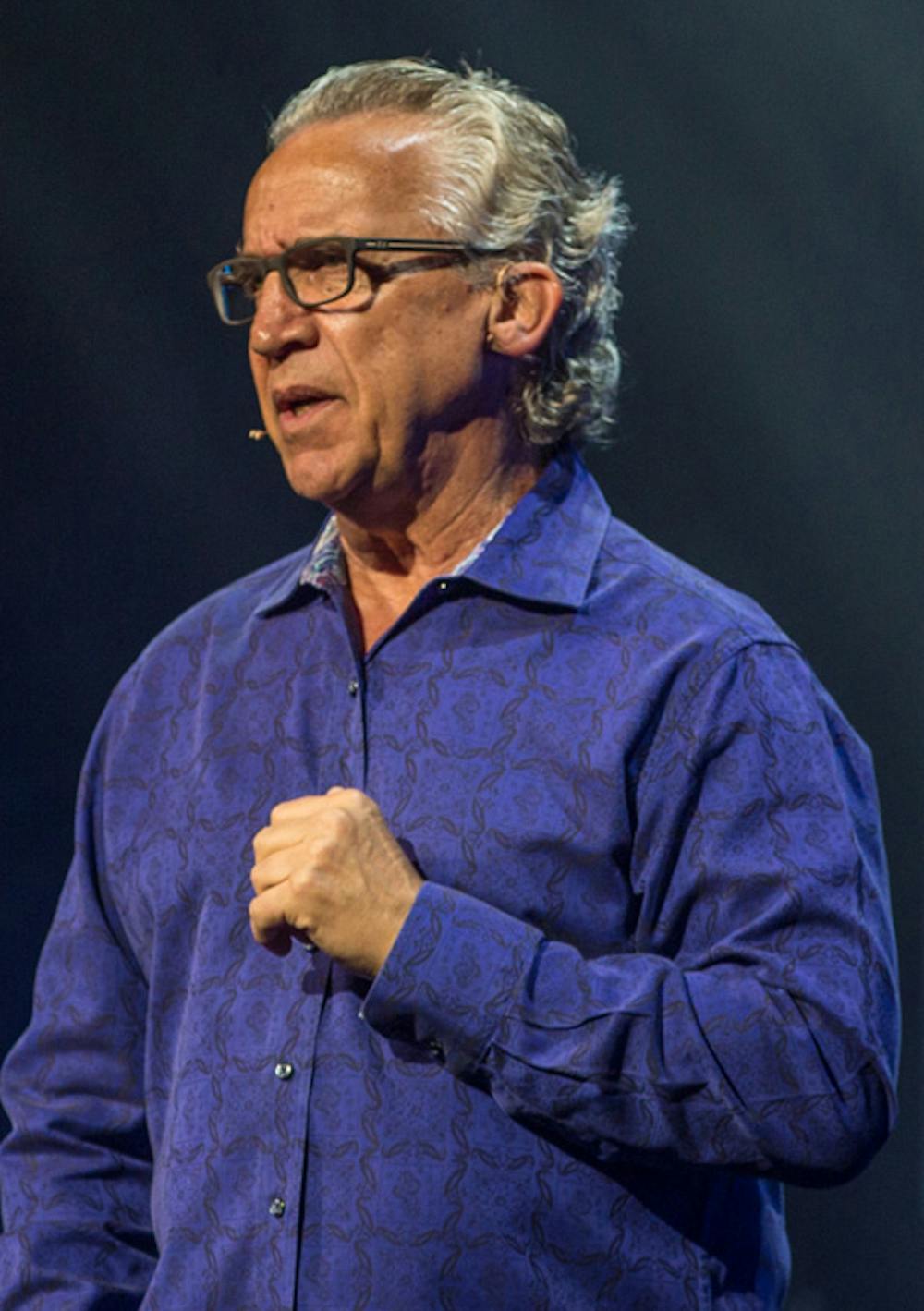
    Bill Johnson.
    Doctorg via Wikimedia Commons

    Since 1996, Bill Johnson, a senior leader of Bethel Church, and Johnny Enlow, a self-described prophet and Seven Mountain advocate, among others, have taken the original idea of the Seven Mountain Mandate and reshaped it into a more aggressive, political and spiritually militant approach. Spiritual militancy reflects an aggressive, us-vs.-them mindset that blurs the line between faith and authoritarianism, promoting dominion over society in the name of spiritual warfare.

    Their version doesn’t just aim to influence culture; it frames the effort as a spiritual battle to reclaim and reshape the nation according to their vision of God’s will.

    Lance Wallnau, another Christian evangelical preacher, televangelist, speaker and author, has promoted dominion theology since the early 2000s. During the 2020 U.S. presidential election, Wallnau, along with several prominent NAR figures, described Donald Trump as anointed by God to reclaim the “mountain” of government from demonic control.

    In their book “Invading Babylon: The 7 Mountain Mandate,” Wallnau and Johnson explicitly call for Christian leadership as the only antidote to perceived moral decay and spiritual darkness.

    The beliefs

    Sometimes referred to as Seven Mountains of Influence or Seven Mountains of Culture, the seven mountains are not neutral domains but seen as battlegrounds between divine truth and demonic deception.

    Adherents believe that Christians are called to reclaim these areas through influence, leadership and even, if necessary, the use of force and to confront demonic political forces, as religion scholar Matthew Taylor demonstrates in his book “The Violent Take It By Force.”

    Diverse perspectives and interpretations surround the rhetoric and actions associated with the New Apostolic Reformation. Some analysts have pointed out how the NAR is training its followers for an active confrontation. Other commentators have said that the rhetoric calling for physical violence is anti-biblical and should be denounced.

    NAR-aligned leaders have framed electoral contests as struggles between “godly” candidates and those under the sway of “satanic” influence.

    Similarly, NAR prophet Cindy Jacobs has repeatedly emphasized the need for “spiritual warfare” in schools to combat what she characterizes as “demonic ideologies” such as sex education, LGBTQ+ inclusion or discussions of systemic racism.

    In the NAR worldview, cultural change is not merely political or social but considered a supernatural mission; opponents are not simply wrong but possibly under the sway of demonic influence. Elections become spiritual battles.

    This belief system views pluralism as weakness, compromise as betrayal, and coexistence as capitulation. Frederick Clarkson, a senior research analyst at Political Research Associates, a progressive think tank based in Somerville, Massachusetts, defines the Seven Mountain Mandate as “the theocratic idea that Christians are called by God to exercise dominion over every aspect of society by taking control of political and cultural institutions.”

    The call to “take back” the culture is not metaphorical but literal, and believers are encouraged to see themselves as soldiers in a holy war to dominate society. Some critics argue that NAR’s call to “take back” culture is about literal domination, but this interpretation is contested.

    Many within the movement see the language of warfare as spiritually focused on prayer, evangelism and influencing hearts and minds. Still, the line between metaphor and mandate can blur, especially when rhetoric about “dominion” intersects with political and cultural action. That tension is part of an ongoing debate both within and outside the movement.

    Networks that spread the beliefs

    This belief system is no longer confined to the margins. It is spread widely through evangelical churches, podcasts, YouTube videos and political networks.

    It’s hard to know exactly how many churches are part of the New Apostolic Reformation, but estimates suggest that about 3 million people in the U.S. attend churches that openly follow NAR leaders.

    At the same time, the Seven Mountain Mandate doesn’t depend on centralized leadership or formal institutions. It spreads organically through social networks, social media – notably podcasts and livestreams – and revivalist meetings and workshops.

    André Gagné, a theologian and author of “American Evangelicals for Trump: Dominion, Spiritual Warfare, and the End Times,” writes about the ways in which the mandate spreads by empowering local leaders and believers. Individuals are authorized – often through teachings on spiritual warfare, prophetic gifting, and apostolic leadership – to see themselves as agents of divine transformation in society, called to reclaim the “mountains,” such as government, media and education, for God’s kingdom.

    This approach, Gagné explains, allows different communities to adapt the action mandate to their unique cultural, political and social contexts. It encourages individuals to see themselves as spiritual warriors and leaders in their domains – whether in business, education, government, media or the arts.

    Small groups or even individuals can start movements or initiatives without waiting for top-down directives. The only recognized authorities are the apostles and prophets running the church or church network the believers attend.

    The framing of the Seven Mountain Mandate as a divinely inspired mission, combined with the movement’s emphasis on direct spiritual experiences and a specific interpretation of scripture, can create an environment where questioning the mandate is perceived as challenging God’s authority.

    Slippery slope

    These beliefs have increasingly fused with nationalist rhetoric and conspiracy theories.

    The ‘Appeal to Heaven’ flags symbolize the belief that people have the right to appeal directly to God’s authority when they think the government has failed.
    Paul Becker/Becker1999 via Flickr, CC BY

    A powerful example of NAR political rhetoric in action is the rise and influence of the “Appeal to Heaven” flags. For those in the New Apostolic Reformation, these flags symbolize the belief that when all earthly authority fails, people have the right to appeal directly to God’s authority to justify resistance.

    This was evident during the Jan. 6, 2021, Capitol insurrection, when these flags were prominently displayed.

    To be clear, its leaders are not calling for violence but rather for direct political engagement and protest. For some believers, however, the calls for “spiritual warfare” may become a slippery slope into justification for violence, as in the case of the alleged Minnesota shooter.

    Understanding the Seven Mountain Mandate is essential for grasping the dynamics of contemporary efforts to align government and culture with a particular vision of Christian authority and influence.

    Art Jipson does not work for, consult, own shares in or receive funding from any company or organization that would benefit from this article, and has disclosed no relevant affiliations beyond their academic appointment.

    ref. What is the ‘Seven Mountain Mandate’ and how is it linked to political extremism in the US? – https://theconversation.com/what-is-the-seven-mountain-mandate-and-how-is-it-linked-to-political-extremism-in-the-us-260034

    MIL OSI Analysis

  • MIL-OSI United Nations: Human Rights Committee Holds Emergency Meeting with States Parties as the United Nations’ Financial Crisis Threatens its Survival

    Source: United Nations – Geneva

    The Human Rights Committee today held an emergency meeting with States parties to discuss the financial challenges of the United Nations and the Committee’s future.

    Committee Chairperson Changrok Soh, in opening remarks, said the Committee’s ability to fulfil its mandate was under serious threat. Austerity measures had been imposed on it that jeopardised not just its current work, but the very future of the Committee itself.

    The Committee’s most pressing concern was the cancellation of its third session this year, Mr. Soh said. This was the first time in its 50-year history that such a cancellation had occurred. Losing a session meant serious delays in reviewing State party reports and in deciding on individual complaints of Covenant violations. Many victims had already waited years for justice. Now, they would wait even longer, he said.

    Mr. Soh appealed to States parties to help the Committee find a solution. The Committee needed States’ political will, financial commitment, and concrete support — not only to help it find a way to hold its third session this year, but also to strengthen the system for the future.

    In the ensuing discussion, States parties expressed support for the Committee and the treaty body system, and concern regarding the financial crisis and the cancellation of the third session. They called on the Committee to come up with new, sustainable, cost-effective solutions to address the structural issues underpinning the situation, while maintaining its work and integrity.

    Concluding the meeting, Mr. Soh said that treaty bodies were not receiving enough funding for their core work. They were doing their best in terms of rationalisation and increasing efficiency, but as allocated resources declined, support for the treaty bodies’ work diminished, creating a vicious cycle.

    To address this situation, special measures were needed, such as utilising voluntary contributions transparently, he said. Without a properly functioning treaty body system, human rights protections would weaken around the world. Decisive and urgent action was needed to protect the treaty body system and human rights around the world, he concluded.

    Speaking in the meeting were representatives of the Office of the United Nations High Commissioner for Human Rights, as well as Japan, Spain, Serbia, Egypt, Croatia, Colombia, Russian Federation, Costa Rica, Islamic Republic of Iran and France.

    The Human Rights Committee’s one hundred and forty-fourth session is being held from 23 June to 17 July 2025. All the documents relating to the Committee’s work, including reports submitted by States parties, can be found on the session’s webpage . Meeting summary releases can be found here . The webcast of the Committee’s public meetings can be accessed via the UN Web TV webpage.

    The Committee will next meet in public at 3 p.m. on Tuesday 15 July to hear the progress report of the Special Rapporteur on follow-up to the Committee’s concluding observations.

    Opening Statements by Committee Experts

    CHANGROK SOH, Committee Chair, said the Committee had convened the emergency meeting to discuss a single, urgent issue: “The financial challenges of the United Nations and the future of the Human Rights Committee.” The Committee came before States today with a profound sense of urgency.

    All members of the Human Rights Committee were deeply honoured to take enormous responsibility for monitoring the implementation of the Covenant. They took this duty very seriously. But today, its ability to fulfil this mandate was under serious threat. The austerity measures imposed on the Committee jeopardised not just its current work, but the very future of the Committee itself.

    These were truly unprecedented times — for the Committee and for the entire treaty body system. The Committee’s most pressing concern was the cancellation of its third session this year, scheduled for October and November, as announced by the Office of the High Commissioner for Human Rights. This was the first time in the Committee’s 50-year history that such a cancellation had occurred. 

    The cancellation put the Committee in a very difficult position. Its rules of procedure required it to meet three times a year. This was a fundamental obligation under the Committee’s mandate and indispensable to the effectiveness of its work. If it lost a session, nearly eight months would pass without a single meeting in Geneva. This meant serious delays in reviewing State party reports and in deciding on individual complaints of Covenant violations. Many victims had already waited years for justice. Now, they would wait even longer. Every delay weakened the Committee’s recommendations, diminished their impact, and undermined their ability to prevent further violations.

    The Committee recognised that the United Nations’ financial crisis was serious, and that the Secretariat was doing its best under the current constraints. But it was clear that the rules and structures of the system were too rigid to cope with situations like this. For example, in early June, during the Treaty Body Chairs’ meeting, several Chairs explored the possibility of mobilising emergency funding to hold autumn sessions. However, they were told that this was not possible, as treaty bodies were required to rely exclusively on the regular budget to carry out their mandated activities. This rule was intended to safeguard the Committee’s independence. But it made little sense if, in practice, it prevented it from functioning at all when the regular budget fell short. The Covenant clearly obliged the Secretary-General to ensure that the Committee could carry out its work. If the current approach blocked the fulfilment of that obligation, then it needed to change.

    The Committee therefore appealed to States parties to help it find a solution. Open and frank communication with the States parties was crucial because, ultimately, it was in States’ interest to ensure that the treaty bodies could continue their vital work, even in difficult times. The Committee needed States’ political will, financial commitment, and concrete support — not only to help it find a way to hold its third session this year, but also to strengthen the system for the future. 

    The Committee monitored the fundamental rights of individuals in 174 States parties — as part of the approximately 1,400 treaty obligations regularly reviewed by the treaty bodies. This was a remarkable early warning and accountability system — one that States parties created. The Committee urged States to ensure that this system could continue to function effectively. If not, what alternative was available?

    This should not be treated as a one-time problem. If this unprecedented cancellation were allowed to be “normalised”, it would set a dangerous precedent. Each time the United Nations faced a funding shortfall, the credibility and effectiveness of the treaty body system, a core pillar of the United Nations’ human rights architecture, would erode further.

    There was growing global pushback against human rights, especially the very rights the Committee was mandated to protect. This was not the moment to weaken United Nations human rights mechanisms. On the contrary, the world needed this remarkable early warning and accountability system now more than ever. 

    The Committee called on States to do three things. First, support the Committee — even at this late stage — in finding a solution to hold its third session this year, and commit to holding all three regular sessions in 2026. Second, allow voluntary contributions from States to be used transparently and responsibly to support the Committee’s work, while fully preserving the independence and impartiality of the treaty bodies. Third, help the Committee function effectively by fulfilling reporting obligations, engaging with the Committee in dialogue, and supporting its work financially and politically, both now and in the long term.

    Statements and Questions by States Parties 

    In the ensuing dialogue, many States expressed appreciation for the ongoing efforts of the Committee and the treaty bodies and their firm commitment to the treaty bodies, which were a cornerstone of the international human rights system. The Committee, they said, made significant contributions to upholding civil and political rights around the world.

    Several speakers expressed deep concern about the financial crisis, which was affecting the mandates of all treaty bodies, the Human Rights Council and Special Procedures, among other mechanisms in the United Nations system. This situation had serious implications for these bodies’ important work.

    One speaker said that their country had increased contributions to the treaty body system and was paying its dues on time, and had also increased unearmarked financial contributions to the Office of the High Commissioner. The speaker said that the country would work to strengthen the capacity of the Secretariat through its contributions.

    Some speakers said treaty bodies needed to work to harmonise their working methods. Cooperation between treaty bodies could lead to solutions to backlogs in individual communications. The Committee had a backlog of over 1,000 individual communications. One speaker asked if the Committee had assessed additional measures to address its backlog.

    Many speakers expressed dismay that the Committee’s third session for the year was to be cancelled, and called for an urgent, mitigating solution to be found to hold the Committee’s third session in November. Without this session, the Committee’s backlog of cases would only increase. Was this issue related to the ordinary budget or to liquidity? One speaker suggested using new technologies and virtual meetings to hold the third session. The Committee needed to come up with new, sustainable, cost-effective solutions to address the structural issues underpinning the situation, while maintaining its work and integrity. 

    Some speakers commended the UN80 initiative and the United Nations’ efforts to address evolving global challenges. However, some speakers said that austerity measures implemented through the UN80 initiative should not affect the work of the treaty bodies and the international human rights system.

    One speaker said it was worth exploring the Chair’s proposal regarding the use of voluntary contributions to facilitate the Committee’s third session, provided that there were no legal barriers to this solution and that the independence and impartiality of the Committee were not affected. The speaker commended the Committee’s efforts to find a solution.

    Another speaker said that their country had attempted to fund one of the treaty bodies’ mandates directly but had been told that funding could only come from the regular budget. If a voluntary funding scheme for the Committee was established, it needed to be established for all the treaty bodies and other mechanisms receiving funds from the regular budget. The speaker said that their country would support solutions proposed by States, while working within the norms of the United Nations’ system.

    A speaker said that one State had traditionally contributed significantly to the funding of the human rights system; the reasons for its sudden cessation of funding needed to be examined. States were the owners of the treaty body system.

    One speaker said multilingualism needed to be an essential value of the treaty bodies; it should not be sacrificed to achieve budgetary austerity.

    Responses by Committee Experts and Others

    A Committee Expert said States were authors of the Covenant and the Optional Protocol on individual communications. The harmonisation of working methods related to individual communications began around three years ago, both formally and informally. There was no resistance from the Committee in this regard. The Human Rights Committee received the largest number of individual communications, given the broad scope of the Covenant. It was proud of its record in dealing with these communications. Delays in issuing decisions on communications affected the relevance and legitimacy of the decisions that the Committee adopted. The Committee had had only three days this session to assess individual communications, while it had had a full week previously.

    The Secretariat had exerted efforts to maintain its staff in the financial crisis. The Committee had a human resources issue; there was a lack of staff to assess individual complaints, prepare draft decisions, and assess follow-up to the Committee’s decisions. The issue of resources needed to be addressed; simply freeing up time in sessions to assess individual communications would not fix the backlog.

    Digitisation was a long-standing structural issue for the Committee. The system that the Committee worked with was not sufficiently digitised.

    Another Committee Expert said the Committee welcomed States’ support and was encouraged by their presence in the dialogue. The Committee received over half of all the individual communications received by the treaty body system. If the Secretariat could not prepare individual cases for assessment, the Committee could not assess them. Without sufficient pre-sessional working time, the Committee’s backlog would only increase. Diplomats in Geneva understood the complexities of the treaty body system. They needed to mobilise with colleagues in New York to support treaty bodies’ efficiency.

    This was the first time that the Committee had organised a special, focused meeting, and it had been very successful. It would be helpful to have annual meetings with States, as well as emergency meetings to discuss urgent issues.

    One Committee Expert proposed that the Committee use digital technologies to hold the third session remotely. A decision on this issue needed to be taken rapidly. However, this was not a solution to the structural problems the Committee faced. The Committee needed to take slow steps forward in this situation.

    Another Committee Expert said that the young generation was questioning the capacity of the human rights system to protect human rights, in the context of the recent increase in violations of human rights and international humanitarian law around the world. The Committee was witnessing the emergence of new challenges, including in relation to climate change and artificial intelligence. It was considering how to address these challenges while preserving human rights. The Committee’s objective was not to level accusations at States; it was to accompany them on their journey toward achieving the best implementation of their commitments. Member States needed to support the Committee now, in the same manner as they had supported it for decades.

    A Committee Expert thanked States parties for their support to the international human rights system. States had created the Committee, recognising the need to monitor and protect civil and political rights. The Committee had an enormous workload and required appropriate financial resources, so that the Secretariat could hire necessary human resources to facilitate its work. The Expert called on States to take initiatives to address the crisis. Solutions needed to address the overall structural crisis over the long term.

    CHANGROK SOH, Committee Chair, said the Committee would present a proposal to States regarding the use of voluntary contributions for holding the third session, but only States could approve this. Mr. Soh expressed support for the idea of holding annual meetings with States parties.

    The Committee met online during the COVID-19 pandemic. It found that these meetings were not effective for various reasons, including time difference and limitations on dialogue and interpretation. The treaty body Chairs had discussed this issue, but had decided that online meetings were not an effective option. However, the Committee would continue to use digital technology, including artificial intelligence, to increase the efficiency of its work.

    WAN-HEA LEE, Chief, Civil, Political, Economic, Social and Cultural Rights Section, Human Rights Council and Treaty Mechanisms Division, Office of the United Nations High Commissioner for Human Rights , said that, in the past, the Office of the High Commissioner had reduced the working time of pre-sessional working groups to manage the financial crisis. The working group for the third session had been cancelled.

    In the past, the treaty bodies had been facing a liquidity crisis. Dues were being paid, but did not reach the treaty bodies in a timely manner. However, it was not an issue of liquidity anymore. The budget of the Office of the High Commissioner for Human Rights for this year had been cut, and the situation had moved from a liquidity to a financial crisis. The financial outlook for next year was also not bright.

    DINA ROSSBACHER, Office of the United Nations High Commissioner for Human Rights , said that there was a structural problem in terms of the processing of decisions related to individual communications. The formula adopted by Member States regarding the processing of individual communications had not been fully adopted and this had been exacerbated by the financial crisis. The Committee had taken several steps to address the situation, including efforts to align working methods and increase the efficiency of processing individual communications. Last year, the Committee adopted a record number of decisions on communications – over 450. However, the large backlog remained, and the situation remained urgent.

    Statements and Questions by States Parties

    States expressed support for the work of the Committee, the treaty bodies and the human rights system. It was the responsibility of States to support the work of the Committee, one speaker said.

    Speakers said creative initiatives were needed to address the financial situation, including digital meetings. One State expressed support for the Committee’s efforts to harmonise and increase efficiency for its work.

    One speaker said the Committee needed to further consider the cultural diversity of States in preparing its concluding observations. If the Committee did not consider challenges such as terrorism and unilateral coercive measures, its recommendations would be considered irrelevant to the realities on the ground in some countries. The speaker called on the Committee to prepare a general comment on the impact of unilateral coercive measures on civil and political rights.

    Responses by a Committee Expert

    A Committee Expert said the treaty bodies were implementing innovative methods to review States parties. The Committee on the Elimination of Discrimination against Women had this year conducted a special, informal meeting in Fiji to review States parties in the region. This initiative was funded by States parties, and could be a model for other Committees to follow. The application of simplified procedures to individual communications would not be sufficient for fully addressing the Committee’s backlog.

    Closing Remarks

    CHANGROK SOH, Committee Chair, said treaty bodies were at the core of the human rights architecture. However, the Committee’s third session would not happen without extraordinary measures, and this trend would continue if the Committee continued to rely on the United Nations’ regular budget. Less than five per cent of the United Nations’ regular budget was allocated to the Office of the High Commissioner for Human Rights. The treaty body system was not receiving enough funding for its core work. It was doing its best in terms of rationalisation and increasing efficiency. But as allocated resources declined, support diminished, creating a vicious cycle.

    To address this situation, special measures were needed, such as utilising voluntary contributions transparently. Without a properly functioning treaty body system, human rights protections would weaken around the world. Decisive and urgent action was needed to protect the treaty body system and human rights around the world.

    ____________

    This document is produced by the United Nations Information Service at Geneva and is intended for public information; it is not an official document.
    The English and French versions of our news releases are different because they are the product of two separate coverage teams that work independently.

    CCPR25.017E

    MIL OSI United Nations News

  • MIL-OSI: Ex-Google and Meta Engineers Launch Nauma: Personalized Financial Planning Tools for Tech Professionals

    Source: GlobeNewswire (MIL-OSI)

    SAN FRANCISCO, July 10, 2025 (GLOBE NEWSWIRE) — A team of former Google and Meta engineers has launched Nauma, a new platform designed to help people working in tech navigate complex financial decisions with confidence. Nauma’s mission is to democratize fiduciary-quality financial guidance, providing highly personalized planning tools without the high costs of traditional financial advisors.

    Today, most high-net-worth families rely on advisors who charge based on Assets Under Management (AUM)—typically 1% of a client’s assets each year. For a family with $5 million, that means paying $50,000 annually, even as the level of service often remains static. Worse, these fees tend to rise 6–8% per year as portfolios grow, creating a system where costs scale without a proportional increase in value.

    “The AUM model is outdated and misaligned with clients’ best interests,” said Alex Sukhanov, co-founder of Nauma. “Advisors operating under this model are incentivized to keep assets under their control, which can lead to biased advice when clients actually want to use their money—to buy real estate, start a business, or donate to charity.

    Nauma is designed to give tech professionals clarity and control over their financial lives. The platform addresses the complex challenges faced by this group, including optimizing taxes, managing equity compensation, planning for early retirement, and protecting generational wealth.

    “Tech professionals are building substantial wealth earlier in their lives, but most tools and advisors aren’t designed for their unique needs,” said Simone, Nauma’s co-founder. “We’re building the modern, intelligent financial planning infrastructure we wish we had—one that puts people, not assets, first.”

    For more information, visit https://nauma.ai

    About Nauma
    Founded by ex-Google and Meta engineers, Nauma provides advanced financial planning tools tailored for people working in tech. By replacing the legacy AUM fee model with scalable, technology-driven solutions, Nauma empowers users to navigate complex financial decisions and build wealth on their own terms.

    Media Contact
    hello@nauma.ai

    A photo accompanying this announcement is available at https://www.globenewswire.com/NewsRoom/AttachmentNg/74982a9a-7d84-4a5c-8e07-edb337b65345

    The MIL Network

  • MIL-OSI: Annual General Meeting 2025 minutes

    Source: GlobeNewswire (MIL-OSI)

    Oslo, 10 July 2025

    The Annual General Meeting of Interoil Exploration and Production ASA was held in Oslo on 10 July 2025. The minutes from the meeting are attached.

    + + + 

    This information is subject of the disclosure requirements of section 5-12 of the Norwegian Securities Trading Act.

    Please direct any further questions to: ir@interoil.no

    + + +

    Interoil Exploration and Production ASA is a Norwegian based exploration and production company – listed on the Oslo Stock Exchange with focus on Latin America. The Company is operator and license holder of several production and exploration assets in Colombia and Argentina with headquarter in Oslo  

    Attachment

    The MIL Network

  • MIL-OSI Europe: Answer to a written question – Tackling aviation contrails – E-001706/2025(ASW)

    Source: European Parliament

    The Commission has been actively supporting research efforts to better understand and address the impact of contrails on the climate for over 35 years.

    It is indeed due to these EU and national efforts that we have the present level of understanding and global leadership in this domain. As we work towards implementing effective contrail avoidance practices, our current focus remains on tackling all aviation emissions in the most effective manner.

    The Commission is currently working on fuel composition and exploring possible ways to improving jet fuel quality to reduce aromatics and sulphur levels lowering the amounts of non-CO2-emissions stemming from fuel consumption.

    Similarly, the ReFuelEU Aviation Regulation[1] and the increased adoption of specific types of sustainable aviation fuels are expected to contribute to the decrease of contrail formation that affect non-CO2 climate impacts.

    In addition, the climate impacts of non-CO2 are already being monitored and reported following the entry into applicability of the Measurement Reporting and Verification framework as of 1 January 2025, as part of the EU Emissions Trading System Directive.

    Financial opportunities for contrail avoidance and sustainable aviation are available through EU funding programmes[2]. For example, the ‘dynamic collaboration to generalize eco-friendly trajectories’ (CONCERTO)[3] aims to demonstrate that more environmental trajectories and climate mitigation measures can be implemented in the daily operations to reduce CO2 and non-CO2 emissions.

    All the above EU research projects and many other national ones (e.g Climaviation[4] and LUFO[5]) are expected to ensure a rapid and holistic reduction of all non-CO2 emissions (including contrails).

    • [1] https://eur-lex.europa.eu/eli/reg/2023/2405.
    • [2] For example Horizon Europe, PACIFIC, UNIC, E_CONTRAIL, BECOM, CICONIA, as well as the Single European Sky ATM Research 3 Joint Undertaking and the EU ETS Innovation Fund.
    • [3] https://cordis.europa.eu/project/id/101114785.
    • [4] https://climaviation.fr/en/research-focus/contrails/.
    • [5] https://www.bauhaus-luftfahrt.net/en/projects/project-airtime-reducing-co2-emissions-and-contrails-with-advanced-wing-technologies.
    Last updated: 10 July 2025

    MIL OSI Europe News

  • MIL-OSI Europe: Written question – The statutory right of first refusal on the purchase of forests in Slovenia is an infringement of EU law – E-002543/2025

    Source: European Parliament

    Question for written answer  E-002543/2025/rev.1
    to the Commission
    Rule 144
    Matej Tonin (PPE)

    In Slovenia there is an established right of first refusal for the purchase of forests in the case of complexes of more than 30 hectares located in Slovenia. This right of first refusal is granted to Slovenian State Forests (Slovenski državni gozdovi, d.o.o. (SiDG)), the company that manages and administers forests owned by the state.

    I believe that such a broadly defined possibility to exercise a right of first refusal infringes EU law on three separate grounds:

    (1) Because it restricts the free movement of capital between Member States;

    (2) Because it constitutes an infringement of EU competition rules, as well as being unlawful State aid to a public company; and

    (3) Because there is no valid reason to establish such a right of first refusal, nor can such a right be in the public interest.

    Two applicants have already notified the Commission of an infringement of EU law, namely Jurij Rudež 6/12/2023 CPLT (2024)00008 and the Chamber of Agriculture and Forestry of Slovenia 16/01/2024 (2024)00467T.

    I would like to ask the Commission:

    Could such a broadly defined and legally guaranteed right of first refusal constitute an infringement of EU law?

    Submitted: 25.6.2025

    Last updated: 10 July 2025

    MIL OSI Europe News

  • MIL-OSI Europe: Answer to a written question – Possible double counting of CO2 and distortions caused by unclear rules on the use of subsidised options such as biomethane to meet requirements – E-001494/2025(ASW)

    Source: European Parliament

    Under Directive (EU) 2018/2001 (Renewable Energy Directive — RED)[1], greenhouse gas (GHG) emission reductions are counted towards Member States’ renewable energy targets, while under Regulation (EU) 2023/1805 (FuelEU)[2] shipping companies are the obligated parties.

    FuelEU does not exclude emissions reductions supported via other legal frameworks, such as the support schemes under RED, as doing so might lead to competitive disadvantages for the sector, and slow down investments in decarbonised marine fuels.

    Support schemes under RED are specified as transposed by the Member States, taking in consideration the national energy policies’ features and priorities.

    FuelEU enforcement relies on the well-established framework of the EU Monitoring, Reporting, and Verification Maritime Regulation[3] used by Member States’ Competent Authorities.

    Shipping companies have to certify fuels’ sustainability using RED traceability rules and governance for all fuel batches claimed to count towards their obligation under FuelEU.

    The traceability system of the Union database, deployed under Article 31a of RED, will be applied. Thus, fuel volumes and emissions reductions reported under FuelEU and RED can be tracked and verified.

    Beyond dedicated webinars, updated THETIS-MRV[4] tutorials, and dedicated helpdesk support, the Commission will adopt its guidance document for FuelEU Implementation in the second semester of 2025.

    The provision in the EU emission trading system (ETS) Directive 2003/87/EC[5] on avoiding double counting of emissions applies to the reporting and surrendering of allowances within the ETS compliance framework.

    It does not apply — but rather exerts synergetic effects — to emission reductions in sectoral regulations with which it is complementary, FuelEU being one such case.

    • [1] https://eur-lex.europa.eu/legal-content/EN/TXT/?uri=CELEX%3A02018L2001-20240716.
    • [2] https://eur-lex.europa.eu/eli/reg/2023/1805/oj/eng.
    • [3]  Regulation (EU) 2015/757: https://eur-lex.europa.eu/eli/reg/2015/757/oj/eng.
    • [4] https://mrv.emsa.europa.eu/.
    • [5] https://eur-lex.europa.eu/eli/dir/2003/87/oj/eng.

    MIL OSI Europe News

  • MIL-OSI USA: Kennedy, Schatz champion Unsubscribe Act to make canceling unwanted subscriptions easier

    US Senate News:

    Source: United States Senator John Kennedy (Louisiana)

    WASHINGTON – Sens. John Kennedy (R-La.) and Brian Schatz (D-Hawaii) today introduced the bipartisan Unsubscribe Act of 2025, which would require a simple cancellation process for all subscriptions.

    “The average American is all too familiar with the headache of running around in circles to cancel a subscription before their free trial expires. Our common-sense Unsubscribe Act would make sure companies are upfront about automatic charges and make it easier to cancel subscriptions without the convoluted song-and-dance routine,” said Kennedy.

    “The subscription-based business model is exploding, and it’s largely because of the deceptive practices that some companies use to lure and trap in customers. When people sign up for a free trial, they shouldn’t have to jump through hoops just to cancel their subscription before being charged. Our bill will require companies to be more transparent about their business model and make it easier for consumers to avoid costly, automatic monthly charges they never intended to make,” said Schatz.

    The Unsubscribe Act would:

    • Require sellers to clearly explain the terms of a contract to customers and obtain their express and informed consent.
    • Require sellers to provide a simple way to cancel the subscription, which the customer can complete in the same way in which they entered the original contract.
    • Require sellers to clearly notify consumers when their free or reduced-cost trial is complete and before charging for the full-cost subscription.
    • Disallow automatic transfer to a contract beyond the preliminary period. 
    • Require sellers to periodically notify the customer of the terms of the contract and the cancelation mechanism.

    Rep. Mark Takano (D-Calif.) will introduce the companion bill in the House of Representatives.

    “Too many consumers are lured in by free trials, only to get trapped in confusing billing cycles and cancellation mazes. The Unsubscribe Act is about fairness—it puts the burden back on companies to be honest, clear, and accountable. If a business has to trick people into staying, it does not deserve their money,” said Takano. 

    The full text of the Unsubscribe Act is available here.

    MIL OSI USA News

  • MIL-OSI Canada: Minimum Wage Set to Increase October 1

    Source: Government of Canada regional news

    Released on July 10, 2025

    On October 1, 2025, minimum wage in Saskatchewan will increase to $15.35 per hour.

    Saskatchewan’s minimum wage is calculated using an indexation formula, which gives equal weight to changes to the Consumer Price Index and Average Hourly Wage for Saskatchewan.

    “By raising the minimum wage, we are continuing to support workers and deliver on our commitment to affordability,” Deputy Premier and Labour Relations and Workplace Safety Minister Jim Reiter said. “Saskatchewan’s low personal tax rates continue to make our province a great place to live, work and raise a family.”

    In 2022, the Government of Saskatchewan indicated it would make incremental increases to minimum wage which resulted in a 27 per cent increase from $11.81 per hour to $15 per hour by 2024. With that commitment having been met, the indexation formula is again in place.

    In addition to indexation, the 2025-26 Budget delivered on 13 affordability commitments which included reducing income taxes for every resident, family and small business in our province.

    “We know the benefits that increasing the minimum wage will have for employees, but we also want to create a balance for employers,” Reiter said. “Over the next few months, we will be working together with the Chambers of Commerce and other key stakeholders to understand the implications of increasing minimum wage for the business community and the impact on Saskatchewan’s economy.”

    -30-

    For more information, contact:

    Gladys Wasylenchuk
    Labour Relations and Workplace Safety
    Regina
    Phone: 306-787-2411
    Email: gladys.wasylenchuk@gov.sk.ca 

    MIL OSI Canada News

  • MIL-OSI USA: Attorney General James Secures $720 Million from Eight Drug Companies for Fueling the Opioid Crisis

    Source: US State of New York

    EW YORK – New York Attorney General Letitia James today announced eight pharmaceutical companies will pay approximately $720 million for their role in manufacturing opioid pills that fueled the ongoing nationwide epidemic of opioid addictions. These funds will help deliver critical resources to communities throughout New York and the nation to combat the opioid crisis. New York will receive up to $38.7 million from the eight companies. To date, Attorney General James has secured more than $3 billion to support New York opioid abatement, treatment, and prevention efforts.

    “For years, drug companies prioritized profits at the expense of struggling New Yorkers who became trapped in deadly opioid addictions,” said Attorney General James. “While communities throughout our state continue to suffer from the opioid crisis, these resources will help us begin to heal. I will continue to work to hold those responsible for the opioid crisis accountable and ensure that New Yorkers who have been most affected get the support they need.” 

    The eight companies and the total amounts they will pay in funding to address the opioid crisis are:  

    • Mylan (now part of Viatris) will pay $284,447,916 over nine years;
    • Hikma will pay $95,818,293 over one to four years;
    • Amneal will pay $71,751,010 over 10 years;
    • Apotex will pay $63,682,369 in a single year;
    • Indivior will pay $38,022,450 over four years;
    • Sun will pay $30,992,087 in one to four years;
    • Alvogen will pay $18,680,162 in a single year; and
    • Zydus will pay $14,859,220 in a single year.  

    Payments will begin as soon as 2026. The eight companies will also provide $14 million in additional funding and Mylan, Hikma, Amneal, and Indivior will provide opioid addiction treatment medications or cash in lieu of this product to participating states valued at approximately $86 million. All companies besides Indivior will be prohibited from promoting or marketing opioids and opioid products and making or selling any product that contains more than 40 mg of oxycodone per pill. They must also put in place a monitoring and reporting system for suspicious orders. Indivior will not manufacture or sell opioid products for the next 10 years, but it will be able to continue marketing and selling medications to treat opioid addiction.  

    For New York, the settlement negotiations were led by Special Counsel Monica Hanna and Assistant Attorney General Matthew Conrad with the assistance of the Deputy Director of Research and Analytics Gautam Sisodia and Data Scientist Kenneth Morales, under the supervision of First Deputy Attorney General Jennifer Levy. In addition to New York, the settlements were negotiated by the attorneys general of California, Colorado, Illinois, North Carolina, Oregon, Tennessee, Utah, and Virginia.  

    Attorney General James is a national leader in holding accountable the companies that fueled the opioid crisis and securing resources to help combat the epidemic of addictions and overdoses. To date, Attorney General James has secured more than $3 billion to support New York opioid abatement, treatment, and prevention efforts from companies including, Purdue, Teva Pharmaceuticals, Johnson & Johnson, Mallinckrodt, Allergan, Endo, McKesson, Cardinal Health, and Amerisource Bergen. Attorney General James has also led multistate coalitions in reaching settlements for billions of dollars with CVS, Walgreens, and Walmart for their roles in failing to properly regulate opioid prescriptions. Additionally, Attorney General James and a bipartisan coalition of states secured settlements with consulting firm McKinsey & Company and the marketing firm Publicis Health for their role in fueling the opioid crisis.  

    MIL OSI USA News

  • MIL-OSI USA: Attorney General Alan Wilson announces $720 million settlement with eight opioid drug makersRead More

    Source: US State of South Carolina

    (COLUMBIA, S.C.) – Attorney General Alan Wilson today announced approximately $720 million nationwide in settlements with eight drug makers that manufactured opioid pills and worsened the nationwide opioid crisis. Based on the overwhelming participation by attorneys general across the country, all eight defendants have agreed to proceed with a sign-on period for local governments. South Carolina could receive up to $10 million in all. 

    “The opioid epidemic has devastated tens of thousands of families in South Carolina and across the country, and we’ve been working for years to hold the companies responsible for it accountable,” said Attorney General Wilson. “The money from these settlements, along with other settlements we’ve announced before, will go toward opioid treatment programs and efforts to prevent future victims of opioid addiction.”

    The eight defendants and the total amount they will pay in funds to address the opioid crisis as part of the deal are:  

    • Mylan (now part of Viatris): $284,447,916 paid over nine years 
    • Hikma: $95,818,293 paid over one to four years 
    • Amneal: $71,751,010 paid over 10 years 
    • Apotex: $63,682,369 paid in a single year 
    • Indivior: $38,022,450 paid over four years 
    • Sun: $30,992,087 paid over one to four years 
    • Alvogen: $18,680,162 paid in a single year 
    • Zydus: $14,859,220 paid in a single year 

    (Note: The dollar amounts listed don’t equal exactly $720M – this is the maximum amount if states get all the abatement payments and take cash in lieu of pharmaceutical products (medication-assisted treatment.))

    In addition to these abatement payments, several of the settlements allow states to receive free pharmaceutical products or cash in lieu of these products. Additionally, seven of the companies (not including Indivior) are prohibited from promoting or marketing opioids and opioid products, making or selling any product that contains more than 40 mg of oxycodone per pill, and are required to put in place a monitoring and reporting system for suspicious orders. Indivior has agreed not to manufacture or sell opioid products for the next 10 years, but it will be able to continue marketing and selling medications to treat opioid use disorder.  

    The settlements were negotiated by North Carolina, California, Colorado, Illinois, New York, Oregon, Tennessee, Utah, and Virginia.  

    MIL OSI USA News