Category: Business

  • MIL-OSI China: Foreign firms in China continue to post trade growth in May

    Source: People’s Republic of China – State Council News

    Foreign-invested firms in China recorded a 4 percent year-on-year growth in exports and imports in May, marking the fourth consecutive month of growth, official data showed Monday.

    The total trade volume of foreign enterprises in China reached 1.11 trillion yuan (over 154.47 billion U.S. dollars) last month, according to the General Administration of Customs.

    In the first five months of 2025, over 73,000 foreign enterprises in China were involved in export and import activities, the highest number for the same period in five years.

    The combined trade volume of these companies reached 5.21 trillion yuan, up 2.3 percent year on year, accounting for 29 percent of the country’s total trade and contributing 0.7 percentage points to the overall trade growth during the same period.

    Monday’s data also showed that China’s total goods imports and exports in yuan-denominated terms rose to 17.94 trillion yuan in the first five months of 2025, up 2.5 percent year on year. 

    MIL OSI China News

  • MIL-OSI China: US economic growth slows amid rising trade barriers

    Source: People’s Republic of China – State Council News

    This photo taken on March 29, 2023 shows the White House in Washington, D.C., the United States. [Photo/Xinhua]

    The Organization for Economic Cooperation and Development (OECD) released its latest Economic Outlook on June 3, projects global GDP growth to decelerate from 3.3% in 2024 to 2.9% for both this year and the next. The United States economy is expected to see a significant slowdown, with growth dropping to 1.6% in 2025 and 1.5% in 2026. So, what’s behind this slowdown? Let’s take a closer look at the role of trade barriers.

    First, let’s get a handle on the current state of trade barriers. In recent years, the U.S. has been at the forefront of implementing a series of protectionist trade measures. These include imposing tariffs and erecting various trade barriers. For example, on May 23, U.S. President Donald Trump proposed directly imposing a 50% tariff on EU products starting from June 1. Products manufactured or produced in the U.S. would be exempt from this tariff. However, according to the latest news, after a phone call between President Trump and EU Commission President Ursula von der Leyen, it was decided to postpone the implementation of the 50% tariff on EU products until July 9. While the intention might have been to shield domestic industries and jobs, the reality has turned out to be quite different.

    Trade barriers have had a profound impact on U.S. exports. As a major export-oriented economy, the U.S. relies heavily on international markets for many of its industries. However, these barriers have diminished the competitiveness of U.S. products abroad. In retaliation for U.S. protectionist moves, other countries have also raised tariffs on U.S. goods. This has left U.S. exporters grappling with higher costs and shrinking market shares. Take U.S. agricultural exports, for example. Due to retaliatory tariffs from other nations, U.S. agricultural products have found it increasingly difficult to penetrate international markets. In 2024, the export value of U.S. soybeans was $24.5 billion, lower than the $27.7 billion in 2023 and the record high of $34.4 billion in 2022. This has led to a drop in domestic agricultural prices and a decline in farmers’ incomes.

    Trade barriers have also wreaked havoc on supply chains. In today’s globalized world, many U.S. industries depend on intricate global supply chains. These barriers have caused these supply chains to fracture and reconfigure. Numerous companies have had to scramble to find new suppliers, incurring additional costs and experiencing reduced production efficiency. For instance, U.S. manufacturing firms often rely on imported components. Trade barriers have disrupted the supply of these parts, forcing companies to spend more time and money seeking alternatives. This not only affects production but also drives up product prices. The manufacturing PMI for May shows that the prices index was as high as 69.4%. Although it slightly decreased compared to last month, it still remained at a high level, indicating that raw material costs have been rising for eight consecutive months.

    Trade barriers have led to a decline in business investment. Amid the uncertainty of the trade environment, many companies have become wary of future market prospects. They fear that escalating trade barriers could further erode their profits. As a result, they have cut back on investments in new projects and equipment. This not only hampers long-term corporate development but also has a negative impact on economic growth. For example, some U.S. tech companies had planned to expand production, but they have had to either delay or shelve these plans due to the impact of trade barriers. Green energy projects have also been suspended to varying degrees, with major clean energy projects not being spared. Flagship projects that have been put on hold include the $1 billion solar panel factory in Oklahoma by Italy’s Enel Green Power, the $2.3 billion battery storage facility in Arizona by South Korea’s LG Energy Solution, and the $1.3 billion lithium refinery in South Carolina by the world’s largest lithium miner, U.S.-based Albemarle.

    Lastly, trade barriers have eroded consumer confidence. Consumers are a vital part of the economy, and their spending behavior directly affects economic growth. Trade barriers have caused product prices to rise, increasing the cost of living for consumers. For example, in April 2025, the U.S. CPI increased by 3.4% year on year. At the same time, trade barriers have led to job losses, with unemployment in the U.S.at 4.2% in April, heightening consumers’ concerns about the economic outlook. This has led consumers to cut back on spending, which in turn has had a negative impact on economic growth.

    So, what does the future hold for the U.S. economy in the face of these trade barriers? In the short term, the U.S. economy is likely to continue facing the pressure of slower growth. The impact of trade barriers won’t vanish overnight, and companies will need time to adapt to the new trade landscape. In the long run, the U.S. will need to reassess its trade policies and seek more open and cooperative trade relations. Only by strengthening international cooperation and reducing trade barriers can sustainable economic growth be achieved.

    In summary, trade barriers are a key factor in the projected U.S. economy slowdown. They have affected U.S. exports, disrupted supply chains, reduced business investment and eroded consumer confidence. The U.S. must take proactive measures to address these challenges. 

    The author is an associate professor in economics at Beijing International Studies University.

    MIL OSI China News

  • India embraces cashless revolution in last 11 years: FM Nirmala Sitharaman

    Source: Government of India

    Source: Government of India (4)

    Union Finance Minister Nirmala Sitharaman on Monday said that India is embracing a cashless revolution with world-class digital initiatives like Unified Payments Interface (UPI).

    “In the last 11 years, India has seen a remarkable journey under the leadership of Prime Minister Narendra Modi. From making life easier for the common citizen to boosting business confidence, it’s been a decade of real and visible change,” the Finance Minister said on a post on X.

    “India is embracing a cashless revolution! With Rs 70,000 Cr+ worth UPI transactions daily and 59.6 crore transactions in a single day, digital payments are now the norm,” the minister added.

    India today is not just the fastest-growing major economy, but also a key global voice on pressing issues like climate action and digital innovation.

    In the month of May, UPI posted a robust growth by processing 18.68 billion transactions, up from 17.89 billion in April. As per data by the National Payments Corporation of India (NPCI), the UPI transactions mark a 33 per cent year-on-year (YoY) surge compared to 14.03 billion transactions in the same month last year.

    The UPI transactions rose to Rs 25.14 lakh crore (by value) last month, a 5 per cent increase from Rs 23.95 lakh crore in April. This reflects a 23 per cent rise from Rs 20.45 lakh crore in May last year. The average daily transaction volume stood at 602 million, while the average daily transaction value reached Rs 81,106 crore.

    The UPI has strengthened its dominance in India’s digital payments system with its share in the total transaction volume rising to 83.7 per cent in 2024-25 from 79.7 per cent in the previous financial year.

    The RBI’s annual report shows that UPI facilitated 185.8 billion transactions during 2024-25, which represents a 41 per cent year-on-year increase. In value terms, UPI transactions rose to Rs 261 lakh crore from Rs 200 lakh crore in FY24.

    (With inputs from IANS)

  • MIL-OSI Global: The blow-up between Elon Musk and Donald Trump has been entertaining, but how did things go so bad, so fast?

    Source: The Conversation – Global Perspectives – By Henry Maher, Lecturer in Politics, Department of Government and International Relations, University of Sydney

    A no-holds-barred and very public blow-up between the world’s richest man and the president of the United States has had social media agog in recent days, with each making serious accusations against the other.

    And while tech billionaire Elon Musk appears to have cooled the spat somewhat – deleting some of his more incendiary social media posts about Donald Trump – the president still appears to be in no mood to make up, warning Musk of “very serious consequences” if he backs Democrats at the mid-term elections in 2026.

    Tensions erupted over Trump’s “One Big Beautiful Bill” (OBBB). The OBBB proposes extensive tax cuts which could add roughly US$3 trillion (A$4.62 trillion) to the US national debt.

    After stepping down from his role as advisor to Trump, Musk criticised the OBBB as “disgusting abomination” that would “burden America [sic] citizens with crushing unsustainable debt”. Trump returned fire, suggesting “Elon was ‘wearing thin’, I asked him to leave […] and he just went CRAZY!”.

    In a dramatic escalation, Musk responded by calling for Trump’s impeachment. Musk also tweeted allegations that Trump was implicated in the Epstein files related to child sex offender Jeffrey Epstein. He has since deleted those tweets.

    Why has the much-hyped “bromance” between Musk and Trump suddenly ended? And what was the basis of their alliance in the first place?

    Musk in politics

    Like many billionaires, Musk had previously been hesitant to get involved in frontline politics. He says he voted for Hillary Clinton in 2016 and Joe Biden in 2020, but claimed in 2021 “I would prefer to stay out of politics”.

    In early 2024, Musk was still claiming to be politically non-aligned, suggesting he would not donate to either presidential campaign.

    This apparent neutrality ended following the attempted assassination of Trump at a July 2024 campaign rally, with Musk immediately endorsing Trump.

    In reality, Musk’s conversion to the MAGA movement long predated the assassination attempt. Musk’s hyperactive Twitter/X account shows a steady radicalisation.

    Across 2020-2024, Musk engaged with accounts sharing MAGA and far-right conspiracy theories. These include the antisemitic Great Replacement Theory, and the related South African white genocide conspiracy. Musk’s posts also show the obsession with opposing diversity, equity and inclusion (DEI) policies characteristic of the MAGA movement.

    After endorsing Trump, Musk spent US$288 million (A$444 million) supporting Trump’s election and appeared at campaign events around the country.

    Musk’s support for Trump was both ideological and pragmatic.

    From tax cuts to immigration restrictions to opposing DEI, there were clearly many ideological commonalities between Musk and Trump.

    There were also clear practical benefits for both men. Trump gained the financial backing of the world’s wealthiest man. Musk gained not only unparalleled access to the US president, but also a role leading the new Department of Government Efficiency (DOGE).

    DOGE: success and failure

    Early reporting on the second Trump presidency noted the omnipresence of Musk, who at one point moved into Trump’s Mar-a-Lago resort to be close to the president.

    However, observers were sceptical about the potential effectiveness of DOGE, and Musk’s claim it would save the government US$2 trillion (A$3.02 trillion).

    In the early months of the Trump administration, Musk cut government programs and employees at a remarkable rate. The USAID program was particularly hard hit, as were the Department of Education and the Consumer Financial Protection Bureau.

    As the spending cuts picked up pace, Musk began to attract more controversy. Critics questioned the apparent power wielded by the unelected billionaire. Musk’s ties to the far right were also in the spotlight after he appeared to perform two “Roman salutes”, which many observers believed to be a Nazi salute.

    Trump clips Musk’s wings

    Musk’s apparent rampage through government did not last long. As Trump’s executive appointees assumed control of their departments, Musk and DOGE experienced increasing resistance. After a series of fractious cabinet meetings, Trump reportedly reduced the power of DOGE in March.

    Political attention was also clearly affecting Musk’s businesses. The negative publicity has significantly damaged the Tesla brand, leading to declining sales around the world and repeated falls in Telsa’s share price.

    On May 1, Musk announced he would be leaving DOGE, claiming the department had saved the government US$180 billion (A$277 billion) in spending. This number is likely an exaggeration, but still falls well short of his original target.

    Musk has learned a harsh lesson in politics – that the complexities of government resist simple reform and cannot be easily rolled back in the way a CEO might slim down a company.

    For Trump, his manoeuvring of Musk appears to be another smart political move. As the public face of DOGE, Musk bore the negative rap for early government cuts and chaos. Having used his money and reputation, Trump dispensed with Musk as he has with so many advisers and appointees before.

    The falling out

    Musk departed his role in a muted White House ceremony, where Trump thanked him for his service and presented him with a ceremonial “golden key” to the White House.

    However, behind the public show of civility, tension was brewing over Trump’s One Big Beautiful Bill.

    Trump and Musk had originally claimed that the US$2 trillion (A$3.02 trillion) in DOGE savings could be used to fund a substantial tax cut. With the efficiency savings not eventuating, Musk worried the OBBB would significantly increase US public debt.

    Unable to convince Trump or other Republican legislators, Musk took to X, launching a “Kill the Bill” campaign that ultimately led to his incendiary showdown with Trump.

    For his part, Trump has belittled Musk, suggesting Musk only opposed the OBBB because it cut subsidies for electric vehicles.

    Though the subsidy cuts will affect Tesla, Musk has previously supported eliminating subsidies. Musk’s anger at the OBBB is more likely driven by the realisation he has been played by Trump.

    What now?

    Trump has used and discarded many other powerful figures in his chaotic political career. Musk has more power than most, and might be able to strike back at Trump.

    Yet, with his public reputation and brands already tarnished, Musk would be ill-advised to pick further fights with Trump and his adoring MAGA movement.

    Accordingly, Musk has indicated over the weekend he is open to a détente. Tesla investors will no doubt be relieved if Musk makes good on his pledge to step back from politics and return to his businesses.

    More concerning are the prospects for democracy. With wealth and power continuing to concentrate in a handful of billionaires, voters appear reduced to the role of viewers forced to watch the reality TV drama unfold.

    Though Trump appears to have won this round of billionaire battle royale, whatever happens next, democracy is the real loser.

    Henry Maher does not work for, consult, own shares in or receive funding from any company or organisation that would benefit from this article, and has disclosed no relevant affiliations beyond their academic appointment.

    ref. The blow-up between Elon Musk and Donald Trump has been entertaining, but how did things go so bad, so fast? – https://theconversation.com/the-blow-up-between-elon-musk-and-donald-trump-has-been-entertaining-but-how-did-things-go-so-bad-so-fast-258394

    MIL OSI – Global Reports

  • MIL-OSI Global: Immortality at a price: how the promise of delaying death has become a consumer marketing bonanza

    Source: The Conversation – Global Perspectives – By Amy Errmann, Senior Lecturer, Marketing & International Business, Auckland University of Technology

    Living forever has become the wellness and marketing trend of the 2020s. But cheating death – or at least delaying it – will come at a price.

    What was once the domain of scientists and the uber rich is increasingly becoming a consumer product. Those pushing the idea, spearheaded by tech billionaire Bryan Johnson’s “Don’t Die” movement, believe death isn’t inevitable, but is a solvable problem.

    The global longevity market – spanning gene therapies, anti-ageing drugs, diagnostics and wellness plans – is projected to hit US$610 billion this year. At its core, the marketing of these products feeds off the age-old fear of mortality and the desire to stay young.

    But while the marketing is reaching the masses, this is still very much a luxury product. Immortality is being sold as exclusive, aspirational and symbolic. It’s not just about living longer – it’s about signalling status, controlling biology and being your “best future self”.

    Tapping into long-held fears

    What’s known as “terror management theory” puts forward the idea that humans and other animals have an instinctive drive for self-preservation. But humans are not only self-aware, they are also able to anticipate future outcomes – including the inevitability of death.

    The messaging behind the push to extend life taps into this internal tension between knowledge of our own mortality and the self-preservation instinct. And to be fair, it is not a new phenomenon.

    Cryonics – the preservation of bodies and brains at extremely low temperatures with the hope medical advancements will allow for their revival at some point in the future – was first popularised in Robert Ettinger’s 1962 book The Prospect of Immortality.

    Since then, the super-rich have invested in various companies promising to preserve their bodies for some unknown future date. It now costs US$200,000 to freeze your body, or $80,000 for just your brain.

    What’s truly new is how death is being marketed – not as fate, but as a flaw. Longevity isn’t just about living longer; it’s about turning mortality into a design problem, something to delay, manage and eventually solve.

    “Biohacking” sells the idea that with the right data, tools and discipline, you can upgrade your biology – and become your best, most future-proof self.

    This pitch targets high-income consumers aged 30 to 60, people already fluent in the language of optimisation – a mindset focused on maximising performance, productivity and longevity through data.

    The brands behind the living forever movement sell control, optimisation and elite identity. Ageing becomes a personal failure. Anti-ageing is self-discipline. Consumers are cast as CEOs of their own health – tracking sleep, fixing their gut and taking supplements.

    From biohacks to consumer branding

    There are now more than 700 companies working in the longevity market. Startups such as Elysium Health and Human Longevity Inc. offer DNA testing, supplements and personalised health plans.

    These aren’t medical treatments – they’re sold as tools to age “smarter” or “slower” and are pitched with the language of control over what once might have seemed uncontrollable.

    Don’t Die’s Bryan Johnson spends over US$2 million annually on his personal anti-ageing experiment.

    But the real pitch is to consumers: buy back time, one premium subscription at a time. Johnson’s company Blueprint offers diagnostics, supplements and exercise routines bundled into monthly plans starting at $333 and climbing to over $1,600.

    Longevity products promise more than health. They promise time, control and even immortality. But the quest to live forever, or at least a lot longer, raises moral and ethical questions about who benefits, and what kind of world is being created.

    Without thoughtful oversight, these technologies risk becoming tools of exclusion, not progress. Because if time becomes a product, not everyone will get to check out at the same counter.

    Amy Errmann does not work for, consult, own shares in or receive funding from any company or organisation that would benefit from this article, and has disclosed no relevant affiliations beyond their academic appointment.

    ref. Immortality at a price: how the promise of delaying death has become a consumer marketing bonanza – https://theconversation.com/immortality-at-a-price-how-the-promise-of-delaying-death-has-become-a-consumer-marketing-bonanza-257009

    MIL OSI – Global Reports

  • MIL-OSI Global: 2-million-year-old pitted teeth from our ancient relatives reveal secrets about human evolution

    Source: The Conversation – Global Perspectives – By Ian Towle, Research Fellow in Biological Anthropology, Monash University

    Ian Towle / The Conversation

    The enamel that forms the outer layer of our teeth might seem like an unlikely place to find clues about evolution. But it tells us more than you’d think about the relationships between our fossil ancestors and relatives.

    In our new study, published in the Journal of Human Evolution, we highlight a different aspect of enamel. In fact, we highlight its absence.

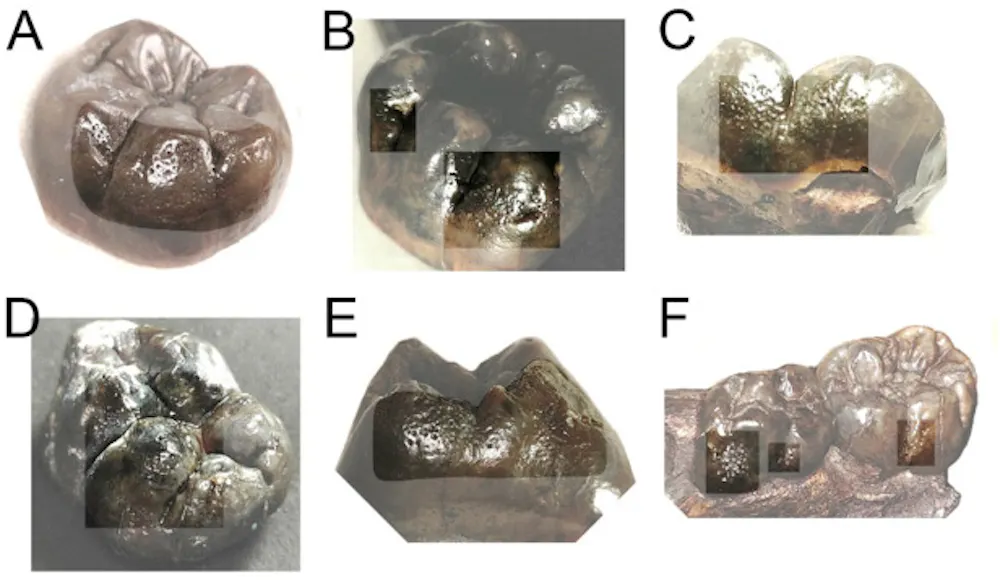
    Specifically, we show that tiny, shallow pits in fossil teeth may not be signs of malnutrition or disease. Instead, they may carry surprising evolutionary significance.

    You might be wondering why this matters. Well, for people like me who try to figure out how humans evolved and how all our ancestors and relatives were related to each other, teeth are very important. And having a new marker to look out for on fossil teeth could give us a new tool to help fit together our family tree.

    Uniform, circular and shallow

    These pits were first identified in the South African species Paranthropus robustus, a close relative of our own genus Homo. They are highly consistent in shape and size: uniform, circular and shallow.

    Initially, we thought the pits might be unique to P. robustus. But our latest research shows this kind of pitting also occurs in other Paranthropus species in eastern Africa. We even found it in some Australopithecus individuals, a genus that may have given rise to both Homo and Paranthropus.

    Uniform, circular and shallow pitting on teeth may be a previously undetected clue about evolutionary relationships.
    Towle et al. / Journal of Human Evolution

    The enamel pits have commonly been assumed to be defects resulting from stresses such as illness or malnutrition during childhood. However, their remarkable consistency across species, time and geography suggests these enamel pits may be something more interesting.

    The pitting is subtle, regularly spaced, and often clustered in specific regions of the tooth crown. It appears without any other signs of damage or abnormality.

    Two million years of evolution

    We looked at fossil teeth from hominins (humans and our closest extinct relatives) from the Omo Valley in Ethiopia, where we can see traces of more than two million years of human evolution, as well as comparisons with sites in southern Africa (Drimolen, Swartkrans and Kromdraai).

    The Omo collection includes teeth attributed to Paranthropus, Australopithecus and Homo, the three most recent and well-known hominin genera. This allowed us to track the telltale pitting across different branches of our evolutionary tree.

    What we found was unexpected. The uniform pitting appears regularly in both eastern and southern Africa Paranthropus, and also in the earliest eastern African Australopithecus teeth dating back around 3 million years. But among southern Africa Australopithecus and our own genus, Homo, the uniform pitting was notably absent.

    A defect … or just a trait?

    If the uniform pitting were caused by stress or disease, we might expect it to correlate with tooth size and enamel thickness, and to affect both front and back teeth. But it doesn’t.

    What’s more, stress-related defects typically form horizontal bands. They usually affect all teeth developing at the time of the stress, but this is not what we see with this pitting.

    The uniform, even nature of the pitting suggests a genetic origin rather than environmental factors such as malnutrition or disease.
    Towle et al. / Journal of Human Evolution

    We think this pitting probably has a developmental and genetic origin. It may have emerged as a byproduct of changes in how enamel was formed in these species. It might even have some unknown functional purpose.

    In any case, we suggest these uniform, circular pits should be viewed as a trait rather than a defect.

    A modern comparison

    Further support for the idea of a genetic origin comes from comparisons with a rare condition in humans today called amelogenesis imperfecta, which affects enamel formation.

    About one in 1,000 people today have amelogenesis imperfecta. By contrast, the uniform pitting we have seen appears in up to half of Paranthropus individuals.

    Although it likely has a genetic basis, we argue the even pitting is too common to be considered a harmful disorder. What’s more, it persisted at similar frequencies for millions of years.

    A new evolutionary marker

    If this uniform pitting really does have a genetic origin, we may be able to use it to trace evolutionary relationships.

    We already use subtle tooth features such as enamel thickness, cusp shape, and wear patterns to help identify species. The uniform pitting may be an additional diagnostic tool.

    For example, our findings support the idea that Paranthropus is a “monophyletic group”, meaning all its species descend from a (relatively) recent common ancestor, rather than evolving seperatly from different Australopithecus taxa.

    And we did not find this pitting in the southern Africa species Australopithecus africanus, despite a large sample of more than 500 teeth. However, it does appear in the earliest Omo Australopithecus specimens.

    So perhaps the pitting could also help pinpoint from where Paranthropus branched off on its own evolutionary path.

    An intriguing case

    One especially intriguing case is Homo floresiensis, the so-called “hobbit” species from Indonesia. Based on published images, their teeth appear to show similar pitting.

    If confirmed, this could suggest an evolutionary history more closely tied to earlier Australopithecus species than to Homo. However, H. floresiensis also shows potential skeletal and dental pathologies, so more research is needed before drawing such conclusions.

    More research is also needed to fully understand the processes behind the uniform pitting before it can be used routinely in taxonomic work. But our research shows it is likely a heritable characteristic, one not found in any living primates studied to date, nor in our own genus Homo (rare cases of amelogenesis imperfecta aside).

    As such, it offers an exciting new tool for exploring evolutionary relationships among fossil hominins.

    Ian Towle does not work for, consult, own shares in or receive funding from any company or organisation that would benefit from this article, and has disclosed no relevant affiliations beyond their academic appointment.

    ref. 2-million-year-old pitted teeth from our ancient relatives reveal secrets about human evolution – https://theconversation.com/2-million-year-old-pitted-teeth-from-our-ancient-relatives-reveal-secrets-about-human-evolution-258390

    MIL OSI – Global Reports

  • MIL-OSI Global: Curious Kids: Why do dolphins jump out of the water?

    Source: The Conversation – Global Perspectives – By Katharina J. Peters, Lecturer in Biological Sciences, University of Wollongong

    Will Falcon/Shutterstock

    Why do dolphins jump out of the water?

    Charlize, age 8, Melbourne

    Have you ever seen images of dolphins jumping out of the waves and performing impressive acrobatics in the air? Or maybe you’ve seen it in real life?

    When a dolphin jumps, it can launch its whole body out of the water. While it looks like fun, it must also be hard work!

    So, why do dolphins jump out of the water? There are several possible reasons. Let’s jump in and explore them.

    A dolphin can launch its whole body out of the water.
    Paulphin Photography/Shutterstock

    To stay in touch

    Dolphins are social animals and live in groups. But it’s hard to see long distances underwater. So, they use the power of sound to stay in contact with each other.

    Sound travels much farther underwater than through the air. When dolphins jump, the slap of the landing makes a loud noise, and would be heard some distance away.

    Some species, such as spinner dolphins, use jumping to communicate their location to other group members, especially at night. This helps them keep track of each other.

    As an aside, spinner dolphins are very skilled jumpers. As the name suggests, they spin up to seven times in the air before landing back in the water!

    Spinner dolphins are the acrobats of the sea.

    The need for speed

    Have you ever tried to walk underwater? You will have felt how hard it is. That’s because water is more dense than air, which creates a “drag”, or resistance.

    Dolphins have streamlined bodies to reduce drag, but they still feel it. So, if they want to travel quickly – for example, if they are trying to escape a predator or hunt fish – they sometimes jump.

    While in the air, they travel faster than they would through water, and also save energy.

    To gather food

    Some dolphins weigh less than 50 kilograms, such as the Hector’s dolphin. Others weigh several tonnes, such as an orca.

    Either way, when a dolphin crashes back into the water, you can be sure it makes quite a noisy splash.

    Some dolphin species, such as dusky dolphins, use this noise to herd fish at the surface to make them easier to capture.

    Shaking off hitchhikers

    Fish called remoras can attach themselves to dolphins using a sucker on their head. This is good for the fish, because it can keep them safe and they have plenty to eat, such as small parasites and old bits of dolphin skin.

    While the remoras don’t hurt the dolphin, they probably slow it down. So dolphins may try to get rid of the little hitchhikers by jumping to dislodge them.

    A dolphin calf jumping to remove remoras.

    Fighting and frolicking

    Dolphins are highly intelligent animals. They have big brains and can learn tricks and solve puzzles. With intelligence also come other traits: playfulness and social behaviour.

    Sometimes, that social behaviour can end in a “fight”. Dolphin experts say two dolphins jumping around together might be actually trying to hit each other!

    Dolphins also love to frolic – not just with each other but with other marine mammals such as whales and sea lions, with turtles – or even just a piece of seaweed! So they might jump as some sort of “game”.

    As you can see, dolphins may jump for a range of reasons – sometimes just because it’s really fun!

    Katharina J. Peters does not work for, consult, own shares in or receive funding from any company or organisation that would benefit from this article, and has disclosed no relevant affiliations beyond their academic appointment.

    ref. Curious Kids: Why do dolphins jump out of the water? – https://theconversation.com/curious-kids-why-do-dolphins-jump-out-of-the-water-256462

    MIL OSI – Global Reports

  • MIL-OSI Global: What can you do if you don’t like your child’s friends?

    Source: The Conversation – Global Perspectives – By Rachael Murrihy, Director, The Kidman Centre, Faculty of Science, University of Technology Sydney

    Getty Images/ Wander Woman Collective

    Many parents will be familiar with this situation: your child has a good or even best friend, but you don’t like them.

    Perhaps the friend is bossy, has poor manners or jumps on your furniture. Maybe you don’t like the way your child behaves when they are with this friend.

    For older children, your dislike might relate to the friend’s language, attitude towards school, or risk-taking behaviours. Maybe the friend is hot and cold and elicits more drama than Mean Girls.

    What can parents do?


    Read more:
    How can you help your child make friends?


    You will have a protective instinct

    If you see your child being treated poorly, this can ignite a protective instinct in parents that manifests in a bodily “fight or flight” response.

    This provides a rush of adrenaline, which can spur parents to take actions such as criticising the friend or even attempting to ban the friendship.

    However, this approach can do more harm than good, particularly for adolescents who are hardwired to push back on their parents.

    What can you do for younger kids?

    With younger children, clear boundaries can be set at the outset of a playdate. For example, “my bedroom is off limits for playing” or “we don’t jump on the couch”.

    If kids are using mean or rude language around each other, you can say “we don’t use that word in this house, be kind to each other”.

    Playdates can be moved outside, which can be particularly helpful if a child shows loud, destructive or rude behaviour. And if you can help it, organise fewer plays with that child.

    But parents may also want to reflect on why this child rubs them the wrong way. Is the reaction warranted, or does it comes from your own biases and opinions? Your child’s friends do not have to be the friends you would choose.

    Change your approach for older kids

    To become successful adults, teens need to move through developmental milestones of becoming autonomous and self-reliant. Intervening in their friendships interferes with this vital process of developing independence and identity, which ultimately disempowers them.

    In the 1960s, US psychologist Diana Baumrind published famous research on parenting. She found an authoritarian style – where the parent exerts complete control and does not listen to the child’s needs – results in a child with less confidence and independence than one brought up in a household that has rules but is also responsive to their needs.

    Adopting an authoritarian approach to friends or potential partners also risks the “Romeo and Juliet” effect, whereby disapproval makes the child more attracted to that person.

    So, for teenagers and their friends, the approach should be more nuanced. The primary goal is to encourage the child to see the parent as a person to come to when they have problems. If parents are tempted to be critical, they could ask themself: is it in the best interests of your child to be controlled?

    It is important to let children make mistakes so they can learn from them. Learning about what they do and don’t want in relationships is a crucial life skill.


    Read more:
    ‘How was school today?’ How to help kids open up and say more than ‘fine’


    How can you talk about friendship?

    Fostering an open dialogue about friends and relationships can allow parents to have influence in a subtle and developmentally appropriate way.

    For younger children, you could use a quiet moment to ask questions like “what can you say to Charlotte if you don’t want to play her game anymore?” or “what’s a good way to deal with it if she is being too bossy?”

    For older children, ideally wait until your teen wants to connect, rather than launching into questions. Ask gentle, non-judgmental questions about their friendship, like “what do you like to do together?” or “tell me about what you have in common”.

    If they seem upset or uncomfortable in some way, resist the urge to dismiss or solve the problem. Simply listening is the key to helping the child work it out, so they feel supported but not judged.

    And remember, not all friendships last. As children move through school and grow, most will naturally make new friends and move on from old ones.

    Clearly, one exception to adopting a teen-led approach is when safety is at risk. If they are being bullied or abused in any form – even if the child is opposed – parents should step in and speak to the school or other relevant authorities.


    Read more:
    What can you do if your child is being bullied?


    Rachael Murrihy does not work for, consult, own shares in or receive funding from any company or organisation that would benefit from this article, and has disclosed no relevant affiliations beyond their academic appointment.

    ref. What can you do if you don’t like your child’s friends? – https://theconversation.com/what-can-you-do-if-you-dont-like-your-childs-friends-257353

    MIL OSI – Global Reports

  • MIL-OSI Global: Measles cases are surging globally. Should children be vaccinated earlier?

    Source: The Conversation – Global Perspectives – By Meru Sheel, Associate Professor, Infectious Diseases, Immunisation and Emergencies (IDIE) Group, Sydney School of Public Health, University of Sydney

    EyeEm Mobile GmbH/Getty Images

    Measles has been rising globally in recent years. There were an estimated 10.3 million cases worldwide in 2023, a 20% increase from 2022.

    Outbreaks are being reported all over the world including in the United States, Europe and the Western Pacific region (which includes Australia). For example, Vietnam has reportedly seen thousands of cases in 2024 and 2025.

    In Australia, 77 cases of measles have been recorded in the first five months of 2025, compared with 57 cases in all of 2024.

    Measles cases in Australia are almost all related to international travel. They occur in travellers returning from overseas, or are contracted locally after mixing with an infected traveller or their contacts.

    Measles most commonly affects children and is preventable with vaccination, given in Australia in two doses at 12 and 18 months old. But in light of current outbreaks globally, is there a case for reviewing the timing of measles vaccinations?

    Some measles basics

    Measles is caused by a virus belonging to the genus Morbillivirus. Symptoms include a fever, cough, runny nose and a rash. While it presents as a mild illness in most cases, measles can lead to severe disease requiring hospitalisation, and even death. Large outbreaks can overwhelm health systems.

    Measles can have serious health consequences, such as in the brain and the immune system, years after the infection.

    Measles spreads from person to person via small respiratory droplets that can remain suspended in the air for two hours. It’s highly contagious – one person with measles can spread the infection to 12–18 people who aren’t immune.

    Because measles is so infectious, the World Health Organization (WHO) recommends two-dose vaccination coverage above 95% to stop the spread and achieve “herd immunity”.

    Low and declining vaccine coverage, especially since the COVID pandemic, is driving global outbreaks.


    Read more:
    What are the symptoms of measles? How long does the vaccine last? Experts answer 6 key questions


    When are children vaccinated against measles?

    Newborn babies are generally protected against measles thanks to maternal antibodies. Maternal antibodies get passed from the mother to the baby via the placenta and in breast milk, and provide protection against infections including measles.

    The WHO advises everyone should receive two doses of measles vaccination. In places where there’s a lot of measles circulating, children are generally recommended to have the first dose at around nine months old. This is because it’s expected maternal antibodies would have declined significantly in most infants by that age, leaving them vulnerable to infection.

    If maternal measles antibodies are still present, the vaccine is less likely to produce an immune response.

    Research has also shown a measles vaccine given at less than 8.5 months of age can result in an antibody response which declines more quickly. This might be due to interference with maternal antibodies, but researchers are still trying to understand the reasons for this.

    A second dose of the vaccine is usually given 6–9 months later. A second dose is important because about 10–15% of children don’t develop antibodies after the first vaccine.

    In settings where measles transmission is under better control, a first dose is recommended at 12 months of age. Vaccination at 12 months compared with nine months is considered to generate a stronger, longer-lasting immune response.

    In Australia, children are routinely given the measles-mumps- rubella (MMR) vaccine at 12 months and the measles-mumps-rubella-varicella (MMRV, with “varicella” being chickenpox) vaccine at 18 months.

    Babies at higher risk of catching the disease can also be given an additional early dose. In Australia, this is recommended for infants as young as six months when there’s an outbreak or if they’re travelling overseas to a high-risk setting.

    A new study looking at measles antibodies in babies

    A recent review looked at measles antibody data from babies under nine months old living in low- and middle-income countries. The review combined the results from 20 studies, including more than 8,000 babies. The researchers found that while 81% of newborns had maternal antibodies to measles, only 30% of babies aged four months had maternal antibodies.

    This study suggests maternal antibodies to measles decline much earlier than previously thought. It raises the question of whether the first dose of measles vaccine is given too late to maximise infants’ protection, especially when there’s a lot of measles around.

    Should we bring the measles vaccine forward in Australia?

    All of the data in this study comes from low- and middle-income countries, and might not reflect the situation in Australia where we have much higher vaccine coverage for measles, and very few cases.

    Australia’s coverage for two doses of the MMR vaccine at age two is above 92%.

    Although this is lower than the optimal 95%, the overall risk of measles surging in Australia is relatively low.

    Nonetheless, there may be a case for broadening the age at which an early extra dose of the measles vaccine can be given to children at higher risk. In New Zealand, infants as young as four months can receive a measles vaccine before travelling to an endemic country.

    But the current routine immunisation schedule in Australia is unlikely to change.

    Adding an extra dose to the schedule would be costly and logistically difficult. Lowering the age for the first dose may have some advantages in certain settings, and doesn’t pose any safety concerns, but further evidence would be required to support this change. In particular, research is needed to ensure it wouldn’t negatively affect the longer-term protection that vaccination offers from measles.

    Making sure you’re protected

    In the meantime, ensuring high levels of measles vaccine coverage with two doses is a global priority.

    People born after 1966 are recommended to have two doses of measles vaccine. This is because those born before the mid-1960s likely caught measles as children (when the vaccine was not yet available) and would therefore have natural immunity.

    If you’re unsure about your vaccination status, you can check this through the Australian Immunisation Register. If you don’t have a documented record, ask your doctor for advice.

    Catch-up vaccination is available under the National Immunisation Program.

    Meru Sheel receives funding from the National Health and Medical Research Council and the Department of Foreign Affairs and Trade.

    Anita Heywood does not work for, consult, own shares in or receive funding from any company or organisation that would benefit from this article, and has disclosed no relevant affiliations beyond their academic appointment.

    ref. Measles cases are surging globally. Should children be vaccinated earlier? – https://theconversation.com/measles-cases-are-surging-globally-should-children-be-vaccinated-earlier-257942

    MIL OSI – Global Reports

  • MIL-OSI Global: How Trump’s trade war is supercharging the fast fashion industry

    Source: The Conversation – Global Perspectives – By Mona Mashhadi Rajabi, Postdoctoral Research Fellow, University of Technology Sydney

    Jade Gao/Getty Images

    When US President Donald Trump introduced sweeping new tariffs on Chinese imports the goal was to bring manufacturing back to American soil and protect local jobs.

    However, this process of re-shoring is complex and requires years of investment and planning – far too slow for the world of ultra-fast fashion, where brands are used to reacting in weeks, not years.

    Many clothing companies started to move production out of China during Trump’s first term. They relocated to countries such as Vietnam and Cambodia when the initial China-specific tariffs hit.

    This trend accelerated with the newer “reciprocal” tariffs. Instead of re-shoring production, many fashion brands are simply sourcing from whichever country offers the lowest total cost after tariffs. The result? The ultra-fast fashion machine adapted quickly and became even more exploitative.

    From Guangzhou to your wardrobe in days

    Platforms such as Shein and Temu built their success by offering trend-driven clothing at shockingly low prices. A $5 dress or $3 top might seem like a bargain, but those prices hide a lot.

    Much of Shein’s production takes place in the so-called “Shein village” in Guangzhou, China, where workers often sew for 12–14 hours a day under poor conditions to keep pace with the demand for new items.

    When the US cracked down on Chinese imports, the intention was to make American-made goods more competitive. This included raising the tariff on Chinese goods as high as 145% (since paused), and closing the “de minimis” loophole, which had allowed imports under US$800 to enter tariff-free.

    But these tariffs did not halt ultra-fast fashion. They just rerouted production to countries with lower tariffs and even lower labour costs. The Philippines, with a comparatively low tariff rate of 17%, emerged as a surprising alternative. However, the country can’t provide the industrial scale and infrastructure to match what China can offer.

    So why does Australia matter?

    Much of the cheap fashion previously bound for the US is now flooding other markets, including Australia.

    Australia still allows most low-value imports to enter tax-free, and platforms such as Shein and Temu have taken full advantage. Australian consumers are among the most frequent Shein and Temu buyers per capita globally.

    Just 3% of clothing is made in Australia and most labels rely on offshore manufacturing. This makes Australia an ideal target market for ultra-fast fashion imports. We have high purchasing power, lenient import rules and strong demand for low-cost style, especially due to the cost-of-living crisis.

    The hidden costs of cheap clothes

    The environmental impact of fast fashion is well known. However, amid the chaos of Trump’s tariff announcements, far less attention has been paid to how these policies – together with the retreat from climate commitments – worsen environmental harms, including those linked to fast fashion.

    The irony is that the tariffs meant to protect American workers have, in some cases, worsened conditions for workers elsewhere. Meanwhile, consumers in Australia now benefit from faster delivery of even cheaper goods as Temu, Shein and others have improved their shipping capabilities to Australia.

    Australian consumers send more than 200,000 tonnes of clothing to landfill each year. But the deeper problem is structural. The entire business model is built on exploitation and environmental damage.

    Factory workers bear the brunt of cost-cutting. In the race to stay competitive, many manufacturers reduce wages and overlook hazardous working conditions.

    Will ethical fashion ever compete?

    Fixing these problems will require a global rethink of how fashion operates.
    Governments have a role in regulating disclosures about supply chains and enforcing labour standards.

    Brands need to take responsibility for the conditions in their factories, whether directly owned or outsourced. Transparency is essential.

    Alternatives to fast fashion are gaining traction. Clothing rentals are emerging as a promising business model that help build a more circular fashion economy. Charity-run op shops have long been a sustainable source of second-hand clothing.

    Australia’s new Seamless scheme seeks to make fashion brands responsible for the full life of the clothes they sell. The aim is to help people buy, wear and recycle clothes in a more sustainable way.

    Consumers also matter. If we continue to expect clothes to cost less than a cup of coffee, change will be slow. Recognising that a $5 t-shirt has hidden costs, borne by people on the factory floor and the environment, is a first step.

    Some ethical brands are already showing a better way and offer clothes made under fairer conditions and with sustainable materials. These clothes are not as cheap or fast, but they represent a more conscious alternative especially for consumers concerned about synthetic fibres, toxic chemicals and environmental harm.

    Trump reshuffled the deck, but did not change the game

    Trump’s trade rules aim to re-balance global trade in favour of American industry, yet have cost companies more than US$34 billion in lost sales and higher costs. This cost will eventually fall on US consumers. In ultra-fast fashion, it mostly exposed how fragile and exploitative the system already was.

    Today, brands such as Shein and Temu are thriving in Australia. But unless we address the systemic inequalities in fashion production and rethink the incentives that drive this market, the true cost of cheap clothing will continue to be paid by those least able to afford it.

    Mona Mashhadi Rajabi receives funding from the Department of Foreign Affairs and Trade (DFAT), the Accounting and Finance Association of Australia and New Zealand (AFAANZ), and a Business Research Grant from the University of Technology Sydney.

    Lisa Lake previously received funding from NSW Department of Education Innovation and Collaboration grant to establish the Centre of Excellence in Sustainable Fashion + Textiles.

    Martina Linnenluecke receives funding from The Department of Foreign Affairs and Trade (DFAT) and the Australian Research Council. Her work is also supported by a Strategic Research Accelerator Grant from the University of Technology Sydney (UTS).

    Yun Shen does not work for, consult, own shares in or receive funding from any company or organisation that would benefit from this article, and has disclosed no relevant affiliations beyond their academic appointment.

    ref. How Trump’s trade war is supercharging the fast fashion industry – https://theconversation.com/how-trumps-trade-war-is-supercharging-the-fast-fashion-industry-257727

    MIL OSI – Global Reports

  • MIL-OSI: TGS and Oseberg Partner to Integrate Lease Data into Well Data Analytics Platform

    Source: GlobeNewswire (MIL-OSI)

    HOUSTON, Texas (09 June 2025) – TGS, a global leader in energy data and intelligence, has announced a strategic partnership with Oseberg, a premier provider of lease and regulatory data for the energy sector. This collaboration brings Oseberg lease data attributes into TGS’ Well Data Analytics (WDA) platform for enhanced analysis.

    In the first phase of the integration, WDA users can now seamlessly access lease ownership data for Texas, New Mexico, and Oklahoma, as well as other subsurface well data. This combined offering enables E&P companies to plan wells more efficiently, reduce legal and operational risks, and optimize development strategies by aligning drilling programs with land ownership and leasehold constraints. Key use cases include merger and acquisition analysis, project site planning, investment evaluation, and resource inventory management.

    Carl Neuhaus, Vice President of Well Data Products at TGS, said, “Our partnership with Oseberg creates a full-service subsurface data offering combining the highest quality lease data with the most comprehensive geological and well database. Integrating Oseberg lease ownership data empowers our users to verify land ownership in minutes and use TGS data to quantify resource deliverability, improve development planning accuracy, and quickly identify the most valuable opportunities. As always, these workflows are developed with customers to ensure seamless integration and hassle-free displacement of existing solutions.”

    Evan Anderson, CEO/CO-Founder of Oseberg, added, “You need clean, structured, and context-rich information to make real decisions. For our lease ownership data, we’ve chosen to focus where others haven’t: structuring the unstructured filings that underpin everything from the right to drill to the creation of proration units at the tract and formation level. This layer of insight is the bedrock on which reserves, strategy, and execution rely.

    That’s why, when we found a partner with complementary strengths in well and production data, TGS was the clear choice. In a world where public data can obscure critical details like elevations, depths, perforations, producing formations, and drill stem tests, TGS’ unparalleled subsurface and well log library unlocks a level of understanding that few others can match. Together, we’re harmonizing two bedrock layers of the upstream story, and we’re excited about what that enables for the market.”
     

    The lease data provided by Oseberg in the TGS Well Data application overlaying the well data.

    About TGS
    TGS maintains the industry’s most extensive well data library, comprising over 100 years of curated public and non-public sources. Our user-friendly Well Data Analytics tool integrates high-quality well data with adaptable search workflows, map-based visualizations, advanced plotting and customizable dashboards within a cloud-based application. For further information, please visit www.tgs.com (https://www.tgs.com/).

    About Oseberg
    Oseberg is a next-generation data company transforming unusable oil & gas public filings into actionable intelligence. Our NLP engine dStill handles what generic AI can’t – handwritten notes, inconsistent formatting, and domain-specific language. We create continuously updating streams of structured data that enable real-time signal detection, helping land, regulatory, and strategy teams anticipate what’s coming, not just interpret what happened. From filings to foresight. Learn more at oseberg.io.

    For media inquiries, contact:

    Bård Stenberg
    IR & Business Intelligence
    investor@tgs.com

    The MIL Network

  • MIL-OSI: LHV Group Elects Mihkel Torim as New CEO

    Source: GlobeNewswire (MIL-OSI)

    The Supervisory Board of AS LHV Group has elected Mihkel Torim as Chairman of the Management Board and CEO of LHV Group. He currently serves as Head of Investment Banking at LHV Bank. Torim will assume the role on 22 July 2025, succeeding Madis Toomsalu, who announced his intention to step down earlier this year after serving as CEO since 2016.

    Mihkel Torim is a seasoned leader in capital markets and investment banking, with over 20 years of experience across financial institutions in the Baltics and Northern Europe. He joined LHV in early 2023 to lead the bank’s investment banking operations. Prior to that, he held senior positions at Swedbank, including as Head of Baltic Investment Banking and Manager of the Finnish investment banking unit.

    As Chairman of the LHV Group’s Management Board, Torim has also been elected to the Supervisory Board of AS LHV Pank as of 22 July. Whether the new board member meets the eligibility requirements will also be approved bv the ECB. Conjointly, he is expected to join the Supervisory Boards of the Group’s other key subsidiaries: LHV Kindlustus, and LHV Varahaldus, as well as the Board of Directors of LHV Bank Ltd.

    Torim holds a bachelor’s degree in finance from Audentes University and has completed various professional development programs. He currently serves on the Management Board of Fortima OÜ. While he does not presently hold shares in LHV Group, he has been granted options to subscribe for a total of 199,575 shares issued in 2023 and 2024.

    Rain Lõhmus, Chairman of the Supervisory Board of LHV Group, commented:
    “Mihkel has proven himself through dedication and results. His high agency and commitment to continuous learning make him well-suited to steer LHV into its next stage of development. His investment banking background gives him a sharp understanding of where and how value is created. As LHV prepares for significant technological transformation, these qualities are essential.
    I would also like to thank Madis Toomsalu, who has been instrumental in shaping LHV into the strong financial group it is today.”

    Mihkel Torim commented:
    “I take on this new challenge knowing that LHV is very well managed. Together, our team is well-positioned to deliver on LHV’s vision to become the most trusted and forward-thinking financial group. My priority will be set on growing the value of the company. We are committed to innovation, operational excellence, and long-term growth —underpinned by a vigilant, client-first culture.”

    Besides Mihkel Torim, the Management Board of LHV Group also includes Meelis Paakspuu, Kadri Haldre and Jüri Heero.

    LHV Group is the largest domestic financial group and capital provider in Estonia. LHV Group’s key subsidiaries are LHV Pank, LHV Varahaldus, LHV Kindlustus, and LHV Bank Limited. The Group employs over 1,150 people. As at the end of April, LHV’s banking services are being used by 468,000 clients, the pension funds managed by LHV have 113,000 active clients, and LHV Kindlustus protects a total of 176,000 clients. LHV Bank Limited, a subsidiary of the Group, holds a banking licence in the United Kingdom and provides banking services to international financial technology companies, as well as loans to small and medium-sized enterprises.

    Priit Rum
    Communications Manager
    Phone: +372 502 0786
    Email: priit.rum@lhv.ee

    The MIL Network

  • MIL-OSI: Mihkel Kasepuu to Join Management Board of LHV Pank

    Source: GlobeNewswire (MIL-OSI)

    The Supervisory Board of AS LHV Pank, subsidiary of AS LHV Group, has elected Mihkel Kasepuu as a Member of the Management Board, with responsibility for technology and product development. Whether the new board member meets the eligibility requirements will also be approved bv the ECB. Kasepuu will assume his new position on 22, July for a five-year term.

    Mihkel Kasepuu has served as LHV Pank’s Chief Technology Officer and Chief Technology and Product Officer since 2024. Previously, he worked at Nortal from 2015 to 2023. At LHV, he has played a key role in building scalable, secure systems and driving product innovation. His expertise will be central to advancing the bank’s digital capabilities.

    Kasepuu holds a master’s degree in IT from Taltech. He is a shareholder and a management board member in several small IT consultancy and software development companies Panda Solutions OÜ, SM Capital OÜ, and Futuleap OÜ. Kasepuu owns 10 ordinary shares in AS LHV Group and holds options to subscribe for 79,733 shares for options issued in 2024.

    Rain Lõhmus, Chairman of the Supervisory Board of LHV Group, commented:
    “Mihkel Kasepuu’s appointment to the Management Board of LHV Pank supports our ambition to become more technology and product driven. As role of engineers and engineering is growing, so shall their representation at Board. Mihkel shall lead LHV’s strategic direction focused on consistently shipping intelligent, desirable, and user-friendly products by leveraging machine learning and rapidly evolving technologies. Mihkel is known for his top-level engineering mindset, and high agency. In a short time at LHV he has already demonstrated his ability to deliver acceleration in infrastructure platform change and ability to energize product organization. Keep going.” 

    Comment from Mihkel Kasepuu:
    “While we’ve made strong progress in recent years — implementing our cloud strategy, automating processes, and modernising our banking system — a lot of interesting challenges still lie ahead. Our goal is for LHV’s product and technology to represent world-class product-led engineering, capable of competing with the best globally. That ensures our solutions are sustainable and deliver security, speed, and convenience for our customers. We have a proud, skilled and motivated team, ready to take bold steps forward.”

    In addition to Mihkel Kasepuu, the Management Board of LHV Pank includes: Kadri Kiisel (Chief Executive Officer), Meelis Paakspuu (Chief Financial Officer), Kadri Haldre (Chief Risk Officer), Jüri Heero (Chief Information Officer), Annika Goroško (Head of Retail Banking), and Indrek Nuume (Head of Corporate Banking).

    LHV Group is the largest domestic financial group and capital provider in Estonia. LHV Group’s key subsidiaries are LHV Pank, LHV Varahaldus, LHV Kindlustus, and LHV Bank Limited. The Group employs over 1,150 people. As at the end of April, LHV’s banking services are being used by 468,000 clients, the pension funds managed by LHV have 113,000 active clients, and LHV Kindlustus protects a total of 176,000 clients. LHV Bank Limited, a subsidiary of the Group, holds a banking licence in the United Kingdom and provides banking services to international financial technology companies, as well as loans to small and medium-sized enterprises.

    Priit Rum
    Communications Manager
    Phone: +372 502 0786
    Email: priit.rum@lhv.ee 

    The MIL Network

  • China’s May exports slow, deflation deepens as tariffs bite

    Source: Government of India

    Source: Government of India (4)

    China’s May export growth slowed to a three-month low as U.S. tariffs slammed shipments, while factory-gate deflation deepened to its worst level in two years, heaping pressure on the world’s second-largest economy on both the domestic and external fronts.

    The global trade war and the swings in China-U.S. trade ties have in the past two months sent Chinese exporters, along with their business partners across the Pacific, on a roller coaster ride and hobbled world growth.

    Exports expanded 4.8% year-on-year in value terms in May, slowing from the 8.1% jump in April and missing the 5.0% growth expected in a Reuters poll, customs data showed on Monday, despite a lowering of U.S. tariffs on Chinese goods which had taken effect in early April.

    Imports dropped 3.4% year-on-year, deepening sharply from the 0.2% decline in April and worse than the 0.9% downturn expected in the Reuters poll.

    Exports had surged 12.4% year-on-year and 8.1% in March and April, respectively, as factories rushed shipments to the U.S. and other overseas manufacturers to avoid U.S. President Trump’s hefty levies on China and the rest of the world.

    While exporters in China found some respite in May as Beijing and Washington agreed to suspend most of their levies for 90 days, tensions between the world’s two largest economies remain high and negotiations are underway over issues ranging from China’s rare earths controls to Taiwan.

    Trade representatives from China and the U.S. are meeting in London on Monday to resume talks after a phone call between their top leaders on Thursday.

    “Export growth was likely stalled by heavy customs inspections in May due to tightened export control efforts,” said Xu Tianchen, senior economist at the Economist Intelligence Unit, noting that rare earth exports nearly halved last month, while electric machinery exports also slowed significantly.

    Underscoring the U.S. tariff impact on shipments, customs data showed that China’s exports to the U.S. slumped 34.5% year-on-year in May in value terms, widening from a 21% drop the previous month. Imports to the U.S. also lost further ground, dropping 18.1% from a 13.8% slide in April.

    China’s May trade surplus came in at $103.22 billion, up from the $96.18 billion the previous month.

    Other data, also released on Monday, showed China’s import of crude oil, coal, and iron ore dropped last month, underlining the fragility of domestic demand at a time of rising external headwinds.

    Beijing in May rolled out a series of monetary stimulus measures, including cuts to benchmark lending rates and a 500 billion yuan low-cost loan program for supporting elderly care and services consumption.

    The measures are aimed at cushioning the trade war’s blow to an economy that relied on exports in its recovery from the pandemic shocks and a protracted property market slump.

    China’s markets showed muted reaction to the data. The blue-chip CSI300 Index CSI300 and the benchmark Shanghai Composite Index SSEC were up around 0.2%.

    DEFLATIONARY PRESSURES

    Producer and consumer price data, released by the National Bureau of Statistics on the same day, showed that deflationary pressures worsened last month.

    The producer price index fell 3.3% in May from a year earlier, after a 2.7% decline in April and marked the deepest contraction in 22 months, while consumer prices extended declines, having dipped 0.1% last month from a year earlier.

    Cooling factory activity also highlights the impact of U.S. tariffs on the world’s largest manufacturing hub, dampening faster services growth as suspense lingers over the outcome of U.S.-China trade talks.

    Sluggish domestic demand and weak prices have weighed on China’s economy, which has struggled to mount a robust post-pandemic recovery and has relied on exports to underpin growth.

    Retail sales growth slowed last month as spending continued to lag amid job insecurity and stagnant new home prices.

    U.S. coffee chain Starbucks said on Monday it would lower prices of some iced drinks by an average of 5 yuan in China.

    The core inflation measure, excluding volatile food and fuel prices, registered a 0.6% year-on-year rise, slightly faster than a 0.5% increase in April.

    However, Zichun Huang, China economist at Capital Economics, said the improvement in core prices looks “fragile”, adding “we still think persistent overcapacity will keep China in deflation both this year and next.”

    (Reuters)

  • India’s inclusive development journey: 11 years of transformative social welfare under ‘Sabka Saath, Sabka Vikas’

    Source: Government of India

    Source: Government of India (4)

    Marking eleven years of transformative governance under the banner of “Sabka Saath, Sabka Vikas, Sabka Vishwas, Sabka Prayas,” the Government of India has unveiled an extensive account of its welfare-driven initiatives that have reshaped the socio-economic landscape of the nation. Prime Minister Narendra Modi, in a statement released by the Press Information Bureau (PIB), said, “Bharat is changing, and it is changing rapidly. People’s self-confidence, their trust in the government, and the commitment to build a new Bharat is visible everywhere.”

    Over the past decade, the government has focused on complete saturation of welfare schemes, ensuring no eligible citizen is left behind. This approach has led to the expansion of access to essential services such as clean water, housing, electricity, sanitation, healthcare, and social security, significantly improving the lives of millions across the country.

    The Jal Jeevan Mission has brought tap water to over 15.59 crore rural households, achieving full coverage in eight states and three union territories. In the housing sector, nearly 4 crore homes have been completed under the Pradhan Mantri Awas Yojana (PMAY), with over 90 lakh homes under the urban component now owned by women. Rural electrification has also seen remarkable progress, with 2.86 crore homes electrified under the SAUBHAGYA scheme. As a result, the average daily electricity supply in rural areas has risen from 12.5 hours in 2014 to 22.6 hours in 2025.

    The Swachh Bharat Mission has transformed sanitation across India, resulting in the construction of 12 crore household toilets and the declaration of over 5.64 lakh villages as Open Defecation Free (ODF) Plus. In the realm of healthcare, the Ayushman Bharat scheme now covers 55 crore individuals, while the Ayushman Vay Vandana scheme provides additional support for all citizens aged 70 and above. Free ration distribution through the Pradhan Mantri Garib Kalyan Anna Yojana (PMGKAY) has benefited 81 crore citizens since its launch during the COVID-19 pandemic, with a financial commitment of ₹11.80 lakh crore until 2028.

    Efforts to ensure clean cooking fuel have reached a milestone with 10.33 crore LPG connections distributed under the Pradhan Mantri Ujjwala Yojana. Additionally, the PM SVANidhi scheme has extended loans to 68 lakh street vendors, helping formalize 76.28 lakh vendors into the economic mainstream. In the field of entrepreneurship, India now boasts 1.57 lakh recognized startups and 118 unicorns, reflecting the vibrancy of its innovation ecosystem. Worker welfare has also been strengthened, with more than 30.86 crore unorganised workers registered on the eShram portal, of whom over half are women.

    India’s anti-poverty efforts have been globally recognized. The World Bank’s Spring 2025 Poverty and Equity Brief reports that 171 million people have been lifted out of extreme poverty, with the rate falling from 16.2 percent in 2011–12 to just 2.3 percent in 2022–23. The UNDP’s Multidimensional Poverty Index also shows a dramatic decline from 53.8 percent in 2005–06 to 16.4 percent in 2019–21, underscoring gains in health, education, and living standards.

    Rural consumption indicators further reflect these improvements. The average monthly per capita expenditure in rural areas has nearly tripled, increasing from ₹1,430 in 2011–12 to ₹4,122 in 2023–24. Urban spending has shown similar growth, rising from ₹2,630 to ₹6,996 in the same period.

    The government’s empowerment initiatives have particularly benefitted women, artisans, and marginalized communities. The Pradhan Mantri Mudra Yojana has disbursed ₹33.33 lakh crore in loans to over 52 crore accounts, with 68 percent allocated to women. The Stand-Up India scheme continues to support SC/ST and women entrepreneurs through substantial bank financing. The PM Vishwakarma Yojana has provided toolkits, collateral-free loans, and training support to 2.37 million artisans. Meanwhile, the Lakhpati Didi initiative, aiming to make three crore rural women economically self-reliant, builds on the success of over 10 crore women joining self-help groups nationwide.

    Social security has expanded through schemes like the Pradhan Mantri Shram Yogi Maandhan (PM-SYM), which now offers assured monthly pensions to 51.35 lakh unorganised workers. Insurance schemes PMJJBY and PMSBY cover over 75 crore citizens, offering low-cost life and accident insurance.

    Inclusivity remains a central pillar of the government’s approach. Sixty percent of current Union Ministers hail from minority communities. Nearly 44 percent of rural homes built under PMAY-G have been allotted to SC/ST households. More than half of all scholarship recipients come from SC/ST/OBC backgrounds. In education, the number of Eklavya Model Residential Schools sanctioned for tribal students has grown fourfold since 2014, now totaling 477. Eleven Tribal Freedom Fighter Museums are being developed to honor the contributions of tribal leaders, while Janjatiya Gaurav Diwas is celebrated annually to commemorate the legacy of Bhagwan Birsa Munda.

    To improve last-mile delivery, the Viksit Bharat Sankalp Yatra has reached 2.6 lakh gram panchayats and over 4,000 urban bodies across the country, promoting the saturation of welfare schemes. The Aspirational Districts Programme (ADP), focused on 112 of India’s most backward districts, has already shown measurable improvements in key sectors like health, education, and basic infrastructure.

    As Bharat approaches its centenary of independence, the government reiterates its commitment to building a developed, inclusive, and self-reliant nation. The results of the past eleven years, driven by policy innovation, data-driven governance, and community participation, represent not only progress but a vision of Viksit Bharat that is within reach.

  • Portugal’s emotional Ronaldo rejoices in winning Nations League

    Source: Government of India

    Source: Government of India (4)

    Portugal skipper Cristiano Ronaldo shed tears of joy as they won their second Nations League title on Sunday, insisting that winning trophies with his country beats all club honours.

    Ronaldo’s 138th international goal in the second half took the final to penalties after a 2-2 draw with Spain, with the substituted 40-year-old forward looking on from the sidelines as Portugal netted all five spot kicks to claim the title.

    The triumph, which left the five-times Champions League winner in tears, was Ronaldo’s third on the international stage, accompanying his 2016 European Championship and 2019 Nations League winners’ medals.

    “What a joy,” Ronaldo told Sport TV. “First of all for this generation, which deserved a title of this magnitude, for our families. My children came here, my wife, my brother, my friends.

    “Winning for Portugal is always special. I have many titles with clubs, but nothing is better than winning for Portugal. It’s tears. It’s duty done and a lot of joy.

    “When you talk about Portugal it is always a special feeling. Being captain of this generation is a source of pride. Winning a title is always the pinnacle in a national team.”

    Ronaldo’s future remains uncertain. He said last week he did not plan to play at the Club World Cup in the United States, which starts later this month, despite being courted by clubs taking part in the 32-team tournament.

    The Al-Nassr forward said he had several offers from other teams to play in the U.S., while his side’s sporting director, Fernando Hierro said last month they were negotiating with Ronaldo over a contract extension but faced competition from clubs eager to sign the five-times Ballon d’Or winner.

    For now, however, he is only focused on celebrating his latest triumph, having played in the final with an injury.

    “It’s beautiful,” he added. “It’s for our nation. We are a small people, but with a very big ambition.

    “The future is short term. Now is the time to rest well. I had the injury and that was the maximum, the maximum … I pushed, because for the national team you have to push.”

    (Reuters)

  • MIL-OSI New Zealand: Investment to showcase New Zealand to world

    Source: Ministry of Business Innovation and Employment (MBIE)

    The Government’s Tourism Boost invested funding into Tourism New Zealand to drive international visitor numbers in the short term. This additional funding will encourage more visitors from New Zealand’s core markets of Australia, the United States and China over the medium to longer term.

    This is the first investment in the Government’s Tourism Growth Roadmap, which sets the path for Government and industry to work together and double the value of tourism exports by 2034.

    International visitors bring billions of dollars into the economy. This investment is expected to deliver an extra 72,000 international visitors, generating around $300 million in spending.

    Funding comes from the International Visitor Conservation and Tourism Levy (IVL) for 2025/26.

    Read the Minister’s announcement:

    Additional funding to attract 72,000 more visitors to New Zealand(external link) — Beehive.govt.nz

    MIL OSI New Zealand News

  • Indian stock market opens in green, IT and PSU banks lead

    Source: Government of India

    Source: Government of India (4)

    The Indian benchmark indices opened higher on Monday amid positive global cues, as buying was seen in the IT, PSU banks and auto sectors in the early trade.

    At around 9.26 am, Sensex was trading 379.01 points or 0.46 per cent up at 82,568 while the Nifty added 116.15 point or 0.46 per cent at 25,119.20.

    Nifty Bank was up 273.35 points or 0.48 per cent at 56,851.75. The Nifty Midcap 100 index was trading at 59,405.95 after rising 395.65 points or 0.67 per cent. Nifty Smallcap 100 index was at 18,711.90 after climbing 129.45 points or 0.70 per cent.

    According to analysts, the monetary bazooka fired by the RBI last week will keep the market spirits alive in the near-term.

    But this may not be sufficient to sustain the rally, and more important is the trend in earnings growth, they added.

    “Q4 results indicate better earnings growth for midcaps. FY26 earnings are unlikely to reach mid teens, which is necessary for the market to remain resilient and move up,” said Dr VK Vijayakumar, Chief Investment Strategist, Geojit Investments Ltd.

    Meanwhile, in the Sensex pack, Bajaj Finance, Axis Bank, IndusInd Bank, Kotak Mahindra Bank and Infosys were the top gainers. Whereas, Titan, Tata Steel and Eternal were the top losers.

    After a positive opening, Nifty can find support at 25,000, followed by 24,900 and 24,800. On the higher side, 25,100 can be an immediate resistance, followed by 25,200 and 25,300, said experts.

    Given the current market dynamics and lingering global uncertainties, traders are advised to maintain a disciplined approach. It is prudent to avoid taking large overnight positions and instead focus on short-term trading opportunities, backed by strict stop-losses and robust risk management, said Hardik Matalia from Choice Broking.

    The foreign institutional investors (FIIs) purchased equities worth Rs 1,009.71 crore on June 6, while domestic institutional investors (DIIs) extended their buying on the 14th day, as they bought equities of Rs 9,342.48 crore on the same day.

    In the Asian markets, Hong Kong, Bangkok, China, Seoul and Japan were trading in green.

    In the last trading session, Dow Jones in the US closed at 42,762.87, up 443.13 points, or 1.05 per cent. The S&P 500 ended with a gain of 61.06 points, or 1.03 per cent, at 6,000.36 and the Nasdaq closed at 19,529.95, up 231.51 points, or 1.20 per cent.

    (IANS)

  • MIL-OSI Russia: Republic of Latvia: Staff Concluding Statement of the 2025 Article IV Mission

    Source: IMF – News in Russian

    June 8, 2025

    A Concluding Statement describes the preliminary findings of IMF staff at the end of an official staff visit (or ‘mission’), in most cases to a member country. Missions are undertaken as part of regular (usually annual) consultations under Article IV of the IMF’s Articles of Agreement, in the context of a request to use IMF resources (borrow from the IMF), as part of discussions of staff monitored programs, or as part of other staff monitoring of economic developments.

    The authorities have consented to the publication of this statement. The views expressed in this statement are those of the IMF staff and do not necessarily represent the views of the IMF’s Executive Board. Based on the preliminary findings of this mission, staff will prepare a report that, subject to management approval, will be presented to the IMF Executive Board for discussion and decision.

    Washington, DC – June 9, 2025

    Latvia’s economy is navigating a complex global environment while addressing structural challenges at home. Geoeconomic fragmentation, geopolitical tensions, higher trade barriers and trade policy uncertainty, and labor and skills shortages are adding to challenges to productivity growth. Meanwhile, Latvia faces significant medium- and long-term spending pressures driven by population aging, defense needs, and investments for energy security. To address these spending needs, staff recommends the mobilization of additional revenue and the acceleration of structural fiscal reforms. Improving pension adequacy requires strengthening the second and third pillars of the pension system. The authorities should continue to monitor risks in the financial sector, including banks’ exposure to the commercial real estate sector, and reassess the solidarity contribution on banks. To strengthen resilience and growth—which will also support public finances—the authorities should consider measures to boost productivity. These include increasing the quantity and quality of corporate investment (e.g., by improving firms’ access to finance), supporting the reallocation of labor and capital toward higher value-added products and services, and enhancing digital technology adoption in traditional sectors.

    Outlook and Risks

    Growth is projected to rebound in 2025. Real GDP growth is projected to recover to about 1 percent in 2025, underpinned mainly by higher public investment, but also a recovery in private consumption and a gradual recovery of external demand. Headline inflation is projected to increase to about 3 percent in 2025, reflecting higher energy prices in the early months of 2025 and higher food prices, and core inflation is expected to moderate but remain above headline reflecting persistent services inflation.

    Risks to the outlook are tilted to the downside. Rising geopolitical tensions, and higher tariffs and trade policy uncertainty may dampen the recovery. Although direct trade and financial exposures to the United States are small, weaker demand in key European trading partners and lower consumer and business confidence could affect economic and financial stability through financial contagion. Other downside risks to growth include a further slowdown of growth in Latvia’s trading partners, delays in the absorption of EU funds, new increases in global energy and food prices, and an increase in electricity prices. At the same time, a strong economic recovery in Latvia’s main trading partners, a boost in confidence from improved security, a faster-than-expected disbursement of EU funds, and a swift implementation of structural reforms may contribute to higher-than-expected economic growth. Latvia has a strong track record, solid commitment to fiscal discipline, and strong fiscal institutions. Despite that, the fiscal balance is subject to downside risks from higher spending in defense, contingent liabilities with state-owned enterprisesthat could be in excess of the Fiscal Safety Reserve, and higher capital expenditure with large infrastructure projects.

    Fiscal Policy: Addressing Public Spending Pressures

    The moderately expansionary budget in 2025 is appropriate, given the currently negative output gap. The headline fiscal deficit is projected to increase to about 3 percent of GDP in 2025, because of higher defense and investment spending needs. At the same time, the 2025 budget includes tax reforms to simplify the personal income tax that will generate minimal revenue gains.

    Latvia’s government faces significant medium- and long-term spending pressures.These include rising costs for pensions and health care, increased defense spending, and investments for energy security. The government has recently committed to increasing defense spending to 5 percent of GDP from 2026 onwards. In the absence of measures to raise fiscal revenues and reprioritize government spending, Latvia’s structural fiscal deficit (including one-off expenses) is projected to average about 3 percent of GDP in the medium-term. This would raise public debt close to 50 percent of GDP in 2030, eroding fiscal space and limiting the authorities’ ability to address large adverse shocks in the future.

    Going forward, the authorities should proactively preserve fiscal buffers. Staff estimates that bringing public debt to its pre-Covid level of 40 percent of GDP in 2030 requires a fiscal consolidation of about ½ percent of GDP per year between 2026 and 2030.

    The government should therefore mobilize additional revenue. Revenue measures could include (i) strengthening tax compliance; (ii) broadening the bases of corporate and personal income taxes (e.g., by reducing the shadow economy); (iii) continuing to improve VAT collection efficiency through further narrowing the compliance gap; (iv) reducing tax exemptions and fossil fuel subsidies; and (v) raising property tax revenue. The government should also consider improving the efficiency of public spending by further improving procurement, eradicating rent-seeking activities, simplifying regulation, reducing bureaucracy, and increasing the efficiency of public administration and public investment management.

    The government should adopt measures to support medium- and long-term pressures arising from higher spending with pensions. The government needs a comprehensive approach to improve pension adequacy while ensuring the financial balance of the pension system. This may include pursuing active labor market policies to increase labor force participation, incentivizing pensioners to work, and linking the retirement ages to future life expectancy gains. The authorities should also strengthen pension adequacy by increasing the contribution rates and the returns to the mandatory defined contribution pension pillar and strengthening incentives for higher voluntary savings for retirement through a more flexible and accessible system design.

    Financial Policies: Countering Risks and Building Resilience in the Financial Sector

    The authorities should monitor loan exposure to commercial real estate (CRE) and reassess the solidarity contribution on banks. If remaining in place for long, the solidarity contribution could distort bank lending toward less productive uses such as real estate and reduce lending to corporates. This is because banks can spread the increased tax costs over the full term of a mortgage, unlike for corporate loans which have shorter maturities. Considering structural changes in the office CRE segment globally, and given that loans to the CRE sector are around 31 percent of banks’ total corporate loan portfolio, CRE developments should be closely monitored.

    The macroprudential policy stance remains broadly appropriate. The implementation of a positive neutral countercyclical capital buffer requirement, which will be raised to 1 percent in June 2025, helps build up releasable macroprudential buffers. However, the looser debt-to-income and debt service-to-income limits implemented in 2024 to promote loans for the purchase of energy-efficient housing should be reconsidered. Latvia has made further progress in strengthening its AML/CFT framework.

    Structural Reforms: Policies to Boost Investment and Productivity

    Latvia’s low productivity growth is driven by sluggish capital accumulation and an inefficient allocation of productive resources. The low capital stock results from inadequate investment in part driven by financial constraints and low risk-adjusted expected returns. Structural bottlenecks like costly and lengthy insolvency processes (despite improvements) or limited occupational and regional mobility of the labor force have hindered the flow of resources from low- to high-productivity firms. Boosting productivity would help to increase the tax base and sustainably lift incomes, while preserving Latvia’s external competitiveness.

    Corporate reforms can improve capital allocation and enhance access to finance. Insolvency reforms with a focus on micro companies and timely initiation of insolvency cases that facilitate the exit of firms that are not economically viable could help to reallocate resources to more viable businesses. Initiatives to develop the capital market could help improve the access to finance by smaller firms. Expanding venture capital and equity financing would improve access to finance, therefore boosting opportunities for startups and allowing young firms to scale up. All these reforms will be more successful if combined with deepening the EU’s single market, which will allow Latvia’s firms to leverage economies of scale and greatly improve access to capital markets.

    Addressing labor and skills shortages would sustain investment and productivity growth in Latvia. High-quality education and training systems, and targeted upskilling and reskilling measures are key to reducing the labor and skills shortages, improving competitiveness, and boosting productivity. The facilitation of skilled migration and the use of targeted active labor market policies will also help to enhance participation in the labor market.

    Product and service market reforms can enhance competition and productivity. The regulatory framework could be improved by reducing the use of retail price regulation, streamlining spatial planning and construction regulations, and further simplifying administrative procedures and digitalization efforts in the construction sector.

    The authorities should enhance support for innovation, technology adoption, and digital transformation, as well as strengthen energy security. Despite a modest rise in the past decade, Latvia’s R&D spending as a share of GDP remains among the lowest in Europe, hampering innovation and productivity growth. The authorities should accelerate the digital transformation by centralizing the governance of digital platforms and systems in the public sector, expanding digital training to public employees, promoting digitalization in businesses and in the education sector, and enhancing the broadband infrastructure. Finally, Latvia should continue to enhance its energy security by increasing the share of renewable energy, including biomass, and improving interconnections to other European power grids.

    An IMF team conducted meetings in Riga during May 26–June 6, 2025. The mission was led by Mr. Luis Brandao-Marques and includes Gianluigi Ferrucci, Bingjie Hu, and Keyra Primus (all EUR). Carlos Acosta and Anjum Rosha (all LEG) participated virtually in meetings. Gundars Davidsons (OED) participated in the meetings. The mission would like to thank the authorities for their open collaboration, generous availability, and the candid and constructive discussions.

    IMF Communications Department
    MEDIA RELATIONS

    PRESS OFFICER: Boris Balabanov

    Phone: +1 202 623-7100Email: MEDIA@IMF.org

    https://www.imf.org/en/News/Articles/2025/06/06/mcs060925-Latvia-Staff-Concluding-Statement-2025-Article-IV-Mission

    MIL OSI

    MIL OSI Russia News

  • MIL-OSI China: France’s fast fashion bill risks blowback from China, experts warn

    Source: People’s Republic of China – State Council News

    France’s proposed crackdown on ultra-fast fashion risks derailing billions of euros in trade with China, as experts accuse the bill of targeting Chinese e-commerce giants under the veneer of environmental concern.

    They made the comments as the bill, now under heated debate in the French National Assembly, claims to address the environmental footprint of cheap, disposable clothing. But its wording and intention have sharpened into singling out e-commerce giants like Shein, Temu and AliExpress, all of which are deeply embedded in China’s garment supply chain.

    “This isn’t about sustainability anymore,” said Wang Peng, a researcher at the Beijing Academy of Social Sciences. “It’s about weaponizing policy to suppress rising Chinese players and destabilize global free trade.”

    The French Trade Council and the Confederation of French Trade are among the most vocal backers. In a joint open letter, supported by 14 federations and over 230 brands, they called for the government to immediately delist the three Chinese platforms, claiming that “85 percent to 95 percent” of their goods fail to meet EU standards.

    But critics argue the legislation is too targeted to be purely environmental. Chen Jin, professor of the University of International Business and Economics in Beijing, said that instead of regulating environmental impact across the board, the bill seems surgically designed to curb China’s growing dominance in fast fashion.

    It also echoed Audrey Millet, a fashion historian and University of Oslo scholar who was nominated for the Renaudot Essay Prize in 2022, who said that the bill is no longer about sustainability and it is possibly aimed at galvanizing votes ahead of the European Parliament elections.

    France has long relied on China as its top clothing supplier. According to the French Institute for Economic Research, the proposed bill could hike clothing prices by 5 to 10 euros per item—costs that would likely fall on French consumers.

    “Hostile policy moves like this won’t just hurt Chinese firms,” Wang warned. “They’ll hit French shoppers and shake the very foundation of bilateral trade”.

    Those foundations are already showing cracks. In February 2025, French cognac exports to China plummeted 72 percent year-on-year, according to Socialist Party lawmaker Fabrice Barusseau, who represents France’s cognac-producing region. China accounts for a quarter of France’s total cognac sales.

    Beyond spirits, Chinese consumers are propping up France’s entire luxury sector. LVMH’s top executive also warned French lawmakers that 80 percent of French cognac exports are sold in just two markets—China and the US—and that continued hostilities could upend the industry.

    Chinese consumers have fueled a historic rally in France’s CAC 40 index, with LVMH, Hermès, Kering and L’Oréal accounting for over a third of the index’s gains in 2023.

    “If Paris insists on pushing forward with a bill that’s seen as discriminatory and politically charged, Beijing won’t stay silent,” said Wang. “And when the response comes, it won’t just be Shein, Temu and Aliexpress that feel the sting—it could be French luxury brands, too.”

    MIL OSI China News

  • MIL-OSI China: Nation’s trade in services accelerating

    Source: People’s Republic of China – State Council News

    A French couple Tristan and Anouk Masselin visit Yuyuan Garden area in east China’s Shanghai, Feb. 1, 2025. [Photo/Xinhua]

    Driven by burgeoning inbound tourism and robust growth in the knowledge-intensive service sector, China’s trade in services registered swift expansion in the first four months of the year, underscoring the country’s efforts in fostering new growth drivers amid rising trade barriers, analysts said.

    Although uncertainties still cloud tariff negotiations with the United States, China is committed to opening its door even wider and enhancing its global competitiveness to respond to intensifying protectionism, they added.

    From January to April, China’s trade in services continued to grow at a relatively fast pace, with the total import and export value reaching 2.63 trillion yuan ($366 billion), a year-on-year increase of 8.2 percent, the Ministry of Commerce said in a news release on Friday.

    China’s trade in knowledge-intensive services recorded a steady increase during this period, with total imports and exports reaching over 1 trillion yuan, up 5.5 percent year-on-year, the ministry said.

    The export of travel services, in particular, grew 79.9 percent year-on-year during the first four months, recording the fastest growth among all subsectors, it added.

    Expanding openness

    The surge in the travel service sector is largely attributed to China’s unilateral visa exemption for citizens of 43 countries and its 144-hour visa-free transit policy for citizens from 54 countries. These measures have fostered a more convenient climate for foreign tourists coming to China, according to experts.

    “China’s willingness to invite the world in demonstrates the nation’s commitment to expanding openness even when certain countries practice unilateralism,” said Chen Jianwei, a researcher at the Academy of China Open Economy Studies of the University of International Business and Economics in Beijing.

    In addition, the country recently upgraded its instant tax refund system for foreign visitors, which, coupled with its improved payment services, makes China an appealing destination for both travel and shopping.

    While the US is attempting to reshape global supply chains through tariffs, China is taking a totally different approach, Chen said.

    China has reduced the minimum purchase threshold for tax refunds to 200 yuan from 500 yuan as part of the nation’s broader efforts to strengthen the clout of its consumer market and, thereby, cement its position in global supply chains, he said.

    “This will compel other countries and global companies to carefully weigh the costs of decoupling from China against the dividends of engaging with the Chinese market,” he added.

    Meng Pu, chairman of Qualcomm China, said: “Amid China’s fast-growing trade in services, we not only see greater efficiency and innovative applications brought by technology, but also the tremendous potential for win-win cooperation. Technology can only unleash its maximum value within an open and collaborative ecosystem.”

    Top negotiators from Beijing and Washington are scheduled to hold the first meeting of the China-US economic and trade consultation mechanism during Vice-Premier He Lifeng’s visit to the United Kingdom from Sunday to Friday.

    The meeting will come after the two countries held economic and trade talks in May in Geneva, Switzerland, during which they agreed on a 90-day pause on triple-digit tariffs to allow further negotiations.

    Zhao Jinping, vice-president of the China Association of Trade in Services, said that with the uncertain prospects of US tariffs on China’s trade in goods, it is crucial for China to tap into its trade in services as a means of buffering potential headwinds.

    Looking ahead, China will push for the high-standard opening-up of its services trade by actively aligning with international high-standard economic and trade rules, and go ahead with the implementation of the negative list for cross-border trade in services, he added.

    MIL OSI China News

  • MIL-OSI New Zealand: Rating Valuation – frequently asked questions

    Source: Auckland Council

    The latest rating valuations 

    What valuation trends do I need to know?

    Two independent valuation providers, QV and Opteon, completed the 2024 valuation process. These companies are experienced property valuers and have worked closely with Auckland Council. The trends they identified tell us:

    • Values for areas further from the city centre have reduced less. These include Hibiscus & Bays, Upper Harbour and Franklin (-4% to -1%).

    • Conversely, properties closer to the city centre generally have above-average reductions (-11 to -14%). These include Puketāpapa, Albert-Eden, Maungakiekie- Tāmaki, Waitematā and Whau (all -14 or -13%).

    • In some areas, reduced demand for properties with redevelopment potential has contributed to larger value declines. These include Māngere Bridge, Henderson, Massey, Glen Innes, Point England and Panmure.

    • Land values have driven changes in CV. For many residential properties, land values reduced an average of -13% and commercial -6%. The reduction in land values reflects reduced development activity since 2021 and, in some cases, potential zoning changes.

    • Some have bucked the trend. Rodney has held its values (average 0% change) and Great Barrier is up (+38%). This is a continuing trend, with residential valuations on Great Barrier up 59% at the 2021 rating valuation. 

    My property’s valuation has reduced. Why?

    The new valuations reflect changes between 1 June 2021 and 1 May 2024. The last council rating valuation in 2021 was close to the market peak, and between then and May 2024 the economy and property market generally trended down.

    Council valuations do not reflect a property’s current market value and should not be used for insurance or mortgage purposes. Valuations just allow rates to be fairly shared.

    Valuers assess a property’s CV by analysing data, such as local sales, property type, location and other property factors. The valuations are not a good indication of what your property would sell for today (the values are based on 1 May 2024).

    Rating valuation and rates

    How does rating valuation impact a property’s rates cost?

    How a property’s CV changes compare to other properties in the region will determine whether a property’s rates increase from 1 July is more, or less, than the average residential rates increase of 5.8%. The new CV will be used to calculate rates for the next rating year, from 1 July 2025.

    Reduced property values mean lower rates, right?

    A change in a property’s CV will not necessarily mean the rates will be higher for an increased value, or lower for a decreased value. Properties with a valuation change higher or lower than the region’s average, will pay a higher or lower proportion of rates.

    Does rating valuation affect the amount of rates council receives?

    Revaluation doesn’t affect the amount of money the council collects from rates – it helps work out everyone’s share of rates. Any increase, or decrease, in the city’s property value does not change the total amount of rates the council collects. The council sets its budget annually following community consultation, using the three-yearly Long-term Plan as the starting point.

    The council decides the rates revenue it needs to provide the services in the budget, after accounting for all revenue sources such as income from fees and charges, and central government contributions. Achieving savings and other initiatives to improve value for money are helping the council to deliver more, without solely relying on rates increases.

    What a new property valuation means 

    Why does the council value properties?

    All councils are required by law to revalue properties inside their boundaries within a maximum of three years. In order to set rates fairly, the council’s registered valuers attribute an approximate value to all properties in the region, every three years. The last rating valuation was in 2021 and used to set rates from 1 July 2022.

    Does rating valuation reflect the current value of a property?

    No, a rating valuation reflects the likely selling price of the property, without chattels, if it sold on 1 May 2024. This historical information is only used for fairly sharing rates between properties. Council valuations do not reflect a property’s current market value and should not be used for insurance or mortgage purposes.

    For an appraisal of current market value, we recommend ratepayers reach out to local real estate agents or registered valuers. There is also a range of online providers of property information based on current market data and recent trends.  

    How are rating valuations completed?

    Valuers assess a property’s CV by analysing data, such as local sales, property type, location and other property factors. The values are not a good indication of what a property would sell for today (the values are based on 1 May 2024).

    Rating valuations allow rates to be fairly shared. Council valuations do not reflect a property’s current market value and should not be used for insurance or mortgage purposes.

    How does it work for an average home?

    For your average stand-alone home, the valuers would look at sales of comparable homes – similar land size, floor area, quality condition and location attributes, such as coastal properties.

    Valuers analysed market sales in areas of Auckland around 1 May 2024, considering similar properties and locations. For example, renovated villas in Grey Lynn are compared with sales of other renovated villas in that immediate area.

    So, a typical residential property would usually move in value along with other similar properties in the neighbourhood. But not all property values in an area will change in the same way – it depends on standalone houses, cross-leases, units and other home types. Values are done by mass valuation, using information held by council and our valuation providers – not by individual inspection.

    Good things to know

    Who completed this year’s valuations?

    Given the scale of the task of valuing 630,000 rateable properties in Auckland, two property valuation partners were involved in Auckland rating valuation: Opteon and Quotable Value.

    How does the objection process work?

    Property owners who want to opt for an objection can do so by 25 July 2025. We encourage property owners to take a look at the process via our website – and consider how the CV for their property compares with the CV for similar properties in their local area.

    Because the rating values are all based on 1 May 2024, looking at more recent sales data might not be relevant when considering an objection. Further information is available online through the Auckland Council website or phone 09) 301 0101.

    If an objection leads to a change in a property’s rating value, council will issue amended rates assessments that reflect any increase or decrease. If a refund is required, any overpaid amount will be refunded (once the objection process is complete).

    What should ratepayers do if they are concerned about paying rates?

    Anyone concerned about paying their rates is encouraged to get in touch as we have a range of assistance available.

    These include:

    • a government-funded rates rebate scheme
    • a rates postponement scheme for residential properties
    • flexible payment options, such as direct debits offering weekly, fortnightly, monthly, quarterly, and annual payment.

    The rates rebate threshold for SuperGold card holders will increase from $31,510 to $45,000 from 1 July 2025. This will make more ratepayers who receive NZ superannuation eligible for a rates rebate.

    This information can be found on the Auckland Council website and our rates invoices also detail the support available. We encourage ratepayers to consider the options.

    This year’s valuation delay 

    Why has the property rating valuation been delayed?

    Ensuring a robust valuation process so ratepayers receive values that accurately reflect market values as at 1 May 2024 is important to the council, so Aucklanders have confidence the values used to determine rates have been accurately calculated.

    Following an audit in September 2024, the Valuer-General advised that the council valuation data required some amendments to ensure it accurately reflects the market as at 1 May 2024, before valuations will be certified and ready for public release.

    The Valuer-General advised that the 2024 valuation data was of a good quality, however some further work was needed for Auckland Council to attain certification.

    In April, the valuation file was resubmitted to the Valuer-General for review once that further work was completed by our valuation partners. The Valuer- General has now certified the 2024 rating valuations which has enabled us to publicly release these to property owners in June 2025.

    Who is the Valuer-General and why are they involved?

    The Valuer-General is appointed by central government and has a statutory responsibility for auditing and certifying all valuations used by councils to set rates.

    Where can I get more information?  

    Further information is available on the Auckland Council website.

    This year’s rating valuation trends is summarised on OurAuckland.

    To discuss your queries further, please phone (09) 301 0101.

    MIL OSI New Zealand News

  • MIL-Evening Report: ER Report: A Roundup of Significant Articles on EveningReport.nz for June 9, 2025

    ER Report: Here is a summary of significant articles published on EveningReport.nz on June 9, 2025.

    Israeli forces intercept Gaza freedom aid boat Madleen – cut communications
    Pacific Media Watch Contact has been lost with the Gaza Freedom Flotilla humanitarian aid boat Madleen after Israeli commandos intercepted it in international waters. The commandos demanded that everyone on board turn off their phones, and the boat lost contact with Al Jazeera Mubasher journalist Omar Faiad as well as its live feed, reports the

    NZ homes are notorious for being cold and damp. Here are 4 ways to make yours feel warmer this winter
    Source: The Conversation (Au and NZ) – By John Tookey, Professor of Construction Management, Auckland University of Technology New Zealand has just been hit by the first big cold snap of 2025 and, like every year, many New Zealanders will be reaching for an extra jumper, slippers and maybe a blanket to try and keep

    2-million-year-old pitted teeth from our ancient relatives reveal secrets about human evolution
    Source: The Conversation (Au and NZ) – By Ian Towle, Research Fellow in Biological Anthropology, Monash University Ian Towle / The Conversation The enamel that forms the outer layer of our teeth might seem like an unlikely place to find clues about evolution. But it tells us more than you’d think about the relationships between

    Curious Kids: Why do dolphins jump out of the water?
    Source: The Conversation (Au and NZ) – By Katharina J. Peters, Lecturer in Biological Sciences, University of Wollongong Will Falcon/Shutterstock Why do dolphins jump out of the water? Charlize, age 8, Melbourne Have you ever seen images of dolphins jumping out of the waves and performing impressive acrobatics in the air? Or maybe you’ve seen

    How Trump’s trade war is supercharging the fast fashion industry
    Source: The Conversation (Au and NZ) – By Mona Mashhadi Rajabi, Postdoctoral Research Fellow, University of Technology Sydney Jade Gao/Getty Images When US President Donald Trump introduced sweeping new tariffs on Chinese imports the goal was to bring manufacturing back to American soil and protect local jobs. However, this process of re-shoring is complex and

    Can Israel still claim self-defence to justify its Gaza war? Here’s what the law says
    Source: The Conversation (Au and NZ) – By Donald Rothwell, Professor of International Law, Australian National University On October 7 2023, more than 1,000 Hamas militants stormed into southern Israel and went on a killing spree, murdering 1,200 men, women and children and abducting another 250 people to take back to Gaza. It was the

    Measles cases are surging globally. Should children be vaccinated earlier?
    Source: The Conversation (Au and NZ) – By Meru Sheel, Associate Professor, Infectious Diseases, Immunisation and Emergencies (IDIE) Group, Sydney School of Public Health, University of Sydney EyeEm Mobile GmbH/Getty Images Measles has been rising globally in recent years. There were an estimated 10.3 million cases worldwide in 2023, a 20% increase from 2022. Outbreaks

    What can you do if you don’t like your child’s friends?
    Source: The Conversation (Au and NZ) – By Rachael Murrihy, Director, The Kidman Centre, Faculty of Science, University of Technology Sydney Getty Images/ Wander Woman Collective Many parents will be familiar with this situation: your child has a good or even best friend, but you don’t like them. Perhaps the friend is bossy, has poor

    Immortality at a price: how the promise of delaying death has become a consumer marketing bonanza
    Source: The Conversation (Au and NZ) – By Amy Errmann, Senior Lecturer, Marketing & International Business, Auckland University of Technology Living forever has become the wellness and marketing trend of the 2020s. But cheating death – or at least delaying it – will come at a price. What was once the domain of scientists and

    Why bystanders defend bad behaviour at work — even when they know it’s wrong
    Source: The Conversation (Au and NZ) – By Zhanna Lyubykh, Assistant Professor, Beedie School of Business, Simon Fraser University Rather than intervening, supporting targets or reporting the misconduct, bystanders may downplay it, withdraw support or even blame the target, which ultimately reinforces the mistreatment. (Shutterstock) “You always mess things up. Why are you even on

    Phil Goff: Israel doesn’t care how many innocent people it’s killing in Gaza
    COMMENTARY: By Phil Goff “What we are doing in Gaza now is a war of devastation: indiscriminate, limitless, cruel and criminal killing of civilians. It’s the result of government policy — knowingly, evilly, maliciously, irresponsibly dictated.” This statement was made not by a foreign or liberal critic of Israel but by the former Prime Minister

    New Zealand’s foreign policy stance on Palestine lacks transparency
    COMMENTARY: By John Hobbs It is difficult to understand what sits behind the New Zealand government’s unwillingness to sanction, or threaten to sanction, the Israeli government for its genocide against the Palestinian people. The United Nations, human rights groups, legal experts and now genocide experts have all agreed it really is “genocide” which is being

    The blow-up between Elon Musk and Donald Trump has been entertaining, but how did things go so bad, so fast?
    Source: The Conversation (Au and NZ) – By Henry Maher, Lecturer in Politics, Department of Government and International Relations, University of Sydney A no-holds-barred and very public blow-up between the world’s richest man and the president of the United States has had social media agog in recent days, with each making serious accusations against the

    Gaza plea: RSF, CPJ and 150+ media outlets call on Israel to open Strip to foreign journalists, protect Palestinian reporters
    Pacific Media Watch More than 150 press freedom advocacy groups and international newsrooms have joined Reporters Without Borders (RSF) and the Committee to Protect Journalists (CPJ) in issuing a public appeal demanding that Israel grant foreign journalists immediate, independent and unrestricted access to the Gaza Strip. The organisations are also calling for the full protection

    MIL OSI AnalysisEveningReport.nz

  • MIL-OSI: MoneyHero Group Expands Digital Asset Wealth Product Offerings in Hong Kong in Strategic Collaboration with OSL

    Source: GlobeNewswire (MIL-OSI)

    HONG KONG, June 09, 2025 (GLOBE NEWSWIRE) — MoneyHero Limited (NASDAQ: MNY) (“MoneyHero” or the “Company”), a leading personal finance aggregation and comparison platform, as well as a digital insurance brokerage provider in Greater Southeast Asia, today announced a strategic collaboration with OSL Group Limited (HKEX: 863) (“OSL”), Asia’s leading regulated digital asset platform, to expand its digital asset wealth product offerings. This collaboration marks a key step as MoneyHero expands its wealth products offerings in Hong Kong to include digital asset-related services provided by Securities and Futures Commission of Hong Kong (“SFC”)-licensed institutions, aiming to enhance financial wellbeing for consumers in Hong Kong.

    Through this collaboration, MoneyHero users can compare digital asset account products offered by leading SFC-licensed platforms like OSL, alongside insurance, stock, and bank account products, empowering them to make smarter and more informed financial decisions with a broader range of product choices. Hong Kong’s growing interest in digital assets reflects increasing demand for diversified financial solutions. According to data from Investor and Financial Education Council (IFEC)1, a subsidiary of the SFC, 8% of retail investors in Hong Kong invested in virtual assets and related products in 2023, up from just 1% in 2019, while 11% of retail investors showed intention to invest in these products – reflecting the growing direct participation and interest that MoneyHero and OSL are addressing.

    Rohith Murthy, CEO of MoneyHero, said: “We are thrilled to work with OSL, a recognised leader in the regulated digital asset space in Asia. This collaboration reflects our unique value proposition and position as the leading digital acquisition partner for the majority of banks across Greater Southeast Asia, which we are leveraging to extend our offerings into the digital asset space. We are committed to providing our users with comprehensive financial solutions and access to emerging asset classes in a responsible and informed manner. OSL’s strong regulatory compliance and institutional expertise provide valuable support for our expansion into the sector, where we also see significant potential to broaden our offerings in the future.”

    Jack Derong, CMO of OSL, said: “We are delighted to join forces with MoneyHero, an established and trusted platform across Southeast Asia. We believe that providing accessible and regulated pathways to digital assets is crucial for the industry’s sustainable growth. MoneyHero’s extensive user network and transparent and reliable comparison tools will empower a wider audience with the knowledge and access to participate in the digital asset economy with confidence.”​​​​

    About MoneyHero Group

    MoneyHero Limited (NASDAQ: MNY) is a leading personal finance aggregation and comparison platform, as well as a digital insurance brokerage provider in Greater Southeast Asia. The Company operates in Singapore, Hong Kong, Taiwan and the Philippines. Its brand portfolio includes B2C platforms MoneyHero, SingSaver, Money101, Moneymax and Seedly, as well as the B2B platform Creatory. The Company also retains an equity stake in Malaysian fintech company, Jirnexu Pte. Ltd., parent company of Jirnexu Sdn. Bhd., the operator of RinggitPlus, Malaysia’s largest operating B2C platform. MoneyHero had over 290 commercial partner relationships as at 31 December 2024, and had approximately 6.2 million Monthly Unique Users across its platform for the three months ended 31 December 2024. The Company’s backers include Peter Thiel—co-founder of PayPal, Palantir Technologies, and the Founders Fund—and Hong Kong businessman, Richard Li, the founder and chairman of Pacific Century Group. To learn more about MoneyHero and how the innovative fintech company is driving APAC’s digital economy, please visit www.MoneyHeroGroup.com.

    About OSL Group
    OSL Group (HKEX: 863.HK) is a leading global financial infrastructure platform bridging traditional finance and the digital asset economy through blockchain technology. The Group is dedicated to providing efficient, seamless, and regulatory-compliant financial services to individuals and businesses worldwide.

    OSL delivers a comprehensive suite of regulated services through its licensed platforms, including 24/7 OTC brokerage with deep liquidity fiat gateways and competitive pricing; omnibus brokerage solutions enabling traditional financial institutions to integrate digital assets; SOC 2 Type 2-certified custody with up to US$1 billion insurance protection; and compliant retail trading channels; wealth management solutions, including scheduled launches on tokenised treasuries and RWAs; and in preparation for cross-border payment infrastructure via OSL Pay.

    “Open, Secure, Licensed” are the principles OSL lives by. OSL is expanding its compliant infrastructure across Japan, Australia, and Europe, potentially Southeast Asia, powering the next generation of global financial infrastructure.

    For more information, please visit group.osl.com.

    For MoneyHero inquiries, please contact:

    Investor Relations:
    MoneyHero IR Team
    IR@MoneyHeroGroup.com

    Media Relations:
    MoneyHero PR Team
    Press@MoneyHeroGroup.com

    For OSL inquiries, please contact:
    OSL Media Team
    media@osl.com

    Disclaimer

    The Company and its subsidiaries do not hold any license issued by the SFC and do not engage in any regulated activities as defined under the Securities and Futures Ordinance (Chapter 571 of the Laws of Hong Kong). This press release is for informational purposes only and does not constitute, nor is it intended to constitute, an offer or invitation to provide any securities, investment, or other regulated services to the public in Hong Kong.


    1Investor and Financial Education Council. (2023). Retail Investor Study 2023. Retrieved from https://www.ifec.org.hk/web/common/pdf/about-ifec/retail-investor-study-2023.pdf

    The MIL Network

  • MIL-OSI New Zealand: Rich get much richer, driving inequality and poverty

    Source: Green Party

    The 2025 NBR Rich List makes immediately obvious the need for a fair tax system, says the Green Party. 

    “The rich list is now worth more than one hundred billion dollars, while the Government has chosen to cut support to tens of thousands of the lowest income New Zealanders. It’s time to tax wealth, and build a country where all of us can thrive,” says the Green Party’s spokesperson for Finance and co-leader Chlöe Swarbrick.

    “Poverty and homelessness doesn’t come from nowhere. They are created by inequality. Christopher Luxon has put his foot down on the accelerator. By design, the rich are getting much, much richer while the poor are getting much, much poorer.

    “We already know that the wealthiest households are able to arrange their finances to pay half the effective tax rate of regular New Zealanders. That means, proportionally, teachers, nurses, builders and firefighters pay more of their income to support our country’s infrastructure than the billionaires the Prime Minister has chosen to celebrate today.

    “The Greens are ambitious for an Aotearoa New Zealand where everyone has what they need to thrive. We can have free GPs, free early childhood education, free dental care and rapidly reduce climate changing emissions – if the rich pay their fair share.

    “A wealth tax on just the ten wealthiest rich listers alone would pay for free GP care for all New Zealanders.

    “Don’t let the people laughing their way to the bank while everyone else suffers tell you what is possible. We all deserve so much better, and our Green Budget shows how,” says Chlöe Swarbrick.

    MIL OSI New Zealand News

  • MIL-OSI China: Innovation fuels NE China revitalization

    Source: People’s Republic of China – State Council News

    This photo shows ice cream products at the Ice Cream China 2024 in north China’s Tianjin Municipality, Sept. 26, 2024. [Photo/Xinhua]

    Once the heartland of heavy industry and manufacturing in China, the northeastern provinces are often stereotyped as a rust-belt region. However, more local enterprises are now embracing innovation to reinvigorate themselves and the local economy.

    Cool designs 

    Deshi, an ice cream manufacturer based in Shenyang, capital of northeast China’s Liaoning Province, exemplifies this trend. It has gained widespread popularity by pioneering frozen treats shaped like local cultural icons.

    Centuries-old imperial palaces, artifacts and characters were all used in the company’s ice cream designs. It has become a common sight in the city to see consumers proudly holding up these miniature replicas of famous landmarks and cultural relics.

    By integrating cultural elements, the company has ridden the wave of the country’s promotion of its cultural industries and transformed ordinary icy snacks into products with innovative designs. This gives a boost to its sales. Since the launch of its palace-themed ice cream bars in 2021, Deshi’s online sales have almost doubled.

    “In the past, our ice cream products were plain-looking and people ate them mainly for sweet flavors. Now, we create ice creams with innovative shapes and consumers love them for their flavors as well as their cultural significance and emotional value,” said Deshi chairman Wang Degang.

    The company has also started offering customized frozen treats featuring renowned university buildings and icons of big tech companies.

    Wang said that his company has enhanced IP protection by obtaining more patents and trademarks.

    GI tourism

    Crossover collaboration has also become a major part of the region’s agriculture and tourism.

    To market Qingshui Rice, a national-level geographical indication (GI) product from Shenyang, locals have developed a “Rice Town,” an integrated complex merging rice cultivation, eco-tourism and entertainment. Visitors can immerse themselves in the picturesque rice field scenery, engage in hands-on farming activities and savor unique ice cream and beverages made with rice ingredients.

    GI is a type of IP that signifies a product’s specific origin and the qualities or reputation linked to that location. It serves as a mark of quality, setting the product apart from its competitors. China had approved a total of 2,544 GI products by the end of 2024, with the direct output value of GIs exceeding 960 billion yuan (about 134 billion U.S. dollars).

    Zhao Aijun, head of the rice town, said since its launch in 2014, the town has attracted 220,000 visitors, boosted rice sales and created many job opportunities.

    More importantly, the rice town has enhanced local people’s IP awareness, Zhao added.

    A striking 27-meter-tall viewing platform stands out as a highlight of the rice town, offering visitors a panoramic view of the giant rice paddy paintings. Farmers plant rice with green, purple, and yellow leaves in meticulous patterns, creating a stunning display.

    Zhao said the rice town has stayed trendy by featuring popular images in its rice field art, such as the animated character “Ne Zha.”

    Urban brand 

    Despite decades of economic sluggishness, the northeastern region never lost its distinct sense of humor. And the latest example is the term “Erbin”, an affectionate nickname of the “Ice City” Harbin. It went viral in 2024 as a depiction of how the capital city of Heilongjiang Province, the country’s northeasternmost province, pampers tourists attending its annual ice and snow festivities.

    The term has also become a trademark, a city IP, to boost urban branding and promote the economy.

    Bosideng, a leading player in China’s down apparel market, has teamed up with Harbin to launch a co-branded “Erbin” collection, which incorporates the city’s icons, such as a ferris wheel, a church lamp and the Chinese characters for “Erbin,” into its down jacket designs, blending urban aesthetics with cold-weather functionality.

    According to local media reports, the collection soon gained popularity among young buyers who value both design and performance. Priced between 1,699 yuan and 3,999 yuan, the “Erbin” down jackets sold well within a week of their launch in November 2024.

    “The jacket design looks fashionable and embodies the unique characteristics of Harbin. It is very meaningful,” said tourist Li Bing, who bought two “Erbin” jackets.

    Amid a key national strategy to revitalize the northeast China, the number of patents and trademarks in the region continues to grow, reflecting the innovation vitality, according to China National Intellectual Property Administration.

    Enhancing trademark branding, boosting the GI industry, and continuously fostering the deep integration of the GI industry with the culture and tourism sectors have been placed high on the agenda for the region’s high-quality IP development, said Heng Fuguang, spokesperson of the administration. 

    MIL OSI China News

  • MIL-Evening Report: NZ homes are notorious for being cold and damp. Here are 4 ways to make yours feel warmer this winter

    Source: The Conversation (Au and NZ) – By John Tookey, Professor of Construction Management, Auckland University of Technology

    New Zealand has just been hit by the first big cold snap of 2025 and, like every year, many New Zealanders will be reaching for an extra jumper, slippers and maybe a blanket to try and keep warm.

    New Zealand’s housing stock has long been criticised for being damp, cold and ill-suited to the climate.

    In the 2018 Census, households were asked about the state of their homes. According to Stats NZ, 318,891 homes in New Zealand (21.5%) were affected by dampness and 252,855 (16.9%) had visible mould larger than A4 size at least some of the time.

    While the World Health Organization recommends a minimum indoor temperature of 18˚C, many homes in New Zealand fall below these thresholds, with some experiencing temperatures less than 16°C.

    Even when homes are built to code, there can still be issues and health risks. A lot of New Zealand’s housing is not fit for purpose – particularly at this time of the year.

    While improving heating and standards is a homeowner choice, for landlords it is increasingly a requirement. Over recent years landlords have faced increasing costs to achieve legal heating, ventilation and insulation requirements within 90 days of a new or renewed tenancy.

    For everyone else, there are ways to make homes more efficient to heat and comfortable to live in. Here are four ways to keep heat in your home this winter – some simple and affordable, while others are more of an investment.

    Insulation is your friend

    Firstly, insulation is our friend in winter. Double glazing is excellent but expensive (between NZ$450/m2 and $1500/m2) and subject to restrictions in heritage buildings. There are other options.

    Secondary glazing with glass, acrylic or applique plastic sheets can be a significantly more cost-effective option.

    Where possible, home owners should be looking at ways to add to thermal efficiency by increasing insulation.

    Walls can be retrofitted with cavity fillers. If your budget can stretch to it, rigid insulation board is also effective. Under the floor and in the roof spaces are favourites for these upgrades. They are relatively cheap improvements to make and generally pay for themselves.

    Target draughts

    Secondly, a warm and dry home requires finding and eliminating draughts.

    For many years, building scientists have sought to achieve airtight homes. An airtight home substantially reduces heat loss in winter.

    Temporary and permanent improvements can be made by buying or making some draught excluders and door sweeps for doorways. But specialist products such as adhesive-backed foam tape or V-strip weatherstripping around door and window frames are also very effective.

    Even just using masking tape during winter to seal the gaps in unused windows can help keep warmth in the home.

    Windows and a compass

    Third, use your window orientation strategically. Invest in heavier curtains (or blinds) that insulate windows. Then use a compass (you probably have a compass app on your phone) to work out which way is north.

    North-facing windows catch the sun during the day, and contribute to thermal gain in a house. South-facing windows are in shadow all day and tend to act as a heat sink, losing energy throughout the day.

    During the day, ensure curtains and blinds are open on the north side and closed on the south side. As soon as night falls, close the curtains to retain maximum heat. Try to keep unused rooms closed off and stick to the naturally warmer spaces.

    Move heat around

    Fourth, use ceiling fans, heat pumps, and dehumidifiers to maximise the available heat in your house.

    Heat will stratify into layers in your house. It is always going to be warmer near the ceiling of each room. Usually, the loft space is the warmest of all through maximum thermal gain during the day.

    Using a ducted heat pump can recycle that heat to the living spaces. Similarly, if you set the ceiling fan to move air around the room you will make the most of what you have. Ideally, run the ceiling fan backwards (clockwise) if it has that option, to create an updraught rather than a downdraught to aid circulation.

    Dehumidifiers are extremely useful in increasing the feeling of warmth in a house. During operation, they release some latent heat while condensing water. Dry air is easier to heat, making your heating more efficient.

    Your home can make you sick

    Cold damp homes can have significant health impacts, including respiratory issues, rheumatic fever and skin infections – particularly for children and vulnerable people.

    Targeting heat loss and dampness can help improve conditions. Will it ensure every home is warm and toasty? No. But these steps can make their homes just a little bit warmer – and healthier – this winter.

    John Tookey does not work for, consult, own shares in or receive funding from any company or organisation that would benefit from this article, and has disclosed no relevant affiliations beyond their academic appointment.

    ref. NZ homes are notorious for being cold and damp. Here are 4 ways to make yours feel warmer this winter – https://theconversation.com/nz-homes-are-notorious-for-being-cold-and-damp-here-are-4-ways-to-make-yours-feel-warmer-this-winter-257893

    MIL OSI AnalysisEveningReport.nz

  • MIL-OSI Global: From Kent State to Los Angeles, using armed forces to police civilians is a high-risk strategy

    Source: The Conversation – USA – By Brian VanDeMark, Professor of History, United States Naval Academy

    Smoke and tear gas surround a protester in Los Angeles on June 7, 2025, amid confrontations between immigration rights advocates and law enforcement personnel. Taurat Hossain/Anadolu via Getty Images

    Responding to street protests in Los Angeles against federal immigration enforcement raids, President Donald Trump ordered 2,000 soldiers from the California National Guard into the city on June 7, 2025, to protect agents carrying out the raids. Trump also authorized the Pentagon to dispatch regular U.S. troops “as necessary” to support the California National Guard.

    The president’s orders did not specify rules of engagement about when and how force could be used. California Gov. Gavin Newsom, who did not request the National Guard and asserted it was not needed, criticized the president’s decision as “inflammatory” and warned it “will only escalate tensions.”

    I am a historian who has written several books about the Vietnam War, one of the most divisive episodes in our nation’s past. My recent book, “Kent State: An American Tragedy,” examines a historic clash on May 4, 1970, between anti-war protesters and National Guard troops at Kent State University in Ohio.

    The confrontation escalated into violence: troops opened fire on the demonstrators, killing four students and wounding nine others, including one who was paralyzed for life.

    In my view, dispatching California National Guard troops against civilian protesters in Los Angeles chillingly echoes decisions and actions that led to the tragic Kent State shooting. Some active-duty units, as well as National Guard troops, are better prepared today than in 1970 to respond to riots and violent protests – but the vast majority of their training and their primary mission remains to fight, to kill, and to win wars.

    Protests in Los Angeles began after federal agencies conducted immigration raids across the city on June 6, 2025. Local police responded with pepper spray, rubber bullets and tear gas.

    Federalizing the Guard

    The National Guard is a force of state militias under the command of governors. It can be federalized by the president during times of national emergency, or for deployment on combat missions overseas. Guardsmen train for one weekend per month and two weeks every summer.

    Typically, the Guard has been deployed to deal with natural disasters and support local police responses to urban unrest. Examples include riots in Detroit in 1967, Washington DC in 1968, Los Angeles in 1965 and 1992, and Minneapolis and other cities in 2020 after the death of George Floyd.

    Presidents rarely deploy National Guard troops without state governors’ consent. The main modern exceptions occurred in the 1950s and 1960s during the Civil Rights Movement, when Southern governors defied federal court orders to desegregate schools in Arkansas, Mississippi and Alabama. In each case, the federal government sent troops to protect Black students from crowds of white protesters.

    The 1807 Insurrection Act grants presidents authority to use active-duty troops or National Guard forces to restore order within the United States. President Trump did not invoke the Insurrection Act. Instead, he relied on Section 12406 of Title 10 of the U.S. Code, a narrower federal statute that allows the president to mobilize the National Guard in situations including “rebellion or danger of a rebellion against the authority of the Government of the United States.”

    Trump did not limit his order to Los Angeles. He authorized armed forces to protect immigration enforcement operations at any “locations where protests against these functions are occurring or are likely to occur.”

    ICE officers and national guards confront protesters outside of the Metropolitan Detention Center in Los Angeles on June 8, 2025.
    Tayfun Coskun/Anadolu via Getty Images

    The standoff at Kent State

    The war in Vietnam had grown increasingly unpopular by early 1970, but protests intensified on April 30 when President Richard Nixon authorized expanding the conflict into Cambodia. At Kent State, after a noontime anti-war rally on campus on May 1, alcohol-fueled students harassed passing motorists in town and smashed storefront windows that night. On May 2, anti-war protesters set fire to the building where military officers trained Kent State students enrolled in the armed forces’ Reserve Officer Training Corps program.

    In response, Republican Governor Jim Rhodes dispatched National Guard troops, against the advice of university and many local officials, who understood the mood in the town of Kent and on campus far better than Rhodes did. County prosecutor Ron Kane had vehemently warned Rhodes that deploying the National Guard could spark conflict and lead to fatalities.

    Nonetheless, Rhodes – who was trailing in an impending Republican primary for a U.S. Senate seat – struck the pose of a take-charge leader who wasn’t going to be pushed around by a long-haired rabble. “We’re going to put a stop to this!” he shouted, pounding the table at a press conference in Kent on May 3.

    Hundreds of National Guard troops were deployed across town and on campus. University officials announced that further rallies were banned. Nonetheless, on May 4, some 2,000 to 3,000 students gathered on the campus Commons for another anti-war rally. They were met by 96 National Guardsmen, led by eight officers.

    There was confrontation in the air as student anger over Nixon’s expansion of the war blended with resentment over the Guard’s presence. Protesters chanted antiwar slogans, shouted epithets at the Guardsmen and made obscene gestures.

    Archival footage from CBS News of the clash between campus anti-war protesters and Ohio National Guard troops at Kent State University on May 4, 1970.

    ‘Fire in the air!’

    The Guardsmen sent to Kent State had no training in de-escalating tension or minimizing the use of force. Nonetheless, their commanding officer that day, Ohio Army National Guard Assistant Adjutant General Robert Canterbury, decided to use them to break up what the Department of Justice later deemed a legal assembly.

    In my view, it was a reckless judgment that inflamed an already volatile situation. Students started showering the greatly outnumbered Guardsmen with rocks and other objects. In violation of Ohio Army National Guard regulations, Canterbury neglected to warn the students that he had ordered Guardsmens’ rifles loaded with live ammunition.

    As tension mounted, Canterbury failed to adequately supervise his increasingly fearful troops – a cardinal responsibility of the commanding officer on the scene. This fundamental failure of leadership increased confusion and resulted in a breakdown of fire control discipline – officers’ responsibility to maintain tight control over their troops’ discharge of weapons.

    When protesters neared the Guardsmen, platoon sergeant Mathew McManus shouted “Fire in the air!” in a desperate attempt to prevent bloodshed. McManus intended for troops to shoot above the students’ heads to warn them off. But some Guardsmen, wearing gas masks that made it hard to hear amid the noise and confusion, only heard or reacted to the first word of McManus’ order, and fired at the students.

    The troops had not been trained to fire warning shots, which was contrary to National Guard regulations. And McManus had no authority to issue an order to fire if officers were nearby, as they were.

    Many National Guardsmen who were at Kent State on May 4 later questioned why they had been deployed there. “Loaded rifles and fixed bayonets are pretty harsh solutions for students exercising free speech on an American campus,” one of them told an oral history interviewer. Another plaintively asked me in a 2023 interview, “Why would you put soldiers trained to kill on a university campus to serve a police function?”

    Doug Guthrie, a student at Kent State in 1970, looks back 54 years later at the events of May 4.

    A fighting force

    National Guard equipment and training have improved significantly in the decades since Kent State. But Guardsmen are still military troops who are fundamentally trained to fight, not to control crowds.

    In 2020, then-National Guard Bureau Chief General Joseph Lengyel told reporters that “the civil unrest mission is one of the most difficult and dangerous missions … in our domestic portfolio.”

    In my view, the tragedy of Kent State shows how critical it is for authorities to be thoughtful in responding to protests, and extremely cautious in deploying military troops to deal with them. The application of force is inherently unpredictable, often uncontrollable, and can lead to fatal mistakes and lasting human suffering. And while protests sometimes break rules, they may not be disruptive or harmful enough to merit responding with force.

    Aggressive displays of force, in fact, can heighten tensions and worsen situations. Conversely, research shows that if protesters perceive authorities are acting with restraint and treating them with respect, they are more likely to remain nonviolent. The shooting at Kent State demonstrated that using military force in these situations is an option fraught with grave risks.

    This is an updated version of an article originally published Aug. 27, 2024.

    Brian VanDeMark does not work for, consult, own shares in or receive funding from any company or organization that would benefit from this article, and has disclosed no relevant affiliations beyond their academic appointment.

    ref. From Kent State to Los Angeles, using armed forces to police civilians is a high-risk strategy – https://theconversation.com/from-kent-state-to-los-angeles-using-armed-forces-to-police-civilians-is-a-high-risk-strategy-258468

    MIL OSI – Global Reports

  • MIL-OSI USA: COLUMBIA COUNTY – Governor Shapiro, Lieutenant Governor Austin Davis, and Secretary Siger to Make Historic Economic Development Announcement

    Source: US State of Pennsylvania

    June 09, 2025Berwick, PA

    ADVISORY – COLUMBIA COUNTY – Governor Shapiro, Lieutenant Governor Austin Davis, and Secretary Siger to Make Historic Economic Development Announcement

    Governor Josh Shapiro, Lieutenant Governor Austin Davis, and Department of Community and Economic Development Secretary Rick Siger will join elected officials, local leaders, labor representatives, and global business leaders to make a historic economic development announcement that will create jobs and spur growth across the Commonwealth.

    WHO:
    Governor Josh Shapiro
    Lieutenant Governor Austin Davis
    Secretary Rick Siger, Department of Community and Economic Development
    Senator Dave McCormick
    Global Business Leaders
    Labor Representatives

    WHEN:
    TOMORROW, Monday, June 9, 2025, at 10:30 AM

    WHERE:
    The Jackson Mansion
    344 N. Market Street,
    Berwick, PA 18603

    LIVE STREAM:
    pacast.com/live/gov
    governor.pa.gov/live/

    RSVP:
    Press who are interested in attending must RSVP with the names and phone numbers for each member of their team to ra-gvgovpress@pa.gov.

    MIL OSI USA News

  • MIL-OSI New Zealand: Federated Farmers launches KiwiSaver petition

    Source: Federated Farmers

    Federated Farmers has launched a nationwide petition calling on the Government to urgently change the KiwiSaver rules to help young farmers get their foot on the ladder.
    “Accessing your KiwiSaver to buy your first farm, flock, herd or home has been an incredibly hot topic for farmers,” Federated Farmers dairy chair Richard McIntyre says.
    “On the campaign trail of the 2023 election, Todd McClay stood up in front of young farmers in Morrinsville and made a promise that he would make it happen.
    “I’m sure he had the best of intentions, but unfortunately farmers have been bitterly disappointed by the lack of action from the Government on the issue to date.
    “That’s why Federated Farmers has launched this petition: to hold the Government accountable and send a clear message that it’s time to follow through on their promise.”
    The petition’s launch has been timed to coincide with the National Fieldays, where thousands of farmers, industry leaders and politicians will gather at Mystery Creek.
    “Politicians are always out in force at Fieldays, rubbing shoulders with farmers, and we really wanted to make sure KiwiSaver issues were a topic of conversation,” McIntyre says.
    “Allowing young farmers to access their KiwiSaver to buy their first herd, home, farm or flock is the number one thing the Government could do to help our next generation of farmers.
    “It would shave years of hard work and saving off their progression through the industry, and really turbocharge their farming careers.
    “Why is the Government okay with that money being managed by stockbrokers and invested in Fortune 500 companies, but not by a farmer buying a herd to go sharemilking?”
    McIntyre says he can’t see any reason the Government wouldn’t throw their full support behind making this policy change happen.
    “A lot of young urban people enter KiwiSaver because it’s a good way to build a deposit for their first house. They’re saving for a home early on – not for their retirement.
    “We’re asking for young farmers to have the same opportunity – a one-off withdrawal early in their careers to help them get ahead by purchasing their first home, farm, herd, or flock.”
    New Zealanders are encouraged to sign the petition online at www.kiwisaverforkiwifarmers.nz or at Federated Farmers’ Fieldays site D70.  

    MIL OSI New Zealand News