NewzIntel.com

    • Checkout Page
    • Contact Us
    • Default Redirect Page
    • Frontpage
    • Home-2
    • Home-3
    • Lost Password
    • Member Login
    • Member LogOut
    • Member TOS Page
    • My Account
    • NewzIntel Alert Control-Panel
    • NewzIntel Latest Reports
    • Post Views Counter
    • Privacy Policy
    • Public Individual Page
    • Register
    • Subscription Plan
    • Thank You Page

Category: Child Poverty

  • MIL-OSI Africa: Cabo Verde: Unlocking Inclusive Growth Through Increased Resilience and Equal Opportunities


    Download logo

    Cabo Verde’s economy continues on a strong recovery path, according to the latest Cabo Verde Economic Update 2025, released today by the World Bank. Real GDP in Cabo Verde grew by 7.3% in 2024, supported by robust tourism activity and a modest recovery in agriculture. However, while the country has made notable strides – particularly in macroeconomic management, debt reduction, and poverty alleviation – key vulnerabilities remain. These include reliance on tourism, exposure to external shocks, and fiscal pressures from state-owned enterprises (SOEs).

    The report, titled Unlocking Women’s Economic Potential, analyses the country’s economic growth projections, highlights progress on poverty alleviation, and outlines the structural reforms needed to ensure sustained and inclusive growth. The report also includes a special topic, focused on leveraging women’s economic potential.

    “Cabo Verde’s recovery is a testament to the resilience of its people and institutions. But to transform this rebound into lasting and inclusive prosperity, bold reforms are needed – particularly to improve SOE governance, support women’s economic participation, and diversify the economy,” said Indira Campos, World Bank Resident Representative for Cabo Verde.

    The report notes that inflation dropped to 1% in 2024 – its lowest level in recent years – helping to bring poverty down to 14.4% ($3.65 a day 2017PPP line). Public investment execution increased, debt levels continued to decline, and the current account posted a surplus for the first time in four years.

    Looking ahead, GDP growth is projected at 5.9% in 2025, with poverty expected to fall further. However, the report warns that global uncertainties, commodity price shocks, and climate risks could affect the pace of growth and reform. Among the recommendations, the report calls for accelerated efforts to improve SOE performance, prudence in creating new ventures, and for maintaining fiscal discipline while investing in high-impact projects.

    The report highlights the critical need for policies to ensure growth is inclusive. Despite progress in education and health, Cabo Verdean women continue to face labor market barriers. The report finds that closing gender gaps in employment and earnings could boost GDP by up to 12.2% in the long-term.

    To achieve this, the report recommends:

    • Expanding access to childcare and flexible work arrangements.
    • Promoting women’s skills in science, technology, engineering, and mathematics (STEM), as well as in technical and vocational education and training.
    • Tackling employer discrimination and transforming social norms.

    “By aligning reform efforts with inclusive policies, Cabo Verde has a unique opportunity to strengthen resilience, empower more citizens – especially women – and build a more sustainable and equitable future,” said Anna Carlotta Massingue, Senior Country Economist.

    Distributed by APO Group on behalf of The World Bank Group.

    MIL OSI Africa –

    June 24, 2025
  • MIL-OSI Africa: 67th Economic Community of West African States (ECOWAS) Summit: H.E. Julius Maada bio, President of Sierra Leone, is the new chairman of the Authority of Heads of State and Government for a one-year term


    Download logo

    The Authority of Heads of State and Government of the Economic Community of West African States (ECOWAS) held its Sixty-Seventh Ordinary Session, today, 22 June 2025, in Abuja, Nigeria.

    During the Session, the Heads of State considered the report of the 94th Ordinary Session of the Council of Ministers, and reports on the State of the Community, the Security and Political Situations in the Region, among others.

    H.E. Dr. Omar Alieu Touray, President of the ECOWAS Commission, warmly welcomed ECOWAS leaders while paying tribute to Nigeria’s leadership and hospitality under H.E. President Bola Ahmed Tinubu’s Chairmanship of the Authority.

    Dr. Touray highlighted ECOWAS’s achievements over the past 50 years, reaffirming its standing as Africa’s most advanced Regional Economic Community despite ongoing challenges. He stressed that dialogue with the three member states that have withdrawn is progressing positively, and he called for stronger support for the region’s private sector to drive sustainable growth, job creation, and deeper integration. He paid tribute to ECOWAS’s Founding Fathers for laying the foundation for unity and regional cooperation.

    In his opening statement, H.E. Bola Ahmed Tinubu, President of the Federal Republic of Nigeria and Chair of the Authority of ECOWAS Heads of State and Government, reflected on ECOWAS’s remarkable achievements for the past 50 years while urging leaders to confront persistent security threats. He emphasized that no single country could tackle terrorism, violent extremism, and cross-border crimes alone, and called for stronger coordination, political will, and decisive collective action to safeguard peace and stability across West Africa.

    “While celebrating our achievements over the past 50 years, we must also confront the challenges that continue to impede our aspirations; like the security threats, violent extremism and other cross-border crimes that continue to widen and deepen in their intensity. No single Nation 

    can address these challenges alone. We must rethink coordination, amplify political will, and prioritise a collective approach to security. We must act decisively on the fight against terrorism to serve as instrument for peace and stability for our region”, he stressed.

    H.E. Leonardo Santos Simão, Special Representative of the UN Secretary-General for West Africa and the Sahel (UNOWAS), in his statement, conveyed the UN Secretary-General’s warm greetings and reiterated the United Nations’ commitment to supporting peace, security, and regional integration in West Africa. He highlighted the UN’s active diplomatic engagement across the region and underscored the urgent need for collective action against terrorism, which remains the most significant threat to stability.

    In his message, H.E. Mahmoud Ali Youssouf, Chairperson of the African Union Commission, delivered by H.E. Ambassador Bankole Adeoye, Commissioner for Political Affairs, Peace and Security of the African Union Commission, conveyed heartfelt congratulations to ECOWAS leaders and citizens on the 50th anniversary of ECOWAS. He celebrated ECOWAS’s legacy as a symbol of unity, resilience, and regional integration since its founding in 1975.

    Looking ahead, the AU Chairperson urged a united and coordinated response to pressing challenges, including terrorism, violent extremism, and unconstitutional changes of government, while deepening efforts to tackle poverty and inequality. He reaffirmed the AU’s unwavering support for ECOWAS and called for a people-centred Community where youth and women lead regional transformation through innovation, technology, and quality education.

    The Authority of ECOWAS Heads of State and Government at the end of the Summit elected H.E. Julius Maada Bio, President of the Republic of Sierra Leone as the Chairman of the Authority to replace H.E. Bola Ahmed Tinubu, President of the Federal Republic of Nigeria, whose tenure came to an end. A communique will be issued at the end of the Summit.

    Distributed by APO Group on behalf of Economic Community of West African States (ECOWAS).

    MIL OSI Africa –

    June 24, 2025
  • MIL-OSI Global: The Learning Refuge: How women-led community efforts help refugees resettle in Cyprus

    Source: The Conversation – Canada – By Suzan Ilcan, Professor of Sociology & University Research Chair, University of Waterloo

    A grassroots organization in Paphos, Cyprus, is bringing women together to address the needs of refugees in the city. (Shutterstock)

    Since 2015, the Republic of Cyprus (ROC) has seen a steady rise in migrant arrivals and asylum applications, primarily from people from Middle Eastern and African countries like Syria, the Democratic Republic of Congo and Cameroon.

    But many asylum-seekers face significant challenges. Refugees formally in the asylum system are often denied residency permits, which means they face persistent insecurity, poverty and isolation

    These conditions are compounded by restrictive and limited services for asylum-seekers. This deepens the precarity and exclusion refugees face within a political and economic system that treats them more like economic burdens than as human beings with rights who need help.

    In response to these institutional failures, citizens, volunteers and refugees themselves have begun to build grassroots networks of care and solidarity in the ROC and beyond to support refugee communities.

    In 2022 and 2023, we conducted interviews with women volunteers and refugees affiliated with The Learning Refuge, a civil society organization in the city of Paphos in southwest Cyprus that cultivates dialogue and collaboration among these two diverse groups.

    Women-led initiatives

    Many displaced people first arrive on the island of Cyprus through the Turkish Republic of Northern Cyprus (TRNC). However, the absence of a functioning asylum system or international legal protections leaves them in limbo.

    With no viable path to status in the TRNC, most cross the Green Line that bifurcates Cyprus into the ROC, where European Union asylum frameworks exist but remain limited in practice.

    Women-led community-building is often a response to the negative effects of inadequate state support and humanitarian aid for refugees. In Cyprus, this situation leaves many refugees without access to sufficient food, satisfactory health care, accommodation, employment, clothing and language training. In this current environment, refugees are increasingly experiencing insecure and fragile situations, especially women.

    In Cyprus, ss in many other countries, a variety of community-building efforts are important responses to limited or restricted state support and humanitarian aid for refugees.

    Women-led efforts offer opportunities to deliver educational activities and establish networks, and to help improve the welfare and social protection of refugee women, however imperfectly.

    These and other similar efforts highlight how women refugees and volunteers can mobilize to foster dialogue and collaboration.

    The Learning Refuge

    Founded in 2015, The Learning Refuge began as community meetings in a city park. The organization then used space from a nearby music venue to conduct support activities, and later, established itself in a dedicated building.

    Organizations like The Learning Refuge emerged to address the limited state support and humanitarian assistance services available to refugees.

    The Learning Refuge cultivates dialogue and collaboration among a diverse group of community volunteers.
    (Suzan Ilcan)

    As Syrian families began arriving in Paphos in 2015, local mothers started working with Syrian children, assisting them with homework, providing skills-training opportunities and language classes.

    The Learning Refuge cultivates dialogue and collaboration among a diverse group of community volunteers, including schoolteachers, artists, musicians, local residents, refugees and other migrants.

    With the aid of 20 volunteers, the loosely organized groups provide women refugees with material support and resources to enhance collective activities, including art and music projects, while also engaging in educational and friendship activities.

    While modest in scale, the organization has formed partnerships with local and international organizations, including Caritas Cyprus, UNHCR-Cyprus and the Cyprus Refugee Council to extend its outreach to various refugee groups.

    The organization has also launched creative initiatives aimed at cultivating additional inclusive civic spaces. One such effort, “Moms and Babies Day,” was developed in response to the rising number of single mothers from Africa arriving on the island. These women often face poverty and isolation, and struggle with language barriers.

    These efforts highlight how grassroots responses — especially those led by women — can offer partial but vital educational and emotional support to refugees struggling to find their footing in a new country.

    Negotiated belonging

    Through participation in The Learning Refuge, refugee women in Paphos engage in a dynamic process of negotiated belonging, navigating challenges like language barriers, gendered isolation, domestic violence and poverty while contributing to broader community-building efforts.

    For example, Maryam, a Syrian woman and mother of three, told us how The Learning Refuge helped her children establish friendships and learn Greek. She also highlighted that it helped her form close ties with volunteers and other Syrian women living in Cyprus, and find paid work in the city.

    The volunteers and women refugees participating in The Learning Refuge’s activities emphasized not only their capacity to develop new forms of belonging and solidarity; they also help reshape communal knowledge and generate supportive spaces for women from various backgrounds.

    Our research shows that women-led community-building is an effective, though short-term, response to insufficient state support and humanitarian aid systems that leave many refugees in precarious situations.

    In varying degrees, these efforts offer women and their families spaces to learn and cultivate new relationships, and foster collective projects and better visions of resettlement and refuge.

    Suzan Ilcan receives funding from the Social Sciences and Humanities Council of Canada.

    Seçil Daǧtaș receives funding from Social Sciences and Humanities Research Council of Canada.

    – ref. The Learning Refuge: How women-led community efforts help refugees resettle in Cyprus – https://theconversation.com/the-learning-refuge-how-women-led-community-efforts-help-refugees-resettle-in-cyprus-252682

    MIL OSI – Global Reports –

    June 24, 2025
  • MIL-OSI United Nations: Ms. Aya Suzuki of Japan – Senior Vice-Rector of the United Nations University

    Source: United Nations MIL-OSI 2

    nited Nations Secretary-General António Guterres, following consultation with the United Nations University (UNU), announced today the appointment of Aya Suzuki of Japan as the next UNU Senior Vice-Rector.  She succeeds Sawako Shirahase of Japan, to whom the Secretary-General is grateful for her dedication and service.  Ms. Suzuki is a distinguished Japanese development economist whose main research interest is examining how developing countries can reduce poverty levels, with a particular focus on agricultural and industrial development.

    She is a Professor in the Department of International Studies, Graduate School of Frontier Sciences, at the University of Tokyo, Japan.  She also serves as Special Adviser to the President of the University of Tokyo and as Deputy Director General of the Division of University Corporate Relations.  In these leadership capacities, she has championed initiatives to promote social entrepreneurship, foster international collaboration and enhance support for students from the Global South.

    Ms. Suzuki serves as an Auditor for the Japanese Association for Development Economics, an Editorial Board Member for the Asian Development Review, and an Honorary Professor in the School of Accounting, Finance and Economics, the Division of Management, the University of Waikato (New Zealand).  She was a Founding Board Member of the Japanese Association for Development Economics.  Her previous positions include Associate/Assistant Professor and Head of the Department of International Studies, Graduate School of Frontier Sciences, the University of Tokyo; Assistant Professor, National Graduate Institute for Policy Studies (Japan); Visiting Scholar, School of Accounting, Finance and Economics, the Division of Management, the University of Waikato (New Zealand); Visiting Scholar at the Japan International Cooperation Agency (JICA) Research Institute; and policy advisory work with the Foundation for Advanced Studies on International Development.

    Ms. Suzuki has published extensively on topics related to agricultural marketing and development economics.  She holds a PhD in Development and Agricultural Economics from the University of California, Davis, United States; a Master of International Development Studies from the National Graduate Institute for Policy Studies, Japan; and a Bachelor of Arts in Literature from Waseda University, Japan.  She is fluent in English, Japanese, and speaks basic Chinese (Mandarin).

    MIL OSI United Nations News –

    June 24, 2025
  • MIL-OSI Africa: African Energy Week (AEW) 2025 Promotes Africa-Centric Energy Transition with Dedicated Program Track

    The African Energy Week (AEW): Invest in African Energies conference – taking place on September 29 to October 3 in Cape Town – is organized under a mandate to make energy poverty history by 2030. As such, the event connects financiers with African projects, promoting energy development across the entire energy sector and its value chain. A dedicated Energy Transition Track at this year’s event offers attendees insight into the continent’s energy transition strategy, with panel discussions covering a series of topics, from natural gas as a clean cooking fuel to carbon capture and storage solutions to green hydrogen and renewable energy rollout.

    AEW: Invest in African Energies is the platform of choice for project operators, financiers, technology providers and government, and has emerged as the official place to sign deals in African energy. Visit www.AECWeek.com for more information about this exciting event.

    With over 900 million people living without access to clean cooking solutions in Africa, many countries are adopting bold strategies to advance the adoption of natural gas products such as LPG. Kenya, for example is rolling out LPG expansion, electric cooking and bioethanol alternatives with support from private sector investment, Tanzania is integrating clean cooking solutions into its national electrification plan and broader energy transition strategy while Ghana has adopted a multi-pronged approach, enhancing LPG affordability and scalability. The AEW: Invest in African Energies 2025 Energy Transition Track will feature panel discussions focused on Africa’s burgeoning LPG market. Sessions include From Firewood to Freedom: Promoting Clean Cooking in Africa; Monetizing LPG to Enhance the Value of the Barrel in Africa’s Inland Markets; and Gas-to-Liquids Market Opportunities in Africa.

    Given the pressing energy access challenges faced across the continent, Africa has long-advocated for an energy transition strategy that takes into account the continent’s energy and climate needs. In this regard, many countries are pursuing a just transition, which utilizes a variety of solutions from low-carbon oil to non-associated gas to renewable energy and integrated power systems. According to the International Energy Agency, meeting Africa’s energy demand will require annual investments to more than double by 2030, reaching $240 billion annually. The Energy Transition Track at AEW: Invest in African Energies 2025 not only offers a platform to discuss Africa’s just transition strategy, but lays out strategic investment prospects across the entire energy value chain. Sessions include Just Energy Transition Dialogue: Harnessing Africa’s Resource Wealth to Establish Energy Sovereignty; Forging the Path for a Green Hydrogen Economy: Shifting from Planning to Meeting Global Market Demands; and Overcoming Infrastructure Gaps: Innovations in Road, Rail and Transport Connectivity Across Africa.

    The AEW: Invest in African Energies 2025 Energy Transition Track goes beyond promoting investments in energy projects to include strategic sessions on local content, inclusive participation and collaborative leadership. With a rapidly growing population, increased urbanization and soon-to-be the world’s largest workforce, Africa requires strategic commitments by governments and companies to accelerate capacity building, skills development and inclusive work practices. By 2050, Africa’s population is projected to increase to 2.5 billion people. As such, local content will serve as a catalyst for sustainable and equitable development. During the event, sessions will address these topics, including Energy Security in Africa: Why Women’s Participation in Africa’s Resource Governance Matters; From Start-Ups to Scale-Ups: Why SMEs are Africa’s Game Changers; and Collaborative Leadership: Operator Strategies for Local Content Development.

    The Energy Transition Track will also feature an Invest in Uganda session, which offers exclusive insight into the country’s $10 billion energy portfolio, comprising a mix of hydrocarbon, infrastructure and renewable energy projects. The discussion will unpack how supportive policies, a stable regulatory environment and untapped resources have made the country an attractive market to invest in. Beyond panel discussions, the track will also feature a series of Fireside Chats. These sessions aim to provide insight into the respective investment strategies of various companies, with discussions paving the way for collaborations and deals. 

    “AEW: Invest in African Energies 2025 takes place under a mandate to make energy poverty history, and as such, advocates for a just energy transition which encompasses the development of a variety of energy sources. The Energy Transition Track serves as a catalyst for this goal by uniting players from the renewable energy, natural gas, regulatory and infrastructure sectors to discuss strategies for securing investment and advancing projects in Africa,” states Verner Ayukegba, Senior Vice President, African Energy Chamber.

    Distributed by APO Group on behalf of African Energy Chamber.

    MIL OSI Africa –

    June 24, 2025
  • MIL-OSI USA: Former Governors in Senate: GOP Reconciliation Bill will Slash Medicaid Services, SNAP

    US Senate News:

    Source: United States Senator for Maine Angus King
    WASHINGTON, D.C. — Today, U.S. Senator Angus King (I-ME) led a number of his Senate colleagues who previously served as state governors to communicate to Republican leadership the devastating impacts of the Senate reconciliation bill on states. In a letter to Senate Majority Leader John Thune, Senate Finance Committee Chairman Mike Crapo and Senate Agriculture, Nutrition and Forestry Committee Chairman John Boozman, the former governors lay out their significant concerns about how this partisan bill will place incredible burdens on state budgets, ultimately reducing critical services like Medicaid and SNAP.
    The former Governors began, “We write as a group of former governors to share our perspective on the impact that the Senate reconciliation bill will have on state budgets. We have significant concerns about how this bill passes incredible burdens onto state budgets in order to finance tax cuts that disproportionately benefit ultra-wealthy taxpayers and ultimately reduce long-term economic growth.”
    “The impact of these cuts – some of which are even deeper in the reconciliation bill released by the Senate Finance Committee – will also be especially felt by hospitals, nursing homes, and other health facilities particularly in rural communities,” the group continued. “More uninsured patients mean reduced revenues, increased costs for services, and a greater burden of uncompensated care for hospitals, all of which may result in staff or service reductions. And when costs for uncompensated care go up, states and localities often must step in and provide additional funds to keep these vital community health providers afloat. Estimates suggest that 338 rural hospitals nationwide are at risk of closing due to the House reconciliation bill, including two in Maine, two in South Dakota, two in Nevada, three in Idaho, six in Virginia, and five in North Carolina.”
    “The reconciliation bill also cuts over $200 billion from the Supplemental Nutrition Assistance Program (SNAP) through 2034—the largest reduction in the program’s history— and shifts billions in benefit costs from the federal government to states for the first time. States, which have historically only overseen eligibility, are unprepared to absorb this financial burden. Based on data from 2023, states would be responsible for substantial new costs: $36 million in Maine, $984 million in Florida, $176 million in Virginia, $84 million in West Virginia, $130 million in Colorado, and $16 million in Nebraska. The reconciliation bill also shifts the majority of administrative cost burden onto states, requiring them to cover 75% of the cost-share instead of 50%, further straining state budgets. Many states will be forced to reduce access to food assistance, cut other essential services, raise taxes, or potentially opt out of SNAP altogether,” the Senators highlighted.
    The former Governors concluded, “Red and blue states alike must balance their budgets, which means every dollar in added federal cost must be made up by either raising new revenues or making harmful cuts. If the reconciliation bill is passed, even in the best of times, states would need to spend billions more to provide similar or equal Medicaid and SNAP services and benefits. Should a severe economic downturn occur, states will be faced with an even more dire budgetary outlook. Tax increases at the state level would have to be considerable to fully fill the gap, something most states will not be able to do. If unemployment rises, our constituents will be reliant on these services more than ever — a failure to provide them or limit their scope would only result in pushing more people into poverty. This outcome, however, is avoidable. It is not too late to reverse course instead of cutting critical programs and shifting massive costs on to state taxpayers to offset tax cuts benefiting the wealthiest taxpayers.”
    Joining King on the letter are Senators Mark Warner (D-VA), Tim Kaine (D-VA), Maggie Hassan (D-NH), John Hickenlooper (D-CO), and Jeanne Shaheen (D-NH).
    The full text of the letter can be found here and below.
    +++
    Dear Majority Leader Thune, Chairman Crapo, and Chairman Boozman:
    We write as a group of former governors to share our perspective on the impact that the Senate reconciliation bill will have on state budgets. We have significant concerns about how this bill passes incredible burdens onto state budgets in order to finance tax cuts that disproportionately benefit ultra-wealthy taxpayers and ultimately reduce long-term economic growth.
    The reconciliation bill proposes what would be the largest Medicaid cut in history. According to the nonpartisan Congressional Budget Office’s analysis of the similar House passed reconciliation bill, cuts to Medicaid and Affordable Care Act coverage, along with the failure to extend enhanced premium tax credits, will result in at least $1 trillion in cuts to health coverage and lead to 16 million people losing access to healthcare coverage. Across the country, more than 78 million people rely on Medicaid and the Children’s Health Insurance Program – all of whom will be affected by these cuts in some capacity, and it is disingenuous to insist otherwise.
    As Medicaid is a joint federal-state program, states will see cuts to their Medicaid programs totaling nearly $800 billion. For example, under the House-passed bill, state cuts over the next 10 years would total $2 billion in New Hampshire, $13 billion in Missouri, $19 billion in New Jersey, $5 billion in Iowa, $10 billion in Colorado, and nearly $5 billion in West Virgina. States will be forced to raise taxes or make cuts to these critical healthcare services or other important priorities, like education, childcare, housing, or disaster relief and recovery efforts. In fact, recent evidence shows that when states lose Medicaid funding, it is often Medicaid benefits that help seniors and people with disabilities, like coverage for home- and community-based care, that are first to be cut.
    The impact of these cuts – some of which are even deeper in the reconciliation bill released by the Senate Finance Committee – will also be especially felt by hospitals, nursing homes, and other health facilities particularly in rural communities. More uninsured patients mean reduced revenues, increased costs for services, and a greater burden of uncompensated care for hospitals, all of which may result in staff or service reductions. And when costs for uncompensated care go up, states and localities often must step in and provide additional funds to keep these vital community health providers afloat. Estimates suggest that 338 rural hospitals nationwide are at risk of closing due to the House reconciliation bill, including two in Maine, two in South Dakota, two in Nevada, three in Idaho, six in Virginia, and five in North Carolina.
    The reconciliation bill also cuts over $200 billion from the Supplemental Nutrition Assistance Program (SNAP) through 2034—the largest reduction in the program’s history— and shifts billions in benefit costs from the federal government to states for the first time. States, which have historically only overseen eligibility, are unprepared to absorb this financial burden. Based on data from 2023, states would be responsible for substantial new costs: $36 million in Maine, $984 million in Florida, $176 million in Virginia, $84 million in West Virginia, $130 million in Colorado, and $16 million in Nebraska. The reconciliation bill also shifts the majority of administrative cost burden onto states, requiring them to cover 75% of the cost-share instead of 50%, further straining state budgets. Many states will be forced to reduce access to food assistance, cut other essential services, raise taxes, or potentially opt out of SNAP altogether.
    As former governors, we are concerned that state governments will be forced to absorb both the administrative burden and the human cost of implementing and enforcing these changes, all while attempting to meet the basic needs of constituents left without assistance. SNAP currently supports 42 million Americans—including children, seniors, people with disabilities, and veterans—and provides vital economic stability during downturns. If these changes are enacted, millions of people—including families with children, seniors, people with disabilities, and veterans—would see their food assistance either eliminated entirely or reduced significantly. This will destabilize state budgets and unravel the basic assistance program that helps people weather economic hardship.
    Red and blue states alike must balance their budgets, which means every dollar in added federal cost must be made up by either raising new revenues or making harmful cuts. If the reconciliation bill is passed, even in the best of times, states would need to spend billions more to provide similar or equal Medicaid and SNAP services and benefits. Should a severe economic downturn occur, states will be faced with an even more dire budgetary outlook. Tax increases at the state level would have to be considerable to fully fill the gap, something most states will not be able to do. If unemployment rises, our constituents will be reliant on these services more than ever – a failure to provide them or limit their scope would only result in pushing more people into poverty. This outcome, however, is avoidable. It is not too late to reverse course instead of cutting critical programs and shifting massive costs on to state taxpayers to offset tax cuts benefiting the wealthiest taxpayers.
    We stand ready and willing to work with you and Congressional Republicans on bipartisan legislation that is fiscally responsible, provides relief for middle-class taxpayers and their families, and spurs economic growth and investment. We understand that difficult tradeoffs are often necessary, however, we believe that these goals can be achieved without making cuts to essential services that everyday Americans rely upon.
    Sincerely,

    MIL OSI USA News –

    June 24, 2025
  • MIL-OSI Africa: The proposed Transformation Fund levels the economic playing field for emerging black businesses

    Source: South Africa News Agency

    By Parks Tau 

    In 1994, South Africa inherited an economy that was structurally designed to exclude the vast majority of South Africans. Apartheid’s distorted policies had created a dual economy: one of wealth and privilege and another of poverty and exclusion.

    This calculated economic strategy, structured along racial lines, created white-owned mines, farms, and factories while many black South Africans languished on the fringes of the economy in an underdeveloped informal sector.

    Their meaningful participation in our nation’s wealth was further eroded by discriminatory laws that restricted Black South Africans from owning land, accessing quality education, and entering skilled professions.

    These economic distortions which were implemented over hundreds of years continue to plague our nation today as we grapple with one of the highest levels of economic inequality in the world, worsened by alarmingly high unemployment, especially among Black youth.

    The country’s Gini coefficient of 0.63 shows that our nation’s income remains unevenly distributed, with the top 10 percent of the population holding more than 85 percent of household wealth. This persistent disparity undermines the development of an inclusive economy where all citizens participate and benefit.

    The transformation we seek is about positive change and is the only logical path to long-term growth and the reduction of inequality. In deracialising ownership across our economy, we open more opportunities for black people, in particular women and the youth.

    While the Constitution guides our work in creating a society with equal opportunities, we require a deliberate removal of structural obstacles to draw more people into the economy and mechanisms that advance our constitutional commitment to economic redress and transformation.

    In this regard, government plans to introduce the Transformation Fund to help level the economic playing field for emerging Black businesses, particularly those in key economic sectors such as manufacturing, agriculture and tourism who struggle to secure funding due to stringent lending requirements.

    The fund will provide financial support, infrastructure and capacity-building to Black-owned businesses – in particular Small, Medium and Micro Enterprises, women and youth entrepreneurs, and people living with disabilities – who are often locked out of meaningful economic participation due to their lack of access to capital.

    In fostering greater access to capital, business owners can invest in equipment, hire skilled staff, expand into new markets and ultimately quicken the pace of transformation in South Africa’s economy. It is also expected to stimulate meaningful economic activities across all regions of our country.

    A similar transformation initiative took place in South Korea, whose government actively worked with companies in the country to address market failures. Local businesses known as Chaebol were guaranteed loans from the banking sector, backed by the government. In the late 1980s, this led to rapid industrialisation with Chaebol businesses dominating the industrial sector in manufacturing, trading and heavy industries

    There was also great success in Malaysia’s empowerment initiative, demonstrating what can be achieved through transformation. The country in 1970 found itself in a similar position we face today and began to transform its society and economy through economic empowerment. Its empowerment plan, the National Economic Policy, assisted with the redistribution of the country’s wealth to the indigenous Malays known as Bumiputeras. Today Malaysia is among the richest countries in Southeast Asia by GDP per capita.  

    The Transformation Fund we are proposing will operate through a transparent application process, where qualifying businesses as well as partnerships, can apply for funding based on the project’s potential for social impact, sustainability, and alignment with national development goals.

    The fund will be anchored in contributions already made to the Enterprise Supplier Development and Equity Equivalent Investment Programme as part of our nation’s B-BBEE policy.  While no additional contributions are required over and above those made under our B-BBEE commitments, the voluntary co-funding by government and business of our transformation efforts can quicken the change we want in our economy.

    In supporting the Transformation Fund, both the public and private sectors stand to benefit from the investment in future suppliers, customers, and innovators who will, in turn build resilience and relevance in a fast-changing society.

    In advancing the establishment of the fund, it is proposed that the fund will be managed by a dedicated governance structure to ensure transparency. A Special Purpose Vehicle will be established to ensure accountability to an Oversight Committee and a board that possesses the required skills and capacity.

    The fund’s draft concept document was released for public comment on 19 March 2025 and the comment period concluded on 28 May 2025. South Africans are encouraged to continue to actively engage on the fund, and more details can be found on the website www.dtic.gov.za.

    Government plans to have the fund operational by the end of the year and capacitated with R100 billion. Once operational, it will assist in helping to bring real change in our economy and the lives of people. Let us turn transformation from a concept into practice as we make a real difference in others’ lives and create a fairer society.

    *Parks Tau is the Minister of Trade, Industry and Competition

    MIL OSI Africa –

    June 24, 2025
  • MIL-OSI Global: How emotions rule every stage of the entrepreneurial process

    Source: The Conversation – UK – By Florencio Portocarrero, Assistant Professor of Management, Department of Management, London School of Economics and Political Science

    tsyhun/Shutterstock

    Governments often see entrepreneurs as the engines of innovation, job creation and economic growth. In the UK alone, small and medium enterprises account for 99.8% of the business population and employ more than 16 million people.

    However, entrepreneurship is not just a strategic or financial undertaking. It’s primarily an emotional journey. From the spark of an idea to the triumphs and failures of running a business, emotions constantly shape how entrepreneurs think, decide, act and relate to others.

    Recent research I led draws on 276 studies to show that emotions don’t just accompany entrepreneurship – they drive it. Far from being distractions, emotions – like passion, fear, anxiety and compassion – and emotional intelligence can make or break a venture. Here are four ways they shape the entrepreneurial journey.

    1. The double edge of passion

    Ask any entrepreneur what keeps them going through long hours, tight budgets and personal sacrifice, and you’ll probably hear the word “passion”. Passion is one of the most studied emotions in entrepreneurship – for good reason. It fuels creativity, motivates persistence and can inspire others.

    Investors are more likely to back passionate founders and employees feel more engaged when their leaders show authentic enthusiasm. Passionate storytelling resonates with customers.

    Most of the benefits linked to passion emerge when entrepreneurs choose to pursue ventures that align with their identity and values. This aspect of the emotion is called “harmonious passion”, and it leads to greater wellbeing, better work-life balance and sustained motivation.

    But passion also has a darker side, called obsessive passion. This is a type of emotional experience driven by internal pressures (self-worth, for example) or external expectations (status or validation). Entrepreneurs with high levels of obsessive passion often become workaholics, suffer burnout and cannot walk away from their enterprises. This is even the case when their ventures are experiencing sustained failures.

    Passion can be a superpower. But like any power, it needs to be wielded with care.

    2. Fear and anxiety: not always the enemy

    Starting a business is inherently risky. Founders often deal with uncertain markets, fluctuating cash flow and high personal stakes. Unsurprisingly, fear and anxiety are common companions in this journey.

    These emotions are often framed negatively, but our research shows that they serve vital functions. Fear can make entrepreneurs more vigilant and help them anticipate challenges. Anxiety can enhance performance under pressure, such as during investor pitches or public launches. These can act like emotional smoke alarms, warning entrepreneurs about potential problems before they spiral.

    However, problems arise when these emotions become overwhelming. Chronic fear of failure can prevent entrepreneurs from taking calculated risks. It can lead to perfectionism, decision paralysis or the premature abandonment of promising ideas.

    The key is not to suppress fear or anxiety but to manage these emotions. Practices like journaling, peer mentorship and mindfulness training are valuable tools. They can help entrepreneurs reflect and use fear and anxiety constructively rather than letting it control them.

    Journaling can be an effective way for entrepreneurs to manage fear – and channel it positively.
    Daniel Hoz/Shutterstock

    3. Compassion as fuel for social enterprise

    Entrepreneurship isn’t always about chasing profits. Many founders launch ventures to address urgent social issues, from poverty and inequality to environmental degradation. These social entrepreneurs are often driven not just by vision but also by compassion.

    Our review found that compassion is a defining emotional characteristic of social entrepreneurs. It motivates them to act when others turn away. It helps them connect with communities, earn trust and stay resilient in the face of adversity. Their emotional connection to a mission creates a deep sense of purpose that can carry them through setbacks that might paralyse other entrepreneurs.

    This emotional resilience is often overlooked in traditional entrepreneurship education, which tends to emphasise strategy and metrics. But for many mission-driven founders, compassion is the emotional backbone of the business.

    4. Emotional intelligence as a business strategy

    Emotions don’t just shape how entrepreneurs feel, they affect how others respond to them. Our research points to emotional intelligence, the ability to recognise, understand and regulate emotions, as a critical skill for entrepreneurs.

    Founders who demonstrate high emotional intelligence motivate teams better, manage conflict and build trust with stakeholders. They’re more likely to retain talent, adapt under pressure and sustain long-term ventures. Investors, too, respond to emotional cues. A confident and passionate pitch can be more persuasive than a technically perfect but emotionally flat one.

    However, there’s a fine line. Too much emotional expression can backfire. Investors may question the founder’s judgement, and teams may interpret it as instability.

    The most effective entrepreneurs aren’t the ones who suppress their emotions but those who deploy them strategically. In a world where startups rise and fall on relationships, emotional intelligence is not a soft skill. It’s a core business strategy.

    Entrepreneurship is an emotional endeavour. The highs are exhilarating, but the lows can be crushing. While grit and skill matter, our review shows that founders’ emotional agility often determines whether they thrive or burn out.

    Innovation should be celebrated and it’s vital to recognise and support entrepreneurs’ emotional experiences. That means building programmes that teach emotional management, creating networks that offer psychological safety and reframing failure not as weakness but as part of the emotional terrain of entrepreneurship.

    This article was co-published with LSE Blogs at the London School of Economics.

    Florencio Portocarrero does not work for, consult, own shares in or receive funding from any company or organisation that would benefit from this article, and has disclosed no relevant affiliations beyond their academic appointment.

    – ref. How emotions rule every stage of the entrepreneurial process – https://theconversation.com/how-emotions-rule-every-stage-of-the-entrepreneurial-process-258439

    MIL OSI – Global Reports –

    June 23, 2025
  • MIL-OSI United Kingdom: Free school meals expansion

    Source: Scottish Government

    Thousands more young people to benefit from August.

    More than 6,000 high school pupils will be eligible for free school meals from the beginning of the next school year, further supporting the Scottish Government’s national mission to eradicate child poverty.

    This trial phase of the free school meals programme will see S1 to S3 pupils in receipt of the Scottish Child Payment, who attend selected schools in eight local authority areas, receive a nutritious and healthy meal. This takes the number of pupils being offered free school meals in Scotland to over 360,000.

    An investment of £3 million will support almost 60 schools across eight proposed areas of Aberdeen, Comhairle nan Eilean Siar, Fife, Glasgow, Moray, North Ayrshire, Shetland and South Lanarkshire from August 2025.

    First Minister John Swinney made the announcement during a visit to Springburn Academy in Glasgow, where 140 more pupils could benefit.

    The First Minister said:

    “The free school meals programme is key in our national mission to eradicate child poverty, which saves families who take up the offer around £450 per eligible child per year. This next phase of the rollout will ensure that this offer is available to more families across the country.

    “We know the positive impact that access to a healthy and nutritious meal can have on a pupil’s learning and achievement in school. This demonstrates how important the programme is in our efforts to close the poverty-related attainment gap in Scotland, ensuring that every child is given an opportunity to succeed in education regardless of their background.

    “The Scottish Government will also continue its broader support to tackle the cost of the school day, including our £14.2 million School Uniform Clothing Grant and our investment in the £1 billion Scottish Attainment Challenge.”

    Background

    Local authorities put forward schools that already have the capacity in place to deliver additional meals to take part in the trial. The Scottish Government will continue to work with them in the coming weeks to establish the trial approach.

    The trial phase will be independently reviewed and will aid future development of any further phases of the free school meal programme.

    MIL OSI United Kingdom –

    June 23, 2025
  • Succession plans for Iran’s Khamenei hit top gear

    Source: Government of India

    Source: Government of India (4)

    The clock’s ticking for senior clerics seeking a successor to Iran’s Supreme Leader Ayatollah Ali Khamenei.

    A three-man committee from a top clerical body, appointed by Khamenei himself two years ago to identify his replacement, has accelerated its planning in recent days since Israel attacked Iran and threatened to assassinate the veteran leader, five insiders with knowledge of the discussions told Reuters.

    Khamenei, 86, is being regularly briefed on the talks, according to the Iranian sources who requested anonymity to discuss highly sensitive matters. He has gone into hiding with his family and is being guarded by the Vali-ye Amr special forces unit of the Revolutionary Guards, a top security official said.

    The ruling establishment will immediately seek to name a successor to Khamenei if he is killed, to signal stability and continuity, according to the sources who acknowledged that predicting Iran’s subsequent political trajectory was difficult.

    A new leader will still be chosen for his devotion to the revolutionary precepts of the Islamic Republic’s late founder Ayatollah Ruhollah Khomeini, according to one insider, who is close to Khamenei’s office and privy to succession discussions.

    At the same time, the top echelon of power is also considering which candidate might present a more moderate face to ward off foreign attacks and internal revolts, the person said.

    Two frontrunners have emerged in the succession discussions, the five insiders said: Khamenei’s 56-year-old son Mojtaba, long seen as a continuity choice, and a new contender, Hassan Khomeini, grandson of the father of the Islamic revolution.

    Khomeini, a close ally of the reformist faction that favours the easing of social and political restrictions, nonetheless commands respect among senior clerics and the Revolutionary Guards because of his lineage, the sources added.

    “I once again humbly express that this small and insignificant servant of the Iranian people stands ready to proudly be present on any front or scene you deem necessary,” the 53-year-old said in a public message of support to the supreme leader on Saturday, hours before the U.S. bombed Iran’s nuclear facilities.

    Khomeini has come into the frame as a serious candidate this month amid the conflict with Israel and America because he could represent a more conciliatory choice internationally and domestically than Mojtaba Khamenei, the five people said.

    By contrast, Khamenei hews closely to his father’s hardline policies, according to the insiders who cautioned that nothing had been determined, candidates could change and the supreme leader would have the final say.

    However, with the military conflict continuing, it remains unclear whether any new leader could be chosen easily or installed securely or if he could assume the level of authority enjoyed by Khamenei, they added.

    Israeli strikes have also killed several of Iran’s top Revolutionary Guards commanders, potentially complicating a handover of power as the elite military force has long played a central role in enforcing the supreme leader’s rule.

    Khamenei’s office and the Assembly of Experts, the clerical body from which the succession committee was drawn, were not available to comment.

    TRUMP: KHAMENEI IS EASY TARGET

    Planning for an eventual handover was already in the works because of Khamenei’s age and the longstanding health concerns of a leader who has dominated all aspects of Iranian politics for decades, the sources said.

    The urgency of the task was underlined in September when Israel killed Hezbollah leader Sayyed Hassan Nasrallah, a close ally of Khamenei’s, and the planning accelerated significantly this month following the Israeli attacks on nuclear sites, which were followed by the American attacks at the weekend.

    “We know exactly where the so-called ‘Supreme Leader’ is hiding,” U.S. President Trump warned on social media last week, calling for Tehran’s unconditional surrender. “He is an easy target.”

    Khamenei hasn’t publicly expressed any preference for his successor. The sources said he had repeatedly opposed the idea of his son taking over, in succession discussions in the past, concerned about any suggestion of Iran returning to the kind of hereditary rule that ended with the ousting of the shah in 1979.

    The role of Supreme Leader was created after the revolution and then enshrined in the constitution giving a top cleric ultimate authority in guiding the elected president and parliament.

    Officially, the leader is named by the Assembly of Experts, made up of 88 senior clerics who are chosen through a national election in which a hardline watchdog body aligned with Khamenei must approve all the candidates.

    “Whether the Islamic Republic survives or not, it will be a very different one, because the context in which it has existed has fundamentally changed,” said London-based Iranian political analyst Hossein Rassam, adding that Hassan Khomeini could fit the bill for a leader to take Iran in a new direction.

    “The regime has to opt for someone who’ll facilitate slow transition.”

    Hassan Khomeini’s close links to the reformist faction of Iranian politics, which pursued an ultimately unsuccessful policy of opening Iran to the outside world in the 1990s, saw hardline officials bar him from running as a member of senior clerical body the Assembly of Experts in 2016.

    The succession planners are aware that Khomeini is likely to be more palatable to the Iranian population than a hardliner, the five insiders said. Last year he warned of a “crisis of rising popular dissatisfaction” among Iranians due to poverty and deprivation.

    By contrast, Mojtaba Khamenei’s views echo those of his father on every major topic from cracking down on opponents to taking a hardline with foreign foes, the sources said – qualities they saw as hazardous with Iran under attack.

    A mid-ranking cleric who teaches theology at a religious seminary in the city Qom, the centre of Iranian religious life, Mojtaba has never held a formal position the Islamic Republic, though exercises influence behind the scenes as the gatekeeper to his father, according to Iran watchers.

    The U.S. Treasury Department imposed sanctions on Mojtaba in 2019, saying he represented the Supreme Leader in “an official capacity despite never being elected or appointed to a government position” aside from working his father’s office.

    OTHER CANDIDATES FALL AWAY

    Several of the candidates long seen as possible successors to Khamenei have already died.

    Former presidents Hashemi Rafsanjani passed away in 2017, former judiciary chief Mahmoud Hashemi Shahroudi died of natural causes in 2018 and former President Ebrahim Raisi was killed in a helicopter crash in 2023. Another senior cleric Sadegh Amoli Larijani, has been sidelined.

    Others, such as the Assembly of Experts member Ayatollah Alireza Arafi, are still in contention but have fallen behind Mojtaba Khamenei and Hassan Khomeini, the five sources said.

    Beyond the most likely candidates, it’s also possible that a less prominent cleric could be chosen as a pawn of Revolutionary Guards, said Ali Vaez, Iran project director at the International Crisis Group think-tank.

    “It is possible that they would put forward a candidate that no one has ever heard of and would not really hold the same levers of power that Ayatollah Khamenei has held now for more than 30 years,” he said.

    The supreme leader’s voice is powerful.

    After the death of the Islamic Republic’s founder Ruhollah Khomeini in 1989, Khamenei was publicly hailed as his predecessor’s choice. Although he had already served as president, Khamenei was only a mid-ranking cleric and was initially dismissed by influential clerics as weak and an unlikely successor to his charismatic predecessor.

    However, he steadily tightened his grip to become Iran’s unquestioned decision-maker, relying on the Revolutionary Guards as he outmanoeuvred rivals and crushed bouts of popular unrest.

    (Reuters)

    June 23, 2025
  • MIL-OSI United Kingdom: Health and Social Care Secretary speech at RCOG World Congress

    Source: United Kingdom – Government Statements

    Speech

    Health and Social Care Secretary speech at RCOG World Congress

    Health and Social Care Secretary Wes Streeting spoke at RCOG World Congress, announcing a national investigation into maternity and neonatal services.

    Well thank you, Ranee for your welcome, and thanks to the College for giving me this opportunity to address you today, and a warm welcome to those of you who’ve travelled from across the world to be here.

    The National Health Service began with a literal birth, Aneira Thomas, named after my predecessor, and Aneurin Bevan was born at one minute past midnight on the 5th of July, 1948.

    Since then, tens of millions of babies have been delivered by the NHS. Bringing new life into the world is a wonderful thing, and it’s great to be in a room full of the people who spend their professional lives supporting it. You know better than most that this is also a moment of risk and jeopardy for women and their babies, and that that risk is considerably higher than it should be because of the state of the crisis in our maternity and neonatal services here in the UK.

    Within the past 15 years, we’ve seen appalling scandals that blew the lid on issues ranging from care, safety, culture and oversight. Morecambe Bay, Shrewsbury and Telford, East. Kent, Nottingham. The last government responded with initiatives like Better Births in 2016 and the Maternity Transformation Programme. But despite improvements on some metrics, inequalities in maternal and neonatal outcomes have become more visible, not less.

    The rate of maternal deaths has been consistently rising. Babies of black ethnicity are still more than twice as likely to be stillborn than babies of white ethnicity, and black women are still 2 to 3 times more likely to die during pregnancy or shortly after birth than white women. Tragically, that gap is closing slightly, but partly because more white women are dying in childbirth. In September, the Care Quality Commission’s National Review of Maternity Services in England found that almost half of all trusts were rated as requiring improvement on safety. Another 18% were rated as inadequate.

    There is a widespread lack of staff and in some places a lack of potentially life-saving equipment, and some services don’t even record incidents that have resulted in serious harm. Taxpayers who are footing the bill for our failure to get a grip with everything else I’ve just said, it’s no wonder clinical negligence payouts have reached an all-time high £2.8 billion last year, with maternity accounting for 41% of all the money paid out.

    These are the facts. But behind these alarming statistics are people and the lives that have been taken from them. I spent a lot of time with victims of NHS maternity and neonatal scandals and failures during the last year. Listening. Listening to them share with a total stranger the most personal, painful accounts of their experiences and the trauma that occurs when we fail them. When I say we, I don’t just mean the maternity units that failed them. I mean NHS leaders and managers that put protecting their reputations over protecting patients. Or when we put legal advice that says do not admit liability over doing what is right by families. I mean the regulators who failed to hold them to account. And I mean politicians, including me, because the first step in putting this right is being honest about our own mistakes and failures.

    And the truth is, we’re not making progress fast enough on the biggest patient safety challenge facing our country. And I know what that means. Because of the many hours I’ve spent with families left completely traumatised by our failure to get it right every time. When I visit the Nottingham families they arranged themselves around the horseshoe table in date order, with those whose experience goes furthest back, sat to my left and the most recent sat to my right. The most recent was just last year, and I honestly dread the prospect of going to another meeting with another family arriving at that end of the table with another story to tell. This time, one that has happened on my watch.

    Across all of the meetings I’ve had every story is unique, but there are common themes. Some are there because their children died, some because their children suffered injuries that have left them with lifelong complications and disability. Others are women who suffered terrible life changing injuries during childbirth, or fathers left traumatised and unsupported with severe mental health challenges. I’ve seen photographs of their children. I’ve seen the ashes of their children in the tiniest little boxes, and I’ve also seen more courage than I could ever imagine mustering if I had to walk a day in their shoes. Carrying the weight of their trauma. All of them have had to fight for truth and justice. They describe being ignored, gaslit, lied to, manipulated, and damaged further by the inability for a Trust to simply be honest with them that something has gone wrong. They talk to me about the trauma that they experience compounded time and time again. When a hospital Trust or regulator simply turns their back on them, when all they’re searching for is answers.

    It’s their bravery that has brought me to the place that I am today. I want to say publicly how sorry I am sorry for what the NHS has put them through. Sorry for the way they’ve been treated since by the state. And sorry that we haven’t put this right yet. Because these families are owed more than an apology. They’re owed change, they’re owed real accountability, and they’re owed the truth. So today I’m setting out a different approach to the one that’s failed before. We’re going to do it with, rather than to these families. And we’re going to put the voices and experiences of mums, dads and children at the heart of our approach to improving quality, safety and accountability. Maternity safety will become the litmus test for all safety in the NHS. I’m taking personal responsibility for it as Secretary of State and as the staff leading maternity and neonatal services. I need your help because we’re a team and I can’t do this without you. I know the majority of births in England are safe, and I urge all women to engage with their maternity service and raise any concerns they may have about themselves or their baby.

    But for too long, those cases where things do go wrong have been swept under the carpet, and this cannot continue. I know I’m talking to an audience that will embrace this challenge. You will come to work every day to care for people. You are tired, tireless and dedicated in your work. I suspect you’re tired too, with the pressures you’re under. You go to work to do the right thing, and every day there are healthy babies being delivered safely, with moms receiving great care. But we also know that staff are being put in an impossible position far too often. It’s the moral dilemma I’ve heard from midwives, obstetricians and neonatologists across the country. They feel conflicted because they don’t feel their maternity ward or neonatal unit is delivering a safe service every time, and they don’t want to work in an unsafe environment. So they consider leaving. But they also tell me that if they walk away, they’d be letting it down even further.

    This is not a choice any member of staff should have to face. And I’m aware that there’s a risk that we further demoralize a workforce that’s already been on its knees and felt battered working in an NHS in crisis. I also worry about the risk of causing unnecessary fear or anxiety among mums going into labour, and the dads and loved ones holding their hands through the experience is a dilemma I wrestle with all the time. But I won’t do any of us any favours if we’re not honest about the scale of the challenge, so that we can provide a response able to meet it.

    Over the last year, I’ve been wrestling with how we tackle the problems in maternity and neonatal units. And I’ve come to the realization that while there is action we can take now, we have to acknowledge that this has become systemic. It’s not just a few bad units up and down the country. Maternity units are failing. Hospitals are failing. Trusts are failing. Regulators are failing. There’s too much obfuscation, too much passing the buck and giving lip service too much shrugging at a cultural problem that we fail to address. Because of that, we have enormously wide race and class inequalities in maternity care. Women, especially black, Asian, and working class women, are not listened to or given the chance to be advocates for their own health. We have an implicit message from the system that tells women not to have a miscarriage at the weekend. We have women who are classed as having a normal birth, still leaving, traumatised and scarred. And most concerning of all, we have the normalization of deaths of women and babies. We must stop and stop now with the mindset that these things just happen. Our inability to deal with this goes wider than maternity, in fact wider than our health service.

    It goes to the very core of how Britain responds to state failure. I should give a little context for my own outlook. I don’t have a conventional background for someone whose title is Right Honourable. I was born not far from here, actually, at the Mile End Hospital to teenage parents. I experienced poverty growing up and beside a loving family. The reason I’m stood here today is a member of the British Cabinet is because the state got it right, in my case, council housing. A great state education. A welfare state that clothed and fed me.

    [political content removed]

    But I also saw the way the state often treats people from backgrounds like mine. The way the DSS, the social security staff talk to my mum like she was dirt at the bottom of their shoes. The fights my grandmother used to have with Tower Hamlets Council when she ran the local tenants union. So I came into office with a healthy degree of cynicism and skepticism about the state. That doesn’t often come naturally to those of us with left wing politics who fundamentally believe in an active state.

    I’ll be honest with you, as I’ve listened to these family’s experiences of the state and NHS failure, that cynicism has boiled over into hot tears and real anger about what they’ve been put through and what they’re still living with. From the Horizon Post Office scandal to the infected blood scandal, the degradation of responsibility and trust in our institutions is compounding a cynicism and malaise at the ability of British politics, or even democracy, to deliver for people. This is a dangerous place for a country to be. If we do not admit the scale of the failure in maternity services, we’re condemning ourselves to etching that mistrust deeper. If we cannot admit openly that we as institutions and as a state have got this wrong, we will never be able to fix it or rebuild that trust. Too many children have died because of state failure, and I will not allow this to continue under my watch.

    [political content removed].

    So to face up to this, we have to change two fundamental things. First, we must ensure real accountability when things go wrong and give justice to those who’ve been wronged. Second, we must drive real improvements in maternity and neonatal care, which will require clear direction, a change of culture, and for all of us to mobilise as a team to get this right.

    Today I’m announcing a rapid national investigation of maternity and neonatal services, co-produced to include the families who have suffered the worst injustices of maternity care, modelled on the Darzi investigation into the state of the NHS. This will be an evidence-based investigation setting out what’s going wrong and priorities for action. It will look in detail at up to ten maternity units that are giving us greatest cause for concern. And it will report directly to me by Christmas.

    Crucially, the investigation team and terms of reference will be co-produced with the victims of maternity scandals. The investigation will also pull together the recommendations from the other reviews that have taken place to assess progress and provide clarity and direction for the future, so that everyone in the system knows what they’re working to.

    I’m currently discussing with Leeds families the best way to grip the challenges brought to light in that trust by their campaigning reports in the media and the latest CQC report, and I’ll be ordering an investigation into nine specific cases identified by families in Sussex who are owed a thorough account of what happened in those cases.

    I’m also establishing a National Maternity and Neonatal Task Force, which I will chair, bringing together experts, staff, campaigners and representatives of families to help me drive improvement across the NHS.

    We will call on international colleagues so that we understand what works and how to learn from the best and take to the rest, and the Royal College will have a really important role to play in that. I will also continue to meet families throughout the year, to give them a chance to hold me to account and provide them with a direct route to feedback.

    To me, the taskforce will answer some of the most pressing issues the families have put at the top of the list, namely, how can we ensure that women and their partners are always listened to when they raise concerns about their pregnancy or labour? What else should we be doing to save babies and women from dying or being severely harmed? How do we get better at spotting when things go wrong in units, and how do we tackle this before it grows?

    We’ll also bring in a package of measures to start taking action now, increasing accountability across the board and bringing in the cultural change we need to see within the next month. The NHS chief executive, Jim Mackey, and Chief Nursing Officer Duncan Burton will meet the trusts of greatest concern including Leeds, Gloucester, Mid and South Essex and Sussex to hold them to account for improvement working with the NHS leadership. I will set strong and consistent expectations for Trust Chairs, Chief Executives and Boards with overhauled oversight and performance framework and a new performance dashboard. We’ll roll out the new MOSS digital system to flag potential safety concerns and trust much earlier, and support rapid action and roll out a national maternity and neonatal inequalities data dashboard.

    Our ten year plan and upcoming Dash review will look to tackle this safety crisis at its root with an overhaul of the wider patient safety landscape. We will work to declutter this crowded landscape so that the patient experience works for patients again. I brought Mike Richards back to the CQC as chair to turn around that failing organisation, and I will work closely with him to make sure that the Commission is working effectively on behalf of patients and the public.

    Together, these measures will create real accountability, cut through the noise to prevent patterns spiralling and work towards tangible improvements for women and babies. I’m also going to do this with you, as well as the Royal College of Midwives and the other colleges and professional bodies. The Royal College has a reach across the globe and there are maternity professionals from many, many countries here today. These challenges and maternity care are not just in our country. I want to learn from the best systems internationally, and then to showcase how we are taking on the challenge of tackling inequalities across pregnancy and birth head on. Strong clinical leadership really matters. I can’t do this without you. I’m committed to doing this with you, not to you.

    So I know some of what I’ve said today will have been tough to hear, especially for people who give up their time early on a Monday morning to be here because you care about delivering safe and high quality care, and you take pride in your profession. Together, we’ll make sure that women and their partners feel heard and listened to, to make every birth a safe birth, to make high quality the hallmark of maternity services in this country, and to banish avoidable maternity and baby deaths to the history books. So I’m looking forward to working with you in that endeavour.

    Thank you very much.

    Updates to this page

    Published 23 June 2025

    MIL OSI United Kingdom –

    June 23, 2025
  • MIL-OSI Russia: Xinhua Analytical Center Report Highlights Fruitful Results of China-Central Asia Cooperation

    Translation. Region: Russian Federal

    Source: People’s Republic of China in Russian – People’s Republic of China in Russian –

    Source: People’s Republic of China – State Council News

    ASTANA, June 23 (Xinhua) — China and Central Asian countries have deepened comprehensive cooperation, achieving successful results on a wide range of issues, according to a report released by the Xinhua Think Tank on Sunday.

    Tremendous achievements have been made in developing ties in seven key areas: economic and trade exchanges, infrastructure connectivity, energy cooperation, developing sectors, capacity building for development, mutual learning among civilizations, and peace and security, according to a report titled “Developing the Central Asia-China Spirit: Achievements, Possibilities and Prospects of Regional Cooperation” released by the Xinhua News Agency Research Institute, a think tank affiliated with the Xinhua News Agency.

    From rail corridors to renewable energy, from education to cultural exchanges, China-Central Asia cooperation is delivering real benefits on the ground, laying a stronger foundation for shared growth.

    According to the report, the volume and quality of trade and economic cooperation between China and Central Asian countries has increased in recent years, and China has become Central Asia’s largest trading partner and a significant source of investment.

    To promote sustainable growth, China and Central Asian countries have expanded cooperation in science, technology and education. The Lu Ban Workshop has become a new platform for cooperation in international vocational education. Based on local development needs, the Lu Ban Workshops in Central Asia have created demand-driven training models to promote regional poverty reduction and industrialization.

    Humanitarian exchanges are also flourishing. Central Asian tourism, culture and art festivals are growing in popularity in China. Chinese films and TV dramas have become hits in Central Asia. –0–

    MIL OSI Russia News –

    June 23, 2025
  • MIL-OSI Global: US and Iran have a long, complicated history, spanning decades before US strikes on nuclear sites

    Source: The Conversation – USA – By Jeffrey Fields, Professor of the Practice of International Relations, USC Dornsife College of Letters, Arts and Sciences

    People observe fire and smoke from an Israeli airstrike on an oil depot in Tehran, Iran, on June 15, 2025. Stringer/Getty Images

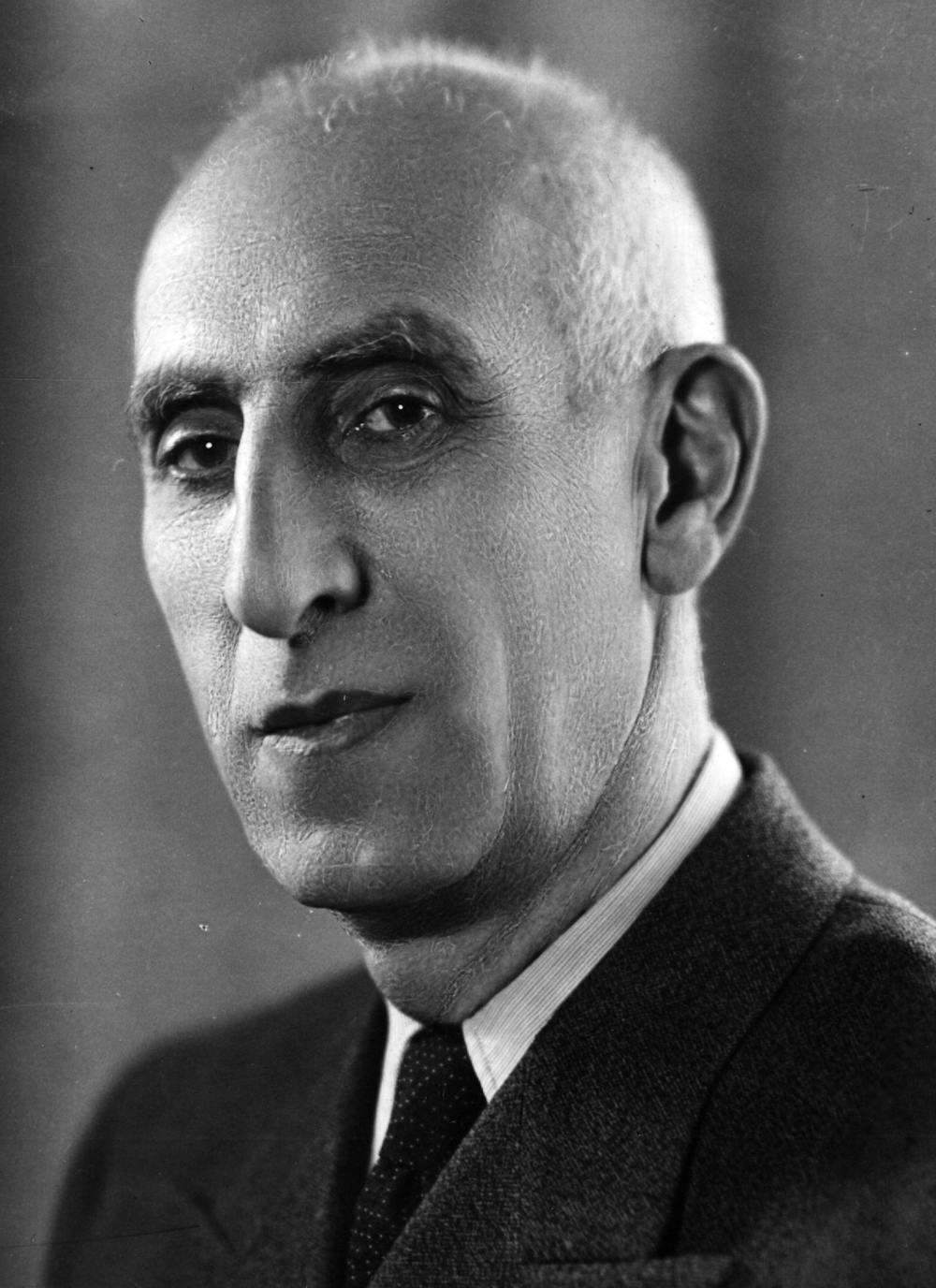
    With the U.S. bombing of three nuclear sites in Iran, relations between the two countries have arguably reached one of the lowest points in modern times. But the bad blood between the two countries isn’t new: The U.S. and Iran have been in conflict for decades – at least since the U.S. helped overthrow a democracy-minded prime minister, Mohammed Mossadegh, in August 1953. The U.S. then supported the long, repressive reign of the Shah of Iran, whose security services brutalized Iranian citizens for decades.

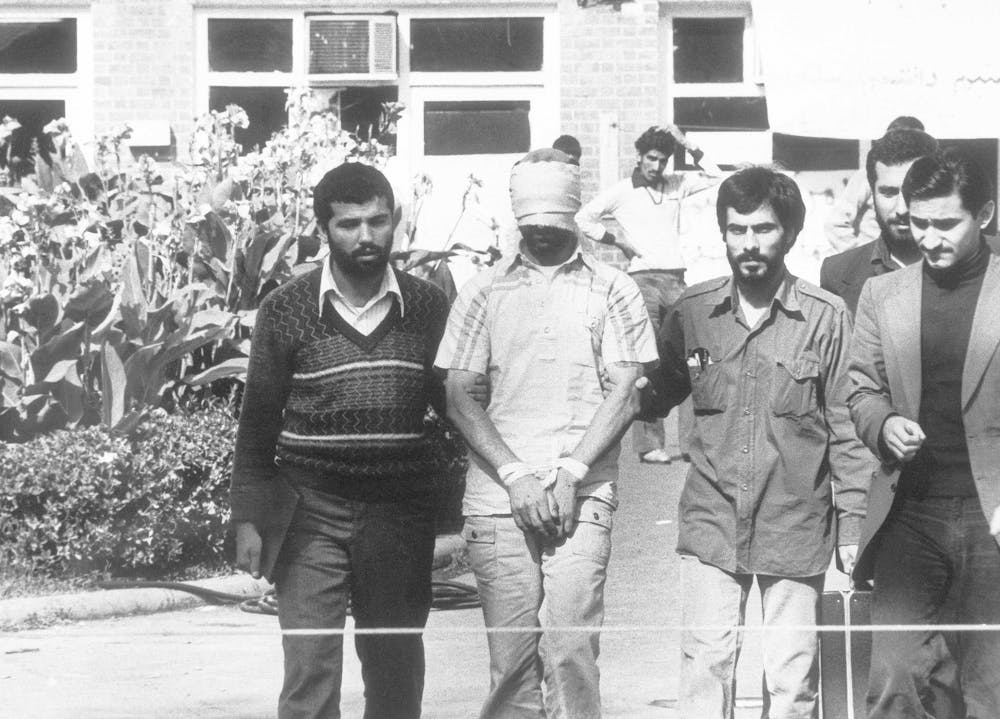
    The two countries have been particularly hostile to each other since Iranian students took over the U.S. Embassy in Tehran in November 1979, resulting in economic sanctions and the severing of formal diplomatic relations between the nations.

    Since 1984, the U.S. State Department has listed Iran as a “state sponsor of terrorism,” alleging the Iranian government provides terrorists with training, money and weapons.

    Some of the major events in U.S.-Iran relations highlight the differences between the nations’ views, but others arguably presented real opportunities for reconciliation.

    1953: US overthrows Mossadegh

    Mohammed Mossadegh.
    Wikimedia Commons

    In 1951, the Iranian Parliament chose a new prime minister, Mossadegh, who then led lawmakers to vote in favor of taking over the Anglo-Iranian Oil Company, expelling the company’s British owners and saying they wanted to turn oil profits into investments in the Iranian people. The U.S. feared disruption in the global oil supply and worried about Iran falling prey to Soviet influence. The British feared the loss of cheap Iranian oil.

    President Dwight Eisenhower decided it was best for the U.S. and the U.K. to get rid of Mossadegh. Operation Ajax, a joint CIA-British operation, convinced the Shah of Iran, the country’s monarch, to dismiss Mossadegh and drive him from office by force. Mossadegh was replaced by a much more Western-friendly prime minister, handpicked by the CIA.

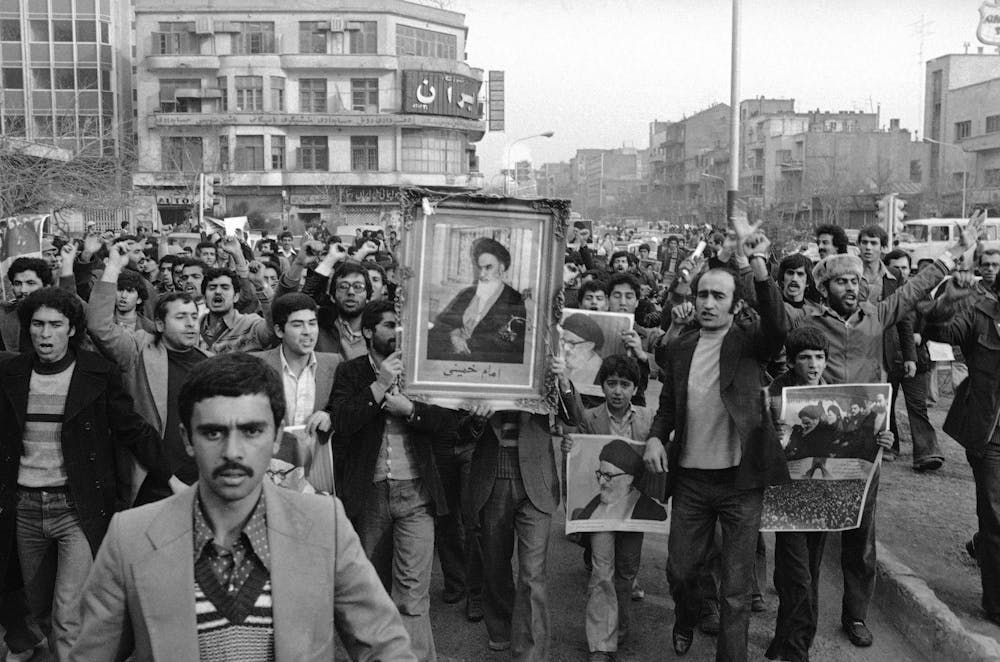
    Demonstrators in Tehran demand the establishment of an Islamic republic.
    AP Photo/Saris

    1979: Revolutionaries oust the shah, take hostages

    After more than 25 years of relative stability in U.S.-Iran relations, the Iranian public had grown unhappy with the social and economic conditions that developed under the dictatorial rule of Shah Mohammad Reza Pahlavi.

    Pahlavi enriched himself and used American aid to fund the military while many Iranians lived in poverty. Dissent was often violently quashed by SAVAK, the shah’s security service. In January 1979, the shah left Iran, ostensibly to seek cancer treatment. Two weeks later, Ayatollah Ruhollah Khomeini returned from exile in Iraq and led a drive to abolish the monarchy and proclaim an Islamic government.

    Iranian students at the U.S. Embassy in Tehran show a blindfolded American hostage to the crowd in November 1979.
    AP Photo

    In October 1979, President Jimmy Carter agreed to allow the shah to come to the U.S. to seek advanced medical treatment. Outraged Iranian students stormed the U.S. Embassy in Tehran on Nov. 4, taking 52 Americans hostage. That convinced Carter to sever U.S. diplomatic relations with Iran on April 7, 1980.

    Two weeks later, the U.S. military launched a mission to rescue the hostages, but it failed, with aircraft crashes killing eight U.S. servicemembers.

    The shah died in Egypt in July 1980, but the hostages weren’t released until Jan. 20, 1981, after 444 days of captivity.

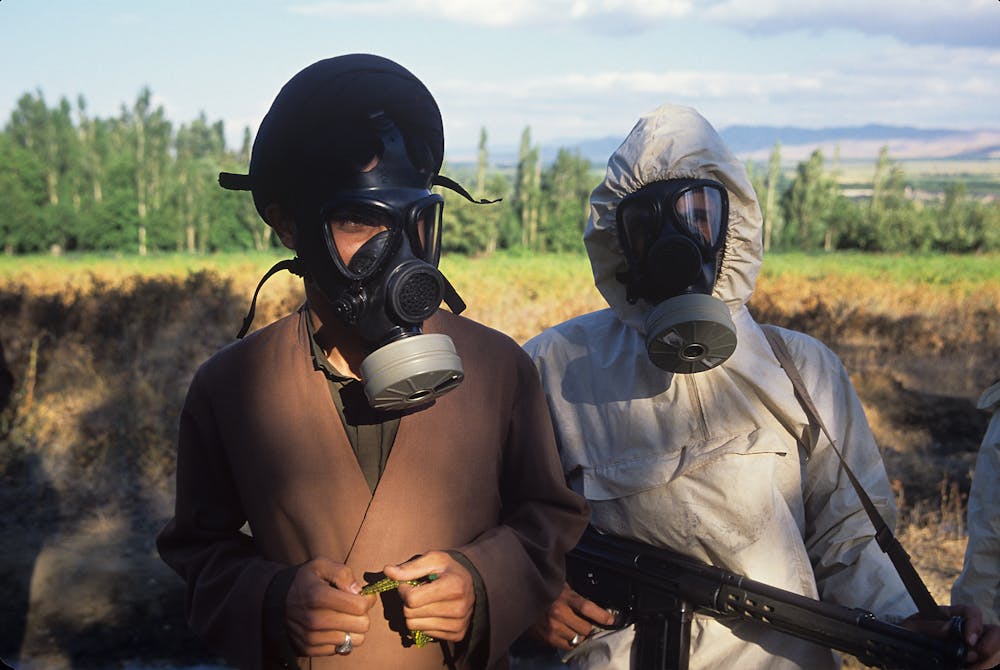
    An Iranian cleric, left, and an Iranian soldier wear gas masks to protect themselves against Iraqi chemical-weapons attacks in May 1988.
    Kaveh Kazemi/Getty Images

    1980-1988: US tacitly sides with Iraq

    In September 1980, Iraq invaded Iran, an escalation of the two countries’ regional rivalry and religious differences: Iraq was governed by Sunni Muslims but had a Shia Muslim majority population; Iran was led and populated mostly by Shiites.

    The U.S. was concerned that the conflict would limit the flow of Middle Eastern oil and wanted to ensure the conflict didn’t affect its close ally, Saudi Arabia.

    The U.S. supported Iraqi leader Saddam Hussein in his fight against the anti-American Iranian regime. As a result, the U.S. mostly turned a blind eye toward Iraq’s use of chemical weapons against Iran.

    U.S. officials moderated their usual opposition to those illegal and inhumane weapons because the U.S. State Department did not “wish to play into Iran’s hands by fueling its propaganda against Iraq.” In 1988, the war ended in a stalemate. More than 500,000 military and 100,000 civilians died.

    1981-1986: US secretly sells weapons to Iran

    The U.S. imposed an arms embargo after Iran was designated a state sponsor of terrorism in 1984. That left the Iranian military, in the middle of its war with Iraq, desperate for weapons and aircraft and vehicle parts to keep fighting.

    The Reagan administration decided that the embargo would likely push Iran to seek support from the Soviet Union, the U.S.’s Cold War rival. Rather than formally end the embargo, U.S. officials agreed to secretly sell weapons to Iran starting in 1981.

    The last shipment, of anti-tank missiles, was in October 1986. In November 1986, a Lebanese magazine exposed the deal. That revelation sparked the Iran-Contra scandal in the U.S., with Reagan’s officials found to have collected money from Iran for the weapons and illegally sent those funds to anti-socialist rebels – the Contras – in Nicaragua.

    At a mass funeral for 76 of the 290 people killed in the shootdown of Iran Air 655, mourners hold up a sign depicting the incident.
    AP Photo/CP/Mohammad Sayyad

    1988: US Navy shoots down Iran Air flight 655

    On the morning of July 8, 1988, the USS Vincennes, a guided missile cruiser patrolling in the international waters of the Persian Gulf, entered Iranian territorial waters while in a skirmish with Iranian gunboats.

    Either during or just after that exchange of gunfire, the Vincennes crew mistook a passing civilian Airbus passenger jet for an Iranian F-14 fighter. They shot it down, killing all 290 people aboard.

    The U.S. called it a “tragic and regrettable accident,” but Iran believed the plane’s downing was intentional. In 1996, the U.S. agreed to pay US$131.8 million in compensation to Iran.

    1997-1998: The US seeks contact

    In August 1997, a moderate reformer, Mohammad Khatami, won Iran’s presidential election.

    U.S. President Bill Clinton sensed an opportunity. He sent a message to Tehran through the Swiss ambassador there, proposing direct government-to-government talks.

    Shortly thereafter, in early January 1998, Khatami gave an interview to CNN in which he expressed “respect for the great American people,” denounced terrorism and recommended an “exchange of professors, writers, scholars, artists, journalists and tourists” between the United States and Iran.

    However, Supreme Leader Ayatollah Ali Khamenei didn’t agree, so not much came of the mutual overtures as Clinton’s time in office came to an end.

    In his 2002 State of the Union address, President George W. Bush characterized Iran, Iraq and North Korea as constituting an “Axis of Evil” supporting terrorism and pursuing weapons of mass destruction, straining relations even further.

    Inside these buildings at the Natanz nuclear facility in Iran, technicians enrich uranium.
    AP Photo/Vahid Salemi

    2002: Iran’s nuclear program raises alarm

    In August 2002, an exiled rebel group announced that Iran had been secretly working on nuclear weapons at two installations that had not previously been publicly revealed.

    That was a violation of the terms of the Nuclear Nonproliferation Treaty, which Iran had signed, requiring countries to disclose their nuclear-related facilities to international inspectors.

    One of those formerly secret locations, Natanz, housed centrifuges for enriching uranium, which could be used in civilian nuclear reactors or enriched further for weapons.

    Starting in roughly 2005, U.S. and Israeli government cyberattackers together reportedly targeted the Natanz centrifuges with a custom-made piece of malicious software that became known as Stuxnet.

    That effort, which slowed down Iran’s nuclear program was one of many U.S. and international attempts – mostly unsuccessful – to curtail Iran’s progress toward building a nuclear bomb.

    2003: Iran writes to Bush administration

    An excerpt of the document sent from Iran, via the Swiss government, to the U.S. State Department in 2003, appears to seek talks between the U.S. and Iran.
    Washington Post via Scribd

    In May 2003, senior Iranian officials quietly contacted the State Department through the Swiss embassy in Iran, seeking “a dialogue ‘in mutual respect,’” addressing four big issues: nuclear weapons, terrorism, Palestinian resistance and stability in Iraq.

    Hardliners in the Bush administration weren’t interested in any major reconciliation, though Secretary of State Colin Powell favored dialogue and other officials had met with Iran about al-Qaida.

    When Iranian hardliner Mahmoud Ahmadinejad was elected president of Iran in 2005, the opportunity died. The following year, Ahmadinejad made his own overture to Washington in an 18-page letter to President Bush. The letter was widely dismissed; a senior State Department official told me in profane terms that it amounted to nothing.

    Representatives of several nations met in Vienna in July 2015 to finalize the Iran nuclear deal.
    Austrian Federal Ministry for Europe, Integration and Foreign Affairs/Flickr

    2015: Iran nuclear deal signed

    After a decade of unsuccessful attempts to rein in Iran’s nuclear ambitions, the Obama administration undertook a direct diplomatic approach beginning in 2013.

    Two years of secret, direct negotiations initially bilaterally between the U.S. and Iran and later with other nuclear powers culminated in the Joint Comprehensive Plan of Action, often called the Iran nuclear deal.

    Two years of secret, direct negotiations conducted bilaterally at first between the U.S. and Iran and later with other nuclear powers culminated in the Joint Comprehensive Plan of Action, often called the Iran nuclear deal.

    Iran, the U.S., China, France, Germany, Russia and the United Kingdom signed the deal in 2015. It severely limited Iran’s capacity to enrich uranium and mandated that international inspectors monitor and enforce Iran’s compliance with the agreement.

    In return, Iran was granted relief from international and U.S. economic sanctions. Though the inspectors regularly certified that Iran was abiding by the agreement’s terms, President Donald Trump withdrew from the agreement in May 2018.

    2020: US drones kill Iranian Maj. Gen. Qassem Soleimani

    An official photo from the Iranian government shows Maj. Gen. Qassem Soleimani, who was killed in a Jan. 3 drone strike ordered by President Donald Trump.
    Iranian Supreme Leader Press Office/Anadolu Agency via Getty Images

    On Jan. 3, 2020, an American drone fired a missile that killed Maj. Gen. Qassem Soleimani, the leader of Iran’s elite Quds Force. Analysts considered Soleimani the second most powerful man in Iran, after Supreme Leader Ayatollah Khamenei.

    At the time, the Trump administration asserted that Soleimani was directing an imminent attack against U.S. assets in the region, but officials have not provided clear evidence to support that claim.

    Iran responded by launching ballistic missiles that hit two American bases in Iraq.

    2023: The Oct. 7 attacks on Israel

    Hamas’ brazen attack on Israel on Oct. 7, 2023, provoked a fearsome militarized response from Israel that continues today and served to severely weaken Iran’s proxies in the region, especially Hamas – the perpetrator of the attacks – and Hezbollah in Lebanon.

    2025: Trump 2.0 and Iran

    Trump saw an opportunity to forge a new nuclear deal with Iran and to pursue other business deals with Tehran. Once inaugurated for his second term, Trump appointed Steve Witkoff, a real estate investor who is the president’s friend, to serve as special envoy for the Middle East and to lead negotiations.

    Negotiations for a nuclear deal between Washington and Tehran began in April, but the countries did not reach a deal. They were planning a new round of talks when Israel struck Iran with a series of airstrikes on June 13, forcing the White House to reconsider is position.

    On June 22, in the early morning hours, the U.S. chose to act decisively in an attempt to cripple Iran’s nuclear capacity, bombing three nuclear sites and causing what Pentagon officials called “severe damage.” Iran vowed to retaliate.

    This story has been updated to reflect the U.S. bombing of Iranian nuclear sites on June 22, 2025.

    Jeffrey Fields receives funding from the Carnegie Corporation of New York and Schmidt Futures.

    – ref. US and Iran have a long, complicated history, spanning decades before US strikes on nuclear sites – https://theconversation.com/us-and-iran-have-a-long-complicated-history-spanning-decades-before-us-strikes-on-nuclear-sites-259240

    MIL OSI – Global Reports –

    June 23, 2025
  • MIL-OSI Russia: Report “Development of the “Central Asia-China Spirit”: achievements, opportunities and prospects for regional cooperation” /1/

    Translation. Region: Russian Federal

    Source: People’s Republic of China in Russian – People’s Republic of China in Russian –

    Source: People’s Republic of China – State Council News

    ASTANA, June 22 (Xinhua) — The Xinhua Research Institute on Sunday released a report in the Kazakh capital Astana titled “Development of the Central Asia-China Spirit: Achievements, Possibilities, and Prospects of Regional Cooperation.” The full text of the report is given below.

    Development of the “Central Asia-China Spirit”:

    achievements, opportunities and prospects of regional cooperation

    Xinhua News Agency Research Institute

    Table of contents

    Preface

    Chapter 1. Results of cooperation between China and Central Asia

    1.1 Strengthening trade and economic ties

    1.2 Infrastructure development and deepening interconnectivity

    1.3 Accelerated development of cooperation along the entire production chain in the energy industry

    1.4 Innovative cooperation towards a green transition

    1.5 Promoting the formation of internal development potential in the countries of Central Asia

    1.6 Dialogue of civilizations as a solid spiritual basis for cooperation

    1.7 Peace, security and stability as a basis for sustainable development

    Chapter 2. Opportunities and Challenges in China-Central Asia Cooperation

    2.1 New Opportunities as a Result of China’s Opening Up

    2. Potential for cooperation in the field of green economy and digital technologies

    2.3 Regional cooperation as a factor of geo-economic expansion

    2.4 Risks and challenges in the field of development and security

    Chapter 3. Looking to the Future: Strengthening the Regional Community of Shared Destiny

    3.1 Mutual support as the basis of a regional community of common destiny

    3.2 Joint development for the sake of regional prosperity

    3.3 Formation of a common security barrier for stability of the entire region

    3.4 Friendship of peoples in the spirit of the times as a guarantee of mutual understanding

    Conclusion

    Explanatory note and thanks

    Preface

    Central Asia is the heart of Eurasia, closely linked to China by a common nature and destiny, like two banks of a single river: different, but inseparable. This region is a crossroads of ancient civilizations, where different peoples and customs meet and merge. The region serves as a hub of interregional connections and a real “melting pot” of human culture.

    Looking back, we can see how China, together with the peoples of Central Asia, contributed to the establishment and prosperity of the great Silk Road, leaving behind vivid evidence of cooperation over the centuries: “Caravans stretched to the horizon, and overseas merchants flocked to the border outposts day after day.”

    In the new era, China and the Central Asian countries have become good neighbors, reliable friends, partners and brothers bound by a common destiny. Together, they are opening a new page of “friendly, safe and prosperous neighborhood” in the Eurasian space, developing and shaping the “Central Asia-China Spirit” characterized by mutual respect, mutual trust, mutual benefit, mutual assistance and promoting joint modernization through high-quality development.

    They are creating a model example of regional cooperation for the entire world.

    Since Chinese President Xi Jinping put forward the Belt and Road Initiative in 2013, China and Central Asian countries have been working together to promote the comprehensive revival of the Silk Road and build a close partnership for the future. Bilateral relations have entered a new era and reached an unprecedented level. President Xi Jinping has paid nine visits to Central Asia, visiting all five countries and eight cities, and established strong friendship with the leaders of the region. The video summit to mark the 30th anniversary of the establishment of diplomatic relations and the first China-Central Asia Summit have become important milestones in the history of bilateral ties. Based on the interests of their peoples and striving for a brighter future, China and the Central Asian countries have made a historic choice to build a closer community of shared destiny, which once again underscores their determination to develop cooperation at a higher level, with higher standards and on a qualitatively new basis.

    The recently concluded second China-Central Asia Summit marked a new start in the development of cooperation between China and the countries of the region. At this historic moment, this report offers a comprehensive overview of the key achievements, existing opportunities and challenges of the China-Central Asia partnership in the new era, as well as forecasts and analytical assessments of the prospects for further cooperation.

    The report notes that since the beginning of the new era, cooperation between China and Central Asian countries has borne rich fruit in seven major areas: trade and economic cooperation, infrastructure development, energy cooperation, new areas of partnership, enhancing development potential, mutual cultural enrichment, and joint promotion of peace and stability. China’s high-quality development, high level of its openness, as well as a new round of scientific and technological revolution and industrial transformation create unique opportunities for expanding China-Central Asian cooperation. At the same time, the partnership faces a number of challenges, including unilateral actions, rising protectionism, geopolitical risks, and threats in the field of non-traditional security.

    Looking to the future, the report stressed that cooperation between China and Central Asian countries should be based on the concept of building a community with a shared future for mankind and follow the three global initiatives. Mutual support, common development, common security and friendship passed down from generation to generation should remain the fundamental principles, aiming to strengthen the regional community with a shared future, jointly create a new chapter of regional prosperity, build a common security shield and deepen the cordial affinity between the peoples.

    We believe that in the new era, cooperation between China and Central Asia will bring sustainable development and more benefits to the peoples of the region, bring stability and positive energy to the troubled world, and become an important example of regional partnership in building a community with a shared future for mankind.

    Chapter 1. Results of cooperation between China and Central Asia

    Our cooperation is rooted in more than two thousand years of friendly relations, is reinforced by solidarity and mutual trust that has been established for 30 years since the establishment of diplomatic relations, and is significantly moving forward thanks to mutually beneficial cooperation in the new era. Many years of experience and practice have enabled us to develop and shape the “Central Asia-China Spirit”, characterized by mutual respect, mutual trust, mutual benefit, mutual assistance and the promotion of joint modernization through high-quality development.

    — Chairman of the People’s Republic of China Xi Jinping

    1.1 Strengthening trade and economic ties

    In recent years, trade and economic cooperation between China and the Central Asian countries has been steadily developing in both quantitative and qualitative terms. China has become the largest trading partner and the main source of investment for the countries in the region. After the first China-Central Asia Summit was held in 2023, the Chinese side took additional measures to promote trade, ensuring the stable flow of goods and expanding the supply of products from the Central Asian countries. As a result, bilateral trade is becoming increasingly diversified, the potential for economic cooperation continues to be actively realized, and the scale of trade is reaching new levels. The total volume of trade between China and the Central Asian countries reached 94.8 billion US dollars in 2024, an increase of 5.4 billion compared with the previous year, representing an increase of 7.2%. Compared with the initial period of establishing diplomatic relations, when this figure was only 460 million dollars, it has increased more than a hundredfold.

    Strategic alignment of the parties. An important feature of cooperation between China and the Central Asian countries is the strategic alignment of key plans and initiatives in the field of economic development. The parties strive for in-depth coordination and alignment of the Belt and Road initiative with the national development programs of the countries of the region: the New Economic Policy of Kazakhstan, the National Development Program of Kyrgyzstan until 2026, the National Development Strategy of Tajikistan for the period up to 2030, the Revival of the Silk Road strategy of Turkmenistan and the Development Strategy of the new Uzbekistan for 2022-2026. Such alignment strengthens practical cooperation in various fields and contributes to the formation of a new model of complementary and mutually beneficial partnership. During the second China-Central Asia Summit, China and the five Central Asian countries signed a treaty on eternal good-neighborliness, friendship and cooperation, which enshrined the principle of friendship between generations in legal form and became a new milestone in the history of relations between the six countries.

    Practical cooperation enters the “highway”. As China-Central Asia cooperation deepens, practical cooperation enters the “highway”. The two sides improve trade policies and work hard to ensure a stable, fair, transparent and sustainable investment climate, making trade, investment and business environment even more attractive. As of December 2024, China’s accumulated direct investment in Central Asian countries exceeded US$17 billion, and the total volume of completed contract work amounted to more than US$60 billion. Cooperation covers such areas as oil and gas production, interconnected infrastructure, manufacturing and the digital economy.

    In the Xinjiang-Uygursky Autonomous Region of China, bordering the countries of Central Asia, optimizing the work of border crossings with Kazakhstan, Kyrgyzstan and Tajikistan, passes are more quickly and more efficient. The first cross -border cooperation zone of Horgos, jointly created by China and Kazakhstan, has been operating in the innovative model of “inside the country – outside the customs territory (or“ within the country, but outside customs borders ”). This International Center has become a flagship project of bilateral economic cooperation as part of the“ One Belt, One Way. ”The starting point of the ancient shalk track. – Shensi’s province forms the center of trade in widespread consumption, such as grain, fruits and vegetables, together with the countries of the region, China develops international logistics nodes and logistics parks The Center in the north-west of the Ciano International Port, introduced the RFID radio frequency technology, which allowed to reduce the assembly time of new energy cars and increase the efficiency of organizing trains on the route China-Europe.

    Chinese -made products, including everyday goods, machine -building equipment and electronic products, are in sustainable demand among consumers in Central Asia. Products from the category of “new three types” became the basis of Chinese exports to the region. At the same time, energy resources and agricultural products from Central Asia countries are expanding the Chinese market, expanding the choice for consumers. China discovered eight “green corridors” for accelerated customs clearance of agricultural products, completely covering all car border crossings. The trade in agricultural products between the parties is rapidly developing. Export to China of high -quality agricultural goods from Central Asia, such as lemons from Tajikistan and cherries from Uzbekistan, is growing rapidly. At the same time, fresh peaches from Hebei province and Yanan apples first entered the tables of consumers in Central Asia. The Kerekhovaya and oil and fat industrial group “Aiju Grain and Oil Group), effectively using complementarity in agrarian cooperation between China and the countries of Central Asia, built and commissioned the logistics and agro-industrial park with a capacity of 1 million tons in the North Kazakhstan region. Chinese standards in the field of equipment, technology, management and service have brought real benefits to the local population. Such interaction contributes to mutually beneficial cooperation in the field of food security. Thanks to the joint efforts of China and the countries of Central Asia, the stability and effectiveness of regional production and logistics chains are ensured.

    1.2 Infrastructure development and deepening interconnectivity

    Connectivity development is a priority area of cooperation between China and Central Asian countries. The two sides make full use of the region’s geographical advantages to build “fast corridors” for the free movement of people and improve “green corridors” for the efficient movement of goods. These measures help transform Central Asian countries from “landlocked” to “land-connected,” strengthening their position as an important transportation hub on the Eurasian continent. Such infrastructure development improves people’s living conditions and stimulates the unleashing of the potential of higher-level connectivity, including the Internet of Things and other areas of digital integration between China and Central Asia.

    China and Central Asian countries have been pioneers in jointly implementing the Belt and Road Initiative, accelerating the construction of the China-Central Asia Transport Corridor and forming a multi-layered and diversified system of regional connectivity. This has resulted in the implementation of many mutually beneficial infrastructure projects. China’s construction of the Kamchik Pass Tunnel of the Angren-Pap Railway, the longest in Central Asia, has eliminated the need to bypass third countries when transporting through Uzbekistan, radically changing the mode of transportation for tens of millions of people. The China-Kyrgyzstan-Uzbekistan Highway, which crosses the Tien Shan Mountains, and the China-Tajikistan-Uzbekistan Highway, which passes through the Pamir Plateau, form a dense network of routes for freight transportation between China and Central Asian countries, significantly improving logistics and bringing tangible benefits to the people of the region.

    On December 27, 2024, the construction of the China-Kyrgyzstan-Uzbekistan railway officially began. The route of the new line starts in Kashgar, passes through the territory of Kyrgyzstan and enters Uzbekistan, with the prospect of further construction in the direction of West and South Asia. Once completed, the railway will become an important part of the southern route of the New Eurasian Continental Bridge. It will provide a convenient transport corridor connecting East and Southeast Asia with Central, West Asia, North Africa and Southern Europe. This will significantly reduce the costs of international trade for the participating countries and increase their level of integration into the world economy.

    China has signed intergovernmental air transport agreements with all five Central Asian countries, and the opening up of the aviation market continues to progress. Air traffic between Xi’an and the countries in the region has evolved from no routes at all to covering seven cities in all five countries. Currently, eight passenger flights are operating regularly, connecting China with seven cities in Central Asia. These airlines provide a strong link between the economic zones of China and Central Asia, promoting the effective integration of industrial and social supply chains.

    The China-Europe and China-Central Asia trains, which operate non-stop day and night, effectively ensure the stability and continuity of international logistics chains. On April 23, a China-Europe freight train with 55 containers of consumer goods and electronic components departed from the Khorgos border station in Xinjiang to the Polish city of Malaszewicze. This trip was a landmark one, as the number of trains passing through the Khorgos railway checkpoint exceeded 3,000, and this figure was reached 27 days earlier than last year. This was a new historical record, exceeding the figure of last year by 28.7%. According to statistics, 19 thousand China-Europe trains were sent in 2024, which is 10% more than in the previous year, and the volume of transportation amounted to 2.07 million TEU (conventional containers), which is 9% higher than the same indicator last year. 12 thousand trains were sent on the China-Central Asia route (an increase of 10%), 880 thousand TEU were transported (an increase of 12%). Currently, the China State Railway Corporation has approved 44 regular routes in the direction of Central Asia, thereby forming new international transport corridors in the Eurasian space.

    The Trans-Caspian International Transport Corridor starts in China, passes through Kazakhstan, the Caspian coast, Azerbaijan and Georgia, and then stretches to Turkey and European countries. In July 2024, Chinese President Xi Jinping and Kazakh President Kassym-Jomart Tokayev jointly attended the launch ceremony of the China-Europe direct express route via video link. For the first time, Chinese vehicles reached a Caspian port via a direct road route, which marked the official formation of a multi-level and multi-vector interconnected system combining road, rail, air and pipeline transport.

    The China-Europe train consolidation centers are developing at an accelerated pace, forming a more efficient and convenient transportation system. In February 2024, the Kazakhstan terminal in Xi’an, built in cooperation between Xi’an Free Trade Port Construction and Operation Co., Ltd. and KTZ Express JSC, began operating. In just one year, the terminal handled over 150 thousand tons of cargo, which contributes to the accelerated consolidation and distribution of Kazakhstani goods undergoing import and export operations through Xi’an. In addition, the terminal has become the embodiment of Kazakhstan’s initiative to accelerate the creation of a trade and logistics center in China. With the commissioning of the China-Kazakhstan logistics hub in Almaty on June 10 this year, the hub-to-hub transport corridor has moved to a new level.

    1.3 Accelerated development of cooperation along the entire production chain in the energy industry

    Central Asian countries are important oil and gas producers, and have a high degree of complementarity with China in such aspects as natural resource conditions and industrial structure. In recent years, China and Central Asian countries, through a mutually beneficial cooperation model, have been jointly building multi-vector, safe and efficient energy corridors, consistently expanding cooperation in such basic areas as energy and mining.

    Chinese enterprises attach great importance to the development of energy cooperation with the Central Asian countries, building long-term and strong partnerships with relevant government agencies and energy companies in the region. Back in 1997, the China National Petroleum Corporation (CNPC) successfully won a tender for the development of the Akzhuba oil field in Kazakhstan, which marked the beginning of cooperation between China and Kazakhstan in the oil and gas sector. Over the past years, Akzhubin has grown from an enterprise with an annual oil production volume of just over 2 million tons into a large oil and gas company with an annual production of over 10 million tons of oil and gas. On its basis, a full chain of the industry cycle was formed, including oil and gas exploration and production, pipeline construction and operation, oil refining and petroleum product trading, engineering and construction services, oil and gas equipment production and transportation, information technology and logistics support. The project also contributed to the creation of over 20 thousand jobs for the local population.

    In Tajikistan, Chinese energy equipment manufacturing companies built and commissioned the Thermal Power Plant No. 2 in Dushanbe, which made it possible to permanently resolve the problem of electricity shortages in the capital in winter. In Kyrgyzstan, with the support of the Chinese side, the modernization of the Bishkek Thermal Power Plant was completed, as a result of which its annual electricity generation increased from the previous 262 million kilowatt-hours to 1.74 billion, and the volume of heat supply almost doubled. In Turkmenistan, as part of the project to develop natural gas fields in the Amu Darya basin, implemented with the participation of the China National Petroleum Corporation, a production level equal to tens of millions of tons of oil equivalent per year has already been achieved, and the annual capacity of natural gas supplies exceeds 10 billion cubic meters. The implementation of a number of such large-scale projects contributes to the steady expansion of oil and gas trade between China and the countries of Central Asia, as well as to the deepening of cooperation along the entire production chain of the energy industry.

    Thanks to many years of practical cooperation between China and Central Asian countries, the network of pipeline infrastructure construction and operation is gradually improving. Lines A, B and C of the China-Central Asia gas pipeline, running through endless deserts, have been successfully put into operation and connected to the II and III stages of China’s West-East mainline. The construction of Line D is proceeding at an accelerated pace, bringing real benefits to the people of the countries along the route. In addition, the Kazakhstan-China oil pipeline has become the first international energy corridor directly connecting Kazakhstan with foreign end markets. Its implementation has made a significant contribution to the diversification of Kazakhstan’s energy exports.

    With the steady advancement of the Belt and Road Initiative, energy cooperation between China and Central Asian countries continues to deepen. It not only helps improve the region’s energy infrastructure and inject new impetus into the socio-economic development of both sides, but also makes a significant contribution to optimizing the region’s energy structure and ensuring sustainable ecological development.

    1.4 Innovative cooperation towards a green transition

    Fossil fuels currently account for about 95% of the energy supply in the five Central Asian countries. Against the backdrop of increasing climate change and the global energy transition, the region’s countries are showing growing interest in cooperation in the areas of renewable energy and green economy. However, due to limited financial resources, a shortage of specialists, and an insufficient level of technological development, the implementation of a green transition faces certain difficulties.

    During the first China-Central Asia Summit, China and the five countries in the region reached a number of agreements, including launching a joint initiative on green and low-carbon development, as well as deepening cooperation on sustainable development and combating climate change. In support of the Central Asian countries’ course towards ecological transformation, China, using its governance and production advantages in the field of new energy, is actively promoting the region’s significant potential in the field of renewable energy resources.

    In early April 2025, the Bash and Dzhankeldy wind energy projects, implemented with the investment and operational participation of China Southern Power Grid, were officially commissioned in Uzbekistan. These facilities have become the largest completed wind farms in Central Asia. Their annual output is expected to be about 3 billion kilowatt-hours of clean electricity, which will reduce carbon dioxide emissions by 1.6 million tons annually.

    More and more Chinese companies are investing in the construction of enterprises and the development of green energy in Central Asian countries, actively expanding cooperation in the field of renewable energy sources. In Uzbekistan, a 100-megawatt solar power plant was commissioned in Navoi, in Kazakhstan – a wind farm in Zhanatas, a hydroelectric power station in Turgu-Sun and a solar power plant in Almaty. The Chinese energy corporation China Huadian Group has begun construction of a gas turbine power plant in Aktau and a solar power plant in Sheli. These projects not only provide Central Asian countries with stable and sustainable green electricity, but also contribute to the modernization of local industries and create a significant number of jobs.

    China is actively developing international cooperation with Central Asian countries in combating desertification. The practical experience and scientific approaches developed in the framework of ecological recovery of the “Three Norths”, including Ningxia Hui Autonomous Region, Inner Mongolia and other regions, as well as the experience of developing the Taklamakan Desert have become a reference point for Central Asian countries that are facing similar problems of land degradation. Such cooperation not only offers real solutions in the field of sustainable development, but also opens up broad prospects for promoting the green direction within the framework of the “One Belt, One Road” initiative.

    The Aral Sea, located on the border of Uzbekistan and Kazakhstan, was previously considered the fourth largest lake in the world. But due to half a century of large-scale development of land and water resources, its area has shrunk from about 67,000 square kilometers in 1960 to about 6,000 square kilometers in 2020. This has caused serious environmental consequences: desertification, soil salinization, loss of biodiversity, and other problems. In the face of the environmental crisis, China and Central Asian countries have joined forces to implement comprehensive measures to restore the ecosystem of the Aral region. The Institute of Ecology and Geography of the Xinjiang Branch of the Chinese Academy of Sciences signed a cooperation agreement with the government of Uzbekistan and specialized organizations aimed at the ecological rehabilitation of the Aral Sea. In 2023, a pilot site was organized in the city of Nukus in western Uzbekistan, where drip irrigation technology under a film with the simultaneous supply of water and fertilizers for growing cotton was tested. Already in the first year, the yield reached a record level for this region. Currently, the institute’s specialists continue to work in the city of Muynak, located on the shallow coast. Here, salt- and drought-resistant plant species are being selected, which will become the basis for the future “greening” of the dried-up seabed and the restoration of the region’s ecosystems.

    1.5 Promoting the formation of internal development potential in the countries of Central Asia

    “China’s experience in overcoming poverty clearly shows that with persistence, step-by-step implementation of a unified plan, and persistence like a drop breaking through a rock, the problem of poverty in developing countries can be solved. Even the weakest bird can fly first – and fly high. If China can do it, other developing countries can too.” These are the words with which Chinese President Xi Jinping shared China’s experience in combating poverty with the world community at the G20 Leaders’ Summit in Rio de Janeiro in November 2024.

    Poverty is a long-standing problem of human society and a common challenge facing the entire world. China’s experience in combating poverty has attracted the attention of the international community and has become an important source of inspiration for Central Asian countries. China’s cooperation with the countries of the region has gradually shifted from the traditional one-sided “donor aid” to a model of mutual development based on technology transfer, industrial modernization, personnel training and other forms of assistance. This contributes to the joint formation of internal potential for sustainable growth and social stability.

    Implementation of targeted projects on poverty reduction with an emphasis on technology localization in accordance with the needs of Central Asian countries. China and the Central Asian countries are actively developing specialized cooperation in the field of scientific and technological support for poverty alleviation. Taking into account regional characteristics and industry constraints, the parties are accelerating the transfer of technologies to upgrade production in areas such as agricultural modernization, energy transition and infrastructure development. Within the framework of the first China-Central Asia summit, China and Uzbekistan agreed to establish a subcommittee on cooperation in the field of poverty reduction under the Intergovernmental Cooperation Committee. This is the first such subcommittee established by China in the format of interstate cooperation. Since the launch of the China-Uzbekistan cooperation mechanism on poverty reduction, the parties have achieved significant results in the areas of institutional development, personnel training and exchange of practical experience. These efforts not only contribute to the socio-economic development of Uzbekistan, but also significantly expand the content of the bilateral partnership. According to a joint study conducted by the National Statistics Committee of the Republic of Uzbekistan and the World Bank, in 2024, 719 thousand people overcame the poverty line, and the overall poverty level in the country decreased to 8.9%.

    In recent years, Northwest University of Agricultural and Forestry Science and Technology of China, based on its strong scientific areas (crop breeding, plant protection from diseases and pests, water-saving irrigation, veterinary medicine and animal husbandry, development of saline lands and food processing), has established eight overseas agricultural research and demonstration parks in Central Asian countries. One of them, a demonstration park for the technology of breeding elite varieties of fruit trees, was founded in Kyrgyzstan in 2023 in cooperation with local universities and enterprises. Taking into account the hot and dry climate of the region, which is unfavorable for growing apple trees, Chinese agricultural experts developed and selected variety-rootstock combinations. These combinations showed higher efficiency of moisture use and better survival rate compared to traditional seedlings, which made it possible to significantly increase yields and contribute to an increase in the income of local gardeners.

    Implementation of technical skills development programs as a basis for building domestic development potential. The Lu Ban Workshops, named after the legendary Chinese craftsman Lu Ban, have become a new platform for international cooperation in vocational education. In Central Asian countries, these workshops develop technical training programs based on the actual needs of local development, providing sustainable support for industrialization and poverty reduction in the region.

    Kazakhstan has become the first country in Central Asia to introduce electric vehicles on new energy sources on a large scale. However, despite the rapid growth of this sector, the country is experiencing a serious shortage of qualified specialists capable of servicing such vehicles. In December 2023, the first “Lu Ban Workshop” began operating in Kazakhstan. The first educational program was “Vehicles and Technologies”. Four training and production zones were created for practical training: on vehicle maintenance, traditional (fuel) transport systems, vehicles on new energy sources, and intelligent network transport systems. In response to the needs of the local labor market, in 2024 the workshop developed a number of new courses, including “Transmission and Intelligent Vehicle Control Technologies”, “Driver Assistance Systems (ADAS)”, and others. In addition, a new educational program “Smart Transport and Artificial Intelligence” was launched. Graduates of the Lu Ban Workshop are in high demand, and are actively invited to work by the largest automakers, as well as enterprises in the metallurgical and mining industries of Kazakhstan. In July 2024, China decided to open a second Lu Ban Workshop in the country, which will focus on training personnel for the rapidly developing artificial intelligence industry.

    At the same time, Lu Ban Workshops is implementing a “dual education” model – a combination of Chinese language training and professional skills development, which helps integrate the education system with the real needs of industry. In the context of the implementation of the “One Belt, One Road” initiative, Chinese enterprises are actively being created in Central Asian countries, which opens up broad employment opportunities for local people. The “Chinese language professional skills” model effectively improves the skills of local people through short-term courses, extra-academic and formal vocational training programs. This not only helps partially solve the problem of shortage of qualified personnel for enterprises with Chinese participation, but also promotes job creation, and thus contributes to socio-economic development and improving the standard of living in the region.

    1.6 Dialogue of civilizations as a solid spiritual basis for cooperation

    More than two thousand years ago, the civilization of central China and the cultures of Central Asia entered an era of deep integration thanks to the ancient Silk Road. This historical process laid the foundation for mutually beneficial cultural exchange and coexistence, becoming a solid foundation for modern inter-civilizational dialogue and cultural solidarity. Today, civilizational interaction between China and the Central Asian countries continues at a new level. It not only preserves and develops the cultural genes of the Silk Road era, but also serves as a powerful spiritual resource for promoting the idea of a community with a common destiny for humanity in the context of global transformation.

    A thousand-year-old friendship with the aroma of medicine remains forever. Since the emergence of the Silk Road, traditional Chinese medicine began to spread to the countries of Central Asia along with trade caravans, gradually integrating with local medical practices and contributing to their development. The Xi’an Declaration of the first China-Central Asia Summit particularly emphasized the need to “promote the establishment of traditional Chinese medicine centers, develop cooperation in the field of growing and processing medicinal herbs, and jointly pave the “Healthy Silk Road”.” In recent years, China’s cooperation with the Central Asian countries in the field of traditional medicine has been actively expanding on the basis of a number of specific joint projects. A multi-layered partnership network is being formed, covering healthcare, education and scientific research. Traditional Chinese medicine is becoming an important link, strengthening humanitarian ties and mutual understanding between the peoples of China and Central Asia.

    In March 2023, the Fourth Clinical Hospital of Xinjiang Medical University (regional hospital of traditional Chinese medicine), together with the Institute of Physical and Chemical Technology of the Xinjiang Branch of the Chinese Academy of Sciences, founded the first Center for Treatment and Training of Specialists in Traditional Chinese Medicine in Central Asia in Tashkent. As part of the project, 14 Chinese therapy methods, including acupuncture and Tuina massage, were successfully integrated into the regional healthcare system. In September of the same year, the above-mentioned hospital won a tender for the implementation of a national project to establish a China-Uzbekistan Center for Traditional Chinese Medicine. And in October, a course in Chinese medicine became a mandatory discipline in the bachelor’s degree program in traditional medicine at Tashkent State Medical University. This became the first full-fledged introduction of Chinese medicine into the higher education system of Central Asia, opening the way for the systematic training of specialized personnel locally.

    Culture as a bridge to bring hearts together.

    The Year of Tourism, the Year of Culture and the Central Asian Art Festival have been very popular with the Chinese people, and Chinese TV series such as “Minning City” and “My Altai” have resonated with Central Asian viewers. In order to implement key high-level agreements, China and Turkmenistan organized mutual Years of Culture in 2023-2024, thereby demonstrating their desire to strengthen humanitarian cooperation. Both countries have rich cultural heritage and centuries-old history. Through dance, vocal and theatrical arts, the parties presented their national identity and artistic originality, which contributed to deep cultural integration and rapprochement of peoples.

    The Nauryz holiday is an ancient tradition of the peoples of Central Asia. In March 2025, an art group from the Samarkand region of Uzbekistan presented a vibrant festive program at the Silk Road Happy World Cultural Park in the Chinese city of Xi’an. Through songs and dances, the artists conveyed the atmosphere of spring renewal, and the treat of national dishes turned the performance into a real gastronomic holiday. In April, the Consulate General of the Republic of Kazakhstan in Xi’an organized festive events in honor of Nauryz. The program included a friendly mini-football match, traditional national games, a talent contest, as well as performances of Kazakh folk music and dance. The goal of the holiday was to promote ethnocultural traditions, deepen people’s diplomacy and expand platforms for multilateral humanitarian exchange.

    Cultural and tourist exchange on the Silk Road is a movement towards each other. Tourism is becoming one of the most dynamically developing areas of cooperation between China and the Central Asian countries. The basis for this is not only favorable natural conditions and geographical proximity, but also a common historical and cultural heritage, as well as the complementary needs of the tourism markets of both sides. Deepening political trust, coordinated use of tourism resources and active market interaction make it possible to form a balanced and mutually respectful model of tourism as a form of humanitarian partnership. This gives new energy to the construction of a regional community of a common destiny and strengthens the cultural relationship between peoples.

    Central Asia is one of the fastest growing and most promising regions for inbound tourism to China. At the same time, China remains a key source of tourist flow for the countries of the region. All five Central Asian states are already fully included in the list of priority destinations for outbound tourism for Chinese citizens. In order to expand cross-border tourism, the Central Asian countries are consistently implementing measures to liberalize the visa regime. Since 2021, Uzbekistan has become the first country in the region to grant Chinese citizens the right to a visa-free stay for up to 10 days; to enter, it is enough to have a valid passport and confirmation of the travel itinerary. In November 2023, China and Kazakhstan signed an agreement on a full mutual visa-free regime, providing for the possibility of staying in the partner’s territory for up to 30 days without the need for a visa. Kyrgyzstan and Tajikistan have introduced electronic visa systems, significantly simplifying the entry procedure. On June 1, 2025, the “Agreement between the Government of the People’s Republic of China and the Government of the Republic of Uzbekistan on the mutual abolition of visas” came into force, which became another step towards strengthening humanitarian ties and facilitating mutual travel between the two countries.

    By holding tourism presentations, thematic exhibitions and other promotional activities, both sides consistently increase the recognition of tourism brands, which contributes to the growth of the attractiveness of cross-border tourism. 2024 was declared the Year of Kazakhstan Tourism in China. Thanks to the introduction of a mutual visa-free regime, there was a sharp increase in tourist flow in both directions, the number of Kazakhstani tourists visiting China increased by 31%, and the number of Chinese citizens visiting Kazakhstan increased by more than 50%. On May 29, 2025, the first cultural and tourist train “China – Central Asia” was launched, opening a new route for humanitarian interaction in the Eurasian space. This project not only strengthened the transport interconnectivity between the regions, but also gave new content to the humanitarian dimension of Chinese-Central Asian cooperation.

    1.7 Peace, security and stability as a basis for sustainable development

    At the first China-Central Asia Summit held on May 19, 2023, Chinese President Xi Jinping emphasized that the sovereignty, security, independence and territorial integrity of Central Asian countries must be reliably protected. The development path freely chosen by the peoples of the region should be respected. Central Asia’s efforts to ensure peace, good-neighborliness and stability deserve full and comprehensive support.

    In the Xi’an Declaration of the First China-Central Asia Summit, all parties unanimously noted the exceptional importance of ensuring national security, political stability and constitutional order. Any interference in the internal affairs of other states, regardless of form and pretext, including attempts to undermine the legitimate state power and organize so-called “color revolutions”, was strongly condemned. The parties also expressed firm rejection of all forms of terrorism, separatism and extremism, and confirmed their readiness to jointly combat the “three evil forces”, as well as drug trafficking, transnational organized crime, cybercrime and other types of threats. At the same time, the summit participants declared their intention to strengthen the exchange of experience on ensuring the security of key facilities and large-scale events, as well as jointly promote the safe and sustainable implementation of strategically significant projects.

    In recent years, China and the Central Asian countries have been developing comprehensive and multi-level cooperation in maintaining regional peace and stability in order to build a security community. The parties are actively increasing cooperation in the fight against terrorism, developing effective formats for multilateral interaction, and seeking new, innovative solutions in the field of security. Cooperation has been consistently expanding in key areas such as border control, countering terrorism in cyberspace, and conducting joint operations. These efforts contribute to the formation of a reliable regional security network and give a powerful impetus to ensuring long-term stability.

    In September 2024, the mechanism of the first meeting of the ministers of public security and internal affairs of China and Central Asian countries was officially launched in Lianyungang. The parties reached a number of agreements on countering transnational crime, extremism and cybercrime, and agreed to establish a permanent mechanism for exchanging information and conducting joint operations. In the same month, a meeting of the chief justices of the Supreme Courts of China and Central Asian countries was held in Urumqi, during which the parties agreed to intensify international judicial cooperation and joint efforts to combat violent extremism and terrorism. Representatives of Uzbekistan, Kazakhstan and other countries shared their experiences in the field of anti-terrorism legislation and its enforcement, which gave impetus to the formation of a new format for regional coordination in the fight against terrorism. In April 2025, at the sixth meeting of China-Central Asia foreign ministers, the participants expressed support for the establishment of the SCO Anti-Drug Center in Dushanbe. The center will operate in conjunction with the Central Asian Regional Information and Coordination Center for Combating Illicit Drug Trafficking, which will strengthen measures to identify drug trafficking and combat transnational crime.

    At the same time, China and the Central Asian countries are making efforts to deepen the institutionalization of cooperation in law enforcement and security. Multilateral and bilateral joint exercises and border patrols are held on a regular basis, which significantly reduces the space for the so-called “three evil forces”. This set of measures effectively promotes the protection of common interests in the field of security and makes a significant contribution to maintaining peace and stability in the region.

    The Xinjiang Uygur Autonomous Region of China borders on Central Asian countries. Since the first China-Central Asia Summit, China has consistently promoted security cooperation between Xinjiang and neighboring countries, strengthening cross-border cooperation mechanisms and jointly building a reliable border security line aimed at protecting peace and stability in the region. Given the complex geographical conditions and special challenges in border control in the border areas between China and Kazakhstan, Kyrgyzstan and Tajikistan, local authorities and relevant departments of both sides have been implementing innovative cooperation models.

    In November 2024, the first meeting of the Chinese-Kazakh mechanism of coordination of the activities of local authorities on the International Center for Border Cooperation “Horgos” was held in Sinjiang in the city of Horgos. The parties discussed the joint promotion of the high-quality development of the Center, as well as the strengthening of the interregional interaction between the Xinjiang-Uyghur Autonomous Region and the Zhetysu region of Kazakhstan. During the meeting, the participants exchanged views on a number of key areas of cooperation, including infrastructure development, organizing cross -border tourism, normalizing the border market environment, expanding interaction in the field of phytosanitary and veterinary control, as well as joint measures to combat crime. According to the results of the meeting, “Protocol of the first meeting of the mechanism for coordination of the activities of local authorities” and “Memorandum on the creation of a zone of cooperation in the field of cross -border tourism“ Horgos ”” were signed. In January 2025, the first meeting of the joint Sino-Kazakh commission on state border issues took place in Beijing. The parties officially announced the creation of the commission, approved its charter and highly appreciated the current state of bilateral relations, as well as the progress in the implementation of the “agreement between China and Kazakhstan on the regime of managing the state border”. It was noted that between the two countries, clearly certain boundaries were established, the border areas retain the atmosphere of stability, peace and good neighborliness. Both parties expressed their readiness to use the creation of a commission as an important impulse to further deepen cooperation in the field of border control, thereby making a contribution to the sustainable development of a comprehensive strategic partnership between China and Kazakhstan.

    Today, a stable, united and peaceful region is rapidly emerging in Central Asia, making a significant contribution to peace and stability, thereby creating a solid foundation for building a closer community with a shared future “China-Central Asia”. In March 2025, Kyrgyzstan, Tajikistan and Uzbekistan signed a border alignment agreement, finally settling border issues, which became a model for strengthening peace, stability and prosperity in the region. /follows/

    MIL OSI Russia News –

    June 22, 2025
  • MIL-OSI United Nations: IAEA and FAO Conduct First Atoms4Food Assessment Mission to Burkina Faso

    Source: International Atomic Energy Agency (IAEA)

    The joint IAEA and FAO Assessment Mission team examine new rice varieties during the first Atoms4Food Initiative Assessment Mission in Burkina Faso. (Photo: Victor Owino/IAEA)

    In a critical step toward addressing food insecurity in West Africa, the International Atomic Energy Agency (IAEA) and the Food and Agriculture Organization (FAO) of the United Nations have launched their first joint Atoms4Food Initiative Assessment Mission in Burkina Faso. 

    This mission aims to identify key gaps and opportunities for delivering targeted technical support to Burkina Faso for food and agriculture in a country where an estimated 3.5 million people—nearly 20% of the population—are facing food insecurity. By leveraging nuclear science and technology, Atoms4Food seeks to bolster agricultural resilience and agrifood systems in one of the region’s most vulnerable nations.

    The mission, conducted from 26 May to 1 June, assessed how nuclear and related technologies are being used in Burkina Faso to address challenges in enhancing crop production, improving soil quality and in animal production and health, as well as human nutrition.

    The Atoms4Food Initiative was launched jointly by IAEA and FAO in 2023 to help boost food security and tackle growing hunger around the world. Atoms4Food will support countries to use innovative nuclear techniques such as sterile insect technique and plant mutation breeding to enhance agricultural productivity, ensure food safety, improve nutrition and adapt agrifood systems to the challenges of climate change. Almost €9 million has been pledged by IAEA donor countries and private companies to the initiative so far.

    As part of the Atoms4Food initiative, Assessment Missions are used to evaluate the specific needs and priorities of participating countries and identify critical gaps and opportunities where nuclear science and technology can offer impactful solutions. Based on the findings, tailored and country-specific solutions will be offered.

    Burkina Faso is one of 29 countries who have so far requested to receive support under Atoms4Food, with more expected this year. Alongside Benin, Pakistan, Peru and Türkiye, Burkina Faso was among the first countries to request an Atoms4Food Assessment Mission in 2025.

    A large proportion of Burkina Faso’s population still live in poverty and inequality.  Food insecurity has been compounded by rapid population growth, gender inequality and low levels of educational attainment. In addition, currently, 50% of rice consumed in Burkina Faso is imported. The government aims to achieve food sovereignty by producing sufficient rice domestically to reduce reliance on imports.

    “Hunger and malnutrition are on the rise globally, and Burkina Faso is particularly vulnerable to this growing challenge,” said IAEA Director General Rafael Mariano Grossi. “This first Atoms4Food assessment mission marks a significant milestone in our collective efforts to harness the power of nuclear science to enhance food security. As the Atoms4Food Initiative expands worldwide, we are committed to delivering tangible, sustainable solutions to reduce hunger and malnutrition.”

    The mission was conducted by a team of ten international experts in the areas of crop production, soil and water management, animal production and health and human nutrition. During the mission, the team held high-level meetings with the Burkina Faso Ministries of Agriculture, Health and Environment and conducted site visits to laboratories including the animal health laboratory and crop breeding facility at the Institute of Environment and Agricultural Research, the crop genetics and nutrition laboratories at the University Joseph Ki-Zerbo, and the bull station of the Ministry of Agriculture in Loumbila.

    “The Government of Burkina Faso is striving to achieve food security and sovereignty, to supply the country’s population with sufficient, affordable, nutritious and safe food, while strengthening the sustainability of the agrifood systems value-chain,” said Dongxin Feng, Director of the Joint FAO/IAEA Centre for Nuclear Techniques in Food and Agriculture and head of the mission to Burkina Faso. “Though much needs to be done, our mission found strong dedication and commitment from the Government in developing climate-resilient strategies for crops, such as rice, potato, sorghum and mango, strengthening sustainable livestock production of cattle, small ruminants and local poultry, as well as reducing malnutrition among infants and children, while considering the linkages with food safety.”

    The Assessment Mission will deliver an integrated Assessment Report with concrete recommendations on areas for intervention under the Atoms4Food Initiative. This will help develop a National Action Plan in order to scale up the joint efforts made by the two organizations in the past decades, which will include expanding partnership and resource mobilization. “Our priority now is to deliver a concrete mission report with actionable recommendations that will support the development of the National Action Plan aimed at improving the country’s long term food security,” Feng added.

    MIL OSI United Nations News –

    June 22, 2025
  • MIL-OSI Canada: Canada partners with First Nations, Inuit and Métis on 3 new Indigenous-led climate projects in developing countries

    Source: Government of Canada News

    June 21, 2025 – Ottawa, Ontario – Global Affairs Canada

    Indigenous Peoples have a strong connection to the natural world, and their leadership is key in tackling climate change. That is why Canada is committed to working in true partnership with Indigenous Peoples for inclusive and collaborative climate action by supporting Indigenous-led projects and Indigenous leadership on climate resilience here at home and in the most vulnerable regions of the world.

    Today, on National Indigenous Peoples Day, the Honourable Randeep Sarai, Secretary of State (International Development), in collaboration with Indigenous partners, announced $5.1 million in federal funding over 2 years to support 3 new Indigenous-led initiatives that will help build climate resilience and support climate action by Indigenous Peoples in South America, Africa and the Indo-Pacific region. These initiatives will be designed and implemented in partnership with First Nations, Inuit and Métis in Canada and Indigenous Peoples abroad.

    The new projects are as follows:

    Our Collective Futures: Indigenous Peoples Partnering for Lands and Waters: The Assembly of First Nations will partner with Indigenous Peoples in the Indo-Pacific to strengthen climate resilience centering on the needs of Indigenous Peoples and their self-determined priorities for climate and biodiversity action. This will be done through knowledge-sharing and capacity-building to develop and implement climate solutions and will increase access to these solutions for Indigenous Peoples, in particular women and youths, who are disproportionately affected by climate change. This project builds on local efforts led by the Asia Indigenous Peoples Pact.

    The Indigenous Climate Action Partnership: The Inuit Circumpolar Council (Canada) will aim to increase the climate resilience of Indigenous Peoples in developing countries by fostering partnerships, shared learning and mutual support in climate adaptation work and advocacy skills. The project will highlight Indigenous-led nature-based solutions through learning experiences on the land and connect Indigenous leaders around the world.

    A World of Wahkohtowin: The Métis National Council will collaborate with Indigenous Peoples in Colombia and Zambia to co-create culturally relevant climate adaptation strategies that are deeply connected to the identities of the Nations and Peoples involved.  Rooted in the value of wahkohtowin— a Cree word meaning kinship and interconnectedness—this work emphasizes the importance of building respectful, reciprocal relationships across Nations. The initiative aims to reduce poverty by safeguarding the livelihoods and resources that Indigenous communities depend on while also supporting gender equality and on-site learning.

    This announcement is being made during Canada’s National Indigenous History Month, a time to recognize and honour the rich histories, cultures and contributions of First Nations, Inuit and Métis, as well as deepen our understanding of Indigenous Peoples in Canada and around the world.

    MIL OSI Canada News –

    June 22, 2025
  • MIL-OSI Russia: IMF Executive Board Completes the Third Review under the Extended Credit Facility Arrangement for Burkina Faso

    Source: IMF – News in Russian

    June 20, 2025

    • The IMF Executive Board completed today the third review under the Extended Credit Facility Arrangement for Burkina Faso. This enables an immediate disbursement of about US$32.8 million.
    • Supportive policies and favorable weather conditions boosted agricultural output in 2024; however, widespread insecurity continues to weigh on economic activity in other sectors, especially gold mining, the primary source of export earnings for the country.
    • Program performance has been broadly satisfactory. While end-December 2024 performance criteria for the primary fiscal deficit and net domestic financing were missed by 0.6 percent of GDP, the 2025 budget includes adequate corrective measures. On this basis, the Executive Board approved waivers of nonobservance of these performance criteria. All continuous performance criteria were met. Seven out of eight structural benchmarks were achieved, with the remaining one implemented later as a prior action.

    Washington, DC: The Executive Board of the International Monetary Fund (IMF) completed the third review under the 48-month Extended Credit Facility (ECF) arrangement that was approved on September 21, 2023. The completion of the review enables the immediate disbursement of SDR 24.08 million (about US$32.8 million), bringing total IMF financial support under the arrangement to SDR 96.32 million (about US$131.3 million). 

    Real GDP growth is estimated to have reached 5.0 percent in 2024. Strong growth in agriculture and services outweighed contractions in mining and manufacturing. Real GDP growth is projected to average 4.2 percent in 2025, as growth in the agricultural output is expected to soften in line with average rainfall conditions. Inflation is projected to ease to 3.0 percent in 2025 amid moderating food prices.

    Balance of payments strengthened, reflecting a positive shift in terms of trade. The current account deficit rose from 5.0 percent of GDP in 2023 to 5.7 percent in 2024 but is expected to narrow to 3.4 percent in 2025 due to record-high gold prices. Trade policy turbulences will likely have a marginal impact as the United States are not a major trading partner.   

    Elevated capital spending affected fiscal performance in 2024. Nonetheless, the overall fiscal deficit narrowed from 6.7 percent of GDP in 2023 to 5.8 percent in 2024. Building on the 2025 budget, fiscal policy is expected to be tightened considerably in 2025, with the overall fiscal deficit projected in the 3.3 to 4.0 percent of GDP range, depending on the availability of external concessional financing. Risks to the outlook are tilted to the downside due to terrorist threats.

    Progress under the ECF arrangement has been broadly satisfactory. Due to fiscal pressures in late 2024, the end-December performance criteria (PCs) on the primary fiscal deficit and net domestic financing were missed by 0.6 percent of GDP, while all other PCs were met. Three out of six indicative targets (ITs) were missed by small margins. All three continuous PCs and five end-March 2025 ITs, including on the primary fiscal deficit and net domestic financing were met, while the remaining four ITs were missed by small margins.

    The Burkinabè authorities advanced their structural reform agenda under the program. They met seven out of eight structural benchmarks (SBs) and have addressed the missed SB on the preparation of the clearance plan for domestic arrears as a prior action for the third review. They have also implemented two other prior actions: they shared a list of treasury deposit accounts and cleared all domestic arrears outstanding at end-2023. Three new SBs under the program aim to strengthen the governance in public procurement, uphold integrity in revenue administration, and increase control over the public wage bill.

    At the conclusion of the Executive Board’s discussion, Mr. Kenji Okamura, Deputy Managing Director, and Acting Chair, issued the following statement:

    “Burkina Faso’s economy has proven resilient notwithstanding security challenges, a difficult humanitarian situation, and weather shocks. A lasting improvement in socio‑economic conditions will require progress on security and structural reforms to foster diversification, fiscal governance, and resilience.

                “While the policy framework remains strong, fiscal pressures affected program performance in 2024. For the first time, and in difficult circumstances, performance criteria on the primary fiscal deficit and net domestic financing were missed. The margin of nonobservance—while not negligible—did not undermine the fiscal consolidation trend. The authorities counteracted the slippage with strong measures on the expenditure side and remain committed to reducing the overall fiscal deficit to three percent of GDP by the end of the ECF arrangement, while safeguarding fiscal space for poverty-reducing social spending. This commitment is reflected in the 2025 budget and fiscal performance through end-March.

                “The authorities are on track and have expanded their structural reform agenda, focusing on fiscal governance and transparency. They have provided a list of treasury deposit accounts, adopted an arrears’ clearance plan, and cleared all arrears outstanding at end-2023 following their audit. These measures are informed by the preliminary findings of the IMF’s Governance Diagnostic Assessment (GDA). The GDA report is being finalized. The authorities intend to publish the final report in coming weeks and adopt, within four months from publication, an action plan reflecting its key recommendations. Structural conditionality for the fifth review has been strengthened with the addition of benchmarks on implementing the action plan from the procurement audit and strengthening further wage bill control and governance in revenue services.”

    Table 1.  Burkina Faso: Selected Economic and Financial Indicators, 2023–29

    Population (2023): 23.3 million  

      Gini Index (2021): 37.4

    Per capita GDP (2023): 910 USD


    Life Expectancy (years): 60

    Share of population below the poverty line (2022): 43.7%

    Literacy rate (2022): 34%

    2023

    2024

    2024

    2025

    2025

    2026

    2027

    2028

    2029


    Act.

    ECF 2nd Review

    Prel.

    ECF 2nd Review

    Proj.

    Proj.

    Proj.

    Proj.

    Proj.


    (Annual percentage change, unless otherwise indicated)

    GDP and Prices


    GDP at constant prices

    3.0

    4.2

    5.0

    4.3

    4.2

    4.9

    4.7

    4.7

    4.7

    GDP deflator

    2.0

    7.2

    8.9

    5.6

    5.9

    4.0

    3.3

    2.8

    2.3

    Consumer prices (annual average)

    0.7

    3.6

    4.2

    3.0

    3.0

    2.5

    2.1

    2.0

    2.0

    Consumer prices (end of period)

    1.0

    3.4

    4.9

    2.8

    3.0

    2.5

    2.1

    2.0

    2.0


    Money and Credit


    Net domestic assets (banking system) 1/

    5.3

    18.7

    0.4

    14.7

    6.1

    8.8

    8.7

    7.5

    7.0

    Credit to the government (banking system) 1/

    3.0

    9.8

    3.7

    8.1

    3.8

    3.4

    3.3

    2.3

    2.1

    Credit to private sector

    5.9

    13.1

    -2.2

    9.5

    2.6

    8.2

    8.3

    7.9

    7.5

    Broad money (M3)

    -3.0

    20.8

    7.2

    15.6

    6.1

    9.1

    8.1

    7.6

    7.1

    Private sector credit/GDP

    31.6

    30.7

    27.0

    30.5

    25.1

    24.9

    24.9

    25.0

    25.1


    External Sector


    Exports (f.o.b.; valued in CFA francs)

    -3.1

    10.5

    2.0

    10.5

    25.3

    7.8

    5.3

    4.2

    2.7

    Imports (f.o.b.; valued in CFA francs)

    -1.5

    5.3

    4.8

    3.5

    10.8

    6.3

    6.5

    6.4

    5.7

    Current account (percent of GDP)

    -5.0

    -5.2

    -5.7

    -3.5

    -3.4

    -3.1

    -3.4

    -3.7

    -4.4


    (Percent of GDP, unless otherwise indicated)

    Central Government Finances


    Current revenue

    20.6

    20.1

    20.6

    18.6

    19.8

    20.1

    20.4

    20.8

    20.9

     of which: Tax revenue

    18.2

    17.8

    18.3

    16.9

    18.1

    18.4

    18.8

    19.1

    19.3

    Total expenditure and net lending

    29.0

    26.3

    27.7

    24.1

    25.0

    24.7

    24.6

    24.9

    25.1

     of which: Current expenditure

    17.9

    16.5

    16.3

    15.4

    16.0

    15.5

    15.1

    14.7

    14.3

    Overall fiscal balance, incl. grants (commitments)

    -6.7

    -5.0

    -5.8

    -4.3

    -4.0

    -3.5

    -3.0

    -3.0

    -3.0

    Total public debt 2/

    56.2

    53.0

    56.9

    52.2

    56.1

    55.0

    54.0

    53.0

    52.3

            of which: External debt

    25.9

    23.7

    25.4

    22.2

    24.8

    24.0

    23.7

    23.3

    23.1

            of which: Domestic debt

    30.3

    29.4

    31.6

    29.9

    31.3

    30.9

    30.3

    29.7

    29.2


    Memorandum Items:


    Nominal GDP (CFAF billion) 3/

    12,328

    14,330

    14,098

    15,791

    15,561

    16,973

    18,355

    19,755

    21,153

    Nominal GDP per capita (US$)

    874

    990

    975

    1,050

    1,002

    1,063

    1,120

    1,175

    1,227

    Nominal exchange rate (CFAF/US$, period average)

    606

    602

    606

    598

    635

    637

    637

    637

    637

    Gold price (USD/troy ounce)

    1,943

    2,342

    2,387

    2,608

    2,821

    2,963

    3,096

    3,198

    3,244

    Sources: Burkinabé authorities; IMF staff estimates and projections.

    1/ Percent of beginning-of-period broad money.

    2/ The 2nd review total public debt data has been retroactively adjusted to correct an exchange rate calculation error starting in 2023. In addition, the denominator (GDP) in the table has been revised (see footnote 3 below). Previously, total public debt in 2024 was estimated at 52.6 percent of GDP, while it was assessed to have reached 53.6 percent of GDP in 2023.

    3/ Historical nominal GDP figures have been revised down, in line with the most recent publication of official estimates by the National Institute of Statistics.

    IMF Communications Department
    MEDIA RELATIONS

    PRESS OFFICER: Tatiana Mossot

    Phone: +1 202 623-7100Email: MEDIA@IMF.org

    @IMFSpokesperson

    https://www.imf.org/en/News/Articles/2025/06/20/pr-25211-burkina-faso-imf-completes-the-3rd-review-under-the-ecf-arrangement

    MIL OSI

    MIL OSI Russia News –

    June 21, 2025
  • MIL-OSI Africa: Qatar Affirms it Continued Efforts to Support Dealing with Root Causes of Poverty

    Source: Government of Qatar

    New York, June 20, 2025

    The State of Qatar reaffirmed its continued contributions to international efforts aimed at addressing the root causes of poverty, underdevelopment, and conflict by accelerating the implementation of the Sustainable Development Goals (SDGs), the Pact for the Future, and other relevant international commitments, in order to achieve a world that is more peaceful, secure, stable, and prosperous for all.

    This came in the statement delivered by HE the State of Qatar’s Permanent Representative to the United Nations Sheikha Alya Ahmed bin Saif Al-Thani during the high-level open debate of the UN Security Council on the theme poverty, underdevelopment, conflict and their implications for the maintenance of international peace and security. The open debate was held at the UN headquarters in New York.

    Her Excellency highlighted the State of Qatar’s emphasis on the strong link between development and peace, citing the country’s extensive experience in mediation, conflict resolution, and addressing global humanitarian and development challenges.

    She stressed the need to strengthen collective efforts to achieve peace and sustainable development.

    She underscored the importance of prioritizing efforts to reduce poverty and marginalization by promoting inclusive economic growth that involves combating poverty and providing access to education, employment, and healthcare, within the framework of accelerating the implementation of the 2030 Sustainable Development Goals and the 2024 Pact for the Future.

    Her Excellency said that the deteriorating humanitarian situations, rising unemployment, and economic and developmental decline caused by conflicts in turn fuel further conflict, creating fertile ground for extremism, instability, and the perpetuation of violence. She added that in the context of the Middle East that the State of Qatar has called for an end to Israel’s war on the Gaza Strip, warning of its dangerous consequences. She also cited the State of Qatar’s strong condemnation of the Israeli attack on the territory of the sisterly Islamic Republic of Iran, and stressed the need to avoid escalation that could widen the conflict and undermine regional security and stability.

    Her Excellency noted that the State of Qatar recognizes the critical importance of international cooperation and solidarity in addressing global challenges linked to development and conflict. She pointed out that the State of Qatar’s international cooperation strategy supports the goal of advancing economic and social development in low-income and least developed countries, as well as countries affected by humanitarian crises and conflicts, in line with the SDGs.

    Her Excellency stressed that the State of Qatar was committed to providing aid to those affected by conflicts and humanitarian emergencies through both bilateral and multilateral channels, noting that many countries have benefited from the country’s humanitarian and development assistance, covering more than 100 countries across different continents.

    HE Qatar’s Permanent Representative to the UN also emphasized that effectively addressing the challenges of development and conflict requires the Security Council to ensure that its discussions and resolutions reflect the implementation of its previous commitments in this regard.

    MIL OSI Africa –

    June 21, 2025
  • MIL-OSI Canada: B.C. helps people keep full federal Canada Disability Benefit

    Source: Government of Canada regional news

    People receiving provincial income assistance in British Columbia who are also eligible to receive the new federal Canada Disability Benefit will keep the entire benefit, thanks to a B.C. exemption.

    The first Canada Disability Benefit payments from the Government of Canada will begin in July 2025. The exemption applies to all recipients of income, disability and hardship assistance under the B.C. Employment and Assistance program. This exemption is part of the Province’s ongoing work to reduce poverty and improve the lives of people with disabilities. The Canada Disability Benefit is a federal initiative aimed at reducing poverty and supporting the financial security of Canadians with disabilities.

    “With the cost of living so high, it’s more important than ever to ensure people with disabilities have access to the supports they need,” said Sheila Malcolmson, Minister of Social Development and Poverty Reduction. “With this exemption, people receiving provincial assistance can keep the full support they receive from the federal Canada Disability Benefit.”

    Eligible people can receive up to $200 per month, or $2,400 per year in additional income from the federal Canada Disability Benefit. With this B.C. exemption, any Canada Disability Benefit payment received from the federal government will not affect provincial income assistance payments. This formalizes a commitment the B.C. government first made in September 2024. Ensuring people can keep all of the Canada Disability Benefit is also one of the commitments under the four-year agreement between the B.C. NDP and the B.C. Green Party signed in December 2024.

    “People with disabilities disproportionately live below the poverty line in B.C., often forced to choose between food and shelter,” said Rob Botterell, MLA for Saanich North and the Islands. “The B.C. Greens pushed for this vital step in our agreement with the government, so now people with disabilities in B.C. can access the full range of supports available across Canada.”

    Applications for the federal Canada Disability Benefit open June 20, 2025, and can be submitted to the Government of Canada online, by phone or in person at a Service Canada centre. To support individuals with the application process, three B.C.-based organizations, Disability Alliance BC, British Columbia Aboriginal Network on Disability Society and Plan Institute, will provide accessible, individualized navigation services to disability programs and benefits, including the federal Disability Tax Credit and Canada Disability Benefit.

    “Ensuring that federal Canada Disability Benefit payments will be exempted from any clawbacks will surely increase the dignity and financial security of British Columbians on income, disability and hardship assistance,” said Helaine Boyd, executive director, Disability Alliance B.C. “Disability Alliance B.C. is here to support the disability community in getting access to the federal Disability Tax Credit and the Canada Disability Benefit.”

    Applicants can also use the newly launched benefit estimator tool, which can be found on the federal government’s Canada Disability Benefit page, to find out how much they may qualify to receive each month. To access the tool, visit: https://www.canada.ca/en/services/benefits/disability/canada-disability-benefit.html.

    The federal Canada Disability Benefit is estimated to benefit approximately 85,000 people throughout B.C.

    Learn More:

    To learn more about the federal Canada Disability Benefit, visit: https://www.canada.ca/en/services/benefits/disability/canada-disability-benefit.html

    To find the B.C.-based organizations supporting people with the application, visit: https://www.canada.ca/en/employment-social-development/programs/social-development-partnerships/disabilities/organizations-benefits.html

    For the federal government’s news release, visit: https://www.canada.ca/en/employment-social-development/news/2025/06/canadians-can-apply-for-the-canada-disability-benefit-on-june-20.html

    To access the benefit estimator tool, visit: https://www.canada.ca/en/services/benefits/disability/canada-disability-benefit/amount.html

    For more information about the federal Disability Tax Credit, visit: https://www.canada.ca/en/revenue-agency/services/tax/individuals/segments/tax-credits-deductions-persons-disabilities/disability-tax-credit.html

    To learn more about the agreement between the B.C. government and the B.C. Green Party, visit: https://bcgreens.ca/wp-content/uploads/2024/12/Agreement-in-Principle.pdf

    A backgrounder follows.

    MIL OSI Canada News –

    June 21, 2025
  • MIL-OSI USA: Digging Out of Our Fiscal Hole

    US Senate News:

    Source: United States Senator for Wisconsin Ron Johnson

    Neither Congress, the Administration, nor the public at large has fully acknowledged the depth of the fiscal hole we have dug, or what it will take to dig ourselves out of it. This is why I am releasing my report “FY 2025 Budget Reconciliation: Facts, Figures, and Analysis.”

    My report provides an analysis of different scenarios using various growth rates and spending levels to prove that, without returning to a much lower pre-pandemic spending level, there is virtually no hope of achieving a balanced budget. Republican leaders have repeatedly stated, “We don’t have a revenue problem; we have a spending problem.” It’s time to find out if they’re willing to fix it.

    Republicans must ask themselves whether they’re willing to address this spending problem. I hope the answer is yes — and I will continue doing everything I can to ensure it is.

    Access the entire 30-page report: The primary purpose of this report is to graphically show what so many Republican leaders have repeatedly stated, including President Trump in his November 2, 2011 tweet, “Washington has a spending problem, not a revenue problem.” 

    As outlined in this report, the House bill will not reduce the deficit — the numbers simply don’t support that claim. This is our once in a lifetime opportunity to balance the federal budget and reset spending. We have to clean up the enormous mess that Biden and the Democrats left for us.

    We are all committed to helping the President and America succeed. My higher loyalty is to my children and grandchildren. We are immorally mortgaging their future. It’s time to take a businesslike approach and work seriously to reduce spending and deficits.

    READ: Washington Examiner —> Ron Johnson ramps up “Big, Beautiful Bill” opposition with release of deficit report

    READ: The Daily Signal —>  Sen. Ron Johnson Proposes Alternative to “Big, Beautiful Bill”

    WATCH: Clay & Buck —> Senator Ron Johnson Brings His Charts to the D.C. Studio to Talk Cutting the Budget

    WATCH: Fox Business interview clip —> “We have to clean up the enormous mess that Biden and the Democrats left for us.”

    READ: Badger Institute —>  At center of America’s essential debate, Johnson says resist spending frenzy


    I’ve been holding regular telephone town halls this month. The next one is Monday, June 23 at 2pm CT.

    I hope all subscribers to my newsletter have signed up, but if not, here is the form. 

    You can always listen to the telephone town halls live online or on X and Facebook. 

    I appreciate everyone who takes the time to listen and ask thoughtful questions, even if we disagree. We have thousands of people on these calls and try to answer questions on a wide array of topics.

    Here are the time codes and topics covered during the June 16 telephone town hall. 

    8:55       Telephone Town Hall #122 begins
    10:30     Thoughts on Sen. Alex Padilla at DHS Sec. Noem press conference
    11:20     Will Trump’s bill get passed by July 4?
    12:15     Are you concerned Republicans are on the wrong track?
    14:30     How will you vote on funding for public television and radio?
    15:35     Will Trump’s cuts hurt constituents?
    19:30     Taxes on Social Security
    22:13     Abortion
    23:50     Affordable Care Act vs. Obamacare
    25:58     VA care and government run health care
    29:30     Why democrats are protesting
    32:40     Illegal immigrants
    35:20     National debt
    38:11     China owning farmland near military bases
    40:00     Federal budget and how to limit spending
    42:35     Spending for Veterans
    45:05     Israel/Iran war
    47:50     Holding people accountable for illegal immigration
    51:28     Army parade
    53:20     Taxing the rich
    56:25     Social Security and taxes
    58:55     Revenue from tariffs
    1:02:43  Closing remarks

    Congratulations to Matt Pronovost from Homestead High School in Mequon for earning a spot in the U.S. Senate Page Program this summer.

    Pages play an important role in the daily operation of the Senate. They live in Washington, D.C. and attend Page School while working in the U.S. Senate. Pages deliver correspondence and legislative material within the Capitol and Senate office buildings, prepare the Chamber for Senate sessions, and work on the Senate floor.

    Contact my office and the Senate Page Coordinator for more information on the program for 16 or 17-year-olds in their junior year of high school. We are now taking applications for Spring 2026.

    It was great to meet five homeschool families from the Richfield area who were touring Washington, D.C. this week. 

    Our office can help you book several different tours for your upcoming trip to make it truly special. From the Capitol to the White House to the FBI, check out my Visiting DCwebpage for more information. 

    Our staff presented a Certificate of Special Senatorial Recognition to the Executive Director of Community Action for the organization’s 60th anniversary. The group fights poverty in Rock and Walworth counties. 
     

    The Spirit Cultural Exchange visits Madison each year with J-1 visa participants (also known as the Exchange Visitor Visa) to tour the State Capitol. 

    My staff met with these students from around the world to talk about United States government at the state and federal level. 

    MIL OSI USA News –

    June 21, 2025
  • MIL-OSI United Nations: Experts of the Committee on the Elimination of Discrimination against Women Praise Ireland for Increasing Women’s Representation in Decision-Making, Raise Issues Concerning Historic Rights Violations and Sexual Violence

    Source: United Nations – Geneva

    The Committee on the Elimination of Discrimination against Women today concluded its consideration of the eighth periodic report of Ireland, with Committee Experts praising the State’s efforts to increase women’s representation in decision-making and raising questions concerning redress for historic rights violations and measures to address sexual and gender-based violence.

    In the dialogue, several Committee Experts commended Ireland’s achievements in promoting women’s representation in decision-making, including its 40 per cent quota for female candidates in national elections.  Jelena Pia-Comella, Committee Expert and Rapporteur for Ireland, said statistics on Irish women’s participation in diplomacy were outstanding.

    Ms. Pia-Comella said the Committee was deeply concerned that there had yet to be recognition that women and girls of the Magdalene Laundries had experienced degrading treatment and gender-based discrimination; that arbitrary barriers to redress persisted within the Mother and Baby Institutions payment scheme; and that the State had failed to adequately implement the 2014 O’Keeffe judgment.  How would these issues be addressed?

    Another Committee Expert said one in five women in Ireland reportedly experienced non-consensual sex in their lifetimes.  There was insufficient funding for measures to address sexual offences.  What measures would the State party take to increase protection for women victims of sexual violence?

    Introducing the report, Colm Brophy, Minister of State for Migration of Ireland and head of the delegation, said the national strategy for women and girls 2017-2021 put a spotlight on promoting greater gender balance in decision-making.  Ireland’s largest listed companies had now reached the key milestone of 40 per cent female directors overall.  Legislation was also introduced in 2012 requiring political parties to meet gender quotas for candidates in parliamentary elections or face financial penalties.  The quota for the most recent elections in 2024 was 40 per cent.

    The delegation added that women made up 49 per cent of senior management of Ireland’s Foreign Service, and 54 per cent of heads of foreign missions.

    In the context of Mother and Baby and County Home Institutions, Mr. Brophy said the State repeatedly failed to protect vulnerable citizens, and to uphold their most fundamental rights.  The delegation added that the redress scheme established in 2013 regarding Magdalene Laundries was accessible for women living abroad.  The payment scheme was one of a large suite of actions implemented to redress the harms caused.  It was expected that legislation to implement the European Court of Human Rights decision on the O’Keeffe case would be implemented in coming weeks.

    Mr. Brophy also said the national strategy for women and girls prioritised action to combat domestic and gender-based violence.  Launched in 2022, the third national strategy on domestic, sexual and gender-based violence instituted fundamental structural reforms to Ireland’s approach to tackling the issue.  A new agency, Cuan, was established in 2024 to deliver services to victims.

    In closing remarks, Mr. Brophy said the Committee had invested significant time in understanding the issues facing women and girls in Ireland.  The State would develop measures in response to the Committee’s concluding observations.  Ireland was committed to its obligations under the Convention and to the United Nations.

    Nahla Haidar, Committee Chair, in concluding remarks, thanked the State party for its support to the treaty bodies, international law and the rule of law.  The dialogue had provided the Committee with further insight into the efforts made by Ireland to implement the Convention for the benefit of women and girls in the State.

    The delegation of Ireland consisted of representatives from the Department of Children, Disability and Equality; Department of Education and Youth; Department of Health; Department of Justice, Home Affairs and Migration; Office of the Attorney General; Department of Social Protection; Cuan, the Domestic, Sexual and Gender-Based Violence Agency; Department of Foreign Affairs and Trade; Department of Enterprise, Tourism and Employment; and the Permanent Mission of Ireland to the United Nations Office at Geneva.

    The Committee will issue the concluding observations on the report of Ireland at the end of its ninety-first session on 4 July. All documents relating to the Committee’s work, including reports submitted by States parties, can be found on the session’s webpage.  Meeting summary releases can be found here.  The webcast of the Committee’s public meetings can be accessed via the UN Web TV webpage.

    The Committee will next meet at 3 p.m. on Monday, 23 June to meet with representatives from non-governmental organizations and national human rights institutions who will brief the Committee on the situation of women in Afghanistan, San Marino, Chad and Botswana, the reports of which the Committee will review next week.

    Report

    The Committee has before it the eighth periodic report of Ireland (CEDAW/C/IRL/8).

    Presentation of Report

    COLM BROPHY, Minister of State for Migration of Ireland and head of the delegation, said Ireland had worked actively over the period since 2017 to promote equality for women and to address issues facing them.  A national strategy for women and girls was launched in 2017 as the whole of Government framework for action on gender equality.  Women’s organizations participated in the strategy committee, chaired at Ministerial level, which monitored implementation.  A successor strategy was currently being finalised, in consultation with women across Ireland.

    Travellers were recognised as an ethnic minority in a landmark decision of Ireland’s Parliament in March 2017, a decision supported by all political parties at the time. The Government was working on identifying and eliminating barriers to access to public services for Travellers. The Irish health system partnered with Traveller organizations to train Travellers to become community health peer workers.  The success of these projects was reflected in higher rates of uptake of screening amongst Traveller women relative to the general population for breast and cervical cancers.  In education, the Traveller and Roma education strategy 2024–2030 committed to supporting Traveller and Roma women on their educational journey.

    The needs of migrant women were addressed through a combination of mainstream public services and a wide range of targeted supports, funded by grants from various national and European integration funds.  These supports played a crucial role in improving outcomes for migrant women in areas of particular concern, including labour market access and housing. A national migration and integration strategy, due to be published next year, would provide a cohesive policy framework for recognising and addressing the integration challenges facing migrant women. 

    The national strategy for women and girls 2017-2021 put a spotlight on promoting greater gender balance in decision-making.  The Government launched a business-led initiative entitled Balance for Better Business in 2018 which spearheaded a series of initiatives contributing to a significant improvement in the percentage of women on corporate boards, particularly of publicly listed companies. Ireland’s largest listed companies had now reached the key milestone of 40 per cent female directors overall, compared to 18 per cent in 2018.  Ireland now ranked sixth in the European Union for female board representation and fifth for leadership teams.

    Legislation was introduced in 2012 requiring political parties to meet gender quotas for candidates in parliamentary elections or face financial penalties.  The quota for the most recent elections in 2024 was 40 per cent and this would apply for future national elections.  Maternity leave entitlements were introduced for elected members of local authorities in 2022, and for members of both chambers of Ireland’s parliament in 2024.  A funding scheme had also been in place since 2019 to incentivise political parties to increase the number of women candidates for local elections.  The Government also provided funding for civil society organizations providing support for women candidates, and the new national Traveller and Roma inclusion strategy 2024-2028 included a commitment to promote greater participation by Traveller and Roma women in political and public life, including in leadership positions.

    During the period under review, the Government introduced major initiatives to enable parents to access childcare and had increased public funding of early learning and childcare to unprecedented levels.  Government expenditure now exceeded 1.37 billion euros in 2025, a 200 per cent increase on investment since 2017.  The early childhood care and education programme provided two years of pre-school without charge and enjoyed participation rates of 96 per cent each year. The national childcare scheme, introduced in 2019, provided targeted and universal subsidies to reduce the costs for parents.  In addition, the equal start scheme introduced in 2024 was specifically targeted at enabling children from disadvantaged households to access early learning and childcare.

    Mr. Brophy introduced Government measures to increase family leave entitlements, including extending parental leave to 26 weeks under the parental leave (amendment) act 2019; establishing a statutory right to flexible work arrangements; establishing the right to five days of paid sick leave through the sick leave act 2022; increasing the national minimum wage by 46 per cent, from 9.25 euros per hour in 2017 to 13.50 euros in 2025; and requiring relevant organizations to report on their gender pay gaps and transpose the European Union pay transparency directive. The Government had focused on promoting greater participation by women and girls in science, technology, engineering and maths subjects.  Thanks to Government action, the number of female apprentices doubled between 2021 and 2025. 

    The national strategy for women and girls prioritised action to combat domestic violence and gender-based violence.  This was reflected in Ireland’s decision to ratify the Council of Europe’s Istanbul Convention on Preventing and Combatting Violence against Women and Domestic Violence in 2019.  Ireland enacted the domestic violence act in 2018, which strengthened the protections available to those experiencing domestic violence and made coercive control a criminal offence. 

    Launched in 2022, the third national strategy on domestic, sexual and gender-based violence instituted fundamental structural reforms to Ireland’s approach to tackling the issue.  A new agency, Cuan, was established in 2024 to deliver services to victims and implement awareness raising campaigns on such violence.  Ireland also became one of the first countries to enable persons experiencing domestic violence to have five days of paid leave.  The Government had also introduced significant measures to combat trafficking.  The third national action plan to prevent and combat trafficking, launched in 2023, was working to implement a more victim-centred approach, while raising awareness among service providers of trafficking and providing appropriate training.

    Mr. Brophy also presented measures to address women’s health needs, including the establishment of the Women’s Health Taskforce in 2019; the women’s health action plans for 2022-2023 and 2024-2025, which ensured a continued focus and delivery of key women’s health actions; the allocation of over 180 million euros since 2020 in additional funding, including funding for free contraception for women from 17 to 35 years, in vitro fertilisation treatment, and public menopause clinics. 

    Ireland was the first county in the world to decide by referendum in 2015 that same-sex couples should be able to marry.  A referendum on removing the reference in article 41.2 of the Constitution to women’s place in the home was also held in March 2024, but this was defeated.  The people of Ireland voted in a referendum in May 2018 to amend the Irish Constitution to permit Ireland’s parliament to legislate for abortion.  All 19 maternity hospitals were now providing termination services, in accordance with legislation.  There had also been a sustained increase in community providers, which now stood at 455.

    In the context of Mother and Baby and County Home Institutions, the State repeatedly failed to protect vulnerable citizens, and to uphold their most fundamental rights. The Government was conscious of the terrible hurt and pain caused, and the impact that this had had, and continued to have on many individuals and their families.  The Commission of Inquiry’s report, and the official State apology which followed, were a starting point for the further restorative measures now being progressed.  Six of the seven major commitments made by the Government to survivors were in place, while the seventh, a National Centre for Research and Remembrance, was in progress. 

    Ireland enacted the landmark birth information and tracing act 2022, which had provided clear rights of access to birth and early life information, and a Mother and Baby Institutions payment scheme opened to applications in March 2024 and provided payments and health benefits to survivors.  To date, more than 4,500 payments had been made totalling over 66 million euros.  Last Monday, work began to excavate at the site of the former Tuam Mother and Baby Home so as to ensure the dignified burial of any babies found to have been buried there.  In addition, many women who spent time in Magdalen Laundries had now benefited from the Government’s redress scheme, which remained open for any further applications.

    The Government aimed to make equality a lived reality for women and girls in all of their diversity. There were areas where further progress or change was needed, but the Government was committed to creating a better society for women and girls.

    Statement by the National Human Rights Institution of Ireland

    DEIRDRE MALONE, Director, Ireland’s Human Rights and Equality Commission, said Ireland played a leadership role in the global struggle for gender equality.  However, its international ambition for gender equality was not always matched with domestic action on gender equality.  There had been procrastination in ratifying key treaties and removing reservations; delay in incorporating international standards into national law; continuing failure to implement the recommendations of treaty bodies, including those of the Committee; and in the case of O’Keeffe, a continuing refusal to follow the judgement of the European Court of Human Rights regarding redress.

    In areas such as the needs of Traveller and Roma women and access to abortion, Ireland had clear and comprehensive policies and strategies which were not being implemented.  In those areas where there was progress, it was often frustratingly slow.  While domestic, sexual and gender-based violence policy had seen several positive reforms in recent years, it was necessary to bridge the gap between the progressive policies and legislation that Ireland had enacted and the reality on the ground. 

    Women suffered disproportionately from an inadequate, arbitrary, and overly bureaucratic social welfare system, which was not benchmarked against the cost of living or indexed against national wages.  Some 4.8 per cent of women lived in consistent poverty with lone parent households headed by women, and low-income families being more susceptible to poverty. The Gender Pay Gap and the Gender Pension Gap remained stark.

    In areas including the treatment of women in prison and women’s participation in politics, there had been regression.  Prison overcrowding worsened daily.  Given the impact of prison on women and family life, Irish penal policy needed to be reformed in line with the Bangkok Rules.

    More than 75 per cent of seats in parliament were held by men; only three out of 15 newly appointed cabinet Ministers were women.  Ireland had made a commitment to the principles of the Convention but was not matching that commitment with action that transformed the lived realities of its women and girls.  By investing in an equal future, the Irish State – one that prided itself on its adherence to human rights and rule of law – could show leadership to other nations, at a time when such leadership was so badly needed.

    Questions by a Committee Expert 

    JELENA PIA-COMELLA, Committee Expert and Rapporteur for Ireland, congratulated Ireland on placing gender equality at the forefront of its agenda during its 2021-2022 tenure at the United Nations Security Council.

    The Committee regretted that, despite its previous recommendation, the State party did not intend to remove its reservations to the Convention and remained concerned that the Irish Constitution’s outdated language on women’s duties at home continued to discriminate against women’s rights in the economic and social spheres. Did the State party intend to devise a plan to implement the relevant recommendations of the gender equality bodies of the Citizen’s Assembly and Parliamentary Committee?  What was the status of review of the equality (miscellaneous provisions) bill of 2024?

    The Committee welcomed that State apologies had been issued for past human rights violations. However, it was deeply concerned that there had yet to be recognition that women and girls of the Magdalene Laundries had experienced degrading treatment and gender-based discrimination; that arbitrary barriers to redress persisted within the Mother and Baby Institutions payment scheme; and that the State had failed to adequately implement the 2014 O’Keeffe judgment. 

    What steps was the State party taking to provide up-front payment to women residing abroad; and to comprehensively address concerns raised regarding the operation of commissions of investigation?  Would the State overhaul the current model of investigations to embed human rights and equality principles in their operation?  Would the proposed commission of investigation into sexual abuse in day and boarding schools include non-religious schools, including the school Louise O’Keeffe attended?  What was the status of the National Centre for Research and Remembrance and how would it address the needs and views of affected persons?

    Responses by the Delegation

    The delegation said significant progress had been made in implementing the recommendations of the Citizen’s Assembly on Gender Equality.  Of 205 actions, 190 had been completed or were in progress.  The recommendations addressed sexual and gender-based violence, education in challenging gender stereotypes, and actions to improve the share of women in politics.

    The redress scheme established in 2013 regarding the Magdalene Laundries was accessible for women living abroad.  The State had worked actively to keep conditions under review.  Persons under 66 were entitled to a symbolic payment, which had been increased to 120 euros per week.  Women continued to receive payments under the scheme.  The payment scheme was one of a large suite of actions made to redress the harms caused in Mother and Baby County Home Institutions, including measures to support access to information.  Some 16,000 applications had been processed thus far.  The National Remembrance Centre would be in Dublin. A steering committee for the Centre was established in 2022 and development permission was received in 2025.

    To address shortcomings, a revised version of the O’Keeffe payment scheme was put in place in 2021, after which 128 applications were received.  It was expected that legislation to implement the decision of the European Court of Human Rights on this case would be implemented in coming weeks. A report into incidents of sexual abuse in residential institutions was published in 2024, and the Government was preparing measures to implement the recommendations of the report.

    A voluntary redress scheme had provided compensation to more than 375 women who had undergone symphysiotomy procedures.  The Government had fulfilled its obligations to women who had suffered due to these procedures.

    Equality legislation was currently being drafted and would be reviewed by a parliamentary committee over the summer.

    Questions by a Committee Expert 

    A Committee Expert asked about the timeline for the adoption of the new national strategy on women and girls?  How would it incorporate lessons from the previous cycle and align with Convention standards?  Would Traveller women’s needs be addressed in the strategy?  What measures were in place to monitor equality policies of Government bodies?  What training on gender equality was provided to Government officials?

    Ireland’s national human rights institution had “A” status under the Paris Principles and the appointment process for its commissioners was transparent.  Did the institution promote international and regional human rights frameworks?  Was the State party considering implementing the recommendation of the Global Alliance of National Human Rights Institutions to establish a fixed term for members?

    The Committee welcomed that political parties would have their funding reduced by 50 per cent if they failed to present at least 40 per cent female candidates.  It called for a quota of 50 per cent female representation to be established.  Efforts to implement gender quotas had not produced meaningful representation of Traveller women.  It was welcome that women represented 40 per cent of board members in the largest publicly listed companies.  However, the share of female executive directors remained low, at 11 per cent. None of these companies had a female chief executive officer.  How would this be addressed, and how would the State party increase the representation of Traveller women in Government?

    Responses by the Delegation

    The delegation said representatives from Government and civil society monitored the implementation of actions on gender equality.  The forthcoming national strategy for women and girls was close to finalisation.  Work was underway to embed a focus on Traveller women in the new strategy.  It also included measures to strengthen training on gender equality for Government officials.  Some 6,900 civil servants had enrolled in online training on gender equality. A professional diploma on human rights was offered for public officials, which covered gender equality.

    The national human rights institution had its own dedicated budget, provided on an annual basis. Its funding allocations had been increased substantially in recent years – its allocation in 2025 was 3.5 million euros higher than in 2015.  The Government did not play a role in the appointment of its commissioners.

    The Balance for Better Business programme monitored gender representation on the boards of Irish companies.  The average level of female representation on the boards of all publicly listed companies was now at 37 per cent.  A new five-year strategy had been developed which set targets for more than 40 per cent female representation on the boards of all companies by 2028.  It included measures to improve the recruitment of women and promote women’s career pathways.

    Amendments were made to the electoral act of 1997 that improved the gender balance in political parties, with the introduction of 40 per cent quotas for women candidates in national elections.  There were no plans to extend these quotas to local elections.  Policies had been developed to promote the representation of Traveller women in politics, and the Women for Election organization, which was funded by the Government, was working toward this goal.

    Questions by Committee Experts 

    A Committee Expert said that Ireland’s work towards gender equality on the boards of companies was very impressive.

    One Committee Expert recognised progress in addressing gender-based violence, including the adoption of the Istanbul Protocol and the national strategy to combat domestic, sexual and gender-based violence.  What further measures would be adopted to address gender stereotypes with an intersectional approach?  Forced sterilisation of women with disabilities was still practiced and hate crimes against women had risen by four per cent over the reporting period. When would the State party develop a national action plan to address hate crimes and adopt measures to ban forced sterilisation?  What measures were in place to ensure that victims of female genital mutilation had access to health services?  Would it increase the number of specialised female genital mutilation clinics?

    One in five women in Ireland reportedly experienced non-consensual sex in their lifetimes. There were delays in access to justice and insufficient funding for measures to address sexual offences. What measures would the State party take to increase access to legal aid and protection for women victims of sexual violence?  What resources would be provided to strengthen support structures?  Would the State party consolidate legislation on sexual violence into one law?

    A Committee Expert said Ireland had made considerable efforts to combat trafficking, including by developing a national action plan to combat trafficking and establishing an independent monitoring mechanism.  However, there were shortcomings in identifying victims, particularly girls.  Only five children were identified as victims of trafficking in 2023, and the training of officials reportedly did not lead to effective prosecutions.  How would the State party train the judiciary and increase the prosecution of trafficking offences?  What steps had been taken to improve the identification of victims and ensure that no victims were excluded from support?  The Committee welcomed that a trafficking specific shelter had been established in 2023, but it was not large enough; were there plans to extend it?  There had only been 15 convictions of consumers of sex services in 2023; were there plans to increase prosecutions? 

    Responses by the Delegation

    The delegation said the national strategy for women and girls included measures to address gender stereotypes and to collect data on such stereotypes.  Ireland had taken measures to address gender stereotypes in the media, including through a media forum held in 2025, and measures to promote gender balance in the media.  A campaign on reporting harmful online content had also been developed.

    Women’s health services were trained on responding to victims of female genital mutilation, and management guidelines had been developed on caring for victims, who had access to free counselling services.  A project was underway to reduce waiting times for healthcare for victims of female genital mutilation.  Ireland had ratified the Council of Europe Convention that prohibited forced sterilisation.

    Work was ongoing to update legislation on hate crimes and to introduce a prohibition of the incitement of hatred online.  The Government had also drafted legislation on removing the guardianship rights of parents who killed their partners.  Ireland had comprehensive laws on sexual offences.  There had been a three-fold increase in funding for support for victims of domestic, sexual and gender-based violence, and a body had been established to promote the collection and accessibility of data on sexual violence.

    Competent authorities, as well as non-governmental organizations, were now able to refer suspected victims of human trafficking.  The Government was looking at expanding the shelter for victims of trafficking.  It funded several non-governmental organizations to provide trauma-informed support to victims.  The Irish police forces had worked to increase prosecutions of organised crime cases, which had proven effective in preventing trafficking.  Ireland had recently decriminalised the sale of sex; there was no plan to change this legislation.  The Government was planning to introduce on-the-spot fines and mobile phone searches to increase prosecutions for the consumption of sex services.

    Questions by Committee Experts 

    JELENA PIA-COMELLA, Committee Expert and Rapporteur for Ireland, welcomed the State party’s proactive efforts to address coercive practices.  Could it provide more information on the special measures it had developed to address rape?

    Another Committee Expert asked if legislation was planned to address drink spiking?  What services were provided to victims of gender-based violence in prisons?

    A Committee Expert asked how the State party was promoting the meaningful participation of women, including marginalised women, in the Foreign Service?  The Committee was concerned about online threats against women involved in politics and public life.  What monitoring mechanisms were in place?  There was no clear gender-responsive climate strategy.  How did the State party ensure that women and girls were included in decision-making processes on climate action?

    Another Committee Expert said there was no formal procedure for the determination of statelessness in Ireland.  How would the State party amend this deficiency?  What did the State party plan to do in response to the recent court decision on the right to guardianship for babies born through surrogacy?

    Responses by the Delegation

    The delegation said the Government was prioritising the drafting of legislation on coercive practices.  The prison service provided support to persons who had experienced domestic, sexual and gender-based violence.  An intervention model was also in place to prevent revictimisation upon release. Drink spiking was a criminal offence.

    Last year, of the 67 persons identified as victims of human trafficking, 10 were children.  The third national action plan on trafficking included measures to tackle trafficking in children.  A series of training programmes had been developed for prosecutors on sexual offences.

    Women made up 49 per cent of senior management in Ireland’s Foreign Service, and 54 per cent of heads of foreign missions.  A code of conduct on countering online hate speech had been developed, as had guidance for candidates who faced online harassment on lodging complaints.

    The Government was working to provide pathways to the parents of babies born through surrogacy to have their parental rights recognised.

    Questions by Committee Experts 

    JELENA PIA-COMELLA, Committee Expert and Rapporteur for Ireland, said that the statics of female participation in diplomacy were outstanding.  The Committee welcomed the State party’s higher education authority act. The primary curriculum did not address gender equality; would it do so in future?  What measures were in place to promote equal access to education? How did the State party ensure that its sexual and reproductive health education addressed same-sex relationships, gender identity and abortion?

    Another Committee Expert said the Committee welcomed the reduction of the gender pay gap to 9.6 per cent in 2022. What enforcement mechanisms were in place to ensure private sector compliance with equal pay mechanisms? Women constituted 60 per cent of low paid workers.  How did the State party address the barriers faced by women in accessing decent work? Roma women had an estimated unemployment rate of 80 per cent; how was the State party addressing this issue? Were there plans to introduce a universal State pension to address the gender pension gap, which was currently at 36 per cent?

    The Committee was concerned about the unequal distribution of unpaid care work.  What measures were in place to ensure access to affordable childcare for all children and to encourage greater uptake of parental leave by men? How did the State party ensure effective redress in cases of workplace harassment?

    Responses by the Delegation

    The delegation said the sexual and reproductive health education curriculum was being reviewed, and the updated curriculum would be introduced from 2027.  It focused on promoting healthy relationships, gender equality and safety online, preventing harmful gender narratives, addressing the root causes of domestic and sexual violence, assessing responses to unplanned pregnancies and rape, and the harms of pornography.

    The accessibility and affordability of early learning and childcare had been improved since 2017.  Up to two years of preschool education was now offered at no cost.  Universal subsidies were provided to families.  More than two million children were covered by the national childcare scheme, which had a budget of 529 million euros in 2025.  The equal start scheme provided targeted support in disadvantaged areas for Traveller, Roma and refugee children.

    Reporting on the gender pay gap required employers to consider the reasons for the gap.  Guidelines were being developed for different sectors on addressing gender pay gaps.  Employees could lodge complaints when their employer did not report on gender pay gaps. Paid parental leave created individual, non-transferrable entitlements for each parent.  The Government planned to increase awareness of parents’ entitlements. 

    One of the actions in the national Roma and Traveller strategy promoted their employment and participation in internships.  The Government was reaching out to marginalised groups to encourage participation in voluntary employment services.

    Questions by a Committee Expert

    A Committee Expert said Ireland had made significant progress in terms of women’s health.  How did the State ensure free access to healthcare for marginalised women?  How did the roadmap for digital health to 2030 address the needs of women and girls, including persons who had difficulties accessing digital services? Could the delegation provide data on women who had accessed legal abortions in 2023 and 2024?  How many women had had to travel abroad to obtain abortions?  How was the State party combatting stigma related to abortions and conscientious objections?  Was the State party considering abolishing the mandatory three-day waiting period for abortions?

    How was free, prior and informed consent guaranteed for medical interventions on institutionalised women and transgender persons?  There were reported cases of forced sterilisations and forced abortions; how did the State sanction such harmful practices, and how many cases of such practices had been brought before the courts?  How was the State party ensuring that mental health services were community-based and gender sensitive?  What steps had been taken to ensure that victims of gender-based violence could benefit from free mental health services?  Would the State prohibit the use of confidential health data of victims in court cases?

    Responses by the Delegation

    The delegation said the parental leave scheme encouraged fathers to use it.  In 2024, over 66,000 parents had received parental benefits, of which 32 per cent were men.  Ireland’s State pension system recognised periods spent outside the workforce for caring requirements.  The long-term carers’ contribution supported the pensions of women who provided full-time care for long periods of time; over 7,000 women had been added to this scheme last year.  The difference in average pay to men and women was negligible in terms of the State pension.  The proposal of a universal pension could undermine progress made in recognising time spent by women providing care and would not resolve the pension issue. Ireland was in the process of adopting an auto-enrolment process for pensions which would particularly benefit women.

    The Government was considering ratifying International Labour Organization Conventions 156 and 183. The Workplace Relations Commission was responsible for deciding on workplace discrimination claims.  Some 63 claims had been received in 2024.  The Commission did not collect reasons for withdrawals of complaints.  It assisted all parties to reach a suitable outcome for a claim.

    The State party promoted collective bargaining to promote access to decent working conditions and wages. There was no legal impediment to collective bargaining.  The Government supported the rights of all workers to join and form trade unions. 

    Ireland was committed to gender transformative climate action.  Its delegation at the most recent Conference of the Parties in Baku was 50 per cent female. The Just Transition Commission had published a report that called for assessment of the gender implications of climate measures.

    Free hormone replacement therapy was provided to women experiencing the symptoms of menopause.  The Government was committed to ensuring safe and equitable access to pregnancy termination services for marginalised groups of society. In 2023, 10,033 women used termination services, while in 2022, 214 women went abroad to access such services. The free contraception scheme provided for the cost of contraception and related health consultations.  More than 200,000 women benefited from the scheme last year.  Since 2016, several million euros had been invested in maternity services, funding a large increase in maternity health staff.

    Women’s mental health remained a key priority in the national mental health strategy.  The State was providing mental health services to victims of violence that considered their gender and experience of trauma.  The State party was not aware of cases of forced sterilisation and forced abortion.

    Children could remain in the care of their mother in prison until 12 months of age.  High quality antenatal care was provided to women in prisons and there were mother and baby units in the State’s two women’s prisons.  Draft legislation had been developed that would limit the use of counselling records in court proceedings.  Banning disclosure of such records entirely could affect the right to a fair trial.  Measures were being developed to reduce revictimisation of survivors through disclosure hearings.

    The State was rolling out campaigns to encourage victims of sexual and gender-based violence to come forward and access support services, and was working with partners to ensure that frontline staff were delivering trauma-informed and culturally sensitive care to victims of violence.  The State was working to map the mental health needs of adolescent girls, which would inform the development of the national mental health strategy.

    Questions by Committee Experts

    A Committee Expert said Ireland had developed initiatives to promote the empowerment of women.  Some 32 per cent of start-ups were headed by women in 2022. There was a risk of poverty and exclusion for single, women-headed families – there had been a 171 per cent increase in the number of women who were unable to access housing in 2023. How was the State party addressing this? What progress had been made in developing a second action plan on business and human rights?  How did the State party ensure obligatory due diligence in human rights?

    One Committee Expert said Traveller women were disproportionately represented in prisons.  How were prison services aligned with the Bangkok Rules? The Traveller and Roma women national strategy did not address access to justice.  Would this be rectified?  How many women of colour were represented in decision-making bodies?  How was Ireland promoting unimpeded access to humanitarian assistance to women and girls on the frontlines of conflict, and how did the State party encourage consideration of intersectionality globally?

    Responses by the Delegation

    The delegation said single parents were a target of social benefit schemes, including school meals programmes and the child benefit scheme, which had been extended to children up to age 18 in full-time education.  Ireland had piloted equality budgeting measures, including for gender budgeting. It was designing a tagging framework that would ensure the recording of expenditure on equality issues.

    Ireland was working to increase female participation in entrepreneurial activity through a six-year action plan, which included schemes for financial support for high potential start-ups led by women.  Mentorship, training and networking programmes were offered to women entrepreneurs. There was double the number of women accessing such training compared to men.

    Ireland’s first national action plan on business and human rights had concluded in 2023, and a consultation process for developing the second plan was currently underway.  A working outline of the plan was presented in June 2024. The next plan was likely to finish in 2028 or 2029.  The Government planned to include gender responsive due diligence in the plan.

    The Government was committed to providing affordable social homes at scale.  There were more than 20,000 social housing solutions delivered in 2024. Several million euros would be invested in programmes to address homelessness in 2025.  Around 15,500 persons accessed emergency accommodation in April 2025, including 4,700 children.  A national homelessness action committee was established in 2021 to address the issue; it had developed a national support framework. 

    The zero-tolerance strategy sought to increase the number of refuge units and safe homes for victims of violence. There were 141 refuge units at the outset of the strategy; the current number was 159.  By the end of 2025, more than 200 would be established.  There had been investments of over 100 million euros in Traveller-specific accommodation.

    There was disproportionate representation of Travellers within the justice system.  The family support model for Traveller women in prison provided intensive support at all judicial stages.  Services were being extended to pre-sentencing and post-release stages. There were plans for the establishment of an open women’s prison.

    Ireland was consistent in its participation in multilateral fora addressing lethal autonomous weapons.  It was presenting a value-based message that addressed gender issues.

    Questions by a Committee Expert 

    A Committee Expert asked why the findings of the independent review of the legal aid scheme of 2021 were not published.  How could women who could not afford legal representation have access to justice? How was the right of access to justice of women with disabilities respected?

    The Committee welcomed efforts to support women’s access to child maintenance payments.  Could the State party provide statistics on fathers who did not pay child maintenance?  Why had the State party decided not to establish a child maintenance agency? How did it respond to non-payment of maintenance?  Would it publish the results of a study into the economic consequences of divorce on both parents?  Women with disabilities were reportedly discriminated against in child custody decisions.  Would the State party investigate this issue?

    Responses by the Delegation

    The delegation said the child maintenance review group was established in 2020 to assess whether to establish a State child maintenance agency; it had decided that such an agency should not be established.  Instead, it had called for a review of the enforcement of child maintenance orders to be undertaken and had issued 26 recommendations to ensure compliance with such orders.  Guidelines on the implementation of the recommendations were being developed. There had been significant increases in child support and working family payments recently.

    New legislation passed last year included provisions to make the family court process more accessible and less costly. The best interests of the child were a primary consideration in all family court proceedings.

    Frontline professionals across the justice sector were trained on identifying risks of sexual and gender-based violence and responding to such violence effectively.  Staff of the probation service were also trained on risk assessment and recognising cases of sexual and gender-based violence.

    The civil legal aid review was completed in May 2025 and the Government was now considering its results.  The judicial appointments act included provisions promoting equal numbers of men and women as members of the judiciary. The gender pay gap platform would allow for assessment of the pay gap in the legal sector.

    Concluding Remarks 

    COLM BROPHY, Minister of State for Migration of Ireland and head of the delegation, thanked the Committee for the constructive dialogue.  The Committee had invested significant time in understanding the issues facing women and girls in Ireland.  Ireland was committed to its obligations under the Convention and to the United Nations more broadly.  The State would develop measures in response to the Committee’s concluding observations, and brief civil society on them.  Mr. Brophy closed by thanking all those who had contributed to the dialogue. 

    NAHLA HAIDAR, Committee Chair, thanked the State party for its responses and its support to the treaty bodies, international law and the rule of law.  The dialogue had provided the Committee with further insight into the efforts made by Ireland to implement the Convention for the benefit of women and girls in the State.  The Committee would develop concluding observations to strengthen the implementation of the Convention in Ireland, including recommendations for immediate follow-up.  It looked forward to its next dialogue with the State party.

    ___________

    Produced by the United Nations Information Service in Geneva for use of the media; 
    not an official record. English and French versions of our releases are different as they are the product of two separate coverage teams that work independently.


    CEDAW25.015E

    MIL OSI United Nations News –

    June 21, 2025
  • MIL-OSI Europe: Text adopted – Macro-financial assistance to Egypt – P10_TA(2025)0125 – Wednesday, 18 June 2025 – Strasbourg

    Source: European Parliament

    THE EUROPEAN PARLIAMENT AND THE COUNCIL OF THE EUROPEAN UNION,

    Having regard to the Treaty on the Functioning of the European Union, and in particular Article 212(2) thereof,

    Having regard to the proposal from the European Commission,

    After transmission of the draft legislative act to the national parliaments,

    Acting in accordance with the ordinary legislative procedure(1),

    Whereas:

    (1)  Relations between the Union and the Arab Republic of Egypt (‘Egypt’) are developed within the framework of the Euro-Mediterranean Agreement establishing an Association between the European Communities and their Member States, of the one part, and the Arab Republic of Egypt, of the other part(2) (the ‘Association Agreement’), in force since 2004. The Union and Egypt adopted the latest EU-Egypt Partnership Priorities (2021-2027) at the ninth EU-Egypt Association Council, established by the Association Agreement, on 19 June 2022 (the ‘Partnership Priorities’). The Partnership Priorities reconfirm the joint aim of addressing common challenges facing the Union and Egypt, promoting joint interests and guaranteeing long-term stability and sustainable development on both sides of the Mediterranean. The shared commitment to the universal values of democracy, the rule of law and respect for human rights continues to underpin the Partnership Priorities, as is also reflected in the EU-Egypt Multi-Annual Indicative Programme for the period of 2021-2027 (the ‘EU-Egypt MIP’).

    (2)  The Partnership Priorities reflect the shared commitment of the Union and Egypt to reinforce cooperation in support of Egypt’s ‘Sustainable Development Strategy Vision 2030’ and the Union’s determination to act on a renewed impetus to strengthen the partnership with its Southern Neighbourhood. In particular, in the conclusions of the European Council of 10-11 December 2020, the Union identified a democratic, more stable, greener and more prosperous Southern Neighbourhood as a strategic priority. The EU Agenda for the Mediterranean, and the Economic and Investment Plan for the Southern Neighbours set out in the Joint Communication of the Commission and of the High Representative of the Union for Foreign Affairs and Security Policy of 9 February 2021 entitled ‘Renewed partnership with the Southern Neighbourhood: A new Agenda for the Mediterranean’ present the Union’s objectives of achieving long-term, sustainable socioeconomic recovery and resilience and of advancing the twin green and digital transitions in the region.

    (3)   On 17 March 2024, Egypt and the Union jointly decided to upgrade their relations to a strategic and comprehensive partnership, based on the values of equity and mutual respect and trust in order to strengthen their common stability, peace and prosperity.

    (4)  In line with the Partnership Priorities, the Union and Egypt are committed to ensuring accountability, the rule of law, full respect for human rights and fundamental freedoms, as well as promoting democracy, gender equality and equal opportunities as constitutional rights of all their citizens. Those commitments contribute to the advancement of the partnership and to Egypt’s sustainable social and economic development, good governance and socio-economic stability. The increased and constructive engagement between the Union and Egypt in the last period has opened the path to more meaningful dialogue on human rights-related issues. In the framework of the Association Agreement, the subcommittee on Political Matters, Human Rights and Democracy – International and Regional issues ▌ and the Association Committee provide the institutional platforms to exchange views on an array of human rights issues, which the Union would like to continue and build upon. The steady future improvement of the human rights situation in Egypt in key areas related to civil, political, economic, social rights and fundamental freedoms regularly addressed by both partners in bilateral and international fora will have a positive impact on relations between the Union and Egypt.

    (5)  Assistance to Egypt is funded mainly through the Neighbourhood, Development and International Cooperation Instrument – Global Europe (NDICI-GE), established by Regulation (EU) 2021/947 of the European Parliament and of the Council(3). The Union’s indicative allocation for Egypt under the NDICI-GE for the first period (2021-2024) of the EU-Egypt MIP was EUR 240 million. This is in addition to the ongoing cooperation portfolio of EUR 1,3 billion and other budget support and emergency measures in response to the COVID-19 pandemic and to Russia’s war of aggression against Ukraine amounting to EUR 307 million. The Partnership Priorities for 2021-2027 are reflected in the EU-Egypt MIP, which has been prepared in close consultation with all relevant stakeholders, and cover three broad areas: (i) Sustainable Modern Economy and Social Development; (ii) Partnering in Foreign Policy, and (iii) Enhancing Stability. The NDICI-GE replaces the European Neighbourhood Instrument under which the Union’s bilateral assistance to Egypt for the period 2014-2020 amounted to EUR 756 million.

    (6)  The Union recognises Egypt’s key role for regional security and stability, and has a strong interest in preventing short-term economic instability in Egypt that could have broader consequences and a negative impact on the geopolitical landscape. Terrorism, organised crime, such as human trafficking, irregular migration, disinformation and conflicts, are common threats against common security and the social fabric of nations across both sides of the Mediterranean. The Union acknowledges Egypt’s contribution to addressing such issues. Furthermore, energy security is one of the most pressing challenges facing countries on both sides of the Mediterranean. Energy cooperation between the Union and Egypt could not only offer a source of economic prosperity for the region, but also strengthen energy security by diversifying energy supplies and encouraging regional collaboration. Therefore, the Union and Egypt have a common interest in strengthening cooperation highlighted in the Partnership Priorities, in full compliance with international law, including human rights and international humanitarian law, as well as in promoting joint interests and addressing common challenges.

    (7)  Recalling the global and regional geopolitical challenges, such as the humanitarian crisis in Gaza, resulting from the aftermath of the Hamas terrorist attacks across Israel on 7 October 2023, the escalating tensions in the Horn of Africa and the safety of navigation in the Red Sea, as well as migratory pressure from the conflict in Sudan, uncertainties in Syria, the instability in Libya, Egypt’s role as a host to large numbers of refugees and migrants, and the strategic importance of Egypt as the largest country in the region and a pillar of stability for the whole Middle East, the Union has embarked on a strategic and comprehensive partnership with Egypt as outlined in the Joint Declaration of the Union and Egypt, signed in Cairo on 17 March 2024 (the ‘Joint Declaration’).

    (8)  The objective of the strategic and comprehensive partnership with Egypt is to elevate the political relations of the Union and Egypt to a strategic partnership and to enable Egypt to fulfil its key role of providing stability in the region, the Middle East and North Africa. That partnership aims to contribute to supporting Egypt’s macroeconomic resilience and enabling the implementation of ambitious socio-economic reforms in a manner that complements and reinforces the reform process provided for under the International Monetary Fund (IMF) programme for Egypt. As outlined in the Joint Declaration, the strategic and comprehensive partnership will address a wide set of policy measures clustered across six pillars of intervention, namely political relations, economic stability, investment and trade, migration, security and law enforcement cooperation, demography and human capital. The strategic and comprehensive partnership should be developed in line with initiatives at Union and Member State level.

    (9)  Underpinning the strategic and comprehensive partnership is a financial package of EUR 7,4 billion consisting of short- and longer-term support for the macro-fiscal and socio-economic reform agenda, as well as increased amounts available to support investments in Egypt and targeted support for the implementation of the different strategic priorities, which include renewable energy and migration, amongst others. Part of the support package is the Union’s macro-financial assistance package of up to EUR 5 billion in loans, composed of two macro-financial assistance operations, a short-term operation of a maximum amount of EUR 1 billion and a medium-term operation of a maximum amount of EUR 4 billion. That financial package also includes financial instruments, such as guarantees and blending instruments, aimed to mobilise public and private investments with the objective of generating substantial new investments with positive economic impacts which can benefit all Egyptians. This will be complemented by programmes to support specific priorities under the strategic and comprehensive partnership through individual projects and technical assistance implemented under the NDICI-GE.

    (10)  Egypt’s macro-fiscal situation has faced significant challenges and has deteriorated substantially over recent months, as external pressures have intensified and public debt has increased further, with substantial downside risks to the economic outlook persisting. The repercussions of Russia’s war of aggression against Ukraine and the geopolitical tensions and conflicts in the Middle East have led to protracted capital outflows and lower foreign currency receipts, in particular due to sharply easing income from tourism, Suez Canal proceeds, and gas production amid volatility of confidence among foreign investors. This is particularly challenging in Egypt’s difficult fiscal situation, which is characterised by constant fiscal deficits and high and growing debt-to-GDP ratios. Despite that difficult external context, in 2024 Egypt was able to implement reforms, such as the unification of exchange rates and making progress in tightening monetary policy, to help preserve its macroeconomic stability.

    (11)  Egypt’s economic and financial situation has been supported by several disbursing IMF programmes since 2016. Those are a three-year Extended Fund Facility of USD 12 billion adopted in 2016, emergency financial assistance under the Rapid Financing Instrument of USD 2,8 billion adopted in 2020, a one-year Stand-By Arrangement of USD 5,2 billion adopted in 2020, and a four-year Extended Fund Facility of USD 3 billion adopted in 2022 and augmented to USD 8 billion in 2024. Egypt made considerable reform efforts during the first part of its engagement with the IMF in 2016-2021. Reforms included a significant currency devaluation, accompanied by monetary policy reforms focused on an inflation target corridor. Fuel subsidy reform was coupled with a significant strengthening of a targeted social transfer system. Public finance management was strengthened by developing medium-term revenue and debt management strategies. The Egyptian authorities also began improving the governance of state-owned enterprises.

    (12)  After the adoption of a follow-up IMF programme in December 2022, reform progress was less noticeable, although Egypt has implemented steps to level the playing field between public and private companies through a law to abolish the tax privileges of state-owned enterprises, albeit with exemptions on the basis of national security, and through the adoption of a state ownership policy, aimed to reduce the presence of the State in the economy, which remains large and distorting despite recent limited progress, and clarifying the rationale of continued State involvement in certain strategic sectors. However, Egypt did not implement its commitment to make the currency durably flexible in 2023, leading to a largely stable official exchange rate and a substantial parallel currency market with a significantly depreciated and highly volatile exchange rate. That fragmentation weighed heavily on foreign investment and domestic business activity.

    (13)  Egypt re-engaged with the IMF in early 2024, and reached a staff-level agreement on 6 March 2024 on a revamped extended fund facility programme scaled up to USD 8 billion. The new programme was adopted by a Decision of the IMF Executive Board on 29 March 2024, and it aims to address the areas of: (i) credible exchange rate flexibility; (ii) sustainable tightening of monetary policy; (iii) fiscal consolidation to preserve debt sustainability; (iv) a new framework to rein in infrastructure spending; (v) provision of adequate levels of social spending to protect vulnerable groups, including from rises in the cost of living and energy price; and (vi) implementation of the state ownership policy and reforms to level the playing field with a view to promoting the development of the private sector in the economy. Together with the signature of the staff-level agreement, Egypt also enacted a flexibilisation of the exchange rate, and raised the central bank’s key policy rate by a sizeable 600 basis points, in line with the priorities of the IMF programme. Staff-level agreement on the fourth review of Egypt’s economic reform programme was reached in December 2024, and the IMF Executive Board completed the review in March 2025.

    (14)  In view of a worsening economic situation and outlook clouded by substantial downside risks in relation to ongoing external shocks, Egypt requested complementary macro-financial assistance from the Union on 12 March 2024.

    (15)  Given that Egypt is a country covered by the European Neighbourhood Policy, it should be considered to be eligible to receive macro-financial assistance from the Union.

    (16)  The Union’s macro-financial assistance should be an exceptional instrument of untied and undesignated balance-of-payments support, which aims to address Egypt’s immediate external financing needs, and it should underpin the implementation of a policy programme containing strong immediate adjustment and structural reform measures designed to improve Egypt’s balance-of-payments position.

    (17)  Given that there is still a significant residual external financing gap in Egypt’s balance of payments over and above the resources provided by the IMF and other multilateral institutions and regional partners, the Union’s macro-financial assistance to be provided to Egypt is, under the current exceptional circumstances, considered to be an appropriate response to Egypt’s request to the Union to support Egypt’s economic stabilisation, in conjunction with the IMF programme. The Union’s EUR 5 billion macro-financial assistance package, including the macro-financial assistance of up to EUR 4 billion under this Decision, seeks to support the economic stabilisation and the structural reform agenda of Egypt, supplementing resources made available under the IMF programme. The first part of the package, a macro-financial assistance loan of EUR 1 billion, was disbursed in December 2024 after a positive assessment by the Commission.

    (18)  The Union’s macro-financial assistance should aim to support the restoration of a sustainable external financing situation for Egypt, thereby supporting its economic and social development. By fostering stability and prosperity in its Neighbourhood, the provision of the Union’s macro-financial assistance to Egypt could also contribute to the Union’s growth and economic resilience.

    (19)  The determination of the amount of the Union’s macro-financial assistance should be based on a complete quantitative assessment of Egypt’s residual external financing needs and should take into account Egypt’s capacity to finance itself with its own resources, in particular the international reserves at its disposal. The Union’s macro-financial assistance is part of an international joint effort, effectively complementing the programmes and resources provided by the IMF and the World Bank. The determination of the amount of the assistance should also take into account expected financial contributions from multilateral donors and the need to ensure fair burden sharing between the Union and other donors, as well as the pre-existing deployment of the Union’s other external financing instruments in Egypt and the added value of the Union’s overall involvement in Egypt.

    (20)  The Commission should ensure that the Union’s macro-financial assistance is legally and substantially in accordance with the key principles and objectives of the different areas of external action, with measures taken in respect of those areas, and with other relevant Union policies and Union values, such as democracy, human rights and the rule of law.

    (21)  The Union’s macro-financial assistance should support the Union’s external policy towards Egypt. The Commission and the European External Action Service (EEAS) should work closely together throughout the macro-financial assistance operation in order to coordinate, and ensure the consistency of, the Union’s external policy.

    (22)  The Union’s macro-financial assistance should support Egypt’s commitment to foster values shared with the Union, including democracy, the rule of law, good governance, respect for human rights, sustainable development and poverty reduction, as well as its commitment to the principles of open, rule-based and fair trade.

    (23)  A precondition for granting the Union’s macro-financial assistance to Egypt should be that Egypt continue to make concrete, credible and tangible steps towards respecting effective democratic mechanisms, including a multi-party parliamentary system, and the rule of law, and guaranteeing respect for human rights. In addition, the specific objectives of the Union’s macro-financial assistance should strengthen the efficiency, transparency and accountability of the public finance management systems, the governance and supervision of the financial sector in Egypt, and should promote structural reforms that aim to support sustainable and inclusive growth, decent employment creation and fiscal consolidation. The Commission and the EEAS should regularly monitor the fulfilment of that precondition and the achievement of those specific objectives.

    (24)  The link of the Union’s macro-financial assistance to an on-track disbursing IMF programme, with its strong macro-fiscal framework and rigorous debt sustainability analysis, provides reassurances in relation to Egypt’s repayment capacity. In addition, in order to ensure that the Union’s financial interests linked to the Union’s macro-financial assistance are protected efficiently, Egypt should take appropriate measures relating to the prevention of, and fight against, fraud, corruption and any other irregularities linked to that assistance. The transparent management of funds allocated under the Union’s macro-financial assistance is essential. In addition, a loan agreement to be concluded between the Commission and the Egyptian authorities should contain provisions authorising the European Anti-Fraud Office to carry out investigations, including on-the-spot checks and inspections, in accordance with the provisions and procedures laid down in Regulation (EU, Euratom) No 883/2013 of the European Parliament and of the Council(4) and Council Regulation (Euratom, EC) No 2185/96(5), the Commission and the Court of Auditors to carry out audits and the European Public Prosecutor’s Office to exercise its competences with regard to the provision of the Union’s macro-financial assistance during and after the availability period of that assistance.

    (25)  The release of the Union’s macro-financial assistance is without prejudice to the powers of the European Parliament and the Council as budgetary authority.

    (26)  The amounts of the provision required for macro-financial assistance in the form of loans should be consistent with the budgetary appropriations provided for in the multiannual financial framework.

    (27)  The Union’s macro-financial assistance should be managed by the Commission. In order to ensure that the European Parliament and the Council are able to follow the implementation of this Decision, the Commission should regularly inform them of developments relating to that assistance and provide them with relevant documents.

    (28)  The annual report on the implementation of this Decision should include information on concrete, tangible and credible steps taken by Egypt towards respecting effective democratic mechanisms, including a multi-party parliamentary system, and the rule of law, and guaranteeing respect for human rights.

    (29)  In order to ensure uniform conditions for the implementation of this Decision, implementing powers should be conferred on the Commission. Those powers should be exercised in accordance with Regulation (EU) No 182/2011 of the European Parliament and of the Council(6).

    (30)  The Union’s macro-financial assistance should be subject to economic policy conditions, to be set out in a memorandum of understanding (MoU). In order to ensure uniform conditions of implementation and for reasons of efficiency, the Commission should be empowered to negotiate such conditions with the Egyptian authorities under the supervision of the committee of representatives of the Member States in accordance with Regulation (EU) No 182/2011. Under Regulation (EU) No 182/2011, the advisory procedure should, as a general rule, apply in all cases other than as provided for in that Regulation. Considering the potentially significant impact of assistance of more than EUR 90 million, it is appropriate that the examination procedure as specified in Regulation (EU) No 182/2011 be used for operations above that threshold. Considering the amount of the Union’s macro-financial assistance to Egypt, that examination procedure should apply to the adoption of the MoU, and to any reduction, suspension or cancellation of that assistance.

    (31)  Since the objective of this Decision, namely to address Egypt’s external financing needs cannot be sufficiently achieved by the Member States but can rather be better achieved at Union level, the Union may adopt measures, in accordance with the principle of subsidiarity as set out in Article 5 of the Treaty on European Union. In accordance with the principle of proportionality, as set out in that Article, this Decision does not go beyond what is necessary to achieve that objective.

    (32)  In order to enable the prompt provision of macro-financial assistance to Egypt, this Decision should enter into force on the day following that of its publication in the Official Journal of the European Union,

    HAVE ADOPTED THIS DECISION:

    Article 1

    1.  The Union shall make macro-financial assistance in the form of loans of a maximum amount of up to EUR 4 billion available to Egypt (the ‘Union’s macro-financial assistance’), with a view to supporting Egypt’s economic stabilisation and a substantive reform agenda. The release of the Union’s macro-financial assistance is subject to the adoption of the Union budget for the relevant year by the European Parliament and the Council. The Union’s macro-financial assistance shall contribute to covering Egypt’s balance-of-payments needs as identified in the IMF programme.

    2.  In order to finance the Union’s macro-financial assistance, the Commission shall be empowered, on behalf of the Union, to borrow the necessary funds on the capital markets or from financial institutions and to on-lend them to Egypt.

    3.  The release of the Union’s macro-financial assistance shall be managed by the Commission in a manner consistent with the agreements or understandings reached between the IMF and Egypt, and with the key principles and objectives of economic reforms set out in the Association Agreement.

    The Commission shall regularly inform the European Parliament and the Council of developments regarding the Union’s macro-financial assistance, including disbursements thereof, and shall provide those institutions with the relevant documents in due time.

    4.  The Union’s macro-financial assistance shall be made available for a period of two and a half years, starting from the first day after the date of entry into force of the MoU referred to in Article 3(1).

    5.  Where the financing needs of Egypt decrease fundamentally during the period of the disbursement of the Union’s macro-financial assistance compared to the initial projections, the Commission, acting in accordance with the examination procedure referred to in Article 7(2), shall reduce the amount of the assistance, suspend or cancel it.

    Article 2

    1.  A precondition for granting the Union’s macro-financial assistance shall be that Egypt continue to make concrete and credible steps towards respecting effective democratic mechanisms, including a multi-party parliamentary system, and the rule of law, and guaranteeing respect for human rights.

    2.  The Commission and the EEAS shall monitor the fulfilment of the precondition set out in paragraph 1 throughout the life-cycle of the Union’s macro-financial assistance.

    3.  Paragraphs 1 and 2 of this Article shall apply in accordance with Council Decision 2010/427/EU(7).

    Article 3

    1.  The Commission, in accordance with the examination procedure referred to in Article 7(2), shall agree with the Egyptian authorities on clearly defined economic policy and financial conditions, focusing on structural reforms and sound public finances, to which the Union’s macro-financial assistance is to be subject. Those economic policy and financial conditions shall be set out in a memorandum of understanding (MoU) which shall include a timeframe for their fulfilment. Those economic policy and financial conditions shall be consistent with the agreements or understandings referred to in Article 1(3), including the macroeconomic adjustment and structural reform programmes implemented by Egypt with the support of the IMF.

    2.  The economic policy and financial conditions referred to in paragraph 1 shall aim, in particular, to enhance the efficiency, transparency and accountability of the public finance management systems in Egypt, including for the use of the Union’s macro-financial assistance. Progress in mutual market opening, including for small and medium-sized enterprises, the development of rule-based and fair trade, sustainable development, good governance and other priorities in the context of the Union’s external policy shall also be duly taken into account when designing the policy measures. The Commission shall regularly monitor Egypt’s progress in attaining those objectives.

    3.  The detailed financial terms of the Union’s macro-financial assistance shall be laid down in a loan agreement to be concluded between the Commission and the Egyptian authorities in accordance with Article 223 of Regulation (EU, Euratom) 2024/2509 of the European Parliament and of the Council(8) (the ‘Financial Regulation’) (the ‘loan agreement’).

    4.  The Commission shall verify, at regular intervals, that the conditions referred to in Article 4(3), first subparagraph, continue to be met, including whether the economic policies of Egypt are in accordance with the objectives of the Union’s macro-financial assistance. For the purposes of that verification, the Commission shall coordinate closely with the IMF and the World Bank, and, where necessary, with the European Parliament and with the Council.

    Article 4

    1.  Subject to the conditions referred to in paragraph 3, first subparagraph, the Union’s macro-financial assistance shall be made available by the Commission in instalments. The size of each of those instalments shall be set out in the MoU. An instalment may be disbursed in one or more tranches.

    2.  The amounts of the Union’s macro-financial assistance provided in the form of loans shall be provisioned, where required, in accordance with Regulation (EU) 2021/947.

    3.  The Commission shall decide on the release of the instalments subject to the fulfilment of the following conditions:

    (a)  the precondition set out in Article 2(1);

    (b)  a continuous satisfactory track record of implementing a policy programme that contains strong adjustment and structural reform measures supported by a non-precautionary IMF credit arrangement; and

    (c)  the satisfactory implementation of the economic policy and financial conditions agreed in the MoU.

    The release of the second instalment shall not, in principle, take place earlier than three months after the release of the first instalment. The release of the third instalment shall not, in principle, take place earlier than three months after the release of the second instalment.

    4.  Where the conditions set out in paragraph 3, first subparagraph, are not met, the Commission shall temporarily suspend or cancel the disbursement of the Union’s macro-financial assistance. In such cases, it shall inform the European Parliament and the Council without delay of the reasons for that suspension or cancellation.

    5.  The Union’s macro-financial assistance shall be disbursed to the Central Bank of Egypt. Subject to the agreed provisions set out in the MoU, including a confirmation of residual budgetary financing needs, the Union funds may be transferred by the Central Bank of Egypt to the Egyptian Ministry of Finance as the final beneficiary.

    Article 5

    1.  In order to finance the Union’s macro-financial assistance in the form of loans, the Commission shall be empowered, on behalf of the Union, to borrow the necessary funds on the capital markets or from financial institutions in accordance with Article 224 of the Financial Regulation.

    2.  The Commission shall enter into a loan agreement referred to in Article 3(3) in respect of the amount referred to in Article 1. The loan agreement shall lay down the availability period and the detailed terms of the Union’s macro-financial assistance, including in relation to the internal control systems. Egypt shall repay the loan, which shall be granted on terms that allow its repayment over a long period, including a possible grace period. The maximum duration of the loan shall be 35 years. ▌

    3.   The Commission shall inform the European Parliament and the Council of developments in the operations referred to in paragraph 2.

    Article 6

    1.  The Union’s macro-financial assistance shall be implemented in accordance with the Financial Regulation.

    2.  The Union’s macro-financial assistance shall be implemented under direct management.

    3.  Before the implementation of the Union’s macro-financial assistance, the Commission shall assess, by means of an operational assessment, the soundness of Egypt’s financial arrangements, administrative procedures, and internal and external control mechanisms which are relevant to the assistance.

    Article 7

    1.  The Commission shall be assisted by a committee. That committee shall be a committee within the meaning of Regulation (EU) No 182/2011.

    2.  Where reference is made to this paragraph, Article 5 of Regulation (EU) No 182/2011 shall apply.

    Article 8

    1.  By 30 June of each year, the Commission shall submit to the European Parliament and to the Council a report on the implementation of this Decision in the preceding year, including an evaluation of that implementation. That report shall:

    (a)  examine the progress made in implementing the Union’s macro-financial assistance;

    (b)  assess the economic situation and prospects of Egypt, as well as progress made in implementing the policy measures referred to in Article 3(1);

    (c)  indicate the connection between the economic policy and financial conditions set out in the MoU, Egypt’s on-going economic and fiscal performance and the Commission’s decisions to release the instalments of the Union’s macro-financial assistance, while outlining concrete and credible steps taken towards respecting democratic mechanisms and the rule of law and guaranteeing human rights.

    2.  Not later than two years after the expiry of the availability period referred to in Article 1(4), the Commission shall submit to the European Parliament and to the Council an ex post evaluation report, assessing the results and efficiency of the completed Union’s macro-financial assistance and the extent to which it has contributed to the aims of the assistance.

    Article 9

    This Decision shall enter into force on the day following that of its publication in the Official Journal of the European Union.

    Done at …,

    For the European Parliament For the Council

    The President The President

    (1) Position of the European Parliament of 18 June 2025.
    (2) OJ L 304, 30.9.2004, p. 39.
    (3) Regulation (EU) 2021/947 of the European Parliament and of the Council of 9 June 2021 establishing the Neighbourhood, Development and International Cooperation Instrument – Global Europe, amending and repealing Decision No 466/2014/EU of the European Parliament and of the Council and repealing Regulation (EU) 2017/1601 of the European Parliament and of the Council and Council Regulation (EC, Euratom) No 480/2009 (OJ L 209, 14.6.2021, p. 1, ELI: http://data.europa.eu/eli/reg/2021/947/oj).
    (4) Regulation (EU, Euratom) No 883/2013 of the European Parliament and of the Council of 11 September 2013 concerning investigations conducted by the European Anti-Fraud Office (OLAF) and repealing Regulation (EC) No 1073/1999 of the European Parliament and of the Council and Council Regulation (Euratom) No 1074/1999 (OJ L 248, 18.9.2013, p. 1, ELI: http://data.europa.eu/eli/reg/2013/883/oj).
    (5) Council Regulation (Euratom, EC) No 2185/96 of 11 November 1996 concerning on-the-spot checks and inspections carried out by the Commission in order to protect the European Communities’ financial interests against fraud and other irregularities (OJ L 292, 15.11.1996, p. 2, ELI: http://data.europa.eu/eli/reg/1996/2185/oj).
    (6) Regulation (EU) No 182/2011 of the European Parliament and of the Council of 16 February 2011 laying down the rules and general principles concerning mechanisms for control by Member States of the Commission’s exercise of implementing powers (OJ L 55, 28.2.2011, p. 13, ELI: http://data.europa.eu/eli/reg/2011/182/oj).
    (7) Council Decision 2010/427/EU of 26 July 2010 establishing the organisation and functioning of the European External Action Service (OJ L 201, 3.8.2010, p. 30, ELI: http://data.europa.eu/eli/dec/2010/427/oj).
    (8) Regulation (EU, Euratom) 2024/2509 of the European Parliament and of the Council of 23 September 2024 on the financial rules applicable to the general budget of the Union (OJ L, 2024/2509, 26.9.2024, ELI: http://data.europa.eu/eli/reg/2024/2509/oj).

    MIL OSI Europe News –

    June 21, 2025
  • MIL-OSI NGOs: UK: Court ruling on Shell oil spills in Niger Delta an ‘important step forward’ for devastated communities

    Source: Amnesty International –

    20 Jun 2025, 03:29pm

    King Okabi of the Ogale community calling for an end to Shell’s pollution of the Niger Delta © M-A Ventoura/Amnesty International UK

    In response to the High Court’s preliminary issues trial ruling today that Shell can be held responsible for its oil spills in the Niger Delta, Isa Sanusi, Amnesty International Nigeria’s Director, said:

    “It is welcome news that despite Shell’s best efforts to use this trial to evade responsibility the High Court has ruled it can be held liable for the oil spills and leaks it has failed to clean up – regardless of how long ago they happened or whether they were caused by theft by others from Shell’s poorly maintained pipelines.  

    “The judgement is an important step towards justice for communities in the Niger Delta. It is a vital opportunity to make Shell pay for the devastating pollution it has caused on the Ogale and Bille lands, and to require it to clean up its toxic mess thoroughly caused by nearly 70-years-worth of oil leaks and spills, and properly compensate the Ogale and Bille communities before it leaves the region.”

    Toxic legacy

    More than 13,500 Ogale and Bille residents in the Niger Delta have filed claims against Shell over the past decade demanding the company clean up oil spills that they say have wrecked their livelihoods and caused widespread devastation to the local environment. They can’t fish anymore because their water sources, including their wells for drinking water, are poisoned and the land is contaminated which has killed plant life, meaning communities can no longer farm.  

    For nearly 70 years Shell’s oil spills and leaks due to poorly maintained pipelines, wells and inadequate clean-up attempts that have ravaged the health and livelihoods of many of the 30 million people living in the Niger Delta – most of whom live in poverty. Shell plc is domiciled in London and should be legally responsible for the environmental failures of its subsidiary company, the Shell Petroleum Development Company of Nigeria. 

    View latest press releases

    MIL OSI NGO –

    June 21, 2025
  • MIL-OSI Europe: Text adopted – Implementation report on the Recovery and Resilience Facility – P10_TA(2025)0128 – Wednesday, 18 June 2025 – Strasbourg

    Source: European Parliament

    The European Parliament,

    –  having regard to Article 175 of the Treaty on the Functioning of the European Union,

    –  having regard to Regulation (EU) 2021/241 of the European Parliament and of the Council of 12 February 2021 establishing the Recovery and Resilience Facility(1) (RRF Regulation),

    –  having regard to Regulation (EU, Euratom) 2023/435 of the European Parliament and of the Council of 27 February 2023 amending Regulation (EU) 2021/241 as regards REPowerEU chapters in recovery and resilience plans and amending Regulations (EU) No 1303/2013, (EU) 2021/1060 and (EU) 2021/1755, and Directive 2003/87/EC(2) (REPowerEU Regulation),

    –  having regard to Regulation (EU, Euratom) 2020/2092 of the European Parliament and of the Council of 16 December 2020 on a general regime of conditionality for the protection of the Union budget(3) (Rule of Law Conditionality Regulation),

    –  having regard to Council Regulation (EU, Euratom) 2024/765 of 29 February 2024 amending Regulation (EU, Euratom) 2020/2093 laying down the multiannual financial framework for the years 2021 to 2027(4) (MFF Regulation),

    –  having regard to the Interinstitutional Agreement of 16 December 2020 between the European Parliament, the Council of the European Union and the European Commission on budgetary discipline, on cooperation in budgetary matters and on sound financial management, as well as on new own resources, including a roadmap towards the introduction of new own resources(5) (the IIA),

    –  having regard to Regulation (EU, Euratom) 2024/2509 of the European Parliament and of the Council of 23 September 2024 on the financial rules applicable to the general budget of the Union(6) (Financial Regulation),

    –  having regard to Regulation (EU) 2024/795 of the European Parliament and of the Council of 29 February 2024 establishing the Strategic Technologies for Europe Platform (STEP), and amending Directive 2003/87/EC and Regulations (EU) 2021/1058, (EU) 2021/1056, (EU) 2021/1057, (EU) No 1303/2013, (EU) No 223/2014, (EU) 2021/1060, (EU) 2021/523, (EU) 2021/695, (EU) 2021/697 and (EU) 2021/241(7),

    –  having regard to Regulation (EU) 2024/1263 of the European Parliament and of the Council of 29 April 2024 on the effective coordination of economic policies and on multilateral budgetary surveillance and repealing Council Regulation (EC) No 1466/97(8),

    –  having regard to its resolution of 23 June 2022 on the implementation of the Recovery and Resilience Facility(9),

    –  having regard to the Commission notice of 22 July 2024 entitled ‘Guidance on recovery and resilience plans’(10),

    –  having regard to the Commission communication of 21 February 2024 on strengthening the EU through ambitious reforms and investments (COM(2024)0082),

    –  having regard to the Commission’s third annual report of 10 October 2024 on the implementation of the Recovery and Resilience Facility (COM(2024)0474),

    –  having regard to the Court of Auditors’ (ECA) annual report of 10 October 2024 on the implementation of the budget for the 2023 financial year, together with the institutions’ replies,

    –  having regard to special report 13/2024 of the ECA of 2 September 2024 entitled ‘Absorption of funds from the Recovery and Resilience Facility – Progressing with delays and risks remain regarding the completion of measures and therefore the achievement of RRF objectives’, special report 14/2024 of the ECA of 11 September 2024 entitled ‘Green transition – Unclear contribution from the Recovery and Resilience Facility’, and special report 22/2024 of the ECA of 21 October 2024 entitled ‘Double funding from the EU budget – Control systems lack essential elements to mitigate the increased risk resulting from the RRF model of financing not linked to costs’,

    –  having regard to the study of December 2023 supporting the mid-term Evaluation of the Recovery and Resilience Facility,

    –  having regard to the European Public Prosecutor’s Office (EPPO) 2024 annual report published on 3 March 2025,

    –  having regard to the report of September 2024 by Mario Draghi entitled ‘The future of European competitiveness’ (Draghi report),

    –  having regard to the opinion of the Committee of the Regions of 8 October 2024 entitled ‘Mid-term review of the post-COVID European recovery plan (Recovery and Resilience Facility)’(11),

    –  having regard to the information published on the Recovery and Resilience Scoreboard (RRF Scoreboard),

    –  having regard to the Commission staff working document of 20 November 2024 entitled ‘NGEU Green Bonds Allocation and Impact report 2024’ (SWD(2024)0275),

    –  having regard to its in-house research, in-depth analysis and briefings related to the implementation of the RRF(12),

    –  having regard to its resolution of 18 January 2024 on the situation in Hungary and frozen EU funds(13),

    –  having regard to Rule 55 of its Rules of Procedure, as well as Article 1(1)(e) of, and Annex 3 to, the decision of the Conference of Presidents of 12 December 2002 on the procedure for granting authorisation to draw up own-initiative reports,

    –  having regard to the opinions of the Committee on Budgetary Control, the Committee on Employment and Social Affairs, the Committee on the Environment, Climate and Food Safety and the Committee on Transport and Tourism,

    –  having regard to the joint deliberations of the Committee on Budgets and the Committee on Economic and Monetary Affairs under Rule 59 of the Rules of Procedure,

    –  having regard to the report of the Committee on Budgets and the Committee on Economic and Monetary Affairs (A10-0098/2025),

    A.  whereas the Recovery and Resilience Facility (RRF) was created to make European economies and societies more sustainable, resilient and better prepared in the light of unprecedented crises in 2019 and 2022, by supporting Member States in financing strategic investments and in implementing reforms;

    B.  whereas reforms and investments under the RRF help to make the EU more resilient and less dependent by diversifying key supply chains and thereby strengthening the strategic autonomy of the EU; whereas reforms and investments under the RRF also generate European added value;

    C.  whereas the RRF, as well as other EU funds, such as the European instrument for temporary support to mitigate unemployment risks in an emergency, has helped to protect labour markets from the risk of long-term damage caused by the double economic shock of the pandemic and the energy crisis;

    D.  whereas RRF expenditure falls outside the ceilings of the multiannual financial framework (MFF) and borrowing proceeds constitute external assigned revenue; whereas Parliament regrets that they do not form part of the budgetary procedure; whereas based on the Financial Regulation’s principle of transparency, citizens should know how and for what purpose funds are spent by the EU;

    E.  whereas, due to the lack of progress in introducing new own resources in the EU and the need to ensure the sustainability of the EU’s repayment plan, a clear and reliable long-term funding strategy is essential to meet repayment obligations without forcing difficult trade-offs in the EU budget that could undermine future investments and policy priorities; whereas further discussions and concrete financial solutions will be necessary to secure the long-term viability of the EU’s debt repayment plan;

    F.  whereas the borrowing costs for NextGenerationEU (NGEU) have to be borne by the EU budget and the actual costs exceed the 2020 projections by far as a result of the high interest rates; whereas the total costs for NGEU capital and interest repayments are projected to be around EUR 25 to 30 billion per year from 2028, equivalent to 15-20 % of the 2025 annual budget; whereas Parliament has insisted that the refinancing costs be placed over and above the MFF ceilings; whereas a three-step ‘cascade mechanism’ including a new special EURI instrument was introduced during the 2024 MFF revision to cover the significant cost overruns resulting from NGEU borrowing linked to major changes in the market conditions; whereas an agreement was reached during the 2025 budgetary procedure to follow an annual 50/50 benchmark, namely to finance the overrun costs in equal shares by the special EURI instrument de-commitment compartment and the Flexibility Instrument;

    G.  whereas the bonds issued to finance the RRF are to be repaid in a manner that ensures the steady and predictable reduction of liabilities, by 2058 at the latest; whereas the Council has yet to adopt the adjusted basket of new own resources proposed by the Commission, which raises concerns about the viability of the repayment of the debt undertaken under NGEU;

    H.  whereas the social dimension is a key aspect of the RRF, contributing to upward economic and social convergence, restoring and promoting sustainable growth and fostering the creation of high-quality employment;

    I.  whereas the RRF should contribute to financing measures to strengthen the Member States’ resilience to climate disasters, among other things, and enhance climate adaptation; whereas the Member States should conduct proper impact assessments for measures and should share best practice on the implementation of the ‘do no significant harm’ (DNSH) principle;

    J.  whereas the RRF plays an important role in supporting investments and reforms in sustainable mobility, smart transport infrastructure, alternative fuels and digital mobility solutions, thus enhancing connectivity and efficiency across the EU; whereas it is regrettable that only a few Member States chose to use the RRF to support investments, particularly in high-speed railway and waterway infrastructure, aimed at developing European corridors, despite the encouragement of cross-border and multi-country projects; whereas it is crucial to increase investments in transport infrastructure, particularly in underserved regions, to improve connectivity, support regional cohesion and contribute to the green transition;

    K.  whereas by 31 December 2024, Member States had submitted 95 payment requests and the level of RRF disbursements including pre-financing stood at EUR 197,46 billion in grants (55 % of the total grants envelope) and EUR 108,68 billion in loans (37 % of the total loans envelope); whereas three Member States have already received their fifth payment, while one Member State has not received any RRF funding; whereas all Member States have revised their national recovery and resilience plans (NRRP) at least once; whereas 28 % of milestones and targets have been satisfactorily fulfilled and the Commission has made use of the possibility to partially suspend payments where some milestones and targets linked to a payment request were not found to be satisfactorily fulfilled; whereas delays in the execution of planned reforms and investments, particularly in social infrastructure and public services, could lead to the underutilisation of available resources, thereby reducing the expected impact on economic growth, employment and social cohesion;

    L.  whereas the ECA has revealed various shortcomings of the RRF, in particular in relation to its design, its transparency and reporting, the risk of double funding and the implementation of twin transition measures;

    M.  whereas according to the ECA, performance is a measure of the extent to which an EU-funded action, project or programme has met its objectives and provides value for money; whereas moreover, financing not linked to costs does not, in itself, make an instrument performance-based;

    N.  whereas robust audit and control systems are crucial to protect the financial interests of the EU throughout the life cycle of the RRF; whereas the milestones commonly known as ‘super milestones’, in particular related to the rule of law, had to be fulfilled prior to any RRF disbursements;

    O.  whereas the RRF Regulation refers to the RRF’s ‘performance-based nature’ but does not define ‘performance’; whereas RRF performance should be linked to sound financial management principles and should measure how well an EU-funded action, project or programme has met its objectives and provided value for money;

    P.  whereas effective democratic control and parliamentary scrutiny over the implementation of the RRF require the full involvement of Parliament and the consideration of all its recommendations at all stages;

    Q.  whereas the Commission has to provide an independent ex post evaluation report on the implementation of the RRF by 31 December 2028, consisting of an assessment of the extent to which the objectives have been achieved, of the efficiency of the use of resources and of the European added value, as well as a global assessment of the RRF, and containing information on its impact in the long term;

    R.  whereas the purpose of this report is to monitor the implementation of the RRF, in accordance with Parliament’s role as laid down in the RRF Regulation, by pointing to the benefits and shortcomings of the RRF, while drawing on the lessons learnt during its implementation;

    Strengthening Europe’s social and economic resilience

    1.  Highlights the fact that the RRF is an unprecedented instrument of solidarity in the light of two unprecedented crises and a cornerstone of the NGEU instrument, ending in 2026; emphasises the importance of drawing lessons from its implementation for the upcoming MFF, including as regards transparency, reporting and coherent measurement of deliverables; highlights the stabilising effect of the RRF for Member States at a time of great economic uncertainty, as it mitigates negative economic and social consequences and supports governments by contributing to the implementation of the European Pillar of Social Rights, by promoting economic recovery and competitiveness, boosting resilience and innovation, and by supporting the green and digital transitions;

    2.  Highlights the important role of the RRF in preventing the fragmentation of the internal market and the further deepening of macroeconomic divergence, in fostering social and territorial cohesion by providing macroeconomic stabilisation, and in offering assurance to the financial markets by improving investor confidence in turbulent times, thereby lowering yield spreads;

    3.  Welcomes the fact that the RRF is a one-off instrument providing additional fiscal space that has contributed to the prevention of considerable economic and social divergences between Member States with diverse fiscal space; highlights the Commission finding that the RRF has led to a sustained increase in investments across the EU and that the Commission expects the RRF to have a lasting impact across the EU beyond 2026, given its synergies with other EU funds; is, however, concerned that the RRF expiration in 2026 poses a significant risk of a substantial decline in public investment in common European priorities;

    4.  Recalls that the MFF and RRF combined amount to almost EUR 2 trillion for the 2021-2027 programming period, but points to the fact that the high inflation rates and the associated increases in the cost of goods and services have decreased the current value of European spending agreed in nominal terms;

    5.  Takes note of the Commission’s projection in 2024 concerning the potential of NGEU’s impact on the EU’s real gross domestic product (GDP) by 2026, which is significantly lower than its simulation in 2020 (1,4 % compared with 2,3 %), due in part to adverse economic and geopolitical conditions, and of the estimation that NGEU could lead to a sizeable, short-run increase in EU employment by up to 0,8 %; notes that the long-term benefits of the RRF on GDP will likely exceed the budgetary commitments undertaken by up to three to six times , depending on the productivity effects of RRF investment and the diligent implementation of reforms and investments;

    6.  Highlights the difficulty of quantifying the precise social and economic impact of the RRF, as it takes time for the impact of reforms and investments to become clear; stresses the need for further independent evaluations to assess the effective impact of reforms and investments and for further improvements of the underlying methodology; notes the Commission’s finding that approximately half of the expected increase in public investment between 2019 and 2025 is related to investment financed by the EU budget, particularly by the RRF, but notes that some investments have not yet delivered measurable impact;

    7.  Notes that the RRF has incentivised the implementation of some reforms included in the country-specific recommendations made in the context of the European Semester through the inclusion of such reforms in the NRRPs; underlines that there has been a qualitative leap forward in terms of monitoring RRF implementation; recalls that the RRF Scoreboard is used to monitor the progress made towards achieving milestones and targets, as well as compliance with horizontal principles, and in particular the six pillars, namely the green transition, the digital transformation, smart, sustainable and inclusive growth (including economic cohesion, jobs, productivity, competitiveness, research, development and innovation, and a well-functioning internal market with strong small and medium-sized enterprises (SMEs)), social and territorial cohesion, health, economic, social and institutional resilience with the aim of, inter alia, increasing crisis preparedness and crisis response capacity, and policies for the next generation, children and young people, such as education and skills; highlights that the overall uptake of country-specific recommendations made in the context of the European Semester remains low and has even dropped;

    8.  Highlights that in the context of the new economic governance framework, the set of reforms and investments underpinning an extension of the adjustment period should be consistent with the commitments included in the approved NRRPs during the period of operation of the RRF and the Partnership Agreement under the Common Provisions Regulation(14); observes that the five Member States that requested an extension of the adjustment period by 31 December 2024 relied partly on the reforms and investments already approved under the RRF to justify the extension; takes note of the fact that most Member States have included information on whether the reforms and investments listed in the medium-term fiscal-structural plans are linked to the RRF;

    9.  Welcomes the fact that the RRF provides support for both reforms and investments in the Member States, but notes with concern that the short timeframe for the remaining RRF implementation poses challenges to the completion of key reforms and large-scale investments that are to be finalised towards the end of the RRF and to the timely fulfilment of the 70 % of milestones and targets that are still pending;

    10.  Recalls that RRF expenditure should not substitute recurring national budgetary expenditure, unless duly justified, and should respect the principle of additionality of EU funding; insists that the firm, sustainable and verifiable implementation of non-recurrence, together with the targeting of clearly defined European objectives of reforms and investments, is key to ensure additionality and the long-lasting effect of additional European funds; recalls the need to uphold this principle and appeals against the crowding out or replacement of cohesion policy by the RRF or other temporary instruments, as cohesion policy remains essential for long-term sustainable territorial cohesion and convergence;

    11.  Highlights that prioritising RRF implementation, the lack of administrative capacity in many Member States and challenges posed by global supply chains have contributed to the delayed implementation of cohesion policy; calls on the Commission, in this context, to provide a comprehensive assessment of the RRF’s impact on other financial instruments and public investments, technical support, and the administrative and absorption capacities of the Member States;

    12.  Recalls that, in reaction to Russia’s war of aggression against Ukraine, the REPowerEU revision contributes to Europe’s energy security by reducing its dependence on fossil fuels, diversifying its energy supplies, investing in European resources and infrastructure, tackling energy poverty and investing in energy savings and efficiency in all sectors, including transport; emphasises that through REPowerEU, an additional EUR 20 billion in grants was made available in 2023, including EUR 8 billion generated from the front-loading of Emissions Trading System allowances and EUR 12 billion from the Innovation Fund; highlights Parliament’s successes in negotiations, in particular on the provisions on replenishing the Innovation Fund, the 30 % funding target for cross-border projects, the focus of investments on tackling energy poverty for vulnerable households, SMEs and micro-enterprises, and the flexible use of unspent cohesion funds from the 2014-2020 MFF and of up to 7,5 % of national allocations under the 2021-2027 MFF;

    13.  Recalls its call to focus RRF interventions on measures with European added value and therefore regrets the shortage of viable cross-border or multi-country measures, including high-speed railway and sustainable mobility infrastructure projects for dual use that are essential for completing the TEN-T network, and the related risk of re-nationalising funding; notes that the broad scope of the RRF objectives has contributed to this by allowing a wide variety of nationally focused projects to fall within its remit;

    14.  Highlights the modification of Article 27 of the RRF Regulation through REPowerEU, which significantly strengthened the cross-border and multi-country dimensions of the RRF by encouraging the Member States to amend their NRRPs to add RepowerEU chapters, including a spending target of at least 30 % for such measures in order to guarantee the EU’s energy autonomy; is concerned by the broad interpretation adopted by the Commission, which allows any reduction in (national) energy demand to make a case for a cross-border and multi-country dimension;

    15.  Welcomes the possibility of using RRF funding to contribute to the objectives of the Strategic Technologies for Europe Platform (STEP) by supporting investments in critical technologies in the EU in order to boost its industrial competitiveness; notes that no Member State has made use of the possibility to include in its NRRP an additional cash contribution to STEP objectives via the Member State compartment of InvestEU; recalls that Member States can still amend their national plans in that regard; expects the revision processes to be efficient, streamlined and simple, especially considering the final deadline of 2026, the current geopolitical context and the need to invest in European defence capabilities;

    16.  Recalls the application of the DNSH principle for all reforms and investments supported by the RRF, with a targeted derogation under REPowerEU for energy infrastructure and facilities needed to meet immediate security of supply needs; encourages the Commission to assess the feasibility of a more uniform interpretation of the DNSH principle between the RRF and the EU taxonomy for sustainable activities, while taking into account the specificities of the RRF as a public expenditure programme;

    Financial aspects of the RRF

    17.  Stresses that the RRF is the first major performance-based instrument at EU level which is exclusively based on financing not linked to costs (FNLC); recalls that Article 8 of the RRF Regulation stipulates that the RRF must be implemented by the Commission in direct management in accordance with the relevant rules adopted pursuant to Article 322 TFEU, in particular the Financial Regulation and the Rule of Law Conditionality Regulation; regrets that the Council did not agree to insert specific rules in the Financial Regulation to address the risks of this delivery model, such as double funding; considers that the rules of the Financial Regulation should be fully applicable to future instruments based on FNLC, including as regards fines, penalties and sanctions;

    18.  Notes that only 13 Member States have requested loans and that EUR 92 billion of the EUR 385,8 billion available will remain unused since this amount was not committed by the deadline of 31 December 2023; takes note of the fact that loans were attractive for Member States that faced higher borrowing costs on the financial markets or that sought to compensate for a reduction in RRF grants; points out that some Member States have made limited use of RRF loans, either due to strong fiscal positions or administrative considerations; calls on the Commission to analyse the reasons for the low uptake in some Member States and to consider these findings when designing future EU financial instruments; notes with concern that national financial instruments to implement the NRRPs have not been sufficiently publicised, leading to limited awareness and uptake by potential beneficiaries; considers that a political discussion is needed on the use of unspent funds in the light of tight public budgets and urgent EU strategic priorities; calls for an assessment of how and under which conditions unused RRF funds could be redirected to boost Europe’s competitiveness, resilience, defence, and social, economic and territorial cohesion, particularly through investments in digital and green technologies aligned with the RRF’s original purpose;

    19.  Recalls the legal obligation to ensure full repayment of NGEU expenditure by 31 December 2058 at the latest; reminds the Council and the Commission of their legal commitment under the interinstitutional agreement concluded in 2020 to ensure a viable path to refinancing NGEU debt, including through sufficient proceeds from new own resources introduced after 2021 without any undue reduction in programme expenditure or investment instruments under the MFF; deplores the lack of progress made in this regard, which raises concerns regarding the viability of the repayment of the debt undertaken under NGEU, and urges the Council to adopt new own resources without delay and as a matter of urgency; urges the Commission, furthermore, to continue efforts to identify additional genuine new own resources beyond the IIA and linked to EU policies, in order to cover the high spending needs associated with the funding of new priorities and the repayment of NGEU debt;

    20.  Notes with concern the Commission’s estimation that the total cost for NGEU capital and interest repayments are projected to be around EUR 25 to 30 billion per year from 2028, equivalent to 15-20 % of the 2025 annual budget ; recalls that recourse to special instruments had to be made in the last three budgetary procedures to cover EURI instrument costs; highlights that the significant increase in financing costs puts pressure on the future EU budget and limits the capacity to respond to future challenges;

    21.  Takes note of the Commission’s target to fund up to 30 % of NGEU costs by issuing greens bonds; notes that by 31 December 2024 the Commission had issued European green bonds amounting to EUR 68.2 billion;

    Design and implementation of NRRPs

    22.  Notes that 47 % of the available RRF funds had been disbursed by 31 December 2024, with grants reaching 55 % and loans 37 %, which has resulted in a high proportion of measures still to be completed in 2025 and 2026; is concerned, however, about the ECA’s finding that only 50 % of disbursed funds had reached final beneficiaries in 15 out of 22 Member States by October 2023; calls on the Commission to take the recommendations of the ECA duly into account in order to improve the functioning of any future performance-based instruments similar to the RRF, in particular in the context of a more targeted MFF;

    23.  Welcomes the fact that all Member States have surpassed the targets for the green (37 %) and the digital transitions (20 %), with average expenditure towards climate and digital objectives of the RRF as a whole standing at 42 % and 26 % respectively; notes that the ECA has cast doubt on how the implementation of RRF measures has contributed to the green transition and has recommended improvements to the methodologies used to estimate the impact of climate-related measures; highlights the fact that the same methodological deficiencies exist across all pillars of the RRF;

    24.  Notes the tangible impact that the RRF could have on social objectives, with Member States planning to spend around EUR 163 billion; underlines that such spending must be result-oriented, ensuring measurable economic and/or social benefits; stresses the need to accelerate investments in the development of rural, peripheral and outermost, isolated and remote areas, and in the fields of affordable housing, social protection and the integration of vulnerable groups, and youth employment, where expenditure is lagging behind; calls for an in-depth evaluation by the Commission, under the RRF Scoreboard, of the projects and reforms related to education and young people implemented by Member States under the RRF; regrets the delayed implementation of health objectives observed in certain Member States, given that the instrument should also improve the accessibility and capacity of health systems, and of key social infrastructure investments, including early childhood education and care facilities; stresses that these delays, in some cases linked to shifting budgetary priorities and revised national implementation timelines, risk undermining the achievement of the RRF’s social cohesion objectives;

    25.  Reiterates its negotiating position to include targets for education (10 %) and for cultural activities (2 %); encourages the Commission’s effort to evaluate these targets as a benchmark in its assessment of education policy in NRRPs, through the RRF Scoreboard;

    26.  Observes that a large majority of NRRPs include a specific section explaining how the plan addresses gender-related concerns and challenges; is concerned, however, that some NRRPs do not include an explanation of how the measures in the NRRP are expected to contribute to gender equality and equal opportunities for all and calls on the Member States concerned to add such explanations without delay;

    27.  Stresses the importance of reforms focusing on labour market fragmentation, fostering quality working conditions, addressing wage level inequalities, ensuring decent living conditions, and strengthening social dialogue, social protection and the social economy;

    28.  Notes the tangible impact that the RRF could have on the digital transformation objective, with EUR 166 billion allocated to corresponding plans; welcomes the contributions made under the smart, sustainable and inclusive growth pillar, in particular to competitiveness and support for SMEs; notes the need for an acceleration of investments in transnational cooperation, support for competitive enterprises leading innovation projects, and regulatory changes for smart, sustainable and inclusive growth, which are lagging behind;

    29.  Stresses that the success of EU investments depends on well-functioning capital markets; calls on the Member States to ensure a more effective and timely disbursement of funds, particularly for SMEs and young entrepreneurs, to streamline application procedures with a view to enhancing accessibility and to implement specific measures to provide targeted support to help them play a more prominent role in the process of smart and inclusive growth;

    30.  Is concerned that the achievement of milestones and targets lags behind the indicative timetable provided in the NRRPs, and that the pace of progress is uneven across Member States; regrets the time lag between the fulfilment of milestones and targets and the implementation of projects; highlights that the RRF will only achieve its long-term and short-term potential if the reform and investment components, respectively, are properly implemented; welcomes the fact that, following a slow start, RRF implementation has picked up since the second half of 2023 but significant delays affecting key reforms and investments still persist and have been attributed to various factors, including the revisions linked to the inclusion of REPowerEU, mounting inflation, the insufficient administrative capacity of Member States, in particular the smaller Member States, uncertainties regarding specific RRF implementation rules, high energy costs, supply shortages and an underestimation of the time needed to implement measures; notes that the postponement of key implementation deadlines by some governments to 2026 raises concerns about the capacity of some Member States to fully absorb the allocated funds within the set timeframe of the RRF; stresses the importance of maintaining a realistic and effective implementation schedule to prevent the risk of incomplete projects and missed opportunities for structural improvements; calls on the Commission to ensure that administrative bottlenecks are urgently addressed;

    31.  Recalls the modification of the RRF Regulation through the inclusion of the REPowerEU chapter; stresses the importance of the REPowerEU chapters in NRRPs and calls on the Member States to prioritise mature projects and implement their NRRPs more quickly, both in terms of reforms and investments, and, where necessary, to adjust NRRPs in line with the RRF’s objectives, without undermining the overall balance and level of ambition of the NRRPs, in order to respond to challenges stemming from geopolitical events and to tackle current realities on the ground;

    32.  Highlights the fact that the RRF could have helped to mitigate the effects of the current EU-wide housing crisis; regrets that some Member States did not make use of this opportunity and stresses the importance for the Member States to accelerate investments in availability and affordability of housing;

    33.  Highlights the role of ‘super milestones’ in protecting the EU’s financial interests against rule of law deficiencies and in ensuring the full implementation of the requirements under Article 22 of the RRF Regulation; welcomes the fact that all but one Member State have satisfactorily fulfilled their ‘super milestones’; recalls that the Commission must recover any pre-financing that has not been netted against regular payment requests by the end of the RRF;

    34.  Notes the high administrative burden and complexity brought by the RRF; stresses the considerable efforts required at national level to implement the RRF in parallel with structural funds; notes that between 2021 and 2024 the demand-driven Technical Support Instrument supported more than 500 RRF-related reforms in the Member States, directly or indirectly related to the preparation, amendment, revision and implementation of the NRRPs; takes note of the Commission guidance of July 2024 with simplifications and clarifications to streamline RRF implementation but expects the Commission to act swiftly on its promise to cut the administrative burden by 25 %; urges the Commission to give clear and targeted technical support to the Member States, allowing them to develop efficient administrative capacity to implement the milestones and targets; calls on the Commission to decrease the level of complexity of EU public procurement rules which apply to higher-value contracts;

    35.  Expresses concern over the complexity of application procedures for RRF funding, particularly for SMEs and non-governmental organisations, which require external consultancy services even for small grants; emphasises that such bureaucratic obstacles contradict the original objectives of the RRF, which aimed to provide rapid and direct financial support; calls for an urgent simplification of application and reporting requirements, particularly for smaller beneficiaries, to maximise the absorption and impact of funds and to assist with their contribution to the green and digital transitions;

    36.  Believes that implementation delays underscore the risk that measures for which RRF funding has been paid will not be completed by the 2026 payment deadline; welcomes the Commission’s statement at the Recovery and Resilience Dialogue (RRD) of 16 September 2024 that it will not reimburse non-implemented projects; considers it a shortcoming that RRF funds paid for milestones and targets assessed as fulfilled cannot be recovered if related measures are not eventually completed; encourages the Commission to take into account the ECA’s recommendations related to this and to assess, in cooperation with the Member States, the measures most at risk of not being completed by 31 August 2026; stresses the importance of monitoring these measures, facilitating timely follow-up and working towards solutions to overcome delays;

    37.  Notes with concern that the remaining implementation timeframe of the RRF is too short for the implementation of many innovative projects; further notes that innovative projects, by definition, are more difficult to plan and more likely to encounter obstacles during implementation, making them unsuited to the RRF’s strict deadlines; urges the Commission to create future programmes that are flexible enough to give proper answers in changing circumstances and that at the same time guarantee a certain degree of predictability;

    38.  Notes that some milestones and targets may be no longer achievable because of objective circumstances; stresses that any NRRP revisions should be made in accordance with the RRF Regulation, including the applicable deadlines, and should not entail backtracking on reforms, commitments or lower quality projects but should maintain the overall ambition and the efficiency of public spending;

    39.  Is concerned about the Commission’s uneven assessment of NRRPs, which has led to double standards in the application of the Regulation; is further concerned about the uneven and different definition of milestones and targets from one NRRP to the other, as consistently reported by the ECA;

    40.  Highlights that the duration of the Commission’s assessment of payment requests by Member States differs considerably among the Member States and stresses the need for more transparency from the Commission; urges the Commission to accelerate its assessments and to ensure the equal treatment of the Member States; highlights the need to ensure a level playing field across the EU for measures and indicators that are used to assess all RRF projects;

    41.  Urges the Member States to increase their efforts to address administrative bottlenecks and provide sufficient administrative capacity to accelerate RRF implementation in view of the 2026 deadline and to avoid concentrating RRF projects in more developed regions and capitals by enabling RRF funds to flow into projects in the most vulnerable regions, thereby serving the RRF’s objective to enhance the EU’s social, territorial and economic cohesion; emphasises the importance of fair regional distribution within the NRRPs while ensuring that RRF funds are allocated based on economic and social impact, feasibility and long-term benefits;

    42.   Calls for an 18-month extension of mature RRF projects through an amendment of the RRF Regulation by co-decision, if needed; emphasises that the envisaged extension of projects will be conducted by the Commission based on objective, clear and fair benchmarks; welcomes the possibility of establishing a targeted and performance-based prioritisation and transfer system after the 2026 deadline in order to allow for the finalisation of ongoing projects through other funding schemes, including the European Investment Fund and a possible new European competitiveness fund; urges the Commission to present a strategy to address the huge demand for public investment beyond 2026 without compromising budgetary resources in other critical areas;

    43.  Calls for an evaluation of how this framework could enable targeted investments in EU defence supply chains, strategic stockpiles and defence innovation, ensuring alignment with broader European security objectives;

    44.  Is concerned that some Member States might choose to forego parts of the amounts or entire amounts associated with their last payment request, thus avoiding the fulfilment of the last milestones and targets;

    Transparency, monitoring and control

    45.  Takes note of the fact that the Commission had planned to conduct 112 RRF audits in all Member States in 2024; reminds the Commission of its obligation, in accordance with Article 24(9) of the RRF Regulation, to recover funding in case of incorrect disbursements or reversals of measures;

    46.  Notes that the Commission relies on its own methodologies when calculating partial payments and suspensions of funds; regrets that these methodologies were only developed two years after the start of the RRF implementation and without the consultation of Parliament;

    47.  Welcomes the extensive work of the ECA in relation to the RRF and deems it important to thoroughly assess its findings, in particular its findings that milestones and targets are often rather vague and output-oriented and are therefore not fit to measure results and impacts, and its findings regarding the risks of double funding resulting from overlaps with other policies; notes that the Commission has accepted many but not all of the ECA’s recommendations; stresses that weaknesses in financial controls, as highlighted by the ECA, must be urgently addressed to prevent double funding, cost inefficiencies, and mismanagement of EU funds; calls for enhanced transparency and for the full consideration of the ECA’s recommendations without adding unnecessary administrative burden;

    48.  Notes that the ECA considers that the RRF focuses on progress on implementation rather than performance, particularly because RRF-funded measures focus on outputs rather than results, vary in ambition, sometimes lack clarity and do not always cover a measure’s key implementation stages, including completion;

    49.  Notes that the ECA’s audits revealed several cases in which funding had been disbursed but the requirements related to the fulfilment of corresponding milestones and targets had not been adequately met; further notes that the Commission framework for assessing the ‘satisfactory fulfilment’ of the relevant milestones and targets contains discretionary elements, such as ‘minimal deviation from a requirement’ or ‘proportional delays’, and that the methodology for the determination of partial payments does not provide an explanation for the values chosen as coefficients, thereby leaving room for interpretation; asks the Commission to provide Parliament with further clarification;

    50.  Insists that, as a rule, measures already included in other national plans benefiting from EU funding (e.g. cohesion, agriculture, etc.) should not be included in NRRPs, even if they do not incur any costs; urges the Commission to remain vigilant and proactive in identifying any potential situation of double funding in particular in regard to the different implementation models of the RRF and other EU funding instruments;

    51.  Regrets the lack of a proper RRF audit trail and the persistent lack of transparency despite the bi-annual reporting requirement for Member States on the 100 largest final recipients, which was introduced into REPowerEU upon Parliament’s request; regrets the delays in reporting by some Member States and the limited informative value of the information provided, which ultimately prevents compliance checks by the Commission or the ECA; reiterates its call for the lists of the largest final recipients for each Member State to be regularly updated and published on the RRF Scoreboard and to include information on the economic operators involved, including contractors and sub-contractors, and their beneficial owners, and not simply ministries or other government bodies or state companies; further regrets that the current definition of ‘final recipient’ leaves room for interpretation, resulting in different final beneficiaries for similar measures among Member States; calls on the Commission, in this context, to ensure a common understanding of what constitutes a ‘final recipient’ so that this can be applied consistently;

    52.  Is concerned about persistent weaknesses in national reporting and control mechanisms, due in part to absorption pressure affecting the capacity to detect ineligible expenditure and due to the complexity of the audit and control procedures, which created uncertainty in the Member States and an overload of administrative procedures; calls on the Commission to provide assurance on whether Member States’ control systems function adequately and to check the compliance of RRF-funded investment projects with EU and national rules; calls for payments to be reduced and, where appropriate, amounts to be recovered in accordance with Article 22 of the RRF Regulation, should weaknesses persist in the national control systems; regrets the reliance on manual cross-checks and self-declarations by recipients of EU funds in the absence of interoperable IT tools and harmonised standards, despite the existence of tools such as the Early Detection and Exclusion System and ARACHNE, whose use is currently not mandatory, thereby risking that expenditure is declared twice; recalls, in this regard, the reluctance of the Member States to make progress in developing the relevant IT tools in a timely manner;

    53.  Shares the view of the ECA that the FNLC model does not preclude reporting on actual costs; notes that having clear insights on costs also facilitates the work of control and oversight bodies, as well as the EPPO and the European Anti-Fraud Office (OLAF), and enables enhanced public scrutiny;

    54.  Reiterates the role of the RRF Scoreboard in providing information for citizens on the overall progress in the implementation of NRRPs; underlines the importance of the Scoreboard in strengthening transparency and calls on the Commission to increase the level of transparency and data visualisation in the Scoreboard;

    55.  Recalls that the reporting on the progress of implementation in the RRF Scoreboard is based on information provided by the Member States on a bi-annual basis;

    56.  Highlights the important role of the EPPO and OLAF in protecting the EU’s financial interests; welcomes the fact that EPPO investigations into RRF-related fraud and corruption cases have led to several arrests, indictments and seizures of RRF funds; recalls that the EPPO was handling 307 active cases related to the RRF in 2024, corresponding to about 17 % of all expenditure fraud investigations and causing an estimated damage to the EU’s financial interests of EUR 2,8 billion; expects the number of investigations to grow as RRF implementation advances; calls on the Commission to look into the management declarations of the Member States in terms of their reporting of detected fraud and the remedial measures taken;

    Role of the European Parliament

    57.  Reiterates the importance of Parliament’s role in scrutinising and monitoring the implementation of the RRF and in holding the Commission accountable; highlights Parliament’s input provided through various channels, in particular through various plenary debates, parliamentary resolutions, bi-monthly RRD meetings with the responsible Commissioners, over 30 meetings of the standing working group on the scrutiny of the RRF, numerous parliamentary questions, the annual discharge procedure of the Commission and the regular flow of information and ad hoc requests for information from the Commission; regrets that the model of using milestones and targets to trigger disbursement was not accompanied by adequate budgetary control mechanisms, resulting in a diminished role for Parliament compared to its scrutiny of MFF spending;

    58.  Recalls Parliament’s rights as laid down in Article 25 of the RRF Regulation, in particular the right to simultaneously receive from the Commission information that it transmits to the Council or any of its preparatory bodies in the context of the RRF Regulation or its implementation, as well as an overview of its preliminary findings concerning the satisfactory fulfilment of the relevant milestones and targets included in the NRRPs; encourages the sharing of relevant outcomes of discussions held in Council preparatory bodies with the competent parliamentary committees;

    59.  Recalls further the right of Parliament’s competent committees to invite the Commission to provide information on the state of play of the assessment of the NRRPs in the context of the RRD meetings;

    60.  Regrets the fact that Parliament has no role in the design of NRRPs and is not consulted on payment requests; criticises furthermore the fact that Parliament has not been provided with a clear and traceable overview of the implementation status of projects and payments; expects to be informed about the context of NRRP revisions in order to make its own assessment of the revisions and to have an enhanced role in possible future instruments based on the RRF experience;

    Stakeholder involvement

    61.  Regrets the insufficient involvement of local and regional authorities (LRAs), civil society organisations, social partners, national parliaments and other relevant stakeholders in the design, revision or implementation of NRRPs leading to worse policy outcomes, as well as limited ownership; regrets that in the design and implementation of the NRRPs, some Member States have clearly favoured some LRAs or stakeholders to the detriment of others; recalls that the participation of LRAs, national authorities and those responsible for developing these policies is crucial for the success of the RRF, as stated in Article 28 of the RRF Regulation; recalls that Parliament supported a binding provision in the RRF to establish a multilevel dialogue to engage relevant stakeholders and discuss the preparation and implementation of NRRPs with them, with a clear consultation period; calls, therefore, for the maximum possible stakeholder involvement in the implementation of NRRPs, in accordance with the national legal framework and based on clear and transparent principles;

    62.  Reiterates the need for regular interaction between national coordinating authorities and national stakeholders involved in the monitoring of the implementation of the NRRPs, in line with the principle of transparency and accountability; stresses that more regular and public communication from the national coordinating authorities is needed to ensure that updated information about the progress of the implementation of NRRPs is made available;

    63.  Stresses that decisions should be made at the level that is most appropriate; is convinced that the application of the partnership principle and a stronger involvement of LRAs could make project implementation more efficient, reduce disparities within Member States and result in more and better quality measures with a cross-border and multi-country dimension;

    64.  Believes that valuable lessons can be drawn from the RRF to be reflected in the design of performance-based instruments in the next MFF, in particular in the light of the EU’s competitiveness and simplification agendas;

    Lessons for the future

    65.  Believes that the combination of reforms and investments has proved successful but that a clearer link is needed between the two; highlights the importance of aligning any funding with the objectives of the instrument and disbursing it in line with the progress made towards them; insists that the level of ambition of NRRPs should not be lowered but should be commensurate with the RRF timeline to ensure their successful implementation;

    66.  Is convinced, as highlighted by the Draghi report, that boosting EU competitiveness, decarbonising the EU’s economy and making it more circular and resource-efficient, as well as closing the skills gap, creating quality jobs and enhancing the EU’s innovation capacity, will be central priorities beyond 2026; is concerned that a sizeable funding gap will arise after the RRF ceases to operate at the end of 2026, notably for public investment in common European priorities, since financial resources from national budgets vary significantly among Member States; highlights the need to use the lessons learned from the RRF to better leverage public and private investments with a view to addressing the financing gap in European objectives and transitions, which the Draghi report estimates at over EUR 800 billion annually, while ensuring seamless continuity of investments in common European goods;

    67.  Welcomes the enhanced use of financial instruments made possible by the option to channel RRF funds towards the Member States’ compartment of InvestEU;

    68.  Urges the Commission to apply the lessons learned and the ECA’s observations, and to ensure that future performance-based instruments are well-targeted, aligned with the aim of financing European public goods and prioritising the addressing of clearly defined strategic challenges, economic sustainability and competitiveness; calls for it to be ensured that all future instruments are designed to measure not only inputs or short-term outputs and progress but also results in terms of long-term impacts backed by outcomes;

    69.  Notes that, according to the ECA, it is essential that future performance-based instruments are not designed and implemented in a way that is detrimental to accountability and, in particular, that appropriate control systems are in place in the Member States and are checked by the Commission before implementation starts; notes that this would involve setting minimum requirements for the Member States’ controls and the Commission’s checks;

    70.  Calls on the Commission to conduct an independent evaluation and to report on the RRF impact on private investments at aggregate EU level, in particular on its potential crowding-out effect on private investments and its determinants; calls further for objective and clear analyses from the Commission on how the implementation of reforms and investments within the NRRPs affects the economies of the individual Member States, with special regard to smart, sustainable and inclusive growth; urges the Commission to take the lessons learned from these analyses and from the ECA’s observations on the RRF implementation into account when drawing up its proposals for the next programming period;

    71.  Underlines that all EU-funded investments and reforms should be coordinated and coherent with strategic planning at national level and should focus on projects with a clear European added value; underlines the need for a spending target for cross-border and multi-country investments; calls on the Commission to develop a credible methodology to assess the cross-border and multi-country dimensions of EU funded projects;

    72.  Highlights that meaningful social and territorial dialogues with a high level of involvement of LRAs, social partners, civil society organisations and national parliaments within the national legal framework are essential for national ownership, successful implementation and democratic accountability; expresses concern over the insufficient involvement of all relevant stakeholders in the implementation and oversight of RRF-funded initiatives; stresses in particular that regions and city councils cannot be mere recipients of decisions, without being given the opportunity to have a say on reforms and investments that truly transform their territories;

    73.  Believes that it is essential to adopt differentiated strategies that recognise the cultural diversity of the various regions and enhance their economic and social cohesion instead of applying a homogeneous or one-size-fits-all approach that could be to the detriment of the less developed regions; calls, therefore, for dialogues with stakeholders to be strengthened and more diligently employed as they could inspire future initiatives and mechanisms in the EU and its Member States;

    74.  Underlines the requirement of the RRF Regulation to publicly display information about the origin of funding for projects funded by the EU to ensure buy-in from European citizens;

    75.  Highlights that the RRD meetings have been an important tool in enhancing transparency and accountability, which are crucial for the optimal implementation of the RRF;

    76.  Reiterates that further efforts are required to improve the transparency and traceability of the use of EU funds; stresses the need to ensure that data that is relevant for performance measurement is available and that information on performance is presented in a better and more transparent manner; stresses that the feedback mechanism between performance information and programme design or adjustment should be enhanced;

    77.  Considers that better training and capacity-building across all regions and authorities involved, in particular at national level, could have accelerated the RRF’s implementation and enabled the implementing authorities to better adapt to the performance-based nature of the RRF; considers that the Commission could have assisted Member States more at the planning stage and provided earlier implementation guidance, in particular with a view to strengthening their audit and control systems and the cross-border dimension of the RRF;

    78.  Highlights the importance of mitigating the risk of double funding; suggests the deployment of an integrated and interoperable IT and data mining system and the development of clear standards for datasets to be applied across Member States, with a view to allowing comprehensive and automated expenditure tracking; calls for improved coordination mechanisms that define clear responsibilities among the bodies involved in the implementation of the various EU and national programmes, while avoiding unnecessary bureaucratic complexity and ensuring an efficient allocation of funds; encourages the integration of advanced data analytics and AI tools to enhance performance tracking, evaluation and reporting to alleviate manual workload and to streamline reporting processes; underlines that such progress can only happen if there is also operational support to digitalise administrations;

    79.  Strongly urges the Commission and the Member States to ensure that any type of EU FNLC or EU funding that is performance based complies with EU and national rules, ultimately protecting the financial interests of the EU; reiterates the accountability and responsibility of the Commission and the Member States to ensure the legality and the regularity of EU funding, as well as the respect of sound financial management principles;

    80.  Considers that the role of Parliament in the monitoring of the RRF should be further enhanced;

    81.  Calls for future performance-based instruments to have a single audit trail to trace budget contributions to the projects funded; underlines the need for project-level auditing to mitigate reputational risks in the eyes of the general public and to facilitate the recovery of funds in case measures are reversed; underlines the need to reduce administrative bottlenecks and burden;

    82.  Demands that any possible future performance-based programmes make clearer links between the milestones and targets and the actual projects being implemented; stresses that there should be less of a delay between the fulfilment of milestones and the implementation of projects;

    83.  Reiterates its call for an open platform which contains data on all projects, final recipients and the regional distribution of funding, thereby facilitating auditing and democratic oversight;

    84.  Stresses that any possible future budgetary decisions on EU borrowing should respect the unity of the budget and Parliament’s role as part of the budgetary authority; highlights the risks of cost overruns for the repayment of debt, resulting inter alia from volatile interest rates; deems it important to ensure from the outset that sufficient funding is available to cover these costs without presenting a detriment to other programmes or political priorities;

    85.  Invites the Commission and the Member States to closely assess and learn from instruments and tools such as the RRF, in order to maximise the efficiency and impact of EU funding, investments and reforms, streamline policy objectives, improve the collaboration of the institutions and stakeholders at national and European level, and increase national ownership;

    86.  Notes the declared intention of the Commission to draw on the RRF experience when designing its proposals for the post-2027 EU funding programmes, due later this year; acknowledges that the independent ex post evaluation will come too late to feed into the process leading up to the next programming period, but expects the Commission and the co-legislators to take due account of the lessons learned from the RRF and of the recommendations of relevant stakeholders, in particular LRA, civil society organisations and social partners; believes that, as the EU plans for future economic resilience, there is also a need to further mobilise private investment, strengthen capital markets and ensure that public spending remains fiscally responsible and strategically targeted to make the EU more resilient and sovereign in an ever more conflictual geopolitical context;

    o
    o   o

    87.  Instructs its President to forward this resolution to the Council, the Commission, and to the governments and parliaments of the Member States.

    (1) OJ L 57, 18.2.2021, p. 17, ELI: http://data.europa.eu/eli/reg/2021/241/oj.
    (2) OJ L 63, 28.2.2023, p. 1, ELI: http://data.europa.eu/eli/reg/2023/435/oj.
    (3) OJ L 433I, 22.12.2020, p. 1, ELI: http://data.europa.eu/eli/reg/2020/2092/oj.
    (4) OJ L, 2024/765, 29.2.2024, ELI: http://data.europa.eu/eli/reg/2024/765/oj.
    (5) OJ L 433 I, 22.12.2020, p. 28.
    (6) OJ L, 2024/2509, 26.9.2024, ELI: http://data.europa.eu/eli/reg/2024/2509/oj.
    (7) OJ L, 2024/795, 29.2.2024, ELI: http://data.europa.eu/eli/reg/2024/795/oj.
    (8) OJ L, 2024/1263, 30.4.2024, ELI: http://data.europa.eu/eli/reg/2024/1263/oj.
    (9) OJ C 32, 27.1.2023, p. 42.
    (10) OJ C, C/2024/4618, 22.7.2024, ELI: http://data.europa.eu/eli/C/2024/4618/oj.
    (11) OJ C, C/2024/7057, 4.12.2024, ELI: http://data.europa.eu/eli/C/2024/7057/oj.
    (12) European Parliament, Think Tank https://www.europarl.europa.eu/thinktank/en/research/advanced-search?textualSearch=RRF&startDate=01%2F07%2F2019&endDate=&sort=RELEVANCE.
    (13) OJ C, C/2024/5742, 17.10.2024, ELI: http://data.europa.eu/eli/C/2024/5742/oj.
    (14) Regulation (EU) 2021/1060 of the European Parliament and of the Council of 24 June 2021 laying down common provisions on the European Regional Development Fund, the European Social Fund Plus, the Cohesion Fund, the Just Transition Fund and the European Maritime, Fisheries and Aquaculture Fund and financial rules for those and for the Asylum, Migration and Integration Fund, the Internal Security Fund and the Instrument for Financial Support for Border Management and Visa Policy (OJ L 231, 30.6.2021, p. 159, ELI: http://data.europa.eu/eli/reg/2021/1060/oj).

    MIL OSI Europe News –

    June 21, 2025
  • MIL-OSI Europe: Text adopted – 2023 and 2024 reports on Moldova – P10_TA(2025)0131 – Wednesday, 18 June 2025 – Strasbourg

    Source: European Parliament

    The European Parliament,

    –  having regard to the Commission communication of 30 October 2024 entitled ‘2024 Communication on EU enlargement policy’ (COM(2024)0690), accompanied by the Commission staff working document entitled ‘Republic of Moldova 2024 Report’ (SWD(2024)0698),

    –  having regard to the Commission opinion of 17 June 2022 on the application by the Republic of Moldova (hereinafter ‘Moldova’) for membership of the European Union (COM(2022)0406) and the joint staff working document of 6 February 2023 entitled ‘Association Implementation Report on the Republic of Moldova’ (SWD(2023)0041),

    –   having regard to Regulation (EU) 2025/535 of the European Parliament and of the Council of 18 March 2025 on establishing the Reform and Growth Facility for the Republic of Moldova(1),

    –  having regard to its previous resolutions on Moldova,

    –  having regard to the Commission analytical report of 1 February 2023 on Moldova’s alignment with the EU acquis (SWD(2023)0032),

    –  having regard to the proposal of 9 October 2024 for a regulation of the European Parliament and of the Council on establishing the Reform and Growth Facility for the Republic of Moldova (COM/2024/0469),

    –  having regard to the Commission communication of 9 October 2024 on the Moldova Growth Plan (COM/2024/0470),

    –  having regard to the Council conclusions of 17 December 2024 on enlargement,

    –  having regard to the visit of the delegation of the Committee on Foreign Affairs to Moldova on 25-27 February 2025,

    –  having regard to Rule 55 of its Rules of Procedure,

    –  having regard to the report of the Committee on Foreign Affairs (A10-0096/2025),

    A.  whereas, following Moldova’s application for EU membership of 3 March 2022, the European Council granted it candidate status on 23 June 2022 and subsequently decided to open accession negotiations on 14 December 2023;

    B.  whereas in June 2024 negotiations on Moldova’s EU accession started;

    C.  whereas Moldova held a referendum on 20 October 2024, the outcome of which confirmed the embedding of EU accession into its Constitution, despite various forms of manipulative interference to destabilise the country, illicit financing of political actors, disinformation campaigns and cyberattacks;

    D.  whereas the Association Agreement(2), which includes a Deep and Comprehensive Free Trade Area (AA/DCFTA), remains the basis for political association and economic integration between the EU and Moldova, and a regular political and economic dialogue is ongoing between the two sides;

    Progress with EU accession-related reforms, in particular on the rule of law and governance

    1.  Commends Moldova’s exemplary commitment and steady progress with EU accession-related reforms despite significant internal and external challenges – such as Russia’s full-scale war of aggression against Ukraine – which made it possible for accession negotiations to start in June 2024, half a year after the relevant decision by the European Council on 14 December 2023 and less than two years after the country’s application for EU membership on 3 March 2022;

    2.  Recognises that EU-Moldova relations have entered into a new phase, with intensifying cooperation, gradual alignment across all policy areas of the EU acquis and advancement on the EU integration path; welcomes the progress achieved in the bilateral screening process since it started in July 2024 and the recent closing of screening for cluster 1 (fundamentals) and cluster 2 (internal market); commends and supports the ambition of the Moldovan Government to open negotiations on cluster 1 (fundamentals), cluster 2 (internal market) and cluster 6 (external relations) in the coming months, as well as completing the screening process for all clusters by the end of 2025; calls on the Commission to enhance its support to the Moldovan Government in order to ensure the successful achievement of these key objectives; encourages the Council to take a merit-based approach in its decisions on Moldova’s negotiation process; deplores the bilateralisation and instrumentalisation of the EU accession process, such as the opposition of the Hungarian Government to opening negotiations on clusters 1, 2 and 6, which has led to a delay and serves Russia’s objective of obstructing the European integration of the region;

    3.  Believes that Moldova’s capacity to consolidate its current progress with EU accession-related reforms and sustain the ambitious pace towards EU membership will require the strong and genuine support of a parliamentary majority after the elections in autumn 2025;

    4.  Notes that the outcomes of both the constitutional referendum on EU accession, held on 20 October 2024, and the presidential election, held on 20 October 2024 and 3 November 2024, confirmed the support of a majority of the people of Moldova for the country’s goal of EU membership and the required pro-EU reforms; underlines that this referendum and election were held professionally and with an extraordinary sense of duty and dedication, despite a massive hybrid campaign by Russia and its proxies which used various tools, such as the strategic exploitation of social media, AI-generated content, ‘leaks’ of fake documents, intimidation, which entailed various forms of manipulative interference to destabilise the country, illicit financing of political actors, vote-buying, including by Russia’s instrumentalisation of parts of the clergy from the Metropolis of Chisinau and All Moldova, disinformation campaigns and cyberattacks; recalls that these attacks had four key strategies: divide society, delegitimise institutions, discredit democratic actors and promote Russian influence; welcomes the outcome of the 2024 constitutional referendum which enshrined the commitment to joining the EU in the country’s constitution; strongly condemns the increasing attempts by Russia, pro-Russian oligarchs and Russian-sponsored local proxies to destabilise Moldova, sow divisions within Moldovan society and derail the country’s pro-EU direction through hybrid attacks, the instrumentalisation of energy supplies, disinformation, manipulation and intimidation campaigns targeting civil society organisations and independent media;

    5.  Notes that the upcoming parliamentary elections on 28 September 2025 will be of crucial importance for the continuation of Moldova’s pro-EU trajectory; is concerned about the likely intensification of foreign, in particular Russian, malign interference and hybrid attacks ahead of the elections; calls for the EU to increase its support, including financial and technical support, for the Moldovan Government’s efforts to counter such interference in the country’s democratic process, including through additional sanctions listings, an extension and consolidation of the mandate and resources of the EU Partnership Mission (EUPM) in Moldova and the granting of additional support thereto, and the sharing of expertise in foreign information manipulation and interference (FIMI), countering hybrid threats and strengthening resilience; calls similarly for an increase in efforts by the Moldovan authorities and the EU in support of independent media and pro-democracy civil society, in order to enable journalists at national and regional level to counter FIMI and to strengthen digital literacy;

    6.  Stresses the importance of strategic communication, debunking and combating false, Russia-promoted narratives about the EU and its policies and of highlighting the concrete short- and long-term benefits of EU accession for the people of all of Moldova, with a special focus on regions such as Gagauzia as well as socio-economically disadvantaged communities in rural areas; calls for the EU to step up its support for Moldova in this regard;

    Socio-economic reforms

    7.  Welcomes the Commission’s Moldova Growth Plan, which is aimed at supporting Moldova’s socio-economic and fundamental reforms and enhancing access to the EU’s single market; welcomes the Reform and Growth Facility for Moldova, which underpins the Growth Plan and is worth EUR 2,02 billion, making it the largest EU financial support package for Moldova since its independence; underlines that this facility provides Moldova with EUR 520 million in non-repayable support and a maximum amount of EUR 1,5 billion in loans, with an 18 % pre-financing rate, demonstrating the EU’s recognition of the urgency of supporting Moldova’s reforms and resilience; calls on the Commission to support the Moldovan authorities in implementing the necessary Reform Agenda for the effective absorption of funds from this facility, ensuring that the benefits of this support are promptly felt by Moldova’s citizens; looks forward to the announced impact assessment of the Reform and Growth Facility for Moldova in the form of a Commission staff working document within three months of the adoption of the corresponding regulation;

    8.  Calls on the Commission to include adequate dedicated pre-accession funds for Moldova in the EU’s next multiannual financial framework, and to begin preparing Moldova for the efficient use of future pre-accession funds as a newly designated EU candidate country;

    9.  Reiterates that the support of the people of Moldova for European integration can be strengthened with a tangible improvement in their livelihoods, by strengthening state institutions and public administration in order to use project funding effectively and to implement and enforce the EU acquis, ensuring a robust welfare system and fighting corruption and oligarchic influence and ensuring accountability; calls on the Moldovan authorities to continue to ensure the meaningful involvement of civil society organisations, diaspora, vulnerable groups and social partners, including trade unions, in order to strengthen trust in democratic institutions and processes and boost public support for EU accession-related reforms;

    10.  Stresses the importance of civil society organisations in monitoring governance and progress with EU-related reforms, promoting transparency, defending human rights and countering disinformation and external malign influence by anti-reform political actors and Russian proxies;

    11.  Calls for comprehensive social policy reforms to address poverty and persistent large-scale emigration, increase healthcare coverage, strengthen public education, improve working conditions and develop adequate social protection systems; emphasises that economic development must be inclusive and sustainable, with opportunities for small and medium-sized enterprises; stresses the need for targeted social investment in Moldova’s young people and rural areas to reduce regional disparities and safeguard social cohesion;

    12.  Calls for special emphasis on Moldova’s participation in EU social, educational, and cultural programmes in order to promote social convergence, innovation and technological advancement;

    13.  Calls on Moldova to implement the Reform Agenda, which outlines the key socio-economic and fundamental reforms to accelerate the growth and competitiveness of Moldova’s economy and its convergence with the EU on the basis of enhanced implementation of the AA/DCFTA;

    14.  Strongly calls for the acceleration of Moldova’s gradual integration into the EU and the single market by continuing to align its legal and regulatory framework with the EU acquis and associating the country to more EU programmes and initiatives, including through the granting of observer status to Moldovan officials and experts in relevant EU bodies, which would deliver tangible socio-economic benefits even before the country formally joins the EU; congratulates Moldova on its inclusion in the geographical scope of the Single Euro Payments Area payment schemes, facilitating transfers in euro and reducing costs for Moldova’s citizens and businesses; commends the inclusion of roaming liberalisation in the updated EU–Moldova Association Agreement; welcomes Moldova’s recent progress in the transposition of the EU’s roaming and telecommunications acquis and expresses support for a swift decision on the inclusion of Moldova into the EU ‘roam like at home’ area; calls on the service providers to cooperate in good faith with the Moldovan authorities on implementing ‘roam like at home’;

    15.  Welcomes the renewal of the EU’s temporary trade liberalisation measures in July 2024 in order to support Moldova’s economy, substituting the loss of trade caused by Russia’s war of aggression against Ukraine and its unfriendly policies towards Moldova; calls for the EU to take swift and significant steps towards the permanent liberalisation of its tariff-rate quotas, in order to ensure predictability and increase the country’s attractiveness to investors;

    16.  Notes that the recent decision of the US administration to suspend support for civil society, independent media, key reforms and infrastructure projects has created additional urgent needs in Moldova, regarding which the EU should step in; calls on the Commission, in this regard, to increase its funding for EU instruments supporting democracy, such as the European Endowment for Democracy, and for other key projects that had until recently been funded by the US Agency for International Development (USAID) and other US agencies;

    Human rights

    17.  Notes Moldova’s progress towards achieving gender equality, including its adoption of the Programme for Promoting and Ensuring Equality between Women and Men for the 2023-2027 period, and calls for its continued efforts in this regard, particularly to reduce the gender pay gap, fight against stereotypes, discrimination and gender-based violence, and to increase the representation of women in politics and business;

    18.  Welcomes the efforts by the Moldovan authorities to combat violence against women and improve protection for survivors, in particular the adoption of the National Programme on Preventing and Combatting Violence against Women and Domestic Violence for the 2023-2027 period; notes that the impact of this, however, is still lacking and therefore calls for the establishment of more shelters for survivors of domestic violence, for adequate attention by the justice system to violence against women and for policy changes and increased awareness-raising among men regarding gender-based violence;

    19.  Calls on the Moldovan Government to strengthen its efforts, including the effective implementation of its legislative framework, to combat racial discrimination, marginalisation, racist hate speech and hate crimes targeting members of ethnic minority groups, including the Roma;

    20.  Commends Moldova’s efforts to improve the rights of the LGBTIQ+ community in recent years;

    21.  Calls on the Moldovan Government to fully align its legislation on the rights of persons with disabilities with the EU acquis and to tackle the systemic problem of children with intellectual disabilities being placed in psychiatric institutions;

    Energy, environment and connectivity

    22.  Condemns Russia’s instrumentalisation of energy against Moldova, most recently by halting gas supplies to the Transnistrian region on 1 January 2025, in violation of contractual obligations, and thereby provoking a serious crisis in the region; applauds the Commission’s swift proposal of a Comprehensive Strategy for Energy Independence and Resilience and its support package worth EUR 250 million, which will reduce the energy bills of Moldovan consumers, including in the Transnistrian region, support Moldova’s decoupling from Russia’s energy supplies and integrate Moldova into the EU energy market; emphasises the need for the EU and the Moldovan authorities to effectively communicate about the substantial EU support package aimed at addressing Moldova’s energy crisis;

    23.  Commends the alignment of the Moldovan energy sector with the EU acquis; calls on the Moldovan Government to continue its efforts, with EU support that includes the tools available from the Reform and Growth Facility for Moldova, to diversify gas and electricity supply routes, develop connectivity, increase energy efficiency and its internal production and storage capacity, as well as advance its full integration into the EU energy market in order to ensure Moldova’s energy security and resilience; stresses the importance of the completion of the Vulcanesti-Chisinau 400 kV overhead power line by the end of 2025 in order to reduce Moldova’s reliance on energy infrastructure in the Transnistrian region; calls on the EU to mobilise the necessary resources to help compensate for the withdrawal of USAID support for Moldova’s energy sector;

    24.  Commends the Moldovan Government for its progress on decarbonisation, energy efficiency and transitioning to a green economy, including doubling the share of renewable energy to 30 % by 2030; encourages the EU and its Member States to continue to provide financial support and expertise to Moldovan counterparts in this area; welcomes the adoption in 2023 of Moldova’s National Climate Change Adaptation Programme until 2030 and its Action Plan for this purpose; calls on the Moldovan Government to adopt and begin implementing its National Energy and Climate Plan for the 2025-2030 period; notes the importance of implementing the commitments of the Energy Community’s Decarbonisation Roadmap, and implementing the Monitoring, Reporting, Verification and Accreditation package with a view to introducing carbon pricing and aligning with the EU emissions trading system;

    25.  Believes that an extension of the Trans-European Transport Network (TEN-T) corridor Baltic Sea-Black Sea-Aegean Sea (Corridor IX) to include the route of Chisinau-Constanta-Varna-Bourgas would be a strategic investment in the region’s transport infrastructure, enhancing connectivity and promoting economic growth, in view of the enlargement of the EU to the east and the potential positive impact of this extension on the region’s security and stability, serving as a key logistics route for NATO and enhancing the EU’s geostrategic autonomy;

    Rule of law and good governance

    26.  Underlines that comprehensive justice reform remains key for the success of Moldova’s democratic and EU accession-related reforms; recognises Moldova’s sustained efforts to build an independent, impartial, accountable and professional judicial system and conclude the vetting process by the end of 2026; calls, therefore, for the EU to continue actively supporting the justice reform and the process of vetting both judges and prosecutors, including the attraction, training and recruitment of qualified judicial personnel and increase in judicial capacity;

    27.  Notes that Moldova has achieved progress in the fight against and prevention of corruption, but stresses the need to continue the fight against money laundering; welcomes the entry into force in February 2024 of Moldova’s National Integrity and Anti-Corruption Programme for 2024-2028; highlights the need to ensure enhanced coordination among all key anti-corruption and justice institutions in order to implement comprehensive reforms and to ensure that they have adequate resources and capacities; stresses that results in terms of prosecution and conviction in corruption cases need to be delivered in order to ensure public trust in the ongoing reforms;

    28.  Recalls the importance of continuing the investigation and bringing to justice those responsible for the 2014 bank fraud; welcomes the fact that, after long efforts by the Moldovan authorities, Interpol has finally added one of the alleged perpetrators, Vladimir Plahotniuc, to its list of internationally wanted persons;

    29.  Welcomes the adoption by Moldova in 2023 of a new national strategy for preventing and combating human trafficking, aligned with the EU acquis, and the cooperation of Moldova with Europol in combating drug trafficking;

    30.  Expresses its readiness to continue supporting the Parliament of Moldova through mutually agreed democracy support activities that respond to the needs of the institution, its elected members and staff; underlines the importance of the Parliament of Moldova in fostering public debate about the country’s European future and achieving a broad consensus over, and democratic legitimacy of, EU accession-related reforms across political parties and among broader society; highlights the decision of 10 March 2025 to open a European Parliament office in Chisinau to further strengthen Parliament’s engagement with the Eastern Partnership region;

    Cooperation in the field of common foreign and security policy (CFSP) and progress on resolving the Transnistrian conflict

    31.  Welcomes Moldova’s consistent cooperation on foreign policy issues and the significantly increased rate, notably from 54 % in 2022 to 86 % in 2024, of its alignment with the EU’s CFSP positions and restrictive measures; invites it to continue to improve this alignment, including on restrictive measures against Russia, and to continue cooperation on preventing the circumvention of sanctions against Russia and Belarus related to Russia’s war of aggression against Ukraine;

    32.  Underlines that Moldova is a key contributor to the regional and European security, including through its unwavering support to Ukraine since the start of Russia’s war of aggression, for example by welcoming Ukrainian war refugees, and through its contributions to the EU Civil Protection Mechanism, for example by deploying firefighting teams to tackle severe wildfires in Greece;

    33.  Expresses its support for the EUPM in Moldova and calls on the Member States to contribute the necessary experts and financial resources, in anticipation of a potential intensification of hybrid threats; welcomes the recent extension of the EUPM’s mandate until April 2026; encourages the Moldovan authorities to make full use of the EUPM’s expertise to enhance its preparedness, particularly in view of repeated electoral interference ahead of the parliamentary elections on 28 September 2025; calls for the EU to draw from the experience gained in Moldova in protecting the electoral process and democratic institutions in the EU itself; encourages the European External Action Service and the Commission to use all available EU instruments in the area of countering hybrid threats, in order to continue to support Moldova, including by swiftly deploying a Hybrid Rapid Response Team; welcomes the establishment of Moldova’s Centre for Strategic Communications and Countering Disinformation, as a means of coordinating the fight against foreign interference among the various Moldovan institutions, and of the National Agency for Cyber Security and the National Institute for Cyber Security Innovations; notes that Moldova’s National Security Strategy, adopted in December 2023, highlights EU accession as a key objective and for the first time identifies Russia as the source of major threats to Moldova’s security; stresses the importance of improving information sharing and intelligence cooperation between Moldova and the EU and its Member States on security threats;

    34.  Reiterates its full commitment to Moldova’s territorial integrity and to the peaceful resolution of the conflict, based on the sovereignty and territorial integrity of Moldova in its internationally recognised borders;

    35.  Welcomes the Commission’s initiatives to include proactive support for the Transnistrian region in its energy emergency support packages, and exchange of information and practical cooperation between the Moldovan Government and the de facto authorities of the Transnistrian region throughout the energy crisis caused by Russia; welcomes the progress regarding the conditionalities for Tiraspol in light of the recent gas transit agreement and calls for the full implementation of these conditionalities, including the release of all political prisoners by Tiraspol and the dismantling of the remaining illegal checkpoints;

    36.  Welcomes Moldova’s keen interest in contributing to the EU’s common security and defence policy (CSDP) and the fact that Moldova is the first country to sign a security and defence partnership with the EU; welcomes Moldova’s continued active participation in EU missions and operations under the CSDP, namely the EU Force in Bosnia and Herzegovina (Operation Althea) and the EU Training Mission in Somalia, its interest in participation in PESCO projects and the ongoing negotiations on a framework agreement with the European Defence Agency; calls on the EU to include Moldova in the EU security and defence programmes and related budget allocations, including the European Defence Industry Programme and Readiness 2030, allowing the country to participate in joint procurement alongside the Member States;

    37.  Welcomes the allocation of EUR 50 million to modernise the defence capacities of the Moldovan Armed Forces in the context of the current security challenges through the European Peace Facility (EPF) for 2024; notes that Moldova is the second-largest EPF beneficiary after Ukraine, with a total of EUR 137 million allocated since 2021; welcomes the announced support of EUR 60 million to be provided to Moldova from the EPF budget in 2025; calls on the Member States to progressively increase the EPF funding for Moldova to further enhance the country’s defence capabilities;

    o
    o   o

    38.  Instructs its President to forward this resolution to the Council, the Commission, the Vice-President of the Commission / High Representative of the Union for Foreign Affairs and Security Policy, and to the President, Government and Parliament of the Republic of Moldova.

    (1) OJ L, 2025/535, 21.3.2025, ELI: http://data.europa.eu/eli/reg/2025/535/oj.
    (2) Association Agreement between the European Union and the European Atomic Energy Community and their Member States, of the one part, and the Republic of Moldova, of the other part (OJ L 260, 30.8.2014, p. 4, ELI: http://data.europa.eu/eli/agree_internation/2014/492/oj).

    MIL OSI Europe News –

    June 21, 2025
  • PM Modi inaugurates projects worth ₹18,600 crore in Odisha to mark one year of BJP govt

    Source: Government of India

    Source: Government of India (4)

    Prime Minister Narendra Modi on Friday inaugurated and laid the foundation stone of multiple development projects worth over ₹18,600 crore in Bhubaneswar, Odisha, commemorating the completion of one year of the state’s first BJP-led government. The projects span critical sectors such as drinking water, irrigation, agriculture, health infrastructure, rural roads and bridges, highways, and a new railway line.

    Addressing a state-level event marking the anniversary, PM Modi hailed June 20 as a historic day, celebrating not just a government’s milestone but the embodiment of good governance focused on public service and trust. He congratulated Chief Minister Mohan Charan Majhi and his team for their work, which he said has injected fresh momentum into Odisha’s development.

    Describing Odisha as a “shining star” of India’s cultural heritage, PM Modi highlighted the state’s historical contribution to Indian civilization. He noted that the combination of development and preservation of heritage has become the cornerstone of India’s growth, with Odisha playing an increasingly vital role.

    Coinciding with preparations for the Rath Yatra of Lord Jagannath, the Prime Minister said that spiritual reverence and development are progressing hand in hand. He praised the state government’s prompt action in opening all four gates of the Jagannath Temple and initiating access to the Ratna Bhandar, underscoring the act as a respectful gesture toward millions of devotees. PM Modi also revealed that he declined an invitation from the US President to visit the United States post the G7 Summit in Canada, opting instead to be present in Odisha on this spiritually significant day.

    In a sharp critique of previous governments, PM Modi said that earlier models of governance lacked transparency and development was often delayed, obstructed, or derailed. Contrasting that with the BJP’s approach, he stated that the past decade has seen states like Assam and Tripura—formerly riddled with instability and neglect—undergo social and economic transformation. He added that Odisha, too, had long struggled with corruption, poor infrastructure, and neglected rural areas, but is now on a promising developmental path.

    The Prime Minister emphasized the strength of a dual model of governance where both Union and state governments work in synergy. Citing the health sector, he noted that nearly 3 crore people in Odisha now benefit from the combined coverage of the Ayushman Bharat and Gopabandhu Jan Arogya Yojanas, making free treatment accessible even outside the state. Similarly, over 23 lakh senior citizens are now eligible for free treatment up to ₹5 lakh under the Pradhan Mantri Vaya Vandana Yojana.

    For farmers, he stated that Odisha’s agricultural community now receives dual benefits under both central and state schemes, including improved procurement prices for paddy. Earlier, many central government initiatives failed to reach the state’s population, but the current administration has ensured their successful implementation across various sectors.

    A key focus of PM Modi’s address was the empowerment of Odisha’s tribal population. He lamented that for decades, tribal communities were politically exploited, marginalized, and trapped in cycles of poverty and violence. He noted that in 2014, over 125 tribal-majority districts in the country were affected by Naxal violence, a number that has now dropped to fewer than 20. He credited this to strict action against violence and development initiatives in tribal regions.

    PM Modi outlined two major national schemes dedicated to tribal development. The Dharati Aaba Janjatiya Gram Utkarsh Abhiyan is bringing infrastructure and services to over 60,000 tribal villages nationwide, including the construction of 40 residential schools in 11 districts of Odisha. The second, the PM Janman Yojana, inspired by Odisha and guided by President Droupadi Murmu, targets the particularly vulnerable tribal groups (PVTGs), funding development across remote tribal hamlets.

    The Prime Minister also highlighted the government’s attention to Odisha’s fishing communities. For the first time, fishermen are benefiting from the Kisan Credit Card facility under the PM Matsya Sampada Yojana. Additionally, a special ₹25,000 crore central fund will support coastal communities and youth entrepreneurship in the state.

    Calling this the era of Purvoday, PM Modi said Eastern India will power 21st-century India’s growth. He pointed to rapid industrial expansion from Paradip to Jharsuguda and large-scale infrastructure investments to boost Odisha’s mineral and port-led economy. Mega projects like a dual-feed cracker unit in Paradip, an oil storage facility in Chandikhole, and an LNG terminal in Gopalpur are turning Odisha into a future petrochemical hub. He noted that nearly ₹1.5 lakh crore has already been invested in these sectors.

    PM Modi emphasized the government’s long-term vision beyond five-year targets. He mentioned that a special “Vision 2036” plan has been drafted, marking 100 years of Odisha as India’s first linguistic state, alongside “Vision 2047” for India’s centenary of independence. He expressed confidence in the youth of Odisha to achieve these ambitious goals.

    Among the key announcements made during the event, the Prime Minister flagged off new train services connecting Boudh district to the national railway network for the first time and launched 100 electric buses under the CRUT urban transport system. He also released the Odisha Vision Document and launched the ‘Baraputra Aitihya Gram Yojana’ to preserve the heritage of iconic Odia personalities through living memorials.

    Modi also honored several women achievers from Odisha, celebrating more than 16.5 lakh “Lakhpati Didis” as symbols of prosperity and self-reliance.

    The event was attended by the Governor of Odisha, Hari Babu Kambhampati, Chief Minister Mohan Charan Majhi, Union Ministers Jual Oram, Dharmendra Pradhan, and other dignitaries.

    June 21, 2025
  • MIL-OSI Russia: The idea of Russia’s economy as a raw materials economy is outdated – V. Putin

    Translation. Region: Russian Federal

    Source: People’s Republic of China in Russian – People’s Republic of China in Russian –

    Source: People’s Republic of China – State Council News

    St. Petersburg, June 20 (Xinhua) — The idea of Russia’s economy as a raw materials economy is outdated. The contribution of raw materials is no longer decisive. Despite difficult conditions and external pressure, Russia’s GDP has grown at a rate higher than the world average in the past two years. This was stated by Russian President Vladimir Putin on Friday.

    “The contribution of the raw materials component to the economic dynamics of our country is no longer decisive. Thanks to the work of tens of thousands of enterprises and companies, our economy is not just developing confidently, but is becoming more qualitative, complex and multifaceted,” said V. Putin during the plenary session of the St. Petersburg International Economic Forum.

    “Despite the difficult external background, Russia’s GDP has increased by more than 4 percent annually over the past two years, meaning it has grown at a rate higher than the global average,” he added.

    In particular, according to the Russian President, the growth of non-oil and gas GDP in 2023 was 7.2 percent, in 2024 – 4.9 percent. Annual inflation in Russia fell to 9.6 percent. The situation with price growth is developing better than expected, which made it possible to soften monetary policy.

    Russia has achieved a record reduction in the poverty level: at the end of last year it was 7.2 percent, noted V. Putin.

    “I will repeat for our guests. In 2000, the poverty level was 29 percent in Russia. And in such, well, let’s say frankly, humiliating situation, we had 42.3 million people,” the Russian president recalled.

    V. Putin stressed that Russia should strive to further reduce poverty to 5 percent. –0–

    MIL OSI Russia News –

    June 21, 2025
  • MIL-OSI Analysis: Who is Iran’s leader, Ayatollah Ali Khamenei?

    Source: The Conversation – UK – By Sahar Maranlou, Lecturer in Law and Socio-legal Studies, Royal Holloway University of London

    Ali Khamenei was born in Mashhad, Iran, in 1939, as the second son of a local religious leader, Javad Khamenei, and he grew up in relative poverty.

    He learned to read the Qur’an in early childhood before attending a theological seminary school in Mashhad. At 18, he travelled to Najaf in central Iraq to study Shia jurisprudence, but was later asked by his father to return. He was a student of Ayatollah Hossein Borujerdi and Ayatollah Ruhollah Khomeini.

    There is not much known about Khamenei’s family life, except that he is married and has six children. Khamenei’s interest in poetry is a well-known part of his public persona. He often cites poems in his speeches and hosts poetry gatherings where pro-government poets gather to read their poems to receive his comments. Khamenei’s interest in literature is quite rare among religious clerics. The same goes for his interest in gardening.


    Get your news from actual experts, straight to your inbox. Sign up to our daily newsletter to receive all The Conversation UK’s latest coverage of news and research, from politics and business to the arts and sciences.


    In the 1960s and 1970s Khamenei was involved in protests against the US-backed monarchy (the shah), and was an ardent supporter of Ayatollah Ruhollah Khomeini, then living in exile, and against the “westernisation” of Iran. This led to his arrest by the shah’s secret police and intelligence operation, the Organisation of National Security and Information (Savak), which suppressed opposition to the shah.

    Mohammad Reza Shah Pahlavi, the monarch who ruled Iran until 1979, was backed by western powers including the US and the UK. After a decade of economic growth in Iran, mainly based on oil revenues, did not lead to an improvement in the standard of living for ordinary Iranians, a combination of students, intellectuals and clerics created combined support for a revolution.

    After the shah was overthrown in the 1979 revolution, Iran became an Islamic republic. Khamenei was appointed as a member of the Islamic Revolutionary Council, which was put in place to manage the revolution, and served as deputy defence minister and led Friday prayers in Tehran, which was considered highly prestigious.

    The new republic adopted an anti-western “imperialist” foreign policy. This is known as “global arrogance” (Estekbar Jahani) in Iranian post-revolutionary discourse.

    In 1982, he was elected president of the Islamic Republic of Iran, winning 95% of the vote, after the previous president, Mohammad Ali Rajai, was killed in a bomb attack in Tehran. Khamenei had been the target of an assassination attempt two months earlier, leaving him with serious injuries and paralysis in his right arm.

    Iran’s supreme leaders reacts to air strikes by Israel and US rhetoric.

    Iran’s war with neighbouring Iraq, led by Saddam Hussein, lasted from 1980 to 1988 and is known in Iran as the “sacred defence”. The war began after an invasion by Iraqi troops on Iranian territory and resulted in around one million deaths across both countries.

    This was another significant period in Khamenei’s career. He was active in managing Iran’s defence as the chairman of the supreme council of war support during this period. The council was formed to make sure the country was as prepared as possible during the war and to take measures to mobilise forces and to meet the needs of the war at the battlefront.


    Read more:
    Why Israel’s air strikes signal a shifting relationship with the US and a weakening Iran


    He also commanded the Islamic Revolutionary Guard Corps, an elite part of the Iranian armed forces, from 1981. At the end of the war, Khamenei claimed Iran had won a “luminous victory”.

    He praised Khomeini for his tactics in the war and said that the supreme leader had realised from the very beginning that it was not an ordinary conflict between two neighbours. “He recognised the enemy and realised that the main enemy is not present in the war, and he recognised that Saddam is just a tool.”

    He went on to suggest that this was a war about US regional power and that Saddam Hussein would continue to receive US support.

    Rising to supreme leadership

    Khamenei became supreme leader in 1989 after the death of Khomeini. He was designated as the new leader by the Assembly of Experts, an 88-member body of Islamic clerics. He ruled in the same style, and with the same type of foreign policy, as his predecessor; looking for allies to offset US power in the region.

    The duties designated for the rahbar (supreme leader) are listed in Article 101 of the constitution and range from determining the political direction of the government (in consultation with an advisory committee) to commanding the armed forces to declaring war, peace, and the mobilisation of armed forces to pardoning or commuting sentences upon recommendation of the head of the judiciary.

    Khomeini’s conception of Islamic government was centred on the doctrine of the guardianship of “the jurist”, known as velayat-e faqih, and this continued at the heart of the government that followed under Khamenei. This gives the supreme leader extensive powers, including control over the military, judiciary and media.

    This doctrine plays a vital role in legitimising theocratic power in Iran, linking religious authority with the state. Discussion about velayat-e faqih continues within Iranian society as part of an ongoing dialogue between traditional religious authority and civil society.


    Read more:
    Trump’s unpredictable approach to Iran could seriously backfire


    The question of who might come to power after Khamenei was raised during the grassroots uprising and pro-democracy protests around Iran in 2022 and 2023. It was expected that any transition would take a considerable amount of time, especially if the aim was for a more democratic form of government.

    The current war might suggest a different outcome. Even though the Israeli attacks on Iran have again sparked discussion of a possible change of leader, the public is focused now on their own safety, and defending Iran, not on political change.

    Any external war or threats coming from outside Iran has historically united Iranians against aggressors. This means that the path to democratic change is not likely to be created, or helped, by Israeli air strikes or US threats.

    Sahar Maranlou does not work for, consult, own shares in or receive funding from any company or organisation that would benefit from this article, and has disclosed no relevant affiliations beyond their academic appointment.

    – ref. Who is Iran’s leader, Ayatollah Ali Khamenei? – https://theconversation.com/who-is-irans-leader-ayatollah-ali-khamenei-259424

    MIL OSI Analysis –

    June 21, 2025
  • MIL-OSI USA: Impact of the ‘Big Ugly Bill’ on Food Security

    Source: US State of New York

    overnor Kathy Hochul today sounded the alarm on how the Republican budget reconciliation bill will affect the nation’s largest food assistance program, the Supplemental Nutrition Assistance Program (SNAP), undermining a program that millions of New Yorkers rely on to put food on the table every single day. Estimates indicate the reconciliation bill would shift exorbitant costs to states across the country, including New York, where up to an additional $2.1 billion annually would be forced on State and local county governments.

    “Every New Yorker deserves to eat every day – plain and simple.” Governor Hochul said. “I’m calling on our congressional leaders to join me and step up to the plate to protect the SNAP funding that families with children, seniors, New Yorkers with disabilities, local farmers, and shop owners rely on to survive.”

    The Supplemental Nutrition Assistance Program (SNAP) is a federally funded program overseen by the Office of Temporary and Disability Assistance and administered by local departments of social services. In New York, SNAP helps over 1.7 million households and 2.9 million recipients – most of whom are children, older adults or disabled – afford the cost of purchasing healthy, nutritious food. SNAP benefits are already relatively modest, with an average benefit of $7 per day, but this support is a vital lifeline for households. Over 14 percent of New York’s population, or 1 out of every 7 New Yorkers, relies on SNAP. As a result, SNAP is New York’s most effective tool in combating hunger and food insecurity, which are core priorities of Governor Hochul’s administration.

    In addition to supporting individuals and families and fighting hunger, SNAP also provides vital support to local economies. The U.S. Department of Agriculture’s (USDA) own research has shown that investments in SNAP have significant multiplier effects, with every SNAP dollar generating $1.54 in economic activity as recipients spend their benefits in communities, including at grocery stores, farmers markets, small businesses, and more. A total of approximately $7.8 billion in SNAP benefits are issued annually in New York, which means $12 billion in economic activity is generated annually across the state, in urban, suburban, and rural areas alike.

    New York State Office of Temporary and Disability Assistance Commissioner, and Child Poverty Reduction Advisory Council (CPRAC) Co-Chair Barbara C. Guinn said, “The cuts and policy changes proposed by Congress to SNAP would weaken the program and make it harder for low-income families in New York to afford groceries, worsening food insecurity and economic hardship in communities across our state. These proposals pose a grave threat to an effective and efficient program, which research consistently and clearly shows reduces hunger, supports work, and stimulates the economy – goals with national importance that justify continued federal investment. We encourage congressional leaders to act responsibly and not walk away from what has long been a federal commitment to fully funding SNAP benefits for all who are eligible.

    New York State Office of Children and Family Services Commissioner, and CPRAC Member Dr. DaMia Harris-Madden said, “The Supplemental Nutrition Assistance Program is one of the most powerful tools we have to address chronic hunger across New York State, where more than one in seven New Yorkers is facing food insecurity. The proposed federal cuts to this program are unfathomable – that children and families will lack basic needs such as food will have catastrophic implications. Governor Hochul has championed the overall health, well being and economic security through multiple investments; yet, she cannot do this alone. We implore our Congressional leaders to oppose these cuts and preserve the funding that is vital to enabling the most vulnerable members of our community to keep food on the table.”

    By The Numbers: Shifting Exorbitant Costs onto States and Local Governments

    The proposals in the Republican reconciliation bill, supported by all of New York’s Republican Congressional delegation, threaten an effective and efficient program, which research consistently and clearly shows reduces hunger, supports work and stimulates the economy, by imposing exorbitant, unsustainable costs on states:

    • The federal government has always funded 100 percent of SNAP benefits. For the first time in the history of the program, under the GOP bill, the federal government is walking away from that commitment by shifting significant portions of the cost onto states, forcing difficult state budgetary decisions. For New York State, Republicans would shift between 15 percent and 25 percent of the benefit cost, totaling up to $1.9 billion annually in additional costs for the State and local governments.
    • The federal government and states have historically evenly split the administrative costs of the program. For the first time in the history of the program, under the GOP’s reconciliation bill, the federal government would require states to contribute significantly more for administrative costs, increasing the state share to 75 percent. For New York State, more than $200 million in additional administrative costs would be shifted annually on to the State and local governments.
    • The GOP bill also eliminates funding for SNAP education programs that teach recipients how to get the greatest fiscal and nutritional value from their SNAP benefits. This would strip roughly $29 million from New York State and our SNAP recipients.
    • In total, the SNAP-related cost shifts put forward by the GOP will cost New York State and local county governments up to $2.1 billion a year, which cannot be absorbed at the state or local level and would cause significant state and local budgetary impacts.

    By The Numbers: Changes to SNAP Work Requirements:

    Beyond the proposed cost shifts, Republicans also target SNAP recipients by significantly expanding the populations who are subject to overly punitive and administratively complex work reporting requirements without any additional support to those recipients:

    • Certain recipients would be required to prove that they work 80 hours per month, with limited qualifying work options and regardless of other factors such as economic conditions. Recipients who are unable to meet this requirement after three months, regardless of the circumstances or reasons why, would then be cut off and prohibited from receiving SNAP for three years.
    • Republicans would extend these reporting requirements, harsher time limits, and related prohibitions to more groups, including to families with children as young as seven and to individuals as old as 64. The bill provides no additional funding to support states in assisting these new populations to connect to jobs or training or to provide necessary supportive services such as child care and transportation.
    • State flexibility to administer the program would be severely curtailed by limiting states’ ability to request waivers for areas with high unemployment, where residents may be having difficulty finding work due to broader economic factors
    • These requirements create barriers for people with unstable jobs, caregiving responsibilities, or health conditions. Enforcing these rules adds complexity, increases the risk of errors, and takes needed resources that would be better used to support beneficiaries and administer the program. In fact, research published on the USDA’s own website shows that increased work requirements reduced SNAP enrollment for those subject to the time limit and found no evidence that they increase employment or annual earnings.

    It is estimated that over 300,000 households, including families with children, seniors, youth aging out of foster care, people experiencing homelessness, people with disabilities, and veterans would be impacted by these changes, losing all or a portion of their SNAP benefits, resulting in a loss of hundreds of millions of dollars in SNAP benefits for some of our most vulnerable New Yorkers on an annual basis.

    By The Numbers: Impact on New York Farmers and Retailers:

    Beyond worsening food insecurity and malnutrition, cuts to the program would hurt local businesses and weaken SNAP’s ability to boost local economies in every state. Slashing families’ grocery budgets would reduce revenue for thousands of businesses in every state, with ripple effects throughout the food supply chain.

    • Cascading impact leading to job losses, small business closures, and lost revenue for businesses across the state of all shapes and sizes, from independent grocers to chain retailers
    • Lost sales and matching dollars having critical impact on over 18,000 retailers that accept SNAP in New York State and local economies. This includes grocery stores, local shops, and hundreds of SNAP-authorized local farmers, farmers’ markets, and farm stands that can be found in every county in New York selling New York agricultural products to the people in their local community. SNAP sales in the farming community have dramatically increased since 2019, providing New York consumers access to healthy, farm fresh foods and providing our farm communities additional economic development dollars. As the State matches SNAP dollars spent at farm markets through the Fresh2You FreshConnect program, the hit to farms of decreased SNAP funding is doubled.

    Combating Food Insecurity in New York State

    Governor Hochul has prioritized increasing access to food for all New Yorkers, supporting several groundbreaking programs that focus on improving access to locally grown foods including through SFY 2026 Budget, including the 30 Percent NYS Initiative for school meals, the Farm-to School program, the Farmers’ Market Nutrition Programs, the Urban Farms and Community Gardens Grants Programs, and the Nourish NY program, which helps New York’s network of emergency food providers purchase food from New York farmers to give to families in need.

    This year’s Budget also provides $340 million for school meals, a $160 million (89 percent) year-to-year increase, and requires all school districts, charter schools, and nonpublic schools that participate in the national school lunch and breakfast program to provide free breakfast and lunch meals to all students regardless of their families’ income, thereby reducing costs for families and ensuring that no student goes hungry at school. Additionally, the Budget included the third round of funding as part of the Regional School Food Infrastructure Grant Program, which provides $50 million over five years to support regional cooking facilities that will facilitate the use of fresh New York State farm products in meal preparation for K-12 school children.

    Senator Charles Schumer said, “The Republican ‘Big Ugly Bill’ will be the largest and cruelest cuts to food assistance in American history – all to pay for tax cuts to billionaires and corporations. If this Congressional Republican plan goes through, it would deal New York State a $2 billion blow, taking food from hungry kids and seniors. Local governments would carry the burden in a way they’ve never had to before, forced to make impossible decisions about who gets to keep their food benefits and who will be forced to go hungry. The GOP must step up and protect over 300,000 New York families and seniors in danger of losing their food benefits instead of pushing through tax cuts for the rich and powerful special interests.”

    Representative Jerry Nadler said, “The Republican reconciliation bill is a direct attack on food security in New York. It would gut billions from SNAP and other essential lifelines, forcing states to either absorb the cost or leave families without the support they need. In my district alone, one in seven households relies on SNAP to put food on the table. Under this bill, the average benefit would fall to less than five dollars a day. No one can feed themselves with dignity on that. These cuts are not only cruel and shortsighted, they are economically reckless. When families have less to spend on food, the entire community feels the impact. From neighborhood bodegas to upstate farmers, over 18,000 New York retailers could face lost sales, job cuts, or closures. SNAP dollars support small businesses, strengthen local economies, and enable people to purchase fresh, healthy food in their communities. I am fighting to stop this bill from becoming law because in the United States of America, no one should ever go hungry, especially so that billionaires can receive another tax break.”

    Representative Adriano Espaillat said, “For nearly a century, America has extended a lifeline to its most vulnerable families to ensure no child goes hungry, no matter their race, religion, or economic background. Today, however, Republicans are seeking to break that sacred agreement by cutting food stamps and other benefits that nearly 300,000 families in my district and more than 1.6 million across New York rely on. Families receive SNAP assistance because they need it, not because they want it. Those who pretend otherwise threaten to bankrupt state and local governments, upend vulnerable communities, and set back the generations of progress we have made to strengthen food security around our nation.”

    Representative Nydia M. Velázquez said, “The Republicans’ Big Ugly Bill is a direct attack on the most vulnerable New Yorkers, including working families, children, people with disabilities, and seniors who rely on SNAP to put food on the table. This bill guts a program that nearly 3 million New Yorkers depend on and that drives billions in local economic activity, all to fund tax breaks for billionaires. It is a disaster for our state, and I will keep fighting to make sure it never becomes law.”

    Representative Paul Tonko said, “The GOP’s ‘big ugly bill’ is an outrageous assault on the most vulnerable in our communities. By slashing critical food assistance programs like SNAP, this legislation would rip away earned benefits from families, children, and seniors — leaving millions of Americans to go hungry while billionaires enjoy trillions in tax breaks. These cuts will not only deepen poverty and hardship across our state and our nation, they’ll also shift crushing costs onto state and local governments, forcing states and municipalities to choose between drastic tax hikes or devastating service cuts. In the coming weeks, I’ll be working tirelessly to defeat this cruel, backward agenda and protect the programs that keep our communities healthy and strong.”

    Representative Joe Morelle said, “President Trump’s plan to cut funding for essential programs like SNAP would leave millions of working families struggling to put food on the table. I’m proud to support legislation that protects SNAP and Medicaid and keeps these lifeline programs fully funded. While Congressional Republicans continue to back the President’s cruel and chaotic agenda, I’ll keep fighting to protect working families and the services they count on because no child should ever have to wonder where their next meal is coming from.”

    Representative Tom Suozzi said, “Every individual deserves access to a meal every day. This is not just a privilege; it is a fundamental necessity that must be recognized and advocated for to ensure the dignity and well-being of all. If federal cuts to SNAP are enacted, it will lead to a preventable crisis and constitute the most significant reduction in food assistance in history. Americans young and old will go hungry. Simply put, SNAP benefits help put food on the table for our most vulnerable communities.”

    Representative Pat Ryan said, “Hardworking Hudson Valley families are feeling the pressure to make ends meet – the last thing folks need is to have food literally taken off of their plates. In my district alone, more than 74,000 people – including children, seniors, and veterans – rely on SNAP for consistent access to nutritious foods. It is unconscionable and cruel for this administration to rip that away. I’m going to keep fighting with everything I’ve got to stop these cuts – the lives of my constituents depend on it.”

    Representative George Latimer said, “The reckless Republican reconciliation bill, which lays out hundreds of billions of dollars in cuts to SNAP, is unacceptable. I voted against these cuts each time that they came to the House floor because of the devastating impact they would have on vulnerable New Yorkers who rely on SNAP for their survival. In NY-16, covering parts of Westchester and the Bronx, we have 74,000 people who depend on SNAP. While the GOP focuses on securing tax cuts for the wealthy at the expense of struggling Americans, my Democratic colleagues and I will continue to stand in opposition to these actions and do everything we can to address food insecurity for the millions of Americans who count on SNAP benefits to put food on the table, as every American deserves to be able to do.”

    Representative Timothy M. Kennedy said, “In communities across Western New York, we continue to see an increased need for food assistance as families struggle to make ends meet and inflation raises grocery prices. Food is a basic human right, and we have the tools to eradicate hunger in America. The absolute last thing we should be doing to families that are teetering on the edge is to rip the rug out from under them by cutting SNAP benefits. The Republican reconciliation bill is an affront to working families and must be rejected.”

    Representative John W. Mannion said, “I voted against this bill because it’s cruel and immoral to take food assistance away from children, seniors, and veterans. In NY-22, over 50,000 households rely on SNAP—and food insecurity is higher today than it was during the pandemic. This bill threatens our families, burdens our local governments, and pulls support from the people who need it most. I’ll continue to reject these devastating cuts and advocate for the better path forward – a five-year farm bill that supports farmers and everyone who depends on American agriculture.”

    Representative Josh Riley said, “I grew up believing every kid deserves a full belly and a fair shot — that’s not negotiable. This bill would rip food away from families in need and gut the small-town stores and farms that feed our communities. I’ll fight it with everything I’ve got, because nobody in Upstate New York should ever go hungry while billionaires get another tax break.”

    Acting Co-Chair of CPRAC Peter Hatch said, “SNAP helps feed our families, fund our grocery stores, and support our farmers, with decades of research showing how it improves children’s long-term health, reduces poverty, and boosts local economies as recipients spend their benefits. The Republican budget bill would increase hunger and poverty among children, reduce economic activity in communities, and force immense costs onto states and counties that we cannot afford, just as New York is making progress reducing child poverty. On behalf of New York’s CPRAC, we strongly oppose any action that would take SNAP away from the millions of children across the country who rely on it, and urge the Senate to protect this essential program, so that children can continue to receive the sustenance they need to thrive.”

    New York State Council on Children and Families Executive Director, and CPRAC Member Vanessa Threatte said, “When children and families experience hunger, it has severe and sweeping negative consequences on their physical and mental health, cognitive development, academic outcomes, family functioning, and overall well-being. By recognizing the intersectionality of food insecurity, and ensuring continued access to critical food programs, such as SNAP, all New York children and families can live their healthiest lives and communities can thrive.”

    Robin Hood CEO and CPRAC Member Rich Buery said, “Cutting SNAP is not just a moral failure—it’s an economic disaster that would set us back in the fight against child poverty. The data is clear: for every dollar we take away from families trying to put food on the table, we lose up to twenty dollars in future health, education, and economic productivity nationwide, according to an analysis by Columbia University. These cuts would harm our children, burden our healthcare and legal systems, and stall the progress we’ve made. We’ve come too far to pull the rug out from under children and families of New York State. Their well-being is the foundation of our shared future.”

    United Way of New York City President and CEO, and CPRAC Member Grace Bonilla said, “Funding for SNAP is a critical part of how New Yorkers maintain dignified access to nutritious food. We know from United Way of New York City’s True Cost of Living Report that 50 percent of working-age people in New York City are struggling to cover their basic needs—including food. SNAP represents the promise that despite having wages that do not keep up with the cost of living, our country cares and invests in our seniors, our children, and all vulnerable Americans so that they should not have to go hungry in the richest country in the world. The reconciliation bill is a dagger on that promise and on the precarious budgets of our most vulnerable and the budgets of cities and states across the country. It is the responsibility of every congressional leader to do what is in the best interest of the people they serve — safeguard funding for SNAP.”

    Regional Economic Development Council Mohawk Valley Executive Director and CPRAC Member Shelly Callahan said, “SNAP is not just a lifeline — it’s a foundation for long-term stability, public health, and economic mobility. Cuts to SNAP would not only harm vulnerable families, but they would also undermine local economies, like that of the Mohawk Valley, that depend on a healthy, stable population. We can’t build a stronger New York by taking food off the tables of those working hardest to achieve self-sufficiency. At our refugee center, we witness every day the resilience of families rebuilding their lives after fleeing unimaginable hardship. SNAP is not just a safety net — it’s a bridge to stability, health and dignity.”

    Guthrie Lourdes Hospital President and CEO, and CPRAC Member Kathy Connerton said, “SNAP is more than a budget line item. It’s a vital safety net that upholds the fundamental human right to nutritious food. When we protect SNAP funding, we affirm that every New Yorker deserves the dignity and security of knowing where their next meal will come from. This essential program forms the bedrock of daily life for our children, seniors and residents with disabilities ensuring they can not only survive but thrive. Compromising SNAP puts our most vulnerable neighbors in crisis and undermines the collective well-being of our entire community.”

    New York City Human Resources Administration Administrator and CPRAC Member Scott French said, “SNAP serves as a lifeline for 1.8 million New York City residents and fuels economic growth across our local communities. We absolutely cannot afford the magnitude of cuts being proposed in the budget reconciliation bill. We urge leaders in Congress to recognize what’s at stake for working class New Yorkers who keep the city running, vulnerable seniors and children who rely on this critical anti-hunger program to survive, and local farmers and businesses that benefit from SNAP spending. As part of our mandate to strengthen pathways to economic mobility for low-income New Yorkers, we will continue to sound the alarm to ensure that no child goes hungry, and families aren’t forced to choose between putting food on the table or paying the rent.”

    Community Action Organization of Western New York President and CEO, and CPRAC Member Dr. Marie Cannon said, “At the Community Action Organization of Western New York, we see firsthand how vital SNAP is for families striving toward self-sufficiency. These proposed federal cuts would not only strip essential food resources from our most vulnerable neighbors—they would undercut the very progress we’ve made in fighting multigenerational poverty. We urge our federal leaders to reject these changes and protect the safety net that gives hope and dignity to millions of Americans.”

    No Kid Hungry New York Director Rachel Sabella said, “With food prices continuing to climb and New Yorkers’ incomes not keeping pace, SNAP remains one of our most powerful tools to fight hunger and keep kids nourished and healthy. Meanwhile, budget proposals from both the U.S. House and Senate would unnecessarily hurt working families and states trying to administer SNAP while needlessly punishing retailers and farmers in New York and across the country, pushing fragile local economies to their limits. In a recent poll of New Yorkers, 91% told No Kid Hungry that ending childhood hunger should be a bipartisan goal. We need the entire New York congressional delegation to reject these proposed cuts to SNAP and protect programs that are proven to reduce hunger, support families, and strengthen local economies.”

    Schuyler Center for Analysis and Advocacy President and CEO, and CPRAC Member Kate Breslin said, “New York State is working to create a future where every child has what they need to thrive. By erecting barriers to food access, Congress is making it harder for families who are struggling to eat every day and limiting opportunities to thrive. Our federal leaders must preserve food security for our children and families – without additional barriers or cuts that hurt families and create problems for states and local communities.”

    The Children’s Agenda CEO Larry Marx said, “More than 360,000 children in the state of New York are fed in families relying on SNAP and the proposed cuts in the federal reconciliation will compromise their access to food. SNAP is a lifeline for children whose families are experiencing financial hardships. Hunger has devastating impacts on a child’s health, learning, and well-being. Nourishing our most vulnerable and precious population, our children, should not be a partisan issue. Congress should reject the proposals to cut SNAP.”

    Food Industry Alliance of New York State President and CEO Mike Durant said, “Reducing SNAP dollars in New York will not only threaten this essential program, but also have a cascading impact leading to job losses, decreased revenue, and further strain on state and local services. The retail food industry encourages lawmakers in Congress to work toward a solution which preserves SNAP without negatively impacting our communities and economy.”

    Farmers Market Federation of New York Executive Director Jack Riffle said, “SNAP plays a critical role in supporting food security for New Yorkers and an increasingly larger role for New York State farms, farmers’ markets, and local economies. With the help of New York’s generous SNAP incentive program, FreshConnect, SNAP benefit purchases now exceed $10 million annually at authorized farmers’ markets around the state. As an organization representing New York farmers’ markets and farmers, our federation urges NY lawmakers to consider the value of funding SNAP for NY farm vendors, NY customers, and NY communities.”

    Westchester Children’s Association Executive Director and CPRAC Member Allison Lake said, “Feeding all our children should be a baseline for our country. SNAP ensures some of our most vulnerable families can put food on the table. The proposed cuts and administrative burdens by the reconciliation bill will directly impact the health and wellbeing of children. The growing need is everywhere, in one of the wealthiest counties in the country, Westchester County, NY, our latest data publication shows the Child Feeding program provides 80,000 meals on average to children per month. Congress can and should do better by the hardworking families of Westchester County, New York State, and the nation.”

    Context Matters Strategy Group Partner and CPRAC Member Dr. Dia N. Bryant said, “Cuts to SNAP aren’t just budget decisions—they are moral decisions. When we reduce access to food assistance, we’re signaling that some families, some children, are less deserving of dignity and nourishment. In New York, where disparities already run deep, these changes will push more families into crisis and more children into classrooms hungry. We cannot build a just and thriving state by taking from those who have the least.”

    MIL OSI USA News –

    June 21, 2025
  • MIL-OSI Africa: Constitutional Court a beacon of justice and national unity

    Source: South Africa News Agency

    President Cyril Ramaphosa has praised the Constitutional Court for its critical role in deepening democracy, advancing human rights, and promoting national cohesion and reconciliation over the past three decades.

    Speaking at a special event marking the 30-year anniversary of the court’s establishment on Friday in Johannesburg, President Ramaphosa described the apex court as not only a legal institution but a “noble symbol of our democratic order; both immortal and legal compass”.

    “This moment calls not only for celebration, but also for reflection, for recommitment, and for a renewed vision of constitutionalism in action in South Africa,” the President said. 

    Reflecting on the court’s founding in 1994, the President noted its symbolic location, built on the ruins of the infamous Old Fort prison in Braamfontein as a reminder of South Africa’s painful past and a testament to the transformative promise of constitutional justice.

    “This court was established on the ruins of an oppressive legal system and was built on the grounds of a former prison, embodying the hope that law could become an instrument of justice rather than repression,” he said.

    Recalling the adoption of the Constitution on 8 May 1996, President Ramaphosa, who then chaired the Constitutional Assembly, likened the document to “our new nation’s birth certificate”, describing it as a legal foundation that affirms dignity, equality, and freedom for all South Africans.

    “Just like a person cannot enjoy their rights without a birth certificate, without the Constitution our country would be cast adrift, and be vulnerable to the excesses of unchecked power.

    “We celebrate the existence of this court over the 30 years in which it has defended our democratic vision as set out in our birth certificate, our Constitution. This court has been the guardian, watching over our nation’s legal health just as a parent would attend to the health of their growing child,” he said.

    Building a culture of rights

    The President credited the court for cultivating a rights-based culture by issuing transformative and far-reaching judgments, including in S v Makwanyane that abolished the death penalty; the Grootboom case that centred on the right to housing; and Minister of Health v Treatment Action Campaign that dealt with the right to healthcare and access to HIV/Aids treatment.

    “The Constitutional Court has developed a rich and transformative jurisprudence. These judgements are not merely legal decisions – they are decisions that have changed lives, shaped our society, and strengthened our democracy,” he said. 

    He praised the court’s jurisprudence for affirming the rights of the vulnerable, including same-sex couples, women in traditional marriages, children, the poor, and the infirm.

    “The court’s judgments have advanced the rights of same-sex couples, of women in traditional marriages, of the sick and infirm, of children, of voters, and of the most marginalised members of society. They have affirmed that dignity, equality and freedom are not reserved for the powerful, but guaranteed to all,” he said. 

    He acknowledged the international legal influences that helped shape South Africa’s Constitution, with insights drawn from jurisdictions such as Canada, Germany, India and the United States.

    Quoting former Justice Albie Sachs, President Ramaphosa said: “We borrowed ideas, concepts and structures from Canada, Germany, India and the United States, but made them South African.”

    Challenges and shortcomings

    While lauding the court’s role, President Ramaphosa also acknowledged ongoing challenges in realising the full promise of constitutionalism, particularly in the delivery of socio-economic rights. 

    “It will forever remain a blight on our democracy that the applicant in the ground-breaking Grootboom judgment, Ms. Irene Grootboom, died in 2008 without her dream of a decent house being fulfilled,” he said.

    He stressed that citizens should not have to resort to litigation to claim rights that the state is obligated to fulfil.

    “There is a disconnect between the promise of our Constitution and the lived realities of South Africans. Persistent inequality, threats to judicial independence, lack of implementation of court orders, and erosion of trust in institutions remain pressing challenges,” he warned.

    Commitment to the judiciary

    President Ramaphosa reaffirmed government’s commitment to supporting the judiciary and upholding its independence. He cited budget allocations to improve court services, judicial education, and infrastructure as part of efforts to bolster the judiciary’s effectiveness.

    “To ensure that the judiciary execute their duties independently, effectively, and with dignity – government must and will provide a range of institutional, infrastructure, financial, administrative, and legal support. The support is crucial to maintaining judicial independence, which is a cornerstone of democracy and the rule of law,” he said.

    He confirmed that a joint committee between the executive and judiciary will finalise an action plan in the coming weeks to strengthen the judicial system and institutional independence.

    Tribute to pioneers

    The President paid tribute to current and former Constitutional Court Justices, legal clerks, scholars, and practitioners who have contributed to the court’s legacy.

    Among those honoured were retired Justices Albie Sachs and Kate O’Regan, who were part of the inaugural bench. He also recalled stories shared by his legal advisor, Advocate Nokukhanya Jele, who clerked for the court in its early days, sharing memories of operating in cramped temporary offices, and of rain leaking onto legal papers during the Court’s relocation to its current premises in 2004.

    “For all who had the privilege of being part of those early days working at the court, there was a sense of elation at being part of history in the making. Of being part of something far greater; something that all one’s years of legal training had prepared one for. 

    “As a nation we can be nothing short of immensely proud of the constitutional court, of what it has achieved, and of its ongoing and pre-eminent role in our society,” he said.

    Looking ahead

    President Ramaphosa called on legal professionals, government leaders and citizens alike to recommit to the Constitution and its values of accountability, ethics, and public service.

    “Thirty years on, the Constitutional Court remains a beacon of democracy. A compass for our future journey. May it continue to stand as a testament to justice, accountability, and the resilience of the South African people,” the President said. 

    He added that the country faces many challenges including poverty, inequality, joblessness and under-development. 

    “Yet we move forward as a collective with confidence, fortified by the knowledge that that you, the guardians of our constitutional order, are with us, alongside us, guiding us.

    “As we look to the next 30 years, let us ensure that the Constitutional Court remains a living institution—responsive, principled, and deeply rooted in the values of ubuntu, accountability, and human dignity. We wish the court well on this auspicious occasion, and into the future,” the President said. – SAnews.gov.za

    MIL OSI Africa –

    June 21, 2025
←Previous Page
1 … 19 20 21 22 23 … 102
Next Page→
NewzIntel.com

NewzIntel.com

MIL Open Source Intelligence

  • Blog
  • About
  • FAQs
  • Authors
  • Events
  • Shop
  • Patterns
  • Themes

Twenty Twenty-Five

Designed with WordPress