NewzIntel.com

    • Checkout Page
    • Contact Us
    • Default Redirect Page
    • Frontpage
    • Home-2
    • Home-3
    • Lost Password
    • Member Login
    • Member LogOut
    • Member TOS Page
    • My Account
    • NewzIntel Alert Control-Panel
    • NewzIntel Latest Reports
    • Post Views Counter
    • Privacy Policy
    • Public Individual Page
    • Register
    • Subscription Plan
    • Thank You Page

Category: Child Poverty

  • MIL-OSI Africa: Cooperation between SA and Japan to continue 

    Source: South Africa News Agency

    South Africa and Japan continue to enjoy well-established diplomatic relations, which are particularly strong in the fields of trade and investment, science and technology and education, skills transfer and capacity building through development assistance. 

    This is according to Deputy President Paul Mashatile, who was speaking during an interview with the Foreign Correspondence Club of Japan as part of a working visit to the East Asian nation. 

    Full diplomatic relations with Japan were established in 1992, while in 2010, relations between the two countries were upgraded to a Strategic Cooperation Partnership. 

    This year marks 115 years of relations between the two nations. 

    READ | South Africa strengthens ties with Japan  

    Mashatile told the attendees that South Africa and Japan cooperate within the framework of the Partnership Forum held at a ministerial level, which covers the entire spectrum of sectoral cooperation. 

    The 13th Partnership Forum was held in 2022 in Tokyo and South Africa is expected to host the next session. 

    “Over the years, we have witnessed enhanced cooperation to foster closer relations through high-level engagements between our two countries. Japan is one of South Africa’s major economic partners with a sizeable investment in the South African economy, and the potential for increased investment exists,“ Mashatile said. 

    He stated that Japan is the fourth largest economy in the world and total bilateral trade between the two countries in 2024 was at R132 billion, with South Africa recording a trade surplus of R52 billion. 

    Development cooperation between South Africa and Japan involves technical assistance, research partnerships, financial loans, supplementary budget support through international organisations, and grassroots projects in collaboration with the Japan International Cooperation Agency (JICA). 

    In terms of multilateral cooperation, the Deputy President said Japan cooperates with Africa on the promotion of Africa’s developmental agenda, in line with Agenda 2063, through the Tokyo International Conference on African Development (TICAD) framework. 

    In addition, he said the two countries cooperate in the Group of 20 (G20) framework to strengthen efforts towards advancing international economic cooperation for the achievement of sustainable development. 

    The Deputy President reiterated the South African government’s key objectives, which include reducing poverty and the cost of living, driving economic growth and job creation, and building a capable and ethical State. 

    “We are committed to making sure that our country prospers, not only for us to attract investments, but also to ensure that South Africans, have an improved quality of life.” 

    Meanwhile, the Deputy President said South Africa continues to pursue strong bilateral relations with the United States, despite the recent withdrawal of South Africa’s ambassador to the United States of America (USA). 

    “Acknowledging the recent withdrawal of our Ambassador from the USA, as a country we maintain the position that South Africa should maintain strong bilateral relations with the USA. As a country, we are committed to improving mutually beneficial trade, political, and diplomatic relations with the USA,” the Deputy President said on Wednesday. 

    At the weekend, the Presidency stated that it remains committed to building a relationship with the USA, despite the “regrettable“ expulsion of the Ambassador. 

    Additionally, the Deputy President expressed gratitude to all Ministers, Deputy Ministers, senior government officials, the South African embassy, and all counterparts for contributing to the success of his brief visit. 

    In the past three days, the team has met with Prime Minister Shigeru Ishiba, Chief Cabinet Secretary, members of business, academia, research and numerous other stakeholders. 

    The Deputy President’s visit which began on Sunday, will conclude on Wednesday, 19 March. –SAnews.gov.za 

    MIL OSI Africa –

    March 20, 2025
  • MIL-OSI Global: US isn’t first country to dismantle its foreign aid office − here’s what happened after the UK killed its version of USAID

    Source: The Conversation – USA – By Sarah Stroup, Professor of Political Science; Director, Conflict Transformation Collaborative, Middlebury

    The U.S. and U.K. used to be major funders of global immunization programs for children. AP Photo/Sunday Alamba, File

    The Trump administration’s dismantling of the United States Agency for International Development is unconstitutional, a federal judge ruled on March 18, 2025. The court order to pause the agency’s shuttering came days after Secretary of State Marco Rubio said that 83% of its programs had been cut.

    USAID was created in 1961 as the lead agency for U.S. international development. Until recently, it funded health and humanitarian aid programs in more than 130 countries. Despite the administration’s claim of cost-cutting, USAID was a relatively small and economical operation. Its US$40 billion budget accounted for just 0.7% of annual federal spending. Congress also required regular reporting and evaluations on USAID, helping to ensure substantial oversight of how it spent its taxpayer dollars.

    USAID’s swift destruction has sent shock waves across the globe. But as a scholar of the global humanitarian aid sector and donor agencies, I know this assault on foreign aid is not unprecedented.

    In June 2020, Boris Johnson, then the prime minister of the United Kingdom, used similar claims of budget-tightening to effectively close the Department for International Development, Britain’s equivalent of USAID.

    A COVID merger

    Both the U.S. and British foreign aid programs have long prompted heated debates over the proper relationship between development, diplomacy and national security. The U.S. and Britain have long been among the top five providers of development assistance worldwide, and both USAID and DFID have played leading roles in the development community.

    Countries give foreign aid for both altruistic and self-interested reasons. Treating global diseases and addressing civil conflicts is a way for wealthy Western governments to limit threats that could destabilize their countries, as well as the rest of the world. It also burnishes their reputation and encourages cooperation with other governments.

    Scholars from across the political spectrum and around the world have questioned the general efficacy of foreign assistance, arguing that these programs are designed to serve the interests of donors, not the needs or recipients. Other development experts contend that foreign aid programs, while imperfect, have still made meaningful progress in improving health, education and freedoms.

    Britain’s DFID was created in 1997 as an independent, Cabinet-level department deliberately independent of partisan politics. It quickly developed a reputation as a model donor, even among skeptics of international aid.

    British Prime Minister Boris Johnson announced the DFiD merger in June 2020.
    AP Photo/Kirsty Wigglesworth, file

    For example, a staffer at the international medical charity Doctors without Borders told me in a 2006 interview that he had scoffed at the idea of a politics-free aid agency.

    Yet, he said, he had found DFID “relatively easier to work with” than other donors.

    “I have never heard of someone being told, as a result of accepting DFID funds, what to do, either explicitly or behind closed doors,” he told me.

    But its good reputation could not protect DFID. At the height of the COVID-19 pandemic, Johnson announced that DFID would merge with the Foreign Office, Britain’s equivalent of the State Department, to create a new government agency. By uniting aid and diplomacy, Johnson said, the new Foreign, Commonwealth and Development Office would get “maximum value for the British taxpayer,” and he cited the economic impact of COVID to justify his decision.

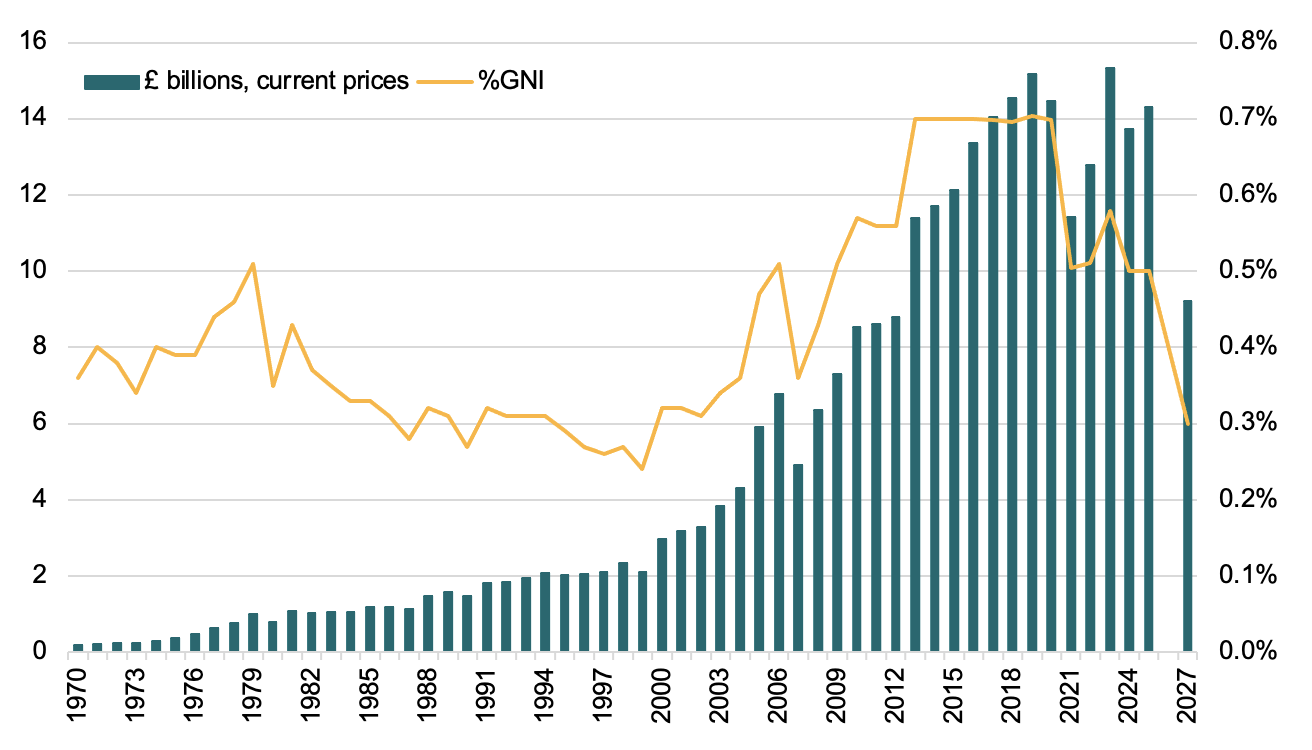
    Foreign aid dropped sharply after the merger, from 0.7% of Britain’s gross national income to 0.5% – a cut of about US$6 billion.

    Development professionals decried Johnson’s merger, arguing it could not have happened at a worse time, with the pandemic heightening the need for global health funding. And coming shortly after Brexit, Britain’s withdrawal from the European Union, DFID’s demise further called into question Britain’s commitment to global cooperation.

    Less money, less impact

    Five years later, it’s not clear that dismantling DFID has made British foreign aid more efficient or effective, as Johnson pledged.

    “We have seen evidence of where a more integrated approach has improved the organisation’s ability to respond to international crises and events, which has led to a better result,” reads one 2025 report by the U.K.’s National Audit Office.

    Two departments in one – but not twice the budget.
    Mike Kemp/In Pictures via Getty Images

    Yet, the auditors add, the British government has spent at least £24.7 million – US$32 million – to merge its aid and diplomacy offices, and it failed to track these costs. Nor did the leaders of the merger set out a clear vision for its new purpose.

    Britain’s slimmer new Foreign, Commonwealth and Development Office has also relinquished the U.K.’s past leadership in research and expertise, largely due to pay reductions and restrictions on hiring non-British nationals.

    From the outset, DFID had invested substantially in building expertise in global development, particularly in conflict-ridden states. In 2001, for example, it spent almost 5% of its budget – an unusually high amount – on research and policy analysis to design and assess its programs.

    DFID produced regular case studies of the projects it funded, which included getting Syrian refugee children back in school, building roads that help Rwandan farmers move their products to market, and providing health care after Pakistan’s 2010 floods.

    Given the “development expertise that was lost with the merger,” the U.K. government can no longer conduct “the kind of rigorous, long-term focus necessary to make a real impact,” said the Center for Global Development in a recent report.

    A 2022 study suggests that DFID’s dismantling was a fundamentally political move, “divorced from substantive analysis of policy or inter-institution relationships.”

    Britain’s new Prime Minister Keir Starmer, of the leftist Labour Party, initially promised to boost British foreign aid. But in early March 2025, he backtracked, announcing instead a further cut to foreign aid.

    By 2027, the U.K. government will spend just 0.3% of its budget on overseas aid. That’s roughly $11 billion less than before the merger in 2019.

    ‘Clear and easy target’

    USAID’s budget was much larger than DFID’s, and the administration apparently wants not to streamline U.S. foreign aid but halt it almost entirely. If this effort succeeds, it will have even more severe effects worldwide, at least in the immediate term.

    The global health programs administered by USAIDm which combat diseases such as HIV, tuberculosis and malaria, have received bipartisan and global praise. The PEPFAR program, which USAID helps administer, distributes antiretroviral drugs worldwide. It alone has saved 25 million lives over the past two decades, including the lives of 5.5 million babies born healthy to mothers with HIV.

    Development professionals tend to see independent government agencies such as USAID and DFID as better able to prioritize the needs of the poor because their programming is run separately from partisan policies.

    Yet standalone agencies are also more visible – and so more vulnerable to political targeting.

    DFID was a clear and easy target when Johnson began his pandemic-era budget-slashing. USAID is now suffering a similar fate.

    Sarah Stroup does not work for, consult, own shares in or receive funding from any company or organization that would benefit from this article, and has disclosed no relevant affiliations beyond their academic appointment.

    – ref. US isn’t first country to dismantle its foreign aid office − here’s what happened after the UK killed its version of USAID – https://theconversation.com/us-isnt-first-country-to-dismantle-its-foreign-aid-office-heres-what-happened-after-the-uk-killed-its-version-of-usaid-250868

    MIL OSI – Global Reports –

    March 20, 2025
  • MIL-OSI Global: Labour says benefit reforms are a ‘moral mission’ – it looks more like moral panic

    Source: The Conversation – UK – By James Morrison, Associate Professor in Journalism Studies, University of Stirling

    House of Commons/Flickr, CC BY-ND

    After weeks of speculation, Liz Kendall, work and pensions secretary, has unveiled her plans to reform welfare and cut the country’s ballooning benefits bill. The proposals include:

    • stricter eligibility requirements for Personal Independence Payments (Pip), the main disability benefit
    • scrapping the work capability assessment for universal credit
    • freezing or cutting the incapacity benefit “top-up” to universal credit for new claimants
    • reducing incapacity benefits for under-22s
    • increasing the standard rate of universal credit for claimants seeking work
    • introducing a “right to try”, so that people can try work without automatically losing benefits or being reassessed.

    Kendall, along with her fellow Labour ministers, has tried to sell the proposals as a “moral mission”. Prime Minister Keir Starmer has repeatedly framed the cuts as a “moral duty”.

    Cabinet office minister Ellie Reeves argues it is the party’s “moral obligation” to prevent “a lost generation” of young people being consigned to long-term worklessness.

    I research the impact of how the media and politicians talk about welfare (and people who claim it) on public attitudes and benefit recipients themselves. In recent weeks, I’ve asked myself: what exactly is “moral” about welfare reform? Do ministers see it as morally wrong to leave working-aged people “on the scrap heap”? Or are they more concerned with demonstrating their moral duty to taxpayers – by cutting benefits for people they claim could be working?

    The proposals do contain measures that back up ministers’ claims to genuinely want to help people, rather than simply cut costs. The “right to try” guarantee should allow those outside the labour market to give work a go without losing benefits if this doesn’t work out.

    But if ministers are being driven by morality, I would argue they have approached the problem the wrong way round. The first priority should be not to cut the benefit bill, but to introduce proper support. This, of course, will likely push costs up in the short term. Savings will follow, but only if help translates into meaningful, dignified work.


    Want more politics coverage from academic experts? Every week, we bring you informed analysis of developments in government and fact check the claims being made.

    Sign up for our weekly politics newsletter, delivered every Friday.


    Starmer has pledged to stop a “wasted generation” of school leavers not in education, employment or training (Neets) missing out on the “the dignity of work”.

    But by hammering home this message with the uncompromising pro-worker slogan “this is the Labour party”, he aligns himself with a specific moral orthodoxy. This affirms the moral superiority of his government’s defining shibboleth, “working people”, by defending hardworking taxpayers who feel it is “unsustainable, indefensible and unfair” to keep footing a “spiralling bill” for welfare.

    The moral crusade to promote the virtues of honest toil is doubtless fuelled by surveys suggesting tough talk on benefits remains popular with socially conservative voters the party fears losing to Reform UK.

    However, many polls are nuanced. A new Ipsos survey identifies a “benefits paradox”, wherein 37% of Britons agree that “ensuring everyone who needs health-related benefits” should be “prioritised, even if it means some who could work do not”. The same survey had just 23% favouring tougher eligibility requirements.

    Moral mission or moral panic?

    As my own research shows, when “welfare reform” agendas are couched in the language of “moral missions”, what is really happening is moral panic. We are witnessing escalating alarm at a perceived threat to the moral order that is disproportionate to the true scale of the problem.

    True, the number of people inactive due to sickness or disability is higher than before the pandemic, but suggestions that overall inactivity has reached record levels are wrong. Although a higher percentage of 16- to 64-year-olds was inactive during 2024 than in Germany or Ireland, this was lower than the previous year’s rate (down from 22% to 21.5%), and fell further in early 2025, according to the Office for National Statistics.

    Britain’s 2024 inactivity rate was also beneath those of 15 other European countries (including France and Spain), the US and the EU average. The true high point of UK inactivity came in 1983, when more than a quarter of working-aged adults were inactive.

    Kendall has distanced herself from the language of “scroungers” I analysed in my book on welfare discourse under the 2010-15 coalition government. But connotations can be just as stigmatising as overt labels.

    In endlessly employing the mantra “those who can work should work,” ministers channel timeworn tropes distinguishing between the deserving and undeserving poor.


    Read more:
    Getting Britain to work without blaming ‘scroungers’ – can Starmer change the narrative?


    The new proposals include a ‘right to try’ work without fear of losing benefits.
    SeventyFour/Shutterstock

    There is a moral case for offering tailored, sensitive support to disabled people who want to work but face significant barriers – including inflexible employers and the pressure of caring for others.

    But this should not come at the cost of impoverishing people unable to work – as some unlikely critics of the government’s proposals point out.

    Tony Blair’s onetime Cabinet Secretary Gus O’Donnell told Radio 4 it would be “immoral” to damage people with severe disabilities “who don’t have any option but to be on benefits”. And Blairite former work and pensions secretary Lord Hutton warned that sweeping benefit cuts would “drive millions and millions of people into penury”.

    The government says its reforms are a moral mission, but they are already having immoral effects. Just how moral is it to terrify people already struggling to afford basic essentials with the prospect of being driven into deeper poverty? Or to encourage young people into work that is likely to be low-paid and insecure?

    If there’s one message we can take from the unseemly spectacle of leaks and briefings leading to this week’s announcement, it may be this: we’ve been watching a government on the brink of losing its moral compass.

    James Morrison receives funding from the Arts and Humanities Research Council for a project entitled Voices from the Periphery: (De)Constructing and Contesting Public Narratives about Post-Industrial Marginalisation (VOICES).

    – ref. Labour says benefit reforms are a ‘moral mission’ – it looks more like moral panic – https://theconversation.com/labour-says-benefit-reforms-are-a-moral-mission-it-looks-more-like-moral-panic-252404

    MIL OSI – Global Reports –

    March 20, 2025
  • MIL-OSI Global: How a lack of period product regulation harms our health and the planet

    Source: The Conversation – UK – By Poppy Taylor, PhD Candidate, Women’s Health, Bristol Medical School, University of Bristol

    JLco Julia Amaral/Shutterstock

    Did you know that in the UK period products are regulated under the same consumer legislation as candles? For 15 million people who menstruate each month, these items are used internally or next to one of the most sensitive parts of the body for extended times.

    Consumers should be entitled to know what is in their period products before choosing which ones to buy. Yet, because of the current lack of adequate regulation and transparency, manufacturers are not required to disclose all materials. And only basic information is available on brand websites. Campaigners are now calling for better regulation.

    Independent material testing shows that single-use period pads can contain up to 90% plastic. An estimated 4.6 million pads, tampons and panty liners are flushed away daily in the UK. These contribute to blocked sewers and fatbergs. They also pollute rivers and oceans.

    Meanwhile, reusable period products are promoted by aid charities as a way to tackle period poverty and reduce waste. But independent tests by organisations such as Which? have found harmful chemicals inside both single-use and reusable period products.

    These include synthetic chemicals that disrupt hormones – known as endocrine-disrupting chemicals – and forever chemicals or per- and polyfluoroalkyl substances (PFAS) that don’t degrade. These chemicals have been associated with a range of health harms from cancers to reproductive disorders and infertility. They have no place in period products.

    I work as a women’s health researcher at the University of Bristol’s Digital Footprints Lab alongside a team of data scientists. We harness digital data, such as shopping records, to study public health issues. My research looks at how things like education affect which menstrual products people choose.

    In collaboration with the charity Women’s Environmental Network, I am exploring intersections between gender, health, equity and environmental justice – especially among marginalised women and communities. But social stigma prevents open discussions about menstruation and how best to improve period product regulation.

    Menstrual stigma influences everything from the information and support people who menstruate receive to the types of products we use and how we dispose of them. In a study of menstrual education experiences in English schools, my colleague and I found evidence of teacher attitudes perpetuating menstrual stigma.

    Lessons typically lacked content about the health or environmental consequences of period products. Our study showed that just 2.4% of 18- to 24-year-olds surveyed were taught about sustainable alternatives to single-use tampons and menstrual pads.

    An environmenstrual workshop hosted bythe charity, Women’s Environmental Network.
    Women’s Environmental Network / Sarah Larby, CC BY-NC-ND

    For decades, period product adverts portrayed menstrual blood as a blue liquid. The social taboos around periods, largely created and reinforced by period brands over decades of fear-based marketing, has left its mark.

    For example, in response to customer’s anxieties about supposed menstrual odour, manufacturers are increasingly using potentially environmentally harmful antimicrobials like silver and anti-odour additives in period products. This is despite there being no evidence that period products such as menstrual pants or pads transmit harmful bacteria that need sanitising. The silver also washes out after a couple of washes.

    The role of regulation

    In New York state, the Menstrual Products Right To Know Act means that a period product cannot be sold unless the labelling includes a list of materials. In Scotland, a government initiative provides free period products to anyone who needs them.

    Catalonia in Spain has introduced a groundbreaking law that ensures access to safe and sustainable period products, while also working to reduce menstrual stigma and taboos through education.

    A new European “eco label” is a step forward, but companies don’t have to use it. This voluntary label, which shows a product is good for the environment, doesn’t cover period underwear.

    Now, campaigners at the Women’s Environmental Network are calling for the UK government to adopt a Menstrual Health, Dignity and Sustainability Act, backed by many charities, academics and environmentalists. This will enable equal access to sustainable period products, improved menstrual education, independent testing, transparent product labelling and stronger regulations.

    The regulation of period products is currently being considered as part of the product regulation and metrology bill and the use of antimicrobials in period products is being included in the consumer products (control of biocides) bill introduced by Baroness Natalie Bennett. By tackling both health implications and environmental harms, period products can be produced in a safer way, for both people and planet.

    Poppy Taylor’s PhD is funded by the University of Bristol and the Health Foundation.
    Poppy Taylor is a member of the Women’s Environmental Network.

    – ref. How a lack of period product regulation harms our health and the planet – https://theconversation.com/how-a-lack-of-period-product-regulation-harms-our-health-and-the-planet-248941

    MIL OSI – Global Reports –

    March 20, 2025
  • MIL-OSI Global: Shaken baby syndrome can cause permanent brain damage, long-term disabilities or death – a pediatrician examines the preventable tragedy

    Source: The Conversation – USA – By Lori Frasier, Professor of Pediatrics, Penn State

    A common cause of shaken baby incidents is continuous crying. Cavan Images via Getty Images

    In the early 1990s when I was a young pediatrician, I was responsible for evaluating children with developmental and learning problems. Two unrelated boys, ages 7 and 9, were found to have IQs in the range of 60-70, which indicates a severe cognitive disability.

    During my medical review, the mothers revealed that their children were shaken violently as infants and that afterward behaved as if “the wind had been knocked out of them.” Both mothers reported shaking by a boyfriend or a father. No child was seen for medical care at the time.

    At the same period of my career I was working with a renowned pediatrician who was studying shaken baby syndrome. The link between shaking and later cognitive impairment was not lost on me.

    This scenario of shaken babies having neurological and developmental disabilities has played out over the past 30 years of my career as a child abuse pediatrician.

    The high rates of death and disability

    Shaken baby syndrome is a condition that can injure babies and young children, and in some cases lead to death.

    A 2024 study on babies with shaken baby syndrome found that 20% to 25% of infants die, another 20% to 25% look normal on discharge from the hospital, and fully half are left with long-term disabilities. These include learning and behavioral problems that appear later in life.

    The dangers of shaking babies have been recognized for over 50 years.

    In the early 1970s, John Caffey, a pediatric radiologist, coined the term “Whiplash Shaken Infant Syndrome.” Caffey linked permanent brain damage and bleeding in the backs of the retina to violent shaking of infants. Caffey suggested a multipronged approach to prevention of this severe form of abuse that included educating and supporting young families, especially mothers. As primary caregivers, mothers are often most easily reached by the message, but the message of prevention can involve fathers, babysitters and any other caregivers.

    Since Caffey’s original description, there have been tremendous advancements in the research behind shaking babies and infant head trauma. In 2009, the American Academy of Pediatrics recommended that medical providers use the term “abusive head trauma” to include many actions other than shaking that can injure the brains of infants and children. The use of shaken baby syndrome is still recommended for public education and prevention, and health care providers and other experts also recommend the use of the term because it’s commonly recognized by the lay public and understood by parents.

    How the brain is affected

    What happens to the brain of an infant when they are shaken?

    Infants – the most common population to be shaken – are small and have undeveloped neck muscles.

    In these incidents, the infant is typically grabbed around the chest and shaken back and forth several times. Small blood vessels around the brain break and bleed, causing blood to flow around the brain. This condition is called a subdural hematoma. In some cases, similar forces occur in the back of the eye, and hemorrhages in the retina can occur.

    In the most severe forms of shaking, the tissue of the brain itself is injured, and the child may experience unconsciousness or even stop breathing. Neck injuries occur when shaking causes injuries to ligaments and muscles that support the neck. Sometimes children have other injuries after being thrown down or impacted against something. Skull fractures or fractures of other bones, bruising and other injuries are often found.

    Three seconds of anger can change a life forever.

    A complex diagnosis

    An infant or child must be diagnosed as having abusive head trauma by a team of pediatric specialists. Usually, a concerned parent or caregiver who may or may not know an infant has been injured becomes concerned that the child is not behaving normally. The child may have symptoms ranging from persistent vomiting to seizures or even seem unconscious.

    The medical team begins addressing the child’s condition through blood testing and X-rays. Often a CT scan is performed in order to determine if there is a brain injury or some other abnormality. Bleeding around the brain is an indicator of trauma. However, other conditions can also cause this type of bleeding, including bleeding disorders, vitamin deficiency or genetic problems.

    Carefully assessing a child for all of these possibilities may lead to discovery of other areas of trauma, such as broken bones and bruises. A child abuse physician is often called in to assist with the evaluation when trauma becomes a leading diagnosis. That trauma could be accidental, or it could be a sign that someone has abused or hurt an infant.

    There are other medical conditions and even accidental injuries to a child that may resemble abusive head trauma. Experienced clinicians will evaluate a child carefully for these well-described conditions. Controversy about many of these conditions may exist in the courtroom, but in the medical setting it is often clear which conditions are present and when injuries are caused by trauma versus other medical conditions.

    All 50 states and territories of the U.S. require that a report is made to child protective services agencies, with law enforcement often being involved when someone suspects or knows that a baby has been shaken.

    Investigators and doctors work together along with parents and caregivers to try to determine what led to the infant or child’s condition. Bruising, fractures and retinal hemorrhages may support a diagnosis of child abuse, specifically shaken baby syndrome.

    During an investigation, a rare accidental cause may be determined. The purpose is to make sure infants and children are not being harmed or that a medical condition is uncovered that can be treated.

    As a pediatrician working in a children’s hospital and trauma center, it will never get easier for me to see infants and children with abusive injuries as well as other head traumas. The U.S. has come a long way in ensuring the safety of children through the use of car seats and many safety devices.

    Education can help

    Crying in infancy is a common trigger in cases where shaking occurs. Other risk factors include isolation, poverty, domestic violence and substance use. During severe economic downturns, the rate of shaken baby incidents rises, since research shows that social stressors often contribute.

    Although anyone can injure a baby in a moment of frustration, most prevention research has focused specifically on helping parents understand why infants cry or become fussy. Recognizing your infant’s needs and addressing those needs is an important piece of learning how to parent. Studies have shown that focused education for new parents in maternity wards by nurses is effective.

    If you or someone you know is concerned that a child or infant is being harmed in any way, each state has a process for reporting these concerns to appropriate authorities. Reporting can help prevent further harm to an infant and provide assistance to families.

    The National Center on Shaken Baby Syndrome, the American Academy of Pediatrics and the Centers for Disease Control and Prevention offer some helpful resources.

    Lori Frasier is has been a paid consultant to testify for both prosecution and defense in medical legal child abuse cases.
    I am on the governing board of the national center for shaken baby syndrome, this is volunteer position.

    – ref. Shaken baby syndrome can cause permanent brain damage, long-term disabilities or death – a pediatrician examines the preventable tragedy – https://theconversation.com/shaken-baby-syndrome-can-cause-permanent-brain-damage-long-term-disabilities-or-death-a-pediatrician-examines-the-preventable-tragedy-243882

    MIL OSI – Global Reports –

    March 20, 2025
  • MIL-OSI NGOs: Yemens rising tide of malnutrition

    Source: Médecins Sans Frontières –

    Over the past decade, Yemen has endured one of the world’s most devastating humanitarian crises. This has been deepened by the country’s economic collapse, which has pushed 83 per cent of the people into multidimensional poverty. Since 2015, years of violent conflict have destroyed essential infrastructure and left the healthcare system depleted, underfunded, and struggling to function. Of Yemen’s population of 39 million people, an estimated 17.1 million are projected to face food insecurity in 2025. According to multi-sectoral surveys, some 2.2 million children are already acutely malnourished, with 48 per cent of children under five stunted and chronically malnourished.

    The destruction of vital civilian infrastructure, including the latest strikes on the shipping port of Al-Hudaydah and on Sana’a International Airport, and the volatile political climate and ongoing regional tensions have derailed Yemen’s roadmap to peace, and continue to fuel instability. Tensions in the Red Sea remain connected to the very fragile situation in Gaza.

    Data from MSF-supported facilities over the past three years reveals increases in hospital admissions of malnourished children under the age of five (0-59-month-olds) in most MSF-supported facilities, with longer seasonal peaks and overwhelming caseloads during peak months. In 2024 the malnutrition peak season pushed MSF-supported inpatient therapeutic feeding centres (ITFC) beyond limits. With the capacity to expand to 120 beds during peak malnutrition season, Abs Hospital ITFC recorded a staggering 200 per cent bed occupancy rate in September 2024, followed by 176 per cent in October – the highest levels in the last six years. Between January 2022 and December 2024, nearly 35,500 malnourished children were admitted and treated in MSF-supported facilities in total. Nearly 14,000 and over 13,500 children were admitted into MSF-supported facilities for treatment in 2023 and 2024, respectively.

    Due to the high demand for malnutrition care in northern Yemen, MSF expanded its nutritional programmes in 2022 and 2023 to try to respond to this need. With six MSF-supported facilities now offering inpatient nutritional stabilisation since 2023, MSF hospitalised nearly 5,900 more children with complicated malnutrition in 2024 than in 2022.

    Yemen’s rising tide of malnutrition: seasonal trends 2022-2024 pdf — 1.3 MB Download
    You could also be interested in


    Malnutrition

    MSF warns of a crisis as the numbers of malnourished children rise in Yemen

    Press Release 19 Mar 2025


    Yemen

    A lifeline for mothers-to-be on Yemen’s west coast

    Project Update 21 Jan 2025


    Gaza-Israel war

    “The ceasefire in Gaza must be immediately restored”

    Statement 18 Mar 2025

    MIL OSI NGO –

    March 20, 2025
  • MIL-OSI Asia-Pac: PARLIAMENT QUESTION: ACHIEVEMENTS AND INITIATIVES REGARDING PM-AJAY SCHEME

    Source: Government of India (2)

    Posted On: 19 MAR 2025 2:14PM by PIB Delhi

    Pradhan Mantri Anusuchit Jaati Abhyuday Yojana (PM-AJAY) is a Centrally Sponsored Scheme being implemented since 2021-22. The Scheme has three components namely (i) ‘Adarsh Gram’, (ii) ‘Grants-in-aid for District/State-level Projects for Socio-Economic betterment of Scheduled Caste (SC) Communities’ and (iii) ‘Hostel’

    The objectives and role of the Scheme are:

    (i) To improve socio-economic developmental indicators by ensuring adequate infrastructure and requisite services in the SC dominated villages.

    (ii) To reduce poverty of the SC communities by generation of additional employment opportunities through skill development, income generating schemes and other initiatives.

    (iii) To increase literacy and encourage enrolment of SCs in schools and higher educational institutions by providing adequate residential facilities in quality institutions, as well as residential schools where required, especially in the aspirational districts/ SC dominated blocks and elsewhere in India.

    In FY 2024-25, 4,928 villages have been declared as Adarsh Gram and 4,25,821 beneficiaries have been benefited which has led to socio-economic development by ensuring adequate infrastructure and requisite services in the SC dominated villages.

    ‘Grants-in-aid’ Component aims to reduce poverty of the SC communities by generation of additional employment opportunities through Skill development, income generating schemes and other initiatives. Under this component, since 2021-22, 9,549 Projects have been approved and Central Assistance of Rs. 1,219.80 Cr. has been released benefiting 2,01,006 SC beneficiaries.

    So far, 866 hostels are sanctioned under the Hostel Component of PM-AJAY covering 69,212 beneficiaries and an amount of Rs.936.27 Crore has been released, thereby encouraging students belonging to Scheduled Castes to attain quality education. Out of the total hostels sanctioned, 96 hostels are under construction.

    This information was provided by UNION MINISTER OF STATE FOR SOCIAL JUSTICE AND EMPOWERMENT, SHRI RAMDAS ATHAWALE, in a written reply to a question in Rajya Sabha today.

    *****

    VM

    (Rajya Sabha US Q2194)

    (Release ID: 2112697) Visitor Counter : 53

    MIL OSI Asia Pacific News –

    March 20, 2025
  • MIL-OSI Banking: Asian Development Review: Volume 42, Number 1

    Source: Asia Development Bank

    The opening article underscores the importance of knowledge sharing among city governments. Other articles discuss how urban green spaces can reduce flooding and the burning of waste, how growing mungbeans can reduce reliance on chemical fertilizers, and how internet access can increase farmers’ incomes. Authors also examine trade costs in Central Asia and participation in global value chains.

    For print subscription, e-mail: [email protected]

    Using a newly constructed index of trade openness, this paper finds a significant direct effect of openness on poverty reduction.

    Open Submissions

    This paper exploits the staggered roll-out of a landmark Air Quality Monitoring Program in the People’s Republic of China to study the migration response to pollution information disclosure and labor market outcomes.

    This study explores how local elites’ traits influence environmental performance, both before and after the amendment to the Environmental Protection Law.

    This study investigates the impact of green open spaces in reducing the probability of flooding and open waste burning in urban areas in Indonesia’s three largest metropolitan cities: Surabaya, Jakarta, and Medan.

    This paper studies participation by developing Asian economies in global value chains (GVCs) and uses an input–output framework to measure the impacts that GVCs of final manufactured products have on jobs and income.

    This paper investigates whether engagement with e-commerce is linked to increased sales and productivity gains for informal firms in South Asia.

    This study in Nepal assesses the determinants of mungbean adoption and its impact on fertilizer use, agricultural productivity, and food security.

    This paper measures the impact of a micronutrient training among women farmers with young children on the demand for zinc-enhanced varieties.

    This study examines the association between internet use in agriculture and farm earnings in Indonesia.

    This paper identifies and examines income shock and price shock channels through which climatic disasters affect domestic consumption in the case of Bangladesh.

    Mini Symposium on Trade Costs in Central Asia

    This paper analyzes the impact of trade costs on the exports in five Central Asian countries using a structural gravity model and Corridor Performance Measurement and Monitoring trade cost indicators.

    This study examines the effects of at-the-border and behind-the-border measures on the intraregional perishable goods trade in the Central Asia Regional Economic Cooperation region.

    This paper examines the effect of COVID-19 mobility measures on the time required for cargo to clear the border crossing points of Central Asia Regional Economic Cooperation countries.

    MIL OSI Global Banks –

    March 19, 2025
  • MIL-OSI United Kingdom: Scottish Labour urged to stand against Westminster cruelty

    Source: Scottish Greens

    19 Mar 2025 Economy

    Labour’s cuts will cause pain in every community.

    More in Economy

    Anas Sarwar and his Scottish Labour colleagues have been urged to stand against the cruel welfare cuts being made by their Westminster counterparts.

    Scottish Green Co-Leader Lorna Slater has urged Mr Sarwar to live up to his promise to end austerity and reject Keir Starmer’s decision to plunge vulnerable people into poverty.

    Ms Slater said: 

    “Anas Sarwar promised an end to austerity, but the cuts being made by his Labour colleagues are the very definition of austerity.

    “Social security in the UK is among the lowest in Europe. These cuts will cause great harm to disabled people in particular who rely on this financial support as a lifeline.

    “There will be a severe humanitarian cost. It will mean people going hungry or being cut-off, trapped in their homes.

    “Every Scottish Labour MSP represents constituents and communities who will suffer as a direct result.

    “From cutting vital Winter Fuel Payments and plunging pensioners into fuel poverty to betraying WASPI women and from keeping the cruel two child cap to punishing disabled people, this is a Labour government that has shown it cannot be trusted to stand up for the communities they represent.

    “There is a choice. By taxing the super wealthy we can raise billions of pounds for the services that people rely on.

    “People in Scotland waited 14 long years to get rid of the Tories only to get a Labour government that is doubling down on their most punishing policies. I urge Anas Sarwar to live up to the promises he made during the election and to oppose these devastating cuts.”

    MIL OSI United Kingdom –

    March 19, 2025
  • MIL-OSI Australia: Address to the Catholic Social Services Australia Conference, Sydney

    Source: Australian Treasurer

    Thank you for the opportunity to address you today. I acknowledge the Gadigal people of the Eora nation and pay my respects to all First Nations people present. Their connection to community and country reminds us of our ongoing responsibility to care for each other.

    The Gospel of Matthew teaches us powerfully:

    ‘Truly, I tell you, whatever you did for one of the least of these brothers and sisters of mine, you did for me.’ (Matthew 25:40)

    This teaching resonates deeply with Australia’s ideals of fairness and community. Yet, our society today faces a significant challenge: inequality. Inequality matters profoundly – not just economically, but morally, socially, and spiritually. It shapes opportunities, influences life outcomes, and determines who shares in our national prosperity.

    In reflecting upon inequality today, I’d like to begin with a thought experiment developed by the Dutch economist Jan Pen.

    Imagine all Australians marching in a one‑hour parade, their height reflecting their wealth.

    At first, you wouldn’t see anyone – the poorest Australians, submerged by debt, would be underground. Several minutes would pass before you see people the height of tiny insects, representing those with minimal savings and precarious jobs. At half‑time, the parade participants would be barely waist‑high, reflecting an average wealth level that is far below what many expect.

    It isn’t until the last few minutes that the parade gets dramatic. Australians become giants, several metres tall, owning investment properties and multiple cars. In the last seconds, billionaires appear, their heads literally in the clouds. The richest Australian would tower over 46 kilometres high – far above Mt Everest.

    This image vividly captures the scale and drama of inequality in Australia today.

    The historical journey of Australian inequality

    Yet it was not always like this. As I documented in my book Battlers and Billionaires, Australian history shows fluctuations in inequality, shaped by policy, events, and the collective actions of citizens.

    When British settlers first arrived in 1788, inequality was limited – not due to idealism, but survival. Governor Arthur Phillip’s invitations to dinner famously concluded, ‘Please bring your own bread,’ reflecting the scarcity of resources and the reality that inequality was limited by necessity.

    Yet inequality quickly rose through the nineteenth century, driven by land distribution favouring the wealthy. Under Governor Lachlan Macquarie, who ruled the colony from 1810 to 1821, more than half the land granted went to just the top 10 per cent of settlers. By the late nineteenth century, disparities between landowners and labourers were immense. Historian Stuart Macintyre describes colossal extremes between the luxurious life of pastoralists like Richard Casey and the hard labour endured by workers like Jock Neilson, who struggled through bush labour with minimal wages and harsh living conditions.

    The early twentieth century brought change. In 1907, the Harvester Judgement established a basic wage designed to lift families out of poverty. Australia saw the creation of institutions such as the Commonwealth Conciliation and Arbitration Court, introducing worker rights into the national conscience. Still, stark inequalities remained, with large segments of society excluded from prosperity.

    However, the post‑war period between the 1940s and 1970s marked what economists call the ‘Great Compression.’ Strong unions, progressive taxation, expanded public services, and affordable housing policies dramatically reduced inequality. For several decades, Australians experienced significant upward social mobility and rising standards of living for the majority.

    Yet since the 1980s, Australia has seen what economists describe as a ‘Great Divergence,’ reversing the gains of earlier decades. Today, the top 1 per cent of income earners receive nearly 10 per cent of national income, nearly doubling their share from 40 years ago. Wealth inequality is even more extreme, with the richest fifth owning more than 60 times the wealth of the bottom fifth.

    This widening gap is not just economic – it profoundly affects people’s everyday lives. Those at the bottom face greater health challenges, including a stark difference in life expectancy – Australians in the richest fifth of the population live an average of 6 years longer than those in the poorest fifth. The poorest Australians have 7 fewer teeth on average due to poor dental care. In education, the wealth gap translates into substantial resource disparities between affluent and poorer communities.

    Why inequality matters

    Inequality does not simply represent a difference in wealth; it shapes our society. Excessive inequality erodes social cohesion, reducing empathy and undermining community bonds. When wealth is concentrated among a few, society becomes fragmented. Our sense of collective responsibility diminishes, and the fabric that binds us as Australians weakens.

    Catholic social teaching stresses the inherent dignity of every person, the importance of community, and the imperative to act justly towards one another. From Pope Francis’ call for inclusive economies to teachings on the common good, Catholic faith underscores the urgency of addressing rising inequality.

    For too many Australians, the promise of a fair go – the belief that effort and hard work determine success, not birth or background – has felt increasingly out of reach. Inequality is not just an abstract economic issue; it affects our communities, our health, our opportunities, and our sense of national cohesion.

    No government is perfect, but I want to argue today that ours has done more to address inequality than any government in well over a decade.

    Taking office 3 years ago, on the tail of the Covid pandemic, we have acted decisively to ensure that prosperity is shared more fairly across our society.

    Lifting wages and supporting secure work

    One of the most direct ways to reduce inequality is by lifting wages and ensuring job security. Since coming to office, the Albanese government has delivered consecutive wage increases for 2.6 million Australians, particularly benefiting low‑ and middle‑income earners. These pay rises ensured that minimum wage workers were not left behind as the cost of living rises.

    Furthermore, our government has tackled insecure work by introducing stronger protections for casual employees who want to transition to permanent work, establishing minimum standards for gig economy workers, and enforcing ‘same job, same pay’ provisions to prevent labour hire workers from being exploited. These reforms help ensure that Australians can rely on stable incomes, reducing the financial precarity that fuels inequality.

    A fairer tax system

    Tax policy plays a crucial role in shaping economic fairness. The Albanese government has delivered tax cuts that benefit every Australian taxpayer, allowing people to keep more of what they earn while ensuring that the system remains progressive.

    This approach contrasts with our predecessors, whose tax policies disproportionately benefited the highest earners, widening the gap between rich and poor. By maintaining a fair and responsible tax structure, we can fund essential public services while ensuring that the most fortunate Australians contribute their fair share.

    Strengthening the social safety net

    A strong, targeted welfare system is essential to reducing inequality, and our government has taken decisive action to support those who need it most. We have increased JobSeeker and other income support payments, ensuring that Australians doing it tough can afford the basics. Recognising the unique challenges faced by older Australians, we have also expanded eligibility for higher JobSeeker rates for those over 55, providing more security and dignity in later years.

    Rent assistance has been increased by over 40 per cent, helping Australians struggling with rising housing costs. Single parents have received greater support through extended access to the parenting payment, making it easier for them to balance work and caregiving responsibilities without falling into poverty. These targeted measures lift Australians up rather than trapping them in cycles of disadvantage.

    Investing in affordable housing

    Housing inequality is one of the most pressing economic issues facing Australia today. The Albanese government has responded with the largest investment in social and affordable housing in more than a decade. Through the Housing Australia Future Fund, we are building over 55,000 new social and affordable homes, directly addressing homelessness and housing stress.

    Beyond construction, we have strengthened renters’ rights, introducing minimum rental standards, limiting rent increases to once per year, and requiring genuine grounds for eviction. By making renting fairer and ensuring more Australians have access to stable, affordable housing, we are creating a foundation for economic security and social mobility.

    Early childhood education and skills training

    Breaking the cycle of inequality starts with education. That’s why we have delivered cheaper childcare for 96 per cent of families with children in early education – an investment that not only reduces financial strain but also ensures that more children, regardless of their family’s income, start life with the educational support they need.

    In schools, we have delivered on the promise of the Gonski report by ensuring that all schools are funded to the schooling resource standard. This isn’t just about money, it’s about delivering the resources required to drive reform. We know that Australia’s OECD PISA scores have been slipping backwards for the past quarter‑century. If we do not turn this around, the most vulnerable stand to suffer most.

    Our government has also committed to over half a million fee‑free TAFE places, ensuring that Australians can gain the skills needed for secure, well‑paying jobs. By making education more accessible, we are expanding opportunities for people from all backgrounds, ensuring that no one is locked out of good jobs because they cannot afford the necessary training.

    Fairer pay for women

    We cannot talk about overall economic inequality without considering gender inequality. The Albanese government has delivered historic pay rises for aged care and early childhood education workers – sectors dominated by women – while expanding paid parental leave to 26 weeks by 2026 and adding superannuation to government‑paid parental leave. These measures help to close the gender wealth gap, ensuring that women are not financially penalised for caring responsibilities. The gender pay gap is still too high, but it is also at an all‑time low.

    Tackling the cost of living

    Inequality is exacerbated when basic essentials become unaffordable. That’s why we have delivered targeted cost‑of‑living relief, including $300 in energy bill relief for every household and cheaper medicines that allow millions of Australians to buy 2 months’ worth of prescription medication for the price of one. We have also ensured that HECS‑HELP loans will never grow faster than wages, reducing the financial burden on young Australians starting their careers.

    Another major reform is our work in the energy sector. By expanding investment in renewable energy and breaking down barriers to new market entrants, we are reducing energy costs for consumers while ensuring a transition to a cleaner economy. High energy prices disproportionately impact low‑income Australians, and our efforts to foster a more competitive and efficient energy market are directly reducing cost‑of‑living pressures.

    Historically, reducing inflation in Australia meant higher unemployment. In the 1970s, 1980s and 1990s, bouts of inflation were met by job losses. Often, it took a recession to bring prices under control. Yet this time is different. Uniquely in Australian history, we have brought inflation under control while maintaining what economists call ‘full employment’. We have tamed inflation while creating over one million jobs. Unemployment remains low, and the participation rate is at a record high. This is a remarkable achievement for our nation.

    Investing in health equity

    Health disparities are one of the most damaging consequences of inequality, with lower‑income Australians facing shorter life expectancies and higher rates of chronic illness. Our government has made the largest investment in bulk billing in Medicare’s history, restoring affordable access to GPs for millions of Australians. We have also established new urgent care clinics and expanded mental health services, ensuring that healthcare is based on need, not wealth.

    Competition reforms to reduce inequality

    A truly fair economy is one where businesses compete on a level playing field, ensuring that consumers and small businesses are not left behind. Monopolies increase inequality by transferring resources from consumers (the many) to shareholders (the few). The Albanese government has prioritised competition reform to prevent market concentration from deepening inequality.

    One of our key achievements has been strengthening competition in the grocery sector. By increasing regulatory oversight and cracking down on anti‑competitive behaviour by major supermarket chains, we are ensuring fairer prices at the checkout. We know that when competition declines, consumers pay more, and smaller businesses struggle. Our policies ensure that Australian families are not subject to artificially inflated food prices while smaller retailers have a fair chance to succeed.

    Through the biggest overhaul of merger laws in half a century and a revitalised National Competition Policy, we are putting downward pressure on prices and increasing fairness. This approach reflects our commitment to an economy that works for everyone, not just those at the top.

    A commitment to evidence‑based solutions

    A key principle of our government is ensuring that policies are grounded in evidence, not ideology. That is why we have created the Australian Centre for Evaluation, and committed to expanding the use of randomised trials in policymaking, ensuring that every dollar spent on social programs delivers real results. By rigorously evaluating what works, we can scale up the most effective initiatives, ensuring that public investment leads to meaningful reductions in inequality.

    Conclusion: a shared moral and national imperative

    Inequality is a profound challenge – but not insurmountable. Australian history reminds us that inequality is never inevitable. It expands or shrinks based on the decisions we make collectively as a society.

    There is much more to do, but I have given you a flavour today of what we have already done together. The Albanese government has chosen to lift wages, invest in housing and education, strengthen social protections, reform competition, and deliver targeted cost‑of‑living relief. These policies lift people up – not just economically, but socially and morally.

    As the Gospel of Matthew reminds us, true compassion is measured by our actions towards ‘the least of these.’ We must constantly ask ourselves: Are our policies fair? Are our communities inclusive? Is every Australian being given the chance to thrive?

    The Albanese government is committed to answering these questions positively – not just with words, but through meaningful action. Together, we can create a society where dignity, justice, and opportunity are the lived reality for every Australian.

    MIL OSI News –

    March 19, 2025
  • MIL-OSI New Zealand: Is police abolition official Green Party policy?

    Source: ACT Party

    ACT Justice spokesperson Todd Stephenson is calling on the Green Party to confirm it does not support police abolition.

    “Tonight, Green MP Tamatha Paul will give a talk in Christchurch about ‘the police, and what alternatives we could have to the police, and what radical police abolition could look like in real terms‘. Those are her own words, from a TikTok video.

    “This is just nutty stuff. It’s easy to be anti-police until you find yourself threatened by crime. That’s when we all rely on the ability to call police with the tools and powers to protect us from violence and theft.

    “She’s also out of touch with the communities she claims to represent. Poorer New Zealanders and Māori are disproportionately likely to be victims of crime, and more likely to need the protection of police.

    “This comes just a few weeks after she told her 37,000 young TikTok followers that the ‘vast majority‘ of people in prison are there for non-violent offences that they’ve ‘had to do as a response to poverty‘. In the real world, more than half of prisoners are there for homicide, sexual assault, acts intended to cause injury, and unlawful entry with intent/burglary.

    “Tamatha Paul went on to say people are in prison because ‘They’re being punished for being disabled, they’re being punished for being poor, they’re being punished for being Māori, they’re being punished for our system that we have in our country.‘

    “At best, Tamatha Paul has deluded herself. At worst, she is using her platform to actively misinform her followers and make them more likely to support radically pro-crime policies like police abolition.

    “I’m proud to say that, with ACT in Government, we have scrapped Labour’s prisoner reduction targeted, while introducing tougher sentences so dangerous criminals are locked up for longer. On issues of public safety and justice, we are the anti-Greens – delivering consequences for crime and putting victims first,” says Mr Stephenson.

    MIL OSI New Zealand News –

    March 19, 2025
  • MIL-Evening Report: Flooding in the Sahara, Amazon tributaries drying and warming tipping over 1.5°C – 2024 broke all the wrong records

    Source: The Conversation (Au and NZ) – By Andrew King, Associate Professor in Climate Science, ARC Centre of Excellence for 21st Century Weather, The University of Melbourne

    Climate change is the most pressing problem humanity will face this century. Tracking how the climate is actually changing has never been more critical.

    Today, the World Meteorological Organization (WMO) published its annual State of the Climate report, which found heat records kept being broken in 2024. It’s likely 2024 was the first year to be more than 1.5°C above the Earth’s pre-industrial average temperature. In 2024, levels of greenhouse gases in the atmosphere hit the highest point in the last 800,000 years.

    The combination of heat and unchecked emissions, the organisation points out, had serious consequences. Attribution studies found a link between climate change and disasters such as Hurricane Helene, which left a trail of destruction in the southeastern United States, and the unprecedented flooding in Africa’s arid Sahel region.

    Slowing these increasingly dangerous changes to Earth’s climate will require a rapid shift from fossil fuels to clean energy.

    The record heat of 2024

    From the North Pole to the South Pole, the oceans and our land masses, the report catalogues alarm bells ringing ever louder for Earth’s vital signs.

    Steadily rising global average temperatures show us the influence of the extra heat we are trapping by emitting greenhouse gases. The ten warmest years on record have all happened in the past ten years.

    The report shows 2024 was the warmest year since comprehensive global records began 175 years ago. The planet was an estimated 1.55°C (plus or minus 0.13°C) warmer than it was between 1850 and 1900.

    Together, 2023 and 2024 marked a jump in global mean temperature from previous years. There was a jump of about 0.15°C between the previous record year (2016 or 2020 depending on the dataset) and 2023. Last year was even warmer – about 0.1°C above 2023.

    Last year was the first year the planet was likely more than 1.5°C above pre-industrial levels. This doesn’t mean we have broken the 2015 Paris Agreement goal of holding warming under 1.5°C – temperatures would need to be sustained over a number of years to formally lose that fight. But it’s not good news.

    There are a few extra factors at play in this record-breaking global temperature, including an El Niño event boosting eastern Pacific Ocean temperatures in the first part of 2024, falling pollution from shipping leading to less cloud over the ocean, and a more active sun as well.

    Researchers are hard at work unpicking why the Earth’s average temperature jumped in 2023 and 2024. But it is clear the 2024 record-breaking warmth and most other damning statistics in the report would not have occurred if it wasn’t for human-induced climate change.

    Much of the Northern Hemisphere was more than 2°C warmer in 2024 than 1951-1980 levels and many equatorial areas saw new annual temperature records.
    NASA GISS, CC BY-NC-ND

    Carbon dioxide up, glacial melt up, sea ice down

    It’s not just global temperatures breaking records.

    Carbon dioxide concentrations in the atmosphere reached 427 parts per million last year. Sea level rise has accelerated and is now about 11 centimetres above early 1990s levels, and the oceans are at their highest temperatures on record.

    Seasonal sea-ice in the Arctic and around Antarctica shrank to low levels (albeit short of record lows) in 2024, while preliminary data shows glacial melt and ocean acidification continued at a rapid pace.

    Almost all parts of the world were much warmer in 2024 than even recent averages (1991–2020) and much of the tropics experienced record heat.

    From cyclones to heatwaves, another year of extreme events

    In the English-speaking media, extreme events affecting North America, Europe and Australia are well covered, such as the devastating Hurricane Helene in the US and the lethal flash flooding in Spain.

    By contrast, extreme weather and its fallout in Africa, South America and Southeast Asia get less coverage.

    In September 2024, Super Typhoon Yagi killed hundreds and caused widespread damage through the Philippines, China and Vietnam. Later in the year, Cyclone Chido struck Mayotte and Mozambique causing more than 100,000 people to be displaced. Hundreds died in Afghanistan, Iran and Pakistan due to spring floods following an unusual cold wave.

    Unusual flooding hit parts of the arid Sahel and even the Sahara Desert. Meanwhile the worst drought in a century hit southern Africa, devastating small farmers and leading to rising hunger.

    Much of South and Central America was hit by significant drought. Huge tributaries to the Amazon River all but dried up for the first time on record. Severe summer heat hit much of the Northern Hemisphere, while more than 1,300 pilgrims died during the Hajj pilgrimage in Mecca as heat and humidity pushed past survivable limits.

    Globally, extreme weather forced more people from their homes than any other year since 2008, which had widespread floods and fires.

    Did climate change play a role in these extreme events? The answer ranges from a resounding yes in some cases to a likely small role in others.

    Scientists at World Weather Attribution found the fingerprints of climate change in Hurricane Helene’s large-scale rain and winds as well as the flooding rains in the eastern Sahel.

    Paying the price for decades of inaction

    This report is a dire score card. The numbers are sobering, scary but sadly, not surprising.

    We have known the basic mechanism by which greenhouse gases warm the planet for over 100 years. The science behind climate change has been around a long time.

    But our response is still not up to the task.

    Currently, our activities are producing ever more greenhouse gas emissions, trapping more heat and causing more and more problems for people and the planet. Every fraction of a degree of global warming matters. The damage done will keep worsening until we end our reliance on fossil fuels and reach net zero.

    Andrew King receives funding from the ARC Centre of Excellence for 21st Century Weather and the National Environmental Science Program.

    Linden Ashcroft has received funding from the Australian Research Council and is affiliated with the ARC Centre of Excellence for 21st Century Weather

    – ref. Flooding in the Sahara, Amazon tributaries drying and warming tipping over 1.5°C – 2024 broke all the wrong records – https://theconversation.com/flooding-in-the-sahara-amazon-tributaries-drying-and-warming-tipping-over-1-5-c-2024-broke-all-the-wrong-records-252490

    MIL OSI Analysis – EveningReport.nz –

    March 19, 2025
  • MIL-OSI Submissions: Global Bodies – 150th IPU Assembly to take place in Uzbekistan

    Source: Inter-Parliamentary Union (IPU)

    Geneva, Switzerland, 18 March 2025 – The Inter-Parliamentary Union (IPU) will hold its 150th Assembly in Tashkent, Uzbekistan, from 5 to 9 April 2025, hosted by the Parliament of Uzbekistan.

    The overall theme Parliamentary action for social development and justice will cover topics such as eradicating poverty, promoting decent work, fostering social inclusion, and increasing the participation of marginalized groups in decision-making.

    Key highlights will include the following:

    The IPU will celebrate its milestone 150th Assembly, which will include a keynote address from the President of Uzbekistan, Shavkat Mirziyoyev.

    The IPU Forum of Women Parliamentarians will also celebrate its 40th anniversary, a significant milestone against the backdrop of new challenges to women’s rights in some countries and the stagnation of the proportion of MPs who are women at 27.2%, according to the latest IPU report.
    All the IPU’s other bodies will convene, including its four thematic Standing Committees, the Forum of Young Parliamentarians, the Committee on the Human Rights of Parliamentarians, the Committee on Middle East Questions and the Task Force on the peaceful resolution of the war in Ukraine.

    The IPU is poised to move closer to universality with its membership expected to grow to 182 Member Parliaments as Belize joins.

    MPs are expected to adopt resolutions on advancing a two-State solution in Palestine, and mitigating the impact of conflicts on sustainable development.

    The Assembly will feature workshops on climate action, parliamentary diplomacy, and social norms impacting women’s health.

    During the Assembly, the IPU will also open nominations for the 2025 edition of the Cremer-Passy Prize, recognizing parliamentarian(s) with exceptional records in gender equality, the IPU’s theme of the year.

    Historical background

    The first IPU meeting took place in 1889 in Paris, France with MPs representing nine countries. Since then, the IPU Assembly has grown to become a global platform, the parliament of parliaments, with hundreds of MPs attending from around the world, along with staff, partner organizations and experts.

    Practical details

    Venue: Tashkent City Congress Centre in Tashkent, Uzbekistan.

    The IPU is the global organization of national parliaments. It was founded in 1889 as the first multilateral political organization in the world, encouraging cooperation and dialogue between all nations. Today, the IPU comprises 181 national Member Parliaments and 15 regional parliamentary bodies. It promotes peace, democracy and sustainable development. It helps parliaments become stronger, younger, greener, more innovative and gender-balanced. It also defends the human rights of parliamentarians through a dedicated committee made up of MPs from around the world.

    MIL OSI – Submitted News –

    March 19, 2025
  • MIL-OSI Asia-Pac: Union Minister of State Shri Kirti Vardhan Singh addresses the Inaugural Session of the National Workshop on India’s National Adaptation Plan (NAP) on Climate Change

    Source: Government of India

    Union Minister of State Shri Kirti Vardhan Singh addresses the Inaugural Session of the National Workshop on India’s National Adaptation Plan (NAP) on Climate Change

    Adaptation is ‘Not Just an Option but an Absolute Necessity’ – a continuous cycle of planning, implementing, learning and refining: Shri Kirti Vardhan Singh

    India’s threefold NAP priorities – Strengthening Knowledge Systems, Reducing Exposure to Climate Risks and Enhancing Adaptive Capacity: MoS Shri Singh

    Posted On: 18 MAR 2025 5:21PM by PIB Delhi

    “The National Adaptation Plan (NAP) we are building today will be a cornerstone of our march towards Viksit Bharat”, said Union Minister of State for Environment, Forest and Climate Change, Shri Kirti Vardhan Singh, in his inaugural address today at the national level workshop on National Adaptation Plan on Climate Change. The workshop was organised by the Union Ministry of Environment, Forest and Climate Change at Bharat Mandapam, New Delhi, under the ongoing Green Climate Fund Readiness Programme.

    The workshop focused on engaging with stakeholders in identifying sectoral adaptation priorities and understanding regional vulnerabilities across nine key sectors namely water, agriculture, disaster management & infrastructure resilience, health, forests, ecosystems & biodiversity, poverty alleviation & livelihoods, traditional knowledge & heritage and adaptation resourcing covered under India’s upcoming first National Adaptation Plan (NAP). The consultation also explored cross-cutting themes, including gender, traditional knowledge, and technology in adaptation strategies.

    Speaking on the occasion, Shri Singh said that under the dynamic leadership of Prime Minister Shri Narendra Modi, India has taken an important role in tackling Climate Change. He stated that now the country has emerged as an inspiration for nations around the world when it comes to tackling global issues pertaining to climate action, environmental protection, and sustainable development. He also stated that India’s ambition to achieve developed nation status by 2047 is fundamentally anchored in the vision of inclusive and sustainable development.

    Shri Singh mentioned that India’s National Adaptation Plan is not just a document but a dynamic process, evolving with time, driven by science and innovation, and guided by grassroot realities. He highlighted that it will be a blueprint for how we integrate adaptation into national development plans and policies across economic sectors, ensuring a systematic and long-term approach. It will contribute to building resilience and reducing vulnerability to climate-related risks across various sectors such as agriculture, water resources, the Himalayan region, coastal regions, health, disaster management etc., the Minister added.

    The Minister further emphasised that India aims to develop a comprehensive and inclusive Adaptation Plan that aligns with sustainable development goals and ensures climate resilience for all regions and sectors. He added that NAP priorities identified for India are threefold: Strengthening knowledge systems, reducing exposure to climate risks and enhancing adaptive capacity. Shri Singh stressed that Adaptation is not just an option but an absolute necessity. Rather than being a one-time exercise, it’s a continuous cycle – planning, implementing, learning and refining, the Minister added.

    Secretary (MoEFCC), Shri Tanmay Kumar, emphasized that India’s adaptation plan would be guided by the latest climate data, validated research & risk assessments and aligned with existing policies and programmes. He also mentioned that India’s NAP will be based on the eight key principles i.e., Country-driven, Integrated & Multi-sectoral, Gender-responsive, Participatory & Transparent, Inclusive of Vulnerable Groups, Communities & Ecosystems, Science-driven & Informed by Traditional Knowledge, Iterative & Adaptive and through a coordinated ‘Whole of Government’ and ‘Whole of Society’ approach.  He also emphasized upon the ‘Mission LiFE’, launched by Prime Minister Shri Narendra Modi, for adopting environment-friendly lifestyle as an important step in combating climate change.  The role of ‘Ek Ped Maa ke Naam’, launched by the Prime Minister, was also emphasized in combating Climate Change.

    Speaking at workshop, Resident Representative of the United Nations Development Programme (UNDP) in India, Dr. Angela Lusigi, emphasized the critical role of the NAP in embedding climate adaptation across key sectors in India. She also highlighted that the National Adaptation Plan (NAP) is more than a policy document – it serves as a strategic roadmap to build climate resilience and ensure sustainable development.

    Additional Secretary (MoEFCC), Shri Naresh Pal Gangwar, mentioned that India’s NAP will guide our adaptation & resilience priorities and actions moving forward. Economic Advisor (MoEFCC), Ms. Rajasree Ray, presented India’s ongoing NAP process, vulnerability and adaptation needs.

    *****

    VM

    (Release ID: 2112351) Visitor Counter : 74

    MIL OSI Asia Pacific News –

    March 19, 2025
  • MIL-OSI Europe: Written question – Impact of the Commission’s plan to consolidate development offices in EU delegations in 18 hubs and close 80 offices – E-001005/2025

    Source: European Parliament

    Question for written answer  E-001005/2025
    to the Commission
    Rule 144
    Abir Al-Sahlani (Renew), Udo Bullmann (S&D), Barry Andrews (Renew), Murielle Laurent (S&D), Mounir Satouri (Verts/ALE), Isabella Lövin (Verts/ALE)

    Euronews reports that the Directorate-General for International Partnerships is planning to cut more than 80 % of its hubs worldwide, closing 80 offices.

    Such a change will impact the EU’s development cooperation, foreign policy and partnerships long-term, considering that the EU is a major donor globally. This plan would diminish the EU’s global role and leave a vacuum for China and Russia to fill, which is counterproductive to the aims of the Global Gateway initiative.

    A reduced presence means diminished local connections and less knowledge and understanding of local contexts, priorities and opportunities. It erodes the trust of communities and partner countries. All these elements are vital for ensuring the efficiency, effectiveness and positive impact of both development work and trade as well as the promotion of business.

    • 1.In what ways is the current set-up in EU delegations not fit to deliver on the Global Gateway?
    • 2.What parameters were used to determine that the plan will increase efficiency, serve the objectives of the Global Gateway initiative, ensure delivery on the ultimate objective of EU development aid, to eradicate poverty, and what other options were considered?
    • 3.How were the hubs selected and clustered to ensure that a centralised approach does not undermine the quality and efficiency of EU development aid in the partner countries covered by each hub?

    Submitted: 7.3.2025

    Last updated: 18 March 2025

    MIL OSI Europe News –

    March 19, 2025
  • MIL-OSI USA: Senator Reverend Warnock Rebukes Deputy Treasury Secretary Nominee’s Perception of Georgians on Medicaid, Opposes Nomination

    US Senate News:

    Source: United States Senator Reverend Raphael Warnock – Georgia

    Senator Reverend Warnock Rebukes Deputy Treasury Secretary Nominee’s Perception of Georgians on Medicaid, Opposes Nomination

    Following Dr. Michael Faulkender’s previous statements that Georgians on Medicaid need to be “self-sufficient,” Senator Reverend Warnock highlighted the range of Georgians who rely on Medicaid, including children, working people, seniors in nursing homes, and one in 10 veterans 

    Faulkender is nominated by the Trump Administration to be the Deputy Treasury Secretary

    Senator Reverend Warnock highlighted how Medicaid recipients receive more scrutiny than Elon Musk, who has received $38 billion in government grants, loans, and subsidies

    Earlier this year, Senator Reverend Warnock also opposed Scott Bessent’s nomination to become Treasury Secretary, due to Bessent’s steadfast commitment to protecting tax cuts for the nation’s wealthiest

    Senator Reverend Warnock during the hearing: “Who does he [Dr. Michael Faulkender] think should be self-sufficient? Should children and seniors in nursing homes, veterans? One in 10 veterans are enrolled in Medicaid. People with mental illness or substance [use] Who is he talking about?” 

    Washington, D.C. – Today, U.S. Senator Reverend Raphael Warnock (D-GA) pushed back against the misperception of Medicaid recipients during a Senate Finance Executive Session before opposing Dr. Michael Faulkender’s nomination to become the Deputy Treasury Secretary in the Trump Administration. Senator Warnock cited several issues with Faulkender’s nomination, most notably Faulkender’s perception of Americans that are on Medicaid. Last week, Faulkender suggested Georgia Medicaid recipients, including children, veterans, seniors in nursing homes, people struggling with addiction, and people working full time simply needed to become “self-sufficient.” 

    “I am disappointed that Dr. Faulkender does not seem understand or care about the concerns of hard-working Georgia families, the people I know,” said Senator Reverend Warnock. “When we talked about Washington Republicans plans to cut Medicaid, and I asked the nominee his thoughts, he suggested that people just need to “Be self-sufficient” and just get better jobs with better benefits.”

    After defending the many Georgians and millions of hardworking Americans on Medicaid, Senator Warnock highlighted that Elon Musk, the leader in slashing government spending, accepted over $38 billion in government contracts, loans, subsidies and tax credits.

    “These folks have jobs and responsibilities, they are construction workers, restaurant workers, home caregivers, farmhands, and they are doing exactly want the nominee wants them to do, but he and Washington Republicans want to kick them off of Medicaid anyway,” continued Senator Warnock. “Who else does this nominee think should be self-sufficient? I wonder if he thinks Elon Musk should be self-sufficient? He has received $38 billion in government contracts, government loans, government subsidies and tax credits.”

    Earlier this year, Senator Warnock also opposed now Treasury Secretary Scott Bessent’s nomination. During the hearing Senator Warnock grilled Bessent on his glaring commitment to tax cuts for exclusively the nation’s wealthiest. Bessent indicated there wasn’t any high level of income which he wouldn’t continue to provide tax cuts for, including Americans making upwards to $1 billion.

    Senator Warnock has always been a champion for tax cuts, credits, and programs that support working families and fought to make sure the nation’s wealthiest pay their fair share. Senator Warnock fought to secure the Expanded Child Tax Credit as part of the American Rescue Plan and has advocated to make the Expanded CTC permanent in the effort to slash child poverty in Georgia and across America.

    Watch the Senator’s full remarks HERE.

    See below a transcript of Senator Warnock’s remarks on his vote opposing Michael Faulkender’s nomination: 

    Senator Reverend Warnock (SRW): “A week like this in Washington a reminds me of why I return every week to my pulpit. Spending time with people in my church and all across my community. They are the folks who keep me grounded. These are the folk who are seeing their paychecks buy less and less, while the rich get richer and the poor get poorer. These are ordinary people who I am thinking about when I consider whether Congress should spend trillions of dollars on a huge tax cut that overwhelmingly benefits millionaires and billionaires while the entire half of working families pick up the tab through cuts to their health care. In addition to that, blow a $4.5 trillion hole in the debt.”

    “I am disappointed that Dr. Faulkender does not seem understand or care about the concerns of hard-working Georgia families, the people I know. When we talked about Washington Republicans plans to cut Medicaid, and I asked the nominee his thoughts, he suggested that people just need to “Be self-sufficient” and just get better jobs with better benefits.”

    “I was raised by a dad who poured into me a serious work ethic, so I believe in self-sufficiency. Almost all of the adults on Medicaid are either working, or in school, or they are caregivers. If they can work, they do work. These folks have jobs and responsibilities, they are construction workers, restaurant servers, home caregivers, farmhands, and they are doing exactly want this nominee wants them to do, but he and Washington Republicans want to kick them off of Medicaid anyway. Who else does this nominee think should be self-sufficient? I wonder if he thinks Elon Musk should be self-sufficient?”

    “He has received $38 billion in government contracts, government loans, government subsidies and tax credits. Who does he think should be self-sufficient? Should children? And seniors in nursing homes, veterans? One in 10 veterans are enrolled in Medicaid. People with mental illness or substance [use]? Who is he talking about?”

    “Let’s be clear. If folks want to have a serious, bipartisan conversation about reducing our debt, I am all in on the conversation. I am deeply worried about the debt that we will leave our children and our grandchildren, as the father of two young children myself. If you want to have a conversation about that, I am ready. If you want to have a conversation about lowering health care costs, I am ready to do it in a bipartisan way. But, I am unwilling to give a hand out to the wealthiest people in our country while blowing a huge hole in the debt.”

    MIL OSI USA News –

    March 19, 2025
  • MIL-OSI Global: Argentina: despite the scandals, Milei’s politics are here to stay

    Source: The Conversation – UK – By Juan Pablo Ferrero, Senior Lecturer in Latin American Politics, University of Bath

    The Argentinian president, Javier Milei, is going through the toughest moment of his short but remarkable political career. He is facing impeachment calls – as well as legal action – over his promotion of a cryptocurrency on social media.

    The cryptocoin $Libra, which Milei mentioned in a social media post on February 14, quickly rose in value before nosediving, causing severe losses for people who had invested in it. Milei has insisted that his post did not constitute an endorsement.

    “I’m a techno-optimist … and this was proposed to me as an instrument to help fund Argentine projects,” he said in a television interview. “It’s true that in trying to help out those Argentines, I took a slap in the face.”

    I doubt this is it for Milei. But even if it is the beginning of the end, Milei’s politics are here to stay. His leadership style, discourse and actions represent an emerging constituency with both a present and a future.

    This is because Milei is not, in my opinion, the effect of a crisis of representation. He is instead a faithful representative of a new reactive society emerging worldwide, which is largely sceptical of institutional mediation and values problem solvers and strong executives.

    People at the inauguration of Javier Milei in December 2023.
    Facundo Florit / Shutterstock

    To explore this phenomenon, imagine if you will, “Ricardo”, a fictitious yet representative member of a vulnerable segment of Argentina’s workforce. People like Ricardo returned to the labour market after the pandemic with precarious jobs and lower wages.

    He is a delivery worker who uses multiple digital platforms to earn a living. His life, characterised by the gig economy and labour informality, reflects a broader trend affecting around 50% of workers in Argentina.

    Ricardo had previously voted for Argentina’s left-wing leader, Cristina Fernández de Kirchner. But he voted for Milei in the last election, as did many others, and says he would vote for Milei again today. His sympathy for Milei has grown over the year he has been in office.

    According to a recent poll put together by political consultancy firm Tendencias, 89.6% of those who voted for Milei in the 2023 general election were happy with their choice. A growing share of Argentina’s population seemingly approves of the Milei administration.

    During the pandemic, Ricardo’s ability to support his family was diminished by government-imposed restrictions on travel and movement. These restrictions, which were often violently enforced by security forces, pushed him into poverty. The rate of poverty in Argentina increased to over 40% during the pandemic.

    This experience led Ricardo to feel a sense of satisfaction when Milei began mass layoffs of public employees to cut public spending. He thought this was payback time for those in the public sector, with job security, who did not have to endure what he had to during the pandemic.

    For Ricardo, they were all ñoquis (gnocchi), a slang term widely used in Argentina to refer to public employees who receive a salary but allegedly do little work. These workers are called ñoquis because many Argentinians traditionally eat gnocchi on the 29th day of every month, around the time people receive their monthly paychecks.

    Ricardo consumes all of the short clips circulating online from television interviews and talks at international forums of Milei “destroying” career politicians, whom he calls la casta (the caste). Milei sees the main aim of the caste as the reproduction of themselves, so he advocates for a small state or no state at all. Milei believes that nearly everything should be privatised.

    While Ricardo thinks politicians should be compensated for their job, many from across Argentina’s political spectrum have become extremely wealthy, so he’s with Milei on this one too. He even wears a chainsaw as a key ring – a nod to Milei’s promise to slash the size of the state.

    Ricardo acknowledges that life has become very expensive in Argentina since Milei took office. This is because, while inflation has gone down, the Argentinian peso has gained value, making Argentina one of the most expensive countries in the world. However, he believes this remains a price worth paying for a stable and prosperous Argentina.

    The aforementioned poll suggests that many Argentinians feel that their economic situation is better than a year ago, and will improve over the course of the next six months. Inflation, which was the leading concern in most polls ahead of the election, has fallen to sixth place.

    Ricardo is persuaded by Milei’s mantra: “If printing money would end poverty, printing diplomas would end stupidity”. And in recent times, Ricardo has spent his scarce leisure moments watching videos on his phone where internet influencers teach him how to multiply his dwindling income by investing in cryptocurrencies that promise high returns in a short time.

    In Argentina, like many other areas of the world, the appetite for gambling or investing in highly risky ventures such as cryptocurrency has multiplied as a means to win money fast. This is especially true among young people, often with devastating consequences.

    Representation of a new society

    There is a new political subject emerging worldwide marked by the precariousness of new forms of work, whose socialisation occurs in the digital world dominated by influencers. These people see the state not only as unnecessary, but as an enemy to be destroyed and distrust all institutional political intermediaries. Milei represents this new society.

    The process by which an issue becomes a subject of political debate and action has also changed. Solutions to single issues have replaced political programmes with complex visions about the future as the main source of popular validation. Big personalities can carry this forward more successfully than bureaucratic political parties.

    Presidents have become more like city majors judged by their ability to provide solutions to a single issue. In the case of Milei, it’s inflation. For Nayib Bukele in El Salvador, it’s security. And for Donald Trump in the US, it’s China.

    The figureheads of new political formations might change, but the politics of these formations will not.

    Juan Pablo Ferrero does not work for, consult, own shares in or receive funding from any company or organisation that would benefit from this article, and has disclosed no relevant affiliations beyond their academic appointment.

    – ref. Argentina: despite the scandals, Milei’s politics are here to stay – https://theconversation.com/argentina-despite-the-scandals-mileis-politics-are-here-to-stay-250183

    MIL OSI – Global Reports –

    March 19, 2025
  • MIL-OSI USA: SCHUMER, GILLIBRAND, MORELLE ANNOUNCE UNIVERSITY OF ROCHESTER RECEIVES PRESTIGIOUS FEDERAL CANCER CENTER DESIGNATION FOR WILMOT CANCER INSTITUTE

    US Senate News:

    Source: United States Senator for New York Charles E Schumer
    Designation Will Boost Clinical Opportunities, Reputation, And Research $$ For U Of R’s Wilmot Cancer Institute, Upstate NY’s Largest Cancer Provider, Which Has Made Significant Cancer Discoveries And Treats Thousands Each Year
    Schumer, Gillibrand, Morelle All Urged NCI Director To Give This Designation, And Schumer Personally Called Former NIH Director To Advocate For It
    Schumer, Gillibrand, Morelle: Cancer Center Designation Will Boost Fed Support For Wilmot’s Cancer Research And Treatment
    U.S. Senator Chuck Schumer, U.S. Senator Kirsten Gillibrand, and U.S. Congressman Joe Morelle today announced the University of Rochester’s Wilmot Cancer Institute has received the prestigious federal Cancer Center designation from the National Cancer Institute. The Wilmot Cancer Institute is Upstate New York’s largest and busiest cancer provider, and conducts medical research and treats cancer patients.
    “I am proud to announce that following my advocacy, Rochester’s Wilmot Cancer Institute has received the prestigious federal Cancer Center designation. This designation is the ultimate recognition for the world-class staff here in Rochester that they are leading America in cancer research and through their work will make new breakthroughs in cancer treatment and save lives,” said Senator Schumer. “The Wilmot Cancer Institute is Upstate New York’s largest cancer provider, and this designation is a national spotlight to uplift them as one of the top cancer research centers in the country. It means additional funding, better support for our doctors & nurses, increasing clinical opportunities, and enhancing the center’s ability to recruit cancer investigators. I personally called the former NIH director to advocate for this designation last fall and will always fight to ensure New York’s medical researchers have the resources they need to provide the medical care New Yorkers deserve.”
    “The designation of the Wilmot Cancer Center as a federal Cancer Center is a testament to the groundbreaking clinical research, lifesaving treatments, and exceptional patient care that it provides for patients across Upstate New York,” said Senator Gillibrand. “This designation will unlock up to $10 million in additional funding, which will enhance the Wilmot Cancer Center’s ability to advance scientific discovery and improve access to high-quality care for cancer patients. I am honored to have worked alongside Senator Schumer and Representative Morelle to secure this designation, reinforcing the Wilmot Cancer Center’s leadership in the fight against cancer and its commitment to medical excellence, and I extend my congratulations to the University of Rochester for this prestigious designation.”
    “The Wilmot Cancer Institute’s designation as a National Cancer Institute is an historic achievement—one that cements its place among the nation’s premier cancer research and treatment centers. This recognition is not just about a title; it is a testament to the relentless dedication of the doctors, researchers, and caregivers who bring hope to families in their most challenging moments,” said Congressman Joe Morelle. “It is deeply moving to see the team that cared for my daughter, Lauren—and so many other families like ours—receive this nationally-recognized symbol of excellence. I’m grateful to the many partners whose advocacy helped make this a reality, and most importantly, to the dedicated team at Wilmot fighting tirelessly for a cancer-free future.”
    “Today is a monumental day for the University of Rochester and the Wilmot Cancer Institute—one that is more than 10 years in the making,” said University of Rochester President Sarah Mangelsdorf. “This National Cancer Institute designation allows us to forge a new path to removing the burden of cancer in our community and throughout upstate New York. From here, our goals are to continue making the discoveries right here in Rochester that advance our understanding of cancer, improve the effectiveness of current therapies, and through research and clinical trials provide new life-saving and life-extending treatments to all of our patients in need. This couldn’t have happened without the strong bipartisan support and efforts from our Congressional delegation. I want to profoundly thank Sen. Chuck Schumer for his unwavering support to the University and the Rochester community that has helped us reach this milestone. I also want to thank Rep. Joe Morelle for his leadership and Senator Gillibrand, Rep. Langworthy and Rep. Tenney for their strong support.”
    The Wilmot Cancer Institute is Upstate New York’s largest cancer provider, supporting 27 counties with a population of more than 3.2 million people. This region, which lacks an NCI-designated cancer center, is one of the largest underserved areas in the nation in terms of access to cutting-edge cancer research and treatment.  There is strong bipartisan support for boosting funding for the Wilmot Cancer Institute, which has made significant cancer research discoveries and treats thousands of cancer patients each year.
    Wilmot Cancer Institute, celebrating its 50th anniversary, is New York’s busiest cancer center outside of NYC, serving a 27-county region with over 3.2 million people, a geographic area larger than Vermont and New Hampshire combined. It operates across 13 locations in a unique catchment area that lacks any other NCI-designated cancer center and faces significantly higher cancer incidence and mortality rates than the rest of the state and nation. If this region were its own state, it would rank second in the country for cancer incidence behind Kentucky. The region includes rural communities and areas of high poverty, including Rochester, ranked third in poverty among the 75 largest U.S. metropolitan areas. Additionally, 12 counties in this region are designated as part of Appalachia, further limiting healthcare access, and it has the largest per-capita Deaf population in the country, requiring specialized approaches to cancer care. Cancer disparities by geography, race, and ethnicity are stark, with access challenges and higher rates of smoking, obesity, and inactivity.
    Over the past eight years, Wilmot Cancer Institute has embarked on a bold strategic plan with the goal of becoming an NCI-designated cancer center. Wilmot has significant institutional commitment from the University of Rochester and broad community support and has been successful in recruiting over 30 world-class scientists, doubling accruals to clinical trials, doubling external funding for cancer research, and establishing impactful Community Outreach and Engagement, and Cancer Research Training and Education programs resulting in an elite cancer center worthy of NCI designation.
    The Cancer Center designation provides additional research funding, increases clinical opportunities and patient volume, and enhances ability to recruit cancer investigators, among other benefits. In addition to federal funding, the University of Rochester has committed over $100 million in institutional investment to strengthen Wilmot’s infrastructure, research capabilities, and workforce recruitment.  Based on a based on an estimate from the Center for Governmental Research, the designation is also expected to generate nearly 1,900 new jobs, create $194 million in labor income, and contribute $15 million annually in income and sales tax revenue—making it a major economic driver for the region.
    The members of the New York Congressional delegation – Senators Schumer and Gillibrand, Congressman Morelle, Congressman Higgins, Congresswoman Stefanik, Congresswoman Tenney, Congressman Langworthy, and Congressman Molinaro – in fall 2023 wrote a bipartisan letter to former Acting Director of the National Cancer Institute Douglas R. Lowy advocating for this designation, and Schumer also personally called former NIH Director Dr. Monica Bertagnolli about the University of Rochester’s application. During his direct advocacy, Schumer emphasized that Wilmot’s service area has one of the highest cancer burdens in the country and is one of the largest areas nationwide without access to an NCI-designated cancer center. He underscored how the NCI designation would help boost clinical trials, improve research capacity, and help ensure Upstate New York’s underserved populations receive the best possible cancer care. The lawmakers explained that the Wilmot Cancer Institute has met rigorous standards for research, education, and cancer prevention and patient care and presents a significant opportunity for continued growth and expansion of federally supported cancer research.
    The New York Congressional Delegation’s letter to former Acting Director of the National Cancer Institute Douglas R. Lowy can be found HERE or below:
    Dear Dr. Lowy:
    We write in strong support of the University of Rochester’s Wilmot Cancer Institute’s A1 revised application for a National Cancer Institute (NCI) Cancer Center Support Grant. Wilmot has established itself as the leader in cancer care and research in our region and is poised to join other NCI designated centers.
    Last year, we were disappointed to learn that, despite presenting a strong application, the significant needs in our districts, and receiving an excellent score that was better than several of the most recent new Cancer Center Support Grants approved in other states, Wilmot did not receive a Cancer Center Support Grant (CCSG). However, the University of Rochester remains steadfastly committed to the goal of NCI designation, and over the past two years, Wilmot has worked to address the feedback received from the NCI review committee and strengthen their application. The University has articulated this commitment in its strategic plan, including a financial pledge of over $100 million to Wilmot, and plans to expand the cancer research footprint with additional physical space over the next five years. With NCI designation and the University’s significant commitment, Wilmot will continue to push the frontiers of cancer science, enhance community engagement, and expand collaborations, including with Roswell Park Comprehensive Cancer Center, the nearest NCI center and a frequent research partner.
    The Wilmot Cancer Institute is New York’s largest cancer provider outside of New York City, providing care for a catchment area that includes 27 counties with a population of more than 3.2 million people. As Upstate New York’s largest cancer center, Wilmot’s 159 oncology physicians and 336 nurses treated over 5,500 cancer cases across 14 regional locations in 2021. Over its nearly 50-year history, Wilmot’s research has led to significant advances in oncology standards of care and has helped lead the way in two of the top five cancer discoveries of the past half century as identified by the American Society of Clinical Oncology: utilizing virus-like particles to create the first approved HPV vaccine and carrying out clinical trials to demonstrate the effectiveness of anti-emetic therapy in patients undergoing chemotherapy. With over $30 million in annual sponsored research funding – including over $14 million in annual direct funding from NCI – Wilmot is leveraging its longstanding strengths within a framework of collaboration through three multidisciplinary programs that study cancer biology, the tumor environment, and cancer prevention and toxicity management.
    Data shows that cancer incidence and mortality is significantly higher in the region that Wilmot Cancer Institute serves, as compared to the rest of New York State and the nation. This catchment area is the equivalent to the size of the States of Vermont, New Hampshire, and Rhode Island combined and, if considered as a state, would have the second highest cancer incidence in the nation behind only the State of Kentucky. Approximately one-third of people in this catchment area live in rural communities that are underserved, understudied, and negatively impacted by social factors. Of the 27 counties in this area, 26 have a higher poverty level than the U.S. average, including the City of Rochester, which ranks third in overall poverty among the nation’s 75 largest metropolitan areas, and 12 of the 14 counties that are part of Appalachian portion of New York State. Furthermore, there are drastic and unacceptable cancer disparities by geography, race, and ethnicity among this population. Among other indices of disparity, individuals in Wilmot’s catchment area experience longer delays between diagnosis and the onset of treatment, and higher rates of smoking, obesity, and physical inactivity.
    While New York has seven other NCI-designated centers, we want to stress that the catchment area Wilmot will support is not covered by another existing center representing a large geographic portion of New York State, and has the support of Roswell Park, the closest and only other NCI center in upstate New York. As such, Wilmot has strong bipartisan support from not only the Congressional delegation, but Governor Hochul and the NYS Legislature. Given the size of this region and scope and severity of disease, investment in Wilmot’s research infrastructure by the NCI through a Cancer Center Support Grant would allow Wilmot to expand its efforts to reduce the significant burden of cancer on our constituents by guiding efforts and attention where the need is greatest, collaborating with underserved communities to better understand and resolve cancer disparities, providing greater access to clinical trials and innovative treatments, and in turn, offering valuable data to NIH on a unique and currently uncaptured population that would have broader benefits to cancer care and research. Furthermore, an NCI Center would not only have an enhanced public health benefit, but based on an estimate from the Center for Governmental Research, it would also have a significant economic impact to the region adding nearly 1,900 new jobs, creating $194 million in labor income, and generating $15 million in income and sales tax annually.
    Many of us have met individually with the Wilmot team from the University of Rochester to discuss Wilmot’s application, and understand securing this designation remains not only a top University priority, but also continues to garner significant community commitment. It is clear from our discussions that following years of preparation and investment, and consideration of the feedback received from NCI last year, Wilmot is even more equipped with the resources to meet and maintain the rigorous standards for research, education, and cancer prevention and patient care required for NCI designation, and is prepared to capitalize on future opportunities for continued growth. As members of Congress representing upstate New York we are eager for our constituents to realize the benefits of representation by an NCI Center through access to improved research efforts, enhanced prevention programs, and the highest quality subspecialty multidisciplinary cancer care for patients and their families.
    Again, we wish to convey our strongest support for an NCI A1 Cancer Center Support Grant for the University of Rochester’s Wilmot Cancer Institute. Thank you for your full consideration of their application. Please feel free to contact any of us with any questions or concerns you may have.

    MIL OSI USA News –

    March 19, 2025
  • MIL-OSI United Kingdom: Salford City Council celebrates social workers during Social Work Week 

    Source: City of Salford

    • The awareness week is an opportunity to celebrate the successes of social workers and the impact the profession has on communities
    • Social workers provide a wide range of support, helping children and adults to maximise their life chances and reach their full potential
    • Salford City Council currently provides social care to 5,446 adults and children  

    This year’s Social Work Week, 17 to 21 March 2025, which coincides with World Social Work Day on 18 March, aims to bring people together to celebrate the successes of social workers and to pay tribute to the impact the profession has on communities. 

    Key themes of the awareness week this year are focused on:

    • Data and insight: how to ensure that social workers practice and its regulation is data driven and how this can improve people’s experience of the profession.
    • Education and training: how are social workers supported throughout each step of their career journey and why continuous learning and supervision is essential.
    • Innovation: learnings from the adoption of digital technologies and artificial intelligence (AI) to improve professional practice and where are the ethical tensions.
    • Professional identity: understanding if a greater sense of professional identity is crucial for the future of social work.
    • Safe and effective practice: how professional competence contributes to building public trust in the social work profession and what can be learnt from fitness to practise.

    Social workers work autonomously and collaborate as part of a professional team to provide a wide range of support, helping children and adults to maximise their life chances and reach their full potential.

    In what is very much a rewarding career, the role can be a demanding and emotional one. Social workers are often the unsung heroes, and this is an opportunity to celebrate the amazing work that our social workers do with residents of Salford.

    They advise, help and protect children and adults with support needs from harm or abuse and support them to live independently. From helping keep a family under pressure together to supporting someone with mental health problems, learning disabilities and those on the autism spectrum, social workers have to make difficult decisions that impact people’s lives based on the best interests of children and adults.

    Social workers also help people to overcome significant difficulties, such as substance addictions, domestic abuse, mental health challenges, and homelessness and poverty, supporting them to be empowered and live independently, develop positive relationships and access education, training and employment.

    Salford City Council provides:

    • 13 types of social care services to vulnerable adults and children across the city
    • an average of 129,545 hours of care to adults/children each month
    • social care to 5,446 adults and children

    Councillor Jim Cammell, Lead Member for Children’s and Young People’s Services at Salford City Council said: “We are proud of the work we do to improve the lives of our children, young people and families in Salford, and our social workers are absolutely key to that. I want to recognise the dedication and valuable work that our social workers do, and also the teams who support them, to ensure that every child has the opportunity to thrive.”

    “Through this national recognition, we can help to inform and educate the public on what social work is and work collaboratively with other local authorities and government bodies to share valuable knowledge that can help to address the challenges and create positive solutions. This week is an important part of recognising and celebrating social workers’ commitment and dedication, and to thank them for the incredible work they do every day.”

    Councillor John Merry, Lead Member for Adult Social Care and Health at Salford City Council said: “Social care is a very important part of our work with our communities and partners to help everyone lead fulfilling, healthy, and independent lives in Salford. This week is a great way of highlighting all the unseen but vital support that social work provides for residents to care for their strengths, connections, and families, in their own homes and communities.”

    Councillor Mishal Saeed, Executive Support Social Care and Mental Health at Salford City Council said: “Our social workers play a vital role in supporting residents in the community, helping their wellbeing in order to live longer and better lives and feel connected to others in their area. This week is an important part of recognising and celebrating social workers commitment and dedication.” 

    Share this


    Date published
    Tuesday 18 March 2025

    Press and media enquiries

    MIL OSI United Kingdom –

    March 19, 2025
  • MIL-OSI United Kingdom: Welfare cuts: Labour’s cuts will spread pain and misery in every community

    Source: Scottish Greens

    18 Mar 2025 Equality

    Labour’s cuts will have a devastating impact.

    More in Equality

    Labour welfare cuts will only deepen hardship for the most marginalised people and spread pain and misery in every community, warns Scottish Greens MSP Maggie Chapman. 

    Ms Chapman said:

    “These cuts will make a cruel and dehumanising system even more brutal than it already is. They will spread pain and misery across every community.

    “You can’t cut £5 billion of support without causing real harm to people and endangering lives.

    “Labour are doubling down on the Tory idea that you can work your way out of disability. They are sending a cruel and dangerous message that only people who can boost our economy are worth supporting.

    “Labour promised an end to austerity, but this goes even further than anything that the Tories ever dared.

    “This is an immoral betrayal to disabled people across the UK, and a move that will solidify this government’s legacy as one who shamefully abandoned their most vulnerable citizens in their hour of need.

    “Every Labour MP faces a choice. Will they stand up for their constituents, or will they choose to plunge even more people and families into poverty?”

    Ms Chapman added:

    “These cuts are not inevitable. They are a choice. Labour could choose to bring in a wealth tax that collects a fair and justified share from the richest people to invest in the services we all rely on.

    “The fact that they are choosing to punish the people with the least tells us everything we need to know about Labour’s values. The millions of people who waited 14 long years to get rid of the Tories deserve so much better than this.”

    MIL OSI United Kingdom –

    March 19, 2025
  • MIL-OSI Global: Water cooperation is essential when countries share lakes and rivers – yet it’s been deteriorating in many places, with serious consequences

    Source: The Conversation – USA – By Susanne Schmeier, Associate Professor of Water Law and Diplomacy, IHE Delft

    Lake Chad once provided adequate livelihoods for 20 million people in Africa, but it lost 90% of its surface area in 30 years. AP Photo/Christophe Ena

    Just over half the world’s population shares a river or lake basin with at least one other country. To sustainably manage those water resources for the health of people, ecosystems and economies, neighboring countries must work together.

    However, many countries have been less willing to cooperate in recent years, even to protect a resource as vital as freshwater.

    This trend away from multilateralism isn’t unique to water. The world is seeing a decline in the general willingness of countries to jointly solve many interstate, regional and global challenges. It shows as countries, like the U.S., pull out of the global institutions, such as the World Health Organization, and drop their support for global climate goals.

    The breakdown in cooperation can have severe consequences. If one country takes more water than agreed upon, and builds dams or pollutes the water, its neighbors and their people, cities, agriculture, energy production and wildlife can suffer. That can ultimately destabilize local communities, deteriorate relations between countries and endanger regional peace and stability.

    Water flowing into Africa’s Nile River affects several countries. A large dam being built by Ethiopia has led to concerns and disputes in the region.
    AP Photo/Amr Nabil

    We conduct research and work with governments and international organizations on environment and water law, policy and governance. The shift we’re seeing away from multilateral cooperation and rules-based order to more nationalistic tendencies, in which a country prioritizes itself to the detriment of all others, is raising concerns about the future.

    Thousands of years of water cooperation paid off

    More than 4,000 years ago, two Sumerian city-states – Lagash and Umma – were engaged in a fierce war over a strip of fertile land and a canal fed by the Tigris River in what today would be southern Iraq.

    The conflict ended in 2550 B.C. with the first known precursor to an international water treaty. The Mesilim Treaty included payments and agreements on collaborative water use. It didn’t hold the peace permanently, but it created a model that lasted.

    Conflict still occurs over shared waters; however, since the late 1800s, and particularly since the end of World War II, cooperation has been the dominant interaction between countries in the world’s 313 surface water basins, 468 transboundary aquifers and more than 300 transboundary wetlands.

    In Europe, for example, countries have worked together through treaties, data sharing and joint projects to improve water quality, including in the Rhine and Danube rivers.

    Nine countries work closely to protect the health of the Rhine River, which each depends on. In 2018, that cooperation became essential as water levels dropped to levels that interrupted ship travel.
    AP Photo/Martin Meissner

    Having cooperative processes in place also helps when disagreements arise. In Southeast Asia, negotiations and technical exchanges between countries that share the Mekong River have helped to ease tensions over the construction of dams in Laos.

    Unilateralism is rising

    Despite the proven benefits from cooperating over water resources, we’re seeing a troubling trend: Countries are increasingly taking actions that undermine water cooperation.

    Even in the Columbia River Basin, often considered a model of cross-border cooperation, the status of an updated treaty between the U.S. and Canada is in question after the Trump administration paused talks in March 2025.

    Since 1964, the U.S. has paid Canada to control the river’s flow to prevent flooding and to serve U.S. hydropower plants. The updated deal has been agreed to in principle, but is not signed. That’s raising questions about what will happen if the interim agreements expire in 2027 before the new treaty comes into force.

    Another example is in the Zambezi River Basin in southern Africa, where countries increasingly disregard agreements to notify one another before building projects that will affect the water flow. Similar behavior happens in the Nile and Aral Sea regions, among others.

    Ethiopia’s construction of a large hydroelectric damage on the Blue Nile has upset its downstream neighbors.

    As unilateral actions over shared water resources become more frequent, the willingness of governments to enter into agreements and establish joint institutions to guide that cooperation is declining. The rate of establishing multilateral agreements has significantly slowed since the 2010s. Only around 10 agreements have been signed since 2020, and only two joint institutions have been established. A large proportion of basins have no agreements or institutions at all.

    The few recent attempts to establish cooperative mechanisms have stalled or failed. The formal establishment of an organization to manage Lake Kivu and the Ruzizi River basin, shared by Congo, Rwanda and Burundi, was never formally ratified by its member countries. That left the once-promising organization a zombie.

    Even when institutions already exist, some governments are withdrawing from them. But moves made for short-term gain can have long-term repercussions.

    An example involves the Aral Sea, which has shrunk dramatically since the 1960s due to a combination of water demand for cotton crops and climate change drying the region.

    The International Fund for Saving the Aral Sea, IFAS, was created in 1993 by five countries to support projects designed to ensure water use remains possible along its rivers. However, in 2016, Kyrgyzstan froze its membership, arguing that the organization wasn’t taking Kyrgyzstan’s national interests into account. Kyrgyzstan contributes about 25% of water flowing into the region. Its frozen participation limits IFAS’ effectiveness.

    The Aral Sea in Central Asia has been shrinking since the 1960s, but dramatically lost water each year over the past two decades. The top left image is from 2000.
    NASA

    Similarly, Egypt and Sudan froze their participation in the Nile Basin Initiative in 2010 over a cooperative agreement that they saw as violating their historical water rights – established in colonial 1929 and 1959 agreements – in favor of governance centered on “equitable water allocations.” While Sudan resumed participation in the Nile Basin Initiative in 2012, Egypt’s participation remains frozen.

    Erosion of multilateralism

    The changes we’re seeing with water agreements and institutions reflect a broader decline in countries’ willingness to address shared problems through multilateral cooperation — a trend that seems to be rapidly increasing.

    In the United States, the Trump administration is pursuing expansionist foreign policies and protectionist trade policies. The administration has also publicly wavered on the U.S. commitment to NATO and announced it was leaving the World Health Organization.

    Argentina also announced it would withdraw from the WHO. Mali, Burkina Faso and Niger have withdrawn from the Economic Community of West African States, which promotes economic and political cooperation in the region.

    The environment has been particularly affected by this trend. The U.S. move to withdraw from the Paris climate agreement and the difficulty of reaching a global plastics treaty also reflect the growing difficulty in reaching cooperative solutions to benefit future generations.

    Harm to ecosystems, people and countries

    As climate change shrinks freshwater resources, and growing populations lead to overexploitation of water supplies, countries will increasingly need multilateral cooperation to avoid conflict.

    These agreements and institutions provide forums for communication and cooperation. Losing them can lead to less well-governed water resources, declining environmental, economic and health benefits, and increasing conflict.

    Lake Chad is a cautionary example. The Lake Chad Basin Commission was established in 1964 by Cameroon, Chad, Niger and Nigeria to oversee its water and other natural resources and coordinate projects related to the lake. But the countries never fully committed to cooperating.

    Since then, the lake has shrunk by around 90%, which has increased poverty by reducing people’s access to vital water resources to support their livelihoods. And that has created optimal conditions for terrorist group Boko Haram’s violent insurgency to succeed in recruiting young men who had limited livelihood options left.

    People collect water from a branch of Lake Chad in Ngouboua, Chad, which has been attacked by the terrorist group Boko Haram. People depend on the lake for water, but it has been shrinking.
    Philippe Desmazes/AFP via Getty Images

    We believe this decline in countries’ commitment to multilateral cooperation should be a wake-up call for everyone. If the world’s most precious resource is not managed cooperatively and sustainably across international boundaries, more than just water is at risk.

    Melissa McCracken has not received funding related to this article.

    Susanne Schmeier does not work for, consult, own shares in or receive funding from any company or organization that would benefit from this article, and has disclosed no relevant affiliations beyond their academic appointment.

    – ref. Water cooperation is essential when countries share lakes and rivers – yet it’s been deteriorating in many places, with serious consequences – https://theconversation.com/water-cooperation-is-essential-when-countries-share-lakes-and-rivers-yet-its-been-deteriorating-in-many-places-with-serious-consequences-251864

    MIL OSI – Global Reports –

    March 19, 2025
  • MIL-OSI Global: A brief history of Medicaid and America’s long struggle to establish a health care safety net

    Source: The Conversation – USA – By Ben Zdencanovic, Postdoctoral Associate in History and Policy, University of California, Los Angeles

    President Lyndon B. Johnson, left, next to former President Harry S. Truman, signs into law the measure creating Medicare and Medicaid in 1965. AP Photo

    The Medicaid system has emerged as an early target of the Trump administration’s campaign to slash federal spending. A joint federal and state program, Medicaid provides health insurance coverage for more than 72 million people, including low-income Americans and their children and people with disabilities. It also helps foot the bill for long-term care for older people.

    In late February 2025, House Republicans advanced a budget proposal that would potentially cut US$880 billion from Medicaid over 10 years. President Donald Trump has backed that House budget despite repeatedly vowing on the campaign trail and during his team’s transition that Medicaid cuts were off the table.

    Medicaid covers one-fifth of all Americans at an annual cost that coincidentally also totals about $880 billion, $600 billion of which is funded by the federal government. Economists and public health experts have argued that big Medicaid cuts would lead to fewer Americans getting the health care they need and further strain the low-income families’ finances.

    As a historian of social policy, I recently led a team that produced the first comprehensive historical overview of Medi-Cal, California’s statewide Medicaid system. Like the broader Medicaid program, Medi-Cal emerged as a compromise after Democrats failed to achieve their goal of establishing universal health care in the 1930s and 1940s.

    Instead, the United States developed its current fragmented health care system, with employer-provided health insurance covering most working-age adults, Medicare covering older Americans, and Medicaid as a safety net for at least some of those left out.

    Health care reformers vs. the AMA

    Medicaid’s history officially began in 1965, when President Lyndon B. Johnson signed the system into law, along with Medicare. But the seeds for this program were planted in the 1930s and 1940s. When President Franklin D. Roosevelt’s administration was implementing its New Deal agenda in the 1930s, many of his advisers hoped to include a national health insurance system as part of the planned Social Security program.

    Those efforts failed after a heated debate. The 1935 Social Security Act created the old-age and unemployment insurance systems we have today, with no provisions for health care coverage.

    Nevertheless, during and after World War II, liberals and labor unions backed a bill that would have added a health insurance program into Social Security.

    Harry Truman assumed the presidency after Roosevelt’s death in 1945. He enthusiastically embraced that legislation, which evolved into the “Truman Plan.” The American Medical Association, a trade group representing most of the nation’s doctors, feared heightened regulation and government control over the medical profession. It lobbied against any form of public health insurance.

    This PBS ‘Origin of Everything!’ video sums up how the U.S. wound up with its complex health care system.

    During the late 1940s, the AMA poured millions of dollars into a political advertising campaign to defeat Truman’s plan. Instead of mandatory government health insurance, the AMA supported voluntary, private health insurance plans. Private plans such as those offered by Kaiser Permanente had become increasingly popular in the 1940s in the absence of a universal system. Labor unions began to demand them in collective bargaining agreements.

    The AMA insisted that these private, employer-provided plans were the “American way,” as opposed to the “compulsion” of a health insurance system operated by the federal government. They referred to universal health care as “socialized medicine” in widely distributed radio commercials and print ads.

    In the anticommunist climate of the late 1940s, these tactics proved highly successful at eroding public support for government-provided health care. Efforts to create a system that would have provided everyone with health insurance were soundly defeated by 1950.

    JFK and LBJ

    Private health insurance plans grew more common throughout the 1950s.

    Federal tax incentives, as well as a desire to maintain the loyalty of their professional and blue-collar workers alike, spurred companies and other employers to offer private health insurance as a standard benefit. Healthy, working-age, employed adults – most of whom were white men – increasingly gained private coverage. So did their families, in many cases.

    Everyone else – people with low incomes, those who weren’t working and people over 65 – had few options for health care coverage. Then, as now, Americans without private health insurance tended to have more health problems than those who had it, meaning that they also needed more of the health care they struggled to afford.

    But this also made them risky and unprofitable for private insurance companies, which typically charged them high premiums or more often declined to cover them at all.

    Health care activists saw an opportunity. Veteran health care reformers such as Wilbur Cohen of the Social Security Administration, having lost the battle for universal coverage, envisioned a narrower program of government-funded health care for people over 65 and those with low incomes. Cohen and other reformers reasoned that if these populations could get coverage in a government-provided health insurance program, it might serve as a step toward an eventual universal health care system.

    While President John F. Kennedy endorsed these plans, they would not be enacted until Johnson was sworn in following JFK’s assassination. In 1965, Johnson signed a landmark health care bill into law under the umbrella of his “Great Society” agenda, which also included antipoverty programs and civil rights legislation.

    That law created Medicare and Medicaid.

    From Reagan to Trump

    As Medicaid enrollment grew throughout the 1970s and 1980s, conservatives increasingly conflated the program with the stigma of what they dismissed as unearned “welfare.” In the 1970s, California Gov. Ronald Reagan developed his national reputation as a leading figure in the conservative movement in part through his high-profile attempts to cut and privatize Medicaid services in his state.

    Upon assuming the presidency in the early 1980s, Reagan slashed federal funding for Medicaid by 18%. The cuts resulted in some 600,000 people who depended on Medicaid suddenly losing their coverage, often with dire consequences.

    Medicaid spending has since grown, but the program has been a source of partisan debate ever since.

    In the 1990s and 2000s, Republicans attempted to change how Medicaid was funded. Instead of having the federal government match what states were spending at different levels that were based on what the states needed, they proposed a block grant system. That is, the federal government would have contributed a fixed amount to a state’s Medicaid budget, making it easier to constrain the program’s costs and potentially limiting how much health care it could fund.

    These efforts failed, but Trump reintroduced that idea during his first term. And block grants are among the ideas House Republicans have floated since Trump’s second term began to achieve the spending cuts they seek.

    Protesters in New York City object to Medicaid cuts sought by the first Trump administration in 2017.
    Erik McGregor/LightRocket via Getty Images

    The ACA’s expansion

    The 2010 Affordable Care Act greatly expanded the Medicaid program by extending its coverage to adults with incomes at or below 138% of the federal poverty line. All but 10 states have joined the Medicaid expansion, which a U.S. Supreme Court ruling made optional.

    As of 2023, Medicaid was the country’s largest source of public health insurance, making up 18% of health care expenditures and over half of all spending on long-term care. Medicaid covers nearly 4 in 10 children and 80% of children who live in poverty. Medicaid is a particularly crucial source of coverage for people of color and pregnant women. It also helps pay for low-income people who need skilled nursing and round-the-clock care to live in nursing homes.

    In the absence of a universal health care system, Medicaid fills many of the gaps left by private insurance policies for millions of Americans. From Medi-Cal in California to Husky Health in Connecticut, Medicaid is a crucial pillar of the health care system. This makes the proposed House cuts easier said than done.

    Ben Zdencanovic does not work for, consult, own shares in or receive funding from any company or organization that would benefit from this article, and has disclosed no relevant affiliations beyond their academic appointment.

    – ref. A brief history of Medicaid and America’s long struggle to establish a health care safety net – https://theconversation.com/a-brief-history-of-medicaid-and-americas-long-struggle-to-establish-a-health-care-safety-net-251776

    MIL OSI – Global Reports –

    March 19, 2025
  • MIL-OSI NGOs: Brussels-Syria Conference: International Community Should Walk the Talk

    Source: Oxfam –

    Reacting to donors’ pledges made at the Brussels conference on Syria today, Oxfam in Syria Country Director, Moutaz Adham, said:      

    “The pledges are appreciated but now donors must act on them, especially at this critical moment. 

    “The country has seen seismic changes and there is growing hope for a new Syria. Yet, the reality remains that most people face the choice between food, education or healthcare. Poverty coupled with persistent violence is shattering hope for recovery and peace. This is compounded by the uncertainty about Syria’s future and what awaits. 

    “The growing global trend of aid cuts is alarming. Donors must ensure there is enough aid so Syrians can rebuild their lives – both now and in the long-term. Syrians themselves must be at the forefront of all discussions on their country’s future. The peace process must be led by Syrians and inclusive of all groups.” 

    “Persisting violence, poverty and dwindling resilience are erasing hope for recovery, stability, and peace. Global leaders must stand firmly behind the Syrian people, now and in the future.  

    Spokespersons are available for interview. 

    Oxfam joined 150+ NGOS in signing onto a statement calling for long-term support to Syrians ahead of the Brussels IX conference.  

    Since 2013, Oxfam has been working in Syria and with Syrians in neighbouring countries and the communities hosting them. Together with partners, we make sure people have clean water, distribute cash so people can put food on the table and cover their essential needs, support women to start their businesses, support farmers to start farming again by distributing seeds and doing trainings, and bakers to start baking again by fixing damaged bakeries. 

    MIL OSI NGO –

    March 19, 2025
  • MIL-OSI United Kingdom: Members of the Committee on Fuel Poverty reappointed

    Source: United Kingdom – Executive Government & Departments

    News story

    Members of the Committee on Fuel Poverty reappointed

    Caroline Flint (chair), Gordon McGregor, Belinda Littleton and Anthony Pygram have been reappointed to the Committee on Fuel Poverty (CFP).

    Caroline Flint has been reappointed to the Committee on Fuel Poverty (CFP) in the role of Chair. This reappointment took effect from 31 January 2025 and will last for 3 years.

    Belinda Littleton, Anthony Pygram and Gordon McGregor have also been reappointed to the Committee. Gordon McGregor’s reappointment takes effect from 17 May 2025 for 2 years. Belinda and Anthony’s reappointments each take effect from 3 May 2025 for 3 years.

    The Committee on Fuel Poverty advises on the effectiveness of policies aimed at reducing fuel poverty and encourages greater co-ordination across the organisations working to reduce fuel poverty.

    Biographies

    Caroline Flint

    Caroline has a wealth of experience in politics as a Labour MP for Don Valley, from 1997-2019. She was the first woman MP for Don Valley and a Minister in 5 government departments, developing legislation and leading major policy initiatives, before serving in Her Majesty’s Opposition Shadow Cabinet from 2010 to 2015. During her significant political career, she led the Smoke Free England legislation, led Opposition strategy on energy market reform and climate change, has contributed to multiple All-Party Parliamentary Groups and committees, including the Commons Public Accounts Committee and Intelligence and Security Committee.

    Caroline was appointed chair of Humber Teaching NHS Foundation Trust in 2021 and has been re-appointed for a second term. She was a member of the UK Commission on COVID Commemoration which reported to the government on how our collective experience of the pandemic should be remembered. Caroline is an Advisory Board member for the thinktank Reform, works with Dods delivering training on how government and Parliament works and is a broadcaster and commentator on news and current affairs. She won Celebrity Mastermind in 2021 with her specialist subject the movie ‘Alien’ raising money for the National Association for Children of Alcoholics (NACOA). She lives in Doncaster.

    Belinda Littleton

    Belinda Littleton works for National Grid and is currently Head of Asset Engineering Assurance, Electricity Transmission. She is a Chartered Engineer and a Fellow of the Institute of Engineering and Technology. Belinda’s work at National Grid has included:

    • leading a team of specialists to deliver appropriate system upgrades that provide value to the consumer during the clean energy transition
    • focusing on enabling a net zero future that doesn’t leave anyone behind
    • setting out National Grid’s strategic perspective on the decarbonisation of transport

    Previously working as an economist at Ofgem, Belinda looked at the impact of the smart meter rollout on vulnerable customers.

    Belinda has also previously worked at PwC. During this time she worked with the former Department of Energy and Climate Change to develop their Household Energy Efficiency Strategy considering the carbon reduction contribution that could be made by households.

    Belinda is passionate about designing inclusivity into future policy that delivers against net zero commitments within the UK.

    Anthony Pygram

    Anthony Pygram is a regulatory expert. He was the Director of Conduct and Enforcement at Ofgem (where, amongst other things, he oversaw the development of Ofgem’s Consumer Vulnerability Strategy). He was subsequently a specialist adviser to the House of Lords Industry and Regulators Committee for its Ofgem and net zero inquiry, and more recently a Senior Manager at the Payment Systems Regulator.

    Anthony is Lay Vice President and a member of the Solicitors Disciplinary Tribunal, a Lay Member of the Regulatory Board of the Institute of Chartered Accountants of England and Wales, and the independent Chair of the Code Change Committee for the non-household water market.

    Gordon McGregor

    Gordon has worked for over 3 decades in the energy and utilities sector. He has a depth of experience working in retail, distribution, generation and corporate management. Most recently, he has helped lead a number of highly innovative companies that have a strong focus on energy efficiency, renewables and clean technology.

    Gordon was a founding member of the Electricity Association Taskforce on Fuel Poverty, working on how energy regulation and industry structures could improve energy efficiency and affordability. Throughout his career, he has helped design energy efficiency programmes, developed affordable payment approaches, created social action initiatives and has helped design tariffs that help priority and vulnerable customers. He has also been involved in market design and managed the implementation of regulations to support new renewable targets. As a director of a vertically integrated utility, he helped lead the transition from a largely fossil fuel based portfolio towards a lower carbon alternative.

    Gordon is Chief Sustainability and Digital Officer for Sweco UK & Ireland, a leading European engineering and architecture consultancy. Gordon also sits on the Natural Environmental Research Council and is a member of the UKRI Advisory Board for Building a Green Future.

    Share this page

    The following links open in a new tab

    • Share on Facebook (opens in new tab)
    • Share on Twitter (opens in new tab)

    Updates to this page

    Published 18 March 2025

    MIL OSI United Kingdom –

    March 19, 2025
  • MIL-OSI United Kingdom: SNP has two weeks to save vital renter protections

    Source: Scottish Greens

    18 Mar 2025 Housing

    We need to fix the broken housing market.

    More in Housing

    The Scottish Government must act to extend vital renter protections that are set to expire on April 1st, says Scottish Green MSP Maggie Chapman.

    In March 2024 the then Green Minister, Patrick Harvie, introduced a temporary rent adjudication system which followed a freeze on most in-tenancy rents. This potentially allows rent increases to be limited to no higher than 12% if a tenant applies to a rent officer for a decision.

    At the time, the Scottish Government said the rent adjudication system would support the transition away from the rent cap and to the forthcoming system of Rent Control Areas, protecting renters from excessively large increases which could be experienced with a sudden move to open market rent levels.

    Ms Chapman said:

    “At a time when living costs are soaring, it is vital that we control the ridiculous rent hikes that far too many people are experiencing.

    “These protections have played an important role in guarding renters from rogue landlords who have shown they cannot be trusted. If they are lifted it will mean even higher costs that will plunge some people and families into totally avoidable poverty.

    “Everyone deserves a stable and affordable roof over their heads – a place to call home. By removing protections we are leaving tenants at the mercy of a broken housing market. Do SNP Ministers really want to do that to their constituents?

    “With two weeks to go, I hope that they will reconsider and that they will extend these protections to give peace of mind to renters who are already having their finances stretched from all directions.”

    Ms Chapman added:

    “Homes are for living in and not for profiteering. The forthcoming Housing Bill could be a milestone for renters rights, but we need to ensure that we are protecting people here and now and stopping the kind of hikes that have caused so much misery for so long.”

    MIL OSI United Kingdom –

    March 19, 2025
  • MIL-OSI Asia-Pac: Target achieved under Deendayal Antyodaya Yojana – National Rural Livelihoods Mission

    Source: Government of India (2)

    Categories24-7, Asia Pacific, Government of India, India, MIL OSI

    Post navigation

    Ministry of Rural Development

    Target achieved under Deendayal Antyodaya Yojana – National Rural Livelihoods Mission

    Posted On: 18 MAR 2025 2:57PM by PIB Delhi

    The Ministry is implementing Deendayal Antyodaya Yojana – National Rural Livelihoods Mission (DAY – NRLM) across the country (except Delhi & Chandigarh) with the objective of organizing the rural poor women households into Self Help Groups (SHGs) and continuously nurturing and supporting them till they attain appreciable increase in incomes over a period of time and improve their quality of life and come out of abject poverty.

    As of 28th February 2025, the Mission is being implemented in 7144 blocks in 745 districts across 28 States and 6 UTs. Cumulatively, 10.05 crore rural women households have been mobilized into more than 90.90 lakh SHGs. A total of Rs. 51368.39 crore of capitalisation support (Revolving Funds and Community Investment Funds) has been provided to SHGs and their federations. From FY 2013-14, an amount of Rs. 10.20 lakh crore bank credit has been accessed by women SHGs under DAY-NRLM.

    The State/UT-wise targets and achievements for the FY 2024-25 under Deendayal Antyodaya Yojana-National Rural Livelihood Mission (DAY-NRLM) is given below.

     The DAY-NRLM scheme under Ministry of Rural Development has taken numerous measures to strengthen marketing support for products made by women Self Help Groups. This includes Saras Melas being organised at National and State levels to promote the sale of SHG products in urban markets. The Ministry in collaboration with Government e-Marketplace (GeM) has created “SARAS Collection” as a Store Front in GeM for marketing of SHG products. Also, Memorandum of Understandings (MoUs) have been signed between the Ministry and Flipkart Internet Pvt. Ltd., Amazon and Fashnear Technologies Pvt. Ltd. (Meesho) to facilitate the Self-Help Group (SHGs) producers including artisans, weavers and craftsmen to access national markets through the Flipkart Samarth programme, Amazon Saheli initiative and Meesho for marketing of SHGs products. A MoU was also signed between MoRD and JioMart for onboarding and marketing of SHGs product. An e-Commerce platform (www.esaras.in) has also been launched by the Ministry for online marketing of SHG products. Further, eSARAS is also live as a Seller Network Participant on ONDC. Curated products of women SHGs are now available on 11 Apps of ONDC network i.e. Paytm, Mystore, Craftsvilla, Jagran, Snapdeal, Novopay, Easypay, Gonuclei, Rubaru, Mappls, Himira etc.

    Annexure


    State-wise target and achievement of Amount of capitalization support provided to SHGs under DAY-NRLM for the FY 2024-25 (Rs. in Lakhs)

    Sl No.

    States/UT’s

    Targets

    Achievement

    (as on 28.02.25)

    1

    Assam

    7,174

    14,181

    2

    Nagaland

    1,667

    2,971

    3

    Uttarakhand

    3,667

    6,291

    4

    West Bengal

    52,000

    81,404

    5

    Daman & Diu and Dadra & Nagar Haveli

    150

    223

    6

    Himachal Pradesh

    1,528

    1,986

    7

    Tripura

    7,081

    9,125

    8

    Chhattisgarh

    15,899

    19,977

    9

    Odisha

    20,395

    25,614

    10

    Bihar

    96,389

    1,05,132

    11

    Uttar Pradesh

    1,14,137

    1,23,326

    12

    Ladakh

    247

    263

    13

    Jammu & Kashmir

    2,567

    2,668

    14

    Gujarat

    15,690

    16,179

    15

    Maharashtra

    53,183

    54,719

    16

    Goa

    601

    602

    17

    Karnataka

    22,167

    21,679

    18

    Meghalaya

    7,519

    6,072

    19

    Tamil Nadu

    24,682

    18,362

    20

    Manipur

    5,719

    3,908

    21

    Jharkhand

    41,919

    27,606

    22

    Rajasthan

    30,475

    20,021

    23

    Arunachal Pradesh

    2,232

    1,327

    24

    Puducherry

    744

    420

    25

    Madhya Pradesh

    54,900

    25,590

    26

    Andaman And Nicobar Islands

    233

    103

    27

    Punjab

    5,140

    2,090

    28

    Kerala

    4,539

    1,814

    29

    Mizoram

    958

    357

    30

    Telangana

    1,505

    453

    31

    Haryana

    6,675

    1,918

    32

    Lakshadweep

    43

    12

    33

    Andhra Pradesh

    2,989

    650

    34

    Sikkim

    978

    32


    Total

    6,05,787

    5,97,075


    State-wise target and achievement of amount of Loan disbursed to SHGs for the FY 2024-25 (Rs in Lakhs)

    Sl. No.

    States/UTs

    Targets

    Achievement

    (as on 28.02.25)

    1

    Andaman & Nicobar Islands

    200

    99

    2

    Andhra Pradesh

    32,19,000

    34,83,725

    3

    Arunachal Pradesh

    4,000

    3,093

    4

    Assam

    4,10,000

    4,64,206

    5

    Bihar

    15,58,000

    8,79,591

    6

    Chhattisgarh

    2,14,000

    1,98,214

    7

    Goa

    5,000

    5,570

    8

    Gujarat

    1,22,000

    55,174

    9

    Haryana

    49,000

    49,567

    10

    Himachal Pradesh

    30,000

    17,096

    11

    Jammu & Kashmir

    60,000

    43,563

    12

    Jharkhand

    3,30,000

    3,97,269

    13

    Karnataka

    3,53,000

    16,18,013

    14

    Kerala

    7,63,000

    4,49,610

    15

    Ladakh

    100

    74

    16

    Lakshadweep

    100

    49

    17

    Madhya Pradesh

    3,35,000

    3,24,258

    18

    Maharashtra

    6,38,000

    8,25,995

    19

    Manipur

    5,000

    3,281

    20

    Meghalaya

    15,000

    10,108

    21

    Mizoram

    5,000

    1,391

    22

    Nagaland

    5,000

    4,566

    23

    Odisha

    8,20,000

    10,78,827

    24

    Puducherry

    15,000

    16,996

    25

    Punjab

    20,000

    13,085

    26

    Rajasthan

    2,55,000

    2,15,392

    27

    Sikkim

    5,000

    5,100

    28

    Tamil Nadu

    11,55,000

    14,11,090

    29

    Telangana

    16,10,000

    16,88,421

    30

    Dadra and Nagar Haveli and Daman and Diu

    600

    75

    31

    Tripura

    40,000

    47,700

    32

    Uttar Pradesh

    2,50,000

    2,50,522

    33

    Uttarakhand

    30,000

    37,304

    34

    West Bengal

    19,90,000

    21,87,156


    Total

    1,43,11,000

    1,57,86,181


    State-wise targets and achievement of Mahila Kisans under Agro-Ecological Practices (AEP) and Mahila Kisans having Agri-Nutri Garden (ANG) during FY 2024-25

    Sr No

    STATE / UTs

    Mahila Kisan under AEP

    Mahila Kisan household having ANG

    Target

    Achievement

    Target

    Achievement

    1

    Andaman And Nicobar

    2,000

    734

    8,000

    1,638

    2

    Andhra Pradesh

    8,50,000

    10,43,085

    1,50,000

    1,13,150

    3

    Arunachal Pradesh

    80,000

    42,396

    90,000

    32,738

    4

    Assam

    3,50,000

    4,29,920

    5,00,000

    5,13,045

    5

    Bihar

    6,00,000

    8,23,463

    2,00,000

    5,50,041

    6

    Chhattisgarh

    2,10,000

    1,82,239

    2,10,000

    1,77,044

    7

    Goa

    660

    982

    330

    826

    8

    Gujarat

    2,50,000

    2,22,360

    2,50,000

    2,19,500

    9

    Haryana

    20,000

    22,411

    20,000

    26,285

    10

    Himachal Pradesh

    70,000

    92,301

    1,00,000

    1,04,553

    11

    Jammu And Kashmir

    1,05,335

    1,00,501

    1,05,000

    74,019

    12

    Jharkhand

    2,32,000

    1,19,924

    1,00,000

    65,024

    13

    Karnataka

    5,00,000

    8,08,241

    4,50,000

    4,67,985

    14

    Kerala

    2,00,000

    1,58,140

    3,00,000

    3,68,789

    15

    Ladakh

    2,200

    444

    2,500

    612

    16

    Madhya Pradesh

    1,50,000

    1,90,640

    3,00,000

    2,68,946

    17

    Maharashtra

    8,00,000

    12,97,051

    3,00,000

    3,33,254

    18

    Manipur

    38,478

    9,706

    19,734

    3,666

    19

    Meghalaya

    80,750

    73,255

    54,510

    48,039

    20

    Mizoram

    4,320

    4,937

    5,590

    7,111

    21

    Nagaland

    30,000

    17,359

    30,000

    17,006

    22

    Odisha

    5,00,000

    89,391

    10,00,000

    1,60,664

    23

    Puducherry

    10,000

    2,833

    56,000

    3,450

    24

    Punjab

    34,000

    48,239

    34,000

    49,133

    25

    Rajasthan

    6,00,000

    9,33,294

    2,00,000

    1,88,241

    26

    Sikkim

    5,000

    3,739

    5,000

    250

    27

    Tamil Nadu

    3,00,000

    2,30,092

    1,00,000

    71,251

    28

    Telangana

    4,00,000

    7,38,936

    4,00,000

    3,62,112

    29

    Tripura

    80,000

    81,948

    50,000

    68,065

    30

    Uttarakhand

    80,000

    95,703

    75,000

    1,02,537

    31

    Uttar Pradesh

    7,00,000

    11,37,950

    16,00,000

    5,88,356

    32

    West Bengal

    3,00,000

    4,35,704

    3,00,000

    1,51,642


    Total

    75,84,743

    94,37,918

    70,15,664

    51,38,972


    State-wise target and achievement of number of enterprises supported under SVEP in 2024-25

    No.

    State

    Targets

    Achievement
    (as on 28.02.25)

    1

    Andhra Pradesh

    0

    30

    2

    Arunachal Pradesh

    300

    107

    3

    Assam

    10200

    9,557

    4

    Bihar

    4300

    1,614

    5

    Chhattisgarh

    2,251

    1,796

    6

    Goa

    1152

    1,002

    7

    Gujarat

    0

    0

    8

    Haryana

    0

    684

    9

    Himachal Pradesh

    706

    612

    10

    Jammu & Kashmir (UT)

    1,376

    1,009

    11

    Jharkhand

    2051

    1,214

    12

    Karnataka

    680

    291

    13

    Kerala

    6952

    5,802

    14

    Madhya Pradesh

    2,200

    1,837

    15

    Maharashtra

    2,220

    1,702

    16

    Manipur

    700

    694

    17

    Meghalaya

    616

    354

    18

    Mizoram

    1769

    946

    19

    Nagaland

    851

    29

    20

    Odisha

    1,301

    0

    21

    Punjab

    1,194

    802

    22

    Rajasthan

    2,452

    1,993

    23

    Sikkim

    400

    279

    24

    Tamil Nadu

    1,429

    1,076

    25

    Telangana

    2,827

    1,797

    26

    Tripura

    1528

    1,207

    27

    Uttar Pradesh

    3,850

    2,831

    28

    Uttarakhand

    960

    696

    29

    West Bengal

    7,180

    4,933

    Total

    61,445

    44,894

    This information was given by the Minister of State for Rural Development Dr. Chandra Sekhar Pemmasani in a written reply in Lok Sabha today.

    *****


    MG/RN/KSR/2884

    (Release ID: 2112203)

    MIL OSI Asia Pacific News –

    March 19, 2025
  • MIL-OSI New Zealand: RAISINA DIALOGUE 2025: KĀLACHAKRA – PEOPLE, PEACE AND PLANET

    Source: New Zealand Government

    Namaskar, Sat Sri Akal, kia ora and good afternoon everyone.
    What an honour it is to stand on this stage – to inaugurate this august Dialogue – with none other than the Honourable Narendra Modi.
    My good friend, thank you for so generously welcoming me to India and for our warm discussions this morning.
    I am a great admirer of your extraordinary achievements as Prime Minister.
    In the almost 11 years that you’ve occupied the Prime Minister’s office, you have weathered the COVID crisis and still managed to expand India’s economy by 50%.
    You have lifted 250 million of your countrymen out of poverty and eliminated extreme poverty.
    Today, India is at the leading edge of technology with massive innovative potential.
    You were the first country to land on the moon’s South Pole.  In the process drawing the world’s attention to India’s extraordinary technological prowess.
    And Prime Minister, during your tenure, the Men in Blue have been the most dominant side in cricket’s white ball competitions, most recently winning the Champions Trophy last week against my Men in Black and breaking many New Zealanders hearts – including mine – in the process!
    Congratulations!
    Among this catalogue of achievements is the reason we gather today: the Raisina Dialogue.  A forum that provides a moment every year for thought-leaders from across the world to focus their collective minds on the contemporary strategic challenges being navigated right here in the Indian Ocean.
    I applaud Dr Jaishankar and Samir Saran for the intellectual leadership they have shown driving this Dialogue over the past 10 years. 
    It has grown into a hugely influential forum.  Look no further than the luminaries you attract: 6 former Heads of Government and Ministers from over thirty countries.
    I hope my remarks today, add to the debate in some small way.
    Ladies and gentlemen, it’s more than 200 years since Indians and New Zealanders first began living side-by-side.
    At the beginning of the 19th century – well before we became a nation – Indian sailors jumped ship in New Zealand, with some meeting locals and marrying into our indigenous Māori tribes.  A few years later, Māori traders began travelling to Kolkata to sell tree trunks used in sailing ships.
    An exchange that echoes down the ages.
    Just as they were 200 years ago, Kiwi-Indians today are fully integrated into our multicultural society.  New Zealanders of Indian heritage comprise 11% of the people living in Auckland, our biggest city.
    I’ve brought with me to New Delhi a selection of Kiwi-Indian community leaders. Members of Parliament, captains of industry, professional cricketers and even an online influencer who has revolutionised investment for women the world over.  In short, a selection of Kiwi-Indians who get up every single morning to make New Zealand a better place to live.
    And our trade has diversified considerably from wood thanks to the increased sophistication of your economy.  India today is a critical source of pharmaceuticals and machinery for us. While we are a great tourism and education destination for you.
    India has become an ever more significant feature of our society.
    And yet, while there has been much that has developed and changed, there has been something missing at the core of our relationship.
    With a country as consequential as India, we need rich political interaction, engaged militaries, strong economic architecture, and connections that support a diaspora that bridges between our two great nations.
    Prime Minister Modi and I sat down today and charted out the future of our two countries’ relationship.
    A future that builds from where we have been.  One that is wholly more ambitious about what we will do together in the future. 

    We agreed to our Defence Forces building greater strategic trust with one another, while deploying together and training together more.
    We want our scientists collaborating on global challenges like climate change and on commercial opportunities like space.
    We are supporting our businesses to improve air links and build primary sector cooperation.
    We will facilitate students, young professionals and tourists to move between our countries.
    And we’ve instructed our trade negotiators to get on and negotiate a free trade agreement between our two great nations.

    A comprehensive agenda to underpin a comprehensive relationship. As we look to the future, the opportunity for both our governments is to sustain that momentum.
    Not only to follow through on the commitments we have made to one another. But to proactively build on that platform, by exploring new opportunities and creating new architecture.
    To ensure that we are creating strategic trust and commercial connection between two countries at the bookends of our wide Indo-Pacific region.
    Ladies and gentlemen, it is to the Indo-Pacific that I now turn.  There are many reasons to be excited about our region.  I want to single out the two biggest opportunities.
    First, India and New Zealand are fortunate enough to live in the world’s most economically dynamic region.
    The Indo-Pacific will represent two-thirds of global economic growth over the coming years.  By 2030, it will be home to two-thirds of the world’s middle-class consumers.
    And India itself lies at the heart of this exciting economic future.  It’s easy to focus on the troubles the world faces, but its worth reflecting for a moment on what economic development at this scale means at a human level.
    Here in India, you’ve gone from only the very few in rural areas having a water or power connection to almost everyone. It means people with better health and education outcomes.  And that creates hope and optimism about the future for individuals and their families.
    Replicated across literally hundreds of millions of people, that process of development generates dynamic economies.  Growth that offers massive opportunities for every country in the Indo-Pacific, and families and individuals within them.
    The second big opportunity is technological change.  We are on the cusp of a transformation of our economies and societies in a way that we can barely now imagine.
    I’m talking about artificial intelligence, which is within reach of achieving the cognitive powers of a human being.  But I’m also thinking of a range of other technologies – quantum, biotech, advanced manufacturing – that are going to have profound impacts on our economies.
    It has felt like this technological transformation has been long-heralded, but never quite arrived. Well, it seems to me that a series of innovations – the always online world, big data, powerful computing, machine learning – are cumulating in ways that are going to tip over into a dislocation that is new and altogether different. 
    The game is about to change.  We are on the cusp of an explosion in the application of AI, a technology that will have an impact across the whole economy, not just in one or two sectors. A technology that will transform the way we work, study and entertain ourselves.  A technology that will force governments to think in entirely different ways about how they deliver public services and secure their nations.
    Certainly, this presents risks that will need to be managed.  For example, militaries are already using AI, which means the international community is going to need to develop new norms about how this is done in a way that ensures compliance with the rules of war and ensures human responsibility in conflict.
    But my message is that, while we need manage change, we cannot allow ourselves to be paralysed by the risks.  For those who believe they can outcompete through this period of technological dislocation, the opportunities are there.  The citizens, the companies, and the countries that embrace the coming change will be the ones that reap the dividends. 
    Yet, there’s also no doubt that there are fundamental trend lines in the Indo-Pacific that present geo-strategic risks to growth and prosperity.
    These have long-term drivers that are not going away, and have been amplified by recent events.
    Past assumptions – that underpinned the previous generation’s geopolitical calculations – are being upended.
    A fortnight ago, the Singaporean Foreign Minister, Vivian Balakrishnan, put this change eloquently when he said: “the world is now shifting from unipolarity to multipolarity, from free trade to protectionism, from multilateralism to unilateralism, from globalisation to hyper-nationalism, from openness to xenophobia, from optimism to anxiety”.
    This is a global change, not isolated to one region. Certainly, though, we live today in an Indo-Pacific navigating contest and rivalry, with a period of strategic uncertainty.  I would highlight three big shifts that make for challenging times ahead.
    Fist, we are seeing rules giving way to power. 
    Previously, we could count on countries respecting the UN Charter, the Law of the Sea and world trade rules.  That sadly cannot be assumed in an age of sharper competition.
    Instead, we risk dangerous miscalculation at flashpoints. These range from the militarisation of disputed reefs to dangerous air movements.  From land border incursions to breakout nuclear capabilities.
    Of course, it is not just flashpoints, but a slow shift in Indo-Pacific realities that change calculations.  Recent demonstrations of naval force near New Zealand’s maritime surrounds, for example, sent a signal that alarmed many of my fellow citizens.
    Second, we are witnessing a shift from economics to security. 
    After the Cold War, the dominant paradigm in relations between Indo-Pacific countries was a sustained effort to raise material living standards by tending to our economies.
    Make no mistake, “bread and butter” issues still loom very large, and are a priority for governments all around the region.  Indeed, economic growth is my Government’s highest priority.
    But across the Indo-Pacific, we also see Governments dedicating increased attention and resource to military modernisation. Military build-ups reflect a need to prepare against uncertainty and insecurity.  Some military build-ups, however, are underway without the reassurance that transparency brings.
    National security demands are expanding.  Governments need to protect their people and assets against foreign interference, cyberattacks, and terrorism.
    In the last few months, a new threat has emerged, with damage to critical infrastructure, like sub-sea cables. You can’t have prosperity without security, not least when the tools of commerce themselves require protection.
    The third geo-economic shift is from efficiency to resilience. 
    Where previously, Indo-Pacific economies saw ever deeper interdependence as a dynamo for growth, that can no longer be assumed in an age of decoupling.
    Onshoring, protectionism and trade wars are displacing best price, open markets, and integrated supply chains.
    And so we find ourselves in a world that is growing more difficult and more complex, especially for smaller states.
    However, we must engage with the world as it is, not as we wish it to be. So, like most countries across the region, New Zealand’s strategic policy is being shaped by our assessment of these trends.
    We have agency to shape the Indo-Pacific that we want, but we must do so with energy and with urgency.
    Ladies and gentlemen, as New Zealand looks to protect and advance our interests in the Indo-Pacific, we can only do so alongside partners.  Partners like India that have a significant role to play in the Indo-Pacific.
    In an increasingly multipolar world, India’s size and geo-strategic heft gives you autonomy.  At the same time, your democratic partners in the Indo-Pacific offer you a force multiplier for our convergent interests. 
    For at a time when democracy is in decline with less than half the world’s adults electing their leaders, it is an inspiration that 650 million Indians turned out to vote last year in the largest election in history.
    Your national election is a triumph of logistics and a triumph of legitimacy.  An election that means your leaders serve their people, rather than your people serving their leaders.
    Now, I don’t advocate arbitrary divisions between democracies and autocracies. And just because we are democracies, we won’t always see eye-to-eye. 
    Nonetheless, there’s truth in the fact that our democratic governance means we share a belief in the freedom to choose, giving everyone a voice and respect for the rules.  Our interests increasingly converge around seeing these three ideas as an aligned set of organising principles for our Indo-Pacific region.
    First, we want to live in an Indo-Pacific where countries are free to choose their own path free from interference.
    A region where no one country comes to dominate.
    It is a sign of the times that I stand here defending respect for sovereignty. Yet, New Zealand’s approach is increasingly shaped around that objective.
    Just on Saturday, I joined a call led by Prime Minister Starmer focused on what more those contributing to Ukraine’s defence can do to support a just and lasting peace.  To help a country whose sovereignty and territorial integrity has been so flagrantly attacked.
    In my home region, our fellow Pacific neighbours are navigating geo-strategic dynamics that are their sharpest in nearly 80 years.
    In a deeply contested world, Pacific partners are being asked to make choices that may undermine their national sovereignty.  They risk falling into over-indebtedness, they must make choices about dual-use infrastructure, and they face pressure to enter new security arrangements.
    New Zealand invests in working alongside Pacific countries to boost their capacity to make independent choices free from interference. 
    Yet, size alone cannot inoculate a country from these dynamics.  Building strong and diversified relationships is the key to mitigating the risks of dependence on a few.
    That is why my Government is investing in our key relationships, from traditional partners to thickening and deepening our relationships across Southeast Asia, and in a serious way with India, too. 
    And we have a responsibility to invest in our own security as a downpayment on our future ability to choose our own path.  That is why New Zealand will be scaling up and doing more to support our own defence.
    We plan to better resource and equip our Defence Force to ensure we can continue to defend our interests.  Whether in our near region, in our alliance with Australia, or in support of collective security efforts with partners like India.
    Alongside this investment in capability, we are making tangible contributions across the Indo-Pacific.  When I was in Japan last year, I saw firsthand the work our aviators do to detect and deter North Korea’s sanctions-busting activities.
    The New Zealand Navy is leading Combined Task Force 150 responsible for multinational activities to protect trade routes and counter smuggling, piracy and terrorism in the Indian Ocean and Gulf of Aden. We are fortunate indeed that India has agreed to take up the Deputy Command.  Underlining these naval connections, one of our frigates, HMNZS Te Kaha, is in Mumbai later this week.
    As we seek an Indo-Pacific in which countries are free to choose their own path, I’m determined New Zealand plays its role.  Whether through our work with Pacific Islands partners, our relationships in the Indo-Pacific, or through our defence efforts.
    A second principle both India and New Zealand subscribe to is the criticality of Indo-Pacific regional institutions, even as these evolve.
    Regional architecture scaffolds our region’s security and its prosperity.
    ASEAN continues to promote regional peace and economic development. Through its convening power and its centrality, it also provides a place for the region’s players to come together to discuss strategic issues.
    ASEAN sits at the centre of the East Asia Summit, which for twenty years now has enabled political dialogue across the region, a forum that builds understanding, reduces the risk of miscalculation and contributes to strategic trust.
    Yet, the Indo-Pacific architecture is not static as it adapts to new realities.  Mini-lateral groupings are important new pieces of the puzzle.
    The Quad has emerged as an important vehicle promoting an open, stable and prosperous Indo-Pacific region.  India’s contribution to that evolution has of course been vital.  While New Zealand has no pretensions to Quad membership, we stand ready to work with you to advance Quad initiatives.
    We ourselves are strengthening our work with Japan and the Republic of Korea, as well as Australia.  Last year, I convened the Indo-Pacific Four to discuss Ukraine and North Korea. 
    And with serious headwinds buffeting the global trade system, New Zealand is seriously invested in Indo-Pacific trade and economic integration groupings.
    From CPTPP, the gold standard of FTAs internationally, to RCEP, perhaps the world’s most inclusive.
    And we welcome India’s engagement in the regional economic architecture, with our work together in the Indo-Pacific Economic Framework (IPEF), important in an era in which we seek to build one another’s resilience.
    The third Indo-Pacific principle we align around is a region in which respect for the rules is foundational.
    Globally, rules are being undermined: whether those around territorial integrity, freedom of navigation, or laws of war.  Yet, these are the very rules that preserve an Indo-Pacific order that is not “might is right” alone. 
    And, as I have said before, there is no prosperity without security. The rules that underpin our security also allow our businesses to operate with certainty. Those rules deliver daily in meaningful ways for our people.
    For example, one in four jobs in New Zealand rely on exports and our exporting businesses being able to depend on the predictability that those rules deliver. And in a miracle, that’s only possible thanks to globally-accepted aviation standards, 120,000 flights carry 12 million passengers and operate safely between their destinations every day.
    These rules shape the character of our region.  We remain committed to this rules-based system, even while acknowledging its shortcomings.  It is a truism that the world of 2025 is vastly different from 1945, and yet global institutions sadly have been slow to adapt.
    We are not talking about “starting over” by remaking the global order. Instead, I tend to agree with Dr Jaishankar when he says we want an order in which change is evolutionary – at a pace that is comfortable and steady.
    That’s why New Zealand supports reforming global governance frameworks to better reflect today’s realities.  Rather than casting them aside, they should give greater voice to the developing world and under-represented regions.
    Countries like India – that play such a central role in the global community – should have a seat at the table. We’ve therefore long supported India having a permanent seat on a reformed UN Security Council.
    Distinguished guests, ladies, and gentlemen.
    It has been a privilege to speak to you today, at this important forum for global dialogue.
    The geostrategic picture I’ve painted is stark.  Rules are giving way to power; economics to security; and efficiency to resilience.
    The tectonic shifts unfolding highlight that we – working alongside partners and friends – must navigate disruption, uncertainty, and sharpening pressure on our national interests.
    Yet, we will not be overwhelmed by complexity and challenge. We must go forward with confidence.
    We live at the heart of the world’s most exciting and dynamic region – the Indo-Pacific.
    We live in an era of technological transformation that offers outsized opportunities.
    We are countries with solid underlying democratic institutions, which will underpin our societies’ future success.
    India and New Zealand have extraordinarily talented people. 
    Both our countries have a clear plan that reflects and reinforces the connections between our security and prosperity. 
    We cannot afford to be thrown by the rapid pace of change – we must grapple with shifting realities and capitalise on these for all our peoples’ benefit.
    We will create and seize opportunities. Invest in our capabilities.
    This is our region. Its future will be shaped by the choices we make—together.
    Thank you, ngā mihi nui, and dhanyavaad .
     

    MIL OSI New Zealand News –

    March 18, 2025
  • MIL-OSI United Nations: Giving Women Jobs ‘Smartest, Fastest’ Way to Grow Economy, Commission Told

    Source: United Nations General Assembly and Security Council

    The Commission on the Status of Women entered its second week today with an interactive dialogue on inclusive development, shared prosperity and decent work.  Speakers emphasized the urgency of turning gender equality commitments into concrete, actionable policies to ensure women have equal opportunities to improve their employment prospects and livelihoods.

    The Commission’s two-week annual session focuses on accelerating the implementation of the Platform for Action adopted at the 1995 conference on women in Beijing, where world leaders pledged to achieve gender equality and uphold women’s rights.  Discussions also focus on contributing to the achievement of the Sustainable Development Goals (SDGs).

    Women Friendly Tax Administration

    Diane Elson, Emeritus Professor of Sociology at the University of Essex, England, said that systemic barriers to women’s enjoyment of decent work include discrimination in hiring, misogyny, sexual harassment, violence in the workplace and lack of investment to reduce and redistribute unpaid work.  “Unfortunately, some of these barriers are actually intensifying in some countries, where there are now attempts to wipe from the record the gains that women and ethnic minorities and other minorities have made,” she said.  However, there are many things that can be done.  While inclusive development policies tend to garner wide support, there are many forms of inclusion that are impoverishing and exploitative.  It is therefore important to focus on “rights at work as well as the right to work, and to understand that economic growth does not necessarily create more jobs,” she stressed.  To that end, it is critical to improve women friendly tax administration systems for filing taxes.  “We need the elimination of tax breaks that do not increase investment and productivity and serve only to reduce tax payments for well off people and businesses,” she said.

    Access to Technology Training Key to Empowering Women  

    Corina Rodriguez, researcher at the National Council of Research and the Interdisciplinary Centre for the Study of Public Policy in Buenos Aires, Argentina, said that artificial intelligence (AI) and digitalization presents many opportunities to reduce gender disparities but also creates challenges and presents risks.  Technology might lead to a displacement of the working population to get cheaper labour, particularly in certain sectors where women are overrepresented, and those perhaps where the qualifications are lower.  Technology creates new employment opportunity in design, in goods and services, technological services, logistics, customer care — opportunities that women can seize.  “But it depends, of course, on whether they’re able to first access training in these careers,” she said.  “Women are under much more time pressure, because in addition to work, they have to very often care for other members of the family,” she said.  It is essential to ensure that women do not “fall into the work trap” and take on additional hours without additional pay while also having to balance numerous other responsibilities. 

    Lekha S. Chakraborty, Professor at National Institute of Public Finance and Policy (NIPFP) in New Delhi, India, called on Governments to “move beyond the paradigm” of the gross domestic product (GDP).  “The fiscal policy space is shrinking,” she went on to underscore, noting that funds to women’s programmes have been substantially cut in the post-pandemic landscape.  However, it still remains true that the “smartest and fastest” way to increase GDP is to have women involved in economic growth through employment and empowerment.  “There are challenges with the care economy infrastructure,” she emphasized, spotlighting a sector of the economy where women are overrepresented.  In the post-pandemic paradigm “conscious public policy decisions are crucial”, she added.  Gender-responsive budgeting should not be confined solely to “what is specifically targeting women”.  She discussed the connection between gender bonds and fiscal policy, stating that in countries with high fiscal deficits, internal bond financing could be tied to gender equality outcomes.  However, she cautioned against linking bond financing to external funding, as it is subject to external factors, which carry inherent risks.  She emphasized that there are innovative approaches to addressing this issue.  “Public financial management reforms for climate change are currently under way without being tied to a job guarantee,” she added.

    Gender Mainstreaming

    Barbara Ky, director of gender at the West African Economic and Monetary Union, discussed how the Union is working to translate gender perspective and gender equality commitments into practical public policies that can be implemented by Governments and thereby enhance women’s employment prospects and livelihoods.  The Union has developed guidelines, digital tools and information technology procedures that are carried out by the sectoral ministry in each of the Union’s member country.  Public policy is based on goals that will integrate a gender perspective.  “This requires mainstreaming the gender perspective and integrating it into every stage of planning, programming, budgeting and implementation,” she said.  At the highest level all documents prepared by Government ministries should include a gender-related aspect “so that public policy is truly permeated by an awareness of these issues and gender has to be taken into account from the initiative of the process,” she said.  For example, to address the issue of women’s unpaid employment, the hours that women spend bringing water to the household, compared with men, has been assessed.  Planning programmes need to be aware of women’s contributions.

    Women Spend 4.5 Hours Daily on Unpaid Care Work

    Marija Babovic, a professor affiliated with the University of Belgrade, shared her perspective on the sustained negative impact that unpaid work has on women’s employment, income and economic security.  These negative impacts are increasing as more women work in unpaid care and in unprotected domestic work.  She noted that while in developed countries many women have entered the formal labour market since the 1970s, women and girls still provide more than three fourths of the unpaid care work around the world.  For example, women spend 4 hours and 25 minutes each day on these activities while men spend 1 hour and 23 minutes each day on the same type of activities.  More than 600 million women are working outside the paid labour force because of their care responsibilities, compared with 41 million men.  “Unpaid work lowers women access to the labour market and paid work and is a factor in their higher financial poverty and time poverty,” she said.  The paid care economy accounts for 11.5 per cent of the global economy, including jobs in such areas as childcare, disability care, aged care and paid domestic work.  However, “across the world, paid care work remains characterized by a lack of rights, benefits or protections, low wages or non-compensation,” she said, adding that some women are subject to physical, mental and even sexual harassment.

    The discussion was moderated by Anita Kemi DaSilva-Ibru, founder of the Women at Risk International Foundation (WARIF), a leading non-profit organization that addresses the prevalence of sexual violence in Nigeria and Africa.

    The Commission also held a second interactive dialogue this afternoon on poverty eradication, social protection, and social services.

    __________

    *     The 12th meeting was not covered.

    MIL OSI United Nations News –

    March 18, 2025
  • MIL-OSI United Nations: Workshop on Harmonization of Poverty Statistics

    Source: United Nations Economic Commission for Europe

    27 November 2024

    Palais des Nations, Geneva, Switzerland

    See also Group of Experts on Measuring Poverty and Inequality

    General

    68806 _ Report _ 397901 _ English _ 773 _ 429703 _ pdf

    A. 2030 Agenda for Sustainable Development: Data availability on poverty

    B. Measuring multidimensional poverty

    C. National measures of multidimensional poverty

    D. Subjective poverty (training session)

    MIL OSI United Nations News –

    March 18, 2025
  • MIL-OSI Global: The threat of indifference to poverty, environmental damage and disease – and what it will take to reinvent international solidarity

    Source: The Conversation – France – By Pierre Micheletti, Responsable du diplôme «Santé — Solidarité — Précarité» à la Faculté de médecine de Grenoble, Université Grenoble Alpes (UGA)

    The collapse of western funding for international aid–for both emergency humanitarian operations and official development assistance (ODA)–is a major blow. The dramatic consequences for the neglected populations are the result of the structural weaknesses–evident for years [1]–of an economic model of international aid and development whose obsolescence is now plain for all to see. What is particularly dramatic, however, is the abrupt, non-negotiated manner in which the procedures and targets of the withdrawals have been determined.

    The “four temptations” inherent to the financial system in force to date [2]–and now unashamedly embraced by the new US administration–are obvious: the “western-centrism” of the donor countries; the “neo-liberal approach” to international aid where each contributing state chooses which countries to help; the “security concerns” about payments which are governed by strict control procedures to prevent such payments falling into the hands of the enemies of donor countries in conflict areas; and the “temptation to withdraw” funding whenever donor countries experience a major upheaval (Covid-19, economic crises, the rise of nationalism and isolationism, etc.). These trends converge to generate a volumetric insufficiency and suspicions of political soft power in the countries contributing to the annual budgets [3].

    Of course, this is a disaster for international aid and development actors themselves, both in terms of feeling responsible for abandoning the activities developed in the field, and in terms of the redundancy plans that have already hit some of the organisations. Some of these organisations will clearly not survive the current events: even those with little or no reliance on USAID (the US development agency whose aid was ordered frozen for 90 days) will potentially be affected by the knock-on effects of the withdrawal of the leading donor country.


    Du lundi au vendredi + le dimanche, recevez gratuitement les analyses et décryptages de nos experts pour un autre regard sur l’actualité. Abonnez-vous dès aujourd’hui !


    Scaling back aid in an interdependent world

    Even before the United States announced its cuts, other countries had begun to scale back their international aid and development budgets. These include France [4], the UK, Germany and Belgium, to name a few we already know of.

    Organisations for which the “generosity of the public” (which accounts for around 20% of annual humanitarian aid funding) [5] is a major component of their resource structure will not escape the consequences either.

    The economic rebalancing and political tensions resulting from some of the Trump administration’s decisions are indeed likely to have industrial and social repercussions in all the countries that were once privileged partners of the United States, particularly among the members of the European Union. Experience shows the effects that the erosion of certain national parameters can have on the donation processes of the individual donors who support non-governmental organisations (NGOs). Individual donors will have to prioritise a wide range of crises that are now being neglected by government funding, and compassion will then be a matter of personal choice.

    The tension looming everywhere as a result of increasing trade restrictions may have economic and social repercussions, which in turn may lead to higher expectations among the general public and redirect donations toward local, national or family forms of aid and development.

    Some political groups are starting to question the legitimacy and validity of ODA, which recently prompted the director of the Agence française de développement (AFD) to speak out specifically in defence of the actions of the organisation [6].

    The richest countries are gradually developing a dynamic that shows an insane indifference to poverty, environmental degradation and the zoonoses that can result from the abuse of our primary forests. Yet no border can act as an illusory and impenetrable Maginot line to curb the worldwide dangers that define the interdependencies of today’s globalised world [7].

    We cannot be indifferent–neither in Europe nor in North America–to all the forms of abuse inflicted on our planet (and soon to be compounded by the revival of a mutilating and predatory extractive industry), nor to the survival strategies underlying current and future massive population movements, nor to the conflicts that these different mechanisms can generate.

    The danger of losing interest in equality of opportunity

    Two figures immediately reveal the huge gap that already exists in terms of global inequality. The global ODA envelope, provided by OECD countries, amounted to $230 billion in 2023, when “migratory remittances”–sums transferred by migrants to their countries of origin–stood at $830 billion, of which $650 billion were sent to low- and middle-income countries [8]. These sums are a lifeline for the poorest populations. They reflect the inseparable balance of survival between here and there.

    Yet we are being encouraged to accept the idea that, despite these border-free interdependencies, we, in the richest countries, could lose interest in the various mechanisms that are destroying equality of opportunity throughout the world; that an unabashed reaffirmation of “everyone for themselves”, in terms of both consumption and global solidarity, could henceforth serve as a new, unabashed political mantra; and that this would have no long-term consequences for lasting peace…

    Therefore, in a world where, by 2100, the population of Africa could represent 40% of humankind, we risk major turmoil if we turn our backs on the reality that is unfolding [9]. On that continent (and in other places where major vulnerabilities exist), we cannot shy away from showing concern for others–out of a sense of realism if not generosity.

    Together, we must resist the strategy of every man for himself and the law of the strongest promoted by the new leaders of the United States and their affiliates. We must also strive to invent a new model free of the four founding temptations of the existing system, which grew out of the Second World War and the process of decolonisation. This implies creating the conditions for a significant increase in the number of contributing countries for government funds, as well as a diversification of sources for private funds. A new distribution of creative and decision-making power within the governance of a system in need of rebuilding is thus essential. In the aftermath of the current crisis, new battles are emerging to radically overhaul the strategies and methods of international solidarity.


    A version of this article originally appeared under a different headline in Alternatives Humanitaires. It was translated by Derek Scoins for that publication.

    Pierre Micheletti ne travaille pas, ne conseille pas, ne possède pas de parts, ne reçoit pas de fonds d’une organisation qui pourrait tirer profit de cet article, et n’a déclaré aucune autre affiliation que son organisme de recherche.

    – ref. The threat of indifference to poverty, environmental damage and disease – and what it will take to reinvent international solidarity – https://theconversation.com/the-threat-of-indifference-to-poverty-environmental-damage-and-disease-and-what-it-will-take-to-reinvent-international-solidarity-252321

    MIL OSI – Global Reports –

    March 18, 2025
←Previous Page
1 … 58 59 60 61 62 … 102
Next Page→
NewzIntel.com

NewzIntel.com

MIL Open Source Intelligence

  • Blog
  • About
  • FAQs
  • Authors
  • Events
  • Shop
  • Patterns
  • Themes

Twenty Twenty-Five

Designed with WordPress