Category: Child Poverty

  • MIL-OSI Africa: South Africa has failed to deliver access to enough water for millions – a new approach is needed

    Source: The Conversation – Africa – By Tracy Ledger, Head: Energy and Society Programme, University of Johannesburg

    South Africa is one of only 52 countries that guarantee access to water as a human right. “Access” from a human rights perspective means that water is physically accessible, clean and safe for consumption, and affordable. Section 27 of the country’s constitution stipulates that everyone has the right to access sufficient water.

    But South Africa is not doing well on meeting the standards of a full human rights approach to water access. In a recent paper, I and my colleagues at the Public Affairs Research Institute’s Just Transition Programme set out the extent of this failure, and mapped out what needs to be done to rectify the situation.

    The Just Transition Programme aims to contribute to a successful climate transition that prioritises social justice, equity and poverty reduction.

    Part of our research method is ethnography – spending time in communities struggling to access water. We do this to learn what concrete changes are required to improve people’s lives, from their own perspective.

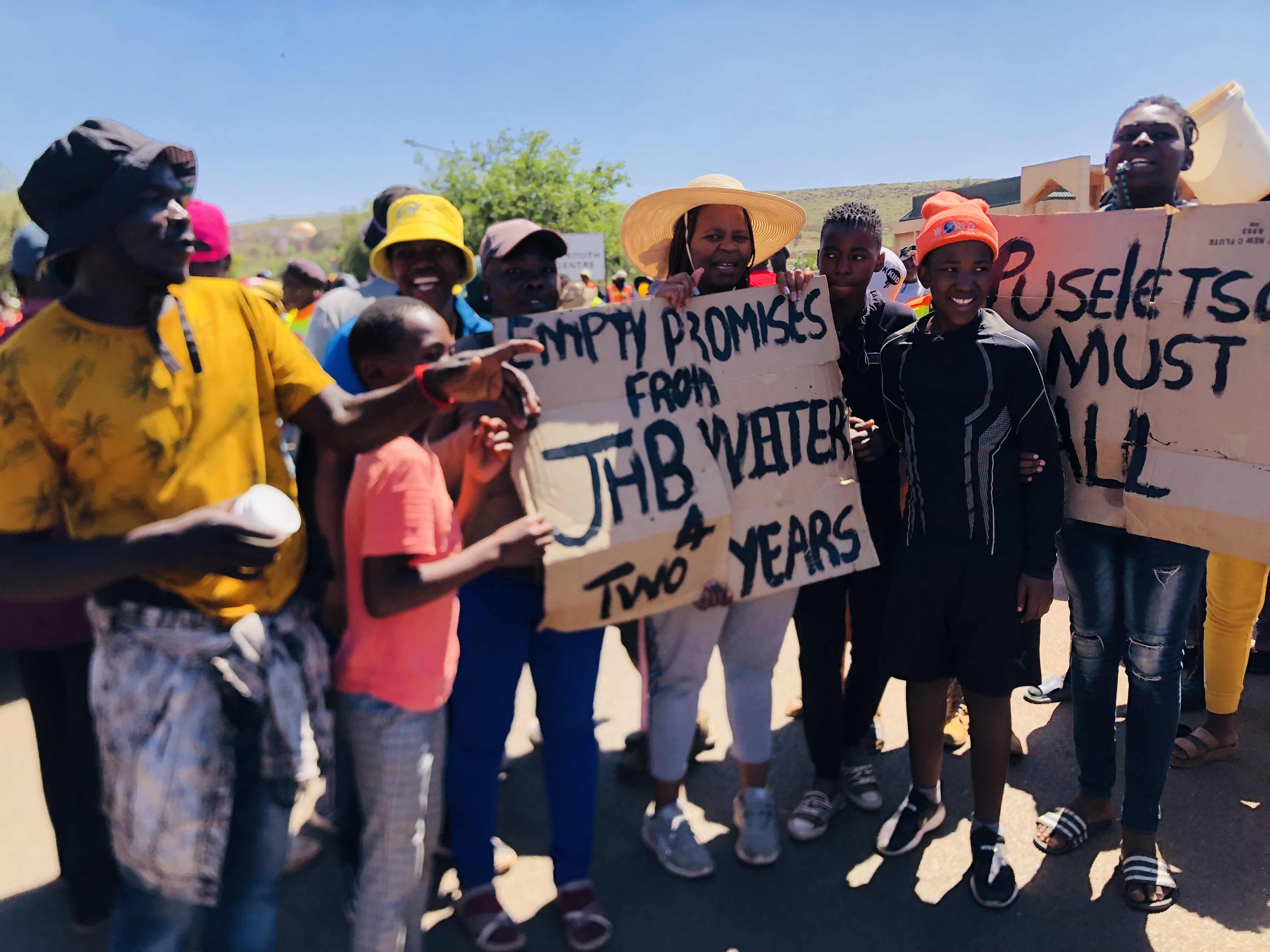
    December 2024 water protest in South Africa. Silver Sibiya/GroundUp

    Physical access to water for households has increased significantly since the country’s first democratic elections in 1994. Nevertheless, water quality and safety has declined over the past ten years. Almost half the country’s drinking water is considered unsafe for human consumption. Water service interruptions – sometimes lasting days – are becoming more common.


    Read more: Basic water services in South Africa are in decay after years of progress


    South Africa’s household poverty rate (the number of households who live below the upper bound poverty line) is now at 55%. We found that water is becoming more and more unaffordable for impoverished households. The result is that these families have to limit the amount of water they use. This worsens poverty and inequality.

    To solve this problem, the South African government needs to embrace a human rights approach to access to water, where people are given enough water to live a full life.

    What went wrong?

    The first problem is affordability. People cannot access water if they don’t have the money to pay for it, but most clean and safe water in South Africa must be paid for. Poverty is a key barrier to access.

    The United Nations special rapporteur on the human rights to water and sanitation has emphasised that it is the responsibility of the state to assess whether households can afford to pay for water, without sacrificing other basic essential items such as food. It is up to governments to take steps to make water affordable.

    The country’s Free Basic Water policy was originally intended to address this issue. It guaranteed impoverished households access to a free 6,000 litres of water per month. This is roughly 200 litres per household of eight people per day. However, in practice this policy is not a meaningful solution, for two reasons:

    • the amount provided is an average of 25 litres of water per person per day. This is way below the World Health Organization recommendation of a minimum water allowance of between 50 and 100 litres of water per person per day.

    • many millions of poor households are excluded from the benefit because of poor implementation of the policy by municipalities.

    This situation reflects the failure to create, implement and oversee a regulatory environment that is necessary to realise affordable access to sufficient, clean water for all South Africans.

    The policy failures

    Firstly, water policy – at both national and municipal levels – has failed to take a human rights approach. A human rights approach requires that access to sufficient, quality and affordable water is the starting point for all policy making and resource allocation decisions. This has not been the case.

    Secondly, access to water has been narrowly defined as making water physically available without considering affordability. Most water access policy in South Africa includes statements declaring that water must be affordable for everyone. Unfortunately, all of these policy promises have remained exactly that – just promises.

    Meeting the goal of affordability requires more from the government than stating that water should be affordable. The state must develop affordability standards – in other words, calculate a water tariff that everyone can afford – and monitor it. At the moment, there is no national government oversight of water tariffs and so the affordability policy is effectively meaningless.


    Read more: The lack of water in South Africa is the result of a long history of injustice — and legislation should start there


    The actual state practices of tariff setting and approval, particularly in local municipalities, have not translated any of these promises into reality.

    Thirdly, many households are denied access to even the 25 litres of free water per person per day, because municipalities don’t always implement the free basic water policy as intended.


    Read more: Why ordinary people must have a say in water governance


    Fourthly, the state has failed to acknowledge the contradiction between providing universal access to services, and requiring municipalities to generate enough money to cover 90% of their running costs. Tariffs for water have increased at rates well above inflation over the past 20 years. But in a very impoverished environment where many people cannot afford to pay for water, up to two thirds of South Africa’s municipalities have been classified as being in financial distress.

    There is a fundamental – and currently insoluble – conflict between the tariffs that municipalities must charge in order to maintain fully funded budgets, and the tariffs that could be defined as affordable.

    What needs to be done?

    These actions should be taken in the short term:

    • the free basic water allowance must be increased

    • the household indigent policy, which determines how households can access free municipal services like water, must be restructured.

    • affordability standards must be developed in close consultation with affected communities. This is the only way to set water tariffs that are based on what households are actually able to pay.

    • there must be oversight of the provision of sufficient, affordable water for everyone.

    In the longer term, these two additional problems must be solved:

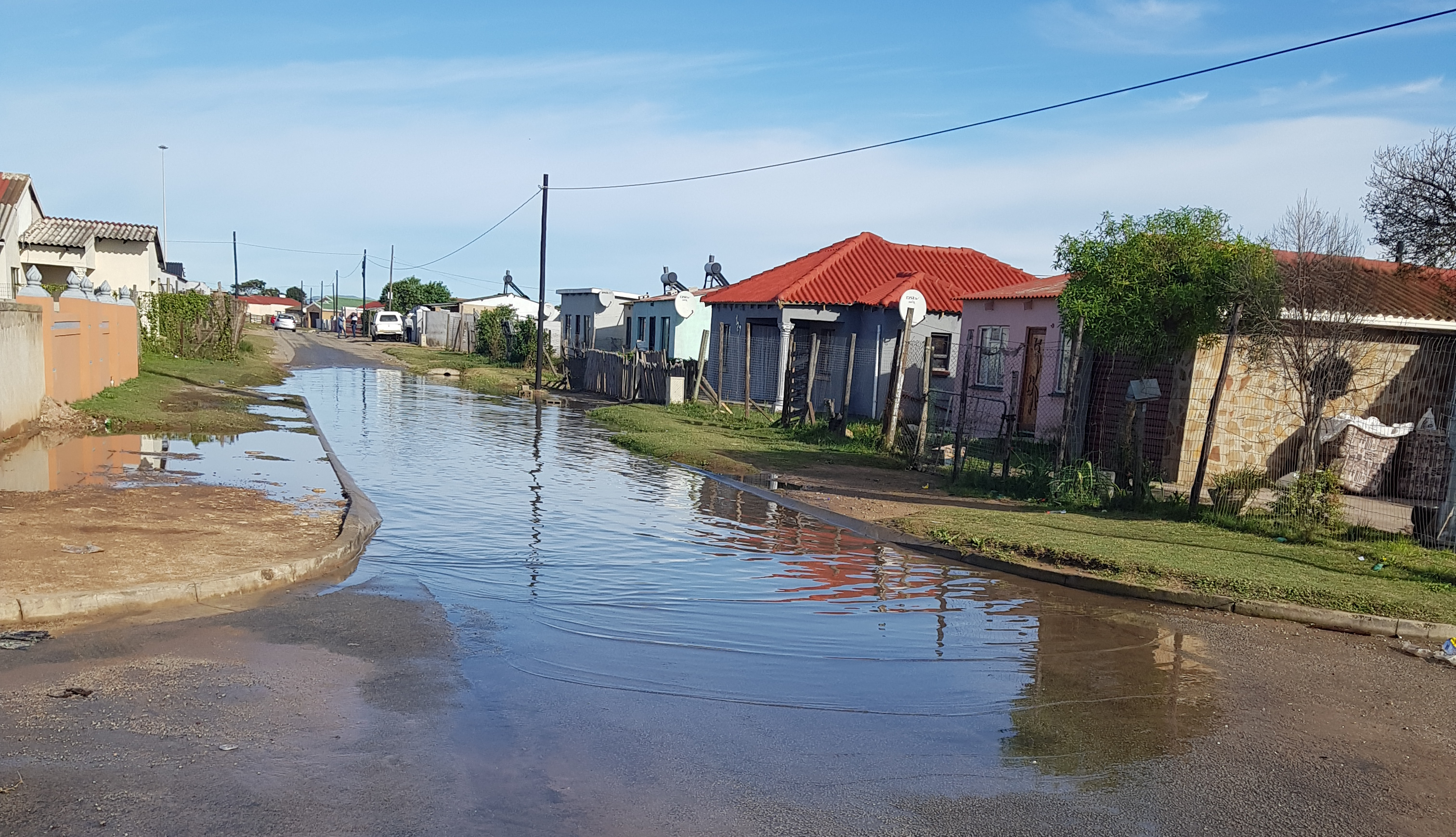
    A 2022 water leak in South Africa. Joseph Chirume/GroundUp
    • municipalities are losing revenue from water, particularly from leaking pipes and other infrastructure

    • the local government fiscal framework requires that municipalities earn a surplus on trading services such as water. This must be changed so that municipal finances prioritise affordability of water instead.

    The ethnographic research team for this work was led by Mahlatse Rampedi, who holds a master’s degree and has ten years of experience, together with Ntokozo Ndhlovu, who holds an honours degree.

    – South Africa has failed to deliver access to enough water for millions – a new approach is needed
    – https://theconversation.com/south-africa-has-failed-to-deliver-access-to-enough-water-for-millions-a-new-approach-is-needed-247831

    MIL OSI Africa

  • MIL-OSI Africa: Secretary-General’s remarks to the Security Council – on the Maintenance of International Peace and Security: Practicing Multilateralism, Reforming and Improving Global Governance [bilingual as delivered; scroll down for all-English and all-French]

    Source: United Nations – English

    xcellencies,

    I thank Minister Wang Yi and China for convening this important discussion.

    This year marks the 80th anniversary of the United Nations.

    Born out of the ashes of the Second World War, our organization was the result of a global commitment to “save succeeding generations from the scourge of war.”

    It also signaled a commitment to an entirely new level of international cooperation grounded in international law and our founding Charter.

    To help countries move past the horrors of conflict to forge sustainable peace. 

    To tackle poverty, hunger and disease. 

    To assist countries in climbing the development ladder.

    To provide humanitarian support in times of conflict and disaster.

    To embed justice and fairness through international law and respect for human rights.

    And to work through this Council to push for peace through dialogue, debate, diplomacy and consensus-building.

    Eight decades later, one can draw a direct line between the creation of the United Nations and the prevention of a third world war.

    Eight decades later, the United Nations remains the essential, one-of-a-kind meeting ground to advance peace, sustainable development and human rights.  

    But eight decades is a long time.

    And because we believe in the singular value and purpose of the United Nations, we must always strive to improve the institution and the way we work. 

    We have the hardware for international cooperation — but the software needs an update. 

    An update in representation to reflect the realities of today.

    An update in support for developing countries to redress historical injustices.

    An update to ensure countries adhere to the purposes, principles and norms that ground multilateralism in justice and fairness.

    And an update to our peace operations. 

    Excellencies,

    Global solidarity and solutions are needed more than ever. 

    The climate crisis is raging, inequalities are growing, and poverty is on the rise. 

    As this Council knows well, peace is getting pushed further out of reach — from the Occupied Palestinian Territory to Ukraine to Sudan to the Democratic Republic of the Congo and beyond. 

    Terrorism and violent extremism remain persistent scourges.

    We see a dark spirit of impunity spreading.   

    The prospect of nuclear war remains — outrageously — a clear and present danger.

    And the limitless promise of emerging technologies like Artificial Intelligence is matched by limitless peril to undermine and even replace human thought, human identity and human control. 

    These global challenges cry out for multilateral solutions.

    The Pact for the Future you adopted in September is aimed at strengthening global governance for the 21st century and rebuilding trust — trust in multilateralism, trust in the United Nations, and trust in this Council.

    At its heart, the Pact for the Future is a pact for peace — peace in all its dimensions.

    It puts forward concrete solutions to strengthen the machinery of peace, drawing from proposals to the New Agenda for Peace that prioritize prevention, mediation and peacebuilding.

    The Pact seeks to advance coordination with regional organizations, and ensure the full participation of women, youth and marginalized groups in peace processes.

    And it calls for strengthening the Peacebuilding Commission to mobilize political and financial support for nationally owned peacebuilding and prevention strategies.

    The Pact also includes the first multilateral agreement on nuclear disarmament in more than a decade…

    New strategies to end the use of chemical and biological weapons…

    And revitalized efforts to prevent an arms race in outer space and advance discussions on lethal autonomous weapons.

    It also calls on Member States to live up to their commitments enshrined in the UN Charter, and the principles of respect for sovereignty, territorial integrity and the political independence of states.

    It reaffirms unwavering commitment to abide by international law and prioritize the peaceful settlement of disputes through dialogue.

    It recognizes the role of the United Nations in preventive diplomacy.

    It reinforces the need to uphold all human rights — civil, political, economic, social and cultural.

    It calls for the meaningful inclusion of women and youth in all peace processes.

    And it specifically calls on this Council to ensure that peace operations are guided by clear and sequenced mandates that are realistic and achievable — with viable exit strategies and transition plans.

    But the Pact does even more for peace. 

    It recognizes that we must address the root causes of conflict and tensions.

    Sustainable peace requires sustainable development.

    The Pact includes support for an SDG Stimulus to help developing countries invest in their people and tackle key challenges, like moving towards a future anchored in renewable energy.

    It includes a revitalized commitment to reform the global financial architecture to better and more fairly represent the needs of developing countries.

    And it includes a Global Digital Compact that calls for an AI governance body that brings developing countries to the decision-making table for the first time.

    Excellences,

    Le Pacte reconnaît également que le Conseil de sécurité doit refléter le monde d’aujourd’hui, et non celui d’il y a 80 ans, et énonce des principes importants pour guider cette réforme tant attendue.

    Ce Conseil devrait être élargi et devenir plus représentatif des réalités géopolitiques d’aujourd’hui.

    Nous devons aussi continuer à améliorer les méthodes de travail du Conseil afin de le rendre plus inclusif, plus transparent, plus efficace, plus démocratique et plus responsable.

    Cela fait plus de dix ans que l’Assemblée générale examine ces questions.

    Le moment est venu de tirer parti de l’élan donné par le Pacte pour l’avenir et d’œuvrer en faveur d’un consensus plus large entre les groupes régionaux et les États Membres – y compris les membres permanents de ce Conseil – afin de faire avancer les négociations intergouvernementales.

    À tous les niveaux, j’appelle les membres de ce Conseil à surmonter les divisions qui bloquent une action efficace en faveur de la paix.

    Le monde compte sur vous pour contribuer véritablement à mettre fin aux conflits et à alléger les souffrances que ces guerres infligent à des innocents.

    Les membres du Conseil ont montré qu’il était possible de trouver un terrain d’entente.

    Qu’il s’agisse du déploiement d’opérations de maintien de la paix… de l’adoption de résolutions vitales sur l’aide humanitaire… de la reconnaissance historique des problèmes de sécurité rencontrés par les femmes et les jeunes… ou encore de la résolution 2719, qui appuie les opérations de soutien à la paix menées par l’Union africaine à travers des contributions obligatoires.

    Même aux heures les plus sombres de la guerre froide, la prise de décisions collégiales et le dialogue vif entretenu au Conseil de sécurité ont permis de préserver un système de sécurité collective, certes imparfait, mais fonctionnel.

    Je vous exhorte à retrouver cet esprit, à poursuivre vos efforts pour surmonter les divergences et bâtir les consensus nécessaires pour instaurer la paix dont tous les peuples ont tant besoin et qu’ils méritent.

    Excellences,

    La coopération multilatérale est le cœur battant de l’Organisation des Nations Unies.

    Guidé par les solutions offertes dans le Pacte pour l’avenir, le multilatéralisme peut devenir un instrument de paix encore plus puissant.

    Mais la puissance du multilatéralisme dépend directement du niveau d’engagement de chaque pays.

    Face aux enjeux du monde qui nous entoure, j’invite tous les États Membres à continuer de renforcer et d’actualiser nos mécanismes mondiaux de résolution des problèmes.

    Faisons en sorte qu’ils soient à la hauteur de la mission… à la hauteur des besoins des populations… à la hauteur de la paix.

    Je vous remercie. 

    ****
    [all-English]

    Excellencies,

    I thank Minister Wang Yi and China for convening this important discussion.

    This year marks the 80th anniversary of the United Nations.

    Born out of the ashes of the Second World War, our organization was the result of a global commitment to “save succeeding generations from the scourge of war.”

    It also signaled a commitment to an entirely new level of international cooperation grounded in international law and our founding Charter.

    To help countries move past the horrors of conflict to forge sustainable peace. 

    To tackle poverty, hunger and disease.  

    To assist countries in climbing the development ladder.

    To provide humanitarian support in times of conflict and disaster.

    To embed justice and fairness through international law and respect for human rights.

    And to work through this Council to push for peace through dialogue, debate, diplomacy and consensus-building.

    Eight decades later, one can draw a direct line between the creation of the United Nations and the prevention of a third world war.

    Eight decades later, the United Nations remains the essential, one-of-a-kind meeting ground to advance peace, sustainable development and human rights.   

    But eight decades is a long time. 

    And because we believe in the singular value and purpose of the United Nations, we must always strive to improve the institution and the way we work. 

    We have the hardware for international cooperation — but the software needs an update. 

    An update in representation to reflect the realities of today.

    An update in support for developing countries to redress historical injustices.

    An update to ensure countries adhere to the purposes, principles and norms that ground multilateralism in justice and fairness.

    And an update to our peace operations.  

    Excellencies,

    Global solidarity and solutions are needed more than ever.  

    The climate crisis is raging, inequalities are growing, and poverty is on the rise. 

    As this Council knows well, peace is getting pushed further out of reach — from the Occupied Palestinian Territory to Ukraine to Sudan to the Democratic Republic of the Congo and beyond. 

    Terrorism and violent extremism remain persistent scourges.

    We see a dark spirit of impunity spreading.    

    The prospect of nuclear war remains — outrageously — a clear and present danger.

    And the limitless promise of emerging technologies like Artificial Intelligence is matched by limitless peril to undermine and even replace human thought, human identity and human control. 
    These global challenges cry out for multilateral solutions.

    The Pact for the Future you adopted in September is aimed at strengthening global governance for the 21st century and rebuilding trust — trust in multilateralism, trust in the United Nations, and trust in this Council.

    At its heart, the Pact for the Future is a pact for peace — peace in all its dimensions.

    It puts forward concrete solutions to strengthen the machinery of peace, drawing from proposals to the New Agenda for Peace that prioritize prevention, mediation and peacebuilding.

    The Pact seeks to advance coordination with regional organizations, and ensure the full participation of women, youth and marginalized groups in peace processes.

    And it calls for strengthening the Peacebuilding Commission to mobilize political and financial support for nationally owned peacebuilding and prevention strategies.

    The Pact also includes the first multilateral agreement on nuclear disarmament in more than a decade…

    New strategies to end the use of chemical and biological weapons…

    And revitalized efforts to prevent an arms race in outer space and advance discussions on lethal autonomous weapons.

    It also calls on Member States to live up to their commitments enshrined in the UN Charter, and the principles of respect for sovereignty, territorial integrity and the political independence of states.

    It reaffirms unwavering commitment to abide by international law and prioritize the peaceful settlement of disputes through dialogue.

    It recognizes the role of the United Nations in preventive diplomacy.

    It reinforces the need to uphold all human rights — civil, political, economic, social and cultural.

    It calls for the meaningful inclusion of women and youth in all peace processes.
    And it specifically calls on this Council to ensure that peace operations are guided by clear and sequenced mandates that are realistic and achievable — with viable exit strategies and transition plans.

    But the Pact does even more for peace. 

    It recognizes that we must address the root causes of conflict and tensions.

    Sustainable peace requires sustainable development.

    The Pact includes support for an SDG Stimulus to help developing countries invest in their people and tackle key challenges, like moving towards a future anchored in renewable energy.

    It includes a revitalized commitment to reform the global financial architecture to better and more fairly represent the needs of developing countries.

    And it includes a Global Digital Compact that calls for an AI governance body that brings developing countries to the decision-making table for the first time.

    Excellencies,

    The Pact also recognizes that the Security Council must reflect the world of today, not the world of 80 years ago, and sets out important principles to guide this long-awaited reform.

    This Council should be enlarged and made more representative of today’s geopolitical realities.

    And we must continue improving the working methods of this Council to make it more inclusive, transparent, efficient, democratic and accountable.

    These issues have been under consideration by the General Assembly for more than a decade.

    Now is the time to build on the momentum provided by the Pact for the Future, and work towards a greater consensus among regional groups and Member States — including the permanent members of this Council — to move the intergovernmental negotiations forward.

    Throughout, I call on Members of this Council to overcome the divisions that are blocking effective action for peace.

    The world looks to you to act in meaningful ways to end conflicts, and ease the suffering these wars inflict on innocent people.

    Council Members have shown that finding common ground is possible.

    From deploying peacekeeping operations…to forging lifesaving resolutions on humanitarian aid…to historic recognitions of the security challenges faced by women and young people…to the landmark Resolution 2719 supporting African Union-led peace support operations through assessed contributions.

    Even in the darkest days of the Cold War, the collective decision-making and vigorous dialogue in this Council maintained a functioning, if imperfect, system of collective security.

    I urge you to summon this same spirit, continue working to overcome differences and focus on building the consensus required to deliver the peace all people need and deserve.

    Excellencies,

    Multilateral cooperation is the beating heart of the United Nations.

    Guided by the solutions in the Pact for the Future, multilateralism can also become an even more powerful instrument of peace.

    But multilateralism is only as strong as each and every country’s commitment to it.

    As we look to the challenges around us, I urge all Member States to continue strengthening and updating our global problem-solving mechanisms.

    Let’s make them fit for purpose — fit for people — and fit for peace.

    Thank you.

    ****
    [all-French]

    Excellences,

    Je remercie le Ministre Wang Yi et la Chine d’avoir organisé cet important débat.

    Cette année marque le quatre-vingtième anniversaire de l’Organisation des Nations Unies.

    Née des cendres de la Seconde Guerre mondiale, notre Organisation est le fruit de l’engagement pris à l’échelle mondiale de « préserver les générations futures du fléau de la guerre ».

    Sa création a également marqué un engagement en faveur d’un niveau de coopération internationale entièrement nouveau, ancré dans le droit international et dans notre Charte fondatrice.

    L’engagement d’aider les pays à dépasser les horreurs du conflit pour instaurer une paix durable.

    De lutter contre la pauvreté, la faim et la maladie.

    D’aider les pays à progresser sur l’échelle du développement.

    De fournir une aide humanitaire en cas de conflit ou de catastrophe.

    D’ancrer la justice et l’équité grâce au droit international et au respect des droits humains.

    D’œuvrer, dans le cadre de ce Conseil, pour faire avancer la paix par le dialogue, le débat, la diplomatie et la recherche d’un consensus.

    Huit décennies plus tard, on peut établir un lien direct entre la création de l’Organisation des Nations Unies et la prévention d’une troisième guerre mondiale.

    Huit décennies plus tard, l’ONU reste un lieu de rencontre unique en son genre et indispensable à la promotion de la paix, du développement durable et des droits humains.

    Mais huit décennies, c’est long.

    Et parce que nous croyons à la valeur et à l’objectif de l’ONU, qui lui sont propres, nous devons en permanence nous efforcer d’améliorer l’institution et notre façon de travailler.

    Le dispositif de coopération internationale est opérationnel, mais une refonte du système d’exploitation s’impose.

    Une refonte de la représentation, pour rendre compte des réalités d’aujourd’hui.

    Une refonte de l’aide apportée aux pays en développement, afin de réparer les injustices historiques.

    Une refonte visant à s’assurer que les pays adhèrent aux objectifs, principes et normes qui fondent le multilatéralisme sur la justice et l’équité.

    Et une refonte de nos opérations de paix.

    Excellences,

    La solidarité mondiale et des solutions globales sont plus que jamais nécessaires.

    La crise climatique fait rage, les inégalités se creusent et la pauvreté augmente.

    Comme ce Conseil le sait bien, la paix est de plus en plus hors de portée – du Territoire palestinien occupé à l’Ukraine, en passant par le Soudan, la République démocratique du Congo, etc.

    Les fléaux que sont le terrorisme et l’extrémisme violent persistent.

    Nous voyons se répandre une sombre culture de l’impunité.

    La menace d’une guerre nucléaire demeure un danger clair et présent, ce qui est révoltant.

    Les possibilités illimitées offertes par les technologies émergentes telles que l’intelligence artificielle s’accompagnent d’un risque également illimité d’affaiblissement, voire de remplacement de la pensée humaine, de l’identité humaine et du contrôle humain.

    Ces problèmes mondiaux demandent des solutions multilatérales.

    Le Pacte pour l’avenir que vous avez adopté en septembre vise à renforcer la gouvernance mondiale pour le vingt et unième siècle et à rétablir la confiance – confiance dans le multilatéralisme, confiance dans les Nations unies et confiance dans ce Conseil.

    Au fond, le Pacte pour l’avenir est un pacte pour la paix – la paix dans toutes ses dimensions.

    Il propose des solutions concrètes pour renforcer les mécanismes de paix, s’inspirant des propositions du Nouvel Agenda pour la paix qui donnent la priorité à la prévention, à la médiation et à la consolidation de la paix.

    Le Pacte vise à renforcer la coordination avec les organisations régionales et à garantir la pleine participation des femmes, des jeunes et des groupes marginalisés aux processus de paix.

    Il appelle au renforcement de la Commission de consolidation de la paix afin de mobiliser le soutien politique et financier nécessaire à la mise en œuvre des stratégies de prévention et de consolidation de la paix pilotées par les pays.

    Il contient également le premier accord multilatéral sur le désarmement nucléaire conclu depuis plus de dix ans…

    Présente de nouvelles stratégies visant à mettre fin à l’emploi d’armes chimiques et biologiques…

    Ainsi que des mesures revitalisées visant à prévenir une course aux armements dans l’espace et à faire avancer les débats sur les armes létales autonomes.

    Il exhorte les États Membres à respecter les engagements qu’ils ont pris, consacrés dans la Charte des Nations Unies, ainsi que les principes de respect de la souveraineté, de l’intégrité territoriale et de l’indépendance politique des États.

    Il réaffirme leur volonté inébranlable à respecter le droit international et à privilégier le règlement pacifique des différends par le dialogue.

    Il reconnaît le de l’Organisation des Nations Unies dans la diplomatie préventive.

    Il réaffirme la nécessité de respecter tous les droits humains – civils, politiques, économiques, sociaux et culturels.

    Il appelle à une véritable inclusion des femmes et des jeunes dans tous les processus de paix.

    Il demande en particulier au Conseil de sécurité de veiller à ce que les opérations de paix soient guidées par des mandats clairs et séquencés, réalistes et réalisables, ainsi que des stratégies de sortie et des plans de transition viables.

    Mais le Pacte va encore plus loin pour la paix.

    Il prend acte du fait que nous devons nous attaquer aux causes profondes des conflits et des tensions.

    Le développement durable passe par l’instauration d’une paix durable.

    Le Pacte dispose qu’il faut soutenir la mise en place d’un plan de relance des objectifs de développement durable afin d’aider les pays en développement à investir dans leur population et à relever des défis majeurs, notamment à s’orienter vers un avenir ancré dans les énergies renouvelables.

    Il comprend un engagement renouvelé de réformer l’architecture financière mondiale afin de représenter de manière plus exacte et plus équitable les besoins des pays en développement.

    Il comprend également un Pacte numérique mondial qui appelle à la création d’un organe de gouvernance de l’intelligence artificielle associant pour la première fois les pays en développement à la prise de décisions.

    Excellences,
    Le Pacte reconnaît également que le Conseil de sécurité doit refléter le monde d’aujourd’hui, et non celui d’il y a 80 ans, et énonce des principes importants pour guider cette réforme tant attendue.

    Ce Conseil devrait être élargi et devenir plus représentatif des réalités géopolitiques d’aujourd’hui.

    Nous devons aussi continuer à améliorer les méthodes de travail du Conseil afin de le rendre plus inclusif, plus transparent, plus efficace, plus démocratique et plus responsable.

    Cela fait plus de dix ans que l’Assemblée générale examine ces questions.
    Le moment est venu de tirer parti de l’élan donné par le Pacte pour l’avenir et d’œuvrer en faveur d’un consensus plus large entre les groupes régionaux et les États Membres – y compris les membres permanents de ce Conseil – afin de faire avancer les négociations intergouvernementales.

    À tous les niveaux, j’appelle les membres de ce Conseil à surmonter les divisions qui bloquent une action efficace en faveur de la paix.

    Le monde compte sur vous pour contribuer véritablement à mettre fin aux conflits et à alléger les souffrances que ces guerres infligent à des innocents.

    Les membres du Conseil ont montré qu’il était possible de trouver un terrain d’entente.

    Qu’il s’agisse du déploiement d’opérations de maintien de la paix… de l’adoption de résolutions vitales sur l’aide humanitaire… de la reconnaissance historique des problèmes de sécurité rencontrés par les femmes et les jeunes… ou encore de la résolution 2719, qui appuie les opérations de soutien à la paix menées par l’Union africaine à travers des contributions obligatoires.

    Même aux heures les plus sombres de la guerre froide, la prise de décisions collégiales et le dialogue vif entretenu au Conseil de sécurité ont permis de préserver un système de sécurité collective, certes imparfait, mais fonctionnel.

    Je vous exhorte à retrouver cet esprit, à poursuivre vos efforts pour surmonter les divergences et bâtir les consensus nécessaires pour instaurer la paix dont tous les peuples ont tant besoin et qu’ils méritent.

    Excellences,

    La coopération multilatérale est le cœur battant de l’Organisation des Nations Unies.

    Guidé par les solutions offertes dans le Pacte pour l’avenir, le multilatéralisme peut devenir un instrument de paix encore plus puissant.

    Mais la puissance du multilatéralisme dépend directement du niveau d’engagement de chaque pays.

    Face aux enjeux du monde qui nous entoure, j’invite tous les États Membres à continuer de renforcer et d’actualiser nos mécanismes mondiaux de résolution des problèmes.

    Faisons en sorte qu’ils soient à la hauteur de la mission… à la hauteur des besoins des populations… à la hauteur de la paix.

    Je vous remercie.

    MIL OSI Africa

  • MIL-OSI United Nations: Secretary-General’s remarks to the Security Council – on the Maintenance of International Peace and Security: Practicing Multilateralism, Reforming and Improving Global Governance [bilingual as delivered; scroll down for all-English and all-French]

    Source: United Nations secretary general

    Excellencies,

    I thank Minister Wang Yi and China for convening this important discussion.

    This year marks the 80th anniversary of the United Nations.

    Born out of the ashes of the Second World War, our organization was the result of a global commitment to “save succeeding generations from the scourge of war.”

    It also signaled a commitment to an entirely new level of international cooperation grounded in international law and our founding Charter.

    To help countries move past the horrors of conflict to forge sustainable peace. 

    To tackle poverty, hunger and disease. 

    To assist countries in climbing the development ladder.

    To provide humanitarian support in times of conflict and disaster.

    To embed justice and fairness through international law and respect for human rights.

    And to work through this Council to push for peace through dialogue, debate, diplomacy and consensus-building.

    Eight decades later, one can draw a direct line between the creation of the United Nations and the prevention of a third world war.

    Eight decades later, the United Nations remains the essential, one-of-a-kind meeting ground to advance peace, sustainable development and human rights.  

    But eight decades is a long time.

    And because we believe in the singular value and purpose of the United Nations, we must always strive to improve the institution and the way we work. 

    We have the hardware for international cooperation — but the software needs an update. 

    An update in representation to reflect the realities of today.

    An update in support for developing countries to redress historical injustices.

    An update to ensure countries adhere to the purposes, principles and norms that ground multilateralism in justice and fairness.

    And an update to our peace operations. 

    Excellencies,

    Global solidarity and solutions are needed more than ever. 

    The climate crisis is raging, inequalities are growing, and poverty is on the rise. 

    As this Council knows well, peace is getting pushed further out of reach — from the Occupied Palestinian Territory to Ukraine to Sudan to the Democratic Republic of the Congo and beyond. 

    Terrorism and violent extremism remain persistent scourges.

    We see a dark spirit of impunity spreading.   

    The prospect of nuclear war remains — outrageously — a clear and present danger.

    And the limitless promise of emerging technologies like Artificial Intelligence is matched by limitless peril to undermine and even replace human thought, human identity and human control. 

    These global challenges cry out for multilateral solutions.

    The Pact for the Future you adopted in September is aimed at strengthening global governance for the 21st century and rebuilding trust — trust in multilateralism, trust in the United Nations, and trust in this Council.

    At its heart, the Pact for the Future is a pact for peace — peace in all its dimensions.

    It puts forward concrete solutions to strengthen the machinery of peace, drawing from proposals to the New Agenda for Peace that prioritize prevention, mediation and peacebuilding.

    The Pact seeks to advance coordination with regional organizations, and ensure the full participation of women, youth and marginalized groups in peace processes.

    And it calls for strengthening the Peacebuilding Commission to mobilize political and financial support for nationally owned peacebuilding and prevention strategies.

    The Pact also includes the first multilateral agreement on nuclear disarmament in more than a decade…

    New strategies to end the use of chemical and biological weapons…

    And revitalized efforts to prevent an arms race in outer space and advance discussions on lethal autonomous weapons.

    It also calls on Member States to live up to their commitments enshrined in the UN Charter, and the principles of respect for sovereignty, territorial integrity and the political independence of states.

    It reaffirms unwavering commitment to abide by international law and prioritize the peaceful settlement of disputes through dialogue.

    It recognizes the role of the United Nations in preventive diplomacy.

    It reinforces the need to uphold all human rights — civil, political, economic, social and cultural.

    It calls for the meaningful inclusion of women and youth in all peace processes.

    And it specifically calls on this Council to ensure that peace operations are guided by clear and sequenced mandates that are realistic and achievable — with viable exit strategies and transition plans.

    But the Pact does even more for peace. 

    It recognizes that we must address the root causes of conflict and tensions.

    Sustainable peace requires sustainable development.

    The Pact includes support for an SDG Stimulus to help developing countries invest in their people and tackle key challenges, like moving towards a future anchored in renewable energy.

    It includes a revitalized commitment to reform the global financial architecture to better and more fairly represent the needs of developing countries.

    And it includes a Global Digital Compact that calls for an AI governance body that brings developing countries to the decision-making table for the first time.

    Excellences,

    Le Pacte reconnaît également que le Conseil de sécurité doit refléter le monde d’aujourd’hui, et non celui d’il y a 80 ans, et énonce des principes importants pour guider cette réforme tant attendue.

    Ce Conseil devrait être élargi et devenir plus représentatif des réalités géopolitiques d’aujourd’hui.

    Nous devons aussi continuer à améliorer les méthodes de travail du Conseil afin de le rendre plus inclusif, plus transparent, plus efficace, plus démocratique et plus responsable.

    Cela fait plus de dix ans que l’Assemblée générale examine ces questions.

    Le moment est venu de tirer parti de l’élan donné par le Pacte pour l’avenir et d’œuvrer en faveur d’un consensus plus large entre les groupes régionaux et les États Membres – y compris les membres permanents de ce Conseil – afin de faire avancer les négociations intergouvernementales.

    À tous les niveaux, j’appelle les membres de ce Conseil à surmonter les divisions qui bloquent une action efficace en faveur de la paix.

    Le monde compte sur vous pour contribuer véritablement à mettre fin aux conflits et à alléger les souffrances que ces guerres infligent à des innocents.

    Les membres du Conseil ont montré qu’il était possible de trouver un terrain d’entente.

    Qu’il s’agisse du déploiement d’opérations de maintien de la paix… de l’adoption de résolutions vitales sur l’aide humanitaire… de la reconnaissance historique des problèmes de sécurité rencontrés par les femmes et les jeunes… ou encore de la résolution 2719, qui appuie les opérations de soutien à la paix menées par l’Union africaine à travers des contributions obligatoires.

    Même aux heures les plus sombres de la guerre froide, la prise de décisions collégiales et le dialogue vif entretenu au Conseil de sécurité ont permis de préserver un système de sécurité collective, certes imparfait, mais fonctionnel.

    Je vous exhorte à retrouver cet esprit, à poursuivre vos efforts pour surmonter les divergences et bâtir les consensus nécessaires pour instaurer la paix dont tous les peuples ont tant besoin et qu’ils méritent.

    Excellences,

    La coopération multilatérale est le cœur battant de l’Organisation des Nations Unies.

    Guidé par les solutions offertes dans le Pacte pour l’avenir, le multilatéralisme peut devenir un instrument de paix encore plus puissant.

    Mais la puissance du multilatéralisme dépend directement du niveau d’engagement de chaque pays.

    Face aux enjeux du monde qui nous entoure, j’invite tous les États Membres à continuer de renforcer et d’actualiser nos mécanismes mondiaux de résolution des problèmes.

    Faisons en sorte qu’ils soient à la hauteur de la mission… à la hauteur des besoins des populations… à la hauteur de la paix.

    Je vous remercie. 

    ****
    [all-English]

    Excellencies,

    I thank Minister Wang Yi and China for convening this important discussion.

    This year marks the 80th anniversary of the United Nations.

    Born out of the ashes of the Second World War, our organization was the result of a global commitment to “save succeeding generations from the scourge of war.”

    It also signaled a commitment to an entirely new level of international cooperation grounded in international law and our founding Charter.

    To help countries move past the horrors of conflict to forge sustainable peace. 

    To tackle poverty, hunger and disease.  

    To assist countries in climbing the development ladder.

    To provide humanitarian support in times of conflict and disaster.

    To embed justice and fairness through international law and respect for human rights.

    And to work through this Council to push for peace through dialogue, debate, diplomacy and consensus-building.

    Eight decades later, one can draw a direct line between the creation of the United Nations and the prevention of a third world war.

    Eight decades later, the United Nations remains the essential, one-of-a-kind meeting ground to advance peace, sustainable development and human rights.   

    But eight decades is a long time. 

    And because we believe in the singular value and purpose of the United Nations, we must always strive to improve the institution and the way we work. 

    We have the hardware for international cooperation — but the software needs an update. 

    An update in representation to reflect the realities of today.

    An update in support for developing countries to redress historical injustices.

    An update to ensure countries adhere to the purposes, principles and norms that ground multilateralism in justice and fairness.

    And an update to our peace operations.  

    Excellencies,

    Global solidarity and solutions are needed more than ever.  

    The climate crisis is raging, inequalities are growing, and poverty is on the rise. 

    As this Council knows well, peace is getting pushed further out of reach — from the Occupied Palestinian Territory to Ukraine to Sudan to the Democratic Republic of the Congo and beyond. 

    Terrorism and violent extremism remain persistent scourges.

    We see a dark spirit of impunity spreading.    

    The prospect of nuclear war remains — outrageously — a clear and present danger.

    And the limitless promise of emerging technologies like Artificial Intelligence is matched by limitless peril to undermine and even replace human thought, human identity and human control. 
    These global challenges cry out for multilateral solutions.

    The Pact for the Future you adopted in September is aimed at strengthening global governance for the 21st century and rebuilding trust — trust in multilateralism, trust in the United Nations, and trust in this Council.

    At its heart, the Pact for the Future is a pact for peace — peace in all its dimensions.

    It puts forward concrete solutions to strengthen the machinery of peace, drawing from proposals to the New Agenda for Peace that prioritize prevention, mediation and peacebuilding.

    The Pact seeks to advance coordination with regional organizations, and ensure the full participation of women, youth and marginalized groups in peace processes.

    And it calls for strengthening the Peacebuilding Commission to mobilize political and financial support for nationally owned peacebuilding and prevention strategies.

    The Pact also includes the first multilateral agreement on nuclear disarmament in more than a decade…

    New strategies to end the use of chemical and biological weapons…

    And revitalized efforts to prevent an arms race in outer space and advance discussions on lethal autonomous weapons.

    It also calls on Member States to live up to their commitments enshrined in the UN Charter, and the principles of respect for sovereignty, territorial integrity and the political independence of states.

    It reaffirms unwavering commitment to abide by international law and prioritize the peaceful settlement of disputes through dialogue.

    It recognizes the role of the United Nations in preventive diplomacy.

    It reinforces the need to uphold all human rights — civil, political, economic, social and cultural.

    It calls for the meaningful inclusion of women and youth in all peace processes.
    And it specifically calls on this Council to ensure that peace operations are guided by clear and sequenced mandates that are realistic and achievable — with viable exit strategies and transition plans.

    But the Pact does even more for peace. 

    It recognizes that we must address the root causes of conflict and tensions.

    Sustainable peace requires sustainable development.

    The Pact includes support for an SDG Stimulus to help developing countries invest in their people and tackle key challenges, like moving towards a future anchored in renewable energy.

    It includes a revitalized commitment to reform the global financial architecture to better and more fairly represent the needs of developing countries.

    And it includes a Global Digital Compact that calls for an AI governance body that brings developing countries to the decision-making table for the first time.

    Excellencies,

    The Pact also recognizes that the Security Council must reflect the world of today, not the world of 80 years ago, and sets out important principles to guide this long-awaited reform.

    This Council should be enlarged and made more representative of today’s geopolitical realities.

    And we must continue improving the working methods of this Council to make it more inclusive, transparent, efficient, democratic and accountable.

    These issues have been under consideration by the General Assembly for more than a decade.

    Now is the time to build on the momentum provided by the Pact for the Future, and work towards a greater consensus among regional groups and Member States — including the permanent members of this Council — to move the intergovernmental negotiations forward.

    Throughout, I call on Members of this Council to overcome the divisions that are blocking effective action for peace.

    The world looks to you to act in meaningful ways to end conflicts, and ease the suffering these wars inflict on innocent people.

    Council Members have shown that finding common ground is possible.

    From deploying peacekeeping operations…to forging lifesaving resolutions on humanitarian aid…to historic recognitions of the security challenges faced by women and young people…to the landmark Resolution 2719 supporting African Union-led peace support operations through assessed contributions.

    Even in the darkest days of the Cold War, the collective decision-making and vigorous dialogue in this Council maintained a functioning, if imperfect, system of collective security.

    I urge you to summon this same spirit, continue working to overcome differences and focus on building the consensus required to deliver the peace all people need and deserve.

    Excellencies,

    Multilateral cooperation is the beating heart of the United Nations.

    Guided by the solutions in the Pact for the Future, multilateralism can also become an even more powerful instrument of peace.

    But multilateralism is only as strong as each and every country’s commitment to it.

    As we look to the challenges around us, I urge all Member States to continue strengthening and updating our global problem-solving mechanisms.

    Let’s make them fit for purpose — fit for people — and fit for peace.

    Thank you.

    ****
    [all-French]

    Excellences,

    Je remercie le Ministre Wang Yi et la Chine d’avoir organisé cet important débat.

    Cette année marque le quatre-vingtième anniversaire de l’Organisation des Nations Unies.

    Née des cendres de la Seconde Guerre mondiale, notre Organisation est le fruit de l’engagement pris à l’échelle mondiale de « préserver les générations futures du fléau de la guerre ».

    Sa création a également marqué un engagement en faveur d’un niveau de coopération internationale entièrement nouveau, ancré dans le droit international et dans notre Charte fondatrice.

    L’engagement d’aider les pays à dépasser les horreurs du conflit pour instaurer une paix durable.

    De lutter contre la pauvreté, la faim et la maladie.

    D’aider les pays à progresser sur l’échelle du développement.

    De fournir une aide humanitaire en cas de conflit ou de catastrophe.

    D’ancrer la justice et l’équité grâce au droit international et au respect des droits humains.

    D’œuvrer, dans le cadre de ce Conseil, pour faire avancer la paix par le dialogue, le débat, la diplomatie et la recherche d’un consensus.

    Huit décennies plus tard, on peut établir un lien direct entre la création de l’Organisation des Nations Unies et la prévention d’une troisième guerre mondiale.

    Huit décennies plus tard, l’ONU reste un lieu de rencontre unique en son genre et indispensable à la promotion de la paix, du développement durable et des droits humains.

    Mais huit décennies, c’est long.

    Et parce que nous croyons à la valeur et à l’objectif de l’ONU, qui lui sont propres, nous devons en permanence nous efforcer d’améliorer l’institution et notre façon de travailler.

    Le dispositif de coopération internationale est opérationnel, mais une refonte du système d’exploitation s’impose.

    Une refonte de la représentation, pour rendre compte des réalités d’aujourd’hui.

    Une refonte de l’aide apportée aux pays en développement, afin de réparer les injustices historiques.

    Une refonte visant à s’assurer que les pays adhèrent aux objectifs, principes et normes qui fondent le multilatéralisme sur la justice et l’équité.

    Et une refonte de nos opérations de paix.

    Excellences,

    La solidarité mondiale et des solutions globales sont plus que jamais nécessaires.

    La crise climatique fait rage, les inégalités se creusent et la pauvreté augmente.

    Comme ce Conseil le sait bien, la paix est de plus en plus hors de portée – du Territoire palestinien occupé à l’Ukraine, en passant par le Soudan, la République démocratique du Congo, etc.

    Les fléaux que sont le terrorisme et l’extrémisme violent persistent.

    Nous voyons se répandre une sombre culture de l’impunité.

    La menace d’une guerre nucléaire demeure un danger clair et présent, ce qui est révoltant.

    Les possibilités illimitées offertes par les technologies émergentes telles que l’intelligence artificielle s’accompagnent d’un risque également illimité d’affaiblissement, voire de remplacement de la pensée humaine, de l’identité humaine et du contrôle humain.

    Ces problèmes mondiaux demandent des solutions multilatérales.

    Le Pacte pour l’avenir que vous avez adopté en septembre vise à renforcer la gouvernance mondiale pour le vingt et unième siècle et à rétablir la confiance – confiance dans le multilatéralisme, confiance dans les Nations unies et confiance dans ce Conseil.

    Au fond, le Pacte pour l’avenir est un pacte pour la paix – la paix dans toutes ses dimensions.

    Il propose des solutions concrètes pour renforcer les mécanismes de paix, s’inspirant des propositions du Nouvel Agenda pour la paix qui donnent la priorité à la prévention, à la médiation et à la consolidation de la paix.

    Le Pacte vise à renforcer la coordination avec les organisations régionales et à garantir la pleine participation des femmes, des jeunes et des groupes marginalisés aux processus de paix.

    Il appelle au renforcement de la Commission de consolidation de la paix afin de mobiliser le soutien politique et financier nécessaire à la mise en œuvre des stratégies de prévention et de consolidation de la paix pilotées par les pays.

    Il contient également le premier accord multilatéral sur le désarmement nucléaire conclu depuis plus de dix ans…

    Présente de nouvelles stratégies visant à mettre fin à l’emploi d’armes chimiques et biologiques…

    Ainsi que des mesures revitalisées visant à prévenir une course aux armements dans l’espace et à faire avancer les débats sur les armes létales autonomes.

    Il exhorte les États Membres à respecter les engagements qu’ils ont pris, consacrés dans la Charte des Nations Unies, ainsi que les principes de respect de la souveraineté, de l’intégrité territoriale et de l’indépendance politique des États.

    Il réaffirme leur volonté inébranlable à respecter le droit international et à privilégier le règlement pacifique des différends par le dialogue.

    Il reconnaît le de l’Organisation des Nations Unies dans la diplomatie préventive.

    Il réaffirme la nécessité de respecter tous les droits humains – civils, politiques, économiques, sociaux et culturels.

    Il appelle à une véritable inclusion des femmes et des jeunes dans tous les processus de paix.

    Il demande en particulier au Conseil de sécurité de veiller à ce que les opérations de paix soient guidées par des mandats clairs et séquencés, réalistes et réalisables, ainsi que des stratégies de sortie et des plans de transition viables.

    Mais le Pacte va encore plus loin pour la paix.

    Il prend acte du fait que nous devons nous attaquer aux causes profondes des conflits et des tensions.

    Le développement durable passe par l’instauration d’une paix durable.

    Le Pacte dispose qu’il faut soutenir la mise en place d’un plan de relance des objectifs de développement durable afin d’aider les pays en développement à investir dans leur population et à relever des défis majeurs, notamment à s’orienter vers un avenir ancré dans les énergies renouvelables.

    Il comprend un engagement renouvelé de réformer l’architecture financière mondiale afin de représenter de manière plus exacte et plus équitable les besoins des pays en développement.

    Il comprend également un Pacte numérique mondial qui appelle à la création d’un organe de gouvernance de l’intelligence artificielle associant pour la première fois les pays en développement à la prise de décisions.

    Excellences,
    Le Pacte reconnaît également que le Conseil de sécurité doit refléter le monde d’aujourd’hui, et non celui d’il y a 80 ans, et énonce des principes importants pour guider cette réforme tant attendue.

    Ce Conseil devrait être élargi et devenir plus représentatif des réalités géopolitiques d’aujourd’hui.

    Nous devons aussi continuer à améliorer les méthodes de travail du Conseil afin de le rendre plus inclusif, plus transparent, plus efficace, plus démocratique et plus responsable.

    Cela fait plus de dix ans que l’Assemblée générale examine ces questions.
    Le moment est venu de tirer parti de l’élan donné par le Pacte pour l’avenir et d’œuvrer en faveur d’un consensus plus large entre les groupes régionaux et les États Membres – y compris les membres permanents de ce Conseil – afin de faire avancer les négociations intergouvernementales.

    À tous les niveaux, j’appelle les membres de ce Conseil à surmonter les divisions qui bloquent une action efficace en faveur de la paix.

    Le monde compte sur vous pour contribuer véritablement à mettre fin aux conflits et à alléger les souffrances que ces guerres infligent à des innocents.

    Les membres du Conseil ont montré qu’il était possible de trouver un terrain d’entente.

    Qu’il s’agisse du déploiement d’opérations de maintien de la paix… de l’adoption de résolutions vitales sur l’aide humanitaire… de la reconnaissance historique des problèmes de sécurité rencontrés par les femmes et les jeunes… ou encore de la résolution 2719, qui appuie les opérations de soutien à la paix menées par l’Union africaine à travers des contributions obligatoires.

    Même aux heures les plus sombres de la guerre froide, la prise de décisions collégiales et le dialogue vif entretenu au Conseil de sécurité ont permis de préserver un système de sécurité collective, certes imparfait, mais fonctionnel.

    Je vous exhorte à retrouver cet esprit, à poursuivre vos efforts pour surmonter les divergences et bâtir les consensus nécessaires pour instaurer la paix dont tous les peuples ont tant besoin et qu’ils méritent.

    Excellences,

    La coopération multilatérale est le cœur battant de l’Organisation des Nations Unies.

    Guidé par les solutions offertes dans le Pacte pour l’avenir, le multilatéralisme peut devenir un instrument de paix encore plus puissant.

    Mais la puissance du multilatéralisme dépend directement du niveau d’engagement de chaque pays.

    Face aux enjeux du monde qui nous entoure, j’invite tous les États Membres à continuer de renforcer et d’actualiser nos mécanismes mondiaux de résolution des problèmes.

    Faisons en sorte qu’ils soient à la hauteur de la mission… à la hauteur des besoins des populations… à la hauteur de la paix.

    Je vous remercie.

    MIL OSI United Nations News

  • MIL-OSI Europe: ASIA/PAKISTAN – Jubilee Year: in the diocese of Multan there is hope for education

    Source: Agenzia Fides – MIL OSI

    Tuesday, 18 February 2025 jubilee  

    Multan Diocese – Catholcs Pakistan

    Multan (Agenzia Fides) – Among the Catholic population of southern Punjab, in the diocese of Multan, the hope that is nurtured in the Jubilee Year is to have concrete educational opportunities, says Father Jamshed Gill (OP), for many years director of the Pastoral Institute of Multan and now General Councilor for the Asia-Pacific Region of the Dominican Order, to Fides. In one of the largest cities in Pakistan, with more than 1.2 million inhabitants, about half of the more than 80,000 Catholics are destitute and live in the countryside or are among the “poor” who live in the slums on the outskirts of the city. In January, the Catholic community celebrated the solemn inauguration of the Holy Year in the Cathedral of Multan: “It is a Jubilee Year of personal renewal and faith,” said Bishop Yousef Sohan. The presence of many young people and students from the diocese’s schools at the celebration drew particular attention to education. “To restore hope to people and thus opportunities for development and growth, the first step is to work in the field of education,” explained Father Gill, recalling that “the diocese is doing its best to support Catholic schools in the city and in rural villages, but the lack of resources limits the possibilities,” he noted. The Dominicans run a school and a boarding school in Bahawalpur, which is part of the diocese. “But many families cannot afford the fees, even though they are low, so the children are not sent to school,” he reports. There are also boarding schools that charge higher fees, which is why in this case “only middle-class families, almost exclusively Muslims, benefit from these schools.” The disadvantaged are therefore “precisely the poorest Christian families, unable to break out of the vicious circle of economic and also educational poverty,” the religious observes. The pastoral plan of the diocese, launched by the new bishop, states that he will give priority to the education of Catholics. Bishop Sohan, who took office two years ago, wants to strengthen the school sector by opening more schools and supporting and improving existing ones. The diocese directly runs 27 schools that provide education to thousands of children and young people in urban and rural areas. “In the Jubilee Year, special attention will be paid to this commitment: to make hope a reality in people’s lives, the whole community can try to do more in this area and the faithful, the poorest and most marginalized, will welcome it and recognize it as a gift from the Lord,” he concludes. (PA) (Agenzia Fides, 18/2/2024)
    Share:

    MIL OSI Europe News

  • MIL-OSI Global: South Africa has failed to deliver access to enough water for millions – a new approach is needed

    Source: The Conversation – Africa – By Tracy Ledger, Head: Energy and Society Programme, University of Johannesburg

    South Africa is one of only 52 countries that guarantee access to water as a human right. “Access” from a human rights perspective means that water is physically accessible, clean and safe for consumption, and affordable. Section 27 of the country’s constitution stipulates that everyone has the right to access sufficient water.

    But South Africa is not doing well on meeting the standards of a full human rights approach to water access. In a recent paper, I and my colleagues at the Public Affairs Research Institute’s Just Transition Programme set out the extent of this failure, and mapped out what needs to be done to rectify the situation.

    The Just Transition Programme aims to contribute to a successful climate transition that prioritises social justice, equity and poverty reduction.

    Part of our research method is ethnography – spending time in communities struggling to access water. We do this to learn what concrete changes are required to improve people’s lives, from their own perspective.

    Physical access to water for households has increased significantly since the country’s first democratic elections in 1994. Nevertheless, water quality and safety has declined over the past ten years. Almost half the country’s drinking water is considered unsafe
    for human consumption. Water service interruptions – sometimes lasting days – are becoming more common.


    Read more:
    Basic water services in South Africa are in decay after years of progress


    South Africa’s household poverty rate (the number of households who live below the upper bound poverty line) is now at 55%. We found that water is becoming more and more unaffordable for impoverished households. The result is that these families have to limit the amount of water they use. This worsens poverty and inequality.

    To solve this problem, the South African government needs to embrace a human rights approach to access to water, where people are given enough water to live a full life.

    What went wrong?

    The first problem is affordability. People cannot access water if they don’t have the money to pay for it, but most clean and safe water in South Africa must be paid for. Poverty is a key barrier to access.

    The United Nations special rapporteur on the human rights to water and sanitation has emphasised that it is the responsibility of the state to assess whether households can afford to pay for water, without sacrificing other basic essential items such as food. It is up to governments to take steps to make water affordable.

    The country’s Free Basic Water policy was originally intended to address this issue. It guaranteed impoverished households access to a free 6,000 litres of water per month. This is roughly 200 litres per household of eight people per day. However, in practice this policy is not a meaningful solution, for two reasons:

    • the amount provided is an average of 25 litres of water per person per day. This is way below the World Health Organization recommendation of a minimum water allowance of between 50 and 100 litres of water per person per day.

    • many millions of poor households are excluded from the benefit because of poor implementation of the policy by municipalities.

    This situation reflects the failure to create, implement and oversee a regulatory environment that is necessary to realise affordable access to sufficient, clean water for all South Africans.

    The policy failures

    Firstly, water policy – at both national and municipal levels – has failed to take a human rights approach. A human rights approach requires that access to sufficient, quality and affordable water is the starting point for all policy making and resource allocation decisions. This has not been the case.

    Secondly, access to water has been narrowly defined as making water physically available without considering affordability. Most water access policy in South Africa includes statements declaring that water must be affordable for everyone. Unfortunately, all of these policy promises have remained exactly that – just promises.

    Meeting the goal of affordability requires more from the government than stating that water should be affordable. The state must develop affordability standards – in other words, calculate a water tariff that everyone can afford – and monitor it. At the moment, there is no national government oversight of water tariffs and so the affordability policy is effectively meaningless.


    Read more:
    The lack of water in South Africa is the result of a long history of injustice — and legislation should start there


    The actual state practices of tariff setting and approval, particularly in local municipalities, have not translated any of these promises into reality.

    Thirdly, many households are denied access to even the 25 litres of free water per person per day, because municipalities don’t always implement the free basic water policy as intended.


    Read more:
    Why ordinary people must have a say in water governance


    Fourthly, the state has failed to acknowledge the contradiction between providing universal access to services, and requiring municipalities to generate enough money to cover 90% of their running costs. Tariffs for water have increased at rates well above inflation over the past 20 years. But in a very impoverished environment where many people cannot afford to pay for water, up to two thirds of South Africa’s municipalities have been classified as being in financial distress.

    There is a fundamental – and currently insoluble – conflict between the tariffs that municipalities must charge in order to maintain fully funded budgets, and the tariffs that could be defined as affordable.

    What needs to be done?

    These actions should be taken in the short term:

    • the free basic water allowance must be increased

    • the household indigent policy, which determines how households can access free municipal services like water, must be restructured.

    • affordability standards must be developed in close consultation with affected communities. This is the only way to set water tariffs that are based on what households are actually able to pay.

    • there must be oversight of the provision of sufficient, affordable water for everyone.

    In the longer term, these two additional problems must be solved:

    • municipalities are losing revenue from water, particularly from leaking pipes and other infrastructure

    • the local government fiscal framework requires that municipalities earn a surplus on trading services such as water. This must be changed so that municipal finances prioritise affordability of water instead.

    The ethnographic research team for this work was led by Mahlatse Rampedi, who holds a master’s degree and has ten years of experience, together with Ntokozo Ndhlovu, who holds an honours degree.

    Tracy Ledger does not work for, consult, own shares in or receive funding from any company or organisation that would benefit from this article, and has disclosed no relevant affiliations beyond their academic appointment.

    ref. South Africa has failed to deliver access to enough water for millions – a new approach is needed – https://theconversation.com/south-africa-has-failed-to-deliver-access-to-enough-water-for-millions-a-new-approach-is-needed-247831

    MIL OSI – Global Reports

  • MIL-OSI United Kingdom: Flagship North Paddington Community Hub to launch this Spring | Westminster City Council

    Source: City of Westminster

    Westminster Council’s flagship Community Hub will launch in North Paddington in March. The new facility at Ernest Harris House will bring services and support into the heart of the local community.

    Community Hubs are a central part of the council’s commitment to building a Fairer Westminster, by making it easier for residents to access activities and support in their area. They act as a single front door where residents can get advice on housing, finances, employment & benefits, and IT literacy. The council launched two mini-hubs at Victoria Library and Charing Cross Library last year.

    The Exchange at Ernest Harriss House will be Westminster’s first full Community Hub and will provide local residents with access to a wide range of activities, services, and support, tailored to the needs of the community. Operated by the trusted North Paddington Foodbank, an established local charity with a strong track record of supporting the community, The Exchange will collaborate with a range of partners to ensure the hub meets the diverse needs of its users.

    Proposed activities available at this centre include coffee mornings, lunch clubs, health and wellbeing activities for older people, income, housing and employment advice, homework clubs, baking and cooking workshops, recovery group sessions, arts and crafts, community health groups and advice services.

    This initiative represents the culmination of 18 months of collaboration between the council, local residents, and partners. Community members have been instrumental in co-designing the hub, influencing everything from its design and materials to the activities on offer and even the selection of the operator. The co-design process reflects the Council’s commitment to working differently under the Fairer Westminster plan, placing community voices at the heart of decision-making.

    Councillor Cara Sanquest, Cabinet Member for Communities, said:

    “I’m really pleased that Westminster City Council is opening a brand new Community Hub in the heart of North Paddington. This new public space will provide a place for local people in some of our most deprived wards to speak to council staff face to face, and to access support from the foodbank, as well as an exciting programme of cultural and social activities and support.

    I’m proud that this new hub has been co-designed with local residents. We spoke with over 400 residents to find out they would like at the community hub, and I’m excited that we have been able to give local people real decision making power to shape the services and support in their local area.”

    Thomas Delap, Chief Executive, North Paddington Foodbank, said:

    “The opening of The Exchange at Ernest Harriss House is a major step in tackling poverty, reducing health inequalities, and creating a truly welcoming space for everyone in the community. At NPFB, we’re proud to be leading this initiative—offering not just vital support, but opportunities for people to try something new or simply connect with friends over coffee. The hub will be a place where residents can access the help they need, engage in a rich cultural programme, and build lasting relationships—a true celebration of our diverse community.”

    MIL OSI United Kingdom

  • MIL-OSI United Kingdom: Stoke-on-Trent set to be awarded up to £7m government funding to tackle fuel poverty

    Source: City of Stoke-on-Trent

    Published: Tuesday, 18th February 2025

    Stoke-on-Trent is set to receive up to £7 million to improve the energy efficiency of low-income homes in the city.

    The grant funding, which will come from the government’s Warm Homes: Local Grant scheme, will help to pay for energy efficiency improvements for home owners and private tenants who find themselves facing fuel poverty.

    Improvements, which are likely to start from June 2025, include wall and loft insulation, solar panelling and heating systems which will ultimately make homes warmer and reduce energy bills.

    The latest available figures show that nearly a quarter (24.7 per cent) of households in Stoke-on-Trent are in fuel poverty – this compares to the national average of 13.1 per cent and the West Midlands average of 19.6 per cent. It is also estimated that there are over 60,000 homes in the city with low energy efficiency.

    Councillor Chris Robinson, cabinet member for housing and planning at Stoke-on-Trent City Council, said: “Everybody deserves the right to live in a safe and warm home and we are already making significant improvements to council-owned homes to ensure this is the case for all our residents.

    “The government’s Warm Homes funding will enable us to build on these efforts by providing us with an opportunity to support residents living in private housing in the city, particularly those who are impacted by fuel poverty.”

    Cllr Robinson added: “We expect these improvements will help to reduce energy bills, raise housing standards and reduce carbon emissions. They will also build on the fantastic work which has already been delivered by our private sector housing team who have a proven track record of success when it comes to delivering similar schemes.”

    Over the last four years, the council’s private sector housing team has successfully delivered a number of schemes aimed at improving the energy efficiency rates of homes in Stoke-on-Trent.

    This includes the Local Authority Delivery Schemes (LAD) phases two and three that saw 375 improvement measures delivered at 290 properties in the city.

    The city council’s cabinet is set to agree to accept the Warm Homes grant at a meeting on Tuesday 25 February. The council will find out exactly how much it has been awarded from government in the next few weeks and information on how to apply for funding will follow in due course.

    MIL OSI United Kingdom

  • MIL-OSI United Kingdom: Severn Trent bring exciting job opportunities to Coventry

    Source: City of Coventry

    It’s estimated that there’s some 1.5m people above the age of 16 currently unemployed across the UK, with many of those across the Midlands.

    Severn Trent’s commitment to change that statistic is seeing it create opportunities to connect people to jobs in Coventry.

    Working with Coventry City Council, the company is bringing back it’s Big Boost for Coventry – where it promises jobs, skills, training and work opportunities for those in the city and beyond.

    The company is to be joined by employers such as British Army, EON, National Gas, Warwickshire Police, NHS and more – following the success of its first event that saw over 500 people through the doors at the Transport Museum.

    The event, that’s free to enter and will take place on Thursday 6th March 2025 – between 10am and 2pm at Coventry Transport Museum.

    As well as employers with live jobs, there’s free cv workshops, virtual reality interview practice, and other employability training and other support available, such as help with water bills and cost of living support.

    Councillor Dr Kindy Sandhu, Cabinet Member for Education and Skills said: “It’s fantastic that Severn Trent want to bring another jobs fair back to the city. The last event was a huge success, so we hope to build on that for 2025. We want to make sure our residents are equipped with the right skills to go onto pursue future careers in and around the city. The jobs fair is definitely something that will help support this. 

    “I encourage anyone looking for support with interview skills, CV writing, confidence building or seeking work opportunities to go along.”

    To support the event the museum is also offering a massively discounted day rate to the museum of only £5 for anyone who attends. Where it’s usually £15 for the year.

    Adam Stevens, Societal Programme Officer, at Severn Trent said: “Our first event in Coventry was hugely successful, so we had to plan and bring back another session quickly to bring more opportunities to the city. We’re a big employer in Coventry and know our responsibility in creating opportunities and connecting people to them. We want people to come out and look at what jobs are available, as well as other opportunities like apprenticeships and free employability training.

    “We’re looking forward to seeing many local people there taking advantage of some of the biggest employers together in one room to help boost employment in Coventry and make use of our free training sessions can get people job ready.”

    The event builds on the company’s work in region, where it first launched a 10-year plan to support 100,000 people who are at risk of water poverty by tackling one of the underlying causes of poverty.  

    The company has been partnering with local schools, hosting jobs fairs, as well as delivering mentoring to prison leavers – in its commitment to help support those from marginalised groups with employment opportunities.

    To register your interest to this free event, visit Severn Trent’s Big Boost for Cov Jobs Fair Tickets, Thu 6 Mar 2025 at 10:00 | Eventbrite

    MIL OSI United Kingdom

  • MIL-OSI Asia-Pac: President Lai meets British-Taiwanese All-Party Parliamentary Group delegation

    Source: Republic of China Taiwan

    Details
    2025-02-17
    President Lai meets former United States Deputy National Security Advisor Matthew Pottinger
    On the morning of February 17, President Lai Ching-te met with a delegation led by former United States Deputy National Security Advisor Matthew Pottinger. In remarks, President Lai thanked the delegation for demonstrating staunch support for Taiwan through their visit. The president pointed out that increased cooperation between authoritarian regimes is posing risks and challenges to the geopolitical landscape and regional security. He emphasized that only by bolstering our defense capabilities can we demonstrate effective deterrence and maintain peace and stability across the Taiwan Strait and around the world. The president stated that moving forward, Taiwan will continue to enhance its self-defense capabilities. He also expressed hope of strengthening the Taiwan-US partnership and jointly building secure and resilient non-red supply chains so as to ensure that Taiwan, the US, and democratic partners around the world maintain a technological lead. A translation of President Lai’s remarks follows: I am delighted to welcome our good friends Mr. Pottinger and retired US Rear Admiral Mr. Mark Montgomery to Taiwan once again. Last June, Mr. Pottinger and Mr. Ivan Kanapathy came to Taiwan to launch their new book The Boiling Moat. During that visit, they also visited the Presidential Office. We held an extensive exchange of views on Taiwan-US relations and regional affairs right here in the Taiwan Heritage Room. Now, as we meet again eight months later, I am pleased to learn that Mr. Kanapathy is now serving on the White House National Security Council. The Mandarin translation of The Boiling Moat is also due to be released in Taiwan very soon. This book offers insightful observations from US experts regarding US-China-Taiwan relations and valuable advice for the strengthening of Taiwan’s national defense, security, and overall resilience. I am sure that Taiwanese readers will benefit greatly from it. I understand that this is Mr. Montgomery’s fourth visit to Taiwan and that he has long paid close attention to Taiwan-related issues. I look forward to an in-depth discussion with our two friends on the future direction of Taiwan-US relations and cooperation. Increased cooperation between authoritarian regimes is posing risks and challenges to the geopolitical landscape and regional security. One notion we all share is peace through strength. That is, only by bolstering our defense capabilities and fortifying our defenses can we demonstrate effective deterrence and maintain peace and stability across the Taiwan Strait and around the world. Moving forward, Taiwan will continue to enhance its self-defense capabilities. We also hope to strengthen the Taiwan-US partnership in such fields as security, trade and the economy, and energy. In addition, we will advance cooperation in critical and innovative technologies and jointly build secure and resilient non-red supply chains. This will ensure that Taiwan, the US, and democratic partners around the world maintain a technological lead. We believe that closer Taiwan-US exchanges and cooperation not only benefit national security and development but also align with the common economic interests of Taiwan and the US. I want to thank Mr. Pottinger and Mr. Montgomery once again for visiting and for continuing to advance Taiwan-US exchanges, demonstrating staunch support for Taiwan. Let us continue to work together to deepen Taiwan-US relations. I wish you a smooth and fruitful visit.  Mr. Pottinger then delivered remarks, first congratulating President Lai on his one-year election anniversary and on the state of the economy, which, he added, is doing quite well. Mentioning President Lai’s recent statement pledging to increase Taiwan’s defense budget to above 3 percent of GDP, Mr. Pottinger said he thinks that the benchmark is equal to what the US spends on its defense and that it is a good starting point for both countries to build deterrence. Echoing the president’s earlier remarks, Mr. Pottinger said that peace through strength is the right path for the US and for Taiwan right now at a moment when autocratic, aggressive governments are on the march. He then paraphrased the words of former US President George Washington in his first inaugural address, saying that the best way to keep the peace is to be prepared at all times for war, which captures the meaning of peace through strength. In closing, he said he looks forward to exchanging views with President Lai.

    Details
    2025-02-17
    President Lai meets Deputy Prime Minister Thulisile Dladla of the Kingdom of Eswatini
    On the afternoon of February 11, President Lai Ching-te met with a delegation led by Deputy Prime Minister Thulisile Dladla of the Kingdom of Eswatini. In remarks, President Lai thanked Eswatini for continuing to support Taiwan’s international participation at international venues. The president stated that Taiwan and Eswatini work closely in such areas as agriculture, the economy and trade, education, and healthcare, and expressed hope that the two countries will continue to support each other on the international stage and strive together for the well-being of both peoples.  A translation of President Lai’s remarks follows: I warmly welcome our distinguished guests to the Presidential Office. Deputy Prime Minister Dladla previously visited Taiwan while serving as minister of foreign affairs. This is her first time leading a delegation here as deputy prime minister. I want to extend my sincerest welcome. Deputy Prime Minister Dladla has earned a high degree of recognition and trust from His Majesty King Mswati III. She was not only Eswatini’s first woman foreign minister, but is also the second woman to have held her current key position. She shows an active interest in people’s welfare, and has a reputation for being deeply devoted to her compatriots. I have great admiration for this. I am truly delighted to meet with Deputy Prime Minister Dladla today. I would like to take this opportunity to once again express my gratitude to His Majesty the King for leading a delegation to attend the inauguration ceremony for myself and Vice President Bi-khim Hsiao last year. This demonstrated the close diplomatic ties between our countries. I also want to thank Eswatini for continuing to support Taiwan’s international participation at international venues. I would ask that when Deputy Prime Minister Dladla returns to Eswatini, she conveys Taiwan’s greetings and gratitude to His Majesty the King and Her Majesty the Queen Mother Ntombi Tfwala. Diplomatic ties between Taiwan and Eswatini have endured for over half a century. Our two nations have continued to work closely in such areas as agriculture, the economy and trade, education, and healthcare. Our largest collaboration to date has been assisting Eswatini in the construction of a strategic oil reserve facility. We will continue to push forward with this project, and look forward to achieving even greater results in all areas. I understand that Deputy Prime Minister Dladla is very concerned about issues regarding gender equality and women’s empowerment. During her term as foreign minister, she facilitated bilateral cooperation in those areas. Now, as deputy prime minister, she is actively attending to the disadvantaged and advancing social welfare. These policies are very much in line with the priorities of my administration. I look forward to strengthening cooperation with Deputy Prime Minister Dladla for the benefit of both our societies. Taiwan and Eswatini are peace-loving nations. Faced with a constantly changing international landscape and the growing threat posed by authoritarianism, we hope that our two countries will continue to support each other on the international stage and strive together for the well-being of both our peoples. In closing, I wish Deputy Prime Minister Dladla and our distinguished guests a pleasant and successful visit. Deputy Prime Minister Dladla then delivered remarks, first greeting President Lai on behalf of the King, the Queen Mother, and the people of Eswatini, and extending gratitude for the warm reception afforded to her and her delegation, which underscores the strong bonds of friendship between our two nations. The deputy prime minister stated that, in reflecting on the fruits of our partnership, the evidence of Taiwan’s commitment to Eswatini is all around us. The strategic oil reserve project launching in April, she indicated, will redefine Eswatini’s energy security, and the Central Bank complex and electrification project stand as monuments of Taiwan’s vision for Eswatini’s progress and indicate that our partnerships are very strong. Deputy Prime Minister Dladla pointed out that education is the foundation of any nation’s progress, and that Taiwan’s contribution to Eswatini’s education sector cannot be overstated. Through Ministry of Foreign Affairs scholarship programs, she said, Eswatini has sent numerous students to Taiwan, where they’ve received world-class education in various disciplines, including engineering, business, and medicine. In turn, she said, these graduates are now contributing to the development of Eswatini. The deputy prime minister stated that Taiwan has also strengthened Eswatini’s industrial and technological sectors, with collaborations and partnerships that create new opportunities for employment and innovation, and that Taiwan’s technical and medical assistance has strengthened Eswatini’s healthcare systems and uplifted the expertise of its professionals. Deputy Prime Minister Dladla also congratulated President Lai once again on his presidency, which she stated will lead Taiwan to new heights, adding that His Majesty coming to Taiwan personally for the inauguration was a resounding declaration of Eswatini’s enduring support for Taiwan’s sovereignty, stability, and rightful place on the world stage. She emphasized that Eswatini stands with Taiwan always and unwaveringly. In conclusion, the deputy prime minister stated that Eswatini fully agrees with Taiwan that we must all safeguard our national sovereignty and protect the lives and property of our people. She said that our common enemy will always be poverty and natural disasters, but against all odds, we will stand united, and we shall remain united and be one. The delegation was accompanied to the Presidential Office by Eswatini Ambassador Promise Sithembiso Msibi.

    Details
    2025-02-17
    Presidential Office thanks US and Japan for joint leaders’ statement
    On February 7 (US EST), President Donald Trump of the United States and Prime Minister Ishiba Shigeru of Japan issued a joint leaders’ statement reiterating “the importance of maintaining peace and stability across the Taiwan Strait as an indispensable element of security and prosperity for the international community.” In the statement, the two leaders also “encouraged the peaceful resolution of cross-strait issues, and opposed any attempts to unilaterally change the status quo by force or coercion” and “expressed support for Taiwan’s meaningful participation in international organizations.” Presidential Office Spokesperson Karen Kuo (郭雅慧) on February 8 expressed sincere gratitude on behalf of the Presidential Office to the leaders of both countries for taking concrete action to demonstrate their firm support for peace and stability across the Taiwan Strait and for Taiwan’s international participation. Spokesperson Kuo pointed out that there is already a strong international consensus on the importance of peace and stability in the Indo-Pacific region. The spokesperson emphasized that Taiwan, as a responsible member of the international community, is capable and willing to work together with the international community and will continue strengthening its self-defense capabilities as it deepens its trilateral security partnership with the US and Japan and works alongside like-minded countries to uphold the rules-based international order. The spokesperson said that Taiwan will work toward ensuring a free and open Taiwan Strait and Indo-Pacific region, as well as global peace, stability, and prosperity, as it continues to act as a force for good in the world.

    Details
    2025-02-17
    President Lai’s response to Pope Francis’s 2025 World Day of Peace message  
    President Lai Ching-te recently sent a letter to Pope Francis of the Catholic Church in response to his message marking the 58th World Day of Peace. The following is the full text of the president’s letter to the pope: Your Holiness, In your message for the 2025 World Day of Peace entitled Forgive us our trespasses: grant us your peace, you called for a cultural change that would bring an end to the governance of interpersonal and international relations by a logic of exploitation and oppression and herald true and lasting peace. I wholeheartedly admire and identify with your point of view. Since transitioning from a medical career to politics, I have remained true to my original intentions in the sense that, while a doctor can help only one person at a time, a public servant can simultaneously assist many people in resolving the difficulties affecting their lives. In my inaugural address in May 2024, I pledged that every day of my term, I would strive to act justly, show mercy, and be humble, which accord with the teachings of the Bible. I promised to treat the Taiwanese people as family and prove myself worthy of their trust and expectations. With an unwavering heart, I have accepted the people’s trust and taken on the solemn responsibility of leading the nation forward and building a democratic, peaceful, and prosperous new Taiwan. In this new year, the changing international landscape continues to present many grave challenges to democratic nations around the world. As the Russia-Ukraine war persists, the steady convergence of authoritarian regimes, including China, Russia, North Korea, and Iran, threatens the rules-based international order and severely impacts peace and stability in the Indo-Pacific and the world at large. Your Holiness has stated that war is a defeat for everyone. I, too, firmly believe that peace is priceless and that war has no winners. A high level of consensus has formed in the international community on upholding peace and stability across the Taiwan Strait. The Taiwanese people also maintain an unyielding commitment to safeguarding a way of life that encompasses freedom, equality, democracy, and human rights. Taiwan will continue to spare no effort in preserving regional peace and stability and serving as a pilot for global peace. In your World Day of Peace message, you urged prosperous countries to assist poorer ones. This compassion is truly touching. Taiwan is proactively implementing values-based diplomacy and, under the Diplomatic Allies Prosperity Project, enhancing allies’ development through a range of initiatives. Over many years, Taiwan has accumulated abundant and unique experience of providing foreign assistance. Seeking to foster self-reliance among disadvantaged countries, we have extended genuine support to help alleviate poverty through such avenues as strengthening basic infrastructure, transferring technology, and cultivating talent. In your message, you reminded countries worldwide that assistance should not be merely an isolated act of charity and pointed to the need to devise a new global financial framework so that food crises, climate change, and other challenges could be jointly addressed. I hold this view in high regard. I therefore earnestly hope that international organizations will stop excluding Taiwan for political reasons. Taiwan is willing to shoulder its international responsibilities so that it can contribute and share its valuable experience through many global platforms.  On behalf of the government and people of the Republic of China (Taiwan), I again express our interest in collaborating with the Holy See to advance world peace through concrete action. We also aspire to demonstrate Taiwanese values and the Taiwanese spirit and work together with the Holy See to uphold the core values of justice, democracy, freedom, and peace.  Please accept, Your Holiness, the renewed assurances of my highest consideration, as well as my best wishes for your good health and the continued growth of the Catholic Church.

    Details
    2025-02-17
    President Lai meets former US Vice President Mike Pence
    On the afternoon of January 17, President Lai Ching-te met with former Vice President of the United States Mike Pence. In remarks, President Lai thanked former Vice President Pence for his contributions to the deepening of Taiwan-US relations, noting that he actively helped to strengthen Taiwan-US cooperation and facilitate the normalization of military sales to Taiwan, and did his utmost to deepen the Taiwan-US economic partnership. The president indicated that former Vice President Pence also spoke up for Taiwan on numerous occasions at international venues, backing Taiwan’s international participation. President Lai expressed hope for a stronger Taiwan-US partnership to maintain peace and stability throughout the world, and that the two sides can advance bilateral exchanges in such areas as the economy, trade, and industry. A translation of President Lai’s remarks follows: I am delighted to welcome former Vice President Pence and Mrs. Karen Pence to the Presidential Office. Former Vice President Pence is not only an outstanding political leader in the US, but also a staunch supporter of Taiwan on the international stage. On behalf of the people of Taiwan, I would like to take this opportunity to extend our deepest gratitude to former Vice President Pence for his contributions to the deepening of Taiwan-US relations. Thanks to former Vice President Pence’s strong backing, ties between Taiwan and the US rose to unprecedented heights during President Donald Trump’s first administration. Former Vice President Pence actively helped to strengthen Taiwan-US security cooperation and facilitate the normalization of military sales to Taiwan, helping Taiwan reinforce its self-defense capabilities. He also did his utmost to deepen the Taiwan-US economic partnership. Former Vice President Pence also paid close attention to the military threats and diplomatic isolation faced by Taiwan. He spoke up for Taiwan on numerous occasions at international venues, taking concrete action to back Taiwan’s international participation. We were truly grateful for this. As we speak, China’s political and military intimidation against Taiwan persist. China and other authoritarian regimes, such as Russia, North Korea, and Iran, are continuing to converge and present serious challenges to democracies around the globe. At this moment, free and democratic nations must come together to bolster cooperation. I believe that a stronger Taiwan-US partnership can be an even more powerful force in maintaining peace and stability throughout the world. Former Vice President Pence has previously supported the signing of a trade agreement between Taiwan and the US. Taiwan looks forward to continuing to work with the new US administration and Congress to advance bilateral exchanges in such areas as the economy, trade, and industry. This is the first time that former Vice President Pence and Mrs. Pence are visiting Taiwan, and their visit is significantly meaningful for Taiwan-US exchanges. On behalf of the people of Taiwan, I want to extend a warm welcome. Moving forward, I hope we will jointly realize even more fruitful achievements through Taiwan-US cooperation. Former Vice President Pence then delivered remarks, thanking President Lai for his hospitality on his and his wife’s first visit to Taiwan, saying that it is an honor to be here to reaffirm the bonds of friendship between the people of America and the people of Taiwan, which are strong and longstanding. The former vice president indicated that the American people admire the people of Taiwan and all that has been accomplished in a few short decades for Taiwan to rise to one of the world’s preeminent economic powers and free societies. He said that he is grateful for President Lai’s courageous and bold leadership of Taiwan, and grateful to be able to express the support of the overwhelming majority of the American people for this alliance. Former Vice President Pence indicated that the values shared by Taiwan and the US, including freedom, the rule of law, and respect for human rights, bind us together in a partnership that transcends geographic boundaries and cultures. He then assured President Lai that China’s increasingly aggressive posture in the Taiwan Strait and across the Indo-Pacific, for the values and interests that both sides share, is deeply concerning to the American people. Former Vice President Pence stated that America is a Pacific nation, and is committed to the status quo, adding that they recognize it is China that wants to change the status quo that America, Taiwan, and other allies in the region want to preserve, which has created an environment of extraordinary growth and prosperity. The former vice president concluded by once again thanking President Lai and his team for their gracious hospitality and conveying best wishes to him and the people of Taiwan. Former Vice President Pence then assured President Lai that just as Taiwan will never surrender its freedom, he will continue to be a voice for a strong US-Taiwan relationship in the defense and the benefit of Taiwan, the US, and the free world. Later that day, Vice President Bi-khim Hsiao hosted a banquet for former Vice President Pence and his delegation at Taipei Guest House to thank him for his longstanding friendship and staunch support for Taiwan-US ties.  

    Details
    2025-02-14
    President Lai holds press conference following high-level national security meeting
    On the morning of February 14, President Lai Ching-te convened the first high-level national security meeting of the year, following which he held a press conference. In remarks, President Lai announced that in this new year, the government will prioritize special budget allocations to ensure that Taiwan’s defense budget exceeds 3 percent of GDP. He stated that the government will also continue to reform national defense, reform our legal framework for national security, and advance our economic and trade strategy of being rooted in Taiwan while expanding globally. The president also proposed clear-cut national strategies for Taiwan-US relations, semiconductor industry development, and cross-strait relations. President Lai indicated that he instructed the national security and administrative teams to take swift action and deliver results, working within a stable strategic framework and according to the various policies and approaches outlined. He also instructed them to keep a close watch on changes in the international situation, seize opportunities whenever they arise, and address the concerns and hope of the citizens with concrete actions. He expressed hope that as long as citizens remain steadfast in their convictions, are willing to work hand in hand, stand firm amidst uncertainty, and look for ways to win within changing circumstances, Taiwan is certain to prevail in the test of time yet again. A translation of President Lai’s remarks follows: First, I would like to convey my condolences for the tragic incident which occurred at the Shin Kong Mitsukoshi department store in Taichung, which resulted in numerous casualties. I have instructed Premier Cho Jung-tai (卓榮泰) to lead the relevant central government agencies in assisting Taichung’s municipal government with actively resolving various issues regarding the incident. It is my hope that these issues can be resolved efficiently. Earlier today, I convened this year’s first high-level national security meeting. I will now report on the discussions from the meeting to all citizens. 2025 is a year full of challenges, but also a year full of hope. In today’s global landscape, the democratic world faces common threats posed by the convergence of authoritarian regimes, while dumping and unfair competition from China undermine the global economic order. A new United States administration was formed at the beginning of the year, adopting all-new strategies and policies to address challenges both domestic and from overseas. Every nation worldwide, including ours, is facing a new phase of changes and challenges. In face of such changes, ensuring national security, ensuring Taiwan’s indispensability in global supply chains, and ensuring that our nation continues to make progress amidst challenges are our top priorities this year. They are also why we convened a high-level national security meeting today. At the meeting, the national security team, the administrative team led by Premier Cho, and I held an in-depth discussion based on the overall state of affairs at home and abroad and the strategies the teams had prepared in response. We summed up the following points as an overall strategy for the next stage of advancing national security and development. First, for overall national security, so that we can ensure the freedom, democracy, and human rights of the Taiwanese people, as well as the progress and development of the nation as we face various threats from authoritarian regimes, Taiwan must resolutely safeguard national sovereignty, strengthen self-sufficiency in national defense, and consolidate national defense. Taiwan must enhance economic resilience, maintain economic autonomy, and stand firm with other democracies as we deepen our strategic partnerships with like-minded countries. As I have said, “As authoritarianism consolidates, democratic nations must come closer in solidarity!” And so, in this new year, we will focus on the following three priorities: First, to demonstrate our resolve for national defense, we will continue to reform national defense, implement whole-of-society defense resilience, and prioritize special budget allocations to ensure that our defense budget exceeds 3 percent of GDP. Second, to counter the threats to our national security from China’s united front tactics, attempts at infiltration, and cognitive warfare, we will continue with the reform of our legal framework for national security and expand the national security framework to boost societal resilience and foster unity within. Third, to seize opportunities in the restructuring of global supply chains and realignment of the economic order, we will continue advancing our economic and trade strategy of being rooted in Taiwan while expanding globally, strengthening protections for high-tech, and collaborating with our friends and allies to build supply chains for global democracies. Everyone shares concern regarding Taiwan-US relations, semiconductor industry development, and cross-strait relations. For these issues, I am proposing clear-cut national strategies. First, I will touch on Taiwan-US relations. Taiwan and the US have shared ideals and values, and are staunch partners within the democratic, free community. We are very grateful to President Donald Trump’s administration for their continued support for Taiwan after taking office. We are especially grateful for the US and Japan’s joint leaders’ statement reiterating “the importance of maintaining peace and stability across the Taiwan Strait as an indispensable element of security and prosperity for the international community,” as well as their high level of concern regarding China’s threat to regional security. In fact, the Democratic Progressive Party government has worked very closely with President Trump ever since his first term in office, and has remained an international partner. The procurement of numerous key advanced arms, freedom of navigation critical for security and stability in the Taiwan Strait, and many assisted breakthroughs in international diplomacy were made possible during this time. Positioned in the first island chain and on the democratic world’s frontline countering authoritarianism, Taiwan is willing and will continue to work with the US at all levels as we pursue regional stability and prosperity, helping realize our vision of a free and open Indo-Pacific. Although changes in policy may occur these next few years, the mutual trust and close cooperation between Taiwan and Washington will steadfastly endure. On that, our citizens can rest assured. In accordance with the Taiwan Relations Act and the Six Assurances, the US announced a total of 48 military sales to Taiwan over the past eight years amounting to US$26.265 billion. During President Trump’s first term, 22 sales were announced totaling US$18.763 billion. This greatly supported Taiwan’s defensive capabilities. On the foundation of our close cooperation with the past eight years’ two US administrations, Taiwan will continue to demonstrate our determination for self-defense, accelerate the bolstering of our national defense, and keep enhancing the depth and breadth of Taiwan-US security cooperation, along with all manner of institutional cooperation. In terms of bilateral economic cooperation, Taiwan has always been one of the US’s most reliable trade partners, as well as one of the most important cooperative partners of US companies in the global semiconductor industry. In the past few years, Taiwan has greatly increased both direct and indirect investment in the US. By 2024, investment surpassed US$100 billion, creating nearly 400,000 job opportunities. In 2023 and 2024, investment in the US accounted for over 40 percent of Taiwan’s overall foreign investment, far surpassing our investment in China. In fact, in 2023 and 2024, Taiwanese investment in China fell to 11 percent and 8 percent, respectively. The US is now Taiwan’s biggest investment target. Our government is now launching relevant plans in accordance with national development needs and the need to establish secure supply systems, and the Executive Yuan is taking comprehensive inventory of opportunities for Taiwan-US economic and trade cooperation. Moving forward, close bilateral cooperation will allow us to expand US investment and procurement, facilitating balanced trade. Our government will also strengthen guidance and support for Taiwanese enterprises on increasing US investment, and promote the global expansion and growth of Taiwan’s industries. We will also boost Taiwan-US cooperation in tech development and manufacturing for AI and advanced semiconductors, and work together to maintain order in the semiconductor market, shaping a new era for our strategic economic partnership. Second, the development of our semiconductor industry. I want to emphasize that Taiwan, as one of the world’s most capable semiconductor manufacturing nations, is both willing and able to address new situations. With respect to President Trump’s concerns about our semiconductor industry, the government will act prudently, strengthen communications between Taiwan and the US, and promote greater mutual understanding. We will pay attention to the challenges arising from the situation and assist businesses in navigating them. In addition, we will introduce an initiative on semiconductor supply chain partnerships for global democracies. We are willing to collaborate with the US and our other democratic partners to develop more resilient and diversified semiconductor supply chains. Leveraging our strengths in cutting-edge semiconductors, we will form a global alliance for the AI chip industry and establish democratic supply chains for industries connected to high-end chips. Through international cooperation, we will open up an entirely new era of growth in the semiconductor industry. As we face the various new policies of the Trump administration, we will continue to uphold a spirit of mutual benefit, and we will continue to communicate and negotiate closely with the US government. This will help the new administration’s team to better understand how Taiwan is an indispensable partner in the process of rebuilding American manufacturing and consolidating its leadership in high-tech, and that Taiwan-US cooperation will benefit us both. Third, cross-strait relations. Regarding the regional and cross-strait situation, Taiwan-US relations, US-China relations, and interactions among Taiwan, the US, and China are a focus of global attention. As a member of the international democratic community and a responsible member of the region, Taiwan hopes to see Taiwan-US relations continue to strengthen and, alongside US-China relations, form a virtuous cycle rather than a zero-sum game where one side’s gain is another side’s loss. In facing China, Taiwan will always be a responsible actor. We will neither yield nor provoke. We will remain resilient and composed, maintaining our consistent position on cross-strait relations: Our determination to safeguard our national sovereignty and protect our free and democratic way of life remains unchanged. Our efforts to maintain peace and stability in the Taiwan Strait, as well as our willingness to work alongside China in the pursuit of peace and mutual prosperity across the strait, remain unchanged. Our commitment to promoting healthy and orderly exchanges across the strait, choosing dialogue over confrontation, and advancing well-being for the peoples on both sides of the strait, under the principles of parity and dignity, remains unchanged. Regarding the matters I reported to the public today, I have instructed our national security and administrative teams to take swift action and deliver results, working within a stable strategic framework and according to the various policies and approaches I just outlined. I have also instructed them to keep a close watch on changes in the international situation, seize opportunities whenever they arise, and address the concerns and hope of the citizens with concrete actions. My fellow citizens, over the past several years, Taiwan has weathered a global pandemic and faced global challenges, both political and economic, arising from the US-China trade war and Russia’s invasion of Ukraine. Through it all, Taiwan has persevered; we have continued to develop our economy, bolster our national strength, and raise our international profile while garnering more support – all unprecedented achievements. This is all because Taiwan’s fate has never been decided by the external environment, but by the unity of the Taiwanese people and the resolve to never give up. A one-of-a-kind global situation is creating new strategic opportunities for our one-of-a-kind Taiwanese people, bringing new hope. Taiwan’s foundation is solid; its strength is great. So as long as everyone remains steadfast in their convictions, is willing to work hand in hand, stands firm amidst uncertainty, and looks for ways to win within changing circumstances, Taiwan is certain to prevail in the test of our time yet again, for I am confident that there are no difficulties that Taiwan cannot overcome. Thank you.

    MIL OSI Asia Pacific News

  • MIL-OSI Submissions: Asia Pacific – New UN report lauds community-driven innovations in closing SDG data gaps in Asia and the Pacific

    Source: United Nations – ESCAP

    Across Asia and the Pacific, communities are pioneering innovative solutions to bridge critical data gaps, ensuring that marginalized populations are no longer invisible in policymaking. From surveying hundreds of nomadic tribal households across Rajasthan State in India to health-monitoring mobile applications in Indonesia, these efforts are transforming sustainable development in the region.

    A new report by the United Nations Economic and Social Commission for Asia and the Pacific (ESCAP) demonstrates that by amplifying the voices of underrepresented communities, these solutions are not only making policies more inclusive but also making sustainable development monitoring more representative across Asia and the Pacific.

    However, the Asia and the Pacific SDG Progress Report 2025 also stresses that urgent action is still needed in order to achieve the 17 Sustainable Development Goals (SDGs) by 2030.

    “Data gaps persist and leave some of the most vulnerable populations invisible in official statistics, limiting policymakers’ ability to address their needs effectively,” underscored United Nations Under-Secretary-General and ESCAP Executive Secretary Armida Salsiah Alisjahbana.

    She added, “Constrained resources to modernize statistical systems pose additional hurdles. Without urgent action to accelerate progress, many of the Goals will remain out of reach.”

    The report highlights several SDG targets where Asia and the Pacific leads globally such as reducing income poverty (Goal 1), addressing undernourishment (Goal 2), supporting small-scale industries (Goal 9), reducing hazardous waste (Goal 12), mitigating land degradation (Goal 15), and combating human trafficking and intentional homicide (Goal 16).

    Despite these strides, slow progress or setbacks in critical goals such as quality education (Goal 4), decent work and economic growth (Goal 8), and sustainable consumption and production (Goal 12) threaten regional efforts to achieve the 2030 Agenda for Sustainable Development. Rising fossil fuel subsidies, low literacy and numeracy rates, and unsustainable production patterns further compound these challenges.

    Meanwhile, environmental degradation, increasing vulnerability to natural disasters, and persistent greenhouse gas emissions are exacerbating setbacks on climate action (Goal 13), life below water (Goal 14) and life on land (Goal 15).

    The report further finds that development benefits often bypass vulnerable groups, with intersecting factors like age, gender, education, location and wealth exacerbating inequalities. Poverty and education level are the two most significant factors contributing to inequality of opportunity. Poorer households in rural areas with lower levels of education are the most disadvantaged in accessing basic services such as water, sanitation and clean energy.

    To bridge these gaps, ESCAP calls for innovative and inclusive data collection and analysis. Nuanced and granular data will provide policymakers a clearer understanding of the realities of specific population groups especially those most at risk of being left behind.

    The report further emphasizes that transforming national statistical systems to meet the data needs of the 2030 Agenda requires urgent political commitment, financial investment and stronger cross-sector partnerships.

    An annual flagship publication of ESCAP, the Asia and the Pacific SDG Progress Report 2025 uses the latest data for global SDG indicators to determine where additional effort is needed in the region and where momentum for future progress is building.

    MIL OSI – Submitted News

  • MIL-OSI Economics: ADB Capital Utilization Plan Expands Operations by 50% Over Next Decade

    Source: Asia Development Bank

    MANILA, PHILIPPINES (18 February 2025) — The Asian Development Bank (ADB) approved a plan to scale up its operations by 50% over the next decade, leveraging its existing capital base to enhance its development impact across Asia and the Pacific.

    The Capital Utilization Plan (CUP) outlines a pathway for increasing ADB’s annual financing commitments from $24 billion in 2024 to exceed $36 billion by 2034. This expanded financing will bolster ADB’s developing member countries’ (DMCs) efforts to address critical development priorities in the region.

    “This dynamic plan responds to the changing needs of our region and strengthens the transformative impact of ADB’s work, improving the lives of people and safeguarding our planet,” said ADB President Masatsugu Asakawa. “By utilizing our enhanced lending capacity, the CUP enables us to make strategic investments to address complex challenges while raising the quality and effectiveness of our operations across the region.”

    The CUP represents the next step in ADB’s ongoing evolution. It builds on capital management reforms in 2023 that significantly increased ADB’s financing capacity, and on last year’s update of its corporate strategy that set ambitious targets in five focus areas. ADB also strengthened concessional lending and bolstered the Asian Development Fund, the largest source of grants for its poorest and most vulnerable member countries, in its most recent replenishment.

    The CUP envisions a sharp increase in ADB’s lending commitments over the next two to three years, supported by an expansion in staff and technical assistance resources, followed by a period of steady and sustained growth. Nonsovereign operations are expected to grow at an accelerated pace, rising from 20% to 27% of commitments over the decade, while sovereign operations will expand at a moderate pace with a more balanced and diverse portfolio.

    Over the next decade, ADB’s net income is projected to grow steadily. ADB intends to strategically invest part of this income to help DMCs develop high-quality, bankable projects and mobilize sustainable finance through capital markets. New intended initiatives include a borrowing facility with financial and non-financial incentives to drive investments in resilience and sustainability, and more flexible instruments to enhance project preparation.

    ADB will develop operational approaches to guide its future work on private sector development, digital transformation, and regional cooperation and public goods. These initiatives are designed to ensure that ADB meets its corporate targets for 2030. This includes increasing the share of climate finance to 50% of total commitments and reaching total private sector financing of $13 billion, from both ADB’s own financing and direct mobilization, for the year 2030. Progress against the CUP will be reviewed each year to ensure alignment with the region’s evolving needs and priorities.

    ADB is committed to achieving a prosperous, inclusive, resilient, and sustainable Asia and the Pacific, while sustaining its efforts to eradicate extreme poverty. Established in 1966, it is owned by 69 members—49 from the region.

    MIL OSI Economics

  • MIL-OSI USA: February 17th, 2025 Heinrich to N.M. Legislature: “New Mexicans Are Counting on Us to Deliver”

    US Senate News:

    Source: United States Senator for New Mexico Martin Heinrich

    SANTA FE, N.M. – Today, U.S. Senator Martin Heinrich (D-N.M.) addressed a Joint Session of the New Mexico Legislature at the Roundhouse, New Mexico’s State Capitol in Santa Fe.

    “Serving you and representing this great state in the halls of our nation’s Capitol is a privilege that I will never take for granted,” said Heinrich. “The same goes for the mandate New Mexicans entrusted me with this last election: To deliver for the people and places of our great state. To fight for the freedoms, safety, opportunities, and dreams of our families, our communities, and our country. I will never shrink from that work.”

    PHOTO: U.S. Senator Martin Heinrich (D-N.M.) delivers remarks to the New Mexico Legislature, February 17, 2025.

    Heinrich started his remarks by calling for elected leaders to unify around delivering for New Mexicans: “I have always been struck by New Mexicans’ acute understanding of what it means to put individual differences aside in service to the greater good. In our most challenging times, New Mexicans show up for each other. From the darkest days of the Hermit’s Peak/Calf Canyon fire to last year’s flooding in Roswell, from North to South, and East to West, New Mexicans understand our shared commitment to one another.”

    Heinrich promised: “Let me be clear: My commitment, my only commitment, is to you, New Mexico. I will work — day and night — to defend the programs, funding, resources, and public lands our communities, local economies, and families rely on. Because, as elected leaders, we serve all of our constituents, from our neighbors and closest family friends to those in our community we’ve never met, or who disagree with us on nearly every issue. All of these New Mexicans are counting on us – all of us here in this room – to lead, to care, to keep our communities safe. Simply put, they are counting on us to deliver.”

    Heinrich commended the Legislature for its successful efforts to stand up permanent funds that generate revenues now and into the future — from the Early Childhood Trust Fund to the Land of Enchantment Legacy Fund — and praised legislators’ efforts in the current session to pass bills to reduce crime, expand behavioral health services, scale investments in work-based learning opportunities, career and technical education, and the Outdoor Equity Fund, establish a statewide water quality permitting program, and reform New Mexico’s Game and Fish Department and Game Commission.

    Heinrich concluded: “Working together, we can deliver the future our kids deserve. We can fight for their freedoms: the freedom to grow up to make their own health care decisions, the freedom to marry who they love, the freedom to be who they are, the freedom to be safe in their classrooms, and the freedom to pursue a fair shot at success. Let’s also keep working to protect our kids’ clean air, clean water, and public lands that will sustain their communities, economies, and sense of identity as New Mexicans. We can uphold this Democracy, commit to the Republic set out in our Constitution, and comply with our oaths of service to put ‘We the People’ first.”

    Below are Heinrich’s full remarks as prepared for delivery:

    Speaker Martinez, Senate President Pro Tempore Stewart, Lieutenant Governor Morales, members of the New Mexico Senate and House of Representatives.

    It is an absolute honor to be here with you this afternoon. 

    I am very pleased to be joined by my wife, Julie, several honored guests, and two of my colleagues and friends in the New Mexico Congressional Delegation, Senator Ben Ray Luján and Congresswoman Teresa Leger Fernández.

    I stand before you, today, at the start of my third term in the United States Senate.

    Serving you and representing this amazing state in the halls of our nation’s Capitol is a privilege that I will never take for granted.

    The same goes for the mandate New Mexicans entrusted me with this last election:

    To deliver for the people and the places of our incredible state.

    To fight for the freedoms, safety, opportunities, and dreams of our families, our communities, and our country.

    I will never shrink from that work.

    And make no mistake:

    Republican leadership in the White House and in the United States House and Senate will have very real impacts on our state and on individual New Mexicans.

    Some of you will agree with those, and others won’t agree with any of them.

    The same will probably be true of many of our constituents.

    Still, I have always been struck by New Mexicans’ acute understanding of what it means to put individual differences aside in service to the greater good.

    In our most challenging times, New Mexicans look out for each other.

    From the darkest days of the Hermit’s Peak/Calf Canyon Fire to last year’s flooding in Roswell.

    From North to South, and East to West, New Mexicans understand our shared commitment to one another.

    So let me be clear: My commitment, my only commitment, is to you, New Mexico.

    And I will lift up your voices in the most powerful halls of our Republic.

    Whether you are Mark from Albuquerque, a polio survivor who wrote to me about the life and death consequences of vaccines,

    Gary, a retired Air Force intelligence officer in Tularosa who wrote to me about the importance of defending our national security,

    Or Ashleigh from Truth or Consequences, a school social worker who called my office with deep concerns about how cuts at the Department of Education would impact her students.

    I will elevate New Mexicans’ voices and demand action, accountability, and the future our kids deserve.

    And I will work–day and night–to defend the programs, funding, resources, and public lands our communities, local economies, and families rely on.

    Because, as elected leaders, we serve all of our constituents.

    From our neighbors and closest family members to those in our community we’ve never met, or even who disagree with us on nearly every issue.

    All of these New Mexicans are counting on us here in this room – to lead, to give a damn, to keep our communities safe.

    Simply put, they are counting on us to deliver.

    And that requires grappling with difficult decisions.

    It requires solving real problems that impact real people.

    And it requires us to bridge the gap between what is, and what is possible.

    Always with New Mexicans front and center.

    You know, we live in an era of loyalty pledges.

    From the right and the left, frankly.

    From Presidents and from rank-and-file activists.

    From one elected leader to another, I want to implore you NOT to sign pledges, but to solve problems.

    Our only loyalty pledge should be to this incredible state and to this country, and the incredible people who call it home.

    Whether it’s to protect our nation from foreign terrorist threats or to just provide the support our kids need to learn to read —

    Whether it’s fixing roads that countless New Mexicans drive on every day or cutting crime in our communities –New Mexicans expect us to put them first, and we must.

    They should be able to count on us – at the federal, state, and local level – to ensure their roads, kids, food, water, and air are safe.

    And that includes ensuring that the agencies charged with doing this work are staffed, funded, and functional.

    Whether that’s at New Mexico’s Children, Youth and Families Department or the United States Environmental Protection Agency.

    Here, in the Land of Enchantment, we want our kids to be happy and healthy, with a fair shot at success, no matter what bathroom they use, how they dress, what color their hair is, or whether they have an IEP.

    We want New Mexico women to know that we trust them to make their own health care decisions, AND we will work to get them the quality health care they deserve in their own communities.

    We want New Mexico’s immigrant families to know we see them, we value them, and we will not turn our backs on them.

    And we want hardworking folks to know that “lowering costs,” “creating jobs,” and “growing the middle class” aren’t just campaign slogans.

    They require action.

    These are the pledges that we must work to deliver on.

    So let’s talk a little bit about what it means to put New Mexicans first:

    Your work to stand up permanent funds that generate revenues now and into the future—from the Early Childhood Trust Fund to the Land of Enchantment Legacy Fund—these put New Mexicans first.

    Your work to make our communities safer, increase access to mental health care, and tackle substance abuse puts New Mexicans first.

    When it comes to public safety, my own strategy has been straightforward: Solve crimes, support survivors, hold criminals accountable.

    But too many of our law enforcement agencies don’t have the basic tools they need to solve crimes.

    And when crimes go unsolved, those who commit them keep committing them.

    Since joining the Senate Appropriations Committee, I have worked to deliver federal resources to our partners in law enforcement.

    I’ve been able to appropriate funds for new ballistics testing machines in Las Cruces, Farmington, Gallup, and Roswell, so we can solve the first gun crime before a second one is committed.

    I’ve helped our local law enforcement purchase technology that detects gunshots and runs rapid DNA checks.

    This technology can mean solving a crime before it’s too late.

    In some cases, this may even be the difference between life and death for the victims of gun crimes.

    And I’ve helped local law enforcement purchase equipment to detect fentanyl and other illegal drugs, so they can hold drug traffickers accountable and get this poison out of our communities.

    But more is needed.

    If your car is stolen, the person who stole it should be found and held accountable.

    If your home is broken into, the person who did it should be found and held accountable.

    If your daughter is assaulted, the person who did it should be found and held accountable.

    It’s simple, but right now that’s not happening in far too many cases.

    We can all do better on this front.

    And I urge all of you to use your leadership to deliver strong public safety legislation that will make this happen.

    As many of you recognize, it does not have to be a choice between improving public safety and supporting our communities’ mental health care.

    We can walk and chew gum at the same time.

    I am speaking with a little bit of experience here.

    After the horrific mass shooting in Uvalde, I sat down with colleagues from both sides of the aisle, and we crafted what became the Bipartisan Safer Communities Act.

    That legislation tackled firearm safety, increased criminal penalties on firearm offenses like gun trafficking, AND it provided federal investments in community and school-based mental health services.

    Silver Consolidated Schools was the first school district in New Mexico to receive a $6 million School-Based Mental Health Services Grant under that law.

    These federal resources have helped the district hire psychologists, counselors, and other mental health professionals at all of their schools.

    These types of school-based mental health services are an essential piece of our overall behavioral health puzzle.

    If we could find this bipartisan pathway to improve public safety and mental health care at the federal level, I have every faith that you can do it here, too. 

    And, after last week’s votes on behavioral health in the Senate and the crime package in the House, you have created some much-needed momentum.

    Thank you.

    I applaud the Senate for your work to resource and restructure our state’s behavioral health system.

    We all know it’s a lot easier to tear down a system over a couple of years than it is to rebuild that system.

    And I applaud the House for negotiating and passing a crime package that takes on pressing issues in our communities from fentanyl to auto-theft, to gun crimes.

    Let’s keep this momentum going.

    There’s so much more that can and must be done at the state and federal levels to support the victims of crimes, and to support law enforcement as they work to hold accountable the perpetrators of crimes.

    Because, when it comes to making our communities safer, supporting victims and solving crime is a common ground we should all be able to support.

    And, in fact, it’s one our communities are depending on us to get right.

    We all want New Mexico to be the best possible place for our kids to grow up, to raise their families, and to build careers and families in their home communities.

    That means not only taking our crime epidemic seriously, but it also means investing in our kids, from cradle to career.

    The investments that this Legislature and New Mexico voters unlocked two years ago are helping our state lead the nation in making high-quality early childhood education and childcare accessible to all of our families.

    In the last few years, you have given our public school educators the pay raises they have long deserved.

    And we are scaling up a statewide network of full-service community schools.

    All of these investments are already beginning to deliver results.

    When you account for state and federal investments in our kids, from Medicaid to the state child tax credit, we don’t rank 50th in child poverty.

    We rank 17th.

    Better than the national average, not good enough, but we are far from finished.

    And I applaud you for looking to increase the child tax credit.

    This money will put resources right back into the pockets of New Mexico families who will invest it in their children.

    We should also be expanding apprenticeships and paid internships as early as high school.

    That’s how we will prepare the next generation of New Mexicans for career success.

    Here with me are Arnaldo Miramontes and Sandy Juarez, two young people who have found their career paths thanks to highly successful programs in our state.

    While in high school, Sandy had a paid internship at Christus Saint Vincent Hospital through Future Focused Education.

    She got hands-on experience in phlebotomy and now she’s preparing at Santa Fe Community College for a career in health care.

    Arnaldo is in his fifth and final year as an apprentice with the UA Local 412, and on his way to an incredible career with licenses in both plumbing and pipefitting.

    Both will be meeting demands in high needs industries right here in New Mexico.

    I encourage all of us to continue investing in career and technical education, paid internships and apprenticeships, and work-based learning opportunities for our young people.

    As I work to pass my Apprenticeship Pathways Act in the Senate, I hope that you will continue to identify targeted, sustained funding at the state level.

    We should look at everything from offering credit, to restructuring our school days to help students get more hands-on experiences in the workplace.

    This is critical to successfully building the workforce of the future.

    Finally, I hope you will continue to grow our state’s Outdoor Equity Fund and the opportunities it has unlocked for so many young New Mexicans.

    I am so proud that New Mexico is grounding more of our kids in the incredible lands that are their American birthright.

    Before I was ever an elected official, I was a guide and an educator. 

    And I saw time and again the remarkable difference it makes when children and teens spent time in the outdoors.

    I’ve invited as my guest today Ruben Apodaca a twelfth grader with the Honey Badger Conservation Crew at the Albuquerque Sign Language Academy.

    I visited their beekeeping and honey harvesting operation last year, which is receiving critical support from the Outdoor Equity Fund.

    Students who are deaf, hard of hearing, and with disabilities are managing their own beehives and bringing the honey products from those hives to market.

    This kind of hands-on experience is deeply valuable.

    I strongly encourage you to continue making transformational opportunities like this possible by scaling up the Outdoor Equity Fund.

    Finally, as we invest in the people of this great state, we must also invest in the lands, waters, and wildlife that are the fabric that we build our identities upon.

    Most of you have heard of the Supreme Court case that stripped federal protections from 90% of New Mexico’s surface waters.

    New Mexicans want our water and our watersheds protected.

    My guest Mark Allison from New Mexico Wild is one of the folks here advocating for two bills that would establish essential state-level protection of these waters that are now void of federal stewardship.

    I am also encouraged by the proposals that are moving forward to reform our state’s outdated and underfunded Department of Game and Fish and Game Commission.

    Brittany Fallon from Western Resource Advocates and Jesse Deubel from the New Mexico Wildlife Federation are here with me today.

    They are advocating for reforms that will ensure wildlife management decisions are based on biology rather than politics.

    These reforms account for the voices of farmers, ranchers, hunters, anglers, biologists, and wildlife conservationists.

    And they also include the sustainable funding needed to help our Game and Fish Department effectively do their work.

    There is nothing I enjoy more than packing into a spike camp during elk season.

    Our wild game has literally been the primary protein on my family’s dinner table for the last 20 years.

    So, I know full well the importance of the work needed to manage New Mexico’s wildlife.

    We need a 21st century wildlife conservation approach that leverages resources to manage all of our wild creatures—not just our game animals.

    We also need to make our Game Commission more representative and more accountable.

    And we need to make sure that we are leveraging the biology and resources to protect fish and wildlife so that they never become listed as threatened or endangered.

    While we address all of these needs for our communities, we must stay focused on our true North Star.

    That’s our kids.

    Working together, we can deliver the future our kids deserve.

    We can fight for their freedoms:

    The freedom to grow up to make their own health care decisions,

    The freedom to marry who they love,

    The freedom to be who they are,

    The freedom to feel safe in their classrooms,

    And the freedom to pursue a fair shot at success.

    Let’s also keep working to protect our kids’ clean air, clean water, and public lands that will sustain their communities, economies, and sense of identity as New Mexicans.

    We can uphold this Democracy, recommit to the Republic set out in our Constitution, and comply with our oaths of service to put “We the People” first.

    That doesn’t mean we will always agree on how to get that done.

    In fact, I’m pretty confident we will always find something to disagree on.

    Even if it’s just “red or green.”

    But if we always put “We the People” first,

    If we always pledge our loyalty to the people we serve, above all else:

    We will deliver the future our kids deserve.

    Thank you.

    MIL OSI USA News

  • MIL-OSI Africa: African Development Bank: New report highlights Africa’s strengthening economic growth amid global challenges

    Source: Africa Press Organisation – English (2) – Report:

    ABIDJAN, Ivory Coast, February 17, 2025/APO Group/ —

    • Growth rates above 5 percent expected in close to half of the continent’s countries in 2025; 12 of world’s 20 fastest growing economies will be African

    Africa’s economic performance is showing signs of improvement but remains vulnerable to global shocks, according to the 2025 Macroeconomic Performance and Outlook (MEO) report released by the African Development Bank (www.AfDB.org/en) on Friday.

    The report, unveiled on the sidelines of the 38th Ordinary Session of the African Union Assembly in Addis Ababa, projects real GDP growth to accelerate to 4.1 percent in 2025 and 4.4 percent in 2026. The forecast is attributed to economic reforms, declining inflation, and improved fiscal and debt positions.

    Despite the positive trajectory, the report highlights that Africa’s growth remains below the 7 percent threshold required for substantial poverty reduction. The continent also continues to grapple with geopolitical tensions, structural weaknesses, climate-related disasters, and prolonged conflicts in regions such as the Sahel and the Horn of Africa. It estimated Africa’s average real GDP growth to be 3.2 percent in 2024, slightly higher than the 3.0 percent recorded in 2023.

    The report notes that while inflationary pressures persist, Africa’s average inflation rate is expected to decline from 18.6 percent in 2024 to 12.6 percent in 2025-2026 due to tighter monetary policies. Fiscal deficits have widened slightly from 4.4 percent of GDP in 2023 to 4.6 percent in 2024 but are projected to narrow to 4.1 percent by 2025-2026. Public debt levels have stabilized but remain above pre-pandemic levels, with nine countries in debt distress and eleven at high risk of distress.

    The MEO, published by the Bank biannually in the first and fourth quarters, responds to a critical need for timely economic data amid global uncertainty. It serves policymakers, development partners, global investors, researchers, and other stakeholders.

    The 2025 report identifies 24 African nations, including Djibouti, Niger, Rwanda, Senegal, and South Sudan, as poised to exceed 5 percent GDP growth in 2025. Additionally, Africa remains the world’s second-fastest-growing region after Asia, with 12 of the 20 fastest-growing economies projected to be on the continent.

    Ethiopia’s Finance Minister, Ato Ahmed Shide, praised the report’s depth of analysis. “It underscores the fragility of Africa’s economic growth, which is projected to hover around 4 percent in the near term,” he said, emphasizing the need for proactive policy measures to sustain growth and stability. 

    He said Ethiopia has taken bold steps to restore macroeconomic stability, build resilience, and accelerate growth, with the government prioritizing economic liberalization, private sector empowerment, and fiscal discipline.

    Strengthening Africa’s Resilience

    In her remarks at the report’s launch, Nnenna Nwabufo, Vice President for Regional Development, Integration, and Business Delivery at the African Development Bank, highlighted the continent’s potential for driving global economic expansion but said achieving this requires decisive and well-coordinated policies.

    “As Africa navigates an increasingly complex economic landscape, policymakers must adopt a forward-looking approach to reinforce resilience and drive sustainable growth. Africa’s economic resilience and growth prospects remain strong, but challenges persist,” said Nwabufo, who represented the Bank Group’s President, Dr. Akinwumi Adesina.

    Presenting the report, Prof. Kevin Urama, the Bank Group’s Chief Economist and Vice President for Economic Governance & Knowledge Management, underscored the need for stronger coordination between monetary and fiscal policies to manage inflation while fostering economic expansion.

    He urged countries to strengthen foreign reserves to shield economies from external shocks and currency depreciations, alongside pre-emptive debt restructuring to prevent defaults and enhance financial stability.  

    Medium- to long-term strategies should include increasing investments in integrated infrastructure to drive economic transformation and diversification. Governments must work to enhance the business environment through regulatory reforms and long-term strategies to attract private investment, Urama said.

    The 2025 MEO report outlines key policy recommendations, including implementing pre-emptive debt restructuring to enhance financial stability, investing in integrated infrastructure to support economic diversification and improving the business environment through regulatory reforms and investment strategies.

    Path Forward

    Panel discussions following the report’s launch underscored the importance of fully implementing continental development initiatives such as the African Continental Free Trade Area agreement. Discussions also focused on accelerating new initiatives like the proposed Africa Credit Rating Agency and the African Financial Stability Mechanism.

    The panel, moderated by Dr Victor Oladokun, Senior Advisor (Communications and Stakeholder Engagement) to the Bank Group President, included contributions from the African Risk Capacity Group, represented by its chair, Dr. Mothae Maruping. Gambian Finance Minister Seedy Keita highlighted the African Development Bank’s support in implementing the country’s fiscal reforms and domestic revenue mobilization.

    African Union Trade Commissioner Albert Muchanga called on the private sector to do more to support the African Continental Free Trade Area, including through increased investments in logistics and manufacturing. “What I would expect [African businesses] to do is come up with logistics centers and warehouses across Africa; I would also expect the African private sector to start planning to develop an African shipping line… We are sitting on potential; the business sector has not responded,” Muchanga said.

    Click here (https://apo-opa.co/3CYp6fd) for the 2025 MEO report.

    MIL OSI Africa

  • MIL-OSI United Nations: Remarks by UNFPA Executive Director Dr. Natalia Kanem to the Committee on the Elimination of Discrimination against Women (CEDAW)

    Source: United Nations Population Fund

    Ms. Nahla Haider, Chair of the Committee on the Elimination of Discrimination against Women, 

    Distinguished Members of the Committee, 

    Delegates, experts, friends,

    Greetings of peace! 

    We enter CEDAW deliberations on General Recommendation 41 on Gender Stereotypes at a moment of grave import for the human rights of women and girls and, indeed, their very bodily autonomy. 

    There is powerful pushback against the rights of women, in all their diversities, and particularly their reproductive rights. Across the globe, we discern fierce opposition that threatens decades of progress. 

    And what progress! 

    • Maternal mortality down by one third since the year 2000. 
    • Adolescent births have also dropped by a third over the same period.
    • More than 160 countries have passed laws to address domestic violence. 

    Yet within the halls of the United Nations, previously agreed longstanding language on gender equality, diversity and sexual and reproductive health and reproductive rights comes under attack with increasing frequency. In this game of diplomatic chess, women and girls are the disposable pawns.

    That’s not hyperbole. Gender stereotypes are not merely societal nuisances; they are deep-rooted causes of discrimination that affect women and girls in profound ways.

    The effects show in stories we at UNFPA constantly hear from girls our programmes support, like Amina. 

    Amina was a bright girl who excelled in her studies. She dreamed of becoming a doctor. Yet when she was 13, her parents told her she was to be married. In her village, girls were expected to marry young and raise children. 

    It’s a familiar story – one that plays out day after day, year in, year out, in communities around the world. Not all will have happy endings. Indeed, failure to act upon harmful gender stereotypes can mean a death sentence for a girl coerced into marriage or forced to bear children before her mind and her body are ready.

    Fortunately, Amina’s story took a good turn when UNFPA helped her find her voice, stand up for her rights and return to school. Now, she is inspiring other girls in her village to imagine a different future and pursue their dreams.

    In this context, thank goodness for the Convention on the Elimination of Discrimination against Women. CEDAW is a fundamental safeguard in our shared commitment to advancing gender equality. 

    Gender stereotypes remain an impediment to human progress. Stereotyping constrains women’s and girls’ access to sexual and reproductive health and rights by controlling their bodies, denying them autonomy in healthcare decisions, and perpetuating stigma and shame around their sexuality.

    Harmful stereotypes pose significant risks to economic, social and political stability. 

    They limit the participation of women in the workforce, contribute to the gender wage gap, restrict leadership opportunities and decrease productivity.  

    Women still earn just 77 cents for every $1 dollar paid to men, not to mention their unpaid labor in the home. Is it any wonder that poverty so often wears a woman’s face?

    Stereotypes increase all forms of gender-based violence. Now, with the rise of unregulated technology, they are being amplified and weaponized. Biased algorithms and toxic online interactions add yet another layer of disadvantage, discrimination and often violence, severely limiting the opportunities, potential and participation of women and girls. This must change.

    The ripple effects of these pernicious stereotypes touch every aspect of our lives and our societies.

    They drive political polarization, fracture communities and undermine the very foundations of democracy. By reinforcing harmful divisions, fueling bitter conflicts and exacerbating inequality, stereotypes contribute to a more fractured and unstable world, where progress and peace become ever more elusive.

    Gender equality is a fundamental human right. Yet gender discrimination persists, and factors such as age, race, class, disability and sexual orientation intersect to compound challenges for women and girls. 

    What more must be done to end the stereotyping of women of African descent and other ethnic minorities, which remains so pervasive in popular culture?

    This flattening of identities and experiences can have deadly consequences. A Black woman is told by her doctor that he is uncomfortable treating her with adequate pain medicine. Even though the woman is herself a doctor, and familiar with all the protocols, she is denied life-saving care.

    What happens when systems fail to truly ‘see’ a woman with disabilities in all her complexity? When we fail to see that she, too, has needs and desires?

    I am reminded of Mary, a young woman in Uganda with a physical disability. She has dreams for her life but tells us that she always feels invisible. Healthcare providers often overlook her sexual and reproductive health needs, assuming that she’s not sexually active.

    A local organization, supported by UNFPA, provided Mary with accessible information about her body, reproductive health and healthy relationships. We also trained healthcare workers to provide the inclusive, non-judgmental care all women, regardless of their abilities, deserve.

    Empowered with knowledge and confident in her rights, Mary has become an advocate for other women with disabilities, challenging the stigma and stereotypes that so often limit their right to make informed choices about their bodies and lives.

    The gender stereotypes that CEDAW aims to dislodge are deeply woven into the fabric of our societies, perpetuated by everyone from governments and the media to schools and healthcare systems.

    And let us remember, stereotypes don’t just harm women and girls. They affect everyone. That’s why I expect men to step up. 

    Men need to be willing to step away from roles that privilege their power and choices over women’s. Gender stereotypes affect them, too – how they express or suppress their emotions, the interests and jobs they pursue, their financial responsibilities and their recourse to violence and aggression. This in turn shapes laws, policies and many aspects of life, ranging from healthcare to employment.

    At UNFPA, we are tackling harmful gender stereotypes head on.

    We fight for laws that protect women and girls. We work with communities to shift harmful social and gender norms, and we support comprehensive sexuality education to help young people develop healthy attitudes and behaviours and to empower girls to become leaders. Education is transformative.

    Technology, too, can transform lives. Together with partners, UNFPA is working to create a digital world that is safe and accessible to all. We are taking the lead in demanding that big tech respect women and girls and make the digital space gender bias–free.

    We also work with boys and men, so that they become allies in the fight for gender equality and are not themselves trapped by harmful gender norms.

    Fathers’ Schools in Armenia, Azerbaijan, Belarus, Georgia, Moldova and Ukraine, funded by the European Union and implemented by UNFPA and UN Women, are encouraging men to embrace their roles as engaged fathers while also creating pathways for women to thrive in the workforce.

    By shining a light on gender stereotypes as a grave human rights issue, setting clear international standards and holding States accountable, CEDAW, through this General Recommendation, can help drive societal change.

    Drawing on this General Recommendation, and in response to national demands, UNFPA will continue to support legislation, policies, and programmes that aim to eliminate discriminatory practices and social norms.

    Quoting Dr. bell hooks:

    “Stereotypes abound when there is distance. They are an invention, a pretense that one knows when the steps that would make real knowing possible cannot be taken or are not allowed.”

    Quoting Audre Lorde:

    “For the master’s tools will never dismantle the master’s house.”

    People of CEDAW,

    Continue to formulate processes that give a woman her own money – that’s power, beyond empowerment. Wallet autonomy.

    Continue to deliver self-agency, self-determination and bodily autonomy. That’s part of human dignity.

    Fashion changes to match the female face of healthcare and caregiving, and also adapt to the female face of logistics, of shipping and other industries that are newly big employers of women.

    From menarche through menopause and across a woman’s life course, hopefully, to healthy longevity – break stereotypes and allow people to speak to what matters.

    Distinguished Delegates,

    In this uncertain moment, don’t fail to stand with women – all women – unapologetically, without reservation.

    The nature of your noble mandate calls you to be selfless, but allow me to add that you also need to look after your own self, with kindness.

    Sisters, I encourage you to renew your personal commitment to Article 24 of the Universal Declaration of Human Rights: Women absolutely have the right to rest and leisure. 

    In closing, I urge each of you, whatever your role—whether in government, civil society, academia, United Nations agencies or other stakeholders—to engage actively in the development of this General Recommendation.

    This is not the time to roll back the clock on women’s rights and choices. Yes, compromise will be necessary. Yet set the essential boundaries. Hold fast to long-standing international norms. Stand up for women and stay inspired. 

    The pendulum swings. So, again, seek what inspires you. Because the march continues. And your work saves and transforms lives.

    Let us keep moving forward – together.

    Thank you.

    MIL OSI United Nations News

  • MIL-OSI United Kingdom: UK Government awards grant to strengthen mangrove conservation in Belize

    Source: United Kingdom – Government Statements

    Award from Sustainable Blue Economies Programme Blue Social Challenge Fund reaffirms UK’s commitment to collaborating with Caribbean nations to safeguard vital ocean resources.

    The UK Government through its Sustainable Blue Economies Programme Blue Social Challenge Fund (BSCF) has awarded a grant of £99,191 (approximately BZD250,000) to MarAlliance for the project “Mangrove Habitat for Juvenile Fish Recruitment: Building Local Knowledge and Capacity.” This initiative reaffirms the UK’s commitment to collaborating with Caribbean nations to safeguard vital ocean resources.

    The Fund aims to enhance the resilience of Small Island Developing States (SIDS) like Belize and their economies to the impacts of climate change and economic shocks, through better ocean management, poverty reduction/improved livelihoods and greater use of nature-based solutions.

    High Commissioner Christine Rowlands stated:

    By funding this project, we are supporting work that enables local communities and fishers to contribute data needed for the sustainable management of Belize’s beautiful mangrove forests and juvenile fishes. This in turn contributes to improved livelihoods of fishers, sustainable fisheries, and builds climate resilience of coastal communities. This is the purpose of BSCF, to support vulnerable communities working together to address the adverse impacts of climate change on their livelihoods and we are happy to work with MarAlliance on this initiative.

    Belize’s mangrove ecosystems play a crucial role in mitigating coastal erosion, sequestering carbon, and providing essential nursery habitats for juvenile fish. However, extensive mangrove loss over the past two decades has posed a significant threat to coastal integrity and the livelihoods dependent on sustainable fisheries.

    This project seeks to bridge critical knowledge gaps by evaluating the contribution of mangroves to fish population recruitment. Leveraging advanced methodologies such as environmental DNA (eDNA) analysis, the initiative will generate valuable insights to enhance fisheries management in Belize. By actively engaging university students and local community members, the project aims to expand the scientific understanding of mangrove ecology while delivering direct economic benefits to stakeholders through training and fieldwork participation. The data collected will provide coastal communities and policymakers with robust evidence on the ecological and economic value of mangroves, facilitating informed conservation strategies in Belize.

    A key aspect of the project is its participatory approach of co-created scientific research with fishers and coastal communities. Through targeted training initiatives, local community members will be empowered to take an active role in resource stewardship, ensuring alignment between local practices and national fisheries objectives.

    Dr. Rachel Graham, Founder and Executive Director of MarAlliance highlighted that:

    Our mangrove based fisheries work illuminates the critical role of these ecosystems as vital nursery habitats, bridging scientific inquiry and community knowledge to quantify and protect juvenile fish populations. With profound gratitude to the British High Commission, MarAlliance is transforming local fishing insights into evidence-based strategies that support small-scale fishers adapting to unprecedented environmental challenges along Belize’s vulnerable coastal shorelines.

    The project’s outputs will include a publicly accessible scientific report informing of the contributions of mangroves to biodiversity and fisheries productivity. Ultimately, this initiative aims to have a cadre of trained local biologists and fishers, heighten awareness of mangroves as critical nursery habitats for sustained fisheries, strengthen community livelihoods, and drive policy actions to protect Belize’s coastal ecosystems, thereby enhancing resilience to climate change.

    Updates to this page

    Published 17 February 2025

    MIL OSI United Kingdom

  • MIL-OSI United Kingdom: Madagascar’s WTO Trade Policy Review: UK Statement

    Source: United Kingdom – Government Statements

    UK Statement at Madagascar’s World Trade Organization Trade Policy Review. Delivered on 12 February 2025.

    1. Let me begin by offering a warm welcome to the delegation from Madagascar led by Her Excellency Priscilla Andrianarivo. I thank Madagascar for the significant preparations and work which I know go into a Trade Policy Review and we express our gratitude to colleagues from the WTO Secretariat for their respective reports, and as ever, to our Discussant, Her Excellency Ms Clara Delgado Jesus, for their insightful comments.

    2. Chair, we are grateful for the Reports provided by this Trade Policy Review, which have given us important insights into Madagascar’s own economic efforts, and reforms, over the review period.

    3. As we have heard this morning regarding Madagascar’s aspirations on trade, the Reports highlights the growth in trade Madagascar has seen over the period of review, initially accounting for just under half of GDP to now over two thirds.

    4. We welcome continued efforts to integrate into global supply chains and note that this is key to addressing the severe levels of poverty that are present. The Reports note the importance of Madagascar realising its growth potential through improving the economy and tackling corruption; we look forward to supporting Madagascar to go further and faster on this.

    5. We hope to also see further growth in Foreign Direct Investment; Madagascar’s location and array of resources make it an attractive destination for this and we hope to see the recent reforms to the Mining Code and the introduction of the new Investment Law create even more opportunities here. In this context it would be remiss of me not to mention the opportunities that the International Foodservices Distribution Association (IFDA) could afford here and we encourage Madagascar to consider their participation.

    6. Chair, the UK and Madagascar have a positive and longstanding relationship. As well as being the first official diplomatic partner Madagascar ever had, the UK and the English language has been a consistently trusted and regular feature in Madagascar.  We are particularly pleased to see this relationship marked last November by Lord Collins, FCDO Minister for Africa, meeting with General Ravalomanana.

    7. This was a valuable conversation and we were particularly pleased to hear of the focus on deforestation and the importance of raising awareness on its impact. One of the first things most people picture when thinking of Madagascar is your beautiful landscapes. These initiatives are crucial in preserving Madagascar’s natural environment, ensuring its beauty and biodiversity remain intact for future generations, as well as visitors.

    8. In this conversation we also encouraged Madagascar to interrogate the decline in per capita income since independence in 1960 and promoted the need for national industrialisation to tackle extreme poverty. We discussed economic diversification and the value of new partnerships. We look forward to seeing increased efforts to deliver regulatory reforms and the types of government-backed initiatives that make Madagascar a more accessible and easier-to-navigate option for foreign investors.

    9. Our relationship recently reached another significant milestone with Madagascar entering into our regional Economic Partnership Agreement. This will offer better access to the UK market, stimulate growth through foreign investment and increase development cooperation, which can support infrastructure, natural resources, and environmental projects in Madagascar. We hope this year we can propel our technical engagement in order to see trade between our countries flourish.

    10. There are also some exciting engagements to look forward to. Next week, the International Trade Centre and the UK Trade Partnerships Programme bring together operators in the textile industry to prepare Malagasy enterprises on the new sustainability regulations for UK market and the EU.

    11. I also welcome Madagascar’s efforts to support women in trade and gender equality, in particular its work to meet AfCFTA protocols [the African Continental Free Trade Area]. The UK encourages Madagascar’s engagement in the important work happening here in Geneva too, to which they can make valuable contribution, not least the Informal Working Group on Trade and Gender, of which my Ambassador co-chairs, along with our esteemed discussant today.

    12. As a member of several negotiation groups at the WTO, such as the G90, the African Group, ACP, the LDC group and the G33, we hope Madagascar continues to make the most of support available to LDC Members. For example, the Enhanced Integrated Framework, providing in-country technical assistance and the Advisory Centre on WTO Law which provides legal support on WTO issues, both of which the UK is very pleased to support.

    13. As we consider participation in activities here in Geneva, and the opportunities, I would also like to take this opportunity to encourage Madagascar to ratify the ‘Fish 1’ agreement, as well as to consider their participation in the e-commerce JI, and on domestic regulation, in addition to the aforementioned IFDA.

    14. Chair, Trade Policy Reviews are an important time of reflection. It is a time to both take stock of successes and to set goals. In this regard, it is positive to hear that the government has expressed willingness to liberalise the market and to attract more investors, notably with the promotion of the Special Economic Zone and the new Investment Law.

    15. We encourage Madagascar to address barriers around monopolies and dominance in certain markets. We look forward to proactive steps to encourage competition, particularly in the telecommunications, vanilla, lychee, and renewables industries.

    16. I’d also like to take this chance to underline the valuable potential for expansion in renewable energy in Madagascar and say that the UK is committed to accelerating the global clean power transition and to work with countries who share our ambitions on this.

    17. Finally, Chair, I wanted to end with a few words of Malagasy wisdom, from the epic poem Ibonia: “So long as this tree is green and healthy, I will be all right”. Cultivating an economy aligned with the international rules-based order of which the WTO is part of will mean not just Madagascar, or the WTO blossoms: we all do.

    18. Again, I would like to thank the WTO Secretariat, the discussant and Madagascar for the huge amount of work that goes into a Trade Policy Review, and for the informative answers to our questions. We hope this will be a valuable exercise in transparency.

    Updates to this page

    Published 17 February 2025

    MIL OSI United Kingdom

  • MIL-OSI United Kingdom: GB Energy & Grangemouth show ‘You can’t trust Labour’

    Source: Scottish National Party

    ‘You can’t trust Labour’. It was an oft made comment during the latter year’s of Tony Blair’s premiership; particularly because of his role in dragging the UK into the Iraq war on the basis of a lie.

    But it took six years for that phrase to become common usage. With the current Westminster Labour government of Keir Starmer it’s only taken six months.

    And recently we saw an example which explains why trust in Keir Starmer’s Labour party has nosedived.

    Before the 2024 election Labour promised that Aberdeen would get 1,000 jobs from hosting the GB Energy headquarters; but now the appointed boss of GB Energy says it will only create 200 jobs in five years.

    The GB Energy boss who won’t even be working in Aberdeen but Manchester! So much for a ‘headquarters’ in Aberdeen.

    These revelations have been followed more recently by news that Grangemouth’s refinery is to close after 100 years.

    Again, another example of how Labour can’t be trusted.

    Before the election Labour, along with Keir Starmer and Anas Sarwar, promised to save the jobs:

    Now it’s scenes of Anas Sarwar repeatedly pleading that he’s powerless because it’s a private company…

    …a private company Labour will financially support when it comes to a football stadium in England and a refinery in Belgium!

    And it was Westminster who tied their own hands when it gave Grangemouth to the private sector:

    Is it any wonder that even Grangemouth’s own Labour MP sounds like he doesn’t trust Labour?

    Even a letter he wrote to Starmer was signed by only one other Scottish Labour MP. So much for Scottish Labour MPs standing up for Scotland.

    But those two examples are just the tip of the iceberg when it comes to Labour promises.

    Take the WASPI women pensioners; betrayed so often by the Tories and now by Labour. As leader of the opposition, Starmer promised to “do something about it”, saying he understood their anger at having “the goalposts moved”.

    In 2020 he railed against the two-child cap on child benefits. In the days running up to the election Scots were told to vote Labour to end child poverty.

    Yet just after the election he suspended seven Labour MPs for voting with the SNP to scrap the cap on child benefit and tackle child poverty.

    Then there’s the winter fuel payment for pensioners. In the run up to voting in July 2024 Starmerrailed against the Tories about how pensioners suffered under the Tories and promised them security.

    Safely in Downing Street his government announced a cut to pensioners’ winter fuel payments despite research by his own party that it could cause 4,000 deaths.

    And what about National Insurance?

    Labour’s manifesto specifically pledged that they would not raise national insurance. In her budget Rachel Reeves increased employer national insurance – a policy that will hit those employing lower paid workers the hardest, charities, GPs and care homes.

    You would think such a level of untrustworthy behaviour would be more than enough after seven months; but there’s more that specifically affects Scotland.

    In the July 2024 election Anas Sarwar expressly promised that Scottish Labour ‘would put Scotland at the heart of Starmer’s government‘; and ‘stand up to Keir Starmer and defend Scotland’s interests‘.

    Instead, as a group, Scottish Labour MPs have meekly voted for cutting the winter fuel payment, keeping the two-child benefit, and failing to support WASPI women.

    And there’s a range of issues where that group of MPs have been subdued when it comes to putting Scotland at the heart of Starmer’s government.

    In August 2024 Rachel Reeves pulled funding for an £800 million computer at Edinburgh University with a Labour source saying the project made “little strategic sense.”

    Yet by January Keir Starmer was announcing that his government had arranged £14 billion of investment in various AI projects.

    At the end of January Rachel Reeves announced her plans for growth in the UK … which amounted to a concentration of UK government assistance between the cities hosting the UK’s two elitist universities.

    The absence for similar assistance for Scotland was notable despite claiming it would deliver to “all corners of the UK“:

    Take CCS, or Carbon Capture & Storage; since the 2014 independence referendum the North East of Scotland has been repeatedly promised that Westminster would invest millions in it.

    Rachel Reeves eventually announced funding for Carbon Capture & Storage … in Teesside and Merseyside. No Scottish Labour MP or MSP has even mentioned this slap in the face to Scotland.

    Is it any wonder Scots believe Anas Sarwar doesn’t stand up to Keir Starmer. It’s no wonder Scottish Labour’s vote is at its lowest level in three years.

    And what is Anas Sarwar’s latest move as we approach a Scottish election year? To say he is open to ‘good ideas’ from Nigel Farage’s Reform party.

    A party that would like to abolish the Scottish Parliament and privatise the NHS. The party of Brexit which has increased the cost-of-living creating less money for public services.

    And Anas Sarwar’s latest gambit just raises more questions about trust in Labour. He’s now pledging to protect SNP policies like free tuition, free prescriptions and the Scottish Child Payment.

    After months of accusing the SNP government of ’18 years of failure’ he’s now saying it has been 18 years of “successes”.

    But why should anyone trust what many see as a panicked announcement by Anas Sarwar?

    On several occasions Labour’s Holyrood group of MSPs have voted against SNP government budgets which contained those policies. Even now they are not supporting the SNP budget containing those policies.

    A previous Scottish Labour leader notoriously called those policies a ‘something for nothing‘ culture which should end.

    Anas Sarwar’s health spokesperson, Jackie Baillie, is on record as saying prescription charges should “absolutely” be abolished.

    As for tuition fees it was only in February 2024 that Sarwar’s finance spokesperson, Michael Marra, said backdoor tuition fees, like endowments, would have to be considered.

    Shortly after Labour MSPs voted with the Tories in Holyrood against free tuition.

    And let’s not forget the behaviour of Anas Sarwar’s boss, Keir Starmer. In 2020 he promised Labour members in the party leadership election that he would “support the abolition of tuition fees”.

    Yet by September 2023 he claimed it would be ‘impossible‘ to abolish tuition fees … despite the fact that is the reality in Scotland.

    And let’s not forget which party first introduced tuition fees – whose policy they ultimately are.

    Just weeks before the 1997 election Tony Blair pledged: “Labour has no plans to introduce tuition fees for higher education.”

    A year after taking power, Blair went ahead and introduced tuition fees.

    It all just shows how the people of Scotland don’t and can’t trust any promise by Scottish Labour. Like a branch office they will always follow their bosses in Westminster.

    There’s only one party that Scots can trust to stand up and speak for Scotland. Speak out about Westminster ignoring your communities when it comes to investment. To vote for the benefit of Scotland’s pensioners, families and workers – the SNP.

    MIL OSI United Kingdom

  • MIL-OSI Asia-Pac: President Lai meets former United States Deputy National Security Advisor Matthew Pottinger

    Source: Republic of China Taiwan

    Details
    2025-02-11
    President Lai meets Deputy Prime Minister Thulisile Dladla of the Kingdom of Eswatini
    On the afternoon of February 11, President Lai Ching-te met with a delegation led by Deputy Prime Minister Thulisile Dladla of the Kingdom of Eswatini. In remarks, President Lai thanked Eswatini for continuing to support Taiwan’s international participation at international venues. The president stated that Taiwan and Eswatini work closely in such areas as agriculture, the economy and trade, education, and healthcare, and expressed hope that the two countries will continue to support each other on the international stage and strive together for the well-being of both peoples.  A translation of President Lai’s remarks follows: I warmly welcome our distinguished guests to the Presidential Office. Deputy Prime Minister Dladla previously visited Taiwan while serving as minister of foreign affairs. This is her first time leading a delegation here as deputy prime minister. I want to extend my sincerest welcome. Deputy Prime Minister Dladla has earned a high degree of recognition and trust from His Majesty King Mswati III. She was not only Eswatini’s first woman foreign minister, but is also the second woman to have held her current key position. She shows an active interest in people’s welfare, and has a reputation for being deeply devoted to her compatriots. I have great admiration for this. I am truly delighted to meet with Deputy Prime Minister Dladla today. I would like to take this opportunity to once again express my gratitude to His Majesty the King for leading a delegation to attend the inauguration ceremony for myself and Vice President Bi-khim Hsiao last year. This demonstrated the close diplomatic ties between our countries. I also want to thank Eswatini for continuing to support Taiwan’s international participation at international venues. I would ask that when Deputy Prime Minister Dladla returns to Eswatini, she conveys Taiwan’s greetings and gratitude to His Majesty the King and Her Majesty the Queen Mother Ntombi Tfwala. Diplomatic ties between Taiwan and Eswatini have endured for over half a century. Our two nations have continued to work closely in such areas as agriculture, the economy and trade, education, and healthcare. Our largest collaboration to date has been assisting Eswatini in the construction of a strategic oil reserve facility. We will continue to push forward with this project, and look forward to achieving even greater results in all areas. I understand that Deputy Prime Minister Dladla is very concerned about issues regarding gender equality and women’s empowerment. During her term as foreign minister, she facilitated bilateral cooperation in those areas. Now, as deputy prime minister, she is actively attending to the disadvantaged and advancing social welfare. These policies are very much in line with the priorities of my administration. I look forward to strengthening cooperation with Deputy Prime Minister Dladla for the benefit of both our societies. Taiwan and Eswatini are peace-loving nations. Faced with a constantly changing international landscape and the growing threat posed by authoritarianism, we hope that our two countries will continue to support each other on the international stage and strive together for the well-being of both our peoples. In closing, I wish Deputy Prime Minister Dladla and our distinguished guests a pleasant and successful visit. Deputy Prime Minister Dladla then delivered remarks, first greeting President Lai on behalf of the King, the Queen Mother, and the people of Eswatini, and extending gratitude for the warm reception afforded to her and her delegation, which underscores the strong bonds of friendship between our two nations. The deputy prime minister stated that, in reflecting on the fruits of our partnership, the evidence of Taiwan’s commitment to Eswatini is all around us. The strategic oil reserve project launching in April, she indicated, will redefine Eswatini’s energy security, and the Central Bank complex and electrification project stand as monuments of Taiwan’s vision for Eswatini’s progress and indicate that our partnerships are very strong. Deputy Prime Minister Dladla pointed out that education is the foundation of any nation’s progress, and that Taiwan’s contribution to Eswatini’s education sector cannot be overstated. Through Ministry of Foreign Affairs scholarship programs, she said, Eswatini has sent numerous students to Taiwan, where they’ve received world-class education in various disciplines, including engineering, business, and medicine. In turn, she said, these graduates are now contributing to the development of Eswatini. The deputy prime minister stated that Taiwan has also strengthened Eswatini’s industrial and technological sectors, with collaborations and partnerships that create new opportunities for employment and innovation, and that Taiwan’s technical and medical assistance has strengthened Eswatini’s healthcare systems and uplifted the expertise of its professionals. Deputy Prime Minister Dladla also congratulated President Lai once again on his presidency, which she stated will lead Taiwan to new heights, adding that His Majesty coming to Taiwan personally for the inauguration was a resounding declaration of Eswatini’s enduring support for Taiwan’s sovereignty, stability, and rightful place on the world stage. She emphasized that Eswatini stands with Taiwan always and unwaveringly. In conclusion, the deputy prime minister stated that Eswatini fully agrees with Taiwan that we must all safeguard our national sovereignty and protect the lives and property of our people. She said that our common enemy will always be poverty and natural disasters, but against all odds, we will stand united, and we shall remain united and be one. The delegation was accompanied to the Presidential Office by Eswatini Ambassador Promise Sithembiso Msibi.

    Details
    2025-02-11
    Presidential Office thanks US and Japan for joint leaders’ statement
    On February 7 (US EST), President Donald Trump of the United States and Prime Minister Ishiba Shigeru of Japan issued a joint leaders’ statement reiterating “the importance of maintaining peace and stability across the Taiwan Strait as an indispensable element of security and prosperity for the international community.” In the statement, the two leaders also “encouraged the peaceful resolution of cross-strait issues, and opposed any attempts to unilaterally change the status quo by force or coercion” and “expressed support for Taiwan’s meaningful participation in international organizations.” Presidential Office Spokesperson Karen Kuo (郭雅慧) on February 8 expressed sincere gratitude on behalf of the Presidential Office to the leaders of both countries for taking concrete action to demonstrate their firm support for peace and stability across the Taiwan Strait and for Taiwan’s international participation. Spokesperson Kuo pointed out that there is already a strong international consensus on the importance of peace and stability in the Indo-Pacific region. The spokesperson emphasized that Taiwan, as a responsible member of the international community, is capable and willing to work together with the international community and will continue strengthening its self-defense capabilities as it deepens its trilateral security partnership with the US and Japan and works alongside like-minded countries to uphold the rules-based international order. The spokesperson said that Taiwan will work toward ensuring a free and open Taiwan Strait and Indo-Pacific region, as well as global peace, stability, and prosperity, as it continues to act as a force for good in the world.

    Details
    2025-02-11
    President Lai’s response to Pope Francis’s 2025 World Day of Peace message  
    President Lai Ching-te recently sent a letter to Pope Francis of the Catholic Church in response to his message marking the 58th World Day of Peace. The following is the full text of the president’s letter to the pope: Your Holiness, In your message for the 2025 World Day of Peace entitled Forgive us our trespasses: grant us your peace, you called for a cultural change that would bring an end to the governance of interpersonal and international relations by a logic of exploitation and oppression and herald true and lasting peace. I wholeheartedly admire and identify with your point of view. Since transitioning from a medical career to politics, I have remained true to my original intentions in the sense that, while a doctor can help only one person at a time, a public servant can simultaneously assist many people in resolving the difficulties affecting their lives. In my inaugural address in May 2024, I pledged that every day of my term, I would strive to act justly, show mercy, and be humble, which accord with the teachings of the Bible. I promised to treat the Taiwanese people as family and prove myself worthy of their trust and expectations. With an unwavering heart, I have accepted the people’s trust and taken on the solemn responsibility of leading the nation forward and building a democratic, peaceful, and prosperous new Taiwan. In this new year, the changing international landscape continues to present many grave challenges to democratic nations around the world. As the Russia-Ukraine war persists, the steady convergence of authoritarian regimes, including China, Russia, North Korea, and Iran, threatens the rules-based international order and severely impacts peace and stability in the Indo-Pacific and the world at large. Your Holiness has stated that war is a defeat for everyone. I, too, firmly believe that peace is priceless and that war has no winners. A high level of consensus has formed in the international community on upholding peace and stability across the Taiwan Strait. The Taiwanese people also maintain an unyielding commitment to safeguarding a way of life that encompasses freedom, equality, democracy, and human rights. Taiwan will continue to spare no effort in preserving regional peace and stability and serving as a pilot for global peace. In your World Day of Peace message, you urged prosperous countries to assist poorer ones. This compassion is truly touching. Taiwan is proactively implementing values-based diplomacy and, under the Diplomatic Allies Prosperity Project, enhancing allies’ development through a range of initiatives. Over many years, Taiwan has accumulated abundant and unique experience of providing foreign assistance. Seeking to foster self-reliance among disadvantaged countries, we have extended genuine support to help alleviate poverty through such avenues as strengthening basic infrastructure, transferring technology, and cultivating talent. In your message, you reminded countries worldwide that assistance should not be merely an isolated act of charity and pointed to the need to devise a new global financial framework so that food crises, climate change, and other challenges could be jointly addressed. I hold this view in high regard. I therefore earnestly hope that international organizations will stop excluding Taiwan for political reasons. Taiwan is willing to shoulder its international responsibilities so that it can contribute and share its valuable experience through many global platforms.  On behalf of the government and people of the Republic of China (Taiwan), I again express our interest in collaborating with the Holy See to advance world peace through concrete action. We also aspire to demonstrate Taiwanese values and the Taiwanese spirit and work together with the Holy See to uphold the core values of justice, democracy, freedom, and peace.  Please accept, Your Holiness, the renewed assurances of my highest consideration, as well as my best wishes for your good health and the continued growth of the Catholic Church.

    Details
    2025-02-11
    President Lai meets former US Vice President Mike Pence
    On the afternoon of January 17, President Lai Ching-te met with former Vice President of the United States Mike Pence. In remarks, President Lai thanked former Vice President Pence for his contributions to the deepening of Taiwan-US relations, noting that he actively helped to strengthen Taiwan-US cooperation and facilitate the normalization of military sales to Taiwan, and did his utmost to deepen the Taiwan-US economic partnership. The president indicated that former Vice President Pence also spoke up for Taiwan on numerous occasions at international venues, backing Taiwan’s international participation. President Lai expressed hope for a stronger Taiwan-US partnership to maintain peace and stability throughout the world, and that the two sides can advance bilateral exchanges in such areas as the economy, trade, and industry. A translation of President Lai’s remarks follows: I am delighted to welcome former Vice President Pence and Mrs. Karen Pence to the Presidential Office. Former Vice President Pence is not only an outstanding political leader in the US, but also a staunch supporter of Taiwan on the international stage. On behalf of the people of Taiwan, I would like to take this opportunity to extend our deepest gratitude to former Vice President Pence for his contributions to the deepening of Taiwan-US relations. Thanks to former Vice President Pence’s strong backing, ties between Taiwan and the US rose to unprecedented heights during President Donald Trump’s first administration. Former Vice President Pence actively helped to strengthen Taiwan-US security cooperation and facilitate the normalization of military sales to Taiwan, helping Taiwan reinforce its self-defense capabilities. He also did his utmost to deepen the Taiwan-US economic partnership. Former Vice President Pence also paid close attention to the military threats and diplomatic isolation faced by Taiwan. He spoke up for Taiwan on numerous occasions at international venues, taking concrete action to back Taiwan’s international participation. We were truly grateful for this. As we speak, China’s political and military intimidation against Taiwan persist. China and other authoritarian regimes, such as Russia, North Korea, and Iran, are continuing to converge and present serious challenges to democracies around the globe. At this moment, free and democratic nations must come together to bolster cooperation. I believe that a stronger Taiwan-US partnership can be an even more powerful force in maintaining peace and stability throughout the world. Former Vice President Pence has previously supported the signing of a trade agreement between Taiwan and the US. Taiwan looks forward to continuing to work with the new US administration and Congress to advance bilateral exchanges in such areas as the economy, trade, and industry. This is the first time that former Vice President Pence and Mrs. Pence are visiting Taiwan, and their visit is significantly meaningful for Taiwan-US exchanges. On behalf of the people of Taiwan, I want to extend a warm welcome. Moving forward, I hope we will jointly realize even more fruitful achievements through Taiwan-US cooperation. Former Vice President Pence then delivered remarks, thanking President Lai for his hospitality on his and his wife’s first visit to Taiwan, saying that it is an honor to be here to reaffirm the bonds of friendship between the people of America and the people of Taiwan, which are strong and longstanding. The former vice president indicated that the American people admire the people of Taiwan and all that has been accomplished in a few short decades for Taiwan to rise to one of the world’s preeminent economic powers and free societies. He said that he is grateful for President Lai’s courageous and bold leadership of Taiwan, and grateful to be able to express the support of the overwhelming majority of the American people for this alliance. Former Vice President Pence indicated that the values shared by Taiwan and the US, including freedom, the rule of law, and respect for human rights, bind us together in a partnership that transcends geographic boundaries and cultures. He then assured President Lai that China’s increasingly aggressive posture in the Taiwan Strait and across the Indo-Pacific, for the values and interests that both sides share, is deeply concerning to the American people. Former Vice President Pence stated that America is a Pacific nation, and is committed to the status quo, adding that they recognize it is China that wants to change the status quo that America, Taiwan, and other allies in the region want to preserve, which has created an environment of extraordinary growth and prosperity. The former vice president concluded by once again thanking President Lai and his team for their gracious hospitality and conveying best wishes to him and the people of Taiwan. Former Vice President Pence then assured President Lai that just as Taiwan will never surrender its freedom, he will continue to be a voice for a strong US-Taiwan relationship in the defense and the benefit of Taiwan, the US, and the free world. Later that day, Vice President Bi-khim Hsiao hosted a banquet for former Vice President Pence and his delegation at Taipei Guest House to thank him for his longstanding friendship and staunch support for Taiwan-US ties.  

    Details
    2025-02-11
    President Lai meets delegation to 60th Inaugural Ceremonies of US president and vice president
    On the morning of January 16, President Lai Ching-te met with Taiwan’s delegation to the 60th Inaugural Ceremonies of the President and Vice President of the United States. In remarks, President Lai stated that democratic Taiwan stands united, working hard to deepen Taiwan-US ties together. He then entrusted the delegation with three missions: to convey best wishes from the people of Taiwan, convey our firm commitment to democracy, and help Taiwan-US relations reach a new milestone. A translation of President Lai’s remarks follows: The 60th Inaugural Ceremonies of the President and Vice President of the US will be held on January 20. I want to thank Speaker Han Kuo-yu (韓國瑜), president of the Legislative Yuan, for accepting my invitation to lead our nation’s representative delegation to the event. I also thank Legislative Yuan Members Ko Chih-en (柯志恩), Wang Ting-yu (王定宇), Ko Ju-chun (葛如鈞), Lee Yen-hsiu (李彥秀), Chen Kuan-ting (陳冠廷), Kuo Yu-ching (郭昱晴), and Chen Gau-tzu (陳昭姿) for joining this visit to the US to attend the inauguration of President Donald Trump and Vice President J.D. Vance. We have gathered together today despite differences in party affiliation because in democratic Taiwan, while parties may compete domestically, when it comes to engagement externally, they stand united and share responsibility, working hard to deepen Taiwan-US ties and strive for the best interests of the nation. We share the value of defending freedom and democracy, and we share the goal of advancing peace and prosperity. Today, we engage with the world together as those from the same country – the Republic of China (Taiwan). In this complex and volatile new international landscape, and as the nation faces difficulties and challenges, I want to stress that in Formosa, there is no hostility that cannot be let go, and no hardship that cannot be overcome. Unity is the most important, and I hope that Taiwan can stand united, because there is true strength in unity. Democratic Taiwan must stand united in engaging with the world and initiate exchanges with confidence. On that ground, I am entrusting this delegation with three key missions. First, convey best wishes from the people of Taiwan. Just last year, Taiwan and the US celebrated the 45th anniversary of the passage of the Taiwan Relations Act. And on May 20, the US sent a senior bipartisan delegation to congratulate me and Vice President Bi-khim Hsiao on our inauguration. As the leader of this cross-party delegation, Speaker Han must clearly convey the well-wishes of the people of Taiwan, congratulate President Trump and Vice President Vance on their inauguration, and wish success to the new administration and prosperity to the US. Second, clearly convey the firm commitment of the people of Taiwan to democracy. The theme of these inaugural ceremonies is “Our Enduring Democracy: A Constitutional Promise.” Taiwan and the US share the universal value of democracy and are staunch allies. I hope that the delegation can faithfully convey the firm commitment to democracy that the people of Taiwan have, which will not change even in the face of authoritarian threats. Taiwan is willing to stand side by side with the US and other members of the democratic community to defend the sustainable development of global democracy and prevent the expansion of authoritarianism. Third, help Taiwan-US relations reach a new milestone. In recent years, Taiwan-US relations have continued to grow, with the first agreement under the Taiwan-US Initiative on 21st Century Trade having formally taken effect last month. This morning, the House of Representatives also passed the US-Taiwan Expedited Double-Tax Relief Act. I hope that the delegation can help Taiwan-US relations reach a new milestone through these exchanges so that our relations continue to grow, our cooperation expands even more, and so that we can achieve even greater success after the new administration takes office. Four years ago, Taiwan’s representative to the US inaugural ceremonies was Vice President Hsiao, who was then our representative to the US. Everyone has a lot to learn from her. I have specially invited everyone here to converse so that you can draw from Vice President Hsiao’s experience and ensure an even smoother visit. Washington, DC was also hit by a rare blizzard recently, and the weather has been very cold, so make sure to stay warm. I am sending everyone off with hand warmers and thermoses so that you can bring some warmth from Taiwan with you on your journey. And I ask that Speaker Han exercise his wisdom to help generate some warmth between the ruling and opposition parties through cooperation, which they can then bring back to Taiwan. Let us unite to give our all for diplomacy so that we can unite to give our all for Taiwan. I wish the delegation a smooth and safe trip, and hope your missions can be carried out successfully. Speaker Han then delivered remarks, stating that it was an honor to be invited by President Lai to organize a delegation to represent our nation at the 60th Inaugural Ceremonies of the President and Vice President of the US in Washington, DC, and express the Republic of China’s sincere and cordial best wishes. The Legislative Yuan’s president has assumed this important task numerous times in the past, he said, not only to represent the government of the Republic of China, but also to take on the mission of conveying the voices of 23 million people. He went on to say that he is honored to take up the baton, lead eight legislators to the US to attend this celebration that will attract global attention, and express sincere best wishes to newly elected President Trump, Vice President Vance, and the new administration’s team. As enjoined by President Lai, he hopes the delegation’s trip will help open a new chapter in Taiwan-US exchanges. Speaker Han stated that the US is the most free and democratic country in the world. He noted that in 1776 in the US Declaration of Independence, founding father Thomas Jefferson propounded the concept of “unalienable rights,” and emphasized that the people have a right to freedom and the pursuit of happiness, democratic ideas that have long been rooted in the people’s hearts. Today, he said, democracy is also embedded in the DNA of Taiwan’s 23 million people, and this hard-won democratic achievement is a result of the concerted efforts of our pioneering predecessors, thinkers, and activists over the past 100 years. Speaker Han stated that during this visit, the Legislative Yuan delegation hopes to convey the voice of Taiwan as a democratic country. Taiwan’s security, he said, is like the four legs of a table: The first leg is defending the Republic of China, the second is defending freedom and democracy, the third is maintaining Taiwan-US relations, and the fourth is maintaining cross-strait peace. The delegation will travel to the US amidst severe cold weather to show that we value our relationship with the US, and our citizens have great hopes and expectations. Speaker Han stated that this will be a cross-party delegation of eight legislators, all of whom have a strong sense of mission. He hopes that all democratic nations will acknowledge Taiwan’s importance, and pay attention to Taiwan’s 23 million people. The delegation, he said, will do its utmost to convey the goodwill and warmth that the people of Taiwan give to each and every one of our good friends.

    Details
    2025-02-14
    President Lai holds press conference following high-level national security meeting
    On the morning of February 14, President Lai Ching-te convened the first high-level national security meeting of the year, following which he held a press conference. In remarks, President Lai announced that in this new year, the government will prioritize special budget allocations to ensure that Taiwan’s defense budget exceeds 3 percent of GDP. He stated that the government will also continue to reform national defense, reform our legal framework for national security, and advance our economic and trade strategy of being rooted in Taiwan while expanding globally. The president also proposed clear-cut national strategies for Taiwan-US relations, semiconductor industry development, and cross-strait relations. President Lai indicated that he instructed the national security and administrative teams to take swift action and deliver results, working within a stable strategic framework and according to the various policies and approaches outlined. He also instructed them to keep a close watch on changes in the international situation, seize opportunities whenever they arise, and address the concerns and hope of the citizens with concrete actions. He expressed hope that as long as citizens remain steadfast in their convictions, are willing to work hand in hand, stand firm amidst uncertainty, and look for ways to win within changing circumstances, Taiwan is certain to prevail in the test of time yet again. A translation of President Lai’s remarks follows: First, I would like to convey my condolences for the tragic incident which occurred at the Shin Kong Mitsukoshi department store in Taichung, which resulted in numerous casualties. I have instructed Premier Cho Jung-tai (卓榮泰) to lead the relevant central government agencies in assisting Taichung’s municipal government with actively resolving various issues regarding the incident. It is my hope that these issues can be resolved efficiently. Earlier today, I convened this year’s first high-level national security meeting. I will now report on the discussions from the meeting to all citizens. 2025 is a year full of challenges, but also a year full of hope. In today’s global landscape, the democratic world faces common threats posed by the convergence of authoritarian regimes, while dumping and unfair competition from China undermine the global economic order. A new United States administration was formed at the beginning of the year, adopting all-new strategies and policies to address challenges both domestic and from overseas. Every nation worldwide, including ours, is facing a new phase of changes and challenges. In face of such changes, ensuring national security, ensuring Taiwan’s indispensability in global supply chains, and ensuring that our nation continues to make progress amidst challenges are our top priorities this year. They are also why we convened a high-level national security meeting today. At the meeting, the national security team, the administrative team led by Premier Cho, and I held an in-depth discussion based on the overall state of affairs at home and abroad and the strategies the teams had prepared in response. We summed up the following points as an overall strategy for the next stage of advancing national security and development. First, for overall national security, so that we can ensure the freedom, democracy, and human rights of the Taiwanese people, as well as the progress and development of the nation as we face various threats from authoritarian regimes, Taiwan must resolutely safeguard national sovereignty, strengthen self-sufficiency in national defense, and consolidate national defense. Taiwan must enhance economic resilience, maintain economic autonomy, and stand firm with other democracies as we deepen our strategic partnerships with like-minded countries. As I have said, “As authoritarianism consolidates, democratic nations must come closer in solidarity!” And so, in this new year, we will focus on the following three priorities: First, to demonstrate our resolve for national defense, we will continue to reform national defense, implement whole-of-society defense resilience, and prioritize special budget allocations to ensure that our defense budget exceeds 3 percent of GDP. Second, to counter the threats to our national security from China’s united front tactics, attempts at infiltration, and cognitive warfare, we will continue with the reform of our legal framework for national security and expand the national security framework to boost societal resilience and foster unity within. Third, to seize opportunities in the restructuring of global supply chains and realignment of the economic order, we will continue advancing our economic and trade strategy of being rooted in Taiwan while expanding globally, strengthening protections for high-tech, and collaborating with our friends and allies to build supply chains for global democracies. Everyone shares concern regarding Taiwan-US relations, semiconductor industry development, and cross-strait relations. For these issues, I am proposing clear-cut national strategies. First, I will touch on Taiwan-US relations. Taiwan and the US have shared ideals and values, and are staunch partners within the democratic, free community. We are very grateful to President Donald Trump’s administration for their continued support for Taiwan after taking office. We are especially grateful for the US and Japan’s joint leaders’ statement reiterating “the importance of maintaining peace and stability across the Taiwan Strait as an indispensable element of security and prosperity for the international community,” as well as their high level of concern regarding China’s threat to regional security. In fact, the Democratic Progressive Party government has worked very closely with President Trump ever since his first term in office, and has remained an international partner. The procurement of numerous key advanced arms, freedom of navigation critical for security and stability in the Taiwan Strait, and many assisted breakthroughs in international diplomacy were made possible during this time. Positioned in the first island chain and on the democratic world’s frontline countering authoritarianism, Taiwan is willing and will continue to work with the US at all levels as we pursue regional stability and prosperity, helping realize our vision of a free and open Indo-Pacific. Although changes in policy may occur these next few years, the mutual trust and close cooperation between Taiwan and Washington will steadfastly endure. On that, our citizens can rest assured. In accordance with the Taiwan Relations Act and the Six Assurances, the US announced a total of 48 military sales to Taiwan over the past eight years amounting to US$26.265 billion. During President Trump’s first term, 22 sales were announced totaling US$18.763 billion. This greatly supported Taiwan’s defensive capabilities. On the foundation of our close cooperation with the past eight years’ two US administrations, Taiwan will continue to demonstrate our determination for self-defense, accelerate the bolstering of our national defense, and keep enhancing the depth and breadth of Taiwan-US security cooperation, along with all manner of institutional cooperation. In terms of bilateral economic cooperation, Taiwan has always been one of the US’s most reliable trade partners, as well as one of the most important cooperative partners of US companies in the global semiconductor industry. In the past few years, Taiwan has greatly increased both direct and indirect investment in the US. By 2024, investment surpassed US$100 billion, creating nearly 400,000 job opportunities. In 2023 and 2024, investment in the US accounted for over 40 percent of Taiwan’s overall foreign investment, far surpassing our investment in China. In fact, in 2023 and 2024, Taiwanese investment in China fell to 11 percent and 8 percent, respectively. The US is now Taiwan’s biggest investment target. Our government is now launching relevant plans in accordance with national development needs and the need to establish secure supply systems, and the Executive Yuan is taking comprehensive inventory of opportunities for Taiwan-US economic and trade cooperation. Moving forward, close bilateral cooperation will allow us to expand US investment and procurement, facilitating balanced trade. Our government will also strengthen guidance and support for Taiwanese enterprises on increasing US investment, and promote the global expansion and growth of Taiwan’s industries. We will also boost Taiwan-US cooperation in tech development and manufacturing for AI and advanced semiconductors, and work together to maintain order in the semiconductor market, shaping a new era for our strategic economic partnership. Second, the development of our semiconductor industry. I want to emphasize that Taiwan, as one of the world’s most capable semiconductor manufacturing nations, is both willing and able to address new situations. With respect to President Trump’s concerns about our semiconductor industry, the government will act prudently, strengthen communications between Taiwan and the US, and promote greater mutual understanding. We will pay attention to the challenges arising from the situation and assist businesses in navigating them. In addition, we will introduce an initiative on semiconductor supply chain partnerships for global democracies. We are willing to collaborate with the US and our other democratic partners to develop more resilient and diversified semiconductor supply chains. Leveraging our strengths in cutting-edge semiconductors, we will form a global alliance for the AI chip industry and establish democratic supply chains for industries connected to high-end chips. Through international cooperation, we will open up an entirely new era of growth in the semiconductor industry. As we face the various new policies of the Trump administration, we will continue to uphold a spirit of mutual benefit, and we will continue to communicate and negotiate closely with the US government. This will help the new administration’s team to better understand how Taiwan is an indispensable partner in the process of rebuilding American manufacturing and consolidating its leadership in high-tech, and that Taiwan-US cooperation will benefit us both. Third, cross-strait relations. Regarding the regional and cross-strait situation, Taiwan-US relations, US-China relations, and interactions among Taiwan, the US, and China are a focus of global attention. As a member of the international democratic community and a responsible member of the region, Taiwan hopes to see Taiwan-US relations continue to strengthen and, alongside US-China relations, form a virtuous cycle rather than a zero-sum game where one side’s gain is another side’s loss. In facing China, Taiwan will always be a responsible actor. We will neither yield nor provoke. We will remain resilient and composed, maintaining our consistent position on cross-strait relations: Our determination to safeguard our national sovereignty and protect our free and democratic way of life remains unchanged. Our efforts to maintain peace and stability in the Taiwan Strait, as well as our willingness to work alongside China in the pursuit of peace and mutual prosperity across the strait, remain unchanged. Our commitment to promoting healthy and orderly exchanges across the strait, choosing dialogue over confrontation, and advancing well-being for the peoples on both sides of the strait, under the principles of parity and dignity, remains unchanged. Regarding the matters I reported to the public today, I have instructed our national security and administrative teams to take swift action and deliver results, working within a stable strategic framework and according to the various policies and approaches I just outlined. I have also instructed them to keep a close watch on changes in the international situation, seize opportunities whenever they arise, and address the concerns and hope of the citizens with concrete actions. My fellow citizens, over the past several years, Taiwan has weathered a global pandemic and faced global challenges, both political and economic, arising from the US-China trade war and Russia’s invasion of Ukraine. Through it all, Taiwan has persevered; we have continued to develop our economy, bolster our national strength, and raise our international profile while garnering more support – all unprecedented achievements. This is all because Taiwan’s fate has never been decided by the external environment, but by the unity of the Taiwanese people and the resolve to never give up. A one-of-a-kind global situation is creating new strategic opportunities for our one-of-a-kind Taiwanese people, bringing new hope. Taiwan’s foundation is solid; its strength is great. So as long as everyone remains steadfast in their convictions, is willing to work hand in hand, stands firm amidst uncertainty, and looks for ways to win within changing circumstances, Taiwan is certain to prevail in the test of our time yet again, for I am confident that there are no difficulties that Taiwan cannot overcome. Thank you.

    MIL OSI Asia Pacific News

  • MIL-OSI Asia-Pac: English rendering of PM’s address at ET Now Global Business Summit

    Source: Government of India (2)

    Posted On: 15 FEB 2025 11:33PM by PIB Delhi

    Shri Vineet Jain ji, industry leaders, CEOs, all other esteemed dignitaries, ladies and gentlemen! Greetings to all of you…

    Last time when I attended the ET Summit, elections were just around the corner. At that time, I had humbly said that Bharat would work at a new speed in our third term. I am satisfied that this speed is now visible, and the country is also supporting it.  After the formation of the new government, the BJP-NDA has been continuously receiving the blessings of the people in various states across the country! In June, the people of Odisha accelerated the resolution of a ‘Viksit Bharat’ (Developed India), then the people of Haryana extended their support, and now the people of Delhi have given us overwhelming support.  This is an acknowledgment of how the people of the country are standing shoulder to shoulder in pursuit of the goal of a ‘Viksit Bharat’.

    Friends,

    As you mentioned, I just returned last night from my visit to the U.S. and France. Today, whether it’s the world’s major countries or global forums, the level of trust they have in Bharat is unprecedented. This was also reflected in the discussions during the AI Action Summit in Paris. Today, Bharat is at the centre of global discussions about the future, and in some areas, it is even leading.  Sometimes, I wonder—if in 2014, the people of this country had not blessed us, just think—if a new wave of reforms had not begun in Bharat, would we have seen this transformation? I don’t think so, not at all. And I am sure you would not be convinced otherwise either. Would so many changes have taken place? Those of you who understand Hindi must have immediately grasped my point.  The country was functioning before as well. But back then, Bharat witnessed two things—the Congress speed of development and the Congress speed of corruption. If that had continued, what would have happened? A crucial time period for the country would have been wasted.  In 2014, the Congress government had set a target—that by 2044, they would make Bharat the third-largest economy. That means they were thinking in terms of a 30-year timeline. That was the Congress speed of development. And now, you have also seen the speed of development of a ‘Viksit Bharat’. In just one decade, Bharat has made it to the top five economies of the world.  And friends, I say this with full responsibility—you will see Bharat becoming the world’s third-largest economy in the next few years. Just do the math—2044 vs. today’s speed.  A young nation like ours needs this very speed, and today, Bharat is moving forward with exactly that momentum!

    Friends,

    Previous governments avoided reforms, and we must not forget this. The ET folks may forget, but I remind them. The reforms that were eventually implemented in the past were not out of conviction but out of compulsion. Today, the reforms happening in Bharat are being carried out with conviction. The earlier mindset was—why put in so much effort? Why bother with reforms? We’ve been elected, let’s just enjoy, complete five years, and think about elections when they come. There was hardly any discussion about how major reforms could transform the country.  You all belong to the business world. You don’t just deal with numbers—you review your strategies, discard old methods, even if they were profitable once. No industry moves forward by carrying the burden of outdated practices—it lets them go.  Unfortunately, governments developed a habit of living under the burden of colonial rule in Bharat. Therefore, British-era policies and systems were carried forward mindlessly even after independence. We often hear a phrase—Justice delayed is justice denied. It’s spoken like a sacred mantra. We’ve been hearing this for years, but did anyone work seriously to fix it? No.  Over time, we became so accustomed to these inefficiencies that we stopped noticing the need for change. And then, there’s an ecosystem—some of them may be present here too—that actively prevents discussions on positive developments. Their entire energy is spent on blocking progress. But in a democracy, it’s equally important to discuss and reflect on good things as it is to critique the negatives. Yet, a mindset has been created where spreading negativity is considered democratic, and if positive developments are highlighted, democracy is labelled as weak.  It’s critical to break free from this mentality.  Let me give you some examples… 

    Friends,

    Until recently, the penal codes in Bharat were from 1860. Yes, 1860! The country became independent, but we never thought of changing them because we had developed a habit of living with a colonial mindset. What was the purpose of these 1860 laws? Their aim was to strengthen British rule in Bharat and punish Indian citizens. When a system is built with punishment at its core, how can justice be delivered? That’s why, justice used to take years under this system.  We made a massive change. It wasn’t easy—it took tremendous effort, millions of human hours—but we finally brought in the Bharatiya Nyaya Sanhita (BNS). The Indian Parliament approved it, and now, even though it has been only 7–8 months since its implementation, the changes are already visible. You may not see it in newspapers, but if you go among the people, you’ll notice it. Let me share some real examples of how justice delivery has transformed since Nyaya Sanhita has been introduced.  It took just 14 days to solve a triple murder case —from FIR to final judgment! The accused was sentenced to life imprisonment.  In one such case, a minor’s murder case was resolved within 20 days.  In regard to a gang rape case in Gujarat —FIR was filed on October 9, the charge sheet was submitted by October 26, and today, February 15, the court has convicted the accused. In Andhra Pradesh, the court sentenced the accused to 25 years of imprisonment in a crime against a 5-month-old child. Digital evidence played a crucial role in this case. In another case of rape and murder, the suspect was tracked through the e-prison module. Similarly, a rape and murder case was registered in another state, which revealed that the accused had already been jailed for another crime in a different state. His arrest happened without delay. There are countless such cases where justice is being delivered swiftly. 

    Friends,

    A major reform has also been undertaken in property rights. A UN study has identified the lack of property rights as a major challenge for people in many countries. Across the world, millions of people do not have legal documents for their property. But having clear property rights helps in reducing poverty. Earlier governments didn’t even realize this, and even if they did, who would take on the headache? Who would put in the effort? After all, this kind of work doesn’t make it to ET headlines, so why bother? But this is not how nations are run or built! That’s why we launched the Svamitva Yojana. Drone surveys have been conducted in over 3 lakh villages under the Svamitva Yojana. More than 2.25 crore people have received property cards. And today, I’m giving ET a headline: I know writing about Svamitva might not be easy for ET, but with time, even habits change!

    Due to the Svamitva Yojana, property worth 100 lakh crore rupees has been unlocked in rural areas of the country. This means that these properties worth 100 lakh crore rupees already existed in villages, belonging to the poor, but it could not be utilized for economic development. Since people in villages did not have property rights, they could not avail loans from banks. However, this issue has now been permanently resolved. Today, reports from across the country highlight how property cards under the Svamitva Yojana are benefiting people. A few days ago, I spoke to a sister from Rajasthan who had received a property card under this scheme. Her family had been living in a small house for 20 years. As soon as they got the property card, they were able to secure a loan of 8 lakh rupees from the bank. With this money, she started a shop, and the income from it is now helping her family support their children’s higher education. This is how change happens! In another state, a person in a village used his property card to get a loan of 4.5 lakh rupees from the bank. With that money, he purchased a vehicle and started a transportation business. In yet another village, a farmer took a loan against his property card and set up modern irrigation facilities in his fields. There are many such examples where new earning opportunities are emerging for villagers and the poor. These are the real stories of reform, perform, and transform—stories that don’t make it to newspaper headlines or TV channels.

    Friends,

    After independence, there were many districts in our country where governments failed to bring development. This was a failure of governance—not a lack of budget. Funds were allocated, announcements were made, and even stock market reports were published about rising and falling indices. But what should have been done was a focused effort on these districts. Instead, these districts were labelled as backward districts and left to fend for themselves. No one was willing to work on them. Even government officials posted there considered it a punishment posting.

    Friends,

    Amidst this negativity, I took this challenge head-on and completely changed the approach. We identified more than 100 districts across the country, which were once called backward districts, but I called them Aspirational Districts—not backward. We started assigning young officers to these districts and worked on improving governance at the micro level. We focused on the indicators where these districts lagged the most. Then, we implemented the government’s flagship schemes in these areas in mission mode through special camps. Today, many of these aspirational districts have transformed into inspirational districts.

    I want to talk about some of the Aspirational Districts in Assam—those that previous governments labelled as backward—and I want to highlight their transformation. Take Barpeta district in Assam, for example. Back then in 2018, only 26% of elementary schools had the correct student-to-teacher ratio. Only 26%. Today, that number has reached 100% in that district, ensuring that every school meets the required teacher-student balance. Similarly, in Begusarai, Bihar, only 21% of pregnant women were receiving supplementary nutrition, despite the availability of budget and resources. But despite that only 21% women were receiving supplementary nutrition. In Chandauli, Uttar Pradesh, the figure was even lower at 14%. But today, this number has reached 100% in both districts. We’ve also made remarkable progress in child vaccination campaigns. In Shravasti, Uttar Pradesh, vaccination coverage has increased from 49% to 86%. In Ramanathapuram, Tamil Nadu, it has improved from 67% to 93%. Seeing these successes, we realized that this grassroots transformation model was highly effective. So, after successfully identifying and working on 100 Aspirational Districts, we have now taken this mission to the next level. We have identified 500 Aspirational Blocks, where we are now focusing on rapid development. Just imagine—when these 500 blocks experience fundamental improvements, the entire nation’s development indicators will transform!

    Friends,

    Here, we have a large number of industry leaders present. You have seen multiple decades and have been in business for a long time. The kind of business environment Bharat should have was often part of your wish list. Now, think—where were we 10 years ago, and where are we today? A decade ago, Bharat’s banking system was in crisis. It was fragile, and millions of Indians were outside the formal banking network. As Vineet ji just mentioned about Jan-Dhan accounts, Bharat was one of the few countries where accessing credit was very difficult.

    Friends,

    We worked on multiple levels simultaneously to strengthen the banking sector. Our strategy has been: Banking the unbanked, Securing the unsecured and Funding the unfunded. Ten years ago, the argument was that financial inclusion was impossible because there weren’t enough bank branches. But today, nearly every village in Bharat has a bank branch or banking correspondent within 5 km. One example of how credit access has improved is the MUDRA Yojana, which has provided 32 lakh crore rupees to those who would have never qualified for loans under the old banking system. This is a huge change. MSME loans have become much easier to access. Today, even street vendors are getting collateral-free loans, and loans for farmers have more than doubled. We are not only disbursing more loans with bigger amounts but also ensuring that our banks remain profitable. A decade ago, even Economic Times was publishing headlines about banking scams and record NPAs (Non-Performing Assets). Editorials were filled with concerns about the fragility of our banking system. And today what is being published? Between April and December, public sector banks have recorded over 1.25 lakh crore rupees in profits! Friends, this is not just a change in headlines. This is a change in the system, driven by our banking reforms. It proves that the pillars of our economy are growing stronger than ever.

    Friends,

    In the past decade, we have transformed the fear of business into the ease of doing business. With GST, Bharat now has a Single Large Market, which has significantly benefited industries. Our unprecedented infrastructure development has reduced logistics costs and increased efficiency. We have eliminated hundreds of unnecessary compliances and are now further reducing them through Jan Vishwas 2.0. I firmly believe that government intervention should be minimized. To achieve this, we are also setting up a Deregulation Commission to streamline regulations even further.

    Friends,

    Today, Bharat is witnessing another major transformation—one that is preparing us for the future. When the First Industrial Revolution began, Bharat was sinking deeper into colonial rule.
    During the Second Industrial Revolution, while the world was witnessing new inventions and factories, Bharat’s local industries were being destroyed. Raw materials were being exported out of Bharat, leaving us behind. Even after independence, the situation didn’t change much. When the world was moving toward the computer revolution, Indians had to get a licence just to buy a computer! Bharat missed out on the benefits of the first three industrial revolutions, but in the Fourth Industrial Revolution, we are ready to move forward alongside the world!

    Friends,

    In its journey toward becoming a ‘Viksit Bharat’, our government considers the private sector a key partner. The government has opened several new sectors for private participation, including the space sector. Today, many young entrepreneurs and start-ups are making significant contributions in this space sector. Similarly, the drone sector, which was once closed to the public, now offers huge opportunities for youth. We have also opened up commercial coal mining for private firms, making auctions more liberalised. The private sector has played a major role in the country’s renewable energy achievements, and now, we are also expanding private participation in the power distribution sector to enhance efficiency. One of the biggest reforms in this year’s budget is something that no one dared to do before—we have opened the nuclear sector for private participation as well!

    Friends,

    Today, our politics has also become performance-oriented. The people of Bharat have made it clear—only those who stay connected to the ground and deliver real results will survive. A government must be sensitive to people’s problems—that is the first requirement of good governance. Unfortunately, those who handled policy-making before us often lacked both sensitivity and willpower to bring real change. Our government, however, has listened to people’s problems with empathy and taken bold, decisive steps to solve them with passion and commitment. Various global studies confirm that because of the basic facilities provided to citizens and their empowerment in the last decade, 25 crore Indians have moved out of poverty. This massive shift has created a new neo-middle class, which is now aspiring to buy their first two-wheeler, first car, and first home. To support the middle class, we made a significant change in this year’s budget—we increased the zero-tax limit from 7 lakh rupees to 12 lakh rupees. This decision will strengthen the middle class and further boost economic activity across the country. This is possible only with a government that is both proactive and sensitive to the needs of the people!

    Friends,

    A ‘Viksit Bharat’ is built on a foundation of trust—trust among citizens, the government, and business leaders. This element of trust is essential for progress. Our government is working tirelessly to strengthen this trust among the people. We are creating an environment of confidence for innovators, where they can incubate their ideas freely. We are ensuring that businesses can rely on stable and supportive policies for sustainable growth. I hope that this ET Summit will further reinforce this trust. With these words, I conclude my remarks. Best wishes to all of you. Thank you very much!


    DISCLAIMER: This is the approximate translation of PM’s speech. Original speech was delivered

    MIL OSI Asia Pacific News

  • MIL-OSI Asia-Pac: Prime Minister Shri Narendra Modi addresses the ET Now Global Business Summit 2025

    Source: Government of India

    Prime Minister Shri Narendra Modi addresses the ET Now Global Business Summit 2025

    Today, be it major nations or global platforms, the confidence in India is stronger than ever: PM

    The speed of development of a Viksit Bharat is remarkable: PM

    Many aspirational districts have now transformed into inspirational districts of the nation: PM

    Banking the unbanked, Securing the unsecured and Funding the unfunded has been our strategy: PM

    We have transformed the fear of business into the ease of doing business: PM

    India missed the first three industrial revolutions but is ready to move forward with the world in the fourth: PM

    In India’s journey towards becoming a Viksit Bharat, our government sees the private sector as a key partner: PM

    25 crore Indians have risen out of poverty in just 10 years: PM

    Posted On: 15 FEB 2025 10:31PM by PIB Delhi

    The Prime Minister Shri Narendra Modi addressing the gathering at the ET Now Global Business Summit 2025 in New Delhi today, recounted that in the last edition of ET Now Summit, he had humbly stated that India would work at a new speed in their third term. He expressed satisfaction that this speed is now evident and receiving support from the country. He thanked the people of Odisha, Maharashtra, Haryana and New Delhi for showing immense support for the commitment to Viskit Bharat. He acknowledged this as a recognition of how the citizens of the country are shoulder-to-shoulder in the pursuit of the goal of a developed India. 

    “Today, be it major nations or global platforms, the confidence in India is stronger than ever”, exclaimed Shri Modi, who returned yesterday from his visit to France and the USA. He added that the sentiment was reflected in the AI Action Summit in Paris as well. The Prime Minister remarked, “Today, India is at the center of the Global Future Discussions and also leading in some as well”. He added that this was a consequence of a new revolution of reforms in India since 2014. Shri Modi highlighted that India entered in the top 5 largest economies in the world in just the last decade, denoting the speed of development of Viksit Bharat. He added that people would soon witness India becoming the 3rd largest economy in the world in a few years. He emphasized that this was the necessary pace for a young country like India and stressed that India was moving ahead with this very speed. 

    Prime Minister remarked that previous dispensations avoided reforms, with a mindset of not wanting to undertake hard work. He added that today the reforms being undertaken in India was with full conviction. He highlighted that there was rarely any discussion about how major reforms could bring significant changes to the country. He pointed out that living under the burden of colonialism had become a habit in India. Even after independence, remnants of the British era continued to be carried forward. He cited an instance where phrases like ‘justice delayed is justice denied’ were heard for a long time, but no concrete steps were taken to address this issue. The Prime Minister highlighted that over time, people became so accustomed to these things that they didn’t even notice the need for change. He added that there was an ecosystem that doesn’t allow discussions about good things to take place and puts energy into preventing such discussions. Shri Modi emphasized that in a democracy, it is crucial to have discussions and debates about positive things. However, he added that a narrative has been created that saying something negative or spreading negativity is considered democratic, whereas if positive things are discussed, democracy is labeled as weak. He stressed that it was essential to come out of this mentality.

    Highlighting that until recently, the penal codes in India dated back to 1860 which aimed at strengthening colonial rule and punishing Indian citizens, Shri Modi noted that a system rooted in punishment could not deliver justice, leading to prolonged delays. He remarked that since the implementation of the new Indian Judicial Code 7-8 months ago, noticeable changes have occurred. For example, a triple murder case was resolved in just 14 days from FIR to sentencing, resulting in life imprisonment. Similarly, a case of a minor’s murder was concluded within 20 days. The Prime Minister pointed out that in Gujarat, a gang rape case registered on October 9, 2024 saw a charge sheet filed by October 26, and today, the court has convicted the accused. He cited another example from Andhra Pradesh, wherein a crime involving a 5-month-old child, the court sentenced the perpetrator to 25 years, with digital evidence playing a crucial role. In another case, the e-prison module aided in locating a rape and murder suspect who had previously served time for a crime in another state, leading to a swift arrest. He said now there were numerous instances where people are now receiving timely justice.

    Pointing to a major reform undertaken related to property rights, Shri Modi referred to a UN study indicating that the lack of property rights in a country is a significant challenge. He pointed out that millions worldwide lack legal property documents, and having property rights helps reduce poverty. He noted that previous governments were aware of these intricacies but avoided such challenging tasks. He emphasized that this approach doesn’t build or run a country. Shri Modi said the Swamitva Yojana was initiated, in which over 3 lakh villages in the country underwent drone surveys, and over 2.25 crore people received property cards. He remarked that due to the Swamitva Yojana, property worth ₹100 lakh crore has been unlocked in rural areas. This property existed earlier but couldn’t be utilized for economic development due to the lack of property rights, he added. Shri Modi highlighted that due to the absence of property rights, villagers couldn’t obtain loans from banks. He added that this issue has now been permanently resolved and today, there are numerous reports from across the country on how people benefit from Swamitva Yojana property cards. The Prime Minister shared a recent conversation with a woman from Rajasthan who received a property card under the scheme, and her family had been living in a small house for 20 years, and after receiving the property card, she secured a loan of around ₹8 lakh from a bank. With this money, she started a shop, and the income now supports her children’s higher education. Recounting another instance from another state, he said that a villager used his property card to obtain a loan of ₹4.5 lakh from a bank and bought a vehicle to start a transportation business. In another village, a farmer used a loan against his property card to set up modern irrigation facilities on his land. The Prime Minister highlighted many such examples where villages and the poor have found new income avenues due to these reforms. He termed these as real stories of reform, perform, and transform that don’t usually make headlines in newspapers and TV channels.

    Remarking that after independence, numerous districts in the country were left untouched by development due to poor governance, Shri Modi said instead of focusing on these districts, they were labeled as backward and left to their fate. No one was willing to address their issues, and government officers were sent there as punishment postings, he noted. “We changed this approach by declaring over 100 districts as Aspirational Districts”, said the Prime Minister. He added that young officers were sent to these districts to improve governance at the micro-level, who worked on indicators where these districts lagged behind and implemented flagship government schemes in mission mode. “Today, many of these aspirational districts have become inspirational districts”, he said. Citing an instance, Shri Modi said that in 2018, only 26% of elementary schools in Barpeta, Assam, had the correct student-to-teacher ratio, which is now 100%, He added that in Begusarai, Bihar, the number of pregnant women receiving supplementary nutrition was 21%, and in Chandauli, UP, it was 14%, while today, both districts have achieved 100%. The Prime Minister also noted the remarkable improvement in child immunization campaigns. In Shravasti, UP, the percentage increased from 49% to 86%, while in Ramanathapuram, Tamil Nadu, it rose from 67% to 93%. He highlighted that seeing such successes, 500 blocks in the country have now been declared aspirational blocks, and rapid work is underway in these areas.

    Acknowledging the decades of experience in business of the industry leaders at the summit, the Prime Minister recalled how the business environment in India used to be a part of their wish list and emphasized the progress made in the last 10 years. He highlighted that a decade ago, Indian banks were in crisis, and the banking system was fragile, with millions of Indians outside the banking system. “India was among the countries with the most challenging access to credit”, he added. “Government’s strategy to strengthen the banking sector: Banking the unbanked, Securing the unsecured, and Funding the unfunded”, outlined Shri Modi. He noted that financial inclusion has significantly improved, with nearly every village now having a bank branch or banking correspondent within a 5-kilometer radius. He cited the example of the Mudra Yojana, which has provided around ₹32 lakh crore to individuals who couldn’t obtain loans under the old banking system. He highlighted that loans for MSMEs have become much easier, and even street vendors have been linked to easy loans while the loans given to farmers have more than doubled. The Prime Minister remarked that while the Government is providing large numbers and amounts of loans, the banks’ profits are also increasing. He contrasted this with 10 years ago, when reports of record bank losses and editorials of newspapers expressing concern over NPAs were common. He added that today, from April to December, public sector banks have recorded a profit of over ₹1.25 lakh crore. Shri Modi emphasized that this isn’t just a change in headlines but a systemic change rooted in banking reforms, demonstrating the strengthening pillars of the economy.

    “Over the past decade, our Government has transformed the ‘fear of business’ into ‘ease of doing business’, underscored the Prime Minister.  He highlighted the benefits industries have gained from the establishment of a Single Large Market through GST. He emphasized that there has been unprecedented development in infrastructure over the past decade, leading to reduced logistics costs and increased efficiency. Shri Modi pointed out that the Government has eliminated hundreds of compliances and is now further reducing compliances through Jan Vishwas 2.0. To reduce Government interference in society, a Deregulation Commission is also being established, he added.

    Highlighting that India is witnessing a significant transformation related to future preparedness, Shri Modi remarked that during the first Industrial Revolution, India was under the grip of colonial rule. He added that during the second Industrial Revolution, while new inventions and factories emerged worldwide, local industries in India were being destroyed, and raw materials were being taken out of the country. He pointed out that even after independence, conditions did not change much. When the world was moving towards the computer revolution, in India, one had to obtain a license to buy a computer, he noted. “Although India couldn’t benefit much from the first three Industrial Revolutions, the country is now ready to match steps with the world in the Fourth Industrial Revolution”, the Prime Minister emphasized.

    “Our Government considers the private sector a crucial partner in the journey towards a Viksit Bharat”, exclaimed the Prime Minister. He noted that many new sectors have been opened up for the private sector, such as the space sector, where many young people and startups are making significant contributions. He highlighted that the drone sector, which was closed to the public until recently, now presents vast opportunities for the youth. The commercial coal mining sector has been opened to private firms, and auctions have been liberalized for private companies, he added. The Prime Minister remarked that the private sector plays a significant role in the country’s renewable energy achievements, and the Government is promoting private sector participation in the power distribution sector to enhance efficiency. He also underlined that a significant change in the recent budget is the opening of the nuclear sector for private participation.

    Prime Minister remarked that today’s politics has become performance-oriented and the people of India have clearly stated that only those connected to the ground and delivering results will sustain. He emphasized that the Government must be sensitive to people’s problems and noted that previous policymakers lacked sensitivity and willpower. He added that their Government has understood people’s issues with sensitivity and taken necessary steps with passion and enthusiasm to resolve them. Shri Modi cited global studies showing that over the past decade, the provision of basic amenities and empowerment has helped 25 crore Indians rise out of poverty. He added that this large group has become part of the neo-middle class, now dreaming of their first two-wheeler, first car, and first home. He further added that to support the middle class, the recent budget increased the zero tax threshold from ₹7 lakh to ₹12 lakh, strengthening the entire middle class and boosting economic activity. “These achievements are possible due to a proactive and sensitive government”, exclaimed Shri Modi.

    “The true foundation of a developed India is trust and this element is essential for every citizen, every government, and every business leader”, emphasised Shri Modi. He highlighted that the Government is working with full strength to instill confidence among the citizens. He added that Innovators were being provided with an environment where they can incubate their ideas, while businesses were assured of stable and supportive policies. The Prime Minister concluded by expressing hope that the ET Summit will further strengthen this trust. 


    ***

    MJPS/SR

    (Release ID: 2103700) Visitor Counter : 36

    MIL OSI Asia Pacific News

  • MIL-OSI Europe: ASIA/PAKISTAN – The Salesians celebrate the 25th anniversary of missions in Pakistan with a special focus on Akash Bashir

    Source: Agenzia Fides – MIL OSI

    Salesians Pakistan ANS

    Lahore (Agenzia Fides) – In the rural areas of Punjab, Pakistan, there are many peasant families who live off what they produce, who have only an agricultural income and many children. These families, including Christians and Muslims, are united by the problem of poverty. Often they cannot finance the education of their children, especially that of girls, who are culturally discriminated against and often prevented from completing their education or from taking up vocational training. This is the situation that the Salesian missionaries found themselves in when they arrived in the central region of Pakistan 25 years ago and decided to open a mission there. This is how an institution was born that is now very appreciated in the region and very popular with boys and girls, as the first Salesian priest ordained in Pakistan, Father Noble Lal (48), director of the “Don Bosco Technical Vocational School”, tells us today. The institute, which opened in Lahore in 2000, has trained more than 8,000 boys and girls in the 25 years of its activity, in a country where there are still many illiterate people, especially in rural areas.The institute in Lahore, which employs teachers, volunteers and employees of the Salesians of Don Bosco, also employs Father Noble Lal and Brother Piero Ramello, a missionary from Piedmont and originally from Italy. The institution, which has been structured over the years, is now at full capacity: the “Don Bosco Educational Society” offers educational opportunities in the field of both school education (“New Don Bosco Higher Secondary School”) and vocational training (“Don Bosco Technical Centre”). In the complex in Lahore, which has the typical facilities of the Salesians of Don Bosco’s educational project, such as the theater and a playground, “various educational programs are carried out according to the needs of the community, all of which aim to combat the problem of youth unemployment,” reports the Salesian priest. The global “Don Bosco Education” project in Pakistan aims to reach marginalized communities in remote areas. The school fees charged by the Salesians are low because most of the families of the children who attend the institute are very poor and need support or scholarships to finance the school or vocational training that will make them independent members of society. The institute offers training in metalworking, electrical work, carpentry and automobile sector. “Since the institution opened in 2000, we have trained thousands of young people between the ages of 15 and 22 in various technical professions. This has helped many of those who had dropped out of school to find jobs,” explained the religious, recalling that Pakistan is a country with a low average age, “which therefore has a high percentage of children and young people.”Particular attention is paid to girls “to try to reduce school dropouts,” explains Father Lal. In fact, many girls abandon their education long before the end of compulsory education to take care of the family, or because of the prevalence of early and arranged marriages by families (another widespread cultural custom in the Indian subcontinent). This happens in rural village communities, but also in the outskirts of urban centers such as Lahore. The Salesians in Pakistan are aware of this cultural and social phenomenon and are involved in social promotion initiatives and educational programs on women’s rights to promote awareness and empowerment of young girls. “We encourage girls to continue their studies; we also maintain relationships with their families of origin to ensure that they do not abandon their studies,” explains the director. Vocational training courses (for example tailoring) are also organized for them “so that they can learn a trade, which contributes to the emancipation of girls,” he notes.In addition to the educational center in Lahore, the Salesians are also active in Quetta, the capital of the Pakistani province of Balochistan, the other city where the Salesians of Don Bosco were the first “to develop a model of joint education for boys and girls in our school. Since then, others in Pakistan have followed our example,” reports the religious.Today, the educational and vocational training work of the Salesians is “very much appreciated by the population, who show us much gratitude, but also by the civil institutions, who recognize our social commitment and our openness to young people of all religions and cultures, Muslims, Christians and other minorities”.There is another area in which the Salesians are making an active contribution to the Catholic community in Pakistan: the institutional collaboration in the beatification process of the Servant of God Akash Bashir, for whom the Diocese of Lahore has opened the diocesan phase of the process. Akash was a student at the Salesian School in Lahore. On the occasion of the celebrations for the 25th anniversary of the missions of the Salesians in Pakistan, which took place in Lahore these days, a book on Akash Bashir was also published. (PA) (Agenzia Fides, 15/2/2025)
    Share:

    MIL OSI Europe News

  • MIL-OSI Africa: Has finance for green industry had an impact in Africa? What’s happened in 41 countries over 20 years

    Source: The Conversation – Africa – By Nara Monkam, Associate Professor of Public Economics, Chair in Municipal Finance within the Department of Economics, and Head of the Public Policy Hub at the University of Pretoria, University of Pretoria

    The African continent finds itself in a predicament. Advanced economies in the rest of the world developed through industrialisation: their economies transformed from mainly agricultural to industrial. This involved burning fossil fuels like coal, generating greenhouse gas emissions that caused global warming.

    African economies have trailed behind industrially. They’re now industrialising at a time when the world is moving away from fossil fuels and towards solar power, wind energy and hydropower.

    Africa has 60% of the world’s best solar resources but only 1% of the world’s installed solar power systems. Despite renewable energy capacity nearly doubling in the last decade, only 2% of global investments in renewable energy went to Africa.

    Green industrialisation could be the answer: achieving long-term economic growth and industrial development that does not harm the environment. But in most African countries, renewable energy is more expensive than fossil fuels, which are readily available in many parts of the continent. Africa is also one of the world’s poorest regions and cannot easily afford green technologies.

    So a key issue in economic development is how to stimulate green industrial productivity. Green finance (funding from banks and investors specifically for environmentally friendly projects) can fund green innovations. These include renewable energy technologies, energy-efficient building designs, or electric vehicles.


    Read more: Africa doesn’t have a choice between economic growth and protecting the environment: how they can go hand in hand


    I am an economist who worked with a team of researchers to study the impact of green finance on industrialisation in Africa. We also wanted to find out if green innovation influenced the effect that green finance has on industrialisation. (This was measured in this study as the total industrial value added as a percentage of gross domestic product.)

    For example, switching to renewable energy like solar power reduces greenhouse gas emissions, and helps mitigate climate change. But the high costs of renewable energy equipment could harm industrial growth.

    The research analysed macroeconomic and energy, green finance and industrialisation statistics from 41 African countries between 2000 and 2020.

    Our research found that green finance offers funding opportunities for clean and innovative technologies and creating new jobs in green sectors. However, the potential of green financing to drive industrialisation through green innovation (such as renewable energy projects) is not being realised.


    Read more: How green innovation could be the key to growth for the UK’s rural businesses


    This is because renewable energy comes with high costs. There also are not enough skilled people available to run green projects. There’s a lack of proper roads, connectivity or transmission lines to connect renewable energy to the main grid. The basic conditions for industrial growth through renewable energy are not in place.

    Governments in Africa should find ways to make green innovation work. This will mean that society can enjoy the benefit of new environmentally friendly projects.

    How to make green innovation work

    African governments should focus on increasing people’s access to renewable energy projects. For this to happen, they need to put more funding and effort into developing renewable energy infrastructure. Renewable energy technologies must be available and affordable.

    Education and capacity building is needed, particularly in rural communities. For example, community-owned solar microgrid projects provide people with the skills needed to manage and look after renewable energy systems.

    Governments will need to subsidise local manufacturing of renewable energy components. When these are produced locally, this can help harness the potential of green innovation for industrialisation and also create jobs.

    Countries must co-operate regionally on green innovation. This means sharing best practices, pooling resources, and making coordinated efforts towards green industrialisation.

    Our research found that it would be useful to set up regional centres of excellence for renewable energy research and development. Regional alliances are also needed, so that countries can work together to negotiate better terms for green finance. This could enhance Africa’s journey towards the kind of green industrialisation that is cost effective and sustainable over time.

    What needs to happen next

    These steps would boost the impact of green finance on industrialisation in Africa:

    • more climate finance, including finance from the private sector

    • environmental taxation – a policy tool to limit activities, goods or services that have negative environmental impacts

    • reform of multilateral development agencies to make it easier for African countries to access to climate funds

    • development bank funding tailored to the needs of African countries. Nations that invest in renewable energy manufacturing should get tax breaks and other incentives. Green bonds that only fund renewable energy projects should be issued to attract private investors

    • vocational training and higher education programmes that focus on training people in green technologies must get government funding.

    Africa has a huge problem with trying to build some resilience to the effects of climate change, such as floods and drought. Economic development is also a challenge on the continent. Both could be addressed by green industrialisation. With the right investments in green finance, innovation and infrastructure, the continent can unlock sustainable growth, reduce poverty and help curb climate change.

    – Has finance for green industry had an impact in Africa? What’s happened in 41 countries over 20 years
    – https://theconversation.com/has-finance-for-green-industry-had-an-impact-in-africa-whats-happened-in-41-countries-over-20-years-244567

    MIL OSI Africa

  • MIL-OSI Africa: Fourth industrial revolution in South Africa: inequality stands in the way of true progress

    Source: The Conversation – Africa – By Zama Mthombeni, Senior lecturer, University of Pretoria

    In his 2019 State of the Nation address, South Africa’s President Cyril Ramaphosa announced that he was creating a commission on the fourth industrial revolution (4IR).

    The term refers to the integration of advanced digital technologies like AI and robotics, as well as automation, into various economic and social domains. The first (1760s to early 1800s), second (1870s to early 1900s) and third (1950s to late 20th century) industrial revolutions were mechanical and electronic in nature. The 4IR is characterised by the fusion of physical, digital and biological systems. It is fundamentally reshaping industries, work and societies.

    Ramaphosa acknowledged at the time that the 4IR “may lead to job losses”. However, he added, it would also “create many new opportunities”:

    Through this transformation, we can build the South Africa we want, ensuring inclusive and shared growth for all.

    Six years on, the commission’s work has yielded some results. It’s led to the establishment of the National Artificial Intelligence Institute and the creation of AI hubs in key sectors like healthcare and mining.

    But how do ordinary South Africans view the 4IR? Globally, research has shown that there’s a stark divide in how people view the promises and perils of modern technological advancements. The wealthy, armed with access to education and resources, see opportunity. Marginalised groups, particularly those in lower-income brackets, are left fearing job losses and economic exclusion. Historical and cultural anxieties around technology also play a role in people’s perceptions.

    I’m a researcher whose work explores, among other things, the intersection of technology, policy and governance. I am especially interested in the 4IR in a South African context and recently co-authored a study with development studies scholar Oliver Mtapuri to examine the role of social class on people’s views of technological change.

    We found that wealthier South Africans, particularly those in urban areas, were more optimistic about automation, artificial intelligence and other emerging 4IR technologies than those in lower-income and rural communities. Racial disparities were evident, too. White South Africans were 2.5 times more likely to report feeling comfortable with technological change than Black South Africans.

    These findings can help policymakers understand how best to push for a 4IR in South Africa that doesn’t deepen existing inequalities. This will require inclusive digital policies and expanded access to technology and training. Here South Africa could learn from countries like Germany and Finland.

    Germany is working nationwide to equip workers with the skills needed for an increasingly digital economy. Finland, meanwhile, has focused on active labour market policies. It combines digital training programmes with progressive social welfare measures to support workers transitioning between industries. Both countries have also expanded social protections by extending unemployment benefits and offering financial support for retraining. They’ve also ensured that gig and platform workers have access to social security.

    Marginalised groups left behind

    Our data was drawn from the South African Social Attitudes Survey. It’s a nationally representative survey of 2,736 adults (16 and older). We conducted a secondary analysis of the data. The focus was on questions in the survey about technological change, fears of job displacement and access to digital tools. This, alongside an analysis of demographic data in the survey, allowed us to examine class, race and geographic disparities in perceptions of automation, AI and digital transformation.


    Read more: South Africans are upbeat about new technologies, but worried about jobs


    Some of the key findings were:

    • 56% of South Africans believed that 4IR technologies would lead to job losses rather than job creation. Lower-income groups expressed the highest levels of concern.

    • Unemployment was a key determinant of 4IR scepticism: 63% of unemployed respondents felt threatened by automation, compared to 41% of those currently employed.

    • Only 29% of respondents from rural areas reported having regular access to the internet. The figure was 74% among urban respondents.

    There are structural and historical barriers to lower-income South Africans’ economic mobility, access to quality education and participation in the digital economy.

    Apartheid-era policies entrenched economic disparities. These still show in unequal access to education and infrastructure.

    Today, rural areas lack reliable internet connections. (About 31.18% of South Africa’s population live in rural areas.) This makes it nearly impossible for people to benefit from or contribute to the digital economy.

    Many industries at the forefront of automation, such as manufacturing and agriculture, are those with the highest number of low-skilled workers. Research by the International Labour Organisation emphasises that vulnerable workers all over the world often lack the skills needed in new job markets. This reinforces workers’ fears that technology will replace them.

    Closing the gap: policy solutions

    It will take bold, inclusive policies to address these inequalities.

    The South African government must do more to increase access to technology. It already subsidises internet costs especially to schools. It has also expanded broadband networks into some under-served areas. And it offers free digital skills programmes. The problem is that these efforts are piecemeal. A more cohesive national strategy is needed.


    Read more: The Fourth Industrial Revolution: a seductive idea requiring critical engagement


    Policies must also be developed with those who have been excluded from technological progress. This will allow them to participate fully in the digital economy – and, perhaps, come to understand and trust technology a bit more.

    In practice, this could mean expanding initiatives like the National Digital and Future Skills strategy, which aims to equip citizens with the necessary skills to participate in the digital economy. This focuses on developing digital skills across various sectors and communities, ensuring inclusivity and broad participation.

    Additionally, policies could support township-based digital innovation hubs such as the Tshimologong Digital Innovation Precinct. It provides training, incubation and resources to entrepreneurs from marginalised communities, enabling them to participate meaningfully in the digital economy.

    Industries have a role to play, too. Singapore’s Skills Future initiative provides citizens with resources to adapt to changing job markets. This is a good example of government and industry working together. Closer to home, Rwanda’s Centre for the Fourth Industrial Revolution (C4IR) brings together “government, industry, civil society and academia to co-design, test and refine policy frameworks and governance protocols that maximise the benefits of new technologies”.

    The 4IR has the potential to transform South Africa. But this will only happen if its benefits are shared equitably among all citizens. Innovation must be re-imagined not as a tool to consolidate wealth and privilege but as a means of creating a more inclusive society.

    – Fourth industrial revolution in South Africa: inequality stands in the way of true progress
    – https://theconversation.com/fourth-industrial-revolution-in-south-africa-inequality-stands-in-the-way-of-true-progress-248475

    MIL OSI Africa

  • MIL-OSI Global: Has finance for green industry had an impact in Africa? What’s happened in 41 countries over 20 years

    Source: The Conversation – Africa – By Nara Monkam, Associate Professor of Public Economics, Chair in Municipal Finance within the Department of Economics, and Head of the Public Policy Hub at the University of Pretoria, University of Pretoria

    The African continent finds itself in a predicament. Advanced economies in the rest of the world developed through industrialisation: their economies transformed from mainly agricultural to industrial. This involved burning fossil fuels like coal, generating greenhouse gas emissions that caused global warming.

    African economies have trailed behind industrially. They’re now industrialising at a time when the world is moving away from fossil fuels and towards solar power, wind energy and hydropower.

    Africa has 60% of the world’s best solar resources but only 1% of the world’s installed solar power systems. Despite renewable energy capacity nearly doubling in the last decade, only 2% of global investments in renewable energy went to Africa.

    Green industrialisation could be the answer: achieving long-term economic growth and industrial development that does not harm the environment. But in most African countries, renewable energy is more expensive than fossil fuels, which are readily available in many parts of the continent. Africa is also one of the world’s poorest regions and cannot easily afford green technologies.

    So a key issue in economic development is how to stimulate green industrial productivity. Green finance (funding from banks and investors specifically for environmentally friendly projects) can fund green innovations. These include renewable energy technologies, energy-efficient building designs, or electric vehicles.


    Read more:
    Africa doesn’t have a choice between economic growth and protecting the environment: how they can go hand in hand


    I am an economist who worked with a team of researchers to study the impact of green finance on industrialisation in Africa. We also wanted to find out if green innovation influenced the effect that green finance has on industrialisation. (This was measured in this study as the total industrial value added as a percentage of gross domestic product.)

    For example, switching to renewable energy like solar power reduces greenhouse gas emissions, and helps mitigate climate change. But the high costs of renewable energy equipment could harm industrial growth.

    The research analysed macroeconomic and energy, green finance and industrialisation statistics from 41 African countries between 2000 and 2020.

    Our research found that green finance offers funding opportunities for clean and innovative technologies and creating new jobs in green sectors. However, the potential of green financing to drive industrialisation through green innovation (such as renewable energy projects) is not being realised.


    Read more:
    How green innovation could be the key to growth for the UK’s rural businesses


    This is because renewable energy comes with high costs. There also are not enough skilled people available to run green projects. There’s a lack of proper roads, connectivity or transmission lines to connect renewable energy to the main grid. The basic conditions for industrial growth through renewable energy are not in place.

    Governments in Africa should find ways to make green innovation work. This will mean that society can enjoy the benefit of new environmentally friendly projects.

    How to make green innovation work

    African governments should focus on increasing people’s access to renewable energy projects. For this to happen, they need to put more funding and effort into developing renewable energy infrastructure. Renewable energy technologies must be available and affordable.

    Education and capacity building is needed, particularly in rural communities. For example, community-owned solar microgrid projects provide people with the skills needed to manage and look after renewable energy systems.

    Governments will need to subsidise local manufacturing of renewable energy components. When these are produced locally, this can help harness the potential of green innovation for industrialisation and also create jobs.

    Countries must co-operate regionally on green innovation. This means sharing best practices, pooling resources, and making coordinated efforts towards green industrialisation.

    Our research found that it would be useful to set up regional centres of excellence for renewable energy research and development. Regional alliances are also needed, so that countries can work together to negotiate better terms for green finance. This could enhance Africa’s journey towards the kind of green industrialisation that is cost effective and sustainable over time.

    What needs to happen next

    These steps would boost the impact of green finance on industrialisation in Africa:

    • more climate finance, including finance from the private sector

    • environmental taxation – a policy tool to limit activities, goods or services that have negative environmental impacts

    • reform of multilateral development agencies to make it easier for African countries to access to climate funds

    • development bank funding tailored to the needs of African countries. Nations that invest in renewable energy manufacturing should get tax breaks and other incentives. Green bonds that only fund renewable energy projects should be issued to attract private investors

    • vocational training and higher education programmes that focus on training people in green technologies must get government funding.

    Africa has a huge problem with trying to build some resilience to the effects of climate change, such as floods and drought. Economic development is also a challenge on the continent. Both could be addressed by green industrialisation. With the right investments in green finance, innovation and infrastructure, the continent can unlock sustainable growth, reduce poverty and help curb climate change.

    Nara Monkam receives funding from the University of Pretoria.

    ref. Has finance for green industry had an impact in Africa? What’s happened in 41 countries over 20 years – https://theconversation.com/has-finance-for-green-industry-had-an-impact-in-africa-whats-happened-in-41-countries-over-20-years-244567

    MIL OSI – Global Reports

  • MIL-OSI Global: Fourth industrial revolution in South Africa: inequality stands in the way of true progress

    Source: The Conversation – Africa – By Zama Mthombeni, Senior lecturer, University of Pretoria

    Low-income South Africans in rural areas feel left out of the technological advancements linked to the fourth industrial revolution. Lucian Coman/Shutterstock

    In his 2019 State of the Nation address, South Africa’s President Cyril Ramaphosa announced that he was creating a commission on the fourth industrial revolution (4IR).

    The term refers to the integration of advanced digital technologies like AI and robotics, as well as automation, into various economic and social domains. The first (1760s to early 1800s), second (1870s to early 1900s) and third (1950s to late 20th century) industrial revolutions were mechanical and electronic in nature. The 4IR is characterised by the fusion of physical, digital and biological systems. It is fundamentally reshaping industries, work and societies.

    Ramaphosa acknowledged at the time that the 4IR “may lead to job losses”. However, he added, it would also “create many new opportunities”:

    Through this transformation, we can build the South Africa we want, ensuring inclusive and shared growth for all.

    Six years on, the commission’s work has yielded some results. It’s led to the establishment of the National Artificial Intelligence Institute and the creation of AI hubs in key sectors like healthcare and mining.

    But how do ordinary South Africans view the 4IR? Globally, research has shown that there’s a stark divide in how people view the promises and perils of modern technological advancements. The wealthy, armed with access to education and resources, see opportunity. Marginalised groups, particularly those in lower-income brackets, are left fearing job losses and economic exclusion. Historical and cultural anxieties around technology also play a role in people’s perceptions.

    I’m a researcher whose work explores, among other things, the intersection of technology, policy and governance. I am especially interested in the 4IR in a South African context and recently co-authored a study with development studies scholar Oliver Mtapuri to examine the role of social class on people’s views of technological change.

    We found that wealthier South Africans, particularly those in urban areas, were more optimistic about automation, artificial intelligence and other emerging 4IR technologies than those in lower-income and rural communities. Racial disparities were evident, too. White South Africans were 2.5 times more likely to report feeling comfortable with technological change than Black South Africans.

    These findings can help policymakers understand how best to push for a 4IR in South Africa that doesn’t deepen existing inequalities. This will require inclusive digital policies and expanded access to technology and training. Here South Africa could learn from countries like Germany and Finland.

    Germany is working nationwide to equip workers with the skills needed for an increasingly digital economy. Finland, meanwhile, has focused on active labour market policies. It combines digital training programmes with progressive social welfare measures to support workers transitioning between industries. Both countries have also expanded social protections by extending unemployment benefits and offering financial support for retraining. They’ve also ensured that gig and platform workers have access to social security.

    Marginalised groups left behind

    Our data was drawn from the South African Social Attitudes Survey. It’s a nationally representative survey of 2,736 adults (16 and older). We conducted a secondary analysis of the data. The focus was on questions in the survey about technological change, fears of job displacement and access to digital tools. This, alongside an analysis of demographic data in the survey, allowed us to examine class, race and geographic disparities in perceptions of automation, AI and digital transformation.


    Read more:
    South Africans are upbeat about new technologies, but worried about jobs


    Some of the key findings were:

    • 56% of South Africans believed that 4IR technologies would lead to job losses rather than job creation. Lower-income groups expressed the highest levels of concern.

    • Unemployment was a key determinant of 4IR scepticism: 63% of unemployed respondents felt threatened by automation, compared to 41% of those currently employed.

    • Only 29% of respondents from rural areas reported having regular access to the internet. The figure was 74% among urban respondents.

    There are structural and historical barriers to lower-income South Africans’ economic mobility, access to quality education and participation in the digital economy.

    Apartheid-era policies entrenched economic disparities. These still show in unequal access to education and infrastructure.

    Today, rural areas lack reliable internet connections. (About 31.18% of South Africa’s population live in rural areas.) This makes it nearly impossible for people to benefit from or contribute to the digital economy.

    Many industries at the forefront of automation, such as manufacturing and agriculture, are those with the highest number of low-skilled workers. Research by the International Labour Organisation emphasises that vulnerable workers all over the world often lack the skills needed in new job markets. This reinforces workers’ fears that technology will replace them.

    Closing the gap: policy solutions

    It will take bold, inclusive policies to address these inequalities.

    The South African government must do more to increase access to technology. It already subsidises internet costs especially to schools. It has also expanded broadband networks into some under-served areas. And it offers free digital skills programmes. The problem is that these efforts are piecemeal. A more cohesive national strategy is needed.


    Read more:
    The Fourth Industrial Revolution: a seductive idea requiring critical engagement


    Policies must also be developed with those who have been excluded from technological progress. This will allow them to participate fully in the digital economy – and, perhaps, come to understand and trust technology a bit more.

    In practice, this could mean expanding initiatives like the National Digital and Future Skills strategy, which aims to equip citizens with the necessary skills to participate in the digital economy. This focuses on developing digital skills across various sectors and communities, ensuring inclusivity and broad participation.

    Additionally, policies could support township-based digital innovation hubs such as the Tshimologong Digital Innovation Precinct. It provides training, incubation and resources to entrepreneurs from marginalised communities, enabling them to participate meaningfully in the digital economy.

    Industries have a role to play, too. Singapore’s Skills Future initiative provides citizens with resources to adapt to changing job markets. This is a good example of government and industry working together. Closer to home, Rwanda’s Centre for the Fourth Industrial Revolution (C4IR) brings together “government, industry, civil society and academia to co-design, test and refine policy frameworks and governance protocols that maximise the benefits of new technologies”.

    The 4IR has the potential to transform South Africa. But this will only happen if its benefits are shared equitably among all citizens. Innovation must be re-imagined not as a tool to consolidate wealth and privilege but as a means of creating a more inclusive society.

    Zama Mthombeni does not work for, consult, own shares in or receive funding from any company or organisation that would benefit from this article, and has disclosed no relevant affiliations beyond their academic appointment.

    ref. Fourth industrial revolution in South Africa: inequality stands in the way of true progress – https://theconversation.com/fourth-industrial-revolution-in-south-africa-inequality-stands-in-the-way-of-true-progress-248475

    MIL OSI – Global Reports

  • MIL-OSI Australia: Ambassador to the Holy See

    Source: Australian Government – Minister of Foreign Affairs

    Today I announce the appointment of the Honourable Keith Pitt as Australia’s next Ambassador to the Holy See.

    Mr Pitt served Australia as a member of the Federal Parliament from 2013 until 2025. He has served as Assistant Minister and Minister across a range of portfolios, including Trade, Tourism and Investment, Resources, and Water.

    Mr Pitt looks forward to continuing his public service in a new role advocating Australia’s interests in the Holy See, particularly in 2025 as the Holy See celebrates a Jubilee year, expecting 35 million visitors to Rome.

    Australia and the Holy See have a valuable relationship underpinned by cooperation on shared interests, including peace and conflict prevention and alleviating poverty.

    I thank former Ambassador Chiara Porro for her contributions to advancing Australia’s interests in the Holy See since 2020.

    MIL OSI News

  • MIL-OSI United Nations: Commission for Social Development Concludes Annual Session, Recommending Adoption of 4 Resolutions by Economic and Social Council

    Source: United Nations MIL OSI b

    The Commission for Social Development concluded its 2025 annual session today, recommending four resolutions, including a text on the New Partnership for Africa’s Development, to the Economic and Social Council for their adoption.

    “The call to address systemic challenges, including poverty, hunger and social exclusion, resonates more powerfully than ever before,” said Krzysztof Maria Szczerski (Poland), Chair of the Commission, as he delivered closing remarks for the session.  Discussions during this session highlighted the centrality of gender equality, human rights and the promotion of social cohesion, he noted, adding that ensuring equitable access to health, education, decent work and housing is fundamental to creating just and inclusive societies. 

    The second World Summit for Social Development to be held in November in Doha represents a vital opportunity to reset global priorities and renew our collective resolve.  “As we prepare for this landmark event, it is essential that we remain steadfast in our pursuit of structural reforms,” he went on to say, emphasizing the need to promote quality employment, eliminate barriers to technology and create resilient social protection systems.

    E/CN.5/2025/L.7

    The Commission approved the draft resolution “Future organization and methods of work of the Commission for Social Development” (document E/CN.5/2025/L.7) without a vote, forwarding it to the Council.

    By the text, the Council would decide that the priority theme for the sixty-fourth session of the Commission, which shall allow it to contribute to the work of the Council, will be “Advancing social development and social justice through coordinated, equitable and inclusive policies”.

    E/CN.5/2025/L.5

    The Commission also approved, without a vote, the draft resolution “Social dimensions of the New Partnership for Africa’s Development” (document E/CN.5/2025/L.5), recommending its adoption by the Economic and Social Council.

    By the text, the Council would, recognizing that New Partnership for Africa’s Development programmes have become the cornerstone of development in the continent, urge African Governments to fast-track the implementation of the revised Africa Health Strategy for the period 2016–2030 and stress the importance of improving maternal and child health.  It would encourage Member States to continue to provide capacity-building support to African countries in water- and sanitation-related activities and programmes. Further, it would encourage African countries to accelerate actions for eradicating extreme poverty, provide decent jobs and tackle the climate emergency by investing in a sustainable, inclusive and just transition. 

    E/CN.5/2025/L.4

    Acting without a vote, the Commission approved the draft resolution “Strengthening solidarity, social inclusion and social cohesion to accelerate the delivery of the commitments of the Copenhagen Declaration on Social Development and Programme of Action of the World Summit for Social Development as well as the implementation of the 2030 Agenda for Sustainable Development” (document E/CN.5/2025/L.4) and recommended its adoption by Council.

    By the text, the Council would recognize the need for strengthening international cooperation to provide necessary financial assistance, technical support and capacity-building to developing countries for attaining the Sustainable Development Goals (SDGs).  Reaffirming that eradicating poverty in all its forms is the greatest global challenge, it would encourage States to invest in programmes for poverty eradication and the promotion of equitable and universal access to basic services and resilient infrastructure, including healthcare services, education, safe drinking water and sanitation and affordable housing.

    E/CN.5/2025/L.6

    The Commission approved the draft resolution “Modalities for the fifth review and appraisal of the Madrid International Plan of Action on Ageing, 2002” (document E/CN.5/2025/L.6), sending it to the Council.

    The text would have the Council decide that the procedure for the fifth review and appraisal of the Madrid Plan of Action will follow the set procedure of the fourth review and appraisal exercise, and the global review and appraisal will be held by the Commission on the third day of its sixty-sixth session, in 2028.  It would also request the Secretary-General to submit to the Commission at its sixty-fifth session, in 2027, a report, including an analysis of the preliminary findings of the fifth review and appraisal exercise, and at its sixty-sixth session, in 2028, a report, including the conclusions of the fifth review and appraisal exercise.

    E/CN.5/2025/L.3

    The Commission also adopted the draft resolution Policies and programmes involving youth” (document E/CN.5/2025/L.3) without a vote.

    The text would have the Commission urge States to ensure that youth issues are adequately addressed in the implementation of the 2030 Agenda for Sustainable Development and promote the full and effective participation of young people and youth-led and youth-focused organizations in decision-making processes. Relatedly, it would call on donors to actively contribute to the United Nations Youth Fund to facilitate the participation of youth representatives from developing countries in UN activities, considering the need for greater geographical and gender balance of youth representation, as well as to accelerate the implementation of the World Programme of Action for Youth.  In this regard, it would request the Secretary-General to take appropriate action to encourage contributions to the Fund.

    In other business, the Commission nominated Olivier de Schutter (Belgium) and Graziella Moraes Silva (Brazil) to serve as members of the Board of the United Nations Research Institute for Social Development for the additional term from the date of confirmation by the Economic and Social Council to 30 June 2027, and Jenina Joy Chavez (Philippines) for a four-year term from the date of confirmation by the Council to 30 June 2029.

    The Commission also adopted the provisional agenda and documentation for its sixty-fourth session (document E/CN.5/2025/L.1) and the draft report of its sixth-third session (document E/CN.5/2025/L.2).

    Following the closure of the sixty-third session, the Commission opened its sixty-fourth session, electing Khrystyna Hayovyshyn (Ukraine) as Chair, and Céline Pierre Fabre (Haiti) and Stefano Guerra (Portugal) as Vice-Chairs.

    MIL OSI United Nations News

  • MIL-OSI United Nations: Experts of the Committee on Economic, Social and Cultural Rights Commend the United Kingdom on Steps Taken to Provide a Real Living Wage, Ask Questions on Reported Discriminatory Legislation for Asylum Seekers and High Levels of Child Poverty

    Source: United Nations – Geneva

    The Committee on Economic, Social and Cultural Rights today concluded its review of the seventh periodic report of the United Kingdom of Great Britain and Northern Ireland, with Committee Experts commending the steps taken to provide a real living wage, while asking questions on reported discriminatory legislation for asylum seekers and high levels of child poverty in the State party. 

    Joo-Young Lee, Committee Expert and Taskforce Member, said in its reply to the list of issues, the State party stated that the level of the minimum living wage for this year would be set at a level not below two-thirds of the median earnings in the United Kingdom.  For the first time, the cost of living would also be taken into account in this process, with the aim of providing a real living wage, which was commendable. 

    Seree Nonthasoot, Committee Expert and Taskforce Leader, said it had been reported that the discriminatory effects of such recent legislation as the Nationality and Borders Act 2022, the Illegal Migration Act 2023, and the Safety of Rwanda (Asylum and Immigration) Act 2024 had hindered access by migrants in an irregular situation and asylum seekers to social protection benefits.  Could the State party clarify if these hindering measures were in place and if social benefits would be ensured to this marginalised group?

    Julieta Rossi, Committee Expert and Taskforce Member, said the United Kingdom was one of the richest economies in the world, yet extremely high figures of poverty persisted. According to information, during the period 2022/2023, 21 per cent of the population lived in relative poverty, with alarming rates of 30 per cent in childhood, or 4.3 million children.  Was the State developing a strategy to achieve a drastic and short-term reduction of poverty, which prioritised child poverty and poverty of disadvantaged groups? 

    The delegation said last month, a new border security, asylum and immigration bill was introduced to parliament, which included the repeal of the Safety of Rwanda Act and amended the Illegal Migration Act, including the duty to remove individuals who had arrived in the United Kingdom immediately.  The Nationality and Borders Act remained in place, but all asylum claims were individually considered in line with international obligations. 

    Concerning child poverty, the delegation said the United Kingdom Government was developing a child poverty strategy to be launched in spring, as part of a 10-year strategy to address the issue.  The strategy would look at increasing incomes, reducing essential costs, and better local support.  The incoming Government had committed to ending dependence on emergency food parcels. In the financial year 2025/2026, funding of 742 million pounds would be devolved to local governments to help address this issue.

    Robert Linham, Deputy Director, Rights Policy, Ministry of Justice of the United Kingdom and head of the delegation, introducing the report, said the United Kingdom had a system of asymmetric devolution.  The position of the United Kingdom Government remained that incorporation was not necessary for the Covenant’s full implementation, which had been secured through a combination of policies and legislation.  But the Scottish Government had embarked on a programme to incorporate international treaties into Scots law.  Regarding the right to work, increasing the number of people in work was central to the United Kingdom Government’s mission to grow the economy.  Proposals, backed by 240 million pounds of investment, had been announced to reform employment support and create an inclusive labour market. 

    In concluding remarks, Mr. Nonthasoot extended appreciation to the United Kingdom delegation for its superb time and sequence management, which allowed the Committee to raise all relevant questions.  The Committee implored the United Kingdom to ensure that all Crown Dependencies and Overseas Territories under its control provided the highest standard of human rights to everyone. 

    In his concluding remarks, Mr. Linham said the dialogue had been rich and detailed, covering a variety of issues.  It was hoped that the Committee could see the efforts being undertaken in the whole of the United Kingdom to improve economic, social and cultural rights. 

    The delegation of the United Kingdom was comprised of representatives from the Ministry of Justice; the Ministry of Housing Communities and Local Government; the United Nations Human Rights and IMA Policy Team; the Department for Business and Trade; the Department for Digital, Culture, Media and Sport; the Department for Education; the Department for Work Pensions; the Department for Environment, Food and Rural Affairs; the Department for Energy and Net Zero; the Department of Health and Social Care; the Foreign, Commonwealth and Development Office; the HM Treasury; the Home Office; the Scottish Government; the Welsh Government; the Northern Ireland Executive Office; the Attorney General’s Chambers for the Isle of Man; the Government of Jersey; and the Permanent Mission of the United Kingdom to the United Nations Office at Geneva.

    The Committee’s seventy-seventh session is being held until 28 February 2025.  All documents relating to the Committee’s work, including reports submitted by States parties, can be found on the session’s webpage.  Webcasts of the meetings of the session can be found here, and meetings summaries can be found here.

    The Committee will next meet in public at 3 p.m. on Monday, 17 February to begin its consideration of the fifth periodic report of Rwanda (E/C.12/RWA/5).

    Report

    The Committee has before it the seventh periodic report of the United Kingdom of Great Britain and Northern Ireland (E/C.12/GBR/7).

    Presentation of Report

    ROBERT LINHAM, Deputy Director, Rights Policy, Ministry of Justice of the United Kingdom and head of the delegation, said the United Kingdom had a system of asymmetric devolution by which specified areas of responsibility were devolved to some or all of Northern Ireland, Scotland and Wales.  For example, health and education were devolved to all three nations; social security was fully devolved to Northern Ireland but only in part to Scotland; and immigration was largely reserved to the United Kingdom Government.  The delegation also represented the three Crown Dependencies: the Bailiwick of Jersey, the Bailiwick of Guernsey, and the Isle of Man, as well as the 14 British Overseas Territories, home to 250,000 people. 

    One example of devolution in practice related to the incorporation of the Covenant into national law.  The position of the United Kingdom Government remained that incorporation was not necessary for the Covenant’s full implementation, which had been secured through a combination of policies and legislation; and further what it would take to incorporate the Covenant would not be justified by the benefits.  But the Scottish Government had embarked on a programme to incorporate international treaties into Scots law. Its incorporation of the Convention on the Rights of the Child, with two Optional Protocols, came into force last July; and the Scottish Government had committed, subject to the outcome of the next election, to introduce a human rights bill in the next session of Parliament that would give domestic legal effect in Scots law to the present Covenant and some other United Nations treaties.

    Since the restoration of the Northern Ireland Executive and political institutions in February last year, new initiatives had been launched, including an additional 25 million pounds to support early learning and childcare, the provision of free period products to anyone who needed them, and a strategy to end violence against women and girls.  The United Kingdom general election in June 2024 resulted in a change of government to the Labour Party.  In some areas, the approach had already changed quite radically, while other policies remained under review. 

    Regarding the right to work, increasing the number of people in work was central to the United Kingdom Government’s mission to grow the economy.  Proposals, backed by 240 million pounds of investment, had been announced to reform employment support and create an inclusive labour market. Last October, the Government also introduced an employment rights bill into the United Kingdom’s Parliament to increase workers’ rights to better working conditions and more secure work, and to improve industrial relations.  It also included protections from sexual harassment; gender and menopause action plans; and enhanced rights for pregnant workers.

    In the same vein, Guernsey enacted legislation that formally made discrimination on the grounds of race, disability, carer status, religion or belief, and sexual orientation unlawful, covering the fields of employment, the provision of goods and services, accommodation, and membership of clubs and associations.

    Regarding the right to health, England introduced the “Core 20 Plus 5” approach to reduce healthcare inequalities, amongst the most deprived 20 per cent of the population. The Government’s goal was to halve the gap in healthy life expectancy between England’s richest and poorest regions, which in 2020 stood at 10.8 years.  The mental health bill, introduced into Parliament last November, sought to address inadequate care of autistic people and people with learning disabilities, and reduce their unnecessary detention.

    Using newly devolved powers as part of its goal to eradicate child poverty, the Scottish Government introduced five payments to eligible families.  Three Best Start Grants provided one-off payments at key stages in a child’s life.  Best Start Foods was a regular weekly payment to help buy milk and healthy food.  And the Scottish Child Payment helped with the costs of supporting a family.  Similarly, Wales offered free school meals to all children in State primary schools.

    In cultural rights, the United Kingdom last year ratified the 2003 United Nations Educational, Scientific and Cultural Organization Convention for the Safeguarding of Intangible Cultural Heritage.  In Wales, the Cymraeg 2050 Welsh Language Strategy saw almost 17,000 people studying with the National Centre for Learning Welsh in 2022/23, a 33 per cent increase over five years.  Regarding environmental commitments, finally, the Paris Agreement was extended to the Isle of Man, Jersey and Guernsey in 2022 and 2023. Mr. Linham said the United Kingdom was committed to upholding the rights set out in the Covenant. 

    Questions by Committee Experts

    SEREE NONTHASOOT, Committee Expert and Taskforce Leader, said the Committee, via the Secretariat, had received more than 72 submissions pertaining to the periodic report of the State party, probably the highest number thus far for any State party, which attested to the attention and interest that the international community and stakeholders gave to the State party and its report.  It was also important to note, following the submission of the report, that there was a general election in July 2024 and a new administration had since been appointed. 

    The Committee observed that the Covenant could not be applied directly by the State party’s domestic courts.  While there was alignment between the State party’s Human Rights Act 1998 and the European Convention on Human Rights, there was as yet no such transposition mechanism for the Covenant?  Was the Covenant applicable in Anguilla and Northern Ireland?  When would the nearly 50-year-old reservations to the Covenant be withdrawn?  Did the State party’s plan to ratify the Optional Protocol to the Covenant?

    The Committee recognised the State party’s record in introducing the first national action plan on business and human rights in the world in 2013, which was updated in 2016, and the Modern Slavery Act in 2015.  However, there was still an absence of a comprehensive legal framework for human rights due diligence, especially by United Kingdom companies in their transnational operations.  Could clarification on this be provided?  When would systematic and mandatory human rights due diligence be introduced? 

    Was the State party contemplating adopting a sectoral approach in the revision of the national action plan, where key sectoral performance indicators could be specified, for example in banking and finance, retail, construction, and health?  Did the State party intend to integrate effective remedial mechanisms, including legal aid to victims into the next national action plan and, more strategically, binding legislation? Would non-judicial recourse be provided for victims in extraterritorial cases?

    The Committee had scrutinised the 2024 report submitted to Parliament by the United Kingdom’s Climate Change Committee and found alarming findings.  The Committee concluded that only a third of the emissions reductions required to achieve the 2030 target were covered by credible plans, and low-carbon technologies must become the norm.  The Committee was also concerned that the devolved structure of the State party’s administrations had led to the fact that obligations arising from the Paris Agreement had not extended to all Crown Dependencies and Overseas Territories.  What was the concrete policy path to meet the action lines and targets, particularly home decarbonisation and adaptation?  How would the Paris Agreement have full coverage and effect in the territory of the State party?

    How was the State party addressing the tax system which had created negative impacts on vulnerable and marginalised groups, including the regressive nature of the value added tax on low-income households, and the welfare to work policies that posed a burden on people with disabilities?  In November 2024, the net public debt of the United Kingdom stood at 98.1 per cent.  How was this high public debt level impacting social budget programmes and what was the medium- and long-term direction on public debt management which would sustain basic public service investment and maintenance? 

    Could the State party provide policy trajectory on the concrete plan to tackle tax evasion and illicit financial flows, and in particular the reform of law and regulations in the British Virgin Islands, the Cayman Islands, Bermuda and other Overseas Territories that were indexed as tax havens?

    How did the new administration intend to address the regional disparity issue?  What were the cumulative impacts of the two austerity programmes implemented by the United Kingdom? 

    Had an assessment been carried out to implement the official development assistance restoration to 0.7% of the gross national income.  There were reports indicating that part of the development aid through British International Investment had caused impacts on key sectors responsible for delivering human rights, including health and education.  Could this be clarified?  The Committee was concerned by the lack of comprehensive anti-discrimination legislation; could the delegation provide more information around this? 

    While the State party had achieved good progress on gender equality, there were challenges in the fragmented and uneven legislative frameworks on women’s rights, particularly in Northern Ireland, Overseas Territories and Crown Dependencies. There were also news reports of incidents of sexual exploitation and violence against women and young girls by ‘grooming gangs’ in places like Oldham, north Manchester. Was this an isolated incident or a common occurrence and what had been done to address the issue?

    It had been reported that the discriminatory effects of such recent legislation as the Nationality and Borders Act 2022, the Illegal Migration Act 2023, and the Safety of Rwanda (Asylum and Immigration) Act 2024 had hindered access by migrants in an irregular situation and asylum seekers to social protection benefits.  Could the State Party clarify if these hindering measures were in place and if social benefits would be ensured to this marginalised group?

    Responses by the Delegation 

    The delegation said there was no obligation to incorporate the Covenant under domestic law. Successive Governments had explored ratifying the Optional Protocol and the view of previous Governments was that the protections were negligible.  The Covenant was applicable in England, Wales, Scotland, the three Crown Dependencies and the Overseas Territories.  Some of the reservations existing in the name of the United Kingdom related to territories which were no longer part of the United Kingdom, including the Solomon Islands and Tuvalu which were no longer British Overseas Territories, but sovereign States in their own right.   

    The Scottish Government had developed proposals to give domestic legal effect to the rights contained in the Covenant, by incorporating them into the Scottish legal framework.  The Government aimed to deliver a clear and workable law for the authorities that would implement it. 

    The Prime Minister had announced a commitment to reduce emissions by at least 81 per cent by 2035.  The target covered all sectors and categories and was aligned with the Paris Agreement. The United Kingdom was committed to extending its ratification of the Paris Agreement to all Overseas Territories and Crown Dependencies.  The Government had committed an additional 3.4 billion pounds to the “Warm Home Plan”, to support decarbonisation and cut bills for household heating. 

    The United Kingdom was committed to making the tax system fairer and more sustainable.  The Government had committed to not increasing tax on working people.  Recent tax changes had been targeted at the highest income households and working people had been largely protected from these tax increases.  Jersey was committed to introducing measures to reduce harmful tax measures.  Jersey’s 2019 economic substance law required companies to prove their genuine business activity, preventing those without real operations from artificially reporting profits. 

    A campaign had been launched against illicit finance.  At a recent joint ministerial council, the United Kingdom confirmed that Overseas Territories needed to implement fully public registers of beneficial ownership, which were key in targeting against corruption and tax evasion.  There were strong policies in place to monitor the impact of development aid programmes. 

    In recent years, there had been an increase in the representation of women in parliament, as well as in senior positions in the private sector, where women now represented 41 per cent.  The United Kingdom had mandatory gender pay gap reporting, which had shown a significant close in the size of the gender pay gap.  The current Government had introduced a bill which would introduce a new duty on employers to outline how they planned to close the gender pay gap. 

    There had been no agreement on a single equality bill in Northern Ireland, but numerous statutes had been enacted over the past few years.  Legislation now prohibited less favourable treatment in employment, education and public functions among others. 

    The safety of children was of paramount importance, but for too long grooming gangs had operated, victims had been ignored, and perpetrators had gone unpunished.  A 10-million-pound action plan to tackle grooming gangs and child sexual abuse had been announced, which would allow victims to have the chance to have their cases re-heard.  Survivors and victims would allow their closed cases to be reviewed by an independent panel, when they previously were not taken forward to prosecution by the Crown.  An audit would begin soon which would draw on the views of victims and survivors. 

    Last month, a new border security, asylum and immigration bill was introduced to parliament, which included the repeal of the Safety of Rwanda Act and amended the Illegal Migration Act, including the duty to remove individuals who had arrived in the United Kingdom immediately.  The Nationality and Borders Act remained in place, but all asylum claims were individually considered in line with international obligations. 

    Questions by Committee Experts

    SEREE NONTHASOOT, Committee Expert and Taskforce Leader, said reports had been received that the Northern Ireland human rights commission was at risk of losing its A status due to insufficient funding.  The Committee would like to raise this concern.  Why did the United Kingdom not adopt the same approach as the Scottish Government in incorporating the Covenant in domestic legislation so that all people could enjoy protection from the Covenant?  What was the State doing to reduce homelessness?  The Committee was very concerned that violent incidents against women would become systematic.  There should be a clear indication on how to prevent this type of violence. 

    JOO-YOUNG LEE, Committee Expert and Taskforce Member, asked what measures the Government would take to give full legal effect to the Covenant, and ensure victims of violations of economic, cultural and social rights had full access to legal remedies?  The Committee was pleased the Scottish Government had proposed the human rights bill, and hoped the provisions of the Covenant would be incorporated.  What was the plan to enact a bill of rights for northern Ireland?

    A Committee Expert asked how the State was planning a social green transformation? 

    Another Expert asked if there were any developments underway regarding the participation of the United Kingdom in the revised European Social Charter? 

    Responses by the Delegation 

    The delegation said all three of the human rights institutions had A status and adequate funding for their role.  At the most recent review of Northern Ireland, it was re-accredited with A status, and a baseline budget review had been launched for the Commission in 2024. 

    There was no obligation for direct justiciability for the rights of the Covenant under domestic law. The United Kingdom had no plans to ratify the revised European Social Charter. 

    It was intended that legislation in Scotland would increase accountability for the Covenant. 

    The debt to gross domestic product ratio was expected to fall in the final year of the five-year forecast. 

    The State would upgrade five million homes across the country through new technologies, including solar heat pumps and installation.  The transition to warmer, decarbonised homes would include support for the most vulnerable to combat fuel poverty.  Climate change would have a disproportionate impact on the most vulnerable of society, including those with pre-existing medical conditions.  The country’s climate change risk assessment took this into account and built into the development of the National Adaptation Programme.  It was essential that transition plans to net-zero were resilient in themselves.

    The Government was working on a strategy to end homelessness.  Last year, a funding increase was announced for homelessness services and initiatives were announced to allow renters to challenge rental increases. 

    Tackling violence against women and girls was a priority for the Government, and the State pledged to halve violence against women and girls within the next decade. 

    Questions by Committee Experts

    JOO-YOUNG LEE, Committee Expert and Taskforce Member, said that according to information that the Committee had received, although some employment gaps gradually narrowed over time, ethnic minorities, women, young people, and persons with disabilities continued to face higher levels of unemployment and were more likely to be in a low-paid jobs.  How had the State party analysed the underlying causes of employment and pay gaps, and what was the impact of these measures on ethnic minorities, women, young people and persons with disabilities in their access to decent work?

    Information received by the Committee indicated that the level of national minimum wage and national living wage was insufficient to ensure an adequate standard of living for workers, as it did not keep pace with the rising cost of living.  In its reply to the list of issues, the State party stated that the level of the minimum living wage for this year would be set at a level not below two-thirds of the median earnings in the United Kingdom. For the first time, the cost of living would also be taken into account in this process, with the aim of providing a real living wage, which was commendable.  Had the State party adopted a methodology for determining the level of the national minimum wage and the national living wage that was indexed to the cost of living. 

    What measures were being taken to address precarious work such as exploitative zero-hour contracts and to enhance security of employment?  What measures were taken to protect workers from labour exploitations and to impose appropriate sanctions on those responsible?  The Committee noted that the State party planned to establish a single body, a Fair Work Agency, to enhance the effectiveness of the protection of workers.  How would it be ensured that the body had necessary 

    powers and resources to effectively monitor working conditions and protect workers?  What measures were taken to ensure the right to strike?

    According to information received by the Committee, the level of social security benefits was not sufficient for a decent standard of living.  Information indicated that the social security system, including the Universal Credit, was not providing people with adequate social protection. What measures were being taken to ensure that the level of social security benefits was adequate and determined by an assessment of the real cost of an adequate standard of living?  Had the State party carried out an assessment of the impact on people of such measures as the benefit cap, the two-child policy, the so-called “bed-room tax” and the five-week wait, and if so, what measures were being taken to address these impacts?  What measures were being taken to ensure that any conditions for benefits were proportionate and did not result in stigmatisation and degradation of claimants?

    What measures had the State taken to ensure the availability, accessibility, and affordability of quality childcare, including childcare for disabled children?

    How was it ensured that quality social care was available, accessible, and affordable for adults who needed care and support, including older persons?

    Responses by the Delegation 

    The delegation said the creation of the national minimum wage had been one of the most successful economic interventions in the United Kingdom in the past 25 years.  The Government was determined to deliver a genuine living wage and had asked the Low Pay Commission to take account of the cost of living in recommending the appropriate rates for 2025 onwards.  The Low Pay Commission expected that three million low paid workers would receive a pay rise.  The Government had recently introduced an employment rights bill which would include a right to guaranteed hours.  There would be new rights to reasonable notice of shift cancellations, and the bills would close loopholes regarding scrupulous “fire to hire” practices. The Government aimed to protect workers and business from the minority of employers who broke the rules.   

    Migrant workers had the same employment rights and protections as other United Kingdom workers, including the minimum wage and protection against discrimination.  In 2023, it was ensured that all seasonal workers would receive at least 32 hours of work per week, and the minimum wage was also raised. 

    The employment rate for people of Bangladeshi and Pakistani origin had increased in recent years; historically this was low in the United Kingdom.  Levels of qualifications at schools were lower for some ethnic groups, which affected employment opportunities.  The State was planning to introduce mandatory pay reporting by ethnicity and disability. 

    A whitepaper would be published setting out the reforms expected by the Government on health and disability.  There were a range of ethnic minority support mechanisms in place. 

    The current rates of income-related benefits did not represent a minimum requirement, which could vary depending on people’s circumstances.  The current Government had committed to reviewing universal credit to tackle poverty.  The new child poverty strategy would focus on the benefit cap and the two-child limit. The Department for Work and Pensions published a range of independent evaluations in a wide range of social policy, including households below-average incomes. 

    The Government would provide more than eight billion pounds this year for education, representing a 30 per cent increase from the previous year.  Tax free childcare was a United-Kingdom wide offer to support parents to return to work, or work more when they needed to.  Families could receive up to 2,000 pounds per child per year, or 4,000 pounds if the child had a disability.   

    A fund could be used to increase funds paid to adult social care providers and reduce waiting times. The Care Act 2014 placed emphasis on local authorities to shape their care market, making sure they were meeting the needs of the local population. 

    In 2022, the Scottish Government published a refreshed Fair Work Vision, with a key goal of reducing the gender pay gap.  The median gender pay gap had decreased from 15.6 per cent in 2016, to 9.2 per cent in 2024. The disability employment had been reduced to around 37 per cent, which was its lowest level, with plans to halve the gap by 2028.  The Scottish Government was delivering 15 social security payments and was investing around 6.9 billion pounds in social security payments. 

    Questions by Committee Experts

    JOO-YOUNG LEE, Committee Expert and Taskforce Member, asked how the State would ensure the income-related benefits were adequate for those living in disadvantaged situations?  According to information, there may be a gap among the poorest of families for accessing childcare entitlements, particularly families that were not working. Could this be clarified? 

    A Committee Expert asked for examples where violations of the right of women workers compared to men had been judicially assessed?  What remedies were applied?

    Another Expert asked if there were plans for a participatory poverty assessment to be conducted every few years to identify those who were affected?   

    SEREE NONTHASOOT, Committee Expert and Taskforce Leader, asked if indexation based on inflation would be adopted, to more accurately reflect the living wage? 

    JULIETA ROSSI, Committee Expert and Taskforce Member, asked about the two-child cap on certain social security benefits, including universal credit.  This cap could have a huge impact on child poverty levels.  What was the rationale behind this?  What were the obstacles to immediately repealing the two-child limit?  The State had a high level of child policy, up to 30 per cent, so the Committee would appreciate more information being provided on this subject.

    Responses by the Delegation 

    The delegation said income-related benefits were rated annually in the United Kingdom, based on the level of the consumer-prices index.  As such, benefits for 2025 would be increased by 1.7 per cent.  The two-child cap was introduced as the United Kingdom faced a financial crisis a few years ago.  There was absolutely a relationship between the cap and the number of children in poverty.  The cap remained in place, but a taskforce was reviewing how the State would tackle the high levels of child poverty in the country, and would determine the best steps in this regard.  Removing the cap depended on the United Kingdom’s fiscal position. 

    The Low Pay Commission made annual recommendations on the appropriate rates of entities such as the minimum wage.  The Government’s impact assessment for 2025 found that women, younger and older workers, workers with a disability, and those from ethnic backgrounds, were more likely to be in minimum wage drops and more likely to benefit from the raising of the minimum wage in April 2025.  The Government had committed to reviewing the parental leave system to ensure it offered the best support to working families. 

    The Scottish Government had used other policies to determine the real living wage, including when issuing public sector grants and other funding.  The proposed human rights bill would aim to meet standards pertaining to the Covenant. 

    Working parent entitlements were established to support parents to return to work, which was why that entitlement was contingent on work.  Non-working families could access 15 hours of Government-funded early education. 

    The Education Minister in Northern Ireland was committed to bringing forward a strategy which would make childcare more affordable, among other initiatives.  A new childcare subsidy scheme had been implemented, and preschool education had been expanded, allowing more than 2,000 additional children to receive a fulltime place in 2025. 

    Questions by Committee Experts

    JULIETA ROSSI, Committee Expert and Taskforce Member, said the United Kingdom was one of the richest economies in the world, yet extremely high figures of poverty persisted.  According to information, during the period 2022/2023, 21 per cent of the population lived in relative poverty, with alarming rates of 30 per cent in childhood, or 4.3 million children.  Was the State developing a strategy to achieve a drastic and short-term reduction of poverty, which prioritised child poverty and poverty of disadvantaged groups? What measures had the State implemented in response to the recommendations of the review of child welfare care, as well as those issued by the Committee on the Rights of the Child in June 2023?

    According to statistics, food insecurity increased from 4.7 million to 7.2 million between 2021/22 and 2022/23, especially affecting low-income households.  What was the Government doing to address this alarming situation?  According to reports, there was a persistent housing crisis in the State party, including increasing rates of homelessness in the country, with most being women. Housing prices were high, as were mortgage rates, with rents rising higher than inflation in some parts of the country.  The lack of affordable housing for persons with disabilities was a factor which determined that they remained institutionalised, and there was inadequate initial accommodation for asylum seekers, among other issues.  What was the Government doing to address this crisis? 

    According to independent research commissioned by the Government in 2024, the National Health Service in England was in critical condition due to lack of funding, the impact of the COVID-19 pandemic, staff shortages and inefficiency in management. What were the details of the results of the investigation, and the drafting of a 10-year plan to address these issues? 

    Suicide rates remained high in the country, especially among men.  Persons with disabilities, gypsy, Roma and nomadic communities had high suicide rates compared to the general population.  Could information about the new mental health bill for England and Wales be provided?  What were the developments in other jurisdictions?


    Data from 2020 to 2022 showed the highest maternal mortality rates in England since 2003 to 2005, with a disproportionate impact on women in the most deprived areas. What were the results of the research commissioned by the Task Force on Maternal Disparities in 2022 and the policies in place to address this issue?  Access to sexual and reproductive care across the UK showed regional disparities; what measures had been adopted to unify this? 

    There had been a huge increase in drug-related deaths in the State party.  What plans and strategies were in place to prevent deaths, taking into account the disproportionate impact on certain communities? Were there plans to review the criminalisation of personal consumption and expand harm reduction services, including supervised drug consumption rooms?

    Responses by the Delegation 

    The delegation said the United Kingdom Government was developing a child poverty strategy to be launched in spring, as part of a 10-year strategy to address the issue. The strategy would look at increasing incomes, reducing essential costs, and offering better local support.  The incoming Government had committed to ending dependence on emergency food parcels.  In the financial year 2025/2026, funding of 742 million pounds would be devolved to local governments to help address this issue.

    Concerning support for families, the State’s response published in 2023 was to shift the focus away from crisis intervention and towards early help for families, ensuring children remained with their families as much as possible.  This was a multidisciplinary support offer which would work with the entire family at the earliest level possible.  When children could not remain with their families, they were supported to live with kinship families or foster families. 

    A social supermarket programme had been rolled out across all areas in Northern Ireland from 2022 to address food poverty.  Other support included debt and benefits advice, health food advice, and cooking on a budget.  A programme to tackle organized crime was established in 2016 and it had been extended until 2027.  Sexual and reproductive health services were provided across all five trust areas in Northern Ireland.  There were workforce challenges and the need for further investment. 

    The United Kingdom Government had committed to support first time home buyers.  The Government was seeking to deliver the biggest increase in affordable housing in a generation, with 110,000 to 130,000 social homes to be built over the next five years.  Since 2021, local authorities in England were required to ensure victims of domestic abuse and their children could access safe accommodation.  The Government would invest 160 million pounds in domestic safe accommodation in the next financial year. 

    Concerning Travellers, the Government aimed to ensure fair and equal treatment for them.  The revised policy for Traveller sites outlined that accommodation for Travellers should provide access for healthy lifestyles and health services. 

    The Scottish Government regarded poverty as a huge concern and had implemented the Child Poverty Act, which required poverty reduction plans to be published every four years.  Actions in the plans included raising incomes and lowering essential costs.  The Scottish Government had committed over three million pounds for remote rural and island health care.  The aim was to develop a model where services were provided as locally as possible, to ensure equitable outcomes. 

    Progress had been made in maternal care in the rural north of Scotland, via the plan which focused on restoring obstetric maternity care in the area.  The Scottish Government acknowledged that the number of drug and alcohol related deaths in Scotland remained too high.  The Government had launched a five-year mission to combat this, and the first “Safer Drug Consumption” facility in the United Kingdom had been opened in Glasgow last year. 

    One of the Government’s priorities was to clear the asylum backlog claims, and ensure people were housed in more effective and supervised accommodation.  Due to the exceptional number of unaccompanied children arriving in the United Kingdom from 2020, the Home Office had opened hotels to support these children, with a team residing within the hotels to support each child.  The teams included staff to provide medical and psychological support.  When the last hotel closed in 2024, all remaining children went directly into State care.  The United Kingdom had no plans to legalise or decriminalise drugs. 

    The mental health bill was introduced in November 2024 and would modernise the mental health act, including through addressing unnecessary detentions shaped by racial disparity.  The suicide strategy for England looked at what could be done for groups with higher suicide rates, including autistic people, Roma, refugees, asylum seekers and lesbian, gay, bisexual, transgender and intersex persons.   Anyone in England experiencing a mental health crisis could speak with a trained member of the National Health Service on the phone.  An additional 150 million pounds had been invested over the past two years to support mental health services.  Fifty million pounds would be invested into research into maternity inequalities to improve outcomes for all women.  England supported harm reduction activities, including needle and syringe testing.

    Welsh Ministers had a duty to submit child poverty objectives, and report on them every three years.  There was a targeted school meals programme for children. Over 3.4 million pounds had been made available as a capital grant fund for local Welsh authorities to fund residential or transit sites for Travellers.  The Welsh Government was currently finalising a new mental health strategy, with a focus on tackling inequalities. 

    Questions by Committee Experts

    A Committee Expert commended the delegation for being so well prepared and for their excellent time management.  What steps had the State party taken to ensure a more just and equitable financial architecture which prioritised human rights in lending policies?  What steps had the State taken for cancelling debt for countries in debt crisis?  What was the State party’s position on the use of compulsory license to promote access to health products in foreign countries? 

    SEREE NONTHASOOT, Committee Expert and Taskforce Leader, said the Scottish Government had provided a good example of safer drug consumption facilities.  Why did this not go hand in hand with decriminalisation?  What was the trajectory of decriminalisation?  Would the United Kingdom adopt a universal drug 

    policy which covered all its territories?

    JULIETA ROSSI, Committee Expert and Taskforce Member, said there was a pressing need to implement the child poverty strategy as soon as possible.  Could a more specific timeline for its implementation be provided?   The United Kingdom was one of the wealthiest countries in the world and had an obligation to earmark resources to reverse the situation of poverty in the country. How was the State addressing the issue of energy poverty? 

    JOO-YOUNG LEE, Committee Expert and Taskforce Member, said there was a concern that rent rises, in combination with a lack of social housing, were putting families at risk of homelessness.  What was being done to address this issue?

    Another Expert asked for measures adopted to address child obesity?  Were taxes on junk food being increased?

    An Expert asked about the emergency response in Northern Ireland to address the large number of deaths of homeless people?

    A Committee Expert asked what indicators were used to measure poverty?  Did the State use the multidimensional poverty index?

    Responses by the Delegation 

    The delegation said the child poverty strategy would be published in the spring, but acknowledged that people living in poverty needed help now.  In the meantime, steps had been taken to reduce the universal credit rate, which would benefit 1.2 million households.  Some of the challenges around food poverty related to incomes, rather than access to food, and this was being addressed in the food poverty strategy.  The United Kingdom used the universally recognised definition of poverty, which was measured by income. 

    There were no plans to change United Kingdom drug laws.  There was clear medical and scientific evidence which showed that controlled drugs were harmful.  There were no plans to extend United Kingdom drug legislation to the Overseas Territories.

    The United Kingdom had committed 1.6 billion pounds to Gavi, the Vaccine Alliance, which was committed to sustainable and equitable access of vaccines.  The National Health Service had doubled investment in gender dysphoria services and increased the number of clinics from seven to 12. 

    Obesity was concentrated within the most deprived areas.  The Government was addressing this by limiting school children’s access to fast food, preventing advertisements of the least healthy foods, and delivering schemes such as the healthy milk and the school fruit and vegetables scheme. 

    The United Kingdom was committed to working with partners to tackle unsustainable debt and coordinated with other official creditors to provide debt relief and promote debt sustainability for developing countries. 

    Scotland had released the Good Food Nation Plan in 2024, setting out the objectives the Government aimed to achieve on food related issues.  The long-term strategy for housing was published in 2021, addressing housing supply across the whole country, affordability and choice, and housing’s role in achieving net zero. 

    Northern Ireland was tackling homelessness through a strategy and had developed a strategic action plan for accommodation.  Funding for homelessness services would increase to nearly one billion pounds in England in the next financial year to prevent rough sleeping.

    A levy was applied to pre-packaged soft drink with an added five grams of sugar per 100 millilitres; drinks that contained less than five grams of sugar did not pay the levy, which was paid by packagers and importers.  The Government had committed an additional 3.5 million pounds over the next few years for the warm homes plan, with multiple targeted schemes in place to deliver energy assistance to low-income households.   

    The United Kingdom was supportive of the development of a new sharing and benefits system to support adequate and fair sharing of benefits, and was committed to working with African partners to develop such a system.

    The United Kingdom published multi-dimensional poverty measures annually. The Government’s priority was to grow the economy, as this was the best way to improve living standards. To achieve growth, decisions on tax and spending needed to be balanced. 

    Questions by a Committee Expert

    LAURA CRACIUNEAN-TATU, Committee Chair and Taskforce Member of the United Kingdom, said in England and Wales, the attainment gaps in education were widening, with inadequate measures to address them.  In Scotland, the new bill on education had been criticised as it failed to address urgent needs, and there were high levels of bullying in school, including incidents of misogyny and racism.  There were also major issues of bullying in Northern Ireland, including cyberbullying, on the grounds of race, sexual orientation, gender identity or sex characteristics, disability, migration or other status.  Traveller and Roma children had some of the lowest levels of educational attainment.  Acts including the Special Needs Disability Act 2016 and the Integrated Education Act 2022 had not been fully implemented.  For Jersey, measures to address the poverty-related attainment gap were inefficient, and the Jersey premium had limited impact. 

    What measures had been implemented to address these challenges, and what were the concrete results? How were they evaluated in terms of impact and implementation?  How was it ensured that all educators were trained on bullying and what targeted measures were in place to address this issue?  Did children of migrant families have access to education, including language support, uniform grants, school meals and school transport?  How was it ensured that Traveller and Roma children remained in the educational system?  In Northern Ireland, there were currently 72 integrated schools; was there a plan to increase this number?  Was there any evaluation of the impact of the Jersey premium in reducing the attainment gap?  Were there any plans to address legislation to balance between the right to light work and the full benefit of education for children?

    Had the Irish Language Commissioner been appointed?  What measures were in place to ensure that the arts sector in all jurisdictions received sufficient, secure, long-term funding proportional to inflation, and that the right to take part in cultural life was not affected by the cost-of-living increases?  What measures were in place to ensure access to sport for transgender persons and persons with disabilities?

    Could information be provided on the status of the proposed Northern Ireland Troubles (Legacy and Reconciliation) Bill and how it would contribute to fostering intercultural dialogue and reconciliation?

    Responses by the Delegation

    The delegation said last year, a proposal for a draft remedial order was introduced into the United Kingdom parliament, as the first step to repeal and replace the Legacy Act. 

    The Government wanted to see more people engaging in physical activity, and that included transgender persons.  A different approach was required in competitive sport, where the Government had a responsibility to protect the integrity of women’s sport.  Each sport was different, and the Government worked with all sports organizations to prioritise integrity while also being inclusive.  For instance, tennis and golf had decided to protect the fairness of competition at the competitive level, but adopt a more inclusive approach at the recreational level. 

    Access to culture was a core part of the United Kingdom, and each part of the country had an Arts Council.  Much of the cultural offerings in the United Kingdom were free of charge, including entry to museums and free music tuition for children. 

    The Addressing Bullying in Schools Act in Northern Ireland commenced in 2021.  It put onus on schools to address the motivations of bullying and put policies in place at the school level.  Three new language authorities would be established with preparations at an advanced stage. 

    The Scottish Government published a cultural strategy in 2020 and a refreshed action plan to support delivery in 2023, responding to recent challenges including COVID-19 and the cost of living.  The Government had allocated more than 50 million pounds to cultural funding, which was an historic increase. 

    Wales had invested two million pounds in literacy programmes and 1.6 million pounds for science, technology, engineering and mathematics in schools.  In Wales, around 67 per cent of students attending mainstream schools could access a free school meal at lunchtime.  Tackling the impact of poverty in education was a priority. New guidance was published to help schools support Gypsy, Roma and Traveller students.  The school curriculum had been developed to be inclusive for all learners, with diversity as a cross-cutting theme.  Cardiff had been secured as the host of the Euro Games in 2027, which was a key event for lesbian, gay, bisexual, transgender and intersex persons. 

    Post COVID, the Government had established the Oak Academy, which had a specific focus on closing attainment gaps.  Teachers had reported positive outcomes when using Oak resources.  Local authorities were required to provide sufficient school places for the area.  No child could be denied schooling based on their ethnicity.  There was an active Gypsy and Roma stakeholder group which aimed to ensure that the barriers these young people faced were addressed. 

    Education Scotland had rolled out several programmes, including to address gender stereotypes, unconscious bias, and domestic abuse.  Numerous provisions had been put in place in Jersey to ensure equal education access for children from disadvantaged backgrounds. 

    Sport England had a 10-year plan to increase the participation of sport for persons with disabilities.  The overall investment figure into disability focused access was around 30 million pounds per year.  There had been 6.7 million pounds of investment directly to national disability sport organizations.  As a direct result of such investment, the United Kingdom took second place in the medal tally of the Paralympics last summer, which would inspire more people with disabilities to participate in sport. 

    Questions by Committee Experts

    JOO-YOUNG LEE, Committee Expert and Taskforce Member, asked what measures were in place to ensure children of pre-school age had access to affordable, quality childhood education?  The State party continued to treat social security as an instrument for getting people to work.  It was highly likely that if this approach continued, the State party would fail to address poverty.  Social security must be used to achieve an adequate standard of living for all people. 

    A Committee Expert asked to what extent corporal punishment at school was prohibited and sanctioned?  Was any form of corporal punishment against children treated as a criminal offence? What measures were being taken to implement anti-bullying plans? 

    JULIETA ROSSI, Committee Expert and Taskforce Member, asked how the State party was addressing the issue of stateless persons, particularly when it came to access to education and family reunification? 

    SEREE NONTHASOOT, Committee Expert and Taskforce Leader, said there were more than 80,000 children in foster care across the United Kingdom.  What was being done to close the attainment gaps in education for these children?  How was bullying prevented against lesbian, gay, bisexual, transgender and intersex students? 

    Responses by the Delegation

    The delegation said it was not correct that the Government considered social security just as a route to work.  Children’s early years were crucial to their development, health and life chances, and the Government aimed to set every child up to have the best start in life. 

    The Home Office Stateless Policy was designed to assist those who were not recognised as a citizen of any country.  This provided a means for stateless persons in the United Kingdom to access their basic human rights. 

    All forms of physical punishment of children were against the law in Scotland in all settings. An Act was passed in 2019 which removed the defence of “reasonable chastisement” to the existing offence of assault. 

    Closing Remarks

    SEREE NONTHASOOT, Committee Expert and Taskforce Leader, extended appreciation to the United Kingdom delegation for its superb time and sequence management, which allowed the Committee to raise all relevant questions.  The State party should implement robust legislative programmes and ensure people were confident that they would be protected at the international level.  The Committee implored the United Kingdom to ensure that all Crown Dependencies and Overseas Territories under its control provided the highest standard of human rights to everyone.  Mr. Nonthasoot thanked all those who had made the dialogue possible. 

    ROBERT LINHAM, Deputy Director, Rights Policy, Ministry of Justice of the United Kingdom and head of the delegation, said the dialogue had been rich and detailed, covering a variety of issues.  It was hoped that the Committee could see the efforts being undertaken in the whole of the United Kingdom to improve economic, social and cultural rights. The United Kingdom was a great supporter in the work of the treaty bodies and it was hoped this was evident through the dialogue.  Mr. Linham thanked everyone who had supported the dialogue. 


    Produced by the United Nations Information Service in Geneva for use of the media; 
    not an official record. English and French versions of our releases are different as they are the product of two separate coverage teams that work independently.


    CESCR25.004E

    MIL OSI United Nations News

  • MIL-OSI Canada: 2025 minimum wage increases confirmed

    Source: Government of Canada regional news

    B.C.’s lowest-paid workers will see a 2.6% wage increase on June 1, 2025, keeping pace with inflation.

    The general minimum wage increases from $17.40 to $17.85 per hour. This follows the changes made in spring 2024 to the Employment Standards Act, which mandated annual wage increases.

    “Minimum wage earners are vulnerable to jumps in the price of groceries, rent and gas,” said Jennifer Whiteside, Minister of Labour. “That’s why we took action last year to ensure the minimum wage keeps up with the cost of living so workers don’t fall further behind.”

    Minimum wage rates for residential caretakers, live-in home-support workers, camp leaders and app-based ride-hailing and delivery services workers will receive the same 2.6% increase on June 1. On Dec. 31, 2025, the minimum piece rates for 15 hand-harvested crops will also increase by the same percentage.

    “Making minimum wage, I know how important this increase is for workers,” said Olivia Brand, who works at the Burquitlam Liquor Store in Coquitlam. “It’s vital for government to continue to raise the minimum wage in line with inflation because it helps workers like me cover everyday expenses more easily and it shows us our hard work is valued.”

    The minimum wage rates increase on June 1 of each year, except for the minimum agricultural piece rates that increase on Dec. 31 of each year to ensure crop producers will not have to adjust wages in the middle of the harvesting season.

    The changes align with government priorities to help lift more people out of poverty, make life more affordable, and build a strong and fair economy for B.C.

    Quotes:

    Philip Aguirre, owner of Old Surrey Restaurant, and executive director of the Newton Business Improvement Association –

    “Supporting workers is crucial for the success of my business. When my employees are paid a fair minimum wage, they feel appreciated and that translates into a more positive work environment. It also leads to higher efficiency and lower turnover, two things every business owner strives for.”

    Fred Soofi, former employer, Pasta Polo, Coquitlam –

    “As a small-business owner for the past 40 years, whenever the government increases the minimum wage, I have always been supportive. I firmly believe it benefits businesses by increasing the productivity and morale of employees. I appreciate our government in B.C. implementing annual minimum wage increases, which are going to help workers and families with the high cost of living we are facing at the present time.”

    Learn More:

    For more information about B.C.’s minimum wage, visit: https://www2.gov.bc.ca/gov/content/employment-business/employment-standards-advice/employment-standards/wages/minimum-wage

    For more information about TogetherBC, B.C.’s poverty-reduction strategy, visit: https://www2.gov.bc.ca/assets/gov/british-columbians-our-governments/initiatives-plans-strategies/poverty-reduction-strategy/togetherbc.pdf

    For more information about B.C. legislation, visit: https://strongerbc.gov.bc.ca/Legislation

    A backgrounder follows.

    MIL OSI Canada News

  • MIL-OSI Africa: “Prioritize National Resistance Movement (NRM) Message Of Wealth Creation,” President Museveni Urges Kigezi Leaders

    Source: Africa Press Organisation – English (2) – Report:

    KAMPALA, Uganda, February 14, 2025/APO Group/ —

    “My main message to all of you is prioritizing the National Resistance Movement (NRM) message on wealth creation. Uganda has so many development needs; it is alright to talk about them, but prioritizing is crucial. Like the Bible tells us: seek me first the kingdom of God, and His righteousness; and all these things shall be added unto you,” he said.

    The President, who is on a performance assessment tour on wealth creation and the Parish Development Model (PDM) in Kigezi, made the remarks yesterday while meeting leaders in the subregion at Rukungiri Stadium, Rukungiri municipality.

    The PDM is a government initiative aimed at transforming Uganda’s economy by extending financial assistance directly to the people outside the money economy, at the parish level to help lift households out of poverty. Each parish SACCO receives Shs. 100 million in a financial year to develop and implement viable income-generating enterprises.

    “Leadership is like medical work; just as doctors diagnose patients and prescribe the correct medicine, political leaders must identify societal needs first and address them. This is what the NRM has been telling you since the 1960s,”the President said, adding that it is not only about tarmac roads, electricity, and other infrastructure that will chase poverty out of Uganda but prioritizing initiatives such as the PDM to ensure all households engage in income generating activities such as commercial agriculture.

    “That road from Kampala to Mbarara up to Kabale was tarmacked in 1963 after independence and we have been repairing it like three times but even if you go there now, you find the tarmac road with poor people by the roadside. For 60 years they have had a tarmac road, but they are poor. Therefore, you the leaders, let us agree on this,” H.E. Museveni noted.

    He further informed the leaders that areas like Nyabusozi, which listened to his message, did not have tarmac roads but realized that the dairy sector could get them out of poverty and have since become prosperous.

    “Cows don’t mind about tarmac roads or electricity. They only need grass and water. After that experiment from Nyabusozi, I went and briefed the NRM Central Executive Committee (CEC), and in 1996 we included in the NRM manifesto that commercial agriculture is the only solution to getting people out of poverty,” the President said, adding that because Ugandans had land but did not know what to do, the NRM encouraged them to do intensive agriculture by using their small portions of land to focus on products with high returns under the four acre model.

    In the Manifesto, they recommended seven activities, which include one acre for coffee, another acre for fruits (mangoes, oranges, and pineapples), another one for food crops for the family (cassava, bananas, Irish potatoes, or millet), and the last one for pasture for dairy cattle (about 8 of them). On top of this, one can add on poultry for eggs in the backyard, piggery and fish farming.

    “Those who listened to our message have gotten out of poverty. That is what has brought me here. As leaders, leaving our people to languish in poverty yet solutions are there, is a very big mistake,” the President stated while giving an example of the several farmers he has visited countrywide with glowing testimonies of how their life has changed as a result of the PDM funds.

    President Museveni further warned about reports of extortion and corruption in the PDM program, promising to reign in and arrest all perpetrators.

    “I have heard that there are thieves in PDM. All those who stole money from the poor should return it. I’m on the ground and I’m going to arrest them all. I also stopped all the bank charges. The beneficiary must receive their full Shs. 1 million,” President Museveni warned.

    He also reiterated that he had already informed the cabinet of the need to establish a processing factory for the ever-increasing volumes of eggs yet with limited market.

    “You have heard that they have a lot of eggs in Kabale and the market of Uganda is not enough. I told the ministers that instead of selling them (eggs) raw or eating them in Rolex chapatis, we need to see that we process those eggs into baby foods. We shall sell both in Uganda and the whole world,” the President highlighted.

    “We saw the same thing in the dairy sector after the cattle corridor started producing a lot of milk and the Ugandan market was insufficient. I brought rich people to produce powdered milk which we sell in North Africa and the Middle East,” the President said.

    He also promised to return to the subregion for a special meeting focusing on tea growing.

    In the same meeting, President Museveni was informed about the silent growing habit of divisions based on religion in Kigezi.

    “This must stop immediately. Those creating divisions are greedy enemies of Uganda. Maama Janet and I have bananas in Ntungamo but we sell them to all irrespective of religion. When I was studying at Mbarara High School, the people who bought our cows for me to study were from Kampala and some were Muslims. So, those promoting sectarianism are enemies,” the President stated.

    Regarding the issue of environmental protection, the President appealed to the people of Kigezi to use the wetlands correctly because of their crucial role in providing water for agricultural production and home use.

    The status of PDM in Kigezi sub-region:

    Earlier, the National Coordinator of PDM, Hon. Dennis Galabuzi Ssozi provided a detailed account of the model performance in the Kigezi sub-region.

    He informed the meeting that a total of Shs. 88.8 billion has been distributed among 428 PDM SACCOs in the nine local governments of the Kigezi sub region comprising six districts and three municipalities.

    The highest beneficiary according to size is Kanungu district with Shs. 20.2 billion and the lowest being Kisoro municipality with Shs. 1.5 billion.

    Hon. Gabaluzi, however, noted that whereas the region has been capitalized with shs.88.8 billion, the cumulative disbursement rate to date is Shs. 87.5 billion with the highest disbursement rate being by Rukungiri municipality at a rate of 100.6%.

    “This 100.6% means that point six is even interest that has accumulated on the account. So, it is a good disbursement rate,” Hon. Galabuzi said, noting that Rubanda lags in disbursement of PDM funds at 95%.

    “So, the total disbursement percentage in the sub-region is at 98.5% which is a good disbursement percentage, but we still desire it to be 100%,” he added, further mentioning that a total of 88,000 households have benefited, the highest number being in Kanungu, at 19,000 households and the smallest being Kisoro. About 38% of the beneficiaries are in crop agriculture and 20% in livestock mainly piggery.

    He added that the funds have been distributed well according to the allocated quarters which include; 30% for the youth, 30% for women, 10% for the elders, 10% to persons with disabilities, and 20% for any other member of the community that does not fall in those special interest groups.

    “This sample analysis shows that 58% of the beneficiaries are female. This shows that when it comes to livelihoods and trying to improve the livelihoods in your home states, women are more vigilant than men by these figures,” Hon. Gababuzi stated

    Although adults between 35 and 59 years are the most beneficiaries, Hon. Galabuzi said the PDM secretariat is impressed by the figures of the elderly above 60 years who have actively participated in the PDM up to 13% which is way beyond their quarter.

    “So, we are within the ranges and the targets of what we had set in the beginning, and the intentions and objectives of the PDM are being realized within the statistics. These figures will help us know exactly how to plan, along the value chain, down the value chain, and how to get these products to the market,” he said.

    About extortion, bank charges, and other small charges from agents, Hon. Galabuzi clarified that in line with the directive by the President, the PDM secretariat has budgeted for all the charges to ensure beneficiaries get full Shs. 1 million and also ensure that the number of agents are increased to at least per Parish.

    “So, we don’t expect any further charges on that money. The beneficiary is supposed to get 1 million shillings without any charge. So, anything less than that is criminality. And the President has given the Secretariat and other security agencies a directive that we shall be arresting anyone who tries to put charges on this money because it’s criminal,” he stated.

    Residents share views on PDM performance:

    Mr. Mbabazi Pieri, who is a councilor of Hamurwa sub-county and deputy speaker of the Rubanda district, decried the imbalance in PDM distribution within the district, which has led to poor performance. Rubanda district has 17 administrative units, 470 villages, and 69 parishes.

    “Hamurwa sub-county has five parishes with 67 villages. Originally it was six parishes. They removed one parish and made it Hamurwa Town Council with 8 villages. Now Hamurwa remains with 65 villages and a town council of 8 villages, two of which form a parish. You find a parish of those two villages, getting Shs. 100 million yet I have a parish in Hamurwa with 16 villages,” Mbabazi said.

    Ms. Kembabazi Loy, a female youth Councilor in Kanungu district, called for transparency in selecting beneficiaries, adding that due to corruption, the names of certain beneficiaries are deleted from the list.

    Mr. Turyabagyenyi Immy, a councilor representing people with disabilities (PWDs) in the Rukungiri district, thanked the government for considering them (PWDs) in the program but expressed dismay over the exclusion of some of their people, such as the deaf.

    “Send us sign language interpreters so that category of people also benefits from the PDM,” Turyabagenyi said.

    Mr. Akampurira Gideon from Rukiga district said the exclusion of local government leaders as beneficiaries of the PDM program is affecting its effective implementation.

    “We also need to access this money so that we monitor a program that we fully understand,” he said.

    Mr. Karuru Godfrey, who hails from Nyanamo Town Council in Bukimbiri County, Kisoro district, said the program intended for poor people has ended up in the hands of the already well-off.

    Status of Emyooga in the subregion:

    The Minister of State for Microfinance, Hon. Haruna Kasolo Kyeyune made a presentation on the status of the Emyooga program.

    According to Hon. Kasolo, the Emyooga program aims at inculcating a saving culture among the beneficiaries in their Savings and Credit Cooperative Organizations (SACCOs) who earn daily.

    The 18 categories per constituency include, among others, Boodaboda riders, taxi operators, market vendors, shoemakers, performing artists, journalists, carpenters, welders, and the fishing communities. Another category of youth leaders and people with disabilities who cannot access loans from commercial banks and local elected leaders from LC 1 to LC 5 have also been included.

    He said the Kabale district with 52 SACCOs received Shs. 2.2 billion, Rubanda with 32 SACCOs (Shs. 1.64 billion), Kisoro with 17 SACCOs (Shs. 3.46 billion), Kanungu with 36 SACCOs (Shs. 1.84 billion), Rukiga with 18 SACCOs (Shs. 740 million), and Rukungiri with 54 SACCOs (Shs. 2.5 billion). All these have been prepared to receive additional seed capital of Shs. 20 million that is sent every financial year.

    Although the Minister decried defaulters in the program, SACCOs are progressing well in their saving culture to the tune of Shs. 2.52 billion realized as savings. They include Kabale (Shs. 206 million), Rubanda (Shs. 421 million), Kisoro (Shs. 1.1 billion), Kanungu (Shs. 337 million), Rukiga (47 million), and Rukungiri (Shs. 360 million).

    “I’m happy to report that the Emyooga program in the Kigezi sub region has been a success, and beneficiaries have utilized their funds well in lending and showcasing impressive products and services,” Minister Kasolo noted, adding that his ministry has carried out capacity building in areas of mindset change, basic records management, cooperative governance, loan management, enterprise selection, planning and management of finances, and also resource mobilization through savings to ensure proper management of the program countrywide.

    Some of the best-performing SACCOs in the Kigezi sub region include: Bufumbira North elected local leaders Emyooga SACCO, Kabale Municipality Women Entrepreneurs’ SACCO, Bufumbira East women entrepreneurs SACCO, Kisoro municipality restaurant owners SACCO, Kabale municipality tailoring Emyooga SACCO, Bukimbiri youth leaders SACCOs, Ndorwa East wilders SACCO, Ndorwa East women entrepreneurs SACCO, Kabale municipality local leaders SACCO, and Kinkizi East women entrepreneurs SACCO.

    To ensure transparency and recovery of funds from borrowers, Hon. Kasolo informed the meeting that they have partnered with local radio stations that are equipped with lists of beneficiaries and defaulters to remind Ugandans of their obligation to pay back.

    In other reports, the Minister of Works and Transport, Gen. Edward Katumba Wamala, presented the status of the road infrastructure in the Kigezi sub region, highlighting the national roads connecting the region under his ministry and the district roads managed by the district’s local governments with funding from the central government.

    He assured the leaders that all the road projects previously under the defunct Uganda National Roads Authority (UNRA) will continue, such as the road from Kabale connecting to Lake Bunyonyi and Kisoro-Mgahinga Road, whose construction is expected to kick off at the end of this month.

    The Minister of Agriculture, Animal Industry, and Fisheries (MAAIF), Hon. Frank Tumwebaze, and the Permanent Secretary, MAAIF, Major General David Kasura Kyomukama, also presented a paper on the government policy on agriculture.

    The Minister of State for Trade, Industry, and Cooperatives (Industry), who is also Ndorwa County West MP David Bahati, presented a report on the status of the health sector in the Kigezi sub region on behalf of Health Minister Dr Jane Ruth Aceng.

    The meeting was attended by Ministers, Members of Parliament, NRM leaders, local government leaders, among others.

    MIL OSI Africa