Category: China

  • MIL-OSI USA: Larsen Makes Statement on Trump Revoking Visas for Chinese Students

    Source: United States House of Representatives – Congressman Rick Larsen (2nd Congressional District Washington)

    Larsen Makes Statement on Trump Revoking Visas for Chinese Students

    Washington, D.C., May 29, 2025

    Today, Representative Rick Larsen released the following statement:

    “The Trump administration’s plan to revoke visas for Chinese students is xenophobic and weakens U.S. national security. This policy will force promising young people to study elsewhere, diminishing American global leadership and causing long-term economic harm. If this Administration is serious about competing with China, American higher education needs to attract the world’s best students, not turn them away because of where they were born.”

    ###

    MIL OSI USA News

  • India’s ‘new normal’ is leaving most mystified and marvelled

    Source: Government of India

    Source: Government of India (4)

    India’s new doctrine of disproportionate response under the Narendra Modi Government has a billion admirers. For decades, under the previous governments, dialogue, dossiers, and diplomacy with no end solution were the norm when dealing with Pakistan. In 2025, those norms are now obsolete pages of a history book.

    While ‘Operation Sindoor’ has a billion admirers applauding in support, there are many who have resorted to perpetual perplexity, unable to come to terms with what India has initiated. Perhaps, it can also be interpreted as disappointment of a few who were hoping for India to turn the other cheek before Pakistan, in an abject display of diplomacy. Pahalgam 2025 is not Mumbai 2008.

    The change has been led by the Prime Minister. Even before Operation Sindoor, Modi went for the Indus Water Treaty, a one-sided deal that was signed more than six decades ago. The infrastructural pursuits on the Jhelum and Chenab have been underway since 2014. With multiple run-of-river projects giving India a strong edge when it comes to water control, several other projects are being planned to enhance India’s storage capacity.

    Putting the Indus Water Treaty in abeyance demonstrates intent. In Pakistan, the waters of Indus, Jhelum, and Chenab are critical for agriculture, especially wheat and cotton.

    While the wheat crop ensures Pakistan’s food security, and inflation, to a limited extent, the cotton crop is important for textiles that help Pakistan earn its dollars. Control of the three rivers gives India control of Pakistan’s agricultural fate. Even a 20 per cent damage to Pakistan’s wheat crop could usher in unprecedented food inflation, further intensifying the economic crisis in Pakistan.

    The first phase of Operation Sindoor was about hitting the terror camps in Pakistan and Pakistan-Occupied Kashmir. The big leap from 2016 and 2019 was the hit in Bahawalpur, in Pakistan’s Punjab.

    In the larger conversation, Pakistan-Occupied Kashmir is often referred to as the terror hub, but by hitting the operational headquarters of Jaish-e-Mohammad in mainland Pakistan, India has irreversibly upped the ante.

    The Prime Minister has himself elaborated on this. The distinction between terrorists and terror groups and their enablers and promoters has been laid to rest. Pakistan, for the longest period of time, enjoyed the benefit of doubt by playing victim of the same terror groups that worked against India. However, the Modi Government is no longer buying that charade.

    From Skardu in Pakistan-Occupied Kashmir to the cantonment in Karachi, India penetrated critical military infrastructure in Pakistan, rendering all Chinese air defence systems worthless.

    The attack on the Nur Khan base, for instance, merely a few miles away from Pakistan’s nuclear command authority, is a message in itself. While the rumours from Kirana Hills refuse to die down, even after the official word, the larger objective of the military strikes has been achieved- that India can take out Pakistan’s Air Force infrastructure if the nuclear threat prevails. Pakistan’s nuclear blackmail has been called out for good.

    The Indian response has left many confused. The magnitude of the response, both kinetic and non-kinetic, is the ‘new normal’. India is clear, stating that any act of terror will be considered an act of war. Compared to 2016 and 2019, Operation Sindoor is a significant escalation against Pakistan’s terror infrastructure, and there is no going back from it.

    Perhaps, this explains why some are looking for reasons to doubt this defeat of Pakistan. Even though several independent commentators, deploying open-source intelligence, have confirmed the damage to the military infrastructure in Pakistan, the denial amongst the sceptical community is rampant. However, this is not about denying Pakistan’s failure, but India’s success. An assertive India makes many in the traditional yet obsolete ecosystems nervous.

    India’s doctrine of disproportionate response is the new normal, and the world will have to get accustomed to it. Pakistan has enjoyed the patronage of the Americans for far too long, for being a necessary supplement in the wars in Afghanistan (first by the Soviets, then by the US themselves).

    Today, Pakistan is being courted by China through the China-Pakistan Economic Corridor (CPEC), a $60 billion undertaking that is falling apart in Balochistan. Interestingly, many of the bases that India hit were critical to the functioning and upkeep of the CPEC.

    Where do we go from here? The ball is in Pakistan’s court. Deterrence will buy them hope for progress and prosperity, even if a far-fetched dream, but any more trysts with terror groups against India, and a disproportionate response will follow. It’s a certainty.

    For more than 75 years, India tried reasoning with Pakistan, across four wars in 1948, 1965, 1971, and 1999, and countless skirmishes in between on the Line of Control.

    The diplomacy on both sides had its moments, but only the Indian side had intent, in hindsight. In 2025, it appears Pakistan has chosen the path of terrorism. India, meanwhile, has opted for an exaggerated version of Newton’s third law. Disproportionate response is the new normal. 

    (Tushar Gupta is a Delhi-based journalist and a political commentator)


  • MIL-OSI Russia: The Russian government will allocate 1.5 billion rubles to support small and medium-sized exporting enterprises

    Translation. Region: Russian Federal

    Source: People’s Republic of China in Russian – People’s Republic of China in Russian –

    Source: People’s Republic of China – State Council News

    Moscow, May 29 /Xinhua/ — The Russian government, on the instructions of the president, will allocate 1.5 billion rubles to support beginning and existing exporters among small and medium-sized enterprises in 2025. This was reported on Wednesday by the press service of the Ministry of Economic Development of the Russian Federation.

    The funds will be allocated through export support centers. It is planned to provide support to more than 12.5 thousand export-oriented small and medium enterprises, of which more than 1.2 thousand will conclude new export contracts worth at least 0.5 billion US dollars /more than 40 billion rubles/.

    According to Veronika Nikishina, Director General of the Russian Export Center, over the past six years, the efficiency of Russian export support centers has grown from 34.5 rubles of supported exports per 1 ruble of allocated subsidy in 2019 to 70.5 rubles in 2024.

    Today, there are 82 export support centers operating in Russia. –0–

    MIL OSI Russia News

  • MIL-OSI Russia: President of Uzbekistan and Prime Minister of Italy held talks in Samarkand

    Translation. Region: Russian Federal

    Source: People’s Republic of China in Russian – People’s Republic of China in Russian –

    Source: People’s Republic of China – State Council News

    Tashkent, May 29 (Xinhua) — Uzbek President Shavkat Mirziyoyev and Italian Prime Minister Giorgio Meloni held talks in the city of Samarkand, the Uzbek president’s press service reported on Thursday.

    “The negotiations between the President of the Republic of Uzbekistan Shavkat Mirziyoyev and the Prime Minister of the Italian Republic Giorgio Meloni took place in the Congress Center of the city of Samarkand in a tête-à-tête format and with the participation of official delegations,” the statement said.

    It is noted that issues of further development of bilateral strategic partnership relations and expansion of multifaceted cooperation were discussed.

    “Trade turnover has grown almost threefold in recent years, including due to the expansion of the range of mutual deliveries. The number of joint ventures and projects has doubled. Mutually beneficial cooperation has been established with leading Italian companies in the sectors of metallurgy, electrical engineering, agriculture, livestock farming, tourism and other areas,” the report states.

    The parties spoke in favor of continuing active political exchanges.

    “Active interaction with the institutions of the European Union will be continued, taking into account the fruitful summit in Samarkand in April this year. The importance of holding the Central Asia-Italy summit with a focus on practical results was emphasized,” the press service added. –0–

    MIL OSI Russia News

  • MIL-OSI Global: A 16th-century Chinese writer spoke of workplace burnout, leaving a blueprint for radical acts of rest

    Source: The Conversation – Canada – By Jason Wang, Postdoctoral Fellow, Modern Literature and Culture Research Centre, Toronto Metropolitan University

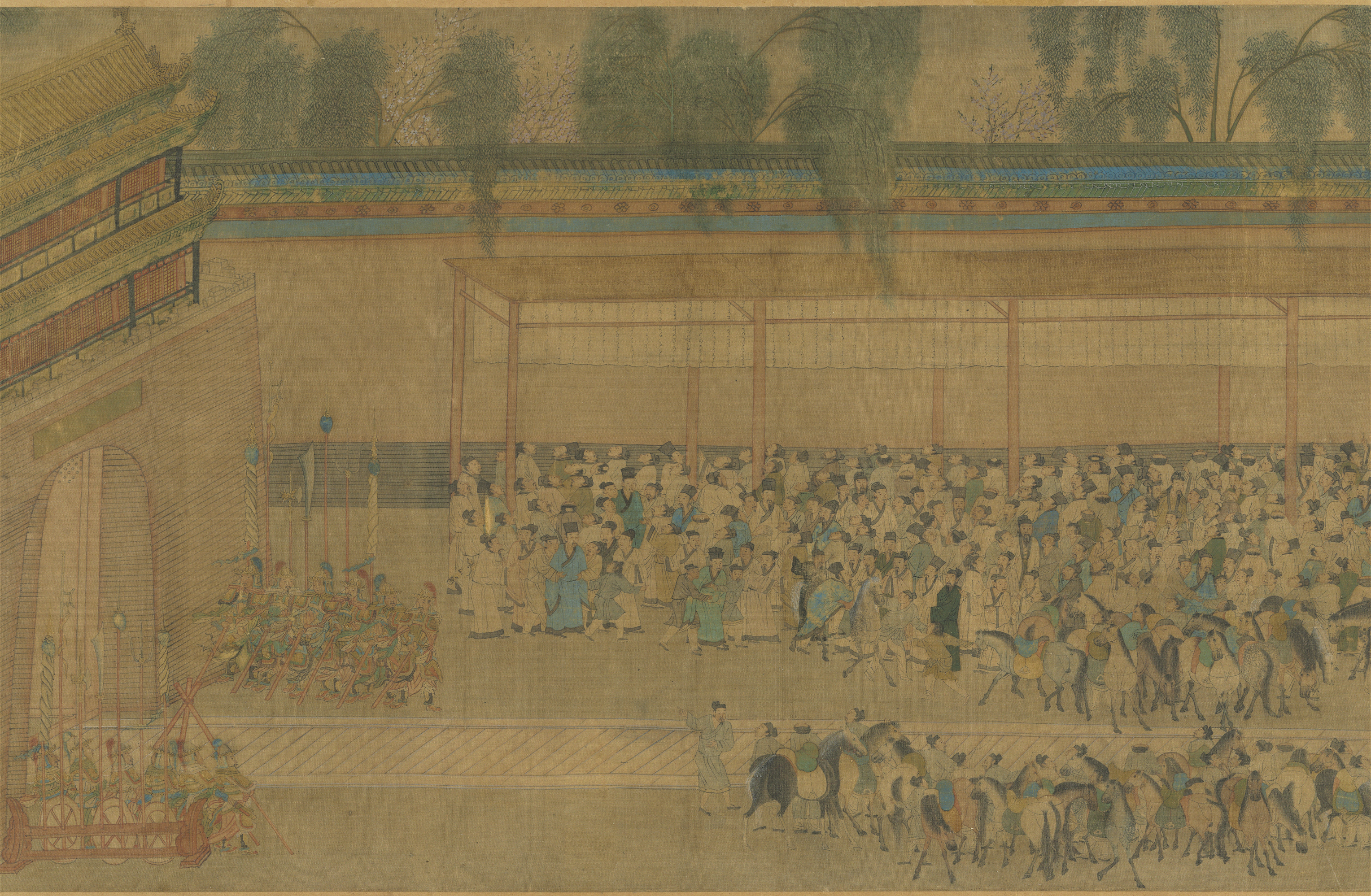
    Gathering at the Orchid Pavilion by Qian Gu, 1560 (Chinese, 1508–ca. 1578), Ming dynasty (1368–1644). Handscroll, ink C. C. Wang Family, Gift of Douglas Dillon, 1980/ MET open collection, CC BY

    We are in the middle of a global workplace burnout epidemic — aptly named the “burnout society” by Korean-German philosopher Byung-Chul Han.

    Four centuries ago, late Ming Dynasty scholar-official Yuan Hongdao (1568–1610) shifted from state administrative work to xiaopin — brief, personal essays celebrating everyday pleasures like gardening, leisurely excursions and long vigils beside a rare blossom.

    The cover of ‘Burnout Society’ by Byung-Chul Han.
    (Stanford U Press)

    Today, his Ming Dynasty-era practice resonates with uncanny urgency within our burnout epidemic.

    Amid the Wanli Emperor’s neglect and escalating bureaucratic infighting in Beijing, Yuan turned away from what today we call a “toxic workplace.”

    Instead, he found refuge in Jiangnan’s landscapes and literary circles. There he exchanged hierarchical pressures, administrative tedium and cut-throat careerism for moments of unhurried attention.

    Yuan’s xiaopin, alongside those of his contemporaries, transformed fleeting sensory moments into radical acts of resilience, suggesting that beauty, not institutions, could outlast empires.

    The Ming Dynasty: A literary rebellion

    The late Ming Dynasty (1368–1644) was an era of contradictions.

    While Europe hurtled toward colonialism and scientific rationalism, China’s Jiangnan region — the fertile Yangtze Delta in today’s Jiangsu and Zhejiang provinces — flourished via merchant wealth, global silver trade and a thriving print culture.

    Bookshops lined city streets like modern cafés. They peddled plays, poetry and xiaopin volumes like Meiyou Pavilion of Arts and Leisure (1630) and Sixteen Xiaopin Masters of the Imperial Ming (1633).

    The imperial examination system, a civil service written exam — once a path to prestige — had become a bottleneck. Thousands of scholars languished in bureaucratic limbo, channelling their frustrations and exhaustion into xiaopin’s intimate vignettes.

    Chinese imperial examination candidates gathering around the wall where the results are posted (painting by Qiu Ying, c. 1540)
    (National Palace Museum)

    In his preface to Meiyou Pavilion, editor Zheng Yuanxun (1603–1644) praised the genre’s “flavour beyond flavour, rhythm beyond rhythm” — a poetic nod to its rich sensory detail and subtle musicality — rejecting moralizing orthodox prose by embracing immersive aesthetics.

    Against neo-Confucianism’s rigid hierarchies, xiaopin elevated the private, the ephemeral and the esthetically oblique: a well-brewed pot of tea, the texture of moss on a garden rock and incense wafting through a study.

    Wei Shang, professor of Chinese culture at Columbia University, has noted such playful text flourished among late Ming literati disillusioned with the era’s constraints. The texts reframed idleness and sensory pleasure as subtle dissent within a status-obsessed society.

    When doing less becomes radical

    Long before French poet Charles Baudelaire’s flâneur used dandyism and idle promenades to resist the alienating pace of western modernity, Ming literati like Chen Jiru (1558–1639) and Gao Lian (1573–1620) framed idleness as defiance.

    Drawing on Daoist wu wei (non-action), Gao praised the “crystal clear retreat” that scrubbed the heart of “worldly grime” and cultivated “a tranquil heart and joyful spirit.” For him, human worth lay not in bureaucratic promotions but in savouring tea, listening to crickets or resting against a well-fluffed pillow.

    A hanging scroll, ink on paper of a plum blossom branch by Chen Jiu (1558–1639).
    (Yale University Art Gallery/S. Sidney Kahn, 1959/Christie’s, lot 677, 1983/Bones of Jade, Soul of Ice, 1985), CC BY

    Hung-tai Wang, a cultural historian at Academia Sinica in Taipei, identifies xiaopin as a “leisurely and elegant” esthetic rooted in nature’s rhythms.

    Chen Jiru, a Ming Dynasty-era painter and essayist, embodied this framework by disallowing transactional logic. In one essay, Chen lauds those who possess “poetry without words, serenity without sutras, joy without wine.” In other words, he admired those whose lives resonated through prioritizing lived gestures over abstract ideals.

    The art of living in a disconnected age

    In the late Ming’s burgeoning urban and commercial milieu, xiaopin turned everyday objects into remedies for social isolation.

    In the Jiangnan gardens, late Ming essayists saw landscapes infused with emotion. At the time, essayist Wu Congxian called it “lodging meaning among mountains and rivers:” moonlight turned into icy jade, oar splashes to cosmic echoes.

    Chen Jiru had study rituals — fingering a bronze cauldron, tapping an inkstone — curated what he termed “incense for solitude, tea for clarity, stone for refinement.”

    This cultivation of object-as-presence anticipates American academic Bill Brown’s “thing theory,” where everyday items invite embodied contemplation and challenge the subject-object binary that enables commodification.

    The Ming Dynasty-era scholar-connoisseur, Wen Zhenheng (1585–1645), turned domestic minutiae into philosophical resistance.

    His xiaopin framed everyday choices — snowmelt for tea, rooms facing narrow water, a skiff “like a study adrift” — as rejections of abstraction. Through details like cherries on porcelain or tangerines pickled before ripening, he asserted that value lies in presence, not utility.

    Wen suggests that exhaustion stems not from labour but from disconnection.

    The Garden of the Inept Administrator (Zhuozheng Yuan) by Wen Zhengming, 1551. Wen painted 31 views of the site, each accompanied by a poem and a descriptive note.
    (Gift of Douglas Dillon, 1979/MET open source collection), CC BY

    The burnout rebellions: ‘Tang ping,’ ‘quiet quitting’

    Just as xiaopin turned domestic rituals into resistance, today’s movements recast the mundane as a mode of defiance.

    In April 2021, China’s tang ping (“lying flat”) movement surfaced with a post by former factory worker Luo Huazhong: “Lying flat is justice.” The message was simple and subversive: work had become intolerable, and opting out was not laziness but resistance.

    In a backlash against China’s “996” work model extolled by tech moguls like Jack Ma, tang ping rejects the sacrifice of dignity and mental health for productivity and casts idleness as a quiet revolt against exploitative norms.

    In the West, the COVID-19 pandemic sparked similar reckonings. The “Great Resignation” saw millions leave unfulfilling jobs. And “quiet quitting” rejected unpaid overtime and emotional labour. These movements emerged as a soft refusal of hustle culture.

    As anthropologist David Graeber argues in Bullshit Jobs (2018), the “moral and spiritual damage” inflicted by meaningless work reflects a profound political failure.

    Just like the late Ming literati who poured their lives into a state that repaid them with hollow titles and bureaucratic decay, today’s workers withdraw from institutions that exploit their labour yet treat them as disposable.

    Unlike French philosopher Michel de Montaigne’s introspective self-examination in his Renaissance-era Essays, xiaopin refuses utility. In doing so, it inverts the contemporary self-help trend critiqued by Byung-Chul Han, which co-opts personal “healing” as a form of productivity through neoliberal logic.

    Xiaopin proposes resistance as an existential shift beyond (self-)optimization. Its most radical gesture is not to demand change, but to live as if the system’s demands are irrelevant.

    The revolution of pause

    Xiaopin asks: What is progress without presence? Its fragments — on lotus ponds, summer naps, a cat’s shadow — prove that resistance need not be loud.

    Like Japanese writer Haruki Murakami’s vision of contemporary literature as “space of individual recovery,” the genre shelters us from “hierarchy and efficiency.”

    Here, time is not spent but reclaimed.

    To pause in an age of weaponized ambition is in fact revolt. Tracing a petal’s vein, sipping tea until bitterness fades, lying flat as the machinery of productivity grinds on — these are not acts of shirking reality, but defiant gestures against the systems that feed on our exhaustion. They are affirmations of agency: microcosms where we rehearse what it means to belong to ourselves, and thus, to the world.

    Xiaopin’s revolution awakens in a flicker of attention: a reminder that presence, too, is a language — one that hums beneath the buzz of progress, waiting to be heard.

    The authors do not work for, consult, own shares in or receive funding from any company or organisation that would benefit from this article, and have disclosed no relevant affiliations beyond their academic appointment.

    ref. A 16th-century Chinese writer spoke of workplace burnout, leaving a blueprint for radical acts of rest – https://theconversation.com/a-16th-century-chinese-writer-spoke-of-workplace-burnout-leaving-a-blueprint-for-radical-acts-of-rest-256651

    MIL OSI – Global Reports

  • MIL-OSI USA: Governor Polis: Court Rejection of Trump Tariff Tax is A Win for Americans

    Source: US State of Colorado

    DENVER – Today, a court struck down President Trump’s tariffs that raised the cost for Americans on everyday goods. Colorado helped lead a lawsuit against this tariff tax. Governor Polis has been outspoken about the negative impacts these tariffs have on the American people and applauded the court for their decision today. 

    “This is great news for our economy and every American family. I am grateful that this court decision striking down many tariffs checks the sweeping presidential power that the President has attempted to impose on the American people and businesses. The President’s tariff tax on groceries and everyday items is bad for hardworking people, our economy and business certainty. Unfortunately, President Trump has already caused a lot of damage with his tariff tax and the uncertainty they’ve caused for business and our economy, effectively freezing investment, but I am thrilled with the court’s decision and encourage the President to strengthen trade with our allies and decreases taxes and barriers for imports and exports,” said Governor Polis. 

    In addition to raising prices, reports show that tariffs lead to increases in fraud and crime. 

    In 2024, Colorado exported a record $10.5 billion of goods to the world and imported $16.8 B in goods. Colorado’s top export partners are Mexico ($1.7B), Canada ($1.6B), China ($0.8B) South Korea ($0.6B), and Malaysia ($0.6 B), accounting for half of all Colorado exports in 2024. Top export commodities include meat (17%); nuclear reactors, boilers, machinery (15%); electric machinery (13%); optic, photo, medical or surgical instruments (11%); and aircraft, spacecraft, and related parts (5%). In 2022, exports from Colorado supported an estimated 40 thousand jobs. 

    Colorado in 2024 exported $500 million in aerospace, spacecraft, and related parts, accounting for roughly 4.8% of all Colorado exports. The European Union, Brazil, France, Canada and Mexico were the top five export destinations, accounting for 63% of Colorado’s aerospace exports. In 2024, Colorado imported $1 billion of aerospace, spacecraft and related parts, accounting for roughly 6.2% of all Colorado imports. Switzerland, the EU, Germany, Canada, and France were the top five import sources, accounting for over 90% of Colorado’s aerospace imports. 

    An estimated 820,200 jobs in Colorado are supported by international trade, representing 20.8% of all jobs in the state. Colorado’s top import partners are Canada ($5.4 B), China ($1.8 B), Mexico ($1.1 B), Switzerland ($0.9 B) and Germany ($0.9 B), accounting for 60% of imports in 2024. Top import commodities include oil, mineral fuel (20%); electric machinery (14%); nuclear reactors, boilers, machinery (11%); optic, photo, medical or surgical instruments (8%); and aircraft, spacecraft and related parts (6%). 

    In addition to the commodities traded, Colorado also trades services and runs a services trade surplus. In 2022, Colorado exported $16 B in services, supporting 97,260 jobs. Top services export markets were Canada ($1.3 B), the United Kingdom ($0.9 B), Mexico ($0.9 B), and China ($0.6 B). As a bloc, the EU was the top services export market with $3.8 B in services exports supporting over 18,900 jobs. 

    ###

    MIL OSI USA News

  • MIL-OSI Economics: India VC funding activity sees significant YoY growth during January-April 2025, finds GlobalData

    Source: GlobalData

    India VC funding activity sees significant YoY growth during January-April 2025, finds GlobalData

    Posted in Business Fundamentals

    India has demonstrated a good performance in venture capital (VC) funding activity in early 2025, recording a significant increase in both deal volume and value. The total number of VC deals announced in India surged by approximately 19% during January-April 2025 compared to the same period in the previous year, while the total funding value of these deals experienced a year-on-year (YoY) growth of around 20%, according to GlobalData, a leading data and analytics company.

    Aurojyoti Bose, Lead Analyst at GlobalData, comments: “The growth is particularly noteworthy, given the challenges faced by other major markets. Interestingly, this positive trajectory stands in contrast to the trends observed in several key markets where either the total VC funding deal volume or the deal value has seen a decline, while some markets even experienced a decline in both.”

    For instance, the US and the UK registered growth in VC funding value but a fall in deal volume during January-April 2025 compared to January-April 2024. Meanwhile, China experienced a decline in both VC deal volume and value during the same period.

    It is also noteworthy that India continues to be a key global market for VC funding activity and remained among the top five countries in terms of both deal volume and value during the first four months of 2025.

    An analysis of GlobalData’s Deals Database revealed that India accounted for more than 8% of the total number of VC deals announced globally during January-April 2025, while its share of the corresponding funding value was more than 3%.

    Bose concludes: “The increase in VC deal volume and value is a testament to the confidence investors have in the Indian market. As startups continue to innovate and scale, we can expect this trend to gain momentum, further enhancing India’s position as a global VC hub.”

    Note: Historic data may change in case some deals get added to previous months because of a delay in disclosure of information in the public domain

    MIL OSI Economics

  • MIL-OSI Russia: China urges US to stop ‘adding fuel to fire’ over Taiwan issue

    Translation. Region: Russian Federal

    Source: People’s Republic of China in Russian – People’s Republic of China in Russian –

    Source: People’s Republic of China – State Council News

    BEIJING, May 29 (Xinhua) — Chinese Defense Ministry spokesman Zhang Xiaogang on Thursday called on the U.S. side to stop “adding fuel to the fire” over the Taiwan issue, stressing that such behavior would only lead to counterproductive results.

    Zhang Xiaogang made the statement in response to reports of unfounded accusations by the US military command against China’s actions related to Taiwan.

    Taiwan is an inalienable part of China. The resolution of the Taiwan issue is a matter for the Chinese themselves, which does not allow outside interference, Zhang Xiaogang reiterated at a press conference.

    “There is no more destabilizing factor for the situation on the other side of the Taiwan Strait than the provocations of separatists advocating ‘Taiwan independence’ and the subversive activities of foreign forces,” Zhang Xiaogang said.

    He told reporters that the Chinese side’s actions to protect national sovereignty and territorial integrity are legal, necessary and justified.

    Responding to reports that the US side is increasing its military presence in response to the so-called “Chinese threat”, Zhang Xiaogang noted that mutual respect, peaceful coexistence and win-win cooperation are the right way to improve relations between the two countries.

    “The US side should stop imagining a ‘powerful enemy’, whether intentionally or unintentionally,” Zhang Xiaogang said. “Such an approach is irrational and extremely dangerous.”

    The Chinese armed forces will make every effort to enhance their combat readiness and firmly safeguard national sovereignty, security and development interests, the spokesperson added. -0-

    MIL OSI Russia News

  • MIL-OSI Russia: Spartakiad opens in Heilongjiang Province with participation of more than a thousand students from China and Russia

    Translation. Region: Russian Federal

    Source: People’s Republic of China in Russian – People’s Republic of China in Russian –

    Source: People’s Republic of China – State Council News

    BEIJING, May 29 (Xinhua) — More than 1,000 students from China and Russia took part in the Spartakiad that opened Thursday in Heilongjiang Province (Northeast China), the Yangguang news portal of China Media Corporation reported.

    The opening ceremony of the 2nd Spartakiad of universities of Heilongjiang Province of China and the Russian Far East was held on Thursday at the Heihe Institute in the city of Heihe in this province. The event was attended by more than a thousand students from 18 higher education institutions from both countries, including Blagoveshchensk State Pedagogical University, Amur State University /ASU/, Far Eastern State Agrarian University, Pacific National University, Primorsky State University named after Sholem Aleichem, as well as 13 Chinese universities.

    Speaking at the opening ceremony of the Spartakiad, Rector of Heihe Institute Yang Jingmin called on the Spartakiad participants from the two countries to strengthen mutual understanding in competitions and develop friendship in cooperation.

    Dean of the Faculty of Physical Education at ASU Elena Tokar highly praised the results of cooperation in the field of sports and physical education between Russian and Chinese universities and noted the particularly great importance of sports for strengthening friendship between young people. -0-

    MIL OSI Russia News

  • MIL-OSI Russia: Cherries were delivered from Uzbekistan to China’s Zhejiang Province for the first time

    Translation. Region: Russian Federal

    Source: People’s Republic of China in Russian – People’s Republic of China in Russian –

    Source: People’s Republic of China – State Council News

    BEIJING, May 29 (Xinhua) — Cherries from Uzbekistan have been delivered to east China’s Zhejiang Province for the first time, Hangzhou Daily reported.

    An Uzbekistan Airways plane carrying 1.6 tons of cherries flew from Tashkent to Hangzhou, the capital of the province, early in the morning of May 26. The Central Asian fruit will be delivered to Hangzhou, Shanghai and other cities in the Yangtze River Delta.

    Airport staff have opened a “green corridor” for fruits from Central Asia to ensure uninterrupted supplies to the market.

    According to statistics, 16.6 tons of fruits were imported through Hangzhou Airport checkpoint from January to April, up 20 percent year-on-year. -0-

    MIL OSI Russia News

  • MIL-OSI Russia: Xi Jinping signs decree on publication of document regulating awards for military scientific research

    Translation. Region: Russian Federal

    Source: People’s Republic of China in Russian – People’s Republic of China in Russian –

    Source: People’s Republic of China – State Council News

    BEIJING, May 29 (Xinhua) — Chairman of the Central Military Commission Xi Jinping signed an order promulgating regulations governing awards for military scientific research.

    The new document, which will come into force on July 1, aims to implement the strategy of strengthening the armed forces with the help of science and technology and regulates the process of awarding prizes for military scientific research.

    The regulations establish a structured award system that meets the significant strategic needs of the state and the armed forces. The system’s features include contribution to combat capability as the only main criterion, regulation of the nomination and consideration procedures for candidates, and increased oversight of discipline and confidentiality.

    The adopted provisions are expected to enhance innovative military research, accelerate technological breakthroughs in the defense field, and provide high-quality scientific support for building a strong military in the new era. –0–

    MIL OSI Russia News

  • MIL-OSI Russia: PLA National Defense University Delegation to Attend Shangri-La Dialogue in Singapore

    Translation. Region: Russian Federal

    Source: People’s Republic of China in Russian – People’s Republic of China in Russian –

    Source: People’s Republic of China – State Council News

    BEIJING, May 29 (Xinhua) — A delegation from the People’s Liberation Army (PLA) National Defense University will attend the 22nd Shangri-La Dialogue Conference in Singapore, the Chinese Defense Ministry said Thursday.

    As the official representative of the Chinese Ministry of Defense Zhang Xiaogang noted at a press conference, the delegation will also visit Singapore’s military and civilian institutions.

    Asked about the Chinese delegation’s bilateral meeting schedule and possible meetings with their American counterparts during the upcoming conference, Zhang Xiaogang said details would be disclosed in due course.

    He stressed that China pays special attention to relations between the armed forces of China and the United States and remains open to bilateral communication at all levels.

    “We hope that the U.S. side will actually respect China’s core interests and major concerns, and move toward China, promoting the healthy and stable development of relations between the two countries’ militaries,” Zhang Xiaogang told reporters.

    The 22nd Shangri-La Dialogue Conference will run from May 30 to June 1. –0–

    MIL OSI Russia News

  • MIL-OSI China: Chinese vice premier stresses workplace safety

    Source: People’s Republic of China – State Council News

    BEIJING, May 29 — Chinese Vice Premier Zhang Guoqing on Thursday stressed the need to identify potential safety hazards in workplace, reinforce accountability for workplace safety, and take concrete measures to ensure both development and security.

    It is necessary to learn from recent accidents and always stay vigilant about workplace safety, said Zhang, also a member of the Political Bureau of the Communist Party of China Central Committee, when addressing a ceremony marking the launch of a monthlong campaign to improve workplace safety.

    He stressed the importance of focusing on key industries, including firefighting, hazardous chemicals, gas, mining, transportation and construction, to prevent major and serious accidents.

    It is essential to thoroughly inspect and address potential safety hazards, and improve public risk prevention awareness and self-rescue skills, Zhang said

    MIL OSI China News

  • MIL-OSI Asia-Pac: President Lai attends 2025 Europe Day Dinner

    Source: Republic of China Taiwan

    Details
    2025-05-28
    President Lai meets US delegation led by Senator Tammy Duckworth
    On the afternoon of May 28, President Lai Ching-te met with a delegation led by United States Senator Tammy Duckworth. In remarks, President Lai thanked the US Congress and government for their longstanding and bipartisan support for Taiwan. The president stated that Taiwan will continue to strengthen cooperation with the US and jointly safeguard regional peace and stability. He pointed out that the Taiwan government has already proposed a roadmap for deepening Taiwan-US trade ties and will encourage mutual investment between Taiwanese and US businesses. He then expressed hope of deepening Taiwan-US ties and creating more niches for both sides. A translation of President Lai’s remarks follows: I warmly welcome this delegation led by Senator Duckworth, a dear friend of Taiwan. Senator Duckworth previously visited in May last year to convey congratulations after the inauguration of myself and Vice President Bi-khim Hsiao. Your bipartisan delegation was the first group from the US Senate that I met with as president. Today, you are visiting just after the first anniversary of my taking office, demonstrating the staunch support of the US and our deep friendship. On behalf of the people of Taiwan, I extend my sincere appreciation and greetings. And I invite you to come back and visit next year, the year after that, and every year. Taiwan and the US share the values of democracy and the rule of law and believe in free and open markets. Both sides embrace a common goal of peace, stability, and prosperity in the Indo-Pacific region. I thank the US Congress and government for their longstanding, bipartisan, and steadfast support for Taiwan. In 2021, to help Taiwan overcome the challenges of the COVID-19 pandemic, Senator Duckworth made a special trip here to announce that the US government would be donating vaccines to Taiwan. In recent years, Senator Duckworth has also promoted the TAIWAN Security Act, STAND with Taiwan Act, and Taiwan and America Space Assistance Act in the US Congress, all of which have further deepened Taiwan-US cooperation and steadily advanced our ties. For this, I express my deepest appreciation. I want to emphasize that the people of Taiwan have an unyielding determination to protect their homeland and free and democratic way of life. Over the past year, the government and private sector have been working together to enhance Taiwan’s whole-of-society defense resilience. The government is committed to reforming national defense, and it has proposed prioritizing special budget allocations to ensure that our defense budget exceeds three percent of GDP. This will continue to bolster Taiwan’s self-defense capabilities. Moving forward, Taiwan will continue to strengthen cooperation with the US. In addition to jointly safeguarding regional peace and stability, we also aspire to deepen bilateral trade and economic ties. At the SelectUSA Investment Summit in Washington, DC, earlier this month, Taiwan’s delegation was once again the biggest delegation attending the event – proof positive of our close economic and trade cooperation. We have already proposed a roadmap for deepening Taiwan-US trade ties. We will narrow the trade imbalance through the procurement of energy and agricultural and other industrial products from the US. We will encourage mutual investment between Taiwanese and US businesses to stimulate industrial development on both sides, especially in such industries as national defense and shipbuilding. We therefore look forward to Congress passing the US-Taiwan Expedited Double-Tax Relief Act as soon as possible, as this would deepen Taiwan-US trade ties and create more niches for business. In closing, I once again thank Senator Duckworth for making the trip to Taiwan. Let us continue to work together to elevate Taiwan-US ties. I wish you a pleasant and successful visit. Senator Duckworth then delivered remarks, saying that she is happy to be back in Taiwan and that she wanted to make sure to come back just after President Lai’s one-year anniversary of taking office to show the dedication and the outstanding friendship that we have. She noted that because no matter who is in the White House, no matter which political party is in power in Washington, DC, she has always believed that if America wants to remain a leader on the global stage, it has to show up for friends like Taiwan.  Senator Duckworth mentioned that in the years that she has been coming to Taiwan since pre-COVID times, she has seen a remarkable increase in participation in its defense and the support of the Taiwanese people for defending the homeland. She then thanked Taiwan for making the commitment to its self-defense, and also for being a partner with other nations around the world.  The STAND with Taiwan Act, the senator noted, is so named because the US wants to stand side by side with Taiwan. Pointing out that Taiwan is an important leader in the Indo-Pacific and on the global stage, she reiterated that there is support on both sides of the aisle in Washington for Taiwanese democracy, and added that the people of Taiwan are showing that they are willing to shore up their own readiness. Senator Duckworth said that whether it is delivering vaccines to Taiwan or making sure that the US National Guard works with Taiwan’s reserve forces or even with its civilian emergency response teams, these are all important components to the ongoing partnership between our nations.  Senator Duckworth indicated that there are many great opportunities moving forward beyond our military cooperation with one another. Whether it is in chip manufacturing, agricultural investments, shipbuilding, or in the healthcare field, those investments in both nations will facilitate stability and development in both our nations. She said that is why she wants to continue the Taiwan-US relationship, underlining that they are in it for the long haul. The delegation was accompanied to the Presidential Office by American Institute in Taiwan Taipei Office Director Raymond Greene.

    President Lai meets delegation led by US House Natural Resources Committee Chair Bruce Westerman”>Details
    2025-05-27
    President Lai meets delegation led by US House Natural Resources Committee Chair Bruce Westerman
    On the afternoon of May 27, President Lai Ching-te met with a delegation led by Chair of the Natural Resources Committee of the United States House of Representatives Bruce Westerman. In remarks, President Lai stated that Taiwan and the US enjoy close industrial exchanges and continue to explore new opportunities for investment and collaboration. The president said that Taiwan will continue to increase purchases from and together build non-red supply chains with the US, expressing hope that economic and trade relations grow even closer and that both work together to jointly safeguard peace and stability throughout the region. A translation of President Lai’s remarks follows: I am delighted to meet and exchange views with members of the US House Committee on Natural Resources today. Chair Westerman, the leader of this delegation, is an old friend of Taiwan. On behalf of the people of Taiwan, I extend a very warm welcome to the delegation. I also want to thank you all for your long-term close attention to Taiwan-related affairs and your strong support for Taiwan. Taiwan and the US enjoy close ties and share ideals and values. There is an excellent foundation for cooperation between us, particularly in such areas as energy, the economy and trade, agriculture and fisheries, environmental protection, and sustainable development. In recent years, Taiwan-US ties have grown closer and closer. The US has become Taiwan’s largest destination for overseas investment, accounting for over 40 percent of Taiwan’s outbound investment. Taiwan is also the seventh largest trading partner of the US and its seventh largest export market for agricultural products. The SelectUSA Investment Summit held in Washington, DC earlier this month was the largest in its history. Taiwan’s delegation, representing 138 enterprises, was once again the biggest delegation attending the event. This shows that Taiwan and the US enjoy close industrial exchanges and continue to explore new opportunities for investment and collaboration. Looking ahead, with the global landscape changing rapidly, Taiwan will continue to increase purchases from the US, including energy resources such as natural gas and petroleum, as well as agricultural products, industrial products, and even military procurement. This will not only help balance our bilateral trade, but also strengthen development for Taiwan in energy autonomy, resilience, the economy, and trade. Taiwan and the US are also well-matched in such areas as high tech and manufacturing. As the US pursues reindustrialization and aims to become a global hub for AI, Taiwan is willing to take part and play an even more important role. We will strengthen Taiwan-US industrial cooperation and together build non-red supply chains. In addition to bringing our economic and trade relations even closer, this will also allow Taiwanese industries to remain rooted in Taiwan while expanding their global presence, helping bolster the US, and marketing worldwide. As for military exchanges, we are grateful to the US government for continuing its military sales to Taiwan and backing our efforts to upgrade our self-defense capabilities. Taiwan will continue to work with the US to jointly safeguard peace and stability throughout the region. In closing, I thank our guests once again for making the long journey here, not only offering warm friendship, but also demonstrating the staunch bipartisan support for Taiwan in the US Congress. Chair Westerman then delivered remarks, saying that it is an honor for him and his colleagues to be in Taiwan to talk about the strong relationship between the US and Taiwan and how that relationship can continue to grow in the future. The chair pointed out that natural resources are foundational to any kind of economic development, whether it is energy, which is key to manufacturing, or whether it is mining, which provides rare earth elements and all the minerals and metals needed for manufacturing. He said that as for natural resources including fish, wildlife, or timber, all are foundational to any society, but this is especially so for agriculture, noting that the US produces a lot of food and fodder and is always looking for more friends to share that with. Chair Westerman indicated that they are excited about opportunities to work with Taiwan, adding that Taiwan’s investments in the US have been greatly appreciated. He said they also are excited about the talks with the Trump administration and the future going forward on how we can have a stronger trade relationship, a stronger bilateral relationship, and how we can work with each other to help both economies grow and prosper. Chair Westerman concluded his remarks by expressing thanks for the opportunity to visit, saying that they treasure Taiwan’s friendship and our long-term relationship, and are very excited to be able to discuss in more detail how our two countries can work together. The delegation also included US House Natural Resources Committee Representatives Sarah Elfreth, Harriet Hageman, Celeste Maloy, and Nick Begich. The delegation was accompanied to the Presidential Office by American Institute in Taiwan Taipei Office Director Raymond Greene.  

    Details
    2025-05-27
    President Lai meets and hosts luncheon for delegation led by Governor Lourdes A. Leon Guerrero of Guam
    On the morning of May 27, President Lai Ching-te met with a delegation led by Governor Lourdes A. Leon Guerrero of Guam and her husband, and hosted a luncheon for the delegation at noon. In remarks, President Lai noted that this is the governor’s first trip to Taiwan, fully demonstrating the Guam government’s support and high regard for Taiwan. The president said that Guam, being the closest United States territory to Taiwan, is an important bridge for collaboration between Taiwan and the US. He stated that aside from promoting tourism, we can also explore even more opportunities for collaboration in other areas to further advance industrial development for both sides. He said that, as we begin a new chapter, we look forward to working together to generate even more momentum in bilateral cooperation and exchanges. A translation of President Lai’s remarks follows: On behalf of the people of Taiwan, I extend a warm welcome to Governor Leon Guerrero and her delegation. Last year, I transited through Guam en route for visits to Taiwan’s diplomatic allies in the Pacific. The enthusiastic reception I received from the government, legislature, people, and members of our overseas community in Guam was very touching and left me with a deep impression. During the morning tea reception hosted by Governor Leon Guerrero, we joined in singing our respective national anthems, as well as the Fanohge CHamoru. I also received at the Guam Legislature a copy of a Taiwan-friendly resolution it passed on behalf of the people of Taiwan. And I still remember to this day the striking scenery of the governor’s house and the warm reception I received there. It is therefore a great pleasure to meet with all of you today here at the Presidential Office. This is Governor Leon Guerrero’s first trip to Taiwan. Your visit fully demonstrates the Guam government’s support and high regard for Taiwan. As we begin a new chapter, we look forward to working with you to generate even more momentum in bilateral cooperation and exchanges. Taiwan and Guam are like family. We share the Austronesian spirit and culture. Our wide-ranging and mutually-beneficial collaboration is very fruitful. And now, we are facing the challenges of climate change, public health and medicine, and regional security together. The world is rapidly changing and tensions in the Indo-Pacific continue to rise. But if we combine our strengths, come together as one, and enhance cooperation, we can maintain regional peace, stability, and prosperity. Last Tuesday, I delivered an address on my first anniversary of taking office. I mentioned that for many years, Taiwan, the US, and our democratic partners have actively engaged in exchange and cooperation. Taking a market-oriented approach, we will promote an economic path of staying firmly rooted in Taiwan and expanding the global presence of our enterprises while strengthening ties with the US. Guam is the closest US territory to Taiwan. It is an important bridge for collaboration between Taiwan and the US. Last month, we were pleased to see United Airlines officially launch direct flights between Taipei and Guam. I believe this will benefit tourism and economic and trade exchanges for both sides. In the area of health care, many hospitals in Taiwan already offer referral services to patients from Guam. Both Governor Leon Guerrero and I have backgrounds in medicine. It is my hope that Taiwan and Guam can continue to work hand in hand to create even more positive outcomes from cooperation in public health and medical services. During the governor’s visit, aside from promoting tourism, we can also explore even more opportunities for collaboration in other areas. There is potential for more exchanges in aquaculture, food processing, hydroculture, manufacturing, pharmaceuticals, and recycling. This will further advance industrial development in Taiwan and Guam. In closing, I thank Governor Leon Guerrero and all our distinguished guests for backing Taiwan. I wish you all a smooth and successful visit.  Governor Leon Guerrero then delivered remarks, saying that she is very happy to come to Taiwan. She said that after learning during President Lai’s visit to Guam last year that he is a medical doctor, she felt more relaxed because healthcare colleagues are one in their endeavor to help enhance the health and well-being of people. She then expressed her heartfelt appreciation for the invitation to Taiwan.  Governor Leon Guerrero said that as they learn more about opportunities for collaboration with Taiwan, they are humbled by the hospitality they have experienced. In both of our islands, she said, hospitality is more than just a custom – it forms a part of our identities. She noted that despite being nearly 2,000 miles apart, we are connected by the Pacific Ocean and common roots, and our ancestors both value family, community, and tradition. That is why being here today, she said, she feels a strong sense of familiarity, like reconnecting with old friends. The governor remarked that Taiwan has evolved so quickly in all areas of essential life, sustenance, economy, and prosperity, adding that Taiwan’s resources in such areas as health, education, data, AI, advanced technology, aquaculture, agriculture, and commerce enhance our economic stability. She stated her belief that in collaboration and support, and working with each other, we can gain prosperity, maintain freedom and democracy, and live in peace.  Governor Leon Guerrero stated that their delegation is here to see how they can partner with Taiwan to help raise the quality of life for both our peoples, mentioning that one special concern of theirs is tourism. Tourism, she said, is the most influential engine and driver for the economy and quality of life in Guam, but they cannot have a vibrant economy and tourism without air connectivity. She added that they are prepared to help in any way to provide incentives and low-cost fees so that they can get more airlines from Taiwan to establish permanent flight schedules to Guam, so as to drive development in Guam’s tourism industry. Governor Leon Guerrero then proceeded to introduce each of the members of her delegation before remarking that while they have been very busy on this visit they are always reminded of the freedom and democracy that the people must protect. She said she looks forward to a great, strong relationship between Taiwan and Guam in cooperation on social and economic issues, in culture, marketing, tourism, and freedom and democracy. Among those in attendance were First Gentleman Jeffrey A. Cook, Chief of Staff Jon Junior Calvo, Director of the Department of Administration Edward Birn, General Manager of the Guam Visitors Bureau Regine Biscoe Lee, Deputy Executive Manager of the Guam International Airport Authority Artemio “Ricky” Hernandez, Board of Directors Chairman of the Guam International Airport Authority Brian J. Bamba, Deputy General Manager of the Guam Economic Development Authority Carlos Bordallo, Director of Landscape Management Systems Guam Bob Salas, Chairperson of the Guam Chamber of Commerce Tae Oh, President of the University of Guam Anita Borja Enriquez, and Director of the Guam Taiwan Office Felix Yen (嚴樹芬). After the meeting, President Lai, accompanied by Vice President Bi-khim Hsiao, hosted a luncheon for Governor Leon Guerrero, her husband, and the delegation.

    Details
    2025-05-27
    President Lai meets delegation from European Parliament
    On the morning of May 27, President Lai Ching-te met with a delegation from the European Parliament. In remarks, President Lai thanked the European Parliament for continuing to pay close attention to peace and stability across the Taiwan Strait and voice support for Taiwan. The president expressed hope for an even closer relationship and diversified cooperation between Taiwan and the European Union. The president said that Taiwan and the EU can work together in such areas as semiconductors, AI, and green energy to create more resilient supply chains for global democracies and contribute to global prosperity and development. A translation of President Lai’s remarks follows: I warmly welcome our guests to the Presidential Office. After being elected last year, MEPs Reinis Pozņaks and Beatrice Timgren are making their first visits to Taiwan, demonstrating support for Taiwan through concrete action. On behalf of the people of Taiwan, I extend my sincerest welcome and appreciation. I would also like to take this opportunity to thank the European Parliament for continuing to pay close attention to peace and stability across the Taiwan Strait. Just last month, the European Parliament adopted resolutions with regard to annual reports on the implementation of the European Union’s Common Foreign and Security Policy and Common Security and Defence Policy. These resolutions reaffirmed the EU’s steadfast commitment to maintaining the status quo across the Taiwan Strait. The European Parliament also condemned China for continuing to take provocative military actions against Taiwan and emphasized that Taiwan is a key democratic partner in the Indo-Pacific region. It called on the EU and its member states to continue working closely with Taiwan to strengthen economic, trade, and investment ties. Once again, I thank the European Parliament for voicing support for Taiwan. Just as MEPs Pozņaks and Timgren are visiting Taiwan to strengthen Taiwan-EU exchanges, our Minister of Economic Affairs Kuo Jyh-huei (郭智輝) also led a delegation to Europe last year, marking the first in-person dialogue between high-ranking economic and trade officials of Taiwan and the EU. Moving ahead, we look forward to bringing Taiwan-EU ties even closer and to diversifying our cooperation. The EU is Taiwan’s largest source of foreign investment. Both sides are highly complementary in such areas as semiconductors, AI, and green energy. Through our joint efforts, we can create more resilient supply chains for global democracies and further contribute to global prosperity and development. Looking ahead, I hope that MEPs Pozņaks and Timgren will continue to make the case in the European Parliament for the signing of a Taiwan-EU economic partnership agreement. This would not only yield mutually beneficial development, but also consolidate economic security and boost international competitiveness for both sides. In closing, I am sure that you will gain a deeper understanding of Taiwan through this visit. Please feel welcome to come back as often as possible as we continue to elevate Taiwan-EU ties.  MEP Pozņaks then delivered remarks, saying that it is a great honor to be here and thanking everybody involved in arranging this trip that allows them the opportunity to better know Taiwan. He added that it is definitely not the last time they will be here, as Taiwan is a very beautiful country. MEP Pozņaks mentioned that he comes from Latvia, and despite their being on the other side of the world, they know how the Taiwanese people feel, because they also have a big neighbor who is claiming that Latvia belongs to them. Unfortunately, he said, there is already war in Europe, but he is confident that their situation is similar to Taiwan’s, adding that they have a neighbor who uses disinformation attacks. MEP Pozņaks said that we live in very challenging times, and that our choices will define the future of the world, asking whether it will be a world where the rule of law prevails or where physical power and aggression succeeds. Coming from a small country, he said he clearly understands that for them there is no other possibility; they must protect the world where the rule of law prevails. That is why now, he emphasized, it is very crucial for all democracies around the world to stick together to protect our freedoms, values, and democracy. MEP Timgren then delivered remarks, thanking President Lai for meeting with them and saying it is a big honor. Noting that they arrived here two days ago and that while she really loves Taiwan, its food, and the good weather, she stated that the reason they are here is because of the values that we share, our good relationships, and solidarity with other democratic countries in the world, which is important for them in Europe and in Sweden. MEP Timgren, referring to MEP Pozņaks’s earlier remarks, said that they face a big threat from Russia that is discernible even in the European Parliament. Actually, she pointed out, there is a war inside Europe that shows us how important it is that we support one another. She said that the Russian people thought it would be easy to take over Ukraine, but it was not, because all European countries stepped up and provided weapons and support. And that is why, MEP Timgren said, it is important that democratic countries maintain good relationships and let China and Russia see that we have good relationships, because a part of defense is solidarity. In closing, she expressed her gratitude for having the honor to be here in this beautiful country.

    Details
    2025-05-20
    President Lai hosts state banquet for President Surangel Whipps Jr. of Republic of Palau
    On the evening of May 20, President Lai Ching-te, accompanied by Vice President Bi-khim Hsiao, hosted a state banquet at the Presidential Office in honor of President Surangel Whipps Jr. of the Republic of Palau and his wife. In remarks, President Lai said that he looks forward to working closely with President Whipps to promote tourism exchanges and sports cooperation so that Taiwan and Palau shine brightly together on the international stage. A translation of President Lai’s remarks follows: It is a pleasure to host this banquet tonight at the Presidential Office for President Whipps, First Lady Valerie Whipps, and the esteemed members of their delegation. Welcome to Taiwan. During my trips to Palau in 2022 and last year, President and First Lady Whipps received me with great hospitality. Wearing my island shirt, I enjoyed a very friendly reception from the people of Palau. It felt warm and friendly, just like being welcomed back home. The first time I visited Palau, President Whipps and I piloted a boat to the Milky Way lagoon. We both tried volcanic mud facial masks. We also fished together and enjoyed the breeze as we walked on the beach. Last year, on my second visit to Palau, I was honored to be invited to address the National Congress. I also observed the results of the close bilateral cooperation between our two nations. Due to its world-famous ocean scenery, Palau is sometimes referred to as “God’s aquarium.” And it is even possible to snorkel with sharks. It leaves a deep impression. Nothing compares to seeing Palau firsthand. During the COVID-19 pandemic, Taiwan and Palau launched a travel bubble that created a safe means of travel. Now, with the pandemic behind us, I hope that even more Taiwanese can tour Palau and gain a greater understanding of our diplomatic ally. In addition to tourism exchanges, I mentioned on my visit to Palau last year that I hoped Taiwan and Palau could promote sports cooperation by providing training away from home. Next month, Palau will be holding the Pacific Mini Games. And right now, Palau’s national baseball and table tennis teams are holding training sessions here in Taiwan. We will do our utmost to support Palau’s national players and we hope they stand out and achieve outstanding results in the events. I look forward to working closely with President Whipps so that Taiwan and Palau shine brightly together on the international stage. Thank you! Mesulang! President Whipps then delivered remarks, saying that it is truly an honor to be here once again one year after President Lai’s inauguration. Mentioning that this is his first state visit after being reelected to a second term, he said that it is important to be here among friends, and that we are more than friends, we are family. He thanked President Lai for the generous words and, most importantly, Taiwan’s enduring support. He remarked that our relationship continues to get stronger in each passing year. President Whipps said that President Lai’s diplomacy initiative, leadership, and vision deeply resonate with them. Diplomacy must be rooted in our shared values, he said, and an unwavering support for our allies and a commitment to a sustainable, inclusive development are all deeply appreciated by their people. President Whipps emphasized that, as we look into the future and the challenges that we face, from security to climate change, it is so important that we are united. He added that it is important for the world, and especially important for them in Palau, that they stand up for Taiwan, so that Taiwan can participate on international fora that address climate change, security, and health, because they know the world is better when Taiwan has a seat at the table. Mentioning that Palau will host the Pacific Islands Forum next year, President Whipps said that Palau remains committed to working closely with Taiwan to ensure a successful event, and that they will continue to speak up for Taiwan’s indispensable contributions as we stand together against any efforts to silence or isolate democratic partners. President Whipps said that our nations have navigated challenges and emerged stronger, bound by a partnership that is built on trust, respect, and hope for a better world. Whether it is in clean energy, education, smart medicine, or tourism, our shared journey is just beginning, he said, and we are stronger together.  Also in attendance at the banquet were Palauan Minister of State Gustav Aitaro, Minister of Public Infrastructure and Industries Charles Obichang, Minister of Human Resources, Culture, Tourism and Development Ngiraibelas Tmetuchl, Senate Floor Leader Kerai Mariur, House of Delegates Floor Leader Warren Umetaro, High Chief of Ngiwal State Elliot Udui, Governor of Peleliu State Emais Roberts, and Governor of Koror State Eyos Rudimch.

    Details
    2025-05-20
    President Lai interviewed by Nippon Television and Yomiuri TV
    In a recent interview on Nippon Television’s news zero program, President Lai Ching-te responded to questions from host Mr. Sakurai Sho and Yomiuri TV Shanghai Bureau Chief Watanabe Masayo on topics including reflections on his first year in office, cross-strait relations, China’s military threats, Taiwan-United States relations, and Taiwan-Japan relations. The interview was broadcast on the evening of May 19. During the interview, President Lai stated that China intends to change the world’s rules-based international order, and that if Taiwan were invaded, global supply chains would be disrupted. Therefore, he said, Taiwan will strengthen its national defense, prevent war by preparing for war, and achieve the goal of peace. The president also noted that Taiwan’s purpose for developing drones is based on national security and industrial needs, and that Taiwan hopes to collaborate with Japan. He then reiterated that China’s threats are an international problem, and expressed hope to work together with the US, Japan, and others in the global democratic community to prevent China from starting a war. Following is the text of the questions and the president’s responses: Q: How do you feel as you are about to round out your first year in office? President Lai: When I was young, I was determined to practice medicine and save lives. When I left medicine to go into politics, I was determined to transform Taiwan. And when I was sworn in as president on May 20 last year, I was determined to strengthen the nation. Time flies, and it has already been a year. Although the process has been very challenging, I am deeply honored to be a part of it. I am also profoundly grateful to our citizens for allowing me the opportunity to give back to our country. The future will certainly be full of more challenges, but I will do everything I can to unite the people and continue strengthening the nation. That is how I am feeling now. Q: We are now coming up on the 80th anniversary of the end of World War II, and over this period, we have often heard that conflict between Taiwan and the mainland is imminent. Do you personally believe that a cross-strait conflict could happen? President Lai: The international community is very much aware that China intends to replace the US and change the world’s rules-based international order, and annexing Taiwan is just the first step. So, as China’s military power grows stronger, some members of the international community are naturally on edge about whether a cross-strait conflict will break out. The international community must certainly do everything in its power to avoid a conflict in the Taiwan Strait; there is too great a cost. Besides causing direct disasters to both Taiwan and China, the impact on the global economy would be even greater, with estimated losses of US$10 trillion from war alone – that is roughly 10 percent of the global GDP. Additionally, 20 percent of global shipping passes through the Taiwan Strait and surrounding waters, so if a conflict breaks out in the strait, other countries including Japan and Korea would suffer a grave impact. For Japan and Korea, a quarter of external transit passes through the Taiwan Strait and surrounding waters, and a third of the various energy resources and minerals shipped back from other countries pass through said areas. If Taiwan were invaded, global supply chains would be disrupted, and therefore conflict in the Taiwan Strait must be avoided. Such a conflict is indeed avoidable. I am very thankful to Prime Minister of Japan Ishiba Shigeru and former Prime Ministers Abe Shinzo, Suga Yoshihide, and Kishida Fumio, as well as US President Donald Trump and former President Joe Biden, and the other G7 leaders, for continuing to emphasize at international venues that peace and stability across the Taiwan Strait are essential components for global security and prosperity. When everyone in the global democratic community works together, stacking up enough strength to make China’s objectives unattainable or to make the cost of invading Taiwan too high for it to bear, a conflict in the strait can naturally be avoided. Q: As you said, President Lai, maintaining peace and stability across the Taiwan Strait is also very important for other countries. How can war be avoided? What sort of countermeasures is Taiwan prepared to take to prevent war? President Lai: As Mr. Sakurai mentioned earlier, we are coming up on the 80th anniversary of the end of WWII. There are many lessons we can take from that war. First is that peace is priceless, and war has no winners. From the tragedies of WWII, there are lessons that humanity should learn. We must pursue peace, and not start wars blindly, as that would be a major disaster for humanity. In other words, we must be determined to safeguard peace. The second lesson is that we cannot be complacent toward authoritarian powers. If you give them an inch, they will take a mile. They will keep growing, and eventually, not only will peace be unattainable, but war will be inevitable. The third lesson is why WWII ended: It ended because different groups joined together in solidarity. Taiwan, Japan, and the Indo-Pacific region are all directly subjected to China’s threats, so we hope to be able to join together in cooperation. This is why we proposed the Four Pillars of Peace action plan. First, we will strengthen our national defense. Second, we will strengthen economic resilience. Third is standing shoulder to shoulder with the democratic community to demonstrate the strength of deterrence. Fourth is that as long as China treats Taiwan with parity and dignity, Taiwan is willing to conduct exchanges and cooperate with China, and seek peace and mutual prosperity. These four pillars can help us avoid war and achieve peace. That is to say, Taiwan hopes to achieve peace through strength, prevent war by preparing for war, keeping war from happening and pursuing the goal of peace. Q: Regarding drones, everyone knows that recently, Taiwan has been actively researching, developing, and introducing drones. Why do you need to actively research, develop, and introduce new drones at this time? President Lai: This is for two purposes. The first is to meet national security needs. The second is to meet industrial development needs. Because Taiwan, Japan, and the Philippines are all part of the first island chain, and we are all democratic nations, we cannot be like an authoritarian country like China, which has an unlimited national defense budget. In this kind of situation, island nations such as Taiwan, Japan, and the Philippines should leverage their own technologies to develop national defense methods that are asymmetric and utilize unmanned vehicles. In particular, from the Russo-Ukrainian War, we see that Ukraine has successfully utilized unmanned vehicles to protect itself and prevent Russia from unlimited invasion. In other words, the Russo-Ukrainian War has already proven the importance of drones. Therefore, the first purpose of developing drones is based on national security needs. Second, the world has already entered the era of smart technology. Whether generative, agentic, or physical, AI will continue to develop. In the future, cars and ships will also evolve into unmanned vehicles and unmanned boats, and there will be unmanned factories. Drones will even be able to assist with postal deliveries, or services like Uber, Uber Eats, and foodpanda, or agricultural irrigation and pesticide spraying. Therefore, in the future era of comprehensive smart technology, developing unmanned vehicles is a necessity. Taiwan, based on industrial needs, is actively planning the development of drones and unmanned vehicles. I would like to take this opportunity to express Taiwan’s hope to collaborate with Japan in the unmanned vehicle industry. Just as we do in the semiconductor industry, where Japan has raw materials, equipment, and technology, and Taiwan has wafer manufacturing, our two countries can cooperate. Japan is a technological power, and Taiwan also has significant technological strengths. If Taiwan and Japan work together, we will not only be able to safeguard peace and stability in the Taiwan Strait and security in the Indo-Pacific region, but it will also be very helpful for the industrial development of both countries. Q: The drones you just described probably include examples from the Russo-Ukrainian War. Taiwan and China are separated by the Taiwan Strait. Do our drones need to have cross-sea flight capabilities? President Lai: Taiwan does not intend to counterattack the mainland, and does not intend to invade any country. Taiwan’s drones are meant to protect our own nation and territory. Q: Former President Biden previously stated that US forces would assist Taiwan’s defense in the event of an attack. President Trump, however, has yet to clearly state that the US would help defend Taiwan. Do you think that in such an event, the US would help defend Taiwan? Or is Taiwan now trying to persuade the US? President Lai: Former President Biden and President Trump have answered questions from reporters. Although their responses were different, strong cooperation with Taiwan under the Biden administration has continued under the Trump administration; there has been no change. During President Trump’s first term, cooperation with Taiwan was broader and deeper compared to former President Barack Obama’s terms. After former President Biden took office, cooperation with Taiwan increased compared to President Trump’s first term. Now, during President Trump’s second term, cooperation with Taiwan is even greater than under former President Biden. Taiwan-US cooperation continues to grow stronger, and has not changed just because President Trump and former President Biden gave different responses to reporters. Furthermore, the Trump administration publicly stated that in the future, the US will shift its strategic focus from Europe to the Indo-Pacific. The US secretary of defense even publicly stated that the primary mission of the US is to prevent China from invading Taiwan, maintain stability in the Indo-Pacific, and thus maintain world peace. There is a saying in Taiwan that goes, “Help comes most to those who help themselves.” Before asking friends and allies for assistance in facing threats from China, Taiwan must first be determined and prepared to defend itself. This is Taiwan’s principle, and we are working in this direction, making all the necessary preparations to safeguard the nation. Q: I would like to ask you a question about Taiwan-Japan relations. After the Great East Japan Earthquake in 2011, you made an appeal to give Japan a great deal of assistance and care. In particular, you visited Sendai to offer condolences. Later, you also expressed condolences and concern after the earthquakes in Aomori and Kumamoto. What are your expectations for future Taiwan-Japan exchanges and development? President Lai: I come from Tainan, and my constituency is in Tainan. Tainan has very deep ties with Japan, and of course, Taiwan also has deep ties with Japan. However, among Taiwan’s 22 counties and cities, Tainan has the deepest relationship with Japan. I sincerely hope that both of you and your teams will have an opportunity to visit Tainan. I will introduce Tainan’s scenery, including architecture from the era of Japanese rule, Tainan’s cuisine, and unique aspects of Tainan society, and you can also see lifestyles and culture from the Showa era.  The Wushantou Reservoir in Tainan was completed by engineer Mr. Hatta Yoichi from Kanazawa, Japan and the team he led to Tainan after he graduated from then-Tokyo Imperial University. It has nearly a century of history and is still in use today. This reservoir, along with the 16,000-km-long Chianan Canal, transformed the 150,000-hectare Chianan Plain into Taiwan’s premier rice-growing area. It was that foundation in agriculture that enabled Taiwan to develop industry and the technology sector of today. The reservoir continues to supply water to Tainan Science Park. It is used by residents of Tainan, the agricultural sector, and industry, and even the technology sector in Xinshi Industrial Park, as well as Taiwan Semiconductor Manufacturing Company. Because of this, the people of Tainan are deeply grateful for Mr. Hatta and very friendly toward the people of Japan. A major earthquake, the largest in 50 years, struck Tainan on February 6, 2016, resulting in significant casualties. As mayor of Tainan at the time, I was extremely grateful to then-Prime Minister Abe, who sent five Japanese officials to the disaster site in Tainan the day after the earthquake. They were very thoughtful and asked what kind of assistance we needed from the Japanese government. They offered to provide help based on what we needed. I was deeply moved, as former Prime Minister Abe showed such care, going beyond the formality of just sending supplies that we may or may not have actually needed. Instead, the officials asked what we needed and then provided assistance based on those needs, which really moved me. Similarly, when the Great East Japan Earthquake of 2011 or the later Kumamoto earthquakes struck, the people of Tainan, under my leadership, naturally and dutifully expressed their support. Even earlier, when central Taiwan was hit by a major earthquake in 1999, Japan was the first country to deploy a rescue team to the disaster area. On February 6, 2018, after a major earthquake in Hualien, former Prime Minister Abe appeared in a video holding up a message of encouragement he had written in calligraphy saying “Remain strong, Taiwan.” All of Taiwan was deeply moved. Over the years, Taiwan and Japan have supported each other when earthquakes struck, and have forged bonds that are family-like, not just neighborly. This is truly valuable. In the future, I hope Taiwan and Japan can be like brothers, and that the peoples of Taiwan and Japan can treat one another like family. If Taiwan has a problem, then Japan has a problem; if Japan has a problem, then Taiwan has a problem. By caring for and helping each other, we can face various challenges and difficulties, and pursue a brighter future. Q: President Lai, you just used the phrase “If Taiwan has a problem, then Japan has a problem.” In the event that China attempts to invade Taiwan by force, what kind of response measures would you hope the US military and Japan’s Self-Defense Forces take? President Lai: As I just mentioned, annexing Taiwan is only China’s first step. Its ultimate objective is to change the rules-based international order. That being the case, China’s threats are an international problem. So, I would very much hope to work together with the US, Japan, and others in the global democratic community to prevent China from starting a war – prevention, after all, is more important than cure.

    MIL OSI Asia Pacific News

  • MIL-OSI: New Research from Sprout Social Finds Social Media is the Top Place Gen Z Turns to for Search, Surpassing Traditional Search Engines

    Source: GlobeNewswire (MIL-OSI)

    • More than 1 in 3 consumers across age groups prefer searching on social platforms first for product reviews and recommendations
    • 76% of users say social content influenced a purchase in the last six months, including 90% of Gen Z
    • Respondents say social platforms deliver net-positive impacts on their mental health, financial decisions, and social lives

    CHICAGO, May 29, 2025 (GLOBE NEWSWIRE) — Gen Z isn’t just spending more time on social media; they’re turning to it first when they need answers, which is shaping how they live, learn, and shop. According to new research from Sprout Social (NASDAQ: SPT), an industry-leading provider of cloud-based social media management software, this generation now prefers social media over traditional search engines. This shift is fueled by a growing trust in social, especially among younger generations, who largely report meaningful benefits from their time on social platforms, including improved mental health, financial literacy, and social connections.

    Sprout Social’s Q2 2025 Pulse Survey, conducted by Glimpse, surveyed more than 2,200 social users across the US, UK, and Australia. The research finds that when looking for information, 41% of Gen Z turn to social platforms first, making social now the #1 place they search, ahead of traditional search engines (32%), chat-based AI tools (11%), and friends/family (9%). In addition, 37% of consumers across age groups prefer to go to social first when searching for product reviews and recommendations, while 35% prefer to use it first to find local restaurants and activities, underscoring social’s prominent role in discovery and commerce. This discoverability has a real bottom-line impact for businesses, as 76% of respondents say content on social (e.g., ads, influencer posts, brand content) has influenced a purchase in the past six months, with this number rising to 90% among Gen Z and 84% among Millennials.

    “Largely driven by Gen Z, social is becoming the new search engine,” said Scott Morris, chief marketing officer of Sprout Social. “This shift is transformative, not just for social media, but for commerce and business overall, because it’s changing how consumers discover products and brands. For marketers, this means making social the front-line channel for building awareness, managing perception, engaging with customers, and receiving feedback. Social is where discovery happens now, making it the future of business.”

    The findings shed light on why younger generations are choosing social as their first stop for search: they trust it to deliver not just information, but meaningful, positive experiences. While social media isn’t without its flaws, the survey shows that a vast majority of younger users report positive outcomes from their time on social. This is likely a result of Gen Z and Millennials using social more intentionally–to search, engage, and more actively curate their feeds to reflect their interests and values. The findings show that:

    • 60% of all users say social has had a net-positive impact on their mental health in the past six months, v. 18% who say it’s had a negative impact. This number rises to 68% for Millennials and 71% for Gen Z.
    • 47% say social has helped improve their financial decision-making, with this number even higher among Millennials (53%) and Gen Z (62%). Only 13% of respondents say it’s had a negative impact.
    • 53% report improved social lives through social media engagement, with younger generations (61% for Millennials and 64% for Gen Z) even more likely to view social’s impact as positive. Only 14% of respondents say it’s had a negative impact.

    Additional findings from Sprout Social’s Q2 2025 Pulse Survey include:

    • Facebook (81%), YouTube (71%), and Instagram (66%) remain the top platforms, with YouTube moving up to the second most popular platform since Sprout’s latest Index report
    • 51% of global users plan to spend more time on community-based platforms like Reddit in the next six months. This number rises to 63% for Gen Z and Millennials
    • Gen Z (52%) and Millennials (53%) are leading the adoption of creator-driven platforms like Substack and Patreon
    • The content consumers rely on social media for most is cooking and recipe inspiration (50%), followed by TV/movie recommendations (43%), music discovery (36%), and a wide range of personal interest topics, including sports, beauty, health, news, fashion, and travel.

    Learn more about how Sprout Social’s latest customer care updates can empower marketers to provide insights-driven social care, like autonomous AI care agents and new avenues to automate, at every step of the customer journey.

    About the Research
    This consumer survey was conducted online by Glimpse, a global market research firm, on behalf of Sprout Social. The survey included 2,280 social media users across the US, UK, and Australia and was conducted from April 23 to May 5, 2025.

    Social Media Profiles:
    www.linkedin.com/company/sprout-social-inc-/
    www.instagram.com/sproutsocial

    www.x.com/SproutSocial
    www.x.com/SproutSocialIR
    www.facebook.com/SproutSocialInc

    Contact
    Kaitlyn Gronek
    Email: pr@sproutsocial.com
    Phone: (773) 904-9674

    About Sprout Social
    Sprout Social is a global leader in social media management and analytics software, built on the belief that All Business is Social℠. Sprout’s intuitive platform puts powerful social data into the hands of approximately 30,000 brands so they can deliver smarter, faster business impact. Named the #1 Best Software Product by G2’s 2024 Best Software Award, Sprout offers comprehensive publishing and engagement functionality, customer care, influencer marketing, advocacy, and AI-powered business intelligence. Sprout’s software operates across all major social media networks and digital platforms. For more information about Sprout Social (NASDAQ: SPT), visit sproutsocial.com.

    The MIL Network

  • MIL-OSI Global: Champions League final 2025: a battle for glory against a backdrop of money and fashion

    Source: The Conversation – UK – By Simon Chadwick, Professor of AfroEurasian Sport, EM Lyon Business School

    The 2025 men’s Champions League final will end in triumph for either Paris Saint-Germain or Inter Milan. And whichever side wins, Uefa will no doubt claim that the tournament’s new format, involving more teams, more games and more fans, has been a success.

    Not everyone will agree of course. But in commercial terms, there is no doubt that the Champions League continues to generate huge amounts of money for everyone involved.

    Thanks to lucrative broadcasting rights, sponsorship deals and ticket sales, the sums handed out to clubs following this season’s competition are eye-watering, with over £2 billion in prize money on offer (up from £1.7 billion last year).

    By reaching the final, Paris Saint-Germain (PSG) has already earned £116.96 million, and Inter Milan £115.86 million.

    The winner will receive an additional £5.45 million in prize money, while victory is also expected to generate around £30 million in future revenues through participation in tournaments like the European Super Cup.

    Qualifying for the final has also boosted the clubs’ brand value and fan engagement. In the latter stages of the tournament, Inter Milan saw huge growth in its number of followers on social media.

    But for all the big numbers on revenue statements and social media accounts, this year’s final has a cultural dimension which is hard to measure in numbers alone.

    Football and fashion

    Paris and Milan are both global fashion capitals, home to famous designers and globally coveted labels. PSG and Inter Milan are on a mission to emulate those brands, with attractive football which brings prestige and heritage.

    And some parallels can be drawn between the style of the teams and the cities they call home. PSG for example, with its focus on building a team packed with young local talent, has managed to mirror the sophistication and flamboyance of Paris.

    The side’s partnerships with Jordan and Dior position the club as a vessel for the city’s global image: one that is bold, luxurious, cosmopolitan.

    Inter meanwhile, though lacking big name players, embodies a classic disciplined and defensively minded Italian approach to football (historically referred to as “catenaccio” and translated as “locked door”). It’s a fitting match for the crisp, distinctive style of the fashion houses based in Milan.

    The side’s identity is rooted not in flamboyance, but in structure and refinement – like the precise tailoring of Prada and Armani. So perhaps while PSG is the billboard of global luxury, Inter is the blueprint of Italian design culture – less performative, more exacting.

    Together, PSG and Inter are brand ambassadors of urban identity for cities looking to exert influence far beyond Parisian and Milanese borders, projecting soft power not just through architecture or tourism, but through the aesthetic performance of sport.

    In this way, football becomes a stage for symbolic competition between cities, where civic identity is channelled through symbolic and material images such as kits, campaigns and international fandom. In this final, there will be a clash of urban ambition, a soft power play between two of Europe’s most image-conscious metropolises.

    Geopolitically, there is plenty at stake too. PSG’s second appearance in a Champions League final is of huge importance to the club’s Qatari owners who have spent years investing in star players from overseas to help build the Gulf state’s image. In recent seasons the club has switched strategy towards signing young, local talent.

    This has helped PSG position itself as a Parisian club whilst strengthening Qatari relations with the French government. This is particularly important right now as, from next season, PSG will have a local rival. Last year, French luxury goods business LVMH acquired Paris FC, which looks set to battle its local rival for the title of the capital’s most prominent club.

    For its part, Inter has been through a recent ownership change. Acquired by a Chinese company in 2016, the club struggled (notwithstanding another Champions League final in 2023) as China’s attempted football revolution faltered.

    Then in May 2024, the club was bought by a US investment fund. In recent years, this has been a trend across European football whereby American private equity has triumphed Chinese, state-backed investment.

    All of this sets up another classic football battle of our age, as 450 million people watch a Champions League final contested between American and Gulf money. The game will be a clash of ideologies as much as it is about stars, cities and fashion.

    Simon Chadwick teaches for UEFA’s Academy.

    Paul Widdop and Ronnie Das do not work for, consult, own shares in or receive funding from any company or organisation that would benefit from this article, and have disclosed no relevant affiliations beyond their academic appointment.

    ref. Champions League final 2025: a battle for glory against a backdrop of money and fashion – https://theconversation.com/champions-league-final-2025-a-battle-for-glory-against-a-backdrop-of-money-and-fashion-257377

    MIL OSI – Global Reports

  • MIL-OSI China: China highly concerned about EU investigation into Chinese tyres

    Source: People’s Republic of China – State Council News

    China is highly concerned about the European Union’s (EU’s) anti-dumping investigation into imports of tyres for passenger cars and light lorries from China, China’s Ministry of Commerce said on Thursday.

    At a regular press briefing, ministry spokesperson He Yongqian said that protectionist trade practices only increase the consumer burden, create trade barriers, disrupt the stability and smooth functioning of value and supply chains, and harm the interests of all sides.

    China has consistently advocated for the reasonable, prudent use of trade remedy measures and urges the EU not to impose trade restrictions rashly, but instead to address mutual concerns through dialogue and consultation, the spokesperson said.

    China will monitor the EU’s follow-up actions closely and safeguard the legitimate rights and interests of Chinese enterprises firmly, she added.

    She noted that this year marks the 50th anniversary of diplomatic ties between China and the EU, and that their bilateral agenda includes many important items.

    China will maintain dialogue and communication with the EU, handle economic and trade differences properly, deepen mutually beneficial cooperation, work to move China-EU economic and trade relations forward on a positive trajectory, and inject more certainty and positive momentum into bilateral ties and the global economy, the spokesperson said.

    MIL OSI China News

  • MIL-OSI China: Value of China’s core AI industry nears 600 bln yuan

    Source: People’s Republic of China – State Council News

    China has built a relatively comprehensive artificial intelligence (AI) industrial system, with the value of its core sector nearing 600 billion yuan (about 83.45 billion U.S. dollars) by April 2025, the National Development and Reform Commission (NDRC) announced on Thursday.

    These details were included in an introduction to China’s AI development delivered by NDRC official Huang Ru at the China-Shanghai Cooperation Organization (SCO) Artificial Intelligence Cooperation Forum, which was held in north China’s Tianjin Municipality on May 29.

    Huang highlighted that China’s AI patent applications have surpassed 1.5 million in number, accounting for nearly 40 percent of the global total.

    China has made holistic advancements in AI development, fostering a thriving AI industrial ecosystem. The country now hosts over 400 “little giant” firms — specialized small and medium-sized enterprises that excel in niche AI markets, including AI innovator DeepSeek.

    The SCO is a comprehensive regional cooperation organization that covers the largest area and largest population in the world, and it has vast data resources and diverse AI application scenarios.

    Huang noted that the accelerating cooperation on AI technology and application will invigorate the SCO’s economic and social development, advancing inclusive global development and serving as a bridge to span the global digital divide.

    China stands ready to collaborate with other SCO member states to consistently uphold the “Shanghai Spirit” and enhance joint efforts to promote the beneficial, secure and equitable development of AI, Huang added.

    MIL OSI China News

  • MIL-OSI Russia: China is effectively promoting data marketization as a unique production factor

    Translation. Region: Russian Federal

    Source: People’s Republic of China in Russian – People’s Republic of China in Russian –

    Source: People’s Republic of China – State Council News

    BEIJING, May 29 (Xinhua) — China’s three-year action plan to boost development by using the unique value of data as a production factor has shown great results.

    In the year since the launch of the plan (2024-2026), the country has seen acceleration in the integration of data into large-scale socialized production, as well as positive progress in data marketization and capitalization, the National Data Administration said on Thursday.

    According to Luan Jie, an official from the department, more and more enterprises in China are now entering the data market. To date, about 500 digital technology companies have been established under centrally-controlled state-owned enterprises, and about 66 percent of leading enterprises in the industry have purchased data.

    Currently, the official noted, data as a unique production factor is widely used in many industries in China, demonstrating an increasingly stimulating role in promoting industry production. In the agro-industrial complex, for example, some enterprises have managed to achieve a 5.5 percent increase in total crop yields by using data to optimize the fertilizer application process.

    At the same time, some leading industrial enterprises have integrated data from various production links – from research and development, logistics, warehousing to obtaining price information, which has led to a reduction in R&D, procurement and supply cycles by more than 30 percent.

    In the next phase, the State Data Administration intends to step up efforts to advance the implementation of the action plan to stimulate development through the use of data, focusing in particular on removing barriers and difficulties in the dissemination of data application in some key production scenarios. -0-

    MIL OSI Russia News

  • MIL-OSI Russia: China’s rocket successfully completes vertical landing test to improve reusability technology

    Translation. Region: Russian Federal

    Source: People’s Republic of China in Russian – People’s Republic of China in Russian –

    Source: People’s Republic of China – State Council News

    JINAN, May 29 (Xinhua) — A Chinese rocket startup has successfully conducted its first sea test of a proof-of-concept rocket, which made a vertical landing in waters off the coast of east China’s Shandong Province.

    On Thursday morning, the 26.8-metre-tall stainless steel rocket, which had a diameter of 4.2 metres and weighed 57 tonnes at liftoff, completed a 125-second flight, reaching an altitude of about 2.5 kilometres during its climb under full thrust.

    A video released by Beijing-based Space Epoch shows the XZY-1 rocket firing its engine as it descends, hovering over the sea surface before landing softly in a vertical position.

    Post-flight data analysis confirmed that the rocket had performed normally throughout the test, and experts declared the landing a success.

    It is one of the latest attempts by Chinese aerospace companies to develop reusable rockets. In 2024, at least two Chinese-made rockets, namely the Zhuque-3 and one developed by the Shanghai Academy of Spaceflight Technology, completed 10-kilometer vertical takeoff and landing (VTOL) tests in northwest China.

    In January of the same year, a GDP test was conducted on the experimental model of the reusable launch vehicle /LV/ “Kuaizhou” /”Fast Shuttle”/, developed by Expace Technology.

    In addition, tests of the SQX-2Y reusable launch vehicle developed by i-Space were conducted in 2023. -0-

    MIL OSI Russia News

  • MIL-OSI Russia: The priority at the moment is to continue direct Russian-Ukrainian negotiations – D. Peskov

    Translation. Region: Russian Federal

    Source: People’s Republic of China in Russian – People’s Republic of China in Russian –

    Source: People’s Republic of China – State Council News

    Moscow, May 29 /Xinhua/ — The priority at the moment is to continue direct Russian-Ukrainian negotiations, Russian presidential press secretary Dmitry Peskov told reporters.

    “The main thing now is to continue this process of direct Russian-Ukrainian negotiations. And it has been proposed to do this on Monday in Istanbul,” he said.

    Answering the question of what Russia might do if Ukraine disrupts the talks on June 2, the Kremlin spokesman noted: “I think such a question is inappropriate now. We need to wait for the Ukrainian side’s response and then take our bearings.”

    Ukraine’s demand to “immediately transfer the memorandum” is not constructive, D. Peskov emphasized.

    Russian Foreign Minister Sergei Lavrov said on Wednesday that Russia is ready to provide Ukrainian negotiators with its memorandum on the terms of the conflict settlement during direct talks on June 2 in Istanbul. –0–

    MIL OSI Russia News

  • MIL-OSI China: Chinese Naval Hospital Ships Will Provide World With More High-quality Public Safety Products: Defense Spokesperson 2025-05-29 19:01:41 “The Chinese naval hospital ships will help the Chinese military materialize the vision of building a maritime community with a shared future and provide the world with more high-quality public security goods,” said a Chinese defense spokesperson at a regular press conference on Thursday.

    Source: People’s Republic of China – Ministry of National Defense

      BEIJING, May 29 — “The Chinese naval hospital ships will help the Chinese military materialize the vision of building a maritime community with a shared future and provide the world with more high-quality public security goods,” said a Chinese defense spokesperson at a regular press conference on Thursday.

      Senior Colonel Zhang Xiaogang, spokesperson for China’s Ministry of National Defense, made the remarks in response to a media query on the commissioning of China’s third large hospital ship PLANS Ark Auspicious (Jixiang). According to media report, it marked the deployment of large ocean-going hospital ships to the Chinese PLA Eastern Theater Command, South Theater Command and North Theater Command respectively.

      The spokesperson said that PLANS Ark Auspicious is the third 10,000-ton-class ocean-going hospital ship domestically designed and built by China. It features a combat-oriented layout and is equipped with advanced medical equipment.

      The spokesperson added that, PLANS Ark Auspicious, together with Ark Peace and Ark Silk Road, not only forms the backbone of maritime medical support, but also undertakes the tasks of international humanitarian medical services, emergency medical rescue in major disasters, and foreign military medical exchanges and cooperation.

    loading…

    MIL OSI China News

  • MIL-OSI China: View of Hetao Irrigation Area in China’s Inner Mongolia

    Source: People’s Republic of China – State Council News

    View of Hetao Irrigation Area in China’s Inner Mongolia

    Updated: May 29, 2025 19:42 Xinhua
    An aerial drone photo taken on May 28, 2025 shows a canal in Linhe District of Bayannur, north China’s Inner Mongolia Autonomous Region. The Hetao Irrigation Area, located in Bayannur, north China’s Inner Mongolia Autonomous Region, has been diverting water from the Yellow River for irrigation since ancient times. The irrigation project was included in the World Heritage Irrigation Structures in 2019. [Photo/Xinhua]
    An aerial drone photo taken on May 28, 2025 shows a water control project in Linhe District of Bayannur, north China’s Inner Mongolia Autonomous Region. [Photo/Xinhua]
    An aerial drone photo taken on May 28, 2025 shows fields in Dengkou County of Bayannur, north China’s Inner Mongolia Autonomous Region. [Photo/Xinhua]
    An aerial drone photo taken on May 28, 2025 shows the Bayannur section of the Yellow River in Dengkou County of Bayannur, north China’s Inner Mongolia Autonomous Region. [Photo/Xinhua]
    An aerial drone photo taken on May 28, 2025 shows a water control project in Linhe District of Bayannur, north China’s Inner Mongolia Autonomous Region. [Photo/Xinhua]
    An aerial drone photo taken on May 28, 2025 shows a water control project in Linhe District of Bayannur, north China’s Inner Mongolia Autonomous Region. [Photo/Xinhua]
    An aerial drone photo taken on May 28, 2025 shows fields in Linhe District of Bayannur, north China’s Inner Mongolia Autonomous Region. [Photo/Xinhua]
    An aerial drone photo taken on May 28, 2025 shows a water control project in Linhe District of Bayannur, north China’s Inner Mongolia Autonomous Region. [Photo/Xinhua]
    An aerial drone photo taken on May 28, 2025 shows a canal in Dengkou County of Bayannur, north China’s Inner Mongolia Autonomous Region. [Photo/Xinhua]
    An aerial drone photo taken on May 28, 2025 shows the Sanshenggong Water Control Project in Dengkou County of Bayannur, north China’s Inner Mongolia Autonomous Region. [Photo/Xinhua]

    MIL OSI China News

  • MIL-OSI China: Xi signs order on awarding military scientific research

    Source: People’s Republic of China – State Council News

    BEIJING, May 29 — Xi Jinping, chairman of the Central Military Commission, has signed an order to release the regulations on awarding military scientific research.

    The new document, which will take effect on July 1, aims to implement the strategy of strengthening the armed forces through science and technology and regulate the process of awarding military scientific research.

    The regulations establish a structured award system aligned with national and military strategic goals. Key features include prioritizing combat effectiveness as the sole benchmark, refining award nomination and review procedures, and strengthening oversight on discipline and confidentiality.

    The regulations are expected to enhance innovation vitality in military research, accelerate breakthroughs in defense technology, and provide high-quality scientific support for the cause of building a strong military in the new era.

    MIL OSI China News

  • MIL-OSI Russia: Kazakhstan airline SCAT to launch Xi’an-Shymkent flight

    Translation. Region: Russian Federal

    Source: People’s Republic of China in Russian – People’s Republic of China in Russian –

    Source: People’s Republic of China – State Council News

    BEIJING, May 29 (Xinhua) — Kazakhstan’s SCAT airline will launch a Xi’an-Shymkent flight in July this year, the Xi’an Ribao (Xi’an daily) newspaper reported.

    The new flight will connect Xi’an and Shymkent starting July 3, bringing the number of air routes between Xi’an and Central Asian cities to eight, the Xi’an Xianyang International Airport Administration said at a presentation on Wednesday.

    Flights on this route will be operated twice a week, on Thursdays and Sundays.

    Shymkent, one of three cities of national significance in Kazakhstan, maintains close trade and economic contacts with the city of Xi’an, which is the administrative center of Shaanxi Province in northwest China.

    Currently, there are 54 international and regional air routes from Xianyang Airport. -0-

    MIL OSI Russia News

  • MIL-OSI Russia: China expresses deep concern over EU probe into Chinese tyres

    Translation. Region: Russian Federal

    Source: People’s Republic of China in Russian – People’s Republic of China in Russian –

    Source: People’s Republic of China – State Council News

    BEIJING, May 29 (Xinhua) — China is deeply concerned about the European Union’s anti-dumping probe into imported passenger car and light truck tires from China, the Ministry of Commerce said Thursday.

    Answering a question on the topic at a regular press briefing, the agency’s spokesperson He Yongqian stressed that protectionist practices only lead to an increase in the consumer burden, the formation of trade barriers to the detriment of stability and the smooth functioning of value and supply chains, which is not in the interests of both parties.

    China, He Yongqian noted, has consistently advocated the reasonable and prudent use of trade defense measures and calls on the EU not to resort to reckless trade restrictions, but to resolve mutual concerns through dialogue and consultation.

    According to her, the Chinese side will closely monitor the EU’s further actions and will resolutely protect the legitimate rights and interests of Chinese enterprises.

    The official representative of the Ministry of Commerce noted that this year marks the 50th anniversary of the establishment of diplomatic relations between China and the EU, and the agenda of bilateral relations includes many important issues.

    “We will maintain dialogue and communication with the EU to properly handle economic and trade differences, deepen mutually beneficial cooperation, promote the development of China-EU economic and trade relations on a positive trajectory, and inject more certainty and positive energy into bilateral relations and the world economy,” He Yongqian said. -0-

    MIL OSI Russia News

  • MIL-OSI China: Relevant countries should stop ganging up and stirring up troubles in South China Sea: Defense Spokesperson 2025-05-29 “We urge the relevant countries to stop ganging up and stirring up troubles in the South China Sea, and stop harming regional peace and stability,” said a Chinese defense spokesperson at a press conference on Thursday.

    Source: People’s Republic of China – Ministry of National Defense 2

      BEIJING, May 29 — “We urge the relevant countries to stop ganging up and stirring up troubles in the South China Sea, and stop harming regional peace and stability,” said a Chinese defense spokesperson at a press conference on Thursday.

      It is reported that the coast guard and armed forces of the Philippines conducted a joint patrol with the US Coast Guard in waters off Palawan, and the Philippines reaffirmed its commitment to maritime security and the rules-based international order.

      When asked to comment on the joint patrol conducted by the Philippines and the US, Senior Colonel Zhang Xiaogang, spokesperson for China’s Ministry of National Defense, pointed out that the current situation in the South China Sea remains generally stable and there is no problem with the freedom of navigation and overflight entitled to all countries in accordance with the international law.

      He stressed that some countries provoke confrontation in the name of cooperation, flex muscles under the guise of freedom, and create chaos on the pretext of order. They have become the biggest source of risks that undermines peace and stability in the South China Sea.

    loading…

    MIL OSI China News

  • MIL-OSI China: US should stop conjuring up a powerful enemy for itself: Defense Spokesperson 2025-05-29 “The US should stop conjuring up a powerful enemy for itself whether intentionally or unintentionally. Such imagination is not rational and extremely dangerous,” said Senior Colonel Zhang Xiaogang, spokesperson for China’s Ministry of National Defense.

    Source: People’s Republic of China – Ministry of National Defense

      BEIJING, May 29 — “The US should stop conjuring up a powerful enemy for itself whether intentionally or unintentionally. Such imagination is not rational and extremely dangerous,” said Senior Colonel Zhang Xiaogang, spokesperson for China’s Ministry of National Defense, at a regular press conference on Thursday when being asked to comment on recent statements by the US military officials.

      It’s reported that US Defense Secretary recently said that the US side would build up its military to meet China’s “threat” at every turn, and counter China in the “Indo-Pacific”. In addition, Commander of the US Army Pacific said that the US army is building agile new units in response to potential conflicts with China.

      In response to that, Senior Colonel Zhang Xiaogang said that conflict and confrontation should not be the choice of either side. Mutual respect, peaceful coexistence and win-win cooperation are the right ways for China and the US to deal with each other.

      “The US side should stop conjuring up a powerful enemy for itself whether intentionally or unintentionally. Such imagination is not rational and extremely dangerous,” said the spokesperson, adding that the Chinese military will make all-out efforts to enhance its combat readiness and firmly safeguard China’s national sovereignty, security and development interests.

    loading…

    MIL OSI China News

  • MIL-OSI Russia: In 2025, more than 2,100 budget places will be available at NSU at all levels of training

    Translation. Region: Russian Federal

    Source: Novosibirsk State University – Novosibirsk State University –

    Today, TASS hosted a press conference dedicated to the specifics of the upcoming admissions campaign to universities in the Siberian Federal District. The event was attended by representatives of leading universities in Novosibirsk, Tomsk, Krasnoyarsk and Gorno-Altaisk. NSU was represented by Alexander Trusevich, Head of the Department for Work with Applicants.

    — Last year, more than 8,000 applicants showed interest in entering the university, in terms of the number of applications, this is, of course, several times more. We hope that this year the number will be even greater. As a rule, 2/3 of the total number of those enrolled are those who were enrolled in budget places, and the rest are paid admission. The interest and popularity of NSU is increasing among applicants based on the results of prestigious Olympiads — this is the All-Russian School Olympiad, these are the list Olympiads. Last year, the number of enrolled applicants with such results increased by almost 20%, — noted Alexander.

    In 2025, 2108 budget and 1363 fee-paying places will be available at NSU at all levels of training. In general, the number of places remains at the level of previous years.

    — This year, NSU will have a new category of places for the first time — places financed by industrial partners. Education in these places will be completely free for applicants, with the possibility of receiving a scholarship at the expense of industrial partners, — added Alexander.

    Among the main innovations that await applicants this year:

    — the most noticeable change compared to last year is the abolition of the requirement to provide the original educational document as a prerequisite for enrollment; instead of the original educational document, applicants must submit an application for consent to enrollment;

    — for the first time this year, applicants for master’s and postgraduate programs will be able to use the super service “Online University Admission” and submit documents using the “Gosuslugi” portal; this will expand the geography of applicants;

    — starting with this admissions campaign, universities must designate the maximum number of fee-paying places, which cannot be increased during the admissions campaign;

    — amendments were recently made to the Federal Law on Education, which will allow children of participants in military operations on the territory of the Russian Federation to enroll in places under a separate quota;

    — starting this year, a new type of individual achievements has been introduced for applicants to target quota places — targeted individual achievements; the maximum score that an applicant can receive is 5 points.

    This year, the university will introduce a number of new educational programs that train interdisciplinary specialists and cover promising areas. Among them are the specialty “Medical Cybernetics” and the master’s program “Industrial Pharmacy”. New educational programs are being implemented jointly with the MSU Engineering School, and large companies “Pharmstandard” and “Generium” are industrial partners. New educational programs will be developed on the basis of the infrastructure of the educational and scientific center of the Institute of Medicine and Medical Technologies, which is part of the modern NSU campus, built within the framework of the national project “Youth and Children”.

    Also starting this year, NSU is opening admission to the bachelor’s degree program “Applied Artificial Intelligence”. This program won the federal grant competition for training top specialists in the field of artificial intelligence. The pilot recruitment will consist of 150 students. The program will be implemented with the active participation of industrial partners – Rostelecom and Innotech (T1). Grant support will allow students to study for free and receive scholarships from industrial partners.

    On Faculty of Physics a new Master’s program “Applied Mathematics and Physics” will be implemented. Within its framework, training will be conducted in three profiles – “Space and Special Instrumentation”, “Medical Physics” and “Information Processes and Systems”.

    If we talk about the most popular areas, then the biggest competition is for those with a small number of budget places, for example: linguistics; business informatics; jurisprudence. The competition for them reaches 50 people per place.

    According to the results of the 2024 admissions campaign, the following can be distinguished among the most popular areas of natural science and engineering:

    — Applied Mathematics and Physics — 33.6 people per place (14 people enrolled on a budgetary basis);

    — Computer science and engineering — 27.3 people per place (185 people enrolled on a budgetary basis);

    — Physics. Physical informatics — 14.6 people per place (28 people enrolled on a budgetary basis);

    — Mechatronics and robotics — 13.8 people per place (70 people enrolled on a budgetary basis);

    — Chemistry — 9.9 people per place (65 people enrolled on a budget basis).

    — The interest in NSU from applicants coming from other regions is growing. Thus, last year, out of 2,000 people admitted to bachelor’s and specialist’s degree programs, almost 50% were not from the Novosibirsk Region. Moreover, applicants come not only from neighboring regions, but also from the central part of Russia: from Moscow, St. Petersburg, Ufa, Kaliningrad, Samara and other cities, — Alexander emphasized.

    The university is increasing the number of foreign students, primarily interested in medical, natural science and engineering research areas. Many applicants are from the CIS – Kazakhstan, Tajikistan and Uzbekistan. Among the far abroad countries, the top countries include China, Turkey, Iran and Iraq. This year, a joint educational program for a bachelor’s degree in physics will open with Chongqing University, 60 Chinese students will be accepted.

    Please note: This information is raw content directly from the source of the information. It is exactly what the source states and does not reflect the position of MIL-OSI or its clients.

    MIL OSI Russia News