NewzIntel.com

    • Checkout Page
    • Contact Us
    • Default Redirect Page
    • Frontpage
    • Home-2
    • Home-3
    • Lost Password
    • Member Login
    • Member LogOut
    • Member TOS Page
    • My Account
    • NewzIntel Alert Control-Panel
    • NewzIntel Latest Reports
    • Post Views Counter
    • Privacy Policy
    • Public Individual Page
    • Register
    • Subscription Plan
    • Thank You Page

Category: China

  • MIL-OSI Canada: Decision by the Commission to authorize Ontario Power Generation Inc. to construct 1 BWRX-300 reactor at the Darlington New Nuclear Project site

    Source: Government of Canada News

    The Canadian Nuclear Safety Commission (CNSC) regulates the use of nuclear energy and materials to protect health, safety, security and the environment; to implement Canada’s international commitments on the peaceful use of nuclear energy; and to disseminate objective scientific, technical and regulatory information to the public. 

    The Commission is a quasi-judicial administrative tribunal set up at arm’s length from government, independent from any political, government or private sector influence. It makes decisions with respect to regulating nuclear safety, including licensing decisions, and is also independent of CNSC staff.

    1.1 The licensee: Ontario Power Generation

    Ontario Power Generation Inc. (OPG) is an Ontario government business enterprise that operates the Darlington Nuclear site. The site includes the Darlington Nuclear Generating Station, the Darlington Waste Management Facility, the Darlington New Nuclear Project (DNNP) site, support facilities and offices. 

    The site is located in the Municipality of Clarington, Ontario, within the traditional lands and waters of the Michi Saagiig Anishinaabeg, the Gunshot Treaty (1877–88), the Williams Treaties (1923), and the Williams Treaties First Nations Settlement Agreement (2018).

    1.2 The Darlington New Nuclear Project

    The DNNP, a proposed project from OPG, represents the site preparation, construction, operation, decommissioning and abandonment of up to 4 new nuclear reactors at the existing Darlington Nuclear site. The DNNP site is located on the eastern third of the Darlington Nuclear site. The goal of this project is to generate up to 4,800 megawatts of electricity for the Ontario grid. The DNNP would be a Class IA nuclear facility, per section 1 of the Class I Nuclear Facilities Regulations. OPG currently holds a CNSC power reactor site preparation licence for the DNNP.

    The DNNP was subject to an environmental assessment (EA) conducted by a joint review panel (JRP) under the Canadian Environmental Assessment Act. The EA was completed in 2012, and the Government of Canada determined that the DNNP was not likely to cause significant adverse environmental effects.

    In December 2021, OPG announced that it had selected the General Electric Hitachi BWRX-300 reactor for deployment at the DNNP site. In October 2022, OPG applied to the CNSC for a licence to construct 1 BWRX-300 reactor for this project. In April 2024, the Commission determined that the EA for the DNNP remained applicable to the selected reactor technology.   

    1.3 Matters for decision 

    The Commission considered a licensing decision under paragraphs 24(4)(a) and (b) of the Nuclear Safety and Control Act (NSCA) whether to authorize OPG to construct, and if so, with what terms and conditions.

    This decision engaged the CNSC, as an agent of the Crown contemplating decisions with the potential to impact asserted or established Aboriginal rights, to discharge the duty to consult and, where appropriate, to accommodate Aboriginal rights under section 35 of the Constitution Act, 1982. Prior to making its decision, the Commission had to determine if this duty had been met.

    1.4 Duty to consult

    As described in detail in its decision, the Commission was satisfied that the honour of the Crown had been upheld and that the legal obligation to consult and, where appropriate, accommodate Indigenous interests had been satisfied relative to the Commission’s licensing decision. The Commission’s decision directs OPG and CNSC staff to implement accommodation measures to further enable the incorporation of Indigenous knowledge and practices into both the conduct of licensed activities and CNSC oversight.

    1.5 Licence to construct

    The Commission decided to issue nuclear power reactor construction licence PRCL 32.00/2035 to OPG for the construction of 1 BWRX-300 reactor at the DNNP site. In making its decision, the Commission concluded that OPG is qualified to carry out the activities authorized under the licence to construct; that OPG has adequate programs in place to ensure that the health and safety of workers, the public and the environment will be protected under the licence to construct; and that OPG will make adequate provision for the maintenance of national security and to implement international obligations to which Canada has agreed. 

    The licence is valid until March 31, 2035, and includes 4 site-specific licence conditions that require OPG to:

    • implement the mitigation measures proposed and commitments made during the Darlington JRP process, including the applicable recommendations of the Darlington JRP Report, in accordance with the Government of Canada response
    • implement and maintain an environmental assessment follow-up program
    • obtain the approval of the Commission, or consent of a person authorized by the Commission, prior to the removal of established regulatory hold points
    • conduct Indigenous engagement activities, specific to the DNNP, throughout the licence period

    As part of its decision, the Commission also accepted OPG’s proposed financial guarantee in the form of a letter of credit in the amount of $167,180,000.

    The decision by the Commission does not authorize the operation of a BWRX-300 reactor at the DNNP site. Authorization to operate the reactor would be subject to a future Commission licensing hearing and decision, should OPG come forward with a licence application to do so.

    1.6 Regulatory hold points

    Under the licence, OPG is required to provide additional information to the CNSC prior to undertaking specific construction activities. Commitments that are essential to verify compliance with regulatory requirements related to the safety analysis and design of structures, systems, and components that are important to safety are tied to 3 regulatory hold points (RHP):

    • RHP-1: Installation of the Reactor Building Foundation 
    • RHP-2: Installation of the Reactor Pressure Vessel 
    • RHP-3: Fuel-Out Commissioning

    As part of its decision, the Commission authorized the CNSC Executive Vice-President and Chief Regulatory Operations Officer, Regulatory Operations Branch to administer licence condition 15.3 with respect to the removal of regulatory hold points.

    1.7 Building trust and advancing reconciliation

    As Canada’s nuclear regulator, the CNSC is committed to building trust and advancing reconciliation. 

    As a lifecycle regulator, the CNSC focuses on continuous engagement and consultation with Indigenous Nations and communities before, during and after Commission proceedings for CNSC activities. This includes, for example, sharing project information, encouraging participation in public proceedings, and providing participant funding.

    Going forward, the CNSC will continue its work to develop and nurture long-term relationships with the Indigenous Nations and communities that have been, and will continue to be, involved in the regulatory process for the DNNP. 

    Additional information on the CNSC’s consultations in the context of the DNNP can be found in CNSC staff’s review of the proposed DNNP.

    Timeline

    • In September 2006, OPG applied for a licence to prepare a site for the DNNP.
    • In May 2007, the CNSC began the EA for the DNNP.
    • In March 2008, the federal Minister of the Environment referred the EA to a JRP.
    • On August 25, 2011, the JRP submitted its EA report to the Minister of the Environment, concluding that, “the Project is not likely to cause significant adverse environmental effects, provided the mitigation measures proposed and commitments made by OPG during the review, and the Panel’s recommendations are implemented.”
    • On May 2, 2012, the Government of Canada responded to the EA report, accepting or “accepting the intent” of all of the JRP’s recommendations.
    • On August 17, 2012, the JRP, as a panel of the Commission, issued OPG a 10-year site preparation licence for the DNNP.
    • On October 12, 2021, the Commission renewed OPG’s licence to prepare site
    • In December 2021, OPG announced its selection of the General Electric Hitachi BWRX-300 small modular reactor technology for deployment at the DNNP site 
    • In October 2022, OPG applied for a licence to construct 1 BWRX-300 reactor
    • On April 19, 2024, the Commission determined that the BWRX-300 reactor is not fundamentally different from the technologies assessed in the EA and that a new EA was not required
    • On June 27, 2024, the Commission announced that it would hold a 2-part public hearing to consider and decide on OPG’s application for a licence to construct 1 BWRX-300 reactor at its DNNP site
    • On October 2, 2024 and January 8 to 10, 13 and 14, 2025, the Commission held a 2-part public hearing on OPG’s licence to construct application

    Related links

    Contact

    Media Relations 
    Canadian Nuclear Safety Commission 
    Tel: 613-996-6860

    Email: media@cnsc-ccsn.gc.ca

    MIL OSI Canada News –

    April 5, 2025
  • MIL-OSI USA: H.R. 1549, China Financial Threat Mitigation Act of 2025

    Source: US Congressional Budget Office

    H.R. 1549 would require the Secretary of the Treasury, within one year of enactment, to study and report on the financial exposure of the United States and the global economy to China. The bill also would direct the Secretary to consult with the Board of Governors of the Federal Reserve System, the Securities and Exchange Commission, the Commodity Futures Trading Commission, and the Department of State for the study.

    Using information about the cost of similar requirements, CBO estimates that implementing H.R. 1549 would cost federal agencies $1 million over the 2025‑2030 period. Any spending by those agencies would be subject to the availability of appropriated funds.

    Costs incurred by the Federal Reserve reduce remittances to the Treasury, which are recorded in the budget as revenues. CBO estimates that the reduction in remittances attributable to implementing H.R. 1549 would not be significant over the 2025-2035 period.

    The CBO staff contacts for this estimate are Matthew Pickford (for federal agencies) and Nathaniel Frentz (for the Federal Reserve). The estimate was reviewed by H. Samuel Papenfuss, Deputy Director of Budget Analysis.

    Phillip L. Swagel

    Director, Congressional Budget Office

    MIL OSI USA News –

    April 5, 2025
  • MIL-OSI USA: Kennedy: “Pres. Putin in Russia is not acting with respect toward the U.S.”

    US Senate News:

    Source: United States Senator John Kennedy (Louisiana)

    Watch Kennedy’s comments here.
    WASHINGTON – Sen. John Kennedy (R-La.) argued that Russian President Vladimir Putin has not been taking peace negotiations with Ukraine seriously and warned him not to disrespect President Trump in a speech on the U.S. Senate floor.
    Key excerpts of the speech are below:
    “To get respect, you have to act respectfully. To be taken seriously, you have to act seriously. We know that. It is a matter of common sense. President Putin in Russia is not acting with respect toward the United States of America or President Trump. President Putin is not acting seriously. 
    “I don’t know a single fair-minded person with an IQ above his age who doesn’t want peace in Ukraine. . . . We all want to see peace in Ukraine. President Zelenskyy wants to see peace in Ukraine. President Trump wants to see peace in Ukraine. I thought President Putin did. I am beginning to wonder.” 
    . . .
    “[President Putin] said, ‘I want China to be part of the negotiations and India and Brazil and South Africa’—and get this; this will curdle your lunch—‘North Korea.’ Mama Gump said that stupid is as stupid does. President Putin is not interested in peace.” 
    Watch Kennedy’s speech here.

    MIL OSI USA News –

    April 5, 2025
  • MIL-OSI China: People enjoy Qingming Festival across China

    Source: People’s Republic of China – State Council News

    People enjoy Qingming Festival across China

    Updated: April 4, 2025 22:10 Xinhua
    Tourists enjoy the spring view at China National Botanical Garden in Beijing, capital of China, April 4, 2025. Qingming Festival, or Tomb-Sweeping Day, falls on April 4 this year. It is a traditional Chinese festival for people to pay tribute to the dead and worship their ancestors. The holiday also provides a short break for Chinese citizens as they engage in outdoor activities and sightseeing. [Photo/Xinhua]
    Tourists enjoy the spring view at China National Botanical Garden in Beijing, capital of China, April 4, 2025. [Photo/Xinhua]
    An aerial drone photo shows tourists enjoying spring view in Macun Village, Fengle Town of Luzhou City, southwest China’s Sichuan Province, April 4, 2025. [Photo/Xinhua]
    Tourists take photos in Longshanhu Village, Baitu Town of Jurong City, east China’s Jiangsu Province, April 4, 2025. [Photo/Xinhua]
    Tourists enjoy the spring view at Taohuayuan scenic spot in Youyang Tujia and Miao Autonomous County, southwest China’s Chongqing Municipality, April 4, 2025. [Photo/Xinhua]
    Tourists enjoy the spring view at China National Botanical Garden in Beijing, capital of China, April 4, 2025. [Photo/Xinhua]
    Tourists enjoy spring view in Zhongba Village, Gaojia Town of Tianfu New Area, southwest China’s Sichuan Province, April 4, 2025. [Photo/Xinhua]
    Tourists have fun at a park in Qingdao, east China’s Shandong Province, April 4, 2025. Qingming Festival, or Tomb-Sweeping Day, falls on April 4 this year. [Photo/Xinhua]

    MIL OSI China News –

    April 5, 2025
  • MIL-OSI Canada: Premier’s statement on Qingming

    Premier David Eby has issued the following statement marking Qingming:

    “Chinese communities in British Columbia and around the world mark Qingming today. People honour their ancestors by tidying final resting places and leaving flowers. Known as Tomb Sweeping Day, it is a time dedicated to respecting those who came before.

    “In British Columbia, many of these ancestors faced discrimination in a new land. Their stories are preserved and shared at the Chinese Canadian Museum in Vancouver, which opened in the historic Wing Sang Building in Vancouver’s Chinatown two years ago. The museum honours the history and heritage of Chinese Canadians, whose contributions helped make the British Columbia of today.

    “As families gather for Qingming, we join them in honouring the lives of their loved ones.”

    MIL OSI Canada News –

    April 5, 2025
  • MIL-OSI Security: Secretary General reaffirms security through strength and support to Ukraine, as NATO Foreign Ministers lay groundwork for The Hague Summit

    Source: NATO

    NATO Foreign Ministers wrapped up two days of meetings in Brussels on Friday (4 April 2025), focusing on preparations for the upcoming NATO Summit in The Hague, defence investment, burden sharing, Allied support to Ukraine, and cooperation with partners.

    On the anniversary of the foundation of the Alliance, the Secretary General said that “as the world grows more dangerous,” the need for NATO has never been greater: “And we are united in our commitment to each other in this Alliance.” 
     
    On Thursday, Mr Rutte commended “the biggest increase in defence spending on the European side of NATO since the end of the Cold War.” He welcomed US Secretary of State Marco Rubio to his first ministerial, thanking him for his tireless diplomacy and support for NATO. The North Atlantic Council then met for a working lunch, focused on defence investment and preparations for the Summit in The Hague. 
     
    This was followed by a meeting with partners from the Indo-Pacific; Australia, Japan, the Republic of Korea and New Zealand. “The security of the Indo-Pacific and the Euro-Atlantic is more connected than ever before. The war in Ukraine is but one example of this as China, North Korea, and Iran continue to support Russia’s war machine,” said Mr Rutte. “This poses risks to us all.”

    On Thursday evening, ministers met with Ukrainian Foreign Minister Andrii Sybiha, in the NATO-Ukraine Council format, where they were also joined by the EU’s High Representative for Foreign Affairs and Security Policy, Kaja Kallas. “We have to make sure that whenever a ceasefire or a peace deal is reached, that it is enduring, that it is lasting,” Secretary General Rutte said. He reaffirmed NATO’s support for Ukraine, and welcomed that Allies have pledged more than 20 billion euros in military assistance in the first quarter of 2025. 
     
    The ministerial concluded on Friday morning with a meeting of the North Atlantic Council with the High Representative Kallas where they discussed NATO-EU cooperation, building defence industrial capacity, the situation in the Western Balkans, and support for Ukraine.

    The Secretary General concluded his press conference on Friday by underlining that NATO remains the cornerstone of transatlantic security and global stability: “Through the years, working together, Allies have delivered security through strength. From all I heard during the last two days, we are well on track to continue delivering well into the future.”

    MIL Security OSI –

    April 5, 2025
  • MIL-OSI Global: AI is automating our jobs – but values need to change if we are to be liberated by it

    Source: The Conversation – Global Perspectives – By Robert Muggah, Richard von Weizsäcker Fellow na Bosch Academy e Co-fundador, Instituto Igarapé

    Artificial intelligence may be the most significant disruptor in the history of mankind. Google’s CEO Sundar Pichai famously described AI as “more profound than the invention of fire or electricity”. OpenAI’s CEO Sam Altman claims it has the power to cure most diseases, solve climate change, provide personalized education to the world, and lead to other “astounding triumphs”.

    AI will undoubtedly help solve vast problems, while generating vast fortunes for technology companies and investors. However, the rapid spread of generative AI and machine learning will also automate vast swathes of the global workforce, eviscerating white-collar and blue-collar jobs alike. And while millions of new jobs will surely be created, it is not clear what happens when potentially billions more are lost.


    The Insights section is committed to high-quality longform journalism. Our editors work with academics from many different backgrounds who are tackling a wide range of societal and scientific challenges.


    Amid the breathless promises of productivity gains from AI, there are rising concerns that the political, social and economic fallout from mass labour displacement will deepen inequality, strain public safety nets, and contribute to social unrest.

    A 2023 survey in 31 countries found that over half of all respondents felt “nervous” about the impacts of AI on their daily lives and believed it will negatively impact their jobs. Concerns are also mounting about the ways in which AI is being weaponized and could hasten everything from geopolitical fragmentation to nuclear exchanges. While experts are sounding the alarm, it is increasingly clear that governments, businesses and societies are unprepared for the AI revolution.

    The coming AI upheaval

    The idea that machines would one day replace human labour is hardly new. It features in novels, films and countless economic reports stretching back over centuries. In 2013, Carl-Benedikt Frey and Michael Osborne of the University of Oxford attempted to quantify the human costs, estimating that “47% of total US employment is in the high risk category, meaning that associated occupations are potentially automatable”. Their study triggered a global debate about the far-reaching consequences of automation not just for manufacturing jobs, but also service and knowledge-based work.

    Fast forward to today, and AI capabilities are advancing faster than almost anyone expected. In November 2022, OpenAI launched ChatGPT, which dramatically accelerated the AI race. By 2023, Goldman Sachs projected that “roughly two-thirds of current jobs are exposed to some degree of AI automation” and that up to 300 million jobs worldwide could be displaced or significantly altered by AI.

    A more detailed McKinsey analysis estimated that “Gen AI and other technologies have the potential to automate work activities that absorb up to 70% of employees’ time today”. Brookings found that “more than 30% of all workers could see at least 50% of their occupation’s tasks disrupted by generative AI”. Although the methodologies and estimates differ, all of these studies point to a common outcome: AI will profoundly upset the world of work.

    While it is tempting to compare the impacts of AI automation to past industrial revolutions, it is also short-sighted. AI is arguably more transformative than the combustion engine or Internet because it represents a fundamental shift in how decisions are made and tasks are performed. It is not just a new tool or source of power, but a system that can learn, adapt, and make independent decisions across virtually all sectors of the economy and aspects of human life. Precisely because AI has these capabilities, scales exponentially, and is not confined by geography, it is already starting to outperform humans. It signals the advent of a post-human intelligence era.

    Goldman Sachs estimates that 46% of administrative work and 44% of legal tasks could be automated within the next decade. In finance and legal sectors, tasks such as contract analysis, fraud detection, and financial advising are increasingly handled by AI systems that can process data faster and more accurately than humans. Financial institutions are rapidly deploying AI to reduce costs and increase efficiency, with many entry-level roles set to disappear. Global banks could cut as many as 200,000 jobs in the next three to five years on account of AI.

    Ironically, coding and software engineering jobs are among the most vulnerable to the spreading of AI. While there are expectations that AI will increase productivity and streamline routine tasks with many programmers and non-programmers likely to benefit, some coders confess that they are becoming overly reliant on AI suggestions (which undermines problem-solving skills).

    Anthropic, one of the leading developers of generative AI systems, recently launched an Economic Index based on millions of anonymised uses of its Claude chatbot. It reveals massive adoption of AI in software engineering: “37.2% of queries sent to Claude were in this category, covering tasks like software modification, code debugging, and network troubleshooting”.

    AI is also outperforming humans in a growing array of medical imaging and diagnosis roles. While doctors may not be replaced outright, support roles are particularly vulnerable and medical professionals are getting anxious. Analysts insist that high-skilled jobs are not at risk even as AI-driven diagnostic tools and patient management systems are steadily being deployed in hospitals and clinics worldwide.

    Meanwhile, the creative sectors also face significant disruption as AI-generated writing and synthetic media improve. The demand for human journalists, copywriters, and designers is already falling just as AI-generated content (including so-called “slop”: the growing amount of low-quality text, audio and video flooding social media) expands. And in education, AI tutoring systems, adaptive learning platforms, and automated grading could reduce the need for human teachers, not only in remote learning environments.

    Arguably the most dramatic impact of AI in the coming years will be in the manufacturing sector. Recent videos from China offer a glimpse into a future of factories that run 24/7 and are nearly entirely automated (except a handful in supervising roles). Most tasks are performed by AI-powered robots and technologies designed to handle production and, increasingly, support functions.

    Unlike humans, robots do not need light to operate in these “dark factories”. CapGemini describes them as places “where raw materials enter, and finished products leave, with little or no human intervention”. Re-read that sentence. The implications are profound and dizzying: efficiency gains (capital) that come at the cost of human livelihoods (labor) and rapid downward spiral for the latter if no safeguards are put in place.

    Some have confidently argued that, as with past technological shifts, AI-driven job losses will be offset by new opportunities. AI enthusiasts add that it will mostly handle repetitive or boring tasks, freeing humans for more creative work — like giving doctors more time with patients, teachers more time to engage with students, lawyers more time to concentrate on client relationships, or architects more time to focus on innovative design. But this historical comfort overlooks AI’s radical novelty: for the first time, we’re confronted with a technology that is not just a tool but an autonomous agent, capable of making decisions and directly shaping reality. The question is not just what we can do with AI, but what AI might do to us.

    AI will certainly save time. Machine learning already interprets scans faster and cheaper than doctors. But the idea that this will give professionals more time for creative or human-centered work is less convincing. Already doctors are not short on technology; they are short on time because healthcare systems prioritise efficiency and cost-cutting over “time with patients”. The rise of technology in healthcare has coincided with doctors spending less time with patients, not more, as hospitals and insurers push for higher throughput and lower costs. AI may make diagnosis quicker, but there is little reason to think it will loosen the grip of a system designed to maximise output rather than human connection.

    Nor is there much reason to expect AI to liberate office workers for more creative tasks. Technology tends to reinforce the values of the system into which it is introduced. If those values are cost reduction and higher productivity, AI will be deployed to automate tasks and consolidate work, not to create breathing room. Workflows will be redesigned for speed and efficiency, not for creativity or reflection. Unless there is a deliberate shift in priorities — a move to value human input over raw output — AI is more likely to tighten the screws than to loosen them. That shift seems unlikely anytime soon.

    AI’s uneven impacts

    AI’s impact on employment will not be felt equally around the world. It will impact different countries differently. Disparities in political systems, economic development levels, labour market structures and access to AI infrastructure (including energy) are shaping how regions are preparing for and are likely to experience AI-driven disruption. Smaller, wealthier countries are potentially in a better position to manage the scale and speed of job displacement. Some lower-income societies may be cushioned by the disruption owing to limited market penetration of AI services altogether. Meanwhile, high and medium income countries may experience social turbulence and potentially unrest as a result of rapid and unpredictable automation.

    The United States, the current leader in AI development, faces significant exposure to AI-driven disruption, particularly in services. A 2023 study found that highly educated workers in professional and technical roles are most vulnerable to displacement. Knowledge-based industries such as finance, legal services, and customer support are already shedding entry-level jobs as AI automates routine tasks.

    Technology companies have begun shrinking their workforces, using that also as signals to both government and business. Over 95,000 workers at tech companies lost their jobs in 2024. Despite its AI edge, America’s service-heavy economy leaves it highly exposed to automation’s downsides.

    Asia stands at the forefront of AI-driven automation in manufacturing and services. It is not just China, but countries like South Korea that are deploying AI in so-called “smart factories” and logistics with fully automated production facilities becoming increasingly common. India and the Philippines, major hubs for outsourced IT and customer service, face pressure as AI threatens to replace human labour in these sectors. Japan, with its shrinking workforce, sees AI more as a solution than a threat. But the broader region’s exposure to automation reflects its deep reliance on manufacturing and outsourcing, making it highly vulnerable to AI-driven job displacement in a geopolitically turbulent world.

    Europe is taking early regulatory steps to manage AI’s labour market impact. The EU’s AI Act aims to regulate high-risk AI applications, including those affecting employment. Yet in Eastern Europe, where manufacturing and low-cost labour underpin economic competitiveness, automation is already cutting into job security. Poland and Hungary, for example, are seeing a rise in automated production lines. Western Europe’s knowledge-based economies face risks similar to those in America, particularly in finance and professional services.

    Oil-rich Gulf states are investing heavily in AI as part of diversification efforts away from a dependence on hydrocarbons. Saudi Arabia, the UAE, and Qatar are building AI hubs and integrating AI into government services and logistics. The UAE even has a Minister of State for AI. But with high youth unemployment and a reliance on foreign labour, these countries face risks if AI reduces demand for low-skill jobs, potentially worsening inequality.

    In Latin America, automation threatens to disrupt manufacturing and agriculture, but also sectors like mining, logistics, and customer service. As many as 2-5% of all jobs in the region are at risk, according to the International Labor Organization and World Bank. And it is not just young people in the formal service sectors, but also human labour in mining operations, logistics and warehouse workers. Call centers in Mexico and Colombia face pressure as AI-powered customer service bots reduce demand for human agents. And AI-driven crop monitoring, automated irrigation, and robotic harvesting threaten to replace farm labourers, particularly in Brazil and Argentina. Yet the region’s large informal labour market may cushion some of the shock.

    While most Africans are optimistic about the transformative potential of AI, adoption remains low due to limited infrastructure and investment. However, the continent’s rapidly growing digital economy could see AI play a transformative role in financial services, logistics, and agriculture. A recent assessment suggests AI could boost productivity and access to services, but without careful management, it risks widening inequality. As in Latin America, low wages and high levels of informal employment reduce the financial incentive to automate. Ironically, weaker economic incentives for automation may shield these economies from the worst of AI’s labour disruption.

    No one is prepared

    The scale and speed of recent AI developments have taken many governments and businesses by surprise. To be sure, some are proactively taking steps to prepare workforces for the transformation. Hundreds of AI laws, regulations, guidelines, and standards have emerged in recent years, though few of them are legally binding. One exception is the EU’s AI Act, which seeks to establish a comprehensive legal framework for AI deployment, addressing risks such as job displacement and ethical concerns. China and South Korea have also developed national AI strategies with an emphasis on industrial policy and technological self-sufficiency, aiming to lead in AI and automation while boosting their manufacturing sectors.

    Notwithstanding recent attempts to increase oversight over AI, the US has adopted an increasingly laissez-faire approach, prioritising innovation by reducing regulatory barriers. This “minimal regulation” stance, however, raises concerns about the potential societal costs of rapid AI adoption, including widespread job displacement, the deepening of inequality and undermining of democracy.

    Other countries, particularly in the Global South, have largely remained on the sidelines of AI regulation, lacking the awareness, capabilities or infrastructure to tackle these issues comprehensively. As such, the global regulatory landscape remains fragmented, with significant disparities in how countries are preparing for the workforce impacts of automation.

    Businesses are under pressure to adopt AI as fast and deeply as possible, for fear of losing competitiveness. That’s, at least, the hyperbolic narrative that AI companies have succeeded in putting forward. And it’s working: a recent poll of 1,000 executives found that 58% of businesses are adopting AI due to competitive pressure and 70% say that advances in technology are occurring faster than their workforce can incorporate them.

    Another new survey suggests that over 40% of global employers planned to reduce their workforce as AI reshapes the labour market. Lost in the rush to adopt AI is a serious reflection on workforce transition. Financial institutions, consulting firms, universities and nonprofit groups have sounded alarms about the economic impact of AI but have provided few solutions other than workforce up-skilling and Universal Basic Income (UBI). Governments and businesses are wrestling with a basic challenge: how to manage the benefits of AI while protecting workers from displacement.

    AI-driven automation is no longer a future prospect; it is already reshaping labour markets. As automation reduces human workforces, it will also diminish the power of unions and collective bargaining furthering entering capital over labour. Whether AI fosters widespread prosperity or deepens inequality and social unrest depends not just on the imperatives of tech company CEOs and shareholders, but on the proactive decisions made by policymakers, business leaders, union representatives, and workers in the coming years.

    The key question is not if AI will disrupt labour markets — this is inevitable — but how societies will manage the upheaval and what kinds of “new bargains” will be made to address its negative externalities. It is worth recalling that while the last three industrial revolutions created more jobs than they destroyed, the transitions were long and painful. This time, the pace of change will be faster and more profound, demanding swift and enlightened action.

    At a minimum, governments must prepare their societies to develop a new social contract, prioritise retraining programs, bolster social safety nets, and explore UBI to help workers displaced by automation. They should also proactively foster new industries to absorb the displaced workforce. Businesses, in turn, will need to rethink workforce strategies and adopt human-centric AI deployment models that prioritise collaboration between humans and machines, rather than substitution of the former by the latter.

    The promise of AI is immense, from boosting productivity to creating new economic opportunities and indeed helping solving big collective problems. Yet, without a focused and coordinated effort, the technology is unlikely to develop in ways that benefit society at large.

    Dr. Robert Muggah is the co-founder of the Igarapé Institute, an independent think and do tank that develops research, solutions and partnerships to address global public, digital and climate security challenges. Dr. Muggah is also a principal of the SecDev Group, and an advisor to the United Nations, the IMF and the World Bank. An advisor to AI start-ups and a climate tech venture firms, Dr. Muggah has experience developing new technologies and testing AI systems for security and governance. He also coordinated a global task force on predictive analytics and AI in the Global South since in 2023.

    Bruno Giussani não presta consultoria, trabalha, possui ações ou recebe financiamento de qualquer empresa ou organização que poderia se beneficiar com a publicação deste artigo e não revelou nenhum vínculo relevante além de seu cargo acadêmico.

    – ref. AI is automating our jobs – but values need to change if we are to be liberated by it – https://theconversation.com/ai-is-automating-our-jobs-but-values-need-to-change-if-we-are-to-be-liberated-by-it-253806

    MIL OSI – Global Reports –

    April 5, 2025
  • MIL-OSI China: China confirms identities of 8 volunteer soldiers killed in Korean War

    Source: People’s Republic of China – State Council News

    BEIJING, April 4 — The identities of eight soldiers of the Chinese People’s Volunteers (CPV) who died in the War to Resist U.S. Aggression and Aid Korea (1950-1953) have been confirmed, according to a statement from the Ministry of Veterans Affairs.

    Two of the martyrs were identified with clear evidence from seals. The identities of the additional six were confirmed through analysis of military history, forensic anthropological analysis, and analysis of personal belongings of the martyrs, the ministry said.

    All the eight martyrs died in a battle prior to the signing of the 1953 armistice agreement, which officially ended the war.

    In recent years, China has established a center dedicated to the search and identification of the remains of fallen soldiers, along with a DNA laboratory to enhance the national DNA database for the remains of martyrs and their families.

    To date, the remains of 981 CPV soldiers have been repatriated from the Republic of Korea over the past 11 consecutive years. Among these, the identities of 28 soldiers have been confirmed, and their relatives have been located.

    MIL OSI China News –

    April 5, 2025
  • MIL-OSI China: A glimpse of fitness equipment industry in Ningjin County, China’s Shandong

    Source: People’s Republic of China – State Council News

    A glimpse of fitness equipment industry in Ningjin County, China’s Shandong

    Updated: April 4, 2025 21:18 Xinhua
    A worker conducts examination at a fitness equipment manufacturer in Ningjin County, east China’s Shandong Province, April 2, 2025. Ningjin County is a major commercial fitness equipment manufacturing hub in China, serving global markets in over 170 countries and regions. The county produces more than 1,000 product variants across 400-plus categories including aerobic machines, strength training systems, and rehabilitation apparatus. With 2,509 registered enterprises (20 being large-scale manufacturers), the total output value of the fitness equipment industry in Ningjin reached 13.9 billion yuan (about 1.9 billion U.S. dollars) in 2024. [Photo/Xinhua]
    A woman sells products via livestreaming at a fitness equipment manufacturer in Ningjin County, east China’s Shandong Province, April 2, 2025. [Photo/Xinhua]
    People work at a fitness equipment manufacturer in Ningjin County, east China’s Shandong Province, April 2, 2025. [Photo/Xinhua]
    A worker transports products at a fitness equipment manufacturer in Ningjin County, east China’s Shandong Province, April 2, 2025. [Photo/Xinhua]
    People work at a fitness equipment manufacturer in Ningjin County, east China’s Shandong Province, April 2, 2025. [Photo/Xinhua]
    People work at a fitness equipment manufacturer in Ningjin County, east China’s Shandong Province, April 2, 2025. [Photo/Xinhua]

    MIL OSI China News –

    April 5, 2025
  • MIL-OSI Global: More than just chips: Chinese threats and Trump tariffs could disrupt lots of ‘made in Taiwan’ imports − disappointing US builders, cyclists and golfers alike

    Source: The Conversation – USA – By Jay L. Zagorsky, Associate Professor Questrom School of Business, Boston University

    A cargo ship and containers are seen at the Port of Keelung in Taiwan on April 3, 2025. I-HWA CHENG/AFP via Getty Images

    What would the United States stand to lose economically if its current access to the Taiwanese market were upended or totally restricted?

    This seemingly theoretical question about the longtime U.S. trading partner has taken on more relevance in the past several weeks. First, longtime fears about a potential Chinese invasion of the island – which Beijing claims as its own – were magnified as China increased military pressure by sending patrols, firing live ammunition nearby, practicing blockading the island and even publicly revealing the existence of new barges that might be used in an invasion. If China uses force, Taiwan’s manufacturing capacity could be destroyed.

    Then on April 2, 2025, President Donald Trump announced a new 32% tariff on imports from Taipei, excluding semiconductors. Taiwan described the new tariffs, part of a radical upending of U.S. trade practices, as “deeply unreasonable.” They could also be deeply painful to U.S. consumers given the outsize role Taiwan imports play.

    The U.S. State Department calls Taiwan an important U.S. partner in “semiconductors and other critical supply chains.” But as I learned studying trade data and visiting the small but thriving island last fall, the U.S. depends on Taiwan for more than just sophisticated computer chips. In 2024, Taiwanese products constituted 3.6% of all U.S. imports.

    Overall trade figures

    Trade figures are known in detail because almost every government carefully tracks the contents of all shipping containers, cargo flights and bulk deliveries that legally leave and enter their borders. These figures are published online and broken down into very fine detail using a system called the Harmonized Tariff Schedule, or HTS. The HTS shows the tax or duty that must be paid for each kind of item and from every kind of country.

    In 2024, the U.S. exported US$1.7 trillion worth of goods to the world. Since few of us can conceptualize trillions, that is about $5,000 for every man, woman and child in the U.S.

    For its part, Taiwan in 2024 exported about that same amount per resident of the island just to the U.S., $5,000 – or about $90 billion overall. The U.S. is Taiwan’s second-biggest trading partner, after mainland China. Looking at their total exports, Taiwan shipped to the entire world about $20,000 worth of items for every resident.

    The vital technology component

    Not surprisingly, Taiwan’s biggest exports to the U.S. are computers, chips and other electronic hardware such as power supplies. These computer chips are so important that they were specifically excluded from the new tariffs.

    However, $90 billion of exports dramatically underestimates the amount of Taiwanese electronics that end up in U.S. hands. For example, the main chip inside all Apple iPhones is Taiwanese. However, these chips are sent from Taiwan to mainland Chinese factories where the phones are assembled. When these iPhones are exported from mainland China, the value of the chips inside the phone is not counted as U.S. imports from Taiwan. Instead, the whole phone is counted as an import from mainland China and slapped with a tariff.

    The building industry

    But while high-technology equipment often gets the headlines, imports from Taiwan are far broader – and the U.S. would face several economic shocks if Taiwan suddenly stopped exporting.

    First, the U.S. building industry could grind to a halt because Taiwan is a major producer of drywall screws. Though small and cheap, that’s a very significant product, given the prominence of drywall in the interior walls of almost every house, office and factory.

    Microchip and Taiwanese flag displayed on a phone screen.
    Jakub Porzycki/NurPhoto via Getty Images

    Overall, the U.S. uses a massive amount of drywall for new construction and remodeling. In 2024, the country consumed about 28 billion square feet of wallboard. That amount is enough to cover almost the state of Rhode Island.

    To hang drywall, every 100 square feet of the sheets needs about 125 screws. And the vast majority came last year from Taiwan. The U.S. imported over two-thirds of a billion dollars’ worth of the screws; the screws weighed over half a billion pounds.

    While the U.S. does make screws, domestic screw manufacturers primarily focus on high-value parts such as screws needed for airplanes, rocket ships and other performance vehicles, not lower-value screws whose wholesale cost is slightly more than a dollar a pound.

    Beyond screws, Taiwan is a major producer of tools. For example, approximately two-thirds of all socket wrenches, band saws, blowtorches, air compressors and grinders imported into the U.S. come from that island. Losing access to tools is not as crucial as losing access to the screws because many tools last a long time. But finding new suppliers is not trivial.

    The other basket of imports

    Finally, Taiwan is also a big U.S. supplier of sports goods.

    The country is a major producer of bicycles, with manufacturers such as Giant. In 2024, the U.S. imported from Taiwan over a quarter of a billion dollars in just bike parts, which U.S. manufacturers such as Specialized and Trek use when assembling bikes.

    Moreover, Taiwan controls a few key parts of the bike market. For example, over half of all bicycle crank sets, derailleurs and brake parts came from Taiwan. Without these products it is impossible to pedal, shift and even stop a bike.

    Taiwan is also one of the world’s leading suppliers of golf clubs, with the U.S. in 2024 importing about a quarter of a billion dollars’ worth of clubs from the island. To go along with the clubs, Taiwan also sent half a billion golf balls. Given that about 25 million people play on golf courses in the U.S. each year, that works out to 20 balls per player in just 2024.

    Finally, the island sent over a third of a million lacrosse sticks last year, which is almost one new stick for every member of the USA Lacrosse federation.

    All together, the data shows that not just Silicon Valley should be worried about geopolitical factors that disrupt imports from Taiwan. Taiwan might be a small island, but as the story of David and Goliath reminds us, size and impact are not related.

    Jay L. Zagorsky does not work for, consult, own shares in or receive funding from any company or organization that would benefit from this article, and has disclosed no relevant affiliations beyond their academic appointment.

    – ref. More than just chips: Chinese threats and Trump tariffs could disrupt lots of ‘made in Taiwan’ imports − disappointing US builders, cyclists and golfers alike – https://theconversation.com/more-than-just-chips-chinese-threats-and-trump-tariffs-could-disrupt-lots-of-made-in-taiwan-imports-disappointing-us-builders-cyclists-and-golfers-alike-253729

    MIL OSI – Global Reports –

    April 5, 2025
  • MIL-OSI Global: US and Russia squabble over Arctic security as melting ice opens up shipping routes

    Source: The Conversation – UK – By Stefan Wolff, Professor of International Security, University of Birmingham

    “You cannot annex another country.” This was the clear message given by the Danish prime minister, Mette Frederiksen, at a recent press conference with the outgoing and incoming prime ministers of Greenland. It did not appear aimed at Russian president Vladimir Putin, but at Donald Trump, the president of one of her country’s closest allies, who has threatened to take over Greenland.

    Frederiksen, speaking in Greenland’s capitak Nuuk, was stating something that is obvious under international law but can no longer be taken for granted. US foreign policy under Trump has become a major driver of this uncertainty, playing into the hands of Russian, and potentially Chinese, territorial ambitions.

    The incoming Greenlandic prime minister, Jens-Frederik Nielsen, made it clear that it was for Greenlanders to determine their future, not the United States. Greenland, which is controlled by Denmark, makes its own domestic policy decisions. Polls suggest a majority of islanders want independence from Denmark in the future, but don’t want to be part of the US.

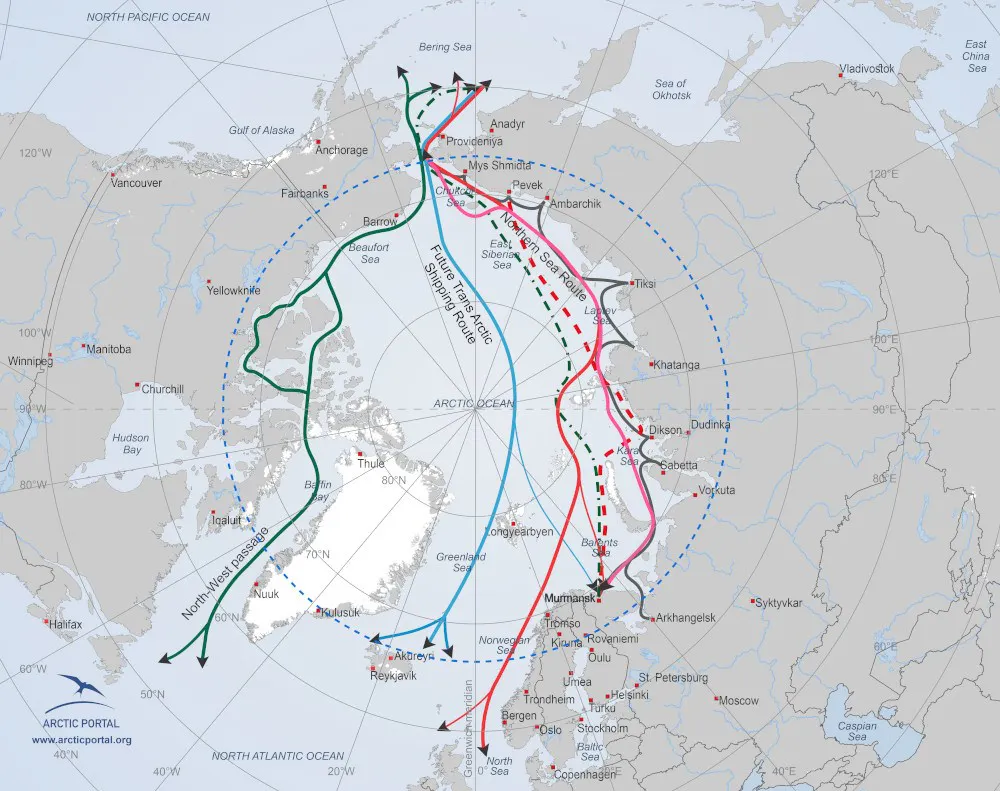
    Trump’s interest in Greenland is often associated with the island’s vast, but largely untapped, mineral resources. But its strategic location is arguably an even greater asset. Shipping routes through the Arctic have become more dependable and for longer periods of time during the year as a result of melting sea ice. The northwest passage (along the US and Canadian shorelines) and the northeast passage (along Russia’s Arctic coast) are often ice free now during the summer.


    Breaking the Ice: Arctic Development and Maritime Transportation, ArcticPortal.org

    This has increased opportunities for commercial shipping. For example, the distance for a container ship from Asia to Europe through the northeast passage can be up to three times shorter, compared to traditional routes through the Suez Canal or around Africa.

    Similarly, the northwest passage offers the shortest route between the east coast of the United States and Alaska. Add to that the likely substantial resources that the Arctic has, from oil and gas to minerals, and the entire region is beginning to look like a giant real estate deal in the making.

    Arctic assets

    The economic promise of the Arctic, and particularly the region’s greater accessibility, have also heightened military and security sensitivities.

    The day before J.D. Vance’s visit to Greenland on March 28, Vladimir Putin, gave a speech at the sixth international Arctic forum in Murmansk in Russia’s high north, warning of increased geopolitical rivalry.

    While he claimed that “Russia has never threatened anyone in the Arctic”, he was also quick to emphasise that Moscow was “enhancing the combat capabilities of the Armed Forces, and modernising military infrastructure facilities” in the Arctic.

    Equally worrying, Russia has increased its naval cooperation with China and given Beijing access, and a stake, in the Arctic. In April 2024, the two countries’ navies signed a cooperation agreement on search and rescue missions on the high seas.


    National Snow & Ice Data Center, Arctic Portal

    In September 2024, China participated in Russia’s largest naval manoeuvres in the post-cold war era, Ocean-2024, which were conducted in north Pacific and Arctic waters. The following month, Russian and Chinese coastguard vessels conducted their first joint patrol in the Arctic. Vance, therefore, has a point when he urges Greenland and Denmark to cut a deal with the US because the “island isn’t safe”.

    That the Russia-China partnership has resulted in an increasingly military presence in the Arctic has not gone unnoticed in the west. Worried about the security of its Arctic territories, Canada has just announced a C$6 billion (£3.2 billion) upgrade to facilities in the North American Aerospace Defense Command it operates jointly with the United States.

    It will also acquire more submarines, icebreakers and fighter jets to bolster its Arctic defences and invest a further C$420 million (£228 million) into a greater presence of its armed forces.


    Read more:
    Arctic breakdown: what climate change in the far north means for the rest of us


    Svalbard’s future role?

    Norway has similarly boosted its defence presence in the Arctic, especially in relation to the Svalbard archipelago (strategically located between the Norwegian mainland and the Arctic Circle). This has prompted an angry response from Russia, wrongly claiming that Oslo was in violation of the 1920 Svalbard Treaty which awarded the archipelago to Norway with the proviso that it must not become host to Norwegian military bases.

    Under the treaty, Russia has a right to a civilian presence there. The “commission on ensuring Russia’s presence on the archipelago Spitzbergen”, the name Moscow uses for Svalbard is chaired by Russian deputy prime minister Yury Trutnev, who is also Putin’s envoy to the far eastern federal district. Trutnev has repeatedly complained about undue Norwegian restrictions on Russia’s presence in Svalbard.

    From the Kremlin’s perspective, this is less about Russia’s historical rights on Svalbard and more about Norway’s – and Nato’s – presence in a strategic location at the nexus of the Greenland, Barents and Norwegian seas. From there, maritime traffic along Russia’s northeast passage can be monitored. If, and when, a central Arctic shipping route becomes viable, which would pass between Greenland and Svalbard, the strategic importance of the archipelago would increase further.

    From Washington’s perspective, Greenland is more important because of its closer proximity to the US. But Svalbard is critical to Nato for monitoring and countering Russian, and potentially Chinese, naval activities. This bigger picture tends to get lost in Trump’s White House, which is more concerned with its own immediate neighbourhood and cares less about regional security leadership.

    Consequently, there has been no suggestion – so far – that the US needs to have Svalbard in the same way that Trump claims he needs Greenland to ensure US security. Nor has Russia issued any specific threats to Svalbard. But it was noticeable that Putin in his speech at the Arctic forum discussed historical territorial issues, including an obscure 1910 proposal for a land swap between the US, Denmark and Germany involving Greenland.

    Putin also noted “that Nato countries are increasingly often designating the Far North as a springboard for possible conflicts”. It is not difficult to see Moscow’s logic: if the US can claim Greenland for security reasons, Russia should do the same with Svalbard.

    The conclusion to draw from this is not that Trump should aim to annex a sovereign Norwegian island next. Maritime geography in the north Atlantic underscores the importance of maintaining and strengthening long-established alliances.

    Investing in expanded security cooperation with Denmark and Norway as part of Nato would secure US interests closer to home and send a strong message to Russia. It would also signal to the wider world that the US is not about to initiate a territorial reordering of global politics to suit exclusively the interests of Moscow, Beijing and Washington.

    Stefan Wolff is a past recipient of grant funding from the Natural Environment Research Council of the UK, the United States Institute of Peace, the Economic and Social Research Council of the UK, the British Academy, the NATO Science for Peace Programme, the EU Framework Programmes 6 and 7 and Horizon 2020, as well as the EU’s Jean Monnet Programme. He is a Trustee and Honorary Treasurer of the Political Studies Association of the UK and a Senior Research Fellow at the Foreign Policy Centre in London.

    – ref. US and Russia squabble over Arctic security as melting ice opens up shipping routes – https://theconversation.com/us-and-russia-squabble-over-arctic-security-as-melting-ice-opens-up-shipping-routes-253493

    MIL OSI – Global Reports –

    April 5, 2025
  • MIL-OSI USA: King Introduces Legislation Banning Energy Exports to China and Other Foreign Adversaries

    US Senate News:

    Source: United States Senator for Maine Angus King

    WASHINGTON, D.C. — U.S. Senator Angus King (I-ME), a member of the Senate Energy and Natural Resources Committee (ENR), has introduced legislation banning energy exports to China and other foreign adversaries. Having long warned that America is “exporting our principal advantage in the world economy,” Senator King joined with colleagues to introduce the Protecting American Households From Rising Energy Costs Act. The legislation would ban the export of crude oil or liquefied natural gas (LNG) to China, Russia, Iran, and North Korea.

    Senator King has repeatedly warned against “subsidizing Chinese manufacturing” by exporting natural gas to our adversaries without studying how it could be counterproductive for America’s domestic energy costs.

    “The Protecting American Households from Rising Energy Costs Act would ensure that America provides our nation with its power needs before subsidizing industries in adversarial countries. This is a commonsense approach that will support America’s national defense and help to keep energy costs lower for everyday Americans,” said Senator King.

    In 2021, 1.2 billion cubic feet per day of LNG were exported to China, making it the second largest destination for American LNG at 12.7 percent of exports. Exports to China dropped in the wake of Russia’s war on Ukraine, but China is locking up long-term LNG contracts from the U.S. for proposed projects. The Protecting American Households From Rising Energy Costs Act would increase American energy security and protect American consumers by ensuring that valuable national resources are not being exported to adversarial nations.

    In addition to King, this legislation is sponsored by Senators Jeff Merkley (D-OR) and Jack Reed (D-RI).

    Senator King has consistently worked to lower energy prices for Maine people. During his first term in Congress, Senator King introduced the Natural Consumer Gas Protection Act, which would have required the Department of Energy (DOE) to consider the effect that any natural gas export proposal would have on domestic prices and employment, regional impacts, and any impact on U.S. industrial competitiveness. Senator King has also worked to support the Low-Income Home Energy Assistance Program and to support Maine people struggling to heat their homes.

    MIL OSI USA News –

    April 5, 2025
  • MIL-OSI China: 3rd edition of crabapple blossom festival kicks off in Tianjin

    Source: People’s Republic of China – State Council News

    3rd edition of crabapple blossom festival kicks off in Tianjin

    Updated: April 4, 2025 19:18 Xinhua
    People admire crabapple blossoms at the Wudadao historical urban area in north China’s Tianjin, April 3, 2025. The third edition of a crabapple blossom festival kicked off on Thursday at Wudadao historical urban area, a popular tourist destination in the downtown area of Tianjin. The festival, which stays on until April 13, features more than 100 art and culture performances to enable “immersive” experience for the visitors. [Photo/Xinhua]
    An artist performs during the launch event of a crabapple blossom festival at the Wudadao historical urban area in north China’s Tianjin, April 3, 2025. [Photo/Xinhua]
    An aerial drone photo shows the launch of a crabapple blossom festival at the Wudadao historical urban area in north China’s Tianjin, April 3, 2025. [Photo/Xinhua]
    A tourist in traditional Chinese costume poses for photos at the Wudadao historical urban area in north China’s Tianjin, April 4, 2025. [Photo/Xinhua]
    People admire crabapple blossoms at the Wudadao historical urban area in north China’s Tianjin, April 4, 2025. [Photo/Xinhua]
    People line up in front of a cultural and creative product store at the Wudadao historical urban area in north China’s Tianjin, April 3, 2025. [Photo/Xinhua]
    Tourists take photos of crabapple blossom-inspired ice cream at the Wudadao historical urban area in north China’s Tianjin, April 4, 2025. [Photo/Xinhua]

    MIL OSI China News –

    April 5, 2025
  • MIL-OSI Global: Faced with new tariffs and a truculent Trump, Japan and South Korea toe a cautious line

    Source: The Conversation – Global Perspectives – By Sebastian Maslow, Associate Professor, International Relations, University of Tokyo

    Two months into US President Donald Trump’s second term, the liberal international order is on life support.

    Alliances and multilateral institutions are now seen by the United States as burdens. Europe and NATO are framed as bad business, “ripping off” the US. On his so-called “Liberation Day”, Trump also imposed 20% tariffs on all European Union imports.

    The Trump administration has been far less critical of the US’ alliances in the Indo-Pacific region. On a visit to Tokyo this week, US Defence Secretary Pete Hegseth described Japan as America’s “indispensable partner” in deterring Chinese aggression.

    Yet, Japan and South Korea fared even worse than the EU with Trump’s new tariffs. Trump slapped Japan with 24% tariffs and South Korea 25%. (Both countries enjoy a trade surplus with the US.)

    So, how are the US’ two main allies in the Indo-Pacific dealing with the mercurial US leader? Will they follow Europe’s lead in reassessing their own security relationships with the US?

    Japan: a positive summit but concerns remain

    America’s post-war security strategy in Asia differs from Europe. While NATO was built on the premise of collective defence among its members, the US adopted a “hub-and-spokes” model in Asia, relying on bilateral alliances to contain the spread of communism.

    Japan and South Korea have long sheltered under the US nuclear umbrella and hosted major US military bases. Both are also highly sensitive to changes in the US’ Indo-Pacific policies.

    Japan, in particular, has a long history of careful alliance management with the US, epitomised by former Prime Minister Shinzo Abe’s courting of Trump.

    During Trump’s first term in office, Abe’s policy goals aligned closely with the US: transforming Japan’s security posture to make it a serious military and diplomatic power. Japan increased military spending, lifted arms export restrictions and deepened ties with India and Australia.

    Prime Minister Fumio Kishida continued to raise Japan’s security profile from 2021-24, again increasing military spending and taking a tough line on Russia’s invasion of Ukraine. He emphasised “Europe today could be Asia tomorrow”.

    His successor, Shigeru Ishiba, had a successful summit with Trump in February, immediately after his inauguration. The joint statement reaffirmed US security guarantees to Japan, including over the Senkaku Islands, which are claimed by China.

    Japan also agreed to import American liquefied natural gas, and later committed to working with South Korea to develop a US$44 billion (A$70 billion) plan to export LNG from Alaska.

    However, these positive developments do not mean the relationship is on firm ground.

    In early March, Trump complained the US-Japan security agreement signed in 1960 was “one-sided” and a top administration official again called for Japan to increase its defence spending to 3% of gross domestic product (GDP) – a huge increase for a country facing serious demographic and fiscal pressures.

    Reports also emerged the US was considering cancelling a new joint headquarters in Japan aimed at deeper integration between US and Japanese forces.

    South Korea: extremely vulnerable on trade

    South Korea faces similar pressures. Ties between the two countries were strained during Trump’s first term over his demand South Korea increase the amount it pays to host US forces by
    nearly 400%. A 2021 agreement restored some stability, but left Seoul deeply worried about the future of the alliance.

    South Korea’s acting president, Choi Sang-mok, has expressed a desire to strengthen ties with the US, though Trump has reportedly been cool to his advances.

    With a US$66 billion (A$105 billion) trade surplus with the US, South Korea is considered the country most vulnerable to trade risk with the Trump administration, according to a Swiss research group.

    Trump’s past suggestions that both South Korea and Japan develop nuclear weapons or pay for US nuclear protection has also rattled some nerves. As confidence in the US alliance erodes, both countries are engaging in an urgent public debate about the possibility of acquiring nuclear weapons.

    Tensions moving forward

    Potential for conflict is on the horizon. For example, Tokyo and Washington are set to renegotiate the deal that dictates how much Japan pays to host US troops next year.

    Both allies pay huge sums to host US bases. South Korea will pay US$1.14 billion (A$1.8 billion) in 2026, and Japan pays US$1.72 billion (A$2.7 billion) annually.

    A trade war could also prompt a reassessment of the costs of US efforts to decouple from China, potentially leading to closer economic ties between Japan, South Korea and China. The three countries have agreed to accelerate talks on a trilateral free trade agreement, which had been on hold since 2019.

    Another challenge is semiconductors. Japan’s new semiconductor revitalisation strategy is prioritising domestic investment, raising questions about whether Trump will tolerate “friendshoring” if Japan diverts investments from the US.

    In 2024, Japan outspent the US in semiconductor subsidies (as a share of GDP), while Taiwan’s TSMC, the world’s largest contract chipmaker, expanded its production capacity in Japan.

    Seoul remains an important partner to Washington on semiconductors. Samsung and SK Hynix are both boosting their investments on new semiconductor plants in the US. However, there is now uncertainty over the subsidies promised to both companies to invest in America under the CHIPS Act.

    Ultimately, the strength of these alliances depends on whether the Trump administration views them as long-term bulwarks against China’s rise in the region, or merely vassals that can be extorted for financial gain.

    If the US is serious about countering China, its regional alliances are key. This would give Japan and South Korea some degree of leverage – or, in Trump terms, they’ll hold valuable cards. Whether they get to play them, however, depends on what Trump’s China policy turns out to be.

    The authors do not work for, consult, own shares in or receive funding from any company or organisation that would benefit from this article, and have disclosed no relevant affiliations beyond their academic appointment.

    – ref. Faced with new tariffs and a truculent Trump, Japan and South Korea toe a cautious line – https://theconversation.com/faced-with-new-tariffs-and-a-truculent-trump-japan-and-south-korea-toe-a-cautious-line-244172

    MIL OSI – Global Reports –

    April 5, 2025
  • MIL-OSI Global: Russia and China both want influence over Central Asia. Could it rupture their friendship?

    Source: The Conversation – Global Perspectives – By Dilnoza Ubaydullaeva, Lecturer in Government, Flinders University

    As he looks to solidify his territorial gains in Ukraine in a potential ceasefire deal, Russian President Vladimir Putin has one eye trained on Russia’s southern border – and boosting Russian influence in Central Asia.

    Following his 2024 re-election, Putin made Uzbekistan his third foreign visit after China and Belarus. The visit signalled the region’s continued importance to Moscow.

    In response to Western sanctions on Moscow over the Ukraine war, trade and investment between Russia and Central Asian countries have grown significantly.

    Russia’s Lukoil and Gazprom are now the dominant foreign players in Uzbekistan’s energy fields. In Kazakhstan, Moscow controls a quarter of the country’s uranium production.

    But as Russia tries to reaffirm its role in the region, China has also been quietly expanding its influence.

    Could this growing competition over Central Asia affect Beijing and Moscow’s broader relationship?

    Central Asia drifting apart from Moscow

    The Central Asian region is home to approximately 79 million people spread across five nations. It was part of the Soviet Union until its collapse in 1991. Its strategic location between Russia and China, on the doorstep of the Middle East, has long made it a “grand chessboard” for great power politics.

    While Russia has traditionally dominated the region, Central Asian leaders have made efforts to somewhat distance themselves from Moscow recently.

    At the Commonwealth of Independent States (CIS) summit in October 2022, for example, Tajikistan’s president publicly challenged Russian President Vladimir Putin. He demanded respect for smaller states like his.

    Similarly, during Putin’s 2023 visit to Kazakhstan, President Kassym-Jomart Tokayev made a symbolic statement at the press conference by delivering his speech in Kazakh rather than Russian. This was a rare move that seemed to catch Putin’s delegation off guard.

    In another striking moment, Tokayev declared at an economic forum in Russia in 2022 that Kazakhstan does not recognise Russia’s “quasi-states”, referring to its occupied territories of Ukraine.

    Yet, all Central Asian states remain part of at least one Russia-led organisation, such as the Commonwealth of Independent States, the Collective Security Treaty Organization, or the Eurasian Economic Union.

    Three states (Kazakhstan, Kyrgyzstan and Tajikistan) rely on Russian security guarantees through the Collective Security Treaty Organization.

    And the region’s economic dependency on Russia remains significant. Of the 6.1 million migrants in Russia, the largest groups come from Uzbekistan, Tajikistan and Kyrgyzstan. These countries depend heavily on remittances from these migrant workers.

    China’s growing influence

    With Russia preoccupied with Ukraine and constrained by Western sanctions, China has seized the opportunity to deepen its engagement in the region.

    Beijing’s involvement in Central Asia has long been economic. In 2013, for instance, China unveiled its ambitious, global Belt and Road Initiative in Kazakhstan. And by 2024, it was China, not Russia, that was the largest trading partner of every Central Asian country except Tajikistan.

    But in recent years, China has expanded its influence beyond economic ties, establishing itself as a key player in regional politics.

    At the inaugural China-Central Asia Summit in 2023, for example, Chinese leader Xi Jinping pledged support for the sovereignty, security and territorial integrity of the region. This is traditionally a role played by Russia.

    Xi has also been making high-profile visits to Central Asian states, signalling Beijing’s growing strategic interests here.

    Local populations, however, remain wary. Public opinion surveys indicate China is viewed more negatively than Russia.

    Many Chinese-funded projects bring their own workers, limiting job opportunities for locals and fuelling resentment. There is also anxiety about potential “debt trap” diplomacy. Civil society groups have called for economic diversification to avoid over-reliance on Beijing.

    Further complicating matters is Beijing’s treatment of the Muslim minority Uyghur population in the Xinjiang region of western China. This has reinforced suspicions in Muslim-majority Central Asia about China’s long-term intentions in the region.

    Growing competition

    The increasing competition raises questions about the potential impact on the broader, “no limits” relationship between Moscow and Beijing.

    At a recent forum, Putin acknowledged Beijing’s growing economic role in the region. However, he insisted Russia still has “special ties” with Central Asian states, rooted in history. And he notably dismissed concerns about China’s expansionist aims, saying:

    There is nothing about domination in the Chinese philosophy. They do not strive for domination.

    On the ground, however, things aren’t so simple. So far, China and Russia have managed to avoid stepping on each other’s toes. How long that balance remains, however, is an open question.

    Central Asian countries, meanwhile, are courting both sides – and diversifying their ties beyond the two powers.

    Many of the region’s educated elite are increasingly looking toward Turkey – and pan-Turkic solidarity – as an alternative to both Russian and Chinese dominance.

    Russia’s historical influence in the region remains strong. But the days of its unquestioned dominance appear to be over.

    Russia may try to reassert its preeminent position, but China’s deepening economic presence is not going anywhere.

    With both countries pushing their own regional agendas, it’s hard to ignore the overlap – and the potential for a future clash over competing interests.

    Dilnoza Ubaydullaeva does not work for, consult, own shares in or receive funding from any company or organisation that would benefit from this article, and has disclosed no relevant affiliations beyond their academic appointment.

    – ref. Russia and China both want influence over Central Asia. Could it rupture their friendship? – https://theconversation.com/russia-and-china-both-want-influence-over-central-asia-could-it-rupture-their-friendship-251023

    MIL OSI – Global Reports –

    April 5, 2025
  • MIL-OSI Global: Myanmar military’s ‘ceasefire’ follows a pattern of ruling generals exploiting disasters to shore up control

    Source: The Conversation – Global Perspectives – By Tharaphi Than, Associate Professor of World Cultures and Languages, Northern Illinois University

    Myanmar’s military chief, Min Aung Hlaing, called for elections on March 27, 2025 – a day before an earthquake devastated the country. STR/AFP via Getty Images

    After a 7.7 magnitude earthquake struck Myanmar on March 28. 2025, the country’s military and the myriad resistance groups fighting a yearslong civil war faced international calls for an immediate ceasefire. A pause in the fighting would enable vital aid to enter the major quake zones and allow rescuers to assist victims in a disaster that has already killed more than 3,000 people.

    The first to heed the call was the opposition National Unity Government, which unilaterally announced a two-week pause on attacks by its armed wing, the People’s Defense Force, on March 29. The Three Brotherhood Alliance – a coalition of three ethnic resistance groups: the Myanmar National Democratic Alliance Army, the Ta’ang National Liberation Army and the Arakan Army – likewise agreed to a temporary truce.

    But Myanmar’s military demurred. Just hours after the quake, as rescuers continued to dig through rubble in search of survivors, the generals ordered airstrikes on enemy positions in Shan state and Karen state in the country’s east – a decision that United Nations special rapporteur Tom Andrews described as “nothing short of incredible.”

    The generals eventually yielded to pressure late on April 2 – some five days after the earthquake hit – announcing that they would halt fighting until April 22. But the statement appeared to be hollow, with reports just a day later that the military’s bombing campaign and ground offensive were continuing unabated in Kachin state in Myanmar’s north.

    Mandalay buildings, like Myanmar’s democracy, lie in ruins.
    STR/AFP via Getty Images

    As an expert on the political history of Myanmar, I believe the behavior of the country’s military is of no surprise. The generals who have had a grip on the country for much of the past six decades have a track record of exploiting disasters for political gain. Weakened by years of entrenched civil war, they are now seeking an opportunity in the earthquake to rehabilitate their image overseas, while consolidating power at home.

    From disasters to elections

    Myanmar’s ruling junta has tried this tactic before. In 2008, a week after the deadly cyclone Nargis killed more than 100,000 people in Myanmar, the military proceeded to hold a constitutional referendum that would guarantee the military’s control of government by reserving 25% of all parliamentary seats for officers while requiring 75% of votes for any future constitutional reform. It also allowed for the military to take over the country “in the event of an emergency.”

    The referendum took place while much of Myanmar was still reeling from disaster, yet the junta announced a 98.12% turnout, of which 92.48% voted in favor of the new pro-military constitution.

    It paved the way to elections in 2010, which the military’s Union Solidarity and Development Party won. Though that vote was boycotted by the opposition National League for Democracy, or NLD, Washington had by then signaled a shift in policy toward “pragmatic engagement” with the then-ruling junta. This U.S. shift forced the recalcitrant NLD to cooperate in subsequent elections, giving legitimacy to a process that was stacked in favor of the generals.

    Using a fig leaf of legitimacy

    The latest disaster comes as the junta is again attempting to push for elections. Just a day before the earthquake, Myanmar’s military chief, Min Aung Hlaing, confirmed plans for a December national vote and called on opposition parties to participate.

    But the proposed election in Myanmar is widely seen as a face-saving strategy for both the Myanmar military and, I would argue, an international community that has done little of any significance to end the civil war. In this context, elections would allow the generals to cover their 2021 power grab with a fig leaf of legitimacy.

    The entrenched civil war that was sparked by that military takeover – a coup that ended a 10-year experiment with limited democracy – derailed the military’s initial plan to return to full control of the country.

    Anti-military soldiers sit in a long-tailed boat on the Salween River.
    Thierry Falise/LightRocket via Getty Images

    Four years of fighting a broad-based opposition that includes ethnic minority groups like the Karen National Union, Kachin Independence Army, Arakan Army, Ta’ang National Liberation Army, Myanmar National Democratic Alliance Army, People’s Defense Force and Bamar People’s Liberation Army has taken its toll on the military.

    It has lost territorial control in many regions to the myriad resistance groups. Internationally, it has become more isolated through sanctions, and its largest trading partner, China, concerned over instability on its border, has slowed investments as it tries to play all sides of the conflict.

    In desperation, the generals have resorted to forced conscription for foot soldiers, while looking to Russia for arms and investment.

    The failure of the generals

    What the military desperately needs now is a lifeline and a civil war exit plan. The earthquake could provide both, with a ceasefire – no matter how badly observed – providing a cover for allowing for a national vote.

    But as has been evident in the days surrounding the announcement of a truce, the military is likely to exploit the disaster to weaken the resistance along the way. It has said that it will take “necessary” measures against any resistance group found to be regrouping or attacking the state during the ceasefire. Yet it has reportedly continued its own offensive.

    The earthquake has revealed the failures and brutalities of the military in other ways, too. In the aftermath of the disaster, the military shut down private clinics and hospitals in badly hit Mandalay for allegedly employing rebel doctors and nurses who were treating members of the resistance. As it was, many health care workers have been in hiding since the coup, and young people who could have been on the front lines of relief efforts have either joined the resistance groups or fled the country.

    The earthquake will also further hurt a Myanmar business community already suffering from the pullout of international businesses after the 2021 coup.

    On unsecure foundations

    Yet, the military may be hoping that it can use the disaster to rebuild its brand overseas. The surprise announcement of a ceasefire by the generals is part of that process. So, too, is the decision to allow in international rescue teams, after initially blocking relief workers from entering the country. It is the military’s way of showing willingness to cooperate with the wider world.

    In short, disaster diplomacy has kicked in for Myanmar’s military, as it did after 2008’s Cyclone Nagris. That earlier cyclone provided an opportunity for the junta to present a different face to the international community. Elections were held, not once, but twice – encouraged by the U.S. and others – and investments rushed into Myanmar as the country was touted as “Asia’s next Tiger.”

    But the foundations of military-backed reform in Myanmar were built on fault lines that cracked and crumbled amid the 2021 coup. The military’s exploitation of the 2025 earthquake will, I fear, result in similar ends.

    Tharaphi Than does not work for, consult, own shares in or receive funding from any company or organization that would benefit from this article, and has disclosed no relevant affiliations beyond their academic appointment.

    – ref. Myanmar military’s ‘ceasefire’ follows a pattern of ruling generals exploiting disasters to shore up control – https://theconversation.com/myanmar-militarys-ceasefire-follows-a-pattern-of-ruling-generals-exploiting-disasters-to-shore-up-control-253577

    MIL OSI – Global Reports –

    April 5, 2025
  • MIL-OSI Economics: Euro area quarterly balance of payments and international investment position: fourth quarter of 2024

    Source: European Central Bank

    4 April 2025

    • Current account surplus at €426 billion (2.8% of euro area GDP) in 2024, after a €243 billion surplus (1.7% of GDP) a year earlier.
    • Geographical counterparts: largest bilateral current account surpluses vis-à-vis United Kingdom (€197 billion) and Switzerland (€76 billion) and largest deficit vis-à-vis China (€105 billion).
    • International investment position showed net assets of €1.66 trillion (10.9% of euro area GDP) at end of 2024.
    • Bilateral current account vis-à-vis the United States: surplus of €3 billion (0.0% of euro area GDP) in 2024, following a deficit of €30 billion (0.2% of GDP) in 2023. For more details see dedicated section on economic and financial linkages between the euro area and the United States.

    Current account

    The current account of the euro area recorded a surplus of €426 billion (2.8% of euro area GDP) in 2024, following a €243 billion surplus (1.7% of GDP) a year earlier (Table 1). This development was driven by larger surpluses for goods (from €264 billion to €372 billion), services (from €127 billion to €169 billion) and primary income (from €20 billion to €54 billion). The deficit for secondary income increased moderately from €167 billion to €168 billion.

    The estimates on goods trade broken down by product group show that in 2024 the increase in the goods surplus was mainly due to a reduction in the deficit for energy products (from €314 billion to €260 billion). In addition, the surpluses for chemical products and machinery and manufactured products increased (from €244 billion to €268 billion and from 283 billion to €300 billion, respectively).

    The larger surplus for services in 2024 was mainly due to widening surpluses for telecommunication, computer and information (from €169 billion to €203 billion) and travel (from €52 billion to €61 billion), and a lower deficit for other business services (from €60 billion to €28 billion). These developments were partly offset by a widening deficit for charges for the use of intellectual property (from €100 billion to €126 billion).

    In 2024, the increase in the primary income surplus was mainly due to larger surpluses in direct investment (from €72 billion to €104 billion), portfolio debt (from €59 billion to €79 billion), and other primary income (from €3 billion to €15 billion), which were partly offset by a larger deficit in portfolio equity (from €163 billion to €194 billion).

    Table 1

    Current account of the euro area

    (EUR billions, unless otherwise indicated; transactions during the period; non-working day and non-seasonally adjusted)

    Source: ECB.
    Notes: “Equity” comprises equity and investment fund shares. Goods by product group is an estimated breakdown using a method based on statistics on international trade in goods. Discrepancies between totals and their components may arise from rounding.

    Data for the current account of the euro area

    Data on the geographical counterparts of the euro area current account (Chart 1) show that in 2024, the euro area recorded its largest bilateral surpluses vis-à-vis the United Kingdom (€197 billion, down from €220 billion a year earlier) and Switzerland (€76 billion, up from €65 billion). The euro area also recorded surpluses vis-à-vis other emerging countries (€155 billion, up from €135 billion a year earlier) and other advanced countries (€114 billion, up from €80 billion). The largest bilateral deficit was recorded vis-à-vis China (€105 billion, down from €109 billion a year earlier) and a deficit was also recorded vis-à-vis the residual group of other countries (€96 billion, down from €142 billion).

    The most significant changes in the geographical components of the current account in 2024 relative to 2023 were as follows: the goods surpluses increased vis-à-vis the United States (from €179 billion to €213 billion) and vis-à-vis other advanced countries (from €27 billion to €50 billion), while the goods deficit vis-à-vis China increased from €131 billion to €141 billion. In services, the deficit vis-à-vis the United States increased (from €124 billion to €156 billion), while the balance vis-à-vis offshore centres shifted from a deficit (€8 billion) to a surplus (€16 billion). In primary income, the balance vis-à-vis the United Kingdom shifted from a surplus (€31 billion) to a deficit (€4 billion) while a smaller deficit was recorded vis-à-vis the United States (from €84 billion to €52 billion). The deficit in secondary income vis-à-vis the EU Member States and EU institutions outside the euro area decreased slightly (from €76 billion to €73 billion).

    Chart 1

    Geographical breakdown of the euro area current account balance

    (four-quarter moving sums in EUR billions; non-seasonally adjusted)

    Source: ECB.
    Note: “EU non-EA” comprises the non-euro area EU Member States and those EU institutions and bodies that are considered for statistical purposes as being outside the euro area, such as the European Commission and the European Investment Bank. “Other advanced” includes Australia, Canada, Japan, Norway and South Korea. “Other emerging” includes Argentina, Brazil, India, Indonesia, Mexico, Saudi Arabia, South Africa and Türkiye. “Other countries” includes all countries and country groups not shown in the chart, as well as unallocated transactions.

    Data for the geographical breakdown of the euro area current account

    International investment position

    At the end of 2024, the international investment position of the euro area recorded net assets of €1.66 trillion vis-à-vis the rest of the world (10.9 % of euro area GDP), up from €1.25 trillion in the previous quarter (Chart 2 and Table 2).

    Chart 2

    Net international investment position of the euro area

    (net amounts outstanding at the end of the period as a percentage of four-quarter moving sums of GDP)

    Source: ECB.

    The €407 billion increase in net assets was mainly driven by larger net assets in portfolio debt (up from €1.27 trillion to €1.42 trillion), direct investment (up from €2.54 trillion to €2.66 trillion) and reserve assets (up from €1.32 trillion to €1.39 trillion).

    Table 2

    International investment position of the euro area

    (EUR billions, unless otherwise indicated; amounts outstanding at the end of the period, flows during the period; non-working day and non-seasonally adjusted)

    Source: ECB.
    Notes: “Equity” comprises equity and investment fund shares. Net financial derivatives are reported under assets. “Other volume changes” mainly reflect reclassifications and data enhancements. Discrepancies between totals and their components may arise from rounding.

    Note: “Other volume changes” mainly reflect reclassifications and data enhancements. 

    MIL OSI Economics –

    April 5, 2025
  • MIL-OSI: SafeCard Reviews [Urgent Update]: Read This Before Buying!

    Source: GlobeNewswire (MIL-OSI)

    WOODHAVEN, N.Y., April 04, 2025 (GLOBE NEWSWIRE) — In 2025, searches for terms like “SafeCard reviews,” “SafeCard consumer reports,” and “best RFID & NFC blockers” are surging as more people seek clarity on SafeCard’s effectiveness, safety, and overall value. With the rise of digital threats, consumers are asking: Is SafeCard worth the investment? Does it truly protect against RFID and NFC skimming? In this detailed SafeCard review, we’ll dive into its features, benefits, and real-world performance to help you decide.

    SafeCard RFID Blocking Card Reviews

    SafeCard: My Experience with This Game-Changing RFID Protector

    I used to carry a wallet stuffed with credit and debit cards, constantly worrying about the risk of RFID skimming and digital theft. That all changed when I discovered SafeCard. This sleek, lightweight RFID-blocking card has transformed how I think about data security, offering effortless protection for my sensitive financial and personal information—all in a stylish package.

    What sets SafeCard apart is its advanced RFID-blocking technology, which effectively prevents unauthorized scanning of contactless cards. To put it to the test, I visited one of the busiest shopping malls, filled with contactless payment terminals. The result? Zero interference. SafeCard delivered on its promise, shielding my data like no other product I’ve tried.

    SafeCard Reviews: Why It’s the Best RFID & NFC Blocker in 2025

    All over Canada, The Uk, Australia, New Zealand and the United States, customers have consistently praised SafeCard for its top-tier RFID protection.

    Its ease of use and affordability is another driving force behind its numerous 4.95 star rating, SafeCard is recognized as one of the most reliable RFID protective device on the market.

    Many SafeCard reviews highlight:
    ✔ Superior RFID & NFC blocking technology
    ✔ Affordable pricing compared to competitors
    ✔ Compact, travel-friendly design
    ✔ Trusted by thousands across the US, UK, Canada & Australia

    SafeCard Consumer Reports: The #1 RFID & NFC Blocker in the US, UK & Canada

    According to numerous sources (online surveys, polls and websites) SafeCard is one of thebest RFID and NFC blockers of 2025 in multiple countries. These include the United States, Canada, UK, Australia and New Zealand.

    After a month of consistent use, I can confidently say I made the right choice with this product. It is proven, reliable and a hassle free way to protect your credit cards, debit cards and ID from Digital theft.

    If you are looking for the best RFID and NFC blocker in 2025? Then read on, SafeCard just might be your best bet.

    What Is SafeCard? (SafeCard Reviews)

    SafeCard is a credit-card shaped device that fits perfectly into your wallet. It is made of a special material that blocks RFID scanners. It is basically a shield for your credit cards in your wallet.

    This innovative technology makes it almost impossible for digital thieves or skimming devices to steal your sensitive information and with the rise of contactless payments and smart cards, this risk has never been higher.

    SafeCard is equipped with advanced RFID and NFC blocking technology. It shields your credit cards, debit cards and ID cards from unauthorized scanners

    Users praise Safe Card for its durability, ease of use and sleek design. Better yet, Safecard doesn’t require batteries, charging or maintenance.

    It is hassle free and reliable and fits right into your daily life.

    Why SafeCard Stands Out (SafeCard Customer Reviews)

    Electronic theft is on the rise in our modern-day technological age, and thieves are resorting to highly advanced methods and devices to rob the unsuspecting public.

    SafeCard is like your 24/7 silent guardian, providing peace of mind while shopping, traveling, or just being out and about.
    The **sleek and slim design** ensures that it does not take up any extra space in your wallet, a convenient choice for any person who cares about security and privacy.

    The majority of SafeCard user reviews call it a very effective product for stopping unauthorized scanning and securing sensitive personal data.

    They love its next-generation look, value, and reliability; it is a must-have for any user who wishes to secure his personal and financial details.

    As more and more digital threats rise, SafeCard has been a trusted protector against identity theft, financial scams, and unauthorized access to data.

    The Growing Need for SafeCard

    Every minute without SafeCard is a gamble.

    Thieves are everywhere, eager and ready to steal financial information from unsuspecting folks. Busy places like malls, subways and airports are notorious for RFID skimmers. Don’t wait until it’s too late, take responsibility for your safely today with SafeCard

    What Are the Features of SafeCard? (SafeCard Reviews)

    SafeCard is an advanced security solution in a sleek modern design, that is exceptionally good at protecting your personal details.

    Filled with innovative features inside, the SafeCard changes how you do your data security from modern digital threats. That said, let’s further review what customers consider special with the SafeCard, according to the SafeCard customer reviews that follow:

    1. Advanced RFID-Blocking Technology
    Equipped with advanced RFID-blocking technology, SafeCard prevents any unauthorized attempts to wirelessly scan your sensitive data. It safeguards credit cards, ID cards, and other RFID-enabled items from the most common skimming techniques used by identity thieves. Whether you’re in a crowded subway or a bustling shopping mall, SafeCard ensures your information remains secure.

    2. Slim and Lightweight Design
    One of the fan-favorite features of safeCard is the fact that it is slim and light weight. It seamlessly integrates into your waller and current card collection, never taking up additional space or making your wallet/purse bulky.

    This make it a perfect product for daily use

    3. Durability and High-Quality Materials
    It is made with the highest grade materials, built to last. Even when used frequently, it can last for years unlike flimsy alternatives.

    Safcard won’t degrade overtime. Its quality assurance is a common theme amongst customers that have purchased Safe card.

    4. Effortless Protection
    SafeCard simplifies security—no batteries, charging, or complicated setup needed. Just place it in your wallet to instantly block RFID signals. With effortless plug-and-play functionality, it provides round-the-clock protection with zero extra effort.

    5. Universal Compatibility
    It works on 99% of all cards. We’re talking ID cards, debit cards, credit cards even a hotel key.
    SafeCard is compatible with most RFID enabled cards and secures all your personal information wherever you go.
    SafeCard has got you covered to keep your data out of harm’s way from any unwanted electronic intrusions.

    CLICK HERE TO BUY YOUR SAFECARD FROM THE OFFICIAL WEBSITE AT A MASSIVE DISCOUNT TODAY

    Why SafeCard’s Features Matter (SafeCard Reviews)

    In an era of ever-evolving digital threats, SafeCard provides a robust solution to safeguard your information.

    By merging cutting-edge technology with a sleek, user-friendly design, it stands out as the ideal choice for anyone looking to enhance their personal security. More than just a protective tool, SafeCard is an essential everyday accessory—just as countless reviews affirm.

    How Does SafeCard Actually Work? (SafeCard Reviews)

    RFID and NFC scanning is a common tactic among criminals who steal personal data from your credit, debit or ID cards.

    SafeCard is designed to provide seamless protection agains these attacks but how exactly does it achieve this, we’re going to explain it here.

    The Science Behind SafeCard Protection

    At the heart of SafeCard’s functionality is advanced RFID-blocking technology. RFID, or Radio Frequency Identification, enables seamless, contactless communication between devices, cards, and scanners. While this makes transactions and data access more convenient, it also leaves your information vulnerable to unauthorized access. With a simple portable RFID scanner, thieves can easily steal your card data without you even realizing it.

    How does SafeCard solve this problem?
    It solves this by creating a protective shield around your cards.
    Safe Card is made with a specialized metal alloy, and this creates a Faraday cage effect that blocks RFID scanners from reading your cards without consent.

    This effectively blocks criminals from accessing your sensitive information, even if they’re standing nearby with a skimming device.

    NFC Protection for Modern Threats
    In addition to RFID protection, SafeCard also blocks NFC (Near Field Communication) signals used in modern payment systems like Apple Pay and Google Wallet. By neutralizing these signals, it provides comprehensive protection against all forms of electronic pickpocketing.

    Ease of Use – Hassle-Free Security
    Users consistently praise SafeCard for its simplicity. With no batteries, setup, or maintenance required, it works instantly—just place it in your wallet or cardholder, and you’re protected. Its slim, lightweight design ensures it won’t take up extra space, making it a practical and convenient addition to your everyday essentials.

    Silent, Reliable Protection
    It works excellently in the background, providing protection 24/7 without any conscious effort on your part.

    Whether you’re traveling, shopping, or commuting, SafeCard protects your data from unauthorized scans and potential theft. Its perfect blend of security and convenience has earned widespread praise and glowing testimonials from users around the world.

    CLICK HERE TO BUY YOUR SAFECARD FROM THE OFFICIAL WEBSITE AT A MASSIVE DISCOUNT TODAY

    Why SafeCard’s Technology Matters (SafeCard Reviews)

    This device is like a silent guardian that keeps your data safe wherever you go.
    With the widespread occurrence of digital theft, the peace of mind safe card will give you is immeasurable.

    Its capability for blocking RFID and NFC signals alike makes it a must-have device for anyone who takes his or her privacy and security seriously

    How to Use SafeCard (SafeCard Consumer reports)

    Using SafeCard to protect your personal details is as easy as ABC.
    You don’t need to be a tech expert or have any extra knowledge to protect yourself form RFID skimming scams.
    In fact, Safecard is so ridiculously simple to use that you might be surprised.

    Here is how it works.
    Step 1 – Place SafeCard in your wallet or Card holder
            Simply insert your SafeCard into your wallet, cardholder or purse. Due to its slim and light weight design, it can easily fit into most wallets and purses.

    Step 2 – Enjoy peace of mind
            That’s basically it, enjoy peace of mind and know your cards are protected from RFID skimming events.
    You see, SafeCard works passively, its basically like a helmet for your cards, so once its in your wallet, it will shield your contact less credit cards.

    CLICK HERE TO BUY YOUR SAFECARD FROM THE OFFICIAL WEBSITE AT A MASSIVE DISCOUNT TODAY

    Why SafeCard’s Ease of Use Stands Out (SafeCard Reviews)

    A standout feature frequently mentioned in SafeCard reviews is its ease of use and reliability. Unlike traditional security solutions that demand installation, battery replacements, or ongoing upkeep, SafeCard delivers instant protection with zero hassle.

    Its modern, compact design and effortless functionality make it a top choice for individuals who prioritize both convenience and security.

    With numerous positive customer testimonials, this device is an essential tool for safeguarding personal information in today’s digital landscape.

    CLICK HERE TO BUY YOUR SAFECARD FROM THE OFFICIAL WEBSITE AT A MASSIVE DISCOUNT TODAY

    Pros (SafeCard Reviews)

    SafeCard has been taking over the internet lately because of the amount of positive reviews it has been able to garner, its boasts a slew of pros which we will discuss below;

    Effective RFID blocking tech – The best option in the market for its price point, SafeCard is affordable and offers top-notch personal protection.

    Affordable Price point – Priced appropriately so it is easily accessible to all, more info on the pricing is further down below.

    Easy to use and Hassle-Free – Very easy and straightforward to use, just insert it in your wallet and you’re good to go.

    Compact and slim design – Its ultra-slim and lightweight design effortlessly slips into your wallet or purse without adding any extra bulk.

    Offers constant protection against identity theft – Safeguards your personal information 24/7, even in busy or high-risk environments.

    Lightweight and portable for daily use – Its portable design makes it easy to carry everywhere you go.

    Cons (SafeCard Reviews)

    Requires Careful handling – Damage to SafeCard can compromise its integrity and reduce its ability to effectively protect you.

    Protection Scope – Effectively shields against RFID and NFC skimming threats but does not safeguard against other online risks like phishing scams.

    Limited Availability – Can only be purchased from its online website.

    Where to Buy the Original SafeCard (SafeCard Reviews)

    You should only purchase SafeCard from their official website, to prevent accidentally purchasing a counterfeit product.
    Avoid purchasing from third party platforms or resellers, counterfeit products do not offer the highest form of protection.

    As an additional bonus we have partnered with the official site and will be able to offer you some discounts there directly, just click on any of the links in this article to take advantage of these discounts.

    SafeCards Pricing: (SafeCards Reviews)

    How much is your peace of mind and how much is your funds security worth to you?

    That is the main question you need to ask yourself before thinking about the price.
    If you have $10,000 in your bank account, would it be out of place to spend $500 protecting it?

    Luckily you don’t have to cough up anywhere close to $500 to protect yourself from RFID skimming.

    The SafeCard comes in packs of 3 and initially cost $102.

    However if you buy through any of our discount links provided throughout this article you will be able to get a pack of 3 for just $45.99!

    That boils down to just $15.33 for one SafeCard.

    Our discount expires soon, so take advantage of it while it lasts.

    CLICK HERE TO BUY YOUR SAFECARD FROM THE OFFICIAL WEBSITE AT A MASSIVE DISCOUNT TODAY

    Each purchase comes with a 30-day money-back guarantee, allowing you to try the SafeCard risk-free. If you’re not fully satisfied within the first month, you can return it for a full refund, making it a no-risk investment for enhancing your security.

    SafeCard Frequently Asked Questions (FAQs) (SafeCard Reviews)

    What is SafeCard used for?
    SafeCard is used to protect your credit cards and debit cards from RFID skimming. It is intended to give you another layer of security and peace of mind when you’re up and about.

    Rfid skimmers are devices that work the same way as contactless point of sale device when you go shopping, meaning you can have your funds stolen from you, all the perpetrator needs to do is stay close enough to you for a few seconds.

    This is more common in busy venues, queues etc, however, having a SafeCard in your wallet acts as a protect shield as this device scrambles Rfid devices when they try to skim information off your card.

    Can I reuse my safecard?
    Absolutely! Simply place the SafeCard in your wallet, and you’re all set. No additional steps are required, and it remains effective for up to five years.

    How does an RFID protector work?
    An RFID protector, such as SafeCard works by creating a passive barrier (due to the special materials it is made from ) that block or scramble the radio waves emitted by RFID tags, preventing unauthorized readers from accessing the information stored on the contactless cards next to it, so for it to work effectively, you just need to place it in your wallet with your other cards.
            
    Are SafeCards difficult to use
    No they are not, all you need to do is have it in your wallet with your other cards and it does its job of shielding them from RFID skimmers

    Can Safecards be used internationally
    Yes, they can be used anywhere in the globe, there is no geographical restrictions.

    How long does SafeCard last?
    5 years

    Are there any subscription fees?
    No there is none

    SafeCard Reviews Consumer Reports

    “While traveling through Rio, I discovered my bank account had been drained by scammers. I was devastated. A fellow traveler recommended SafeCard, and it’s been a lifesaver ever since. No more stolen data, no more stress. Now I can travel with confidence knowing my wallet is secure.”

    Melissa H – I love going to holiday markets, but after watching my friend lose hundreds to a scammer, I knew I needed protection. SafeCard blocks thieves silently, and I haven’t had an issue since. It’s the best purchase I’ve made for my security!”

    Hannah – I’ve had my cards skimmed in airports twice, and it was terrifying. Since using SafeCard, I finally feel safe while traveling. It’s lightweight, discreet, and has stopped several attempted scans already.”

    Conclusion For SafeCard Review

    In today’s day and age, it is so easy to fall victim to cybercriminals, RFID skimming is on the rise at an alarming rate, all a criminal has to do is stay within a few feet of you for up to a minute and they are able to siphon funds off your credit card.

    How easy is that for the criminals, especially when you are in crowded areas like the subway or a mall.

    With SafeCard you can eliminate that risk and rest easy at night knowing your funds are safe.

    Its RFID blocking technology means you can rest easy knowing you won’t ever fall victim to a scam that is rampant in society today.

    However, should you get it?

    Is it a right fit for you?

    If you want to eliminate the possibility of cybertheft through credit card skimming and other kinds of cybertheft then SafeCard is your best bet.

    CLICK HERE TO BUY YOUR SAFECARD FROM THE OFFICIAL WEBSITE AT A MASSIVE DISCOUNT TODAY

    Media Contact:
    Name: David Mark
    Email: support@safecardshield.com
    Disclaimer: This media platform provides the content of this article on an “as-is” basis, without any warranties or representations of any kind, express or implied. We do not assume any responsibility or liability for the accuracy, content, images, videos, licenses, completeness, legality, or reliability of the information presented herein. Any concerns, complaints, or copyright issues related to this article should be directed to the content provider mentioned above.

    Photos accompanying this announcement are available at:

    https://www.globenewswire.com/NewsRoom/AttachmentNg/477cb65e-c680-499e-a698-922248eac853

    https://www.globenewswire.com/NewsRoom/AttachmentNg/6788d20d-7f0d-466b-b191-9a34726c7cfb

    https://www.globenewswire.com/NewsRoom/AttachmentNg/782a655b-d89c-4e67-8fcd-e168a8fc33a4

    https://www.globenewswire.com/NewsRoom/AttachmentNg/b58a86bf-9039-4aac-89e5-0d922801f863

    https://www.globenewswire.com/NewsRoom/AttachmentNg/df1ed7f4-f511-49ef-b1aa-d59b1c1b6069

    The MIL Network –
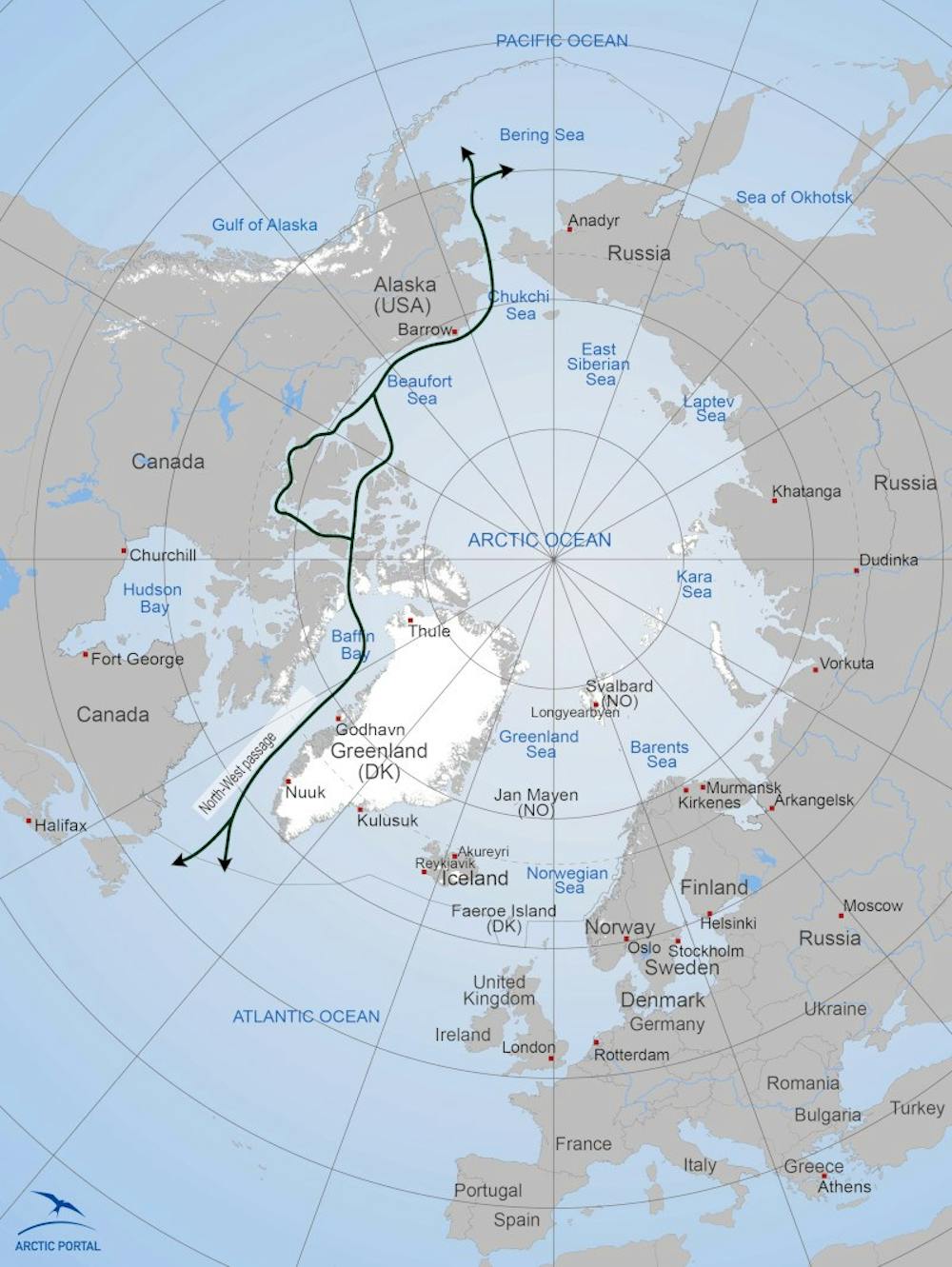
    April 4, 2025
  • MIL-OSI Europe: 2025 One World Media awards: longlist unveiled

    Source: European Investment Bank

    Each year, the One World Media Awards celebrates the finest journalism and documentary filmmaking from across the Global South. For the 2025 Awards, 559 entries were received from over 100 countries.

    The judges have spent countless hours reviewing powerful and thought-provoking stories — ones that challenge stereotypes, reshape narratives, and build connections across borders. They showcase stories of people across the globe, from Afghanistan and Argentina to China, Fiji, India, Gaza, Myanmar, Nigeria, Sweden, Yemen — and so many more.

    With such a high calibre of work, narrowing down the selection in each category was tougher than ever.

    Discover the Longlist for the 13 categories, including the Women’s Solutions Reporting award, supported by the European Investment Bank:

    This award celebrates excellence in media coverage of stories featuring solutions by and for girls and women that tackle current challenges.

    The final three nominees will be announced on 7 May and the winners will be presented at the Awards Ceremony in June 2025.

    Stay tuned for more news!

    One World Media Awards

    MIL OSI Europe News –

    April 4, 2025
  • MIL-Evening Report: No, that’s not what a trade deficit means – and that’s not how you calculate other nations’ tariffs

    Source: The Conversation (Au and NZ) – By Peter Draper, Professor, and Executive Director: Institute for International Trade, and Jean Monnet Chair of Trade and Environment, University of Adelaide

    On April 2, United States President Donald Trump unveiled a sweeping new “reciprocal tariff” regime he says will level the playing field in global trade – by treating other countries the way (he claims) they treat the US.

    First, Trump’s plan will impose a “baseline” 10% tariff on virtually all goods imported into the US, effective April 5. Then, from April 9, 57 countries will face higher “reciprocal tariffs”.

    These vary by country, according to a formula based on individual trade deficits.

    On face value, the new tariff regime might sound like a simple solution for fairness. If a particular country was taxing American imports with a 50% tariff, it might seem fair for the US to tax their imports at 50% as well.

    But appearances are deceiving.

    These new “reciprocal” tariffs ostensibly aim to eliminate the US trade deficit by making imports more expensive so that Americans buy less from abroad until imports equal exports.

    But the Trump administration hasn’t directly matched specific foreign tariffs. Instead, they’ve opted for a crude formula based on bilateral trade deficits between the US and each specific country. Those aren’t the same things.


    Read more:
    New modelling reveals full impact of Trump’s ‘Liberation Day’ tariffs – with the US hit hardest


    Trade deficits aren’t tariffs

    A country has a trade deficit when the total value of everything it imports from somewhere else exceeds the value of what it exports there. A trade surplus is the opposite.

    Trade deficits and surpluses – the balance of trade – can be calculated between specific countries, but also between one country and the rest of the world.

    Tariffs are different things altogether – taxes a country charges on imports when they cross the border, paid by the importer.


    Read more:
    What are tariffs?


    Trump’s new reciprocal tariffs have been calculated by taking the US trade deficit with each country, dividing it by total US imports from that country, then halving the resulting ratio and converting it into a percentage.

    For example, in 2024, the US imported approximately US$605.8 billion from the European Union, but exported only $370.2 billion, resulting in a trade deficit of $235.6 billion.

    Dividing the deficit by total imports from the EU gives a ratio of 39%. The White House interpreted this figure as the EU’s trade “advantage” and subsequently imposed a “discounted” 20% tariff on EU products – roughly half of 39%.

    This same calculation led to a 34% tariff on China, 26% on India, 24% on Japan and 25% on South Korea. More export-dependent developing countries, including many in Southeast Asia, face some eye-wateringly high reciprocal tariffs.

    Trade experts swiftly criticised the methodology behind the tariffs. James Surowiecki, a financial journalist, labelled it “extraordinary nonsense”.

    While the use of economic formulas in the corresponding US Trade Representative document might give it an appearance of being grounded in economic theory, it is detached from the rigours of trade economics.

    The formula assumes every trade deficit is a result of other countries’ unfair trade practices, but that is simply not the case. To see why, we need to understand why Trump’s obsession with trade deficits is wrong.

    A government isn’t a household

    Why does Trump detest trade deficits? He appears to think of the national balance of trade like a business or household’s finances.

    Under Trump’s logic, if more money is leaving the “account” than coming in, that’s bad business. A $200 million trade deficit would mean the US is “losing” – with money and jobs being siphoned away.

    Trump argues other countries have been taking advantage of America by running up big trade surpluses and “hollowing out” US industry. He has long argued that America’s massive deficits indicate unfair trade deals, foreign protectionism, and even a threat to national security.

    Few economists share Trump’s view

    The trade gap is not money simply being drained overseas by allegedly rapacious foreigners. Rather, it represents the exchange of value.

    American consumer behaviour is a significant driver of the US trade deficit. As a consumption powerhouse, the United States sees its residents and businesses spending vast sums on imported products ranging from iPhones and TVs to clothing and toys.

    Many of these are actually produced by US companies but made overseas. Moreover, those US companies licence foreign factories to produce these goods, and the intellectual property revenues earned make up a huge US surplus in services trade.

    But services trade does not feature in the formula. This shows the singular obsession with tangible things, or goods trade. Yet in most supply chains it is the services components that yield the most value.

    Back on the goods side, when the US economy is robust and people have disposable income, imports naturally increase. Ultimately, while trade deficits indicate economic dynamics, they are not inherently negative nor do they signify economic weakness.

    Rather, they often reflect a nation’s economic structure and consumer preference for diverse global products. After all, Australia has run trade deficits for decades, including with the US, and is one of the wealthiest countries in the world.

    The uninhabited Heard and McDonald Islands, home to a large population of penguins, were hit with tariffs in this week’s announcement.
    VW Pics/Getty

    The real reason for the deficit

    The formula used to calculate the reciprocal tariffs is highly misleading. Responsible policy makers would take account of many other factors in their calculations.

    Among other variables, the US Trade Representative formula fails to consider strong US consumer demand for imports. It also overlooks the US government’s gigantic fiscal deficit. This requires it to borrow money from overseas, pushing up the value of the US dollar. This strong dollar supports US purchases of imports.

    In other words, the US runs large trade deficits not primarily because other nations have high trade barriers but largely because Americans need to fund their debts and want to buy lots of imported goods. The misleading formula places the blame entirely on an ill-conceived notion, and we are all going to pay the price.

    Peter Draper receives funding from the European External Action Service and Australian Department of Foreign Affairs and Trade, for project-specific work connected to trade policies. He is affiliated with the Australian Services Roundtable (Board Member); the International Chamber of Commerce (Research Foundation Director); European Centre for International Political Economy (non-resident Fellow); German Institute for Development and Sustainability (non-resident Research Fellow); and Friends of Multilateralism Group (member).

    Vutha Hing receives funding from Economic Research Institute for ASEAN and East Asia. He is affiliated with Trade Policy Advisory Board, Royal Government of Cambodia.

    – ref. No, that’s not what a trade deficit means – and that’s not how you calculate other nations’ tariffs – https://theconversation.com/no-thats-not-what-a-trade-deficit-means-and-thats-not-how-you-calculate-other-nations-tariffs-253830

    MIL OSI Analysis – EveningReport.nz –

    April 4, 2025
  • MIL-OSI United Kingdom: Forecasting floods with unprecedented detail

    Source: United Kingdom – Government Statements

    Case study

    Forecasting floods with unprecedented detail

    Flood forecasting with the open-source flood modelling tool High-Performance Integrated Hydrodynamic Modelling System (HiPIMS)

    Flooding December 2015, Carlisle. Image credit: Environment Agency.

    High-Performance Integrated Hydrodynamic Modelling System (HiPIMS) for flood forecasting and risk assessment

    Qiuhua Liang 1 and Huili Chen 1

    1 School of Architecture, Building and Civil Engineering, Loughborough University, United Kingdom

    Professor Qiuhua Liang and his team at Loughborough University developed the award-winning High-Performance Integrated Hydrodynamic Modelling System (HiPIMS) over 2 decades. HiPIMS is an open-source flood modelling tool formally released at presentation in 2013. It was designed to better predict and understand flooding using high-performance computing. HiPIMS provides timely and detailed flood forecasts over an entire catchment or city.

    The research filled a practical gap – forecasting highly transient flooding processes, driven by intense rainfall, dam breaks, storm surge or tsunamis. Flood predictions or forecasts are essential to assess and mitigate flood risk, and to develop effective plans for emergency response benefiting people at risk, government agencies, and other practitioners working on flood risk management (Xia, Liang and others, 2019).

    Impact 

    HiPIMS was implemented and tested for forecasting the flooding process caused by the 2015 Storm Desmond over the entire Eden Catchment of 2500km². The real-time flood forecasting system was developed by integrating HiPIMS with the Met Office’s numerical weather prediction outputs. The system was able to forecast flooding from 36‐hour weather forecasts at a 10-metre resolution in 1.75 hours. This was the first real-time forecasting of a complete flooding process induced by intense rainfall, from rainfall-runoff, river hydraulics to inundation (Ming, Liang and others, 2020).

    The output was showcased at the Royal Society’s Flooding From Intense Rainfall Programme Open Event in London on 27th November 2018, and recognised by Prof Brian Golding, the Senior Research Fellow in Weather Impacts from the Met Office, at the time as “the UK’s first real-time, high-resolution flood forecasting system of its kind”.

    HiPIMS simulated flood map for the 2015 Desmond Flood in Carlisle. Credit: Qiuhua Liang.

    HiPIMS was later embedded in the UK’s Data and Analytics Facility for National Infrastructure (DAFNI) for real-time flood forecasting through the NERC funded Flood-PREPARED and PYRAMID projects. It was also used to generate surface water flooding data to improve national infrastructure resilience in the National Digital Twin Programme (NDTP). The NDTP supports growing national capability in digital twinning technologies and processes throughout the UK.

    Outside of the UK, HiPIMS has also been used to advance flood modelling and risk mapping practice. In China, the Ministry of Water Resources’ Institute of Water Resources and Hydropower Research (IWHR) incorporated HiPIMS into their Integrated Flood Modelling System (IFMS) to support national flood risk mapping across approximately 500,000km², almost half of the 1.1 million km2 of flood-prone areas in the country. The research developed as part of HiPIMS benefitted hundreds of millions of people in different provinces in China through provision of detailed flood risk information to better inform mitigation strategies (IWHR, 2023).

    The Deputy Director from the Centre of Flood Control and Drought Relief at the China Institute of Water Resources and Hydropower Research (IWHR) (2023) said:

    The numerical methods and model developed by Professor Qiuhua Liang have been directly applied to support national flood risk mapping in China. The flood risk maps have been used by the Central Government and local governments of different levels to inform flood risk management policy making and support flood protection planning and investment.

    HiPIMS was adopted by government departments in Nepal to standardize methodologies for assessing Glacial Lake Outburst Flood (GLOF) risks (Chen, Zhao and others, 2022). The tool was featured in the RAINMAN-Toolbox, supporting heavy rainfall hazard assessments in central European catchments, showcasing its versatility across different geographic contexts.

    The tool has received several awards, including the Prince Sultan Bin Abdulaziz International Prize for Water in 2024 recognising its innovation and impact. The award honours the development of pioneering, open-source, multi-GPU hydrodynamic models that support real-time flood forecasting at high temporal and spatial resolutions.

    Resources 

    Chen H, Zhao J, Liang Q, and others. (2022). Assessing the potential impact of glacial lake outburst floods on individual objects using a high-performance hydrodynamic model and open-source data. Science of the Total Environment, 806(3): 151289. Available at: doi.org/10.1016/j.scitotenv.2021.151289 (Accessed: 24 March 2025).  

    HiPIMS-ocl Version 1 on GitHub. Available at: https://github.com/lukeshope/hipims-ocl (Accessed: 24 March 2024).

    HiPIMS-CUDA Version 2 on GitHub. Available at: https://github.com/HEMLab/hipims (Accessed: 24 March 2025).

    Loughborough University. (2025). HiPIMS history – UNESCO Chair in Informatics and Multi-hazard Risk Reduction. Available at: https://www.lboro.ac.uk (Accessed: 24 March 2025).

    Ming X, Liang Q, and others. (2020). Real-time flood forecasting based on a high-performance 2D hydrodynamic model and numerical weather predictions. Water Resources Research. Available at: doi.org/10.1029/2019WR025583 (Accessed: 24 March 2025).  

    Smith LS, Liang Q (2013). Towards a generalised GPU/CPU shallow-flow modelling tool. Computers & Fluids, 88: 334-343. Available at: doi.org/10.1016/j.compfluid.2013.09.018 (Accessed 24 March 2025).  

    Xia X, Liang Q, and others. (2019). A full-scale fluvial flood modelling framework based on a high-performance integrated hydrodynamic modelling system (HiPIMS). Advances in Water Resources, 132: 103392. Available at: doi.org/10.1016/j.advwatres.2019.103392 (Accessed: 24 March 2025).

    Funder 

    • UK Research and Innovation (UKRI)
    • Loughborough University 

    Collaborators  

    • China Institute of Water Resources and Hydropower Research (IWHR) 
    • International Centre for Integrated Mountain Development (ICIMOD) 
    • UK Met Office 
    • Newcastle University  

    Research period  

    • 2013 to 2022 

    Impact period

    • 2013 to 2022 

    Impact country  

    • UK 
    • China 
    • Nepal

    Contributing towards the areas of research interest

    • 4 – Flood incident management

    Updates to this page

    Published 4 April 2025

    MIL OSI United Kingdom –

    April 4, 2025
  • MIL-OSI China: S. Korean President Yoon ousted as court upholds impeachment

    Source: China State Council Information Office

    This photo shows a scene during a session for the ruling on the impeachment against President Yoon Suk-yeol at South Korea’s constitutional court in Seoul, South Korea, April 4, 2025. (James Lee/Pool via Xinhua)

    South Korean President Yoon Suk-yeol was ousted from office Friday as the constitutional court upheld a motion by the parliament to impeach Yoon over his short-lived martial law imposition last December.

    Moon Hyung-bae, acting chief of the court, read a ruling on Yoon’s impeachment, which was broadcast live nationwide, saying it was a unanimous decision of eight justices.

    Moon said Yoon broke his duty of protecting the constitution as he damaged the constitutional institutions, such as the National Assembly, and violated the basic rights of people by mobilizing the military and the police.

    Moon stressed that the benefit of protecting the constitution through Yoon’s dismissal will overwhelmingly exceed the national loss from his dismissal.

    Yoon declared an emergency martial law on the night of Dec. 3 last year, but it was revoked by the opposition-led National Assembly hours later.

    Throughout the midnight hours of the botched martial law attempt, military helicopters landed at the National Assembly and hundreds of armed special forces troops broke into the parliamentary building.

    By law, the ruling comes into force immediately after the reading, and a snap presidential election is required to be held within 60 days. The election is expected to fall in late May or early June.

    The conservative leader officially lost all presidential power, becoming the country’s second sitting president to be forcibly removed from power following former conservative President Park Geun-hye’s ouster through impeachment in 2017.

    Yoon also became the third leader to be impeached by the National Assembly in the country’s constitutional history. Late liberal President Roh Moo-hyun was reinstated in the presidency after impeachment in 2004.

    Since the passage of Yoon’s impeachment motion on Dec. 14 last year, a total of 11 hearings have been held in the constitutional court until Feb. 25.

    It took 111 days before the court’s final verdict, compared to 92 days for Park’s impeachment and 64 days for Roh’s impeachment.

    Yoon was apprehended in the presidential office on Jan. 15 and was indicted under detention on Jan. 26 as a suspected ringleader of insurrection, becoming the country’s first sitting president to be arrested and prosecuted.

    If convicted of the insurrection ringleader, Yoon could face the death penalty or life imprisonment.

    He was released on March 8 as the prosecution decided not to appeal against a court’s release approval.

    Yoon will be stripped of most privileges granted to a former president, including a monthly pension, one chauffeur and three secretaries. Free medicine and the cost of a personal office will not be given to him.

    For the forcibly ousted president, the period during which the presidential security service provides guards will be reduced from 10 years to five years. After the five-year period, police officers will guard Yoon and his wife.

    Kwon young-se, interim chief of the ruling People Power Party, apologized to people over the constitutional court’s decision, saying his party will take it seriously and humbly accept it.

    He emphasized that there should never be violence or extreme action in any case, calling on supporters to overcome the current crisis in peace and order.

    Lee Jae-myung, chief of the main liberal opposition Democratic Party, expressed his sincere respect for and gratitude to ordinary people who stood against soldiers and armored vehicles at the time of martial law imposition.

    The most-favored presidential hopeful added that the unarmed people dramatically revived democracy by peacefully confronting the armed forces, vowing to do his best to prevent the repeated tragedy of the constitution’s destruction.

    Following the impeachment verdict, anti-Yoon demonstrators were seen crying tears of joy, hugging each other and cheering in celebration near the constitutional court, with some holding signs that read “Immediately dismiss Yoon, the ringleader of insurrection.”

    Yoon’s supporters, who rallied just hundreds of meters away on the street, reacted furiously. A man wearing a helmet and a gas mask was caught red-handed after breaking the window of a police bus, parked for a police line along the court, with a club.

    Hemmed in by police officers, other supporters burst into tears, rocked barricades and even swore at riot policemen.

    A recent Gallup Korea survey showed that almost six out of 10 South Koreans consented to Yoon’s ouster while 37 percent objected to his impeachment.

    It was based on a poll of 1,001 voters conducted from Tuesday to Thursday. It had a plus and minus 3.1 percentage points in margin of error with a 95 percent confidence level.

    Security was ramped up nationwide. The police issued the highest level of emergency order to deploy about 20,000 riot policemen across the country for expected protests and crowd control.

    Of the total, some 14,000 riot policemen were deployed in Seoul to prevent possible conflicts near the constitutional court, the presidential residence and the parliament.

    Police commandos, as well as paramedics and ambulances, were on standby around the court to respond to possible emergencies. 

    MIL OSI China News –

    April 4, 2025
  • MIL-OSI China: New flight linking Lao’s Luang Prabang, China’s Kunming launched

    Source: China State Council Information Office

    A direct air route linking northern Laos’ Luang Prabang province and Kunming in southwest China has been launched to enhance connectivity and strengthen the relationship between the two countries.

    The launching ceremony, held at Luang Prabang International Airport on April 1, was attended by Deputy Governor of Luang Prabang province Bounleum Manivong and guests from both Laos and China, Lao national TV reported on Friday.

    This route aims to boost economic, trade, cultural, and tourism exchanges, offering Chinese tourists an opportunity to explore the town of Luang Prabang, a UNESCO World Heritage site known for its natural beauty and rich culture.

    The flights will operate three times a week, with a 1.5-hour journey connecting Luang Prabang and Kunming. 

    MIL OSI China News –

    April 4, 2025
  • MIL-OSI China: Trump advised not to call Putin until Moscow agrees to full ceasefire: NBC

    Source: China State Council Information Office

    U.S. President Donald Trump’s inner circle has advised him not to call Russian President Vladimir Putin until Moscow agrees to a full ceasefire with Ukraine, NBC News reported Thursday.

    The report, citing two administration officials, said no call had been scheduled as of Thursday afternoon between Trump and Putin, while the two officials cautioned that Trump could decide he wants to talk to Putin suddenly.

    The officials said Trump has been advised that a phone call was not a good idea unless Putin has agreed to a full ceasefire in the conflict with Ukraine, according to NBC News.

    Trump told NBC News on Sunday that he planned to talk to Putin this week. During their phone conversation on March 18, Trump and Putin agreed that peace in Ukraine “will begin with an energy and infrastructure ceasefire.”

    MIL OSI China News –

    April 4, 2025
  • MIL-OSI China: Iran condemns Israeli attacks on Palestinians

    Source: China State Council Information Office

    Iran on Thursday condemned what it called Israel’s continued “crimes” and attacks against Palestinians.

    Iranian Foreign Ministry spokesman Esmaeil Baghaei listed as crimes committed by Israel over the past few days the targeted assassination of reporters, intentional attacks on rescue and relief workers and medical centers.

    He slammed the inaction of certain Western countries in the face of the “flagrant and systematic violations of human rights and international humanitarian law” in the occupied Palestinian territory, calling it a clear sign of those countries’ lack of honesty regarding the upholding of human rights and the rule of law.

    He also urged all countries to prevent the “continued killing of defenseless Palestinian women and children through verbal and practical solidarity with the oppressed Palestinian people.”

    MIL OSI China News –

    April 4, 2025
  • MIL-OSI USA: Foster, Durbin Introduce American Innovation Act

    Source: United States House of Representatives – Congressman Bill Foster (11th District of Illinois)

    Washington, DC – Today, U.S. Representative Bill Foster (D-IL-11) and U.S. Senate Democratic Whip Dick Durbin (D-IL) reintroduced the bicameral American Innovation Act, which would provide annual budget increases at a rate of five percent, indexed to inflation, for cutting-edge research at five federal agencies: the Department of Energy Office of Science; the National Science Foundation; the National Institute of Standards and Technology Scientific and Technical Research Services; the Department of Defense Science and Technology Programs; and the National Aeronautics and Space Administration (NASA) Science Directorate.  The American Innovation Act would position the U.S. as a leader in development and discovery for decades to come by creating steady, sustained funding for breakthrough research at America’s top research agencies.

    “I’m proud to work with Senator Durbin on this legislation to expand federal investment in scientific research,” said Foster.  “Since World War II, investments in science and technology have helped expand our economy, create millions of jobs, and advance our national security.  As we confront new and existing challenges, it’s critical that our scientists have the resources they need to ensure our nation remains at the forefront of research and innovation.”

    “In its crusade to damage essential government infrastructure, the Trump Administration has failed to recognize that sustained support for basic scientific research has enabled the United States to put a man on the moon, build the internet, and produce a COVID-19 vaccine in record time.  If we want to maintain our status as a world leader in research and technology, we must empower and fund our federal research agencies and retain their top talent,” said Durbin.  “I’m introducing the American Innovation Act to ensure our nation’s scientists and researchers have access to critical funding to push our world forward while also creating jobs, growing our economy, and improving our national security.”

    Basic science funding in the U.S. has lagged in recent decades. Since the 1970s, U.S. investment in basic science has decreased by tenfold to about 0.1 percent of GDP.  Meanwhile, China’s research intensity (GDP expenditures on R&D) has increased by 500 percent since 1996. If this trend continues, China will soon surpass the U.S. in investment in science.

    The American Innovation Act is cosponsored by U.S. Representatives Sean Casten (D-IL-06), Jill Tokuda (D-HI-02), and Eleanor Holmes Norton (D-DC), and U.S. Senators Tammy Duckworth (D-IL), Alex Padilla (D-CA), Mazie Hirono (D-HI), and Brian Schatz (D-HI).

    The legislation has earned the endorsement of the American Mathematical Society; American Physical Society; American Society of Mechanical Engineers; American Society of Microbiology; Association of American Universities; Association of Public and Land-Grant Universities; Coalition for Academic Scientific Computation; Computing Research Association; Council on Undergraduate Research; Federation of American Scientists; Institute for Progress; the Institute of Electrical and Electronics Engineers; MIT Graduate Student Council; Society of Women Engineers; Taskforce for American Innovation; University of Illinois System; and the University of Chicago.

    A copy of the legislation can be found here.

    ###

    MIL OSI USA News –

    April 4, 2025
  • MIL-OSI Europe: Euro area quarterly balance of payments and international investment position: fourth quarter of 2024

    Source: European Central Bank

    4 April 2025

    • Current account surplus at €426 billion (2.8% of euro area GDP) in 2024, after a €243 billion surplus (1.7% of GDP) a year earlier.
    • Geographical counterparts: largest bilateral current account surpluses vis-à-vis United Kingdom (€197 billion) and Switzerland (€76 billion) and largest deficit vis-à-vis China (€105 billion).
    • International investment position showed net assets of €1.66 trillion (10.9% of euro area GDP) at end of 2024.
    • Bilateral current account vis-à-vis the United States: surplus of €3 billion (0.0% of euro area GDP) in 2024, following a deficit of €30 billion (0.2% of GDP) in 2023. For more details see dedicated section on economic and financial linkages between the euro area and the United States.

    Current account

    The current account of the euro area recorded a surplus of €426 billion (2.8% of euro area GDP) in 2024, following a €243 billion surplus (1.7% of GDP) a year earlier (Table 1). This development was driven by larger surpluses for goods (from €264 billion to €372 billion), services (from €127 billion to €169 billion) and primary income (from €20 billion to €54 billion). The deficit for secondary income increased moderately from €167 billion to €168 billion.

    The estimates on goods trade broken down by product group show that in 2024 the increase in the goods surplus was mainly due to a reduction in the deficit for energy products (from €314 billion to €260 billion). In addition, the surpluses for chemical products and machinery and manufactured products increased (from €244 billion to €268 billion and from 283 billion to €300 billion, respectively).

    The larger surplus for services in 2024 was mainly due to widening surpluses for telecommunication, computer and information (from €169 billion to €203 billion) and travel (from €52 billion to €61 billion), and a lower deficit for other business services (from €60 billion to €28 billion). These developments were partly offset by a widening deficit for charges for the use of intellectual property (from €100 billion to €126 billion).

    In 2024, the increase in the primary income surplus was mainly due to larger surpluses in direct investment (from €72 billion to €104 billion), portfolio debt (from €59 billion to €79 billion), and other primary income (from €3 billion to €15 billion), which were partly offset by a larger deficit in portfolio equity (from €163 billion to €194 billion).

    Table 1

    Current account of the euro area

    (EUR billions, unless otherwise indicated; transactions during the period; non-working day and non-seasonally adjusted)

    Source: ECB.
    Notes: “Equity” comprises equity and investment fund shares. Goods by product group is an estimated breakdown using a method based on statistics on international trade in goods. Discrepancies between totals and their components may arise from rounding.

    Data for the current account of the euro area

    Data on the geographical counterparts of the euro area current account (Chart 1) show that in 2024, the euro area recorded its largest bilateral surpluses vis-à-vis the United Kingdom (€197 billion, down from €220 billion a year earlier) and Switzerland (€76 billion, up from €65 billion). The euro area also recorded surpluses vis-à-vis other emerging countries (€155 billion, up from €135 billion a year earlier) and other advanced countries (€114 billion, up from €80 billion). The largest bilateral deficit was recorded vis-à-vis China (€105 billion, down from €109 billion a year earlier) and a deficit was also recorded vis-à-vis the residual group of other countries (€96 billion, down from €142 billion).

    The most significant changes in the geographical components of the current account in 2024 relative to 2023 were as follows: the goods surpluses increased vis-à-vis the United States (from €179 billion to €213 billion) and vis-à-vis other advanced countries (from €27 billion to €50 billion), while the goods deficit vis-à-vis China increased from €131 billion to €141 billion. In services, the deficit vis-à-vis the United States increased (from €124 billion to €156 billion), while the balance vis-à-vis offshore centres shifted from a deficit (€8 billion) to a surplus (€16 billion). In primary income, the balance vis-à-vis the United Kingdom shifted from a surplus (€31 billion) to a deficit (€4 billion) while a smaller deficit was recorded vis-à-vis the United States (from €84 billion to €52 billion). The deficit in secondary income vis-à-vis the EU Member States and EU institutions outside the euro area decreased slightly (from €76 billion to €73 billion).

    Chart 1

    Geographical breakdown of the euro area current account balance

    (four-quarter moving sums in EUR billions; non-seasonally adjusted)

    Source: ECB.
    Note: “EU non-EA” comprises the non-euro area EU Member States and those EU institutions and bodies that are considered for statistical purposes as being outside the euro area, such as the European Commission and the European Investment Bank. “Other advanced” includes Australia, Canada, Japan, Norway and South Korea. “Other emerging” includes Argentina, Brazil, India, Indonesia, Mexico, Saudi Arabia, South Africa and Türkiye. “Other countries” includes all countries and country groups not shown in the chart, as well as unallocated transactions.

    Data for the geographical breakdown of the euro area current account

    International investment position

    At the end of 2024, the international investment position of the euro area recorded net assets of €1.66 trillion vis-à-vis the rest of the world (10.9 % of euro area GDP), up from €1.25 trillion in the previous quarter (Chart 2 and Table 2).

    Chart 2

    Net international investment position of the euro area

    (net amounts outstanding at the end of the period as a percentage of four-quarter moving sums of GDP)

    Source: ECB.

    Data for the net international investment position of the euro area

    The €407 billion increase in net assets was mainly driven by larger net assets in portfolio debt (up from €1.27 trillion to €1.42 trillion), direct investment (up from €2.54 trillion to €2.66 trillion) and reserve assets (up from €1.32 trillion to €1.39 trillion).

    Table 2

    International investment position of the euro area

    (EUR billions, unless otherwise indicated; amounts outstanding at the end of the period, flows during the period; non-working day and non-seasonally adjusted)

    Source: ECB.
    Notes: “Equity” comprises equity and investment fund shares. Net financial derivatives are reported under assets. “Other volume changes” mainly reflect reclassifications and data enhancements. Discrepancies between totals and their components may arise from rounding.

    Data for the international investment position of the euro area

    The developments in the euro area’s net international investment position in the fourth quarter of 2024 were driven mainly by positive exchange rate changes, and to a lesser extent by positive transactions and other volume changes (Table 2 and Chart 3).

    At the end of the fourth quarter of 2024, direct investment assets of special purpose entities (SPEs) amounted to €3.58 trillion (28% of total euro area direct investment assets), up from €3.53 trillion at the end of the previous quarter (Table 2). Over the same period, direct investment liabilities of SPEs increased from €3.10 trillion to €3.13 trillion (31% of total direct investment liabilities).

    At the end of the fourth quarter of 2024 the gross external debt of the euro area amounted to €16.70 trillion (110% of euro area GDP), up by €1 billion compared with the previous quarter.

    Chart 3

    Changes in the net international investment position of the euro area

    (EUR billions; flows during the period; non-working day and non-seasonally adjusted)

    Source: ECB.
    Note: “Other volume changes” mainly reflect reclassifications and data enhancements. 

    Data for changes in the net international investment position of the euro area

    At the end of 2024 euro area direct investment assets were €12.62 trillion, 23% of which was invested in the United States and 19% in the United Kingdom (see Table 3). Euro area direct investment liabilities were €9.96 trillion, with 28% being investments from the United States, 19% from offshore centres and 18% from the United Kingdom.

    In portfolio investment, euro area holdings of foreign securities amounted to €7.57 trillion in equity and €7.09 trillion in debt securities at the end of 2024. The largest holdings of equity were in securities issued by residents of the United States (accounting for 60%). In debt securities, the largest euro area holdings were in securities issued by residents of the United States (accounting for 38%), the United Kingdom (17%) and the EU Member States and EU institutions outside the euro area (16%).

    On the portfolio investment liabilities side, non-residents’ holdings of securities issued by euro area residents stood at €10.84 trillion in equity and at €5.67 trillion in debt at the end of 2024. The largest holder countries of euro area equity were the United States (27%) and the United Kingdom (13%), while for euro area debt securities the largest holders were the BRIC group of countries (14%), the United States (13%) and Japan (11%).

    In other investment, euro area residents’ claims on non-residents amounted to €7.18 trillion, 29% of which was vis-à-vis the United Kingdom and 24% vis-à-vis the United States. Euro area other investment liabilities amounted to €7.71 trillion, with the United Kingdom accounting for 25% and the United States for 19%.

    Table 3

    International investment position of the euro area – geographical breakdown

    (as a percentage of the total, unless otherwise indicated; at the end of the period; non-working day and non-seasonally adjusted)

    Source: ECB.
    Notes: “Equity” comprises equity and investment fund shares. “EU non-EA” comprises the non-euro area EU Member States and those EU institutions and bodies that are considered for statistical purposes as being outside the euro area, such as the European Commission and the European Investment Bank. The “BRIC” countries are Brazil, Russia, India and China. “Other advanced” includes Australia, Canada, Norway and South Korea. “Other emerging” includes Argentina, Indonesia, Mexico, Saudi Arabia, South Africa and Türkiye. “Other countries” includes all countries and country groups not listed in the table as well as unallocated positions.

    Data for the international investment position of the euro area – geographical breakdown

    Economic and financial linkages between the euro area and the United States

    This statistical release provides a longer-term perspective on the euro area’s bilateral current account balance and international investment position vis-à-vis the United States by presenting developments over the past decade.

    In 2024 the euro area recorded a current account surplus of €3 billion (0.0% of euro area GDP) vis-à-vis the United States, following a deficit of €30 billion (0.2% of GDP) in 2023 (see Chart 4). The euro area had recorded a rather stable current account surplus vis-à-vis the United States of around 1.0% of GDP between 2015 and 2019, which gradually declined subsequently and turned into a deficit in 2022. Since 2015 the euro area has run a persistent and sizeable goods surplus vis-à-vis the United States, rising from €127 billion in 2015 to €213 billion in 2024. The marked decline in the euro area current account surplus vis-à-vis the United States over the past decade was mainly due to a pronounced widening in the deficit for services (from €21 billion in 2015 to €156 billion in 2024), driven by an increasing deficit in charges for the use of intellectual property (from €5 billion to €168 billion). In addition, the euro area’s primary income balance vis-à-vis the United States changed from a surplus of €2 billion in 2015 to a deficit of €52 billion in 2024, largely due to a widening deficit in direct investment income. The developments in the euro area’s bilateral current account balance vis-à-vis the United States, in particular the significant changes observed since 2019, are partly connected to the activities of US multinational enterprises in the euro area.

    Chart 4

    Euro area current account balance vis-à-vis the United States

    (left-hand scale: four-quarter moving sums in EUR billions; right-hand scale: four-quarter moving sums as a percentage of GDP; non-seasonally adjusted)

    Source: ECB.

    Data for the current account of the euro area vis-a-vis the United States

    At the end of 2024, the euro area’s bilateral investment position vis-à-vis the United States showed net assets equivalent to 26% of euro area GDP, up from 18% of GDP at the end of 2023 and 4% of GDP at the end of 2015 (Chart 5). Net asset positions in portfolio investment debt (13% of GDP) and portfolio investment equity (11% of GDP) contributed most to the euro area’s bilateral net asset position at the end of 2024. The increase in the euro area bilateral net asset position since 2015 was driven mainly by a shift in portfolio investment equity from a net debtor to a net creditor position, as euro area portfolio investment equity assets vis-à-vis the United States rose more strongly than the corresponding liabilities. Developments in portfolio investment debt and direct investment also contributed, albeit to a lesser extent, to the increase in total net assets vis-à-vis the United States.

    Chart 5

    vis-à-vis the United States

    Euro area net investment position

    (net amounts outstanding at the end of the period as a percentage of four-quarter moving sums of GDP)

    Source: ECB.

    Notes: “Total net position” refers to the sum of net direct investment, net portfolio investment, net other investment and net financial derivatives. Reserve assets are not included in the total. Net positions are computed as the asset positions minus the liability positions of the respective item. Discrepancies between totals and their components may arise from rounding.

    The United States is the largest destination country for euro area cross-border financial investment. Euro area financial assets vis-à-vis the United States amounted to €12.38 trillion at the end of 2024 (82% of euro area GDP), with an 83% increase since the end of 2015 (see Table 4). This development increased the share of the United States in euro area external assets from 27% to 33%. The increase was mainly due to euro area holdings of portfolio investment equity issued by residents of the United States, which have risen by 286% since the end of 2015, mainly as a result of positive price revaluations. At the same time, euro area holdings of portfolio investment debt securities have increased by 91% since the end of 2015.

    The United States is also the largest source country for euro area cross-border financial investment, accounting for bilateral financial liabilities of €8.41 trillion (56% of euro area GDP) at the end of 2024, a 32% increase since the end of 2015. Over the same period, the share of the United States in euro area external liabilities remained broadly stable at 22%. This development mainly reflected an increase of 97% in portfolio investment equity liabilities vis-à-vis the United States, while direct investment liabilities vis-à-vis the United States declined by 9%.

    Table 4

    Euro area international investment position vis-à-vis the United States

    (at the end of the period; non-working day and non-seasonally adjusted)

    Source: ECB.
    Notes: “p.p.” refers to percentage points. “Equity” comprises equity and investment fund shares. “Total assets/liabilities” refers to the sum of direct investment, portfolio investment, other investment and financial derivatives. Reserve assets are not included in the total. Around 17% of the Eurosystem’s total reserve assets of €1.3 trillion are held in the form of securities, of which an undisclosed part is invested in securities issued in the United States. Financial derivatives are reported separately in gross terms under assets and liabilities. Discrepancies between totals and their components may arise from rounding.

    Data for the international investment position of the euro area – vis-à-vis the US

    Data revisions

    This statistical release incorporates revisions to the data for the reference periods between the first quarter of 2021 and the third quarter of 2024. The revisions reflect revised national contributions to the euro area aggregates because of the incorporation of newly available information.

    MIL OSI Europe News –

    April 4, 2025
  • MIL-OSI China: 43 individuals face punishment for fatal coal mine accident in Heilongjiang

    Source: China State Council Information Office 2

    A total of 43 individuals should be punished for their roles in a deadly coal mine accident and subsequent cover-up in northeast China’s Heilongjiang Province, an investigation report revealed Thursday.
    The accident occurred on Dec. 20, 2023, in the Kunyuan coal mine in the city of Jixi, leaving 12 dead and 13 others injured.
    The accident resulted from illegal mining using improper equipment with damaged wires, which snapped under overload conditions while workers illegally rode cargo trains, according to the report released by the investigation team organized by the provincial government.
    Following the accident, the mine operator deliberately concealed it, hid the victims’ bodies, and destroyed evidence instead of reporting promptly. Emergency response was also mishandled, it added.
    The report revealed that judicial authorities as well as discipline inspection and supervision bodies have taken action against 14 individuals, while 29 others face recommended Party disciplinary or administrative penalties.

    MIL OSI China News –

    April 4, 2025
  • MIL-OSI China: Schools in Chinese city of Urumqi to trial 3-day spring break, 5-day snow break

    Source: China State Council Information Office 2

    Urumqi, the capital of northwest China’s Xinjiang Uygur Autonomous Region, will pilot a three-day spring break and a five-day snow break in schools starting this year, according to the local education authorities.
    The spring break will run from April 28 to 30, while the snow break is scheduled for Dec. 1 to 5.
    The initiative aims to diversify educational practices, reduce academic pressure under the national “double reduction” policy targeting excessive homework and off-campus tutoring, and promote hands-on learning beyond classrooms, according to the municipal education bureau.
    Students are encouraged to join school-organized cultural, sports and research programs, or engage in family trips and social practice activities during the breaks.
    The introduction of the spring break in China started in 2004, pioneered by Hangzhou in east China’s Zhejiang Province.
    China unveiled a plan on special initiatives to increase consumption last month, encouraging regions with adequate resources to pilot seasonal school breaks tailored to local needs. The plan also mandates strict enforcement of paid annual leave, fueling parents’ expectations for the breaks.
    Many schools across China, from primary schools to universities, have announced their spring or autumn break policies, including those in Beijing, Hubei and Fujian. 

    MIL OSI China News –

    April 4, 2025
  • MIL-OSI China: Secure mobile phone recycling system taking shape in China

    Source: China State Council Information Office 2

    Data security has always been a challenge during electronic waste processing and recycling in China, but the issue is being addressed through a new initiative.
    China Resources Recycling Group Co., Ltd. (CRRGC), a centrally administered state-owned enterprise, announced the nationwide expansion of its secure mobile phone recycling and disposal demonstration program to provincial capital cities.
    This marks the official launch of a nationwide network for confidential electronic carrier disposal, integrating recycling, disassembly and smelting into a unified system, according to the company.
    As a national leader in the circular economy, CRRGC has focused on constructing a secure electronic waste disposal system since its establishment in October 2024. Following trial operations in the cities of Tianjin and Shantou starting Jan. 18, the project is now expanding nationwide.
    Industry data estimates that China has several billion idle mobile phones, with over 400 million devices becoming idle each year.
    Liu Yu, chairman of CRRGC, emphasized the untapped potential of these “drawer phones,” noting that their data security and privacy risks necessitate specialized handling during recycling.
    Starting Thursday, users in provincial capitals in China can access the “worry-free chip destruction” WeChat mini-program to schedule either on-site phone destruction or confidential mail-in recycling.
    Devices processed at CRRGC’s Shantou facility undergo professional disassembly, mechanical crushing, and smelting under real-time monitoring and full-process traceability, according to CRRGC. Advanced physical shredding and pyrometallurgical technologies enable the safe extraction of precious metals while ensuring personal data security and material reuse.
    Liu said that this system creates a replicable, scalable commercial model for nationwide confidential electronic carrier disposal and resource recovery.
    In addition, through a partnership with China Post, CRRGC has built a closed-loop industrial chain that includes front-end collection, secure mid-process destruction, and high-value terminal processing.
    Plans are underway to expand this model to include computers, hard drives, and other electronics, with the goal of establishing national platforms for end-stage e-waste recycling and secondary trading, according to the company. 

    MIL OSI China News –

    April 4, 2025
←Previous Page
1 … 451 452 453 454 455 … 730
Next Page→
NewzIntel.com

NewzIntel.com

MIL Open Source Intelligence

  • Blog
  • About
  • FAQs
  • Authors
  • Events
  • Shop
  • Patterns
  • Themes

Twenty Twenty-Five

Designed with WordPress