Category: China

  • MIL-OSI China: Hohhot offers handsome cash rewards to boost birth rates

    Source: China State Council Information Office 3

    A city in northern China has promised cash rewards in a latest effort to boost birth rate and cope with the ageing society.

    Hohhot, capital of north China’s Inner Mongolia Autonomous Region, will offer a one-time subsidy of 10,000 yuan (about 1,394 U.S. dollars) for couples having their first child, according to a new regulation released on Thursday.

    A second child will receive 10,000 yuan per year until he/she reaches five years old. For the third child or more, the annual subsidy is 10,000 yuan until the child turns 10, with the total amount reaching 100,000 yuan, a relatively high amount compared with other cities.

    Yang Zhong, deputy director of the city’s health commission, said the measures are aimed at boosting birth rate and spurring population growth. “These policies come as a powerful measure to deal with the current local population development situation,” he said.

    Data shows that China’s population on the mainland stood at 1.40828 billion by the end of 2024, a decrease of 1.39 million from the previous year, representing the third consecutive decline since 2021.

    Figures show that Hohhot, about two hours’ train ride north of Beijing, has a population of around 3.6 million. The city’s birth rate showed a declining trend from 2019 to 2023, Yang said. The birth rate stood at 5.58 births per 1,000 people in 2023, though it slightly picked up in 2024 as more couples were willing to have babies in the Year of Dragon.

    Though experts say the result of the birth incentive is still to be tested, many couples have welcomed the policy.

    Yang Lixin, 30, who works at a private firm in Hohhot, already has a five-year-old. “The policy made us more assured in making our mind to having a second child. The subsidies can reduce the financial costs, especially for maternity and childcare,” she said. 

    MIL OSI China News

  • MIL-OSI China: China proposes five points on proper settlement of Iranian nuclear issue

    Source: People’s Republic of China – State Council News

    Chinese Foreign Minister Wang Yi, also a member of the Political Bureau of the Communist Party of China Central Committee, meets with Russian Deputy Foreign Minister Ryabkov Sergey Alexeevich and Iranian Deputy Foreign Minister Kazem Gharibabadi in Beijing, capital of China, March 14, 2025. [Photo/Xinhua]

    BEIJING, March 14 — China proposed five points on the proper settlement of the Iranian nuclear issue, as Chinese Foreign Minister Wang Yi met with Russian Deputy Foreign Minister Ryabkov Sergey Alexeevich and Iranian Deputy Foreign Minister Kazem Gharibabadi in Beijing on Friday.

    First, stay committed to peaceful settlement of disputes through political and diplomatic means, and oppose the use of force and illegal sanctions, said Wang, who is also a member of the Political Bureau of the Communist Party of China Central Committee.

    He added that all parties should uphold the vision of common, comprehensive, cooperative and sustainable security, work actively to create conditions for the resumption of dialogue and negotiation, and refrain from actions that might escalate the situation.

    Second, stay committed to balancing rights and responsibilities, and take a holistic approach to the goals of nuclear non-proliferation and peaceful uses of nuclear energy, said Wang.

    He noted that Iran should continue honoring its commitment to not developing nuclear weapons, and that all other parties should fully respect Iran’s right to peaceful uses of nuclear energy as a State Party to the Treaty on the Non-proliferation of Nuclear Weapons (NPT).

    Third, stay committed to the framework of the Joint Comprehensive Plan of Action (JCPOA) as the basis for new consensus, said the Chinese foreign minister.

    China hopes that all parties will work toward the same direction and resume dialogue and negotiation as early as possible, Wang said, adding that the United States should demonstrate political sincerity and return to talks at an early date.

    Fourth, stay committed to promoting cooperation through dialogue, and oppose pressing for intervention by the United Nations Security Council (UNSC), Wang stressed.

    He said that under the current situation, hasty intervention by the UNSC will not help build confidence or bridge differences among the relevant parties. Initiating the snapback mechanism would undo years of diplomatic efforts, and must be handled with caution, he pointed out.

    Fifth, stay committed to a step-by-step and reciprocal approach, and seek consensus through consultation, said Wang.

    “History has proven that acting from a position of strength would not lead to the key to resolving difficult issues,” said Wang.

    “Upholding the principle of mutual respect is the only viable path to finding the greatest common ground that accommodates the legitimate concerns of all parties and reaching a solution that meets the expectation of the international community,” he noted.

    Wang said that as a permanent member of the UNSC and a party to the JCPOA, China will stay in communication and coordination with all relevant parties, actively promote talks for peace, and play a constructive role in realizing early resumption of talks.

    MIL OSI China News

  • MIL-OSI USA: Who Collects the Nation’s Mineral Statistics? Meet the National Mineral Information Center

    Source: US Geological Survey

    Technology has changed since the U.S. Geological Survey first began assessing U.S. mineral resources and analyzing mineral production and needs in 1879 – and issued its first statistical report on the U.S. mining industry in 1882.  Today, the USGS uses airborne hyperspectral surveys to understand U.S. mineral resources, an option not available to our second director, John Wesley Powell, who descended the Colorado River in wooden rafts.

    Yet, U.S. leaders, industry and the public still need world-class science to decide how to supply the minerals the nation needs.

    Today, the U.S. Geological Survey’s National Minerals Information Center in Reston, Virginia collects the official statistics on the domestic and global production, supply, demand and trade of the minerals the nation needs.

    This mission is carried out by deeply experienced geologists, metallurgists, economists, engineers and supply chain analysts who, each year, collect data on over 90 mineral commodities from the U.S. and its territories, in 180 countries, and across 235 manufacturing industries. 

    Their data is relied on by national security and defense logistics leaders within the U.S. government, as well as manufacturers, mining companies, and investors.  To share all this information, the National Minerals Information Center produces over 675 publications each year, equaling approximately two publications a day, including the annual Mineral Commodity Summaries which are released every year on January 31.

    These data are powerful, providing deep insights into how much and how many minerals the U.S. is producing, which countries it relies on for imports, and how mineral production and consumption is changing over time. When combined with the center’s nearly century-long history, these data become even more valuable. 

    “We do much more than collect and archive data; we serve as a link between the past and what’s to come,” said Elisa Alonso, assistant chief of National Minerals Information Center Minerals Intelligence section. “By studying the mineral economy’s patterns of the past, we can estimate how they will unfold in the future, and help alert our leaders to supply chain risks.” 

    The center’s leaders explained that the mineral economy is complex, comprised of moving parts all over the world. 

    “The minerals used to create a cell phone, for instance, may have been mined in one country, processed in another, combined with other metals, and manufactured in yet another country before being assembled into the final product in your hand,” said Braden Harker, director of the National Minerals Information Center. 

    According to Harker, the supply chains that deliver vehicles, appliances, technology, and military equipment are equally as complex. 

    Tackling these complexities requires mountains of data. Experts at NMIC use the Center’s wealth of data and expertise to understand how supply and demand of minerals is changing, and how hypothetical natural disasters or international crises could send ripple effects through the U.S. and the world. 

    For instance, the center’s experts have studied the impact that earthquakes could have on global copper supplies, since many major copper mines, smelters and refineries are located in areas geologically prone to earthquakes. One take-away: the potential lost revenue for copper mining from earthquake disruptions could be as high as $1.29 billion.

    “Both public and private sectors rely on NMIC to understand how minerals travel through the world and, crucially, which parts of essential supply chains could choke off the supply of minerals to the United States if disrupted,” Harker said.

    NMIC analyses also highlight how potential mineral shortages could impact specific economic sectors within the U.S. 

    Another study estimated the impact of a potential China export ban on gallium and germanium, two critical minerals used in technology and defense, finding a worst-case scenario of $3.4 billion in losses to the U.S. economy, borne largely by the U.S. semiconductor industry. These insights are helping prepare U.S. leaders and the private sector, since China subsequently imposed such a ban.

    As another example, NMIC data show that, while cobalt is a vital ingredient of lithium-ion batteries that power phones, laptops, cordless tools and gas turbines, it is also used in large quantities to manufacture equipment, airplanes and satellites. 

    A disruption to U.S. cobalt supply could disrupt the technology industry within the United States. And cobalt has a high supply risk because cobalt production is overwhelmingly dominated by the Democratic Republic of Congo, and cobalt refining is dominated by China.

    Scientists from NMIC advise the White House, Congress, and numerous other government organizations, including the intelligence agencies, the National Defense Stockpile, the Federal Reserve Board, Homeland Security, the U.S. International Development Finance Corporation and the U.S. Departments of Commerce, Defense, Energy, and State.  

    The value of this kind of information was highlighted in the Energy Act of 2020, which asked the USGS to accelerate and expand NMIC’s critical mineral supply chain forecasting and analysis capabilities. Since then, NMIC has added additional data to its Mineral Commodities Summaries, developed a new World Minerals Outlook that projects global production capacity for critical minerals for the next five years, and is developing new methods to assess the economic impacts of specific disruptions. 

    Teresa Kirschling, Acting USGS Associate Director for Energy and Mineral Resources, lauds the center as a high-quality and consistent source of transparent data essential to sound decision-making. 

    “A comprehensive understanding of our nation’s mineral supply chains is essential for safeguarding the nation’s economy and national security. With its unparalleled data collection, analysis, and deep expertise across diverse mineral-based sectors of the economy, and across the globe, NMIC is uniquely positioned to inform solutions to the pressing supply chain challenges now and into the future.

    The center’s long run of continuous minerals data shows that as technology and infrastructure evolve and trade relationships change, the types of minerals we require and how we source them will continue to change. The information and analysis provided by the USGS are essential for solving pressing supply chain challenges now and into the future.

    To learn more about the. National Minerals Information Center, click here. 

    MIL OSI USA News

  • MIL-OSI USA: Chinese National Sentenced for Smuggling Turtles from the United States to Hong Kong

    Source: US State of California

    Defendant Smuggled Thousands of Turtles Worth Millions of Dollars in Illegal Pet Trade

    Sai Keung Tin, also known as Ricky Tin, was sentenced today to 30 months in prison for his role in smuggling protected turtles from the United States to Hong Kong. Tin pleaded guilty in December to four counts of exporting merchandise contrary to law. 

    According to the government’s filed sentencing memorandum and evidence presented during today’s hearing, Tin, a Chinese citizen, aided and abetted turtle smugglers in the United States from February 2018 to June 2023. During that time, Tin trafficked approximately 2,100 turtles to three addresses in Hong Kong for the illegal Asian pet trade. Based on a conservative, contemporary market valuation of $2,000 per turtle, the smuggled reptiles were valued at $4.2 million.  

    U.S. Fish and Wildlife Service (USFWS) agents arrested Tin on Feb. 25, 2024, on his arrival at John F. Kennedy International Airport in New York. On March 8, 2024, a grand jury indicted Tin on the present charges, which focused on four packages shipped in June 2023 containing 40 eastern box turtles. USFWS wildlife inspectors at an international mail facility in Torrance, California, intercepted the packages which were falsely labeled as containing almonds and chocolate cookies. Three of the packages contained between eight and 12 live eastern box turtles each, all bound in socks to restrict movement to avoid alerting authorities. The fourth package contained seven live eastern box turtles and one dead one. 

    USFWS agents obtained a search warrant to seize Tin’s cell phones, which indicated that Tin came to the United States to smuggle turtles. He planned to travel to New Jersey, Texas, and Washington — familiarizing himself with tourist locations to present a false story if apprehended. His ultimate plan was to pay for turtles in cash, ship turtles around the country, and eventually, illegally export them to Hong Kong. He had detailed information on how to soak turtles to reduce odors and bind them in socks with tape, all to avoid detection.

    Tin was associated with international turtle smuggler Kang Juntao, of Hangzhou City, China, who was extradited from Malaysia in 2019 and later sentenced to prison after pleading guilty to money laundering. Kang caused at least 1,500 turtles — with a market value exceeding $2.25 million — to be shipped from the United States to Hong Kong, including to Tin.

    Tin trafficked primarily eastern box turtles (Terrapene carolina carolina), a subspecies of the common box turtle and native to the United States. Turtles with colorful markings are highly prized pets, particularly in China and Hong Kong, and are protected by the Convention on International Trade in Endangered Species of Wild Fauna and Flora (CITES). China and the Unites States are parties to CITES.

    Acting Assistant Attorney General Adam Gustafson of the Justice Department’s Environment and Natural Resources Division (ENRD), Acting U.S. Attorney Joseph T. McNally for the Central District of California, and Assistant Director Douglas Ault of the USFWS’ Office of Law Enforcement made the announcement.

    The USFWS investigated this case with assistance from Customs and Border Protection and Homeland Security Investigations.

    Senior Trial Attorney Ryan Connors and Trial Attorney Lauren Steele of ENRD’s Environmental Crimes Section and Assistant U.S. Attorney Dennis Mitchell for the Central District of California prosecuted the case.

    MIL OSI USA News

  • MIL-OSI Security: Chinese National Sentenced for Smuggling Turtles from the United States to Hong Kong

    Source: United States Attorneys General 7

    Defendant Smuggled Thousands of Turtles Worth Millions of Dollars in Illegal Pet Trade

    Sai Keung Tin, also known as Ricky Tin, was sentenced today to 30 months in prison for his role in smuggling protected turtles from the United States to Hong Kong. Tin pleaded guilty in December to four counts of exporting merchandise contrary to law. 

    According to the government’s filed sentencing memorandum and evidence presented during today’s hearing, Tin, a Chinese citizen, aided and abetted turtle smugglers in the United States from February 2018 to June 2023. During that time, Tin trafficked approximately 2,100 turtles to three addresses in Hong Kong for the illegal Asian pet trade. Based on a conservative, contemporary market valuation of $2,000 per turtle, the smuggled reptiles were valued at $4.2 million.  

    U.S. Fish and Wildlife Service (USFWS) agents arrested Tin on Feb. 25, 2024, on his arrival at John F. Kennedy International Airport in New York. On March 8, 2024, a grand jury indicted Tin on the present charges, which focused on four packages shipped in June 2023 containing 40 eastern box turtles. USFWS wildlife inspectors at an international mail facility in Torrance, California, intercepted the packages which were falsely labeled as containing almonds and chocolate cookies. Three of the packages contained between eight and 12 live eastern box turtles each, all bound in socks to restrict movement to avoid alerting authorities. The fourth package contained seven live eastern box turtles and one dead one. 

    USFWS agents obtained a search warrant to seize Tin’s cell phones, which indicated that Tin came to the United States to smuggle turtles. He planned to travel to New Jersey, Texas, and Washington — familiarizing himself with tourist locations to present a false story if apprehended. His ultimate plan was to pay for turtles in cash, ship turtles around the country, and eventually, illegally export them to Hong Kong. He had detailed information on how to soak turtles to reduce odors and bind them in socks with tape, all to avoid detection.

    Tin was associated with international turtle smuggler Kang Juntao, of Hangzhou City, China, who was extradited from Malaysia in 2019 and later sentenced to prison after pleading guilty to money laundering. Kang caused at least 1,500 turtles — with a market value exceeding $2.25 million — to be shipped from the United States to Hong Kong, including to Tin.

    Tin trafficked primarily eastern box turtles (Terrapene carolina carolina), a subspecies of the common box turtle and native to the United States. Turtles with colorful markings are highly prized pets, particularly in China and Hong Kong, and are protected by the Convention on International Trade in Endangered Species of Wild Fauna and Flora (CITES). China and the Unites States are parties to CITES.

    Acting Assistant Attorney General Adam Gustafson of the Justice Department’s Environment and Natural Resources Division (ENRD), Acting U.S. Attorney Joseph T. McNally for the Central District of California, and Assistant Director Douglas Ault of the USFWS’ Office of Law Enforcement made the announcement.

    The USFWS investigated this case with assistance from Customs and Border Protection and Homeland Security Investigations.

    Senior Trial Attorney Ryan Connors and Trial Attorney Lauren Steele of ENRD’s Environmental Crimes Section and Assistant U.S. Attorney Dennis Mitchell for the Central District of California prosecuted the case.

    MIL Security OSI

  • MIL-OSI USA News: WEEK EIGHT WINS: A Testament to American Greatness Under President Trump

    Source: The White House

    The past week was marked by another series of triumphs that underscore the commitment of President Donald J. Trump and his administration to making America stronger, safer, and more prosperous than ever before.

    Here is a non-comprehensive list of wins in week eight:

    • President Trump’s economic agenda came into focus as Americans saw needed economic relief following years of Bidenflation.
      • Consumer inflation “eased more than expected” in February, with core inflation at its lowest level in nearly four years — driven by a decline in airfare prices as Americans prepare for Spring Break.
      • Wholesale inflation came in much lower than expected in February.
      • Mortgage rates dropped to their lowest levels since December, while home purchase applications are at their highest level since January.
      • The price of a dozen eggs is down 36.6% since President Trump’s inauguration.
      • The average price for regular gas has fallen below $3/gallon in 31 states — the third straight week of decline — with the price of oil down nearly 15% since President Trump took office.
    • President Trump and his administration continued their remarkable progress in securing the border following the news that illegal crossings have plummeted to the lowest levels ever recorded.
      • In President Trump’s first 50 days, ICE arrested 32,809 illegal immigrants — nearly 75% of whom were accused or convicted criminals — virtually the same number of arrests over the entirety of Biden’s final year in office.
      • Just 77 “gotaways” were recorded in the past three weeks — a 95% decrease from the average daily number of “gotaways” under Biden in 2023.
      • Migration to the U.S. through Panama’s Darien Gap has dropped by 99% as would-be illegal border crossers turn around.
    • President Trump’s Section 232 tariffs on imported steel and aluminum took effect as the Trump Administration levels the playing field for American workers.
      • Steel Manufacturers Association: “As the revised steel tariff goes into effect today, President Trump is boldly declaring that America will no longer be a dumping ground for cheap, subsidized foreign steel … By closing loopholes in the tariff that have been exploited for years, President Trump will again supercharge a steel industry that stands ready to rebuild America.”
      • Five major organizations representing the steel industry issued a statement lauding the tariffs.
    • President Trump’s tariffs continued driving manufacturing back to the U.S.
      • Cra-Z-Art — the biggest toymaker in the country — is expanding its domestic manufacturing by 50%.
        • “We are moving a large percentage of what we have in China to here, duplicating some machinery and investing in high speed automation equipment,” said Chairman Lawrence Rosen. “When Trump announced the higher tariffs on China, it’s been full steam ahead.”
      • GE Aerospace announced a $1 billion investment in its U.S.-based manufacturing operation, which will create 5,000 new jobs.
      • Asahi Group Holdings, one of the largest Japanese beverage makers, announced a $35 million investment to boost production at its Wisconsin plant.
      • Angel Aligner, a global orthodontic manufacturer, announced it will build its first U.S.-based production facility in Wisconsin.
      • Pegatron Corp., a Taiwan-based artificial intelligence server maker, announced it will build its first U.S.-based facility and increase its U.S. investment.
      • Merck opened its $1 billion North Carolina manufacturing facility as it plans to invest $8 billion in the U.S. over the next several years.
      • Saica Group, a Spain-based corrugated packaging maker, announced plans to build a $110 million new manufacturing facility in Anderson, Indiana.
      • Saint Gobain Ceramics announced a new $40 million NorPro manufacturing facility in Wheatfield, New York.
      • LGM Pharma announced a $6 million investment to expand its manufacturing facility in Rosenberg, Texas.
    • President Trump forced Ontario, Canada, Premier Doug Ford to back down from his threat to implement 25% electricity tariffs on American consumers.
    • The Department of Homeland Security unveiled the CBP Home App, which repurposes the Biden-era CBP One App to give illegal immigrants the option of self-deporting.
    • The Trump Administration stripped the first visa of a foreign student linked to Hamas-supporting “disruptions” on a college campus.
    • The Environmental Protection Agency launched the “biggest day of deregulation in American history,” which included ending the Biden-Harris electric vehicle mandate, stopping the Biden Administration’s assault on power plants, and eliminating costly emissions standards.
    • The EPA canceled more than 400 “diversity, equity, and inclusion” and “environmental justice” grants, totaling $1.7 billion.
    • The Department of Education opened investigations into 45 universities under Title VI for alleged impermissible use of race-exclusionary preferences, race-based scholarships, and/or race-based segregation.
    • The Trump Administration announced Ukraine accepted an offer to enter into immediate negotiations for a ceasefire and ultimate end to the brutal war.
    • The Trump Administration secured an agreement by Israel and Lebanon to engage in land border negotiations.
    • Secretary of the Interior Doug Burgum officially fulfilled President Trump’s promise to rename the Anahuac National Wildlife Refuge in Texas as the Jocelyn Nungaray National Wildlife Refuge — honoring the memory of Jocelyn Nungaray, a young woman whose life was tragically cut short by an illegal immigrant.
    • The Department of the Interior announced the approval of a federal mining plan modification to extend the operational life of Montana’s Spring Creek Mine by 16 years — enabling the production of nearly 40 million tons of coal and supporting hundreds of full-time jobs.
    • The Department of Energy signed the third major liquefied natural gas export permit approval since President Trump reversed the Biden-era ban, allowing the Delfin LNG project — which was delayed by the Biden Administration — to move forward.
    • The Department of Justice’s new interagency task force arrested 214 criminals in its first two weeks, including violent MS-13 and Tren de Aragua gang members.
    • The Department of Veterans Affairs opened another new clinic — in addition to the three new clinics opened over the past several weeks — to serve thousands of additional veterans.
    • Secretary of Defense Pete Hegseth ordered a department-wide review of the U.S. military’s physical and grooming guidelines to ensure the force is meeting the highest possible standard.
    • The Department of Defense terminated woke climate change programs and initiatives that were not in line with the department’s core warfighting mission.
    • Army Chief of Staff General George ordered a review of all general officer memorandums of reprimand that were issued to soldiers who refused to comply with the Biden Administration’s COVID vaccine mandate.
    • The Department of Transportation rescinded memos issued by the Biden administration that injected social justice, radical environmental agendas into infrastructure funding decisions.
    • The Department of the Treasury sanctioned Iran’s oil minister and shadow fleet operators and targeted Houthi terrorists involved in smuggling and procuring weapons.
    • The Department of Agriculture continued its push to root out fraud, waste, and abuse — including terminating a grant that supports “queer and trans farmers and urban consumers.”
    • The Department of Health and Human Services ended a loophole that allowed ingredient manufacturers to utilize chemicals with unknown safety data in food.
    • The Federal Communications Commission launched its sweeping “In Re: Delete, Delete, Delete” deregulation initiative to alleviate the unnecessary, burdensome regulatory assault on Americans.

    MIL OSI USA News

  • MIL-OSI Europe: Text adopted – Continuing the unwavering EU support for Ukraine, after three years of Russia’s war of aggression – P10_TA(2025)0033 – Wednesday, 12 March 2025 – Strasbourg

    Source: European Parliament

    The European Parliament,

    –  having regard to its previous resolutions on Ukraine and on Russia, in particular those adopted since Russia’s full-scale invasion of Ukraine in February 2022 and the annexation of the Crimean Peninsula on 19 February 2014,

    –  having regard to the Helsinki Final Act of the Organization for Security and Co-operation in Europe (OSCE) of 1 August 1975, the Charter of Paris for a New Europe of the OSCE of 21 November 1990 and the UN Memorandum on Security Assurances in Connection with Ukraine’s Accession to the Treaty on the Non-Proliferation of Nuclear Weapons of 5 December 1994 (the Budapest Memorandum on Security Assurances),

    –  having regard to the Association Agreement between the European Union and its Member States, of the one part, and Ukraine, of the other part(1), and to the accompanying Deep and Comprehensive Free Trade Area between the European Union and Ukraine, signed in 2014,

    –  having regard to the UN Charter, the Hague Conventions, the Geneva Conventions and the additional protocols thereto, and to the Rome Statute of the International Criminal Court (ICC),

    –  having regard to the European Council’s decision of 14 December 2023 to open accession negotiations with Ukraine, following the Commission’s positive recommendation of 8 November 2023 in this regard,

    –  having regard to Regulation (EU) 2024/792 of the European Parliament and of the Council of 29 February 2024 establishing the Ukraine Facility(2), and to other forms of EU support for Ukraine,

    –  having regard to the joint statement by the President of the European Council, the President of the European Commission and the President of the European Parliament of 24 February 2025 on the third anniversary of Russia’s invasion of Ukraine,

    –  having regard to UN General Assembly Resolution ES-11/7 adopted on 24 February 2025 entitled ‘Advancing a comprehensive, just and lasting peace in Ukraine’,

    –  having regard to the Conclusions of the extraordinary European Council of 6 March 2025,

    –  having regard to Rule 136(2) of its Rules of Procedure,

    A.  whereas Russia has been waging an illegal, unprovoked and unjustified full-scale war of aggression against Ukraine since 24 February 2022; whereas Russia’s war against Ukraine started in 2014 with the illegal occupation and annexation of the Crimean peninsula and the subsequent occupation of parts of the Donetsk and Luhansk regions; whereas this war of aggression constitutes a blatant and flagrant violation of the UN Charter and of the fundamental principles of international law and international humanitarian law, as established by the Geneva Conventions of 1949;

    B.  whereas Russia’s actions in Ukraine over the past three years continue to threaten peace and security in Europe and worldwide; whereas the Russian war of aggression is the largest military conflict on the European continent since the end of the Second World War and reflects the growing conflict between authoritarianism and democracy;

    C.  whereas Ukraine and its citizens have shown unwavering determination in resisting Russia’s war of aggression, successfully defending their country, despite the high cost in civilian and military casualties, along with the attacks on residential areas, destruction of civilian and public infrastructure – particularly that providing water and energy – and of the natural environment and cultural heritage, forced deportations, disappearances and illegal adoptions of deported children, illegal imprisonments, mass killings, executions of civilians, soldiers and prisoners of war, torture and the use of sexual violence and mass rape as weapons of war and altering the ethnic composition of the occupied territories of Ukraine, all of which constitute war crimes and crimes against humanity; whereas millions of Ukrainians remain displaced both inside and outside their country; whereas the United Nations has confirmed that more than 12 500 civilians, including hundreds of children, have been murdered since February 2022; whereas the Ukrainian authorities estimate that at least 20 000 Ukrainian children have been deported and forcibly displaced from their homes to Russia and Russian-occupied territories since the full-scale invasion began in February 2022; whereas the Russian Federation attempts to deny Ukraine and its people their ethnic, linguistic and historical identity by erasing signs of Ukrainian identity in occupied territories; whereas the brave people of Ukraine were awarded the 2022 Sakharov Prize as a tribute to their courage and resilience;

    D.  whereas the UN General Assembly, in its resolution of 2 March 2022, immediately qualified the Russian war against Ukraine as an act of aggression in violation of Article 2(4) of the UN Charter, and, in its resolution of 14 November 2022, recognised the need to hold the Russian Federation accountable for its war of aggression and legally and financially responsible for its internationally wrongful acts, including by making reparation for the injury and damage caused;

    E.  whereas on 2 March 2022, the Prosecutor of the International Criminal Court opened an investigation into the situation in Ukraine, focusing on war crimes, crimes against humanity, and genocide committed on Ukrainian territory from 21 November 2013 onwards and on 17 March 2023 issued arrest warrants for Vladimir Putin, President of the Russian Federation, and Maria Lvova-Belova, so-called Commissioner for Children’s Rights in the Office of the President of the Russian Federation, for the war crime of unlawful deportation of Ukrainian children, arrest warrants for Sergei Kuzhugetovich Shoigu and Valery Vasilyevich Gerasimov for crimes against humanity including the war crime of directing attacks at civilian objects and the war crime of causing excessive incidental harm to civilians or damage to civilian objects; whereas the EU supports the establishment of a special tribunal for the crime of aggression;

    F.  whereas a number of third countries, notably Iran, North Korea and Belarus, have provided Russia with substantial deliveries of weapons and ammunition, and Belarus has allowed Russia to use its territory to attack Ukraine which amounts to an act of aggression under international law; whereas North Korean troops have been deployed on the battlefield and are fighting alongside the Russian army; whereas Russia and China signed a ‘no-limits partnership’ on 4 February 2022, and subsequently, China has become a key enabler of the Russian war effort through its massive support for Russia’s economy and its defence industrial base, and by supplying dual-use equipment;

    G.  whereas the latest Rapid Damage and Needs Assessment report estimates that, as of December 2024, the total cost of reconstruction and recovery in Ukraine will be at least EUR 506 billion over the next decade, which is 2.8 times the estimated nominal gross domestic product of Ukraine for 2024; whereas a total financing gap of EUR 9,62 billion for recovery and reconstruction needs remains for 2025;

    H.  whereas the EU has recently adopted its 16th sanctions package against Russia to weaken its economic base, deprive it of critical technologies and limit its ability to wage war; whereas the new sanctions target additional individuals and entities, including military firms, sanctions evaders, non-EU country supporters, Kremlin propagandists, shadow fleet networks, and individuals involved in the deportation of Ukrainian children; whereas the EU sanctions now apply to over 2 400 individuals and entities, subjecting them to asset freezes, funding bans and travel restrictions;

    I.  whereas the EU and its Member States have provided the most substantial cumulative support for Ukraine in all areas since the start of the full-scale invasion, and have provided financial support amounting to close to EUR 140 billion, including over EUR 67 billion of support to Ukraine in the form of humanitarian and emergency assistance, budget support and macro-financial assistance and over EUR 48 billion of military aid; whereas approximately EUR 300 billion of Russian sovereign assets were frozen in different jurisdictions; whereas in May 2024, the EU Member States approved the use of financial proceeds generated by immobilised Russian sovereign assets held within the EU, estimated at around EUR 210 billion, to support Ukraine, with the aim of providing up to EUR 3 billion per year in support of Ukraine’s reconstruction and resilience efforts;

    J.  whereas many EU Member States continue to purchase fossil fuels from Russia, including liquefied natural gas, imports of which are rising, as well as uranium, contributing to the Russian economy and bolstering its war chest; whereas sales of Russian fossil fuels to the EU since the outbreak of the full-scale war of aggression against Ukraine have exceeded EUR 200 billion;

    K.  whereas the EU has welcomed more than four million refugees from Ukraine and has expressed its support for the people of Ukraine and their leadership by launching negotiations on Ukraine’s accession to the EU;

    L.  whereas the European Council decided to open accession negotiations with Ukraine following the positive recommendation of the Commission; whereas the first intergovernmental conference took place on 25 June 2024, launching the negotiation process and adopting the negotiating framework;

    M.  whereas, under the administration of US President Donald Trump, the United States has significantly changed its stance on Russia’s war against Ukraine; whereas President Trump is making demands towards Ukraine but has not expressed any demands towards the Russian side, moreover he has downplayed Moscow’s responsibility for starting the war and possibly envisages granting Russia sanctions relief in the short term; whereas between the time of the meeting between President Trump and President Zelenskyy on 28 February 2025 and 9 March 2025 alone, Russia carried out over 2 100 aerial assaults, including 1 200 guided bomb strikes and nearly 870 drone attacks;

    N.  whereas recent US-Russia talks in Riyadh excluded Ukraine and the EU, and the United States did not consult its European allies before ending its part in the effort to isolate Russia; whereas the new US administration, alongside Russia and its allies, voted against a UN General Assembly resolution of 24 February 2025 condemning Russia’s aggression; whereas the American U-turn on the Russian war of aggression against Ukraine threatens Ukraine’s capacity to withstand Russia’s aggression, makes clear that Washington’s commitment to hold Russia accountable is no longer dependable and undermines international efforts to address the crisis;

    O.  whereas on 3 March 2025 the United States suspended its military assistance to Ukraine, including that approved by the previous US administration, as well as intelligence sharing with Ukraine; whereas it then cut off Ukraine’s access to commercial satellite imagery collected by the US government system on 7 March 2025;

    P.  whereas, according to widely recognised democratic principles and Ukraine’s constitution, elections cannot be held during wartime and under martial law, especially when millions of Ukrainians have been displaced; whereas martial law was declared and continues to be in effect in Ukraine solely because of Russia’s war of aggression; whereas the EU continues to recognise President Zelenskyy as the legitimate leader of Ukraine until democratic elections can be held;

    Q.  whereas President Donald Trump ordered a sweeping freeze on US foreign aid, halting hundreds of critical projects in Ukraine, including demining activities, military veteran rehabilitation, humanitarian aid, independent media and anti-corruption initiatives, investigations into Russian war crimes, but also those bolstering Ukraine’s telecommunications networks against Russian cyberattacks;

    R.  whereas Russia’s war of aggression shows its imperialistic attitude towards its neighbours; whereas as long as Russia remains a state pursuing revisionist policies, it remains a threat to security on the European continent; whereas the Russian war of aggression is part of a broader set of objectives against the West and its interests and values, the international rules-based order, democracy and security, as openly declared by Vladimir Putin in the weeks preceding the full-scale invasion; whereas numerous international actors have recognised Russia as a state sponsor of terrorism and a state that uses means of terrorism;

    S.  whereas Ukraine’s defeat would be widely viewed as a strategic defeat for Europe, the United States and the entire NATO alliance and as a reward for Russia as the aggressor, with far-reaching security consequences, the extent of which cannot be overstated; whereas depending on the outcome of the war in Ukraine, it will likely have a ripple effects in other parts of the world, notably the Indo-Pacific, and could encourage other revisionist powers to pursue their own hegemonic ambitions;

    T.  whereas a Special European Council took place on 6 March 2025 dedicated to the situation in Ukraine and the need to strengthen European defence; whereas the European Council endorsed the defence package put forward by the Commission on strengthening European Defence through the ‘ReArm Europe’ plan, which could potentially mobilise as much as EUR 800 billion, and reiterated its support for Ukraine, highlighting in particular that there can be no negotiations on Ukraine without Ukraine and that there can be no negotiations that affect European security without Europe’s involvement, and furthermore that Ukraine’s security and European, transatlantic and global security are intertwined;

    U.  whereas since the outbreak of the war, undersea cables in the Baltic Sea and key infrastructure have been targeted, presumably by Russian and Chinese-linked actors;

    1.  Pays tribute, on the third anniversary of Russia’s full-scale aggression against Ukraine, to the thousands who have sacrificed their lives for a free and democratic Ukraine; reiterates its unwavering solidarity with the people of Ukraine and its support for the independence, sovereignty and territorial integrity of Ukraine, within its internationally recognised borders; strongly underlines Ukraine’s inherent right to self-defence in line with Article 51 of the UN Charter;

    2.  Reiterates its condemnation, in the strongest possible terms, of Russia’s illegal, unprovoked and unjustifiable war of aggression against Ukraine, as well as of the involvement of Belarus, North Korea and Iran; demands that Russia and its proxy forces immediately completely and unconditionally cease all attacks against residential areas and civilian infrastructure, terminate all military action in Ukraine and withdraw all military forces, proxies and military equipment from the entire internationally recognised territory of Ukraine; reiterates its policy of non-recognition of temporarily occupied territories of Ukraine by Russia, including but not limited to Crimea; demands that the Russian Federation permanently cease violating or threatening the sovereignty, independence and territorial integrity of Ukraine; condemns the atrocities committed against the Ukrainian population by the Russian invading force and the indiscriminate destruction of Ukraine’s infrastructure; demands the end of forced deportations of Ukrainian civilians, and the release and return of all detained Ukrainians, especially children;

    3.  Reiterates its condemnation of Russia’s full-scale aggression against Ukraine as an existential threat to European security and stability; emphasises that the crime of aggression against Ukraine is a grave violation of international law and the UN Charter; underlines that the Russian war of aggression has fundamentally changed the geopolitical situation in Europe and beyond, and threatens its security architecture, and that in response this calls for bold, brave and comprehensive political, security and financial decisions by the EU; believes that a Ukraine that is capable of defending itself effectively is an integral part of a stable and predictable European security landscape;

    4.  Believes that the outcome of the war and the stance taken by the international community will play a crucial role in influencing future action by other authoritarian regimes, which are closely observing the course of the war and assessing how much space there is for them to exert aggressive foreign policies, including by military means;

    5.  Expresses deep concern over the apparent shift in the United States’ stance on Russia’s war of aggression, which has included openly blaming Ukraine for the ongoing war, suspending US military aid, and attempting to coerce Ukraine into relinquishing its legitimate right to self-defence and into making territorial concessions; stresses that, in light of this change, the EU and its Member States are now Ukraine’s primary strategic allies and must maintain their role as the largest donor to Ukraine and significantly increase the much-needed assistance they provide to uphold Ukraine’s right to self-defence and step in, as far as possible, to replace suspended USAID funding, while ensuring long-term aid for reconstruction and recovery;

    6.  Reiterates its call on the Member States to substantially increase and accelerate their military support, in particular the provision of weapons and ammunition, as well as training, in response to pressing needs (inter alia long range weapons systems, air defence systems, artillery systems, electronic warfare systems, anti-drone capabilities and engineering equipment); urges Member States and their defence industries to invest in and partner with the Ukrainian defence industry in order to maximise the full potential of its production capabilities to produce critical equipment in the most efficient manner following the Danish and Dutch examples; reiterates its position that all EU Member States and NATO allies should collectively and individually commit to supporting Ukraine militarily, with no less than 0,25 % of their GDP annually; calls on the EU and its Member States to utilise their satellite imagery infrastructure for Ukraine; recalls that the military support to Ukraine must be sufficient to ultimately stop Russia’s war of aggression and allow Ukraine to liberate all its people, re-establish full control over its entire territory within its internationally recognised borders and deter any further aggression by Russia; notes in this context that a number of EU Member States are non-aligned and urges them to increase their support for Ukraine in line with their constitutions;

    7.  Reaffirms its commitment to supporting Ukraine’s desire for a just and lasting peace and to the Peace Formula and the Victory Plan presented by Ukraine’s President, Volodymyr Zelenskyy; believes that it is a comprehensive plan to restore Ukraine’s territorial integrity and includes the building blocks of a comprehensive, just and lasting peace in Ukraine based on the principles of the UN Charter and international law, which requires the full restoration of Ukraine’s territorial integrity, accountability for war crimes and the crime of aggression, Russian reparations for the massive damage caused in Ukraine, full accountability for those responsible, and exclusion of any future aggressions by Russia; urges the EU and its Member States to work with like-minded partners to ensure that peace negotiations take place in a way that respects the above mentioned principles;

    8.  Underlines that any genuine peace negotiations must be conducted in good faith and include Ukraine; recalls that any settlement that excludes Ukraine or undermines its legitimate aspirations, such as its right to choose its own security arrangements, or which lacks credible security guarantees for Ukraine that contribute to deterring future Russian aggression, will be neither just nor viable;

    9.  Insists that the EU must contribute to robust security guarantees for Ukraine in order to deter further Russian aggression; underlines that Ukraine must be empowered to resist and prevent further Russian attacks and reject hasty deals that weaken its security in the mid to long term and risk subjecting Ukraine and other European countries to renewed Russian aggression; underlines that Russia’s war economy is not sustainable and coupling orchestrated economic pressure with accelerated military support to Ukraine would enable Ukrainian forces to improve their positions while simultaneously harming Russia’s economy to ensure Ukraine has a stronger negotiating position for Ukraine when it agrees to engage in peace talks;

    10.  Strongly deplores any attempts at blackmailing Ukraine’s leadership into surrender to the Russian aggressor for the sole purpose of announcing a so-called ‘peace deal’; considers that the current attempts by the US administration to negotiate a ceasefire and peace agreement with Russia over the heads of Ukraine and other European states, in which the latter are confronted with the outcome without their meaningful participation, as counterproductive and dangerous, as it leads to empowering the belligerent state, thus showing that an aggressive policy is not punished but rewarded; concludes that, taking into account the history of Russia’s violations of previous agreements and fundamental principles of international law, such a peace can only be reached through strength, including effective security guarantees;

    11.  Highlights that the financial support provided by the EU and its Member States to Ukraine exceeds that of any other country, reflecting the Union’s unparalleled commitment to Ukraine and consequently to the security of Europe; underscores that the EU’s role in any negotiations impacting the security of Europe must be commensurate with its political and economic weight; reaffirms that there can be no negotiations touching on European security without the European Union at the table; welcomes efforts by France’s President Macron and the UK’s Prime Minister Starmer to host European emergency summits in Paris and London; welcomes the launch of a ‘coalition of the willing’ to enable a European-led enforcement of an eventual peace agreement;

    12.  Expresses dismay concerning the policy of the US administration of appeasing Russia and targeting its allies; warns that this policy undermines the trust of traditional US allies around the world and can have devastating consequences for the transatlantic bond, peace and stability in Europe and beyond;

    13.  Calls for the EU and its Member States to take the latest developments in the US-Ukraine relations as the final wakeup call for them to step in as Ukraine’s leading partner and actively work towards maintaining the broadest possible international support for Ukraine, including through building a ‘coalition of the able and willing’ with like-minded partners globally to support Ukraine and increase pressure on Russia;

    14.  Welcomes the joint statement by Ukraine and the United States following their meeting in the Kingdom of Saudi Arabia on 11 March 2025, including the resumption of US military assistance and intelligence sharing as well as a proposal for a 30-day ceasefire agreement; recalls that a ceasefire can be an effective tool for suspension of hostilities, only if the aggressor fully adheres to it; expects therefore Russia to agree to it and follow it by ceasing all attacks on Ukraine, its military positions, civilian population, infrastructure and territory;

    15.  Expresses concern about the increased tensions in the Baltic Sea with actions of hybrid warfare against critical infrastructure and considers closer cooperation between the Nordic states, Baltic states, Poland and Germany crucial;

    16.  Welcomes the conclusions of the Special European Council of 6 March 2025 and its support for a rapid strengthening of European defence through the ‘ReArm Europe’ plan and reiterating its support for Ukraine following the ‘peace through strength’ approach, highlighting in particular that Ukraine’s security and European, transatlantic and global security are intertwined;

    17.  Reiterates that Russia’s deliberate attacks on the civilian population of Ukraine, destruction of civilian infrastructure, use of sexual violence and rape as a weapon of war, deportation of thousands of Ukrainian citizens to the territory of the Russian Federation, forced transfer and adoption of Ukrainian children, and other serious violations of human rights and international humanitarian law all constitute war crimes for which all perpetrators must be held accountable;

    18.  Emphasises that all those responsible for war crimes perpetrated in Ukraine must be held accountable and stresses that no peace will be sustainable without justice; reiterates its call on the Commission, the VP/HR and the Member States to work together with Ukraine and the international community on setting up a special tribunal to investigate and prosecute the crime of aggression committed against Ukraine by Russia and its allies and underlines the need for the jurisdiction of this tribunal to cover the entire leadership of Russia and Belarus responsible for the aggression against Ukraine; welcomes the establishment of the International Centre for the Prosecution of the Crime of Aggression in Ukraine in The Hague;

    19.  Emphasises its full support for the ongoing investigation by the Prosecutor of the ICC into the situation in Ukraine based on alleged war crimes, crimes against humanity and genocide; welcomes Ukraine’s ratification of the Rome Statute of the ICC, which allowed it to become a state party to it as of January 2025; in this context, expresses its utmost concern about the US sanctions against the ICC, its prosecutors, judges and staff, which constitute a serious attack on the international justice system; calls on the Commission to urgently activate the Blocking Statute and on the Member States to urgently increase their diplomatic efforts in order to protect and safeguard the ICC as an indispensable cornerstone of the international justice system;

    20.  Welcomes the European Council’s decision to open accession negotiations with Ukraine once the Commission’s recommendations are met; reaffirms that Ukraine’s future lies in the EU; welcomes progress on accession-related reforms despite wartime conditions; calls for the acceleration of accession talks, recognising Ukraine’s EU integration as a strategic priority; underscores the importance of continued EU financial assistance, linked to concrete reform, as a key instrument to sustain and accelerate Ukraine’s transformation in line with European standards; underlines that the Copenhagen criteria and the required reforms, in particular concerning the rule of law, democracy, fundamental freedoms and human rights, are fundamental to the merit-based process of accession; believes that Ukraine’s membership of the EU represents a geostrategic investment in a united and strong Europe and that it equates to showing leadership, resolve and vision;

    21.  Recalls NATO’s commitments to admit Ukraine to the Alliance; notes in this regard NATO’s consistent open door policy, in accordance with which NATO remains open to all European democracies that share the values of the Alliance, and in accordance with which decisions on membership have to be taken only by NATO allies, with no third party having a say in this process;

    22.  Calls on the Ukrainian authorities to strengthen internal political unity in Ukraine, uphold parliamentary pluralism and engage in constructive cooperation with the political parties in the Verkhovna Rada; calls on Ukrainian political stakeholders to continue strengthening political unity and parliamentary pluralism and to engage in constructive cooperation within the Verkhovna Rada; calls for due regard to be given to the powers and rights of local self-governing bodies; calls for media pluralism to be guaranteed in line with the democratic principles and values that Ukrainians are so resolutely and bravely defending; suggests in light of the EU accession process to end all limitations of foreign travel of members of the Verkhovna Rada of Ukraine;

    23.  Commends Ukrainian, European and international civil society organisations for supporting families of abducted Ukrainian children, prisoners of war, and illegally detained civilians; calls for the EU, its Member States and the international community to assist their efforts and intensify pressure on Russia to return all abducted and detained Ukrainians;

    24.  Points to the estimate of the latest Rapid Damage and Needs Assessment that at least EUR 506 billion will be required over the next decade for Ukraine’s recovery and reconstruction; welcomes the EU’s Ukraine Facility, which has a budget of almost EUR 50 billion, and the EU’s Ukraine Loan Cooperation Mechanism, which, in cooperation with the G7, offers loans to Ukraine of up to EUR 45 billion; nevertheless, urges the EU to prepare for Ukraine’s reconstruction by dedicating and securing new resources; calls for the EU, the Member States and like-minded partners to provide comprehensive and coordinated political, economic, technical and humanitarian assistance to support the sustainable and inclusive post-war reconstruction and recovery of Ukraine; reaffirms the EU’s commitment to sustainable and long-term financial and economic support to Ukraine, including macro-financial assistance, support for reconstruction and economic and social recovery and measures to ensure the resilience of Ukraine’s economy and critical infrastructure; reiterates its firm conviction that Russia must pay for the massive damage caused in Ukraine and therefore calls for the Russian sovereign assets immobilised under EU sanctions to be confiscated for the purpose of supporting Ukraine’s defence and reconstruction;

    25.  Calls on the Council, the Commission and the Member States to increase the effectiveness and impact of sanctions on Russia in order to definitively undermine Russia’s ability to continue waging its brutal war of aggression against Ukraine and threatening the security of other European countries; calls for a ban or targeted tariffs on Russian imports to the EU with the aim of fully closing the flow of grain, potash and fertilisers as well as raw materials including steel, uranium, titanium, nickel, wood and wood products, and all types of oil and gas; calls on the Council to maintain, mirror where possible and extend its sanctions policy against Russia, and all the enabling states, such as Belarus, Iran, North Korea, and to sanction Chinese entities suppling dual-use goods and military items, while monitoring, reviewing and enhancing the policy’s effectiveness and impact; calls on the Commission and the Member States to ensure the swift implementation and strict enforcement of all packages of sanctions and to strengthen cooperation among Member States; asks the Commission for an impact assessment of the effectiveness of sanctions in hindering the Russian war effort and on the effectiveness of measures to prevent the circumvention of sanctions; calls on the Council to systematically tackle the issue of sanctions circumvention by EU-based companies, third parties and non-EU countries, and to adopt and strictly implement restrictive measures against all entities facilitating the circumvention of sanctions and providing the Russian military complex with military and dual-use technologies and equipment;

    26.  Calls for further sanctions against sectors of special importance for the Russian economy, in particular banking, the metallurgy, nuclear, chemical and agriculture sectors, raw materials such as aluminium, steel, uranium, titanium and nickel, as well as for anti-circumvention measures against all countries and entities that provide Russia with military and dual-use goods and technologies; calls for further actions against the Russian ‘shadow fleet’, in the light of sanctions circumvention, sabotage of critical infrastructure and environmental risks; calls on the Commission to jointly engage with flag and port states outside of the EU and take action against owners, operators and insurance operators in third countries that enable Russia’s shadow fleet; urges the Member States to further coordinate operational cooperation between coast guard agencies in order to increase the overall capacity for maritime surveillance; highlights that Russia is increasing its reliance on gas-derived fertilisers, which provide a growing source of revenue, while simultaneously compromising EU economies and threatening food security; expects the EU to keep its sanctions against Russia in place as long as needed to secure a just and lasting peace and until accountability is achieved;

    27.  Calls for the next EU sanctions package to sanction all known shadow fleet tankers and their owners, while also introducing sanctions on any oil tanker breaching the International Convention for the Prevention of Pollution from Ships and enforcing strict implementation by all Member States of the measures prohibiting vessels, irrespective of flag, from sailing in European waters or into any EU Member State port if they have not followed the international rules regarding ship-to-ship transfers (STS) at sea or have illegally turned off their automatic identification system; urges the Commission and the Member States to ban ship-to-ship transfers of Russian oil in EU waters;

    28.  Calls on the Commission and the Member States to develop broader sanctions on Russian and Belarusian wood, including specifically prohibiting the import or purchase of wood products processed in non-EU countries that incorporate wood, particularly birch plywood, originating in Russia or Belarus, to support the enforcement of current sanctions;

    29.  Strongly condemns the Hungarian Government for threatening to block the renewal of the EU’s sanctions framework as well as to limit an appropriate EU response commensurate with the gravity of the situation; calls on the Member States to use all available tools to prevent the Hungarian Government from further blocking;

    30.  Calls for further limitations on Russian and Belarusian citizens entering the EU, especially through more stringent security screenings, including the submission of military service records during the Schengen visa application process, notwithstanding the need to issue humanitarian visas;

    31.  Strongly condemns the execution of Ukrainian prisoners of war by Russian forces; calls for the EU, its Member States and international partners to increase pressure on Russia to comply with its international obligations, particularly the Geneva Convention, and allow international organisations access to prisoners;

    32.  Condemns the devastating impact of Russia’s war on children; calls for increased EU support for children’s education, healthcare, mental health services, and for child protection, including trauma recovery and safe learning environments; urges the EU and Ukraine to prioritise children’s needs in aid and reconstruction efforts, in clearing landmines, and in integrating child welfare into the EU accession process;

    33.  Reiterates its concern about the situation at the Zaporizhzhia nuclear power plant, which is illegally controlled by Russia; supports efforts to maintain a continued International Atomic Energy Agency presence at the Zaporizhzhia nuclear power plant; reiterates its deep concern about the broader long-term environmental impact of the war;

    34.  Calls for the EU and its Member States to strengthen EU strategic communication, particularly to publicly set the record straight about the EU’s leading support to Ukraine – especially in light of claims that seek to diminish its contribution – to counter hybrid threats and grey zone activities, and to prevent Russian interference in political, electoral, and other democratic processes in Ukraine and Europe; urges proactive communication on EU enlargement benefits to enhance public understanding and support for Ukraine’s accession in both Ukraine and the Member States; underlines that Ukraine’s EU integration is an opportunity for the development of both bordering regions and the Member States; calls strongly for the EU and the Member States to combat Russian disinformation about the war, by strengthening digital literacy, promoting fact-based narratives and holding social media platforms accountable for spreading harmful content by strictly enforcing the Digital Services Act(3);

    35.  Instructs its President to forward this resolution to the Council, the Commission, the Vice-President of the Commission / High Representative of the Union for Foreign Affairs and Security Policy, the governments and parliaments of the Member States, the President, Government and Verkhovna Rada of Ukraine and the Secretary-General of the United Nations.

    (1) OJ L 161, 29.5.2014, p. 3, ELI: http://data.europa.eu/eli/agree_internation/2014/295/oj.
    (2) OJ L, 2024/792, 29.2.2024, ELI: http://data.europa.eu/eli/reg/2024/792/oj.
    (3) Regulation (EU) 2022/2065 of the European Parliament and of the Council of 19 October 2022 on a Single Market For Digital Services and amending Directive 2000/31/EC (Digital Services Act) (OJ L 277, 27.10.2022, p. 1, ELI: http://data.europa.eu/eli/reg/2022/2065/oj).

    MIL OSI Europe News

  • MIL-OSI Europe: Debates – Thursday, 13 March 2025 – Strasbourg – Revised edition

    Source: European Parliament

    Verbatim report of proceedings
     428k  792k
    Thursday, 13 March 2025 – Strasbourg
    1. Opening of the sitting
      2. A Vision for Agriculture and Food (debate)
      3. Action Plan for Affordable Energy (debate)
      4. Resumption of the sitting
      5. Announcement by the President
      6. Request for an urgent decision (Rule 170)
      7. Voting time
        7.1. European Defence Industry Programme and a framework of measures to ensure the timely availability and supply of defence products (EDIP) (vote)
        7.2. Democracy and human rights in Thailand, notably the lese-majesty law and the deportation of Uyghur refugees (RC-B10-0174/2025, B10-0174/2025, B10-0176/2025, B10-0191/2025, B10-0192/2025, B10-0193/2025, B10-0194/2025) (vote)
        7.3. Severe political, humanitarian and human rights crisis in Sudan, in particular the sexual violence and child rape (RC-B10-0175/2025, B10-0175/2025, B10-0185/2025, B10-0186/2025, B10-0187/2025, B10-0188/2025, B10-0189/2025, B10-0190/2025) (vote)
        7.4. Unlawful detention and sham trials of Armenian hostages, including high-ranking political representatives from Nagorno-Karabakh, by Azerbaijan (RC-B10-0177/2025, B10-0177/2025, B10-0178/2025, B10-0179/2025, B10-0180/2025, B10-0181/2025, B10-0182/2025, B10-0183/2025, B10-0184/2025) (vote)
        7.5. Social and employment aspects of restructuring processes: the need to protect jobs and workers’ rights (B10-0143/2025, B10-0152/2025) (vote)
      8. Resumption of the sitting
      9. Approval of the minutes of the previous sitting
      10. European Schools Alliance: potential to achieve the European education area by driving innovation, enhancing mobility and championing inclusivity (debate)
      11. Explanations of votes
        11.1. Social and employment aspects of restructuring processes: the need to protect jobs and workers’ rights (B10-0143/2025)
      12. Approval of the minutes of the sitting and forwarding of texts adopted
      13. Calendar of part-sessions
      14. Closure of the sitting
      15. Adjournment of the session


    PREDSEDÁ: MARTIN HOJSÍK
    Podpredseda

     
    1. Opening of the sitting


    (Rokovanie sa začalo o 9:00 h.)


    2. A Vision for Agriculture and Food (debate)


      Christophe Hansen, Member of the Commission. – Mr President, honourable Members, dear colleagues, the first 100 days of our mandate were dedicated to delivering on what we promised and doing this in close cooperation with those who are most concerned: the farming and the food sector.

    Since I became Commissioner, my ‘boots on the ground’ promise has taken me already to eight Member States, and when I speak to farmers, I hear a strong call for stability and predictability, and also for the recognition of the crucial role that farming and rural areas play in Europe’s economy, security and strategic autonomy. Many of you recognise those calls as well.

    In these changing and challenging times, we need a clear perspective and a coherent policy response for everyone involved in guaranteeing our food security and food sovereignty. They need to see that their future will be prosperous.

    The vision for agriculture and food recently adopted by the Commission aims to provide the direction and response to these needs. It is the Commission’s policy roadmap to engage and take action with you and all stakeholders of the agri-food system on the future of food and farming in Europe.

    Our messages, dear colleagues, are very clear: farming, fishing and food are strategic sectors and a critical asset for Europe. They must be preserved across the continent, and the vision identifies European food sovereignty as an integral part of the EU security agenda. Our policies will continue supporting farmers and the agri-food sector in producing safe foods, protecting rural landscapes, traditions and livelihoods. In Europe, farming is highly diverse and so our policies must be tailored to the local needs.

    While facing many challenges, farmers, fishers and the food industry are part of the solution for achieving a future-proof agri-food sector. We will design the solutions pragmatically and in consultation with them. Consultation and dialogue, dear colleagues, are not just words. The vision is the result of close engagement and consultation with many different stakeholders from the agri-food sector and all relevant institutions, including the European Parliament.

    The work does not stop here. The vision is only the beginning of further cooperation and dialogue to develop the initiatives together. This College is committed to overcoming the polarisation that we have lived too much in the past, and that is why I am very glad to be with you today to present the vision and hear your ideas for the way forward.

    We started from a very simple and guiding question: how to build and support and agri-food system that is attractive for current and future generations – today, tomorrow and in 2040. We want a new agriculture and food sector to be – and I quote from the vision itself – ‘attractive, competitive, future-proof and fair’ and built on dialogue and partnership between the players of the food chain and powered by innovation, knowledge and research.

    The vision contains four priority areas to provide direction and stability. For each one, it identifies specific policy responses that focus on all three dimensions of sustainability.

    First, an attractive and predictable agri-food sector that ensures a fair standard of living and leverages new income opportunities. For this, we must help the sector draw on all sources of income. We will help farmers to get a better return from the market by addressing the principle that they should not be forced to systematically sell their products below the production cost. The coming UTP review will be instrumental for achieving this.

    Secondly, public support from the Common Agricultural Policy remains essential to support farmers’ income. The Commission will make future CAP support simpler and more targeted towards those farmers who need it most, creating better incentives for ecosystem services and giving further responsibility and accountability to Member States.

    We will also help the sector to leverage new income opportunities, such as from the bio-economy or carbon-farming, agri-tourism can also provide farmers with a complementary income.

    Furthermore, in 2025, I will present a strategy for generational renewal. As you know, currently only 12 % of the EU farmers are below the age of 40. This is a huge challenge and we need to address it if we are serious about food security and food sovereignty. Therefore, we will have to bundle not only our European efforts, but as well the national efforts to get there.

    Secondly, a competitive and resilient agri-food sector in the face of global challenges. Our farmers insist on fair global competition, and the vision clearly states that we will push for a fairer, global level playing field by better aligning – and in line with international rules – our domestic production standards with those applied to imports, notably for pesticides and animal welfare.

    To advance in this area, we will start work on implementing the principle that hazardous pesticides banned in the EU should not be allowed back into the EU via imports. I always say, ‘if a product is a threat to human health or pollinators in the EU, it is as well outside’. If we still import those products, neither the consumers nor the farmers understand this. Therefore, I believe it is very important that our standards also need to be better controlled because it is good to have high standards, but without checks this is of course inefficient.

    Then, the agri-food sector is strongly affected by different crises. I think that is not a secret and we will develop a more comprehensive approach to risk and crisis management. We enforce incentives for farmers to boost farm-level adaptation and improve access to affordable insurance and de-risking tools for primary producers.

    Lastly, I want to present two simplification packages in 2025 to reduce the administrative burden for farmers and the entire agri-food value chain. The first focus will be on the CAP, while the second will look at the broader EU legislation package.

    Another important initiative will be the work that we will carry out for the livestock sector. As the vision says clearly, livestock remains an essential element of EU agriculture and we will work on making it more competitive, resilient and sustainable.

    Thirdly, we need a future-proof agri-food sector that works hand in hand with nature. To guarantee the sector’s long-term resilience and competitiveness, we need to preserve healthy soils, clean water and air, and the EU’s biodiversity. To support this, we must continue to implement and enforce the legislation that we already have.

    In the future, we must also create better incentives for farmers and agri-food actors who are delivering ecosystem services, and make sure that climate and biodiversity action go hand in hand with competitiveness. For this, there will be some key drivers, such as a more advanced toolbox under the Common Agricultural Policy, a voluntary on-farm sustainability compass, certified carbon farming, as well as measures to accelerate the access to biopesticides to the EU market.

    The fourth priority area is about strengthening the link between food and consumers and promoting fair living and working conditions in vibrant and well-connected coastal and rural areas. Addressing the gap in the availability and affordability of services for citizens in rural and coastal areas, including in the outermost regions, is key to address the need for an effective right to stay for all European citizens.

    To boost the vitality of these areas and to tackle these issues, we will strengthen synergies between EU funds and present and updated EU rural action plan and rural pact. At the same time, annual food dialogues with everyone involved in the food system will help to reconnect people with the food they eat and address many of the most pressing issues, including food reformulation and affordability.

    And finally, we will bring knowledge and innovation, research, skills and digital solutions closer to the farmers. They will play a key role in supporting the agri-food sector to carry out this initiative. And I know that many of you have as well good ideas, this is, of course, the beginning of a path towards a more sustainable agri-food system – more sustainable economically, socially and as well as environmentally – and I’m looking forward to having a good discussion with you on the different workstreams that we have identified in this vision.


      Herbert Dorfmann, im Namen der PPE-Fraktion. – Herr Präsident, sehr geschätzter Herr Kommissar, Kolleginnen und Kollegen! Bäuerinnen und Bauern sind Essensbringer, das sind die, die uns tagtäglich ernähren. Das ist eigentlich logisch – nur vergessen haben wir das vielleicht etwas in den Jahrzehnten des Überflusses. Ziel einer vernünftigen Agrarpolitik muss es doch sein, dass Bäuerinnen und Bauern tagtäglich gemeinsam mit unserer Nahrungsmittelindustrie versuchen, nachhaltig hochwertige Lebensmittel für uns, für diese 450 Millionen Europäerinnen und Europäer, zu erzeugen.

    Ich bin Ihnen, Herr Kommissar, dankbar, dass Sie dieses Thema wieder einmal ganz klar in den Mittelpunkt Ihrer Vision gestellt haben. Wir verwalten in diesem Haus jährlich rund 60 Milliarden Euro, die an die europäische Landwirtschaft gehen. Das ist viel Geld, und ich denke, wenn wir diese 60 Milliarden Euro, die an 9 Millionen Betriebe in Europa gehen, vernünftig einsetzen, dann können sie wirklich ein Treiber für eine zukunftsorientierte, produzierende, nachhaltige Landwirtschaft sein.

    Die können es sein: indem wir Betrieben – Sie haben es gesagt, Herr Kommissar – in jenen Gebieten weiterhelfen, wo es schwieriger ist zu produzieren. Wenn man die nämlich nicht berücksichtigt, dann steigen sie aus der Produktion aus, und wir verlieren diese Gebiete, wie es leider in vielen Regionen Europas, vor allem auch in den Bergen, passiert ist.

    Indem wir Bäuerinnen und Bauern weiter helfen, ihre Ideen zu verwirklichen. Wir haben viele innovative Menschen in der Landwirtschaft, aber unsere Agrarpolitik hilft manchmal nicht unbedingt weiter, diese innovativen Ideen wirklich auf den Grund zu bringen.

    Indem wir Bäuerinnen und Bauern helfen, die auf Nachhaltigkeit setzen. Auch hier haben wir viele Menschen in der Landwirtschaft, die sehr gute Ideen haben, die Nachhaltigkeit in ihrem Betrieb umsetzen. Ich glaube, wir sollten ihnen helfen, und natürlich auch jenen jungen Menschen, die in der Landwirtschaft anfangen wollen, und auch jenen Betrieben, die sich gegen den Klimawandel stemmen, indem sie aktiv oder passiv versuchen, mit dem Klimawandel umzugehen.

    Ich glaube, Herr Kommissar, das ist nun eine Vision; diese Vision müssen wir nun umsetzen. Meine Fraktion ist dazu bereit. Dazu brauchen wir Geld, und das, glaube ich, ist die größte Herausforderung, die uns in den nächsten Jahren erwartet, dass wir hier alle gemeinsam dafür einstehen, einen ordentlichen, vernünftigen Agrarhaushalt für die nächsten Jahre zu bekommen.


      Dario Nardella, a nome del gruppo S&D. – Signor Presidente, onorevoli colleghe e colleghi, in questi vent’anni abbiamo perso il 37% degli agricoltori e il 12% dei profitti.

    Signor Commissario, il lavoro della visione è un ottimo punto di partenza. Ci sono, però, molti nodi che dobbiamo affrontare, a cominciare dalle risorse: senza risorse adeguate non avremo una visione e non avremo neanche una politica agricola comune. Per questo diciamo “no” a qualunque taglio alle risorse per l’agricoltura. Diciamo “no” a qualunque accentramento dei fondi o a forme di decentramento agli Stati nazionali.

    Vogliamo, invece, risorse sufficienti per aumentare produttività e reddito, senza creare disparità di trattamento, promuovendo filiere alimentari sostenibili, di qualità e innovative.

    I nostri agricoltori hanno bisogno di regole chiare e semplici. Non vogliamo deregulation, ma una buona semplificazione, perché la legge del più forte non è la legge giusta. Ma i nostri agricoltori subiscono il peso di una burocrazia spesso asfissiante.

    Per questo vogliamo un’agricoltura più sostenibile, con i giovani e le donne protagoniste e con i lavoratori che siano il vero motore, perché senza coinvolgere agricoltori e lavoratori non avremo un’agricoltura nel futuro dell’Europa forte, unita e sostenibile.


      Veronika Vrecionová, za skupinu ECR. – Pane předsedající, Evropa dnes čelí zásadním výzvám. Válka, hrozící celní spory a nejistá ekonomika mění pravidla hry. To všechno se promítá i do zemědělství. Je čas říci si otevřeně – našimi prioritami musí být bezpečnost a konkurenceschopnost Evropy, a to i potravinová bezpečnost a konkurenceschopnost zemědělství. V zemědělství musíme maximálně zefektivnit využití stávajících prostředků. Chci, aby společná zemědělská politika byla jednoduchá, předvídatelná a zaměřená na výsledky. Méně byrokracie, více stability. Farmáři potřebují jasná pravidla a ne další papírování. Podporu musíme směřovat tam, kde má největší smysl – k zemědělcům, kteří pečují o půdu a krajinu a především zajišťují kvalitní potraviny.

    Proto budu podporovat zastropování a degresivitu přímých plateb. Nemůžeme dále dotovat velké agroholdingy na úkor malých a středních farem, které drží venkov při životě.


      Valérie Hayer, au nom du groupe Renew. – Monsieur le Président, Monsieur le Commissaire, chers collègues, nos agriculteurs en avaient besoin. Alors, merci, Monsieur le Commissaire, pour la vision que vous nous proposez ce matin sur l’agriculture et l’alimentation. Je vous le dis d’emblée: je vais pleinement la saluer. Les défis du monde agricole sont immenses: gestion du dérèglement climatique, instabilité géopolitique, renouvellement des générations et, ce que nous réclament nos agriculteurs depuis longtemps, des prix justes et des règles claires et faciles à appliquer.

    L’agriculture est l’un des plus grands enjeux stratégiques de notre Europe. On attendait donc de vous une ambition en matière de souveraineté alimentaire; elle y est. On attendait une volonté de développer la résilience de nos fermes; elle est là. On attendait la prise en compte du défi démographique; il y est. On attendait l’enjeu de réciprocité; c’est le cas. On attendait que la rémunération des agriculteurs figure en bonne place; je lis «attractivité», je lis «innovation», je lis «accès au foncier», et je ne peux que le saluer.

    Ce travail, nous le savons tous, n’est que le coup d’envoi d’un chantier aussi colossal qu’indispensable. Il demande maintenant qu’ensemble, en responsabilité, on se relève les manches. J’y veillerai avec mes collègues, dans mes priorités de présidente du groupe Renew. C’est un enjeu que notre groupe porte haut pour avancer concrètement, en commençant notamment par renforcer le poids des agriculteurs dans la chaîne de valeur, y compris en renforçant la directive sur les pratiques commerciales déloyales. Le plus dur reste à faire: mettre tout cela en musique, le décliner dans nos textes de loi et veiller à la cohérence de nos politiques et de nos choix, sans oublier, bien sûr, d’y consacrer les moyens de nos ambitions; le nerf de la guerre, c’est l’argent.


      Thomas Waitz, on behalf of the Verts/ALE Group. – Mr President, Commissioner, you expect us farmers to produce cheap for the global markets. You expect us farmers to produce affordable food for our citizens. You expect us farmers to produce extra cheap raw material for the food processing industry and for the retailers in the European Union. That’s why farmers need income support from taxpayers’ pockets.

    This income support should be based on the amount of jobs farmers are offering: you have winemakers with direct marketing who can supply two full-time jobs with five hectares, while sometimes crop farmers with 50 or 80 hectares are not even able to supply one full-time job. So I definitely welcome the slight indications in your vision that we need to allocate some of the basic income support budget based on the amount of jobs a farm is actually supplying.

    But before we can actually supply income support, we need to have a budget. And you all know here in the room that the CAP budget is not secured. It’s clearly not secured, even if farmers have the potential to help us with climate mitigation, with climate adaptation. They help us with biodiversity, with rural areas, with animal welfare – a lot of important roles in society.

    So let’s build this partnership between farming, environment, climate and rural areas. Because if you ask me, this will be the only way that we can secure a reasonable budget for our farmers.


      Arno Bausemer, im Namen der ESN-Fraktion. – Herr Präsident, meine sehr geehrten Damen und Herren! Rund 300 Milliarden Euro erhalten die Landwirte in der Europäischen Union in der laufenden Förderperiode – das klingt zunächst nach viel Geld. Allerdings kam in den vergangenen Jahren immer weniger Geld bei den Landwirten an, und gleichzeitig wird der Frust der Empfänger aufgrund neuer widersinniger Vorschriften immer größer und führt bei vielen Betrieben irgendwann zur Aufgabe. Dort, wo jahrelang Raps geblüht hat, da wächst heute noch maximal Unkraut. Dort, wo früher Gänse schnatternd über die Weide gelaufen sind, da ist jetzt kein Tier mehr zu sehen. Und dort, wo früher Milchkühe in den Ställen standen, da herrscht jetzt gespenstische Stille.

    In meinem Heimatbundesland Sachsen-Anhalt in Deutschland gab es im Jahr 2013 noch 560 Milchviehbetriebe – mittlerweile sind mehr als die Hälfte der Betriebe verschwunden. Seien Sie sich eines gewiss: Kein Landwirt trennt sich gerne von seinen Tieren, von seinem Hof und von seinem Betrieb – ganz im Gegenteil. Die Zahl der Betriebsschließungen wäre noch deutlich größer, wenn in den klein- und mittelständischen Familienbetrieben nicht bis zur Selbstausbeutung jeder Euro dreimal umgedreht werden würde, um den Betrieb am Leben zu halten. Und glauben Sie mir, ich weiß da auch gut, wovon ich spreche.

    Die harte Arbeit in der Landwirtschaft darf aber nicht dazu führen, dass es körperliche, seelische und auch finanzielle Selbstausbeutung gibt. Diese harte Arbeit muss sich für die Beteiligten endlich wieder lohnen. Und deshalb sollten wir uns auf die gemeinsamen Ziele besinnen, die 1962 die Grundlage der Gemeinsamen Agrarpolitik definiert haben, nämlich die Steigerung der Produktivität, die Sicherstellung eines angemessenen Lebensstandards für Landwirte und die Sicherstellung der Versorgung.

    Lassen Sie uns den Landwirten Respekt entgegenbringen, lassen Sie uns die Zukunft der Landwirtschaft sichern!


      Norbert Lins (PPE). – Herr Präsident, Herr Kommissar, meine lieben Kolleginnen und Kollegen! Endlich wurde begriffen, dass unsere europäischen Landwirte eine zentrale Säule in der EU darstellen und wir daher mit ihnen und nicht gegen sie arbeiten müssen. Der Vorschlag der Kommission mit dieser Vision sendet ein wichtiges Signal an die Landwirtschaft und an die ländlichen Räume in Europa, dass die Nachricht in Brüssel wirklich angekommen ist und wir nun die Möglichkeit haben, an den wichtigen akuten Aspekten zu arbeiten.

    Die Vision bekennt sich klar zur Lebensmittelproduktion und insbesondere zur Tierhaltung in Europa. Es ist gut, dass wir weggehen von der Konditionalität und dass wir zu mehr Anreizen in der Landwirtschaft kommen. Zu Recht hebt die Kommission hervor, dass die Anpassung an den Klimawandel einen hohen Stellenwert hat und Zukunftsthemen wie die Bioökonomie eine entscheidende Rolle spielen.

    Ich begrüße außerordentlich, dass es ein weiteres GAP‑Vereinfachungspaket gibt. Ich glaube aber, dass wir mehr Tempo brauchen bei den sektorübergreifenden Rechtsvorschriften – es ist gut, dass dort ein Omnibus geplant ist. Vereinfachung der Düngevorschriften und beim Pflanzenschutz ist dringend notwendig; da brauchen wir mehr Tempo, je schneller, desto besser.

    Die Landwirtschaft ist das Rückgrat unserer Gesellschaft und insbesondere der ländlichen Räume. Die offene Frage ist: Bekommen wir (Ton aus). Das ist die entscheidende Frage in den nächsten Monaten. Dafür lassen Sie uns gemeinsam kämpfen!


      Cristina Maestre (S&D). – Señor presidente, señor comisario, la visión que aquí presenta es buena: recoge el sentir del campo, sus necesidades y sus demandas. ¿La podríamos suscribir? Si, por supuesto. La podemos suscribir. Pero le falta lo más importante. Le falta el cómo y le falta el cuánto. Ya lo estamos diciendo aquí todos esta mañana.

    Por lo tanto, la pregunta es: ¿vamos a tener una PAC con fondos suficientes para hacer esto o va a haber recortes como ya deja intuir la Comisión Europea? Con recortes en la PAC esto sería un quiero y no puedo. Y si me dice que los Estados miembros aporten más, en este caso estaríamos hablando de un my treat, your bill: yo invito pero tú pagas.

    Y también nos tiene que aclarar si van en serio con eso de ir al modelo de sobre único para cada Estado miembro.

    Mire, señor comisario, eso de dejar al albur de cada país el uso de los fondos de la PAC es una bomba en la línea de flotación de la política agrícola y del mercado único. Por favor, quítenle de la cabeza eso a la señora Von der Leyen porque usted ha hecho un buen trabajo y corre el riesgo de quedarse en papel mojado. Que no sea esto una quimera.


      Mireia Borrás Pabón (PfE). – Señor presidente, señor comisario, gracias por su presentación, pero he de decirle que hoy nos presentan aquí otro informe lleno de buenas intenciones pero vacío de soluciones.

    Se cambia el envoltorio, pero el veneno sigue dentro. Permanecen las mismas políticas y objetivos del Pacto Verde y de la política agrícola común. Nos hablan en su informe de hacer el sector atractivo, pero continúan con la asfixia regulatoria. Nos hablan de una preocupación por la competencia desleal, cuando son ustedes los primeros que la promueven pretendiendo inundar Europa con importaciones del Mercosur en unas condiciones tan desiguales y tan injustas que la palabra traición se me queda corta. Nos hablan de soberanía alimentaria mientras ustedes no paran de pisotearla con acuerdos que entregan nuestro mercado a terceros países. En España, pero también en Francia, en Italia, los agricultores ven cómo los precios de sus productos caen y los supermercados se llenan de frutas y verduras marroquíes, porque ustedes nos hacen depender cada vez más de países extranjeros.

    Señor comisario, ¿quiere de verdad soluciones reales o solo otra fantasía legislativa para los agricultores? Porque si quiere soluciones reales lo que hay que hacer es derogar el Pacto Verde Europeo y su burocracia asfixiante y acabar de una vez por todas con acuerdos comerciales injustos. Mismas normas, mismas reglas, o fuera de nuestro mercado.


      Sergio Berlato (ECR). – Signor Presidente, signor Commissario, troppe persone, anche in questo Parlamento, ritengono che le risorse finanziarie di cui è dotata la PAC siano eccessive se rapportate al numero dei potenziali beneficiari. Probabilmente coloro che hanno questa errata opinione non sanno che ai nostri imprenditori agricoli è affidato il compito di garantire la sicurezza alimentare per tutti i consumatori ma anche la tutela e la manutenzione dei 3/4 del territorio europeo.

    La Commissione europea dichiara di voler rendere l’agricoltura più attraente, più resiliente e più sostenibile. Attualmente l’agricoltura non risulta attraente perché sempre un maggior numero di imprese agricole chiudono le loro attività.

    L’agricoltura non può risultare competitiva e resiliente se l’Unione europea e continua a sottoscrivere accordi di libero scambio che costringono i nostri imprenditori agricoli a subire la concorrenza sleale da parte di altri produttori extraeuropei che possono portare i loro prodotti sui nostri mercati senza dover rispettare le stesse costose regole imposte agli imprenditori agricoli europei.

    A forza di parlare di agricoltura sostenibile, avete costretto i nostri imprenditori agricoli ad abbandonare le loro campagne e le loro attività, esasperati dall’imposizione delle vostre ideologie animal-ambientaliste.

    Vedremo se coloro che sono pervasi di ideologia animal-ambientalista saranno in grado di sostituire i nostri imprenditori agricoli nella manutenzione del territorio.

    (L’oratore accetta di rispondere a una domanda “cartellino blu”)


      Christophe Clergeau (S&D), question «carton bleu». – Cher collègue, j’ai une question très simple à vous poser. Vous avez dit, à juste titre, qu’il y avait besoin d’un budget important pour la politique agricole commune. Je voulais donc vous demander si vous souhaitiez, vous et votre groupe, un budget plus important pour l’Union européenne et des ressources propres pour ce budget, qui permettraient à la fois de continuer et de renforcer la politique agricole commune, de maintenir la politique de cohésion et de financer les autres priorités. Plus d’argent pour la PAC, d’accord; moi aussi, je suis pour un budget plus important et des ressources propres; mais vous, comment faites-vous pour garder une part importante du budget pour la PAC?


      Cristina Guarda (Verts/ALE). – Signor Presidente, onorevoli colleghi, è davvero un grande “wow”, perché torna al centro la competitività in agricoltura. Temo, però, che in questa sua visione, Commissario, la competitività dipenda, per lo più, dal peso dell’agricoltura nel commercio globale che dalla capacità di garantire cibo sano per gli europei.

    Quindi, cari colleghi, noi insieme dobbiamo guidare l’agricoltura europea a ritrovare la propria autonomia, a non essere più ostaggio degli oligopoli delle multinazionali che controllano i mercati, la genetica dei nostri semi, la chimica e ora anche la transizione verso il biologico e l’agroecologia, volendoli sempre più controllare e snaturare.

    Ad esempio, in questa sua visione, Commissario, i centrali servizi ecosistemici, generati dagli agricoltori che lavorano in simbiosi con l’agricoltura, li vuole consegnare in mano al mercato senza tutele. Così, anche questa volta, invece di essere un’opportunità di reddito per gli agricoltori, il controllo lo avrà il mercato. Lo stesso mercato che oggi lascia nelle tasche degli agricoltori solo il 7% del prezzo pagato dai consumatori.

    Commissario, lavorare per un salario giusto è un diritto anche per noi agricoltori. Ci restituisca il controllo di tutto questo.


      Carmen Crespo Díaz (PPE). – Señor presidente, señor comisario, señorías, es el momento de la defensa europea y, por tanto, lo primero que tenemos que hacer es reivindicar el papel de la alimentación como arma de defensa europea fundamental para los intereses de la alimentación y la soberanía alimentaria. Para ello, blindar los fondos de la PAC en el nuevo marco financiero plurianual es fundamental: sin mezcla de fondos, donde saldríamos perdiendo. Los acuerdos comerciales tienen que venir con reciprocidad y siempre respetando a nuestros agricultores y también a nuestros consumidores.

    Nos gusta la propuesta de la oficina de control de importaciones en Mercosur, es el camino de ayudar a los agricultores con esos acuerdos. Y apostar por la ciencia: las nuevas prácticas genómicas hay que desbloquearlas en el Consejo. Bajar la huella hídrica. Apostar por la economía circular, nuevo nicho de negocio en las zonas rurales. Desde luego, simplificar la vida de los agricultores —hombres y mujeres— y buscar una fórmula, además, que permita la integración de los mayores, que no los penalice y que no salgan perdiendo. Y que los jóvenes tengan una oportunidad real.

    No demonicemos la ganadería, intentemos que los aranceles en este momento, no involucren al sector agroalimentario, ni al bourbon estadounidense ni al vino europeo. Tenemos que dejarlos fuera porque es un sector muy vulnerable que durante todo este tiempo ha sufrido los altos costes y las dificultades y este es el momento de ampararlo.

    Enhorabuena por la visión, querido comisario.


      André Rodrigues (S&D). – Senhor Presidente, Senhor Comissário, a necessidade de garantir um rendimento justo e estável aos agricultores de hoje e construir um setor que seja suficientemente apelativo para atrair os agricultores de amanhã são prioridades com as quais, estou certo, estamos todos de acordo.

    Contudo, só serão concretizáveis com um orçamento robusto, capaz de enfrentar os complexos desafios que o setor enfrenta. Neste contexto, é fundamental manter a coerência e a interligação entre os fundos ligados à agricultura, assim como defender e reforçar o papel das parcerias com as autoridades regionais e locais na sua implementação.

    Registo, por isso, com satisfação o reconhecimento, na Visão para a Agricultura e Alimentação, das especificidades das regiões ultraperiféricas e da importância do regime POSEI. Contudo, Senhor Comissário, este programa precisa de ser atualizado — o que não acontece há mais de uma década —, para que possa ter verbas que verdadeiramente correspondam às reais necessidades do setor agrícola nestas regiões, fazendo assim justiça a quem nele trabalha.

    (O orador aceita responder a uma pergunta «cartão azul»)


      André Rodrigues (S&D), Resposta segundo o procedimento «cartão azul». – Caro colega, muito obrigado pelas suas perguntas, à primeira das quais devo dizer que nós temos vindo a defender já há muito tempo a necessidade de termos um equilíbrio verdadeiro na fileira da cadeia alimentar, de forma que os produtores não sejam, de facto, o parente pobre desta mesma fileira, garantindo, assim, maior igualdade na distribuição do rendimento.

    Quanto à questão que coloca acerca das quotas (que, como sabe, já tem muitos anos), a verdade é que nós não podemos ter uma posição que vá contra aquilo que é uma inevitabilidade. E, como todos sabemos, na altura, o regime das quotas terminou. Era uma inevitabilidade. Apesar de todos os constrangimentos que possa ter criado, a verdade é que o setor soube ultrapassar de forma positiva este mesmo constrangimento.


      Valérie Deloge (PfE). – Monsieur le Président, Monsieur le Commissaire, une fois de plus, la Commission européenne présente une vision d’avenir pour l’agriculture qui ne répond pas aux attentes des agriculteurs européens. Les agriculteurs veulent vivre de leur travail, grâce à un revenu décent; mais l’essentiel de vos propositions se concentrent sur les aides et la diversification des activités, sans leur offrir la moindre garantie. Les agriculteurs veulent moins de bureaucratie; vous préférez multiplier les normes environnementales et les obligations administratives. Les agriculteurs veulent un secteur fort et souverain; on constate que vous restez soumis au dogme du libre-échange et de la mondialisation, pourtant néfaste à notre agriculture.

    Quant à votre réponse au besoin d’attirer les jeunes et les femmes, elle se résume à la mise en place de plans, de plateformes et d’observatoires, bref, à une usine à gaz. Ce n’est pas avec des documents de trente pages que l’on remplit les assiettes. Quand allez-vous sortir des promesses creuses et proposer du concret? Monsieur le Commissaire, l’avenir de l’agriculture dans les prochaines années me paraît bien sombre.


      Waldemar Buda (ECR). – Panie Przewodniczący! Panie Komisarzu! Miesiąc temu przewodnicząca Ursula von der Leyen oświadczyła, że wspólna polityka rolna będzie zlikwidowana. Będzie połączona z innymi programami. Podpisała porozumienie, negocjacje z Mercosurem i mamy wyraźną tendencję do ograniczenia środków na rolnictwo. I ja bym oczekiwał, żeby komisarz, który się zajmuje rolnictwem, powinien wyjść dzisiaj i powiedzieć o tych trzech sprawach. Powiedzieć jestem przeciwko Mercosurowi, jestem za utrzymaniem wspólnej polityki rolnej i jestem za utrzymaniem albo zwiększeniem środków. Czy usłyszeliśmy jakiekolwiek słowo i zapewnienie w tych trzech podstawowych sprawach?

    Czy Pan chce być grabarzem rolnictwa? Czy Pan chce być zapamiętany jako ktoś, kto rozwijał rolnictwo? Poprzedni komisarz walczył o rolnictwo, był atakowany z każdej strony. Timmermans go atakował, Dombrowskis go atakował, a on mówił swoje: będę bronił rolnictwa. Chcielibyśmy podobnej postawy wobec Pana, żeby Pan był dobrze zapamiętany w historii polskiego, ale i europejskiego rolnictwa również. Nie ma żadnego zapewnienia w tej sprawie. Ja się obawiam, że najbliższa perspektywa finansowa to będzie degradacja europejskiego rolnictwa. Co nam się w Unii Europejskiej udało? Przemysł pogrzebany, konkurencyjność pogrzebana, tylko rolnictwo. I jesteśmy na dobrej drodze, żeby rolnictwo również zlikwidować.


      Arash Saeidi (The Left). – Monsieur le Président, Monsieur le Commissaire, je suis heureux d’entendre votre volonté, que je crois sincère, d’assurer des prix de vente supérieurs aux coûts de production, d’empêcher l’importation de produits élaborés avec des pesticides interdits dans l’Union européenne et, surtout, d’instaurer des contrôles effectifs pour assurer l’application de nos règles. Vous nous trouverez toujours en soutien pour aller dans cette direction.

    Cependant, est-ce bien la volonté de tout le collège des commissaires? Je vois a minima une contradiction flagrante entre vos propos et la signature d’un accord avec le Mercosur, alors que – et ce n’est malheureusement qu’un exemple – les études démontrent la très grande difficulté du Brésil à rendre effectifs les contrôles sur ses productions agricoles. Vous voulez protéger les agriculteurs contre une concurrence déloyale, mais la Commission ouvre les portes de l’Union européenne à un dumping chimique et social.

    Ma question est donc simple: comment allez-vous répondre à cette contradiction, Monsieur le Commissaire?


      Krzysztof Hetman (PPE). – Panie Przewodniczący! Panie Komisarzu! Szanowni Państwo! W debacie o wizji przyszłości rolnictwa powinien wybrzmieć głos rolników. Wczoraj wieczorem jednego z nich zapytałem o to, jaka ta przyszłość rolnictwa powinna być, i wymienił mi to w 5 punktach. 1. Skrócenie łańcuchów dostaw i wzmocnienie pozycji producenta. 2. Rolnicy muszą mieć łatwe i proste przepisy do przetwarzania swojej produkcji. 3. Należy obniżyć koszty produkcji, między innymi poprzez rewizję Zielonego Ładu. 4. Chronić wewnętrzny rynek rolny przed takimi umowami, jak Mercosur, i nadmierną liberalizacją handlu z Ukrainą i przed kolejnymi tego typu umowami. 5. Uprościć i doregulować przepisy w obszarze prowadzenia działalności rolniczej, bo rolnicy powinni pracować w polu, a nie siedzieć za biurkiem i wypełniać stosy dokumentów. I ode mnie, Panie Komisarzu: uważam, że w tej wizji, którą Pan przedstawił, brakuje ewentualnego rozszerzenia Unii Europejskiej o inne państwa i wpływu tego rozszerzenia na rynek rolny, europejski, a także polski. Bez tego elementu ta wizja, moim zdaniem, będzie niepełna.


      Maria Grapini (S&D). – Domnule președinte, stimați colegi, dezbaterea de astăzi trebuie să fie urmată imediat de măsuri, domnule comisar. Asta așteaptă fermierii. Este nevoie să avem mai multă echitate economică și socială în piața internă dacă vrem să avem o agricultură durabilă, pentru că despre asta vorbim. Trebuie să avem reglementări care să combată inflația și să se stabilizeze prețurile. Inflația mănâncă din buget. Nu putem să lăsăm fermierii să-și vândă produsele sub prețul de cost. Aici avem nevoie de măsuri. Trebuie să intensificăm eforturile pentru combaterea practicilor comerciale neloiale. Știm bine că în fiecare stat membru avem practici neloiale. De ce? Pentru că intră în piața internă produse necontrolate.

    Fermierii și muncitorii agricoli au nevoie de o viață decentă, merită condiții de viață mai bune. Trebuie să încurajăm – dacă nu vom rezolva acest lucru, generația tânără nu va merge, generația despre care dumneavoastră vorbeați că trebuie să o avem pentru înlocuire. Politica agricolă comună? Politica agricolă comună trebuie reformată, dar subvențiile directe trebuie să rămână. Domnule comisar, ați vorbit de polarizare. Cum veți face să nu mai fie polarizare? Cum veți face ca subvențiile să fie etice și echitabile pentru toți fermierii? Și da, fermierii susțin o simplificare, fără să afecteze competența și competiția loială în piața internă.


      Csaba Dömötör (PfE). – Elnök Úr! Érdemes őszintén beszélnünk, a Vision nevű anyagban, a hangzatos célok mögött olyan tervek vonulnak, amelyeknek az európai gazdák nem fognak örülni. Alapos a gyanúnk arra, hogy lefaragnák az agrártámogatásokat, külső körülményekre való hivatkozással, mint például Ukrajna EU-tagsága, és ezt a szándékot tompa kifejezésekbe burkolják. Így amikor célzott támogatásokról beszélnek, az valójában azt jelenti, hogy nem kapna minden gazda támogatást, nem kapnának annyian, mint most. Amikor rászorultsági elvről beszélnek, akkor az megint azt jelenti, hogy nem mindenki kapna támogatást, aki most egyébként kap.

    Ráadásul, hogyha jól értjük a terveket, akkor más forrásokkal is összevonnák az agrárpénzeket, ami elfedné azt, hogy csökkenteni akarják a támogatási összegeket. Elgondolkodtatónak tartom, hogy az előterjesztésben szereplő terveket leginkább azok a civilnek mondott szervezetek üdvözlik, amelyeket az Európai Bizottság finanszíroz. A gazdák nagyon nem. Magyarországon közel 250 ezer ember állt ki aláírásával a területalapú támogatások mellett. Kérem, hallják meg az ő hangjukat is!


      Barry Cowen (Renew). – Mr President, Commissioner Hansen, thank you for your presentation earlier. As I mentioned when we met yesterday morning, I welcome much of what is contained in the vision, particularly the Commission’s intention to shift the future CAP from a system of conditions to that of incentives. That, of course, is a step in the right direction.

    However, the vision falls short in addressing one critical issue: the need for a strong CAP in the next multiannual financial framework. This vision is worryingly vague, and there are persistent rumours that the CAP budget could be merged into a broader funding pot. It says nothing concrete specifically about the budgetary needs of the next CAP, failing to acknowledge the need for new funds to pay for the transition towards sustainable food systems and productions.

    So, Commissioner Hansen, I’d like to ask you at this stage, have you identified the level of funding needed to sustain the CAP in the next MFF? And crucially, what steps are you taking within the College to secure this funding?

    (The speaker agreed to take a blue-card question)


      Barry Cowen (Renew), blue-card answer. – Thank you, MEP Flanagan. And you’re quite correct, of course. I’m well aware of the impact, and the fears and concerns that exist in many farmers, many landowners, whose soil is designated as peaty, and the worries that they would have for the implications of what’s contained.

    However, I’m convinced that the Commission, in its efforts to have this addressed, primarily is committed to nature restoration laws and rewetting programmes, which Ireland and the region has committed strongly to. It has been funded by this Commission to the tune of EUR 100 million – to Bord na Móna, for example, a state body that has responsibility in this regard, that will meet much of the demands that are contained within that.

    I think farmers will continue to be in a position to carry out farm practices in relation to ploughing, in relation to reseeding, in relation to maintenance of drains …

    (The President interrupted the speaker)


      Anna Strolenberg (Verts/ALE). – Mr President, Commissioner, the Netherlands is a country of food innovation and also a country of yoghurt‑lovers for breakfast. And I want to talk about both, because I visited a farm a while ago of two young farmers coming from a long line of dairy farmers, and they saw the inefficiency of giving soy to cows, and they radically changed their business model. By now, they are producing their own soy and creating their own yoghurt. Since recently, you can find their products in one of the biggest supermarkets in the Netherlands. This is the innovation that we need in Europe. This is a success story.

    Commissioner, in your vision, you highlight our dependency on importing proteins. If you want to change this, we have to stimulate the creation of alternative proteins. And I think we can do it. It can create more options for consumers, more new opportunities for income for farmers, and more climate resilience. If your proposed plan has concrete goals and concrete policy proposals, your plan can become a success story as well.


      Sebastian Everding (The Left). – Herr Präsident! „Was wir heute tun, entscheidet darüber, wie die Welt morgen aussieht“, sagte schon die österreichische Schriftstellerin Marie von Ebner-Eschenbach. Herr Kommissar, ich habe eine Vision, in der Lebensmittel nicht mehr in Verbindung mit Wettbewerbsfähigkeit gebracht werden. In dieser Vision haben Landwirte ein gesichertes Einkommen, und wir erleben eine Partnerschaft auf Augenhöhe; auf der anderen Seite Verbraucher, die bereit sind, regionale und saisonale Produkte zu kaufen, frei von Pestiziden und Gentechnik.

    In meiner Vision werden diese gesunden pflanzlichen Nahrungsmittel mit nur minimalsten Steuern belegt, während tierische Produkte mit den Steuern belastet werden, die der Umweltzerstörung, der Gefährdung menschlicher Gesundheit und dem unermesslichen Tierleid gerecht werden. Massentierhaltung und Tiertransporte kommen in meiner Vision zu einem Ende. Der Bürgerinitiative „End the Cage Age“ wird Rechnung getragen, und kein Tier wird mehr in Käfige gesperrt. Sowohl Landwirtschaft als auch Industrie sind dabei, sich vollständig auf pflanzliche Fleischalternativen und lab-grown meat umzustellen. Und ja, es wird auch niemand mehr Milch als ein gesundes Getränk bezeichnen.

    (Der Redner ist damit einverstanden, auf eine Frage nach dem Verfahren der „blauen Karte“ zu antworten.)


      Daniel Buda (PPE). – Domnule președinte, domnule comisar, vă felicit pentru documentul prezentat. Stimați colegi, astăzi trebuie să hrănim 450 de milioane de europeni, în timp ce la nivel mondial peste 700 de milioane de oameni suferă de foamete. Cifrele din sector sunt însă îngrijorătoare. Veniturile din agricultură sunt cu 40 % mai mici decât în orice alt sector, în timp ce doar 12 % dintre fermieri au sub 40 de ani. Fără măsuri ferme, Europa riscă să devină dependentă de importuri, pierzând controlul asupra propriei securități alimentare, iar dependența creează vulnerabilități, așa cum spunea, de altfel, Mario Draghi.

    Timpul nu mai este de partea noastră, iar mâine este deja prea târziu pentru fermieri. Domnule comisar, azi avem nevoie de politici care să protejeze producția europeană, de reducerea birocrației, dar mai ales – și subliniez, mai ales – de o finanțare adecvată. Banii pentru agricultură nu sunt banii fermierilor, ci reprezintă investițiile indispensabile pentru ca foametea să nu fie folosită ca armă de război. Dacă vrem o Europă puternică, trebuie să ne asigurăm că este și hrănită, iar acest lucru începe cu sprijinirea fermierilor noștri.


      Σάκης Αρναούτογλου (S&D). – Κύριε Πρόεδρε, κύριε Επίτροπε, η γεωργία δε μπορεί να είναι ένας τομέας που απλώς επιβιώνει. Πρέπει να ευημερεί, να στηρίζει τις τοπικές κοινωνίες και να εγγυάται τη διατροφική ασφάλεια της Ευρώπης. Για να πετύχει αυτό όμως, δεν αρκούν τα μεγάλα λόγια τα οποία ακούμε τα τελευταία χρόνια. Χρειάζονται δίκαιες τιμές, αξιοπρεπείς αμοιβές και ένα πλαίσιο θεμιτού ανταγωνισμού. Σήμερα οι αγρότες μας —όλοι το ξέρουμε αυτό— αναγκάζονται να πουλούν κάτω του κόστους παραγωγής, ενώ οι μεγάλες αλυσίδες λιανικής και οι μεσάζοντες αποκομίζουν τα μεγαλύτερα κέρδη. Πώς είναι δυνατό να έχουμε μια βιώσιμη γεωργία, όταν ο παραγωγός είναι ο μόνος που δεν μπορεί να ζήσει από τη δουλειά του; Πότε θα εφαρμόσει η Επιτροπή μηχανισμούς που θα διασφαλίζουν ότι κανένας αγρότης δεν θα αναγκάζεται να πουλάει κάτω από την αξία του κόπου του; Μιλάμε συνεχώς για την ανάγκη ανανέωσης των γενεών στον αγροτικό τομέα, όμως ποιος νέος θα επιλέξει να γίνει αγρότης, όταν η πρόσβαση στη γη και στη χρηματοδότηση είναι όλο και πιο δύσκολη;

    Χρειάζεται, λοιπόν, ένα φιλόδοξο πρόγραμμα για τη γενιά αγροτών με σαφή χρηματοδότηση και πραγματικά κίνητρα. Αν η Ευρώπη θέλει γεωργία με μέλλον, πρέπει να επενδύσει σε αυτήν σήμερα. Oι αγρότες δεν ζουν με ευχολόγια· υποσχέσεις δεν γεμίζουν το σιλό, δεν ποτίζουν τα χωράφια, δεν κρατούν τους νέους στη γη.


      Gilles Pennelle (PfE). – Monsieur le Président, en hémicycle, tout le monde s’intéresse à l’agriculture. On a même vu, tout à l’heure, la présidente du groupe Renew nous parler d’agriculture, alors qu’elle n’a jamais mis les pieds, en tant que membre titulaire, dans la commission AGRI.

    Monsieur le Commissaire, vous avez rencontré énormément d’agriculteurs et d’acteurs au Salon de l’agriculture. Ils vous ont tous dit la même chose: ils vous ont dit qu’ils ne voulaient pas du Mercosur, qu’ils ne voulaient pas de l’adhésion de l’Ukraine, qui serait une catastrophe, et qu’ils ne voulaient pas du pacte vert. D’ailleurs, ce nom de «pacte vert» a disparu de votre vocabulaire et de votre feuille de route. Pourtant, il est toujours là, puisque vous affichez pour l’agriculture la neutralité climatique en 2050 avec ses conséquences: la baisse des rendements, la décroissance, la baisse de la production, l’écologie punitive totalement incompatible avec le maintien du revenu des agriculteurs.

    Vous êtes volontairement ambigu, Monsieur le Commissaire. Moi, je vous le dis très clairement: les agriculteurs dans toute l’Union européenne, dans la quasi-unanimité, vous demandent une chose: arrêtez ce pacte vert pour sauver l’agriculture européenne.


      Emma Wiesner (Renew). – Herr talman! Kära jordbrukskommissionär! Var är vinsten? Visionen för Europas jordbruk pratar om inkomst, inkomst och inkomst. Men vad Europas lantbrukare behöver är vinst, vinst, vinst. Jag är besviken över att vi lägger ribban så lågt, för om lantbruket är samhällets ryggrad är maten dess hjärta. I en tid när lantbrukare runtom i Europa larmar om att ekonomin inte går ihop, samtidigt som konsumenter lägger en historiskt låg andel av sin inkomst på mat, vågar vi inte säga som det är: Lantbrukare måste kunna göra vinst!

    Utan vinst, inga investeringar i omställning eller effektiviseringar. Utan vinst, ingen konkurrenskraft eller generationsskiften. Utan vinst, ingen trygghet för våra lantbrukare. Vi har en tydlig uppgift framför oss att öka lantbrukets intäkter och sänka dess kostnader för vi behöver både ryggrad och hjärta.

    Så stirra er inte blinda på inkomsterna, våga prata om vinsten och lönsamheten! För pengar kanske inte växer på träd, men kapital ska växa på varje gård, och det är min vision för Europas lantbruk.


      Martin Häusling (Verts/ALE). – Herr Präsident! Herr Kommissar, ich bin ehrlich: Ich hätte mir eigentlich mehr erwartet von der Vision; die Strategie-Kommission hat ja vorgelegt. Wir haben ja Ziele in der Strategie-Kommission benannt: Klimawandel bekämpfen, biologische Vielfalt stärken und nicht schwächen, Stärkung der Landwirte in der Kette. Wo ist eigentlich die Förderung der nachhaltigen Produktion geblieben? Wo sind die 25 % Öko-Landbau, die ja mal in der Farm to Fork benannt wurden? Das alles vermisse ich. Ich glaube, wir müssen auch klar über Pestizide reden, weil es steht komischerweise in der Strategie: Pestizide werden nur vom Markt genommen, wenn andere da sind. Was heißt das konkret? Wenden wir uns jetzt von der Wissenschaft ab?

    Leider ist mir die Vision viel zu wenig konkret. Farm to Fork wird nicht benannt, der Green Deal wird nicht benannt, und stattdessen wird auf Freiwilligkeit gesetzt, statt klare Ziele zu formulieren, und natürlich wieder der Fokus auf Export. Wir müssen die Stärkung der regionalen Lebensmittelketten in den Vordergrund stellen. Wir müssen auch nicht Gentechnik jetzt als Lösung für viele Probleme im Klimawandel verstehen.

    Gute Ansätze haben Sie ja, und da finde ich die Stärkung der Rechte der Landwirte in der Kette; da sind wir uns – glaube ich – völlig einig. Aber einen Punkt muss die Kommission noch erklären: Ihr Haushalt bedeutet ja am Ende, dass auch die zweite Säule der Entwicklung gefährdet ist.


      Paulo Do Nascimento Cabral (PPE). – Senhor Presidente, Senhor Comissário, esta visão colocou por escrito o que nós, no PSD, e os agricultores lá fora tanto têm defendido. Finalmente fomos ouvidos, e obrigado por isto, Senhor Comissário.

    É necessário reforçar a PAC, porque a agricultura é também coesão, segurança e defesa. De que vale termos territórios se não os desenvolvermos, ou exércitos se não os conseguirmos alimentar e dependermos de países terceiros?

    Saúdo a estratégia para a renovação geracional, e os números são impressionantes: a idade média de um agricultor na União Europeia é de 57 anos e em Portugal, de 64. Daqui a cinco ou dez anos, quem irá produzir o que nós comermos?

    É crucial preservar os dois pilares da PAC, reforçar a transparência na formação dos preços e uma repartição justa do valor na cadeia de abastecimento alimentar. O preço nas prateleiras dos supermercados está demasiado distante daquilo que os agricultores recebem.

    A resiliência hídrica, e Portugal com o plano de ação «Água que une», é um excelente exemplo: a simplificação, a substituição das obrigações por incentivos, a digitalização e a inovação, a promoção e a reciprocidade, e a saúde mental, entre outros, representam uma nova esperança para os agricultores.

    E termino reconhecendo a defesa que faz da agricultura das regiões ultraperiféricas e do POSEI, que precisa de ser reforçado e atualizado. As regiões ultraperiféricas enfrentam desafios únicos e contam com o seu apoio.


      Eric Sargiacomo (S&D). – Monsieur le Président, Monsieur le Commissaire, la vision pour l’agriculture et l’alimentation est un panorama très complet des enjeux que nous devons affronter pour assurer la sécurité alimentaire des Européens. Pour cela, il faut refermer la parenthèse libérale ouverte en 1992. Sans régulation, pas de sécurité alimentaire ni de souveraineté. Notre monde change vite et nous devons y adapter notre politique.

    Nous devons répondre au moins à deux défis majeurs qui tiennent les deux bouts de la chaîne: assurer un revenu à nos agriculteurs et lutter contre la précarité alimentaire, qui touche 20 % des Européens et qui n’a fait qu’augmenter sous la pression de l’inflation alimentaire. Pour cela, il nous faut retrouver des instruments pour la régulation et la stabilisation des prix. Je pense en particulier aux stocks stratégiques et à la révision des prix d’intervention. L’Europe s’est créée sur une double promesse: celle de la paix et de la prospérité. Ne pas assurer la sécurité alimentaire, c’est trahir cette promesse. Monsieur le Commissaire, donnons-nous les moyens de cette vision, afin qu’elle ne soit pas un mirage, une simple illusion de plus.


      Gerald Hauser (PfE). – Herr Präsident! Herr Kommissar, glauben Sie wirklich, dass mit dieser Vision die Bauernproteste zurückgehen und dass Sie den Bauern mit Ihrer Vision die Zukunftsängste nehmen? Ich bin mir sicher: nicht, weil das Hauptproblem, das viele Bauern haben, ist schon einmal der Beitritt oder die Übernahme von Mercosur. Wir sollten und wir müssen Mercosur verhindern, weil Mercosur der Todesstoß für viele landwirtschaftliche Betriebe ist.

    Um Ihnen das zu beweisen, zitiere ich aus einer parlamentarischen Anfrage von mir an den ÖVP-Landwirtschaftsminister Totschnig – nicht von unserer Partei, ich bin Mitglied der Freiheitlichen Partei und der stärksten Partei in Österreich. Diese Anfragebeantwortung habe ich am 13. Februar 2024 Mercosur betreffend bekommen – ist im Netz abrufbar. Ich zitiere Ihnen daraus, was Ihr Kollege zu dem möglichen Beitritt zu Mercosur und den Auswirkungen für die Landwirte zu sagen hat: Das im Jahr 2019 ausverhandelte Mercosur-Abkommen ist jedoch kein Abkommen, das den Agrarsektor stärkt. Studien zeigen, dass es zu erheblichen Wettbewerbsnachteilen für die Agrarproduktion in sensiblen Sektoren kommt …

    (Der Präsident entzieht dem Redner das Wort.)

    (Der Redner ist damit einverstanden, auf eine Frage nach dem Verfahren der „blauen Karte“ zu antworten.)


      Francesco Ventola (ECR). – Signor Presidente, signor Commissario, onorevoli colleghi, l’agricoltura europea è di fronte ad una svolta fondamentale: è il momento di riconoscere il vero valore degli agricoltori non come inquinatori ma come custodi della terra, i difensori della natura e garanti della nostra sicurezza alimentare.

    Questa è la visione che dobbiamo abbracciare: un’agricoltura che produce cibo sano, rispettando l’ambiente. Gli agricoltori meritano una politica agricola comune che premi chi lavora la terra, garantendo un reddito giusto, scevro da forme di sfruttamento e di logiche speculative.

    I cittadini hanno diritto di alimentarsi di pietanze che fanno bene alla salute. Quindi anche i prodotti importati devono rispettare i nostri stessi standard qualitativi. Pretendiamo l’applicazione del concetto di reciprocità: in questo modo contribuiremo a determinare un mercato più equo.

    Dobbiamo incentivare tutte le forme di innovazione che la scienza ci mette a disposizione per migliorare la produttività dell’agricoltura europea. La nostra priorità deve essere l’autonomia strategica alimentare, che ne garantisce la sicurezza e l’indipendenza.

    Commissario Hansen, è questa la strada che proponiamo al fine di garantire un prospero futuro al comparto agricolo e soprattutto sana alimentazione.


      Céline Imart (PPE). – Monsieur le Président, Monsieur le Commissaire, merci d’avoir évité l’écueil d’un «De la ferme à la table» bis. Le ton est volontariste, vous parlez de souveraineté alimentaire et vous remettez la production au cœur de la vision et la vache au milieu du champ. Toutefois, des intentions, il faut passer aux actes.

    Sur le terrain, les agriculteurs transpirent et il est temps que les administrations fassent transpirer dans les textes ce vrai changement de cap, qu’elles comprennent que nous avons changé de mandat et qu’elles-mêmes ont changé de commissaire, et non pas qu’elles fassent semblant d’être un peu sourdes pour ne pas abolir les textes dangereux issus du mandat antérieur: le règlement sur le transport des animaux, qui ne ferait qu’imposer aux éleveurs des contraintes insurmontables, sans aucun bénéfice économique, social ni environnemental; le cadre sur l’évaluation des forêts, qui propose une usine à gaz pour accabler nos forestiers, sans aucune garantie de résultat; le programme LIFE, qui doit cesser de financer des ONG écologistes extrémistes, qui s’acharnent à fragiliser notre agriculture sous couvert d’altruisme opaque et militant. Voilà une piste d’économie à reflécher vers les budgets agricoles.

    Monsieur le Commissaire, cette vision est la première pierre pour enrayer la machine infernale. Il faut maintenant remettre du bon sens au cœur des textes européens et au cœur des administrations de la Commission.


      Camilla Laureti (S&D). – Signor Presidente, signor Commissario, onorevoli colleghi, bene, la visione per quello che riguarda il reddito – ce lo ha detto anche lei il salario medio degli agricoltori e del 40% più basso rispetto ad altri settori – bene, le aree interne rurali che sono l’ossatura della nostra Europa, le filiere corte e i giovani e le donne.

    Mi raccomando attenzione anche alle donne giovani: sono gestite da donne solo il 3% del 12% delle aziende under 40. Mettiamo al centro, però, una politica agricola comune nuova e che arrivi davvero ovunque – in Italia, per esempio, 3/4 dei fondi PAC vanno alle aziende agricole più grandi – e che sia una PAC attenta alla sostenibilità – ha parlato anche lei della centralità dei nostri suoli – e che aiuti tutti gli agricoltori ad innovare. Oltre alla condizionalità ambientale, non dimentichiamo la condizionalità sociale.

    Abbiamo di fronte a noi anni cruciali per il mondo agricolo, in cui sarà essenziale il dialogo e il confronto tra posizioni che spesso sono diverse. Questo è quello che dobbiamo a chi, oggi, con fatica e cura, continua a dedicarsi all’agricoltura e al nostro cibo.


      Ton Diepeveen (PfE). – Voorzitter, commissaris, collega’s, na jarenlang regel op regel op te leggen — de ene strenger dan de andere — na jaren waarin de landbouwsector onder druk is gezet met groene doelstellingen, vaak gepusht door groene lobbygroepen, spreekt de Europese Commissie eindelijk over vereenvoudiging.

    Het gemeenschappelijk landbouwbeleid is compleet ontspoord en staat inmiddels ver van de realiteit van onze boeren af. Hoog tijd om terug te keren naar de kern, naar boeren die voedsel produceren en niet papieren produceren. Minder regels, minder bemoeienis vanuit Brussel is wat onze boeren echt nodig hebben.

    Investeren in technologische vooruitgang en slimme innovaties, daar zit de echte duurzaamheid. Maar het duurt allemaal veel te lang. De innovatie in landbouw en visserij loopt vast in procedures, regels, vergunningen. Nieuwe technieken blijven daardoor te lang op de plank liggen. Dit moet en kan anders. Brussel moet niet op de rem staan, maar juist op het gaspedaal drukken om onze boeren en vissers snelle toegang te geven tot innovatie. Alleen dan blijft onze landbouw- en visserijsector concurrerend. Alleen dan zijn we toekomstbestendig. En alleen dan kunnen we het hebben over handelsakkoorden waarin onze boeren een gelijk speelveld hebben.


      Gabriel Mato (PPE). – Señor presidente, señor comisario, la agricultura es un sector fundamental, no solo por su impacto económico, sino por su peso en la forma de vida de millones de europeos. Y, si esto es importante en la Europa continental, créanme que lo es mucho más en las regiones ultraperiféricas como Canarias. Al fin y al cabo, nosotros estamos muy lejos, aunque nos sintamos muy cerca. Por eso es fundamental que la agricultura prospere en las regiones ultraperiférica, usted lo ha mencionado, y que quienes se dedican a ello puedan seguir haciéndolo. Para ello es necesaria la ayuda de la Unión Europea.

    Hemos de entender que el valor añadido de la agricultura no viene solo de su aportación al PIB, sino también de su aportación a nuestra seguridad alimentaria, de su papel para mantener nuestras comunidades tradicionales y dar oportunidades de vida a la población en áreas rurales, permitiéndoles quedarse junto a los suyos. Por ello, es fundamental que, de cara a la revisión del programa de opciones específicas por la lejanía y la insularidad (POSEI), se actualice la ficha financiera ―que, le recuerdo, lleva estancada trece años― para poder responder a la inflación y a los aumentos de costes de producción.

    Si tenemos un sistema que está dando buenos resultados, apostemos por él y démosle el respaldo económico que necesita para seguir cumpliendo con sus objetivos.


      France Jamet (PfE). – Monsieur le Président, nourrir l’humanité est l’enjeu majeur de ce XXIᵉ siècle. C’est pourquoi nous devons non seulement repenser, mais soutenir le modèle de production. La mer fait partie intégrante de ce défi, avec une filière pêche puissante, durable et associée à une aquaculture raisonnée. Pour cela, nous devons créer toutes les conditions pour favoriser une synergie entre les nourriciers de la mer et les nourriciers de la terre. À l’instar de l’algoculture, dont le développement offre déjà des avancées décisives dans le domaine des engrais durables et recyclés pour notre agriculture, notre indépendance vis-à-vis des intrants chimiques, dont une grande partie vient de Russie, serait ainsi assurée.

    Alors que les accords de libre-échange que vous signez et l’obsession de verdissement imposée par Bruxelles, normative et punitive, contribuent tout simplement à fragiliser notre souveraineté alimentaire, en s’acharnant sur nos agriculteurs et nos pêcheurs. Nourrir l’humanité sera l’enjeu majeur de ce XXIᵉ siècle. C’est avec eux, et non pas contre eux, que nous relèverons ce défi.


      Alexander Bernhuber (PPE). – Sehr geehrter Herr Präsident, lieber Herr Kommissar! Die vergangenen fünf Jahre waren für die Landwirtschaft eher fünf magere Jahre: ein Kommissar, der sich wenig für die Landwirtschaft interessiert hat, eine Gesetzgebung, die sich mehr auf Flächenstilllegung und Außernutzungstellung konzentriert hat, als auf Ernährungssicherheit zu setzen, und politische Mehrheiten im Europäischen Parlament, die absolut nicht die Interessen unserer Bäuerinnen und Bauern vertreten haben.

    Umso mehr freue ich mich jetzt auf die nächsten fünf Jahre mit Ihnen, Herr Kommissar. Ihre Vision ist ein erster wichtiger Schritt: weniger Bürokratie auf unseren Höfen, faire Wettbewerbsbedingungen dann, wenn es um Lebensmittelimporte geht, und ein klares Bekenntnis zur Versorgungssicherheit sind richtige, wichtige Schritte.

    Doch jetzt geht es darum, aus dieser Vision auch wirklich in der praktischen Umsetzung etwas zu erreichen. Wir haben noch sehr vieles auf dem Tisch liegen, das mehr Bürokratie bedeutet: Industrieemissionsrichtlinie, Entwaldungsverordnung und, und, und, wo wir hier Lösungen finden müssen und gleichzeitig auch konkrete neue Schritte setzen – da können wir auf Sie zählen, da bin ich überzeugt; Sie können auf unsere Unterstützung zählen. Lassen Sie uns gemeinsam daran arbeiten!


      Marta Wcisło (PPE). – Panie Przewodniczący! Panie Komisarzu! Największym wyzwaniem, przed którym stoją dziś rolnicy, jest niska opłacalność, a nawet jej brak. Rolnicy w Europie, zwłaszcza Wschodniej, borykają się z rygorystycznymi regulacjami oraz nieuczciwą konkurencją produktów spoza Unii Europejskiej. Przedstawiona przez Komisję wizja dla rolnictwa i żywności zawiera między innymi dialog z rolnikami, o czym często zapominają instytucje europejskie, jak to miało miejsce w przypadku umowy z Mercosurem.

    Dziś jednak najważniejszym problemem dla rolników jest biurokracja, nadmierna sprawozdawczość, przesadne wymogi formalne. Rolnicy oczekują uproszczenia zasad dostępu do wsparcia finansowego i grantów, zwłaszcza dla mikro-, małych i rodzinnych przedsiębiorstw rolnych, a także rewizji Zielonego Ładu i zatrzymania umowy z Mercosurem. Propozycja Komisji idzie w dobrym kierunku, ale to zaledwie mały plaster, Panie Komisarzu, na wielką ranę europejskiego rolnictwa.


      Maria Walsh (PPE). – Mr President, the Commissioner mentioned two words: stability and predictability. Commissioner, if you ask young men and women in Ireland right now whether they would consider going into farming, sadly most would say ‘no’. You heard this no doubt, when you visited Ireland in January, because land is expensive, credit is hard to get, succession is complex to navigate and incomes and markets are volatile. We all know this. But what is incredibly important now is what we go forth with. We cannot ignore the fact that only 7 % of our farmers are under 35, and they need that stability and predictability, now more than ever. We need to make agriculture, the whole sector, more attractive and support young people in a practical manner now. Not later on, but now. It’s a matter of food security – you mentioned that – and the survival of our sector across the EU.

    And with all eyes being on how we’re going to fund everything that’s in this vision, Commissioner, I’m asking you in your strategy that you will put forward, that you think of the young men and women, which I know you do, but it’s incredibly important that we have those practical steps in place so that they can develop a stronger food security for us all.


    Vystúpenia na základe prihlásenia sa o slovo zdvihnutím ruky


      Francisco José Millán Mon (PPE). – Señor presidente, los agricultores y los pescadores desempeñan un papel crucial en nuestra seguridad alimentaria. Sin embargo, conocemos todos el malestar imperante en el sector agrícola, también en el pesquero, que se queja de la excesiva burocracia, de muchas restricciones, de la dificultad de conseguir, comisario, el llamado level playing field. Este malestar se ha exteriorizado recientemente respecto del Acuerdo de Mercosur, pero en el fondo refleja el descontento con la política agrícola desequilibrada que la Comisión llevó a cabo especialmente en la legislatura pasada.

    Yo creo que usted, señor comisario, representa, desde luego, un cambio muy positivo. Y lo primero que debemos hacer es flexibilizar la normativa europea y también reducir la burocracia y eliminar determinadas restricciones. Pero quiero insistir en otro punto. La seguridad alimentaria no es un tema solo agrícola. Usted ha mencionado los pescadores, y lo celebro. La pesca y acuicultura son vitales: aportan una fuente de proteína muy nutritiva y con baja huella de carbono. Lamento que este sector haya ocupado un lugar un tanto marginal en la llamada «visión para la agricultura y la alimentación» y me gustaría que estuviera plenamente representado…

    (el presidente retira la palabra al orador)


      Vytenis Povilas Andriukaitis (S&D). – Posėdžio pirmininke, gerbiamas komisare. Norėčiau atkreipti dėmesį vizijoje į tuos du sektorius: į sektorių Competitive and resilient sector ir į sektorių Future-proof sector. Jiedu abudu be galo susiję vienu ypatingai svarbiu aspektu. Tai dalykais, kurie vizijoje turi būti aptarti kompleksiškai, kai yra baisūs iššūkiai, kurie nepriklauso nuo žemės ūkio, nuo fermerių, nuo ūkininkų situacijos – karas, klimato kaitos katastrofos, baisūs sutrikimai grandinėse. Ir tada reikia ieškoti, kad vizijoje būtų kompleksinės priemonės harmonizuotos tarp abiejų šitų sektorių, kad mes galėtume užtikrinti ir kompetentingumą, ir ištvermę. Ir aš noriu pasakyti, kad kalbant apie viską, labai svarbu atkreipti dėmesį, kad tiesioginių išmokų suvienodinimas šiandien visiems ūkininkams yra tiesiog būtinybė.


      Anna Zalewska (ECR). – Panie Przewodniczący! Panie Komisarzu! Myślę, że rolnicy zasługują na to, żeby powiedzieć im prawdę. Komisja Europejska mówi wprost. Unia Europejska jest zadłużona na ponad 500 mld euro, a jeszcze nie zaczęła spłacać odsetek od funduszu odbudowy. Komisarz von der Leyen mówi jednoznacznie i wielokrotnie: nie będzie odrębnego funduszu dla rolnictwa. Będzie jeden dla jednego państwa. Jednocześnie Komisja jest zdecydowana, zachęca. Pan komisarz też wije się, nie odpowiadając na pytania. Zapadła decyzja o podpisaniu umowy z Merkosurem. Jednocześnie odbyło się spotkanie w komisji AGRI, gdzie usłyszeliśmy, że od czerwca pełnym strumieniem, otwartą granicą będą płynąć produkty rolne z Ukrainy. Tak bardzo się boicie, że nie pokazujecie nawet rozporządzenia. Mówię to po to, żeby zderzyć Pana i Państwa z rzeczywistością. Ta wizja do niej nie przystaje.


      Benoit Cassart (Renew). – Monsieur le Président, Monsieur le Commissaire, la vision pour l’agriculture marque un tournant décisif pour notre agriculture. Enfin, nous mettons les agriculteurs au cœur de la transition. C’est un changement de paradigme essentiel pour garantir une agriculture durable, compétitive et résiliente. Merci.

    Permettez-moi cependant d’insister sur un point crucial, l’élevage. Nos éleveurs font face à des défis majeurs, et trop de jeunes renoncent à reprendre les exploitations. Or, sans eux, notre souveraineté alimentaire est en péril. Monsieur le Commissaire, serait-il envisageable de mettre en place un groupe de haut niveau sur l’élevage, comme c’est le cas pour le vin? Nous devons trouver des solutions d’urgence. Notre bétail disparaît chaque jour un peu plus de nos prairies.


      João Oliveira (The Left). – Senhor Presidente, Senhor Comissário, o que a Comissão Europeia propõe é o acentuar de um caminho errado de concentração e intensificação da produção.

    O caminho devia ser outro. Devia ser o do apoio à pequena e média produção, à agricultura familiar, promovendo um modelo de produção de qualidade — e sustentável —, que assegure a coesão social e territorial.

    O caminho devia ser o da defesa da soberania e segurança alimentar no quadro de cada país, aplicando um princípio de preferência nacional, criando e utilizando um sistema de obrigatoriedade de quotas de comercialização de produção nacional, para combater dependências externas e défices produtivos.

    Devia ser o do encurtamento das cadeias de produção, distribuição e consumo, e de uma política agrícola que intervenha nos mercados agrícolas, garantindo o escoamento das produções e preços justos aos produtores, enfrentando os interesses da grande distribuição comercial que esmagam esses rendimentos.

    O caminho devia ser o de uma política agrícola comum que vincule os apoios à produção, pondo fim ao vergonhoso princípio de pagamentos sem obrigação de produzir. Esse caminho é recusado pela União Europeia, mas vamos continuar a bater-nos por ele, que é ele que serve os agricultores e o desenvolvimento.


      Milan Mazurek (ESN). – Vážený pán predsedajúci, keď človek v tomto pléne počúva názory niektorých extrémnych ľavicových vegánskych aktivistov, tak musí byť skutočne zdesený o budúcnosť a slobodu ľudí v Európskej únii. Normálne tu chcete ľuďom hovoriť, aby prestali jesť mäso, že majú prestať piť mlieko, že majú jesť nejakú sóju a že majú jesť len v laboratóriu vypestované mäso? Stále chcete niekomu prikazovať, čo má či nemá robiť?

    Ja vám teraz niečo poviem, vegáni, počúvajte ma dobre: Ja som mäsožravec. Jem mäso na kilá, pijem pol litra zdravého, čerstvého nepasterizovaného mlieka každý deň a v živote som nebol zdravší, ako som teraz. Preto ma vaša propaganda nezaujíma. A keď chcete žiť podľa vlastných pravidiel, robte to, ako chcete, ale nevnucujte to všetkým ľuďom v celej Európskej únii len preto, že ste presvedčení, že vaša agenda je pravdivá. Nie mäso, nie mlieko sú nezdravé, ale vaša nebezpečná propaganda, ktorá berie ľuďom slobodu a mení Európsku úniu na progresivistický nezmysel. To je skutočná hrozba pre ľudské zdravie.


      Katarína Roth Neveďalová (NI). – Vážený pán predsedajúci, pán komisár, veľmi ma zaujíma, ako sa Európska komisia vysporiada s predĺžením dohody s Ukrajinou o dovoze ukrajinských produktov na naše územie, pretože vieme, že my vo východnej Európe sme mali s tým veľký problém, a už sa blíži ten čas a je okolo toho veľmi ticho. Takže bola by som veľmi rada, keby ste možno mohli odpovedať.

    Slovenskí poľnohospodári aj poľnohospodári v Európskej únii si zaslúžia, samozrejme, rešpekt a úctu. A videli sme, že sme tu mali veľmi veľa protestov a veľa tých požiadaviek bolo, samozrejme, veľmi relevantných. V poľnohospodárstve by sme sa mali snažiť o zníženie byrokracie, o zníženie kontrol pre poľnohospodárov a som rada, že aj vďaka ich tlaku sa nám to čiastočne podarilo, pre tých menších v poslednom období.

    Môžeme hovoriť o potravinárstve. Ja som si všimla, že vo vašom predstavení takisto sa zaoberáte potravinárstvom. Je to druhý najväčší sektor v európskej ekonomike a myslím si, že by sme sa mali zameriavať aj na to, ako ochrániť potravinárov, ktorí vyrábajú veľmi veľa veľmi dôležitých a zdravých potravín v Európskej únii, ale aj v súvislosti s vývozom do krajín, ako sú Spojené štáty, kde nám hrozia momentálne takisto niektoré clá alebo dane na takýto dovoz. Samozrejme, diverzifikácia poľnohospodárstva je dôležitá aj v súvislosti s klimatickými zmenami a takisto by sme ju mali podporovať, ale hlavne zachovať peniaze v poľnohospodárstve pre ďalšie obdobie.


      Stefan Köhler (PPE). – Herr Präsident! Sehr geehrter Herr Kommissar, vielen Dank für Ihre Vision, die sehr gute Ansätze liefert für die Zukunft und endlich die Wertschätzung, die die Landwirtschaft benötigt, entgegenbringt. Aber eine Vision, das sind nur Ideen für die Zukunft. Wenn ich mit Landwirten rede – und Sie haben gesagt, Sie haben schon viele Länder besucht –, die wollen jetzt einfach Aktion sehen, die wollen an die Umsetzung rangehen: Da möchte ich Sie ermuntern.

    Und was brauchen wir für eine starke Umsetzung? Wir brauchen ein starkes Budget, ist heute öfters gesagt worden, wir brauchen aber auch Innovation und Forschung und vor allen Dingen Erleichterung – die bringen Sie ja jetzt demnächst auf den Weg; und ich bin auch dankbar, dass wir dafür auch einen starken Kommissar haben.

    Lassen Sie uns gemeinsam die Vision schnell angehen und umsetzen! Dazu sichere ich Ihnen meine persönliche Unterstützung, aber auch die unserer Fraktion zu.


    (Koniec vystúpení na základe prihlásenia sa o slovo zdvihnutím ruky)


      Christophe Hansen, Member of the Commission. – Mr President, honourable Members, thank you very much for this open and frank first exchange of views on the vision on the future of agriculture and food. I have the feeling that most of you are quite positive about this new direction – a new Commission that is going and putting farmers back in the centre and is also not afraid to speak about productivity in the farming and food‑producing sector. I believe this is very important due to the geopolitical challenges that we are going through.

    You all remember one year ago that the farmers took to the streets and they had three main concerns they expressed. One was reciprocity in standards. We are addressing this reciprocity, and we are taking the first steps now, and it is clearly stated in the vision. They ask for fairer prices.

    In the first ten days of the new mandate of this Commission, we presented a targeted amendment of the Common Market Organisation Regulation and the Unfair Trading Practices Directive. And we will deliver as well on the third part, which was clearly the administrative burden that was too heavy for the agriculture and food‑producing sectors. So I’m very keen to present, already in the month of April, a first simplification package based on the common agricultural policy, but more needs to follow.

    I have travelled to several Member States, and most of the concerns I got were not related to the common agricultural policy; it was the overlap of several European laws, but as well of national laws. So we have to work and deliver by the end of the year – and I clearly stated this and it is also part of the vision – a cross-cutting simplification package that will really touch to the farms and that is well needed.

    So on the three main concerns, we are delivering concretely now as well. But, of course, you are right when you say you are lacking some details on one part or the other. And, of course, you are right that the proof of the pudding will be in the tasting afterwards. And there I believe it is very important that we take up now the workstreams that are identified in this vision together, not only with the European Parliament, but as well with the newly created European Board on Agriculture and Food, which brings together not only the farming community, but also the entire food value chain and other citizens and NGOs. This is very important to depolarise the debate and find common solutions, and I think this will deliver.

    Of course, we have to be very aware as well, as some have stated, of concerns about the ‘common’ or the ‘c’ in ‘common agricultural policy’, which will remain very important as well to have a fair level playing field between the Member States and our different farming communities.

    I believe it is also important that we speak about the next steps, and there are very many workstreams on livestock, generation renewal. Those need to be addressed together, and I think that will bring us all together forward.

    Then, of course, we have several other initiatives. I haven’t yet mentioned the wine package, although some of you have mentioned the High‑Level Group on Wine. There as well we intend to deliver the proposal already in the month of April to be able to get relief to that sector too which is very much under pressure. I am looking very much forward to doing this work together with you.

    I think it is very important that we keep up the depolarising debate and put the farmers in the centre of the discussion, not only here, but I think it’s very important that, in general, the policies are meant not in opposition here from one side to another. That is not being helpful. Let’s work in the interest of the farmers. A lot has been delivered, and I’m looking forward to future exchanges.

    For those who are members of the AGRI Committee, we will see each other on 19 March. I’m ready to discuss further in detail with a little bit more extended time, and I’m very much looking forward to that good cooperation.


    IN THE CHAIR: VICTOR NEGRESCU
    Vice-President

    Written Statements (Rule 178)


      Christine Schneider (PPE), schriftlich. – Die heute debattierte Vision der EU-Kommission setzt die richtigen Schwerpunkte: mehr „Farm“ statt „Fork“. Eine anreizbasierte GAP ist der richtige Weg, um die Landwirtschaft zukunftsfähig und attraktiv zu halten. Es ist alarmierend, dass nur 12 % der Landwirte unter 40 Jahren sind. Ohne gezielte Einkommensunterstützung wird der Generationswechsel nicht möglich sein.

    Bürokratieabbau ist dringend notwendig. Die angekündigte „Simplification“-Initiative im zweiten Quartal ist ein wichtiger Schritt. Sie muss aber direkt auf den Höfen ankommen wie auch in der Verwaltung. Auch beim Pflanzenschutz braucht es eine bessere Balance: Verbote dürfen erst erfolgen, wenn praxistaugliche Alternativen verfügbar sind.

    Besonders positiv ist der Ansatz der nature credits. Statt auf weitere Verbote setzt dieser Mechanismus auf Anreize für nachhaltiges Wirtschaften – ein zukunftsweisender Ansatz.

    Diese Vision bietet Landwirten Planungssicherheit, stärkt ihre Wettbewerbsfähigkeit und ermöglicht Verbrauchern eine informierte Wahl. Europa braucht eine starke Landwirtschaft – mit weniger Bürokratie, fairen Einkommen und innovativen Lösungen. Hansen setzt hier die richtigen Impulse.


    3. Action Plan for Affordable Energy (debate)


      Dan Jørgensen, Member of the Commission. – Mr President, honourable Members, according to Google, in my home country, the name most searched for last year was actually Taylor Swift. I don’t know what it was in Strasbourg and Brussels, but I’m pretty sure I can guess. It was probably Mario Draghi.

    Indeed, the Draghi Report is extremely important. I’m sure you’ve also all read it and will know that it mentions energy quite a lot – 700 times actually. Why? Because European industries pay two to three times more for energy than their competitors in the US and China. Because last year almost 47 million Europeans were unable to adequately heat their homes due to the high prices. Because since the war began, Europe has imported fossil fuels from Russia for an amount equal to the cost price of 2 400 F-35 fighter jets.

    For our solidarity of Ukraine and for the security of Europe, this cannot continue. And because we need to fight even harder to decarbonise our economies, when the US steps out of the Paris Agreement, it means that the EU has to step up.

    For these reasons and more, the Commission has presented the European action plan for affordable energy: an ambitious strategy to reduce energy costs for households and businesses now, while building a clean, competitive and secure energy union for future generations.

    The first pillar of our plan is focused on immediate steps to lower energy costs. We set out how Member States can tackle inefficiencies in network tariffs and taxation to achieve a more rational energy system with significantly lower prices.

    We also push for the faster deployment of clean, affordable energy. There will be no backtracking. Instead, we will fast track. We will reduce permitting times for clean energy projects significantly. For simpler projects, it should take no longer than six months to get a permit – not years, not decades as is sometimes the case today. Six months.

    We also respond to Professor Draghi’s recommendation to decouple electricity prices from gas prices by boosting longer-term contracts for renewable energy, like power purchase agreements. We will work with the EIB to create new facilities to promote and de-risk these contracts.

    Additionally, as we decarbonise our economy, demand for gas declines, but it will remain a significant part of our energy mix for some time. Our action plan therefore targets fairer gas markets. To this end, we have set up a gas market taskforce to scrutinise the operation of EU gas markets and intervene when necessary.

    So, while the first pillar sets out immediate actions to lower energy bills, the second pillar responds to structural drivers of higher costs that require long-term solutions. We accelerate our paths towards an energy union that delivers competitiveness, security, decarbonisation and a just transition, passing the benefits of clean, affordable energy on to our citizens and businesses.

    This means massive investments in grids and interconnectors. According to the Commission estimates, the EU will need investments of over EUR 570 billion annually to boost renewables, energy efficiency and grids over the course of this decade. That is why later this year, we will introduce a clean energy investment strategy to streamline the use of financial instruments such as grants, loans and blended finance to maximise impact.

    We also need to modernise our systems through electrification and digitalisation. Upcoming initiatives announced in the action plan, such as the electrification action plan, heating and cooling strategy and strategic roadmap on digitalisation in AI, can yield remarkable cost savings and benefits for Europeans. For example, increased electrification could cut energy system costs by EUR 32 billion annually by 2030. Widespread heat pump adoption could slash fossil fuel import spending by EUR 60 billion until 2030.

    The third pillar of our action plan ensures scale and certainty for investments by establishing a tripartite contract for affordable energy. This contract brings together the public sector, clean energy developers and producers, and the energy consuming industry. Our goal is to enable shared commitments and coordinated planning, providing stability in the face of market uncertainties that would otherwise hold back investments in clean transition.

    The final pillar of our plan recognises that the energy crisis exposed critical vulnerabilities in our energy system. We need to learn from this experience and be better equipped. We will therefore revise the EU energy security framework to strengthen our resilience against emerging threats and prepare for future shocks.

    At the same time, we will enhance our crisis response to better prepare for situations such as the one faced by southeast Europe last summer. We will leverage smarter demand management and better cross-border cooperation to mitigate price peaks and ensure electricity flows where it is needed the most.

    What do all of these actions mean for homes and businesses in Europe? Well, taken together, we have the potential to deliver EUR 45 billion in savings just in 2025, growing to at least EUR 130 billion in annual savings by 2030 and to EUR 260 billion annually as of 2040. Overall, between now and 2040, we can save up to EUR 2.5 trillion on fossil fuel imports. Let me just repeat that number – that is huge. EUR 2.5 trillion we can save by deploying faster our renewable energy, by becoming more energy efficient, by controlling the gas markets better, by implementing legislation that’s already been made and by interconnecting our energy systems much better than is the case today.

    If and when we do all these things, we will become much more independent of Russian fuels, our competitiveness will be much better than it is today and we will have decarbonised our economy.


      Peter Liese, im Namen der PPE-Fraktion. – Herr Präsident, liebe Kolleginnen und Kollegen! Die Energiekosten runterzubringen, ist eine absolute Notwendigkeit: Unsere Wirtschaft und auch die Bürgerinnen und Bürger leiden unter den hohen Energiekosten. Und für die Ziele, die wir politisch haben – Klimaschutz, Unabhängigkeit von Importen – ist es absolut notwendig, vor allen Dingen die Stromkosten runter zu bekommen. Strom ist die Energie der Transformation zur Klimaneutralität. Ob beim Heizen, bei der Mobilität oder bei industriellen Prozessen: Nicht immer, aber meistens liegt die Antwort in der Elektrifizierung, und deswegen ist es irre, dass wir so hohe Strompreise haben.

    Ich kenne Leute, die sind im Jahr 2022 jeden Morgen klimaneutral mit einem Hybrid zur Arbeit gefahren, und dann haben sie ihre Stromrechnung gesehen und haben den Hybrid verkauft, weil wir die Strompreise nicht im Griff hatten. Und es gibt Menschen, die sagen – gerade in Ihrer Fraktion, Herr Kommissar: Das ETS 1 kann gar nicht ambitioniert genug sein, aber ETS 2 wollen wir nicht. Das ist genau das Gegenteil, was wir für die Transformation brauchen – wir brauchen niedrige Strompreise. Und Strom ist eben auch die Energie, um uns unabhängig von Russland, Aserbaidschan, Katar und anderen problematischen Lieferanten zu machen; deswegen müssen die Stromkosten runter.

    Aber Kosten sind immer das Produkt von Preis und Verbrauch; das heißt, wenn wir den Verbrauch senken durch Energieeffizienz, dann gehen die Kosten eben auch runter. Und deswegen ist es so wichtig, was Sie gesagt haben, Herr Kommissar: Wir brauchen eben auch die Energieeffizienz. Und ich bitte Sie, da noch intensiver mit der Europäischen Investitionsbank zu arbeiten, um z. B. ein Frontloading der ETS 2-Einnahmen zu haben, damit wir gerade Menschen mit niedrigen und mittleren Einkommen bei der Energieeffizienz so schnell wie möglich helfen können.


      Dan Nica, în numele grupului S&D. – Domnule președinte, domnule comisar Jørgensen, sunteți comisarul pentru energie al Uniunii Europene și aveți în fața dumneavoastră un mandat cu extrem de multe provocări. Piața energiei electrice a Uniunii Europene este într-o situație extrem de îngrijorătoare. În țara mea, România, luna trecută, prețul energiei electrice a ajuns la 160 de euro/megawatt‑oră, de mai mult de două ori mai mare decât în aceeași lună a anului trecut și mai mare decât în Franța, Germania, unde prețurile au fost mici, mult mai mici decât în România. Această situație trebuie să fie rezolvată de urgență, pentru că ea a condus la o situație extrem de îngrijorătoare pentru economia, de exemplu, a României. 70 de mari companii sunt în pericol de delocalizare pentru că aceste costuri ale energiei electrice și ale gazelor naturale fac imposibilă desfășurarea unor activități economice.

    Peste 300 de mii de oameni pot să-și piardă locurile de muncă. Una din cinci familii din România are probleme să își plătească în același timp, în aceeași lună, factura la energie și gaze naturale și să își cumpere mâncare sau haine. Acest lucru necesită o abordare imediată și o schimbare rapidă. Pe de o parte, trebuie să știm ce s-a întâmplat și ce se întâmplă cu cei care au recurs la practici înșelătoare, care au mințit și au încălcat legea. Sunt peste 300 de cazuri în investigații și vreau ca aceste soluții să apară, domnule comisar. În plus, vrem o piață, o piață bursieră a energiei și a gazelor, să știm și noi, să avem transparență totală: cine vinde, cât vinde, cine sunt acționarii, de ce apar aceste venituri excepționale, profituri excepționale care au devenit o regulă în Uniunea Europeană. Aceste lucruri necesită o abordare și știu că puteți face acest lucru. Aveți sprijinul meu și al Parlamentului European. Luați măsuri rapide și fără niciun fel de ezitare.


      András Gyürk, a PfE képviselőcsoport nevében. – Elnök Úr! A magas energiaárak az uniós polgárok mindennapjainak fájdalmas részévé váltak. Európában tavaly átlagosan minden negyedik családnak okozott nehézséget, rezsiszámlájának időben történő befizetése. Ez az eredménye az elhibázott brüsszeli energiapolitikának. A valósággal szembesülve immár a Bizottság is elismeri, hogy a jelenlegi energiaárszint tarthatatlan. Azonban ez a dokumentum nem jelent valódi megoldást a problémára.

    Először is, nem vizsgálja felül az energiaárakat magasba lökő szankciós politikát. Másodszor, nem vállalkozik az árdrágító hatású klímacélok módosítására. Harmadszor, Brüsszel újfent az európai árampiaci szabályozás azonnali bevezetését követeli. Ez ellehetetlenítené a lakosságot védő hatósági árak, mint például a magyar rezsicsökkentés alkalmazását, ami elfogadhatatlan. Tisztelt Ház, az energiaárak letöréséhez nem ehhez hasonlóan sajnos hatástalan bizottsági akciótervekre, hanem bátor intézkedésekre, ha úgy tetszik, a józan ész lázadás ára van szükség, mi, patrióták ezt képviseljük.


      Daniel Obajtek, w imieniu grupy ECR. – Panie Przewodniczący! Szanowny Panie Komisarzu! Przedstawienie przez panią przewodniczącą Ursulę von der Leyen planu obniżenia cen energii jest niczym innym jak skandalem. Nie zawiera żadnych realnych, szybkich mechanizmów, byśmy mogli jak najszybciej obniżyć ceny energii. Zaproponowane kontrakty różnicowe i kontrakty długoterminowe już były i te kontrakty nie pozwoliły na obniżenie tak naprawdę cen energii ani w Polsce, ani gdzie indziej.

    Propozycja obniżenia podatków to jest nic innego jak generalnie coś, co mogą zrobić państwa członkowskie. Wcale nie muszą o to prosić Komisji. Rozbudowa sieci. Macie rację, rozbudowa sieci, ale to potrwa tak naprawdę dekady i pochłonie miliardy euro. Nie jesteśmy w stanie szybko tego zrobić.

    Rozwiązania są następujące, proszę Państwa, żeby tu i teraz ratować przemysł, obniżyć cenę energii. Zawiesić kwestię ETS-u. Błyskawicznie ETS zreformować z jednej prostej przyczyny: nie mogą w systemie ETS-u być instytucje finansowe, które podnoszą ceny tak naprawdę ETS-u, i zamienić ETS na inwestycje, jeżeli chodzi o emitentów.


      Christophe Grudler, au nom du groupe Renew. – Monsieur le Président, Monsieur le Commissaire, le plan pour une énergie abordable doit répondre à une urgence: réduire la facture énergétique de nos industries et de nos concitoyens, car sans une énergie stable et compétitive, il n’y a ni industrie ni prospérité. Aujourd’hui, les coûts de l’énergie pèsent jusqu’à 40 % des coûts de production des industries les plus énergivores. Nos entreprises paient leur électricité deux à trois fois plus cher que leurs concurrents chinois ou américains. Comment être compétitif dans ces conditions? Il faut agir dans trois directions.

    Tout d’abord, l’électrification, vous l’avez souligné. L’objectif de 32 % d’électrification d’ici 2030 est un bon cap; mais sans réseau modernisé, procédures accélérées, stockage et flexibilité, ce chiffre ne sera pas atteignable.

    Ensuite, les financements. 584 milliards d’euros seront nécessaires d’ici 2030, rien que pour renforcer les réseaux électriques. Il faut mobiliser tous les leviers publics et privés, sans alourdir la facture des entreprises et des citoyens.

    Enfin, la stabilité. Il est clair que les contrats de long terme offriront des prix plus stables et de la visibilité aux industriels. Ils doivent concerner, Monsieur le Commissaire, toutes les énergies propres, qu’elles soient renouvelables ou nucléaires.

    Une énergie abordable est une énergie que nous n’importons plus. Je terminerai donc par une question: où est passée la feuille de route pour sortir des énergies russes?


      Kira Marie Peter-Hansen, for Verts/ALE-Gruppen. – Hr. formand! Kære Dan. Tillykke med planen. Den har været spændende at læse, for vi står i en afgørende tid. Vores kommissionsformand beskrev os denne uge som Europas øjeblik. Jeg er enig. Jeg tror, at borgerne mere end nogensinde før, ser mod EU for at løse de store udfordringer, og derfor skal vi minde hinanden om, at den mest effektive vej til et sikkert, et uafhængigt og et bæredygtigt Europa, det går gennem en ambitiøs grøn omstilling. Det kræver, at vi gør Europa fri for fossile brændsler. Det kræver også, at vi modstår fristelsen til at jagte kortsigtede gevinster gennem investeringer i nye gasprojekter, som der ellers lægges op til.

    Vejen til lavere energipriser går gennem massive investeringer i grøn energi, ikke gennem fossile kontrakter. Mere sol og mere vind er den billigste og hurtigste måde at reducere vores CO2-aftryk på og undgå de katastrofale konsekvenser af klimakrisen. Mere sol og vind er også den billigste og hurtigste måde at opnå uafhængighed fra gamle mænd med imperialistiske ambitioner, og det er vores stærkeste kort til at sikre en konkurrencedygtig europæisk industri. Så derfor skal vi sikre mere grøn energi. Vi skal investere massivt i vedvarende grøn energi. Det er godt for kloden, det er godt for mennesker, og det er godt for økonomien. Vi skal drastisk reducere vores udledninger, derfor skal vi vedtage et ambitiøst 2040-mål for vores CO2-reduktioner og sætte gang i handling, der sørger for, at vi når Parisaftalen. Vi kan ikke blive ved med at forurene og forvente, at fremtidige generationer rydder op efter os.

    Med grøn energi kan vi samtidig skabe konkrete forandringer for helt almindelige mennesker i hverdagen. I dag kæmper over 41 millioner europæere med at betale deres energiregning. Det er et politisk svigt, for ingen børn skal gå rundt og fryse. Derfor skal vi energirenovere vores boliger. Vi skal investere i energieffektivitet, og vi skal holde hånden under dem, der har svært ved at få enderne til at mødes. Billig, grøn energi er ikke bare godt for klimaet. Det er socialpolitik, der sikrer, at alle kan leve et værdigt liv.

    Billig og grøn energi er også den bedste hjælp, vi kan give de virksomheder, der skal ud at konkurrere med Kina og USA. Derfor skal vi fjerne de barrierer, der gør det svært at tilslutte grøn strøm til elnettet. Alt, der kan elektrificeres, skal elektrificeres. Det er vejen til et stærkt og konkurrencedygtigt europæisk erhvervsliv. Det kræver mod at træffe de beslutninger, men som Van der Leyen sagde, så er det her Europas øjeblik, og vi kan godt!


      Dario Tamburrano, a nome del gruppo The Left. – Signor Presidente, signor Commissario, onorevoli colleghi, venerdì un rapporto di Bloomberg – che noto non essere un collettivo di un centro sociale – stimava che con l’ETS2 i prezzi del gas per le famiglie saliranno del 20% già dal 2027 e del 43% nel 2030.

    L’ETS2 è stato proposto e negoziato per aumentare artificialmente i prezzi del gas, per orientare le scelte energetico-impiantistiche e ridurre le emissioni. Io e il mio gruppo siamo fortemente a favore della decarbonizzazione di trasporti e riscaldamento, ma essa va raggiunta senza renderla insostenibile a famiglie, imprese e pubbliche amministrazioni, già gravate dai costi energetici, dalla stagnazione economica industriale e dal ridotto gettito fiscale.

    Oggi che il gas è già molto costoso per motivi esogeni, questo meccanismo va rivisto urgentemente. Il Fondo sociale per il clima non è probabilmente sufficiente. Mi sarei aspettato delle proposte di modifica in un piano d’azione chiamato per l’energia accessibile: non c’è nulla, ma siamo ancora in tempo per correggere il tiro.

    Va disaccoppiato il costo dell’elettricità dal gas e non aumentato il prezzo del gas.


      Станислав Стоянов, от името на групата ESN. – Г-н Председател, достъпната енергия означава евтина енергия, а най-евтините и надеждни източници днес са ядрената и въглищна енергия. Вместо да ги отхвърляме под натиска на идеологически догми, трябва да ги разглеждаме като ключови за стабилността на нашата енергийна система.

    Ние подкрепяме напредъка и опазването на околната среда, но това не означава, че трябва с лека ръка да се откажем от работещи и достъпни технологии, особено в такива несигурни времена. Индустриите ни се нуждаят от предвидима енергия, а гражданите от сметки, които могат да си позволят. Достъпната енергия означава и сигурни доставки на ресурси. Отказът от енергийни източници заради налагане на санкции означава по-скъпа и съответно по-недостъпна енергия. За да гарантираме достъпност и икономическа стабилност, се нуждаем от всички възможни енергийни източници. Всяко необмислено ограничаване на тези възможности води до по-високи цени, по-слаба индустрия и обедняване на европейските граждани.


      Raúl de la Hoz Quintano (PPE). – Señor presidente, la Comisión señala en su comunicación que la energía nuclear es clave para la descarbonización, también para la seguridad del suministro y, por supuesto, para el abaratamiento del coste de la energía. En línea con esto, la mayoría de los Estados de la Unión se están planteando nuevas inversiones en el ámbito de la energía nuclear o, al menos, la prolongación de la vida útil de sus plantas. Solo hay un país cuyo Gobierno va a la contra y se está planteando el cierre de las centrales nucleares que existen en su territorio: España. Y no lo hace por cuestiones técnicas o de seguridad. Lo hace única y exclusivamente por sectarismo, por radicalismo ideológico.

    Es el legado de la señora Ribera, el legado que nos deja en España, y tiene como consecuencia inmediata el cierre, en el año 2027, de la central nuclear de Almaraz, una central nuclear que genera el 7 % de la electricidad que se consume en nuestro país. Ni que decir tiene cuál va a ser la repercusión en términos económicos, de empleo y, por supuesto, también en el precio de la factura eléctrica que pagamos en nuestro país. Así que mientras en Europa se plantea el debate en torno al abaratamiento del coste de la energía, en nuestro país seguimos anclados en el debate de «renovables sí, nucleares no». Entiendan ustedes que así es imposible avanzar.

    No es en absoluto el momento de los dogmatismos energéticos e ideológicos. Es el momento del pragmatismo económico. Si no entendemos esto, es imposible que asumamos el concepto de competitividad.


      Γιάννης Μανιάτης (S&D). – Κύριε Πρόεδρε, αγαπητέ Επίτροπε, οι τιμές ηλεκτρισμού και φυσικού αερίου αυξήθηκαν δραστικά στην Ευρώπη, σε αντίθεση με τις Ηνωμένες Πολιτείες, που τελικά είναι ο μόνος ωφελημένος από την εισβολή της Ρωσίας στην Ουκρανία. Ασφαλώς η φορολογία της ενέργειας, όπου η Ελλάδα είναι δυστυχώς αρνητικός πρωταθλητής, τα τέλη δικτύου, οι χρόνοι αδειοδότησης κλπ., όλα αυτά, αυξάνουν το κόστος ενέργειας, και ορθά ζητάτε να αντιμετωπιστούν. Όμως το βασικό πρόβλημα είναι ότι, ενώ οι ανανεώσιμες πηγές, που όλοι σωστά προωθούμε, έχουν μικρότερο κόστος παραγωγής σε σχέση με τα ορυκτά, αυτό δεν αντανακλάται ακόμα στις τιμές για τους καταναλωτές. Χρειαζόμαστε, λοιπόν, επενδύσεις σε δίκτυα, διασυνδέσεις, αποθήκευση, με τουλάχιστον υπερδιπλασιασμό των κονδυλίων ενέργειας του Connecting Europe Facility.

    Όμως δεν είμαστε ευχαριστημένοι ούτε με την ανύπαρκτη διαφάνεια, ούτε με την αναποτελεσματική λειτουργία, ούτε με τη μηδενική εποπτεία πολλών αγορών ενέργειας στα κράτη μέλη. Τέλος, θα ήθελα να σας ρωτήσω πώς θα αντιμετωπιστούν οι διαχρονικά αυξημένες τιμές ενέργειας σε Ελλάδα, Βουλγαρία, Ρουμανία σε σχέση με την υπόλοιπη Ευρωπαϊκή Ένωση.


      Ondřej Knotek (PfE). – Mr President, dear colleagues, Commissioner, I naively thought that the aim of the affordable energy action plan was to provide affordable energy. But I tell you something: this plan will achieve no substantial energy cost reductions, because you, the European Commission, repeat the same failures as in the past.

    You are obsessed by an energy mix based on renewables. You blindly push forward the electricity market integration. You have disrespect for the existing reliable coal industry. You are failing to place nuclear on the forefront of the energy transition in parallel to renewables. You egotistically insist on maintaining unsustainable EU climate goals. You completely ignore what’s going on in the US and in the BRICS countries. And you naively believe that you will mobilise private capital through your bad plan.

    You will not, and your plan will fail. So if you really want to help, Commissioner, cap immediately the ETS price at EUR 30, and instead of bringing new climate targets for 2040, please cancel the existing targets for 2030 and 2050.

    (The speaker agreed to take a blue-card question)


      Francesco Torselli (ECR). – Signor Presidente, onorevoli colleghi, è impossibile non condividere un piano d’azione che si prefigge di arginare la povertà energetica e di arginare l’aumento dei prezzi.

    I dubbi, semmai, ci arrivano sulle modalità che vogliamo mettere in campo per raggiungere questi obiettivi: nei prossimi 25 anni, ci dicono i dati, il consumo energetico in UE raddoppierà e le reti elettriche nazionali dovranno essere estese di almeno il 70%.

    E noi con quali mezzi economici ci possiamo prefissare il raggiungimento di questi obiettivi? Basterà la contrattazione a lungo termine? Basterà dire agli Stati membri: “Diminuite le tasse?”. Basterà dire: “Miglioriamo il mercato del gas?”. Ad oggi per noi la risposta è “no”.

    Servono investimenti concreti e azioni concrete; servono per mantenere, Commissario, quelle promesse che lei ha fatto per risolvere il tema della povertà energetica. Ad oggi mancano le ricette: io non ho sentito da lei una parola su biofuel e biogas, per esempio, che sono ricette assolutamente valide per conseguire i nostri obiettivi.


      Martin Hojsík (Renew). – Vážený pán predsedajúci, pán komisár, vysoké ceny energie škodia ľuďom aj firmám. Ohrozujú prosperitu, konkurencieschopnosť. Energetická chudoba špeciálne na Slovensku ohrozuje štvrtinu domácností. Kde je príčina? Povedzme si to rovno: z veľkej časti v našej závislosti na dovážanom fosílnom plyne. Najdrahšie plynové elektrárne určujú cenu všetkej elektriny, kolega Knotek.

    Preto vítam plán pre cenovo dostupnú energiu Európskej komisie. Obsahuje opatrenia pre zníženie platieb ako domácnostiam, tak priemyslu. Zlepšuje našu pripravenosť na krízy. Verím, že zníži účty pre domácnosti a firmy a hlavne posilní našu odolnosť voči krízam. A rieši aj hlavnú príčinu problému: závislosť od dovážaných fosílnych palív. Do roku 2030 môže pomôcť ušetriť 130 miliárd eur. Môže.

    A tu je to kľúčové. Bude závisieť od toho, či ten plán premeníme na skutky, či členské štáty vrátane Slovenska naozaj začnú robiť kroky, alebo budú niektoré ďalej hádzať polená pod nohy rozvoju zelenej energie a energetickým úsporám. Pretože bez nich budeme mať naďalej vysoké ceny a budeme závislí.

    (Rečník súhlasil, že odpovie na otázku položenú zdvihnutím modrej karty)


      Bogdan Rzońca (ECR), pytanie zadane przez podniesienie niebieskiej kartki. – Bardzo uważnie słuchałem Pana wystąpienia i wiem, że Pan się na tym zna. I mam prośbę, nie tylko pytanie, ale prośbę, dlatego, że poszukuję bardzo detalicznych informacji na temat kosztu budowy średniej farmy wiatrowej w Europie. Ile trzeba żwiru, cementu, wody, metalu, metali szlachetnych? Ile to wszystko kosztuje? I nigdzie nie mogę tego znaleźć. Czy Pan może mi wskazać źródło, bo chciałbym porównać. Gdyż Pan mówił o wielkich kosztach i cenach gazu, a ja nie mogę znaleźć, jak rozmawiam z wyborcami, jakie są koszty budowy farmy wiatrowej? Proszę o taką informację.


      Marina Mesure (The Left). – Monsieur le Président, Monsieur le Commissaire, nous le savons tous ici: le prix de l’électricité est déterminant pour notre compétitivité. Or, l’électricité est trois fois plus chère en Europe que chez nos concurrents. Malheureusement, votre plan d’action pour l’énergie abordable ne règle rien. Vous affichez une ambition de découpler le prix de l’électricité de celui du gaz. C’est un objectif louable et d’ailleurs, Ursula von der Leyen le promettait, elle aussi, dans son discours sur l’état de l’Union en 2022. Pourtant, trois ans plus tard, le prix du gaz augmente de nouveau et rien ne change.

    Par ailleurs, rien ne nous protège du président américain, qui pourrait menacer d’augmenter les prix du GNL, que nous importons massivement des États-Unis. Nous n’avons plus les moyens de payer encore une fois le prix de notre dépendance, que ce soit à la Russie ou aux États-Unis.

    De nombreux secteurs industriels stratégiques pour notre souveraineté sont aux abois. La précarité énergétique touche 10 % des foyers européens. La solution est pourtant simple, et nous le répétons en commission comme ici dans l’hémicycle: proposez une réforme du marché de l’électricité, cette fois-ci ambitieuse; ayez le courage de sortir du dogme du marché et de privilégier l’intérêt général, plutôt que ceux des énergéticiens.


      Milan Mazurek (ESN). – Vážený pán predsedajúci, máme trojnásobne vyššiu cenu elektriny než v Spojených štátoch amerických, päťnásobne vyššiu cenu plynu než v Spojených štátoch a to ani nehovorme o tom, ako vysoko sa líšia ceny nafty alebo benzínu. A prečo je tomu tak? No jednoducho preto, že máme Európsku komisiu, ktorá zaviedla politiky, ktoré k tomuto cieľu neskôr viedli. Je to kvôli tomu, že počúvame ľavicových marxistických extrémistov s ich zeleným podvodom, ktorý planétu nezachráni, nič nezmení, ale ľuďom predraží ich život.

    Dnes, keď sa pozrieme na to, čo sa deje v USA, ktorí odstupujú od týchto nezmyslov, alebo na Čínu, ktorá otvára skoro dve uhoľné elektrárne za týždeň, tak vidíme, že celý svet nám uniká. A kým ľudia v Európe si už ani len nemôžu zakladať rodiny, pretože nedokážu platiť svoje mesačné účty, tak príde Komisia a povie, že ona má riešenie. Tá Komisia, ktorá to spôsobila, nám povie, že musíme investovať ešte viac do zeleného podvodu, ešte viac do zelených nezmyslov a že sa to nakoniec rieši. Je šialenstvom robiť to isté stále dookola a očakávať odlišný výsledok.

    (Rečník odmietol otázku, ktorú zdvihnutím modrej karty položila Jadwiga Wiśniewska)


      Kateřina Konečná (NI). – Pane předsedající, říká se, že starého psa novým trikům nenaučíš. Myslím, že Komise pod vedením předsedkyně von der Leyenové tímto starým psem je. Akční plán pro dostupné ceny energií je totiž opakováním toho samého, co slyšíme od vypuknutí krize s cenami energií, i když vidíme, že dosud plány Komise na jejich zlevnění nefungovaly. Přesto je podpora obnovitelných zdrojů jediné, s čím Komise neustále přichází.

    Energie určitě nebudou dostupnější a levnější, pokud jádro zůstane opomenuto. Naopak jádro musí být podporováno alespoň tak jako obnovitelné zdroje. Nemusíte hledat nový zdroj levného plynu ze zahraničí, protože ten již existuje, jen jste na něj z politických důvodů uvalili sankce a ruský plyn teď dráže překupujete. Zrušte proto sankce! Podpořte členské státy v úplném zestátnění energetických firem, protože pokud bude s elektřinou zacházeno jako se zbožím, tak se také nikam nepohneme. Nic z toho v plánu Komise není, a pokud Komise není schopna se z minulosti poučit, pak je načase se zamyslet, zda ji není čas vyměnit.


      Angelika Winzig (PPE). – Herr Präsident, Herr Kommissar! Die hohen Energiepreise gefährden die Wettbewerbsfähigkeit Europas. Jetzt ist schnelles Handeln gefordert, um den Kostendruck vor allem für unsere Betriebe zu reduzieren. Herr Kommissar, Sie haben gute Ansätze vorgelegt, aber eines hat mir gefehlt, und zwar, wenn ich an den Netzausbau denke. Immer mehr Bürgerinnen und Bürger verhindern wichtige Leitungsprojekte. Auch wenn ich heute heimfahre, komme ich an einem tollen Infrastrukturprojekt vorbei, das wahrscheinlich nicht umgesetzt werden kann. Vermehrt kommt es jetzt auch dazu, dass die Bürgerinnen und Bürger Erdkabel fordern, die natürlich wesentlich teurer sind; das führt natürlich dazu, dass auch Investoren häufig abspringen.

    Herr Kommissar, ich glaube, wir brauchen einen ganzheitlichen Ansatz, um Mitgliedstaaten, Gemeinden, vor allem auch die Bürgermeister, aber auch die Bürgerinnen und Bürger einzubeziehen, wie wir das schaffen, damit grenzüberschreitende Stromverbindungen wirklich möglich sind.


      Nicolás González Casares (S&D). – Señor presidente, señor comisario, no nos engañemos, la energía en Europa siempre ha sido más cara que en otros lugares como los Estados Unidos. ¿Por qué? Porque estaba basada en los combustibles fósiles. Está muy claro.

    Además, hemos visto cómo los amigos de Putin o los aliados de Trump, esos caballos de Troya, defienden consumir combustibles fósiles y apostar por más y más gas. Nosotros debemos ir en la dirección contraria: seguir con el Pacto Verde Europeo, confiar en fuentes de energías renovables que no emiten gases y, además, nos ayudan a luchar contra el cambio climático. Esa es nuestra garantía de éxito, esa es nuestra seguridad energética. Y es cierto que seguimos teniendo riesgos. Por lo tanto, reducir nuestro consumo de energías fósiles es el camino.

    Pero, además, siempre hemos defendido desde este grupo desacoplar los precios de la electricidad de los precios del gas. Creo que debemos avanzar en todas las oportunidades que nos permite la reforma del mercado eléctrico. Por lo tanto, señor Jørgensen, ¿por qué no adelantar la revisión de los mercados a corto plazo prevista en esta reforma? Se puede y se debe hacer, manteniendo la seguridad regulatoria.

    (El orador acepta responder a una pregunta formulada con arreglo al procedimiento de la «tarjeta azul»)


      Kateřina Konečná (NI), otázka položená zvednutím modré karty. – Pane kolego, já bych s vámi v podstatě, kromě té obrany, úplně souhlasila. Podepsala bych všechno, co jste řekl, ale vy jste členem vládní strany a já se vás ptám: Kdy česká vláda pod vedením vašeho premiéra Fialy přijde na Evropskou radu a navrhne tam, aby se zrušila nebo změnila taxonomie a aby se zrušil nebo změnil systém emisních povolenek tak, aby opravdu došlo ke snížení ceny elektrické energie? Já vám děkuju za to, co tady říkáte. Česká vláda zatím nemá odvahu cokoliv z toho udělat, nejen v České republice, ale ani to přenést na evropskou úroveň.


      Ondřej Krutílek (ECR), odpověď na otázku položenou zvednutím modré karty. – Paní kolegyně, pokud víte, tak česká vláda pracuje na jiných věcech týkajících se Green Deal, když už se bavíme o automobilovém průmyslu. Co se týče ETS, tak rozvíjíme iniciativy, které povedou minimálně k odložení ETS2 o rok až dva. A co se týče těch dalších věcí, o kterých jsem tady hovořil, tak jsem v kontaktu s lidmi, kteří k tomu mají co říct v Radě, naslouchají mi a je to běh na trošičku delší trať. Ale nebojte, pracujeme na tom.


      Isabel Serra Sánchez (The Left). – Señor presidente, señor comisario, cuando se inició la guerra de Ucrania ustedes dijeron que, con la escalada bélica, aumentando el gasto militar íbamos a ser más independientes y más soberanos; hoy se ve que eso es una gran mentira. Tras tres años somos más dependientes —sobre todo energéticamente— de los Estados Unidos, que desde el año 2018 ha aumentado su exportación de gas licuado un 1 749 %. Quien se ha forrado con la guerra, aparte de las grandes empresas armamentísticas, son las empresas energéticas. Y ahora, frente a su fracaso, proponen más gasto militar y recortes de los derechos sociales, lo que aumenta también la pobreza energética.

    Este Plan que proponen hoy es papel mojado, lo saben perfectamente, en una Unión Europea donde hay nada menos que 42 millones de personas que sufren pobreza energética y donde, desde sus inicios, el mercado energético es un oligopolio, un robo y una estafa a la ciudadanía. Para bajar la factura de la luz, para que seamos realmente soberanos, hacen falta más impuestos a las grandes energéticas, una intervención decidida del mercado energético, control público y paz.


      Siegbert Frank Droese (ESN). – Herr Präsident, verehrte Kollegen! Das einzig Richtige im Aktionsplan für erschwingliche Energie ist die Feststellung der Tatsache, dass es zu hohe Energiepreise gibt. Falsch im Plan sind dagegen die Ursachen, die genannt werden, z. B. Verbrauch der Konsumenten oder gar das Wetter – was für ein Unfug steht da drin!

    Richtig ist: Die ganze Energiepolitik der EU ist falsch. Falsch ist besonders die Abkopplung von günstigen Gas- und Ölimporten aus Russland. Daher sagen wir: Wettbewerbskompass – weg damit! Aktionspläne – weg damit! Flaggschiffprojekte oder Pilotprogramme – weg damit!

    Die EU muss einfach ökonomisch denken, profitorientiert und nicht grün-ideologisch. Wir brauchen Marktwirtschaft statt Planwirtschaft, weg mit dem grünen Energiesozialismus. Die Lösung in der Energiefrage ist nicht clean energy, sondern cheap energy. Solange das die Kommission nicht begreift, wäre es bei den Aktivitäten der Kommission für die Menschen besser, Sie würden gar nichts tun. Die fossilen Brennstoffe sind nicht das Problem, sondern die Fossile in der Kommission sind das Problem – da darf sich der Herr Kommissar ruhig angesprochen fühlen. Und man kann daher nur hoffen, dass die aussterben wie die Dinosaurier.

    (Der Redner ist damit einverstanden, auf eine Frage nach dem Verfahren der „blauen Karte“ zu antworten.)


      Siegbert Frank Droese (ESN), Antwort auf eine Frage nach dem Verfahren der „blauen Karte“. – Herr Kollege, ich weiß nicht, wie alt Sie sind, aber es ist Ihnen sicherlich entgangen, dass wir in Zeiten des Kalten Krieges mit der früheren Sowjetunion – die ja durchaus deutlich aggressiver gegenüber dem Westen auftrat als das heutige Russland das eigentlich tut – sehr, sehr gute Verträge gehabt haben. Ich weiß nicht, wo hier das Problem ist.

    Also, für uns ist wichtig, dass wir unseren Verbrauchern günstige Energie zur Verfügung stellen. Die Administration in den USA hat das erkannt. Wir hoffen sehr als deutsche Volksvertreter, dass Nordstream 2 repariert wird und dass wir dann dort gemeinsam als amerikanisch‑russisches Projekt Nordstream 2 wieder günstige Energie beziehen können. Das ist eine absolute Frage der Souveränität; günstige Energie ist auch eine Form von Souveränität.


      Katarína Roth Neveďalová (NI). – Vážený pán predsedajúci, kolegovia, dostupná energia je právo, nie privilégium pre ľudí a mali by sme sa snažiť, aby ceny energií boli celkovo dostupné pre občanov, nielen pre firmy, ale aj pre občanov. Viacerí kolegovia tu hovorili o tom, že ako môžeme porovnávať ceny v Spojených štátoch amerických a Európskej únii, koľkonásobne vyššie sú ceny v Európskej únii oproti Spojeným štátom, čo znižuje našu konkurencieschopnosť a zvyšuje cenu našich produktov. Toto je jedna z vecí, na ktoré by sme sa mali viacej pozrieť.

    Takisto si myslím, že odstrihávanie sa od lacných zdrojov a fosílnych palív je nesprávnym krokom, ktorý Európska únia robí, a mali by sme ho prehodnotiť. Takisto si myslím, že keď hovoríme o kúrení a teple, zákaz kotlov na fosílne palivá bolo zlé riešenie. A keď budeme všetko iba elektrifikovať, tej elektriny nemáme momentálne dostatok a musíme tým pádom viac budovať aj siete. A oceňujem, že Komisia to takisto chce robiť.

    Takisto by som chcela povedať, pán komisár Jørgensen, že veľmi oceňujem váš príspevok do debaty, ktorú má Slovenská republika s Ukrajinou, kde sa snažíme obnoviť tranzit plynu cez ukrajinské územie pre Slovenskú republiku, aby sme mali lepšiu bezpečnosť energetickú aj pre Slovákov, ale aj pre celú východnú a strednú Európu.


      Aura Salla (PPE). – Mr President, the affordable energy action plan has a market-based approach, but execution is the key. We must accelerate investment, cut red tape and ensure that competition – not subsidies – drives our transition. Europe cannot afford to slip into state-driven energy markets. Overreliance on government planning will drive investment elsewhere and hidden subsidies would distort price signals.

    As the Nordic model shows, a market-based, diverse and clean energy mix lowers energy costs. And yes, nuclear power is one of the key elements in this mix. Europe can do the same: scale renewables, strengthen our grids and develop long-term contract models.

    We must invest in grids. But this is not a cost; it is a down payment on lower energy bills, cheaper transport and industrial competitiveness.

    So, let’s be clear: free markets, competition and private investments must lead our energy transition.


      Bruno Gonçalves (S&D). – Senhor Presidente, Senhor Comissário, colegas, investir na produção de energia renovável não é uma questão ideológica: é a aposta certa para uma Europa que quer mais autonomia estratégica, uma trajetória favorável de preços e menos emissões poluentes.

    Sabemos que, no curto prazo, será muito difícil competir com os preços de energia, seja dos competidores americanos, seja dos competidores chineses. Temos falta de recursos naturais endógenos e a dependência do gás barato da Rússia, que agora se extingue, inibiu durante muito tempo o investimento em alternativas. Mas o caminho é este — e o caminho é certo.

    Comissário Jørgensen, terá todo o meu apoio para o seu plano para a energia acessível. Mas, como diz o relatório Draghi, há uma forma de a Europa aliviar já, hoje, os preços da eletricidade. E isso é caminhar para acabar com a indexação do preço do gás. Contamos consigo para essa batalha.

    A política energética e a transição climática precisam de entregar resultados para as pessoas e para as pequenas e médias empresas, não para grandes empresas do setor energético, nem para especuladores do sistema financeiro, cujos interesses não são os interesses europeus.

    (O orador aceita responder a uma pergunta «cartão azul»)


      João Oliveira (The Left), Pergunta segundo o procedimento «cartão azul». – Senhor Deputado Bruno Gonçalves, este plano de ação para preços de energia acessíveis anuncia a intenção de desacoplar o preço da energia do preço do gás, como, de resto, referiu na sua intervenção, mas faz esse anúncio de forma muito tímida e não introduz nenhuma alteração de fundo ao mecanismo de formação de preços.

    E, portanto, o que isso significa é que a energia produzida a partir de fontes renováveis — e mais barata — continua a ser paga aos preços, mais altos e voláteis, do gás.

    E a pergunta que lhe faço, por isso, é se é possível, nestas condições, esperar mesmo que os preços da energia baixem para as famílias e para as empresas ou se, pelo contrário, vão continuar elevados, a alimentar os lucros dos grupos económicos do setor energético.


      Bruno Gonçalves (S&D), Resposta segundo o procedimento «cartão azul». – Caro Deputado, como mencionei na minha intervenção — e menciona também bem —, o mais importante neste momento é reduzir o preço para as famílias, para as pequenas e médias empresas, para quem precisa.

    Isso significa, obviamente, olhar para o mecanismo de formação de preços, entendê-lo e reformulá-lo. E é por isso que eu vejo com muito agrado que esta Comissão, pela primeira vez, encara este desafio e diz, desde logo, não só para o futuro, como para o presente, que os Estados‑Membros têm também a responsabilidade de desenhar mecanismos que possam prever já isso.

    Olhe o nosso caso em Portugal: é responsabilidade do Governo português começar já a desenhar esses mecanismos, esse mecanismo de desacoplamento. Não é aceitável que, num país onde a produção renovável é tão alta, os preços continuem como estão.

    E, portanto, essa é uma boa medida, essa é uma boa proposta.


      Kris Van Dijck (ECR). – Voorzitter, commissaris, de energiekosten in de EU zijn te hoog en daar lijden dus de burgers en onze ondernemingen onder. De vraag is dus: “hoe maken we die energie goedkoper, terwijl we ook steeds meer elektriciteit nodig hebben?” Ik volg de Commissie als het gaat om de realisatie van de energie-unie en onder andere het beter connecteren van het Europese net.

    Maar wat mis ik toch wel in deze nota? Dat is de plaats van, ook op korte termijn, kernenergie, die zeker betaalbaar, efficiënt en schoon is. De elektriciteitsprijs wordt bepaald door de duurste productie. Die moet vervangen worden en dat doe je dus niet door het sluiten van kerncentrales. Ik geef een voorbeeld: in februari betaalden een Belgisch gezin en een Belgische kmo 50 % meer voor elektriciteit dan een Frans gezin of een Franse kmo. En ja, waar zit het verschil, denk je? Ik vraag dus, mijnheer de commissaris, met aandrang om de ideologische vooringenomenheid die de Europeanen veel geld kost, te stoppen en naar de volledige systeemkosten van elke technologie te kijken.


      Gabriella Gerzsenyi (PPE). – Elnök úr! Magyar családok százezrei fáznak a saját otthonukban, és vannak, akik télen megfagynak. Orbán Viktor a versenyképesség élharcosának mutatja magát, miközben elhanyagolják az infrastruktúra fejlesztését. Magyarország több áramot importál, mint Németország. Az ipari fogyasztók pedig az Európai Unió ötödik legmagasabb áramszámláját fizetik. Hatalmas energiaigényű kínai akkumulátorgyárakat építenek az országban, és nem csökkentik az orosz fosszilis forrásoktól való függőséget.

    Megjegyzem, lehet, hogy ezentúl az amerikai forrásokra fognak áttérni, hiszen tudjuk, hogy Orbánnak nem csak Putyin, hanem Trump is a barátja. Mi a Tisza Pártnál azon dolgozunk, hogy a diverzifikálás, az energiahatékonyság és a megújulók, például a geotermikus energia jobb kihasználása révén minden magyar számára biztosítsuk az otthon melegét.


      Massimiliano Salini (PPE). – Signor Presidente, onorevoli colleghi, il piano proposto dalla Commissione europea va nella direzione corretta per molti motivi, individuando strumenti di carattere finanziario o interventi di carattere infrastrutturale che certamente aiuteranno a ridurre l’impatto del costo dell’energia.

    Il problema è che la gran parte dei provvedimenti individuati all’interno di questo piano sono lenti, cioè genereranno nel lungo termine gli effetti auspicati. Noi abbiamo bisogno di interventi anche, che, però, consentano oggi a chi consuma energia, in particolare la nostra industria energivora, di avere effetti positivi.

    Il Commissario ha fatto correttamente riferimento alla necessità di disaccoppiare in forme particolari il calcolo del prezzo dell’energia, distinguendo l’energia prodotta da fonti fossili da quella da fonti rinnovabili.

    Ma non viene messo in discussione la possibilità, almeno, della revisione del disegno del mercato elettrico. Valutiamo di fare una vera valutazione dell’impatto di questo disegno, perché è stato costruito in tempi troppo diversi da quelli attuali.


      Thomas Pellerin-Carlin (S&D). – Monsieur le Président, chers collègues, pour rester maîtres de notre destin, maîtrisons nos prix de l’électricité. Mon pays, la France, produit déjà de l’électricité décarbonée en abondance, grâce au nucléaire et aux renouvelables. Pour rester maîtres de notre destin, nous devons investir massivement dans toutes les énergies renouvelables, y compris l’éolien terrestre, les énergies marines et le solaire sur toiture. Cela nous permettra de continuer à produire de l’électricité à un prix abordable, tout en respectant les objectifs européens fixés dans les plans nationaux en matière d’énergie et de climat. Pour rester maître de notre destin, le gouvernement français doit écouter la Commission européenne et arrêter d’augmenter les taxes sur l’électricité.

    Chers collègues, nous disposons aujourd’hui de tous les outils pour mieux maîtriser les prix de l’électricité. À nous d’en faire bon usage. C’est ainsi que nous restaurerons la confiance dans les prix de l’électricité pour aider nos industriels, nos collectivités locales et nos citoyens à pouvoir faire sereinement le choix de l’électrique.


      Bruno Tobback (S&D). – Voorzitter, commissaris, collega’s, nog erger dan een half miljard Europeanen te laten gijzelen door Vladimir Poetin is om een half miljard Europeanen laten gijzelen door Donald Trump én Vladimir Poetin. De beste manier om daaraan te ontkomen, is aan onze welvaart te bouwen met de energie die we zelf produceren en controleren. Dat is ook de basis van uw actieplan. Laat ons nu zorgen voor actie.

    De Europese energie-unie moet meer zijn dan een verzameling van 27 aparte energiemarkten met te hoge prijzen, waar burgers niet alleen moeten betalen voor dure stroom omdat we die met gas moeten produceren, maar zelfs moeten betalen wanneer ze zelf groene stroom produceren en gratis leveren, omdat onze netten niet in staat zijn om die te brengen naar de bedrijven die erom smeken. In een markt die schreeuwt om goedkope energie is het absurd dat honderden projecten waarmee goedkope stroom kan worden geproduceerd, vandaag wachten op een aansluiting.

    Commissaris, iedere politicus droomt ervan om te verbinden. Enfin, misschien niet iedereen in dit halfrond, maar toch velen. Verbindingen vermenigvuldigen is vandaag de beste garantie voor lagere energieprijzen voor onze gezinnen en voor onze bedrijven. Laat die kans niet liggen.


      Elena Sancho Murillo (S&D). – Señor presidente, señor comisario Jørgensen, con la publicación del Plan de Acción para una Energía Asequible, la Comisión reconoce que los obstáculos fundamentales para la competitividad europea siguen siendo los precios de la energía y la dependencia de la energía fósil externa. Este es un gran paso en la dirección correcta.

    Sí, tenemos que reducir las tarifas de red y tenemos que aportar más oferta y flexibilidad al sistema acortando los plazos de autorización, aumentando la velocidad a la que incorporamos las energías renovables y desacoplando los precios de las renovables de los precios de los combustibles fósiles. La Comisión también señala de manera correcta en este Plan algunos de los principales cuellos de botella que siguen obstaculizando nuestros objetivos, como la capacidad de red y, especialmente, las interconexiones.

    Además, este Plan debe ir más allá y poner el foco en un aspecto realmente decisivo: el de la inversión pública. Debemos ser capaces de reducir los precios de las tarifas e invertir para mejorar y ampliar nuestras redes e interconexiones. Debemos tomar ejemplo del trabajo que lleva haciendo el Gobierno de España estos últimos años, optando por las energías renovables y consiguiendo una bajada histórica de los precios.

    Trabajemos por una Unión Europea limpia, conectada y competitiva que no deje a nadie atrás.


      Michael McNamara (Renew). – Mr President, I’m not here very long, but already I have the impression that this place operates like a bubble. I’ve listened to numerous speeches this week saying that the only thing that our citizens care about is defence. Colleagues, I do not believe for a moment that this Parliament will be judged on whether or not there are soldiers wearing the European Union insignia on their shoulder in five years’ time. The success or failure of this Parliament will be judged on whether or not we bring down energy prices in Europe, and whether or not we provide energy stability and security across Europe. And the same is true, Commissioner, of your Commission, in my view.

    I do very much welcome the action plan that has been announced, though. Clearly, we need a huge investment in our infrastructure. Clearly, we need to break the link between gas‑pricing and energy‑pricing, because that has resulted in energy prices remaining artificially high across Europe. But we can’t wait for grid infrastructure. We do need to look at innovative solutions.

    Everybody across Europe is talking about the benefits of AI. At the same time, the same people are saying that we can’t have data centres. Well, we can’t have it both ways. We do need to look at whether data centres can be used to stabilise our grid in the short term, while we wait for our grid to be enhanced.


    Catch-the-eye procedure


      Elena Nevado del Campo (PPE). – Señor presidente, señor comisario de Energía, en su propósito tiene usted al enemigo en casa: la señora Ribera. Nos enfrentamos en Europa a un reto crucial: garantizar a las familias, y a las empresas que dan trabajo, una energía asequible sostenible y segura. La ciencia es clara: la combinación de las energías renovables y la energía nuclear es clave para reducir las emisiones y proteger nuestro planeta.

    Mientras los Estados Unidos prolongan hasta ochenta años la vida útil de las centrales nucleares, Sánchez las cierra en España sin importarle las familias ni de Extremadura ni de Cataluña. Por lo tanto, el desmantelamiento de la central nuclear de Almaraz, en mi tierra, que abastece a más de 4 millones de hogares en España y evita la emisión de 7,2 millones de toneladas de CO2 al año, es un sacrificio que no podemos permitir.

    Por eso les pido a todos ustedes que apoyen el no al cierre de la central nuclear de Almaraz.


      Maria Grapini (S&D). – Domnule președinte, domnule comisar, discutăm despre prețuri accesibile, însă mi-aș fi dorit să dați o definiție: ce înțelegeți dumneavoastră prin prețuri accesibile la energie? Pentru că alt preț este accesibil pentru cetățenii din Luxemburg, alt preț este accesibil pentru cei din România sau din țările din est. Ați fost foarte sigur pe dumneavoastră, ca și cum aveți asul în buzunar. Puteți să rezolvați făcând o uniune a energiei, reducând prețurile, energie curată – toate acestea înseamnă investiție și mai ales timp. Cetățeanul are nevoie astăzi, pentru că de trei ani Europa este mereu în criză.

    Unde se duce criza? La buzunarul cetățeanului. Aș vrea să ne spuneți în răspunsurile pe care le dați acum, când? Un termen, un timp. Eu așa am înțeles, ca om de afaceri: să spun măsura și timpul. Când avem prețuri accesibile pentru toți cetățenii, în funcție de veniturile pe care le au? În plus, mai cred ceva, domnule comisar. E o speculă în prețul energiei, necercetată, necăutată și lăsată așa, să trăiască bine producătorii de energie necontrolați și furnizorii de energie, iar costurile din nou să meargă la buzunarul cetățeanului.


      Anna Zalewska (ECR). – Panie Przewodniczący! Panie Komisarzu! Pan zdaje sobie sprawę, że Pana plan to wzrost cen energii. Czas uwolnić się od algorytmów, szantażystów, zielonych, którym płacicie, lobbystów. Czas usiąść z inżynierami, energetykami, chemikami i fizykami. Czas wrócić do ETS-u sprzed 2014 roku, bo w tej chwili stał się bańką, piramidą finansową, która spekuluje i manipuluje. Jednocześnie czas wyrzucić ETS 2 do kosza. Obywatele nie mogą ponosić odpowiedzialności za Wasze beztroskie pomysły, za Waszą ideologię i za to, że jesteście zakładnikami wielkich biznesów.

    ECR w ciągu najbliższych tygodni przygotuje projekt rezolucji i debatę na temat wyrzucenia ETS 2 do kosza.


      Billy Kelleher (Renew). – Mr President, I welcome the publication of the Action Plan for Affordable Energy. Of course, affordable energy and energy in the context of security is vital for the development of the European economy, to give certainty in terms of investment, but equally – and importantly – we have to address a very fundamental issue around our competitiveness, the cost to businesses and the cost to families and households right across Europe.

    Reference has been made to affordability and, of course, affordability varies greatly across the European Union itself. I would like to see greater investment in generation capacities and in harnessing capacities, particularly in the area of solar and wind, and we do need a Eurogrid, Commissioner, whereby we can transport electricity from where it is produced to where it is needed, and there will be significant challenges.

    From an Irish perspective, of course, we are an island nation. We have great potential in terms of wind energy, but we need to have the capacity to export it through interconnectors, via France directly, and also via the UK as well. There would be significant costs and challenges, but this needs to be done to advance our wind energy capacity.


      Ana Miranda Paz (Verts/ALE). – Senhor Presidente, Senhor Comissário, como eurodeputada galega, quero advertir que, para ter energia acessível, há que travar os benefícios escandalosos do lobby elétrico.

    No meu país, somos produtores de energia elétrica e estamos penalizados por produzir sem que se favoreça o nosso povo. O preço da energia disparou nos últimos anos em 300 %. Os benefícios das empresas elétricas também.

    O lobby elétrico é apoiado no meu país pelo Governo do Partido Popular, que permite que se espolie energia, com benefícios que emigram. Por isso, defendemos uma tarifa elétrica pública.

    Advirto também, Senhor Comissário, que, perante esse espólio, há muitos lares afetados pela pobreza energética e pelo preço iníquo, sem poderem aquecer mais a casa e passando frio. A pobreza energética na Galiza é o dobro da média europeia — 20 % dos nossos habitantes não podem pagar a conta da luz.

    Advirto também, Senhor Comissário, que acelerar o licenciamento nos projetos eólicos tem um perigo: o PP no Governo galego acelera projetos, violando normativas ambientais. Energia acessível…

    (o Presidente retira a palavra à oradora)


      Lukas Sieper (NI). – Herr Präsident, liebe Menschen Europas, liebe Schülerinnen und Schüler des DBG, Felix! Bezahlbare Energie ist nicht nur eine wirtschaftliche Frage; es ist die große politische Frontlinie unserer Zeit. Denn Energie bedeutet nicht nur, die urmenschlichen Bedürfnisse wie Wärme im Winter zu erfüllen, sondern auch Arbeit und industrielle Zukunft.

    Nach wie vor beziehen wir unsere Energie maßgeblich von Autokraten; es sind nun andere, aber immer noch Autokraten. Und das müssen wir ändern: Wir brauchen echte europäische Energieunabhängigkeit. Wir brauchen ein massives Solarprogramm, mit dem wir bis 2035 auf jedem öffentlichen Gebäude in Europa Solarzellen haben. Wir brauchen ein 100 Milliarden Euro‑Sondervermögen für den Ausbau der Infrastruktur, insbesondere der Ladeinfrastruktur. Wir brauchen einen europaweiten Windkraftausbau mit weniger Bürokratie, schnelleren Genehmigungen und Mindestkapazitäten für jeden Mitgliedstaat.

    Bezahlbare Energie ist kein Luxus, sie ist Grundlage sozialen Friedens, wirtschaftlicher Stärke und geopolitischer Unabhängigkeit.


    (End of catch-the-eye procedure)


      Dan Jørgensen, Member of the Commission. – Mr President, we are now in a situation where we are still, in Europe, dependent on Russian gas. Every day we use gas bought in Russia and thereby indirectly help fill up Putin’s war chest. This is, of course, unacceptable.

    At the same time, last year was the year with the highest temperatures ever measured. So, climate change is not going away. Actually, it’s probably even more serious than we thought.

    These two huge fundamental problems need to be solved. But the good news is that the tools that we need to solve these problems, to make us independent of fossil fuels, to decarbonise our economies, are also the tools that will make us more competitive. If we look at the deployment of renewable energy from 2021 to 2023, it saved us more than EUR 100 billion – more than EUR 100 billion!

    If we then also look at how connected we are, how connected our grids are, that rationality saves us more than EUR 30 billion a year on top of that.

    So yes, our energy prices are too high, but they would have been even higher had we not had the green transition that we are in the middle of going through in Europe. And we can do even better: we will deploy renewable energy faster, we will become much more energy efficient, and we will connect our energy systems in Europe much better. Thank you so much for a very good debate today.


    (The sitting was suspended at 11:58)


    IN THE CHAIR: MARTIN HOJSÍK
    Vice-President


    4. Resumption of the sitting


    (The sitting resumed at 12:03)


    5. Announcement by the President


      President. – Yesterday, the President made an announcement about the name of Péter Magyar having been added to the names of the signatories of the joint motion for a resolution on the future of European defence due to a clerical error. After a thorough investigation into the matter was launched, it can be confirmed, as already said yesterday, that the name should not have been on the list of signatories since it was not in the names transmitted by the EPP Group to the services.

    The President has asked the services to put measures in place to prevent similar errors in the future. However, I would also like to invite the Members of this House not to escalate such a regrettable situation and to stick to the facts.


    6. Request for an urgent decision (Rule 170)


      President. – As important as this situation is, this is not a point of order. Thank you for understanding.


    7. Voting time


      President. – The next item is the vote.


    7.1. European Defence Industry Programme and a framework of measures to ensure the timely availability and supply of defence products (EDIP) (vote)


      François-Xavier Bellamy, rapporteur. – Mr President, the time for having the floor will be longer than the time for taking the floor.

    I just wanted to say that with our EPP Group, we are asking our Parliament to go for an urgent procedure on the European Defence Industry Programme.

    This will allow us to work, of course, in a very inclusive manner. With the rapporteur of the SEDE Committee, we are very much looking forward to working with all of you on the proposals you will make, but it will allow us to deliver fast. In this very important geopolitical moment, our Parliament has to show that we are ready to be efficient, precise and to work fast on this absolutely decisive programme for the defence of our Europe.


      President. – The next vote is on the joint motion for a resolution on democracy and human rights in Thailand, notably the lese-majesty law and the deportation of Uyghur refugees (see minutes, item 7.2).


      President. – The next vote is on the joint motion for a resolution on the severe political, humanitarian and human rights crisis in Sudan, in particular the sexual violence and child rape (see minutes, item 7.3).


    7.4. Unlawful detention and sham trials of Armenian hostages, including high-ranking political representatives from Nagorno-Karabakh, by Azerbaijan (RC-B10-0177/2025, B10-0177/2025, B10-0178/2025, B10-0179/2025, B10-0180/2025, B10-0181/2025, B10-0182/2025, B10-0183/2025, B10-0184/2025) (vote)


    – After the vote on paragraph 7:


    (Parliament did not agree to put the oral amendment to the vote)


    8. Resumption of the sitting


    (Rokovanie pokračovalo od 15.02 h.)


    9. Approval of the minutes of the previous sitting


      Predsedajúci . – Zápisnica zo včerajšieho rokovania a prijaté texty sú k dispozícii. Má niekto pripomienky? Nie. Ďakujem. Zápisnica je týmto schválená.


    10. European Schools Alliance: potential to achieve the European education area by driving innovation, enhancing mobility and championing inclusivity (debate)


      Christophe Hansen, Member of the Commission. – Mr President, honourable Members, last week, Executive Vice-President Roxana Mînzatu delivered the Union of Skills package, and she presented it to you yesterday.

    The Union of Skills is a bold and ambitious package which strives to equip people with the right skills, starting with basic skills, and to support balanced cross-border mobility and free movement of knowledge and skills. The Union of Skills, with the European Education Area as a key enabler, will help to lay strong foundations for learning.

    A key objective of these efforts is ensuring that everyone has the basic skills they need to thrive in life. Currently, one third of 15-year-olds struggle with real life mathematics, one quarter fail to understand basic texts, and 43 % of eighth-graders lack basic digital skills. Most countries have either declined or shown no improvement. This concerning trend demands immediate action.

    One of the first deliverables of the Union of Skills is the action plan on basic skills. The first objective of this action plan is to set an ambitious target by complementing the existing target on basic skills as follows. By 2030, the share of underachievement in literacy, mathematics, science and digital skills should be less than 15 %, whereas the share of top performance in literacy, mathematics and science should be at least 15 %. For this, we will pilot a basic skills support scheme as from next year.

    In addition, we will pilot in 2026 the first European school alliances with the support of the Erasmus+ programme. The European school alliances aim to foster better cooperation and mobility among schools across Europe, acting as a catalyst to enhance the learning and teaching of basic skills. These alliances will test innovative teaching methods, curricula and competence frameworks, including in collaboration with local authorities.

    To support this, we will work to make mobility a standard in schools. Indeed, what better way to learn citizenship than by exchanging with learners from another country and culture. This is what opens the mind. The alliances will lead the way towards structural, strategic and sustainable cooperation between schools across Europe. They will provide a new format of cooperation both for schools and for school authorities, and they will serve as a springboard, enabling the transfer of knowledge and of innovative best practices at all levels.

    Erasmus+ has highlighted the benefits of learning, mobility and cross-border cooperation. However, national school systems often face obstacles that prevent them from fully reaping these benefits, lacking the legal autonomy needed. Schools rely heavily on local, regional and national authorities. The European school alliances will help address these barriers, ensuring all schools have equal access to opportunities. They will support teachers’ professional development and contribute to the future EU teachers and trainers agenda.

    To conclude, let me say that we are glad to see your interest in this initiative and we look forward to hearing your views and ideas on how together we can shape the European school alliances to offer Europe’s children the best possible start in life.


      Tomislav Sokol, u ime kluba PPE. – Poštovani predsjedavajući, povjereniče, kolegice i kolege, obrazovni sustav je institucionalni stup društva, temelj društvenog poretka i ključni instrument nacionalne suverenosti i identiteta.

    Dok promišljamo o jačanju obrazovne suradnje unutar Europske unije moramo osigurati da se svaka inicijativa odvija u okviru načela supsidijarnosti i proporcionalnosti kako bi nacionalne vlade zadržale primarnu regulatornu nadležnost nad svojim obrazovnim politikama. Europska unija je ovlaštena podupirati, koordinirati i dopunjavati djelovanja država članica u području obrazovanja. U tom kontekstu Europski savez škola može poslužiti kao mehanizam za unapređenje obrazovne mobilnosti, znanstvene izvrsnosti, institucionalne kohezije i općenito za unaprjeđenje vještina, kao što rekao i povjerenik, ali ne može dovesti do harmonizacije nacionalnih obrazovnih sustava. To se posebno odnosi na obrazovne programe, odnosno kurikulume, gdje države članice zadržavaju punu autonomiju njihovog definiranja, a Europska unija im, naravno, pri tome može pomoći.

    Drugim riječima, pravo na obrazovanje mora se prvenstveno ostvarivati u nacionalnim okvirima koji najbolje reflektiraju kulturne, gospodarske i društvene prioritete svake države članice. Mobilnost unutar europskog obrazovnog prostora može biti koristan instrument akademskog razvoja, no moramo osigurati da se ona ne koristi kao instrument društvenog inženjeringa ili prisilne homogenizacije obrazovnih standarda. Inkluzivnost obrazovnog sustava važan je društveni cilj, no treba biti oprezan da nas ovaj put ne vodi k normativnim rješenjima koja favoriziraju političku korektnost na štetu meritokracije.

    Europska unija može djelovati u onim područjima gdje dodana vrijednost nadilazi ono što se može postići na nacionalnoj razini. Bilo kakva tendencija prema unifikaciji obrazovnih sustava putem sekundarnog zakonodavstva ili financijskih uvjetovanja predstavljalo bi korak u krivom smjeru koji bi ugrozio stabilnost europske integracije i dao argumente onima koji žele njenu propast.

    No, svakako, na kraju bih istaknuo da ovakvi programi jesu dobri, da suradnja i razmjena su ono što jača europsku integraciju, što stvara nove generacije koje su odgojene na europskim vrijednostima, ali isto tako moramo biti oprezni da, dok to radimo, postupamo isključivo u okviru nadležnosti koje Europska unija ima.


      Sabrina Repp, im Namen der S&D-Fraktion. – Herr Präsident, Herr Kommissar! Stellen Sie sich vor: eine junge Schülerin aus einer Kleinstadt in einer ländlichen Region. Ihre Eltern haben nie die Möglichkeit gehabt, im Ausland Urlaub zu machen, und finanzielle Sorgen stehen an der Tagesordnung. Für diese junge Frau scheint Europa weit weg – eine Idee auf dem Papier, aber nicht Teil ihres Alltags. Doch sie ist nicht alleine. Viele junge Menschen haben nicht die Chance, mit Gleichaltrigen aus anderen Ländern in Kontakt zu kommen. Ihnen fehlt die Möglichkeit, Europa wirklich zu erleben, weil es zu teuer ist, weil die Schule es nicht anbietet oder weil sich niemand um sie kümmert. Genau hier setzt die Europäische Schulallianz an.

    Sie bietet jungen Menschen die Chance, über Grenzen hinweg zusammenzuarbeiten, neue Perspektiven zu entdecken und Freundschaften zu schließen. Programme wie Erasmus+ und eTraining ermöglichen es Schülerinnen und Schülern, andere Kulturen kennenzulernen, Sprachen zu üben und zu verstehen, was europäische Zusammenarbeit bedeutet.

    Aber diese Chancen müssen für alle gelten. Der europäische Austausch darf nicht nur für junge Menschen da sein, deren Eltern es sich leisten können. Er muss auch diejenigen erreichen, die es schwerer haben – junge Menschen aus Familien mit wenig Geld, aus kleinen Dörfern, aus schwierigen Lebensverhältnissen.

    Schule ist dabei der Schlüssel. Sie können dafür sorgen, dass alle jungen Menschen an Austauschprogrammen teilnehmen können, unabhängig vom Einkommen oder Bildungsstand der Eltern. Doch das funktioniert nur, wenn wir Hürden abbauen und mehr Möglichkeiten schaffen. Daher brauchen wir mehr finanzielle Unterstützung für benachteiligte Schülerinnen und Schüler, digitale und lokale Austauschformate, mehr Informationen in Schulen, damit alle erfahren, welche Chancen es gibt, und mehr Geld für Programme wie Erasmus+ und eTraining.

    Der europäische Austausch ist mehr als nur ein Vorteil für den Arbeitsmarkt. Er verändert Menschen; er macht sie offener, neugieriger und selbstbewusster. Und vor allem zeigt er, dass Europa für alle da ist, nicht nur für einige. Er ist das Versprechen, dass nicht Herkunft über Zukunft entscheidet, sondern Bildung.

    Ich wünsche mir, dass die Schülerin vom Anfang meiner Rede diese Chance bekommt. Und wer weiß, vielleicht steht sie irgendwann hier vor Ihnen im Europäischen Parlament und ist eine der jüngsten Abgeordneten und setzt sich dafür ein, dass noch mehr junge Menschen Europa entdecken möchten.


      Annamária Vicsek, a PfE képviselőcsoport nevében. – Elnök Úr! Az európai oktatási térség megteremtése egy ambiciózus célkitűzés, ugyanakkor egy kiváló lehetőség, amely hosszú távon meghatározza Európa versenyképességét, társadalmi kohézióját és kulturális sokszínűségét. Az Európai Iskolák Szövetsége kezdeményezés tényleges megoldásokat kínál ehhez, hiszen az innováció, a mobilitás és az inkluzivitás hármas pillérére épít. Támogatnunk kell az ilyen projekteket, de egyúttal biztosítanunk kell azt is, hogy az európai oktatási térség építése tiszteletben tartsa a nemzeti identitásokat, a tagállamok oktatási hagyományait és szuverenitását.

    Az egységes Európa nem az uniformizálásról kell, hogy szóljon, hanem a sokszínűség és az együttműködés erejéről. A tagállamok jó gyakorlatainak és esettanulmányainak egymás közötti megosztása hozzájárulhat ahhoz, hogy uniós szinten még jobb eredményeket érjünk el e téren. Az európai oktatási térség megvalósítását jelentősen segíti az Erasmus+ program, a diákok és pedagógusok mobilitásának lehetővé tételével. Örömmel vehetjük tudomásul, hogy az EU-n kívüli, csatlakozni kívánó országok is részt vehetnek az Erasmus+ programokban, de követeljük, hogy az EU-s tagállamok minden diákja és oktatója megkülönböztetés nélkül férjen hozzá a mobilitási programokhoz. Nem engedhet meg magának az EU olyan negatív példákat, mint egyes magyar és osztrák egyetemisták kizárása az Erasmus+ programokból. Ugyanis ez teljesen összeegyeztethetetlen a sokszor emlegetett európai értékekkel és az európai oktatási térség vállalt céljaival.

    Végezetül szeretném hangsúlyozni, mennyire fontos az EU-s tagjelölt államok minél szorosabb bekapcsolása a térség kínálta programokba és lehetőségekbe. Különösen fontos az ott élő fiatalok számára, hiszen ők azok, akik egy nap remélhetőleg uniós állampolgárok lehetnek. A tagjelöltek bekapcsolásával elérhetjük azt, hogy a csatlakozás pillanatában az oktatási rendszereik jobban össze legyenek hangolva az uniós elvárásokkal.


      Христо Петров, от името на групата Renew. – Г-н Председател, знаете ли кое е най-важното нещо, което научих през последните години, докато помагах на деца и младежи, много от които в неравностойно положение. Те могат, те имат талантите и желанието. Това, което им липсва, е възможност. Просто трябва да им се даде шанс. Те имат всички качества, за да успеят, и потенциалът и желанието им надминават нашия ритъм. За да отговорим на техния потенциал, ние трябва да осигурим не само повече, но и по-разнообразни и качествени възможности за развитие.

    “European Schools Alliance” е точно този шанс, който те заслужават. За да бъде успешен този Съюз на училищата, той не трябва просто да повтаря стари практики в нов формат. Аз призовавам Европейската комисия да отвори Съюза на училищата към широк спектър от дейности по мобилността, включително неформални форми на образование като летни лагери с фокус върху изкуство, спорт и езикови умения. Една от причините да имам възможността да бъда днес тук сред вас е, че аз съм обещал на хората в моята страна да се боря за тази идея, защото тя е онова, което може да накара децата и младежите в България, Румъния, Гърция, но също и във Франция, Германия и Испания, да могат да приемат дълбоко в себе си истината, че Европа, това сме всички ние. Има нужда да заложим гражданското образование като приоритет на Съюза на училищата, за да бъде този съюз успешен, той трябва да достигне до най уязвимите деца и младежи. От личен опит знам, че успехът зависи от способността на училищата да участват в подобни проекти. Ето защо трябва да направим всичко, за да бъдат подготвени учителите и да гарантираме, че процедурите за кандидатстване и участие са опростени и насочени към децата с най-малко възможности. Колкото повече подкрепяме учителите, толкова по-добре ще се развиват учениците.

    Що се отнася до структурата на Съюза, нека се поучим от опита на европейските университети, които от самосебеси се организират тематично. Мисля, че ще е подходящо да окуражим училищата също да сформират съюзи тематично на тема спорт, изкуство, а също и по професионални сектори. Така ще може от самото начало да стимулираме задълбочаване на техните учебни методи и по-дълбокото профилиране на учителите като специалисти. “European Schools Alliance”, Съюза на училищата една уникална възможност за нашите деца в цяла Европа. Аз призовавам както Комисията, така и всички мои колеги тук, които се вълнуват от съдбата и бъдещето на децата, да работим заедно, за да направим така, че този съюз да бъде успешен и за да могат и нашите деца един ден да покажат на техните деца, че най-хубавото място на света е Европа.


      Marc Jongen, im Namen der ESN-Fraktion. – Herr Präsident! Überall, wo die EU ihre Hände im Spiel hat, folgen Bürokratie, Zentralisierung, Gleichmacherei und regelmäßige Berichtspflichten für die Betroffenen sowie eine schleichende Infiltrierung mit den EU-Ideologien wie Klimarettung, Genderismus, diversity usw. Die unter den EU-Auflagen ächzende Wirtschaft kann ein Lied davon singen, und in der Bildungspolitik ist es nicht anders. Wir trauen daher den schönen Worten nicht, mit denen jetzt eine europäische Schulallianz etabliert werden soll.

    Mobilität von Schülern – ähnlich wie bereits von Studenten durch Erasmus+ – Fortbildung und Karrieremöglichkeiten von Lehrkräften, lebenslanges Lernen: klingt alles wunderbar, wird aber teuer erkauft, nämlich durch den Abbau der nationalen Bildungstraditionen, auch den Abbau der Qualität und den schleichenden Verlust nationaler Souveränität im Sinne der ever closer union.

    Dabei zeigt sich besonders deutlich der Grundwiderspruch dieses Ansatzes: Man feiert einerseits die europäische Vielfalt und tut zugleich alles dafür, diese zu eliminieren und überall gleiche Standards, gleiches Denken, gleiche Ergebnisse einzuführen. Und sobald die EU hier durch Subventionen einen Fuß in der Tür hat, wird sie auch jeden bestrafen, der ihre Vorgaben nicht erfüllt – davon ist mit Sicherheit auszugehen.

    Dabei sind die schulischen Ergebnisse zunehmend katastrophal. In Deutschland können nach der Grundschule ein Viertel der Kinder nicht richtig lesen und schreiben. Trotzdem dürfen immer mehr aufs Gymnasium, und 30 % erhalten dann ein Einserabitur – nicht nur der Euro inflationiert, sondern auch die Schulnoten. Die Rezepte der EU wie mehr Inklusion und sogenannte Geschlechtergerechtigkeit werden diese Misere nicht beheben. Sie verstärken nur nationale Fehlentwicklungen, die etwa das deutsche Schulsystem zu einer leistungsfeindlichen Komfortzone und einer Spielwiese für Bildungsideologen gemacht haben.

    Was wir brauchen, ist eine Rückkehr zum Leistungsprinzip und zu einer differenzierten Schulbildung, je nach den Talenten der Kinder, die ja auch sehr unterschiedlich sind. Dann wird es auch etwas mit der vielbeschworenen europäischen Wettbewerbsfähigkeit, und zwar ganz ohne EU-Zentralismus.


      Giusi Princi (PPE). – Signor Presidente, signor Commissario, onorevoli colleghi, l’Europa deve costruire con determinazione un sistema educativo interconnesso e globale, un sistema in cui l’innovazione, la mobilità e l’inclusività siano i pilastri fondamentali.

    In questo contesto, il modello di riconoscimento automatico dei titoli sta trovando efficace applicazione nell’istruzione accademica attraverso il diploma europeo. Ma sorge spontanea una domanda: perché fermarsi all’università e non estendere l’iniziativa anche ai licei? Se l’obiettivo è realizzare lo spazio europeo dell’istruzione, è necessario partire dalle fondamenta, ovvero dalla scuola secondaria.

    Da donna di scuola, lo so bene perché conosco a perfezione queste dinamiche. Immaginiamo l’impatto trasformativo che un’iniziativa del genere potrebbe avere nelle aree periferiche delle nostre regioni.

    Penso alla mia Calabria: un’integrazione effettiva delle scuole in un sistema educativo europeo interconnesso porterebbe non solo al riconoscimento universale dei titoli ma anche alla creazione di uno standard educativo europeo, non solo una garanzia di qualità per i nostri studenti, ma un’opportunità concreta di accesso a percorsi formativi e professionali in tutti gli Stati membri.

    Semplificherebbe maggiormente la mobilità studentesca eliminando barriere burocratiche e linguistiche, rafforzando un’identità europea condivisa. L’Alleanza delle scuole europee, dunque, non deve essere solo una proposta ma un imperativo categorico per realizzare pienamente lo spazio europeo dell’istruzione.

    Attraverso la promozione di una mobilità attiva e strutturale, l’innovazione dei metodi didattici e la garanzia di un’istruzione inclusiva creerebbe una comunità educativa che non solo forma, ma prepara i giovani a essere cittadini europei consapevoli e pronti a rispondere alle sfide globali di oggi.


      Victor Negrescu (S&D). – Mr President, Commissioner, education is a foundation of a united, competitive and inclusive Europe. To shape the future, we must invest in education, skills, knowledge, values and mobility. The European Schools Alliance has the potential to become a game changer in achieving the European Education Area, bringing together innovation, mobility and inclusivity to create a truly borderless learning experience.

    As Vice-President of the European Parliament and a strong advocate for education, I work alongside colleagues in the EPP Intergroup on the Future of Education and Skills to push for ambitious and transformative policies supported by adequate funding. One of our key demands is to allocate at least 20 % of the next multiannual financial framework to education and skills. If we want Europe to remain a global leader, we must treat education as a strategic investment, not just another policy or a cost.

    We need a new European framework for education and skills – a comprehensive plan that ensures every child and young person, regardless of their background, has access to quality education, modern learning environments and future-proof skills. This can and must be Europe’s vision of the future.

    This means also fostering greater synergies between them and avoiding fragmentation. At the heart of this vision is a need for a real Erasmus 2.0. It should be not just a mobility programme, but a pillar for quality education and training across Europe. We must move towards a common curriculum, share learning objectives and truly European diplomas that are recognised across borders. Our students should not only gain knowledge in different European countries, but also learn about what it means to be together in Europe, strengthening their sense of belonging and shared responsibility.

    The European Schools Alliance can be a driving force behind these ambitions. By fostering collaboration between schools, educators and policymakers, we can create a system that transcends national borders, ensures fair access to opportunities and equips the next generation with the skills they need to thrive in an increasingly complex world.

    The time to act is now. The European Education Area must be more than just a concept; it must become a reality. If we speak more and more about defence, we should also speak more and more about education and working together. Investing in education means investing in a better future for our citizens.


      Virginie Joron (PfE). – Monsieur le Président, chers collègues, parler de stratégie et d’alliances, c’est aussi parler de bilan. L’éducation en Europe s’effondre. C’est le crash des écoles en France: les examens PISA de 2022 le prouvent. Les résultats s’écroulent, alors que les pays d’Asie progressent. Singapour culmine à 575 points, tandis que la France traîne à 474; c’est un écart gigantesque. L’OCDE nous dit que les enfants issus de l’immigration ont encore plus de difficultés. Cela, on s’en doutait un peu; mais, même parmi les enfants les plus favorisés, nous sommes désormais très loin des pays asiatiques en maths. Dans les écoles américaines, les plus pauvres ont de meilleurs scores en maths qu’en France.

    Voici les pays devant la France en mathématiques: Singapour, Macao, Taïwan, Hong Kong, Japon, Corée du Sud, Estonie, Suisse, Canada, Pays-Bas, Irlande, Belgique, Danemark, Pologne, Royaume-Uni, Australie, Autriche, Tchéquie, Slovénie, Finlande, Lettonie, Suède, Nouvelle-Zélande, Lituanie et Allemagne. En lecture, nous sommes très loin derrière les États-Unis.

    Un autre chiffre est effrayant: 13 % des enfants ont peur pour leur sécurité en allant à l’école, soit plus d’un million d’enfants et d’adolescents qui ont peur. Moi, j’ai envie de vous dire d’arrêter avec ces slogans creux. Votre inclusion ne s’adresse pas aux enfants handicapés, autistes ou hospitalisés; c’est pour les toilettes neutres sans urinoir et les livres LGBT obligatoires à la bibliothèque; ne pas dire «père» ou «mère», mais «parent 1» et «parent 2». Voilà les priorités de la caste de Bruxelles.

    L’exemple à suivre est pourtant simple. Regardez Singapour; c’est notre programme: rigueur académique, autorité des enseignants, priorité aux matières essentielles, fin des dérives idéologiques et soutien aux élèves en difficulté. Finalement, et c’est tragique, nous avons le résultat de cette idéologie mortifère, qui tire les écoles vers le bas.

    (L’oratrice refuse de répondre aux questions carton bleu de Sieper et Repp.)


      Seán Kelly (PPE). – As a former teacher, I am particularly pleased to see the European Schools Alliance being proposed by President von der Leyen. Education is the foundation of our future, and this initiative represents a crucial step in ensuring that young people across Europe have access to high-quality, innovative and inclusive learning opportunities.

    The success of the European University Alliance has demonstrated the power of cross-border collaboration in higher education. The European Schools Alliance should take inspiration from this model. The University Alliance has proven that overcoming fragmentation and enhancing cooperation leads to real benefits, such as joint degrees in research, collaboration and mobility programmes.

    At the school level, we must aim for similarly tangible outcomes, ensuring that students and teachers alike can benefit from a truly European approach to education. To be effective, the European Schools Alliance must focus on delivering measurable outcomes, much like the University Alliance has done with research, innovation and joint degree programmes.

    This is particularly important from my own country, Ireland, an island nation. Strengthening ties between our schools will help bridge the physical gap, ensuring Irish students and teachers have the same opportunities for collaboration and exchange as their counterparts across the continent. By building these connections, the European Schools Alliance will not only benefit students and teachers, but also contribute to a more unified and competitive Europe.

    Now to conclude, next Monday is our national holiday, Saint Patrick’s Day. Isn’t that right, Billy?

    Lá Fhéile Pádraig sona daoibh uilig agus caith an tseamróg.


    Vystúpenia na základe prihlásenia sa o slovo zdvihnutím ruky


      Bogdan Rzońca (ECR). – Panie Przewodniczący! Mamy fatalne wyniki szkolnictwa podstawowego. Mamy fatalne wyniki działalności uniwersytetów. W pierwszych 30 uniwersytetach świata jest tylko jeden uniwersytet, jedna politechnika, monachijska, z Europy, z Unii Europejskiej. Przegrywamy. Ale tak jest dlatego, że lewicowo-liberalne trendy powodują, że w przedszkolach i w szkołach przebiera się chłopców za dziewczynki i dziewczynki za chłopców. To jest pierwsze zadanie niektórych nauczycieli. Dalej przekazuje się dzieciom książki z gołymi kobietami i mężczyznami. Uczy się je po prostu hedonistycznych zachowań, do których dzieci nie dorosły, burzy się ich intelekt. Trzeba więc po prostu wrócić do normalnej psychologii rozwojowej. Wielu psychologów doskonale wie, jak uczyć dzieci. I wielu doskonałych nauczycieli wie, jak uczyć dzieci. Trzeba im tylko dać szansę, dać lepsze płace. I wara, i z daleka odsuńmy eksperymentatorów i eksperymenty od natury dziecięcej.


      Billy Kelleher (Renew). – Mr President, I am very excited about this European Schools Alliance, and I really do welcome it, and I hope that it is supported across the entirety of the European Union. This is not about integration. It’s about a celebration of diversity, broadening horizons and deepening understanding, learning about each other and learning from each other. And if we can get to that principle in terms of education, I think we will have done an awful lot for the generations of children to come.

    If you look at the Erasmus+ programme, it has has been really beneficial to third‑level students right across the European Union. To learn to live, to love in another country and another culture is a beautiful experience and something that stays with people for evermore.

    So I hope that this particular programme will be supported and encouraged at Member State level, facilitated by local authorities. But we need to ensure that in areas of deprivation, they are not forgotten, and that they’re as entitled to access this programme as any other child across the continent. There must be no barriers to children being able to access this programme and facilitated by the educators that support them. I commend it and support it.


      Lukas Sieper (NI). – Mr President, all students in Europe will hate this idea, but we need new school subjects in all of the European schools. Before I elaborate, let me educate some colleagues like Mr Jongen, who struggles to read Article 1 of the Treaty on European Union or, for example, Article 23 of the German Constitution, which in fact set the aim of ‘ever closer union’.

    But a Europe-wide school policy makes sense. What difference is there in teaching English, art, music or maths. And in the same way, all our European children need to understand these topics.

    All of our European children today need to be educated in two new subjects. The first one is digitalisation. All the possibilities and dangers of the digital realm need to be taught to them. And the second thing – and this is ever more important – is democracy. How does this Parliament work? How does the European Union work? Those are things that children need to learn all over Europe. So let’s go forward and enact these ideas.


    (Koniec vystúpení na základe prihlásenia sa o slovo zdvihnutím ruky)


      Christophe Hansen, Member of the Commission. – Mr President, honourable Members, the design and development of the European Schools Alliance is still in its very early days. That is why a debate like the one today is so useful, and the outcomes will feed into the design of the pilot.

    After the pilot, the success of the European Schools Alliance will depend on the next Erasmus+ programme and, of course, the future multiannual financial framework. This is why we believe we must give priority to investment in people, in pupils and their skills. We have to invest where it matters the most.

    You will be part of the debates, and we hope that the budget for the next Erasmus+ programme will match the expectations that some of you – like Mr Negrescu and Mr Petrov have mentioned – including for future European school alliances. To build a true Union of Skills, to make the European Schools Alliance a success, we need your support and we know we can count on you to make a difference.


      Predsedajúci . – Rozprava k tomuto bodu sa týmto skončila.


    11. Explanations of votes


      Predsedajúci . – Ďalším bodom programu sú vysvetlenia hlasovania.


    11.1. Social and employment aspects of restructuring processes: the need to protect jobs and workers’ rights (B10-0143/2025)


      Predsedajúci . – Tento bod programu je ukončený.


    12. Approval of the minutes of the sitting and forwarding of texts adopted


      Predsedajúci . – Zápisnica z tohto rokovania bude predložená na schválenie na začiatku nasledujúceho rokovania. Pokiaľ nie sú žiadne námietky, uznesenia prijaté na dnešnom rokovaní budú ihneď postúpené osobám a orgánom, ktoré sú v nich uvedené.


    13. Calendar of part-sessions


      Predsedajúci . – Nasledujúca schôdza sa uskutoční od 31. marca do 3. apríla 2025 v Štrasburgu.


    14. Closure of the sitting


    (Rokovanie sa skončilo o 15.37 h.)


    15. Adjournment of the session


      Predsedajúci . – Schôdza Európskeho parlamentu je týmto prerušená. Rokovanie sa skončilo.


    MIL OSI Europe News

  • MIL-OSI Europe: Text adopted – White paper on the future of European defence – P10_TA(2025)0034 – Wednesday, 12 March 2025 – Strasbourg

    Source: European Parliament

    The European Parliament,

    –  having regard to Rules 136(2) and (4) of its Rules of Procedure,

    A.  whereas over the last decade, major geopolitical shifts, amplified by the return of large-scale war to our neighbourhood, have been threatening the security of the EU, its Member States, the candidate countries and their respective citizens; whereas the EU is currently under attack, with hybrid incidents inside its borders, a large-scale war in its neighbourhood and a realignment of global powers, all presenting real risks to the security of the EU and its citizens and requiring immediate, ambitious and decisive action; whereas Russia’s war of aggression against Ukraine has been a watershed moment in European history; whereas Putin’s war of aggression against Ukraine is widely recognised as an attack on the European peace order established after the Second World War and the global order as a whole;

    B.  whereas the global order is fragmenting and increasingly characterised by complex and entrenched instabilities;

    C.  whereas there cannot be any European security without security in its immediate neighbourhood, starting with Ukraine’s capacity to resist Russia’s war of aggression;

    D.  whereas recent statements by members of the US administration, accompanied by the heavy pressure exerted on Ukraine by the US leadership, reflect a shift in US foreign policy as the Trump administration is proposing the normalisation of ties with Russia and it is becoming increasingly clear that Europe needs to strengthen its security and defence to be able to help Ukraine to defend itself;

    E.  whereas the quickest and most extensive expansion of Russia’s capabilities is taking place near its borders with the West, while the EU is taking its time to enhance its defence capacity;

    F.  whereas China, driven by the ambition to become a global superpower, is eroding the rules-based international order by increasingly pursuing assertive foreign and hostile economic and competition policies and exporting dual-use goods deployed by Russia on the battlefield against Ukraine, thereby threatening European security and interests; whereas China is also investing tremendously in its armed forces, using its economic power to quash criticism worldwide and is striving to assert itself as the dominant power in the Indo-Pacific region; whereas China, by intensifying its confrontational, aggressive and intimidating actions against some of its neighbours, particularly in the Taiwan Strait and the South China Sea, poses a risk to regional and global security as well as to the EU’s economic interests;

    G.  whereas the impact of wars, terrorism, instability, insecurity, poverty and climate change in the Sahel region, north-eastern Africa and Libya poses serious risks to EU security; whereas the instability and insecurity in the southern neighbourhood and the Sahel region are closely interlinked with, and remain an ongoing challenge for, the EU’s management of its external borders;

    H.  whereas European security is linked to stability on the African continent, and the growing presence of non-European actors is testament to the lack of sufficient security and diplomatic engagement in the region to effectively counter these challenges and protect the EU’s strategic interests;

    I.  whereas, in the light of the worsening external environment and despite the efforts made in recent years to enhance the EU’s crisis preparedness through new legislation, mechanisms and tools across various policy areas, the EU and its Member States remain vulnerable to multiple crisis scenarios;

    J.  whereas there is an urgent need to further reform and strengthen the EU’s defence policy in the light of Ukraine’s recent war experience and the use of new war technologies;

    K.  whereas the Member States have different military and security policies, including policies of neutrality, and such policies should be respected;

    L.  whereas it is in the EU’s interest to see Ukraine as an integral part of a genuine European security system;

    M.  whereas the Black Sea has shifted from a secondary to a primary military theatre for the EU and NATO, and alongside the Baltic Sea, it has become a pivotal strategic region for European security in countering the Russian threat;

    N.  whereas the Arctic region is becoming increasingly important in terms of economic development and transport, while, at the same time, facing challenges linked to climate change and militarisation, as well as those resulting from increasing geopolitical competition and migration;

    O.  whereas as a result of investment in military equipment and ammunition, numerous reports, notably the Defence Investment Gaps Analysis(1) of May 2022, have analysed a worrying capability gap in European defence;

    P.  whereas the Strategic Compass(2) was mainly drafted and negotiated before 24 February 2022; whereas the Strategic Compass is a very broad strategy that provides little guidance with regards to the urgent need to accomplish defence readiness and provide deterrence and defence capabilities to prepare for the most urgent military contingencies;

    Q.  whereas the 2024 Draghi report on the future of European competitiveness(3) highlighted a funding need of EUR 500 billion in European defence for the next decade, and underlines a combination of structural weaknesses affecting the competitiveness of the EU’s Defence Technological and Industrial Base (EDTIB), and identifies fragmentation, insufficient public defence investment and limited access to financing as obstacles to a capable EDTIB;

    R.  whereas the Niinistö report(4) underlines the fact that the EU and its Member States are not yet fully prepared for the most severe cross-sectoral or multidimensional crisis scenarios;

    S.  whereas building defence capabilities and adapting them to military needs requires a common strategic culture and shared threat perception and assessment, as well as the development of solutions to be combined in doctrine and concepts;

    T.  whereas the EU’s ability to take decisive action in response to external threats has been repeatedly hampered by the requirement for unanimity, with certain Member States and candidate countries blocking or delaying critical military aid to Ukraine and hence undermining European security;

    U.  whereas, in the light of the above challenges and analyses, the President of the European Commission tasked the Commissioner for Defence and Space and the High Representative of the Union for Foreign Affairs and Security Policy with presenting a white paper on the future of European defence within the first 100 days of their term of office;

    V.  whereas Parliament and experts have been calling for a white paper on defence for more than a decade;

    A historic time for European defence: ‘become a genuine security provider’

    1.  Considers that the EU must act urgently to ensure its own autonomous security, strengthening its partnerships with like-minded partners and significantly reducing its dependencies on non-EU countries; stresses, therefore, that the EU is now at a turning point in its history and construction; insists that a ‘business as usual’ approach is no longer an option as it would lead to the end of a safe and secure Europe; considers that the EU and its Member States must choose between joining forces and working in unison to overcome the threats and attacks on EU security, and standing alone at the mercy of aggressive adversaries and unpredictable partners;

    2.  Recalls that the EU is a peace project and should strive towards peace and stability, while condemning aggression; underlines that in order to achieve peace and stability, we must support Ukraine and become more resilient ourselves;

    3.  Stresses that Europe continues to stand firmly on the side of Ukraine as it courageously fights for our European values, and recalls its conviction that it is on the Ukrainian battlefields that the future of Europe will be decided; strongly believes that Europe is today facing the most profound military threat to its territorial integrity since the end of the Cold War;

    4.  Strongly believes that strengthening Europe’s security and defence requires not just a simple increase in ambition and action, but a complete overhaul of the way we act and invest in our security and defence, such that from now on we plan, innovate, develop, purchase, maintain and deploy capabilities together, in a coordinated and integrated fashion, and making full use of the complementary competences of all actors in Europe, including NATO, to achieve a common European defence;

    5.  Believes that Russia, supported by its allies including Belarus, China, North Korea and Iran, is the most significant direct and indirect threat to the EU and its security, as well as that of EU candidate countries and partners; reiterates its condemnation, in the strongest possible terms, of Russia’s unprovoked, illegal and unjustified war of aggression against Ukraine; notes, however, the need to consider fully the instability in our southern neighbourhood, the rise in Chinese military power and the increased aggressiveness of the middle powers, which appear ready to jeopardise transatlantic cooperation on common security and make a deal with the Russian aggressor at the expense of Ukrainian and European security, which are one and the same; notes that the recent actions and statements of the US administration have further increased concerns about the future stance of the US vis-à-vis Russia, NATO and the security of Europe; regrets, in this regard, the votes of the US Government, aligned with the Russian Government, in the UN General Assembly and the UN Security Council on resolutions about the third anniversary of Russia’s war of aggression against Ukraine; strongly condemns US threats against Greenland;

    6.  Insists that Europe must take on greater responsibilities within NATO, especially when it comes to ensuring security on the European continent;

    7.  Believes that diplomacy should remain a cornerstone of EU foreign policy;

    8.  Reiterates its call on Türkiye, a NATO member state and EU candidate country, to abide by international law, recognise the Republic of Cyprus and immediately end the occupation and withdraw its troops from the island;

    9.  Underlines that the EU must now adopt a holistic and horizontal approach that integrates a defence and security dimension into most EU policies, supported by both regulatory and financial instruments and identified capability needs and gaps;

    10.  Believes, therefore, that the time has come for a renewed political ambition to act and turn the EU into a genuine security provider, increase the EU’s defence readiness and build a true European Defence Union; recalls that the adoption of the Strategic Compass was a good starting point, but notes that its timely implementation remains necessary; welcomes the recently introduced EU defence instruments and insists on the urgent need to scale up as EU defence efforts cannot remain limited in size, fragmented in scope and lengthy in delivery; calls for a quantum leap and a new approach to defence, including strong decisions, an action plan and both short- to long-term defence investment plans; underlines that this requires vision, concreteness and shared commitments, both in the strictly military field and in the industrial, technological and intelligence sectors;

    11.  Deplores the reluctance of the Council and the EU Member States when it comes to addressing deep structural challenges of the European defence industrial landscape and the lack of ambition as regards cooperation at EU level between the Member States’ armed forces; calls on the Member States to join forces and support a major step towards a very ambitious and comprehensive framework on defence;

    12.  Urges the EU to adopt a coherent and robust comprehensive framework to strengthen its security and that of its partners, better identify potential future breaking points and prevent further crises, and coordinate joint responses with its Member States similar to those used in wartime;

    13.  Believes that the white paper on the future of European defence should put forward concrete measures and options to the European Council so that truly groundbreaking and necessary efforts can be undertaken, differentiating between short- and long-term plans and objectives, addressing defence sector capability issues, industrial competitiveness and investment needs, and framing the overall approach to EU defence integration; urges both the Council and the Commission to identify clear and concrete priorities for the short, medium and long term, with a corresponding timeline of actions;

    14.  Considers that common security and defence policy (CSDP) missions and operations need to be reassessed and reviewed from this perspective; insists that the CSDP must be strengthened and made more agile, including by becoming the EU’s main instrument to fight hybrid warfare, in order to fulfil its role as an insurance policy for Europe’s security, as well as a power and security provider;

    15.  Expects the white paper on the future of European defence to identify the most pressing threats, structural risks and competitors, and define the extent to which the EU can develop contingency plans to ensure mutual support in the event of large-scale security crises, and help Europe anticipate, prepare for and deter potential aggressors and defend itself in the short and long term, in order to become a credible power and European pillar within NATO; underlines that the protection of EU land, air and maritime borders contributes to the security of the entire EU, in particular the EU’s eastern border, and thus stresses that the East Shield and Baltic Defence Line should be the flagship EU projects for fostering deterrence and overcoming potential threats from the East;

    16.  Calls for immediate measures to enhance the security and defence of the EU’s north-eastern border with Russia and Belarus by establishing a comprehensive and resilient defence line across land, air and maritime domains to counter military and hybrid threats including energy weaponisation, infrastructure sabotage and the instrumentalisation of migration; emphasises the need to coordinate and integrate national efforts through EU regulatory and financial instruments to accelerate implementation;

    17.  Stresses the need to enhance capabilities and resources, while overcoming the fragmentation of the defence market; fully agrees with the Draghi report’s view that the EU and its Member States must urgently decide on incentives for the EU defence industry and find creative solutions for large-scale public and private investments in security and defence;

    Short-term: defending Ukraine against an existential threat to Europe’s security

    18.  Urges the EU and its Member States to stand firmly on the side of Ukraine; recalls its conviction that it is on the Ukrainian battlefields that the future of Europe will be decided and that the trajectory of Russia’s war against Ukraine will be decisively shifted; underlines that such a shift now depends almost entirely on Europe; urges the Member States, therefore, to provide more arms and ammunition to Ukraine before negotiations are concluded; warns that, if the EU were to fail in its support and Ukraine were forced to surrender, Russia would then turn against other countries, including possibly the EU Member States; calls on the EU Member States, international partners and NATO allies to lift all restrictions on the use of Western weapons systems delivered to Ukraine against military targets in Russian territory; calls for the EU and its Member States to actively work towards maintaining and achieving the broadest possible international support for Ukraine and identifying a peaceful solution to the war that must be based on full respect for Ukraine’s independence, sovereignty and territorial integrity, the principles of international law, accountability for war crimes and the crime of aggression, and Russian payments for the massive damage caused in Ukraine; urges the EU and its Member States to participate in establishing robust future security guarantees for Ukraine;

    19.  Strongly believes that the EU must further expand and improve its tailor-made training operations to respond to the needs of the Ukrainian Armed Forces, and, in return, create conditions for European armed forces to learn lessons and strategic practices from them; calls on the Member States to further expand training operations for the Ukrainian Armed Forces, including in Ukrainian territory;

    20.  Emphasises the importance of ensuring a geographically balanced distribution of defence financing in the next multiannual financial framework (MFF);

    21.  Urges the EU to develop a ‘Ukraine strategy’, outlining clear objectives for supporting Ukraine’s defence capabilities and the integration of the Ukrainian DTIB into the EDTIB, and to find the necessary resources to implement such a strategy, while supporting European defence industry activities in Ukraine; proposes the allocation of a specific multi-billion euro budget to the European Defence Industry Programme’s (EDIP) Ukraine Support Instrument reserved exactly for this purpose; underscores that such a Ukraine strategy must be an integral part of a ‘European defence’ strategy;

    22.  Calls for urgent financial support to ensure the timely supply of defence products through joint procurement, industrial coordination, stockpiling, access to finance for manufacturers and the expansion and modernisation of production capacities;

    23.  Praises the ‘Danish model’ for support for Ukraine, which consists of procuring defence capabilities produced directly in Ukraine; urges the EU and its Member States to strongly support this model and to make full use of its potential, as there is an underutilisation of Ukraine’s defence industrial capacity, estimated at around 50 %, and it brings many advantages to both sides, such as cheaper equipment, speedier and safer logistics, and greater ease of training and maintenance;

    24.  Calls for a significant increase in the financing of military support for Ukraine; calls, in this regard, for the swift adoption of the next military aid package, which should be the largest to date and reflect the level of ambition this juncture calls for; calls on the EU Member States to commit at least 0,25 % of their GDP to military aid for Ukraine; condemns the veto imposed by one Member State on the functioning of the European Peace Facility; calls on the EU Member States, together with their G7 partners, to immediately seize all frozen Russian assets to serve as a foundation for a substantial grant and loan to Ukraine, as a legally sound and financially significant way to maintain and increase our support for Ukraine’s military needs;

    25.  Urges the Council and the Member States to review and strengthen the enforcement of existing sanctions and to adopt and strictly implement restrictive measures against all entities and non-EU states facilitating the circumvention of sanctions, providing Russia’s military complex with military and dual-use technologies and equipment; urges the Member States to pay special attention to the Russian shadow fleet and the security and environmental risks this poses;

    26.  Insists on the paramount importance of cooperation with, and the integration of, the Ukrainian defence industry into the EDTIB, which offers clear advantages for both sides, and calls for its speedier integration; highlights the urgency of properly financing EDIP’s Ukraine Support Instrument, which is currently not budgeted; further proposes the provision of war insurance for critical EDTIB projects inside Ukraine; proposes the regular inclusion of Ukrainian Defence Ministry officials with observer status at meetings of relevant Council configurations;

    27.  Urges the Commission and the Member States to make full use of the lessons learnt from Ukraine’s advanced modern warfare capabilities, including drones and electronic warfare;

    28.  Calls on the Commission to propose an EU drones package, focusing on drone and anti-drone systems and auxiliary capabilities, containing plans and funds to stimulate research and development, which should draw on lessons learnt from the Ukrainian experience and be open to the participation of Ukraine’s highly innovative companies, as well as an industrial programme dedicated to the joint development, production and procurement of drone and anti-drone systems, and a regulation on the use of drones in civilian and military contexts;

    ‘Ready for the most extreme military contingencies’– a new long-term approach

    Preparedness

    29.  Stresses that preparedness for hybrid and grey zone attacks must become part of the EU’s strategic culture, with permanent exercises, joint threat assessments and pre-planned, coordinated responses among Member States, particularly in regions bordering hostile powers;

    30.  Calls for the EU to develop a comprehensive EU risk assessment to help identify the major cross-sectoral threats and hazards, as well as the concrete risks facing the EU as a whole, building on current sector-specific risk assessment procedures;

    31.  Insists on the importance of using the upcoming ‘Preparedness Union Strategy’ to put the EU on track for comprehensive preparedness;

    32.  Supports a ‘Preparedness by Design’ principle being embedded horizontally and consistently across the EU institutions, bodies and agencies; insists on the need to develop a mandatory ‘security and preparedness check’ for future impact assessments and ‘stress-tests’ for existing legislation; stresses the need to reduce the obstacles in current national and EU legislation that undermine the efficiency of European defence and security;

    33.  Recommends, in particular, the Niinistö report recommendations aimed at empowering citizens to make societal resilience work, inspired by the Finnish concept of total defence;

    34.  Invites the Commission and the Member States to explore the feasibility of an EU preparedness act, setting joint standards and long-term guidelines to align EU and national efforts when possible;

    35.  Calls for the EU and its Member States to establish and regularly conduct an EU comprehensive preparedness exercise to horizontally test both high-level decision-making and operational coordination in order to build strong links between actors and across sectors;

    36.  Calls for the EU and its Members States to facilitate the use of CSDP instruments in complementarity with internal security tools in the immediate vicinity of the EU’s territory and territorial waters, and to strengthen dual-use and civil-military cooperation at EU level, based on a whole-of-government approach; reiterates its call for the protection of critical underwater infrastructure via the establishment of EU-specific rapid response strategies for underwater infrastructure protection, operating in alignment with NATO; encourages investment in advanced detection and surveillance systems for underwater infrastructure monitoring;

    Readiness: the Strategic Compass and the European Defence Industrial Strategy as the right tools

    37.  Calls for the EU to urgently adapt its tools to new realities by designing an administrative capacity to move much faster through the procedures when faced with wars or other large-scale crises, and to adopt the appropriate tools;

    38.  Considers regular threat analyses, such as the one first conducted in the Strategic Compass, as an absolute necessity; recommends, therefore, updating the EU’s Strategic Compass and adapting the measures within it accordingly in order to reflect the magnitude of our threat environment, and conducting more frequent threat assessments, as they are a precondition for realistically and successfully planning our capabilities and operations; considers that the Strategic Compass, the CSDP, the white paper and the European Defence Industrial Strategy (EDIS) should form the basis for a comprehensive vision of European defence;

    39.  Insists that the Rapid Deployment Capacity must achieve full operational capability in 2025 and should be upgraded to be able to face the most extreme military contingencies; reiterates its call to strengthen the EU’s Military Planning and Conduct Capability (MPCC), establishing it as the preferred command and control structure for EU military operations and providing it with adequate premises, staff and effective communication and information systems for all CSDP missions and operations, including those of the Rapid Deployment Capacity;

    40.  Reiterates its call on Türkiye, a NATO member, to withdraw its troops from Cyprus, an EU Member State, and work constructively to find a viable and peaceful solution based on the relevant UN resolutions;

    41.  Strongly believes that, in the current geopolitical context, the operationalisation of Article 42(7) of the Treaty on European Union (TEU) on mutual assistance is of utmost importance, ensuring solidarity among Member States, especially those whose geographical position leaves them directly exposed to imminent threats and challenges, regardless of whether they are NATO members;

    42.  Reiterates the importance of EU-NATO cooperation, as NATO remains, for those states that are members of it, an important pillar of their collective defence; stresses that EU-NATO cooperation should continue, in particular, in areas such as information exchange, planning, military mobility and the exchange of best practice, and to reinforce deterrence, collective defence and interoperability; calls, nonetheless, for the development of a fully capable European pillar of NATO able to act autonomously whenever necessary; reiterates its call to strengthen cooperation – through action, not only words – on military mobility, information exchange, coordination of planning, improved cooperation on their respective military operations and enhanced response to hybrid warfare aimed at destabilising the whole EU continent;

    43.  Invites the Member States to actively participate in a priority-ordering mechanism for defence production to help prioritise orders, contracts and the recruitment of employees in emergency situations; underlines that the Member States should go beyond their current defence applications to encompass other essential resilience-building infrastructure such as energy, transport and telecommunications;

    44.  Recognises that the starting point must be a realistic assessment of critical defence capability gaps and shortfalls in order to ramp up defence industry production; underlines the need to ensure the coherence of output between the EU’s Capability Development Plan (CDP) and Coordinated Annual Review on Defence (CARD) and NATO’s capability targets in order to identify and address the critical defence capability gaps and shortfalls in the EU and focus efforts on European strategic enablers to provide genuine EU added value in order to address most extreme military contingencies; calls on the Commission to act on the recommendations of the European Court of Auditor’s Special Report 04/2025 on military mobility and to give greater importance to the military assessment during the selection process for dual-use projects;

    45.  Urges the EU and its Member States, with regard to armed forces, to move from the ‘flow’ approach that prevailed during peaceful times to a ‘stock’ approach, with a stockpile of defence equipment ready for a sustained increase in demand; notes, in this regard, the advantages offered by mechanisms such as advance purchase agreements, the establishment of ‘ever-warm’ facilities and the creation of defence readiness pools; believes that the Commission should take any actions necessary to encourage the Member States to increase exchanges and build trust among them regarding long-term, transparent planning, more proactive measures aimed at securing raw materials, and policies to close gaps in production processes and on the labour market;

    46.  Calls for the EU to adopt a global and coherent approach to external aid in all of its dimensions, with much stronger alignment between common foreign and security policy (CFSP) and CSDP objectives and instruments; considers that the strategic environments in which many EU CSDP missions are present are radically deteriorating, which demonstrates the need for the white paper to ensure flexibility in a 360 degree approach to European security that strives towards building a credible and capable deterrence capacity for the Member States, and ensures that Member State civilian and military personnel can deter and respond rapidly to the growing threat environment;

    47.  Considers that the CSDP must strongly participate in the fight against hybrid warfare against partner countries, particularly candidate countries; is deeply worried by the sharp increase in hybrid attacks, including sabotage, cyberattacks, information manipulation and election interference, with the objective of weakening the EU and its candidate countries; calls on the EU Member States to consider appropriate deterrence and countermeasures, including through the use of Article 42(7) TEU; calls, furthermore, on the Member States to pool resources and expertise in the field of cybersecurity; strongly advocates the development of a unified European approach to cyber forces; further insists on the swift creation of joint European cyber capabilities; recalls the increasing threats of cyber warfare and underlines the need for the EU to establish an EU cyber defence coordination centre to monitor, detect and respond to cyber threats in real time;

    48.  Insists on the need to improve the CSDP’s ability to identify, prevent and counter information manipulation aimed at hindering the EU’s external action; reiterates its calls to establish an effective horizontal strategic communications strategy adapted to all EU channels;

    49.  Calls for the creation of an ‘EU crisis response air fleet’ under the CSDP, comprising military transport aircraft held at EU level and made available to Member States for EU deployments, the transport of equipment or troops (military mobility), or in the event of emergency evacuations – as shown by the capability gap during the withdrawal from Afghanistan – as well as for civil security missions, based on a model similar to the European Air Transport Command;

    Coherence and sovereignty

    Coherence

    50.  Expects the European External Action Service (EEAS) to carry out comprehensive and uncompromising reviews of CSDP missions and operations, taking into account, in particular, the feasibility of their respective mandates in relation to the resources allocated, the staff recruitment method for missions and operations, especially on the link between the skills required and the different profiles, as well as the rationalisation of resources and the management of missions and operations, transparency in calls for tender, activities and results obtained, lessons learnt from best practice and difficulties encountered; asks the Council, on the basis of these reviews, to take decisions aimed at adapting or abandoning ineffective missions and strengthening the most useful missions; believes that the governance of evaluation and the control of CSDP missions and operations must be improved;

    51.  Believes that the EU should develop wartime economic cooperation contingency plans with close partners to ensure mutual support in the case of large-scale security crises involving them directly, and should deepen wartime economic dialogues with European and global partners to provide early warning of hard, hybrid and cyber threats, and foster mutual support planning, the protection of critical infrastructure and maritime safety;

    52.  Calls for the EU to further accelerate the implementation of military mobility; believes that the EU has to move from ‘mobility’ to ‘military logistics’; stresses the need for significant investment in military mobility infrastructure to enhance cargo airlift capabilities, camps, fuel infrastructure through depots, ports, air, sea and rail transport platforms, railway lines, waterways, roads, bridges and logistic hubs; stresses that this must be done in cooperation with NATO by drafting a strategic plan for developing mobility; calls for the rapid implementation of the technical arrangement signed under the aegis of the European Defence Agency Cross-Border Movement Permission, the harmonisation of customs formalities and the preparation of a centralised and justified lifting of road and rail traffic standards in the event of a crisis situation;

    53.  Believes that, in order to create a favourable ecosystem for the European defence industry, the EU must decide on a united and clear long-term vision for the European defence industry in order to provide visibility to the industry and ensure that priority needs are addressed;

    54.  Stresses that EDIP must actively facilitate the participation of small and medium-sized enterprises (SMEs) and new market entrants through simplified access to funding; emphasises that EDIP should be designed as a stepping stone towards greater European sovereignty in defence production; suggests that successful Permanent Structured Cooperation (PESCO) and European Defence Fund (EDF) projects be prioritised along the line of known capability gaps and that sufficient funding be ensured for projects that have proven to deliver; reiterates its call on the Member States to provide an implementation report on PESCO projects to Parliament at least twice a year; calls for a more geographically balanced development of the EDTIB, ensuring that critical capabilities, such as ammunition production, air defence systems and drone technologies, are also developed in frontline states, which have a direct understanding of operational needs;

    55.  Is deeply convinced that the EU-level instruments should prioritise and massively increase support for SMEs and start-ups in the dual-use and defence sector; stresses the need to support SMEs and start-ups in bringing successfully tested prototypes to the market, including the scaling up of production; underlines the need to bridge the current funding gap as regards these important steps that would strengthen the EDTIB, including in close cooperation with the Ukrainian technological and defence industrial base;

    56.  Urges the EU to increase coherence between existing and future EU instruments, in particular between PESCO, on demand consolidation, and the EDF, on programmatic roadmaps; between the European Defence Industry Reinforcement through common Procurement Act (EDIRPA), on joint procurement, and the Act in Support of Ammunition Production (ASAP), on industrial ramp-up; between EDIP, on the identification of dependencies, and the EDF, on the resolution of identified dependencies; or within EDIP itself, on coherence within the instrument of the implementation of actions related to the consolidation of demand and supply;

    57.  Calls for a significant increase in common procurement by the Member States of required European defence equipment and capabilities; calls on the Member States to aggregate demand by procuring defence equipment jointly, with the possibility of granting the Commission a mandate to procure on their behalf, ideally ensuring a long-term planning horizon for the EDTIB, thus improving the EDTIB’s production capacities and the interoperability of the European armed forces, and making efficient use of taxpayers’ money through economies of scale;

    58.  Welcomes the proposal for European Defence Projects of Common Interest on the development of common capabilities that go beyond the financial means of a single Member State; believes that these projects should be used to support the industrial and technological capacities that underpin the major common priorities of several Member States and in fields such as external border protection and defence, in particular in the land domain, as well as strategic enablers, particularly in space and European air defence, to act on the whole spectrum of threats, military mobility, in particular strategic and tactical air transport, deep strikes, drone and anti-drone technologies, missiles and munitions, and artificial intelligence, in order to develop sovereign infrastructure and critical enablers; emphasises that pragmatism must prevail due to the sheer number of priorities and the need to mobilise new resources; considers, in that regard, that the EU should focus, where possible, on rapidly available and proven European technologies that gradually reduce our dependencies and improve our security; highlights the need to support the development of pan-European value chains in EU defence cooperation by incorporating companies throughout the Union and to boost competitiveness in the sector by various means, such as mergers and champions; considers, furthermore, that instead of focusing on fair return, our defence policies should encourage the growth of EU centres of excellence;

    59.  Calls for the further development of an EU defence industrial policy to improve existing and develop defence-specific instruments where necessary, and to optimise the use of non-defence-specific instruments for the purposes of the EDTIB;

    60.  Recalls the need to ensure coherence in EU public policies, which must not generate obligations contradictory to the overall defence objectives, especially during a security crisis, where the concept of ‘strategic exception’ should be introduced; calls for the creation of a genuine defence environment in favour of defence that could support industrial ramp-up efforts by taking better advantage of the multi-sectoral Commission instruments by screening, reviewing and, where needed, revising existing ones to ensure that they do not undermine EU defence policy objectives;

    61.  Recommends the establishment of a security of supply regime, including joint strategic stocks of raw materials and critical parts, to ensure the availability of raw materials and components needed for the production of defence products, and to allow production cycles to be ramped up faster and shortened; calls for the Commission and the Member States to be jointly tasked with the mapping and monitoring of the EDTIB, with the aims of protecting its strengths, reducing its vulnerabilities, avoiding crises and providing it with an effective and efficient industrial policy;

    62.  Proposes that relevant defence-related entities/activities be allowed access to InvestEU and other EU funds, taking advantage of EU defence as a job creator; insists that defence-related entities/activities be prioritised as appropriate, with the support of the Chips Act(5) and the Critical Raw Materials Act(6); believes that the simplification efforts announced by the Commission must fully encompass the defence sector; calls on the Commission to leverage the full dual-use potential of space technologies, considering space as both a new operating domain and a critical enabler of multi-domain operations; underlines that the EU currently has a substantial gap in space capabilities compared to its main competitors and stresses that, in order to address this gap in space technologies, already existing flagship projects (i.e. Copernicus and Galileo) should be enhanced for defence applications; suggests, furthermore, that the EU should urgently pursue the development of its IRIS2 constellation, together with the development of further EU common projects, for example, for space domain awareness and space-based missile early-warning applications;

    63.  Insists on the need to ensure geographical coherence by taking stock of the will of the EU and the UK, first and foremost to build security guarantees for Ukraine and become closer security partners, and to sign a joint declaration with concrete engagements and structured dialogue in order to strengthen EU-UK cooperation on the full range of foreign and security challenges facing the continent, the budgetary and regulatory conditions of which remain to be negotiated, and keeping in mind the importance of the decision-making autonomy of the EU; underlines, in this regard, the importance of closer cooperation on information and intelligence sharing, military mobility, security and defence initiatives, crisis management, cyber defence, hybrid threats, foreign information manipulation and interference and in jointly addressing shared threats;

    64.  Calls for more coherence in support of companies by reducing unnecessary administrative burdens and cutting red tape, and ensuring much easier access for small- and mid-cap companies within the defence sector; underlines the need to review, simplify and harmonise the current framework for export licences and intra-EU transfer licences, as well as for cross-certification of equipment, as one of the priorities to foster better cooperation within the market and among Member States;

    65.  Encourages a common European certification scheme for weapons systems and a move beyond the current system of national certification in order to speed up the introduction of weapons systems into the armed forces of Member States;

    66.  Calls for greater coherence in governance as CSDP must become the key instrument of a powerful Europe; considers that this requires a real link in governance between the Member States, the Vice-President of the Commission / High Representative of the Union for Foreign Affairs and Security Policy (VP/HR) and the Commissioners; urges the Member States to overcome the complexity of decision-making processes in the governance of European defence; calls for the creation of a council of defence ministers and for the move from unanimity to qualified majority voting for decisions in the European Council, the Council of Ministers and EU agencies such as the EDA, excluding military operations with an executive mandate; calls, in the meantime, for the use of Article 44 TEU in the creation of a horizontal task force on defence in the Commission; calls for increased democratic accountability through enhanced oversight by Parliament;

    67.  Proposes the strengthening of Parliament’s oversight and scrutiny role, in line with the expansion of the EU’s role in defence; calls for the appointment of a Parliament representative to the new Defence Industrial Readiness Board proposed in EDIP, as there is currently none provided for;

    Sovereignty

    68.  Stresses that the creation of a single European defence market is a priority, as the fragmentation and lack of competitiveness of the European industry have so far hampered the capacity of the EU to assume more responsibility as a security provider; recalls that the concept of a ‘defence market’ implies a full recognition of its specificity and an appropriate and coherent application of EU public policies; recalls that European preference should be the aim of achieving this single ‘market’ by strictly linking territoriality and the added value generated in this territory;

    69.  Considers that European preference must be the guiding principle and long-term ambition of EU policies related to the European defence market, in order to develop and protect European technological excellence; stresses, however, that such preference must not be pursued at the expense of the defence readiness of the Union, given the extent of international supply and value chains in the defence sector;

    70.  Rejects a scenario in which EU funds contribute to perpetuating or deepening dependences on non-European actors, both for production of capabilities or their deployment;

    71.  Urges the Member States to stop invoking Article 346 of the Treaty on the Functioning of the European Union as a means of avoiding the application of the Procurement Directive(7) (2009/81/EC), thus undermining the common market for defence; calls on the Commission to review the Directive on the transfer of defence-related products(8) and the Directive on defence procurement as well as the inter-community transfer directive (2009/43/EC) with a view to strengthening the common market for defence and introducing flexibility with regard to crisis situations like the one we are currently facing;

    72.  Calls on the Commission to design a better-resourced, more strategic and more efficient successor to the European Defence Fund that supports common research and innovation in defence all along the supply chain and to lay the conditions to address technological challenges: advanced persistent threats, artificial intelligence and machine learning, quantum computing, the internet of military things, security, supply chain attacks, zero-day exploits and cloud security; calls for the establishment of an EU agency, inspired by the US’s Defense Advanced Research Projects Agency, as part of the European Defence Agency, which should be solely responsible for supporting research in emerging and disruptive technologies, equipped with an adequate amount of venture capital;

    Finance and investments

    73.  Is concerned that, without a substantial increase in defence investment, the EU’s security and defence objectives will not be reached, both in terms of military support for Ukraine and the improvement of our common security; highlights the fact that the cost of non-preparedness for the most extreme military contingencies would be much higher than the cost of decisive EU preparedness; calls for the EU and its Member States to work and agree on concrete ways and means to achieve a short- to long-term substantial increase in public and private investment in defence and security;

    74.  Considers that, in the EU’s next multiannual financial framework (MFF), defence spending lines will have to reflect the new ‘ready for the most extreme military contingencies’ priority;

    75.  Insists that urgent needs cannot wait for the next MFF; insists that innovative solutions for finding additional funding must be explored without delay, such as investing in the defence sector, making it easier and faster to repurpose funds from one project to another, and exploring the possibility of adjusting EU funding criteria to give new prominence to security criteria in allocating spending;

    76.  Welcomes the five-point ‘ReArm Europe’ plan proposed by the Commission President on 4 March 2025;

    77.  Strongly supports the idea that EU Member States must increase their defence and security financing to new levels; notes that some Member States have already increased their defence spending to 5 % of GDP;

    78.  Welcomes the proposals made in the recent Niinistö report as regards the financing of European defence; supports the establishment of a defending Europe facility and a securing Europe facility; equally welcomes and supports the proposal to establish an investment guarantee programme based on the model of InvestEU with open architecture to trigger private sector investment and to issue a ‘European preparedness bond standard’;

    79.  Is of the opinion that national recovery and resilience plans should be amended to allow for new defence funding; calls for these investments to also address vulnerabilities in both military capabilities and the social fabric, empowering us to fight all threats to our values, social model, security and defence;

    80.  Urges the Member States to support the establishment of a defence, security and resilience bank to serve as a multilateral lending institution designed to provide low-interest, long-term loans that can support key national security priorities such as rearmament, defence modernisation, rebuilding efforts in Ukraine and the buying back of critical infrastructure currently owned by hostile non-EU countries;

    81.  Calls for a system of European defence bonds to be explored for financing large-scale military investments up front; calls, similarly, for the use of unused ‘coronabonds’ for defence instruments to be explored, to complement the Commission’s ‘ReArm Europe’ plan, as the EU is now experiencing a pressing need to boost security and defence to protect its citizens, restore deterrence and support its allies, first and foremost Ukraine;

    82.  Reiterates, in line with the Commission’s ‘ReArm Europe’ plan, its call for the European Investment Bank (EIB) and other international financial institutions and private banks in Europe to invest more actively in the European defence industry; calls, in particular, for an urgent revision of the EIB’s lending policy and immediate flexibility to remove current restrictions on financing defence, and for the possibility of issuing earmarked debt for funding security and defence projects to be investigated;

    83.  Calls on European Council President António Costa to immediately convene the European Council, based on the conclusions of the white paper, so that EU leaders can agree on immediate and far-reaching decisions to implement the European Defence Union as laid out in Article 42(2) TEU and elaborate on the measures identified in the white paper;

    84.  Welcomes the outcomes of the special European Council of 6 March 2025 and asks the Member States to act decisively during the upcoming March Council meeting;

    85.  Underlines the need to enhance our partnerships with like-minded countries, particularly those in Europe, such as the UK and Norway; calls for a broad EU-UK security pact, also covering key subjects such as energy, migration and critical minerals; points to the added value of fostering our relationships with global partners such as the US, Japan and Australia;

    86.  Calls for enhanced cooperation with Western Balkan countries in the area of defence industries; emphasises that Western Balkan countries have significant expertise in defence industries and that the EU should consider procuring military equipment from Western Balkan countries; emphasises that this approach would help make Western Balkan countries stronger allies of the EU;

    87.  Believes that every effort must be made to maintain and, if possible, foster transatlantic cooperation in every field of the military and defence sector, while recalling the need to foster European defence and develop greater sovereignty;

    88.  Notes that the above is without prejudice to the specific character of the security and defence policy of certain Member States;

    o
    o   o

    89.  Instructs its President to forward this resolution to the European Council, the Council, the Vice-President of the Commission / High Representative of the Union for Foreign Affairs and Security Policy, the President of the Commission and competent Commissioners, the EU security and defence agencies and the governments and parliaments of the Member States.

    (1) Joint communication from the Commission and the High Representative of the Union for Foreign Affairs and Security Policy of 18 May 2022 on the Defence Investment Gaps Analysis and Way Forward (JOIN(2022)0024).
    (2) Strategic Compass for Security and Defence – For a European Union that protects its citizens, values and interests and contributes to international peace and security, which was approved by the Council on 21 March 2022 and endorsed by the European Council on 24 March 2022.
    (3) Report by Mario Draghi of 9 September 2024 on the future of European competitiveness and in particular Chapter Four thereof on increasing security and reducing dependencies.
    (4) Report by Sauli Niinistö of 30 October 2024 entitled ‘Safer Together: Strengthening Europe’s Civilian and Military Preparedness and Readiness’.
    (5) Regulation (EU) 2023/1781 of the European Parliament and of the Council of 13 September 2023 establishing a framework of measures for strengthening Europe’s semiconductor ecosystem and amending Regulation (EU) 2021/694 (Chips Act) (OJ L 229, 18.9.2023, p. 1, ELI: http://data.europa.eu/eli/reg/2023/1781/oj).
    (6) Regulation (EU) 2024/1252 of the European Parliament and of the Council of 11 April 2024 establishing a framework for ensuring a secure and sustainable supply of critical raw materials and amending Regulations (EU) No 168/2013, (EU) 2018/858, (EU) 2018/1724 and (EU) 2019/1020 (OJ L, 2024/1252, 3.5.2024, ELI: http://data.europa.eu/eli/reg/2024/1252/oj).
    (7) Directive 2009/81/EC of the European Parliament and of the Council of 13 July 2009 on the coordination of procedures for the award of certain works contracts, supply contracts and service contracts by contracting authorities or entities in the fields of defence and security, and amending Directives 2004/17/EC and 2004/18/EC (OJ L 216, 20.8.2009, p. 76, ELI: http://data.europa.eu/eli/dir/2009/81/oj).
    (8) Directive 2009/43/EC of the European Parliament and of the Council of 6 May 2009 simplifying terms and conditions of transfers of defence-related products within the Community (OJ L 146, 10.6.2009, p. 1, ELI: http://data.europa.eu/eli/dir/2009/43/oj).

    MIL OSI Europe News

  • MIL-OSI United Kingdom: UK and China restart meaningful climate change dialogue

    Source: United Kingdom – Government Statements

    Press release

    UK and China restart meaningful climate change dialogue

    Energy Secretary calls for action and cooperation from China to tackle the climate emergency.

    • Energy Secretary visits Beijing to urge continued action from China – the world’s biggest emitter – to tackle the climate emergency   
    • Miliband expected to say there is no route to keeping future generations safe from climate threat without engaging China in responsible climate leadership
    • UK and China agree to secure and pragmatic cooperation and lesson sharing on climate and clean energy – delivering on government’s Plan for Change to re-engage with China on issues that matter to the British people

    Pragmatic cooperation with China will help keep British people safe from the climate crisis, as UK and Chinese ministers are set to meet in Beijing for the first formal talks to accelerate climate action in nearly 8 years.  

    As the government pursues its mission to become a clean energy superpower under the Plan for Change, The Energy Secretary will meet with China’s National Energy Administrator Minister Wang Hongzhi and China’s Ecology and Environment Minister Huang Runqiu in Beijing to commit to pragmatic engagement on the climate crisis, cooperating with China to reduce global emissions. 

    The UK is expected to launch a formal Climate Dialogue with Chinese counterparts, inviting Chinese ministers to London later this year, and for the first time institutionalising climate change talks between both countries moving forward. 

    China is the world’s largest investor and supplier of renewable energy but it remains the world’s largest emitter responsible for more emissions than the US, EU, India, and UK combined. China’s contribution to climate action is therefore crucial to tackling one of the biggest global challenges the world faces.   

    The Energy Secretary will also use the visit to engage frankly with China on UK concerns on issues like forced labour in supply chains, human rights and freedoms in Hong Kong, and China’s ongoing support for Russia’s illegal invasion of Ukraine.  

    The climate crisis is an existential threat to our way of life in Britain. Extreme weather is changing the lives of people and communities across country; from thousands of acres of farmland being submerged due to storms like Bert and Daragh, to record numbers of heat-related deaths in recent summers. In turn, China are feeling the effects with temperatures in Beijing remaining above 35°C for a record breaking 28 days last year.  

    The government’s Plan for Change is restoring the UK’s role as a responsible climate leader, and re-engaging with the world’s second largest economy will remain critical in delivering both climate and energy security for Britain and across the world.   

    Energy Secretary Ed Miliband said:  

    We can only keep future generations safe from climate change if all major emitters act. It is simply an act of negligence to today’s and future generations not to engage China on how it can play its part in taking action on climate. 

    That is why I will be meeting Chinese ministers for frank conversations about how both countries can fulfil the aims of the Paris Climate Agreement, to which both countries are signed up.  

    Our Plan for Change and clean energy superpower mission is about energy security, lower bills, good jobs and growth for the British people. It is with this mission that we can also influence climate action on a global stage, fight for our way of life and keep our planet safe for our children and grandchildren.

    The Energy Secretary will refresh an outdated 10-year-old UK Clean Energy Partnership with China – which will now provide clarity on areas where the UK government can securely collaborate with China on areas of mutual benefit – such as new emerging technologies, including hydrogen and carbon capture and storage. The UK will also share expertise on phasing out coal, having closed its last coal-fired power station last year.

    This will establish a formal agreed platform with China to engage with them on potential UK and global energy security concerns, and creating a channel to challenge them on areas where we disagree, such as forced labour in supply chains.

    This further boosts already robust national security controls in our critical infrastructure such as the National Security and Investment Act – providing a strengthened mechanism to protect the UK’s national security, which is the first duty of government.

    This is part of the government’s commitment to a long-term, strategic and pragmatic relationship with China, rooted in UK and global interests – cooperating where we can, competing where we need to, and challenging where we must. 

    As an open economy, the UK welcomes investment from a wide range of countries and investors on the basis is supports the UK’s mission for growth securely and pragmatically. The government will not hesitate to use established powers to protect national security in energy infrastructure whenever concerns are identified. These discussions complement the government’s mission to make Britain a clean energy superpower, delivering energy security and bringing down bills for good. The expected rise in the price cap shows once again the cost of remaining reliant on the unstable global fossil fuel markets that are driving price increases. 

    Three years on from Russia’s invasion of Ukraine, wholesale gas prices have now risen by 15% compared to the previous price cap period, which is directly affecting the cost of generating power and heating of homes. Moving to a power system based on homegrown, clean energy will reduce the UK’s reliance on volatile markets and protect billpayers.  

    To achieve this, government has set out the most ambitious reforms of the UK’s energy system in a generation. Within its first eight months in office, the government has lifted the onshore wind ban, established Great British Energy, approved nearly 3GW of solar, delivered a record-breaking renewables auction and kickstarted the carbon capture and hydrogen industries in the UK – helping to deliver energy security, grow the economy and deliver clean, cheap energy.    

    Notes to editors

    The last time an Energy Secretary visited Beijing for a formal climate and energy dialogue was in 2017. COP26 President Alok Sharma visited Tianjin in 2021 ahead of the COP26 summit in Glasgow.

    However, both our formal partnerships with China on climate and clean energy both date back to 2015. And this visit signals a shift in the dial in re-engaging with China and updating relationships in line with the current global landscape.

    Updates to this page

    Published 14 March 2025

    MIL OSI United Kingdom

  • MIL-OSI United Kingdom: Joint statement of the G7 Foreign Ministers’ Meeting in Charlevoix

    Source: United Kingdom – Executive Government & Departments 3

    Press release

    Joint statement of the G7 Foreign Ministers’ Meeting in Charlevoix

    A joint statement of the G7 Foreign Ministers’ Meeting in Charlevoix

    1. We the G7 Foreign Ministers of Canada, France, Germany, Italy, Japan, the United Kingdom and the United States of America, and the High Representative of the European Union, met in Charlevoix on March 12 to 14, 2025. 

    Ukraine’s long-term prosperity and security

    1. We reaffirmed our unwavering support for Ukraine in defending its territorial integrity and right to exist, and its freedom, sovereignty and independence.

    2. We welcomed ongoing efforts to achieve a ceasefire, and in particular the meeting on March 11 between the U.S. and Ukraine in the Kingdom of Saudi Arabia. We applauded Ukraine’s commitment to an immediate ceasefire, which is an essential step towards a comprehensive, just and lasting peace in line with the Charter of the United Nations.

    3. We called for Russia to reciprocate by agreeing to a ceasefire on equal terms and implementing it fully. We discussed imposing further costs on Russia in case such a ceasefire is not agreed, including through further sanctions, caps on oil prices, as well as additional support for Ukraine, and other means. This includes the use of extraordinary revenues stemming from immobilized Russian Sovereign Assets. We underlined the importance of confidence-building measures under a ceasefire including the release of prisoners of war and detainees—both military and civilian—and the return of Ukrainian children.

    4. We emphasized that any ceasefire must be respected and underscored the need for robust and credible security arrangements to ensure that Ukraine can deter and defend against any renewed acts of aggression. We stated that we will continue to coordinate economic and humanitarian support to promote the early recovery and reconstruction of Ukraine, including at the Ukraine Recovery Conference which will take place in Rome on July 10-11, 2025.

    5. We condemned the provision to Russia of military assistance by DPRK and Iran, and the provision of weapons and dual-use components by China, a decisive enabler of Russia’s war and of the reconstitution of Russia’s armed forces. We reiterated our intention to continue to take action against such third countries.

    6. We expressed alarm about the impacts of the war, especially on civilians and on civilian infrastructure. We discussed the importance of accountability and reaffirmed our commitment to work together to achieve a durable peace and to ensure that Ukraine remains democratic, free, strong and prosperous.   

    Regional peace and stability in the Middle East  

    1. We called for the release of all hostages and for the hostages’ remains held by Hamas in Gaza to be returned to their loved ones. We reaffirmed our support for the resumption of unhindered humanitarian aid into Gaza and for a permanent ceasefire. We underscored the imperative of a political horizon for the Palestinian people, achieved through a negotiated solution to the Israeli-Palestinian conflict that meets the legitimate needs and aspirations of both peoples and advances comprehensive Middle East peace, stability and prosperity. We noted serious concern over the growing tensions and hostilities in the West Bank and calls for de-escalation.

    2. We recognized Israel’s inherent right to defend itself consistent with international law. We unequivocally condemned Hamas, including for its brutal and unjustified terror attacks on October 7, 2023, and the harm inflicted on the hostages during their captivity and the violation of their dignity through the use of ‘handover ceremonies’ during their release. We reiterated that Hamas can have no role in Gaza’s future and must never again be a threat to Israel. We affirmed our readiness to engage with Arab partners on their proposals to chart a way forward on reconstruction in Gaza and build a lasting Israeli-Palestinian peace.

    3. We expressed our support for the people of Syria and Lebanon, as both countries work towards peaceful and stable political futures. At this critical juncture, we reiterated the importance of Syria’s and Lebanon’s sovereignty and territorial integrity. We called unequivocally for the rejection of terrorism in Syria. We condemned strongly the recent escalation of violence in the coastal regions of Syria, and called for the protection of civilians and for perpetrators of atrocities to be held accountable. We stressed the critical importance of an inclusive and Syrian-led political process. We welcomed the commitment by the Syrian interim government to work with the OPCW in eliminating all remaining chemical weapons.

    4. We stressed that Iran is the principal source of regional instability and must never be allowed to develop and acquire a nuclear weapon. We emphasized that Iran must now change course, de-escalate and choose diplomacy. We underscored the threat of Iran’s growing use of arbitrary detention and foreign assassination attempts as a tool of coercion.

    Cooperation to increase security and resilience across the Indo-Pacific  

    1. We reiterated our commitment to upholding a free, open, prosperous and secure Indo-Pacific, based on sovereignty, territorial integrity, peaceful resolution of disputes, fundamental freedoms and human rights.

    2. We remain seriously concerned by the situations in the East China Sea as well as the South China Sea and continue to oppose strongly unilateral attempts to change the status quo, in particular by force and coercion. We expressed concern over the increasing use of dangerous maneuvers and water cannons against Philippines and Vietnamese vessels as well as efforts to restrict freedom of navigation and overflight through militarization and coercion in the South China Sea, in violation of international law. We emphasized the importance of maintaining peace and stability across the Taiwan Strait. We encouraged the peaceful resolution of cross-Strait issues and reiterated our opposition to any unilateral attempts to change the status quo by force or coercion. We also expressed support for Taiwan’s meaningful participation in appropriate international organizations.  

    3. We remain concerned with China’s military build-up and the continued, rapid increase in China’s nuclear weapons arsenal. We called on China to engage in strategic risk reduction discussions and promote stability through transparency.

    4. We emphasized that China should not conduct or condone activities aimed at undermining the security and safety of our communities and the integrity of our democratic institutions.

    5. We expressed concerns about China’s non-market policies and practices that are leading to harmful overcapacity and market distortions. We further called on China to refrain from adopting export control measures that could lead to significant supply chain disruptions. We reiterated that we are not trying to harm China or thwart its economic growth, indeed a growing China that plays by international rules and norms would be of global interest.

    6. We demanded that the DPRK abandon all its nuclear weapons and any other weapons of mass destruction as well as ballistic missile programs in accordance with all relevant United Nations Security Council resolutions. We expressed our serious concerns over, and the need to address together, the DPRK’s cryptocurrency thefts. We called on DPRK to resolve the abductions issue immediately. 

    7. We denounced the brutal repression of the people of Myanmar by the military regime and called for an end to all violence and for unhindered humanitarian access. 

    Building stability and resilience in Haiti and Venezuela

    1. We strongly denounced the ongoing horrifying violence that continues to be perpetrated by gangs in Haiti in their efforts to seize control of the government. We reaffirmed our commitment to helping the Haitian people restore democracy, security and stability, including through support to the Haitian National Police and Kenya-led Multinational Security Support Mission and an increased role for the UN. We expressed support for Haitian authorities’ efforts to create a specialized anti-corruption jurisdiction that complies with the highest international standards.

    2. We reiterated our call for the restoration of democracy in Venezuela in line with the aspirations of the Venezuelan people who peacefully voted on July 28, 2024, for change, the cessation of repression and arbitrary or unjust detentions of peaceful protestors including youth by Nicolas Maduro’s regime, as well as the unconditional and immediate release of all political prisoners. We also agreed Venezuelan naval vessels threatening Guyana’s commercial vessels is unacceptable and an infringement of Guyana’s internationally recognized sovereign rights. We reaffirmed respect for the sovereignty and territorial integrity of all nations as an enduring value.

    Supporting lasting peace in Sudan and the Democratic Republic of the Congo

    1. We unequivocally denounced the ongoing fighting and atrocities in Sudan, including sexual violence against women and girls, which have led to the world’s largest humanitarian crisis and the spread of famine. We called for the warring parties to protect civilians, cease hostilities, and ensure unhindered humanitarian access, and urged external actors to end their support fueling the conflict. 

    2. We condemned the Rwanda-backed M23 offensive in the eastern Democratic Republic of the Congo (DRC) and the resulting violence, displacement and grave human rights and international humanitarian law violations. This offensive constitutes a flagrant disregard of the territorial integrity of the DRC. We reiterated our call for M23 and the Rwanda Defence Force to withdraw from all controlled areas. We urged all parties to support the mediation led by the East African Community and the Southern African Development Community, to promote accountability for human rights abuses by all armed actors, including M23 and the FDLR, and to commit to a peaceful and negotiated resolution of the conflict, including the meaningful participation of women and youth.

    Strengthening sanctions and countering hybrid warfare and sabotage

    1. We welcomed efforts to strengthen the Sanctions Working Group focused on listings and enforcement. We also welcomed discussions on the establishment of a Hybrid Warfare and Sabotage Working Group, and of a Latin America Working Group.

    Updates to this page

    Published 14 March 2025

    MIL OSI United Kingdom

  • MIL-OSI Europe: Joint statement of the G7 Foreign Ministers’ Meeting in Charlevoix (14 Mar. 2025)

    Source: Republic of France in English
    The Republic of France has issued the following statement:

    We the G7 Foreign Ministers of Canada, France, Germany, Italy, Japan, the United Kingdom and the United States of America, and the High Representative of the European Union, met in Charlevoix on March 12 to 14, 2025.

    Ukraine’s long-term prosperity and security

    We reaffirmed our unwavering support for Ukraine in defending its territorial integrity and right to exist, and its freedom, sovereignty and independence.

    We welcomed ongoing efforts to achieve a ceasefire, and in particular the meeting on March 11 between the U.S. and Ukraine in the Kingdom of Saudi Arabia. We applauded Ukraine’s commitment to an immediate ceasefire, which is an essential step towards a comprehensive, just and lasting peace in line with the Charter of the United Nations.

    We called for Russia to reciprocate by agreeing to a ceasefire on equal terms and implementing it fully. We discussed imposing further costs on Russia in case such a ceasefire is not agreed, including through further sanctions, caps on oil prices, as well as additional support for Ukraine, and other means. This includes the use of extraordinary revenues stemming from immobilized Russian Sovereign Assets. We underlined the importance of confidence-building measures under a ceasefire including the release of prisoners of war and detainees—both military and civilian—and the return of Ukrainian children.

    We emphasized that any ceasefire must be respected and underscored the need for robust and credible security arrangements to ensure that Ukraine can deter and defend against any renewed acts of aggression. We stated that we will continue to coordinate economic and humanitarian support to promote the early recovery and reconstruction of Ukraine, including at the Ukraine Recovery Conference which will take place in Rome on July 10-11, 2025.

    We condemned the provision to Russia of military assistance by DPRK and Iran, and the provision of weapons and dual-use components by China, a decisive enabler of Russia’s war and of the reconstitution of Russia’s armed forces. We reiterated our intention to continue to take action against such third countries.

    We expressed alarm about the impacts of the war, especially on civilians and on civilian infrastructure. We discussed the importance of accountability and reaffirmed our commitment to work together to achieve a durable peace and to ensure that Ukraine remains democratic, free, strong and prosperous.

    Regional peace and stability in the Middle East

    We called for the release of all hostages and for the hostages’ remains held by Hamas in Gaza to be returned to their loved ones. We reaffirmed our support for the resumption of unhindered humanitarian aid into Gaza and for a permanent ceasefire. We underscored the imperative of a political horizon for the Palestinian people, achieved through a negotiated solution to the Israeli-Palestinian conflict that meets the legitimate needs and aspirations of both peoples and advances comprehensive Middle East peace, stability and prosperity. We noted serious concern over the growing tensions and hostilities in the West Bank and calls for de-escalation.

    We recognized Israel’s inherent right to defend itself consistent with international law. We unequivocally condemned Hamas, including for its brutal and unjustified terror attacks on October 7, 2023, and the harm inflicted on the hostages during their captivity and the violation of their dignity through the use of ‘handover ceremonies’ during their release. We reiterated that Hamas can have no role in Gaza’s future and must never again be a threat to Israel. We affirmed our readiness to engage with Arab partners on their proposals to chart a way forward on reconstruction in Gaza and build a lasting Israeli-Palestinian peace.

    We expressed our support for the people of Syria and Lebanon, as both countries work towards peaceful and stable political futures. At this critical juncture, we reiterated the importance of Syria’s and Lebanon’s sovereignty and territorial integrity. We called unequivocally for the rejection of terrorism in Syria. We condemned strongly the recent escalation of violence in the coastal regions of Syria, and called for the protection of civilians and for perpetrators of atrocities to be held accountable. We stressed the critical importance of an inclusive and Syrian-led political process. We welcomed the commitment by the Syrian interim government to work with the OPCW in eliminating all remaining chemical weapons.

    We stressed that Iran is the principal source of regional instability and must never be allowed to develop and acquire a nuclear weapon. We emphasized that Iran must now change course, de-escalate and choose diplomacy. We underscored the threat of Iran’s growing use of arbitrary detention and foreign assassination attempts as a tool of coercion.

    Cooperation to increase security and resilience across the Indo-Pacific

    We reiterated our commitment to upholding a free, open, prosperous and secure Indo-Pacific, based on sovereignty, territorial integrity, peaceful resolution of disputes, fundamental freedoms and human rights.

    We remain seriously concerned by the situations in the East China Sea as well as the South China Sea and continue to oppose strongly unilateral attempts to change the status quo, in particular by force and coercion. We expressed concern over the increasing use of dangerous maneuvers and water cannons against Philippines and Vietnamese vessels as well as efforts to restrict freedom of navigation and overflight through militarization and coercion in the South China Sea, in violation of international law. We emphasized the importance of maintaining peace and stability across the Taiwan Strait. We encouraged the peaceful resolution of cross-Strait issues and reiterated our opposition to any unilateral attempts to change the status quo by force or coercion. We also expressed support for Taiwan’s meaningful participation in appropriate international organizations.

    We remain concerned with China’s military build-up and the continued, rapid increase in China’s nuclear weapons arsenal. We called on China to engage in strategic risk reduction discussions and promote stability through transparency.

    We emphasized that China should not conduct or condone activities aimed at undermining the security and safety of our communities and the integrity of our democratic institutions.16. We expressed concerns about China’s non-market policies and practices that are leading to harmful overcapacity and market distortions. We further called on China to refrain from adopting export control measures that could lead to significant supply chain disruptions. We reiterated that we are not trying to harm China or thwart its economic growth, indeed a growing China that plays by international rules and norms would be of global interest.

    We demanded that the DPRK abandon all its nuclear weapons and any other weapons of mass destruction as well as ballistic missile programs in accordance with all relevant United Nations Security Council resolutions. We expressed our serious concerns over, and the need to address together, the DPRK’s cryptocurrency thefts. We called on DPRK to resolve the abductions issue immediately.

    We denounced the brutal repression of the people of Myanmar by the military regime and called for an end to all violence and for unhindered humanitarian access.

    Building stability and resilience in Haiti and Venezuela

    We strongly denounced the ongoing horrifying violence that continues to be perpetrated by gangs in Haiti in their efforts to seize control of the government. We reaffirmed our commitment to helping the Haitian people restore democracy, security and stability, including through support to the Haitian National Police and Kenya-led Multinational Security Support Mission and an increased role for the UN. We expressed support for Haitian authorities’ efforts to create a specialized anti-corruption jurisdiction that complies with the highest international standards.

    We reiterated our call for the restoration of democracy in Venezuela in line with the aspirations of the Venezuelan people who peacefully voted on July 28, 2024, for change, the cessation of repression and arbitrary or unjust detentions of peaceful protestors including youth by Nicolas Maduro’s regime, as well as the unconditional and immediate release of all political prisoners. We also agreed Venezuelan naval vessels threatening Guyana’s commercial vessels is unacceptable and an infringement of Guyana’s internationally recognized sovereign rights. We reaffirmed respect for the sovereignty and territorial integrity of all nations as an enduring value.

    Supporting lasting peace in Sudan and the Democratic Republic of the Congo

    We unequivocally denounced the ongoing fighting and atrocities in Sudan, including sexual violence against women and girls, which have led to the world’s largest humanitarian crisis and the spread of famine. We called for the warring parties to protect civilians, cease hostilities, and ensure unhindered humanitarian access, and urged external actors to end their support fueling the conflict.

    We condemned the Rwanda-backed M23 offensive in the eastern Democratic Republic of the Congo (DRC) and the resulting violence, displacement and grave human rights and international humanitarian law violations. This offensive constitutes a flagrant disregard of the territorial integrity of the DRC. We reiterated our call for M23 and the Rwanda Defence Force to withdraw from all controlled areas. We urged all parties to support the mediation led by the East African Community and the Southern African Development Community, to promote accountability for human rights abuses by all armed actors, including M23 and the FDLR, and to commit to a peaceful and negotiated resolution of the conflict, including the meaningful participation of women and youth.

    Strengthening sanctions and countering hybrid warfare and sabotage

    We welcomed efforts to strengthen the Sanctions Working Group focused on listings and enforcement. We also welcomed discussions on the establishment of a Hybrid Warfare and Sabotage Working Group, and of a Latin America Working Group.

    MIL OSI Europe News

  • MIL-OSI Europe: Briefing – Economic Outlook Quarterly: Navigating times of uncertainty – 14-03-2025

    Source: European Parliament 2

    Europe must swiftly address huge challenges, in the face of a rapidly shifting geopolitical landscape and major fiscal policy changes. With an increasingly protectionist United States (US) on one side and China becoming an ever-more direct competitor across industries on the other, Europe’s economic future is fraught with uncertainty. In these testing times, the Next Generation EU (NGEU) recovery instrument, which has contributed to the EU economy’s swift rebound from the COVID-19 crisis, is expected to increase its impact on potential growth from 2025. The implementation of the strategic investment and reform plans financed by NGEU continues at varying intensity across the EU, with a number of measures being suggested to tackle possible risks of under-execution.

    MIL OSI Europe News

  • MIL-OSI Global: Who are the Baloch Liberation Army? Pakistan train hijacking was fuelled by decades of neglect and violence

    Source: The Conversation – UK – By Sameen Mohsin Ali, Lecturer in International Development, University of Birmingham

    Pakistan’s army has freed hundreds of hostages from a passenger train that was seized by armed militants in the south-western province of Balochistan on Tuesday, March 11. A number of those on board were military officials and police personnel travelling from Balochistan’s capital, Quetta, to Peshawar further north.

    The Baloch Liberation Army (BLA) quickly claimed responsibility for the hijacking. In a written statement sent to the Guardian, the group said its actions were “a direct response to Pakistan’s decades-long colonial occupation of Balochistan and the relentless war crimes committed against the Baloch people”.

    Ever since 1948, when Balochistan became a province of Pakistan months after partition from India, this territory has been marginalised by the Pakistani state. The authorities have struggled to accommodate the diverse ethnic and linguistic groups within Balochistan, leading to several rounds of insurgency.

    During the recent hijack, the BLA demanded that Pakistan’s military release Baloch activists, missing people and political prisoners, and threatened to kill many of the hostages if the authorities did not comply. The subsequent military operation, which lasted two days, resulted in the deaths of all 33 militants, as well as 21 hostages and four army personnel.

    The brazen nature and scale of the attack has raised difficult questions for the Pakistani state about how it addresses escalating discontent and militancy in Balochistan.

    Who are the BLA?

    The BLA is a separatist group that emerged in the early 2000s. It is considered a terrorist organisation by the Pakistani authorities and several western countries.

    Unlike more moderate Baloch nationalist groups, which are committed to remaining part of the Pakistani state despite longstanding grievances with it, the BLA aims to achieve an independent Balochistan.

    Some of the grievances expressed by the Baloch include a lack of representation both in the federal government and the armed forces. Baloch nationalists also allege the Pakistani state has exploited the province’s coal, gold, copper and gas resources while providing very little for the Baloch people in return.

    Revenues from the Saindak gold and copper mine, for example, are largely shared between the Chinese company that operates it and the Pakistani government. The Balochistan provincial government only receives around 5% of the mine’s revenue.

    Chaghi, the mineral-rich district of Balochistan that hosts the Saindak mine, remains one of the most underdeveloped areas of the country. Local people employed at the mine claim they are only offered menial jobs and work in unsafe conditions.

    Balochistan’s persistent underdevelopment means a poor quality of life for its citizens. It consistently ranks as the Pakistani province with the lowest human development index (HDI) rating, scoring 0.421 in 2017. This index is a summary rating between 0 (low) and 1 (high) based on measures of health, education and standard of living. Punjab has the highest HDI rating at 0.732.

    Balochistan is located in south-west Pakistan.
    Calligraphy786 / Shutterstock

    The separatist movement in Balochistan intensified after Nawab Akbar Bugti, a prominent Baloch nationalist leader, was killed in a military operation in 2006. The BLA was soon banned by the Pakistani government, and the military’s operations intensified in the province.

    Baloch human rights defenders and activists have persistently accused Pakistan’s security forces of harassment and relying on excessive force. Protesters believe there have been thousands of enforced disappearances and extrajudicial killings, which the Pakistani authorities have denied.

    The issue has been raised by human rights organisations both in Pakistan and abroad. Families of missing people have filed cases against the government with the Pakistan Supreme Court, and disappearances have been investigated through special commissions of inquiry.

    Supreme Court rulings have held the state responsible for enforced disappearances. While some missing people have been traced as a result of these rulings and inquiries, the International Commission of Jurists notes that “there has been no apparent effort made to fix responsibility for this heinous crime”.

    Attacking foreign investments

    The BLA’s tactics have typically involved carrying out attacks against state installations. However, in recent years, attacks against Chinese citizens and infrastructure have become the group’s focus.

    Balochistan has a strategically important coastline, providing access to the Indian Ocean. China has invested heavily in the region as part of its Belt and Road Initiative, including in a deep-sea port at Gwadar. But these investments have failed to benefit local people, fuelling accusations by many in the province that the Pakistani state is systematically neglecting their needs.

    The BLA’s suicide squad was responsible for an attack that injured three Chinese engineers working in the Balochistan city of Dalbandin in 2018. Later that year, BLA militants attacked the Chinese consulate in Karachi – though Chinese nationals remained safe in that attack.

    The group seems to have no difficulty attracting young and well-educated Baloch people, who see the state’s actions and Chinese presence in Balochistan as exploitative. In 2022, a female graduate student carried out a suicide attack on behalf of the BLA that killed three Chinese teachers at the University of Karachi.

    The BLA’s activities have expanded substantially in recent years. It has conducted more than 150 attacks in the past year alone, including on Quetta railway station and on a convoy carrying Chinese workers near Karachi airport.

    However, experts have noted that the train hijacking was unprecedented in scale. It represents a significant escalation by the BLA in terms of the planning, resources and intelligence required to execute such an operation.

    The Pakistani government and military appear to have mishandled Balochistan’s security situation. But they have also failed to address the growing resentment and alienation that is driving people to groups like the BLA.

    According to Farzana Sheikh, an associate fellow at Chatham House, Pakistan’s military continues to favour “a heavy-handed security response to deal with what is widely judged to be a political crisis”.

    Accusations of state exploitation and neglect will not go away until the Pakistani state radically alters its stance on Balochistan, starting by ensuring accountability for perpetrators of human rights violations. Only then can trust be rebuilt with the people of this province who, according to the Human Rights Commission of Pakistan, live in “a climate of fear”.

    Sameen Mohsin Ali does not work for, consult, own shares in or receive funding from any company or organisation that would benefit from this article, and has disclosed no relevant affiliations beyond their academic appointment.

    ref. Who are the Baloch Liberation Army? Pakistan train hijacking was fuelled by decades of neglect and violence – https://theconversation.com/who-are-the-baloch-liberation-army-pakistan-train-hijacking-was-fuelled-by-decades-of-neglect-and-violence-252120

    MIL OSI – Global Reports

  • MIL-OSI Global: The push to restore semiconductor manufacturing faces a labor crisis − can the US train enough workers in time?

    Source: The Conversation – USA – By Michael Moats, Professor of Metallurgical Engineering, Missouri University of Science and Technology

    Semiconductors power nearly every aspect of modern life – cars, smartphones, medical devices and even national defense systems. These tiny but essential components make the information age possible, whether they’re supporting lifesaving hospital equipment or facilitating the latest advances in artificial intelligence.

    It’s easy to take them for granted, until something goes wrong. That’s exactly what happened when the COVID-19 pandemic exposed major weaknesses in the global semiconductor supply chain. Suddenly, to name just one consequence, new vehicles couldn’t be finished because chips produced abroad weren’t being delivered. The semiconductor supply crunch disrupted entire industries and cost hundreds of billions of dollars.

    The crisis underscored a hard reality: The U.S. depends heavily on foreign countries – including China, a geopolitical rival – to manufacture semiconductors. This isn’t just an economic concern; it’s widely recognized as a national security risk.

    That’s why the U.S. government has taken steps to invest in semiconductor production through initiatives such as the CHIPS and Science Act, which aims to revitalize American manufacturing and was passed with bipartisan support in 2022. While President Donald Trump has criticized the CHIPS and Science Act recently, both he and his predecessor, Joe Biden, have touted their efforts to expand domestic chip manufacturing in recent years.

    Yet, even with bipartisan support for new chip plants, a major challenge remains: Who will operate them?

    Minding the workforce gap

    The push to bring semiconductor manufacturing back to the U.S. faces a significant hurdle: a shortage of skilled workers. The semiconductor industry is expected to need 300,000 engineers by 2030 as new plants are built. Without a well-trained workforce, these efforts will fall short, and the U.S. will remain dependent on foreign suppliers.

    This isn’t just a problem for the tech sector – it affects every industry that relies on semiconductors, from auto manufacturing to defense contractors. Virtually every military communication, monitoring and advanced weapon system relies on microchips. It’s not sustainable or safe for the U.S. to rely on foreign nations – especially adversaries – for the technology that powers its military.

    For the U.S. to secure supply chains and maintain technological leadership, I believe it would be wise to invest in education and workforce development alongside manufacturing expansion.

    Building the next generation of semiconductor engineers

    Filling this labor gap will require a nationwide effort to train engineers and technicians in semiconductor research, design and fabrication. Engineering programs across the country are taking up this challenge by introducing specialized curricula that combine hands-on training with industry-focused coursework.

    Clean rooms, a vital part of semiconductor factories, are also where the next generation of tech innovators conduct research. Here, a Ph.D. candidate is seen in an air shower room before entering a clean room at Tokyo University on May 1, 2024.
    Yuichi Yamazaki/Getty Images

    Future semiconductor workers will need expertise in chip design and microelectronics, materials science and process engineering, and advanced manufacturing and clean room operations. To meet this demand, it will be important for universities and colleges to work alongside industry leaders to ensure students graduate with the skills employers need. Offering hands-on experience in semiconductor fabrication, clean-room-based labs and advanced process design will be essential for preparing a workforce that’s ready to contribute from Day 1.

    At Missouri University of Science of Technology, where I am the chair of the materials science and engineering department, we’re launching a multidisciplinary bachelor’s degree in semiconductor engineering this fall. Other universities across the U.S. are also expanding their semiconductor engineering options amid strong demand from both industry and students.

    A historic opportunity for economic growth

    Rebuilding domestic semiconductor manufacturing isn’t just about national security – it’s an economic opportunity that could benefit millions of Americans. By expanding training programs and workforce pipelines, the U.S. can create tens of thousands of high-paying jobs, strengthening the economy and reducing reliance on foreign supply chains.

    And the race to secure semiconductor supply chains isn’t just about stability – it’s about innovation. The U.S. has long been a global leader in semiconductor research and development, but recent supply chain disruptions have shown the risks of allowing manufacturing to move overseas.

    If the U.S. wants to remain at the forefront of technological advancement in artificial intelligence, quantum computing and next-generation communication systems, it seems clear to me it will need new workers – not just new factories – to gain control of its semiconductor production.

    Michael Moats does not work for, consult, own shares in or receive funding from any company or organization that would benefit from this article, and has disclosed no relevant affiliations beyond their academic appointment.

    ref. The push to restore semiconductor manufacturing faces a labor crisis − can the US train enough workers in time? – https://theconversation.com/the-push-to-restore-semiconductor-manufacturing-faces-a-labor-crisis-can-the-us-train-enough-workers-in-time-245516

    MIL OSI – Global Reports

  • MIL-OSI Global: China’s dwindling marriage rate is fuelling demand for brides trafficked from abroad

    Source: The Conversation – UK – By Ming Gao, Research Scholar of East Asia Studies in History Division, Lund University

    Fewer people in China are opting to get married. imtmphoto / Shutterstock

    China’s marriage rate is in steep decline. There were 6.1 million marriage registrations nationwide in 2024, down from 7.7 million the previous year. This decline has prompted Chen Songxi, a Chinese national political adviser, to propose lowering the legal marriage age from 22 to 18.

    The drop in China’s marriage rate has been driven by a combination of factors. These include increased economic pressures, evolving social attitudes towards marriage, and higher levels of education.

    Urban Chinese women, in particular, are increasingly pushing back against traditional gender expectations, which emphasise marriage and childbearing as essential life milestones. Rising living costs are also making it increasingly difficult for many young people to afford to get married.

    At the same time, China is grappling with a longstanding gender imbalance, a legacy of the country’s sweeping one-child policy and cultural preference for male children. In the early 2000s, when the imbalance was at its peak, China’s sex ratio at birth reached 121 boys for every 100 girls. For every 100 girls born in some provinces, there were more than 130 boys.

    The gender imbalance is particularly pronounced among those born in the 1980s, a generation I belong to. This is due to the widespread use of ultrasound technology from the mid-1980s onward, which offered parents the ability to terminate pregnancies if their child was female.

    Unmarried men in China have become part of the so-called “era of leftover men” (shengnan shidai in Chinese). This is an internet term that loosely refers to the period between 2020 and 2050, when an estimated 30 million to 50 million Chinese men are expected to be unable to find a wife.

    A Chinese couple walk through Beijing with their child in 2015.
    TonyV3112 / Shutterstock

    The conundrum is that many of these “leftover” men want to marry – I know this firsthand. Some of my peers from primary and secondary school have been desperately searching for a wife, but have struggled to find a spouse. A widely used phrase in China, “difficulty in getting married” (jiehun nan), encapsulates this struggle.

    Unable to find a domestic spouse, some Chinese men have turned to “purchasing” foreign brides. The growing demand for these brides, particularly in rural areas, has fuelled a rise in illegal marriages. This includes marriages involving children and women who have been trafficked into China primarily from neighbouring countries in south-east Asia.

    According to a Human Rights Watch report released in 2019 on bride trafficking from Myanmar to China “a porous border and lack of response by law enforcement agencies on both sides [has] created an environment in which traffickers flourish”.

    The Chinese government has now pledged to crack down on the industry. In March 2024, China’s Ministry of Public Security launched a campaign against the transnational trafficking of women and children, calling for enhanced international cooperation to eliminate these crimes.

    ‘Purchased’ foreign brides

    These marriages are often arranged through informal networks or commercial agencies, both of which are illegal according to China’s state council.

    Human Rights Watch says that women and girls in neighbouring countries are typically tricked by brokers who promise well-paid employment in China. They find themselves at the mercy of the brokers once they reach China, and are sold for between US$3,000 (£2,300) and US$13,000 to Chinese men.

    Determining the extent of illegal cross-border marriages in China is challenging due to the clandestine nature of these activities. But the most recent data from the UK’s Home Office suggests that 75% of Vietnamese human-trafficking victims were smuggled to China, with women and children making up 90% of cases.

    The Woman from Myanmar, an award-winning documentary from 2022, follows the story of a trafficked Myanmar woman who was sold into marriage in China. The film exposes the harsh realities faced by many trafficked brides.

    It captures not only the coercion and abuse many of these women endure, but also their struggle for autonomy and survival in a system that treats them as commodities. Larry, a trafficked woman who features in the documentary, explained that she saw her capacity to bear children as her pathway to survival.

    The Chinese authorities constantly warn of scams involving brides purchased from abroad. In November 2024, for example, two people were prosecuted over their involvement in an illegal cross-border matchmaking scheme. Chinese men were lured into extremely expensive “marriage tours” abroad with promises of “affordable” foreign wives.

    There have also been cases where the undocumented brides themselves have disappeared with large sums of money before marriage arrangements are completed.

    Most of the foreign brides are trafficked into China from neighbouring countries in south-east Asia.
    MuchMania / Shutterstock

    China’s marriage crisis has far-reaching implications for the country’s demographic future. A shrinking and ageing population is often cited as the greatest challenge for Chinese economic growth and social stability. Beijing has resisted this characterisation, saying that constant technological innovations will continue to drive economic growth.

    The labour force is undoubtedly important when it comes to economic growth. But according to Justin Lin Yifu, a member of the Chinese People’s Political Consultative Conference advisory body, what matters more is effective labour – the product of both the quantity and quality of the labour force.

    China has increased its investment in education continually over recent years in anticipation of future challenges surrounding its ageing population.

    But, notwithstanding this, an even greater concern is the large number of leftover men, as this could pose a serious threat to social stability. Studies have found a positive correlation between high male-to-female sex ratios and crime rates both in China and India, where there is also a significant gender imbalance.

    In China, research has found that skewed male sex ratios have accounted for around 14% of the rise in crime since the mid-1990s. And in India, modelling suggests that a 5.5% rise in the male sex ratio would increase the odds of unmarried women being harassed by more than 20%.

    The question of who China’s leftover men will marry is becoming a pressing issue for Beijing. The government’s response will shape the country’s future for decades to come.

    Ming Gao receives funding from the Swedish Research Council. This research was produced with support from the Swedish Research Council grant “Moved Apart” (nr. 2022-01864). Ming Gao is a member of Lund University Profile Area: Human Rights.

    ref. China’s dwindling marriage rate is fuelling demand for brides trafficked from abroad – https://theconversation.com/chinas-dwindling-marriage-rate-is-fuelling-demand-for-brides-trafficked-from-abroad-250860

    MIL OSI – Global Reports

  • MIL-OSI USA News: Remarks by President Trump and NATO Secretary General Mark Rutte Before Bilateral Meeting

    Source: The White House

    class=”has-text-align-center”>Oval Office

    12:33 P.M. EDT

         PRESIDENT TRUMP:  Hello, everybody.  It’s great to be with a friend of mine, who was prime minister of the Netherlands, so I got to know him very well.  We had a great relationship always.

    SECRETARY GENERAL RUTTE:  Absolutely.

    PRESIDENT TRUMP:  Mark Rutte.  Now he’s secretary general of NATO and doing a fantastic job.  Everybody — every report I’ve gotten is what a great job he did.  And I’m not at all surprised when I hear it.  We had to support him, and we supported him as soon as I heard the name.  

    SECRETARY GENERAL RUTTE:  Thank you.

    PRESIDENT TRUMP:  But he was a fantastic prime minister, and he’s doing a fantastic job. An even tougher job.  Which is tougher: being the prime minister of Netherlands or?

    SECRETARY GENERAL RUTTE:  This job is quite tough.  Yeah.  (Laughter.)

    PRESIDENT TRUMP:  I would think this is a little tougher.

    SECRETARY GENERAL RUTTE:  But — but Dutch politics is also brutal.  So — (laughter).

    PRESIDENT TRUMP:  Yeah.  But this is pretty tough. 

    SECRETARY GENERAL RUTTE:  Yeah.

    PRESIDENT TRUMP:  But you’re doing good. 

    SECRETARY GENERAL RUTTE:  Thank you.

    PRESIDENT TRUMP:  We’re going to be discussing a lot of things.  Obviously, we’ll be discussing what’s happening with respect to Ukraine and Russia. 

    At this moment, we have people talking in Russia.  We have representatives over there — Steve Witkoff and others.  And they’re in very serious discussions.  As you know, Ukraine has agreed, subject to this — what’s happening today — to a complete ceasefire, and we hope Russia will do the same. 

    Thousands of people are being killed — young people, usually, mostly young people.  We were just talking about it.  Thousands of young people are being killed a week, and we want to see that stop.  And they’re not Americans, and they’re not from the Netherlands for the most part.

    SECRETARY GENERAL RUTTE:  No.

    PRESIDENT TRUMP:  They’re not from — they’re from Russia and they’re from Ukraine, but they’re people.  And I think everybody feels the same way.  We want it to stop.

    It’s also a tremendous cost to the United States and to other countries.  And it’s something that would have never happened if I were president, and it makes me very angry to see that it did happen.  But it happened, and we have to stop it.  

    And Mark has done some really good work over the last week.  We’ve been working together, and he’s done some really good work.  So, I’m very happy about that. 

    We’ll also be talking about trade and various other things, and I think we’ll have a very, very strong day.  We’re going to have lunch afterwards.  That’ll go.  And then we’ll see you all later. 

    But, Mark, would you like to say something?

    SECRETARY GENERAL RUTTE:  Yeah.  First of all, thank you so much, Mr. President, dear Donald, again for hosting me and — but also for taking time in Florida a couple of weeks after you —

    PRESIDENT TRUMP:  Right.  That’s right.

    SECRETARY GENERAL RUTTE:  — you were reelected. 

    PRESIDENT TRUMP:  That’s right.

    SECRETARY GENERAL RUTTE:  And, of course, our phone call a couple of weeks ago.  And I must say, Trump 45 — you basically — you originated the fact that in Europe we are now spending, when you take it to aggregate, $700 billion more on defense —

    PRESIDENT TRUMP:  Yeah.

    SECRETARY GENERAL RUTTE:  — than when you came in office in 2016 — in 2017.

    But that was Trump 45.  But when look at Trump 47 —

    PRESIDENT TRUMP:  Going to be hard to top.  (Laughter.)

    SECRETARY GENERAL RUTTE:  — what happened the last couple of weeks is really staggering.  The Europeans committing to a package of $800 billion defense spending.  The Germans now —

    PRESIDENT TRUMP:  Yeah.

    SECRETARY GENERAL RUTTE:  — potentially up to half a trillion extra in defense spending.  And then, of course, you have Keir Starmer here, the British prime minister, and others all committing to much higher defense spending.  

    They’re not there.  We need to do more.  But I really want to work together with you in a run-up to The Hague summit to make sure that we will have a NATO which is really reinvigorated under your leadership.  And we are getting there.  

    We also discussed defense production, because we need to produce more weaponry.  We are not doing enough — not in the U.S., not in Europe.  And we are lagging behind when you compare to the Russians and the Chinese.  And you have a huge defense industrial base, Europeans buying mo- — four times more here than the other — the other way around, which is good, because you have a strong defense industry. 

    But we need to do more there to make sure that we ramp up production and kill the red tape.  So, I would love to work with you on that. 

    And finally, Ukraine — you broke the deadlock.  As you said, all the killing, the young people dying, cities getting destroyed.  The fact that you did that, that you started the dialogue with the Russians and the successful talks in Saudi Arabia now with the Ukrainians — I really want to commend you for this.

    So, well, The Hague is my hometown.  I’d love to host you there in the summer and work together to make sure that —

    PRESIDENT TRUMP:  We’ll do that.

    SECRETARY GENERAL RUTTE:  — that will be a splash, a real success, projecting American power on the world stage. 

    PRESIDENT TRUMP:  What Mark is saying is: When I first went to NATO, my first meeting, I noticed that very few people were paying.  And if they were, they weren’t paying their fair share.  There were only seven countries that were paying what they were supposed to be paying, which was —

    SECRETARY GENERAL RUTTE:  It’s even worse, there were three.

    PRESIDENT TRUMP:  Yeah.

    SECRETARY GENERAL RUTTE:  That’s even worse.

    PRESIDENT TRUMP:  It could be even worse. 

    SECRETARY GENERAL RUTTE:  Yeah.

    PRESIDENT TRUMP:  But there were just very few countries that were paying.  And even the paying, it was at 2 percent, which is too low.  It should be higher.  It should be quite a bit higher.

    But you had Poland and I remember Poland was actually paying a little bit more than they were supposed to, which I was very impressed with.  And they’ve been actually terrific and some of the others.  But most of them weren’t paying or they were paying very little.  

    And I didn’t think it was appropriate to bring it up there, but I said, “It’s going to be brought up at my next meeting.”  And my next meeting — you know, the first meeting, you want to give them a little break.  The second meeting, it began.

    And I was able to raise —

    SECRETARY GENERAL RUTTE:  You did.  (Laughs.)

    PRESIDENT TRUMP:  — hundreds of billions of dollars.  I just said, “We’re not going to be involved with you if you’re not going to pay.”  And the money started pouring in.  And NATO became much stronger because of my actions and working along with a lot of people, including Mark.

    But they would not pay for other presidents.  I don’t think other presidents even knew that they weren’t paid.  I asked, first question, “Has everybody paid up?”  And literally, I mean, they showed — they told me seven.  You could be right.  It could be three.  But — that makes it even worse — but they just weren’t paying. 

    And I said, “No, I won’t protect if you’re not paying.  If you’re delinquent or if the money isn’t paid, why would we do that?”

    And as soon as I said that, got a little hit from the press, because they said, “Oh, gee, that’s not very nice.”  But if you said the other, nobody would have paid.  And the money started coming in by the billions.  

    And, you know, hundreds of billions of dollars flowed into NATO, and NATO became strong.

    SECRETARY GENERAL RUTTE:  Yeah.

    PRESIDENT TRUMP:  And you remember that.  And your predecessor, who I thought was a very good man actually.

    SECRETARY GENERAL RUTTE:  Absolutely.  Jens Stoltenberg.  He sends his best greetings.

    PRESIDENT TRUMP:  Yeah.  He was terrific.

    SECRETARY GENERAL RUTTE:  Yeah.

    PRESIDENT TRUMP:  Stoltenberg, secretary general.

    SECRETARY GENERAL RUTTE:  Great man.

    PRESIDENT TRUMP:  And he made the statement that when Trump came in, the money started coming in like we never saw before.  Hundreds of billions — it was actually probably close to $600 billion came in.  And NATO became strong from that standpoint.

    And now, we have to use it wisely.  And we have to get this war over with.  And you’ll be back to a normal — much more normal life. 

    And maybe we’re close.  We’re getting words that things are going okay in Russia, and it doesn’t mean anything until we hear what the final outcome is. 

    But they have very serious discussions going on right now with President Putin and others.  And hopefully, they all want to end this nightmare.  It’s a nightmare.  It’s a horrible thing, when you look.  I get pictures every week.  They give me the pictures of the battlefield, which I almost don’t want to see.  It’s so horrible to see.

    SECRETARY GENERAL RUTTE:  It’s so terrible.

    PRESIDENT TRUMP:  Young people laying — arms and legs and heads laying all over the field.  It’s the most terrible thing that you’ll ever see. 

    And it’s got to stop.  These are young people with mothers and fathers and sisters and brothers and friends, and it’s got to stop. 

    So, we hopefully are going to be in a good position sometime today to have a good idea.  We’ll have — we know where we are with Ukraine, and we are getting good signals outside of Russia as to where we are with Russia, and hopefully they’ll do the right thing.  

    It’s a really — humanity — we’re talking about humanity.  We’re not talking about the money.  But then you add the money to it, and, you know, hundreds of billions of dollars is being spent and, really, wasted so unnecessarily.  It should have never happened.  

    So, it’s an honor to have you here.  They picked a great gentleman.  I’ll tell you, that was — I was so happy to hear, because you had somebody — Stoltenberg was really good.  And you have somebody that’s going to do an incredible job.  And I was so much in favor of you, you have no idea. 

    They had another person that I did not like.  (Laughter.)  I was not happy.  And I think I kept him from — you know what I’m talking about.  I said, “This is the right man to do it.”  And he really did.  He was a great prime minister of the Netherlands.  He did a great job.  And that’s what he’s doing right now. 

    So, thank you, everybody, for being here.  And very great honor to have you.  And we even have some of our great energy people here today, right?  We have the governor, and we have Chris.  You know Chris.

    SECRETARY GENERAL RUTTE:  Yeah.  Absolutely.

    PRESIDENT TRUMP:  He’s supposed to be the most talented man in the world of energy, according to the governor.  (Laughter.)  So, I don’t know if he’s right.

    And we have — General, you’ve been fantastic.  Thank you very much. 

    And we have a lot of good people that won’t be so much involved with this, but they wanted to see what was happening.  It’s become a little bit of a show — (laughter) — but they wanted to see what was happening.  And I think a lot of good things are happening.  

    So, with that, if anybody would have a question.

    (Cross-talk.) 

    Q    Mr. President, o- — on Russia. 

    PRESIDENT TRUMP:  Please, go ahead.

    Q    Vlad- —

         Q    Sorry.  Sorry, Mary.  Steve Witkoff’s trip to Moscow, you spoke about it.  What sort of agreement do you hope he comes away from there with?

    PRESIDENT TRUMP:  Well, we’d like to see a ceasefire from Russia.  And we have, you know, not been working in the dark.  We’ve been discussing with Ukraine land and pieces of land that would be kept and lost and all of the other elements of a final agreement.  

    There’s a power plant involved — you know, a very big power plant involved.  Who’s going to get the power plant and who’s going to get this and that.  And so, you know, it’s not an easy process.

    But phase one is the ceasefire.  A lot of the individual subjects have been discussed, though.  You know, we’ve been discussing concepts of land, because you don’t want to waste time with the ceasefire if it’s not going to mean anything.  So, we’re saying, “Look, this is what you can get.  This is what you can’t get.” 

    They discussed NATO and being in NATO, and everybody knows what the answer to that is.  They’ve known that answer for 40 years, in all fairness. 

    So, a lot of the details of a final agreement have actually been discussed.  Now we’re going to see whether or not Russia is there, and if they’re not, it’ll be a very disappointing moment for the world. 

    Yeah. 

    Q    And Vladimir Putin just said he is open to a ceasefire, but he does still have some concerns.  He suggested that you two should speak directly.  Do you have plans to speak to him soon?  If so, when?

    PRESIDENT TRUMP:  Well, I would.  Yeah, sure.

    Q    And are you confident you can get this across the finish line?

    PRESIDENT TRUMP:  Sure.  He did say that today.  It was a very promising statement, because other people are saying different things, and you don’t know if they have anything to really — if they have any meaning, or I don’t know.  I think some of them were making statements.  I don’t think they have anything to do with it.

    No, he put out a very promising statement, but it wasn’t complete.  And, yeah, I’d love to meet with him or talk to him, but we have to get it over with fast.  You know, every day people are being killed.  It’s not like — as we sit here, two people will be killed.  Think of it.  Two people are going to be killed during this little period of time. 

         Thousands of people a week are dying, so we really don’t have very much time.  We have to make this fast.  It shouldn’t be very complicated.

    (Cross-talk.) 

    Yes.

    Q    Thank you, Mr. President.  A representative of Canada, the finance minister, are in town and will meet members of your administration during the day. 

    PRESIDENT TRUMP:  Sure.  Yeah.

    Q    Any chances that you will ban on the tariffs on aluminum and — and the — the ones that are planned for April 2nd?

    PRESIDENT TRUMP:  No.

    Q    You are not going to change your mind? 

    PRESIDENT TRUMP:  No, I’m not.  Look, we’ve been ripped off for years, and we’re not going to be ripped off anymore.  No, I’m not going to bend at all on aluminum or steel or cars.  We’re not going to bend.  We’ve been ripped off as a country for many, many years.  We’ve been subjected to costs that we shouldn’t be subjected to. 

    In the case of Canada, we’re spending $200 billion a year to subsidize Canada.  I love Canada.  I love the people of Canada. I have many friends in Canada.  “The Great One,” Wayne Gretzky, the great.  Hey, how good is Wayne Gretzky?  He’s the Great One.  

    But we have — I know many people from Canada that are good friends of mine.  But, you know, the United States can’t subsidize a country for $200 billion a year.  We don’t need their cars.  We don’t need their energy.  We don’t need their lumber.  We don’t need anything that they give. 

    We do it because we want to be helpful, but it comes a point when you just can’t do that.  You have to run your own country.  And to be honest with you, Canada only works as a state.  We don’t need anything they have.  As a state, it would be one of the great states anywhere.  

    This would be the most incredible country visually.  If you look at a map, they drew an artificial line right through it — between Canada and the U.S.  Just a straight artificial line.  Somebody did it a long time ago — many, many decades ago — and makes no sense.  

    It’s so perfect as a great and cherished state, keeping “O Canada,” the national anthem.  I love it.  I think it’s great.  Keep it, but it’ll be for the state.  One of our greatest states.  Maybe our greatest state.  

    But why should we subsidize another country for $200 billion?  It costs us $200 billion a year.  And again, we don’t need their lumber.  We don’t need their energy.  We have more than they do.  We don’t need anything.  We don’t need their cars.  I’d much rather make the cars here.  

    And there’s not a thing that we need.  Now, there’ll be a little disruption, but it won’t be very long.  But they need us.  We really don’t need them.  And we have to do this.  I’m sorry, we have to do this.  

    Yes. 

    Q    Mr. President — 

    PRESIDENT TRUMP:  Yeah. 

    Q    — you have made it very clear that NATO needs to step up, although great progress —

    PRESIDENT TRUMP:  Yeah.

    Q    — has been made in your first mandate.  How do you envision this new transatlantic —

    PRESIDENT TRUMP:  Are you talking about NATO stepping up?

    Q    Yes.

    PRESIDENT TRUMP:  Well, NATO is stepping up through this man. This man is a man that only knows how to step up.  And we have the same goal in mind: We want the war ended.  And he’s doing his job.  He only knows how to do a good job.  That’s one thing.  That’s why I fought for him to get that job —

    SECRETARY GENERAL RUTTE:  Thank you so much.

    PRESIDENT TRUMP:  — because they had some other candidates that I’ll tell you would not have done a very good job.

    SECRETARY GENERAL RUTTE:  I need this part of the — of the movie for my family.  (Laughter.)

         PRESIDENT TRUMP:  That’s right.  That’s right.  We’ll get you a clip. 

         SECRETARY GENERAL RUTTE:  Yeah.  Exactly.  (Laughs.)

         PRESIDENT TRUMP:  We’re going to get him a clip of that — of that little last essay.  But the rest of the statements he doesn’t care about.

    Q    Sir, how does this new transatlantic cooperation — how do you envision it?  What is it going to look like?

    PRESIDENT TRUMP:  Well, we have — that’s one thing.  I mean, you know, we’re the other side of the ocean, and they’re right there.  And yet, we’re in for $350 billion because of Biden, and they’re in for $100 billion.  So, it’s a big difference, and it’s unfair.  

    And I said, “You have to equalize.”  They should equalize.  They should have — it should have never happened, where Biden just gave his money away. 

    Now, as you know, we have an agreement with Ukraine on the rare earths and other things, and that’ll get us

    something back — a lot back.  It’ll get us our money back.  We’re not doing it for that, though.  We’re doing — I’m just doing this to get the war stopped.  I’m doing it, really, to save lives.

    But, at the same time, we were treated very unfairly, as we always are by every country.  And we’re in for very substantially more than the European nations are in for, and that shouldn’t be.

    You know, they’re much more affected by it than we are, because we do have an ocean in between. 

    But I don’t know.  I think good things are going to happen.  I really do.  I think good things are going to happen. 

    I do say — we were talking before, and Mark was very nice.  He said, “If you wouldn’t get involved, there would be” — you’d just be going on.

    SECRETARY GENERAL RUTTE:  Yeah.

    PRESIDENT TRUMP:  This thing would have gone on for a long time.

    SECRETARY GENERAL RUTTE:  Breaking a deadlock.  It was crucial.

    PRESIDENT TRUMP:  Yeah, we broke a deadlock. 

    SECRETARY GENERAL RUTTE:  Yeah. 

    PRESIDENT TRUMP:  We did break a deadlock.  I hope it’s meaningful. 

    SECRETARY GENERAL RUTTE:  Yeah. 

    PRESIDENT TRUMP:  Yes, did you have one?

    Q    Mr. President — 

    PRESIDENT TRUMP:  Yeah, please.

    Q    Yes, sir.  Thank you, Mr. President.  Amanda Head with Just the News.  On the southern border, you’ve got DHS and ICE, who are reporting that there was a little bit of fudging of numbers during the Biden administration —

    PRESIDENT TRUMP:  Yeah.

    Q    — on both the catch and the release side with respect to reporting the number of illegals coming into the country who were released.

    PRESIDENT TRUMP:  They cheated on the numbers.  They were — the numbers were — I love that question.

    Q    Right.

    PRESIDENT TRUMP:  Who are you with?

    Q    Just the News.  Amanda Head.

    PRESIDENT TRUMP:  Very nice.  That’s good.  That’s good.

    Q    Do you know how many of those are criminal illegal aliens? 

    PRESIDENT TRUMP:  Many of them.

    Q    And Biden is out of office —

    PRESIDENT TRUMP:   Yeah.

    Q    — Alejandro Mayorkas.  Who gets held accountable?

    PRESIDENT TRUMP:  No, Biden fudged the numbers.  The numbers were totally fake, and he gave fake numbers.  I knew they were fake.  Everybody knew they were fake, but now it came out.  And terrible what — what they did.  That administration was a horror show for this country.

    Q    Can you hold anyone accountable?

    PRESIDENT TRUMP:  Well, I don’t know.  They gave phony numbers, and phony numbers are a very bad thing to give.  But I’m not sure about that.  I don’t know how it would play.  We want to get it straightened out.  

    We have — we’re after many, many bad people that were let into our country.  And Kristi Noem and my friend Homan — how good is Tom Homan doing, right?  And they’re after them.  And they — I mean, you see: They’re taking them out in record numbers.  Gang members, gang leaders, drug dealers. 

    This is a problem the Netherlands does not have.  The Netherlands never had this problem.  If you’d like to take —

    SECRETARY GENERAL RUTTE:  We have a few drug- — drug dealers, I’m afraid.  (Laughter.)

    PRESIDENT TRUMP:  I could deliver some people.  I could deliver some nice people to the Netherlands if you’d like.  (Laughter.)

    SECRETARY GENERAL RUTTE:  I’m not sure.  (Laughs.)

    PRESIDENT TRUMP:  No, what he did to this country, letting 21 million people flow through an open border — many of those people were hard criminals from prisons and jails, from mental institutions, and I always say “insane asylums,” because they were seriously deranged.  And they’re here from not South America, from all over the world.  From South America, but from all over the world.  And it’s so sad. 

    You’d say, “Why would anybody do this?  Why?”

    Yeah, go ahead.

    Q    And — and one more.  There’s some new internal Democrat polling that doesn’t look great for Democrats, but it also has 54 percent unfavorability for Republicans in swing states and battlegrounds for the midterms.  Do you consider those voters cap- — capturable for — for Republicans?

    PRESIDENT TRUMP:  Yeah, well, we did — you know, I won every swing state, as you know, by a lot, and I won the popular vote by a lot, and we won the counties.  If you look at the counties and district plan, we had 2,725, and they had 501.  That’s a real — that’s why the map is all red.  So, we had a great thing.

    Yeah, I think winning from the Democrats — I saw — if you looked the other night, I made a speech, and I introduced two young ladies who were killed.  Two killed.  Viciously, violently killed.  Young.  Unbelievable.  Both outstanding people.  They were killed by illegal aliens.  And the Democrats wouldn’t get up and applaud.  The mothers were, I mean, inconsolable.  They were crying, and everybody was crying.  The Democrats sat there with stone faces.  They didn’t clap, they didn’t stand, they didn’t do anything.  

    We had a young man with very serious cancer, wanted to — his dream is to be with the police department someday, and he was introduced. 

    SECRETARY GENERAL RUTTE:  That was very touching.

    PRESIDENT TRUMP:  They didn’t even clap.

    SECRETARY GENERAL RUTTE:  Yeah, I saw it.

    PRESIDENT TRUMP:  I mean, they were disgusting.  Frankly, they were disgusting.  There’s something wrong with them.  They’re deranged.  They’re deranged.  Like Jack Smith, they’re deranged people. 

    And I never saw anything like it.  I’m standing up, and I introduce the mother and the parents of these two young girls that were just recently, essentially, killed.  Violently killed.  And the Democrats are like this.  It’s so sad.  

    And I saw this morning where — one of them is pretty well-known — one is arguing, fighting like crazy over men being able to play in women’s sports.  I said, “Yeah, I thought that was tried.”  I thought that was about a 95 — I think it’s a 95 percent issue.  

    But, in a way, I want them to keep doing it, because I don’t think they can win a race.  I mean — and I tell the Republicans, I said, “Don’t bring that subject up, because there’s no election right now.  But about a week before the election, bring it up, because you can’t lose.”  

    And everything is “transgender this, transgender that.”  You know, they have bad politics. 

    But one thing: They stick together.  You know?

    I wish — and the Republicans stick together, mostly, but we have a couple that are grandstanders.  You know, you always have grandstanders in life.

    But the Democrats, they don’t seem — they have grandstanders, but when it comes to a vote, they do stick together, right?

    VICE PRESIDENT VANCE:  They get in line.  Yes, sir.

    PRESIDENT TRUMP:  So.

    Q    It seems like they’ll stick together on the shutdown.  Will that hurt Democrats going into midterms?

    PRESIDENT TRUMP:  Well, if they do a shutdown and, ultimately, that might lead to very, very high taxes, because we’re talking about a shutdown.  We’re talking about getting to work immediately on the greatest tax bill ever passed.  That was the one we did.  It’s a renewal, and it’s an addition to it.  And we’re going to cut people’s taxes. 

    And if we don’t open, the Democrats are stopping all of these good things that we’re providing.  We’re providing the greatest package of benefits that this country has ever provided. 

    The biggest part of that’s going to be tax cuts for the middle class and for businesses, small businesses, employers — people that hire people and jobs. 

    And if it’s shut down, it’s only going to be — if there’s a shutdown, it’s only because of the Democrats, and they would really be taking away a lot from our country and from the people of our country.

    Q    Mr. President, on — on tariffs.  You made clear you’re not backing down from this, but many American small-business owners say they are concerned that these tariffs are going to hurt them.  What’s your message to them?

    PRESIDENT TRUMP:  They’re going to be so much richer than they are right now.

    And we have many — yesterday, General Motors was in.  They want to invest $60 billion.  The people from Facebook were in yesterday.  They’re going to invest $60 billion by the end of the year.  Other people are talking about numbers.  

    Apple, as you know, a few days ago, announced $500 billion investment.  They’re going to build their plants in the United States, which, as you know, almost all of their plants are in China.  Now they’re building in the United States.

    Look, the reason is two things.  Number one, the election. November 5th.  And the other thing is tariffs.  I think, probably, in that order. 

    But Tim Cook came in and he announced 500 — think of it, $500 billion, not million.  Five hundred million is a lot, when you think about it, right?  But —

    VICE PRESIDENT VANCE:  Yes, sir.

    PRESIDENT TRUMP:  I would have been happy with $500 million.  But it’s $500 billion investment by Apple in the United States, and that’s because of the election result and it’s because of the tariffs and the tax incentives too.  You know, tariffs and tax incentives.  And I’ve never seen anything like it. 

    We have plants going up now in Indiana.  We have plants going up in Michigan.  A lot of plants going to be planned from — I’m trying to steer them to Michigan, because Michigan got so badly beaten by, you know, what happened with Europe.

    You know, if you look at Europe. Take a look at the EU.  We’re not allowed to sell cars there.  It’s prohibitive because of their policies, and also their nonmonetary tariffs.  They put obstacles in your way that you can do nothing about.  

    But if you take a look at what happens — so, we sell no cars to Europe — I mean, virtually no cars — and they sell millions of cars to us.  They don’t take our agriculture.  We take their agriculture. It’s like a one-way street with them.

    The European Union is very, very nasty. 

    They sue our companies.  Apple was forced to pay $16 billion on a case that — very much like my cases that I won.  They shouldn’t have been even cases.  But we felt they had no case, and they ended up having an extremely favorable judge and decision.  

    But they’re suing Google, they’re suing Facebook, they’re suing all of these companies, and they’re taking billions of dollars out of American companies, many more than the ones I just mentioned.  And I guess they’re using it to run Europe or something.  I don’t know what they’re using it for. 

    But they treat us very badly.  China obviously treats this very badly.  Almost everybody does.  And I blame past presidents, to be honest. 

    Because when I was president, I — we received, so far, about $700 billion from China, over the years, on the tariffs that I put in.  No other president got 10 cents from China.  And that was only beginning.  Except for COVID, it would have — I would have been able to finish the process.  But we had to fight the COVID thing, and we did really well with it.  But we had to fight.

    And then we had actually — as you remember, Mark, we actually handed over the stock market.  It was higher than just previous to COVID coming in, which was sort of a miracle, frankly.  We did a good job.

    But the tariffs are very important.  And I think the psychology — there’s great spirit.  When Mark came in, he said, “Congratulations.  There’s a whole new spirit.  There’s a whole new light over this country, and really over the world” —

    SECRETARY GENERAL RUTTE:  Yeah.

    PRESIDENT TRUMP:  — because you have somebody that — a whole group of people, really, because I talk about this whole group, that we know what we’re doing.  And a lot of great things are happening.

    But I’ve never seen investment like this.  Trillions of dollars is being invested in the United States now that would have never — our country could have failed.  Another four years of this, what happened in the last four years, our country would have been a crime-ridden mess.  

    And I don’t know if you noticed — a little thing, they call it, but it’s not a little thing if you don’t have — if you like eggs and you don’t have a lot of money — eggs have gone down 25 percent in the last couple of weeks.  We inherited that problem: eggs.  

    Groceries have gone down a little bit.  Energy has gone down. 

    Do you want to speak to that for a second, Governor?  Would you just say a couple of words, you and Chris, about energy, what’s happened?

    SECRETARY BURGUM:  Well, happy to, but I think that — Chris and I just came from CERAWeek, which is the largest conference in the world.  So, global leaders, people from the EU, officials from all the energy-producing countries all there.  And all the global nationals, all the U.S.  The — the spirit of that group is through the roof, because now they realize that in the United States, that President Trump’s policies are pro — pro developing more energy, as opposed to we’re trying to shut down energy.  

    And that pro-growth, pro-business, pro- — pro-energy approach is giving people the optimism.  So, then the markets are reacting to that, and energy prices on the futures market are going to go down because people know we’re — we’re not going to be killing off the energy we need for prosperity in all of our countries, but also for peace, because people have used energy to fuel these wars that President Trump is working so hard to end.  And — and we — we know that energy — high energy prices were driving the inflation that he talked about. 

    So, it accomplishes two goals for us — which is prosperity for the world, peace for the world — when we have smart energy policies.  And — and President Trump has brought common sense back to how we think about energy.

    PRESIDENT TRUMP:  And it’s brought down now $65 a barrel,  I saw this morning.  That’s phenomenal news, and that’s going to bring — that’s what brought it up.  The energy went — they took our beautiful energy policies and they just messed them up.  And then they went immediately back to them, because — but by that time, they lost it.  They lost that bronco, as the expression goes.

    Chris, do you have something to say?

    SECRETARY WRIGHT:  I think Doug said it well, but you just can’t overstate how important the return of common sense, the return of knowledge about energy and pro-American consumers, pro investment in our country.  I think, globally, that was welcomed.  It means capital flows.  It means more sobriety and lower energy prices, more economic opportunity for Americans. 

    So, yeah, it was elated atmosphere at a global energy conference. 

    PRESIDENT TRUMP:  Well, we’re working on one project, and it should be very easy.  It’s a pipeline going through a small section of New York.  New York has held it up for years, actually.  For years they’ve wanted to do it. For years and years.  And it will reduce — 

    The most expensive energy, almost, in the world is in New England, because they have no way of getting it there because it’s been held up by New York.  And the whole of New England and Connecticut and New York — the energy prices are through the roof.  And this one pipeline will save per family, $2,500 just on heating and another $2,500 on everything else.  So, the energy — by just a simple pipeline going through an area that wants it — an area that’s not a rich area; it’s actually a very poor area — would create jobs and everything else.

    And it’s going to be way underground.  Nobody’s going to see it.  Once they fill it up, nobody’s going to see it.  Nobody’s going to know it’s there. 

    And families in New York and Connecticut and New England are going to save $5,000 a family.  Think of that.  Because, right now, they have the highest energy prices maybe in the world, they say.  New England is a disaster.  

    So, we’re working on that.  In fact, the governor is coming in — governor of New York, Kathy Hochul, who’s a very nice woman.  She’s coming in tomorrow morning at 9 o’clock to meet me on that and other things — not only that, but other things.

    So, I hope we don’t have to use the extraordinary powers of the federal government to get it done, but if we have to, we will.  But I don’t think we’ll have to. 

    I can tell you, Connecticut wants it and all of New England wants it.  And who wouldn’t want it?  And it’s also jobs on top of everything else.  So, that’s going to be very exciting.  So, we’re meeting with the governor tomorrow morning. 

    (Cross-talk.)

    Yeah. 

    Q    Thank you, Mr. President.  Greenland.  What is your vision for the potential annexation of Greenland and getting them, potentially, to —

    PRESIDENT TRUMP:  Yeah.

    Q    — to statehood?

    PRESIDENT TRUMP:  Well, I think it’ll happen.  And I’m just thinking — I didn’t give it much thought before, but I’m sitting with a man that could be very instrumental.  You know, Mark, we need that for international security — not just security, international.  We have a lot of our favorite players, you know, cruising around the coast, and we have to be careful.  And we’ll be talking to you.

    And it’s a very appropriate — really, a very appropriate question. 

    SECRETARY GENERAL RUTTE:  It’s an —

    PRESIDENT TRUMP:  Thank you very much.

    SECRETARY GENERAL RUTTE:  — an issue in the high north, so the Arctic.  So, what you did —

    So, when it comes to Greenland, yes or no, joining the U.S., I would leave that outside, for me, this discussion, because I don’t want to drag NATO in that. 

    But when it comes to the high north in the Arctic, you are totally right.  The Chinese and — are using these routes.  We know that the Russians already arming.  We know we have a lack of icebreakers.  So, the fact that the seven — outside of Russia, there are seven Arctic countries — working together on this, under U.S. leadership — it’s very important to make sure that that region, that that a part of the world stays safe.  And — and we know things are changing there, and we have to be there.

    Q    Well, they just had an election there the other day.  I mean, do you see a referendum, a plebiscite where the people of Greenland would be in a position to decide if they want to become part of the United States? 

    PRESIDENT TRUMP:  Yeah, it was a good election for us, as you know.  It was not a referendum.  It wouldn’t be called that.  It was an individual election.  But the person that did the best is a very good person, as far as we’re concerned.  And so, we’ll be talking about it.  And it’s very important. 

    Mark mentioned the word “icebreaker.”  So, we’re in the process of ordering 48 icebreakers, and Canada wants to know if they could use them.  I said, “Well, you know, you got to pay for them.”  Think of it.  Canada.  We pay for their military.  You know, Canada pays very little for their military, because they think we’re going to protect them, but — even with the icebreakers. 

    So, we’re going to order 48, and Canada wants to be part of the deal.  I say, “You got to get your own icebreakers.  I mean, if you’re a state, you can be part of the deal, but if you’re a separate country, you’ve got to get your own icebreakers.”  

    Russia, as you know, has about 40 of them, and we have 1 big icebreaker.  But that whole area is becoming very important and for a lot of reasons.  The routes are, you know, very direct to Asia, to Russia, and you have ships all over the place.  And we have to have protection.  So, we’re going to have to make a deal on that.

    And Denmark is not able to do that.  You know, Denmark is very far away and really has nothing to do. 

    What happens?  A boat landed there 200 years ago or something, and they say they have rights to it.  I don’t know if that’s true.  I’m not — I don’t think it is, actually.

    But we’ve been dealing with Denmark.  We’ve been dealing with Greenland.  And we have to do it.  We really need it for national security.  I think that’s why NATO might have to get involved in a way, because we really need Greenland for national security.  It’s very important.  

    You know, we have a couple of bases on Greenland already, and we have quite a few soldiers that — maybe you’ll see more and more soldiers go there.  I don’t know.

    What do you think about that, Pete? Don’t answer that, Pete.  (Laughter.)  Don’t answer that question.  

    But we have bases, and we have quite a few soldiers on Greenland already. 

    Q    Mr. President, some people question your commitment to NATO.  Will everything — anything change?

    Your com- — your commitment to NATO, will anything change?  Same amount of money?

    PRESIDENT TRUMP:  Well, I think they made —

    Q    Same number of troops?

    PRESIDENT TRUMP:  — a great step by putting Mark in charge.  I think, to me, that’s a great step, because he and I have seen eye to eye on everything for a long time.  We’ve been doing this a long time now.

    SECRETARY GENERAL RUTTE:  Nine years now.

    PRESIDENT TRUMP:  And so, that’s a great step. 

    You have to keep NATO strong.  You have to keep it relevant. 

    But the biggest thing we have to worry about right now is what’s going on right now.  I think the rest is going to take care of itself. 

    I don’t see this having — this was a fluke.  This was something that if we had a competent president, it would not have happened.  The man was grossly incompetent.  All you have to do is look in — take a look at — he signs by autopen.

    Who was signing all this stuff by autopen?  Who would think you signed important documents by autopen?  You know, these are major documents you’re signing.  You’re proud to sign them.  You have your signature on something — in 300 years, they say, “Oh, look.”  Can you imagine?  Everything was signed by autopen — almost everything.  Nobody has ever heard of such a thing. 

    Q    Do you —

    PRESIDENT TRUMP:  So —

    Q    Sorry. 

    PRESIDENT TRUMP:  Should have never happened. 

    Q    You’re speaking tomorrow at the Justice Department about law and order.  Could you tell us a little bit about that? 

    PRESIDENT TRUMP:  Yeah, we’re going to be with the Justice Department.  We have a great Justice Department.  Pam Bondi is so fantastic.  And Todd Blanche and Emil — you got to know him a little bit; he was acting for a little while — and some other people are incredible in the Justice Department. 

    And I consider the FBI to be a part of it, in a sense, and Kash is going to be fantastic, and all the people he’s — Dan Bongino, I love that.  I mean, I love that.  I think Dan is great. 

    I think we have unbelievable people.  And all I’m going to do is set out my vision.  It’s going to be their vision, really, but it’s my ideas.  And basically, we don’t want to have crime in the streets.  We don’t want to have people pushed into subways and killed, and then the — the person that did the pushing ends up in a 15-year trial and gets off scot-free.  We want to have justice, and we want to have safety in our cities, as well as our communities. 

    And we’ll be talking about immigration.  We’ll be talking about a lot of things.  Just the complete gamut.  So, I look forward to that.  That will be tomorrow at the Justice Department. 

    Q    Mr. President, you are a man of peace.  You’ve said it several times and made it very clear.  A man of peace dealing with belligerent people. 

    PRESIDENT TRUMP:  Yeah.

    Q    And I’m thinking we saw you handled Zelenskyy in this very own room.  What is your leverage on Putin?  Are you thinking sanctions?  What if he refuses to —

    PRESIDENT TRUMP:  Well, I do have leverage, but I don’t want to talk about leverage now, because right now we’re talking to him.  And based on the statements he made today, they were pretty positive, I think, so I don’t want to talk about that.  

    I hope Russia is going to make the deal too.  And I think once that deal happens, you’re never going to be in a process.  I don’t think they’re going back to shooting again.  I really believe if we get a peace treaty, a ceasefire treaty, I think that leads to peace.  That’s going to really lead to a —

    I don’t think anyone wants to go back.  They’ve been doing this for a long time, and it’s vicious and violent.  And I think if President Putin agrees and does a ceasefire, I think we’re going to be in very good shape to get it done.  We want to get it over with.  That’s why — it was very important what I instructed everybody, including Steve, what we’re looking for: to discuss concepts of land, concepts of —

    MR. WALTZ:  Yes, sir.   

    PRESIDENT TRUMP:  — of power plants because it’s complicated.  You know, you have a whole — you’re sort of creating the edge of a country. 

    The sad part is that country, if they didn’t — if this didn’t happen — and it wouldn’t have happened — I don’t know if they would have to give anything back.  I guess Crimea? 

    You know, I said it last time, Crimea was given by Obama, Biden gave them the whole thing, and Bush gave them Georgia.  And Trump didn’t give them anything. 

    I gave them — you know what I gave them?  I gave them Javelins.  And the Javelins were very effective, as you know.  I gave them nothing —

    SECRETARY GENERAL RUTTE:  2019. 

    PRESIDENT TRUMP:  And then also, if you take a look, I was the one that stopped the pipeline going into Europe.  It was totally stopped: Nord Stream 2.  Nobody ever heard of Nord Stream 2 before I came along.

    But I got along very well with President Putin.  I got along with most of them.  I get along great with President Xi.  I got along great with Kim Jong Un.  I got along great with all of them.  And we had no wars.  We had no problems.  We wiped out ISIS in record time. General “Razin” Kane.  And he wiped them out. 

    And he is going to be our new chief, right?  He’s going to be —

    SECRETARY HEGSETH:  Yes, sir.

    PRESIDENT TRUMP:  — the head of Joint Chiefs of Staff, and he’s a highly respected man.  He’s going to be great. 

    Pete is going to be fantastic.  I have no doubt about it.  We have a great team.  A really great team. 

    Yeah, please.  Go ahead, please.

    Q    Mr. President, some of our allies have said that they’re worried that they could be the next to be attacked by Russia.  You’ve spoken directly with the Russian president.

    PRESIDENT TRUMP:  Yeah.

    Q    Do you think those fears are justified?

    PRESIDENT TRUMP:  No, I don’t.  I think when this gets done, it’s done.  They’re going to all want to go home and rest.  I don’t see it happening.  Nope, I don’t see that happening.  And we’ll make sure it doesn’t happen.  Not going to happen.  But we’ll make sure it doesn’t happen. 

    Yeah, go ahead, please. 

    Q    Leaders from Russia and Iran are heading to Beijing tomorrow to discuss nuclear programs.  What do you hope to get out of that?

    PRESIDENT TRUMP:  Well, maybe they’re going to talk about non-nuclear programs.  Maybe they’re going to be talking about the de-escalation of nuclear weapons, because, you know, I was talking about that with President Putin very strongly.  And we could have done something.  Had that election not been rigged, we would have had something.  I think I would have made a deal with Putin on de-escalation, denuclearization, as they say.  But we would have de-escalated nuclear weapons, because the power of nuclear weapons is so great and so devastating. 

    And, right now, Russia and us have by far the most, but China will catch us within five years.  China doesn’t have — but they’re in the process of building.

    SECRETARY GENERAL RUTTE:  Yeah.

    PRESIDENT TRUMP: And they build.  And within four or five years, they’ll probably have the same.

    SECRETARY GENERAL RUTTE:  And, by the way, you — this is a Republican tradition.  Ronald Reagan, when he negotiated with Gorbachev —

    PRESIDENT TRUMP:  Right. 

    SECRETARY GENERAL RUTTE:  — in the 1980s —

    PRESIDENT TRUMP:  That’s right.

    SECRETARY GENERAL RUTTE:  — about bringing down the number of nuclear weapons is what you have been doing your first term.  And it is important. 

    PRESIDENT TRUMP:  It would be a great achievement if we could bring down the number.  We have so many weapons, and the power is so great. 

    And we — number one, you don’t need them to that extent.  And then we’d have to get others, because, as you know, in a smaller way — Kim Jong Un has a lot of nuclear weapons, by the way — a lot — and others do also.  You have India.  You have Pakistan.  You have others that have them, and we’d get them involved. 

    But we started off with Russia and us.  We have, by far — actually, by far, the most.  And we were going to denuclearize, and that was going to happen. 

    And then we were going to China.  And I spoke to China.  I spoke to President Xi about it.  And he really liked the idea.  You know, he’d like not to spend trillions of dollars building weapons that, hopefully, he’s never going to have to use.  And — because they are very expensive also.  So, that would have been great. 

    Okay, one or two more. 

    (Cross-talk.)

    Yeah, go ahead.  

    Q    Thank you.  We are looking at an impending government shutdown Friday at midnight.

    PRESIDENT TRUMP:  Yeah. 

    Q    Democrats, for 30 years straight, have said, if there’s a shutdown, bad things happen.  Do you anticipate direct negotiations yourself with conference leader of the Democrats, Chuck Schumer?

         PRESIDENT TRUMP:  Yeah, if they need me, I’m there a hundred percent.  It’s — right now, it’s two or three people.  If it shuts down, it’s not the Republicans’ fault.  You know, we passed a bill where we had an incredible Republican vote.  We only had one negative vote, a grandstander.  You know, one grandstander.  There’s always a grandstander in the lot. 

         But it was amazing.  People were amazed that the Republicans were able to vote in unison like that so strongly. 

         If there’s a shutdown, even the Democrats admit it will be their fault.  And I’m hearing a lot of Democrats are going to vote for it, and I hope they do.  This is an extension. 

         But ultimately, we want to vote for one big, beautiful bill where we put the taxes in, we put everything in.  We’re going to have big tax cuts.  We’re going to have tremendous incentives for companies coming into our country and employing lots of people.  

         It’ll be — I called it, in a rare moment, one big, beautiful bill.  That’s what I like.  And it seems to be that’s where they’re heading.  And we’ll have to take care of something to do with Los Angeles. 

         A place called Los Angeles almost burned to the ground.  By the way, I broke into Los Angeles.  Can you believe it?  I had to break in. 

         SECRETARY GENERAL RUTTE:  Yeah?

         PRESIDENT TRUMP:  I invaded Los Angeles.  And we opened up the water, and the water is now flowing down.  They have so much water, they don’t know what to do.  They were sending it out to the Pacific for environmental reasons.  Okay?  Can you believe it?  And in the meantime, they lost 25,000 houses.  They lost — and nobody’s ever seen anything like it. 

         But we have the water.  I’d love to show you a picture.  You’ve seen the picture.  The water is flowing through the half pipes.  You know, we have the big half pipes that go down.  Used to — 25 years ago, they used to have plenty of water, but they turned it off for — again, for environmental reasons.  Well, I turned it on for environmental reasons and also fire reasons. 

         And I’ve been asking them to do that during my first term.  I said, “Do it.”  I didn’t think anything like — could happen like this, but they didn’t have enough water. 

         Now the farmers are going to have water for their land, and the water is in there. 

         But I actually had to break in.  We broke in to do it because we had people that were afraid to give water.

         SECRETARY GENERAL RUTTE:  Yeah.

         PRESIDENT TRUMP:  They were — in particular, they were trying to protect a certain little fish.  And I say, “How do you protect a fish if you don’t have water?”  They didn’t have any water, so they’re protecting a fish, and that didn’t work out too well, by the way.  

         So, they have a lot of water going down throughout California, all coming out from the Pacific Northwest, even some from Canada. 

         Thank you, Canada, very much.  I appreciate it. 

         Next thing you know, they’ll want to turn the water off.  They’ll want to charge us for the water.

         But it comes up from the Pacific Northwest, and it’s a beautiful thing to see.  I mean, it is brimming with water. 

         Now, if they would have had that done, you wouldn’t have had the damage, because the fire would have been put out.  The fire hydrants would have been loaded.  The sprinklers in people’s living rooms and bedrooms would have been loaded up with the — they had no water.  The government makes them put sprinklers in.  They had no water in the sprinklers because they had no water. 

         So, the water is flowing, and we’re going to have to give a lot of money to Los Angeles to help them, and the Democrats are going to want to do that.  So, that’s the one thing different. 

         And I frankly, I think that makes it a lot easier.  But one of the big thing is we have the big, beautiful bill.  We got to get that done.  And that will put our country in a position like it’s never been in. 

         It’s a reduction of taxes.  It’s tremendous incentives for companies to come from all over the world into our country.  It’s great environmentally, but it’s not this environmental scam that we went through — that we all went through.  It provides for everything.  

         It’s a big, beautiful bill, and I hope we can get it approved.  And that will be next. 

         But in the meantime, we have the continuing resolution, and the Republicans have approved it, and now the Democrats have to approve it.  And I hope they will. 

         And I think a lot of them — I can tell you, they want to.  I’ve spoken to some of them.  They really want to.  Their leadership may not want them to.  And if it closes, it’s purely on the Democrats. 

         All right, one more.

         Q    On Korea, sir.  We’ve seen tension increasing in the Peninsula.  You’ve talked about Kim Jong Un.  Do you have any plans of getting — of reestablishing the relationship you had during the first meeting?

         PRESIDENT TRUMP:  Yeah.  Well, I would.  I had a great relationship with Kim Jong Un, North Korea.  If I wasn’t elected, if Hillary got in, you would have had a nuclear war with North Korea.  He expected it.  He expected it.  And they said, “Oh, thousands of people.”  No, millions of people would have been killed.  

         But I got in.  We went to Singapore.  We met.  We went to — to Vietnam.  We met.  We got along really good.  We had a very good relationship.  And we still do.  We still do.  You don’t have that threat that you had.

         Q    You have talked with — have you talked to him?  

         PRESIDENT TRUMP:  I mean, look, when I was running the first time, it looked like there was going to be a war with North Korea.  You know that better than anyone.

         SECRETARY GENERAL RUTTE:  Tensions were high.  Yes.  Yeah.

         PRESIDENT TRUMP.  Yeah.  And it started off —

         SECRETARY GENERAL RUTTE:  And everybody was — was startled that you —

         PRESIDENT TRUMP:  Yeah.

         SECRETARY GENERAL RUTTE:  — invited him for talks. 

         PRESIDENT TRUMP:  Right.

         SECRETARY GENERAL RUTTE:  But you did, and it —

         PRESIDENT TRUMP:  It started out very rough.  

         SECRETARY GENERAL RUTTE:  Yeah.  Yeah.

         PRESIDENT TRUMP:  And he wouldn’t meet with Obama.  Wouldn’t take his calls.  I said, “How many times did you call?” They called a lot.  He wouldn’t take their call.  He told me, “I wouldn’t take his call.” 

         But with me, it did start off rough, if you remember.  Very rough, actually.  Very nasty.  And — 

         SECRETARY GENERAL RUTTE:  That was in Singapore, the first one?

         PRESIDENT TRUMP:  Yeah, but then — no, before that.  Then it stopped.  The rhetoric was extremely tough.  It was a little bit —

         SECRETARY GENERAL RUTTE:  You had it in your speech at the U.N. I remember.  (Laughs.)

         PRESIDENT TRUMP:  Yeah, that’s right.  It was a little bit dangerous.  

         And then we met.  They asked for a meeting, and then we met.  And the meeting caused the Olympics, which was in South Korea, to become a tremendous success.  Nobody was buying tickets for the Olympics because they didn’t want to be nuked.  

         And I met, and not only did the Olympics become successful, but North Korea participated in the Olympics.

         SECRETARY GENERAL RUTTE:  Yeah.  His sister visited.

         PRESIDENT TRUMP:  It was an amazing thing.

         SECRETARY GENERAL RUTTE:  Yeah.

         PRESIDENT TRUMP:  And that was something that was an achievement of the Trump administration. Great achievement.  And so, I have a great relationship with Kim Jong Un.  And we’ll see what happens. 

         But certainly, he’s a nuclear power.

         Okay?  Thank you very much, everybody.  Thank you.  Thank you very much.

                                      END            1:20 P.M. EDT
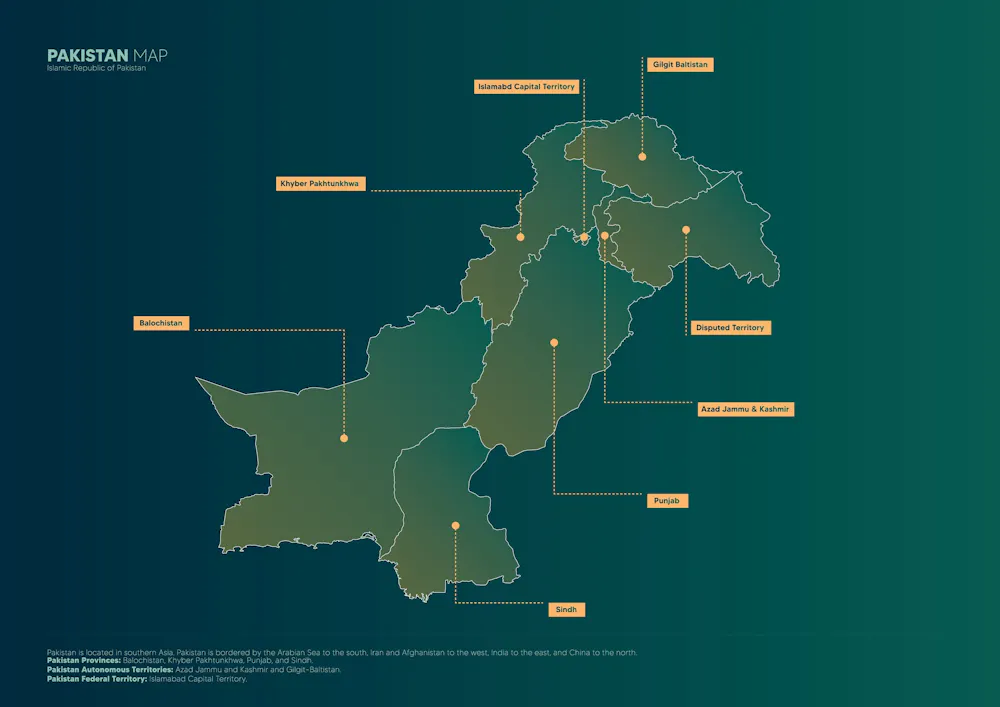
    MIL OSI USA News

  • MIL-OSI USA: March 14th, 2025 Heinrich Discusses Need to Bring Hardrock Mining Law into the 21st Century & Re-Shore Critical Minerals Supply Chain

    US Senate News:

    Source: United States Senator for New Mexico Martin Heinrich
    VIDEO
    WASHINGTON — At a hearing this week, U.S. Senator Martin Heinrich, Ranking Member of the Senate Energy and Natural Resources Committee, discussed the need for legislation to bring public land mining into the 21st century and re-shore the critical minerals supply chain.

    VIDEO: U.S. Senator Martin Heinrich, Ranking Member of the Senate Energy and Natural Resources Committee, delivers opening remarks at a hearing on March 12, 2025.
    At the hearing, Heinrich underscored how the Mining Law that governs metal mining on most public lands in the West was written more than 150 years ago.
    Heinrich stated, “Our hardrock mining law remains stuck in the 19th Century, right when we need to build the energy infrastructure of the 21st Century. Updating the 1872 Mining Law could bring public land mining into the 21st century and provide the minerals we need for the energy technologies of today.”
    Additionally, Heinrich pointed out the urgent need to re-shore our nation’s supply chain away from dependence on foreign adversaries by investing in the entire lifecycle of minerals.
    “This includes increasing our domestic mineral processing capacity, continuing the onshoring of manufacturing through the CHIPS and Science Act, and investing in recycling technologies so that we can reuse the minerals we already have,” Heinrich said.
    Heinrich continued, “The fact that we export copper and rare earth minerals to China in the form of electronic waste is one of the more infuriating realities of our current system. We should be capturing and reusing the minerals present within our borders in devices, vehicles, batteries and machinery rather than paying to ship them overseas.”
    Heinrich also emphasized the importance of securing minerals critical for new energy technologies while also protecting our water, air, and public lands.
    “I believe it’s possible to open new mines while giving local communities a say in whether a particular location on public land is an appropriate place for a mine, just like we do with oil and gas. And I am confident we can find a way to finally fund the cleanup of legacy mine pollution that contaminates streams and rivers across the West,” Heinrich said.
    Heinrich’s full opening remarks are below:
    I’m glad we’re holding this hearing today on a set of issues that are critically important to people and communities across the nation, but especially in the West.
    However, before turning to the topic of today’s hearing, it’s impossible to talk about any natural resource issue today without talking about the incredible damage being done to the workforce that manages those lands and resources for the American people.
    The illegal firings of probationary staff—rumored to be just the beginning of staffing reductions—is already reducing access to public lands, with locked gates and closed visitor centers at parks across the country.
    What’s more, as we’re considering legislation intended to increase mineral production on public lands, this administration is cutting staff and the land agencies that process those same permits.
    With a voluntary resignation offer that encouraged some of the most experienced, highest performing staff at these agencies to leave public service, along with illegal firings of staff who were recently promoted because of their high performance, this administration is crippling the very public land agencies that evaluate plans for new mines. 
    Anyone one who was hoping for “government efficiency” out of this administration can see what we’re getting is government dysfunction instead.
    Now to today’s hearing.
    Modern technologies involve a lot of raw materials—and as our scientists and engineers find new and cheaper ways to generate and store energy, the types and quantities of minerals used in energy technologies will only continue to grow.
    Responsible domestic mining and processing can be part of the solution—but we can’t get there with outdated laws that don’t reflect the nation’s needs and priorities today.
    The law that governs metal mining on most public lands in the West was written in 1872—more than 150 years ago.
    Yellowstone had been a national park for barely two months when the Mining Law was signed, and New Mexico would still be a territory for another 40 years. 
    We’ve learned a lot since 1872:
    How to manage public land for public benefit;
    How to conserve habitat for sustainable fish and wildlife populations;
    How to protect our drinking and irrigation water from heavy metals pollution;  and
    How to ensure a fair return for the commercial development of resources that belong to the American people.
    And yet our hardrock mining law remains stuck in the 19th Century, right when we need to build the energy infrastructure of the 21st Century.
    Updating the 1872 Mining Law could bring public land mining into the 21st century and provide the minerals we need for the energy technologies of today.
    But we’re here today to talk about more than mining, because mining alone won’t solve our supply chain dependence on adversaries unless we also invest in the entire lifecycle of minerals.
    This includes increasing our domestic mineral processing capacity, continuing the onshoring of manufacturing through the CHIPS and Science Act, and investing in recycling technologies so that we can reuse the minerals we already have.
    The fact that we export copper and rare earth minerals to China in the form of electronic waste is one of the more infuriating realities of our current system.
    We should be capturing and reusing the minerals present within our borders in devices, vehicles, batteries and machinery rather than paying to ship them overseas.
    I firmly believe we can find ways to secure the minerals we need for new energy technologies while also protecting our water, air, and public lands.
    I believe it’s possible to open new mines while giving local communities a say in whether a particular location on public land is an appropriate place for a mine, just like we do with oil and gas.
    And I am confident we can find a way to finally fund the cleanup of legacy mine pollution that contaminates streams and rivers across the West.
    I hope that today’s hearing can be a step toward those goals.

    MIL OSI USA News

  • MIL-OSI USA: WTAS: Ernst’s INNOVATE Act to Usher in Golden Age of American Innovation

    US Senate News:

    Source: United States Senator Joni Ernst (R-IA)
    WASHINGTON – As part of her mission to unleash small businesses and usher in a Golden Age of American innovation, U.S. Senate Committee on Small Business and Entrepreneurship Chair Joni Ernst (R-Iowa) recently unveiled her Investing in National Next-Generation Opportunities for Venture Acceleration and Technological Excellence (INNOVATE) Act to reauthorize and reform the Small Business Innovation Research (SBIR) and Small Business Technology Transfer (STTR) programs that fuel innovation and supply cutting-edge technology to the defense industrial base.
    During a hearing last week, Ernst highlighted how the bill will slash red tape to make way for new applicants, scale the best battle-ready technologies for the warfighter, end corporate welfare for SBIR mills, and strengthen protections against China’s attempts to steal taxpayer-funded intellectual property. Since its introduction, the INNOVATE Act has garnered widespread praise.
    What They Are Saying about the INNOVATE Act:
    Technology Association of Iowa
    “Iowa’s tech-driven small businesses play an essential role in advancing innovation, creating high-quality jobs, and driving economic growth across the state,” said Brian Waller, President. “However, many of these companies face significant barriers when seeking federal funding for research and development. Current SBIR-STTR application processes are complex and time-consuming, limiting participation from new and emerging startups that lack the resources to navigate the challenging process. The INNOVATE Act directly addresses these challenges by introducing a streamlined Phase 1A application process, making it easier for first-time applicants to access funding and contribute to the nation’s technological advancement.”
    Iowa Economic Development Authority
    “I appreciate that the INNOVATE Act makes fundamental changes to encourage more participation, including appropriate standards for the size of participating companies and Phase II awards for entrepreneurs transitioning into the workforce from academia,” said Debi Durham, Director. “Also, the proposal to create Phase 1A awards with a shorter, streamlined application will attract thousands of new small business owners and entrepreneurs, both urban and rural, who may have been discouraged previously by bureaucratic red tape.”
    America First Policy Institute
    “The Chinese Communist Party (CCP) has a history of abusing government programs that provide startup capital and investment to American small businesses,” said Adam Savit, China Policy Initiative Director. “The Innovate Act reforms this process and would safeguard taxpayer-funded programs at the Small Business Administration (SBA) from exploitation by requiring vetting of international affiliations of business applicants and board members for ties to foreign regimes like the CCP. It adds a uniform evaluation baseline for all agencies participating in these programs. Also, it strengthens the ability to claw back investment money if the agency later discovers adversarial or malign influence. These commonsense reforms meet the rising threat of foreign state actors who only want to wreck our economy. These sensible reforms would protect programs like the SBA’s SBIR, STTR, and others from CCP exploitation if passed.”
    New American Industrial Alliance
    “The INNOVATE Act ensures that SBIR and STTR will remain critical components of America’s innovation infrastructure,”said Julius Krein, Chair of the Board of Directors. “The reforms and improvements included in this bill will keep these programs focused on advancing the most promising technologies while addressing efficiency concerns and national security risks.”
    Foundation for American Innovation
    “The INNOVATE Act would improve government efficiency by reforming the SBIR and STTR programs to reduce waste and ensure that more American tax dollars are invested in the most promising technologies to advance American innovation,” said Dan Lips, Senior Fellow. “Importantly, the bill also tightens safeguards in these programs to address fraud and national security risks that government watchdogs have documented.”
    Alliance for Commercial Technology in Government
    “The Alliance for Commercial Technology in Government is delighted to provide our enthusiastic endorsement of, and support for the INNOVATE Act, released March 5th by the Senate Small Business Committee,” said Warren Katz, Chairman. “The Small Business Innovation Research (SBIR) program, known as America’s Seed Fund, is a highly effective research program with commercialization of government funded research by small business its main goal. It should be reauthorized with much-needed reforms included in INNOVATE.”
    Software in Defense Coalition
    “SBIR and STTR programs are an essential part of enabling innovative high-tech companies to advance national security technologies. We strongly urge adoption of these crucial reforms to foster a more competitive and innovative ecosystem in the federal enterprise, protected from adversarial influence. These changes will ensure SBIR and STTR programs continue to drive innovation for the benefit of our nation’s defense and technological leadership.”

    MIL OSI USA News

  • MIL-OSI USA: Ricketts: Strong U.S.-Japan Alliance “Fundamental” to Deterring Communist China, Promoting Economic Prosperity

    US Senate News:

    Source: United States Senator Pete Ricketts (Nebraska)

    WASHINGTON, D.C. – Yesterday, U.S. Senator Pete Ricketts (R-NE), a senior member of the Foreign Relations Committee, highlighted how a strong alliance between the United States and Japan can deter Communist China and promote economic prosperity, including in Nebraska.

    “For more than 80 years, the U.S.-Japan alliance has acted as the cornerstone of peace, security and prosperity in the Indo-Pacific,” said Ricketts. “With Communist China, Russia, the Korean Peninsula, and the Taiwan Strait all within 200 miles of Japanese soil, our forward deployed presence in Japan is fundamental to deter aggression in the region. This is especially pertinent given Beijing’s dramatic military buildup and increasingly provocative actions, grey-zone activity tactics, saber rattling – all to force our allies and partners to bend to its will. Additionally, the alliance forms the foundation of vital multilateral cooperation, from the Quad to trilaterals to South Korea, Australia and the Philippines. I was pleased to see President Trump and Prime Minister Ishiba commit to ‘pursue a new golden age’ for U.S.-Japan relations when they met in February.”

    Ricketts also praised President Trump for deepening the economic ties between Japan and Nebraska.

    “Thanks in part to President Trump’s trade deals with Japan during his first term, Japan is one of our largest export markets, and certainly the largest for pork and eggs, our second largest for beef, our third largest for corn and overall ag exports,” said Ricketts. “Japan is also a promising market for grain-based fuels. I was encouraged by Japan’s recent announcement that it intends to blend 10% ethanol in gasoline by 2030, and 20% by 2040. And of course, Japan is positioned to become one of the largest export markets for Sustainable Aviation Fuel that rely on grain-based ethanol as feedstock.”

    Watch the video HERE

    Ricketts made the comments in a hearing of the Foreign Relations Committee. The hearing considered the nominations of George Glass to be the Ambassador to Japan, Pete Hoekstra to be the Ambassador to Canada, and Ron Johnson to be the Ambassador to Mexico.

    MIL OSI USA News

  • MIL-OSI Canada: Joint statement of the G7 Foreign Ministers’ Meeting in Charlevoix

    Source: Government of Canada News

    March 14, 2025 – Charlevoix, Quebec – Global Affairs Canada

    1. We the G7 Foreign Ministers of Canada, France, Germany, Italy, Japan, the United Kingdom and the United States of America, and the High Representative of the European Union, met in Charlevoix on March 12 to 14, 2025.

    Ukraine’s long-term prosperity and security

    2. We reaffirmed our unwavering support for Ukraine in defending its territorial integrity and right to exist, and its freedom, sovereignty and independence.

    3. We welcomed ongoing efforts to achieve a ceasefire, and in particular the meeting on March 11 between the U.S. and Ukraine in the Kingdom of Saudi Arabia. We applauded Ukraine’s commitment to an immediate ceasefire, which is an essential step towards a comprehensive, just and lasting peace in line with the Charter of the United Nations.

    4. We called for Russia to reciprocate by agreeing to a ceasefire on equal terms and implementing it fully. We discussed imposing further costs on Russia in case such a ceasefire is not agreed, including through further sanctions, caps on oil prices, as well as additional support for Ukraine, and other means. This includes the use of extraordinary revenues stemming from immobilized Russian Sovereign Assets. We underlined the importance of confidence-building measures under a ceasefire including the release of prisoners of war and detainees—both military and civilian—and the return of Ukrainian children.

    5. We emphasized that any ceasefire must be respected and underscored the need for robust and credible security arrangements to ensure that Ukraine can deter and defend against any renewed acts of aggression. We stated that we will continue to coordinate economic and humanitarian support to promote the early recovery and reconstruction of Ukraine, including at the Ukraine Recovery Conference which will take place in Rome on July 10-11, 2025.

    6. We condemned the provision to Russia of military assistance by DPRK and Iran, and the provision of weapons and dual-use components by China, a decisive enabler of Russia’s war and of the reconstitution of Russia’s armed forces. We reiterated our intention to continue to take action against such third countries.

    7. We expressed alarm about the impacts of the war, especially on civilians and on civilian infrastructure. We discussed the importance of accountability and reaffirmed our commitment to work together to achieve a durable peace and to ensure that Ukraine remains democratic, free, strong and prosperous.   

    Regional peace and stability in the Middle East  

    8. We called for the release of all hostages and for the hostages’ remains held by Hamas in Gaza to be returned to their loved ones. We reaffirmed our support for the resumption of unhindered humanitarian aid into Gaza and for a permanent ceasefire. We underscored the imperative of a political horizon for the Palestinian people, achieved through a negotiated solution to the Israeli-Palestinian conflict that meets the legitimate needs and aspirations of both peoples and advances comprehensive Middle East peace, stability and prosperity. We noted serious concern over the growing tensions and hostilities in the West Bank and calls for de-escalation.

    9. We recognized Israel’s inherent right to defend itself consistent with international law. We unequivocally condemned Hamas, including for its brutal and unjustified terror attacks on October 7, 2023, and the harm inflicted on the hostages during their captivity and the violation of their dignity through the use of ‘handover ceremonies’ during their release. We reiterated that Hamas can have no role in Gaza’s future and must never again be a threat to Israel. We affirmed our readiness to engage with Arab partners on their proposals to chart a way forward on reconstruction in Gaza and build a lasting Israeli-Palestinian peace.

    10. We expressed our support for the people of Syria and Lebanon, as both countries work towards peaceful and stable political futures. At this critical juncture, we reiterated the importance of Syria’s and Lebanon’s sovereignty and territorial integrity. We called unequivocally for the rejection of terrorism in Syria. We condemned strongly the recent escalation of violence in the coastal regions of Syria, and called for the protection of civilians and for perpetrators of atrocities to be held accountable. We stressed the critical importance of an inclusive and Syrian-led political process. We welcomed the commitment by the Syrian interim government to work with the OPCW in eliminating all remaining chemical weapons.

    11. We stressed that Iran is the principal source of regional instability and must never be allowed to develop and acquire a nuclear weapon. We emphasized that Iran must now change course, de-escalate and choose diplomacy. We underscored the threat of Iran’s growing use of arbitrary detention and foreign assassination attempts as a tool of coercion.

    Cooperation to increase security and resilience across the Indo-Pacific  

    12. We reiterated our commitment to upholding a free, open, prosperous and secure Indo-Pacific, based on sovereignty, territorial integrity, peaceful resolution of disputes, fundamental freedoms and human rights.

    13. We remain seriously concerned by the situations in the East China Sea as well as the South China Sea and continue to oppose strongly unilateral attempts to change the status quo, in particular by force and coercion. We expressed concern over the increasing use of dangerous maneuvers and water cannons against Philippines and Vietnamese vessels as well as efforts to restrict freedom of navigation and overflight through militarization and coercion in the South China Sea, in violation of international law. We emphasized the importance of maintaining peace and stability across the Taiwan Strait. We encouraged the peaceful resolution of cross-Strait issues and reiterated our opposition to any unilateral attempts to change the status quo by force or coercion. We also expressed support for Taiwan’s meaningful participation in appropriate international organizations.  

    14. We remain concerned with China’s military build-up and the continued, rapid increase in China’s nuclear weapons arsenal. We called on China to engage in strategic risk reduction discussions and promote stability through transparency.

    15. We emphasized that China should not conduct or condone activities aimed at undermining the security and safety of our communities and the integrity of our democratic institutions.16. We expressed concerns about China’s non-market policies and practices that are leading to harmful overcapacity and market distortions. We further called on China to refrain from adopting export control measures that could lead to significant supply chain disruptions. We reiterated that we are not trying to harm China or thwart its economic growth, indeed a growing China that plays by international rules and norms would be of global interest.

    16. We demanded that the DPRK abandon all its nuclear weapons and any other weapons of mass destruction as well as ballistic missile programs in accordance with all relevant United Nations Security Council resolutions. We expressed our serious concerns over, and the need to address together, the DPRK’s cryptocurrency thefts. We called on DPRK to resolve the abductions issue immediately.

    17. We denounced the brutal repression of the people of Myanmar by the military regime and called for an end to all violence and for unhindered humanitarian access.

    Building stability and resilience in Haiti and Venezuela

    18. We strongly denounced the ongoing horrifying violence that continues to be perpetrated by gangs in Haiti in their efforts to seize control of the government. We reaffirmed our commitment to helping the Haitian people restore democracy, security and stability, including through support to the Haitian National Police and Kenya-led Multinational Security Support Mission and an increased role for the UN. We expressed support for Haitian authorities’ efforts to create a specialized anti-corruption jurisdiction that complies with the highest international standards.

    19. We reiterated our call for the restoration of democracy in Venezuela in line with the aspirations of the Venezuelan people who peacefully voted on July 28, 2024, for change, the cessation of repression and arbitrary or unjust detentions of peaceful protestors including youth by Nicolas Maduro’s regime, as well as the unconditional and immediate release of all political prisoners. We also agreed Venezuelan naval vessels threatening Guyana’s commercial vessels is unacceptable and an infringement of Guyana’s internationally recognized sovereign rights. We reaffirmed respect for the sovereignty and territorial integrity of all nations as an enduring value.

    Supporting lasting peace in Sudan and the Democratic Republic of the Congo

    20. We unequivocally denounced the ongoing fighting and atrocities in Sudan, including sexual violence against women and girls, which have led to the world’s largest humanitarian crisis and the spread of famine. We called for the warring parties to protect civilians, cease hostilities, and ensure unhindered humanitarian access, and urged external actors to end their support fueling the conflict.

    21. We condemned the Rwanda-backed M23 offensive in the eastern Democratic Republic of the Congo (DRC) and the resulting violence, displacement and grave human rights and international humanitarian law violations. This offensive constitutes a flagrant disregard of the territorial integrity of the DRC. We reiterated our call for M23 and the Rwanda Defence Force to withdraw from all controlled areas. We urged all parties to support the mediation led by the East African Community and the Southern African Development Community, to promote accountability for human rights abuses by all armed actors, including M23 and the FDLR, and to commit to a peaceful and negotiated resolution of the conflict, including the meaningful participation of women and youth.

    Strengthening sanctions and countering hybrid warfare and sabotage

    22. We welcomed efforts to strengthen the Sanctions Working Group focused on listings and enforcement. We also welcomed discussions on the establishment of a Hybrid Warfare and Sabotage Working Group, and of a Latin America Working Group.

    MIL OSI Canada News

  • MIL-OSI Canada: G7 Foreign Ministers’ Declaration on Maritime Security and Prosperity

    Source: Government of Canada News

    March 14, 2025 – Charlevoix, Québec – Global Affairs Canada

    1. We, the Foreign Ministers of Canada, France, Germany, Italy, Japan, the United Kingdom, and the United States of America, and the High Representative of the European Union, reaffirm the G7’s steadfast commitment to contribute towards a free, open, and secure maritime domain based on the rule of law that strengthens international security, fosters economic prosperity, and ensures the sustainable use of marine resources.

    2. Maritime security and prosperity are fundamental to global stability, economic resilience, and the well-being of all nations, and the conservation and sustainable use of ocean ecosystems is essential to all life on Earth. Over 80% of global trade is transported by sea, and 97% of global data flows through submarine cables. Disruptions to maritime routes pose a direct threat to international food security, critical minerals, energy security, global supply chains, and economic stability. We express deep concern over the growing risks to maritime security, including strategic contestation, threats to freedom of navigation and overflight, and illicit shipping activities. State behaviour in these areas has increased the risk of conflict and environmental damage, and imperils all nations’ prosperity and living standards, especially for the world’s poorest. 

    3. We recognize the role of the UN Convention on the Law of the Sea (UNCLOS) as the legal framework for governing all activities in the oceans and the seas.

    4. We recall the G7 Statements on Maritime Security adopted in Lübeck (2015) and Hiroshima (2016). We welcome related work presently underway through other G7 ministerial tracks and working groups, on a range of issues including securing undersea cable networks and combating abandoned fishing gear. We welcome, as well, G7 work relating to transnational organized crime and terrorism that touches on the maritime domain, including in relation to piracy and armed robbery at sea, trafficking in persons, and strengthening the maritime law enforcement capabilities of coastal states. We acknowledge the importance of regional maritime security frameworks, to support coastal states to address collectively threats to their maritime security. We welcome existing initiatives, such as the G7++ Friends of the Gulf of Guinea (G7++ FoGG, that Canada chairs this year), which has been the primary forum for dialogue among G7 members and partners on maritime security in the Gulf of Guinea.

    Emerging Threat on Safe Seas and Freedom of Navigation and Overflight

    5. Enhancing Stability: We underscore the importance of freedom of navigation and overflight and other internationally lawful uses of the high seas and the exclusive economic zones as well as to the related rights and freedoms in other maritime zones, including the rights of innocent passage, transit passage and archipelagic sea lanes passage, as provided for under international law. We share a growing concern at recent, unjustifiable efforts to restrict such freedom and to expand jurisdiction through use of force and other forms of coercion, including across the Taiwan Strait, and the South China Sea, the Red Sea, and the Black Sea. We condemn China’s illicit, provocative, coercive and dangerous actions that seek unilaterally to alter the status quo in such a way as to risk undermining the stability of regions, including through land reclamations, and building of outposts, as well as their use for military purpose. In areas pending final delimitation, we underline the importance of coastal states refraining from unilateral actions that cause permanent physical change to the marine environment insofar as such actions jeopardize or hamper the reaching of the final agreement, as well as the importance of making every effort to enter into provisional arrangements of a practical nature, in those areas. We condemn, as well, dangerous vessel maneuvers, the indiscriminate attacks against commercial vessels and other maritime actions that undermine maritime order based on the rule of law and international law. We reiterate that the award rendered by the Arbitral Tribunal on 12 July 2016 is a significant milestone, which is legally binding upon the parties to those proceedings and a useful basis for peacefully resolving disputes between the parties. We reaffirm that our basic policies on Taiwan remain unchanged and emphasize the importance of peace and stability across the Taiwan Strait as indispensable to international security and prosperity. We welcome the resumption of exports from Ukraine’s Black Sea ports. Freedom of navigation for commercial shipping in the Black Sea must be upheld.

    6. Attempts to Change the Status Quo by Force: We oppose unilateral attempts to change the status quo, in particular by force or coercion including in the East and South China Seas. We undertake to implement means through which to track systematically and report on attempts to change the status quo by force and by the establishment of new geographical facts, including through coercive and dangerous actions on the oceans and seas that might threaten regional and international peace and security.

    7. Protecting Critical Maritime and Undersea Infrastructure: We are seized of the fact that vital energy and telecommunications infrastructure under the oceans and seas connects our economies and is vital to our prosperity. We recall the G7 Joint Statement on Cable Connectivity for Secure and Resilient Digital Communications Networks (2024) and the New York Joint Statement on the Security and Resilience of Undersea Cables in a Globally Digitalized World (2024). We share a growing concern that undersea communications cables, subsea interconnectors and other critical undersea infrastructure have been subject to critical damage through sabotage, poor seamanship or irresponsible behaviour which have resulted in potential internet or energy disruption in affected regions, delays in global data transmission, or compromised sensitive communications. We will enhance our cooperation with industry to mitigate risks, reduce bottlenecks to operational tasks while strengthening repair capacities in order to improve the overall resilience of critical undersea and maritime infrastructure. In this respect, we welcome the EU Action Plan on Cable Security adopted in February 2025 by the European Commission and the High Representative of the Union for Foreign Affairs and Security Policy.

    8. Maritime Crime: Maritime crime, including piracy, armed robbery at sea, maritime arms trafficking and sanctions evasion, human trafficking, illegal drug trafficking and Illegal, Unreported, Unregulated (IUU) fishing, continues to impede maritime security, freedom of navigation, and our economy and prosperity. We have been working together to tackle these maritime crimes, but maritime illegal activities have extended into new areas, to become an urgent issue to be addressed. We welcome the G7 Action Plan to combat migrant smuggling adopted under Italy’s 2024 G7 Presidency.

    9. Protecting Freedom of Trade: In the past year, indiscriminate Houthi attacks in the Red Sea have endangered maritime security of vessels and their crews, disturbed international trade, and exposed neighboring countries to environmental hazards. Enabled by Iran’s military, financial, and intelligence support, these illegal attacks have also contributed to increased tension in the Middle East and Yemen, with severe repercussions on the intra-Yemeni peace process. The vessel “Galaxy Leader” seized by the Houthis must be released immediately. We appreciate the efforts of all those countries that have engaged to ensure freedom of navigation in the Red Sea, protecting crucial shipping lanes and helping to restore regular flows of trade through the Suez Canal connecting the Mediterranean Sea to the Indian and Pacific Oceans. In this regard, we commend the efforts of EU’s maritime operation “Aspides” and U.S.-led operation “Prosperity Guardian”.

    Safe Shipping and Supply Chain Security

    10. Curtailing Unsafe and Illicit Shipping Practices: The rise of unsafe and illicit shipping practices, including fraudulent registration and registries, poses a significant threat to global trade and environmental sustainability.  We are concerned that unsafe and illicit shipping imposes heavy costs on industry, governments and citizens. Russia’s ability to earn revenue has been sustained through its extensive effort to circumvent the G7+ oil price cap policy through its shadow fleet of often older, underinsured, and poorly maintained ships that routinely disable their automatic identification systems or engage in “spoofing” to avoid detection and circumvent international safety, environmental, and liability rules and standards. North Korea continues to pursue its nuclear and ballistic missile programmes and evade sanctions, particularly through its illicit maritime activities, including prohibited ship-to-ship transfers of petroleum and other UN-banned commodities. Through G7 coordination, we have exposed North Korea uses of “dark” vessels – those that engage in illicit activity – to circumvent United Nations Security Council mandated sanctions. Russia and North Korea are strengthening their economic relations including through maritime routes, such as the reported transfer of petroleum products from Russia to North Korea. Unregulated, “dark” vessels undertake IUU fishing, destroying marine habitats and depleting fish stocks, with negative impacts for biodiversity and food security. Unregulated, inadequately insured “dark” vessels also pose a high risk of maritime accidents, including in fragile ecosystems such as the Arctic and Antarctic. We commit to strengthening our coordination, amongst the G7 and with other partners, to prevent the use of unregistered or fraudulently registered, uninsured and substandard vessels engaged in sanctions evasion, arms transfers, illegal fishing and illicit trade. We encourage relevant International Organizations to improve maritime domain awareness by expanding satellite-based vessel tracking and establishing comprehensive data records of the movement of individual ships and of ship-to-ship transfers, as a means of identifying and tracking illicit maritime activities. We are also committed to capacity building of the countries in the region in law enforcement and Maritime Domain Awareness.

    11. Shadow Fleet Task Force: We invite members of the Nordic-Baltic 8 (Denmark, Estonia, Finland, Iceland, Latvia, Lithuania, Norway, Sweden), and possibly others, to join participating G7 members in a Shadow Fleet Task Force to enhance monitoring and detection and to otherwise constrain the use of shadow fleets engaged in illegal, unsafe or environmentally perilous activities, building on the work of others active in this area. The Task Force will constitute a response by the participating States to the call by the International Maritime Organization in its Resolution A.1192(33) of 6 December 2023 for Members States and all relevant stakeholders to promote actions to prevent illegal operations in the maritime sector by shadow fleets and their flag states, including illegal operations for the purposes of circumventing sanctions, evading compliance with safety or environmental regulations, avoiding insurance costs, or engaging in other illegal activities.

    12. Enhancing Maritime Supply Chain Resilience and Energy and Food Security: Maritime supply chains will continue to underpin the global economy, but these face a variety of threats, both present and future, stemming from both geopolitical tensions and environmental factors.  Maritime disruptions raise consumer costs, increase transit times, and can reduce demand in importing countries, which in turn means lower revenues and diminished competitiveness for producers in exporting countries. Such vulnerabilities in maritime transport can undermine energy and food security, particularly for developing nations reliant on stable shipping routes, including Small Island Developing States (SIDS) and Least Developed Countries (LDCs). We welcome maritime initiatives involving and supported by G7 partners intended to promote energy and food security, such as the Grain from Ukraine scheme, and the ASEAN Outlook on the Indo-Pacific. We invite cooperation with the African Union (pursuant to Africa’s Integrated Maritime Strategy 2050) and other relevant International Organizations to identify best practices for enhancing maritime supply chain resilience and for safeguarding energy and food security, including in times of geopolitical crisis. 

    13. Promoting Safe and Resilient Ports and Strategic Waterways: Port ownership and operational control matter to national security, as foreign control or influence over critical port infrastructure can create vulnerabilities in trade, in defence and security, and in economic stability. Port resilience is also crucial to economic stability and global trade and yet ports face growing risks from environmental degradation, extreme weather events and geopolitical conflicts. Strengthening port security and modernizing infrastructure are essential to maintaining safe and efficient maritime trade. Ensuring that the ownership and management of strategic waterways and key maritime choke points are not vulnerable to undue influence by potential adversaries is also essential to national security. We underscore the importance of scrutiny of ownership structures and port management and resilience within our own national jurisdictions, including with regard to Information and Communications Technology (ICT) systems, to ensure that adversaries do not gain leverage over supply chains, military operations, or the flow of strategic resources. We will work with partners and with relevant International Organizations to encourage robust cybersecurity standards for port ICT infrastructure, to increase resilience against malicious cyber incidents on maritime logistical networks, to reduce monopolistic power over key supply chain nodes, to promote secure and transparent port ownership, to limit unsolicited or undue foreign influence over critical infrastructures and strategic waterways, and to otherwise encourage greater focus on such potential vulnerabilities.

    14. Unexploded Ordnance (UXO) at sea poses a significant hazard to the marine environment, to the safety of fishermen and other users of the maritime space, and to various marine economic activities. We commit to enhancing diplomatic efforts and to exchanging best practices among national authorities, relevant international and regional organizations, and relevant industry sectors to accelerate the clean-up of UXO from the seas and ocean.

    Sustainable Stewardship of Maritime Resources

    15. Strengthen Enforcement Against IUU Fishing: IUU fishing is a major contributor to declining fish stocks and to marine habitat destruction. It may account for a third of all fishing activity worldwide, at a cost to the global economy of more than US$23 billion per year and with negative consequences for fisheries as an enduring economic asset, including for developing countries. We welcome the Canadian-led Dark Vessel Detection System in Ecuador, Peru, Costa Rica, the Philippines, and members of the Pacific Islands Forum (PIF) and would see value in replicating the model to support other partners whose fisheries are under threat from IUU fishing. We recognize that data sharing and transparency play a key role in this fight by exposing bad actors and that technological advances can support a robust Monitoring, Control and Surveillance and enforcement landscape. We encourage further progress in addressing IUU fishing, working with and through relevant International Organizations to establish and strengthen rules to sustainably manage fish stocks on the high seas and to improve the enforcement of these measures, including through the further development of detection technologies, aircraft patrols and high seas boarding and inspection of vessels, building upon the 2022 G7 Ocean Deal.

    16. We welcome the Third UN Ocean Conference, in Nice, France, from 9 to 13 June 2025.

    PARTNERSHIPS

    17. This G7 Maritime Security and Prosperity Declaration provides a framework for cooperation with non-G7 partners, including countries hosting major ports, large merchant fleets, or extensive flag registries as well as relevant regional and International Organizations, such as the International Maritime Organization and ASEAN. We would welcome robust cooperation with partners to take forward the goals set out in this Declaration, consistent with the principles of sovereignty and territorial integrity, under the efforts of the G7 countries, including a free, open, prosperous and secure Indo-Pacific region, to build a free and open maritime order based on the rule of law, and of commitment to the sustainable development of the world’s maritime spaces.

    18. We welcome the cooperation on Coast Guard Functions, including the Global Coast Guard Forum hosted by Italy in 2025, as well as the Arctic Coast Guard Forum, which could also support the objectives of this Declaration.

    [14] March 2025

    Charlevoix, Canada

    MIL OSI Canada News

  • MIL-OSI USA: Hickenlooper, Crapo Reintroduce Bipartisan Bill to Establish Space National Guard

    US Senate News:

    Source: United States Senator for Colorado John Hickenlooper
    Legislation would move space-related Air and Army National Guard members under Space Force
    WASHINGTON – Today, U.S. Senators John Hickenlooper and Mike Crapo reintroduced the Space Guard Establishment Act to create a Space National Guard, incorporating current Air National Guard and Army National Guard members performing space-related duties within the Space Force command structure.
     “A dedicated Space Force reserve component will make sure our National Guard space experts have a clear path to continue their service to community and country,” said Hickenlooper. “It’s a win-win for service members and our leadership in space!”
    “Guardsmen and Reservists are often highly specialized and trained individuals tasked with combatting significant threats from global threats such as China and Russia, and those who work on our space capabilities are no different,” said Crapo. “Establishing a Space National Guard will better prepare and streamline the work of our existing space personnel to maintain readiness to respond to and thwart attacks from our adversaries.”
    When the Space Force was established in 2019, active-duty service members responsible for space missions were moved out of the Air Force and placed under the authority of the Space Force. No corresponding change was made to ensure that National Guard members working on space also fall under Space Force authority. The proposed legislation would correct this organizational inconsistency.
    “Air National Guard fighter wings operate at 1/3rd the cost of their active-duty counterparts but still provide the same ‘fight-tonight’ capability. By acting as a retention net for talent exiting active duty and serving as a cost-effective model to both develop and retain fighter pilots, the Air National Guard presents the nation with an unrivaled value proposition. Throw in the secondary uses of Air Guardsman domestically such as wildfire mitigation, homeland airspace defense, and manpower for civil support all for a fraction of the cost of an active-duty Wing; the Air Guard’s value proposition truly is unparallelled. By providing 30% of the fighter force, for 1/3rd the cost, Air National Guard fighter wings operate as a shining example of efficient and effective use of taxpayer dollars. It’s simple, we provide more for less, without sacrificing capability,” said Major General Clellan.
    The Department of the Air Force, Space Force, and the National Guard Bureau have already developed a plan to establish a Space National Guard, but that plan has yet to be implemented. There are more than 1,000 National Guard members performing space-related duties from within the Air National Guard. However, organizational problems consistently arise now that all other space service members fall under the Space Force.
    A dedicated National Guard for the Space Force would help talented active-duty Space Force personnel transition to civilian careers, ensuring they are able to continue serving their country as well as their states. This bill would also streamline funding, and allow for better implementation of the mobilization processes, inspection systems, and policies and culture of the Space Force.
    The bill would override Legislative Proposal (LP) 480, which moved Air National Guard units with space missions into the U.S. Space Force without obtaining a governor’s consent prior to the transfer.
    Hickenlooper led 124 members of Congress in a bipartisan letter urging the House and Senate Armed Services Committees to adopt language in the fiscal year 2025 National Defense Authorization Act (NDAA) that would preserve the authority of governors to oversee National Guard forces within their states. He also led another letter with 85 other members of Congress opposing the inclusion of LP 480 in the NDAA and joined in support of the National Governors Association Council of Governors calling on the Department of Defense to retract LP 480. In addition, Hickenlooper led 31 of his colleagues in submitting an amendment to the NDAA to permit the transfer only with gubernatorial approval. However, the amendment was not included in the final package for the Senate bill and did not have the opportunity for floor consideration.
    The Space Guard Establishment Act is supported by the National Guard Association of the United States (NGAUS) and the Enlisted Association of the National Guard of the United States (EANGUS).
    Representatives Crow and Boebert introduced companion legislation in the House.
    Full text of the bill is available HERE.

    MIL OSI USA News

  • MIL-OSI: Andes Technology Achieves Record Annual Revenue Amid Strong AI Demand

    Source: GlobeNewswire (MIL-OSI)

    San Jose, CA, March 14, 2025 (GLOBE NEWSWIRE) — Andes Technology Corporation (TWSE: 6533), a global leader in high-performance, low-power RISC-V processor IP solutions, has achieved a significant milestone, surpassing $42 million in revenue for 2024. From the sale of the first RISC-V product in 2018 to 2024, the compound annual growth rate (CAGR) reached 28.7%, reinforcing Andes’ leadership in advancing RISC-V adoption across all market segments.

    Sustained Revenue Growth and Market Expansion

    Andes continues to experience strong revenue growth in both licensing and royalties, fueled by increasing adoption of its RISC-V processor IP solutions.

    • License Revenue grew 38.4% year-over-year, demonstrating strong customer adoption.
    • Royalty Revenue increased 25.0% year-over-year, reflecting Andes-powered chips’ widespread market penetration, now surpassing 16 billion units shipped.

    Geographically, Taiwan (38%) and United States (31%) remain Andes’ largest markets, with China (23%) and other regions contributing to the company’s global expansion.

    Andes’ Extends RISC-V Leadership in AI and Automotive

    By application, AI leads all sectors, followed by consumer electronics, IoT and Automotive. 

    AI has become a major growth driver for Andes, accounting for 38% of the company’s revenue.  Andes is uniquely positioned to meet the needs of AI with the combination of its high-performance vector processors and ACE (Andes’ Automated Custom Extensions).  ACE enables Andes’ customers to easily and robustly customize their Instruction Set Architecture (ISA) to achieve unprecedented levels of performance and power efficiency while maintaining flexibility and ease-of-use.  Over 80% of Andes’ AI customers heavily leverage this capability to differentiate their solutions.  Notable customers targeting AI include Axelera AI, Fractile AI, Meta, RAIN AI, and Rivos Inc, among others.  Further, Deep Computing launched the world’s first RISC-V AI PC, powered by Andes 7nm Qilai SoC.

    Additionally, automotive revenue has grown by 2.6x, reflecting Andes’ investment in ISO 26262 certified IPs and the increasing adoption for RISC-V in safety critical systems.  Andes has added one major US Integrated Device Manufacturer and MetaSilicon to its list of  licensees for its automotive-certified IPs. 

    A Vision for the Future

    “The rapid expansion of AI applications underscores RISC-V’s potential in artificial intelligence,” said Frankwell Lin, Chairman and CEO of Andes Technology. “We are committed to investing in AI acceleration technologies and deepening our partnerships to drive AI adoption across industries.”

    “RISC-V is no longer just an emerging standard—it is becoming the foundation of next-generation computing,” added Dr. Charlie Su, President and CTO of Andes Technology. “With a robust product roadmap and strong ecosystem collaborations, Andes is well-positioned to make RISC-V the standard for AI workloads.”

    Eight years ago, Andes Technology was a visionary early-adopter of RISC-V. Through continuous innovation, strong customer orientation, and a deep understanding of market trends, the company has gained momentum, transforming into a driving force in the RISC-V revolution.  Today, Andes continues to set the standard for RISC-V processor IP, fueling advancements in AI, automotive, and high-performance computing.

    To learn more about Andes and its ecosystem of customers and partners, please register for Andes RISC-V CON Silicon Valley on April 29 at the DoubleTree by Hilton Hotel in San Jose. Event website: https://bit.ly/3DpvlJo

    About Andes RISC-V CON Silicon Valley

    ANDES RISC-V CON 2025 will take place at the DoubleTree by Hilton Hotel in San Jose on April 29.

    The event will highlight RISC-V processors driving diverse and innovative technologies, focusing on four key application areas: AI/ML, automotive electronics, application processing, and security. Leading ecosystem partners, including Amazon, Arteris, Baya, BrainChip, Cycurity, Edge AI and Vision Alliance, EdgeQ, IAR, Imagination, OPENEDGES, proteanTecs, QuickLogic, S2C, SHD Group, Siemens, and Sondrel, will share insights and showcase their latest advancements.

    A new deep-dive hands-on developer track, hosted with IAR, Baya, and Imagination, will provide in-depth RISC-V training.

    Join to explore cutting-edge RISC-V innovations and connect with industry experts: https://bit.ly/3DpvlJo

    About Andes Technology

    As a Founding Premier member of RISC-V International and a leader in commercial CPU IP, Andes Technology (TWSE: 6533; SIN: US03420C2089; ISIN: US03420C1099) is driving the global adoption of RISC-V.  Andes’ extensive RISC-V Processor IP portfolio spans from ultra-efficient 32-bit CPUs to high-performance 64-bit Out-of-Order multiprocessor coherent clusters. 

    With advanced vector processing, DSP capabilities, the powerful Andes Automated Custom Extension (ACE) framework, end-to-end AI hardware/software stack, ISO 26262 certification with full compliance, and a robust software ecosystem, Andes unlocks the full potential of RISC-V, empowering customers to accelerate innovation across AI, automotive, communications, consumer electronics, data centers, and mobile devices.  Over 16 billion Andes-powered SoCs by the end of 2024 are driving innovations globally. Discover more at www.andestech.com  and connect with Andes on LinkedIn, X ,and YouTube.

    The MIL Network

  • MIL-OSI China: China’s BRI truly changes lives, destinies of people around world: Cambodian senior minister

    Source: People’s Republic of China – State Council News

    China’s BRI truly changes lives, destinies of people around world: Cambodian senior minister

    PHNOM PENH, March 14 — China’s Belt and Road Initiative (BRI) has truly changed the lives and destinies of many people across the world, a Cambodian senior minister said here on Friday.

    Speaking in a speech at the opening ceremony of the Shapingba Hotpot Carnival in Phnom Penh, Ly Thuch, a Cambodian senior minister in charge of special missions, said the BRI is a global initiative that has provided mutual benefits, win-win cooperation, and shared prosperity for all participating countries.

    “The BRI has truly changed the lives and destinies of many people around the world, and Cambodia is one of the countries that has greatly benefited from this initiative,” he said.

    He added that the BRI has not only boosted the development of connectivity infrastructure, but also promoted people-to-people and cultural exchanges.

    Meanwhile, Thuch expressed his heartfelt congratulations and appreciation to the Chinese government and people for all the great progress and achievements that China has achieved so far.

    He said China has played a greater role on the international stage in ensuring peace, security, stability, common development, and shared prosperity toward building a community with a shared future for mankind.

    Speaking of Cambodia-China ties, Thuch said the two countries have an “unbreakable” ironclad friendship and both sides are working together to build a high-quality, high-standard and high-level community with a shared future.

    He was also grateful to the government and people of China for having provided assistance to Cambodia for economic, social, trade, and physical infrastructure development.

    MIL OSI China News

  • MIL-OSI China: China issues 6.14 trillion yuan in new loans in first two months of 2025

    Source: China State Council Information Office

    China issued 6.14 trillion yuan (about 855.89 billion U.S. dollars) in new yuan-denominated loans in the first two months of 2025, central bank data showed on Friday.

    At the end of February, outstanding yuan loans amounted to 261.78 trillion yuan, up 7.3 percent year on year, according to the People’s Bank of China.

    The M2, a broad measure of money supply that covers cash in circulation and all deposits, had by the end of last month increased by 7 percent year on year to 320.52 trillion yuan.

    The M1, which covers cash in circulation, demand deposits and clients’ reserves of non-banking payment institutions, stood at 109.44 trillion yuan at the end of February, up 0.1 percent year on year. 

    MIL OSI China News

  • MIL-OSI China: China urges Japan to exercise prudence in military security

    Source: China State Council Information Office

    A Chinese military spokesperson on Friday urged Japan to draw lessons from history and exercise prudence in the field of military security.

    Zhang Xiaogang, spokesperson for the Ministry of National Defense, made the remarks at a press conference when responding to a media inquiry concerning Japan’s disclosure of its development of a new ballistic missile with a range of 3,000 kilometers.

    In recent years, Japan has moved further down the path of military expansion, which is dangerous and goes against the will of the people, Zhang said.

    Noting that this year marks the 80th anniversary of the victory of the Chinese People’s War of Resistance Against Japanese Aggression and the World Anti-Fascist War, Zhang urged the Japanese side to do more for regional peace and stability, and to earn the trust of its Asian neighbors and the international community through concrete actions.

    He was also asked about a Japanese vessel’s recent navigation in the Taiwan Strait, as well as Japanese defense officials’ recent remarks on “serious concerns” about Chinese military activities near Japan.

    “We firmly oppose any country stirring up trouble in the Taiwan Strait, undermining China’s sovereignty and security, or sending erroneous signals to ‘Taiwan independence’ separatist forces,” Zhang said.

    He also voiced firm opposition to Japan’s groundless accusations concerning China’s regular military exercises.

    The activities of the Chinese military in relevant maritime and airspace areas are legitimate, reasonable and beyond reproach. They are entirely in line with international law and international practices, the spokesperson said.

    MIL OSI China News

  • MIL-OSI China: China to host SCO military meeting

    Source: China State Council Information Office

    China will host the first meeting of International Military Cooperation Organs of the Shanghai Cooperation Organization (SCO) Member States for 2025 on March 26 and 27, a defense spokesperson said Friday.

    The meeting will be held in Qingdao in Shandong Province, east China, said Zhang Xiaogang, spokesperson of China’s Ministry of National Defense, at a press conference.

    Representatives from defense ministries of the SCO member states and the SCO secretariat will attend the meeting to exchange views on future defense and security cooperation, Zhang said.

    MIL OSI China News

  • MIL-OSI China: Full text: Report on work of NPC Standing Committee

    Source: People’s Republic of China – State Council News

    BEIJING, March 14 — Attached is the full text of the Report on the Work of the Standing Committee of the National People’s Congress (NPC).

    Delivered by Chairman of the 14th NPC Standing Committee Zhao Leji on March 8, the report was approved at the closing meeting of the third session of the 14th NPC on March 11.

    Full text: Report on work of NPC Standing Committee

    MIL OSI China News