Category: Climate Change

  • MIL-OSI USA: SPC – No MDs are in effect as of Fri Feb 7 04:19:01 UTC 2025

    Source: US National Oceanic and Atmospheric Administration

    Current Mesoscale DiscussionsUpdated:  Fri Feb 7 04:30:03 UTC 2025 No Mesoscale Discussions are currently in effect.

    Notice:  The responsibility for Heavy Rain Mesoscale Discussions has been transferred to the Weather Prediction Center (WPC) on April 9, 2013. Click here for the Service Change Notice.
    Archived Convective ProductsTo view convective products for a previous day, type in the date you wish to retrieve (e.g. 20040529 for May 29, 2004). Data available since January 1, 2004.

    MIL OSI USA News

  • MIL-OSI New Zealand: Universities – Green light for remote tech to sort the wood from the trees – Flinders

    Source: Flinders University

    New Zealand and Flinders University experts have deployed artificial intelligence and 3D laser scanning to accurately map planted pine (radiata) forests for most of NZ’s North Island.  

    The results, which distinguish planted large estates, small woodlots and newly established stands as young as three years old, showcase a new way of using remote sensing with other technology to reveal forest growth and update growth information.

    This approach is just as relevant for Australia, where radiata pine is also widely grown, says Dr Grant Pearse, Senior Lecturer in Remote Sensing and Geographic Information Systems (GIS) at Flinders University.

    “In New Zealand, where radiata pine plantations dominate the forestry sector, the current national forest description lacks spatially explicit information and struggles to capture data on small-scale forests,” says Dr Pearse, from the College of Science and Engineering at Flinders University in Adelaide, South Australia.

    “We combined deep learning-based forest mapping using high-resolution aerial imagery with regional airborne laser scanning data to map all planted forest and estimate key attributes.”

    The spatially explicit forest description provides wall-to-wall information on forest extent, age, and volume for all sizes of forest. This facilitates stratification by key variables for wood supply forecasting, harvest planning, and infrastructure investment decisions – applications equally valuable for other forestry industries.

    The research, with New Zealand timber industry researchers from Rotorua, Christchurch and Auckland, was carried out on planted forests in the Gisborne region, which has publicly available aerial imagery and airborne laser scanning data.

    This region is particularly significant as it was severely impacted by Cyclone Gabrielle in early 2023, which caused widespread landslides and forest debris flows.

    For such vulnerable terrain, knowing exactly where forests are located in the landscape, their age and condition is key to managing the risks of harvesting operations on the region’s steep slopes.

    “We propose satellite-based harvest detection and digital photogrammetry to continuously update the initial forest description. This methodology enables near real-time monitoring of planted forests at all scales and is adaptable to other regions with similar data availability,” researchers say in a new article.

    Along with the economic importance of NZ’s 1.8 million hectares of radiata pine forestry for export timber and fibre, these planted forests are a key part of the country’s emission trading scheme and are expected to play a significant role in achieving the government’s target of net-zero emissions by 2050.

    The forest map derived from artificial intelligence can be viewed at: www.forestinsights.nz

    In South Australia, plantation estates covering about 40,000 hectares support a $3 billion industry and employ 18,000 people as well as construction, manufacturing, tourism and regional communities.

    The article. ‘Developing a forest description from remote sensing: Insights from New Zealand’ (2024) byGrant D Pearse (Flinders University), Sadeepa Jayathunga, Nicolò Camarretta, Melanie E Palmer, Benjamin SC Steer, Michael S Watt (all Scion), Pete Watt and Andrew Holdaway (both Indufor Asia Pacific)  has been published in the journal Science of Remote Sensing. DOI: 10.1016/j.srs.2024.100183. (ref. https://www.forestinsights.nz/ )

    Acknowledgements: This project was funded through the Ministry of Business, Innovation and Employment (MBIE) Strategic Science Investment Fund (administered by Scion, the New Zealand Forest Research Institute Ltd) and through the MBIE Programme (grant number C04X2101).

    MIL OSI New Zealand News

  • MIL-OSI USA: SPC Severe Thunderstorm Watch 4 Status Reports

    Source: US National Oceanic and Atmospheric Administration

    Search by city or zip code. Press enter or select the go button to submit request
    Local forecast by”City, St” or “ZIP” 

    SPC on Facebook

    @NWSSPC

    NCEP Quarterly Newsletter

    Home (Classic)SPC Products   All SPC Forecasts   Current Watches   Meso. Discussions   Conv. Outlooks   Tstm. Outlooks   Fire Wx Outlooks     RSS Feeds   E-Mail AlertsWeather Information   Storm Reports   Storm Reports Dev.   NWS Hazards Map   National RADAR   Product Archive   NOAA Weather RadioResearch   Non-op. Products   Forecast Tools   Svr. Tstm. Events   SPC Publications   SPC-NSSL HWTEducation & Outreach   About the SPC   SPC FAQ   About Tornadoes   About Derechos   Video Lecture Series   WCM Page   Enh. Fujita Page   Our History   Public ToursMisc.   StaffContact Us   SPC Feedback

    Watch 4 Status Reports

    Watch 4 Status Message has not been issued yet.

    Top/Watch Issuance Text for Watch 4/All Current Watches/Forecast Products/Home

    Weather Topics:Watches, Mesoscale Discussions, Outlooks, Fire Weather, All Products, Contact Us

    NOAA / National Weather ServiceNational Centers for Environmental PredictionStorm Prediction Center120 David L. Boren Blvd.Norman, OK 73072 U.S.A.spc.feedback@noaa.govPage last modified: February 07, 2025
    DisclaimerInformation QualityHelpGlossary
    Privacy PolicyFreedom of Information Act (FOIA)About UsCareer Opportunities

    MIL OSI USA News

  • MIL-OSI USA: Two Strong Winter Storms Expected Through Sunday

    Source: US State of New York

    Governor Kathy Hochul today urged New Yorkers to use caution as two strong winter storms are expected to impact areas throughout the State Friday through Sunday. The first storm will arrive on Friday and impact Central New York and the Mohawk Valley. The second storm that will occur Saturday through Sunday will be more widespread, affecting much of the State. Snowfall rates of up to two inches per hour on Friday and one inch per hour on Saturday in the heaviest bands may create hazardous travel conditions. People should monitor their local forecasts closely and take precautions when travelling in impacted areas.

    “Wind and snow is expected to impact most of the State starting tomorrow, and I have mobilized State resources to respond and assist our local partners in keeping New Yorkers safe,” Governor Hochul said. “New York is no stranger to winter weather, but I encourage everyone to make sure you and your family are prepared, exercise caution if traveling and continue to monitor your local forecast.”

    During the first storm, winds of up to 40 mph with gusts up to 55 mph will impact most of the State through Friday evening. Starting early Friday morning, snow will begin to impact areas from Herkimer to Oswego County and they can expect four inches of snow, with peak accumulations up to a foot in some areas. Peak snowfall rates of up to 2” per hour can be expected and may impact commutes in Central New York and the Mohawk Valley.

    The second storm will begin on Saturday afternoon and continue through Sunday afternoon. Widespread snow will fall across the State with the potential for moderate to heavy accumulations from Central New York to the Capital Region. A widespread four to eight inches of snow is possible in those areas. A widespread three to six inches is expected north of the Thruway. Snowfall rates may exceed one inch per hour. Wind gusts are expected to remain below 35 mph with isolated gusts of up to 40 mph. Snow may change to a mix of rain and snow across New York City and Long Island, Saturday through Sunday morning.

    Lake Effect Snow warnings are in effect for Northern Erie and Genesee counties through Tuesday morning, in Oswego, Lewis and Jefferson counties through Wednesday afternoon and Southern Erie, Wyoming, Chautauqua and Cattaraugus counties through next Thursday morning with significant accumulations possible east of Lakes Ontario and Erie.

    For a complete listing of weather alerts, visit the National Weather Service website. New Yorkers are also encouraged to sign up for emergency alerts by subscribing to NY Alert — a free service providing critical emergency information to your cell phone or computer.

    Agency Preparations

    New York State Division of Homeland Security and Emergency Services
    The Division’s Office of Emergency Management is in contact with their local counterparts and is prepared to facilitate requests for assistance. State stockpiles are staffed and ready to deploy emergency response assets and supplies as needed. The State Watch Center is monitoring the storm track and statewide impacts closely. Winter preparedness tips can be found here.

    New York State Department of Transportation
    The State Department of Transportation is monitoring weather conditions and prepared to respond with 3,701 supervisors and operators available statewide. All field staff are available to fully engage and respond. All available response equipment is ready to deploy and all residencies in impacted locations will remain staffed for 24/7 operations with operators, supervisors, and mechanics throughout the duration of the event and priority cleanup operations.

    Statewide equipment numbers are as follows:

    • 1,639 large plow trucks
    • 350 large loaders
    • 158 medium duty plows
    • 52 tow plows
    • 34 snow blowers
    • 19 graders

    The need for additional resources will be re-evaluated as conditions warrant throughout the event.

    For real-time travel information, motorists should call 511 or visit 511ny.org, New York State’s official traffic and travel information source.

    Thruway Authority
    The Thruway Authority is monitoring the forecast and ready to respond with 689 operators and supervisors available. Statewide equipment numbers and resources are listed below:

    • 347 large and medium duty plow trucks
    • 9 tow plows
    • 65 loaders
    • 98,000+ tons of salt on hand

    Variable Message Signs and social media (X and Facebook) are utilized to alert motorists of winter weather conditions on the Thruway.

    New this snow and ice season, all of the Thruway’s more than 250 heavy-duty plow trucks are equipped with green hazard lights, complementing the standard amber hazard lights. Green lights are intended to improve visibility and enhance safety during winter operations, particularly in low-light conditions and poor weather. Drivers are reminded that Thruway snowplows travel at about 35 miles per hour — which in many cases is slower than the posted speed limit — in order to ensure that salt being dispersed stays in the driving lanes and does not scatter off the roadways. The safest place for motorists is well behind the snowplows where the roadway is clear and treated.

    The Thruway Authority encourages motorists to download its mobile app which is available for free on iPhone and Android devices. The app provides motorists direct access to real-time traffic information, live traffic cameras and navigation assistance while on the go. Motorists can also sign up for TRANSalert e-mails and follow @ThruwayTraffic on X for the latest traffic conditions along the Thruway.

    New York State Department of Public Service
    New York’s utilities have about 5,500 workers available statewide to engage in damage assessment, response, repair and restoration efforts across New York State, as necessary. Agency staff will track utilities’ work throughout the event and ensure utilities shift appropriate staffing to regions that experience the greatest impact.

    New York State Police
    State Police have instructed all Troopers to remain vigilant and will deploy extra patrols to affected areas as needed. All four-wheel drive vehicles are in service and all specialty vehicles, including Utility Terrain Vehicles and snowmobiles, are staged and ready for deployment.

    New York State Department of Environmental Conservation
    DEC Emergency Management staff, Environmental Conservation Police Officers, Forest Rangers and regional staff remain on alert and continue to monitor the developing situation and weather forecasts. Working with partner agencies, DEC is prepared to coordinate resource deployment of all available assets, including first responders, to targeted areas in preparation for potential impacts due to snow.

    DEC reminds those responsible for the removal and disposal of snow to follow best management practices to help prevent flooding and reduce the potential for pollutants like salt, sand, oils, trash and other debris from affecting water quality. Disposal of snow in local creeks and streams can create ice dams, which may cause flooding. Public and private snow removal operators should be aware of these safety issues during and after winter storms. Additional information is available at Division of Water Technical and Operational Guidance Series: Snow Disposal.

    Unpredictable winter weather and storms in the Adirondacks, Catskills and other backcountry areas, can create unexpectedly hazardous conditions. Visitors should be prepared with proper clothing and equipment for snow, ice and the cold to ensure a safe winter experience. Snow depths range greatly throughout the Adirondacks, with the deepest snow at higher elevations in the High Peaks region and other mountains over 3,000 feet. Most lower elevation trails are frozen, including many trails in the Catskill Mountains.

    While some waterways are currently frozen, DEC advises outdoor enthusiasts to review ice safety guidelines before heading out.

    Hikers are advised to temporarily avoid all high-elevation trails as well as trails that cross rivers and streams. Hikers in the Adirondacks are encouraged to check the Adirondack Backcountry Information webpages for updates on trail conditions, seasonal road closures and general recreation information.

    Backcountry visitors should Hike Smart and follow proper safety guidelines. Plan trips accordingly. In an emergency, call 9-1-1. To request Forest Ranger assistance, call 1-833-NYS-RANGERS.

    Office of Parks, Recreation and Historic Preservation
    New York State Park Police and park personnel are on alert and closely monitoring weather conditions and impacts. Response equipment is being fueled, tested and prepared for storm response use. Park visitors should visit parks.ny.gov, check the free mobile app, or call their local park office for the latest updates regarding park hours, openings and closings.

    MIL OSI USA News

  • MIL-OSI USA: Hickenlooper, Padilla, Sheehy, Daines Introduce Bipartisan Bill to Create National Wildfire Intelligence Center

    US Senate News:

    Source: United States Senator for Colorado John Hickenlooper

    Interagency office would improve our wildfire responses, increase collaboration between federal agencies

    WASHINGTON – Today, U.S. Senators John Hickenlooper, Alex Padilla, Tim Sheehy, and Steve Daines introduced their bipartisan Wildfire Intelligence Collaboration and Coordination Act of 2025 to improve how the federal government works together to respond to wildfires and handle wildfire recovery.

    “Wildfires don’t care about state lines or forest service boundaries,” said Hickenlooper. “A centralized wildfire intelligence center will speed our response to fires and promote cross-agency collaboration to tackle them.”

    At the federal level, various departments and agencies have their own fire management goals, firefighters, and jurisdictions that determine how they respond to fires. The current division of responsibilities is unnecessarily burdensome and leaves gaps for cross-department collaboration. A national Wildfire Intelligence Center would compile comprehensive information on wildfires to better inform and streamline wildfire responses and recovery by providing states with a central command within the federal government. The center would also enhance monitoring and imaging capabilities beyond what land management agencies can currently achieve.

    This center would be modeled after similar information sharing centers like the National Weather Service and the National Oceanic and Atmospheric Administration’s (NOAA) Water Center, which coordinate information sharing to educate people, improve understanding, and foster collaboration among various federal, state, and academic units.

    Specifically, the Wildfire Intelligence Center would:

    • Establish a Wildfire Intelligence Center between the Departments of Agriculture, Commerce, and Department of the Interior to study, plan, coordinate, and implement the federal wildfire response
    • Provide comprehensive assessment and modeling of wildfires to inform responses, land and fuels management, risk reduction, post-wildfire recovery, and rehabilitation
    • Improve emergency planning with enhanced evacuation plans, power shutoff strategies, and fire response tactics
    • Facilitate coordination and information sharing between departments and state, local, and tribal jurisdictions
    • Leverage cutting-edge technologies for wildfire mitigation and response

    “The devastating Southern California fires are the latest example of increasingly intense and frequent fires ravaging communities within both local jurisdictions and on federal land,” said Padilla. “Wildfires don’t distinguish between our boundaries, and we can’t afford to be siloed in our response. The scale of the wildfire crisis demands a singular, whole-of-government wildfire intelligence center to foster cross-agency collaboration and save lives.”

    “We can all agree that the federal government must do a better job protecting our people, property, public lands, and communities from wildfires, and this bill will go a long way in streamlining our wildland firefighting efforts and best leveraging all available resources to accomplish our shared mission. As the only aerial firefighter in the Senate, I’m proud to be working with folks on both sides of the aisle to deliver commonsense solutions to more effectively fight the devastating threat of wildfires and protect the American people,” said Sheehy.

    “As fire season rapidly approaches for Montana, we need all hands on deck to prevent catastrophic disasters. Sharing information and resources between agencies will undoubtedly help Montana communities take preventive measures and better combat fires and coordinate response efforts,” said Daines.

    “The Wildfire Intelligence Center established by this bill will harness cutting-edge technology to give decision-makers real-time insights across jurisdictions and landscapes, enhancing coordination at every stage of a fire. The tools to tackle the megafire crisis already exist — this bill brings us closer to putting them in the hands of firefighters and land managers where they can make a real impact,” said Matt Weiner, CEO of Megafire Action. “Senators Padilla and Sheehy understand the urgent need to modernize our wildfire management system, and we look forward to working with them to get this bill signed into law and turn that vision into reality.”

    “FAS applauds Senators Padilla and Sheehy for introducing this bill, which would take a crucial step forward in protecting our communities from increasingly severe wildfires. The Wildfire Intelligence Center would bring together expertise at all levels of government to give our firefighters and first responders access to cutting-edge tools and the decision support they need to confront this growing crisis,” said James Campbell, Wildfire Policy Specialist at the Federation of American Scientists.

    “APCIA supports the Wildfire Intelligence Collaboration and Coordination Act introduced by Senator Padilla (D-CA) and Senator Sheehy (R-MT). This bill reflects the bipartisan recommendations of the Wildland Fire Mitigation and Management Commission to create a joint interagency center to improve fire assessment and prediction in the wildland and built environment. With the risk of catastrophic wildfires increasing, Congress must take action to pass bills like this one that will lead to better land and fuels management, reduce risk to communities, and improve fire management and response,” said David A. Sampson, APCIA’s President and CEO.

    The Wildfire Intelligence Collaboration and Coordination Act is endorsed by Megafire Action, Federation of American Scientists, Association of FireTech Innovation, Alliance for Wildfire Resilience, Climate and Wildfire Institute, Rural Voices for Conservation Coalition, The Stewardship Project, Tall Timbers, Grassroots Wildland Firefighters, American Forests, Environmental Defense Fund, and American Property Casualty Insurance Association.

    Full text of the bill is available HERE.

    MIL OSI USA News

  • MIL-OSI Australia: Australia’s climate in 2024: 2nd warmest and 8th wettest year on record

    Source: Weather Warnings – Australia

    06/02/2025

    The Bureau of Meteorology has released its official record of Australia’s climate, water and notable weather events for 2024.

    The Annual Climate Statement 2024 outlines the climate conditions across Australia in 2024. It includes information on temperature, rainfall, water resources, oceans, atmosphere and notable weather events.

    The report confirms that 2024 was Australia’s second-warmest and eighth-wettest year on record.

    Climatology Specialist Nadine D’Argent said that it was warmer than average throughout the year across most of the country.

    “Nationally, spring was the warmest on record, winter was the second warmest on record and summer 2023–24 was the third warmest on record,” Ms D’Argent said.

    “It was the wettest year since 2011, with overall rainfall 28% above average,” Ms D’Argent said.

    “Tropical cyclones brought heavy rainfall to northern parts of Australia early in the year, where there was major flooding.”

    “While much of northern Australia and some inland areas had above average rainfall, it was much drier than usual in Victoria, parts of South Australia and some parts of the west.”

    These dry conditions and low inflows led to reduced water storage levels in some southern regions, including the Murray–Darling Basin. However, Australia’s total surface water storage volume was just under 73% at the end of 2024, which was similar to the end of the previous year.

    Ms D’Argent said Australia’s climate is influenced by global patterns in the oceans and atmosphere.

    “Sea surface temperatures in the Australian region, as well as globally, were the warmest on record in 2024,” Ms D’Argent said.

    “Warmer oceans can increase the amount of moisture available for rainfall in our weather systems.”

    Globally, 2024 was the warmest year on record and the warming in Australia is consistent with global trends.

    Further information about the impact of long-term climate trends is available in the State of the Climate 2024 released by the Bureau and CSIRO in October 2024.

    Facts at a glance:

    2024 was Australia’s second-warmest year on record. Australia’s warmest year on record was 2019.

    The national annual average temperature was 1.46 °C warmer than the long-term average and the warmest since 2019.

    Annual average temperatures were warmer than average for every state and the Northern Territory.

    Both national average maximum and minimum temperatures for the year were above average. The national average minimum temperature for the year was 1.43 °C warmer than the long-term average, making it the warmest annual minimum on record.

    Australia’s overall average rainfall was 596 mm, which is 28% above average.

    Rainfall across northern Australia was 42% above average, making it the fifth-wettest year on record.

    Rainfall across parts of southern Australia was below average.

    Annual sea surface temperatures for the Australian region were the warmest on record.

    The extent of Antarctic sea-ice, which is the area of ocean covered by sea-ice, was below the 1991–2020 average throughout 2024.

    For the full analysis and report on last year’s temperature, rainfall, water resources, climate influences and more:

    State and territory information

    Queensland

    • Queensland overall had 768 mm of rainfall in 2024, which is 23% above average.
    • Rainfall was above average to very much above average for large parts of Queensland, and below average for small parts of the state’s interior and central coast.
    • The annual average temperature for Queensland was 1.63 °C warmer than the long-term average, making 2024 Queensland’s warmest year on record.

    New South Wales (and the ACT)

    • New South Wales overall had 581 mm of rainfall in 2024, which is 4% above average.
    • Rainfall was above average to very much above average for inland areas of New South Wales, and below average for the south-eastern part of the state.
    • The annual average temperature for New South Wales was 1.55 °C warmer than the long-term average, making 2024 the third-warmest year on record for New South Wales.

    Victoria

    • Victoria overall had 529 mm of rainfall in 2024, which is 20% below average.
    • Rainfall was below average to very much below average for most of Victoria.
    • The annual average temperature for Victoria was 1.08 °C warmer than the long-term average, making 2024 Victoria’s equal fifth-warmest year on record.

    Tasmania

    • Tasmania overall had 1269 mm of rainfall in 2024, which is 6% below average.
    • Rainfall was below average to very much below average for western and southern coastal areas of Tasmania.
    • The annual average temperature for Tasmania was 0.77 °C warmer than the long-term average, making 2024 Tasmania’s equal fifth-warmest year on record.

    South Australia

    • South Australia overall had 218 mm of rainfall in 2024, which is 3% below average.
    • Rainfall was above average to very much above average for western and north-eastern parts of South Australia, but below average to very much below average for southern and south-eastern areas of the state.
    • The annual average temperature for South Australia was 1.60 °C warmer than the long-term average, making 2024 South Australia’s second-warmest year on record. South Australia’s warmest year on record was 2013.

    Western Australia

    • Western Australia overall had 461 mm of rainfall in 2024, which is 35% above average.
    • Rainfall was above average to very much above average for most of Western Australia, but below average to very much below average for parts of coastal south-west and north-west Western Australia.
    • The annual average temperature for Western Australia was 1.57 °C warmer than the long-term average, making 2024 Western Australia’s second-warmest year on record. Western Australia’s warmest year on record was 2019.

    Northern Territory

    • The Northern Territory overall had 898 mm of rainfall in 2024, which is 65% above average.
    • Rainfall was above average to very much above average for most of the Northern Territory.
    • Annual rainfall for the Northern Territory was the fourth highest on record, with the highest recorded being in 1974 with 1007 mm.
    • The annual average temperature for the Northern Territory was 0.95 °C warmer than the long-term average. 2024 was Northern Territory’s equal 11th-warmest year on record.

    [ENDS]

    MIL OSI News

  • MIL-OSI Canada: New legislation will accelerate B.C. renewable energy projects

    Source: Government of Canada regional news

    To ensure rapid permitting and robust regulation of renewable energy projects, the Province will introduce legislation in spring 2025 allowing the regulation of renewable energy projects, such as wind and solar, to move under the authority of the BC Energy Regulator (BCER). Adrian Dix, Minister of Energy and Climate Solutions, made the announcement in the presence of successful First Nations and clean-energy partners who gathered to celebrate the signing of their electricity purchase agreements (EPAs) with BC Hydro, which will generate between $5 billion and $6 billion in private capital spending throughout the province.

    The legislation will also enable the BCER to be the primary regulatory authority for authorizations associated with the construction of the North Coast Transmission Line (NCTL) and other high-voltage electricity transmission projects. This will help accelerate the expansion of British Columbia’s electricity grid and meet the demand in growth arising from critical mineral and metal mining, port electrification, hydrogen and fuel processing, and shipping projects under consideration. 

    “Along with other natural resources projects, these critical projects have been identified by the Province as priorities that are ready to move forward, with the potential to generate significant employment to support our economy in the face of potential tariffs by the U.S. government,” said Dix. “Now, with electricity purchase agreements signed by all of the wind and solar projects selected in the recent BC Hydro Call for Power and the BC Energy Regulator poised to be regulator for permitting these projects, British Columbia is on a clear trajectory to deliver the clean, affordable and reliable power people and industry need, and meaningfully grow and diversify our economy.”

    This announcement builds on the Province’s intent to exempt all future wind projects from the environmental assessment process, including the nine wind projects that are now under signed electricity purchase agreements with BC Hydro. It will create a single-window permitting process for renewable energy projects. The BC Energy Regulator will take a staged approach, focusing initially on the North Coast Transmission Line and other prescribed high-voltage transmission lines, and the wind and solar projects.

    The new legislation, to be introduced by the Ministry of Energy and Climate Solutions, will extend the BC Energy Regulator’s existing legal authorities and responsibilities to the new development activities relevant to the different energy projects.

    The BC Energy Regulator is an experienced organization that has demonstrated expertise at getting projects moving quickly, while providing robust regulatory oversight through the lifecycle of projects. This is a natural evolution of the BC Energy Regulator’s role, which initially focused on oil, gas and geothermal development, then expanded to include hydrogen, ammonia and methanol, and now to renewable energy. The BC Energy Regulator will bring its expertise and capacity to the province’s broader stewardship efforts for water, land and resources.

    “The BC Energy Regulator is committed to permitting efficiency and robust regulatory oversight of B.C.’s oil, gas and other energy resources,” said Michelle Carr, commissioner and chief executive officer, BC Energy Regulator. “With our single-window approach to permitting through the full lifecycle of development, commitment to operational excellence and stewardship in the public interest, commitment to First Nation consultation and management of land-owner interests, the BC Energy Regulator is well positioned to apply that expertise to renewables and to support the province’s transition to low-carbon energy.”

    The Province is committed to working in co-operation with First Nations partners, and is engaging with Nations across the province on the approach to the proposed legislation.

    “Designating the BCER as the single regulator for renewables helps ensure B.C. can meet its growing electricity demand and bring renewable energy projects online sooner,” said Kwatuuma Cole Sayers, executive director, Clean Energy Association of British Columbia. “In the 2024 Call for Power, 11 CEBC members, including First Nations and industry leaders, were selected as successful proponents for both wind and solar projects, demonstrating how meaningful partnerships drive major projects and deliver sustainable energy solutions. An effective regulatory framework must foster investment in these collaborations, uphold Indigenous rights and title, and maintain B.C.’s world-class environmental standards. We look forward to working alongside government, First Nations and industry to shape a clean-energy future that benefits all British Columbians.”

    The BC Energy Regulator has a team of more than 300 professionals in seven offices located throughout B.C. Subject-matter experts include biologists, engineers, hydrologists, agrologists, compliance and enforcement officers, First Nations liaison officers, heritage conservation officers and archeologists. The BC Energy Regulator will hire additional staff and subject-matter experts as authorities are added. 

    Quick Facts:

    • Under the Clean Energy Act, a renewable or clean resource means biomass, biogas, geothermal heat, hydro, solar, ocean, wind (small scale) or any other prescribed resource.
    • The new act would provide an enabling framework for government to extend the various powers and authorities of the BC Energy Regulator under the Energy Resource Activities Act through new regulations that would apply to specified transmission and generation projects. 
    • Government is not contemplating other changes to the environmental assessment triggers for renewable energy projects.
    • Environmental assessments will still be required for projects that exceed thresholds identified in the Reviewable Projects Regulation.

    Learn More:

    To learn more about the BC Energy Regulator, visit: https://www.bc-er.ca/

    MIL OSI Canada News

  • MIL-OSI USA: Rosen Introduces Bill to Make More Federal Lands Available for Housing Development, Protect Public Lands in Washoe County

    US Senate News:

    Source: United States Senator Jacky Rosen (D-NV)

    The Washoe County Lands Bill Would Protect Public Lands, Support Tribal Communities, Allow For Responsible Development, And Create New Opportunities To Lower Housing Costs
    WASHINGTON, D.C. – Today, U.S. Senator Jacky Rosen (D-NV) announced that she is reintroducing the Truckee Meadows Public Lands Management Act, also known as the Washoe County Lands Bill, to expand economic development opportunities and make more land available for housing in Washoe County, support local Tribal communities, increase access to outdoor recreation, and protect public lands . As the state with the highest percentage of public land in the nation, Nevada relies on federal legislation to make land available for development, like affordable housing, and to permanently protect outdoor spaces for future generations.
    For years, Senator Rosen has been working with a wide range of stakeholders across Washoe County to develop this comprehensive legislation. In 2023, she unveiled a working draft of the bill and collected feedback from hundreds of Nevadans during a public comment period, which she then incorporated into this legislation, which was previously introduced last year with the support of local government officials, conservation advocates, and business leaders.
    “As Nevadans continue to deal with high housing costs, I’m working to increase the amount of federal land available for housing development to bring down home prices and support sustainable growth for Washoe County,” said Senator Rosen. “My Washoe County Lands Bill will do that while also protecting hundreds of thousands of acres of public lands and supporting our state’s Tribal communities. I’ll keep working to ensure that this bill passes this new Congress to lower housing prices for hardworking Nevada families and help shape a better future for our state.”
    “I’m so proud that the Washoe County Board of County Commissioners supported Senator Rosen’s Truckee Meadows Public Lands Bill,” said Alexis Hill, Chair of the Washoe County Board of Commissioners. “We are committed to preserving our natural resources while allocating appropriate land for affordable and workforce housing, local governmental and tribal interests. We are especially excited about the potential revenue opportunities for Truckee River investments. This Bill will be a game changer for the future of northern Nevada.” 
    “Thank you to Senator Rosen for taking this all-important step to introduce a Lands Bill, which I believe is the single largest federal priority for the City of Sparks, Washoe County, and Reno areas,” said Ed Lawson, Mayor of the City of Sparks. “It will have a significant impact for all of us as we address the affordable housing issues throughout the region.”
    “With the collaborative effort from all stakeholders and Senator Rosen’s Office since 2017, a lands bill was created to greatly benefit the entire Truckee Meadows region,” said Daryl D. Gardipe, Chair of the Reno Sparks Indian Colony. “We are hopeful the re-introduction of this bill will pass unanimously as it represents all parties’ interests in an equitable fashion. Reno-Sparks Indian Colony is appreciative of all the support we received from all stakeholders to preserve our culturally important areas and our future growth.”
    “This legislation is a milestone in the history of public lands conservation in Nevada,” said Shaaron Netherton, Executive Director of Friends of Nevada Wilderness. “Northern Washoe County is home to critical wildlife habitat, uniquely dark skies, priceless cultural resources, and amazing outdoor recreation opportunities. Because Senator Rosen and her team spent countless hours consulting with multiple stakeholders, we now have a widely supported bill that will protect these values. We thank the Senator for her persistent leadership and look forward to working with her to help move this bill through Congress.”
    “The Nevada Chapter of Backcountry Hunters & Anglers is pleased to support the Truckee Meadows Public Land Management Act as recently introduced by Sen. Rosen and we thank her for her leadership. We see this legislation as a good representation of compromise by many stakeholders and interests that took many years and many versions to achieve,” said Bryce Pollock, Vice Chair, Nevada Chapter of Backcountry Hunters & Anglers. “We are very appreciative of Sen. Rosen’s consideration to ensure that public land access would not be limited for hunters and anglers along the Truckee River. We look forward to the conservation of more than one million acres of public lands, including many valuable recreation areas in North Washoe County, and are excited for the addition of a public shooting range that hunters can utilize for many generations to come.”
    “The Nevada Wildlife Federation thanks Senator Rosen for bringing all stakeholders together to create the Truckee Meadows Public Lands Management Act,” said Russell Kuhlman, Executive Director of Nevada Wildlife Federation. “This legislation provides the county with the opportunity to balance our increasing human population while safeguarding our access to public lands, wildlife habitat, and outdoor recreation, which includes hunting and fishing.”
    “EDAWN truly appreciates the dedication Senator Rosen has given this critical issue,” said Taylor Adams, President and CEO of the Economic Development Authority of Western Nevada (EDAWN). “In addition to safeguarding the natural beauty of Northern Nevada for future generations, this bill provides much-needed land that will ensure our region can continue to deliver sustainable growth of commercial development, housing, and the infrastructure required for both.”
    “The Reno + Sparks Chamber of Commerce is pleased to support Senator Rosen’s land management legislation,” said Ann Silver, CEO of the Reno + Sparks Chamber of Commerce. “The legislation provides a pathway for communities in the Truckee Meadows to develop much-needed affordable housing and expanded land uses that can be managed as we continue to grow. The legislation also conserves pristine areas in northern Nevada where residents, tribes, and visitors can explore and recreate.”
    Senator Rosen’s Truckee Meadows Public Lands Management Act will: 

    Permanently protect more than 1,000,000 acres of public lands.
    Promote sustainable growth and economic development by directing over 15,200 acres of public lands to be made eligible for sale, all of which must be assessed for its suitability for new affordable housing. An additional 33 acres are set aside to only be sold for affordable housing. Any land sold for affordable housing would have to be sold at less than fair market value.
    Support local Tribal communities by expanding land held in trust by more than 8,400 acres for the Reno-Sparks Indian Colony, 11,300 acres for the Pyramid Lake Paiute Tribe, and over 1,000 acres for the Washoe Tribe of Nevada and California.
    Provide local governments over 3,700 acres for public purposes such as parks, water treatment facilities, and schools. Land is specifically conveyed to Washoe County, the City of Reno, the City of Sparks, the Incline Village General Improvement District, the Gerlach General Improvement District, the State of Nevada, the Truckee River Flood Management Authority, the Washoe County School District, and the University of Nevada Reno.

    Senator Rosen has been working tirelessly to pass her Washoe County Lands Bill. Last year, she successfully urged the Senate Energy and Natural Resources Committee to hold a hearing on this legislation. After it passed out of committee, she took to the Senate floor to try to pass the legislation by unanimous consent, but was blocked by Washington politicians. She vowed to reintroduce the Washoe County Bill in her second term and is fulfilling that promise today.

    MIL OSI USA News

  • MIL-OSI USA: February 6th, 2025 Heinrich Sounds the Alarm on “DOGE” Risk to National Security & American Privacy

    US Senate News:

    Source: United States Senator for New Mexico Martin Heinrich

    WASHINGTON — Today, U.S. Senator Martin Heinrich (D-N.M.), a member of the Senate Select Committee on Intelligence, pressed the White House on the risks of allowing unvetted “Department of Government Efficiency” (DOGE) staff and representatives to access classified and sensitive government materials. In a letter to White House Chief of Staff Susie Wiles, Heinrich sounded the alarm on the risk DOGE poses to our national security and Americans’ privacy.

    In the letter, Heinrich, U.S. Senator Mark R. Warner (D-Va.), and several colleagues demanded that the administration provide details to Congress about how DOGE staff and representatives are being vetted, which systems, records and information are being shared, and what steps the Trump administration is taking to safeguard them from misuse or disclosure.

    “According to press reports, DOGE inspectors already have gained access to classified materials, including intelligence reports, at the United States Agency for International Development (USAID), sensitive government payment systems, including for Social Security and Medicare, at the Treasury Department, and federal personnel data from the Office of Personnel Management. Further, as of today the scope of DOGE’s access only seems to be expanding, as reports indicate DOGE has now entered the Department of Labor and other agencies,” Heinrich wrote. “No information has been provided to Congress or the public as to who has been formally hired under DOGE, under what authority or regulations DOGE is operating, or how DOGE is vetting and monitoring its staff and representatives before providing them seemingly unfettered access to classified materials and Americans’ personal information.”

    Heinrich added, “As you know, information is classified to protect the national security interests of the United States. Government employees and contractors only receive access to such information after they have undergone a rigorous background investigation and demonstrated a ‘need to know.’ Circumventing these requirements creates enormous counterintelligence and security risks. For example, improper access to facilities and systems containing security clearance files of Intelligence Community personnel puts at risk the safety of the men and women who serve this country. In addition, unauthorized access to classified information risks exposure of our operations and potentially compromises not only our own sources and methods, but also those of our allies and partners. If our sources, allies, and partners stop sharing intelligence because they cannot trust us to protect it, we will all be less safe.”

    Heinrich also raised alarms about the privacy implications of allowing an unknown number of DOGE staff to access unclassified systems containing information about individual American taxpayers and organizations.

    Heinrich continued, “Unclassified government systems also contain sensitive data, the unintended disclosure of which could result in significant harm to individuals or organizations, including financial loss, identity theft, and exposure of medical and other private personal information. The U.S. Treasury payment systems, in particular, are used to disburse trillions of dollars each year, and contain everyday Americans’ personal information, such as Social Security numbers, home addresses, and bank accounts. Allowing DOGE access to this information raises unprecedented risks to Americans’ private personal and financial information.”

    The letter also noted that there are strict cybersecurity controls in place for federal networks that DOGE does not seem to be following, including by reportedly connecting personal devices to sensitive government systems.

    “Such unregulated practices with our government’s most sensitive networks render Americans’ personal and financial information, and our classified national secrets, vulnerable to ransomware and cyber-attacks by criminals and foreign adversaries. The recent unprecedented Salt Typhoon and Change Healthcare attacks that affected tens of millions of Americans further underscore the importance of rigorously fortifying our government systems,” Heinrich stated.

    Alongside Heinrich and Warner, U.S. Senators Ron Wyden (D-Ore.), Angus King (I-Maine), Michael Bennet (D-Colo.), Kirsten Gillibrand (D-N.Y.), Jon Ossoff (D-Ga.), and Mark Kelly (D-Ariz.) joined the letter.

    The full text of the letter is here.

    MIL OSI USA News

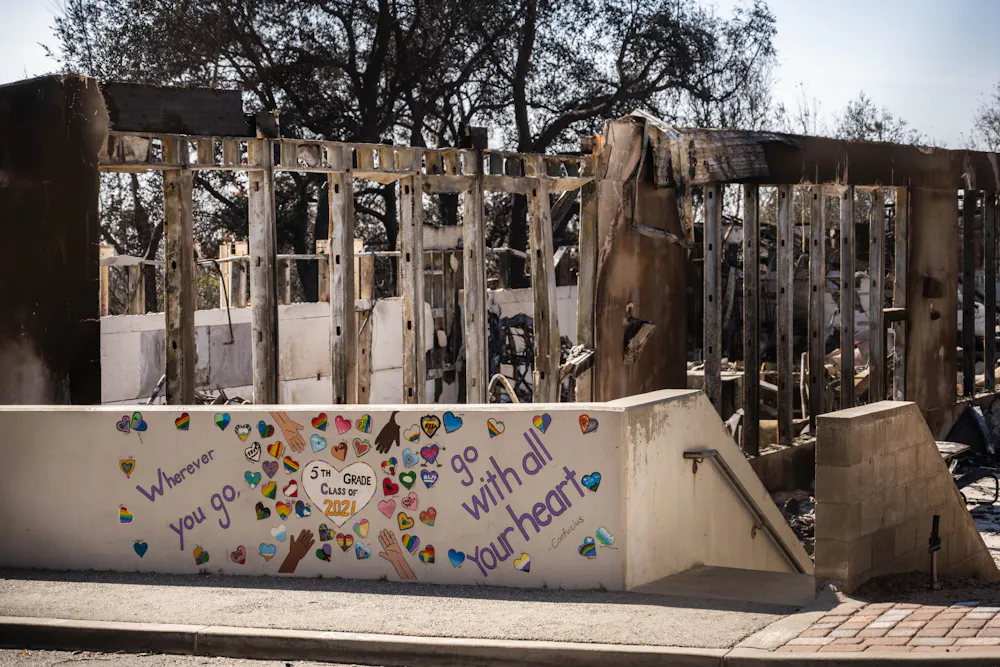
  • MIL-OSI USA: Governor Newsom announces suite of new wildfire community hardening measures

    Source: US State of California 2

    Feb 6, 2025

    What you need to know: Governor Gavin Newsom today announced he will issue an executive order to harden communities from wind-propelled wildfires that turn into urban firestorms. 

    Washington, D.C. — After meeting with key state and federal leaders on recovery efforts for Los Angeles firestorm survivors, Governor Gavin Newsom today will sign an executive order that directs his Administration to implement key initiatives to harden communities from urban firestorms.

    The devastation in the Pacific Palisades and Altadena aren’t new lessons. They are the latest lessons in urban firestorms that have devastated communities across the globe. To meet the needs of increasingly extreme weather, where decades-old buildings weren’t planned and designed for today’s realities, these proposals are part of a bigger state strategy to build wildfire and forest resilience from forest management, to huge investments in firefighting personnel and equipment, community hardening, and adopting state-of-the-art response technologies.

    Governor Gavin Newsom

    As the state continues updating its research and utilizing the latest science to understand the state’s ever-evolving climate-induced challenges, the Governor will direct the State Board of Forestry to advance implementation of regulations known as “Zone 0,” which will require an ember-resistant zone within 5 feet of structures located in the highest fire severity zone in the state’s Fire Hazard Severity Zone local maps and the State Responsibility Area, mitigating the risk of conflagration in urban areas like what occurred during the Palisades and Eaton firestorms. In addition, the Governor will direct the CAL FIRE – Office of the State Fire Marshal to release updated Fire Hazard Severity Zone maps, adding 1.4 million new acres of land into the two higher tiers of fire severity, which will update building and local planning requirements for these communities statewide.

    “These steps will spur proactive actions to defend the most vulnerable homes and eliminate combustible material within five feet of homes to reduce the risk of a home igniting in an ember-driven fire,” said California Natural Resources Secretary Wade Crowfoot. “These are important steps to limit wildland fires from becoming big urban fires.”

    Plus, building on the already comprehensive work the state has done to deploy firefighting assets statewide, the Governor will direct his state emergency management and firefighting departments to work with local, federal and tribal partners on reviewing and proposing improvements to the federal resources dispatching system for wildfire response to ensure it can fulfill its purpose of supporting the rapid fulfillment of mutual aid requests during large-scale incidents.

    Investing in wildfire prevention

    Overall, the state has more than doubled investments in wildfire prevention and landscape resilience efforts, providing more than $2.5 billion in wildfire resilience since 2020, with an additional $1.5 billion from the 2024 Climate Bond to be committed beginning this year for proactive projects that protect communities from wildfire and promote healthy natural landscapes. Of note, since 2021, the State has made strategic investments in at least 61 fuels reduction projects near the Palisades and Eaton fire perimeters through projects treated over 14,500 acres.

    The Newsom Administration has invested $2 billion to support CAL FIRE operations, a 47% increase since 2018, which has helped build CAL FIRE from 5,829 positions to 10,741 in that same period, and the Administration is now implementing shorter workweeks for state firefighters to prioritize firefighter well-being while adding 2,400 additional state firefighters to CAL FIRE’s ranks over the next five years.

    Augmenting technological advancements and pre-deployment opportunities

    The Newsom Administration has also overseen the expansion of California’s aerial firefighting fleet, including the addition of more than 16 helicopters with several equipped for night operations, expanded five helitack bases, and assumed ownership of seven C-130 air tankers, making it the largest fleet of its kind globally.

    California is also leveraging AI-powered tools to spot fires quicker, has deployed the Fire Integrated Real-Time Intelligence System (FIRIS) to provide real-time mapping of wildfires, and has partnered with the U.S. Department of Defense to use satellites for wildfire detection and invested in LiDAR technology to create detailed 3D maps of high-risk areas, helping firefighters better understand and navigate complex terrains.

    In anticipation of severe fire weather conditions in early January 2025, Cal OES approved the prepositioning of 65 fire engines, as well as more than 120 additional firefighting resources and personnel in Los Angeles, Orange, Santa Barbara, Ventura, Riverside, San Bernardino, and San Diego counties, and CAL FIRE moved firefighting resources to Southern California including 45 additional engines and six hand crews to the region.

    During the wildfires, California was able to mobilize more than 16,000 personnel including firefighters, National Guard servicemembers, California Highway Patrol officers and transportation teams to support the response to the Los Angeles firestorms, and more than 2,000 firefighting apparatus composed of engines, aircraft, dozers and water tenders to aid in putting out the fires.

    The Governor will sign the executive order upon his return from Washington, D.C. where he is advocating for federal aid for firestorm survivors.

    Recent news

    News What you need to know: Governor Gavin Newsom traveled to Washington, DC to meet with President Trump and members of Congress — focusing on securing critical disaster aid for the survivors of the Los Angeles fires and ensuring impacted families who lost their…

    News What you need to know: Governor Newsom has taken unprecedented action to cut red tape and remove regulatory barriers to help Los Angeles recover and rebuild quickly – including by suspending CEQA and Coastal Act permitting requirements. LOS ANGELES — In response…

    News What you need to know: People impacted by the recent fires in Los Angeles may be eligible for new food benefits. A family of four with a monthly income up to $3,529 per month may be eligible to receive $975. Los Angeles, California – As part of California’s…

    MIL OSI USA News

  • MIL-OSI Asia-Pac: Parliament Question: Monsoon Prediction

    Source: Government of India (2)

    Posted On: 06 FEB 2025 5:59PM by PIB Delhi

    The India Meteorological Department (IMD) has adopted a new strategy for issuing monthly and seasonal operational forecasts for the southwest monsoon rainfall over the country based on both the statistical forecasting system and the newly developed Multi-Model Ensemble (MME) based forecasting system.

    The MME approach uses the coupled global climate models (CGCMs) from different global climate prediction and research centers, including IMD’s Monsoon Mission Climate Forecasting System (MMCFS) model. The MMCFS and MME data are updated every month. This was to satisfy the demands from different users and Government authorities for forecasting the spatial distribution of seasonal rainfall along with the regionally averaged rainfall forecasts for better regional planning of activities.

    Since introducing the Statistical Ensemble Forecasting System (SEFS) in 2007 and using the MME approach in 2021 for seasonal forecasting, IMD operational forecast for the monsoon rainfall has shown noticeable improvement. For example, the absolute forecast error in the forecasting of all India’s seasonal rainfall reduced by about 21% during the recent 18 years (2007-2024) compared to the same number of years (1989-2006), which indicates a highly successful forecast in recent years compared to previous years. The average absolute error of forecast of Indian summer monsoon rainfall during the last 10 years (2015-2024) was 5.01% of the long period average (LPA), whereas 5.97% was during 2005-2014. The correlation coefficients between the actual and forecast rainfall for (2015-2024) & (2005-2014) are 0.61 & 0.37, respectively. IMD was able to correctly forecast the twin deficient monsoon years of 2014-2015, as well as below-normal rainfall in 2023 and above-normal rainfall in 2024. These indicate improvements in the operational forecast system in the recent 18 years compared to the earlier 18 years.

    The Ministry has launched the National Monsoon Mission (NMM) to develop a stateof-the-art dynamical prediction system for monsoon rainfall in different time scales. This has focused on seasonal (June-September) and extended-range prediction of Indian summer monsoon rainfall (ISMR), with delineation of active/break spells, using high-resolution ocean-atmosphere coupled dynamical models with reasonable skill, as well as short-range forecasts. Through NMM, two state-of-the-art dynamical prediction systems were implemented for short-range to medium-range, extendedrange, and seasonal forecasts.

    Recently, the Mission Mausam was launched in September 2024, and it is envisaged to be a multi-faceted and transformative initiative to boost India’s weather and climaterelated science, research, and services. It will help better equip stakeholders, including citizens and last-mile users, to tackle extreme weather events and the impacts of climate change. Besides physics-based numerical models, IMD is developing new methods based on artificial intelligence (AI) and machine learning (ML) technologies for weather and climate.

    There is an existing research advisory committee (RAC), which is an independent review committee constituted by the MoES with expert members from the Indian Institute of Tropical Meteorology (IITM), National Center for Medium Range Weather Forecasting (NCMRWF), and Indian National Center for Ocean Information Services (INCOIS), Indian Space Research Organisation (ISRO), and academia.

    Based on the guidance of this committee, the models used for monsoon forecasting are reviewed and improved from time to time. This committee meets annually once to review these activities. This information was provided by Union Minister of State (Independent Charge) for Science and Technology; Earth Sciences and Minister of State for PMO, Department of Atomic Energy, Department of Space, Personnel, Public Grievances and Pensions, Dr. Jitendra Singh, in a written reply to a question in Rajya Sabha today.

    *****

    NKR/PSM

    (RS US Q NO. 356)

    (Release ID: 2100370) Visitor Counter : 28

    MIL OSI Asia Pacific News

  • MIL-OSI Asia-Pac: Impact of Climate Change on Cultural Heritage Sites

    Source: Government of India (2)

    Posted On: 06 FEB 2025 5:55PM by PIB Delhi

    Under the comprehensive measures, India’s cultural heritage sites are monitored regularly and in order to reduce the impact of climatic change, Archaeological Survey of India (ASI) has been adopting climate-resilient solutions in the way of periodical scientific treatment, consolidation and preservation of cultural heritage sites.

    Earlier, ASI and Indian Space Research Organisation (ISRO) in joint collaboration have installed Automated Weather Stations (AWS) in many historical monuments, in order to monitor the wind speed & direction, rainfall, atmospheric pressure, temperature, etc. to ascertain any signs of damage or degradation caused by climate change. Besides, Air Pollution Laboratories are also established to monitor Ambient Pollutants such as suspended particulate matters at Taj Mahal, Agra and Bibi ka Maqbara, Aurangabad.

    Periodically, meetings are conducted with other Government agencies to develop and implement coordinated strategies for preserving cultural heritage sites in the face of climate change. Officers of ASI also participated in an International Consultative Workshop on ‘Disaster Management of Cultural Heritage Sites’ recently organized by the National Disaster Management Authority in collaboration with UNESCO. National Disaster Management Authority (NDMA) in collaboration with ASI has framed ‘National Disaster Management Guidelines for Cultural Heritage Sites and Precincts’ for risk assessment, risk reduction measures, preparedness, emergency response measure and planning for post disaster recovery.

    This information was given by Union Minister for Culture and Tourism Shri Gajendra Singh Shekhawat in a written reply in Rajya Sabha today.

    ***

    Sunil Kumar Tiwari

    E-mail: – pibculture[at]gmail[dot]com

    (Release ID: 2100367) Visitor Counter : 24

    MIL OSI Asia Pacific News

  • MIL-OSI Asia-Pac: Achievement of Swadesh Darshan Scheme

    Source: Government of India

    1.  

    Andaman & Nicobar Islands

    Coastal Circuit


     2016-17

    Development of Long Island-Ross Smith Island- Neil Island- Havelock Island- Baratang Island-Port Blair

    27.57


    22.13

    22.08

    1.  

    Andhra Pradesh


    Coastal Circuit


      2014-15

    Development of Kakinada – Hope Island – Coringa Wildlife Sanctuary – Passarlapudi – Aduru – S Yanam – Kotipally

    67.83

    67.83

    67.83

    1.  

    Andhra Pradesh


    Coastal Circuit


    2015-16

    Development of Nellore – Pulikat Lake – Ubblamadugu Water Falls – Nelapattu- Kothakoduru- Mypadu – Ramateertham –  Iskapalli

    49.55

    49.55

    50.96

    1.  

    Andhra Pradesh


    Buddhist Circuit


    2017-18

    Development of Buddhist Circuit: Shalihundam- Bavikonda- Bojjanakonda -Amravati- Anupu

    35.24

    30.02

    30.02

    1.  

    Arunachal Pradesh


    North-East   Circuit

    2014-15

    Development of Bhalukpong- Bomdila and Tawang

    49.77

    47.28

    47.28

    1.  

    Arunachal Pradesh


    North East   Circuit

    2015-16

    Development of Nafra- Seppa- Pappu, Pasa, Pakke Valleys- Sangdupota- New Sagalee- Ziro- Yomcha

    96.72

    91.88

    91.88

    1.  

    Assam


    Wildlife Circuit


    2015-16

    Development of Manas– Probitora– Nameri– Kaziranga– Dibru– Saikhowa

    94.68

    94.68

    89.94

    1.  

    Assam


    Heritage Circuit

    2016-17

    Development of Tezpur – Majuli – Sibsagar

    90.98

    90.97

    86.42

    1.  

    Bihar


    Tirthankar Circuit


    2016-17

    Development of Vaishali- Arrah- Masad- Patna- Rajgir- Pawapuri- Champapuri

    33.96

    30.04

    29.36

    1.  

    Bihar


    Spiritual Circuit

    2016-17

    Development of Kanwaria Route: Sultanganj – Dharmshala- Deoghar

    44.76

    42.52

    42.17

    1.  

    Bihar


    Buddhist Circuit


    2016-17

    Development of Buddhist circuit- Construction of Convention Centre at Bodhgaya

    95.18

    95.18

    93.22

    1.  

    Bihar


    Rural Circuit

    2017-18

    Development of Bhitiharwa- Chandrahia- Turkaulia

    44.27

    40.31

    39.96

    1.  

    Bihar


    Spiritual Circuit

    2017-18

    Development of Mandar Hill & Ang Pradesh

    44.55

    42.32

    42.32

    1.  

    Chhattisgarh


    Tribal Circuit


    2015-16


    Development of Jashpur- Kunkuri- Mainpat- Kamleshpur – Maheshpur -Kurdar – Sarodhadadar- Gangrel- Kondagaon– Nathiyanawagaon- Jagdalpur- Chitrakoot- Tirthgarh

    96.10

    94.23

    94.23

    1.  

    Goa


    Coastal Circuit


    2016-17

    Development of Sinquerim-Baga, Anjuna-Vagator, Morjim-Keri, Aguada Fort and Aguada Jail  

    97.65

    97.65

    97.50

    1.  

    Goa


    Coastal Circuit


    2017-18

    Development of Coastal Circuit II: Rua De Orum Creek – Dona Paula -Colva – Benaulim

    99.35

    99.35

    97.74

    1.  

    Gujarat


    Heritage Circuit

    2016-17

    Development of Ahmedabad- Rajkot- Porbandar –Bardoli- Dandi

    59.17

    56.21

    55.52

    1.  

    Gujarat


    Heritage Circuit

    2016-17

    Development of Vadnagar- Modhera

    91.12

    87.25

    85.63

    1.  

    Gujarat


    Buddhist Circuit


    2017-18

    Development of Junagadh- Gir Somnath- Bharuch-Kutch- Bhavnagar- Rajkot- Mehsana

    26.68

    22.28

    19.96

    1.  

    Haryana


    Krishna Circuit


    2016-17

    Development of Tourism Infrastructures at places related to Mahabharata in Kurukshetra

    77.39

    76.74

    76.74

    1.  

    Himachal Pradesh


    Himalayan Circuit


    2016-17


    Development of Himalayan Circuit: Kiarighat, Shimla, Hatkoti, Manali, Kangra, Dharamshala, Bir, Palampur, Chamba

    68.34

    64.54

    62.56

    1.  

    Jammu & Kashmir

    Himalayan Circuit


    2016-17

    Development of Jammu-Srinagar-Pahalgam-Bhagwati Nagar-Anantnag-Salamabad Uri-Kargil-Leh

    77.33

    67.37

    59.30

    1.  

    Jammu & Kashmir

    Himalayan Circuit


    2016-17

    Development of Tourist Facilities at Jammu-Rajouri-Shopian-Pulwama.

    81.60

    67.35

    59.41

    1.  

    Jammu & Kashmir

    Himalayan Circuit


    2016-17


    Development of Tourist Facilities – Construction of Assets in lieu of those Destroyed in Floods in 2014 under PM Development Package

    90.43

    74.70

    67.07

    1.  

    Jammu & Kashmir

    Himalayan Circuit


    2016-17

    Development of Tourist facilities at Mantalai and Sudhmahadev

    91.99

    91.93

    91.93

    1.  

    Jammu & Kashmir

    Himalayan Circuit


    2016-17


    Development of Tourist facilities at Anantnag-Pulwama-Kishtwar-Pahalgam-Zanskar Padum – Daksum – Ranjit Sagar Dam

    86.39

    69.95

    63.25

    1.  

    Jammu & Kashmir

    Himalayan Circuit

    2016-17

    Development of Tourist Facilities at Gulmarg-Baramulla- Kupwara- Kargil – Leh 

    91.84

    82.16

    82.47

    1.  

    Jharkhand


    Eco Circuit


    2018-19

    Development of Eco Tourism circuit: Dalma- Betla National park- Mirchaiya- Netarhat

    30.44

    28.04

    28.04

    1.  

    Kerala


    Eco Circuit

    2015-16

    Development of Pathanamthitta- Gavi- Vagamon- Thekkady

    64.08

    64.08

    64.08

    1.  

    Kerala


    Spiritual Circuit

    2016-17

    Development of Sabarimala – Erumeli-Pampa-Sannidhanam

    46.54

    33.39

    36.27

    1.  

    Kerala


    Spiritual Circuit

    2016-17

    Development of Sree Padmanabha Arnamula

    78.08

    73.77

    68.98

    1.  

    Kerala


    Rural Circuit

    2018-19

    Development of Malanad Malabar Cruise Tourism Project

    57.35

    45.88

    36.53

    1.  

    Kerala


    Spiritual Circuit


    2018-19

    Development Sivagiri Sree Narayana Guru Ashram- Arruvipuram- Kunnumpara Sree Subrahmania- Chembazhanthi Sree Narayana Gurukulam

    66.42

    42.01

    16.19

    1.  

    Madhya Pradesh


    Wildlife Circuit


    2015-16


    Development of Wildlife Circuit at Panna- Mukundpur- Sanjay- Dubri-Bandhavgarh- Kanha- Mukki- Pench

    92.10

    86.31

    86.31

    1.  

    Madhya Pradesh


    Buddhist Circuit

    2016-17

    Development of Sanchi-Satna-Rewa-Mandsaur-Dhar

    74.02

    72.75

    72.75

    1.  

    Madhya Pradesh


    Heritage Circuit


    2016-17

    Development of Gwalior – Orchha – Khajuraho – Chanderi – Bhimbetka – Mandu

    89.82

    89.49

    89.49

    1.  

    Madhya Pradesh


    Eco Circuit


    2017-18


    Development of Gandhisagar Dam- Mandleshwar Dam- Omkareshwar Dam- Indira Sagar Dam- Tawa Dam- Bargi Dam- Bheda Ghat- Bansagar Dam- Ken River

    93.76

    93.59

    93.59

    1.  

    Maharashtra


    Coastal Circuit


    2015-16

    Development of Sindhudurg Coastal Circuit – Sagareshwar, Tarkarli, Vijaydurg (Beach & Creek), Mitbhav

    19.06

    18.10

    17.61

    1.  

    Maharashtra


    Spiritual Circuit

    2018-19

    Development of Waki- Adasa- Dhapewada- Paradsingha- Telankhandi- Girad

    45.47

    43.19

    38.24

    1.  

    Manipur


    North-East   Circuit

    2015-16

    Development of Tourist Circuit in Manipur: Imphal- Khongjom

    72.23

    61.32

    61.25

    1.  

    Manipur


    NSpiritual Circuit


    2016-17


    Development of Shri Govindajee Temple, Shri Bijoy Govindajee Temple – Shri Gopinath Temple – Shri Bungshibodon Temple – Shri Kaina Temple

    45.34

    45.33

    43.04

    1.  

    Meghalaya


    North East Circuit


    2016-17

    Development of Umium (Lake View), U Lum Sohpetbneng-Mawdiangdiang – Orchid Lake Resort

    99.13

    99.11

    99.11

    1.  

    Meghalaya


    North East Circuit


    2018-19

    Development of West Khasi Hills (Nongkhlaw- KremTirot – Khudoi & Kohmang Falls – Khri River- Mawthadraishan, Shillong), Jaintia Hills (Krang Suri Falls- Shyrmang- Iooksi), Garo Hills (Nokrek Reserve, Katta Beel, Siju Caves)

    84.97

    84.96

    76.97

    1.  

    Mizoram

    North East   Circuit

    2015-16

    Development of Thenzawl & South Zote, District Serchhip and Reiek.

    92.26

    92.26

    92.26

    1.  

    Mizoram


    Eco Circuit


    2016-17

    Development of Eco-Adventure Circuit Aizawl -Rawpuichhip – Khawhphawp – Lengpui – Chatlang- Sakawrhmuituaitlang – Muthee – Beratlawng -Tuirial Airfield – Hmuifang

    66.37

    53.09

    53.09

    1.  

    Nagaland


    Tribal Circuit


    2015-16

    Development of Tribal Circuit Peren- Kohima- Wokha

    97.36

    97.36

    92.49

    1.  

    Nagaland


    Tribal Circuit

    2016-17

    Development of Mokokchung-Tuensang-Mon

    98.14

    98.14

    98.14

    1.  

    Odisha


    Coastal Circuit

    2016-17

    Development of Gopalpur, Barkul, Satapada and Tampara

    70.82

    67.28

    59.47

    1.  

    Puducherry


    Coastal Circuit


    2015-16

    Development of Dubrayapet – Arikamedu – Veerampattinam – Chunnambar – Nallavadu/Narambai – Manapet- Kalapet –   Puducherry – Yanam

    58.44

    58.44

    58.44

    1.  

    Puducherry


    Heritage Circuit

    2017-18

    Development of Franco- Tamil Village, Karaikal, Mahe and Yanam

    49.44

    45.70

    45.50

    1.  

    Puducherry


    Spiritual Circuit


    2017-18

    Development

    of Spiritual Circuit in

    Puducherry

    34.96

    31.40

    31.40

    1.  

    Punjab


    Heritage

    Circuit


    2018-19

    Development of Anandpur Sahib – Fatehgarh Sahib – Chamkaur Sahib – Ferozpur – Khatkar Kalan – Kalanour – Patiala

    85.32

    81.05

    81.05

    1.  

    Rajasthan


    Desert

    Circuit


    2015-16

    Development of Sambhar Lake Town and Other Destinations

    50.01

    50.01

    55.89

    1.  

    Rajasthan


    Krishna

    Circuit


    2016-17

    Development of Govind Dev ji temple (Jaipur), Khatu Shyam Ji (Sikar) and Nathdwara (Rajsamand)

    75.80

    73.85

    77.49

    1.  

    Rajasthan


    Spiritual Circuit


    2016-17

    Development of Spiritual Circuit– ‘Development of Churu (Salasar Balaji)-Jaipur (Shri Samodke Balaji, Ghatke Balaji, Bandheke Balaji)- Viratnagar (Bijak, Jainnasiya, Ambika Temple)- Bharatpur (Kaman Region)- Dholpur (Muchkund) – Mehndipur Balaji- Chittorgarh (Sanwaliyaji)

    87.05

    75.03

    75.03

    1.  

    Rajasthan


    Heritage

     Circuit


    2017-18

    Development of Heritage Circuit Development of Rajsamand (Kumbhalgarh Fort) – Jaipur (Facade Illumination in Jaipur and Nahargarh Fort) -Jhalawar (Gagron Fort) – Chittorgarh (Chittorgarh Fort) – Jaisalmer (Jaisalmer Fort) – Hanumangarh (Gogamedi) – Udaipur (Pratap Gaurav Kendra) – Dholpur (Bagh-I-Nilofor and Purani Chawani) – Nagaur (Meera Bai Smarak, Merta) – Tonk (Sunehri Kothi)

    70.61

    66.99

    67.04

    1.  

    Sikkim


    North

     East

    Circuit


    2015-16

    Development of Tourist Circuit linking Rangpo (entry) – Rorathang- Aritar- Phadamchen- Nathang-Sherathang- Tsongmo- Gangtok-Phodong- Mangan- Lachung-Yumthang- Lachen- Thangu-Gurudongmer- Mangan- Gangtok-TuminLingee- Singtam (exit)

    98.05

    97.41

    97.41

    1.  

    Sikkim


    North East Circuit


    2016-17

    Development of Tourist Circuit Linking Singtam– Maka- Temi-BermoikTokel- Phongia- Namchi –Jorthang- Okharey- Sombaria-Daramdin- Jorethang- Melli (Exit)

    95.32

    95.32

    90.55

    1.  

    Tamil Nadu


    Coastal Circuit


    2016-17

    Development of (Chennai- Mamamallapuram – Rameshwaram – Manpadu – Kanyakumari)

    73.13

    71.03

    71.03

    1.  

    Telangana


    Eco Circuit

    2015-16

    Development of Eco Tourism Circuit in Mahaboobnagar district

    91.62

    91.25

    91.62

    1.  

    Telangana


    Tribal Circuit


    2016-17

    Development of Mulugu-Laknavaram- Medavaram- Tadvai- Damaravi- Mallur- Bogatha Waterfalls

    79.87

    79.87

    79.87

    1.  

    Telangana


    Heritage Circuit


    2017-18

    Development of Qutub Shahi Heritage Park- Paigah Tombs- Hayat Bakshi Mosque- Raymond’s Tomb

    96.90

    70.61

    90.61

    1.  

    Tripura


    North East   Circuit


    2015-16

    Development of Agartala – Sipahijala – Melaghar – Udaipur – Amarpur- Tirthamukh- Mandirghat– Dumboor- NarikelKunja- Gandachara– Ambassa

    82.85

    77.76

    73.29

    1.  

    Tripura


    North

    East Circuit


    2018-19

    Development of Surma Cherra- Unakoti- Jampui Hills- Gunabati – Bhunaneshwari- Neermahal- Boxanagar- Chottakhola- Pilak- Avangchaarra

    44.83

    35.25

    26.84

    1.  

    Uttar Pradesh


    Buddhist Circuit

    2016-17

    Development of Srawasti, Kushinagar, & Kapilwastu

    87.89


    72.56

    68.43

    1.  

    Uttar Pradesh


    Ramayana Circuit

    2016-17

    Development of Chitrakoot and Shringverpur

    69.45

    64.09

    56.03

    1.  

    Uttar Pradesh


    Spiritual Circuit


    2016-17

    Development of Ahar-Aligarh-Kasganj-Sarosi (Unnao)-Pratapgarh- Kausambi-Mirzapur-Gorakhpur-Domariyaganj-Basti-Barabanki-Azamgarh-Kairana- Baghpat- Shahjahanpur

    71.91

    69.63

    69.63

    1.  

    Uttar Pradesh


    Spiritual Circuit


    2016-17

    Development of Bijnor- Meerut- Kanpur- Kanpur Dehat- Banda- Ghazipur- Salempur- Ghosi- Balia- Ambedkar Nagar- Aligarh- Fatehpur- Deoria- Mahoba- Sonbhadra- Chandauli- Mishrikh- Bhadohi

    67.51

    64.14

    63.62

    1.  

    Uttar Pradesh


    Heritage Circuit


    2016-17

    Development of Kalinjar Fort (Banda)- Maghar Dham (Sant Kabir Nagar)- Chauri Chaura, Shaheed Sthal (Fatehpur)- Mahuar shaheed Sthal (Ghosi)- Shaheed Smarak (Meerut)

    36.65

    36.65

    36.65

    1.  

    Uttar Pradesh


    Ramayana Circuit

    2017-18

    Development of Ayodhya

    127.21

    115.46

    113.22

    1.  

    Uttar Pradesh


    Spiritual Circuit


    2018-19

    Development of Jewar-Dadri-Sikandrabad-Noida-Khurja-Banda

    12.03

    11.43

    11.69

    1.  

    Uttar Pradesh


    Spiritual Circuit


    2018-19

    Development of Gorakhnath Temple (Gorakhpur), Devipattan Temple (Balrampur) and Vatvashni Temple (Domariyagunj)

    18.30

    18.12

    18.12

    1.  

    Uttarakhand


    Eco Circuit


    2015-16

    Integrated Development of Eco-Tourism, Adventure Sports, and Associated Tourism Related Infrastructure for Development of Tehri Lake & Surroundings as New Destination-District Tehri

    69.17

    69.17

    69.20

    1.  

    Uttarakhand


    Heritage Circuit


    2016-17


    Integrated Development of Heritage Circuit in Kumaon Region – Katarmal -Jogeshwar-Baijnath-Devidhura

    76.32

    68.91

    68.91

    1.  

    West Bengal


    Coastal Circuit


    2015-16


    Development of Beach Circuit: Udaipur- Digha- Shankarpur- Tajpur- Mandarmani- Fraserganj-Bakkhlai- Henry Island

    67.99

    65.07

    65.07

    1.  

    Wayside Amenities


    2018-19


    Development of Wayside Amenities in Uttar Pradesh and Bihar at Varanasi-Gaya; Kushinagar-Gaya- Kushinagar in collaboration with MoRTH

    15.07

    14.32

    15.83

    Total

    5287.90

    4956.39

    4840.11

    MIL OSI Asia Pacific News

  • MIL-OSI Asia-Pac: Parliament Question: Awareness About Earthquake Safety Measures

    Source: Government of India (2)

    Posted On: 06 FEB 2025 5:17PM by PIB Delhi

    To enhance public awareness and education on earthquake safety, following measures are taken by the government:

    1. To address the community-based preparedness and raise awareness in earthquake prone regions, National Disaster Management Authority (NDMA) runs TV and radio campaigns focused on earthquake preparedness, highlighting critical do’s and don’ts during seismic events. Special programs like Aapda ka Samna, aired on Doordarshan, feature expert discussions on prevention and mitigation strategies, equipping the public with actionable knowledge to safeguard lives and property.
    2. (ii) NDMA, has also developed guidelines and formulates programs targeting earthquake risk mitigation to mitigate losses in a systematic and coordinated manner.

     These initiatives are: (I) Home Owner’s Guide for Earthquake & Cyclone Safety (2019): The guide will make homeowners aware of various considerations and minimum requirements which need to be taken care of while constructing and buying a house. It would also help them avoid the most common mistakes and ask the relevant questions to the engaged professionals or the seller in urban areas to ensure that the house is disaster-resilient. It outlines best practices for ensuring that masonry or reinforced concrete (RC) structures meet safety standards, empowering homeowners with knowledge to make informed decisions.

     (II) Simplified Guidelines for Earthquake Safety (2021): It provides details based on the National Building Code of India 2016 (released by the Bureau of Indian Standards, Government of India) to those who are constructing a house and who are buying a flat in multi-storey buildings, which are made of either masonry or reinforced concrete (RC). This Guide focuses to address this aspiration of potential home owners, and provides the basic information that they should have when constructing individual houses or buying flats in multi-storey buildings. (b) Research efforts are started in India for developing an Earthquake Early Warning (EEW) System for Himalayan region but these are still at a nascent stage, so the question of coordination with neighbouring countries doesn’t arise. However, National Centre for Seismology (NCS) under Ministry of Earth Sciences is capable of recording any earthquake of M:2.5 and above in and around Delhi, M:3.0 and above for NE region, M:3.5 and above in Peninsular and extra-peninsular region, M:4.0 and above in Andaman region, and M:4.5 and above in border regions lying between 0 – 40 degree; N: 60 – 100-degree East.

    The details of the earthquakes reported by NCS are available in public domain through social media and on the website of NCS (seismo.gov.in). (c) NDMA has undertaken the Earthquake Disaster Risk Indexing (EDRI) project to systematically address the challenges of rapid urbanization and ensuring earthquake resilience in growing cities; assess earthquake risk across Indian cities.

     The project aims to provide actionable insights into urban earthquake risk to aid in mitigation, preparedness, and response planning for future seismic events. In Phase I, completed in 2019, the EDRI covered 50 cities, while Phase II targets 16 additional cities. The primary objective of this initiative is to evaluate earthquake risk by combining three critical parameters: hazard, vulnerability, and exposure for each city.

    The risk index derived from these studies identifies regions within cities as low, medium, or high vulnerability and risk zones. These findings enable decision-makers to prioritize areas requiring immediate attention and implement targeted mitigation measures.

    NDMA has initiated a project to develop a comprehensive Methodology for Risk Assessment aimed at guiding States in conducting various levels of earthquake risk assessment. The methodology will provide step by-step guidance for conducting risk assessments at different scales, from city-level evaluations to state wise analyses. It will also incorporate best practices and lessons learned from past studies and international frameworks, ensuring a robust and reliable approach. By equipping States with a clear and actionable methodology, NDMA aims to foster uniformity in risk assessments across the country.

    The results of the EDRI and risk assessment have far-reaching implications, particularly in cities experiencing rapid urbanization. By integrating the risk index into urban planning frameworks, cities can adopt risk-informed decision-making, ensuring safer infrastructure development and community resilience. This initiative underscores NDMA’s commitment to developing for proactive disaster risk reduction in urban India.

    This information was provided byUnion Minister of State (Independent Charge) for Science and Technology; Earth Sciences and Minister of State for PMO, Department of Atomic Energy, Department of Space, Personnel, Public Grievances and Pensions, Dr. Jitendra Singh, in a written reply to a question in Rajya Sabha today.

    *****

    NKR/PSM

    (RS US Q NO. 355)

    (Release ID: 2100338) Visitor Counter : 8

    MIL OSI Asia Pacific News

  • MIL-OSI Europe: Answer to a written question – Protecting the competitiveness of the European cement industry – E-002800/2024(ASW)

    Source: European Parliament

    The Carbon Border Adjustment Mechanism (CBAM) will ensure that the carbon price of cement imported into the EU is equivalent to the carbon price of domestic production under the EU Emissions Trading System (EU ETS).

    Under the EU ETS, the number of free emission allowances declines over time for all sectors. For CBAM sectors like cement, the decline accelerates as from 2026 to maximise the impact of the ETS in fulfilling the EU’s climate goals.

    In line with the phase-out of the allocation of free allowances under the EU ETS, the CBAM financial adjustment is phased in gradually.

    As required by the CBAM Regulation, a report on the application of the CBAM is foreseen in 2025 before the end of the transitional phase[1].

    In view of the expiration of the Autonomous Trade Measures for Ukraine in June 2025, the Commission is working on a review of reciprocal trade liberalisation under Article 29 of the Association Agreement.

    However, since cement was already fully liberalised by the original Association Agreement, it was not affected by the Autonomous Trade Measures nor is it within the scope of the review.

    The Commission is aware of the challenges that companies and households face due to high energy prices. The EU has jointly responded to Russia’s energy market manipulation and the subsequent high inflation.

    The energy dimension of the Clean Industrial Deal and the forthcoming Action Plan for Affordable Energy will address the high energy prices and aim at unlocking all possible decarbonisation pathways for EU industries. Further fuel switches and energy efficiency improvements can also help to reduce energy costs.

    • [1] Regulation (EU) 2023/956, Article 30(2).
    Last updated: 6 February 2025

    MIL OSI Europe News

  • MIL-OSI Europe: Italy: EIB provides €30 million to improve water service efficiency and resilience in Pescara

    Source: European Investment Bank

    • The first €20 million tranche of a green loan for Azienda Comprensoriale Acquedottistica S.p.A (ACA) has been signed.
    • The InvestEU-backed financing will help provide wider and more reliable access to water and optimise wastewater management.
    • The EIB is one of the world’s leading lenders to the water sector.

    The European Investment Bank (EIB) has announced a €30 million loan to Azienda Comprensoriale Acquedottistica S.p.A (ACA), the utility company providing integrated water services to around 450 000 people in the Italian provinces of Pescara, Chieti and Teramo. The first €20 million tranche was signed by the Head of the EIB Local Office in Italy, Milena Messori, and by the CEO of ACA, Giovanna Brandelli. This InvestEU-backed financing will support ACA’s water and wastewater investment programme for 2024-2026.

    This is the first EIB green loan to be granted to a business in Abruzzo. EIB green loans go to projects focusing on sustainability, climate action and environmental protection. Key initiatives set to receive financing include expanding the water network to provide wider and more reliable access to water, and introducing advanced technologies for better water quality and wastewater management. In parallel, solutions will be implemented to optimise operational processes, cutting costs and increasing the overall efficiency of the water system.

    The focus on improving the sector’s resilience to future extreme climate events will strengthen the region’s ability to face droughts and water crises like the one that hit Abruzzo in 2024. This project will have a positive impact not only on the management of water resources, but also on people’s quality of life.

    The agreement is part of the existing partnership between the EIB and the city of Pescara, which in March 2022 saw the signature of €35 million in financing for the renewal of waste sorting facilities, the purchase of low environmental impact vehicles and the improvement of energy efficiency in schools and public buildings.

    “This agreement reaffirms our commitment to Italian utility companies and to the improvement of water infrastructure in Italy. With InvestEU backing, we are helping ACA Pescara to cut water losses, improve efficiency and provide high-quality water services, even when confronted with climate change-related challenges, said the Head of the EIB Local Office in Italy, Milena Messori.”

    “This is the first EIB green loan to be granted to a business in Abruzzo, said the CEO of ACA, Giovanna Brandelli. This €30 million loan to ACA will hugely improve the region’s water network and provide a better service in the coming years. This is the first time that ACA has received such financing like this from a prestigious bank like the EIB. This shows that the path taken by the company is starting to bear fruit and is having a positive impact on the service provided. The focus on improving the sector’s resilience to future extreme climate events will strengthen the region’s ability to face droughts and water crises like the one that hit Abruzzo in 2024”.

    Italy receives more EIB resources for the water sector than any other country

    With over 1 640 projects and around €84 billion in financing provided since 1958, the EIB is one of the world’s leading lenders to the water sector. In the last ten years, Italy has received more EIB resources for the water sector than anywhere else, seeing operations financed totalling more than €4 billion. This is ACA Pescara’s first EIB loan, and comes in addition to recently announced financing for Iren (€200 million), Valle Umbra Servizi (€35 million), ETRA (€100 million), Acquedotto Pugliese (€270 million), Como Acqua (€50 million), Hera Group (€460 million), ACEA (€435 million), Acque (€130 million) and CIIP (€50 million).

    Background information

    The European Investment Bank (ElB) is the long-term lending institution of the European Union, owned by its Member States. Founded on eight key priorities, it finances investments that contribute to EU policy objectives, bolstering climate action, environmental protection, digitalisation and technological innovation, security and defence, agriculture and bioeconomy, social infrastructure, the capital markets union, and supports a stronger Europe in a more peaceful and prosperous world. All projects financed by the EIB Group are in line with the Paris Climate Agreement, as pledged in our Climate Bank Roadmap. Around 60% of the EIB Group’s annual financing supports projects directly contributing to climate change mitigation, adaptation, and a healthier environment.

    The EIB Group, which also includes the European Investment Fund (EIF), signed a total of around €89 billion in new financing for over 900 projects in 2024, which boosted Europe’s competitiveness and security. Promoting the integration of markets and mobilising investments, the funds unleashed by the EIB Group in 2024 attracted investment worth over €100 billion, fostering Europe’s energy security and unlocking €110 billion to support startups, scale-ups and pioneering firms in Europe. Around half of the EIB’s financing within the European Union goes to cohesion regions, where per capita income is lower than the EU average. The EIB Group signed 99 operations totalling €10.98 billion in Italy in 2024, helping to unlock almost €37 billion of investment in the real economy.

    The InvestEU programme provides the European Union with long-term funding by leveraging substantial private and public funds in support of a sustainable recovery. It also helps to crowd in private investment for the European Union’s strategic priorities such as the European Green Deal and the digital transition. InvestEU brings all EU financial instruments previously available for supporting investments within the European Union together under one roof, making funding for investment projects in Europe simpler, more efficient and more flexible. The programme consists of three components: the InvestEU Fund, the InvestEU Advisory Hub, and the InvestEU Portal. The InvestEU Fund is deployed through implementing partners that will invest in projects using the EU budget guarantee of €26.2 billion. The entire budget guarantee will back the investment projects of the implementing partners, increase their risk-bearing capacity and thus mobilise at least €372 billion in additional investment.

    MIL OSI Europe News

  • MIL-OSI United Kingdom: UK project will improve livelihoods and climate resilience of communities in Alta Verapaz and the dry corridor

    Source: United Kingdom – Executive Government & Departments

    A three-year project will provide tools for families in climate sensitive areas to better plan the management of their landscapes and improve well-being of indigenous and ladino communities.

    Edwin Castellanos, Viceministro de Recursos Naturales y Cambio Climático; Juliana Correa, Embajadora del Reino Unido; Jeremy Haggar, Universidad de Greenwich

    The British Ambassador to Guatemala, Juliana Correa, and the Vice Minister of Environment and Climate Change, Edwin Castellanos, attended on 6 February in Chiquimula the launch of workshop for the project “Nature-based solutions for climate resilience of indigenous and local communities in Guatemala”, a UK Official Development Assistance (ODA) programme funded through the Global Centre on Biodiversity for Climate (GCBC) by the Department for Environment, Food and Rural Affairs (Defra) in the United Kingdom.

    The project has a duration of three years and will invest more than US$1million (£847,784) in communities in the Departments of Alta Verapaz and Chiquimula.  Activities on the ground will be implemented by the University of Greenwich, the Tropical Agricultural Research and Higher Education Centre (CATIE), the University of Valle of Guatemala (UVG), and the Federation of Cooperatives of the Verapaces R.L. (FEDECOVERA).

    The project aims to facilitate the integration of traditional and scientific knowledge about nature to plan a more climate-resilient landscape through the implementation of nature-based solutions. It will assess the effectiveness of different reforestation systems and their contribution to climate resilience; support indigenous and local communities to document their understanding of nature’s contribution to their livelihoods; and develop guidelines and tools for the co-design of nature-based solutions for climate resilience and justice at a multi-stakeholder level.

    In Alta Verapaz activities will focus on a high rainfall montane region populated by Q’eqchi’ communities whose main income sources come from cardamom, coffee and timber production. FEDECOVERA represents some 40,000 Q’eqchi’ families supporting their access to Fairtrade, Organic, and Forest Stewardship Council certified markets.

    Interventions in Chiquimula will cover the “dry corridor” populated with Maya Chorti and ladino communities near the border with Honduras and El Salvador. The project will identify with local communities how to improve environmental resilience to flooding and drought that affects traditional and commercial cropping systems. 

    The evidence collected will contribute to building capacity in local and national environmental planning processes, and environmental regulations and incentives adapted to the needs of local communities in Guatemala. Lessons from the application of these processes will be shared to inform climate change planning processes in the country and Central America.

    Juliana Correa, British Ambassador to Guatemala, said:

    A top priority of our Foreign Secretary is to support indigenous peoples’ rights and their role in protecting forests. The UK is committed to provide funding for nature, forests, and forest communities, particularly their livelihoods and their rights to protect that nature.  I’m looking forward to seeing the wider impact of this project in Guatemala.

    Updates to this page

    Published 6 February 2025

    MIL OSI United Kingdom

  • MIL-OSI Global: Loving the world could address the climate crisis and help us make sense of changes to come

    Source: The Conversation – Canada – By Barbara Leckie, Professor, English and the Institute for the Comparative Study of Literature, Art, and Culture; Academic Director, Re.Climate: Centre for Climate Communication and Public Engagement, Carleton University

    This January, the world watched as Los Angeles burned. “I’ve never seen anything like this,” one police chief told reporters, a sentiment echoed by front-line firefighters.

    Last fall, hurricanes Helene and Milton swept through North Carolina and Florida.

    The storms’ intensity and record-breaking fatalities, exacerbated by climate change, blindsided many inhabitants. “Never in a million years,” one nurse said, “did I think [a storm like that] would happen in my own backyard.”

    As a researcher focused on how language and storytelling contribute to social cohesion and social change, I noticed people repeatedly felt they had “no words to describe” what they saw.

    Their experience captured what happens when stories and words to fail describe our world.

    ‘Between past and future’

    After the Second World War, for example, philosopher Hannah Arendt, born into a German and Jewish family, wrote about not just the impact of the war on a personal level, but also its impact on how people make meaning.

    What did it mean, Arendt asked, not to have the conceptual frames through which the world had once made sense? What did it mean to live in the strange interval of time “between past and future” when old forms of understanding the world had eroded and new forms had not yet been found?


    Read more:
    Hannah Arendt wanted political thinking to be urgent and engaged. She is a philosopher for our times


    Her response was bracing and unexpected. She called for everyone — not just philosophers or scholars but the general public as a whole — to step up and contribute to the work of making meaning at a time when meaning-making was grievously fractured. Her phrase for this was amor mundi or “for love of the world.”

    Now, as many people seek to understand and respond to the climate crisis, they are again experiencing a sense of personal loss and a larger sense of not having the conceptual tools to make sense of this moment. How does one love the world in difficult times?

    Learning to love the world

    Love is complicated and messy. Like hurricanes and fires, it often defies the categories available to describe it.

    Hannah Arendt, seen here in 1958, wrote about making meaning for the love of the world.
    (Barbara Niggl Radloff/Wikipedia), CC BY-SA

    And as Stephanie Lemenager, professor in American literature and environmental studies, illustrates, love of fossil fuel culture, and the conveniences it provides, makes it difficult to respond to the climate crisis.

    Love also evades measurement, and metric-oriented value structures can’t count it. As William Shakespeare asks, tragically, in King Lear: “How does one measure love?

    Love won’t run out in 2030 or 2050. It doesn’t have a parts per million, and despite the many hot and cold words to describe it, it doesn’t have a temperature. Still, as climate emotions professor Sara Jacquette Ray notes, love of this world powers climate action.

    I was talking to a friend recently, the Canadian poet Ken Victor, and he suggested “giving priority to the climate crisis as a multi-faceted relationship to be repaired rather than as a problem to be solved.” Indigenous thinkers like Leanne Betasamosake Simpson,
    the renowned Michi Saagiig Nishnaabeg scholar, also emphasizes “deep reciprocity” and “relationship” to resist the injustices imposed by colonialism.

    Global North climate responses have much to gain from Indigenous thinking and Arendt, of course, is not alone in animating the power of collective, participatory storytelling and loving the world.

    Learning to ‘restory’ the climate

    The idea of “restorying” has been taken up by Indigenous writers to speak in diverse and powerful ways to dynamic and relational forms of oral storytelling, leadership and theatre.

    Walter Benjamin wrote that the trauma of war weakened the stories his world relied upon for coherence.
    (Wikipedia)

    My research on time and climate develops German Jewish philosopher Walter Benjamin’s relevance to storytelling, and what I am calling “restorying” here.

    Like Arendt, Benjamin wrote that the trauma of war — in this case, the First World War — weakened the stories upon which his world relied for social coherence. Where Arendt suggests loving the world, Benjamin endorses amplified, dynamic forms of storytelling.

    Here I build on the tradition from Benjamin to Arendt that invests in the collective practice of making sense of the world one inhabits through sharing, revising and building stories. For Benjamin, stories are in dialogue with other stories; they are participatory and inconclusive. They are also “effective,” meaning they produce effects and invite a response. Above all, they are meant to be repeated and passed on.

    Benjamin’s account of stories, however, also includes a cautionary note: people stop telling stories, as he defines them, when the world no longer fills them with wonder or surprise; when they think they know where they stand. They stop asking questions and no longer believe they can benefit from sharing their dilemmas and concerns with others. They stop thinking, in Arendt’s sense.

    When people isolate themselves in silos of like-minded others, they avoid being challenged or provoked. As Arendt notes, facts are fragile. When lies proliferate and the ability to distinguish those lies from factual truth is eroded, reality wobbles and political action becomes near impossible.

    People can’t act, Arendt believes, when they stop sharing a world in common, however divided by different customs it will always be.

    Relationship rebuilding

    Environmental justice asks us to rethink the systems and practices that created today’s climate impacts. Addressing the climate crisis only from the perspective of a problem to be solved means that we continue on the path, and with the infrastructure, that created the problem in the first place.

    Now, poised between another past and future, I’m interested in, as writer and activist Astra Taylor puts it, “coming together as things fall apart.” Coming together, as a relational practice, can animate what’s missing in the problem-solution models that dominate Global North responses to the climate crisis.

    Arendt and Benjamin offer me stories that “work” and stories that “wonder.”
    Stories that “work” mobilize equitable climate action. Stories that “wonder” are stories that keep open questions, conversation and thinking.

    As international assemblies like COP29 fail to realize their goals, as global carbon emissions continue to rise and as extreme weather everywhere makes many people feel that the frameworks available for understanding no longer serve them, a different response is required. We could call it, following Arendt and Benjamin, restorying the climate and loving the world.

    Barbara Leckie receives funding from SSHRC.

    ref. Loving the world could address the climate crisis and help us make sense of changes to come – https://theconversation.com/loving-the-world-could-address-the-climate-crisis-and-help-us-make-sense-of-changes-to-come-240766

    MIL OSI – Global Reports

  • MIL-OSI USA: Padilla, Sheehy, Hickenlooper, Daines Introduce Bipartisan Bill to Establish Unified National Wildfire Intelligence Center

    US Senate News:

    Source: United States Senator Alex Padilla (D-Calif.)

    Padilla, Sheehy, Hickenlooper, Daines Introduce Bipartisan Bill to Establish Unified National Wildfire Intelligence Center

    Modeled after National Weather Service and NOAA Water Center, would coordinate fire response amongst various federal, state, and academic institutions

    WASHINGTON, D.C. — As Southern California rebuilds from devastating fires, U.S. Senators Alex Padilla (D-Calif.), Tim Sheehy (R-Mont.), John Hickenlooper (D-Colo.), and Steve Daines (R-Mont.) announced bipartisan legislation to create a national Wildfire Intelligence Center to streamline federal response and create a whole-of-government approach to combat wildfires. The joint office, created between the Department of Agriculture, the Department of Commerce, and the Department of the Interior, would facilitate coordination and information sharing across federal and state departments and agencies, tribal entities, academia, and the private sector on wildland fires.

    At the federal level, various departments and agencies have their own fire management goals, firefighters, and jurisdictions on which they respond to fires. The current division of responsibilities leaves gaps for cross-department collaboration and is unnecessarily burdensome. A national Wildfire Intelligence Center would compile comprehensive information on wildfires to better inform and streamline wildfire responses and recovery by providing states with a central command within the federal government. This center would also increase monitoring and imaging capabilities that land management agencies currently cannot achieve.

    “The devastating Southern California fires are the latest example of increasingly intense and frequent fires ravaging communities within both local jurisdictions and on federal land,” said Senator Padilla. “Wildfires don’t distinguish between our boundaries, and we can’t afford to be siloed in our response. The scale of the wildfire crisis demands a singular, whole-of-government wildfire intelligence center to foster cross-agency collaboration and save lives.”

    “We can all agree that the federal government must do a better job protecting our people, property, public lands, and communities from wildfires, and this bill will go a long way in streamlining our wildland firefighting efforts and best leveraging all available resources to accomplish our shared mission. As the only aerial firefighter in the Senate, I’m proud to be working with folks on both sides of the aisle to deliver commonsense solutions to more effectively fight the devastating threat of wildfires and protect the American people,” said Senator Sheehy. 

    “Wildfires don’t care about state lines or forest service boundaries,” said Senator Hickenlooper. “A centralized wildfire intelligence center will speed our response to fires and promote cross-agency collaboration to tackle them.”

    “As fire season rapidly approaches for Montana, we need all hands on deck to prevent catastrophic disasters. Sharing information and resources between agencies will undoubtedly help Montana communities take preventive measures and better combat fires and coordinate response efforts,” said Senator Daines.

    “The Wildfire Intelligence Center established by this bill will harness cutting-edge technology to give decision-makers real-time insights across jurisdictions and landscapes, enhancing coordination at every stage of a fire. The tools to tackle the megafire crisis already exist — this bill brings us closer to putting them in the hands of firefighters and land managers where they can make a real impact,” said Matt Weiner, CEO of Megafire Action. “Senators Padilla and Sheehy understand the urgent need to modernize our wildfire management system, and we look forward to working with them to get this bill signed into law and turn that vision into reality.”

    “FAS applauds Senators Padilla and Sheehy for introducing this bill, which would take a crucial step forward in protecting our communities from increasingly severe wildfires. The Wildfire Intelligence Center would bring together expertise at all levels of government to give our firefighters and first responders access to cutting-edge tools and the decision support they need to confront this growing crisis,” said James Campbell, Wildfire Policy Specialist at the Federation of American Scientists.

    “APCIA supports the Wildfire Intelligence Collaboration and Coordination Act introduced by Senator Padilla (D-CA) and Senator Sheehy (R-MT). This bill reflects the bipartisan recommendations of the Wildland Fire Mitigation and Management Commission to create a joint interagency center to improve fire assessment and prediction in the wildland and built environment. With the risk of catastrophic wildfires increasing, Congress must take action to pass bills like this one that will lead to better land and fuels management, reduce risk to communities, and improve fire management and response,” said David A. Sampson, APCIA’s President and CEO.

    Advances in wildfire technology hold great promise, however available technological services are highly fragmented across more than 50 federal programs. Simply put, the technology is available, but the government currently lacks the ability to get these tools in the hands of those who desperately need it, when they need it. The Wildfire Intelligence Center will leverage cutting-edge technology and improve the effectiveness of the many entities engaged in wildfire work.

    Specifically, the Wildfire Intelligence Center would study, coordinate, and implement fire suppression and mitigation strategies among the Agriculture, Commerce, and Interior departments, including providing comprehensive assessment and modeling of wildfires to inform response, risk reduction, land and fuels management, post-wildfire recovery, and rehabilitation. This center would be modeled after similar information sharing centers like the National Weather Service and the National Oceanic and Atmospheric Administration’s (NOAA) Water Center, which coordinate information sharing to educate people, improve understanding, and foster collaboration amongst various federal, state, and academic units.

    The Wildfire Intelligence Collaboration and Coordination Act is endorsed by Megafire Action, Federation of American Scientists, Association of FireTech Innovation, Alliance for Wildfire Resilience, Climate and Wildfire Institute, Rural Voices for Conservation Coalition, The Stewardship Project, Tall Timbers, Grassroots Wildland Firefighters, American Forests, Environmental Defense Fund, and American Property Casualty Insurance Association.

    Senator Padilla has long been a leader in strengthening the federal and state response to wildfires. Earlier this week, Padilla announced a package of three bipartisan bills to bolster fire resilience and proactive mitigation efforts, including the Wildfire Emergency Act, the Fire-Safe Electrical Corridors Act, and the Disaster Mitigation and Tax Parity Act. Last month, he introduced another suite of three bipartisan bills to strengthen wildfire resilience and rebuilding efforts through legislation including the Wildland Firefighter Paycheck Protection Act, the Fire Suppression and Response Funding Assurance Act, and the Disaster Housing Reform for American Families Act. Padilla’s legislation to strengthen FEMA’s wildfire preparedness and response efforts, the FIRE Act, became law in 2022.

    A one-pager on the Wildfire Intelligence Collaboration and Coordination Act is available here.

    Full text of the bill is available here.

    MIL OSI USA News

  • MIL-OSI Europe: More electric recharging points to be set up under EU alternative fuels initiative

    Source: European Union 2

    The EU is allocating nearly €422 million to 39 projects that will deploy alternative fuels supply infrastructure along the trans-European transport network (TEN-T), contributing to decarbonisation. These projects have been selected under the first cut-off deadline of the 2024-2025 Alternative Fuels Infrastructure Facility (AFIF) of the Connecting Europe Facility (CEF), the EU funding programme supporting European transport infrastructure.

    With this selection, the AFIF will support approximately 2,500 electric recharging points for light-duty vehicles and 2,400 for heavy-duty vehicles along the European TEN-T road network, 35 hydrogen refuelling stations for cars, trucks and buses, the electrification of ground handling services in 8 airports, the greening of 9 ports and 2 ammonia and methanol bunkering facilities. 

    Next steps

    Following EU Member States’ approval of the selected projects on 4 February 2025, the European Commission will adopt the award decision in the coming months, after which the results will become definitive. The European Climate, Infrastructure and Environment Executive Agency (CINEA) has started the preparation of the grant agreements with the beneficiaries of successful projects.

    Background

    The second phase of the AFIF (2024-2025) was launched on 29 February 2024 with a total budget of €1 billion: €780 million under the general envelope and €220 million under the cohesion envelope. Its goal is to support objectives set out in the Regulation for the deployment of alternative fuels infrastructure (AFIR) regarding publicly accessible electric recharging pools and hydrogen refuelling stations across the EU’s main transport corridors and hubs, as well as the objectives set in the ReFuelEU aviation and the FuelEU maritime regulations. 

    The call for proposals covers the roll-out of alternative fuels supply infrastructure for road, maritime, inland waterway and air transport. It supports recharging stations, hydrogen refuelling stations, electricity supply and ammonia and methanol bunkering facilities.

    The call remains open for applications and the next cut-off deadline is 11 June 2025.

    For more information

    MIL OSI Europe News

  • MIL-OSI Global: What Los Angeles-area schools can learn from other districts devastated by natural disasters

    Source: The Conversation – USA – By Lee Ann Rawlins Williams, Clinical Assistant Professor of Education, Health and Behavior Studies, University of North Dakota

    Eliot Arts Magnet Middle School burned when the Eaton Fire swept through Altadena, Calif., in January 2025. JOSH EDELSON/AFP via Getty Images

    As Los Angeles County students begin returning to school after wildfires devastated the region, it’s worth examining how other U.S. educational systems disrupted by natural disasters have moved forward.

    Many students and educators have experienced the loss of their schools and homes, leaving them with a deep sense of grief and uncertainty. More than 1,000 schools were closed in Los Angeles County due to the fires, affecting more than 600,000 students across 26 districts.

    But loss during a disaster goes beyond what’s visible. And a return to normalcy means more than rebuilding schools and educational spaces.

    The fires have disrupted learning, emotional well-being and the routines that hold educational communities together. Previous disasters show that the emotional recovery of students and teachers needs attention for academic progress to be effective.

    As a professor who has studied how educational systems recover from natural disasters, I think Los Angeles-area schools will have to address some key themes of loss as they recover from the fires.

    Loss of learning time and continuity

    One educational consequence after natural disasters is loss of learning time and continuity. After previous natural disasters, some school districts stressed the importance of returning to in-person instruction quickly.

    For example, the Florida Department of Education reported in October 2022 that 68 of the state’s 75 school districts were open one week after Hurricane Ian barreled through the state.

    But that’s not always the best decision.

    Students often need time and space to process loss. Rushing students back into class without acknowledging this can feel counterproductive.

    Successful responses to large-scale disruptions show that keeping education on track during such times requires a holistic approach that involves the entire community.

    Schools play a crucial role in this approach. Beyond offering educational continuity, they are spaces where students can find support and stability.

    This doesn’t necessarily mean an immediate return to the classroom. Instead, a holistic approach ensures that when students do return to school, they have the necessary emotional and psychological support in place.

    In the wake of Hurricane Helene in September 2024, for example, school districts recognized that emotional healing is essential before academic recovery can begin.

    Fifty-three school districts across North Carolina sent 263 counselors and social workers to support students and educators in Buncombe County, home to Asheville, after Helene.

    Soon afterward, teachers incorporated hurricane recovery efforts into their lesson plans. When an environmental response team helped schools use portable testing kits for water quality analysis, some science teachers incorporated the hands-on learning into their classrooms.

    The experience allowed students to engage in a real-world application of science. This deepened their understanding of the disaster’s health impact.

    The Eaton Fire burned the Aveson School of Leaders elementary school in Altadena, Calif., in January 2025.
    Sarah Reingewirtz/MediaNews Group/Los Angeles Daily News via Getty Images

    After Hurricane Milton swept through Tampa Bay, Fla., schools in Hillsborough County extended the first-quarter grading period. They also reviewed the academic calendar to determine necessary adjustments for making up lost instructional time.

    Meanwhile, Pinellas County Schools, which also serves the Tampa Bay area, deployed a mental health and wellness plan developed in 2022 to support students and staff. It emphasizes the need for both academic recovery and mental health support.

    For Los Angeles-area students and teachers, a similar approach could involve offering mental health counseling and creating safe spaces for students and educators to process trauma. This can be done via drop-in counseling collaborations between community mental health providers and trained professionals in schools.

    These efforts could support resilience and long-term recovery.

    New environments and challenges

    The Los Angeles-area wildfires have destroyed schools that often provide free or reduced lunch services to many students. The fires have also uprooted many students, forcing them to navigate new and unfamiliar schools.

    Educators, meanwhile, must manage the challenges of teaching in temporary settings with limited resources.

    These strains highlight the urgent need for support systems to promote stability and rehabilitation.

    Teacher Adrianna Vargas prepares a classroom at Woodbury Village Preschool for the return of students after the Eaton Fire in Altadena, Calif., on Jan. 22, 2025.
    Genaro Molina/Los Angeles Times via Getty Images

    Schools can implement flexible deadlines for assignments to accommodate students dealing with transitional living situations and limited access to resources. Adjusting school grading can provide more realistic measures of student progress during periods of disruption.

    This reduces pressure on students and teachers alike.

    Flexible learning schedules – such as hybrid models combining remote and in-person studies – and staggered school hours can help students stay engaged in their education while they adapt to new circumstances.

    A vision for the future

    Schools often serve as pillars of support. They can be safe havens that provide stability.

    Their recovery is closely tied to broader community rebuilding efforts.

    However, the extent to which this occurs may vary depending on the resources and collaboration between local governments, educational leaders and community members, research shows.

    The process is most effective when there is a coordinated effort – one that acknowledges the emotional and social needs of all involved.

    By acknowledging the profound impact of loss, Los Angeles County can rebuild an educational system that is compassionate and honors shared experiences, while promoting healing, learning and community renewal.

    Lee Ann Rawlins Williams does not work for, consult, own shares in or receive funding from any company or organization that would benefit from this article, and has disclosed no relevant affiliations beyond their academic appointment.

    ref. What Los Angeles-area schools can learn from other districts devastated by natural disasters – https://theconversation.com/what-los-angeles-area-schools-can-learn-from-other-districts-devastated-by-natural-disasters-247777

    MIL OSI – Global Reports

  • MIL-OSI Global: Reducing air pollution could increase methane emissions from wetlands – here’s what needs to be done

    Source: The Conversation – UK – By Vincent Gauci, Professorial Fellow, School of Geography, Earth and Environmental Science, University of Birmingham

    Sampling in a Pantanal lake, Brazil. Vincent Gauci, CC BY-NC-ND

    What if well-meaning policies that reduce one atmospheric pollutant could also increase natural emissions of powerful greenhouse gases?

    Our findings, just published in the journal Science Advances, advance an earlier discovery of one such unfortunate interaction. This means that we need to work much harder than we thought to stay within the safe climate limits of the Paris agreement.

    The atmospheric pollutant in question is sulphur. Its current and projected decline from clean air policies aimed at reducing acid rain and fine particles, coupled with direct effects of increasing atmospheric CO₂ and warming, will lead to larger natural wetland methane emissions than expected.

    This is because sulphur has a very specific effect in natural wetlands that reduces methane emissions. On the other hand, CO₂ boosts methane production by increasing growth in plants that make the food for methane-producing microbes.

    Put simply, sulphur provides the conditions for one set of bacteria to outmuscle another set of microbes that produce methane over limited available food in wetlands. Under the conditions of acid rain sulphur pollution during the past century, this was enough to reduce wetland methane emissions by up to 8%.

    If we lift this sulphur “lid” on wetland methane production and increase CO₂, we have a double whammy effect that pushes wetland emissions much higher.

    We first discovered this effect in the early 2000s with field experiments that simulated acid rain sulphur pollution in the peatlands of North America, Scotland and Scandinavia. Further similar experiments took place on methane-emitting rice.

    Now, more than 20 years on, we have better modelling approaches that allow us to use improved estimates of the future of sulphur pollution and CO₂ for a range of scenarios. This allows us to link these back to methane emissions.

    A water hyacinth meadow in the Pantanal, Brazil.
    Vincent Gauci, CC BY-NC-ND

    The effect is substantial and we estimate that these different factors, in combination, will mean that policy instruments like the global methane pledge, which addresses anthropogenic emissions of methane, may need to work much harder.

    More than 150 nations signed up to the global methane pledge at the UN climate summit, Cop26, in Glasgow. The pledge seeks to reduce emissions of anthropogenic methane by 30% on a 2020 baseline by 2030.

    If successful, the climate benefit can be substantial (methane is around 30-80 times more potent than CO₂ as a greenhouse gas) and fast-acting. This is because methane only lasts in the atmosphere for around 10 years, leading to a rapid 0.2°C climate dividend by 2050.


    Read more:
    Methane is pitched as a climate villain – could changing how we think about it make it a saviour?


    However, our findings show that between 8% and 15% of the allowable space for these human-made emissions is disappearing. This is due to the climate, CO₂ fertilisation, and sulphur unmasking effects. So, larger cuts are needed to achieve the same Paris climate targets.

    This isn’t the first time that the loss of an apparent broad climate-cooling action of atmospheric sulphur has been implicated in driving warming at a faster rate than anticipated.

    Drainage canal in the Kampar peat swamp forest, Sumatra, Indonesia.
    Vincent Gauci, CC BY-NC-ND

    In 2020, shipping pollution controls were introduced globally to reduce emissions of sulphur dioxide and fine particles that are harmful to human health. This reduction in atmospheric sulphur over the oceans has been implicated in larger warming effects than expected in what has come to be known as “termination shock”.

    Part of the warming effect of emitted CO₂ is effectively masked by cooling sulphate particles in the atmosphere. If the source of the sulphate is stopped, the remaining sulphur in the atmosphere drops out rapidly, unmasking the warming effect of the CO₂ which lasts over 100 years in the atmosphere. For natural wetlands the unmasking effect on methane emissions can take a little longer, more a “termination rebound” than shock – but it soon catches up.

    Intentional interventions?

    So what can be done? In another paper recently published in Global Change Biology, scientists propose direct intervention in natural wetland methane emissions through adding sulphate to these ecosystems, essentially – and this time deliberately – replacing the sulphate lid on the wetland methane source. This raises questions about what a natural wetland actually is.

    Acacia plantation on former peat swamp forest after harvest, Sumatra, Indonesia.
    Vincent Gauci, CC BY-NC-ND

    What are the environmental ethics of deliberately intervening in this manner for ecosystems that are only just recovering from past incidental pollution effects? In emitting methane, they are, ultimately, just performing their natural function and should be protected for the vast carbon stores they contain and the valuable biodiversity that makes these ecosystems their home.

    So, we need to go back to the framework set up by the global methane pledge which is prompting much innovation to reduce human emissions from fossil fuel industries, waste and agriculture. We need to work harder on emissions first and foremost while also considering technologies to actively remove methane from the atmosphere.

    Atmospheric methane removal technologies are a new and under-investigated approach to managing atmospheric methane and they could be as simple as growing more trees.


    Don’t have time to read about climate change as much as you’d like?

    Get a weekly roundup in your inbox instead. Every Wednesday, The Conversation’s environment editor writes Imagine, a short email that goes a little deeper into just one climate issue. Join the 40,000+ readers who’ve subscribed so far.


    Vincent Gauci receives funding from or has received funding from the Natural Environment Research Council, The Royal Society, Spark Climate Solutions, Axa Research Fund, Defra.

    Lu Shen receives funding from National Natural Science Foundation of China.

    ref. Reducing air pollution could increase methane emissions from wetlands – here’s what needs to be done – https://theconversation.com/reducing-air-pollution-could-increase-methane-emissions-from-wetlands-heres-what-needs-to-be-done-246723

    MIL OSI – Global Reports

  • MIL-OSI United Kingdom: expert reaction to Copernicus data reporting that January 2025 was the warmest on record globally

    Source: United Kingdom – Executive Government & Departments

    Scientists comment on data published by Copernicus that shows January 2025 was the warmest on record globally.

    Dr Joel Hirschi, Associate Head of Marine Systems Modelling, UK’s National Oceanography Centre (NOC), said:

    “One should not infer too much out of one month temperature data, as temperature anomalies can vary a lot.  The global temperatures for 2024 and now early 2025 have been tracking the record temperatures we saw in 2023 (and 2024) quite closely.  The last few months of 2024 were slightly cooler than in 2023 and January 2025 is now just warmer than January 2024.

    “Despite La Niña conditions having developed in the tropical Pacific, global temperatures remain very high.  This pattern is similar to what we observed after the El Niño events of 2015/16 and 2019/20 when global temperatures remained close to record warm levels even after the onset of La Niña conditions.

    “Global sea surface temperatures are a bit lower than in 2024 and will likely remain lower as we move further into 2025.”

    Prof Richard Allan, Professor of Climate Science, University of Reading, said:

    “Human caused warming of the ocean is accelerating and this is dominating to an ever greater extent over the natural year to year fluctuations in climate.  Although the swing from moderate El Niño to a weak La Niña during 2024 had a small cooling effect on the surface of the ocean, heat continues to flood into the climate system as atmospheric greenhouse gases continue to rise and the reflective haze of aerosol particle pollution diminishes in some regions following clean air regulation.  Aside from a cooler than average equatorial band in the eastern Pacific due to the weak La Niña conditions, much of the rest of the global sea surface remains remarkably warm in early 2025, primarily a result of human-caused warming of climate.

    “Changing weather patterns from week to week can rapidly alter temperatures over continental regions, which warm up and cool down more quickly than the oceans.  Based upon the most up to date, state of the art Copernicus data, large areas of Europe, Canada and Siberia experienced less cold weather than is normal for January but parts of South America, Africa, Australia and Antarctica also experienced above average temperatures which contributed along with the balmy oceans to the unexpected record global temperatures at the beginning of 2025.  As industrial activity continues to spew greenhouse gases into the air, this growing heating effect is tipping the balance toward record warmth and worsening hot, dry and wet extremes.”

    Prof Bill McGuire, Emeritus Professor of Geophysical & Climate Hazards, UCL, said:

    “The fact that the latest robust Copernicus data reveals the January just gone was the hottest on record – despite an emerging La Nina, which typically has a cooling effect – is both astonishing and, frankly terrifying.  Having crashed through the 1.5C limit in 2024, the climate is showing no signs of wanting to dip under it again, reflected by the fact that this is the 18th of the last 19 months to see the global temperature rise since pre-industrial times top 1.5C.  On the basis of the Valencia floods and apocalyptic LA wildfires, I don’t think there can be any doubt that dangerous, all-pervasive, climate breakdown has arrived.  Yet emissions continue to rise, while fossil fuel corporations seek to expand operations. Grim doesn’t even begin to describe our prospects.”

    Dr Friederike Otto, Senior Lecturer at the Centre for Environmental Policy and co-lead of World Weather Attribution, Imperial College London, said: 

    “This January is the hottest on record because countries are still burning huge amounts of oil, gas and coal.

    “Sure, El Niño and La Niña add or take off a tiny bit of warming, but the reason we’ve broken another record is the continued burning of fossil fuels.

    “The LA wildfires were a stark reminder that we have already reached an incredibly dangerous level of warming.  We’ll see many more unprecedented extreme weather events in 2025.

    “If politicians really care about people’s lives and their children’s futures, transitioning away from fossil fuels would need to be top of their agenda, to make the world safer and fairer.

    “This data shows very clearly what hundreds of other high-quality analyses have shown in recent decades – more burning of fossil fuels leads to more emissions that lead to more warming.”

    Declared interests

    Dr Joel Hirschi: “No conflicts of interest.”

    Prof Richard Allan: “No conflicting interests.”

    Dr Friederike Otto: “No DOIs.”

    MIL OSI United Kingdom

  • MIL-OSI United Kingdom: Cross River Partnership supports council’s plans with low-emission micro logistics hub | Westminster City Council

    Source: City of Westminster

    Cross River Partnership (CRP), is proud to announce its continued commitment to delivering sustainable logistics solutions by supporting the development of a low-emission micro logistics hub in the City of Westminster.

    A micro logistics hub is a small site that couriers use for their day-to-day deliveries to receive, sort and then send deliveries to their final destinations by cargo bikes or walking porters. By enabling consolidation of deliveries, micro logistics hubs can reduce the number of polluting vehicle trips and congestion, thereby improving local air quality.

    The proposed micro logistics hub will optimise last-mile deliveries through innovative consolidation practices and the promotion of zero-tailpipe emission transport modes such as e-cargo bikes. With a supported 6-month trial for a low-emission courier in Westminster, this initiative delivered by CRP will enable significant reductions in carbon emissions, support sustainable freight, and help local businesses. The project will also create new green jobs, providing vital economic opportunities.

    CRP will monitor the hub’s impact throughout its implementation and operation. The project will measure reductions in freight vehicle numbers, delivery vehicle miles, and emissions exposure. At an estimated value-for-money rate of £39.75 per kilogram of CO2 saved, the project demonstrates the cost-effective nature of the initiative.

    This micro logistics hub aligns with Westminster City Council’s strategies, including the draft Sustainable Transport Strategy, the Freight, Servicing and Deliveries Strategy and Action Plan, and the Zero Carbon City 2040 Action Plan. The project also supports the city’s broader vision for fairer communities, healthier streets, and a decarbonised urban transport network by 2040.

    Building on previous successful CRP micro logistics hub trials in Pimlico and Wandsworth, this hub will continue to explore new approaches to logistics in underutilised spaces, enhancing Westminster’s capacity for green growth. CRP will work closely with the central London local authority, local businesses, couriers, and community stakeholders to ensure the hub’s long-term viability and operational success.

    This low-emission micro logistics hub trial is made possible by the council’s Carbon Offset Fund, which supports projects designed to reduce carbon emissions across the city.

    The fund is open to a wide range of applicants, including community groups, charities, public sector bodies, and businesses. Through this, the council is hoping to empower local initiatives to take meaningful action on climate change, contributing to Westminster’s goal of becoming a net-zero city.

    Councillor Ryan Jude, Cabinet Member for Climate, Ecology and Culture at Westminster City Council, said:

    Reducing emissions and improving air quality are top priorities for Westminster in achieving our aim of making the city net zero by 2040. The new hub will play a vital role in supporting more efficient low-emission deliveries across the city helping to reduce pollution create new green jobs and support local businesses, contributing to a fairer and more sustainable Westminster.

    We look forward to continuing our collaboration with Cross River Partnership on this important project.”

    Isidora Rivera Vollmer, Project Manager, Cross River Partnership, said:

    We are excited to collaborate with Westminster City Council on the next steps of this project, advancing sustainable freight solutions and supporting the delivery of a greener, safer, and more equitable city.

    At CRP, we blend strategic innovation with a strong collaborative approach to sustainability, ensuring that initiatives like this micro logistics hub not only drive environmental improvements but also enhance the health, economy, and resilience of local communities.”

    MIL OSI United Kingdom

  • MIL-OSI Asia-Pac: Parliament Question: Steps To Bring More Area Under Green Cover

    Source: Government of India

    Ministry of Environment, Forest and Climate Change

    Parliament Question: Steps To Bring More Area Under Green Cover

    Posted On: 06 FEB 2025 3:38PM by PIB Delhi

    The National Forest Policy (NFP) 1988 envisages the national goal to have a minimum of one-third of the total land area under forest or tree cover and two-thirds of the area under such cover in the hill and mountainous regions of the country.

    As per latest India State of Forest Report (ISFR) – 2023 published by Forest Survey of India (FSI), Dehradun, the total tree and forest cover of the country is 8,27,356.95 square kilometre which is 25.15% of the geographical area of the country. The tree and forest cover of the country has increased by 1445.81 square kilometre as compared with the previous assessment report of ISFR 2021.

    The State-wise details of India’s geographical area under tree and forest cover, as per ISFR 2023, is given below:

    (Area in sq. Km.)

    State/UTs

    Geographical

    Area

    Forest Cover

    Tree Cover

    Total Forest Cover including Tree Cover

    Andhra Pradesh

    1,62,922.57

    30,084.96

    5,340.02

    35,424.98

    Arunachal Pradesh

    83,743.22

    65,881.57

    1,201.63

    67,083.20

    Assam

    78,438.00

    28,313.55

    2,101.46

    30,415.01

    Bihar

    94,163.00

    7,532.45

    2,370.21

    9,902.66

    Chhattisgarh

    1,35,192.00

    55,811.75

    6,538.70

    62,350.45

    Delhi

    1,483.00

    195.28

    176.03

    371.31

    Goa

    3,702.00

    2,265.72

    257.82

    2,523.54

    Gujarat

    1,96,244.00

    15,016.64

    6,632.29

    21,648.93

    Haryana

    44,212.00

    1,614.26

    1,693.02

    3,307.28

    Himachal Pradesh

    55,673.00

    15,580.35

    855.07

    16,435.42

    Jharkhand

    79,716.00

    23,765.78

    3,637.55

    27,403.33

    Karnataka

    1,91,791.00

    39,254.27

    7,779.15

    47,033.42

    Kerala

    38,852.00

    22,059.36

    2,905.94

    24,965.30

    Madhya Pradesh

    3,08,252.11

    77,073.44

    8,650.14

    85,723.58

    Maharashtra

    3,07,713.00

    50,858.53

    14,524.88

    65,383.41

    Manipur

    22,327.00

    16,585.46

    209.82

    16,795.28

    Meghalaya

    22,429.00

    16,966.84

    720.56

    17,687.40

    Mizoram

    21,081.00

    17,990.46

    567.80

    18,558.26

    Nagaland

    16,579.00

    12,222.47

    394.02

    12,616.49

    Odisha

    1,55,707.00

    52,433.56

    6,163.45

    58,597.01

    Punjab

    50,362.00

    1,846.09

    1,475.15

    3,321.24

    Rajasthan

    3,42,238.99

    16,548.21

    10,841.12

    27,389.33

    Sikkim

    7,096.00

    3,358.40

    48.33

    3,406.73

    Tamil Nadu

    1,30,060.00

    26,450.22

    5,370.72

    31,820.94

    Telangana

    1,12,122.44

    21,179.04

    3,517.66

    24,696.70

    Tripura

    10,486.00

    7,584.77

    247.56

    7,832.33

    Uttar Pradesh

    2,40,927.56

    15,045.80

    8,950.92

    23,996.72

    Uttarakhand

    53,483.36

    24,303.83

    1,231.14

    25,534.97

    West Bengal

    88,752.00

    16,832.33

    2,938.12

    19,770.45

    A&N Islands

    8,249.00

    6,732.92

    26.97

    6,759.89

    Chandigarh

    114.00

    25.00

    21.18

    46.18

    Dadra & Nagar

    Haveli and Daman & Diu


    602.00


    225.62


    36.83


    262.45

    Jammu & Kashmir

    2,22,236.00

    21,346.39

    3,666.97

    25,013.36

    Ladakh

    2,285.92

    893.02

    3,178.94

    Lakshadweep

    29.63

    27.06

    0.20

    27.26

    Puducherry

    490.00

    44.31

    28.89

    73.20

    Total

    32,87,468.88

    7,15,342.61

    1,12,014.34

    8,27,356.95


    The protection and management of forests is primarily the responsibility of the State Government. The Government has formulated adequate legal and regulatory frameworks at national and state levels, which regulate the protection, conservation, and management of the forests of the country. The major central level policy and legislations concerning the management and conservation of forests include the National Forest Policy, 1988, Indian Forest Act, 1927, Wildlife (Protection) Act, 1972, Van (Sanrakshan Evam Samvardhan) Adhiniyam 1980, and Biological Diversity Act, 2002, etc.

    To bring more areas under green cover, the Government is implementing various schemes such as such as National Mission for a Green India (GIM), Integrated Development of Wildlife Habitats, Compensatory Afforestation Fund Management and Planning Authority (CAMPA), Nagar Van Yojana (NVY) and Mangrove Initiative for Shoreline Habitats & Tangible Incomes (MISHTI). The schemes primarily support ecological restoration through afforestation in and outside forest areas, forest landscape restoration, habitat improvement, soil and water conservation measures and protection etc.

    The tree plantation campaign Ek Ped Maa Ke Naam was launched by Honble Prime Minister on 5th June 2024 to undertake plantation activities across the country.

    This information was provided by UNION MINISTER OF STATE FOR ENVIRONMENT, FOREST AND CLIMATE CHANGE, SHRI KIRTI VARDHAN SINGH, in a written reply to a question in Rajya Sabha today.

    *****


    VM

    (Rajya Sabha US Q367)

    (Release ID: 2100254)

    MIL OSI Asia Pacific News

  • MIL-OSI Asia-Pac: Cross-Agency Steering Group sets 2025 priorities to support growth of sustainable finance in Hong Kong

    Source: Hong Kong Government special administrative region

    The following is issued on behalf of the Hong Kong Monetary Authority:

         The Green and Sustainable Finance Cross-Agency Steering Group (Steering Group) sets out three key priorities for this year to foster the growth of sustainable finance in Hong Kong following its meeting today (February 6).

         1. Developing a comprehensive sustainability disclosure ecosystem. With the publication of the Roadmap on Sustainability Disclosure in Hong Kong (Note 1) by the Hong Kong Special Administrative Region (HKSAR) Government, the Steering Group will take further actions to support the implementation of the International Financial Reporting Standards Sustainability Disclosure Standards (ISSB Standards) in Hong Kong. The Steering Group will work closely with stakeholders to provide technical assistance on sustainability reporting, develop a sustainability assurance framework, and deliver capacity building programmes in collaboration with the industry.

         2. Reinforcing Hong Kong’s role as a leading sustainable and transition finance hub. To scale up the flow of green and sustainable finance, the Steering Group is engaging the industry to expand the Hong Kong Taxonomy for Sustainable Finance (Note 2) to incorporate transition elements and add new sustainable activities. The Steering Group also works alongside the industry to develop operational guidance for practising transition finance in a sectoral approach. Furthermore, the Steering Group will set up a Transition Finance Knowledge Hub on its website. Following the progress of carbon market developments at COP29 (Note 3), the Steering Group reaffirmed its commitment to develop Hong Kong into an Asia-Pacific region carbon trading hub, through increasing engagement with stakeholders and providing capacity building programmes across the region.

         3. Harnessing data and technology to facilitate sustainability reporting and promote sustainable financing activities. The Steering Group is developing the official Hong Kong Green Fintech Map (Note 4) with the industry, which will be published in the first half of 2025, in view of the potential of green fintech solutions in facilitating large-scale mobilisation of sustainable capital and enabling information flow with greater transparency and accessibility. To support sustainability reporting and increase data availability, the Steering Group will continue to enhance the free-for-all public utility data tools on its website throughout the year, including two greenhouse gas emissions calculation and estimation tools and the Climate and Environmental Risk Questionnaire for Non-listed companies/small and medium-sized enterprises. 
         â€‹
         For details on the initiatives of the Steering Group and its members, please visit sustainablefinance.org.hk/en/.
     
    About the Steering Group

         Established in May 2020, the Steering Group is co-chaired by the Hong Kong Monetary Authority and the Securities and Futures Commission. Members include the Financial Services and the Treasury Bureau, the Environment and Ecology Bureau, the Insurance Authority, the Mandatory Provident Fund Schemes Authority, the Accounting and Financial Reporting Council, and Hong Kong Exchanges and Clearing Limited. The Steering Group aims to coordinate the management of climate and environmental risks to the financial sector, accelerate the growth of green and sustainable finance in Hong Kong and support the Government’s climate strategies.
     
    Note 1: In December 2024, the HKSAR Government launched the Roadmap on Sustainability Disclosure in Hong Kong, providing a well-defined pathway for large publicly accountable entities in Hong Kong to fully adopt the ISSB Standards no later than 2028.

    Note 2: In May 2024, the HKMA published Phase 1 of the Hong Kong Taxonomy for Sustainable Finance, encompassing 12 economic activities under four sectors, namely power generation, transportation, construction, and water and waste management.

    Note 3: The 29th Conference of the Parties to the United Nations Framework Convention on Climate Change, commonly known as COP29.

    Note 4: In March 2024, the Steering Group launched the Prototype Hong Kong Green Fintech Map with Cyberport and Invest Hong Kong.

    MIL OSI Asia Pacific News

  • MIL-OSI Asia-Pac: Workshop on Green Hydrogen aims at strengthening India-UK cooperation

    Source: Government of India (2)

    Workshop on Green Hydrogen aims at strengthening India-UK cooperation

    Bureau of Indian Standards (India) and British Standards Institution (United Kingdom) discusses hydrogen standardization

    Posted On: 06 FEB 2025 2:00PM by PIB Delhi

    With an objective to strengthen India-UK cooperation on hydrogen standardization through Green Hydrogen Production & Regulations, Bureau of Indian (BIS), in collaboration with BSI (British Standards Institution) and the UK Government’s Foreign, Commonwealth & Development Office (FCDO), hosted a two-day India-UK Standards Partnership Workshop on Green Hydrogen in New Delhi.

    The India-UK Standards Partnership Workshop on Green Hydrogen marks a milestone in fostering international cooperation for achieving clean energy transitions. It serves as a testament to the importance of knowledge exchange, standardization, and innovation in building a sustainable hydrogen market, said Ms. Abbey Dorian, Energy Sector Lead at BSI during the workshop.

    She said, “India and the UK have a shared ambition to become leaders in green hydrogen, supporting the goal of a net zero future.

    The event is a part of a schedule of wider activity, through the UK Government’s Standards Partnership programme which aims to increase the use of international standards in India to accelerate growth, attract investment and enhance trade. The event emphasises on safe, scalable & globally harmonized Regulations, Codes and Standards (RCS). The event was also focused at adoption of fast-track PAS (Publicly Available Specification) standards & global hydrogen certification.

    The programme also strengthens BIS’s efforts under the National Green Hydrogen Mission. It helped identify gaps in standards, explore new areas, and connect with experts. Insights from global best practices will enhance India’s certification, testing, and standardization, supporting a sustainable and competitive green hydrogen economy.

    The event witnessed insightful deliberations by policymakers, technical experts, and industry leaders from India and the United Kingdom. The workshop was inaugurated by Mr. Rajiv Sharma, Deputy Director General (Standardization-I), BIS, Ms. Laura Aylett, Head of Climate and Energy (British High Commission) and Ms. Abbey Dorian, Energy Sector Lead, BSI, underscoring the shared vision of India and UK to foster innovation and sustainability in the green hydrogen sector.

    ****

    Abhishek Dayal/Nihi Sharma

    (Release ID: 2100208) Visitor Counter : 52

    MIL OSI Asia Pacific News

  • MIL-OSI United Kingdom: Greens warn of burning world and call for faster government-backed transition

    Source: Green Party of England and Wales

    Responding to new data from the Copernicus Climate Change Service (1) showing that the global temperature was the highest on record for a January, Green Party co-leader Carla Denyer MP said: 

    “In light of this latest scientific evidence, it would be dangerously foolish to do anything to put our burning world in even greater danger. 

    “Yet that is exactly what the government is doing – determined to expand Heathrow and Gatwick airports and refusing to rule out giant new oil and gas fields at Rosebank and Jackdaw coming on stream. 

    “Indeed, Equinor, one of the oil giants wanting to exploit the Rosebank field, has decided to cut promised investments in renewables in favour of increased oil and gas production. (2) 

    “The government is sending totally the wrong signals to the markets. We need a government committed to speeding up the transition away from fossil fuels. The government must make it clear now that it will not allow new North Sea oil and gas drilling go ahead. 

    “We must also get serious about how we make our communities more resilient to the now-unavoidable impacts of climate change. We need our homes and our communities to be fit for the future.” 

    NOTES TO EDITORS 

    1. Climate puzzle persists with unexpectedly warm January – BBC News 
    1. Norwegian oil giant Equinor cuts green investment in half – BBC News 

    MIL OSI United Kingdom

  • MIL-OSI United Kingdom: expert reaction to study looking at whether reducing atmospheric sulphur stimulates more methane emissions from wetlands

    Source: United Kingdom – Executive Government & Departments

    A study published in Science Advances looks at reducing atmospheric sulphur and methane emissions from wetlands. 

    Dr Eiko Nemitz, environmental physicist, UK Centre for Ecology & Hydrology (UKCEH), said:

    “The study highlights a likely important interaction between air pollution, greenhouse gases generated by human activity, and natural emissions.  It shows that as sulphur emissions continue to decrease in response to a drive to improve air quality, as well as a side-effect of the decarbonisation of transport and industry to achieve net zero, this will likely increase natural methane emissions from wetlands.

    “Sulphur emissions also contribute to the formation of aerosols (microscopic particles) that scatter light and lead to the formation of reflective clouds, thus exerting a cooling effect on the climate.  The processes highlighted in this new paper provide a second mechanism by which control of sulphur emissions reduces climate cooling.

    “Nevertheless, sulphur emissions continue to play a major role in poor air quality, causing damaging health impacts in many parts of the world, and there are fewer options to clean up the air than to reduce greenhouse gas emissions.

    “In this context it is important to recognise that the reduction in sulphur emission and deposition will bring the wetlands closer to their original state, and the magnitude of their methane emissions closer to what they would have been without the human impact of elevated sulphur deposition.

    “The impact of sulphur deposition on methane emission from wetlands has been suggested by a small number of studies on this subject for a couple of decades, but responses are variable.  This paper upscales the impact and overcomes some of that variability by synthesising a larger number of studies and by exploring a range of response functions.  Whilst the study seems robust, without access to the supplementary of the study, it is not possible to make a definite comment on the quality of the underlying data.”

    Prof William Collins, Professor of Climate Processes, University of Reading, said:

    “While we have long known that cleaning up air pollutants such as sulphur have a direct warming effect on climate, this study shows that cleaner air can indirectly warm climate by increasing natural emissions of methane.  Methane is the second most important greenhouse gas and a large source of it is from natural wetlands.

    “This study is the first to systematically analyse field measurements of wetland emissions under varying conditions of sulphur deposition.  It shows that high levels of sulphur pollution up until the late 20th Century may have artificially supressed this source.  As we clean up our industries and power production this natural emission of methane will rebound and further warm climate.  The good news is that reducing climate change also reduces natural methane emissions, so further supporting the climate benefit of strong carbon reductions.”

    Dr Adam Povey, Assistant Professor of Earth Observation, National Centre for Earth Observation, University of Leicester, said:

    “This study provides an additional line of evidence that wetlands are highly important in understanding the climate.  Wetlands rapidly respond to changes in weather and climate, and those changes feedback to the climate – in this case, amplifying warming.  These interfaces between water, soil, and life are extremely difficult to understand due to the diversity of interlinked processes occurring.  This paper provides decent evidence for the direction of this effect – that cleaner air increases natural methane emissions and this makes it more difficult to achieve net zero – and this is consistent with other lines of evidence.  I would treat the precise numbers quoted with caution since (as described at the beginning of the ‘Discussion’ section) there are many confounding processes and substantial uncertainties around the conditions in wetlands that are not captured by this statistical analysis of existing experiments.  The UK is in an excellent position to understand these processes due to our world-leading capacity to monitor atmospheric pollutants (such as sulphur) and to model the influence of life on the climate through the UK Earth System Model.”

    The large role of declining atmospheric sulfate deposition and rising CO2 concentrations in stimulating future wetland CH4 emissions’ by Lu Shen et al. was published in Science Advances at 19:00 UK time on Wednesday 5 February 2025. 

    Declared interests

    Dr Eiko Nemitz: “I have no conflicts of interest to declare.”

    Prof William Collins: “Last year I was a member of a panel advising the NZ govt on its methane targets.”

    Dr Adam Povey: “My funding is entirely from UKRI and ESA so I can’t think of any conflicts of interest.”

    MIL OSI United Kingdom

  • MIL-OSI Europe: Czech Republic financing from EIB Group in 2024 focused on rail upgrades, energy advances and job creation

    Source: European Investment Bank

    • EIB Group financing in the Czech Republic rose to €2.47 billion last year from €1.86 billion in 2023
    • EIB stepped-up support for Czech railway and energy industries as well as small and medium-sized companies
    • Latest annual results bring EIB Group financing in Czech Republic to almost €9 billion over past five years

    The European Investment Bank (EIB) Group’s new financing in the Czech Republic rose 33% to €2.47 billion last year on the back of stepped-up support for the railway and energy industries as well as a range of companies in the country.

    The total for 2024 amounts to approximately €2.47 billion, including €2.34 billion from the EIB and €190 million from the European Investment Fund (EIF), which focuses on micro companies and small and medium-sized enterprises (SMEs) in Europe. An additional €60 million accounts for joint operations between the EIB and EIF.

    Safer and faster train travel, improved infrastructure to integrate green energy into the power grid for households and businesses and SME growth and job creation were among the main goals of EIB Group financing in the Czech Republic last year. The increase marks the third consecutive year-on-year rise in EIB Group funding in the country. 

    “We are proud to play a vital role in the Czech Republic’s ongoing transformation into a modern, globally competitive economy,” said EIB Vice-President Kyriacos Kakouris. “Our commitment remains strong as we continue supporting the country in key areas such as industrial decarbonisation, renewable energy deployment, energy efficiency, green transport, and ensuring a socially just transition.

    The EIB Group’s financing in the Czech Republic last year was higher than not just the total of €1.86 billion in 2023 but also an average of €1.77 billion in the country over the past five years. Since 2020, EIB Group funding in the Czech Republic has totalled almost €9 billion.

    The EIB Group’s financing in the Czech Republic in 2024 helped create nearly 89,000 jobs in the country, highlighting the organisation’s role in promoting employment and economic growth.

    Top EIB operations in the Czech Republic last year include a €527 million (13 billion Czech korunas) loan to the government to bolster the railway network and a €300 million credit to national rail operator České dráhy to upgrade trains.

    In the Czech energy sector, the EIB provided a €400 million loan to utility ČEZ to strengthen the electricity grid. Overall, EIB financing for this sector in the country doubled in 2024 compared with the year before, bolstering the fight against climate change and a push for energy independence.

    On the company front, the EIB last year supported a range of Czech SMEs and Mid-Caps to the tune of €866 million – an 83% increase from 2023 – through intermediaries such as Moneta Money Bank, Ceskoslovenska Obchodni Banka, CSOB Leasing, Komerční banka and SG Equipment Finance Czech Republic.  It also provided financing of €90 million to e-grocery business Rohlik, one of the three Czech unicorns, and €30 million to Czech software producer Y Soft for research advancements.

    The main EIF operations in the Czech Republic last year include €190 million in equity, inclusive finance and guarantees to support intermediated financial institutions – funding expected to unlock further investments for businesses in the country.

    Scaling-up affordable housing investments across the EU is at the forefront of EIB’s agenda. Through advisory services, it is working closely with the Ministry of Regional Development and Ministry of Finance on the strategic framework for the sector to boost investments and identify project pipeline.  

    The EIB Group’s financing in the Czech Republic over more than three decades totals around €29.4 billion.

    Background information:

    EIB  
    The European Investment Bank (ElB) is the long-term lending institution of the European Union, owned by its Member States. It finances investments that contribute to EU policy objectives by bolstering digitalisation and technological innovation, security and defence, agriculture and bioeconomy, social infrastructure, high-impact investments outside the EU, and the Capital Markets Union.   The EIB Group, which also includes the European Investment Fund (EIF), signed nearly €89 billion in new financing for over 900 projects in 2024. These commitments are expected to mobilise around €350 billion in investment, supporting 400 000 companies and 5.8 million jobs.  As for the Czech Republic, the EIB Group signed operations worth a total of €2.47 billion last year.

    All projects financed by the EIB Group are in line with the Paris Climate Accord and the EIB Group does not fund investments in fossil fuels. We are on track to deliver on our commitment to support  €1 trillion in climate and environmental sustainability investment in the decade to 2030 as pledged in our Climate Bank Roadmap. Almost 60% of the EIB Group’s annual financing supports projects directly contributing to climate change mitigation, adaptation, and a healthier environment.   

    Approximately half of the EIB’s financing within the European Union is directed towards cohesion regions, where per capita income is lower. This underscores the Bank’s commitment to fostering inclusive growth and the convergence of living standards.

    MIL OSI Europe News