Category: Commerce

  • MIL-OSI Global: ‘Yes, I am a human’: bot detection is no longer working – and just wait until AI agents come along

    Source: The Conversation – UK – By Irfan Mehmood, Associate Professor in Business Analytics and AI, University of Bradford

    ‘Let’s try for a third time.’ Gago Design

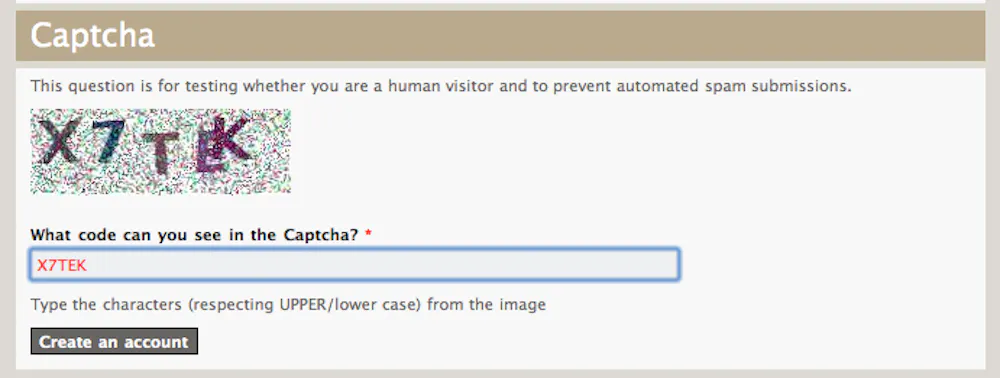
    You’re running late at the airport and need to urgently access your account, only to be greeted by one of those frustrating tests — “Select all images with traffic lights” or “Type the letters you see in this box”. You squint, you guess, but somehow you’re wrong. You complete another test but still the site isn’t satisfied.

    “Your flight is boarding now,” the tannoy announces as the website gives you yet another puzzle. You swear at the screen, close your laptop and rush towards the gate.

    Now, here’s a thought to cheer you up: bots are now solving these puzzles in milliseconds using artificial intelligence (AI). How ironic. The tools designed to prove we’re human are now obstructing us more than the machines they’re supposed to be keeping at bay.

    Welcome to the strange battle between bot detection and AI, which is set to get even more complicated in the coming years as technology continues to improve. So what does the future look like?

    Captcha, which stands for Completely Automated Public Turing test to tell Computers and Humans Apart, was invented in the early 2000s by a team of computer scientists at Carnegie Mellon University in Pittsburgh. It was a simple idea: get internet users to prove their humanity via tasks they can easily complete, but which machines find difficult.

    Machines were already causing havoc online. Websites were flooded with bots doing things like setting up fake accounts to buy up concert tickets, or posting automated comments to market fake Viagra or to entice users to take part in scams. Companies needed a way to stop this pernicious activity without losing legitimate users.

    The early versions of Captcha were basic but effective. You’d see wavy, distorted letters and type them into a box. Bots couldn’t “read” the text the way humans could, so websites stayed protected.


    Chris Messina, CC BY

    This went through several iterations in the years ahead: ReCaptcha was created in 2007 to add a second element in which you had to also key in a distorted word from an old book.

    Then in 2014 – by now acquired by Google – came reCaptcha v2. This is the one that asks users to tick the “I am not a robot” box and often choose from a selection of pictures containing cats or bicycle parts, or whatever. Still the most popular today, Google gets paid by companies who use the service on their website.

    Damn those bicycles.
    Lilgrapher

    How AI has outgrown the system

    Today’s AI systems can solve the challenges these Captchas rely on. They can “read” distorted text, so that the wavy or squished letters from the original Captcha tests are easy for them. Thanks to natural language processing and machine learning, AI can decode even the messiest of words.

    Similarly, AI tools such as Google Vision and OpenAI’s Clip can recognise hundreds of objects faster and more accurately than most humans. If a Captcha asks an AI to click all the buses in a picture selection, they can solve it in fractions of a second, whereas it might take a human ten to 15 seconds.

    This isn’t just a theoretical problem. Consider driving tests: waiting lists for tests in England are many months long, though you can get a much faster test by paying a higher fee to a black-market tout. The Guardian reported in July that touts commonly used automated software to book out all the test slots, while swapping candidates in and out to fit their ever-changing schedules.

    In an echo of the situation 20 years ago, there are similar issues with tickets for things such as football matches. The moment tickets become available, bots overwhelm the system – bypassing Captchas, purchasing tickets in bulk and reselling them at inflated prices. Genuine users often miss out because they can’t operate as quickly.

    Similarly, bots attack social media platforms, e-commerce websites and online forums. Fake accounts spread misinformation, post spam or grab limited items during sales. In many cases, Captcha is no longer able to stop these abuses.

    What’s happening now?

    Developers are continually coming up with new ways to verify humans. Some systems, like Google’s ReCaptcha v3 (introduced in 2018), don’t ask you to solve puzzles anymore. Instead, they watch how you interact with a website. Do you move your cursor naturally? Do you type like a person? Humans have subtle, imperfect behaviours that bots still struggle to mimic.

    Not everyone likes ReCaptcha v3 because it raises privacy issues – plus the web company needs to assess user scores to determine who is a bot, and the bots can beat the system anyway. There are alternatives that use similar logic, such as “slider” puzzles that ask users to move jigsaw pieces around, but these too can be overcome.

    Slider Captcha:


    GitHub

    Some websites are now turning to biometrics to verify humans, such as fingerprint scans or voice recognition, while face ID is also a possibility. Biometrics are harder for bots to fake, but they come with their own problems – privacy concerns, expensive tech and limited access for some users, say because they can’t afford the relevant smartphone or can’t speak because of a disability.

    The imminent arrival of AI agents will add another layer of complexity. It will mean we increasingly want bots to visit sites and do things on our behalf, so web companies will need to start distinguishing between “good” bots and “bad” bots. This area still needs a lot more consideration, but digital authentication certificates are proposed as one possible solution.

    In sum, Captcha is no longer the simple, reliable tool it once was. AI has forced us to rethink how we verify people online, and it’s only going to get more challenging as these systems get smarter. Whatever becomes the next technological standard, it’s going to have to be easy to use for humans, but one step ahead of the bad actors.

    So the next time you find yourself clicking on blurry traffic lights and getting infuriated, remember you’re part of a bigger fight. The future of proving humanity is still being written, and the bots won’t be giving up any time soon.

    The authors do not work for, consult, own shares in or receive funding from any company or organisation that would benefit from this article, and have disclosed no relevant affiliations beyond their academic appointment.

    ref. ‘Yes, I am a human’: bot detection is no longer working – and just wait until AI agents come along – https://theconversation.com/yes-i-am-a-human-bot-detection-is-no-longer-working-and-just-wait-until-ai-agents-come-along-246427

    MIL OSI – Global Reports

  • MIL-OSI Global: Who chooses to work, and who is forced to, after retirement?

    Source: The Conversation – UK – By Takao Maruyama, Assistant Professor in Business Analytics, University of Bradford

    fizkes/Shutterstock

    The state pension age in the UK is currently 66. Yet 9.5% of people aged 66 and older (1.12 million people) were still working, according to the most recent data from the UK’s Annual Population Survey (July 2023 to June 2024). This figure has been rising over the past decade, increasing from 8.70% (880,000 people) in July 2013 to June 2014.

    We think of retirement as a time to pursue hobbies, relax and enjoy the fruits of our labour. So why then, are so many people still working beyond retirement age, and who are they? This is what we sought to find out in a recent study.

    We investigated who is more likely to “choose to work” and who is “forced to work”, using data from the UK’s annual population survey.

    Older workers are not a homogeneous population. They differ in terms of age, ethnicity, socioeconomic class, financial situation, health conditions and more. Likewise, the reasons for working beyond retirement age vary widely. Some may work because they want to, while others may have no option and feel they have to work in order to make ends meet.

    The below chart shows the breakdown of these retirement-age workers by key demographic and socioeconomic characteristics from the most recent data.

    Three in five retirement-age workers were men, and almost all (94.4%) older workers were white. Just over half (51.5%) of older workers continued to work despite having long-term illnesses.

    Characteristics of workers aged 66 and older:

    Workers aged 66 years and older by demographic and socioeconomic characteristics.
    Author provided, data from Annual Population Survey July 2023 to June 2024, CC BY

    The majority (71.2%) of older workers were married, in a civil partnership or cohabiting. Nearly 40% of older workers were employed in higher managerial, administrative and professional occupations, followed by intermediate occupations such as sales or some service roles (32.1%), and routine manual occupations (25.6%).

    More than 85% of retirement-age workers lived in the south (52.8%) and the north (33.1%) of England, and 70% are homeowners.

    Who is ‘forced’ to work?

    In our study, we calculated the likelihood of pension-age workers (66 years and older) with varying demographic and socioeconomic characteristics being forced to work.

    The Annual Population Survey identifies six main reasons why older workers continue working beyond retirement age. These are:

    A. To pay for desirable items (such as holidays),
    B. Not ready to stop work,
    C. Employer needs your experience or you are needed in the family business,
    D. Due to opportunities to work more flexible hours,
    E. To pay for essential items (such as bills), and
    F. To boost pension pot.

    In our study, we classed reasons (A) to (D) as “choose to work”, and (E) and (F) as “forced to work”. Our analysis, based on the most recent dataset (April 2022 to March 2023) at the time of the study, revealed that women are 25% more likely to be forced to work compared to men, and Asian workers are 120% more likely to be forced to work than white workers (with 34% and 17% more likely for older workers from black and other ethnic backgrounds, respectively).

    Workers without long-term illness are 33% less likely to be forced to work than those with long-term illness, and non-married or single workers are 56% more likely to be forced to work compared to seniors who are married, in a civil partnership or cohabiting.

    Workers in intermediate and routine manual occupations are 37% and 67% more likely to be forced to work, respectively, compared to those in higher managerial occupations. Older workers from the south of England are more likely to be be forced to work compared to seniors from any other parts of the UK, and retirement-age workers with mortgages or renting were 117% more likely to be forced to work compared to those who owned their properties.

    Who is more likely to be ‘forced to work’?:

    % comparison of likelihood of being ‘forced to work’.
    Author provided, data from Annual Population Survey April 2022 to March 2023., CC BY

    Ageing populations

    This matters because of the changing nature of work, the rising cost of living and the UK’s ageing population. Retirement-age workers will be increasingly pressured to work longer due to the rising state pension age (due to increase to 67 in 2026-27).

    Understanding who works by choice and who by necessity into retirement age is important, because these groups will need different kinds of support and resources.

    For example, the higher likelihood of being forced to work among older female workers can be partly attributed to career breaks they took to serve as primary caregivers for their children, which often prevented them from accumulating sufficient pensions.

    As the state pension age is expected to continue rising, it is crucial for policymakers and employers to design support systems for diverse demographic and socioeconomic groups of older workers, addressing their unique needs. This starts with understanding why people are working into old age.

    The authors do not work for, consult, own shares in or receive funding from any company or organisation that would benefit from this article, and have disclosed no relevant affiliations beyond their academic appointment.

    ref. Who chooses to work, and who is forced to, after retirement? – https://theconversation.com/who-chooses-to-work-and-who-is-forced-to-after-retirement-246214

    MIL OSI – Global Reports

  • MIL-OSI USA: Disaster Recovery Centers in South Carolina Temporarily Closed for Holidays

    Source: US Federal Emergency Management Agency 2

    Disaster Recovery Centers in South Carolina Temporarily Closed for Holidays

    COLUMBIA, S.C. — Disaster Recovery Centers in South Carolina will temporarily close in observance of the Christmas and New Year holidays. Aiken County, Mt. Zion Missionary Baptist Church, 17519 Atomic Road, Aiken, SC 29803Open Monday-Saturday, 8 a.m. – 7 p.m. through Jan. 7, 2025Holiday Closure: Dec. 22-29, 2024, Jan. 1, 2025.Anderson County, Anderson County Library, 300 N. McDuffie St., Anderson, SC 29621Open Dec. 20-21, 9 a.m.- 5 p.m.Chester County, Gateway Conference Center, 3200 Commerce Drive, Richburg, SC 29729Open Monday-Friday, 8 a.m. – 5 p.m., through Jan. 31, 2025.Holiday Closure: Dec. 22-29, 2024, Jan. 1, 2025. Greenville County, Freetown Community Center, 200 Alice Ave., Greenville, SC 29611Open Monday-Saturday, 8 a.m. – 7 p.m., through Jan. 7, 2025.Holiday Closure: Dec. 24-25, 2024, Jan. 1, 2025.Greenwood County, United Way of Lakelands, 929 Phoenix St., Greenwood, SC 29646Open Monday-Saturday, 8 a.m. – 7 p.m., through Jan. 31, 2025.Holiday Closure:  Dec. 22-29, 2024, Jan. 1, 2025.Spartanburg County, Woodson Community Center, 210 Bomar Ave., Spartanburg, SC 29306Open Monday-Saturday, 8 a.m. – 7 p.m., through Jan. 7, 2025.Holiday closure: Dec. 22-29, 2024, Jan. 1, 2025.To find all the center locations, including those in other states, go to fema.gov/drc or text “DRC” and a Zip Code to 43362. Homeowners and renters in Abbeville, Aiken, Allendale, Anderson, Bamberg, Barnwell, Beaufort, Cherokee, Chester, Edgefield, Fairfield, Greenville, Greenwood, Hampton, Jasper, Kershaw, Laurens, Lexington, McCormick, Newberry, Oconee, Orangeburg, Pickens, Richland, Saluda, Spartanburg, Union and York counties and the Catawba Indian Nation can apply for federal assistance.The quickest way to apply is to go online to DisasterAssistance.gov. You can also apply using the FEMA App for mobile devices or by calling toll-free 800-621-3362. The telephone line is open every day and help is available in many languages. If you use a relay service, such as Video Relay Service (VRS), captioned telephone or other service, give FEMA your number for that service. For a video with American Sign Language, voiceover and open captions about how to apply for FEMA assistance, select this link.FEMA programs are accessible to survivors with disabilities and others with access and functional needs. 
    martyce.allenjr
    Fri, 12/20/2024 – 17:21

    MIL OSI USA News

  • MIL-OSI Russia: 23rd meeting of the Intergovernmental Commission on Economic Cooperation between the Russian Federation and the Republic of Armenia

    Translation. Region: Russian Federation –

    Source: Government of the Russian Federation – An important disclaimer is at the bottom of this article.

    The meeting was held under the joint chairmanship of Deputy Prime Minister of the Russian Federation Alexey Overchuk and Deputy Prime Minister of the Republic of Armenia Mher Grigoryan.

    Previous news Next news

    23rd meeting of the Intergovernmental Commission on Economic Cooperation between the Russian Federation and the Republic of Armenia

    The 23rd regular meeting of the Intergovernmental Commission on Economic Cooperation between the Russian Federation and the Republic of Armenia was held in Moscow under the joint chairmanship of Deputy Prime Minister of the Russian Federation Alexey Overchuk and Deputy Prime Minister of the Republic of Armenia Mher Grigoryan.

    The parties summed up the results of bilateral cooperation in trade and economic spheres, energy, industry, transport, agriculture, finance, healthcare, culture, science, interregional cooperation, education and tourism.

    “Our trade and economic relations continue to be on the rise. Mutual trade between Russia and Armenia, according to data for 10 months of 2024, amounted to 10.2 billion dollars. This is more than twice as much as the same indicator last year,” noted Alexey Overchuk, emphasizing that in order to implement trade and economic relations, the countries have almost completely switched to settlements in national currencies – the share of the Russian ruble in mutual settlements has reached 96.3%.

    The Russian Federation is one of the main investors in the Armenian economy. Investments in industrial projects in the Republic of Armenia have reached $3.4 billion. More than 40 large Russian companies operate in Armenia, some of them are the largest taxpayers in the state budget.

    “In addition to direct investments, Eurasian development institutions are also actively working,” said the Deputy Prime Minister. “Active work is underway here, including in support of the “Crossroads of the World” initiative, which was put forward by the Prime Minister of the Republic of Armenia Nikol Vovaevich Pashinyan.”

    The Chairman of the Russian part of the commission also noted that in July 2024, with the assistance of Russian Railways, the railway between Armenia and Georgia, damaged by flooding, was restored in the shortest possible time – the only railway connecting Armenia with the outside world, which is an important channel for delivering vital goods to Armenia.

    “All these investments and projects are being implemented with the aim of strengthening connectivity in the Eurasian region and the South Caucasus, in particular, integrating Armenia into the new value chains emerging in Eurasia and realizing the transport and logistics potential that the Republic of Armenia has, with unwavering respect for its sovereignty and jurisdiction,” Alexey Overchuk said in his speech.

    In the context of the work of Eurasian development institutions, the Deputy Prime Minister also noted the implementation of the irrigation systems modernization project: mechanical irrigation has been replaced by gravity irrigation, which provides annual energy savings. 5 main and 22 inter-farm canals have been restored. Work on the restoration and construction of intra-farm irrigation systems in 105 settlements of the Republic of Armenia has been completed.

    “Two weeks ago, our specialists agreed to assess the technical condition of eight bridges damaged by the floods in Lori and Tavush. All work will be completed as soon as possible, and we expect that by the end of the year, their results will be submitted to the Ministry of Territorial Administration and Infrastructure of the Republic of Armenia,” the Deputy Prime Minister said.

    During the meeting, the active development of cooperation in the humanitarian sphere was emphasized.

    “Today we are signing an intergovernmental Agreement on the conditions of operation of the Russian-Armenian University in the Republic of Armenia. This is one of the leading universities in Armenia, where more than 5 thousand students study, mastering 123 educational programs, 80 of which are taught according to Russian educational standards,” the Deputy Prime Minister emphasized.

    The university’s research and teaching staff includes 82 doctors and 332 candidates of science. The university’s structure includes 9 institutes, 31 departments and 12 laboratories.

    The University cooperates with the Joint Institute for Nuclear Research, the Institute for System Programming of the Russian Academy of Sciences, the St. Petersburg Polytechnic University and other Russian scientific centers. Research projects are implemented in such areas as bioinformatics, genomic research, quantum nanophotonics, biochemistry and biotechnology.

    Work continues to provide opportunities to receive education according to Russian standards in the educational and sports complex, which includes a school for 700 students, built in Yerevan as part of the Gazprom for Children social program.

    The countries pay great attention to cooperation in the field of culture. Since 2023, a program to support Russian theaters abroad has been implemented, within the framework of which the Yerevan State Russian Drama Theater named after Stanislavsky was provided with financial assistance for the acquisition of stage equipment and the creation of new productions based on works of Russian classics. The Moscow Parajanov Theater, with the support of the Ministry of Culture of Russia and the Cultural Center of the Armenian Embassy in Russia, held a large-scale festival “Parajanov Fest”.

    Bilateral cooperation in the field of creative education is developing. Within the framework of the International Student Festival of VGIK, 38 films participating in the festival were screened at the Russian-Armenian University.

    In pursuance of the agreements reached at the meeting of the intergovernmental commission, the second Russian-Armenian Forum of Education in the Sphere of Culture was held in Moscow in December 2024.

    Cooperation in the healthcare sector is being strengthened, including within the framework of annual Russian-Armenian forums on healthcare. The ninth Russian-Armenian forum on healthcare, dedicated to issues of maternal and child health, was held on December 16, 2024 in Yerevan. During the forum, the system of extended perinatal screening developed and successfully applied in Russia was presented.

    Russia and Armenia are developing mutual tourism. In January-September 2024, the number of trips of Russian tourists to Armenia amounted to 715.8 thousand, and Armenian tourists to Russia – 266 thousand.

    Speaking about cooperation in multilateral formats, primarily through the Eurasian Economic Union, the Deputy Prime Minister noted that the union has become a real guarantor of Armenia’s energy and food security, as well as its technological development.

    “The Union countries are the key sales market and the key supplier to the Armenian market. The EAEU accounts for 56% of Armenia’s food exports, 80% of machinery and equipment exports, 67% of chemical exports, and 56% of textile exports. The EAEU also provides 72% of energy imports, 49% of precious metal imports, 38% of food imports, and 34% of timber imports. During its membership in the Union, the export of industrial goods from Armenia has grown 15-fold, and food exports from Armenia have grown 4-fold. Since joining the EAEU in 2015, Armenia’s per capita GDP has grown almost 2.4-fold. This was made possible by the benefits of a common goods market, low prices for agricultural raw materials and energy, a convenient migration regime, and a common services market,” said Alexey Overchuk.

    Following the meeting, the protocol of the 23rd meeting of the Intergovernmental Commission on Economic Cooperation between the Russian Federation and the Republic of Armenia was signed.

    The parties also signed an Agreement between the Government of the Russian Federation and the Government of the Republic of Armenia on the conditions for the operation of the Russian-Armenian University in the Republic of Armenia, a State Purchase Agreement for a polyvalent, cultured, sorbed, inactivated foot-and-mouth disease vaccine, an Agreement between the Government of the Russian Federation and the Government of the Republic of Armenia on the conditions for the operation of the Educational and Sports Complex of Gazprom Armenia CJSC in Yerevan, and a work plan for the Russian-Armenian Business Council for 2025.

    Please note: This information is raw content directly from the source of the information. It is exactly what the source states and does not reflect the position of MIL-OSI or its clients.

    MIL OSI Russia News

  • MIL-OSI Security: Nationwide Lawsuit Filed in Rhode Island Alleging CVS Knowingly Dispensed Controlled Substances in Violation of the Controlled Substances Act and the False Claims Act

    Source: Federal Bureau of Investigation (FBI) State Crime News

    PROVIDENCE, RI – In a civil complaint unsealed today in federal court in Providence, Rhode Island, the Justice Department alleges that CVS Pharmacy, Inc., and various subsidiaries (collectively, CVS) filled unlawful prescriptions in violation of the Controlled Substances Act (CSA) and sought reimbursement from federal healthcare programs for some of the unlawful prescriptions in violation of the False Claims Act (FCA). CVS is the country’s largest pharmacy chain, with more than 9,000 pharmacies across the United States.

    The government’s complaint alleges that, from October 17, 2013, to the present, CVS knowingly filled prescriptions for controlled substances that lacked a legitimate medical purpose, were not valid, and/or were not issued in the usual course of professional practice. Among the large quantities of unlawful prescriptions that CVS allegedly filled were prescriptions for dangerous and excessive quantities of opioids, early fills of opioids, and “trinity” prescriptions, an especially dangerous and abused combination of drugs made up of an opioid, a benzodiazepine, and a muscle relaxant. CVS also allegedly filled large quantities of prescriptions for controlled substances written by prescribers it knew to be engaged in “pill mill practices” – that is, prescribers who issue large numbers of controlled substance prescriptions without any medical purpose. According to the complaint, CVS ignored substantial evidence from multiple sources, including its own pharmacists and internal data, indicating that its stores were dispensing unlawful prescriptions. 

    The complaint alleges that CVS’s violations resulted from corporate-mandated performance metrics, incentive compensation, and staffing policies that prioritized corporate profits over patient safety. CVS set staffing levels far too low for pharmacists to both meet their performance metrics and comply with their legal obligations. CVS also allegedly deprived its pharmacists of crucial information (including by, for example, preventing pharmacists from warning one another about certain prescribers) that could have reduced the number of unlawful prescriptions filled. The complaint alleges that CVS’s actions helped to fuel the prescription opioid crisis and that, in some particularly tragic instances, patients died after overdosing on opioids shortly after filling unlawful prescriptions at CVS.

    “Opioid deaths remain a scourge on communities across Rhode Island and the nation, robbing families of loved ones and leaving a path of devastation in their wake,” said Zachary A. Cunha, U.S. Attorney for the District of Rhode Island. “This lawsuit alleges that CVS failed to exercise its critical role as gatekeeper of dangerous prescription opioids and, instead, facilitated the illegal distribution of these highly addictive drugs, including by pill mill prescribers. When corporations such as CVS prize profits over patient safety and overburden their pharmacy staff so that they cannot carry out the basic responsibility of ensuring that prescriptions are legitimate, we will use every tool at our disposal to see that they answer for it.”

    “Our complaint alleges that CVS repeatedly filled controlled substance prescriptions that were unlawful and pressured its pharmacists to fill such prescriptions without taking the time needed to confirm their validity,” said Principal Deputy Assistant Attorney General Brian M. Boynton, head of the Justice Department’s Civil Division. “The practices alleged contributed to the opioid crisis and opioid-related deaths, and today’s complaint seeks to hold CVS accountable for its misconduct.”

    The government alleges that by knowingly filling unlawful prescriptions for controlled substances, CVS violated the CSA and, where CVS sought reimbursement from federal healthcare programs, also violated the FCA. The complaint alleges that CVS’s actions helped to fuel the prescription opioid crisis. If CVS is found liable, it could face civil penalties for each unlawful prescription filled in violation of the CSA and treble damages and applicable penalties for each prescription reimbursed by federal healthcare programs in violation of the FCA. The court also may award injunctive relief to prevent CVS from committing further CSA violations, including ordering appropriate changes to corporate compliance programs and policies.

    “When lives are destroyed or lost to opioid abuse, it doesn’t matter if the supplier is a street-level dealer, a pill mill, or a nationwide corporation,” said Jessica D. Aber, U.S. Attorney for the Eastern District of Virginia. “Our laws regarding the distribution of opioids and other controlled substances are clear and apply to everyone. We will pursue whatever legal action is necessary to stop any enterprise, regardless of size, that places profit over the safety of our citizens.”

    “CVS is alleged to have dispensed large amounts of highly addictive opioid medications to persons they knew had no medical need for them. Simply put, they put profits over their obligation to keep their customers safe,” said DEA Administrator Anne Milgram. “A pharmacy is the final step in the pharmaceutical distribution process that is in place to keep customers safe. In the fight against the opioid epidemic, DEA will continue to be relentless in holding those accountable who violate our drug laws and place our communities in danger whether they are a criminal cartel or large pharmacy chain.”

    “Pharmacies and pharmacists are critical partners to ensure controlled substances are dispensed lawfully and safely to the public,” said Deputy Inspector General Christian J. Schrank of the Department of Health and Human Services Office of Inspector General (HHS-OIG). “HHS-OIG is committed to holding individuals and entities that dispense these controlled substances improperly and without legitimate medical purpose accountable.”

    “Protecting TRICARE, the healthcare system for military members and their dependents, is a top priority for the Department of Defense Office of Inspector General Defense Criminal Investigative Service (DCIS),” stated Special Agent in Charge Patrick J. Hegarty, DCIS Northeast Field Office. “Today’s filing demonstrates DCIS’ ongoing commitment to partner with the Department of Justice and our law enforcement partners to investigate health care providers that submit false claims to TRICARE and put its beneficiaries at risk.”

    Whistleblower Hillary Estright, who previously worked for CVS, filed an action on October 17, 2019, under the qui tam provisions of the FCA. Those provisions authorize private parties to sue on behalf of the United States for false claims and share in any recovery. The Act permits the United States to intervene and take over such lawsuits, as it has done here.

    The case is captioned United States ex rel. Estright v. Health Corporation, et al., No. 1:22-cv-222 (D.R.I.).

    The United States’ intervention in this matter underscores the government’s commitment to combating health care fraud. One of the most powerful tools in this effort is the False Claims Act. Tips and complaints from all sources about potential fraud, waste, abuse, and mismanagement can be reported to HHS, at 800-HHS-TIPS (800-447-8477).

    The United States’ enforcement action is being litigated by attorneys from the U.S. Attorneys’ Offices for the District of Rhode Island (First Assistant U.S. Attorney Sara M. Bloom and Assistant U.S. Attorneys Kevin Love Hubbard and Rachna Vyas), the Justice Department Civil Division’s Consumer Protection Branch (Assistant Directors Amy L. DeLine and C.B. Buente, Senior Litigation Counsel Donald Lorenzen, and Trial Attorneys Benjamin Cornfeld and Amanda K. Kelly) and Commercial Litigation Branch, Fraud Section (Trial Attorneys Claire L. Norsetter, Joshua Barron, and Megan F. Engel), as well as the Eastern District of Virginia (Assistant U.S. Attorneys Clare Wuerker and John Beerbower), the District of Hawaii (Assistant U.S. Attorneys Sydney Spector and Tracy Weinstein), and the Eastern District of Texas (Assistant U.S. Attorneys James Gillingham and Adrian Garcia).

    The DEA’s Office of Diversion Control, Washington, D.C. Field Division, HHS-OIG, and DCIS conducted the investigation. Several other offices provided substantial assistance in the investigation, including the United States Attorneys’ Offices for the Southern District of California, the Northern District of Ohio, DEA’s Office of Chief Counsel, DEA’s Office of Diversion Control, Los Angeles Field Division, the Office of Personnel Management, the Department of Labor Office of Inspector General, United States Postal Service Office of Inspector General, and the FBI.

    The claims asserted against the defendants are allegations only, and there has been no determination of liability.

    ###

    MIL Security OSI

  • MIL-OSI Security: Russian National Assisted Sanctioned Oligarch in Schemes to Employ an American Citizen to Launch and Operate Russian Television Network

    Source: Federal Bureau of Investigation (FBI) State Crime News

    Defendant Also Helped Oligarch Illegally Transfer a $10 Million U.S. Investment to Business Associate

    Damian Williams, the United States Attorney for the Southern District of New York, Menno Goedman, the Co-Director of Task Force KleptoCapture, and James E. Dennehy, the Assistant Director in Charge of the New York Office of the Federal Bureau of Investigation (“FBI”), announced today the unsealing of a Superseding Indictment charging ALEXEY KOMOV with conspiracy and violations of U.S. sanctions arising from his assistance to sanctioned Russian oligarch KONSTANTIN MALOFEYEV, who was previously charged in April 2022.  As alleged, KOMOV conspired with MALOFEYEV to recruit and employ an American citizen, Jack Hanick, who worked for MALOFEYEV in launching and operating a television network in Russia.  KOMOV also conspired with MALOFEYEV, Hanick, and others to illegally transfer a $10 million investment that MALOFEYEV had made in a U.S. bank to a business associate in Greece, in violation of the sanctions blocking MALOFEYEV’s assets from being transferred. 

    U.S. Attorney Damian Williams said: “As alleged, Alexey Komov facilitated the efforts of Konstantin Malofeyev – an oligarch closely tied to Russian aggression in Ukraine who has been determined by OFAC to have been one of the main sources of financing for the promotion of Russia-aligned separatist groups operating in the sovereign nation of Ukraine – to flout U.S. sanctions.  The unsealing today of the Indictment against Komov is yet another reminder that this Office will continue to hold those accountable that seek to undermine the United States’ national security goals.”

    KleptoCapture Co-Director Menno Goedman said: “The indictment alleges Alexey Komov played an essential role in a multi-faceted scheme to violate and evade U.S. sanctions imposed on a significant financier of Russian aggression in Ukraine.  Task Force KleptoCapture will continue to disrupt schemes perpetrated by Komov and other sanction evaders, whenever and wherever they may hide.”

    FBI Assistant Director in Charge James E. Dennehy said: “Alexey Komov, a Russian national, allegedly conspired with an American citizen and a sanctioned Russian oligarch to develop a Russian cable network to promote anti-Western propaganda. This alleged conspiracy violated laws designed to protect the national security of the United States and our allies. The FBI remains committed to apprehending foreign nationals who employ our citizens to satisfy their odious agenda.”

    According to the Indictment unsealed today in Manhattan federal court:[1]

    In 2014, the President issued Executive Order 13660, which declared a national emergency with respect to the situation in Ukraine.  To address this national emergency, the President blocked all property and interest in property that came within the U.S. or the possession or control of any U.S. person, of individuals determined by the Secretary of the Treasury to be responsible for or complicit in, or who engaged in, actions or policies that threatened the peace, security, stability, sovereignty, or territorial integrity of Ukraine, or who materially assist, sponsor, or provide financial, material, or technological support for, or goods and services to, individuals or entities engaging in such activities.  Executive Order 13660, along with certain regulations issued pursuant to it (the “Ukraine-Related Sanctions Regulations”) prohibits, among other things, making or receiving any funds, goods, or services by, to, from, or for the benefit of any person whose property and interests in property are blocked.

    On December 19, 2014, the Department of Treasury’s Office of Foreign Assets Control (“OFAC”) designated MALOFEYEV as a Specially Designated National (“SDN”) pursuant to Executive Order 13660.  OFAC’s designation of MALOFEYEV explained that he was one of the main sources of financing for Russians promoting separatism in Crimea, and has materially assisted, sponsored, and provided financial, material, or technological support for, or goods and services to or in support of the so-called Donetsk People’s Republic, a separatist organization in the Ukrainian region of Donetsk.

    As alleged in the Indictment, beginning in at least 2012, KOMOV assisted MALOFEYEV in recruiting and hiring a U.S. citizen named Jack Hanick to work on a new Russian cable television news network (the “Russian TV Network”) that MALOFEYEV was creating.  As part of KOMOV’s recruitment of Hanick, KOMOV travelled to Manhattan to meet with Hanick and subsequently introduced Hanick to MALOFEYEV in Russia.  With KOMOV’s knowledge, MALOFEYEV negotiated directly with Hanick regarding Hanick’s salary, payment for Hanick’s housing in Moscow, and Hanick’s Russian work visa.  MALOFEYEV paid Hanick through two separate Russian entities through the end of 2018.

    After OFAC designated MALOFEYEV as a SDN in December 2014, MALOFEYEV continued to employ Hanick on the Russian TV Network, with KOMOV’s assistance and input, and in violation of the Ukraine-Related Sanctions Regulations.  For example, prior to the launch of the Russian TV Network on the air in Russia in April 2015, KOMOV wrote an e-mail to MALOFEYEV, Hanick, and another employee, referencing their prior discussion with MALOFEYEV earlier that day and instructing Hanick to create two types of programs and allocate staff. KOMOV further wrote, “Hopefully Konstantin will be providing general direction and guidance for both projects. Looking forward to our long-term co-operation on those exciting endeavors!”  In turn, Hanick requested KOMOV to serve as a moderator for the first broadcast, writing “KM [i.e. MALOFEYEV] and I agree that we need you on this the first show on [the Russian TV Network]!!!”

    With KOMOV’s participation, MALOFEYEV also employed Hanick to assist MALOFEYEV in transferring a shell company that MALOFEYEV owned to a Greek associate of MALOFEYEV (the “Greek Business Associate”).  In 2014, MALOFEYEV, assisted by KOMOV, had used the shell company to make a $10 million investment in a Texas-based bank holding company (the “Texas Bank”).  KOMOV helped set up the deal, emailing a Texas-based attorney (“Individiual-1”), “I plan to come to the US with two of my close friends Konstantin Malofeev [sic] and [another individual] on Feb 4-9, 2014 . . . I’d like the three of us to meet with you to discuss our cooperation, and also joint investment projects (please propose attractive investment opportunities with reliable partners for $50-100 mln participation from our side)”. On or about March 25, 2014, KOMOV wrote to Individual-I, “Konstantin has confirmed today that he goes ahead with the 10 mln investment in the bank project.”

    Beginning in or about March 2015, with KOMOV’s assistance, MALOFEYEV began making plans to transfer ownership of the shell company to the Greek Business Associate, in violation of the Ukraine-Related Sanctions Regulations.  On or about March 4, 2015, KOMOV wrote to Individual-1, “I need to discuss with you several things: previous investment in the bank project (we want to consider selling it)”.  On or about March 17, 2015, KOMOV wrote to Individual-I about the Texas Bank interest, in part, “We want to keep it where it is now, only the owner from our side changes.”  Consistent with that plan, in or about May 2015, MALOFEYEV’s attorney drafted a Sale and Purchase Agreement that purported to transfer the shell company to the Greek Business Associate in exchange for one U.S. dollar.  In June 2015 MALOFEYEV had Hanick physically transport a copy of MALOFEYEV’s certificate of shares in the Texas Bank from Moscow to Athens to be given to the Greek Business Associate.  MALOFEYEV signed the Sale and Purchase Agreement in June 2015, but the agreement was fraudulently backdated to July 2014 to make it appear that the transfer had taken place prior to the imposition of U.S. sanctions.  MALOFEYEV’s attorney then falsely represented to the Texas Bank that the transfer had taken place in July 2014, even though MALOFEYEV and his attorney well knew that the transfer of the shell company was executed in June 2015.

    The U.S. seized and forfeited approximately $5.4 million in the property traceable to MALOFEYEV’s Texas Bank investment, which had been converted by the Texas Bank in 2016 to cash held in a blocked U.S. bank account.  In February 2023, the U.S. Attorney General authorized a transfer of these forfeited funds to the State Department to support Ukrainian veterans.

    MALOFEYEV, of Russia, is believed to be in Russia and remains at large.

    *                *                *

    KOMOV, 53, a Russian national, is charged with conspiracy to violate and substantive violation of International Emergency Economic Powers Act, each of which carry a maximum potential sentence of 20 years in prison.

    The maximum potential sentences in this case are prescribed by Congress and provided here for informational purposes only, as any sentencing of the defendant will be determined by the judge.

    Mr. Williams praised the outstanding investigative work of the FBI and thanked the support and expertise of the Department of Justice’s National Security Division and Office of International Affairs in the conduct of this matter.

    The prosecution is being handled by the Office’s Illicit Finance and Money Laundering Unit.  Assistant U.S. Attorneys Vladislav Vainberg, Thane Rehn, Jessica Greenwood, and Trial Attorney Scott Claffee of the National Security Division’s Counterintelligence and Export Section are in charge of the prosecution. 


    [1] The entirety of the text of the Indictment, and the description of the Indictment set forth herein, constitute only allegations, and every fact described should be treated as an allegation.

    MIL Security OSI

  • MIL-OSI USA: FDA Roundup: December 20, 2024

    Source: US Department of Health and Human Services – 3

    For Immediate Release:

    Today, the U.S. Food and Drug Administration is providing an at-a-glance summary of news from around the agency:

    • Today, the FDA provided answers to a set of FAQs about software functions that may be described as clinical decision support (CDS). The FAQs are intended to help sponsors identify whether their CDS software may or may not meet the definition of a medical device, as described in the FDA’s final guidance for Clinical Decision Support Software. Additionally, the FDA updated the list of authorized Artificial Intelligence and Machine Learning (AI/ML)-Enabled Medical Devices; totaling 1,016. The list is not a comprehensive resource of medical devices that incorporate AI/ML. The devices in this list have met the FDA’s applicable premarket requirements.
    • On Monday, the FDA approved a premarket approval application (PMA) 180-day supplement for the OraQuick Human Immunodeficiency Virus (HIV) Self-Test. This approval represents a labeling change to lower the approved age to individuals who are 14 to 17 years of age and older for the OraQuick HIV Self-Test to provide access to HIV testing to adolescents. The original approval of the OraQuick HIV -Self Test was indicated only for individuals who are 17 years and older.

      This is the first approval for an over-the-counter HIV test in adolescents. Availability will help in the detection of HIV among the adolescent population. 

      The OraQuick HIV Self-Test is a single home-use test to detect antibodies to Human Immunodeficiency Virus Type 1 (HIV-1) and Type 2 (HIV-2) in human oral fluid specimens.  This test kit includes of a test stick (device) to collect the specimen, a test tube (vial) to insert the test stick (device) and complete the test, testing directions, booklet titled, “HIV, Testing and Me”, and access to the OraQuick Support Center to assist users with questions about performing the test, or to connect them with a healthcare provider in their area.

      The OraQuick HIV Self-Test is not intended to be used with specimens other than oral fluid. Individuals should obtain a confirmatory test in a medical setting.

      Complete instructions for use can be found on the FDA’s website here.

    • On Thursday, the FDA Office of Inspections and Investigations published a Viewpoint article titled Partnership in Action: Creating Safeguards for Imported Products Entering the United States in the Pacific Islands by Dan Solis, Assistant Commissioner for Import Operations. The article highlights the FDA’s work in Guam to ensure that imported products entering the U.S. through the Pacific Rim are safe for consumers. The Pacific Rim is a strategically significant location when it comes to ensuring the safety of products bound for consumers in the United States, as a little more than a third of global products coming into our country originate in the Asia-Pacific Region. You can learn more about the FDA’s efforts in the Pacific Islands by listening to OII Podcasts | FDA. The 5-Part series is called, Guam Series: FDA Presence and Impact in Pacific Islands.
    • On Thursday, the FDA updated the outbreak advisory for Salmonella Typhimurium infections linked to cucumbers with additional cases. The FDA’s investigation remains ongoing.
    • On Thursday, the FDA approved Tryngolza (olezarsen), used with diet, to reduce triglycerides (TG) in adults with familial chylomicronemia syndrome (FCS). FCS is a rare, genetic disorder that prevents the body from breaking down fats (TG) in the bloodstream. People with FCS can have TG levels in the thousands. These high TG levels can cause severe abdominal pain, inflammation of the pancreas (acute pancreatitis), and fatty deposits in the skin (xanthomas). Some of these symptoms, specifically acute pancreatitis, can be life-threatening. This is a first-in-class approval, meaning Tryngolza uses a new mechanism of action, or works differently in the body, than other therapies currently used to treat FCS.  The most common adverse reactions were injection site reactions, decreased platelet count, and arthralgia.
    • On Thursday, the FDA re-evaluated its determination from October 2, 2024, on the status of the tirzepatide shortage. The agency issued a new decision determining the tirzepatide injection shortage is resolved. The FDA’s determination is based on its analysis of all the information before the agency.  
    • On Wednesday, the FDA posted the latest video in the FDA In Your Day series. This one focuses on pertussis, also known as whooping cough, and what consumers can do to protect themselves and those around them.
    • On Wednesday, the FDA approved Ryoncil (remestemcel-L-rknd) an allogeneic bone marrow-derived mesenchymal stromal cell (MSC) therapy, for steroid-refractory acute graft versus host disease (SR-aGVHD) in pediatric patients 2 months of age and older. Ryoncil is the first FDA-approved MSC therapy. The most common nonlaboratory adverse reactions (incidence ≥20%) were viral infectious disorders, bacterial infectious disorders, infection – pathogen unspecified, pyrexia, hemorrhage, edema, abdominal pain and hypertension.
    • On Wednesday, the FDA approved Ensacove (ensartinib, Xcovery Holdings, Inc.) for adult patients with anaplastic lymphoma kinase (ALK)-positive locally advanced or metastatic non-small cell lung cancer (NSCLC) who have not previously received an ALK-inhibitor. The most common adverse reactions (≥20%) were rash, musculoskeletal pain, constipation, cough, pruritis, nausea, edema, pyrexia, and fatigue.
    • On Wednesday, the FDA shared our latest testing results for per- and polyfluoroalkyl (PFAS) substances in clams as follow up to the agency’s findings in the 2022 PFAS in seafood survey. Between October 2022 and September 2024, the FDA collected and analyzed 12 samples of processed clams with China as the country of origin. All 12 samples had detectable levels of at least one type of PFAS.
    • On Wednesday, the FDA issued a letter to food manufacturers that Amanita muscaria (A. muscaria), its extracts, and certain of its constituents (muscimol, ibotenic acid, and muscarine) are not authorized for use as ingredients in conventional food. A. muscaria and its constituents have been used in foods intended to have hallucinogenic effects, sometimes marketed as “psychedelic edibles”, “legal psychedelics” or “mushroom edibles”. After reviewing the available information about A. muscaria and its constituents, the FDA concluded that they do not meet the safety standard for use in food and that their use as food ingredients may be harmful. We also recommend that people avoid eating foods with these ingredients. The FDA’s assessment of chemicals in the food supply is part of our commitment to food safety and public health.
    • On Wednesday, the FDA updated the advisory for the outbreak of E. coli illnesses linked to certain sizes and brands of organic whole and baby carrots supplied by Grimmway Farms. According to CDC, as of December 18, 2024, this outbreak is over. The FDA conducted inspections at Grimmway Farms and collected environmental samples. Two environmental samples collected outside were positive for Shiga toxin-producing E. coli (STEC). Although both strains of E. coli detected in the samples are capable of causing human illness, neither match the strain of E. coli causing illnesses in this outbreak. The FDA is working with Grimmway Farms on corrective and preventive actions. The FDA’s investigation is complete.
    • On Tuesday, the FDA and the U.S. Department of Agriculture announced a charter that details how the two agencies work together to determine the appropriate agency to regulate the small number of animal biologicals for which jurisdiction may be unclear. Representatives from the FDA and USDA originally signed a Memorandum of Understanding in 2013 that outlined which animal biologicals each would regulate. Since 2013, science has continued to advance, and the jurisdiction of some products is not clear under the MOU. The charter includes a flowchart to help clarify which agency will regulate a given product, as well as information on how to request a jurisdiction determination from the FDA and USDA for animal biologicals.

    Related Information

    ###

    Boilerplate

    The FDA, an agency within the U.S. Department of Health and Human Services, protects the public health by assuring the safety, effectiveness, and security of human and veterinary drugs, vaccines and other biological products for human use, and medical devices. The agency also is responsible for the safety and security of our nation’s food supply, cosmetics, dietary supplements, radiation-emitting electronic products, and for regulating tobacco products.


    Inquiries

    Consumer:
    888-INFO-FDA

    MIL OSI USA News

  • MIL-OSI Asia-Pac: $350 Million Loan signing between Government of India and ADB

    Source: Government of India

    $350 Million Loan signing between Government of India and ADB

    $350 Million policy-based loan aim to expand India’s manufacturing sector and improve the resilience of its supply chains

    Posted On: 20 DEC 2024 8:23PM by PIB Delhi

    The Government of India and the Asian Development Bank (ADB) today signed a $350 million policy-based loan under the second subprogram of Strengthening Multimodal and Integrated Logistics Ecosystem (SMILE) program.

    The signatories to the loan agreement were Department of Economic Affairs (DEA), Ministry of Finance; Department for Promotion of Industry and Internal Trade (DPIIT), Ministry of Commerce and Industry; and the ADB.

    The SMILE program is a programmatic policy-based loan (PBL) to support the government in undertaking wide-ranging reforms in the logistics sector in India. The programmatic approach comprises two subprograms, which aim to expand India’s manufacturing sector and improve the resilience of its supply chains.

    The program establishes and operationalizes a comprehensive policy framework to enhance logistics efficiency through (i) strengthening the institutional bases for multimodal logistics infrastructure development at the national, state, and city levels; (ii) standardizing warehousing and other logistics assets to strengthen supply chains and incentivize greater private sector investment; (iii) improving efficiencies in external trade logistics; and (iv) adopting smart systems for efficient and low emission logistics.

    The development of India’s logistics sector is vital to enhancing the competitiveness of its manufacturing sector. Through strategic policy reforms, infrastructure development, and digital integration, ongoing reforms are poised to transform the logistics landscape. This transformation is expected to reduce costs, improve efficiency, generate substantial employment opportunities, and promote gender inclusion—driving sustainable economic growth.

    The collaboration between the Government of India and ADB reflects a shared commitment to fostering growth and innovation in the logistics sector, supporting India’s broader economic development goals.

    **************

    AD/CNAN/AM

    (Release ID: 2086638) Visitor Counter : 77

    MIL OSI Asia Pacific News

  • MIL-OSI Asia-Pac: Minimum Support Price (MSP) for Copra for 2025 season

    Source: Government of India (2)

    Posted On: 20 DEC 2024 8:10PM by PIB Delhi

    The Cabinet Committee on Economic Affairs has given its approval for the Minimum Support Price (MSP) for copra for 2025 season. In order to provide remunerative prices to the cultivators, Government had announced in the Union Budget of 2018-19, that MSP of all the mandated crops will be fixed at levels of at least 1.5 times of all India weighted average cost of production. Accordingly, MSP for Fair Average Quality of milling copra has been fixed at ₹ 11582/- per quintal and for ball copra at ₹ 12100/- per quintal for 2025 season.

    The Government has increased MSP for milling copra and ball copra from ₹ 5250 per quintal and ₹ 5500 per quintal for the marketing season 2014 to ₹ 11582 per quintal and ₹ 12100 per quintal for the marketing season 2025, registering a growth of 121 percent and 120 percent, respectively.

    A higher MSP will not only ensure better remunerative returns to the coconut growers but also incentivize farmers to expand copra production to meet the growing demand for coconut products both domestically and internationally.

    National Agricultural Cooperative Marketing Federation of India Ltd. (NAFED) and National Cooperative Consumers’ Federation (NCCF) will continue to act as Central Nodal Agencies (CNAs) for procurement of copra and de-husked coconut under Price Support Scheme (PSS).

    ***

    MJPS/SKS

    (Release ID: 2086629) Visitor Counter : 105

    Read this release in: Hindi

    MIL OSI Asia Pacific News

  • MIL-OSI Asia-Pac: Opportunity for Indian Academic and R&D Institutes, Startups, & Companies to explore the potential of AI in addressing critical challenges

    Source: Government of India

    Opportunity for Indian Academic and R&D Institutes, Startups, & Companies to explore the potential of AI in addressing critical challenges

    IndiaAI Mission calls for proposals in Second EoI Round to drive Ethical and Responsible AI Innovation; 9th January 2025 to be deadline for application submission

    Posted On: 20 DEC 2024 7:24PM by PIB Delhi

    The Government of India launched the IndiaAI Mission on March 7th, 2024, to bolster India’s global leadership in AI and democratize the benefits of AI across all strata of society. To realise this vision, IndiaAI Mission has launched 7 key pillars to strengthen the domestic AI ecosystem.

    The ‘Safe & Trusted AI’ pillar within this initiative emphasizes the need for a balanced, technology-enabled, and India-specific approach to AI governance. This involves the development of indigenous technical tools, guidelines, frameworks, and standards that are contextualized to India’s unique challenges and opportunities as well as our social, cultural, linguistic, and economic diversity.

    First round of EOI

    To advance this vision, the IndiaAI Independent Business Division (IBD) issued an 1st round of Expression of Interest (EoI) and selected Eight Projects to promote responsible AI across a range of critical themes. These include Machine Unlearning, Synthetic Data Generation, AI Bias Mitigation, Privacy-Enhancing Tools, Explainable AI, AI Governance Testing, AI Ethical Certification and Algorithm Auditing Tools.

    Second round EOI

    Further to provide an opportunity to explore the potential of AI in addressing critical challenges, IndiaAI has launched the 2nd round of Expression of Interest (EoI), open to Indian Academic Institutes/Organisations, Autonomous bodies, R&D Institutes/Organizations, Start-ups and Companies. The deadline for application submission is 9th January 2025.

    Themes identified

    The following themes have been identified, against which organizations may submit their proposals to develop practical tools and frameworks, in collaboration with other partners:

    1. Watermarking & Labelling: Develop tools to authenticate AI-generated content, ensuring it’s traceable, secure, and free of harmful materials.

    2. Ethical AI Frameworks: Establish AI frameworks that align with global standards, ensuring AI respects human values and promotes fairness.

    3. AI Risk Assessment & Management: Create risk management tools and frameworks to enhance the safe deployment of AI in public services.

    4. Stress Testing Tools: Create stress-testing tools to evaluate how AI models perform under extreme scenarios, detect vulnerabilities, and build trust in AI for critical applications.

    5. Deepfake Detection Tools: Create Deepfake Detection Tools to enable real-time identification and mitigation of deepfakes, preventing misinformation and harm for a secure and trustworthy digital ecosystem.

    This initiative aligns with the Government of India’s vision of leveraging AI for inclusive growth.

    For more details and to apply, visit https://indiaai.gov.in/article/expression-of-interest-for-safe-trusted-ai-projects-under-indiaai-mission

    IndiaAI, an IBD under the Digital India Corporation (DIC) of the Ministry of Electronics and IT (MeitY), is the implementation agency of the IndiaAI Mission, which aims to democratize AI’s benefits across all strata of society, bolster India’s global leadership in AI, foster technological self-reliance, and ensure ethical and responsible use of AI.

    *****

    Dharmendra Tewari/Kshitij Singha

    (Release ID: 2086605) Visitor Counter : 59

    MIL OSI Asia Pacific News

  • MIL-OSI Asia-Pac: Union Minister Shri Pralhad Joshi Urges People to Take Advantage of PM-Surya Ghar: Muft Bijli Yojana

    Source: Government of India (2)

    Union Minister Shri Pralhad Joshi Urges People to Take Advantage of PM-Surya Ghar: Muft Bijli Yojana

    Union Minister Joshi holds review meeting on PM Surya Ghar with the states of West Bengal, Odisha, Bihar, Jharkhand & Ashtalakshmi North Eastern States

    Union Minister Advises Officials to Enhance Implementation of PMSGMBY

    Posted On: 20 DEC 2024 7:00PM by PIB Delhi

    Union Minister of New and Renewable Energy and Minister of Consumer Affairs, Food and Public Distribution, Shri Pralhad Joshi today urged people for taking the advantage of the PM Surya Ghar: Muft Bijli Yojana more to avail the benefit up to 300 free units of electricity with an allocation of Rs 75,021 crore. The Minister was addressing a review meeting in Kolkata with the officials of various organisations engaged in promotion of renewable energy in West Bengal, Odisha, Bihar, Jharkhand and eight North-eastern States. He advised officials from the states to enhance the implementation of PM Surya Ghar: Muft Bijli Yojana in their States.

    Shri Joshi said that West Bengal can do much better regarding the progress of the Scheme in the state. The Minister also said that he has requested concerned Ministers of West Bengal for providing more support to the scheme which aims to light up 1 crore households by providing up to 300 units of free electricity with central Government support upto Rs 78,000.

    Union Minister Joshi said that the registration for the scheme has touched 1.5 crore in the entire country and the number of households benefitted has reached 7.06 lakh so far. Shri Joshi said, the scheme should be implemented in good spirit without meddling into politics for the benefit of the people of a State. The Union Minister also urged the State to come forward with an offer of subsidy along with the Central subsidy to make the scheme more profitable for the citizens of the state.

    The Union Minister also held a meeting with the solar panel installation vendors and service providers from West Bengal. He took the stock of their challenges and discussed potential solutions to improve the rooftop solar installations under PM Surya Ghar scheme.

    The review meeting today was attended by Shri Sudeep Jain, Additional Secretary, Ministry of New and Renewable Energy (MNRE) and senior officers of participating states, REC, DISCOM, and agencies of renewable energy of States.

    ********

    SSS

    (Release ID: 2086594) Visitor Counter : 29

    MIL OSI Asia Pacific News

  • MIL-OSI Europe: Briefing – EU Cyber Resilience Act – 20-12-2024

    Source: European Parliament

    New technologies come with new risks, and the impact of cyber-attacks through digital products has increased dramatically in recent years. Consumers are increasingly falling victim to security flaws linked to digital products such as baby monitors, robo-vacuum cleaners, Wi-Fi routers and alarm systems. For businesses, the importance of ensuring that digital products in the supply chain are secure has become pivotal, considering three in five vendors have already lost money as a result of product security gaps. The European Union’s lawmakers signed the ‘cyber-resilience act’ in October 2024. The regulation imposes cybersecurity obligations on all products with digital elements whose intended and foreseeable use includes direct or indirect data connection to a device or network. The regulation introduces cybersecurity by design and by default principles and imposes a duty of care for the lifecycle of products. The Cyber Resilience Act was published in the EU’s Official Journal on 20 November 2024. It entered into force in December 2024 and will apply in full as of 11 December 2027. Fourth edition. The ‘EU Legislation in Progress’ briefings are updated at key stages throughout the legislative procedure.

    MIL OSI Europe News

  • MIL-OSI USA: US Department of Labor awards Florida $1.5M in funding to support jobs, training services in 21 counties affected by opioid crisis

    Source: US Department of Labor

    WASHINGTON – The U.S. Department of Labor today announced the award of $1.5 million in grant funding to Florida’s Department of Commerce to assist people affected by the health and economic effects of widespread opioid use, addiction and overdose.

    The opioid epidemic has significantly affected Florida’s workforce, with opioids involved in over 6,000 fatal overdoses in 2022, as well as contributing to absenteeism, increased healthcare costs, turnover, loss of productivity and shortages of treatment providers and facilities.

    Overseen by the department’s Employment and Training Administration, the National Health Emergency Dislocated Worker Grant will serve people in 21 counties across Florida by creating disaster-relief positions to address the shortage of health and counseling services available to individuals impacted by the opioid crisis.

    “The Employment and Training Administration is committed to ensuring Florida workers affected by the opioid crisis have access to assistance that will help their communities address the unique impacts of this complex public health crisis,” said Assistant Secretary for Employment and Training José Javier Rodríguez. “This Dislocated Worker Grant provides critical support to Florida by providing jobs to affected workers and training in the areas of addiction treatment, mental health and pain management.”

    Funds will also support employment and training services for workers experiencing unemployment and other workforce barriers resulting from the opioid crisis. Six workforce development boards will operate the project, serving eligible participants in Baker, Bay, Brevard, Clay, Duval, Flagler, Franklin, Gulf, Hillsborough, Lake, Manatee, Nassau, Orange, Osceola, Pinellas, Putnam, Sarasota, Seminole, St. Johns, Sumter and Volusia counties.

    In October 2017, the U.S. Department of Health and Human Services declared the opioid crisis a national public health emergency, enabling Florida to request this funding.

    Supported by the Workforce Innovation and Opportunity Act of 2014, Dislocated Worker Grants temporarily expand the service capacity of dislocated worker programs at the state and local levels by providing funding assistance in response to large, unexpected economic events that cause significant job losses.

    MIL OSI USA News

  • MIL-OSI Economics: IMF Executive Board Completes the Sixth Review of the Extended Arrangement under the Extended Fund Facility for Ukraine

    Source: International Monetary Fund

    December 20, 2024

    • The IMF Board today completed the Sixth Review of the Extended Arrangement under the Extended Fund Facility (EFF) for Ukraine, enabling a disbursement of about US$1.1 billion (SDR 834.9 million) to Ukraine, which will be channeled by the authorities for budget support.
    • Ukraine’s economy remains resilient, and performance remains strong under the EFF despite challenging conditions. The authorities met all end-September quantitative performance criteria and structural benchmarks.
    • Sustained reform momentum, progress at domestic revenue mobilization, and timely disbursement of external support are necessary to safeguard macroeconomic stability, restore fiscal and debt sustainability, and improve governance.

    Washington, DC: The Executive Board of the International Monetary Fund (IMF) today completed the Sixth Review of the EFF, enabling the authorities to draw US$1.1 billion (SDR 834.9 million), which will be channeled by the authorities for budget support. This will bring the total disbursements under the IMF-supported program to US$9.8 billion.

    Ukraine’s 48-month EFF, with access of SDR 11.6 billion (equivalent to US$15.5 billion, or about 577 percent of quota), was approved on March 31, 2023, and forms part of a US$148 billion support package for Ukraine. The authorities’ IMF-supported program helps anchor policies that sustain fiscal, external, and macro-financial stability at a time of exceptionally high uncertainty. The EFF aims to support the economic recovery, enhance governance, and strengthen institutions with the aim of promoting long-term growth in the context of reconstruction and Ukraine’s path to EU accession.

    Ukraine’s performance under its program remains strong. All end-September and continuous quantitative performance criteria and indicative targets were met. The authorities have also completed a prior action on the enactment of the package of tax measures, have met all end-October structural benchmarks due by the Sixth Review and three of the end-December benchmarks.  

    Economic growth in 2024 has been upgraded given better than expected resilience to the energy shocks. However, a slowdown is expected in 2025 due to an increasingly tight labor market, the impact of Russian attacks on Ukrainian energy infrastructure, and continued uncertainty about the war. Inflation has risen recently, mainly due to food prices, while inflation expectations remain well anchored. Adequate reserves have been sustained by continued sizeable external support. Overall, the outlook remains subject to exceptionally high uncertainty.

    Following the Executive Board discussion on Ukraine, Ms. Kristalina Georgieva, Managing Director of the IMF, issued the following statement[1]:

    “Russia’s war in Ukraine continues to take a devastating social and economic toll on Ukraine. Despite the war, macroeconomic stability is being preserved through skillful policymaking by the Ukrainian authorities as well as substantial external support. The economy has remained resilient, reflecting the continued adaptability of households and firms, although risks are tilted to the downside due to headwinds from attacks on energy infrastructure and a tight labor market. Preparedness and contingency planning are key to enable appropriate policy action should risks materialize.

    The program remains fully financed with a cumulative external financing envelope of US$148 billion in the baseline and US$177 billion in the downside over the 4-year program period, including commitments from the G7’s Extraordinary Revenue Acceleration Loans for Ukraine (ERA) initiative. Full, timely and predictable external support—on terms consistent with debt sustainability—remains essential to maintaining full program financing and safeguarding stability.

    A tax package and 2025 Budget in line with the program baseline have been enacted, but there are few remaining buffers and strict budget execution will be key. Continued progress at domestic revenue mobilization is imperative for Ukraine to meet its high priority spending needs and to restore fiscal sustainability. Strong implementation of the National Revenue Strategy and customs reform will help raise further revenues, improve compliance, combat evasion, and support EU accession.

    After completing the Eurobond exchange in August, the authorities are now focusing on reaching agreement with other holders of external commercial claims, including GDP warrants, in line with their strategy. A swift agreement in line with the program’s debt sustainability objectives would reduce fiscal risks and create space for critical spending needs.

    Inflation has accelerated more than expected in recent months, and the recent tightening of monetary policy was appropriate; the NBU should stand ready to take further action should inflation expectations deteriorate. Allowing exchange rate flexibility will help strengthen the resilience of the economy to external shocks while safeguarding reserves.

    The financial sector remains stable, but vigilance is needed given heightened risks. Progress on strengthening bank resolution and risk-based supervision, stress-testing frameworks and contingency planning should be sustained.

    Reform momentum in anticorruption and governance needs to be sustained. In particular, the authorities need to advance the creation of a new court for high public disputes, and amend the criminal procedure code.”

    Table 1. Ukraine: Selected Economic and Social Indicators, 2021–27

    2021


    2022


    2023

    2024

    2025

    2026

    2027

    Act.

    Act.

    Act.

    Proj.

    Proj.

    Proj.

    Proj.

    Real economy (percent change, unless otherwise indicated)

    Nominal GDP (billions of Ukrainian hryvnias) 1/

    5,451


    5,239


    6,538

    7,629

    8,680

    9,874

    10,937

    Real GDP 1/

    3.4


    -28.8


    5.3

    4.0

    2.5-3.5

    5.3

    4.5

    Contributions:


    Domestic demand

    12.9


    -22.9


    13.9

    6.5

    4.9

    4.5

    4.2

    Private consumption

    4.7


    -16.8


    5.5

    3.3

    3.2

    3.8

    3.5

    Public consumption

    0.1


    12.5


    2.6

    -0.1

    -1.1

    -2.5

    -1.9

    Investment

    8.1


    -18.6


    5.8

    3.3

    2.9

    3.2

    2.6

    Net exports

    -9.5


    -5.9


    -8.6

    -2.5

    -2.4

    0.8

    0.3

    GDP deflator

    24.8


    34.9


    18.5

    12.2

    11.0

    8.0

    6.0

    Unemployment rate (ILO definition; period average, percent)

    9.8


    24.5


    19.1

    13.3

    11.8

    10.2

    9.4

    Consumer prices (period average)

    9.4


    20.2


    12.9

    6.2

    10.3

    7.7

    5.0

    Consumer prices (end of period)

    10.0


    26.6


    5.1

    10.0

    7.5

    6.6

    5.0

    Nominal wages (average)

    20.8


    1.0


    20.1

    19.1

    18.9

    14.1

    10.5

    Real wages (average)

    10.5


    -16.0


    6.4

    12.1

    7.8

    6.0

    5.3

    Savings (percent of GDP)

    12.5


    17.0


    9.8

    8.5

    2.9

    9.1

    15.2

    Private

    12.7


    30.2


    24.6

    24.1

    17.9

    14.7

    13.6

    Public

    -0.2


    -13.1


    -14.8

    -15.6

    -14.9

    -5.6

    1.5

    Investment (percent of GDP)

    14.5


    12.1


    15.1

    16.9

    17.5

    19.3

    20.4

    Private

    10.7


    9.6


    10.4

    13.6

    13.6

    15.0

    15.3

    Public

    3.8


    2.5


    4.8

    3.4

    4.0

    4.3

    5.1


    General Government (percent of GDP)


    Fiscal balance 2/

    -4.0


    -15.6


    -19.6

    -18.9

    -18.9

    -9.9

    -3.6

    Fiscal balance, excl. grants 2/

    -4.0


    -24.8


    -26.1

    -24.3

    -19.7

    -10.1

    -4.6

    External financing (net)

    2.4


    10.7


    16.5

    14.8

    18.0

    8.9

    1.4

    Domestic financing (net), of which:

    1.6


    5.0


    3.1

    4.1

    0.9

    1.0

    2.2

    NBU

    -0.3


    7.3


    -0.2

    -0.2

    -0.2

    -0.1

    -0.1

    Commercial banks

    1.5


    -1.5


    2.5

    4.1

    1.0

    0.9

    2.2

    Public and publicly-guaranteed debt

    48.9


    77.7


    82.3

    92.2

    104.3

    105.8

    101.8


    Money and credit (end of period, percent change)


    Base money

    11.2


    19.6


    23.3

    15.0

    17.2

    12.0

    10.1

    Broad money

    12.0


    20.8


    23.0

    16.7

    14.4

    12.1

    10.1

    Credit to nongovernment

    8.4


    -3.1


    -0.5

    11.6

    12.9

    21.0

    17.6


    Balance of payments (percent of GDP)


    Current account balance

    -1.9


    4.9


    -5.4

    -8.4

    -14.6

    -10.1

    -5.3

    Foreign direct investment

    3.8


    0.1


    2.5

    2.5

    2.4

    4.1

    5.2

    Gross reserves (end of period, billions of U.S. dollars)

    30.9


    28.5


    40.5

    42.3

    43.3

    47.9

    50.1

    Months of next year’s imports of goods and services

    4.5


    3.8


    5.3

    5.3

    5.4

    5.8

    5.9

    Percent of short-term debt (remaining maturity)

    67.5


    64.3


    87.1

    102.7

    99.8

    112.3

    116.0

    Percent of the IMF composite metric (float)

    104.4


    103.6


    124.1

    112.0

    100.5

    100.2

    102.0

    Goods exports (annual volume change in percent)

    35.3


    -44.7


    -15.8

    15.5

    1.6

    16.7

    10.6

    Goods imports (annual volume change in percent)

    16.9


    -23.6


    21.7

    9.3

    6.9

    8.9

    9.4

    Goods terms of trade (percent change)

    -8.4


    -11.6


    3.6

    0.3

    -1.9

    1.2

    1.4


    Exchange rate


    Hryvnia per U.S. dollar (end of period)

    27.3


    36.6


    38.0

    Hryvnia per U.S. dollar (period average)

    27.3


    32.3


    36.6

    Real effective rate (deflator-based, percent change)

    8.8


    30.5


    -2.0

    Memorandum items:

    Per capita GDP / Population (2017): US$2,640 / 44.8 million

    Literacy / Poverty rate (2022 est 3/): 100 percent / 25 percent

    Sources: Ukrainian authorities; World Bank, World Development Indicators; and IMF staff estimates.

    1/ GDP is compiled as per SNA 2008 and excludes territories that are or were in direct combat zones and temporarily occupied by Russia (consistent with   the TMU).

    2/ The general government includes the central and local governments and the social funds.

    3/ Based on World Bank estimates.


    [1] At the conclusion of the discussion, the Managing Director, as Chairman of the Board, summarizes the views of Executive Directors, and this summary is transmitted to the country’s authorities. An explanation of any qualifiers used in summing up can be found here: http://www.IMF.org/external/np/sec/misc/qualifiers.htm.

    IMF Communications Department
    MEDIA RELATIONS

    PRESS OFFICER: Camila Perez

    Phone: +1 202 623-7100Email: MEDIA@IMF.org

    @IMFSpokesperson

    MIL OSI Economics

  • MIL-OSI USA: It’s Been a Week: Statement on Amendments to Exchange Act Rule 15c3-3

    Source: Securities and Exchange Commission

    Rule 15c3-3 plays a key role in advancing the Commission’s investor protection mandate. It requires broker-dealers to safeguard customer assets, which helps to ensure that, should a broker-dealer fail, it can self-liquidate in an orderly manner that protects its customers’ ability to access her assets.[1] A successful self-liquidation permits customers to gain access to their funds much more quickly than possible if they are required to pursue their claims in a liquidation administered by the Securities Investor Protection Corporation.

    The rule the Commission is adopting today increases, for the largest broker-dealers, the frequency at which they must perform the reserve calculations to determine how much cash and qualified securities they must deposit into their special reserve bank accounts. These calculations are used to ensure that a broker-dealer has set aside the net cash that it owes its customers and other broker-dealers, which could be used to facilitate an orderly self-liquidation. Instead of performing these calculations weekly, the amended rule will require that broker-dealers with average total credits over the past twelve months of $500 million or more perform these calculations daily. The increased frequency should reduce potential mismatches that could increase the risk that investors will experience a delay in recovering their assets—or suffer loss—in the event of a broker-dealer failure.

    The final amendments to Rule 15c3-3 are not perfect. It will increase costs and operational challenges for 40 of the estimated 49 carrying broker-dealers that will be subject to this daily computation requirement, and the rule could have done more to address the treatment of funds that will be placed in sweep accounts on the next business day. On the other hand, the final amendments do incorporate an increased threshold for triggering the requirement that mitigates some of the costs. In addition, it allows carrying broker-dealers that use the alternative method for net capital and perform a daily customer reserve computation to reduce their aggregate debit items by 2% (instead of the 3% that is currently required). On balance, I believe the amendments are net beneficial to investors.

    I hope that broker-dealers will take the Commission up on its invitation to engage with the staff on potential issues in dealing with what one commenter called “cash in motion.”[2] I also look forward to receiving feedback on any operational challenges that arise as broker-dealers implement these requirements, particularly with respect to exigent circumstances and potential challenges with resources around holidays and days when the markets close early.

    I would like to thank the staff in the Division of Trading and Markets, the Division of Economic and Risk Analysis, and in the Office of General Counsel for their hard work on this rule. I hope that you all are able to get some rest over the holidays.


    [1] See Exchange Act Rule 15c3-3; Michael P. Jamroz, The Customer Protection Rule, 57 The Business Lawyer 1069, 1069-1070.

    MIL OSI USA News

  • MIL-OSI Russia: IMF Executive Board Completes the Sixth Review of the Extended Arrangement under the Extended Fund Facility for Ukraine

    Source: IMF – News in Russian

    December 20, 2024

    • The IMF Board today completed the Sixth Review of the Extended Arrangement under the Extended Fund Facility (EFF) for Ukraine, enabling a disbursement of about US$1.1 billion (SDR 834.9 million) to Ukraine, which will be channeled by the authorities for budget support.
    • Ukraine’s economy remains resilient, and performance remains strong under the EFF despite challenging conditions. The authorities met all end-September quantitative performance criteria and structural benchmarks.
    • Sustained reform momentum, progress at domestic revenue mobilization, and timely disbursement of external support are necessary to safeguard macroeconomic stability, restore fiscal and debt sustainability, and improve governance.

    Washington, DC: The Executive Board of the International Monetary Fund (IMF) today completed the Sixth Review of the EFF, enabling the authorities to draw US$1.1 billion (SDR 834.9 million), which will be channeled by the authorities for budget support. This will bring the total disbursements under the IMF-supported program to US$9.8 billion.

    Ukraine’s 48-month EFF, with access of SDR 11.6 billion (equivalent to US$15.5 billion, or about 577 percent of quota), was approved on March 31, 2023, and forms part of a US$148 billion support package for Ukraine. The authorities’ IMF-supported program helps anchor policies that sustain fiscal, external, and macro-financial stability at a time of exceptionally high uncertainty. The EFF aims to support the economic recovery, enhance governance, and strengthen institutions with the aim of promoting long-term growth in the context of reconstruction and Ukraine’s path to EU accession.

    Ukraine’s performance under its program remains strong. All end-September and continuous quantitative performance criteria and indicative targets were met. The authorities have also completed a prior action on the enactment of the package of tax measures, have met all end-October structural benchmarks due by the Sixth Review and three of the end-December benchmarks.  

    Economic growth in 2024 has been upgraded given better than expected resilience to the energy shocks. However, a slowdown is expected in 2025 due to an increasingly tight labor market, the impact of Russian attacks on Ukrainian energy infrastructure, and continued uncertainty about the war. Inflation has risen recently, mainly due to food prices, while inflation expectations remain well anchored. Adequate reserves have been sustained by continued sizeable external support. Overall, the outlook remains subject to exceptionally high uncertainty.

    Following the Executive Board discussion on Ukraine, Ms. Kristalina Georgieva, Managing Director of the IMF, issued the following statement[1]:

    “Russia’s war in Ukraine continues to take a devastating social and economic toll on Ukraine. Despite the war, macroeconomic stability is being preserved through skillful policymaking by the Ukrainian authorities as well as substantial external support. The economy has remained resilient, reflecting the continued adaptability of households and firms, although risks are tilted to the downside due to headwinds from attacks on energy infrastructure and a tight labor market. Preparedness and contingency planning are key to enable appropriate policy action should risks materialize.

    The program remains fully financed with a cumulative external financing envelope of US$148 billion in the baseline and US$177 billion in the downside over the 4-year program period, including commitments from the G7’s Extraordinary Revenue Acceleration Loans for Ukraine (ERA) initiative. Full, timely and predictable external support—on terms consistent with debt sustainability—remains essential to maintaining full program financing and safeguarding stability.

    A tax package and 2025 Budget in line with the program baseline have been enacted, but there are few remaining buffers and strict budget execution will be key. Continued progress at domestic revenue mobilization is imperative for Ukraine to meet its high priority spending needs and to restore fiscal sustainability. Strong implementation of the National Revenue Strategy and customs reform will help raise further revenues, improve compliance, combat evasion, and support EU accession.

    After completing the Eurobond exchange in August, the authorities are now focusing on reaching agreement with other holders of external commercial claims, including GDP warrants, in line with their strategy. A swift agreement in line with the program’s debt sustainability objectives would reduce fiscal risks and create space for critical spending needs.

    Inflation has accelerated more than expected in recent months, and the recent tightening of monetary policy was appropriate; the NBU should stand ready to take further action should inflation expectations deteriorate. Allowing exchange rate flexibility will help strengthen the resilience of the economy to external shocks while safeguarding reserves.

    The financial sector remains stable, but vigilance is needed given heightened risks. Progress on strengthening bank resolution and risk-based supervision, stress-testing frameworks and contingency planning should be sustained.

    Reform momentum in anticorruption and governance needs to be sustained. In particular, the authorities need to advance the creation of a new court for high public disputes, and amend the criminal procedure code.”

    Table 1. Ukraine: Selected Economic and Social Indicators, 2021–27

    2021


    2022


    2023

    2024

    2025

    2026

    2027

    Act.

    Act.

    Act.

    Proj.

    Proj.

    Proj.

    Proj.

    Real economy (percent change, unless otherwise indicated)

    Nominal GDP (billions of Ukrainian hryvnias) 1/

    5,451


    5,239


    6,538

    7,629

    8,680

    9,874

    10,937

    Real GDP 1/

    3.4


    -28.8


    5.3

    4.0

    2.5-3.5

    5.3

    4.5

    Contributions:


    Domestic demand

    12.9


    -22.9


    13.9

    6.5

    4.9

    4.5

    4.2

    Private consumption

    4.7


    -16.8


    5.5

    3.3

    3.2

    3.8

    3.5

    Public consumption

    0.1


    12.5


    2.6

    -0.1

    -1.1

    -2.5

    -1.9

    Investment

    8.1


    -18.6


    5.8

    3.3

    2.9

    3.2

    2.6

    Net exports

    -9.5


    -5.9


    -8.6

    -2.5

    -2.4

    0.8

    0.3

    GDP deflator

    24.8


    34.9


    18.5

    12.2

    11.0

    8.0

    6.0

    Unemployment rate (ILO definition; period average, percent)

    9.8


    24.5


    19.1

    13.3

    11.8

    10.2

    9.4

    Consumer prices (period average)

    9.4


    20.2


    12.9

    6.2

    10.3

    7.7

    5.0

    Consumer prices (end of period)

    10.0


    26.6


    5.1

    10.0

    7.5

    6.6

    5.0

    Nominal wages (average)

    20.8


    1.0


    20.1

    19.1

    18.9

    14.1

    10.5

    Real wages (average)

    10.5


    -16.0


    6.4

    12.1

    7.8

    6.0

    5.3

    Savings (percent of GDP)

    12.5


    17.0


    9.8

    8.5

    2.9

    9.1

    15.2

    Private

    12.7


    30.2


    24.6

    24.1

    17.9

    14.7

    13.6

    Public

    -0.2


    -13.1


    -14.8

    -15.6

    -14.9

    -5.6

    1.5

    Investment (percent of GDP)

    14.5


    12.1


    15.1

    16.9

    17.5

    19.3

    20.4

    Private

    10.7


    9.6


    10.4

    13.6

    13.6

    15.0

    15.3

    Public

    3.8


    2.5


    4.8

    3.4

    4.0

    4.3

    5.1


    General Government (percent of GDP)


    Fiscal balance 2/

    -4.0


    -15.6


    -19.6

    -18.9

    -18.9

    -9.9

    -3.6

    Fiscal balance, excl. grants 2/

    -4.0


    -24.8


    -26.1

    -24.3

    -19.7

    -10.1

    -4.6

    External financing (net)

    2.4


    10.7


    16.5

    14.8

    18.0

    8.9

    1.4

    Domestic financing (net), of which:

    1.6


    5.0


    3.1

    4.1

    0.9

    1.0

    2.2

    NBU

    -0.3


    7.3


    -0.2

    -0.2

    -0.2

    -0.1

    -0.1

    Commercial banks

    1.5


    -1.5


    2.5

    4.1

    1.0

    0.9

    2.2

    Public and publicly-guaranteed debt

    48.9


    77.7


    82.3

    92.2

    104.3

    105.8

    101.8


    Money and credit (end of period, percent change)


    Base money

    11.2


    19.6


    23.3

    15.0

    17.2

    12.0

    10.1

    Broad money

    12.0


    20.8


    23.0

    16.7

    14.4

    12.1

    10.1

    Credit to nongovernment

    8.4


    -3.1


    -0.5

    11.6

    12.9

    21.0

    17.6


    Balance of payments (percent of GDP)


    Current account balance

    -1.9


    4.9


    -5.4

    -8.4

    -14.6

    -10.1

    -5.3

    Foreign direct investment

    3.8


    0.1


    2.5

    2.5

    2.4

    4.1

    5.2

    Gross reserves (end of period, billions of U.S. dollars)

    30.9


    28.5


    40.5

    42.3

    43.3

    47.9

    50.1

    Months of next year’s imports of goods and services

    4.5


    3.8


    5.3

    5.3

    5.4

    5.8

    5.9

    Percent of short-term debt (remaining maturity)

    67.5


    64.3


    87.1

    102.7

    99.8

    112.3

    116.0

    Percent of the IMF composite metric (float)

    104.4


    103.6


    124.1

    112.0

    100.5

    100.2

    102.0

    Goods exports (annual volume change in percent)

    35.3


    -44.7


    -15.8

    15.5

    1.6

    16.7

    10.6

    Goods imports (annual volume change in percent)

    16.9


    -23.6


    21.7

    9.3

    6.9

    8.9

    9.4

    Goods terms of trade (percent change)

    -8.4


    -11.6


    3.6

    0.3

    -1.9

    1.2

    1.4


    Exchange rate


    Hryvnia per U.S. dollar (end of period)

    27.3


    36.6


    38.0

    Hryvnia per U.S. dollar (period average)

    27.3


    32.3


    36.6

    Real effective rate (deflator-based, percent change)

    8.8


    30.5


    -2.0

    Memorandum items:

    Per capita GDP / Population (2017): US$2,640 / 44.8 million

    Literacy / Poverty rate (2022 est 3/): 100 percent / 25 percent

    Sources: Ukrainian authorities; World Bank, World Development Indicators; and IMF staff estimates.

    1/ GDP is compiled as per SNA 2008 and excludes territories that are or were in direct combat zones and temporarily occupied by Russia (consistent with   the TMU).

    2/ The general government includes the central and local governments and the social funds.

    3/ Based on World Bank estimates.


    [1] At the conclusion of the discussion, the Managing Director, as Chairman of the Board, summarizes the views of Executive Directors, and this summary is transmitted to the country’s authorities. An explanation of any qualifiers used in summing up can be found here: http://www.IMF.org/external/np/sec/misc/qualifiers.htm.

    IMF Communications Department
    MEDIA RELATIONS

    PRESS OFFICER: Camila Perez

    Phone: +1 202 623-7100Email: MEDIA@IMF.org

    @IMFSpokesperson

    https://www.imf.org/en/News/Articles/2024/12/20/pr-24493-ukraine-imf-completes-6th-rev-of-extended-arrangement-under-eff

    MIL OSI

    MIL OSI Russia News

  • MIL-OSI USA: United States Joins Lawsuit Against Former Executives of Kabbage Inc. Alleging False Claims Act Violations in Connection with Paycheck Protection Program Lending

    Source: US State of California

    The United States has intervened and filed a complaint against Robert Frohwein, Kathryn Petralia and Spencer Robinson, three former executives of Kabbage Inc., a now-bankrupt financial technology company. The United States alleges that they violated the False Claims Act by submitting and causing the submission of false claims for loan forgiveness, loan guarantees and processing fees to the Small Business Administration (SBA) in connection with Kabbage’s participation in the Paycheck Protection Program (PPP).

    “The PPP was intended to provide critical assistance to eligible businesses during the economic uncertainty caused by the pandemic,” said Principal Deputy Assistant Attorney General Brian M. Boynton, head of the Justice Department’s Civil Division. “The department is committed to ensuring that PPP lenders — including their executives — are held accountable for contributing to the misuse of PPP funds by knowingly failing to comply with applicable program requirements, including approving PPP loans in inflated amounts and to ineligible borrowers.”

    Congress created the PPP in March 2020, as part of the Coronavirus Aid, Relief and Economic Security (CARES) Act, to provide federally guaranteed loans to small businesses suffering economic hardship due to the COVID-19 pandemic. The SBA administered the PPP. The CARES Act authorized private lenders to approve PPP loans for eligible borrowers who could later seek forgiveness of the loans so long as they used loan funds on employee payroll and other eligible expenses. Among other things, participating PPP lenders were required to confirm borrowers’ average monthly payroll costs by reviewing the payroll documentation submitted with the borrower’s application. Lenders were also required to follow applicable Bank Secrecy Act/Anti-Money Laundering requirements to help combat fraud. Any unforgiven or defaulted PPP loans made by lenders were guaranteed by the SBA, so long as the lenders adhered to PPP requirements. Lenders who originated PPP loans were paid a fixed fee calculated as a percentage of the loan amount by the SBA.

    According to the government’s complaint, Frohwein and Petralia co-founded Kabbage in 2008 and served as the company’s chief executive officer and president, respectively, while Robinson formerly served as the company’s head of strategy. Kabbage was approved as a PPP lender in 2020 and approved more than $7 billion in PPP loans that year for which the company was paid more than $217 million in processing fees after certifying that it had complied with all applicable lending requirements.

    The complaint alleges that, between April and October 2020, the defendants knowingly submitted or caused the submission of false claims for loan guarantees, loan forgiveness and processing fees relating to tens of thousands of PPP loans that were systemically inflated due to calculation errors by Kabbage. These errors allegedly included Kabbage’s double-counting of state and local taxes paid by employees and the failure to exclude annual compensation in excess of $100,000 per employee from its calculation of payroll costs. Additionally, the lawsuit alleges that the defendants knowingly submitted or caused the submission of false claims for processing fees related to tens of thousands of PPP loans where Kabbage failed to implement appropriate fraud controls. The government’s complaint alleges that the defendants ignored these violations to maximize PPP processing fees before selling off the majority of Kabbage’s assets in October 2020.

    Kabbage Inc., which is now winding down its operations as KServicing Wind Down Corp. after filing for bankruptcy in the wake of the 2020 asset sale, previously agreed to resolve allegations relating to its role in the submission of false claims to the SBA. As part of that settlement, the United States received a general unsecured claim in the bankruptcy proceeding of up to $120 million, and the company received a credit for $12.5 million that Kabbage returned to SBA during the department’s investigation.

    “The PPP was a light providing hope to businesses in the midst of the shadow of a global pandemic,” said U.S. Attorney Damien M. Diggs for the Eastern District of Texas. “Unfortunately, some unscrupulous lenders and executives took advantage of that situation by lining their pockets with ill-gotten incentive payments from processing PPP loans despite not performing even the most cursory fraud checks or reviews of borrower documentation. Individuals who shirked their responsibilities at the expense of the public fisc must be held accountable. This lawsuit against Kabbage’s former executives demonstrates our firm commitment to holding all parties responsible for their part in causing the submission of false claims to the PPP.”

    “SBA’s lending partners have a responsibility to ensure only eligible borrowers gain access to SBA’s programs,” said Special Agent in Charge Brady Ipock of the SBA Office of Inspector General (SBA OIG)’s Central Region. “SBA OIG stands ready to support the Justice Department in rooting out greed and wrongful actions. I want to thank the U.S. Attorney’s Office and our law enforcement partners for their support and dedication to pursuing justice in this case.”

    The lawsuit was originally filed under the qui tam or whistleblower provisions of the False Claims Act by Paul Pietschner, a former analyst in Kabbage’s collections department. The FCA permits private parties to file suit on behalf of the United States for false claims and to share in any recovery. The FCA also permits the United States to intervene in such an action, as it has done in this case. A defendant who violates the act is subject to liability for three times the government’s losses, plus applicable penalties. 

    On May 17, 2021, Attorney General Merrick B. Garland established the COVID-19 Fraud Enforcement Task Force to marshal the resources of the Justice Department in partnership with agencies across the federal government to enhance efforts to combat and prevent pandemic-related fraud. The Task Force bolsters efforts to investigate and prosecute the most culpable domestic and international actors committing civil and criminal fraud and assists agencies tasked with administering relief programs to prevent fraud by, among other methods, augmenting and incorporating existing coordination mechanisms, identifying resources and techniques to uncover fraudulent actors and their schemes and sharing and harnessing information and insights gained from prior enforcement efforts. For more information on the department’s response to the pandemic, please visit www.justice.gov/coronavirus.

    Tips and complaints from all sources about potential fraud affecting COVID-19 government relief programs can be reported by visiting the webpage of the Civil Division’s Fraud Section, which can be found here. Anyone with information about allegations of attempted fraud involving COVID-19 can also report it by calling the Justice Department’s National Center for Disaster Fraud (NCDF) Hotline at 866-720-5721 or via the NCDF Web Complaint Form at www.justice.gov/disaster-fraud/ncdf-disaster-complaint-form.

    Trial Attorney Sarah E. Loucks of the Civil Division’s Commercial Litigation Branch, Fraud Section and Assistant U.S. Attorney Betty Young for the Eastern District of Texas are handling the matter, with assistance provided by the SBA’s Office of General Counsel and Office of the Inspector General.

    The case is captioned United States ex rel. Pietschner v. Kabbage, Inc., et al., No. 4:21-cv-110-SDJ (EDTX).

    The claims asserted by the United States are allegations only. There has been no determination of liability.

    MIL OSI USA News

  • MIL-OSI Security: United States Joins Lawsuit Against Former Executives of Kabbage Inc. Alleging False Claims Act Violations in Connection with Paycheck Protection Program Lending

    Source: United States Attorneys General 7

    The United States has intervened and filed a complaint against Robert Frohwein, Kathryn Petralia and Spencer Robinson, three former executives of Kabbage Inc., a now-bankrupt financial technology company. The United States alleges that they violated the False Claims Act by submitting and causing the submission of false claims for loan forgiveness, loan guarantees and processing fees to the Small Business Administration (SBA) in connection with Kabbage’s participation in the Paycheck Protection Program (PPP).

    “The PPP was intended to provide critical assistance to eligible businesses during the economic uncertainty caused by the pandemic,” said Principal Deputy Assistant Attorney General Brian M. Boynton, head of the Justice Department’s Civil Division. “The department is committed to ensuring that PPP lenders — including their executives — are held accountable for contributing to the misuse of PPP funds by knowingly failing to comply with applicable program requirements, including approving PPP loans in inflated amounts and to ineligible borrowers.”

    Congress created the PPP in March 2020, as part of the Coronavirus Aid, Relief and Economic Security (CARES) Act, to provide federally guaranteed loans to small businesses suffering economic hardship due to the COVID-19 pandemic. The SBA administered the PPP. The CARES Act authorized private lenders to approve PPP loans for eligible borrowers who could later seek forgiveness of the loans so long as they used loan funds on employee payroll and other eligible expenses. Among other things, participating PPP lenders were required to confirm borrowers’ average monthly payroll costs by reviewing the payroll documentation submitted with the borrower’s application. Lenders were also required to follow applicable Bank Secrecy Act/Anti-Money Laundering requirements to help combat fraud. Any unforgiven or defaulted PPP loans made by lenders were guaranteed by the SBA, so long as the lenders adhered to PPP requirements. Lenders who originated PPP loans were paid a fixed fee calculated as a percentage of the loan amount by the SBA.

    According to the government’s complaint, Frohwein and Petralia co-founded Kabbage in 2008 and served as the company’s chief executive officer and president, respectively, while Robinson formerly served as the company’s head of strategy. Kabbage was approved as a PPP lender in 2020 and approved more than $7 billion in PPP loans that year for which the company was paid more than $217 million in processing fees after certifying that it had complied with all applicable lending requirements.

    The complaint alleges that, between April and October 2020, the defendants knowingly submitted or caused the submission of false claims for loan guarantees, loan forgiveness and processing fees relating to tens of thousands of PPP loans that were systemically inflated due to calculation errors by Kabbage. These errors allegedly included Kabbage’s double-counting of state and local taxes paid by employees and the failure to exclude annual compensation in excess of $100,000 per employee from its calculation of payroll costs. Additionally, the lawsuit alleges that the defendants knowingly submitted or caused the submission of false claims for processing fees related to tens of thousands of PPP loans where Kabbage failed to implement appropriate fraud controls. The government’s complaint alleges that the defendants ignored these violations to maximize PPP processing fees before selling off the majority of Kabbage’s assets in October 2020.

    Kabbage Inc., which is now winding down its operations as KServicing Wind Down Corp. after filing for bankruptcy in the wake of the 2020 asset sale, previously agreed to resolve allegations relating to its role in the submission of false claims to the SBA. As part of that settlement, the United States received a general unsecured claim in the bankruptcy proceeding of up to $120 million, and the company received a credit for $12.5 million that Kabbage returned to SBA during the department’s investigation.

    “The PPP was a light providing hope to businesses in the midst of the shadow of a global pandemic,” said U.S. Attorney Damien M. Diggs for the Eastern District of Texas. “Unfortunately, some unscrupulous lenders and executives took advantage of that situation by lining their pockets with ill-gotten incentive payments from processing PPP loans despite not performing even the most cursory fraud checks or reviews of borrower documentation. Individuals who shirked their responsibilities at the expense of the public fisc must be held accountable. This lawsuit against Kabbage’s former executives demonstrates our firm commitment to holding all parties responsible for their part in causing the submission of false claims to the PPP.”

    “SBA’s lending partners have a responsibility to ensure only eligible borrowers gain access to SBA’s programs,” said Special Agent in Charge Brady Ipock of the SBA Office of Inspector General (SBA OIG)’s Central Region. “SBA OIG stands ready to support the Justice Department in rooting out greed and wrongful actions. I want to thank the U.S. Attorney’s Office and our law enforcement partners for their support and dedication to pursuing justice in this case.”

    The lawsuit was originally filed under the qui tam or whistleblower provisions of the False Claims Act by Paul Pietschner, a former analyst in Kabbage’s collections department. The FCA permits private parties to file suit on behalf of the United States for false claims and to share in any recovery. The FCA also permits the United States to intervene in such an action, as it has done in this case. A defendant who violates the act is subject to liability for three times the government’s losses, plus applicable penalties. 

    On May 17, 2021, Attorney General Merrick B. Garland established the COVID-19 Fraud Enforcement Task Force to marshal the resources of the Justice Department in partnership with agencies across the federal government to enhance efforts to combat and prevent pandemic-related fraud. The Task Force bolsters efforts to investigate and prosecute the most culpable domestic and international actors committing civil and criminal fraud and assists agencies tasked with administering relief programs to prevent fraud by, among other methods, augmenting and incorporating existing coordination mechanisms, identifying resources and techniques to uncover fraudulent actors and their schemes and sharing and harnessing information and insights gained from prior enforcement efforts. For more information on the department’s response to the pandemic, please visit www.justice.gov/coronavirus.

    Tips and complaints from all sources about potential fraud affecting COVID-19 government relief programs can be reported by visiting the webpage of the Civil Division’s Fraud Section, which can be found here. Anyone with information about allegations of attempted fraud involving COVID-19 can also report it by calling the Justice Department’s National Center for Disaster Fraud (NCDF) Hotline at 866-720-5721 or via the NCDF Web Complaint Form at www.justice.gov/disaster-fraud/ncdf-disaster-complaint-form.

    Trial Attorney Sarah E. Loucks of the Civil Division’s Commercial Litigation Branch, Fraud Section and Assistant U.S. Attorney Betty Young for the Eastern District of Texas are handling the matter, with assistance provided by the SBA’s Office of General Counsel and Office of the Inspector General.

    The case is captioned United States ex rel. Pietschner v. Kabbage, Inc., et al., No. 4:21-cv-110-SDJ (EDTX).

    The claims asserted by the United States are allegations only. There has been no determination of liability.

    MIL Security OSI

  • MIL-OSI USA: Proclamation to Implement the United  States-Israel Agreement on Trade in Agricultural Products and for Other  Purposes

    US Senate News:

    Source: The White House
         1.  On April 22, 1985, the United States and Israel entered into the Agreement on the Establishment of a Free Trade Area between the Government of the United States of America and the Government of Israel (USIFTA), which the Congress approved in section 3 of the United States–Israel Free Trade Area Implementation Act of 1985 (the “USIFTA Implementation Act”) (Public Law 99-47, 99 Stat. 82 (19 U.S.C. 2112 note)).  Section 4(b) of the USIFTA Implementation Act provides that, whenever the President determines that it is necessary to maintain the general level of reciprocal and mutually advantageous concessions with respect to Israel provided for by the USIFTA, the President may proclaim such withdrawal, suspension, modification, or continuance of any duty, or such continuance of existing duty-free or excise treatment, or such additional duties, as the President determines to be required or appropriate to carry out the USIFTA.  In order to maintain the general level of reciprocal and mutually advantageous concessions with respect to agricultural trade with Israel, on July 27, 2004, the United States entered into an agreement with Israel concerning certain aspects of trade in agricultural products during the period January 1, 2004, through December 31, 2008 (United States-Israel Agreement Concerning Certain Aspects of Trade in Agricultural Products (the “2004 Agreement”)).     2.  In Proclamation 7826 of October 4, 2004, the President determined, pursuant to section 4(b) of the USIFTA Implementation Act and consistent with the 2004 Agreement, that, in order to maintain the general level of reciprocal and mutually advantageous concessions with respect to Israel provided for by the USIFTA, it was necessary to provide duty-free access into the United States through December 31, 2008, for specified quantities of certain agricultural products of Israel.  Each year from 2008 through 2023, the United States and Israel entered into agreements to extend the period that the 2004 Agreement was in force for 1-year periods to allow additional time for the two governments to conclude an agreement to replace the 2004 Agreement.  To carry out the extension agreements, the President in Proclamations 8334 of December 31, 2008; 8467 of December 23, 2009; 8618 of December 21, 2010; 8770 of December 29, 2011; 8921 of December 20, 2012; 9072 of December 23, 2013; 9223 of December 23, 2014; 9383 of December 21, 2015; 9555 of December 15, 2016; 9687 of December 22, 2017; 9834 of December 21, 2018; 9974 of December 26, 2019; 10128 of December 22, 2020; 10326 of December 23, 2021; 10509 of December 23, 2022; and 10692 of December 29, 2023, modified the Harmonized Tariff Schedule of the United States (HTS) to provide duty-free access into the United States for specified quantities of certain agricultural products of Israel, each time for an additional 1-year period.  On October 31, 2024, the United States entered into an agreement with Israel to extend the period that the 2004 Agreement is in force through December 31, 2025, and to allow for further negotiations on an agreement to replace the 2004 Agreement.  Pursuant to section 4(b) of the USIFTA Implementation Act, I have determined that it is necessary, in order to maintain the general level of reciprocal and mutually advantageous concessions with respect to Israel provided for by the USIFTA, to provide duty-free access into the United States through the close of December 31, 2025, for specified quantities of certain agricultural products of Israel, as provided in Annex I of this proclamation.    3.  Proclamation 10053 of June 29, 2020, implemented the Agreement between the United States of America, the United Mexican States, and Canada (USMCA) with respect to the United States and, pursuant to section 103 of the United States-Mexico-Canada Agreement Implementation Act (the “USMCA Implementation Act”) (Public Law 116-113, 134 Stat. 11, 15-17 (19 U.S.C. 4513)), incorporated in the HTS the tariff modifications and rules of origin necessary or appropriate to carry out the USMCA.    4.  In order to provide generally for the preferential tariff treatment being accorded under the USMCA, to set forth rules for determining whether goods imported into the customs territory of the United States are eligible for preferential tariff treatment under the USMCA, to provide tariff-rate quotas with respect to certain originating goods of Canada, and to provide certain other treatment to originating goods for purposes of the USMCA, Proclamation 10053 modified the HTS as set forth in Annex I of Publication 5060 of the United States International Trade Commission (the “Commission”), entitled “Modifications to the Harmonized Tariff Schedule of the United States to Implement the United States-Mexico-Canada Agreement” (Publication 5060), including by adding general note 11.  Proclamation 10053 further modified the HTS to reflect the termination of tariff treatment under the North American Free Trade Agreement (NAFTA), as set forth in Annex III of Publication 5060, including by deleting general note 12.     5.  In order to implement the initial stage of duty reduction provided for in the USMCA, to provide for future staged reductions in duties for originating goods provided for in the USMCA, and to provide tariff-rate quotas with respect to certain goods provided for in the USMCA, Proclamation 10053 modified the HTS as set forth in Annex II of Publication 5060.      6.  A technical error was made in the modifications to U.S. note 3(d) to subchapter II of chapter 98 of the HTS, and certain references to general note 12 were inadvertently not modified.  I have determined that additional modifications to the HTS are necessary or appropriate to provide for the intended tariff treatment under the USMCA, including certain technical or conforming changes within the tariff schedule.      7.  Proclamation 7987 of February 28, 2006, implemented the Dominican Republic-Central America-United States Free Trade Agreement (DR-CAFTA) with respect to the United States and, pursuant to section 201 of the Dominican Republic-Central America-United States Free Trade Agreement Implementation Act (the “DR-CAFTA Act”) (Public Law 109-53, 119 Stat. 462, 467 (19 U.S.C. 4001 note)), incorporated in the HTS the tariff modifications and rules of origin necessary or appropriate to carry out certain provisions of the DR-CAFTA.      8.  A rule of origin under the DR-CAFTA, found in general note 29 to the HTS, contains a reference to general note 12.  Proclamation 10053 deleted general note 12 but omitted a conforming change to the reference in general note 29.  I have determined that an additional modification to the HTS is necessary or appropriate to reflect this conforming change.     9.  Section 602 of the Consolidated Appropriations Act, 2021 (Public Law 116-260, 134 Stat. 1182, 2152-54), made technical corrections to other laws, including replacing certain references to the NAFTA with references to the USMCA in sections 112 and 113(b) of the African Growth and Opportunity Act (the “AGOA”) (title I of Public Law 106-200, 114 Stat. 251, 258-265 (19 U.S.C. 3721, 3722(b))), as amended by the Africa Investment Incentive Act of 2006 (title VI of Public Law 109-432, 120 Stat. 2922, 3190-94), and in sections 212(a), 213(b), and 213A(b) of the Caribbean Basin Economic Recovery Act (the “CBERA”) (title II of Public Law 98-67, 97 Stat. 369, 384-85, 388 (19 U.S.C. 2702(a)(1), 2703(b), 2703a(b))), as amended by the United States-Caribbean Basin Trade Partnership Act (title II of Public Law 106-200, 114 Stat. 251, 275-288), the Haitian Hemispheric Opportunity through Partnership Encouragement Act of 2006 (title V of Public Law 109-432, 109 Stat. 2922, 3181-87), and the Haitian Hemispheric Opportunity through Partnership Encouragement Act of 2008 (subtitle D of Public Law 110-234, 122 Stat. 923, 1527-47).    10.  I have determined that additional modifications to the HTS are necessary or appropriate to provide for the intended tariff treatment under the AGOA and the CBERA, including certain technical or conforming changes within the tariff schedule.    11.  Section 104(c) of the Trade Preferences Extension Act of 2015 (the “TPEA”) (Public Law 114–27, 129 Stat. 362, 365 (19 U.S.C. 2466a note)) authorizes the President to proclaim modifications that may be necessary to add the special tariff treatment symbol “D” in the “Special” subcolumn of the HTS for each article classified under a heading or subheading with the special tariff treatment symbol “A” or “A” in the “Special” subcolumn of the HTS.  Pursuant to section 104(c) of the TPEA, Proclamation 9466 of June 30, 2016, modified the HTS to add the special tariff treatment symbol “D” in the HTS as set forth in Annex III of that proclamation.     12.  The modifications to the HTS authorized in Proclamation 9466 included certain technical errors.  I have determined that additional modifications to the HTS are necessary or appropriate to provide for the intended tariff treatment under the AGOA, as authorized by section 104(c) of the TPEA, including certain technical or conforming changes within the tariff schedule.     13.  Proclamation 6763 of December 23, 1994, implemented, with respect to the United States, the trade agreements resulting from the Uruguay Round of multilateral trade negotiations, including Schedule XX-United States of America, annexed to the Marrakesh Protocol to the General Agreement on Tariffs and Trade 1994 (Schedule XX), that were entered into pursuant to sections 1102(a) and (e) of the Omnibus Trade and Competitiveness Act of 1988 (the “1988 Act”) (Public Law 100-418, 102 Stat. 1107, 1126 (19 U.S.C. 2902(a) and (e))), as amended by Public Law 103-49, 107 Stat. 239, and approved in section 101(a) of the Uruguay Round Agreements Act (the “URAA”) (Public Law 103-465, 108 Stat. 4809, 4814–15 (19 U.S.C. 3511(a))).      14.  Pursuant to the authority provided in section 111 of the URAA (19 U.S.C. 3521) and sections 1102(a) and (e) of the 1988 Act (19 U.S.C. 2902(a) and (e)), Proclamation 6763 included the staged reductions in rates of duty that the President determined to be necessary or appropriate to carry out the terms of Schedule XX.     15.  Section 1205(a) of the 1988 Act (102 Stat. 1150 (19 U.S.C. 3005(a))) directs the Commission to keep the HTS under continuous review and to periodically recommend to the President such modifications to the HTS as the Commission considers necessary or appropriate to accomplish the purposes set forth in that subsection.     16.  Pursuant to sections 1205(c) and (d) of the 1988 Act (102 Stat. 1150-51 (19 U.S.C. 3005(c) and (d))), in 2010, 2015, and 2021, the Commission recommended modifications to the HTS to conform the HTS to amendments made to the International Convention on the Harmonized Commodity Description and Coding System and the Protocol thereto (the “Convention”).     17.  Section 1206(a) of the 1988 Act (102 Stat. 1151 (19 U.S.C. 3006(a))) authorizes the President to proclaim modifications to the HTS based on the recommendations of the Commission under section 1205 of the 1988 Act if the President determines that the modifications are in conformity with United States obligations under the Convention and do not run counter to the national economic interest of the United States.     18.  Proclamation 8771 of December 29, 2011, Proclamation 9549 of December 1, 2016, and Proclamation 10326 of December 23, 2021, modified the HTS pursuant to section 1206 of the 1988 Act to conform the HTS to the amendments to the Convention.  However, the HTS modifications authorized in Proclamation 8771, Proclamation 9549, and Proclamation 10326 each included certain technical errors.     19.  Proclamation 8771 incorrectly modified the column 2 rate of duty for subheadings 0401.40.25 and 0401.50.25, and the “General” subcolumn rate of duty for column 1 and the column 2 rate of duty for subheading 6505.00.01.  I have determined that additional modifications to the HTS are necessary or appropriate to provide for the intended tariff treatment.     20.  Proclamation 9549 and Proclamation 10326 each created certain new subheadings with the special tariff treatment symbol “A” or “A” in the “Special” subcolumn of the HTS, but omitted the special tariff treatment symbol “D”.  I have determined that additional modifications to the HTS are necessary or appropriate to provide for the intended tariff treatment under the AGOA, including certain technical or conforming changes within the tariff schedule.    21.  Proclamation 10326 also included technical errors with respect to other subheadings.  I have determined that additional modifications to the HTS are necessary or appropriate to provide for the intended tariff treatment, including the tariff treatment previously proclaimed in Proclamation 6763.    22.  In Proclamation 9705 of March 8, 2018, pursuant to section 232 of the Trade Expansion Act of 1962, as amended (the “Trade Expansion Act”) (Public Law 87-794, 76 Stat. 872, 877 (19 U.S.C. 1862)), the President concurred with the finding of the Secretary of Commerce that steel articles, as defined in clause 1 of Proclamation 9705 (as amended by clause 8 of Proclamation 9711 of March 22, 2018), are being imported into the United States in such quantities and under such circumstances as to threaten to impair the national security of the United States, and decided to adjust the imports of steel articles by imposing a 25 percent ad valorem tariff on such articles imported from all countries except Canada and Mexico.  Proclamation 9740 of April 30, 2018, and Proclamation 9759 of May 31, 2018, modified the HTS to provide quotas with respect to steel articles imported from certain countries.  Proclamation 10328 of December 27, 2021, Proclamation 10356 of March 31, 2022, Proclamation 10406 of May 31, 2022, and Proclamation 10691 of December 28, 2023, modified the HTS to provide tariff-rate quotas with respect to steel articles imported from certain countries.     23.  On July 1, 2024, the Commission, in cooperation with the interagency Committee for Statistical Annotation of Tariff Schedules, implemented certain changes in 10-digit statistical reporting categories of the HTS under section 484(f) of the Tariff Act of 1930 (ch. 497, 46 Stat. 590, 723 (19 U.S.C. 1484(f))), as amended by section 637 of the North American Free Trade Agreement Implementation Act (Public Law 103-182, 107 Stat. 2057, 2202).  I have determined that certain conforming amendments to the HTS are necessary in order to ensure the maintenance of duty rates, quotas, and tariff-rate quotas for steel articles under tariff categories that were modified.    24.  Section 604 of the Trade Act of 1974, as amended (the “Trade Act”) (Public Law 93-618, 88 Stat. 1978, 2073 (19 U.S.C. 2483)), authorizes the President to embody in the HTS the substance of the relevant provisions of that Act, and of other acts affecting import treatment, and actions taken thereunder, including the removal, modification, continuance, or imposition of any rate of duty or other import restriction.      NOW, THEREFORE, I, JOSEPH R. BIDEN JR., President of the United States of America, by virtue of the authority vested in me by the Constitution and the laws of the United States of America, including but not limited to section 4(b) of the USIFTA Implementation Act, section 104(c) of the TPEA, section 1206(a) of the 1988 Act, section 232 of the Trade Expansion Act, and section 604 of the Trade Act, do proclaim that:      (1)  In order to implement tariff commitments under the 2004 Agreement through December 31, 2025, the HTS is modified as set forth in Annex I of this proclamation.    (2)  The modifications and technical rectifications to the HTS made by Annex I of this proclamation shall enter into effect on the applicable dates set forth in Annex I of this proclamation.    (3)  In order to make the modifications and technical rectifications to the HTS described in paragraphs 3 through 24 of this proclamation, the HTS is modified as set forth in Annex II of this proclamation.  These modifications and technical rectifications shall enter into effect on the applicable dates set forth in Annex II of this proclamation.    (4)  Any provisions of previous proclamations and Executive Orders that are inconsistent with the actions taken in this proclamation are superseded to the extent of such inconsistency.    IN WITNESS WHEREOF, I have hereunto set my hand thistwentieth day of December, in the year of our Lord two thousand twenty-four, and of the Independence of the United States of America the two hundred and forty-ninth.
                            JOSEPH R. BIDEN JR.

    MIL OSI USA News

  • MIL-OSI USA: Amendments to Executive Orders Relating to Certain Certificates and  Badges

    US Senate News:

    Source: The White House
         By the authority vested in me as President by the Constitution and the laws of the United States of America, and as Commander in Chief of the Armed Forces of the United States, it is hereby ordered as follows:
         Section 1.  Amendments to Executive Order 12793, as Amended.  Executive Order 12793 of March 20, 1992 (Continuing the Presidential Service Certificate and the Presidential Service Badge), as amended by Executive Order 13286 of February 28, 2003 (Amendment of Executive Orders, and Other Actions, in Connection With the Transfer of Certain Functions to the Secretary of Homeland Security), is further amended by:
         (a)  Amending section 1 to read as follows:
         “Section 1.  Presidential Service Certificate.  The Presidential Service Certificate (Certificate) is hereby continued, the design of which accompanies and is hereby made a part of this order.  The Certificate shall be awarded in the name of the President of the United States to members of the United States Uniformed Services who have been assigned to the White House Office; to military units and support facilities under the administration of the White House Military Office; or to other direct support positions within the Executive Office of the President (EOP).  The Certificate shall be awarded by the Secretary of the military department concerned, or, when the Coast Guard is not operating as a service in the Navy, by the Secretary of Homeland Security, and, in the case of members of the Commissioned Corps of the National Oceanic and Atmospheric Administration or the Commissioned Corps of the Public Health Service, by the Secretary of Commerce or the Secretary of Health and Human Services, respectively.  The Certificate shall not be issued to any member who is issued a Vice Presidential Certificate, or similar EOP Certificate, for the same period of service.  Such assignment must be for a period of at least 1 year, subsequent to January 21, 1989.”; and
         (b)  Amending section 2 to read as follows:
         “Sec. 2.  Presidential Service Badge.  The Presidential Service Badge (Badge) is hereby continued, the design of which accompanies and is hereby made a part of this order.  The Badge shall be awarded to those members of the United States Uniformed Services who have been granted the Certificate and shall be awarded in the same manner in which the Certificate has been given.  The Badge shall be worn as a part of the uniform of those individuals under such regulations as their respective Secretaries may severally prescribe.”.
         Sec. 2.  Amendments to Executive Order 11926, as Amended.  Executive Order 11926 of July 19, 1976 (The Vice Presidential Service Badge), as amended by Executive Order 13286 and by Executive Order 13373 of March 10, 2005 (Amendments to Executive Order 11926 Relating to the Vice Presidential Service Badge), is further amended by:
         (a)  Amending section 1 to read as follows:
         “Section 1.  There is established a Vice Presidential Service Badge to be awarded in the name of the Vice President of the United States of America to members of the United States Uniformed Services who have been assigned to duty in the Office of the Vice President for a period of at least 1 year subsequent to December 19, 1974, or who have been assigned to perform duties predominantly for the Vice President for a period of at least 1 year subsequent to January 20, 2001, in the implementation of Public Law 93-346, as amended, or in military units and support facilities to which section 1 of Executive Order 12793 of March 20, 1992, as amended, refers.”;
         (b)  Amending section 2 to read as follows:
         “Sec. 2.  The Vice Presidential Service Badge may be awarded, upon recommendation of the Vice President’s designee (with the concurrence of the Director of the White House Military Office in the case of personnel in military units or support facilities to which section 1 of Executive Order 12793, as amended, refers), by the Secretary of the military department concerned, or, when the Coast Guard is not operating as a service in the Navy, by the Secretary of Homeland Security, to military personnel of their respective services who have been assigned to duty in the Office of the Vice President and, in the case of members of the Commissioned Corps of the National Oceanic and Atmospheric Administration or the Commissioned Corps of the Public Health Service so assigned, by the Secretary of Commerce or the Secretary of Health and Human Services, respectively.”;
         (c)  Amending section 4 to read as follows:
         “Sec. 4.  Upon award, the Vice Presidential Service Badge may be worn as a part of the uniform of an individual both during and after their assignment to duty in the Office of the Vice President.”; and
         (d)  Amending section 6 to read as follows:
         “Sec. 6.  Notwithstanding the provisions of sections 1 and 2 of this order, any member of the United States Uniformed Services, who has been assigned to duty in the Office of the Vice President, or who has been assigned to perform duties predominantly for the Vice President, in the implementation of Public Law 93-346, as amended, or in military units and support facilities to which section 1 of Executive Order 12793, as amended, refers, is authorized, unless otherwise directed by the Director of the White House Military Office in the case of personnel in military units and support facilities to which section 1 of Executive Order 12793, as amended, refers, to wear the Vice Presidential Service Badge on their uniform commencing on the first day of such duty and thereafter while assigned to such duty.”.
         Sec. 3.  General Provisions.  (a)  Nothing in this order shall be construed to impair or otherwise affect:
    (i)   the authority granted by law to an executive department or agency, or the head thereof; or
    (ii)  the functions of the Director of the Office of Management and Budget relating to budgetary, administrative, or legislative proposals.
         (b)  This order shall be implemented consistent with applicable law and subject to the availability of appropriations.
         (c)  This order is not intended to, and does not, create any right or benefit, substantive or procedural, enforceable at law or in equity by any party against the United States, its departments, agencies, or entities, its officers, employees, or agents, or any other person.
                                 JOSEPH R. BIDEN JR.
    THE WHITE HOUSE,
        December 20, 2024.

    MIL OSI USA News

  • MIL-OSI Security: Bank General Counsel Pleads Guilty to Offenses Stemming from $7.4 Million Embezzlement Scheme

    Source: Office of United States Attorneys

    JAMES BLOSE, 56, of Fairfield, waived his right to be indicted and pleaded guilty today in New Haven federal court to offenses stemming from a decade-long embezzlement scheme at banks where he served as General Counsel and held other high-ranking positions.

    The announcement was made by Vanessa Roberts Avery, United States Attorney for the District of Connecticut; Robert Fuller, Special Agent in Charge of the New Haven Division of the Federal Bureau of Investigation; Harry T. Chavis, Jr., Special Agent in Charge of IRS Criminal Investigation in New England; and Brian Tucker, Special Agent in Charge of the Board of Governors of the Federal Reserve System and the Bureau of Consumer Financial Protection’s Office of the Inspector General, Eastern Region.

    According to court documents and statements made in court, from approximately 2013 to January 2022, Blose was an attorney and held high-ranking positions, including General Counsel, at Hudson Valley Bank and Sterling National Bank.  From approximately January 2022, when Webster Bank acquired Sterling National Bank, until February 2023, Blose served as Executive Vice President and General Counsel and Corporate Secretary at Webster Bank.

    From approximately 2013 until Webster Bank discovered his scheme and his employment was terminated in February 2023, Blose defrauded his employers (“The Bank”) in various ways.  In certain commercial loan transactions where The Bank was the lender, Blose fraudulently retained for himself portions of closing costs, including legal fees.  In certain real estate transactions in which The Bank was the seller, Blose retained portions of the sale proceeds for himself.  For some of the real estate transactions, Blose created false documents in order to hide his theft from The Bank.  Blose also stole from The Bank in other ways.

    As part of the scheme, used his attorney trust accounts to make personal expenditures, and to transfer funds to accounts in the names of business entities he created and controlled, and then used those funds for his personal benefit.  Through this scheme, Blose stole approximately $7.4 million from his employers.

    Blose pleaded guilty to one count of bank fraud, which carries a maximum term of imprisonment of 30 years, and one count of engaging in illegal monetary transactions, which carries a maximum term of imprisonment of 10 years.  He is released on a $250,000 bond pending sentencing, which is scheduled for March 13 in Hartford.

    This investigation has been conducted by the Federal Bureau of Investigation, the Internal Revenue Service – Criminal Investigation, and the Board of Governors of the Federal Reserve System and the Bureau of Consumer Financial Protection’s Office of the Inspector General.  Financial crimes investigators from Webster Bank assisted the investigation.

    This case is being prosecuted by Assistant U.S. Attorneys Michael S. McGarry and Ross Weingarten.

    MIL Security OSI

  • MIL-OSI USA: FEMA Disaster Recovery Centers Holiday Schedule

    Source: US Federal Emergency Management Agency

    Headline: FEMA Disaster Recovery Centers Holiday Schedule

    FEMA Disaster Recovery Centers Holiday Schedule

    All FEMA Disaster Recovery Centers will be closed Tuesday, Dec. 24; Wednesday, Dec. 25; Tuesday, Dec. 31 and Wednesday, Jan. 1 for the holidays.Disaster Recovery Center Locations and Hours:Regular operating hours are 8 a.m. to 7 p.m. ET Monday to Saturday; closed Sunday, except where notedCarter County: Carter County Public Library, 201 N. Sycamore St., Elizabethton, TN 37643. Hours: 9 a.m. to 6 p.m. ET Monday to Friday; 9 a.m. to 5 p.m. ET Saturday.Cocke County: Old Walmart Building behind Krystal Fast Food Restaurant, 593-B W Broadway St., Newport, TN 37821.Johnson County: Tennessee National Guard Armory, 1923 S. Shady St., Mountain City, TN 37683Unicoi County: National Guard Armory/Unicoi Emergency Operations Center, 615 South Main Ave., Erwin, TN 37650Washington County: Cherry Grove Baptist Church, 104 Cherry Grove Rd., Jonesborough, TN  37659Disaster Recovery Centers are staffed with specialists from FEMA and the U.S. Small Business Administration and may have representatives from other organizations to help you recover. Specialists can also explain the rental assistance available to homeowners and renters, submit your documents to a FEMA processing center, and scan or copy new information or documents needed for your case files.Survivors have until Tuesday, Jan. 7, to apply for federal disaster assistance.There are several other ways to apply. Go to DisasterAssistance.gov, use the FEMA App for mobile devices or call the FEMA Helpline at 800-621-3362. Lines are open from 7 a.m. to midnight Eastern Time seven days a week and specialists speak many languages. To view an accessible video on how to apply, visit Three Ways to Apply for FEMA Disaster Assistance – YouTube.
    kwei.nwaogu
    Fri, 12/20/2024 – 21:12

    MIL OSI USA News

  • MIL-OSI USA: FDA Approves First Medication for Obstructive Sleep Apnea

    Source: US Department of Health and Human Services – 3

    For Immediate Release:

    Today, the U.S. Food and Drug Administration approved Zepbound (tirzepatide) for the treatment of moderate to severe obstructive sleep apnea (OSA) in adults with obesity, to be used in combination with a reduced-calorie diet and increased physical activity.

    “Today’s approval marks the first drug treatment option for certain patients with obstructive sleep apnea,” said Sally Seymour, M.D., director of the Division of Pulmonology, Allergy, and Critical Care in the FDA’s Center for Drug Evaluation and Research. “This is a major step forward for patients with obstructive sleep apnea.”

    OSA occurs when a person’s upper airway becomes blocked, causing pauses in breathing during sleep. While OSA can affect anyone, it is more common in people who have overweight or obesity. Zepbound works by activating receptors of hormones secreted from the intestine (glucagon-like peptide-1 (GLP-1) and glucose-dependent insulinotropic polypeptide (GIP)) to reduce appetite and food intake. By reducing body weight, studies show that Zepbound also improves OSA.

    Zepbound’s approval for moderate to severe OSA in adults with obesity is based on two randomized, double-blind, placebo-controlled studies of 469 adults without type 2 diabetes. One study enrolled participants using positive airway pressure (PAP), the standard of care for moderate to severe OSA, and one study enrolled participants unable or unwilling to use PAP. In both studies, participants randomly received either 10 or 15 milligrams of Zepbound or placebo once weekly for 52 weeks. The primary measure of efficacy was the change from baseline in the apnea hypopnea index (AHI), a measurement of how many times a person stops breathing (apnea) or breathes shallowly (hypopnea) per hour during sleep, at week 52. After 52 weeks of treatment in both studies, participants who received Zepbound experienced a statistically significant and clinically meaningful reduction in events of apnea or hypopnea as measured by AHI compared with placebo, and greater proportions of participants treated with Zepbound achieved remission or mild OSA with resolution of symptoms compared to placebo. Participants treated with Zepbound had a significant decrease in body weight compared with placebo at 52 weeks. The improvement in AHI in participants with OSA is likely related to body weight reduction with Zepbound.  

    Zepbound can cause side effects such as nausea, diarrhea, vomiting, constipation, abdominal (stomach) discomfort and pain, injection site reactions, fatigue, hypersensitivity (allergic) reactions (typically fever and rash), burping, hair loss and gastroesophageal reflux disease.

    Zepbound causes thyroid C-cell tumors in rats. It is unknown whether Zepbound causes such tumors, including medullary thyroid cancer, in humans. Zepbound should not be used in patients with a personal or family history of medullary thyroid cancer or in patients with Multiple Endocrine Neoplasia syndrome type 2.

    Zepbound should not be used in patients with a history of severe allergic reaction to tirzepatide (its active ingredient) or to any of its other ingredients. Patients should stop Zepbound immediately and seek medical help if a severe allergic reaction is suspected.

    Zepbound also contains warnings for inflammation of the pancreas (pancreatitis), gallbladder problems, hypoglycemia (blood sugar that is too low), acute kidney injury, diabetic retinopathy (damage to the eye’s retina) in patients with type 2 diabetes mellitus, suicidal behavior or thinking, and pulmonary aspiration during general anesthesia or deep sedation. Patients should discuss with their health care provider if they have symptoms of pancreatitis or gallstones. If Zepbound is used with insulin or a medication that causes insulin secretion, patients should speak to their health care provider about potentially lowering the dose of these other medicines to reduce the risk of hypoglycemia. Health care providers should monitor patients with kidney disease, diabetic retinopathy and depression or suicidal behaviors or thoughts. Patients taking Zepbound should inform healthcare providers of any planned surgeries of procedures.

    Zepbound received Fast Track, Priority Review and Breakthrough Therapy designations for this indication.

    The FDA granted the approval to Eli Lilly and Co.

    ###

    Boilerplate

    The FDA, an agency within the U.S. Department of Health and Human Services, protects the public health by assuring the safety, effectiveness, and security of human and veterinary drugs, vaccines and other biological products for human use, and medical devices. The agency also is responsible for the safety and security of our nation’s food supply, cosmetics, dietary supplements, radiation-emitting electronic products, and for regulating tobacco products.


    Inquiries

    Consumer:
    888-INFO-FDA

    MIL OSI USA News

  • MIL-OSI USA: Chinese National Indicted in El Paso, Texas, and Arrested in Las Vegas for Alleged Conspiracy to Sell Equipment Used to Manufacture Counterfeit Pills

    Source: US State Government of Utah

    A federal grand jury in the Western District of Texas charged a Chinese national with two counts related to alleged distribution of pill press equipment that can be used by criminals to manufacture illegal drugs laced with fentanyl.

    Department of Homeland Security agents arrested the defendant, Xaiofei Chen, at a trade show in Las Vegas on Oct. 29. According to the criminal complaint supporting her arrest warrant, Chen sold pill press machines that can be used with molds, stamps or dies mimicking commonly prescribed controlled substances to produce counterfeit pills that appear indistinguishable from legitimate pharmaceutical drugs. Specifically, the criminal complaint alleges that Chen worked for a Chinese-based company that sold die molds and equipment, and that Chen sold pill press equipment and counterfeit die molds to buyers in the United States. The complaint further alleges that Chen avoided Drug Enforcement Administration (DEA) disclosure requirements by dismantling equipment and shipping parts in separate packages into the United States. This equipment allegedly included counterfeit dies, including M30 dies meant to mimic a common prescription drug but which are regularly used to make fake opioid pills. The complaint alleges that the packages that Chen sent also were mislabeled to conceal the illegal equipment that they contained.

    The Controlled Substances Act prohibits the sale of pill press equipment and counterfeit die molds to individuals who intend to use these machines unlawfully and requires reporting of certain equipment sales. Counterfeit pills made on such equipment can be laced with fentanyl and other dangerous drugs. According to the Centers for Disease Control and Prevention (CDC), fentanyl is a highly addictive synthetic opioid that is 50 times more potent than heroin and 100 times more potent than morphine. Fentanyl and related substances have devastated communities across the United States and fuel the ongoing drug overdose epidemic, which the CDC recently estimated killed approximately 107,000 Americans in 2023. Fentanyl overdose is the leading cause of death for Americans ages 18 to 49. In recent years, more than half of counterfeit pills tested have been found to have a potentially lethal dose of fentanyl.

    “The fentanyl epidemic has taken hundreds of thousands of American lives, and this case reflects the department’s unwavering commitment to prosecuting every level of the deadly fentanyl supply chain,” said Principal Deputy Assistant Attorney General Brian M. Boynton, head of the Justice Department’s Civil Division. “The department will continue to protect Americans by prosecuting those involved in the unlawful sale of parts and equipment that can be used to manufacture counterfeit pills.”

    “The defendant allegedly sold equipment that can be used to make dangerous opioid pills harmful to American families,” said Executive Associate Director Katrina W. Berger of Homeland Security Investigations (HSI). “HSI is proud to work with our law enforcement partners to prevent the distribution of equipment commonly used in the manufacture of these destructive drugs.”

    A federal court in Nevada ordered Chen, a foreign national, detained pending her trial in El Paso where the indictment was returned on Nov. 20. The indictment charges Chen with one count of conspiracy to distribute and import a tableting machine used to manufacture a controlled substance and one count of conspiracy to distribute dies designed to imprint and reproduce the trademark, trade name and other identifying mark and imprint of another. If convicted, Chen faces a maximum penalty of four years in prison and a $250,000 fine. A federal district court judge would determine any sentence after considering the U.S. Sentencing Guidelines and other statutory factors.

    HSI and Customs and Border Protection are investigating the case.

    Trial Attorneys Edward E. Emokpae, Scott B. Dahlquist and Kaitlin Sahni of the Civil Division’s Consumer Protection Branch and Assistant U.S. Attorneys Laura Franco Gregory and Donna S. Miller for the Western District of Texas are prosecuting the case. Attorneys Colin Trundle and Sarah Williams of the Consumer Protection Branch also provided valuable assistance.

    An indictment or complaint is merely an allegation. All defendants are presumed innocent until proven guilty beyond a reasonable doubt in a court of law.

    MIL OSI USA News

  • MIL-OSI Security: East Bay Man Who Claimed His Marijuana Distribution Business Was A “Nonprofit” Sentenced To Over Three Years For Pandemic Relief Loan Fraud

    Source: Office of United States Attorneys

    SAN FRANCISCO – A Brentwood man was sentenced yesterday to 37 months in prison for defrauding the United States by obtaining approximately $300,000 in COVID-19 relief funds for his “nonprofit” that was an unlicensed marijuana distribution business.  The sentence was handed down by the Honorable Rita F. Lin, U.S. District Judge, following defendant’s guilty plea on two counts of wire fraud.

    According to court documents, Thanh Duy Nguyen, 53, ran and was the sole officer of T&A Distribution, an unlicensed interstate marijuana trafficking scheme with grow houses around the Bay Area.  Nguyen used T&A Distribution to obtain two Economic Injury Disaster Loans (EIDL) from the U.S. Small Business Administration (SBA).  The Coronavirus Aid, Relief, and Economic Security Act authorized the SBA to provide EIDL loans to small businesses experiencing substantial financial disruption due to the COVID-19 pandemic.

    In the first application, which he submitted in April 2020, Nguyen certified that he was not engaged in any illegal activity as defined by federal law, even though he knew that his marijuana distribution business was illegal under federal law.  Nguyen fraudulently claimed that T&A Distribution was a nonprofit in the business of “Antiques/Collectibles,” when its business was marijuana distribution.  Nguyen also made other false statements, including about T&A Distribution’s gross revenue and employee count.  The true amount of T&A Distribution’s gross revenues in the 12 months before Jan. 31, 2020, was approximately $2.4 million.

    On a second EIDL application, which he submitted in June 2020, Nguyen again falsely certified that he was not engaged in any illegal activity as defined by federal law, and misrepresented T&A Distribution as a nonprofit in the business of “Miscellaneous Services.”  He also made false statements about the business’s gross revenues, cost of operations, and employee count.

    As a result of the falsified applications, Nguyen received approximately $300,000 in EIDL funds.  He used a significant amount of the loan funds for his marijuana distribution business and for gambling.

    In addition to the term of imprisonment, Judge Lin sentenced Nguyen to three years of supervised release and to pay $300,000 in restitution and $300,000 in forfeiture.  Nguyen will begin serving his sentence on Feb. 28, 2025.

    United States Attorney Ismail J. Ramsey, Drug Enforcement Administration (DEA) Special Agent in Charge Bob P. Beris, and SBA Office of Inspector General (OIG) Special Agent in Charge of the Western Region Weston King made the announcement.

    This prosecution is part of an Organized Crime Drug Enforcement Task Forces (OCDETF) investigation.  OCDETF identifies, disrupts, and dismantles the highest-level drug traffickers, money launderers, gangs, and transnational criminal organizations that threaten the United States by using a prosecutor-led, intelligence-driven, multi-agency approach that leverages the strengths of federal, state, and local law enforcement agencies against criminal networks.

    Assistant United States Attorney Joseph Tartakovsky prosecuted the case with the assistance of Sara Slattery.  The prosecution is the result of an investigation by DEA and SBA OIG.
     

    MIL Security OSI

  • MIL-OSI Security: Chinese National Indicted in El Paso, Texas, and Arrested in Las Vegas for Alleged Conspiracy to Sell Equipment Used to Manufacture Counterfeit Pills

    Source: United States Attorneys General

    A federal grand jury in the Western District of Texas charged a Chinese national with two counts related to alleged distribution of pill press equipment that can be used by criminals to manufacture illegal drugs laced with fentanyl.

    Department of Homeland Security agents arrested the defendant, Xaiofei Chen, at a trade show in Las Vegas on Oct. 29. According to the criminal complaint supporting her arrest warrant, Chen sold pill press machines that can be used with molds, stamps or dies mimicking commonly prescribed controlled substances to produce counterfeit pills that appear indistinguishable from legitimate pharmaceutical drugs. Specifically, the criminal complaint alleges that Chen worked for a Chinese-based company that sold die molds and equipment, and that Chen sold pill press equipment and counterfeit die molds to buyers in the United States. The complaint further alleges that Chen avoided Drug Enforcement Administration (DEA) disclosure requirements by dismantling equipment and shipping parts in separate packages into the United States. This equipment allegedly included counterfeit dies, including M30 dies meant to mimic a common prescription drug but which are regularly used to make fake opioid pills. The complaint alleges that the packages that Chen sent also were mislabeled to conceal the illegal equipment that they contained.

    The Controlled Substances Act prohibits the sale of pill press equipment and counterfeit die molds to individuals who intend to use these machines unlawfully and requires reporting of certain equipment sales. Counterfeit pills made on such equipment can be laced with fentanyl and other dangerous drugs. According to the Centers for Disease Control and Prevention (CDC), fentanyl is a highly addictive synthetic opioid that is 50 times more potent than heroin and 100 times more potent than morphine. Fentanyl and related substances have devastated communities across the United States and fuel the ongoing drug overdose epidemic, which the CDC recently estimated killed approximately 107,000 Americans in 2023. Fentanyl overdose is the leading cause of death for Americans ages 18 to 49. In recent years, more than half of counterfeit pills tested have been found to have a potentially lethal dose of fentanyl.

    “The fentanyl epidemic has taken hundreds of thousands of American lives, and this case reflects the department’s unwavering commitment to prosecuting every level of the deadly fentanyl supply chain,” said Principal Deputy Assistant Attorney General Brian M. Boynton, head of the Justice Department’s Civil Division. “The department will continue to protect Americans by prosecuting those involved in the unlawful sale of parts and equipment that can be used to manufacture counterfeit pills.”

    “The defendant allegedly sold equipment that can be used to make dangerous opioid pills harmful to American families,” said Executive Associate Director Katrina W. Berger of Homeland Security Investigations (HSI). “HSI is proud to work with our law enforcement partners to prevent the distribution of equipment commonly used in the manufacture of these destructive drugs.”

    A federal court in Nevada ordered Chen, a foreign national, detained pending her trial in El Paso where the indictment was returned on Nov. 20. The indictment charges Chen with one count of conspiracy to distribute and import a tableting machine used to manufacture a controlled substance and one count of conspiracy to distribute dies designed to imprint and reproduce the trademark, trade name and other identifying mark and imprint of another. If convicted, Chen faces a maximum penalty of four years in prison and a $250,000 fine. A federal district court judge would determine any sentence after considering the U.S. Sentencing Guidelines and other statutory factors.

    HSI and Customs and Border Protection are investigating the case.

    Trial Attorneys Edward E. Emokpae, Scott B. Dahlquist and Kaitlin Sahni of the Civil Division’s Consumer Protection Branch and Assistant U.S. Attorneys Laura Franco Gregory and Donna S. Miller for the Western District of Texas are prosecuting the case. Attorneys Colin Trundle and Sarah Williams of the Consumer Protection Branch also provided valuable assistance.

    An indictment or complaint is merely an allegation. All defendants are presumed innocent until proven guilty beyond a reasonable doubt in a court of law.

    MIL Security OSI

  • MIL-OSI USA: Endo USA, Inc. Issues Voluntary, Nationwide Recall of Adrenalin® Chloride Solution (EPINEPHrine Nasal Solution, USP) Due to the Potential for Administration Errors

    Source: US Department of Health and Human Services – 3

    Summary

    Company Announcement Date:
    FDA Publish Date:
    Product Type:
    Drugs
    Reason for Announcement:

    Recall Reason Description

    Product is an unapproved drug.

    Company Name:
    Endo, Inc.
    Brand Name:

    Brand Name(s)

    Par Pharmaceutical

    Product Description:

    Product Description

    Adrenalin® Chloride Solution (EPINEPHrine nasal solution, USP)


    Company Announcement

    MALVERN, PA, December 20, 2024 – Endo, Inc (OTCQX: NDOI) (“Endo”), announced today that one of its operating subsidiaries, Endo USA, Inc., is voluntarily recalling all lots within expiry of Adrenalin® Chloride Solution (EPINEPHrine nasal solution, USP) 30mg/30mL (1mg/mL) 30 mL vials, to the consumer level. This product, which pre-dates the 1938 Federal Food, Drug & Cosmetic Act, was never submitted for approval by the FDA, and as such, is an unapproved drug for which safety and efficacy have not been established and, therefore, subject to recall. In addition, FDA has determined the product to be misbranded with a misleading label similar in appearance to the FDA-approved drug product Adrenalin® (epinephrine injection, USP) (1mg/mL) 30mL vial, also produced by Endo USA, Inc.

    Both products are distributed to hospitals and healthcare systems for use by healthcare professionals. The similarity in labeling makes it difficult to distinguish between the non-sterile topical and sterile injectable product which can lead to potential administration errors. This recall does not include the approved Adrenalin® (epinephrine injection, USP) (1mg/mL) 30mL vial.

    Risk Statement: Intravenous administration of the unapproved non-sterile topical Adrenalin® Chloride Solution (EPINEPHrine nasal solution, USP), instead of the approved sterile Adrenalin® (epinephrine injection, USP) (1mg/mL) 30mL vial for injection, would result in non-fatal serious and/or severe, health outcomes related to delayed or inadequate treatment of the underlying condition (anaphylaxis, hemodynamic instability, hypotension) or infection due to intravenous administration of a non-sterile product. In addition, there is a high probability that intravenous administration of the nasal product will result in patients receiving the wrong dose of epinephrine in emergency situations for serious, life-threatening conditions such as the treatment of anaphylaxis, blood pressure support, and cardiac arrest. If these events are not treated with the correct dose of epinephrine, patients may be at risk for death.

    Endo has not received reports of adverse events in the last five years.

    Adrenalin® Chloride Solution (EPINEPHrine nasal solution, USP) is a vasoconstrictor for topical application. The 30 mL vial is distributed in individually packed cartons under NDC #42023-103-01 with the language “Nasal Solution USP” and “For Topical Application” on the package. The product lots being recalled were distributed nationwide to wholesale distributors from October 10, 2023, through December 11, 2024.

    This recall impacts the following product lots:

    Product 

    NDC 

    Lot # 

    Date of Expiry 

    Adrenalin® Chloride Solution (EPINEPHrine
    Nasal Solution, USP) for topical application
    30mg/30mL (1mg/mL)

    42023-103-01

    82809

    03/2026

    79637

    11/2025

    77776

    07/2025

    74716

    05/2025

    71835

    01/2025

    72916

    01/2025

    Package Identification: See example of vial label from the affected lots attached to this press release.

    Endo is providing written notification to all direct customer accounts that have received the affected product lots and is arranging for return of all existing inventory through Inmar, Inc. Wholesale distributors that have the product lots being recalled should immediately discontinue use and stop distribution immediately.

    Questions regarding this recall can be directed to Inmar, Inc. at 1-877-560-8453 Monday through Friday between the hours of 9 a.m. and 5 p.m. EST or by email at rxrecalls@inmar.com. For medical or technical product information or to report a product complaint or adverse event please call 1-800-828-9393.

    Adverse reactions or quality problems experienced with the use of this product may be reported to the FDA’s MedWatch Adverse Event Reporting program either online, by regular mail or by fax.

    • Complete and submit the report Online
    • Regular Mail or Fax: Download form or call 1- 800-332-1088 to request a reporting form, then complete and return to the address on the pre-addressed form, or submit by fax to 1-800-FDA-0178

    This recall is being conducted with the knowledge of the U.S. Food and Drug Administration.

    Cautionary Note Regarding Forward-Looking Statements

    This press release contains forward-looking statements including but not limited to any statements related to product recalls, mislabeling, misbranding, safety concerns, administration errors, adverse events, FDA or other regulatory actions and any other statements that refer to expected, estimated or anticipated future results or that do not relate solely to historical facts. Statements including words such as “believes,” “expects,” “anticipates,” “intends,” “estimates,” “plan,” “will,” “may,” “look forward,” “guidance,” “future,” “potential” or similar expressions are forward-looking statements. Because these statements reflect Endo’s current views, expectations and beliefs concerning future events, they involve risks and uncertainties, some of which Endo may not currently be able to predict. Although Endo believes that these forward-looking statements and other information are based upon reasonable assumptions and expectations, readers should not place undue reliance on these or any other forward-looking statements and information. Actual results may differ materially and adversely from current expectations based on a number of risks, uncertainties and factors, including risks and uncertainties related to the recall and any future recalls, potential adverse events and any regulatory actions by the FDA. Endo assumes no obligation to publicly update any forward-looking statements, whether as a result of new information, future developments or otherwise, except as may be required under applicable securities laws. Additional information concerning risk factors, including those referenced above, can be found in press releases issued by Endo and in Endo’s public filings with the U.S. Securities and Exchange Commission, including the discussion under the heading “Risk Factors” in Endo’s most recent Form 10-Q and in Endo’s final prospectus filed pursuant to Rule 424(b) under the Securities Act of 1933, as amended, in connection with its Form S-1/A.

    Customers:      Media:
    Inmar, Inc.      Linda Huss
    1-877-560-8453      media.relations@endo.com


    Company Contact Information

    Consumers:
    Inmar, Inc.
    1-877-560-8453

    MIL OSI USA News

  • MIL-OSI Russia: IMF Executive Board Completes the First Review under the Extended Credit Facility (ECF) Arrangement for Togo

    Source: IMF – News in Russian

    December 20, 2024

    • The IMF Executive Board completed today the first review under the ECF-arrangement for Togo, allowing the authorities to draw the equivalent of about US$57.4 million (SDR 44.0 million). The Executive Board approved the 42-month ECF-arrangement in March 2024.
    • Togo’s growth performance has remained robust, and inflation is moderating. The medium-term outlook is broadly favorable, with continued robust growth but also elevated risks.
    • Togo has continued to advance its reform agenda, and the program is on track. Policy priorities are to (i) make growth more inclusive while strengthening debt sustainability, and (ii) implement structural reforms to support growth and limit financial sector and associated fiscal risks.

    Washington, DC: The Executive Board of the International Monetary Fund (IMF) completed the first review of the ECF-arrangement for Togo. The Board’s decision enables the immediate disbursement of SDR 44.0 million (about US$ 58.7 million), which will be used for budget support. The ECF-arrangement provides overall financing of SDR 293.60 million (about US$ 390 million).

    The IMF approved the ECF-arrangement on March 1st, 2024 (see Press Release No. 24/64) to help the authorities address the legacies of the shocks seen since 2020, notably the COVID-pandemic and the increase in global food and fuel prices. The Togolese authorities were able to lessen these shocks’ impacts on the Togolese economy and population. However, this resulted in an increase in fiscal deficits and debt. The IMF-supported government program aims to (i) make growth more inclusive while strengthening debt sustainability, and (ii) implement structural reforms to support growth and limit financial sector and associated fiscal risks.

    The medium-term outlook is broadly favorable, with continued robust growth. Economic growth reached an estimated 5.6 percent in 2023 and is projected at 5.3 percent in 2024-25 and around 5.5 percent per year thereafter according to IMF staff projections, barring major adverse shocks. Headline inflation eased to 3.3 percent in October 2024 and core inflation (which excludes the prices of food and transport) to 2.2 percent (annual averages).

    However, the outlook is subject to high risks. In particular, terrorist attacks in the country’s North continues unabated and appears to be intensifying, putting pressure on spending. The authorities are contending with the challenging trade-offs between fiscal consolidation to lower the debt burden and the need to maintain robust growth in the context of limited fiscal space.

    Implementation of the program is on track. The authorities have met all end-June quantitative performance criteria, and prospects for meeting the quantitative targets for the rest of the year are favorable. The authorities also have met two out of the four due structural benchmarks, and there are prospects for the authorities to deliver at a later stage on the limited elements that have led to the missing of two benchmarks. Further, prospects for meeting the two end-December benchmarks are good. Finally, the authorities have made good progress on the reform of the remaining state-owned bank.

    At the conclusion of the Executive Board’s discussion, Mr. Bo Li, Deputy Managing Director, and Acting Chair, made the following statement: 

    “The Togolese authorities have shown strong implementation of the program supported under the Extended Credit Facility (ECF). The authorities have met all quantitative targets despite security challenges and tight financing conditions, and they have progressed on structural reforms to strengthen revenue mobilization, inclusion, and public financial management. 

    “Togo’s outlook is subject to elevated risks, broadly as at the program request in March 2024, while security conditions have deteriorated. In line with this, the design of the program as conceived at the outset remains broadly appropriate, and the authorities should continue to implement the program with determination to place the country on the path of strong and sustainable growth.   

    “In the area of fiscal policies, the authorities should continue to aim to address debt vulnerabilities in a context of regional vulnerabilities while supporting growth and enhancing inclusion. For this, it will be important to implement the agreed fiscal anchor by limiting fiscal deficits to 3 percent of GDP from 2025 onwards, continue to raise tax revenue while making taxation more efficient, and implement structural reforms to enhance the efficiency of spending and make the social safety net more effective and efficient. 

    “It will also be essential to continue efforts to strengthen governance. The authorities’ recent request for an IMF Governance Diagnostic is welcome, as is their commitment to strengthening beneficial ownership declarations for companies benefiting from public procurement contracts. On the financial sector, the authorities should continue the reform of the remaining public bank by bringing the bank’s capital in line with regulatory requirements and reforming its operations to ensure its stability and profitability. Efforts to strengthen the AML/CFT framework will also be important.

    Togo: Selected Economic and Financial Indicators, 2020–29


    2020

    2021

    2022

    2023

    2024

    2025

    2026

    2027

    2028

    2029


    Estimates

    Projections


    (Percentage change, unless otherwise indicated)

    Real GDP

    2.0

    6.0

    5.8

    5.6

    5.3

    5.3

    5.5

    5.5

    5.5

    5.5

    Real GDP per capita

    -0.4

    3.5

    3.3

    3.1

    2.8

    2.8

    3.0

    3.0

    3.0

    3.0

    GDP deflator

    1.8

    2.5

    3.7

    2.9

    2.2

    2.0

    2.0

    2.0

    2.0

    2.0

    Consumer price index (average)

    1.8

    4.5

    7.6

    5.3

    3.3

    2.3

    2.0

    2.0

    2.0

    2.0

    GDP (CFAF billions)

    4253

    4621

    5069

    5507

    5927

    6366

    6850

    7371

    7932

    8536

    Exchange rate CFAF/US$ (annual average level)

    575

    554

    622

    606

    Real effective exchange rate (appreciation = –)

    -2.0

    -1.4

    2.3

    -5.4

    Terms of trade (deterioration = –)

    -1.4

    6.6

    23.3

    3.4

    0.9

    -1.7

    -0.8

    1.4

    1.3

    0.4


    Monetary survey

    (Percentage change of beginning-of-period broad money)

      Net foreign assets

    14.1

    5.6

    -0.6

    6.2

    4.9

    -0.1

    3.0

    2.8

    2.2

    2.2

      Net credit to government

    -1.6

    -0.3

    8.0

    0.2

    -2.9

    1.0

    1.2

    2.0

    0.2

    0.2

      Credit to nongovernment sector

    0.2

    6.0

    10.7

    1.5

    7.3

    6.5

    4.4

    4.6

    4.9

    4.8

      Broad money (M2)

    11.4

    12.3

    14.9

    8.5

    8.8

    7.4

    7.6

    7.6

    7.6

    7.6

      Velocity (GDP/end-of-period M2)

    2.1

    2.1

    2.0

    2.0

    2.0

    2.0

    2.0

    2.0

    2.0

    2.0


    Investment and savings


      Gross domestic investment

    21.4

    23.4

    25.9

    28.0

    25.7

    24.2

    25.0

    25.9

    26.7

    27.2

       Government

    9.3

    8.2

    9.7

    11.5

    9.0

    7.1

    7.7

    8.4

    8.9

    9.4

       Nongovernment

    12.1

    15.2

    16.2

    16.5

    16.7

    17.1

    17.3

    17.5

    17.8

    17.8

      Gross national savings

    21.1

    21.2

    22.5

    25.1

    22.7

    21.2

    22.4

    23.7

    24.7

    25.2

       Government

    2.2

    3.6

    1.4

    4.8

    4.1

    4.1

    4.7

    5.4

    5.8

    6.4

       Nongovernment

    18.9

    17.6

    21.0

    20.3

    18.6

    17.1

    17.7

    18.3

    18.9

    18.8


    Government budget


      Total revenue and grants

    16.6

    17.1

    17.6

    19.8

    18.8

    18.6

    19.1

    19.5

    19.9

    20.3

       Revenue

    14.1

    15.3

    15.1

    16.8

    16.6

    17.1

    17.6

    18.1

    18.5

    19.1

        Tax revenue

    12.5

    14.0

    13.9

    14.8

    15.2

    15.7

    16.2

    16.7

    17.2

    17.7

      Expenditure and net lending (excl. banking sector operation)

    23.7

    21.8

    26.0

    26.6

    23.7

    21.6

    22.0

    22.6

    22.9

    23.3

      Overall primary balance (commitment basis, incl. grants)

    -4.7

    -2.5

    -5.9

    -3.9

    -3.7

    -0.5

    -0.6

    -0.8

    -1.0

    -1.1

      Overall balance (commitment basis, incl. grants, excl. banking sector operations)

    -7.0

    -4.7

    -8.3

    -6.7

    -4.9

    -3.0

    -3.0

    -3.0

    -3.0

    -3.0

      Overall balance (commitment basis, incl. grants)

    -7.0

    -4.7

    -8.3

    -6.7

    -6.4

    -3.0

    -3.0

    -3.0

    -3.0

    -3.0

      Overall primary balance (cash basis, incl. grants)

    -4.7

    -3.4

    -5.9

    -3.9

    -3.7

    -0.5

    -0.6

    -0.8

    -1.0

    -1.1

      Overall balance (cash basis, incl. grants, excl. banking sector operations)

    -7.1

    -5.6

    -8.3

    -6.7

    -4.9

    -3.0

    -3.0

    -3.0

    -3.0

    -3.0

      Overall balance (cash basis, incl. grants)

    -7.1

    -5.6

    -8.3

    -6.7

    -6.4

    -3.0

    -3.0

    -3.0

    -3.0

    -3.0


    External sector


    Current account balance

    -0.3

    -2.2

    -3.5

    -2.9

    -3.0

    -2.9

    -2.6

    -2.2

    -2.0

    -2.0

       Exports (goods and services)

    23.3

    23.7

    26.6

    25.5

    25.7

    25.6

    26.0

    26.2

    26.2

    26.1

       Imports (goods and services)

    -32.3

    -34.0

    -38.8

    -36.2

    -35.4

    -34.4

    -33.9

    -33.7

    -33.5

    -33.5

    External public debt1

    27.6

    27.3

    26.2

    25.9

    29.5

    29.0

    29.9

    30.6

    30.8

    30.4

    External public debt service (percent of exports)1

    6.9

    5.2

    8.3

    8.2

    8.4

    15.5

    9.2

    8.3

    7.2

    6.5

    Domestic public debt2

    34.6

    37.6

    41.2

    42.1

    40.2

    39.1

    36.6

    34.3

    32.3

    31.4

    Total public debt3

    62.2

    64.9

    67.4

    68.0

    69.7

    68.2

    66.4

    64.8

    63.1

    61.8

    Total public debt (excluding SOEs)4

    60.1

    63.0

    65.8

    66.6

    68.6

    67.2

    65.6

    64.1

    62.5

    61.3

    Present value of total public debt3

    60.6

    60.7

    57.7

    54.5

    51.5

    48.8

    47.1

    Sources: Togolese authorities and IMF staff estimates and projections.


    1 Includes state-owned enterprise external debt.

    2 Includes domestic arrears and state-owned enterprise domestic debt.

    3 Includes domestic arrears and state-owned enterprise debt.

    4 Includes domestic arrears.

    IMF Communications Department
    MEDIA RELATIONS

    PRESS OFFICER: Kwabena Akuamoah-Boateng

    Phone: +1 202 623-7100Email: MEDIA@IMF.org

    @IMFSpokesperson

    https://www.imf.org/en/News/Articles/2024/12/20/pr24494-togo-imf-exec-board-completes-first-rev-ecf-arrangement

    MIL OSI

    MIL OSI Russia News

  • MIL-OSI Economics: IMF Executive Board Completes the First Review under the Extended Credit Facility (ECF) Arrangement for Togo

    Source: International Monetary Fund

    December 20, 2024

    • The IMF Executive Board completed today the first review under the ECF-arrangement for Togo, allowing the authorities to draw the equivalent of about US$57.4 million (SDR 44.0 million). The Executive Board approved the 42-month ECF-arrangement in March 2024.
    • Togo’s growth performance has remained robust, and inflation is moderating. The medium-term outlook is broadly favorable, with continued robust growth but also elevated risks.
    • Togo has continued to advance its reform agenda, and the program is on track. Policy priorities are to (i) make growth more inclusive while strengthening debt sustainability, and (ii) implement structural reforms to support growth and limit financial sector and associated fiscal risks.

    Washington, DC: The Executive Board of the International Monetary Fund (IMF) completed the first review of the ECF-arrangement for Togo. The Board’s decision enables the immediate disbursement of SDR 44.0 million (about US$ 58.7 million), which will be used for budget support. The ECF-arrangement provides overall financing of SDR 293.60 million (about US$ 390 million).

    The IMF approved the ECF-arrangement on March 1st, 2024 (see Press Release No. 24/64) to help the authorities address the legacies of the shocks seen since 2020, notably the COVID-pandemic and the increase in global food and fuel prices. The Togolese authorities were able to lessen these shocks’ impacts on the Togolese economy and population. However, this resulted in an increase in fiscal deficits and debt. The IMF-supported government program aims to (i) make growth more inclusive while strengthening debt sustainability, and (ii) implement structural reforms to support growth and limit financial sector and associated fiscal risks.

    The medium-term outlook is broadly favorable, with continued robust growth. Economic growth reached an estimated 5.6 percent in 2023 and is projected at 5.3 percent in 2024-25 and around 5.5 percent per year thereafter according to IMF staff projections, barring major adverse shocks. Headline inflation eased to 3.3 percent in October 2024 and core inflation (which excludes the prices of food and transport) to 2.2 percent (annual averages).

    However, the outlook is subject to high risks. In particular, terrorist attacks in the country’s North continues unabated and appears to be intensifying, putting pressure on spending. The authorities are contending with the challenging trade-offs between fiscal consolidation to lower the debt burden and the need to maintain robust growth in the context of limited fiscal space.

    Implementation of the program is on track. The authorities have met all end-June quantitative performance criteria, and prospects for meeting the quantitative targets for the rest of the year are favorable. The authorities also have met two out of the four due structural benchmarks, and there are prospects for the authorities to deliver at a later stage on the limited elements that have led to the missing of two benchmarks. Further, prospects for meeting the two end-December benchmarks are good. Finally, the authorities have made good progress on the reform of the remaining state-owned bank.

    At the conclusion of the Executive Board’s discussion, Mr. Bo Li, Deputy Managing Director, and Acting Chair, made the following statement: 

    “The Togolese authorities have shown strong implementation of the program supported under the Extended Credit Facility (ECF). The authorities have met all quantitative targets despite security challenges and tight financing conditions, and they have progressed on structural reforms to strengthen revenue mobilization, inclusion, and public financial management. 

    “Togo’s outlook is subject to elevated risks, broadly as at the program request in March 2024, while security conditions have deteriorated. In line with this, the design of the program as conceived at the outset remains broadly appropriate, and the authorities should continue to implement the program with determination to place the country on the path of strong and sustainable growth.   

    “In the area of fiscal policies, the authorities should continue to aim to address debt vulnerabilities in a context of regional vulnerabilities while supporting growth and enhancing inclusion. For this, it will be important to implement the agreed fiscal anchor by limiting fiscal deficits to 3 percent of GDP from 2025 onwards, continue to raise tax revenue while making taxation more efficient, and implement structural reforms to enhance the efficiency of spending and make the social safety net more effective and efficient. 

    “It will also be essential to continue efforts to strengthen governance. The authorities’ recent request for an IMF Governance Diagnostic is welcome, as is their commitment to strengthening beneficial ownership declarations for companies benefiting from public procurement contracts. On the financial sector, the authorities should continue the reform of the remaining public bank by bringing the bank’s capital in line with regulatory requirements and reforming its operations to ensure its stability and profitability. Efforts to strengthen the AML/CFT framework will also be important.

    Togo: Selected Economic and Financial Indicators, 2020–29


    2020

    2021

    2022

    2023

    2024

    2025

    2026

    2027

    2028

    2029


    Estimates

    Projections


    (Percentage change, unless otherwise indicated)

    Real GDP

    2.0

    6.0

    5.8

    5.6

    5.3

    5.3

    5.5

    5.5

    5.5

    5.5

    Real GDP per capita

    -0.4

    3.5

    3.3

    3.1

    2.8

    2.8

    3.0

    3.0

    3.0

    3.0

    GDP deflator

    1.8

    2.5

    3.7

    2.9

    2.2

    2.0

    2.0

    2.0

    2.0

    2.0

    Consumer price index (average)

    1.8

    4.5

    7.6

    5.3

    3.3

    2.3

    2.0

    2.0

    2.0

    2.0

    GDP (CFAF billions)

    4253

    4621

    5069

    5507

    5927

    6366

    6850

    7371

    7932

    8536

    Exchange rate CFAF/US$ (annual average level)

    575

    554

    622

    606

    Real effective exchange rate (appreciation = –)

    -2.0

    -1.4

    2.3

    -5.4

    Terms of trade (deterioration = –)

    -1.4

    6.6

    23.3

    3.4

    0.9

    -1.7

    -0.8

    1.4

    1.3

    0.4


    Monetary survey

    (Percentage change of beginning-of-period broad money)

      Net foreign assets

    14.1

    5.6

    -0.6

    6.2

    4.9

    -0.1

    3.0

    2.8

    2.2

    2.2

      Net credit to government

    -1.6

    -0.3

    8.0

    0.2

    -2.9

    1.0

    1.2

    2.0

    0.2

    0.2

      Credit to nongovernment sector

    0.2

    6.0

    10.7

    1.5

    7.3

    6.5

    4.4

    4.6

    4.9

    4.8

      Broad money (M2)

    11.4

    12.3

    14.9

    8.5

    8.8

    7.4

    7.6

    7.6

    7.6

    7.6

      Velocity (GDP/end-of-period M2)

    2.1

    2.1

    2.0

    2.0

    2.0

    2.0

    2.0

    2.0

    2.0

    2.0


    Investment and savings


      Gross domestic investment

    21.4

    23.4

    25.9

    28.0

    25.7

    24.2

    25.0

    25.9

    26.7

    27.2

       Government

    9.3

    8.2

    9.7

    11.5

    9.0

    7.1

    7.7

    8.4

    8.9

    9.4

       Nongovernment

    12.1

    15.2

    16.2

    16.5

    16.7

    17.1

    17.3

    17.5

    17.8

    17.8

      Gross national savings

    21.1

    21.2

    22.5

    25.1

    22.7

    21.2

    22.4

    23.7

    24.7

    25.2

       Government

    2.2

    3.6

    1.4

    4.8

    4.1

    4.1

    4.7

    5.4

    5.8

    6.4

       Nongovernment

    18.9

    17.6

    21.0

    20.3

    18.6

    17.1

    17.7

    18.3

    18.9

    18.8


    Government budget


      Total revenue and grants

    16.6

    17.1

    17.6

    19.8

    18.8

    18.6

    19.1

    19.5

    19.9

    20.3

       Revenue

    14.1

    15.3

    15.1

    16.8

    16.6

    17.1

    17.6

    18.1

    18.5

    19.1

        Tax revenue

    12.5

    14.0

    13.9

    14.8

    15.2

    15.7

    16.2

    16.7

    17.2

    17.7

      Expenditure and net lending (excl. banking sector operation)

    23.7

    21.8

    26.0

    26.6

    23.7

    21.6

    22.0

    22.6

    22.9

    23.3

      Overall primary balance (commitment basis, incl. grants)

    -4.7

    -2.5

    -5.9

    -3.9

    -3.7

    -0.5

    -0.6

    -0.8

    -1.0

    -1.1

      Overall balance (commitment basis, incl. grants, excl. banking sector operations)

    -7.0

    -4.7

    -8.3

    -6.7

    -4.9

    -3.0

    -3.0

    -3.0

    -3.0

    -3.0

      Overall balance (commitment basis, incl. grants)

    -7.0

    -4.7

    -8.3

    -6.7

    -6.4

    -3.0

    -3.0

    -3.0

    -3.0

    -3.0

      Overall primary balance (cash basis, incl. grants)

    -4.7

    -3.4

    -5.9

    -3.9

    -3.7

    -0.5

    -0.6

    -0.8

    -1.0

    -1.1

      Overall balance (cash basis, incl. grants, excl. banking sector operations)

    -7.1

    -5.6

    -8.3

    -6.7

    -4.9

    -3.0

    -3.0

    -3.0

    -3.0

    -3.0

      Overall balance (cash basis, incl. grants)

    -7.1

    -5.6

    -8.3

    -6.7

    -6.4

    -3.0

    -3.0

    -3.0

    -3.0

    -3.0


    External sector


    Current account balance

    -0.3

    -2.2

    -3.5

    -2.9

    -3.0

    -2.9

    -2.6

    -2.2

    -2.0

    -2.0

       Exports (goods and services)

    23.3

    23.7

    26.6

    25.5

    25.7

    25.6

    26.0

    26.2

    26.2

    26.1

       Imports (goods and services)

    -32.3

    -34.0

    -38.8

    -36.2

    -35.4

    -34.4

    -33.9

    -33.7

    -33.5

    -33.5

    External public debt1

    27.6

    27.3

    26.2

    25.9

    29.5

    29.0

    29.9

    30.6

    30.8

    30.4

    External public debt service (percent of exports)1

    6.9

    5.2

    8.3

    8.2

    8.4

    15.5

    9.2

    8.3

    7.2

    6.5

    Domestic public debt2

    34.6

    37.6

    41.2

    42.1

    40.2

    39.1

    36.6

    34.3

    32.3

    31.4

    Total public debt3

    62.2

    64.9

    67.4

    68.0

    69.7

    68.2

    66.4

    64.8

    63.1

    61.8

    Total public debt (excluding SOEs)4

    60.1

    63.0

    65.8

    66.6

    68.6

    67.2

    65.6

    64.1

    62.5

    61.3

    Present value of total public debt3

    60.6

    60.7

    57.7

    54.5

    51.5

    48.8

    47.1

    Sources: Togolese authorities and IMF staff estimates and projections.


    1 Includes state-owned enterprise external debt.

    2 Includes domestic arrears and state-owned enterprise domestic debt.

    3 Includes domestic arrears and state-owned enterprise debt.

    4 Includes domestic arrears.

    IMF Communications Department
    MEDIA RELATIONS

    PRESS OFFICER: Kwabena Akuamoah-Boateng

    Phone: +1 202 623-7100Email: MEDIA@IMF.org

    @IMFSpokesperson

    MIL OSI Economics

  • MIL-OSI USA: Lidl Recalls Taste of Deutschland Buttered Vegetables Due to Undeclared Milk Allergens

    Source: US Department of Health and Human Services – 3

    Summary

    Company Announcement Date:
    FDA Publish Date:
    Product Type:
    Food & Beverages
    Vegetable Products
    Allergens
    Reason for Announcement:

    Recall Reason Description

    Undeclared milk

    Company Name:
    Lidl US
    Brand Name:

    Brand Name(s)

    Taste of Deutschland

    Product Description:

    Product Description

    Frozen Buttered Vegetables, Carrots, Peas, Cauliflower, & Corn


    Company Announcement

    ARLINGTON, VA – DECEMBER 20, 2024 – Lidl US is recalling all lots of their Taste of Deutschland Buttered Vegetables 10.5 oz box UPC 4 056489 122876 due to undeclared milk allergen. The recall was issued due to undeclared milk in the products. People who have allergies to milk run the risk of serious or life-threatening allergic reactions if they consume these products.

    Lidl US has received no reports or complaints of illness related to this product to date.

    The recall was initiated after it was discovered by the FDA during an inspection that the labels did not list the allergen milk in the ingredient statement.

    The products were distributed between 10/21/2023 – 12/19/2024. The product was distributed to all Lidl US store locations in Delaware, District of Columbia, Georgia, Maryland, New Jersey, New York, North Carolina, Pennsylvania, South Carolina, and Virginia.

    If customers have purchased this product, they should not consume it and immediately return it to their nearest Lidl store for a full refund (a receipt is not required for return). Customers who have questions about this voluntary recall should call the Lidl US Customer Care Hotline at (844)-747-5435 8 am-8 pm ET, Monday-Saturday.

    The health and safety of our customers is our top priority. Lidl US regrets any inconvenience related to this voluntary recall. Our Quality Assurance Department is constantly working to ensure that all products on our shelves meet the high-quality standards that we would expect when feeding our own families. We are grateful for all our Lidl US customers who choose to shop with us every day.


    Company Contact Information

    Consumers:
    Lidl US Customer Care Hotline
    (844)-747-5435

    Product Photos

    MIL OSI USA News