Category: Commerce

  • MIL-OSI Global: As OpenAI attracts billions in new investment, its goal of balancing profit with purpose is getting more challenging to pull off

    Source: The Conversation – USA – By Alnoor Ebrahim, Thomas Schmidheiny Professor of International Business, Tufts University

    What’s in store for OpenAI is the subject of many anonymously sourced reports. AP Photo/Michael Dwyer

    OpenAI, the artificial intelligence company that developed the popular ChatGPT chatbot and the text-to-art program Dall-E, is at a crossroads. On Oct. 2, 2024, it announced that it had obtained US$6.6 billion in new funding from investors and that the business was worth an estimated $157 billion – making it only the second startup ever to be valued at over $100 billion.

    Unlike other big tech companies, OpenAI is a nonprofit with a for-profit subsidiary that is overseen by a nonprofit board of directors. Since its founding in 2015, OpenAI’s official mission has been “to build artificial general intelligence (AGI) that is safe and benefits all of humanity.”

    By late September 2024, The Associated Press, Reuters, The Wall Street Journal and many other media outlets were reporting that OpenAI plans to discard its nonprofit status and become a for-profit tech company managed by investors. These stories have all cited anonymous sources. The New York Times, referencing documents from the recent funding round, reported that unless this change happens within two years, the $6.6 billion in equity would become debt owed to the investors who provided that funding.

    The Conversation U.S. asked Alnoor Ebrahim, a Tufts University management scholar, to explain why OpenAI’s leaders’ reported plans to change its structure would be significant and potentially problematic.

    How have its top executives and board members responded?

    There has been a lot of leadership turmoil at OpenAI. The disagreements boiled over in November 2023, when its board briefly ousted Sam Altman, its CEO. He got his job back in less than a week, and then three board members resigned. The departing directors were advocates for building stronger guardrails and encouraging regulation to protect humanity from potential harms posed by AI.

    Over a dozen senior staff members have quit since then, including several other co-founders and executives responsible for overseeing OpenAI’s safety policies and practices. At least two of them have joined Anthropic, a rival founded by a former OpenAI executive responsible for AI safety. Some of the departing executives say that Altman has pushed the company to launch products prematurely.

    Safety “has taken a backseat to shiny products,” said OpenAI’s former safety team leader Jan Leike, who quit in May 2024.
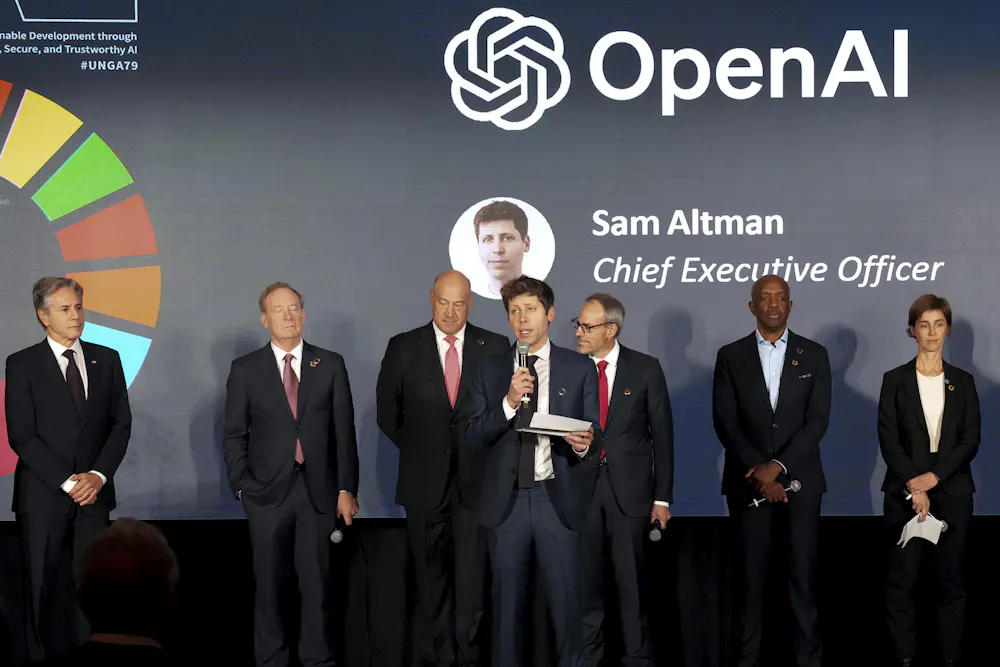
    Open AI CEO Sam Altman, center, speaks at an event in September 2024.
    Bryan R. Smith/Pool Photo via AP

    Why would OpenAI’s structure change?

    OpenAI’s deep-pocketed investors cannot own shares in the organization under its existing nonprofit governance structure, nor can they get a seat on its board of directors. That’s because OpenAI is incorporated as a nonprofit whose purpose is to benefit society rather than private interests. Until now, all rounds of investments, including a reported total of $13 billion from Microsoft, have been channeled through a for-profit subsidiary that belongs to the nonprofit.

    The current structure allows OpenAI to accept money from private investors in exchange for a future portion of its profits. But those investors do not get a voting seat on the board, and their profits are “capped.” According to information previously made public, OpenAI’s original investors can’t earn more than 100 times the money they provided. The goal of this hybrid governance model is to balance profits with OpenAI’s safety-focused mission.

    Becoming a for-profit enterprise would make it possible for its investors to acquire ownership stakes in OpenAI and no longer have to face a cap on their potential profits. Down the road, OpenAI could also go public and raise capital on the stock market.

    Altman reportedly seeks to personally acquire a 7% equity stake in OpenAI, according to a Bloomberg article that cited unnamed sources.

    That arrangement is not allowed for nonprofit executives, according to BoardSource, an association of nonprofit board members and executives. Instead, the association explains, nonprofits “must reinvest surpluses back into the organization and its tax-exempt purpose.”

    What kind of company might OpenAI become?

    The Washington Post and other media outlets have reported, also citing unnamed sources, that OpenAI might become a “public benefit corporation” – a business that aims to benefit society and earn profits.

    Examples of businesses with this status, known as B Corps., include outdoor clothing and gear company Patagonia and eyewear maker Warby Parker.

    It’s more typical that a for-profit businessnot a nonprofit – becomes a benefit corporation, according to the B Lab, a network that sets standards and offers certification for B Corps. It is unusual for a nonprofit to do this because nonprofit governance already requires those groups to benefit society.

    Boards of companies with this legal status are free to consider the interests of society, the environment and people who aren’t its shareholders, but that is not required. The board may still choose to make profits a top priority and can drop its benefit status to satisfy its investors. That is what online craft marketplace Etsy did in 2017, two years after becoming a publicly traded company.

    In my view, any attempt to convert a nonprofit into a public benefit corporation is a clear move away from focusing on the nonprofit’s mission. And there will be a risk that becoming a benefit corporation would just be a ploy to mask a shift toward focusing on revenue growth and investors’ profits.

    Many legal scholars and other experts are predicting that OpenAI will not do away with its hybrid ownership model entirely because of legal restrictions on the placement of nonprofit assets in private hands.

    But I think OpenAI has a possible workaround: It could try to dilute the nonprofit’s control by making it a minority shareholder in a new for-profit structure. This would effectively eliminate the nonprofit board’s power to hold the company accountable. Such a move could lead to an investigation by the office of the relevant state attorney general and potentially by the Internal Revenue Service.

    What could happen if OpenAI turns into a for-profit company?

    The stakes for society are high.

    AI’s potential harms are wide-ranging, and some are already apparent, such as deceptive political campaigns and bias in health care.

    If OpenAI, an industry leader, begins to focus more on earning profits than ensuring AI’s safety, I believe that these dangers could get worse. Geoffrey Hinton, who won the 2024 Nobel Prize in physics for his artificial intelligence research, has cautioned that AI may exacerbate inequality by replacing “lots of mundane jobs.” He believes that there’s a 50% probability “that we’ll have to confront the problem of AI trying to take over” from humanity.

    And even if OpenAI did retain board members for whom safety is a top concern, the only common denominator for the members of its new corporate board would be their obligation to protect the interests of the company’s shareholders, who would expect to earn a profit. While such expectations are common on a for-profit board, they constitute a conflict of interest on a nonprofit board where mission must come first and board members cannot benefit financially from the organization’s work.

    The arrangement would, no doubt, please OpenAI’s investors. But would it be good for society? The purpose of nonprofit control over a for-profit subsidiary is to ensure that profit does not interfere with the nonprofit’s mission. Without guardrails to ensure that the board seeks to limit harm to humanity from AI, there would be little reason for it to prevent the company from maximizing profit, even if its chatbots and other AI products endanger society.

    Regardless of what OpenAI does, most artificial intelligence companies are already for-profit businesses. So, in my view, the only way to manage the potential harms is through better industry standards and regulations that are starting to take shape.

    California’s governor vetoed such a bill in September 2024 on the grounds it would slow innovation – but I believe slowing it down is exactly what is needed, given the dangers AI already poses to society.

    Alnoor Ebrahim does not work for, consult, own shares in or receive funding from any company or organization that would benefit from this article, and has disclosed no relevant affiliations beyond their academic appointment.

    ref. As OpenAI attracts billions in new investment, its goal of balancing profit with purpose is getting more challenging to pull off – https://theconversation.com/as-openai-attracts-billions-in-new-investment-its-goal-of-balancing-profit-with-purpose-is-getting-more-challenging-to-pull-off-240602

    MIL OSI – Global Reports

  • MIL-OSI USA: Disaster Recovery Centers Open in Aiken, Anderson Counties

    Source: US Federal Emergency Management Agency

    Headline: Disaster Recovery Centers Open in Aiken, Anderson Counties

    Disaster Recovery Centers Open in Aiken, Anderson Counties

    Disaster Recovery Centers are open in Aiken and Anderson counties to provide in-person assistance to South Carolinians affected by Hurricane Helene.  

    Aiken County 
    Nancy Carson Library
    135 Edgefield Road
    North Augusta, SC 29841 

    Open Oct. 14-17 from 8 a.m.-7 p.m. 

    Anderson County 
    Anderson County Library
    300 N. McDuffie St.
    Anderson, SC 29621 

    Open Oct. 14-17 from 9 a.m.-8 p.m.  

    These two locations join the centers previously opened in Barnwell, Greenville and Lexington counties. 

    Barnwell County 
    Barnwell Regional Airport
    155 State Road S-6-398
    Barnwell, SC 29812 

    Open Oct. 13–15 from 8 a.m.–7 p.m.  

    Greenville County 
    Freetown Community Center 
    200 Alice Ave. 
    Greenville, SC 29611 

    Open daily from 8 a.m.–7 p.m. 

    Lexington County 
    Batesburg-Leesville Fire Station 
    537 W. Church St.  
    Batesburg, SC 29006 

    Open Oct. 13–16 from 8 a.m.–7 p.m.   

    Additional Disaster Recovery Centers will open soon in more affected areas. You can visit any open center to meet with representatives of FEMA, the state of South Carolina and the U.S. Small Business Administration. No appointment is needed. To find other center locations, go to fema.gov/drc or text “DRC” and a Zip Code to 43362. 

    Homeowners and renters in Abbeville, Aiken, Allendale, Anderson, Bamberg, Barnwell, Beaufort, Cherokee, Chester, Edgefield, Fairfield, Greenville, Greenwood, Hampton, Jasper, Kershaw, Laurens, Lexington, McCormick, Newberry, Oconee, Orangeburg, Pickens, Richland, Saluda, Spartanburg, Union and York counties and tribal members of the Catawba Indian Nation can apply for federal assistance.

    The quickest way to apply is to go online to DisasterAssistance.gov. You can also apply using the FEMA App for mobile devices or calling toll-free 800-621-3362. The telephone line is open every day and help is available in many languages. If you use a relay service, such as Video Relay Service (VRS), captioned telephone or other service, give FEMA your number for that service. For a video with American Sign Language, voiceover and open captions about how to apply for FEMA assistance, select this link.

    FEMA programs are accessible to survivors with disabilities and others with access and functional needs. 

    kwei.nwaogu

    MIL OSI USA News

  • MIL-OSI Global: When AI plays favourites: How algorithmic bias shapes the hiring process

    Source: The Conversation – Canada – By Mehnaz Rafi, PhD Candidate, Haskayne School of Business, University of Calgary

    Given the rapid integration of AI into human resource management across many organizations, it’s important to raise awareness about the complex ethical challenges it presents. (Shutterstock)

    A public interest group filed a U.S. federal complaint against artificial intelligence hiring tool, HireVue, in 2019 for deceptive hiring practices. The software, which has been adopted by hundreds of companies, favoured certain facial expressions, speaking styles and tones of voice, disproportionately disadvantaging minority candidates.

    The Electronic Privacy Information Center argued HireVue’s results were “biased, unprovable and not replicable.” Though the company has since stopped using facial recognition, concerns remain about biases in other biometric data, such as speech patterns.

    Similarly, Amazon stopped using its AI recruitment tool, as reported in 2018, after discovering it was biased against women. The algorithm, trained on male-dominated resumes submitted over 10 years, favoured male candidates by downgrading applications that included the word “women’s” and penalizing graduates of women’s colleges. Engineers tried to address these biases, but could not guarantee neutrality, leading to the project’s cancellation.

    These examples highlight a growing concern in recruitment and selection: while some companies are using AI to remove human bias from hiring, it can often reinforce and amplify existing inequalities. Given the rapid integration of AI into human resource management across many organizations, it’s important to raise awareness about the complex ethical challenges it presents.

    Ways AI can create bias

    As companies increasingly rely on algorithms to make critical hiring decisions, it’s crucial to be aware of the following ways AI can create bias in hiring:

    1. Bias in training data. AI systems rely on large datasets — referred to as training data — to learn patterns and make decisions, but their accuracy and fairness are only as good as the data they are trained on. If this data contains historical hiring biases that favour specific demographics, the AI will adopt and reproduce those same biases. Amazon’s AI tool, for example, was trained on resumes from a male-dominated industry, which led to gender bias.

    2. Flawed data sampling. Flawed data sampling occurs when the dataset used to train an algorithm is not representative of the broader population it’s meant to serve. In the context of hiring, this can happen if training data over-represents certain groups —typically white men — while under-representing marginalized candidates.

    As a result, the AI may learn to favour the characteristics and experiences of the over-represented group while penalizing or overlooking those from underrepresented groups. For example, facial analysis technologies have shown to have higher error rates for racialized individuals, particularly racialized women, because they are underrepresented in the data used to train these systems.


    Read more:
    Artificial intelligence can discriminate on the basis of race and gender, and also age


    3. Bias in feature selection. When designing AI systems, developers choose certain features, attributes or characteristics to be prioritized or weighed more heavily when the AI is making decisions. But these selected features can lead to unfair, biased outcomes and perpetuate pre-existing inequalities.

    For example, AI might disproportionately value graduates from prestigious universities, which have historically been attended by people from privileged backgrounds. Or, it might prioritize work experiences that are more common among certain demographics.

    This problem is compounded when the features selected are proxies for protected characteristics, such as zip code, which can be strongly related to race and socioeconomic status due to historical housing segregation.

    Bias in hiring algorithms raises serious ethical concerns and demands greater attention toward the mindful, responsible and inclusive use of AI.
    (Shutterstock)

    4. Lack of transparency. Many AI systems function as “black boxes,” meaning their decision-making processes are opaque. This lack of transparency makes it difficult for organizations to identify where bias might exist and how it affects hiring decisions.

    Without insight into how an AI tool makes decisions, it’s difficult to correct biased outcomes or ensure fairness. Both Amazon and HireVue faced this issue; users and developers struggled to understand how the systems assessed candidates and why certain groups were excluded.

    5. Lack of human oversight. While AI plays an important role in many decision-making processes, it should augment, rather than replace, human judgment. Over-reliance on AI without adequate human oversight can lead to unchecked biases. This problem is exacerbated when hiring professionals trust AI more than their own judgment, believing in the technology’s infallibility.

    Overcoming algorithmic bias in hiring

    To mitigate these issues, companies must adopt strategies that prioritize inclusivity and transparency in AI-driven hiring processes. Below are some key solutions for overcoming AI bias:

    1. Diversify training data. One of the most effective ways to combat AI bias is to ensure training data is inclusive, diverse and representative of a wide range of candidates. This means including data from diverse racial, ethnic, gender, socioeconomic and educational backgrounds.

    2. Conduct regular bias audits. Frequent and thorough audits of AI systems should be conducted to identify patterns of bias and discrimination. This includes examining the algorithm’s outputs, decision-making processes and its impact on different demographic groups.

    It is important to actively involve human judgment in AI-driven decisions, particularly when making final hiring choices.
    (Shutterstock)

    3. Implement fairness-aware algorithms. Use AI software that incorporates fairness constraints and is designed to consider and mitigate bias by balancing outcomes for underrepresented groups. This can include integrating fairness metrics such as equal opportunity, modifying training data to show less bias and adjusting model predictions based on fairness criteria to increase equity.

    4. Increase transparency. Seek AI solutions that offer insight into their algorithms and decision-making processes to make it easier to identify and address potential biases. Additionally, make sure to disclose any use of AI in the hiring process to candidates to maintain transparency with your job applicants and other stakeholders.

    5. Maintain human oversight. To maintain control over hiring algorithms, managers and leaders must actively review AI-driven decisions, especially when making final hiring choices. Emerging research highlights the critical role of human oversight in safeguarding against the risks posed by AI applications. However, for this oversight to be effective and meaningful, leaders must ensure that ethical considerations are part of the hiring process and promote the responsible, inclusive and ethical use of AI.

    Bias in hiring algorithms raises serious ethical concerns and demands greater attention toward the mindful, responsible and inclusive use of AI. Understanding and addressing the ethical considerations and biases of AI-driven hiring is essential to ensuring fairer hiring outcomes and preventing technology from reinforcing systemic bias.

    Mehnaz Rafi does not work for, consult, own shares in or receive funding from any company or organisation that would benefit from this article, and has disclosed no relevant affiliations beyond their academic appointment.

    ref. When AI plays favourites: How algorithmic bias shapes the hiring process – https://theconversation.com/when-ai-plays-favourites-how-algorithmic-bias-shapes-the-hiring-process-239471

    MIL OSI – Global Reports

  • MIL-OSI Russia: Representatives of the State University of Management performed in the final of the All-Russian competition “Professional Tomorrow”

    MILES AXLE Translation. Region: Russian Federation –

    Source: State University of Management – Official website of the State –

    Representatives of the State University of Management took part in the final of the All-Russian network competition of student projects “Professional Tomorrow” with the participation of students with disabilities, which was held at the Novosibirsk State Technical University NETI.

    In 2024, the competition had two stages: correspondence and in-person. In total, students from 178 Russian universities from 71 regions took part, 115 students made it to the in-person stage.

    The State University of Management was among the universities that submitted the largest number of applications.

    33 students, including those with disabilities and health limitations, took part in the correspondence stage of the Competition from the RUC GUU and its partner universities in the assigned territories. Three projects became Laureates of the Competition and passed to the face-to-face stage.

    As part of the three-day program, the Institute of Social Technologies of NSTU NETI held defenses of competition works in six nominations: “Professionally Oriented Project”, “Scientific Article”, “Useful Invention”, “Professional Startup”, “Social Advertising and Inclusive Blogging”, and “Social Project”.

    The contestants were also offered a cultural, leisure and educational program, including field trips around Novosibirsk, master classes and motivational lectures.

    Tatyana Beregovskaya, coordinator of the RUC GUU, took part in the business program dedicated to the development of higher inclusive education.

    According to the results of the final, 4th year student of the Institute of Personnel Management, Social and Business Communications of the State University of Management Almira Valitova took 3rd place in the nomination “Professional Startup”, presenting a project aimed at creating a career guidance chatbot for schoolchildren with disabilities.

    Let us recall that the inclusive student competition has been held since 2018 by a network of resource educational and methodological centers for training people with disabilities and individuals with limited health capabilities together with the Ministry of Science and Higher Education of the Russian Federation.

    Subscribe to the TG channel “Our GUU” Date of publication: 10/14/2024

    Please note: This information is raw content directly from the source of the information. It is exactly what the source states and does not reflect the position of MIL-OSI or its clients.

    Please note; This information is raw content directly from the information source. It is accurate to what the source is stating and does not reflect the position of MIL-OSI or its clients.

    Representatives of the State University of Management performed in the final of the All-Russian competition “Professional Tomorrow”

    MIL OSI Russia News

  • MIL-OSI Russia: Denis Manturov awarded the best exporters of Russia

    MILES AXLE Translation. Region: Russian Federation –

    Source: Government of the Russian Federation – An important disclaimer is at the bottom of this article.

    Denis Manturov presented awards to the winners of the All-Russian Exporter of the Year award at the international forum Made in Russia

    First Deputy Prime Minister Denis Manturov took part in the international forum “Made in Russia”, where he presented awards to the winners of the federal stage of the All-Russian “Exporter of the Year” award.

    The leaders of domestic exports were also congratulated on their high achievements by the Minister of Industry and Trade Anton Alikhanov, the Minister of Agriculture Oksana Lut, the Minister of Economic Development Maxim Reshetnikov, the Chairman of the All-Russian public organization “Business Russia” Alexey Repik, the President of the Chamber of Commerce and Industry Sergey Katyrin, the President of the Russian Union of Industrialists and Entrepreneurs Alexander Shokhin, the President of the All-Russian public organization of small and medium-sized businesses “Opora Rossii” Alexander Kalinin.

    “It is becoming increasingly difficult for us to identify the best of the best. Almost 1.7 thousand companies took part in this year’s competition, which together accounted for a tenth of the country’s non-resource non-energy exports in 2023. I would like to thank them all for their work in such difficult conditions. I would especially like to note the winners of the district stages of the Exporter of the Year award, your activities are of great importance for the development of our regions. We can and should look up to you, adopt your experience and best practices in conducting foreign economic activity,” Denis Manturov noted.

    The winners and prize winners of the All-Russian Prize in the field of international cooperation and export are determined in two stages: the first takes place at the level of each federal district, then the best exporters of the country are determined from among the companies that took first place according to the results of the district stage.

    “Exporter of the Year” is not only an opportunity to celebrate the achievements of our companies, but also a platform for exchanging experiences and best practices. We hope that this competition will inspire even more companies to develop their export activities and help them find new opportunities for growth and success in the international arena,” said Veronika Nikishina, CEO of the Russian Export Center (part of VEB.RF), following the award ceremony.

    Winners and prize winners were determined in 20 nominations: six main nominations (separately for SMEs and separately for large businesses, 12 in total) and five additional nominations (depending on the size of the company, 8 in total). Following the meetings of the unified district competition commission, 278 winners and prize winners were selected in eight federal districts. 117 companies entered the federal stage.

    Following the meeting of the federal competition commission, 62 winners and prize winners were determined (47 companies took prize places). The leader among the winning regions was Novosibirsk Oblast. Moscow Oblast was second in terms of export records. Third place was shared by St. Petersburg, Sverdlovsk and Volgograd Oblasts.

    The competition is held within the framework of the national project “International Cooperation and Export” with the support of the Ministry of Industry and Trade, the Ministry of Economic Development, and the Ministry of Agriculture.

    Please note: This information is raw content directly from the source of the information. It is exactly what the source states and does not reflect the position of MIL-OSI or its clients.

    Please note; This information is raw content directly from the information source. It is accurate to what the source is stating and does not reflect the position of MIL-OSI or its clients.

    http://government.ru/nevs/52990/

    MIL OSI Russia News

  • MIL-OSI: Solomon Partners Hires James Butcher as Managing Director in the Technology Group

    Source: GlobeNewswire (MIL-OSI)

    NEW YORK, Oct. 14, 2024 (GLOBE NEWSWIRE) — Solomon Partners, a leading financial advisory firm and independent affiliate of Natixis, announced the appointment of James Butcher as a Managing Director in the Technology group. Based in New York, he will focus on advising companies in the Information Services and Business-to-Business (B2B) sectors and will further enhance Solomon’s Software, Data & Analytics coverage.

    Mr. Butcher joined Solomon from Moelis & Company, where he served as a Managing Director. During his 13-year tenure, he worked with clients in the Media & Technology sector, acting as a trusted advisor to large corporations and mid-market companies, as well as financial sponsors, on a variety of transactions.

    Craig Muir, who joined Solomon in 2023 to build out the Technology practice, noted that Mr. Butcher’s addition to the team expands the range of companies Solomon can serve in the sector.

    “James brings a wealth of experience and expertise in the Information Services and B2B sectors,” Mr. Muir said. “This will be invaluable as we continue to expand our capabilities and deliver exceptional service to our clients.”

    Mr. Butcher commented, “I am excited to be joining Solomon Partners and the Technology group, both of which have significant momentum. I have been impressed by the caliber of the bankers and the firm’s commitment to providing our clients with unrivaled advice and creative solutions. I am looking forward to working with Craig and the team to continue to grow the Technology group and to expand our coverage of the Information Services and B2B sectors.”

    Mr. Butcher earned a BA from University College London and is a Chartered Accountant (FCA).

    To learn more, read a Q&A with Solomon CEO Marc Cooper and Mr. Butcher here.

    About Solomon Partners

    Founded in 1989, Solomon Partners is a leading financial advisory firm with a legacy as one of the oldest independent investment banks. Our difference is unmatched industry knowledge in the sectors we cover, creating superior value with unrivaled wisdom for our clients. We advise clients on mergers, acquisitions, divestitures, restructurings, recapitalizations, capital markets solutions and activism defense across a range of industries. These include Business Services, Consumer Retail, Distribution, Financial Services & FinTech, Financial Sponsors, Healthcare, Grocery, Pharmacy & Restaurants, Industrials, Infrastructure, Power & Renewables, Media and Technology. Solomon Partners is an independently operated affiliate of Natixis, part of Groupe BPCE. For further information, visit solomonpartners.com.

    A photo accompanying this announcement is available at https://www.globenewswire.com/NewsRoom/AttachmentNg/202b978d-935b-4af9-b0b6-120821f1c595

    The MIL Network

  • MIL-OSI USA: IAM Mechanics Local 701 Helps to Feed the Hungry

    Source: US GOIAM Union

    More than 120 members and volunteers from Chicagoland Mechanics Union Local 701 recently volunteered at Feed My Starving Children (FMSC), a charity organization in Aurora, Ill. This effort brought together Local 701 Business Representatives, staff, members, and families as part of the Local 701 annual IAM Midwest Territory H.E.L.P.S. Program.

    Local 701 members helped package 223 boxes, which will provide over 132 children with a daily meal for a year, totaling over 48,000 packaged meals.

    Share and Follow:

    MIL OSI USA News

  • MIL-OSI: ManTech Appoints Michael Biddick Vice President of Enterprise Program Management, Standards and Quality Assurance

    Source: GlobeNewswire (MIL-OSI)

    HERNDON, Va., Oct. 14, 2024 (GLOBE NEWSWIRE) — ManTech, a leading provider of AI and mission-focused technology solutions, has named Michael Biddick Vice President of Enterprise Program Management, Standards and Quality Assurance.

    Biddick joins ManTech with a distinguished, two-decade career focused on client satisfaction and technology consulting. At ManTech he will accelerate enterprise-wide excellence in program execution and quality assurance aligned with strategy and technology, including digital transformation, AI/ML, cybersecurity and IT.

    “With a 25-year track record of proven expertise in tech consulting and entrepreneurship, Michael excels at building high-performing teams leveraging technology-enabled capabilities, software tools, effective performance measures and indicators to support client and program requirements,” said ManTech Executive Vice President & Chief Performance Officer Bonnie Cook.

    Prior to ManTech, Biddick worked at Gartner, Inc., as the Vice President and Managing Partner leading the national security consulting business, overseeing the growth and delivery of applied research solutions across the community. Prior to Gartner, Biddick founded and served as CEO of Fusion PPT, an award-winning IT consulting company. He also served as Chief Technology Officer of Windward, a successful IT consulting startup venture, and as Strategic Enterprise Network Consultant at Booz Allen Hamilton.

    Biddick holds a Master’s degree from the Johns Hopkins University Cary Business School and an undergraduate degree in Political Science and African American Studies from the University of Wisconsin.

    About ManTech  
    ManTech provides mission-focused technology solutions and services for U.S. Defense, Intelligence and Federal Civilian agencies. In business for more than 55 years, we are a leading provider of AI solutions that power full-spectrum cyber, data collection & analytics, enterprise IT, high-end engineering and software application development solutions that support national and homeland security. Additional information on ManTech can be found at http://www.mantech.com.

    Media Contact: 
    Jim Crawford 
    ManTech 
    Executive Director, External Communications 
    (M) 703-498-7315
    James.Crawford2@ManTech.com 

    A photo accompanying this announcement is available at https://www.globenewswire.com/NewsRoom/AttachmentNg/2e4fe903-5d95-4b83-b202-52ba6550b5da

    The MIL Network

  • MIL-OSI: NANO Nuclear Energy Executives Scheduled to Present at the Upcoming Mississippi Public Service Commissioners’ Nuclear Summit

    Source: GlobeNewswire (MIL-OSI)

    New York, N.Y., Oct. 14, 2024 (GLOBE NEWSWIRE) — NANO Nuclear Energy Inc. (NASDAQ: NNE) (“NANO Nuclear” or “the Company”), a leading advanced nuclear energy and technology company focused on developing portable, clean energy solutions, today announced that its Chief Executive Officer and Head of Reactor Development, James Walker, will lead a virtual presentation alongside Founder and Chairman, Jay Yu, at the upcoming Mississippi Public Service Commission Nuclear Summit.

    “A key aspect of the NANO Nuclear story is our participation in the emerging nuclear energy renaissance in the U.S. It is inspiring to see states like Mississippi, in addition to the growing support within the federal government, take the initiative to adopt nuclear-based solutions for their expanding energy needs,” said Jay Yu, Founder and Chairman of NANO Nuclear Energy. “Advanced reactors, such as NANO Nuclear’s ‘ODIN’ and ‘ZEUS’ microreactors in development, can play a pivotal role in this transition, allowing states to deploy portable, safe nuclear energy solutions where they are most needed. We look forward to engaging with fellow attendees and presenters at the Nuclear Summit to discuss the future of Mississippi’s energy landscape.”

    Featuring prominent speakers such as Jeff Merrifield, Chairman of the U.S. Nuclear Industry Council and former NRC Commissioner, and Mike King, Special Assistant for ADVANCE ACT Implementation at the U.S. Nuclear Regulatory Commission, the Summit will provide a platform to explore safe, reliable, and sustainable energy solutions that benefit Mississippi’s communities and economy.

    The Summit is scheduled for October 22, 2024, from 9:00 a.m. to 3:30 p.m. in Jackson, MS. All interested parties are welcome and encouraged to register at ww.psc.ms.gov. “Mississippi has the potential to be a leader in nuclear energy, and this summit will serve as a proactive platform for meaningful dialogue. The Mississippi Public Service Commission is grateful to have an industry leader such as NANO Nuclear Energy take part in the summit.” stated the Commissioners.

    Figure 1 – NANO Nuclear Energy Inc. Executives to Present at the Mississippi Public Service Commission’s Nuclear Summit 2024.

    “We are excited to participate in this Nuclear Summit and support Mississippi in achieving its goals of a sustainable, secure, and efficient energy future powered by advanced nuclear technologies,” said James Walker, Chief Executive Officer and Head of Reactor Development of NANO Nuclear Energy. “Our participation in this important event alongside key representatives of the United States nuclear energy sector is a testament to our continuing networking efforts. The support of both federal and state governments is crucial in accelerating this shift to more sustainable energy solutions, and we are pleased to contribute to discussions on how advanced nuclear technologies and our own microreactors can play a key role in achieving this goal.”

    About NANO Nuclear Energy, Inc.

    NANO Nuclear Energy Inc. (NASDAQ: NNE) is an advanced technology-driven nuclear energy company seeking to become a commercially focused, diversified, and vertically integrated company across four business lines: (i) cutting edge portable microreactor technology, (ii) nuclear fuel fabrication, (iii) nuclear fuel transportation and (iv) nuclear industry consulting services. NANO Nuclear believes it is the first portable nuclear microreactor company to be listed publicly in the U.S.

    Led by a world-class nuclear engineering team, NANO Nuclear’s products in technical development are “ZEUS”, a solid core battery reactor, and “ODIN”, a low-pressure coolant reactor, each representing advanced developments in clean energy solutions that are portable, on-demand capable, advanced nuclear microreactors.

    Advanced Fuel Transportation Inc. (AFT), a NANO Nuclear subsidiary, is led by former executives from the largest transportation company in the world aiming to build a North American transportation company that will provide commercial quantities of HALEU fuel to small modular reactors, microreactor companies, national laboratories, military, and DOE programs. Through NANO Nuclear, AFT is the exclusive licensee of a patented high-capacity HALEU fuel transportation basket developed by three major U.S. national nuclear laboratories and funded by the Department of Energy. Assuming development and commercialization, AFT is expected to form part of the only vertically integrated nuclear fuel business of its kind in North America.

    HALEU Energy Fuel Inc. (HEF), a NANO Nuclear subsidiary, is focusing on the future development of a domestic source for a High-Assay, Low-Enriched Uranium (HALEU) fuel fabrication pipeline for NANO Nuclear’s own microreactors as well as the broader advanced nuclear reactor industry.

    NANO Nuclear Space Inc. (NNS), a NANO Nuclear subsidiary, is exploring the potential commercial applications of NANO Nuclear’s developing micronuclear reactor technology in space. NNS is focusing on applications such as power systems for extraterrestrial projects and human sustaining environments, and potentially propulsion technology for long haul space missions. NNS’ initial focus will be on cis-lunar applications, referring to uses in the space region extending from Earth to the area surrounding the Moon’s surface.

    For more corporate information please visit: https://NanoNuclearEnergy.com/

    For further information, please contact:

    Email: IR@NANONuclearEnergy.com
    Business Tel: (212) 634-9206
    PLEASE FOLLOW OUR SOCIAL MEDIA PAGES HERE:
    NANO Nuclear Energy LINKEDIN
    NANO Nuclear Energy YOUTUBE
    NANO Nuclear Energy TWITTER

    Cautionary Note Regarding Forward Looking Statements

    This news release and statements of NANO Nuclear’s management in connection with this news release or the Mississippi Nuclear Summit described herein contain or may contain “forward-looking statements” within the meaning of Section 21E of the Securities Exchange Act of 1934, as amended, and the Private Securities Litigation Reform Act of 1995. In this context, forward-looking statements mean statements (including relating to the potential for nuclear energy innovation and expansion in Mississippi) related to future events, which may impact our expected future business and financial performance, and often contain words such as “expects”, “anticipates”, “intends”, “plans”, “believes”, “potential”, “will”, “should”, “could”, “would” or “may” and other words of similar meaning. These forward-looking statements are based on information available to us as of the date of this news release and represent management’s current views and assumptions. Forward-looking statements are not guarantees of future performance, events or results and involve significant known and unknown risks, uncertainties and other factors, which may be beyond our control. For NANO Nuclear, particular risks and uncertainties that could cause our actual future results to differ materially from those expressed in our forward-looking statements include but are not limited to the following: (i) risks related to our U.S. Department of Energy (“DOE”) or related state nuclear fuel licensing submissions, (ii) risks related the development of new or advanced technology, including difficulties with design and testing, cost overruns, development of competitive technology, (iii) our ability to obtain contracts and funding to be able to continue operations, (iv) risks related to uncertainty regarding our ability to technologically develop and commercially deploy a competitive advanced nuclear reactor or other technology in the timelines we anticipate, if ever, (v) risks related to the impact of government regulation and policies including by the DOE and the U.S. Nuclear Regulatory Commission, including those associated with the recently enacted ADVANCE Act, and (vi) similar risks and uncertainties associated with the business of a start-up business operating a highly regulated industry. Readers are cautioned not to place undue reliance on these forward-looking statements, which apply only as of the date of this news release. These factors may not constitute all factors that could cause actual results to differ from those discussed in any forward-looking statement, and the NANO Nuclear therefore encourages investors to review other factors that may affect future results in its filings with the SEC, which are available for review at http://www.sec.gov and at https://ir.nanonuclearenergy.com/financial-information/sec-filings. Accordingly, forward-looking statements should not be relied upon as a predictor of actual results. We do not undertake to update our forward-looking statements to reflect events or circumstances that may arise after the date of this news release, except as required by law.

    Attachment

    The MIL Network

  • MIL-OSI: LPL Financial Welcomes Financial Advisor Ashton Medina

    Source: GlobeNewswire (MIL-OSI)

    SAN DIEGO, Oct. 14, 2024 (GLOBE NEWSWIRE) — LPL Financial LLC, announced today that financial advisor Ashton Medina, CFA®, CFP®, has joined LPL Financial’s broker-dealer and corporate RIA platforms, aligning with existing firm GradePoint Financial Group. He reported having served approximately $155 million in advisory, brokerage and retirement plan assets* and joins LPL from Synovus Securities.

    Based in Miami, Fla., Medina is in his fifth year as an advisor following an initial career as a portfolio manager at a private bank. He’s committed to delivering a broad spectrum of wealth management and financial planning services, with a focus on education to help his clients better understand the complexities of their financial lives.

    “I am very passionate about the world of investments,” said Medina, who immigrated from Colombia after graduating high school at age 16. “Transitioning from a portfolio manager to a financial advisor has allowed me to provide clients with a more holistic approach to their needs, so that I can address every facet of their finances and offer a higher level of value.”

    Looking for independence and the autonomy to run his business on his own terms, Medina turned to LPL and GradePoint.

    “I’m excited to be part of LPL and GradePoint Financial Group,” said Medina. “I really appreciate LPL’s comprehensive digital platform with single sign-on where I can access everything in one place. This will allow me to expand my service offering and create more positive experiences for clients. I am also impressed with GradePoint’s localized support and dedicated resources.”

    Jeff Hughes, President of GradePoint Financial Group, said, “We’re thrilled to welcome our newest team member, Ashton Medina, to Gradepoint Financial. Ashton excels at transforming intricate challenges into customized solutions, especially in unique situations. With a keen focus on multi-generational wealth and estate planning, his personalized approach and attention to detail make him a great addition to our team. Welcome Ashton!”

    Scott Posner, LPL Executive Vice President, Business Development, said, “We welcome Ashton to LPL and congratulate him on making the move to independence. At LPL, we’re committed to delivering differentiated support services and robust resources, along with the freedom, choice and ability advisors need to build a business of value on their own terms. We look forward to supporting the entire GradePoint Financial Group for years to come.”

    Related

    Advisors, learn how LPL Financial can help take your business to the next level.

    About LPL Financial

    LPL Financial Holdings Inc. (Nasdaq: LPLA) was founded on the principle that LPL should work for advisors and institutions, and not the other way around. Today, LPL is a leader in the markets we serve, serving more than 23,000 financial advisors, including advisors at approximately 1,000 institutions and at approximately 580 registered investment advisor firms nationwide. We are steadfast in our commitment to the advisor-mediated model and the belief that Americans deserve access to personalized guidance from a financial professional. At LPL, independence means that advisors and institution leaders have the freedom they deserve to choose the business model, services and technology resources that allow them to run a thriving business. They have the flexibility to do business their way. And they have the freedom to manage their client relationships, because they know their clients best. Simply put, we take care of our advisors and institutions, so they can take care of their clients.

    Securities and Advisory services offered through LPL Financial LLC (“LPL Financial”), a registered investment advisor.
    Member FINRA/SIPC. LPL Financial and its affiliated companies provide financial services only from the United States. GradePoint Financial Group and LPL Financial are separate entities.

    Throughout this communication, the terms “financial advisors” and “advisors” are used to refer to registered representatives and/or investment advisor representatives affiliated with LPL Financial.

    We routinely disclose information that may be important to shareholders in the “Investor Relations” or “Press Releases” section of our website.

    *Value approximated based on asset and holding details provided to LPL from end of year, 2023.

    Media Contact: 
    Media.relations@LPLFinancial.com 
    (704) 996-1840

    Tracking #641811

    The MIL Network

  • MIL-OSI United Kingdom: Chancellor announces new plans to secure UK investment

    Source: United Kingdom – Executive Government & Departments

    The Chancellor closes the International Investment Summit promising the government is bringing investment and jobs back to Britain.

    In a speech to some of the world’s biggest businesses and investors, Rachel Reeves revealed that restoring fiscal stability will be at the centre of her first Budget on 30 October. She made the case that it is the only way to ensure government and business can invest with confidence. 

    The Chancellor went on to set out how two new bodies will drive long-term investment in Britain as the government works hand in hand with business to create new high skilled jobs right across the UK, helping make people better off. 

    Chancellor of the Exchequer Rachel Reeves, MP said: 

    When we said we would end instability, make growth our national mission and enter a true partnership with business we meant it.  

    The decisions which lie ahead of us will not always be easy. But by taking the right choices to grow our economy and drive investment we will create good jobs and new opportunities across every part of the country. That is the Britain we are building. 

    The first announcement from the Chancellor was that from today the UK Infrastructure Bank will operate as the National Wealth Fund (NWF), with its headquarters in Leeds. 

    The National Wealth Fund will catalyse tens of billions of pounds of private investment into in the UK’s clean energy and growth industries, including green hydrogen, carbon capture and gigafactories.

    Building on UKIB’s leadership and expertise, the NWF will go further, able to make investments that maximise the mobilisation of private investment. This will include the ability to trial new blended finance solutions with government departments that take on additional risk to facilitate higher impact in individual deals and performance guarantees. 

    The National Wealth Fund will have a total of £27.8 billion and will work with key industry partners, including mayors, to support delivery of their investment plans. 

    The Government will also bring forward legislation to give the NWF a broader mandate than just infrastructure, ensuring it is a permanent part of government’s investment offer. 

    John Flint, CEO, at the National Wealth Fund said: 

    It is a huge privilege to be entrusted with the responsibility of leading the National Wealth Fund. Building on the strong foundations we have laid as UKIB, we will hit the ground running, using sector insight and investment expertise that the market knows and trusts to unlock billions of pounds of private finance for projects across the UK.

    With additional capital to deploy against a bigger mandate, we stand ready to help the market invest with confidence, in support of the Government’s growth ambitions.

    Alongside this the Chancellor, together with Secretary of State for Business and Trade Jonathan Reynolds, announced a new British Growth Partnership as part of the British Business Bank (BBB). 

    The BBB already supports the UK’s fastest growing, most innovative companies deploying £3.5bn to support over 23,000 businesses last year. 

    The British Growth Partnership will allow it to do more by creating a new way for the British Business Bank and institutional investors to invest in innovative companies together.

    Leveraging the British Business Bank’s market expertise, these long-term investments will be made independently of government on a fully commercial basis. In the coming months, the British Business Bank will seek to raise hundreds of millions of pounds of investment for this fund, with the aim of making investments by the end of 2025.

    Additionally, the government will implement a set of reforms to the British Business Bank’s financial framework that will increase its impact and increase its ability to respond flexibly to the market, including by putting the British Business Bank’s £7.9bn set of commercial programmes on a permanent footing.

    Louis Taylor, CEO, British Business Bank said:

    Today’s announcement is a strong endorsement of the British Business Bank’s 10-year track record, market access and capabilities. By establishing the British Growth Partnership, the Bank will encourage more UK pension fund investment into the UK’s fastest growing, most innovative companies. 

    In addition, reforms to the Bank’s financial framework, putting our £7.9bn commercial programmes on a permanent footing, means we can flexibly re-invest our investment returns over the long term to increase growth and prosperity across the UK.

    Today’s measures follow the Government announcing more than £24 billion of private investment for pioneering energy projects and thousands of jobs in the green industries secured ahead of International Investment Summit.

    This adds to the announcement last week that up to 500 UK manufacturing jobs are set to be supported as bus operator Go Ahead confirms a major £500 million investment to decarbonise its fleet. This includes creating a new dedicated manufacturing line and partnership with Northern Ireland-based UK bus manufacturer Wrightbus.    

    And it also builds on the Government confirming funding to launch the UK’s first carbon capture sites in Teesside and Merseyside. Two new carbon capture and CCUS enabled hydrogen projects will create 4,000 new jobs, in a boost for the economy and British industry, helping remove over 8.5 million tonnes of carbon emissions each year – the equivalent of taking around 4 million cars off the road.    

    Further quotes:

    Dame Julia Hoggett, CEO, London Stock Exchange Plc said:

    It is critically important for the growth of the UK economy that home grown companies are able to access the investment they need to grow, scale and stay in the UK. 

    Access to meaningful UK capital at the scaling phase has been a long-recognised challenge and so we are delighted that British Growth Partnership is being established to help address this problem. This will also facilitate more investment by UK pension schemes into scaling UK companies, providing greater returns for their savers and giving UK investors a greater stake in the UK economy.

    Sir Nicholas Lyons, Group Chair, Phoenix said:

    The UK needs scale and skills to convert our brilliant science and technology start-ups and university spinouts into the successful and sustainable companies of tomorrow.  British Growth Partnership will complement the private sector DC pension industry’s undertakings under the Mansion House Compact to expedite this, directing investment to deliver the best returns for our pension savers.

    Professor Sir John Bell, President, Ellison Institute of Technology said:

    Making sure the best innovative British companies can access the capital they need to scale and stay in the UK is critical for the future of the economy. The Chancellor’s announcement today of the new British Growth Partnership, in addition to confirming £7.9bn of permanent capital for the British Business Bank, are both very welcome and significant steps forward in solving this problem

    Sir Jonathan Symonds CBE, Non-Executive Chair, GSK said:

    This is a welcome step; encouraging institutional investment into the UK’s high-growth-potential companies can provide a real boost to the economy and generate better returns for individuals’ pension investments

    Brent Hoberman, Chairman and Co-Founder, Founders Forum Group, Founders Factory, firstminute capital said:

    It’s great to see the new government taking concrete steps to amplify the Mansion House reforms.   This new British Growth Partnership should help UK startups access further scale up capital to create more world leaders.

    Saul Klein, Co-founder, Phoenix Court and Member of the Council for Science and Technology said:

    The UK has more than 750 venture backed companies generating more than $25m in revenue – this is more than France, Germany, Sweden and the Netherlands combined. These companies have created over 200,000 new jobs and continue to grow but the UK still has $35bn less scale up capital to support these companies than the United States’ Bay Area alone.

    The government’s continued support for the British Business Bank and its focus on addressing this scale up opportunity will be very much welcomed by these 750 companies as well as the cohorts coming behind them.

    Peter Harrison, Group Chief Executive, Schroders plc said:

    These are further helpful initiatives in creating an environment where risk capital can flow into strategically important industries. Every step is welcome in supporting future economic growth.

    Edward Braham, Chairman, M&G said:

    We welcome the creation of the British Growth Partnership which should unlock much needed investment into the UK’s high growth innovative businesses.

    The combination of private and public sector partnerships, underpinned by long term patient capital, is essential to create the conditions for sustainable growth. 

    As a leading international investor, M&G has a proud history of supporting the progress of businesses and communities across the UK, investing in new innovative companies and private assets such as housing, hospitals and transport.

    Steve Bates OBE, CEO of the BioIndustry Association, said:

    Our world-leading, innovative life sciences and biotech sector is a unique competitive advantage for economic growth. The sector attracts expert global investors but a lack of investment from UK-based institutional investors means the economic and social returns are too often lost overseas.

    The British Growth Partnership will help turbo-charge innovative businesses with fresh UK-based capital, enabling them to scale in the UK and deliver more returns to the British economy, and to ordinary people saving for their retirement. This is a win-win-win for UK life science businesses, for UK pension savers and for the forward-thinking financial services sector.

    Kate Bingham, Managing Partner, SV Health and Former Chair UK Vaccine Taskforce welcomed the announcements saying:

    The UK has the potential to be a global leader and hub for healthcare breakthroughs with its strong entrepreneurial and academic base, together with our expertise and innovation in data science and artificial intelligence.

    Making the British Business Bank independent of government as well as launching the British Growth Partnership enables the Bank to catalyse institutional investment, including from pension funds, into brilliant UK companies that are supercharging the development of revolutionary medical treatments including smarter medicines for cancer, Alzheimer’s and blindness.

    Dom Hallas, Executive Director, Startup Coalition said:

    Tech startups and scaleups need a stable and improving funding environment to compete globally. The British Business Bank’s role in helping create that landscape is critical and today’s announcement will help the UK continue to build VC-backed tech companies across the country that are ready to compete with the very best.

    Michael Moore, Chief Executive, BVCA said:

    It is extremely welcome that the Government and the British Business Bank have brought this hugely significant programme forwards so quickly.

    The prize is to get significant new capital into the growth equity and venture capital funds that are creating new industries and backing innovative businesses that will be the backbone of the British economy of tomorrow. The British Business Bank has a vital role catalysing institutional investment into fast growing British businesses and this announcement will boost that work substantially.

    Just 3% of the pensions investment into UK led growth equity and venture capital funds is from UK pension funds. Alongside the Government’s pensions review this major new vehicle can be the start of a major shift that sees UK pensions savers get the improved retirement income that can come from backing funds which deliver active ownership and long-term investment in business.

    Kerry Baldwin, Co-Founder, Managing Partner, IQ Capital said:

    The launch of the British Growth Partnership and the confirmation of a permanent capital allocation for the British Business Bank are two crucial steps forward in solving the lack of access to domestic capital for the UK’s most promising growth companies.

    I very much welcome the Chancellor’s announcement today, she has been hugely engaged with the venture capital and technology sector, and champions the incredible societal impact that our sector enables through investments into innovative technologies across the UK.

    The British Business Bank has been at the heart of powering the next generation of UK venture and growth funds and the launch of the new fund is welcome as part of the pension reforms.  This fund will enable access to world-leading science and innovative investments which increase productivity by transforming legacy industries through the adoption of novel technologies and also by providing growth capital to the next generation of globally leading frontier technologies which are solving pressing critical global issues from climate change to energy transition.

    Dr Andrew Williamson, Managing Partner, Cambridge Innovation Capital, and member of BVCA Council said:

    Since its formation in 2018, British Patient Capital has played a central role in the growth of the UK’s knowledge-intensive innovation ecosystem.  It has built a world leading team and investment platform with a strong track record of investing in UK deeptech and life sciences companies and the venture capital funds that support these companies. 

    The British Growth Partnership will make the Bank’s extensive expertise available to a broader range of institutional investors, providing attractive returns for those investors and increasing the capital available for leading UK start-up and scale-up businesses.

    Duncan Johnson, Chief Executive Officer, Northern Gritstone said:

    We at Northern Gritstone believe that skilled partnerships that channel patient investment into long-term growth and innovation are more important than ever for the UK. 

    By establishing the British Growth Partnership, the British Business Bank is creating a pathway for pension funds and institutional investors to support the future today. Through investment we can create and scale the world class businesses of tomorrow in the UK which is the platform for growth for our economy over the decades to come.

    Irene Graham OBE, CEO, ScaleUp Institute said:

    The ScaleUp Institute has long evidenced the important role of development banks and Sovereign Wealth Funds to global scaleup economies.  The Government’s  placement of the British Business Bank commercial initiatives into permanency, with greater  flexibility, alongside the creation of the great British Growth Partnership are very much welcome and represent significant milestones for the UK economy. 

    Alongside a National Wealth Fund these entities and commitments should further address structural, regional and sectoral disparities and ensure our innovative scaling businesses across the country are better connected, at all stages of growth, to the vital patient capital and institutional funds to enable their global scale and continue to foster our international competitiveness.

    Lisa Quest, Managing Partner UK and Ireland, Oliver Wyman:

    Today’s announcement is a significant milestone for the UK economy. The National Wealth Fund will increase investment across key sectors and accelerate the UK’s clean energy transition. I look forward to the many contributions this initiative will unlock for years to come.

    Dr Rhian-Mari Thomas, Chair of the Taskforce and CEO of the Green Finance Institute said:

    The NWF creates an opportunity for simplification and scale. The challenge now is to ensure it delivers private capital at the pace we need, through innovative risk-sharing transactions in new technologies.


    On top of today’s announcements, the government expects both successful bidders of the Long-Term Investment for Technology and Science (LIFTS) competition, Schroders and ICG, to begin making investments via their new funds in late 2024. Supported by pensions capital from Phoenix Group, the aim is to generate over a billion pounds of investment into UK science and technology companies.

    Updates to this page

    Published 14 October 2024

    MIL OSI United Kingdom

  • MIL-OSI Economics: John C Williams: All about data

    Source: Bank for International Settlements

    Introduction

    Good morning. I’m so pleased to be here at Binghamton University, a true gem of the SUNY system. Meeting with students, educators, and business and community leaders is a valuable and enjoyable part of my job.

    The New York Fed represents the Federal Reserve System’s Second District, which includes New York State, northern New Jersey, western Connecticut, Puerto Rico, and the U.S. Virgin Islands. This is a diverse region made up of many smaller local economies. Therefore, it’s important for me and my colleagues at the New York Fed to collect data and learn about the challenges and opportunities facing all of the communities we serve.

    That said, monetary policy affects everyone, and the Federal Reserve is committed to using its tools to achieve its dual mandate of maximum employment and price stability. Today, I will talk about monetary policy and how the Fed is working to fulfill this dual mandate. I’ll also give you my outlook on the U.S. economy.

    Before I do, I will give the standard Fed disclaimer that the views I express today are mine alone and do not necessarily reflect those of the Federal Open Market Committee (FOMC) or others in the Federal Reserve System.

    Obsessing Over Data

    As I’ve traveled around the Southern Tier region, I’ve enjoyed seeing the emergence of the colors of autumn. Tracking fall foliage is a hobby for many. What I like is that it’s all about data. “Leaf peepers” submit field reports on changing color conditions, and experts pore over the information. One forecast predicts we will hit peak foliage in four days.1

    At the Fed, we’re equally obsessed with data. In our case, we study data about the economy-whether here in the district, across the country, or around the world. So, I’ll highlight some of the data that help my understanding of how the economy is performing relative to our dual mandate goals, as well as what policy actions we can take to achieve these goals.

    When inflation became unacceptably high and the labor market exceptionally tight, the FOMC acted with resolve to bring inflation back down to our 2 percent longer-run target. The Committee’s strong actions have helped bring the economy much closer to our goals. Imbalances between supply and demand in the economy have mostly dissipated, even as the economy and employment have continued to grow. And inflation, as measured by the personal consumption expenditures (PCE) price index, has declined from over 7 percent in June of 2022 to just 2-1/4 percent in the latest reading. There’s still some distance to go to reach our goal of 2 percent, but we’re definitely moving in the right direction.

    The data paint a picture of an economy that has returned to balance, or in a word that the English majors in the room may appreciate, “equipoise.” In light of the progress we have seen in reducing inflation and restoring balance to the economy, the FOMC decided at its most recent meeting to lower the interest rate that it sets. Simply put, this action will help maintain the strength of the economy and labor market while inflation moves back to 2 percent on a sustainable basis.

    Moving to Price Stability

    I’ll go further into our policy decision and what it means for the economic outlook in a minute. But first, I’ll give more details about each side of our dual mandate, starting with inflation. I’ll use an onion analogy that I have found useful over the past two years to demonstrate how inflation’s three distinct layers are normalizing at different rates.2

    The onion’s outer layer represents globally traded commodities. As the economy started to rebound from pandemic shutdowns and demand began to soar, inflation surged, then rose further when Russia invaded Ukraine. Since then, supply and demand have come into balance, and these prices have generally been flat or falling.

    The middle onion layer is made up of core goods, excluding commodities. Demand for goods rose sharply as the economy emerged from the pandemic downturn-just as global pandemic-related supply-chain disruptions significantly hampered supply. But, as seen in the New York Fed’s Global Supply Chain Pressure Index, those supply pressures have eased, and core goods inflation has returned to pre-pandemic norms.3

    The inner onion layer comprises core services. Although this category is taking the longest to normalize, the disinflationary process is well underway here too. For example, measures of underlying inflation that tend to be heavily influenced by core services inflation today average around 2-1/2 percent.4

    One positive piece of data that reinforces my confidence that inflation is on course to reach our 2 percent goal is that inflation expectations remain well anchored across all forecast horizons. This is seen in the New York Fed’s Survey of Consumer Expectations as well as other surveys and market-based measures.5

    A Labor Market in Balance

    Now I’ll turn to the employment side of our mandate. And no surprise, I’ll point to data. A wide range of metrics-including the unemployment rate; measures of job openings, hiring, quits, and employment flows; and perceptions of job and worker availability-indicate that the very tight labor market of the past few years has now returned to more normal conditions and is unlikely to be a source of inflationary pressures going forward.

    Recent analysis by researchers at the New York Fed provides a useful way to gauge whether the labor market is tight or loose.They find that you can effectively summarize the state of the overall labor market in terms of its effect on compensation growth by using just two indicators: the rate at which employees quit their jobs and the ratio of job openings to job seekers. In fact, once you take these two measures into account, other labor market metrics that get a lot of attention-such as the unemployment rate and the vacancy-to-unemployment ratio-don’t provide additional useful information. 

    Combining these two measures into an index of labor market tightness provides two key insights. First, data as of the second quarter of this year indicate that the labor market is about where it was in early 2018-a period of solid labor market conditions and low inflation. Second, compensation growth should soon return to levels that prevailed prior to the pandemic.

    Seasons of Change

    So, the labor market is solid. The economy is in a good place. And inflation is closing in on our 2 percent longer-run goal. With the risks to achieving our goals now in balance, the FOMC decided to lower the target range for the federal funds rate by half a percentage point, to 4-3/4 to 5 percent. In addition, the Committee continued to normalize the holdings of securities on the Fed’s balance sheet.7

    Looking ahead, based on my current forecast for the economy, I expect that it will be appropriate to continue the process of moving the stance of monetary policy to a more neutral setting over time. The timing and pace of future adjustments to interest rates will be based on the evolution of the data, the economic outlook, and the risks to achieving our goals. We will continue to be data-dependent and attuned to the evolution of economic conditions in making our decisions.

    With monetary policy moving to a more neutral setting over time, I expect real GDP to grow between 2-1/4 and 2-1/2 percent this year and to average about 2-1/4 percent over the next two years. I anticipate the unemployment rate to edge up from its current level of about 4 percent to around 4-1/4 percent at the end of this year and stay around that level next year. With the economy in balance and inflation expectations well anchored, I expect overall PCE inflation to be around 2-1/4 percent this year, and to be close to 2 percent next year.

    Conclusion

    The economy has been on a remarkable journey. In two years, the red-hot labor market has normalized, and inflation has come within striking distance of our 2 percent longer-run goal-all while employment and the economy continue to grow.

    We instituted and maintained a very restrictive monetary policy stance until the data gave us confidence that inflation is sustainably on course to 2 percent. With this progress toward achieving price stability, moving toward a more neutral monetary policy stance will help maintain the strength of the economy and labor market. Although the outlook remains uncertain, we are well positioned to achieve our dual mandate goals.

    MIL OSI Economics

  • MIL-OSI Economics: Eddie Yue: China and the changing global trade landscape – challenges and opportunities

    Source: Bank for International Settlements

    Professor Wei [Shang-Jin, N.T. Wang Professor of Chinese Business and Economy, Columbia University], Distinguished guests, Ladies and Gentlemen, Good Morning!  

    It is my pleasure to welcome you all to the 14th Annual International Conference on the Chinese Economy, organised by the Hong Kong Institute for Monetary and Financial Research. The theme of this year’s conference is “China and the Changing Global Trade Landscape: Challenges and Opportunities”.  This is a timely and important topic – not just for China, but also with far-reaching and enduring implications for the global economy.     

    There is ample evidence that globalisation has brought enormous benefits to the world, through increasing cross-border flow of trade, investments, technology, ideas, and people. For emerging market economies, integration into the global supply chain has been a crucial contributor to their economic development.  As global income rose in tandem with global trade from the 1980s onwards, billions of people have been lifted out of poverty. 

    Since the 2008 global financial crisis, however, the golden era of globalisation has given way to a gradual slowdown in global trade in goods. There is a combination of factors.  First, it reflects doubts or even scepticism about the distributional effects of globalisation.  Secondly, rising geopolitical considerations in recent years have led to a re-imposition of various trade and investment restrictions by some jurisdictions.  And thirdly, recent disruptions to supply chain, caused by the pandemic and regional military conflicts, have prompted discussions about ways to mitigate such risks.

    These developments have not yet translated into a wholesale reconfiguration of the global trade landscape. But it appears that the slow-down in global goods trade is likely to continue.  A recent joint study by the HKMA and the Bank for International Settlements (BIS) suggests that some supply chain realignment has already been taking place during the pandemic.  

    Any escalation of geo-economic fragmentation would almost certainly result in a costly transition, especially for Asia given the region’s relatively open economies. For those who believe in the value of free trade and globalization, the key question then is how best to collectively minimise the risks of full blown economic fragmentation, and what actions can be taken to sustain globalisation, even in the face of a changing global trade landscape?

    Since this is a conference about the Chinese economy, perhaps we can start with a quick examination of how China is adapting to the change and turning the challenge into opportunity. Despite the headwinds in the trade sector, China’s world export share has remained at around 15 per cent since 2018.  This reflects two important trends. 

    First, China has continued its economic diversification and regional collaboration through expanding its import and export network, particularly to broader emerging markets. It has also stepped up outward direct investments to establish stronger footholds in the global supply chain amidst friend-shoring or near-shoring.

    Second, China’s manufacturing industries have doubled down on their efforts to move up the value chain, from low-end, labour-intensive component manufacturing to higher-tech, full-spectrum product manufacturing, supported by China’s own domestic market and growing capability in more sophisticated technology goods.

    Indeed, this is a process that pre-dates the recent rise in global trade protectionism, if just for the classic reason of comparative advantage. What we have witnessed is that even as some production may have been diverted away from China, these have been largely concentrated in a few sectors – namely, textiles, electronics and autos – and in the assembly segment rather than upstream.  While Chinese exports might take up a smaller share of some markets as a result, it is exporting more intermediate goods and capturing a larger share of imports from other regional economies. 

    China’s search for new trade opportunities through diversification and supply chain upscaling has brought structural transformation to the Chinese economy and helped maintain China’s key position in global manufacturing. The process, together with other changes in the global supply chain, will bring fundamental changes to global trade and investment.  It would be premature to predict what the new order will be.  But one thing is for sure, those who embrace the change and rise to the challenge will benefit greatly, and it should not be a zero-sum game. 

    Now let me shift gear and touch on some emerging opportunities we are going to discuss at this conference. I will focus on two panel themes: digital trade transformation and innovative trade finance – two topics that are increasingly relevant as we transition towards a digitalised global economy.

    Digitalisation of trade offers a range of benefits. For firms, digital transformation of trade and supply chain processes can produce efficiencies in terms of time and labour saved. It also enhances the traceability and security of cross-border trade in goods and services, by enabling real-time visibility into all stages of the supply chain from production to delivery.

    For economies, digital trade transformation offers substantial productivity gains through, for example, rapid growth of e-commerce. It also offers better prospects of helping to distribute the gains generated from trade more widely and equitably among the various stakeholders. 

    Indeed, digitally delivered services already account for a little over half of total services trade1. They are increasingly facilitating trade flow across borders, in support of raising the market share of developing economies, which has increased from about 20 percent to 30 percent of global service trade between 2005 and 2023. 

    Meanwhile, digital technologies can be leveraged to enhance cross-border trade settlement and financing, where there is plenty of scope for coordinated solutions to existing pain points. For example, Project mBridge has been exploring the use of wholesale central bank digital currencies of Hong Kong and a number of other participating central banks as a way to speed up cross-border payments at reduced cost, faster settlement, and with better transparency. 

    Equally exciting is the use of innovative technologies in trade finance – from blockchain, AI to digital signatures – and greater cooperation around cross-border interoperability that will help close the widening global trade finance gap, estimated by the Asian Development Bank last year to have reached a record US$2.5 trillion.

    Another area of opportunity and cooperation is around green technologies. The consequences of climate change, in the form of higher frequency of extreme weather events, have only become more visible these last few years, and Asia is particularly exposed. 

    We need open and predictable trade to enable scale economies and direct low-carbon technologies and services to where they are most needed. In this respect, major regional trade networks can serve as key platforms that facilitate sustainable trade and investment, support climate-resilient economic developments, and enhance the ecosystem of green finance.

    Let me close by noting that the global trading system as we know has brought mutual benefits and shared prosperity to the world economy. Granted, there’s always scope to make the system work better and fairer.  Let’s focus not just on the challenges, but more on the solutions and the opportunities.  

    There are excellent research papers to be presented at the conference, covering many of the topics I outlined just now. So I wish you all a most engaging and productive conference. 

    Thank you.


    MIL OSI Economics

  • MIL-OSI: AGBA TAKES FINAL STEP TOWARD COMPLETION OF TRILLER MERGER

    Source: GlobeNewswire (MIL-OSI)

    The previously announced reverse stock split to comply with Nasdaq’s rules in connection with the merger will take effect on October 15, 2024.

    NEW YORK, NY / LOS ANGELES, CA , Oct. 14, 2024 (GLOBE NEWSWIRE) —  AGBA Group Holding Limited (Nasdaq: AGBA) (“AGBA” or the “Company”) and Triller Corp. (“Triller”) today announced that Nasdaq approval for their merger was received on October 11, 2024. The merger is now expected to be completed on October 15, 2024.

    This merger represents the next step in AGBA and Triller’s collective strategic visions in the digital economy. The combination of AGBA and Triller will accelerate innovation, clear a path towards rapid growth and expand the combined company’s market presence globally, creating unparalleled value for all stakeholders of the company.

    The 1-for-4 reverse stock split is implemented in order to remain in compliance with Nasdaq’s rules in connection with the merger with Triller Corp. (“Triller”). The combined company’s shares will commence trading on a split-adjusted basis on October 16, 2024.

    About AGBA   

    Established in 1993, AGBA Group Holding Limited (Nasdaq: “AGBA”) is a leading, multi-channel business platform that incorporates cutting edge machine-learning and offers a broad set of financial services and healthcare products to consumers through a tech-led ecosystem, enabling clients to unlock the choices that best suit their needs. Trusted by over 400,000 individual and corporate customers, the Group is organized into four market-leading businesses: Platform Business, Distribution Business, Healthcare Business, and Fintech Business.

    For more information, please visit http://www.agba.com.

    About Triller Corp.     
    Triller Corp. is a next generation, AI-powered, social media and live-streaming event platform for creators. Pairing music culture with sports, fashion, entertainment, and influencers through a 360-degree view of content and technology, Triller Corp. uses proprietary AI technology to push and track content virally to affiliated and non-affiliated sites and networks, enabling them to reach millions of additional users. Triller Corp. additionally owns Triller Sports, Bare-Knuckle Fighting Championship (BKFC); Amplify.ai, a leading machine-learning, AI platform; and TrillerTV, a premier global PPV, AVOD, and SVOD streaming service.

    For more information, visit http://www.triller.co.

    Investor Relations:     
    Bethany Lai
    ir@agba.com

    Safe Harbor Statement
    This press release contains forward-looking statements as defined by the Private Securities Litigation Reform Act of 1995. Forward-looking statements include statements concerning plans, objectives, goals, strategies, future events or performance, and underlying assumptions and other statements that are other than statements of historical facts. When the Company uses words such as “may,” “will,” “intend,” “should,” “believe,” “expect,” “anticipate,” “project,” “estimate” or similar expressions that do not relate solely to historical matters, it is making forward-looking statements. Forward-looking statements are not guarantees of future performance and involve risks and uncertainties that may cause the actual results to differ materially from the Company’s expectations discussed in the forward-looking statements. These statements are subject to uncertainties and risks including, but not limited to, the following: the closing of the merger; the expected date of the merger; the market effective date of the Company’s actions; the Company’s goals and strategies; the Company’s future business development; product and service demand and acceptance; changes in technology; economic conditions; the outcome of any legal proceedings that may be instituted against us following the consummation of the business combination; expectations regarding its strategies and future financial performance, including its future business plans or objectives, prospective performance and opportunities and competitors, revenues, products, pricing, operating expenses, market trends, liquidity, cash flows and uses of cash, capital expenditures, and its ability to invest in growth initiatives and pursue acquisition opportunities; reputation and brand; the impact of competition and pricing; government regulations; fluctuations in general economic and business conditions in Hong Kong and the international markets the Company plans to serve and assumptions underlying or related to any of the foregoing and other risks contained in reports filed by the Company with the SEC, the length and severity of the recent coronavirus outbreak, including its impacts across its business and operations. For these reasons, among others, investors are cautioned not to place undue reliance upon any forward-looking statements in this press release. Additional factors are discussed in the Company’s filings with the SEC, which are available for review at http://www.sec.gov. The Company undertakes no obligation to publicly revise these forward–looking statements to reflect events or circumstances that arise after the date hereof.

    # # #

    The MIL Network

  • MIL-OSI United Kingdom: Record-breaking International Investment Summit secures £63 billion and nearly 38,000 jobs for the UK

    Source: United Kingdom – Executive Government & Departments

    Nearly 38,000 UK jobs are set to be created across the UK after a total of £63 billion of investment was announced around today’s International Investment Summit.

    • Total of £63 billion of private investment committed around International Investment Summit, more than doubling amount secured at 2023 Global Investment Summit
    • New investments today include £6.3 billion in UK data centres as well as world class UK university Imperial College London
    • Innovative investment projects announced over the last month across infrastructure, renewables and life sciences will create close to 38,000 new jobs across the UK

    Nearly 38,000 UK jobs are set to be created across the UK after a total of £63 billion of investment was announced around today’s International Investment Summit, turbocharging growth and innovation across the country. 

    The record-breaking total figure more than doubles the £29.5 billion committed at last year’s Global Investment Summit and spans partnerships across the infrastructure and tech sectors, including over a billion pounds in new investments announced today by DP World, Associated British Ports (ABP) and Imperial College London. 

    Through serious, stable governance, the UK is attracting tens of billions of pounds of new investment which is crucial to the government’s driving mission of delivering economic growth. Today’s historic figure demonstrates that businesses have confidence in Britain as a place to invest. 

    The investments follow immediate action taken by the new government to reform planning, focus on AI and data centre expansion, and set a clear commitment to net zero by almost doubling the funding for renewable energy projects. 

    Four major tech firms based in the US have today announced £6.3 billion in UK data centres which is critical to enhancing the UK’s AI capacity – in turn fuelling Britain’s economic growth and spurring on AI development. Data centres store the vast amount of information and data needed to power AI, and store the information generated by AI to keep the systems running. 

    ABP, the UK’s largest port operator, has committed over £200 million to a joint investment with ferry company Stena Line in a new freight ferry terminal at the Port of Immingham, significantly boosting the capacity and resilience of UK trade with Europe. It is expected to create around 700 jobs during construction and around 200 permanent jobs once operational. 

    Leading UK university Imperial College London is also today announcing a £150 million investment to secure a new R&D campus to add to its rapidly expanding deep tech ecosystem in West London. The new campus will expand scale-up capacity in the WestTech Corridor, supporting the UK’s innovation sector and driving investment, economic growth and job creation. 

    Business and Trade Secretary Jonathan Reynolds said:

    Global investors should be in no doubt that under this new government Britain is truly the best place to do business. The record-breaking investment total secured at today’s Summit marks a major vote of confidence in the UK and our stability dividend across industry and innovation.

    We’re determined to deliver economic growth in every part of the UK and these investments, together with our forthcoming Industrial Strategy, will give global businesses the certainty they need as we lead the charge for the innovation and jobs of the future.

    Chancellor of the Exchequer Rachel Reeves said:

    After the investments secured as part of this summit, my optimism for Britain burns brighter than ever. It’s a sign of the confidence in the British economy. And it matters because it will support the growth of businesses big and small across the U.K. Helping them create new jobs and making people better off.

    CEO of ABP Henrik L. Pedersen said:

    We are delighted that the Development Consent Order (DCO) for the Immingham Eastern Ro-Ro Terminal (IERRT) has been granted in a timely way by the Secretary of State to allow us to move forward with investment. The IERRT project is a key component of our strategy to strengthen the UK’s supply chains and improve trade connectivity, whilst also bringing substantial economic benefits including the creation of hundreds of jobs during construction and ongoing operations. IERRT forms part of the intended £5.5bn pipeline of UK investment we have in front of us over the next 10 years and we look forward to working closely with the Government to deliver the right conditions to realise this investment.

    President of Imperial College London Hugh Brady said:

    Imperial College London is investing in its ambitious vision for a new globally competitive deep tech innovation ecosystem in West London. The Imperial WestTech Corridor will act as a powerful engine for investment, inclusive economic growth, and job creation at a local, regional, and national level supported by the Government’s emerging Industrial Strategy.

    Please see below for a list of all the investments announced in the run-up to and during today’s International Investment Summit:

    • Iberdrola doubling their investment in the UK, through Scottish Power, from £12 billion to £24 billion over the next 4 years. This includes £4 billion for the East Anglia 2 wind farm off the Suffolk coast which was unlocked by this Government’s expanded allocation at the most recent wind auction round. Iberdrola Executive Chairman Ignacio Galan CBE confirmed on Friday that the UK has become their largest Investment destination. 

    • Blackstone confirmed a £10 billion investment in Blyth, Northumberland to create one of the largest artificial data centres in Europe, creating 4,000 jobs, including 1,200 roles dedicated to the construction of the site. 

    • Amazon Web Services announced an £8 billion investment last month which is estimated to support around 14,000 jobs per year at local businesses, including those across the company’s data centre supply chain such as construction, facility, maintenance, engineering and telecommunications. 

    • CCUS investors (including Eni, BP and Equinor) reached a commercial agreement with the government that will unlock £8 billion of private investment to launch carbon capture clusters in the heartlands of the North West and North East of England, directly creating 4,000 jobs and supporting 50,000 jobs in the long-term. 

    • Orsted and Greenvolt confirming that the Government’s recent expanded offshore wind auction means their projects will unlock £8 billion (Orsted) and £2.5 billion (Greenvolt) of investment respectively in their planned offshore wind farms. Orsted says its commitment will see thousands of jobs for local people, while Greenvolt says it will create up to 2800 construction jobs.  

    • CyrusOne, a leading global data centre developer headquartered in the United States, announced plans to expand their investment into the UK to £2.5 billion over the coming years. Subject to planning permission, the two data centres should be operational by Q4 2028, projected to create over 1,000 jobs both directly and within its immediate design and construction value chain.   

    • Octopus Energy have committed to a £2 billion investment in renewable energy generation, including four new solar farms in Bristol, Essex, East Riding of Yorkshire and Wiltshire that will power up to 80,000 homes as well as breaking ground on a new 12 MW battery in Cheshire which Octopus say will store enough power for nearly 10,000 homes every day. 

    • SeAH Wind has made an additional £225 million investment into wind technology manufacturing in Teesside, thanks to new backing from UK Export Finance, and expects to create 750 direct jobs by 2027. This brings their total investment into the site at Teesworks up to £900 million and will help them make their ongoing factory build – one of the biggest facilities of its kind worldwide – even bigger. 

    • CloudHQ is developing its new state-of-the-art £1.9 billion data centre campus in Didcot. The hyper-scale data centre is currently in development and will help meet the UK’s growing demand for AI and machine learning. It will create 1,500 jobs during construction, and 100 permanent jobs once fully operational.  

    • Macquarie supporting investment of £1.3 billion into new green infrastructure including its Island Green Power solar farm in Stow, as a result of planning consents having been granted by the Government, and its Roadchef portfolio company installing electric car ultra-fast charging points across its sites along the UK motorway network. 

    • ServiceNow also confirmed its commitment to the UK market, with plans to invest £1.15 billion into its UK business over the next five years. The investment will not only support the future development of AI in the UK, expanding its data centres with Nvidia GPUs for local processing data, but also support new office space as the company significantly grows into employee base beyond its current headcount of 1,000 employees.  

    • Manchester Airports Group is investing more than £1.1 billion in London Stansted Airport to expand its existing terminal by around a third, help secure new air routes to key business and leisure destinations, boost local supply chains and create 5,000 jobs. This includes around £600 million to extend the terminal and £500 million to deliver a suite of improvements to the existing terminal building and wider airport estate. 

    • Eren Holdings confirmed a £1 billion investment in the redevelopment of Shotton Mill in Deeside, North Wales which is set to become the UK’s largest recycled paper manufacturing campus. This is expected to safeguard 147 jobs and create a further 220 when the site is fully commissioned. 

    • Network Rail and London & Continental Railways are creating a new property company which will attract additional private and public sector investment with the potential to deliver brownfield regeneration schemes across the rail estate with a value exceeding £1 billion. 

    • CoreWeave is building on its £1 billion investment announced in May and the opening of its European headquarters in London by investing a further £750 million-plus in the UK to support the demand for critical AI infrastructure. The investment in the UK is CoreWeave’s second largest investment in a country following the USA.  

    • DP World are investing up to £1 billion in their London Gateway container port operation. This new investment will fund two additional berths and a second rail terminal. Once built, the berths will add vital transport capacity and increase the resilience of UK supply chains, enabling businesses to access domestic and international markets and supporting the Government’s growth and decarbonisation missions. 

    • Holtec, a major US advanced nuclear engineering company, has confirmed a significant investment of £325 million in a new factory in South Yorkshire which will supply materials for civil and defence nuclear industries. They say this will create up to 490 direct and 280 indirect jobs annually during the construction phase and 1,200 direct engineering jobs created over 20 years. 

    • BW Group proceeding with a £500 million investment, which includes new battery energy storage projects in Hampshire and Birmingham. 

    • Eli Lilly and Company is collaborating with government through a memorandum of understanding which will see the pharmaceutical giant intending to commit £279 million to tackle significant health challenges – including obesity. Lilly also plans to launch the first ‘Lilly Gateway Labs’ innovation accelerator in Europe to support early-stage life sciences businesses to develop transformative medicines and technologies. 

    • Associated British Ports (ABP), the UK’s largest port operator, has announced a £200+ million investment in a new freight ferry terminal at the Port of Immingham, boosting the capacity and resilience of UK trade with Europe. This is expected to create around 700 jobs during construction and 200 permanent jobs once operational. 

    • Imperial College London investing £150 million to build The WestTech Corridor – a new innovation ecosystem in West London which will act as a powerful engine for investment, inclusive economic growth, and job creation at a local, regional, and national level. 

    • Haleon has received planning permission to develop a new £130 million Global Oral Health Innovation Centre in Weybridge, Surrey. This state-of-the-art facility will primarily support Haleon’s global oral health business by developing new products that advance consumers’ better everyday health. 

    Background 

    • The International Investment Summit is being sponsored by Barclays, HSBC, Lloyds, M&G plc, Octopus Energy, and TSL.

    Updates to this page

    Published 14 October 2024

    MIL OSI United Kingdom

  • MIL-OSI USA: Lumber Company Selects Rutherford County for New Distribution Operations

    Source: US State of North Carolina

    Headline: Lumber Company Selects Rutherford County for New Distribution Operations

    Lumber Company Selects Rutherford County for New Distribution Operations
    mseets

    Today, Governor Roy Cooper announced that Cedar Direct, LLC, a lumber distributor, will create 20 new jobs in Rutherford County. The company will invest $925,000 to locate a distribution and warehousing facility in the Town of Spindale.

    “Cedar Direct is setting up operations in Rutherford County at a time when the spirit of collaboration and resiliency is on full display,” said Governor Cooper. “This decision by Cedar Direct provides new economic opportunities for a skilled and hardworking people.”

    Cedar Direct distributes cedar and specialty lumber to wholesalers and suppliers. The company supplies lumber yards, mills, supply houses, and contractors with high quality Western Red cedar and other specialty building products. This site will be a third location for the company offering boards, lumber, and timber in different sizes and edges and for various applications.

    “We are happy to announce our 3rd location in Spindale, North Carolina. A big reason we chose this location is the collaborative efforts between Cedar Direct and The Economic Development Partnership of North Carolina,” said Dale Hatfield, Manager of Cedar Direct. “The progressive business stance the State has taken, along with the growing market of cedar, is really what led us to choose North Carolina. Cedar Direct is extremely excited to be a part of Spindale and serving the community.”

    “Rutherford County has a storied history with manufacturing and industrial operations that will be a great foundation for Cedar Direct’s next phase of growth,” said N.C. Commerce Secretary Machelle Baker Sanders. “This history, combined with our convenient, East Coast location and commitment to being ‘First in Talent’ will support the company for years to come.”

    Although salaries will vary by position, the average annual wage will be $61,800, exceeding the Rutherford County average of $45,030. These new jobs could potentially create an annual payroll impact of more than $1.2 million for the region.

    A performance-based grant of $50,000 from the One North Carolina Fund will help facilitate Cedar Direct’s expansion to North Carolina. The One NC Fund provides financial assistance to local governments to help attract economic investment and create jobs. Companies receive no money upfront and must meet job creation and capital investment targets to qualify for payment. All One NC grants require matching participation from local governments and any award is contingent upon that condition being met.

    “This investment is a great signal that the Town of Spindale is open for new business,” said N.C. Senator Timothy D. Moffitt. “I appreciate all the diligent work of the state and local officials, as well as the economic developers that helped bring Cedar Direct to our community.”

    “This announcement is great news for Rutherford County,” said N.C. Representative Jake Johnson. “In light of the devastation left by the storms, it is more important now than ever to expand economic opportunities in our region and these good paying jobs will help do just that.”

    In addition to the North Carolina Department of Commerce and the Economic Development Partnership of North Carolina, other key partners in this project include the North Carolina General Assembly, Commerce’s Division of Workforce Solutions, North Carolina Community College System, Isothermal Community College, Rutherford County, and the Town of Spindale.

    ###

    Oct 14, 2024

    MIL OSI USA News

  • MIL-OSI USA: Biden IRA, Dept of Energy funding restarts Michigan’s Palisades Nuclear, boosting Boilermaker jobs

    Source: US International Brotherhood of Boilermakers

    Thanks to President Biden, Governor Whitmer and the Democratic policies, union Boilermakers at Local 169 are being rewarded with work opportunities that would otherwise not exist. And because of policies championed by the Democratic party, such as the Davis-Bacon Act, employees on site must receive prevailing wages, which protects union workers and provides opportunities for union contractors.

    Bob Hutsell, Local 169, Detroit, BM-ST

    Read more about the Palisades Nuclear project from CNBC. 

    When the Palisades Nuclear Plant in southern Michigan was mothballed in May 2022 after more than 40 years of commercial operation, it seemed the decommissioning was likely permanent.

    Just two years later in an “about face,” nuclear is regaining favor as a clean, efficient energy producer, and the plant has attracted an infusion of government funding that puts Palisades on track for a restart as early as the end of next year.

    Palisades owner, Holtec International, credits Michigan Governor Gretchen Whitmer for taking the initial action to help the plant return to service, noting that Whitmer made it a priority and signed bipartisan legislation that provided state funding and supported Holtec’s application for federal financing. Whitmer pushed for and secured $150 million in state funding for the plant’s re-opening. Another $150 million was later invested.

    According to the Holtec’s website, plans are in motion for repowering the facility, “Thanks to the groundswell of support from the State of Michigan and the U.S. Department of Energy… Getting Palisades back online gives Michigan a clean, reliable, safe source of continued energy. It provides hundreds of jobs to the community, as well as extended economic benefits for the region.”

    The Biden Administration’s Inflation Reduction Act provided an additional $1.5 billion to recommission the plant.  

    “Thanks to President Biden, Governor Whitmer and the Democratic policies, union Boilermakers at Local 169 (Detroit) are being rewarded with work opportunities that would otherwise not exist,” said L-169 Business Manager/Secretary-Treasurer Bob Hutsell. “And because of policies championed by the Democratic party, such as the Davis-Bacon Act, employees on site must receive prevailing wages, which protects union workers and provides opportunities for union contractors.”

    There are currently 22 Local 169 Boilermakers working at the Palisades site, and with the future work and proposed construction of two new modular units, Hutsell expects 60 Boilermakers will be on site.

    Palisades is planning to install two modular nuclear units once the recommissioning is complete.

    As of December 2023, Holtec had begun its program to build its first two SMR-300 reactor units at Palisades. The existing Palisades plant, refurbished with an array of enhancements, is on track to be restarted by the end of 2025 and is designed to provide decades of safe and reliable service. The addition of two SMRs near the existing 800-MW plant will nearly double the Michigan site’s total carbon-free generation capacity.

    On their website, Holtec stated: “A restart of Palisades could mark a turning point for the nuclear industry after a decade in which a dozen reactors have shut down across the country.”

    Palisades is being credited as the catalyst for the recent announcement from Constellation on restarting Pennylvania’s Three Mile Island Unit 1, which provides Boilermaker work for Local 13 (Philadelphia).

    MIL OSI USA News

  • MIL-OSI Global: Nobel economics prize: how colonial history explains why strong institutions are vital to a country’s prosperity – expert Q&A

    Source: The Conversation – UK – By Renaud Foucart, Senior Lecturer in Economics, Lancaster University Management School, Lancaster University

    This year’s Nobel memorial prize in economics has gone to Daron Acemoglu and Simon Johnson of the Massachusetts Institute of Technology and James Robinson of the University of Chicago for their work on why there are such vast differences in prosperity between nations.

    While announcing the award, Jakob Svensson, the chairman of the economics prize committee, said: “Reducing the huge differences in income between countries is one of our times’ greatest challenges”. The economists’ “groundbreaking research” has given us a “much deeper understanding of the root causes of why countries fail or succeed.”

    The award, which was established several decades after the original Nobel prizes in the 1960s, is technically known as the Sveriges Riksbank prize in economic sciences. The academics will share the award and its 11 million kroner (£810,000) cash prize.

    To explain their work and why it matters, we talked to Renaud Foucart, a senior lecturer in economics at Lancaster University in the UK.

    What did Daron Acemoglu, Simon Johnson and James Robinson win for?

    The three academics won the prize mostly for providing causal evidence of the influence of the quality of a country’s institutions on its economic prosperity.

    At first glance, this may seem like reinventing the wheel. Most people would agree that a country that enforces property rights, limits corruption, and protects both the rule of law and the balance of power, will also be more successful at encouraging its citizens to create wealth, and be better at redistributing it.

    But anyone following the news in Turkey, Hungary, the US or even the UK, will be aware that not everyone agrees. In Hungary for instance, cases of corruption, nepotism, a lack of media pluralism, and threats to the independence of the judiciary have led to a fierce battle with the European Union.

    Rich countries typically have strong institutions. But several (wannabe) leaders are perfectly comfortable with weakening the rule of law. They do not seem to see institutions as the cause of their prosperity, just as something that happens to be correlated.

    In their view, why does the quality of institutions vary across countries?

    Their work starts with something that has clearly not had a direct effect on today’s economic prosperity: living conditions at the start of European colonialism in the 14th century. Their hypothesis is that, the richer and the more inhospitable to outsiders a place was, the more colonial powers were interested in brutally stealing the country’s riches.

    In that case, they built institutions without any regard for the people living there. This led to low quality institutions during the colonial period, that continued through independence and led to bad economic conditions today.

    All of this is because – and this is another domain to which this year’s laureates contributed – institutions create the conditions of their own persistence.

    In contrast, in more hospitable and less developed places, colonialists did not take resources. They instead settled and tried to create wealth. So, it was in their (selfish) interest to build democratic institutions that benefited people living there.

    The researchers then tested their hypothesis by looking at historical data. First, they found a “great reversal” of fortune. Places that were the most urbanised and densely populated in 1500 became the poorest by 1995. Second, they found that places where settlers died quickly from disease and could therefore not stay – while local populations were mostly immune – are also poorer today.

    Looking at the colonial roots of institutions is an attempt to disentangle causes and consequences. It is also perhaps the main reason why the committee would say that even if this year’s laureates did not invent the idea that institutions matter, their contribution is worthy of the highest distinction.

    Some have suggested the work simply argues ‘democracy means economic growth’. Is this true?

    Not in a vacuum. For instance, their work does not tell us that imposing democracy from scratch on a country with otherwise malfunctioning institutions will work. There is no reason for a democratic leader not to become corrupt.

    Institutions are a package. And this is why it is so important to preserve their different aspects today. Weakening even a little bit of the protections the state offers to citizens, workers, entrepreneurs and investors may then lead to a vicious circle where people do not feel safe that they will be defended against corruption or expropriation. And this leads to lower prosperity and more calls for authoritarian rules.

    There may also be outliers. China is clearly trying to push the idea that capitalism without a liberal democracy can be compatible with economic success.

    The growth of China since Deng Xiaoping’s reforms in the 1980s coincides with the introduction of stronger property rights for entrepreneurs and businesses. And, in that sense, it is a textbook version of the power of institutions.

    But it is also true that Deng Xiaoping ordered the crushing by the military of the Tiananmen Square protests for democracy in 1989. China today also has a clearly more authoritarian system than western democracies.

    And China is still much poorer than its democratic counterparts, despite being the world’s second-largest economy. China’s GDP per capita is not even a fifth of that of the US, and it is facing major economic challenges of its own.

    Actually, according to Acemoglu, Xi Jinping’s increasingly authoritarian regime is the reason why China’s economy is “rotting from the head”.

    What trajectory are democratic institutions throughout the world currently on?

    Acemoglu has expressed concern that democratic institutions in the US and Europe are losing support from the population. And, indeed, many democracies do seem to be doubting the importance of protecting their institutions.

    They flirt with giving more power to demagogues who claim it is possible to be successful without a strong set of rules that bind the hands of the rulers. I doubt today’s prize will have the slightest influence on them.

    But if there is one message to take home from the work of this year’s laureates, it is that voters should be cautious not to throw the baby of economic prosperity with the bathwater of the sometimes frustrating rules that sustain it.

    Renaud Foucart does not work for, consult, own shares in or receive funding from any company or organisation that would benefit from this article, and has disclosed no relevant affiliations beyond their academic appointment.

    ref. Nobel economics prize: how colonial history explains why strong institutions are vital to a country’s prosperity – expert Q&A – https://theconversation.com/nobel-economics-prize-how-colonial-history-explains-why-strong-institutions-are-vital-to-a-countrys-prosperity-expert-qanda-241305

    MIL OSI – Global Reports

  • MIL-OSI Economics: Chamber pulse: Global markets, local landscapes

    Source: International Chamber of Commerce

    Headline: Chamber pulse: Global markets, local landscapes

    The survey at a glance

    200

    Over 200 chambers of commerce surveyed

    96

    Respondents from 96 countries spanning five continents

    90

    Representing 90% of global GPD

    Global business environment, constraints and outlook: The chamber view

    While chambers generally hold a positive view of the current business environment, there are significant regional differences. Negative perceptions are concentrated in countries facing political and economic instability. Nearly half of respondents believe that the global trade environment has hampered business operations.

    At the aggregate level, the main constraints for businesses are

    • shortage of labour or skilled labour,
    • inflation,
    • geopolitical tensions,
    • taxation, and
    • financial problems.

    But the hurdles businesses face tend to vary depending on the region.

    The global outlook remains largely positive. Nevertheless, some regions, notably MENA and South Asia, anticipate a more pessimistic future, with 20% of respondents in these areas expecting a bleak business outlook.

    Artificial intelligence continues to spark debate

    Seven out of 10 respondents see AI as both a risk and an opportunity. The uncertainty around the future prospects of AI is linked to its limited application to certain sectors with high innovation.

    Inflation and limited access to finance still weigh heavily on businesses

    Over 80% of respondents expect inflation to rise, affecting operating costs, wages, supply chains and competitiveness, with concerns especially pronounced in North America and Sub-Saharan Africa.

    The economic environment and tight financial conditions hinder access to finance.

    Businesses and the climate transition: what is at stake?

    Businesses are adapting to climate change policies by adopting green technologies, developing sustainable products, and diversifying energy sources. In South Asia and Sub-Saharan Africa, diversifying energy sources is the primary solution for more than 80% of respondents. In Latin America, Europe and Central Asia, the focus is on developing sustainable products or services.

    The main challenges in addressing climate change centre on how much funding is available and how to implement changes. Opportunities for businesses include gaining a competitive advantage through green practices and creating jobs in green industries.

    To support small- and medium-sized enterprises in the climate transition, chambers insist on the need to provide fiscal support, promote the adoption of digital technologies, and enhance collaboration within supply chains.

    For further information please contact Melanie Laloum, ICC Lead Economist, or Leonardo Barbosa, Lead, ICC WCF Governance and Operations.

    MIL OSI Economics

  • MIL-OSI Asia-Pac: E-Office Implemented in 92 Attached/ Subordinate Offices and Autonomous Bodies covering about 6500 users as part of 100 Days agenda of the Government

    Source: Government of India (2)

    Posted On: 14 OCT 2024 6:09PM by PIB Delhi

    E-Office implemented by Government of India, with the objective of improving the Government functioning by inculcating more efficient, effective, transparent and standard office procedures. The Department of Administrative Reforms & Public Grievances (DARPG) is the nodal Department for implementation of e-Office.

    In the years 2019–2024, the adoption of e-Office gained significant momentum in the Central Secretariat with 37 lac files i.e., over 94 percent of files and receipts being handled electronically as e-Files and e-Receipts.  In the backdrop of the successful implementation of the e-Office platform in the Central Secretariat, Government has decided that e-Office will be implemented in all attached, subordinate offices and autonomous bodies of the Government of India as part of DARPG’s 100-days agenda of Government.

    133 attached, Subordinate offices and Autonomous Bodies were identified for implementation of e-Office after consultations with all Ministries/ Departments. DARPG as the Nodal Department,issued detailed guidelines for adoption of e-Office in attached, subordinate offices and autonomous bodies on 24th June 2024. The on-boarding roadmap and technical modalities were firmed up in inter-ministerial meetings with all Ministries/ Departments and NIC, which is the knowledge partner for implementation of e-Office.

    As a result of continuous efforts of DARPG and NIC, e-Office hasbeen rolled out in 92 Attached/ Subordinate Offices and Autonomous Bodies covering about 6500 users.  The details of organisations in which e-Office has been implemented under 100 Days Agenda of the Government are as follows:

    S.No.

    Ministry /Department

    Number  of Attached/Subordinate Office and  Autonomous bodies, where e-office has been implemented

    No. of Active e-Office

    Users

    1.  

    Ministry of Skill Development and

    Entrepreneurship

    3

    753

    1.  

    Department of  Food & Public Distribution

    14

    153

    1.  

    Department of Consumer Affairs

    10

    1395

    1.  

    Department of Atomic Energy

    1

    527

    1.  

    Department of Telecommunications

    1

    415

    1.  

    Department of Animal Husbandry & Dairying

    1

    84

    1.  

    Ministry of Tourism


    21

    63

    1.  

    Ministry of AYUSH

    1

    19

    1.  

    Ministry of Housing & Urban Affairs


    2

    18

    1.  

    Ministry of Electronics and Information Technology

    1

    16

    1.  

    Department of Posts


    26

    1502

    1.  

    Department of Agriculture & Farmers Welfare

    2


    On Deptt. instance

    1.  

    Department of Drinking Water and Sanitation

    1

    22

    1.  

    Department of Health & Family Welfare

    6

    978

    1.  

    Department     of  Chemicals & Petrochemicals       

    1

    475

    1.  

    Ministry of AYUSH

    1

    47

    Total

    92

    6467


    In the remaining 41 attached/ sub-ordinate offices and autonomous bodies of Central Government also, the process for rolling out e-Office is at an advanced stage.

    ****

    NKR/DK/AG

    (Release ID: 2064749) Visitor Counter : 57

    MIL OSI Asia Pacific News

  • MIL-Evening Report: The AI sexbot industry is just getting started. It brings strange new questions – and risks

    Source: The Conversation (Au and NZ) – By Raffaele F Ciriello, Senior Lecturer in Business Information Systems, University of Sydney

    DALL-E via Shutterstock

    Artificial intelligence (AI) is getting personal. Chatbots are designed to imitate human interactions, and the rise of realistic voice chat is leading many users to form emotional attachments or laugh along with virtual podcast hosts.

    And that’s before we get to the really intimate stuff. Research has shown that sexual roleplaying is one of the most common uses of ChatGPT, and millions of people interact with AI-powered systems designed as virtual companions, such as such as Character.AI, Replika, and Chai.AI.

    What does this mean for the future of (human) romance? The prospects are alarming.

    Better be nice to your AI overlord

    The most prominent AI companion service is Replika, which allows some 30 million users to create custom digital girlfriends (or boyfriends).

    While early studies indicate most Replika users are male, Caucasian and under 30, other demographics are catching up. Male sex robots have been in the making for some years. And they’re more than just vibrators with integrated jar openers.

    For a subscription fee, users can exchange intimate messages or pictures with their AI partners. Over half a million users had subscribed before Replika temporarily disabled its “erotic roleplay” module in early 2023, fearing regulatory backlash — a move that users dubbed “The Lobotomy.”

    The Replika “lobotomy” highlights a key feature of virtual companions: their creators have complete control over their behaviour. The makers of apps can modify or shut down a user’s “partner” – and millions of others – at any moment. These systems also read everything users say, to tailor future interactions and, of course, ads.

    AI is coming to the physical sexbot industry too.
    Shutterstock

    However, these caveats don’t appear to be holding the industry back. New products are proliferating. One company, Kindroid, now offers voice chats with up to ten virtual companions simultaneously.

    The digital world isn’t the limit either. Sex doll vendors such as Joy Love Dolls offer interactive real-life sexbots, with not only customisable skin colour and breast size, but also “complete control” of features including movement, heating, and AI-enabled “moans, squeals, and even flirting from your doll, making her a great companion”.

    For now, virtual companions and AI sexbots remain a much smaller market than social media, with millions of users rather than billions. But as the history of the likes of Facebook, Google and Amazon has taught us, today’s digital quirks could become tomorrow’s global giants.

    Towards ethically sourced AI girlfriends?

    The availability of AI-driven relationships is likely to usher in all manner of ethically dubious behaviour from users who won’t have to face the real-world consequences.

    Soon, you might satisfy any kink with your AI girlfriend for an extra fee. If your AI wife becomes troublesome, just ask the corporate overlord to deactivate her envy module — for a price, of course. Or simply delete her and start fresh with as many AI mistresses as you like in parallel.

    The way people form relationships has already been disrupted by dating apps such as Tinder and Bumble.

    What will happen if, in the future, people looking for love are competing against perfect synthetic lovers that are always available and horny? Well, at least they’ll be able to create virtual replicas of those hot dates they didn’t land.

    And for those who lack the skills to create their own virtual companions, there will be plenty of off-the-shelf alternatives.

    An ABC investigation revealed the use of generative AI to create fake influencers by manipulating women’s social media images is already widespread. This is generally done without consent to sell pornographic content. Much of this content depicts unattainable body ideals, and some depicts people who appear to be at best barely of consenting age.

    Another likely application? Using AI sexbot technology to bring celebrities such as Marilyn Monroe and Clara Bow back to life. After all, dead people cannot deny consent anymore.

    Replika itself was inspired by its founder’s desire to recreate her late best friend through a chatbot. Many use the app to keep deceased loved ones around. What a time to be alive (or dead)!

    The potential for emotional manipulation by inventive catfishers and dictators is alarming. Imagine the havoc if figures like Russia’s Vladimir Putin or North Korea’s Kim Jong-un harness this technology to complement their nations’ already extensive cyber-espionage operations.

    Perhaps before long we will see corporations offering “responsibly sourced” AI girlfriends for the more ethical consumer – organically grown from consensually harvested content, promoting socially acceptable smut.

    Society and the state must act now

    With loneliness rising to epidemic levels — surveys suggest up to one in four people in OECD countries lack human connection — the demand for sexbots is only going to grow. Corporations will meet this demand unless society and the state set clear boundaries on what’s acceptable.

    Sex and technology have always co-evolved. Just as prostitution is “the oldest profession”, porn sites are some of the oldest corners of the internet. However, the dystopian potential of sexbots for mass-customised, corporate-controlled monetisation of our most intimate sphere is unprecedented.

    Users aren’t entirely blameless, either. There’s something vicious about replacing a real human being with a totally submissive lust machine.

    Early studies suggest narcissism is prevalent among users of this technology. Normalising harmful sexual behaviours such as rape, sadism or paedophilia is bad news for society.

    However, going after users isn’t likely to be the best way to tackle the issue. We should treat sexbot use like other potentially problematic behaviours, such as gambling.

    As with other problematic behaviours where the issue lies more with providers than users, it’s time to hold sexbot providers accountable. As our links to AI are growing ever more intimate, there’s not much time to waste.

    Raffaele F Ciriello does not work for, consult, own shares in or receive funding from any company or organisation that would benefit from this article, and has disclosed no relevant affiliations beyond their academic appointment.

    ref. The AI sexbot industry is just getting started. It brings strange new questions – and risks – https://theconversation.com/the-ai-sexbot-industry-is-just-getting-started-it-brings-strange-new-questions-and-risks-238998

    MIL OSI AnalysisEveningReport.nz

  • MIL-OSI Asia-Pac: Centre ensuring adequate arrangements for paddy procurement in Punjab

    Source: Government of India (2)

    Centre ensuring adequate arrangements for paddy procurement in Punjab

    Centre providing online registration of farmers, integration of land records, digital procurement operations and online transfer of MSP payments during procurement operations

    Union Food and Consumer Minister Shri Pralhad Joshi meets Chief Minister of Punjab, discusses several issues

    Posted On: 14 OCT 2024 7:09PM by PIB Delhi

    Union Minister of Consumer Affairs, Food & Public Distribution met with Chief Minister of Punjab here today, to discuss issues related to the ongoing paddy procurement in KMS 2024-25 in Punjab. Paddy procurement in Punjab has commenced in Punjab from 1st October, 2024 and is proceeding smoothly.

    Procurement of 124.14 lakh metric tonnes of rice was estimated from Punjab last year, in KMS 2023-24, which was 100% achieved. This year for KMS 2024-25, Government of India has already approved an estimated procurement of 124 lakh tonnes of rice from Punjab which is equivalent to 185 lakh tonnes of paddy and Government of India is procuring the same from the State without any restrictions.

    More than 2200 Mandis are functional currently in Punjab for paddy procurement this year and as on 13.10.2024, out of total arrival of around 7.0 lakh tonnes of paddy, approx. 6.0 lakh tonnes have already been procured for central pool. Paddy procurement will continue as usual till 30.11.2024.

    Adequate storage arrangements have been made to avoid any difficulty in smooth operation of paddy procurement. To accommodate the inflow of CMR (Custom Milled Rice), a detailed plan has already been prepared to provide about 40 lakh tonnes of storage space by liquidating previous stocks of wheat as well as that of rice from the covered godowns available in Punjab by December 2024.

    To ensure that farmers do not face any difficulty during procurement operations, adequate arrangements including online registration of farmers, integration of land records, digital procurement operations and online transfer of MSP payments, have been made. Arrangements have been made to ensure full payment of MSP to farmers directly into their bank accounts, usually within 48 hours.

    Several other issues which inter alia included review of the rates of Commission on procurement of paddy, updation of WINGS portal and Out Turn Ratio (OTR) of Paddy to Rice were discussed. The issue regarding additional transportation charges being incurred by the millers was also discussed.  It was assured that the same will be examined favorably and resolved.

    Revision of the rates of commission charges is under active consideration of the Government and a decision in the matter will be taken shortly. A study on OTR and Driage of Paddy is ongoing at IIT Kharagpur.

    Updation of data/ fields on WINGS (Warehouse Inventory Network & Governing System) portal has been done and its visibility to all stakeholders is now available.

    *****

    AD/NS

    (Release ID: 2064778) Visitor Counter : 83

    MIL OSI Asia Pacific News

  • MIL-OSI Video: Macrofinancial Stability Amid High Global Economic Uncertainty

    Source: International Monetary Fund – IMF (video statements)

    A panel discussion on Chapter 2 of our latest Global Financial Stability Report (GFSR) with:

    – Mario Catalan, Deputy Division Chief, Monetary and Capital Markets Department, IMF
    – Andrea Deghi, Financial Sector Expert, Monetary and Capital Markets Department, IMF
    – José de Gregorio, Dean of the School of Economics and Business at the University of Chile, and former Governor of the Central Bank of Chile and former Minister of Economy, Mining, and Energy in Chile
    – Moderator: Jeanna Smialek, Reporter, New York Times

    https://www.youtube.com/watch?v=7eOFJAy4scU

    MIL OSI Video

  • MIL-OSI Asia-Pac: Ensure that every citizen of India has access to safe, reliable and highly quality products and services: Shri Pralhad Joshi

    Source: Government of India

    Ensure that every citizen of India has access to safe, reliable and highly quality products and services: Shri Pralhad Joshi

    Enhancing public awareness about standards is essential for empowering the consumers: Shri Joshi

    One nation, one standard to ensure coherence and synergy among stakeholders working towards unified standards framework: Shri Joshi

    Bureau of Indian Standards commemorates World Standards Day

    Posted On: 14 OCT 2024 3:17PM by PIB Delhi

    Union Minister of Consumer Affairs, Food and Public Distribution & New and Renewable Energy, Shri Pralhad Joshi during his keynote address on World Standards Day in New Delhi today said that Bureau of Indian Standards (BIS) should ensure that every citizen of India has access to safe, reliable and highly quality products and services. He said the well-being of consumers depend on the access to quality products while the growth and profitability of the industry is directly linked to the demand for these high-quality goods. This is a holistic approach acknowledging the interdependence of the consumers and producers fostering the robust quality ecosystem, he said.

    Shri Joshi emphasised PM Shri Narendra Modi’s vision for the country to be recognised for its best quality and for India to strive to make itself synonymous with the world standards. He said that the BIS should focus on quality as India’s economy is rapidly growing along with its contribution in global trade. He stressed that the BIS has a huge role to play in enriching economic growth, enhancing the ‘Made in India’ label and establishing Brand Bharat at a global level. 

    The Minister said that under the guidance of Hon’ble PM, the new BIS Act of 2016 will further strengthen ease of doing business and will provide a fillip to the ‘Make in India’ campaign. Praising the BIS for their relentless efforts in standardisation of products, Shri Joshi said that today more than 22,300 standards are in force and 94% of Indian standards are being harmonised with ISO and ISE standards. Shri Joshi mentioned that today 174 QCOs of 732 products have been notified for compulsory BIS certification, while till 2014 there were only 14 Quality Control Orders (QCOs) of 106 products.

    The Union Minister said that enhancing public awareness about standards is essential for empowering the consumers. The Minister said that the challenge for the government is to generate widespread interest and awareness among citizens in the standards programmes being undertaken by BIS. We have to set a standard where awareness is created among consumers to verify ISI and BIS certification before buying any product, that is the challenge for us, he said.

    Shri Joshi said that India, currently being the fifth largest economy in the world, should focus on improving standards as they serve as the backbone of the society, ensuring the safety, quality and trust in the product and the service. Standards work as catalysts for technical development, industrial growth and well-being of the society. They facilitate both domestic and international trade contributing both for economic growth and environmental sustainability, he noted.

    Shri Joshi said that for businesses, standards improve processes, systems, reduce waste and customer satisfaction supported through the compatibility with other markets while for consumers standards ensure reliability, consistency and safety of the products and interoperability.

    During his address, he also applauded other standard development organisations (SDOs) like Food Safety and Standards Authority of India (FSSAI), Telecommunication Engineering Centre (TEC) and Bureau of Energy Efficiency (BEE) operating across sectors. He further stated that the concept of one nation and one standard becomes paramount ensuring the coherence and synergy among stakeholders working towards the unified standards framework.

    During the event, Shri Joshi launched BIS Care App 3.0. BIS CARE app is a one stop utility platform to empower consumers. It not only provides means to verify genuineness of BIS certified products and Hallmarked Jewelries, but it also facilitates lodging of complaints against sub-standard products and misuse of BIS Standard Marks. The brand-new upgrade of BIS CARE App to version 3.0 comes with a new set of features specifically aiming to increase visibility of relevant information for stakeholders pertaining to Standards and Certification.

    Shri Joshi also launched a film on the Standards Promotion Activities of BIS along with a Quality Quest Game for consumers to enhance their knowledge on quality. To mark World Standards Day, he released Reference Handbooks to disseminate information regarding important national standards and also comic books developed by BIS to be distributed to Standards Clubs across the country.

    The event was also graced by the Union Minister of State, Shri B.L. Verma, alongside Secretary of Department of Consumer Affairs, Government of India, Smt. Nidhi Khare, Additional Secretary, Shri Bharat Khera, Director General of BIS, Shri Pramod Kumar Tiwari. Key stakeholders from government, industry, and academia were also present on the occasion.

    ***

    AD/NS/AM

    (Release ID: 2064652) Visitor Counter : 108

    MIL OSI Asia Pacific News

  • MIL-OSI USA: Disaster Recovery Center Opens in Watauga County

    Source: US Federal Emergency Management Agency

    Headline: Disaster Recovery Center Opens in Watauga County

    Disaster Recovery Center Opens in Watauga County

    RALEIGH, N.C. –  A Disaster Recovery Center is opening Tuesday, Oct. 15 in Boone (Watauga County) to assist North Carolina survivors who experienced loss from Helene. 

    The Watauga County DRC is located at:  

    Appalachian Enterprise Center
    130 Poplar Grove Connector 
    Boone, N.C. 28607
    Open: 8 a.m. – 7 p.m., Monday through Sunday

    A Disaster Recovery Center (DRC) is a one-stop shop where survivors can meet face-to-face with FEMA representatives, apply for FEMA assistance, receive referrals to local assistance in their area, apply with the U.S. Small Business Administration (SBA) for low-interest disaster loans and much more.  

    FEMA financial assistance may include money for basic home repairs, personal property losses or other uninsured, disaster-related needs, such as childcare, transportation, medical needs, funeral or dental expenses. 

    Centers are already open in Asheville, Lenoir, Marion and Sylva. To find those center locations go to fema.gov/drc or text “DRC” and a Zip Code to 43362. Additional recovery centers will be opening soon. All centers are accessible to people with disabilities or access and functional needs and are equipped with assistive technology.   

    Homeowners and renters in 27 North Carolina counties and tribal members of the Eastern Band of Cherokee Indians can visit any open center, including locations in other states. No appointment is needed.  

    It is not necessary to go to a center to apply for FEMA assistance. The fastest way to apply is online at DisasterAssistance.gov or via the FEMA app. You may also call 800-621-3362. If you use a relay service, such as video relay, captioned telephone or other service, give FEMA your number for that service. 

    For the latest information about North Carolina recovery, visit Hurricane Helene | NC DPS or fema.gov/disaster/4827. Follow FEMA on X at x.com/femaregion4 or on Facebook at facebook.com/fema.

    barbara.murien…

    MIL OSI USA News

  • MIL-OSI USA: Disaster Recovery Center to Open Oct. 15 in Unicoi County

    Source: US Federal Emergency Management Agency

    Headline: Disaster Recovery Center to Open Oct. 15 in Unicoi County

    Disaster Recovery Center to Open Oct. 15 in Unicoi County

    A Disaster Recovery Center will open Tuesday, Oct. 15, in Unicoi County to help Tennessee survivors who had damage or losses from Tropical Storm Helene.

    The center is located at:

    National Guard Armory/Unicoi Emergency Operations Center 
    615 South Main Ave. 
    Erwin, TN 37650
    Hours: 7 a.m. to 7 p.m. ET Monday to Saturday; noon to 5 p.m. ET Sunday

    Additional centers are opening soon. To find one near you, go to fema.gov/drc.

    The deadline to apply for FEMA disaster assistance is Monday, Dec. 2. Here are the ways to apply:

    • Visit DisasterAssistance.gov
    • Use the FEMA mobile app
    • Call the FEMA Helpline at 800-621-3362. Lines are open from 7 a.m. to midnight ET seven days a week, and specialists speak many languages. If you use video relay service, captioned telephone service or others, give FEMA your number for that service.

    To view an accessible video on how to apply, visit Three Ways to Apply for FEMA Disaster Assistance – YouTube.

    FEMA programs are accessible to people with disabilities and others with access and functional needs.

    Help Also Available at Multi-Agency Resource Centers

    The Tennessee Emergency Management Agency, or TEMA, has opened three Multi-Agency Resource Centers, where you can speak with representatives from TEMA; FEMA; the Tennessee Department of Human Services, Department of Labor and Workforce Development, and Department of Safety and Homeland Security-Driver Services; the American Red Cross; the U.S. Small Business Administration; Veterans Services and other organizations.

    These centers are open 7 a.m. to 7 p.m. ET Monday-Friday and noon to 5 p.m. ET Sunday in:

    • Elizabethton: 1749 Hwy 19 East, Elizabethton, TN 37643
    • Jonesborough: 306 Forest Drive, Jonesborough, TN 37659
    • * Newport: 466 Learning Road, Newport, TN 37821
      • * Depending on the navigation service you are using, the address may show up as 466 Learning Way.

    kwei.nwaogu

    MIL OSI USA News

  • MIL-Evening Report: Albanese government has surcharges in its sights, as it pursues the votes of consumers

    Source: The Conversation (Au and NZ) – By Michelle Grattan, Professorial Fellow, University of Canberra

    The Albanese government has announced a first step in what it says is a crackdown on excessive card surcharges and threatened a ban on surcharges for debit cards from early 2026.

    In the latest of its cost-of-living measures, the government will provide $2.1 million for the Australian Competition and Consumer Commission “to tackle excessive surcharges”.

    The government also says it is prepared to ban debit card surcharges from January 1 2026, subject to further work by the Reserve Bank and “safeguards to ensure both small businesses and consumers can benefit from lower costs”.

    The government is not considering a ban on credit card surcharges, although the ACCC scrutiny will cover both debit and credit cards.

    The bank is reviewing merchant card payment costs and surcharging. Its first consultation paper will be released on Tuesday.

    The government said in a statement: “the declining use of cash and the rise of electronic payments means that more Australians are getting slugged by surcharges, even when they use their own money”.

    “The RBA’s review is an important step to reduce the costs small businesses face when processing payments. We want to ease costs for consumers without added costs for small businesses, or unintended consequences for the broader economy,” the statement from the prime minister, treasurer and assistant treasurer said.

    Funding for the ACCC “will enable the consumer watchdog to crack down on illegal and unfair surcharging practices and increase education and compliance activities”.

    The Reserve Bank required card providers such as Visa and Mastercard to remove their no‐surcharge rules in 2003 allowing retailers to directly pass on the costs of accepting card payments.

    With the spread of payments by card, surcharges have become ubiquitous.

    In a parliamentary hearing in August the head of the National Australia Bank Andrew Irvine complained about having to pay a 10% surcharge when he bought a cup of coffee in Sydney.

    He told an inquiry it was “outrageous”, saying he didn’t like “the lack of transparency and lack of consistency”.

    The ACCC regulates surcharges and can require merchants prove a surcharge is justified. It can take merchants to court to enforce the regulations governing surcharges, and has done so. But many charges are still higher than they are supposed to be.

    The European Union bans surcharges.

    Treasurer Jim Chalmers said: “Consumers shouldn’t be punished for using cards or digital payments, and at the same time, small businesses shouldn’t have to pay hefty fees just to get paid themselves”.

    The total cost to Australian consumers of surcharges is disputed – the RBA review will look at the likely cost.

    Michelle Grattan does not work for, consult, own shares in or receive funding from any company or organisation that would benefit from this article, and has disclosed no relevant affiliations beyond their academic appointment.

    ref. Albanese government has surcharges in its sights, as it pursues the votes of consumers – https://theconversation.com/albanese-government-has-surcharges-in-its-sights-as-it-pursues-the-votes-of-consumers-241251

    MIL OSI AnalysisEveningReport.nz

  • MIL-Evening Report: Do people trust AI on financial decisions? We found it really depends on who they are

    Source: The Conversation (Au and NZ) – By Gertjan Verdickt, Lecturer, Business School, University of Auckland, Waipapa Taumata Rau

    When it comes to investing and planning your financial future, are you more willing to trust a person or a computer?

    This isn’t a hypothetical question any more.

    Big banks and investment firms are using artificial intelligence (AI) to help make financial predictions and give advice to clients.

    Morgan Stanley uses AI to mitigate the potential biases of its financial analysts when it comes to stock market predictions. And one of the world’s biggest investment banks, Goldman Sachs, recently announced it was trialling the use of AI to help write computer code, though the bank declined to say which division it was being used in. Other companies are using AI to predict which stocks might go up or down.

    But do people actually trust these AI advisers with their money?

    Our new research examines this question. We found it really depends on who you are and your prior knowledge of AI and how it works.

    Despite the growing sophistication of artificial intelligence, investors prefer human expertise when it comes to stock market predictions, according to a new study.

    Trust differences

    To examine the question of trust when it comes to using AI for investment, we asked 3,600 people in the United States to imagine they were getting advice about the stock market.

    In these imagined scenarios, some people got advice from human experts. Others got advice from AI. And some got advice from humans working together with AI.

    In general, people were less likely to follow advice if they knew AI was involved in making it. They seemed to trust the human experts more.

    But the distrust of AI wasn’t universal. Some groups of people were more open to AI advice than others.

    For example, women were more likely to trust AI advice than men (by 7.5%). People who knew more about AI were more willing to listen to the advice it provided (by 10.1%). And politics mattered – people who supported the Democratic Party were more open to AI advice than others (by 7.3%).

    We also found people were more likely to trust simpler AI methods.

    When we told our research participants the AI was using something called “ordinary least squares” (a basic mathematics technique in which a straight line is used to estimate the relationship between two variables), they were more likely to trust it than when we said it was using “deep learning” (a more complex AI method).

    This might be because people tend to trust things they understand. Much like how a person might trust a simple calculator more than a complex scientific instrument they have never seen before.

    Trust in the future of finance

    As AI becomes more common in the financial world, companies will need to find ways to improve levels of trust.

    This might involve teaching people more about how the AI systems work, being clear about when and how AI is being used, and finding the right balance between human experts and AI.

    Furthermore, we need to tailor how AI advice is presented to different groups of people and show how well AI performs over time compared to human experts.

    The future of finance might involve a lot more AI, but only if people learn to trust it. It’s a bit like learning to trust self-driving cars. The technology might be great, but if people don’t feel comfortable using it, it won’t catch on.

    Our research shows that building this trust isn’t just about making better AI. It’s about understanding how people think and feel about AI. It’s about bridging the gap between what AI can do and what people believe it can do.

    As we move forward, we’ll need to keep studying how people react to AI in finance. We’ll need to find ways to make AI not just a powerful tool, but a trusted advisor that people feel comfortable relying on for important financial decisions.

    The world of finance is changing fast, and AI is a big part of that change. But in the end, it’s still people who decide where to put their money. Understanding how to build trust between humans and AI will be key to shaping the future of finance.

    Gertjan Verdickt does not work for, consult, own shares in or receive funding from any company or organisation that would benefit from this article, and has disclosed no relevant affiliations beyond their academic appointment.

    ref. Do people trust AI on financial decisions? We found it really depends on who they are – https://theconversation.com/do-people-trust-ai-on-financial-decisions-we-found-it-really-depends-on-who-they-are-240900

    MIL OSI AnalysisEveningReport.nz

  • MIL-OSI Australia:

    Source: Australian Parliament

    Issue date: Thursday, 10 October 2024

    The House of Representatives Standing Committee on Communications and the Arts is holding a public hearing tomorrow for its inquiry into the challenges and opportunities within the Australian live music industry, focussing on insurance in the sector.

    Since March 2024 the Committee has been investigating the current state-of-play within the Australian live music environment. The Committee has heard that the impact of escalating business costs in the sector—including, but not solely, increasing impediments and costs in obtaining business and event insurance cover—have posed significant challenges.

    Tomorrow’s hearing will take further evidence from submitters and previous witnesses, the Insurance Council of Australia and the Australian Live Music Business Council who have each considered ways to assist the sector with respect to insurance coverage. The Committee will also meet with an Australian insurance broker, H2 Insurance Solutions, which specialises in offering insurance products to the Australian live music sector.

    Additionally, the Committee is interested to learn more about the organisation model and activities undertaken by Statewide Mutual. The Mutual body was created in 1993 to help reduce the risk profiles of activities undertaken by member NSW local governments and to obtain best value insurance coverage.

    The Chair, Mr Brian Mitchell MP, said ‘there has been a perfect storm of escalating costs and compliance for venues and events; higher chances of negative weather impacts; changing audience behaviour and alternative entertainment options. Additionally, digitisation of music and the streaming of it, whilst offering greater choice, has, through algorithms, narrowed audience music selection. This has affected artists’ secondary income streams and reduced the discoverability of new artists.’

    ‘The Committee is looking to find some practical ways of assisting the sector in a manner which helps it to be self-sustainable in a new music consumption paradigm.’ Mr Mitchell said.

    Details of the public hearing are below, with the full program and terms of reference available on the inquiry webpage.
     

    More information about the Committee, including membership, may be found on the Committee’s website.

    Public hearing detail

    Date: Friday, 11 October 2024
    Time: 9:00 am— ~12 midday
    Location: Committee Room 1S4, Australian Parliament House, Canberra

    These hearings will be broadcast live at aph.gov.au/live.

    Media inquiries

    Mr Brian Mitchell MP, Committee Chair
    Brian.Mitchell.MP@aph.gov.au
    03 6398 1115

    For background information

    Committee Secretariat
    Communication.reps@aph.gov.au
    02 6277 2126

    MIL OSI News

  • MIL-OSI Global: The remarkable career of Tito Mboweni: from South African freedom fighter to central bank governor and trusted politician

    Source: The Conversation – Africa – By Jannie Rossouw, Visiting Professor at the Business School, University of the Witwatersrand

    It is sad to write about Tito Mboweni in the past tense.

    Tito Titus Mboweni, who was born on 16 March 1959 in Tzaneen, a town in South Africa in what was then the Transvaal, passed away after a short illness in Johannesburg on 12 October 2024.

    After the announcement of his death, tributes poured in for this South African leader. Many have been touched by his legacy in politics, business, governance and the economy of South Africa.

    While not without some shortcomings, his career from being a freedom fighter to becoming a trusted and popular public figure serves as an enduring example to others in leadership.

    A career in service of society

    During his lifetime, Mboweni managed to achieve multiple accomplishments. The first period of his career was as member of the African National Congress (ANC) liberation movement in exile, where he served as deputy head of the Department of Economic Policy in the ANC.

    Political and public service was a second part of his career.

    After the democratic elections of 1994, Mboweni served as minister of labour in the first cabinet of Nelson Mandela. In a surprise announcement in 1998, Mboweni was appointed as an advisor to the then governor of the South African Reserve Bank, Chris Stals. This was to prepare Mboweni for appointment as governor after the retirement of Stals.

    Mboweni could not move directly into the position as governor, as section 4(2)(a) of the South African Reserve Bank Act states that the “governor shall be a person of tested banking experience”.

    By serving as an advisor to Stals for a little over a year, Mboweni met this legal requirement. He was appointed as the eighth governor of the central bank on 8 August 1999.

    At the time there were concerns about his commitment to the continuation of a policy of controlling inflation, ushered in successfully by Stals in the preceding decade. But Mboweni soon showed his commitment to the continued control of inflation.

    He replaced the previous structure used for monetary policy decisions by Stals by establishing the Monetary Policy Committee in October 1999. This was in preparation for the adoption of inflation targeting as a policy objective for the bank.

    After his retirement from the Reserve Bank, Mboweni commenced with the next stages of his career: a successful stint in business, which was interrupted by his return to politics. He served as minister of finance from 9 October 2018 to 5 August 2021. In this role he made it very clear that South Africa had to adopt a more prudent fiscal policy to avoid a too rapid growth in government debt. But this viewpoint made him unpopular with many cabinet and ANC colleagues, trade unions and others.

    Once he left politics, Mboweni resumed his career in business. He also served the South African community in different ways. He held a number of appointments as honorary professor and was also a patron of the arts. He was also well-known for his enthusiasm for cooking, which he often posted about on social media.

    Challenges

    Mboweni had to withstand political pressure on the issue of the role of the Reserve Bank. He was exemplary in his protection of the autonomy and independence of bank, which is set out in sections 223 to 225 of the South African Constitution.

    In this respect, he followed in the footsteps of Stals.

    Politicians favour lower interest rates, particularly during election periods. But Mboweni was not afraid of being unpopular. He was steadfast in protecting the autonomy and independence of the South African Reserve Bank. Mboweni also led the central bank during the global financial crisis of 2008 . South Africa was one of the countries that did not suffer a banking crisis or collapse during that period.

    Achievements

    Mboweni’s single biggest achievement was his successful transition from an ANC freedom fighter in exile to his roles as senior politician, central bank governor and businessman.

    His successful adoption of a policy of inflation targeting despite opposition was also a major achievement. Under Mboweni’s leadership the South African Reserve Bank showed critics that South Africa can make a continuous commitment to a low rate of inflation.

    Other than establishing the Monetary Policy Committee, Mboweni also played a major role in bringing monetary policy closer to the people. Under his leadership, the bank was one of the first central banks in the world to announce monetary policy decisions about interest rates at a media conference. He also introduced the central bank’s Monetary Policy Forums, where the public can engage the senior leadership of the central bank on monetary policy.

    Shortcomings

    Mboweni had many successes in business, central banking and politics. He also a few shortcomings. One was that he did not insist on the readoption of the lower inflation target (3%-5%) announced in 2001, that was later abandoned. A lower inflation target some 20 years ago would have anchored South Africa’s inflation rate and inflation expectations on a lower trajectory.

    It is difficult to judge whether Mboweni’s somewhat untimely (though not necessarily unexpected) resignation as finance minister can also be regarded as a failure. However, a finance minister can only function optimally with the support of the head of state. Such support was clearly lacking.

    Legacy

    Mboweni leaves a legacy of a successful transformation from a freedom fighter to a businessman, central banker and politician. If more former freedom fighters made this successful transition, South Africa’s prospects would look considerably better.

    Another legacy is honesty and integrity. Mboweni was never embroiled in scandals or questionable business dealings. If other ANC cadres could follow this example, South Africa would also offer a better future for all its citizens.

    As an NRF-rated researcher, Jannie Rossouw received research funding from the NRF. He serves as independent non-executive Board member of Finbond Mutual Bank, Noordelike Helpmekaar Study Fund and Satsanga Fintech Holdings.

    ref. The remarkable career of Tito Mboweni: from South African freedom fighter to central bank governor and trusted politician – https://theconversation.com/the-remarkable-career-of-tito-mboweni-from-south-african-freedom-fighter-to-central-bank-governor-and-trusted-politician-241234

    MIL OSI – Global Reports