Category: Covid 19

  • MIL-OSI Global: Tito Mboweni: South African Minister and Reserve Bank governor who drove significant economic reforms

    Source: The Conversation – Africa – By Roy Havemann, Research Associate, Stellenbosch University

    Tito Mboweni, former South African Reserve Bank Governor, Minister of Finance, and Minister of Labour was arguably one of the country’s most consequential economic policymakers and drove several significant economic
    reforms.

    Mboweni passed away on 12 October 2024 after a short illness.

    Born on 16 March 1959, he received a Bachelor of Arts in Economic and Political Science from the National University of Lesotho in 1985. He had attended the University of the North between 1979 and 1980 but left South Africa to go into exile in his second year of studies. In 1987, he obtained a Master of Arts in Development Economics from the University of East Anglia in the UK.

    He began his career in government as Minister of Labour in President Nelson Mandela’s 1994 administration. As the first Minister of Labour in the new democratic South Africa, he took several steps to improve the relationship between business and labour.

    Among these were major legislative reforms, including the Basic Conditions of Employment Act, Labour Relations Act, Mines Health Safety Act and the NEDLAC Act, designed to improve cooperation between different “constituencies” – labour, business, and government.

    He was appointed as the Eighth Governor of the South African Reserve Bank in
    1999. In this role he introduced inflation targeting and presided over the first monetary policy committee meetings. This substantially modernised the Bank’s approach. For instance, Mboweni introduced a monetary policy statement outlining the reasons for the Bank’s decisions. These were televised, bringing new transparency to the conduct of monetary policy. Before this, the bank’s targeted monetary policy aggregates, and its communications, were made through printed documents.

    Monetary Policy Forums took monetary policy to many parts of the country, bringing a new openness and engagement between the Bank and ordinary South Africans.

    He held the position of Governor until 2009. But his legacy endures. The South African Reserve Bank is highly regarded across the world, with an inflation rate that is firmly within the target range and well-anchored inflation expectations.

    As finance minister

    Shortly after Cyril Ramaphosa was inaugurated as President of the Republic of South Africa in 2018, the then Finance Minister Nhlanhla Nene resigned. The President appointed Mboweni as Minister of Finance in October 2018.

    Mboweni made three consequential decisions in South Africa’s economic policy
    trajectory.

    The first was the decision, in 2019, to freeze government wages from 2020. He was alarmed by the rapid and unsustainable increase in government wages. Together with slowing economic growth, this led to a fiscal position that was deteriorating at an alarming pace. The wage freeze ultimately started the slow return to the fiscal rectitude that had been the hallmark of the period of government before Jacob Zuma became president in 2009.

    The second, also in 2019, was the publication of a paper on economic growth. It was known officially as “Economic transformation, inclusive growth, and competitiveness: Towards an Economic Strategy for South Africa”.

    Unofficially it was known as the “Tito Paper”.

    This set out a programme of much-needed economic reforms – including steps to lift the restrictions on private power generation. In the six years since the publication of the policy paper (and the subsequent reforms), a total of 6 GW of non-Eskom electricity has been added to the grid, saving South Africa six stages of load-shedding.

    Other recommendations of the paper are being followed, including those for rail, telecommunications and ports.

    The third was the introduction of a comprehensive response to the COVID-19 pandemic. This included a significant expansion of the grants system, with a Social Relief of Distress grant pegged at R350 per person per month. Research by the NIDS-CRAM initiative, led by Dr Nic Spaull of Stellenbosch University, has highlighted how the grant positively affected millions of people’s lives.

    Enduring legacy

    It is difficult to think of any other economic policymaker who has left such an enduring legacy.

    Stellenbosch University awarded him an honorary doctorate in 2010 and appointed him Professor Extraordinary of Economics from 2002 to 2005 . He was a frequent participant at Bureau for Economic Research conferences. There, his engaging speaking style made him a popular drawcard.

    His love of red wine and engaging conversation made him a popular visitor at the university. In 2010, he spent time at the Stellenbosch Institute for Advanced Studies as part of a research group working on the global financial crisis and its consequences for democracy.

    This is an edited version of a tribute published by the Bureau for Economic Research, Stellenbosch University.

    Roy Havemann is a senior economist at the Bureau for Economic Research where he leads the Impumelelo Economic Growth Lab. He was previously at the National Treasury where, amongst other things, he was Tito Mboweni’s speechwriter.

    ref. Tito Mboweni: South African Minister and Reserve Bank governor who drove significant economic
    reforms – https://theconversation.com/tito-mboweni-south-african-minister-and-reserve-bank-governor-who-drove-significant-economic-reforms-241236

    MIL OSI – Global Reports

  • MIL-OSI Africa: Tito Mboweni: South African Minister and Reserve Bank governor who drove significant economic reforms

    Source: The Conversation – Africa – By Roy Havemann, Research Associate, Stellenbosch University

    Tito Mboweni, former South African Reserve Bank Governor, Minister of Finance, and Minister of Labour was arguably one of the country’s most consequential economic policymakers and drove several significant economic reforms.

    Mboweni passed away on 12 October 2024 after a short illness.

    Born on 16 March 1959, he received a Bachelor of Arts in Economic and Political Science from the National University of Lesotho in 1985. He had attended the University of the North between 1979 and 1980 but left South Africa to go into exile in his second year of studies. In 1987, he obtained a Master of Arts in Development Economics from the University of East Anglia in the UK.

    He began his career in government as Minister of Labour in President Nelson Mandela’s 1994 administration. As the first Minister of Labour in the new democratic South Africa, he took several steps to improve the relationship between business and labour.

    Among these were major legislative reforms, including the Basic Conditions of Employment Act, Labour Relations Act, Mines Health Safety Act and the NEDLAC Act, designed to improve cooperation between different “constituencies” – labour, business, and government.

    He was appointed as the Eighth Governor of the South African Reserve Bank in 1999. In this role he introduced inflation targeting and presided over the first monetary policy committee meetings. This substantially modernised the Bank’s approach. For instance, Mboweni introduced a monetary policy statement outlining the reasons for the Bank’s decisions. These were televised, bringing new transparency to the conduct of monetary policy. Before this, the bank’s targeted monetary policy aggregates, and its communications, were made through printed documents.

    Monetary Policy Forums took monetary policy to many parts of the country, bringing a new openness and engagement between the Bank and ordinary South Africans.

    He held the position of Governor until 2009. But his legacy endures. The South African Reserve Bank is highly regarded across the world, with an inflation rate that is firmly within the target range and well-anchored inflation expectations.

    As finance minister

    Shortly after Cyril Ramaphosa was inaugurated as President of the Republic of South Africa in 2018, the then Finance Minister Nhlanhla Nene resigned. The President appointed Mboweni as Minister of Finance in October 2018.

    Mboweni made three consequential decisions in South Africa’s economic policy trajectory.

    The first was the decision, in 2019, to freeze government wages from 2020. He was alarmed by the rapid and unsustainable increase in government wages. Together with slowing economic growth, this led to a fiscal position that was deteriorating at an alarming pace. The wage freeze ultimately started the slow return to the fiscal rectitude that had been the hallmark of the period of government before Jacob Zuma became president in 2009.

    The second, also in 2019, was the publication of a paper on economic growth. It was known officially as “Economic transformation, inclusive growth, and competitiveness: Towards an Economic Strategy for South Africa”.

    Unofficially it was known as the “Tito Paper”.

    This set out a programme of much-needed economic reforms – including steps to lift the restrictions on private power generation. In the six years since the publication of the policy paper (and the subsequent reforms), a total of 6 GW of non-Eskom electricity has been added to the grid, saving South Africa six stages of load-shedding.

    Other recommendations of the paper are being followed, including those for rail, telecommunications and ports.

    The third was the introduction of a comprehensive response to the COVID-19 pandemic. This included a significant expansion of the grants system, with a Social Relief of Distress grant pegged at R350 per person per month. Research by the NIDS-CRAM initiative, led by Dr Nic Spaull of Stellenbosch University, has highlighted how the grant positively affected millions of people’s lives.

    Enduring legacy

    It is difficult to think of any other economic policymaker who has left such an enduring legacy.

    Stellenbosch University awarded him an honorary doctorate in 2010 and appointed him Professor Extraordinary of Economics from 2002 to 2005 . He was a frequent participant at Bureau for Economic Research conferences. There, his engaging speaking style made him a popular drawcard.

    His love of red wine and engaging conversation made him a popular visitor at the university. In 2010, he spent time at the Stellenbosch Institute for Advanced Studies as part of a research group working on the global financial crisis and its consequences for democracy.

    This is an edited version of a tribute published by the Bureau for Economic Research, Stellenbosch University.

    – Tito Mboweni: South African Minister and Reserve Bank governor who drove significant economic
    reforms
    https://theconversation.com/tito-mboweni-south-african-minister-and-reserve-bank-governor-who-drove-significant-economic-reforms-241236

    MIL OSI Africa

  • MIL-OSI: Himax Achieves Mass Production of In-Cell Touch TDDI Technology for Leading AI Laptop Brands

    Source: GlobeNewswire (MIL-OSI)

    TAINAN, Taiwan, Oct. 15, 2024 (GLOBE NEWSWIRE) — Himax Technologies, Inc. (Nasdaq: HIMX), an industry leader in fabless display driver ICs and other semiconductors, today announced the successful mass production of its cutting-edge In-Cell Touch TDDI (Touch and Display Driver Integration) solution, the HX83132, for high-end LCD AI laptops. The HX83132 has already been adopted by several leading panel makers across the board. By entering mass production during the third quarter of 2024, this marks a significant milestone for the first-of-its-kind, innovative product. As notebook brand customers increasingly prioritize product differentiation and value enhancement, the integration of touch functionality into displays of high-end laptops and AI PCs has emerged as a key trend. Himax HX83132 is featured in one marquee brand’s first AI laptops, which boasts a 15.3-inch, 2.8K high-resolution touch display with a 120Hz refresh rate, significantly enhancing both interactivity and visual experience for seamless, intuitive user operations.

    In-cell TDDI has become a mainstream technology for LCD displays, characterized by the seamless integration of touch functionality with display driver ICs. This integration not only simplifies the supply chain but also provides substantial cost benefits to panel manufacturers. Having pioneered the mass production of In-cell TDDI technology for mid-sized tablets and automotive displays in 2019, Himax has established itself as the industry leader by introducing an industry-first touch display solution supporting screen sizes of up to 45 inches for ultra-large automotive applications. The newly launched HX83132 series further expands the application of In-cell TDDI technology to laptops, boasting a unique design architecture that pairs seamlessly with timing controller (Tcon) chips supporting various eDP specifications which make it suitable for both mainstream and high-end LCD laptops. This TDDI and Tcon configuration effectively minimizes the need for supporting components, resulting in a more compact PCB size and narrower bezel design. The HX83132 series offers precise touch sensitivity, ensuring smooth human-machine interaction, significantly enhancing user experience and improving productivity.

    The industry-leading HX83132 In-cell TDDI solution offers the following key features:

    • Flexible support for diverse panel sizes and resolutions: The advanced chip architecture can interconnect up to 6 chips, accommodating a wide range of laptop display needs with support for screen sizes up to 16 inches and resolutions up to 4K
    • Optimized and streamlined module architecture design: The HX83132 solution outperforms competition by providing more display and touch channels at the same resolution while utilizing fewer ICs. Additionally, the integrated microprocessor and level shifter minimize the need for external components, resulting in a smaller PCB size and enhanced design efficiency
    • Leveraging existing architecture for rapid In-cell Touch upgrades: The HX83132 features a state-of-the-art, integrated proprietary display driver and touch controller architecture. From a display perspective, it utilizes a standard Tcon architecture, which enables pure display panels, without the need for a dedicated Tcon for the In-cell touch functionality. Meanwhile, the TDDI integrates an in-house proprietary distributed touch microprocessor architecture, specifically designed to handle the high computational demands of touch data processing, effectively reducing development time
    • Comprehensive support for various power-saving operation scenarios: The HX83132 is compatible with eDP 1.4 and eDP 1.5 Tcons, and supports multiple power-saving features, including Panel Self Refresh (PSR) and User-Based Refresh Rate (UBRR), optimizing energy efficiency across different usage scenarios

    About Himax Technologies, Inc.

    Himax Technologies, Inc. (NASDAQ: HIMX) is a leading global fabless semiconductor solution provider dedicated to display imaging processing technologies. The Company’s display driver ICs and timing controllers have been adopted at scale across multiple industries worldwide including TVs, PC monitors, laptops, mobile phones, tablets, automotive, ePaper devices, industrial displays, among others. As the global market share leader in automotive display technology, the Company offers innovative and comprehensive automotive IC solutions, including traditional driver ICs, advanced in-cell Touch and Display Driver Integration (TDDI), local dimming timing controllers (Local Dimming Tcon), Large Touch and Display Driver Integration (LTDI) and OLED display technologies. Himax is also a pioneer in tinyML visual-AI and optical technology related fields. The Company’s industry-leading WiseEyeTM Ultralow Power AI Sensing technology which incorporates Himax proprietary ultralow power AI processor, always-on CMOS image sensor, and CNN-based AI algorithm has been widely deployed in consumer electronics and AIoT related applications. Himax optics technologies, such as diffractive wafer level optics, LCoS microdisplays and 3D sensing solutions, are critical for facilitating emerging AR/VR/metaverse technologies. Additionally, Himax designs and provides touch controllers, OLED ICs, LED ICs, EPD ICs, power management ICs, and CMOS image sensors for diverse display application coverage. Founded in 2001 and headquartered in Tainan, Taiwan, Himax currently employs around 2,200 people from three Taiwan-based offices in Tainan, Hsinchu and Taipei and country offices in China, Korea, Japan, Germany, and the US. Himax has 2,683 patents granted and 390 patents pending approval worldwide as of September 30, 2024.

    http://www.himax.com.tw

    Forward Looking Statements

    Factors that could cause actual events or results to differ materially from those described in this conference call include, but are not limited to, the effect of the Covid-19 pandemic on the Company’s business; general business and economic conditions and the state of the semiconductor industry; market acceptance and competitiveness of the driver and non-driver products developed by the Company; demand for end-use applications products; reliance on a small group of principal customers; the uncertainty of continued success in technological innovations; our ability to develop and protect our intellectual property; pricing pressures including declines in average selling prices; changes in customer order patterns; changes in estimated full-year effective tax rate; shortage in supply of key components; changes in environmental laws and regulations; changes in export license regulated by Export Administration Regulations (EAR); exchange rate fluctuations; regulatory approvals for further investments in our subsidiaries; our ability to collect accounts receivable and manage inventory and other risks described from time to time in the Company’s SEC filings, including those risks identified in the section entitled “Risk Factors” in its Form 20-F for the year ended December 31, 2023 filed with the SEC, as may be amended.

    Company Contacts:

    Eric Li, Chief IR/PR Officer
    Himax Technologies, Inc.
    Tel: +886-6-505-0880
    Fax: +886-2-2314-0877
    Email: hx_ir@himax.com.tw
    http://www.himax.com.tw
      
    Karen Tiao, Investor Relations
    Himax Technologies, Inc.
    Tel: +886-2-2370-3999
    Fax: +886-2-2314-0877
    Email: hx_ir@himax.com.tw
    http://www.himax.com.tw

    Mark Schwalenberg, Director
    Investor Relations – US Representative
    MZ North America
    Tel: +1-312-261-6430
    Email: HIMX@mzgroup.us
    http://www.mzgroup.us

    The MIL Network

  • MIL-OSI Global: 2024 US presidential election: can we believe the polls?

    Source: The Conversation – France – By Jérôme Viala-Gaudefroy, Spécialiste de la politique américaine, Auteurs historiques The Conversation France

    Nationwide polls are often of limited relevance, considering the unique structure of the US electoral system. To gain a better understanding of the upcoming presidential election, we need to focus on surveys conducted in the pivotal battlegrounds – the so-called swing states. After the missteps in previous elections, it’s hard to place too much confidence in these polls, as many rely on unrepresentative samples.


    As we head toward the 2024 US presidential election, media large and small frequently fall into the trap of “horse race” journalism. Policy questions are rarely treated in depth, and the emphasis is often on the latest polls. One week they announce Kamala Harris as moving ahead, and the next, Donald Trump still has an edge. But how reliable are these polls?

    In the United States, rather than being elected by direct popular vote, the president is chosen indirectly through the Electoral College, an institution inscribed in the country’s constitution. Each state is assigned a number of electors based in part on its population, but also on its number of senators. As a result, smaller states get a larger voice than their population would indicate.

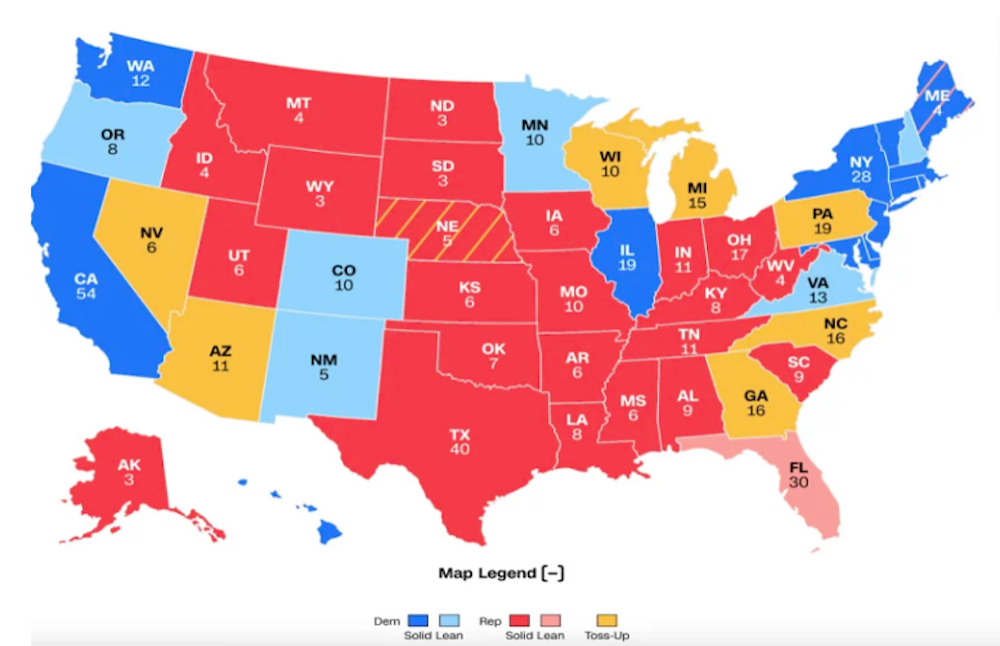
    One of the implications is that national election polls can be deceiving. In most states with established partisan majorities, the outcomes are predictable due to the winner-takes-all approach. This system awards all of a state’s electoral votes to the candidate who wins the popular vote in that state (with the exception of Maine and Nebraska, which use a proportional system). As a result, the most relevant polls are those conducted in “swing states”, where neither party holds a consistent advantage.

    According to recent analyses, around ten states are expected to be in play for 2024. Based on recent trends, there are seven swing states to watch: Nevada, Arizona, Wisconsin, Michigan, Pennsylvania, North Carolina, and Georgia. In the 2016 and 2020 elections, victory margins in these states were razor-thin, often less than 1%.

    With both Harris and Trump within striking distance of the 270 Electoral College votes needed to win the presidency, these swing states, with a combined 91 votes, will determine the outcome.

    Map published on 18 August 2024 by CNN. The number of electors for each state are show. The colors indicate the states that appear to be strongly (dark blue) or probably (light blue) leaning toward Kamala Harris, and strongly (red) or probably (pink) leaning toward Donald Trump. In yellow are the seven pivotal states where victory is likely to come down to a small number of votes. Click to zoom.

    The 2016 and 2020 polling failures: flukes or systemic issues?

    When the margins are so tight in these key states, accurately measuring voter intentions is an enormous challenge. In 2016, national polls correctly predicted Hillary Clinton’s popular-vote win – she had nearly 3 million more than Trump. However, they failed to foresee Trump’s Electorial College victories in critical states, which ultimately put him over the top.

    The American Association for Public Opinion Research (AAPOR) pointed out several reasons for these errors, including underrepresentation of Republican voters, over-representation of college-educated voters (who tend to lean Democratic), and an underestimation of undecided voters who eventually voted for Trump or third-party candidates.

    Despite efforts to fix these problems, other biases showed up in 2020. While graduate voters were not over-represented and undecideds were evenly split between Biden and Trump, the Covid-19 pandemic had made the pollsters’ task more complicated. AAPOR points out that the states with a higher proportion of Covid-19 cases were the ones with the highest polling errors. As a result, pollsters underestimated Trump’s vote share in key swing states and also overestimated Biden’s national lead, making the 2020 polls the least accurate in 40 years.

    Proportion of polling errors in presidential elections since 1936. Click to zoom.
    Pew Reseach Center

    Despite these errors, Biden still triumphed, winning 4 percent more of the popular vote and taking home 306 electoral votes to Trump’s 232. Biden’s victories in the swing states of Arizona, Georgia, Michigan, Nevada, Pennsylvania, and Wisconsin make all the difference.

    Polling errors and public distrust

    Errors of this magnitude naturally increase the public’s scepticism of polling, especially among Republicans, who are already wary of establishment institutions. Contrary to initial assumptions, Trump voters didn’t hesitate to express their preferences in 2016 and 2020. However, they were less likely to participate in polls due in part to their distrust of mainstream institutions. As a result, working-class white voters – and their opinions – were underrepresented in many polls.

    Pollsters also face technical challenges. Getting a respondent on the phone now requires calling hundreds of people, thanks to caller ID and call screening. Polls with smaller samples (fewer than 1,000 respondents) are less reliable. To deal with these hurdles, many pollsters are now using a mix of methods, including e-mail, online surveys, and robocalls.

    Though cheaper, online surveys often draw voluntary participants who are compensated, which leads to issues of accuracy and representation. This growing reliance on online polling has contributed to a doubling of polling companies from 2000 to 2022, according to Pew Research Center.

    Margin of error and identifying “likely” voters

    The margin of error is a critical component of polling that is often misunderstood by the public and media. It typically falls between 3 and 4 percentage points, but for smaller demographic groups (for example, young people, white men, or Hispanics), it can be even higher. Media headlines, however, frequently imply a candidate is leading, even when the difference is within the margin of error. University of California, Berkeley researchers suggest that to ensure 95% accuracy, the margin of error should be closer to 6%.

    However, the media sometimes amplify results, particularly in headlines, by implying that a candidate is ahead, even when the difference is within the margin of error. Moreover, researchers at the University of Berkeley have shown that to guarantee 95% accuracy, this margin should be increased to at least 6%. This means a candidate projected to receive 54% of the vote is likely, in reality, to secure anywhere between 48% and 60%, reflecting an actual margin of error of 12 percentage points.

    Another significant challenge for pollsters is identifying likely voters. Only around two-thirds of citizens eligible to vote actually go to the polls. In 2016, turnout on the Democratic side was overestimated, giving the false impression that Clinton was a lock for victory. This likely caused some of her supporters to stay home, while Trump’s base showed up in force when polls suggested he was behind. Accurately predicting who will turn out to vote is crucial to polling accuracy.

    Lessons from the 2022 midterms: A glimmer of hope for 2024?

    Polling showed notable improvements during the 2022 midterm elections, with the results being the most accurate since 1998. Importantly, there was no significant bias toward either party. However, midterm elections operate differently than presidential elections, and the dynamics for 2024 may be very different. That said, many polling institutions have adapted since 2016: as of 2022, 61% of polling firms had changed their methods, such as refining sampling techniques and improving question wording. More than a third have changed their methods after 2020.

    While these changes are positive, challenges remain, especially in predicting turnout and combating low response rates.

    What good are polls, then?

    At the end of the day, election polls offer snapshots – often imprecise – and can only provide general trends. Polling methods vary across firms, introducing biases that make it difficult to compare results.

    Survey aggregators offer averages that might be more reliable than individual polls, but they still come with a degree of uncertainty. This is true for FiveThirtyEight, the well-known website founded by statistics guru Nate Silver. After ABC took over in 2023, Silver left, taking his forecasting model with him to his new platform, Silver Bulletin, which continues to attract significant media attention.

    With the unpredictability of polls, political betting markets have become popular as polling alternatives. Platforms like Polymarket, which recently hired Silver, have multiplied rapidly. Some people, like Elon Musk, argue that markets provide better forecasts than traditional polls, though this claim is unproven. There are also concerns that these markets could be manipulated to sway public opinion.

    While opinion polls aren’t the best tools for predicting elections – as this could be one of the closest in recent history – their value lies in gauging public opinion on key issues. However, even in this role, polls can still be biased, often influenced by how questions are phrased.

    For example, in 2019 USA Today ran the headline “Poll: Half of Americans say Trump is victim of a ‘witch hunt’ as trust in Mueller erodes”. This was in reference to Special Counsel Robert Mueller’s investigation into Russian interference in the 2016 election. The question asked by the poll was:

    “President Trump has called the special counsel’s investigation a ‘witch hunt’ and said he has been investigated more than previous presidents for political reasons. Do you agree?”

    The problem with this wording is that it combined two different ideas: whether the investigation was a “witch hunt” and whether Trump had been unfairly targeted for political reasons. On top of that, the question lacked neutrality, presenting only his perspective.

    Naturally, Trump used the result to his advantage, even though other polls from sources such as The Washington Post, CBS News, and NPR-PBS told a different story.

    To use polling data wisely during this election, it’s crucial to recognize these limitations and pay attention to the fine print – details like the sample size, polling date, margin of error, and methodology. Additionally, consider the poll’s sponsors, who may only release results that align with their particular agenda.

    Ultimately, the best way to interpret polling data is with caution, focusing on general trends rather than any single poll. And always remember, election outcomes can be full of surprises.

    Jérôme Viala-Gaudefroy ne travaille pas, ne conseille pas, ne possède pas de parts, ne reçoit pas de fonds d’une organisation qui pourrait tirer profit de cet article, et n’a déclaré aucune autre affiliation que son organisme de recherche.

    ref. 2024 US presidential election: can we believe the polls? – https://theconversation.com/2024-us-presidential-election-can-we-believe-the-polls-240834

    MIL OSI – Global Reports

  • MIL-OSI New Zealand: A year later, Kiwis already see ACT’s real change

    Source: ACT Party

    A year after the 2023 election, ACT is celebrating the long list of actions already taken to empower New Zealanders.

    “In Opposition, we spent six years listening to New Zealanders,” says ACT Leader David Seymour. “This resulted in a comprehensive election platform with a commitment not just to change the Government, but to deliver real change.

    “Thanks to New Zealanders’ support, on October 14 we were put in a position to deliver, and less than 11 months after signing the coalition agreement, we’ve made serious progress.

    “The breadth and intensity of our action in Government speaks for itself. Even our critics complain at how we’re punching above our weight for a small team. We call it value for your vote.

    “Below is a list of actions ACT has taken that reflect ideas we campaigned on, and on which Kiwis elected us to deliver. Together, these actions break down barriers for Kiwis working to succeed on their own terms. We’re addressing challenges in the economy, law and order, democracy, education, health and more.”

    THE ECONOMY:

    • Cut wasteful Government spending to get inflation under control.
    • Delivered tax cuts to ease the cost of living.
    • Restored the Reserve Bank’s focused on tackling inflation.
    • Restored the option of 90-day trials for all businesses.
    • Established the Ministry for Regulation to cut red tape to make doing business simpler.
    • Commenced two regulatory reviews for early childhood education and agricultural products.
    • Repealed the Auckland Fuel Tax.
    • Repealed the Ute Tax.
    • Repealed “Fair Pay” Agreements
    • Repealed Labour’s resource management regime.
    • Agreed on core design features for a replacement of the Resource Management Act centred on property rights.
    • Sped up timeframes for overseas investment applications.
    • Increased the use of sanctions for beneficiaries who can work but refuse to take steps to find a job.
    • Eased restrictions to accessing credit under the Credit Contracts and Consumer Finance Act.
    • Scrapped EECA’s “decarbonising industry” (GIDI) fund.
    • Scrapped Auckland Light Rail, the Lake Onslow hydro scheme, and funding for Let’s Get Wellington Moving.
    • Started phasing back in interest deductibility.
    • Suspended the requirement for new Significant Natural Areas.
    • Unveiled a new contracting gateway test to provide certainty to workers and businesses.
    • Began delivering regulatory relief for businesses dealing with anti-money laundering rules.
    • Launched consultation to improve the Holidays Act.
    • Launched a nationwide roadshow to inform improvements to health and safety law.
    • Launched a framework for Regional Deals between central and local government to deliver infrastructure.
    • Stopped blanket speed limit reductions and enabled faster speed limits on our safest roads.
    • Introduced legislation to reverse the oil and gas ban and promote the use of Crown minerals.
    • Introduced tenancy legislation to enable Pet Bonds, restore 90-day ‘no cause’ terminations, and restore tenants’ and landlords’ notice periods to 21 and 42 days.
    • Introduced legislation to improve access to building products available overseas.
    • Introduced a member’s bill to liberalise Easter Trading.

    LAW AND ORDER:

    • Increased funding for Corrections to lift prison capacity.
    • Abolished Labour’s prisoner reduction target.
    • Defunded Section 27 “cultural reports”.
    • Commenced a review of the Firearms Registry.
    • Strengthened consequences for Kāinga Ora tenants who engage in repeated antisocial behaviour.
    • Strengthened Firearms Prohibition Orders.
    • Made gang membership an aggravating factor at sentencing.
    • Introduced legislation to reinstate Three Strikes.
    • Introduced a member’s bill to make rehabilitation or education a condition of parole.
    • Introduced legislation to toughen sentences for attacks on workers and give weight to the victim’s circumstances at sentencing.
    • Introduced legislation to amend Part 6 of the Arms Act affecting clubs and ranges.

    STRENGTHENING DEMOCRACY:

    • Directed the public service to deliver services based on need, not race, and end “progressive procurement” quotas.
    • Abolished the Māori Health Authority.
    • Advanced the Treaty Principles Bill.
    • Restored local referendums on Māori Wards.
    • Scrapped Labour’s law to give 16-year-olds votes in local elections.
    • Broadened the terms of reference of the Covid-19 Royal Commission with a second phase.
    • Defunded the Christchurch Call.
    • Halted work on hate speech laws.
    • Introduced legislation to remove Section 7AA of the Oranga Tamariki Act.
    • Seen Otago University adopt a free speech policy in response to ACT’s coalition agreement.

    EDUCATION:

    • Restored charter schools, now with the option of state school conversion, with the first schools to open next year.
    • Streamlined early childhood education regulations.
    • Delivered an action plan to improve school attendance and started publishing attendance data weekly.
    • Improved the school lunch programme to feed more kids for less money.
    • Switched fees-free university from first year to third.

    HEALTH:

    • Delivered Pharmac its largest-ever budget, which has now funded life-saving medicines.
    • Repealed the Therapeutic Products Act.
    • Restored the sale of medicine containing pseudoephedrine.

    MIL OSI New Zealand News

  • MIL-OSI New Zealand: Government Cuts – Yet another Te Whatu Ora decision to further increase losses in aged residential care

    Source: Aged Care Association

    Like the rest of the country, the aged residential care (ARC) sector found out from media on 26 September that there would be no more free Covid-19 rapid antigen tests from 1 October.
    ACA Chief Executive Hon. Tracey Martin says, “This is yet another example of hasty, poorly thought-out cost-cutting that unfairly shifts both the costs and the risks – without consultation or compensation – squarely onto aged care providers and the people they care for.
    Aged care residents are among the most vulnerable to Covid-19, and protecting their safety means we must continue testing as we have been – on the presentation of symptoms, and cohort testing based on exposure risks. Testing is vital to establish whether antiviral agents should be used to reduce the symptoms and improve the outcomes for the people we care for.”
    Martin continued, “Not only is this the compassionate thing to do to protect our elders, but it is in fact the recommended practice for effective infection prevention and control.
    Our calculations estimate that discontinuing free Covid-19 RAT tests will transfer an additional cost of at least $4 million a year to the front line of aged residential care, potentially reaching upwards of $6 million annually. While some larger providers may be able to bulk source tests at $1.82 per test, smaller providers will have to pay the retail rate of approximately $4 per test.”
    We continue to urge Te Whatu Ora to work with us before making these arbitrary decisions in an effort to meet the government’s required cost cutting. We have no confidence that those who made this decision were even aware of the consequences for our elders and those that care for them.
    We call on Te Whatu Ora to reconsider the decision, and to continue to fully cover costs of Covid-19 tests in aged residential care. Additionally, we call for greater involvement of affected communities in future decision-making processes.

    MIL OSI New Zealand News

  • MIL-OSI Russia: Heading for your own business: how the MBM Business School helps aspiring entrepreneurs

    MILES AXLE Translation. Region: Russian Federation –

    Source: Moscow Government – Government of Moscow –

    Find an idea for a business, register your business, learn the basics of marketing and develop a strategy for promoting your personal brand – these and other important knowledge for entrepreneurs can be obtained in“MBM Business School”Any Muscovite who wants to open their own business and run it successfully can become a participant in free classes.

    In October, the MBM Business School celebrated its seventh anniversary. During this time, more than 16 thousand people have completed their studies there. Every second graduate opens your own business. Read about how experts help aspiring entrepreneurs to identify their target audience, study the market and modern trends, and work through legal and accounting issues in the mos.ru article.

    Come up with an idea and create your own brand

    Many people dream of switching from a paid job to their own business in order to freely manage their time, gain financial independence, set goals and achieve results. But starting a business and achieving success is not so easy: it requires not only courage and organizational skills, but also certain knowledge and skills. During the five-day free course at the MBM Business School, students will be helped to find an entrepreneurial idea, taught how to prepare effective presentations, “package” a product or service, analyze the market and promote a brand on social networks.

    “Every day, different speakers address the participants of the classes with specific topics. I talk about the importance of social networks for expanding the audience, attracting customers and increasing brand awareness. At the same time, it is better to limit yourself to two or three social networks at first, because you may not have enough time and energy for more. The next important point is to choose a social network that is used more often by the target audience. For example, Odnoklassniki is preferred by older people than users of the social network VKontakte. In addition, during the class, we have time to create a Telegram channel, come up with a name for it and invite the first subscribers,” says Alexandra Lynova, an expert in visual communication in digital and social media at the MBM Business School.

    To register for the school, you don’t necessarily have to have a ready-made entrepreneurial idea: anyone who wants to start their own business can join. For the convenience of participants, classes are held in person or online.

    “Everyone has entrepreneurial skills, and it’s never too late to change your life. For example, a man over 60 years old became a participant in the last cohort of the MBM Business School. He had worked in journalism all his life, and now he is thinking about his own publishing business. We also had a mother of many children who was inspired by the idea of creating a network of fitness clubs for women with small children. Experts help aspiring entrepreneurs in all matters,” continues Alexandra Lynova.

    Sobyanin: Entrepreneurs can receive educational support from the cityThe country’s first youth entrepreneurship hub has been created in Moscow — Sobyanin

    Set goals and find mentors

    The training at the MBM Business School is structured in such a way that students not only receive theoretical knowledge, but also complete practical tasks and adopt the experience of experts. Thus, the founder and director of the online educational center Diana Ipkeeva came to the MBM Business School a year ago with an already working project, but without a specific understanding of where to move next. Experts helped her refine the concept, formulate the mission and values.

    “I always wanted to work for myself, and after moving to Moscow, my husband and I started tutoring Russian and mathematics. As a result, there were so many students that we decided to open our own educational center and attract other teachers. But I didn’t know where to get them, how to train them and employ them. At the MBM Business School, I became convinced that people needed my idea, received tremendous support from teachers and other entrepreneurs, mastered accounting and legal aspects, and learned the rules of marketing,” says Diana Ipkeeva.

    After training, the entrepreneur added English to the list of subjects at her educational center, tripled the number of teachers, and the number of students increased several times.

    “On this course I found two mentors who still support me. New plans appeared, an understanding of where to grow further, we already have goals planned for two years in advance. I recommend the MBM Business School to anyone who wants to start their own business. These five days are enough to understand whether a person is ready to become an entrepreneur or if it is better for them to work for hire. For those who are not ready, this will help to avoid mistakes and disappointments, and if after the classes a person is strengthened in their desire, they will be informed enough to boldly follow this path,” the mos.ru interlocutor believes.

    From maternity leave to entrepreneurship

    Participants of the MBM Business School take various industry streams: courses for the self-employed, social business, education, restaurant business, beauty industry, marketplace business and women’s entrepreneurship. The latter is in demand among young mothers.

    “My target audience is aspiring female entrepreneurs who dream of being successful in their favorite business. And most of them are mothers who have two, three or even four children. It is important for me to show how a woman can achieve success at a comfortable pace and attract grateful clients, relying on her personal qualities,” says Oksana Sharaya, entrepreneur, coach and women’s trainer at the MBM Business School.

    One of her students, working as a marketer at a bank, decided to start her own jewelry business during the coronavirus pandemic. After completing the course, the aspiring entrepreneur created a business project, registered as self-employed, and today is the owner of a successful jewelry brand.

    “The main thing in training is the search for meaning. A female entrepreneur must understand what she can bring to this world and who will benefit from it. In classical business, it is absolutely unimportant for an entrepreneur and his target audience to have similar values, but for women’s self-realization it is important. In addition, women, as a rule, have good organizational skills and can be unobtrusive leaders, and they implement these qualities in business, inspiring and supporting their employees,” Oksana Sharaya is sure.

    Women entrepreneurs are invited to take part in the MBM mini-intensive

    Overcome the crisis and expand your business

    Participation in the MBM Business School helps aspiring entrepreneurs to work out an idea, form a concept for their brand, and strengthen their business and personal qualities. Offline stream participants prepare projects that they present at the end of the program — a business plan or strategy for developing their company. For example, fashion designer and head of a shoe fashion house Daria Detkina, studying at the business school in 2018 helped her get out of the crisis and find a new direction in her favorite business.

    “Working in one company, I grew from a designer to a creative director. At the same time, private orders began to come in, and I became more and more immersed in the world of entrepreneurship. And after 2014, I finally decided to go into my own business. Fortunately, I quickly found clients, and then a business partner. However, three years later, I realized that I needed to change somehow. Then I learned about the MBM Business School,” says Daria Detkina.

    After participating in the program, the fashion designer decided to create not only custom-made shoes, but also limited collections, and provide services to entrepreneurs who want to produce shoes under their own brand. Darya Detkina has a workshop, a production facility with 3D equipment, and a photo studio, and she recently rented another space, where she is currently renovating.

    “At business school, they told us how to analyze the target audience, create unique offers, explained accounting and legal subtleties. I save all these lectures and often review them. But the most valuable thing for me in my studies was networking. When you communicate with similarly charged, motivated people, it is very inspiring,” says the mos.ru interlocutor.

    The next stream of the MBM Business School will begin offline classes on October 14. You can register for participation by link.

    State Budgetary Institution “Small Business of Moscow” also holds free forums, seminars, trainings, conferences for entrepreneurs, which help to improve professional competencies and find like-minded people. You can get advice on opening and running your own business and learn more about measures to support entrepreneurs on the website “Small Business of Moscow”, in person at business service centers and by phone: 7 495 225-14-14.

    Support for entrepreneurs is provided within the framework of the national project “Small and medium entrepreneurship and support for individual entrepreneurial initiatives”. More information about this and other national projects implemented in Moscow can be found on a special page.

    Starting with coffee: entrepreneurs are invited to join the new MBM training projectInvent, produce and sell: what entrepreneurs are taught in the courses of the State Budgetary Institution “Small Business of Moscow”The number of small and medium entrepreneurs in the education sector has grown by 27 percent in three years

    Please note: This information is raw content directly from the source of the information. It is exactly what the source states and does not reflect the position of MIL-OSI or its clients.

    Please note; This information is raw content directly from the information source. It is accurate to what the source is stating and does not reflect the position of MIL-OSI or its clients.

    https://vvv.mos.ru/nevs/item/144990073/

    MIL OSI Russia News

  • MIL-OSI United Kingdom: VDEC Pre-clinical team helps to develop organ-on-a-chip to protect human health

    Source: United Kingdom – Executive Government & Departments

    Scientists at VDEC use ‘organ-on-a-chip’ models to study infections and immune responses, aiming to improve vaccine testing and reduce reliance on animal research.

    Executive summary

    Scientists are constantly trying to improve the use and efficiency of models in research. As such, they are exploring a move away from traditional tissue or whole-body models. This move is proving to be a successful route to protecting human health against a variety of pathogens.

    Target

    The Pre-clinical team at UKHSA’s Vaccine Development and Evaluation Centre (VDEC) has developed an expanding capability in the use of microphysiological systems (MPS), an example of this are the ‘organ-on-a-chip’ models.

    Essentially, we can grow a range of different cell types in 3D structures that represent tissues and mimic human organs in miniature chambers supplied with very small volumes of growth medium (a substitute for human blood). Although we started out simply by infecting these systems with various strains of pathogens, we are now developing the ability to introduce parts of the human immune system as well so that we can model and understand how our bodies fight infectious disease and how we can enhance or supplement that protection.

    Aims

    Understanding the correlates of protection for new and emerging coronaviruses is at the forefront of science strategy around the world. The pandemic potential of coronaviruses such as Severe Acute Respiratory Syndrome Coronavirus 2 (SARS-CoV-2) and Middle Eastern Respiratory Syndrome (MERS-CoV) has been proven in recent years. Understanding how they evolve, and impact humans is of utmost importance. Once we can understand how this works, we are then able to (or we then have another method to) test the efficacy of vaccines against evolving variants.

    One model that highlights the importance of developing such systems is the adaptation of human alveolus MPS. The SARS-CoV-2 infection model described here (1) replicates the breathing-like stretch observed in lung epithelial cells and other biochemical characteristics of SARS-CoV-2 infection, allowing this to be used as a successful model of infection in live human tissue.

    Options

    An additional future benefit of this cutting-edge research is that it should help to reduce our reliance on animal research. Although that is a long-term view, it may also be possible that by increasing the complexity of the MPS models and analytical tools we use to interrogate them, we may one day be able to replace some aspects of animal research in medical research.

    Outcome

    Working alongside the teams that are developing and testing the MPS technology are teams using established challenge models, allowing direct comparison of human tissue replicating a whole organ system. The team at VDEC currently have 2 human lung-on-chip models. The first, a human bronchial airway and the second, human alveolus. Both models have been infected with SARS-CoV-2 in order to investigate the effect of this virus against various lung tissue types. A ‘non-breathing’ lung-on-chip alveolus model has also successfully been infected with SARS-CoV-2 and SARS-CoV, allowing characterisation of the differences between severe coronavirus infections.

    Future work

    Leading on from the success of the SARS-CoV-2 MPS, further work to develop a MPS model that can rival the current ‘gold standard’ MERS model is currently being carried out by the team at VDEC. This could provide clear evidence that MPS models are equally as effective as current models, refining the process of challenge studies across the board. We are working to extend the range of tissue types available for testing, for example working with brain and gut (2), as well as lung tissue to investigate movement of virus from organ to organ or to study difficult-to-study syndromes like long COVID or premature ageing.

    The team is also pivoting transcriptomics, whole genome sequencing as well as sophisticated histopathological techniques to analyse these tiny samples. This means we will be able to detect small changes in the biochemistry, microbiology, and immunology of infected human cells very early on in the infection process to help us test new ways to protect humans. We have begun countermeasure testing antiviral drugs but intend to include vaccines testing as well using MPS technology, with a view to provide an alternate approach to certain aspects of human clinical trials. MPS-based technologies could allow detection of uniquely human issues with vaccine or therapeutic candidates ahead of human clinical trials, which could add an early ‘go’ or ‘no-go’ step as well as saving money downstream.

    The use of MPS technology also allows our scientists to study infections from a new standpoint, as various environmental or immunological elements can be added or removed to investigate their impact. An example of this is that lung tissue can be infected with SARS-CoV-2 in the presence of individual immune cell populations to help us reveal and understand the significance of their roles in disease and recovery.

    At VDEC we are at the forefront of this exciting technology, pushing its potential to the limits of human disease research and therapeutics for the benefit of public health.

    References

    1. Šuligoj, Tanja and Coombes, Naomi S and Booth, Catherine and Savva, George M and Bewley, Kevin R and Funnell, Simon GP and Juge, Nathalie. ‘Modelling SARS-CoV-2 infection in a human alveolus microphysiological system’. Access Microbiology (2024). 6:9.

    2. Jones EJ, Skinner BM, Parker A, Baldwin LR, Greenman J, Carding SR and Funnell SGP. ‘An in vitro multi-organ microphysiological system (MPS) to investigate the gut-to-brain translocation of neurotoxins’. Biomicrofluidics (2024). Sep 13;18(5):054105. doi: 10.1063/5.0200459. PMID: 39280192; PMCID: PMC11401645.

    Updates to this page

    Published 11 October 2024

    MIL OSI United Kingdom

  • MIL-OSI USA: Kamalanomics Continues To Crush Americans

    Source: US House of Representatives Republicans

    The following text contains opinion that is not, or not necessarily, that of MIL-OSI –

    Kamalanomics Continues To Crush Americans

    Washington, October 10, 2024

    American families are having to choose between filling up their gas tanks, heating their homes, or putting food on the table because of failed Kamalanomics. In September, the Consumer Price Index (CPI) showed Kamalaflation remains a tax on all Americans, and it isn’t going away anytime soon. Since Joe Biden and Kamala Harris took office, inflation has risen by 20.5%. The failed economic policies of Kamala Harris and Joe Biden continue to put Americans last. 
     
    MAKE NO MISTAKE: We cannot afford another four years of failed Far Left Democrat policies. We must return to the successful economic agenda Republicans implemented under President Trump which created the strongest economy in history and put Americans first. 
     
    KAMALANOMICS BY THE NUMBERS:

    • Inflation is a tax on ALL Americans. 
    • When Joe Biden and Kamala Harris took office, inflation was at just 1.4%.
    • Since Joe Biden and Kamala Harris took office, inflation has risen by 20.5%.
    • Americans are paying more for just about everything because of inflation. Since Biden and Harris took office: 
      • Food at elementary and secondary schools 69.7%. 
      • Eggs are UP 69.2%. 
      • Motor vehicle insurance is UP 56.5%. 
      • Admission to sporting events is UP 46.4%.
      • Lodging away from home including hotels and motels is UP 42.4%.  
      • Gasoline (all types) is UP 38.4%.  
      • Baby food and formula are UP 31.0%. 
      • Veterinarian services are UP 29.9%. 
      • Cookies are UP 29.1%. 
      • Uncooked ground beef is UP 28.2%. 
      • Bakery products are UP 27.2%. 
      • Chicken is UP 25.0%. 
      • Airline fares are UP 24.5%. 
      • Bread is UP 23.9%. 
      • Pork chops are UP 23.0%. 
      • Lunchmeats are UP 22.3%.  
      • Milk is UP 16.2%.  
    • Americans are spending $13,300 more annually to buy the basics because of Kamalaflation, compared to three years ago.
    • Real wages remain lower than when Biden-Harris first took office.
    • Inflation-adjusted average weekly earnings were $397.90 when Biden-Harris took office and are now $384.29 – the Bureau of Labor Statistics adjusts to 1982-1984 dollars – meaning Americans have seen a 3.4% decrease under Biden-Harris.
    • Kamalaflation outpaced wages for a majority of Biden’s presidency – both year-over-year real average hourly earnings and real average weekly earnings were negative for 25 months.
    • Interest rates have remained at a 23-year high.   
    • Nearly half of Americans consider themselves “broke.” 
    • Two-thirds of Americans report living paycheck-to-paycheck.
    • Americans need a six-figure salary to afford a typical home in nearly half of U.S. states
    • In September, the unemployment rate remained high, at 4.1%.
    • Over the past 12 months, 825,000 native-born Americans lost employment, while 1.2 million foreign-born workers found jobs.
    • There are over 6.8 million Americans who are unemployed which is up from a year ago at 6.3 million.
      • The labor force participation rate remains well below pre-pandemic levels. 
    • In September, the labor force participation rates decreased for the following demographics:
      • Women, 16 years and over.
      • White women, 20 years and over.
      • Black or African American women, 20 years and over.
      • Asian Americans. 
      • Hispanic or Latino Americans.
      • Hispanic or Latino men, 20 years and over.
      • Hispanic or Latino women, 20 years and over.
    • Since July of 2023 versus July of 2024, there has been a net zero job growth. 
    • In August, it was announced that 818,000 jobs that the Harris-Biden Administration claimed to have created aren’t there.
      • The BLS revised down its total tally of jobs created from March 2023 through March 2024 by 818,000.
      • This included 115,000 manufacturing jobs. 
      • The revision is the largest in 15 years. 
      • In addition to these revisions, the August jobs report revealed the employment in June and July combined is 86,000 lower than previously reported.
    • The Biden-Harris Administration deserves no credit for economic growth. 
      • Republican-led states are leading the way creating jobs and leading economic growth.
      • The latest state jobs report shows that 16 of the top 20 states for  jobs recovered since the coronavirus pandemic began are led by Republican governors, and 16 of the states have Republican-controlled legislatures.  

    MIL OSI USA News

  • MIL-OSI USA: First wave of COVID-19 increased risk of heart attack, stroke up to three years later

    Source: US Department of Health and Human Services – 2

    News Release

    Thursday, October 10, 2024

    NIH-funded study focused on original virus strain, unvaccinated participants during pandemic.

    Infection from COVID-19 appeared to significantly increase the risk of heart attack, stroke, and death for up to three years among unvaccinated people early in the pandemic when the original SARS-CoV-2 virus strain emerged, according to a National Institutes of Health (NIH)-supported study. The findings, among people with or without heart disease, confirm previous research showing an associated higher risk of cardiovascular events after a COVID-19 infection but are the first to suggest the heightened risk might last up to three years following initial infection, at least among people infected in the first wave of the pandemic.

    Compared to people with no COVID-19 history, the study found those who developed COVID-19 early in the pandemic had double the risk for cardiovascular events, while those with severe cases had nearly four times the risk. The findings were published in the journal Arteriosclerosis, Thrombosis, and Vascular Biology.

    “This study sheds new light on the potential long-term cardiovascular effects of COVID-19, a still-looming public health threat,” said David Goff, M.D., Ph.D., director for the Division of Cardiovascular Sciences at NIH’s National Heart, Lung, and Blood Institute (NHLBI), which largely funded the study. “These results, especially if confirmed by longer term follow-up, support efforts to identify effective heart disease prevention strategies for patients who’ve had severe COVID-19. But more studies are needed to demonstrate effectiveness.”

    The study is also the first to show that increased risk of heart attack and stroke in patients with severe COVID-19 may have a genetic component involving blood type. Researchers found that hospitalization for COVID-19 more than doubled the risk of heart attack or stroke among patients with A, B, or AB blood types, but not in patients with O types, which seemed to be associated with a lower risk of severe COVID-19.

    Scientists studied data from 10,000 people enrolled in the UK Biobank, a large biomedical database of European patients. Patients were ages 40 to 69 at the time of enrollment and included 8,000 who had tested positive for the COVID-19 virus and 2,000 who were hospitalized with severe COVID-19 between Feb. 1, 2020, and Dec. 31, 2020. None of the patients had been vaccinated, as vaccines were not available during that period.

    The researchers compared the two COVID-19 subgroups to a group of nearly 218,000 people who did not have the condition. They then tracked the patients from the time of their COVID-19 diagnosis until the development of either heart attack, stroke, or death, up to nearly three years.

    Accounting for patients who had pre-existing heart disease – about 11% in both groups – the researchers found that the risk of heart attack, stroke, and death was twice as high among all the COVID-19 patients and four times as high among those who had severe cases that required hospitalization, compared to those who had never been infected. The data further show that, within each of the three follow-up years, the risk of having a major cardiovascular event was still significantly elevated compared to the controls – in some cases, the researchers said, almost as high or even higher than having a known cardiovascular risk factor, such as Type 2 diabetes.

    “Given that more than 1 billion people worldwide have already experienced COVID-19 infection, the implications for global heart health are significant,” said study leader Hooman Allayee, Ph.D., a professor of population and public health sciences at the University of Southern California Keck School of Medicine in Los Angeles. “The question now is whether or not severe COVID-19 should be considered another risk factor for cardiovascular disease, much like type 2 diabetes or peripheral artery disease, where treatment focused on cardiovascular disease prevention may be valuable.”

    Allayee notes that the findings apply mainly to people who were infected early in the pandemic. It is unclear whether the risk of cardiovascular disease is persistent or may be persistent for people who have had severe COVID-19 more recently (from 2021 to the present).

    Scientists state that the study was limited due to inclusion of patients from only the UK Biobank, a group that is mostly white. Whether the results will differ in a population with more racial and ethnic diversity is unclear and awaits further study. As the study participants were unvaccinated, future studies will be needed to determine whether vaccines influence cardiovascular risk. Studies on the connection between blood type and COVID-19 infection are also needed as the mechanism for the gene-virus interaction remains unclear.

    This study was supported by NIH grants R01HL148110, R01HL168493, U54HL170326, R01DK132735, P01HL147823, R01HL147883, and P30ES007048.

    About the National Heart, Lung, and Blood Institute (NHLBI): NHLBI is the global leader in conducting and supporting research in heart, lung, and blood diseases and sleep disorders that advances scientific knowledge, improves public health, and saves lives. For more information, visit http://www.nhlbi.nih.gov.

    About the National Institutes of Health (NIH): NIH, the nation’s medical research agency, includes 27 Institutes and Centers and is a component of the U.S. Department of Health and Human Services. NIH is the primary federal agency conducting and supporting basic, clinical, and translational medical research, and is investigating the causes, treatments, and cures for both common and rare diseases. For more information about NIH and its programs, visit http://www.nih.gov.

    NIH…Turning Discovery Into Health®

    ###

    MIL OSI USA News

  • MIL-OSI Canada: Manitobans Encouraged to get Updated Flu and Covid-19 Vaccines

    Source: Government of Canada regional news

    Manitobans Encouraged to get Updated Flu and Covid-19 Vaccines


    Manitoba Health, Seniors and Long-Term Care advises that respiratory virus season is here and all Manitobans six months of age and older are encouraged to get their free influenza (flu) and COVID-19 vaccines, which are currently available at many medical clinics, access centres, pharmacies serving high-risk populations, vaccine clinics, nursing stations and through public health. COVID-19 vaccines will be widely available starting Oct. 15.

    Flu and COVID-19 vaccines are especially recommended for those at higher risk of infection or severe disease, along with their caregivers and close contacts.

    Those at increased risk of severe disease include:

    • people 65 years of age and older;
    • residents of personal care homes or long-term care facilities;
    • pregnant people;
    • children from six months of age until they turn five years old;
    • Indigenous people; and
    • individuals with chronic health conditions.

    Influenza and COVID-19 can cause infections of the nose, throat, airways and lungs. These infections are spread through the air when someone who is sick talks, coughs or sneezes. They can also be spread through direct contact with secretions such as saliva or if a person touches an object that can carry and spread disease, including doorknobs or toys, and then touches their mouth, nose or eyes before washing their hands.

    Public health recommends all Manitobans take personal health measures including:

    • staying home when sick until they feel better and no longer have a fever;
    • washing hands or using hand sanitizer regularly;
    • covering coughs and sneezes;
    • wearing a mask in indoor spaces can be considered as an extra layer of protection; and
    • cleaning and disinfecting surfaces and objects that are frequently touched by many people.

    Information and resources regarding the vaccine-preventable respiratory diseases, including resources for prevention, treatment and care of affected individuals in Manitoba, is provided at http://www.manitoba.ca/vaccine. The website also features a vaccine provider map to help people find a location close to them. For Public Health-run clinics, book appointments online at https://patient.petal-health.com/ or call 1-844-MAN-VACC (1- 844-626-8222) Monday to Friday from 9 a.m. to 5 p.m.

    – 30 –

    MIL OSI Canada News

  • MIL-OSI: Blue Foundry Bancorp Schedules Third Quarter 2024 Earnings Conference Call

    Source: GlobeNewswire (MIL-OSI)

    RUTHERFORD, N.J., Oct. 09, 2024 (GLOBE NEWSWIRE) — Blue Foundry Bancorp (NASDAQ: BLFY) (the “Company”), the holding company for Blue Foundry Bank, announced that on the morning of Wednesday, October 23, 2024 it will release financial results for the quarter ended September 30, 2024. A copy of the earnings release will be available on the Company’s website, https://ir.bluefoundrybank.com/, in the “News” section and on the SEC’s website, https://www.sec.gov/.

    Representatives of the Company will hold a conference call for investors and analysts on Wednesday, October 23, 2024 at 11:00AM (ET) to discuss the Third Quarter 2024 Earnings. Blue Foundry Bancorp will address live questions from analysts. The conference call will be recorded and will be available on the Company’s website for one month.

    We encourage participants to pre-register to listen to the webcast call by using the link below. Upon registration, participants will immediately receive an online confirmation, an email, and a calendar invitation for the event.

    Webcast pre-registration link:  
    https://events.q4inc.com/attendee/821566286

    Participants who are unable to join via webcast may dial-in on the day of the call:

    Participants Dial-In Information:
    United States (Toll Free): 1-833-470-1428
    International: 1-404-975-4839
    Access code: 725750

    About Blue Foundry Bancorp and Blue Foundry Bank
    Blue Foundry Bancorp is the holding company for Blue Foundry Bank, a place where things are made, purpose is formed, and ideas are crafted. Headquartered in Rutherford NJ, with presence in Bergen, Essex, Hudson, Middlesex, Morris, Passaic, Somerset and Union counties, Blue Foundry Bank is a full-service, innovative bank serving the doers, movers, and shakers in our communities. We offer individuals and businesses alike the tailored products and services they need to build their futures. With a rich history dating back more than 145 years, Blue Foundry Bank has a longstanding commitment to its customers and communities.

    Forward-Looking Statements
    This press release may contain certain forward-looking statements about the Company. Forward-looking statements include statements regarding anticipated future events and can be identified by the fact that they do not relate strictly to historical or current facts. They may or may not include words such as “believe,” “expect,” “anticipate,” “estimate,” and “intend” or future or conditional verbs such as “will,” “would,” “should,” “could,” or “may.” Forward-looking statements, by their nature, are subject to risks and uncertainties. Certain factors that could cause actual results to differ materially from expected results include but are not limited to conditions related to the global coronavirus pandemic, changes in the interest rate environment, changes in the rate of inflation, general economic conditions or conditions within the securities markets, and legislative and regulatory changes that could adversely affect the business in which the Company and its subsidiaries are engaged. 

    Contact:
    James D. Nesci
    President and Chief Executive Officer
    bluefoundrybank.com
    jnesci@bluefoundrybank.com
    201-972-8900

    The MIL Network

  • MIL-Evening Report: Rebates for buying e-bikes and e-scooters are good but unlikely to greatly boost sustainable transport on their own

    Source: The Conversation (Au and NZ) – By Abraham Leung, Senior Research Fellow, Cities Research Institute, Griffith University

    BikePortland/Flickr, CC BY

    Queensland has joined Tasmania as the second Australian state or territory to offer a A$500 rebate for buyers of new e‑bikes. The pre-election announcement includes a smaller $200 rebate for e‑scooters.

    The Queensland e‑mobility rebate scheme is first come, first served, until its $2 million budget ($1 million was added last week) is used up. The Tasmanian scheme has closed for this reason.

    These schemes follow a trend of government incentives to buy e‑bikes in North America and Europe. The Australian schemes differ from most schemes overseas by including e‑scooters too.

    It’s a welcome move to promote sustainable transport. These personal transport devices have smaller environmental footprints to produce and operate than electric cars. Owning e‑bikes or e‑scooters can enable people to drive less – reducing congestion and emissions – and avoid high fuel costs.

    However, my research and other studies suggest ownership doesn’t guarantee much greater use. Additional measures will be needed to boost use of these sustainable transport modes.

    Why own e-bikes or e-scooters when you can share?

    The rebate is likely to boost retailers’ sales. More than 860 rebate applications were received within three days of the scheme starting on September 23.

    And existing owners now have an incentive to upgrade or replace models. They might then sell their pre-loved e‑bikes or e‑scooters on the second-hand market. This means others could get them more cheaply.

    Queensland was the first Australian state to legalise the use of e‑scooters in 2018, when Brisbane introduced shared e‑scooter operations. Regional cities such as Townsville and Cairns launched similar schemes. Dockless e‑bikes later replaced Brisbane’s initial CityCycle bike-sharing scheme.

    I recently conducted research to understand why South-East Queensland residents want to own e‑scooters. The study methods were comparable to an earlier e‑bike user survey.

    Both sets of owners cite replacing car use as their top reason for ownership. However, their motivations differ.

    E‑scooter owners are mainly driven by the lower price and the fun factor of riding. E‑bike owners focus more on fitness and the health benefits of getting some exercise when riding. Australian regulations require e‑bikes to be pedal-assisted.

    But does this mean people will ride more?

    Since 2022, the Queensland government has offered a rebate of up to $6,000 for buying full-sized electric vehicles (that scheme closed last month). It now appears to have responded to calls to do the same for e‑bikes and e‑scooters.

    Buyers certainly won’t mind freebies and rebates, but rebate-induced ownership might not increase overall use by much.

    An Australia-wide survey in 2023 found 57% of respondents had access to at least one working bicycle at home and this proportion has been increasing. However, only 15% reported riding in the previous week. Only 36.7% had ridden in the past year.

    Overall cycling participation has declined over the past decade, except during the COVID pandemic when work and travel patterns were more local. For all periods, men are significantly more likely to cycle than women.

    The same 2023 survey revealed only about 2.1% own e‑bikes. The rebate will likely increase this rate in Queensland.

    Some preliminary evidence suggests e‑bike users ride more often and further than those riding non-electric bikes. It also helps older people get into cycling. And it has the potential to replace car use even in rural areas.

    Despite e‑bikes offering advantages over traditional bikes, riders of both face obstacles to greater use, such as road safety and poor cycling infrastructure.

    What kinds of incentives do other countries offer?

    Australian policymakers should consider offering incentives to ensure the new purchases are well used, not sitting idle most of the time.

    The United Kingdom has a long-standing cycle-to-work scheme that offers commuters a tax exemption for buying bicycles or e‑bikes.

    In the Netherlands, incentive schemes have used smartphone technology to track their mileage. For example, in the B-Riders scheme, riders earn €0.08–0.15 (A$0.13–0.21) per kilometre. There was a 68% increase in e‑bike use by former car commuters after one month and 73% increase after six months of participation.

    Schemes in North America tend to be aimed at lower-income households. They are more likely to be involuntarily carless, so e‑bikes can improve their access to jobs, goods and services.

    There are alternatives to rebates. North Vancouver, for example, is trialling e‑cargo bike lending to replace car shopping trips, as these bulky bikes are not practical for every household to own.

    In France, residents can claim a bike or e‑bike subsidy of up to €2,000 (A$3,210). Second-hand devices sold by approved repairers are covered too, which is likely to help reduce e‑waste. Australian schemes so far only cover new purchases.

    What more can be done?

    For e‑bike and e‑scooter owners, the main barrier to riding more is the lack of safe and well-connected infrastructure. Numerous studies have connected rates of riding to the quality and quantity of infrastructure. Extensive, high-quality and safe cycling networks can deliver lasting shifts towards sustainable transport.

    When the Spanish city of Seville built such networks, cycling rates surged 11-fold in a few years.

    In the Netherlands, this infrastructure is so well-funded and extensive that it’s no surprise cycling is popular there.

    Riders don’t just need bikeways. They also need end-of-trip facilities with secure parking (and maybe free charging too).

    In Australia, cycling gets only around 2% of transport funding.

    In Brisbane, despite not being anywhere close to the European level of cycling infrastructure, new “green bridges” and bikeways will be expanded to more areas of the city (and other Queensland venues). It’s part of preparations to host “climate-positive” Olympic and Paralympic Games in 2032. This year’s games host, Paris, successfully upgraded infrastructure and boosted cycling rates.

    Another benefit of more riders on the streets is that it creates “safety in numbers”. Greater numbers would also help attract more funding for infrastructure that makes cycling and scooting safer and more attractive.

    Both e‑bikes and e‑scooters are already worthwhile investments. Using them often would free yourself from car dependence – and that’s good for the planet and your wallet.

    Abraham Leung received funding from the Transport Academic Partnership (Queensland Department of Transport and Main Roads (TMR) and the Motor Accident Insurance Commission) and the Transport Innovation and Research Hub (Brisbane City Council, BCC). The data from the Privately Owned Electric Mobility User Survey (POEMUS) used in this article is funded and commissioned by BCC.

    His current Advance Queensland Industry Research Fellowship is funded and/or partnered with TMR, BCC, Townsville City Council, and micromobility operators Neuron and Beam. He is also an active member of PedBikeTrans.

    ref. Rebates for buying e-bikes and e-scooters are good but unlikely to greatly boost sustainable transport on their own – https://theconversation.com/rebates-for-buying-e-bikes-and-e-scooters-are-good-but-unlikely-to-greatly-boost-sustainable-transport-on-their-own-239939

    MIL OSI AnalysisEveningReport.nz

  • MIL-OSI New Zealand: Careers and Surveys – Have Kiwis lost their ambition? Only 11% consider career progression a priority

    Source: Robert Walters

    Only 11% of professionals consider career progression a top priority in their professional lives  

    Higher level job ads remaining vacant for over a year, as candidates want fewer responsibilities  

    47% say work-life balance is top priority when considering a new job  

    32% of new managers feel unsupported, 26% experience imposter syndrome and 20% feel overwhelmed and overworked  

    Recent research by recruitment specialists, Robert Walters, reveals that only 11% of professionals consider career progression as a top priority in their professional lives.

    When respondents were asked about the most appealing aspect of career progression, 47% emphasised the importance of work-life balance. Additionally, 29% expressed a preference for increased learning opportunities, while 21% highlighted promotions and job title changes. Just 4% cited increased responsibilities as a key factor.  

    The study further highlights the significance of work-life balance, with 43% of job seekers considering it the primary deciding factor when evaluating new job opportunities. In comparison, 22% prioritise a competitive salary, 19% focus on company culture, and just 17% prioritise career growth opportunities.  

    These findings coincide with the observation made by Robert Walters that candidates are increasingly seeking lower-level roles over management positions. Moreover, higher level positions are remaining vacant for extended periods, up to over a year, with potential candidates expressing concerns over the excessive responsibilities associated with these positions.  

    Work-life balance takes centre stage

    Jane Lowney, Senior Director at Robert Walters also mentioned that the current workforce, especially among Gen Z, is more driven by work-life balance. The increased demand for managers to handle remote work and other factors such as office culture has significantly increased the pressure and responsibilities associated with management roles, stressing that there has been a noticeable shift in the mindset of professionals when it comes to career advancement.  

    Jane said, “less individuals are interested in ‘climbing the corporate ladder’ as they question the value of management positions and the additional responsibilities they entail. Salary no longer comes first, work-life balance is now the priority, so people are hesitant about taking on more responsibilities. This trend could be concerning when we think about the potential consequences on retention of teams and the need to attract leaders over time.”  

    Manager roles have evolved

    Further research from the recruitment experts also emphasises the necessity for increased support for newly promoted managers. Among 2,000 managers surveyed, 32% admitted to feeling lacking in support, while 26% confessed to experiencing imposter syndrome. Additionally, 20% expressed feelings of being overwhelmed and overworked.  in their managerial roles. Only 22% reported feeling empowered and adequately supported in their positions.  

    Jane further explains the evolving role of managers in today’s world. “Previously, managers focused primarily on motivating employees and ensuring productivity. However, in the modern workforce, managers are expected to take on several additional responsibilities such as cultivating team culture and inclusivity, driving digital and AI adoption as well as identifying mental health struggles among team members, and effectively communicate challenging news such as delayed promotions or stagnant pay raises.”  

    Jane emphasised that it is essential to provide comprehensive training to equip managers with the skills necessary to navigate the complexities of the modern workforce. Current training protocols must be revised to align with the ever-changing demands of the workforce, acknowledging the need for ongoing support and development for newly appointed managers.  

    Case Study

    Gen Z top biller Maddy Shelest, Principal Consultant at Robert Walters was recently given a promotion from managing consultant to manager. However, she quickly realised that she was happier with fewer managerial responsibilities. After only 6 months in the new role, she made the decision to sidestep into an individual contributor role.    

    Maddy said, “Ensuring a healthy work-life balance is a top priority for me, and I already observed a change in this aspect in the few weeks I was a manager. I found myself carrying work-related concerns home, which wasn’t as much of a problem when I was in a lower position. I soon realised that this added stress wasn’t worth it, so I quickly made the decision to step down. I believe that the conventional career path no longer resonates with the modern workforce. People have learnt how to say no and feel more comfortable deviating from traditional routes of career progression.”  

    Maddy also highlighted the new complexities of the modern workforce, saying “todays managers have added responsibilities regarding mental health and the need to manage remote work. Being a manager isn’t the same as it might have been 10 years ago.”  

    She also emphasised that as a young manager, being only 25 when she was promoted, she faced challenges in establishing boundaries between her friendships and her role as a manager. She said, “Being friends with my team members before I became their manager made me feel somewhat uncomfortable. There’s such an expectation to be the ‘cool’ manager, which made it difficult for me to transition from being their friend to managing them. I also think my age posed difficulties in providing guidance in certain situations. For instance, at 25, I was going through similar experiences as my team members and dealing with my own challenges, so it was difficult for me as a 25-year-old to offer advice to other individuals of the same age.”  

    Maddy said the decision was also influenced by the nature of the billing industry, which already places a high workload and pressure on individuals. She said, “Adding the additional pressures of management on top of billing responsibilities and expectations was not something I wanted to take on. When I was a manager, I noticed my billings went down. It was high stress, low reward. I prefer to focus on maximising my billing potential and did not want to divert my energy and time towards the complexities of managing people.”  

    To keep up with the evolving workforce, organisations need to adapt their training and support programs for new managers. It is evident that the role of managers has undergone significant changes, and as such, their training should be updated accordingly. Additionally, employee priorities have shifted, with a greater emphasis on time outside of work and work-life balance, especially in the post-Covid era. With the introduction of Gen Z into the workforce, it is imperative for organisations to take steps to make manager positions more appealing to this generation.

    About Robert Walters:    

    Robert Walters is one of the world’s leading specialist professional recruitment consultancies with a global presence spanning 31 countries. The New Zealand business recruits across the fields of accounting & finance, property, general management, human resources, information technology, legal, risk management, compliance & audit, sales, marketing & communications, secretarial & business support and supply chain & procurement.   

    MIL OSI New Zealand News

  • MIL-OSI USA: 10.08.2024 ICYMI: Sen. Cruz Demands Transparency on Tim Walz’s Ties to the Wuhan Institute of Virology

    US Senate News:

    Source: United States Senator for Texas Ted Cruz

    WASHINGTON, D.C. – In case you missed it, last week, U.S. Sen. Ted Cruz (R-Texas) sent a letter to the Hormel Institute regarding its partnership with the Wuhan Institute of Virology (WIV) and financial resources secured for the Hormel Institute by Governor Tim Walz. The WIV has been credibly implicated as the point of origin of COVID-19 and conducts its activities under the auspices of the Chinese Communist Party.
    In the letter, Sen. Cruz wrote, “For over a decade, Governor Tim Walz has acted as one of the Institute’s most ardent supporters, securing millions of taxpayer dollars to fund its operations, including over $2 million in federal funding for technology acquisitions and a $5 million earmark to expand your Institute’s reach. The Governor’s support for the Hormel Institute has remained steadfast, continuing even after the FBI concluded on February 28, 2023 that COVID-19 pandemic likely originated from the WIV.
    “Governor Walz’s personal connections to China—his honeymoon there, over 30 trips, and public comments downplaying the strategic threat posed by the CCP13—only raise further questions about his motivations for promoting your institution. 
    “Your institute’s ongoing partnership with the Wuhan Institute of Virology, and by extension the People’s Liberation Army, reflects a troubling disregard for national security concerns…The American people deserve assurance that their resources and institutions are not inadvertently supporting the goals of our chief geopolitical adversary.”
    Read the full letter here or below:
    Dear Director Clarke:
    I write to you today with growing concern regarding the Hormel Institute’s longstanding partnership with China’s Wuhan Institute of Virology (WIV). 
    The WIV, as you are certainly aware, has been credibly implicated as the likely point of origin of the COVID-19 pandemic. Even more troubling are its direct ties to China’s People’s Liberation Army (PLA) and its involvement in classified military research including laboratory animal experiments under the auspices of the Chinese Communist Party (CCP) at least as recently as 2017. Despite these alarming connections which raise obvious national security concerns, the institute you lead has not only maintained its collaboration with WIV but it has done so with the backing of Minnesota’s top elected official. 
    For over a decade, Governor Tim Walz has acted as one of the Institute’s most ardent supporters, securing millions of taxpayer dollars to fund its operations, including over $2 million in federal funding for technology acquisitions and a $5 million earmark to expand your Institute’s reach. The Governor’s support for the Hormel Institute has remained steadfast, continuing even after the FBI concluded on February 28, 2023 that COVID-19 pandemic likely originated from the WIV.
    In recent years, researchers at the Hormel Institute have collaborated with the Wuhan Institute of Virology on a variety of projects, including a 2020 COVID-19 study and, as more recently as of 2024, on structural biology research.
    The COVID-19 study, titled “A dynamic regulatory interface on SARS-CoV-2 RNA polymerase,” was authored by four WIV researchers, three Hormel Institute researchers, and a Yale School of Medicine professor. Similarly, in January 2024, Hormel Institute researchers published a study on genes with the WIV’s Lina He, Wei Zhou, and Yangbo Hu. In 2023, WIV’s Yangbo Hu also worked with the Hormel Institute’s Dmytro Kompaniiets, Dong Wang, and Bin Liu on research titled “Structure and molecular mechanism of bacterial transcription activation,” among other collaborations. 
    Furthermore, the resignation of your predecessor, Dr. Zigang Dong, who served as Executive Director for nearly 18 years and resigned following an FBI investigation into his “possible failure to disclose foreign backing when applying for grants,” should have prompted a thorough reassessment of your institute’s engagements with foreign entities. Yet, despite this disconcerting event, Governor Walz continues to promote and direct public resources to your institute. Even after the U.S. government ceased funding to organizations working with the WIV, Governor Walz toured your facility and publicly praised its work.
    Governor Walz’s personal connections to China—his honeymoon there, over 30 trips, and public comments downplaying the strategic threat posed by the CCP—only raise further questions about his motivations for promoting your institution. 
    Additionally, in 2020, the Hormel Institute’s disclosure in a 2020 EMBO Journal Study that it received “help from the Core Facility and Technical Support” of the WIV for “radioactive and fluorescent tests” adds to the concern. Further raising suspicions is that Bin Liu, a professor at the Hormel Institute who worked on that 2020 EMBO Journal study, attended Wuhan University. Federal records indicate that the researchers for this particular study included those affiliated with the WIV, in addition to the University of Chinese Academy of Sciences and China’s Zhengzhou University. 
    In light of these recently-disclosed facts, it is critical to understand the full extent of your institute’s involvement in a partnership that risks benefitting our nation’s chief geopolitical adversary. Accordingly, for the purposes of oversight, I request that you respond to the following questions and requests by October 31, 2024: 
    1. How much public and private funding has the Hormel Institute received specifically for projects involving collaboration with the Wuhan Institute of Virology (WIV)? Please provide an itemized accounting of all such funding. 
    2. When did the Hormel Institute first initiate collaboration with the WIV, and what were the specific reasons for choosing to partner with a facility known to have ties to China’s People’s Liberation Army? 
    3. What actions has the Hormel Institute taken to ensure that its collaborative work with the WIV does not benefit China’s military or pose a risk to U.S. national security? 
    a. If no such actions were taken, what was the rationale behind this decision? 
    4. Given the WIV’s ties to China’s military, why has the Hormel Institute not publicly disclosed the full extent of its collaborations with the WIV? 
    a. If this information has been withheld, please explain why. 
    5. Please provide all internal documentation or communications related to the Hormel Institute’s partnerships with Chinese research facilities, including but not limited to the WIV. 
    6. What was the Institute’s reasoning behind continuing its collaboration with the WIV, even after serious concerns about the origins of COVID-19 and the lab’s military affiliations became widely known? 
    7. How can the American public trust that the Hormel Institute’s partnerships with the WIV are not inadvertently advancing China’s geopolitical goals, particularly in biotechnology and biomedical research? 
    8. Given the U.S. government’s cessation of funding to other nonprofits with ties to the WIV, what justifications does the Hormel Institute offer for continuing its relationship with the WIV? 
    9. Why did the Hormel Institute continue collaborating with the WIV after your predecessor, Dr. Zigang Dong, resigned amid an FBI investigation into his failure to disclose foreign funding when applying for grants? 
    10. The Hormel Institute’s work with the WIV includes research on gene structures and SARS-CoV-2 RNA polymerase. What measures have been taken to ensure that no sensitive intellectual property or technology has been transferred to China’s military-backed labs during these studies? If no measures were taken, why not? 
    11. Please provide any documentation or communications between the Hormel Institute and the Office of the Minnesota Governor regarding the Institute’s partnerships with Chinese research facilities, particularly the WIV. 
    Your institute’s ongoing partnership with the Wuhan Institute of Virology, and by extension the People’s Liberation Army, reflects a troubling disregard for national security concerns. The devastating impact of COVID-19 has highlighted the seriousness of these issues, as the pandemic has severely affected lives and economies worldwide. The American people deserve assurance that their resources and institutions are not inadvertently supporting the goals of our chief geopolitical adversary. As Executive Director, it is crucial that you address these concerns transparently. Failure to do so will only deepen public mistrust and undermine confidence in your institute’s integrity and intentions. 
    The American people look forward to your timely and comprehensive response. 
    Sincerely, 
    /X/

    MIL OSI USA News

  • MIL-OSI Submissions: Australia – Have Aussies lost their ambition? Only 11% consider career progression a priority

    Source: Robert Walters

    • Only 11% of professionals consider career progression a top priority in their professional lives 
    • Higher level job ads remaining vacant for over a year, as candidates want fewer responsibilities 
    • 47% say work-life balance is top priority when considering a new job 
    • 32% of new managers feel unsupported, 26% experience imposter syndrome and 20% feel overwhelmed and overworked.

    Recent research by recruitment specialists, Robert Walters, reveals that only 11% of professionals consider career progression as a top priority in their professional lives.

    When respondents were asked about the most appealing aspect of career progression, 47% emphasised the importance of work-life balance. Additionally, 29% expressed a preference for increased learning opportunities, while 21% highlighted promotions and job title changes. Just 4% cited increased responsibilities as a key factor.

    The study further highlights the significance of work-life balance, with 43% of job seekers considering it the primary deciding factor when evaluating new job opportunities. In comparison, 22% prioritise a competitive salary, 19% focus on company culture, and just 17% prioritise career growth opportunities.

    These findings coincide with the observation made by Robert Walters that candidates are increasingly seeking lower-level roles over management positions. Moreover, higher level positions are remaining vacant for extended periods, up to over a year, with potential candidates expressing concerns over the excessive responsibilities associated with these positions.

    Work-life balance takes centre stage

    Jane Lowney, Senior Director at Robert Walters Brisbane also mentioned that the current workforce, especially among Gen Z, is more driven by work-life balance. The increased demand for managers to handle remote work and other factors such as office culture has significantly increased the pressure and responsibilities associated with management roles, stressing that there has been a noticeable shift in the mindset of professionals when it comes to career advancement.

    Jane said, “less individuals are interested in ‘climbing the corporate ladder’ as they question the value of management positions and the additional responsibilities they entail. Salary no longer comes first, work-life balance is now the priority, so people are hesitant about taking on more responsibilities. This trend could be concerning when we think about the potential consequences on retention of teams and the need to attract leaders over time.”  

    Manager roles have evolved

    Further research from the recruitment experts also emphasises the necessity for increased support for newly promoted managers. Among 2,000 managers surveyed, 32% admitted to feeling lacking in support, while 26% confessed to experiencing imposter syndrome. Additionally, 20% expressed feelings of being overwhelmed and overworked.  in their managerial roles. Only 22% reported feeling empowered and adequately supported in their positions.

    Jane further explains the evolving role of managers in today’s world. “Previously, managers focused primarily on motivating employees and ensuring productivity. However, in the modern workforce, managers are expected to take on several additional responsibilities such as cultivating team culture and inclusivity, driving digital and AI adoption as well as identifying mental health struggles among team members, and effectively communicate challenging news such as delayed promotions or stagnant pay raises.”

    Jane emphasised that it is essential to provide comprehensive training to equip managers with the skills necessary to navigate the complexities of the modern workforce. Current training protocols must be revised to align with the ever-changing demands of the workforce, acknowledging the need for ongoing support and development for newly appointed managers.

    Case Study

    Gen Z top biller Maddy Shelest, Principal Consultant at Robert Walters Sydney was recently given a promotion from managing consultant to manager. However, she quickly realised that she was happier with fewer managerial responsibilities. After only 6 months in the new role, she made the decision to sidestep into an individual contributor role.  

    Maddy said, “Ensuring a healthy work-life balance is a top priority for me, and I already observed a change in this aspect in the few weeks I was a manager. I found myself carrying work-related concerns home, which wasn’t as much of a problem when I was in a lower position. I soon realised that this added stress wasn’t worth it, so I quickly made the decision to step down. I believe that the conventional career path no longer resonates with the modern workforce. People have learnt how to say no and feel more comfortable deviating from traditional routes of career progression.”  

    Maddy also highlighted the new complexities of the modern workforce, saying “todays managers have added responsibilities regarding mental health and the need to manage remote work. Being a manager isn’t the same as it might have been 10 years ago.”

    She also emphasised that as a young manager, being only 25 when she was promoted, she faced challenges in establishing boundaries between her friendships and her role as a manager. She said, “Being friends with my team members before I became their manager made me feel somewhat uncomfortable. There’s such an expectation to be the ‘cool’ manager, which made it difficult for me to transition from being their friend to managing them. I also think my age posed difficulties in providing guidance in certain situations. For instance, at 25, I was going through similar experiences as my team members and dealing with my own challenges, so it was difficult for me as a 25-year-old to offer advice to other individuals of the same age.”

    Maddy said the decision was also influenced by the nature of the billing industry, which already places a high workload and pressure on individuals. She said, “Adding the additional pressures of management on top of billing responsibilities and expectations was not something I wanted to take on. When I was a manager, I noticed my billings went down. It was high stress, low reward. I prefer to focus on maximising my billing potential and did not want to divert my energy and time towards the complexities of managing people.”

    To keep up with the evolving workforce, organisations need to adapt their training and support programs for new managers. It is evident that the role of managers has undergone significant changes, and as such, their training should be updated accordingly. Additionally, employee priorities have shifted, with a greater emphasis on time outside of work and work-life balance, especially in the post-Covid era. With the introduction of Gen Z into the workforce, it is imperative for organisations to take steps to make manager positions more appealing to this generation.  

    About Robert Walters  

    Robert Walters is one of the world’s leading specialist professional recruitment consultancies with a global presence spanning 31 countries. The Australian business recruits across the fields of accounting & finance, banking, engineering & operations, general management, human resources, information technology, legal, risk management, compliance & audit, sales, marketing & communications, secretarial & business support and supply chain & procurement.

    MIL OSI – Submitted News

  • MIL-OSI New Zealand: Iraq

    Source: New Zealand Ministry of Foreign Affairs and Trade – Safe Travel

    • Reviewed: 9 October 2024, 10:56 NZDT
    • Still current at: 9 October 2024

    Related news features

    If you are planning international travel at this time, please read our COVID-19 related travel advice here, alongside our destination specific travel advice below.

    Do not travel to Iraq including the Kurdistan region due to the volatile and unpredictable security situation, the ongoing threat of terrorism, violent extremism and organised crime (level 4 of 4).

    New Zealanders currently in Iraq despite our advice who have concerns for their safety are strongly advised to depart as soon as possible.

    Iraq

    As there is no New Zealand diplomatic presence in Iraq, the ability of the government to assist New Zealand citizens requiring consular assistance is severely limited. We offer advice to New Zealanders about contingency planning that travellers to Iraq should consider.

    Security Situation
    The security situation in Iraq remains highly volatile and could deteriorate further, with little or no warning. The terrorist group Islamic State of Iraq and the Levant remains active in parts of the country, as do other violent extremist groups engaged in sectarian, ethnic and tribal violence and organised crime. Political instability, crime and corruption, and civil unrest are also common in Iraq.

    Terrorism
    There is a continuing threat of violent attacks across Iraq from terrorist groups. Suicide bomb attacks, roadside bombs, car bombs, rocket attacks, drone attacks and small arms attacks occur frequently. Thousands of people have been killed and injured in these attacks throughout Iraq.

    Attacks can occur without warning at anytime, anywhere in Iraq. Terrorists, violent extremists and both pro and anti-government militias continue to conduct frequent and lethal attacks on a wide range of targets in Iraq.

    Targets include Iraqi Security Forces, government offices, large public gatherings, places of worship, airports, sites frequented by foreigners and residential areas to maximise casualties. While attacks can happen at any time, there is a heightened threat during religious and public holidays. There is also a heightened threat of attacks against Western interests.

    While the security situation in the Kurdistan region is slightly different to the rest of Iraq, there remains a risk of attacks by terrorist groups. Terrorist groups remain active close to the Kurdish region and the security situation in the region could deteriorate quickly.

    Kidnapping/Crime
    Violent crime, kidnapping and corruption are widespread throughout Iraq. Organised criminal groups, militia and tribal groups pose a significant threat. Although violent crime does occur during the day, security conditions get much worse after dark.

    Kidnapping for ransom and hostage taking by extremists and militant groups for ideological reasons, political gain or ransom is a significant threat throughout Iraq. Over the past decade a large number of foreign nationals have been kidnapped in Iraq, including aid workers, security contractors, journalists and soldiers.  Many hostages have been killed or remain missing.

    Women and girls in particular may be subject to harassment or mistreatment. Some sectors of Iraqi society and institutions have been known to overlook allegations of domestic violence against women when it is committed by close family members.

    Civil Unrest
    Political rallies and protests happen frequently in Baghdad and Basra and to a lesser extent Erbil. They can turn violent quickly and have led to injury and death in the past. Political rallies and protests also present viable targets for terrorists.  Police may use tear gas, water cannons and live ammunition to disperse crowds. 

    New Zealanders in Iraq are advised to avoid all demonstrations, protests and large public gatherings as even those intended as peaceful have the potential to turn violent with little warning. Comply with any instructions issued by the local authorities, including any curfews or vehicle bans. Monitor local and international media, review personal security plans and be aware of your surroundings. If unexpectedly in the vicinity of a protest or demonstration, exercise caution and leave the area quickly, find a safe location, remain indoors and follow any local advice.

    Security Forces
    Iraqi Security Forces and international coalition forces are engaged in an ongoing terrorist counter insurgency across central and northern Iraq. They also have a strong presence across the rest of Iraq and conduct targeted airstrikes against militants.

    Security restrictions like curfews and vehicle bans can be imposed at short notice.

    Security checkpoints are common place and often ad hoc, however false checkpoints have also been used to launch attacks, kidnapping, robbery and murder.

    Iraq has a large number of diverse security forces. They do not all enjoy cooperative relationships with one and other.

    Turkish and Iranian security forces have also been known to conduct military incursions targeting terrorist or militia groups across Iraq’s northern borders.

    Local travel
    Travel across Iraq can be extremely dangerous and there continue to be fatal attacks involving roadside bombs and small arms fire.

    There is also an ongoing threat from armed carjacking and robbery. Attacks happen during the day, but travelling at night is more dangerous.

    Domestic and international border crossings and Iraqi airports may close with little or no notice. Avoid travel to border areas as clashes, air strikes and other violent incidents are common. Sensitive border areas, especially with Syria and Turkey, are military targets.

    Piracy
    Pirate attacks and armed robbery against ships occur in coastal waters, particularly in the northern Persian Gulf, Gulf of Oman, Northern Arabian Sea, Gulf of Aden and Bab El Mandeb regions. Mariners should take appropriate precautions. For more information, view the International Maritime Bureaus’ piracy report

    Mosul Dam
    The Government of Iraq has taken and continues to take measures to improve the structural integrity of the Mosul Dam. A dam failure could cause significant flooding and disruptions to essential services from Mosul to Baghdad, along the Tigris River as well as areas adjoining the dam. A failure of the Mosul Dam cannot be predicted. Monitor local media reports and prepare contingency plans. 

    General Travel Advice
    Although homosexuality is not explicitly illegal under Iraqi law, people of the same sex who engage in consensual sexual acts may be prosecuted under other provisions of law, such as public indecency, and local attitudes towards LGBTQI+ people may be hostile. Violence, harassment and discrimination against LGBTQI+ people does occur, you are advised to exercise discretion.

    New Zealanders who decide to travel to Iraq are strongly encouraged to: 

    • Consult a reputable security company (with experience in Iraq) for advice on security arrangements. Security arrangements should be reviewed on a regular basis. Such measures may mitigate the risks to your safety but cannot eliminate them entirely.
    • Ensure that appropriate personal security protection measures are in place at all times including a robust contingency plan. The New Zealand government will not be arranging an evacuation for New Zealand citizens, should commercial options for departure cease.
    • Avoid areas of military activity at all times including border areas, as these areas are dangerous, often the target of military operations and not always clearly defined.
    • Have a comprehensive travel insurance policy in place that includes provision for medical evacuation by air. You should check that your travel insurance policy covers travel in Iraq – exclusions may well apply.
    • Be highly security conscious at all times, particularly in public places when travelling by road and close to government offices.
    • New Zealanders are advised to respect religious and social traditions in Iraq to avoid offending local sensitivities. 
    • Follow restrictions imposed by the local authorities and seek local advice on any changes to curfews. Exercise particular caution at checkpoints, a uniform is not a guarantee that the wearer is acting in an official capacity.
    • Monitor local developments closely through media and other information sources on possible new safety and security risks. Follow instructions from local authorities. Remain vigilant and alert to your surroundings.

    New Zealanders who decide to live or travel in Iraq against our advice are strongly advised to register their details with the Ministry of Foreign Affairs and Trade.

    Travel tips


    The New Zealand Embassy Abu Dhabi, United Arab Emirates is accredited to Iraq

    Street Address Level 25, Suite 2503, International Tower, Capital Centre, Abu Dhabi, UAE Postal Address PO Box 62292, Abu Dhabi Telephone +971 2 496-3333 Fax +971-2-496-3300 Email nzembassy.abu.dhabi@mfat.govt.nz Web Site http://www.mfat.govt.nz/united-arab-emirates Hours Mon-Wed 0900-1600, Thu 0900-1530, Fri 0900-1130 Notarial Services: By appointment only, please email to arrange Note Facebook: @nzembassyuae Twitter: @nzinuae

    See our regional advice for the Middle East

    MIL OSI New Zealand News

  • MIL-Evening Report: What is special consideration for exams? How does it work?

    Source: The Conversation (Au and NZ) – By Jill Colton, Program Director: Secondary Programs and Senior Lecturer: English and Literacy Education, University of South Australia

    Arrowsmith2/Shutterstock

    Many Year 12 students are preparing for final exams throughout October and November.

    What happens if something unexpected happens that makes final preparations or performance on the day more difficult?

    This is where special consideration or special provisions can help.

    How might you be eligible?

    Students who experience something unexpected during the exam period may be eligible for special consideration. This can minimise the impact on a student’s overall marks.

    To be eligible, incidents must be beyond the student’s control. For example, a serious illness, an accident, a family crisis or an interruption during the exam. It does not include family holidays, a teacher being away or mixing up exam dates.

    A student suffering a flare up of pain and fatigue because of glandular fever is likely to be eligible as long as they have a medical diagnosis and recent documentation such as a letter from their GP. Other unexpected illnesses might include gastro, flu or COVID.

    Unexpected mishaps or misadventure such as your home being flooded or a sporting accident that puts you into hospital can prevent you from participating in your exam. In cases like these you will need to provide evidence.

    A death of a close relative can also mean a student is considered eligible for special arrangements. Other family crises may also be included depending on the circumstances and how they affect you. It’s best to consult with your school to find out if you might be eligible.

    Students with disabilities and chronic illnesses can also apply for special consideration. This is something that must be organised earlier in the year through your school and helps teachers make adjustments that enable students to participate equitably.

    There are also a range of entry processes for university and other post-school training and education pathways. Check with the institution you are interested in for more information.

    If you get the flu or COVID during your exams, make sure you get documentation from your GP.
    JJ-stockstudio/Shutterstock

    What do you need to do to apply?

    The process of applying for special consideration for exams differs slightly depending which state or territory you live in. However, the same principles apply:

    • you will need documentary evidence – such as letters from your doctor, police reports, statutory declarations or a death certificate

    • it must be clear how the unexpected situation impacts your performance, such as being too sick to study or too unwell to attend the exam.

    Your school will then manage the process on your behalf and where relevant, submit the application to the local exam board.

    Make sure you let your school know as soon as possible if you think something has happened that will have an impact on your exams.

    What happens next?

    Special consideration aims to ensure a student’s final result is an accurate reflection of their expected achievement. Depending on what has happened, and when it happened, a student may be able to have:

    • additional reading or writing time

    • do their exam in another room

    • extensions to due dates

    • rest breaks, or

    • time to attend to medical needs without loss of test or exam time.

    If a student can’t do their exam or their participation was significantly impaired, a moderated school result or predicted mark will be used. This is a result based on performance during the year.

    This might happen in situations where a whole class is affected. For example, a fire alarm went off half way through an exam.

    Unexpected things happen to all of us at some stage in our lives. If something goes wrong in your life around exam time, talk to your school and gather your documentation. And be informed about how you can be supported to be graded fairly.

    For more state-specific information, you can go to your state’s exam board:

    • South Australia and Northern Territory (SACE)

    • Queensland (QCAA)

    • New South Wales (HSC)

    • Tasmania (TASC)

    • Western Australia (WACE)

    • Victoria (VCE)

    • Australian Capital Territory (BSSS).

    Jill Colton does not work for, consult, own shares in or receive funding from any company or organisation that would benefit from this article, and has disclosed no relevant affiliations beyond their academic appointment.

    ref. What is special consideration for exams? How does it work? – https://theconversation.com/what-is-special-consideration-for-exams-how-does-it-work-240441

    MIL OSI AnalysisEveningReport.nz

  • MIL-OSI Global: Opt-out laws designed to make organ donation easier may have actually made it harder, says research

    Source: The Conversation – UK – By Leah McLaughlin, Research Officer in School of Health Sciences, Bangor University

    In 2020, England introduced an opt-out system for organ donation with the aim of making it easier for organs to be donated after a person’s death. The Organ Donation (Deemed Consent) Act 2019 assumed that unless someone explicitly opted out, they consented to organ donation.

    This change was expected to boost the number of organ donations and, ultimately, save more lives. But research by my colleagues and I reveals a different story. Rather than simplifying organ donation, the law has created more confusion and complications. This may help explain why organ donation rates haven’t recovered from the drop seen during the pandemic.

    Before the change in the law, organ donation in England required people to opt in to the system by registering their consent. With the new system, unless adults over the age of 18 opt out, their consent is presumed. The law is however “soft”. Families are supposed to support the decision, but can still override it, if they disagree, without consequence.

    The law, introduced during the height of the COVID-19 pandemic, was meant to increase donation rates by shifting the burden from individuals needing to sign up to individuals needing to declare they didn’t want to donate organs or tissue. Similar laws had already been implemented in Wales in 2015 and later in Scotland in 2021.

    But the results haven’t lived up to expectations. Consent rates for organ donation in England have dropped since the law came into effect, from 67% in 2019 to 61% in 2023. The same has happened in Wales where donation rates have reduced from 63% to 60.5%, and in Scotland where rates have dropped from 63.6% to 56.3%.

    This drop coincided with the spread of COVID-19, and it’s difficult to untangle the consequences of the change in the law with the lasting effects of the pandemic on how people interact with health services. But it does mean that potential organ donors don’t necessarily leave explicit instructions that they wish to donate, which may affect how their families, and the healthcare staff responsible for implementing the law, feel.

    Our research involved interviewing the families of potential organ donors and healthcare professionals involved in the process. We found that many families still said they wanted to be the final decision-makers, even though the law presumed their loved one’s consent. This reflects the potential for confusion and stress at an already difficult time.

    What went wrong?

    An important issue is that the deemed consent law challenges the longstanding norm in healthcare that emphasises explicit consent, and particularly the role of familial consent. This divergence from established ethical practices has placed healthcare professionals in a difficult position. They now face a dilemma – they want to respect the law and increase organ donations, but they also risk being perceived as overstepping ethical boundaries by “taking organs” without clear family consent.

    This fear of being seen as disregarding the emotions and rights of bereaved families has led to a high level of risk aversion among those responsible for implementing the law. Consequently, the processes involved in obtaining consent have become increasingly complex and cautious. This has undermined the law’s original purpose.

    A sympathetic understanding of this situation is crucial, however. The risk-averse stance adopted by official bodies is not a failure of intention but a reflection of the ethical and emotional complexities surrounding organ donation.

    Well-meaning legal changes, while theoretically sound, have encountered practical challenges that stem from the need to balance the law with respect for the sensitivities of grieving families.

    The anticipated increase in organ donation has not materialised. Although the pandemic may have played a role in this, our research suggests that legislative changes alone are insufficient without addressing the underlying ethical tensions and the need for clear, compassionate communication with families during such difficult times.

    Many families we spoke with didn’t fully understand the concept of deemed consent. This is where a decision to donate is assumed unless a person has actively opted out. In some cases, families struggled with the idea of their loved one undergoing surgery, losing sight of the potential lives saved through organ donation.

    The process was also overwhelming. Families were faced with complex consent paperwork and lengthy procedures, adding to the emotional burden of losing a loved one.

    shutterstock.
    Kmpzzz/Shutterstock

    What needs to change?

    Our research suggests several possible ways to improve the system. Better public understanding is vital. Clearer public education campaigns are needed to explain to people how the opt-out system works and to healthcare providers the importance of discussing organ donation decisions with family members. Many people still don’t understand that if they don’t opt out, they are presumed to have given consent.

    The process needs to be simplified too. Reducing the steps involved in “consenting” to organ donation would help ease the burden on grieving families.

    Strengthening donor decisions may also help the situation. Giving more legal weight to decisions made in life, such as registration on the Organ Donor Register, could prevent families from overturning their loved ones’ wishes.

    It’s important that healthcare professionals are trained appropriately. Nurses and doctors need better training to navigate the complexities of the law so they can help families during organ donation discussions.

    And regular prompts encouraging people to update their organ donation preferences may help to ensure that families are aware of their loved ones’ wishes, reducing confusion at critical moments. Only then can we hope to increase organ donation rates and fulfil the goal of saving more lives.

    Leah McLaughlin receives funding from National Institute Health Research (NIHR) and Health and Care Research Wales (HCRW).

    ref. Opt-out laws designed to make organ donation easier may have actually made it harder, says research – https://theconversation.com/opt-out-laws-designed-to-make-organ-donation-easier-may-have-actually-made-it-harder-says-research-228708

    MIL OSI – Global Reports

  • MIL-Evening Report: More workers are being forced back to the office – yet a new study shows flexibility is the best way to keep employees

    Source: The Conversation (Au and NZ) – By John L. Hopkins, Associate Professor of Management, Swinburne University of Technology

    Gorodenkoff/Shutterstock

    Less than a month after Amazon announced employees would need to give up their flexible work arrangements and return to the office full-time, new research has reinforced the value of a flexible work culture.

    The 2024 Employee Benefits Review, by consultancy firm Mercer, found 89% of Australian organisations still offer the option of working from home, with the average number of mandated office days stable at about three a week, the same as last year.

    In this era of limited pay growth, businesses are also increasingly leveraging flexible work arrangements to attract and retain top talent, enhance employee engagement and foster a positive workplace culture.

    The research shows some Australian workers are even prepared to take a pay cut for the sake of a more flexible work life. This and other findings conflict with a renewed push by some big businesses to get employees back to the office.

    Businesses at odds with the research

    Three weeks ago, Amazon CEO Andy Jassy issued a memo calling all employees back to the office five days a week.

    Up to this point, the return to office (RTO) conversation had largely fallen silent for most of this year. Hybrid work arrangements were generally being accepted as the norm for office workers.

    Amazon’s move has reignited the topic. Shortly after the Amazon announcement, Tabcorp CEO Gillon McLachlan ordered workers back to the office to improve performance and create “a winning culture”.

    However, not everybody supports the idea, here or overseas. Senior executives at Google and Microsoft were quick to distance themselves. They reassured workers hybrid arrangements would stay as long as productivity levels didn’t fall.

    What a new national survey found

    Mercer’s report, released on October 2, is based on data from 502 Australian organisations across all major industry groups and sectors. It found flexible work – when managed well – can contribute to a positive workplace culture. It can also improve diversity and inclusion, while broadening the potential talent pool.

    As well as letting people work from home, the report found 77% of participating firms allow staff to adjust their start and finish times. And 5% let their employees work four days instead of five at the same pay. This is commonly referred to as the 100:80:100 model of a four day work week.

    Many businesses gave employees the flexibility to change their start and finish times.
    Monkey Business Images/Shutterstock

    Four per cent of businesses offered a “compressed working year” – the ability to work the equivalent of 48 weeks in just 40 weeks. Another business was experimenting with letting staff work four years at 80% of salary, and take the fifth year as leave.

    Mercer’s client engagement manager Don Barrera said

    employers need to find the balance between the needs of their employees and the overall business objectives in order to create a benefits strategy that delivers value to all.

    Changing culture

    With flexible work now firmly embedded in many Australian companies, work culture is changing too.

    Just under 60% now define their culture around “work-life balance.” This places greater emphasis on people, but not at the expense of performance.

    This fits with 2021 research identifying positive links between flexibility, employee engagement, productivity and overall performance.

    Workplace Gender Equality Agency research released earlier this year describes flexible work as “the key to workplace gender equality”.

    Other studies have found flexible work increased potential employment opportunities for people with disabilities.

    Flexibility also now extends beyond simply work arrangements. According to the Mercer research, it can include career development, training opportunities, parental leave, part-time work, annual leave, and support for financial wellbeing.

    In recognition of cost-of-living pressures, 65% of organisations now offer health and wellbeing classes and 29% offer financial wellness programs. By broadening the scope of flexibility, businesses can better respond to their workforce’s evolving needs.

    Everyone benefits

    Both employers and employees can benefit from flexibility. For employees, it’s about improving work-life balance, with one-third now willing to forgo a 10% pay rise in favour of flexible, reduced hours, or a compressed work schedule.

    For employers, the benefits are attracting and retaining top talent, fostering a positive workplace culture, and being able to adapt to changing market conditions with a skilled and engaged workforce.

    By understanding the interconnection between these needs, firms can create a work culture that recognises employees have commitments and interests outside work. This can help employees achieve better work-life balance.

    John L. Hopkins does not work for, consult, own shares in or receive funding from any company or organisation that would benefit from this article, and has disclosed no relevant affiliations beyond their academic appointment.

    ref. More workers are being forced back to the office – yet a new study shows flexibility is the best way to keep employees – https://theconversation.com/more-workers-are-being-forced-back-to-the-office-yet-a-new-study-shows-flexibility-is-the-best-way-to-keep-employees-240649

    MIL OSI AnalysisEveningReport.nz

  • MIL-OSI United Nations: Experts of the Committee on the Elimination of Discrimination against Women Commend the Lao People’s Democratic Republic for Elevating Gender Equality to the National Level, Raise Questions on the Treatment of Women Human Rights Defenders and on Human Tra

    Source: United Nations – Geneva

    The Committee on the Elimination of Discrimination against Women today concluded its consideration of the tenth periodic report of the Lao People’s Democratic Republic, with Committee Experts commending the State for elevating the issue of gender equality to the national level, while raising questions on its treatment of women human rights defenders, and how it was combatting human trafficking.

    Jie Xia, Committee Expert and Country Rapporteur, said the Committee commended the Lao People’s Democratic Republic for elevating the issue of gender equality to the national level through domesticating the Convention, developing a law on gender equality, and developing a national action plan and strategy on gender equality, among other measures. 

    A Committee Expert said the Committee had received several names of female human rights defenders who had been poorly treated by the Government and the judiciary.  Could the State party outline recent efforts to review and amend any existing laws, regulations, or decrees that may unduly restrict freedom of expression to ensure that these legal frameworks complied with international human rights standards, including the Convention? What measures was the State taking to investigate the disappearance, maltreatment and deaths of female human rights activists? 

    Another Expert said the Lao People’s Democratic Republic continued to be a renowned source of origin for migrant workers as well as increasingly becoming a country of transit and destination for sexual exploitation and human trafficking.  What were some of the key policies that the National Steering Committee on Anti-Human Trafficking had introduced and implemented in terms of effective anti-trafficking measures?  How was the implementation of the national plan on anti-trafficking carried out?  How did the State ensure that the security forces were working effectively to address the prevalence of trafficking within the Golden Triangle Special Economic Zone? 


    The delegation said the Committee operated on reports from non-governmental organizations, which were often exaggerated.  It was important to look at the reality in the country, rather than organizations that operated reports, which sometimes fit the category of disinformation.  For example, regarding the cases of the so-called female human rights defenders, they were not human rights defenders. They had organised propaganda against the State and had violated criminal law, and were therefore prosecuted and imprisoned. 

    The delegation said a national commission on human trafficking had been established at the provincial, district and national levels.  Focus was directed to the protection of victims.  Trainings were conducted for law enforcement staff on how to identify victims of trafficking, how to refer their cases, and how to further protect them.  The Women’s Union had expanded the shelter services to six provinces in the country. There was a police headquarters located within the Golden Triangle to prevent violations of human rights. Companies operating in this area were encouraged to ensure their staff received medical examinations. 

    Introducing the report, Chansoda Phonethip, Vice President of the Lao People’s Democratic Republic Women’s Union and Vice President of the National Commission for the Advancement of Women, Mothers and Children, and head of delegation, said the promotion and protection of women’s rights were at the core of the Government policy of the Lao People’s Democratic Republic.  In 2019, the National Assembly adopted the law on gender equality, which introduced a wide range of measures to address gender disparities across various sectors.  Under this law, gender-based discrimination was classified as a criminal offense. The Lao People’s Democratic Republic was dedicated to eliminating child marriage through strengthening legal and administrative frameworks, investing in education, and encouraging communities to collectively address the challenges posed by harmful practices such as early marriage and pregnancy. 

    In closing remarks, Ms. Phonethip thanked the Committee for the dialogue, which helped the Lao People’s Democratic Republic fulfil its obligations under the Convention. The Committee’s insights were instrumental to advancing the rights of women and girls in the country.  The State welcomed any support from the international community to help in meeting its obligations under the Convention. 

    Esther Eghobamien-Mshelia, Committee Vice Chair, thanked the delegation for the constructive dialogue with the Committee, which helped it to better understand the situation of women and girls in the Lao People’s Democratic Republic.

    The delegation of the Lao People’s Democratic Republic was comprised of representatives from the National Commission for the Advancement of Women, Mothers and Children; the Ministry of Foreign Affairs; the Lao Women’s Union; and the Permanent Mission of the Lao People’s Democratic Republic to the United Nations Office at Geneva.

    The Committee on the Elimination of Discrimination against Women’s eighty-ninth session is being held from 7 October to 25 October.  All documents relating to the Committee’s work, including reports submitted by States parties, can be found on the session’s webpage.  Meeting summary releases can be found here.  The webcast of the Committee’s public meetings can be accessed via the UN Web TV webpage.

    The Committee will next meet in public at 10 a.m. on Wednesday, 9 October to consider the fifth periodic report of Saudi Arabia (CEDAW/C/SAU/5).

    Report

    The Committee has before it the tenth periodic report of the Lao People’s Democratic Republic (CEDAW/C/LAO/10).

    Presentation of Report

    CHANSODA PHONETHIP, Vice President of the Lao People’s Democratic Republic Women’s Union and Vice President of the National Commission for the Advancement of Women, Mothers and Children, and head of delegation, said the promotion and protection of women’s rights were at the core of the Government policy of the Lao People’s Democratic Republic.  All citizens, regardless of sex, had equal rights in political, economic, social and family life, in compliance with the principles and norms of the Convention. The Government had implemented supportive measures in response to the COVID-19 pandemic, which was a key challenge for the country.  These included financial subsidies which particularly targeted unemployed individuals and women factory workers, with a total of 61,511 people benefitting from these initiatives.  The Government also introduced two national agendas, one focusing on addressing economic and financial difficulties, and the other on combatting drug trafficking. 

    In 2019, the National Assembly adopted the law on gender equality, which introduced a wide range of measures to address gender disparities across various sectors. Under this law, gender-based discrimination was classified as a criminal offense.  Over 50 laws had been revised and newly adopted over the past five years, including those aimed at improving women’s rights and ensuring gender equality. The Government had made great efforts to provide legal aid free of charge for disadvantaged people, as outlined in the law on lawyers, and the decree on legal aid.  The Lao People’s Democratic Republic actively maintained three national mechanisms for promoting gender equality and empowering women. These included the Government, represented by the National Commission for the Advancement of Women, Mothers and Children; the mass organization, represented by the Lao People’s Democratic Republic Women’s Union; and the legislature, represented by the National Assembly’s Women’s Caucus. 

    The Government remained committed to reviewing and strengthening its legal frameworks to further enhance protection from violence, particularly through the law on the protection and development of women and the law on the protection of the rights and interests of children.  The State had strengthened its national mechanisms for assisting women and girls who were victims of violence by adopting the “No Wrong Door” approach, ensuring that victims could access essential services, including healthcare, legal aid, and coordinated case management.  Counselling and protection centres had also been extended to five provinces.

    Awareness raising on gender-based violence was conducted and legal information and resources, such as handouts, posters and brochures on violence were widely distributed. 

    The Lao People’s Democratic Republic was dedicated to eliminating child marriage through strengthening legal and administrative frameworks, investing in education, and encouraging communities to collectively address the challenges posed by harmful practices such as early marriage and pregnancy.  The Government undertook a national study on early marriage and pregnancy, which would guide the formulation of policies and action plans to effectively tackle these issues.  The Government was also committed to protecting and supporting children affected by early marriage, ensuring their successful reintegration into society.  The State was dedicated to preventing human trafficking, with a strong focus on vulnerable groups, particularly women in border regions and high-risk communities. 

    Despite advancements made, the representation of female members in the Ninth National Assembly did not meet the set target of 30 per cent.  In response, the Government was actively undertaking a comprehensive review to identify the underlying factors contributing to this decline, particularly focusing on the various barriers that women faced in attaining high-ranking positions.  The outcomes of this study would serve to address these challenges and promote the participation of women in the upcoming elections for the Tenth National Assembly in 2026.  On the other hand, the number of female members of Provincial People’s Assemblies was higher than the set target.  Most recently, three women were promoted to the rank of Brigadier General, a historical moment in the Lao People’s Democratic Republic army. 

    The Government was actively promoting healthier lifestyles by raising awareness about sanitation, nutrition, and comprehensive pre- and post-natal care for women. Recent data reflected a significant decrease in the maternal mortality rate, now at 36.6 per 100,000 live births.  Ms. Phonethip said in 2026, the Lao People’s Democratic Republic would celebrate the forty-fifth anniversary of its ratification of the Convention. While significant achievements had been made in more than four decades, there were still challenges to overcome. It was hoped that the constructive dialogue with the Committee would produce meaningful outcomes. 

    Questions by Committee Experts

    JIE XIA, Committee Expert and Country Rapporteur, thanked the State party for sending a high-level delegation.  The Committee welcomed positive measures taken by the State party since 2018 to advance the status of women, promote gender equality, and eliminate discrimination against women.  The Committee commended the Lao People’s Democratic Republic for elevating the issue of gender equality to the national level through domesticating the Convention, developing a law on gender equality, and developing a national action plan and strategy on gender equality, among other measures. 

    It was noted that the Criminal Code penalised discriminatory acts based on gender.  Had there been any actions taken to directly penalise gender-based discrimination?  How many cases had been brought under article 204?  The Committee commended the Lao People’s Democratic Republic for domesticating the Convention; what measures had been taken to advance this process?  Could the judiciary apply the relevant laws in its rulings?  How many trainings had covered the Convention?  Could up to date information be provided on efforts made to implement the law on gender equality and the third national strategy on gender equality?  Did the State party encourage mediation through legal means?  How was it ensured that people did not escape legal sanctions by taking advantage of mediation? 

    A Committee Expert said the State party had repeatedly declared it was not able to establish a human rights institution in line with the Paris Principles.  What obstacles did the State party face in this regard?  If a female leader wished to establish a federal liberal party for the upcoming elections, would this be allowed?  If not, why not? 

    There were reports that the Government severely restricted non-governmental organizations. Women rights groups were confined to working through the Lao People’s Democratic Republic Women’s Union, which was a State body.  The Penal Code was also used to prosecute activists and restrict freedom of assembly. The Committee had received several names of female human rights defenders who had been poorly treated by the Government and the judiciary?  Could the State party outline recent efforts to review and amend any existing laws, regulations, or decrees that may unduly restrict freedom of expression to ensure that these legal frameworks complied with international human rights standards, including the Convention?  What measures was the State taking to investigate the disappearance, maltreatment and deaths of female human rights activists?  Was there a public site where detailed statistics related to sex and gender were published annually? 

    Another Expert commended the State party for its initiatives, including training programmes for women in leadership roles.  However, the Committee was concerned that the State party had not instituted temporary special measures to improve specific situations for women and girls.  What was the State party’s concerns regarding the use of temporary special measures?  What steps had been taken to demonstrate the values of temporary special measures and to provide explanations to the general public on the failure to employ these measures?  Would the State party consider the adoption of temporary special measures to fulfil the rights of disadvantaged women and ensure their participation in all areas of life?  What steps was the State party taking to collaborate with stakeholders, including civil society, to implement temporary special measures? 

    Responses by the Delegation

    The delegation said the Penal Code provided for the criminalisation of discrimination against women, and stated that anyone who discriminated against women due to gender would be punished, including by deprivation of liberty and fines.  There had been no cases enacted in the courts so far. The Government paid attention to the functioning of the mediation unit.  It was important to prioritise this mechanism to help avoid people going to the courts, which took time.  Harmony and non-confrontation were important in the Lao People’s Democratic Republic. This was why the Government placed significant importance on the functioning of the village mediation unit. Anyone dissatisfied with the outcome of the mediation unit could escalate it to the courts. 

    The Lao People’s Democratic Republic was preparing for the fourth cycle of the Universal Periodic Review early next year, and was working hard in this regard.  Several recommendations pertained to the Convention, which was a key focus of the Government.  The State was also preparing for the forthcoming visit of the Special Rapporteur on cultural rights in November this year.  Law dissemination campaigns were conducted to people in the provinces.  The budget reflected the implementation of the law on gender equality. 

    The delegation said the Government recognised the importance of national human rights institutions.  The Paris Principles had been studied carefully and research had been conducted on examples of such institutions in different countries.  Workshops had been organised, including with Commissioners from India, Indonesia and Myanmar, to learn how their national human rights institutions worked.  The State had different mechanisms in place and a new commission would involve increased resources.  There were established human rights focal points in each sector and issues could be conveyed through them.  Sometimes, taskforces were established to investigate particular human rights issues. The Lao People’s Democratic Republic was trying to strengthen the current mandates of what they had now. Only 118 Member States of the United Nations had established human rights commissions; in Asia, this number was only 15. 

    The Committee operated on reports from non-governmental organizations, which were often exaggerated.  It was important to look at the reality in the country, rather than organizations that operated reports, which sometimes fit the category of disinformation.  For example, regarding the cases of the so-called female human rights defenders, they were not human rights defenders. They had organised propaganda against the State and had violated criminal law, and were therefore prosecuted and imprisoned.  They used the pretext of freedom of expression to violate the law.  Freedom of expression had limits; it was not absolute. 

    The Lao People’s Democratic Republic planned to conduct an economic survey.  From 2017, the State had made efforts to improve existing databases throughout the sectors.  The Government had made efforts to mobilise women to take part in elections. Capacity training was provided to women. An action plan was in place to empower women to hold leadership positions in the commerce sector.  Women were present in all branches of the economy. 

    Questions by Committee Experts

    A Committee Expert was pleased to hear that the Lao People’s Democratic Republic was considering establishing a human rights institution; how long would this process take? How many cases related to gender-based discrimination were conducted in the State party before the courts in the last five years, and how did they end?  It was sad to hear about the State’s general position regarding human rights defenders.  However, it was pleasing to hear the Criminal Code was being reviewed to enhance freedom of expression; how long would this review process take? 

    Another Expert asked what were the concerns and challenges the State faced in regard to using temporary special measures to advance the rights of women in the country? Could these measures be used to reallocate resources to women? 

    Responses by the Delegation 

    The delegation said it was not practical for the State to provide a timeline on establishing a national human rights institution, as they were learning from other countries and strengthening existing mechanisms.  In some cases, people misused and abused human rights treaties, using freedom of expression as a pretext.  In the case of one woman in prison, she had used propaganda to distort information and criticise the Government.  Every 10 years, the Government amended the Constitution and focused on articles which were relevant.  Next year, the Government would organise a population Census which would be gender disaggregated.  This would be used to prepare the next five-year development plan. 

    There were plans to increase the number of women in Government by 2026.  A survey would be conducted to determine why there were decreasing numbers of female parliamentarians.  Regarding temporary special measures, there were challenges in human and financial resources, as well as changing the mindsets of some people who still discriminated against women.  There were few cases of gender discrimination in the courts due to the use of the peaceful mediation resolution, which prevented cases from going to the courts. 

    Questions by Committee Experts

    A Committee Expert said the Lao People’s Democratic Republic had yet to promulgate a national action plan for women, peace and security, in accordance with the Committee’s recommendations.  Would the State consider including the rise of artificial intelligence and its impact on women’s security in the plan?  Would the impact of militarisation be addressed?  What was being done to address harmful stereotypes of women and girls, particularly in rural areas?  Would the law on domestic violence be revised to address cybercrime against women and scams against impoverished women?  It was concerning that there was no specific law against spousal rape.  Would affirmative consent be included as an essential component of rape?  Economic turmoil had led to an increase in domestic violence and child marriage. How would economic policies take the most vulnerable into account?  What steps had been taken to assess the impact of the economic crisis on women? 

    Another Expert commended the State’s efforts to address trafficking in persons, including through the enactment of the 2016 anti-trafficking law and the inclusion of article 215 in the 2018 Penal Code, which criminalised both sex and labour trafficking.  The national plan on anti-trafficking in persons combatting and prevention phase III (2021-2025) and the establishment of the National Steering Committee on Anti-Human Trafficking were positive steps.  However, the Lao People’s Democratic Republic continued to be a renowned source of origin for migrant workers as well as increasingly becoming a country of transit and destination for sexual exploitation and human trafficking. What were some of the key policies that the Committee had introduced and implemented in terms of effective anti-trafficking measures?  How was the implementation of the national plan on anti-trafficking carried out? 

    Concerns persisted around the prevalence of trafficking within the Golden Triangle Special Economic Zone.  Sources reported the sale and trafficking of girls as young as 13 and 14 to China increasingly happening unrestricted through flourishing internet trade.  How did the State ensure that the security forces were working effectively to address such challenges?  What specific actions were being taken to combat the impunity in the Special Economic Zone?  How did the Government plan to strengthen the capacity of law enforcement and judiciary personnel to investigate, prosecute, and secure convictions in trafficking cases? 

    It was positively noted that under the national plan of action on anti-trafficking in persons, a temporary shelter for victims of trafficking in persons was established. Did the State party have any plans to strengthen survivor services and increase resources as well as expand the capacity of shelters, legal aid services, and vocational training programmes, particularly in provinces with higher trafficking risks and women and girls from rural and ethnic minority communities?  Given that many trafficking cases involved border crossings, how was work done with cross-border countries to strengthen the approach against trafficking?  Did the State’s COVID-19 response plan address the heightened risk of trafficking? 

    Responses by the Delegation

    The delegation said that the Lao People’s Democratic Republic was translating the Association of Southeast Asian Nations’ women, peace and security plan and would disseminate this.  The State’s national plan of action for 2026 to 2030 was being drafted, and women, peace and security would be integrated into this.  Workshop seminars were organised to look at the traditional practice. To ensure gender equality, the Lao People’s Democratic Republic Women’s Union had made efforts to develop guidelines for domestic violence and promote the reproductive health of women. Projects had been piloted in six provinces in the country. 

    A national commission on human trafficking had been established at the provincial, district and national levels.  Focus was directed to the protection of victims.  The Government focused on preventing trafficking in persons, particularly for women working in factories and those living in remote villages.  The Government also organised anti-human trafficking days in July each year, at the central and local levels.  Trainings were conducted for law enforcement staff on how to identify victims of trafficking, how to refer their cases, and how to further protect them. 

    The Women’s Union had expanded the shelter services to six provinces in the country.  After being rescued, victims were referred to the Union and were provided with shelter and mental and physical support, and they were then reintegrated back into society.  Work was done with the Ministry of Justice to ensure victims could receive justice and the traffickers could be prosecuted.  From June 2024, professional training had been provided for more than 600 people in the area of human trafficking.  There was a police headquarters located within the Golden Triangle to prevent violations of human rights.  Companies operating in this area were encouraged to ensure their staff received medical examinations.  The Government of the Lao People’s Democratic Republic had developed a legal framework on human trafficking.

    Rape was clarified within the Penal Code; however, the element of affirmative consent was not present. The State needed to explore this option and conduct studies in this regard.  The Lao People’s Democratic Republic had made efforts to cooperate within the multilateral framework and on bilateral mechanisms with neighbouring countries. 

    In the Lao People’s Democratic Republic, more than 200,000 people had been infected by COVID-19. More than 60,000 had died of the virus. The country still faced the continuing impact of COVID-19, and was in the process of recovering.  The country had been faced with economic and financial difficulties, as well as natural disasters and climate change.  The Government had taken concrete measures to address this situation, including for women, to ensure no one was left behind. 

    Questions by Committee Experts

    A Committee Expert commended the Lao People’s Democratic Republic for making equality a driver towards peace.  The number of women in parliament had improved to 22 per cent, and there was a parliamentary commission, which was positive.  However, parity meant 50/50; it needed to be seen as a relevant solution to poverty.  In the absence of political pluralism, how could the electoral base be expanded to ensure women had access to political parties and leadership?  How could it be ensured that there was a large-scale effort to ensure women had access to voting and being candidates?  How could these developments be accelerated?  What initiatives could be undertaken to ensure real parity for women in the life of the party and the central congress?  What role could the Women’s Union play to train candidates and create momentum?  What could be done to support civil society?  What initiatives could be taken to help women participate in a more effective way?  How was it ensured that ethnic minorities could participate in local development? 

    Another Expert underscored the importance of documentation as proof of nationality. The guide to birth registration and other measures were well noted.  Was information on birth registration from provinces gathered on an annual basis?  What had the percentage increase in registration been?  What target had been reached as of today?  What were the key challenges and what incentives were being considered for the still unregistered 30 per cent?  Was disaggregated data on registrations available?  What measures and incentives were taken to improve birth registration and encourage ethnic minority groups and rural women to register births?  How was the documentation system used to track the State party’s migrant women population?  Could stateless children or children born to immigrant women obtain the nationality of the Lao People’s Democratic Republic?  How many had been granted nationality so far? 

    Responses by the Delegation

    The delegation said female diplomats in the Lao People’s Democratic Republic played an impressive role in the country’s foreign affairs work.  In 2024, out of 914 diplomats working in the Ministry, 322 were female diplomats, representing 32.5 per cent.  Of 27 ambassador posts, five were women, which was equivalent to 19 per cent.  Of three minister posts, one was a woman.  When there were opportunities such as scholarships, the policy now stated these should be offered to female diplomats first.  This month, the Lao People’s Democratic Republic Women’s Union had successfully completed hosting the Association of Southeast Asian Nations’ Women Entrepreneurs’ Conference 2024.   

    The Ministry of Home Affairs had carried out many activities to raise awareness of birth registration, including printing, publishing and distributing information. If a child was born to stateless parents who had fully integrated into the Lao People’s Democratic Republic culture, the child could obtain nationality on request.  There were several conditions, including speaking the language and respecting the Constitution.  These laws aimed to reduce statelessness.  There were not many stateless people in the Lao People’s Democratic Republic.

    Questions by Committee Experts

    A Committee Expert said the Committee welcomed that the State party was making efforts to increase the enrolment of girls and women in education.  However, there was a significant gender gap in non-traditional fields, including science, technology, engineering and mathematics. What concrete measures had been taken to ensure parents understood the importance of sending girls to schools? How was the effectiveness of gender-sensitive curricula ensured in order to change gender stereotypes from an early age?  What were the specific measures to increase the access of girls to education? 

    What were the plans to provide necessary education in native languages?  What steps were being taken to improve the infrastructure and resources in schools in remote areas?  What steps were being taken to ensure quality access to education for all women and girls with disabilities?  How would the State party sustain the school lunch programme in rural and remote areas?  How was the issue of child marriage monitored and addressed?  Parents needed to understand that education was important for girls; maybe training and awareness raising was needed for the parents. 

    Another Expert said that since the 1990s, the State party had made efforts to increase women’s participation in the labour market.  Yet despite this, women’s participation had steadily declined since 2012. The gender pay gap in the capital showed that 52 per cent of women employed took home only 77 per cent of men’s average wages.  What were the legislative measures for ensuring equal pay and equal and just working conditions?  What was the State’s assessment of the sharp decrease in women’s participation in the labour market, and what was being done to combat this?  How would these plans target women in vulnerable groups?  What policies were in place to protect migrant women workers?  What were the measures provided under the sexual harassment law? 

    A Committee Expert said the Lao People’s Democratic Republic had approved a decree to establish health insurance which was positive.  One of the key issues recognised by the Government was HIV/AIDS. What were the main results of efforts taken to prevent HIV/AIDS?  What steps had been taken to adopt HIV/AID legislation to expand access to services and combat discrimination?  Could updated information on rural women be provided, including access to services? What was the main reason for the criminalisation of abortion?  What were the main barriers which women and girls in poverty faced when accessing health services?  What access did women in detention have to reproductive health services?

    Responses by the Delegation

    The delegation said a group of parents had been created in primary schools to enable them to understand the importance of education.  Lunch boxes had been created for poor students and those who lived in rural areas, which had seen an increase in school enrolment.  A new curriculum had been developed for the schools and teachers had been trained on this.  Scholarships were provided to poor students and job training was provided to give students access to the labour market.  The law on disability aimed to protect the rights of those with disabilities. Within this law, children with disabilities could access educational facilities, the same as anyone else. Special equipment was provided to help these children receive an education.  The Lao People’s Democratic Republic provided tools for developing skills in the labour market. 

    The delegation said a national action plan had been implemented to combat HIV/AIDS and sexually transmitted diseases.  In addition to reducing the stigma, the 161 HIV/AIDS centres provided counselling services, with 11 centres providing treatment.  Testing kits for HIV detection were distributed within the communities.  Poor women could give birth in public hospitals free of charge.  In each detention centre, there were medical staff on hand to provide healthcare to detainees.  Other statistics would be provided in writing. 

    Questions by Committee Experts

    A Committee Expert commended the State party’s efforts to expand social protection coverage. Despite institutional efforts, feminised poverty persisted, and women continued to face great difficulties in gaining access to economic, social and cultural activities.  Could comprehensive data be provided on how women had benefitted from the small and medium enterprise law?  What targeted policies and measures existed to increase access to finances for women?  What gender-specific outcomes existed to demonstrate effectiveness and uptake in the banking sector? 

    What steps were being taken to adopt specific legislation on women’s rights to land? How could women’s roles at village and community levels be increased?  Could updated information be provided on measures taken to allow women in the informal sector to access benefits?  What was the impact of national and international cooperation programmes?  What plans existed to develop opportunities for women in sports?  How strong was the country’s economic, social and cultural framework on gender commitment? 

    Another Expert noted the different actions taken by the Lao People’s Democratic Republic to integrate gender equality into different sectors, including in agriculture and fisheries, to benefit rural women and other marginalised groups. However, there were clear gender gaps in the implementation of Government policies.  What concrete actions would the State party consider taking to ensure the effective implementation of Government initiatives to benefit vulnerable women?  How was gender-responsive climate financing integrated in the national budget?  What concrete steps had been taken to increase rural and other vulnerable women’s access to quality social services? 

    The Committee had received reports of indigenous people evicted from their ancestral land. What steps was the Lao People’s Democratic Republic taking to preserve ancestral land and mitigate the gendered impact of the climate crisis?  What concrete steps were being taken to protect the Hmong people from forceful evictions from their land?  What concrete steps were being taken to provide compensation to women evicted from their land? 

    A Committee Expert said the Constitution of the Lao People’s Democratic Republic called for the independence of the judiciary.  How was the Supreme Court trained on the rule of law and the independence of the judiciary? Did women human rights defenders have access to free legal counsel?  How were the village chiefs who were trained to implement the laws monitored?  It was understood that customary laws were part of a traditional system, but these might be outdated in 2024 and could create a stigma for women.  Women were often abandoned with their children in a time of profound economic crisis. Would the State consider social security and childcare arrangements? 

    Responses by the Delegation 

    The delegation said a law existed in the Lao People’s Democratic Republic which defined the right for individual or legal entities to use land, without any discrimination on the grounds of gender.  These were part of the efforts to promote women’s access to land.  The Lao People’s Democratic Republic was in the process of transforming the economy to make it digitalised.  The State had joined the international community in the Global Digital Compact.  Social protection efforts gave women in vulnerable situations top priority. Women were covered as a target group under the Government policy under the Sustainable Development Goals.  The issue of land was very important as many women were engaged in agriculture.  For this reason, the Government aimed to ensure women had access to land.  The Government had a legislative framework on the law of land. 

    Within the legal system of the Lao People’s Democratic Republic, a foreigner could not own land, but had the right to use the land.  The country prioritised the need for foreign investors to protect the environment.  Foreign entities did not own 50 per cent of land in the Lao People’s Democratic Republic. 

    A committee had been appointed to implement the climate action plan.  Human resources were allocated to implement this plan. Trainings on national disasters were provided in the provinces.  The national disaster preparedness plan had been piloted. Gender equality was mainstreamed across policies in all sectors.  A vaccination campaign was conducted to help prevent communicable disease.  Guidelines were developed to help increase the quality of health coverage. 

    The Lao People’s Democratic Republic Women’s Union was in the process of revising the law on the protection of women.  Specific rights had been added, including for the labour market.  The Government issued a decree on lifelong learning in 2020 to develop a policy for rural women and girls to have access to education. 

    Agriculture was the basis of the economy of the Lao People’s Democratic Republic.  A group of female farmers had been established which provided benefits, including generating income for their families. Currently, the Lao People’s Democratic Republic did not have a specific law on anti-discrimination.  However, the Government had adopted the law on gender equality.  Civil and criminal proceedings were required to be conducted on the basis that all civilians were equal before the law. 

    Campaigns were organised around land ownership to ensure all women understood their rights when it came to inheriting land, as well as the importance of putting their name on the land title.  The Lao People’s Democratic Republic categorically rejected the allegations of forced evictions.  Before being relocated, people were extensively consulted. 

    Closing Remarks

    CHANSODA PHONETHIP, Vice President of the Lao People’s Democratic Republic Women’s Union and Vice President of the National Commission for the Advancement of Women, Mothers and Children and head of delegation, thanked the Committee for the dialogue, which helped the Lao People’s Democratic Republic fulfil its obligations under the Convention.  The Committee’s insights were instrumental to advancing the rights of women and girls in the country.  The Lao People’s Democratic Republic would address the challenges highlighted by the Committee.  The State welcomed any support from the international community to help in meeting its obligations under the Convention. 

    ESTHER EGHOBAMIEN-MSHELIA, Committee Vice Chair, thanked the delegation for the constructive dialogue with the Committee, which helped it to better understand the situation of women and girls in the Lao People’s Democratic Republic.


    Produced by the United Nations Information Service in Geneva for use of the media; 
    not an official record. English and French versions of our releases are different as they are the product of two separate coverage teams that work independently.


    CEDAW24.024E

    MIL OSI United Nations News

  • MIL-OSI United Kingdom: expert reaction to study on MRI scans and brain damage/long-lasting Covid-19 symptoms

    Source: United Kingdom – Executive Government & Departments

    A study published in Brain looks at MRI scans and brain damage associated with long lasting Covid-19 symptoms. 

    Prof Paul Mullins, Professor in Neuroimaging, University of Bangor, said:

    Does the press release accurately reflect the science?

    “The press release is a fairly good reflection of the science, although it does over sell the ability of the data to explain long COVID.

    Is this good quality research?  Are the conclusions backed up by solid data?

    “This is a piece of research using sophisticated imaging techniques to provide data not available from clinical imaging scanners. The imaging is good and shows that there are differences in the brain stem of patients who were hospitalised with COVID-19, with greater changes in patients with more severe COVID.

    How does this work fit with the existing evidence?

    “This fits with some earlier work showing a change in the specific measure, QSM, from this group, and also other work showing long term changes on such sophisticated brain scanning. This finding adds to our knowledge about which regions of the brain COVID impacts, showing change in those regions involved in respiration and other autonomic functions.

    Have the authors accounted for confounders?  Are there important limitations to be aware of?

    “The authors have attempted to account for most confounders, however, there is some limitation with the small number of patients scanned, and the use of a single time point. This is understandable considering that the study took place during the first waves of the pandemic with associated lockdowns and complications. 

    What are the implications in the real world?  Is there any overspeculation? 

    “This data shows that there may be an increase in iron deposition within the brain stem regions – which likely reflects inflammation – however the technique is not able to determine if this is ongoing inflammation, or the result of past inflammations, so it is likely too early for the authors to conclude that persistent inflammation is present in the brain stem, and that this is the cause of long covid, from this data set alone.

    Does this study conclusively prove what causes long COVID?

    “While this study does not conclusively prove the causes of long COVID, it does point a finger at one possible suspect for some of the symptoms experienced.

    What does this tell us about how long COVID should be treated now and in the future?

    “It is not clear that this shows much in the way of possible treatments for long COVID once it has occurred, but it perhaps does point to the need to reduce inflammatory responses during initial COVID infection and response, as lower inflammation was related to smaller changes in the QSM measure used.”


    ‘7-Tesla quantitative susceptibility mapping in COVID-19: brainstem effects and outcome associations.’ by Catarina Rua et al. was published in Brain at 0:01 UK time on Tuesday 08 October 2024.

    DOI: 10.1093/brain/awae215

    Declared interests

    Prof Paul Mullins “is a professor in neuroimaging at Bangor University and the Director of the Masters in Neuroimaging degree at Bangor University, has received European funding for the use of Neuroimaging in ageing and dementia studies in the past, and has received UKRI funding for research into the use of nutraceuticals for brain health. Professor Mullins researches brain metabolism and physiology, and the brain’s response to environmental stresses, including hypoxia as might be experienced during server acute COVID-19 infections.”

    MIL OSI United Kingdom

  • MIL-OSI New Zealand: Nigeria

    Source: New Zealand Ministry of Foreign Affairs and Trade – Safe Travel

    • Reviewed: 4 October 2024, 15:33 NZDT
    • Still current at: 8 October 2024

    Related news features

    If you are planning international travel at this time, please read our COVID-19 related travel advice here, alongside our destination specific travel advice below.

    Do not travel to the states of Abia, Adamawa, Akwa Ibom, Anambra, Bauchi, Bayelsa, Borno, Delta, Gombe, Imo, Jigawa, Kaduna, Kano, Katsina, Kebbi, Niger, Plateau, Rivers (including Port Harcourt and Bonny Island), the river areas of Cross River state, Sokoto, Taraba, Yobe and Zamfara. There is an ongoing significant threat from terrorism and a very high threat of kidnapping, localised conflict, and armed attacks in these areas. The security situation is volatile. If you are in one of these areas you should consider departing as soon as it is safe to do so. (Level 4 of 4).

    Avoid non-essential travel elsewhere in Nigeria (except the cities of Calabar, Abuja and Lagos), due to the threat from terrorism, kidnapping and violent crime (level 3 of 4).

    Exercise increased caution in the cities of Calabar, Abuja and Lagos due to the threat of terrorism and violent crime (level 2 of 4).

    Nigeria

    Terrorism
    There is a very high threat from terrorism, especially in northern and northeastern states, and bandit groups are increasingly active in the northwest. No location in Nigeria should be viewed as being outside the scope of terrorist groups. Terror attacks occur very regularly in Nigeria. There have been many serious attacks which have resulted in a significant number of deaths and injuries. The terrorist group Boko Haram regularly mounts large-scale attacks in Nigeria, including bombings, gun assaults, assassinations, arson and mass kidnappings. Future attacks are highly probable, most likely by Boko Haram or Islamic State West Africa (ISWA). Attacks by bandit groups on civilians, motorists and local communities can involve gunfire, explosives, machetes and kidnapping.

    Most attacks take place in areas where we advise Do Not Travel, future attacks could occur anywhere in Nigeria. The Federal Capital Territory (Abuja) has been targeted in several attacks in recent years, resulting in high numbers of deaths and injuries. Further attacks in Abuja, Lagos and elsewhere are likely and could be indiscriminate.

    Armed groups often target transport routes. Avoid intercity transport via road or rail. If despite our advice you undertake travel within Nigeria, we advise that you seek professional security advice and support before departing.

    Other common targets include churches and mosques during times of worship, government and security institutions, hotels, restaurants, shopping centres, markets, educational facilities and police stations. Many attacks have occurred around religious or public holidays or festivals in public and crowded places. We advise New Zealanders to remain vigilant at all times. Locations frequented by foreigners have been attacked and may be targeted again. 

    Military operations against Boko Haram in northern and north-eastern parts of Nigeria are ongoing. New Zealanders in Nigeria should be aware that any increase in violence between security forces and terrorist groups is likely to increase the possibility of terrorism throughout Nigeria.

    Local authorities in Nigeria often impose, amend and lift curfews in response to security incidents at short notice. New Zealanders in areas affected by violence are advised to monitor local media for the latest information on possible curfews and restrictions on movement, and follow any advice from local authorities.

    Local authorities may also interrupt telecommunication services in the northeastern states without notice and for indeterminate periods of time. Neighbouring states may also be affected by these disruptions.

    New Zealanders throughout Nigeria are also advised to keep themselves informed of potential risks to safety and security by monitoring the media and other local information sources.

    Kidnapping
    There is a high threat of kidnapping throughout Nigeria, particularly in North and North-Eastern Nigeria and in the Niger Delta states. Attacks are often indiscriminate – residents and foreigners alike have been abducted and held captive, with some deaths being reported. Humanitarian aid workers may be targeted.

    There is an increasing risk of kidnapping by bandit groups throughout Nigeria, including in Abuja and Lagos. Kidnappers often target transport routes.

    Expatriate workers at oil and gas facilities in the Niger Delta states are at particular risk of kidnapping, which is typically financially motivated. New Zealanders working in the Niger Delta states against our advice are advised to seek professional security advice and ensure appropriate personal security measures are in place at all times.

    Violent Crime
    There are high rates of violent crime such as armed robbery, home invasion, mugging, carjacking, sexual assault and violent assault throughout Nigeria. Crime is more prevalent at night, particularly in urban areas, such as Lagos, and on the main highways.

    New Zealanders in Nigeria are advised to be security conscious at all times and should avoid walking and travelling at night, particularly to isolated areas. No resistance should be given if you are the victim of a robbery, mugging or carjacking as this could lead to an escalation in violence. As victims of robbery are often targeted due to their perceived wealth, it is advisable to avoid wearing or displaying items that appear valuable, such as electronic devices and jewellery. We also recommend carrying the minimum amount of cash required.   

    When driving you should keep doors locked, windows up and keep any valuables out of sight. Don’t use public transportation throughout Nigeria due to safety reasons. We recommend using prearranged transport only or making bookings through your hotel.

    Civil Unrest
    Numerous deaths and injuries have occurred as a result of violent civil unrest and inter-communal violence in Nigeria in recent years.  In the past government security forces have sometimes used live ammunition to disperse demonstrations. There is an ongoing heightened risk of violence, particularly in central and northern regions. Bystanders can get caught up in the violence directed at others. 

    New Zealanders are advised to avoid all large public gatherings, protests, demonstrations and political rallies as even those intended to be peaceful  have the potential to turn  violent. If you are in an area affected by unrest, you should leave the immediate vicinity, stay indoors and monitor local media to stay informed of developments.

    Piracy
    Piracy, including against off-shore oil rigs, is a significant problem in Nigerian waters. There have been armed robberies targeting ships in the coastal areas of the Gulf of Guinea, including in the Niger Delta region.

    Mariners are advised to take appropriate precautionary measures. For more information view the International Maritime Bureau’s piracy report

    Scams
    Commercial and internet fraud is common in Nigeria, including internet relationship scams. New Zealanders should be wary of any offers that seem too good to be true, as they may be a scam. For further information see our advice on Internet Fraud and International Scams and Internet dating scams.

    General Information
    As there is no New Zealand diplomatic presence in Nigeria, the ability of the government to provide assistance to New Zealand citizens is severely limited, particularly in areas where we advise against all travel.

    We offer advice to New Zealanders about contingency planning that travellers to Nigeria should consider.

    Modesty and discretion should be exercised in both dress and behaviour in Nigeria to avoid offending local sensitivities. Sharia law operates in many Northern states. Same-sex relationships are illegal in all parts of Nigeria.

    Photography of airports, government buildings and military installations is illegal, and can result in fines or imprisonment.

    Penalties for possession, use or trafficking of illegal drugs are severe and can include lengthy imprisonment or fines.

    Keep your passport in a safe place and only carry a photocopy for identification purposes. Checkpoints operate throughout the country. Police officers and individuals posing as police officers have been known to solicit bribes. New Zealanders should carry relevant personal identification and vehicle registration papers with them at all times.

    The possession, sale and export of African art, particularly antiquities, without authorisation may carry heavy penalties.

    New Zealanders travelling or living in Nigeria should have a comprehensive travel insurance policy in place that includes provision for medical evacuation by air.

    New Zealanders in Nigeria are strongly encouraged to register their details with the Ministry of Foreign Affairs and Trade.


    Travel tips


    The New Zealand Embassy Addis Ababa, Ethiopia is accredited to Nigeria

    Street Address Bole Sub City, Woreda 03, House No 111, Behind Atlas Hotel/close to Shala Park, (Namibia Street), Addis Ababa, Ethiopia Postal Address New Zealand Embassy, Ministry of Foreign Affairs and Trade, Private Bag 18-901 Wellington Mail Centre 5045, Wellington Telephone +251-11-515-1269 Fax +251-11-552-6115 Email aue@mfat.govt.nz Web Site https://www.mfat.govt.nz/ethiopia Hours Open to the public: Monday – Friday, 9am-12pm by appointment Note In an emergency or if you require urgent assistance after hours, please call the New Zealand Ministry of Foreign Affairs and Trade’s 24/7 Consular Emergency line on +64 99 20 20 20.

    See our regional advice for Africa

    MIL OSI New Zealand News

  • MIL-OSI New Zealand: Albania

    Source: New Zealand Ministry of Foreign Affairs and Trade – Safe Travel

    • Reviewed: 4 October 2024, 09:28 NZDT
    • Still current at: 8 October 2024

    Related news features

    If you are planning international travel at this time, please read our COVID-19 related travel advice here, alongside our destination specific travel advice below.

    Exercise increased caution in Albania due to the threat of crime (level 2 of 4).

    Albania

    Terrorism
    Terrorist groups, individuals returning to Europe from areas of conflict, and individuals adhering to various forms of extremist ideologies, continue to make threats to conduct attacks throughout Europe.

    New Zealanders in Albania are advised to keep themselves informed of potential risks to safety and security by monitoring the media and other local information sourcesWe recommend following any instructions issued by the local authorities and exercising a high degree of vigilance in public places, including at tourist sites, restaurants, bars, shopping areas, sporting events and transport hubs. Be alert and take official warnings seriously.

    Crime
    Violent crime does occur, but targeting of foreigners is rare. Petty crime such as bag snatching and pickpocketing occurs in Albania and is common in tourist areas, in larger cities and major public transport hubs, including airports. House break-ins and property theft also occur. Security risks increase after dark. Be cautious when using ATM machines. We advise New Zealanders to be alert to their surroundings at all times and take steps to safeguard and secure their personal belongings, including in vehicles.

    Civil Unrest
    Public demonstrations occur often, and can happen with little warning causing serious traffic disruptions. Political protests regularly take place in central Tirana. You should avoid all demonstrations and large public gatherings in Albania, as some previous protests have turned violent.  Follow local media sources and be aware of your surroundings.

    General Travel Advice
    Landmines are still present in the north-eastern border area with Kosovo, but are often marked clearly as danger zones. New Zealanders are advised not to stray off well-used roads and paths in rural areas.

    Keep your passport in a safe place and only carry a photocopy of your passport for identification purposes.

    Penalties for the possession, use or trafficking of illegal drugs are severe and can include lengthy imprisonment or fines.

    Medical facilities are limited outside Tirana. New Zealanders travelling or living in Albania should have a comprehensive travel insurance policy in place that includes provision for medical evacuation.

    New Zealanders in Albania are encouraged to register their details with the Ministry of Foreign Affairs and Trade.

    Travel tips


    The New Zealand Embassy Rome, Italy is accredited to Albania

    Street Address Via Clitunno, 44, 00198 Rome, Italy Telephone +39 06 853 7501 Fax +39 06 440 2984 Email rome@nzembassy.it Web Site https://www.mfat.govt.nz/italy Hours Mon- Fri 0900 -1230 and 1330-1630 Note We encourage you to make an appointment to ensure prompt service.

    See our regional advice for Europe

    MIL OSI New Zealand News

  • MIL-OSI New Zealand: Algeria

    Source: New Zealand Ministry of Foreign Affairs and Trade – Safe Travel

    • Reviewed: 7 October 2024, 10:38 NZDT
    • Still current at: 8 October 2024

    Related news features

    If you are planning international travel at this time, please read our COVID-19 related travel advice here, alongside our destination specific travel advice below.

    Do not travel within 50 kilometres of the border regions with Libya, Mali, Mauritania, Niger and Tunisia due to a heightened threat from terrorism and kidnapping (level 4 of 4).

    Exercise increased caution elsewhere in Algeria, due to the threat of terrorism and kidnapping (level 2 of 4).

    Algeria

    Terrorism
    There is a high threat from terrorism in Algeria. While the threat is greatest in remote mountainous regions and rural areas, attacks can occur indiscriminately anywhere, at any time.

    In recent years, there have been several attacks, primarily against Algerian government interests and security forces, but civilians have been killed or injured also. On 16 January 2021, two four-wheel drive vehicles triggered two Improvised Explosive Devices, killing 5 civilians. On 14 January 2021, a roadside bomb killed 5 Algerian citizens in Telidjane, Tebessa province, on the border with Tunisia. Al Qaeda claimed responsibility for placement of the landmine, but denied that they were targeting civilians.

    Al-Qa’ida in the Islamic Maghreb (AQIM) and similar groups have signalled an intent to target foreigners and Western interests. There have been attacks on foreign oil and gas operations in the Sahara resulting in foreigners being taken hostage and killed. Further attacks are possible.

    New Zealanders in Algeria are advised to maintain a high degree of personal security awareness at all times, keep a low profile and stay alert to local developments. We recommend adhering to any restrictions and instructions issued by the local authorities.

    Kidnapping
    There is a risk of kidnapping outside of the main cities, particularly in the Kabylie region in north east Algeria, border areas in the south and east and remote regions in the Sahara. Foreigners have been taken hostage, and in some cases executed. Further kidnappings are possible.

    We strongly advise against unnecessary travel to remote areas and against all travel to the border regions near Libya, Mali, Mauritania, Niger and Tunisia due to the heightened risk of kidnapping. New Zealanders in Algeria are advised to seek professional security advice before travelling to areas of particular risk and ensure appropriate personal security protection measures are in place. 

    Civil Unrest/Political Tension
    Protests and demonstrations are a frequent occurrence and can be triggered by political and economic developments, and events in both Algeria and the wider region. New Zealanders in Algeria are strongly advised to avoid any political gatherings, protests and demonstrations, as even those intended as peaceful have the potential to turn violent with little warning.

    Comply with any instructions issued by the local authorities, including any curfews. Monitor local and international media, review personal security plans and be aware of your surroundings. If unexpectedly in the vicinity of a protest or demonstration, exercise caution and leave the area quickly.

    Local Travel
    New Zealanders in Algeria should ensure they put in place appropriate personal security protection measures. Local police are able to provide further advice on the security situation and necessary security arrangements. It is advisable to notify police of travel to any remote locations, accept any security escort you may be offered and co-operate with authorities.

    New Zealanders travelling in Algeria should avoid travelling outside the major cities by road, due to security concerns, particularly at night when there is a heightened risk. Authorities will likely want to know your travel plans when travelling outside major cities and may assign police to protect you. Take particular caution after dark. Where possible, avoid public transport and travel by air. Accommodation should be prearranged and at a place where a high level of security is provided.

    Crime
    The crime rate in Algeria is moderate. Street crime is prevalent in Algeria and foreigners may be specifically targeted due to their perceived wealth. Bag-snatchings, muggings and theft from hotel rooms and cars are common in larger cities. Only stay at international hotels that provide a high level of security.

    New Zealanders are advised to exercise particular vigilance in crowded or public areas. Avoid showing signs of affluence and keep personal belongings secure at all times. Avoid walking in isolated areas or alone at night, as risks increase after dark.

    There is a threat of banditry, particularly in the Tamanrasset and Illizi provinces in southern Algeria, and other areas away from major highways. Bandits have used illegal blockades to stop and rob vehicles.

    General Travel Advice
    New Zealanders are advised to respect religious and social traditions in Algeria to avoid offending local sensitivities. Modesty and discretion should be exercised in both dress and behaviour.

    Homosexuality is illegal in Algeria and convictions can result in prison sentences.

    Algeria does not recognise dual nationality. This limits our ability to provide consular assistance to New Zealand/Algerian dual nationals.

    New Zealanders travelling or living in Algeria should have a comprehensive travel insurance policy in place that includes provision for medical evacuation by air. 

    New Zealanders in Algeria are strongly encouraged to register their details with the Ministry of Foreign Affairs and Trade.


    Travel tips


    The New Zealand Embassy Cairo, Egypt is accredited to Algeria

    Street Address 8th floor, North Tower, Nile City building, Corniche El Nil, Ramlet Beaulac, Cairo, Egypt Telephone +202 2461 9186 Fax +202 2461 9178 Email enquiries@nzembassy.org.eg Web Site https://www.mfat.govt.nz/en/countries-and-regions/middle-east/egypt/new-zealand-embassy-to-arab-republic-of-egypt/ Hours Sun-Wed 0900-1500 hrs, Thurs 0900-1330 hrs Note In an emergency or if you require urgent assistance, please call the Embassy on +202 2461 6000. Outside of business hours you will be redirected to an after-hours duty service.

    See our regional advice for Africa

    MIL OSI New Zealand News

  • MIL-OSI Australia: From the Shadows to the Podium: Central Banks and the Press

    Source: Reserve Bank of Australia

    It’s a privilege to be with you today and to announce the shortlist for the 2024 Walkley Business Journalism Award.

    I am not the first senior official of the RBA to address this event – but, to put it mildly, our central banking predecessors a hundred years ago would have been surprised to see us here.

    The high priest of central banking in the mid-1920s was Montagu Norman, Governor of the Bank of England. Norman was an extraordinary character – a devotee of mysticism, who wore a long flowing cloak and travelled under the fake name of Professor Clarence Skinner. His communications strategy was succinctly summarised in the pithy phrase ‘never explain, never apologise’.

    He regularly put those words into practice. When asked by a Parliamentary select committee in 1930 to rationalise a particular course of action, for example, he simply tapped the side of his nose three times and stared into the distance.

    Despite – or perhaps because of – this unusual behaviour, journalists loved him. A breathless 1932 New York Times pen portrait, entitled ‘Banker and Legend’, purred: ‘Mr Norman is all elusiveness, technique, finesse … he sits silent, discreet, unseen … exercising a power unthought of by old-fashioned tyrants and only glimpsed by alchemists of long ago poring over their crucibles.’

    Sadly, that passion went unreciprocated. Indeed, Norman made titanic efforts to avoid the press. Once, aboard ship in rough seas, word reached him that reporters were gathering to question him at the next port. He promptly leapt over the rails, shimmied down a rope ladder, and made his escape in a dinghy.

    ‘Never explain, never apologise’ permeated every aspect of the Bank of England’s operations at that time. Not for them, the modern paraphernalia of glossy reports, explainers and press conferences. For much of the 20th century, changes in official interest rates were communicated solely through the medium of a large printed card, placed in the Bank’s ornate lobby, and a simultaneous verbal announcement by the ‘government broker’ to traders in the government bond market. To effect that announcement, the broker removed his top hat, stood upon a bench, and bellowed at the top of his voice. Fleet Street’s finest played no role.

    Indeed, even when I joined the Bank of England in the early 1990s, the main job of the Head of the Press Office was still said to be, with little irony: ‘keep the Bank out of the press and the press out of the Bank’.

    That mindset extended well beyond the United Kingdom.

    The US Federal Reserve, for example, was established in conditions of such extreme secrecy, that those meeting to agree its charter in 1910 tried to pass off their discussions as a recreational duck hunting trip to Jekyll Island, Georgia. Three quarters of a century later, they were still at it. In 1987, Alan Greenspan famously told members of the US Congress: ‘since I’ve become a central banker, I’ve learned to mumble with great incoherence … if I seem unduly clear to you, you must have misunderstood what I said.’ He was only half joking.

    Over recent years, however, things have changed profoundly as central banks have emerged blinking into the sunlight of greater transparency – a process dubbed the ‘quiet revolution’ by Alan Blinder.

    The revolution certainly began quietly. The RBA, for example, only began announcing changes to its policy rate to the media in 1990. Prior to that, market participants were expected to draw their own conclusions about what had happened by scrutinising the detail of the Bank’s market operations.

    In the years since, however, the revolution has got louder. Central banks now produce a vast stream of material, from written inflation reports, research material and policy committee minutes, to increasingly interactive public appearances, including speeches, Parliamentary scrutiny, conference panels, on-the-record interviews and press conferences.

    All of that reflects two key drivers.

    The first is the recognition that the huge powers conferred on central banks by the granting of operational independence – powers that affect every citizen in the country – come with an essential quid pro quo. And that is the obligation to account for our actions: to explain, and to be scrutinised and challenged. That need for explicit public accountability has been further amplified by the burgeoning scale, scope and complexity of central bank operations; by back-to-back crises; and by the more demanding public expectations of public institutions generally.

    But transparency and challenge isn’t just something we have to do: it manifestly also drives better policymaking. Public understanding and trust in our mission helps to anchor inflation expectations – a vital component of effective monetary policy. Knowing how central banks see the economic outlook, and how policy will respond to changes to that outlook – our so-called ‘reaction functions’ – affects behaviour today. Indeed, for many economies, the vast majority of the effect of monetary policy comes not from changes in today’s official interest rate, but through expectations about how those rates will evolve in the future. So communications is everything – or almost everything.

    But those benefits only accrue if we get our message across – not just to the modern descendants of those top-hatted bankers, but to the public at large. And that’s where we need all of you in this room. Because, let’s face it, central bankers globally have had a mixed track record historically when it came to clear and effective communications – even when they were trying. Back in 2017, Andy Haldane – then Chief Economist of the Bank of England – estimated the minimum reading age required for a range of public communications, including central bank publications, the Economist, Elvis Presley’s lyrics and Donald Trump’s speeches. He found that Trump’s speeches could be understood by three-quarters of the population, and Elvis’s lyrics by only slightly less. But the complexity of most central banking communications at that time meant they could reach at most only 10 per cent of the public. That is no basis for building broad-based trust, credibility and understanding.

    It was clear we could do better – and we are. Research from the European Central Bank (ECB) shows that its current President, Christine Lagarde, uses language that is far more widely comprehensible than her predecessors, on Haldane’s measures. Similarly, the approach adopted by our own Governor, Michele Bullock, at the RBA’s new press conferences has won widespread praise for its clarity and simplicity.

    But the fact is that most people still hear about us through you. Despite the increasingly fractured landscape of social media and on-demand streaming, overwhelmingly the dominant source of information about central bank policy remains the good old press, TV and radio. So we need your skills as translators and explainers.

    More importantly still, we need your challenge. As public officials, knowing your analysis has to withstand public scrutiny drives an enormous lift in the quality and robustness of that analysis. I saw that up close at the Bank of England in the 1990s when we first embraced real transparency. Poor arguments, which once went unquestioned in grey smoke-filled rooms, did not survive the rigour of public examination. So, whatever may have been alleged in some quarters, both I and the RBA strongly welcome challenge, scrutiny and debate.

    Of course, it’s sometimes less fun when robust press scrutiny bleeds over from the purely technocratic to the personal. That’s certainly familiar to someone, like me, who comes from a country whose press managed to summarise a particularly salacious episode in the central bank’s life as ‘It’s the Bonk Of England’, filmed a live runoff between a recent prime minister and a decaying lettuce, and followed the Bank of England Governor to the office every day for a week during Covid in a somewhat confused attack on the Bank’s policy on working from home. Some past RBA Governors have had to face similar treatment.

    But all of us in public life must – and do – recognise the privilege that comes with our roles, and the accountability we owe, via you, to the public at large. So I want to thank you – not just for the vital role you play in helping to explain the complexities of economic policy, but also for your informed scrutiny and challenge, which forces us to raise our game and stay accountable for the huge powers we wield. If the cleansing effect of transparency is to continue to be effective, so must your role.

    With that, let me turn to my main task here today, which is to announce the finalists for the 2024 Walkley Business Journalism Award. The goal of these Awards is to encourage journalists to pursue rigorous and fearless reporting in the field of business, economics and finance. And they have certainly met that brief this year!

    And with that I look forward to our discussion here today. Thank you.

    MIL OSI News

  • MIL-Evening Report: I have a stuffy nose, how can I tell if it’s hay fever, COVID or something else?

    Source: The Conversation (Au and NZ) – By Deryn Thompson, Eczema and Allergy Nurse; Lecturer, University of South Australia

    Lysenko Andrii/Shutterstock

    Hay fever (also called allergic rhinitis) affects 24% of Australians. Symptoms include sneezing, a runny nose (which may feel blocked or stuffy) and itchy eyes. People can also experience an itchy nose, throat or ears.

    But COVID is still spreading, and other viruses can cause cold-like symptoms. So how do you know which one you’ve got?

    Remind me, how does hay fever cause symptoms?

    Hay fever happens when a person has become “sensitised” to an allergen trigger. This means a person’s body is always primed to react to this trigger.

    Triggers can include allergens in the air (such as pollen from trees, grasses and flowers), mould spores, animals or house dust mites which mostly live in people’s mattresses and bedding, and feed on shed skin.

    When the body is exposed to the trigger, it produces IgE (immunoglobulin E) antibodies. These cause the release of many of the body’s own chemicals, including histamine, which result in hay fever symptoms.

    People who have asthma may find their asthma symptoms (cough, wheeze, tight chest or trouble breathing) worsen when exposed to airborne allergens. Spring and sometimes into summer can be the worst time for people with grass, tree or flower allergies.

    However, animal and house dust mite symptoms usually happen year-round.

    Ryegrass pollen is a common culprit.
    bangku ceria/Shutterstock

    What else might be causing my symptoms?

    Hay fever does not cause a fever, sore throat, muscle aches and pains, weakness, loss of taste or smell, nor does it cause you to cough up mucus.

    These symptoms are likely to be caused by a virus, such as COVID, influenza, respiratory syncytial virus (RSV) or a “cold” (often caused by rhinoviruses). These conditions can occur all year round, with some overlap of symptoms:


    Natasha Yates/The Conversation

    COVID still surrounds us. RSV and influenza rates appear higher than before the COVID pandemic, but it may be due to more testing.

    So if you have a fever, sore throat, muscle aches/pains, weakness, fatigue, or are coughing up mucus, stay home and avoid mixing with others to limit transmission.

    People with COVID symptoms can take a rapid antigen test (RAT), ideally when symptoms start, then isolate until symptoms disappear. One negative RAT alone can’t rule out COVID if symptoms are still present, so test again 24–48 hours after your initial test if symptoms persist.

    You can now test yourself for COVID, RSV and influenza in a combined RAT. But again, a negative test doesn’t rule out the virus. If your symptoms continue, test again 24–48 hours after the previous test.

    If it’s hay fever, how do I treat it?

    Treatment involves blocking the body’s histamine release, by taking antihistamine medication which helps reduce the symptoms.

    Doctors, nurse practitioners and pharmacists can develop a hay fever care plan. This may include using a nasal spray containing a topical corticosteroid to help reduce the swelling inside the nose, which causes stuffiness or blockage.

    Nasal sprays need to delivered using correct technique and used over several weeks to work properly. Often these sprays can also help lessen the itchy eyes of hay fever.

    Drying bed linen and pyjamas inside during spring can lessen symptoms, as can putting a smear of Vaseline in the nostrils when going outside. Pollen sticks to the Vaseline, and gently blowing your nose later removes it.

    People with asthma should also have an asthma plan, created by their doctor or nurse practitioner, explaining how to adjust their asthma reliever and preventer medications in hay fever seasons or on allergen exposure.

    People with asthma also need to be alert for thunderstorms, where pollens can burst into tinier particles, be inhaled deeper in the lungs and cause a severe asthma attack, and even death.

    What if it’s COVID, RSV or the flu?

    Australians aged 70 and over and others with underlying health conditions who test positive for COVID are eligible for antivirals to reduce their chance of severe illness.

    Most other people with COVID, RSV and influenza will recover at home with rest, fluids and paracetamol to relieve symptoms. However some groups are at greater risk of serious illness and may require additional treatment or hospitalisation.

    For RSV, this includes premature infants, babies 12 months and younger, children under two who have other medical conditions, adults over 75, people with heart and lung conditions, or health conditions that lessens the immune system response.

    For influenza, people at higher risk of severe illness are pregnant women, Aboriginal people, people under five or over 65 years, or people with long-term medical conditions, such as kidney, heart, lung or liver disease, diabetes and decreased immunity.

    If you’re concerned about severe symptoms of COVID, RSV or influenza, consult your doctor or call 000 in an emergency.

    If your symptoms are mild but persist, and you’re not sure what’s causing them, book an appointment with your doctor or nurse practitioner. Although hay fever season is here, we need to avoid spreading other serious infectious.

    For more information, you can call the healthdirect helpline on 1800 022 222 (known as NURSE-ON-CALL in Victoria); use the online Symptom Checker; or visit healthdirect.gov.au or the Australian Society of Clinical Immunology and Allergy.

    Deryn Thompson is affiliated with Loreal, Ego Pharmaceuticals and Quality Use of Medicines Alliance having received honorariums for educational talks or advisory work.

    ref. I have a stuffy nose, how can I tell if it’s hay fever, COVID or something else? – https://theconversation.com/i-have-a-stuffy-nose-how-can-i-tell-if-its-hay-fever-covid-or-something-else-240453

    MIL OSI AnalysisEveningReport.nz

  • MIL-OSI: Himax Technologies, Inc. Schedules Third Quarter 2024 Financial Results Conference Call on Thursday, November 7 at 8:00 AM EST

    Source: GlobeNewswire (MIL-OSI)

    TAINAN, Taiwan, Oct. 08, 2024 (GLOBE NEWSWIRE) — Himax Technologies, Inc. (Nasdaq: HIMX) (“Himax” or “Company”), a leading supplier and fabless manufacturer of display drivers and other semiconductor products, today announced that it will hold a conference call with investors and analysts on Thursday, November 7 at 8:00 a.m. US Eastern Standard Time and 9:00 p.m. Taiwan Time to discuss the Company’s third quarter 2024 financial results.

    HIMAX TECHNOLOGIES THIRD QUARTER 2024 EARNINGS CONFERENCE CALL
    DATE: Thursday, November 7, 2024
    TIME: U.S. 8:00 a.m. EST  
      Taiwan 9:00 p.m.  
     
    Live Webcast (Video and Audio): http://www.zucast.com/webcast/naEJkyEo
    Toll Free Dial-in Number (Audio Only):
      Hong Kong 2112-1444
      Taiwan 0080-119-6666
      Australia 1-800-015-763
      Canada 1-877-252-8508
      China (1) 4008-423-888
      China (2) 4006-786-286
      Singapore 800-492-2072
      UK 0800-068-8186
      United States (1) 1-800-811-0860
      United States (2) 1-866-212-5567
    Dial-in Number (Audio Only):
      Taiwan Domestic Access 02-3396-1191
      International Access +886-2-3396-1191
         
    Participant PIN Code: 1407507 #
       

    If you choose to attend the call by dialing in via phone, please enter the Participant PIN Code 1407507 # after the call is connected. A replay of the webcast will be available beginning two hours after the call on http://www.himax.com.tw. This webcast can be accessed by clicking on this link or Himax’s website, where the webcast can be accessed through November 7, 2025.

    About Himax Technologies, Inc.

    Himax Technologies, Inc. (NASDAQ: HIMX) is a leading global fabless semiconductor solution provider dedicated to display imaging processing technologies. The Company’s display driver ICs and timing controllers have been adopted at scale across multiple industries worldwide including TVs, PC monitors, laptops, mobile phones, tablets, automotive, ePaper devices, industrial displays, among others. As the global market share leader in automotive display technology, the Company offers innovative and comprehensive automotive IC solutions, including traditional driver ICs, advanced in-cell Touch and Display Driver Integration (TDDI), local dimming timing controllers (Local Dimming Tcon), Large Touch and Display Driver Integration (LTDI) and OLED display technologies. Himax is also a pioneer in tinyML visual-AI and optical technology related fields. The Company’s industry-leading WiseEye™ Ultralow Power AI Sensing technology which incorporates Himax proprietary ultralow power AI processor, always-on CMOS image sensor, and CNN-based AI algorithm has been widely deployed in consumer electronics and AIoT related applications. Himax optics technologies, such as diffractive wafer level optics, LCoS microdisplays and 3D sensing solutions, are critical for facilitating emerging AR/VR/metaverse technologies. Additionally, Himax designs and provides touch controllers, OLED ICs, LED ICs, EPD ICs, power management ICs, and CMOS image sensors for diverse display application coverage. Founded in 2001 and headquartered in Tainan, Taiwan, Himax currently employs around 2,200 people from three Taiwan-based offices in Tainan, Hsinchu and Taipei and country offices in China, Korea, Japan, Germany, and the US. Himax has 2,683 patents granted and 390 patents pending approval worldwide as of September 30, 2024.

    http://www.himax.com.tw

    Forward Looking Statements

    Factors that could cause actual events or results to differ materially from those described in this conference call include, but are not limited to, the effect of the Covid-19 pandemic on the Company’s business; general business and economic conditions and the state of the semiconductor industry; market acceptance and competitiveness of the driver and non-driver products developed by the Company; demand for end-use applications products; reliance on a small group of principal customers; the uncertainty of continued success in technological innovations; our ability to develop and protect our intellectual property; pricing pressures including declines in average selling prices; changes in customer order patterns; changes in estimated full-year effective tax rate; shortage in supply of key components; changes in environmental laws and regulations; changes in export license regulated by Export Administration Regulations (EAR); exchange rate fluctuations; regulatory approvals for further investments in our subsidiaries; our ability to collect accounts receivable and manage inventory and other risks described from time to time in the Company’s SEC filings, including those risks identified in the section entitled “Risk Factors” in its Form 20-F for the year ended December 31, 2023 filed with the SEC, as may be amended.

    Company Contacts:

    Eric Li, Chief IR/PR Officer
    Himax Technologies, Inc.
    Tel: +886-6-505-0880
    Fax: +886-2-2314-0877
    Email: hx_ir@himax.com.tw
    http://www.himax.com.tw

    Karen Tiao, Investor Relations
    Himax Technologies, Inc.
    Tel: +886-2-2370-3999
    Fax: +886-2-2314-0877
    Email: hx_ir@himax.com.tw
    http://www.himax.com.tw

    Mark Schwalenberg, Director
    Investor Relations – US Representative
    MZ North America
    Tel: +1-312-261-6430
    Email: HIMX@mzgroup.us
    http://www.mzgroup.us

    The MIL Network

  • MIL-OSI USA: FDA Authorizes Marketing of First Home Flu and COVID-19 Combination Test Outside of Emergency Use Authorities

    Source: US Food and Drug Administration

    For Immediate Release:

    Today, the U.S. Food and Drug Administration granted marketing authorization for the Healgen Rapid Check COVID-19/Flu A&B Antigen Test. The test, authorized for use without a prescription, is for use by individuals experiencing respiratory symptoms and uses a nasal swab sample to deliver at-home results in approximately 15 minutes for COVID-19 and influenza (flu). The test detects proteins from both SARS-CoV-2 (the virus that causes COVID-19) and influenza A and B (the viruses that causes flu).  

    This is the first over-the-counter (OTC) test that can detect influenza to be granted marketing authorization using a traditional premarket review pathway, which enables the test to be marketed in the absence of an applicable emergency use declaration. Other OTC flu/COVID tests are currently available under emergency use authorization. 

    “As we enter this year’s annual flu season with respiratory illnesses such as COVID-19 on many of our minds, our ability to detect these pathogens effectively and efficiently can be impactful on our daily lives. Today’s authorization expands the options for individuals with respiratory symptoms to receive information about their health from the comfort of their home,” said Michelle Tarver, M.D., Ph.D., acting director of the FDA’s Center for Devices and Radiological Health. “The FDA continues to take actions that support the development and availability of at-home tests for a variety of medical conditions.”

    The test is for use by individuals 14 years or older taking and testing their own sample, or individuals 2 years and older with a sample taken and tested by an adult. The FDA reviewed data from a study of individuals with signs and symptoms of COVID-19 and influenza, which showed that this test correctly identified 99% of negative and 92% of positive SARS-CoV-2 samples, 99.9% of negative Flu A and B samples, and 92.5% and 90.5% of positive Flu A and Flu B samples, respectively. 

    Validation data for the test was gathered through the Independent Test Assessment Program (ITAP), a National Institutes of Health (NIH) Rapid Acceleration of Diagnostics (RADx®) Tech program, in collaboration with the FDA. ITAP was launched in 2021 to accelerate test evaluation to support the FDA’s regulatory review and the availability of high-quality, accurate and reliable diagnostic tests to the public. 

    As with all rapid antigen tests, which generally have lower sensitivity than molecular tests, there is a risk of false negative test results. Individuals who test negative and continue to experience symptoms of fever, cough and/or shortness of breath may still have SARS-CoV-2, flu or another respiratory infection and should seek follow up care with their health care provider. Individuals who test positive for SARS-CoV-2 or flu should take appropriate precautions to avoid spreading the virus and should seek follow-up care with their physician or health care provider.

    Along with this De Novo authorization, the FDA is establishing criteria called special controls that define the requirements related to labeling and performance testing. When met, the special controls, in combination with general controls, provide a reasonable assurance of safety and effectiveness for tests of this type. This action also creates a new regulatory classification, which means that subsequent devices of the same type with the same intended use may go through the FDA’s less burdensome 510(k) pathway, whereby additional devices can obtain marketing clearance by demonstrating substantial equivalence to a predicate device.

    ###

    Boilerplate

    The FDA, an agency within the U.S. Department of Health and Human Services, protects the public health by assuring the safety, effectiveness, and security of human and veterinary drugs, vaccines and other biological products for human use, and medical devices. The agency also is responsible for the safety and security of our nation’s food supply, cosmetics, dietary supplements, radiation-emitting electronic products, and for regulating tobacco products.


    Inquiries

    Consumer:
    888-INFO-FDA

    MIL OSI USA News

  • MIL-OSI Global: Is it COVID-19? Flu? At-home rapid tests could help you and your doctor decide on a treatment plan

    Source: The Conversation – USA – By Julie Sullivan, Chief Operating Officer of RADx Tech, Emory University

    Over-the-counter multiplex tests for more than one illness may soon come to a pharmacy near you. Paco Burgada/iStock via Getty Images

    A scratchy, sore throat, a relentless fever, a pounding head and a nasty cough – these symptoms all scream upper respiratory illness. But which one?

    Many of the viruses that cause upper respiratory infections such as influenza A or B and the virus that causes COVID-19 all employ similar tactics. They target the same areas in your body – primarily the upper and lower airways – and this shared battleground triggers a similar response from your immune system. Overlapping symptoms – fever, cough, fatigue, aches and pains – make it difficult to determine what may be the underlying cause.

    Now, at-home rapid tests can simultaneously determine whether someone has COVID-19 or the flu. Thanks in part to the National Institutes of Health’s Rapid Acceleration of Diagnostics, or RADx, program, the Food and Drug Administration has provided emergency use authorization for seven at-home rapid tests that can distinguish between COVID-19, influenza A and influenza B.

    Our team in Atlanta – composed of biomedical engineers, clinicians and researchers at Emory University, Children’s Healthcare of Atlanta and Georgia Institute of Technology – is part of the RADx Test Verification Core. We closely collaborate with other institutions and agencies to determine whether and how well COVID-19 and influenza diagnostics work, effectively testing the tests. Our center has worked with almost every COVID and flu diagnostic on the market, and our data helped inform the instructions you might see in many of the home test kits on the market.

    While no test is perfect, to now be able to test for certain viruses at home when symptoms begin can help patients and their doctors come up with appropriate care plans sooner.

    A new era of at-home tests

    Traditionally, identifying the virus causing upper respiratory illness symptoms required going to a clinic or hospital for a trained medical professional to collect a nasopharyngeal sample. This involves inserting a long, fiber-tipped swab that looks like a skinny Q-tip into one of your nostrils and all the way to the back of your nose and throat to collect virus-containing secretions. The sample is then typically sent to a lab for analysis, which could take hours to days for results.

    The COVID-19 pandemic made over-the-counter tests for respiratory illnesses commonplace.
    DuKai/Moment via Getty Images

    Thanks to the COVID-19 pandemic, the possibility of using over-the-counter tests to diagnose respiratory illnesses at home became a reality. These tests used a much gentler and less invasive nasal swab and could also be done by anyone, anytime and in their own home. However, these tests were designed to diagnose only COVID-19 and could not distinguish between other types of illnesses.

    Since then, researchers have developed over-the-counter multiplex tests that can screen for more than one respiratory infection at once. In 2023, Pfizer’s Lucira test became the first at-home diagnostic test for both COVID-19 and influenza to gain emergency use authorization.

    What are multiplex rapid tests?

    There are two primary forms of at-home COVID-19 and COVID-19/flu combination tests: molecular tests such as PCR that detect genetic material from the virus, and antigen tests – commonly referred to as rapid tests – that detect proteins called antigens from the virus.

    The majority of over-the-counter COVID-19 and COVID-19/flu tests on the market are antigen tests. They detect the presence of antigens in your nasal secretions that act as a biological signature for a specific virus. If viral antigens are present, that means you’re likely infected.

    Respiratory illnesses such as flu, COVID-19 and RSV can be hard to tell apart.

    To detect these antigens, rapid tests have paper-like strips coated with specially engineered antibodies that function like a molecular Velcro, sticking only to a specific antigen. Scientists design and manufacture specialized strips to recognize specific viral antigens, like those belonging to influenza A, influenza B or the virus that causes COVID-19.

    The antibodies for these viral targets are placed on the strip, and when someone’s nasal sample has viral proteins that are applied to the test strip, a line will appear for that virus in particular.

    Advancing rapid antigen tests

    Like all technologies, rapid antigen tests have limitations.

    Compared with lab-based PCR tests that can detect the presence of small amounts of pathogen by amplifying them, antigen tests are typically less sensitive than PCR and could miss an infection in some cases.

    All at-home COVID-19 and COVID-19/flu antigen tests are authorized for repeat use. This means if someone is experiencing symptoms – or has been exposed to someone with COVID-19 but is not experiencing symptoms – and has a negative result for their first test, they should retest 48 hours later.

    Another limitation to rapid antigen tests is that currently they are designed to test only for COVID-19, influenza A and influenza B. Currently available over-the-counter tests aren’t able to detect illnesses from pathogens that look like these viruses and cause similar symptoms, such as adenovirus or strep.

    Because multiplex texts can detect several different viruses, they can also produce findings that are more complex to interpret than tests for single viruses. This may increase the risk of a patient incorrectly interpreting their results, misreading one infection for another.

    Researchers are actively developing even more sophisticated tests that are more sensitive and can simultaneously screen for a wider range of viruses or even bacterial infections. Scientists are also examining the potential of using saliva samples in tests for bacterial or viral infections.

    Additionally, scientists are exploring integrating multiplex tests with smartphones for rapid at-home diagnosis and reporting to health care providers. This may increase the accessibility of these tests for people with vision impairment, low dexterity or other challenges with conducting and interpreting at-home tests.

    Faster and more accurate diagnoses lead to more targeted and effective treatment plans, potentially reducing unnecessary antibiotic use and improving patient outcomes. The ability to rapidly identify and track outbreaks can also empower public health officials to better mitigate the spread of infectious diseases.

    Research conducted by ACME POCT received funding by the National Institutes of Health.

    Wilbur Lam receives funding from the National Institutes of Health.

    ref. Is it COVID-19? Flu? At-home rapid tests could help you and your doctor decide on a treatment plan – https://theconversation.com/is-it-covid-19-flu-at-home-rapid-tests-could-help-you-and-your-doctor-decide-on-a-treatment-plan-231253

    MIL OSI – Global Reports