Category: DJF

  • MIL-OSI Analysis: Five prescription drugs that can make it harder to cope with the heat

    Source: The Conversation – UK – By Dipa Kamdar, Senior Lecturer in Pharmacy Practice, Kingston University

    Some prescription drugs affect our ability to sweat, which is an important cooling mechanism. Doucefleur/ Shutterstock

    As temperatures rise, so does the risk of heat-related illness – especially for people taking certain prescription drugs.

    The body uses several mechanisms to regulate temperature: sweating, blood flow to the skin and fluid balance. But some commonly prescribed drugs interfere with these processes, making it harder to stay cool.

    Here are a few you should know about this summer:

    1. Antidepressants

    Two specific types of antidepressants – selective serotonin reuptake inhibitors (SSRIs) and tricyclics (TCAs) – may make summer harder to cope with. They could even cause heat intolerance due to how they affect the body’s ability to sweat.

    Both these antidepressants are believed to partly work by affecting neurotransmitter levels in the brain – primarily serotonin and noradrenaline. However, they may also affect other neurotransmitters.

    For instance, TCAs can block acetylcholine, a neurotransmitter important for sweating. This may cause some patients to sweat less. On a hot day, this could make it hard to cool down.

    However, TCAs also increase noradrenaline levels, a neurotransmitter that stimulates sweat glands. This can increase sweating. In fact, both SSRIs and TCAs can increase sweating in users. Data shows up to 14% of antidepressant users experience this side-effect.

    SSRIs may also interfere with the hypothalamus – the brain region that controls body temperature and tells the sweat glands to start producing sweat. But this signal may be affected by the increased serotonin levels.

    Since sweating is a key cooling mechanism, any disruptions to this process can lead to heat-related illness. Excess sweating may also cause dehydration if fluids aren’t replaced.

    2. Antipsychotics

    Antipsychotics are used to treat psychosis, which can occur in schizophrenia and bipolar disorder. They do this by blocking the neurotransmitter dopamine – which in turn affects levels of the neurotransmitter serotonin. This can disrupt the hypothalamus’s ability to sense and respond to body temperature changes.

    As a result, someone taking an antipsychotic might not feel overheated or thirsty when it’s hot out. This can cause low blood pressure and reduced heart function. The body then tries to compensate by narrowing the blood vessels and holding in heat. This in turn reduces sweating and makes it harder to cool down properly.

    Additionally, antipsychotics have anticholinergic properties. This means they block the action of acetylcholine, making it harder to sweat.

    3. Heart medications

    Beta-blockers are used to manage heart failure and arrhythmias. They do this by lowering heart rate and reducing how forcefully the heart pumps. But this can limit blood flow to the skin – making it harder for the body to release heat on hot days.

    Diuretics are also commonly used in the treatment of high blood pressure or heart failure. But as these drugs increase urine output, this may lead to dehydration and electrolyte imbalances during hot weather. With less fluid available, the body may struggle to sweat properly. If you become severely dehydrated, you might actually stop feeling thirsty. Blood pressure can also drop, which may cause dizziness or fainting – especially when standing up.

    Various heart medications can increase risk of dehydration in hot weather.
    pics five/ Shutterstock

    Ramipril and losartan, also used to manage blood pressure, can increase the risk of dehydration as well. These drugs block a system in the body that helps control blood pressure, fluid balance and thirst. This may reduce your natural urge to drink, increasing dehydration risk when it’s hot.

    4. Stimulants

    Stimulants – such as the amphetamines used for ADHD – affect many brain chemicals, including dopamine and noradrenaline. This can increase body temperature, boost metabolism and change how the body sweats – all of which can make it harder to cool down, especially when exercising or in hot weather. This can also potentially lead to dehydration, overheating or even heatstroke. Stimulants may also reduce the feeling of tiredness, which can cause people to overexert themselves without realising the danger.

    However, some recent research shows people with ADHD who take stimulants may actually have a lower chance of heat-related illnesses – but larger trials are needed to investigate further. The researchers hypothesise that this protective effect may be due to factors such as lower body weight and users staying hydrated.

    5. Insulin

    Warm temperatures cause the body’s blood vessels to dilate (widen) in order to help us cool off. But this action means insulin is absorbed into the bloodstream faster as there’s enhanced blood flow to the area where insulin is injected – making blood sugar drop more quickly. This can lead to hypoglycemia (low blood glucose level), which may lead to dizziness, shaking, sweating, irritability and even potentially loss of consciousness or seizures.

    Faster insulin absorption can also make it harder for people with diabetes to notice signs of low blood sugar in the heat, since common symptoms may be mistaken for being hot.

    Heat can also degrade insulin, reducing its effectiveness and making it unsafe. This is why insulin should be stored in the fridge until use – especially in summer. Damaged insulin will change appearance – turning cloudy or changing colour.


    Read more:
    Drugs and the sun – your daily medications could put you at greater risk of sunburn


    Avoiding heatstroke

    Older adults, people with chronic conditions (especially those with heart or lung disease) and those taking multiple prescription drugs are especially vulnerable to heat-related illnesses.

    Fortunately, there are steps you can take to stay safe during summer if you’re taking one of these common prescription drugs.

    First, check labels for storage instructions. Avoid leaving medications in hot places, such as in cars or on windowsills. Insulin isn’t the only drug affected by heat – inhalers and EpiPens can also malfunction or become less effective.

    Second, stay hydrated when it’s hot – unless your doctor has advised otherwise. Dehydration can actually worsen the effects of many medicines. For example, anti-inflammatory painkillers (such as ibuprofen) are more likely to cause kidney problems and bipolar medicines (including lithium) can become toxic if you’re dehydrated.

    Avoid peak heat hours and stay in cool environments when possible. Watch for warning signs of heat-related illness – such as dizziness, confusion, nausea or excessive sweating.

    Last, don’t stop taking your prescriptions medication without medical advice. If it’s affecting your ability to cope with the heat, speak with your doctor or pharmacist.

    Dipa Kamdar does not work for, consult, own shares in or receive funding from any company or organisation that would benefit from this article, and has disclosed no relevant affiliations beyond their academic appointment.

    ref. Five prescription drugs that can make it harder to cope with the heat – https://theconversation.com/five-prescription-drugs-that-can-make-it-harder-to-cope-with-the-heat-259479

    MIL OSI Analysis

  • MIL-OSI Analysis: For Jane Austen and her heroines, walking was more than a pastime – it was a form of resistance

    Source: The Conversation – UK – By Nada Saadaoui, PhD Candidate in English Literature, University of Cumbria

    In Pride and Prejudice (1813), when heroine Elizabeth Bennet arrives at Netherfield Park with “her petticoat six inches deep in mud”, she walks not only through the fields of Hertfordshire, but into one of literature’s most memorable images of women’s independence.

    Her decision to walk alone, “above her ankles in dirt”, is met with horror. “What could she mean by it?” sneers Miss Bingley. “It seems to me to show an abominable sort of conceited independence.” And yet, in that walk – unaccompanied, unfashionable, unbothered – Elizabeth reveals more about her spirit and autonomy than any parlour conversation could.

    For Austen’s heroines, independence – however “abominable” – often begins on foot. Elizabeth may be the most iconic of Austen’s pedestrians, but she is far from alone. Across Austen’s novels, women are constantly in motion: walking through country lanes, walled gardens, shrubberies, city streets and seaside resorts.

    These are not idle excursions. They are socially legible acts, shaped by class, decorum, and gender – yet often quietly resistant to them.


    This article is part of a series commemorating the 250th anniversary of Jane Austen’s birth. Despite having published only six books, she is one of the best-known authors in history. These articles explore the legacy and life of this incredible writer.


    Fanny Price, the often underestimated heroine of Mansfield Park (1814), is typically seen as timid and passive. Yet beneath her reserved exterior lies a quiet but determined spirit.

    “She takes her own independent walk whenever she can”, remarks Mrs Norris disapprovingly. “She certainly has a little spirit of secrecy, and independence, and nonsense about her.” Austen’s choice of “nonsense” here is revealing: Fanny’s desire for solitude and self-direction is not revolutionary, but it is gently subversive. In a world offering women little room for self-assertion, her steps become acts of resistance.

    When Jane Fairfax, constrained by class and circumstance in Emma (1815), declines a carriage ride, she asserts: “I would rather walk … quick walking will refresh me.” It’s a seemingly modest decision, but one layered with significance. To walk is to control your own movement, to maintain autonomy and resist the genteel suffocation of being constantly observed or helped.

    In Persuasion (1817), Anne Elliot’s story shows walking as a path to renewal. Reserved and long burdened by regret, Anne finds restoration in the coastal air of Lyme Regis. As she walks along the Cobb, Austen notes that “she was looking remarkably well … having the bloom and freshness of youth restored by the fine wind … and by the animation of eye which it had also produced”.

    Her emotional reawakening is framed as a physical one. Walking becomes not only therapeutic but transformative – a way back to herself.

    Not all of Austen’s walks are reflective or restorative. Some are decidedly social. Lydia and Kitty Bennet’s frequent walks to Meryton in Pride and Prejudice, for example, are driven as much by shopping as by the hope of romantic encounters.

    Austen notes the “most convenient distance” of the village, where “their eyes were immediately wandering up in the street in quest of the officers”. These girls were more interested in uniforms than in bonnets.

    Yet even this behaviour hints at something subtler. For young, unmarried women, shopping and social errands were among the few socially sanctioned reasons to move independently through public space. These excursions offered moments of visibility, mobility, and the possibility of courtship – however frivolously pursued.

    Kitty and Lydia walk to Meryton in order to encounter the officers.

    Catherine Morland of Northanger Abbey (1817), a devoted reader of gothic fiction, fuses her walks with imagination. As she strolls along the Avon River with the Tilneys, she muses: “It always puts me in mind of the country that Emily and her father travelled through in The Mysteries of Udolpho.” Walking becomes an act of imaginative projection, where the boundaries between fiction and reality blur in the mind of a heroine learning to navigate both the world and herself.

    Jane Austen the walker

    Austen’s fiction draws much of its vitality from her own experiences. She was, by her own admission, a “desperate walker”, rarely deterred by weather, terrain or propriety.

    A watercolour of Jane Austen by her sister Cassandra, showing her looking out to sea. It was painted while they were on holiday in Lyme Regis in 1804.
    Wiki Commons

    Her letters, written from Bath, Steventon, Chawton and elsewhere, capture the physicality and pleasure of walking in vivid, often playful detail. These glimpses into her daily life reveal not only her attachment to movement but also the quiet autonomy it afforded her.

    In 1805, Austen writes from Bath: “Yesterday was a busy day with me, or at least with my feet & my stockings; I was walking almost all day long.” Several years later, in 1813, she reports with unmistakable relief: “I walked to Alton, & dirt excepted, found it delightful … before I set out we were visited by several callers, all of whom my mother was glad to see, & I very glad to escape.”

    Perhaps most revealing is an earlier letter from December 1798, in which Austen describes a rare solitary excursion: “I enjoyed the hard black frosts of last week very much, & one day while they lasted walked to Deane by myself. I do not know that I ever did such a thing in my life before.” The comment registers the novelty and boldness of a woman walking alone.

    In an age where walking is once again praised for its physical and mental benefits, Austen’s fiction reminds us that these virtues are not new. Her characters have been walking for centuries – through mud, across class boundaries and against expectation.

    They walk in pursuit of clarity, connection, escape and self-hood. Their steps – measured or impulsive, solitary or social – mark turning points in their lives. And in a world designed to keep them stationary, their walking remains a radical act.

    This article features references to books that have been included for editorial reasons, and may contain links to bookshop.org. If you click on one of the links and go on to buy something from this website, The Conversation UK may earn a commission.

    Nada Saadaoui does not work for, consult, own shares in or receive funding from any company or organisation that would benefit from this article, and has disclosed no relevant affiliations beyond their academic appointment.

    ref. For Jane Austen and her heroines, walking was more than a pastime – it was a form of resistance – https://theconversation.com/for-jane-austen-and-her-heroines-walking-was-more-than-a-pastime-it-was-a-form-of-resistance-258101

    MIL OSI Analysis

  • MIL-OSI Security: Defense News in Brief: Pacific Partnership 2025 Concludes Successful Mission in Virac, Philippines

    Source: United States Navy

    VIRAC, Philippines – Pacific Partnership 2025 successfully concluded its mission in Virac, Philippines, marking the end of a series of intensive training exercises and collaborative engagements aimed at strengthening disaster response capabilities and fostering lasting partnerships, June 12, 2025.

    MIL Security OSI

  • MIL-OSI Security: Defense News in Brief: Navy Week Sets Sail for Duluth

    Source: United States Navy

    The U.S. Navy is bringing Navy Week back to Duluth, Minnesota, from June 30-July 6, 2025. As part of a nationwide outreach effort, Duluth Navy Week will connect Sailors with the community through a variety of performances, educational events, and service projects.

    MIL Security OSI

  • MIL-OSI Analysis: Believe it or not, there was a time when the US government built beautiful homes for working-class Americans to deal with a housing shortage

    Source: The Conversation – USA – By Eran Ben-Joseph, Professor of Landscape Architecture and Urban Planning, Massachusetts Institute of Technology (MIT)

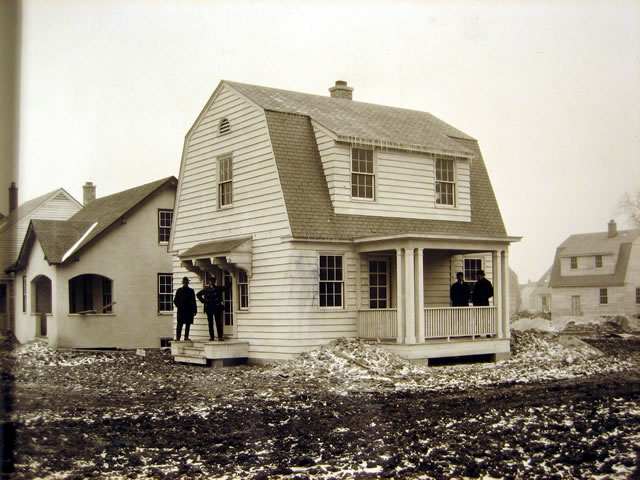
    The U.S. Housing Corporation built nearly 300 homes in Bremerton, Wash., during World War I. National Archives

    In 1918, as World War I intensified overseas, the U.S. government embarked on a radical experiment: It quietly became the nation’s largest housing developer, designing and constructing more than 80 new communities across 26 states in just two years.

    These weren’t hastily erected barracks or rows of identical homes. They were thoughtfully designed neighborhoods, complete with parks, schools, shops and sewer systems.

    In just two years, this federal initiative provided housing for almost 100,000 people.

    Few Americans are aware that such an ambitious and comprehensive public housing effort ever took place. Many of the homes are still standing today.

    But as an urban planning scholar, I believe that this brief historic moment – spearheaded by a shuttered agency called the United States Housing Corporation – offers a revealing lesson on what government-led planning can achieve during a time of national need.

    Government mobilization

    When the U.S. declared war against Germany in April 1917, federal authorities immediately realized that ship, vehicle and arms manufacturing would be at the heart of the war effort. To meet demand, there needed to be sufficient worker housing near shipyards, munitions plants and steel factories.

    So on May 16, 1918, Congress authorized President Woodrow Wilson to provide housing and infrastructure for industrial workers vital to national defense. By July, it had appropriated US$100 million – approximately $2.3 billion today – for the effort, with Secretary of Labor William B. Wilson tasked with overseeing it via the U.S. Housing Corporation.

    Over the course of two years, the agency designed and planned over 80 housing projects. Some developments were small, consisting of a few dozen dwellings. Others approached the size of entire new towns.

    For example, Cradock, near Norfolk, Virginia, was planned on a 310-acre site, with more than 800 detached homes developed on just 100 of those acres. In Dayton, Ohio, the agency created a 107-acre community that included 175 detached homes and a mix of over 600 semidetached homes and row houses, along with schools, shops, a community center and a park.

    Designing ideal communities

    Notably, the Housing Corporation was not simply committed to offering shelter.

    Its architects, planners and engineers aimed to create communities that were not only functional but also livable and beautiful. They drew heavily from Britain’s late-19th century Garden City movement, a planning philosophy that emphasized low-density housing, the integration of open spaces and a balance between built and natural environments.

    Milton Hill, a neighborhood designed and developed by the United States Housing Corporation in Alton, Ill.
    National Archives

    Importantly, instead of simply creating complexes of apartment units, akin to the public housing projects that most Americans associate with government-funded housing, the agency focused on the construction of single-family and small multifamily residential buildings that workers and their families could eventually own.

    This approach reflected a belief by the policymakers that property ownership could strengthen community responsibility and social stability. During the war, the federal government rented these homes to workers at regulated rates designed to be fair, while covering maintenance costs. After the war, the government began selling the homes – often to the tenants living in them – through affordable installment plans that provided a practical path to ownership.

    A single-family home in Davenport, Iowa, built by the U.S. Housing Corporation.
    National Archives

    Though the scope of the Housing Corporation’s work was national, each planned community took into account regional growth and local architectural styles. Engineers often built streets that adapted to the natural landscape. They spaced houses apart to maximize light, air and privacy, with landscaped yards. No resident lived far from greenery.

    In Quincy, Massachusetts, for example, the agency built a 22-acre neighborhood with 236 homes designed mostly in a Colonial Revival style to serve the nearby Fore River Shipyard. The development was laid out to maximize views, green space and access to the waterfront, while maintaining density through compact street and lot design.

    At Mare Island, California, developers located the housing site on a steep hillside near a naval base. Rather than flatten the land, designers worked with the slope, creating winding roads and terraced lots that preserved views and minimized erosion. The result was a 52-acre community with over 200 homes, many of which were designed in the Craftsman style. There was also a school, stores, parks and community centers.

    Infrastructure and innovation

    Alongside housing construction, the Housing Corporation invested in critical infrastructure. Engineers installed over 649,000 feet of modern sewer and water systems, ensuring that these new communities set a high standard for sanitation and public health.

    Attention to detail extended inside the homes. Architects experimented with efficient interior layouts and space-saving furnishings, including foldaway beds and built-in kitchenettes. Some of these innovations came from private companies that saw the program as a platform to demonstrate new housing technologies.

    One company, for example, designed fully furnished studio apartments with furniture that could be rotated or hidden, transforming a space from living room to bedroom to dining room throughout the day.

    To manage the large scale of this effort, the agency developed and published a set of planning and design standards − the first of their kind in the United States. These manuals covered everything from block configurations and road widths to lighting fixtures and tree-planting guidelines.

    A single-family home in Bremerton, Wash., built by the U.S. Housing Corporation.
    National Archives

    The standards emphasized functionality, aesthetics and long-term livability.

    Architects and planners who worked for the Housing Corporation carried these ideas into private practice, academia and housing initiatives. Many of the planning norms still used today, such as street hierarchies, lot setbacks and mixed-use zoning, were first tested in these wartime communities.

    And many of the planners involved in experimental New Deal community projects, such as Greenbelt, Maryland, had worked for or alongside Housing Corporation designers and planners. Their influence is apparent in the layout and design of these communities.

    A brief but lasting legacy

    With the end of World War I, the political support for federal housing initiatives quickly waned. The Housing Corporation was dissolved by Congress, and many planned projects were never completed. Others were incorporated into existing towns and cities.

    Yet, many of the neighborhoods built during this period still exist today, integrated in the fabric of the country’s cities and suburbs. Residents in places such as Aberdeen, Maryland; Bremerton, Washington; Bethlehem, Pennsylvania; Watertown, New York; and New Orleans may not even realize that many of the homes in their communities originated from a bold federal housing experiment.

    Homes on Lawn Avenue in Quincy, Mass., that were built by the U.S. Housing Corporation.
    Google Street View

    The Housing Corporation’s efforts, though brief, showed that large-scale public housing could be thoughtfully designed, community oriented and quickly executed. For a short time, in response to extraordinary circumstances, the U.S. government succeeded in building more than just houses. It constructed entire communities, demonstrating that government has a major role and can lead in finding appropriate, innovative solutions to complex challenges.

    At a moment when the U.S. once again faces a housing crisis, the legacy of the U.S. Housing Corporation serves as a reminder that bold public action can meet urgent needs.

    This article is part of a series centered on envisioning ways to deal with the housing crisis.

    Eran Ben-Joseph does not work for, consult, own shares in or receive funding from any company or organization that would benefit from this article, and has disclosed no relevant affiliations beyond their academic appointment.

    ref. Believe it or not, there was a time when the US government built beautiful homes for working-class Americans to deal with a housing shortage – https://theconversation.com/believe-it-or-not-there-was-a-time-when-the-us-government-built-beautiful-homes-for-working-class-americans-to-deal-with-a-housing-shortage-253512

    MIL OSI Analysis

  • MIL-OSI Russia: “Rafting is a sport, a journey, mutual support, motivation”

    Translation. Region: Russian Federal

    Source: State University Higher School of Economics – State University Higher School of Economics –

    Photo from Nikita Zhuravlev’s personal archive

    The first university rafting teams (men’s and women’s) appeared at the National Research University Higher School of Economics, and a graduate of the program became their coach.Media communicationsFaculty of Creative Industries, President of the Moscow Rafting Federation and founder of the rowing club “Akademiya” Nikita Zhuravlev. This season, the team will have six important starts in the amateur league. The coach told “Vyshka.Glavnoe” why this can be considered a unique event.

    For a wide range of people

    — We are holding the first amateur rafting competitions in Russia under the auspices of the federation. Until now, during the 25 years of the existence of the Rafting Federation, competitions were held exclusively in the sports variation. These are technically complex competitions with many disciplines and a high entry threshold. People who are currently involved in rafting are students of sports schools or Olympic schools who have dedicated their entire lives to this sport. Despite the fact that the federation has existed and developed for a long time, there is a very small influx of new people here. It is difficult to master a raft on rough water, and in the competition format it becomes almost impossible.

    We have completely rewritten the rules of sport rafting, adapted them for people who are not involved in sports. Now we want to attract university teams, as well as participants in the Moscow government project “Moscow Longevity” – older people who have never encountered rowing or active sports in their lives. They have the opportunity to touch our favorite business and compete with each other on equal terms.

    Unique competition venues

    — We will hold all stages of the amateur rafting league at the facilities of the Moscow Sports Committee, the Ministry of Sports, including the Olympic rowing facilities, which are not accessible just like that. For example, on May 24, we held competitions at the Olympic rowing canal, which took 10 years to build, was put into operation only last year and is still a facility exclusively for training and performances of the Russian Olympic teams. We received the unique right to be the first to represent our sport on the rowing canal, after us the facility will be put into full operation for amateur, professional, sports and commercial rafting.

    Contribution to the development of sports

    — At the moment, I am the president of the Moscow Rafting Federation and the founder of the rowing club “Academy”. I have been working towards the position of president of the federation for a long time, without even knowing it. And I got it due to my investments in professional sports, performances in the professional arena as a member of the Russian national team and due to social activities – creating conditions and infrastructure for sports. Now my club “Academy” has five branches, and in each of the branches we have created infrastructure opportunities for people to come and do rafting without buying their own equipment, without investing in any special preparation processes, trips, logistics, and so on. That is, we have given people the opportunity to do sports due to the fact that the water areas are currently fully prepared, we have written down all the regulations, formed a coaching staff and a methodological basis for training.

    Rafting for students

    — The first stage of the amateur league was attended by teams from top universities — the Higher School of Economics, RUDN, Bauman University, MGIMO. In the near future, we will organize a separate student amateur league. This is an opportunity to show the results of the university’s activities in comparison with other universities, its achievements and how the university cares for its students, what support it provides them.

    At the moment, I am a coach and trustee of the Higher School of Economics rafting team. I have maintained a fairly strong connection with the university, I am grateful to it for the education I received, for its contribution to my development as an individual, as a professional in my field. And I am very close to the attitude of the university, when you are perceived not only as a labor unit, but also as an individual. Therefore, when I had the opportunity to provide support, my choice fell on the student team. In this status, I myself was a member of the Russian national team. And in this status, I looked for sponsorship support, went to organizations, various enterprises. I know from experience how important it is for students to be accompanied by a mentor, to have someone senior, especially if he himself comes to them and offers various options for self-improvement, development, development. And all this is stretched by the red thread of our love for the university.

    HSE Team

    — The HSE team is made up of activists from the XSPORT sports club. Before meeting and interacting with me, the guys had been developing various volunteer activities, organizing sports events at the HSE, mass sports events both at the university’s venues and in the city environment.

    At the moment, the team is actively participating in the amateur rafting league. This is a cycle of five stages, which are combined into a general team standings. That is, the team wins the league based on the results of its performances at each of the five stages. During preparation for the league, the participants practice the technical features of raft control, we develop their general physical fitness, teach water safety, rowing techniques, biomechanics, sports physiology and carry out psychological training of rowers. Thus, this year the HSE team will have six official starts, held by the Moscow Rafting Federation. These are five stages of the amateur rafting league and the Moscow championship. If the team is selected for the capital team, we will take them to the Russian championship.

    Workout

    — Our training takes place at the bases of my rowing club, Academy. I conduct regular training for two Vyshka teams — women’s and men’s, 12 athletes. We work with them every Tuesday and Thursday from May 1, regardless of weather conditions, air and water temperature. We prepare with them to participate in the amateur league. And our main goal is the successful preparation of the team to compete in the Moscow Championship. If successful, the athletes will receive a title, ranks, and will be selected for our Moscow team. And this will be the first student crew, entirely formed from students of one university, which, I hope, will represent the interests of our city in the framework of official competitions under the Ministry of Sports.

    Why You Should Try Rafting

    — Rafting is a sport that combines several areas. It is an exclusively sports component, a competitive element. It is a journey, local history, because most of the rafting stages take place in the autonomous regions of our country, in mountainous areas, in places that are impossible to get to on purpose. Most often, these are glaciers, Altai, Karelia, the Caucasus. Areas that are sparsely populated, and it is very difficult to learn about them from any popular sources.

    In addition, people learn to work together. This is interaction, mutual support, motivation, sport through the prism of pleasure, when people come not only to row, but also to actively socialize.

    About plans for the future

    — My plan as the president of the Rafting Federation is to make this sport accessible, organize a full-fledged student league, a corporate league, combine student sports with professional sports, create a bridge between these two concepts and smoothly integrate people who have sincerely fallen in love with rowing with all their hearts into high-performance sports. If we talk about specific steps, this is filling our calendar with large, significant events, not just competitions, but sports festivals.

    Please note: This information is raw content directly from the source of the information. It is exactly what the source states and does not reflect the position of MIL-OSI or its clients.

    MIL OSI Russia News

  • MIL-OSI Russia: Energy-saving equipment of the NRG system is being tested at the State University of Management

    Translation. Region: Russian Federal

    Source: State University of Management – Official website of the State –

    The State University of Management continues to develop partnerships with business representatives and technology companies. Currently, innovative equipment of the Universal Energy Saving System NRG, developed by AERO LLC, is being tested on the university premises.

    At the initiative of the company OOO “Center of Complex Engineering” and jointly with OOO “AERO”, a test connection of equipment to the internal electrical network with a voltage of 0.4 kV was organized in the State University of Management. This allows us to evaluate the efficiency of the new system in real conditions and record the technical parameters of its operation in the current environment.

    The NRG system is the latest, patented (Patent RU 2 731 258 C1) development in the field of energy saving and energy efficiency for any consumers of electrical energy, such as private apartments, houses, shops, production sites, large industrial enterprises and any other consumers using alternating electric current.

    “We welcome the interest of companies in cooperation with the university. It is important for us to be an open platform for innovation, especially in the field of sustainable development and energy efficiency. Such projects help improve the conditions for studying and living for students, and help employees become more familiar with modern technological solutions,” said Vitaly Lapshenkov, Vice-Rector of the State University of Management.

    Effects of using the NRG system:

    Reduction of energy consumption by 7–20%; Reduction of the effect of harmful electromagnetic waves; Increased service life of equipment in the electrical network; Reduction of temperature, noise and vibration during equipment operation; Release of additional capacity due to energy savings.

    Testing is carried out in a technical mode, with compliance with all safety standards, under the supervision of specialists from the Center for Complex Engineering LLC and employees of the State University of Management. Based on its results, conclusions will be drawn on the possibility of large-scale use of such solutions in educational and administrative infrastructure.

    Please note: This information is raw content directly from the source of the information. It is exactly what the source states and does not reflect the position of MIL-OSI or its clients.

    MIL OSI Russia News

  • Union Minister Bhupender Yadav chairs 21st Steering Committee Meeting of Project Elephant in Dehradun

    Source: Government of India

    Source: Government of India (4)

    Union Minister for Environment, Forest and Climate Change, Bhupender Yadav on Thursday chaired the 21st Steering Committee Meeting of Project Elephant at the Indira Gandhi National Forest Academy (IGNFA) in Dehradun. The meeting convened senior officials, scientists, and field experts from elephant range states, alongside representatives from key conservation institutions, to review the progress of Project Elephant and chart the future of elephant conservation in India.

    A key focus of the meeting was addressing the ongoing challenge of human-elephant conflict, which poses significant risks to both human safety and elephant conservation. Yadav emphasized the critical need to involve local communities as active partners in wildlife conservation, particularly in regions heavily impacted by such conflicts. He stressed that effective management of human-wildlife conflict is essential for the success of conservation programs and called for improved working conditions and social security for frontline forest staff and ground-level conservation workers.

    The Minister urged coordinated efforts with Indian Railways, the Ministry of Power, the National Highways Authority of India (NHAI), and mine developers to mitigate human-wildlife conflicts. He also highlighted the role of institutions like the Salim Ali Centre for Ornithology and Natural History (SACON), the Indian Institute of Forest Management (IIFM), the Wildlife Institute of India (WII), and State Forest Training institutions in implementing awareness and outreach programs. Additionally, Shri Yadav emphasized the importance of systematic data collection and analysis on elephant deaths due to railway accidents and the need for knowledge sharing among states, institutions, and experts to replicate best practices nationwide.

    The meeting reviewed significant progress in conservation efforts, including the development of Regional Action Plans for human-elephant conflict in Southern and North-Eastern India and the completion of surveys covering 3,452.4 km of sensitive railway stretches, identifying 77 high-risk areas for mitigation. DNA profiling of captive elephants has advanced, with 1,911 genetic profiles completed across 22 states. Phase-I of the synchronized elephant population estimation in North-Eastern states has been completed, with over 16,500 dung samples collected. Work on the Model Elephant Conservation Plan (ECP) for the Nilgiri Elephant Reserve is underway and expected to be finalized by December 2025.

    Several important documents were released during the meeting, including a report on measures to mitigate elephant-train collisions, a comprehensive study on 23 years of human-elephant conflict in Assam, Jharkhand, and Chhattisgarh, an advisory on safe tusk trimming practices for captive elephants, and the latest edition of Trumpet, Project Elephant’s quarterly newsletter.

    Looking ahead, the Committee discussed preparations for World Elephant Day on August 12, to be celebrated in Coimbatore, Tamil Nadu, where the Gaj Gaurav Awards will be presented. Upcoming initiatives include finalizing the Nilgiri ECP, launching a three-year elephant tracking study in Bandhavgarh Tiger Reserve, conducting Management Effectiveness Evaluations (MEE) in Elephant Reserves with support from the Compensatory Afforestation Fund Management and Planning Authority (CAMPA), and developing an integrated conservation strategy for the Ripu-Chirang Elephant Reserve, with a focus on the Udalguri landscape.

  • MIL-OSI Canada: Stay safe, plan ahead for Canada Day weekend

    Source: Government of Canada regional news

    As people make plans for the Canada Day weekend, it’s important to be prepared and stay safe as warm temperatures, dry conditions and wildfire risk continue in many parts of the province.

    People are encouraged to stay vigilant and up to date on local fire bans and restrictions and have an emergency plan in place that is shared with friends and family.

    People heading outdoors this weekend are reminded to plan ahead, carry safety gear and follow all instructions from local governments and First Nations. Before you head out, check ahead for road closures, evacuation alerts, evacuation orders and any fire prohibitions in effect.

    British Columbia continues to face prolonged drought in many regions, and below-average precipitation is contributing to increased wildfire and water supply concerns. Everyone is encouraged to use water efficiently and follow any local watering restrictions.

    Several open-burning prohibitions are in place around the province and will be updated as conditions change. People planning to have campfires should do so safely, following any local prohibitions. Avoid having a campfire when it’s windy, choose a proper fire pit or make a ring of rocks at least three metres from trees, shrubs, structures and debris, and do not leave a campfire unattended.

    The BC Wildfire Service relies on the public for reporting wildfires quickly. Approximately 40% of new fires are reported by the public. If you see smoke or flames, report it immediately by calling *5555 on a cellphone or 1 800 663-5555, toll-free.

    The BC Wildfire Service mobile app allows people to report new wildfires and submit photos, which helps BC Wildfire Service make informed decisions. People can use the app for the most up-to-date information on the current wildfire situation, road conditions, evacuation information and weather forecasts.

    If you’re in a high-risk wildfire area, now is the time to get prepared. Create an emergency plan, pack a grab-and-go bag for each household member, including pets, and create an Emergency Support Services (ESS) profile through your BC Services Card app or at ess.gov.bc.ca. People are advised to make sure their home or tenant insurance includes wildfire protection, which can help with expenses like temporary accommodation and meals if there is a need to evacuate.

    Check your insurance policy to understand what evacuation supports are available through your coverage. If you’re unsure, call your insurance provider or the Insurance Bureau of Canada at 1 844 227-5422 or visit: https://www.ibc.ca/

    People are encouraged to follow instructions and evacuate immediately if a local government or First Nation issues an order. Emergency Support Services (ESS) are available to evacuees who need help covering the cost of their basic needs, such as food, lodging and other essentials.

    People can also reduce risk around the home with a few simple FireSmart steps:

    • clear dry leaves and debris from around your property
    • move propane tanks and other flammables at least 10 metres from structures
    • keep grass cut short
    • close doors and windows
    • water trees, shrubs and plants regularly, following local water restrictions
    • consider more fire-resistant plants for landscaping

    People travelling in B.C. are encouraged to know before they go. You can plan ahead and get the latest road conditions and updates here: https://www.drivebc.ca/

    Drivers on routes throughout the province this summer should expect higher-than-average traffic volumes and plan accordingly. General tips for a safe trip include:

    • allowing additional time to get to your destination due to more people on roads
    • making sure your vehicle is ready for the drive by having a full tank of gas or charged battery, checking engine oil, washer fluid, lights and tires, including the spare
    • packing food and water for passengers and pets
    • planning breaks at rest areas: https://www.th.gov.bc.ca/restareas/?zoom=5&loc=-126.600000%2C54.589121
    • watching for motorcyclists and sharing the road with cyclists and other users
    • obeying all posted speed limits and driving with caution, especially during bad weather
    • leaving the phone alone while behind the wheel, and
    • ensuring all passengers always use seatbelts.​

    Learn More:

    For BC Wildfire Service information and updates, visit: https://wildfiresituation.nrs.gov.bc.ca/dashboard

    For more information about fire prohibitions, visit: https://www2.gov.bc.ca/gov/content/safety/wildfire-status/fire-bans-and-restrictions

    For up-to-date information about road conditions, visit: https://www.drivebc.ca/

    For more information about rest areas during driving, visit: https://www.th.gov.bc.ca/restareas

    For detailed guidance on what happens before, during and after an evacuation order, visit https://www2.gov.bc.ca/gov/content/safety/emergency-management/preparedbc/evacuation-recovery/evacuee-guidance

    For the latest information on evacuation alerts and evacuation orders in B.C., visit: https://EmergencyInfoBC.ca
    Or follow @EmergencyInfoBC on X

    To register with Emergency Support Services, visit: https://ess.gov.bc.ca/

    For information on how to prepare for emergencies, including information about emergency kits, household emergency plans and hazard-specific guides, visit: https://PreparedBC.ca 

    For more information on how to FireSmart your home, visit: https://firesmartbc.ca

    For backcountry safety checklists and trip planning resources, visit: https://www.adventuresmart.ca/

    For more information about drought, visit: https://www2.gov.bc.ca/gov/content/drought

    MIL OSI Canada News

  • MIL-OSI USA: mRNA COVID-19 Vaccines: FDA Safety Communication – FDA Approves Required Updated Warning in Labeling Regarding Myocarditis and Pericarditis Following Vaccination

    Source: US Department of Health and Human Services – 3

    AUDIENCE: Pediatrics, Pharmacy, Family Practice, Internal Medicine, Cardiology
    ISSUE: FDA has required and approved updates to the Prescribing Information for Comirnaty (COVID-19 Vaccine, mRNA) manufactured by Pfizer Inc. and Spikevax (COVID-19 Vaccine, mRNA) manufactured ModernaTX, Inc. to include new safety information about the risks of myocarditis and pericarditis following administration of mRNA COVID-19 vaccines.
    Specifically, FDA has required each manufacturer to update the warning about the risks of myocarditis and pericarditis to include information about

    the estimated unadjusted incidence of myocarditis and/or pericarditis following administration of the 2023-2024 Formula of mRNA COVID-19 vaccines and
    the results of a study that collected information on cardiac magnetic resonance imaging (cardiac MRI) in people who developed myocarditis after receiving an mRNA COVID-19 vaccine.

    FDA also required each manufacturer to describe the new safety information in the Adverse Reactions section of the Prescribing Information and in the Information for Recipients and Caregivers.   
    The Fact Sheets for Healthcare Providers and for Recipients and Caregivers for Moderna COVID-19 Vaccine and Pfizer-BioNTech COVID-19, which are authorized for emergency use in individuals 6 months through 11 years of age, have also been updated to include the new safety information in alignment with the Comirnaty and Spikevax Prescribing Information and Information for Recipients and Caregivers.
    BACKGROUND: Information about myocarditis (inflammation of the heart muscle) and pericarditis (inflammation of the lining outside the heart) following vaccination with these mRNA COVID-19 vaccines has been included in the labeling since 2021. FDA closely monitors the safety of all vaccines, including the COVID-19 vaccines, during postmarket use.
    RECOMMENDATION: 

    Suspected adverse events may be reported to the Vaccine Adverse Event Reporting System (VAERS), which is co-managed by the FDA and the CDC.

      [6/25/2025 – FDA Safety Communication – FDA]

    Content current as of:
    06/25/2025

    Regulated Product(s)

    MIL OSI USA News

  • MIL-OSI USA: mRNA COVID-19 Vaccines: FDA Safety Communication – FDA Approves Required Updated Warning in Labeling Regarding Myocarditis and Pericarditis Following Vaccination

    Source: US Department of Health and Human Services – 3

    AUDIENCE: Pediatrics, Pharmacy, Family Practice, Internal Medicine, Cardiology
    ISSUE: FDA has required and approved updates to the Prescribing Information for Comirnaty (COVID-19 Vaccine, mRNA) manufactured by Pfizer Inc. and Spikevax (COVID-19 Vaccine, mRNA) manufactured ModernaTX, Inc. to include new safety information about the risks of myocarditis and pericarditis following administration of mRNA COVID-19 vaccines.
    Specifically, FDA has required each manufacturer to update the warning about the risks of myocarditis and pericarditis to include information about

    the estimated unadjusted incidence of myocarditis and/or pericarditis following administration of the 2023-2024 Formula of mRNA COVID-19 vaccines and
    the results of a study that collected information on cardiac magnetic resonance imaging (cardiac MRI) in people who developed myocarditis after receiving an mRNA COVID-19 vaccine.

    FDA also required each manufacturer to describe the new safety information in the Adverse Reactions section of the Prescribing Information and in the Information for Recipients and Caregivers.   
    The Fact Sheets for Healthcare Providers and for Recipients and Caregivers for Moderna COVID-19 Vaccine and Pfizer-BioNTech COVID-19, which are authorized for emergency use in individuals 6 months through 11 years of age, have also been updated to include the new safety information in alignment with the Comirnaty and Spikevax Prescribing Information and Information for Recipients and Caregivers.
    BACKGROUND: Information about myocarditis (inflammation of the heart muscle) and pericarditis (inflammation of the lining outside the heart) following vaccination with these mRNA COVID-19 vaccines has been included in the labeling since 2021. FDA closely monitors the safety of all vaccines, including the COVID-19 vaccines, during postmarket use.
    RECOMMENDATION: 

    Suspected adverse events may be reported to the Vaccine Adverse Event Reporting System (VAERS), which is co-managed by the FDA and the CDC.

      [6/25/2025 – FDA Safety Communication – FDA]

    Content current as of:
    06/25/2025

    Regulated Product(s)

    MIL OSI USA News

  • MIL-OSI USA: Three Faculty Members Named Board of Trustees Distinguished Professors

    Source: US State of Connecticut

    The University of Connecticut has named three outstanding faculty members as Board of Trustees Distinguished Professors for the 2024–2025 academic year. This distinction is the highest honor the university confers on faculty and recognizes exceptional achievement in research, teaching, and service.

    This year’s honorees are:

    • Dr. Peter C. Albertsen, Division of Urology, School of Medicine
    • Professor Anne C. Dailey, School of Law
    • Dr. Luyi Sun, Department of Chemical & Biomolecular Engineering, College of Engineering

    The Board of Trustees Distinguished Professor title is awarded annually following a university-wide nomination process and a rigorous review by a faculty and student committee. Final selections are approved by the UConn Board of Trustees, which confirmed this year’s awardees at its June 25, 2025 meeting.

    “These faculty have each made a remarkable impact not only through their scholarship, but also through their commitment to their students and colleagues,” said Anne D’Alleva, Provost and Executive Vice President for Academic Affairs. “Their work strengthens our community, advances their fields, and reflects the excellence that defines UConn.”

    Dr. Peter C. Albertsen

    Dr. Peter C. Albertsen is a globally respected urologic oncologist whose research and leadership have transformed the understanding and management of prostate cancer. A faculty member at UConn Health since 1987, Dr. Albertsen’s work has shaped national and international treatment guidelines and spared tens of thousands of men from unnecessary surgery and radiation.

    (UConn Photo)

    He earned his undergraduate degree in biochemistry from Princeton University and his medical degree from Columbia University. He completed his surgical residency at Harvard and his urology training at the Brady Urological Institute at Johns Hopkins. He also holds a master’s degree in medical administration and preventive medicine from the University of Wisconsin.

    Dr. Albertsen was among the first to use population-based data to challenge prevailing assumptions about PSA screening and prostate cancer aggressiveness. His landmark publications, including a seminal article in Journal of the American Medical Association (JAMA), demonstrated that many prostate cancers grow slowly and do not require immediate treatment. These findings helped launch a global shift toward active surveillance, now a widely accepted standard of care. He has played key leadership roles in major trials in both the U.S. and the U.K., including serving as Chair of the Cause of Death Committee for the PLCO and ProtecT trials.

    He has authored more than 300 peer-reviewed articles and editorials, with over 17,000 citations and an h-index of 63, placing him in the top tier of urologic researchers. His research has been published in The New England Journal of Medicine, JAMA, and other leading journals, and has been supported by more than $5 million in external funding.

    As UConn’s Urology Residency Program Director for over 30 years, Dr. Albertsen has trained more than 60 residents, many of whom have gone on to leadership roles in academic medicine and beyond. He is widely praised for his dynamic and discussion-based teaching style and for his long-standing mentorship of medical students and residents.

    Dr. Albertsen has served in numerous leadership roles at UConn Health and nationally, including as Associate Dean for Clinical Research and Planning, Division Chief of Urology, and Trustee of the American Board of Urology. He continues to provide exceptional patient care, including to underserved and correctional populations, and is often sought out by colleagues for their own care.

    His many honors include the Eugene Fuller Triennial Prostate Award and the Distinguished Contribution Award from the American Urological Association, as well as honorary membership in both the AUA and the German Urological Association. Dr. Albertsen’s research, clinical care, and mentorship have had an enduring impact on the field of urology and the lives of countless patients, making him a most deserving recipient of the University of Connecticut’s highest faculty honor.

    Professor Anne C. Dailey

    Professor Anne Dailey, Associate Dean for Faculty Development and Intellectual Life and the Ellen Ash Peters Professor of Law at the University of Connecticut School of Law, is a nationally recognized scholar whose work bridges constitutional law, family law, and psychoanalytic theory. A member of the UConn faculty since 1988, Professor Dailey has made transformative contributions to legal scholarship, education, and public service, with far-reaching influence across disciplines and institutions.

    (UConn Photo)

    She earned a Bachelor of Arts in English from Yale University and a Juris Doctor from Harvard Law School, where she served as an Articles Editor of the Harvard Law Review. Following law school, she completed a judicial clerkship with Judge José Cabranes of the U.S. District Court for the District of Connecticut. She has since become a pioneering figure in integrating psychoanalytic theory into legal analysis, most notably through her acclaimed book Law and the Unconscious: A Psychoanalytic Perspective, published by Yale University Press. This work received three prestigious honors: the Book Prize from the American Psychoanalytic Association, the Book Prize from the American Board and Academy of Psychoanalysis, and the Faculty Book Award from the UConn Humanities Institute.

    Professor Dailey’s scholarship is widely cited and influential. Her co-authored articles The New Law of the Child and The New Parental Rights, and her sole authored In Loco Reipublicae, all published in top-tier law journals, have shaped the national discourse on children’s constitutional rights, state responsibility for families, and evolving family structures. She is a member of the American Law Institute and the Association for the Study of Law, Culture and Humanities.

    She has held visiting faculty appointments at Yale, Harvard, and Penn Law Schools and has been named an Erikson Scholar at the Austen Riggs Center and a Fellow at the Katz Center for Advanced Judaic Studies at the University of Pennsylvania.

    Professor Dailey is a dedicated and inspiring teacher of family law and constitutional law. She is also a deeply valued mentor to students and junior faculty, and her efforts have helped elevate the national profile of the UConn School of Law.

    Professor Dailey’s scholarly distinction, interdisciplinary innovation, and enduring contributions to teaching and service make her a truly worthy recipient of the University of Connecticut’s highest faculty honor.

    Dr. Luyi Sun

    Dr. Luyi Sun is a globally recognized materials scientist and professor in the Department of Chemical and Biomolecular Engineering at the University of Connecticut, where he also holds a joint appointment in the Institute of Materials Science. Since joining UConn in 2013, he has led an internationally renowned research program focused on nanostructured hybrid materials for functional, environmental, and energy-related applications.

    (UConn Photo)

    Dr. Sun’s prolific contributions to science are evidenced by over 310 peer-reviewed journal articles in high-impact publications such as Nature Communications, Science Advances, Proceedings of the National Academy of Sciences, and Advanced Materials. His work has earned more than 23,000 citations and an h-index of 83, and has been highlighted by MIT Technology Review, Smithsonian Magazine, and New Scientist, among many others. He is the inventor or co-inventor of 28 issued U.S. patents and more than 50 corresponding foreign patents, seven of which have been commercialized/licensed. The materials and devices invented in his lab have been featured in global exhibitions, including at the Material ConneXion Library in New York and the Penn Museum.

    Dr. Sun is a Fellow of the National Academy of Inventors, the Royal Society of Chemistry, and the Society of Plastics Engineers. He has also been recognized with the Morand Lambla Award from the Polymer Processing Society and was elected to the Connecticut Academy of Science and Engineering.

    A dedicated educator and mentor, Dr. Sun has taught rigorous and interdisciplinary courses such as Thermodynamics and Polymer Processing, and has advised dozens of Ph.D. students, M.S. students and postdoctoral researchers, and more than 160 undergraduate research assistants. His students have gone on to successful careers in academia and industry, and many have received prestigious fellowships and national honors.

    Dr. Sun has also demonstrated sustained leadership in academic and professional service. As Director of the UConn Polymer Program from 2018 to 2021, he expanded faculty engagement and strengthened the program’s profile. He has held leadership roles in national scientific organizations and organized more than 80 symposia around the world. His editorial work includes serving as Associate Editor of Advanced Composites and Hybrid Materials.

    Due to his outstanding record of research innovation, teaching, mentorship, and professional service, Dr. Luyi Sun strongly merits recognition as a Board of Trustees Distinguished Professor.

    MIL OSI USA News

  • MIL-OSI Africa: President Ramkalawan Attends Foundation Stone Laying Ceremony for New Seychelles Public Transport Company (SPTC) Depot on Praslin

    Source: Africa Press Organisation – English (2) – Report:

    Download logo

    President Wavel Ramkalawan attended the foundation stone laying ceremony and unveiling of a commemorative plaque for the new Seychelles Public Transport Company (SPTC) depot on Île Eve, Baie Ste Anne, Praslin, on Thursday morning.

    The new depot represents a significant government investment of approximately 15 million Seychelles Rupees, strategically designed to meet the evolving demands of Praslin’s expanding transport sector. The comprehensive facility will feature a modern administration building, enhanced staff amenities, and a fully-equipped mechanical workshop, establishing the foundation for SPTC’s operational excellence on the island. This infrastructure investment will provide essential support for improved service delivery while accommodating both current operations and future expansion initiatives. 

    In his welcoming remarks, Chief Executive Officer of SPTC, Mr. Geffy Zialor, highlighted the project’s importance to the company’s mission, stating that it represents a significant step forward in delivering a more reliable, efficient, and sustainable public transport system for all Seychellois. He emphasised that modernising infrastructure and improving commuter experience remain at the heart of SPTC’s long-term vision to serve the public better and support national development goals.

    Addressing the ceremony, the Minister for Transport Antony Derjacques emphasized the project’s broader significance, stating that this development “signals our government’s steadfast commitment to ensuring that every island in Seychelles benefits from modern, reliable, and inclusive transport infrastructure.”

    The Minister underscored the fundamental role of public transportation in connecting communities, declaring: “Public transportation is a service that touches lives daily. It provides access to schools, jobs, hospitals, and loved ones. By investing in infrastructure like this depot, we are ensuring that all Seychellois benefit from a modern, efficient, and people-centered transport network.”

    The ceremonial foundation stone laying, conducted jointly by President Ramkalawan, Minister Derjacques, the SPTC CEO, and the Chairman of the SPTC Board, symbolized more than a construction milestone. It embodied the collective vision of a nation committed to equitable development and the principle that quality public services should remain accessible to all citizens.

    The ceremony was enriched by cultural performances from students of Grand Anse Praslin Secondary School, creating an atmosphere of celebration and national pride that reflected the community’s enthusiasm for this vital infrastructure development.

    This initiative reinforces the government’s dedication to decentralizing essential services while maintaining the highest standards of efficiency and accessibility. The project ensures that the Praslin community will benefit from world-class transport infrastructure that will serve as a catalyst for continued economic and social development.

    The ceremony was attended by distinguished officials, including Minister for Land Use and Housing Billy Rangasamy, Honourable Members of the National Assembly, the Chairman and Board members of SPTC, as well as various dignitaries and community representatives.

    – on behalf of State House Seychelles.

    MIL OSI Africa

  • MIL-OSI Africa: Committee on Electricity Calls for Watertight Procurement Policies to Strengthen Accountability

    Source: Africa Press Organisation – English (2) – Report:

    Download logo

    The Portfolio Committee on Electricity and Energy received a briefing yesterday from the Department of Electricity and Energy on the Battery Energy Storage System Independent Power Producer Procurement Programme from the Minister of the department, Dr Kgosientsho Ramokgopa.

    The Minister told the committee that the engagement with the committee was to ensure accountability and transparency especially in the light of the recent allegations concerning conflicts of interest and procurement irregularities that have been levelled by the Umkhonto weSizwe (MKP) Party regarding the Battery Energy Storage Independent Power Producer Procurement Programme.

    The Minister stated that the department had nothing to hide hence it agreed to appear before the committee and brief it as per the request of the MKP that brought the allegations. The Minister said: “We welcome the scrutiny from both the members of the committee and the public regarding the procurement process for the Battery Energy Storage System (BESS).”

    He stressed the department’s commitment to ensuring that the procurement processes are upheld with the utmost integrity and fairness. “Our commitment to transparency is paramount. We must ensure that public resources are managed responsibly and that all stakeholders are held accountable,” said Dr Ramokgopa.

    The Minister and the senior departmental officials and the Independent Power Producer (IPP) officials provided a comprehensive overview of the BESS procurement process. The presentation outlined the objectives of the program, which includes enhancing energy security, promoting Black Economic Empowerment (BEE), and ensuring transparency in the procurement of private sector generation capacity.

    A key point of discussion amongst some committee members was the involvement of the former Chief Operating Officer of Eskom, who has been awarded a tender under the current IPP procurement process. Some committee members expressed concerns regarding the appropriateness of awarding contracts to an individual with such a recent history in a senior position at Eskom, questioning whether this could potentially lead to perceptions of favouritism or conflict of interest.

    Members of the committee highlighted the importance of maintaining public trust in the procurement process and said that stringent measures should be implemented to prevent any appearance of impropriety. The committee stressed that it is vital for the integrity of the procurement process to be upheld and for public confidence in the decisions made by the Department of Electricity and Energy to be restored.

    Members of the committee sought clarification on the governance mechanisms in place to verify declarations made by bidders, emphasising the need for due diligence beyond mere declarations to ensure compliance with BEE commitments. The committee questioned whether the procurement process had adequately considered the implications of awarding contracts to individuals with recent ties to Eskom.
    In response to these concerns, Dr Ramokgopa reiterated the government’s commitment to fostering a diverse and competitive energy market. He said: “We acknowledge that while we have made progress, there is still much work to be done to ensure that the benefits of these projects are shared equitably among all South Africans, particularly those from historically disadvantaged backgrounds.”

    Regarding the BESS procurement process the committee expressed concerns about the slow pace of the current IPP processes, questioning their effectiveness in contributing to industrialisation and economic growth in South Africa. In addition, members of the committee highlighted the perceived failure of the IPP process to create genuine long-term and sustainable transformation, particularly regarding the BEE within communities.

    – on behalf of Republic of South Africa: The Parliament.

    MIL OSI Africa

  • MIL-OSI Africa: Select Committee on Public Infrastructure Emphasises the Vital Role of Transportation in the South African Economy

    Source: Africa Press Organisation – English (2) – Report:

    Download logo

    The Chairperson of the Select Committee on Public Infrastructure and the Minister in the Presidency, Mr Rikus Badenhorst, emphasised the vitality of the role of transportation in the South African economy when the Department of Transport appeared before the committee yesterday to brief it on the department’s strategic plan for the 2025-26 financial year.

    Mr Badenhorst outlined the ambitious targets of the department for increasing rail freight and commuter services. He acknowledged the financial and structural challenges faced by the department, making more emphasis on the need for efficient and effective transport systems to stimulate economic growth.

    The department’s presentation, detailed the alignment of the strategic plan with the Medium-Term Development Plan. Key targets highlighted included enhancement of economic growth through private sector involvement, reduction of road fatalities by 50% by 2030, the improvement of freight movement, and infrastructure investment. The department told the committee about the necessity of increased investment in transport infrastructure to bolster economic growth and job creation.

    The committee raised concerns regarding the Driving License Card Account (DLCA), particularly the backlog in card production stemming from machine issues and procurement irregularities. The projected budget for the upcoming financial year indicated a revenue expectation of R321 million against expenses of R379 million. The department shared its insights into the budget allocation, underscoring the importance of infrastructure development.

    Committee members expressed concern regarding governance within public entities, the department’s reliance on consultants, and the challenges of policy implementation amid fiscal constraints. The committee requested a detailed report on the Road Accident Fund (RAF) and the state of the entity’s governance.

    Members of the committee highlighted the negative consequences of governance deficiencies on public entities and proposed the development of a taxi fare index to promote balance within the taxi industry. The regulation of scholar transport, and digital driver licenses were also discussed.

    On digital drivers’ licences, the department confirmed that the current backlog stands at approximately 680,000 cards while efforts are underway to clear it within three months. The complexities of transitioning to a digital identification system were highlighted.

    Mr Badenhorst reiterated the committee’s commitment to oversight and accountability. He said the department serves as a catalyst for economic prosperity. He stressed the importance of collaboration of the department with other key role-players in the transport sector for further enhancement of the transportation system in the country.

    – on behalf of Republic of South Africa: The Parliament.

    MIL OSI Africa

  • MIL-OSI Africa: Public Works Entities Must Create Income-Generating Initiatives and Not Rely on Government Funding

    Source: Africa Press Organisation – English (2) – Report:

    Download logo

    The Portfolio Committee on Public Works and Infrastructure has called on entities within the Department of Public Works and Infrastructure portfolio to explore innovative solutions to improve their financial sustainability, rather than relying solely on the parent department for funding and bailouts.

    The committee today received a briefing from four public works entities on their 2025/26 annual performance plans and budget allocations. The entities include the Independent Development Trust (IDT), Agrément South Africa (ASA), the Construction Industry Development Board (CIDB), and the Council for the Built Environment (CBE).

    The committee expressed concerns over the absence of both the Minister and Deputy Minister of Public Works and Infrastructure from the meeting. Members of the committee were not pleased with the Minister’s backlog in oral and written questions. In addition, the committee also raised alarm over the continued lack of transparency regarding the costs associated with the Minister’s overseas travel, which remain undisclosed.

    Regarding the IDT, the committee raised serious concerns about the entity’s continued financial dependence on the department. Members of the committee questioned whether the entity has any concrete plans to improve its revenue-generating capacity and reduce its reliance on bailouts. The committee also urged the entity to promote inclusivity for categories of previously disadvantaged people, women, youth, and the people with disabilities.

    The committee further expressed concern over the high legal costs incurred by the IDT and recommended that the entity strengthens its internal capacity to mitigate litigation risks, especially during ongoing projects.

    The committee called on ASA to identify alternative revenue streams, as continued dependence on government funding is unsustainable. It criticised the weak transformation and job creation targets presented and called for bolder, measurable commitments. ASA’s ICT systems were also flagged and the committee encouraged the entity to work collaboratively with departments such as Human Settlements to broaden its impact. T

    The committee further urged ASA to establish testing sites and laboratories to ensure compliance with technical standards, noting that current operations do not adequately support this function.

    Committee Chairperson, Ms Caril Phiri, expressed concern over irregularities in contractor grading by the CIDB. She highlighted reports of contractors receiving higher grades without completing corresponding project scopes and urged CIDB to address and dispel public perceptions that grading statuses are being bought.

    The committee also raised alarm over the CIDB’s claim that contractors involved in the recent collapsed building in George were not registered with them, but rather with the National Home Builders Registration Council.

    The committee called for greater regulatory alignment and oversight between these entities, the national and provincial departments of human settlements, and all municipal councils to prevent such tragedies.

    – on behalf of Republic of South Africa: The Parliament.

    MIL OSI Africa

  • MIL-OSI Africa: Rwanda: African Development Bank kickstarts pioneering cable car project in Kigali

    Source: Africa Press Organisation – English (2) – Report:

    The African Development Bank (www.AfDB.org) has approved a grant of $500,000 to undertake a feasibility study into the first phase of a cable car transport network in Kigali, that will be sub-Saharan Africa’s first aerial urban transit system.

    The funds, to be sourced from the Bank Group’s Urban and Municipal Development Fund (https://apo-opa.co/45CiDm9), are expected to help pave the way for the Kigali Urban Cable Car Project, a 5.5 km mobility initiative valued at $100 million and promising to ease the city’s traffic congestion, reduce greenhouse gas emissions, and connect underserved communities to jobs and essential services.

    The Urban and Municipal Development Fund (UMDF) is a trust fund hosted by the African Development Bank, which provides direct support to cities, to mobilize funding and technical assistance, develop partnerships, city engagement, project identification and investment.

    Phase 1 of the project will comprise two critical transit corridors: Nyabugogo Taxi Park to the Central Business District (CBD) Hub; and the Kigali Convention Center to Kigali Sports City, connecting public landmarks such as Amahoro Stadium, BK Arena, and the newly developed Zaria Court.

    The feasibility study is expected to position the project to attract international investment, including through platforms such as the Africa Investment Forum (AIF). The UMDF provided funding for the feasibility of another project in the country, the Kigali Urban Transport Improvement project, to help attract critical investment.

    Construction is expected to begin in late 2026, with commissioning scheduled for 2028. Once complete, the cable car will convey over 50,000 passengers a day on a 15-minute end-to-end journey, integrating into the city’s existing transport infrastructure.

    African Development Bank Group president Dr. Akinwumi Adesina, said: “This transformative project aligns perfectly with the Bank’s vision for sustainable, green climate-resilient urban mobility infrastructure, and with the Bank’s Ten-Year Strategy, which focuses on urbanization, and the Alliance for Green Infrastructure in Africa (AGIA), a global partnership initiative driven by the African Development Bank Group, Africa50 and the African Union. By financing Rwanda’s urban cable car system, we are investing in a scalable model of low-carbon, inclusive public transport that cities across Africa can emulate.”

    The project is anchored in Rwanda’s Green Taxonomy, E-mobility Strategy, and Climate and Nature Finance Strategy (CNFS) and aligns closely with Rwanda’s national climate objectives, which target a 38% reduction in carbon emissions by 2030 and carbon neutrality by 2050.

    The project implementation is expected to follow a Public-Private Partnership model, according to  Imena Munyampenda, the Director General of Rwanda Transport Development Agency.  

    The feasibility study plans to draw lessons from successful cable car systems in La Paz, Bolivia, and Singapore. The system will prioritize access for the disabled, employment opportunities for girls, women and low-income residents; and job creation, capacity building and technology transfer.

    “This pioneering feasibility study is a game-changing milestone,” said Solomon Quaynor, African Development Bank’s Vice President for Private Sector, Infrastructure, and Industrialization. “Through the UMDF, AfDB is laying the foundation for an investment-ready green infrastructure asset that offers both impact and returns.”

    Blended Financing

    The $100 million funding structure will comprise a strategic mix of grants, concessional loans, blended finance, and technical assistance. The UMDF grant will fund an assessment of the project’s viability gap.

    The Rwandan government, the African Development Bank Group, and other development partners, will collaborate to offer blended financing, along with commercial funding from the International Finance Corporation (IFC), Africa50, the Trade and Development Bank (TDB), the Africa Finance Corporation (AFC), as well as private investors and the Alliance for Green Infrastructure in Africa (AGIA). 

    – on behalf of African Development Bank Group (AfDB).

    Media Contact:
    Janet Onyango
    African Development Bank Group 
    media@afdb.org

    Media files

    Download logo

    MIL OSI Africa

  • MIL-OSI Africa: Coffee Master Trainer Upgrade (Coffee MUG) Program Surpasses 4,700 Farmers Trained, Boosting Yields and Incomes Across Indonesia’s Top Arabica Regions

    Source: Africa Press Organisation – English (2) – Report:

    The Sustainable Coffee Platform of Indonesia (SCOPI) and the International Islamic Trade Finance Corporation (ITFC) (www.ITFC-IDB.org) announced key findings of the mid-term survey from the Coffee Master Trainer Upgrade (Coffee MUG) Program, a five-year initiative helping smallholder farmers in North Sumatra and Aceh adopt sustainable coffee-growing practices. 

    Since its launch in October 2021, the program has trained 4,754 farmers—37% (1,781) women—across 130 villages, with 3,700 hectares now managed under Good Agricultural Practices (GAP). Nineteen Master Trainers and eight candidates act as local champions, guiding farmer groups on soil health, pruning, post-harvest handling, and quality control. The field midline survey conducted to the program and confirmed that average yields in the target areas rose 13.7 percent in 2023, equivalent to 78 kilograms of green bean per hectare compared to the previous year. 

    Capacity-building results are equally encouraging participating trainers demonstrated 91 percent competence in sustainable coffee farming and 87 percent competence in training methodologies during recent evaluations. Farmer livelihoods are beginning to reflect these gains. Average annual coffee sales reached IDR 82.95 million (US$5,100) per farmer in 2023, while average net farm income rose to IDR 71.52 million (US$4,400).  

    Earlier this year, SCOPI and ITFC convened twin data-utilisation workshops in Berastagi (Karo Regency) and Takengon (Central Aceh Regency). Local officials, private buyers, Master Trainers, and farmer leaders reviewed the mid-line survey results, explored a new web-based monitoring dashboard, and agreed on concrete follow-up actions—such as establishing demonstration plots that now serve as “living classrooms” for young farmers and expanding market pathways with ofi Indonesia, Louis Dreyfus Company, and Ecom/Indo Cafco. 

    “This survey is more than just data collection—it is a strategic tool to sharpen the program’s direction and ensure it remains responsive to farmers’ real needs” said Ade Aryani, Executive Director of SCOPI 

    Nazeem Noordali, Chief Operating Officer of ITFC, added: “Farmer surveys offer data-driven guidance, help identify gaps, and support the development of more impactful strategies. Programs like Coffee MUG must remain dynamic and responsive to field realities.” 

    At data-utilization workshops Karo Regency and Central Aceh Regency, SCOPI and ITFC joined officials, buyers, trainers, and farmers to review mid-line findings, test a new monitoring dashboard, and launch demo plots for youth training. 

    Looking ahead, the program is scaling its trainers network through a new recruitment drive that will bring more young people into the Master Trainer pipeline, securing generational renewal. Field trials focused on soil-health interventions will also continue, targeting a further yield increase by 2026. In parallel, fresh modules on financial literacy and digital marketing are being developed for rollout later this year, with a special emphasis on empowering women and youth farmer groups. 

    – on behalf of International Islamic Trade Finance Corporation (ITFC).

    ITFC Contact:
    Tel: +966 12 646 8337   
    Fax: +966 12 637 1064   
    E-mail: ITFC@itfc-idb.org

    SCOPI Contact: 
    Email: info@scopi.or.id  

    ITFC Social Media: 
    Twitter: @ ITFCCORP   
    Facebook: @ ITFCCorp   
    LinkedIn: International Islamic Trade Finance Corporation (ITFC)    

    SCOPI Social Media:
    Linkedin: Sustainable Coffee Platform of Indonesia (SCOPI) 
    Instagram: @ scopi_id 
    Website: www.SCOPI.or.id 

    About the International Trade Finance Corporation (ITFC):  
    The International Islamic Trade Finance Corporation (ITFC) is the trade finance arm of the Islamic Development Bank (IsDB) Group. It was established with the primary objective of advancing trade among OIC member countries, which would ultimately contribute to the overarching goal of improving the socio-economic conditions of the people across the world. Commencing operations in January 2008, ITFC has provided more than US$83 billion of financing to OIC member countries, making it the leading provider of trade solutions for these member countries’ needs. With a mission to become a catalyst for trade development for OIC member countries and beyond, the Corporation helps entities in member countries gain better access to trade finance and provides them with the necessary trade-related capacity-building tools, which would enable them to successfully compete in the global market.   

    About the Sustainable Coffee Platform of Indonesia (SCOPI):  
    The Sustainable Coffee Platform of Indonesia (SCOPI) is a leading organization dedicated to promoting sustainable coffee production and improving the livelihoods of coffee farmers. SCOPI is a platform for collaboration among key stakeholders in the Indonesian coffee industry, working towards a shared vision of a thriving and sustainable coffee sector. 

    Media files

    Download logo

    MIL OSI Africa

  • MIL-OSI Africa: United Arab Emirates (UAE) leaders congratulate President of Madagascar on Independence Day

    Source: Africa Press Organisation – English (2) – Report:

    Download logo

    President His Highness Sheikh Mohamed bin Zayed Al Nahyan has sent a message of congratulations to President Andry Rajoelina of the Republic of Madagascar on the occasion of his country’s Independence Day.

    His Highness Sheikh Mohammed bin Rashid Al Maktoum, Vice President, Prime Minister and Ruler of Dubai, and His Highness Sheikh Mansour bin Zayed Al Nahyan, Vice President, Deputy Prime Minister and Chairman of the Presidential Court, dispatched similar messages to President Rajoelina and to Prime Minister Christian Ntsay on the occasion.

    – on behalf of United Arab Emirates, Ministry of Foreign Affairs.

    MIL OSI Africa

  • MIL-OSI Africa: United Arab Emirates (UAE) to Chair United Nations Office for Disaster Risk Reduction (UNDRR) Support Group for 2025–2026 Term

    Source: Africa Press Organisation – English (2) – Report:

    Download logo

    The United Nations Office for Disaster Risk Reduction (UNDRR) Support Group unanimously endorsed the appointment of His Excellency Ambassador Jamal Jama Al Musharakh, UAE’s Permanent Representative to the United Nations and other international organizations in Geneva, as Chair of the Support Group for the 2025–2026 term, as of August 2025.

    The UAE will assume the Chairmanship from the Federal Democratic Republic of Ethiopia, which currently holds the position for the 2024–2025 term. This appointment marks a significant milestone, as the UAE becomes the first Arab country to assume this role.

    The UAE’s leadership reflects the country’s strong commitment to multilateralism, sustainable development, and proactive engagement in tackling the rising risks posed by climate change and disasters.

    Addressing the group during the meeting, H.E. Al Musharakh stated: “The UAE is fully committed to leveraging its leadership of the UNDRR Support Group to drive forward practical, long-term disaster risk reduction strategies. The UAE’s priority will be to enhance international cooperation, ensuring that disaster resilience becomes integrated into every aspect of development. Furthermore, the country is committed to working closely with all partners to protect the most vulnerable groups and mitigate the growing challenges posed by climate change and disasters.”

    The UNDRR Support Group plays a pivotal role in fostering dialogue among Member States and supporting the implementation of the Sendai Framework for Disaster Risk Reduction 2015-2030. It also serves as a vital platform for strengthening international coordination and cooperation to reduce disaster risks and enhance resilience to both natural disasters.

    As the incoming Chair, the UAE will work to set priorities and guide discussions aimed at addressing the increasing challenges posed by such disasters, including those exacerbated by climate change.

    – on behalf of United Arab Emirates, Ministry of Foreign Affairs.

    MIL OSI Africa

  • MIL-OSI Video: 80th anniversary of the signing of the UN Charter – Commemoration at the General Assembly | UN

    Source: United Nations (video statements)

    A commemorative plenary meeting to celebrate the 80th anniversary of the signing of the UN Charter, emphasizing its foundational importance to achieving peace, development and human rights for “we the peoples”.

    Opening Segment 
    Musical Performance  
    Plenary

    The President of the 79th session of the UN General Assembly convenes a commemorative plenary meeting to celebrate the 80th anniversary of the signing of the UN Charter, emphasizing its foundational importance to achieving peace, development and human rights for “we the peoples”.

    A meeting of the General Assembly to observe the 80th anniversary of the signing of the UN Charter. The meeting will serve as a moment to revive the spirit of San Francisco and once again embrace the ideals that united humanity during its darkest hour, reaffirming our commitment to those values into the future.

    The commemoration of the 80th anniversary will include an extensive communications campaign that will spotlight the Charter and its signing, as well as highlight milestones and successes of the United Nations and its Member States over the past 80 years. This campaign will also feature video testimonials by world leaders from June to September 2025.

    A High-Level meeting of the General Assembly for Heads of State and Government to mark the 80th anniversary is scheduled for 22 September 2025, during the UNGA High-Level Week.

    https://www.youtube.com/watch?v=tG_zb7CNB6g

    MIL OSI Video

  • MIL-OSI United Kingdom: Appointment of the next Parliamentary and Health Service Ombudsman

    Source: United Kingdom – Executive Government & Departments

    Press release

    Appointment of the next Parliamentary and Health Service Ombudsman

    Paula Sussex CBE has been confirmed as the Parliamentary and Health Service Ombudsman (PHSO), from 26 June 2025.

    Paula Sussex CBE has been confirmed as the Parliamentary and Health Service Ombudsman (PHSO), from 26 June 2025.

    Sussex is moving from her role as the Chief Executive of digital identity services provider, OneID and has previously held high-profile roles as Chief Executive at the Student Loans Company and the Charity Commission. 

    In accordance with Section 1 of the Parliamentary Commissioner Act 1967 and Section 1 of the Health Service Commissioners Act 1993, the appointment will be for a fixed term of five years, with the possibility of a two-year extension.

    Updates to this page

    Published 26 June 2025

    MIL OSI United Kingdom

  • MIL-OSI United Kingdom: Preliminary work to start at Derby Riverside

    Source: City of Derby

    Preliminary works are due to start on the second phase of the Our City, Our River flood defence scheme, one of the city’s biggest infrastructure projects.

    Known as Derby Riverside, this package of works will provide significant flood resilience protection to many properties and highways along the left (east) bank of the Derwent from Causey Bridge to Derwent Bridge.

    The initial works will mainly consist of land clearance, making way for a new flood wall, floodgates and a riverside green area that will provide a controlled corridor for flood waters to pass through the city safely.

    This will include the demolition of selected buildings, as well as some tree removal. Unfortunately, this is unavoidable where trees would obstruct the flow of water in a flood event, or where roots would be damaged due to the location of the wall.

    Derby City Council has worked extensively with its arboriculturalists to keep the number of trees removed to a minimum. While the plans approved by committee give permission for a total of around 205 trees to be removed, this is the worst-case scenario, and the aim is to keep as many as possible. Some will be pollarded where this is a better solution, meaning their top branches will be removed to the trunk, which will encourage regrowth.

    Due to the bird nesting season, we will only be removing trees that are essential for this first stage of work, with further work to take place over the winter. Throughout the nesting season, an ecologist will be onsite to check each tree before it is removed.

    OCOR includes a scheme to replant more trees in the city than have been lost. Already, 583 new trees have been planted around the city, exceeding the 574 that will have been removed throughout the whole scheme by the time Derby Riverside is completed. A further 971 new trees are proposed for other sites, taking the total for OCOR to well over 1,400.

    Councillor Camel Swan, Cabinet Member for Climate Change, Transport and Sustainability, said:

    As our climate continues to change, river flooding remains a risk to many homes and businesses in the city centre. In just five years we have seen the five highest recorded river levels in the city.

    We saw the damage caused by Storm Babet on the left bank of the river, and the need for action is clear. With these works, we will continue to protect properties and future proof our city.

    Sisk regional director Robin Metcalf said:

    We’re proud to be delivering this important project for Derby and are committed to making a positive local impact. We’ll be employing people from the local area wherever possible and working closely with Derby City Council to ensure our social value commitments align with the Derby Promise. That includes creating opportunities for those who are often furthest from the job market, helping to ensure the benefits of this scheme are felt right across the community.

    These works will be carried out by John Sisk & Son on behalf of Derby City Council, who were formally awarded the contract for the scheme in May 2025. The completion of Derby Riverside will then unlock the regeneration potential on the left bank of the river, with opportunities for developing new homes and businesses thanks to enhanced flood resilience.

    The Our City, Our River programme is one of the Environment Agency’s largest local authority-led projects and has already delivered enhanced flood protection to over 2000 properties. Derby Riverside will extend this protection to the east bank of the Derwent and unlock the potential for regeneration in this part of the city.

    MIL OSI United Kingdom

  • MIL-OSI United Kingdom: Building trust in justice: Reflections from the UK Supreme Court

    Source: United Kingdom – Government Statements

    World news story

    Building trust in justice: Reflections from the UK Supreme Court

    Lord Reed’s address at the Supreme Court’s of Montenegro 80th anniversary and AIRE Centre’s conference

    Copyright: Mirko Kuzman for AIRE Centre

    Justice, transparency, and public trust – why it matters

    Strengthening the independence, efficiency, and transparency of the judiciary is central to Montenegro’s reform process as it advances on its European path. It’s also at the heart of the UK’s partnership with Montenegro and our commitment to the wider Western Balkans.

    Judicial independence is not only a legal principle, but it is the foundation of public trust in democratic institutions. The UK continues to support Montenegro’s efforts to strengthen the rule of law as part of a shared vision for a more stable, resilient, and prosperous region.

    A shared commitment to the rule of law

    On 21 June 2025, the British Embassy was proud to support a major conference hosted by the Supreme Court of Montenegro and the AIRE Centre, with the support of the European Union Delegation, marking the 80th anniversary of the Supreme Court of Montenegro.

    The event brought together the judiciary, ministers, officials, Montenegrin and international experts, and partners to reflect on how courts can strengthen public confidence through greater transparency, openness, and effective communication.

    The UK was honoured to be represented by Lord Reed of Allermuir, President of the UK Supreme Court, who shared the UK’s experience and reflections on judicial communication, media engagement, and public accessibility.

    The UK’s ongoing support for judicial reform in Montenegro

    The UK’s partnership with Montenegro’s judiciary builds on a long history of collaboration, supporting training, initiatives for judicial integrity and transparency, and practical cooperation between courts. These efforts complement Montenegro’s reform priorities.

    We remain committed to supporting the development of strong, independent, and trusted institutions that are accountable to citizens and essential for democracy and stability.

    Lord Reed’s Speech

     I am honoured to have been invited to address you. I know that this year – indeed, this month – is the 80th anniversary of the establishment of the Supreme Court of Montenegro. This is a time to celebrate its success and its achievements, and also a time to reflect on how our society has changed over that period and is continuing to develop, and on how the Montenegrin Supreme Court, and other courts, should respond to those changes. I have very much in mind the efforts being made to strengthen judicial independence, efficiency and public trust which I understand are being undertaken. 

     I have been asked to speak about transparency and communication. I want to begin with two fundamental questions. First, what do we mean when we talk about transparency in relation to courts? I would suggest that it means that the court and its work are open and visible to the public. In today’s society, that requires more than just allowing public access into court buildings, although that is a part of it. It also means making the work of the court accessible to the public, and having effective means of communication between the court and the public. 

     My second question is even more fundamental: why does transparency matter? There are a number of reasons, but I would emphasise one in particular. If you ask why the public accept decisions made by the judiciary, the answer, I would suggest, depends on confidence or trust. And trust depends on openness and effective communication with all parts of the community we serve. In the UK, a recent study found that public trust in the Supreme Court is closely connected to knowledge about its work; and public knowledge depends on transparency and communication.

     So, considering transparency first, in the UK we normally have oral hearings in all cases, and they normally take place in public. Members of the public are encouraged to step inside the Supreme Court to watch our hearings and tour our court rooms. We are to some extent a visitor attraction. We have around 100,000 visitors a year, and our court rooms are usually busy with visitors. We have an exhibition area, where visitors can learn more about the court and its case law, and a public café. We also hold open days when more of the building is open to the public. We bear in mind that accessibility includes accessibility to children, and to people with special needs. For example, we hold tours for people with hearing problems, using sign language. 

     In addition, in the Supreme Court and the Court of Appeal, hearings are live streamed online, subject to a short delay in case anything confidential is accidentally mentioned. They are also made available afterwards on the court’s website and on YouTube. The Supreme Court also live streams the delivery of judgments, when the judge who has written the lead judgment gives a short explanation to camera of the court’s decision in accessible language. During the last financial year, around 750,000 viewers watched our cases and judgments on our website, and footage was also used on television and on media websites, under contractual terms set by the court in order to prevent misuse.

     This has been a great help in our most controversial cases. For example, in a case concerned with a challenge to the way the government was proceeding with the UK’s withdrawal from the European Union, highlights of the hearing were shown on the television news, and were analysed by experts in much the same way as football matches, with replays of the most important moments. When we gave our judgment recently in a controversial case concerned with issues of gender, footage of the delivery of the judgment was shown on the television news. This helped to improve public understanding of what the court was deciding, and to raise the level of confidence that the judges were focused on issues of law and not on controversial political questions. 

     Televising hearings requires some thought where jurisdictions have a primarily written procedure. For example, in 2023 the French Cour de Cassation decided there was a need to be more transparent, and started to broadcast its hearings. However, the judges of that court were not accustomed to participating in the hearing and sat in silence during the advocates’ oral arguments. I have been told that the court then came under some criticism as members of the public gained the impression that the judges were not engaged in the issues that were the subject of the hearings. Careful consideration should therefore be given to how oral proceedings might be conducted if they are to be broadcast. One possibility is to follow the approach adopted by the European Court of Human Rights, where Grand Chamber hearings are live streamed. In those proceedings, the advocates present their arguments without interruption from the judges. However, at the end of their oral argument the judges then pose questions, after which the advocates are given time to consult with their legal team before providing responses.

     We have also adopted the practice, in some controversial cases, of making the most important case papers available through our website, unless publication should be withheld for reasons such as commercial confidentiality or national security, so that they can be viewed alongside the live stream of the hearing. 

     Considering communication next, most people draw their knowledge of the judiciary and their opinions about the courts from the media, but media coverage of the judiciary is not always accurate or well-informed. To address that problem, the UK Supreme Court employs an expert communications team and uses a number of means to inform the public about our work. We recognise that the court operates in a media environment in which journalists and bloggers are expected to provide an instant response to our decisions. So members of the communications team work with the journalists who cover our work to help them to report it accurately. Where a judgment is likely to attract media interest, they allow journalists to see the judgment and the press summary an hour before they are made public, on a confidential basis. We do not do this in the most sensitive cases, or where prior knowledge of the judgment could be abused. But the confidentiality of the briefing is enforced by our law of contempt of court, and has never been breached. 

     The communications team also work with the judges to help them to communicate with the public, especially in the summaries that are delivered in court and live streamed on the internet when decisions are announced, excerpts from which may appear on the television news. They help us to ensure, for example, that the language we use in our summaries is understandable by members of the public and, in cases which will be reported in the media, that there is a short sentence or two in our summary which can be played or quoted in the reports and which explains the essence of our decision. They also maintain our social media accounts, with X, Instagram and LinkedIn, which have about 400,000 followers.

     We also try to connect with the general public through our education and outreach work. For example, we have established a scheme which gives pupils at schools across the UK, aged about 16 or 17, the opportunity to take part in a live question and answer session with a judge of the Supreme Court from their classroom, via the internet. This has proved to be very popular with schools, and it enables the court to make direct contact with ordinary young people in a positive way. I also give occasional media interviews, including interviews for social media podcasts, when I try to explain our work in ways that the public can understand. We also organise an online course on the Supreme Court in partnership with one of our universities.  About 5000 members of the public have enrolled.

     In the context of the UK, it has also been important for the Supreme Court to try to improve understanding in Parliament and in the government of the constitutional role of the courts. With the support of the Speaker of the House of Commons, the Supreme Court has engaged directly with all new Members of Parliament since our general election last year, providing each of them with materials explaining the rule of law and the constitutional role of the courts, taking part in question and answer sessions with Members of Parliament in private meetings, and encouraging them to visit the court and to meet justices and staff. We regard it as important to help politicians to understand the role of the courts, so that they support judicial independence and understand when we decide cases against the government, as sometimes happens. 

     In the context of the UK, it is also possible for the court to engage with the government in ways that encourage respect for judicial independence. There is generally a good understanding on both sides of the separation of powers. It has proved to be possible, in a context of mutual respect, to find ways of cooperating on projects of law reform and to encourage a sense that protecting the rule of law is a shared responsibility.

     We also have an active programme to demonstrate that we are inclusive to all parts of our population, including ethnic and religious minorities. So we host visits from organisations supporting talented members of minority groups, and we offer internships at the court to young lawyers from disadvantaged backgrounds. 

     In conclusion, we all need to work to maintain public trust in the administration of justice. I am grateful that we can share ideas and learn from each other as we work to safeguard the rule of law, for the benefit of both our societies.

    Updates to this page

    Published 26 June 2025

    MIL OSI United Kingdom

  • MIL-OSI United Kingdom: Dubai-based director who falsified VAT returns banned after his four companies owed HMRC more than £1 million

    Source: United Kingdom – Government Statements

    Press release

    Dubai-based director who falsified VAT returns banned after his four companies owed HMRC more than £1 million

    Director submitted falsified documentation to reclaim VAT

    • Hassan Waqar has been disqualified as a director for 11 years after his four companies reclaimed almost £400,000 in VAT they were not entitled to 

    • The four companies – HN Restaurants Limited, Kiani Construction Limited, Moneemint Ventures Limited and Zoya Investments Limited – submitted falsified documents to HM Revenue and Customs (HMRC) or failed to provide supporting evidence for VAT repayment claims 

    • All four companies were struck-off the Companies House register between February and June 2023, with total debts to HMRC of more than £1.1 million in VAT assessments, penalties and interest

    The boss of four companies which owed HMRC more than £1 million, including £400,000 in VAT they falsely reclaimed, has been banned as a director. 

    Hassan Waqar was the director of HN Restaurants Limited, Kiani Construction Limited and Moneemint Ventures Limited when they submitted falsified documents to HMRC. 

    A fourth company, Zoya Investments Limited, failed to supply evidence to HMRC to support the repayment returns it had submitted. 

    The four companies owed HMRC more than £1.1 million in VAT and penalties when they were all struck-off the Companies House register during the first half of 2023. 

    Waqar, 30, who is now based in Dubai, has been disqualified as a company director for 11 years. 

    Victoria Edgar, Chief Investigator at the Insolvency Service, said: 

    Hassan Waqar submitted falsified documentation for VAT reclamations that his companies were not entitled to receive. 

    Our investigations found that he failed to provide supporting evidence for claims across multiple businesses, with over £1.1 million owed when these companies were struck off the Companies House register in 2023.

    The Insolvency Service is committed to taking action against directors who fail to meet their legal and financial obligations, protecting the integrity of the business environment and the tax system.

    HN Restaurants Limited was set up in May 2020 as a fast-food business. Kiani Construction Limited was a construction company incorporated in August 2021 which was involved in real estate sales. 

    Moneemint Ventures Limited, like HN Restaurants Limited, was established in May 2020, and was described by Waqar as a banking service platform. Zoya Investments Limited, incorporated in March 2021, traded in carrying out fitouts. 

    The four companies received a total of £396,982 in VAT repayments. 

    HN Restaurants Limited, Kiani Construction Limited and Moneemint Ventures Limited provided invoices to HMRC in support of their claims. HMRC contacted several of the suppliers who confirmed they had not issued the invoices to the companies. 

    Bank statements were provided by HN Restaurants Limited and Moneemint Ventures Limited to HMRC to support the repayment return, but they differed to the ones supplied by the banks. 

    Zoya Investments Limited did not provide any evidence to support its VAT repayment claims. 

    HMRC issued penalties to the four companies totalling £706,692. 

    The four companies were struck-off the Companies House register between February and June 2023. 

    Combined, the four companies owed £1,136,832 in VAT assessments, penalties and interest. 

    The Secretary of State for Business and Trade accepted a disqualification undertaking from Waqar, and his ban started on Thursday 26 June. 

    It prevents him from being involved in the promotion, formation or management of a company, without the permission of the court. 

    HMRC issued a joint and several liability notice to Waqar for HN Restaurants, making him personally responsible for paying the tax debts of the company.

    Further information

    Updates to this page

    Published 26 June 2025

    MIL OSI United Kingdom

  • MIL-OSI Russia: China’s Ministry of Commerce: China is ready to speed up consideration of applications for rare earth metal export licenses

    Translation. Region: Russian Federal

    Source: People’s Republic of China in Russian – People’s Republic of China in Russian –

    Source: People’s Republic of China – State Council News

    BEIJING, June 26 (Xinhua) — China has always attached great importance to maintaining the stability and security of global industrial and supply chains, and has been continuously speeding up the review of rare earth export license applications in accordance with laws and regulations, the Ministry of Commerce said Thursday.

    A certain number of applications that meet the requirements have already been approved in accordance with the law, department spokesman He Yadong said at a regular press briefing, adding that work to review and approve such applications will be continued and strengthened.

    China is willing to strengthen communication and dialogue with relevant countries on export control issues and actively promote trade facilitation within the framework of regulatory requirements, He Yadong added. -0-

    MIL OSI Russia News

  • MIL-OSI Russia: China to Remain Attractive for Global Economy – PM

    Translation. Region: Russian Federal

    Source: People’s Republic of China in Russian – People’s Republic of China in Russian –

    Source: People’s Republic of China – State Council News

    BEIJING, June 26 (Xinhua) — Chinese Premier Li Qiang said Thursday that China’s economy will remain an attractive destination for the global economy in the long term, and the expanding scale and quality of China’s huge market will continue to pay big dividends, offering more trade and investment opportunities to countries.

    Speaking at the opening ceremony of the 10th annual meeting of the Board of Governors of the Asian Infrastructure Investment Bank (AIIB), Li Qiang reiterated China’s commitment to expanding high-level opening-up to the outside world and continuing deep integration into the global economy, which promises to provide new development opportunities for all countries in the world. -0-

    MIL OSI Russia News

  • MIL-OSI Russia: Eurasian Goods and Trade Expo 2025 Opens in Xinjiang

    Translation. Region: Russian Federal

    Source: People’s Republic of China in Russian –

    Source: People’s Republic of China – State Council News

    URUMQI, June 26 (Xinhua) — The 2025 China Eurasian Commodity and Trade Expo opened Thursday in Urumqi, capital of northwest China’s Xinjiang Uygur Autonomous Region, bringing together more than 2,800 enterprises and representatives from 50 countries and regions.

    The current edition of the exhibition, which organisers say aims to deepen cooperation within Eurasia, is the largest in its history. Participants include government officials, diplomats, business associations and entrepreneurs from Central Asian countries, the African Union (AU), ASEAN and others. Notably, some AU member states, such as Ethiopia, Zambia, Comoros and Senegal, joined the event for the first time, signalling its growing global participation.

    The event, with an indoor and outdoor exhibition area of 140,000 square meters, showcases key industries such as new energy, advanced manufacturing, textiles and food processing. The outdoor exhibition mainly features large-scale mechanical equipment, while the indoor exhibition halls showcase breakthroughs in artificial intelligence and low-altitude economy.

    Fu Yunyan, head of Xinjiang’s International Expo Administration, said there were “many highlights,” including special areas to showcase cutting-edge technologies and more than 20 events to introduce new products. The five-day expo will feature more than 60 trade and investment sessions to find industry partners and promote projects.

    As part of the China-Eurasia Expo, the event, which is being held for the fifth time, aims to expand Xinjiang’s high-level opening-up. -0-

    MIL OSI Russia News

  • MIL-OSI Russia: Over 750 Afghan prisoners released from Pakistani jails

    Translation. Region: Russian Federal

    Source: People’s Republic of China in Russian – People’s Republic of China in Russian –

    Source: People’s Republic of China – State Council News

    KABUL, June 26 (Xinhua) — A total of 769 Afghan prisoners have been released from Pakistani jails and returned to Afghanistan in the past week, the Ministry of Refugees and Repatriation said on Thursday.

    According to the department, the released persons, including women and children, were handed over to Afghan authorities at the Torkham checkpoint in Nangarhar province in the east of the country and at the Spin Boldak checkpoint in Kandahar province in the south of the country.

    The former prisoners, having received assistance at border checkpoints, were taken to their home provinces, the department added. –0–

    MIL OSI Russia News

  • MIL-OSI Russia: The documentary film “Xi Jinping: Guarding Chinese Cultural Values” premiered in leading Italian media

    Translation. Region: Russian Federal

    Source: People’s Republic of China in Russian – People’s Republic of China in Russian –

    Source: People’s Republic of China – State Council News

    ROME, June 26 (Xinhua) — A documentary film titled “Xi Jinping: Guarding China’s Cultural Treasures” produced by China Media Group (CMG) was screened in Rome on Wednesday as part of the celebrations of the 55th anniversary of the establishment of diplomatic ties between China and Italy.

    Starting from June 25, the program will be broadcast by more than 30 leading Italian media outlets, including Alma TV, Donna TV, Travel TV, Lazio TV, Lombardia City TV, Roma Corona TV, Milan Pavia TV and the Milano Finanza website, among others.

    “Xi Jinping: Guarding China’s Cultural Heritage” features vivid stories that reflect Chinese President Xi Jinping’s deep concern for the inheritance and development of culture. It presents his profound reflection that “our country will only prosper if our culture prospers, and our nation will only be strong if our culture is strong,” as well as his deep attachment to cultural heritage and commitment to maintaining historical continuity. The program explains to an international audience the essence of Xi Jinping’s thoughts on culture and the solid cultural foundation that underpins his governance philosophy.

    The documentary was filmed in places where Xi Jinping worked or inspected, such as Zhengding in Hebei Province, Xiamen in Fujian Province, Hangzhou in Zhejiang Province and Dunhuang in Gansu Province. Through a variety of storytelling forms, including video footage and in-depth interviews, the film vividly presents China’s practical efforts in the new era to trace the origins of civilization and protect cultural heritage, highlighting the profound, comprehensive, inclusive and ever-evolving nature of Chinese culture. –0–

    MIL OSI Russia News