GE Healthcare has announced the launch of a new automated whole-breast ultrasound (AWBU) system, designed to enhance cancer screening effectiveness in individuals with dense breast tissue. This advanced imaging technology aims to improve early detection rates and diagnostic accuracy, addressing the challenges posed by dense breasts in traditional mammography. The introduction of GE Healthcare’s new automated whole-breast ultrasound system represents a significant step forward in breast cancer screening, says GlobalData, a leading data and analytics company.
AWBU is a medical imaging technique that automates the acquisition of volumetric ultrasound data of the entire breast. Unlike traditional hand-held ultrasound, AWBU standardizes the imaging process, reducing operator dependency and allowing for consistent and reproducible results. This method enables the visualization of selected scan planes and the display of data as a volumetric image, facilitating comprehensive analysis.
Graysen Vigneux, Medical Analyst at GlobalData, comments: “For patients with dense breast tissue, where mammography alone may be insufficient, this technology provides a critical additional layer of detection, improving diagnostic accuracy and potentially saving lives.”
Studies have consistently demonstrated that supplementary ultrasound screening, when added to mammography, increases the detection rate of breast cancer, particularly in women with dense breast tissue. Dense breasts can obscure tumors on mammograms, making additional imaging modalities like AWBU crucial for effective screening.
GE Healthcare’s new AWBU system offers several advantages over traditional hand-held ultrasound, including standardized imaging and reduced operator dependency. However, it is important to note that some AWBU techniques may employ lower frequency transducers, potentially resulting in lower spatial and contrast resolution compared to hand-held devices.
Vigneux concludes: “Early detection remains the cornerstone of improving breast cancer outcomes, and for women with dense breast tissue, automated whole-breast ultrasound offers a promising advancement. This technology enhances the ability to identify tumors that might otherwise be missed, leading to earlier intervention and better treatment options.”
Decarbonization has become one of the most disruptive trends across all industries. Virtually every major company in every sector now has a strategy for reaching net-zero greenhouse gas emissions. This impacts their relationships with suppliers, clients, and customers and drives investment in new technologies, says GlobalData, a leading data and analytics company.
During this webinar, Chris Papadopoullos, Principal Analyst, Strategic Intelligence at GlobalData, and Grace Fan, Managing Director, Global Policy Research and Disruptive Themes Research, TS Lombard, will take a deep dive into net zero to find out:
The impact of Trump 2.0 on corporate net zero strategies.
The biggest emissions challenges facing companies approaching 2030 targets.
The emerging strategies and technologies of corporate sustainability leaders.
Papadopoullos says: “Despite an anti-ESG backlash in the US, major companies have broadly stuck to their environmental goals. However, companies must balance their communications to appease anti-ESG and pro-ESG stakeholders.
“The main challenges corporates will need to overcome between now and 2030 to achieve emissions targets include trying to find enough renewable energy, decarbonizing artificial intelligence, reducing emissions from agriculture and land use, and finding high-quality carbon offset projects in which to invest.”
Fan adds: “Although the shape of the green transition is changing as global geopolitics scrambles supply chains and the AI-energy-water nexus adds new stresses on national grids, decarbonization as a structural force is here to stay. This makes it imperative for companies to think beyond the next few years to future-proof their strategies.”
The global robotics venture capital (VC) funding landscape has seen cyclical investment patterns between 2018 and 2024, with the US and China emerging as dominant forces. Together, these markets accounted for approximately 75% of global VC funding in robotics, reinforcing their leadership in driving innovation, attracting investor interest, and shaping the future of automation and intelligent systems, according to GlobalData, a leading data and analytics company.
Aurojyoti Bose, Lead Analyst at GlobalData, comments: “Both the US and China are at the forefront of robotics innovation driven by advancements in technology. As these nations continue to invest heavily in robotics, we can expect to see transformative changes across various industries alongside growing investors’ traction. And as we look ahead to 2024 and beyond, the US and China are likely to remain among the key players, influencing global trends and setting the stage for the next wave of innovation in robotics.”
The global VC funding landscape in the robotics sector experienced significant fluctuations from 2018 to 2024 with investment value reaching an all-time high in 2021 followed by decline in subsequent years and a rebound again in 2024. The funding landscape faced challenges, particularly evident in 2022 and 2023 with a tougher fundraising atmosphere. However, even though VC investments rebounded in 2024, it is still much lesser compared to 2021 levels. And same is the trend for top markets such as the US and China as well.
An analysis of GlobalData’s Deals Database revealed that a total of 5,983 VC were announced in the robotics space globally during 2018-2014 with the US leading the charge with 2,028 deals followed by China followed 1,532 deals. This translates to a combined market share of 60% of the global deal volume, underscoring their pivotal roles in the robotics ecosystem.
Meanwhile, the total VC funding in the robotics space stood at $100.9 billion during 2018-2024 with the US seeing announcement of $49.9 billion worth of deals and China attracting investments worth of $24.4 billion. This translates to a combined market share of around 75% of the global deal value.
Bose concludes: “As robotics continues to evolve, the investment narrative is shifting towards long-term value creation and cross-sector disruption. With the US and China leading the charge, GlobalData expects sustained momentum in funding activity, paving the way for breakthroughs in intelligent automation and redefining how industries leverage robotics to achieve efficiency, resilience, and innovation.”
*Coverage includes announced and completed VC deals with exposure to robotics theme.
Note: Historic data may change in case some deals get added to previous months because of a delay in disclosure of information in the public domain.
London, United Kingdom, 26 March 2025 – MPTS (The Media Production & Technology Show), the UK’s leading event for the broadcast and media industry, has unveiled the first wave of speakers and sessions for its highly anticipated 2025 conference program. Taking place on 14-15 May 2025 at Olympia Grand Hall, London, MPTS will once again bring technology and creativity together under one roof, offering a free-to-attend seminar covering all aspects of content creation, production, post-production, distribution, audio, and media technology. The exhibition isorganized by Media Business Insight (MBI) Ltd, a GlobalData company.
With over 12,000 attendees expected, this year’s event will introduce several new features, including a dedicated AI Zone, exploring the impact of artificial intelligence on the media industry, and a sport-focused speaker series in partnership with Broadcast Sport.
The initial line-up of sessions includes exclusive behind-the-scenes insights, industry panels, and masterclasses, such as:
Strictly Behind the Sparkle – A deep dive into the costumes, hair, and camera direction of Strictly Come Dancing, featuring Series Director Nikki Parsons and Costume Designer Vicky Gill.
Masterclass: The Greatest Night in Pop – Senior Colourist Joe Stabb on the award-winning post-production behind this acclaimed documentary.
In Conversation With… Jason Bell – The former NFL player and sports broadcaster joins a special discussion on the intersection of sport and media.
State of the Nation: UK Studios – A high-level panel on the current and future landscape of UK film and TV studios.
AI and the Future of Production – Director & DoP Brett Danton explores the impact of AI on creative workflows.
The Power of Sound – Oscar-winning Sound Editor James Mather (Top Gun: Maverick) on crafting immersive audio experiences.
This first wave of speakers is just the beginning, with many more sessions and speakers to be announced in the coming weeks. The full program will continue to expand, ensuring MPTS 2025 remains the premier event for professionals across the broadcast, production, post-production, and content creation sectors.
Charlotte Wheeler, Event Director of MPTS, said: “We are thrilled to reveal the first sessions in this year’s seminar program, which will once again offer a platform for innovation, discussion, and collaboration in media production and technology. This is just the beginning, and we are excited to unveil even more thought-provoking sessions and industry-leading speakers in the coming weeks.”
Headline: Thales reorganises its support capabilities to enhance mission readiness of the French Army in high-intensity conflicts
Share this article
The French defence ministry’s integrated structure for through-life support of land forces equipment (SIMMT1) has awarded Thales the ABSOLU2 operational support and logistics contract.
In terms of its scale and format, the ten-year contract is the first of its kind for the French armed forces and will ultimately consolidate some 30 separate support contracts for land-based equipment in service with the French Army, Navy and Air & Space Force.
This flagship agreement addresses the need to prepare the forces for high-intensity conflicts, while helping to promote sustainable resource management.
ABSOLU will consolidate some 30 separate maintenance contracts into a single agreement to simplify contract management and significantly improve operational performance. Its shared project management model will shorten repair turnaround times to increase equipment availability, as well as expanding the re-use of components and raw materials to support the development of a circular economy.
Under the terms of this single framework contract for maintenance services, Thales also undertakes to double its equipment handling capacity in the event of a high-intensity conflict. Until now, SIMMT has awarded a separate maintenance contract for each platform.
The pioneering new format will revolutionise the strategic partnership between Thales and the French forces and deliver significant efficiency gains for the end customer. To guarantee this level of service, the Group has put new processes in place and developed a comprehensive roadmap for the ramp-up of its support delivery capacity:
creation of a joint management platform for shorter decision and repair cycles
inventory consolidation and constitution of reserve stocks in two distinct locations
use of data science for continuous monitoring of support delivery performance, predictive material and resource planning, and proactive decision-making in coordination with government customers.
The shift towards a circular economy is another important aspect of the ABSOLU contract. Thales is developing new ways of re-using materials and components to extend equipment lifetimes and enhance mission readiness, especially in high-intensity conflicts where equipment takes a heavy toll. As part of this approach, critical components (circuit boards, electronic equipment) and raw materials will also be sorted and recycled to help address environmental issues and ease supply chain tensions.
“SIMMT will leverage Thales’s expertise and agility to support deployed forces more effectively than ever before. The new contract includes an undertaking by Thales to reduce repair times by 30% and will significantly increase the operational readiness of the equipment in service with the armed forces,” said Christophe Salomon, Executive Vice-President, Secure Communications and Information Systems, Thales.
The initial scope of the ABSOLU contract includes maintenance of PR4G fourth-generation radio sets, MELCHIOR long-range HF communication systems and ground stations developed under the ASTRIDE3 2 programme, all of which enable the French armed forces to command expeditionary forces autonomously and act as a framework nation in coalition operations. Ultimately, the contract will encompass all SIMMT maintenance programmes for Thales equipment.
1SIMMT: Integrated structure for through-life support of land forces equipment
2ABSOLU: End-to-end adaptation of operational support and harmonised logistics for Thales land-based systems
3ASTRIDE: Access via satellite and radio transmissions to battlespace area network and intranet
About Thales
Thales (Euronext Paris: HO) is a global leader in advanced technologies for the Defence, Aerospace, and Cyber & Digital sectors. Its portfolio of innovative products and services addresses several major challenges: sovereignty, security, sustainability and inclusion.
The Group invests more than €4 billion per year in Research & Development in key areas, particularly for critical environments, such as Artificial Intelligence, cybersecurity, quantum and cloud technologies.
Thales has more than 83,000 employees in 68 countries. In 2024, the Group generated sales of €20.6 billion.
HOUSTON–(BUSINESS WIRE)– Phillips 66 (NYSE: PSX) today announced that it has filed its preliminary proxy materials with the U.S. Securities and Exchange Commission in connection with its upcoming 2025 Annual Meeting of Shareholders.
In today’s filing, the Phillips 66 Board of Directors:
Announces the nomination of two new candidates bringing critical financial and operational capabilities to the Board:A. Nigel Hearne, a 35-year veteran of the energy industry with direct refining operations leadership, bringing deep downstream and integration expertise; and Howard I. Ungerleider, a highly strategic former President and Chief Financial Officer with extensive chemicals experience.
Nominates John E. Lowe and Robert “Bob” W. Pease as directors:Lowe, a strategic leader with more than 40 years of leadership in midstream, refining and chemicals businesses; and Pease, a director identified in partnership with Elliott Investment Management (“Elliott”), whose expertise in refining operations strengthens the Board’s oversight of efficiency improvements and strategic execution.
Announces it again intends to seek shareholder approval of a management proposal to approve the declassification of the Boardat the 2025 Annual Meeting, a proposal that the Company has previously put forth five times over the past decade.
Reiterates unanimous support for the Company’s strategyto drive compelling, consistent returns for shareholders through operational excellence and effective allocation of capital across a leading integrated downstream business with a differentiated portfolio in highly attractive markets.
Unanimously recommends that shareholders use the WHITE proxy card or the WHITE voting instruction form to vote FOR only the four nominees recommended by the Board, and AGAINST Elliott’s proposal to approve, on an advisory basis, that the Board adopt a policy to implement the required annual resignation of all directors, and as the Board recommends on all other proposals.
Glenn F. Tilton, the Board’s lead independent director, said, “As a board, we regularly evaluate all ideas that may maximize shareholder value and have a proven history of acting decisively on value enhancing opportunities when it is in the best interests of our shareholders. Our priority is ensuring we have the right mix of skills so that we are best positioned to oversee the Company’s strategy and to deliver consistent and long-term value for our shareholders. The Board encourages new perspectives, welcomes debate and regularly engages with shareholders to solicit their feedback.”
Tilton continued, “After careful consideration of Elliott’s nominees and several conversations with Elliott’s representatives over multiple years, we have determined that the dissident nominees do not possess skills or experiences not represented on the Board already or that would directly drive further shareholder value creation. Further, Elliott’s inconsistent approach and evolving demands would introduce undue risk by prioritizing uncertain short-term gains over a disciplined, long-term strategy. The Board reiterates its commitment to rigorously evaluating the portfolio and strategic alternatives to maximize long-term shareholder value while avoiding decisions driven by short-term market fluctuations and speculative valuations.”
Phillips 66 Nominates Proven Leaders Who Strengthen Highly Engaged Board
Over the past four years, Phillips 66 has welcomed five new independent directors to the Board, including two in 2024. Today, Phillips 66 is nominating four director candidates, including two new nominees:
A. Nigel Hearne: With more than 35 years of experience in the energy industry, including extensive international upstream and downstream operating experience, he is a proven leader who will provide extremely valuable insights in overseeing Phillips 66’s execution of its strategic priorities. Hearne is currently the Chief Operating Officer of Harbour Energy and was recently Executive Vice President of Oil, Products & Gas at Chevron Corporation where he oversaw the entire value chain and was responsible for maximizing value from their global integrated model. He began his career in downstream operations, overseeing refineries in the United States and globally.
Howard I. Ungerleider: An experienced public company board member, Ungerleider is a highly strategic former President and Chief Financial Officer with deep insight into the chemicals business. He served in leadership roles at Dow for more than 30 years and managed the financial complexities of the historic merge-and-spin of DowDuPont, an $86 billion holding company comprised of The Dow Chemical Company and DuPont, from September 2017 to April 2019. His financial expertise and broader leadership through strategic transformations will be a meaningful addition to the Board and its oversight of the Company’s strategy.
John E. Lowe: As a respected strategic leader in the energy industry, he brings extensive expertise from an over 40-year career with leadership positions across midstream, refining, upstream and chemicals businesses. Through his various roles as an executive, strategic advisor and board member for upstream, midstream and downstream energy companies, he provides valuable insights into strategic, operational and regulatory considerations for Phillips 66’s strategic transformation and overall strategy.
Robert W. Pease:Through his 38-year career in the energy industry, he has held numerous leadership roles, particularly in downstream businesses. He brings deep refinery operations experience to the Board, which bolsters the Board’s ability to oversee the Company’s focus on optimizing the cost structure and operational efficiency of its refining assets, along with valuable perspectives on shifting market demand and through-cycle positioning which are important for the Company to set its long-term strategy.
“The addition of Nigel and Howard will add fresh insights from proven global leaders who not only have direct experience in our industry – they notably bring unique perspectives from their careers that are highly relevant to our position in the industry and our long-term strategy,” said Tilton. “Together, Nigel, Howard, Bob and John represent a unique set of skills and experiences. Nigel and Howard’s skills will complement those of our existing directors and can challenge our strategy and represent what is best for our shareholders,” Tilton added.
Tilton concluded, “Our transformative strategy is in its early stages, and we are confident we have the right chief executive officer, leadership team and strategic plan in place to continue delivering sustainable value creation, as noted last year by one of our largest shareholders, Elliott Management. The Board takes a highly engaged approach to overseeing the Company’s strategy that involves thoughtfully reviewing operations and challenging management to further maximize long-term shareholder value.”
Phillips 66’s Board of Directors is Committed to Declassification
At the 2025 Annual Meeting, Phillips 66 is seeking shareholder approval of a proposal to approve the declassification of the Board by amending the Company’s certificate of incorporation and by-laws, as it has done five times before over the past decade. The Board continues to believe it is in the best interests of the Company and its shareholders to properly declassify the Board. Elliott is seeking shareholder approval of a request for the Board to adopt a policy to implement a required annual resignation of all directors. Elliott’s proposal is merely a distraction and contravenes several elements of the Company’s organizational documents, in violation of well-established principles of Delaware corporate law.
The Board strongly urges shareholders who wish to properly declassify the Board in accordance with the Company’s governing documents to vote AGAINST Elliott’s proposal and in support of management’s proposal.
Elliott’s Proxy Fight
As stated in the March 5 public letter to shareholders, Phillips 66 has sought to engage with Elliott since 2023 to hear its ideas and work constructively toward a shared goal of long-term value creation.
This constructive dialogue led to the addition of Bob Pease to the Board with Elliott stating: “We (Elliott) have worked collaboratively with Phillips 66 on the Board’s appointment of Bob, who will bring extensive experience in refining and the energy industry more broadly.”
However, attempts to reach agreement on adding another mutually agreed director have been met with challenges.
Following a period of silence, Elliott issued a series of public attacks on the Board and management team and, for the first time in its discussions with Phillips 66, proposed the idea of a separation. Phillips 66 sought to re-engage Elliott in constructive dialogue to find a path forward that would benefit all shareholders.
At the latest meeting, Elliott representatives indicated there were no immediate next steps and opted not to present their nominees for interviews at that time, despite the Board’s willingness to engage. The Board and leadership team of Phillips 66 stand ready to engage constructively when Elliott is ready.
In the coming weeks, Phillips 66 will provide more information about its highly qualified board candidates, its strong management team and its proven strategy to create long-term shareholder value. The Company will also provide details regarding how Elliott’s nominees and its proposed changes at Phillips 66 present significant risks to shareholder value.
Keeping Our Shareholders Informed
Phillips 66’s definitive proxy materials will soon be mailed out to shareholders and will include a WHITE proxy card or a WHITE voting instruction form with voting instructions. Your vote for all four Phillips 66 nominees on the WHITE proxy card or WHITE voting instruction form will be critical. Shareholders and other stakeholders can stay informed about the 2025 Annual Meeting and related updates by visiting: Phillips66Delivers.com.
Phillips 66 strongly urges shareholders to simply discard and NOT vote using any Gold proxy card or Gold voting instruction form that may be sent by Elliott.
About Phillips 66
Phillips 66 (NYSE: PSX) is a leading integrated downstream energy provider that manufactures, transports and markets products that drive the global economy. The company’s portfolio includes Midstream, Chemicals, Refining, Marketing and Specialties, and Renewable Fuels businesses. Headquartered in Houston, Phillips 66 has employees around the globe who are committed to safely and reliably providing energy and improving lives while pursuing a lower-carbon future. For more information, visit phillips66.com or follow @Phillips66Co on LinkedIn.
Forward-Looking Statements
This document contains forward-looking statements within the meaning of the federal securities laws relating to Phillips 66’s operations, strategy and performance. Words such as “anticipated,” “committed,” “estimated,” “expected,” “planned,” “scheduled,” “targeted,” “believe,” “continue,” “intend,” “will,” “would,” “objective,” “goal,” “project,” “efforts,” “strategies” and similar expressions that convey the prospective nature of events or outcomes generally indicate forward-looking statements. However, the absence of these words does not mean that a statement is not forward-looking. Forward-looking statements included in this news release are based on management’s expectations, estimates and projections as of the date they are made. These statements are not guarantees of future events or performance, and you should not unduly rely on them as they involve certain risks, uncertainties and assumptions that are difficult to predict. Therefore, actual outcomes and results may differ materially from what is expressed or forecast in such forward-looking statements. Factors that could cause actual results or events to differ materially from those described in the forward-looking statements include: changes in governmental policies or laws that relate to our operations, including regulations that seek to limit or restrict refining, marketing and midstream operations or regulate profits, pricing, or taxation of our products or feedstocks, or other regulations that restrict feedstock imports or product exports; our ability to timely obtain or maintain permits necessary for projects; fluctuations in NGL, crude oil, refined petroleum, renewable fuels and natural gas prices, and refining, marketing and petrochemical margins; the effects of any widespread public health crisis and its negative impact on commercial activity and demand for refined petroleum or renewable fuels products; changes to worldwide government policies relating to renewable fuels and greenhouse gas emissions that adversely affect programs including the renewable fuel standards program, low carbon fuel standards and tax credits for renewable fuels; potential liability from pending or future litigation; liability for remedial actions, including removal and reclamation obligations under existing or future environmental regulations; unexpected changes in costs for constructing, modifying or operating our facilities; our ability to successfully complete, or any material delay in the completion of, any asset disposition, acquisition, shutdown or conversion that we have announced or may pursue, including receipt of any necessary regulatory approvals or permits related thereto; unexpected difficulties in manufacturing, refining or transporting our products; the level and success of drilling and production volumes around our midstream assets; risks and uncertainties with respect to the actions of actual or potential competitive suppliers and transporters of refined petroleum products, renewable fuels or specialty products; lack of, or disruptions in, adequate and reliable transportation for our products; failure to complete construction of capital projects on time or within budget; our ability to comply with governmental regulations or make capital expenditures to maintain compliance with laws; limited access to capital or significantly higher cost of capital related to illiquidity or uncertainty in the domestic or international financial markets, which may also impact our ability to repurchase shares and declare and pay dividends; potential disruption of our operations due to accidents, weather events, including as a result of climate change, acts of terrorism or cyberattacks; general domestic and international economic and political developments, including armed hostilities (such as the Russia-Ukraine war), expropriation of assets, and other diplomatic developments; international monetary conditions and exchange controls; changes in estimates or projections used to assess fair value of intangible assets, goodwill and property and equipment and/or strategic decisions with respect to our asset portfolio that cause impairment charges; investments required, or reduced demand for products, as a result of environmental rules and regulations; changes in tax, environmental and other laws and regulations (including alternative energy mandates); political and societal concerns about climate change that could result in changes to our business or increase expenditures, including litigation-related expenses; the operation, financing and distribution decisions of equity affiliates we do not control; and other economic, business, competitive and/or regulatory factors affecting Phillips 66’s businesses generally as set forth in our filings with the Securities and Exchange Commission. Phillips 66 is under no obligation (and expressly disclaims any such obligation) to update or alter its forward-looking statements, whether as a result of new information, future events or otherwise.
Additional Information
On March 26, 2025, Phillips 66 filed a preliminary proxy statement on Schedule 14A (the “Proxy Statement”) and accompanying WHITE proxy card with the U.S. Securities and Exchange Commission (the “SEC”) in connection with its 2025 Annual Meeting of Shareholders (the “2025 Annual Meeting”) and its solicitation of proxies for Phillips 66’s director nominees and for other matters to be voted on. The Proxy Statement is in preliminary form and Phillips 66 intends to file and mail to shareholders of record entitled to vote at the 2025 Annual Meeting a definitive proxy statement and other documents, including a WHITE proxy card. Phillips 66 may also file other relevant documents with the SEC regarding its solicitation of proxies for the 2025 Annual Meeting. This communication is not a substitute for any proxy statement or other document that Phillips 66 has filed or may file with the SEC in connection with any solicitation by Phillips 66. PHILLIPS 66 SHAREHOLDERS ARE STRONGLY ENCOURAGED TO READ THE PROXY STATEMENT (AND ANY AMENDMENTS AND SUPPLEMENTS THERETO) AND ACCOMPANYING WHITE PROXY CARD AND ANY OTHER RELEVANT SOLICITATION MATERIALS FILED WITH THE SEC AS THEY CONTAIN IMPORTANT INFORMATION. Shareholders may obtain copies of the Proxy Statement, any amendments or supplements to the Proxy Statement and other documents (including the WHITE proxy card) filed by Phillips 66 with the SEC without charge from the SEC’s website at www.sec.gov. Copies of the documents filed by Phillips 66 with the SEC also may be obtained free of charge at Phillips 66’s investor relations website at https://investor.phillips66.com or upon written request sent to Phillips 66, 2331 CityWest Boulevard, Houston, TX 77042, Attention: Investor Relations.
Certain Information Regarding Participants
Phillips 66, its directors, its director nominees and certain of its executive officers and employees may be deemed to be participants in connection with the solicitation of proxies from Phillips 66 shareholders in connection with the matters to be considered at the 2025 Annual Meeting. Information regarding the names of such persons and their respective interests in Phillips 66, by securities holdings or otherwise, is available in the Proxy Statement, which was filed with the SEC on March 26, 2025, and will be included in Phillips 66’s definitive proxy statement, once available, including in the sections captioned “Beneficial Ownership of Phillips 66 Securities” and “Appendix C: Supplemental Information Regarding Participants in the Solicitation.” To the extent that Phillips 66’s directors and executive officers who may be deemed to be participants in the solicitation have acquired or disposed of securities holdings since the applicable “as of” date disclosed in the Proxy Statement, such transactions have been or will be reflected on Statements of Changes in Ownership of Securities on Form 4 or Initial Statements of Beneficial Ownership of Securities on Form 3 filed with the SEC. These documents are or will be available free of charge at the SEC’s website at www.sec.gov.
To receive notifications via email, enter your email address and select at least one subscription below. After submitting your information, you will receive an email. You must click the link in the email to activate your subscription. You can sign up for additional subscriptions at any time.
* Required
Basel III risk-based capital ratios increase in the first half of 2024.
Banks’ leverage ratio and Net Stable Funding Ratio (NSFR) remain stable while Liquidity Coverage Ratio (LCR) decreases slightly.
Redesigned dashboards offer new features to explore results.
Basel III risk-based capital ratios increase while leverage ratio and NSFR remain stable for large internationally active banks in the first half of 2024, according to the latest Basel III monitoring exercise, published today.
The report, based on data as of 30 June 2024, sets out trends in current bank capital and liquidity ratios and the impact of the fully phased-in Basel III framework, including the December 2017 finalisation of the Basel III reforms and the January 2019 finalisation of the market risk framework. It covers both large international active banks (Group 1) and other smaller banks (Group 2). See note to editors for definitions.
The implementation of the final elements of the Basel III minimum requirements began on 1 January 2023. At the end of the first half of 2024, the average impact of the fully phased-in final Basel III framework on the Tier 1 minimum required capital (MRC) of Group 1 banks was +1.9%, compared with +1.3% at end-December 2023. Group 1 banks report a minor regulatory capital shortfall of €0.9 billion, compared with no shortfall at end-December 2023.
The monitoring exercise also collected bank data on Basel III liquidity requirements. The weighted average LCR decreased slightly compared with the previous reporting period to 136% for Group 1 banks. Three Group 1 banks reported an LCR below the minimum requirement of 100%.
The weighted average NSFR was stable at 124% for Group 1 banks. All banks reported an NSFR above the minimum requirement of 100%.
Overview of results
Table 1
31 December 20231
30 June 2024
Group 1
Of which: G-SIBs
Group 1
Of which: G-SIBs
Current Basel III framework
CET1 ratio (%)
13.1
12.8
13.4
13.2
Target capital shortfalls (€ bn)2
0.0
0.0
0.0
0.0
TLAC shortfall 2022 minimum (€ bn)
24.8
24.8
19.4
19.4
Total accounting assets (€ bn)
86,121
59,456
82,626
61,751
Leverage ratio (%)3
6.1
6.1
6.1
6.0
LCR (%)
138.2
135.0
136.0
133.6
NSFR (%)
122.6
122.8
123.6
123.8
Fully phased-in final Basel III framework (2028)
Change in Tier 1 MRC at the target level (%)
1.3
0.0
1.9
1.5
CET1 ratio (%)
13.5
13.4
13.1
12.9
Target capital shortfalls (€ bn); of which:
0.0
0.0
0.9
0.9
CET1
0.0
0.0
0.0
0.0
Additional Tier 1
0.0
0.0
0.0
0.0
Tier 2
0.0
0.0
0.9
0.9
TLAC shortfall 2022 minimum (€ bn)
31.1
31.1
19.6
19.6
Leverage ratio (%)3
6.1
6.0
6.1
6.0
CET1 = Common Equity Tier 1; G-SIBs = globally systemically important banks; LCR = Liquidity Coverage Ratio; MRC = minimum required capital; NSFR = Net Stable Funding Ratio; TLAC = total loss-absorbing capacity.
1 The values for the previous period may differ slightly from those published in the previous report. This is caused by data resubmissions for previous periods to improve the underlying data quality and enlarge the time series sample as well as by a change in methodology. 2 These use the 2017 definition of the leverage ratio exposure measure. 3 The leverage ratios reflect temporary exclusions from leverage exposures introduced in some jurisdictions.
Source: Basel Committee on Banking Supervision.
The report is accompanied by interactive Tableau dashboards that allow users to explore the results with greater ease and flexibility. A new design makes the dashboards more user-friendly, and the explanatory text summarising the findings was expanded to cover additional topics including market risk, counterparty credit risk and credit valuation adjustment risk.
Note to editors
Through a rigorous reporting process, the Basel Committee regularly reviews the implications of the Basel III standards for banks and has been publishing the results of such exercises since 2012.
The results shown for “current Basel III framework” reflect the current jurisdictional standards that apply to the reporting banks as of 30 June 2024, which reflect different degrees of implementation of the Basel III reforms. The Basel III implementation dashboard provides an overview of Basel III implementation status across jurisdictions. The results shown for “fully phased-in final Basel III framework (2028)” assume that the positions as of 30 June 2024 were subject to the full application of the Basel III standards. That is, they do not account for transitional arrangements set out in the Basel III framework, which expire on 1 January 2028. No assumptions were made about bank profitability or behavioural responses, such as changes in bank capital or balance sheet composition. For that reason, the results of the study may not be comparable with industry estimates.
Data are provided for 176 banks, including 115 large internationally active banks. These “Group 1” banks are defined as internationally active banks that have Tier 1 capital of more than €3 billion and include 29 institutions that have been designated as global systemically important banks (G-SIBs). The Basel Committee’s sample also includes 61 “Group 2” banks (ie banks that have Tier 1 capital of less than €3 billion or are not internationally active).
The values for the previous period may differ slightly from those published in the previous report. This is caused by data resubmissions for previous periods to improve the underlying data quality and enlarge the time series sample as well as by a change in methodology as explained in the report.
Secretary-General of ASEAN, Dr. Kao Kim Hourn, today welcomed the Secretary-General of China-ASEAN Expo (CAEXPO) Secretariat, Dr. Wei Zhaohui, during a meeting at the ASEAN Secretariat/ Headquarters. The meeting focused on the work plan and preparations for the 22nd CAEXPO, scheduled to take place in Nanning, Peoples’ Republic of China, on 17 to 21 September 2025.
The post Secretary-General of ASEAN welcomes Secretary-General of China-ASEAN Expo (CAEXPO) Secretariat in Jakarta appeared first on ASEAN Main Portal.
At the ASEAN Headquarters/ASEAN Secretariat today, Secretary-General of ASEAN, Dr. Kao Kim Hourn, met with the Permanent Representative of Viet Nam to ASEAN, H.E. Dr. Ton Thi Ngoc Huong. They discussed the successful official visit of H.E. Tô Lâm, General Secretary of the Central Committee of the Communist Party of Viet Nam to the ASEAN Headquarters/ASEAN Secretariat, on 10 March 2025, as well as other recent developments in ASEAN.
The post Secretary-General of ASEAN receives Permanent Representative of Viet Nam to ASEAN appeared first on ASEAN Main Portal.
Artificial intelligence is reshaping financial services by improving credit scoring, customer service, fraud detection, and risk management across sectors.
The financial sector is data-intensive and among the most exposed to artificial intelligence. The application of AI in finance is significantly changing how markets operate, risks are managed, and consumers interact with financial services.
The use of AI in finance is not something new. Traditional analytics have been applied in various functions throughout the financial system.
For example, AI models have been used for rule-based risk analysis in financial intermediation, risk management and portfolio optimization in asset management, and fraud detection in payment systems.
In particular, the emerging generative AI technology can generate and execute transactions, even without human intervention.
It enables the processing of huge amounts of data at a speed far beyond human capacity. Generative AI thus offers vast opportunities for the financial sector across several functions, including financial intermediation, insurance, asset management, and payment systems.
Financial institutions have also used generative AI to strengthen credit scoring, back-end processing, customer support, risk analysis, robo-advising, and know-your-customer processes.
These four areas offer interesting opportunities for AI in finance:
Financial intermediation: Traditional analytics focus on rule-based risk analysis and fostering greater competition. With the adoption of machine learning, financial institutions have improved credit risk analysis, reduced underwriting costs, and expanded financial inclusion. Generative AI takes this further by enabling enhanced credit scoring using unstructured data, streamlining back-end processing, and improving customer support.
Insurance: Traditional analytics support risk analysis and market competition. Machine learning introduces better risk assessment, lowers processing costs, and enhances fraud detection capabilities. Generative AI enhances risk analysis through the ability to process newly legible data and facilitates easier compliance with regulatory requirements.
Asset management: Traditional analytics help with risk management, portfolio optimization, and high-frequency trading. Machine learning allows the analysis of new data sources and continues to support high-frequency trading. Generative AI contributes through robo-advising, asset embedding, the development of new financial products, and improved customer service.
Payments: Traditional analytics are primarily used for fraud detection. Machine learning introduces new liquidity management tools and strengthens fraud detection. Generative AI enhances know-your-customer and anti-money laundering processes, increasing the efficiency and accuracy of identity verification and transaction monitoring.
To maximize the net benefits for finance, AI regulations must strike a balance between innovation and safety.
While AI has created numerous benefits for the financial sector, there are some challenges related to its adoption. In particular, there are new risks associated with the use of generative AI.
Since AI can be adopted across different functions, processes, and applications, financial systems will likely become more vulnerable to cybersecurity threats.
Further, generative AI models are prone to the garbage-in-garbage-out problem, as they tend to capture and sustain the biases and errors inherent in the underlying data that they have been trained on.
AI models could also generate hallucinations, which are false or misleading information resulting from incorrect or insufficient training data and faulty assumptions.
The use of generative AI can also create systemic risks. The domination of AI supply chain by a few big tech players results in more uniform behavior. This means that failures and disruptions within the AI systems of big tech players can have widespread effects that lead to overall financial instability.
Therefore, the key challenge is to build AI regulations that recognize both the risks and benefits of AI adoption. This would help maximize the benefits of AI for finance while minimizing its risks.
The principles underlying AI regulations must encompass social and environmental well-being, transparency and accountability, and fairness and protection of privacy.
Given differences in countries’ level of development and extent of AI adoption, global cooperation on AI regulation is also important.
The adoption of AI can deliver potentially large benefits for the financial sector. However, AI also poses systemic risks and potential market disruptions.
To maximize the net benefits for finance, AI regulations must strike a balance between innovation and safety. Doing so requires international cooperation, transparency, and adaptable principles that can keep up with fast-evolving AI technologies.
Headline: Security Advisory – Authentication Bypass Vulnerability in Huawei PC Products
Huawei-SA-20250325-01-PC-en
This site uses cookies. By continuing to browse the site you are agreeing to our use of cookies. Read our privacy policy
SEARCH HISTORY
Quick Links
SA No:Huawei-SA-20250325-01-PC-en
Initial Release Date: 2025-03-26
Last Release Date: 2025-03-26
Huawei PCs have a vulnerability that allows low-privilege users to bypass SDDL permission checks. Successful exploitation this vulnerability could lead to termination of some system processes.(Vulnerability ID:HWPSIRT-2023-15366)
This vulnerability has been assigned a (CVE)ID:CVE-2023-52972
Affected Product (Released)
Affected Version
Repair Version
YutuFZ-5651S1 – YutuFZ-5651S1
YutuFZ-5651S1 SenaryAudio 3.31.2.0
OTA-YutuFZ-SenaryAudio-3.31.2.9(SP01)
HWPSIRT-2023-15366:
After this security vulnerability is exploited, some system processes may be terminated and cannot work properly.
Vulnerabilities are scored base on the CVSS v3.1 scoring system. For details please refer to: https://www.first.org/cvss/specification-document.
HWPSIRT-2023-15366:
Base Score: 5.5
Temporal Score: 5.5
Environmental Score: NA
CVSS v3.1 Vector: AV:L/AC:L/PR:L/UI:N/S:U/C:N/I:N/A:H/E:X/RL:X/RC:X
HWPSIRT-2023-15366:
This vulnerability can be exploited only when the following conditions are present:
A specific attack tool program needs to be installed on the computer, and the user executes the program.
Technical details:
Huawei PCs have a vulnerability that allows low-privilege users to bypass SDDL permission checks. This vulnerability is caused by improper access control. Attackers need to install attack programs on local computers to exploit the vulnerability. Successful exploitation may cause some system processes to be terminated.
The product that supports automatic update will receive a system update prompt. You can install the update to fix the vulnerability.
HWPSIRT-2023-15366:
This vulnerability was reported by an external researcher.
2025-03-25 V1.0 is initially released.
Huawei adheres to protecting the ultimate interests of users with best efforts and the principle of responsible disclosure and deal with product security issues through our response mechanism.
To enjoy Huawei PSIRT services and obtain Huawei product vulnerability information, please visit http://www.huawei.com/en/psirt.
To report a security vulnerability in Huawei products and solutions, please send it to PSIRT@huawei.com. For details, please visit http://www.huawei.com/en/psirt/report-vulnerabilities.
This document is provided on an “AS IS” basis and does not imply any kind of guarantee or warranty, either express or implied, including the warranties of merchantability or fitness for a particular purpose. In no event shall Huawei or any of its directly or indirectly controlled subsidiaries or its suppliers be liable for any damages whatsoever including direct, indirect, incidental, consequential, loss of business profits or special damages. Your use of the document, by whatsoever means, will be totally at your own risk. Huawei is entitled to amend or update this document from time to time.
Source: African Development Bank Group The CAP Emploi programme, a results-based financing initiative designed to transform Tunisia’s employment landscape, was officially launched on 26 February 2025 in Tunis at a high-level workshop attended by public and private sector stakeholders from the entrepreneurship ecosystem and the employment and vocational…
Headline: Operation ForumTroll: APT attack with Google Chrome zero-day exploit chain
In mid-March 2025, Kaspersky technologies detected a wave of infections by previously unknown and highly sophisticated malware. In all cases, infection occurred immediately after the victim clicked on a link in a phishing email, and the attackers’ website was opened using the Google Chrome web browser. No further action was required to become infected.
All malicious links were personalized and had a very short lifespan. However, Kaspersky’s exploit detection and protection technologies successfully identified the zero-day exploit that was used to escape Google Chrome’s sandbox. We quickly analyzed the exploit code, reverse-engineered its logic, and confirmed that it was based on a zero-day vulnerability affecting the latest version of Google Chrome. We then reported the vulnerability to the Google security team. Our detailed report enabled the developers to quickly address the issue, and on March 25, 2025, Google released an update fixing the vulnerability and thanked us for discovering this attack.
Acknowledgement for finding CVE-2025-2783 (excerpt from security fixes included into Chrome 134.0.6998.177/.178)
We have discovered and reported dozens of zero-day exploits actively used in attacks, but this particular exploit is certainly one of the most interesting we’ve encountered. The vulnerability CVE-2025-2783 really left us scratching our heads, as, without doing anything obviously malicious or forbidden, it allowed the attackers to bypass Google Chrome’s sandbox protection as if it didn’t even exist. The cause of this was a logical error at the intersection of Google Chrome’s sandbox and the Windows operating system. We plan to publish the technical details of this vulnerability once the majority of users have installed the updated version of the browser that fixes it.
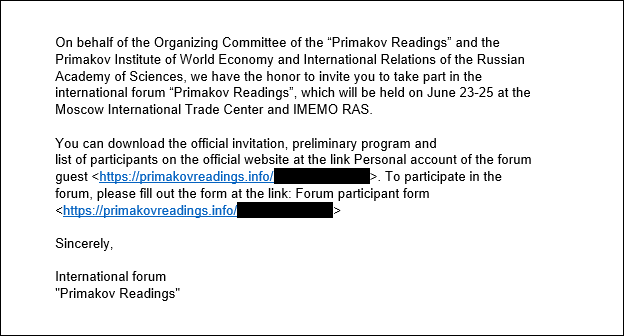
Our research is still ongoing, but judging by the functionality of the sophisticated malware used in the attack, it seems the attackers’ goal was espionage. The malicious emails contained invitations supposedly from the organizers of a scientific and expert forum, “Primakov Readings”, targeting media outlets, educational institutions and government organizations in Russia. Based on the content of the emails, we dubbed the campaign Operation ForumTroll.
Example of a malicious email used in this campaign (translated from Russian)
At the time of writing, there’s no exploit active at the malicious link – it just redirects visitors to the official website of “Primakov Readings”. However, we strongly advise against clicking on any potentially malicious links.
The exploit we discovered was designed to run in conjunction with an additional exploit that enables remote code execution. Unfortunately, we were unable to obtain this second exploit, as in this particular case it would have required waiting for a new wave of attacks and exposing users to the risk of infection. Fortunately, patching the vulnerability used to escape the sandbox effectively blocks the entire attack chain.
All the attack artifacts analyzed so far indicate high sophistication of the attackers, allowing us to confidently conclude that a state-sponsored APT group is behind this attack.
We plan to publish a detailed report with technical details about the zero-day exploit, the sophisticated malware, and the attackers’ techniques.
Kaspersky products detect the exploits and malware used in this attack with the following verdicts:
HOUSTON, March 25, 2025 (GLOBE NEWSWIRE) — W&T Offshore, Inc. (NYSE: WTI) (“W&T” or the “Company”) today announced the promotion of Huan Gamblin to Executive Vice President and Chief Technical Officer. Mr. Gamblin has over 20 years of energy industry experience.
Tracy W. Krohn, Chairman and CEO, commented, “We are very pleased to promote Huan to Executive Vice President and Chief Technical Officer, where he will become an integral part of our executive leadership team. Mr. Gamblin has extensive industry experience and over the past four plus years has taken on more responsibilities at W&T and has been instrumental in our acquisitions strategy. We look forward to Huan’s continued contributions to our success as a leading Gulf of America operator.”
Huan Gamblin joined the Company in 2020 and was named Executive Vice President and Chief Technical Officer in March 2025. Since joining W&T in 2020, he has served as Manager of Acquisition and Divesture and, in May 2022, as Vice President of Business Development. Mr. Gamblin has 20 years of domestic and international industry experience. Prior to joining W&T, Mr. Gamblin was the Algeria Reservoir Engineering Manager with Occidental Petroleum (“Occidental”). Before Occidental, Mr. Gamblin held various engineering positions at Anadarko Petroleum’s U.S. onshore, Gulf of America, and international assets.
Mr. Gamblin is a graduate of the University of Texas, where he earned a bachelor’s degree in Petroleum Engineering.
About W&T Offshore
W&T Offshore, Inc. is an independent oil and natural gas producer with operations offshore in the Gulf of America and has grown through acquisitions, exploration and development. As of December 31, 2024, the Company had working interests in 52 fields in federal and state waters (which include 45 fields in federal waters and seven in state waters). The Company has under lease approximately 646,200 gross acres (502,300 net acres) spanning across the outer continental shelf off the coasts of Louisiana, Texas, Mississippi and Alabama, with approximately 493,000 gross acres on the conventional shelf, approximately 147,700 gross acres in the deepwater and 5,500 gross acres in Alabama state waters. A majority of the Company’s daily production is derived from wells it operates. For more information on W&T, please visit the Company’s website at www.wtoffshore.com.
CONTACTS:
Al Petrie Investor Relations Coordinator investorrelations@wtoffshore.com 713-297-8024
Sameer Parasnis Executive VP and CFO sparasnis@wtoffshore.com 713-513-8654
Headline: Members look into bolstering support for trade policies, fast-tracking digital trade growth
The Organisation for Economic Co-operation and Development (OECD) noted that Aid-for-Trade disbursements reached USD 48 billion in 2023, representing a 5 per cent decrease from 2022. While most funds were channelled towards strengthening infrastructure and productive sectors, the OECD noted, only 2 per cent of Aid for Trade was allocated to trade policy and regulations.
Representatives from Australia, Barbados, the Pacific Islands Forum and the United Kingdom shared their insights into ways to increase the participation of developing economies in the multilateral trading system. They highlighted that it is important for economies to develop and implement national strategies and to coordinate effectively with development partners. For example, progress in implementing the Pacific Aid-for-Trade Strategy, covering services, e-commerce, trade facilitation and quality infrastructure, was acknowledged.
The financial support dedicated to the WTO accession of Comoros and Timor-Leste was highlighted. Speakers also acknowledged the support provided under the Advisory Centre on WTO Law, the Enhanced Integrated Framework, the Fish Fund and the Standards and Trade Development Facility.
The role of cooperation among developing economies in strengthening these economies’ trade capacities was also recognized. Speakers welcomed greater collaboration with the private sector on scaling up financial support.
Members also examined the European Union’s 2024 Aid for Trade Progress Report. As one of the top donors of Aid for Trade, the European Union and its member states provided 36 per cent of the total disbursements in 2022, accounting for EUR 22 billion. The report also highlighted the role of Aid for Trade in creating an enabling environment for investments under the EU’s Global Gateway investment strategy.
According to the Digital Trade Integration Database of the European University Institute, the level of integration into digital trade differs widely across economies, with fewer enabling policies observed in lower-income economies. The database contains information on the digital trade policies of 146 economies.
Speakers noted that in Africa, digital trade integration is being held back by regulatory fragmentation, infrastructure gaps and limited access of small businesses to digital markets.
To bolster the continent’s digital trade expansion, speakers underlined the importance of technical assistance and capacity-building activities to harmonize digital trade regulations, investments in broadband and logistics and greater access of small businesses to digital trade finance. For example, speakers stressed the importance of fully implementing the Digital Trade Protocol of the African Continental Free Trade Area. Estimates indicate this could increase intra-regional trade in services by up to 10.3 per cent.
More information on the WTO-led Aid for Trade initiative can be found here.
Headline: WTO launches call for candidates for 2026 Young Professionals Programme
The WTO Young Professionals Programme (YPP) is aimed at candidates aged 32 or younger as of 1 January 2026 from developing or least-developed WTO members that are under-represented at the professional level in the WTO Secretariat. It offers hands-on experience in addressing international trade issues and participating in WTO work. Selected candidates will be placed in a division that aligns with their interests and the WTO’s needs.
Launched in 2016, the Young Professionals Programme (YPP) is a technical assistance programme overseen by the WTO’s Institute for Training and Technical Co-operation. It is financed by members’ voluntary contributions to the WTO Global Trust Fund.
Full eligibility criteria and an online application form are available here.
DDG Ellard emphasized the achievement by WTO members in successfully concluding the WTO’s Agreement on Fisheries Subsidies, the need to enter it into force, and opportunities offered by the upcoming 3rd UN Ocean Conference (UNOC) to be held in Nice, France from 9 to 13 June.
She noted that the state of global fisheries resources is “alarming,” with 38% of fish stocks overexploited. The Agreement on Fisheries Subsidies will be a powerful tool to address the deterioration of fish stocks by prohibiting subsidies for particularly harmful fishing activities.
Prohibiting such subsidies is not only expected to contribute to the sustainability of ocean resources but will also create an opportunity for WTO members to redirect US$ 20 billion in annual harmful subsidies to more sustainable fishing practices, thereby supporting the livelihoods of millions of fisherfolk around the globe, DDG Ellard said.
DDG Ellard noted that 17 acceptances of the Agreement are still needed from WTO members for it to come into force. “It is our hope to celebrate the entry into force with the international ocean community at UNOC,” she said.
DDG Ellard also highlighted the WTO Fish Fund, which will start operations as soon as the Agreement enters into force. The Fund is designed to assist developing members in implementing the Agreement and establishing sustainable fisheries management.
She noted that a developing or least developed WTO member is eligible for financing from the Fund provided it has ratified the Agreement, creating a powerful incentive to do so.
WTO members are now seeking to build on the Agreement to address subsidies contributing to overcapacity and overfishing, she told participants.
“Members recognize that an agreement on subsidies contributing to overcapacity and overfishing is essential to improve fish stocks and support the economic and environmental sustainability of our oceans for future generations,” she said. “I am confident WTO members will do all they can to get there as quickly as possible.”
Launched in 2010 by Prince Albert II of Monaco, the Monaco Blue Initiative serves as an informal think tank to accelerate the integration of ocean issues into international negotiations on the environment.
More information regarding the WTO’s work with regards to reducing the impact of harmful fisheries subsidies can be found here.
Samsung Electronics SA, in partnership with Concentrix, a global provider of technology and services solutions, is proud to announce the opening of a new Business-to-Business (B2B) customer sales centre in Braamfontein, Johannesburg. This exciting collaboration aims to provide resellers with access to Samsung’s extensive range of innovative products and solutions, further strengthening the company’s B2B relationships across South Africa.
The partnership saw the launch of a state-of-the-art customer centre, which began operations on 01 February 2025. Designed specifically for resellers, the facility focuses on serving the top 300 ICT suppliers (small businesses) and 100 retail independent companies, offering a range of products including home appliances, televisions, and monitors. The customer centre acts as a key resource for B2B clients, driving increased access to Samsung’s offerings and fostering deeper, more impactful relationships with its reseller network.
“We’re excited to partner with Concentrix on this new venture, which will give B2B clients in South Africa the opportunity to directly engage with our products and services in a focused, tailored environment,” said Mike van Lier, Vice President of Consumer Electronics at Samsung South Africa. “This partnership not only allows us to expand our reach within the reseller community but also reinforces our commitment to providing top-notch, innovative solutions to businesses across the region.”
Concentrix, renowned for delivering technology-driven, intelligence-fuelled business solutions, will play a critical role in managing operations at the centre. With a proven track record in driving success for global brands, Concentrix is well-positioned to ensure a seamless experience for Samsung’s B2B resellers.
“We are thrilled to work with Samsung on this dynamic initiative. By providing resellers with greater access to Samsung’s products and solutions, we’re helping to create a more streamlined and efficient process for the B2B sector. This partnership will not only enhance the reseller experience but also foster long-lasting relationships that will benefit all stakeholders involved,” said Brandon Aitken at Concentrix.
The customer centre’s focus on resellers ensures that Samsung can offer specialised support and identify potential issues early in the process, guaranteeing a smooth and responsive experience. This strategic partnership is expected to significantly enhance Samsung’s ability to provide consistent, ongoing support to its B2B clients and further expand its footprint in the market.
The opening of the B2B customer centre marks another milestone in Samsung’s long-standing commitment to innovation, client-centric solutions, and strengthening partnerships across various business sectors. For more information, contact adminsam@concentrix.com.
For more information on Samsung products, visit https://www.samsung.com/za/business/.
Headline: Apple’s Worldwide Developers Conference returns the week of June 9
March 25, 2025
PRESS RELEASE
Apple’s Worldwide Developers Conference returns the week of June 9
WWDC25 will be available entirely online and is free for all developers
CUPERTINO, CALIFORNIA Apple today announced it will host its annual Worldwide Developers Conference (WWDC) online from June 9 to 13, 2025. Developers and students will also have the opportunity to celebrate in person during a special event at Apple Park on June 9.
Available for free to all developers, WWDC25 will spotlight the latest advancements in Apple software. As part of Apple’s ongoing commitment to supporting developers, the conference will provide them with unique access to Apple experts, as well as insight into new tools, frameworks, and features.
“We’re excited to mark another incredible year of WWDC with our global developer community,” said Susan Prescott, Apple’s vice president of Worldwide Developer Relations. “We can’t wait to share the latest tools and technologies that will empower developers and help them continue to innovate.”
Developers and students will be able to discover the latest Apple software and technologies by tuning in to the Keynote. They can also experience WWDC25 throughout the week on the Apple Developer app, Apple Developer website, and Apple Developer YouTube channel. This year’s conference will include video sessions and opportunities to connect with Apple engineers and designers in online labs.
To celebrate the start of WWDC, Apple will also host an in-person experience on June 9 that will provide developers with the opportunity to watch the Keynote and Platforms State of the Union at Apple Park, meet with Apple experts one-on-one and in group labs, and take part in special activities. Space will be limited; details on how to apply to attend can be found on the WWDC25 website.
Apple is proud to support the next generation of developers through the Swift Student Challenge, one of many Apple programs that seek to uplift the next generation of entrepreneurs, coders, and designers. On March 27, this year’s applicants will be notified of their status, and winners will be eligible to apply for the special event at Apple Park. In addition, 50 Distinguished Winners, who are recognized for outstanding submissions, will be invited to Cupertino, California, for a three-day experience.
Apple will share additional conference information in advance of WWDC25 through the Apple Developer app and WWDC25 website.
About Apple Apple revolutionized personal technology with the introduction of the Macintosh in 1984. Today, Apple leads the world in innovation with iPhone, iPad, Mac, AirPods, Apple Watch, and Apple Vision Pro. Apple’s six software platforms — iOS, iPadOS, macOS, watchOS, visionOS, and tvOS — provide seamless experiences across all Apple devices and empower people with breakthrough services including the App Store, Apple Music, Apple Pay, iCloud, and Apple TV+. Apple’s more than 150,000 employees are dedicated to making the best products on earth and to leaving the world better than we found it.
Let me first thank MNI for inviting me to speak at this conference. To kick off, I will briefly discussthe economic outlook in the eurozone and the current lines of thought in the ECB’s monetary policy.
In presenting my remarks here, I will focus particularly on how the significant shifts in world politics of recent weeks will, in my view, affect the euro area economy and the European Central Bank’s monetary policy.
Slide 2: Geopolitics dominates economic outlook
Geopolitics currently dominates and weighs on the outlook for the global economy, and does so with exceptional force.
Russia’s illegal, brutal war of aggression in Ukraine has been going on for more than three years. It has shaken the European security order, and more recent events since the Munich Security Conference a month ago have marked a major disruption in the world order – in a way that is dangerous for Europe. This has forced the European Union to seek to strengthen its common defences.
It is clear that the United States is undergoing a fundamental change of direction both in its foreign and security policy and in its domestic political development. This is not necessarily just a temporary phenomenon, but may be a more permanent turn in US politics. And US foreign policy is now operating under a very different kind of rationality than it used to.
“America first” trade policy in the US is profoundly protectionist but highly unpredictable. There will be no winners in a trade war. Tariffs and the related uncertainty will hit investment and slow down growth everywhere. The latest indicators on the US economy point to weaker than expected growth, which would also affect growth prospects in Europe.
As a result of the turmoil in world politics in recent weeks, Europe has woken up to the necessity of strengthening common defence. The situation is acute, and many EU countries, led by Germany, have announced significant decisions to increase defence spending. Europe is now taking action and responding to the challenge of forming and financing a common, strong defence.
These defence investments will have to be made in a situation where the public deficits of EU Member States are already large. However, the investments required for defence are of such a magnitude that they cannot be financed simply by increasing taxation or cutting other public sector expenditure. It is therefore, in my view, justified, in the short term, to utilize the flexibility elements included in the EU’s new fiscal rules, provided that longer-term debt sustainability is not compromised.
This is why we also need common European financing solutions, implemented in a way that strengthens our common security and accelerates joint procurement and production – I am thinking of air defence and drone production, for example.
Slide 3: Bank of Finland’s scenario calculation: A trade war would weaken growth worldwide
Recent statements from the United States about imposing import tariffs have raised the threat of a trade war in the global economy. An analysis published a week ago by the Bank of Finland illustrates the significant risks that a trade war would pose to economic growth.
The study assumes that the United States would impose a 25% tariff increase on all imports from the euro area and a 20% increase on all imports from China. It also assumes that the euro area and China would impose equivalent tariffs on the United States. Moreover, the calculations take into account the potential economic effects of increased uncertainty affecting economic policy.
The scenario demonstrates that there are no winners in a trade war. As a result, world GDP would decline by more than 0.5% per year. The effects on the euro area and China would be even greater. A key aspect of a trade war is the rise in uncertainty, which we are already witnessing and which could lead to a reduced willingness to investment among businesses.
Efforts should, in any case, be made to prevent the threat of a trade war through a fair negotiated solution to mitigate the negative effects on growth. To support a negotiated solution, Europe should be prepared to respond to the imposition of tariffs with potential countermeasures.
It must also be said that when a brutal war is being fought on European soil, a trade war is the last thing we need right now – especially among allies.
Slide 4: Growth in the euro area economy picking up gradually
US tariffs and increased uncertainty are already having adverse effects on economic growth outlook in the euro area in the immediate and near term.
Europe’s response to the deterioration of the security situation will have its own effects on European economies, which are very difficult to quantify at this stage.
The growth outlook for the euro area remains subdued. According to the ECB’s March forecast, growth in the euro area is gradually picking up, but at a slower pace than expected, and growth risks are on the downside.
In addition to cyclical factors, the euro area economy is also experiencing structural problems. In the ECB’s new forecast, productivity growth is slower than before. The weakness appears to be more structural than previously. But it would be wrong to say that it is entirely structural.
One – if not the only – reason for Europe’s slow productivity growth is precisely the weak development of investment in recent years. The background is a great deal of uncertainty fuelled by geopolitics, but there were also tight financial conditions for a long time.
Let me reveal that I don’t belong to those who makes a crystal-clear distinction between structural and cyclical factors – it would be against my macroeconomic training. Rather, I see the distinction as a line drawn in water. Here, I feel like applying a giant of economics: “In the long run, we will all retire. But in the meantime, we need more productive investment.”
In other words: although the euro area’s longer-term challenges of growth and competitiveness cannot be solved by monetary policy, the fall in interest rates brings welcome room for manoeuvre for households and companies. Rate cuts have been supportive of the investments that are required to improve productivity. Of course, in the long term, the level and growth of investments is determined by their expected real returns.
Although there is little to be positive about in the security situation in Europe, the expected increases in defence spending and investment are at least likely to support GDP growth over the medium-term.
Slide 5: Euro area inflation stabilising at the 2% target
Inflation in the euro area is stabilising at the ECB’s 2% target. The path of disinflation has been pretty much in line with forecasts. Wage inflation has largely decelerated, and forward-looking wage indicators point to a clear slowdown in wage growth. Most measures of core inflation − which excludes energy and food prices − also point to a sustained convergence of inflation around the 2% target over the medium term.
Risks to the inflation outlook are two-sided. Protectionism in world trade dampens growth and increases uncertainty about the inflation outlook. Geopolitical tensions pose a wide range of risks to the energy market, consumer confidence and corporate investment.
Slide 6: ECB’s decision to ease monetary policy spurred by inflation stabilising and growth weakening
The ECB’s latest decision to ease monetary policy leaned on the fact that inflation is stabilising and growth weakening. Thus, the Governing Council decided to cut the key policy rate by 25 basis points.
The rate cut was the sixth since we started easing monetary policy. Since last June, the deposit facility rate has been lowered by a total of 1.5 percentage points, from 4% to 2.5%. Monetary policy is thus becoming meaningfully less restrictive.
The decision was based, as usual, on three elements: the inflation outlook, the dynamics of underlying inflation and the strength of monetary policy transmission.
We are not pre-committed to any interest rate path. Policy rates are set at each meeting based on the latest information and our comprehensive assessment, next time on 17 April. The Governing Council retains full freedom of action in times of pervasive uncertainty.
Slide 7: Europe is under challenge from the world of geopolitics – investment is needed now in security and productivity
Let me now conclude. The world is now experiencing a transition of potentially similar magnitude as 30 years ago, when the Berlin Wall fell, the Cold War ended and Europe united. At that time, the evolution of humanity took a step forward and security rooted in cooperation was strengthened.
Today the world only is in reverse gear: power politics has returned in a brutal way with Russia’s invasion, the United States is standing by Russia and playing sphere-of-influence politics, and China is challenging the entire international order.
But we must be able to navigate even in this geopolitically difficult terrain. With the Munich Security Conference, Europe has received yet another wake-up call.
At the same time, we must focus on our own economic problems. Europe needs investments in productivity growth – in human capital and in research and innovation. Protectionism highlights the need to complete the single market and expand the EU’s network of free trade agreements.
The stabilisation of inflation and the weakening of the growth outlook have supported monetary policy easing since last summer. The ECB’s monetary policy has been reasonably successful in bringing inflation down without inflicting unnecessary pain to the real economy.
The past few weeks have shown that Europe must urgently get its act together and stand united in the face of external security threats. In the coming weeks and months, Europe will have to demonstrate that it is taking action and meeting the challenge of strengthening its defence. There is no time to waste.
Thank you very much. I am happy to take any questions you have.
Thank you for inviting me to speak today. It’s always a pleasure to be back in my home town, and particularly here at Leicester University, not least because I went to school next door.
I am going to speak today about a topical subject – economic growth. The question I set myself is, what does it take to create a sustained increase in the growth rate of the economy in today’s world? I’m going to range quite wide in answering the question, drawing in the current situation here in the UK and the world, and some economic history too.
Economic growth is, quite simply, the rate of expansion of the size of the economy. Let me start by explaining how it matters to the Monetary Policy Committee when we decide on the appropriate level of interest rates to achieve our objective of price stability, the 2% inflation target. There are two parts to why growth matters for monetary policy – the outcome and the inputs. On the first, quite simply, low and stable inflation is the best contribution monetary policy can make to growth in the economy. The same goes for financial stability, our other core responsibility as the central bank, which is also a key condition for growth.
On the inputs side, growth matters because monetary policy decisions require us to assess the inflationary consequences of the pressure on economic resources in this country. That pressure reflects the balance between demand and supply in goods and services and labour markets. To observe that level of pressure, we can’t just look at actual national income or output and employment. If that’s all we did, we would be left saying “so what?” We have to compare the actual position with the productive potential of the economy (the supply capacity of the economy) and in doing so assess resource utilisation and thus the degree of pressure.
Headline: How AI agents and digital threads will transform the manufacturing industries
Manufacturing is set for a major transformation with AI agents. These AI agents are programs that interact with their environment, perceive data, and act on that data, enabling organizations to gain insights, speed up innovation, and transform value chains. At Hannover Messe 2025, Microsoft and our partners will showcase how these technologies are creating a more connected, efficient, and intelligent future for the industry. Organizations will see how they can move faster, adapt smarter, and lead with confidence.
Yet even with all this progress, for decades fragmented systems and heterogenous environments have kept digital threads within the industry largely aspirational, preventing most organizations from achieving synchronized operations. A persistent inability to connect modern technology solutions with aging infrastructure has also slowed the collaboration long promised to manufacturers. Together, unified data and AI are now enabling organizations of all sizes to break through these barriers, transforming digital threads from static, disconnected datasets to dynamic networks. With AI agents serving as the interface, every worker can surface the overall equipment effectiveness (OEE), total cost of ownership (TCO), and return on investment (ROI) insights necessary to drive decision-making.
Explore Microsoft Cloud for Manufacturing
At Hannover Messe 2025, Microsoft is showcasing how new AI agents and partnerships with leading software vendors can help manufacturers deliver secure, scalable innovation from the shopfloor to the boardroom. Attendees will experience firsthand how data-driven intelligence and AI-enabled solutions will reshape manufacturing.
AI agents supporting the development of frontline workers
Manufacturing transformation is reaching into every aspect of operations. Frontline workers now have access to AI agents providing them with enhanced guidance needed to make informed decisions. To expand this modern toolbox, we announced back at Ignite 2024 the public preview of Factory Operations Agent in Azure AI Foundry. An AI-powered assistant, Factory Operations Agent streamlines operations—enabling operators, production, and leaders to quickly access insights and optimize manufacturing processes through natural language querying. In doing so, the agent accelerates issue resolution and root cause analysis to improve productivity within day-to-day manufacturing operations.
As the industry struggles with turnover, worker skilling is an ever-present challenge. The World Economic Forum found that 63% of industry leaders believe skilling to be a significant barrier to growth.1 Manufacturers need no-code and low-code options that democratize the power of AI without the need for extensive coding. With this in mind, we are announcing the same Factory Operations Agent now available in Copilot Studio in public preview, where with one-click it can be easily integrated into products like Microsoft Teams.
Finally, we’re announcing the public preview of Factory Safety Agent in Copilot Studio. This low-code, customizable solution provides workers with answers to occupational health and safety (OHS) questions and guidelines. It can also streamline safety inspections and personalize workforce training.
Also, at Hannover Messe 2025, we will be showcasing state of the art technologies that will enhance the future of frontline work, like with our customer Sanctuary AI.
Sanctuary AI is shaping the future of frontline work, ushering in the era of autonomous labor with the power of Microsoft Azure. As frontline labor shortages intensify, manufacturers can explore deploying advanced general-purpose robots with dexterity-driven physical AI to automate repetitive, complex, and unsafe tasks to enhance operational efficiency. With Azure’s high-performance graphics processing units (GPUs), Sanctuary AI can train machine learning models at scale, pushing the boundaries of dexterous intelligence.
Advancing innovation in digital engineering with generative AI
Manufacturers shape their market leadership through digital engineering and design. By accelerating development and prototyping, and reducing time-to-market, AI-powered generative design is empowering manufacturers to create new high-performing, customer-centric products.
GenAI use cases to modernize manufacturing
Explore the value generative AI creates across the organization
Aras is introducing Aras InnovatorEdge, a low-code application programming interface (API) management framework embedded in the Aras Innovator® platform. This solution simplifies API creation and integration, enabling secure, scalable data connectivity and enhancing collaboration, operational efficiency, and decision-making across enterprises. It integrates seamlessly with Microsoft Fabric, unlocking deeper insights and optimizing decision-making across the digital engineering landscape.
Autodesk and Microsoft collaborate to create an AI-powered digital thread to help manufacturers gain efficiencies, reduce costs, and compete smarter. Autodesk® Fusion, the industry cloud for manufacturing, connects people, data, and process through the product development lifecycle. Autodesk Data solutions in Fusion Manage and Microsoft Fabric will enable efficient data management and process optimization. Additionally, Autodesk’s digital twin offerings with Tandem, factory simulation through FlexSIM, and factory operations management with Fusion Operations all benefit from this collaboration, ensuring that these tools work seamlessly across the IT and OT ecosystem.
Windchill by PTC is a crucial platform for engineering and manufacturing teams globally. To support manufacturers aiming to integrate AI across their value chains, PTC and Microsoft are partnering to develop an enterprise data framework and multi-agentic model within Microsoft Fabric. This collaboration extends digital thread capabilities beyond traditional product lifecycle management (PLM), integrating data from enterprise resource planning (ERP) and manufacturing execution system (MES) systems, and enabling AI-powered insights and workflows.
Preparing the factory edge for AI
AI is redefining factory operations, but to fully capitalize on shop floor investments, manufacturers need to integrate their on-premises industrial edge solutions with the cloud.
A core component of the Azure adaptive cloud approach, Azure IoT Operations is built on industry standards. Capturing data from industrial equipment assets and devices, Azure IoT Operations normalizes it at the edge—sending operational insights to the cloud and back.
Husqvarna is leveraging Azure IoT Operations and AI tools to digitally transform its factory floors. Their AI Vision Companion enhances visual quality control for chainsaw production, while AI chatbots assist night workers with troubleshooting, improving efficiency, and reducing downtime. With these new capabilities, Husqvarna expects to double their in-market connected devices and boost robotic lawn mower sales, expanding Azure IoT Operations from two to 40 factories globally by summer 2025.
Siemens and Microsoft have expanded their partnership, Siemens Industrial Edge works seamlessly with Microsoft Azure IoT Operations, making OT and IT data planes fully interoperable for manufacturing. This joint effort streamlines data flow between edge and cloud, enhancing machine performance, product quality, and maintenance efficiency, and enabling manufacturers to adopt AI and digital twin technologies for more adaptive, optimized production.
Making AI-powered digital threads a reality for manufacturers
The nervous system of industrial operations, digital threads weave together critical information, processes, and people across manufacturing segments. Grounded in unified operational (OT), information (IT), and engineering (ET) data, the electronic frameworks can empower individuals with relevant, timely insights. From initial concept to customer support, this continuous flow of data connects and enriches every aspect of manufacturing.
For over a century, Rolls-Royce has been a force for progress; powering, protecting, and connecting people everywhere. Today, with digital transformation at the forefront, the company is redefining how its world-class products are designed, built, and maintained. Hannover Messe 2025 visitors will see firsthand how AI and cloud technologies are shaping the future of aerospace. With the help of Siemens and Microsoft, Rolls-Royce is leveraging AI to streamline production, boost engine efficiency, and predict maintenance needs before issues arise. Rolls-Royce is also helping provide more efficient, reliable, and low-emissions energy solutions, powering everything from critical infrastructure to data centers. Rolls-Royce isn’t just keeping up with the digital revolution—it’s driving it.
Without AI, manufacturing data is difficult to navigate. Data quality, standardization, and integration have been unreliable. Microsoft is helping manufacturers make sense of their data to unlock the AI opportunity. With Microsoft Fabric, manufacturers can integrate data across different departments and teams. Traditionally, this data is trapped within separate systems. Parsec and Tulip integrations mark another major step in our ability to drive operational intelligence, enhancing shop floor and frontline execution.
Parsec, developer of the industry-leading MES, TrakSYS , today announced an upcoming integration with Microsoft Fabric and the factory operations agent in Azure AI Foundry solution to help deliver generative AI to manufacturing organizations. Dubbed TrakSYS IQ, this industry-defining functionality will enable users to retrieve and analyze factory data through a conversational user interface, bolstering productivity and data-based decision-making.
Tulip, a leader in frontline operations solutions, announces its integration with Microsoft Fabric. This integration enables the Tulip Frontline Operations Platform to deliver scalable analytics across multiple factories, leveraging rich datasets for machine learning to provide real-time feedback and alerts to supervisors and operators.
See Industrial AI in action at Hannover Messe 2025
The future of manufacturing is powered by AI. This year, at Hannover Messe 2025, attendees will have the opportunity to experience how Microsoft and its partners are supporting the industry transformation—from digital engineering, on factory floors, with frontline workers, and through digital thread. Join us at Hall 17, Stand G06.
Thanks to all partners and customers joining Microsoft at Hannover Messe 2025: ABB, Accenture Avanade, Autodesk, AVEVA, AVL, Bayer, Blue Yonder, Bosch, Bühler Group, C3.ai, Capgemini, Cognite, Databricks, EPLAN, Hexagon, Husqvarna, Kongsberg Digital, Litmus, MTEK, NVIDIA, NTT Data, o9, Parsec, PTC, PWC, Rescale, Rockwell Automation, Rolls-Royce, Sanctuary AI, Sandvik, Schneider Electric, Siemens, Sight Machine, Symphony AI, TeamViewer, TCS, and Tulip.
Explore Microsoft Cloud for Manufacturing
1WEF: Skill Gaps are the Biggest Barrier to Transformation, Skillsoft.
Dayan Rodriguez
Corporate Vice President, Manufacturing and Mobility, Microsoft
As the Corporate Vice President of Manufacturing & Mobility at Microsoft, Dayan Rodriguez leads the sales strategy and vision across these industries to accelerate growth, build differentiated offerings and drive new business outcomes for customers and partners. Previously, Dayan served as global vice president and general manager for Honeywell Industrial Automation. Dayan enjoys spending time with family, traveling, reading, learning, applying new technologies and staying active through various water sports activities.
A statement of the Financial Stability Committee will be published at 8:30 tomorrow, Wednesday 26 March. The bank‘s Financial Stability Report will be published at 8:35. At 9:30, a press conference on the statement and the contents of the Financial Stability Report begins.
On March 25, 2025, H.E. Mrs. Dilma Rousseff, President of the New Development Bank (NDB) met with President of Indonesia H.E. Prabowo Subianto at the Presidential Palace in Jakarta, Indonesia.
The Presidents discussed potential collaboration opportunities. During the meeting, President Subianto announced that Indonesia will join the New Development Bank.
President Rousseff said that it is a great honor to have Indonesia as a new member country, recognizing the importance of Indonesia for the region, for the world, and for the BRICS.
“We are a bank from the Global South, for the Global South. NDB respects the sovereignty of each member country and for that we are demand-led. We rely on the guidance of the strategies, plans, projects and priorities of each country to do a better job. Indonesia has all of these laid down in its Development Strategy: 2025 – 2045, its National Medium-Term Development Plan: 2025 – 2029, and its National Strategic Projects List, with 77 projects that provide investment opportunities,” said President Rousseff, adding that Indonesia’s participation in the NDB would open an enormous potential for a long-term partnership.
President Rousseff added that NDB and Indonesia share the same priorities, mainly logistics infrastructure (railways, roads, ports and airports) and digital connectivity. We both aim to invest in sustainable development, energy transition, especially in renewables, and in urban modernization (water and sanitation, treatment of waste and electricity distribution). Our common commitment also includes projects that address inequality, overcome hunger and extreme poverty, and enhance education, health and housing.
“Development is crucial for all EMDCs to reduce their dependency on commodities and avoid the middle-income trap. Catching up to the advanced economies, in the era of fourth industrial and technological revolution, requires investment in technology and innovation, which are a common objective of NDB and Indonesia,” said President Rousseff.
Ladies and gentlemen, esteemed guests, colleagues,
It is a great pleasure to welcome you today to this conference, jointly organized by the Central Bank of Cyprus and the European Stability Mechanism (ESM). I extend my sincere gratitude to our distinguished speakers and participants for joining us today to engage in an important discussion on the structural transformation of the Cypriot economy over the recent years.
Cyprus stands at a pivotal moment in its ongoing economic evolution. Over the past decade, we have witnessed significant shifts in our economic and banking models, from the recovery following the financial crisis of 2013 to a more diversified and resilient economy today. At the same time, global and regional developments-including geopolitical and trade tensions, technological advancements, and climate imperatives- are shaping a new economic reality that requires strategic adaptation and agile forward-looking policies, but they are also fueling uncertainty that warrants vigilance and agility.
The ESM has played a crucial role in safeguarding financial stability in the euro area and has been a key partner in Cyprus’s economic recovery and resilience. Its role in ensuring a robust macroeconomic and financial performance is as relevant today as it was during the crisis years. However, stability and robustness alone are not enough-we must also ensure that our economy is built on a foundation of sustainability, innovation, and inclusiveness.
The Banking Sector: a pillar of economic stability
A critical component of our economic transformation has been the strengthening of our banking sector. Over the past decade, Cyprus has made remarkable progress in enhancing financial stability, reducing non-performing loans, and improving regulatory oversight. The banking sector today is resilient and enjoys stronger capital and liquidity buffers, among the highest in the euro area. These reforms have positioned our financial institutions to support economic growth more effectively.
Looking ahead, the continued modernization of our banking system will be crucial. Embracing digitalization, strengthening financial literacy, and ensuring access to financing for businesses and households are key priorities. Additionally, aligning with European banking standards and sustainability frameworks will further enhance the sector’s role in fostering long-term economic stability. The resilience and adaptability of our financial institutions will be instrumental in supporting Cyprus’s broader economic transformation.
Structural Changes: the future of the Cypriot economy
Cyprus has made substantial progress in bolstering its financial system and expanding its economic diversification. However, structural challenges persist, and our discussions today will center on effective strategies to tackle them. I will now mention some of the key areas of transformation that have strengthened Cyprus’s ability to withstand external shocks, whether from financial market fluctuations, geopolitical shifts, or supply chain disruptions:
We have reduced reliance on traditional sectors and expanded our footprint on industries such as technology, fintech, and renewable energy.
The adoption of digital financial services enhanced productivity, and promoted innovation.
We have aligned our economy with European and global sustainability goals, thus ensuring that growth is both environmentally responsible and economically viable.
As regards labour market and skills development, we have adopted demographic changes by fostering lifelong learning, and ensuring that our workforce is equipped with the skills necessary for the jobs of the future.
Structural reforms and the Stability and Growth Pact
Structural changes are not just a necessity for economic modernization, they are also closely linked to the European framework for fiscal and economic governance. The Stability and Growth Pact (SGP) sets the rules for sound public finances in the euro area, ensuring that fiscal policies support economic stability and sustainable growth. As Cyprus continues its path of economic transformation, it is imperative that our structural reforms are aligned with the principles of fiscal responsibility, debt sustainability, and macroeconomic resilience. The budget surplus for 2024, which reached 4,5% of GDP, illustrates our commitment to fiscal responsibility. Furthermore, the trajectory of public debt, which reached 61,9% in January 2025, reinforces the country’s progress toward long-term financial stability.
The SGP framework emphasizes structural reforms that enhance productivity, competitiveness, and economic resilience. For Cyprus, this means:
Strengthening public finances further while supporting growth-enhancing reforms in key sectors.
Ensuring that investments in digital and green transformation are conducted in a fiscally sustainable manner.
Enhancing the efficiency of public administration and regulatory frameworks, fostering an environment that supports private sector growth and innovation.
At the Central Bank of Cyprus, we recognize the importance of the balance between fiscal prudence and strategic investment in long-term growth. Our policies must safeguard that Cyprus continues to comply with the European fiscal framework while creating the conditions for sustainable economic progress.
A shared responsibility for the future
While challenges remain, Cyprus has repeatedly exhibited through time endurance and its ability to adapt, reform, and progress. It is now the time to navigate the next steps in this journey, identifying policy priorities, investment opportunities, and regulatory frameworks that will further shape a healthy and prosperous future of our economy. A research and policy center has been recently established at the Central Bank of Cyprus, dedicated to conducting in-depth analysis and research to inform and guide our policy decisions.
I encourage an active engagement in today’s discussions, exchange of ideas, and exploring solutions that will enable Cyprus to position itself as a dynamic, competitive, and resilient economy within the euro area and beyond.
Once again, I would like to extend my sincere appreciation to our ESM colleagues for their collaboration and I wish you all a productive and insightful participation.
We are living in unprecedented, turbulent times. Not a single week goes by without significant shifts in the global economy. We are seeing a surge in tariffs, an unravelling of global trade and a growing transatlantic divide leading to new geopolitical realities, all while wars continue right on our doorstep.
Meanwhile, the debate on financial regulation is also intensifying. Some have raised the question as to whether regulation and supervision have become too conservative that they may be hindering competitiveness. Perhaps some of the investors and bankers here in this room are asking themselves the very same question.
In my remarks today, I will highlight that, particularly in an era of heightened economic uncertainty and geopolitical shifts, we need competitive banks that ensure the flow of finance into investment and innovation. I will argue, however, that a vital pre-condition for banks to play their fundamentally important role of financing the real economy is that they remain resilient. Because a banking system that cannot withstand shocks cannot reliably finance the economy, especially when it matters most. And while there are merits in removing undue complexity from the regulatory framework without compromising resilience, the debate on competitiveness should not be used as a pretext for watering down regulation. Rather than reducing complexity by lowering regulatory requirements, it would be more effective to achieve simplification through European harmonisation: don’t cut rules, harmonise them.
Firstly, I would like to thank Your Majesty for being present at today’s King of Spain Prize in Economics award ceremony and for gracing this institution with your attendance once again.
The King of Spain Prize in Economics was established in 1986 by the Fundación José Celma Prieto. I would like to take this opportunity to thank the foundation’s president, Javier Celma, for continuing the generous patronage his father began.
For this twentieth edition of the award, it has been my honour to preside the prize jury, made up by Álvaro Rodríguez Bereijo as vice-president, José Ramón Álvarez Rendueles, José Luis Feito Higueruela, Julio Segura, Carmen Reinhart and Carmen Herrero Blanco.
Following its deliberations on 29 October last year, the panel resolved to award the King of Spain Prize in Economics to Roberto Serrano for his brilliant academic and research trajectory, reflected in the quantity and quality of his publications. The prize winner is also an example of personal merit and dedication to the community as an economist.
Roberto Serrano was born in Madrid in 1964 and holds a degree in Economics from the Complutense University of Madrid, where he started his teaching career as an assistant lecturer. He was subsequently awarded a Fundación Ramón Areces Fellowship and a Fulbright Fellowship, which enabled him to pursue his M.A. and PhD studies at Harvard University. He completed his PhD there in 1992 under the direction of professors Mas-Colell, Maskin (2007 Nobel Prize in Economics) and Green. Serrano became a professor of economics at Brown University in 1997, when he was only 33 years old, and is currently the Harrison S. Kravis Professor at Brown University.
Professor Serrano defines himself as an economic theorist. Economic theory works with abstract and mathematical models to shed light on the functioning and behaviour of the economy. And within economic theory, Serrano has specialised in microeconomics, which focuses on the behaviour of individuals and firms as economic agents. Microeconomics is often overshadowed by macroeconomics, which deals with large aggregates and dominates economic news. This is why microeconomists often receive less attention and recognition. This prize rightfully acknowledges the centrality (which I believe is growing) of microeconomics in economic science. As the availability of microdata and the computational capacity for processing them has grown, not only has it become necessary to develop new empirical instruments to analyse them, but also new microeconomic conceptual models to understand the logic and fundamentals of the results obtained.
In the realm of microeconomics, professor Serrano is recognised globally as a leading authority in game theory, which studies strategic decisions made by individuals or “players” in situations where each participant’s outcome depends on the decisions of others.
Among his numerous research contributions are his studies on the non-cooperative aspects of cooperative game theory and his work on designing mechanisms that steer players’ behaviour towards achieving the best outcome for everyone involved, even without mutual cooperation. He also made a significant contribution to risk measurement by developing a risk index in 2008 in collaboration with Nobel laureate Robert Aumann.
Roberto Serrano has published over 80 papers on economics, game theory, operational research and applied mathematics in high-impact academic journals. Ten of these articles have appeared in some of the most prestigious economics journals.
Roberto’s primary concern is improving our understanding of economic reality, thereby fostering societal development. His aim is to better comprehend market mechanisms and economic agents’ incentives in order to help design policies that increase social well-being.
Teaching and sharing knowledge are also integral to his work. He has authored two textbooks, on intermediate microeconomics and welfare economics, which are widely used in universities around the world. As a professor, he has won high praise from his students and has received several awards for his excellence in teaching.
He was included in “The Best 300 Professors”, a guidebook published by The Princeton Review for “finding teachers with the power to change your life”. In it, the 300 highest-rated professors are selected from 60 different academic fields based on interviews with millions of undergraduate students in the United States.
Roberto was elected a Fellow of the Econometric Society in 2013 and a Fellow of the Game Theory Society in 2017. Among his editorial work, his role as editor-in-chief of Economic Letters between 2011 and 2017 is noteworthy.
Roberto Serrano has achieved all this after overcoming great challenges, as he was diagnosed with retinitis pigmentosa when he was a teenager, which made him progressively lose his sight until he became completely blind. Thanks to his determination and the support of his father, Carlos, he was able to finish his university studies with excellent grades. Indeed, the tribute paid to Carlos Serrano by the Complutense University in 2005, with the attendance of his son, was entirely fitting. Fourteen years later, Roberto himself was awarded the title of doctor honoris causa by his alma mater, as a testament to his exceptional merit and personal dedication to the good of the community.
Your Majesty, thanking you once again for your presence at this ceremony, it only remains for me, with your permission, to ask the prize winner to step up to receive the 20th King of Spain Prize in Economics.