NewzIntel.com

    • Checkout Page
    • Contact Us
    • Default Redirect Page
    • Frontpage
    • Home-2
    • Home-3
    • Lost Password
    • Member Login
    • Member LogOut
    • Member TOS Page
    • My Account
    • NewzIntel Alert Control-Panel
    • NewzIntel Latest Reports
    • Post Views Counter
    • Privacy Policy
    • Public Individual Page
    • Register
    • Subscription Plan
    • Thank You Page

Category: Economy

  • MIL-OSI Video: Chief Economists’ Briefing: What to Expect in 2025? | World Economic Forum Annual Meeting 2025

    Source: World Economic Forum (video statements)

    The global economy is poised for another year of uncertainty and uneven growth, according to the World Economic Forum’s latest survey of chief economists.

    Join this session with leading economists from around the world to discuss the emerging economic landscape and the decisions for business and policy-makers in 2025 and beyond.

    Speakers: Gilles Moëc, Fernando Honorato Barbosa, Karen Harris, Sebastian Matthes

    The 55th Annual Meeting of the World Economic Forum will provide a crucial space to focus on the fundamental principles driving trust, including transparency, consistency and accountability.

    This Annual Meeting will welcome over 100 governments, all major international organizations, 1000 Forum’s Partners, as well as civil society leaders, experts, youth representatives, social entrepreneurs, and news outlets.

    The World Economic Forum is the International Organization for Public-Private Cooperation. The Forum engages the foremost political, business, cultural and other leaders of society to shape global, regional and industry agendas. We believe that progress happens by bringing together people from all walks of life who have the drive and the influence to make positive change.

    World Economic Forum Website ► http://www.weforum.org/
    Facebook ► https://www.facebook.com/worldeconomicforum/
    YouTube ► https://www.youtube.com/wef
    Instagram ► https://www.instagram.com/worldeconomicforum/
    X ► https://twitter.com/wef
    LinkedIn ► https://www.linkedin.com/company/world-economic-forum
    TikTok ► https://www.tiktok.com/@worldeconomicforum
    Flipboard ► https://flipboard.com/@WEF

    #Davos2025 #WorldEconomicForum #wef25

    https://www.youtube.com/watch?v=8z1Lv9J3I0c

    MIL OSI Video –

    February 25, 2025
  • MIL-OSI Europe: After three years of war, the Netherlands continues to support Ukraine

    Source: Government of the Netherlands

    News item | 24-02-2025 | 12:02

    On 24 February 2022 Russia launched its full-scale invasion of Ukraine. For three years the Ukrainian people have been fighting for their lives and for their liberty. This article explains why supporting Ukraine remains important – to the whole of Europe.

    Enlarge image
    Wall of Remembrance of the Fallen for Ukraine, in the center of Kyiv.

    Why the Netherlands continues to support Ukraine:

    For the Ukrainian people

    Russia has caused devastation to the daily lives of millions of Ukrainians. Many Ukrainian towns and villages have been completely destroyed. In the areas occupied by Russia, Ukrainians have suffered violence at the hands of Russian soldiers. They have been murdered, tortured and raped. Ukrainian children have also been abducted. With international support, Ukrainians have been defending their country for three years.

    Russia started the war. And Russia could end it at any time.

    For the security of Europe as a whole

    Russia’s aggression is about more than Ukraine. President Putin has spoken publicly about a conflict with ‘the West’. And Russia is stepping up its efforts to undermine European countries. This includes cyberattacks, sabotage, election interference and spreading fake news.

    In other words: by defending itself against Russia, Ukraine is fighting for the security of Europe as a whole. That’s another reason why it’s important to support Ukraine. A Russian victory in Ukraine will not bring an end to the danger. And the costs for Europe will end up being much higher. Europe may have to deal with even more Russian cyberattacks or other kinds of attacks. And with more Ukrainian refugees who are unable to return home.

    For a world in which aggression is not rewarded

    A Russian victory would have consequences for the whole world. It would send a signal to Russia and to China, North Korea and Iran that aggression will be rewarded. And that brute strength is more important than international rules and agreements. That could lead to even more wars.

    Peace through strength, not war through weakness.

    Ukraine must be able to defend itself. And Russia must be made to pay a high price for its aggression. That is why the government is continuing to provide unwavering support to Ukraine. To help secure a positive outcome to the war, based on the idea of: achieving peace by showing strength, not risking further war by showing weakness.

    Dutch support for Ukraine

    The Netherlands continues to support Ukraine. It is for example providing:

    • Military support: equipment, such as munitions, F-16 aircraft and anti-aircraft systems. The Netherlands is also providing training to Ukrainian military personnel.
    • Sanctions against Russia: the sanctions imposed by EU member states are hurting the Russian economy. That makes it harder and more expensive for Russia to keep the war going.
    • Justice for Ukraine: working to ensure that war crimes do not go unpunished and that people who have suffered damage, loss or injury in the war receive compensation.
    • Reconstruction: support to repair damage where it is most needed: water mains, roads, hospitals and the electrical grid. This support is crucial so that Ukraine can continue to function.
    • Humanitarian aid: helping international, Dutch and Ukrainian organisations to provide emergency goods, ensure the availability of drinking water, medicine and food, provide protection, and assist civilian victims.
    • Protection of Ukrainian cultural heritage: Russia is deliberately attacking cultural targets in Ukraine, in an attempt to erase Ukraine’s culture and identity. The Netherlands is supporting Ukraine in the protection of its cultural heritage.
    • Other support: the Netherlands is also helping Ukraine by providing support in areas like healthcare, psychosocial care for victims, agriculture and cybersecurity.

    MIL OSI Europe News –

    February 25, 2025
  • MIL-OSI United Kingdom: Transparency data: Matt Clifford’s declared outside interests

    Source: United Kingdom – Prime Minister’s Office 10 Downing Street

    Transparency data

    Matt Clifford’s declared outside interests

    The outside interests declared by Matt Clifford as a ministerial direct appointee of the Secretary of State for Science, Innovation and Technology.

    Documents

    Matt Clifford’s declared outside interests

    Ref: DSIT-Declaration of interests-Matt Clifford

    HTML

    Details

    Under the Code of Conduct for Board Members of Public Bodies, appointees in the Department for Science, Innovation and Technology are required to declare any private financial or non-financial interests of your own, or of close family members, which may, or may be perceived to, conflict with their public duties.

    Sign up for emails or print this page

    MIL OSI United Kingdom –

    February 25, 2025
  • MIL-OSI Security: Europol steps up efforts to trace sanctioned assets three years after Russia’s invasion of Ukraine

    Source: Europol

    Launched on 11 April 2022, Operation OSCAR was established by Europol to strengthen financial investigations into assets linked to sanctioned individuals and entities following Russia’s invasion of Ukraine. A total of 44 partners, including Eurojust and Frontex, are actively involved. By facilitating intelligence exchange, supporting financial investigations and enhancing international cooperation, Operation OSCAR plays a key role in enforcing EU…

    MIL Security OSI –

    February 25, 2025
  • MIL-OSI Video: Mass Events, Massive Gains? | World Economic Forum Annual Meeting 2025

    Source: World Economic Forum (video statements)

    Taylor Swift’s Eras tour has generated an estimated $5 billion in economic activity, boosting local businesses, filling hotels and stimulating local hospitality sectors. Major global gatherings – from the FIFA World Cup to the Olympics – have served as catalysts for urban regeneration but also pose risks to local economies such as financial strain, under-used infrastructure, and inequality.

    How can the public and private sectors leverage these events to create lasting impact?

    Speakers: Sir Martin Sorrell, H.H. Sheikha Latifa Bint Mohammed bin Rashid Al Maktoum, Patrice Louvet, Anna Marks, Spriha Srivastava

    The 55th Annual Meeting of the World Economic Forum will provide a crucial space to focus on the fundamental principles driving trust, including transparency, consistency and accountability.

    This Annual Meeting will welcome over 100 governments, all major international organizations, 1000 Forum’s Partners, as well as civil society leaders, experts, youth representatives, social entrepreneurs, and news outlets.

    The World Economic Forum is the International Organization for Public-Private Cooperation. The Forum engages the foremost political, business, cultural and other leaders of society to shape global, regional and industry agendas. We believe that progress happens by bringing together people from all walks of life who have the drive and the influence to make positive change.

    World Economic Forum Website ► http://www.weforum.org/
    Facebook ► https://www.facebook.com/worldeconomicforum/
    YouTube ► https://www.youtube.com/wef
    Instagram ► https://www.instagram.com/worldeconomicforum/
    X ► https://twitter.com/wef
    LinkedIn ► https://www.linkedin.com/company/world-economic-forum
    TikTok ► https://www.tiktok.com/@worldeconomicforum
    Flipboard ► https://flipboard.com/@WEF

    #Davos2025 #WorldEconomicForum #wef25

    https://www.youtube.com/watch?v=hwYUrsTxzS8

    MIL OSI Video –

    February 25, 2025
  • MIL-OSI United Kingdom: Support grassroots music venues with a levy on stadium tickets

    Source: Mayor of London

    • Grassroots Music Venues (GMVs) play an indispensable role in producing new talent and growing the UK music scene. Analysis by the Music Venue Trust shows 88 out of the 96 artists (92 per cent) in the 2024 Glastonbury line-up started their careers performing at grassroots venues.1
    • According to the Music Venue Trust, 2023 was the worst year for venue closures since the organisation was launched 10 years ago, with 125 venues shutting down in the UK.2
    • In 2023, GMVs spent £248 million on presenting live music but only generated £131 million in ticket revenue.3
    • On 4th February 2025, the Mayor announced a ‘Nightlife Taskforce’ made up of 11 independent industry professionals to look at the “challenges and opportunities” to the night time economy and find ways to improve it.4

    The London Assembly Economy, Culture and Skills Committee has today published its report – London’s Night-Time Economy – supporting calls for the live music industry to introduce a voluntary levy on arena and stadium tickets to support GMVs in London.

    The report follows an in-depth investigation by the Committee, which saw industry experts, professionals and local authorities provide evidence on London’s night-time economy, what work is currently being done, and any barriers preventing further growth in the sector.

    Key recommendations in the report include:

    • The Mayor should advocate for London’s live music industry to introduce a voluntary levy on arena and stadium tickets to support grassroots music venues in London.
    • The Mayor should work with London Councils to promote best practice in licensing. This should include adding the Ask for Angela scheme to venues licensing conditions, so that operation of the scheme becomes enforceable as part of routine licensing visits.
    • The Mayor should instruct Transport for London to carry out an impact assessment and review existing night tube provision since 2016. This should assess the practicability, benefits or difficulties of expanding the night tube.
    • The Mayor should develop a code of practice for organisations in the entertainment sector in London who employ freelancers, to ensure better pay and conditions for these workers, along similar lines to the Good Work Standard.

    Marina Ahmad AM, Chair of the Economy, Culture and Skills Committee, said:

    “London’s night-time economy plays a pivotal role in the wider economy of the city. One in every four pounds spent in London is spent between 6pm and 6am.

    “Through our investigation, we heard directly from industry experts who highlighted a number of barriers which are preventing further growth in the sector.

    “A key point raised was that grassroots music venues face incredibly challenging financial situations, due to the slim profit margins and increases in rent and business rates.

    “We know that the House of Commons Culture, Media and Sport Committee support the introduction a voluntary levy on arena and stadium tickets to support GMVs, which is why we are calling on the Mayor to support this call, and help these vital venues continue to thrive in London.

    “We are also keen to see the Ask for Angela scheme to form part of venue licensing conditions, to ensure the safety of women and girls in London’s night life.

    “Our report highlights a number of key recommendations which we have shared with the Mayor’s Nightlife Taskforce, and we will push for our recommendations to help shape the work of the taskforce to help London reach its goal of being a leading 24 hour city.”

    Follow us @LondonAssembly.

    MIL OSI United Kingdom –

    February 25, 2025
  • MIL-OSI Asia-Pac: PM-KISAN completes 19 successful installments

    Source: Government of India

    PM-KISAN completes 19 successful installments

    Prime Minister Shri Narendra Modi releases installment to 9.8 Crore Farmers amounting to more than ₹22,000 crore

    Posted On: 24 FEB 2025 3:33PM by PIB Delhi

    Introduction

    Prime Minister Shri Narendra Modi released the 19th instalment of the Pradhan Mantri Kisan Samman Nidhi (PM-KISAN) scheme on 24th February, 2025 in Bhagalpur, Bihar. During the event over 9.8 crore farmers including 2.41 crore female farmers across the country will be benefitted through the 19th instalment release, receiving direct financial assistance exceeding ₹22,000 crore through Direct Benefit Transfer (DBT) without involvement of any middlemen, reinforcing the Government’s commitment to farmer welfare and agricultural prosperity.[1] With this installment, the scheme will be supporting farmers nationwide and further reaffirming the government’s commitment to rural development and agricultural prosperity.


    https://pmkisan.gov.in/Creatives.aspx

    Previously, Prime Minister Shri Narendra Modi released the 18th instalment of the Pradhan Mantri Kisan Samman Nidhi (PM-KISAN) scheme on 5th October 2024 in Washim, Maharashtra. This significant event witnessed over 9.4 crore farmers across the country receiving direct financial benefits, amounting to more than ₹20,000 crore.[2]

    The PM-KISAN scheme is a central sector scheme launched in February 2019 by the Hon’ble Prime Minister to supplement the financial needs of land-holding farmers. Under the scheme, a financial benefit of Rs 6,000/- per year is transferred in three equal instalments, into the Aadhaar seeded bank accounts of farmers through Direct Benefit Transfer (DBT) mode.[3]

    A farmer-centric digital infrastructure has ensured the benefits of the scheme reach all the farmers across the country without involvement of any middlemen. Maintaining absolute transparency in registering and verifying beneficiaries, the Government of India has disbursed over Rs 3.46 lakh Cr. in 18 instalments since inception, as of February 2025.[4]

    Objectives

    With a view to augment the income of the Small and Marginal Farmers (SMFs), the PM-KISAN scheme aims to:

    • Supplement the financial needs of the SMFs in procuring various inputs to ensure proper crop health and appropriate yields, commensurate with the anticipated farm income at the end of each crop cycle.
    • This would also protect them from falling in the clutches of moneylenders for meeting such expenses and ensure their continuance in the farming activities.[5]

    Technological Advancements

    With an objective to make the scheme more efficient, effective, and transparent, continuous improvements in a farmer-centric digital infrastructure have been made to ensure the benefits of the scheme reach all the farmers across the country without any middleman involvement.

    The PM-KISAN mobile app was launched on 24th February 2020. This has been developed with an emphasis on greater transparency and to reach more farmers. The PM-KISAN mobile app servers a simple and efficient extension to the PM-KISAN web portal.[6] In 2023, the app was launched with an additional “Face Authentication Feature”. This enabled remote farmers to do e-KYC by scanning their face without OTP or fingerprint.[7]

    The portal and mobile app offer services like self-registration, benefit status tracking, and facial authentication-based e-KYC. Farmers in remote areas can complete e-KYC via face scans, with provisions to assist neighbours.

    Over 5 lakh Common Service Centres (CSCs) have been onboarded to facilitate registrations and meet mandatory requirements. Additionally, a robust grievance redressal system was established on the portal, and an AI chatbot, Kisan-eMitra, launched in September 2023, provides instant query resolution in local languages regarding payments, registration, and eligibility. Farmers can also assist 100 other farmers in their neighbourhood to complete e-KYC at their doorstep. In addition, the Government of India has also extended the facility for completing e-KYC of farmers to State Government officials, allowing each official to do e-KYC for 500 farmers.[8]

    PM-KISAN AI CHATBOT

    In 2023, an AI Chatbot was launched for the PM-KISAN scheme, becoming the first AI chatbot integrated with a major flagship scheme of the Union government. The AI Chatbot provides farmers with prompt, clear, and accurate responses to their queries. It has been developed and improved with the support of EKstep foundation and Bhashini. The introduction of the AI chatbot in the PM-KISAN grievance management system is aimed at empowering farmers with a user-friendly and accessible platform.

    https://www.instagram.com/pmkisanofficial/p/DAu8QCsiEoH/?hl=en

    The AI Chatbot, accessible through the PM KISAN mobile app, is integrated with Bhashini, which offers multilingual support, catering to the linguistic and regional diversity of the PM KISAN beneficiaries. ‘Digital India BHASHINI’ seeks to enable easy access to the internet and digital services in Indian languages, including voice-based access, and help the creation of content in Indian languages.[9] This integration of advanced technology will not only enhance transparency but will also empower farmers to make informed decisions.[10]

    Additionally, the Department of Posts offers the facility of linking/updating mobile number with Aadhaar for farmers benefiting from PM KISAN scheme. This is to complete e-KYC, through India Post Payment Bank.[11]


    Mandatory information required to enroll in scheme:

    • Farmer’s / Spouse’s name
    • Farmer’s / Spouse’s date of birth
    • Bank account number
    • IFSC/ MICR Code
    • Mobile Number
    • Aadhaar Number
    • Other customer information as available in the passbook which is required for mandate registration


    [12]

    Impact and Achievements

    • Since its inception, the Government of India has disbursed over Rs 3.46 lakh Cr. in 18 installments.
    • A significant saturation drive launched in November 2023 under the Viksit Bharat Sankalp Yatra added over 1 crore eligible farmers to the scheme.
    • An additional 25 lakh farmers were included within the first 100 days of the subsequent government in June 2024. As a result, the number of beneficiaries receiving the 18th installment increased to 9.59 crore.
    • The scheme has a wide reach across various states. For instance, during the 18th installment (August 2024 – November 2024), Uttar Pradesh had the highest number of beneficiaries at 2,25,78,654, followed by Bihar with 75,81,009 beneficiaries. [13]


    A promising journey

    An independent study conducted by International Food Policy Research Institute (IFPRI) in 2019, found that PM-KISAN funds boosted rural economic growth, eased farmers’ credit constraints, and increased agricultural input investments. Further, the scheme has enhanced farmers’ risk-taking capacity, leading them to undertake riskier but comparatively productive investments. The funds received by recipients under PM-KISAN are not only helping them with their agricultural needs, but it is also catering to their other expenses such as education, medical, marriage, etc. These are the indicators of the positive impact of the scheme on the farmers of the country. PM KISAN has truly been a game changer for the farming community of our country.[14]

    Conclusion

    In the last five years, the PM-KISAN Scheme has evolved into a transformative initiative for the farming community, achieving significant milestones in financial inclusion and rural empowerment. Its vision of providing direct and timely assistance to millions of farmers has been implemented with remarkable efficiency. The scheme’s seamless digital infrastructure, which enables direct transfers to beneficiaries’ accounts, has set a benchmark for transparency and effective governance. As PM-KISAN continues to expand its reach, it stands as a testament to the government’s commitment to strengthening the agricultural sector and enhancing the livelihoods of India’s farmers.


    References:

    · https://pib.gov.in/PressReleasePage.aspx?PRID=2105462

    · https://x.com/pmkisanofficial/status/1890710455896670308

    · https://pmkisan.gov.in/Creatives.aspx

    · https://pib.gov.in/PressReleasePage.aspx?PRID=2061928

    · https://pib.gov.in/PressReleasePage.aspx?PRID=2100758

    · https://pmkisan.gov.in/Documents/PMKisanSamanNidhi.PDF

    · https://pib.gov.in/PressReleaseIframePage.aspx?PRID=1947889

    · https://pib.gov.in/PressReleaseIframePage.aspx?PRID=1934517

    · https://sansad.in/getFile/annex/266/AU1302_YaVIcH.pdf?source=pqars

    · https://static.pib.gov.in/WriteReadData/specificdocs/documents/2022/aug/doc202282696201.pdf

    · https://pib.gov.in/PressReleaseIframePage.aspx?PRID=1959461

    · https://pib.gov.in/PressReleasePage.aspx?PRID=1869463

    · https://pmkisan.gov.in/Documents/Note-on-Modes-and-processes-of-ekyc-13th-Nov-English.pdf

    · https://pib.gov.in/PressReleasePage.aspx?PRID=2100758

    · https://sansad.in/getFile/loksabhaquestions/annex/1712/AU795.pdf?source=pqals

    · https://pib.gov.in/PressReleasePage.aspx?PRID=2080200

    Click here to see PDF

    *****

    Santosh Kumar/ Sheetal Angral/ Kritika Rane

    (Release ID: 2105745) Visitor Counter : 31

    MIL OSI Asia Pacific News –

    February 24, 2025
  • MIL-OSI Asia-Pac: Prime Minister Shri Narendra Modi inaugurates the Global Investors Summit 2025 in Bhopal, Madhya Pradesh

    Source: Government of India

    Prime Minister Shri Narendra Modi inaugurates the Global Investors Summit 2025 in Bhopal, Madhya Pradesh

    The Global Investors Summit in Madhya Pradesh is a commendable initiative; it serves as a vital platform to showcase the state’s immense potential in industry, innovation and infrastructure: PM

    By attracting global investors, it is paving the way for economic growth and job creation, Happy to see Madhya Pradesh emerge as a key hub for business and entrepreneurship: PM

    The future of the world is in India! Come, explore the growth opportunities in our nation: PM

    Madhya Pradesh will benefit significantly from the infrastructure efforts of the NDA Government: PM

    Our Governments, at the Centre and in MP, are focusing on water security, which is essential for growth: PM

    The first 50 days of 2025 have witnessed fast-paced growth: PM

    The past decade has been a period of unprecedented growth for India’s energy sector: PM

    In this year’s budget, we have energised every catalyst of India’s growth: PM

    After national level, reforms are now being encouraged at the state and local levels: PM

    Textile, Tourism and Technology will be key drivers of India’s developed future: PM

    Posted On: 24 FEB 2025 3:24PM by PIB Delhi

    The Prime Minister, Shri Narendra Modi today inaugurated the Global Investors Summit (GIS) 2025 in Bhopal, Madhya Pradesh. Addressing the gathering, he apologised for the delay of his entry to the event as there were board exams for the 10th and 12th standard students and his  security measures enroute to the event could have caused inconvenience to the students. Shri Modi said it was his immense pride to welcome the investors and business leaders in the land of Raja Bhoj. He added that today’s event was important as a Viksit MadhyaPradesh or developed Madhya Pradesh is necessary in the journey towards Viksit Bharat. He congratulated the Government of Madhya Pradesh for a wonderful organization of the summit.

    “The whole world is optimistic about India”, exclaimed Shri Modi and said that it was for the first time such an opportunity had risen in the history of India. He added that be it common citizens or policy experts or institutions or countries of the world, everyone had a lot of expectations from India. He highlighted that the comments received in the last few weeks about India will raise the enthusiasm of investors. Recalling the recent statement by the World Bank that India will continue to remain the fastest growing economy, the Prime Minister highlighted that a representative from the OECD remarked, “The future of the world is in India.” He added that recently, a UN organization on climate change declared India as a solar power superpower. This organization also mentioned that while many countries only talk, India delivers results. Shri Modi noted that a new report revealed how India is emerging as an excellent supply chain for global aerospace firms. These firms view India as a solution to global supply chain challenges. The Prime Minister quoted various examples showcasing the world’s confidence in India, which is also boosting the confidence of every Indian state. This confidence is evident at the Global Summit in Madhya Pradesh, he said.

    Noting that Madhya Pradesh is the fifth largest state in India by population, Shri Modi said, “MP is one of the top states in India for agriculture and minerals”. He emphasized that Madhya Pradesh is blessed with the life-giving Narmada River and stated that MP has the potential to become one of the top five states in India by GDP.

    Pointing out the transformative journey of Madhya Pradesh over the past two decades, the Prime Minister remarked that there was a time when the state faced significant challenges with electricity and water, and the law and order situation was even worse. These conditions made industrial development difficult. Shri Modi noted that with the support of the people, their government in Madhya Pradesh has focused on governance over the past two decades. Two decades ago, people were hesitant to invest in MP, while today, MP has become one of the top states in the country for investments, he added. He highlighted that the state, which once struggled with poor roads, is now one of the leading states in India’s EV revolution. He further said that by January 2025, around 2 lakh electric vehicles were registered in MP, reflecting a growth of approximately 90 percent, which demonstrates that MP is becoming an excellent destination for new manufacturing sectors.

    “India has witnessed a boom in infrastructure over the past decade”, highlighted the Prime Minister and remarked that Madhya Pradesh has greatly benefited from this development. He emphasized that the Delhi-Mumbai Expressway, which connects two major cities, passes significantly through MP, providing fast connectivity to Mumbai’s ports and North India’s markets. He also highlighted that Madhya Pradesh now has a road network of over five lakh kilometers. He noted that MP’s industrial corridors are connected to modern expressways, ensuring rapid growth in the logistics sector.

    Touching upon the air connectivity, Shri Modi highlighted that the terminals at Gwalior and Jabalpur airports have been expanded to improve air connectivity. He remarked that the modernization of Madhya Pradesh’s extensive rail network is also underway. He noted that the rail network in MP has achieved 100 percent electrification. He mentioned that the images of Bhopal’s Rani Kamalapati Railway Station continue to captivate everyone. Following this model, 80 railway stations in MP are being modernized under the Amrit Bharat Station Scheme.

    “The past decade has seen unprecedented growth in India’s energy sector”, hailed Shri Modi and remarked that India has achieved remarkable progress in green energy, which was once unimaginable. Over the past 10 years, more than $70 billion (over ₹5 trillion) has been invested in the renewable energy sector, and this investment has created over 10 lakh jobs in the clean energy space last year alone, he added. The Prime Minister noted that Madhya Pradesh has greatly benefited from this boom in the energy sector. He said that today, MP is power surplus with a power generation capacity of around 31,000 MW, of which 30 percent is clean energy. He highlighted that Rewa Solar Park is one of the largest in the country, and recently, a floating solar plant was inaugurated in Omkareshwar. Shri Modi mentioned that the Government has invested around ₹50,000 crore in the Bina Refinery Petrochemical Complex, which will help make Madhya Pradesh a hub for petrochemicals. He emphasized that the MP government supports this infrastructure with modern policies and special industrial infrastructure. Noting that MP has over 300 industrial zones, and investment zones spanning thousands of acres are being developed in Pithampur, Ratlam, and Dewas, he highlighted the immense potential for better returns for investors in Madhya Pradesh.

    Emphasising the critical importance of water security for industrial development, the Prime Minister remarked that, on one hand, efforts are being made towards water conservation, and on the other, a mega mission for river interlinking is being advanced. He highlighted that the agriculture and industry sectors in Madhya Pradesh will greatly benefit from these initiatives. Shri Modi mentioned that the ₹45,000 crore Ken-Betwa River Interlinking Project has recently commenced, which will enhance the productivity of approximately 10 lakh hectares of agricultural land and strengthen water management in MP. He stated that these facilities will unlock significant potential in the food processing, agro-industry, and textile sectors.

    Remarking that after the formation of their Government in Madhya Pradesh, the pace of development has doubled, Shri Modi highlighted that the Central government was working shoulder to shoulder with the MP government for the development of the state and the country. He recalled his promise during the elections to work three times faster in his third term and said, “this speed is evident in the first 50 days of 2025”. Shri Modi highlighted the recent budget, which has energized every catalyst for India’s growth. He emphasized that the middle class, being the largest taxpayer, creates demand for services and manufacturing. Various steps have been taken to empower the middle class in this budget, including making income up to ₹12 lakh tax-free and restructuring tax slabs. He also mentioned that the RBI has reduced interest rates following the budget.

    Pointing out that the budget emphasizes building local supply chains to achieve complete self-reliance in manufacturing, Shri Modi said that there was a time when the potential of MSMEs was limited by previous governments, preventing the development of local supply chains at the desired level. He highlighted that the current priority is to build MSME-led local supply chains. The definition of MSMEs has been improved, and credit-linked incentives are being provided, while access to credit is being made easier, and support for value addition and exports has been increased, he added.

    “Over the past decade, significant reforms have been accelerated at the national level, now reforms are being encouraged at the state and local levels as well”, said the Prime Minister discussing the State De-regulation Commission mentioned in the budget. He noted that continuous dialogue is being maintained with the states and over 40,000 compliances have been reduced in recent years in collaboration with the states. Additionally, 1,500 obsolete laws have been eliminated, he added. The Prime Minister emphasized that the objective is to identify regulations that hinder the ease of doing business and the De-regulation Commission will help create an investment-friendly regulatory ecosystem in the states.

    Stressing that the budget has simplified the basic customs duty structure and reduced rates on several essential inputs for the industry, Shri Modi  said that a time limit is being set for the assessment of customs cases. He highlighted the ongoing efforts to open new sectors for private entrepreneurship and investment. This year, avenues such as nuclear energy, bio-manufacturing, critical minerals processing, and lithium battery manufacturing have been opened for investment, he added and said, “these steps demonstrate the Government’s intent and commitment”.

    “Textile, Tourism, and Technology sectors will play a significant role in India’s developed future and create crores of new jobs”, exclaimed the Prime Minister. He highlighted that India is the second-largest producer of cotton, silk, polyester, and viscose. He noted that the textile sector provides employment to crores and that India has a rich tradition, skills, and entrepreneurship in textiles. Madhya Pradesh, being the cotton capital of India, contributes to around 25 percent of the country’s organic cotton supply and is the largest producer of mulberry silk while the state’s Chanderi and Maheshwari sarees are highly appreciated and have received the GI Tag, he added. He emphasized that investments in this sector will significantly help Madhya Pradesh’s textiles make a global impact.

    Talking about India exploring new avenues in addition to traditional textiles, the Prime Minister highlighted that technical textiles such as agro textiles, medical textiles, and geotextiles are being promoted, and a national mission has been initiated for this purpose, which has been encouraged in the budget. Shri Modi noted that the Government’s PM MITRA scheme is well-known, and seven large textile parks were being developed across the country, including one in Madhya Pradesh. This initiative will elevate the growth of the textile sector to new heights. The Prime Minister urged investors to take advantage of the PLI scheme announced for the textile sector.

    Remarking that just as India is adding new dimensions to its textile sector, it is also enhancing the tourism sector, Shri Modi recalled the MP Tourism campaign, “MP Ajab Hai, Sabse Gajab Hai,” highlighting the significant development of tourism infrastructure around the Narmada River and in tribal areas of Madhya Pradesh. The Prime Minister spoke about the numerous national parks in the state and the immense potential for health and wellness tourism. He mentioned that the “Heal in India” mantra is gaining global popularity, and investment opportunities in the health and wellness sector are continuously increasing. The Government is encouraging public-private partnerships in this area. Shri Modi highlighted that India’s traditional treatments and AYUSH are being promoted on a large scale, and special AYUSH visas are being issued. He emphasized that these initiatives will greatly benefit Madhya Pradesh. He encouraged visitors to see the Mahakal Mahalok in Ujjain, where they will receive blessings from Mahakal and experience how the country is expanding its tourism and hospitality sector.

    Reiterating his statement from the Red Fort, the Prime Minister concluded that now is the right time for investment and increasing investment in Madhya Pradesh. 

    The Governor of Madhya Pradesh, Shri Mangubhai Chhaganbhai Patel, Chief Minister of Madhya Pradesh, Shri Mohan Yadav were present among other dignitaries at the event.

    Background

    The two-day Global Investors Summit (GIS) 2025 in Bhopal, serves as an important platform to establish Madhya Pradesh as a global investment hub. The GIS includes departmental summits; specialized sessions on Pharma and Medical Devices, Transport and Logistics, Industry, Skill Development, Tourism and MSMEs among others. It also includes international sessions like the Global South countries conference, Latin America and Caribbean session and special sessions for key partner countries.

    Three major industrial exhibitions are being held during the Summit. The Auto Show showcases Madhya Pradesh’s automotive capabilities and future mobility solutions. The Textile and Fashion Expo highlights the state’s expertise in both traditional and modern textile manufacturing. The “One District-One Product” (ODOP) Village showcases the state’s unique craftsmanship and cultural heritage.

    Representatives from over 60 countries, officials from various international organizations, over 300 prominent Industry leaders from India and policymakers among others are participating in the Summit.


    Addressing the Global Investors Summit 2025 in Bhopal. With a strong talent pool and thriving industries, Madhya Pradesh is becoming a preferred business destination. https://t.co/EOUVj9ePW7

    — Narendra Modi (@narendramodi) February 24, 2025

    Water security is crucial for industrial development.

    On one hand, we are emphasising water conservation and on the other, we are advancing with the mega mission of river interlinking. pic.twitter.com/hv2QOzmaLw

    — PMO India (@PMOIndia) February 24, 2025


    ***

    MJPS/SR

    (Release ID: 2105735) Visitor Counter : 90

    MIL OSI Asia Pacific News –

    February 24, 2025
  • MIL-OSI Asia-Pac: India’s technological sector is on rise & is expected to reach $300-350 billion in next five years: Raksha Mantri at 16th Foundation Day of IIT Mandi

    Source: Government of India

    India’s technological sector is on rise & is expected to reach $300-350 billion in next five years: Raksha Mantri at 16th Foundation Day of IIT Mandi

    “Biggest challenge today is to not only adapt to the rapidly changing technology, but also to create new technologies. Don’t just be adapters; become the disruptors who lead innovation”

    Posted On: 24 FEB 2025 3:22PM by PIB Delhi

    “India’s technological sector is on the rise and is expected to reach 300-350 US billion dollars in the next five years. With more than 1.25 lakh start-ups and 110 unicorns, our country is emerging as the third-largest start up ecosystem in the world,” highlighted Raksha Mantri Shri Rajnath Singh while addressing the 16th Foundation Day of the Indian Institute of Technology (IIT) Mandi, Himachal Pradesh on February 24, 2025. He encouraged the students to leverage this period of growth and opportunity, ensuring that they not only contribute to India’s technological advancements but also lead the way globally in key areas of research and development. 

    Shri Rajnath Singh emphasised the necessity of innovation and knowledge creation in shaping the future of technology. He underscored the importance of fostering a culture of entrepreneurship and innovation that would allow India to lead in emerging fields such as Artificial Intelligence, machine learning, and digital technologies. He lauded the institution’s outstanding contributions to shaping India’s technological and scientific advancements. He also highlighted IIT Mandi’s pivotal role in fostering innovation and research, and laid stress on India’s rising prominence as a global leader in technology. 

    In the context of national security, Shri Rajnath Singh urged IIT Mandi to play a more significant role in defence-related technologies. He commended the existing collaboration with DRDO and called for further contributions in areas such as Artificial Intelligence (AI)-driven warfare, indigenous AI chip development, cybersecurity, and quantum technology. 

    Raksha Mantri also threw light on India’s progress in defence self-reliance, highlighting that “India has achieved 88% self-sufficiency in ammunition production, and defence exports have reached approximately Rs 23,000 crore in 2023-24. Our goal is to reach Rs 50,000 crore in defence exports by 2029.” He bolstered the government’s commitment in creating a robust defence industry in India, one that supports both the security of the nation and contributes to the country’s economic growth. He called on IIT Mandi’s students to contribute to this vision by focusing on technological solutions that can enhance India’s defence capabilities and further advance the nation’s self-reliance in this critical sector. 

    In line with India’s emerging digital economy, Shri Rajnath Singh shared key highlights on the country’s remarkable digital progress. “India’s telecom sector is now the second-largest in the world. With the success of initiatives like UPI, India is setting global standards in digital transactions. We are in the midst of an unparalleled digital revolution,” he said. He encouraged the students to actively contribute to the development of India’s digital ecosystem, reiterating that technological innovation is central to India’s growth story in the coming decades. 

    Further urging the students to excel in technological innovation in order to make the country developed by 2047, Raksha Mantri advised them to follow the principles of Initiate, Improve, and Transform (IIT). Shri Rajnath Singh also motivated them to be bold in their pursuit of knowledge and to remain persistent in the face of challenges. He also spoke about the need for courage and resilience as the country faced the challenges of the future, and highlighted the importance of working collectively to address national challenges with technology and innovation. 

     Shri Rajnath Singh also encouraged the students to be disruptors and not just adapters in the fast-paced world of technology. “The biggest challenge today is to adapt to the rapidly changing technology, but also to create new technologies. Don’t just be adapters; become the disruptors who lead innovation,” he added. He spoke about the significant opportunities available to young innovators, stressing the importance of shaping new paradigms rather than simply following existing trends. Raksha Mantri further stated that this is the time of the ‘Indian Dream’—a time where the aspirations and achievements can redefine the global landscape. He motivated the students to set ambitious goals and to aim high in their careers, as their work would have a lasting impact on India’s trajectory in this landscape. 

    Shri Rajnath Singh congratulated IIT Mandi on its achievements stating that “In the last 15 years, the institution has secured a distinguished place on the educational map, not only of India but the world. It is a perfect blend of ancient heritage and modern technological education.” He mentioned the region’s rich historical significance, emphasising that the existence of IIT Mandi at such a culturally and historically enriched location symbolises the union of antiquity and modernity. He further expressed confidence that the institution, with its strong foundation in academics, research, and innovation, would continue to make significant contributions to both India’s growth & global technological advancement. 

    Raksha Mantri inaugurated two new buildings, the Guidance & Counselling Centre and the Centre for Continuing Education during the event. Both buildings are designed to enhance the academic ecosystem and contribute to the personal and professional growth of the students and faculty. These additions will provide much-needed infrastructure to support the holistic development of students and ensure their success in the rapidly changing world of technology and innovation. “These new centres will play a crucial role in supporting students, faculty, and researchers, further strengthening IIT Mandi’s contribution to Science, Technology, Engineering, Mathematics, and Management,” he stated. 

    ***

    SR/KB

    (Release ID: 2105733) Visitor Counter : 87

    MIL OSI Asia Pacific News –

    February 24, 2025
  • MIL-OSI United Kingdom: Third Caithness Area Place Plan public engagement event takes place in Lybster

    Source: Scotland – Highland Council

    The first public drop-in sessions held last week in Wick and Thurso saw many residents coming forward to provide their views on what should be in the new Caithness Area Place Plan.  At the same time, they were able to find out more and make comment about the Council’s Highland Investment Plan, Highland Local Delivery Plan and feed into the consultation on the Visitor Tourism Levy.

    These successful sessions saw residents from across Caithness being asked for their views and priorities across a number of themes including health and well-being; housing and population; transport and getting around; nature and environment; work and economy; community facilities and services.  An evening on-line session was also held for those not able to attend in person.

    The final drop-in session which will focus on the Area Place Plan, is being held in Lybster Community Hall from 2pm – 5pm on Wednesday 26 February. 

    There is also an opportunity to respond to the survey and pop your ideas on the virtual noticeboard. Young people will also find a specific “ideas board” so encourage the whole family to submit their comments.  The survey and ideas boards will be available on-line until Friday 7 March after which the draft Area Place Plan will be considered by Caithness Committee.

    Caithness Committee Chair Councillor Ron Gunn said, “We were delighted to see so many people come along to the engagement sessions which covered a number of plans and projects which are currently in development.  However, we would also welcome further engagement and hope as many people as possible will come along to the final drop-in session in Lybster or visit the website and leave their ideas there.”

    24 Feb 2025

    Share this story

    MIL OSI United Kingdom –

    February 24, 2025
  • MIL-OSI United Kingdom: Funding applications now open to support events for Dingwall 800 celebrations in 2026

    Source: Scotland – Highland Council

    In 2026, the Royal Burgh of Dingwall will recognise and celebrate the 800th anniversary of becoming a Royal Burgh.  This landmark anniversary will see a year of celebration with a wide range of activities being planned to mark this historic event.

    Recognising the importance of this key year, The Highland Council is now accepting funding applications which will support events which contribute to the Dingwall 800 celebrations.  The funding has been made available from the Place Based Investment Fund established initially to offset the four harms of Covid identified as direct health harms; health impacts not directly related to Covid; societal impacts and economic impacts.

    Chair of the Dingwall and Seaforth Area Committee, Cllr Graham MacKenzie said: “We are delighted to be able to financially support the community as we come together to celebrate the 800th anniversary of Dingwall becoming a Royal Burgh.”

    The total fund available is £10,000 and applications for up to £2,000 are open to eligible groups from today, information on fund criteria, eligible applicants and how to apply can be found using the following link: https://www.highland.gov.uk/dingwall800fund

    24 Feb 2025

    Share this story

    MIL OSI United Kingdom –

    February 24, 2025
  • MIL-OSI Asia-Pac: SFST’s keynote speech at MPF Symposium (English only)

    Source: Hong Kong Government special administrative region

         Following is the keynote speech by the Secretary for Financial Services and the Treasury, Mr Christopher Hui, at the MPF Symposium on “Green Finance and Sustainable Investing” today (February 24):
     
    Ayesha (Chairman of the Mandatory Provident Fund Authority (MPFA), Mrs Ayesha Macpherson Lau), YC (Managing Director of the MPFA, Mr Cheng Yan-chee), distinguished guests, ladies and gentlemen,
     
         Good afternoon. It is both an honour and a privilege to address you today at the MPF Symposium on “Green Finance and Sustainable Investing”. I extend my gratitude to the Mandatory Provident Fund Authority for convening this important gathering, bringing together industry leaders, esteemed professionals, and dedicated stakeholders. We stand at a pivotal moment, united by a shared purpose: to explore how finance can serve not only as a cornerstone for retirement protection, but also as a transformative force for the future of our planet.
     
         In recent years, the global community has awakened to the profound urgency of climate change – a challenge that transcends borders and generations. The rising tide of extreme weather events and their far-reaching socio-economic consequences compel us to act with resolve and foresight. As an international financial centre of dynamism, Hong Kong is poised to lead this charge, harnessing the power of capital to propel the world towards a low-carbon future.
     
         The Government has made an unwavering commitment to achieve carbon neutrality before 2050 and to halve Hong Kong’s carbon emissions by 2035. These are not mere aspirations but a call to action. Through a sustained series of initiatives, we have fortified our resolve to advance green and sustainable finance – efforts that have not only accelerated Hong Kong’s emergence as a preeminent hub for sustainable investment, but also underscored our pivotal role in the global transition to a greener economy.
     
    Hong Kong: Asia’s vanguard in green finance
     
         The financial sector has emerged as a formidable conduit to direct global capital toward sustainable ends. Hong Kong, with its stature as Asia’s premier international financial centre and a beacon of sustainable finance, stands uniquely equipped to spearhead this transformation. Our capital markets have set a gold standard in green and sustainable finance, offering a rich tapestry of investment opportunities that resonate with two “Ps”, both “purpose” and “profit”.
     
         As of December last year, the Securities and Futures Commission has authorised over 220 ESG (environmental, social, and governance) funds, managing assets valued at approximately HK$1.2 trillion – a testament to the vibrancy of our market. Between 2021 and 2023, Hong Kong consistently led the region in arranging green and sustainable bonds. In 2023 alone, the total issuance of green and sustainable debt surpassed US$50 billion, with green and sustainable bonds accounting for US$30 billion, or 37 per cent of the regional total. These figures are not just statistics; they reflect the magnetic appeal and robust capacity of our markets to finance projects that safeguard our planet.
     
         The Government has been a steadfast champion of this cause. Since launching the Government Green Bond Programme in 2019, we have issued green bonds equivalent to HK$220 billion, channeling vital resources into sustainable infrastructure and innovation.
     
    Pioneering progress through innovation and partnership
     
         Our commitment to green and sustainable finance is not static; it is a dynamic pursuit propelled by innovation and collaboration. In 2021, we introduced the Green and Sustainable Finance Grant Scheme, a forward-thinking initiative that subsidises bond issuers and loan borrowers for expenses related to issuance and external reviews. By lowering financial barriers, this scheme empowers businesses to embrace sustainable financing, amplifying their contributions to a greener tomorrow.
     
         With sustainable development gaining heightened worldwide awareness, it has become vital to ensure that investors and other market participants have accurate, consistent and relevant information about sustainability-related matters for managing risks and supporting investments. We therefore published in March last year a vision statement to set out the vision and approach of the Government and financial regulators in developing a comprehensive ecosystem for sustainability disclosure in Hong Kong. We then launched in December last year a roadmap on sustainability disclosure in Hong Kong, setting out Hong Kong’s approach to require publicly accountable entities (PAEs) to adopt the ISSB Standards (International Financial Reporting Standards–Sustainability Disclosure Standards). It provides a well-defined pathway for large PAEs to fully adopt the ISSB Standards no later than 2028.
     
         Also, we are cultivating a thriving green fintech ecosystem to position Hong Kong as a global leader in this frontier. To better integrate fintech with green finance, and accelerate the green transformation of the economy, we will actively expand the green fintech ecosystem and develop Hong Kong as a green fintech hub. We launched in March last year the Prototype Hong Kong Green Fintech Map, which is developed together with relevant stakeholders, to provide one-stop information on the current status of green fintech companies operating in Hong Kong and related services, with a view to raising the companies’ profile. We are now developing the official Hong Kong Green Fintech Map with the industry, which will be published in the first half of this year.
     
    The resilience of the MPF System
     
         Now let’s turn our attention to reflect on the performance of our MPF System. Under the leadership of Ayesha, the system delivered last year an average annual net return of 8.6 per cent, culminating in a total net asset value approaching HK$1.3 trillion at the year end. This achievement underscores the resilience and adaptability of our system – qualities that have defined the MPF System over its two-decade legacy.
     
         Since its inception in 2000, the Equity Fund and Mixed Assets Fund, comprising nearly 80 per cent of total MPF assets, have posted average annualised net returns of 4.3 per cent and 4.0 per cent respectively, outpacing inflation over the same period. These results affirm the system’s capacity to weather economic cycles and also deliver enduring value to scheme members. Looking ahead, the MPF System remains a bedrock of retirement security, empowering members of the public to pursue their financial aspirations with more confidence and stability post-retirement.
     
    MPF’s leadership in sustainable investing
     
         Climate change and socio-economic shifts present unprecedented challenges – and opportunities – that demand we wield finance as a force for good. This convergence of prosperity and purpose is not optional; it is imperative.
     
         The MPFA has been a champion in this domain, embedding sustainable investing in its mission and guidance for the industry. While we celebrate last year’s strong performance, we recognise that the work of enhancing the MPF System is perpetual. A critical focus has been mitigating environmental, social, and governance risks – risks to which pension funds, with their decades-long horizons, are acutely exposed.
     
         In 2021, the MPFA issued the Principles for Adopting Sustainable Investing in the Investment and Risk Management Processes of MPF Funds. This framework has guided trustees in integrating ESG considerations into their investment and risk management strategies and disclosing these efforts to scheme members. Trustees now report their sustainable investing progress in annual governance reports, fostering transparency that empowers members to align their investments with their values.
     
         Beyond disclosure, we are diversifying MPF portfolios by integrating sustainable instruments – vehicles that not only finance ESG initiatives but also enhance risk-adjusted returns. We have established a pioneering mechanism to prioritise the allocation of institutional green bonds to Mandatory Provident Fund schemes. As of September last year, MPF funds invested HK$600 million in Government green bonds, representing a 50 per cent increase before the arrangement was put in place. This dual-purpose initiative advances our environmental agenda while bolstering the long-term sustainability of our pension system, a synergy of social responsibility and ecological stewardship.
     
    A call to collective action
     
         Our dialogue today must transcend this symposium, igniting enduring change in our communities and the MPF ecosystem. Hong Kong will continue to innovate, expand, and diversify, forging a vibrant ecosystem that serves both local, regional and global investors. Your wisdom and contributions are indispensable as we elevate this market and cement Hong Kong’s legacy as a global leader in green finance and retirement protection.
     
         Thank you.

    MIL OSI Asia Pacific News –

    February 24, 2025
  • MIL-OSI Asia-Pac: Suspicious website related to Tai Sang Bank Limited

    Source: Hong Kong Government special administrative region

    The following is issued on behalf of the Hong Kong Monetary Authority:

         The Hong Kong Monetary Authority (HKMA) wishes to alert members of the public to a press release issued by Tai Sang Bank Limited relating to a suspicious website, which has been reported to the HKMA. A hyperlink to the press release is available on the HKMA website.
          
         The HKMA wishes to remind the public that banks will not send SMS or emails with embedded hyperlinks which direct them to the banks’ websites to carry out transactions. They will not ask customers for sensitive personal information, such as login passwords or one-time password, by phone, email or SMS (including via embedded hyperlinks).
          
         Anyone who has provided his or her personal information, or who has conducted any financial transactions, through or in response to the website concerned, should contact the bank using the contact information provided in the press release, and report the matter to the Police by contacting the Crime Wing Information Centre of the Hong Kong Police Force at 2860 5012.

    MIL OSI Asia Pacific News –

    February 24, 2025
  • MIL-OSI Asia-Pac: Strategic Public Policy Research Funding Scheme 2024-25 results announced

    Source: Hong Kong Government special administrative region

         The Chief Executive’s Policy Unit (CEPU) announced today (February 24) the results of the Strategic Public Policy Research Funding Scheme (SPPRFS) 2024-25.
     
         The SPPRFS is aimed at encouraging local think tank experts and scholars (including universities and civil society think tanks) to apply their expertise to conduct evidence-based research on key public policy issues, and to facilitate the knowledge transfer of research findings to policy considerations, serving as a channel for the Government to tap the public policy research expertise of society. To raise the effectiveness of the SPPRFS, the CEPU has introduced continuous enhancements to strengthen communication among research talent, relevant field experts and the Government throughout the process of application, approval and research.
     
         A total of 37 applications, covering strategic themes identified by the Government, were received under the SPPRFS 2024-25. On the advice of the Assessment Panel, the CEPU has supported two projects with a total funding of about $7 million. Both projects are in line with the long-term development of initiatives in the 2024 Policy Address. One seeks to enhance Hong Kong’s status as an international shipping centre and promote development within the Guangdong-Hong Kong-Macao Greater Bay Area (GBA). The other project deals with strategic planning of low-altitude infrastructure and air mobility services in the GBA, facilitating the development of a low-altitude economy.
     
         The Public Policy Research Funding Scheme and the SPPRFS are administered by the CEPU. Applications to the SPPRFS are invited once a year in general, and the research projects will last a longer duration. Applications must be made under the specified strategic themes and be in line with the specified research areas. Applications are assessed by an Assessment Panel which comprises experienced academics and professional experts. Research quality and the strategic relevance of the proposal to the public policy development needs of Hong Kong are the principal criteria of assessment. The Assessment Panel will also take into account comments of outside reviewers who are experienced academics and professional experts during the assessment process, and views of relevant government bureaux/departments. A declaration of interests system is in place to ensure that the assessments are fair and impartial.
     
         Details of the funded projects have been uploaded to the CEPU’s website (www.cepu.gov.hk/en/PRFS/sppr-granted.html).

    MIL OSI Asia Pacific News –

    February 24, 2025
  • MIL-OSI Asia-Pac: Speech by SITI at Cisco Engage Greater Bay Area Summit (English only)

    Source: Hong Kong Government special administrative region

         Following is the speech by the Secretary for Innovation, Technology and Industry, Professor Sun Dong, at the Cisco Engage Greater Bay Area Summit today (February 24):
     
    Dave (President of Cisco Asia Pacific, Japan and Greater China, Mr Dave West), Jacqueline (Senior Vice President & General Manager, Customer Experience, Cisco Asia Pacific, Japan and Greater China, Ms Jacqueline Guichelaar), Ming (Vice President & Chief Executive Officer of Cisco Greater China, Mr Ming Wong), Iris (General Manager of Cisco Hong Kong, Macau and South China, Ms Iris Feng), distinguished speakers, ladies and gentlemen,
     
         Good morning. It is my great pleasure to be here today at the Cisco Engage Greater Bay Area event, a dynamic platform for exploring the exciting opportunities and innovative solutions that lie ahead in this vibrant region.   
     
         I am delighted to learn that today’s event brings more than 20 visionary speakers and some 400 tech industry leaders and experts from home and abroad, a true testament to Hong Kong’s ability to attract the world’s top talent and innovative ideas.
     
         Today’s theme, “Go beyond”, perfectly captures the spirit of Cisco’s success over the past 40 years. It is also a call to action, urging us to push the boundaries of what is possible and explore new horizons to achieve our shared vision of developing Hong Kong into an international innovation and technology (I&T) centre.
     
         Hong Kong has long been recognised as a super connector, bridging the dynamic markets of Mainland China with the rest of the world. The Hong Kong Special Administrative Region Government is fully committed to creating a robust I&T ecosystem and a business-friendly environment where I&T enterprises and start-ups can grow and thrive here, and make impactful contributions to the local and global economy and society. Proactive initiatives, such as the development of the Hetao Hong Kong Park and the new I&T land in San Tin Technopole, will provide new impetus to our I&T development. We welcome more international I&T enterprises like Cisco to set foot in Hong Kong and leverage Hong Kong’s unique advantages as an ideal gateway for businesses aiming to tap into the vast markets of Mainland China and the Asia-Pacific region.  
      
         To construct a sustainable I&T ecosystem, the close collaboration among government, industry, academia, research and investment sectors is crucial. Last year, Cisco collaborated with Cyberport to jointly build an AI Lab, and I am pleased to learn that it has achieved some remarkable results. As one of the world’s largest technology companies specialising in IT network, cyber security and cloud computing, Cisco has long been a solid player in the ICT (information and communications technology) industry, supporting Hong Kong to become a leading digital hub in the region. I look forward to witnessing more successful partnership between Cisco and other stakeholders in Hong Kong’s I&T industry.
     
         The digital landscape is evolving at an unprecedented pace, presenting both challenges and opportunities. Together, let us continue to embrace the spirit of “going beyond”, and navigate the complexities of the digital age. 
     
         Wish you all a great day. Thank you.

    MIL OSI Asia Pacific News –

    February 24, 2025
  • MIL-OSI United Kingdom: Investigators secure jail for plumbing fraudster

    Source: City of York

    A man from Bolton who targeted victims across the North West has been sentenced to 4 years in prison at Bradford Crown Court today, after defrauding vulnerable customers out of a total of £250,000.

    Suhaib Sirajudin, 39, of Fifth Avenue, Bolton, operated as an ‘emergency plumber’ and pleaded guilty to 2 counts of fraudulent trading on Wednesday 9 October 2024. The court heard how he took advantage of homeowners’ urgent need for a plumber by charging grossly inflated emergency callout and repair fees, frequently targeting victims who were older, vulnerable or lived alone. As well as seriously overcharging for initial works he often deliberately damaged victims’ properties in order to charge more for repairs.

    Between June 2021 and December 2022, trading as Plumbing Emergency 24/7 Limited and Expert Plumbing Limited 24/7, Mr Sirajudin advertised his services online and responded to emergency callouts from householders seeking urgent help with leaks. Mr Sirajudin would then exploit his victims, pressurising them into paying ‘extortionate’ sums for works that he completed to such a poor standard that the problem was either unresolved, or got worse.

    One older victim watched her kitchen ceiling fall in after Mr Sirajudin said a hole needed to be made in it to repair a bathroom leak. In total she and her husband, who was bedbound, paid almost £10,000 which was almost all their savings. Another victim paid over £3,000 for the repair of a toilet leak that should have cost around £300. An expert said even that minor repair was not done properly.

    Another elderly couple were quoted £39,000 to repair their gas fire and boiler, which Mr Sirajudin was not qualified to do. They said Sirajudin made them feel belittled and as though they could not question the bill. They eventually paid £21,000.

    Many victims describe how Mr Sirajudin became aggressive when challenged, shouting and refusing to leave or threatening to take away new parts if payment was not made immediately. When victims or their relatives later contacted the companies to complain, their refund requests were often refused and they were cut off on the phone.

    As well as the financial losses, the emotional, mental and physical toll taken on victims has been significant, with a loss of confidence, depression and problems sleeping being among the lasting impacts of Mr Sirajudin’s crimes.

    The defendant was sentenced following an investigation by the National Trading Standards Yorkshire and Humber Regional Investigations Team, hosted by City of York Council, and the National Trading Standards eCrime Team, hosted by North Yorkshire Council.

    As well as the custodial sentence, Mr Sirajudin is also subject to a £250,000 confiscation order for victim compensation and £30,000 in prosecution costs. He will be disqualified from being a company director for 8 years.

    Cllr Jenny Kent, Executive Member with portfolio for Trading Standards at City of York Council, said:

    Mr Sirajudin intimidated and exploited people at a time when they needed emergency plumbing help, often late at night, in their own homes.

    “Many victims were elderly or vulnerable and were charged extortionate amounts for often minor repairs which were badly done; in some cases made considerably worse. I hope they gain some small comfort from the sentencing today, and I’m very grateful for the persistence and dedication of our investigating teams here in York and North Yorkshire who worked hard to bring this case to trial.”

    Lord Michael Bichard, Chair, National Trading Standards, said:

    With householders in desperate need of a plumber, often in the middle of the night, Mr Sirajudin was already in a position of power by the time he arrived at a caller’s home.

    “If he saw that a customer was older, vulnerable or lived alone he took the opportunity to exploit them, leaving many feeling frightened in their own homes as well as thousands of pounds out of pocket.

    “I hope today’s sentencing provides some comfort for those involved and serves as a stark reminder that this type of callous intimidation and deceit will be investigated, and perpetrators brought to justice.

    “If you or someone you know has fallen victim to a fraud like this you should report it to the Citizens Advice consumer service helpline by calling 0808 223 1133.”

    MIL OSI United Kingdom –

    February 24, 2025
  • MIL-OSI Europe: Press release – Joint statement on the third anniversary of Russia’s invasion of Ukraine

    Source: European Parliament

    Joint statement by the President of the European Parliament, the President of the European Council and the President of the European Commission

    Three years ago Russia started its full-scale and illegal war of aggression against Ukraine. Russia’s brutal war deliberately targets civilian and critical infrastructure. The Ukrainian people have shown bravery in defending their country and the core principles of international law. We pay tribute to all those who have sacrificed their lives and have lost loved ones for Ukraine’s independence and freedom.

    Russia and its leadership bear sole responsibility for this war and the atrocities committed against the Ukrainian population. We continue to call for accountability for all war crimes and crimes against humanity committed. We welcome the recent steps made towards the establishment of a Special Tribunal for the Crime of Aggression against Ukraine.

    The European Union and its partners have acted swiftly and in unity to support Ukraine. The European Union has provided to Ukraine economic, humanitarian, financial and military assistance that totals to EUR 135 billion, with EUR 48.7 billion of military assistance. The European Union will continue to provide Ukraine with regular and predictable financial support, including reconstruction of the country after the war.

    Russia and its people are paying a price for their leader’s actions. Together with partners, we have imposed unprecedented sanctions against Russia and those complicit in the war and remain ready to increase the pressure on Russia to limit its ability to wage war. We are already using windfall profits from frozen Russian assets to support Ukraine’s defence industry and energy recovery. Today, we have adopted a sixteenth sanctions package to further increase collective pressure on Russia to end its war of aggression.

    In parallel, we have taken unprecedented actions at the EU level to ramp up European defence industry production, and we will continue to increase our capacity. This will allow us to step up our military support and cooperation with Ukraine while simultaneously strengthening our defence readiness and European sovereignty.

    Ukraine is part of our European family. Ukrainians have expressed their wish for a future within the European Union. We have acknowledged that by granting Ukraine the status of candidate country and launched accession negotiations. Ukraine has made significant progress in accession related reforms under the most challenging circumstances. We are already integrating Ukraine into the EU’s internal market. The future of Ukraine and its citizens lies within the European Union.

    In a challenging international and geopolitical environment, we stress the importance of maintaining transatlantic and global solidarity with Ukraine. We highlight the need to ensure the international community’s continued focus on supporting Ukraine in achieving a comprehensive, just, and lasting peace based on the Ukrainian peace formula.

    We stand firm with Ukraine, reaffirming that peace, security, and justice will prevail.

    MIL OSI Europe News –

    February 24, 2025
  • MIL-OSI China: China mulls law revision to promote development of civil aviation

    Source: China State Council Information Office

    Chinese lawmakers on Monday started deliberating a draft revision to the civil aviation law, amid efforts to safeguard territorial airspace sovereignty and civil aviation rights, and promote the sector’s high-quality development.

    The draft was submitted to an ongoing session of the National People’s Congress Standing Committee for the first reading.

    Consisting of 15 chapters and 255 articles, the draft makes comprehensive amendments to the existing civil aviation law. Key revisions include enhancing the safety of civil aviation, requiring civil airports to have the capability to prevent and address threats from unmanned aerial vehicles, and fine-tuning the entry criteria for public air transport enterprises and commercial general aviation companies.

    One highlight is the development of general aviation and the low-altitude economy. China will accelerate the building of infrastructure for general aviation, enrich its services and develop civil airports, while also ensuring that the reasonable demand for airspace of the low-altitude economy are met, the draft says.

    The revised draft also contains provisions regarding the protection of passenger rights, the alignment with relevant international regulations, and supervision and regulation of activities related to civil aviation.

    The current civil aviation law came into force on March 1, 1996, and has undergone six amendments since then. 

    MIL OSI China News –

    February 24, 2025
  • MIL-OSI: 4/2025・Trifork Group AG – Change to the Board of Directors

    Source: GlobeNewswire (MIL-OSI)

    Company announcement no. 4 / 2025
    Schindellegi, Switzerland – 24 February 2025


    Change to the Board of Directors

    Casey Rosenthal, Member of the Board of Directors of Trifork Group AG since 2019, is joining Trifork’s US organization in an operational role and has therefore left the Board of Directors with immediate effect.

    Casey Rosenthal will be a member of the management team of Trifork US, leading growth in the Platform and Data Engineering space. Pairing his extensive experience in managing large-scale platforms with Trifork’s expertise in building scalable, resilient solutions, Casey Rosenthal will be key in executing Trifork’s ambition to continue the strong growth witnessed in North America in the past years.

    Before joining Trifork US, Casey Rosenthal was a software entrepreneur and an engineering manager in the Traffic Engineering and Chaos Engineering teams at Netflix. He has managed teams to tackle big data and architect solutions to difficult problems. He finds opportunities to leverage his experience with distributed systems and artificial intelligence, translating novel algorithms and academia into working models. Casey Rosenthal also models human behavior using personality profiles in Ruby, Erlang, Elixir, Prolog, Scala, and other languages. He speaks frequently at conferences on the topics of chaos engineering and complexity.

    Investor and press contact:
    Frederik Svanholm, Group Investment Director & Head of IR
    frsv@trifork.com, +41 79 357 73 17


    About Trifork 
    Trifork is a pioneering global technology partner, empowering enterprise and public sector customers with innovative solutions. With 1,278 professionals across 76 business units in 15 countries, Trifork delivers expertise in inspiring, building, and running advanced software solutions across diverse sectors, including public administration, healthcare, manufacturing, logistics, energy, financial services, retail, and real estate. Trifork Labs, the Group’s R&D hub, drives innovation by investing in and developing synergistic and high-potential technology companies. Trifork Group AG is a publicly listed company on Nasdaq Copenhagen. Learn more at trifork.com.

    Attachment

    • CA_04_25_Board

    The MIL Network –

    February 24, 2025
  • MIL-OSI Global: South Africa’s ‘working for water’ programme is meant to lead to skills and jobs: why it’s failing

    Source: The Conversation – Africa – By Sinazo Ntsonge, PhD Graduate, Department of Economics and Economic History, Rhodes University, Rhodes University

    South Africa’s Expanded Public Works Programme is part of its social safety net. It complements the country’s social grants system, which has over 28 million recipients.

    The public works programme helps fill a gap for people who fall outside the grant system, especially those who need work experience and skills training if they’re to get a job. These include unemployed young people, women and people with disabilities.

    One of the programmes under its umbrella is the Working for Water programme, which was launched in 1995. It was intended to control invasive alien plants so as to conserve water resources, and provide short-term employment and training for people not covered by the grants safety net.

    Since its inception, the programme, alongside other interventions targeted at the environment, has created over 200,000 person years of employment – the total number of days people were afforded work. More than half of these employment opportunities have been held by women, and more than 60% by young people under the age of 35 years.

    In my PhD research, I examined one of its flagship projects to assess its impact on the long-term livelihoods of beneficiaries. My aim was to determine whether the programme was achieving its intended role as a social protection mechanism.

    I found that the way the project was designed limited its potential to foster long-term livelihoods for participants. Long-term livelihoods are defined as the ability to achieve lasting economic stability and growth beyond the scope of the project itself.

    One key issue was the inconsistency in the number of workdays participants were assigned, as well as the quality and availability of the skills training they received. Specifically, the training lacked regularity and did not always align with market demands. It left participants without the practical, job-ready skills needed for sustained employment.

    This problem was compounded by budget cuts.

    Based on my findings, I propose key changes to improve the programme’s effectiveness: the provision of consistent funding and training that’s aligned to labour market needs.

    The project

    The project I looked at tackles the clearing of invasive Prosopis mesquite trees in the Northern Cape. This has involved clearing nearly 314,580 hectares of invaded land in that province.

    Spanning from 2004 to 2018, the project supported over 9,000 beneficiaries across three phases. In phase I (2004–2008), 2,411 people participated; in phase II (2009–2013), 2,861; and in phase III (2014–2018), 3,756.

    The project targeted youth, women and people with disabilities. Beneficiaries were spread across various age groups: 36–64 years in phase I, 22–35 and 36–64 years in phase II, and 18–35 years in phase III.

    Participants were paid monthly stipends which ranged from R2,900 to R5,000, which is equivalent to approximately US$157 to US$271 – higher than most South African social grants. For comparison, the disability social grant is R2,180 (US$118), the older person’s grant is R2,200 (US$119), the foster child grant is R1,180 (US$64), and the child support grant is R530 (US$28).

    I developed an evaluation framework to assess the programme’s impact on the long-term livelihoods of beneficiaries.

    The study was carried out over 14 days in 2020, coinciding with the height of the COVID-19 pandemic. With health restrictions in place, the research had to pivot from planned in-person interviews and focus groups to virtual interviews with key stakeholders and an online survey of beneficiaries. The survey gathered data from 33 beneficiaries, while interviews provided valuable insights from project managers overseeing the clearing initiative.

    The gaps

    I found that the project faced a number of challenges.

    Firstly, there was inconsistency in the number of workdays participants were assigned. Given that public works projects aim to alleviate poverty – primarily through stipends – budget cuts forced managers to focus on retaining beneficiaries to ensure they could at least feed themselves. This often meant reducing the number of workdays (from the required 230 days to just 100 days) and scaling back skills training.

    Secondly, there were shortcomings in the quality and availability of the skills training they received. Many of the courses offered were short-term or specific to invasive plant clearing, including herbicide application, brush cutter operation and firefighting. This meant it wasn’t relevant to the labour market.

    In the Northern Cape, the economy hinges on industries like mining, agriculture, manufacturing and construction. In mining, for example, knowledge of machinery operation, safety protocols and mine supervision is vital. Agriculture needs workers skilled in sustainable farming, irrigation techniques and equipment operation. Manufacturing needs expertise in production line management, welding and machinery operation. Construction projects require workers proficient in project management, site safety and heavy machinery operation.

    Given the region’s tourism potential, customer service and tour guiding are valuable. Finally, fostering entrepreneurship through business management and financial literacy can empower individuals to create small businesses. In addition, soft skills such as communication, leadership and teamwork are essential across all sectors for long-term employability.

    Many beneficiaries reported cycling through the Prosopis mesquite clearing project repeatedly, without gaining the work experience or skills needed to move into more sustainable jobs in the wider labour market.

    Thirdly, budget cuts restricted the availability of resources for both training and work opportunities.

    As a result, the initiative fell short of providing participants with the tools necessary for long-term economic success. Their prospects were limited after the project’s conclusion.

    Given the findings of my research study, the programme requires a shift in focus and changes need to be made.

    What needs to be done

    Firstly, funding for projects needs to be consistent. Secondly, training needs to be aligned with labour market needs. And thirdly, there needs to be a structured system for tracking long-term outcomes on the beneficiaries’ livelihoods following their participation.

    Without a system to track outcomes, it’s difficult to assess whether the project is equipping participants with skills for employment in the sectors that are driving the local economy.

    With these changes the programme can transition from a short-term employment solution to a sustainable intervention that equips beneficiaries with useful, transferable skills that are applicable to a range of sectors. This would ultimately improve their prospects for stable employment and long-term economic security, provided those jobs are available.

    Sinazo Ntsonge received funding from the NRM WfW programme, which was administered by the Centre of Excellence for Invasion Biology (CIB) at Stellenbosch University.

    – ref. South Africa’s ‘working for water’ programme is meant to lead to skills and jobs: why it’s failing – https://theconversation.com/south-africas-working-for-water-programme-is-meant-to-lead-to-skills-and-jobs-why-its-failing-248694

    MIL OSI – Global Reports –

    February 24, 2025
  • MIL-OSI Africa: Secretary-General’s Remarks to the Human Rights Council [as delivered]

    Source: United Nations – English

    Scroll down for all-English and all-French versions]

    Mr. President of the General Assembly, Mr. President of the Human Rights Council, High Commissioner,
    Excellencies, ladies and gentlemen,

    We begin this session under the weight of a grim milestone — the third anniversary of Russia’s invasion of Ukraine, in violation of the UN charter.

    More than 12,600 civilians killed, with many more injured.

    Entire communities reduced to rubble.

    Hospitals and schools destroyed.

    We must spare no effort to bring an end to this conflict, and to achieve a just and lasting peace in line with the UN Charter, international law and General Assembly resolutions.

    Conflicts like the war in Ukraine exact a heavy toll.

    A toll on people. 

    A toll on fundamental principles like territorial integrity, sovereignty and the rule of law.

    And a toll on the vital business of this Council.

    Without respect for human rights — civil, cultural, economic, political and social — sustainable peace is a pipedream.

    And like this Council, human rights shine a light in the darkest places.

    Through your work, and the work of the High Commissioner’s Office around the world, you’re supporting brave human rights defenders risking persecution, detention and even death.

    You’re working with governments, civil society and others to strengthen action on human rights.

    And you’re supporting investigations and accountability.

    Five years ago, we launched our Call to Action for Human Rights, embedding human rights across the work of the United Nations around the world in close cooperation with our partners.

    I will continue supporting this important work, and the High Commissioner’s Office, as we fight for human rights everywhere.
    Excellencies,

    We have our work cut out for us. 

    Human rights are the oxygen of humanity.

    But one by one, human rights are being suffocated.  

    By autocrats, crushing opposition because they fear what a truly empowered people would do. 

    By a patriarchy that keeps girls out of school, and women at arm’s length from basic rights.

    By wars and violence that strip populations of their right to food, water and education.

    By warmongers who thumb their nose at international law, international humanitarian law and the UN Charter.  

    Human rights are being suffocated by the climate crisis.

    And by a morally bankrupt global financial system that too often obstructs the path to greater equality and sustainable development.

    By runaway technologies like Artificial Intelligence that hold great promise, but also the ability to violate human rights at the touch of a button.

    By growing intolerance against entire groups — from Indigenous peoples, to migrants and refugees, to the LGBTQI+ community, to persons with disabilities.  
    And by voices of division and anger who view human rights not as a boon to humanity, but as a barrier to the power, profit and control they seek.

    In short — human rights are on the ropes and being pummeled hard.

    This represents a direct threat to all of the hard-won mechanisms and systems established over the last 80 years to protect and advance human rights. 

    But as the recently adopted Pact for the Future reminds us, human rights are, in fact, a source of solutions.

    The Pact provides a playbook on how we can win the fight for human rights on several fronts.   

    First — human rights through peace and peace through human rights.

    Conflicts inflict human rights violations on a massive scale.

    In the Occupied Palestinian Territory, violations of human rights have skyrocketed since the horrific Hamas attacks of October 7 and the intolerable levels of death and destruction in Gaza.

    And I am gravely concerned by the rising violence in the occupied West Bank by Israeli settlers and other violations, as well as calls for annexation. We are witnessing a precarious ceasefire. We must avoid at all costs a resumption of hostilities. The people in Gaza have already suffered too much.

    It’s time for a permanent ceasefire, the dignified release of all remaining hostages, irreversible progress towards a two-State solution, an end to the occupation, and the establishment of an independent Palestinian State, with Gaza as an integral part.

    In Sudan, bloodshed, displacement and famine are engulfing the country.  

    The warring parties must take immediate action to protect civilians, uphold human rights, cease hostilities and forge peace.

    And domestic and international human rights monitoring and investigation mechanisms should be permitted to document what is happening on the ground.

    In the Democratic Republic of the Congo, we see a deadly whirlwind of violence and horrifying human rights abuses, amplified by the recent M23 offensive, supported by the Rwandan Defense Forces.  
    As more cities fall, the risk of a regional war rises. 
     
    It’s time to silence the guns. 
     
    It’s time for diplomacy and dialogue. 
     
    The recent joint summit in Tanzania offered a way forward with a renewed call for an immediate ceasefire.

    The sovereignty and territorial integrity of the DRC must be respected.

    The Congolese people deserve peace.

    In the Sahel, I call for a renewed regional dialogue to protect citizens from terrorism and systemic violations of human rights, and to create the conditions for sustainable development. 

    In Myanmar, the situation has grown far worse in the four years since the military seized power and arbitrarily detained members of the democratically elected government.

    We need greater cooperation to bring an end to the hostilities and forge a path towards an inclusive democratic transition and a return to civilian rule, allowing for the safe return of the Rohingya refugees.

    And in Haiti, we are seeing massive human rights violations — including more than a million people displaced, and children facing a horrific increase in sexual violence and recruitment into gangs.

    In the coming days, I will put forward proposals to the United Nations Security Council for greater stability and security for the people of Haiti — namely through an effective UN assistance mechanism to support the Multilateral Security Support mission, the national police and Haitian authorities.

    A durable solution requires a political process — led and owned by the Haitian people — that restores democratic institutions through elections.

    The Pact for the Future calls for peace processes and approaches rooted in the Universal Declaration of Human Rights, international law and the UN Charter.

    It proposes specific actions to prioritize conflict prevention, mediation, resolution and peacebuilding.

    And it includes a commitment to tackle the root causes of conflict, which are so often enmeshed in denials of basic human needs and rights.  

    Second — the Pact for the Future advances human rights through development.

    The Sustainable Development Goals and human rights are fundamentally intertwined.

    They represent real human needs — health, food, water, education, decent work and social protection.

    With less than one-fifth of the Goals on track, the Pact calls for a massive acceleration through an SDG Stimulus, reforming the global financial architecture, and taking meaningful action for countries drowning in debt.

    This must include focused action to conquer the most widespread human rights abuse in history — inequality for women and girls.

    The Pact calls for investing in battling all forms of discrimination and violence against women and girls, and ensuring their meaningful participation and leadership across all walks of life.
    And along with the Declaration on Future Generations, the Pact calls for supporting the rights and futures of young people through decent work, removing barriers for youth participation, and enhancing training.

    And the Global Digital Compact calls on nations to champion young innovators, nurture entrepreneurial spirit, and equip the next generation with digital literacy and skills.
    Third — the Pact for the Future recognizes that the rule of law and human rights go hand-in-hand.

    The rule of law, when founded on human rights, is an essential pillar of protection.

    It shields the most vulnerable.

    It’s the first line of defense against crime and corruption.

    It supports fair, just and inclusive economies and societies.

    It holds perpetrators of human rights atrocities to account.

    It enables civic space for people to make their voices heard — and for journalists to carry out their essential work, free from interference or threats.

    And it reaffirms the world’s commitment to equal access to justice, good governance, and transparent and accountable institutions.   

    Quatrièmement, réaliser les droits humains grâce à l’action climatique.

    L’année dernière a été la plus chaude jamais enregistrée, et vient couronner la décennie la plus chaude jamais enregistrée.

    La hausse des températures, la fonte des glaciers et le réchauffement des océans ne peuvent mener qu’au désastre.

    Inondations, sécheresses, tempêtes meurtrières, famine, déplacements massifs : notre guerre contre la nature est aussi une guerre contre les droits humains.

    Nous devons prendre un autre chemin.

    Je salue les nombreux États Membres qui reconnaissent légalement le droit à un environnement sain, et j’appelle tous les pays à faire de même.

    Les gouvernements doivent tenir leur promesse d’élaborer cette année de nouveaux plans d’action nationaux pour le climat couvrant l’ensemble de l’économie, et ce bien avant la COP 30 qui se tiendra au Brésil.

    Ces plans doivent limiter la hausse de la température mondiale à 1,5 degré, notamment en accélérant la transition énergétique mondiale.

    Nous avons également besoin d’une augmentation massive des financements pour l’action climatique dans les pays en développement, afin de s’adapter au réchauffement de la planète, de réduire les émissions et d’accélérer la révolution des énergies renouvelables, qui offre d’énormes possibilités économiques.

    Nous devons nous opposer aux campagnes mensongères menées par de nombreux acteurs de l’industrie des combustibles fossiles et à ceux qui la font vivre et s’en rendent complices…

    Tout comme nous devons protéger et défendre les personnes qui sont en première ligne de la lutte pour une justice climatique.

    Et cinquièmement, réaliser les droits humains grâce à une gouvernance renforcée et améliorée des technologies.

    À l’heure où des technologies en rapide mutation s’immiscent dans tous les aspects de notre vie, je m’inquiète des risques qu’elles représentent pour les droits humains.

    Dans le meilleur des cas, les médias sociaux sont un lieu de rencontre où l’on peut échanger des idées et débattre avec respect.

    Mais ils peuvent aussi devenir un théâtre de confrontations enflammées et d’une ignorance flagrante.

    Un lieu où les poisons que sont la mésinformation, la désinformation, le racisme, la misogynie et les discours de haine sont non seulement tolérés, mais, bien souvent, encouragés.

    La violence verbale en ligne peut facilement se transformer en violence physique dans le monde réel.

    Les reculs récents en matière de vérification des faits et de modération de contenu sur les réseaux sociaux rouvrent grand la porte à plus de haine, plus de menaces et plus de violence.

    Que l’on ne s’y trompe pas.

    Ces reculs entraîneront une diminution de la liberté d’expression, et non une amplification – car les gens craignent de plus en plus de s’exprimer sur ces plateformes.

    Dans le même temps, la grande promesse de l’intelligence artificielle s’accompagne d’un risque insondable qui met en péril l’autonomie, l’identité et le contrôle humains – jusqu’aux droits humains.

    Face à ces menaces, le Pacte numérique mondial rassemble le monde entier pour veiller à ce que les droits humains ne soient pas sacrifiés sur l’autel de la technologie.

    Il s’agit notamment de collaborer avec les entreprises numériques et les décideurs politiques pour étendre le respect des droits humains à tous les recoins du cyberespace, en mettant notamment l’accent sur l’intégrité de l’information sur toutes les plateformes numériques.

    Les Principes mondiaux pour l’intégrité de l’information que j’ai lancés l’année dernière viendront étayer et orienter les efforts que nous déploierons en vue de créer un écosystème de l’information plus humain.

    Le Pacte numérique mondial comprend également le premier accord universel sur la gouvernance de l’intelligence artificielle qui donne voix au chapitre à tous les pays, ainsi que des engagements en matière de renforcement des capacités, visant à ce que tous les pays et toutes les personnes bénéficient du potentiel de l’intelligence artificielle.

    Pour cela, il faut investir dans l’accès à l’Internet à un prix abordable, dans les formations au numérique et dans les infrastructures ;

    Aider les pays en développement à utiliser l’intelligence artificielle pour développer les petites entreprises, améliorer les services publics et connecter les communautés à de nouveaux marchés.

    Et mettre les droits humains au centre des systèmes fondés sur l’intelligence artificielle.

    Les décisions du Pacte – d’établir un Groupe scientifique international indépendant et un Dialogue mondial régulier garantissant la participation de tous les pays dans l’élaboration de l’avenir de l’intelligence artificielle – constituent des avancées importantes. Il faut les concrétiser.

    Excellences,

    Mesdames et Messieurs,

    Nous pouvons mettre fin à l’asphyxie des droits humains en donnant vie au Pacte pour l’avenir et aux travaux de ce Conseil.

    Attelons-nous à cette tâche – ensemble. Nous n’avons pas un instant à perdre.

    Et je vous remercie.

    [all-English version]

    Mr. President of the General Assembly, Mr. President of the Human Rights Council, High Commissioner,
    Excellencies, ladies and gentlemen,

    We begin this session under the weight of a grim milestone — the third anniversary of Russia’s invasion of Ukraine, in violation of the UN charter.

    More than 12,600 civilians killed, with many more injured.

    Entire communities reduced to rubble.

    Hospitals and schools destroyed.

    We must spare no effort to bring an end to this conflict, and to achieve a just and lasting peace in line with the UN Charter, international law and General Assembly resolutions.

    Conflicts like the war in Ukraine exact a heavy toll.

    A toll on people. 

    A toll on fundamental principles like territorial integrity, sovereignty and the rule of law.

    And a toll on the vital business of this Council.

    Without respect for human rights — civil, cultural, economic, political and social — sustainable peace is a pipedream.

    And like this Council, human rights shine a light in the darkest places.

    Through your work, and the work of the High Commissioner’s Office around the world, you’re supporting brave human rights defenders risking persecution, detention and even death.

    You’re working with governments, civil society and others to strengthen action on human rights.

    And you’re supporting investigations and accountability.

    Five years ago, we launched our Call to Action for Human Rights, embedding human rights across the work of the United Nations around the world in close cooperation with our partners.

    I will continue supporting this important work, and the High Commissioner’s Office, as we fight for human rights everywhere.
    Excellencies,

    We have our work cut out for us. 

    Human rights are the oxygen of humanity.

    But one by one, human rights are being suffocated.  

    By autocrats, crushing opposition because they fear what a truly empowered people would do. 

    By a patriarchy that keeps girls out of school, and women at arm’s length from basic rights.

    By wars and violence that strip populations of their right to food, water and education.

    By warmongers who thumb their nose at international law, international humanitarian law and the UN Charter.  

    Human rights are being suffocated by the climate crisis.

    And by a morally bankrupt global financial system that too often obstructs the path to greater equality and sustainable development.

    By runaway technologies like Artificial Intelligence that hold great promise, but also the ability to violate human rights at the touch of a button.

    By growing intolerance against entire groups — from Indigenous peoples, to migrants and refugees, to the LGBTQI+ community, to persons with disabilities.  
    And by voices of division and anger who view human rights not as a boon to humanity, but as a barrier to the power, profit and control they seek.

    In short — human rights are on the ropes and being pummeled hard.

    This represents a direct threat to all of the hard-won mechanisms and systems established over the last 80 years to protect and advance human rights. 

    But as the recently adopted Pact for the Future reminds us, human rights are, in fact, a source of solutions.

    The Pact provides a playbook on how we can win the fight for human rights on several fronts.   

    First — human rights through peace and peace through human rights.

    Conflicts inflict human rights violations on a massive scale.

    In the Occupied Palestinian Territory, violations of human rights have skyrocketed since the horrific Hamas attacks of October 7 and the intolerable levels of death and destruction in Gaza.

    And I am gravely concerned by the rising violence in the occupied West Bank by Israeli settlers and other violations, as well as calls for annexation. We are witnessing a precarious ceasefire. We must avoid at all costs a resumption of hostilities. The people in Gaza have already suffered too much.

    It’s time for a permanent ceasefire, the dignified release of all remaining hostages, irreversible progress towards a two-State solution, an end to the occupation, and the establishment of an independent Palestinian State, with Gaza as an integral part.

    In Sudan, bloodshed, displacement and famine are engulfing the country.  

    The warring parties must take immediate action to protect civilians, uphold human rights, cease hostilities and forge peace.

    And domestic and international human rights monitoring and investigation mechanisms should be permitted to document what is happening on the ground.

    In the Democratic Republic of the Congo, we see a deadly whirlwind of violence and horrifying human rights abuses, amplified by the recent M23 offensive, supported by the Rwandan Defense Forces.  
    As more cities fall, the risk of a regional war rises. 
     
    It’s time to silence the guns. 
     
    It’s time for diplomacy and dialogue. 
     
    The recent joint summit in Tanzania offered a way forward with a renewed call for an immediate ceasefire.

    The sovereignty and territorial integrity of the DRC must be respected.

    The Congolese people deserve peace.

    In the Sahel, I call for a renewed regional dialogue to protect citizens from terrorism and systemic violations of human rights, and to create the conditions for sustainable development. 

    In Myanmar, the situation has grown far worse in the four years since the military seized power and arbitrarily detained members of the democratically elected government.

    We need greater cooperation to bring an end to the hostilities and forge a path towards an inclusive democratic transition and a return to civilian rule, allowing for the safe return of the Rohingya refugees.

    And in Haiti, we are seeing massive human rights violations — including more than a million people displaced, and children facing a horrific increase in sexual violence and recruitment into gangs.

    In the coming days, I will put forward proposals to the United Nations Security Council for greater stability and security for the people of Haiti — namely through an effective UN assistance mechanism to support the Multilateral Security Support mission, the national police and Haitian authorities.

    A durable solution requires a political process — led and owned by the Haitian people — that restores democratic institutions through elections.

    The Pact for the Future calls for peace processes and approaches rooted in the Universal Declaration of Human Rights, international law and the UN Charter.

    It proposes specific actions to prioritize conflict prevention, mediation, resolution and peacebuilding.

    And it includes a commitment to tackle the root causes of conflict, which are so often enmeshed in denials of basic human needs and rights.  

    Second — the Pact for the Future advances human rights through development.

    The Sustainable Development Goals and human rights are fundamentally intertwined.

    They represent real human needs — health, food, water, education, decent work and social protection.

    With less than one-fifth of the Goals on track, the Pact calls for a massive acceleration through an SDG Stimulus, reforming the global financial architecture, and taking meaningful action for countries drowning in debt.

    This must include focused action to conquer the most widespread human rights abuse in history — inequality for women and girls.

    The Pact calls for investing in battling all forms of discrimination and violence against women and girls, and ensuring their meaningful participation and leadership across all walks of life.
    And along with the Declaration on Future Generations, the Pact calls for supporting the rights and futures of young people through decent work, removing barriers for youth participation, and enhancing training.

    And the Global Digital Compact calls on nations to champion young innovators, nurture entrepreneurial spirit, and equip the next generation with digital literacy and skills.
    Third — the Pact for the Future recognizes that the rule of law and human rights go hand-in-hand.

    The rule of law, when founded on human rights, is an essential pillar of protection.

    It shields the most vulnerable.

    It’s the first line of defense against crime and corruption.

    It supports fair, just and inclusive economies and societies.

    It holds perpetrators of human rights atrocities to account.

    It enables civic space for people to make their voices heard — and for journalists to carry out their essential work, free from interference or threats.

    And it reaffirms the world’s commitment to equal access to justice, good governance, and transparent and accountable institutions.

    Fourth — human rights through climate action.   

    Last year was the hottest on record — capping the hottest decade on record.

    Rising heat, melting glaciers and hotter oceans are a recipe for disaster.  

    Floods, droughts, deadly storms, hunger, mass displacement — our war on nature is also a war on human rights.

    We must choose a different path.

    I salute the many Member States who legally recognize the right to a healthy environment — and I call on all countries to do the same.

    Governments must keep their promise to produce new, economy-wide national climate action plans this year, well ahead of COP30 in Brazil.

    Those plans must limit the rise in global temperature to 1.5 degrees — including by accelerating the global energy transition.   

    We also need a surge in finance for climate action in developing countries, to adapt to global heating, slash emissions and accelerate the renewables revolution, which represents a massive economic opportunity.  

    We must stand up to the misleading campaign of many in the fossil fuel industry and its enablers who are aiding and abetting this madness, while also protecting and defending those on the front lines of climate justice.

    And fifth — human rights through stronger, better governance of technology.

    As fast-moving technologies expand into every aspect of our lives, I am deeply concerned about human rights being undermined.

    At its best, social media is a meeting ground for people to exchange ideas and spark respectful debate.

    But it can also be an arena of fiery combat and blatant ignorance.

    A place where the poisons of misinformation, disinformation, racism, misogyny and hate speech are not only tolerated — but often encouraged.

    Verbal violence online can easily spill into physical violence in real life. 

    Recent rollbacks on social media fact-checking and content moderation are re-opening the floodgates to more hate, more threats, and more violence.

    Make no mistake.

    These rollbacks will lead to less free speech, not more, as people become increasingly fearful to engage on these platforms.

    Meanwhile, the great promise of Artificial Intelligence is matched by limitless peril to undermine human autonomy, human identity, human control — and yes, human rights.

    In the face of these threats, the Global Digital Compact brings the world together to ensure that human rights are not sacrificed on the altar of technology.

    This includes working with digital companies and policymakers to extend human rights to every corner of cyberspace — including a new focus on information integrity across digital platforms.

    The Global Principles for Information Integrity I launched last year will support and inform this work as we push for a more humane information ecosystem.

    The Global Digital Compact also includes the first universal agreement on the governance of AI that brings every country to the table and commitments on capacity-building, so all countries and people benefit from AI’s potential.

    By investing in affordable internet, digital literacy, and infrastructure.

    By helping developing countries use AI to grow small businesses, improve public services, and connect communities to new markets.

    And by placing human rights at the centre of AI-driven systems.

    The Pact’s decisions to create an Independent International Scientific Panel on AI and an ongoing Global Dialogue that ensure all countries have a voice in shaping its future are important steps forward. We must implement them.

    Excellencies, ladies and gentlemen,

    We can help end the suffocation of human rights by breathing life into the Pact for the Future and the work of this Council. 

    Let’s do that together. We don’t have a moment to lose.

    And I thank you.

    [all-French translation]

    L’ouverture de la présente session coïncide avec un sinistre jalon : le troisième anniversaire de l’invasion de l’Ukraine par la Russie, en violation de la Charte des Nations Unies.

    Plus de 12 600 civils ont été tués et bien plus encore ont été blessés.

    Des communautés entières ont été anéanties.

    Des hôpitaux et des écoles ne sont plus que décombres.

    Nous ne devons ménager aucun effort pour mettre un terme à ce conflit et parvenir à une paix juste et durable, conformément à la Charte des Nations Unies, au droit international et aux résolutions de l’Assemblée générale.

    Les conflits comme la guerre en Ukraine prélèvent un lourd tribut.

    Ils déciment les populations.

    Ils érodent les principes fondamentaux que sont l’intégrité territoriale, la souveraineté et l’état de droit.

    Ils sapent les activités vitales de ce Conseil.

    Sans le respect des droits humains – qu’ils soient civils, culturels, économiques, politiques ou sociaux – la paix durable n’est qu’une chimère.

    Et comme ce Conseil, les droits humains sont une source de lumière dans l’obscurité la plus profonde.

    Grâce à vos travaux et à ceux que le Haut-Commissariat mène dans le monde entier, vous soutenez les défenseurs et défenseuses des droits humains qui, avec courage, risquent la persécution, la détention et même la mort.

    Vous travaillez avec les gouvernements, la société civile et d’autres acteurs pour renforcer l’action en faveur des droits humains.

    Et vous apportez votre soutien aux mécanismes d’enquête et d’établissement des responsabilités.

    Il y a cinq ans, nous avons lancé notre appel à l’action en faveur des droits humains, l’objectif étant d’intégrer les droits humains dans toutes les activités des Nations Unies menées à travers le monde, en étroite collaboration avec nos partenaires.

    Je continuerai d’apporter mon appui à ces travaux importants, ainsi qu’au Haut-Commissariat, dans notre lutte pour les droits humains partout dans le monde.

    Excellences,

    Nous avons du pain sur la planche.

    Les droits humains sont l’oxygène de l’humanité.

    Mais ils sont asphyxiés, les uns après les autres.

    Par les autocrates, qui écrasent l’opposition parce qu’ils craignent ce dont serait capable un peuple ayant pleinement les moyens d’agir.

    Par le patriarcat, qui empêche les filles d’aller à l’école et les femmes de jouir de leurs droits fondamentaux.

    Par les guerres et la violence, qui privent les populations de leur droit à l’alimentation, à l’eau, et à l’éducation.

    Par les bellicistes, qui se rient du droit international, du droit international humanitaire et de la Charte des Nations Unies.

    Les droits humains sont asphyxiés par la crise climatique.

    Par un système financier mondial en faillite morale, qui fait trop souvent obstacle à une plus grande égalité et au développement durable.

    Par des technologies incontrôlables comme l’intelligence artificielle, qui suscitent de grands espoirs mais recèlent aussi la capacité de violer les droits humains en un seul clic.

    Par une intolérance croissante à l’égard de groupes entiers, qu’il s’agisse des peuples autochtones, des migrants et réfugiés, de la communauté LGBTQI+, ou encore des personnes handicapées.

    Et par les discours de ceux qui, prêchant la division et la colère, considèrent les droits humains non pas comme un bienfait pour l’humanité, mais comme un obstacle au pouvoir, au profit et au contrôle qu’ils convoitent.

    En bref, les droits humains, sous le coup d’attaques vicieuses, sont dans leurs derniers retranchements.

    Cette situation représente une menace directe pour tous les mécanismes et systèmes établis de haute lutte au cours des 80 dernières années pour protéger et faire progresser les droits humains.

    Or, comme le rappelle le Pacte pour l’avenir adopté récemment, les droits humains sont, en fait, une source de solutions.

    Le Pacte définit les mesures que nous pouvons prendre pour gagner le combat pour les droits humains sur plusieurs fronts.

    Premièrement, réaliser les droits humains grâce à la paix et instaurer la paix grâce aux droits humains.

    Les conflits infligent des violations massives des droits humains.

    Dans le Territoire palestinien occupé, les violations des droits humains ont connu une hausse vertigineuse depuis les horribles attaques perpétrées par le Hamas le 7 octobre, et les niveaux intolérables de mort et de destruction à Gaza.

    Je suis gravement préoccupé par la montée des violences et des autres violations commises en Cisjordanie occupée par les colons israéliens, ainsi que par les appels à l’annexion. Nous assistons à un cessez-le-feu précaire. Nous devons éviter à tout prix une reprise des hostilités. La population de Gaza a déjà trop souffert.

    Il est temps d’instaurer un cessez-le-feu permanent, de libérer tous les otages restants, de réaliser des progrès irréversibles vers la solution des deux États, la fin l’occupation, et la création d’un État palestinien indépendant, dont Gaza ferait partie intégrante.

    Au Soudan, les bains de sang, les déplacements de population et la famine ravagent le pays.

    Les parties en conflit doivent prendre immédiatement des mesures pour protéger les civils, défendre les droits humains, cesser les hostilités et instaurer la paix.

    Les mécanismes nationaux et internationaux de surveillance et d’enquête en matière de droits humains devraient être autorisés à documenter ce qui se déroule sur le terrain.

    En République démocratique du Congo, nous sommes témoins d’un tourbillon mortel de violences et d’atroces violations des droits humains, amplifié par la récente offensive du M23, soutenue par les forces de défense rwandaises.

    Plus les villes tombent, plus le risque d’une guerre régionale augmente. 

    Il est temps de faire taire les armes.

    L’heure est à la diplomatie et au dialogue.

    Le récent sommet conjoint qui s’est tenu en Tanzanie a ouvert la voie en renouvelant l’appel à un cessez-le-feu immédiat.

    La souveraineté et l’intégrité territoriale de la RDC doivent être respectées.

    Le peuple congolais mérite la paix.

    Au Sahel, j’appelle à la reprise du dialogue régional afin de protéger les citoyens du terrorisme et des violations systémiques des droits humains et de créer les conditions du développement durable.

    Au Myanmar, la situation s’est considérablement aggravée au cours des quatre années qui se sont écoulées depuis que les militaires ont pris le pouvoir et détenu arbitrairement des membres du gouvernement démocratiquement élu.

    Il nous faut resserrer la coopération pour mettre fin aux hostilités et ouvrir la voie à une transition démocratique inclusive et au retour à un régime civil, permettant le retour en toute sécurité des réfugiés rohingyas.

    En Haïti, nous constatons des violations massives des droits humains : plus d’un million de personnes ont été déplacées et les enfants sont en proie à une augmentation effroyable des violences sexuelles et de l’enrôlement dans les gangs.

    Dans les jours à venir, je présenterai au Conseil de sécurité des Nations unies des propositions pour renforcer la stabilité et la sécurité du peuple haïtien, notamment par le biais d’un mécanisme d’assistance efficace des Nations unies destiné à soutenir la Mission multilatérale de soutien à la sécurité, à la police nationale et aux autorités haïtiennes.

    Une solution durable nécessite un processus politique – mené et pris en charge par le peuple haïtien – qui rétablisse les institutions démocratiques à travers des élections.

    Le Pacte pour l’avenir demande la mise en place de processus et de démarches pour la paix ancrés dans la Déclaration universelle des droits de l’Homme, le droit international et la Charte des Nations Unies.

    Le Pacte pour l’avenir appelle à des processus et des approches de paix fondés sur la Déclaration universelle des droits de l’homme, le droit international et la Charte des Nations unies.

    Il propose des mesures précises visant à privilégier la prévention des conflits, la médiation, le règlement des conflits et la consolidation de la paix.

    Il énonce également l’engagement pris de s’attaquer aux causes profondes des conflits, qui sont bien souvent liées au déni des besoins et des droits humains fondamentaux.

    Deuxièmement, le Pacte pour l’avenir fait progresser les droits humains grâce au développement.

    Les objectifs de développement durable et les droits humains sont intrinsèquement liés.

    Ils représentent des besoins humains réels : la santé, l’alimentation, l’eau, l’éducation, le travail décent et la protection sociale.

    Alors que moins d’un cinquième des objectifs sont en passe d’être réalisés, le Pacte appelle à une accélération massive des progrès grâce au plan de relance des objectifs de développement durable, à la réforme de
    l’architecture financière mondiale et à la prise de mesures réfléchies pour les pays qui croulent sous la dette.

    Il s’agit donc, notamment, de mener une action ciblée pour vaincre la violation des droits humains la plus répandue dans l’histoire : l’inégalité pour les femmes et les filles.

    Le Pacte appelle à investir pour lutter contre toutes les formes de discrimination et de violence à l’égard des femmes et des filles et pour permettre à celles-ci de participer véritablement à tous les domaines de la vie et d’y jouer un rôle moteur.

    Avec la Déclaration sur les générations futures, le Pacte appelle à défendre les droits et l’avenir des jeunes en promouvant le travail décent, en éliminant les obstacles à la participation des jeunes et en améliorant la formation.

    Le Pacte numérique mondial appelle tous les pays à soutenir les jeunes innovateurs, à cultiver l’esprit entrepreneurial et à doter la prochaine génération des connaissances et compétences numériques nécessaires.

    Troisièmement, le Pacte pour l’avenir établit que l’état de droit et les droits humains vont de pair.

    L’état de droit, lorsqu’il est fondé sur les droits humains, est un pilier essentiel de la protection.

    Il protège les plus vulnérables.

    C’est la première ligne de défense contre la criminalité et la corruption.

    Il favorise des économies et des sociétés équitables, justes et inclusives.

    Il oblige les auteurs d’atrocités commises en violation des droits humains à rendre compte de leurs actes.

    Il offre aux individus un espace civique où faire entendre leur voix et permet aux journalistes d’accomplir leur travail essentiel, à l’abri des ingérences et des menaces.

    Et il réaffirme l’engagement du monde en faveur de l’égalité d’accès à la justice, de la bonne gouvernance et d’institutions transparentes et responsables.

    Quatrièmement, réaliser les droits humains grâce à l’action climatique.

    L’année dernière a été la plus chaude jamais enregistrée, et vient couronner la décennie la plus chaude jamais enregistrée.

    La hausse des températures, la fonte des glaciers et le réchauffement des océans ne peuvent mener qu’au désastre.

    Inondations, sécheresses, tempêtes meurtrières, famine, déplacements massifs : notre guerre contre la nature est aussi une guerre contre les droits humains.

    Nous devons prendre un autre chemin.

    Je salue les nombreux États Membres qui reconnaissent légalement le droit à un environnement sain, et j’appelle tous les pays à faire de même.

    Les gouvernements doivent tenir leur promesse d’élaborer cette année de nouveaux plans d’action nationaux pour le climat couvrant l’ensemble de l’économie, et ce bien avant la COP 30 qui se tiendra au Brésil.

    Ces plans doivent limiter la hausse de la température mondiale à 1,5 degré, notamment en accélérant la transition énergétique mondiale.

    Nous avons également besoin d’une augmentation massive des financements pour l’action climatique dans les pays en développement, afin de s’adapter au réchauffement de la planète, de réduire les émissions et d’accélérer la révolution des énergies renouvelables, qui offre d’énormes possibilités économiques.

    Nous devons nous opposer aux campagnes mensongères menées par de nombreux acteurs de l’industrie des combustibles fossiles et à ceux qui la font vivre et s’en rendent complices…

    Tout comme nous devons protéger et défendre les personnes qui sont en première ligne de la lutte pour une justice climatique.

    Et cinquièmement, réaliser les droits humains grâce à une gouvernance renforcée et améliorée des technologies.

    À l’heure où des technologies en rapide mutation s’immiscent dans tous les aspects de notre vie, je m’inquiète des risques qu’elles représentent pour les droits humains.

    Dans le meilleur des cas, les médias sociaux sont un lieu de rencontre où l’on peut échanger des idées et débattre avec respect.

    Mais ils peuvent aussi devenir un théâtre de confrontations enflammées et d’une ignorance flagrante.

    Un lieu où les poisons que sont la mésinformation, la désinformation, le racisme, la misogynie et les discours de haine sont non seulement tolérés, mais, bien souvent, encouragés.

    La violence verbale en ligne peut facilement se transformer en violence physique dans le monde réel.

    Les reculs récents en matière de vérification des faits et de modération de contenu sur les réseaux sociaux rouvrent grand la porte à plus de haine, plus de menaces et plus de violence.

    Que l’on ne s’y trompe pas.

    Ces reculs entraîneront une diminution de la liberté d’expression, et non une amplification – car les gens craignent de plus en plus de s’exprimer sur ces plateformes.

    Dans le même temps, la grande promesse de l’intelligence artificielle s’accompagne d’un risque insondable qui met en péril l’autonomie, l’identité et le contrôle humains – jusqu’aux droits humains.

    Face à ces menaces, le Pacte numérique mondial rassemble le monde entier pour veiller à ce que les droits humains ne soient pas sacrifiés sur l’autel de la technologie.

    Il s’agit notamment de collaborer avec les entreprises numériques et les décideurs politiques pour étendre le respect des droits humains à tous les recoins du cyberespace, en mettant notamment l’accent sur l’intégrité de l’information sur toutes les plateformes numériques.

    Les Principes mondiaux pour l’intégrité de l’information que j’ai lancés l’année dernière viendront étayer et orienter les efforts que nous déploierons en vue de créer un écosystème de l’information plus humain.

    Le Pacte numérique mondial comprend également le premier accord universel sur la gouvernance de l’intelligence artificielle qui donne voix au chapitre à tous les pays, ainsi que des engagements en matière de renforcement des capacités, visant à ce que tous les pays et toutes les personnes bénéficient du potentiel de l’intelligence artificielle.

    Pour cela, il faut investir dans l’accès à Internet à un prix abordable, dans les formations au numérique et dans les infrastructures ;

    Aider les pays en développement à utiliser l’intelligence artificielle pour développer les petites entreprises, améliorer les services publics et connecter les communautés à de nouveaux marchés.

    Et mettre les droits humains au centre des systèmes fondés sur l’intelligence artificielle.

    Les décisions du Pacte – d’établir un Groupe scientifique international indépendant et un Dialogue mondial régulier garantissant la participation de tous les pays dans l’élaboration de l’avenir de l’intelligence artificielle – constituent des avancées importantes. Il faut les concrétiser.

    Excellences, Mesdames et Messieurs,

    Nous pouvons mettre fin à l’asphyxie des droits humains en donnant vie au Pacte pour l’avenir et aux travaux de ce Conseil.

    Attelons-nous à cette tâche – ensemble. Nous n’avons pas un instant à perdre.

    Et je vous remercie.

    MIL OSI Africa –

    February 24, 2025
  • MIL-OSI United Nations: Secretary-General’s Remarks to the Human Rights Council [as delivered]

    Source: United Nations secretary general

    [Scroll down for all-English and all-French versions]

    Mr. President of the General Assembly, Mr. President of the Human Rights Council, High Commissioner,
    Excellencies, ladies and gentlemen,

    We begin this session under the weight of a grim milestone — the third anniversary of Russia’s invasion of Ukraine, in violation of the UN charter.

    More than 12,600 civilians killed, with many more injured.

    Entire communities reduced to rubble.

    Hospitals and schools destroyed.

    We must spare no effort to bring an end to this conflict, and to achieve a just and lasting peace in line with the UN Charter, international law and General Assembly resolutions.

    Conflicts like the war in Ukraine exact a heavy toll.

    A toll on people. 

    A toll on fundamental principles like territorial integrity, sovereignty and the rule of law.

    And a toll on the vital business of this Council.

    Without respect for human rights — civil, cultural, economic, political and social — sustainable peace is a pipedream.

    And like this Council, human rights shine a light in the darkest places.

    Through your work, and the work of the High Commissioner’s Office around the world, you’re supporting brave human rights defenders risking persecution, detention and even death.

    You’re working with governments, civil society and others to strengthen action on human rights.

    And you’re supporting investigations and accountability.

    Five years ago, we launched our Call to Action for Human Rights, embedding human rights across the work of the United Nations around the world in close cooperation with our partners.

    I will continue supporting this important work, and the High Commissioner’s Office, as we fight for human rights everywhere.
    Excellencies,

    We have our work cut out for us. 

    Human rights are the oxygen of humanity.

    But one by one, human rights are being suffocated.  

    By autocrats, crushing opposition because they fear what a truly empowered people would do. 

    By a patriarchy that keeps girls out of school, and women at arm’s length from basic rights.

    By wars and violence that strip populations of their right to food, water and education.

    By warmongers who thumb their nose at international law, international humanitarian law and the UN Charter.  

    Human rights are being suffocated by the climate crisis.

    And by a morally bankrupt global financial system that too often obstructs the path to greater equality and sustainable development.

    By runaway technologies like Artificial Intelligence that hold great promise, but also the ability to violate human rights at the touch of a button.

    By growing intolerance against entire groups — from Indigenous peoples, to migrants and refugees, to the LGBTQI+ community, to persons with disabilities.  
    And by voices of division and anger who view human rights not as a boon to humanity, but as a barrier to the power, profit and control they seek.

    In short — human rights are on the ropes and being pummeled hard.

    This represents a direct threat to all of the hard-won mechanisms and systems established over the last 80 years to protect and advance human rights. 

    But as the recently adopted Pact for the Future reminds us, human rights are, in fact, a source of solutions.

    The Pact provides a playbook on how we can win the fight for human rights on several fronts.   

    First — human rights through peace and peace through human rights.

    Conflicts inflict human rights violations on a massive scale.

    In the Occupied Palestinian Territory, violations of human rights have skyrocketed since the horrific Hamas attacks of October 7 and the intolerable levels of death and destruction in Gaza.

    And I am gravely concerned by the rising violence in the occupied West Bank by Israeli settlers and other violations, as well as calls for annexation. We are witnessing a precarious ceasefire. We must avoid at all costs a resumption of hostilities. The people in Gaza have already suffered too much.

    It’s time for a permanent ceasefire, the dignified release of all remaining hostages, irreversible progress towards a two-State solution, an end to the occupation, and the establishment of an independent Palestinian State, with Gaza as an integral part.

    In Sudan, bloodshed, displacement and famine are engulfing the country.  

    The warring parties must take immediate action to protect civilians, uphold human rights, cease hostilities and forge peace.

    And domestic and international human rights monitoring and investigation mechanisms should be permitted to document what is happening on the ground.

    In the Democratic Republic of the Congo, we see a deadly whirlwind of violence and horrifying human rights abuses, amplified by the recent M23 offensive, supported by the Rwandan Defense Forces.  
    As more cities fall, the risk of a regional war rises. 
     
    It’s time to silence the guns. 
     
    It’s time for diplomacy and dialogue. 
     
    The recent joint summit in Tanzania offered a way forward with a renewed call for an immediate ceasefire.

    The sovereignty and territorial integrity of the DRC must be respected.

    The Congolese people deserve peace.

    In the Sahel, I call for a renewed regional dialogue to protect citizens from terrorism and systemic violations of human rights, and to create the conditions for sustainable development. 

    In Myanmar, the situation has grown far worse in the four years since the military seized power and arbitrarily detained members of the democratically elected government.

    We need greater cooperation to bring an end to the hostilities and forge a path towards an inclusive democratic transition and a return to civilian rule, allowing for the safe return of the Rohingya refugees.

    And in Haiti, we are seeing massive human rights violations — including more than a million people displaced, and children facing a horrific increase in sexual violence and recruitment into gangs.

    In the coming days, I will put forward proposals to the United Nations Security Council for greater stability and security for the people of Haiti — namely through an effective UN assistance mechanism to support the Multilateral Security Support mission, the national police and Haitian authorities.

    A durable solution requires a political process — led and owned by the Haitian people — that restores democratic institutions through elections.

    The Pact for the Future calls for peace processes and approaches rooted in the Universal Declaration of Human Rights, international law and the UN Charter.

    It proposes specific actions to prioritize conflict prevention, mediation, resolution and peacebuilding.

    And it includes a commitment to tackle the root causes of conflict, which are so often enmeshed in denials of basic human needs and rights.  

    Second — the Pact for the Future advances human rights through development.

    The Sustainable Development Goals and human rights are fundamentally intertwined.

    They represent real human needs — health, food, water, education, decent work and social protection.

    With less than one-fifth of the Goals on track, the Pact calls for a massive acceleration through an SDG Stimulus, reforming the global financial architecture, and taking meaningful action for countries drowning in debt.

    This must include focused action to conquer the most widespread human rights abuse in history — inequality for women and girls.

    The Pact calls for investing in battling all forms of discrimination and violence against women and girls, and ensuring their meaningful participation and leadership across all walks of life.
    And along with the Declaration on Future Generations, the Pact calls for supporting the rights and futures of young people through decent work, removing barriers for youth participation, and enhancing training.

    And the Global Digital Compact calls on nations to champion young innovators, nurture entrepreneurial spirit, and equip the next generation with digital literacy and skills.
    Third — the Pact for the Future recognizes that the rule of law and human rights go hand-in-hand.

    The rule of law, when founded on human rights, is an essential pillar of protection.

    It shields the most vulnerable.

    It’s the first line of defense against crime and corruption.

    It supports fair, just and inclusive economies and societies.

    It holds perpetrators of human rights atrocities to account.

    It enables civic space for people to make their voices heard — and for journalists to carry out their essential work, free from interference or threats.

    And it reaffirms the world’s commitment to equal access to justice, good governance, and transparent and accountable institutions.   

    Quatrièmement, réaliser les droits humains grâce à l’action climatique.

    L’année dernière a été la plus chaude jamais enregistrée, et vient couronner la décennie la plus chaude jamais enregistrée.

    La hausse des températures, la fonte des glaciers et le réchauffement des océans ne peuvent mener qu’au désastre.

    Inondations, sécheresses, tempêtes meurtrières, famine, déplacements massifs : notre guerre contre la nature est aussi une guerre contre les droits humains.

    Nous devons prendre un autre chemin.

    Je salue les nombreux États Membres qui reconnaissent légalement le droit à un environnement sain, et j’appelle tous les pays à faire de même.

    Les gouvernements doivent tenir leur promesse d’élaborer cette année de nouveaux plans d’action nationaux pour le climat couvrant l’ensemble de l’économie, et ce bien avant la COP 30 qui se tiendra au Brésil.

    Ces plans doivent limiter la hausse de la température mondiale à 1,5 degré, notamment en accélérant la transition énergétique mondiale.

    Nous avons également besoin d’une augmentation massive des financements pour l’action climatique dans les pays en développement, afin de s’adapter au réchauffement de la planète, de réduire les émissions et d’accélérer la révolution des énergies renouvelables, qui offre d’énormes possibilités économiques.

    Nous devons nous opposer aux campagnes mensongères menées par de nombreux acteurs de l’industrie des combustibles fossiles et à ceux qui la font vivre et s’en rendent complices…

    Tout comme nous devons protéger et défendre les personnes qui sont en première ligne de la lutte pour une justice climatique.

    Et cinquièmement, réaliser les droits humains grâce à une gouvernance renforcée et améliorée des technologies.

    À l’heure où des technologies en rapide mutation s’immiscent dans tous les aspects de notre vie, je m’inquiète des risques qu’elles représentent pour les droits humains.

    Dans le meilleur des cas, les médias sociaux sont un lieu de rencontre où l’on peut échanger des idées et débattre avec respect.

    Mais ils peuvent aussi devenir un théâtre de confrontations enflammées et d’une ignorance flagrante.

    Un lieu où les poisons que sont la mésinformation, la désinformation, le racisme, la misogynie et les discours de haine sont non seulement tolérés, mais, bien souvent, encouragés.

    La violence verbale en ligne peut facilement se transformer en violence physique dans le monde réel.

    Les reculs récents en matière de vérification des faits et de modération de contenu sur les réseaux sociaux rouvrent grand la porte à plus de haine, plus de menaces et plus de violence.

    Que l’on ne s’y trompe pas.

    Ces reculs entraîneront une diminution de la liberté d’expression, et non une amplification – car les gens craignent de plus en plus de s’exprimer sur ces plateformes.

    Dans le même temps, la grande promesse de l’intelligence artificielle s’accompagne d’un risque insondable qui met en péril l’autonomie, l’identité et le contrôle humains – jusqu’aux droits humains.

    Face à ces menaces, le Pacte numérique mondial rassemble le monde entier pour veiller à ce que les droits humains ne soient pas sacrifiés sur l’autel de la technologie.

    Il s’agit notamment de collaborer avec les entreprises numériques et les décideurs politiques pour étendre le respect des droits humains à tous les recoins du cyberespace, en mettant notamment l’accent sur l’intégrité de l’information sur toutes les plateformes numériques.

    Les Principes mondiaux pour l’intégrité de l’information que j’ai lancés l’année dernière viendront étayer et orienter les efforts que nous déploierons en vue de créer un écosystème de l’information plus humain.

    Le Pacte numérique mondial comprend également le premier accord universel sur la gouvernance de l’intelligence artificielle qui donne voix au chapitre à tous les pays, ainsi que des engagements en matière de renforcement des capacités, visant à ce que tous les pays et toutes les personnes bénéficient du potentiel de l’intelligence artificielle.

    Pour cela, il faut investir dans l’accès à l’Internet à un prix abordable, dans les formations au numérique et dans les infrastructures ;

    Aider les pays en développement à utiliser l’intelligence artificielle pour développer les petites entreprises, améliorer les services publics et connecter les communautés à de nouveaux marchés.

    Et mettre les droits humains au centre des systèmes fondés sur l’intelligence artificielle.

    Les décisions du Pacte – d’établir un Groupe scientifique international indépendant et un Dialogue mondial régulier garantissant la participation de tous les pays dans l’élaboration de l’avenir de l’intelligence artificielle – constituent des avancées importantes. Il faut les concrétiser.

    Excellences,

    Mesdames et Messieurs,

    Nous pouvons mettre fin à l’asphyxie des droits humains en donnant vie au Pacte pour l’avenir et aux travaux de ce Conseil.

    Attelons-nous à cette tâche – ensemble. Nous n’avons pas un instant à perdre.

    Et je vous remercie.

    [all-English version]

    Mr. President of the General Assembly, Mr. President of the Human Rights Council, High Commissioner,
    Excellencies, ladies and gentlemen,

    We begin this session under the weight of a grim milestone — the third anniversary of Russia’s invasion of Ukraine, in violation of the UN charter.

    More than 12,600 civilians killed, with many more injured.

    Entire communities reduced to rubble.

    Hospitals and schools destroyed.

    We must spare no effort to bring an end to this conflict, and to achieve a just and lasting peace in line with the UN Charter, international law and General Assembly resolutions.

    Conflicts like the war in Ukraine exact a heavy toll.

    A toll on people. 

    A toll on fundamental principles like territorial integrity, sovereignty and the rule of law.

    And a toll on the vital business of this Council.

    Without respect for human rights — civil, cultural, economic, political and social — sustainable peace is a pipedream.

    And like this Council, human rights shine a light in the darkest places.

    Through your work, and the work of the High Commissioner’s Office around the world, you’re supporting brave human rights defenders risking persecution, detention and even death.

    You’re working with governments, civil society and others to strengthen action on human rights.

    And you’re supporting investigations and accountability.

    Five years ago, we launched our Call to Action for Human Rights, embedding human rights across the work of the United Nations around the world in close cooperation with our partners.

    I will continue supporting this important work, and the High Commissioner’s Office, as we fight for human rights everywhere.
    Excellencies,

    We have our work cut out for us. 

    Human rights are the oxygen of humanity.

    But one by one, human rights are being suffocated.  

    By autocrats, crushing opposition because they fear what a truly empowered people would do. 

    By a patriarchy that keeps girls out of school, and women at arm’s length from basic rights.

    By wars and violence that strip populations of their right to food, water and education.

    By warmongers who thumb their nose at international law, international humanitarian law and the UN Charter.  

    Human rights are being suffocated by the climate crisis.

    And by a morally bankrupt global financial system that too often obstructs the path to greater equality and sustainable development.

    By runaway technologies like Artificial Intelligence that hold great promise, but also the ability to violate human rights at the touch of a button.

    By growing intolerance against entire groups — from Indigenous peoples, to migrants and refugees, to the LGBTQI+ community, to persons with disabilities.  
    And by voices of division and anger who view human rights not as a boon to humanity, but as a barrier to the power, profit and control they seek.

    In short — human rights are on the ropes and being pummeled hard.

    This represents a direct threat to all of the hard-won mechanisms and systems established over the last 80 years to protect and advance human rights. 

    But as the recently adopted Pact for the Future reminds us, human rights are, in fact, a source of solutions.

    The Pact provides a playbook on how we can win the fight for human rights on several fronts.   

    First — human rights through peace and peace through human rights.

    Conflicts inflict human rights violations on a massive scale.

    In the Occupied Palestinian Territory, violations of human rights have skyrocketed since the horrific Hamas attacks of October 7 and the intolerable levels of death and destruction in Gaza.

    And I am gravely concerned by the rising violence in the occupied West Bank by Israeli settlers and other violations, as well as calls for annexation. We are witnessing a precarious ceasefire. We must avoid at all costs a resumption of hostilities. The people in Gaza have already suffered too much.

    It’s time for a permanent ceasefire, the dignified release of all remaining hostages, irreversible progress towards a two-State solution, an end to the occupation, and the establishment of an independent Palestinian State, with Gaza as an integral part.

    In Sudan, bloodshed, displacement and famine are engulfing the country.  

    The warring parties must take immediate action to protect civilians, uphold human rights, cease hostilities and forge peace.

    And domestic and international human rights monitoring and investigation mechanisms should be permitted to document what is happening on the ground.

    In the Democratic Republic of the Congo, we see a deadly whirlwind of violence and horrifying human rights abuses, amplified by the recent M23 offensive, supported by the Rwandan Defense Forces.  
    As more cities fall, the risk of a regional war rises. 
     
    It’s time to silence the guns. 
     
    It’s time for diplomacy and dialogue. 
     
    The recent joint summit in Tanzania offered a way forward with a renewed call for an immediate ceasefire.

    The sovereignty and territorial integrity of the DRC must be respected.

    The Congolese people deserve peace.

    In the Sahel, I call for a renewed regional dialogue to protect citizens from terrorism and systemic violations of human rights, and to create the conditions for sustainable development. 

    In Myanmar, the situation has grown far worse in the four years since the military seized power and arbitrarily detained members of the democratically elected government.

    We need greater cooperation to bring an end to the hostilities and forge a path towards an inclusive democratic transition and a return to civilian rule, allowing for the safe return of the Rohingya refugees.

    And in Haiti, we are seeing massive human rights violations — including more than a million people displaced, and children facing a horrific increase in sexual violence and recruitment into gangs.

    In the coming days, I will put forward proposals to the United Nations Security Council for greater stability and security for the people of Haiti — namely through an effective UN assistance mechanism to support the Multilateral Security Support mission, the national police and Haitian authorities.

    A durable solution requires a political process — led and owned by the Haitian people — that restores democratic institutions through elections.

    The Pact for the Future calls for peace processes and approaches rooted in the Universal Declaration of Human Rights, international law and the UN Charter.

    It proposes specific actions to prioritize conflict prevention, mediation, resolution and peacebuilding.

    And it includes a commitment to tackle the root causes of conflict, which are so often enmeshed in denials of basic human needs and rights.  

    Second — the Pact for the Future advances human rights through development.

    The Sustainable Development Goals and human rights are fundamentally intertwined.

    They represent real human needs — health, food, water, education, decent work and social protection.

    With less than one-fifth of the Goals on track, the Pact calls for a massive acceleration through an SDG Stimulus, reforming the global financial architecture, and taking meaningful action for countries drowning in debt.

    This must include focused action to conquer the most widespread human rights abuse in history — inequality for women and girls.

    The Pact calls for investing in battling all forms of discrimination and violence against women and girls, and ensuring their meaningful participation and leadership across all walks of life.
    And along with the Declaration on Future Generations, the Pact calls for supporting the rights and futures of young people through decent work, removing barriers for youth participation, and enhancing training.

    And the Global Digital Compact calls on nations to champion young innovators, nurture entrepreneurial spirit, and equip the next generation with digital literacy and skills.
    Third — the Pact for the Future recognizes that the rule of law and human rights go hand-in-hand.

    The rule of law, when founded on human rights, is an essential pillar of protection.

    It shields the most vulnerable.

    It’s the first line of defense against crime and corruption.

    It supports fair, just and inclusive economies and societies.

    It holds perpetrators of human rights atrocities to account.

    It enables civic space for people to make their voices heard — and for journalists to carry out their essential work, free from interference or threats.

    And it reaffirms the world’s commitment to equal access to justice, good governance, and transparent and accountable institutions.

    Fourth — human rights through climate action.   

    Last year was the hottest on record — capping the hottest decade on record.

    Rising heat, melting glaciers and hotter oceans are a recipe for disaster.  

    Floods, droughts, deadly storms, hunger, mass displacement — our war on nature is also a war on human rights.

    We must choose a different path.

    I salute the many Member States who legally recognize the right to a healthy environment — and I call on all countries to do the same.

    Governments must keep their promise to produce new, economy-wide national climate action plans this year, well ahead of COP30 in Brazil.

    Those plans must limit the rise in global temperature to 1.5 degrees — including by accelerating the global energy transition.   

    We also need a surge in finance for climate action in developing countries, to adapt to global heating, slash emissions and accelerate the renewables revolution, which represents a massive economic opportunity.  

    We must stand up to the misleading campaign of many in the fossil fuel industry and its enablers who are aiding and abetting this madness, while also protecting and defending those on the front lines of climate justice.

    And fifth — human rights through stronger, better governance of technology.

    As fast-moving technologies expand into every aspect of our lives, I am deeply concerned about human rights being undermined.

    At its best, social media is a meeting ground for people to exchange ideas and spark respectful debate.

    But it can also be an arena of fiery combat and blatant ignorance.

    A place where the poisons of misinformation, disinformation, racism, misogyny and hate speech are not only tolerated — but often encouraged.

    Verbal violence online can easily spill into physical violence in real life. 

    Recent rollbacks on social media fact-checking and content moderation are re-opening the floodgates to more hate, more threats, and more violence.

    Make no mistake.

    These rollbacks will lead to less free speech, not more, as people become increasingly fearful to engage on these platforms.

    Meanwhile, the great promise of Artificial Intelligence is matched by limitless peril to undermine human autonomy, human identity, human control — and yes, human rights.

    In the face of these threats, the Global Digital Compact brings the world together to ensure that human rights are not sacrificed on the altar of technology.

    This includes working with digital companies and policymakers to extend human rights to every corner of cyberspace — including a new focus on information integrity across digital platforms.

    The Global Principles for Information Integrity I launched last year will support and inform this work as we push for a more humane information ecosystem.

    The Global Digital Compact also includes the first universal agreement on the governance of AI that brings every country to the table and commitments on capacity-building, so all countries and people benefit from AI’s potential.

    By investing in affordable internet, digital literacy, and infrastructure.

    By helping developing countries use AI to grow small businesses, improve public services, and connect communities to new markets.

    And by placing human rights at the centre of AI-driven systems.

    The Pact’s decisions to create an Independent International Scientific Panel on AI and an ongoing Global Dialogue that ensure all countries have a voice in shaping its future are important steps forward. We must implement them.

    Excellencies, ladies and gentlemen,

    We can help end the suffocation of human rights by breathing life into the Pact for the Future and the work of this Council. 

    Let’s do that together. We don’t have a moment to lose.

    And I thank you.

    [all-French translation]

    L’ouverture de la présente session coïncide avec un sinistre jalon : le troisième anniversaire de l’invasion de l’Ukraine par la Russie, en violation de la Charte des Nations Unies.

    Plus de 12 600 civils ont été tués et bien plus encore ont été blessés.

    Des communautés entières ont été anéanties.

    Des hôpitaux et des écoles ne sont plus que décombres.

    Nous ne devons ménager aucun effort pour mettre un terme à ce conflit et parvenir à une paix juste et durable, conformément à la Charte des Nations Unies, au droit international et aux résolutions de l’Assemblée générale.

    Les conflits comme la guerre en Ukraine prélèvent un lourd tribut.

    Ils déciment les populations.

    Ils érodent les principes fondamentaux que sont l’intégrité territoriale, la souveraineté et l’état de droit.

    Ils sapent les activités vitales de ce Conseil.

    Sans le respect des droits humains – qu’ils soient civils, culturels, économiques, politiques ou sociaux – la paix durable n’est qu’une chimère.

    Et comme ce Conseil, les droits humains sont une source de lumière dans l’obscurité la plus profonde.

    Grâce à vos travaux et à ceux que le Haut-Commissariat mène dans le monde entier, vous soutenez les défenseurs et défenseuses des droits humains qui, avec courage, risquent la persécution, la détention et même la mort.

    Vous travaillez avec les gouvernements, la société civile et d’autres acteurs pour renforcer l’action en faveur des droits humains.

    Et vous apportez votre soutien aux mécanismes d’enquête et d’établissement des responsabilités.

    Il y a cinq ans, nous avons lancé notre appel à l’action en faveur des droits humains, l’objectif étant d’intégrer les droits humains dans toutes les activités des Nations Unies menées à travers le monde, en étroite collaboration avec nos partenaires.

    Je continuerai d’apporter mon appui à ces travaux importants, ainsi qu’au Haut-Commissariat, dans notre lutte pour les droits humains partout dans le monde.

    Excellences,

    Nous avons du pain sur la planche.

    Les droits humains sont l’oxygène de l’humanité.

    Mais ils sont asphyxiés, les uns après les autres.

    Par les autocrates, qui écrasent l’opposition parce qu’ils craignent ce dont serait capable un peuple ayant pleinement les moyens d’agir.

    Par le patriarcat, qui empêche les filles d’aller à l’école et les femmes de jouir de leurs droits fondamentaux.

    Par les guerres et la violence, qui privent les populations de leur droit à l’alimentation, à l’eau, et à l’éducation.

    Par les bellicistes, qui se rient du droit international, du droit international humanitaire et de la Charte des Nations Unies.

    Les droits humains sont asphyxiés par la crise climatique.

    Par un système financier mondial en faillite morale, qui fait trop souvent obstacle à une plus grande égalité et au développement durable.

    Par des technologies incontrôlables comme l’intelligence artificielle, qui suscitent de grands espoirs mais recèlent aussi la capacité de violer les droits humains en un seul clic.

    Par une intolérance croissante à l’égard de groupes entiers, qu’il s’agisse des peuples autochtones, des migrants et réfugiés, de la communauté LGBTQI+, ou encore des personnes handicapées.

    Et par les discours de ceux qui, prêchant la division et la colère, considèrent les droits humains non pas comme un bienfait pour l’humanité, mais comme un obstacle au pouvoir, au profit et au contrôle qu’ils convoitent.

    En bref, les droits humains, sous le coup d’attaques vicieuses, sont dans leurs derniers retranchements.

    Cette situation représente une menace directe pour tous les mécanismes et systèmes établis de haute lutte au cours des 80 dernières années pour protéger et faire progresser les droits humains.

    Or, comme le rappelle le Pacte pour l’avenir adopté récemment, les droits humains sont, en fait, une source de solutions.

    Le Pacte définit les mesures que nous pouvons prendre pour gagner le combat pour les droits humains sur plusieurs fronts.

    Premièrement, réaliser les droits humains grâce à la paix et instaurer la paix grâce aux droits humains.

    Les conflits infligent des violations massives des droits humains.

    Dans le Territoire palestinien occupé, les violations des droits humains ont connu une hausse vertigineuse depuis les horribles attaques perpétrées par le Hamas le 7 octobre, et les niveaux intolérables de mort et de destruction à Gaza.

    Je suis gravement préoccupé par la montée des violences et des autres violations commises en Cisjordanie occupée par les colons israéliens, ainsi que par les appels à l’annexion. Nous assistons à un cessez-le-feu précaire. Nous devons éviter à tout prix une reprise des hostilités. La population de Gaza a déjà trop souffert.

    Il est temps d’instaurer un cessez-le-feu permanent, de libérer tous les otages restants, de réaliser des progrès irréversibles vers la solution des deux États, la fin l’occupation, et la création d’un État palestinien indépendant, dont Gaza ferait partie intégrante.

    Au Soudan, les bains de sang, les déplacements de population et la famine ravagent le pays.

    Les parties en conflit doivent prendre immédiatement des mesures pour protéger les civils, défendre les droits humains, cesser les hostilités et instaurer la paix.

    Les mécanismes nationaux et internationaux de surveillance et d’enquête en matière de droits humains devraient être autorisés à documenter ce qui se déroule sur le terrain.

    En République démocratique du Congo, nous sommes témoins d’un tourbillon mortel de violences et d’atroces violations des droits humains, amplifié par la récente offensive du M23, soutenue par les forces de défense rwandaises.

    Plus les villes tombent, plus le risque d’une guerre régionale augmente. 

    Il est temps de faire taire les armes.

    L’heure est à la diplomatie et au dialogue.

    Le récent sommet conjoint qui s’est tenu en Tanzanie a ouvert la voie en renouvelant l’appel à un cessez-le-feu immédiat.

    La souveraineté et l’intégrité territoriale de la RDC doivent être respectées.

    Le peuple congolais mérite la paix.

    Au Sahel, j’appelle à la reprise du dialogue régional afin de protéger les citoyens du terrorisme et des violations systémiques des droits humains et de créer les conditions du développement durable.

    Au Myanmar, la situation s’est considérablement aggravée au cours des quatre années qui se sont écoulées depuis que les militaires ont pris le pouvoir et détenu arbitrairement des membres du gouvernement démocratiquement élu.

    Il nous faut resserrer la coopération pour mettre fin aux hostilités et ouvrir la voie à une transition démocratique inclusive et au retour à un régime civil, permettant le retour en toute sécurité des réfugiés rohingyas.

    En Haïti, nous constatons des violations massives des droits humains : plus d’un million de personnes ont été déplacées et les enfants sont en proie à une augmentation effroyable des violences sexuelles et de l’enrôlement dans les gangs.

    Dans les jours à venir, je présenterai au Conseil de sécurité des Nations unies des propositions pour renforcer la stabilité et la sécurité du peuple haïtien, notamment par le biais d’un mécanisme d’assistance efficace des Nations unies destiné à soutenir la Mission multilatérale de soutien à la sécurité, à la police nationale et aux autorités haïtiennes.

    Une solution durable nécessite un processus politique – mené et pris en charge par le peuple haïtien – qui rétablisse les institutions démocratiques à travers des élections.

    Le Pacte pour l’avenir demande la mise en place de processus et de démarches pour la paix ancrés dans la Déclaration universelle des droits de l’Homme, le droit international et la Charte des Nations Unies.

    Le Pacte pour l’avenir appelle à des processus et des approches de paix fondés sur la Déclaration universelle des droits de l’homme, le droit international et la Charte des Nations unies.

    Il propose des mesures précises visant à privilégier la prévention des conflits, la médiation, le règlement des conflits et la consolidation de la paix.

    Il énonce également l’engagement pris de s’attaquer aux causes profondes des conflits, qui sont bien souvent liées au déni des besoins et des droits humains fondamentaux.

    Deuxièmement, le Pacte pour l’avenir fait progresser les droits humains grâce au développement.

    Les objectifs de développement durable et les droits humains sont intrinsèquement liés.

    Ils représentent des besoins humains réels : la santé, l’alimentation, l’eau, l’éducation, le travail décent et la protection sociale.

    Alors que moins d’un cinquième des objectifs sont en passe d’être réalisés, le Pacte appelle à une accélération massive des progrès grâce au plan de relance des objectifs de développement durable, à la réforme de
    l’architecture financière mondiale et à la prise de mesures réfléchies pour les pays qui croulent sous la dette.

    Il s’agit donc, notamment, de mener une action ciblée pour vaincre la violation des droits humains la plus répandue dans l’histoire : l’inégalité pour les femmes et les filles.

    Le Pacte appelle à investir pour lutter contre toutes les formes de discrimination et de violence à l’égard des femmes et des filles et pour permettre à celles-ci de participer véritablement à tous les domaines de la vie et d’y jouer un rôle moteur.

    Avec la Déclaration sur les générations futures, le Pacte appelle à défendre les droits et l’avenir des jeunes en promouvant le travail décent, en éliminant les obstacles à la participation des jeunes et en améliorant la formation.

    Le Pacte numérique mondial appelle tous les pays à soutenir les jeunes innovateurs, à cultiver l’esprit entrepreneurial et à doter la prochaine génération des connaissances et compétences numériques nécessaires.

    Troisièmement, le Pacte pour l’avenir établit que l’état de droit et les droits humains vont de pair.

    L’état de droit, lorsqu’il est fondé sur les droits humains, est un pilier essentiel de la protection.

    Il protège les plus vulnérables.

    C’est la première ligne de défense contre la criminalité et la corruption.

    Il favorise des économies et des sociétés équitables, justes et inclusives.

    Il oblige les auteurs d’atrocités commises en violation des droits humains à rendre compte de leurs actes.

    Il offre aux individus un espace civique où faire entendre leur voix et permet aux journalistes d’accomplir leur travail essentiel, à l’abri des ingérences et des menaces.

    Et il réaffirme l’engagement du monde en faveur de l’égalité d’accès à la justice, de la bonne gouvernance et d’institutions transparentes et responsables.

    Quatrièmement, réaliser les droits humains grâce à l’action climatique.

    L’année dernière a été la plus chaude jamais enregistrée, et vient couronner la décennie la plus chaude jamais enregistrée.

    La hausse des températures, la fonte des glaciers et le réchauffement des océans ne peuvent mener qu’au désastre.

    Inondations, sécheresses, tempêtes meurtrières, famine, déplacements massifs : notre guerre contre la nature est aussi une guerre contre les droits humains.

    Nous devons prendre un autre chemin.

    Je salue les nombreux États Membres qui reconnaissent légalement le droit à un environnement sain, et j’appelle tous les pays à faire de même.

    Les gouvernements doivent tenir leur promesse d’élaborer cette année de nouveaux plans d’action nationaux pour le climat couvrant l’ensemble de l’économie, et ce bien avant la COP 30 qui se tiendra au Brésil.

    Ces plans doivent limiter la hausse de la température mondiale à 1,5 degré, notamment en accélérant la transition énergétique mondiale.

    Nous avons également besoin d’une augmentation massive des financements pour l’action climatique dans les pays en développement, afin de s’adapter au réchauffement de la planète, de réduire les émissions et d’accélérer la révolution des énergies renouvelables, qui offre d’énormes possibilités économiques.

    Nous devons nous opposer aux campagnes mensongères menées par de nombreux acteurs de l’industrie des combustibles fossiles et à ceux qui la font vivre et s’en rendent complices…

    Tout comme nous devons protéger et défendre les personnes qui sont en première ligne de la lutte pour une justice climatique.

    Et cinquièmement, réaliser les droits humains grâce à une gouvernance renforcée et améliorée des technologies.

    À l’heure où des technologies en rapide mutation s’immiscent dans tous les aspects de notre vie, je m’inquiète des risques qu’elles représentent pour les droits humains.

    Dans le meilleur des cas, les médias sociaux sont un lieu de rencontre où l’on peut échanger des idées et débattre avec respect.

    Mais ils peuvent aussi devenir un théâtre de confrontations enflammées et d’une ignorance flagrante.

    Un lieu où les poisons que sont la mésinformation, la désinformation, le racisme, la misogynie et les discours de haine sont non seulement tolérés, mais, bien souvent, encouragés.

    La violence verbale en ligne peut facilement se transformer en violence physique dans le monde réel.

    Les reculs récents en matière de vérification des faits et de modération de contenu sur les réseaux sociaux rouvrent grand la porte à plus de haine, plus de menaces et plus de violence.

    Que l’on ne s’y trompe pas.

    Ces reculs entraîneront une diminution de la liberté d’expression, et non une amplification – car les gens craignent de plus en plus de s’exprimer sur ces plateformes.

    Dans le même temps, la grande promesse de l’intelligence artificielle s’accompagne d’un risque insondable qui met en péril l’autonomie, l’identité et le contrôle humains – jusqu’aux droits humains.

    Face à ces menaces, le Pacte numérique mondial rassemble le monde entier pour veiller à ce que les droits humains ne soient pas sacrifiés sur l’autel de la technologie.

    Il s’agit notamment de collaborer avec les entreprises numériques et les décideurs politiques pour étendre le respect des droits humains à tous les recoins du cyberespace, en mettant notamment l’accent sur l’intégrité de l’information sur toutes les plateformes numériques.

    Les Principes mondiaux pour l’intégrité de l’information que j’ai lancés l’année dernière viendront étayer et orienter les efforts que nous déploierons en vue de créer un écosystème de l’information plus humain.

    Le Pacte numérique mondial comprend également le premier accord universel sur la gouvernance de l’intelligence artificielle qui donne voix au chapitre à tous les pays, ainsi que des engagements en matière de renforcement des capacités, visant à ce que tous les pays et toutes les personnes bénéficient du potentiel de l’intelligence artificielle.

    Pour cela, il faut investir dans l’accès à Internet à un prix abordable, dans les formations au numérique et dans les infrastructures ;

    Aider les pays en développement à utiliser l’intelligence artificielle pour développer les petites entreprises, améliorer les services publics et connecter les communautés à de nouveaux marchés.

    Et mettre les droits humains au centre des systèmes fondés sur l’intelligence artificielle.

    Les décisions du Pacte – d’établir un Groupe scientifique international indépendant et un Dialogue mondial régulier garantissant la participation de tous les pays dans l’élaboration de l’avenir de l’intelligence artificielle – constituent des avancées importantes. Il faut les concrétiser.

    Excellences, Mesdames et Messieurs,

    Nous pouvons mettre fin à l’asphyxie des droits humains en donnant vie au Pacte pour l’avenir et aux travaux de ce Conseil.

    Attelons-nous à cette tâche – ensemble. Nous n’avons pas un instant à perdre.

    Et je vous remercie.

    MIL OSI United Nations News –
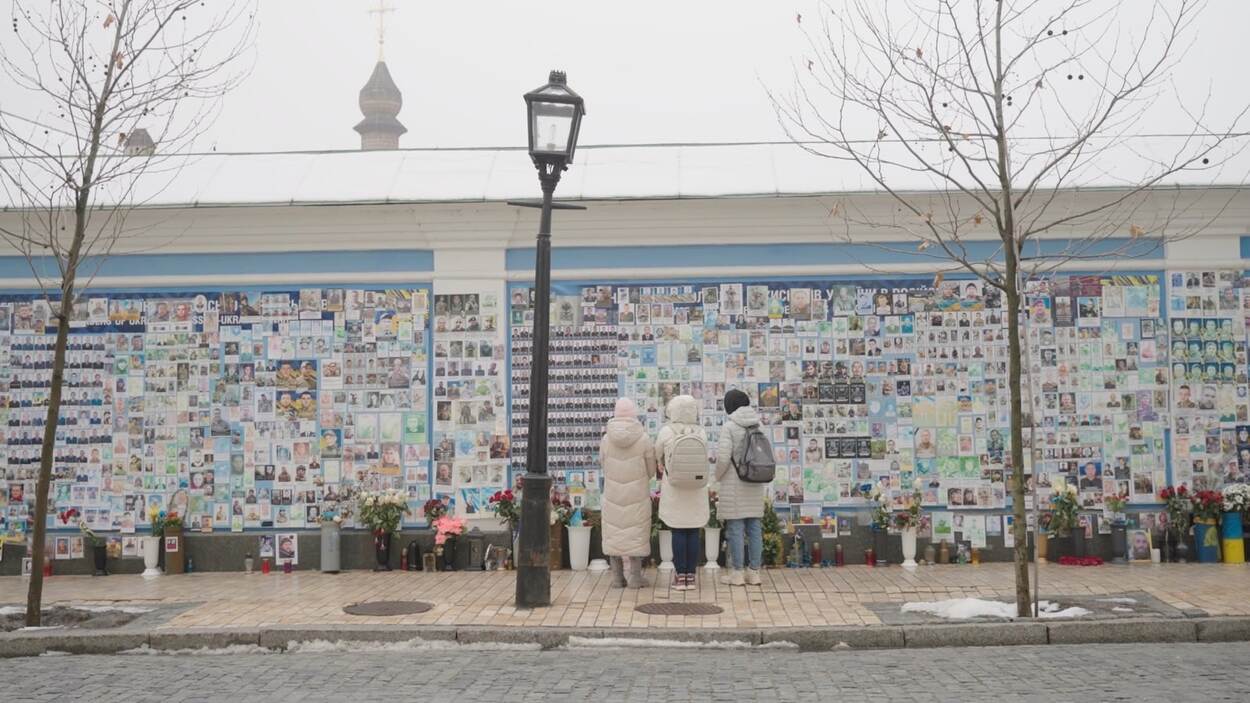
    February 24, 2025
  • MIL-OSI Economics: RBI Launches Financial Literacy Week 2025

    Source: Reserve Bank of India

    Reserve Bank has been conducting Financial Literacy Week (FLW) every year since 2016 to promote financial literacy. Governor Shri Sanjay Malhotra launched the tenth edition of Financial Literacy Week (FLW) 2025 and the theme for the current year is Financial Literacy: Women’s Prosperity” (वित्तीय समझदारी – समृद्ध नारी)

    The FLW 2025 will be observed between February 24 and 28, 2025. The launch ceremony was attended by the top management and Regional Heads of the Reserve Bank, NABARD and heads of select commercial banks.

    Speaking at the launch, the Governor, Shri Malhotra underlined the need for empowering women to enhance their participation in driving inclusive and sustained economic growth of our country. He urged banks to use all available channels to continue to promote financial literacy, particularly among women.

    As part of FLW 2025, RBI will undertake multimedia campaigns on the theme. Banks, too, have been advised to give out information and create awareness among their customers.

    (Puneet Pancholy)  
    Chief General Manager

    Press Release: 2024-2025/2237

    MIL OSI Economics –

    February 24, 2025
  • MIL-OSI Africa: South Africa’s ‘working for water’ programme is meant to lead to skills and jobs: why it’s failing

    Source: The Conversation – Africa – By Sinazo Ntsonge, PhD Graduate, Department of Economics and Economic History, Rhodes University, Rhodes University

    South Africa’s Expanded Public Works Programme is part of its social safety net. It complements the country’s social grants system, which has over 28 million recipients.

    The public works programme helps fill a gap for people who fall outside the grant system, especially those who need work experience and skills training if they’re to get a job. These include unemployed young people, women and people with disabilities.

    One of the programmes under its umbrella is the Working for Water programme, which was launched in 1995. It was intended to control invasive alien plants so as to conserve water resources, and provide short-term employment and training for people not covered by the grants safety net.

    Since its inception, the programme, alongside other interventions targeted at the environment, has created over 200,000 person years of employment – the total number of days people were afforded work. More than half of these employment opportunities have been held by women, and more than 60% by young people under the age of 35 years.

    In my PhD research, I examined one of its flagship projects to assess its impact on the long-term livelihoods of beneficiaries. My aim was to determine whether the programme was achieving its intended role as a social protection mechanism.

    I found that the way the project was designed limited its potential to foster long-term livelihoods for participants. Long-term livelihoods are defined as the ability to achieve lasting economic stability and growth beyond the scope of the project itself.

    One key issue was the inconsistency in the number of workdays participants were assigned, as well as the quality and availability of the skills training they received. Specifically, the training lacked regularity and did not always align with market demands. It left participants without the practical, job-ready skills needed for sustained employment.

    This problem was compounded by budget cuts.

    Based on my findings, I propose key changes to improve the programme’s effectiveness: the provision of consistent funding and training that’s aligned to labour market needs.

    The project

    The project I looked at tackles the clearing of invasive Prosopis mesquite trees in the Northern Cape. This has involved clearing nearly 314,580 hectares of invaded land in that province.

    Spanning from 2004 to 2018, the project supported over 9,000 beneficiaries across three phases. In phase I (2004–2008), 2,411 people participated; in phase II (2009–2013), 2,861; and in phase III (2014–2018), 3,756.

    The project targeted youth, women and people with disabilities. Beneficiaries were spread across various age groups: 36–64 years in phase I, 22–35 and 36–64 years in phase II, and 18–35 years in phase III.

    Participants were paid monthly stipends which ranged from R2,900 to R5,000, which is equivalent to approximately US$157 to US$271 – higher than most South African social grants. For comparison, the disability social grant is R2,180 (US$118), the older person’s grant is R2,200 (US$119), the foster child grant is R1,180 (US$64), and the child support grant is R530 (US$28).

    I developed an evaluation framework to assess the programme’s impact on the long-term livelihoods of beneficiaries.

    The study was carried out over 14 days in 2020, coinciding with the height of the COVID-19 pandemic. With health restrictions in place, the research had to pivot from planned in-person interviews and focus groups to virtual interviews with key stakeholders and an online survey of beneficiaries. The survey gathered data from 33 beneficiaries, while interviews provided valuable insights from project managers overseeing the clearing initiative.

    The gaps

    I found that the project faced a number of challenges.

    Firstly, there was inconsistency in the number of workdays participants were assigned. Given that public works projects aim to alleviate poverty – primarily through stipends – budget cuts forced managers to focus on retaining beneficiaries to ensure they could at least feed themselves. This often meant reducing the number of workdays (from the required 230 days to just 100 days) and scaling back skills training.

    Secondly, there were shortcomings in the quality and availability of the skills training they received. Many of the courses offered were short-term or specific to invasive plant clearing, including herbicide application, brush cutter operation and firefighting. This meant it wasn’t relevant to the labour market.

    In the Northern Cape, the economy hinges on industries like mining, agriculture, manufacturing and construction. In mining, for example, knowledge of machinery operation, safety protocols and mine supervision is vital. Agriculture needs workers skilled in sustainable farming, irrigation techniques and equipment operation. Manufacturing needs expertise in production line management, welding and machinery operation. Construction projects require workers proficient in project management, site safety and heavy machinery operation.

    Given the region’s tourism potential, customer service and tour guiding are valuable. Finally, fostering entrepreneurship through business management and financial literacy can empower individuals to create small businesses. In addition, soft skills such as communication, leadership and teamwork are essential across all sectors for long-term employability.

    Many beneficiaries reported cycling through the Prosopis mesquite clearing project repeatedly, without gaining the work experience or skills needed to move into more sustainable jobs in the wider labour market.

    Thirdly, budget cuts restricted the availability of resources for both training and work opportunities.

    As a result, the initiative fell short of providing participants with the tools necessary for long-term economic success. Their prospects were limited after the project’s conclusion.

    Given the findings of my research study, the programme requires a shift in focus and changes need to be made.

    What needs to be done

    Firstly, funding for projects needs to be consistent. Secondly, training needs to be aligned with labour market needs. And thirdly, there needs to be a structured system for tracking long-term outcomes on the beneficiaries’ livelihoods following their participation.

    Without a system to track outcomes, it’s difficult to assess whether the project is equipping participants with skills for employment in the sectors that are driving the local economy.

    With these changes the programme can transition from a short-term employment solution to a sustainable intervention that equips beneficiaries with useful, transferable skills that are applicable to a range of sectors. This would ultimately improve their prospects for stable employment and long-term economic security, provided those jobs are available.

    – South Africa’s ‘working for water’ programme is meant to lead to skills and jobs: why it’s failing
    – https://theconversation.com/south-africas-working-for-water-programme-is-meant-to-lead-to-skills-and-jobs-why-its-failing-248694

    MIL OSI Africa –

    February 24, 2025
  • MIL-OSI Australia: Interview – ABC Afternoon Briefing with Tom Lowrey

    Source: Australian Ministers for Education

    TOM LOWREY, HOST: Now, while the government wants to run on its support for Medicare, some in the Opposition have criticised the way the government is selling its pledge as a rerun of Medi-scare. To discuss this and more, let’s bring in the Youth Minister, Anne Aly. Minister, thanks for joining Afternoon Briefing and thanks for bearing through some technical difficulties too.

    MINISTER ANNE ALY: That’s ok. It’s just another day.

    LOWREY: And we’re already hearing GPs saying this is welcome, this Medicare pledge, but it doesn’t mean they’re about to start bulk billing. Their costs are simply too high. What would you say to them?

    ALY: Look, I think that the overwhelming evidence that we’ve seen, and I know that the Health Minister, Mark Butler, has done extensive consultations on this, is that this is good policy, it’s welcome policy, and first and foremost it’s about ensuring that all Australians have access to the healthcare they need and they don’t put off seeing a doctor because of the cost of seeing a doctor. And secondly, it’s about getting Medicare back on track to what its original purpose is, is that you should have access to the services you need, the health services you need, not based on your credit card. So, all the information that we’ve got is that this is good policy and that we’re confident that it will be taken up by the majority of bulk billing clinics or of practitioners, sorry, practitioner clinics by 2030.

    LOWREY: Yeah, we’ve been told to expect 90 per cent bulk billing by 2030. Is that figure a commitment from Labor or is it a hope?

    ALY: I think it’s based on projections of and – projections of what the uptake would be. These are really good incentives for practitioners and practices to bulk bill beyond what they already bulk bill, which is people on a concession card, for children and for pensioners and low-income families. This is to ensure that every Australian, regardless of what their bank balance is, has access to the medical services that they need. So, those projections are based on a level of confidence that this is the kind of incentive that will make a difference to practitioners and practices.

    LOWREY: Anne Aly, your home state of WA is in the midst of a state election campaign. We saw both campaigns launch their campaigns over the weekend. Are you worried that voters in WA might be happy to back Roger Cook, who seems like a reasonably popular Premier, but willing to back Peter Dutton when the federal election rolls around?

    ALY: Well, there’s always this kind of talk, and there’s two schools of thought. One is that the state election impacts on the federal election, and the other one is that, you know, Australians are discerning enough voters to make a difference between the two. And, you know, both are true to some extent and in their own ways. Look, I think that West Australians know that Labor, both federally and state, is good for them. We’ve got a strong economy here in WA, we’ve got low unemployment, we’ve got a state government that has really managed the budget well. We’ve got really strong infrastructure. And you know, we’ve got a Federal Government in Labor that has worked closely with the WA Government in the interests of Western Australia and a Prime Minister in Anthony Albanese who has made WA a focus. He’s been to Australia more times than I can, to Western Australia more times than I can count. I think it’s about 30 times or getting up to 30 times now, and has demonstrated to West Australians that he’s not just eastern states focused.

    LOWREY: Labor in WA at a state level. Is it something of a high watermark? Of course, the Former Premier Mark McGowan knocked the Liberals down. So, I think, is it six lower house seats in that state? Are you concerned the Liberals might take some momentum federally, even out of a close defeat in WA? They don’t necessarily need to win this election; they just need to come somewhat close.

    ALY: Well, the Liberals have a long way to go to, to take, take government here in Western Australia. I think they have to win something like 20 seats. So, it’s impossible to see them doing that, to be quite frank. You know, I think the extent to which they will claw back some of the seats that they lost at the last election will be seen over as the WA election continues. But I think also the West Australian Liberals have shown that they’re just really not ready to govern to be honest. They’ve had a whole lot of different scandals with one of the, with some of the, the people that they’ve pre-selected. They’ve had a challenge from Basil Zempilas against Libby Mettam, and I don’t think they’ve demonstrated to the West Australian people that they are in a position to govern and that they’re ready to govern.

    LOWREY: I just want to touch on your portfolio area of child care quickly and early childhood education. Is there more to come from Labor on child care ahead of the election or the Activity Test changes we saw past Parliament in the past few weeks it for Labor ahead of that poll?

    ALY: Well, I’ll just say it wasn’t just the Activity Test. The Activity Test, yes, did pass Parliament and for your viewers, the Activity Test was introduced by the Liberal Government in 2018. And the purpose of it, the stated purpose of it, was to incentivise women, in particular, to return to work. We know that that didn’t happen, and rather, what the Activity Test did was lock out children, and particularly children who would benefit the most from early childhood education and care, lock them out of the system. The Liberal and Coalition voted against our changes to the Activity Test, which demonstrates where they sit in terms of those transformational benefits of early childhood education and care, but also in terms of cost-of-living relief, because removing the Activity Test would benefit around 70,000 families with real cost-of-living relief. But that’s not the only thing that we’re doing. We’ve also got a building education fund, Building Early Education Fund. That’s a billion dollars that we’re putting towards building the services that families and children need, particularly in areas where there are no services. So, outer suburban, rural and regional and in vulnerable communities. This is all part of the big package, of course, starting with bringing down the cost of early childhood education, raising the wages of early childhood educators and getting more early childhood educators in to ensure kind of a stable workforce as a foundation and all working towards our vision of an early childhood education and care sector that is universal, and that recognises that this is an essential service that families and parents rely on.

    LOWREY: And before I let you go, I just want to touch on some of what we’ve seen in the Middle East over the past few days. Israel has been heavily critical of a ceremony Hamas put on as it returned the bodies of four Israeli hostages late last week. What did you make of those images, and how concerned are you about the ceasefire holding?

    ALY: I’m really concerned. I think what this demonstrates, what we know, is that it is particularly fragile. The ceasefire is particularly fragile. Peace is over there is particularly fragile. What we want to see is this first phase of the ceasefire to run smoothly and continue and then transition into the second phase of the ceasefire with a goal towards everlasting peace through a two-state solution. That’s Australia’s position. We’ve always supported a ceasefire, so of course, we are keen to see that the conditions of the ceasefire continue to be met and that that ceasefire can transition to the second phase. So, it is concerning. It is concerning that there are, I guess, challenges to the ceasefire continuing, but again, underscoring the fragility of it.

    LOWREY: Anne Aly, thanks so much for joining the Afternoon Briefing.

    ALY: Thank you.
     

    MIL OSI News –

    February 24, 2025
  • MIL-OSI Security: Three years since the full-scale invasion of Ukraine: Concrete steps supported by Eurojust on the road to accountability

    Source: Eurojust

    JIT members have been busy working on a common prosecutorial strategy, which prioritises investigations into the crime of aggression, crimes of torture, ill-treatment and filtration in relation to illegal detention sites, as well as the crime of genocide. 

    Since March 2022, the Agency has organised 26 coordination meetings between the JIT and other national authorities investigating alleged core international crimes committed in Ukraine. This has allowed involved countries to exchange data on their respective domestic investigations, discuss strategies and priorities, and coordinate investigative measures.

    Eurojust is fully committed to continuing to support the important work of the JIT, and has allocated roughly half a million euros to finance its activities. 

    The JIT is supported by the work of the International Centre for the Prosecution of the Crime of Aggression against Ukraine (ICPA) and the Core International Crimes Evidence Database (CICED), both of which are hosted and managed by Eurojust.

    ICPA: progress made on a solid case-building package for the crime of aggression

    In the last six months, the ICPA has made significant progress in compiling a solid case-building package. This package relies on a common investigative and prosecutorial strategy on the crime of aggression, agreed on by ICPA participants. 

    The case-building package is intended for transmission to the future office of the prosecutor of a possible special tribunal or other jurisdictions. 

    The ICPA has and continues to ensure the collection and preliminary analysis of potential evidence that may relate to individuals at the highest levels of military and political leadership. Investigative efforts are not limited by the official positions that individuals may hold. 

    As the aggression in Ukraine continues, there is a growing body of evidence that the ICPA is actively investigating.

    The ICPA has received additional funding, and in January 2025, its operations were extended for six months. To this end, an amendment to the Contribution Agreement was signed between Eurojust and the European Commission’s Service for Foreign Policy Instruments.

    CICED: over 3 700 evidence files

    CICED is a unique, tailor-made judicial database set up by Eurojust to preserve, analyse and store evidence of core international crimes. CICED enables the Agency to support national judicial authorities in identifying evidence located in another country that may be relevant to their own investigations. To date, over 3 700 evidence files have been submitted to CICED by 16 countries.

    In January 2025, a new translation tool enabled evidence files submitted by national authorities to be translated from 19 languages into English. This game-changer has greatly accelerated the Agency’s analytical work. As a result, the database’s search function is more precise, and requests for information from national authorities can be answered more swiftly.

    Eurojust has been working hard to respond to national authorities’ requests to support their investigations into core international crimes. In addition, the Agency has proactively identified files deemed useful for ongoing national investigations.

    Background:

    Since the outbreak of the war, Eurojust has been at the forefront of supporting accountability for Russian crimes. Just three weeks following the full-scale invasion by Russia in 2022, Eurojust supported the setting up of a JIT that now consists of Ukraine, six EU Member States, the participation of the ICC and Europol, as well as a Memorandum of Understanding with the United States.

    In a fragmented and complex operational landscape, with the ongoing war and evidence spread across countries with different legal systems, the JIT allows partners to exchange information directly and in real time. It also helps JIT members to streamline their investigations, as the national authorities involved can now focus on actively building their cases.

    Eurojust provides legal and analytical expertise as well as logistical and financial support to the JIT.

    In February 2023, Eurojust launched the Core International Crimes Evidence Database (CICED), based on an urgent amendment of Eurojust’s mandate, following the invasion of Ukraine. 

    The International Centre for the Prosecution of the Crime of Aggression Against Ukraine (ICPA), established in July 2023, is also hosted by Eurojust and, together with CICED, supports the work of the JIT. 

    Since March 2022, Eurojust has actively participated in the EU Freeze and Seize Task Force set up by the European Commission to ensure the efficient implementation of EU sanctions against listed Russian and Belarusian oligarchs across the European Union. Eurojust provides operational support to the Task Force by coordinating Member States’ enforcement of Union sanctions through criminal law.

    Together with the Ukrainian Prosecutor General’s Office, Eurojust co-chairs the workstream on national investigations of the Dialogue Group on Accountability for Ukraine. This workstream aims to identify key challenges in core international crime cases and jointly propose solutions at the policy level, for example on the use of open-source evidence in the investigation and prosecution of international crimes in the context of Ukraine.

    More information: 

    For more information on the various actions taken by Eurojust since the outbreak of the war in Ukraine, please consult our dedicated webpage.

    MIL Security OSI –

    February 24, 2025
  • MIL-OSI China: China’s business community opposes US overstretching national security concept, hindering economic, trade exchanges

    Source: China State Council Information Office

    China’s business community strongly opposes the United States overstretching the concept of national security and hindering bilateral economic and trade exchanges, the China Council for the Promotion of International Trade (CCPIT) said Monday.

    A spokesperson for the CCPIT made the remarks in response to a query about the “America First Investment Policy” memorandum.

    The United States is not only restricting investment from China in sectors from technology, critical infrastructure, healthcare, agriculture, energy to raw materials through security reviews, but also using economic sanctions and financial audits to strengthen controls over investment in China in terms of industry scope, investment types and funding sources, the spokesperson said.

    The spokesperson warned that if implemented, these measures would severely affect normal business operations, undermine international economic and trade order, and disrupt the security and stability of global industrial and supply chains.

    The spokesperson urged the U.S. side to respect the laws of market economy and the principle of fair competition, clarify the boundaries of national security in economic and trade fields, and lift restrictions on two-way investments between China and the United States, so as to create a sound environment for mutually beneficial and win-win cooperation between the two countries’ business communities.

    MIL OSI China News –

    February 24, 2025
  • MIL-OSI: Cyber A.I. Group Announces Significant Expansion of Acquisition Pipeline Supporting Company’s Global Buy-and-Build Strategy

    Source: GlobeNewswire (MIL-OSI)

    MIAMI and NEW YORK and PARIS, Feb. 24, 2025 (GLOBE NEWSWIRE) — Cyber A.I. Group, Inc. (“CyberAI” or the “Company”), an emerging growth Cybersecurity, Artificial Intelligence and IT services company engaged in the proactive acquisition of a broad spectrum of Cybersecurity service providers on an international basis, announced today that it has significantly increased its pool of potential acquisitions on a global basis. The announcement was made by Walter Hughes, Chief Executive Officer of Cyber A.I. Group.

    “As an emerging international company committed to significant growth through a highly proactive M&A process, the expansion of our pool of potential targets supports our ability to ultimately identify the best and most synergistic acquisitions,” noted Mr. Hughes. “Demonstrated by our recent announcements, we are positioning CyberAI to become a major player in the global Cybersecurity industry, scaling our operations in key markets worldwide. We believe our recent additions underscore our commitment for a truly international footprint as our pipeline continues to expand.”

    “Focused on global reach and leveraging the capital markets to accelerate our M&A strategy, CyberAI is targeting $100 million in annualized revenue over the next twelve to eighteen months,” added Darren Minton, Cyber A.I. Group’s Vice Chairman and President. “The addition of potential strategic international acquisitions, particularly in the UK, will support the Company’s international focus when it lists on the Main Board of the London Stock Exchange, after reaching the necessary annualized threshold requirements. It should be understood, of course, that CyberAI’s management will ultimately acquire only the best of the best of the prospective acquisition targets.”

    The expanded pipeline now represents over 300 acquisition targets across the following locations:

    • United States: 265
    • United Kingdom: 27
    • Europe: 42
    • Israel: 18

    Mr. Hughes concluded, “While there is no assurance that each of these acquisitions will be completed, the pure size of the pipeline creates an enormous prospective opportunity for CyberAI. Management conducts exhaustive due diligence and highly disciplined financial analysis prior to entering into a definitive agreement. Targets need to be committed to technology innovation, demonstrate significant growth and want to be part of a larger organization on the path to public ownership.”

    It is anticipated that New York-based ThinkEquity LLC, an investment bank specializing in public and private capital raises, will provide principal financing for the acquisitions. On October 18, 2024, CyberAI announced the execution of an investment banking agreement with ThinkEquity in support of CyberAI’s M&A strategy. For more information, please visit: www.think-equity.com.

    About Cyber A.I. Group

    Cyber A.I. Group, Inc. (“CyberAI”) is an international company engaged in the acquisition and management of worldwide Cybersecurity and IT services firms. CyberAI is pursuing a highly proactive “Buy & Build” strategy to rapidly expand operations internationally by acquiring a broad spectrum of IT services companies and repositioning them to address fast-growing market needs for Cybersecurity and Artificial Intelligence markets. The Company has developed an active pipeline of 300+ perspective acquisitions which are in various stages of analysis. The Company’s initial target is to acquire multiple companies representing aggregate revenues annualizing $100 million. CyberAI’s business model is focused on the acquisition and consolidation of IT services worldwide with proven ability in broad conventional technology services with strong cash flow and enhance performance through A.I.-driven Cybersecurity initiatives. This emphasis on conventional companies with strong revenues and EBITDA distinguishes CyberAI from the explosion of A.I. startups that may be pinning their future on a single technological breakthrough which may never materialize. This “Buy & Build” strategy provides CyberAI with the maximum flexibility for diversification and risk management for moving into new fields and addressing fast moving market opportunities. For additional information, please visit: cyberaigroup.io.

    A photo accompanying this announcement is available at https://www.globenewswire.com/NewsRoom/AttachmentNg/49a8e0a7-5585-4e85-9e76-58ffd3961a6f

    The MIL Network –

    February 24, 2025
  • MIL-OSI: Nomad Internet Wholesale⁦ Goes Live, Empowering Americans to become an Internet Service Provider Overnight

    Source: GlobeNewswire (MIL-OSI)

    NEW BRAUNFELS, Texas, Feb. 24, 2025 (GLOBE NEWSWIRE) — Nomad Internet, a leading provider of internet services in America, has announced the launch of Nomad Internet Wholesale, a total paradigm shift in wireless connectivity, transforming Nomad Internet from a service provider to a wholesaler enabler. As a business-in-a-box solution, Nomad Internet Wholesale lets anyone become their own Internet Service Provider (ISP). Nomad Internet Wholesale provides the technology, equipment, marketing tools, and support to help Americans sell high-speed internet under their own brand. The user has full control over pricing, branding, and customer service.

    While announcing the launch of Nomad Internet Wholesale, Jaden Garza, CINO at Nomad Internet, shared on LinkedIn, “The future of Fixed Wireless Access (FWA) is here, and we’re making it easier than ever for entrepreneurs and businesses to launch their own ISP instantly—all from the comfort of home.”

    Nomad Internet Wholesale: A Complete Turnkey Solution.

    For years, major telecom firms have gathered power over internet accessibility, sidelining small, independent ISPs, resulting in communities facing scarce and costly alternatives. With Nomad Internet Wholesale, Nomad Internet is revolutionizing the market by equipping local entrepreneurs with the necessary tools for successful competition. In contrast to conventional ISP models that need significant infrastructure spending, Nomad’s program enables providers to begin with just one active line. This unmatched accessibility allows even one person to utilize the same carrier connections, pricing, and technological infrastructure as major providers.

    Nomad Internet Wholesale packages the refined technology, logistical systems, and carrier relationships that Nomad Internet has painstakingly built over years into an accessible platform that allows individuals to launch and manage their internet services with ease. As the ultimate fixed wireless wholesale ISP system, Nomad Internet Whole offers a host of benefits:

    • Nationwide coverage without building towers or networks.
    • No infrastructure costs—we handle everything
    • No administrative headaches—automated activations & customer management
    • No upfront investment—just pure opportunity
    • Set own pricing models
    • Freedom to market as per their own community needs
    • Access the same wholesale agreements and carrier partnerships as major telecom companies

    “At its core, this initiative is about economic empowerment,” added Jaden Garza. “This initiative isn’t about creating another giant ISP. It’s about creating thousands of local providers who understand their communities’ needs better than any massive corporation ever could.”

    The Technology Behind Nomad Internet Wholesale.

    Nomad Internet has spent years refining its operational framework, ensuring that its partners have everything they need to launch and sustain a successful ISP business. This includes:

    • Carrier Relationships: Access to competitive wholesale agreements with leading network providers.
    • Hardware & Equipment: Tested and optimized modems and network hardware.
    • Seamless Onboarding & Billing Systems: Automated customer acquisition, activation, and subscription management.
    • Logistics & Fulfillment: Efficient distribution and deployment of equipment to new providers.
    • Automated Backend Support: Streamlined troubleshooting and technical assistance for customer management.

    With this pre-established infrastructure, new ISPs can bypass the traditional barriers to entry and focus on delivering high-quality service to their customers.

    Decentralizing Wireless Access: The Future of Internet Distribution

    By enabling independent ISPs, Nomad Internet is championing a decentralized approach to internet access. This model decentralizes control from major corporations to local businesses and entrepreneurs who can customize services to address particular regional requirements.

    Rather than a monopolistic system that compels communities to select from restricted choices, this initiative promotes competition, innovation, and cost-effectiveness. Rural America, specifically, is poised to gain greatly, as inhabitants will enjoy enhanced access to a variety of locally sourced internet options.

    “Imagine a world where every town has its internet provider, built by someone who truly understands the area’s unique connectivity challenges,” Jaden explained. “This initiative is bigger than Nomad—it’s about reshaping the entire industry.”

    As Nomad Internet rolls out this initiative, the focus will be on refining and optimizing the model for scalability. The foundation is already in place, and future iterations will continue to enhance the program to ensure its long-term success.

    “This is just the beginning,” concluded Mr. Garza (CINO Nomad Internet). “We are committed to building a sustainable, community-driven internet ecosystem that gives people real choices, real control, and real competition in the broadband industry.”

    For more information on how to become an independent ISP, visit the official page of Nomad Internet Wholesale.

    About Nomad Internet

    Nomad Internet is America’s leading wireless internet provider for rural communities, delivering high-speed, reliable, and affordable connectivity to those in areas where traditional services fall short.

    Media Contact

    Company Name: Nomad Internet

    Contact Person: Manish Roshan

    Email: manish@nomadinternet.com

    Website: https://nomadinternet.com

    Phone: +1 281 800 1000

    Disclaimer: This content is provided by the Nomad Internet. The statements, views, and opinions expressed in this column are solely those of the content provider. The information shared in this press release is not a solicitation for investment, nor is it intended as investment, financial, or trading advice. It is strongly recommended that you conduct thorough research and consult with a professional financial advisor before making any investment or trading decisions. Please conduct your own research and invest at your own risk.

    A photo accompanying this announcement is available at https://www.globenewswire.com/NewsRoom/AttachmentNg/dabc1d47-3073-4d73-87f5-87bbcf0db787

    The MIL Network –

    February 24, 2025
  • MIL-OSI China: China’s tech hub Shenzhen to launch 10B yuan fund to accelerate AI industry growth

    Source: China State Council Information Office

    A robotic whale shark swims in a tank at Xiaomeisha Sea World in Shenzhen, south China’s Guangdong Province, Sept. 22, 2024. [Photo/Xinhua]

    The south China tech hub of Shenzhen will launch a 10 billion yuan (about 1.39 billion U.S. dollars) industry fund to support the development of artificial intelligence (AI) and robotics, focusing on AI software, hardware and embodied intelligence, local authorities said Sunday.

    The fund is part of the city’s broader push to strengthen its position as a global hub for AI innovation.

    City officials revealed the plan at a press conference, announcing an additional 4.5 billion yuan in funding to be raised this year. This funding will cover up to 60 percent of computing power costs for businesses, with a maximum of 10 million yuan per enterprise, provided through vouchers and subsidies.

    Shenzhen’s AI ambitions go beyond financial support. The city plans to expand its AI application base with an additional 100 scenarios set to roll out in 2025, focusing on sectors like municipal sanitation, emergency response and health care. This follows the introduction of nearly 200 AI-powered application scenarios already in place across the city.

    Shenzhen aims to create a highly systematic, complete and collaborative innovation ecosystem, accelerate the development of a globally influential industrial and technological innovation center, and build itself into a city of innovation, said Zhang Lin, director of the Shenzhen municipal bureau of science and technology innovation.

    Shenzhen, once a small fishing village in Guangdong Province, has transformed into one of China’s most dynamic and innovative cities. It is home to more than 2,200 AI companies and boasts a comprehensive AI industry chain that spans from smart chips and algorithm frameworks to large models and software-hardware applications, according to data from the Shenzhen AI industry office.

    Data from iResearch, an industry research and consulting institute, indicates that China’s AI industry is projected to reach 811 billion yuan by 2028, with emerging sectors such as AI and robotics poised to unlock significant market potential and development opportunities.

    MIL OSI China News –

    February 24, 2025
←Previous Page
1 … 1,101 1,102 1,103 1,104 1,105 … 1,544
Next Page→
NewzIntel.com

NewzIntel.com

MIL Open Source Intelligence

  • Blog
  • About
  • FAQs
  • Authors
  • Events
  • Shop
  • Patterns
  • Themes

Twenty Twenty-Five

Designed with WordPress