NewzIntel.com

    • Checkout Page
    • Contact Us
    • Default Redirect Page
    • Frontpage
    • Home-2
    • Home-3
    • Lost Password
    • Member Login
    • Member LogOut
    • Member TOS Page
    • My Account
    • NewzIntel Alert Control-Panel
    • NewzIntel Latest Reports
    • Post Views Counter
    • Privacy Policy
    • Public Individual Page
    • Register
    • Subscription Plan
    • Thank You Page

Category: Education

  • MIL-OSI United Kingdom: Morven sets sail – for a second time! Postgraduate psychological studies student Morven Reddy is no stranger to the Tall Ships Races. This summer she’ll be setting sail as a sail trainee, racing from Dunkirk in France to her home city of Aberdeen.

    Source: University of Aberdeen

    Six years ago Morven journeyed from Aalborg, Denmark to Fredrikstad in Norway on the Lord Nelson

    Postgraduate psychological studies student Morven Reddy is no stranger to the Tall Ships Races. This summer she’ll be setting sail as a sail trainee, racing from Dunkirk in France to her home city of Aberdeen.
    But it’s not the first time at sea for Morven, who first took part in the Tall Ships Races in 2019 at just 17 years old.
    Six years ago she journeyed from Aalborg, Denmark to Fredrikstad in Norway on the Lord Nelson.
    Morven explains: “I loved doing Tall Ships in 2019. It was an experience like no other with people of all ages, nationalities and backgrounds coming together to race a variety of unique vessels.
    “I originally found out about the Tall Ships Races when I was seeking sailing experience as it was a childhood dream of mine to join the Royal Navy. I knew from the moment I disembarked the Lord Nelson that it was something I would love to do again if I ever had the chance.
    “In 2021, when I was finishing my sixth year exams I was diagnosed with a blood cancer, which prevents me from joining the Royal Navy, but I promised myself that when I finished chemotherapy I would find other ways to get out onto the ocean and hopefully do the Tall Ships Race again.
    “When I first saw the Aberdeenshire Council adverts for applying to become a sail trainee this year, I applied without a second thought and I am so grateful I was one of the 200 odd that were chosen to participate.”
    This summer Morven will be onboard the 54 metre A Class Gulden Leeuw in a race expected to take six days, a prospect about which she says she is “beyond excited”.
    She continues: “I am looking forward to sailing on the Gulden Leeuw as she is one of the world’s largest three-mast-topsail schooners and was used as training ship for a Danish nautical college which means she will be a great vessel for racing on.
    “I am very excited and proud to be sailing into my hometown of Aberdeen. I am looking forward to being able to wave at my family and friends in the crowd as we sail in.

    The opportunity to participate in the Tall Ships Race 2025 is so unique that I know will help develop skills that I can use in every aspect of my life.” Postgraduate psychological studies student Morven Reddy

    “The training has gone well so far. I am lucky, having previously experienced a Tall Ships Race and have previous sailing experience, that I know what to expect which has been good to reassure some of my crewmates as many have never sailed before.
    “When we dock in Aberdeen I am looking forward to participating in the crew parade and competitions as they are always really fun and a great way to end such a special adventure. There will also be the prize giving ceremony as this event is a race to see who can go from Dunkirk to Aberdeen the fastest within each size category.”
    Having competed in the races before, Morven has a bit of a head start and knows what to expect. And while there was time to take in the unique setting on her last journey, Morven says it certainly wasn’t a pleasure cruise.
    “We do four-hour watches, so you’re on for four hours and then off for four hours which takes some getting used to. The worst one was midnight to 4am. You are assigned to a group and you have a Watch Master who oversees you.
    “Some watches you could be prepping food and setting tables for mealtimes, or you could be up on deck tidying ropes and putting stuff away. There might be things happening with the sails – it really depended what watches you’re on.
    “You might be on deck with whoever is at the helm, steering the boat and you’re basically watching all angles to make sure there aren’t any hazards around about you – such as other vessels or fishing lines. The weirdest story I heard was when someone came across a sofa floating in the middle of the ocean that they had to avoid!
    “At one point we were alongside submarines. They weren’t on the radar and we didn’t even know what country they belonged to!”
    With the countdown on, Morven is raring to go and make her second Tall Ships race another unforgettable experience.
    “The opportunity to participate in the Tall Ships Race 2025 is so unique that I know will help develop skills that I can use in every aspect of my life. Sailing in a race on any vessel, but even more so on a big ship like the Gulden Leeuw, requires discipline, teamwork, open and effective communication, constant problem-solving skills, comradery and organisation.
    “As I discovered in 2019, this is truly a life changing experience which will allow people to see their true potential whilst building some amazing friendships. I met some amazing people in 2019 from all sorts of different backgrounds and I am still in touch with some of them today. It’s so unique it’s hard to put into words, but I am incredibly excited and grateful that I get the opportunity to do it again.”

    MIL OSI United Kingdom –

    June 26, 2025
  • MIL-OSI United Kingdom: Pupils and council join forces for nature on lough shore

    Source: Northern Ireland City of Armagh

    Pupils from St Mary’s PS pictured at their environmental survey.

    The shores of Lough Neagh have proven to be the perfect location for local school pupils determined to make a positive impact on their environment and wildlife, with the help of Armagh City, Banbridge and Craigavon (ABC) Borough Council.

    Butterflies, wildflowers and a Great Crested Grebe were just some of the wonderful flora and fauna spotted and recorded by the pupils of St Mary’s Primary School in Maghery.

    As part of their project to promote and protect biodiversity, the children have been helping to manage a wild meadow at Maghery Country Park.

    Pupils and staff from St Mary’s PS Maghery pictured with officers from ABC Council at their environmental survey.

    The school adopted an area of wet grassland in Maghery Country Park which frequently flooded and was difficult for the Council’s Ground Maintenance team to manage.  Under the supervision of the Biodiversity Team at Oxford Island the project was agreed.

    The council agreed not to cut the grass area until the end of September allowing native wildflowers to grow and set seed. To assess the impact of their project, the school joined council officers last week, to carry out a survey of the range of native wildflowers growing in the uncut wet grassland, and a butterfly walk to count and identify species.

    The pupils who enjoyed a boat trip, also carried out a successful bird survey, when they spotted a range of species including Grey Heron, Coot, Great Crested Grebe, Mute Swan, Swallow, Mallard and Tufted duck.

    Council officers have praised the work of the pupils who had also participated in a Himalayan Balsam Bash to remove the non-native Himalayan Balsam invasive species which competes with the local wildflowers vital for pollinators.

    To find out more about environmental education programmes at Oxford Island, including an exciting summer programme of environmental activities for children, please visit – www.getactiveabc.com/facility/oxfordisland/

    MIL OSI United Kingdom –

    June 26, 2025
  • MIL-OSI: Beam Global and Platinum Group UAE Sign Joint Venture Agreement Creating Beam Middle East LLC

    Source: GlobeNewswire (MIL-OSI)

    SAN DIEGO, June 26, 2025 (GLOBE NEWSWIRE) — Beam Global, (Nasdaq: BEEM), a leading provider of innovative and sustainable infrastructure solutions for the electrification of transportation and energy security, today announced that it has entered into a joint venture agreement with the Platinum Group LLC, based in the United Arab Emirates (UAE). Chaired by His Royal Highness, Sheikh Mohammed Sultan Bin Khalifa Al-Nahyan, the Platinum Group UAE is recognized for its well-established and trusted relationships across government and industry.

    Beam Global and the Platinum Group will form a new entity, Beam Middle East LLC, which will sell and manufacture Beam Global’s patented sustainable infrastructure solutions for transportation electrification, energy storage, energy security, and smart city development across the Middle East and African regions. This joint venture supports Beam Global’s strategy of geographic diversification by opening new markets and creating opportunities for revenue growth outside the United States. Beam Global, Beam Europe, and now Beam Middle East will each sell and manufacture the company’s full portfolio of patented sustainable technology solutions.

    “The Platinum Group is an organization of the highest reputation, influence and relationships in Abu Dhabi and the surrounding region. They are a perfect partner to accelerate Beam Global’s growth in the Middle East and Africa,” said Desmond Wheatley, CEO of Beam Global. “With planned spending on sustainable infrastructure in the region projected to reach $75.6 billion by 2030, we believe that Beam Global’s patented technology combined with Platinum’s unrivalled position should create a platform for growth which we are uniquely able to leverage. Platinum’s relationships with the best companies in the region and their government contacts, including at the highest level in the UAE and with entities like Masdar City, will allow Beam Middle East to secure direct audiences with top decision makers. Our technology is ideal for the region’s current and future plans, but this is a region where relationships matter just as much as products and solutions. That is why our joint venture with Platinum is so ideal – Beam’s tried and tested clean-technology solutions and Platinum’s influence and relationships form a combination that ticks all the boxes and is without rivals.”

    “The Platinum Group seeks out the highest quality, most timely and relevant companies in each of the industries we target. Beam Global’s unique and patented products are ideally suited to provide value to governments and businesses, as the Gulf region and beyond transitions to clean and sustainable technologies,” said Dr Ali Nasser Sultan Al Yahbouni Al Daheri, CEO of Platinum Group. “We are looking forward to ensuring that our new joint venture with Beam Global, forming Beam Middle East, is a highly successful enterprise with wins in the Middle East and increasingly in Africa. With abundant sunshine and fast-growing adoption of electric vehicles (EVs), renewables, and energy storage, the region is perfect for Beam Global’s solutions. Energy security and Smart Cities solutions like those offered by Beam Middle East are at the forefront of government planning. Our timing is right, and our partnership is formed on mutual benefit from growth and success. We are delighted to have Beam Global as part of our growing family of businesses.”

    Middle East Market Overview Across Five Key Markets: UAE, Saudi Arabia, Qatar, Oman, and Jordan

    • The number of EVs in the region is projected to grow from approximately 69.0 thousand in 2024 to approximately 1.5 million by 2030 (Table 1), representing a compound annual growth rate (CAGR) of 66.6%.
    • Assuming a 5.0% share of regional chargers using EV ARC™ units, the addressable revenue could reach $516.5 million by 2030.
    • If eBikes account for just 5.0% of total EV volume and follow the same growth trajectory (Table 2), BeamBike™ units could represent a $245.0 million revenue opportunity in the region by 2030.

    Middle East Market Overview: Abu Dhabi Case Study

    • The UAE eBike market is projected to reach $443.8 million by 2030. Assuming 15.0% of that spend goes toward charging infrastructure, and that Abu Dhabi accounts for 35.0% of the national market based on population, the addressable eBike charger market for BeamBike™ in Abu Dhabi is approximately $23.3 million.
    • A streetlight-to-population ratio based on New York City, applied to Abu Dhabi’s estimated 3.8 million residents (Table 3), suggests BeamSpot™ units could represent a potential revenue opportunity of approximately $322.1 million assuming a market penetration of 5.0%.
    • Using Abu Dhabi’s population and a comparable U.S. Police motorcycle fleet ratio (Table 4), the opportunity to electrify local law enforcement fleets with BeamPatrol™ units is estimated at approximately $2.4 million.
    • With over 5.8 million annual hotel guests, Abu Dhabi also offers a strong use case for BeamSkoot™ at resorts, both for logistics and recreational purposes. Assuming adoption rates of 10.0% (Table 5), the potential revenue opportunity for BeamSkoot™ units could reach approximately $10.0 million.

    The above scenarios are estimates only, based upon market data taken from internet resources. Beam Global believes these case studies can be replicated in other markets across the Middle East and Africa.

    Key Terms of the Agreement
    Beam Middle East LLC will be a 50/50 joint venture between Beam Global and Platinum Group UAE, incorporated in Abu Dhabi. Beam Global will license its proprietary technologies to the joint venture and support it with incoming opportunities, training, marketing materials, and procurement assistance. Platinum Group will leverage its existing relationships at the highest levels, coordinate local sales, provide experienced and influential business development professionals, and establish manufacturing capabilities efficiently and inexpensively. Both parties will collaborate on the development of a regional manufacturing facility for the products. Beam Middle East will be headquartered in Masdar City, a pioneering sustainable urban community and world-class business and technology hub, where Platinum Group has recently signed an agreement. Masdar City is located in Abu Dhabi, the capital of the UAE, strategically positioned at the center of the country’s drive toward a net-zero future by 2050.

    About Platinum Group UAE
    Platinum Group UAE is a diversified, multi-billion-dollar conglomerate operating in energy, real estate, finance and investing, healthcare, information technology, sports and entertainment, food services and legal services in the Emirate of Abu Dhabi, United Arab Emirates. Chaired by His Royal Highness Sheikh Mohammed Sultan Bin Khalifa Al-Nahyan, son of the former ruler of Abu Dhabi, the Group is recognized for its well-established and trusted relationships across government and industry. Platinum Group UAE is headquartered in Abu Dhabi, with offices in Dubai and Sharjah. For more information visit, PlatinumGroupUAE.com.

    About Beam Global
    Beam Global is a clean technology innovator which develops and manufactures sustainable infrastructure products and technologies. We operate at the nexus of clean energy and transportation with a focus on sustainable energy infrastructure, rapidly deployed and scalable EV charging solutions, safe energy storage and vital energy security. With operations in the U.S. and Europe, Beam Global develops, patents, designs, engineers and manufactures unique and advanced clean technology solutions that power transportation, provide secure sources of electricity, save time and money and protect the environment. Beam Global is headquartered in San Diego, CA with facilities in Broadview, IL and Belgrade and Kraljevo, Serbia. Beam Global is listed on Nasdaq under the symbol BEEM. For more information visit, BeamForAll.com, LinkedIn, YouTube, Instagram and X (formerly Twitter).

    Forward-Looking Statements
    This press release includes forward-looking statements within the meaning of the U.S. Private Securities Litigation Reform Act of 1995. Forward-looking statements may be identified by words such as “believe,” “expect,” “anticipate,” “plan,” “intend,” “estimate,” “potential,” “will,” “would,” “could,” “should,” “may,” or similar expressions. These statements include, but are not limited to, statements regarding the expected benefits, market potential, and future operations of Beam Middle East LLC; anticipated revenue opportunities in the Middle East and African regions; projections regarding electric vehicle and infrastructure market growth; and strategic goals and international expansion plans of Beam Global.

    These forward-looking statements are based on current assumptions and expectations that are subject to risks and uncertainties that may cause actual results to differ materially from those expressed or implied in the statements. Factors that may cause such differences include, among others, risks associated with entering new markets and joint ventures, including regulatory and operational challenges; risks relating to the adoption of EV technologies and infrastructure in foreign jurisdictions; the ability to develop and scale manufacturing capabilities in the region; the effectiveness of partnerships; and general economic, political, and business conditions in the Middle East and Africa. Additional risks and uncertainties are detailed in Beam Global’s filings with the U.S. Securities and Exchange Commission, including its most recent Annual Report on Form 10-K and Quarterly Reports on Form 10-Q.

    Beam Global disclaims any obligation to update or revise these forward-looking statements, except as required by law.

    Media Contact
    Andy Lovsted
    +1 858-327-9123
    Press@BeamForAll.com

    Investor Relations
    Luke Higgins
    +1 858-261-7646
    IR@BeamForAll.com

    Appendix 1 – Sources for Middle East Market Overview Sections

    Table 1 – Projected Growth of EV Adoption in the Middle East

      Number of EVs in 2024 Number of EVs in 2030
    Countries:    
    UAE 28,000 42,000
    Saudi Arabia 23,170 1,300,000
    Qatar 5,624 75,167
    Oman 2,200 13,500
    Jordan 10,000 45,000
         
    Total Number of EVs: 68,994 1,475,667

    Table 2 – Projected Growth of eBike Adoption in the Middle East Assuming 5% EV Market Share

      Number of eBikes in 2024 Number of eBikes in 2030
    Countries:    
    UAE 1,400 2,100
    Saudi Arabia 1,159 50,000
    Qatar 281 3,758
    Oman 110 675
    Jordan 500 2,250
         
    Total Number of eBikes: 3,450 58,783


    Table 3 – Estimated Number of Streetlights in Abu Dhabi Based on New York City’s Streetlight-to-Population Ratio

    Population of NYC 8,258,000
    Number of Street Lights 400,000
    Number of Street Lights per Person 21
    Population of Abu Dhabi 3,800,000
    Number of Street Lights approx. 180,952

    Table 4 – Estimated Size of Abu Dhabi Police Motorcycle Fleet Based on a Comparable U.S. Ratio

    Population of NYC 8,258,000
    Number of Police Motorcycles 115
    Number of People per Motorcycle 71,809
    Population of Abu Dhabi 3,800,000
    No. of Police Motorcycles approx. 53

    Table 5 – Estimated eScooter Demand in Abu Dhabi Based on Annual Number of Hotel Guests

    No. Hotel Guests in Abu Dhabi Annually: 5,811,000
       
    Scenario:  
    Number of Tourists Renting Annually (10%) 581,100
    Rentals per day 1,592
    Average Rentals per Scooter per Day 4
    eScooters Required 398

    The MIL Network –

    June 26, 2025
  • MIL-OSI: Beam Global and Platinum Group UAE Sign Joint Venture Agreement Creating Beam Middle East LLC

    Source: GlobeNewswire (MIL-OSI)

    SAN DIEGO, June 26, 2025 (GLOBE NEWSWIRE) — Beam Global, (Nasdaq: BEEM), a leading provider of innovative and sustainable infrastructure solutions for the electrification of transportation and energy security, today announced that it has entered into a joint venture agreement with the Platinum Group LLC, based in the United Arab Emirates (UAE). Chaired by His Royal Highness, Sheikh Mohammed Sultan Bin Khalifa Al-Nahyan, the Platinum Group UAE is recognized for its well-established and trusted relationships across government and industry.

    Beam Global and the Platinum Group will form a new entity, Beam Middle East LLC, which will sell and manufacture Beam Global’s patented sustainable infrastructure solutions for transportation electrification, energy storage, energy security, and smart city development across the Middle East and African regions. This joint venture supports Beam Global’s strategy of geographic diversification by opening new markets and creating opportunities for revenue growth outside the United States. Beam Global, Beam Europe, and now Beam Middle East will each sell and manufacture the company’s full portfolio of patented sustainable technology solutions.

    “The Platinum Group is an organization of the highest reputation, influence and relationships in Abu Dhabi and the surrounding region. They are a perfect partner to accelerate Beam Global’s growth in the Middle East and Africa,” said Desmond Wheatley, CEO of Beam Global. “With planned spending on sustainable infrastructure in the region projected to reach $75.6 billion by 2030, we believe that Beam Global’s patented technology combined with Platinum’s unrivalled position should create a platform for growth which we are uniquely able to leverage. Platinum’s relationships with the best companies in the region and their government contacts, including at the highest level in the UAE and with entities like Masdar City, will allow Beam Middle East to secure direct audiences with top decision makers. Our technology is ideal for the region’s current and future plans, but this is a region where relationships matter just as much as products and solutions. That is why our joint venture with Platinum is so ideal – Beam’s tried and tested clean-technology solutions and Platinum’s influence and relationships form a combination that ticks all the boxes and is without rivals.”

    “The Platinum Group seeks out the highest quality, most timely and relevant companies in each of the industries we target. Beam Global’s unique and patented products are ideally suited to provide value to governments and businesses, as the Gulf region and beyond transitions to clean and sustainable technologies,” said Dr Ali Nasser Sultan Al Yahbouni Al Daheri, CEO of Platinum Group. “We are looking forward to ensuring that our new joint venture with Beam Global, forming Beam Middle East, is a highly successful enterprise with wins in the Middle East and increasingly in Africa. With abundant sunshine and fast-growing adoption of electric vehicles (EVs), renewables, and energy storage, the region is perfect for Beam Global’s solutions. Energy security and Smart Cities solutions like those offered by Beam Middle East are at the forefront of government planning. Our timing is right, and our partnership is formed on mutual benefit from growth and success. We are delighted to have Beam Global as part of our growing family of businesses.”

    Middle East Market Overview Across Five Key Markets: UAE, Saudi Arabia, Qatar, Oman, and Jordan

    • The number of EVs in the region is projected to grow from approximately 69.0 thousand in 2024 to approximately 1.5 million by 2030 (Table 1), representing a compound annual growth rate (CAGR) of 66.6%.
    • Assuming a 5.0% share of regional chargers using EV ARC™ units, the addressable revenue could reach $516.5 million by 2030.
    • If eBikes account for just 5.0% of total EV volume and follow the same growth trajectory (Table 2), BeamBike™ units could represent a $245.0 million revenue opportunity in the region by 2030.

    Middle East Market Overview: Abu Dhabi Case Study

    • The UAE eBike market is projected to reach $443.8 million by 2030. Assuming 15.0% of that spend goes toward charging infrastructure, and that Abu Dhabi accounts for 35.0% of the national market based on population, the addressable eBike charger market for BeamBike™ in Abu Dhabi is approximately $23.3 million.
    • A streetlight-to-population ratio based on New York City, applied to Abu Dhabi’s estimated 3.8 million residents (Table 3), suggests BeamSpot™ units could represent a potential revenue opportunity of approximately $322.1 million assuming a market penetration of 5.0%.
    • Using Abu Dhabi’s population and a comparable U.S. Police motorcycle fleet ratio (Table 4), the opportunity to electrify local law enforcement fleets with BeamPatrol™ units is estimated at approximately $2.4 million.
    • With over 5.8 million annual hotel guests, Abu Dhabi also offers a strong use case for BeamSkoot™ at resorts, both for logistics and recreational purposes. Assuming adoption rates of 10.0% (Table 5), the potential revenue opportunity for BeamSkoot™ units could reach approximately $10.0 million.

    The above scenarios are estimates only, based upon market data taken from internet resources. Beam Global believes these case studies can be replicated in other markets across the Middle East and Africa.

    Key Terms of the Agreement
    Beam Middle East LLC will be a 50/50 joint venture between Beam Global and Platinum Group UAE, incorporated in Abu Dhabi. Beam Global will license its proprietary technologies to the joint venture and support it with incoming opportunities, training, marketing materials, and procurement assistance. Platinum Group will leverage its existing relationships at the highest levels, coordinate local sales, provide experienced and influential business development professionals, and establish manufacturing capabilities efficiently and inexpensively. Both parties will collaborate on the development of a regional manufacturing facility for the products. Beam Middle East will be headquartered in Masdar City, a pioneering sustainable urban community and world-class business and technology hub, where Platinum Group has recently signed an agreement. Masdar City is located in Abu Dhabi, the capital of the UAE, strategically positioned at the center of the country’s drive toward a net-zero future by 2050.

    About Platinum Group UAE
    Platinum Group UAE is a diversified, multi-billion-dollar conglomerate operating in energy, real estate, finance and investing, healthcare, information technology, sports and entertainment, food services and legal services in the Emirate of Abu Dhabi, United Arab Emirates. Chaired by His Royal Highness Sheikh Mohammed Sultan Bin Khalifa Al-Nahyan, son of the former ruler of Abu Dhabi, the Group is recognized for its well-established and trusted relationships across government and industry. Platinum Group UAE is headquartered in Abu Dhabi, with offices in Dubai and Sharjah. For more information visit, PlatinumGroupUAE.com.

    About Beam Global
    Beam Global is a clean technology innovator which develops and manufactures sustainable infrastructure products and technologies. We operate at the nexus of clean energy and transportation with a focus on sustainable energy infrastructure, rapidly deployed and scalable EV charging solutions, safe energy storage and vital energy security. With operations in the U.S. and Europe, Beam Global develops, patents, designs, engineers and manufactures unique and advanced clean technology solutions that power transportation, provide secure sources of electricity, save time and money and protect the environment. Beam Global is headquartered in San Diego, CA with facilities in Broadview, IL and Belgrade and Kraljevo, Serbia. Beam Global is listed on Nasdaq under the symbol BEEM. For more information visit, BeamForAll.com, LinkedIn, YouTube, Instagram and X (formerly Twitter).

    Forward-Looking Statements
    This press release includes forward-looking statements within the meaning of the U.S. Private Securities Litigation Reform Act of 1995. Forward-looking statements may be identified by words such as “believe,” “expect,” “anticipate,” “plan,” “intend,” “estimate,” “potential,” “will,” “would,” “could,” “should,” “may,” or similar expressions. These statements include, but are not limited to, statements regarding the expected benefits, market potential, and future operations of Beam Middle East LLC; anticipated revenue opportunities in the Middle East and African regions; projections regarding electric vehicle and infrastructure market growth; and strategic goals and international expansion plans of Beam Global.

    These forward-looking statements are based on current assumptions and expectations that are subject to risks and uncertainties that may cause actual results to differ materially from those expressed or implied in the statements. Factors that may cause such differences include, among others, risks associated with entering new markets and joint ventures, including regulatory and operational challenges; risks relating to the adoption of EV technologies and infrastructure in foreign jurisdictions; the ability to develop and scale manufacturing capabilities in the region; the effectiveness of partnerships; and general economic, political, and business conditions in the Middle East and Africa. Additional risks and uncertainties are detailed in Beam Global’s filings with the U.S. Securities and Exchange Commission, including its most recent Annual Report on Form 10-K and Quarterly Reports on Form 10-Q.

    Beam Global disclaims any obligation to update or revise these forward-looking statements, except as required by law.

    Media Contact
    Andy Lovsted
    +1 858-327-9123
    Press@BeamForAll.com

    Investor Relations
    Luke Higgins
    +1 858-261-7646
    IR@BeamForAll.com

    Appendix 1 – Sources for Middle East Market Overview Sections

    Table 1 – Projected Growth of EV Adoption in the Middle East

      Number of EVs in 2024 Number of EVs in 2030
    Countries:    
    UAE 28,000 42,000
    Saudi Arabia 23,170 1,300,000
    Qatar 5,624 75,167
    Oman 2,200 13,500
    Jordan 10,000 45,000
         
    Total Number of EVs: 68,994 1,475,667

    Table 2 – Projected Growth of eBike Adoption in the Middle East Assuming 5% EV Market Share

      Number of eBikes in 2024 Number of eBikes in 2030
    Countries:    
    UAE 1,400 2,100
    Saudi Arabia 1,159 50,000
    Qatar 281 3,758
    Oman 110 675
    Jordan 500 2,250
         
    Total Number of eBikes: 3,450 58,783


    Table 3 – Estimated Number of Streetlights in Abu Dhabi Based on New York City’s Streetlight-to-Population Ratio

    Population of NYC 8,258,000
    Number of Street Lights 400,000
    Number of Street Lights per Person 21
    Population of Abu Dhabi 3,800,000
    Number of Street Lights approx. 180,952

    Table 4 – Estimated Size of Abu Dhabi Police Motorcycle Fleet Based on a Comparable U.S. Ratio

    Population of NYC 8,258,000
    Number of Police Motorcycles 115
    Number of People per Motorcycle 71,809
    Population of Abu Dhabi 3,800,000
    No. of Police Motorcycles approx. 53

    Table 5 – Estimated eScooter Demand in Abu Dhabi Based on Annual Number of Hotel Guests

    No. Hotel Guests in Abu Dhabi Annually: 5,811,000
       
    Scenario:  
    Number of Tourists Renting Annually (10%) 581,100
    Rentals per day 1,592
    Average Rentals per Scooter per Day 4
    eScooters Required 398

    The MIL Network –

    June 26, 2025
  • MIL-OSI: Ambow and University of the West Partner to Expand Global Access to U.S. Higher Education Through the HybriU Phygital Innovation Platform

    Source: GlobeNewswire (MIL-OSI)

    CUPERTINO, Calif., June 26, 2025 (GLOBE NEWSWIRE) — Ambow Education Holding Ltd. (NYSE American: AMBO), a global leader in EdTech and AI-driven phygital innovation, today announced a new partnership with University of the West (“UWest”) to expand access to U.S.-based higher education for international students through HybriU Education, Ambow’s comprehensive phygital (physical + digital) learning solution.

    Through this partnership, UWest will utilize Ambow’s all-in-one HybriU technology platform to deliver real-time courses directly from its U.S. campus. The platform enables seamless interaction and collaboration between faculty, on-site classroom learners, and remote students around the world. The partnership enhances UWest’s ability to serve a broad global student base and continue to enroll international students who may be unable to travel to the U.S. due to travel or visa-related challenges, while maintaining academic continuity and student support standards. 

    “UWest shares our vision of inclusive, borderless education,” said Dr. Jin Huang, CEO of Ambow Education. “Together, we’re empowering students worldwide to begin their academic journey without delays caused by visa restrictions—offering the same rigorous curriculum and fully accredited outcomes as their peers on campus.”

    HybriU goes beyond traditional video classrooms by combining lecture capture, connectivity, AI, 3D immersive technology, and teaching evaluation into one plug-and-play platform. This allows instructors to focus on teaching, while AI manages the technology in the background.

    With HybriU, physical classrooms are transformed into connected spaces that seamlessly integrate on-site and remote learners. The platform replaces outdated e-learning tools and smart classrooms, offering remote students an experience that closely mirrors being physically present. Features such as real-time multilingual interaction, AI-powered adaptive instruction, and learning analytics enhance engagement and make education more flexible, personalized, and scalable.

    University of the West, located in Rosemead, California, is a private, nonprofit university recognized for its values-driven approach to whole-person education. With a commitment to intercultural understanding and global engagement, UWest prepares students for success in today’s dynamic and interconnected world.

    International students make up a significant part of UWest’s student population. By integrating the HybriU platform into its instructional model, the university can better support remote learners and expand its global reach.

    About Ambow

    Ambow Education Holding Ltd. is a U.S.-based, AI-driven technology company offering phygital (physical + digital) innovation for education, corporate conferencing and live events. Through its flagship platform, HybriU, Ambow is shaping the future of learning, collaboration and communication—delivering immersive, intelligent, real-time experiences across industries. For more information, visit Ambow’s corporate website at https://www.ambow.com/.

    Follow us on X: @Ambow_Education
    Follow us on LinkedIn: Ambow-education-group

    Safe Harbor Statement

    This press release contains statements of a forward-looking nature. These statements are made under the “safe harbor” provisions of the U.S. Private Securities Litigation Reform Act of 1995. You can identify these forward-looking statements by terminology such as “will,” “expects,” “believes,” “anticipates,” “intends,” “estimates” and similar statements. These forward-looking statements involve known and unknown risks and uncertainties and are based on current expectations, assumptions, estimates and projections about Ambow and the industry. All information provided in this press release is as of the date hereof, and Ambow undertakes no obligation to update any forward-looking statements to reflect subsequent occurring events or circumstances, or changes in its expectations, except as may be required by law. Although Ambow believes that the expectations expressed in these forward-looking statements are reasonable, it cannot assure you that its expectations will turn out to be correct, and investors are cautioned that actual results may differ materially from the anticipated results.

    For more information, please contact:

    Ambow Education Holding Ltd.
    E-mail: ir@ambow.com
    or
    Piacente Financial Communications
    Tel: +1 212 481 2050
    E-mail: ambow@tpg-ir.com

    The MIL Network –

    June 26, 2025
  • MIL-OSI: Ambow and University of the West Partner to Expand Global Access to U.S. Higher Education Through the HybriU Phygital Innovation Platform

    Source: GlobeNewswire (MIL-OSI)

    CUPERTINO, Calif., June 26, 2025 (GLOBE NEWSWIRE) — Ambow Education Holding Ltd. (NYSE American: AMBO), a global leader in EdTech and AI-driven phygital innovation, today announced a new partnership with University of the West (“UWest”) to expand access to U.S.-based higher education for international students through HybriU Education, Ambow’s comprehensive phygital (physical + digital) learning solution.

    Through this partnership, UWest will utilize Ambow’s all-in-one HybriU technology platform to deliver real-time courses directly from its U.S. campus. The platform enables seamless interaction and collaboration between faculty, on-site classroom learners, and remote students around the world. The partnership enhances UWest’s ability to serve a broad global student base and continue to enroll international students who may be unable to travel to the U.S. due to travel or visa-related challenges, while maintaining academic continuity and student support standards. 

    “UWest shares our vision of inclusive, borderless education,” said Dr. Jin Huang, CEO of Ambow Education. “Together, we’re empowering students worldwide to begin their academic journey without delays caused by visa restrictions—offering the same rigorous curriculum and fully accredited outcomes as their peers on campus.”

    HybriU goes beyond traditional video classrooms by combining lecture capture, connectivity, AI, 3D immersive technology, and teaching evaluation into one plug-and-play platform. This allows instructors to focus on teaching, while AI manages the technology in the background.

    With HybriU, physical classrooms are transformed into connected spaces that seamlessly integrate on-site and remote learners. The platform replaces outdated e-learning tools and smart classrooms, offering remote students an experience that closely mirrors being physically present. Features such as real-time multilingual interaction, AI-powered adaptive instruction, and learning analytics enhance engagement and make education more flexible, personalized, and scalable.

    University of the West, located in Rosemead, California, is a private, nonprofit university recognized for its values-driven approach to whole-person education. With a commitment to intercultural understanding and global engagement, UWest prepares students for success in today’s dynamic and interconnected world.

    International students make up a significant part of UWest’s student population. By integrating the HybriU platform into its instructional model, the university can better support remote learners and expand its global reach.

    About Ambow

    Ambow Education Holding Ltd. is a U.S.-based, AI-driven technology company offering phygital (physical + digital) innovation for education, corporate conferencing and live events. Through its flagship platform, HybriU, Ambow is shaping the future of learning, collaboration and communication—delivering immersive, intelligent, real-time experiences across industries. For more information, visit Ambow’s corporate website at https://www.ambow.com/.

    Follow us on X: @Ambow_Education
    Follow us on LinkedIn: Ambow-education-group

    Safe Harbor Statement

    This press release contains statements of a forward-looking nature. These statements are made under the “safe harbor” provisions of the U.S. Private Securities Litigation Reform Act of 1995. You can identify these forward-looking statements by terminology such as “will,” “expects,” “believes,” “anticipates,” “intends,” “estimates” and similar statements. These forward-looking statements involve known and unknown risks and uncertainties and are based on current expectations, assumptions, estimates and projections about Ambow and the industry. All information provided in this press release is as of the date hereof, and Ambow undertakes no obligation to update any forward-looking statements to reflect subsequent occurring events or circumstances, or changes in its expectations, except as may be required by law. Although Ambow believes that the expectations expressed in these forward-looking statements are reasonable, it cannot assure you that its expectations will turn out to be correct, and investors are cautioned that actual results may differ materially from the anticipated results.

    For more information, please contact:

    Ambow Education Holding Ltd.
    E-mail: ir@ambow.com
    or
    Piacente Financial Communications
    Tel: +1 212 481 2050
    E-mail: ambow@tpg-ir.com

    The MIL Network –

    June 26, 2025
  • MIL-OSI Economics: African Economic Outlook: African Development Bank to Launch 2025 Country Focus Reports in 13 Southern African countries

    Source: African Development Bank Group

    What?      2025 Country Focus Reports for Southern African countries

    Who?       The African Development Bank Group

    When?     Starting 27 June, with Eswatini

    Where?    State capitals across 13 countries

    The African Development Bank Group will launch the Country Focus Reports (CFRs) across 13 Southern African countries from June 27, 2025. These annual reports reflect the theme and analysis of the Bank’s flagship African Economic Outlook (AEO) at the country level, delivering critical economic analysis and policy options tailored to each of Africa’s 54 nations. The Theme of the AEO 2025 is: Making Africa’s Capital Work Better for Africa’s Development.

    The CFRs provide insights that contextualize continental economic trends within national frameworks, integrating country-specific priorities, challenges, and policy perspectives. In the context of 2025, marked by geopolitical tensions, post-crisis resilience, and climate urgency, these launches mark a strategic step to strengthen the Bank’s role in supporting Africa’s economic growth and dialogue with decision-makers.

    The Southern Africa launch series aims to maximize access to and the impact of these knowledge products by engaging directly with government officials, business leaders, and development stakeholders at the national level. Each launch will stimulate strategic discussions on leveraging report findings to inform critical policy decisions.

    Country Launch schedule

    The launch series featuring panel discussions on “Making Africa’s Capital Work Better for Africa’s Development” with a country-specific focus, will kick off on June 27, in Eswatini.

    S/N

    Country

    Date

    Time

    Venue

    1.

    Sao Tome and Principe

    20 June

    10am GMT

    University of Sao Tome and Principe

    2.

    Mozambique

    24 June

    10am (GMT +1)

    Banco Africano de Desenvolvimento
    Avenida Tenente Osvaldo Tazama e Marginal Torres Rani, 4o Andar, Maputo

    Zoom link: https://afdb.zoom.us/webinar/register/WN_UZW43w-hQFGpLBvcYxiBvg

    3.

    Zambia

    25 June

    10 am (GMT +2)

    African Development Bank Group
    Banc ABC House, 746 Church Road
    Cathedral Hill,
    Ridgeway, Lusaka

    Zoom link: https://afdb.zoom.us/j/98084860790?pwd=n56ub8L1bZoINa4GdOroqFZnMeiSPX.1

    4

    Angola

    27 June

    9am (GMT+1

    University of Agostinho Neto, Faculty of Economics Auditorium

    5.

    Eswatini

    27 June

    9am

    The Hilton Garden Inn Hotel

    6.

    South Africa

    2 July

    10am (GMT+2)

    The Centurion Hotel- Trent Bridge Conference Room

    7.

    Zimbabwe

    2 July

    08am (GMT+2)

    African Development Bank                                                                      Block 5, Ground Floor, Arundel Office Park,Harare

    8.

    Malawi

    2 July

    10am (GMT+2)

    African Development Bank Group
    2nd Floor, Kang’ombe House, City Centre, Lilongwe

    9.

    Mauritius

    9 July

    10am (GMT+2)

    United Docks Conference Room, The Docks 1, United Docks Business Park,

    10.

    Botswana

    11 July

    TBC

    11.

    Lesotho

    14 July

    TBC

    12

    Namibia

    18 July

    9:30(GMT+2)

    13.

    Madagascar

    TBC

    TBC  

    Launch ceremonies will feature speeches by the African Development Bank’s Chief Economist and Vice President, Prof. Kevin Urama, as well as other senior Bank officials and ministers from the respective countries.

    MIL OSI Economics –

    June 26, 2025
  • MIL-OSI Economics: African Economic Outlook: African Development Bank to Launch 2025 Country Focus Reports in 13 Southern African countries

    Source: African Development Bank Group

    What?      2025 Country Focus Reports for Southern African countries

    Who?       The African Development Bank Group

    When?     Starting 27 June, with Eswatini

    Where?    State capitals across 13 countries

    The African Development Bank Group will launch the Country Focus Reports (CFRs) across 13 Southern African countries from June 27, 2025. These annual reports reflect the theme and analysis of the Bank’s flagship African Economic Outlook (AEO) at the country level, delivering critical economic analysis and policy options tailored to each of Africa’s 54 nations. The Theme of the AEO 2025 is: Making Africa’s Capital Work Better for Africa’s Development.

    The CFRs provide insights that contextualize continental economic trends within national frameworks, integrating country-specific priorities, challenges, and policy perspectives. In the context of 2025, marked by geopolitical tensions, post-crisis resilience, and climate urgency, these launches mark a strategic step to strengthen the Bank’s role in supporting Africa’s economic growth and dialogue with decision-makers.

    The Southern Africa launch series aims to maximize access to and the impact of these knowledge products by engaging directly with government officials, business leaders, and development stakeholders at the national level. Each launch will stimulate strategic discussions on leveraging report findings to inform critical policy decisions.

    Country Launch schedule

    The launch series featuring panel discussions on “Making Africa’s Capital Work Better for Africa’s Development” with a country-specific focus, will kick off on June 27, in Eswatini.

    S/N

    Country

    Date

    Time

    Venue

    1.

    Sao Tome and Principe

    20 June

    10am GMT

    University of Sao Tome and Principe

    2.

    Mozambique

    24 June

    10am (GMT +1)

    Banco Africano de Desenvolvimento
    Avenida Tenente Osvaldo Tazama e Marginal Torres Rani, 4o Andar, Maputo

    Zoom link: https://afdb.zoom.us/webinar/register/WN_UZW43w-hQFGpLBvcYxiBvg

    3.

    Zambia

    25 June

    10 am (GMT +2)

    African Development Bank Group
    Banc ABC House, 746 Church Road
    Cathedral Hill,
    Ridgeway, Lusaka

    Zoom link: https://afdb.zoom.us/j/98084860790?pwd=n56ub8L1bZoINa4GdOroqFZnMeiSPX.1

    4

    Angola

    27 June

    9am (GMT+1

    University of Agostinho Neto, Faculty of Economics Auditorium

    5.

    Eswatini

    27 June

    9am

    The Hilton Garden Inn Hotel

    6.

    South Africa

    2 July

    10am (GMT+2)

    The Centurion Hotel- Trent Bridge Conference Room

    7.

    Zimbabwe

    2 July

    08am (GMT+2)

    African Development Bank                                                                      Block 5, Ground Floor, Arundel Office Park,Harare

    8.

    Malawi

    2 July

    10am (GMT+2)

    African Development Bank Group
    2nd Floor, Kang’ombe House, City Centre, Lilongwe

    9.

    Mauritius

    9 July

    10am (GMT+2)

    United Docks Conference Room, The Docks 1, United Docks Business Park,

    10.

    Botswana

    11 July

    TBC

    11.

    Lesotho

    14 July

    TBC

    12

    Namibia

    18 July

    9:30(GMT+2)

    13.

    Madagascar

    TBC

    TBC  

    Launch ceremonies will feature speeches by the African Development Bank’s Chief Economist and Vice President, Prof. Kevin Urama, as well as other senior Bank officials and ministers from the respective countries.

    MIL OSI Economics –

    June 26, 2025
  • MIL-OSI China: Volleyball culture thrives in Guangdong’s Taishan

    Source: People’s Republic of China – State Council News

    In the history of Chinese volleyball, the city of Taishan in southern China’s Guangdong province holds a place of honor. Known today as the “Hometown of Volleyball,” Taishan has spent over a century weaving the sport into its cultural fabric.

    The story began in 1914 when overseas Chinese brought volleyball to Taishan. The sport quickly took root and spread across the region, evolving from a foreign novelty into a beloved local tradition. Over time, volleyball transitioned from village courtyards to professional arenas, becoming a symbol of community identity. In 1956, People’s Daily dubbed Taishan the “Hometown of Volleyball” after the local men’s team won a major tournament in Beijing, cementing the city’s reputation in the national spotlight.

    Volleyball is a beloved sport in Taishan, southern China’s Guangdong province. [Photo provided to China.org.cn]

    In Taishan, volleyball is more than just a game—it’s a cultural emblem. Courts can be found in nearly every village, and during holidays, volleyball tournaments are held throughout the city and countryside. 

    This passion is matched by a dedication to excellence. Taishan coaches and players have developed unique strategies—such as the famed “short players versus tall opponents” approach—centered on speed, agility, and versatility. Its various techniques have not only delivered impressive victories, but also influenced the evolution of China’s volleyball tactics.

    One of Taishan’s most distinctive contributions to the sport is the development of nine-player volleyball. This variation, known for its moderate intensity and flexible playstyle, enjoys widespread popularity among locals. It has also become a cultural bridge, connecting overseas Chinese communities where it was introduced by Taishan’s diaspora. 

    In 2022, Taishan’s nine-player volleyball was listed as a representative item of Guangdong’s intangible cultural heritage. The city responded by launching a series of books titled “The Story of Taishan Volleyball” and began testing national rules for nine-player competitions to promote standardized development across China.

    Today, Taishan continues to nurture the sport’s legacy. The city’s men’s nine-player league has been named a model event in China’s national public sports programs. Schools across Taishan offer volleyball courses, and tournaments of all sizes take place year-round.

    MIL OSI China News –

    June 26, 2025
  • MIL-OSI Analysis: UK’s F-35A fighter jet deal problem: the RAF has no aircraft to refuel them in mid-air

    Source: The Conversation – UK – By Arun Dawson, PhD Candidate, Department of War Studies, King’s College London

    A1C Jake Welty

    The UK has decided to acquire at least 12 F-35A stealth fighters. These fighter jets should be able to carry out nuclear and conventional strikes from the air, a capability the Royal Air Force (RAF) has lacked since the 1990s. The deal also marks a significant move for the UK’s participation in Nato operations amid rising nuclear rhetoric from adversaries.

    The F-35A brings notable advantages over the F-35B variant already in RAF service. It’s less expensive to buy and operate, has greater range – 679 miles (1093km) vs 517 miles (833km) – and supports a broader variety of weapons, including the nuclear-capable B61 bomb (with US agreement). Because it can spend longer in the air, it may also allow prospective RAF pilots to get through their pilot training quicker.

    Yet while the F-35A offers greater range than many comparable fighter jets, it still requires in-flight refuelling to operate effectively over extended distances and to return home from such missions. This exposes a critical vulnerability that has been largely overlooked in public commentary: the RAF has no tanker aircraft capable of supporting the F-35A in this way. As a result, these fighter jets – carrying nuclear ordnance or otherwise – are limited in the types of operations they can carry out.

    Unlike the F-35B which is compatible with the UK’s current fleet of tankers, the A-model depends exclusively on “flying boom” refuelling. Flying boom is one of two aerial refuelling methods. Favoured by the United States Air Force, it uses a rigid, extendable tube to deliver fuel at a high transfer rate and is generally easier for receiving pilots to operate.

    The alternative is probe-and-drogue which relies on a flexible hose and basket, connected to a probe on the receiving aircraft. While slower and more demanding to operate, it allows multiple fighters to refuel simultaneously, offers redundancy (backup options) and is simpler to integrate.

    The RAF’s refuelling predicament stems from an exclusive leasing deal negotiated under the last Labour government, which supplied only probe-and-drogue Voyager tankers. Although the aircraft were designed to support both systems, the UK opted not to include booms due to cost constraints and limited demand at the time.

    Since then, however, the UK has steadily acquired more American-made aircraft that can only use the flying boom method to refuel: the C-17 Globemaster (air transport), RC-135W Rivet Joint (intelligence), E-7 Wedgetail (airborne command and control) and P-8A Poseidon (maritime patrol).

    The F-35A announcement continues this trend but with greater implications. While the aircraft can carry external fuel tanks to extend its range, this degrades its stealth capability. Stealth means it is less easy for enemy sensors – like radar – to detect. The F-35A needs this stealth capability for nuclear missions that require penetration of contested airspace to deliver unguided B61 bombs.

    The outcome is that Britain’s F-35As, along with alternative and otherwise highly capable aircraft, will not be ablew to operate independently during critical military operations. London to Eastern Europe, for instance, is roughly 1,150 miles (1,852km): nearly double the distance the F-35A can fly without refuelling. Without flying boom tankers or bases in foreign countries for refuelling, tactical flexibility is compromised.

    This shortfall imposes a growing reliance on allied tanker support. In crisis conditions, UK aircraft could be confined to American-led operations where such tankers exist.

    This risk was manageable in previous decades; the possibility of operating without the Americans considered remote. But as the 2025 Strategic Defence Review concedes, the United States is clear that the “security of Europe is no longer its primary international focus”.

    And while some Nato allies in Europe as well as Australia are increasing their flying boom capacity through a multinational fleet, the UK is not as yet part of those arrangements. Retrofitting the existing Voyager fleet remains an option, but it would require an extensive – and expensive – structural overhaul, prompting the question of whether acquiring new, compatible tankers might now be a more viable path.

    Either way, until Britain invests in flying boom capability or secures assured access from allies, it will have to accept constraints to its military power. Buying frontline jets is only part of the equation. Without the means to sustain them in the air, the UK risks fielding a force that can’t reach its target, leaving it a spectator when it matters most.

    Arun Dawson does not work for, consult, own shares in or receive funding from any company or organisation that would benefit from this article, and has disclosed no relevant affiliations beyond their academic appointment.

    – ref. UK’s F-35A fighter jet deal problem: the RAF has no aircraft to refuel them in mid-air – https://theconversation.com/uks-f-35a-fighter-jet-deal-problem-the-raf-has-no-aircraft-to-refuel-them-in-mid-air-259821

    MIL OSI Analysis –

    June 26, 2025
  • MIL-OSI Analysis: UK’s F-35A fighter jet deal problem: the RAF has no aircraft to refuel them in mid-air

    Source: The Conversation – UK – By Arun Dawson, PhD Candidate, Department of War Studies, King’s College London

    A1C Jake Welty

    The UK has decided to acquire at least 12 F-35A stealth fighters. These fighter jets should be able to carry out nuclear and conventional strikes from the air, a capability the Royal Air Force (RAF) has lacked since the 1990s. The deal also marks a significant move for the UK’s participation in Nato operations amid rising nuclear rhetoric from adversaries.

    The F-35A brings notable advantages over the F-35B variant already in RAF service. It’s less expensive to buy and operate, has greater range – 679 miles (1093km) vs 517 miles (833km) – and supports a broader variety of weapons, including the nuclear-capable B61 bomb (with US agreement). Because it can spend longer in the air, it may also allow prospective RAF pilots to get through their pilot training quicker.

    Yet while the F-35A offers greater range than many comparable fighter jets, it still requires in-flight refuelling to operate effectively over extended distances and to return home from such missions. This exposes a critical vulnerability that has been largely overlooked in public commentary: the RAF has no tanker aircraft capable of supporting the F-35A in this way. As a result, these fighter jets – carrying nuclear ordnance or otherwise – are limited in the types of operations they can carry out.

    Unlike the F-35B which is compatible with the UK’s current fleet of tankers, the A-model depends exclusively on “flying boom” refuelling. Flying boom is one of two aerial refuelling methods. Favoured by the United States Air Force, it uses a rigid, extendable tube to deliver fuel at a high transfer rate and is generally easier for receiving pilots to operate.

    The alternative is probe-and-drogue which relies on a flexible hose and basket, connected to a probe on the receiving aircraft. While slower and more demanding to operate, it allows multiple fighters to refuel simultaneously, offers redundancy (backup options) and is simpler to integrate.

    The RAF’s refuelling predicament stems from an exclusive leasing deal negotiated under the last Labour government, which supplied only probe-and-drogue Voyager tankers. Although the aircraft were designed to support both systems, the UK opted not to include booms due to cost constraints and limited demand at the time.

    Since then, however, the UK has steadily acquired more American-made aircraft that can only use the flying boom method to refuel: the C-17 Globemaster (air transport), RC-135W Rivet Joint (intelligence), E-7 Wedgetail (airborne command and control) and P-8A Poseidon (maritime patrol).

    The F-35A announcement continues this trend but with greater implications. While the aircraft can carry external fuel tanks to extend its range, this degrades its stealth capability. Stealth means it is less easy for enemy sensors – like radar – to detect. The F-35A needs this stealth capability for nuclear missions that require penetration of contested airspace to deliver unguided B61 bombs.

    The outcome is that Britain’s F-35As, along with alternative and otherwise highly capable aircraft, will not be ablew to operate independently during critical military operations. London to Eastern Europe, for instance, is roughly 1,150 miles (1,852km): nearly double the distance the F-35A can fly without refuelling. Without flying boom tankers or bases in foreign countries for refuelling, tactical flexibility is compromised.

    This shortfall imposes a growing reliance on allied tanker support. In crisis conditions, UK aircraft could be confined to American-led operations where such tankers exist.

    This risk was manageable in previous decades; the possibility of operating without the Americans considered remote. But as the 2025 Strategic Defence Review concedes, the United States is clear that the “security of Europe is no longer its primary international focus”.

    And while some Nato allies in Europe as well as Australia are increasing their flying boom capacity through a multinational fleet, the UK is not as yet part of those arrangements. Retrofitting the existing Voyager fleet remains an option, but it would require an extensive – and expensive – structural overhaul, prompting the question of whether acquiring new, compatible tankers might now be a more viable path.

    Either way, until Britain invests in flying boom capability or secures assured access from allies, it will have to accept constraints to its military power. Buying frontline jets is only part of the equation. Without the means to sustain them in the air, the UK risks fielding a force that can’t reach its target, leaving it a spectator when it matters most.

    Arun Dawson does not work for, consult, own shares in or receive funding from any company or organisation that would benefit from this article, and has disclosed no relevant affiliations beyond their academic appointment.

    – ref. UK’s F-35A fighter jet deal problem: the RAF has no aircraft to refuel them in mid-air – https://theconversation.com/uks-f-35a-fighter-jet-deal-problem-the-raf-has-no-aircraft-to-refuel-them-in-mid-air-259821

    MIL OSI Analysis –

    June 26, 2025
  • MIL-OSI Analysis: Amid alarm over a US ‘autism registry’, people are using these tactics to avoid disability surveillance – podcast

    Source: The Conversation – UK – By Gemma Ware, Host, The Conversation Weekly Podcast, The Conversation

    Robert F. Kennedy Jr. caused controversy in April by promising to find the cause for autism by September. Claims by the new US secretary for health and human services that autism is a “preventable disease” with an environmental cause,  contradict a body of research that suggests autism is caused by a combination of genetic and external factors.

    The US government announced that to support the research effort into autism, the National Institutes of Health (NIH), would partner with Medicare and Medicaid to build a “data platform” involving data on claims, medical records and consumer wearables.

    When first announced this plan was dubbed an autism registry, though the government later denied that’s what it was creating, instead calling it a “ real-world platform” to allow researchers to study comprehensive data on people with autism.

    While the NIH defended the decision as “fully compliant with privacy and security laws”, autistic people and disability advocates are alarmed at the potential violations such a data platform could enable.

     In this episode of The Conversation Weekly podcast, we speak to Amy Gaeta, a  research associate at the University of Cambridge in the UK who studies disability surveillance.

    Gaeta, who is American, explains that for over a century, disabled people have often been denied the right to privacy and been subjected to a sinister history of forced medical testing, forced sterilisation and various laws that criminalise mental illness. She says:

     I think this is why a lot of these everyday actions that disabled people do to resist surveillance don’t even come across as anti-surveillance. To them it just comes across as this is how I exist in the world.

    Gaeta talks us through some of the strategies people are using to avoid potential surveillance, from self-diagnosis, to withholding information or being careful with the language they use to describe themselves. Listen to our conversation with Gaeta on The Conversation Weekly podcast.

    This episode of The Conversation Weekly was written and produced by Katie Flood with assistance from Mend Mariwany. Gemma Ware is the executive producer. Mixing and sound design by Eloise Stevens and theme music by Neeta Sarl.

    Newsclips in this episode from ABC News.

    Listen to The Conversation Weekly via any of the apps listed above, download it directly via our RSS feed or find out how else to listen here. A transcript of this episode is available on Apple Podcasts or Spotify.

    Amy Gaeta receives research funding from UKRI, a grant that is hosted at the Leverhulme Centre for the Future of Intelligence.

    – ref. Amid alarm over a US ‘autism registry’, people are using these tactics to avoid disability surveillance – podcast – https://theconversation.com/amid-alarm-over-a-us-autism-registry-people-are-using-these-tactics-to-avoid-disability-surveillance-podcast-259818

    MIL OSI Analysis –

    June 26, 2025
  • MIL-OSI USA: Additional Disaster Recovery Centers Opening in the City of St. Louis

    Source: US Federal Emergency Management Agency 2

    wo additional Disaster Recovery Centers with FEMA Individual Assistance staff are opening in the City of St. Louis to help people affected by the May 16 tornado and storms.
    At all locations, FEMA and the U.S. Small Business Administration will help impacted residents with their disaster assistance applications, answer questions, and upload required documents.
    Opening Thursday, June 26

    LOCATION
    HOURS OF OPERATION

    Sumner High School — Parking Lot    4248 Cottage Ave.St. Louis, MO 63113 
    Monday-Saturday: 8 a.m.-7 p.m.Sunday: 8 a.m.-6 p.m.

    Opening Monday, June 30

    LOCATION
    HOURS OF OPERATION

    Urban League Entrepreneurship and Women’s Business Center 4401 Natural Bridge Ave.St. Louis, MO 63115
    Monday-Saturday: 8 a.m.-8 p.m.Sunday: 8 a.m.-6 p.m.

    Currently Opened Location

    LOCATION
    HOURS OF OPERATION

    Union Tabernacle M.B. Church           626 N. Newstead Ave.St. Louis, MO 63108
    Monday-Saturday: 8 a.m.-8 p.m.Sunday: Closed

    To save time, please apply for FEMA assistance before coming to a Disaster Recovery Center. Apply online at DisasterAssistance.gov or by calling 800-621-3362. 
    If you are unable to apply online or by phone, someone at the Disaster Recovery Center can assist you. 
    You may visit any location, no matter where you are staying now.
    If your home or personal property sustained damage not covered by insurance, FEMA may be able to provide money to help you pay for home repairs, a temporary place to live, and replace essential personal property that was destroyed.

    MIL OSI USA News –

    June 26, 2025
  • MIL-OSI Russia: Corporate Library Systems: Technologies and Innovations

    Translation. Region: Russian Federal

    Source: Peter the Great St Petersburg Polytechnic University – Peter the Great St Petersburg Polytechnic University –

    On June 23-24, the Polytechnic University hosted the XXIII conference “Corporate Library Systems: Technologies and Innovations” – KorFor-2025. Participants included library managers and employees, IT specialists, suppliers of electronic databases and equipment for automating institutions.

    The conference has been held since 2001, with a break in 2020. This year, more than 250 people participated in person and 500 specialists online from Russia, Belarus, Kyrgyzstan, Uzbekistan and Italy. Experts discussed the activities of university, public and departmental libraries. The work took place in the format of discussion panels, strategic and thematic sections.

    At the plenary session, the Director of the Information and Library Complex of SPbPU Alexander Plemnek spoke with a report “AI as a driver of the transformation of libraries and librarianship on the horizon until 2035.” He compared the development forecasts that he made at conferences five and ten years ago, showing that many have come true, and earlier than predicted. Alexander Plemnek paid attention to one of the innovations of AI in 2025 – autonomous agents that are able to act independently, without direct human control, to achieve their goals. They resemble digital employees.

    The integration of GenAI and autonomous agents doesn’t just add new tools to a librarian’s toolbox; it fundamentally redefines what a library is and what librarians do. The profession is at a crossroads, facing extraordinary opportunities for growth and innovation, said Alexander Plemnek.

    Professor Fabio Di Bello, Wiley Client Training Manager, spoke online with a report entitled “Expanding the Possibilities of Academic Librarianship: Artificial Intelligence, Large Language Models, and the Future of Knowledge Management.” The expert demonstrated the capabilities of AI in translation. On the screen, a digital double of the speaker, who does not speak Russian, not only recited the text in literate Russian, but also reproduced facial expressions and phonetics of the language.

    The expert panel “From the instruction of the President of the Russian Federation to the implementation of the Concept of the federal project “Development of scientific and technical libraries”” became the most important event of the conference. It was attended by the acting Director General of the Russian State Public Library for Science and Technology Natalia Mikhalchenkova, Director of the M. Gorky Scientific Library of St. Petersburg State University Marina Karpova, Vice President of the Russian Library Association, Director of the Fundamental Library of the Herzen State Pedagogical University Natela Kvelidze-Kuznetsova, as well as representatives of other universities.

    Natalia Mikhalchenkova revealed the goals of the federal project aimed at transforming the state system of scientific and technical information to achieve technological leadership of the country. She focused on the project’s tasks in 2025 related to the creation of an up-to-date register of scientific and technical libraries subordinate to various ministries and departments, as well as the development of programs for improving the qualifications of librarians. Representatives of the universities of St. Petersburg and Kazan showed a variety of areas of development of university libraries dedicated to the collection, distribution and recording of scientific resources.

    Experts of the section “More than a library” presented a project for promoting and supporting the results of intellectual activity, new digital platforms for interaction with library services in 24/7/365 mode, spoke about events for creating educational video content, organizing a literary club and open lectures.

    The strategic session “Vectors of Development of Russian Discovery Systems: What Users Really Need” brought together developers of a modern domestic information search service that has replaced foreign systems, and representatives of universities that use it. A fruitful dialogue allowed us to see the progress over the first year of the system’s existence and discuss development directions based on the results of surveys of service users.

    Leading providers of scientific and educational databases shared their vision for the development of online resources and services for integration with university libraries.

    At the section “Electronic libraries, repositories, sites and applications” experts presented various options for electronic storage. For example, in the National Electronic Library of the Udmurt Republic – preservation of cultural heritage, in the repository of scientific data of SPbPU – various results of scientific research, including unpublished ones.

    The section “New library environment: developing vs. breaking traditions” showed different approaches to transforming libraries, from changing physical premises to introducing new virtual services, using AI assistants for readers and employees. Of particular interest was the report on projects for digital transformation of departmental library activities (using the Bank of Russia library as an example).

    At the round table “Practice of using the services of the SuperStat and FEDURUS projects in libraries,” a discussion was held on new forms of access to subscription resources based on a login and password, and the organization of collection and analysis of statistics on the use of online resources in an automated mode.

    The expert discussion “Acquisition and new regulatory documents: monitoring the situation, adapting to practice” concluded the conference program. Specialists from the National Library of Russia considered current issues related to the introduction of new regulatory documents that cause difficulties.

    On June 25, excursions were organized to the libraries of St. Petersburg, after which the participants became acquainted with the features of digital transformation in the libraries of the Republic of Karelia.

    An exhibition was held in the reading room of the IBC SPbPU, where one could get acquainted with the latest generation of book scanners from ELAR, which have improved the digitization and recognition of texts in many languages due to the introduction of AI, and test RFID equipment from various suppliers to optimize reader service.

    All speeches and presentations will be made publicly available. The conference materials will be posted in the Electronic Library of SPbPU and indexed in the Russian Science Citation Index.

    Please note: This information is raw content directly from the source of the information. It is exactly what the source states and does not reflect the position of MIL-OSI or its clients.

    MIL OSI Russia News –

    June 26, 2025
  • MIL-OSI China: China, Croatia renew education cooperation program

    Source: People’s Republic of China – State Council News

    ZAGREB, June 26 — China’s Ministry of Education and the Croatian Ministry of Science, Education and Youth signed the 2025-2029 education cooperation program here Wednesday to further promote bilateral education cooperation.

    According to the program, the two sides will increase cooperation in such fields as higher education research, basic and vocational education, and expand multilateral cooperation within international organizations and other institutions.

    The new education cooperation program has been a continuation and expansion of the 2018-2022 education cooperation program signed by the two sides years ago.

    At the signing ceremony, Chinese Ambassador to Croatia Qi Qianjin said that the renewal of the two countries’ education cooperation program will further promote the two countries’ all-round cooperation in the field of education.

    Since the establishment of a comprehensive cooperative partnership between China and Croatia 20 years ago, bilateral cooperation in various fields has continued to increase, Qi said, adding that as the world’s scientific and technological innovation is developing rapidly, it is particularly important to strengthen educational cooperation between the two sides.

    Radovan Fuchs, minister of Science, Education and Youth of Croatia, praised the signing of the new education cooperation program, highlighting its expansion into basic and vocational education cooperation, and expressed confidence that the new program will lead to results in bilateral education cooperation.

    MIL OSI China News –

    June 26, 2025
  • MIL-OSI Asia-Pac: S for Housing attends Asia Pacific Network for Housing Research 2025 Conference at Tsinghua University (with photos)

    Source: Hong Kong Government special administrative region

    S for Housing attends Asia Pacific Network for Housing Research 2025 Conference at Tsinghua University  
         The APNHR is an international organisation focusing on housing issues in the Asia-Pacific region. The conference was held at Tsinghua University this year with the theme “Towards Resilience and Inclusivity: Adapting to Multifaceted Challenges in the Asia-Pacific Region”. The conference convened experts and scholars in the fields of architecture, urban planning, sociology, environmental studies, and others from the Asia-Pacific region to have in-depth exchanges on the housing development and challenges in the region, and to jointly explore ways to promote innovative housing construction and development directions. Participants included professors and students from Tsinghua University and relevant trade representatives.
    ???
         Ms Ho attended the roundtable session of the conference in the morning. She shared the opportunities and challenges in housing development faced by the Housing Bureau (HB) of the Hong Kong Special Administrative Region (HKSAR) Government and the Hong Kong Housing Authority (HKHA). She said that the current-term HKSAR Government has actively addressed Hong Kong’s housing problems since taking office, overcoming livelihood issues and addressing people’s concerns by identifying sites and enhancing the quantity, speed, efficiency and quality of public housing construction. The HB is working full steam ahead on implementing groundbreaking innovative policy initiatives, such as Light Public Housing (LPH) and Basic Housing Units, to tackle the “long-standing, big and difficult” issue that has plagued Hong Kong for many years and to provide the grassroots with options to improve their living environment and quality of life. The HKHA, established over 50 years ago, has long been providing affordable rental housing to low-income families with housing needs. It continuously enhances the housing ladder to help low- to middle-income families gain access to subsidised home ownership, encouraging them to move up the housing ladder and thus enhance people’s sense of contentment and happiness.
     
         Ms Ho said that Hong Kong, with its distinctive advantages of enjoying strong support from the motherland and being closely connected to the world, has leveraged the strengths of the Mainland cities of the Guangdong-Hong Kong-Macao Greater Bay Area in smart construction. The HB and the HKHA have been making use of various innovative construction technologies, such as Modular Integrated Construction (MiC), construction robots and smart project management platforms, to enhance construction efficiency and build LPH expeditiously, so as to improve the living conditions of those who are inadequately housed as soon as possible.
     
         She also introduced at the conference the “Well-being design” guide launched by the HB and the HKHA last year. It covers eight well-being concepts, namely “Health & Vitality”, “Green Living and Sustainability”, “Age-Friendliness”, “Intergenerational & Inclusive Living”, “Family & Community Connection”, “Urban Integration”, “Upward Mobility” and “Perception & Image”. The guide serves as a reference for the future design of new public housing and the improvement works of existing public rental housing estates, with a view to creating a more comfortable and vibrant living environment for public housing tenants. Apart from housing construction, the HKHA has also continued to enhance management efficiency and service quality of its nearly 200 public rental housing estates by actively promoting smart estate management and introducing new technologies to optimise estate management and building maintenance services, to provide a better living environment for its residents.
     
         In the afternoon, Ms Ho visited the Qingtangwan public rental housing project in Beijing. This project is a green residential area that adopted the use of prefabricated components and environmental monitoring platforms, among others, that facilitate energy saving and decarbonisation and promote a low-carbon lifestyle. It also implements smart community management through community apps. This is in line with the HKHA’s direction of promoting smart estate management through innovative technologies, which is of reference value to Hong Kong.
     
         Afterwards, Ms Ho met with the Deputy Director-General of the Bureau of International Cooperation of the State-owned Assets Supervision and Administration Commission of the State Council, Mr Xie Hui, to exchange views on housing design and planning. She also shared the adoption of advanced construction technologies from the Mainland in Hong Kong and the outcomes. She mentioned that this year, under the Housing•I&T initiative, the HB will organise a series of activities and visits, including an international symposium to be held in Hong Kong in November, to showcase to the world the latest developments of construction technologies in Mainland China and Hong Kong. The HB will fully capitalise on Hong Kong’s unique advantages of connecting with both the Mainland and the rest of the world and play the role of a “super connector” and a “super value-adder”. She expressed hope that friends from around the world could attend the symposium to be hosted by Hong Kong at the end of this year.
     
         Yesterday (June 25), Ms Ho visited the Better House Living Tech Lab and was briefed on the practice of combining housing design concepts of quality homes and technologies on the Mainland. Some examples are the installation of age-friendly facilities such as handrails and sensor lights, and the External Wall Three-Axis Surveillance System for monitoring the old exterior walls’ stability, to create a safe and eco-friendly smart living environment.
     
         Ms Ho will continue her visit to Beijing tomorrow (June 27) before returning to Hong Kong.
    Issued at HKT 18:09

    NNNN

    CategoriesMIL-OSI

    MIL OSI Asia Pacific News –

    June 26, 2025
  • MIL-OSI Asia-Pac: Working Group on Patriotic Education distributes tote bags and badges to local primary school students (with photo)

    Source: Hong Kong Government special administrative region

    Working Group on Patriotic Education distributes tote bags and badges to local primary school students (with photo)     
         The Convenor of the WGPE, Dr Starry Lee, said, “The Central Government gifted a pair of giant pandas to the HKSAR, demonstrating the country’s care for Hong Kong and fostering exchanges in areas such as culture and conservation. In celebration of the 28th anniversary of the establishment of the HKSAR and the upcoming first birthday of the giant panda twin cubs, Jia Jia and De De, tote bags and badges are distributed to local primary school students to share the joy, promote patriotism, and strengthen students’ sense of belonging to our nation.”
         
         The Giant Panda Family tote bags feature Hong Kong’s traditional signage with six adorable and lively giant pandas. Paired with badges displaying messages of promoting love for our country, Hong Kong and our community, patriotic education can be better integrated across campuses and into students’ daily studies and lives in an interesting and diversified manner.
    Issued at HKT 16:30

    NNNN

    CategoriesMIL-OSI

    MIL OSI Asia Pacific News –

    June 26, 2025
  • MIL-OSI Asia-Pac: Working Group on Patriotic Education distributes tote bags and badges to local primary school students (with photo)

    Source: Hong Kong Government special administrative region

    Working Group on Patriotic Education distributes tote bags and badges to local primary school students (with photo)     
         The Convenor of the WGPE, Dr Starry Lee, said, “The Central Government gifted a pair of giant pandas to the HKSAR, demonstrating the country’s care for Hong Kong and fostering exchanges in areas such as culture and conservation. In celebration of the 28th anniversary of the establishment of the HKSAR and the upcoming first birthday of the giant panda twin cubs, Jia Jia and De De, tote bags and badges are distributed to local primary school students to share the joy, promote patriotism, and strengthen students’ sense of belonging to our nation.”
         
         The Giant Panda Family tote bags feature Hong Kong’s traditional signage with six adorable and lively giant pandas. Paired with badges displaying messages of promoting love for our country, Hong Kong and our community, patriotic education can be better integrated across campuses and into students’ daily studies and lives in an interesting and diversified manner.
    Issued at HKT 16:30

    NNNN

    CategoriesMIL-OSI

    MIL OSI Asia Pacific News –

    June 26, 2025
  • MIL-OSI Security: Three people charged in connection with Hounslow murder

    Source: United Kingdom London Metropolitan Police

    Detectives investigating the murder of a man in Hounslow have charged three people in connection with his death.

    [A] Kaywan Warzier Karim, 27 (23.08.97), of Walnut Tree Road, Hounslow, was charged with murder and possession of an offensive weapon on Wednesday, 25 June.

    [B] Tania Hamza, 33 (05.01.92), of Kingsley Road, Hounslow, was charged on Thursday, 26 June with violent disorder and assisting an offender.

    [C] Aziz Hama, 31 (07.11.93), of Selbourne Ave, Hounslow was charged on Thursday, 26 June with assisting an offender.

    All three will appear in custody at Wimbledon Magistrates’ Court on Thursday, 26 June.

    On Thursday, 26 June, police arrested a 35-year-old man [D] on suspicion of murder. He remains in police custody.

    Police were called at 14:21hrs on Sunday, 22 June to reports of a stabbing in Hanworth Road, Hounslow, near the junction with School Road.

    Officers attended with the London Ambulance Service and treated a 22-year-old man for stab wounds.

    The victim, Dara Omar from Brentford, was taken to hospital but sadly died sometime later.

    His next-of-kin continue to be supported by specialist officers.

    Anyone who can assist the investigation team is asked to call 101 quoting 4387/22Jun or contact the independent charity Crimestoppers on 0800 555 111 or visit crimestoppers-uk.org to remain anonymous.

    MIL Security OSI –

    June 26, 2025
  • MIL-OSI Europe: Hearings – Hearing on the ICJ and ICC decisions on Israeli/Palestinian conflict and the EU role – 15-07-2025 – Committee on Foreign Affairs

    Source: European Parliament

    AFET hearing on the ICJ and ICC.jpeg © Image used under license from Adobe Stock

    On Tuesday, 15 July 2025, from 11:00 to 12:30 in Brussels (room Antall 2Q2), the Committee on Foreign Affairs (AFET) will hold a public hearing on the implications of the decisions of the ICJ and ICC on the EU’s role in supporting a peaceful solution for the Israeli/Palestinian conflict. This hearing intends to clarify the overall situation and to provide both legal and political insights in the search for constructive EU positions on the matter.

    The experts invited are Gleider Hernández, Professor of Public International Law, KU Leuven and Michael Meier, Adjunct Professor at Georgetown University Law Center (GULC) and Associate Fellow. Geneva Centre for Security Policy.

    MIL OSI Europe News –

    June 26, 2025
  • MIL-OSI Russia: HSE neurolinguists have found out which apps are best for helping to restore speech

    Translation. Region: Russian Federal

    Source: State University Higher School of Economics – State University Higher School of Economics –

    Scientists Center of Language and Brain HSE University has identified factors that make digital rehabilitation applications for patients with aphasia more effective. Feedback, a variety of game tasks, a long period of rehabilitation and constant contact with the attending physician were found to be the most important for restoring speech function. Articlepublishedin the journal NeuroRehabilitation.

    Aphasia is a disorder in which there is a complete or partial loss of the ability to speak and perceive the speech of others, which is associated with damage to the areas of the brain responsible for speech functions. The main causes of aphasia are stroke, traumatic brain injury, inflammatory diseases of the brain, brain tumors, dementia.

    Aphasia significantly reduces the quality of human life, so scientists have long been looking for effective methods to restore speech function. With the spread of smartphones and tablets, another promising and rapidly developing area of rehabilitation has emerged – “serious games” (SG) in applications.

    This is a special type of digital games that are created not only for entertainment, but also to achieve specific educational, training or research goals. In the field of education, they help in the professional training of specialists, teaching students, and learning foreign languages. In healthcare, such games are used in the rehabilitation of patients.

    With the help of applications, a person with aphasia can perform speech training tasks and gradually restore the lost ability. The effectiveness of such applications has already been proven, but it remained unclear what tasks and functions should be included in the applications and how long to work with them in order to achieve maximum success.

    Scientists from the HSE Center for Language and Brain studied the PubMed and ScienceDirect databases and selected 18 articles devoted to testing mobile and computer applications for rehabilitation in aphasia.

    The researchers paid special attention to situations where training led to greater results. For example, a patient trained in naming 100 words, but improved in naming 150 words, or was able to use the learned words not only in oral speech, but also in writing. Sometimes the use of smart games led to the development of related skills: for example, a person trained speech, but improved attention.

    Fourteen out of 18 articles (78%) noted that patients’ use of the app had a positive effect. Most studies proved the app’s effectiveness by the primary criteria: exactly what was trained improved. And eight articles (44%) reported that the results exceeded expectations. Most often, the person could use the trained word in other contexts, such as in writing. In addition, two articles described improvements in other higher mental functions.

    As the analysis showed, the efficiency of the applications was influenced by such factors as automatic feedback, variety of game tasks used in training, long periods of treatment, and patient-doctor interaction. The last point is especially important, since rehabilitation therapists additionally motivate the person and evaluate intermediate results.

    “In our center, we are working on creating a game for the rehabilitation of patients with aphasia. A review of the research will help test it in the most effective mode, implement the functions necessary for successful operation. Existing applications often have few gamification elements; in fact, they are electronic collections of exercises. We will try to correct this shortcoming in order to increase user engagement,” said Georgy Gorshkov, a junior research fellow at the HSE Center for Language and Brain.

    Please note: This information is raw content directly from the source of the information. It is exactly what the source states and does not reflect the position of MIL-OSI or its clients.

    MIL OSI Russia News –

    June 26, 2025
  • MIL-OSI United Kingdom: expert reaction to a Wellcome announcement on a new Synthetic Human Genome research project (SynHG)

    Source: United Kingdom – Executive Government & Departments

    June 26, 2025

    Experts comment on a new research project that aims to synthesise human genomes announced by Wellcome. 

    Prof Robin Lovell-Badge FRS FMedSci, Group Leader, Francis Crick Institute, said:

    “Despite all the knowledge gained from sequencing (reading) human genomes, which began with the first about 25 years ago and has been rapidly accelerating ever since, there is a lot we do not understand about how they work. The protein encoding parts are fairly straightforward, but these comprise only a small fraction of the total. There are segments, notably those that contain highly repetitive DNA at the ends of chromosomes (telomeres) and the centromeres that play a role in segregating the chromosomes to each daughter cell when it divides, about which we know less. There are also huge numbers of repetitive elements, some remnants of viruses that have integrated into the genome or have been copied and moved around. Each gene also has a regulatory region that controls when and where it will be expressed (active) within cells. Some of these elements and the proteins with which they interact are also responsible for dynamic folding and generally organising the genome, which in turn is thought to help not just tight packaging of the chromosomes when the cell divides but also efficient control of gene activity. We can test the role of some of these elements, but given that many may be superfluous or even just evolutionary relics with no clear function (‘junk’ DNA), this is time consuming, expensive and often not rewarding. Being able to build and redesign segments or entire human chromosomes will be important – after all you can only truly understand something if you can build it from scratch. And if you understand what is relevant and important, it may be possible to refine or improve aspects of its activity – for example to more efficiently express gene products of medical value – or redesign it to make novel gene products.

    “I am therefore very enthusiastic about the project being launched by Wellcome, but not just about the scientific possibilities. It is critical when developing new technology to understand not just issues of potential utility, but also those concerned with safety and risk and very importantly the societal values on which it may impinge. Maintaining an active dialogue with varied publics will be important to help build in barriers where needed and to develop appropriate regulation to permit safe practices. It is also required to identify and understand hopes and concerns, where to draw limits and what other, even unrelated factors might influence where the science should be allowed to go. This is important in order to judge where the research needs particularly tight scrutiny and to define under what conditions even some experiments deemed to be of high risk might proceed or whether they should be prohibited outright for being far too dangerous. The latter is the recommendation for building ‘mirror life’ (organisms where all their DNA and proteins have the opposite chirality or twist.

    “As for synthetic human chromosomes, although the current project is very unlikely to get that far, it may eventually be possible to make synthetic cells that can be grown in the lab with high efficiency. If these were to ever be used in humans, it would be important to design them carefully so that they can’t lead to tumours or produce novel infectious particles. Indeed, I would urge incorporating an inducible genetic kill switch to eliminate them from any location in the body or at least to make them easy for the immune system find and destroy. However, there is no suggestion to make synthetic humans. We have no idea how to do this and it is likely to be very unsafe.”

    Sarah Norcross, Director of the Progress Educational Trust (PET), said:

    “It’s incredibly exciting to see such a wide-ranging project announced that will focus on human genome synthesis. Synthesising human genomes is a logical next step after what has been achieved to date with sequencing and editing human genomes, and this is also work that can benefit from current advances in AI. We sometimes forget that generative AI encompasses not just the generation of text, images and sounds, but also the generation of possible molecules that might then be synthesised in the laboratory.

    “There are two important nuances to add. First, we must recognise that this sort of work is not without controversy, and that is vital for researchers and the public to be in communication with one another. The public must have a clear understanding of what this research entails, while researchers and funders must have a thoroughgoing understanding of where the public wants to go with this science. We are therefore extremely pleased to see that a dedicated social science programme has been incorporated into this work at the outset, headed by Professor Joy Zhang.

    “Second, we must not forget ongoing work in genome sequencing and genome editing, which remains vital. Although the Human Genome Project was ostensibly completed in 2003, the human genome was not actually sequenced in its entirety until the Telomere to Telomere Consortium concluded its work 20 years later. As for human genome editing, we have barely begun to explore the possibilities and consequences of that technology, and we have seen one appalling (and thankfully isolated) instance of its misuse.

    “All of these different ways of investigating and working with human genomes must be approached with diligence, with a balance between ambition and humility, and with a view to public interests and concerns.”

    * https://www.bbc.co.uk/news/articles/c6256wpn97ro

    * Wellcome press release: https://wellcome.org/news/new-project-pioneer-principles-human-genome-synthesis


    Declared interests

    Sarah Norcross: “PET is a charity which improves choices for people affected by infertility and genetic conditions.”

    For all other experts, no reply to our request for DOIs was received.

    MIL OSI United Kingdom –

    June 26, 2025
  • MIL-OSI Russia: Wang Yi met with Harvard University professor G. Allison

    Translation. Region: Russian Federal

    Source: People’s Republic of China in Russian – People’s Republic of China in Russian –

    Source: People’s Republic of China – State Council News

    BEIJING, June 26 (Xinhua) — Wang Yi, a member of the Political Bureau of the Communist Party of China (CPC) Central Committee and director of the Office of the Foreign Affairs Commission of the CPC Central Committee, met with Harvard University professor Graham Allison in Beijing on Wednesday.

    During the meeting, Wang Yi noted that the Chinese adhere to the concept of “harmony without uniformity,” which is fundamentally different from Western thinking in the spirit of “zero-sum games” and implies harmonious coexistence based on recognition and respect for mutual differences, the formation and expansion of common interests between countries.

    What China and the United States need to do now is build a new narrative that will govern future interactions between the two major powers, he said.

    Wang Yi said the principles of mutual respect, peaceful coexistence and win-win cooperation proposed by President Xi Jinping serve as the fundamental guideline for China in its relations with the United States. He hoped that the U.S. side would work with China to resolve the fundamental issue of mutual perception, so as to set the tone for bilateral relations and find the right path of coexistence under the guidance of the three principles.

    “We hope that clear-minded people in American society will play an active role in shaping an objective and positive perception of China in the country and promoting normal exchanges between the two countries,” Wang added.

    G. Allison, in turn, noted that the concept of “harmony without uniformity” has in common with respect for diversity, which is valued in the United States, and both sides must find strategic positioning for coexistence in order to avoid falling into the “Thucydides trap.”

    The United States and China should establish a new principled framework for the future development of bilateral relations, taking mutual respect as a possible primary principle, the professor said. He expressed his willingness to make new contributions to promoting contacts and exchanges between the two sides and ensuring the stable development of interstate relations. -0-

    MIL OSI Russia News –

    June 26, 2025
  • MIL-OSI Russia: Superjob Rating: GUU Among the Best in Graduates’ Salaries in the Field of Economics

    Translation. Region: Russian Federal

    Source: State University of Management – Official website of the State –

    Superjob has published a ranking of the best Russian universities by the salary level of graduates from 2019 to 2024. The State University of Management retained its 8th place in the ranking, sharing it with RUDN University.

    According to the rating, the average salary of a graduate of our university is 130,000 rubles per month, which is 5,000 rubles higher than last year’s figure.

    We also retained our leadership in the number of graduates who found employment in Moscow after completing their studies: this figure was 90%.

    Let us recall that earlier GUU took 11th and 13th places in the first National Ranking of Graduate Employment for employment of bachelor’s and master’s degree graduates, respectively, in the field of “Sciences about Society”, and also entered the top 10 best economic universities in Moscow according to RIA Novosti and the top 100 best universities in Russia according to RAEX.

    Please note: This information is raw content directly from the source of the information. It is exactly what the source states and does not reflect the position of MIL-OSI or its clients.

    MIL OSI Russia News –

    June 26, 2025
  • MIL-Evening Report: There’s gold trapped in your iPhone – and chemists have found a safe new way to extract it

    Source: The Conversation (Au and NZ) – By Justin M. Chalker, Professor of Chemistry, Flinders University

    A sample of refined gold recovered from mining and e-waste recycling trials. Justin Chalker

    In 2022, humans produced an estimated 62 million tonnes of electronic waste – enough to fill more than 1.5 million garbage trucks. This was up 82% from 2010 and is expected to rise to 82 million tonnes in 2030.

    This e-waste includes old laptops and phones, which contain precious materials such as gold. Less than one quarter of it is properly collected and recycled. But a new technique colleagues and I have developed to safely and sustainably extract gold from e-waste could help change that.

    Our new gold-extraction technique, which we describe in a new paper published today in Nature Sustainability, could also make small-scale gold mining less poisonous for people – and the planet.

    Soaring global demand

    Gold has long played a crucial role in human life. It has been a form of currency and a medium for art and fashion for centuries. Gold is also essential in modern industries including the electronics, chemical manufacture and aerospace sectors.

    But while global demand for this precious metal is soaring, mining it is harmful to the environment.

    Deforestation and use of toxic chemicals are two such problems. In formal, large-scale mining, highly toxic cyanide is widely used to extract gold from ore. While cyanide can be degraded, its use can cause harm to wildlife, and tailings dams which store the toxic byproducts of mining operations pose a risk to the wider environment.

    In small-scale and artisanal mining, mercury is used extensively to extract gold. In this practice, the gold reacts with mercury to form a dense amalgam that can be easily isolated. The gold is then recovered by heating the amalgam to vaporise the mercury.

    Small-scale and artisanal mining is the largest source of mercury pollution on Earth, and the mercury emissions are dangerous to the miners and pollute the environment. New methods are required to reduce the impacts of gold mining.

    In 2022, humans produced an estimated 62 million tonnes of electronic waste.
    DAMRONG RATTANAPONG/Shutterstock

    A safer alternative

    Our interdisciplinary team of scientists and engineers has developed a new technique to extract gold from ore and e-waste. The aim was to provide a safer alternative to mercury and cyanide and reduce the health and environmental impacts of gold mining.

    Many techniques have previously been reported for extracting gold from ore or e-waste, including mercury- and cyanide-free methods. However, many of these methods are limited in rate, yield, scale and cost. Often these methods also consider only one step in the entire gold recovery process, and recycling and waste management is often neglected.

    In contrast, our approach considered sustainability throughout the whole process of gold extraction, recovery and refining. Our new leaching technology uses a chemical commonly used in water sanitation and pool chlorination: trichloroisocyanuric acid.

    When this widely available and low-cost chemical is activated with salt water, it can react with gold and convert it into a water-soluble form.

    To recover the gold from the solution, we invented a sulphur-rich polymer sorbent. Polymer sorbents isolate a certain substance from a liquid or gas, and ours is made by joining a key building block (a monomer) together through a chain reaction.

    Our polymer sorbent is interesting because it is derived from elemental sulphur: a low-cost and highly abundant feedstock. The petroleum sector generates more sulphur than it can use or sell, so our polymer synthesis is a new use for this underused resource.

    Our polymer could selectively bind and remove gold from the solution, even when many other types of metals were present in the mixture.

    The simple leaching and recovery methods were demonstrated on ore, circuit boards from obsolete computers and scientific waste. Importantly, we also developed methods to regenerate and recycle both the leaching chemical and the polymer sorbent. We also established methods to purify and recycle the water used in the process.

    In developing the recyclable polymer sorbent, we invented some exciting new chemistry to make the polymer using light, and then “un-make” the sorbent after it bound gold. This recycling method converted the polymer back to its original monomer building block and separated it from the gold.

    The recovered monomer could then be re-made into the gold-binding polymer: an important demonstration of how the process is aligned with a circular economy.

    A long and complex road ahead

    In future work, we plan to collaborate with industry, government and not-for-profit groups to test our method in small-scale mining operations. Our long-term aim is to provide a robust and safe method for extracting gold, eliminating the need for highly toxic chemicals such as cyanide and mercury.

    There will be many challenges to overcome including scaling up the production of the polymer sorbent and the chemical recycling processes. For uptake, we also need to ensure that the rate, yield and cost are competitive with more traditional methods of gold mining. Our preliminary results are encouraging. But there is still a long and complex road ahead before our new techniques replace cyanide and mercury.

    Our broader motivation is to support the livelihood of the millions of artisanal and small-scale miners that rely on mercury to recover gold.

    They typically operate in remote and rural regions with few other economic opportunities. Our goal is to support these miners economically while offering safer alternatives to mercury. Likewise, the rise of “urban mining” and e-waste recycling would benefit from safer and operationally simple methods for precious metal recovery.

    Success in recovering gold from e-waste will also reduce the need for primary mining and therefore lessen its environmental impact.

    Justin M. Chalker is an inventor on patents associated with the gold leaching and recovery technology. Both patents are wholly owned by Flinders University. This research was supported financially by the Australian Research Council and Flinders University. He has an ongoing collaboration with Mercury Free Mining and Adelaide Control Engineering: organisations that supported the developments and trials reported in this study.

    – ref. There’s gold trapped in your iPhone – and chemists have found a safe new way to extract it – https://theconversation.com/theres-gold-trapped-in-your-iphone-and-chemists-have-found-a-safe-new-way-to-extract-it-259817

    MIL OSI Analysis – EveningReport.nz –

    June 26, 2025
  • MIL-OSI Africa: New Development Bank appoints Tshepiso Moahloli as regional DG

    Source: South Africa News Agency

    The New Development Bank (NDB) has appointed Tshepiso Moahloli as the new Africa Regional Centre (ARC) Director-General, following an international competitive recruitment process. 

    Moahloli’s appointment took effect on 20 June 2025. 

    Moahloli’s role will entail managing the Bank’s African regional operations and leading the African continent, with a focus on project origination, preparation, and implementation supervision. She will also serve as a primary interface between the NDB and key project stakeholders in the region.

    The NDB is celebrating 10 years of operations this year. Since its inception in 2015, the Bank has approved 15 infrastructure projects in South Africa, valued at a total of US$7.3 billion. 

    These projects focus on addressing crucial infrastructure needs in sectors sincluding water, energy, transport and logistics networks.

    “Moahloli is a former National Treasury Deputy Director-General (DDG) for Asset and Liability Management and has amassed more than a decade of experience in the National Treasury providing operational and strategic leadership in Debt Management, Risk Management and Stakeholder Relations.

    “Prior to this appointment, Moahloli provided consulting services on various projects related to public debt, climate financing and broad infrastructure development. Moahloli provided strategic expertise at the newly formed Oman Debt Management Office,” National Treasury said.

    In partnership with the World Bank, she has also provided consulting support for the NDB in mapping out requisite reforms in infrastructure delivery for the National Treasury.

    Moahloli holds a Master of Business Administration in Executive Management from the University of Cape Town, and a Master of Commerce Economic Science (with Distinction) from the University of the Witwatersrand.

    National Treasury Director-General, Dr Duncan Pieterse, who is also South Africa’s representative on the NDB Board of Directors, wishes Moahloli well in her new role as she leads the expansion of the NDB Project Portfolio in South Africa and the broader African region for greater development impact. –SAnews.gov.za

    MIL OSI Africa –

    June 26, 2025
  • MIL-OSI Submissions: Universities – Golden opportunity to remove toxic waste and recover precious metal

    Source: Flinders University

    Jackpot! Gold from e-waste opens a rich vein for miners and the environment – An interdisciplinary team of experts in green chemistry, engineering and physics at Flinders University has developed a safer and more sustainable approach to extract and recover gold from ore and electronic waste.

    Explained in the leading journal Nature Sustainability, the gold-extraction technique promises to reduce levels of toxic waste from mining and shows that high purity gold can be recovered from recycling valuable components in printed circuit boards in discarded computers.

    The project team, led by Matthew Flinders Professor Justin Chalker, applied this integrated method for high-yield gold extraction from many sources – even recovering trace gold found in scientific waste streams.

    The progress toward safer and more sustainable gold recovery was demonstrated for electronic waste, mixed-metal waste, and ore concentrates.

    “The study featured many innovations including a new and recyclable leaching reagent derived from a compound used to disinfect water,” says Professor of Chemistry Justin Chalker, who leads the Chalker Lab at Flinders University’s College of Science and Engineering.

    “The team also developed an entirely new way to make the polymer sorbent, or the material that binds the gold after extraction into water, using light to initiate the key reaction.”

    Extensive investigation into the mechanisms, scope and limitations of the methods are reported in the new study, and the team now plans to work with mining and e-waste recycling operations to trial the method on a larger scale.

    “The aim is to provide effective gold recovery methods that support the many uses of gold, while lessening the impact on the environment and human health,” says Professor Chalker.

    The new process uses a low-cost and benign compound to extract the gold. This reagent (trichloroisocyanuric acid) is widely used in water sanitation and disinfection. When activated by salt water, the reagent can dissolve gold.

    Next, the gold can be selectively bound to a novel sulfur-rich polymer developed by the Flinders team. The selectivity of the polymer allows gold recovery even in highly complex mixtures.

    The gold can then be recovered by triggering the polymer to “un-make” itself and convert back to monomer. This allows the gold to be recovered and the polymer to be recycled and re-used.

    Global demand for gold is driven by its high economic and monetary value but is also a vital element in electronics, medicine, aerospace technologies and other products and industries. However, mining the previous metal can involve the use of highly toxic substances such as cyanide and mercury for gold extraction – and other negative environmental impacts on water, air and land including CO2 emissions and deforestation.

    The aim of the Flinders-led project was to provide alternative methods that are safer than mercury or cyanide in gold extraction and recovery.

    The team also collaborated with experts in the US and Peru to validate the method on ore, in an effort to support small-scale mines that otherwise rely on toxic mercury to amalgamate gold.

    Gold mining typically uses highly toxic cyanide to extract gold from ore, with risks to the wildlife and the broader environment if it is not contained properly. Artisanal and small-scale gold mines still use mercury to amalgamate gold. Unfortunately, the use of mercury in gold mining is one of the largest sources of mercury pollution on Earth.

    Professor Chalker says interdisciplinary research collaborations with industry and environmental groups will help to address highly complex problems that support the economy and the environment.

    “We are especially grateful to our engineering, mining, and philanthropic partners for supporting translation of laboratory discoveries to larger scale demonstrations of the gold recovery techniques.”

    Lead authors of the major new study – Flinders University postdoctoral research associates Dr Max Mann, Dr Thomas Nicholls, Dr Harshal Patel and Dr Lynn Lisboa – extensively tested the new technique on piles of electronic waste, with the aim of finding more sustainable, circular economy solutions to make better use of ever-more-scarce resources in the world. Many components of electronic waste, such as computer processing units and RAM cards, contain valuable metals such as gold and copper.

    Dr Mann says: “This paper shows that interdisciplinary collaborations are needed to address the world’s big problems managing the growing stockpiles of e-waste.”

    ARC DECRA Fellow Dr Nicholls, adds: “The newly developed gold sorbent is made using a sustainable approach in which UV light is used to make the sulfur-rich polymer. Then, recycling the polymer after the gold has been recovered further increases the green credentials of this method.”

    Dr Patel says: “We dived into a mound of e-waste and climbed out with a block of gold! I hope this research inspires impactful solutions to pressing global challenges.”

    “With the ever-growing technological and societal demand for gold, it is increasingly important to develop safe and versatile methods to purify gold from varying sources,” Dr Lisboa concludes.


    The article, Sustainable gold extraction from ore and electronic waste (2025) by Maximilian Mann, Thomas P Nicholls, Harshal D Patel, Lynn S Lisboa, Jasmine MM Pople, Le Nhan Pham, Max JH Worthington, Matthew R Smith, Yanting Yin, Gunther G Andersson, Christopher T Gibson, Louisa J Esdaile, Claire E Lenehan, Michelle L Coote, Zhongfan Jia and Justin M Chalker has been published in Nature Sustainability. DOI: 10.1038/s41893-025-01586-w


    https://doi.org/10.1038/s41893-025-01586-w


    Funding: The project was supported by generous funding from the Australian Research Council including Fellowships, Discovery Grants and Linkage Projects spanning 2015 to 2025 (DE150101863, DP200100090, DP21010002, DP230100587, LP200301660, LP200301661, FT220100054, and DE250100525). Additional funding was provided by a 2024 Flinders University High Impact Collaboration Grant.

    MIL OSI – Submitted News –

    June 26, 2025
  • MIL-OSI Submissions: World Solar Challenge 2025: Gebrüder Weiss and ETH Zurich students team up again

    Source: Gebrüder Weiss 

    Gebrüder Weiss is once again the a Centauri Solar Racing Team’s logistics partner / Branches in Zurich, Wolfurt, and Adelaide ensure seamless transport of the custom-built solar-powered racing car.

    Wolfurt, June 26, 2025. Logistics company Gebrüder Weiss is once again supporting the students of the a Centauri Solar Racing Team from the Swiss Federal Institute of Technology (ETH) in Zurich as they travel to Australia for the World Solar Challenge 2025. At this year’s international solar vehicle race, the Swiss students are aiming to improve on their 12th place debut result from 2023, having developed a vehicle with improved aerodynamics and a larger solar surface area. To ensure that everything runs smoothly before the race begins in Darwin on August 24, the team has once again entrusted Gebrüder Weiss with the complex transport.

    “We are delighted to be accompanying the aCentauri team from ETH Zurich again this year. Such collaborations are in line with our understanding of partnership: long-term, trusting, and focused on a sustainable future for mobility,” explains Frank Haas, Head of Communications at Gebrüder Weiss. “The students already demonstrated in 2023 that solar mobility works, and we wish them every success in reaching the top ten.”

    The technical equipment was shipped to Australia by sea freight back in May. Now, the vehicle itself is embarking on its journey by air freight, after a live presentation at the Gebrüder Weiss location in Wolfurt. After completing a final test drive in front of press representatives, the vehicle was prepared for air transport at the IATA-certified terminal.

    Certification from the IATA (International Air Transport Association) means that the Air & Sea Terminal at Wolfurt is an officially recognized air freight terminal where shipments can be prepared for air transport in accordance with IATA standards – including special packaging, security checks, and all required inspection processes. The flight will then depart for Australia via Frankfurt Airport without any intermediate steps.

    Upon arrival in Australia, the logistics experts at the new Gebrüder Weiss location in Adelaide will take charge of the next stage of the process: They will coordinate the import formalities and transport to the University of Adelaide.

    The World Solar Challenge starts on August 24, 2025, and covers 3,000 kilometers across the Australian outback. First held in 1987, the race promotes innovation in the areas of sustainable mobility and renewable energies.

    As a company with a history spanning over 500 years, Gebrüder Weiss is eager to play an active role in shaping the future of mobility. Since 2021, the company has been involved in relevant projects, working closely with universities, research teams, and start-ups. In addition to logistics, Gebrüder Weiss promotes exchange between project partners and raises the profile of forward-thinking ideas. The aim is to implement new technologies at an early stage.

    Further background information on the projects can be found at: https://www.gw-world.com/company/sustainability/future-of-mobility, or via the logistics company’s social media channels.

    About Gebrüder Weiss

    Gebrüder Weiss Holding AG, based in Lauterach, Austria, is a globally operative full-service logistics provider with about 8,600 employees at 180 company-owned locations. The company generated revenues of 2.71 billion euros in 2024. Its portfolio encompasses transport and logistics solutions, digital services, and supply chain management. The twin strengths of digital and physical competence enable Gebrüder Weiss to respond swiftly and flexibly to customers’ needs. The family-run organization – with a history going back more than half a millennium – has implemented a wide variety of environmental, economic, and social initiatives. Today, it is also considered a pioneer in sustainable business practices. www.gw-world.com

    MIL OSI – Submitted News –

    June 26, 2025
  • MIL-OSI United Kingdom: Health and Social Care Secretary speech on health inequalities

    Source: United Kingdom – Executive Government & Departments

    Speech

    Health and Social Care Secretary speech on health inequalities

    Wes Streeting spoke at Blackpool Football club on reducing health inequalities.

    Thank you very much, Simon. And thanks to all of you for coming to join us this morning here at Bloomfield Road. 

    I just want to echo, first of all, what Simon said about the club and about the impact it has through the trust of people in the community, particularly in terms of the work it does with young people, giving people opportunities or better life chances. 

    It’s a reminder that it’s something that government has to do, and I believe very strongly we can’t do without a good and active government. 

    But it’s also a reminder that whether we’re talking about creating health or education and life chances, the government can’t do it on our own. 

    And if we try to, we won’t have as much impact as if we work with partners. 

    So I just want to say a massive thank you to everyone here at the club for the work that you do as a proper community-rooted club. 

    This is a town that occupies a special place in my heart through a lot of happy memories from visits to Pleasure Beach as a kid. 

    I’ve got family up the road in Preston, too. And National Union of Students conferences in Winter Gardens during my student years, some of which I can still remember. 

    But as Health and Social Care Secretary, Blackpool is on my mind for less happy reasons: its health outcomes, which are not only poor, but unjust.   

    England is not an especially large nation. Yet the inequalities between us are huge.  

    Travel 30 miles down the road to Ribble Valley and men live for 8 years longer. 

    A baby girl born here in Blackpool will live 7 years less than one born in Wokingham.

    She will fall into ill health 18 years earlier in life. 

    As the report by the Chief Medical Officer on health in coastal communities puts it, in many working-class towns like this one, people are growing old before their time.  

    [Political content removed] 

    And the gap between the health of the poorest and wealthiest parts of our country have widened. 

    These stark health inequalities are not just down to the health service alone.  

    They are also caused by poverty, a lack of good work, damp housing, dirty air, and the sporting, travel and cultural opportunities which are afforded to the privileged few being denied to the many. 

    It is why I have been driving the NHS so hard to reform, improve productivity and cut waste.  

    Because every pound spent on diagnosing and treating illness is a pound that can’t be spent on tackling the causes of ill health.  

    In the coming days, we will be publishing our 10 year plan, which will set out how this mission-driven government will tackle illness, keep disease at bay, and reduce the health inequalities that shame our society.  

    Our 10 year plan will not just be a plan for the NHS, but a plan for health.  

    It will tackle illness at source through a whole-society approach, with a shift in focus from treating sickness to preventing it in the first place. 

    Already this government is taking action. The Education Secretary, Bridget Phillipson, is rolling out primary school breakfast clubs and free school lunches to millions of children, so they walk into the classroom with hungry minds not hungry bellies.  

    Angela Rayner, Deputy Prime Minister, is building a new generation of homes, and along with our Business Secretary, Jonny Reynolds, introducing sick pay from day one in the job. 

    The Chancellor, Rachel Reeves, has given workers on the minimum wage a £1,400 pay rise this year. 

    The Work and Pensions Secretary, Liz Kendall, is giving disabled people the right to work, so they can take up a job opportunity, knowing if things go wrong they can go back to the support they had before without the jeopardy or fear of missing out or being back to square one.   

    Our Energy Secretary, Ed Miliband, is extending the Warm Home Discount, helping keep millions more households warm this winter. 

    And our Environment Secretary, Steve Reed, is cleaning up our rivers and seas from sewage. 

    So, you can see that just those steps we’ve already taken less than a year in office that Keir Starmer’s government is determined to lift people out of poverty, tackle inequality and improve the health of our society. 

    [political content removed] 

    Today, I want to set out how our reforms to the NHS will fundamentally improve the health of working-class communities. 

    NHS founded on principle of equity 

    The National Health Service was founded to end grotesque inequality in access to healthcare.  

    Before 1948, working people avoided the doctor unless they absolutely needed to see one, because of the costs being so prohibitive.  

    Diseases such as rickets, scurvy and diphtheria were common amongst children. 

    The solution was revolutionary – universal healthcare, publicly funded, free at the point of need.  

    And as the NHS’s founder, my predecessor, Nye Bevan, promised, the NHS lifted the shadow from millions of homes and eradicated the fear of illness from people’s hearts.  

    It has been one of the great levellers of our society. The greatest institution this country has ever built. 

    But as the NHS was neglected and left to decline after 2010, it contributed toward the widening gap between rich and poor. 

    Two-tier healthcare 

    Waiting times soared, and a 2-tier healthcare system emerged, where those who can afford it pay to go private, and everyone else was being left behind. 

    [political content removed] 

    The NHS was never intended to just be a safety net for those who cannot afford to pay.  

    Such a system would be doomed to ever-declining quality care. 

    Taxpayers would question why they continue to pay for a service they don’t use.  

    Inevitably, the NHS would become a poor service for poor people. 

    Since its foundation, we have always aspired to an NHS that is universal in provision so that everyone receives high-quality care.  

    [Political content removed] 

    With our Plan for Change, the NHS is on the road to recovery. Since the general election, we have: 

    • recruited an extra 1,700 GPs to the frontline 

    • delivered an extra 3.6 million appointments for planned care and delivered on our promised 2 million in our first year 

    • diagnosed an extra 187,000 suspected cancer patients on time 

    • cut waiting lists in the month of April for the first time in 17 years 

    • cut waiting lists to their lowest level in 2 years 

    • cut waiting lists by almost a quarter of a million patients

    Each one of those patients we have taken off the waiting list is free from pain and in some cases disability, because of the decisions this government has taken. 

    I’m not here to do victory laps. I know that for the almost a quarter of a million people who have received faster treatment, there are more than 7 million cases still waiting.  

    We’ve done a lot but there’s so much more to do. Especially for towns like Blackpool. 

    Tackling inequalities 

    While there are so many social determinants of ill-health that need to be addressed, the fact is that the NHS doesn’t do enough to address the unjust, unequal way in which illness presents itself in our country.  

    In fact, it sometimes entrenches it. 

    General practice was neglected and declined across the board for more than a decade [political content removed].  

    But that doesn’t explain why there are 300 more patients per GP in the poorest communities, compared with the richest. 

    As I spoke about on Monday, far too many parents and their babies have been failed by maternity services.  

    But failing services don’t explain why Black women are almost 3 times more likely to die from childbirth than White women. 

    Black men are twice as likely to get prostate cancer than White men.  

    But given we know the risk is greater, and given we know how to catch cancer early, that doesn’t explain these sorts of inequalities given the evidence is there. 

    For those in greatest need often receive the worst-quality healthcare.  

    This fact flies in the face of the values upon which the NHS was founded.  

    A core ambition of our 10 year plan is to restore the promise of the NHS, to provide first class healthcare for everyone in our country. 

    Whoever you are, whatever your background, wherever you live. 

    NHS solutions 

    [Political content removed] 

    It has fallen to this government to rebuild the NHS for all of us.  

    We are starting where the need is greatest. 

    [Political content removed] 

    We’ve sent crack teams of top clinicians to hospitals around the country, where the highest numbers of people are off work, off sick, to help them cut waiting lists faster. Therefore, getting people not just back to health but back to work. 

    We are delivering on our manifesto commitment to fill in dental deserts, by paying dentists extra to come to work in underserved areas. 

    And today I can announce that we will go further. 

    In recent years, billions of pounds have been put aside for NHS trusts who let their spending get out of control and run up deficits.  

    It’s essentially a bailout fund for poor financial management.  

    I am working with Jim Mackey, Chief Executive of the NHS, to end that culture of rewards for failure. 

    Thanks to the reforms we’ve made to bear down on wasteful spending, the fund will not go to trusts which run deficits this year. 

    We can reinvest that money in the frontline, so it isn’t spent on rewarding poor performance but to improving poor health. 

    The £2.2 billion will fund more effective care – such as innovative medicines, modern technology and services that keep people out of hospital – all going to the places where they are most needed. 

    GP practices serving more deprived areas receive 10% less funding per needs-adjusted patient than poorer parts of our country and have 300 more patients per GP as a result.  

    So, working with the British Medical Association, we will review how health need is reflected in funding for general practice (known to the wonks in the room as the Carr-Hill formula), with a sharp focus on money following need. 

    Where health needs are greatest and GPs fewest, we will prioritise investment to rebuild your NHS and rebuild the health of your community. 

    NHS as anchor institution 

    I said in my first week in this job, the NHS has a part to play in dragging our country out of the sluggish growth and low productivity the government inherited. 

    It is the biggest employer in many towns in England.  

    In coastal towns like Blackpool, where far more people are off work due to long-term sickness, the NHS has a dual role to play.  

    Not just getting patients off waiting lists and back to work, although we are doing that. 

    The health service should also act as an engine of local economic growth, giving opportunities in training and work to local people. 

    Working in the NHS is rightly seen as a high status, secure job.  

    But many people see it as unachievable and out of their reach. 

    On a visit to King George Hospital in my own neck of the woods, I saw first-hand a brilliant programme, Project SEARCH, that supports 17 to 19 year olds who are learning disabled and/or autistic, with internships that give them experience of a wide range of paying jobs, as well as coaching on things like preparing a CV and interview skills.  

    One of them, Muhammed Patel, shared with me how much he had loved the experience and hoped for a career in the NHS.  

    Months later, he messaged me on Instagram to tell me he’s got a job.  

    He’s not the only one.  

    Project SEARCH aims to get every young person on their programme a job in the NHS or with another employer and is succeeding.  

    So today we are launching a new pilot, backed by £5 million, to help recruit an additional 1,000 people to the NHS from areas worst hit by unemployment. 

    The programme will offer a ladder into the world of work for people who find it hardest to break out of unemployment, including over 50s, unpaid carers and disabled people. 

    They will gain the skills needed in health and care, alongside support with job applications and work placements, kickstarting what will hopefully be a long-term and rewarding career in our health and care sectors, where they will more than repay the investment we’re making in them today. 

    Patient power revolution 

    Finally, our 10 year plan will address one of the starkest health inequalities, which is often written out of this conversation. 

    It is the unequal access in our society to information, choice and control over our own healthcare. 

    When I was diagnosed with kidney cancer, colleagues in Parliament asked where I was being treated and who my surgeon was.  

    They just wanted to make sure I was receiving the best possible care.  

    Luckily, the NHS had already assigned me a world-class surgeon who saved my life.  

    But those are questions that my mum, a cleaner here in Lancashire, would never think to ask and would certainly never ask. 

    When the wealthy receive a diagnosis, they already know the best surgeons and can push to get the best care.  

    But working-class people can’t.  

    If the wealthy are told to wait months for treatment, they can shop around. But working-class people can’t.  

    And if the wealthy want instant information about their own health, they can pay for an app that allows them to speak to a doctor over the phone, 24/7.  

    But working-class people can’t. 

    This is not just grossly unfair. It presents an existential risk to the health service. 

    More than any other age group, this generation of young people are prepared to opt-out of the NHS.  

    Last year the biggest increase in private hospital admissions was for people under the age of 40.  

    Almost half of young people say they would consider going private if they needed care.  

    The NHS feels increasingly slow and outdated to the generation that organises their lives at the touch of a button.  

    If you get annoyed at Deliveroo not getting your dinner to you in less than an hour, how will you feel being told to wait a year for a knee operation? 

    A failure to modernise risks this generation walking away from the NHS, first for their healthcare and then with their taxes.  

    People won’t accept paying higher and higher taxes to fund a health service that no longer meets their needs. 

    And the lack of control people feel over their own lives is made worse by an analogue, ‘computer says no’, NHS. 

    We can only close this inequality and shut down this risk to the NHS’s future through a revolution in patient power.  

    The ambition of our 10 year plan is nothing less than to provide NHS patients with the same ease, convenience, power, choice and control that’s afforded to private patients. 

    The good news is that technology gives us the opportunity to democratise healthcare in a way never before possible.  

    It can empower patients with choice and control and make managing our healthcare as convenient as doing our shopping or banking online.  

    Technology can be the great leveller. 

    Look at what Martin Lewis, the Money Saving Expert, has done for personal finances.  

    For ordinary people who sign up to his newsletter – and I’m one of them – who could never afford their own financial adviser, it is simple and easy to make your hard-earned money go further – if you’ve got access to the right advice.  

    Our 10 year plan for health will do the same for NHS patients, giving them easy access to information to help them improve their health. 

    We will introduce a tool on the NHS App called My Companion.  

    It will provide all patients with information about their health condition, if they have one, or their procedure, if they need one.  

    It will get patients answers to questions they forgot or felt too embarrassed to ask in a face-to-face appointment.  

    So, the next time you’re at an appointment and you’re told something that doesn’t sound right, you will have at your fingertips the information you need to speak up confidently. 

    And we will give every patient meaningful choice, through a new tool called My Choices.  

    It will show patients everything from their nearest pharmacy to the best hospital for heart surgery across the country, with patients able to choose based on their preference.  

    If NHS providers know that their waiting times, health outcomes of their patients, and patient satisfaction ratings will all be publicly available, they will be inspired to respond to patient choice, raise their game and deliver services that patients value. 

    Not everyone will want a choice.  

    Many just want their local hospital.  

    That’s fine and will always be a default option.  

    But we know that at the root of many inequalities in health outcomes is a failure to listen to patients.  

    A ‘one size fits all’ approach often misses the distinct needs of women, people from ethnic minority backgrounds or people living in rural communities.  

    And we will only deal with the grotesque health inequalities in our society by empowering all patients. 

    Conclusion 

    In the months leading up to the founding of the NHS, Nye Bevan said: 

    For a while it may appear that everything is going wrong.  

    As a matter of fact, everything will be going right because people will be able to complain.  

    They complain now, but no one hears about it. 

    He promised that a National Health Service would put a “megaphone to the mouth of every complainant, so that it can be heard all over the country.”

    [political content removed] 

    We have always believed that public services exist to serve the interests of the pupil, the passenger, the patient above all else.    

    And the driving force behind the work this government does every day is the principle that whatever class you come from, everyone deserves world-class services. 

    We expect nothing less from what we expect for ourselves, and that is why we’re determined to get our NHS back on its feet, to make sure it’s fit for the future and put power in the hands of every patient. Thank you.
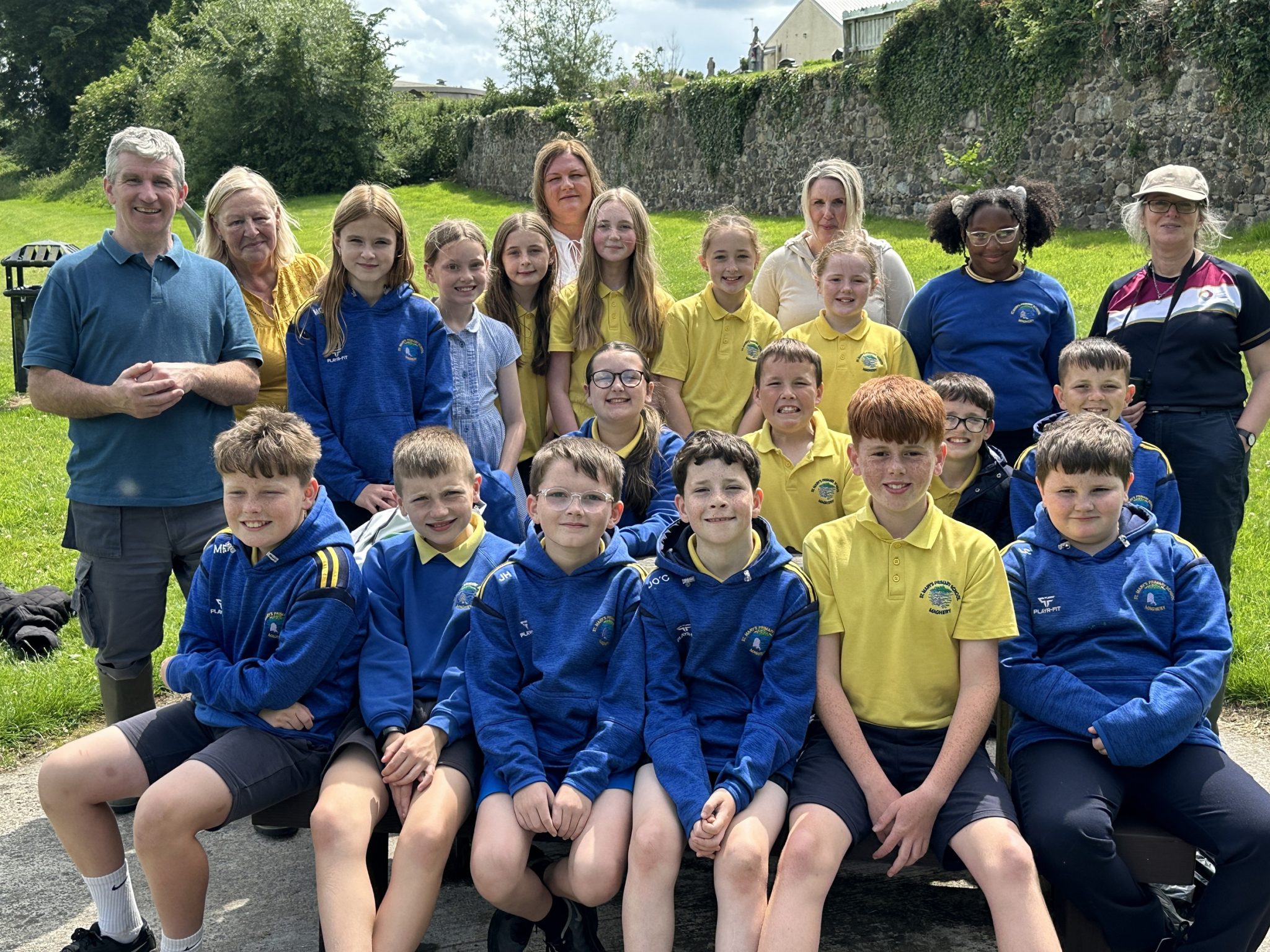
    Updates to this page

    Published 26 June 2025

    MIL OSI United Kingdom –

    June 26, 2025
  • MIL-OSI New Zealand: Universities – Study offers hope for healing from spinal cord injuries – UoA

    Source: University of Auckland (UoA)

    Spinal cord injuries are currently incurable, with devastating effects on people’s lives, but now a trial at Waipapa Taumata Rau, University of Auckland offers hope for an effective treatment.

    Spinal cord injuries are currently incurable with devastating effects on people’s lives, but now a trial at Waipapa Taumata Rau, University of Auckland offers hope for an effective treatment.

    Spinal cord injuries shatter the signal between the brain and body, often resulting in a loss of function.
    “Unlike a cut on the skin, which typically heals on its own, the spinal cord does not regenerate effectively, making these injuries devastating and currently incurable,” says lead researcher Dr Bruce Harland, a senior research fellow in the School of Pharmacy at Waipapa Taumata Rau, University of Auckland.

    Before birth, and to a lesser extent afterwards, naturally occurring electric fields play a vital role in early nervous system development, encouraging and guiding the growth of nerve tissue along the spinal cord.

    Scientists are now harnessing this same electrical guidance system in the lab.

    An implantable electronic device has restored movement following spinal cord injury in an animal study, raising hopes for an effective treatment for humans and even their pets.

    “We developed an ultra-thin implant designed to sit directly on the spinal cord, precisely positioned over the injury site in rats,” Dr Harland says.

    The device delivers a carefully controlled electrical current across the injury site.

    “The aim is to stimulate healing so people can recover functions lost through spinal-cord injury,” Professor Darren Svirskis, director of the CatWalk Cure Programme at the University’s School of Pharmacy says, “Unlike humans, rats have a greater capacity for spontaneous recovery after spinal cord injury, which allowed researchers to compare natural healing with healing supported by electrical stimulation.

    After four weeks, animals that received daily electric field treatment showed improved movement compared with those who did not.

    Throughout the 12-week study, they responded more quickly to gentle touch.

    “This indicates that the treatment supported recovery of both movement and sensation,” Harland says.

    “Just as importantly, our analysis confirmed that the treatment did not cause inflammation or other damage to the spinal cord, demonstrating that it was not only effective but also safe.”

    This new study, published in a leading journal, has come out of a partnership between the University of Auckland and Chalmers University of Technology in Sweden. See Nature Communications [live 9pm 26 June].

    “Long term, the goal is to transform this technology into a medical device that could benefit people living with these life-changing spinal-cord injuries,” says Professor Maria Asplund of Chalmers University of Technology.

    “This study offers an exciting proof of concept showing that electric field treatment can support recovery after spinal cord injury,” says doctoral student Lukas Matter, also from Chalmers University.
    The next step is to explore how different doses, including the strength, frequency, and duration of the treatment, affect recovery, to discover the most effective recipe for spinal-cord repair.

    • Find out about animal-based research at the University of Auckland.

    MIL OSI New Zealand News –

    June 26, 2025
←Previous Page
1 … 170 171 172 173 174 … 1,010
Next Page→
NewzIntel.com

NewzIntel.com

MIL Open Source Intelligence

  • Blog
  • About
  • FAQs
  • Authors
  • Events
  • Shop
  • Patterns
  • Themes

Twenty Twenty-Five

Designed with WordPress