NewzIntel.com

    • Checkout Page
    • Contact Us
    • Default Redirect Page
    • Frontpage
    • Home-2
    • Home-3
    • Lost Password
    • Member Login
    • Member LogOut
    • Member TOS Page
    • My Account
    • NewzIntel Alert Control-Panel
    • NewzIntel Latest Reports
    • Post Views Counter
    • Privacy Policy
    • Public Individual Page
    • Register
    • Subscription Plan
    • Thank You Page

Category: Education

  • MIL-OSI United Kingdom: Dstl announces Orpheus satellite mission contract

    Source: United Kingdom – Executive Government & Departments

    News story

    Dstl announces Orpheus satellite mission contract

    The Orpheus satellite mission will carry a suite of payloads to measure the effects of space weather.

    The Defence Science and Technology Laboratory (Dstl) has awarded the £5.15 million satellite contract for the Orpheus space domain awareness mission to Astroscale UK.

    This will be a successor to the Prometheus-2 and CIRCE missions that were lost aboard the Virgin Orbit launch in 2023. Orpheus is a collaborative effort between UK industry, government and academia–as well as international government partners in Canada and the US. Launch is anticipated to be in 2027.

    Astroscale UK is working with subcontractor Open Cosmos Limited who will design and build 2 near identical cubesats that Astroscale UK will operate for the mission. The satellites will fly in formation in Low Earth, Sun Synchronous Orbit to observe and collect critical data using in-situ and remote sensing techniques.

    Dstl Chief Executive, Dr Paul Hollinshead, said:

    “Changes in space weather can have a critical impact on satellites which provide navigation aids, telecommunications and data transmission. Sustained investment in space research in collaboration with our international partners strengthens the security of UK interests in space.”

    Orpheus will host a suite of Space Domain Awareness (SDA) payloads. These payloads will include a Hyperspectral Imaging (HSI) payload on each spacecraft and an array of payloads to characterise the ionosphere (the ionised portion of Earth’s upper atmosphere) from several UK and international partners.

    HSI payload

    The 2 HSI payloads, supplied by Dragonfly Aerospace, will capture image data to support SDA and Intelligence, Surveillance and Reconnaissance (ISR) scientific experiments and measurements of land-based, littoral and ice over water targets.

    Used in a lead-trail configuration in a near-polar earth sun-synchronous orbit, the 2 HSI payloads will allow for the detection and identification of materials and targets of interest based on their spectral signatures.

    Dragonfly Aerospace, South Africa and Defence Research and Development Canada (DRDC), Canada.

    The satellites will carry the following payloads to measure the effects of space weather:

    Triple Tiny Ionospheric Photometers (Tri-TIP)

    Characterises the ionosphere through observation of UV wavelengths on the night-side of the Earth, using two payloads with multiple different view angles to allow multi-point sampling. US Naval Research Laboratory, US.

    TOPside ionosphere Computer Assisted Tomography (TOPCAT II)

    Derives total electron content of the propagation medium from differential phase of received GPS signals. University of Bath, UK.

    Wind Ion Neutral Composition Suite (WINCS)

    Provide in-situ observations of ions and neutrals (density, temperature and winds/drifts). US Naval Research Laboratory, US.

    Radiation Monitor (RadMon)

    Comprised of a particle detector, dose rate monitor and total dose monitor. Surrey Satellite Technology Ltd, UK.

    The suite of payloads carried on Orpheus will generate observations enabling a greater understanding of the driving processes of geophysical phenomena in the ionosphere-thermosphere system, distributed across a wide range of latitudes.

    Understanding the characteristics of the dynamic ionosphere is vital for a range of both civil and defence applications such as:

    • GNSS
    • communications
    • sensing technology
    • space sustainability

    This fully funded project will run for 3 years and will conclude in 2028. It will cover the complete lifecycle of the mission, from design through to launch, operations and disposal.

    Orpheus is Astroscale UK’s first defence mission and demonstrates how the defence industry is a conduit for small and medium enterprises to super charge their growth through defence activities.

    In the short-term, Orpheus will enable Astroscale to retain 10 direct jobs, in addition to a further 17 jobs for platform partner Open Cosmos and the wider UK supply chain.

    Find out more about Dstl’s space capability and how to work with us.

    Share this page

    The following links open in a new tab

    • Share on Facebook (opens in new tab)
    • Share on Twitter (opens in new tab)

    Updates to this page

    Published 16 June 2025

    MIL OSI United Kingdom –

    June 16, 2025
  • MIL-Evening Report: Iran war: from the Middle East to America, history shows you cannot assassinate your way to peace

    Source: The Conversation (Au and NZ) – By Matt Fitzpatrick, Professor in International History, Flinders University

    In the late 1960s, the prevailing opinion among Israeli Shin Bet intelligence officers was that the key to defeating the Palestinian Liberation Organisation was to assassinate its then-leader Yasser Arafat.

    The elimination of Arafat, the Shin Bet commander Yehuda Arbel wrote in his diary, was “a precondition to finding a solution to the Palestinian problem.”

    For other, even more radical Israelis – such as the ultra-nationalist assassin Yigal Amir – the answer lay elsewhere. They sought the assassination of Israeli leaders such as Yitzak Rabin who wanted peace with the Palestinians.

    Despite Rabin’s long personal history as a famed and often ruthless military commander in the 1948 and 1967 Arab-Israeli Wars, Amir stalked and shot Rabin dead in 1995. He believed Rabin had betrayed Israel by signing the Oslo Accords peace deal with Arafat.

    It’s been 20 years since Arafat died as possibly the victim of polonium poisoning, and 30 years after the shooting of Rabin. Peace between Israelis and the Palestinians has never been further away.

    What Amnesty International and a United Nations Special Committee have called genocidal attacks on Palestinians in Gaza have spilled over into Israeli attacks on the prominent leaders of its enemies in Lebanon and, most recently, Iran.

    Since its attacks on Iran began on Friday, Israel has killed numerous military and intelligence leaders, including Iran’s intelligence chief, Mohammad Kazemi; the chief of the armed forces, Mohammad Bagheri; and the commander of the Islamic Revolutionary Guard Corps, Hossein Salami. At least nine Iranian nuclear scientists have also been killed.

    Israel’s Prime Minister Benjamin Netanyahu reportedly said:

    We got their chief intelligence officer and his deputy in Tehran.

    Iran, predictably, has responded with deadly missile attacks on Israel.

    Far from having solved the issue of Middle East peace, assassinations continue to pour oil on the flames.

    A long history of extra-judicial killings

    Israeli journalist Ronen Bergman’s book Rise and Kill First argues assassinations have long sat at the heart of Israeli politics.

    In the past 75 years, there have been more than 2,700 assassination operations undertaken by Israel. These have, in Bergman’s words, attempted to “stop history” and bypass “statesmanship and political discourse”.

    This normalisation of assassinations has been codified in the Israeli expression of “mowing the grass”. This is, as historian Nadim Rouhana has shown, a metaphor for a politics of constant assassination. Enemy “leadership and military facilities must regularly be hit in order to keep them weak.”

    The point is not to solve the underlying political questions at issue. Instead, this approach aims to sow fear, dissent and confusion among enemies.

    Thousands of assassination operations have not, however, proved sufficient to resolve the long-running conflict between Israel, its neighbours and the Palestinians. The tactic itself is surely overdue for retirement.

    Targeted assassinations elsewhere

    Israel has been far from alone in this strategy of assassination and killing.

    Former US President Barack Obama oversaw the extra-judicial killing of Osama Bin Laden, for instance.

    After what Amnesty International and Human Rights Watch denounced as a flawed trial, former US President George W. Bush welcomed the hanging of Iraqi leader Saddam Hussein as “an important milestone on Iraq’s course to becoming a democracy”.

    Current US President Donald Trump oversaw the assassination of Iran’s leader of clandestine military operations, Qassem Soleimani, in 2020.

    More recently, however, Trump appears to have baulked at granting Netanyahu permission to kill Iran’s Supreme Leader Ayatollah Ali Khamenei.

    And it’s worth noting the US Department of Justice last year brought charges against an Iranian man who said he’d been tasked with killing Trump.

    Elsewhere, in Vladimir Putin’s Russia, it’s common for senior political and media opponents to be shot in the streets. Frequently they also “fall” out of high windows, are killed in plane crashes or succumb to mystery “illnesses”.

    A poor record

    Extra-judicial killings, however, have a poor record as a mechanism for solving political problems.

    Cutting off the hydra’s head has generally led to its often immediate replacement by another equally or more ideologically committed person, as has already happened in Iran. Perhaps they too await the next round of “mowing the grass”.

    But as the latest Israeli strikes in Iran and elsewhere show, solving the underlying issue is rarely the point.

    In situations where finding a lasting negotiated settlement would mean painful concessions or strategic risks, assassinations prove simply too tempting. They circumvent the difficulties and complexities of diplomacy while avoiding the need to concede power or territory.

    As many have concluded, however, assassinations have never killed resistance. They have never killed the ideas and experiences that give birth to resistance in the first place.

    Nor have they offered lasting security to those who have ordered the lethal strike.

    Enduring security requires that, at some point, someone grasp the nettle and look to the underlying issues.

    The alternative is the continuation of the brutal pattern of strike and counter-strike for generations to come.

    The Conversation

    Matt Fitzpatrick receives funding from the Australian Research Council.

    – ref. Iran war: from the Middle East to America, history shows you cannot assassinate your way to peace – https://theconversation.com/iran-war-from-the-middle-east-to-america-history-shows-you-cannot-assassinate-your-way-to-peace-259038

    MIL OSI Analysis – EveningReport.nz –

    June 16, 2025
  • MIL-Evening Report: How does Israel’s famous air defence work? It’s not just the ‘Iron Dome’

    Source: The Conversation (Au and NZ) – By James Dwyer, Lecturer, School of Social Sciences, University of Tasmania

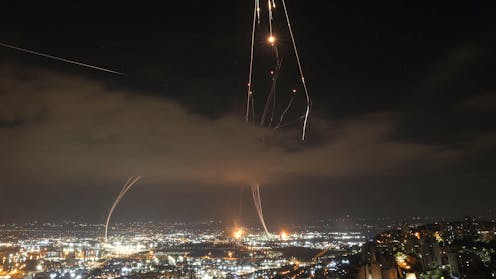
    Israeli defence systems intercept Iranian missiles over the city of Haifa Ahmad Gharabli / AFP via Getty Images

    Late last week, Israel began a wave of attacks on Iran under the banner of Operation Rising Lion, with the stated goal of crippling the Islamic republic’s nuclear program and long-range strike capabilities. At the outset, Israel claimed Iran would soon be able to build nine nuclear weapons, a situation Israel regarded as completely unacceptable.

    Following Israeli strikes against Iranian nuclear facilities, and targeted assassinations of Iranian nuclear scientists and key members of the Iranian armed forces, Iran retaliated with a large barrage of ballistic missiles and drones against Tel Aviv and Jerusalem. The first wave consisted of some 200 ballistic missiles and 200 drones.

    The conflict continues to escalate, with population centres increasingly being targeted. Israel’s missile defence systems (including the vaunted Iron Dome) have so far staved off most of Iran’s attacks, but the future is uncertain.

    Ballistic missiles and how to stop them

    Iran possesses a large arsenal of ballistic missiles and long-range drones, alongside other long-range weapons such as cruise missiles. Ballistic missiles travel on a largely fixed path steered by gravity, while cruise missiles can adjust their course as they fly.

    Iran is approximately 1,000km from Israel, so the current strikes mostly involve what are classified as medium-range ballistic missiles, alongside long-range drones. It is not clear exactly what type of missile Iran has used in its latest strikes, but the country has several including the Fattah-1 and Emad.

    It is very difficult to defend against ballistic missiles. There is not much time between launch and impact, and they come down at very high speed. The longer the missile’s range, the faster and higher it flies.

    An incoming missile presents a small, fast-moving target – and defenders may have little time to react.

    Israel’s missile defence and the Iron Dome

    Israel possesses arguably one of the most effective, battle-tested air defence systems in service today. The system is often described in the media as the “Iron Dome”, but this is not quite correct.

    Israel’s defences have several layers, each designed to address threats coming from different ranges.

    Iron Dome is just one of these layers: a short range, anti-artillery defence system, designed to intercept short-range artillery shells and rockets.

    In essence, Iron Dome consists of a network of radar emitters, command and control facilities, and the interceptors (special surface-to-air missiles). The radar quickly detects incoming threats, the command and control elements decide which are most pressing, and the interceptors are sent to destroy the incoming shells or rockets.

    Ballistic defence systems

    The other layers of Israel’s defence system include David’s Sling, and the Arrow 2 and Arrow 3 interceptors. These are specifically designed to engage longer-range ballistic missiles, both within the atmosphere and at very high altitudes above it (known as exoatmospheric interception).

    Spectacular footage has been captured of what are likely exoatmospheric interceptions taking place during this latest conflict, demonstrating Israel’s capacity to engage longer-range missiles.

    The US military has comparable missile defence systems. The US Army has the Patriot PAC-3 (comparable to David’s Sling) and THAAD (comparable to Arrow 2), while the US Navy has the Aegis and the SM-3 (comparable to Arrow 3) and the SM-6 (comparable again to Arrow 2).

    The US deployed Aegis-equipped warships to support Israel’s defence against missile attacks in 2024, and appears to be preparing to do the same now.

    Iran possesses some air defence systems such as the Russian S300 which has some (very limited) ballistic missile defence capabilities, but only against shorter range (and thus slower) ballistic missiles. Further, Israel has been focusing on degrading Iran’s air defences, so it is not clear how many are still operational.

    Iran has been focusing on developing technology such as maneuverable warheads, which are harder to defend against. However, it is not clear whether these are yet operational and in Iranian service.

    Can missile defences last forever?

    Missile defences are finite. The defender is always limited by the number of interceptors it possesses.

    The attacker is also limited by the number of missiles it possesses. However, the defender must often assign multiple interceptors to each attacking missile, in case the first misses or otherwise fails.

    The attacker will plan for some losses to interceptors (or mechanical failures) and send what it determines to be enough missiles for at least some to penetrate the defences.

    When it comes to ballistic missiles, the advantage lies with the attacker. Ballistic missiles can carry large explosive payloads (or even nuclear warheads), so even a handful of missiles “leaking” past defensive systems can still wreak significant damage.

    What now?

    Israel’s missile defences are unlikely to stop working completely. However, as attacks deplete its stocks of interceptors, the system may become less effective.

    As the conflict continues, it may become a race to see who runs out of weapons first. Will it be Iran’s stocks of ballistic missiles and drones, or the interceptors and anti-air munitions of Israel, the US and any other supporters?

    It is impossible to say who would prevail in such a race of stockpile attrition. Some reports suggest Iran has fired approximately 1,000 ballistic missiles of an estimated 3,000. However, this still leaves it with an enormous stockpile to use, and it is unclear how fast Iran can make new missiles to replenish its resources.

    But we should hope it doesn’t come to that. Beyond the tit-for-tat exchange of missiles, the latest conflict between Israel and Iran risks escalating. If it is not resolved soon, and if the US is drawn into the conflict more directly, we may see broader conflict in the Middle East.

    The Conversation

    James Dwyer does not work for, consult, own shares in or receive funding from any company or organisation that would benefit from this article, and has disclosed no relevant affiliations beyond their academic appointment.

    – ref. How does Israel’s famous air defence work? It’s not just the ‘Iron Dome’ – https://theconversation.com/how-does-israels-famous-air-defence-work-its-not-just-the-iron-dome-259029

    MIL OSI Analysis – EveningReport.nz –

    June 16, 2025
  • MIL-Evening Report: The historic High Seas Treaty is almost reality. Here’s what it would mean for ocean conservation

    Source: The Conversation (Au and NZ) – By Sarah Lothian, Senior Lecturer in Maritime Law and Academic Barrister, University of Wollongong

    J Nel/Shutterstock

    The high seas are set to gain a greater level of protection when a long-sought after treaty finally enters into force.

    For almost 20 years, nations have debated the need for the High Seas Treaty, intended to protect marine life in the high seas and the international seabed. These marine areas together account for nearly two-thirds of the world’s ocean and harbour a rich array of unique species and ecosystems. The treaty is formally known as the Biodiversity Beyond National Jurisdiction Agreement.

    Many hoped last week’s United Nations Oceans Conference would result in enough nations ratifying the treaty to bring it into force. As of today, 50 states of the 60 required have done so, while another 19 have promised to do so by the year’s end. A greater level of protection for our high seas is well and truly in sight.

    By United Nations standards, this is a cracking pace. The treaty-making process itself can take years, particularly as states need to incorporate the treaty into their domestic laws. This speaks to the urgency of the moment. Researchers and authorities have warned that the world’s oceans are now in deep trouble, threatened by climate change effects, overfishing, plastic pollution and other human-caused issues.

    Once the treaty enters into force, nations can begin to propose high seas marine protected areas, which could limit fishing and other activities. The question then will be how to police these marine protected areas.

    How did we get here?

    In June 2023, the High Seas Treaty was adopted by consensus at the UN Headquarters in New York. It was a long time coming.

    For decades, nations argued and negotiated over what this treaty might look like. How could the marine genetic resources of this global commons be shared fairly and equitably? How could protected areas be designated and managed? What was eventually thrashed out was a comprehensive international legal framework able to better protect and safeguard the rich and diverse web of life inhabiting the deep sea.

    Getting to this point was a real achievement.

    But for this treaty to enter into force, 60 countries have to ratify it. This means their governments must consent to be legally bound by the terms of the treaty.

    While Australia has pledged to ratify the treaty, it is still working through the ratification and domestic legal process. On a positive note, Environment Minister Murray Watt has indicated this will happen before the end of the year.

    What will the treaty actually do?

    At present, the high seas are regulated by a patchwork of global, regional and sectoral frameworks, instruments and bodies. However, none of these have a core mandate of protecting the biodiversity of the oceans.

    In 1982, the Law of the Sea Convention was adopted, giving every coastal nation rights over the waters extending to 200 nautical miles (370 kilometres) from their coastline.

    Once you are past this, you’re in the high seas – the swathes of ocean not controlled by any one nation.

    If and when it comes into effect, the High Seas Treaty would give the world a way to set up large marine protected areas in the high seas. It would also apply to the international seabed – the seabed, subsoils and ocean floor lying beyond the continental shelf of a coastal state.

    Any new protected areas would likely have restrictions on activities such as fishing and shipping. But this will need to be done in consultation with relevant international bodies such as the International Maritime Organisation and regional fisheries management organisations.

    The treaty would go a long way to reaching key conservation goals set under the 2022 Kunming-Montreal Biodiversity Pact, which calls for protection of at least 30% of the world’s marine and coastal habitats by 2030.

    The treaty also sets up a mechanism for the sharing of benefits from marine genetic resources, financial and otherwise. Bacteria living in deep-sea ecosystems have attracted much scientific and commercial attention for potential use in medical research or pharmaceutical, cosmetics and food industries. Genetic resources from sea sponges have given rise to antiviral drugs targeting COVID and HIV as well as anti-cancer drugs.

    These resources were a major sticking point during the long negotiations.

    Many coastal countries lack the ability to participate in high seas research. As a result, they can miss out on these and other benefits. The High Seas Treaty recognises this and sets up a strong framework for capacity-building, technology transfer and technical assistance for developing nations.

    As nations fish out their territorial waters, some send fishing boats into the unregulated high seas.
    Richard Whitcombe/Shutterstock

    When will the oceans get a reprieve?

    Once the 60th nation ratifies the High Seas Treaty, it will enter into force 120 days later. This date could be as soon as May 1 next year, if the threshold is reached on January 1.

    Once this happens, this will be the date upon which the treaty gains legal force, meaning nations will have to comply with its obligations.

    That doesn’t mean huge new marine parks will come into being. There’s still much work to do to hash out the mechanics of how the treaty would actually work, how it would be overseen and how it would work with the International Seabed Authority which oversees deep-sea mining and the Antarctic Treaty System, among others. Negotiators face more work ahead to solve these outstanding issues before the real work can begin.

    That’s not to diminish this achievement. The progress on this treaty has been very hard won. Once it’s in effect, it will make a concrete difference.

    Sarah Lothian does not work for, consult, own shares in or receive funding from any company or organisation that would benefit from this article, and has disclosed no relevant affiliations beyond their academic appointment.

    – ref. The historic High Seas Treaty is almost reality. Here’s what it would mean for ocean conservation – https://theconversation.com/the-historic-high-seas-treaty-is-almost-reality-heres-what-it-would-mean-for-ocean-conservation-258710

    MIL OSI Analysis – EveningReport.nz –

    June 16, 2025
  • MIL-OSI: Falcon Oil & Gas Ltd. – Another Stellar IP30 Flow Test Result in the Beetaloo

    Source: GlobeNewswire (MIL-OSI)

    Falcon Oil & Gas Ltd (“Falcon”).

    Another Stellar IP30 Flow Test Result in the Beetaloo

    16 June 2025 – Falcon Oil & Gas Ltd. (TSXV: FO, AIM: FOG) is pleased to announce that Shenandoah S2-2H ST1 (“SS-2H ST1”) achieved an average 30-day initial production (“IP30”) flow rate of 7.2 million cubic feet per day (“MMcf/d”) over 1,671-metres (5,483-foot) across a 35 stage stimulated length within the Amungee Member B-Shale in the Beetaloo Sub-basin, Northern Territory, Australia, making it the highest IP30 result in the Beetaloo to date.

    Points to note:

    • The normalized flow rate of 13.2 MMcf/d over an extrapolated 10,000-foot horizontal section is in-line with the average of more than 11,000 wells in the Marcellus Shale dry gas area on production over a 12-month period. The results demonstrate the commercial deliverability of gas from the Amungee Member B-Shale in the Australian East Coast gas market that typically sells at a premium to Henry Hub in the United States and under long term CPI-linked contracts.
    • The exit rate trajectory continues a steady, low-declining curve at 6.7 MMcf/d (normalized at 12.2 MMcf/d per 10,000-feet) with a flowing wellhead pressure of ~910 psi. The steady state decline curve on SS-2H ST1 is consistent with that achieved from the Shenandoah South 1H well (“SS-1H”).
    • For further details on the SS-2H ST1 flow test including a table, and charts please refer to Appendix A.

    Development activity

    • The Shenandoah South drilling campaign is planned to commence in July 2025, targeting up to three 10,000-foot horizontal wells and completed with up to 60 stimulation stages from the SS2 well pad. As previously announced, Falcon Oil & Gas Australia Limited (“Falcon Australia”) has opted to reduce its participating interest in the three wells to 0%.
    • Once completed, the five wells on the SS2 pad are planned to be tied into the Sturt Plateau Compression Facility (“SPCF”) to feed into a 40 MMcf/d take-or-pay Gas Sales Agreement (“GSA”) with the Northern Territory Government. Production remains on track to commence in mid-2026, subject to standard regulatory and stakeholder approvals and favourable weather conditions.
    • The Shenandoah South 4H (“SS-4H”) well is planned to be completed and flow tested by the end of 2025, with the remaining wells drilled in the 2025 campaign to be completed during 1H 2026.
    • Completion of the remaining four wells will incorporate lessons from the SS-1H and SS-2H ST1 wells.
    • The five wells are expected to deliver the required 40 MMcf/d volume under a binding take-or-pay agreement with the Northern Territory Government.

    Philip O’Quigley, CEO of Falcon commented:

    “The IP30 flow rate results announced today of 7.2 MMcf/d, are truly stellar and marks another major data point in the Beetaloo Sub-basin again demonstrating that it compares to the best shale wells in the United States. Not only did the results exceed Falcon’s pre-drill commercial threshold of a normalised flow rate of 3 MMcf/d per 1,000 metres but had similar flow rates and pressures to SS-1H and SS-2H ST1, which all point towards the significant resource potential of the Beetaloo.

    Falcon looks forward to the planned completion and testing of SS-4H by the end of 2025 and also to observing the results from the next three wells of the Shenandoah South drilling program and the additional milestones they will establish.

    As further results become available, we look forward to updating the market further”

    Ends.

    CONTACT DETAILS:

    Falcon Oil & Gas Ltd.          +353 1 676 8702
    Philip O’Quigley, CEO +353 87 814 7042
    Anne Flynn, CFO +353 1 676 9162
     
    Cavendish Capital Markets Limited (NOMAD & Broker)
    Neil McDonald / Adam Rae +44 131 220 9771


    This announcement has been reviewed by Dr. Gábor Bada, Falcon Oil & Gas Ltd’s Technical Advisor. Dr. Bada obtained his geology degree at the Eötvös L. University in Budapest, Hungary and his PhD at the Vrije Universiteit Amsterdam, the Netherlands. He is a member of AAPG.

    About Falcon Oil & Gas Ltd.
    Falcon Oil & Gas Ltd is an international oil & gas company engaged in the exploration and development of unconventional oil and gas assets, with the current portfolio focused in Australia. Falcon Oil & Gas Ltd is incorporated in British Columbia, Canada and headquartered in Dublin, Ireland.

    Falcon Oil & Gas Australia Limited is a c. 98% subsidiary of Falcon Oil & Gas Ltd.

    For further information on Falcon Oil & Gas Ltd. Please visit www.falconoilandgas.com

    About Beetaloo Joint Venture (EP 76, 98 and 117)   

    Company Interest
    Falcon Oil & Gas Australia Limited (Falcon Australia) 22.5%
    Tamboran (B2) Pty Limited (“Tamboran”) 77.5%
    Total 100.0%

    Shenandoah South Pilot Project -2 Drilling Space Units – 46,080 acres1

    Company Interest
    Falcon Oil & Gas Australia Limited (Falcon Australia) 5.0%
    Tamboran (B2) Pty Limited 95.0%
    Total 100.0%

    1Subject to the completion of SS–4H wells on the Shenandoah South pad 2.

    About Tamboran (B2) Pty Limited
    Tamboran (B1) Pty Limited (“Tamboran B1”) is the 100% holder of Tamboran (B2) Pty Limited, with Tamboran B1 being a 50:50 joint venture between Tamboran Resources Corporation and Daly Waters Energy, LP.

    Tamboran Resources Corporation is a natural gas company listed on the NYSE (TBN) and ASX (TBN). Tamboran is focused on playing a constructive role in the global energy transition towards a lower carbon future, by developing the significant low CO2 gas resource within the Beetaloo Sub-basin through cutting-edge drilling and completion design technology as well as management’s experience in successfully commercialising unconventional shale in North America.

    Bryan Sheffield of Daly Waters Energy, LP is a highly successful investor and has made significant returns in the US unconventional energy sector in the past. He was Founder of Parsley Energy Inc. (“PE”), an independent unconventional oil and gas producer in the Permian Basin, Texas and previously served as its Chairman and CEO. PE was acquired for over US$7 billion by Pioneer Natural Resources Company.

    Appendix A – SS-2H ST1 Flow Test Details

    Note to reader: Please refer to the PDF attachment included at the end of this press release for further details including a table and charts related to the SS-2H ST1 flow test results

    Advisory regarding forward-looking statements
    Certain information in this press release may constitute forward-looking information. Any statements that are contained in this news release that are not statements of historical fact may be deemed to be forward-looking information. Forward-looking information typically contains statements with words such as “may”, “will”, “should”, “expect”, “intend”, “plan”, “anticipate”, “believe”, “estimate”, “projects”, “dependent”, “consider” “potential”, “scheduled”, “forecast”, “anticipated”, “outlook”, “budget”, “hope”, “suggest”, “support” “planned”, “approximately”, “potential” or the negative of those terms or similar words suggesting future outcomes. In particular, forward-looking information in this press release includes, details on the IP30 flow test results of SS-2H ST1 including assumptions that the results are in line with average of more than 11,000 wells in the Marcellus Shale dry gas area on production over a 12-month period and that they demonstrate the commercial deliverability of gas from the Amungee Member B-Shale in the Australian East Coast gas market that typically sells at a premium to Henry Hub in the United States and under long term CPI-linked contracts; consistency of the results of SS-2H ST1 with SS-1H; details on the planned three well drilling campaign including the plan to commence in July 2025 and to continue into 1H 2026; the plan to tie the wells to the SPCF under a GSA with the Northern Territory Government in mid-2026; the plan that SS-4H will be completed and flow tested by the end of 2025; the five wells drilled are expected to deliver the required 40 MMcf/d under a GSA with the Northern Territory Government;

    This information is based on current expectations that are subject to significant risks and uncertainties that are difficult to predict. The risks, assumptions and other factors that could influence actual results include risks associated with fluctuations in market prices for shale gas; risks related to the exploration, development and production of shale gas reserves; general economic, market and business conditions; substantial capital requirements; uncertainties inherent in estimating quantities of reserves and resources; extent of, and cost of compliance with, government laws and regulations and the effect of changes in such laws and regulations; the need to obtain regulatory approvals before development commences; environmental risks and hazards and the cost of compliance with environmental regulations; aboriginal claims; inherent risks and hazards with operations such as mechanical or pipe failure, cratering and other dangerous conditions; potential cost overruns, drilling wells is speculative, often involving significant costs that may be more than estimated and may not result in any discoveries; variations in foreign exchange rates; competition for capital, equipment, new leases, pipeline capacity and skilled personnel; the failure of the holder of licenses, leases and permits to meet requirements of such; changes in royalty regimes; failure to accurately estimate abandonment and reclamation costs; inaccurate estimates and assumptions by management and/or their joint venture partners; effectiveness of internal controls; the potential lack of available drilling equipment; failure to obtain or keep key personnel; title deficiencies; geo-political risks; and risk of litigation.

    Readers are cautioned that the foregoing list of important factors is not exhaustive and that these factors and risks are difficult to predict. Actual results might differ materially from results suggested in any forward-looking statements. Falcon assumes no obligation to update the forward-looking statements, or to update the reasons why actual results could differ from those reflected in the forward-looking statements unless and until required by securities laws applicable to Falcon. Additional information identifying risks and uncertainties is contained in Falcon’s filings with the Canadian securities regulators, which filings are available at www.sedarplus.com, including under “Risk Factors” in the Annual Information Form.

    Any references in this news release to initial production rates are useful in confirming the presence of hydrocarbons; however, such rates are not determinative of the rates at which such wells will continue production and decline thereafter and are not necessarily indicative of long-term performance or ultimate recovery. While encouraging, readers are cautioned not to place reliance on such rates in calculating the aggregate production for Falcon. Such rates are based on field estimates and may be based on limited data available at this time.

    Neither the TSX Venture Exchange nor its Regulation Services Provider (as that term is defined in the policies of the TSX Venture Exchange) accepts responsibility for the adequacy or accuracy of this release.

    The information communicated within this announcement is deemed to constitute inside information as stipulated under the Market Abuse Regulations (EU) No 596/2014 which is part of UK law by virtue of the European Union (Withdrawal) Act 2018. Upon publication of this announcement, this inside information is now considered to be in the public domain.

    Attachment

    • 061625 Final Falcon Press Release – SS-2H ST1 IP30 v2

    The MIL Network –

    June 16, 2025
  • MIL-OSI: Falcon Oil & Gas Ltd. – Another Stellar IP30 Flow Test Result in the Beetaloo

    Source: GlobeNewswire (MIL-OSI)

    Falcon Oil & Gas Ltd (“Falcon”).

    Another Stellar IP30 Flow Test Result in the Beetaloo

    16 June 2025 – Falcon Oil & Gas Ltd. (TSXV: FO, AIM: FOG) is pleased to announce that Shenandoah S2-2H ST1 (“SS-2H ST1”) achieved an average 30-day initial production (“IP30”) flow rate of 7.2 million cubic feet per day (“MMcf/d”) over 1,671-metres (5,483-foot) across a 35 stage stimulated length within the Amungee Member B-Shale in the Beetaloo Sub-basin, Northern Territory, Australia, making it the highest IP30 result in the Beetaloo to date.

    Points to note:

    • The normalized flow rate of 13.2 MMcf/d over an extrapolated 10,000-foot horizontal section is in-line with the average of more than 11,000 wells in the Marcellus Shale dry gas area on production over a 12-month period. The results demonstrate the commercial deliverability of gas from the Amungee Member B-Shale in the Australian East Coast gas market that typically sells at a premium to Henry Hub in the United States and under long term CPI-linked contracts.
    • The exit rate trajectory continues a steady, low-declining curve at 6.7 MMcf/d (normalized at 12.2 MMcf/d per 10,000-feet) with a flowing wellhead pressure of ~910 psi. The steady state decline curve on SS-2H ST1 is consistent with that achieved from the Shenandoah South 1H well (“SS-1H”).
    • For further details on the SS-2H ST1 flow test including a table, and charts please refer to Appendix A.

    Development activity

    • The Shenandoah South drilling campaign is planned to commence in July 2025, targeting up to three 10,000-foot horizontal wells and completed with up to 60 stimulation stages from the SS2 well pad. As previously announced, Falcon Oil & Gas Australia Limited (“Falcon Australia”) has opted to reduce its participating interest in the three wells to 0%.
    • Once completed, the five wells on the SS2 pad are planned to be tied into the Sturt Plateau Compression Facility (“SPCF”) to feed into a 40 MMcf/d take-or-pay Gas Sales Agreement (“GSA”) with the Northern Territory Government. Production remains on track to commence in mid-2026, subject to standard regulatory and stakeholder approvals and favourable weather conditions.
    • The Shenandoah South 4H (“SS-4H”) well is planned to be completed and flow tested by the end of 2025, with the remaining wells drilled in the 2025 campaign to be completed during 1H 2026.
    • Completion of the remaining four wells will incorporate lessons from the SS-1H and SS-2H ST1 wells.
    • The five wells are expected to deliver the required 40 MMcf/d volume under a binding take-or-pay agreement with the Northern Territory Government.

    Philip O’Quigley, CEO of Falcon commented:

    “The IP30 flow rate results announced today of 7.2 MMcf/d, are truly stellar and marks another major data point in the Beetaloo Sub-basin again demonstrating that it compares to the best shale wells in the United States. Not only did the results exceed Falcon’s pre-drill commercial threshold of a normalised flow rate of 3 MMcf/d per 1,000 metres but had similar flow rates and pressures to SS-1H and SS-2H ST1, which all point towards the significant resource potential of the Beetaloo.

    Falcon looks forward to the planned completion and testing of SS-4H by the end of 2025 and also to observing the results from the next three wells of the Shenandoah South drilling program and the additional milestones they will establish.

    As further results become available, we look forward to updating the market further”

    Ends.

    CONTACT DETAILS:

    Falcon Oil & Gas Ltd.          +353 1 676 8702
    Philip O’Quigley, CEO +353 87 814 7042
    Anne Flynn, CFO +353 1 676 9162
     
    Cavendish Capital Markets Limited (NOMAD & Broker)
    Neil McDonald / Adam Rae +44 131 220 9771


    This announcement has been reviewed by Dr. Gábor Bada, Falcon Oil & Gas Ltd’s Technical Advisor. Dr. Bada obtained his geology degree at the Eötvös L. University in Budapest, Hungary and his PhD at the Vrije Universiteit Amsterdam, the Netherlands. He is a member of AAPG.

    About Falcon Oil & Gas Ltd.
    Falcon Oil & Gas Ltd is an international oil & gas company engaged in the exploration and development of unconventional oil and gas assets, with the current portfolio focused in Australia. Falcon Oil & Gas Ltd is incorporated in British Columbia, Canada and headquartered in Dublin, Ireland.

    Falcon Oil & Gas Australia Limited is a c. 98% subsidiary of Falcon Oil & Gas Ltd.

    For further information on Falcon Oil & Gas Ltd. Please visit www.falconoilandgas.com

    About Beetaloo Joint Venture (EP 76, 98 and 117)   

    Company Interest
    Falcon Oil & Gas Australia Limited (Falcon Australia) 22.5%
    Tamboran (B2) Pty Limited (“Tamboran”) 77.5%
    Total 100.0%

    Shenandoah South Pilot Project -2 Drilling Space Units – 46,080 acres1

    Company Interest
    Falcon Oil & Gas Australia Limited (Falcon Australia) 5.0%
    Tamboran (B2) Pty Limited 95.0%
    Total 100.0%

    1Subject to the completion of SS–4H wells on the Shenandoah South pad 2.

    About Tamboran (B2) Pty Limited
    Tamboran (B1) Pty Limited (“Tamboran B1”) is the 100% holder of Tamboran (B2) Pty Limited, with Tamboran B1 being a 50:50 joint venture between Tamboran Resources Corporation and Daly Waters Energy, LP.

    Tamboran Resources Corporation is a natural gas company listed on the NYSE (TBN) and ASX (TBN). Tamboran is focused on playing a constructive role in the global energy transition towards a lower carbon future, by developing the significant low CO2 gas resource within the Beetaloo Sub-basin through cutting-edge drilling and completion design technology as well as management’s experience in successfully commercialising unconventional shale in North America.

    Bryan Sheffield of Daly Waters Energy, LP is a highly successful investor and has made significant returns in the US unconventional energy sector in the past. He was Founder of Parsley Energy Inc. (“PE”), an independent unconventional oil and gas producer in the Permian Basin, Texas and previously served as its Chairman and CEO. PE was acquired for over US$7 billion by Pioneer Natural Resources Company.

    Appendix A – SS-2H ST1 Flow Test Details

    Note to reader: Please refer to the PDF attachment included at the end of this press release for further details including a table and charts related to the SS-2H ST1 flow test results

    Advisory regarding forward-looking statements
    Certain information in this press release may constitute forward-looking information. Any statements that are contained in this news release that are not statements of historical fact may be deemed to be forward-looking information. Forward-looking information typically contains statements with words such as “may”, “will”, “should”, “expect”, “intend”, “plan”, “anticipate”, “believe”, “estimate”, “projects”, “dependent”, “consider” “potential”, “scheduled”, “forecast”, “anticipated”, “outlook”, “budget”, “hope”, “suggest”, “support” “planned”, “approximately”, “potential” or the negative of those terms or similar words suggesting future outcomes. In particular, forward-looking information in this press release includes, details on the IP30 flow test results of SS-2H ST1 including assumptions that the results are in line with average of more than 11,000 wells in the Marcellus Shale dry gas area on production over a 12-month period and that they demonstrate the commercial deliverability of gas from the Amungee Member B-Shale in the Australian East Coast gas market that typically sells at a premium to Henry Hub in the United States and under long term CPI-linked contracts; consistency of the results of SS-2H ST1 with SS-1H; details on the planned three well drilling campaign including the plan to commence in July 2025 and to continue into 1H 2026; the plan to tie the wells to the SPCF under a GSA with the Northern Territory Government in mid-2026; the plan that SS-4H will be completed and flow tested by the end of 2025; the five wells drilled are expected to deliver the required 40 MMcf/d under a GSA with the Northern Territory Government;

    This information is based on current expectations that are subject to significant risks and uncertainties that are difficult to predict. The risks, assumptions and other factors that could influence actual results include risks associated with fluctuations in market prices for shale gas; risks related to the exploration, development and production of shale gas reserves; general economic, market and business conditions; substantial capital requirements; uncertainties inherent in estimating quantities of reserves and resources; extent of, and cost of compliance with, government laws and regulations and the effect of changes in such laws and regulations; the need to obtain regulatory approvals before development commences; environmental risks and hazards and the cost of compliance with environmental regulations; aboriginal claims; inherent risks and hazards with operations such as mechanical or pipe failure, cratering and other dangerous conditions; potential cost overruns, drilling wells is speculative, often involving significant costs that may be more than estimated and may not result in any discoveries; variations in foreign exchange rates; competition for capital, equipment, new leases, pipeline capacity and skilled personnel; the failure of the holder of licenses, leases and permits to meet requirements of such; changes in royalty regimes; failure to accurately estimate abandonment and reclamation costs; inaccurate estimates and assumptions by management and/or their joint venture partners; effectiveness of internal controls; the potential lack of available drilling equipment; failure to obtain or keep key personnel; title deficiencies; geo-political risks; and risk of litigation.

    Readers are cautioned that the foregoing list of important factors is not exhaustive and that these factors and risks are difficult to predict. Actual results might differ materially from results suggested in any forward-looking statements. Falcon assumes no obligation to update the forward-looking statements, or to update the reasons why actual results could differ from those reflected in the forward-looking statements unless and until required by securities laws applicable to Falcon. Additional information identifying risks and uncertainties is contained in Falcon’s filings with the Canadian securities regulators, which filings are available at www.sedarplus.com, including under “Risk Factors” in the Annual Information Form.

    Any references in this news release to initial production rates are useful in confirming the presence of hydrocarbons; however, such rates are not determinative of the rates at which such wells will continue production and decline thereafter and are not necessarily indicative of long-term performance or ultimate recovery. While encouraging, readers are cautioned not to place reliance on such rates in calculating the aggregate production for Falcon. Such rates are based on field estimates and may be based on limited data available at this time.

    Neither the TSX Venture Exchange nor its Regulation Services Provider (as that term is defined in the policies of the TSX Venture Exchange) accepts responsibility for the adequacy or accuracy of this release.

    The information communicated within this announcement is deemed to constitute inside information as stipulated under the Market Abuse Regulations (EU) No 596/2014 which is part of UK law by virtue of the European Union (Withdrawal) Act 2018. Upon publication of this announcement, this inside information is now considered to be in the public domain.

    Attachment

    • 061625 Final Falcon Press Release – SS-2H ST1 IP30 v2

    The MIL Network –

    June 16, 2025
  • Britain appoints first female head of MI6 spy agency

    Source: Government of India

    Source: Government of India (4)

    Britain on Sunday named Blaise Metreweli, a career intelligence officer, as the first female head of the Secret Intelligence Service, the foreign spy service known as MI6.

    Metreweli, 47, who is currently MI6’s head of technology, known as “Q”, joined the Secret Intelligence Service in 1999, and has spent most of her career in operational roles in the Middle East and Europe, the government said in a statement.

    Richard Moore, the current chief of MI6, will step down in the autumn after a five-year tenure.

    “I am proud and honoured to be asked to lead my service,” said Metreweli, who takes on one of the most powerful jobs in Western intelligence and will be known by the code name “C”.

    MI6, founded in 1909, joins the other main British spy agencies, the domestic spy service MI5, and the intelligence communications agency GCHQ, in having appointed a female head.

    Prime Minister Keir Starmer, who is currently in Canada for the G7 summit, said Metreweli’s appointment comes when Britain is “facing threats on an unprecedented scale”.

    “I know Blaise will continue to provide the excellent leadership needed to defend our country,” he said.

    Metreweli’s biggest challenges are likely to be dealing with Russia, China and Iran.

    Britain’s spy agencies have accused Russia of waging a campaign of sabotage across Europe to scare other countries off from backing Ukraine in its fight against a Russian invasion.

    Moore in 2021 said China was the single greatest priority for his spy agency, while MI5 said last year that Iran had been behind 20 plots to kill, kidnap or target dissidents or political opponents in Britain since 2022.

    MI6, depicted by novelists as the employer of some of the most memorable fictional spies, from John le Carré’s George Smiley to Ian Fleming’s James Bond, operates overseas and is tasked with defending Britain and its interests.

    Metreweli previously held a director-level role in MI5, and studied anthropology at the University of Cambridge, the government said.

    MI5 has had two female bosses, starting with Stella Rimington in 1992. Eliza Manningham-Buller ran MI5 between 2002 and 2007.

    In 2023, Britain named its first female director of GCHQ.

    Metreweli’s appointment comes three decades after the actress Judi Dench first played a female boss of MI6 in the James Bond film “GoldenEye”.

    (Reuters)

    June 16, 2025
  • MIL-OSI Australia: Launching Samstag’s 2025 Kudlila season

    Source:

    16 June 2025

    Frank Bauer in his studio, 2025, photography by Sia Duff, courtesy of the Samstag Museum of Art.

    Two striking exhibitions, both featuring new works, will be showcased at the University of South Australia’s Samstag Museum of Art in June.

    Open to the public from 20 June to 26 September, the Kudlila season program (Kudlila meaning winter in Kaurna culture) will premiere designer, jeweller, silversmith and artist Frank Bauer’s major exhibition of metal and light works that consider movement, longevity, repetition and change.

    German-born and Adelaide-based Bauer has a career spanning 45 years and his works are held in major museums around the world including London’s Victoria and Albert Museum, Berlin’s Bauhaus Archive, the National Gallery of Australia, the Art Gallery of South Australia, the National Gallery of Victoria and the Powerhouse Museum in Sydney.

    Focussing on the sculptural nature of his practice, the exhibition celebrates Bauer’s continued innovation by premiering new large-scale works in metal and light.

    ‘On the second level of the Samstag gallery, independent curator Jasmin Stephens presents the familiar yet lesser-known aspects of Adelaide’s cultural boulevard, North Terrace, in a thought-provoking group exhibition: North Terrace: worlds in relief.

    Adelaide’s North Terrace – now home to colonial institutions such as the art gallery, museum, library and other state buildings – holds deep significance for the Kaurna people as it represents a location of dispossession and resilience.

    The North Terrace exhibition begins with Narungga poet/activist Natalie Harkin’s poem Cultural Precinct*, a powerful exploration of Aboriginal resistance and colonialism which laments how “red-kangaroo stories” have been “ripped from the ground”.

    Artists from Adelaide, NSW and Singapore cast a critical eye over the boulevard, invoking histories through sculpture, moving image and design. The exhibition also draws on the collection of UniSA’s Architecture Museum.

    The artists featured in North Terrace: worlds in relief include, Andrew Burrell (Sydney), Allison Chorn (Adelaide), Louise Haselton (Adelaide) and the ArtHitects (Bathurst, NSW, and Singapore).

    Andrew Burrell, Miners Journey, 2025, still from video, courtesy of the artist.

    A season launch event will be held on Thursday 19 June, 5pm to 7pm, with opening remarks delivered by renowned architect Karl Fender OAM, Co-founder AFK Studios. Associate Professor Carolyn Barnes from Swinburne University of Technology will be writing a catalogue essay for Frank Bauer’s artwork that will be available online.

    The Samstag Museum of Art is located at UniSA’s City West campus, an easy 15-minute walk from the city centre. Free city trams operate daily. Samstag is open Tuesday to Saturday 10am to 5pm. Visit the website for more information.

    Editors note: Read Natalie Harkin’s poem Cultural Precinct (2014) in fineprint, Issue 9, November 2016.

    *After its inclusion in Natalie Harkin’s PhD (Flinders University) in 2014, the poem was also published in Unbound Collective’s 2015 exhibition catalogue Bound and Unbound: Sovereign Acts II; in Cordite Poetry Review in 2016; and in Best Australian Poems in 2016. It also appears in the first of Harkin’s three-part publication Colonial Archive (2019).

    The University of South Australia and the University of Adelaide are joining forces to become Australia’s new major university – Adelaide University. Building on the strengths, legacies and resources of two leading universities, Adelaide University will deliver globally relevant research at scale, innovative, industry-informed teaching and an outstanding student experience. Adelaide University will open its doors in January 2026. Find out more on the Adelaide University website.

    …………………………………………………………………………………………………………………………

    Media contact: Erica Green, Director Samstag Museum of Art M: +438 821 239 E: erica.green@unisa.edu.au

    Other articles you may be interested in

    MIL OSI News –

    June 16, 2025
  • MIL-OSI New Zealand: Learner eligibility – Youth Guarantee

    Source: Tertiary Education Commission

    Last updated 8 March 2024
    Last updated 8 March 2024

    Print

    Share

    This page sets out learner eligibility criteria for programmes funded through the Youth Guarantee (YG) Fund.
    This page sets out learner eligibility criteria for programmes funded through the Youth Guarantee (YG) Fund.

    For the full learner eligibility requirements, see the Youth Guarantee funding conditions for the relevant year. Learners must not be simultaneously enrolled in school and a YG funded programme.
    Learners must not be enrolled in a YG funded programme and another TEC-funded programme at the same time, eg, Intensive Literacy and Numeracy (ILN), Delivery at Levels 1 and 2 on the New Zealand Qualifications and Credentials Framework (DQ1-2), New Zealand Apprenticeship or Gateway.
    A learner who is eligible for ILN-funded programmes is not considered to have the necessary literacy and numeracy skills to be successful in a YG programme.
    Limit on prior qualification achievement
    The prior qualification achievement limit is to ensure that government funding is targeted to learners with no or low prior qualification achievement, and to enable learners to progress to higher-level qualifications.
    In practice this means:

    a new enrolment is the first time that learner has been enrolled in YG at that tertiary education organisation (TEO), and
    the TEO must verify individual learners’ prior achievement before accepting them into the programme.

    Level 1 and 2 programmes
    TEOs must ensure that learners who already hold a qualification at Level 1 or 2 on the New Zealand Qualifications and Credentials Framework (NZQCF) comprise no more than 10% of new enrolments in a YG programme leading to award of a qualification at that level.

    Learner holds a qualification at …

    And enrols in a qualification at …

    Learner will be included in the 10% prior achievement calculation in each year of delivery

    Level 1

    Level 1

    Yes

    Level 2

    Level 2

    Yes

    Level 1

    Level 2

    No

    A learner enrolment in a subsequent YG qualification at the same TEO at any level is not considered a “new enrolment”.
    Level 3 programmes
    To meet the learner eligibility requirements the TEO must:

    not enrol a learner in a YG programme if the learner has already achieved a qualification at Level 3 or above on the NZQCF, and
    prioritise enrolments in YG programmes that lead to award of a Level 3 qualification on the NZQCF for:

    learners who enrolled in YG with low prior achievement (no qualification or a Level 1 qualification), and
    learners who have completed a Level 1 or 2 qualification funded through YG.

    Age limit for learners
    Learners may be re-enrolled in YG, as long as they continue to meet the learner eligibility conditions, including enrolling in no more than 1.5 EFTS provision per calendar year.
    Some learners may turn 25 years old during a programme they are enrolled in. These learners remain eligible for YG for the courses required to complete their programme.
    YG funding is not available for learners who have already turned 25 to re-enrol in courses they did not successfully complete. Keep this in mind when you enrol a learner who is close to turning 25, as any re-enrolments in programmes or courses will need to be self-funded by the learner or from DQ1-2/Delivery at Levels 3-7 (non-degree) on the New Zealand Qualifications and Credentials Framework and all industry training (DQ3-7) Funds funding. 

    MIL OSI New Zealand News –

    June 16, 2025
  • MIL-OSI: WISeKey Appoints Rolf Gobet to its Strategic Advisory Committee

    Source: GlobeNewswire (MIL-OSI)

    WISeKey Appoints Rolf Gobet to its Strategic Advisory Committee

    Geneva – June 16, 2025 – WISeKey International Holding Ltd (“WISeKey”) (SIX: WIHN, NASDAQ: WKEY), a leading global cybersecurity, blockchain, and IoT company, today announced the appointment of Rolf Gobet to its Strategic Advisory Committee.

    Mr. Gobet brings over three decades of experience in managing complex public-private projects, as he has held several leadership roles across Europe. As part of HP’s EMEA e-government group, which focuses on providing technological solutions and services to public sector organizations in the Europe, Middle East, and Africa region, Mr. Gobet led the implementation of the world’s first internet voting solution, an achievement made possible through a close collaboration with WISeKey. This initiative set a global benchmark for digital trust and innovation in democratic processes.

    Mr. Gobet also played a key role in the development of TOSA, the world’s first fully electric bus system that charges on the go without using overhead contact lines. This groundbreaking project was delivered through a public-private partnership involving major players, including multinational ABB, a global technology leader in electrification and automation, acquired by Hitachi in 2022. His ability to bring together stakeholders from government, industry, and academia has made him a recognized leader in technology-led transformation.

    In French-speaking Switzerland, Mr. Gobet helped establish clusters of excellence, including the GAIN cluster, which unites aerospace companies in a collaborative innovation ecosystem. For more than 10 years, he directed the Office for the Promotion of Industries and Technologies (OPI), where he supported the economic development of companies ranging from startups to global enterprises. Mr. Gobet holds a master’s degree from the University of Lausanne.

    “We are honored to welcome Rolf to our Strategic Advisory Committee,” said Carlos Moreira, Founder and CEO of WISeKey. “His pioneering achievements, deep public-private experience, and unique vision for sustainable and inclusive innovation make him a valuable asset to WISeKey’s global mission.”

    About WISeKey
    WISeKey International Holding Ltd (“WISeKey”, SIX: WIHN; Nasdaq: WKEY) is a global leader in cybersecurity, digital identity, and IoT solutions platform. It operates as a Swiss-based holding company through several operational subsidiaries, each dedicated to specific aspects of its technology portfolio. The subsidiaries include (i) SEALSQ Corp (Nasdaq: LAES), which focuses on semiconductors, PKI, and post-quantum technology products, (ii) WISeKey SA which specializes in RoT and PKI solutions for secure authentication and identification in IoT, Blockchain, and AI, (iii) WISeSat AG which focuses on space technology for secure satellite communication, specifically for IoT applications, (iv) WISe.ART Corp which focuses on trusted blockchain NFTs and operates the WISe.ART marketplace for secure NFT transactions, and (v) SEALCOIN AG which focuses on decentralized physical internet with DePIN technology and house the development of the SEALCOIN platform.

    Each subsidiary contributes to WISeKey’s mission of securing the internet while focusing on their respective areas of research and expertise. Their technologies seamlessly integrate into the comprehensive WISeKey platform. WISeKey secures digital identity ecosystems for individuals and objects using Blockchain, AI, and IoT technologies. With over 1.6 billion microchips deployed across various IoT sectors, WISeKey plays a vital role in securing the Internet of Everything. The company’s semiconductors generate valuable Big Data that, when analyzed with AI, enable predictive equipment failure prevention. Trusted by the OISTE/WISeKey cryptographic Root of Trust, WISeKey provides secure authentication and identification for IoT, Blockchain, and AI applications. The WISeKey Root of Trust ensures the integrity of online transactions between objects and people. For more information on WISeKey’s strategic direction and its subsidiary companies, please visit www.wisekey.com.

    Disclaimer
    This communication expressly or implicitly contains certain forward-looking statements concerning WISeKey International Holding Ltd and its business. Such statements involve certain known and unknown risks, uncertainties and other factors, which could cause the actual results, financial condition, performance or achievements of WISeKey International Holding Ltd to be materially different from any future results, performance or achievements expressed or implied by such forward-looking statements. WISeKey International Holding Ltd is providing this communication as of this date and does not undertake to update any forward-looking statements contained herein as a result of new information, future events or otherwise.

    This press release does not constitute an offer to sell, or a solicitation of an offer to buy, any securities, and it does not constitute an offering prospectus within the meaning of the Swiss Financial Services Act (“FinSA”), the FinSa’s predecessor legislation or advertising within the meaning of the FinSA. Investors must rely on their own evaluation of WISeKey and its securities, including the merits and risks involved. Nothing contained herein is, or shall be relied on as, a promise or representation as to the future performance of WISeKey.

    Press and Investor Contacts

    WISeKey International Holding Ltd
    Company Contact: Carlos Moreira
    Chairman & CEO
    Tel: +41 22 594 3000
    info@wisekey.com 
    WISeKey Investor Relations (US) 
    The Equity Group Inc.
    Lena Cati
    Tel: +1 212 836-9611
    lcati@theequitygroup.com

    The MIL Network –

    June 16, 2025
  • MIL-OSI: WISeKey Appoints Rolf Gobet to its Strategic Advisory Committee

    Source: GlobeNewswire (MIL-OSI)

    WISeKey Appoints Rolf Gobet to its Strategic Advisory Committee

    Geneva – June 16, 2025 – WISeKey International Holding Ltd (“WISeKey”) (SIX: WIHN, NASDAQ: WKEY), a leading global cybersecurity, blockchain, and IoT company, today announced the appointment of Rolf Gobet to its Strategic Advisory Committee.

    Mr. Gobet brings over three decades of experience in managing complex public-private projects, as he has held several leadership roles across Europe. As part of HP’s EMEA e-government group, which focuses on providing technological solutions and services to public sector organizations in the Europe, Middle East, and Africa region, Mr. Gobet led the implementation of the world’s first internet voting solution, an achievement made possible through a close collaboration with WISeKey. This initiative set a global benchmark for digital trust and innovation in democratic processes.

    Mr. Gobet also played a key role in the development of TOSA, the world’s first fully electric bus system that charges on the go without using overhead contact lines. This groundbreaking project was delivered through a public-private partnership involving major players, including multinational ABB, a global technology leader in electrification and automation, acquired by Hitachi in 2022. His ability to bring together stakeholders from government, industry, and academia has made him a recognized leader in technology-led transformation.

    In French-speaking Switzerland, Mr. Gobet helped establish clusters of excellence, including the GAIN cluster, which unites aerospace companies in a collaborative innovation ecosystem. For more than 10 years, he directed the Office for the Promotion of Industries and Technologies (OPI), where he supported the economic development of companies ranging from startups to global enterprises. Mr. Gobet holds a master’s degree from the University of Lausanne.

    “We are honored to welcome Rolf to our Strategic Advisory Committee,” said Carlos Moreira, Founder and CEO of WISeKey. “His pioneering achievements, deep public-private experience, and unique vision for sustainable and inclusive innovation make him a valuable asset to WISeKey’s global mission.”

    About WISeKey
    WISeKey International Holding Ltd (“WISeKey”, SIX: WIHN; Nasdaq: WKEY) is a global leader in cybersecurity, digital identity, and IoT solutions platform. It operates as a Swiss-based holding company through several operational subsidiaries, each dedicated to specific aspects of its technology portfolio. The subsidiaries include (i) SEALSQ Corp (Nasdaq: LAES), which focuses on semiconductors, PKI, and post-quantum technology products, (ii) WISeKey SA which specializes in RoT and PKI solutions for secure authentication and identification in IoT, Blockchain, and AI, (iii) WISeSat AG which focuses on space technology for secure satellite communication, specifically for IoT applications, (iv) WISe.ART Corp which focuses on trusted blockchain NFTs and operates the WISe.ART marketplace for secure NFT transactions, and (v) SEALCOIN AG which focuses on decentralized physical internet with DePIN technology and house the development of the SEALCOIN platform.

    Each subsidiary contributes to WISeKey’s mission of securing the internet while focusing on their respective areas of research and expertise. Their technologies seamlessly integrate into the comprehensive WISeKey platform. WISeKey secures digital identity ecosystems for individuals and objects using Blockchain, AI, and IoT technologies. With over 1.6 billion microchips deployed across various IoT sectors, WISeKey plays a vital role in securing the Internet of Everything. The company’s semiconductors generate valuable Big Data that, when analyzed with AI, enable predictive equipment failure prevention. Trusted by the OISTE/WISeKey cryptographic Root of Trust, WISeKey provides secure authentication and identification for IoT, Blockchain, and AI applications. The WISeKey Root of Trust ensures the integrity of online transactions between objects and people. For more information on WISeKey’s strategic direction and its subsidiary companies, please visit www.wisekey.com.

    Disclaimer
    This communication expressly or implicitly contains certain forward-looking statements concerning WISeKey International Holding Ltd and its business. Such statements involve certain known and unknown risks, uncertainties and other factors, which could cause the actual results, financial condition, performance or achievements of WISeKey International Holding Ltd to be materially different from any future results, performance or achievements expressed or implied by such forward-looking statements. WISeKey International Holding Ltd is providing this communication as of this date and does not undertake to update any forward-looking statements contained herein as a result of new information, future events or otherwise.

    This press release does not constitute an offer to sell, or a solicitation of an offer to buy, any securities, and it does not constitute an offering prospectus within the meaning of the Swiss Financial Services Act (“FinSA”), the FinSa’s predecessor legislation or advertising within the meaning of the FinSA. Investors must rely on their own evaluation of WISeKey and its securities, including the merits and risks involved. Nothing contained herein is, or shall be relied on as, a promise or representation as to the future performance of WISeKey.

    Press and Investor Contacts

    WISeKey International Holding Ltd
    Company Contact: Carlos Moreira
    Chairman & CEO
    Tel: +41 22 594 3000
    info@wisekey.com 
    WISeKey Investor Relations (US) 
    The Equity Group Inc.
    Lena Cati
    Tel: +1 212 836-9611
    lcati@theequitygroup.com

    The MIL Network –

    June 16, 2025
  • High-level visits cement strategic partnership between India and Cyprus

    Source: Government of India

    Source: Government of India (4)

    India and the Republic of Cyprus (RoC) have sustained and deepened their bilateral relations through a series of high-level political engagements, Ministerial meetings, and institutional consultations in recent years. A statement issued by the Ministry of External Affairs (MEA) said that both countries have consistently reaffirmed their commitment to enhancing cooperation across a wide spectrum of areas including trade, innovation, defence, maritime, legal exchange, and digital transformation.

    The foundation of this longstanding relationship has been reinforced through key high-level visits. President Nicos Anastasiades of RoC paid a State visit to India from 24–29 April 2017, while the then President of India, Ram Nath Kovind, visited Cyprus from 2–4 September 2018. In subsequent years, bilateral ties have continued to progress through meetings between top leadership and diplomatic representatives.

    Prime Minister Narendra Modi met President Anastasiades during the United Nations General Assembly (UNGA) in New York on 26 September 2019 and earlier during the Commonwealth Heads of Government Meeting (CHOGM) in London on 20 April 2018.

    External Affairs Minister Dr. S. Jaishankar has had multiple engagements with his Cypriot counterparts in recent years. In a virtual meeting with then Foreign Minister Nikos Christodoulides on 16 February 2021, both sides expressed satisfaction over the growing trajectory of bilateral ties and agreed to maintain momentum across high-level exchanges, economic partnership, and people-to-people ties. EAM Jaishankar held further discussions with Foreign Minister Ioannis Kasoulides on the sidelines of CHOGM 2022 in Kigali and again at the 77th UNGA in New York in September 2022.

    EAM Dr. Jaishankar visited Cyprus from 29–31 December 2022. During the visit, he held meetings with Acting President and Speaker of the House of Representatives Annita Demetriou, and Foreign Minister Ioannis Kasoulides. Two key agreements were signed: a Memorandum of Understanding (MoU) on Defence and Military Cooperation and a Declaration of Intent on a Migration and Mobility Partnership Agreement (MMPA). Additionally, RoC joined the International Solar Alliance during this visit. EAM and his counterpart also addressed an Economic and Business Forum in Limassol on 30 December 2022.

    Engagements between the two countries have continued at multilateral fora. EAM met with RoC Foreign Minister Dr. Constantinos Kombos on the sidelines of the EU-Indo Pacific Forum in Stockholm on 13 May 2023, and again during the 78th UNGA in New York on 23 September 2023, followed by another meeting during the 79th UNGA on 25 September 2024, and later during the Doha Forum on 7 December 2024.

    Minister of State for Ports, Shipping and Waterways Shantanu Thakur visited Cyprus from 8–11 October 2023 to attend the “Cyprus Maritime 2023 Conference” in Limassol. The event, inaugurated by President Nikos Christodoulides, served as a platform to discuss maritime cooperation and future shipping partnerships. On the sidelines, MoS held a bilateral meeting with the Shipping Deputy Minister Marina Hadjimanolis and also engaged with the Indian shipping community and professionals based in Cyprus.

    Dr. Nicodemos Damianou, Deputy Minister of Research, Innovation and Digital Policy of RoC, led a delegation to New Delhi from 5–6 September 2024 to participate in the “CII India Mediterranean Business Conclave.” He joined Commerce Minister Piyush Goyal and EAM Jaishankar during a ministerial session on trade and investment.

    Judicial and legal cooperation also received a boost when a high-level delegation from India, led by Justice Surya Kant and Attorney General R. Venkataramani, visited RoC to attend the Commonwealth Legal Education Association (CLEA) International Conference held at UCLan Cyprus from 7–8 October 2024.

    To institutionalize the strategic dialogue, the sixth round of Foreign Office Consultations (FOC) was held on 26 November 2024 in Nicosia.

    June 16, 2025
  • High-level visits cement strategic partnership between India and Cyprus

    Source: Government of India

    Source: Government of India (4)

    India and the Republic of Cyprus (RoC) have sustained and deepened their bilateral relations through a series of high-level political engagements, Ministerial meetings, and institutional consultations in recent years. A statement issued by the Ministry of External Affairs (MEA) said that both countries have consistently reaffirmed their commitment to enhancing cooperation across a wide spectrum of areas including trade, innovation, defence, maritime, legal exchange, and digital transformation.

    The foundation of this longstanding relationship has been reinforced through key high-level visits. President Nicos Anastasiades of RoC paid a State visit to India from 24–29 April 2017, while the then President of India, Ram Nath Kovind, visited Cyprus from 2–4 September 2018. In subsequent years, bilateral ties have continued to progress through meetings between top leadership and diplomatic representatives.

    Prime Minister Narendra Modi met President Anastasiades during the United Nations General Assembly (UNGA) in New York on 26 September 2019 and earlier during the Commonwealth Heads of Government Meeting (CHOGM) in London on 20 April 2018.

    External Affairs Minister Dr. S. Jaishankar has had multiple engagements with his Cypriot counterparts in recent years. In a virtual meeting with then Foreign Minister Nikos Christodoulides on 16 February 2021, both sides expressed satisfaction over the growing trajectory of bilateral ties and agreed to maintain momentum across high-level exchanges, economic partnership, and people-to-people ties. EAM Jaishankar held further discussions with Foreign Minister Ioannis Kasoulides on the sidelines of CHOGM 2022 in Kigali and again at the 77th UNGA in New York in September 2022.

    EAM Dr. Jaishankar visited Cyprus from 29–31 December 2022. During the visit, he held meetings with Acting President and Speaker of the House of Representatives Annita Demetriou, and Foreign Minister Ioannis Kasoulides. Two key agreements were signed: a Memorandum of Understanding (MoU) on Defence and Military Cooperation and a Declaration of Intent on a Migration and Mobility Partnership Agreement (MMPA). Additionally, RoC joined the International Solar Alliance during this visit. EAM and his counterpart also addressed an Economic and Business Forum in Limassol on 30 December 2022.

    Engagements between the two countries have continued at multilateral fora. EAM met with RoC Foreign Minister Dr. Constantinos Kombos on the sidelines of the EU-Indo Pacific Forum in Stockholm on 13 May 2023, and again during the 78th UNGA in New York on 23 September 2023, followed by another meeting during the 79th UNGA on 25 September 2024, and later during the Doha Forum on 7 December 2024.

    Minister of State for Ports, Shipping and Waterways Shantanu Thakur visited Cyprus from 8–11 October 2023 to attend the “Cyprus Maritime 2023 Conference” in Limassol. The event, inaugurated by President Nikos Christodoulides, served as a platform to discuss maritime cooperation and future shipping partnerships. On the sidelines, MoS held a bilateral meeting with the Shipping Deputy Minister Marina Hadjimanolis and also engaged with the Indian shipping community and professionals based in Cyprus.

    Dr. Nicodemos Damianou, Deputy Minister of Research, Innovation and Digital Policy of RoC, led a delegation to New Delhi from 5–6 September 2024 to participate in the “CII India Mediterranean Business Conclave.” He joined Commerce Minister Piyush Goyal and EAM Jaishankar during a ministerial session on trade and investment.

    Judicial and legal cooperation also received a boost when a high-level delegation from India, led by Justice Surya Kant and Attorney General R. Venkataramani, visited RoC to attend the Commonwealth Legal Education Association (CLEA) International Conference held at UCLan Cyprus from 7–8 October 2024.

    To institutionalize the strategic dialogue, the sixth round of Foreign Office Consultations (FOC) was held on 26 November 2024 in Nicosia.

    June 16, 2025
  • MIL-Evening Report: At Rising, a dance program delves into dark places – and then finally oozes with joy

    Source: The Conversation (Au and NZ) – By Angela Conquet, PhD Candidate, School of Culture and Communication, The University of Melbourne

    The Butterfly Who Flew Into The Rave. Lucy Parakhina/Rising

    I first came across the work of Argentinian underground enfant terrible Marina Otero in 2022, seeing her work Fuck Me in Paris. Fuck Me starts with shaky videos of Otero speaking from a hospital bed while awaiting spinal surgery, explaining her initial absence from the stage.

    When she did appear, she was frail and could barely move. Six strapping naked dancers helped her demonstrate what the dance would have been, now that she could no longer dance. Propping and carrying her, her petite body seemed even more fragile in their hands.

    We were all commiserating over her misfortune as she was telling us, in random order, about her injury, her loneliness, her sexless life, her grandfather and the military dictatorship in Argentina.

    At the end, when she came to bow, she moved so precariously that a gust of wind would have blown her away. And then, as we were getting ready to leave, she stormed back onto the stage and started running in circles, faster and faster, going and going, finally stopping when the last person left the theatre.

    I was told it went on for almost an hour.

    Never have I felt more emotionally manipulated as an audience member. I appreciated the astuteness of the trickery but was furious at my naivety. For a long time, I thought it was all fiction.

    Later, I learnt it was all true; it was indeed Otero’s life, living with pain, joyless and desireless. This is what pain does.

    At this year’s Rising festival, Otero’s Kill Me – the last in the trilogy which started with Fuck Me – is also about her life. She gives us the story of a painful breakup with a narcissistic man, the resulting revengeful desire to become an invincible Sarah Connor and Otero’s subsequent diagnosis with borderline personality disorder (BPD).

    Kill Me is a dance work about living with borderline personality disorder.
    Mariano Barrientos/Rising

    The rest of the cast have been chosen by Otero because they all live with this condition. Five naked women wear little else than knee-pads, black gloves, white boots and orange wigs, and carry revolvers. They enter the stage majestically and promise to be credible Sarah Connors.

    Instead, they turn out to be self-declared Marilyns and Lady Dis, as they each tell us about their life with mental illness.

    The piece becomes a catalogue of vignettes and vivid illustrations. Their stories are messy and painful to hear. Yet the unsettling always veers into the hilarious, peppered with flamboyant songs and cheesy Lacan quotes.

    And then, there is the great male ballet dancer Vaslav Nijinsky, reborn, performed by the only male dancer, as stoutly robust as Nijinsky was flowingly tall. He is the clown, the cheerful unballetic partner to attempted pirouettes with improbable endings.

    The lone male dancer is the clown, the cheerful unballetic partner.
    Mariano Barrientos/Rising

    As Otero’s final monologue arrives, an account of the plight of living with BPD, and of her intention to end the piece with a gun to her head, I remember Nijinsky’s diary entry:

    The audience came to be amused. They thought that I was dancing to amuse them. I danced frightening things.

    Otero and her dancers dance frightening things, from the artist’s necessity to create to keep sane, to self harming to feel one has a self, to exhibiting one’s life to feel alive.

    This is the story of those too unstable for the “ordered” world, of the many “misfits”, the “insane” and the “hysteric” – all those who need to take a pill to fit into the world, as she says.

    This time, Otero’s staged life is not a manipulation of our emotions, rather a diffraction of our own. These sexy avengers and reborn Nijinskys are us, and their fears, ours: fears of being unloved, abandoned, forgotten. Some of us manage to make it “fit” better. Others take it to the stage as both salvation and redemption.

    The depression of BLKDOG

    BLKDOG, from British choreographer Botis Seva, is also about mental health, suggested by the title, referencing Winston Churchill’s metaphor of the black dogpopularised in referring to depression.

    This is a dark piece, contrasting heavily with Kill Me. Seven hooded, genderless bodies emerge from obscurity, move and morph together, a tenuous presence at first, and then more threatening, as the group gangs up on one of them, suddenly, somehow isolated.

    It does not become any lighter. The dancers don hoodies for a more urban apparel and, later, dragon onesies.

    BLKDOG is a dark and unsettling work.
    Tom Visser/Rising

    This unsettling closing in remains a pattern. A lonely body breaks out from the group, to simulate suicide, or self-harm, or murder. The others approaching to attack, rape, beat or kill. The unnerving dancing reveals the dancers’ skills, all impeccably trained in street dance, as the choreography relies heavily on the virtuosic vocabulary of popping and krumping.

    Everything is dark and rough in this joyless piece. The lighting that plunges the stage into oppressive mists or aggressively isolates bodies with cutting brightness, the relentless pounding of Torben Lars’ soundtrack, the dancers’ faces always in the dark.

    The choreography is a suite of vignettes of simulated violence, but they are so theatricalised it dilutes them into caricature. When tenderness arrives, unexpectedly, with one body consoling another, a gentle movement here and there, a pause softened by children’s voices, it makes us see the depth of the turmoil, the thoughts thumping trapped in one’s head.

    It is inescapable and we are glad when the piece is over.
    Tom Visser/Rising

    It is inescapable and we are glad when the piece is over. Seva created this piece in 2018 after the birth of his first child. He doesn’t want to perform it anymore as it takes him to dark places. Like Otero, he says he had to make the piece. Unlike Otero, he no longer wants his life to be the work.

    Oozing with joy

    In The Butterfly that Flew into the Rave, from New Zealand Aotearoa choreographer Oli Mathiesen, Mathiesen and his two acolytes, Celia Hext and Tayla Gartner, dance non-stop for nearly two hours on the Buxton Contemporary concrete floor.

    There is nothing here of the dancing-till-you-forget-yourself typical of raves; always the same saccadic movements, always the slight sadness, of those who want to keep going in sweaty clubbing rooms when lights go up or, in the early dusty mornings of an ending festival.

    Their joy is infectious as they dance together in sync.
    Mark Gambino/Rising

    There is joy oozing out of this trio’s dancing, facing us, smiling at us, as they swim from one routine into the other, not the tedious spasmodic rave clubbing vocabulary but the more joyful aerobic-whacking-contemporary jazz sort of thing one can learn from YouTube tutorials.

    Their joy is infectious as they dance together in sync. When they are not synced, it is in jest. They smile at us as they dance for us. The joy infects the audience: those standing and pulsing to the beat of the music, those who resist it but not for long, those so taken with the dancers that they forget to breathe because they are so attuned.

    We are implicated as witnesses to their generous joy, palpable and pulsing like a beating heart. We remember we have one: one that can give in to joy.

    In all three works, their protagonists throw their bodies into the fight. They dance with depth and urgency, because they have to, and while the fight may seem different, it may be the same, that of finding (and keeping) the joy.


    If this article has raised issues for you, or if you’re concerned about someone you know, call Lifeline on 13 11 14.

    As a dance professional, Angela Conquet has received funding from Creative Australia. She is the co-chair of the Green Room Awards Dance panel.

    – ref. At Rising, a dance program delves into dark places – and then finally oozes with joy – https://theconversation.com/at-rising-a-dance-program-delves-into-dark-places-and-then-finally-oozes-with-joy-257319

    MIL OSI Analysis – EveningReport.nz –

    June 16, 2025
  • MIL-OSI Global: Israel’s attacks on Iran are already hurting global oil prices, and the impact is set to worsen

    Source: The Conversation – Global Perspectives – By Joaquin Vespignani, Associate Professor of Economics and Finance, University of Tasmania

    The weekend attacks on Iran’s oil facilities – widely seen as part of escalating hostilities between Israel and Iran – represent a dangerous moment for global energy security.

    While the physical damage to Iran’s production facilities is still being assessed, the broader strategic implications are already rippling through global oil markets. There is widespread concern about supply security and the inflationary consequences for both advanced and emerging economies.

    The global impact

    Iran, which holds about 9% of the world’s proven oil reserves, currently exports between 1.5 and 2 million barrels per day, primarily to China, despite long-standing United States sanctions.

    While its oil output is not as globally integrated as that of Saudi Arabia or the United Arab Emirates, any disruption to Iranian production or export routes – especially the Strait of Hormuz, through which about 20% of the world’s oil supply flows – poses a systemic risk.

    Markets have already reacted. Brent crude prices rose more than US 6%, while West Texas Intermediate price increased by over US 5% immediately after the attacks.

    These price movements reflect not only short-term supply concerns but also the addition of a geopolitical risk premium due to fears of broader regional conflict.

    International oil prices may increase further as the conflict continues. Analysts expect that Australian petrol prices will increase in the next few weeks, as domestic fuel costs respond to international benchmarks with a lag.

    Escalation and strategic intentions

    There is growing concern this conflict could escalate further. In particular, Israel may intensify its targeting of Iranian oil facilities, as part of a broader strategy to weaken Iran’s economic capacity and deter further proxy activities.

    Should this occur, it would put even more upward pressure on global oil prices. Unlike isolated sabotage events, a sustained campaign against Iranian energy infrastructure would likely lead to tighter global supply conditions. This would be a near certainty if Iranian retaliatory actions disrupt shipping routes or neighbouring producers.

    Countries most affected

    Countries reliant on oil imports – especially in Asia – are the most exposed to such shocks in the short term.

    India, Pakistan, Indonesia and Bangladesh rely heavily on Middle Eastern oil and are particularly vulnerable to both supply interruptions and price increases. These economies typically have limited strategic petroleum reserves and face external balance pressures when oil prices rise.

    China, despite being Iran’s largest oil customer, has greater insulation due to its diversified suppliers and substantial reserves.

    However, sustained instability in the Persian Gulf would raise freight and insurance costs even for Chinese refiners, especially if the Strait of Hormuz becomes a contested zone. The strait, between the Persian Gulf and the Gulf of Oman, provides the only sea access from the Persian Gulf to the open ocean.

    Australia’s exposure

    Australia does not import oil directly from Iran. Most of its crude and refined products are sourced from countries including South Korea, Malaysia, the United Arab Emirates and Singapore.

    However, because Australian fuel prices are pegged to international benchmarks such as Brent and Singapore Mogas, domestic prices will rise in response to the global increase in oil prices, regardless of whether Australian refineries process Iranian oil.

    These price increases will have flow-on effects, raising transport and freight costs across the economy. Industries such as agriculture, logistics, aviation and construction will feel the pinch, and higher operating costs are likely to be passed on to consumers.

    Broader economic impacts

    The conflict could also disrupt global shipping routes, particularly if Iran retaliates through its proxies by targeting vessels in the Red Sea, Arabian Sea, or Hormuz Strait.

    Any such disruption could drive up shipping insurance, delay delivery times, and compound existing global supply chain vulnerabilities. More broadly, this supply shock could rekindle inflationary pressures in many countries.

    For Australia, it could delay monetary easing by the Reserve Bank of Australia and reduce consumer confidence if household fuel costs rise significantly. Globally, central banks may adopt a more cautious approach to rate cuts if oil-driven inflation proves persistent.

    The attacks on Iran’s oil fields, and the likelihood of further escalation, present a renewed threat to global energy stability. Even though Australia does not import Iranian oil, it remains exposed through price transmission, supply chain effects and inflationary pressures.

    A sustained campaign targeting Iran’s energy infrastructure by Israel could amplify these risks, leading to a broader energy shock that would affect oil-importing economies worldwide.

    Strategic reserve management and diplomatic engagement will be essential to contain the fallout.

    Joaquin Vespignani is affiliated with the Centre for Australian Macroeconomic Analysis, Australian National University.

    – ref. Israel’s attacks on Iran are already hurting global oil prices, and the impact is set to worsen – https://theconversation.com/israels-attacks-on-iran-are-already-hurting-global-oil-prices-and-the-impact-is-set-to-worsen-259013

    MIL OSI – Global Reports –

    June 16, 2025
  • MIL-OSI Global: As war breaks out with Israel, Iran has run out of good options

    Source: The Conversation – Global Perspectives – By Ali Mamouri, Research Fellow, Middle East Studies, Deakin University

    The scale of Israel’s strikes on multiple, sensitive Iranian military and nuclear sites on Friday was unprecedented. It was the biggest attack on Iran since the Iran–Iraq War in the 1980s.

    As expected, Iran responded swiftly, even as Israeli attacks on its territory continued. The unfolding conflict is reshaping regional dynamics, and Iran now finds itself with no easy path forward.

    Strikes come at a delicate time

    The timing of the Israeli strikes was highly significant. They came at a critical point in the high-stakes negotiations between Iran and the United States over Tehran’s nuclear program that began earlier this year.

    Last week, the International Atomic Energy Agency (IAEA) issued a report accusing Tehran of stockpiling highly enriched uranium at levels dangerously close to weaponisation.

    According to the report, Iran has accumulated around 400 kilograms of uranium enriched to 60% purity. If this uranium is further enriched to 90% purity, it would be enough to build nine to ten bombs.

    The day before Israel’s attack, the IAEA board of governors also declared Iran to be in breach of its non-proliferation obligations for the first time in two decades.

    The nuclear talks recently hit a stumbling block over a major issue – the US refusal to allow Iran to enrich any uranium at all for a civilian nuclear program.

    Iran has previously agreed to cap its enrichment at 3.67% under the Joint Comprehensive Plan of Action, a nuclear deal between Iran, the US and other global powers agreed to in 2015 (and abandoned by the first Trump administration in 2018). But it has refused to relinquish its right to enrichment altogether.

    US President Donald Trump reportedly urged Israeli Prime Minister Benjamin Netanyahu not to attack Iran last week, believing he was close to a deal.

    But after the attack, Trump ramped up his threats on Iran again, urging it to agree to a deal “before there is nothing left”. He called the Israeli strikes “excellent” and suggested there was “more to come”.

    Given this context, it is understandable why Iran does not view the US as an impartial mediator. In response, Iran suspended its negotiations with the US, announcing it would skip the sixth round of talks scheduled for Sunday.

    Rather than compelling Iran to agree to a deal, the excessive pressure could risk pushing Iran towards a more extreme stance instead.

    While Iranian officials have denied any intention to develop a military nuclear program, they have warned that continued Israeli attacks and US pressure might force Tehran to reconsider as a deterrence mechanism.


    Read more:
    As its conflict with Israel escalates, could Iran now acquire a nuclear bomb?


    Why surrender could spell the regime’s end

    On several occasions, Trump has insisted he is not seeking “regime change” in Iran. He has repeatedly claimed he wants to see Iran be “successful” – the only requirement is for it to accept a US deal.

    However, in Iran’s view, the US proposal is not viewed as a peace offer, but as a blueprint for surrender. And the fear is this would ultimately pave the way for regime change under the guise of diplomacy.

    Supreme Leader Ali Khamenei responded to the latest US proposal by insisting that uranium enrichment remains a “red line” for Iran. Abandoning this right from the Iranian perspective would only embolden its adversaries to escalate their pressure on the regime and make further demands – such as dismantling Iran’s missile program.

    The fear in Tehran is this could push the country into a defenceless state without a way to deter future Israeli strikes.

    Furthermore, capitulating to the US terms could ignite domestic backlash on two fronts: from an already growing opposition movement, and from the regime’s base of loyal supporters, who would see any retreat as a betrayal.

    In this context, many in Iran’s leadership believe that giving in to Trump’s terms would not avert regime change – it would hasten it.

    What options remain for Iran now?

    Caught between escalating pressure and existential threats, Iran finds itself with few viable options other than to project strength. It has already begun to pursue this strategy by launching retaliatory missile strikes at Israeli cities.

    This response has been much stronger than the relatively contained tit-for-tat strikes Israel and Iran engaged in last year. Iran’s strikes have caused considerable damage to government and residential areas in Tel Aviv and Jerusalem.

    Iran sees no alternative but to push forward, having already been drawn into open confrontation. Any sign of weakness would severely undermine the regime’s legitimacy at home and embolden its adversaries abroad.

    Moreover, Tehran is betting on Trump’s aversion to foreign wars. Iranian leaders believe the US is neither prepared nor willing to enter another costly conflict in the region – one that could disrupt global trade and jeopardise Trump’s recent economic partnerships with Persian Gulf states.

    Therefore, Iran’s leadership likely believes that by standing firm now, the conflict will be limited, so long as the US stays on the sidelines. And then, Iran’s leaders would try to return to the negotiating table, in their view, from a position of strength.

    Ali Mamouri does not work for, consult, own shares in or receive funding from any company or organisation that would benefit from this article, and has disclosed no relevant affiliations beyond their academic appointment.

    – ref. As war breaks out with Israel, Iran has run out of good options – https://theconversation.com/as-war-breaks-out-with-israel-iran-has-run-out-of-good-options-258916

    MIL OSI – Global Reports –

    June 16, 2025
  • MIL-OSI Global: ‘No kings!’: like the LA protesters, the early Romans hated kings, too

    Source: The Conversation – Global Perspectives – By Peter Edwell, Associate Professor in Ancient History, Macquarie University

    Protesters across the United States have brandished placards declaring “no kings!” in recent days, keen to send a message one-man rule is not acceptable.

    The defeat of the forces of King George III in the United States’ revolutionary war of 1775–83 saw the end of royal rule in the US. Touting itself as the world’s leading democracy, kings have not been welcome in America for 250 years. But for many, Donald Trump is increasingly behaving as one and now is the time to stop him.

    Having studied ancient Roman politics for years, America’s rejection of kingship reminds me vividly of the strong aversion to it in the Roman republic.

    Early Romans too, sought a society with “no kings!” – up until, that is, the period following the assassination of Julius Caesar, when everything changed.

    The seven kings of Rome

    Seven kings ruled Rome, one after the other, after the city was founded in 753 BCE. The first was Romulus who, according to some legends, gave the city its name.

    When the last of the kings of Rome was driven from the city in 509 BCE, his key opponent, Lucius Junius Brutus, vowed:

    I will pursue Lucius Tarquinius Superbus and his wicked wife and all his children, with sword, with fire, with whatever violence I may; and I will suffer neither him nor anyone else to be king in Rome!

    Tarquinius Superbus (meaning “the proud”) had ruled Rome for 25 years. He began his reign by executing uncooperative Senators.

    When Tarquinius’ son raped a noblewoman named Lucretia, the Roman population rebelled against the king’s long-running tyranny. The hubris of the king and his family was finally too much. They were driven from Rome and never allowed to return.

    A new system of government was ushered in: the republic.

    The rise of the Roman republic

    In the new system, power was shared among elected officials – including two consuls, who were elected annually.

    The consuls were the most powerful officials in the republic and were given power to wage war.

    The Senate, which represented the wealthiest sections of society (initially the patrician class), held power in some key areas, including foreign policy.

    Less affluent citizens elected tribunes of the plebs who had various powers, including the right to veto laws.

    In the republican system, the term king (rex in Latin) quickly became anathema.

    “No kings” would effectively remain the watchword through the Roman republic’s entire history. “Rex” was a word the Romans hated. It was short-hand for “tyranny”.

    The rise and fall of Julius Caesar

    Over time, powerful figures emerged who threatened the republic’s tight power-sharing rules.

    Figures such as the general Pompey (106–48 BCE) broke all the rules and behaved in suspiciously kingly ways. With military success and vast wealth, he was a populist who broke the mould. Pompey even staged a three-day military parade, known as a triumph, to coincide with his birthday in 61 BCE.

    But the ultimate populist was Julius Caesar.

    Born to a noble family claiming lineage from the goddess Venus, Caesar became fabulously wealthy.

    He also scored major military victories, including subduing the Gauls (across modern France and Belgium) from 58–50 BCE.

    In the 40s BCE, Caesar began taking offices over extended time frames – much longer periods than the rules technically allowed.

    Early in 44 BCE he gave himself the formal title “dictator for life” (Dictator Perpetuo), having been appointed dictator two years earlier. The dictatorship was only meant to be held in times of emergency for a period of six months.

    When Caesar was preparing a war against Parthia (in modern day Iran), some tried to hail him as king.

    Soon after, an angry group of 23 senators stabbed him to death in a vain attempt to save the republic. They were led by Marcus Junius Brutus, a descendant of the Brutus who killed the last Roman king, Tarquinius Superbus.

    The Roman republic was beyond saving despite Caesar’s death.
    duncan1890/Getty Images

    However, the Roman republic was beyond saving despite Caesar’s death. His great nephew Octavian eventually emerged as leader and became known as Augustus (27 BCE – 14 CE). With Augustus, an age of emperors was born.

    Emperors were kings in all but name. The strong aversion to kingship in Rome ensured their complete avoidance of the term rex.

    ‘No kings!’

    American protesters waving placards shouting “no kings!” are expressing clear concerns that their beloved democracy is under threat.

    Donald Trump has already declared eight national emergencies and issued 161 executive orders in his second term.

    When asked if he needs to uphold the Constitution, Trump declares “I don’t know.” He has joked about running for a third term as president, in breach of the longstanding limit of two terms.

    Like Caesar, is Donald Trump becoming a king in all but name? Is he setting a precedent for his successors to behave increasingly like emperors?

    The American aversion to “king” likely ensures the term will never return. But when protesters and others shout “no kings!”, they know the very meaning of the term “president” is changing before their eyes.

    Peter Edwell receives funding from the Australian Research Council.

    – ref. ‘No kings!’: like the LA protesters, the early Romans hated kings, too – https://theconversation.com/no-kings-like-the-la-protesters-the-early-romans-hated-kings-too-259011

    MIL OSI – Global Reports –

    June 16, 2025
  • MIL-OSI Global: What’s the difference between barista milk and regular milk? It’s what gets added to it

    Source: The Conversation – Global Perspectives – By David Chua, Senior Research Projects Officer, Centre for Community Health and Wellbeing, The University of Queensland

    I love coffee/Shutterstock

    If you start reading the labels of the various milks at the supermarket, you’ll quickly find different fat levels, added nutrients like calcium, lactose-free options, milk from goats or sheep, and ones made from plants.

    Both at the supermarket and at your local café you’ve probably also seen cartons labelled “barista milk”. These can be dairy or plant milks marketed for making specialist coffee drinks such as flat whites, lattes and others.

    But what exactly makes a product a barista milk, and how does it differ from regular milk?

    What is ‘milk’, anyway?

    “Milk” is a regulated term. Food Standards Australia New Zealand sets requirements on fat and protein contents for dairy milk, and it has to come from “milking animals”. These standards also state what can be added or modified; only plant sterols (a supplement to reduce blood cholesterol) are allowed.

    Despite the name, plant-based milks aren’t bound by a specific “milk” standard. Instead, they fall under broader beverage regulations, which is why you’ll see a wide variety of ingredients, protein levels, sugars and fats from one brand to the next.

    Because of this regulation, manufacturers are careful to make it absolutely clear what is in the carton or bottle so there’s no confusion between cow’s milk and soy milk, for example.

    What is barista milk, then?

    Barista milks, whether dairy or plant-based, are specifically formulated to foam more reliably, with a finer texture and longer-lasting bubbles.

    For cow’s milk, this almost always means higher protein content: about 4–5% in barista milk compared to the 3.3–3.5% in regular milk. You’ll often see “milk solids” listed in the ingredients; this is another name for dried skim milk, added to boost the protein content.

    Plant-based barista milks (such as soy, oat or almond) will vary a lot more, depending on the manufacturer and the plant base.

    The most common additives in plant-based barista milks are:

    • vegetable oils for creaminess and thickness
    • gums (such as gellan or locust bean gum) to increase thickness
    • maltodextrin (a processed starch), also for thickness, and
    • emulsifiers such as lecithin – to help stop the fats and water from splitting apart.
    The foam in frothed milk happens through a complex interaction of ingredients and temperature.
    Dmytro Vietrov/Shutterstock

    The science of a good foam

    Foam is essentially gas bubbles suspended in a liquid. Its stability depends on a complex interaction of proteins, fats, sugars and other components, as well as the temperature at which the milk was foamed.

    In cow’s milk, proteins such as casein and whey form ball-like structures that easily rearrange to stabilise foam. These proteins help the milk fat and water stay held together, which is why dairy-based barista milks foam easily and the foam lasts longer.

    Fat plays a more complex role depending on temperature – there’s a sweet spot for a good foam.

    In cold cow’s milk, the fats are semi-solid and will make the foam collapse by breaking the bubble walls. But when heated above 40°C, these fats melt, spread better throughout the milk and easily interact with proteins to help form and stabilise the bubbles.

    However, overheating the milk (above 70°C) cooks and breaks the whey protein balls, making it harder to create foam.

    How barista plant milks work

    Plants make vastly different proteins compared to cows. However, the physical shape of proteins found in soy and oat milks is also ball-like, making them good for foaming just like cow’s milk.

    That’s generally why you see soy and oat milks used in cafes. Barista versions of plant milks often have added vegetable oils to help mimic the fat–protein interaction in dairy. It’s what makes the milk foam stable and the liquid feel creamy.

    Some – but not all – barista plant milks will also have thickeners because they help the foam last longer.

    Compared to soy and oat, almond milk is naturally low in protein. So almond barista milks will almost always contain gums, starches and emulsifiers along with added vegetable oil.

    Many plant milks also contain added sugars for flavour, since they lack the natural lactose found in dairy.

    Is barista milk worth it?

    Many plant-based milk formulations, especially barista ones, contain added gums, manufactured starches and emulsifiers. This qualifies them as “ultra-processed foods”, according to the United Nations’ classification system.

    While the plant-based milk might not be inherently overly harmful, this classification invites reflection on how far these products have moved from their original, natural source.

    On the environmental side, plant-based milks typically have a lower impact than cow’s milk. They use less land and water and produce fewer greenhouse gases.

    Barista milks usually cost significantly more than their regular counterpart. This premium reflects the added ingredients and research and development cost of optimising foaming and drinking characteristics.

    For cafés, the cost is often justified because barista milks produce a more predictable and consistent end product, leading to better customer satisfaction.

    For home use, it depends on your own level of foaming skill and how much you value a perfect flat white every time.

    David Chua’s work is partly supported by the National Health and Medical Research Council, Mater Research Foundation, and the Heart Foundation. He is employed by Inala Primary Care (a not-for-profit general practice clinic) and Metro South Health, where his role is supported by a Metro South Health Researcher Support Grant. His PhD (2010–2014) received partial funding from Dairy Australia Limited, though he currently has no industry affiliations. In 2009, he was awarded the Royal National Agricultural and Industrial Association of Queensland undergraduate student prize.

    Lauren Ball receives funding from the National Health and Medical Research Council, Queensland Health, Heart Foundation and Mater Misericordia. She is a Director of Dietitians Australia, a Director of the Darling Downs and West Moreton Primary Health Network, a Director of Food Standards Australia and New Zealand and an Associate Member of the Australian Academy of Health and Medical Sciences.

    – ref. What’s the difference between barista milk and regular milk? It’s what gets added to it – https://theconversation.com/whats-the-difference-between-barista-milk-and-regular-milk-its-what-gets-added-to-it-258583

    MIL OSI – Global Reports –

    June 16, 2025
  • MIL-OSI Global: Seabed mining is becoming an environmental flashpoint – NZ will have to pick a side soon

    Source: The Conversation – Global Perspectives – By Myra Williamson, Senior Lecturer in Law, Auckland University of Technology

    Getty Images

    Seabed mining could become one of the defining environmental battles of 2025. Around the world, governments are weighing up whether to allow mining of the ocean floor for metal ores and minerals. New Zealand is among them.

    The stakes are high. Deep-sea mining is highly controversial, with evidence showing mining activity can cause lasting damage to fragile marine ecosystems. One area off the east coast of the United States, mined as an experiment 50 years ago, still bears scars and shows little sign of recovery.

    With the world facing competing pressures – climate action and conservation versus demand for resources – New Zealand must now decide whether to fast-track mining, regulate it tightly, or pause it entirely.

    Who controls international seabed mining?

    A major flashpoint is governance in international waters. Under international law, seabed mining beyond national jurisdiction is managed by the International Seabed Authority (ISA), created by the United Nations Convention on the Law of the Sea (UNCLOS).

    But the US has never ratified UNCLOS. In April this year, President Donald Trump issued an executive order to bypass the ISA and allow companies to begin mining in international waters.

    The ISA has pushed back, warning unilateral action breaches international law. However, the declaration from the recently concluded UN Ocean Conference in France does not urge countries to adopt a precautionary approach, nor does it ban deep seabed mining.

    The declaration does “reiterate the need to increase scientific knowledge on deep sea ecosystems” and recognises the role of the ISA in setting “robust rules, regulations and procedures for exploitation of resources” in international waters.

    So, while the international community supports multilateralism and international law, deep-sea mining in the near future remains a real possibility.

    Fast-track approvals

    In the Pacific, some countries have already made up their minds about which way they will go. Nauru recently updated its agreement with Canadian-based The Metals Company to begin mining in the nearby Clarion Clipperton Zone. The deal favours the US’s go-it-alone approach over the ISA model.

    By contrast, in 2022, New Zealand’s Labour government backed the ISA’s moratorium and committed to a holistic ocean management strategy. Whether that position still holds is unclear, given the current government’s policies.

    The list of applications under the Fast-track Approvals Act 2024 – described by Regional Development Minister Shane Jones as “arguably the most permissive regime” in Australasia – includes two controversial seabed mining proposals in Bream Bay and off the Taranaki coast:

    • Trans-Tasman Resources’ proposal to extract up to 50 million tonnes of Taranaki seabed material annually to recover heavy mineral sands that contain iron ore as well as rare metal elements titanium and vanadium.

    • McCallum Brothers Ltd’s Bream Bay proposal to dredge up to 150,000 cubic metres of sand yearly for three years, and up to 250,000 cubic metres after that.

    Legal landscape changing

    Māori and environmental groups have opposed the fast-track policy, and the Treaty of Waitangi has so far been a powerful safeguard in seabed mining cases.

    Provisions referencing Treaty principles appear in key laws, including the Crown Minerals Act and the Exclusive Economic Zone and Continental Shelf (Environmental Effects) Act.

    In 2021, the Supreme Court cited these obligations when it rejected a 2016 marine discharge application by Trans-Tasman Resources to mine the seabed in the Taranaki Bight. The court ruled Treaty clauses must be interpreted in a “broad and generous” way, recognising tikanga Māori and customary marine rights.

    But that legal landscape could soon change. The Regulatory Standards Bill, now before parliament, would give priority to property rights over environmental or Indigenous protections in the formulation of new laws and regulations.

    The bill also allows for the review of existing legislation. In theory, if the Regulatory Standards Bill becomes law, it could result in the removal of Treaty principles clauses from legislation.

    This in turn could deny courts the tools they’ve previously used to uphold environmental and Treaty-based protections to block seabed mining applications. That would make it easier to approve fast-tracked projects such as the Bream Bay and Taranaki projects.

    Setting a precedent

    Meanwhile, Hawai’i has gone in a different direction. In 2024, the US state passed a law banning seabed mining in state waters – joining California (2022), Washington (2021) and Oregon (1991).

    Under the Hawai’i Seabed Mining Prevention Act, mining is banned except in rare cases such as beach restoration. The law cites the public’s right to a clean and healthy environment.

    As global conflict brews over seabed governance, New Zealand’s eventual position could set a precedent.

    Choosing to prohibit seabed mining in New Zealand waters, as Hawai’i has done, would send a strong message that environmental stewardship and Indigenous rights matter more than short-term resource extraction interests.

    If New Zealand does decide to go ahead with seabed mining, however, it could trigger a cascade of mining efforts across New Zealand and the Pacific. A crucial decision is fast approaching.

    Myra Williamson does not work for, consult, own shares in or receive funding from any company or organisation that would benefit from this article, and has disclosed no relevant affiliations beyond their academic appointment.

    – ref. Seabed mining is becoming an environmental flashpoint – NZ will have to pick a side soon – https://theconversation.com/seabed-mining-is-becoming-an-environmental-flashpoint-nz-will-have-to-pick-a-side-soon-258908

    MIL OSI – Global Reports –

    June 16, 2025
  • MIL-OSI Global: What actually happens to my skin when I have a really, really hot shower or bath?

    Source: The Conversation – Global Perspectives – By Amanda Meyer, Senior Lecturer, Anatomy and Pathology in the College of Medicine and Dentistry, James Cook University

    MART PRODUCTION/Pexels

    The weather is getting cooler and many of us are turning to hot showers and baths to warm up and wind down.

    But what actually happens to your skin when you have really hot showers or baths?

    Your largest organ

    Your skin is your largest organ, and has two distinct parts: the epidermis on the outside, and the dermis on the inside.

    The epidermis is made up of billions of cells that lay in four layers in thin skin (such as on your eyelids) and five layers in thick skin (such as the on sole of your foot).

    The cells (keratinocytes) in the deeper layers are held together by tight junctions. These cellular bridges make waterproof joins between neighbouring cells.

    The cells on the outside of the epidermis have lost these cellular bridges and slough off at a rate of about 1,000 cells per one centimetre squared of skin per hour. For an average adult, that’s 17 million cells per hour, every day.

    Under the epidermis is the dermis, where we have blood vessels, nerves, hair follicles, pain receptors, pressure receptors and sweat glands.

    Together, the epidermis and dermis (the skin):

    • protect you from ultraviolet radiation from the Sun
    • synthesise vitamin D3, which helps your intestines absorb calcium
    • protect you against bacteria, parasites, fungi and viruses
    • regulate your body temperature via the dilation of blood vessels and sweat glands releasing sweat
    • help display how we’re feeling (think, for example, of blushing or goosebumps)
    • allow us to feel sensations such as touch, pressure, pain and temperature.

    So, your skin is important and worth looking after.

    Washing daily can help prevent disease, and really hot baths often feel lovely and can help you relax. That said, there are some potential downsides.

    Gosh, it’s nice though.
    brazzo/Getty Images

    The skin microbiota

    Normally we have lots of healthy organisms called Staphyloccocus epidermis on the skin. These help increase the integrity of our skin layers (they make the bonds between cells stronger) and stimulate production of anti-microbial proteins.

    These little critters like an acidic environment, such as the skin’s normal pH of between 4-6.

    If the skin pH increases to around 7 (neutral), Staphyloccocus epidermis’ nasty cousin Staphyloccocus aureus – also known as golden staph – will try to take over and cause infections.

    Having a hot shower or bath can increase your skin’s pH, which may ultimately benefit golden staph.

    Being immersed in really hot water also pulls a lot of moisture from your dermis, and makes you lose water via sweat.

    This makes your skin drier, and causes your kidneys to excrete more water, making more urine.

    Staying in a hot bath for a long time can reduce your blood pressure, but increase your heart rate. People with low blood pressure or heart problems should speak to their doctor before having a long hot shower or bath.

    Heat from the shower or bath can activate the release of cytokines (inflammatory molecules), histamines (which are involved in allergic reactions), and increase the number of sensory nerves. All of this can lead to itchiness after a very hot shower or bath.

    Some people can get hives (itchy raised bumps that look red on lighter skin and brown or purple on darker skin) after hot showers or baths, which is a form of chronic inducible urticaria. It’s fairly rare and is usually managed with antihistamines.

    People with sensitive skin or chronic skin conditions such as urticaria, dermatitis, eczema, rosacea, psoriasis or acne should avoid really hot showers or baths. They dry out the skin and leave these people more prone to flare ups.

    The skin on your hands or feet is least sensitive to hot and cold, so always use your wrist, not your hands, to test water temperature if you’re bathing a child, older person, or a disabled person.

    The skin on your buttocks is the most sensitive to hot and cold. This is why sometimes you think the bath is OK when you first step in, but once you sit down it burns your bum.

    You might have heard women like hotter water temperature than men but that’s not really supported by the research evidence. However, across your own body you have highly variable areas of thermal sensitivity, and everyone is highly variable, regardless of sex.

    Many of us turn to hot showers and baths to warm up and wind down.
    PeopleImages.com – Yuri A/Shutterstock

    Making the most of moisturising

    Moisturising after a hot bath or shower can help, but check if your moisturiser is up to the task.

    To improve the skin barrier, your moisturiser needs to contain a mix of:

    • an emollient such as ceramides, squalanes or dimethicone (emollients incorporate themselves into the lipid barrier in the epidermis to reduce water loss)
    • a humectant such as glycerin or hyaluronic acid (humectants draw moisture from the dermis into the epidermis)
    • an occlusive such as petroleum jelly or Vaseline, mineral oil, or cocoa butter (occlusives reduce water loss through the skin and increase the production of anti-microbial peptides).

    Not all moisturisers are actually good at reducing the moisture loss from your skin. You still might experience dryness and itchiness as your skin recovers if you’ve been having a lot of really hot showers and baths.

    I’m itchy again, what should I do?

    If you’re itching after a hot shower or bath, try taking cooler, shorter showers and avoid reusing sponges, loofahs, or washcloths (which may harbour bacteria).

    You can also try patting your skin dry, instead of rubbing it with a towel. Applying a hypoallergenic moisturising cream, like sorbolene, to damp skin can also help.

    If your symptoms don’t improve, see your doctor.

    Amanda Meyer is affiliated with the Australian and New Zealand Association of Clinical Anatomists, the American Association for Anatomy, and the Global Neuroanatomy Network.

    Monika Zimanyi is affiliated with Global Neuroanatomy Network.

    – ref. What actually happens to my skin when I have a really, really hot shower or bath? – https://theconversation.com/what-actually-happens-to-my-skin-when-i-have-a-really-really-hot-shower-or-bath-257900

    MIL OSI – Global Reports –

    June 16, 2025
  • MIL-OSI Russia: Chinese, Russian museums strengthen cooperation to promote bilateral cultural exchanges

    Translation. Region: Russian Federal

    Source: People’s Republic of China in Russian – People’s Republic of China in Russian –

    Source: People’s Republic of China – State Council News

    From June 12 to 15, the Moscow Seasons were held in Beijing. This comprehensive event became one of the key projects implemented within the framework of the cross-cultural Years of China and Russia, and also dedicated to the 30th anniversary of the establishment of sister-city relations between Beijing and Moscow.

    On June 13, as part of the business part of the festival program, a plenary session on the topic of “Cities of the Future. Synergy of the Strategic Partnership of Moscow and Beijing” was held at the Grand Hyatt Hotel in Beijing, dedicated to issues of tourism, culture, transport, innovation and industrial development.

    Speaking in a section dedicated to the work of museums, the head of the Russian Cultural Center in Beijing, Tatyana Urzhumtseva, emphasized that the RCC acts as a connecting platform between Russian and Chinese museums, art galleries, theaters, art groups and other participants in the Russian-Chinese cultural dialogue.

    According to her, the RCC also supports the exhibition activities of Russian museums not only by being present at the venues and participating in the opening ceremony of their exhibitions, but also by preparing and conducting a large information campaign that attracts Chinese visitors to the museum halls. The RCC also participates in recording video content on the social networks of Chinese partners.

    In addition, Tatyana Urzhumtseva added that in the anniversary year for China and Russia – the year of the 80th anniversary of the victory in the Great Patriotic War and the war against Japanese aggression – the RCC, together with the Beijing Society of Russian-Chinese Friendship, will hold an exhibition of paintings in August dedicated to the victory of the peoples of the two countries and Russian-Chinese friendship.

    Zhang Jing, Director of the Resources Section of the Beijing Culture and Tourism Administration, also spoke in this section. He introduced ten new tourist routes launched by the Administration this year, including those related to museums: the “This is Shang Yin” exhibition, Beijing Central Axis Tour, Dunhuang Famous Art Schools Tour, Ancient and Modern Olympic Park Tour, Three Hills and Five Gardens Park Complex Tour, 798 Art Zone Contemporary Art Exhibition Tour, Zhoukoudian Human Site Walking Tour, and others.

    Representatives of the Museum of Moscow, the Museum of Cosmonautics (Moscow), the State Historical Museum (Russia), the Capital Museum (Beijing), the Beijing Automobile Museum, the Museum of World Music Culture (Dalian) and others made presentations of their institutions.

    Following the meeting, cooperation agreements were signed between several museums, which actively contributed to the development of Chinese-Russian inter-museum exchanges and humanitarian bilateral cooperation in general.

    Text and photos: Tao Lijiao

    MIL OSI Russia News –

    June 16, 2025
  • MIL-OSI New Zealand: Attendance rates rose in Term 1 2025

    Source: New Zealand Government

    Associate Education Minister David Seymour says this Government has prioritised student attendance and as a result we’ve seen every term since Term 1 2024 record higher attendance than the same term of the previous year.

    In Term 1 of 2025 65.9 per cent of students attended school regularly, an increase of 4.5 percentage points from 61.4 per cent in Term 1 of 2024 and 6.9 percentage points from 59.0 per cent in Term 1 of 2023. 

    “Every region has recorded an increase in attendance. I would like to give a special shoutout to the Nelson, Marlborough, West Coast region for recording the biggest improvement, of 6.6 per centage points,” says Mr Seymour

    “Chronic absence has declined from 7.3% of absences last year to 6.4% this year. Those are often children with complex needs and it’s great to see an impact.

    “While there’s more work to be done, these numbers are another step in the right direction to achieving the Government’s goal of ensuring 80 per cent of students are present more than 90 per cent of the term by 2030. 

    “I expect this momentum to continue as phases of our attendance action plan come into force. For example, it will be mandatory for schools to have their own attendance management plan, aligned with the Stepped Attendance Response (STAR) in place by Term 1 of 2026.

    “Prosecution is also a reality for parents who refuse to send their children to school and ignore supports to ensure their children are in class and learning. The Ministry of Education is proactively contacting attendance service providers and schools to ensure parents in this category are referred to the Ministry.

    Prosecution will only occur the most serious of cases, where all other options have been exhausted and parents / guardians are wilfully not engaging. Students and families’ personal circumstances will be taken into account when the prosecution decision is taken.

    “At the start of next year frontline attendance services will be more accountable, better at effectively managing cases, and data driven in their responses. To achieve this, they will soon have access to a new case management system and better data monitoring, and their contracts will be more closely monitored,” Mr Seymour says.

    Budget 2025 included a $140 million package to improve attendance over the next four years. 

    “Attending school is the first step towards achieving positive educational outcomes. Positive educational outcomes lead to better health, higher incomes, better job stability and greater participation within communities. These are opportunities that every student deserves,” Mr Seymour says.

    Attendance data can be found here Attendance | Education Counts

    MIL OSI New Zealand News –

    June 16, 2025
  • MIL-Evening Report: ‘They were justifying his actions’: what women say about men’s behaviour change programs

    Source: The Conversation (Au and NZ) – By Lauren Zeuschner, Lecturer in Social Work, Federation University Australia

    Marco VDM/Getty

    Thousands of men who use violence are referred every year to men’s behaviour change programs. Sometimes this attendance is ordered by a court, other times it is voluntary. The hope is this will result in program attendance (although that is not always guaranteed), promote perpetrator accountability and, ultimately, increase the safety of women and children.

    Unfortunately, program attendance is low and while researchers have tried again and again to answer the question of whether these programs work, it is still not clear.

    Referrals have continued anyway, so my colleagues and I decided to ask a new question. We invited nine Victorian women to talk in-depth about their experience of their partner being referred to a men’s behaviour change program.

    We wanted to know: what was that like for these women? What meaning did they make of it?

    This new study, published recently in the journal Violence Against Women, found the referral period can ignite for women an emotional firestorm characterised by hope, blame, being judged and, eventually, a sense of indignation.

    How did women initially react?

    Initially after their partner or ex-partner was referred to a men’s behaviour change program, the women were desperate to know if the type of family life they hoped for was something they would ever experience with their partner.

    As Fiona* recalled:

    I thought if it can help – this was when he sort of had me bluffed – if it’s going to work, go for it because the explosions were too big. And if he could control himself and think of what he says, pull his head in, if it can work then we can be a family. I was hoping.

    The women were initially generally intensely hopeful, even though they hadn’t seen any evidence before to suggest their partners would change.

    Janet said:

    When we were together and I used to say, “We need to go and get help; we need to go and talk to someone”, he would say, “No.” He would yell in my face and tell me to “eff off” and “mind my own business” and that he didn’t have a problem; I was the problem.

    This hopefulness motivated many women to stay in relationships with their partner or to support his access to their children.

    The attention men’s behaviour change programs have received over the years seems to have fuelled a belief the programs could bring meaningful change.

    As Rose put it:

    the men’s behavioural change program is big-noted so much, like it’s oh you know, “It’s a great way for the men to realise what they’ve done and move on.” And it doesn’t do that.

    Did their actual experiences match expectations?

    The short answer is no.

    The women we spoke to described being blamed by family, friends and workers for their partner or ex now having to attend the program. Meera recalled being told:

    You are just ruining your marriage because now you have involved the police, so whatever happens to you that is your consequence because you chose to do that.

    Many of the men resisted the suggestion they were “perpetrators” who needed to change. Some men contrasted themselves with others in the men’s behaviour change programs.

    As Erin put it:

    There’s always someone worse, and that’s how they are justifying themselves.

    Other men reportedly gained support for their behaviour from men in the program. Paige said:

    He would come home and tell me that the group agreed with him that the kids were at fault. That if the kids wouldn’t do what they did, then he wouldn’t lose his temper and he wouldn’t have to hit ’em […] So it was like they were justifying his actions.

    Some women also battled with uncertainty around whether what they had experienced actually was family violence.

    If their partner was a “perpetrator” did that make them a “victim survivor”? And if so, what did that mean for them and how they saw themselves?

    A sense of indignation

    For many of the women, the fact their partner or ex ended up being referred to a men’s behaviour change program helped inspire moments of validation.

    It helped them believe with confidence that their partners’ behaviour was actually family violence; that it was unacceptable and unwarranted, and it was he who needed to change.

    As the women came to terms with the reality of their partners’ behaviour and his resistance to change, the women began responding with indignation. Jane recalled that:

    I said: “You’ve hurt a lot of people” and I said: “You’re not taking ownership.”

    What’s next?

    In the end, encouraging women to simply respond with indignation is not the answer. This would just continue the age-old practice of placing sole responsibility on women for the violence they face.

    One action we can all take is supporting victim-survivors to identify that what they’re experiencing may actually constitute family violence, and question whether they believe those behaviours to be acceptable.

    This new study also stresses the need for family violence and domestic violence services in the community to consider the implications a men’s behaviour change program referral has for everyone.

    We must question who is intended to benefit when a man is referred to these programs, whether or not it actually eventuates into program attendance.

    *Names have been changed to protect identities.

    Lauren Zeuschner has received funding from an Australian government Research Training Program Fee-Offset Scholarship through Federation University Australia, and a Central Highlands Children and Youth Area partnership industry funded stipend through Child and Family Services Ballarat, which runs men’s behaviour change programs.

    – ref. ‘They were justifying his actions’: what women say about men’s behaviour change programs – https://theconversation.com/they-were-justifying-his-actions-what-women-say-about-mens-behaviour-change-programs-259012

    MIL OSI Analysis – EveningReport.nz –

    June 16, 2025
  • MIL-Evening Report: ‘They were justifying his actions’: what women say about men’s behaviour change programs

    Source: The Conversation (Au and NZ) – By Lauren Zeuschner, Lecturer in Social Work, Federation University Australia

    Marco VDM/Getty

    Thousands of men who use violence are referred every year to men’s behaviour change programs. Sometimes this attendance is ordered by a court, other times it is voluntary. The hope is this will result in program attendance (although that is not always guaranteed), promote perpetrator accountability and, ultimately, increase the safety of women and children.

    Unfortunately, program attendance is low and while researchers have tried again and again to answer the question of whether these programs work, it is still not clear.

    Referrals have continued anyway, so my colleagues and I decided to ask a new question. We invited nine Victorian women to talk in-depth about their experience of their partner being referred to a men’s behaviour change program.

    We wanted to know: what was that like for these women? What meaning did they make of it?

    This new study, published recently in the journal Violence Against Women, found the referral period can ignite for women an emotional firestorm characterised by hope, blame, being judged and, eventually, a sense of indignation.

    How did women initially react?

    Initially after their partner or ex-partner was referred to a men’s behaviour change program, the women were desperate to know if the type of family life they hoped for was something they would ever experience with their partner.

    As Fiona* recalled:

    I thought if it can help – this was when he sort of had me bluffed – if it’s going to work, go for it because the explosions were too big. And if he could control himself and think of what he says, pull his head in, if it can work then we can be a family. I was hoping.

    The women were initially generally intensely hopeful, even though they hadn’t seen any evidence before to suggest their partners would change.

    Janet said:

    When we were together and I used to say, “We need to go and get help; we need to go and talk to someone”, he would say, “No.” He would yell in my face and tell me to “eff off” and “mind my own business” and that he didn’t have a problem; I was the problem.

    This hopefulness motivated many women to stay in relationships with their partner or to support his access to their children.

    The attention men’s behaviour change programs have received over the years seems to have fuelled a belief the programs could bring meaningful change.

    As Rose put it:

    the men’s behavioural change program is big-noted so much, like it’s oh you know, “It’s a great way for the men to realise what they’ve done and move on.” And it doesn’t do that.

    Did their actual experiences match expectations?

    The short answer is no.

    The women we spoke to described being blamed by family, friends and workers for their partner or ex now having to attend the program. Meera recalled being told:

    You are just ruining your marriage because now you have involved the police, so whatever happens to you that is your consequence because you chose to do that.

    Many of the men resisted the suggestion they were “perpetrators” who needed to change. Some men contrasted themselves with others in the men’s behaviour change programs.

    As Erin put it:

    There’s always someone worse, and that’s how they are justifying themselves.

    Other men reportedly gained support for their behaviour from men in the program. Paige said:

    He would come home and tell me that the group agreed with him that the kids were at fault. That if the kids wouldn’t do what they did, then he wouldn’t lose his temper and he wouldn’t have to hit ’em […] So it was like they were justifying his actions.

    Some women also battled with uncertainty around whether what they had experienced actually was family violence.

    If their partner was a “perpetrator” did that make them a “victim survivor”? And if so, what did that mean for them and how they saw themselves?

    A sense of indignation

    For many of the women, the fact their partner or ex ended up being referred to a men’s behaviour change program helped inspire moments of validation.

    It helped them believe with confidence that their partners’ behaviour was actually family violence; that it was unacceptable and unwarranted, and it was he who needed to change.

    As the women came to terms with the reality of their partners’ behaviour and his resistance to change, the women began responding with indignation. Jane recalled that:

    I said: “You’ve hurt a lot of people” and I said: “You’re not taking ownership.”

    What’s next?

    In the end, encouraging women to simply respond with indignation is not the answer. This would just continue the age-old practice of placing sole responsibility on women for the violence they face.

    One action we can all take is supporting victim-survivors to identify that what they’re experiencing may actually constitute family violence, and question whether they believe those behaviours to be acceptable.

    This new study also stresses the need for family violence and domestic violence services in the community to consider the implications a men’s behaviour change program referral has for everyone.

    We must question who is intended to benefit when a man is referred to these programs, whether or not it actually eventuates into program attendance.

    *Names have been changed to protect identities.

    Lauren Zeuschner has received funding from an Australian government Research Training Program Fee-Offset Scholarship through Federation University Australia, and a Central Highlands Children and Youth Area partnership industry funded stipend through Child and Family Services Ballarat, which runs men’s behaviour change programs.

    – ref. ‘They were justifying his actions’: what women say about men’s behaviour change programs – https://theconversation.com/they-were-justifying-his-actions-what-women-say-about-mens-behaviour-change-programs-259012

    MIL OSI Analysis – EveningReport.nz –

    June 16, 2025
  • MIL-OSI Russia: Scientists from NSU and VolGTU have created a digital assistant for the developer of elastomers

    Translation. Region: Russian Federal

    Source: Novosibirsk State University – Novosibirsk State University –

    A group of scientists from the Volgograd State Technical University (VolGTU) headed by Doctor of Engineering Sciences, Professor Viktor Kablov, as part of the implementation of the program of the Competence Center “Technologies for Modeling and Development of New Functional Materials with Specified Properties” (CNFM) based at the Novosibirsk State University, carried out with the financial support of the NTI Foundation, created a database with artificial intelligence modules, which presents more than 5,000 elastomer formulations. At the moment, this is the largest materials science database of elastomeric materials in Russia. A program has also been developed for calculating the thermophysical properties of polymer composite materials and simulating the behavior of fire- and heat-protective materials. All three tools will become a digital assistant for the developer of elastomers, and will significantly speed up the process of creating new materials for many industries. The work is part of the project “Computer materials science of multicomponent nanostructured elastomeric materials with specified properties for extreme operating conditions” and is included in the above-mentioned NSU Center for Scientific and Materials Science Development Program.

    Digital (computer) materials science is a modern field of science and technology that deals with the development and optimization of new materials from the atomic level to the level of the finished product, using digital technologies, modeling methods and virtual testing throughout the entire life cycle. Computer materials science methods allow accelerating the process of creating materials with specified properties several times, while it is possible to predict the structure of materials, regulate their properties, optimize technological processes, design new, unique, not yet existing materials and composites.

    The project “Computer Materials Science of Multicomponent Nanostructured Elastomeric Materials with Specified Properties for Extreme Operating Conditions” includes two stages: development of new-generation software and information support using AI methods to solve problems of computer materials science of elastomeric materials; and development of new elastomeric materials using the created software, manufacturing technology, creation of technical documentation and release of pilot batches of materials. Work on the first stage, which began in 2024, has now been completed – a software and hardware complex has been created, consisting of three tools – a database, a program for calculating the thermophysical properties of polymeric materials and a module for simulating the behavior of materials under extreme loads.

    The work on the project is being carried out by a large group of specialists – specialists from other universities and industrial enterprises are also involved in the work. The work is being coordinated by the NTI Center for New Functional Materials, headed by the Director of the Center, Alexander Kvashnin.

    Elastomers (rubber) are polymeric materials with high elasticity. Currently, they are used in almost any technology – aviation, automobile, shipbuilding, oil and other industries. At the same time, the range of use is constantly expanding, as evidenced by an example from the automobile industry: if in the 50s there were 28 rubber parts in a car, now there are more than 500. Along with the expansion of the range of application of elastomers, the requirements for them are constantly increasing and the conditions of their operation are becoming more stringent, when the materials work near the limits of performance or in the mode of thermal and chemical destruction, severe mechanical, frictional loads, under dynamic loading, etc.

    — Elastomers are complex multicomponent materials in structure, each of them includes up to 20 components that are in a complex physical and chemical interaction. It takes at least 6 months and about 1 million rubles to develop one recipe for a new material. There are about 10,000 different recipes in the field of rubber products alone, and hundreds of new materials are constantly being developed, new ingredients appear. At the same time, the efficiency of many materials is often far from the necessary requirements due to low elaboration. Currently, materials are created mainly by empirical methods, the number of experiments conducted during the development of some materials can exceed 10 thousand. In the context of the rapid development of many industries, this approach is ineffective — conducting experiments has become tens of times more expensive, and the development time with an empirical approach is unacceptably long. Thus, we are faced with two problems that need to be solved. The first is informational, when we need to quickly find the right material. The second is technological, when we need to speed up the process of creating new materials, predict their properties with greater accuracy and model their behavior under the influence of various external factors. Our project is aimed at solving these two problems, – comments Viktor Kablov, Doctor of Technical Sciences, Professor of the Volgograd State Technical University.

    The creation of a data bank is the core of the development of Volgograd State Technical University and NSU. At the moment, it already contains more than 5,000 elastomer recipes, and the database continues to expand. When including a recipe in the database, specialists carry out verification – check, clarify the recipes and evaluate their quality. The database reflects both the ingredients (composition) and the properties of elastomers, technological modes. Based on this data, a reference book is formed in which materials are grouped and classified, which facilitates searching and working with the database.

    The data bank is equipped with machine learning and fuzzy search modules (based on artificial intelligence technologies), which allow finding patterns in compositions, provide the dependence “composition-property” and support the automated design block of the material. Such intelligent data analysis makes it possible to predict the properties of a new material with high accuracy (more than 90%) based on information about its composition.

    — Our task is to ensure that the bank answers not only the question of what material, but also the question of how to make it. As a result, such banks become digital machines in the hands of technologists. In my practice, there were cases when consortiums of experienced technologists could not solve the problem of developing a new material. We “pulled” existing solutions from the data bank and found a way out of the situation. Thus, the data bank becomes one of the important elements of computer materials science, — says Viktor Kablov.

    In the absence of a recipe with specified properties, the process of creating (“designing”) a new recipe is supposed to be carried out using an interactive program for creating recipes for elastomer materials, which uses a database of the properties of the components included in the composition. Since a large number of components are used in the formulation of elastomer materials, the program must select the best combination of components in the composition (search through a large number of options (more than one hundred thousand) and select the optimal one, which significantly simplifies and speeds up the process of creating a new composition.

    The next important component of computer materials science is a program for calculating the thermophysical properties of polymer composite materials by chemical formula (up to 16 properties are calculated). It is used to evaluate the properties of the components used. The program contains a fairly large database of thermophysical characteristics of the components included in the material. In the absence of reference data, these characteristics can be calculated using a program for predicting characteristics by chemical formula.

    — Such properties as heat capacity, thermal conductivity, temperature, density can be calculated experimentally. That is, take a certain material and conduct tests, but this requires expensive equipment and significant time resources. In modern conditions, it would be more effective if, knowing the composition, we could automate the process of calculating thermal physical properties. In my opinion, we have solved this problem quite successfully: we enter the composition into the program, and within a few seconds it calculates four main parameters — heat capacity, thermal conductivity, temperature and density, — explains Viktor Koblov.

    Another tool that scientists are currently working on is a multifactor simulation modeling based on mathematical models that describe the heating of a material with physical and chemical transformations throughout the entire volume of the material. This program uses complex multifactor models that allow for a fairly reliable calculation of the required thickness of the heat-protective coating without resorting to very expensive experiments using installations with full-scale jet engines.

    — Studying the behavior of a material, for example, fire- or heat-protective, which operates in very difficult, extreme conditions, is an extremely expensive undertaking, and the equipment — stands for conducting such tests — are not always available. We have developed a program that allows us to calculate and predict the behavior of a material in certain conditions. By entering 18 parameters that reflect the properties of the material and various factors of influence (temperature, time), we calculate the required thickness of the heat-protective coating. Moreover, it should be taken into account that this is a polymer material that swells, decomposes and absorbs heat during heating. These are the so-called “smart” materials that adapt to external influences and, as a result of a chain of chemical transformations under conditions of, for example, high temperatures, these influences are leveled. Thus, heat is spent on chemical reactions that absorb heat, and as a result, the temperature on the unheated side does not increase. This mechanism is similar to how living organisms work, — says Viktor Kablov.

    NSU plans to commercialize this development, offering partners two options for cooperation: either purchase a license for access to the database and software product, or use the service as part of a subscription service – technical support for the partner’s developments. The technology for designing new elastomers has already attracted interest from companies representing the oil refining, tire manufacturing and rubber industries.

    VolGTU and NSU are also working in parallel on the second stage, that is, the creation of elastomers, polymeric materials that work in extreme operating conditions – at high temperatures, pressure, in complex environments. Such materials are used in various fields, including oil production, petrochemistry, engine building, space technology, etc.

    Please note: This information is raw content directly from the source of the information. It is exactly what the source states and does not reflect the position of MIL-OSI or its clients.

    MIL OSI Russia News –

    June 16, 2025
  • MIL-Evening Report: What actually happens to my skin when I have a really, really hot shower or bath?

    Source: The Conversation (Au and NZ) – By Amanda Meyer, Senior Lecturer, Anatomy and Pathology in the College of Medicine and Dentistry, James Cook University

    MART PRODUCTION/Pexels

    The weather is getting cooler and many of us are turning to hot showers and baths to warm up and wind down.

    But what actually happens to your skin when you have really hot showers or baths?

    Your largest organ

    Your skin is your largest organ, and has two distinct parts: the epidermis on the outside, and the dermis on the inside.

    The epidermis is made up of billions of cells that lay in four layers in thin skin (such as on your eyelids) and five layers in thick skin (such as the on sole of your foot).

    The cells (keratinocytes) in the deeper layers are held together by tight junctions. These cellular bridges make waterproof joins between neighbouring cells.

    The cells on the outside of the epidermis have lost these cellular bridges and slough off at a rate of about 1,000 cells per one centimetre squared of skin per hour. For an average adult, that’s 17 million cells per hour, every day.

    Under the epidermis is the dermis, where we have blood vessels, nerves, hair follicles, pain receptors, pressure receptors and sweat glands.

    Together, the epidermis and dermis (the skin):

    • protect you from ultraviolet radiation from the Sun
    • synthesise vitamin D3, which helps your intestines absorb calcium
    • protect you against bacteria, parasites, fungi and viruses
    • regulate your body temperature via the dilation of blood vessels and sweat glands releasing sweat
    • help display how we’re feeling (think, for example, of blushing or goosebumps)
    • allow us to feel sensations such as touch, pressure, pain and temperature.

    So, your skin is important and worth looking after.

    Washing daily can help prevent disease, and really hot baths often feel lovely and can help you relax. That said, there are some potential downsides.

    Gosh, it’s nice though.
    brazzo/Getty Images

    The skin microbiota

    Normally we have lots of healthy organisms called Staphyloccocus epidermis on the skin. These help increase the integrity of our skin layers (they make the bonds between cells stronger) and stimulate production of anti-microbial proteins.

    These little critters like an acidic environment, such as the skin’s normal pH of between 4-6.

    If the skin pH increases to around 7 (neutral), Staphyloccocus epidermis’ nasty cousin Staphyloccocus aureus – also known as golden staph – will try to take over and cause infections.

    Having a hot shower or bath can increase your skin’s pH, which may ultimately benefit golden staph.

    Being immersed in really hot water also pulls a lot of moisture from your dermis, and makes you lose water via sweat.

    This makes your skin drier, and causes your kidneys to excrete more water, making more urine.

    Staying in a hot bath for a long time can reduce your blood pressure, but increase your heart rate. People with low blood pressure or heart problems should speak to their doctor before having a long hot shower or bath.

    Heat from the shower or bath can activate the release of cytokines (inflammatory molecules), histamines (which are involved in allergic reactions), and increase the number of sensory nerves. All of this can lead to itchiness after a very hot shower or bath.

    Some people can get hives (itchy raised bumps that look red on lighter skin and brown or purple on darker skin) after hot showers or baths, which is a form of chronic inducible urticaria. It’s fairly rare and is usually managed with antihistamines.

    People with sensitive skin or chronic skin conditions such as urticaria, dermatitis, eczema, rosacea, psoriasis or acne should avoid really hot showers or baths. They dry out the skin and leave these people more prone to flare ups.

    The skin on your hands or feet is least sensitive to hot and cold, so always use your wrist, not your hands, to test water temperature if you’re bathing a child, older person, or a disabled person.

    The skin on your buttocks is the most sensitive to hot and cold. This is why sometimes you think the bath is OK when you first step in, but once you sit down it burns your bum.

    You might have heard women like hotter water temperature than men but that’s not really supported by the research evidence. However, across your own body you have highly variable areas of thermal sensitivity, and everyone is highly variable, regardless of sex.

    Many of us turn to hot showers and baths to warm up and wind down.
    PeopleImages.com – Yuri A/Shutterstock

    Making the most of moisturising

    Moisturising after a hot bath or shower can help, but check if your moisturiser is up to the task.

    To improve the skin barrier, your moisturiser needs to contain a mix of:

    • an emollient such as ceramides, squalanes or dimethicone (emollients incorporate themselves into the lipid barrier in the epidermis to reduce water loss)
    • a humectant such as glycerin or hyaluronic acid (humectants draw moisture from the dermis into the epidermis)
    • an occlusive such as petroleum jelly or Vaseline, mineral oil, or cocoa butter (occlusives reduce water loss through the skin and increase the production of anti-microbial peptides).

    Not all moisturisers are actually good at reducing the moisture loss from your skin. You still might experience dryness and itchiness as your skin recovers if you’ve been having a lot of really hot showers and baths.

    I’m itchy again, what should I do?

    If you’re itching after a hot shower or bath, try taking cooler, shorter showers and avoid reusing sponges, loofahs, or washcloths (which may harbour bacteria).

    You can also try patting your skin dry, instead of rubbing it with a towel. Applying a hypoallergenic moisturising cream, like sorbolene, to damp skin can also help.

    If your symptoms don’t improve, see your doctor.

    Amanda Meyer is affiliated with the Australian and New Zealand Association of Clinical Anatomists, the American Association for Anatomy, and the Global Neuroanatomy Network.

    Monika Zimanyi is affiliated with Global Neuroanatomy Network.

    – ref. What actually happens to my skin when I have a really, really hot shower or bath? – https://theconversation.com/what-actually-happens-to-my-skin-when-i-have-a-really-really-hot-shower-or-bath-257900

    MIL OSI Analysis – EveningReport.nz –

    June 16, 2025
  • MIL-Evening Report: What’s the difference between barista milk and regular milk? It’s what gets added to it

    Source: The Conversation (Au and NZ) – By David Chua, Senior Research Projects Officer, Centre for Community Health and Wellbeing, The University of Queensland

    I love coffee/Shutterstock

    If you start reading the labels of the various milks at the supermarket, you’ll quickly find different fat levels, added nutrients like calcium, lactose-free options, milk from goats or sheep, and ones made from plants.

    Both at the supermarket and at your local café you’ve probably also seen cartons labelled “barista milk”. These can be dairy or plant milks marketed for making specialist coffee drinks such as flat whites, lattes and others.

    But what exactly makes a product a barista milk, and how does it differ from regular milk?

    What is ‘milk’, anyway?

    “Milk” is a regulated term. Food Standards Australia New Zealand sets requirements on fat and protein contents for dairy milk, and it has to come from “milking animals”. These standards also state what can be added or modified; only plant sterols (a supplement to reduce blood cholesterol) are allowed.

    Despite the name, plant-based milks aren’t bound by a specific “milk” standard. Instead, they fall under broader beverage regulations, which is why you’ll see a wide variety of ingredients, protein levels, sugars and fats from one brand to the next.

    Because of this regulation, manufacturers are careful to make it absolutely clear what is in the carton or bottle so there’s no confusion between cow’s milk and soy milk, for example.

    What is barista milk, then?

    Barista milks, whether dairy or plant-based, are specifically formulated to foam more reliably, with a finer texture and longer-lasting bubbles.

    For cow’s milk, this almost always means higher protein content: about 4–5% in barista milk compared to the 3.3–3.5% in regular milk. You’ll often see “milk solids” listed in the ingredients; this is another name for dried skim milk, added to boost the protein content.

    Plant-based barista milks (such as soy, oat or almond) will vary a lot more, depending on the manufacturer and the plant base.

    The most common additives in plant-based barista milks are:

    • vegetable oils for creaminess and thickness
    • gums (such as gellan or locust bean gum) to increase thickness
    • maltodextrin (a processed starch), also for thickness, and
    • emulsifiers such as lecithin – to help stop the fats and water from splitting apart.
    The foam in frothed milk happens through a complex interaction of ingredients and temperature.
    Dmytro Vietrov/Shutterstock

    The science of a good foam

    Foam is essentially gas bubbles suspended in a liquid. Its stability depends on a complex interaction of proteins, fats, sugars and other components, as well as the temperature at which the milk was foamed.

    In cow’s milk, proteins such as casein and whey form ball-like structures that easily rearrange to stabilise foam. These proteins help the milk fat and water stay held together, which is why dairy-based barista milks foam easily and the foam lasts longer.

    Fat plays a more complex role depending on temperature – there’s a sweet spot for a good foam.

    In cold cow’s milk, the fats are semi-solid and will make the foam collapse by breaking the bubble walls. But when heated above 40°C, these fats melt, spread better throughout the milk and easily interact with proteins to help form and stabilise the bubbles.

    However, overheating the milk (above 70°C) cooks and breaks the whey protein balls, making it harder to create foam.

    How barista plant milks work

    Plants make vastly different proteins compared to cows. However, the physical shape of proteins found in soy and oat milks is also ball-like, making them good for foaming just like cow’s milk.

    That’s generally why you see soy and oat milks used in cafes. Barista versions of plant milks often have added vegetable oils to help mimic the fat–protein interaction in dairy. It’s what makes the milk foam stable and the liquid feel creamy.

    Some – but not all – barista plant milks will also have thickeners because they help the foam last longer.

    Compared to soy and oat, almond milk is naturally low in protein. So almond barista milks will almost always contain gums, starches and emulsifiers along with added vegetable oil.

    Many plant milks also contain added sugars for flavour, since they lack the natural lactose found in dairy.

    Is barista milk worth it?

    Many plant-based milk formulations, especially barista ones, contain added gums, manufactured starches and emulsifiers. This qualifies them as “ultra-processed foods”, according to the United Nations’ classification system.

    While the plant-based milk might not be inherently overly harmful, this classification invites reflection on how far these products have moved from their original, natural source.

    On the environmental side, plant-based milks typically have a lower impact than cow’s milk. They use less land and water and produce fewer greenhouse gases.

    Barista milks usually cost significantly more than their regular counterpart. This premium reflects the added ingredients and research and development cost of optimising foaming and drinking characteristics.

    For cafés, the cost is often justified because barista milks produce a more predictable and consistent end product, leading to better customer satisfaction.

    For home use, it depends on your own level of foaming skill and how much you value a perfect flat white every time.

    David Chua’s work is partly supported by the National Health and Medical Research Council, Mater Research Foundation, and the Heart Foundation. He is employed by Inala Primary Care (a not-for-profit general practice clinic) and Metro South Health, where his role is supported by a Metro South Health Researcher Support Grant. His PhD (2010–2014) received partial funding from Dairy Australia Limited, though he currently has no industry affiliations. In 2009, he was awarded the Royal National Agricultural and Industrial Association of Queensland undergraduate student prize.

    Lauren Ball receives funding from the National Health and Medical Research Council, Queensland Health, Heart Foundation and Mater Misericordia. She is a Director of Dietitians Australia, a Director of the Darling Downs and West Moreton Primary Health Network, a Director of Food Standards Australia and New Zealand and an Associate Member of the Australian Academy of Health and Medical Sciences.

    – ref. What’s the difference between barista milk and regular milk? It’s what gets added to it – https://theconversation.com/whats-the-difference-between-barista-milk-and-regular-milk-its-what-gets-added-to-it-258583

    MIL OSI Analysis – EveningReport.nz –

    June 16, 2025
  • MIL-OSI China: Xi’s upcoming visit to advance China-Central Asia community with shared future

    Source: China State Council Information Office

    For centuries, China and Central Asian nations have shared close bonds through mutual learning and exchanges underpinned by deep historical ties, solid public support and strong practical needs.

    Two years ago, the inaugural China-Central Asia Summit was held in Xi’an, capital of northwest China’s Shaanxi Province. Since then, cooperation between China and Central Asian countries has yielded even more tangible and fruitful outcomes.

    At the invitation of Kazakh President Kassym-Jomart Tokayev, Chinese President Xi Jinping will attend the second China-Central Asia Summit in Astana, capital of Kazakhstan, from June 16 to 18. The summit is expected to take the six countries on a new journey toward building a closer China-Central Asia community with a shared future.

    A drone photo taken on April 20, 2025 shows a China-Central Asia freight train waiting for departure at the Tuanjiecun Station in southwest China’s Chongqing. (Xinhua/Tang Yi)

    GROWING PARTNERSHIP

    More than 2,100 years ago, Han Dynasty envoy Zhang Qian’s journey to western regions ushered in China-Central Asia friendly exchanges. The legacy of the ancient Silk Road has evolved and acquired more profound significance nowadays.

    Xi first proposed in Kazakhstan in 2013 the initiative to jointly build the Silk Road Economic Belt, an essential component of the Belt and Road Initiative (BRI).

    With the launch of the China-Central Asia mechanism and the regular China-Central Asia Foreign Ministers’ Meeting mechanism in 2020, collaboration has deepened across sectors.

    In January 2022, Xi chaired a virtual summit to commemorate the 30th anniversary of diplomatic relations between China and Central Asian countries. During the summit, the parties proposed upgrading the China-Central Asia mechanism to the level of heads of state.

    Moreover, the decision to establish a mechanism for meetings among the heads of state of China and Central Asian countries was announced at the first China-Central Asia Summit held in May 2023.

    Deepening China-Central Asia cooperation is in line with the prevailing trend of the world and the expectations of the people, said Xi when addressing a welcome banquet for Central Asian leaders attending the first summit held in Xi’an, capital of Shaanxi province.

    With the upgrading of the all-around and multifaceted framework, efficient ministerial mechanisms now support cooperation in trade, investment, agriculture, customs, public security and more.

    Today, China has established comprehensive strategic partnerships, signed Belt and Road cooperation documents and implemented the vision of building a community with a shared future at the bilateral level with all five Central Asian countries.

    Ismail Dairov, director of Kyrgyzstan’s think tank the Regional Mountain Center of Central Asia, noted that Central Asia and China share a thousand-year history of exchanges. Today, within the framework of the BRI, both sides are strengthening ties and cooperation at an unprecedented pace, he said.

    The Sixth China-Central Asia Foreign Ministers’ Meeting is held in Almaty, Kazakhstan, April 26, 2025. (Xinhua/Li Renzi)

    TOWARD MODERNIZATION

    On April 29, the work to build three key control tunnels in Kyrgyzstan’s section of the China-Kyrgyzstan-Uzbekistan railway commenced. The railway is an iconic BRI project backed by the three nations’ leaders, symbolizing shared efforts to boost connectivity and prosperity in the region.

    Kyrgyz political scientist Kubanychbek Taabaldiev called the move “a great achievement of bilateral relations between China and Central Asia” that would take the ongoing projects into a new phase and “bring benefits from both economic and political points of view.”

    “The world needs an interconnected Central Asia,” said Xi in his keynote speech at the first China-Central Asia Summit. Since then, the two sides have explored further cooperation to enhance infrastructure development for seamless and efficient connectivity.

    Much progress has been achieved: Central Asia freight trains are running regularly as official railway data showed 4,725 trips were made in the first four months of 2025, up 21 percent year on year; the Kazakhstan-Xi’an Terminal officially began operations in February 2024 and is currently operating at a high level of quality; and the construction of the Trans-Caspian International Transport Corridor has made steady progress.

    New logistics routes, including rail, road and air, now transport Chinese appliances, consumer goods and electric vehicles to Central Asia, while high-quality Central Asian products such as fertilizers, cotton, beef and mutton are reaching China faster than ever.

    Beyond transport and logistics networks, cooperation is expanding into agriculture, IT, clean energy and cross-border e-commerce, supporting industrial upgrades and better livelihoods.

    According to China’s General Administration of Customs, China-Central Asia trade reached 94.8 billion U.S. dollars in 2024, a record increase of 5.4 billion dollars from the previous year.

    Strengthening regional connectivity cannot only promote economic integration, but also deepen exchanges and understanding between civilizations, laying a solid foundation for regional stability and development, said Zaynidin Kurmanov, vice president of the Diplomatic Academy of Kyrgyzstan and former Kyrgyz Parliament speaker.

    Students learn skills at the Luban Workshop in Dushanbe, Tajikistan, May 31, 2025. (Xinhua/Li Renzi)

    CLOSER HEARTS

    From tourism to vocational education cooperation, from cultural exchanges to archaeological cooperation, Chinese and Central Asian people are being brought closer through in-depth and lasting dialogues at all levels, as well as mutual learning among civilizations.

    Recently, a tourist train accomplished the first cultural trip between Xi’an, China and Almaty, Kazakhstan. Special train services for cultural tourism in Central Asia are among a series of programs to strengthen dialogue between civilizations as promoted by Xi at the first China-Central Asia Summit.

    This year marks the China tourism year in Kazakhstan and Uzbekistan’s year of tourism in China. More and more Chinese tourists enjoy the convenience provided by visa-free travel agreements between China and Central Asian countries, including Kazakhstan and Uzbekistan. China’s seaside cities have also become common destinations for Central Asian visitors.

    China and Central Asian countries have also actively promoted vocational education cooperation programs. The Luban Workshop, which has been operating in Tajikistan for more than two years, has also been launched in Kazakhstan, Kyrgyzstan and Uzbekistan to cultivate future technical talents and provide opportunities for Central Asian youths.

    “We are training engineers under the Luban Workshop project. It’s not just about education, but also cultural exchange,” said Mirlan Chynybaev, rector of Kyrgyz State Technical University that manages the workshop.

    With the establishment of Chinese Cultural Centers and Confucius Institutes, Chinese language fever and “China fever” are heating up in Central Asian countries, bringing more and more young people to study in China.

    According to Yagshy Ayjanov, a startupper from Turkmenistan who operates a company with his Chinese friends in Xi’an, their company in 2024 has provided various kinds of study services for over 800 people who want to come to China, and most of them were from Central Asia.

    “After the first China-Central Asia summit, we can clearly feel that Central Asian students have shown a stronger willingness to study in China as China means more opportunities and better employment prospects,” Ayjanov said.

    Ruslan Kenzhaev, deputy editor-in-chief of the leading Uzbek newspaper Narodnoe Slovo, pointed out that through deepening economic cooperation, promoting infrastructure development, advancing technology and people-to-people exchanges, Central Asian countries and China have developed a model of sustainable cooperation based on mutual respect and shared visions.

    MIL OSI China News –

    June 16, 2025
  • MIL-Evening Report: Seabed mining is becoming an environmental flashpoint – NZ will have to pick a side soon

    Source: The Conversation (Au and NZ) – By Myra Williamson, Senior Lecturer in Law, Auckland University of Technology

    Getty Images

    Seabed mining could become one of the defining environmental battles of 2025. Around the world, governments are weighing up whether to allow mining of the ocean floor for metal ores and minerals. New Zealand is among them.

    The stakes are high. Deep-sea mining is highly controversial, with evidence showing mining activity can cause lasting damage to fragile marine ecosystems. One area off the east coast of the United States, mined as an experiment 50 years ago, still bears scars and shows little sign of recovery.

    With the world facing competing pressures – climate action and conservation versus demand for resources – New Zealand must now decide whether to fast-track mining, regulate it tightly, or pause it entirely.

    Who controls international seabed mining?

    A major flashpoint is governance in international waters. Under international law, seabed mining beyond national jurisdiction is managed by the International Seabed Authority (ISA), created by the United Nations Convention on the Law of the Sea (UNCLOS).

    But the US has never ratified UNCLOS. In April this year, President Donald Trump issued an executive order to bypass the ISA and allow companies to begin mining in international waters.

    The ISA has pushed back, warning unilateral action breaches international law. However, the declaration from the recently concluded UN Ocean Conference in France does not urge countries to adopt a precautionary approach, nor does it ban deep seabed mining.

    The declaration does “reiterate the need to increase scientific knowledge on deep sea ecosystems” and recognises the role of the ISA in setting “robust rules, regulations and procedures for exploitation of resources” in international waters.

    So, while the international community supports multilateralism and international law, deep-sea mining in the near future remains a real possibility.

    Fast-track approvals

    In the Pacific, some countries have already made up their minds about which way they will go. Nauru recently updated its agreement with Canadian-based The Metals Company to begin mining in the nearby Clarion Clipperton Zone. The deal favours the US’s go-it-alone approach over the ISA model.

    By contrast, in 2022, New Zealand’s Labour government backed the ISA’s moratorium and committed to a holistic ocean management strategy. Whether that position still holds is unclear, given the current government’s policies.

    The list of applications under the Fast-track Approvals Act 2024 – described by Regional Development Minister Shane Jones as “arguably the most permissive regime” in Australasia – includes two controversial seabed mining proposals in Bream Bay and off the Taranaki coast:

    • Trans-Tasman Resources’ proposal to extract up to 50 million tonnes of Taranaki seabed material annually to recover heavy mineral sands that contain iron ore as well as rare metal elements titanium and vanadium.

    • McCallum Brothers Ltd’s Bream Bay proposal to dredge up to 150,000 cubic metres of sand yearly for three years, and up to 250,000 cubic metres after that.

    Legal landscape changing

    Māori and environmental groups have opposed the fast-track policy, and the Treaty of Waitangi has so far been a powerful safeguard in seabed mining cases.

    Provisions referencing Treaty principles appear in key laws, including the Crown Minerals Act and the Exclusive Economic Zone and Continental Shelf (Environmental Effects) Act.

    In 2021, the Supreme Court cited these obligations when it rejected a 2016 marine discharge application by Trans-Tasman Resources to mine the seabed in the Taranaki Bight. The court ruled Treaty clauses must be interpreted in a “broad and generous” way, recognising tikanga Māori and customary marine rights.

    But that legal landscape could soon change. The Regulatory Standards Bill, now before parliament, would give priority to property rights over environmental or Indigenous protections in the formulation of new laws and regulations.

    The bill also allows for the review of existing legislation. In theory, if the Regulatory Standards Bill becomes law, it could result in the removal of Treaty principles clauses from legislation.

    This in turn could deny courts the tools they’ve previously used to uphold environmental and Treaty-based protections to block seabed mining applications. That would make it easier to approve fast-tracked projects such as the Bream Bay and Taranaki projects.

    Setting a precedent

    Meanwhile, Hawai’i has gone in a different direction. In 2024, the US state passed a law banning seabed mining in state waters – joining California (2022), Washington (2021) and Oregon (1991).

    Under the Hawai’i Seabed Mining Prevention Act, mining is banned except in rare cases such as beach restoration. The law cites the public’s right to a clean and healthy environment.

    As global conflict brews over seabed governance, New Zealand’s eventual position could set a precedent.

    Choosing to prohibit seabed mining in New Zealand waters, as Hawai’i has done, would send a strong message that environmental stewardship and Indigenous rights matter more than short-term resource extraction interests.

    If New Zealand does decide to go ahead with seabed mining, however, it could trigger a cascade of mining efforts across New Zealand and the Pacific. A crucial decision is fast approaching.

    Myra Williamson does not work for, consult, own shares in or receive funding from any company or organisation that would benefit from this article, and has disclosed no relevant affiliations beyond their academic appointment.

    – ref. Seabed mining is becoming an environmental flashpoint – NZ will have to pick a side soon – https://theconversation.com/seabed-mining-is-becoming-an-environmental-flashpoint-nz-will-have-to-pick-a-side-soon-258908

    MIL OSI Analysis – EveningReport.nz –

    June 16, 2025
  • MIL-Evening Report: ER Report: A Roundup of Significant Articles on EveningReport.nz for June 16, 2025

    ER Report: Here is a summary of significant articles published on EveningReport.nz on June 16, 2025.

    ‘No kings!’: like the LA protesters, the early Romans hated kings, too
    Source: The Conversation (Au and NZ) – By Peter Edwell, Associate Professor in Ancient History, Macquarie University Protesters across the United States have brandished placards declaring “no kings!” in recent days, keen to send a message one-man rule is not acceptable. The defeat of the forces of King George III in the United States’ revolutionary

    Keith Rankin Analysis – Clio: Whose side is ‘History’ on?
    Analysis by Keith Rankin. Is history binary? A judge of past behaviour with just two available options: thumbs-up, or thumbs-down? If you are not on the ‘right side’ of history, are you therefore on the ‘wrong side’? Can there be a ‘right side of history’? Given the contexts that we now proclaim to be the

    Millions rally against authoritarianism, while the White House portrays protests as threats – a political scientist explains
    Source: The Conversation (Au and NZ) – By Jeremy Pressman, Professor of Political Science, University of Connecticut Protesters parade through the Marigny neighborhood of New Orleans as part of the nationwide No Kings protest against President Donald Trump, on June 14, 2025. Patt Little/Anadolu via Getty Images At the end of a week when President

    A 3-tonne, $1.5 billion satellite to watch Earth’s every move is set to launch this week
    Source: The Conversation (Au and NZ) – By Steve Petrie, Earth Observation Researcher, Swinburne University of Technology Artist’s concept of the NISAR satellite in orbit over Earth. NASA/JPL-Caltech In a few days, a new satellite that can detect changes on Earth’s surface down to the centimetre, in almost real time and no matter the time

    Decades on from the Royal Commission, why are Indigenous people still dying in custody?
    Source: The Conversation (Au and NZ) – By Thalia Anthony, Professor of Law, University of Technology Sydney Rose Marinelli/Shutterstock Aboriginal and Torres Strait Islander readers are advised that this article contains the name of an Indigenous person who has died. The recent deaths in custody of two Indigenous men in the Northern Territory have provoked

    Need to see a specialist? You might have to choose between high costs and a long wait. Here’s what needs to change
    Source: The Conversation (Au and NZ) – By Peter Breadon, Program Director, Health and Aged Care, Grattan Institute If you have cancer, a disease such as diabetes or dementia, or need to manage other complex health conditions, you often need expert care from a specialist doctor. But as our new Grattan Institute report shows, too

    Small businesses are an innovation powerhouse. For many, it’s still too hard to raise the funds they need
    Source: The Conversation (Au and NZ) – By Colette Southam, Associate Professor of Finance, Bond University The federal government wants to boost Australia’s productivity levels – as a matter of national priority. It’s impossible to have that conversation without also talking about innovation. We can be proud of (and perhaps a little surprised by) some

    A solar panel recycling scheme would help reduce waste, but please repair and reuse first
    Source: The Conversation (Au and NZ) – By Deepika Mathur, Senior Research Fellow, Northern Institute, Charles Darwin University tolobalaguer.com, Shutterstock Australia’s rooftop solar industry has renewed calls for a mandatory recycling scheme to deal with the growing problem of solar panel waste. Only about 10% of panels are currently recycled. The rest are stockpiled, sent

    Why Israel’s shock and awe has proven its power but lost the war
    COMMENTARY: By Antony Loewenstein War is good for business and geopolitical posturing. Before Israeli Prime Minister Benjamin Netanyahu arrived in Washington in early February for his first visit to the US following President Donald Trump’s inauguration, he issued a bold statement on the strategic position of Israel. “The decisions we made in the war [since

    Netanyahu has two war aims: destroying Iran’s nuclear program and regime change. Are either achievable?
    Source: The Conversation (Au and NZ) – By Ian Parmeter, Research Scholar, Middle East Studies, Australian National University Israeli Prime Minister Benjamin Netanyahu has said Israel’s attack on Iran’s nuclear facilities could last for at least two weeks. His timing seems precise for a reason. The Israel Defence Forces and the country’s intelligence agencies have

    Israel’s attacks on Iran are already hurting global oil prices, and the impact is set to worsen
    Source: The Conversation (Au and NZ) – By Joaquin Vespignani, Associate Professor of Economics and Finance, University of Tasmania The weekend attacks on Iran’s oil facilities – widely seen as part of escalating hostilities between Israel and Iran – represent a dangerous moment for global energy security. While the physical damage to Iran’s production facilities

    Vehicle issued to Fiji assistant minister involved in fatal accident – driver’s son implicated
    By Anish Chand in Suva The son of a Fiji assistant minister is under investigation for allegedly driving a government vehicle without authority and causing an accident that killed two men. The accident took place along Bau Road, Nausori, last night. The vehicle involved in the accident was the official government vehicle issued for the

    Caitlin Johnstone: We are, of course, being lied to about Iran
    Report by Dr David Robie – Café Pacific. – COMMENTARY: By Caitlin Johnstone Iran and Israel are at war, with the US already intimately involved and likely to become more so. Which of course means we’ll be spending the foreseeable future getting bashed in the face with lies from the most powerful people in the

    MIL OSI Analysis – EveningReport.nz –

    June 16, 2025
←Previous Page
1 … 230 231 232 233 234 … 1,010
Next Page→
NewzIntel.com

NewzIntel.com

MIL Open Source Intelligence

  • Blog
  • About
  • FAQs
  • Authors
  • Events
  • Shop
  • Patterns
  • Themes

Twenty Twenty-Five

Designed with WordPress